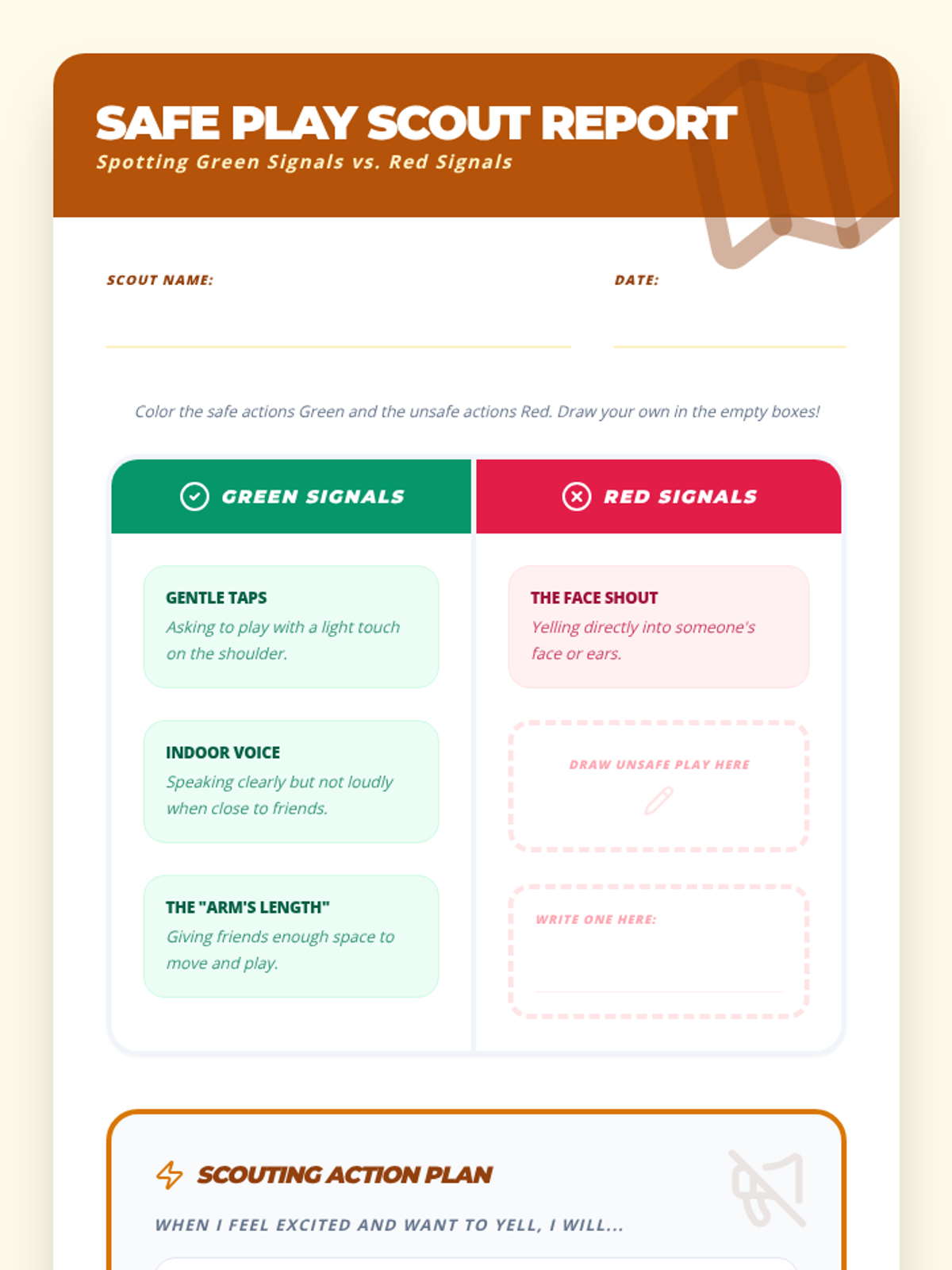
A teacher guide for the fourth lesson of the sequence, detailing the "Opposite Action" concept and instructions for the Opposite Game hook.
A student introduction slide deck for the Daily Power Tracker. Updated categories to match the tracker chart: "I had my materials", "I stayed focused", and "I started and worked hard on my work".
A printer-friendly greyscale teacher implementation guide for the Daily Power Tracker. Updated categories and levels with high-contrast elements for clear printing.
A printer-friendly greyscale version of the daily subject-by-subject tracking chart. Optimized for clear printing with high-contrast borders and pure black text. Designed to fit strictly on one page.
A guide for teachers and staff explaining how to use the Daily Momentum Tracker, including definitions for scoring categories and tips for effective implementation.
A comprehensive daily tracking sheet for students to monitor behavioral goals and build positive momentum throughout the school day. Features sections for goal setting, period-by-period scoring on readiness and focus, and a final reflection.
A comprehensive guide for teachers to facilitate the Inner Calm lesson, including learning objectives, pacing, slide-by-slide discussion prompts, and differentiation strategies.
A visual presentation introducing the 'Engine' analogy for self-regulation, identifying triggers, recognizing body clues, and exploring different coping strategies.
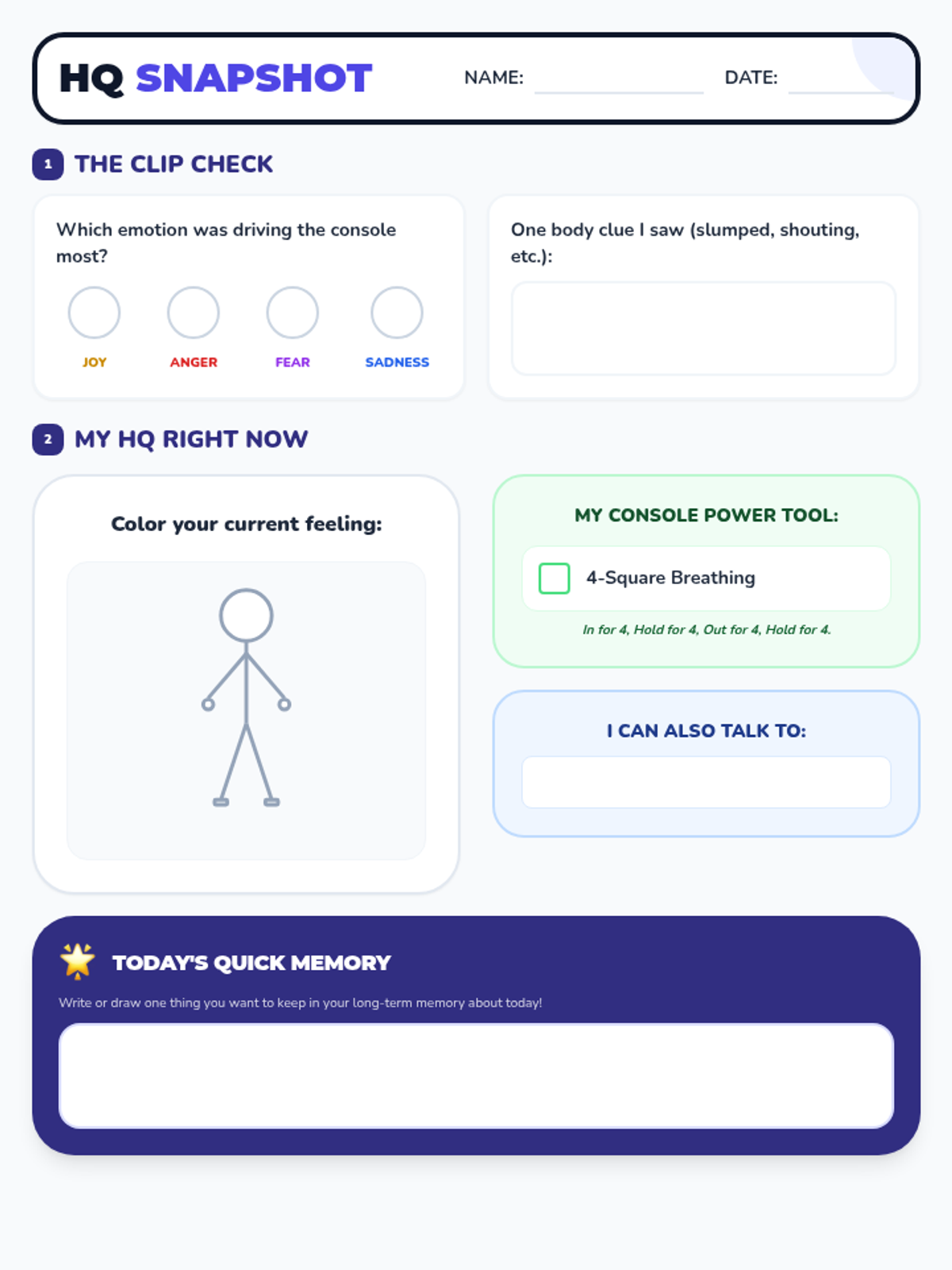
A multi-page workbook designed for students to identify emotional triggers, physical signs of dysregulation, and a personalized toolkit of coping strategies. It culminates in a final 'Calm Code' plan.
A facilitation guide for the therapist or counselor, outlining the session flow, key discussion points, and therapeutic goals for using the 'Respect Architect' materials with a 9-year-old student.
Six 'Strength Test' cards featuring common scenarios where respect is tested. These cards are designed for role-play and discussion during individual therapy sessions to help students practice applying the 'Respect Blueprint' concepts.
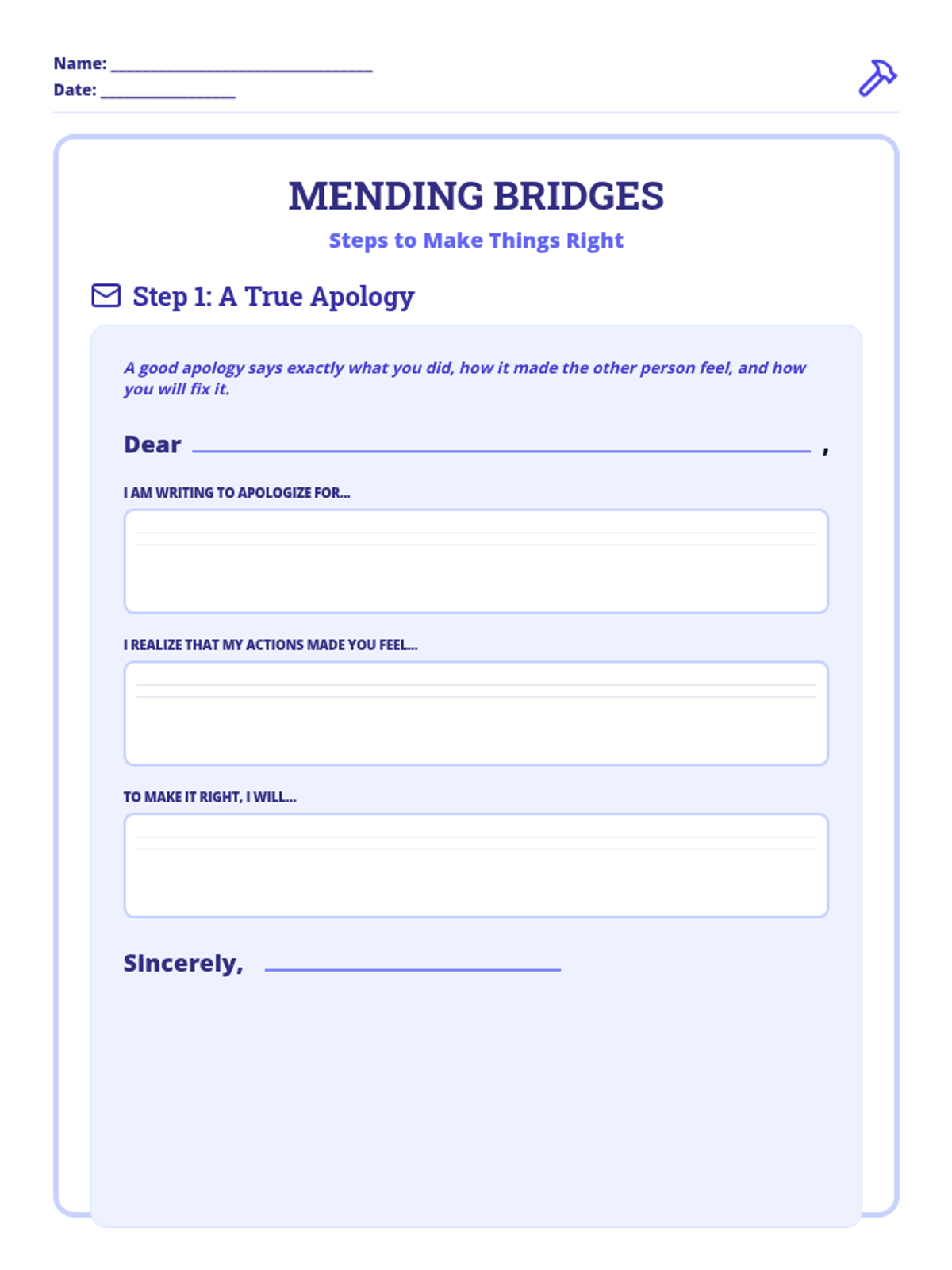
A two-page student activity sheet where they identify self-regulation 'tools' and practice 'repairing' disrespectful scenarios. Uses a construction theme to engage 9-year-olds in reflective social-emotional learning.
A visual anchor chart titled 'The Respect Blueprint' that uses a construction theme to define respect in three key areas: following directions (The Map), respecting adults (The Foreman), and being nice (The Mortar). It's designed to be a visual reference during therapy sessions for a 9-year-old.
A Grand Canyon themed coloring sheet for 3rd and 4th grade students, featuring a more detailed canyon landscape illustration and the word 'AWE' for coloring, optimized to fit on one page.
A visually stunning slide presentation designed to evoke awe through evocative descriptions, bold icons, and high-impact layouts, serving as a gallery of wonder for students.
An engaging student reflection worksheet designed to help learners identify negative thoughts and reframe them using an 'Inner Hero' perspective. Includes sections for thought-flipping and mistake-analysis.
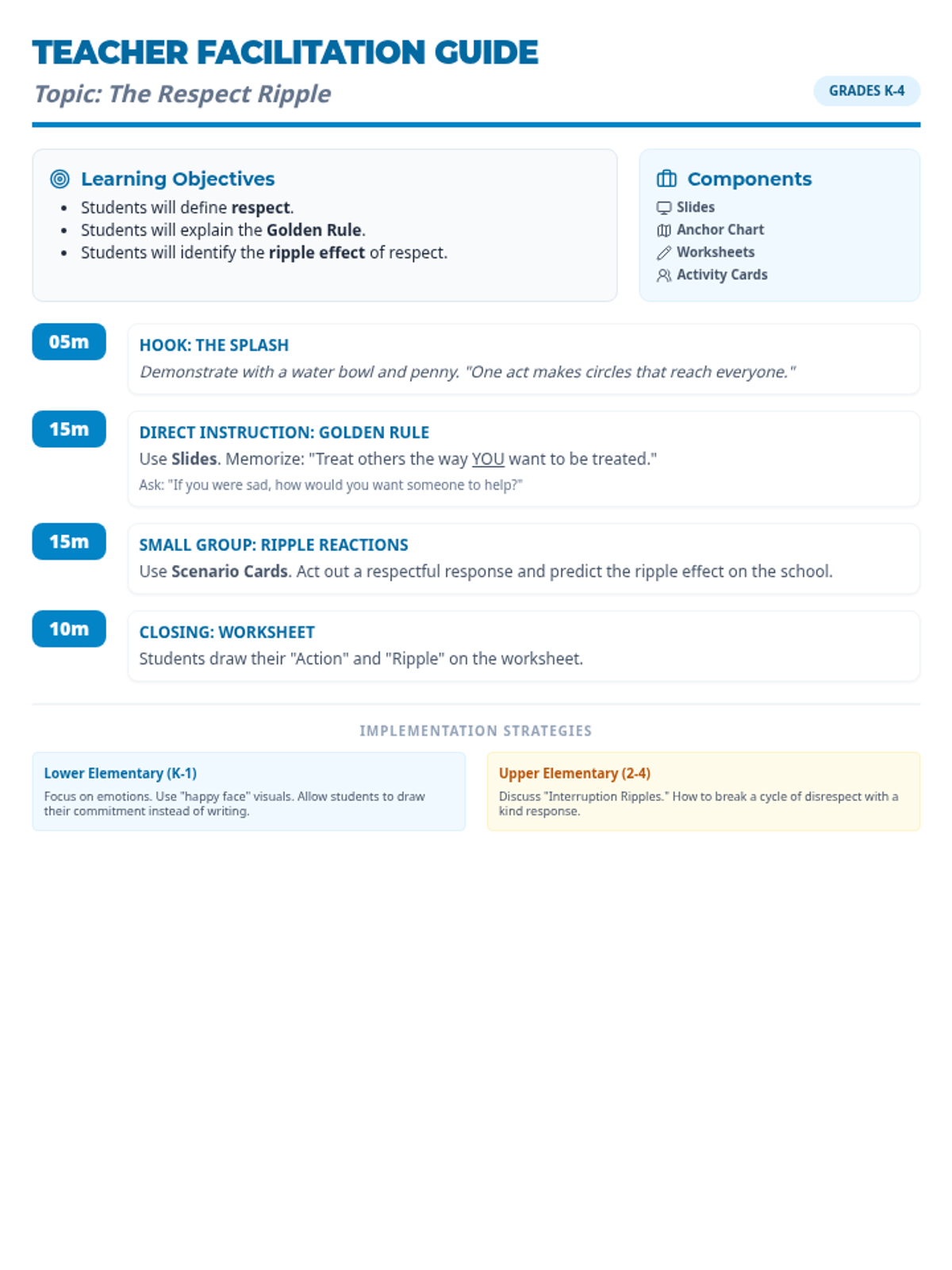
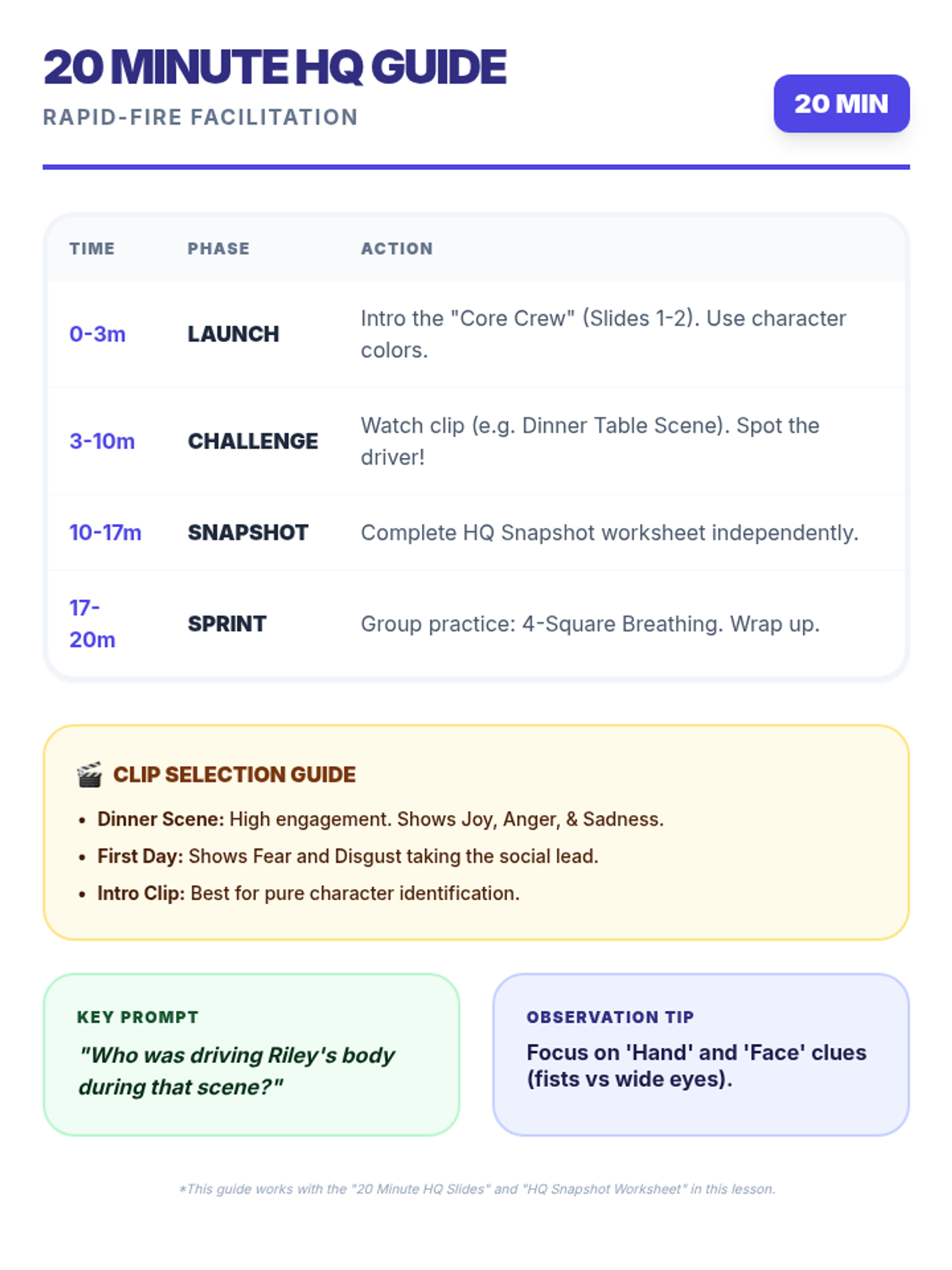
A concise teacher facilitation guide for a 30-minute social-emotional learning session. Includes timing, activities, and specific talking points for building student confidence.
A visually engaging slide presentation for a reading of 'Awe' by Chana Stiefel, defining awe and guiding students through a descriptive language hunt.
A student-facing reflection worksheet for students to capture descriptive language and record their personal moments of awe after reading Chana Stiefel's 'Awe'.
A comprehensive teacher guide for leading a read-aloud and discussion of Chana Stiefel's book 'Awe', focusing on emotional intelligence and descriptive writing.
A professional facilitation guide for mentors, providing specific discussion prompts, instructional tips, and coaching strategies for each of the 5 activities in the Mindset Field Guide.
A 4-page student-facing guided workbook titled 'Mindset Field Guide' featuring 5 interactive activities to build confidence through self-talk analysis, thought reframing, and identifying personal coping strategies.
A set of scripted social stories targeting specific body signals, designed for the teacher to read aloud while the student identifies the corresponding physical reaction.
A set of 6 printable scenario cards for role-playing, featuring clear visual icons and short social situations focused on targeted body signals.
A teacher-facing lesson plan for the second session, outlining the application of body signal knowledge through role-play and social stories.
A worksheet where students cut out and sort various social scenarios into categories based on the body signals they would likely trigger.
An activity sheet featuring a body outline for students to map where they feel specific emotions, using a color-coded signal key.
A student-facing worksheet for tracing body signal pairs, each paired with a single large visual icon representing the physical reaction.