A structured worksheet for students to record their 4-step problem-solving plan, with clear sections for identifying the problem, brainstorming, choosing a solution, and reflecting on actions.
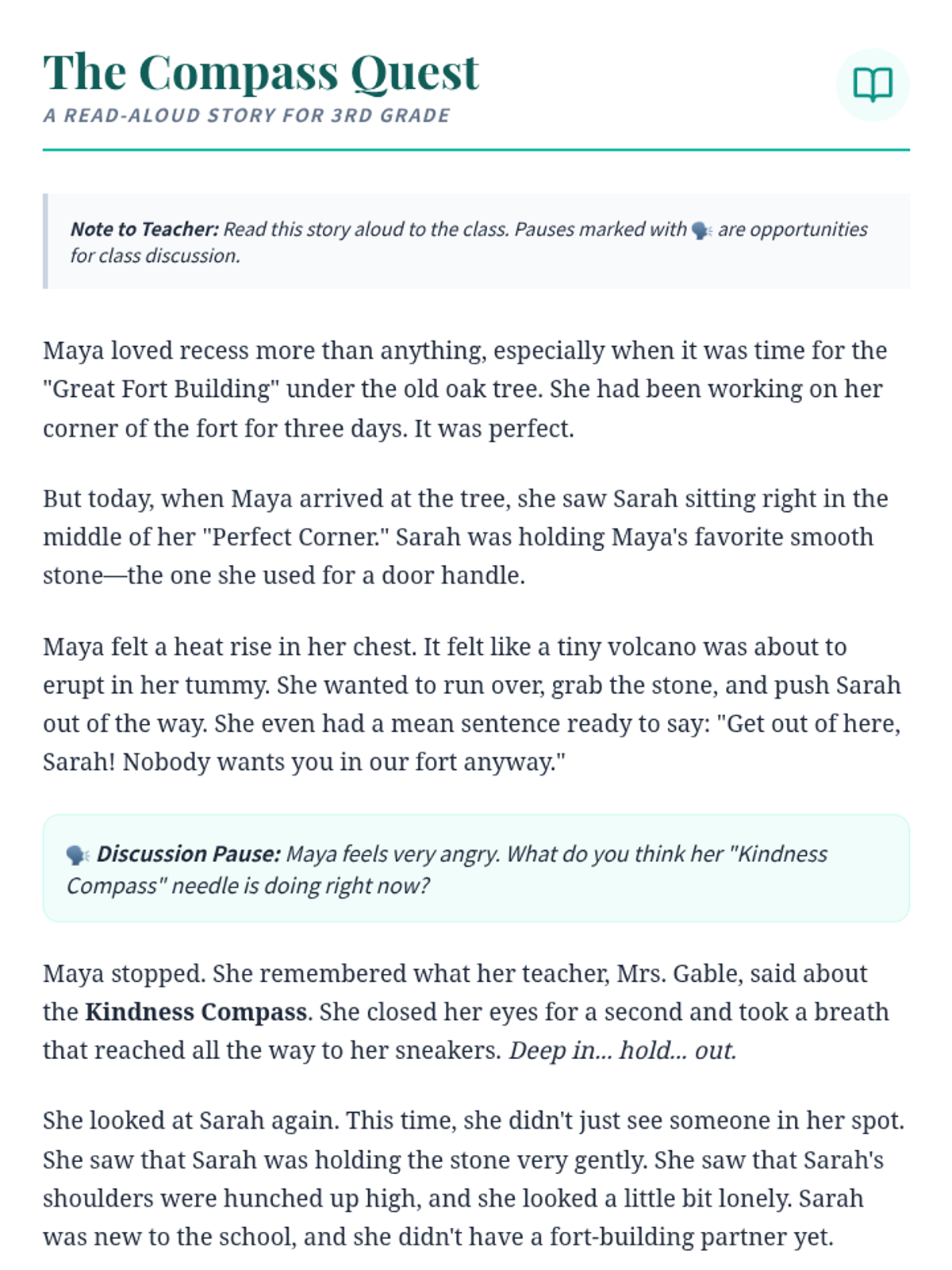
A narrative read-aloud story featuring Maya, a 3rd grader who uses her "Kindness Compass" to handle a frustrating social situation at recess. Includes discussion prompts for the teacher to facilitate empathy and perspective-taking.
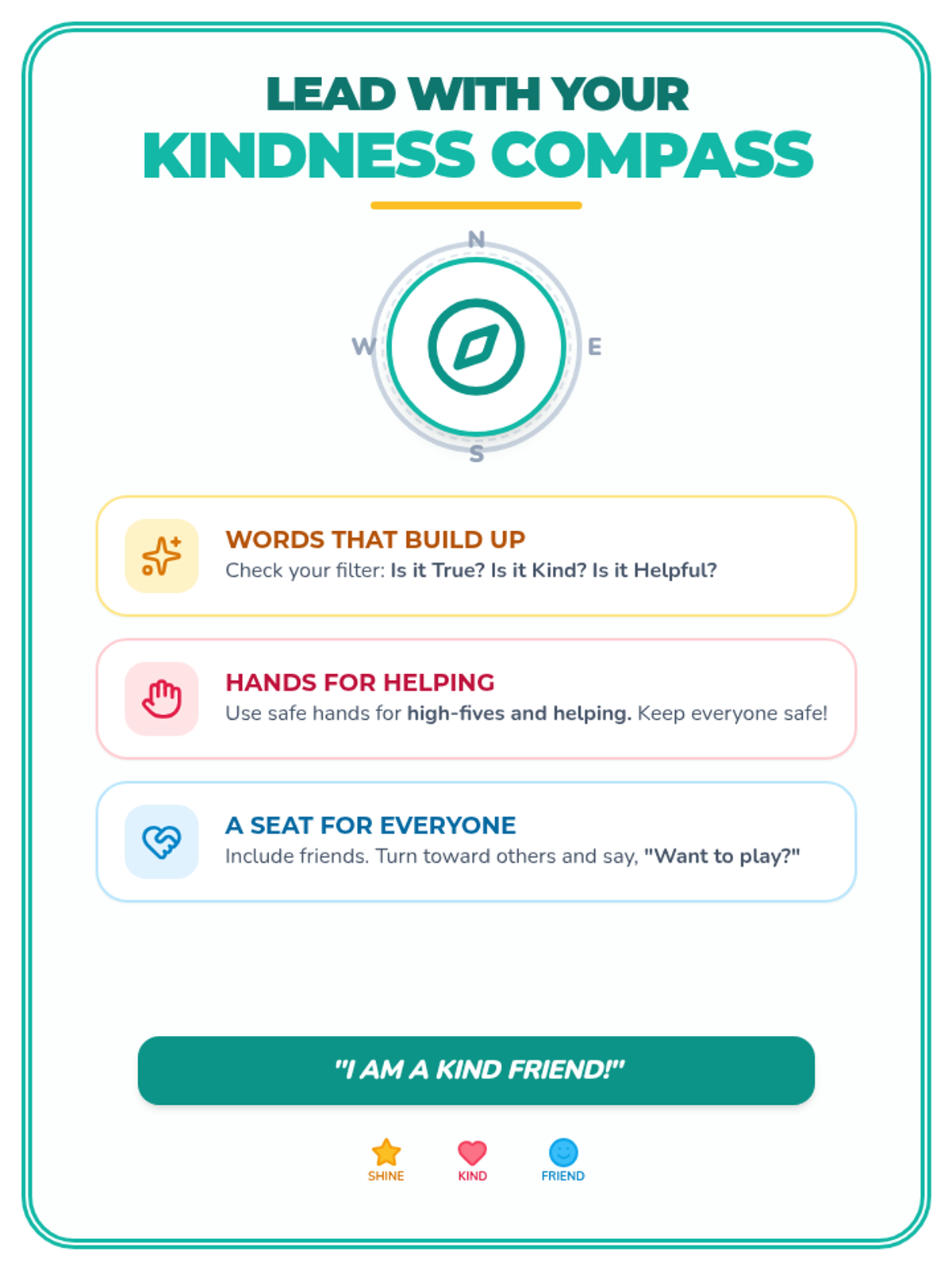
A visually engaging classroom poster summarizing the "Kindness Compass" metaphor. It features bold headings and icons for the three core behaviors: kind words, safe hands, and inclusive actions.
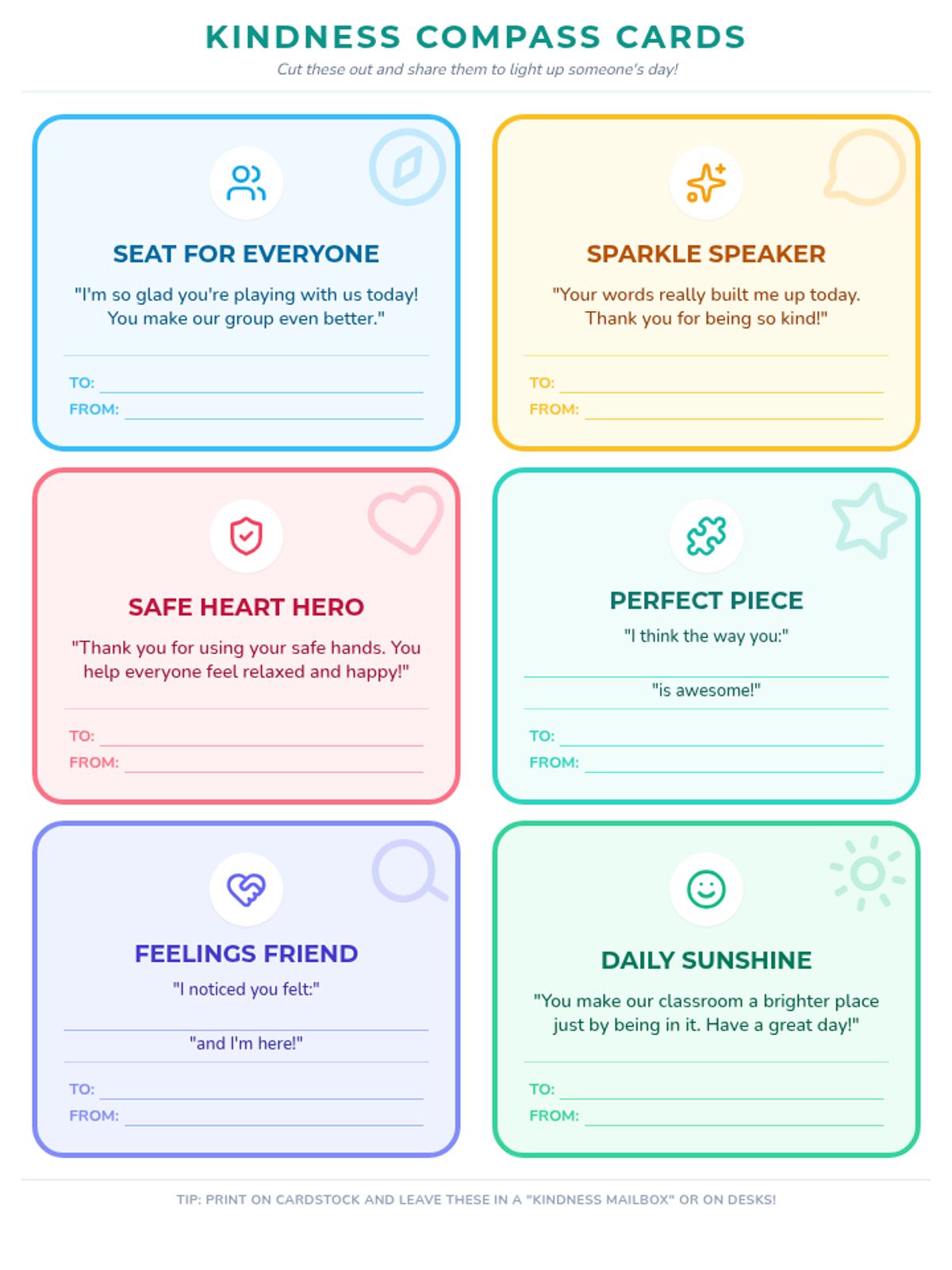
A set of 6 printable kindness cards designed for 3rd graders to share with peers. Each card features a positive affirmation or prompt related to inclusion, kind words, safe behavior, and empathy, following the "Kindness Compass" theme. Card dimensions and layout are optimized to fit on a single page for easy printing and cutting.
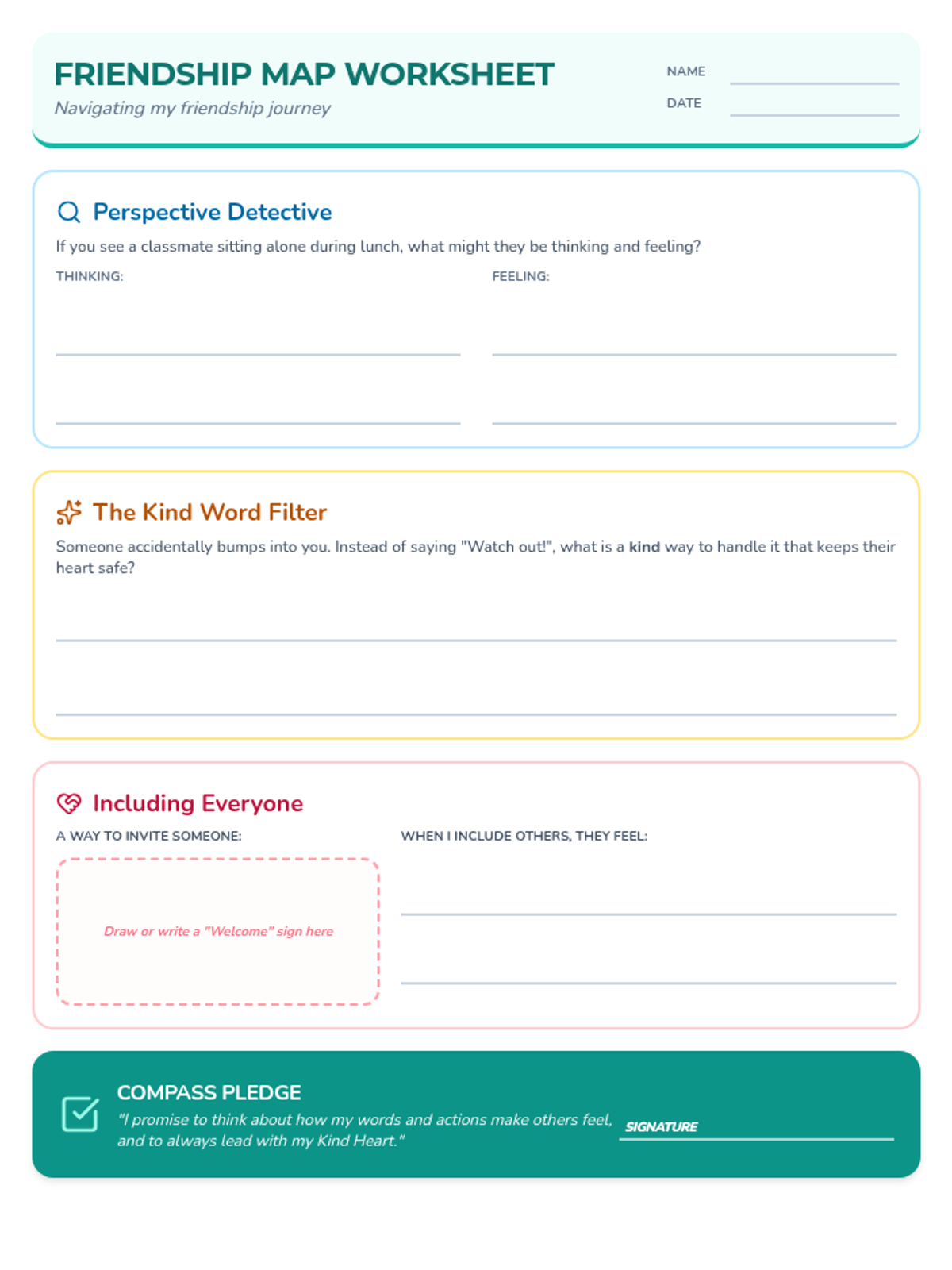
An updated reflection worksheet that focuses on empathy and perspective-taking. It prompts students to consider the thoughts and feelings of their peers during social interactions and practice inclusive behaviors.
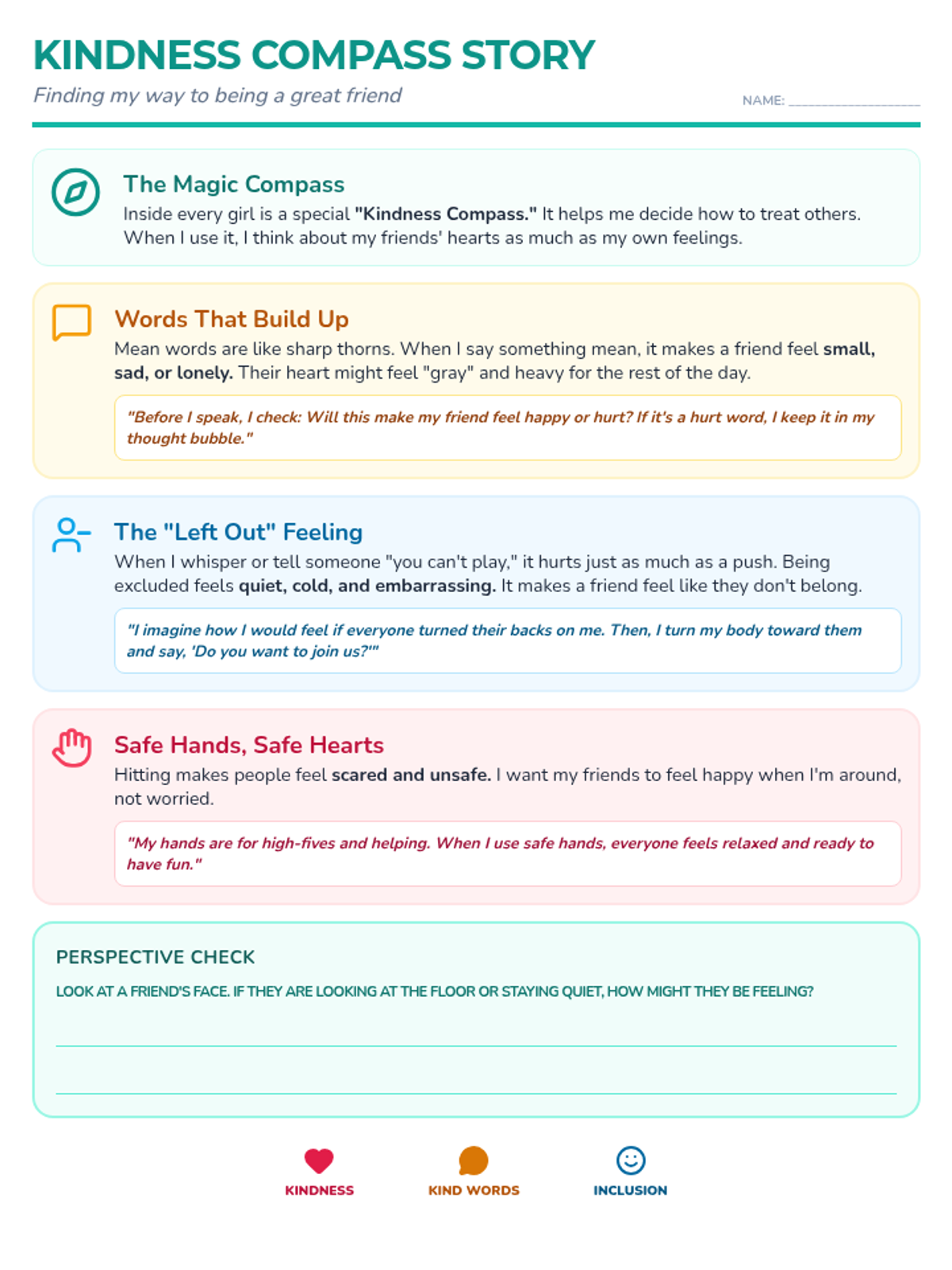
An updated social story for a 3rd-grade girl, focusing on the feelings of others when faced with mean words or exclusion. It emphasizes perspective-taking and empathy using the "Kindness Compass" metaphor.
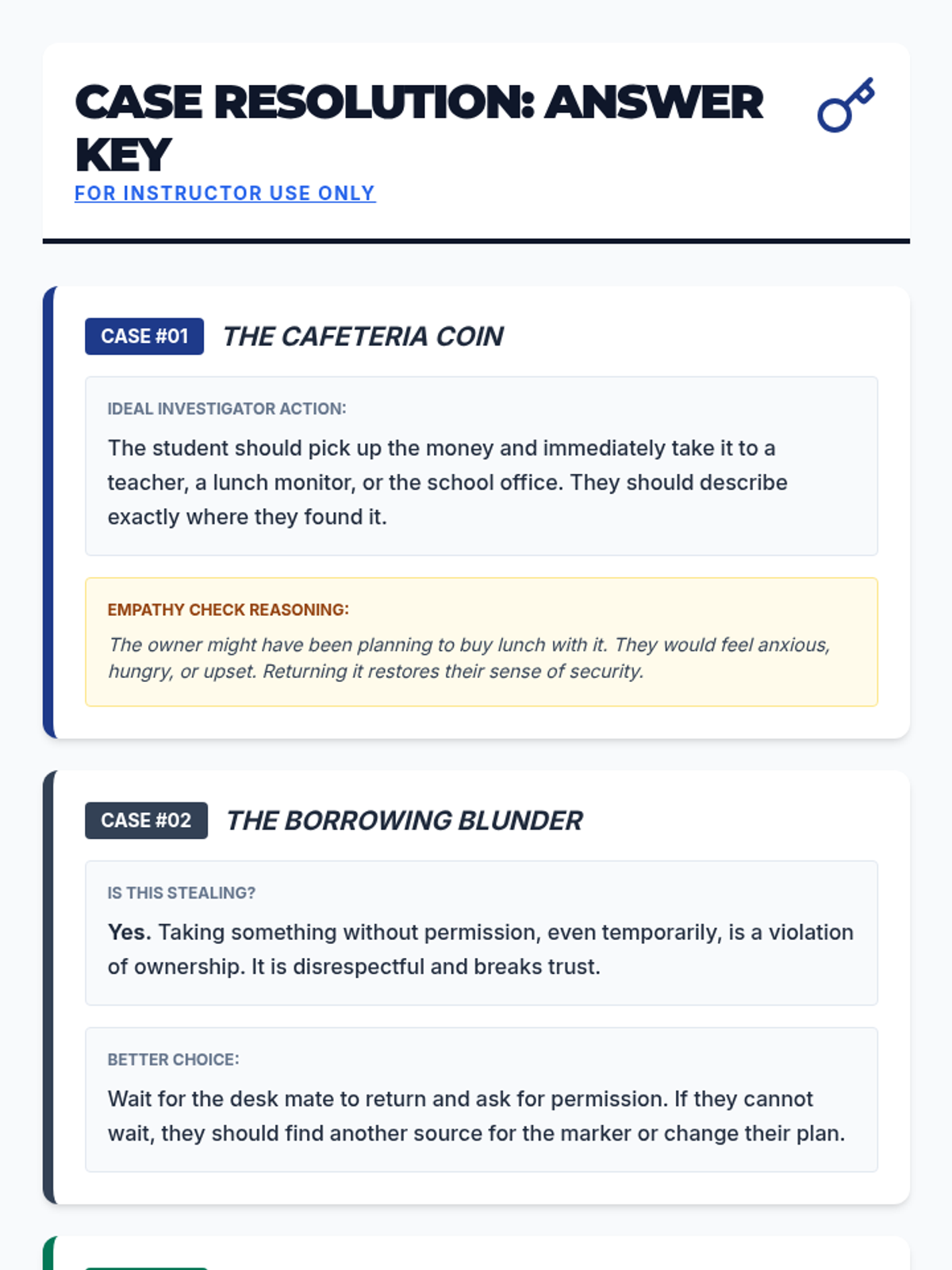
An answer key for the Case Files Worksheet, providing suggested responses and reasoning for the property scenarios.
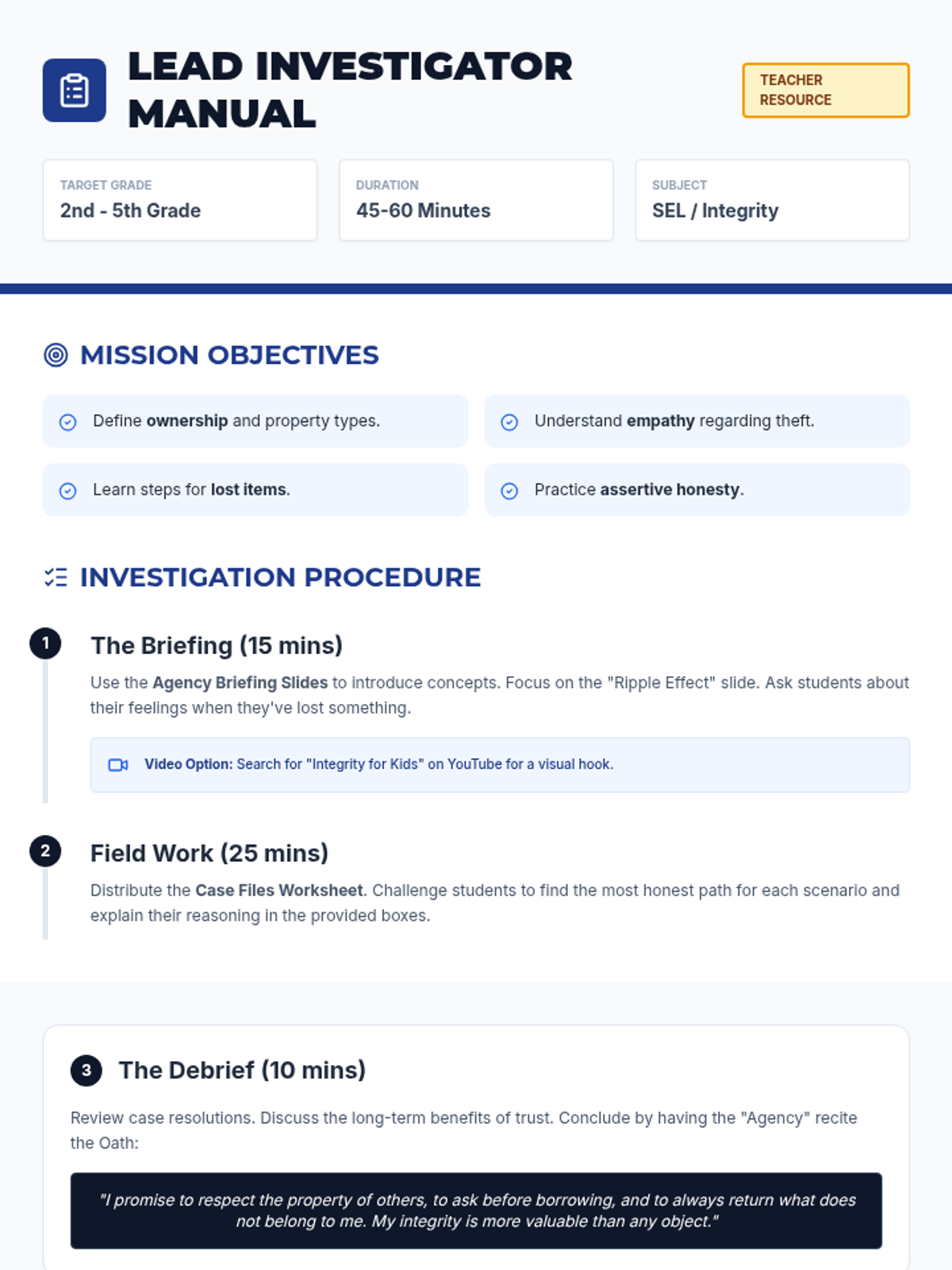
A comprehensive teacher's guide with lesson objectives, step-by-step instructions, discussion prompts, and vocabulary definitions.
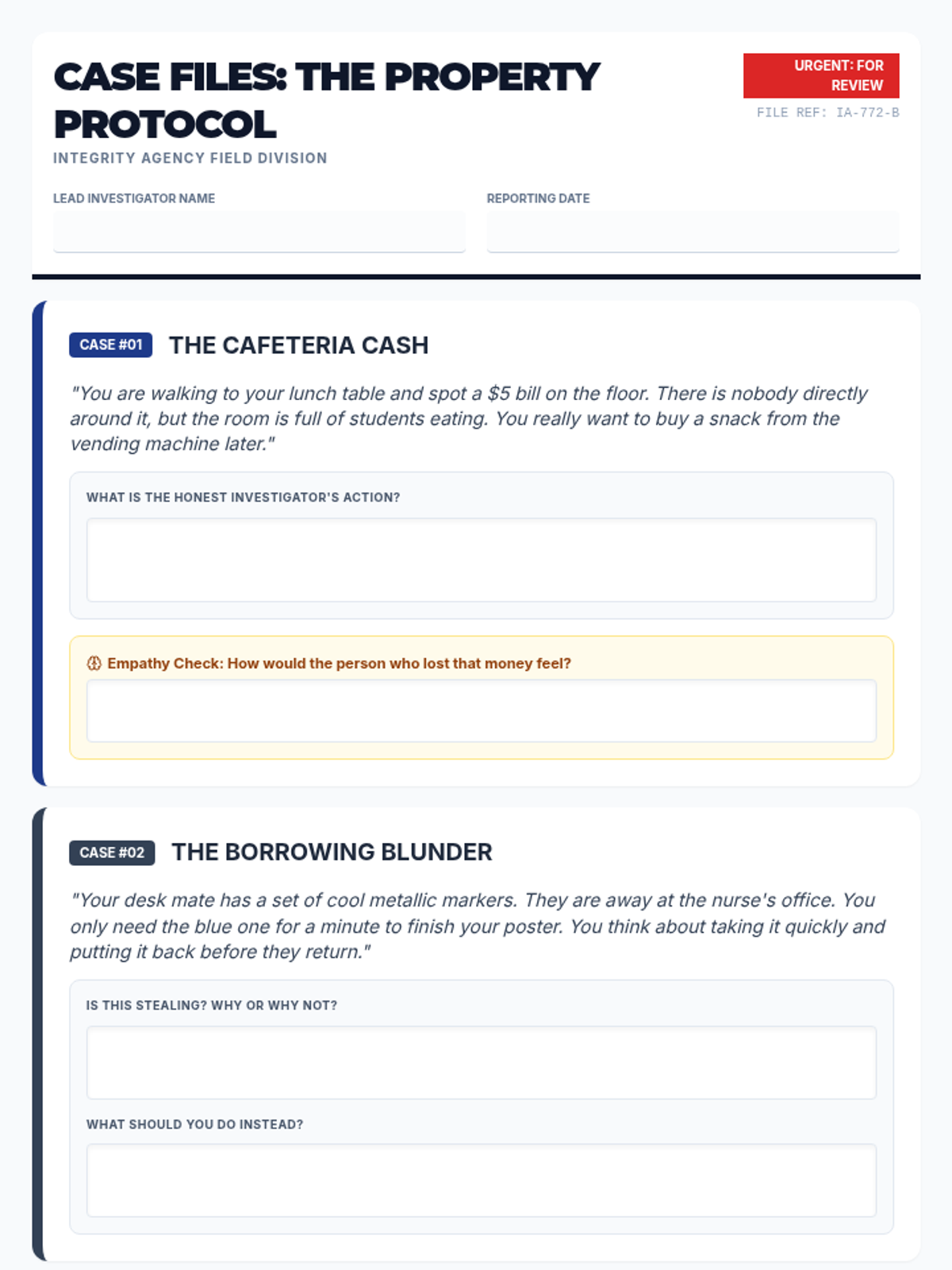
A scenario-based worksheet where students practice identifying honest actions and understanding property ownership through 'case files'.
A detective-themed slide deck that introduces students to property ownership, the emotional impact of theft, and the protocol for finding lost items.
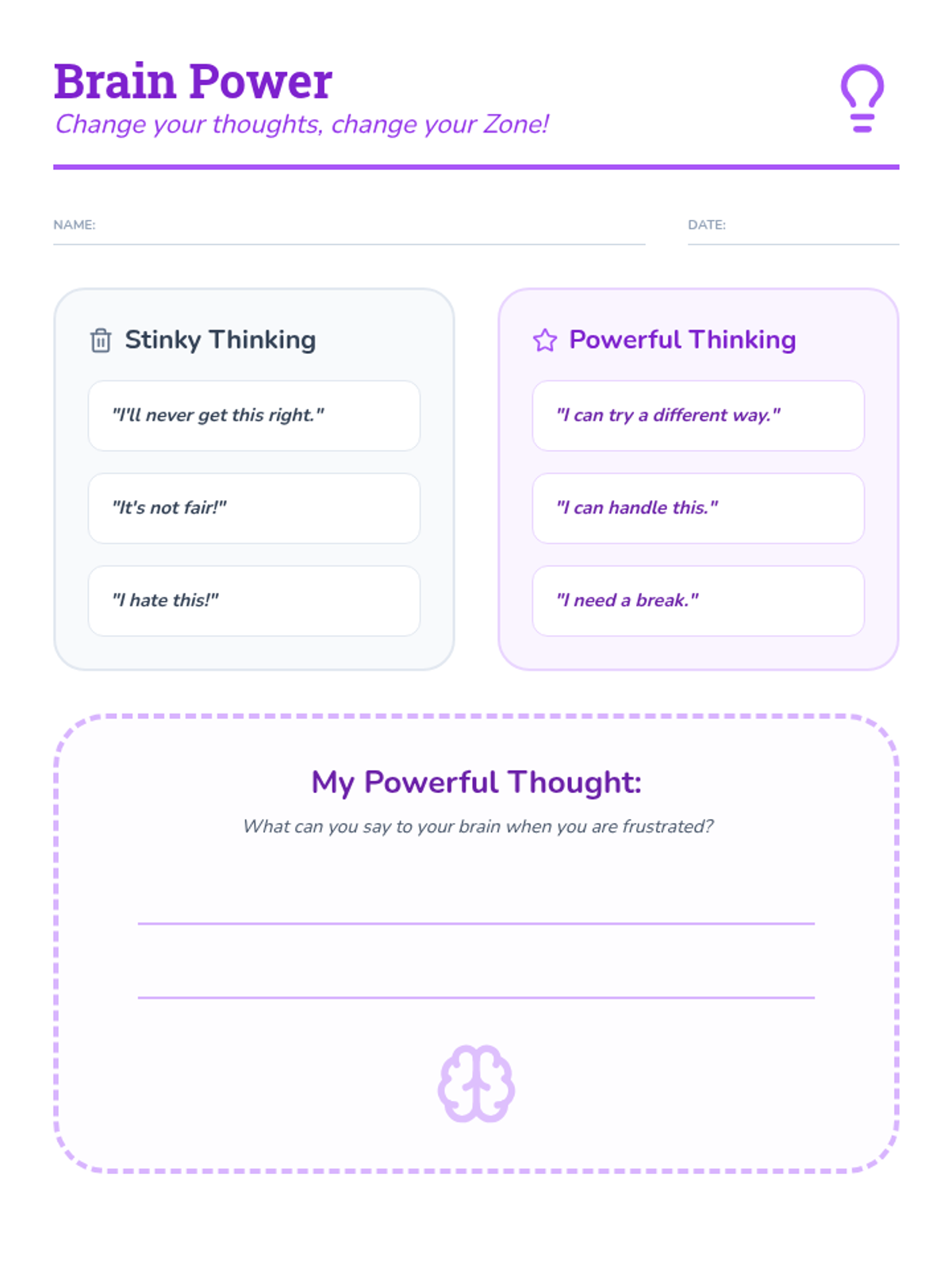
A worksheet for students to identify "stinky thinking" and practice positive self-talk.
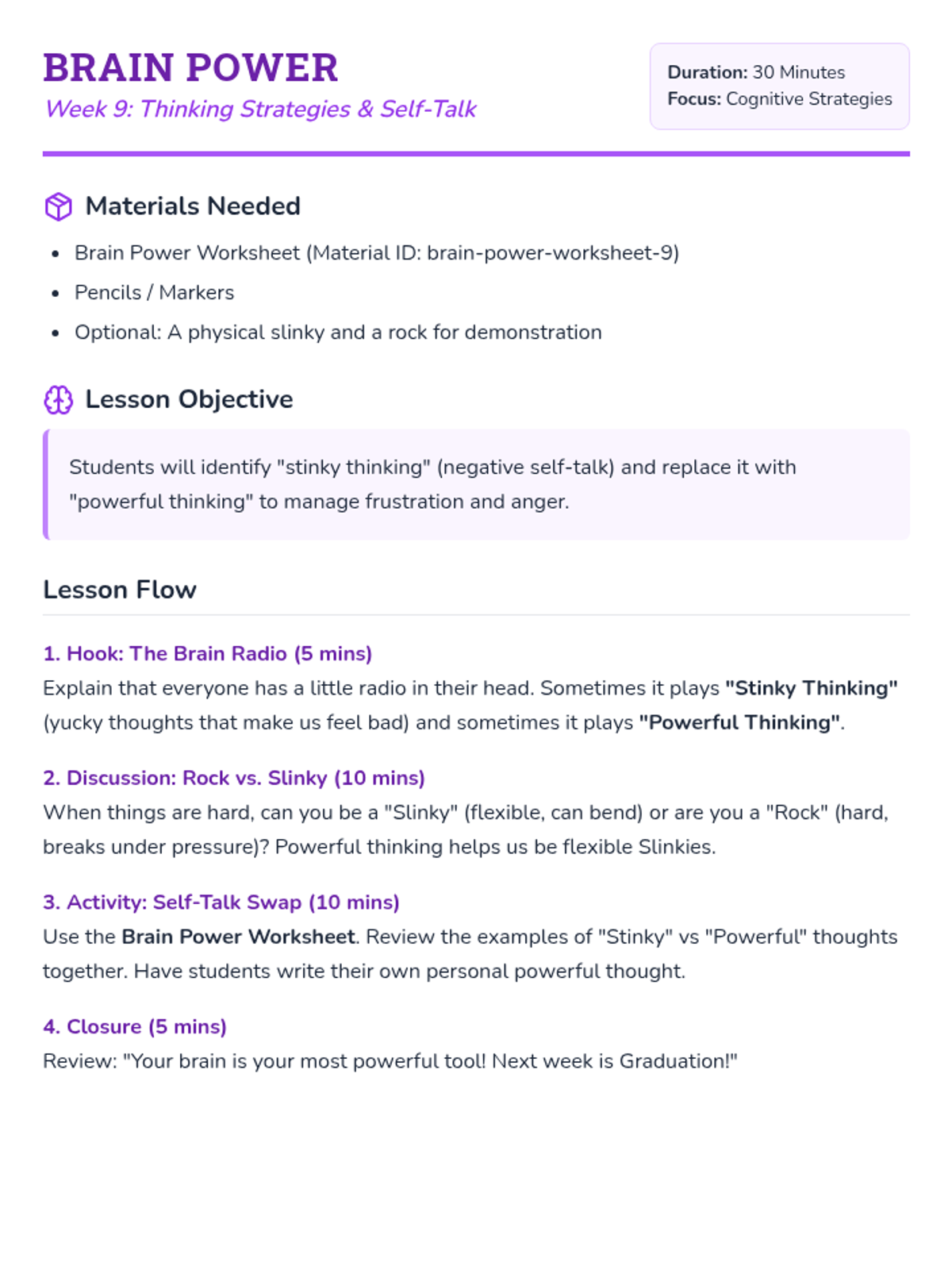
A facilitation guide for the ninth week of the curriculum, focusing on cognitive strategies and self-talk.
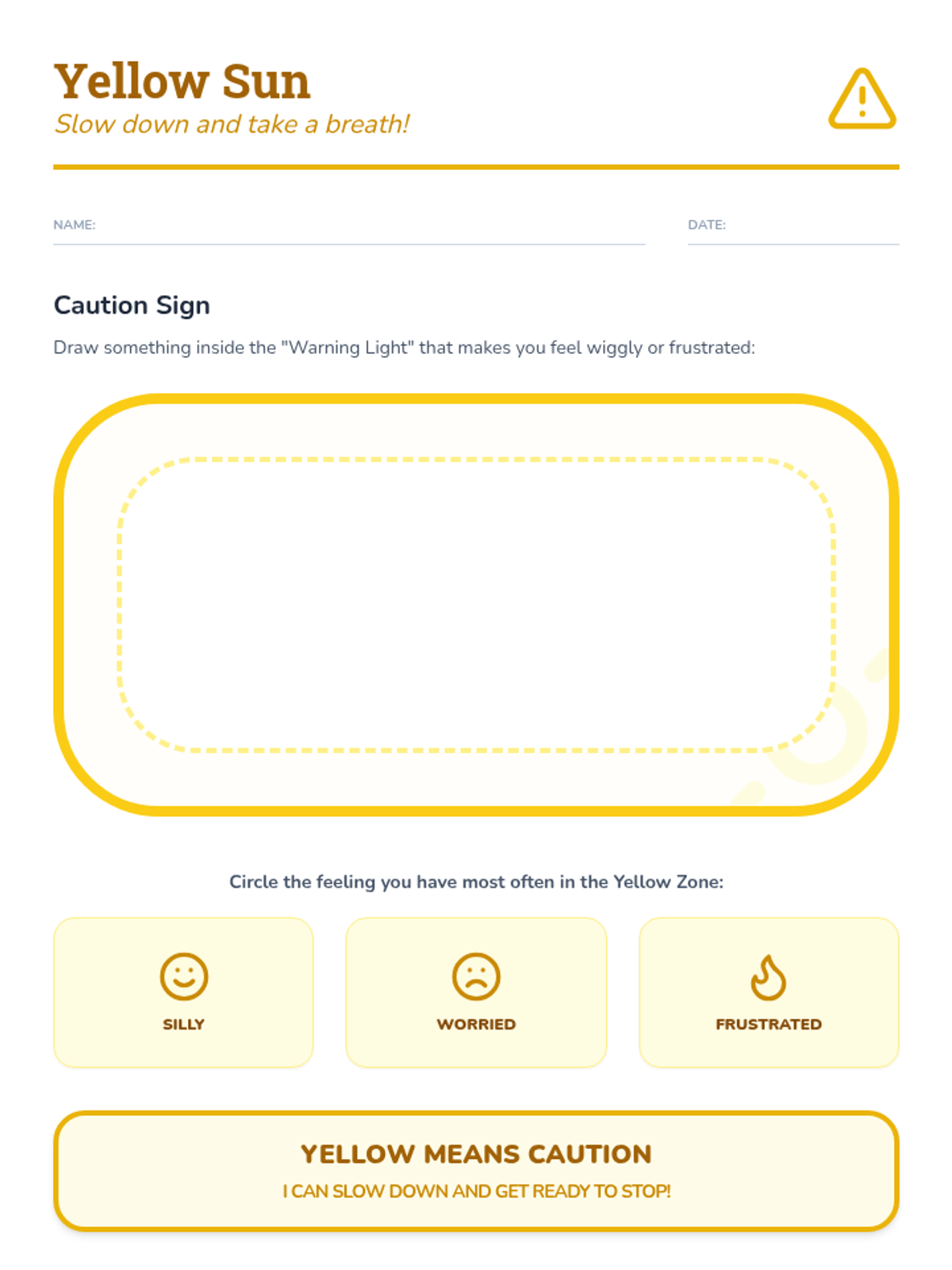
A worksheet for students to identify Yellow Zone feelings and the concept of caution.
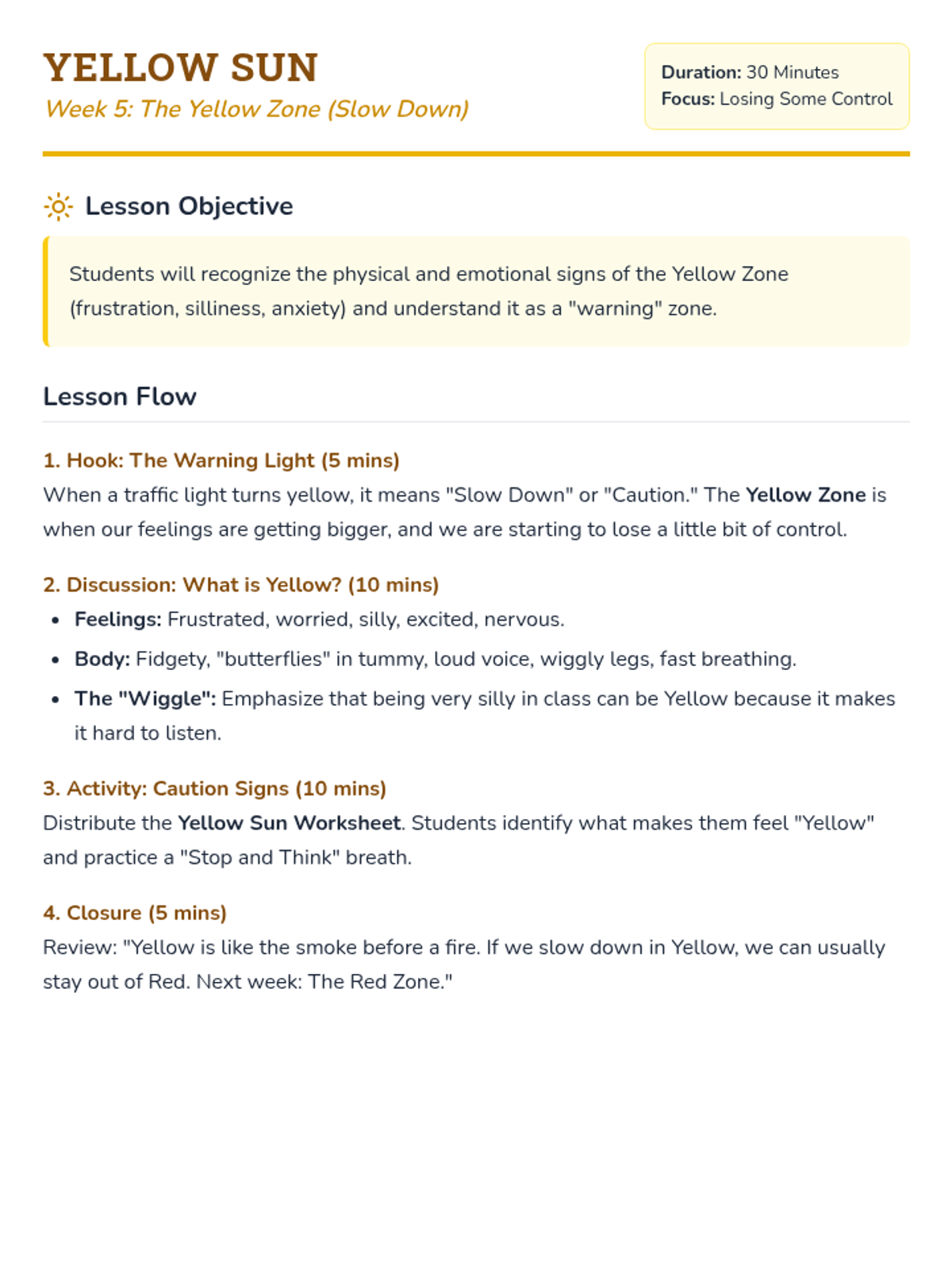
A facilitation guide for the fifth week of the curriculum, identifying Yellow Zone feelings and the concept of caution.
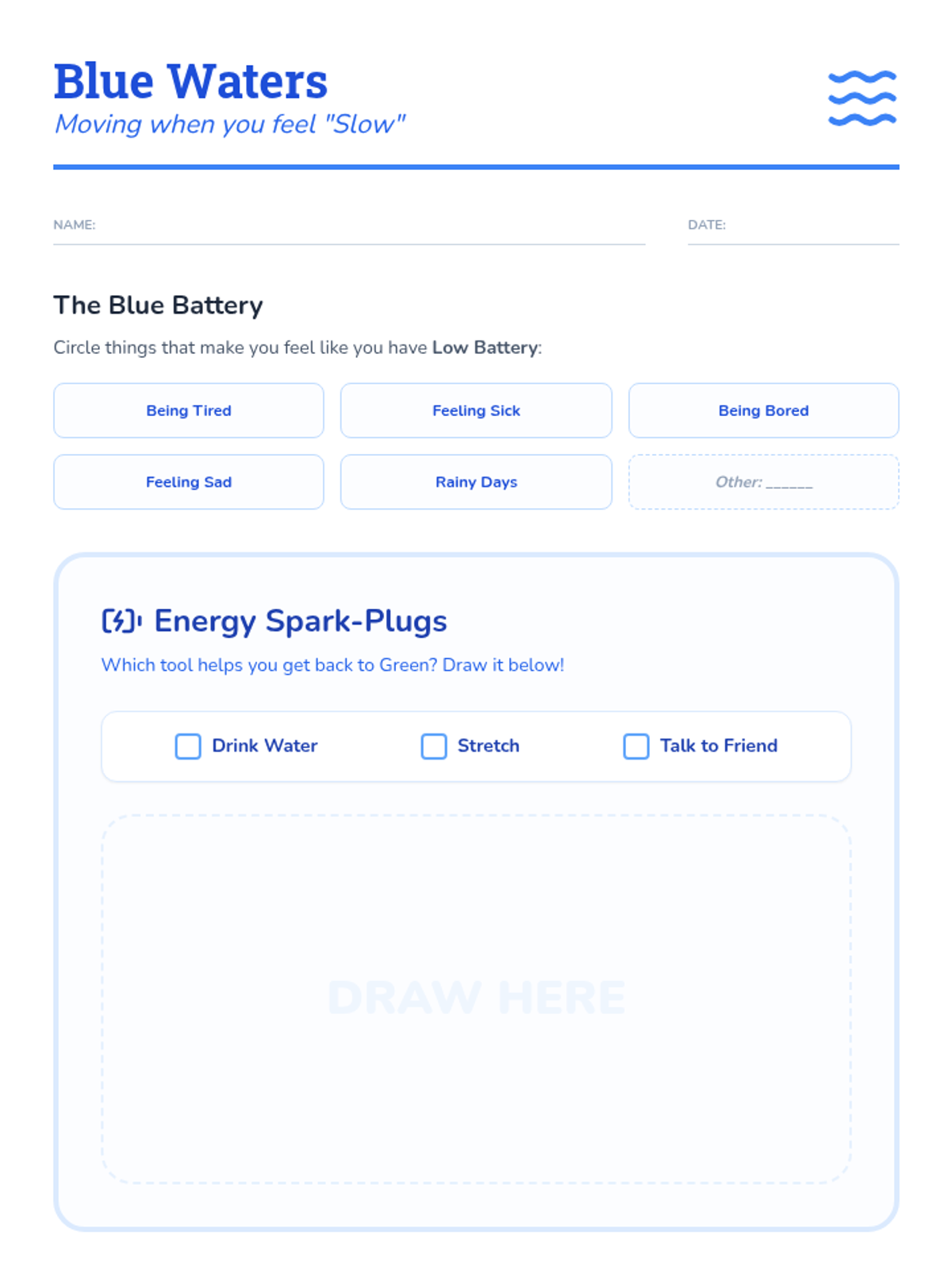
A worksheet for students to identify Blue Zone feelings and energy-boosting strategies.
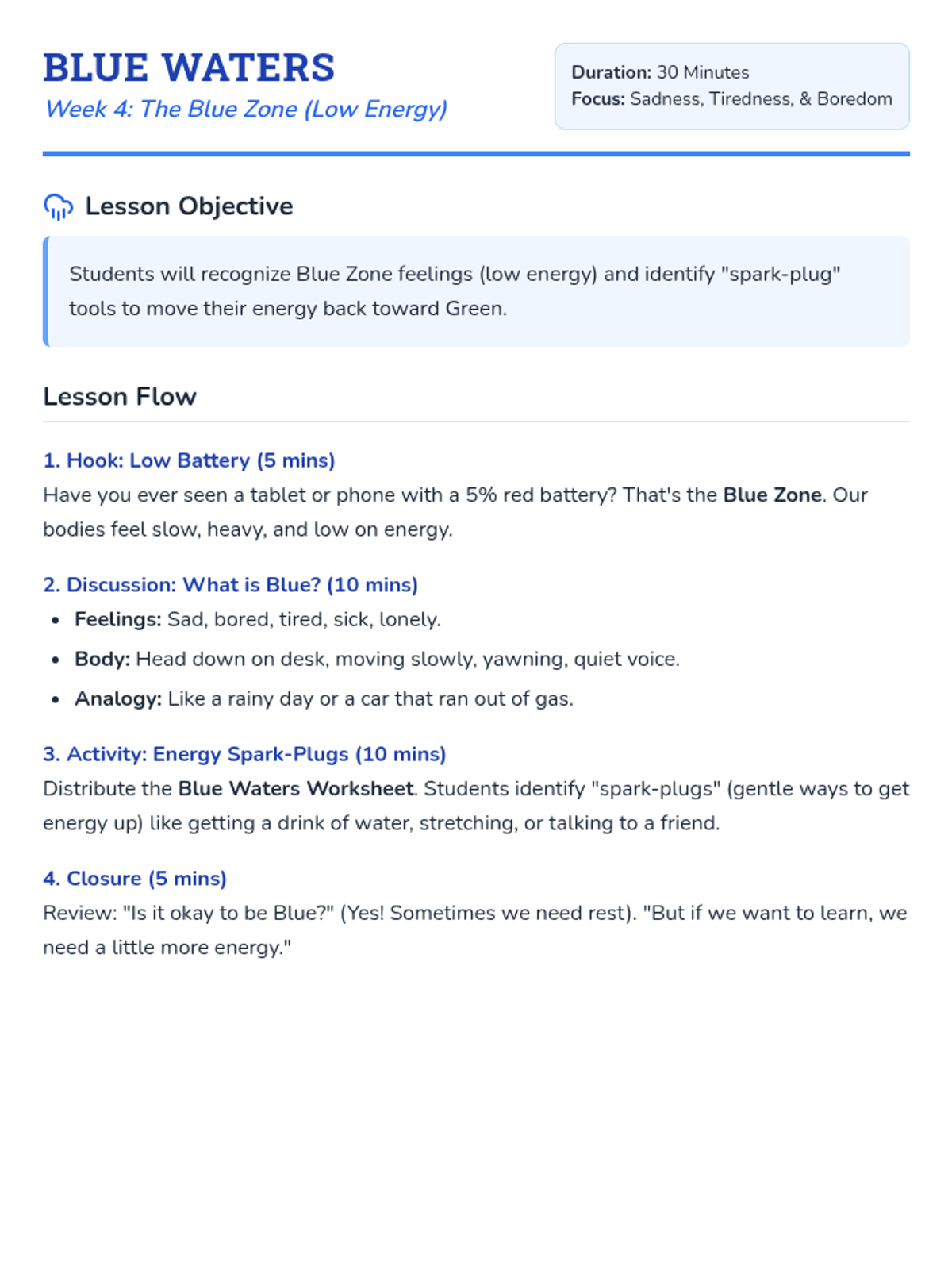
A facilitation guide for the fourth week of the curriculum, exploring the Blue Zone and strategies for increasing energy.
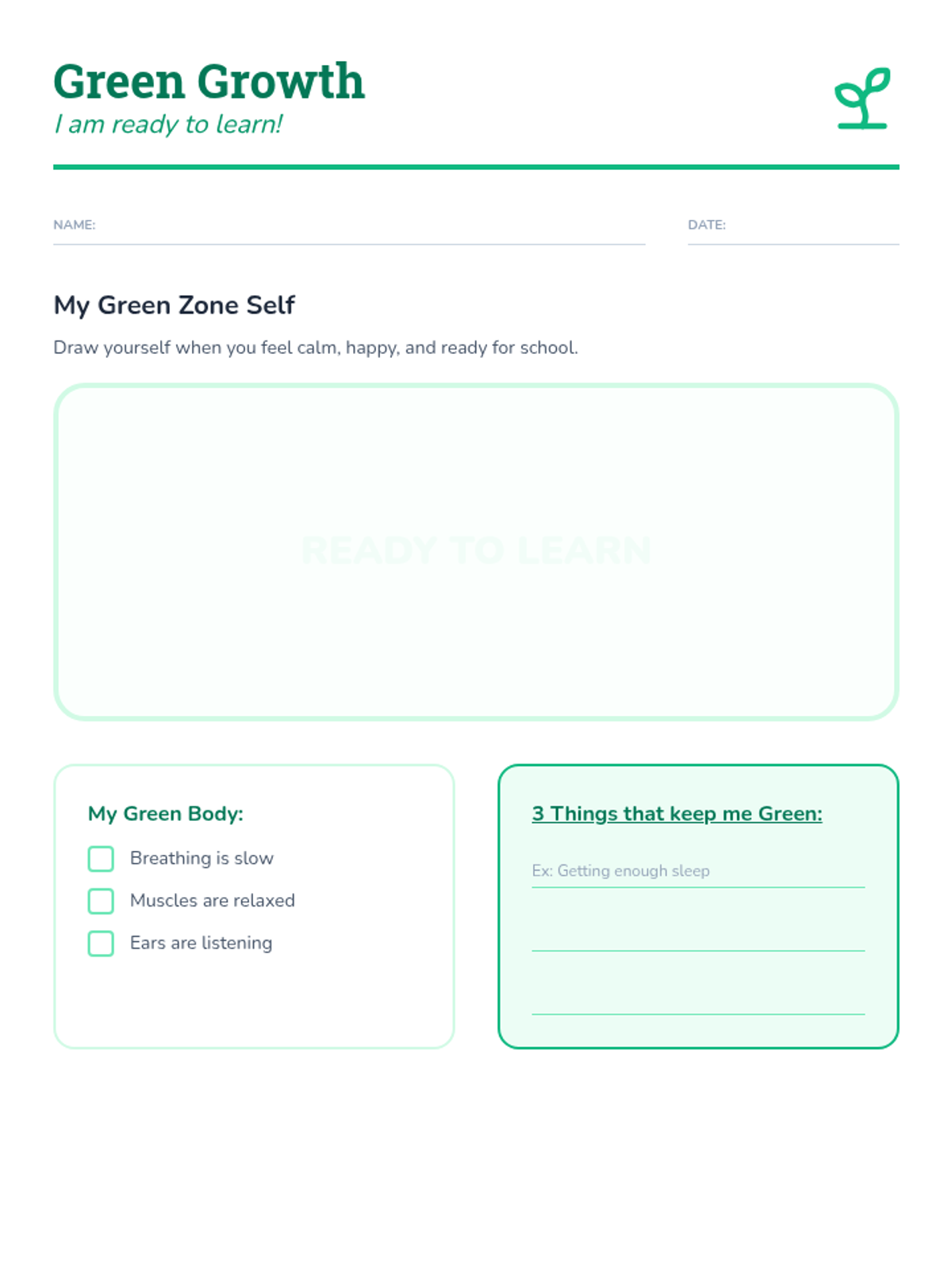
A worksheet for students to identify what their body and mind feel like in the Green Zone.
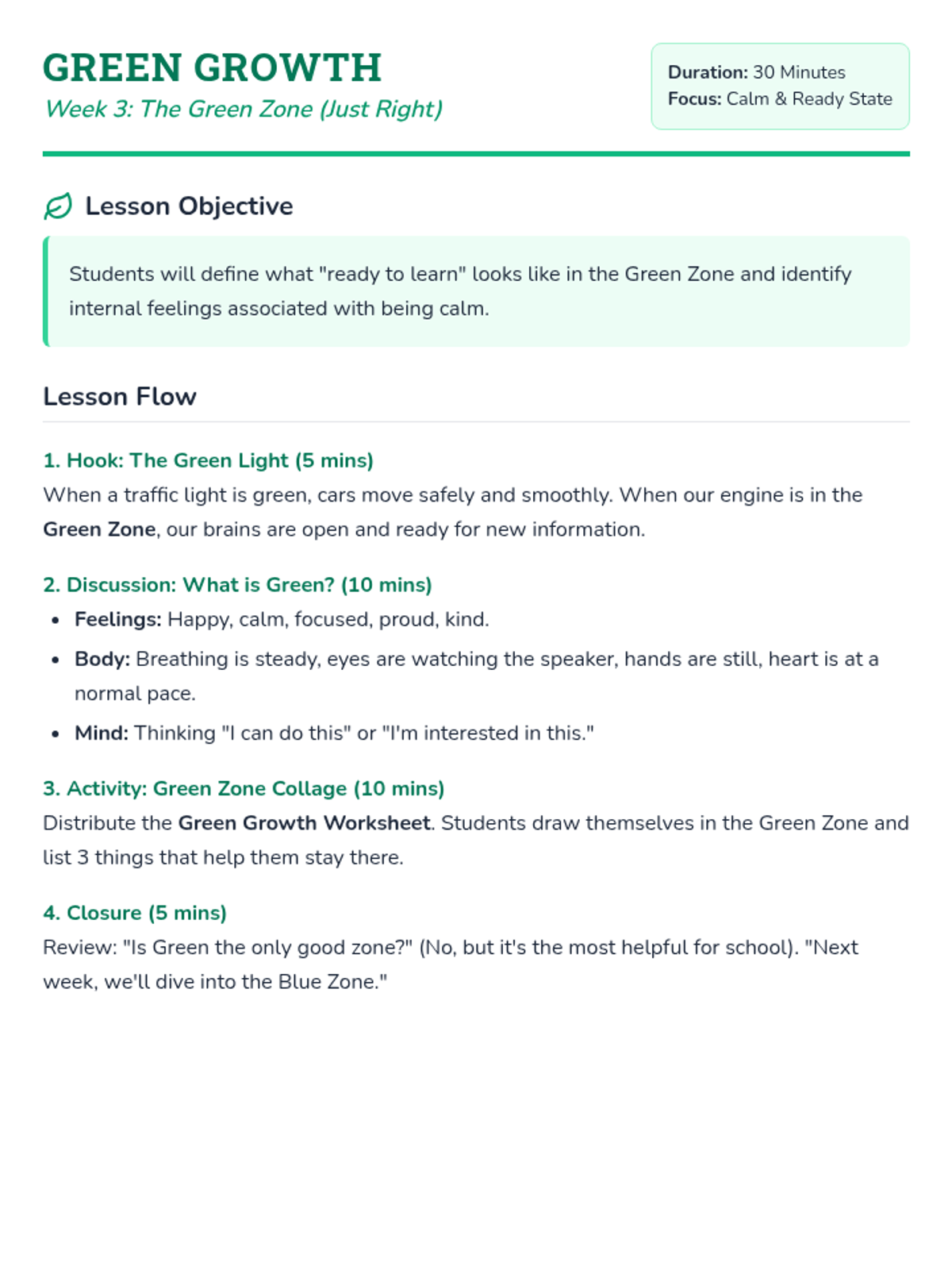
A facilitation guide for the third week of the curriculum, focusing on the Green Zone and what it looks like to be ready to learn.
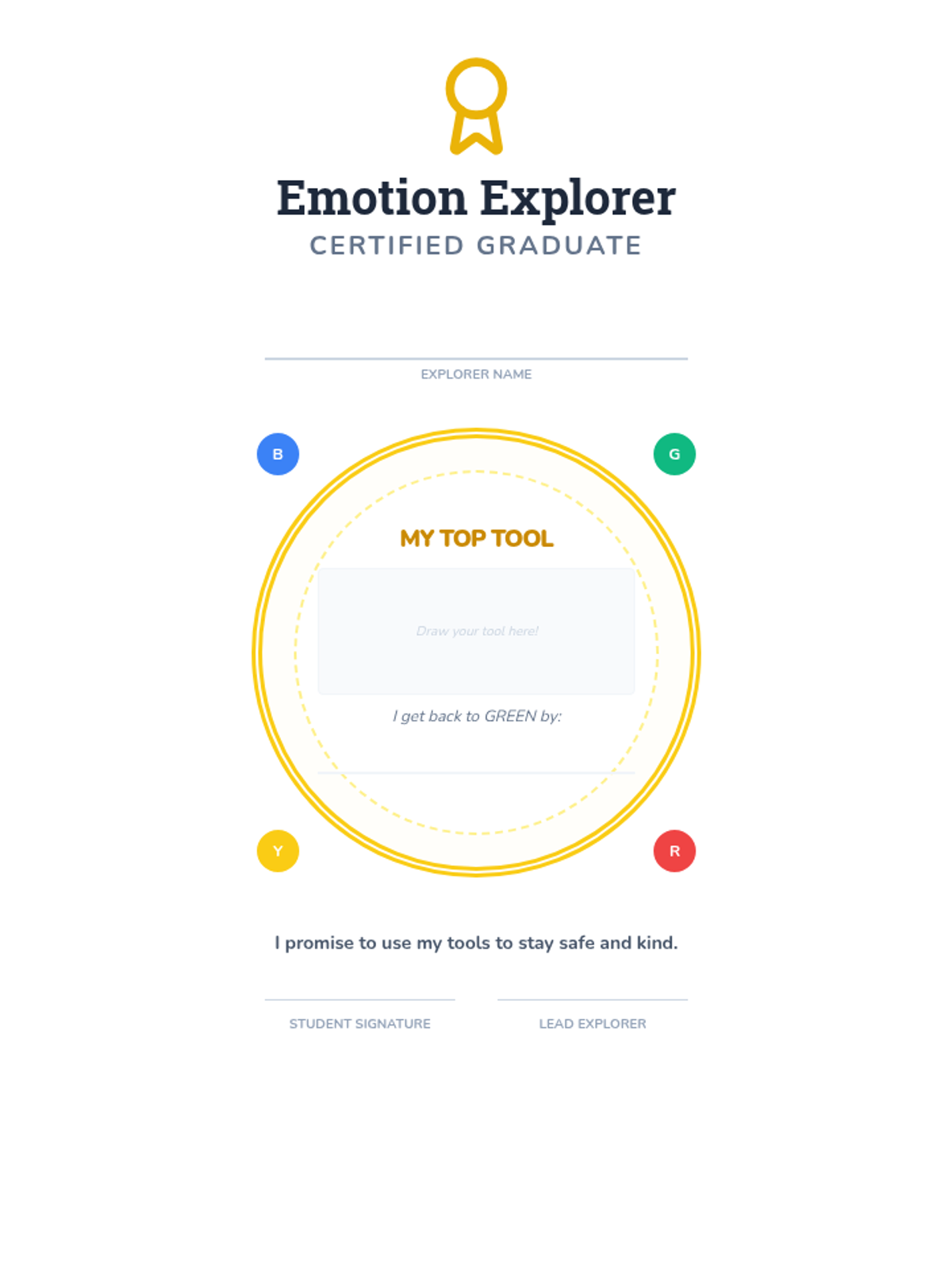
A graduation certificate and badge-designing worksheet for 2nd grade students who have completed the Emotion Explorers curriculum.
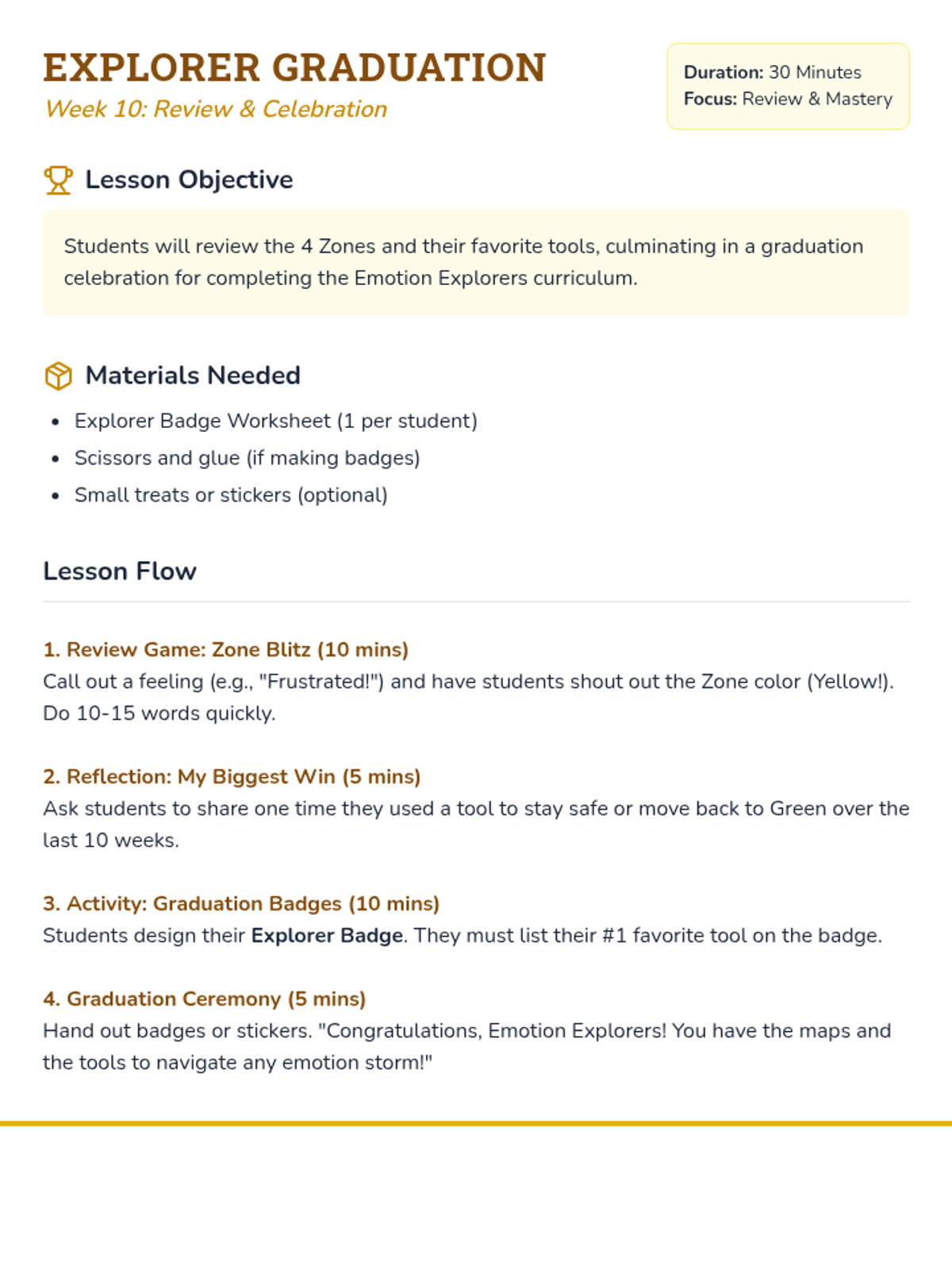
A facilitation guide for the final week of the curriculum, including a review game and a celebratory badge-making activity.
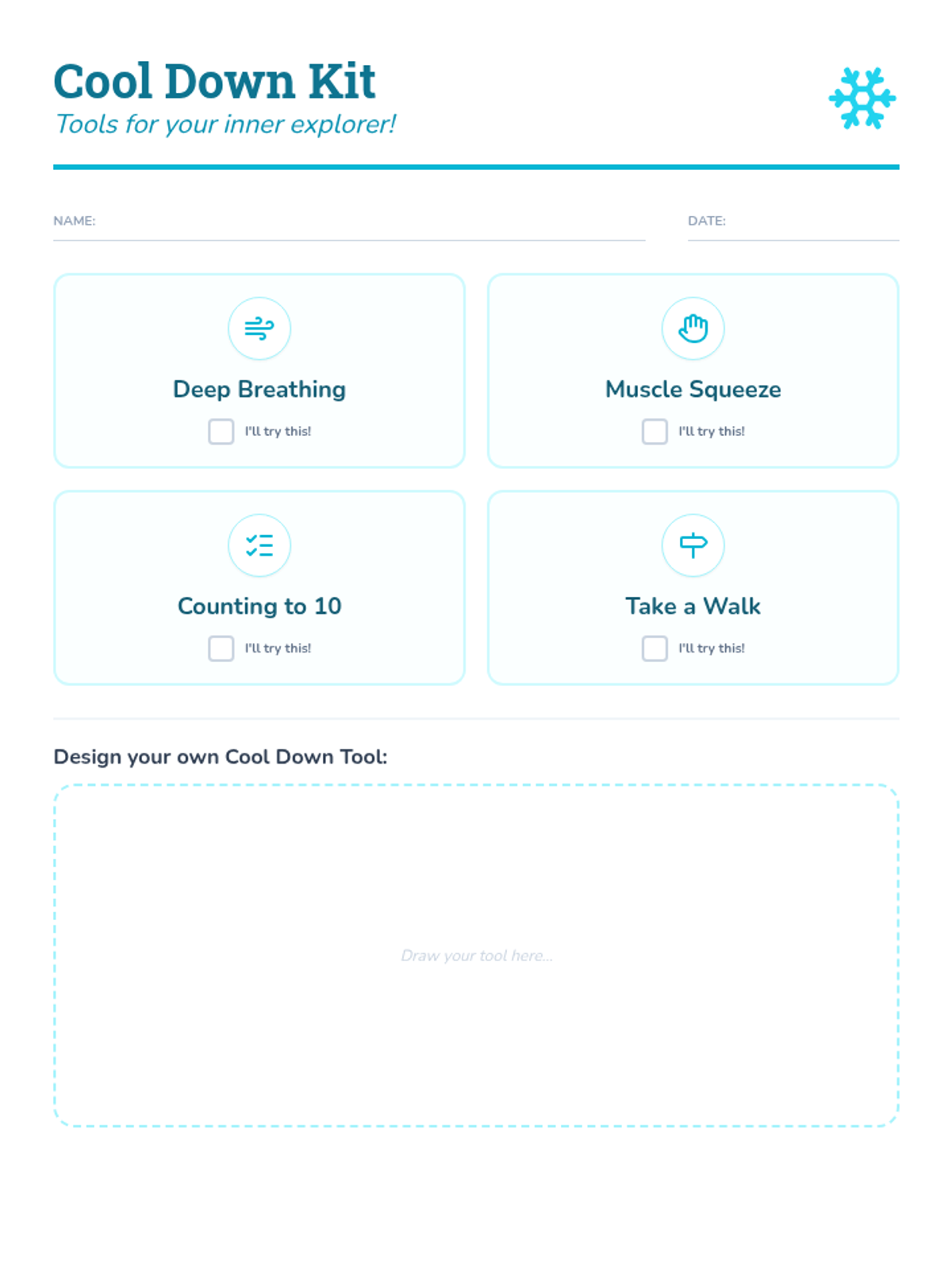
A visual checklist and drawing activity for students to select and personalize their preferred physical coping strategies.
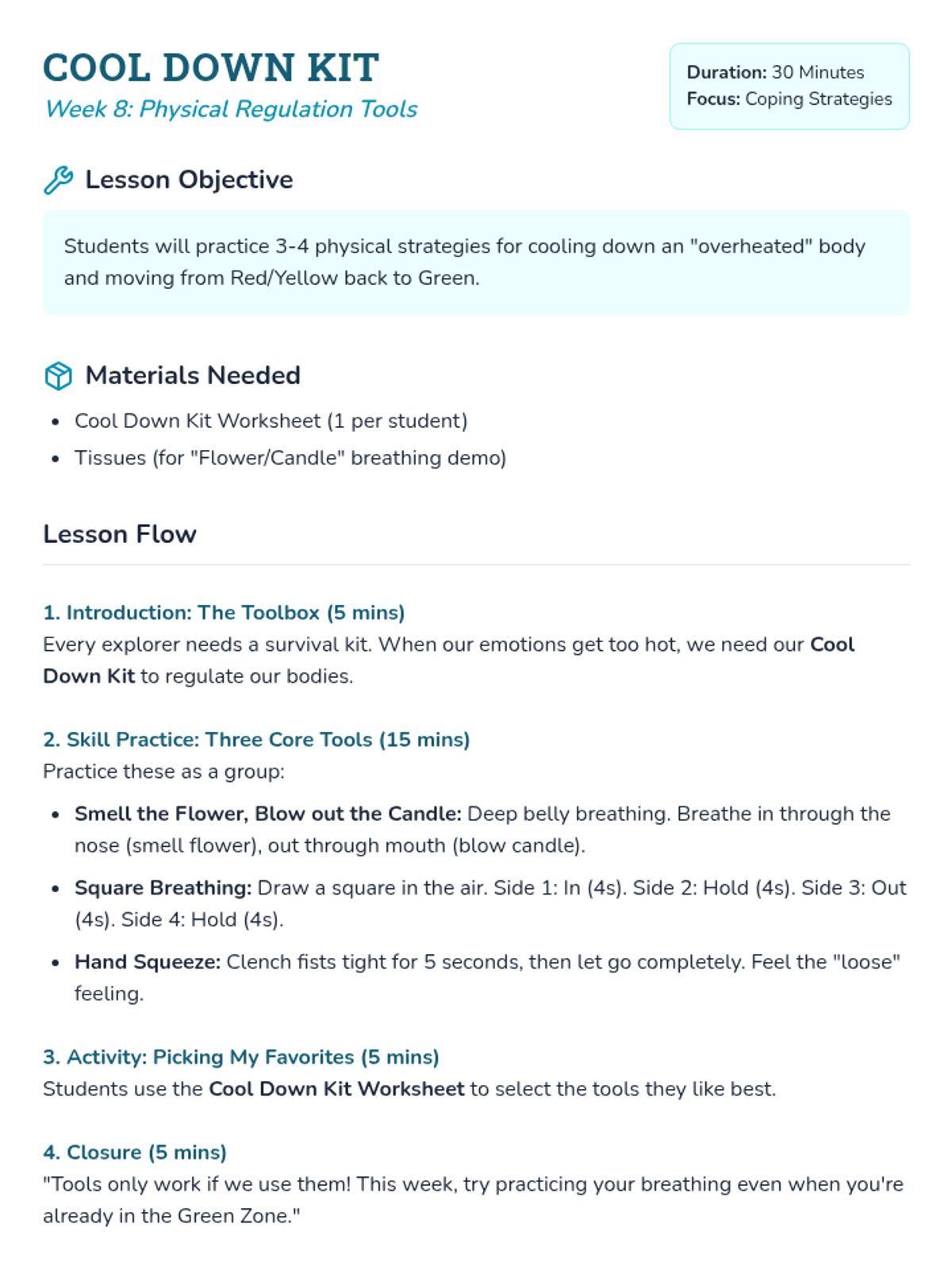
A facilitation guide for teaching physical regulation techniques, including deep breathing and muscle relaxation, to manage intense emotions.
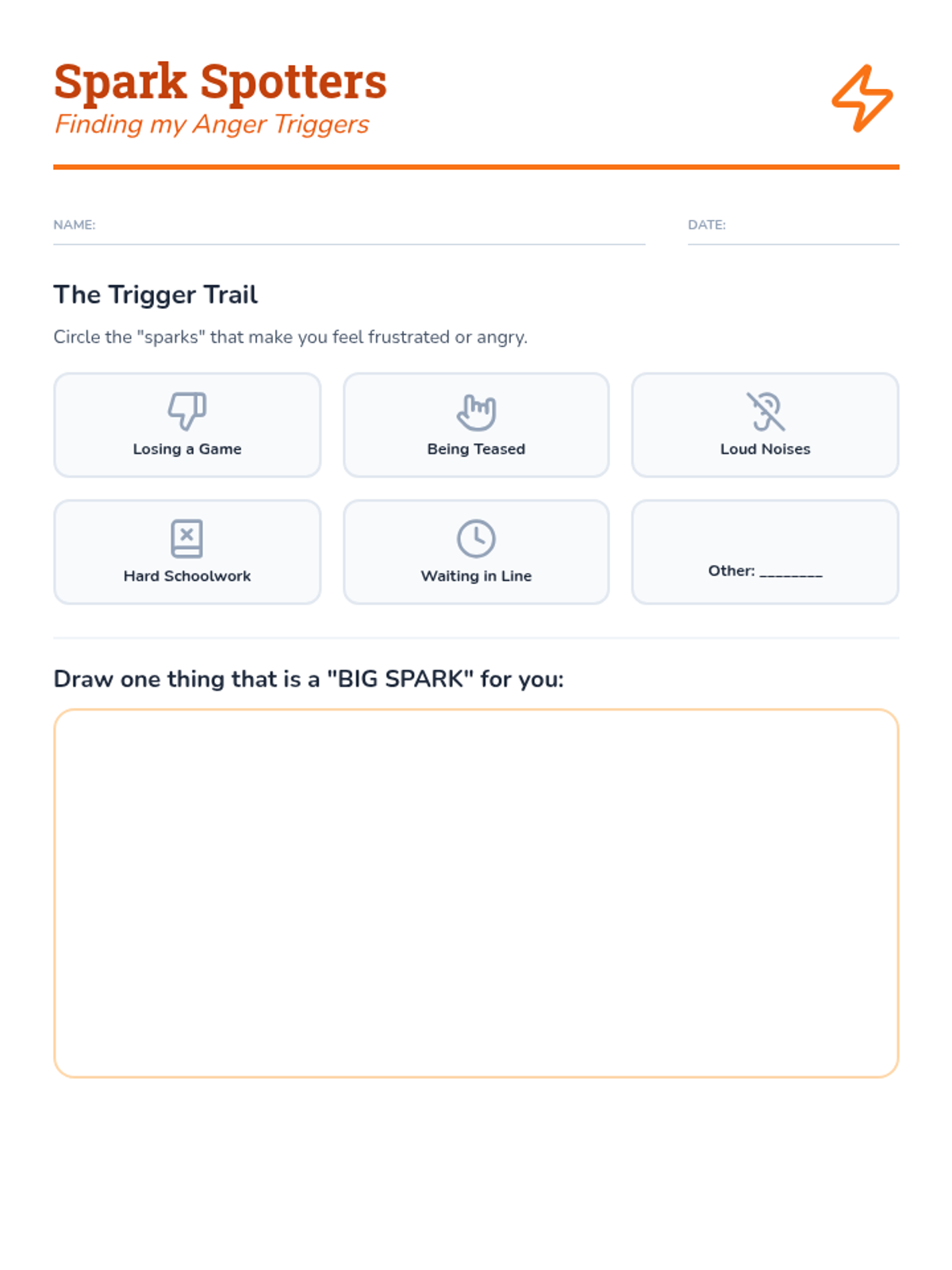
A worksheet for 2nd grade students to identify their personal triggers (sparks) that lead to frustration or anger.
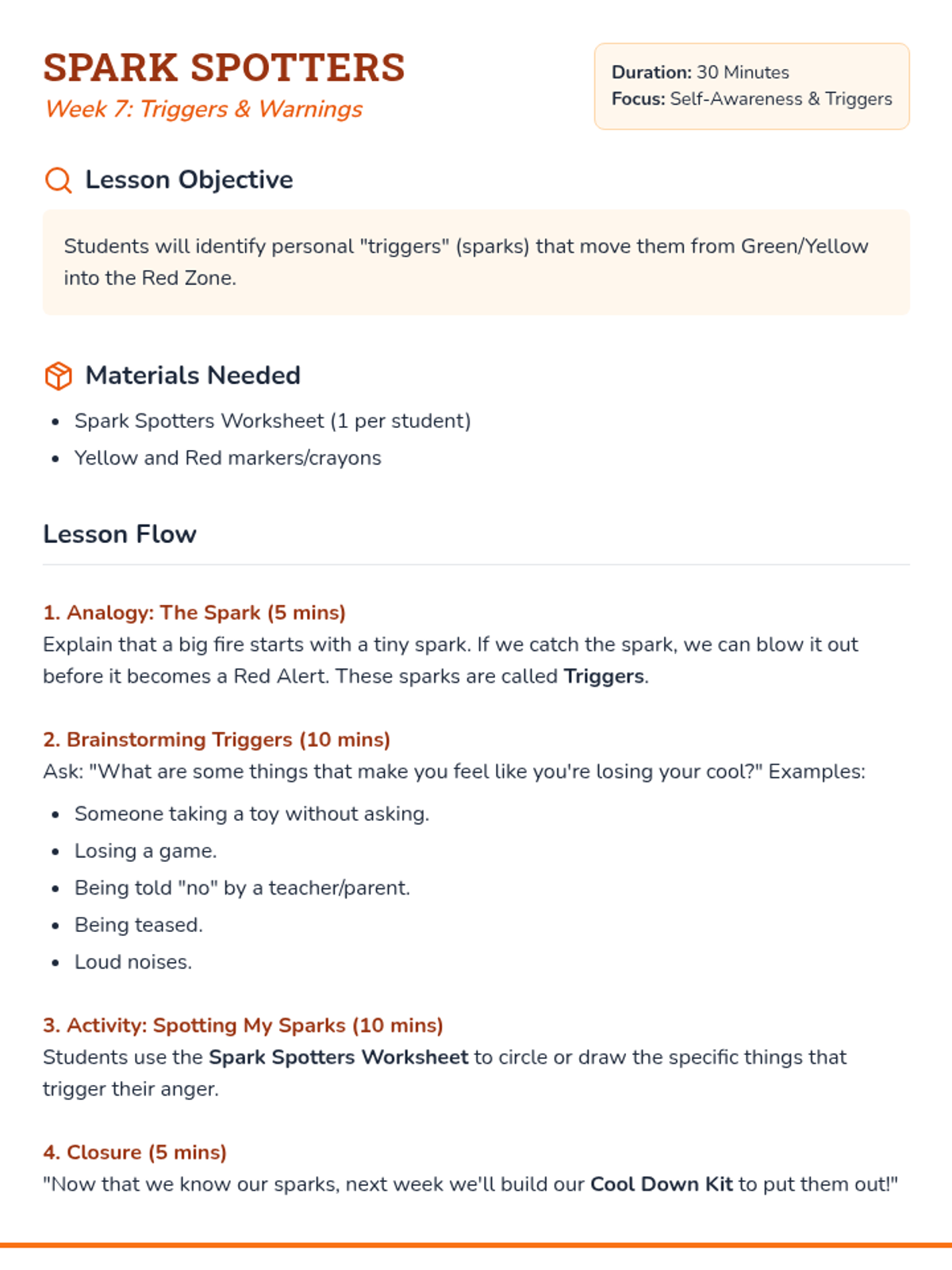
A facilitation guide for identifying triggers and early warning signs of anger, helping students prevent "sparks" from becoming full Red Zone episodes.
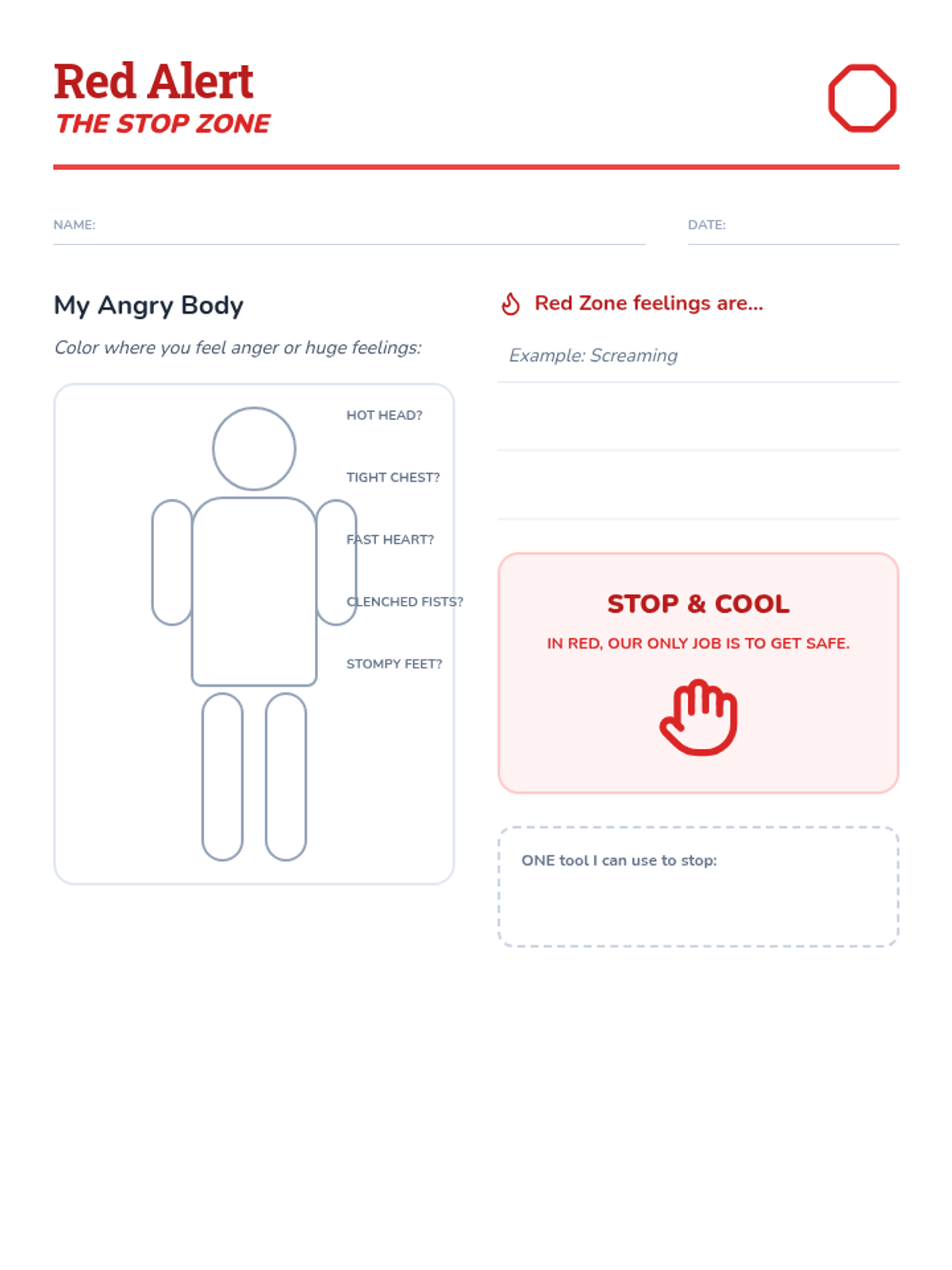
A worksheet for students to identify physical symptoms of anger and the Red Zone, emphasizing that Red Zone requires immediate stopping and cooling down.
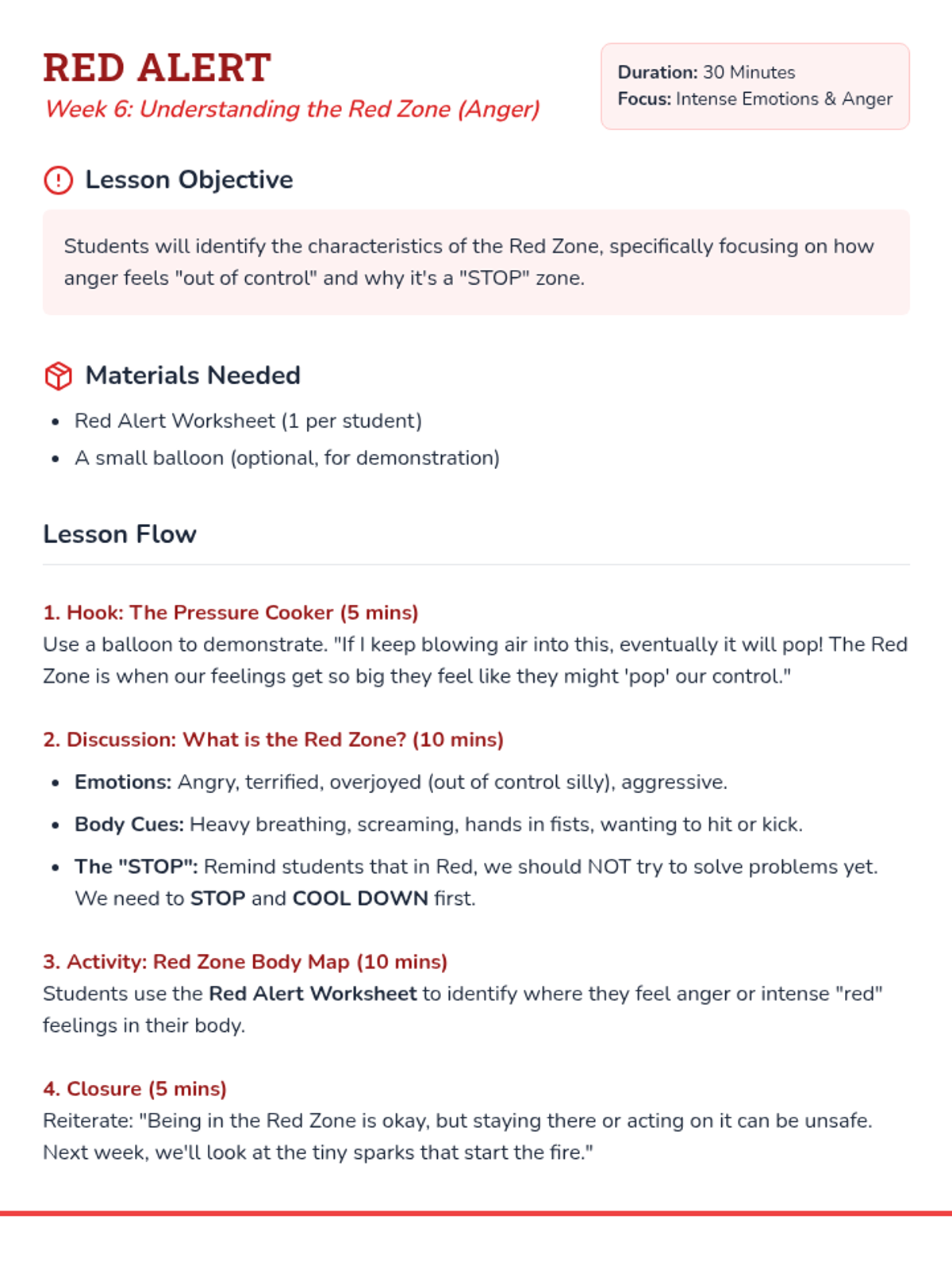
A teacher's guide for introducing the Red Zone, specifically focusing on intense anger and the loss of emotional control.
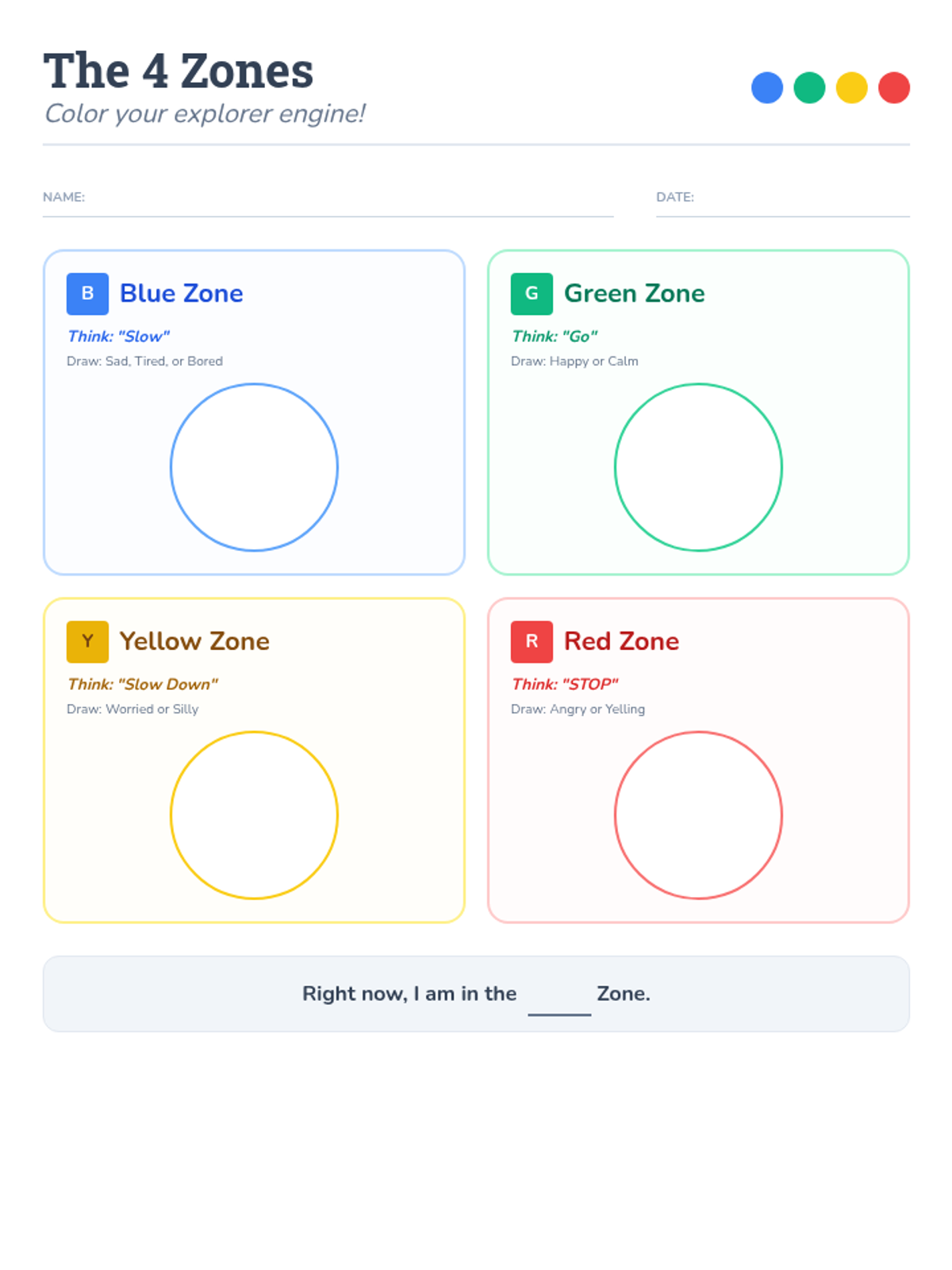
A coloring and drawing worksheet for students to identify and visualize the four different Zones of Regulation.
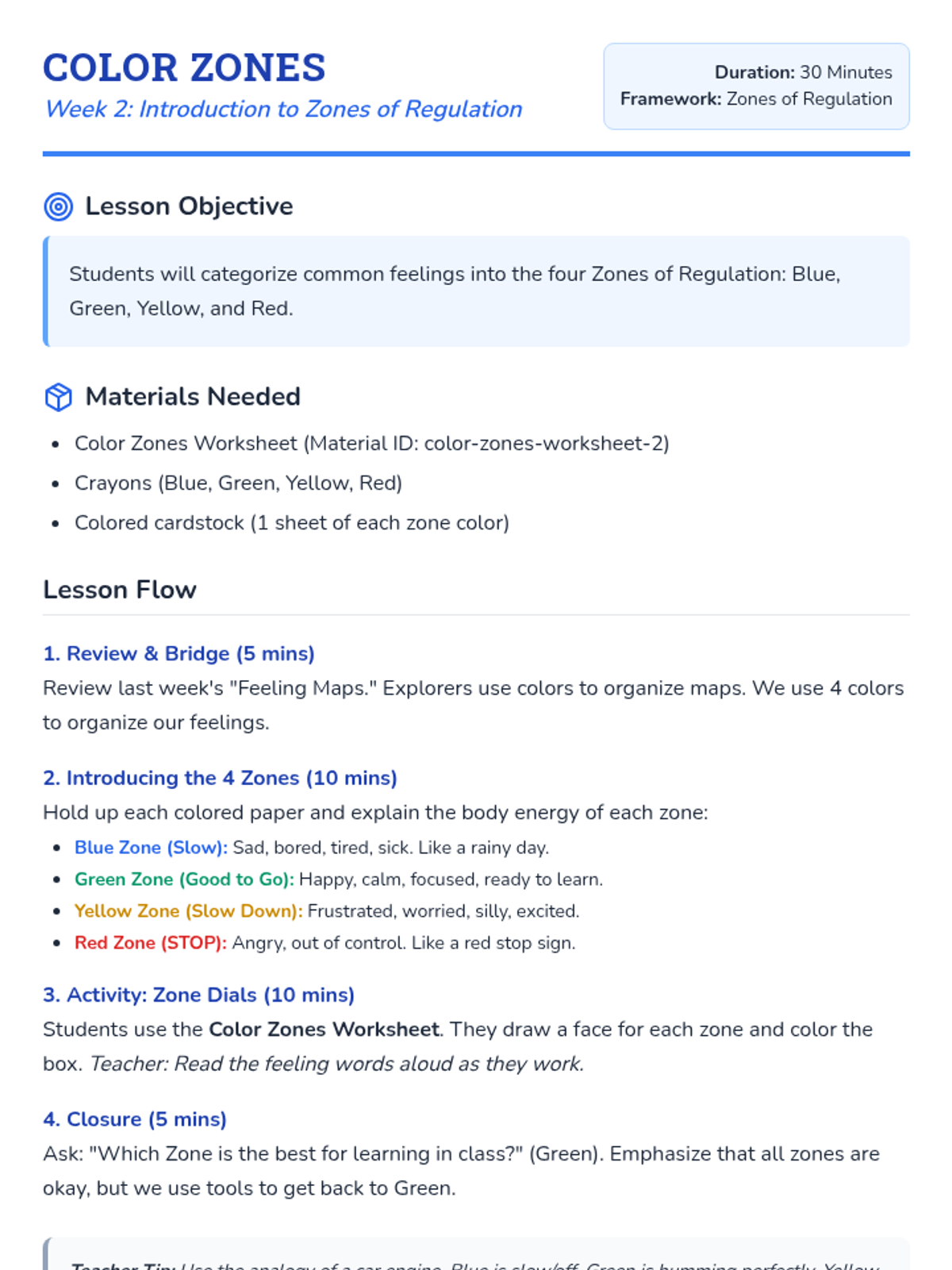
A facilitation guide for the second week of the curriculum, introducing the four colors of the Zones of Regulation framework to 2nd grade students.