A comprehensive facilitator guide for the 'Stop, Think, Choose' impulse control session, including time breakdowns, key discussion points, and instructional steps.
A vibrant 7-slide visual presentation including new 'We Will' and 'I Will' statements, and a dedicated definition slide for charity.
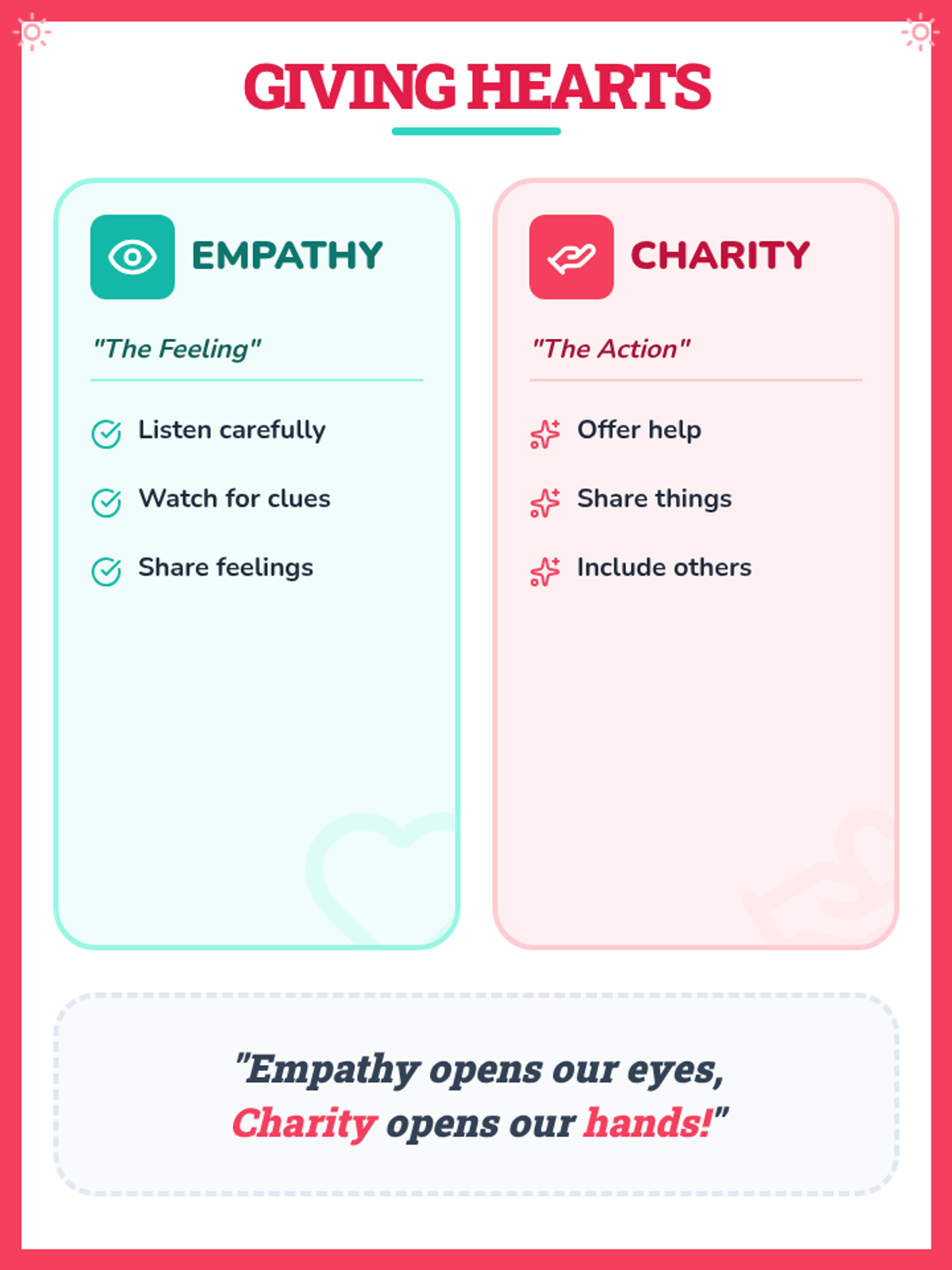
A bold, visual anchor chart for classroom display that reinforces the connection between empathy (the feeling) and charity (the action) with clear examples.
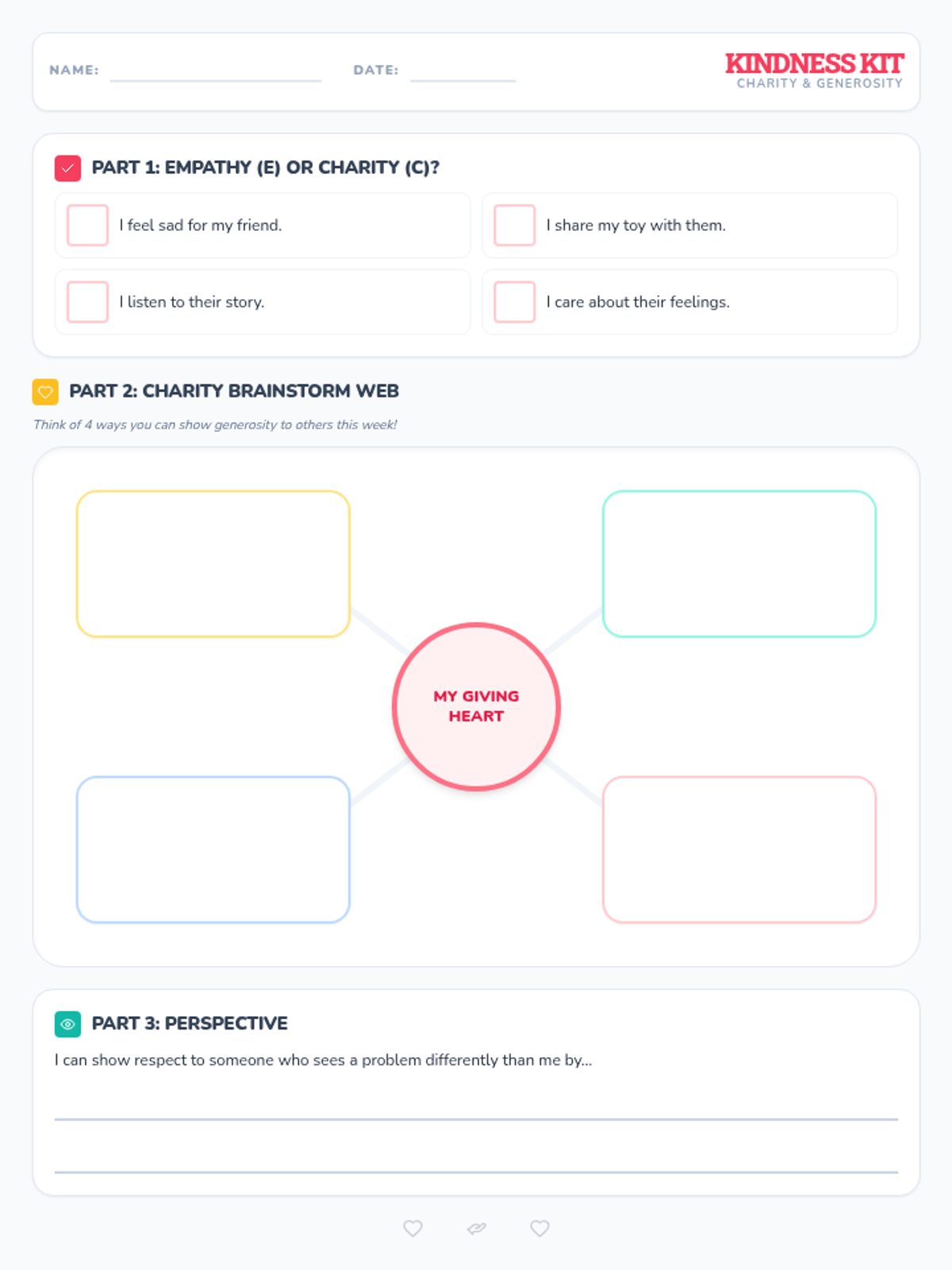
A student-facing worksheet featuring a categorization task to distinguish empathy from charity, a visual brainstorming web for identifying acts of generosity, and a reflection prompt on perspective-taking.
A vibrant 6-slide visual presentation including new 'We Will' and 'I Will' statements to frame the lesson goals and student accountability.
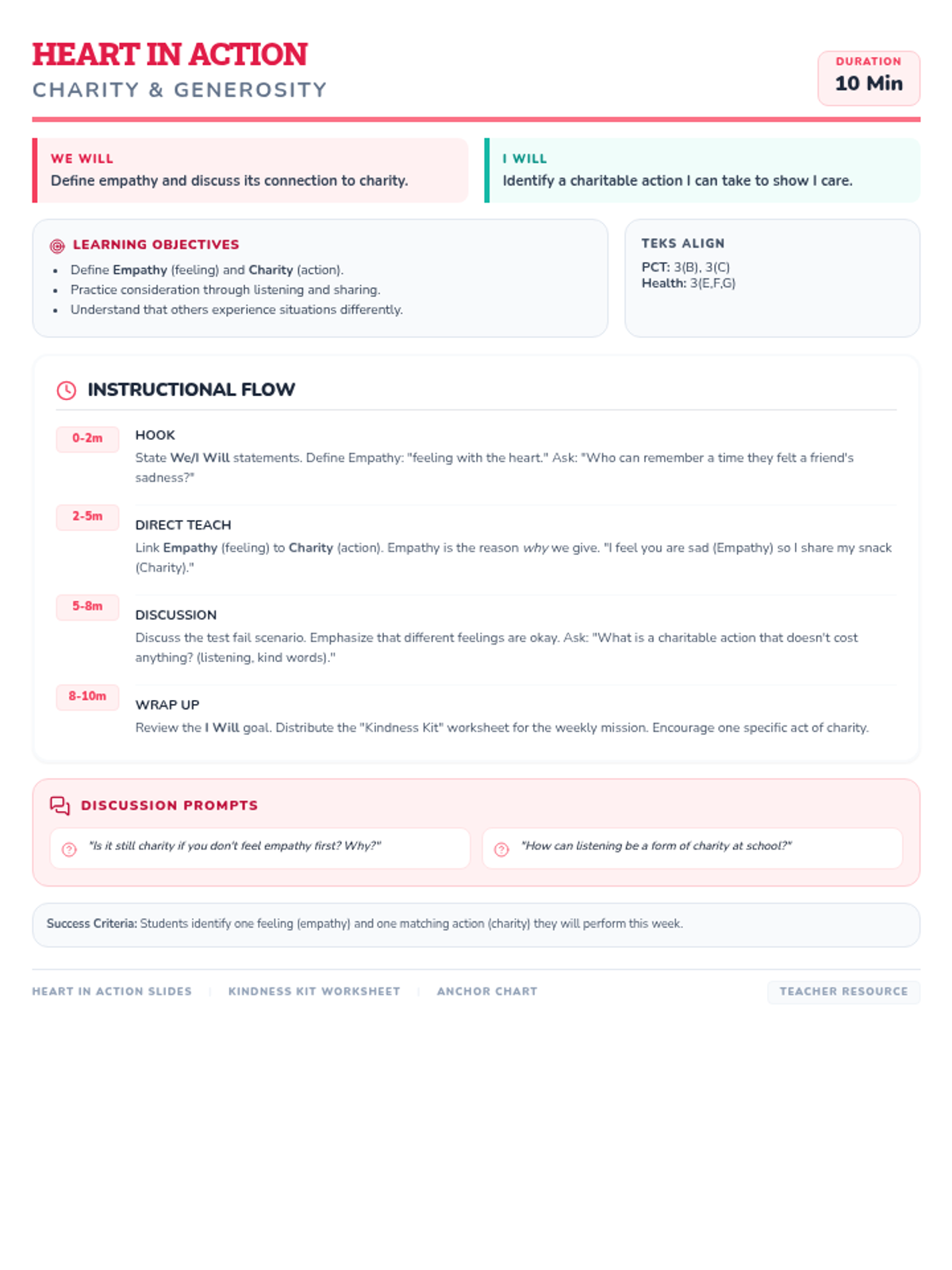
A comprehensive facilitator guide for a 10-minute whole-group lesson on empathy and charity, now featuring explicit 'We Will' and 'I Will' statements for standard-aligned instruction.
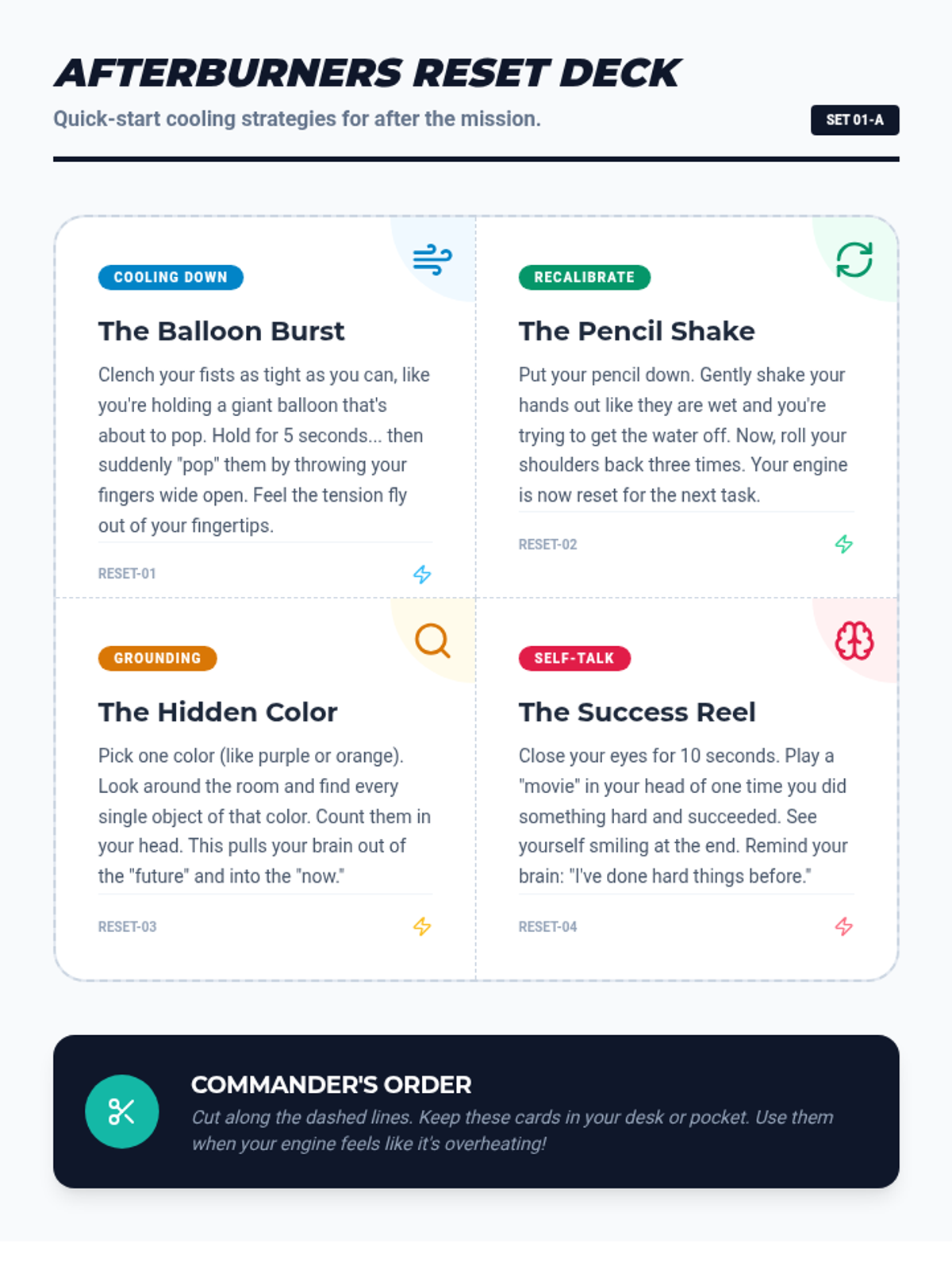
A set of printable task cards featuring four quick 'reset' activities. Revised for consistent card footers and clear dashed cut lines.
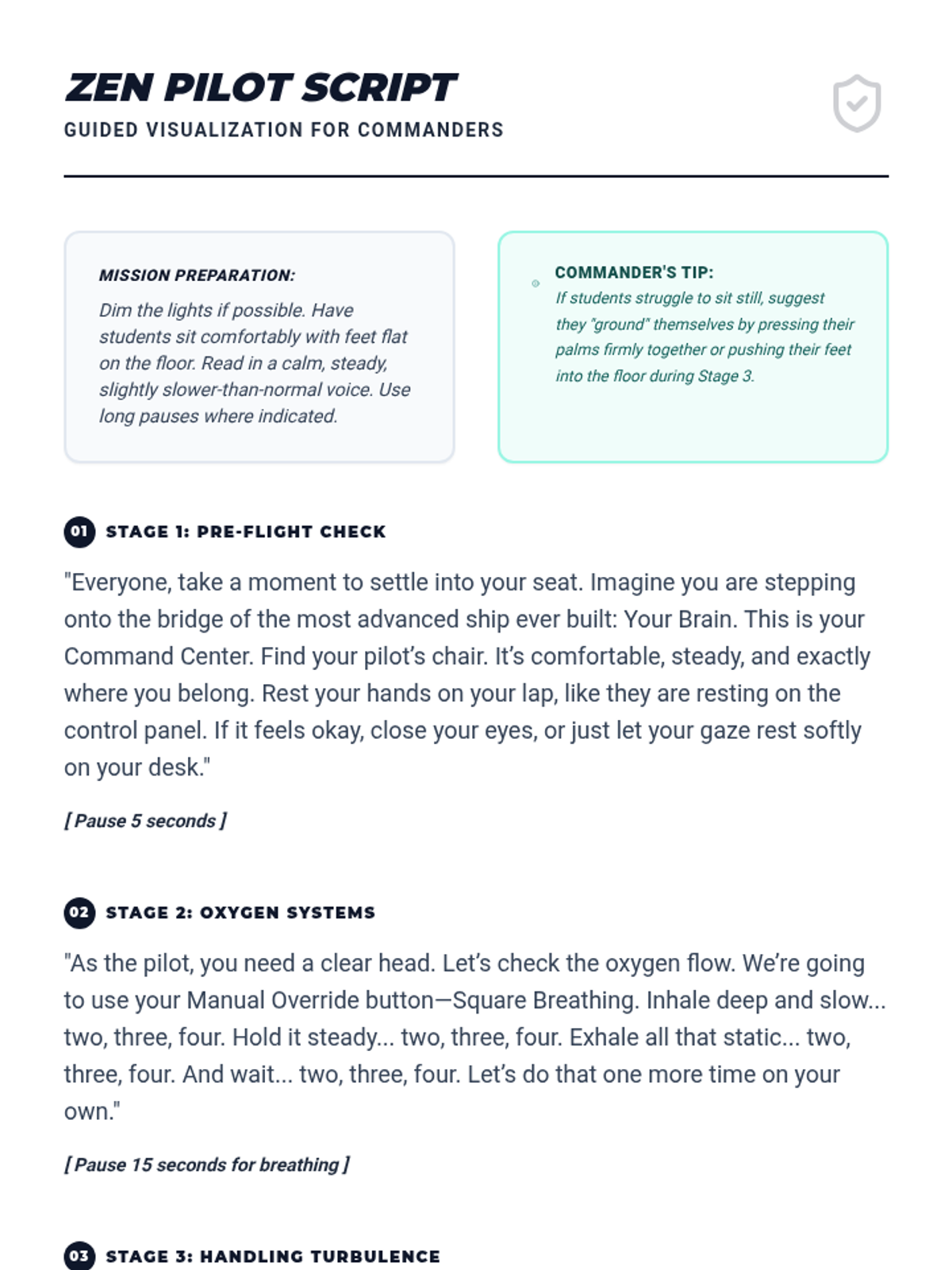
A guided imagery and meditation script for teachers. Revised to ensure section headers are legible in low light and content does not split awkwardly across pages.
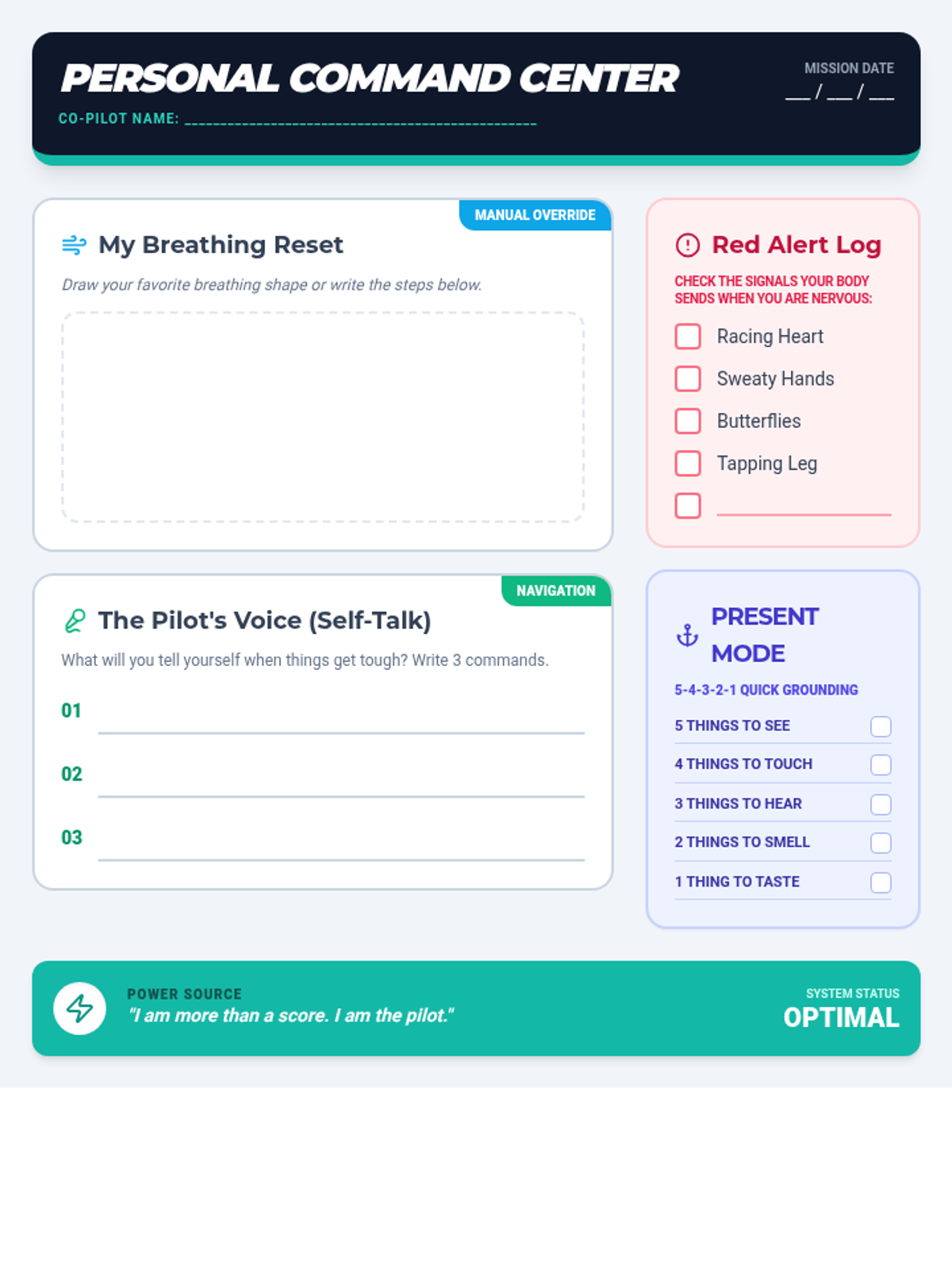
A student-facing worksheet titled 'Personal Command Center' that allows 3rd-5th graders to map out their unique coping strategies. Revised to ensure all content fits on one page and the grounding section is legible for writing.
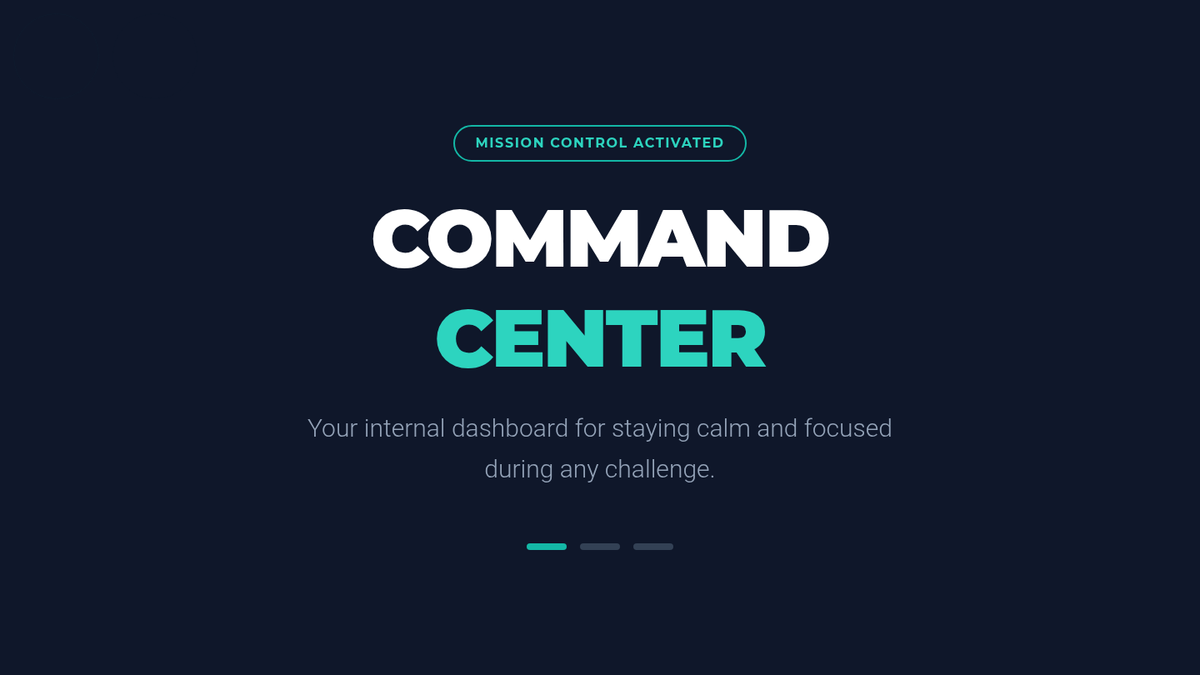
A high-tech, mission-control themed slide deck for the Testing Calm Command Center workshop, using a pilot metaphor to teach self-regulation and grounding techniques to students.
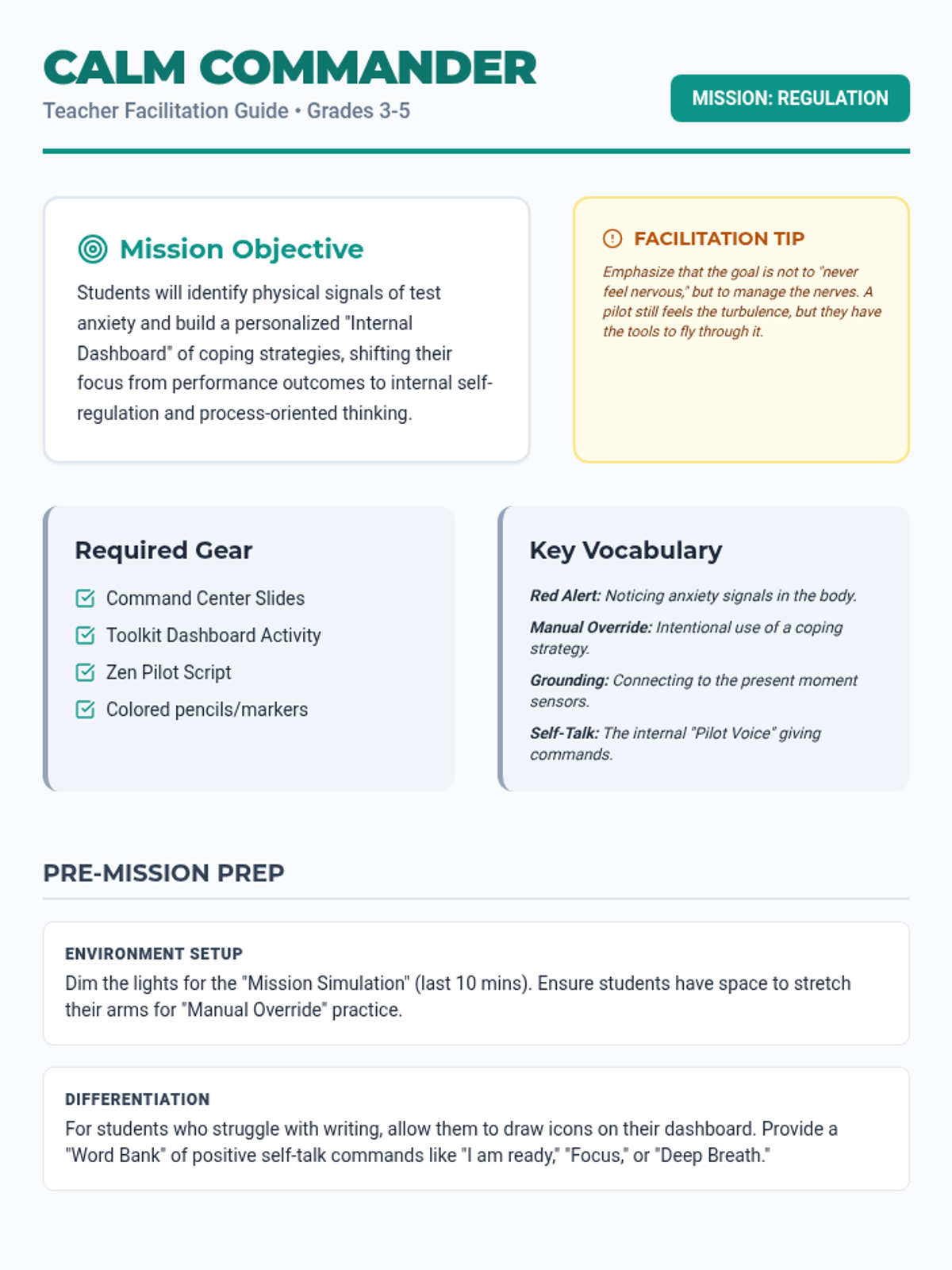
A facilitator's guide for the Testing Calm Command Center workshop, featuring a clear mission protocol, key vocabulary, and debriefing questions for 3rd-5th grade teachers. Updated for better page-break consistency and visual flow.
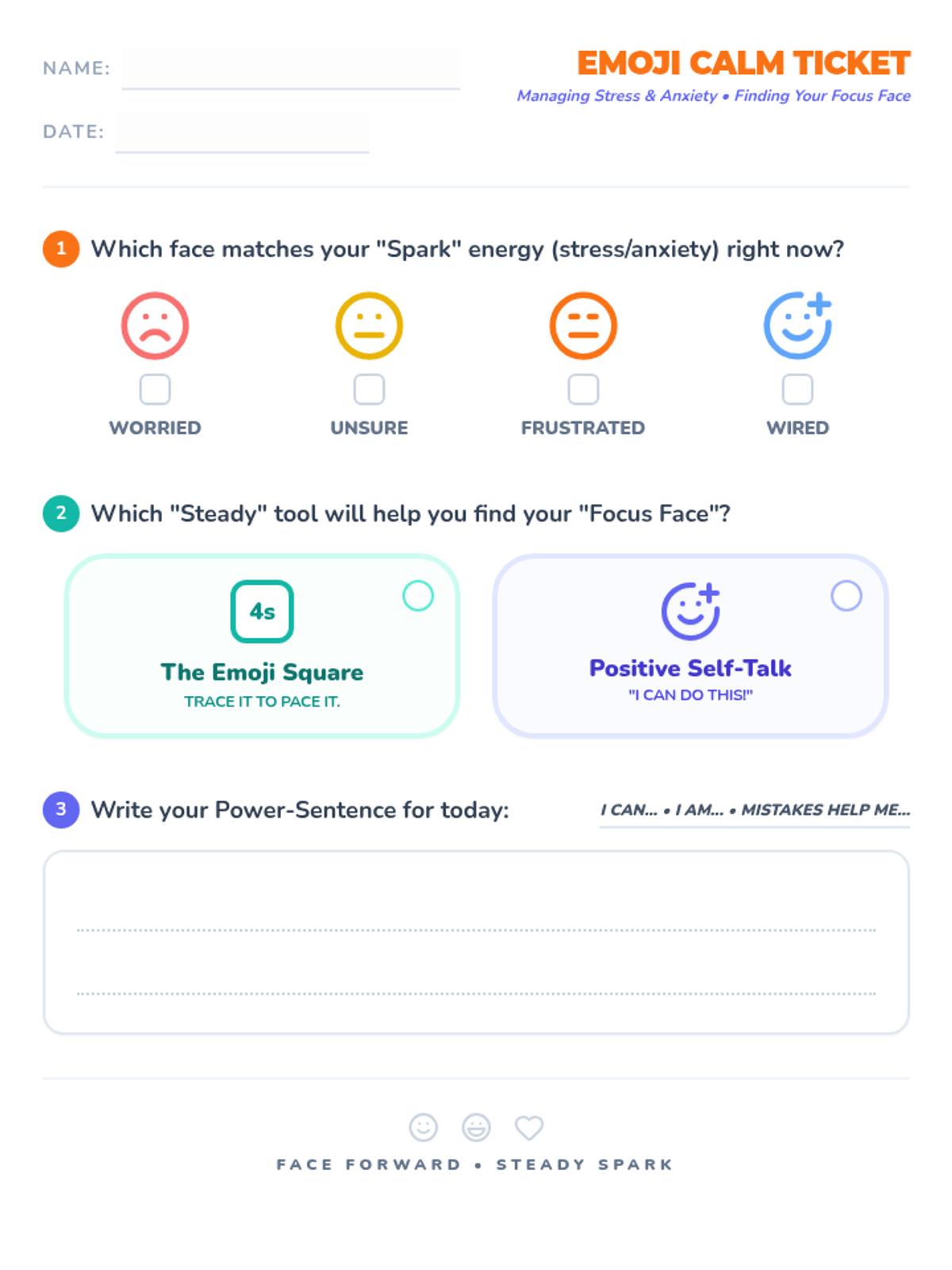
A student exit ticket where students identify their stress face, choose between The Emoji Square or Positive Self-Talk, and write a power sentence. Now includes "Power-Sentence Helpers" and improved legibility.
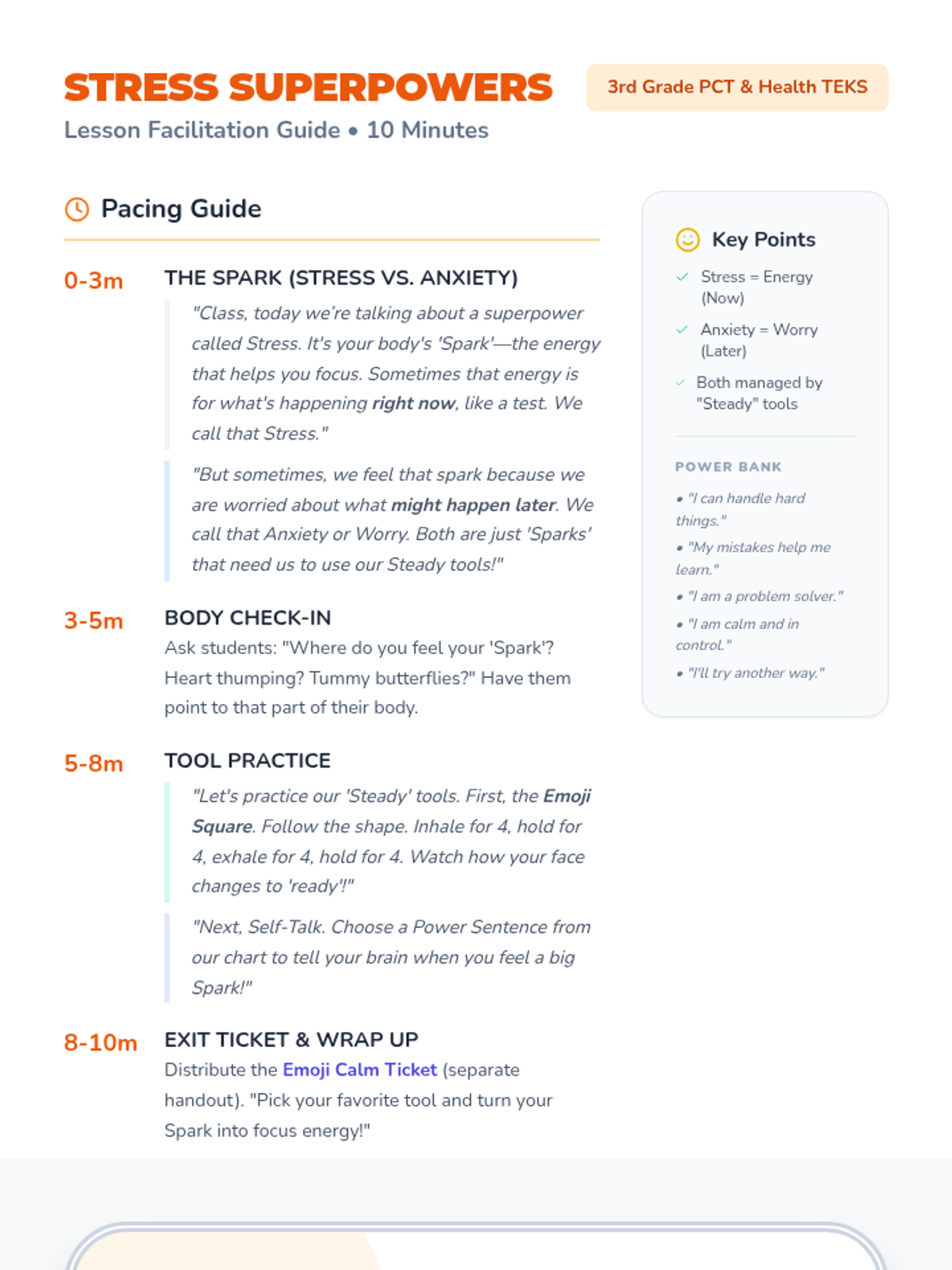
A combined lesson script and anchor chart for teachers. Includes a 10-minute pacing guide, script prompts relating stress and anxiety, and a visual "Emoji Tuner" anchor chart. Now includes an expanded bank of positive self-talk examples.
A 16:9 interactive slide deck for a 10-minute whole group lesson. It introduces stress as energy (the "Spark") and provides two self-management tools: The Emoji Square (Square Breathing) and Positive Self-Talk. Now includes an expanded bank of self-talk examples.
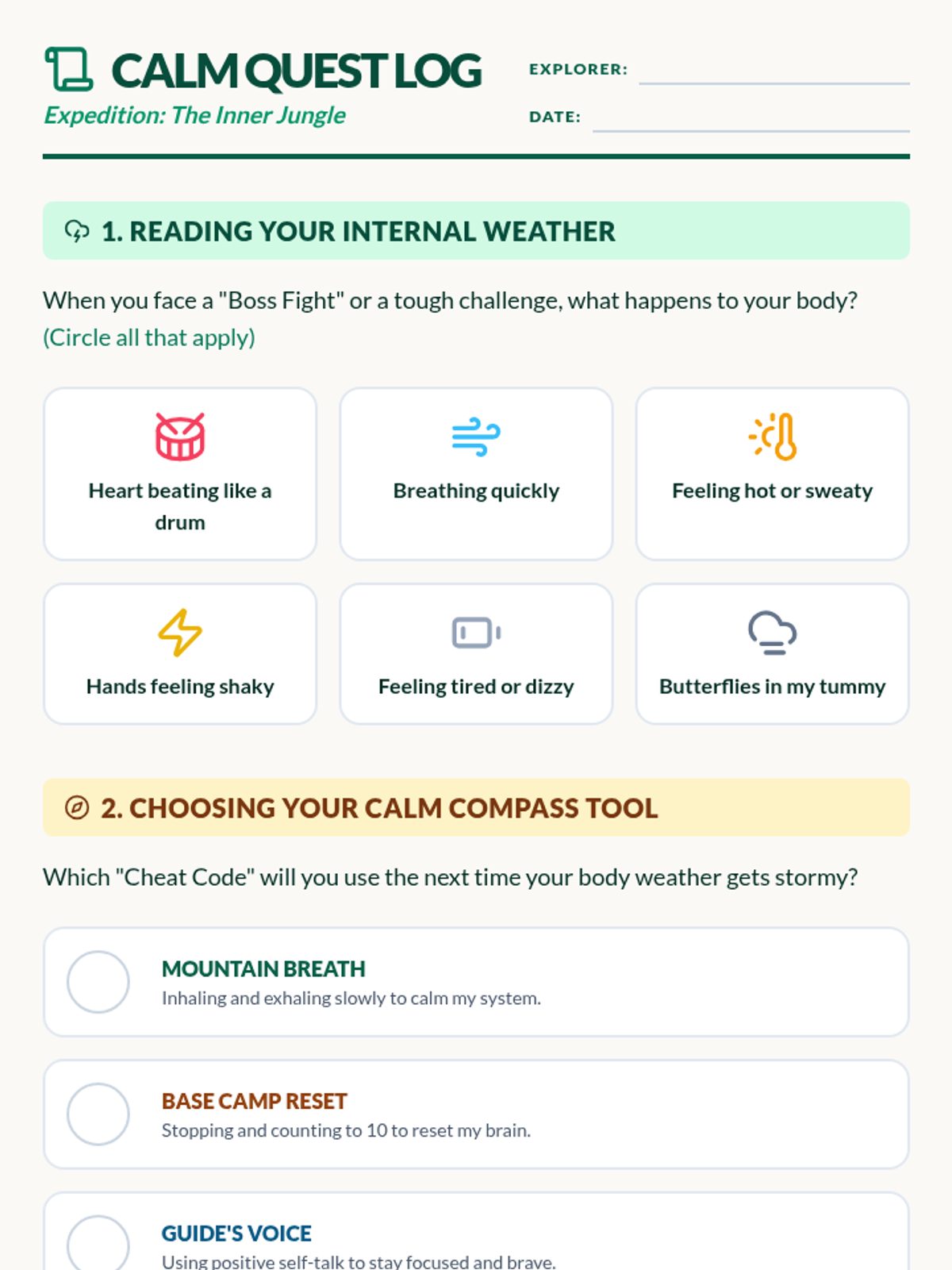
A student worksheet for the 'Inner Calm Explorers' lesson, helping 3rd graders identify physical stress symptoms and select a calming tool from their 'Calm Compass'. Fixed page break and drawing area issues.
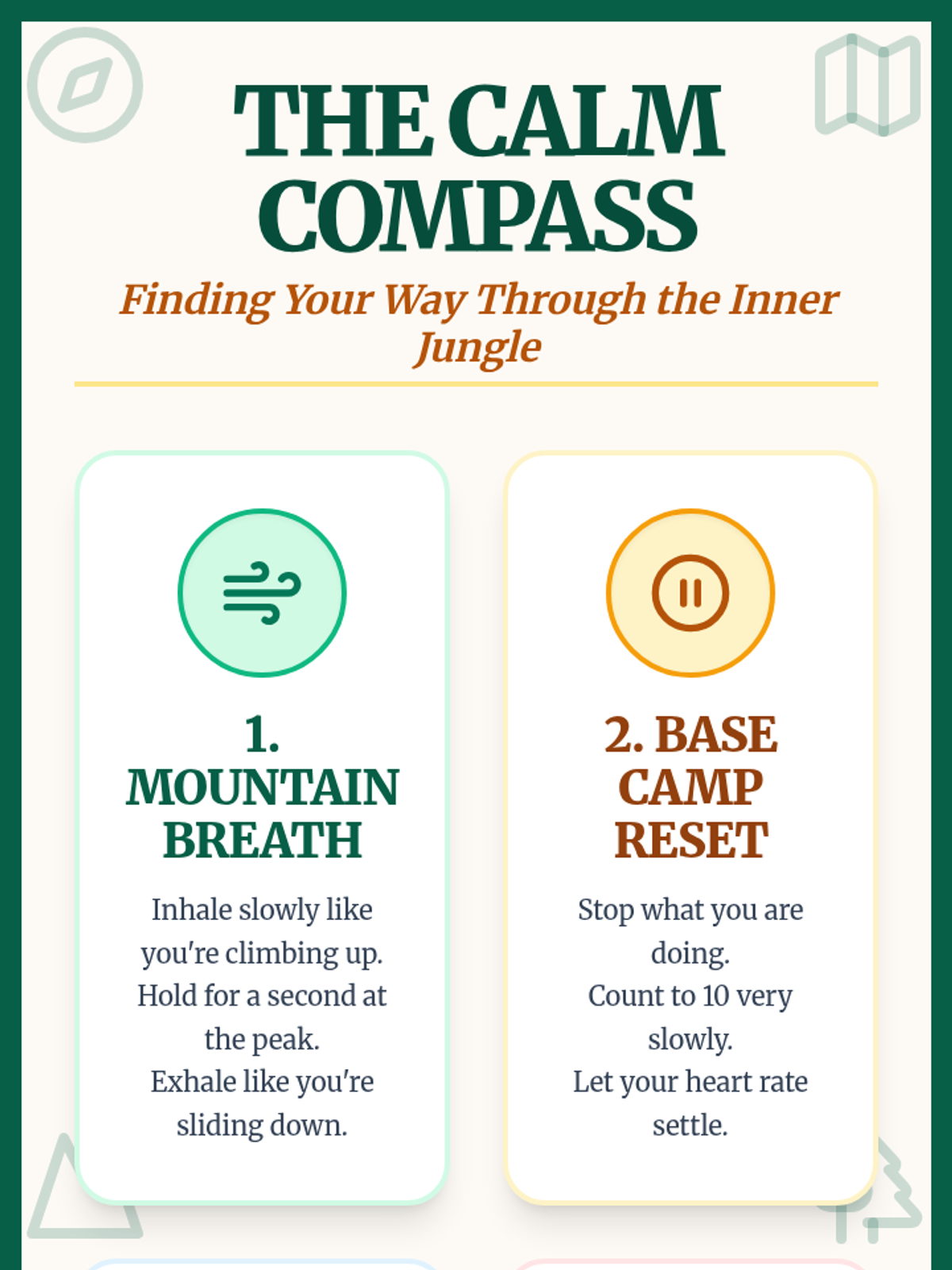
A trail-map style visual anchor chart displaying four essential mindfulness 'tools' for 3rd graders using a 'Nature Expedition' theme. Fixed layout to ensure single-page printing.
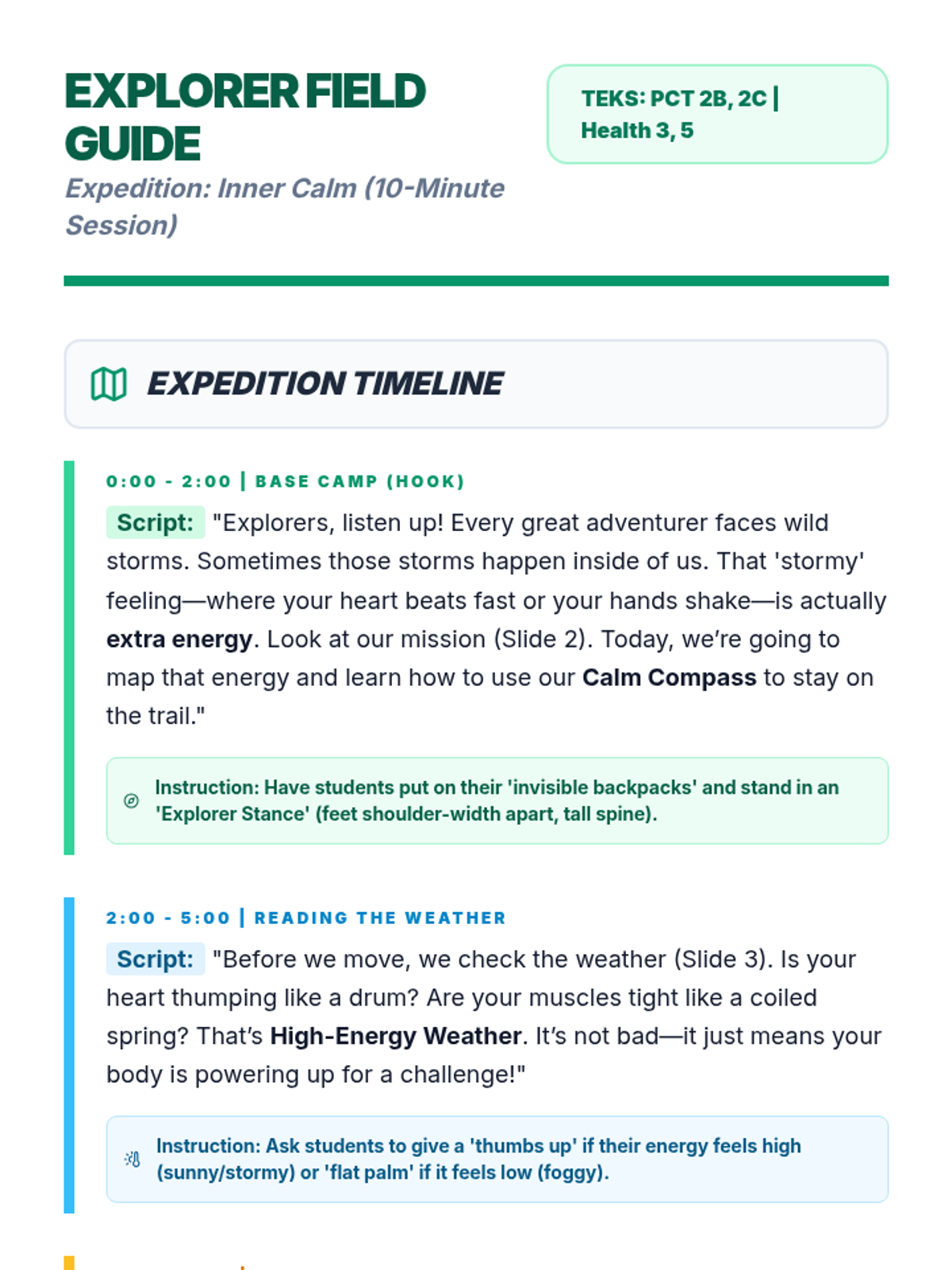
A 10-minute teacher facilitation guide using a 'Nature Expedition' theme to teach mindfulness, including timed scripts, pacing, and discussion prompts.
A 5-slide presentation using a 'Nature Expedition' theme to teach 3rd graders about mindfulness, identifying physical sensations, and self-regulation tools. Fixed title layout and text contrast issues.
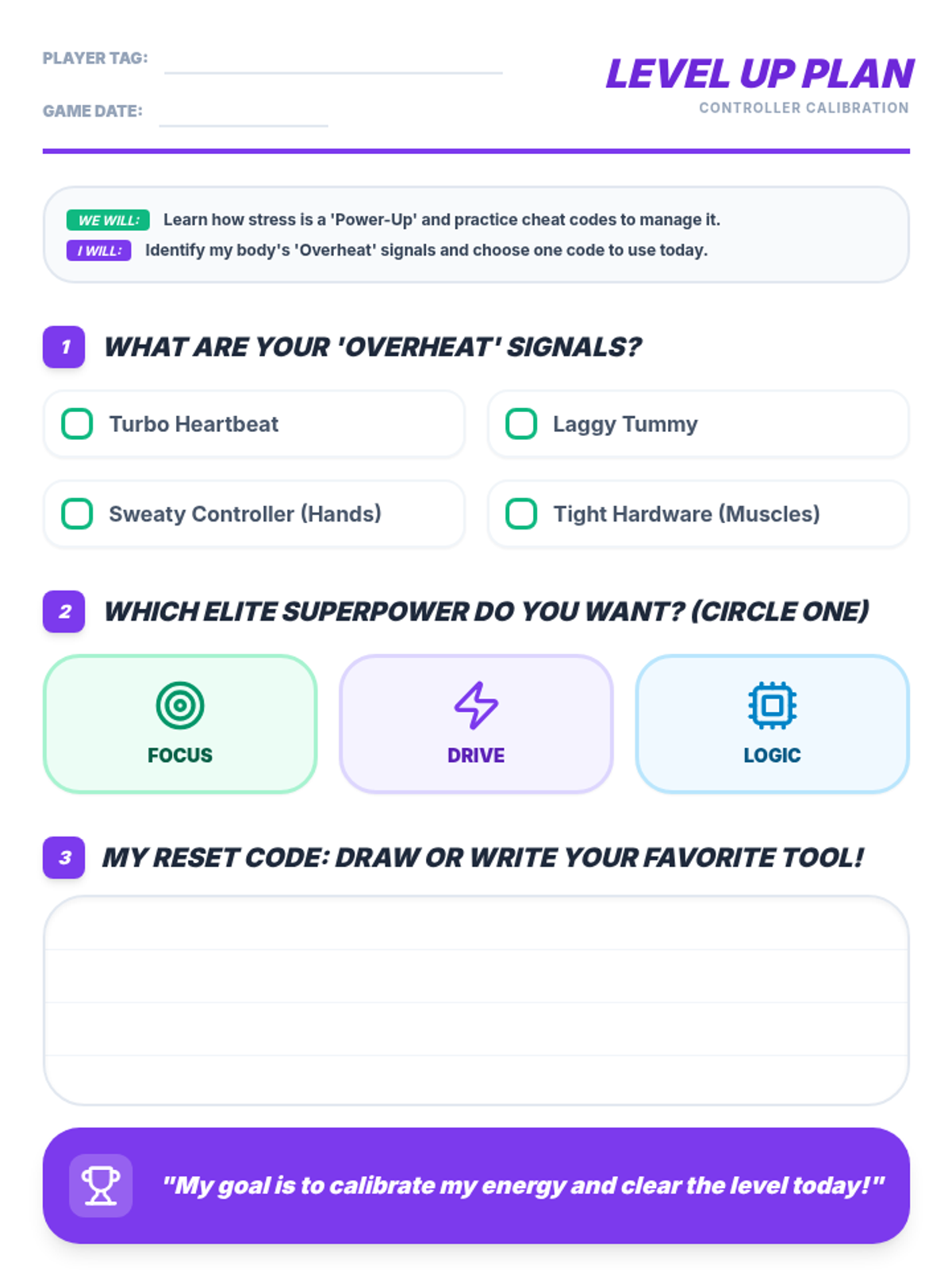
A themed activity worksheet for 3rd graders using a 'Video Game' theme to help them identify physical symptoms of stress and select a self-management strategy, revised for single-page layout.
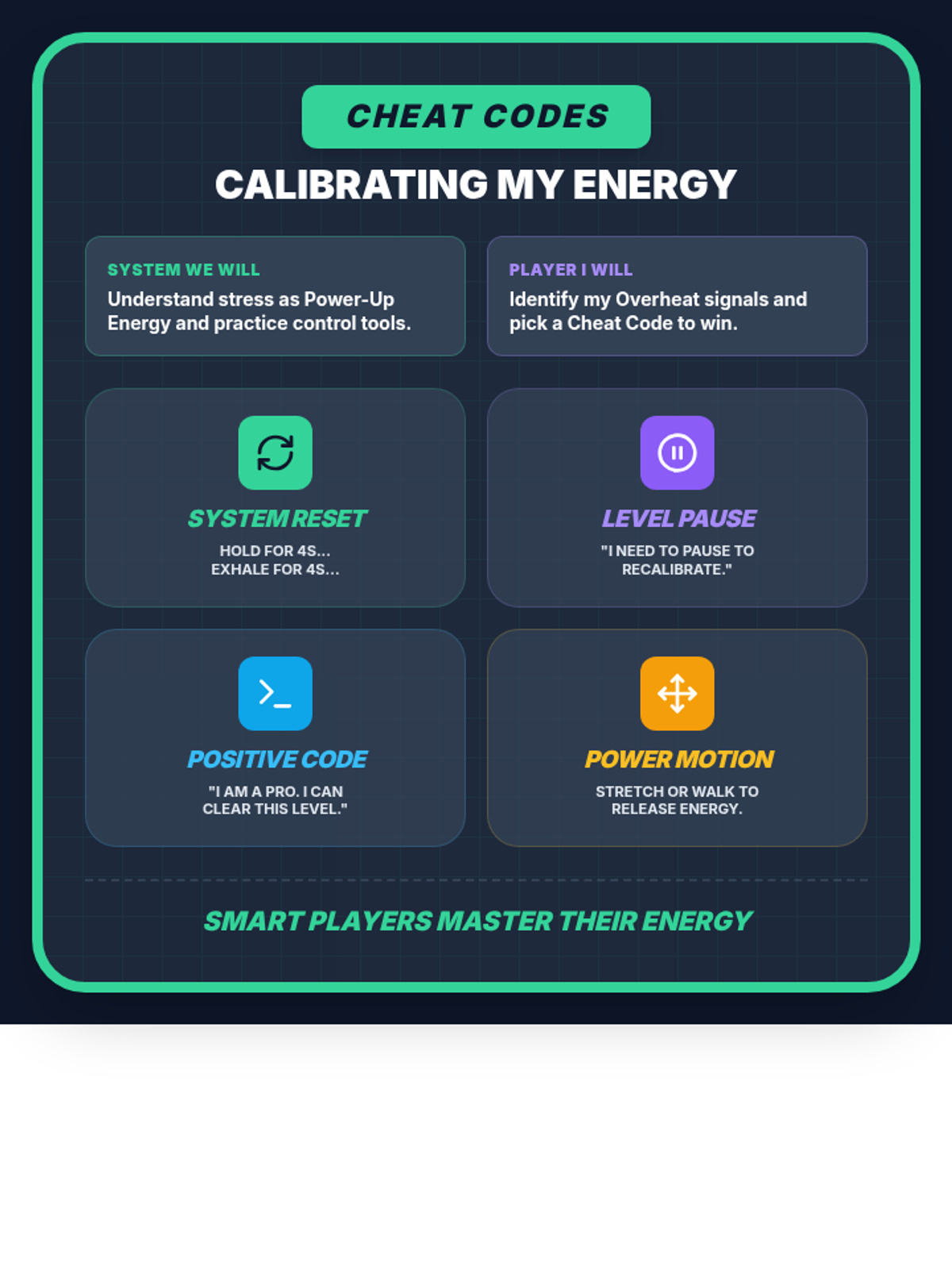
A neon-style visual anchor chart using a 'Video Game' theme to display four essential stress-management 'Cheat Codes' for 3rd graders, revised for better layout and visibility.
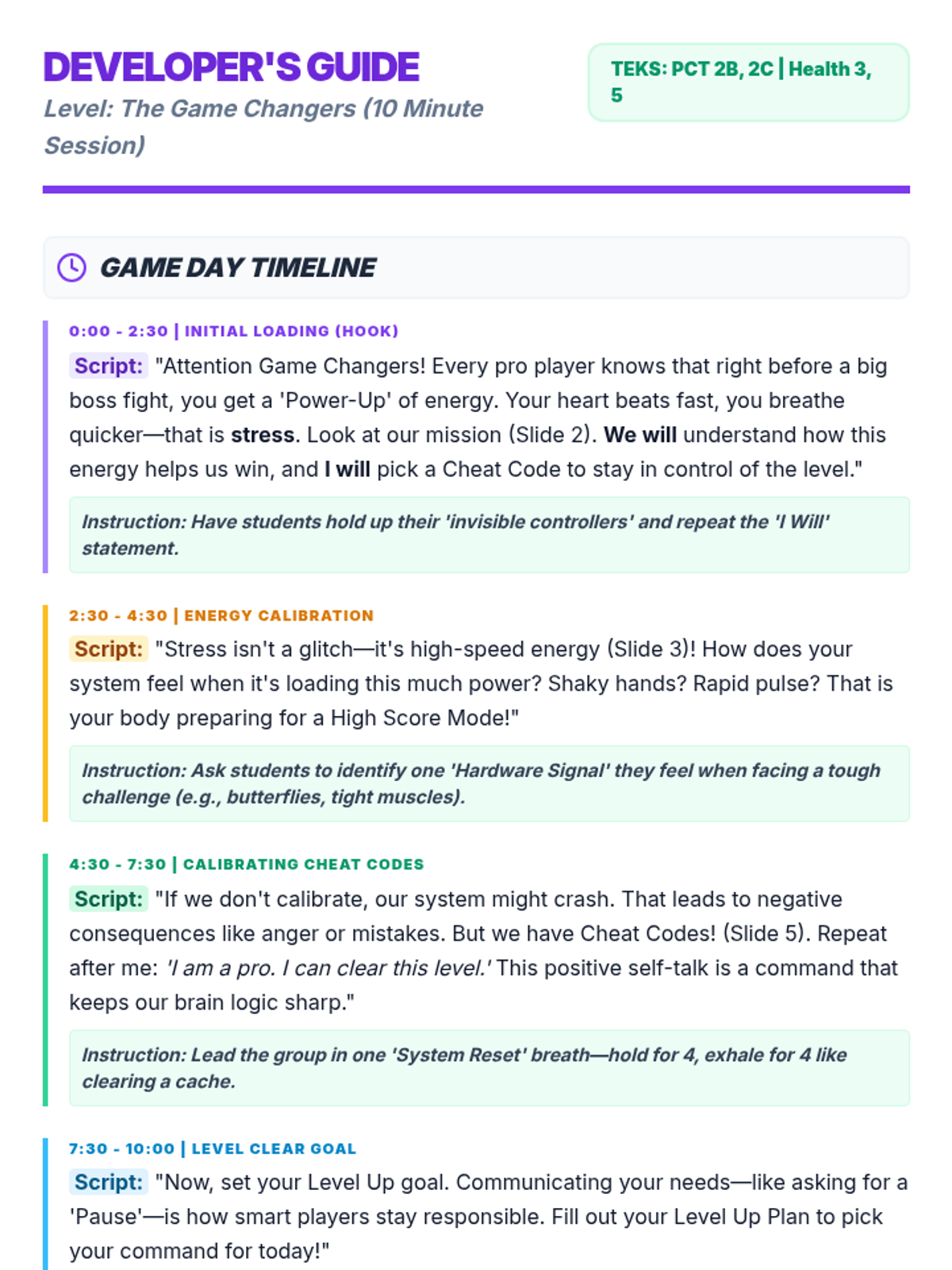
A 10-minute teacher facilitation guide using a 'Video Game' theme to teach stress management, including timed scripts, pacing, and discussion prompts.
A 5-slide presentation using a 'Video Game/Digital' theme to teach 3rd graders about stress management, energy calibration, and self-regulation.
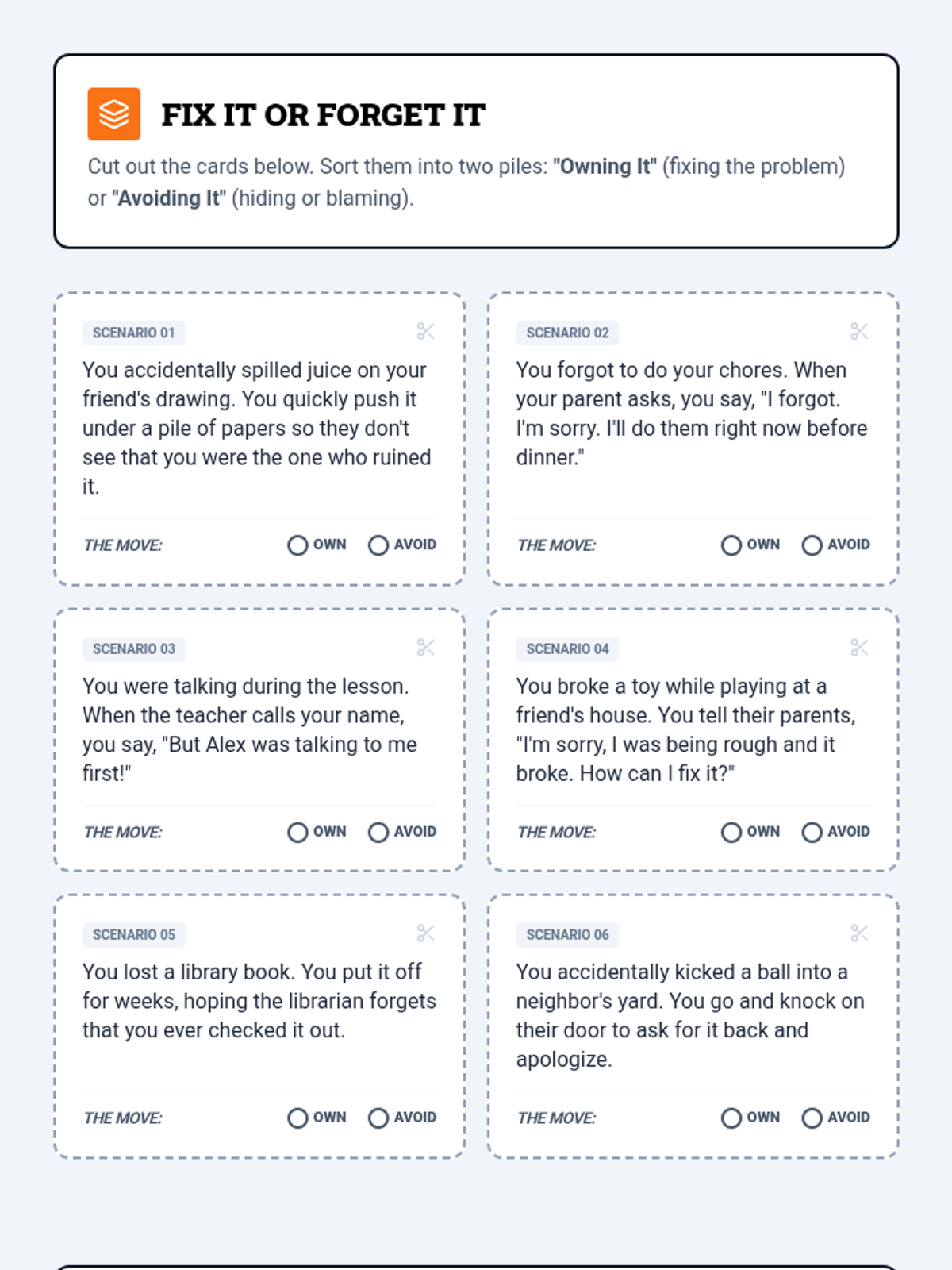
A hands-on sorting activity featuring 6 scenario cards where characters either take ownership or avoid accountability. Includes two large sorting mats ('Owning It' and 'Avoiding It') for group discussion and categorization.
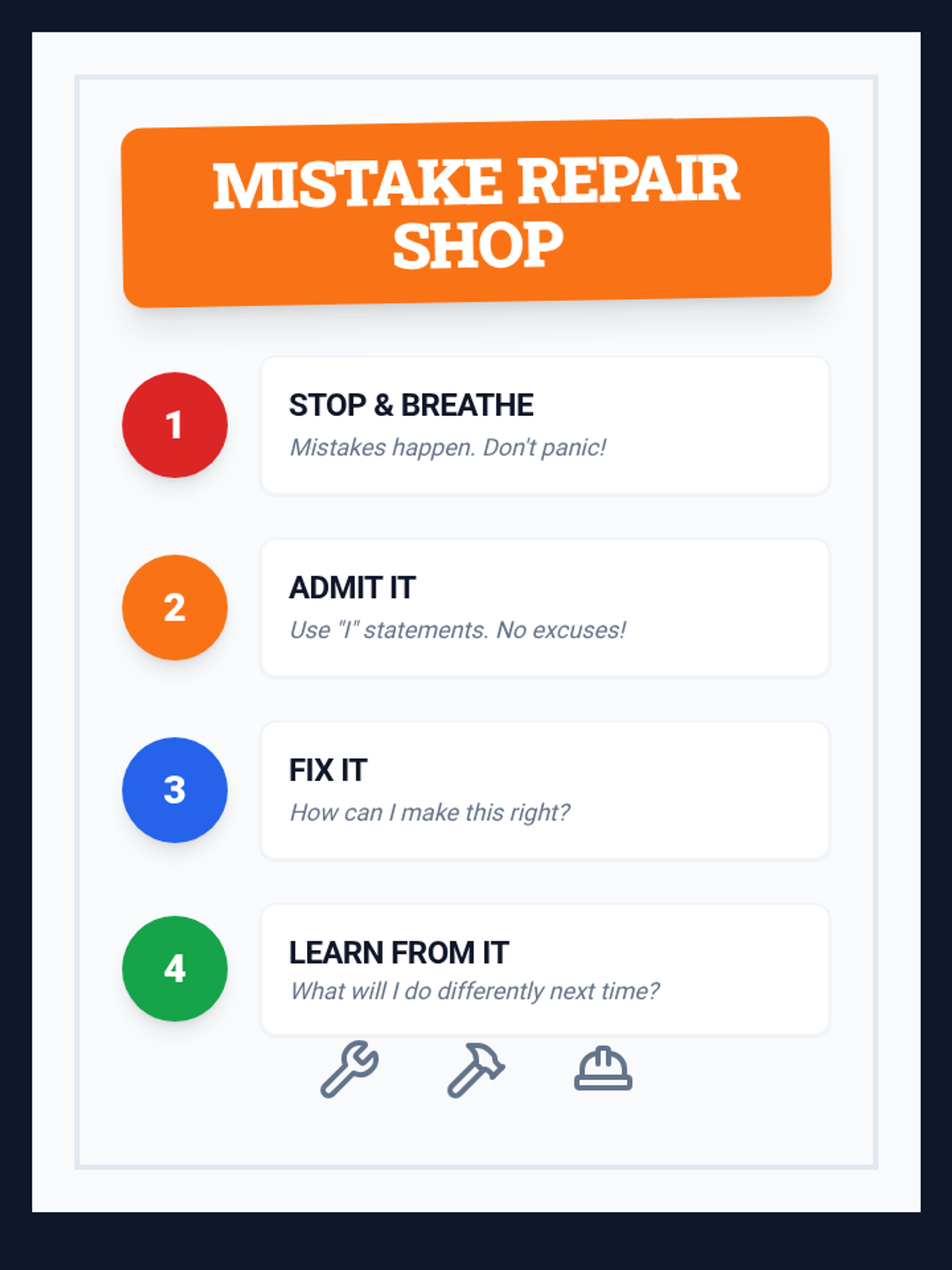
A set of classroom visuals including a large 'Mistake Repair Shop' anchor chart outlining the four-step ownership process, plus two motivational posters focusing on integrity and the growth mindset of 'upgrading' through mistakes.
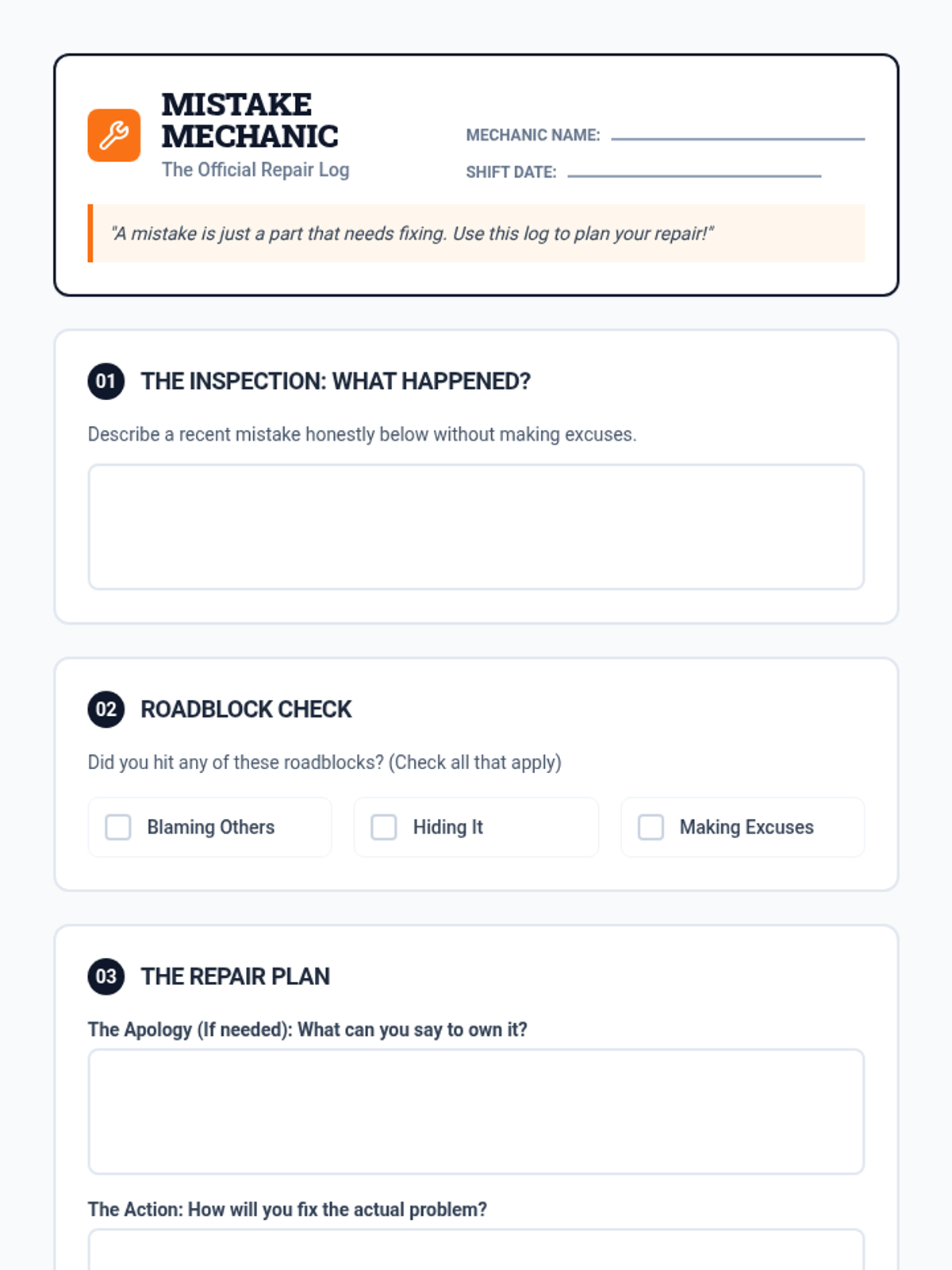
A reflection worksheet that guides students through the 'Mistake Mechanic' process. It includes sections for identifying a mistake, checking for emotional roadblocks (blame, hiding), planning a 'repair' (apology and action), and identifying the lesson learned for future 'system upgrades'.
An interactive slide deck introducing the 'Mistake Repair Shop' metaphor. It defines ownership, identifies common roadblocks like blaming and hiding, and provides a four-step 'Repair Manual' for students to follow when they make mistakes.
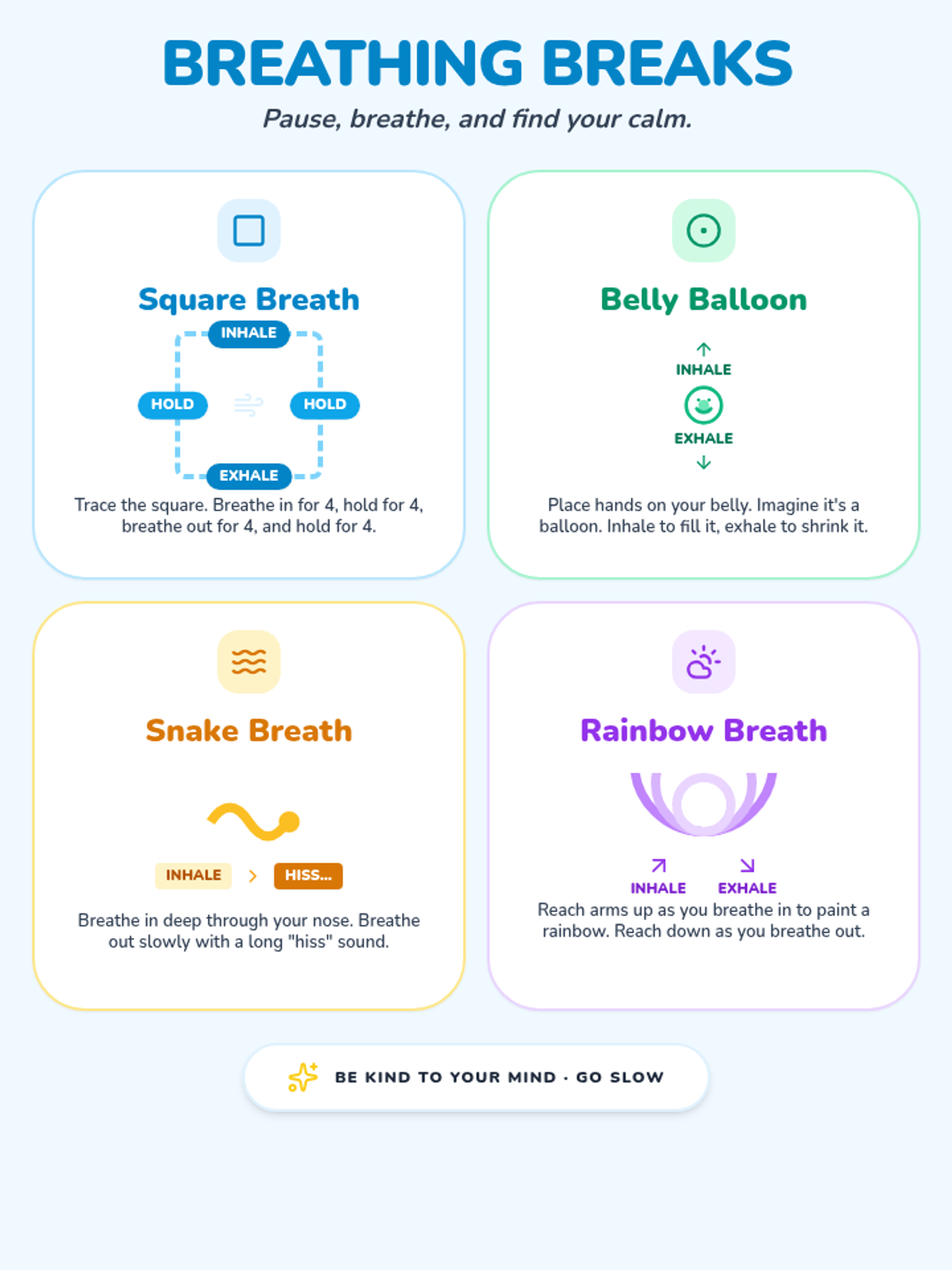
A colorful and kid-friendly classroom anchor chart featuring four breathing techniques: Square, Belly Balloon, Snake, and Rainbow breathing. Each section includes a visual guide and simple instructions to help students manage stress and find focus. Revised for better page fitting and visual clarity.
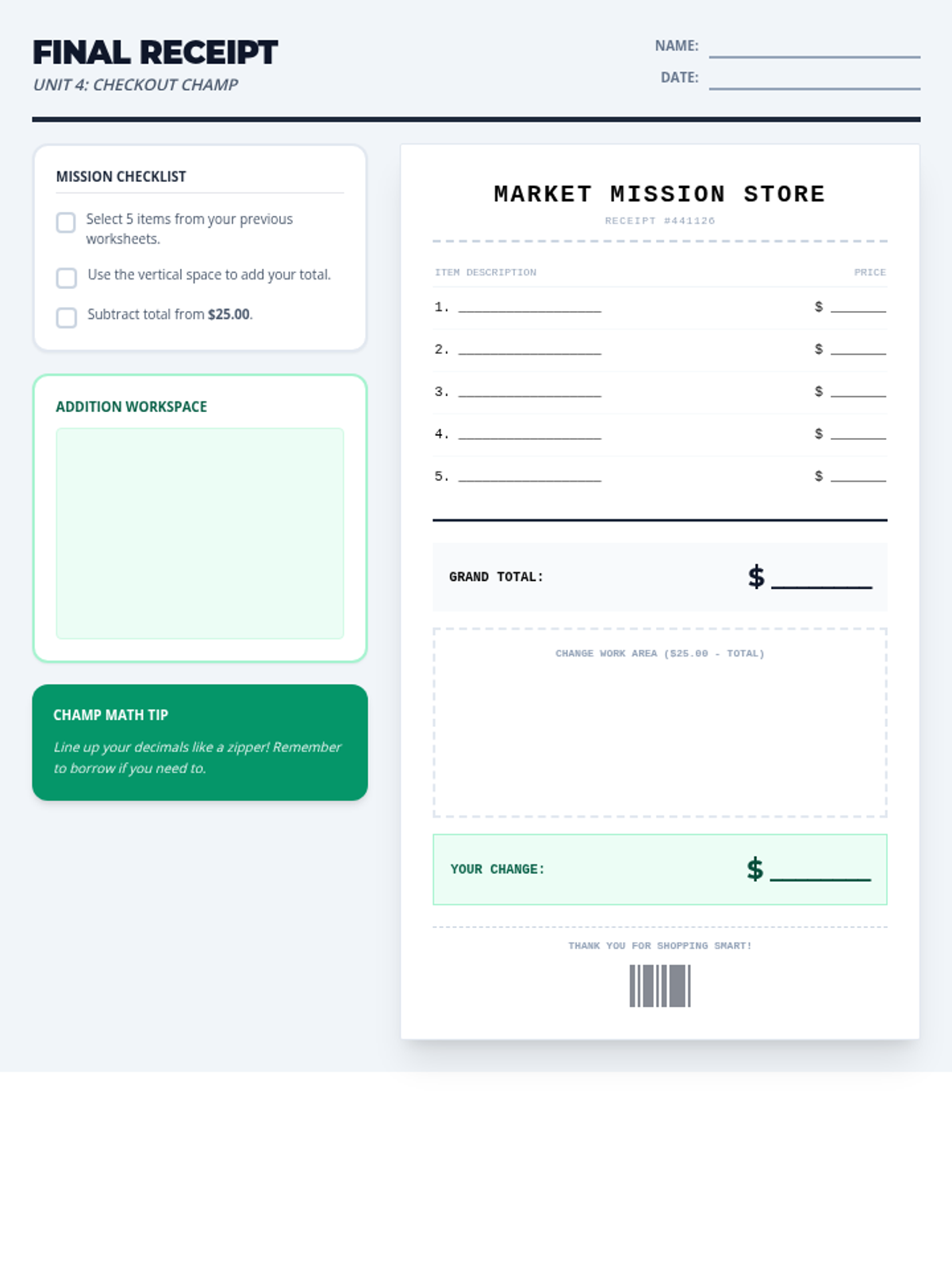
A final project worksheet for Lesson 4 that simulates a grocery receipt, where students calculate their final total and determine their remaining change from a $25 budget. Revised to fix page breaks, formatting, and added addition workspace.
Concluding slide deck for Lesson 4, guiding students through the final checkout process. Revised to fix a minor typo in the success checklist.
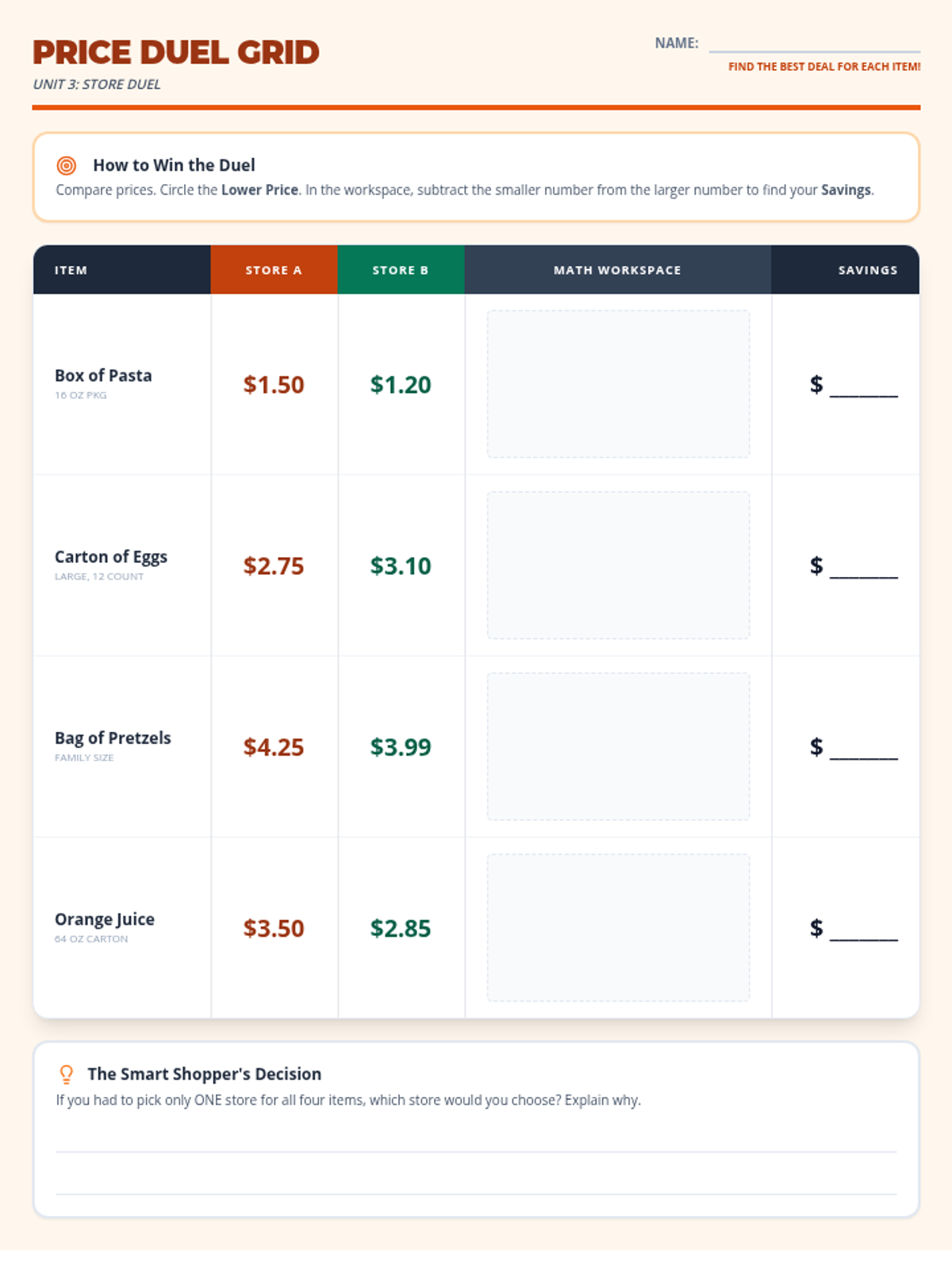
A comparison grid for Lesson 3 where students compare prices for the same items at two different stores and calculate the savings. Revised to fix layout, workspace size, and column logic.
Slide deck for Lesson 3 focusing on price comparison strategies, identifying the best deals, and reviewing decimal subtraction.