A reflective worksheet for graduate students to audit their current note-taking frictions and visualize the limitations of hierarchical folder systems in complex research.
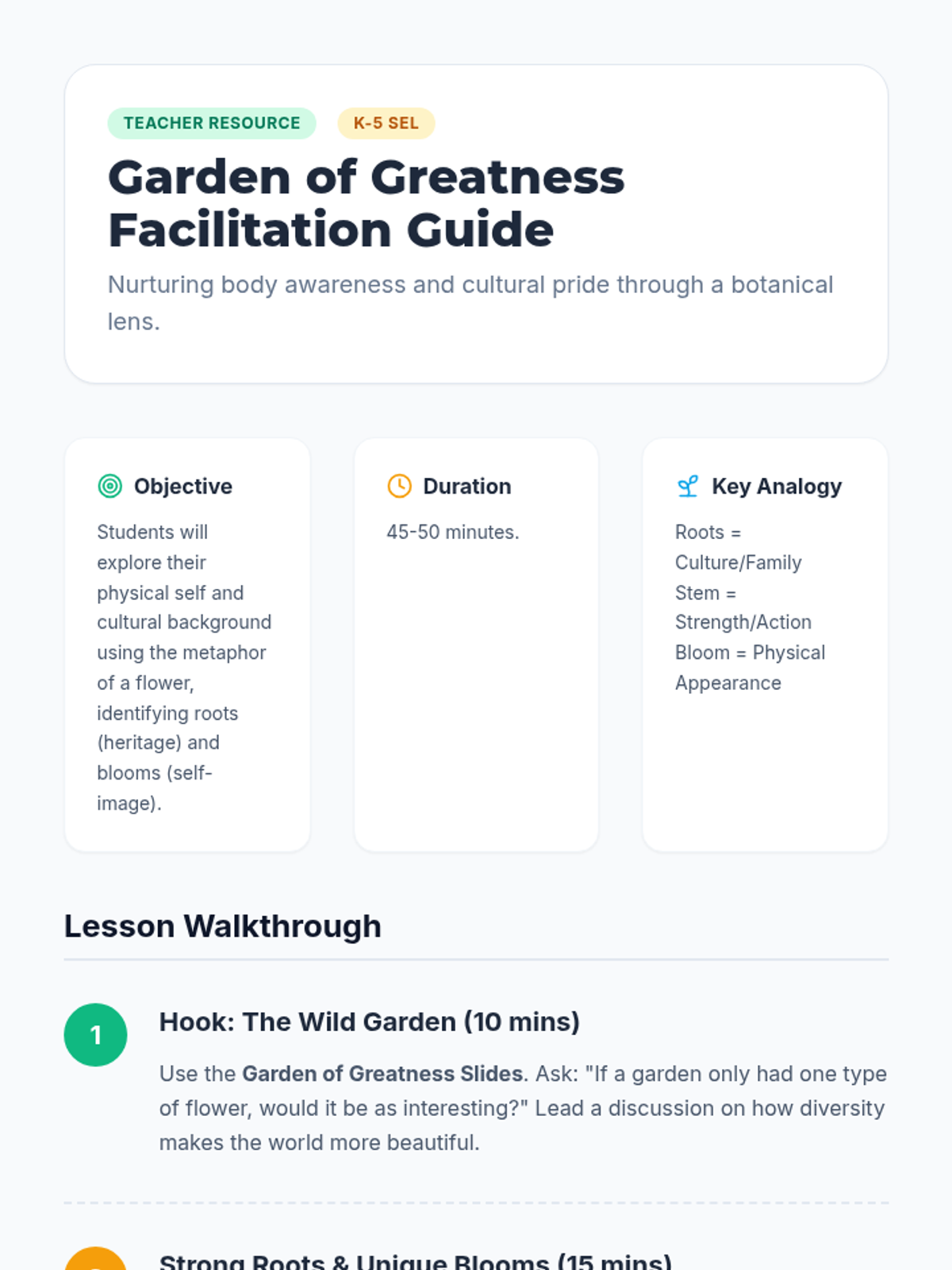
A comprehensive facilitation guide for teachers using the garden analogy to teach body awareness and cultural identity. Includes learning objectives, detailed instructional steps, and sensitivity tips.
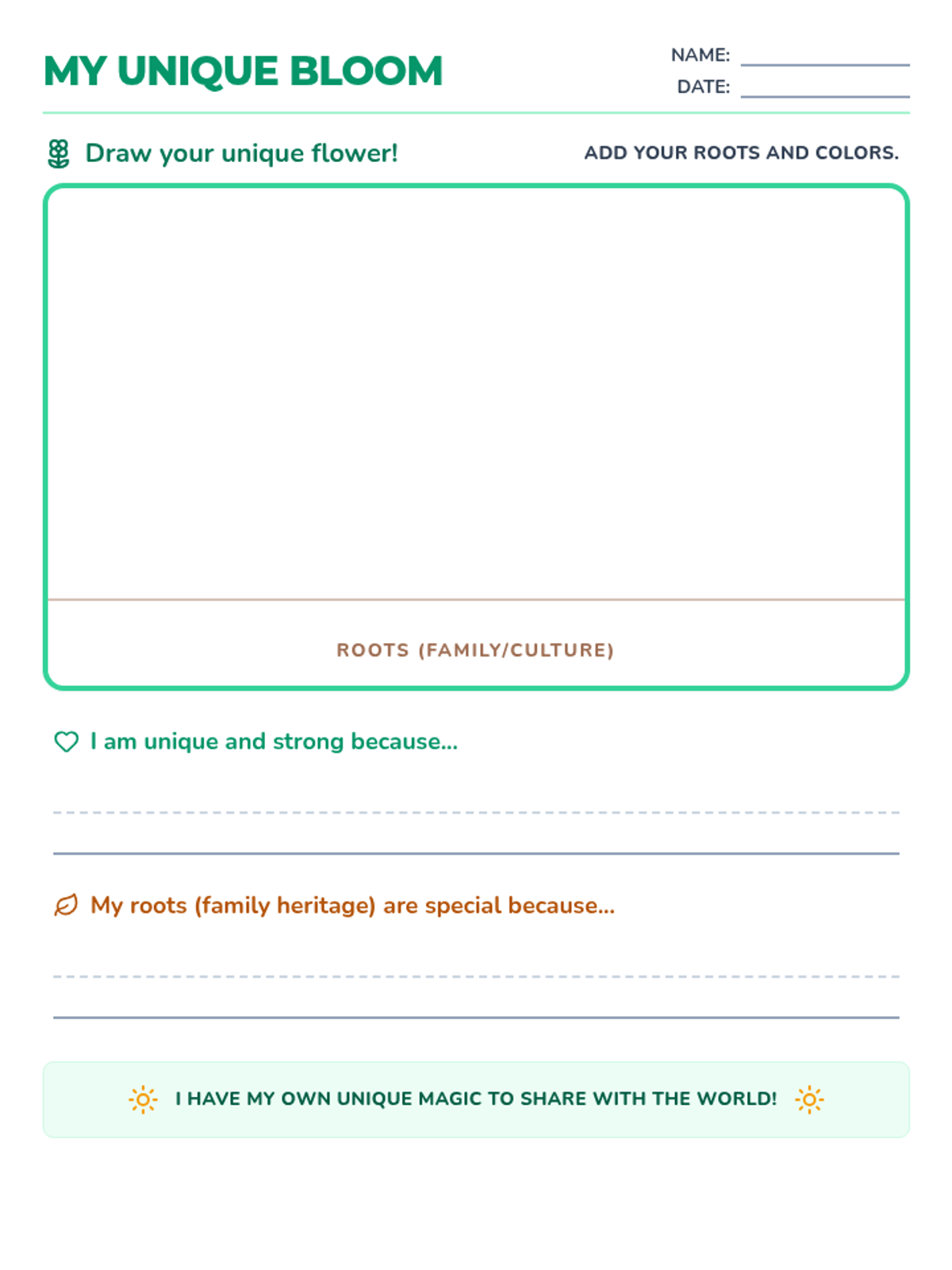
A self-portrait worksheet for K-5 students using a garden analogy. Students draw themselves as a flower with 'roots' representing their culture and 'colors' representing their appearance, followed by reflection prompts.
A vibrant slide deck designed for K-5 students using a garden analogy to explore body awareness, cultural heritage (roots), and personal uniqueness (blooms). Features interactive discussion prompts and engaging visuals.
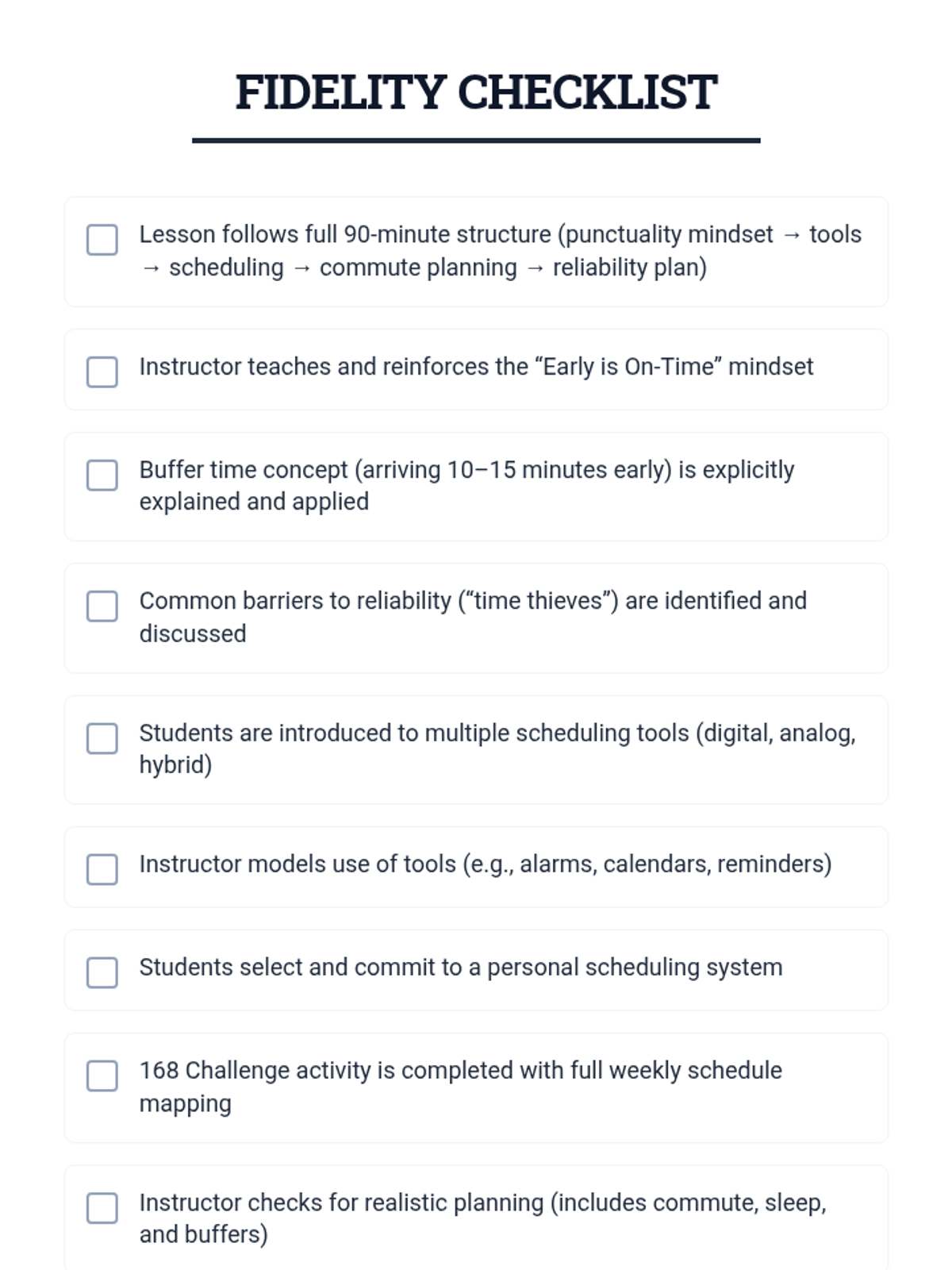
A simplified fidelity checklist featuring only the core 15 requirements for the Punctuality & Reliability lesson in a clean, checkbox format.
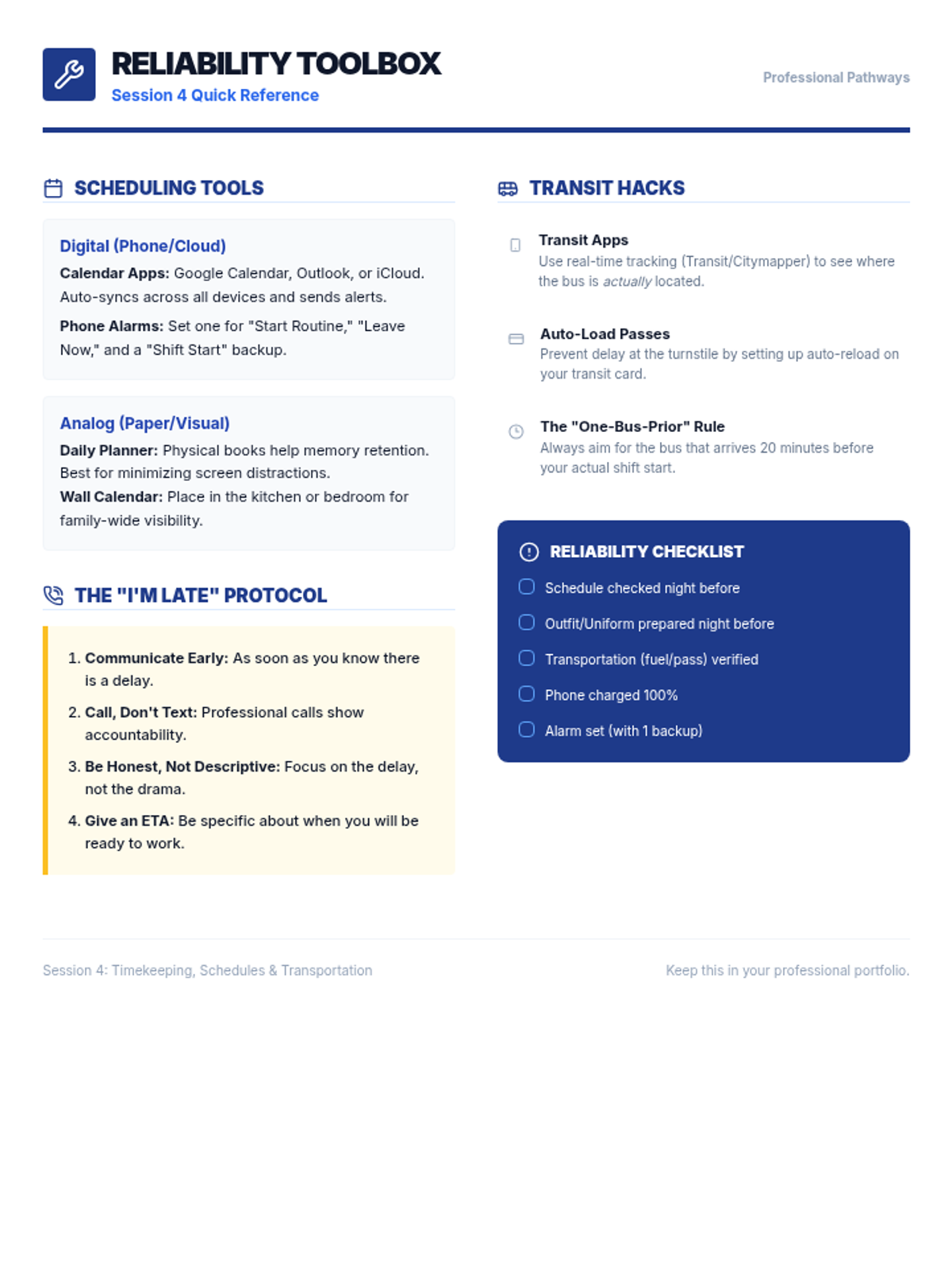
A one-page quick reference handout for participants, summarizing scheduling tools (updated with Calendar Apps), transit hacks, and the communication protocol.
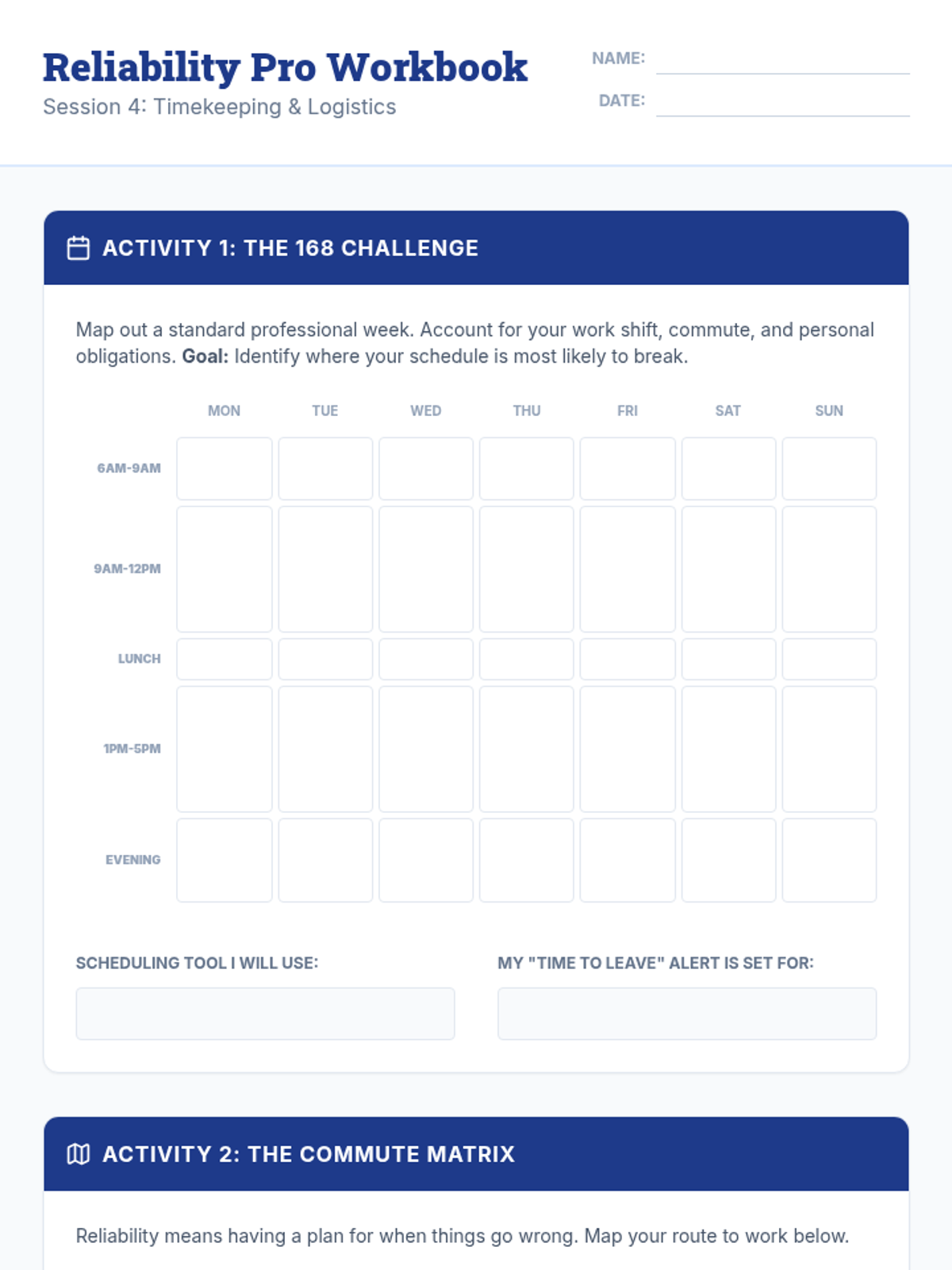
A participant workbook containing the 168 Challenge schedule building activity, a commute matrix contingency mapping exercise, and the final Reliability Plan deliverable template.
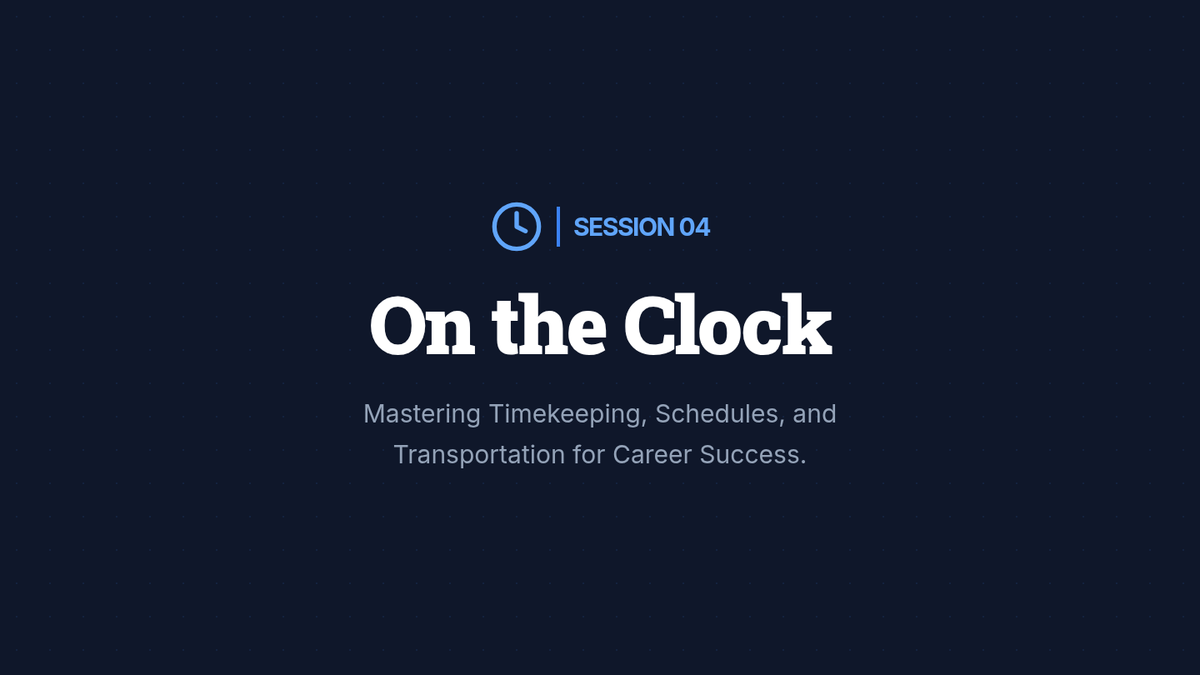
A visual presentation for Session 4, expanded to 90 minutes with new slides on Time Thieves, Transit Hacks, and the Communication Protocol.
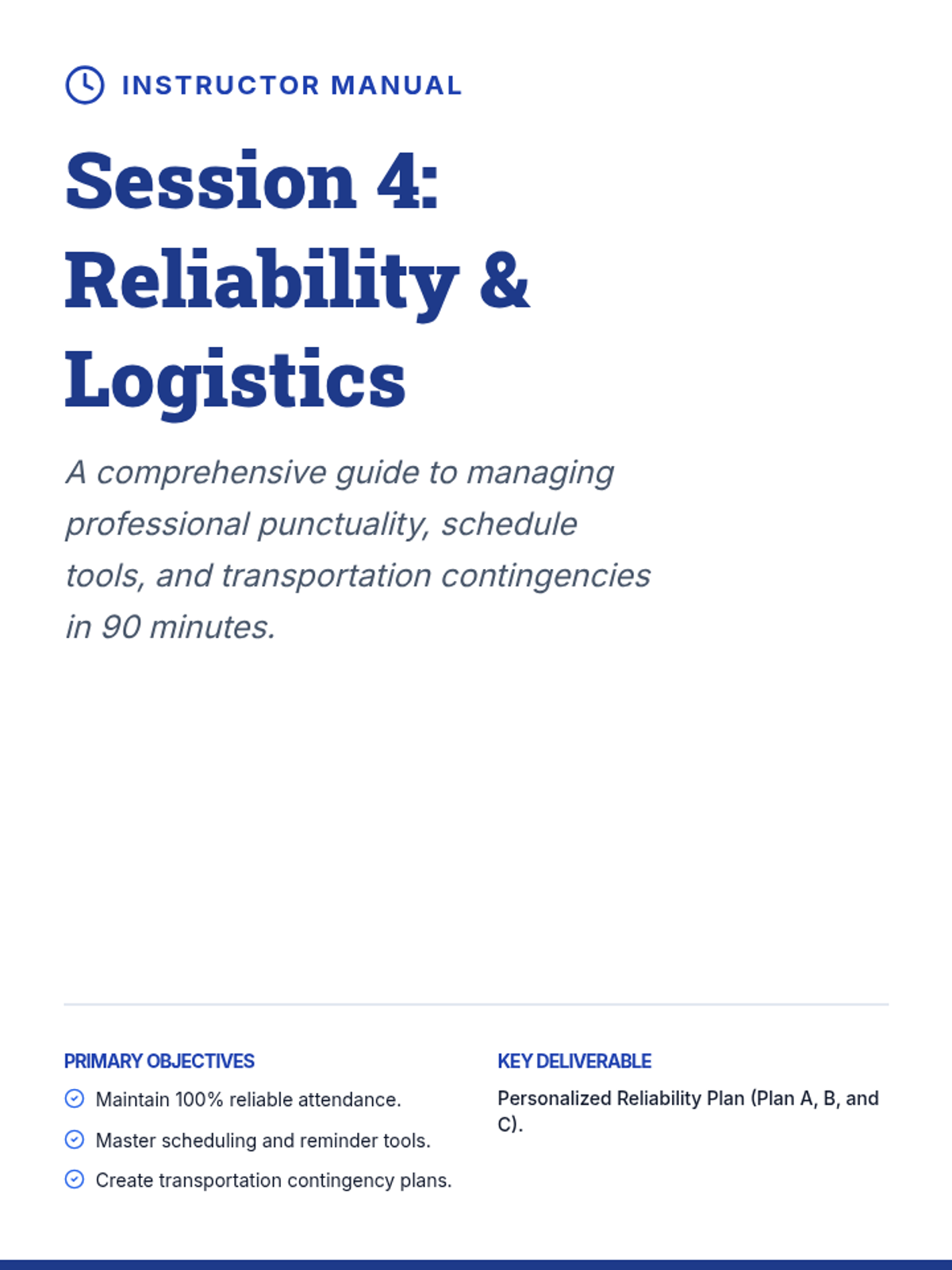
A comprehensive 8-page instructor manual for Session 4, updated for a 90-minute session with revised scripts, pacing guides, and expanded appendix notes.
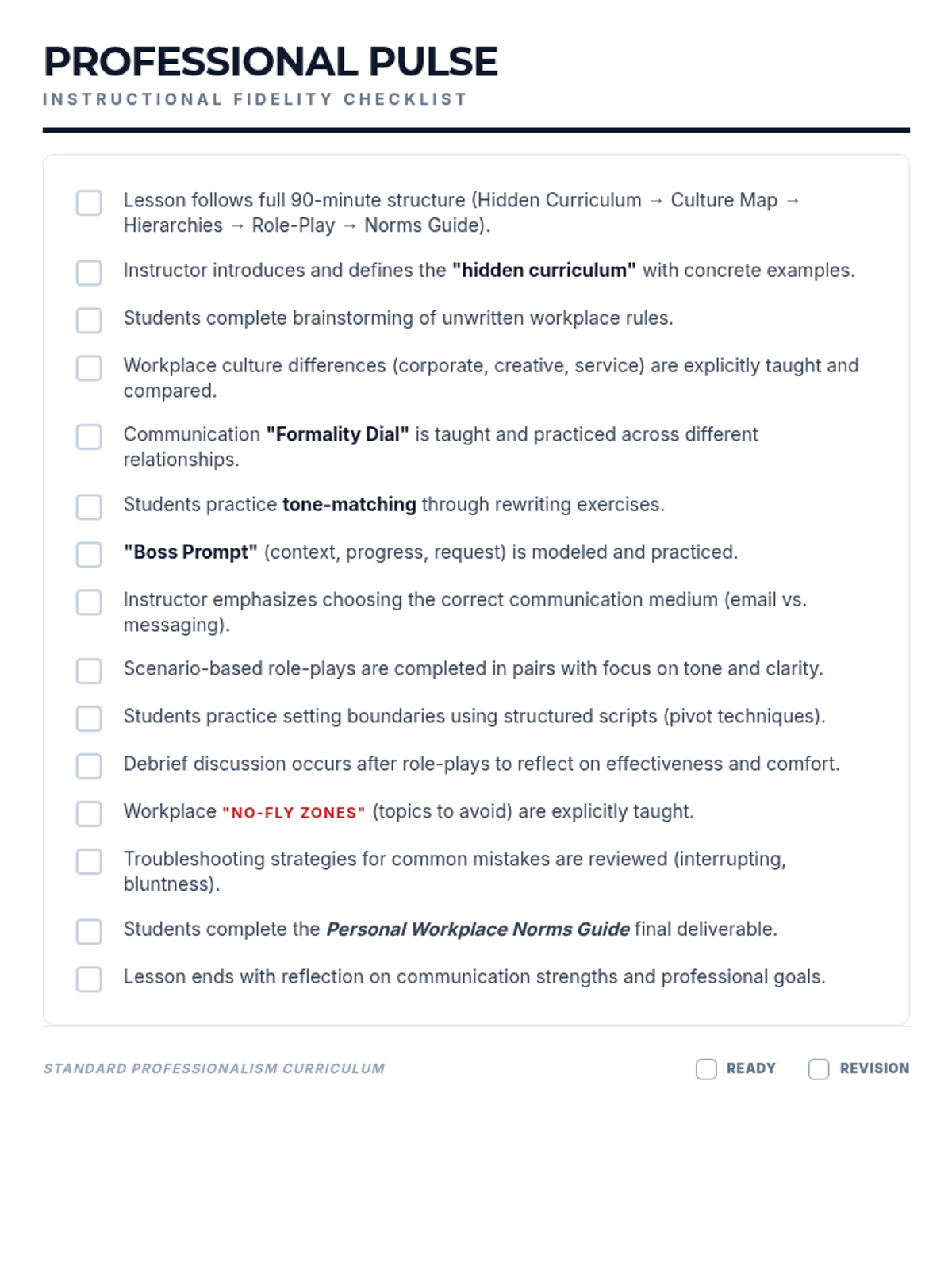
A clean, minimal one-page instructor fidelity checklist with only the title and a unified list of 15 essential items, optimized for quick professional review.
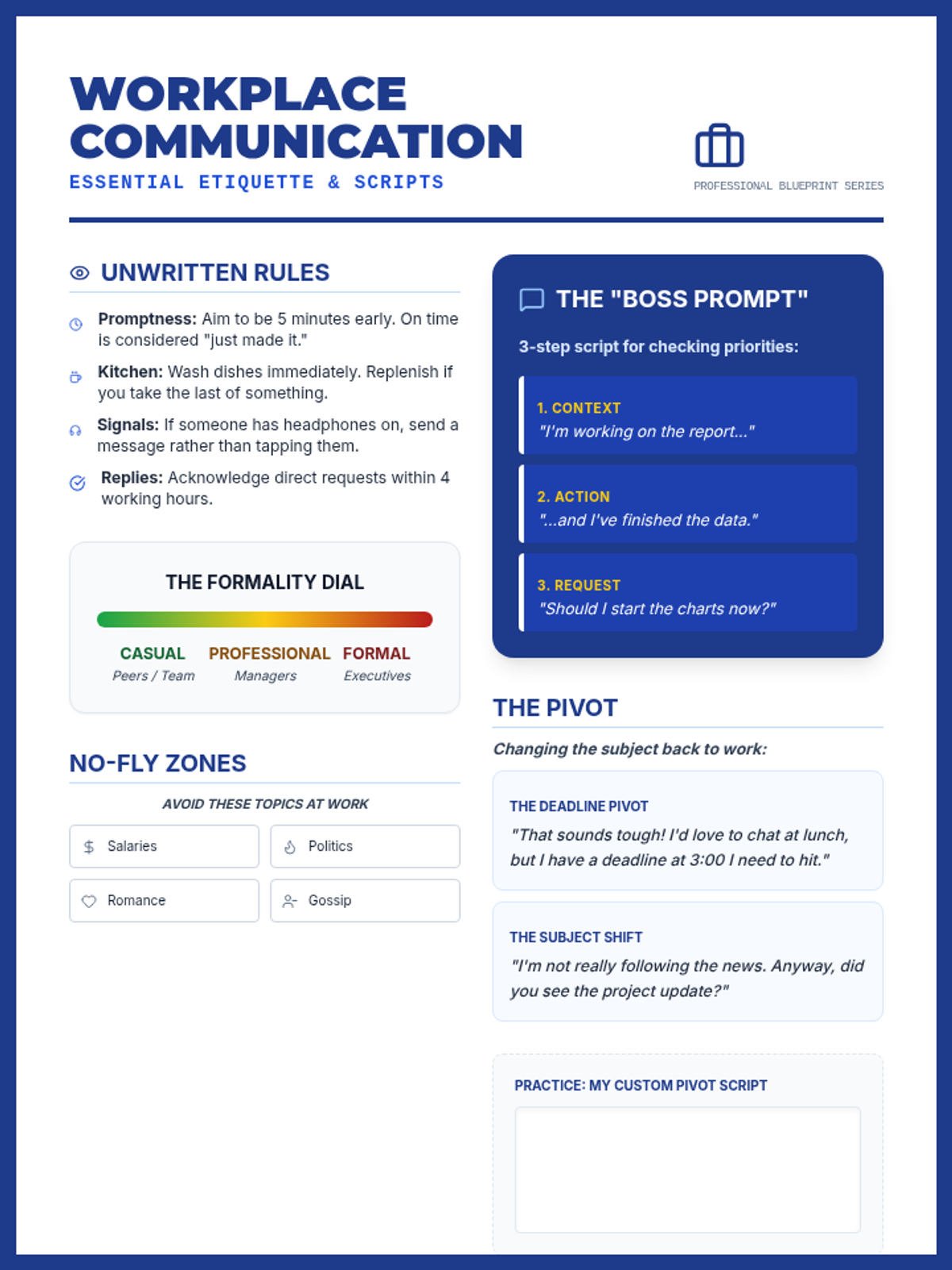
A comprehensive one-page handout summarizing workplace unwritten rules, the formality dial for tone-matching, essential "Boss Prompt" scripts, and "The Pivot" technique for maintaining professional boundaries. Revised with larger text and work area.
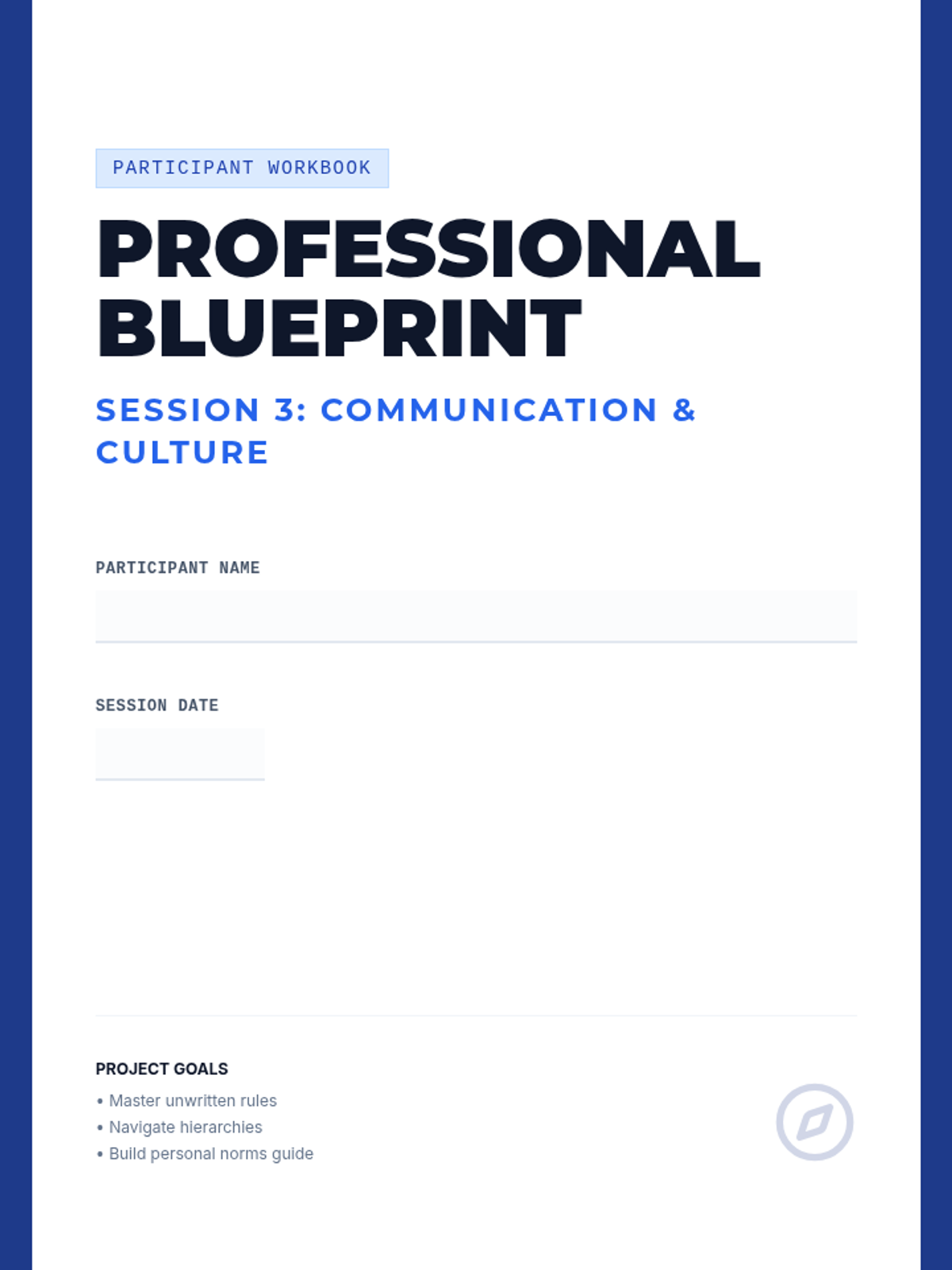
A 5-page student workbook for Session 3, focused on identifying unwritten rules, practicing tone-matching, and setting professional boundaries. Features structured exercises for drafting emails, scripts, and a personalized norms guide.
A high-impact professional slide deck for Session 3, focusing on demystifying workplace etiquette. Features the "Formality Dial," "Boss Prompt" scripts, culture comparison grids, and professional boundary-setting techniques.
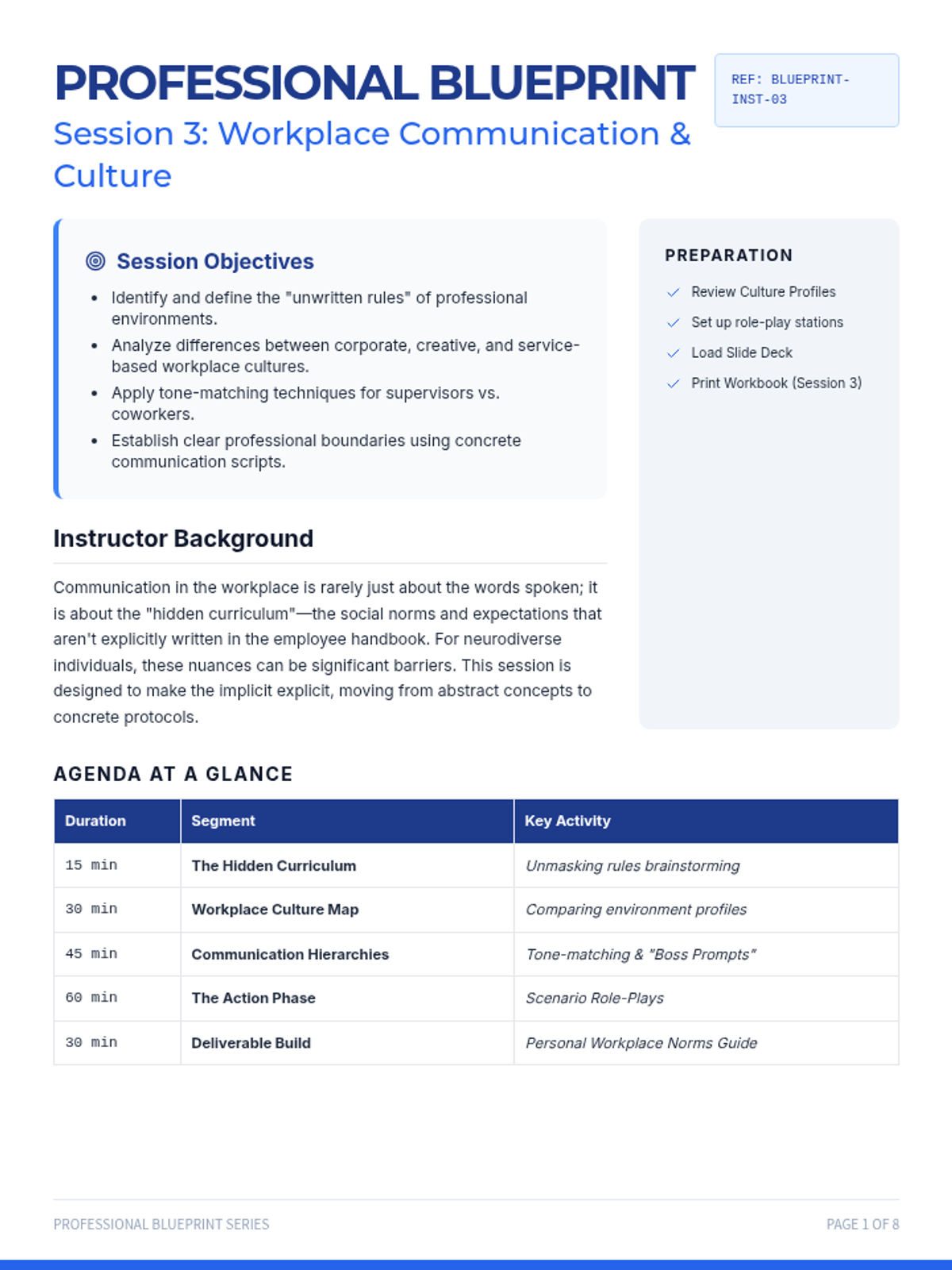
An 8-page comprehensive instructor manual for Session 3 of the Professional Blueprint series. It covers workplace unwritten rules, culture mapping, communication hierarchies, and professional boundary setting with detailed facilitation notes adjusted for a 90-minute session. Revised to include "Medium Choice" and improved formatting.
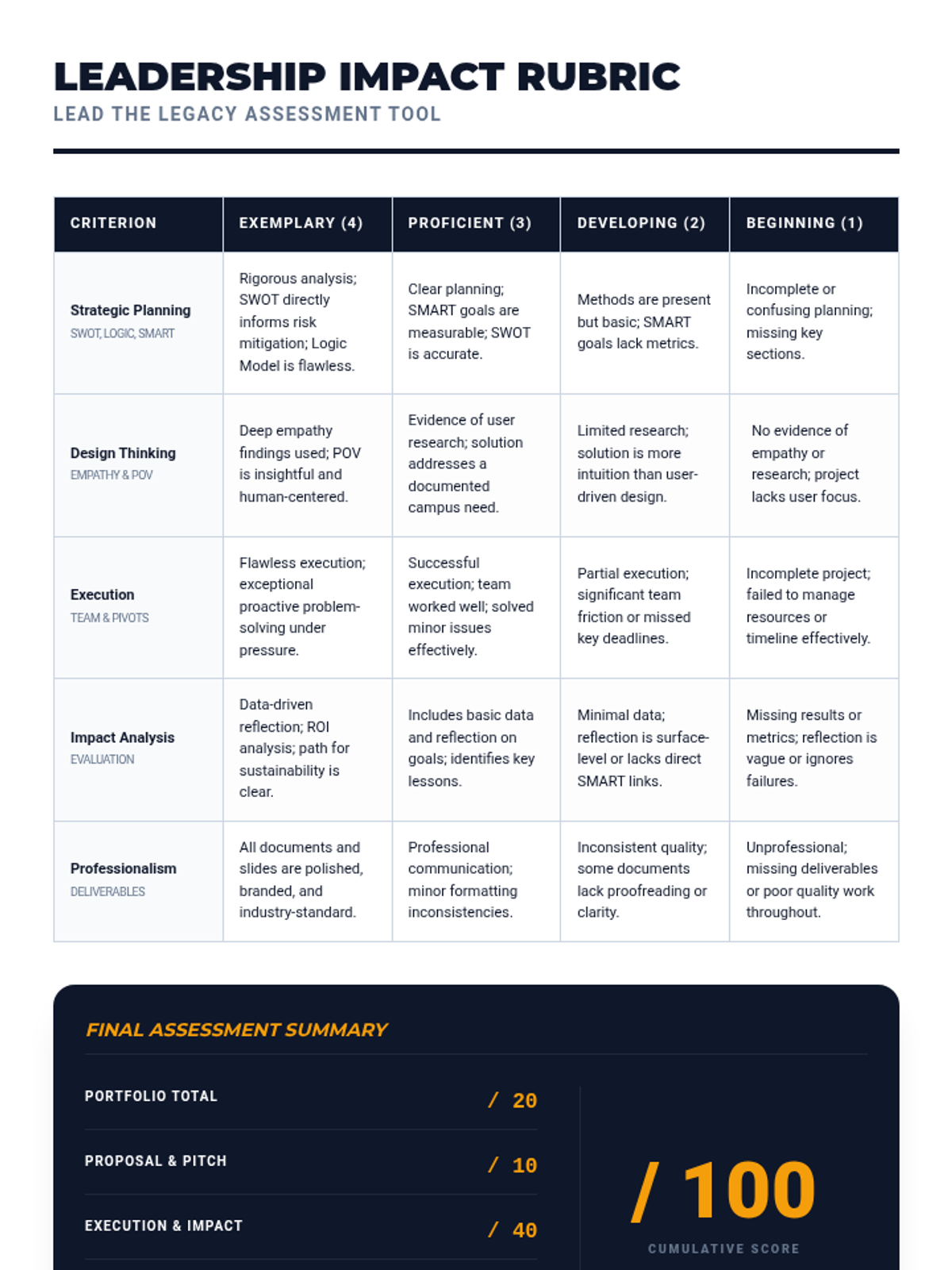
A detailed teacher rubric for evaluating the 'Lead the Legacy' culminating project. It assesses strategic planning, design thinking application, execution, impact analysis, and overall professionalism on a 4-point scale.
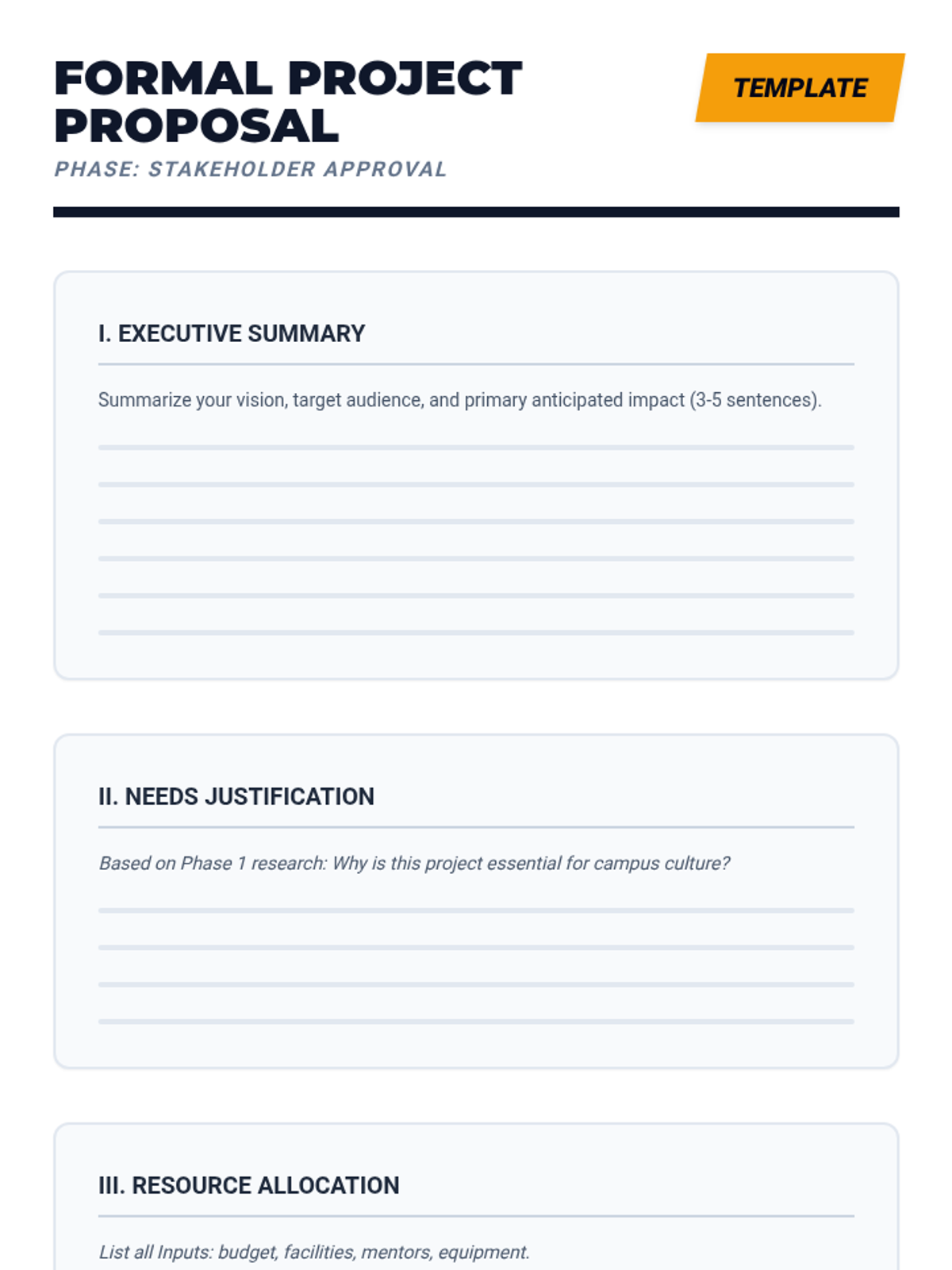
Scaffolded templates for the two primary written deliverables of the 'Lead the Legacy' project: the formal project proposal and the final post-event impact report. Each section includes guiding prompts for strategic analysis.
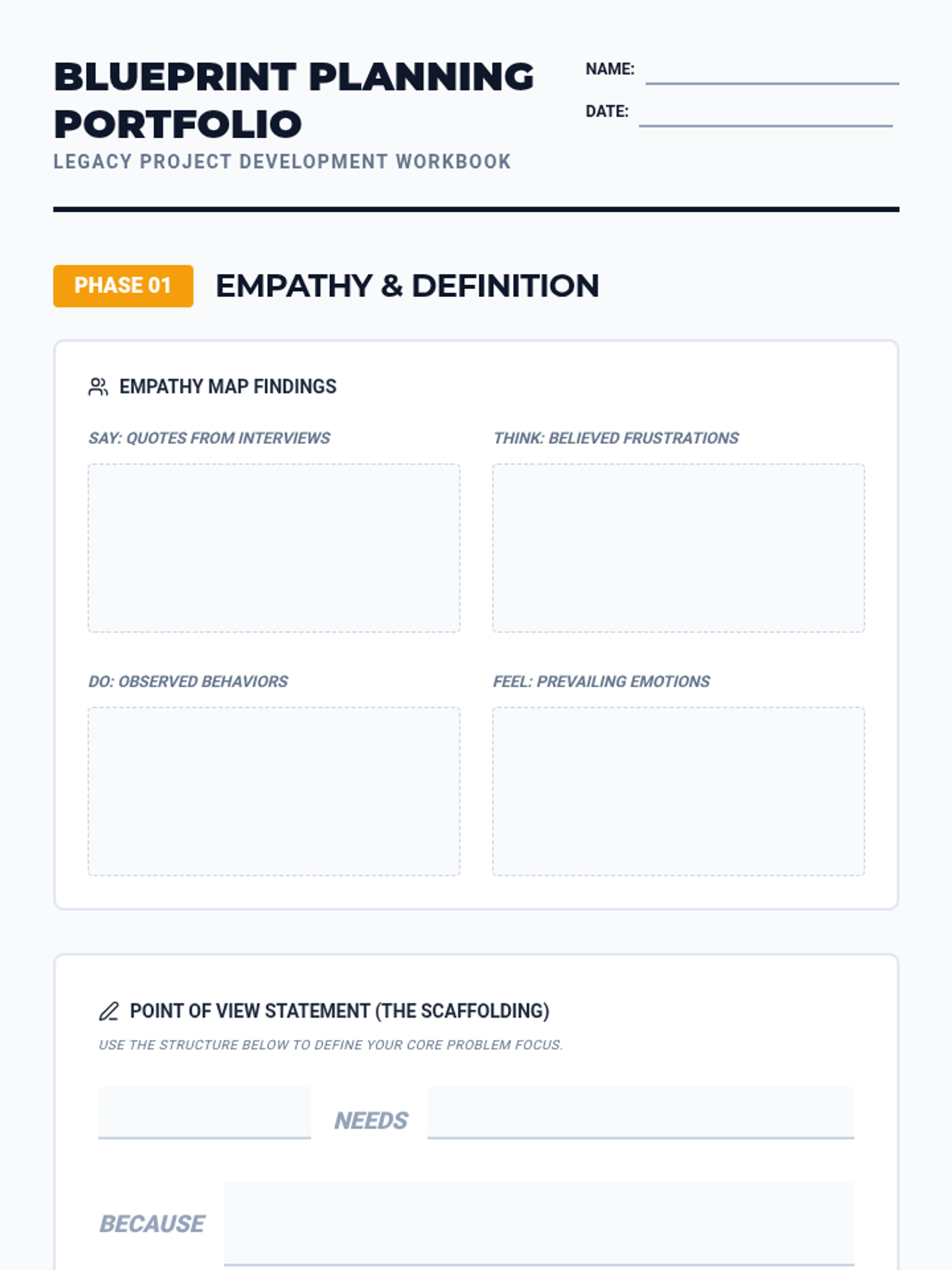
A structured workbook for leadership students to document their strategic planning process. It includes dedicated workspaces for Empathy Mapping, SWOT Analysis, a Logic Model chart, and SMART Goal definition.
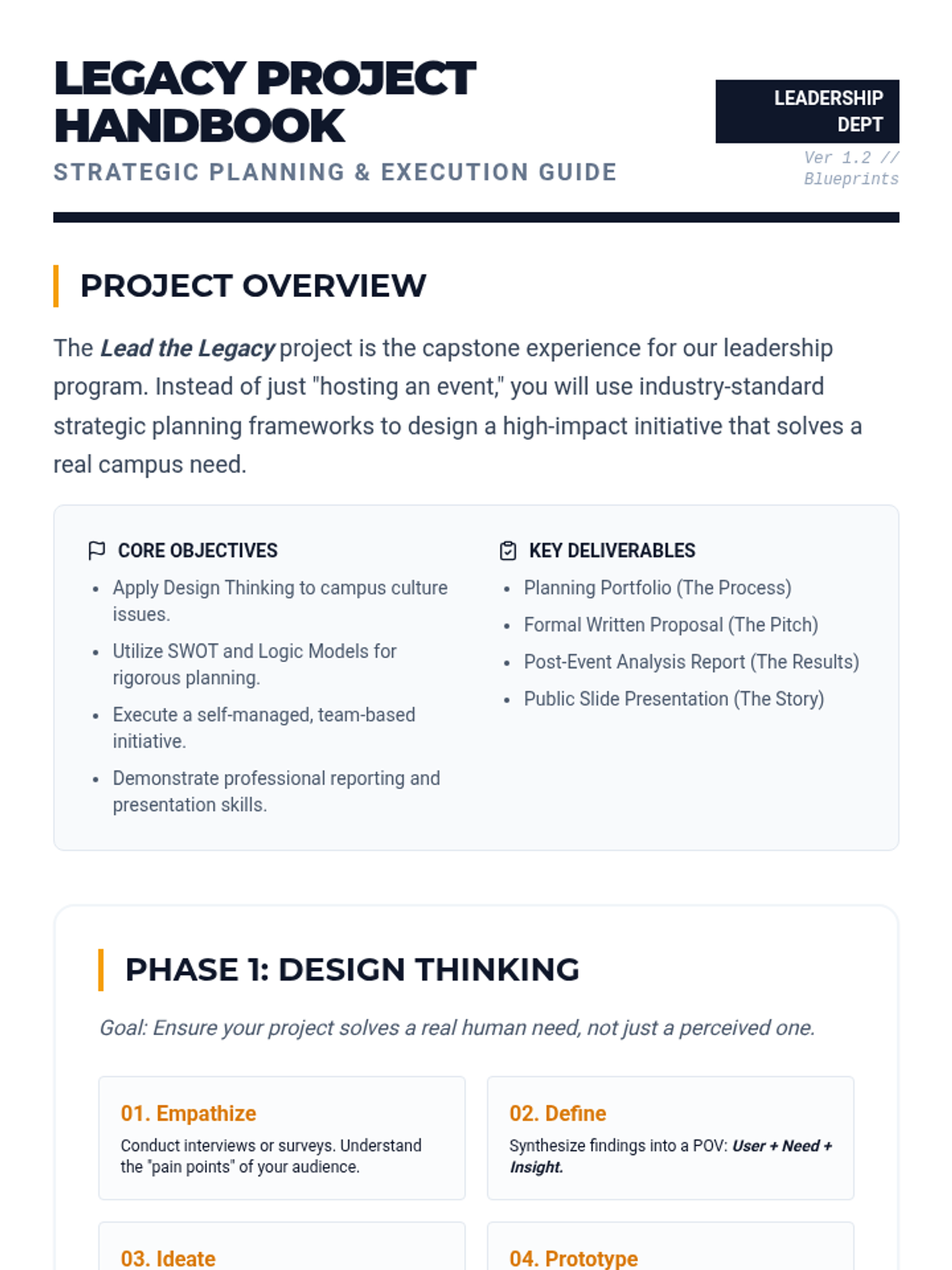
A comprehensive reference guide for students outlining the project's phases, strategic methodologies (Design Thinking, SWOT, Logic Model, SMART Goals), and deliverable requirements for the 'Lead the Legacy' culminating project.
A dynamic presentation for leadership students introducing the 'Lead the Legacy' project. It covers the four core methodologies: Design Thinking, SWOT Analysis, Logic Models, and SMART Goals, while outlining project expectations and deliverables.
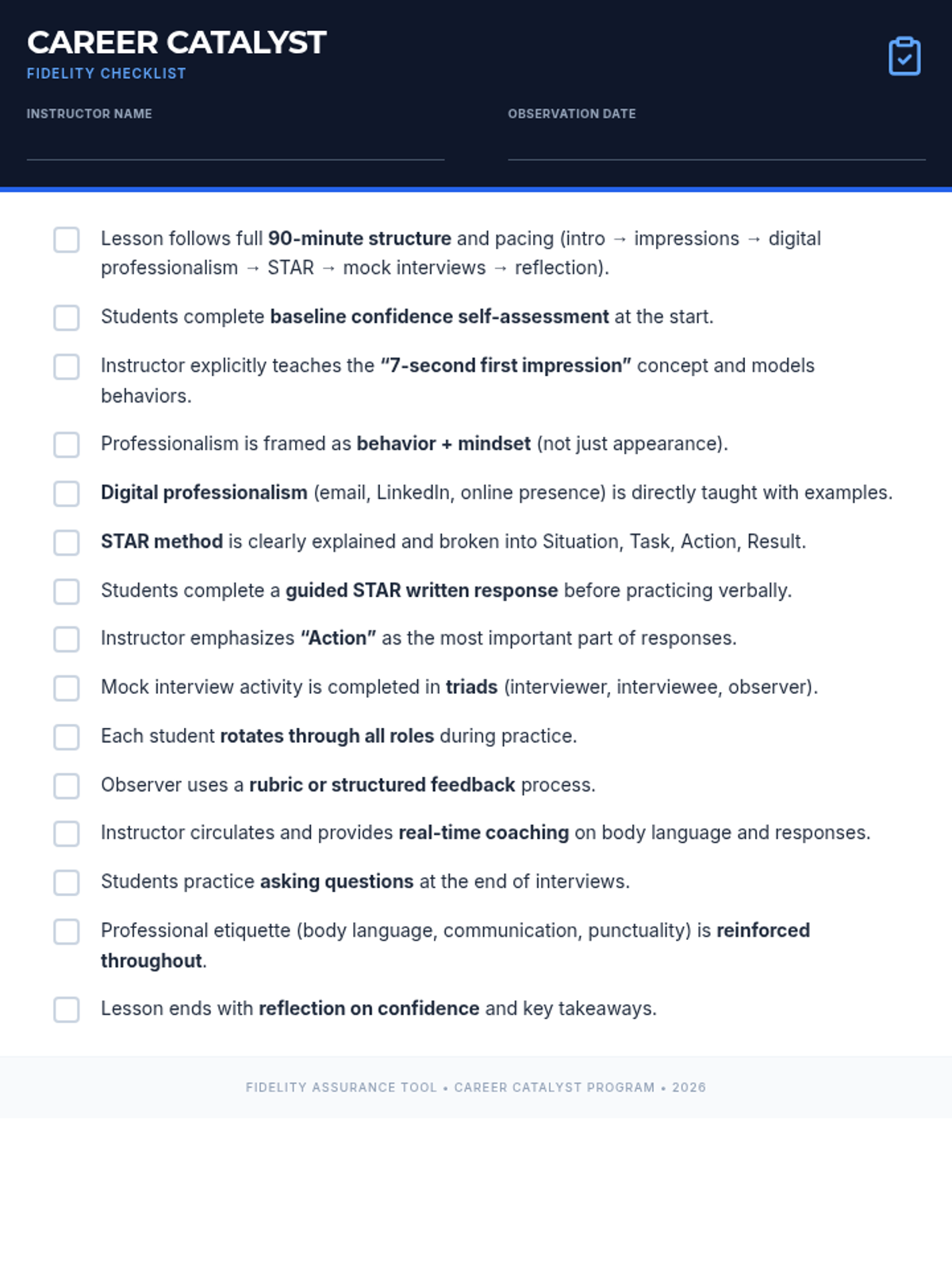
A simplified, professional fidelity checklist for instructors featuring a single, clean continuous list of key components. This version removes all section titles, phases, and note areas for a focused assessment tool.