A step-by-step teacher script for facilitating the Paper Airplane Challenge, including prompts for defining effort, guiding practice trials, and leading a mindset reflection.
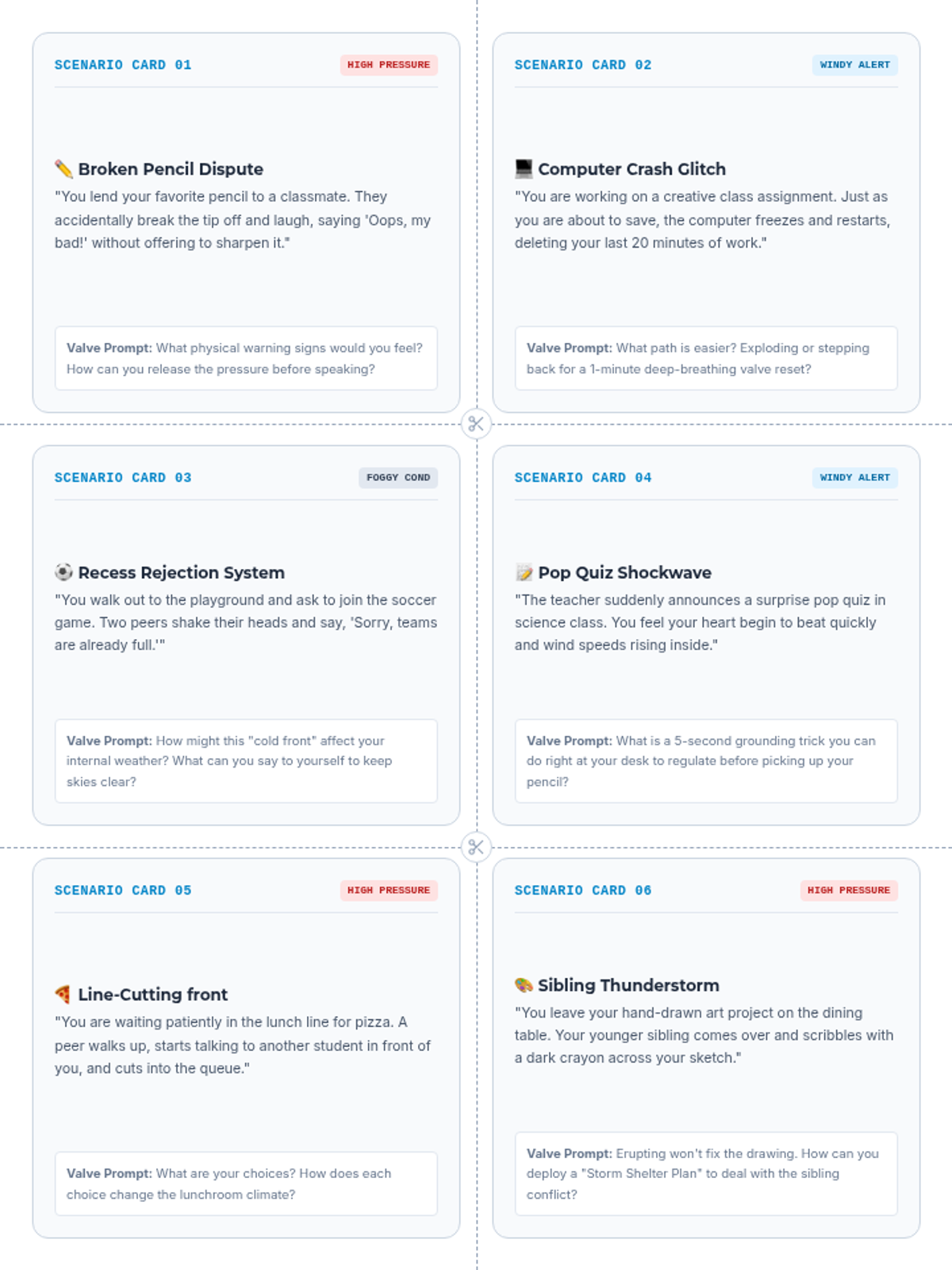
A printable classroom activity sheet featuring 6 cut-out scenario cards. Each card presents a high-pressure student conflict or anxiety trigger and includes guided prompts for classroom discussion or roleplay exercises.
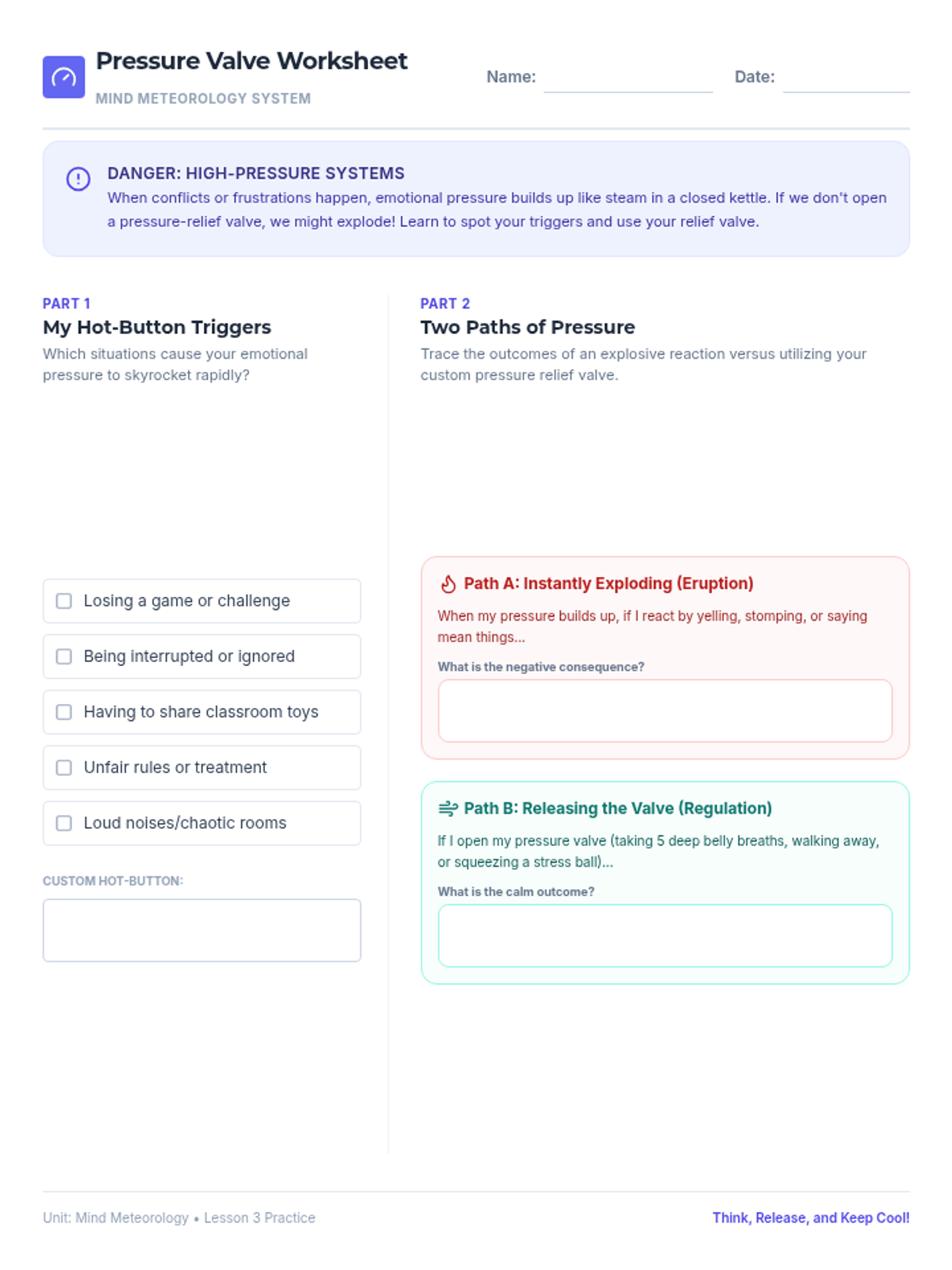
A printable, 1-page student worksheet that helps students map out emotional triggers, analyze high-pressure impulses, and select 'pressure relief valve' coping strategies to make responsible decisions.
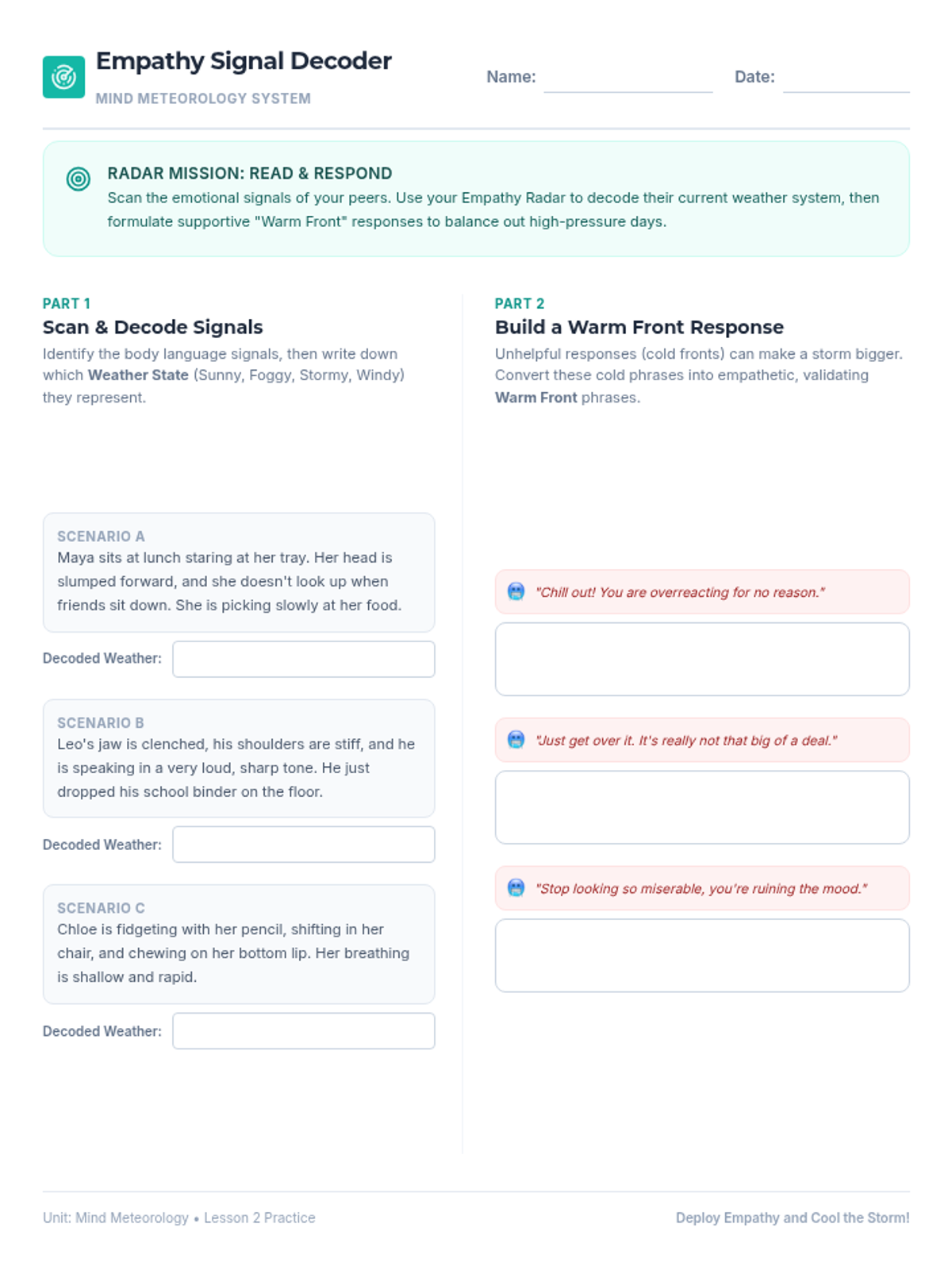
A printable, 1-page student worksheet that helps students decode peer social cues and practice converting invalidating statements into supportive, validating 'Warm Front' statements.
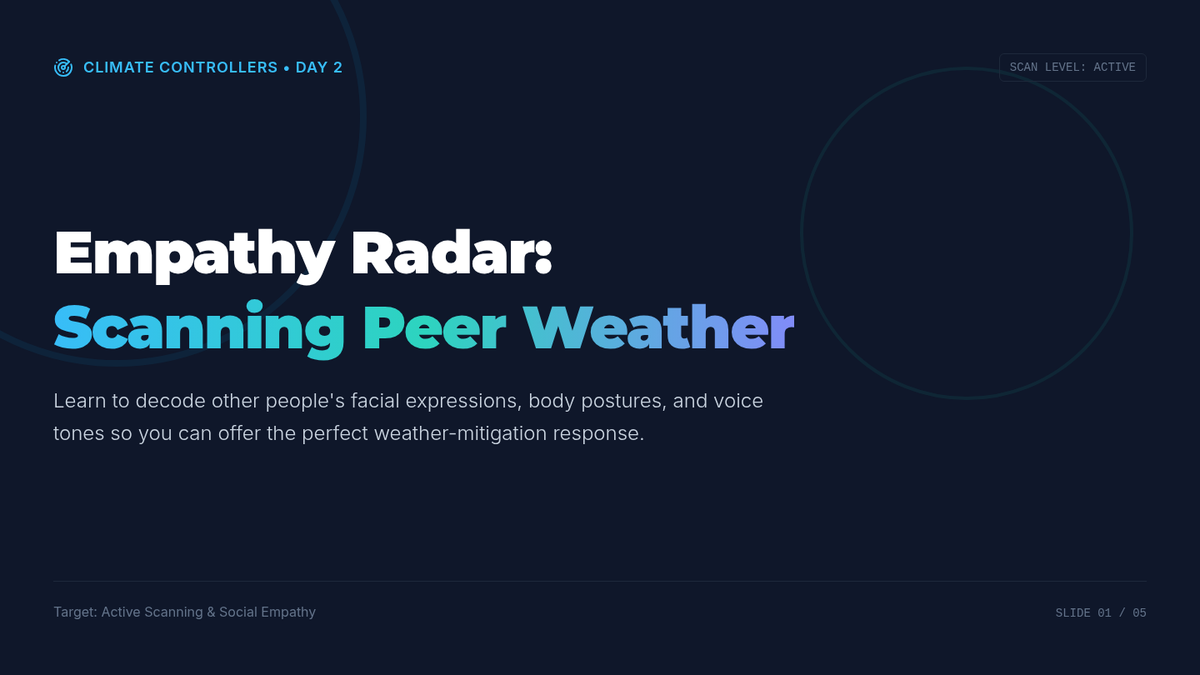
A high-impact, 5-slide interactive presentation designed for 16:9 widescreen layout. This slide deck introduces students to 'Empathy Radar,' teaching them how to read and decode peers' emotional weather signals through visual cues and tone of voice.
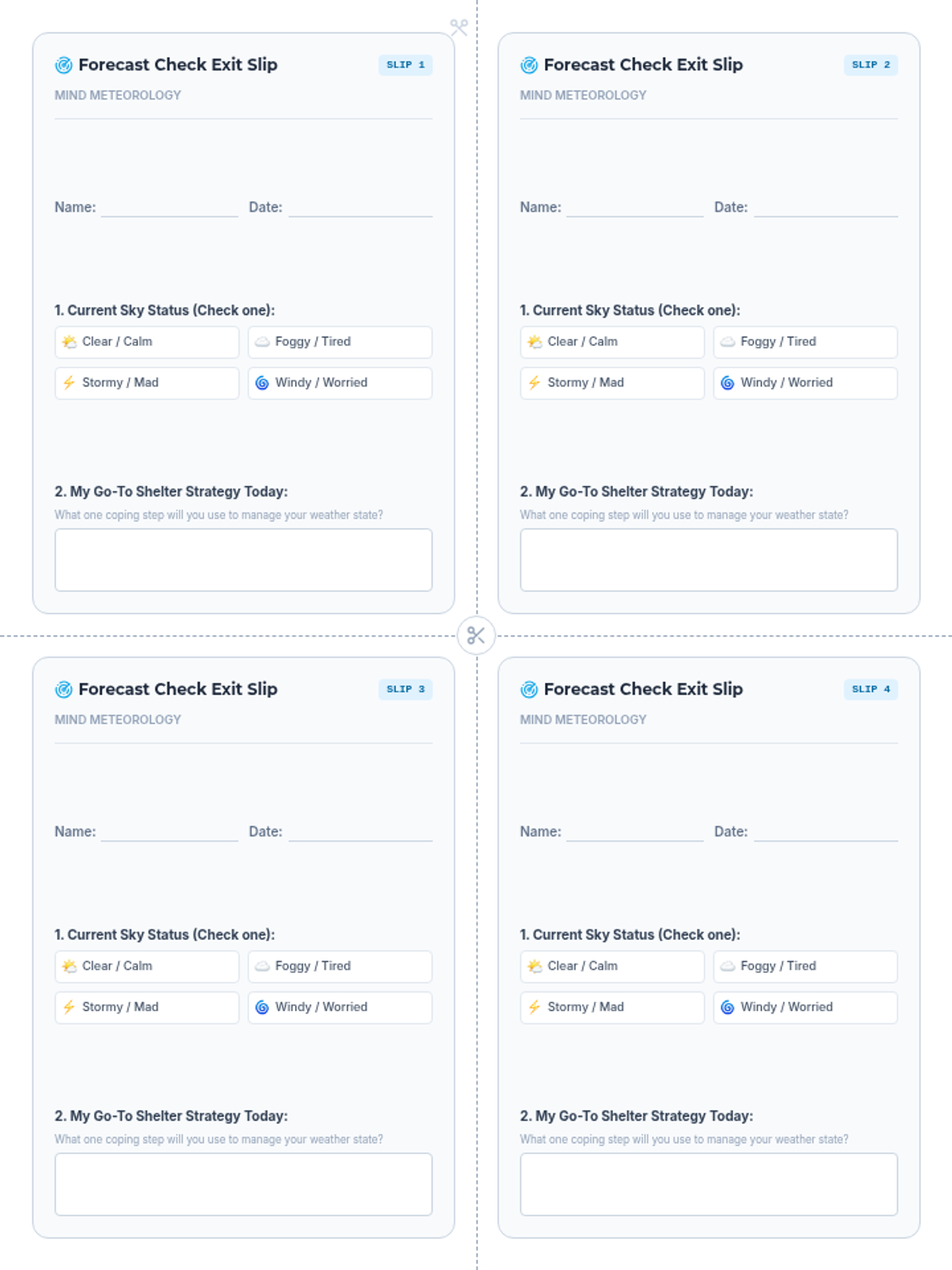
A printable exit ticket page containing 4 identical cut-apart slips for students to complete a quick self-assessment and coping strategy commitment. Features a 2x2 layout with dashed cut-lines for efficient printing and classroom distribution.
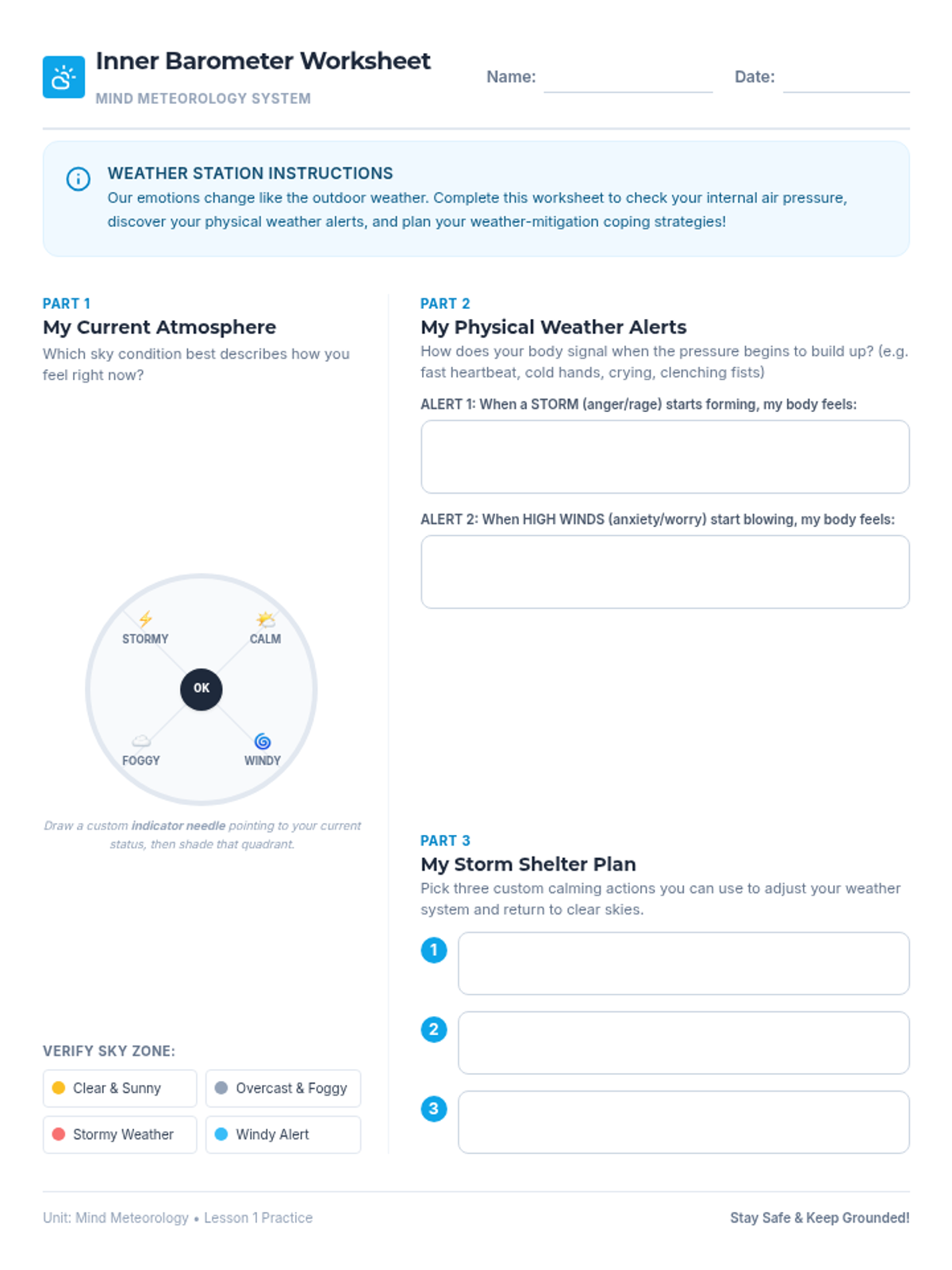
A printable, 1-page student worksheet that guides students in identifying their physiological stress indicators as weather alerts and mapping out a personalized "Storm Shelter Plan" of self-regulation coping strategies.
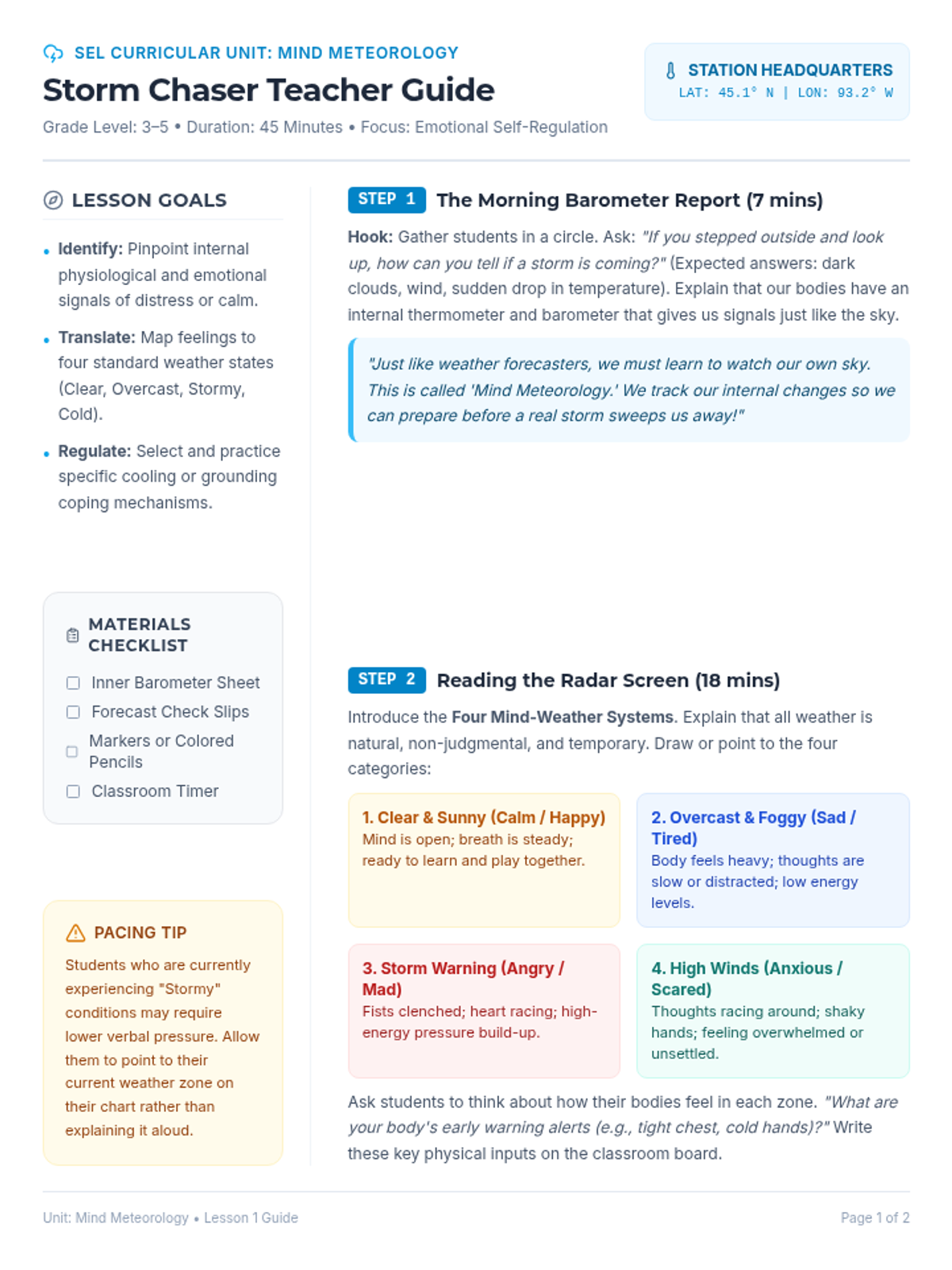
A highly structured, 2-page print-ready lesson plan and facilitation guide for teachers. It outlines the 'Mind Meteorology' curriculum, including step-by-step instructions, discussion prompts, weather-themed emotional states mapping, and teacher tips.
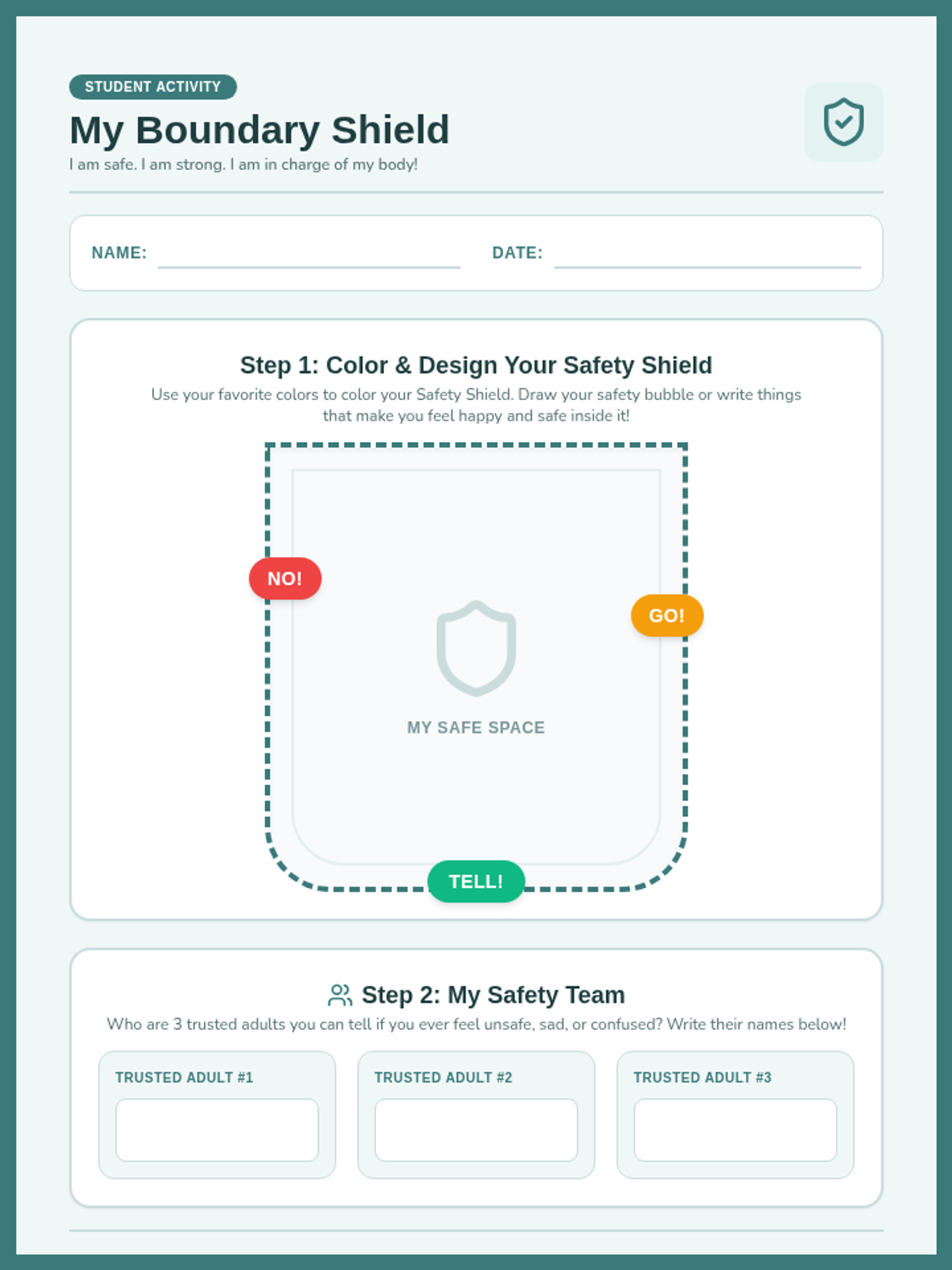
A student worksheet where children design their own Boundary Shield, trace body safety rules, and list three trusted adults who make up their personal safety team.
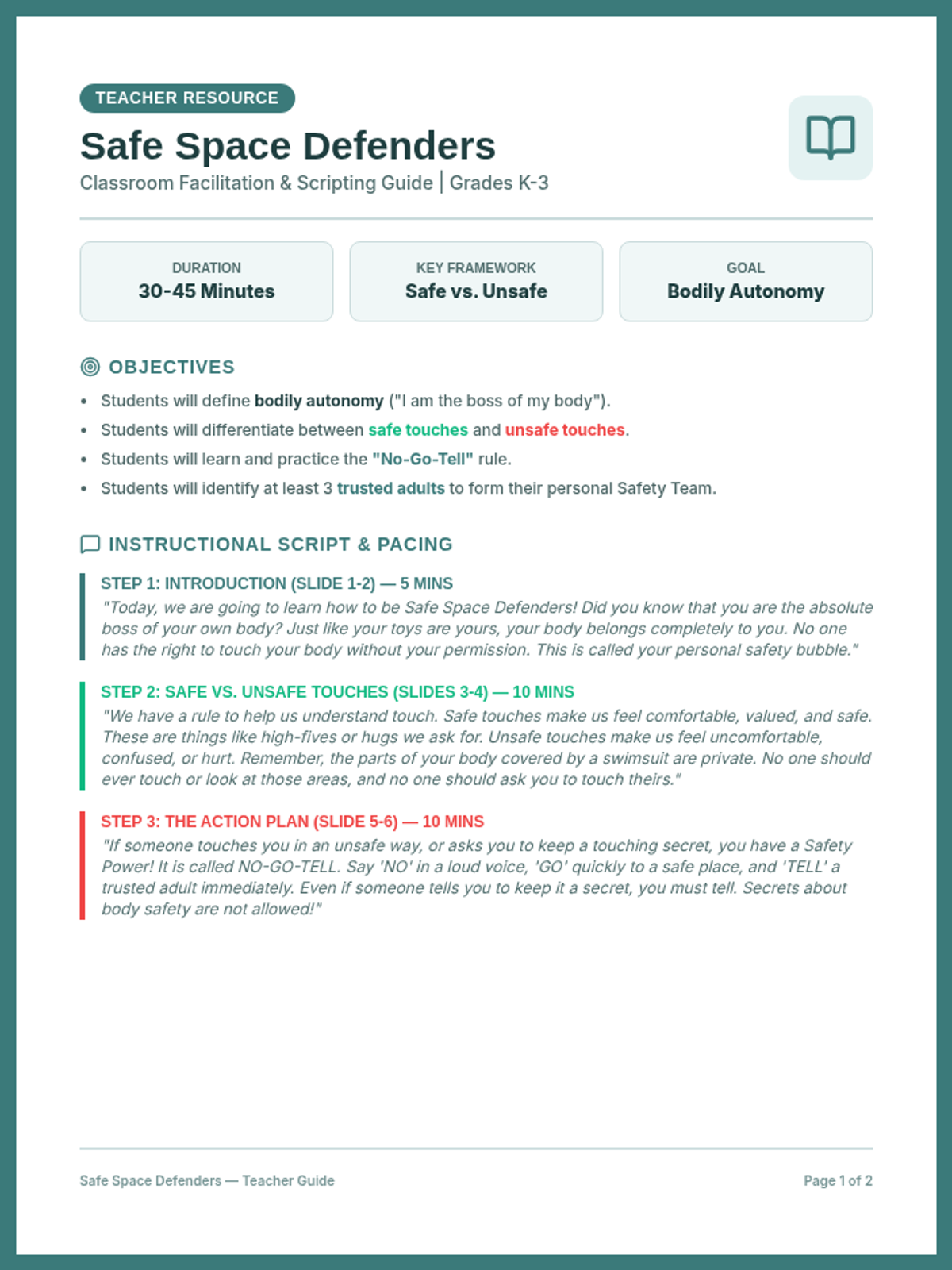
A detailed instructional guide for educators delivering the Safe Space Defenders lesson. It includes direct teaching scripts, discussion prompts, handling child disclosure protocols, and guidance for classroom activities.
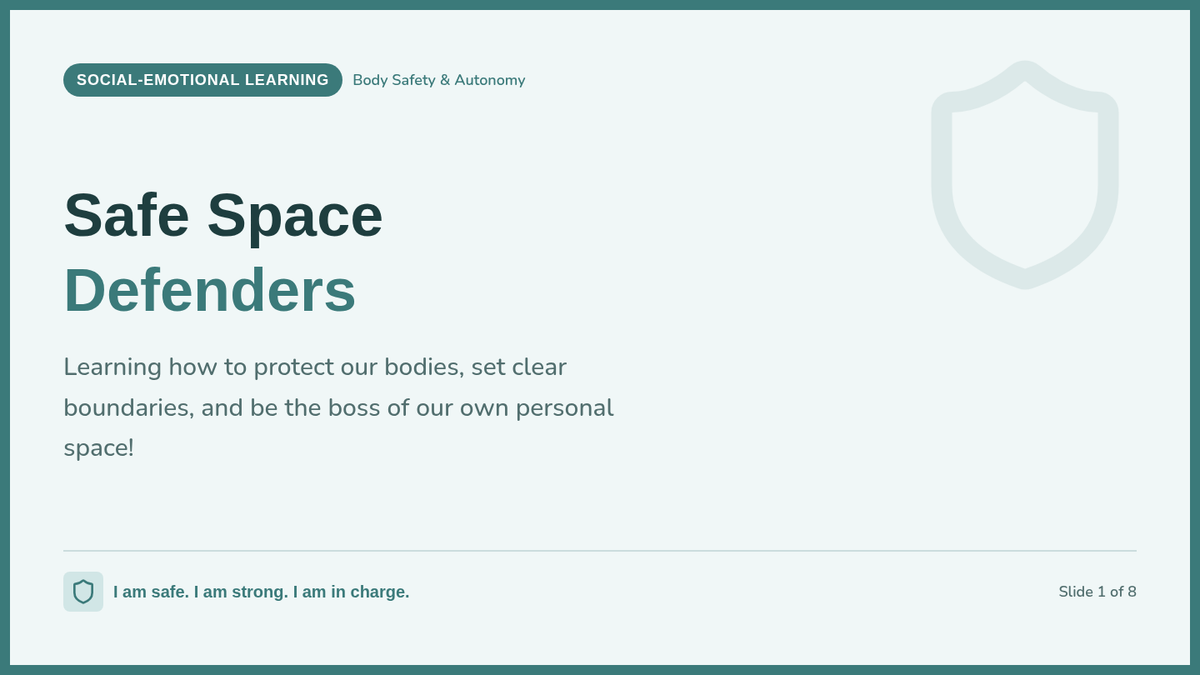
A visually engaging, age-appropriate slide presentation designed for teacher-led instruction. It introduces body safety rules, safe vs. unsafe touches, the 'No-Go-Tell' strategy, and scenarios for classroom discussion.
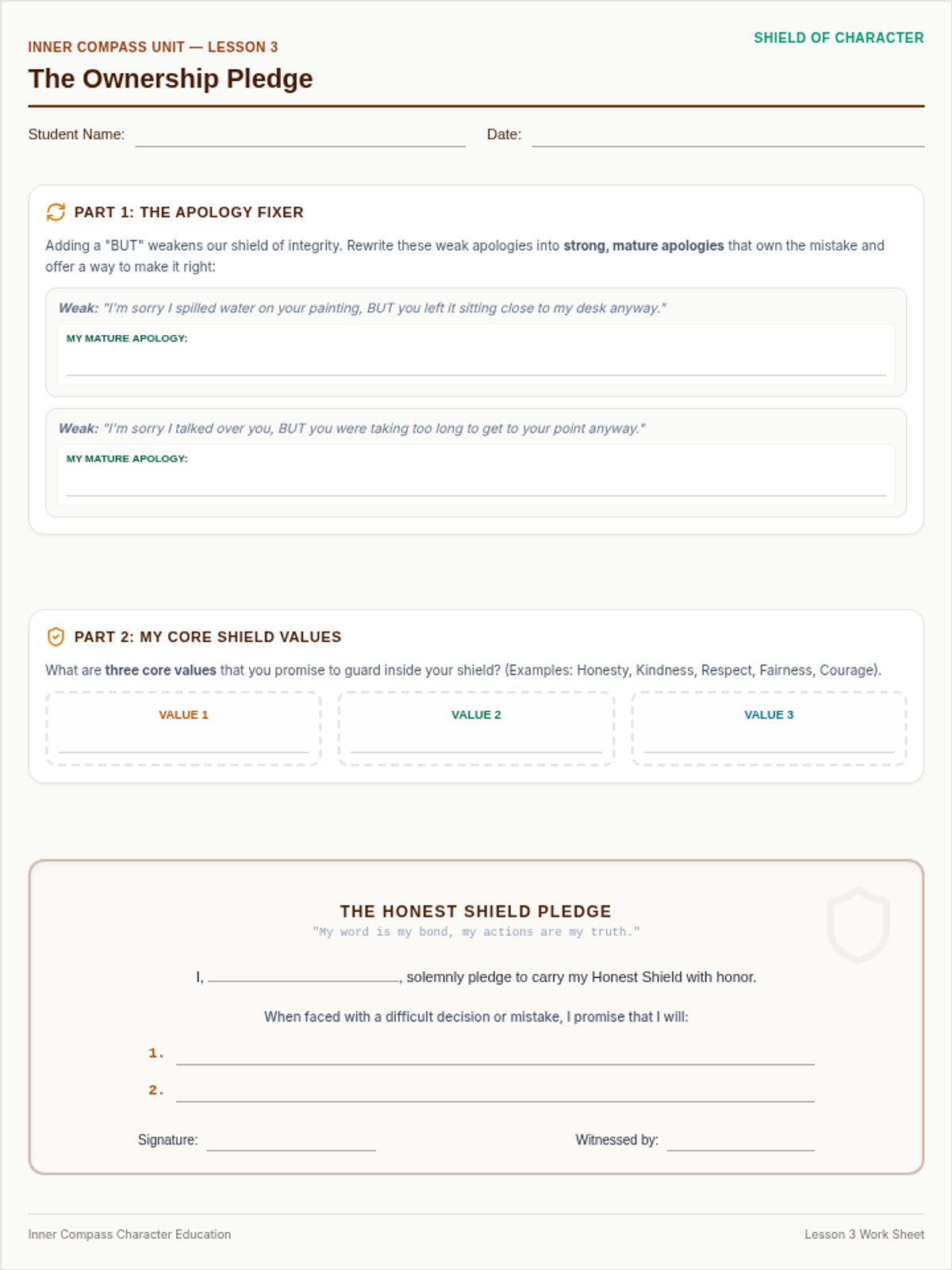
A reflection and goal-setting worksheet where students practice constructing mature apologies without excuses and design their own personal Integrity Pledge.
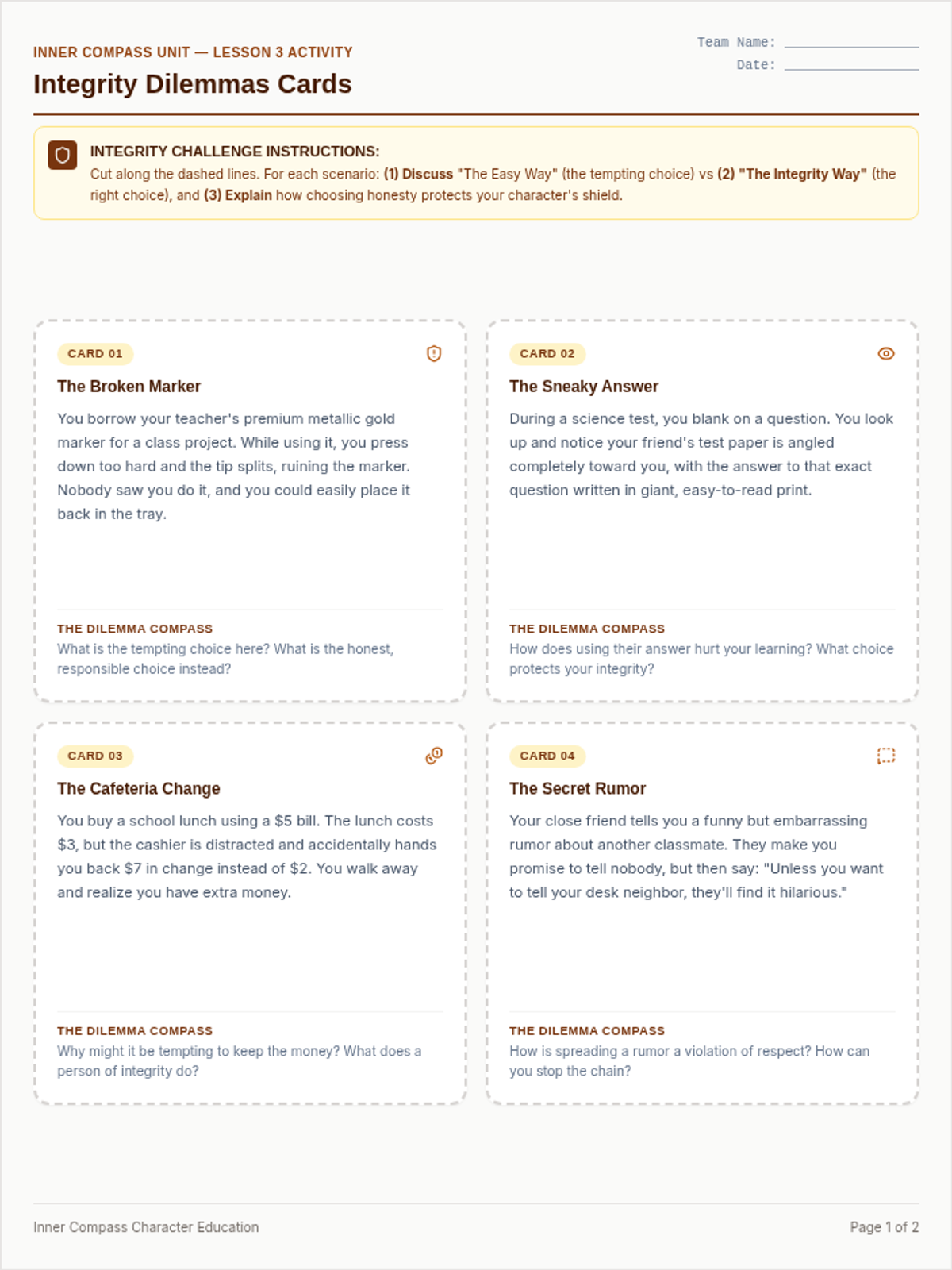
A collection of printable scenario cards for an integrity-focused decision-making activity. Students analyze challenging situations and discuss the difference between 'The Easy Way' and 'The Integrity Way'.
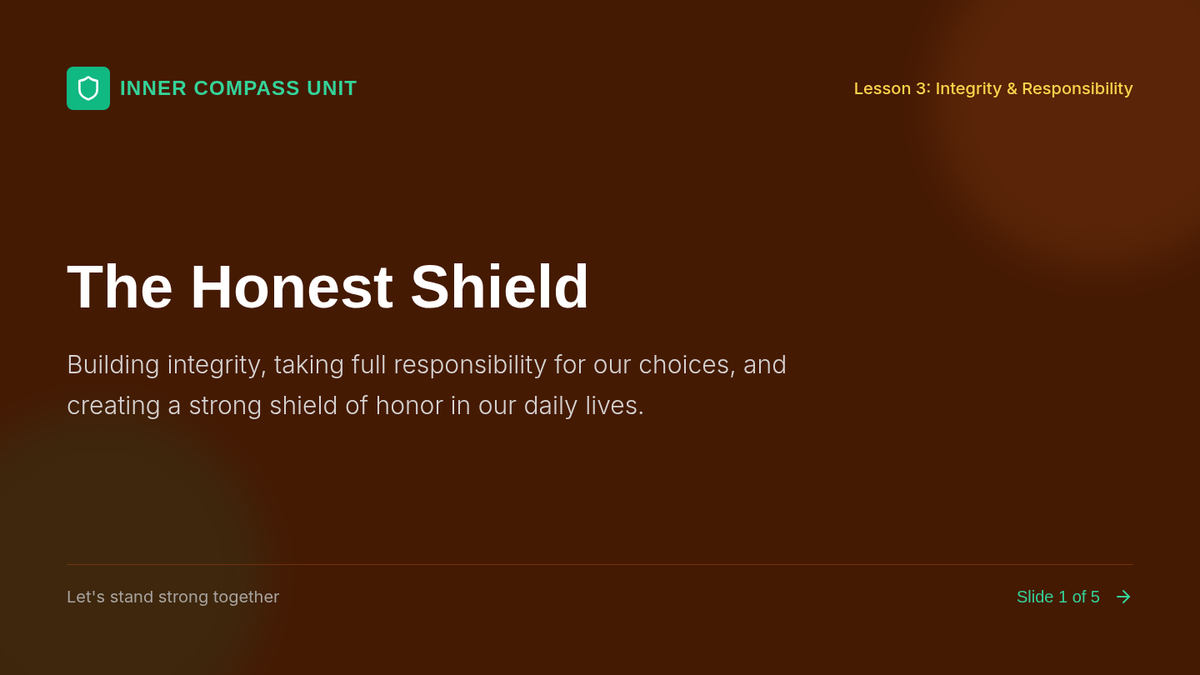
An interactive slide presentation to guide classroom discussions on responsibility, honesty, and integrity. Designed for the 'The Honest Shield' lesson with a scout/shield theme.
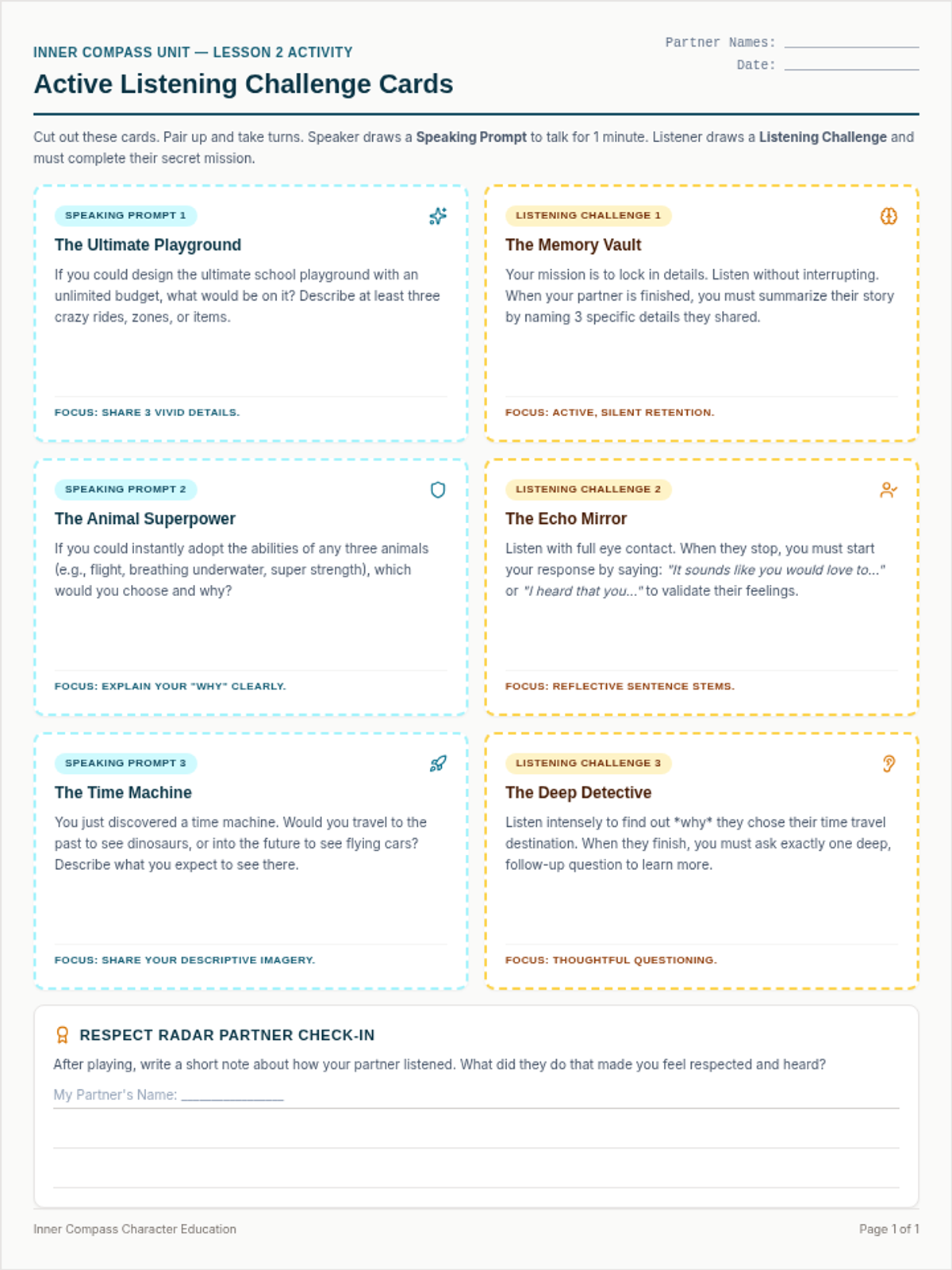
A collection of printable challenge cards for a peer active-listening activity. Partners trade off speaking and listening roles to practice specific respect habits.
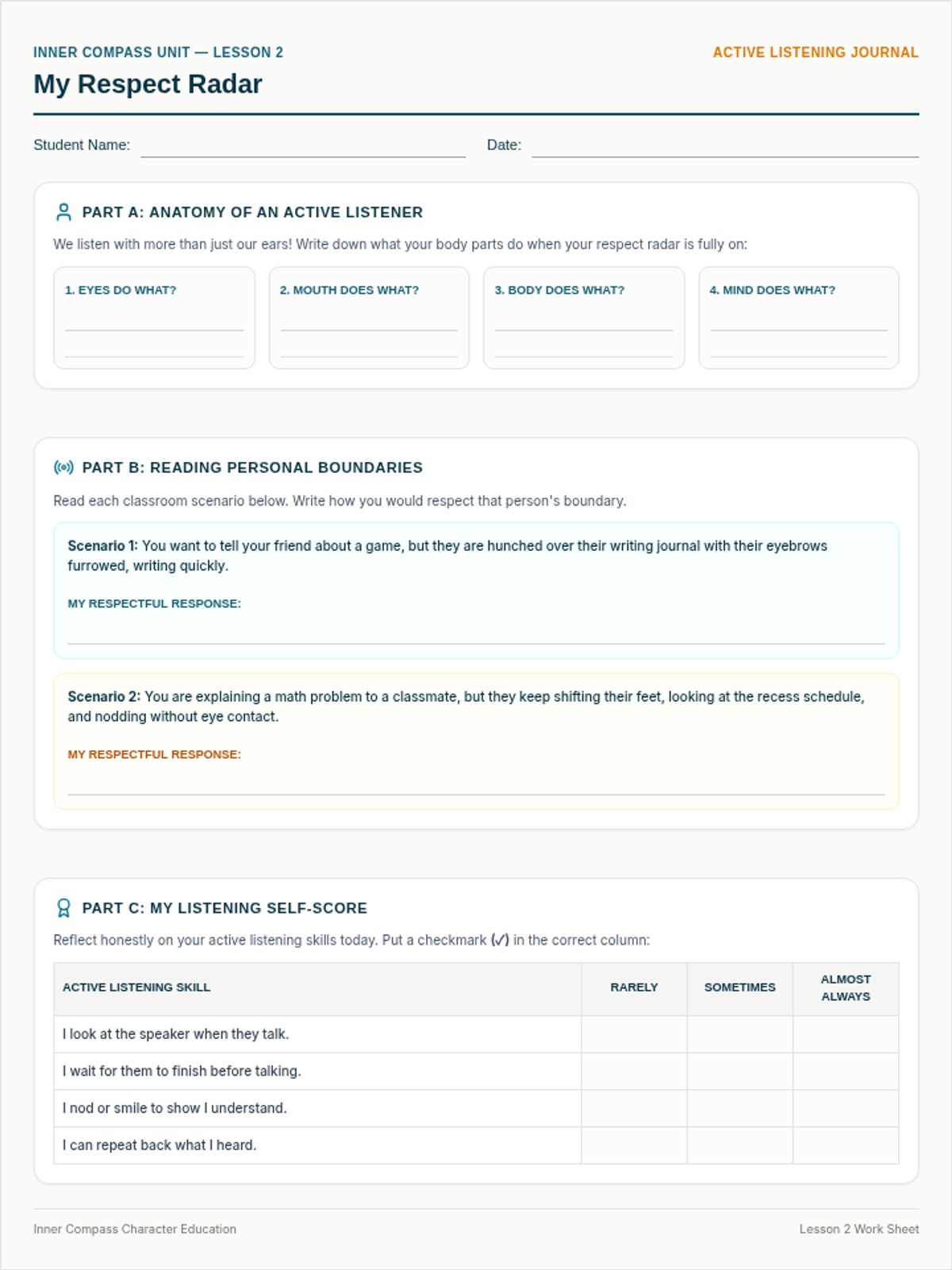
An active listening activity sheet and reflection workspace where students self-assess their communication habits and practice reading classroom boundaries.
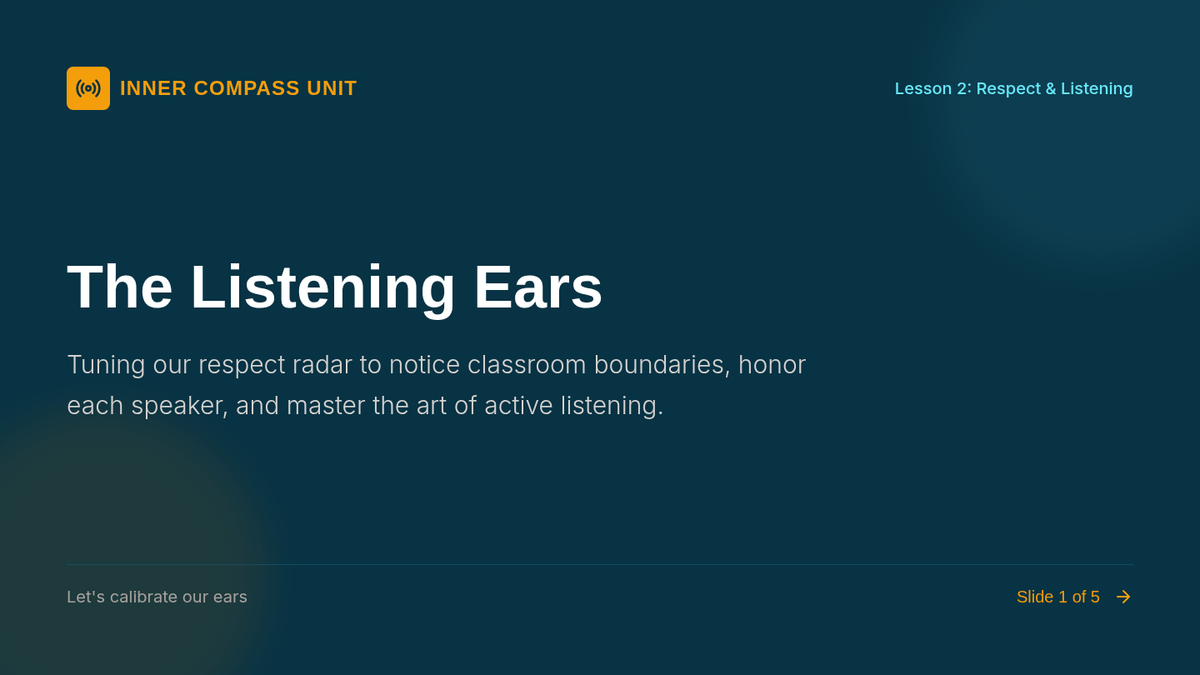
An interactive slide presentation to guide classroom discussions on respect, active listening, and boundaries. Designed for the 'The Listening Ears' lesson with a radar/navigator theme.
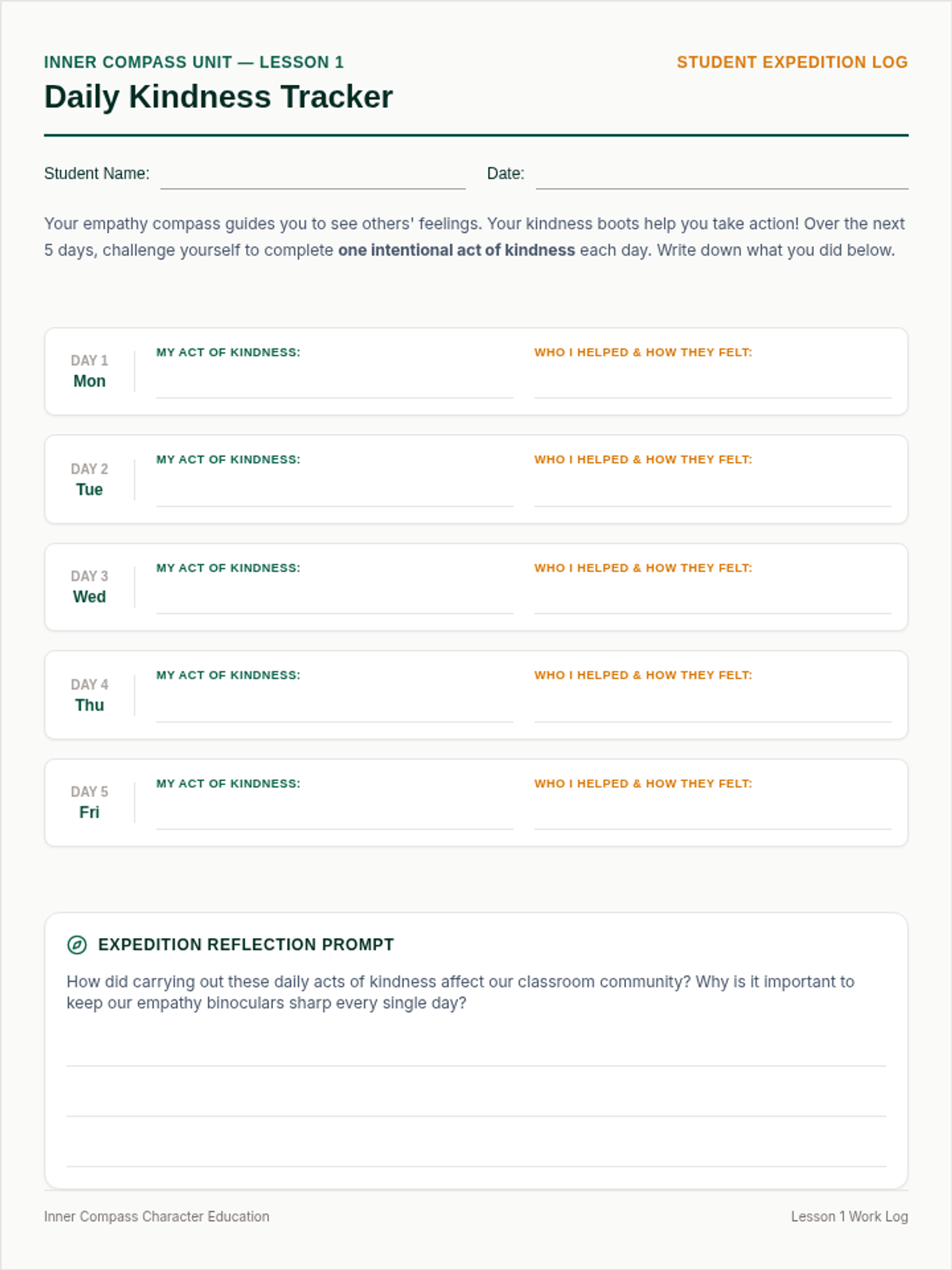
A 5-day daily reflection and practice log where students track their intentional acts of kindness and write brief self-reflections.
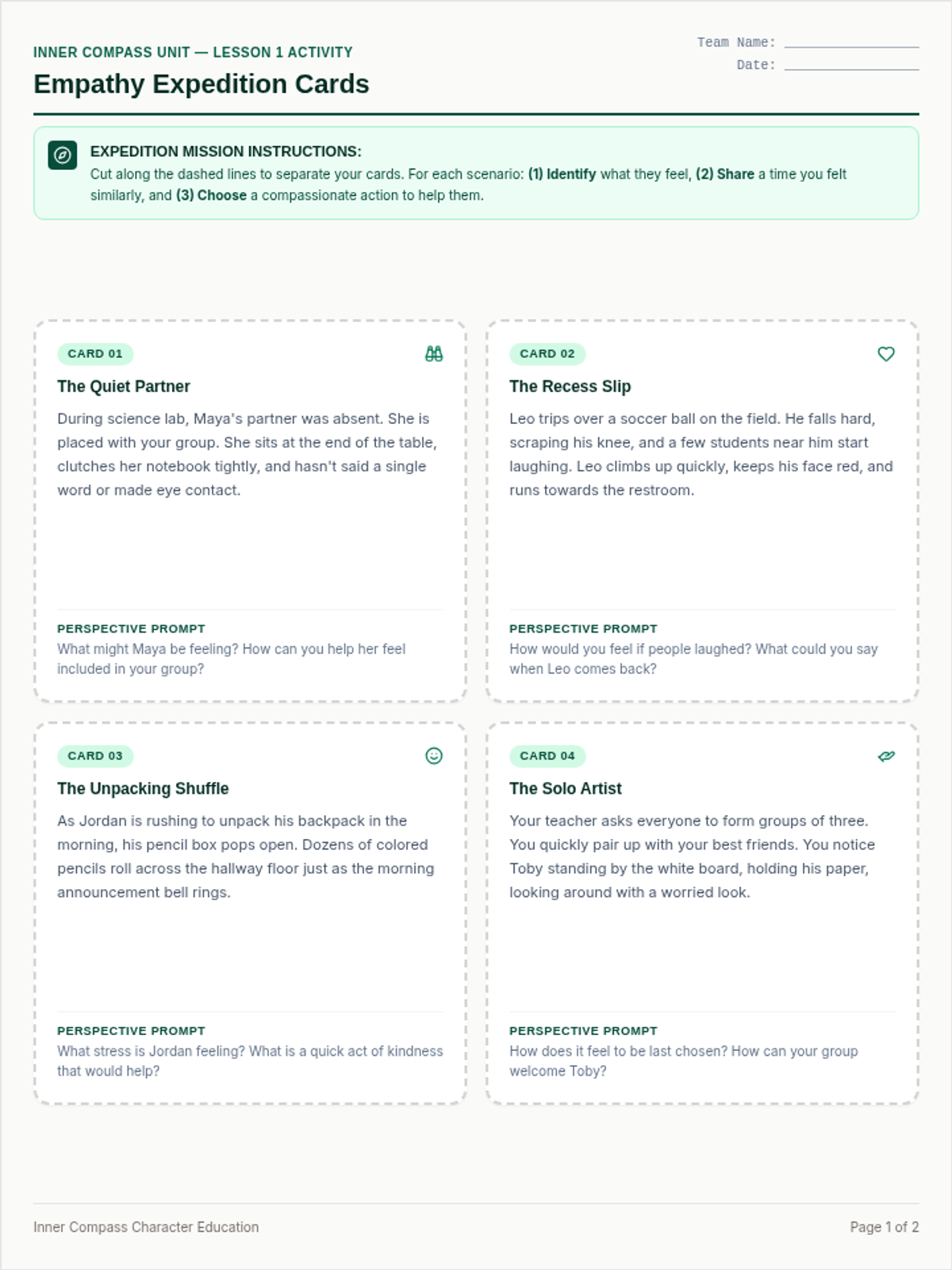
A collection of printable scenario cards for a cooperative empathy activity. Students analyze real school situations, discuss characters' emotions, and outline small acts of kindness.
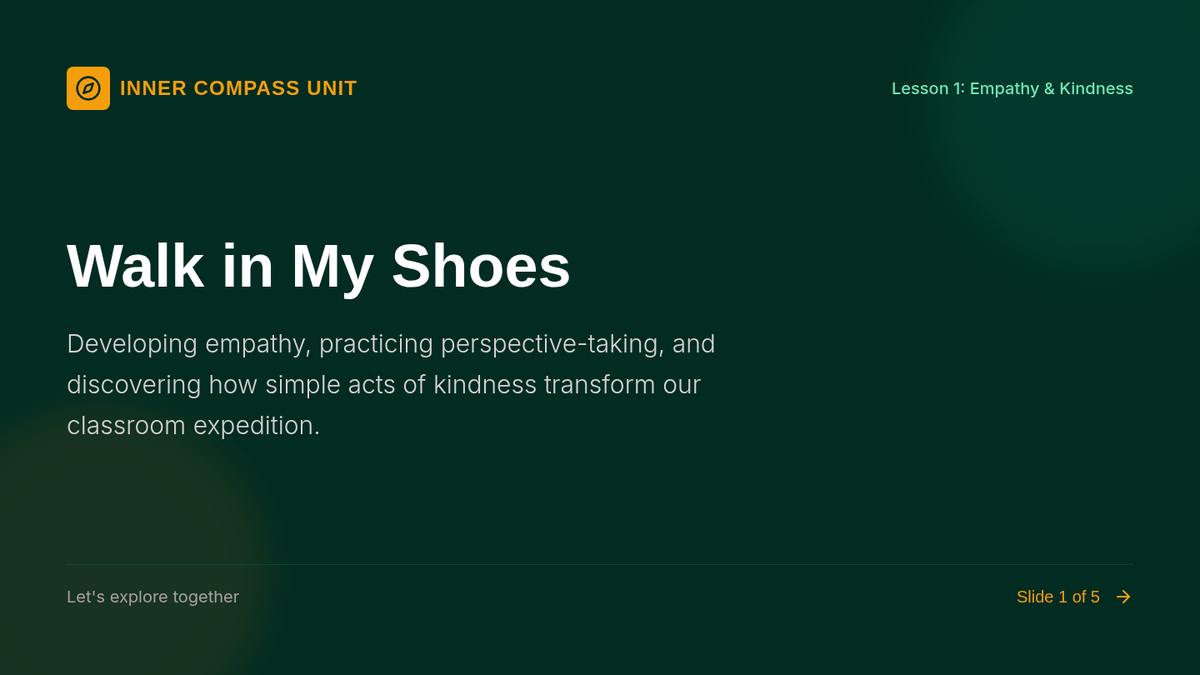
An interactive slide presentation to guide classroom discussions on empathy, perspective-taking, and active kindness. Designed for the 'Walk in My Shoes' lesson with an explorer theme.
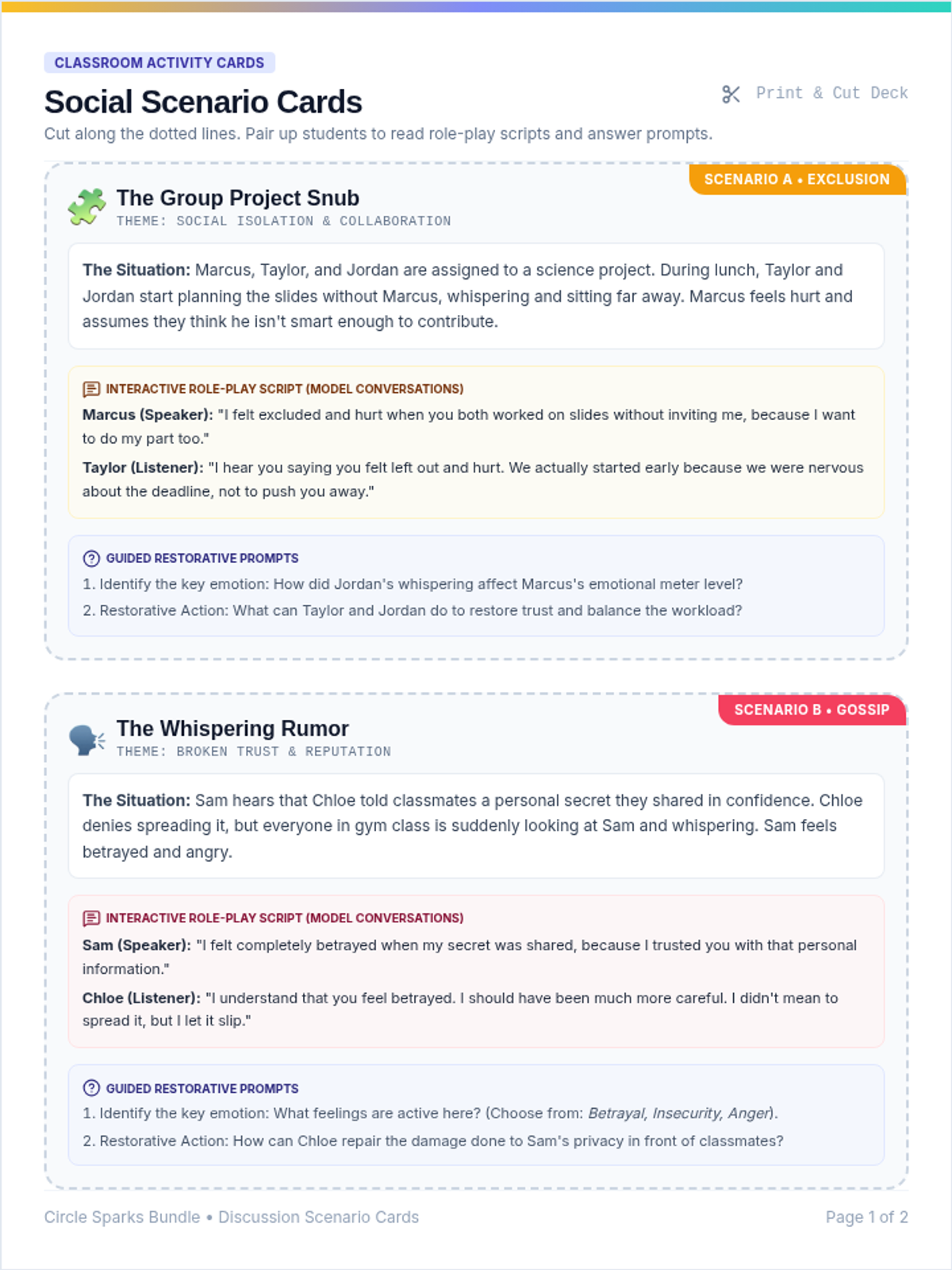
Four highly detailed, cut-out Social Scenario Cards featuring real-world middle school peer conflicts. Each card includes a realistic peer scenario, an interactive role-play script modeling mediation, and guided reflection questions targeting social-emotional vocabulary.
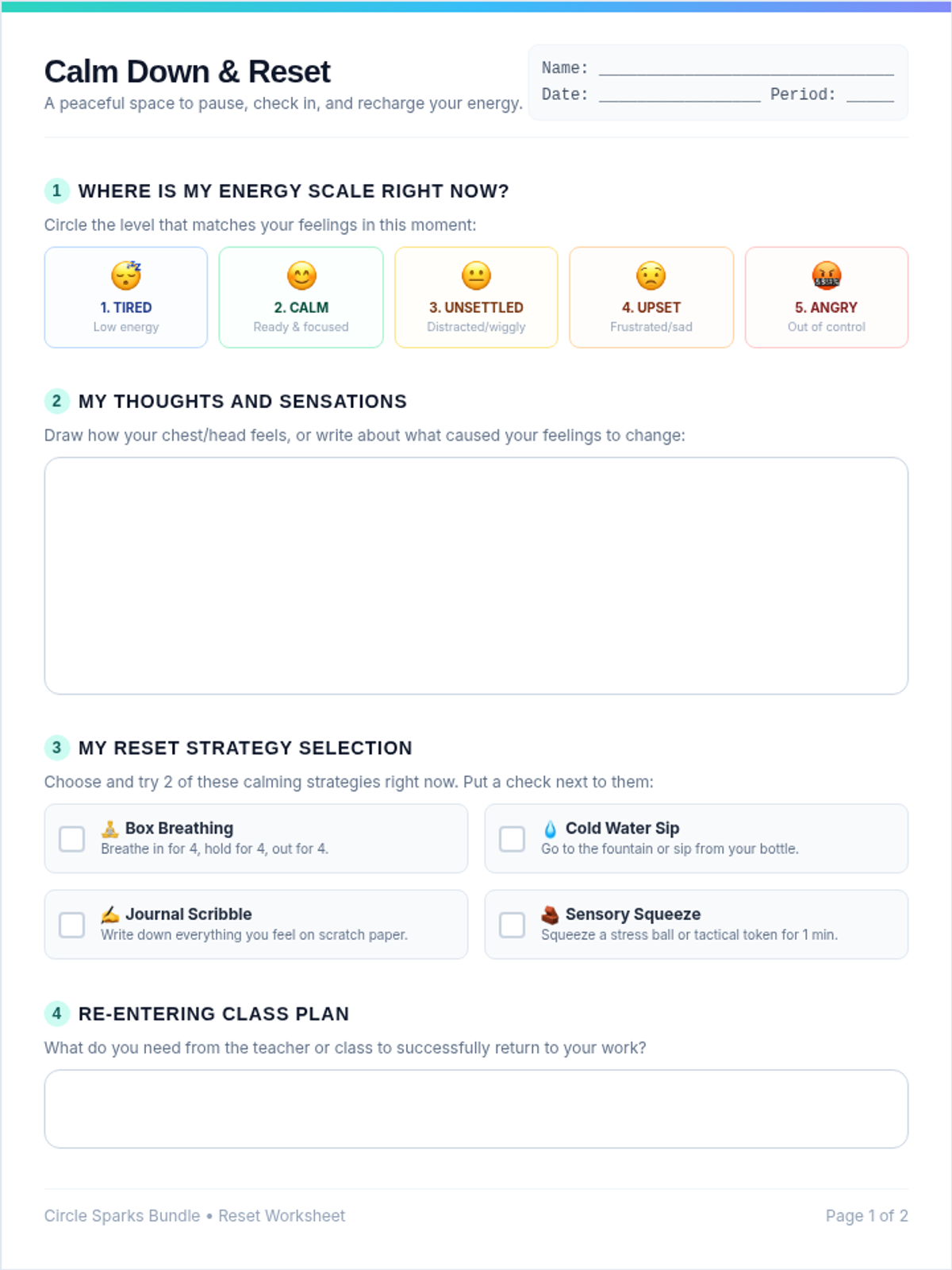
A 2-page, self-paced student reflection tool. Page 1 is a Calm Down & Reset Sheet that guides students to identify feelings and select a calming strategy. Page 2 is a Restorative Think Sheet focusing on taking ownership of choices, analyzing peer impact, and planning repair.
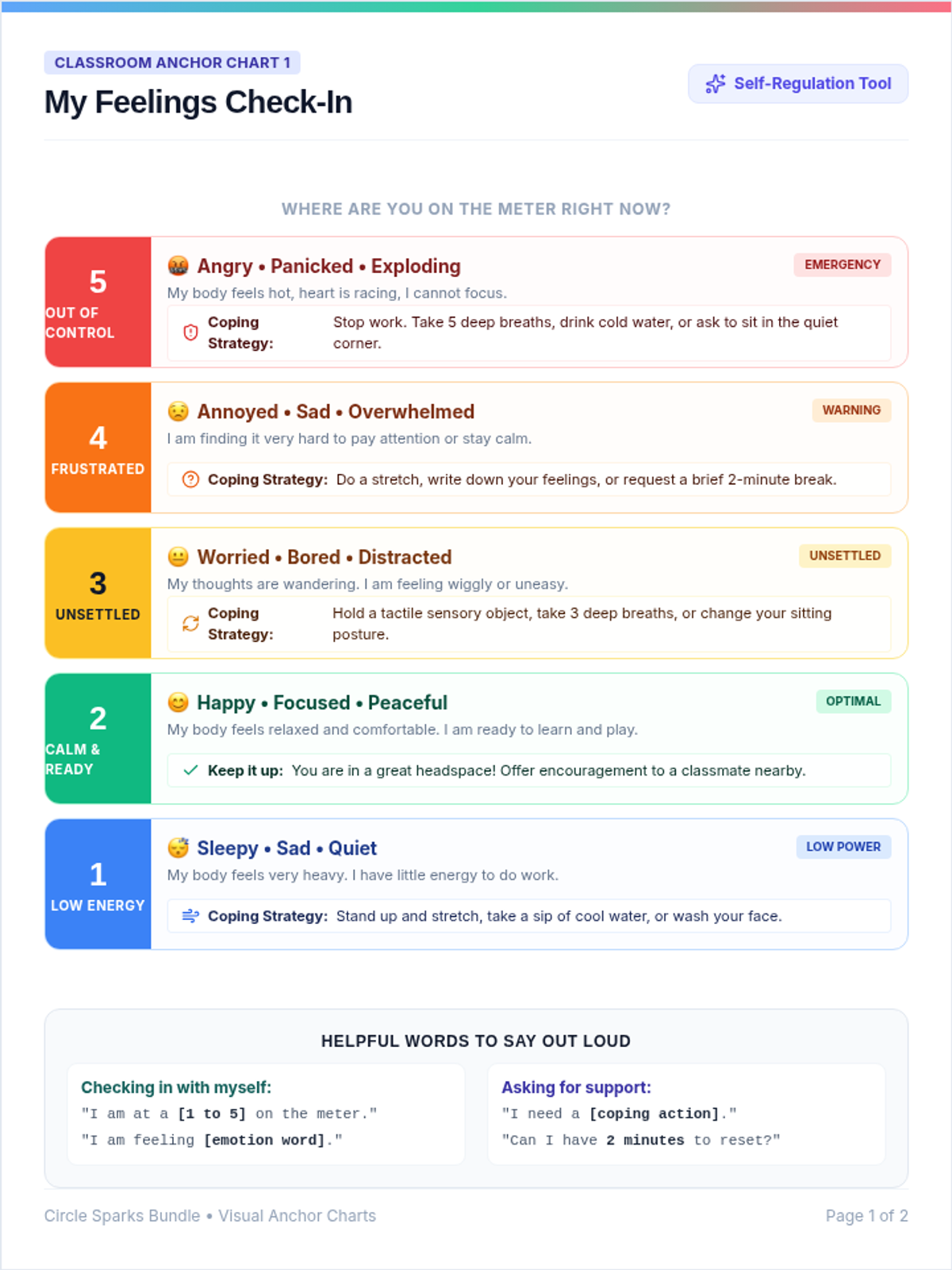
Two complete, highly visual classroom anchor charts. Page 1 contains a 1-5 Emotional Regulation Scale with emoji supports and coping actions. Page 2 provides a step-by-step Conflict Resolution Flowchart with verbal sentence stems for student mediation.
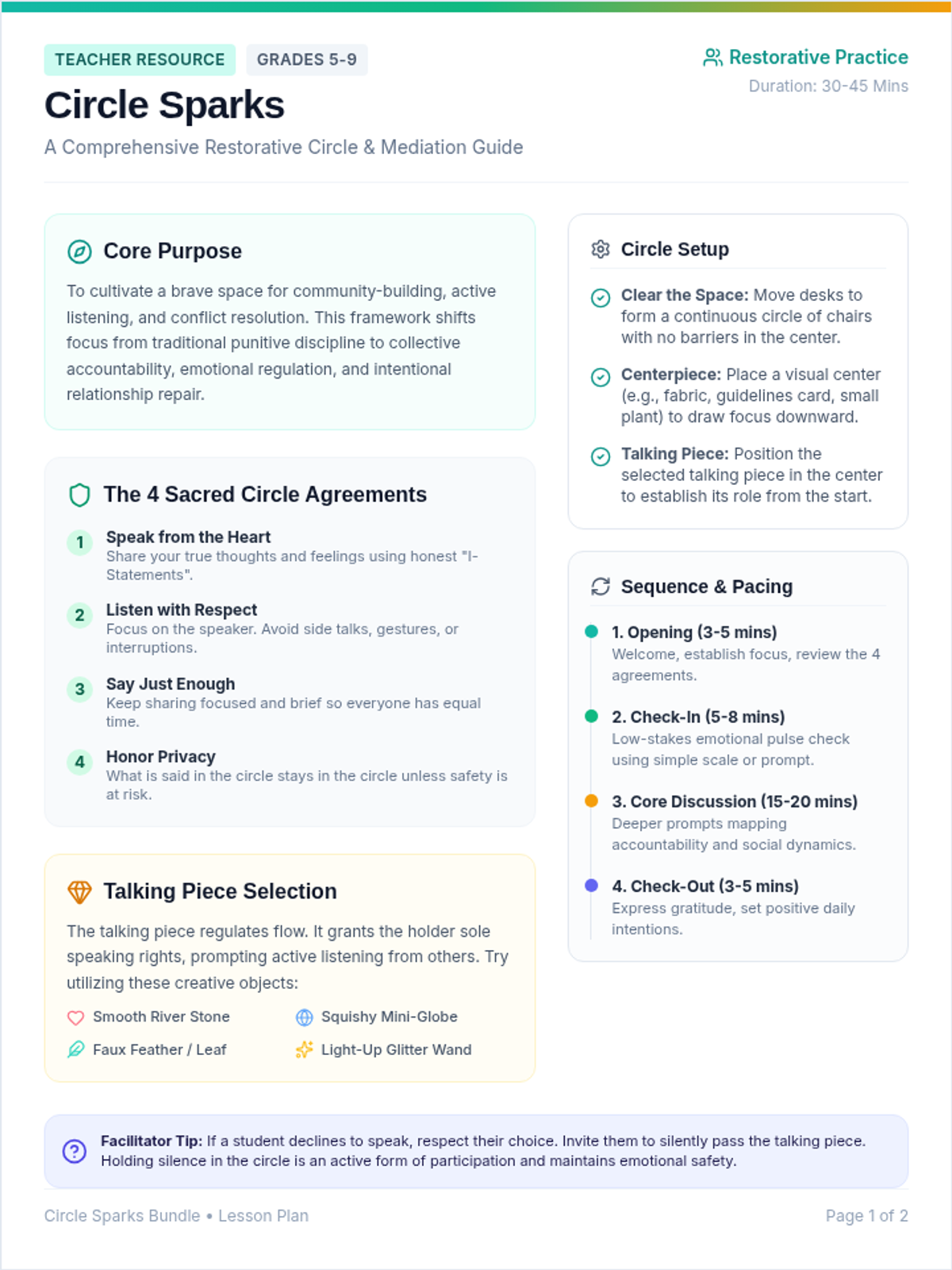
A complete, step-by-step teacher guide and facilitation lesson plan for hosting Restorative Circles. Includes circle guidelines, innovative talking piece ideas, a comprehensive sequential prompt bank (check-in, core, check-out), and restorative questioning scripts.
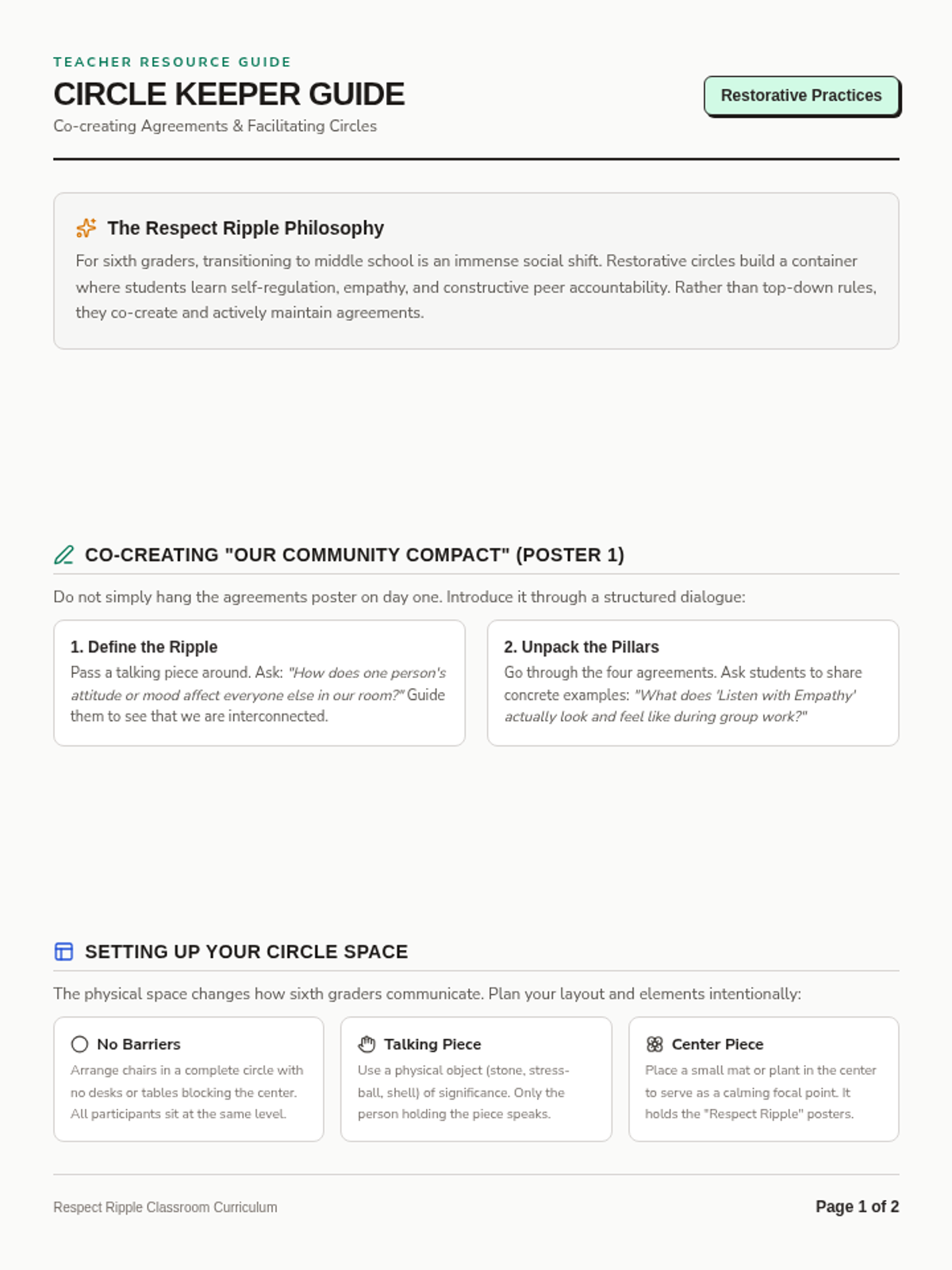
A comprehensive teacher facilitation guide for hosting restorative circles, co-creating community agreements with students, and using restorative dialogue prompts in the classroom.
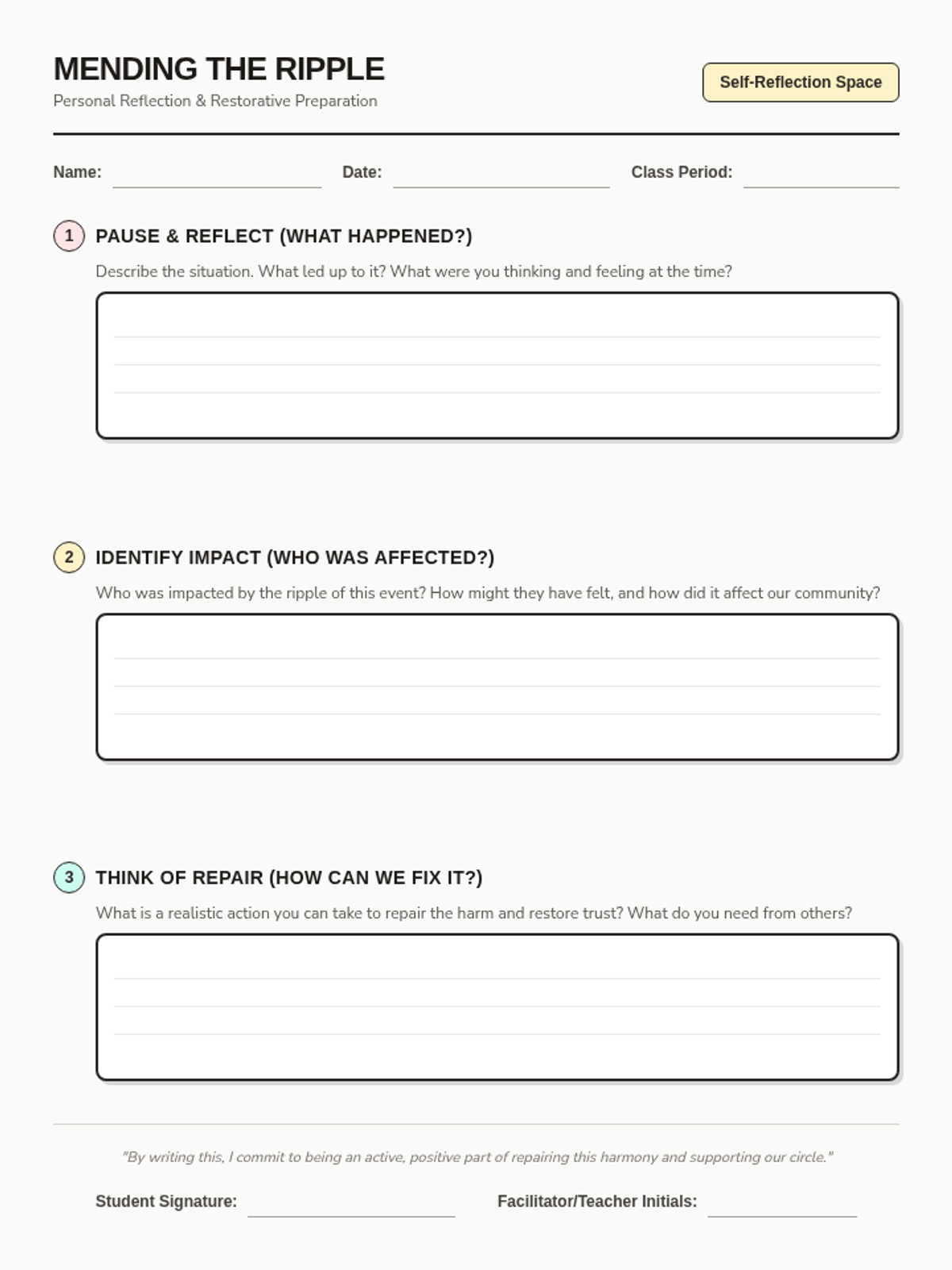
A student reflection worksheet to help students think through conflicts or incidents, identify the impact, and plan constructive ways to make things right before restorative dialogue.
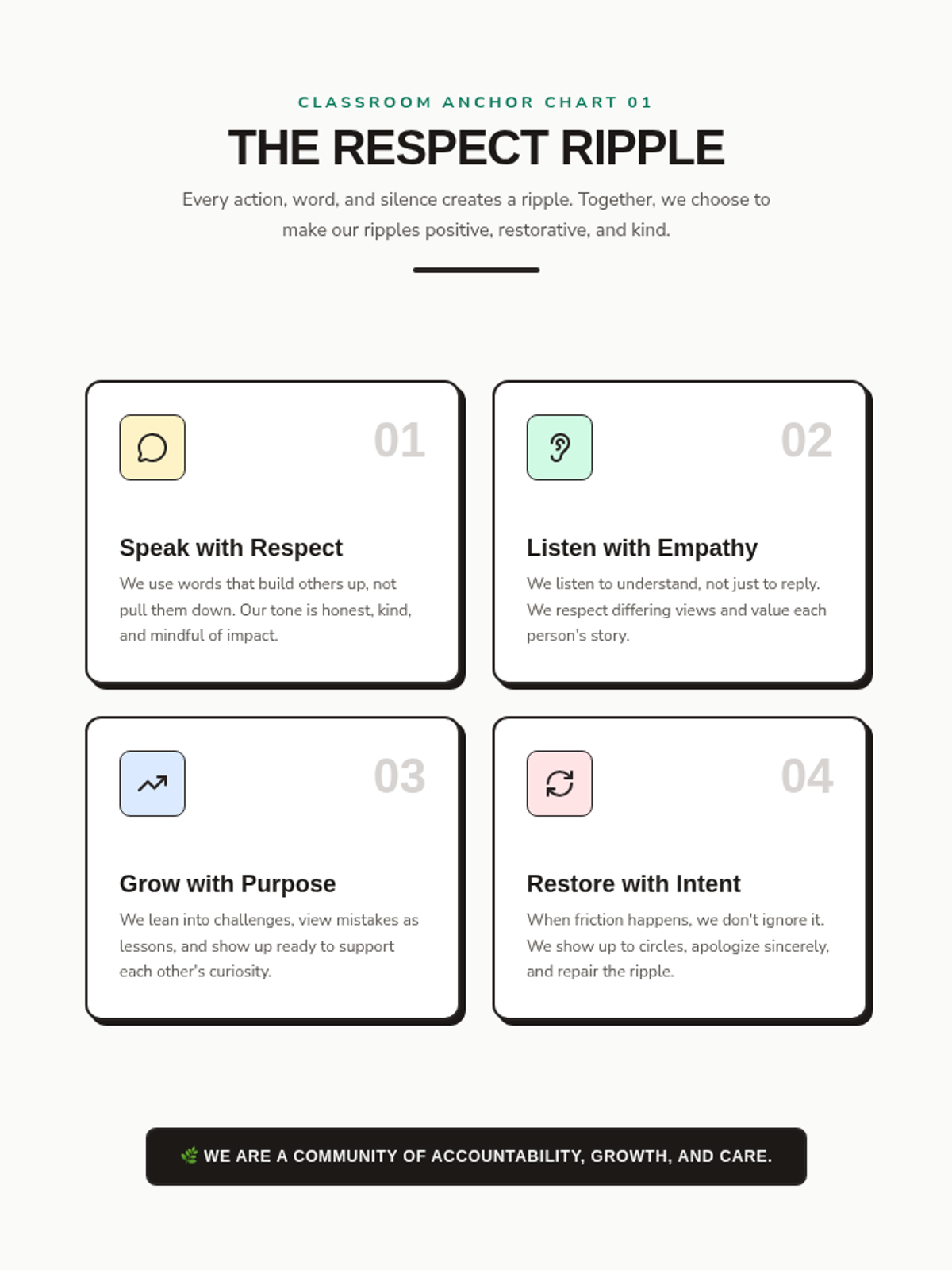
A set of three beautifully designed visual anchor charts (posters) for classroom walls, focusing on Community Agreements, Restorative Dialogue, and the Path to Repairing Harm. Staged in 8.5x11 format with bold, modern typography and clean organic borders.
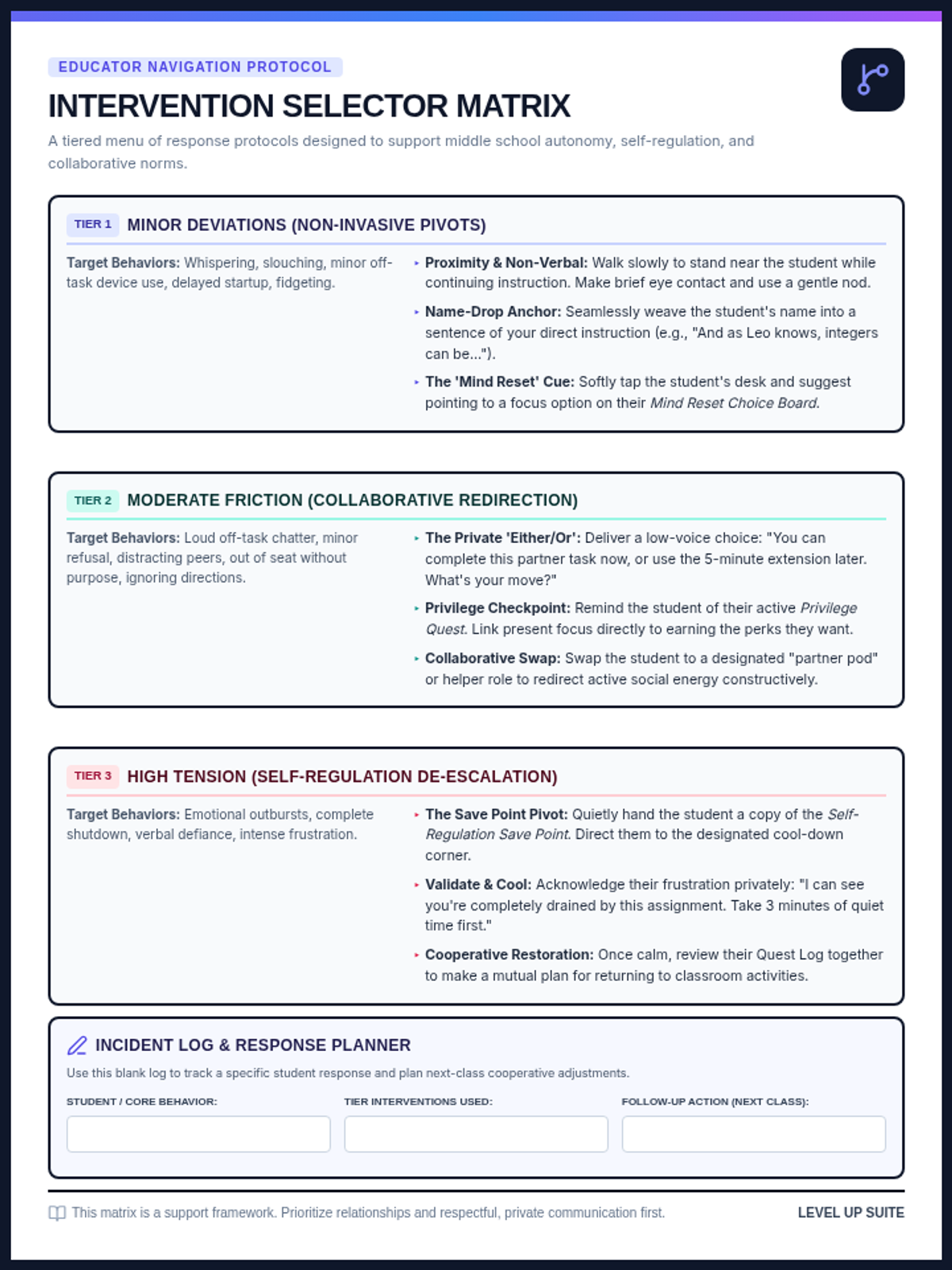
A professional intervention matrix and response selector for middle school teachers. It aligns classroom management norms with tiered behavioral support strategies, helping teachers select non-invasive interventions, self-regulation pivots, and cooperative reflections.
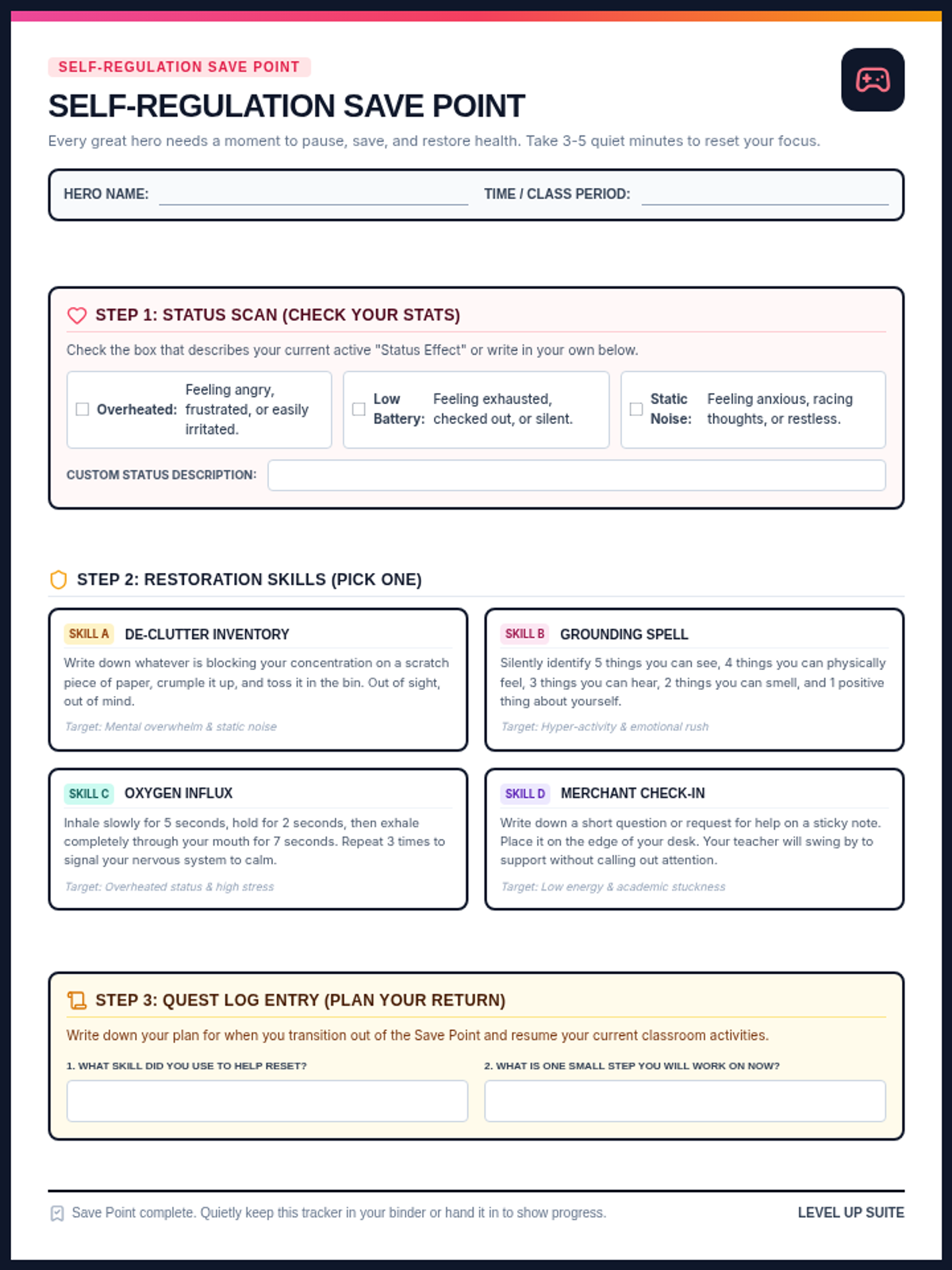
A de-escalation and self-regulation guide designed for middle schoolers, themed as an RPG 'Save Point.' It guides students through checking their emotional energy, selecting restorative coping strategies, and logging a small action step to return to class activities.
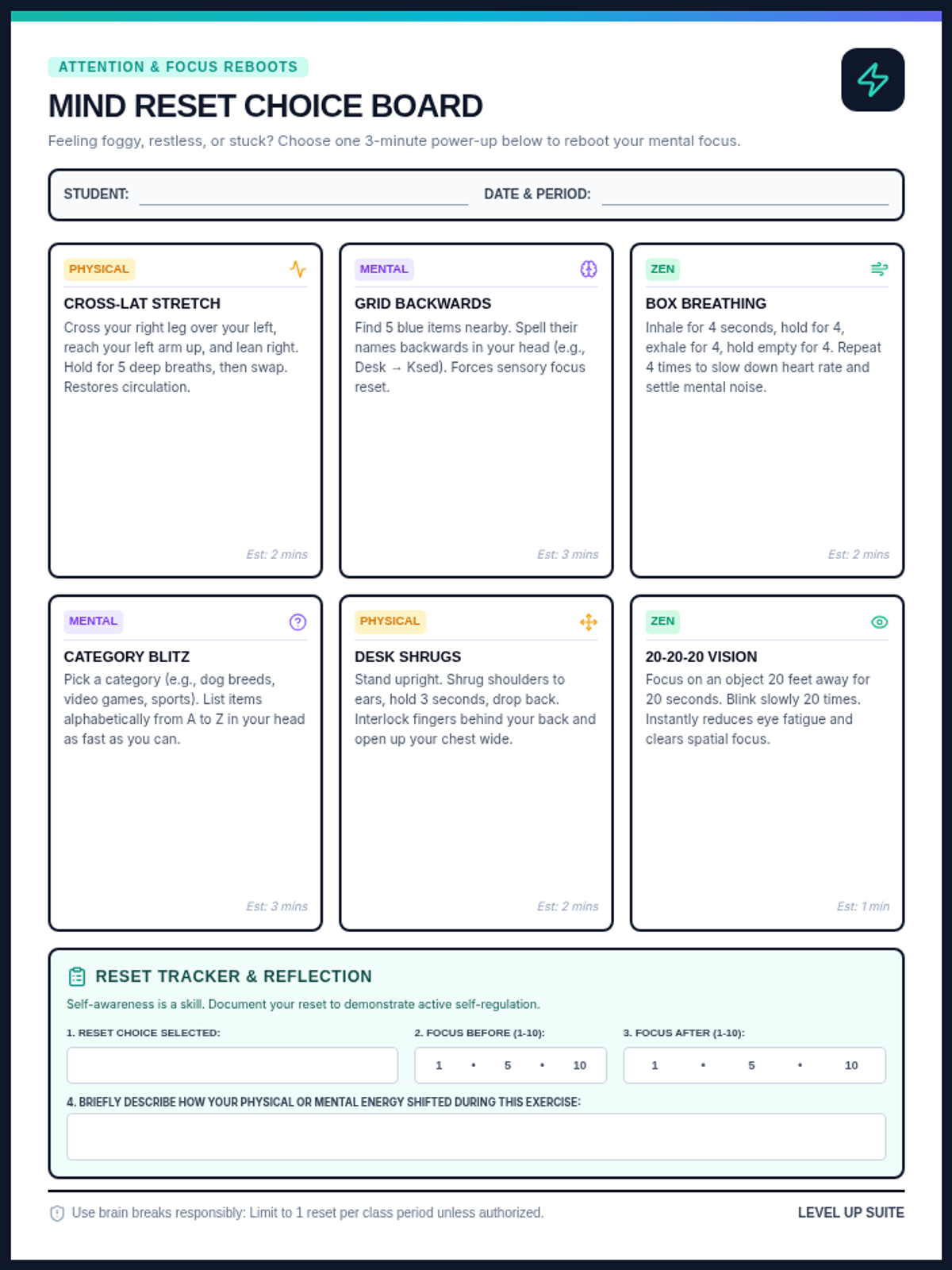
A choice board of short, structured brain breaks and focus activities designed to help middle schoolers reset their attention. It features physical movement, logic puzzles, and centering strategies styled like arcade-style power-ups.
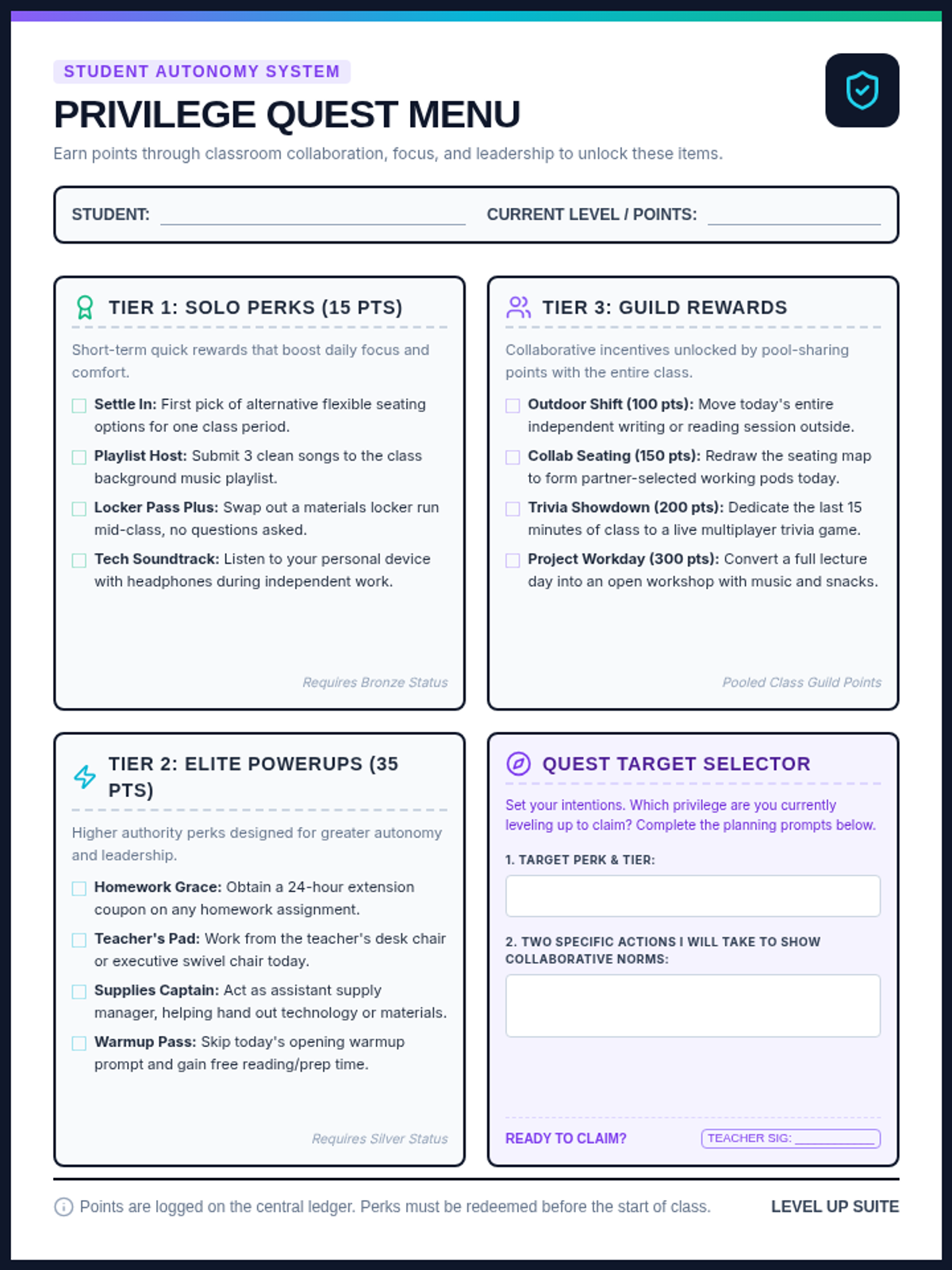
A reward and incentive menu designed for middle schoolers, styled as an adventure guild board. It offers structured individual and whole-class privileges that students can choose as they earn points or demonstrate collaborative norms.
A printable student worksheet for analyzing personal punctuality barriers, drafting three specific reliability strategies, and tracking arrival habits over a two-week period.
A step-by-step planning worksheet where students reverse-engineer their morning routines, identify micro-stalls, and design friction-free habit cues.
A student-facing 1-page activity sheet styled as an emergency protocol matrix. It facilitates the pairing phase where students swap plans, identify failure triggers, draft Plan B and Plan C contingencies, and commit to a 48-hour micro-action.
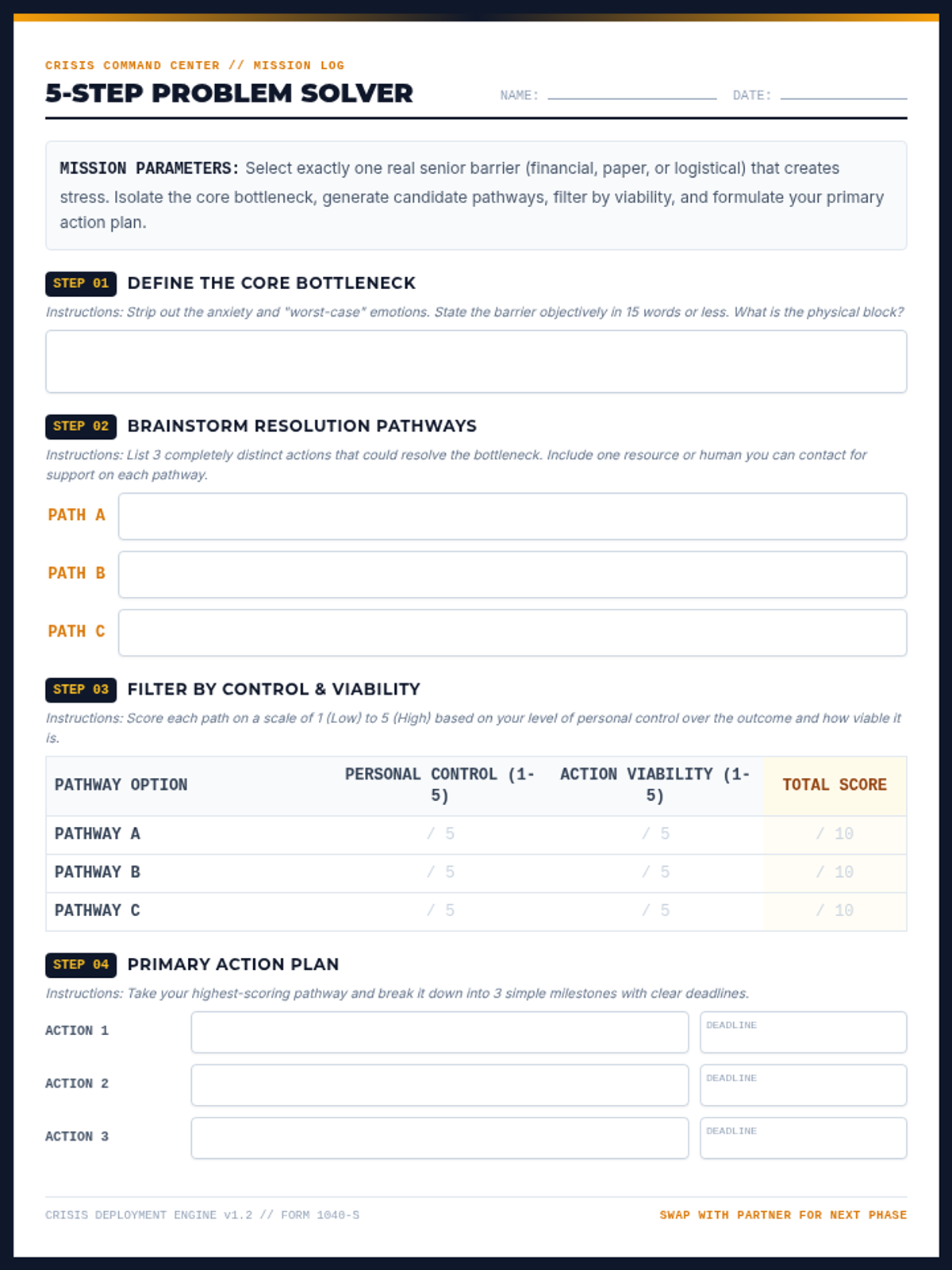
A student-facing 1-page worksheet styled as a tactical mission briefing sheet. High school seniors select a primary transition barrier and systematically work through the first four steps of the 5-step problem-solving process (Define, Brainstorm, Filter, Plan) in dedicated handwriting-friendly work blocks.
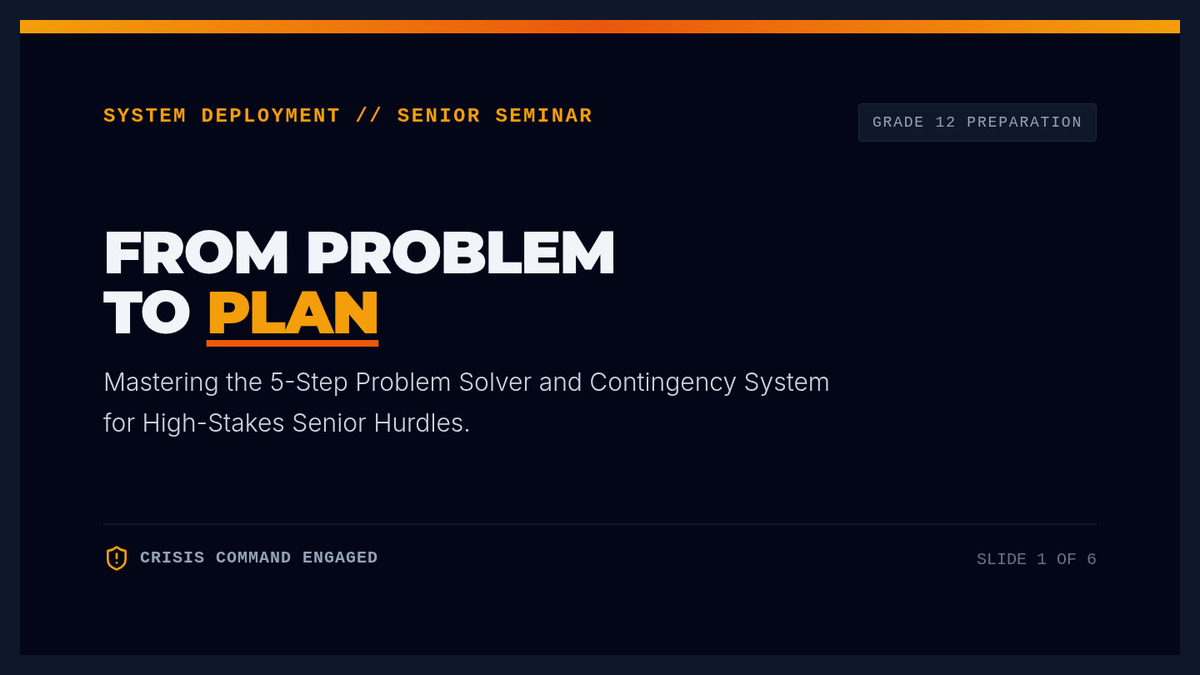
A 6-slide deck styled with a high-contrast 'Crisis Command' visual theme. It guides high school seniors through the physiological 'stress freeze', the 5-step problem-solving system, real-world academic/financial scenarios, and the creation of clear triggers for backup plans.
A comprehensive slide deck covering employability skills, high school credit impacts, habit loops, and practical morning routine strategies.
A comprehensive, 2-page teacher facilitation guide styled as a technical flight command manual. It outlines pacing, instructional prompts, scaffolding questions, and specific coaching tips to guide 12th graders through the 5-step problem-solving framework and contingency planning.
A comprehensive 45-minute lesson plan and facilitation guide for teachers, mapping out the instructional arc, pacing, core concepts, and teacher scripts to help 12th graders build reliable punctuality habits.
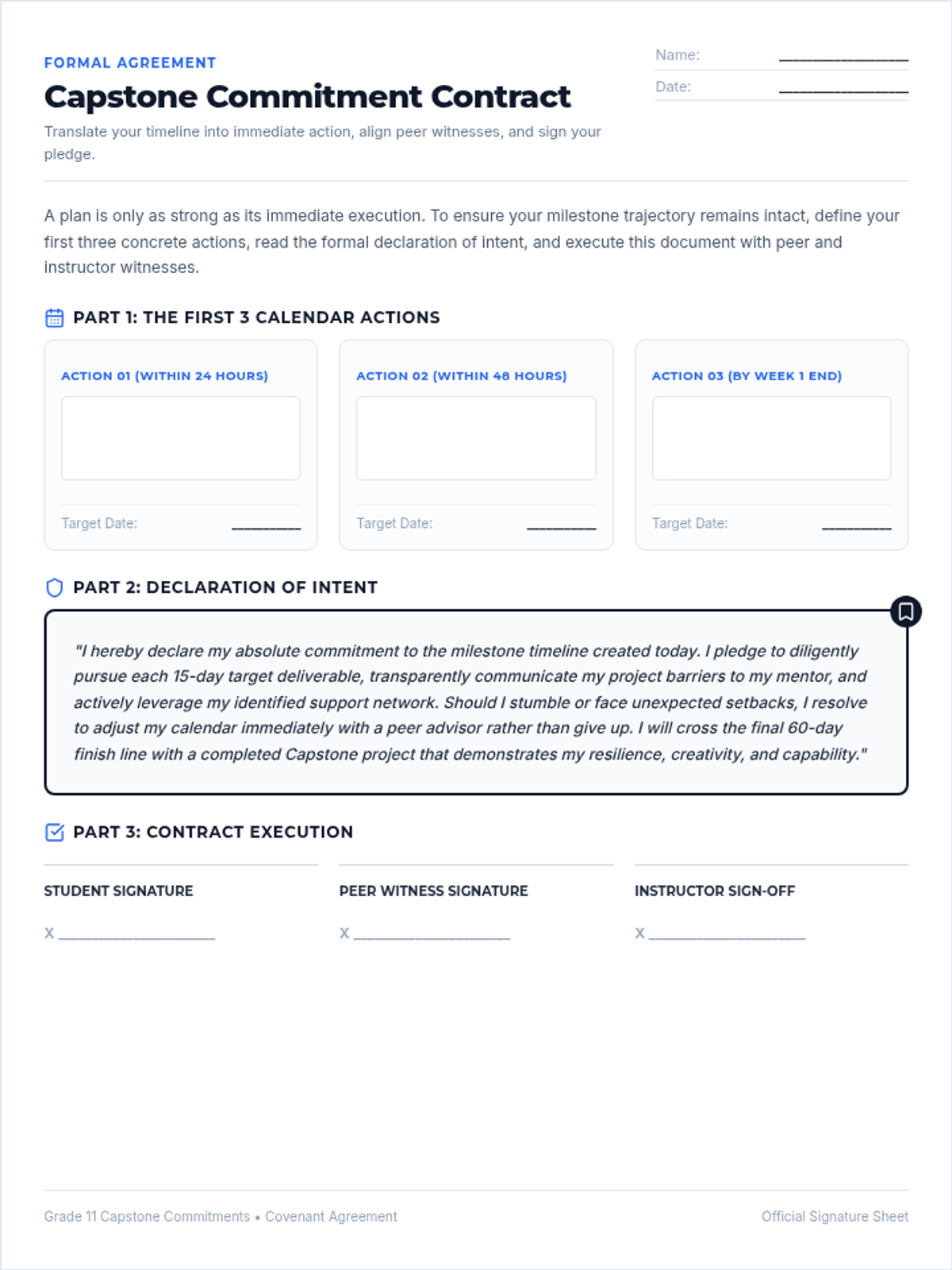
A 1-page formal student commitment contract featuring three immediate action calendar boxes, a written pledge, and formal signature blocks.
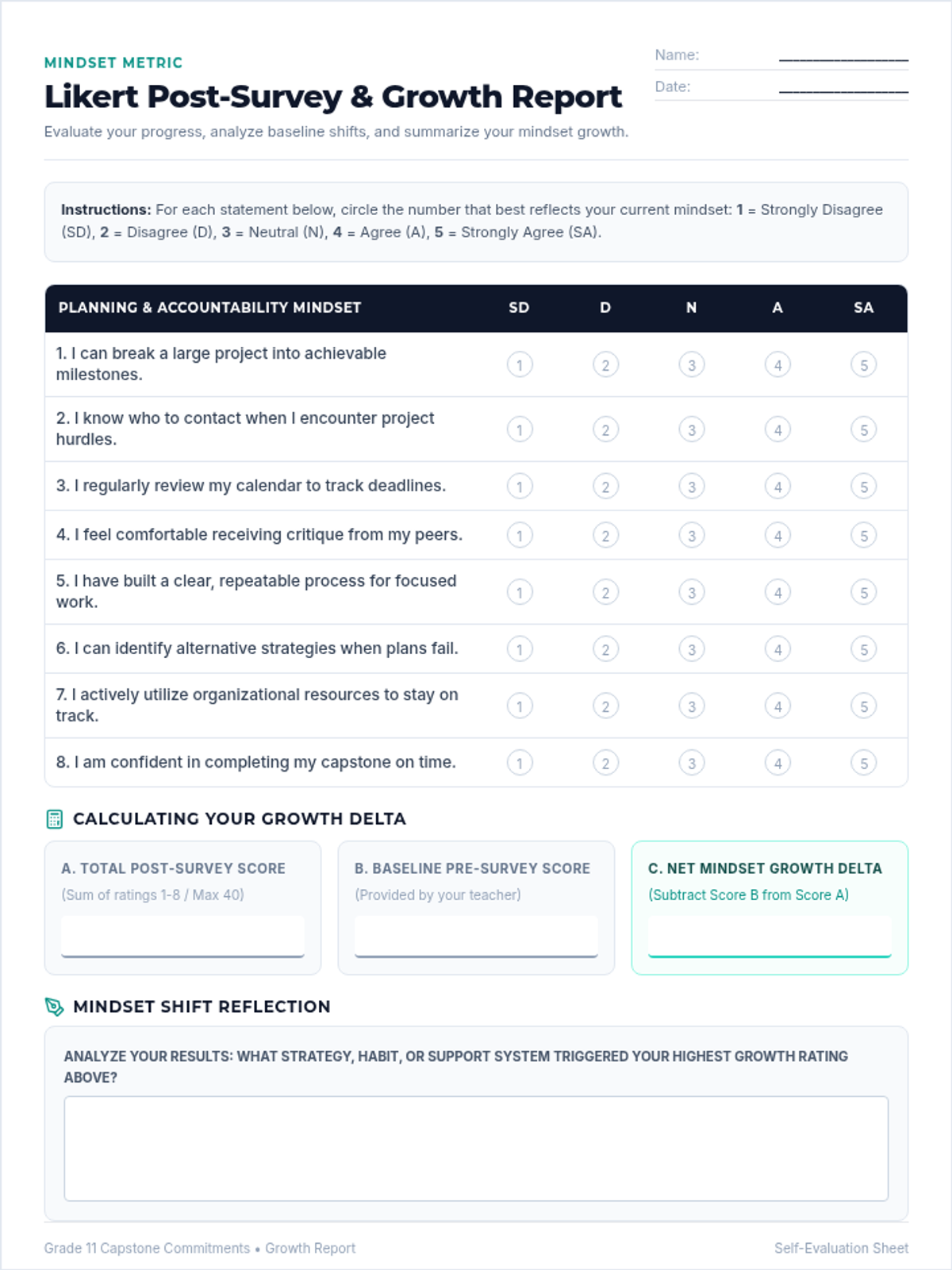
A 1-page student self-assessment featuring an 8-item Likert scale post-survey, a quantitative growth delta calculation table, and a guided reflection prompt.
A highly structured student planning worksheet featuring a 4-part 60-day milestone timeline, input fields for target dates, and explicit columns for required supports.
A highly visual 6-slide presentation guiding students step-by-step through status pitching, peer feedback loops, calculating survey growth metrics, and sealing their commitment contracts.
A comprehensive 2-page teacher guide detailing the pacing, discussion prompts, student accommodations, and step-by-step instructional arc for the Capstone Commitments lesson.
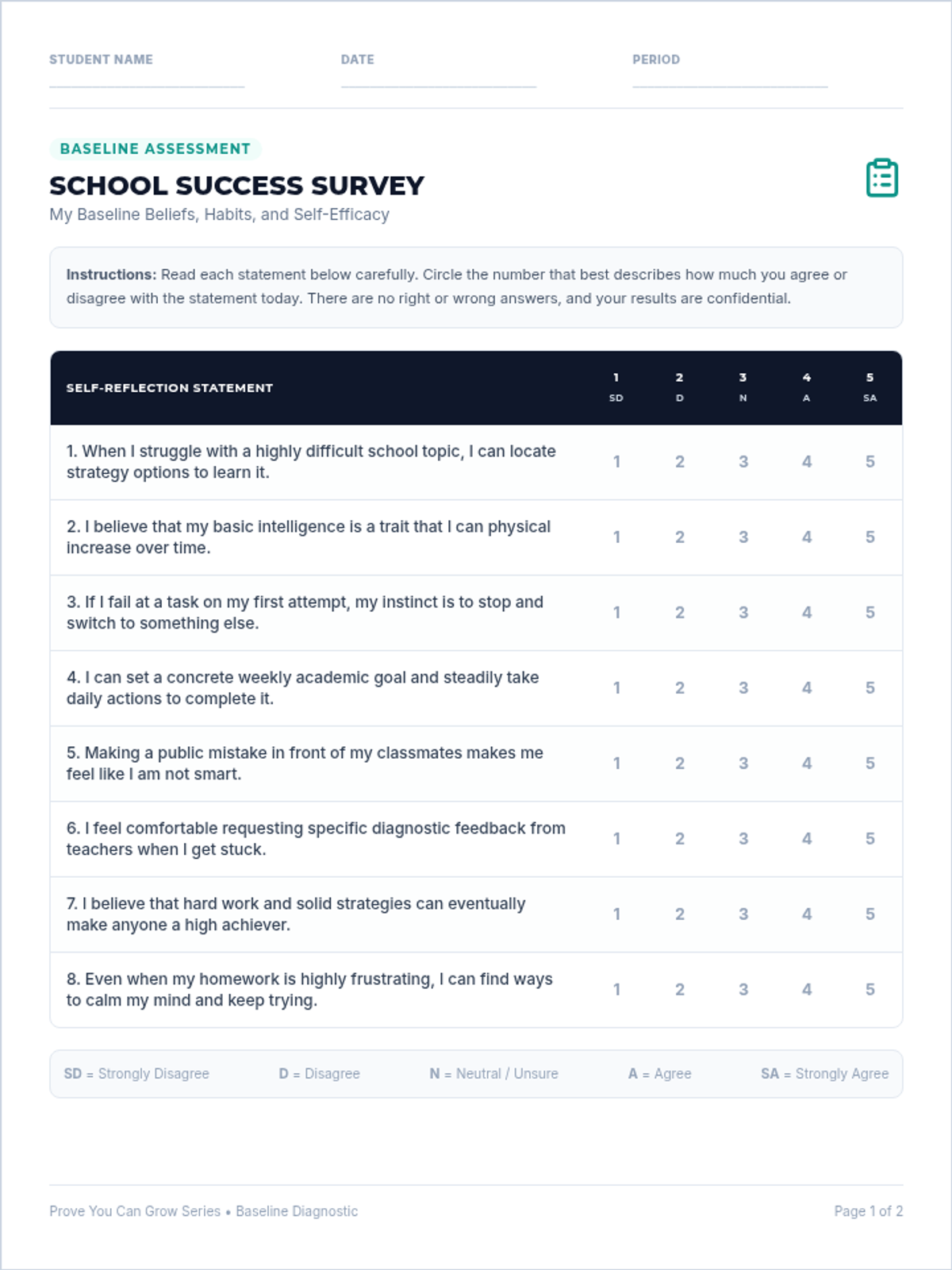
A baseline 8-item student-facing school success survey utilizing a 5-point Likert scale, accompanied by an executive teacher scoring matrix and intervention guide.
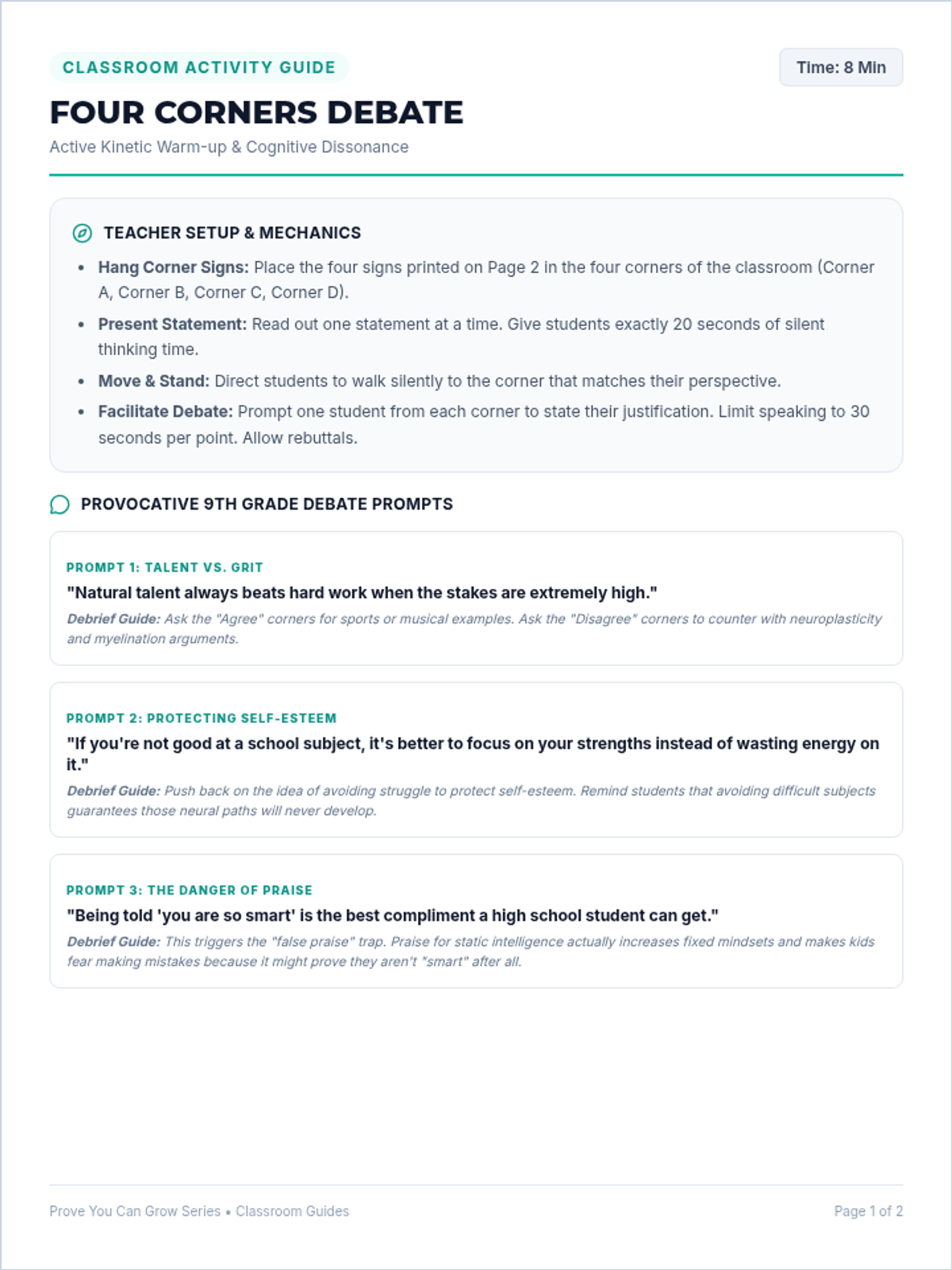
An interactive classroom guide and printable corner signs for the Four Corners warm-up debate, exploring controversial statements on natural talent vs. hard work.
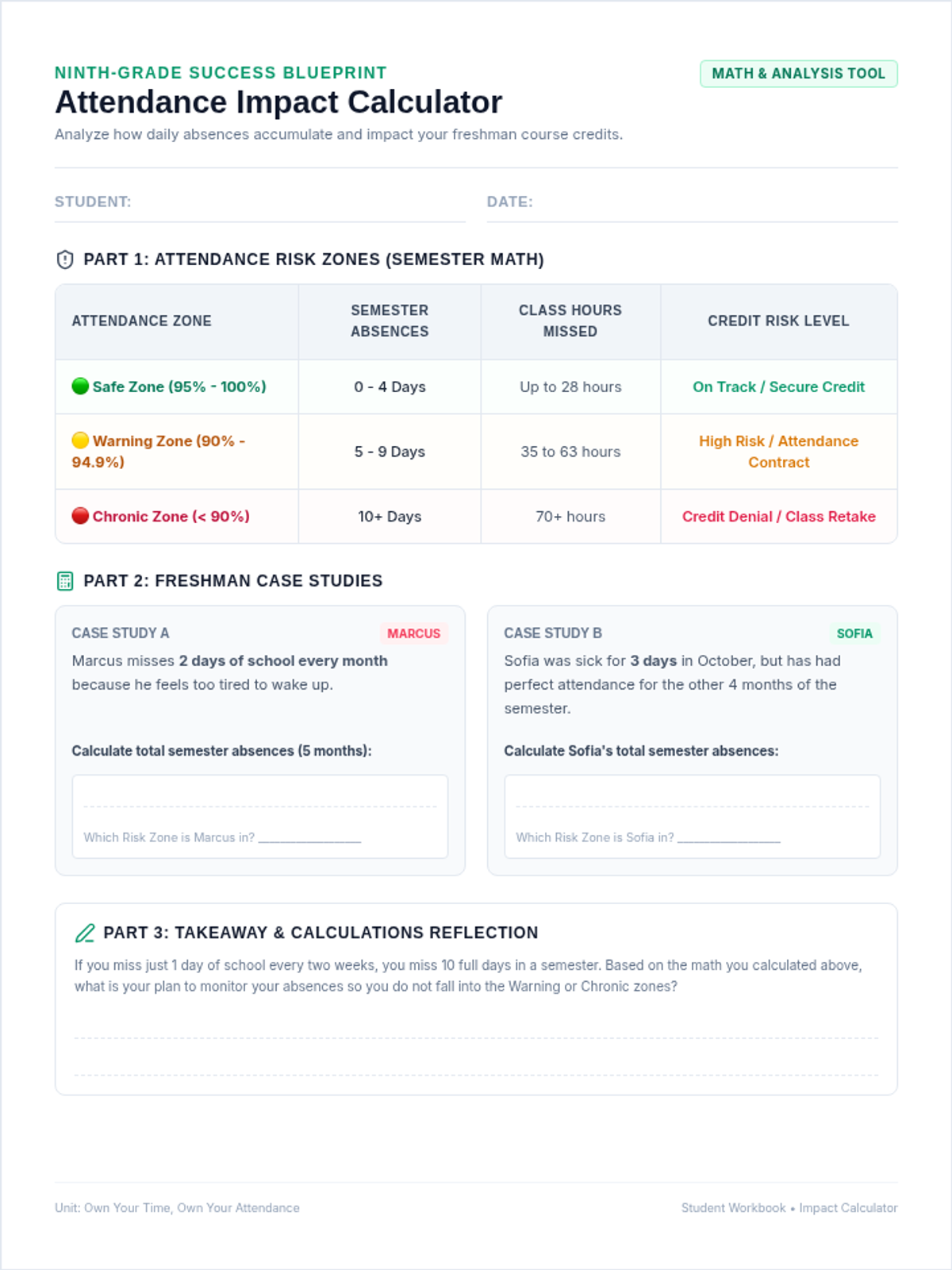
A practical student and teacher-facing math resource to analyze cumulative missed instruction and credit risk profiles based on monthly attendance rates.
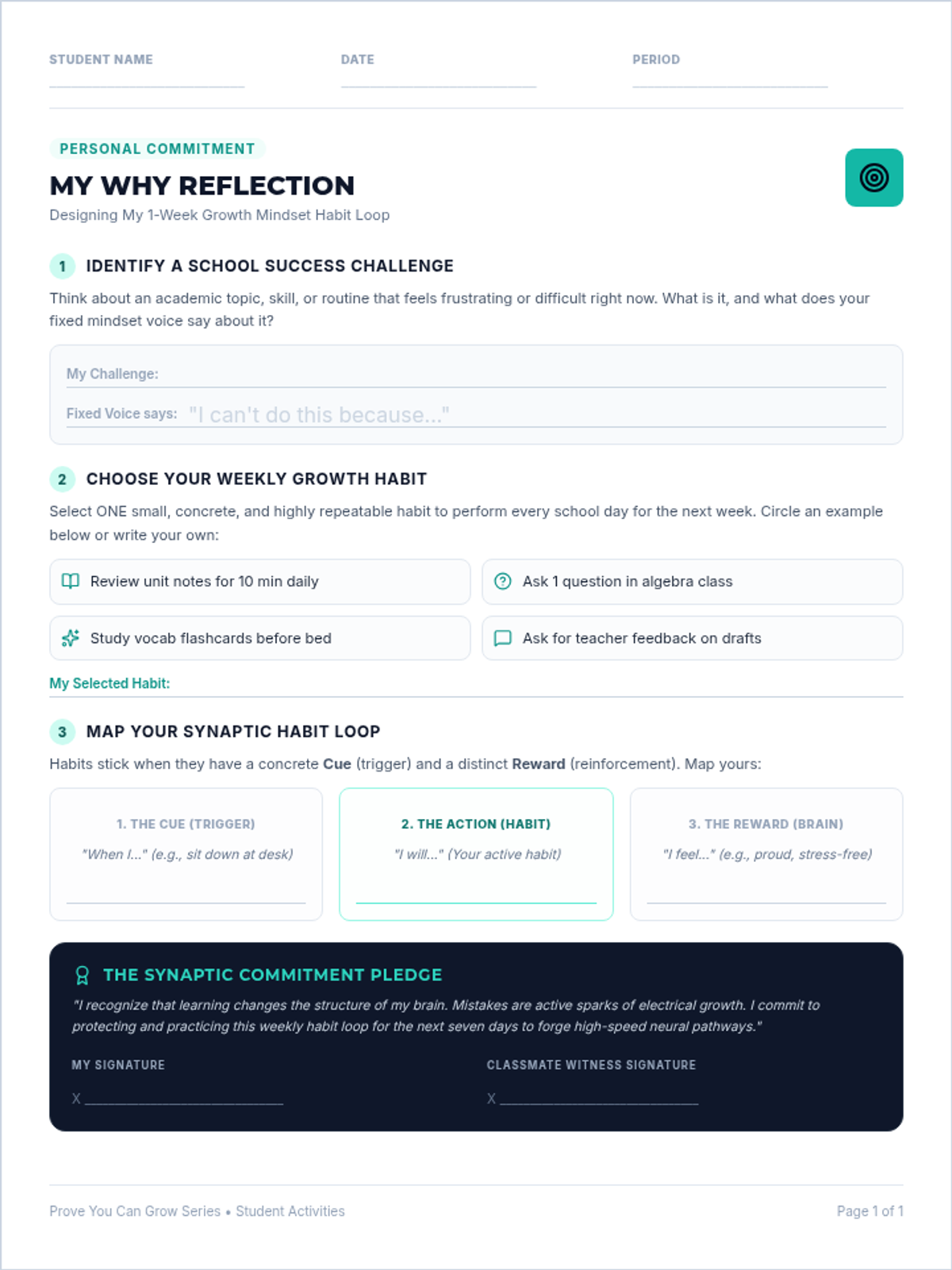
A collaborative and reflective student worksheet for defining a concrete weekly growth habit and designing a corresponding cues/reward habit loop.
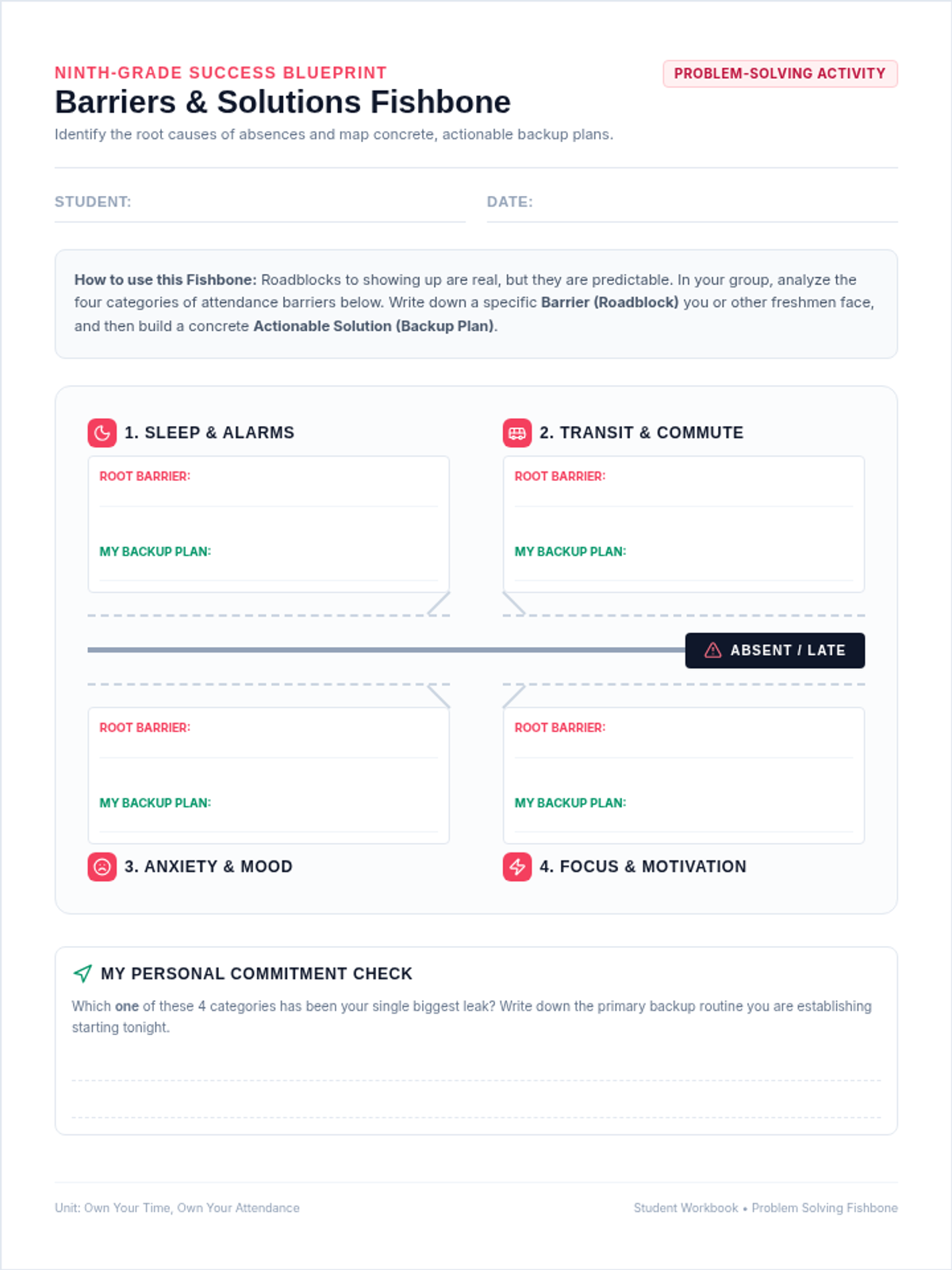
A collaborative student worksheet featuring a structural fishbone cause-and-effect diagram to categorize high school attendance barriers (such as sleep, transport, stress, and routine) and co-create matching, actionable solutions.
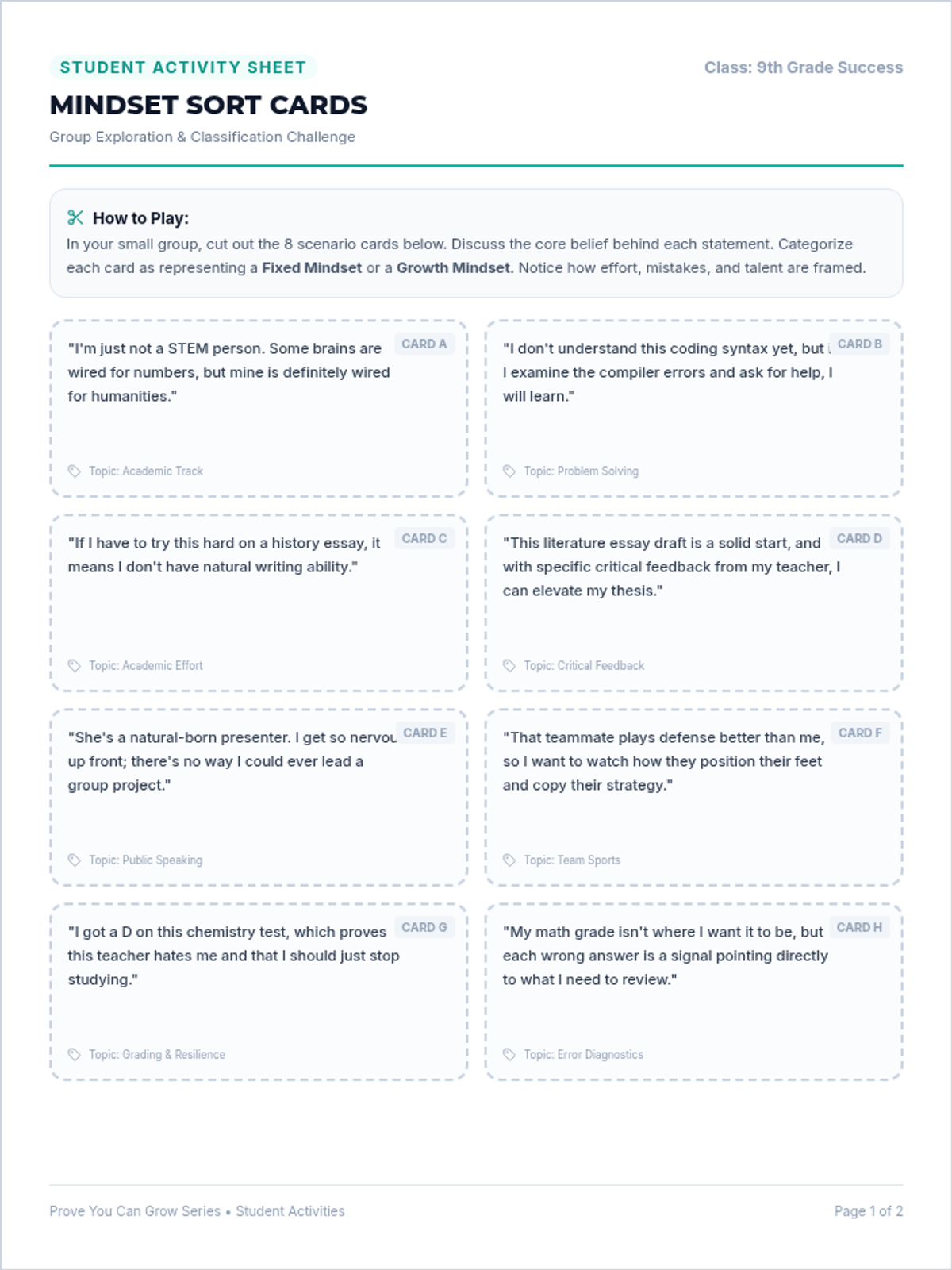
A collaborative classroom sorting activity featuring 8 realistic academic and social mindset scenario cards, designed to be cut out and analyzed by student teams.
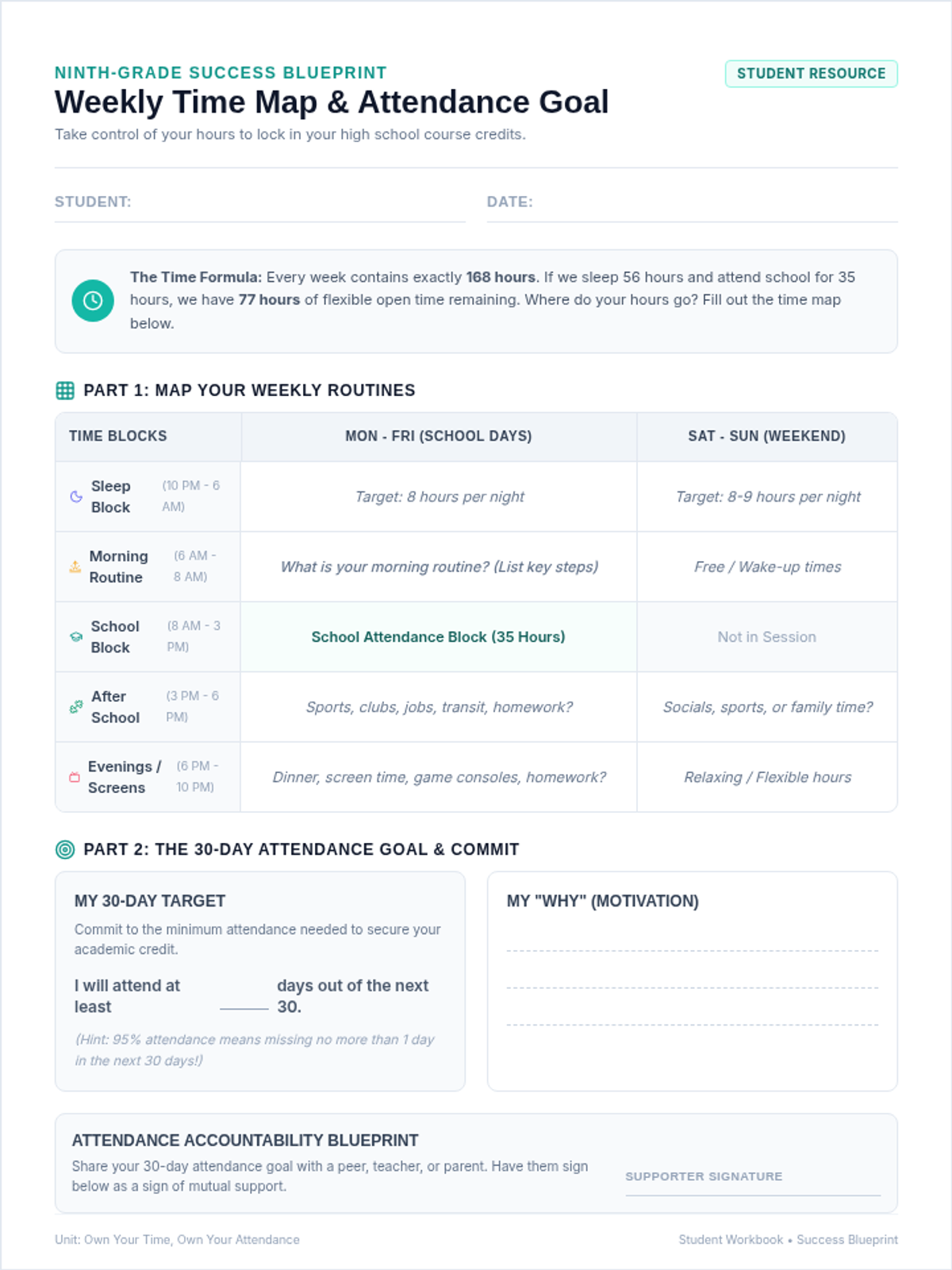
A student worksheet containing a simplified 168-hour weekly planner and a 30-day attendance goal-setting framework, allowing freshmen to structure daily habits and identify time blocks for sleep, school, and leisure.