Worksheet for Lesson 3 where students practice categorizing tasks as 'Big Rocks' (needs) or 'Sand' (wants) and visualize fitting them into their daily schedule.
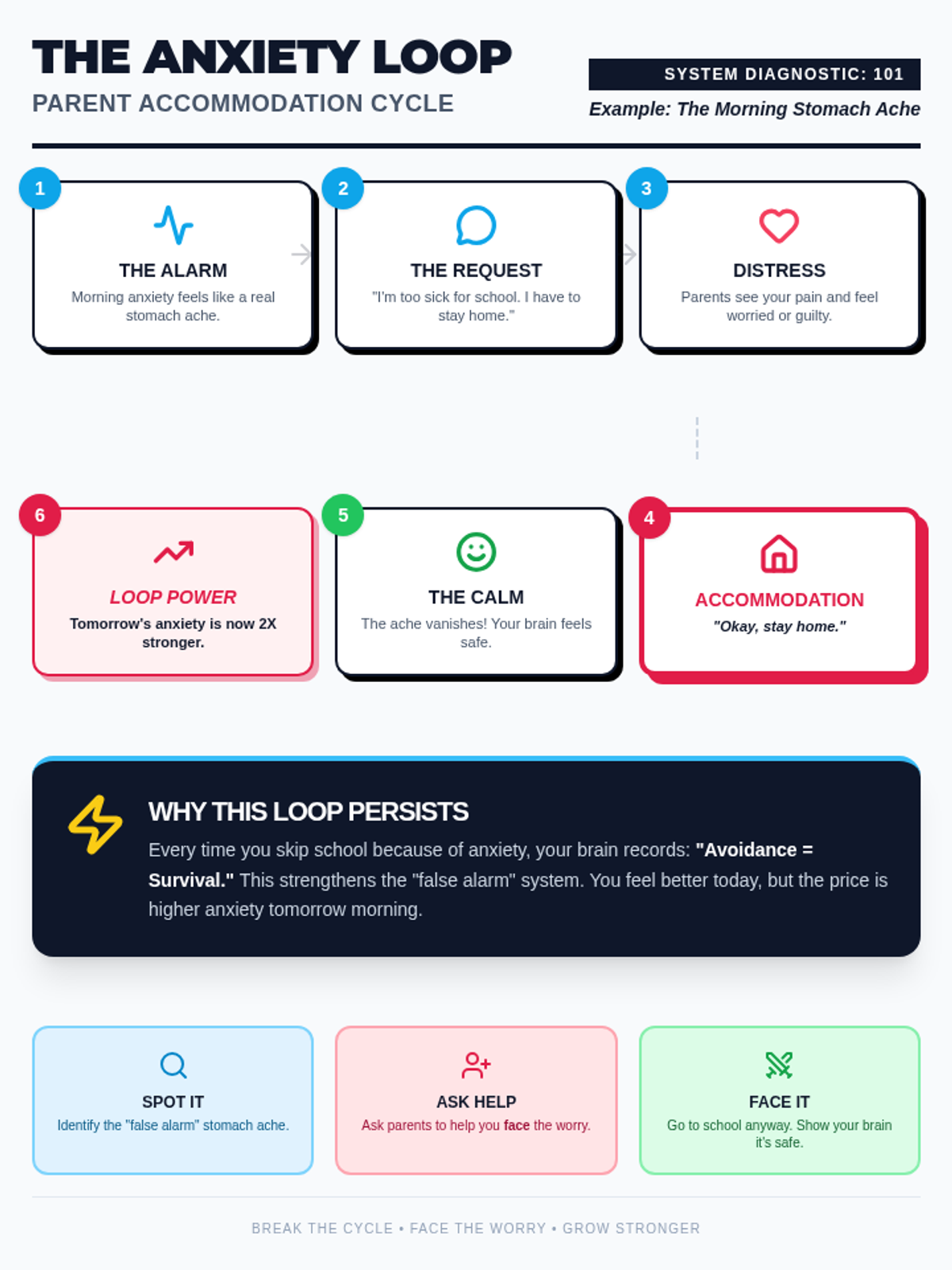
A high-impact visual graphic (poster style) that charts the Parent Accommodation Cycle for middle school students, using a clean geometric layout to explain how avoidance reinforces anxiety.
A sleek, tech-themed slide deck designed for middle schoolers that visualizes the Parent Accommodation Cycle using a morning stomach ache example to explain how avoidance fuels anxiety.
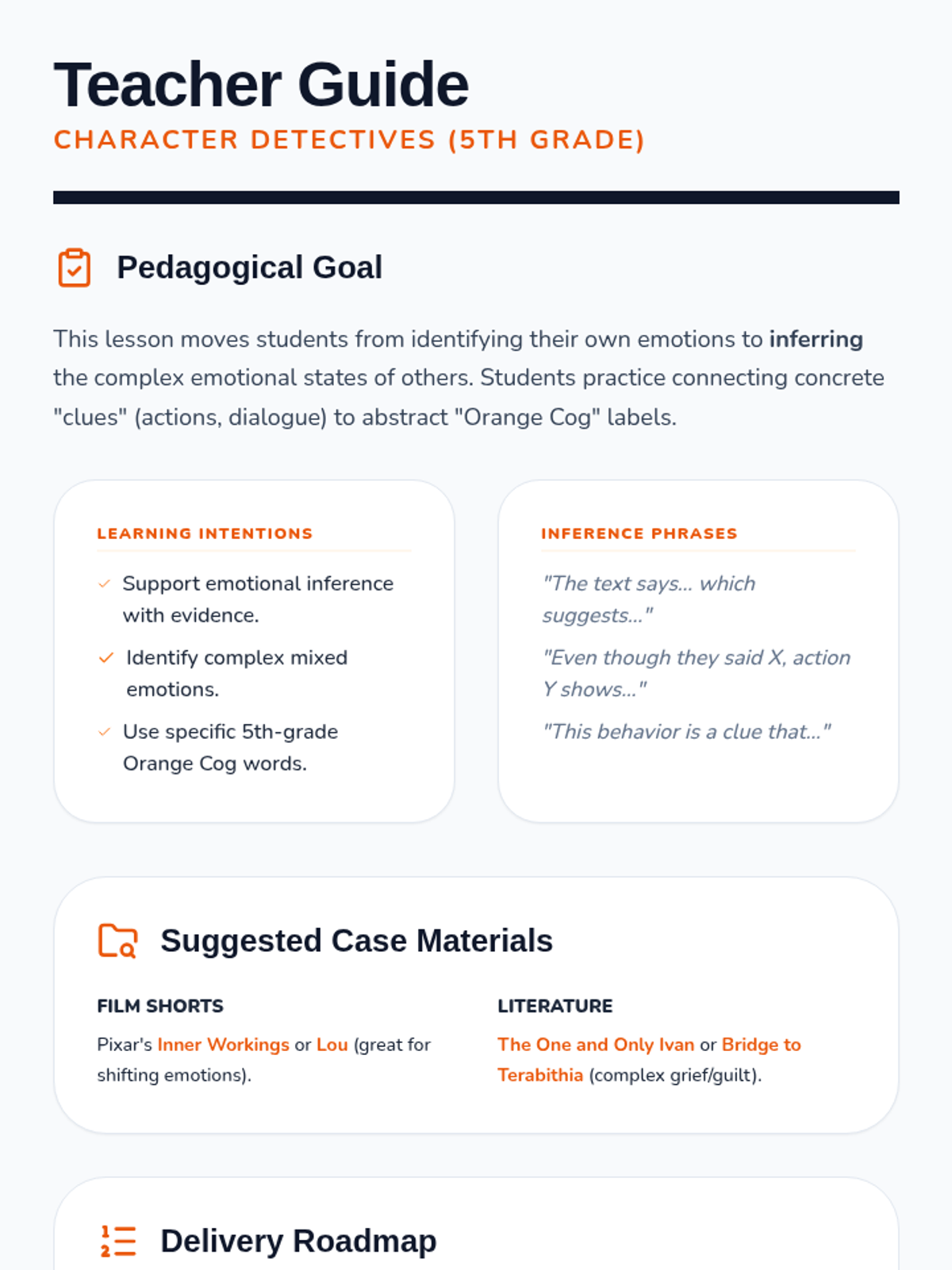
A comprehensive teacher guide for 'Character Detectives', providing text/film suggestions, delivery steps, and a simple evaluation rubric. Improved layout for better vertical space usage.
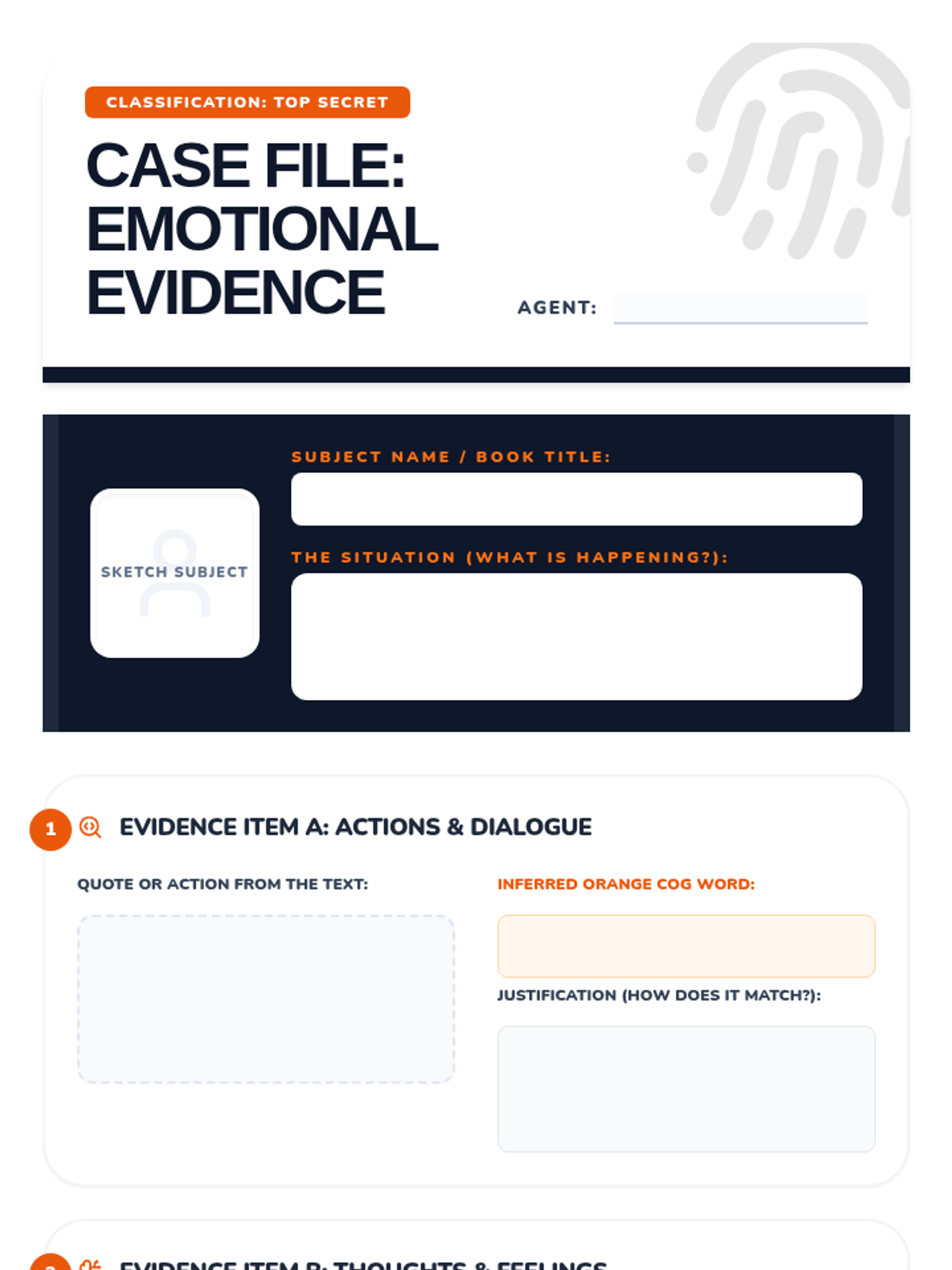
A 'Detective Case File' worksheet for 5th graders to analyze character emotions using evidence from text and 'Orange Cog' vocabulary. Improved with white student work areas for legibility.
An instructional slide deck for 'Character Detectives', teaching 5th graders how to infer complex emotions from text and film using 'Orange Cog' vocabulary. Includes a word bank and interactive practice.
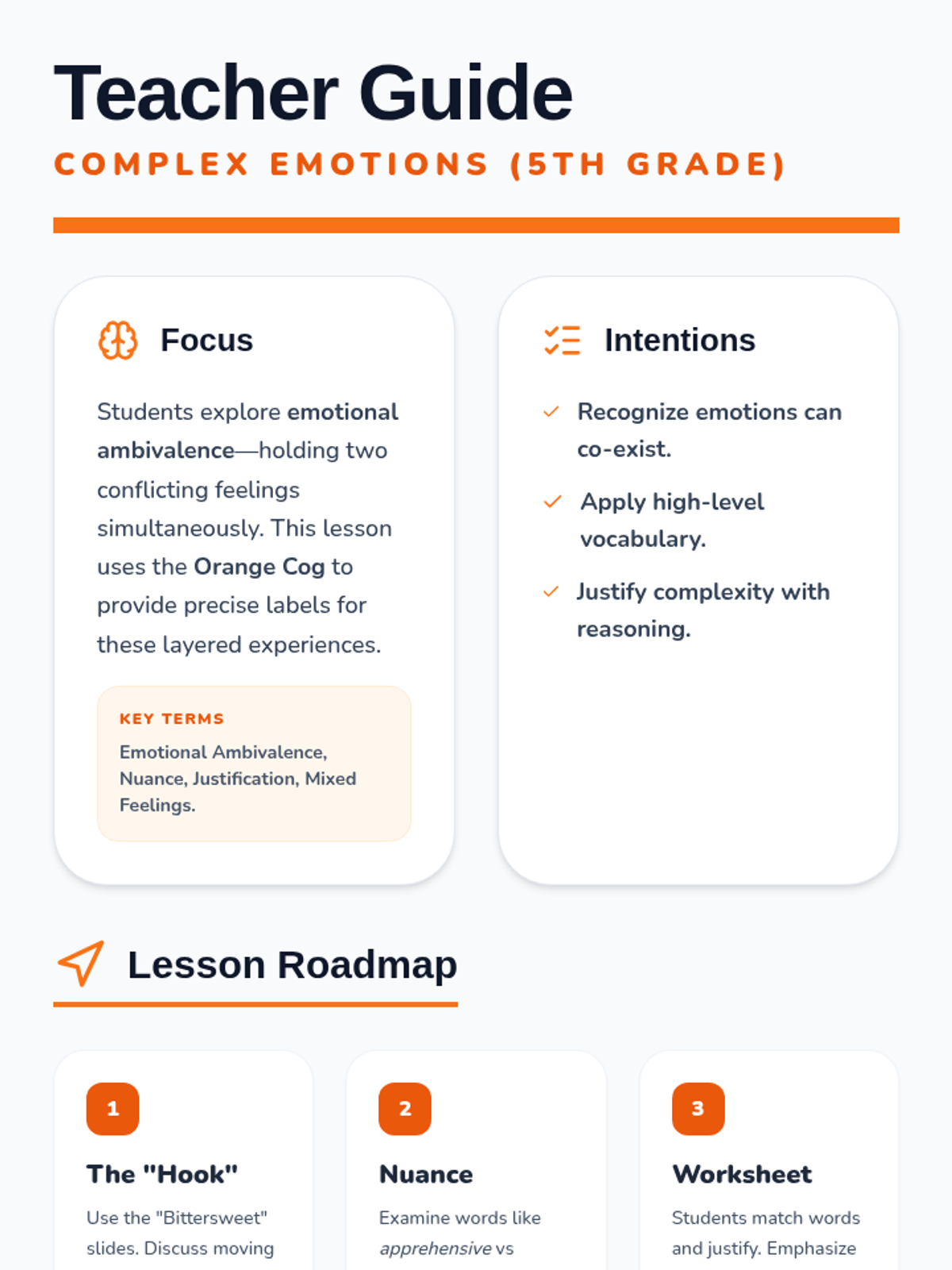
A teacher guide for a 5th-grade lesson on complex and mixed emotions, featuring discussion prompts, delivery tips, and exemplar justifications.
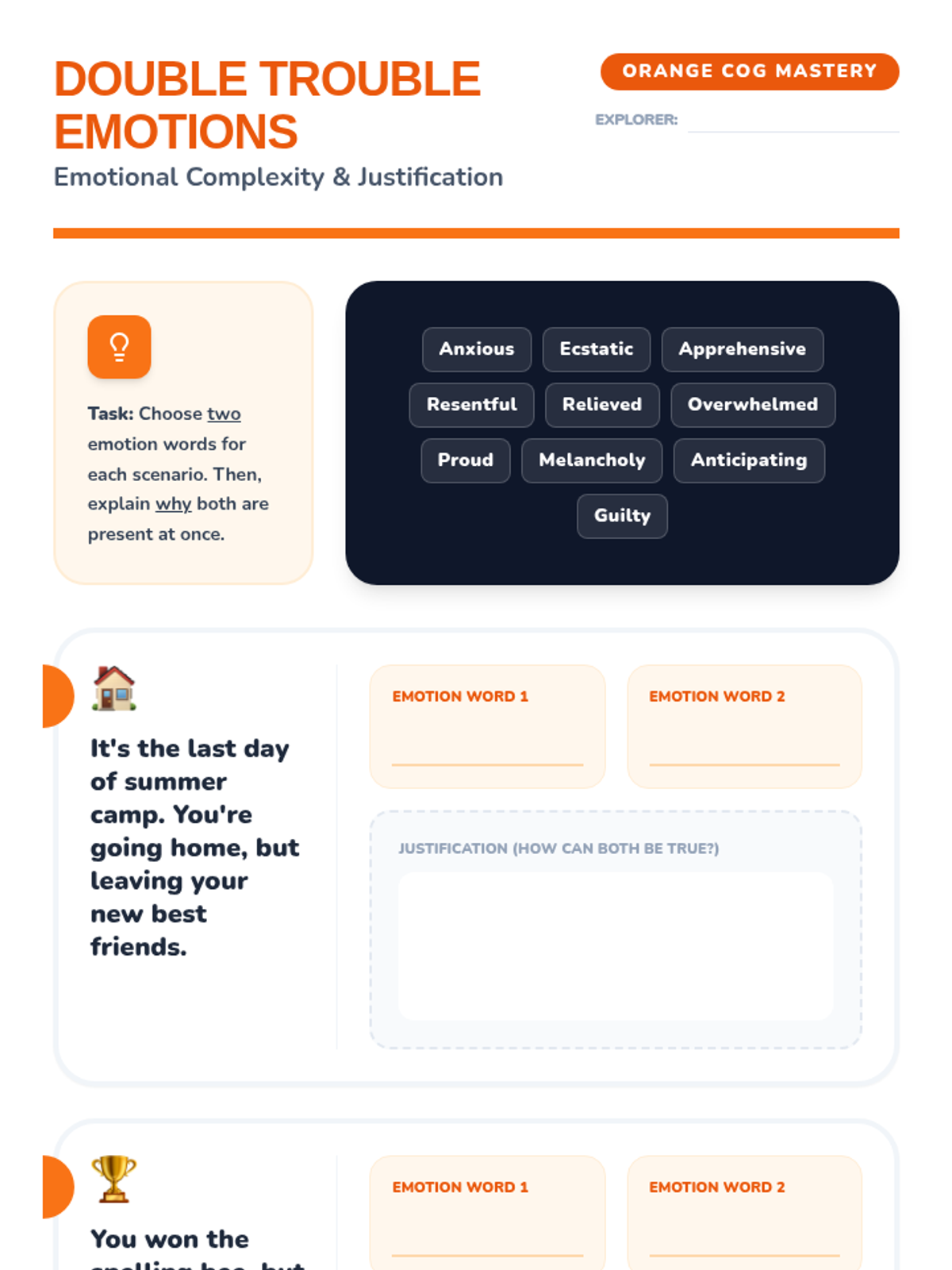
A matching and justification worksheet for 5th graders to explore emotional complexity by identifying multiple emotions in a single scenario.
An instructional slide deck for 5th graders exploring emotional complexity and mixed feelings within the Emotion Works framework.
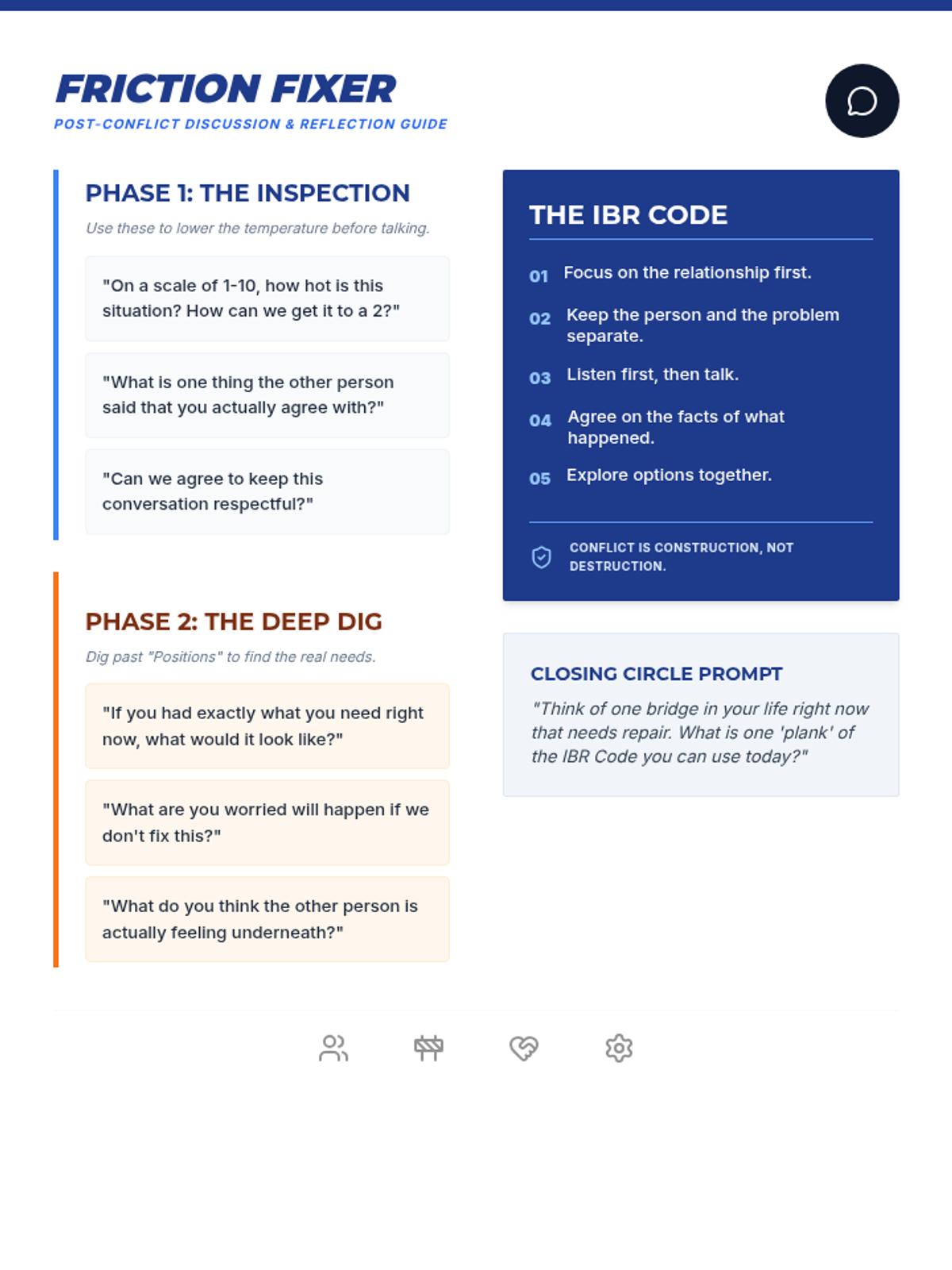
A discussion and reflection guide for the Bridge Building Blueprint workshop. Provides targeted questions for de-escalating tension, identifying interests, and conducting post-conflict circles using IBR principles.
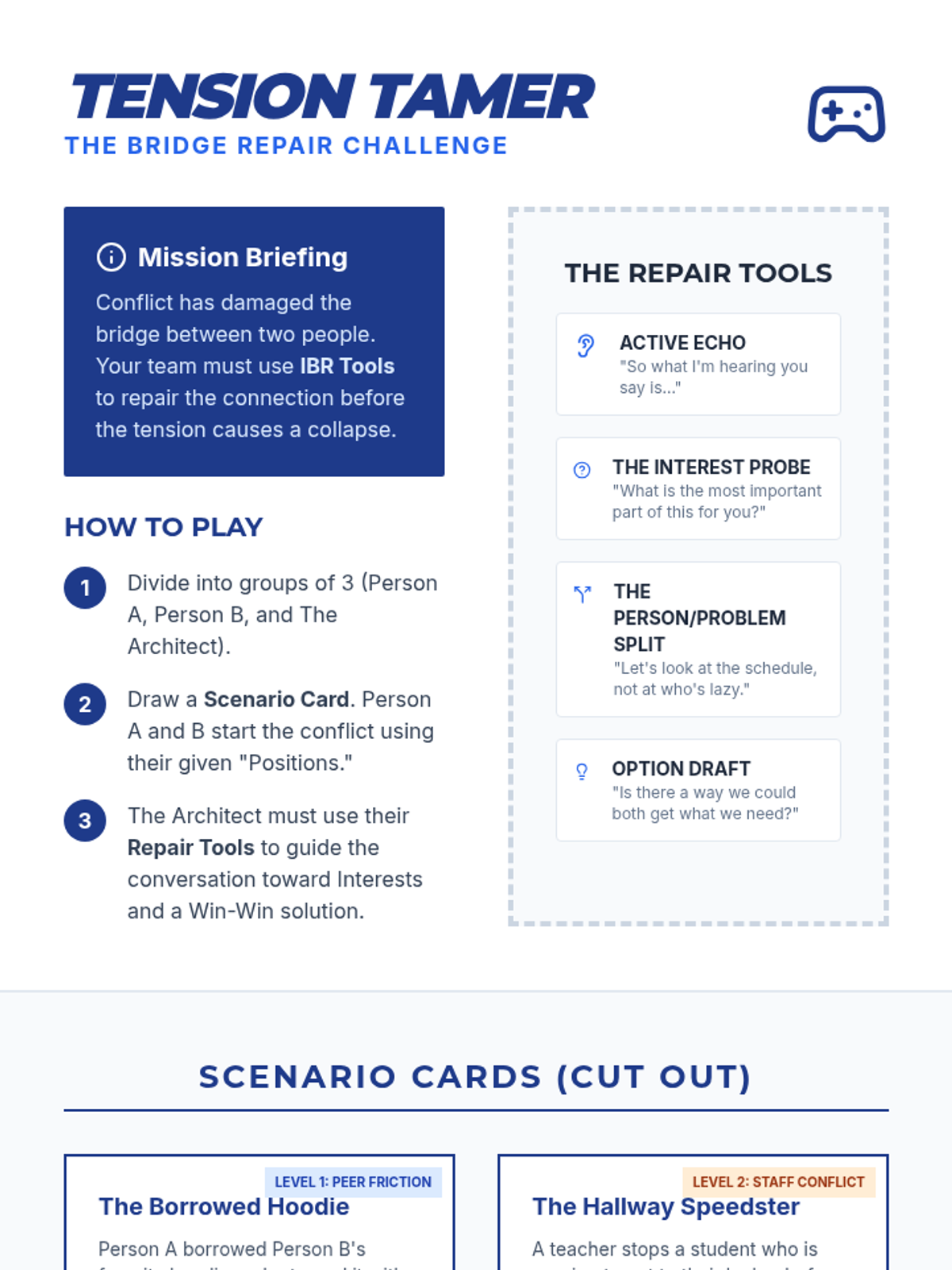
A scenario-based roleplaying game for middle schoolers to practice de-escalation and Interest-Based Relational (IBR) communication. Includes game rules and scenario cards focused on common school conflicts.
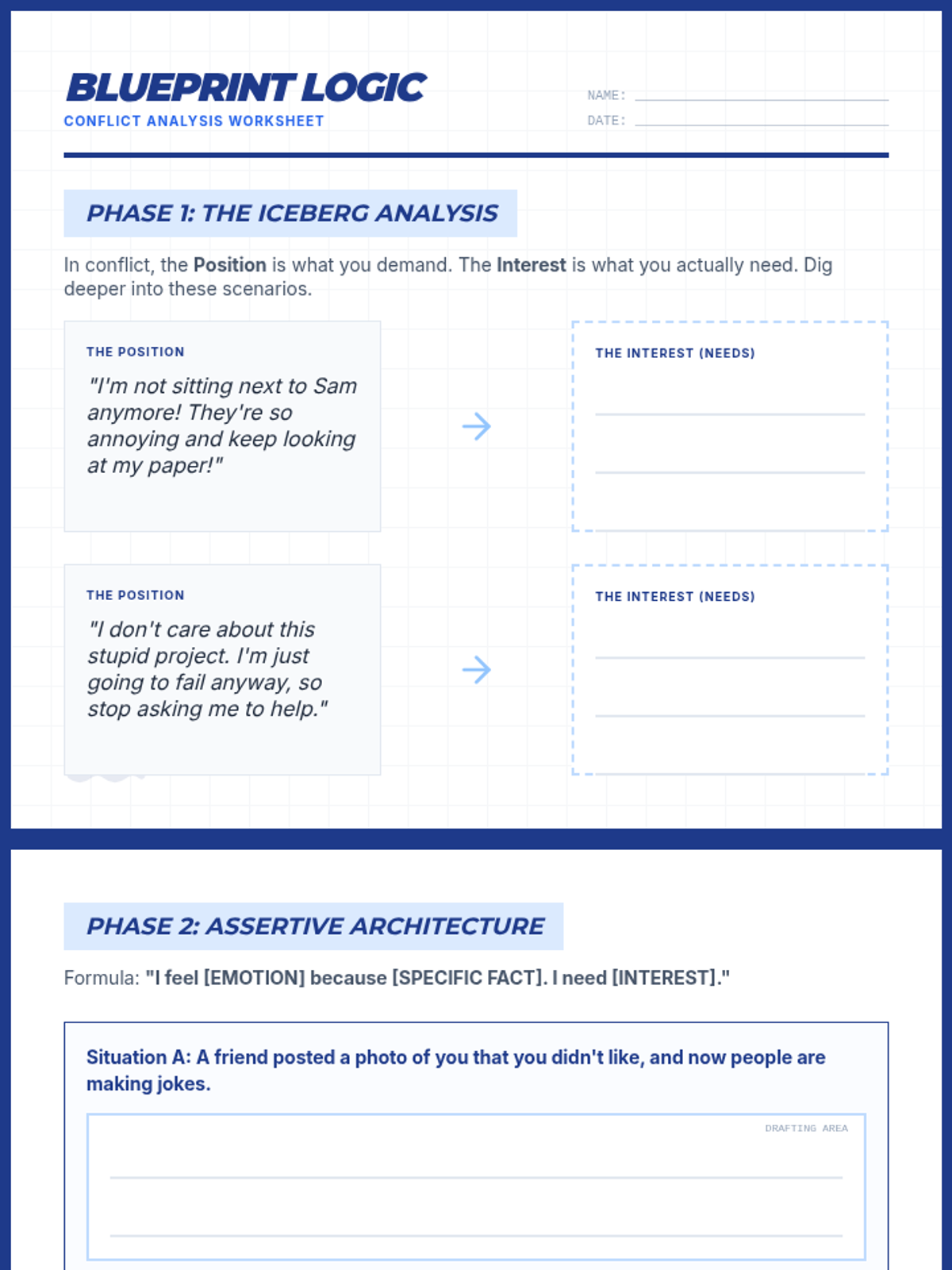
A student worksheet for the Bridge Building Blueprint workshop. Includes exercises for identifying underlying interests in conflicts and drafting assertive I-statements using a blueprint-themed layout.
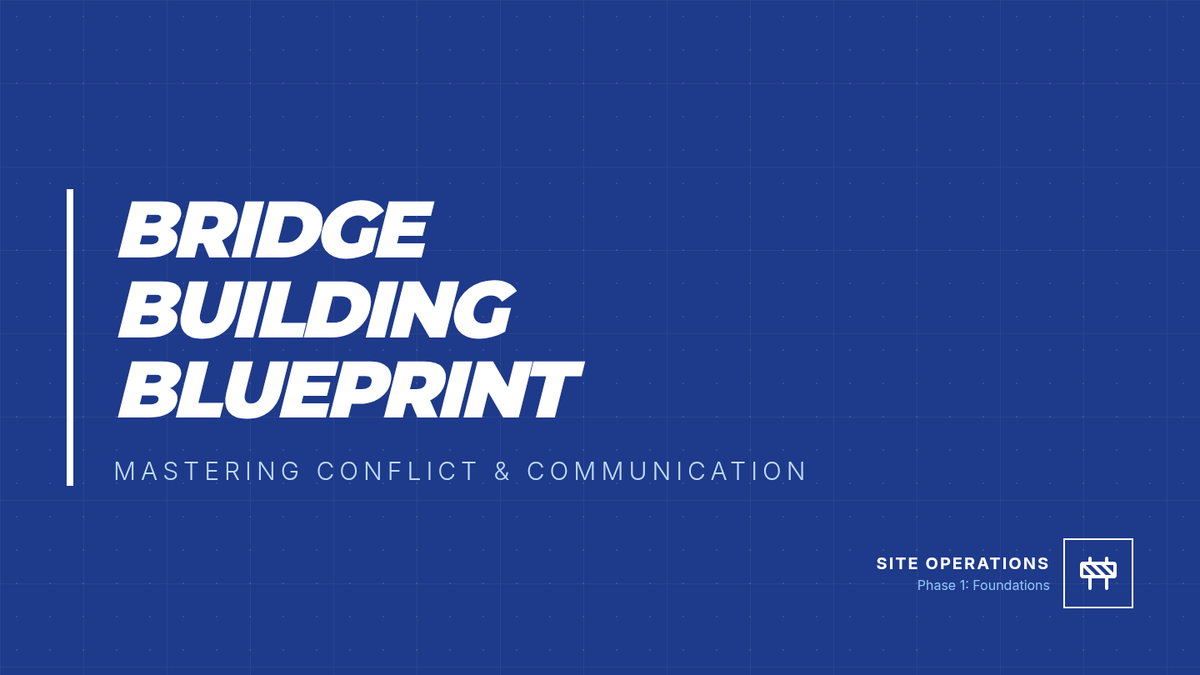
Visual presentation slides for the Bridge Building Blueprint workshop. Includes key concepts like Positions vs. Interests, the IBR steps, and de-escalation checklists with a blueprint-inspired aesthetic.
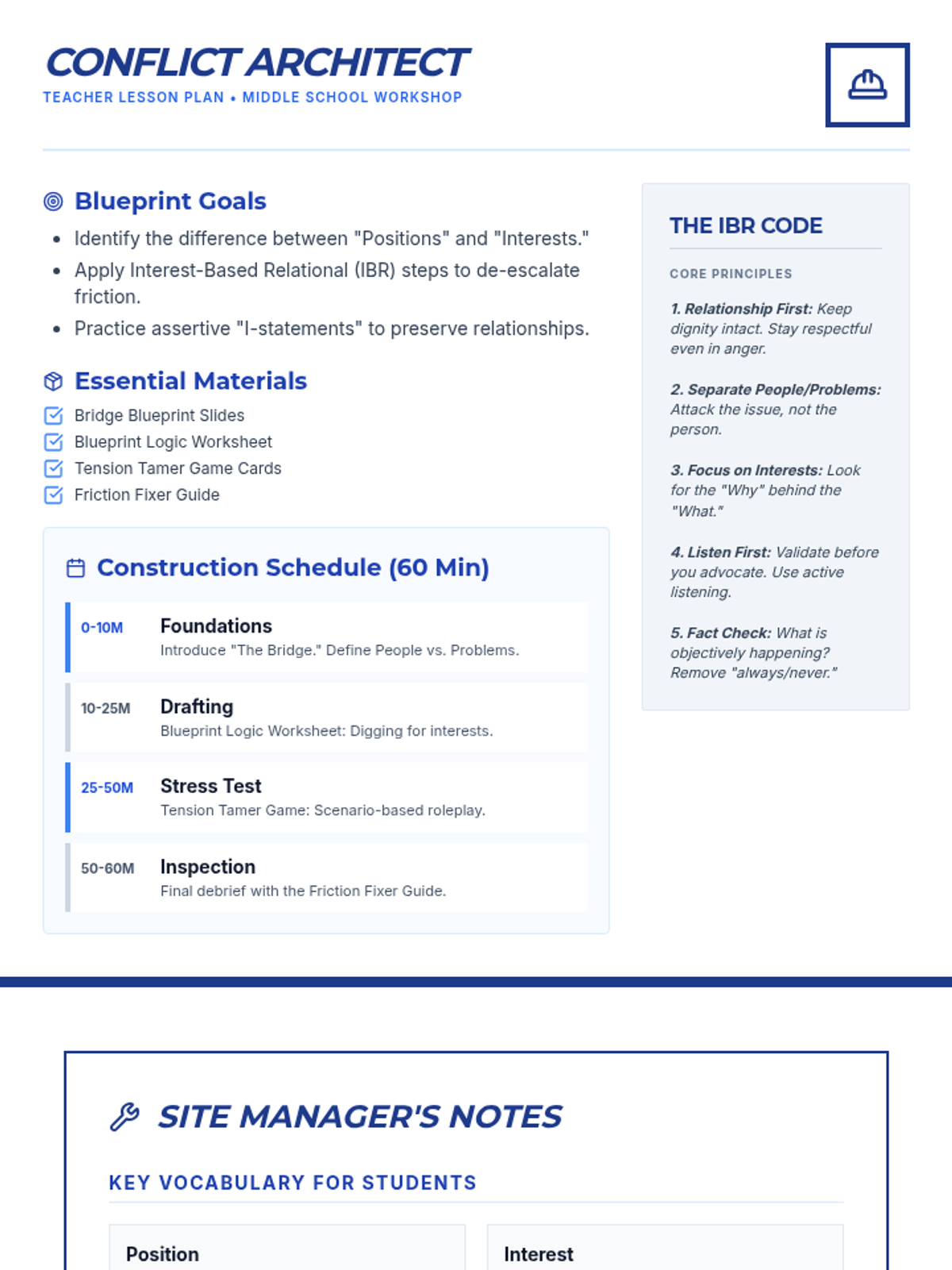
A comprehensive teacher lesson plan for the Bridge Building Blueprint workshop, including a 60-minute schedule, key vocabulary, and facilitation tips for conflict resolution.
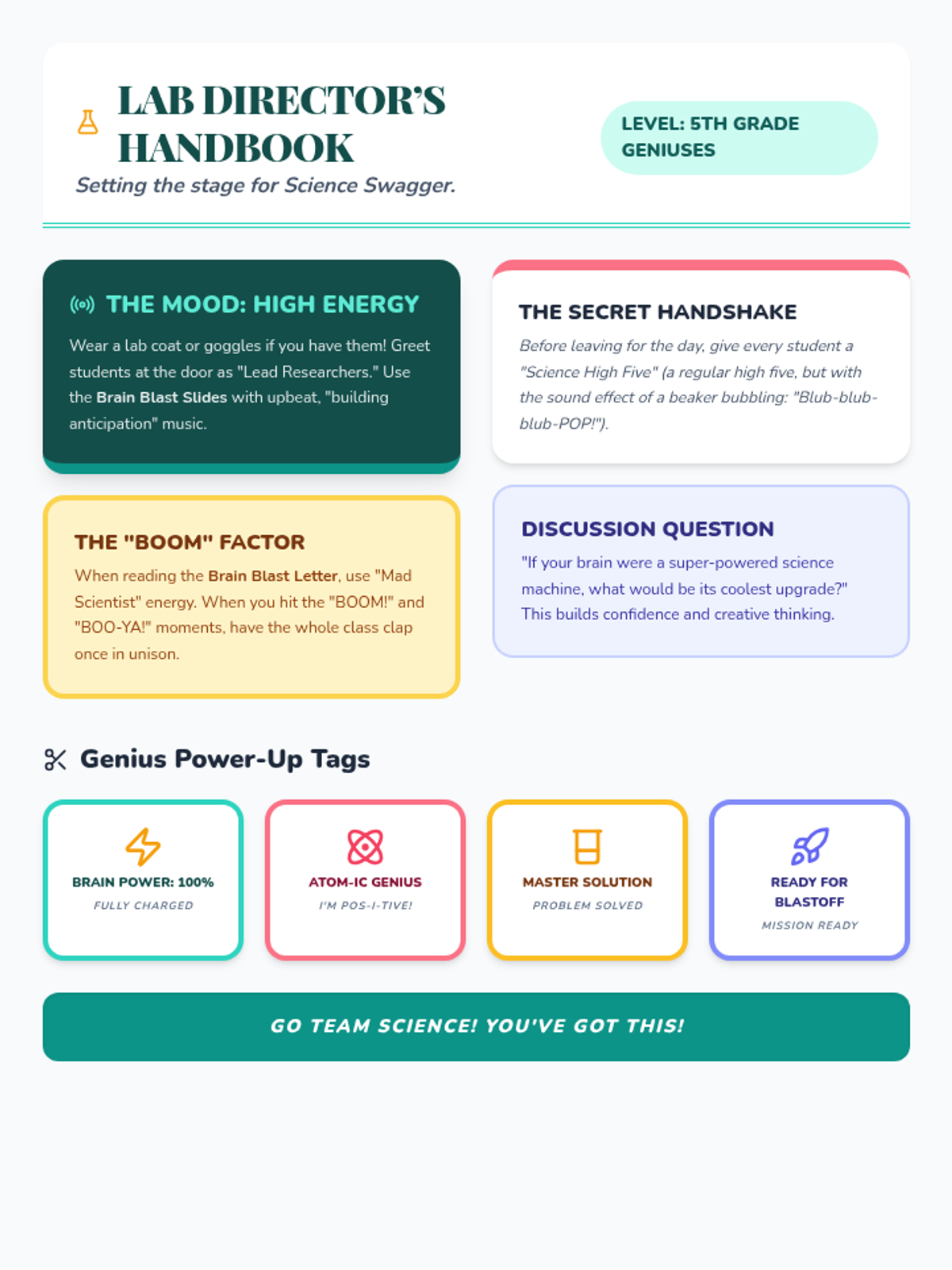
A playful and energetic teacher guide with "Mad Scientist" personas, secret handshakes, and vibrantly themed printable "Genius Power-Up Tags." Adjusted for one-page fit.
A high-energy, vibrant, and playful slide deck featuring a "periodic table of power," progress bars, and bold "mad scientist" aesthetics. Minimum font size 24px. Improved contrast and legibility.
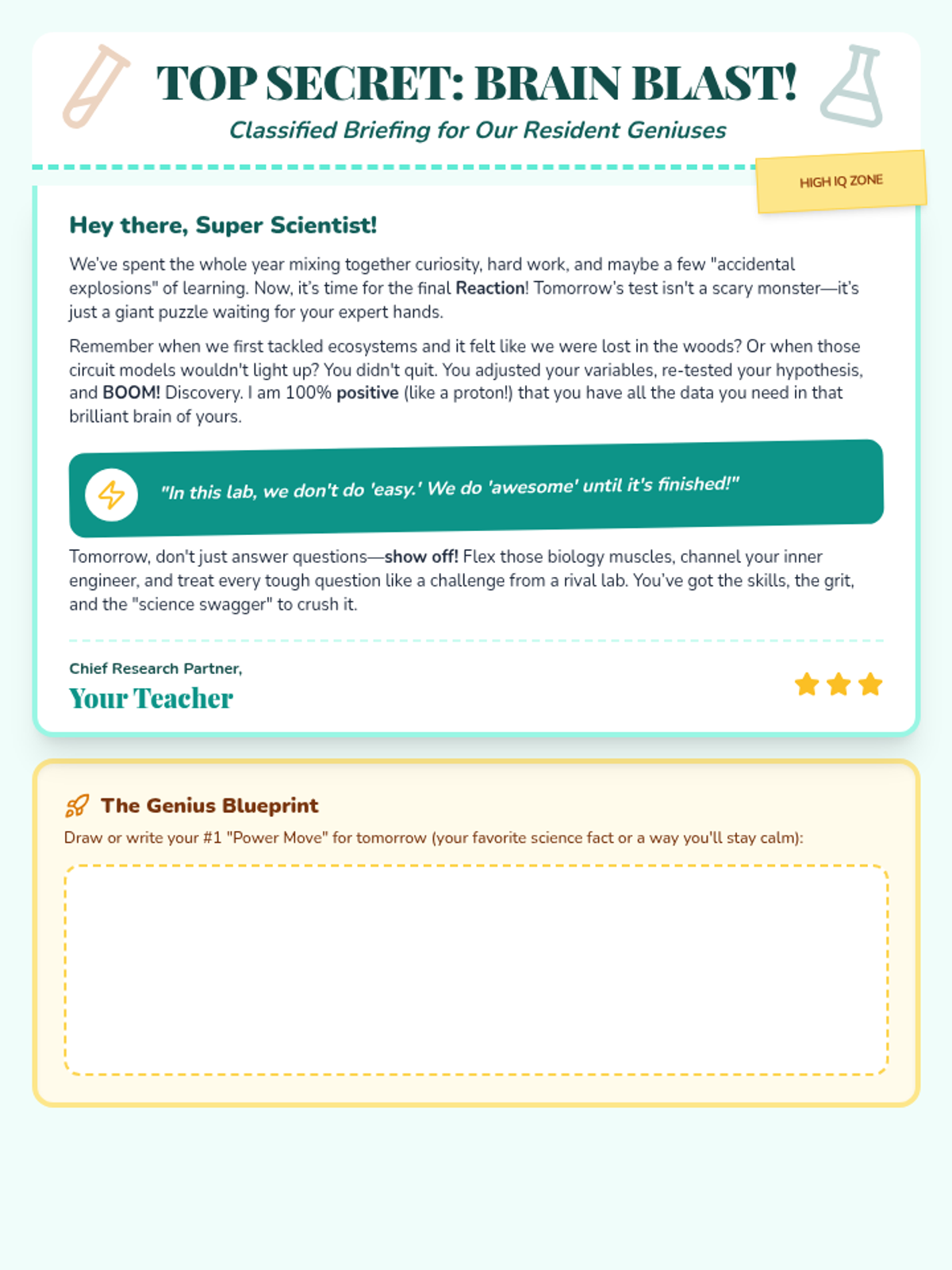
A playful and energetic science-themed motivational letter for students, filled with puns and vibrant "Top Secret" laboratory aesthetics. Includes a larger drawing/writing reflection space and improved contrast.
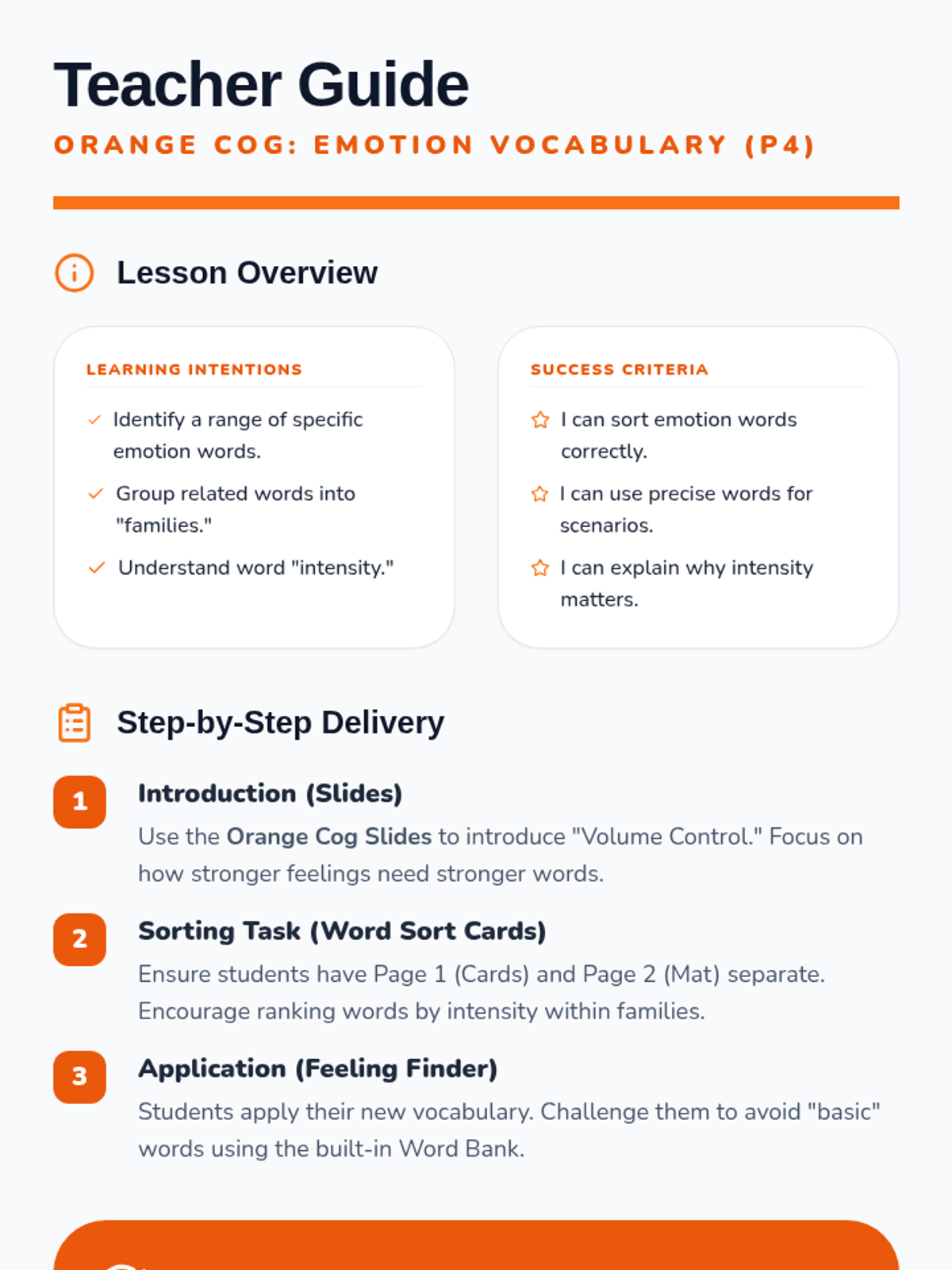
A comprehensive teacher guide for the Orange Cog lesson, featuring learning intentions, success criteria, an answer key with high-contrast text, and improved differentiation tips.
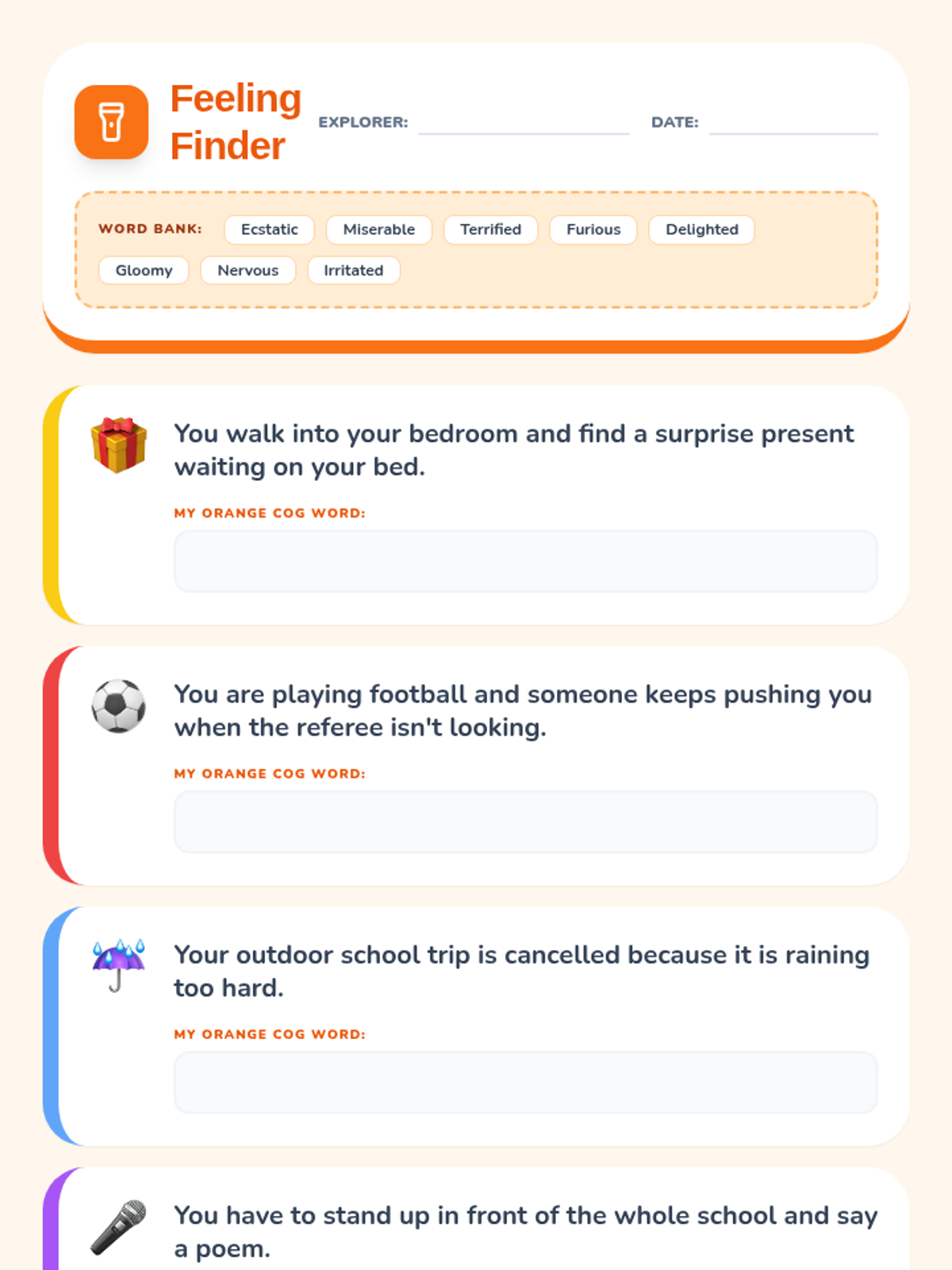
A scenario-based worksheet for P4 students with a built-in word bank, improved legibility for student work areas, and proper page break handling.
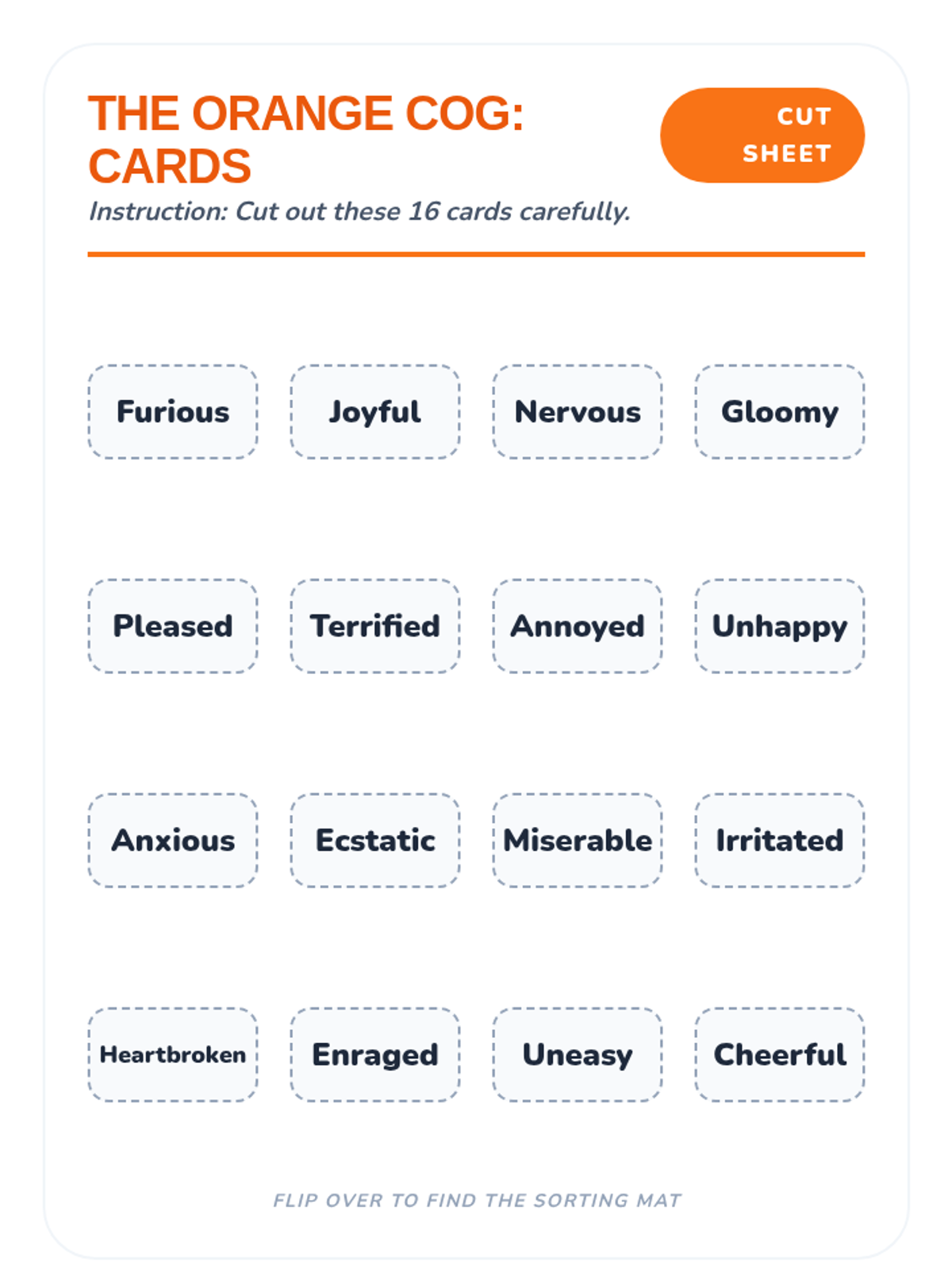
A sorting activity for P4 students featuring shuffled orange-cog cards and a clearly labeled sorting mat on a separate page.
An instructional slide deck for P4 students introducing the Emotion Works Orange Cog (Vocabulary), explaining intensity and word grouping. Includes a whole-class sorting activity.
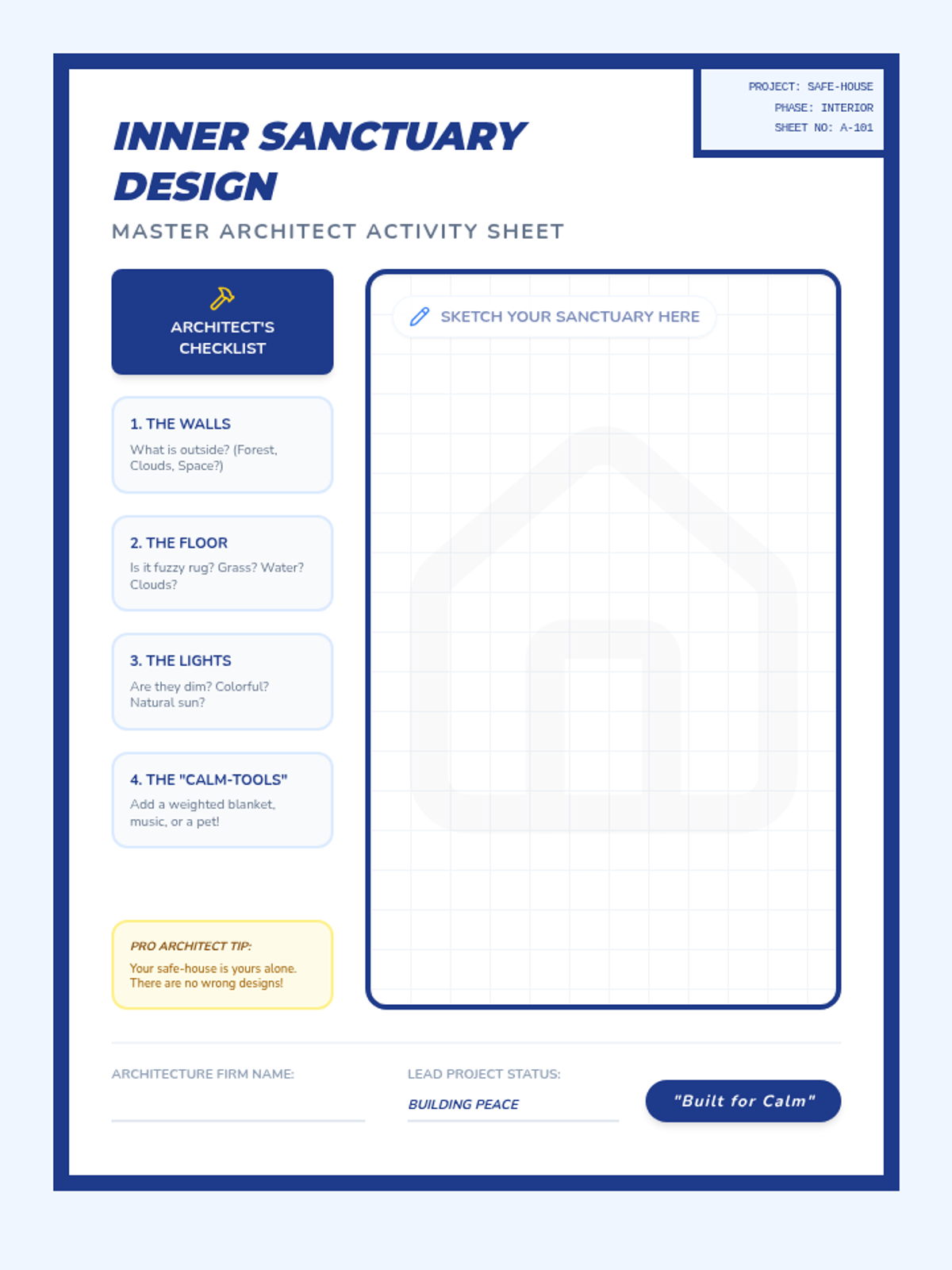
A creative drawing activity sheet where students sketch their mental 'Safe-House', using a blueprint-inspired layout with guided prompts for sensory elements. Optimized for print with improved contrast, layout, and designated student work areas in the footer.
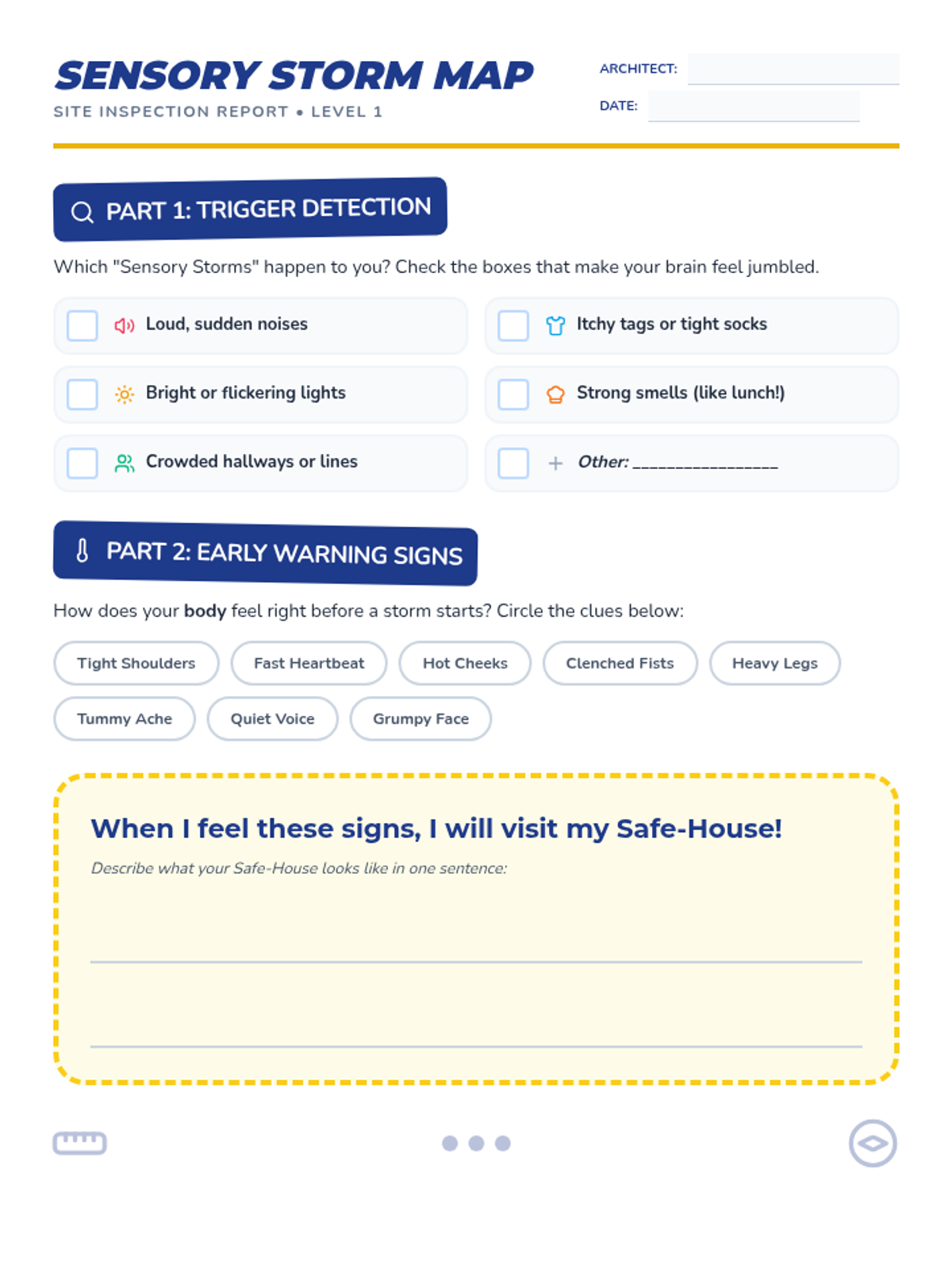
A student worksheet designed for mapping personal sensory triggers and physical 'storm signs' as a precursor to building their mental safe-house. Now optimized for a single-page layout.
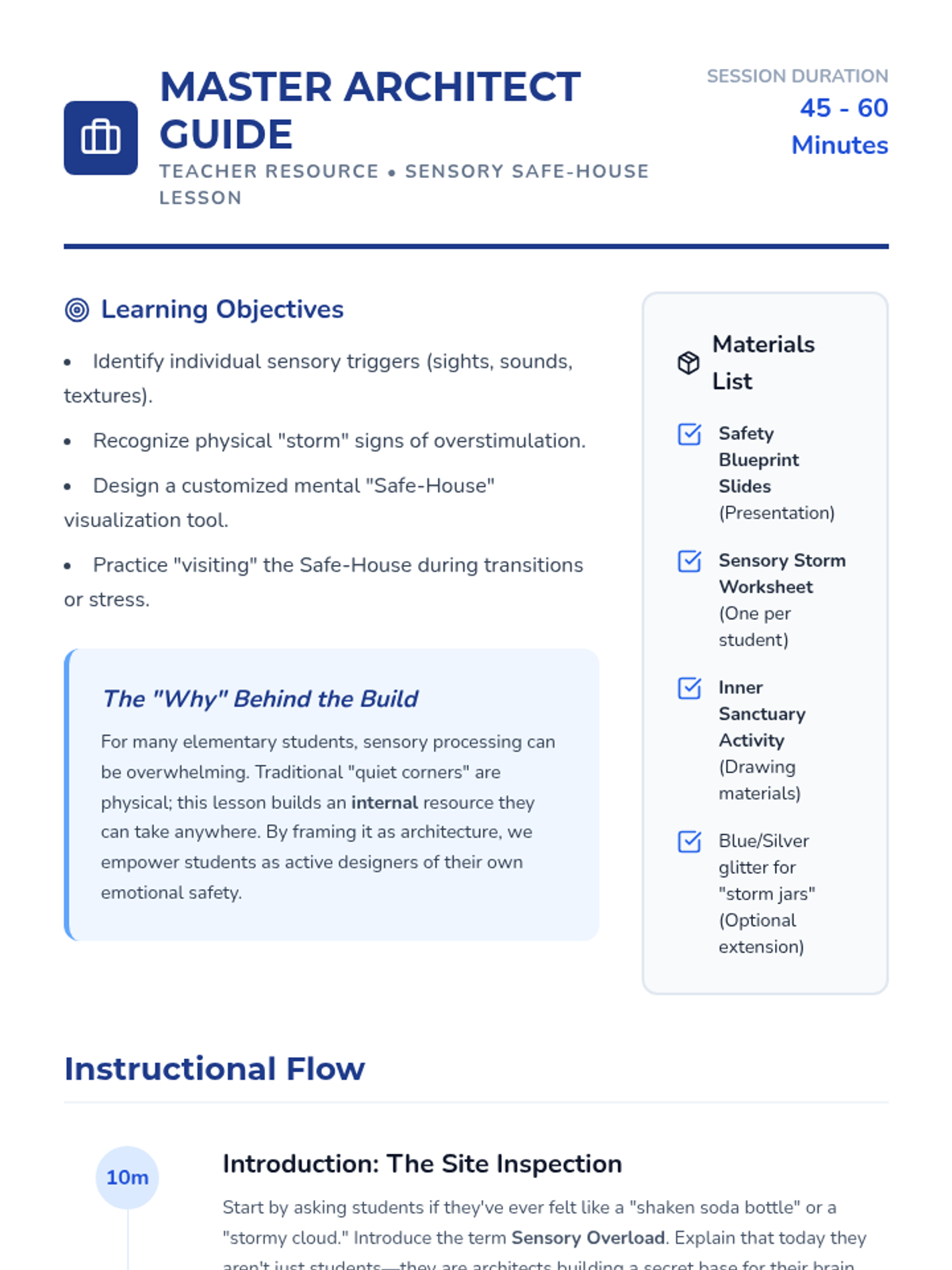
A comprehensive teacher guide for facilitating the Sensory Safe-House lesson, including learning objectives, materials, timed lesson flow, and differentiation strategies.
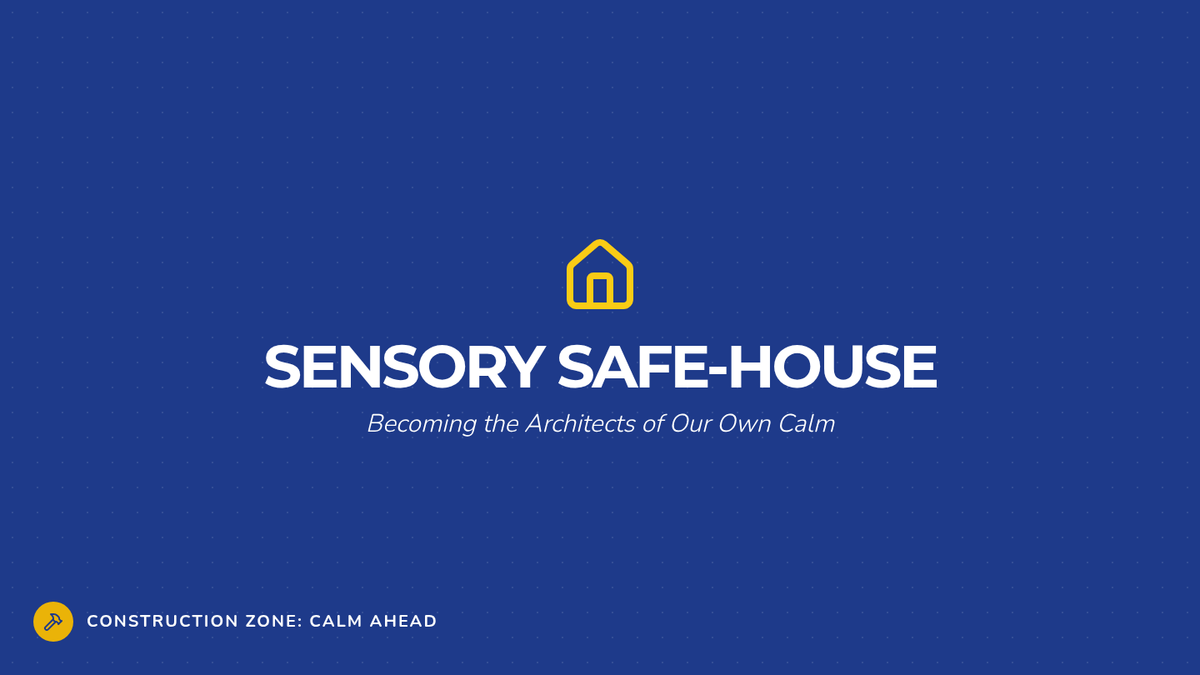
An instructional slide deck for students that introduces the concept of 'Sensory Storms' and provides a framework for designing a mental 'Safe-House' for self-regulation.
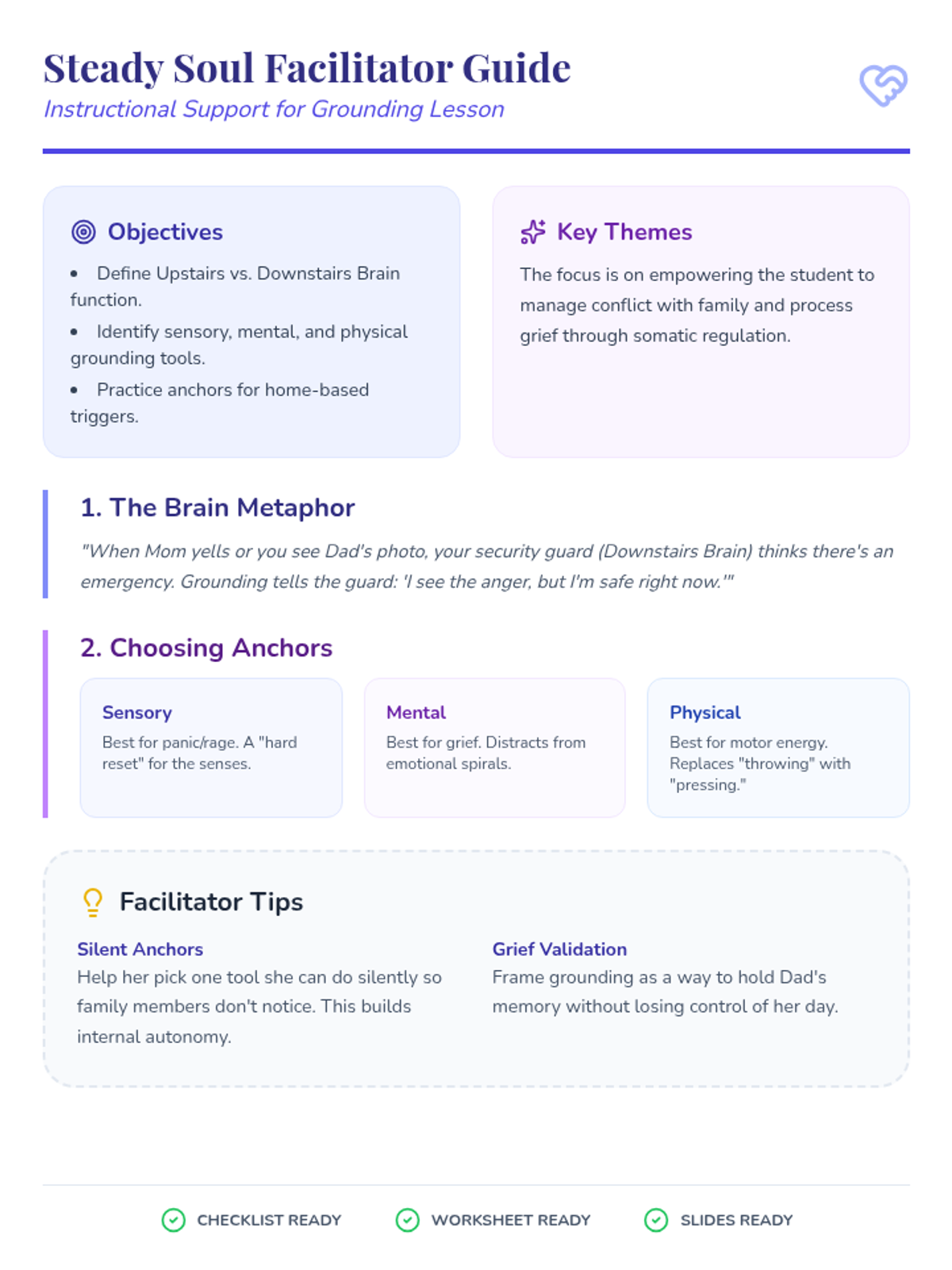
A revised teacher's guide focusing on the Zones of Regulation, the anchor metaphor, and the physiological roles of the PFC and Amygdala. Includes troubleshooting tips and specific grounding steps. Layout condensed for efficiency.
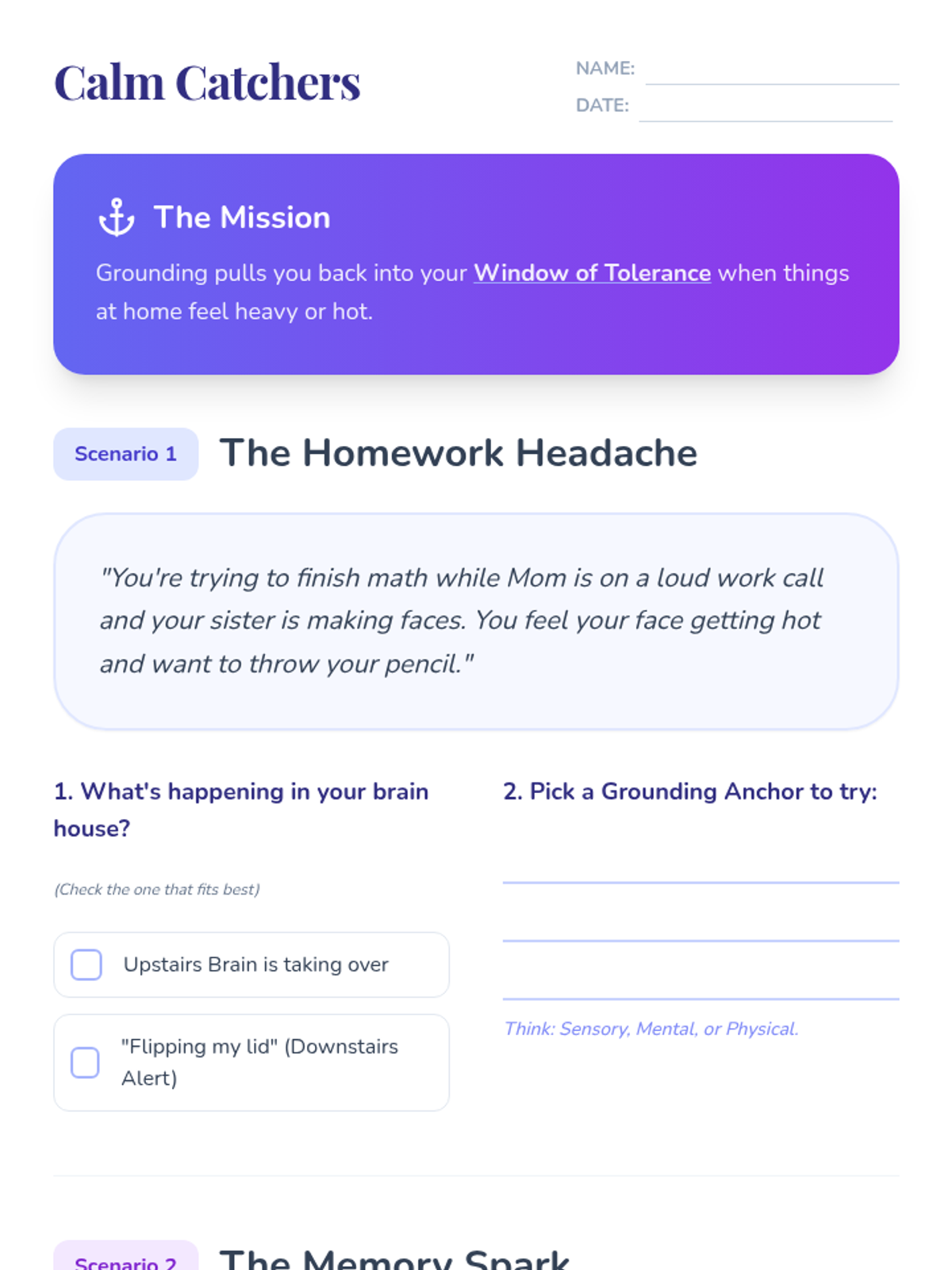
A revised worksheet featuring the Zones of Regulation, the anchor metaphor, the PFC/Amygdala roles, and scenarios tailored to home triggers. Spacing optimized for a 2-page print with generous handwriting areas.
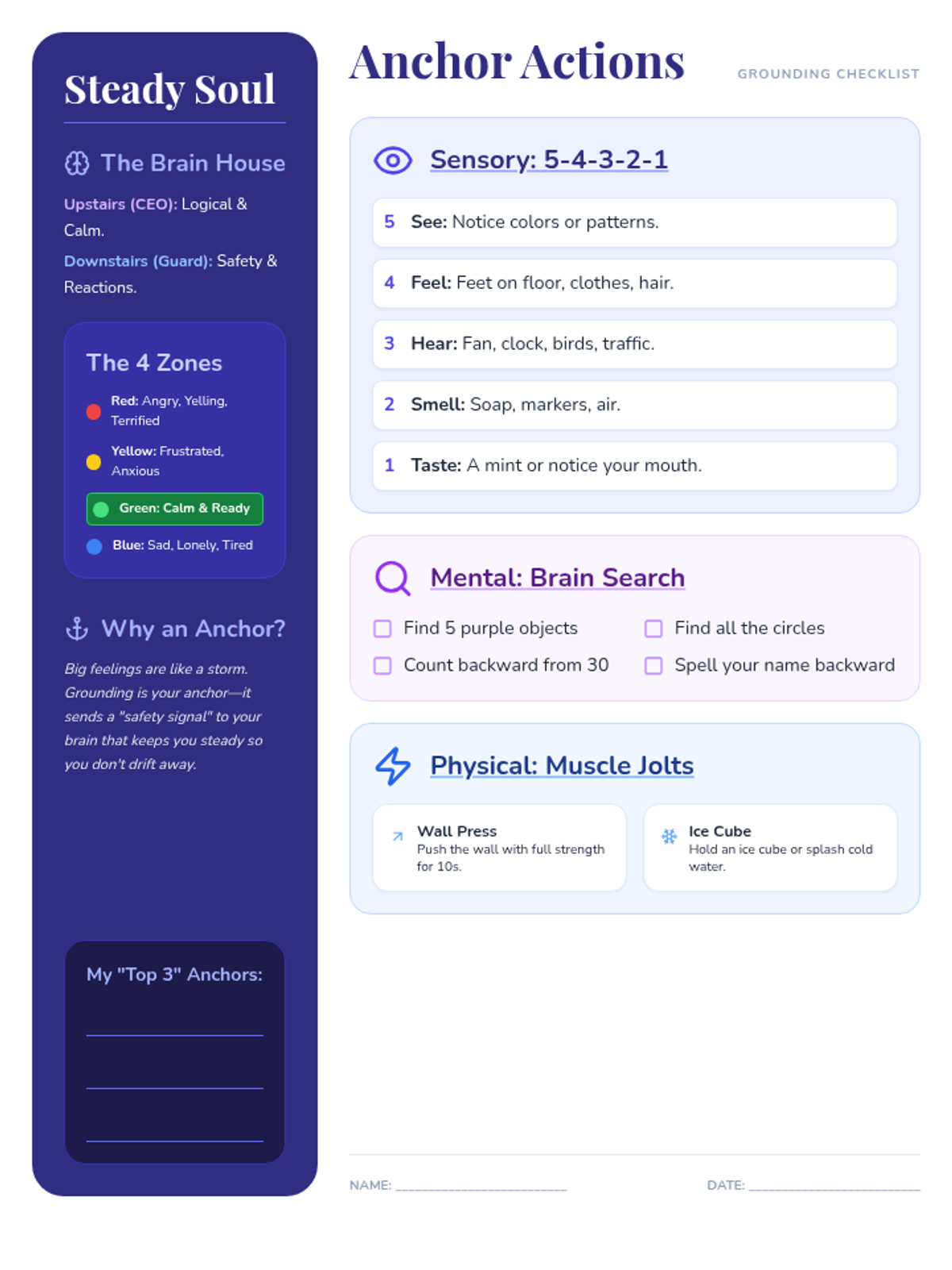
A printable checklist of grounding techniques, including a sidebar with the Zones of Regulation, the brain's PFC and Amygdala, and an explanation of the anchor metaphor. Visual polish applied to headers and contrast.
A revised slide deck explaining the 'Upstairs/Downstairs Brain', the 'Zones of Regulation', the anchor metaphor, and the neuroscience of safety signals including the Amygdala and Pre-frontal Cortex.
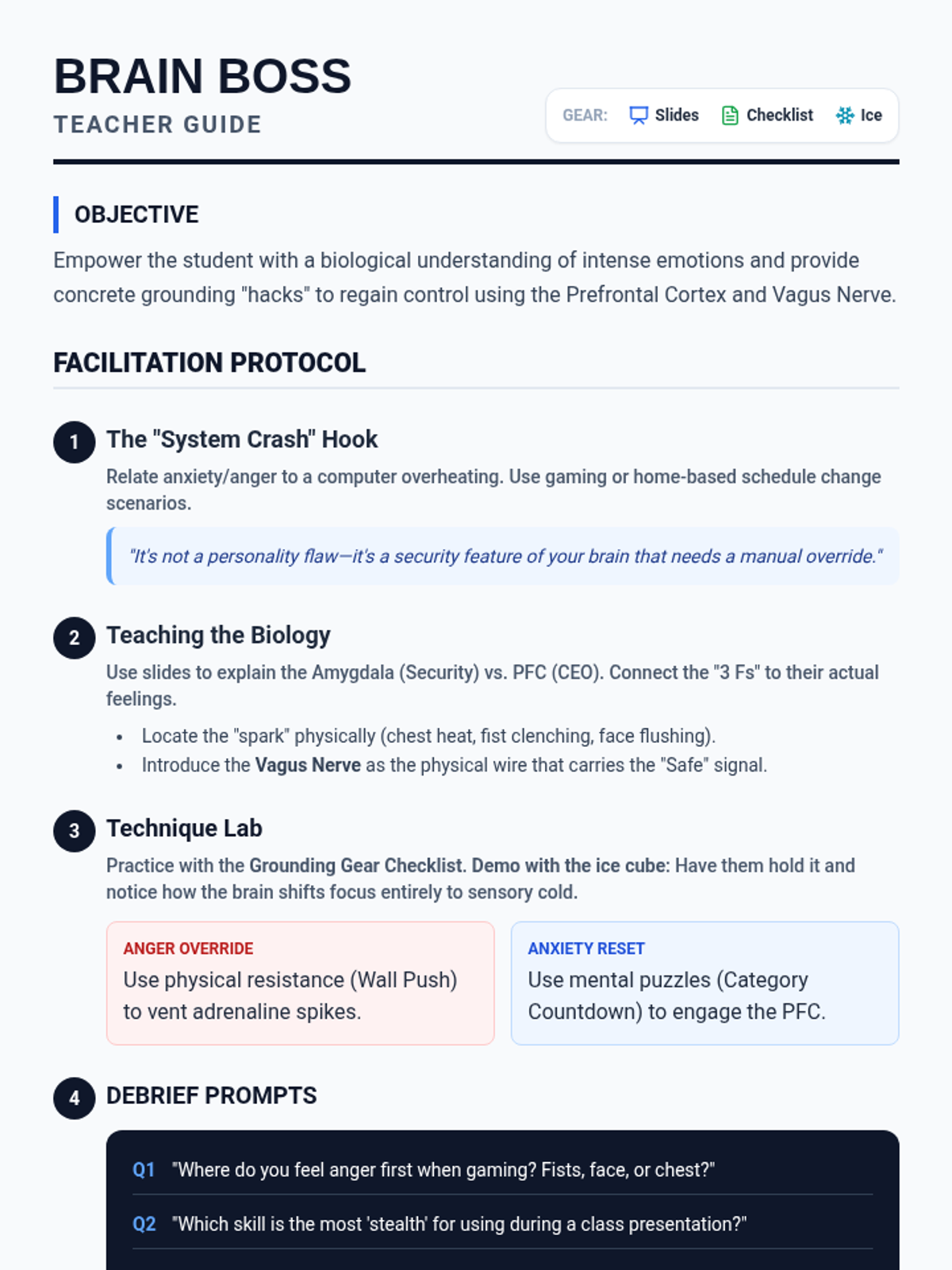
A teacher guide for the Brain Boss lesson, providing instructional strategies, discussion prompts, and facilitation tips for teaching grounding skills to 8th-grade students. Condenced and optimized for 2 pages.