A lesson focused on helping high school students understand and maintain personal space in specific school environments like PE class and the bus.
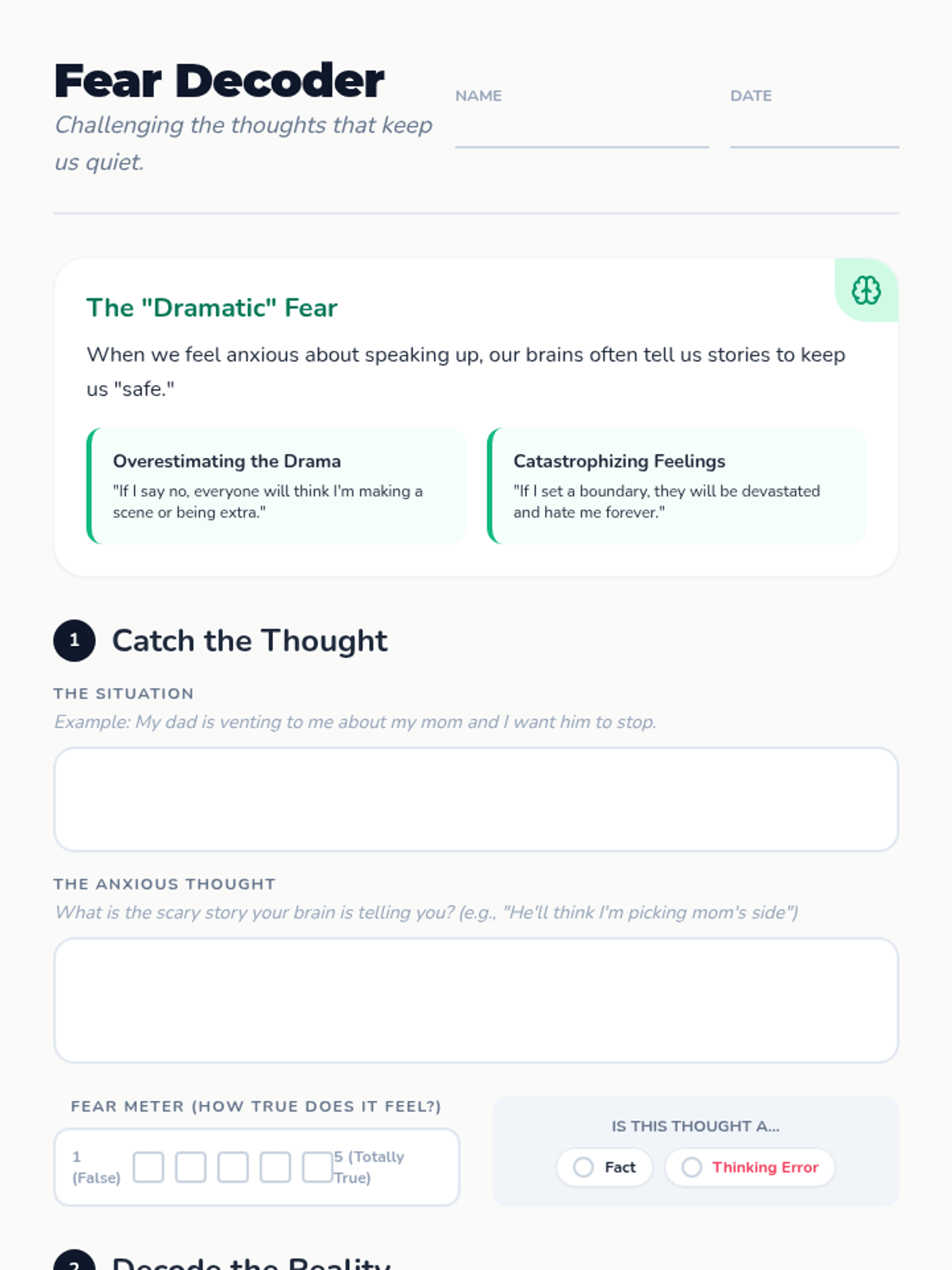
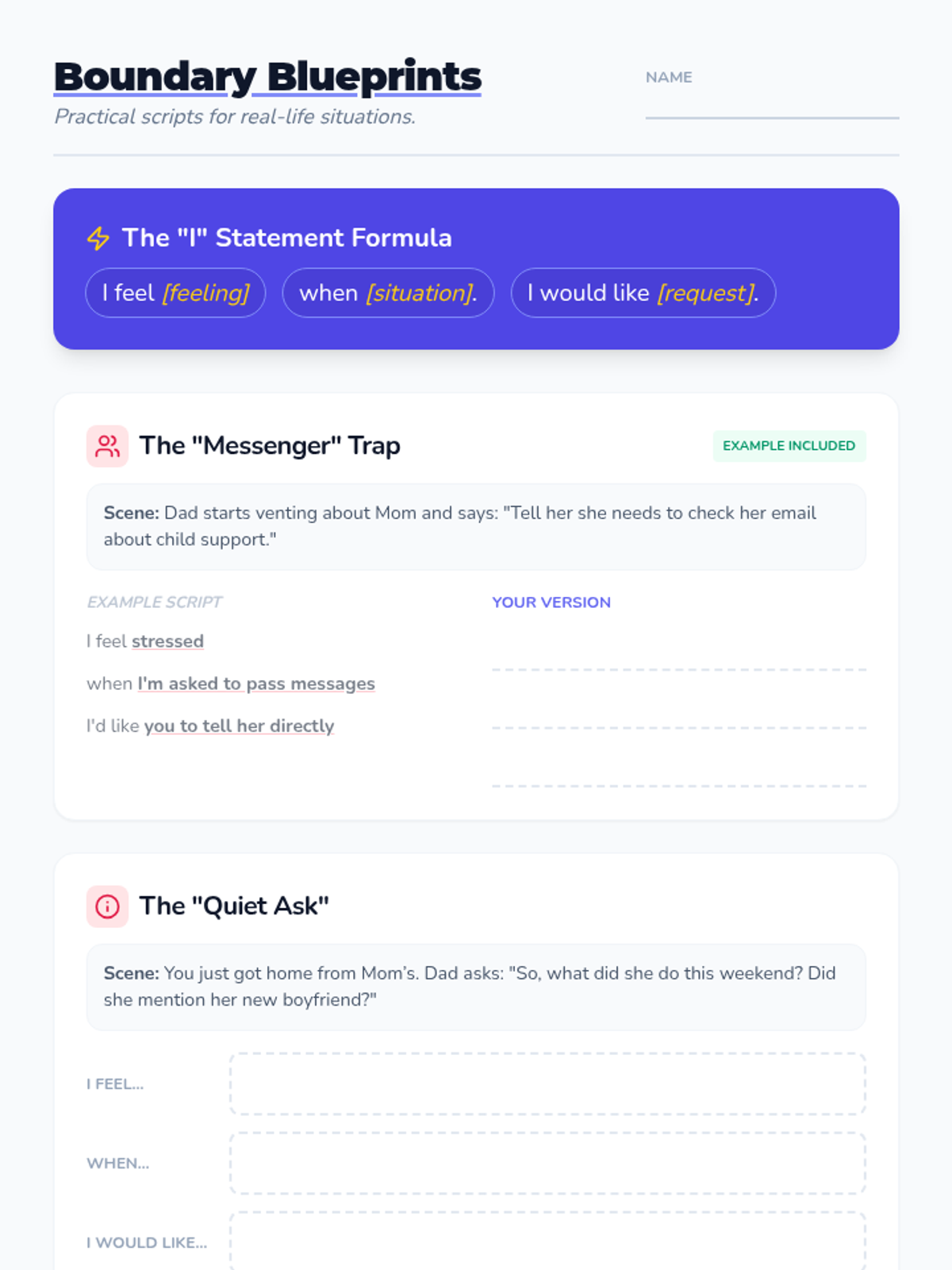
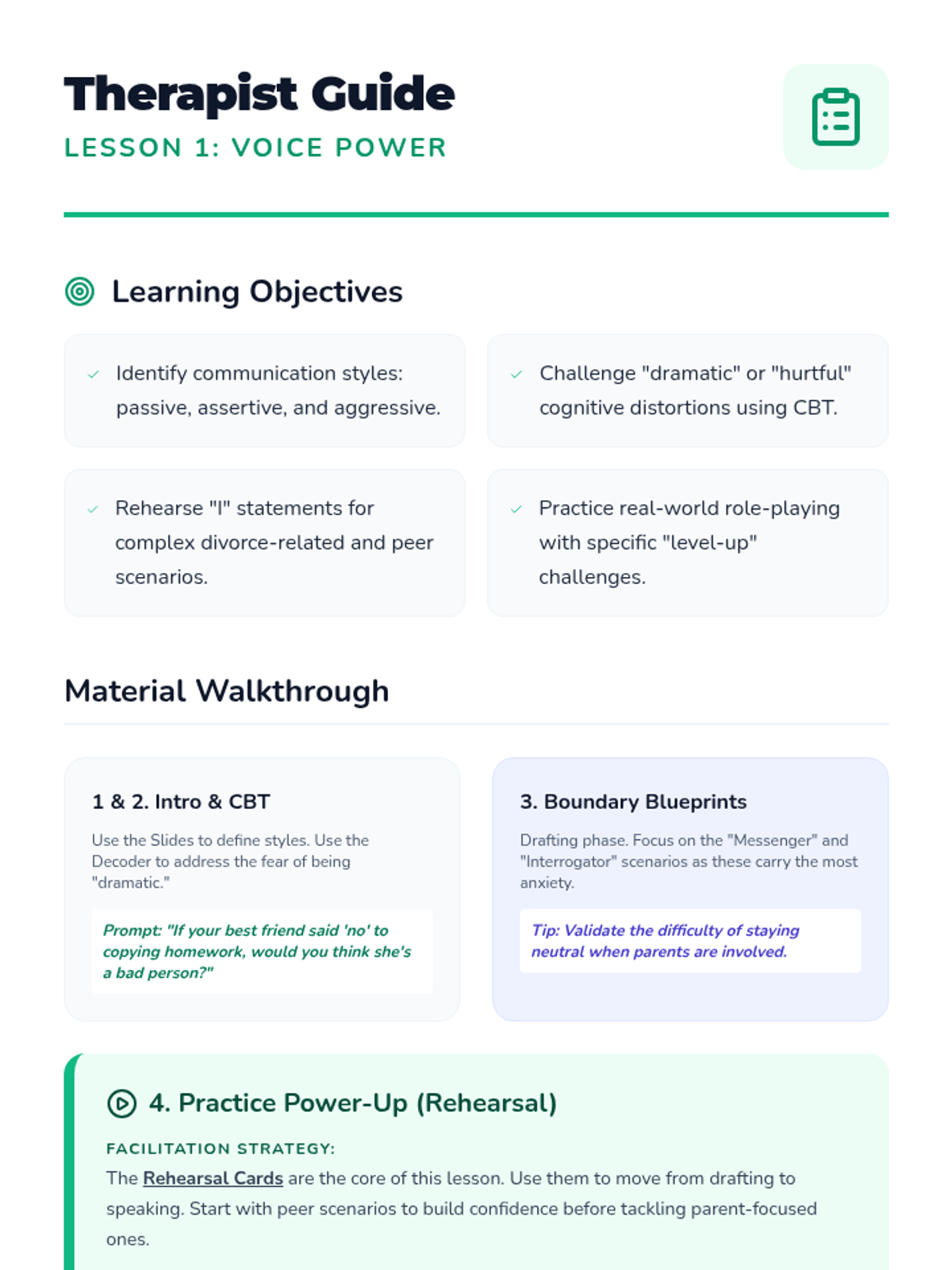
This lesson teaches an anxious 15-year-old girl how to differentiate between communication styles, challenge her fears of being 'dramatic' or 'hurting others', and develop practical scripts for handling her parents, friends, and teachers using CBT principles.
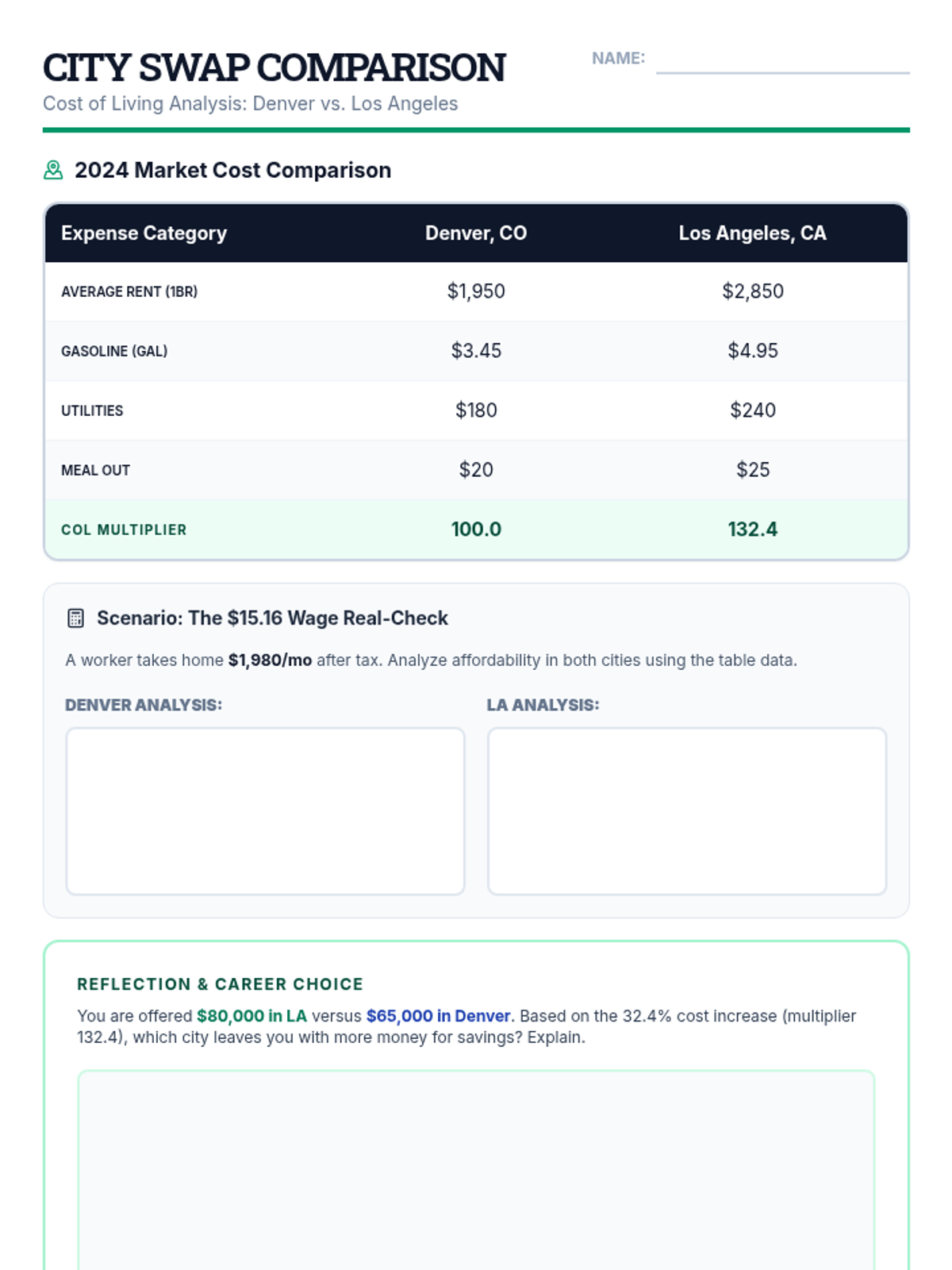
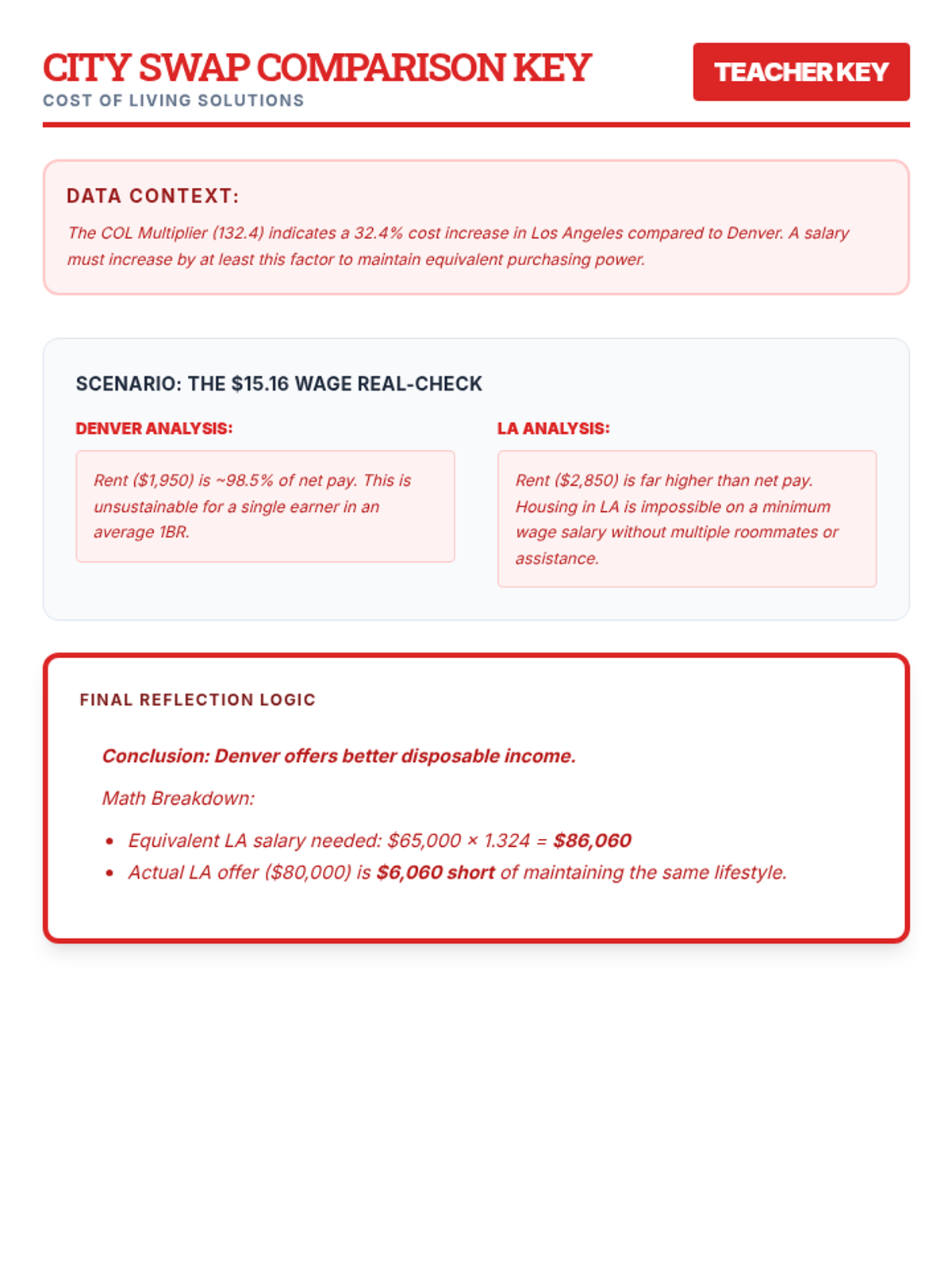
Analyzing how location affects the value of money by comparing cost-of-living data between Denver, Colorado, and Los Angeles, California.
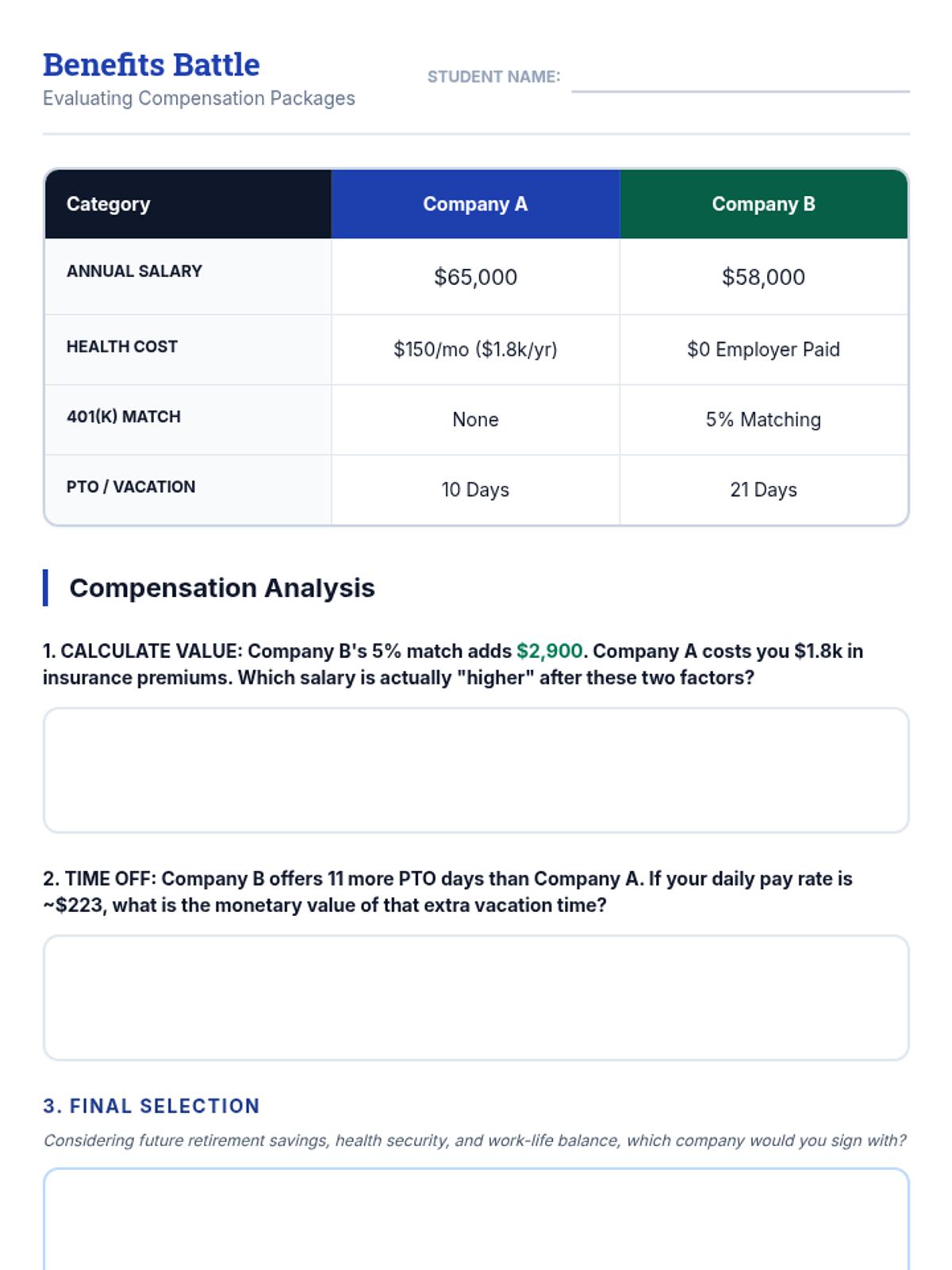
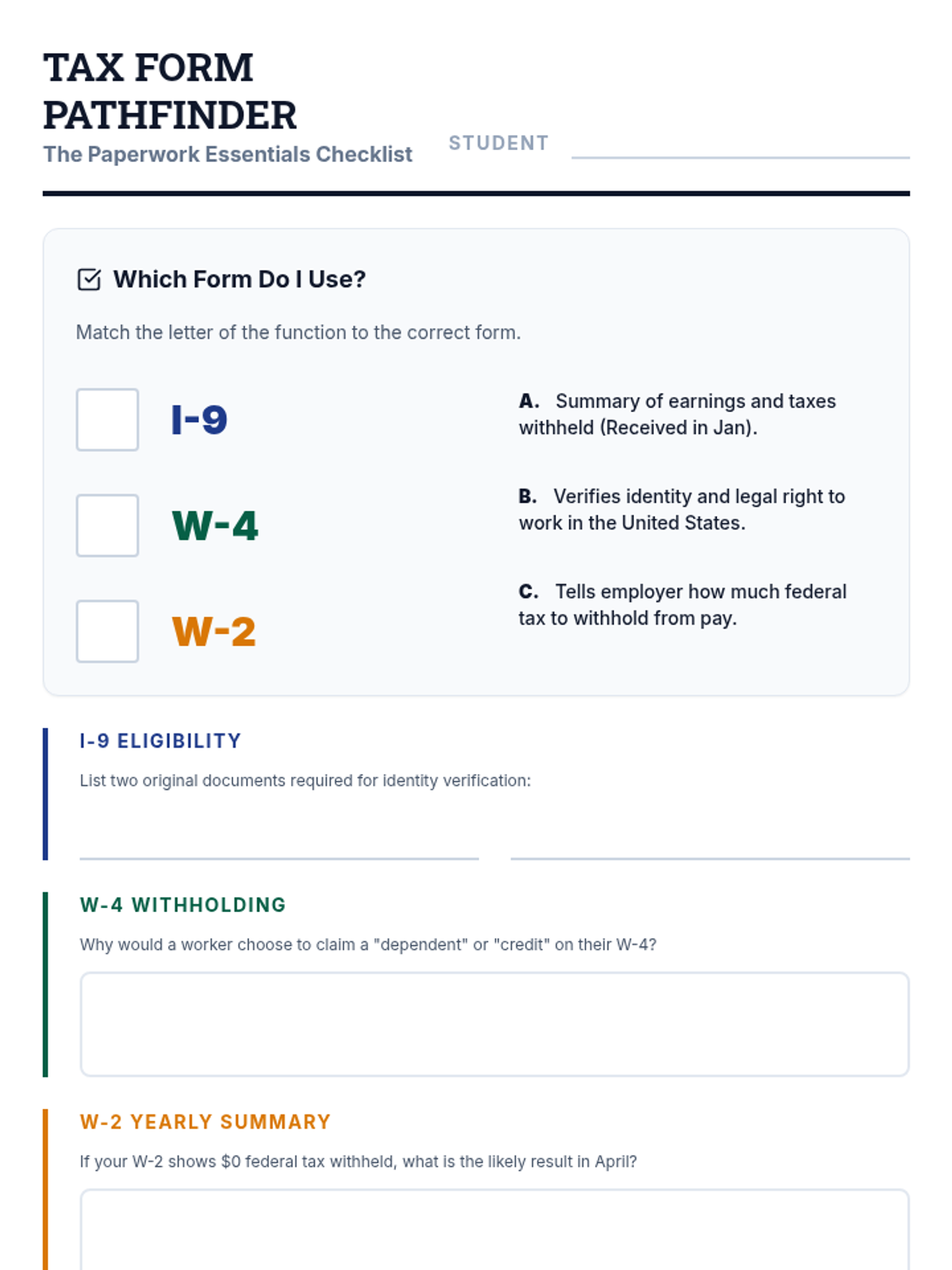
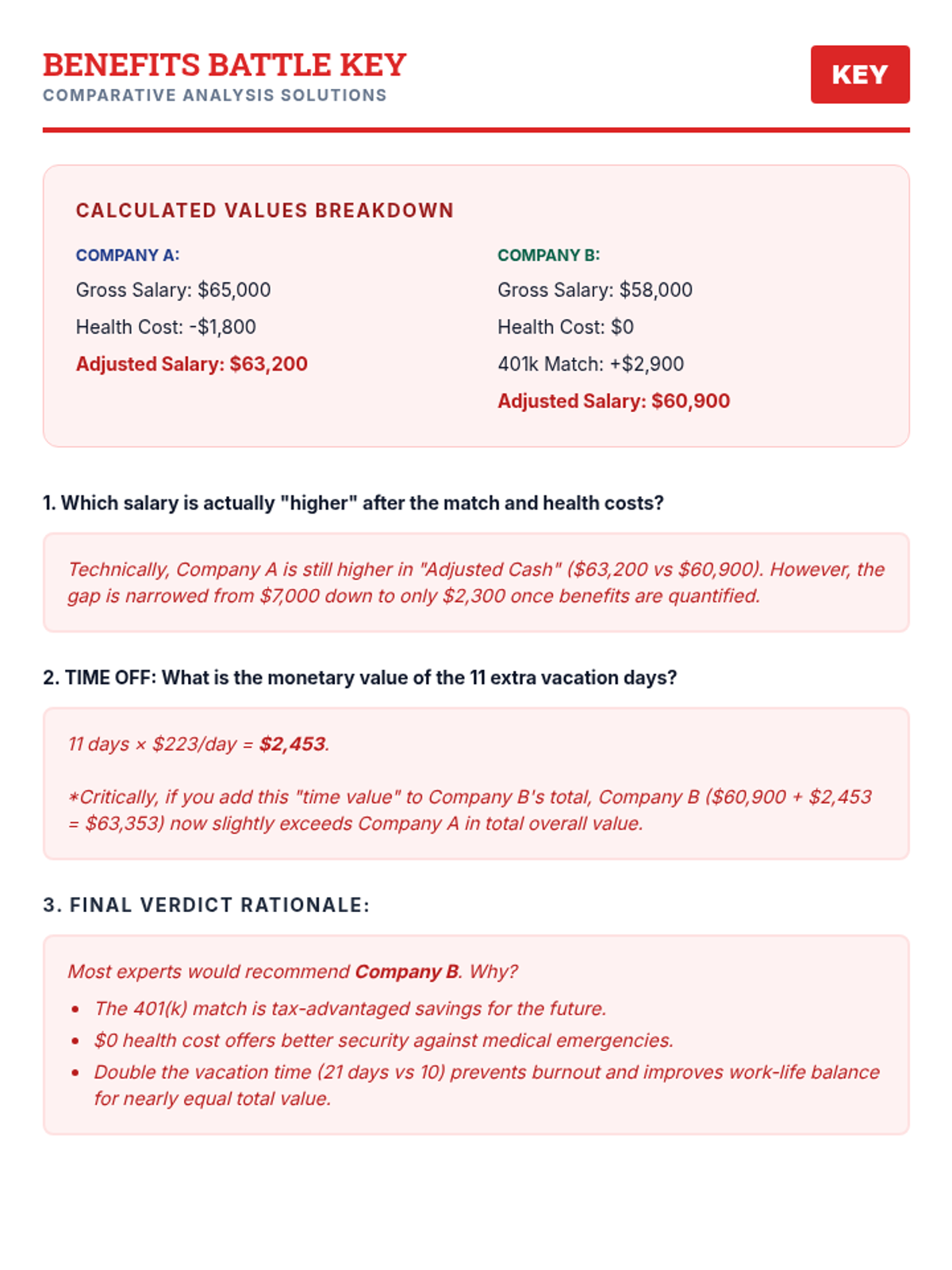
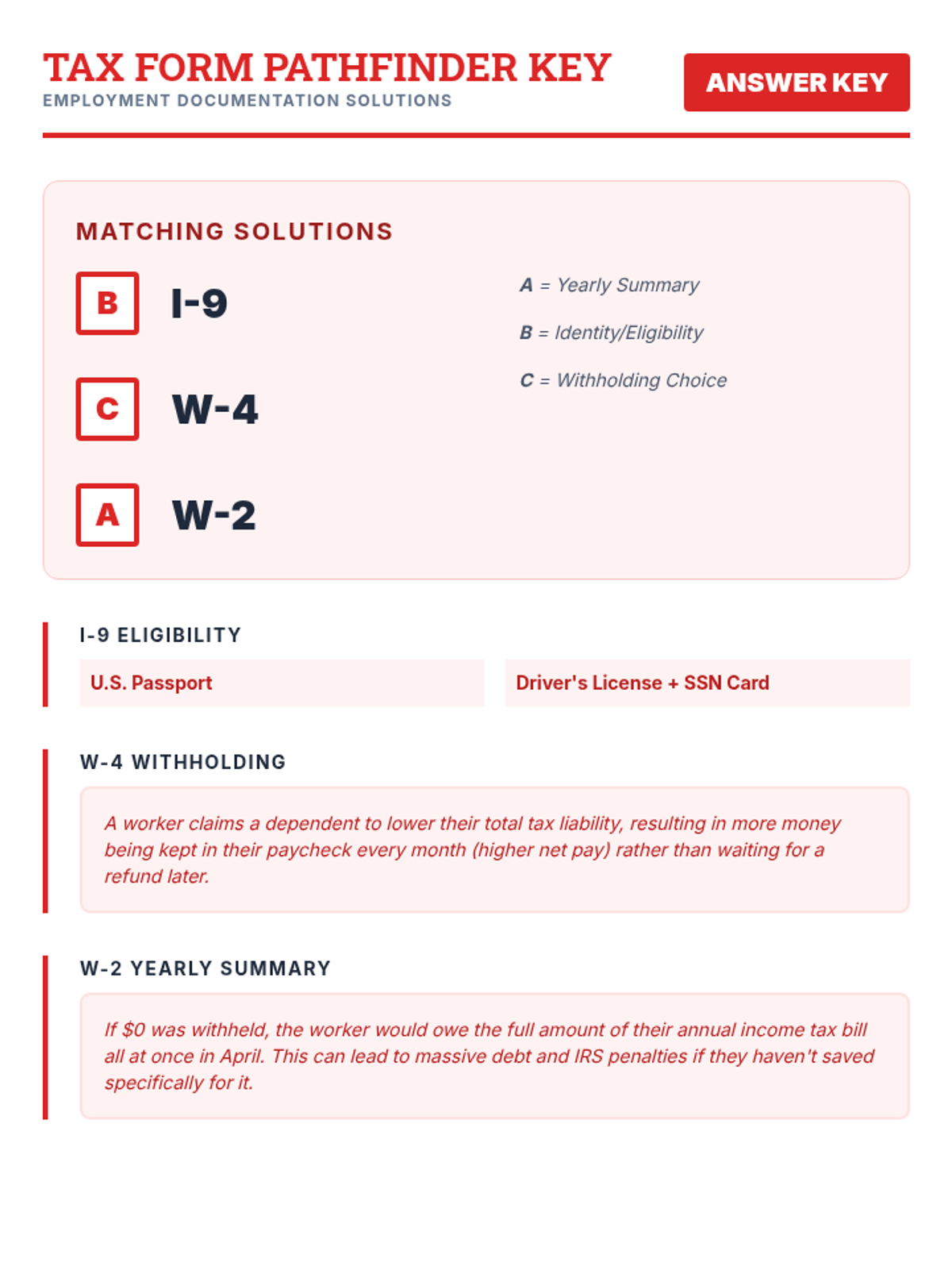
Navigating the administrative side of employment, including benefit comparisons and the essential tax forms required for new hires.
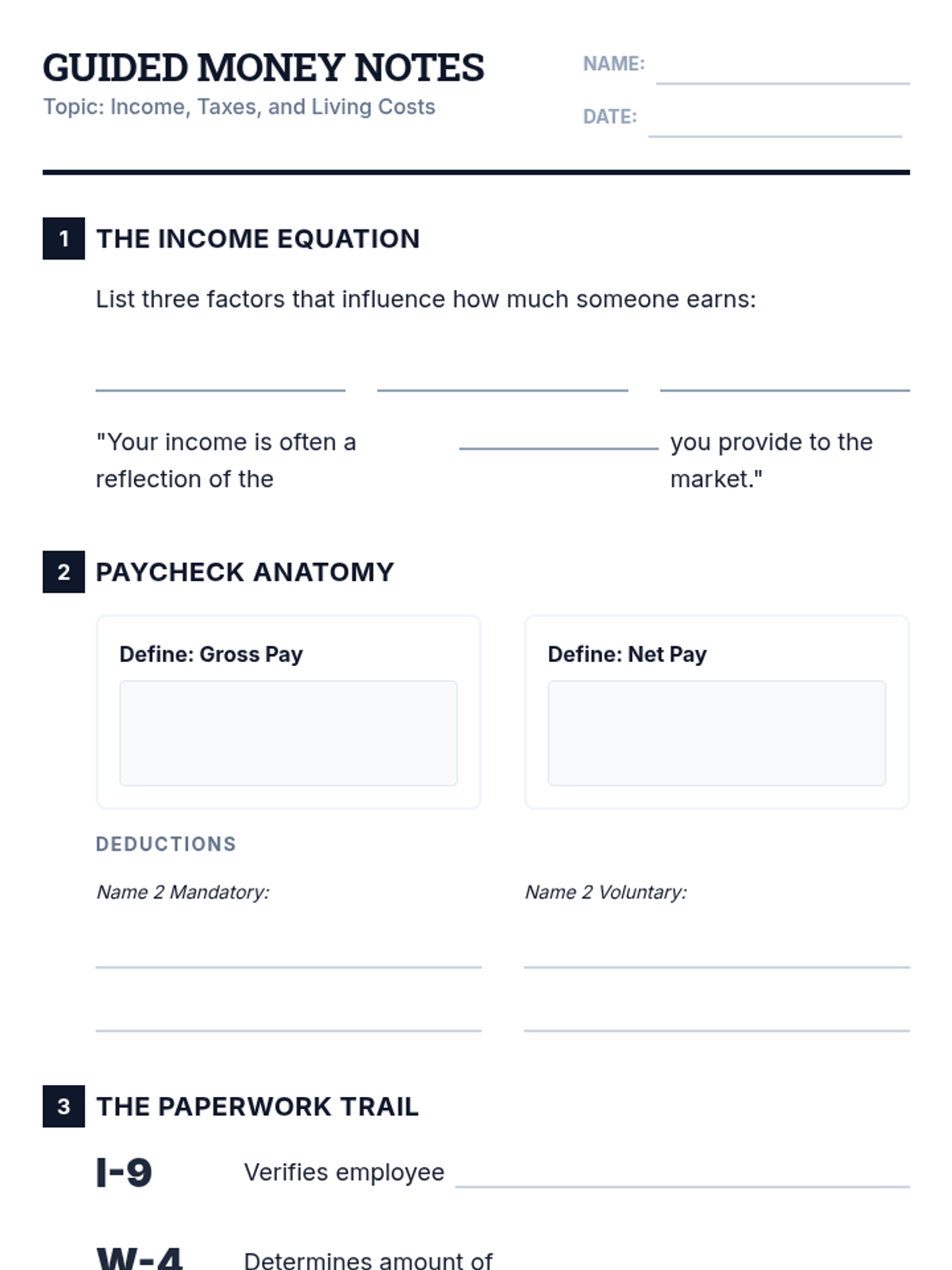
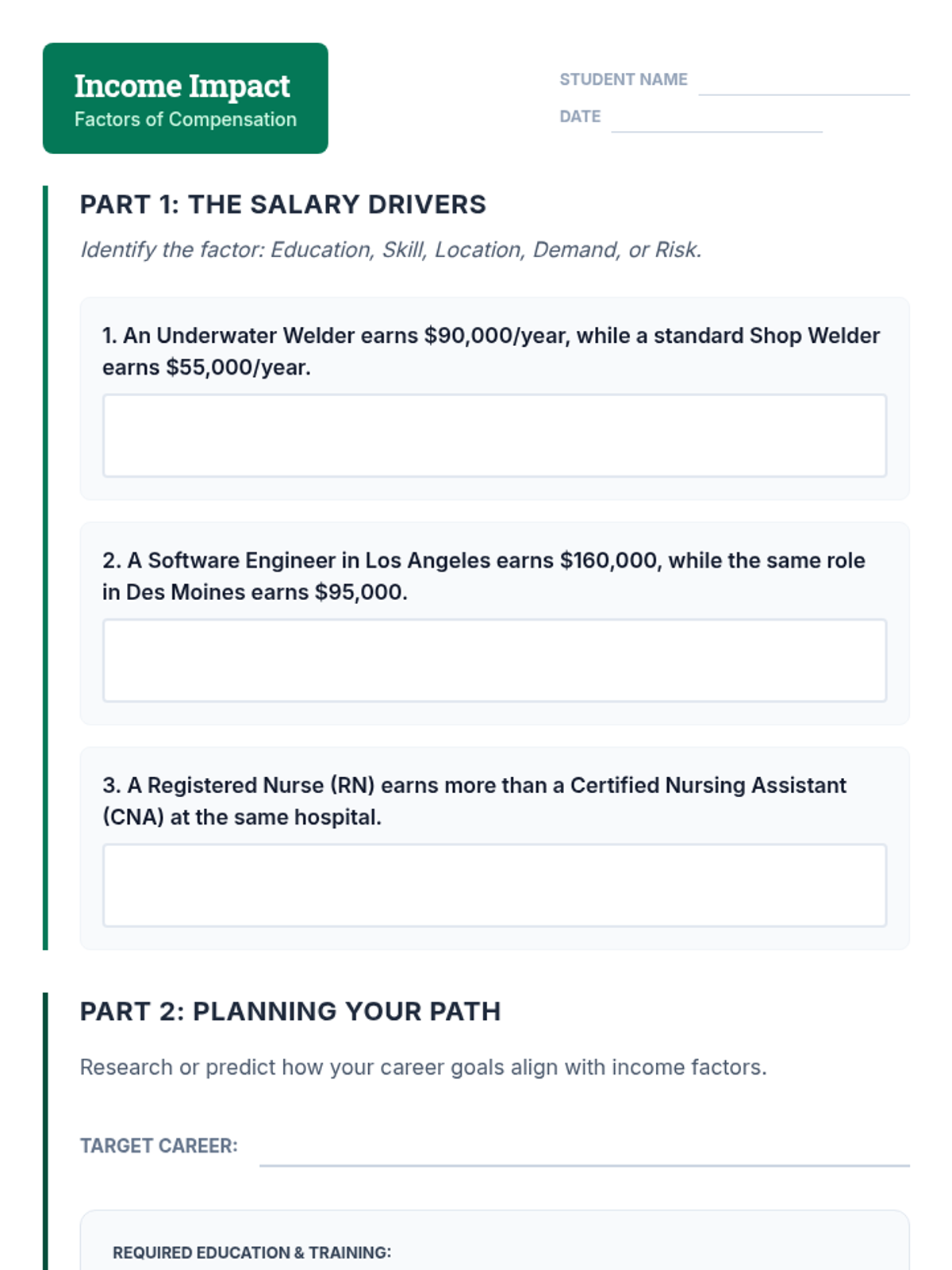
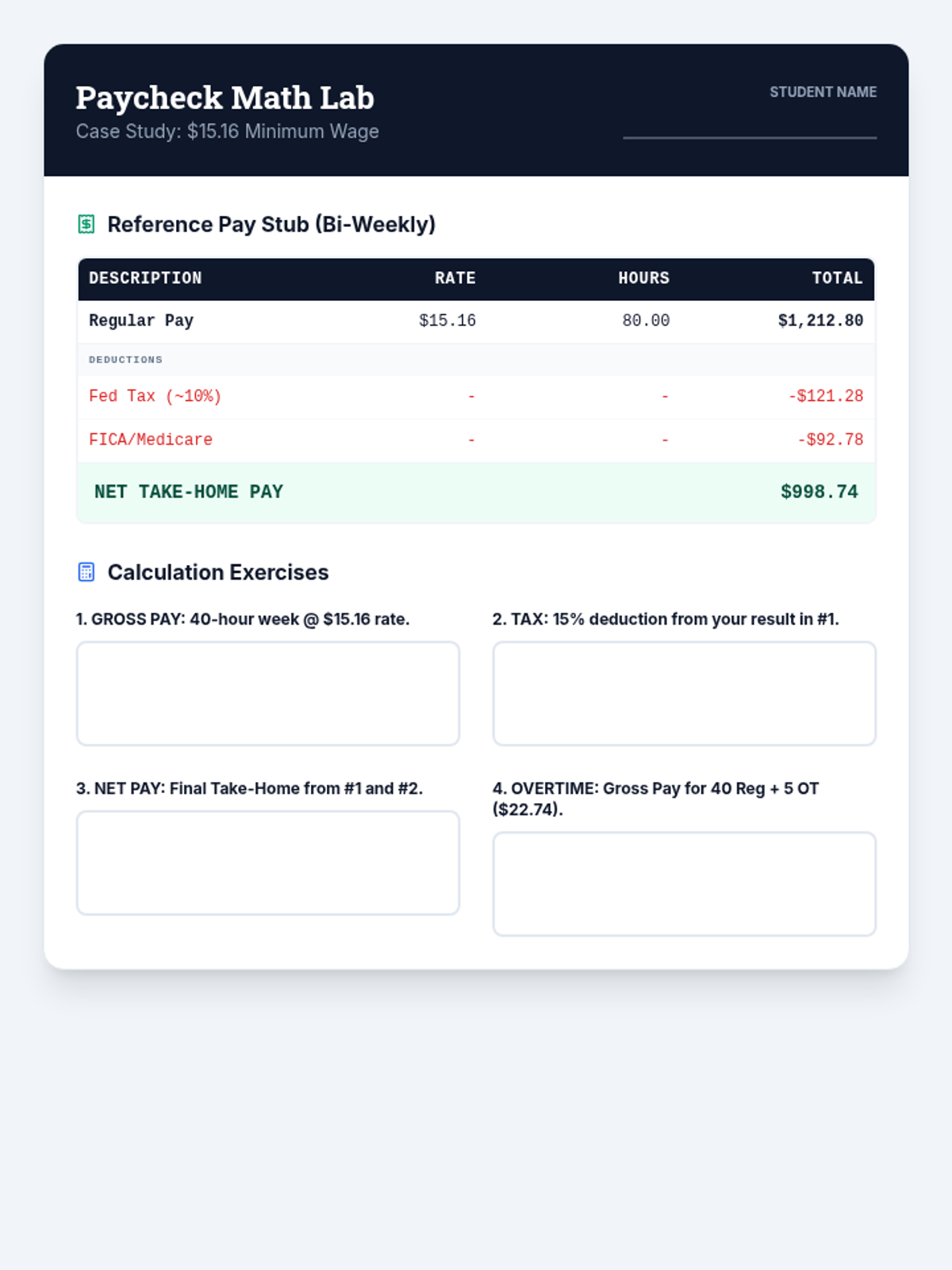
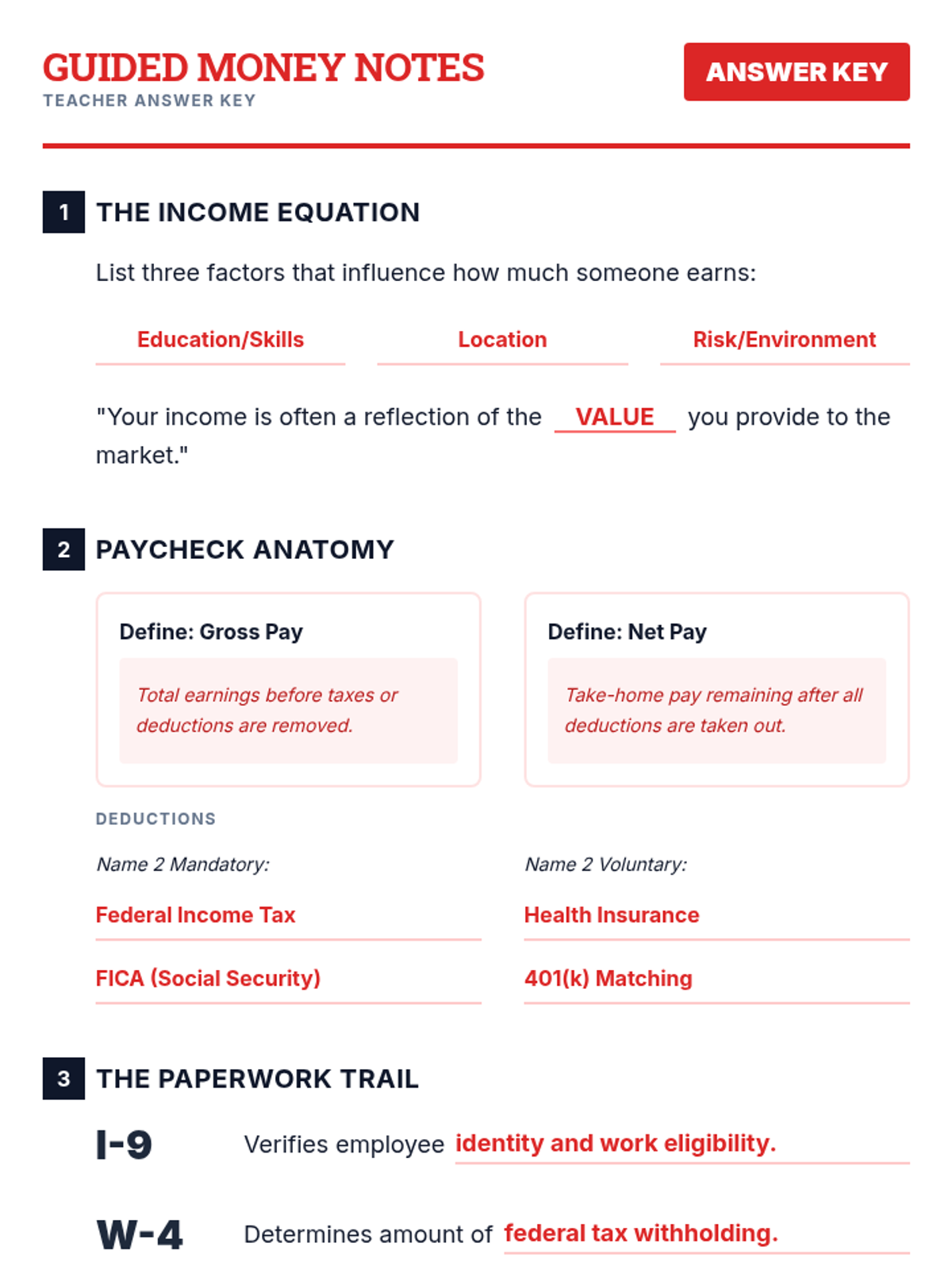
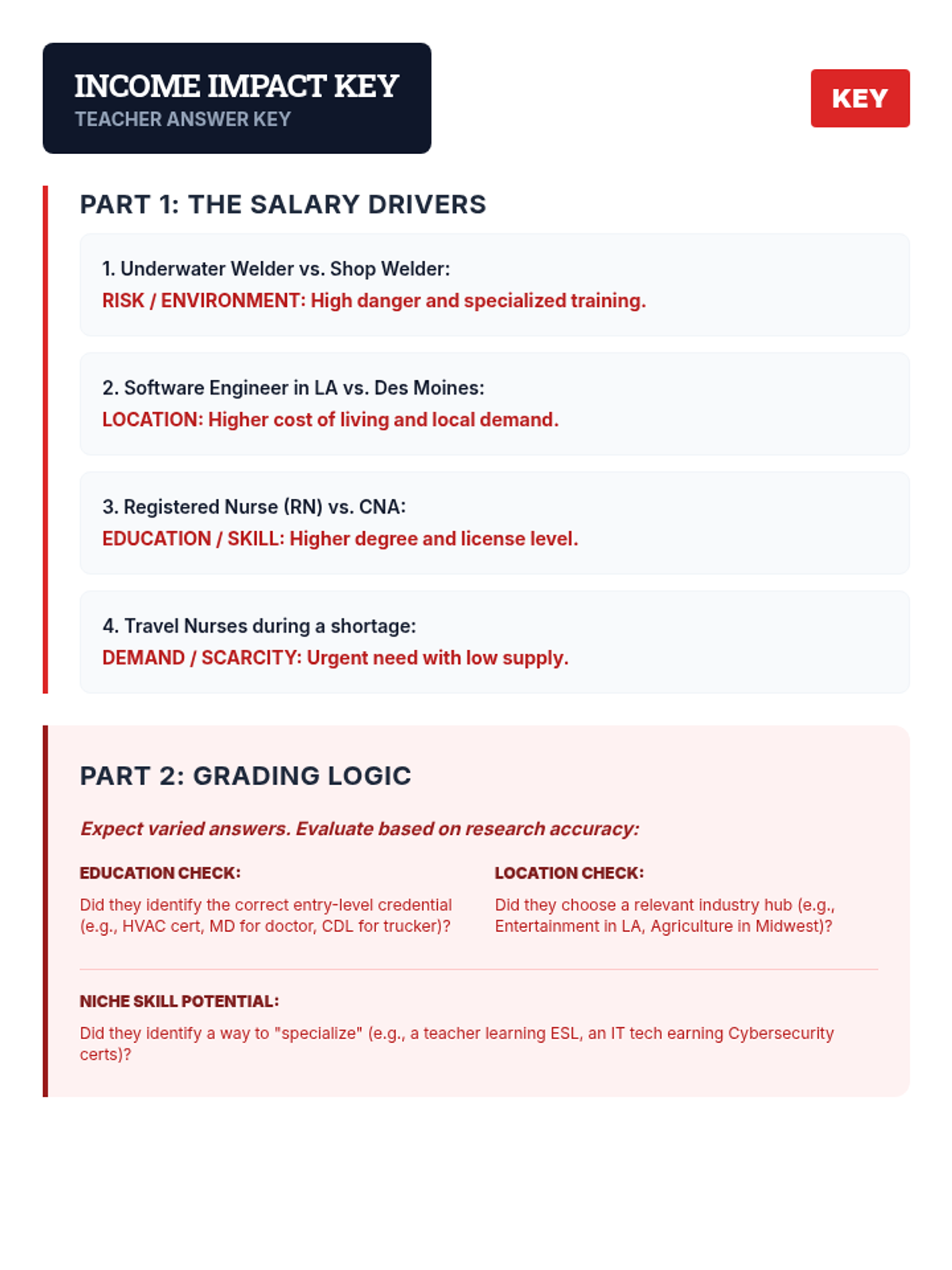
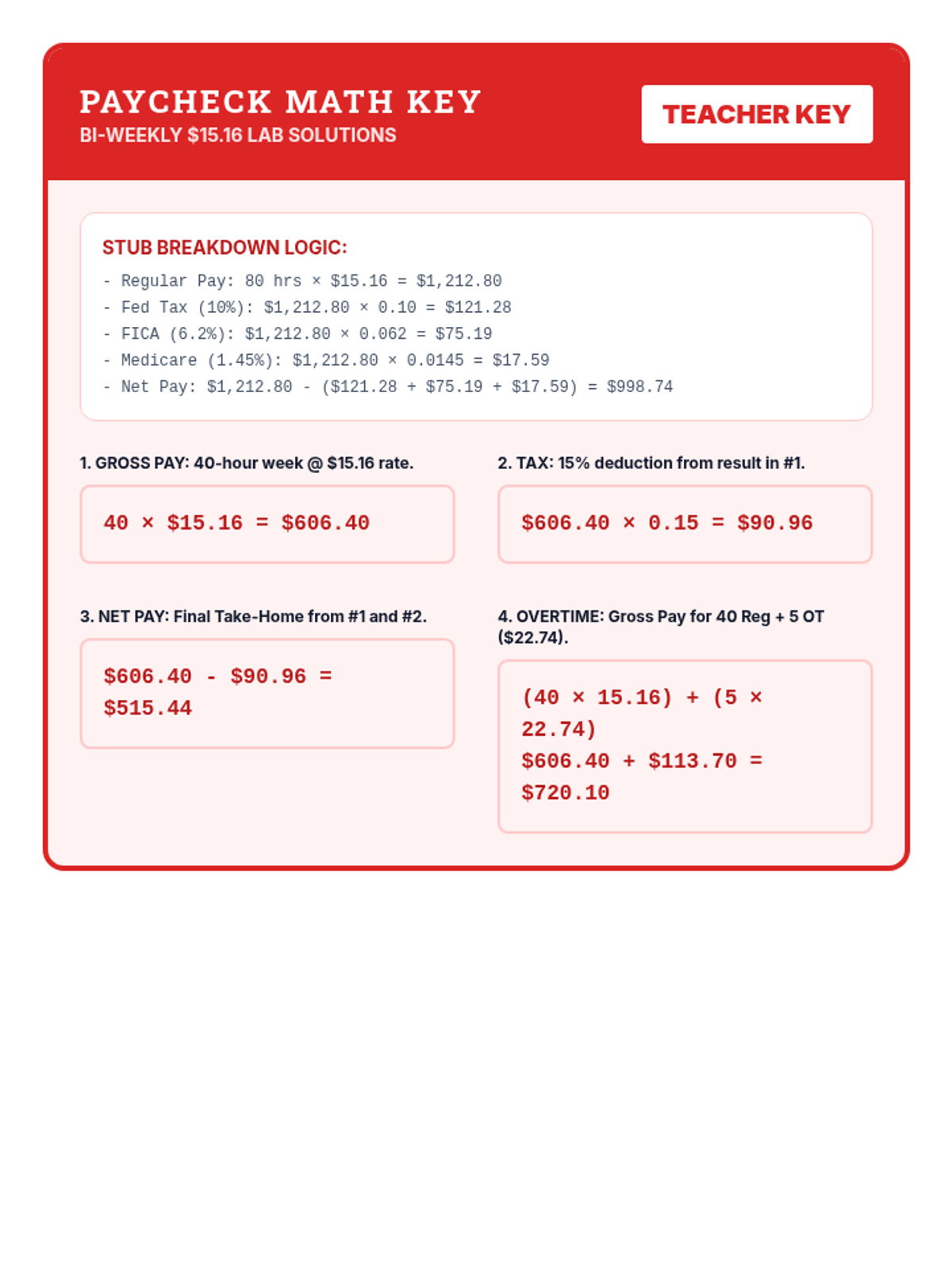
Understanding the fundamentals of how income is earned, how paychecks are calculated, and the specific math behind a $15.16 hourly wage.
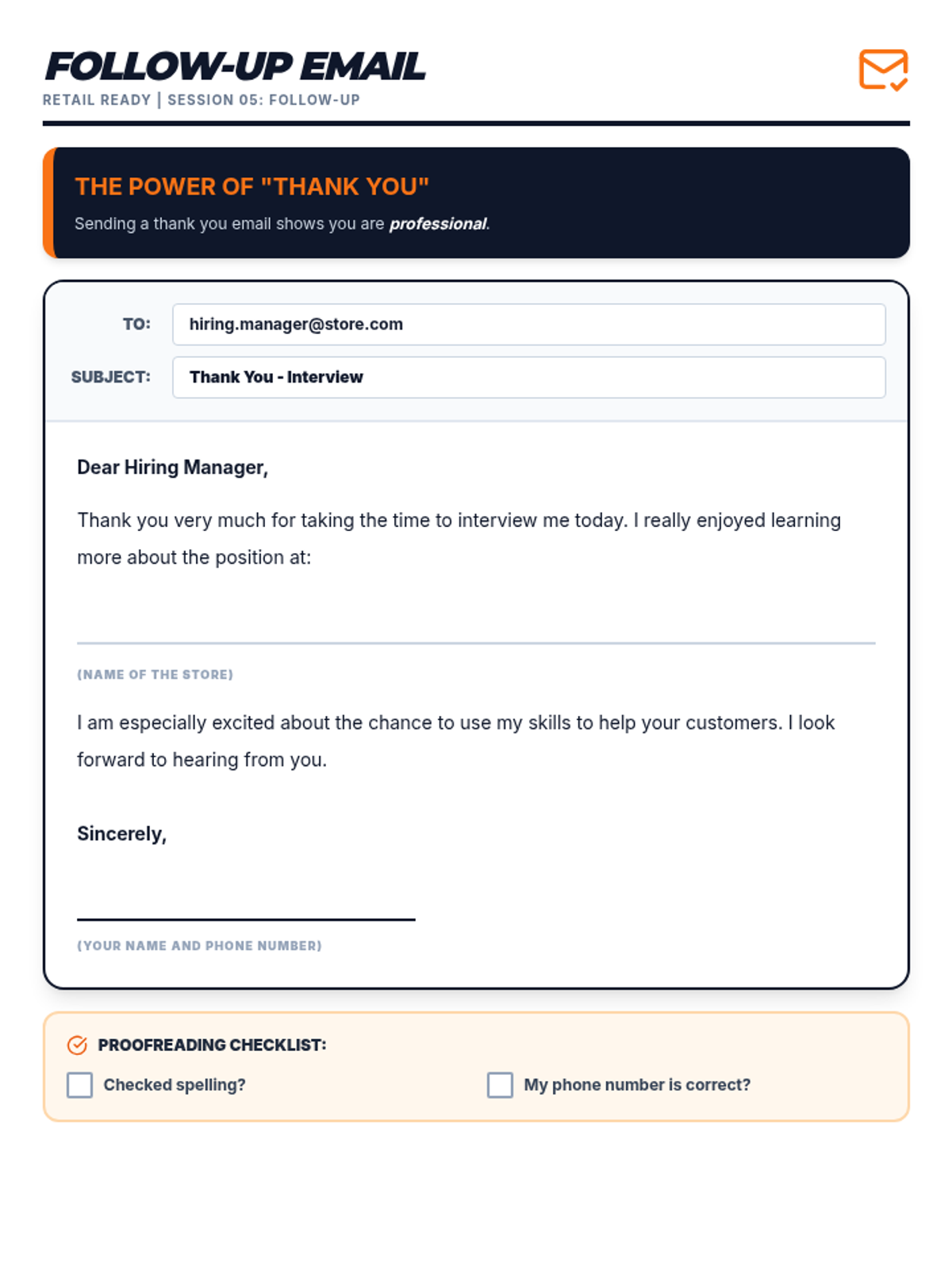
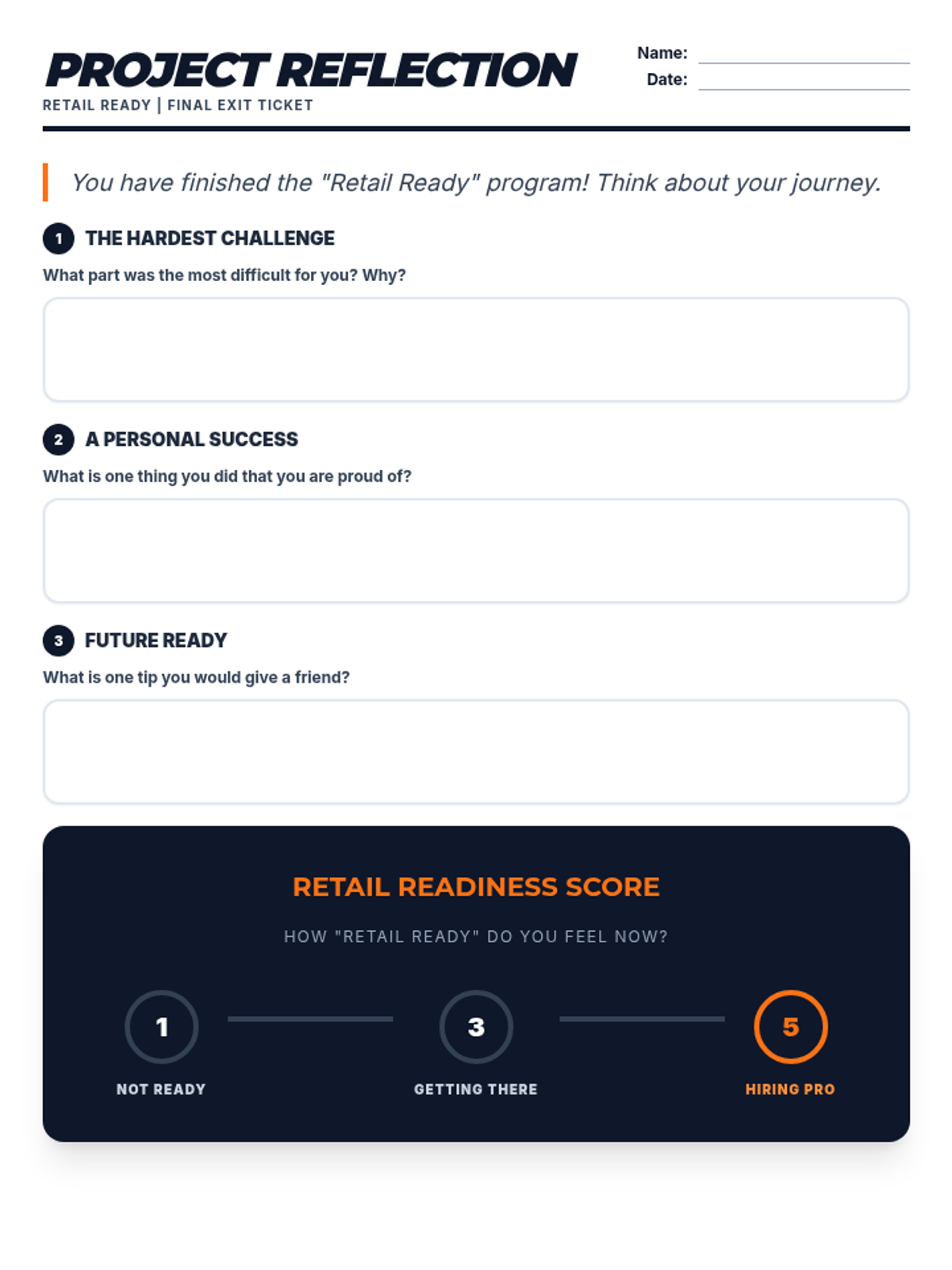
Students learn the importance of post-interview follow-up by writing thank-you emails and reflecting on their overall performance throughout the project.
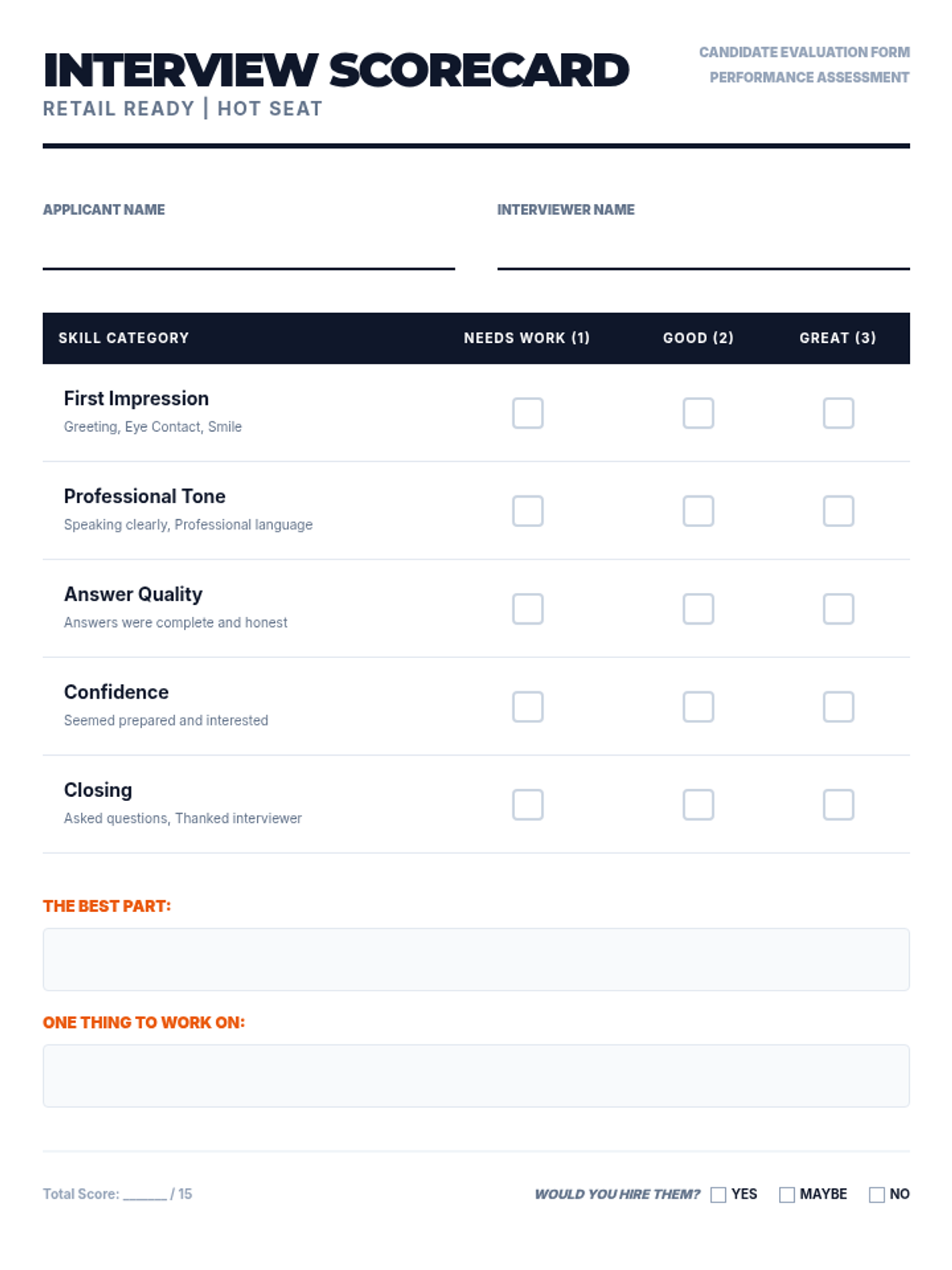
A hands-on day for mock interviews where students practice professional communication and receive constructive feedback.
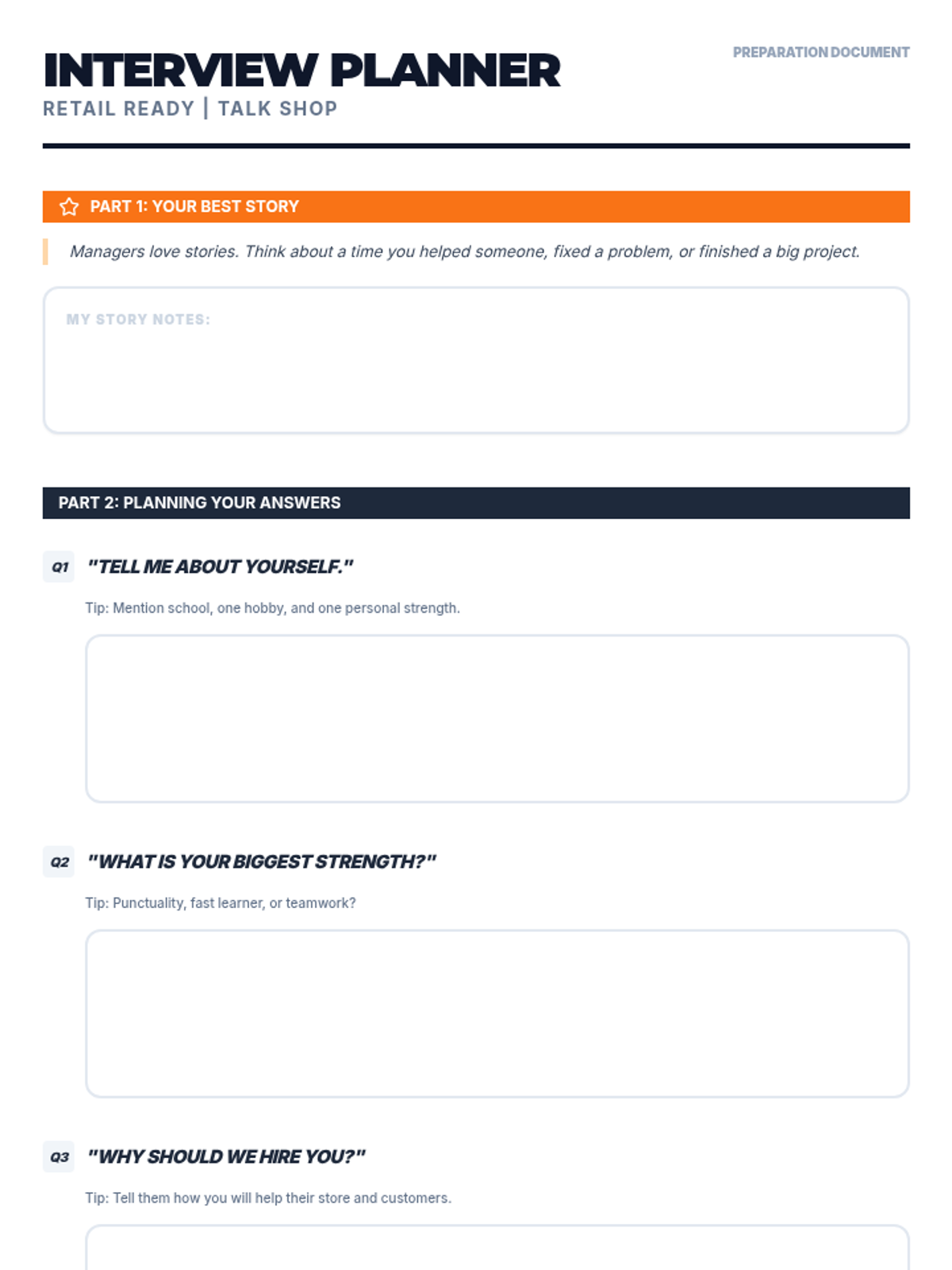
Students prepare for the social dynamics of an interview by researching common retail questions and planning their own inquiries for the employer.
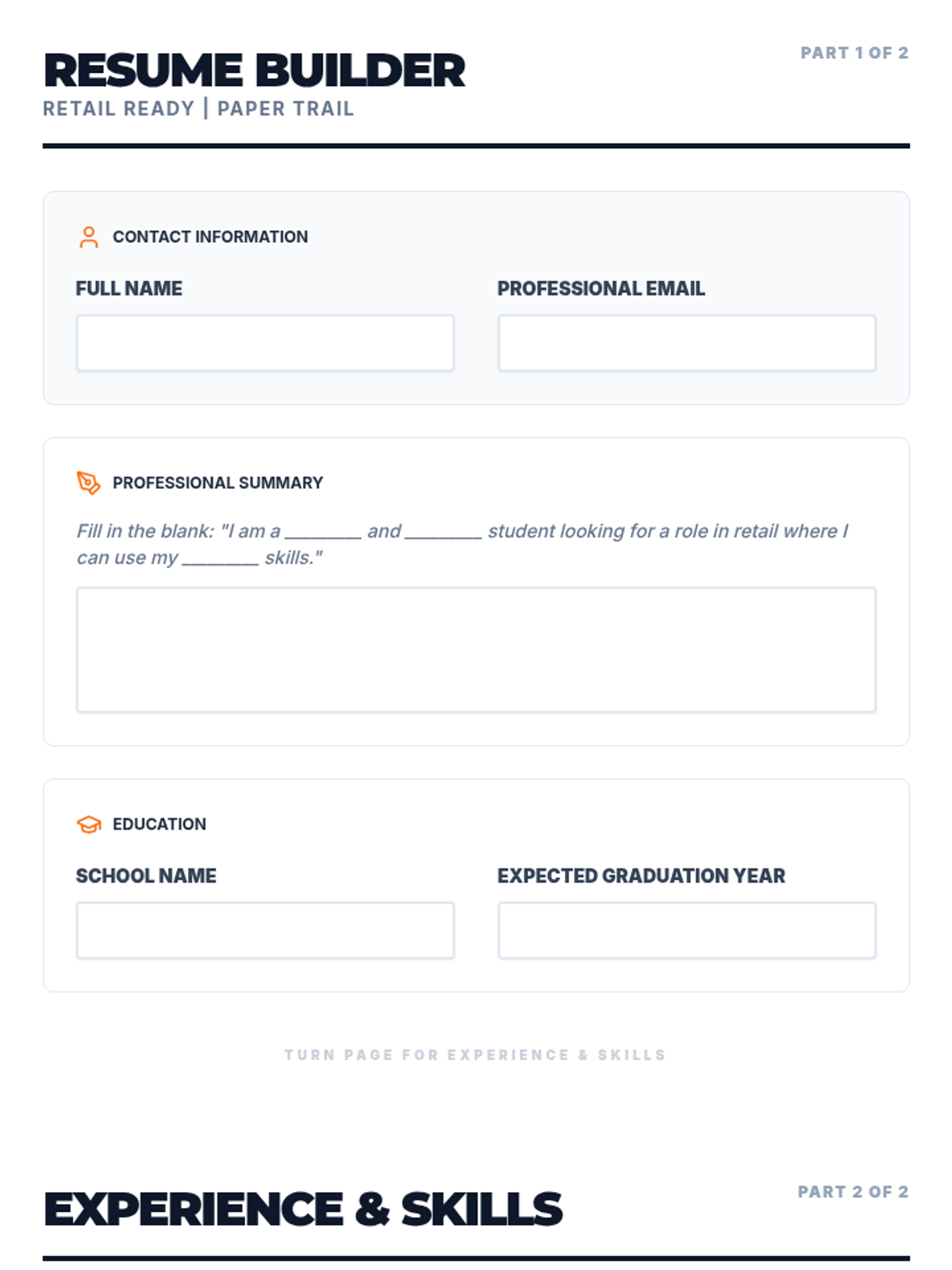
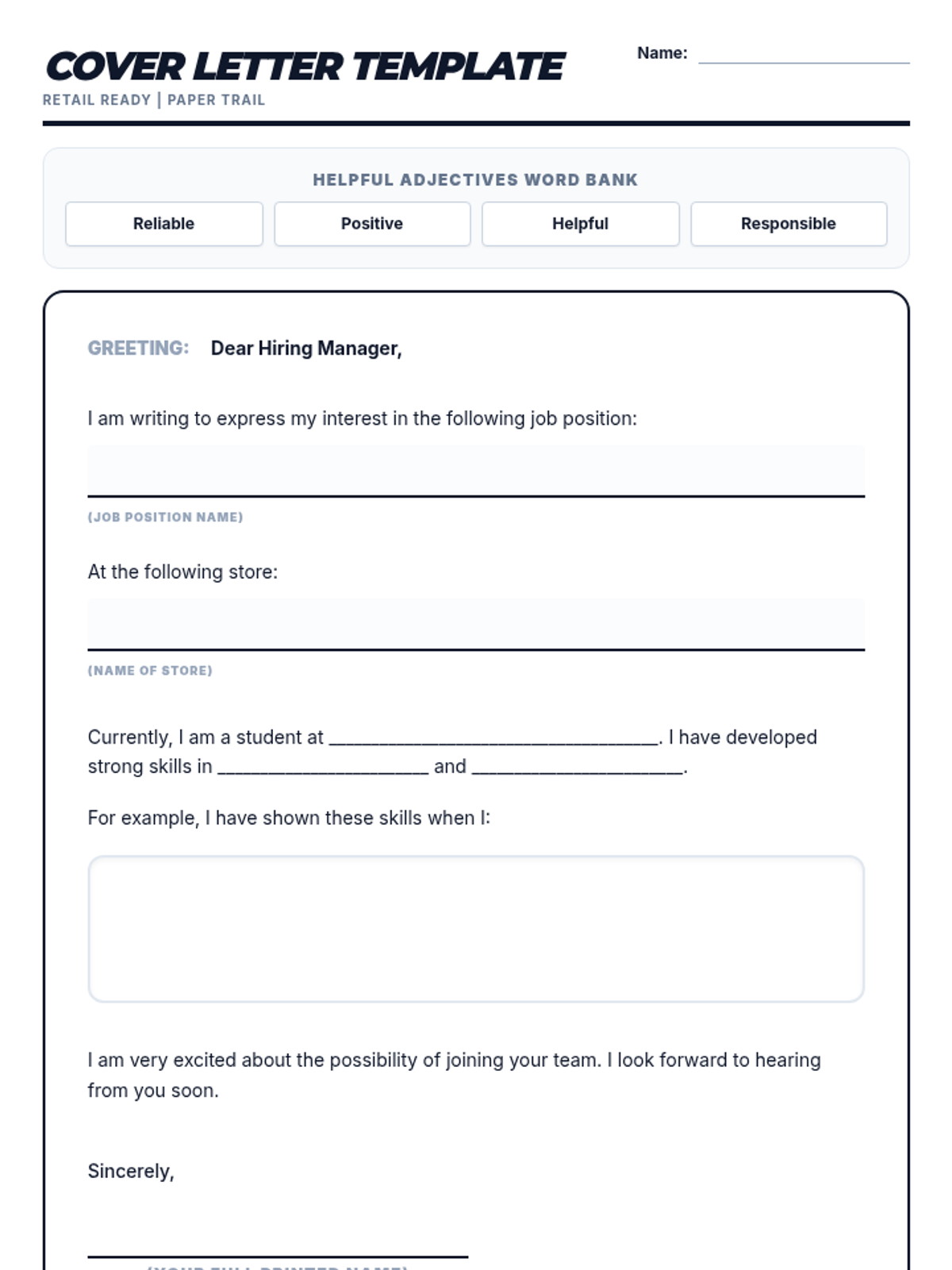
Focuses on translating personal experiences into a professional resume and drafting a concise cover letter using structured templates.
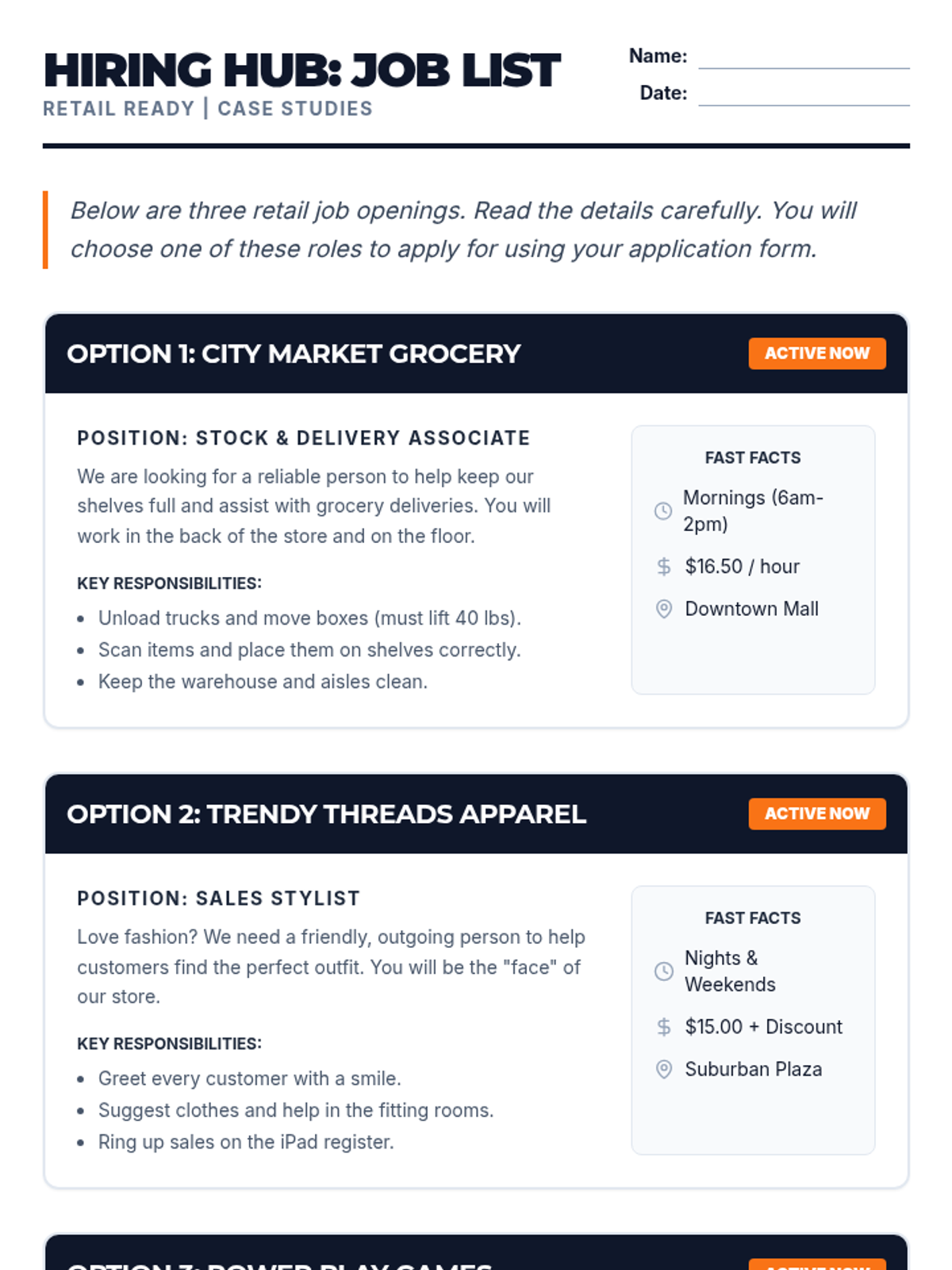
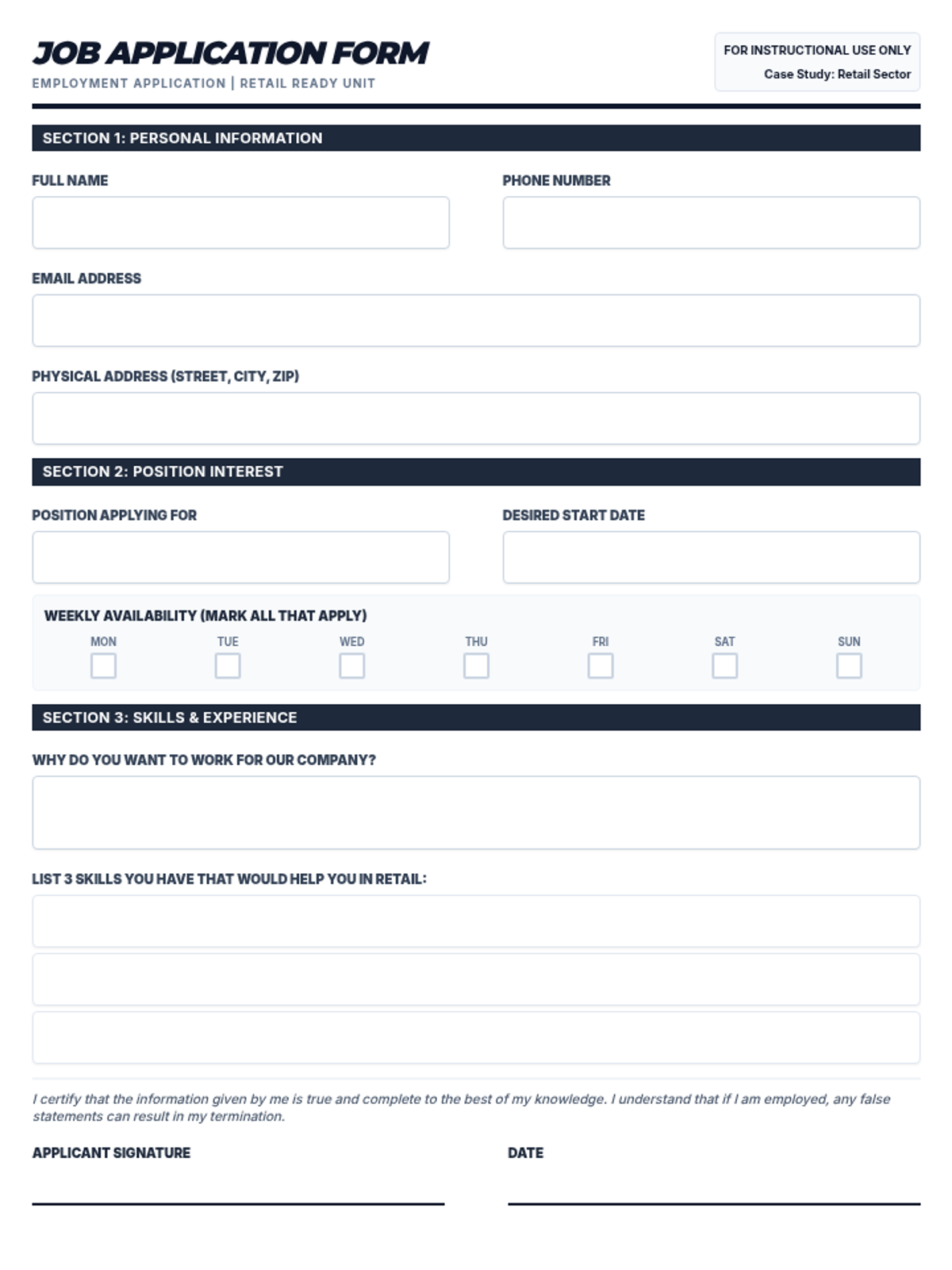
Students explore different retail roles, learn to read job descriptions, and practice completing a standard job application form with accuracy.
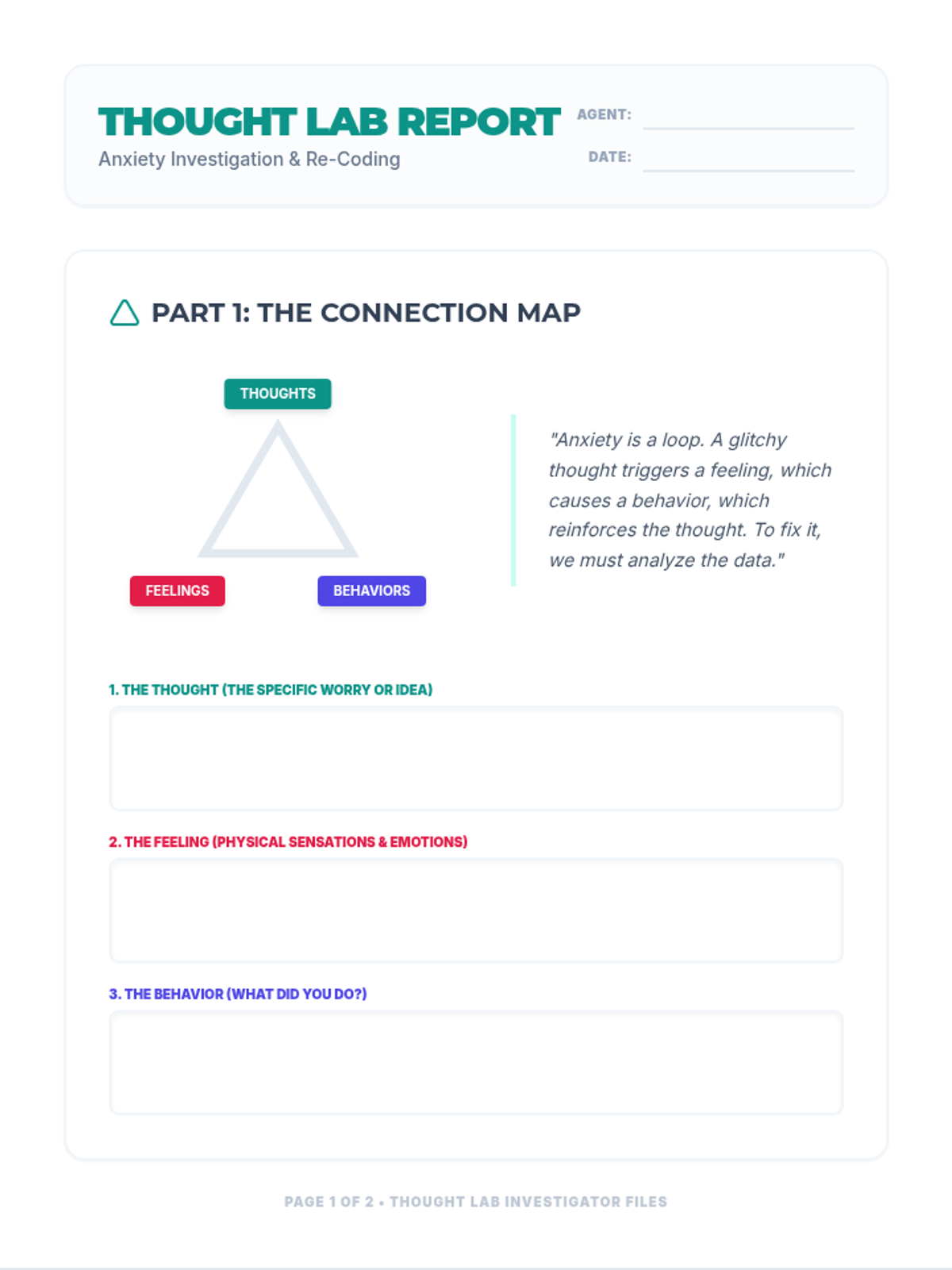
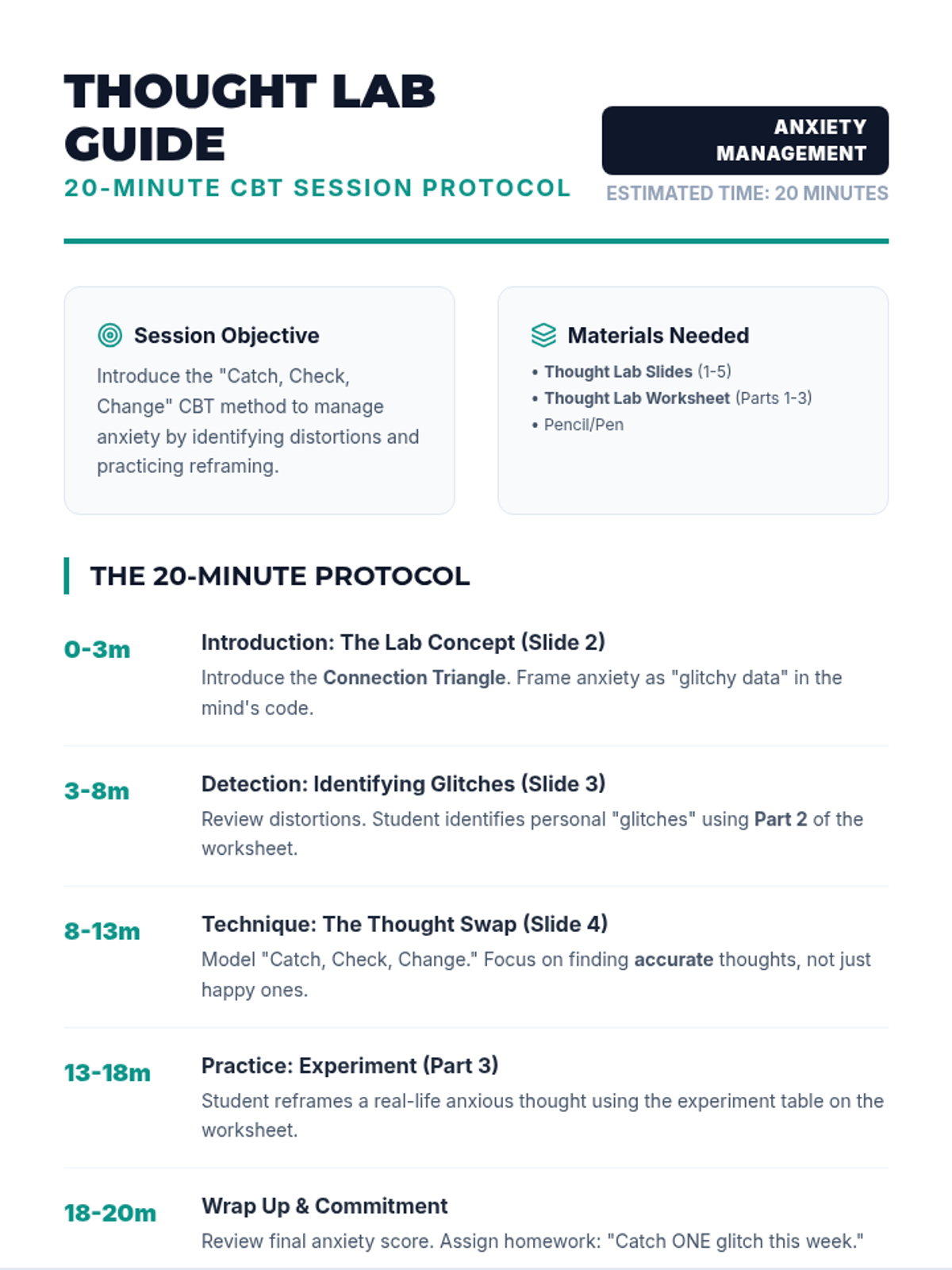
A rapid-fire, 20-minute introduction to Cognitive Behavioral Therapy (CBT) techniques for managing anxiety. Students learn to identify 'glitchy' thoughts and practice reframing them through a scientific 'investigative' lens.
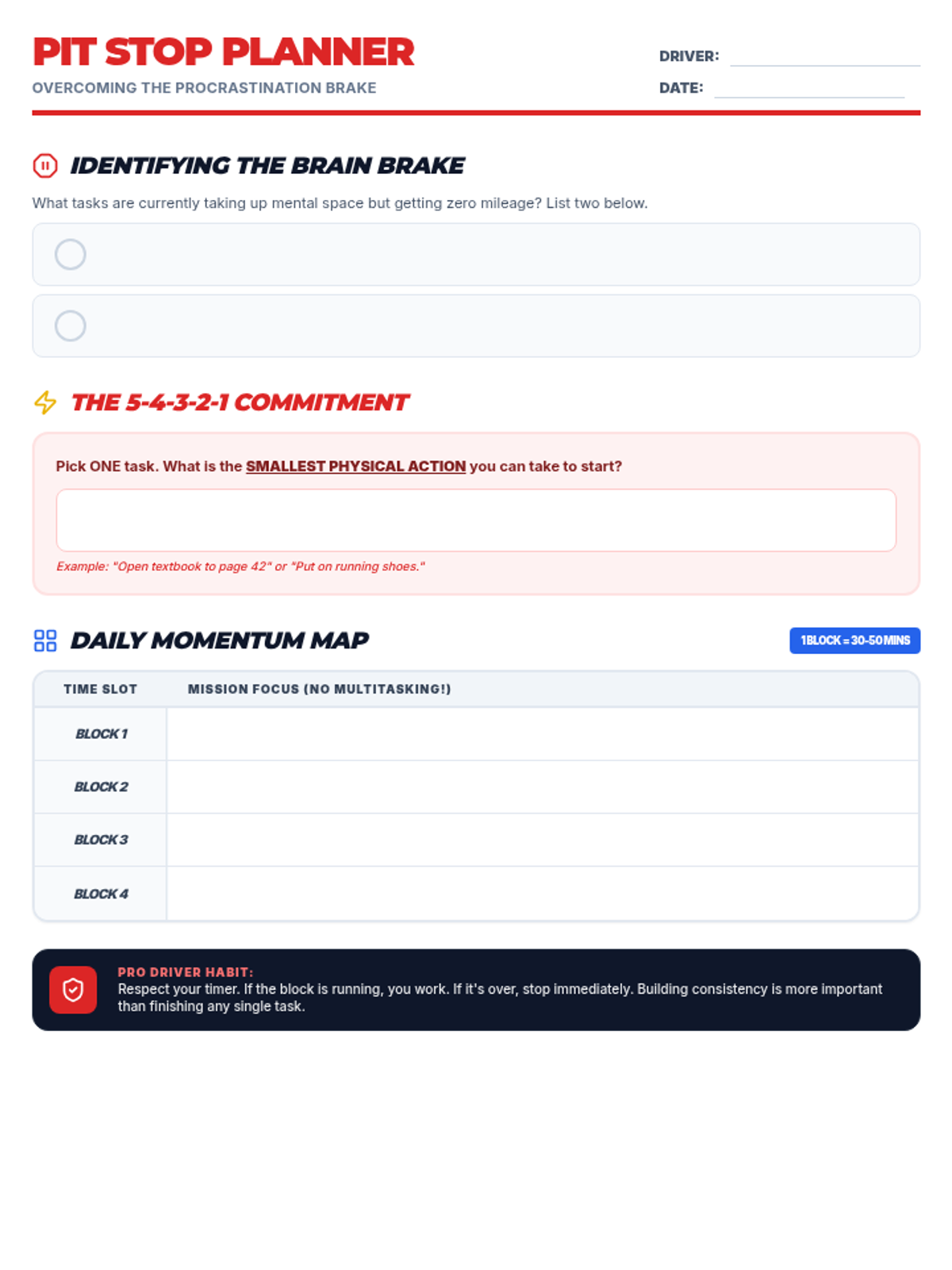
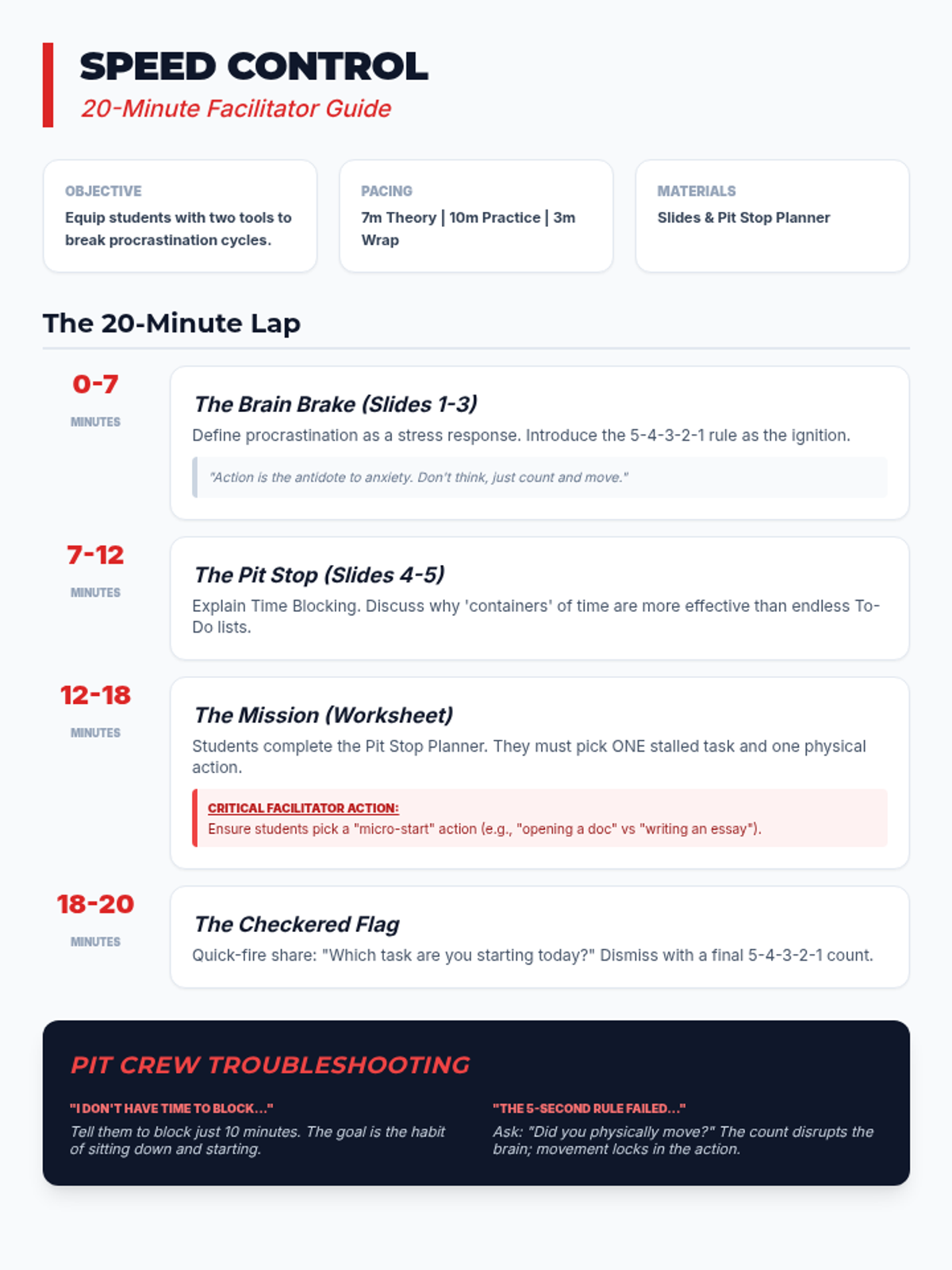
A high-energy 20-minute session focused on overcoming procrastination using the 5-Second Rule and Time Blocking techniques. Students will learn to bridge the gap between thinking and doing through practical racing-themed activities.
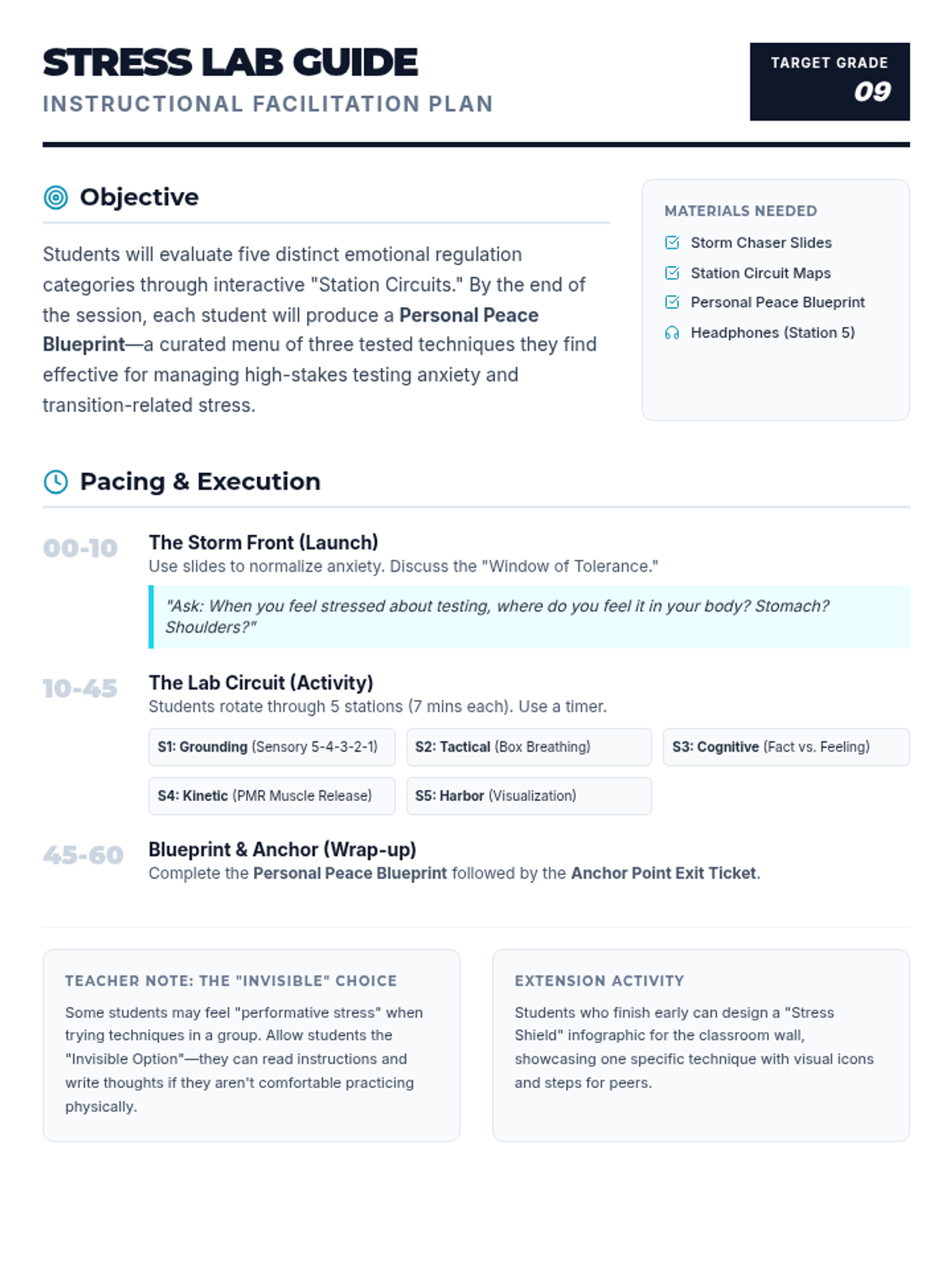
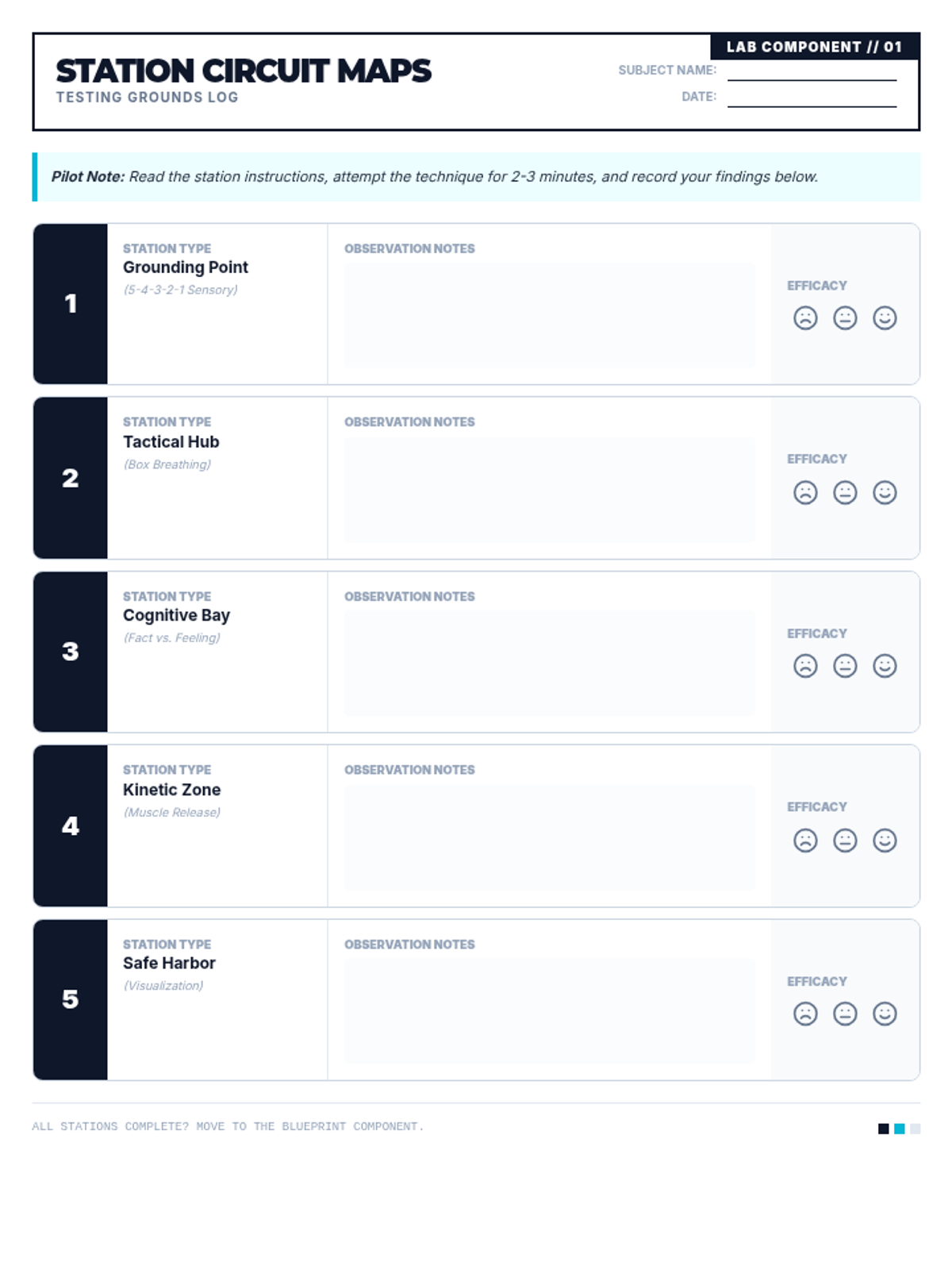
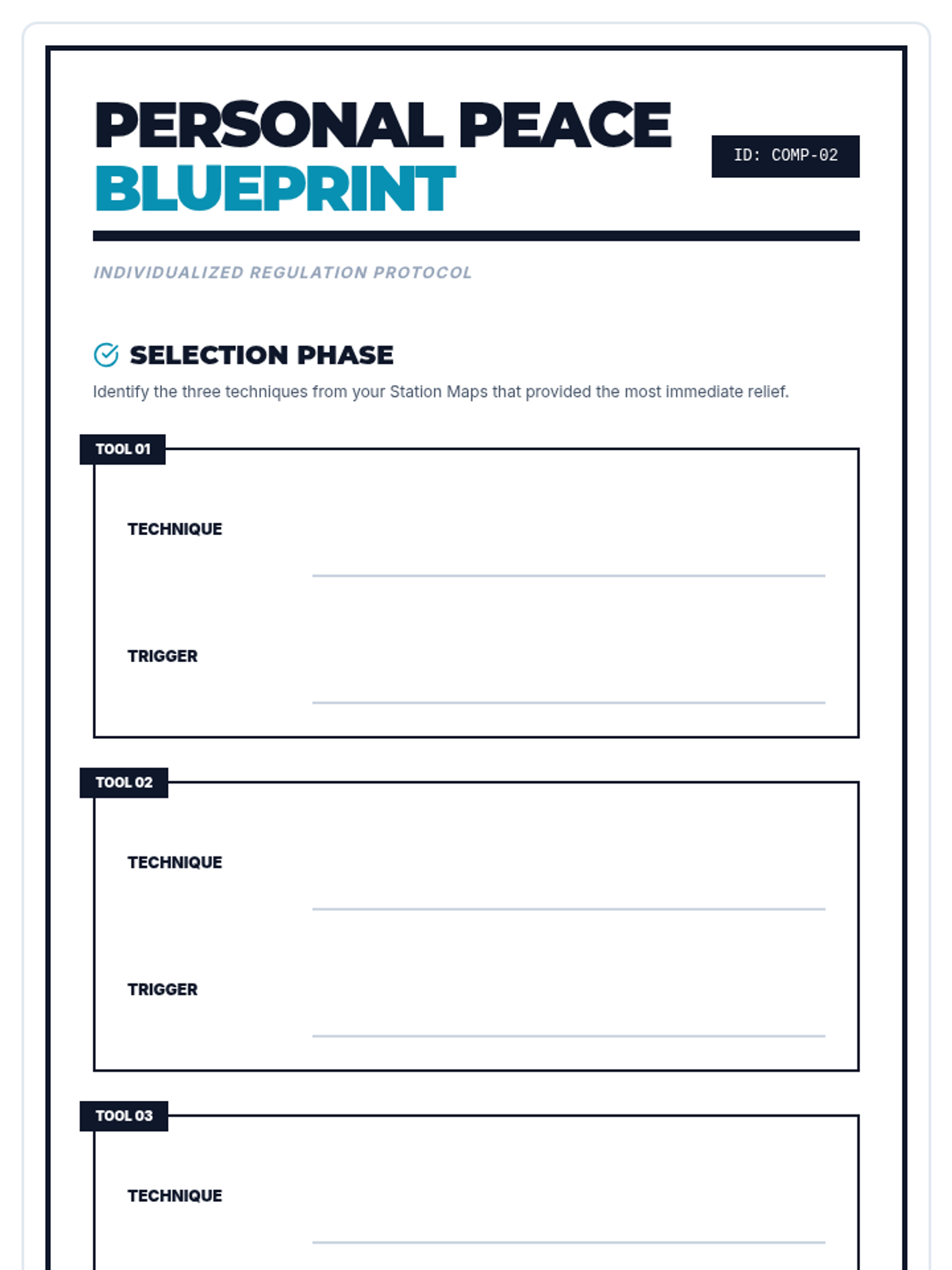
A high-school unit designed to help students navigate end-of-year stress through hands-on testing of regulation techniques and the creation of a personalized coping toolkit.
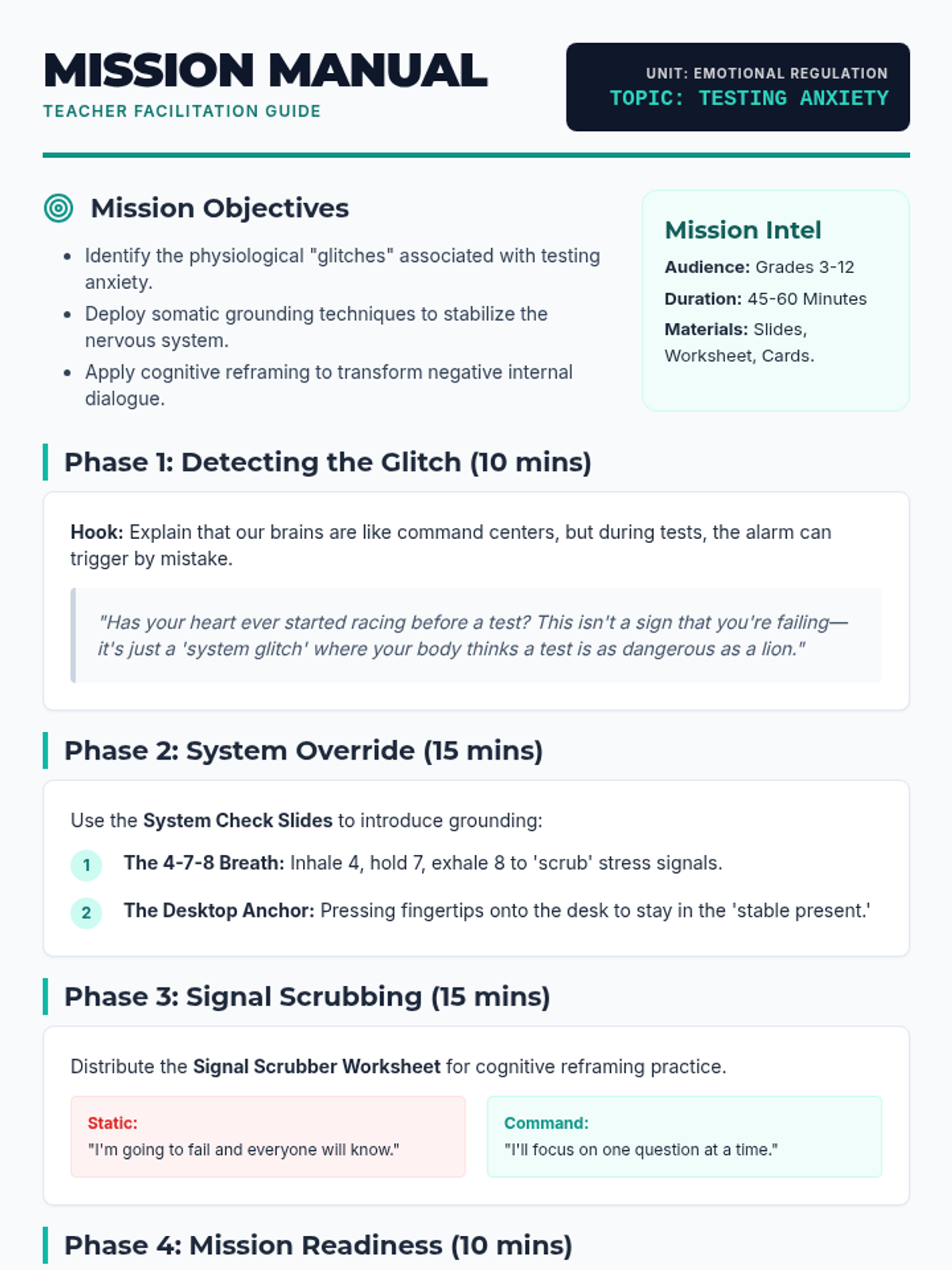
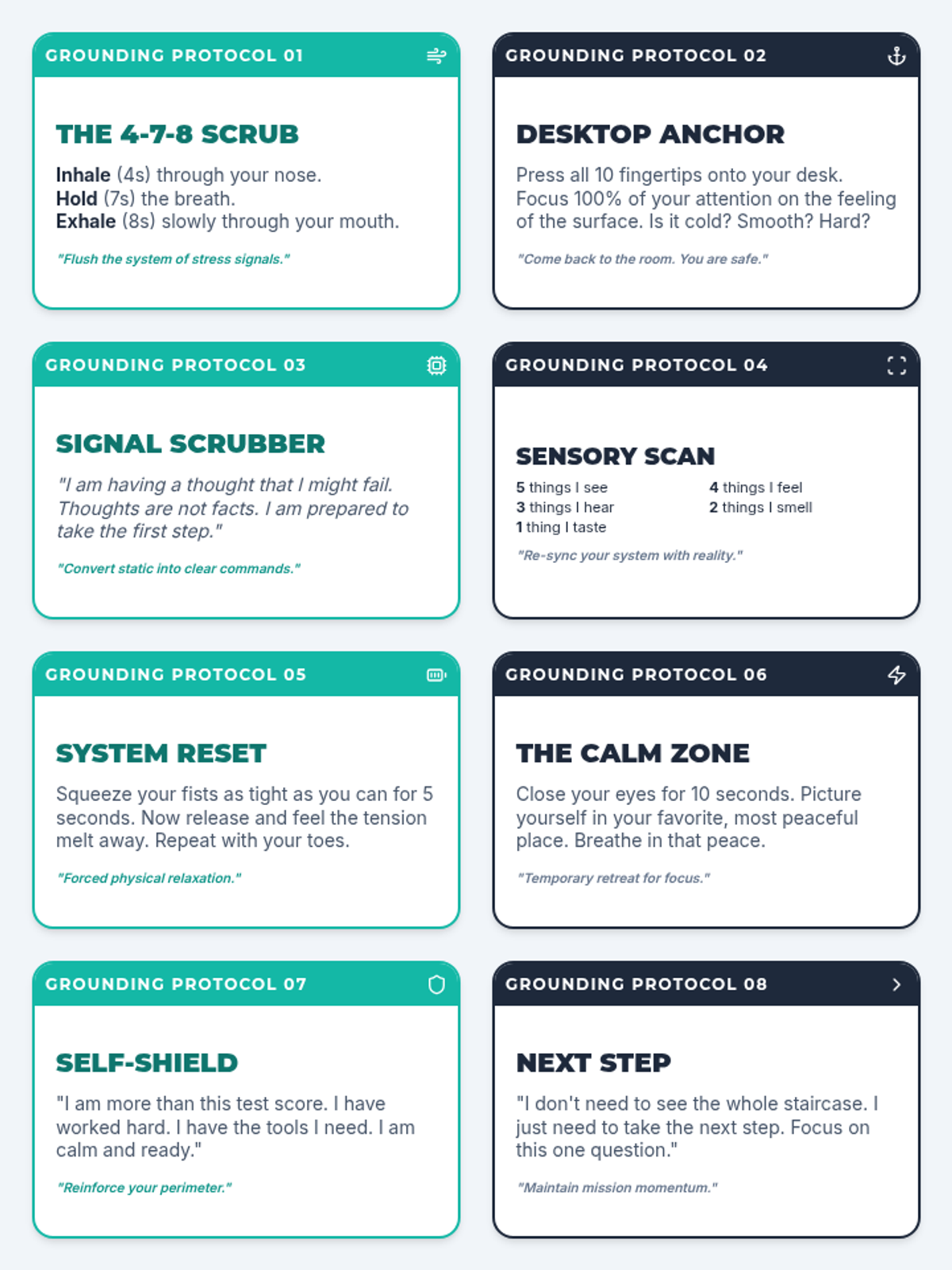
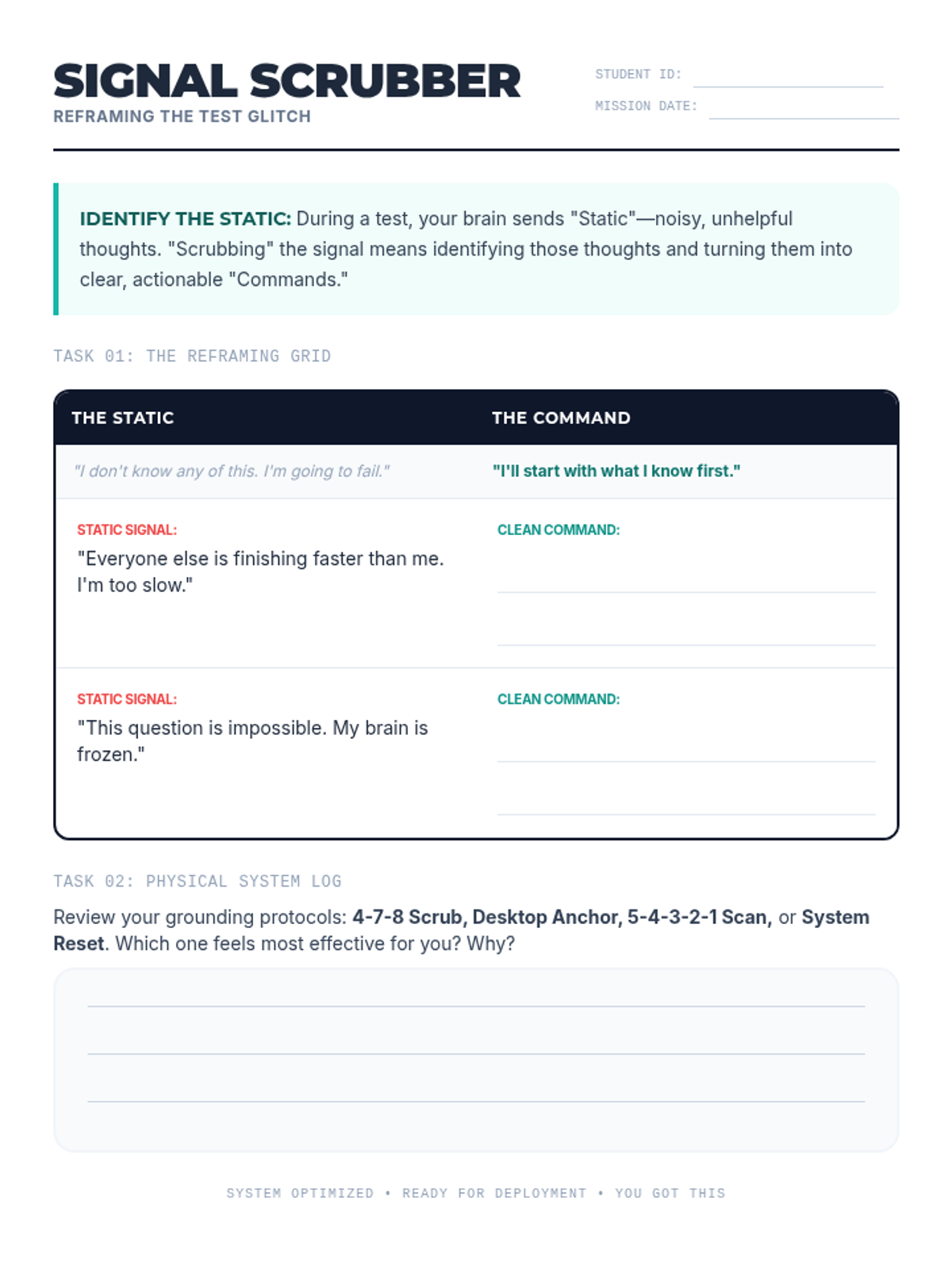
A comprehensive social-emotional learning lesson designed to help students navigate testing anxiety using mindfulness, somatic grounding, and cognitive reframing. This lesson equips students with 'micro-moments' of calm to regain control during high-stakes assessments.
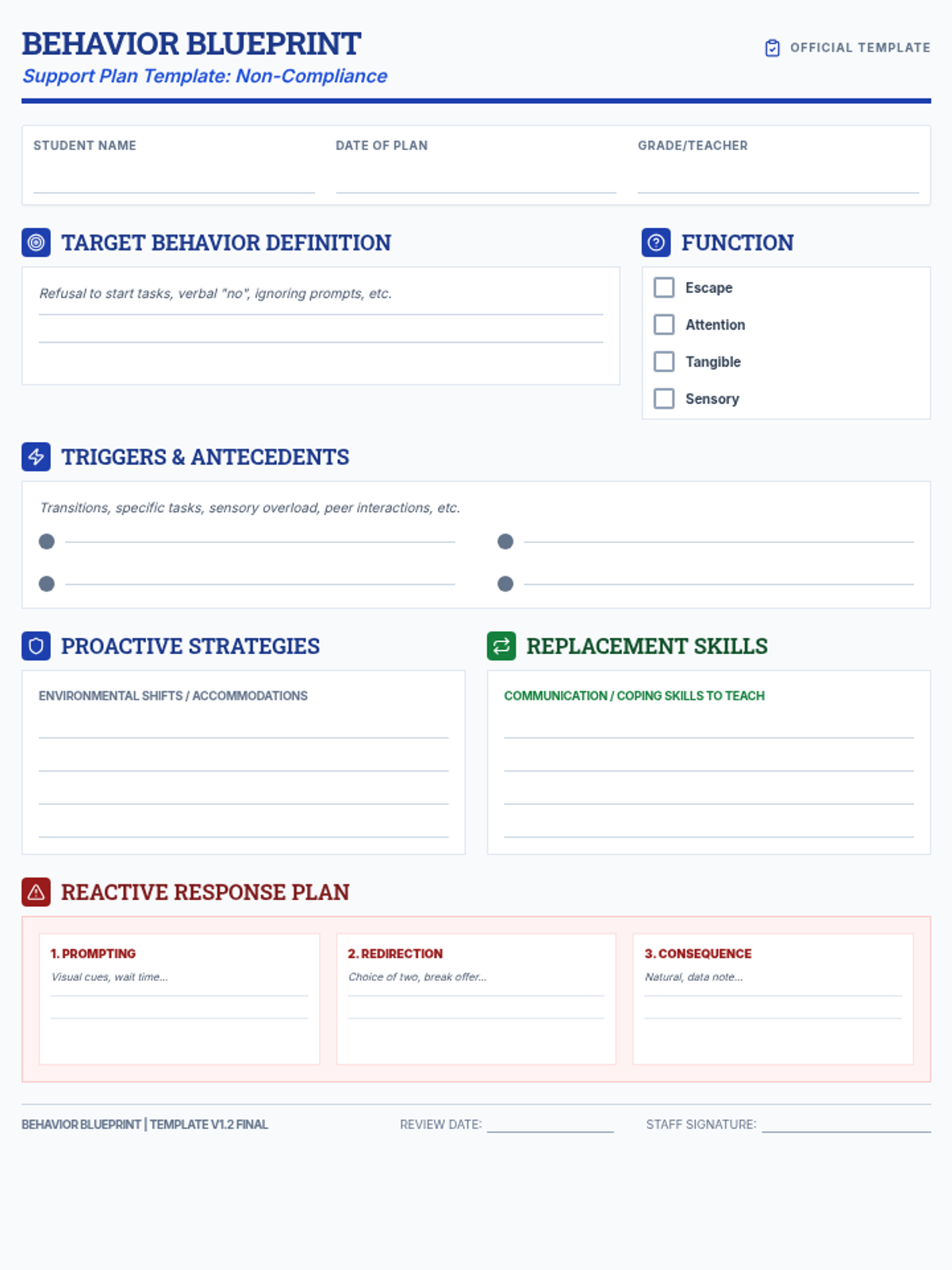
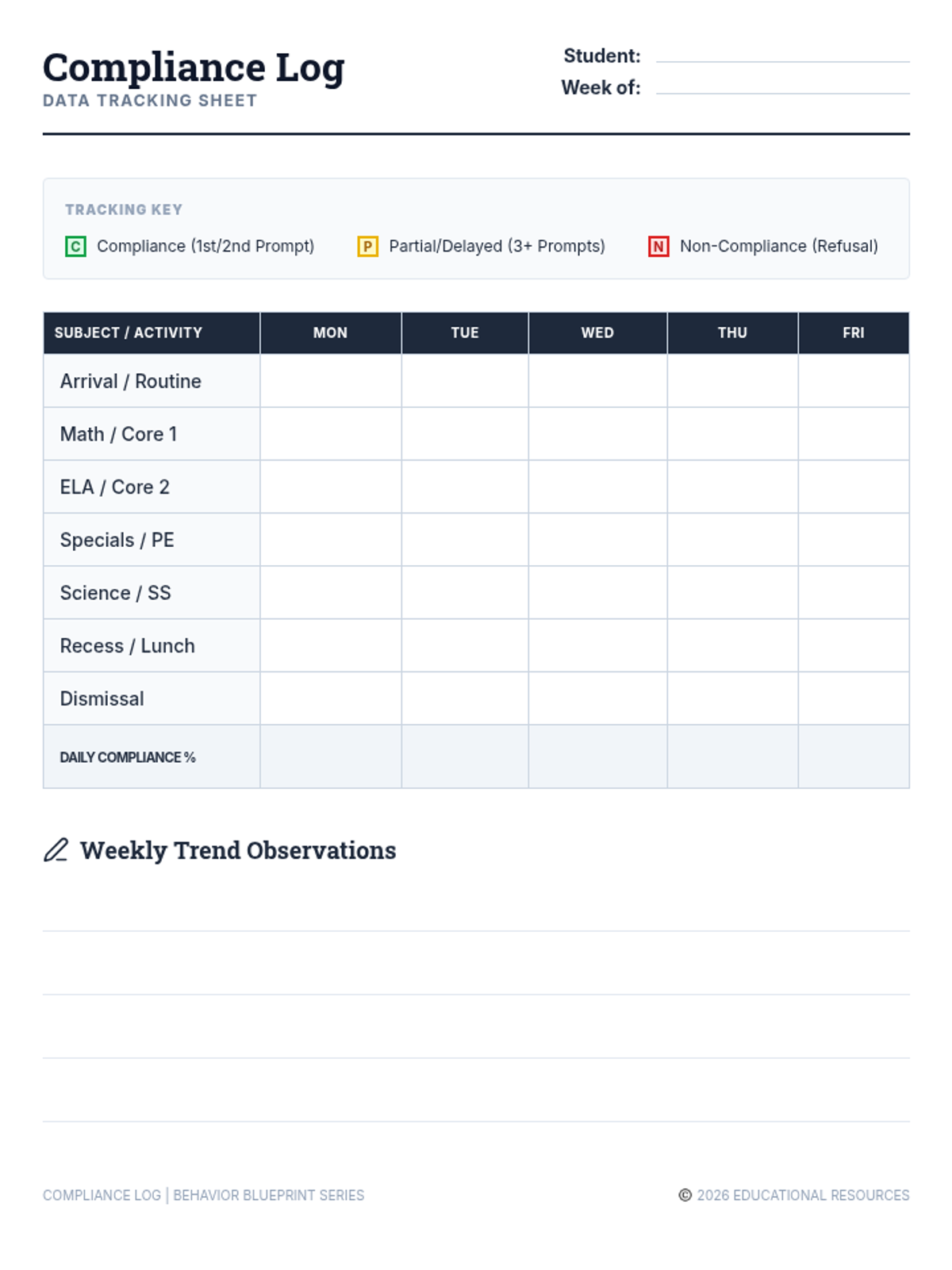
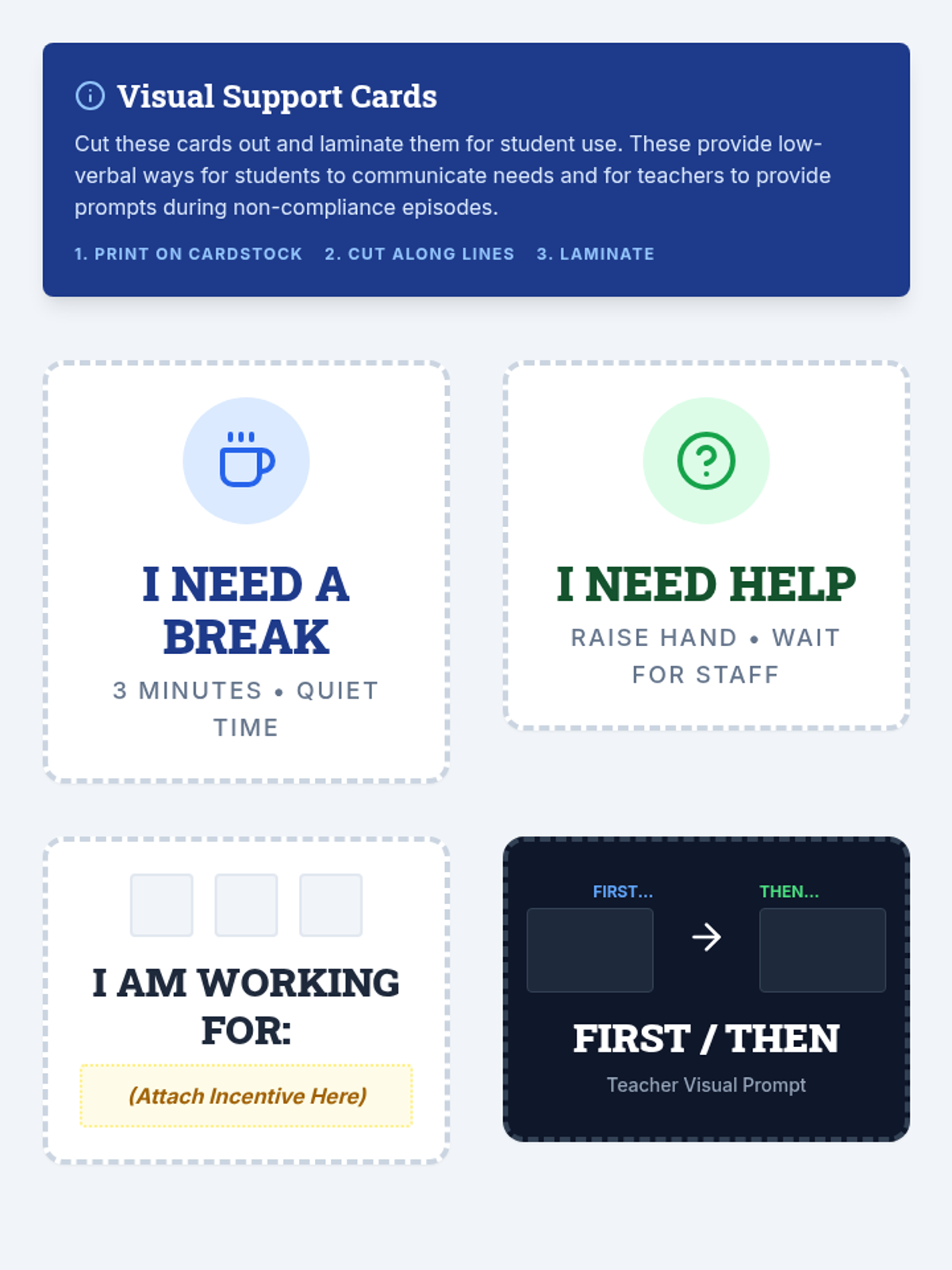
A professional and structured set of templates for creating and monitoring Behavior Support Plans, specifically designed for managing non-compliance in the classroom.
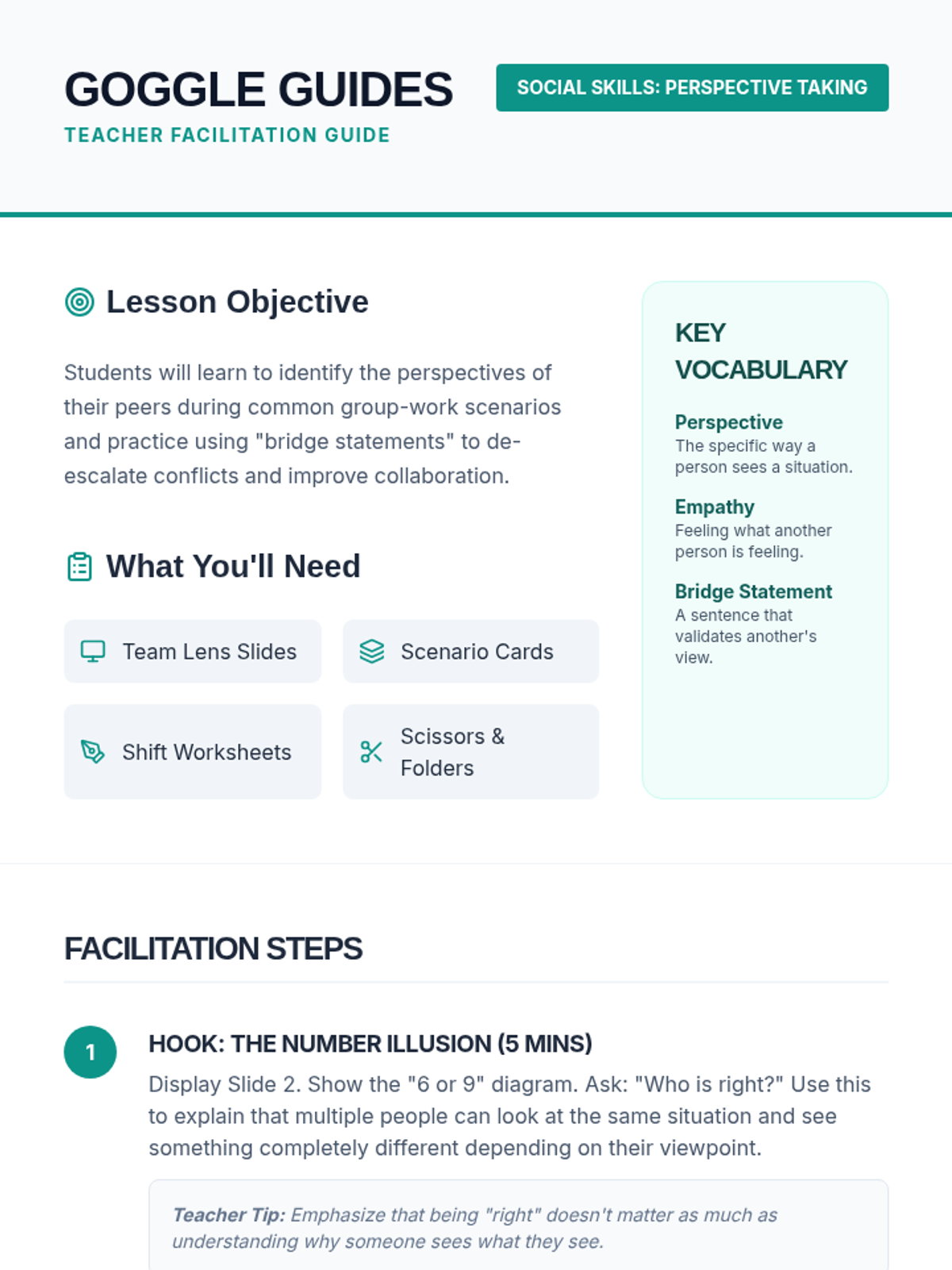
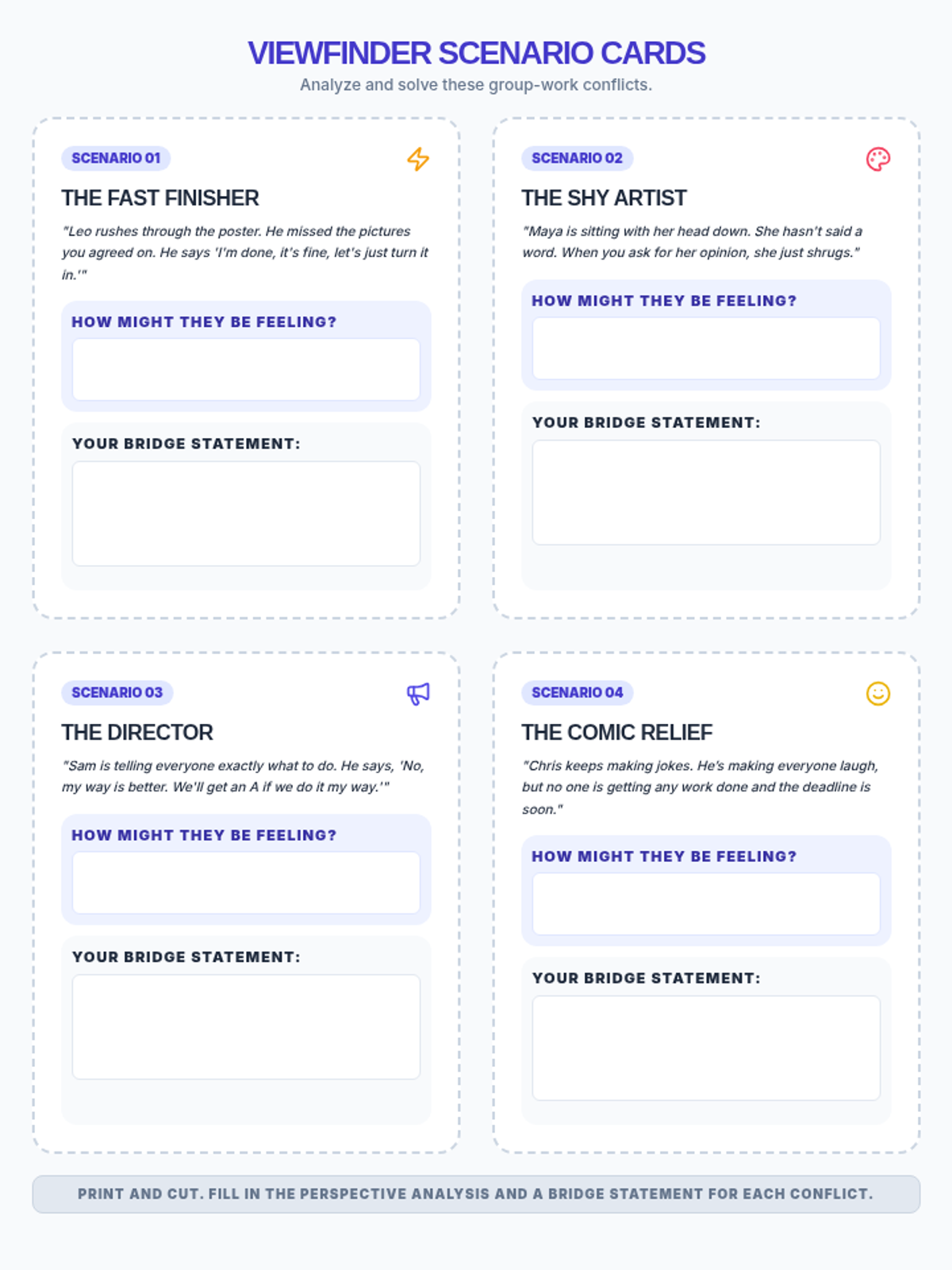
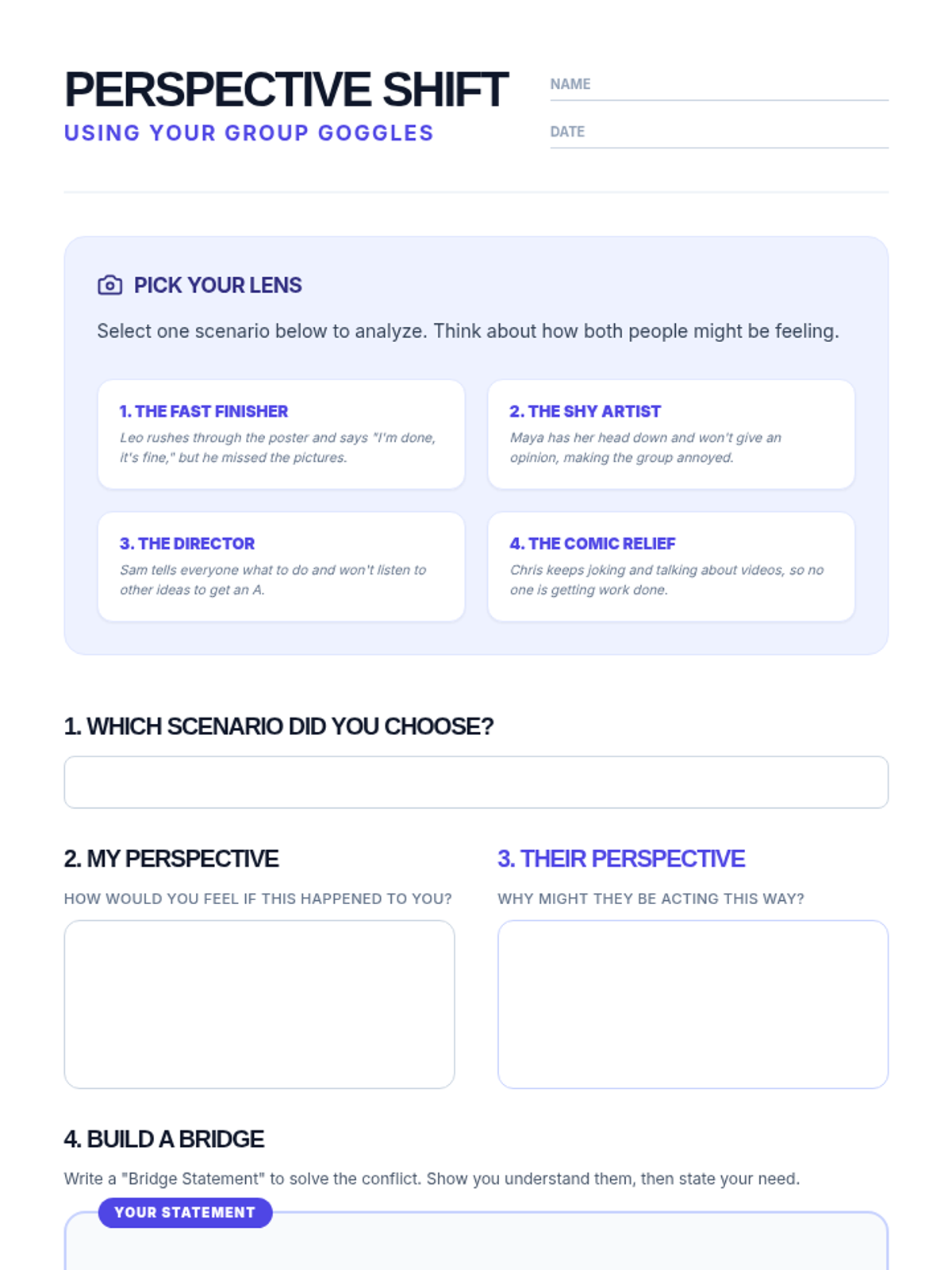
A social skills lesson focused on perspective-taking during school group work, helping students understand different points of view and resolve conflicts collaboratively.
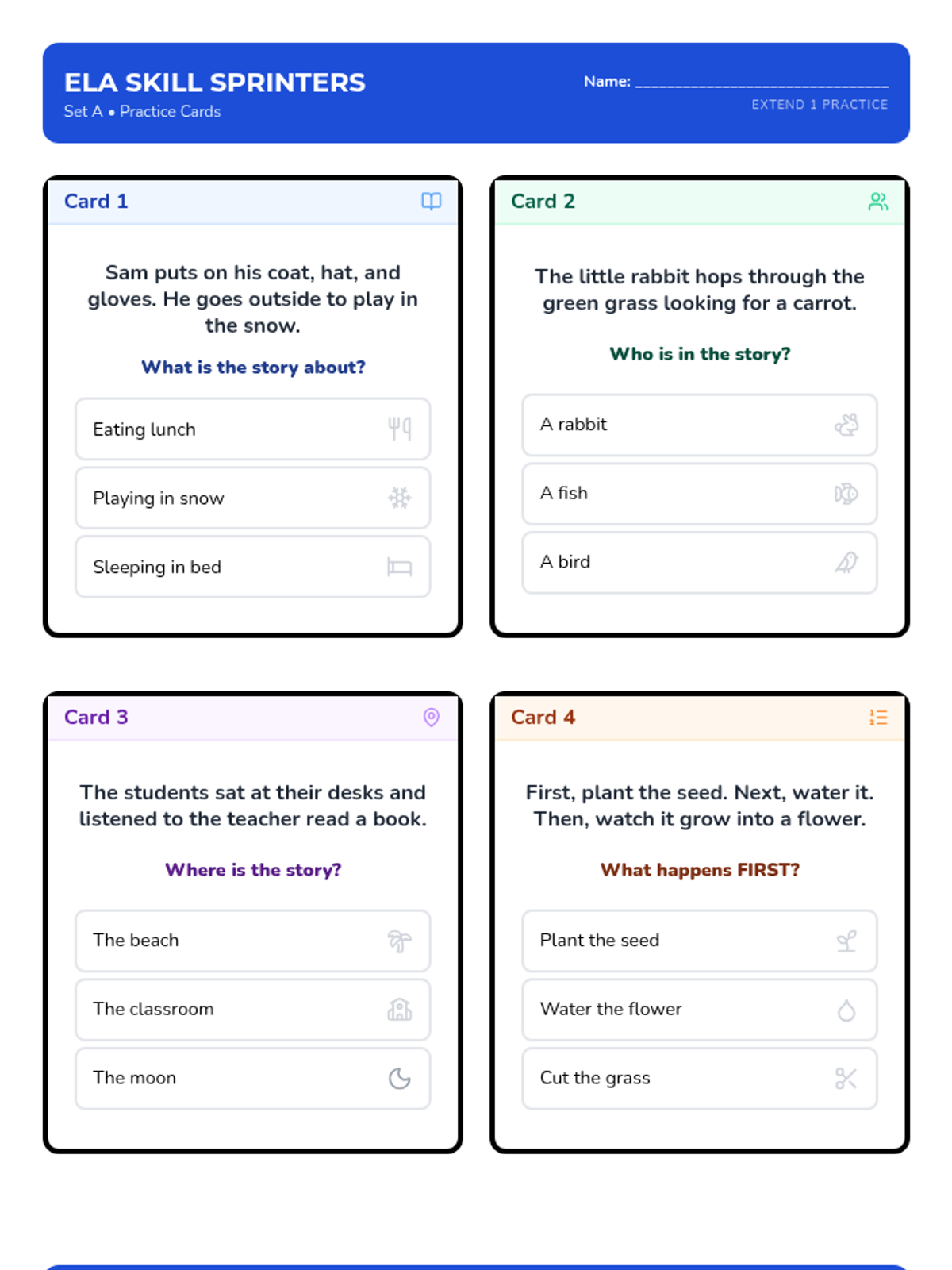
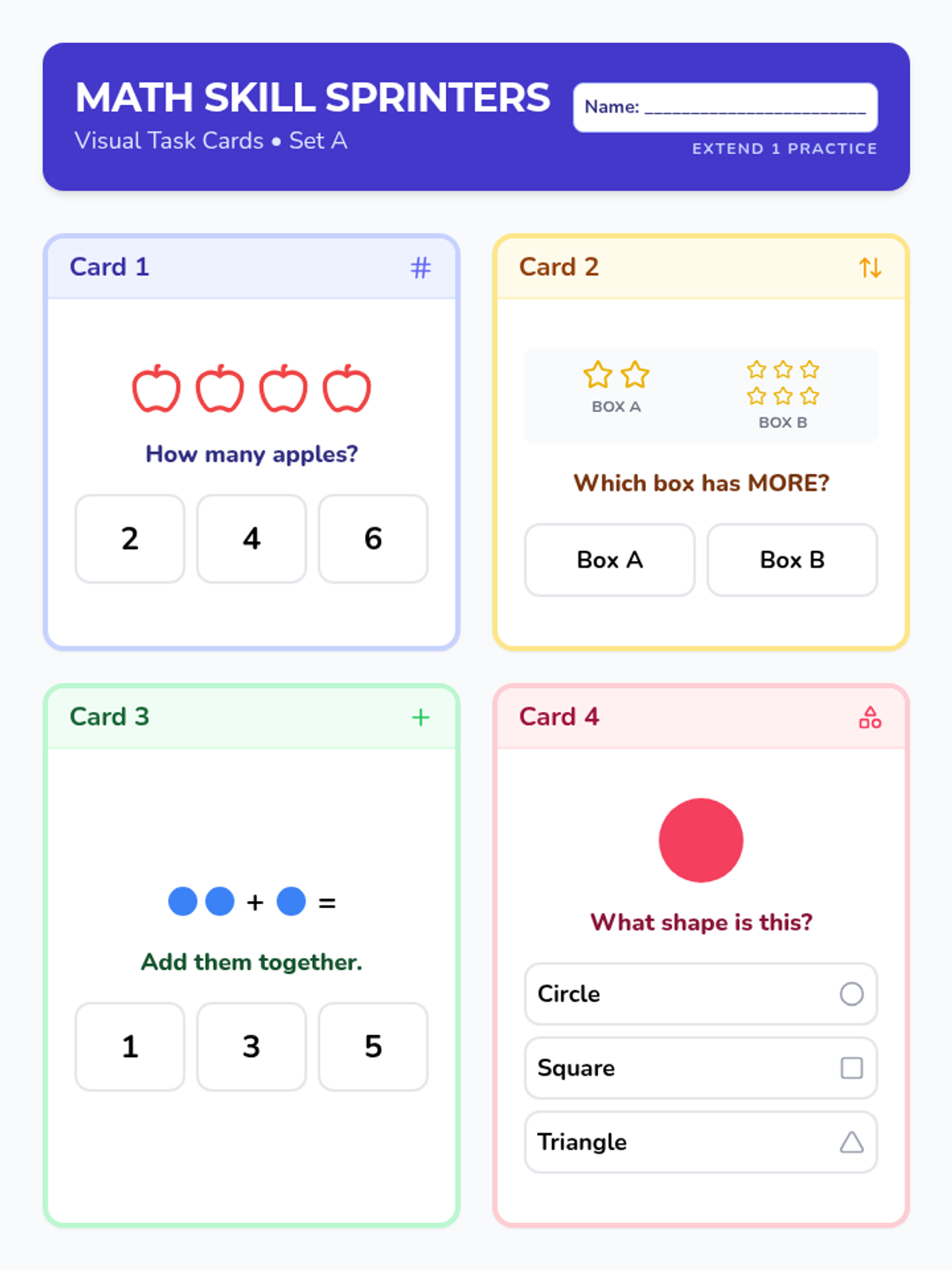
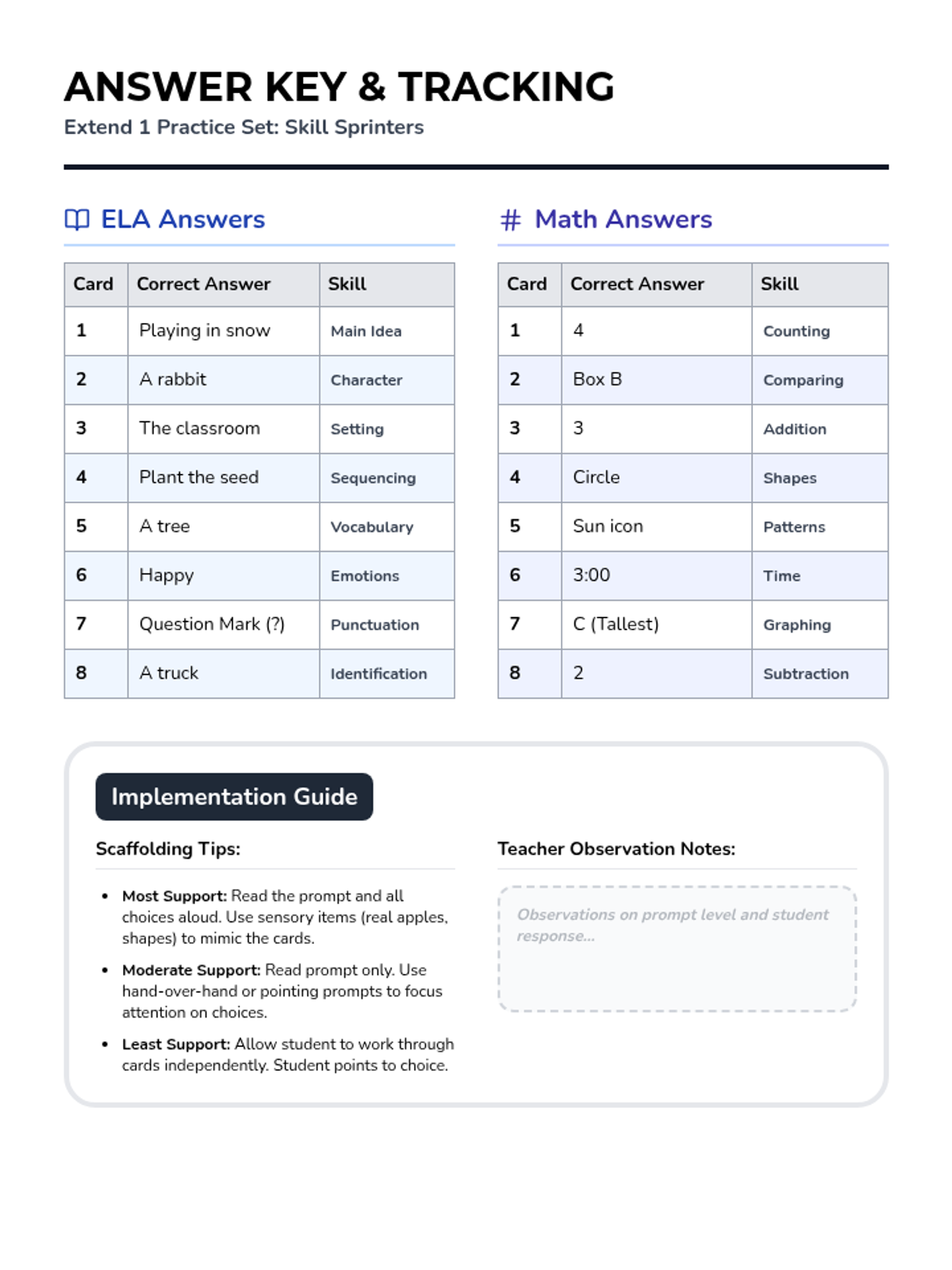
A set of ELA and Math visual task cards designed for students preparing for the Extend 1 alternate assessment, featuring high-contrast visuals and simplified choices.
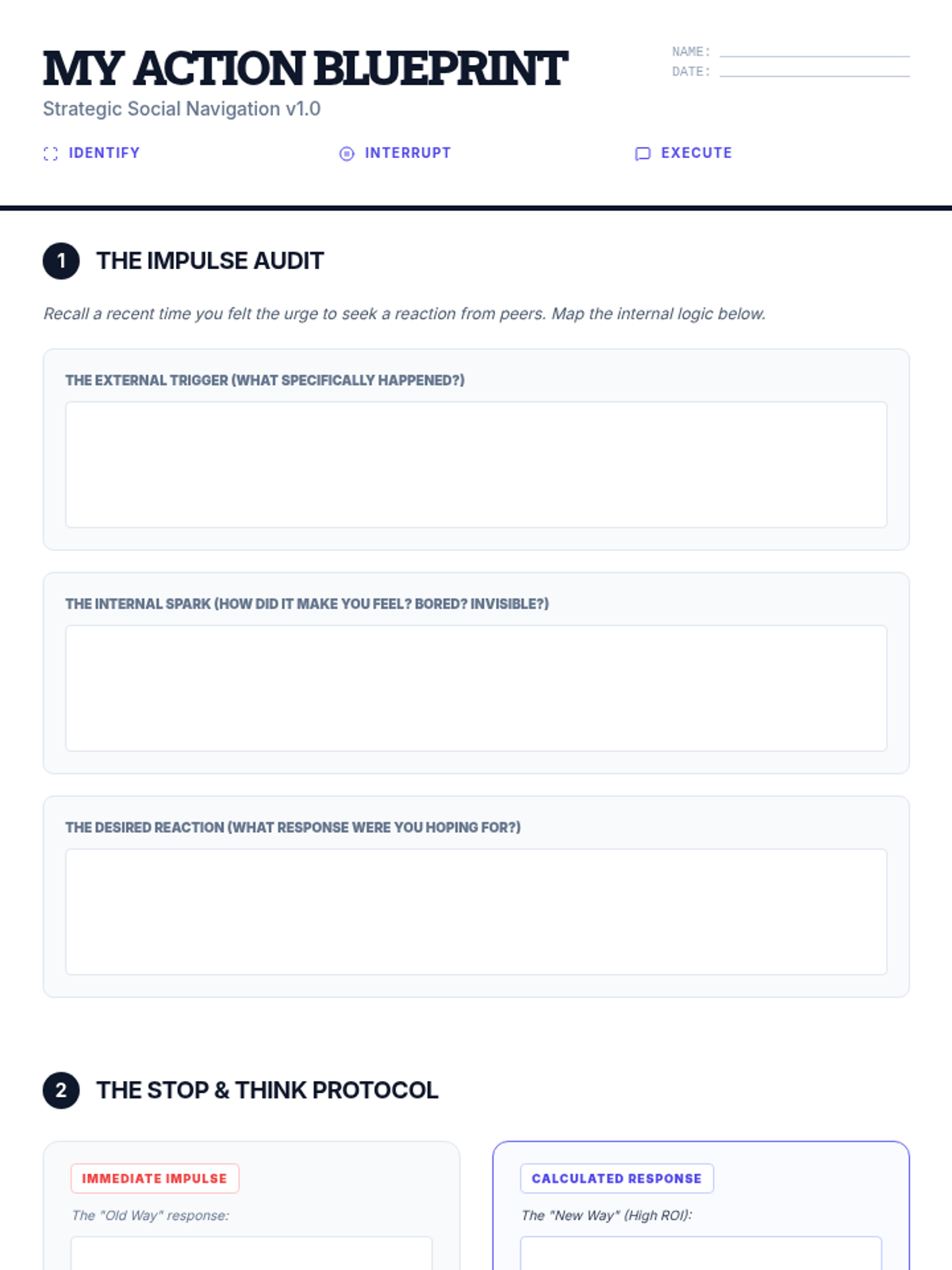
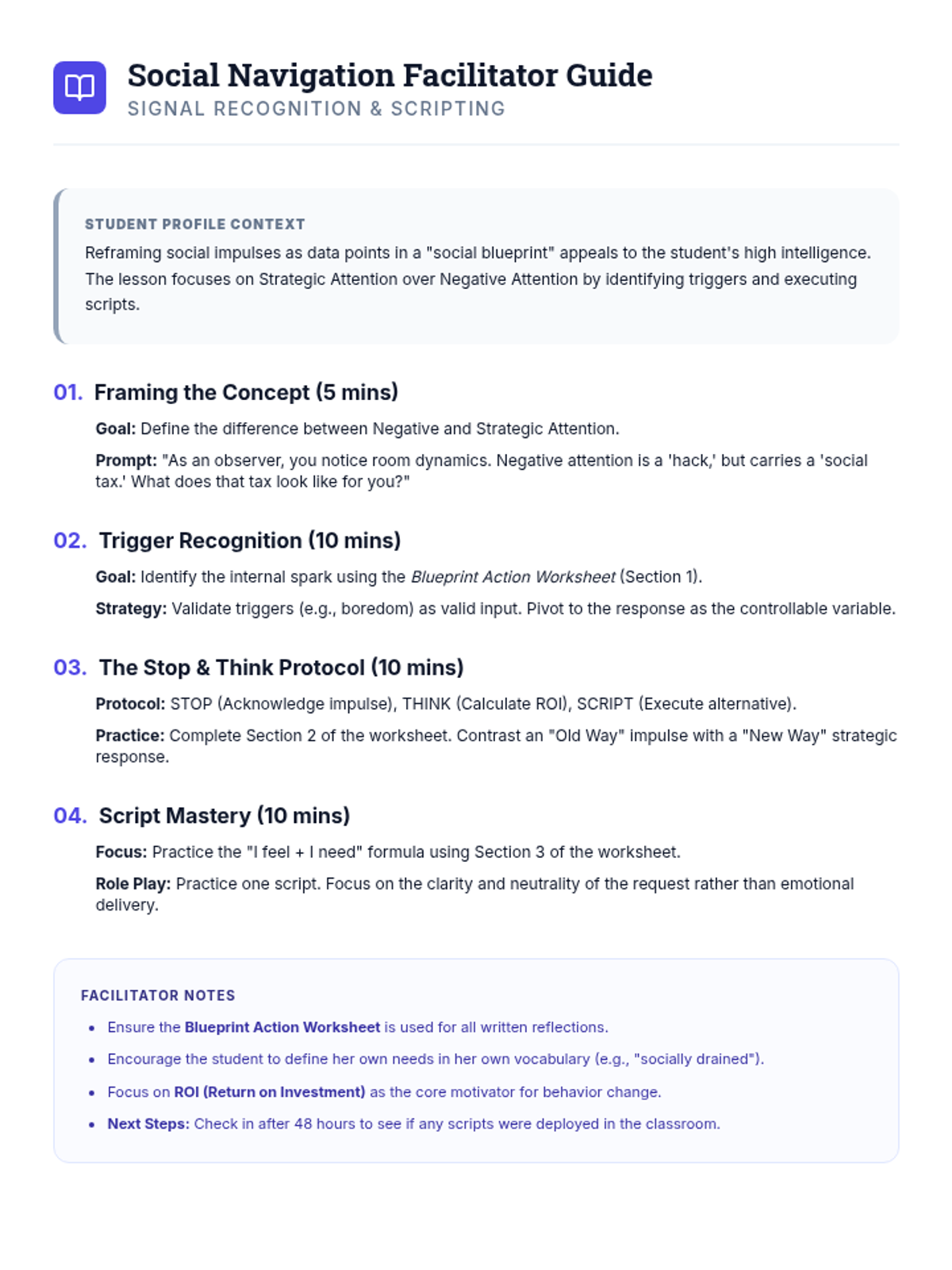
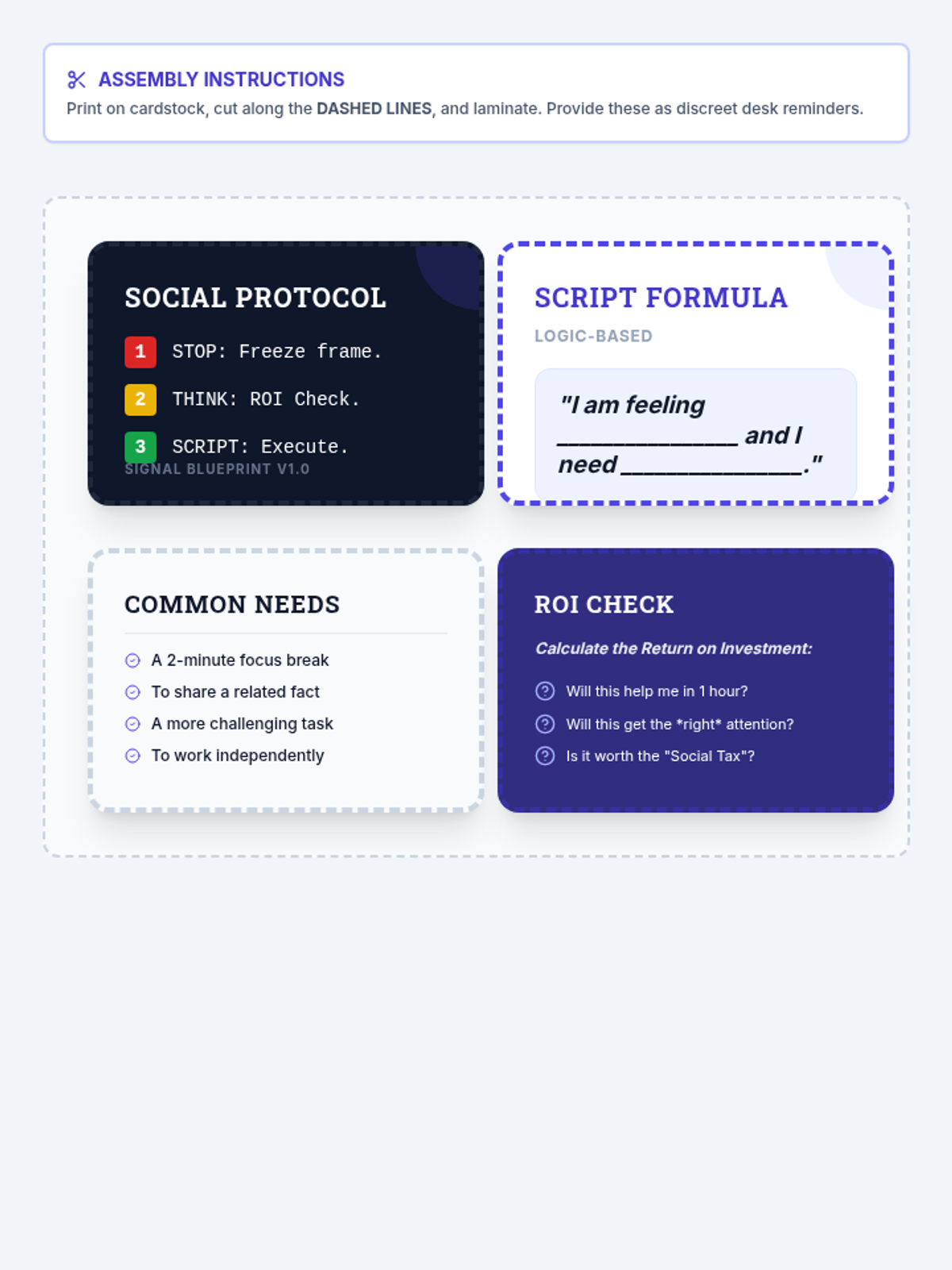
A mini-lesson designed for an intelligent 9th-grade student to identify social triggers, practice the 'Stop and Think' strategy, and use scripts for healthy communication.
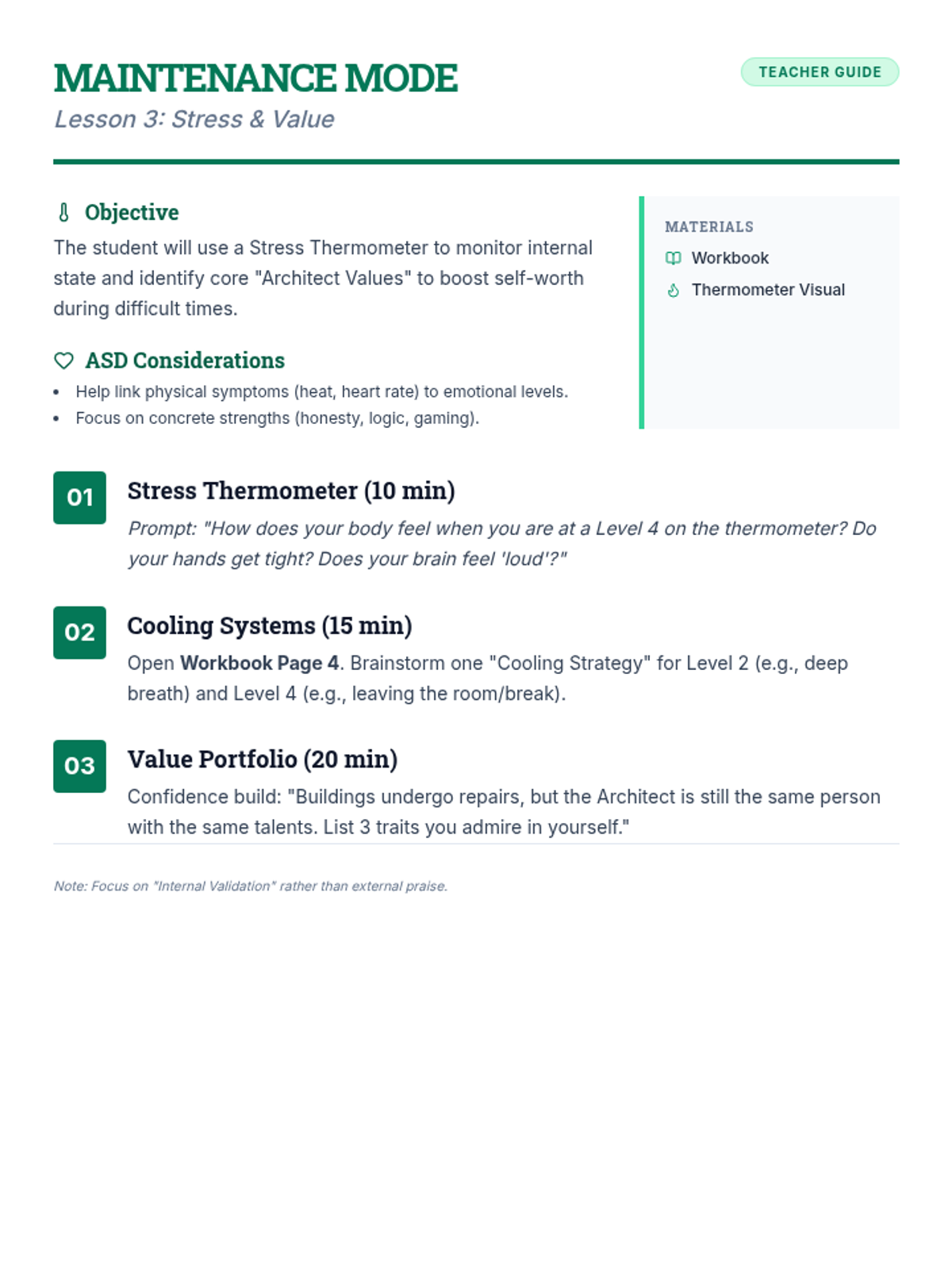
Focuses on self-regulation using a stress thermometer and identifying personal strengths to build a sustainable resilience plan.
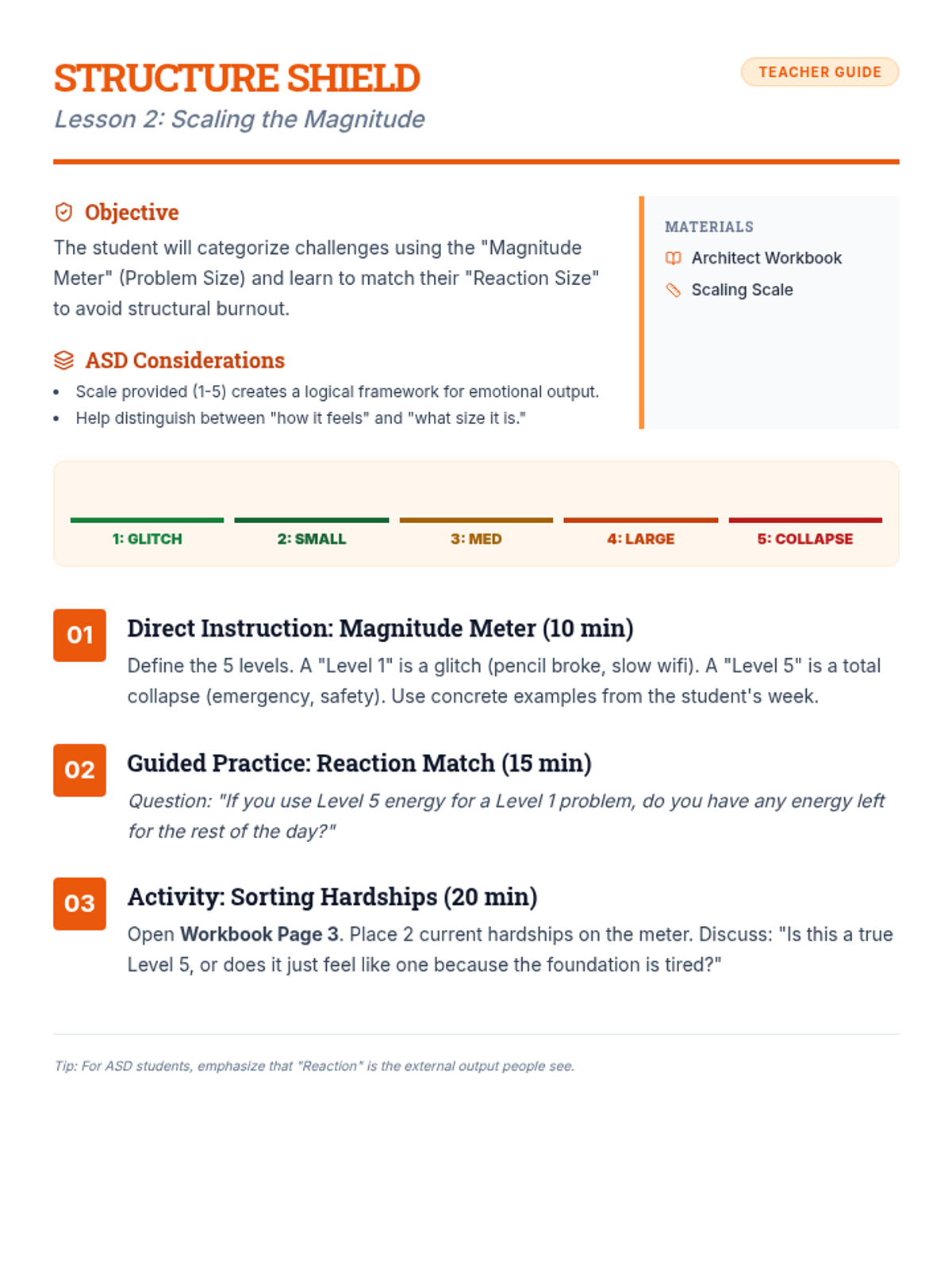
Teaches the student to categorize problems by size and align their emotional reactions appropriately using the Magnitude Meter.
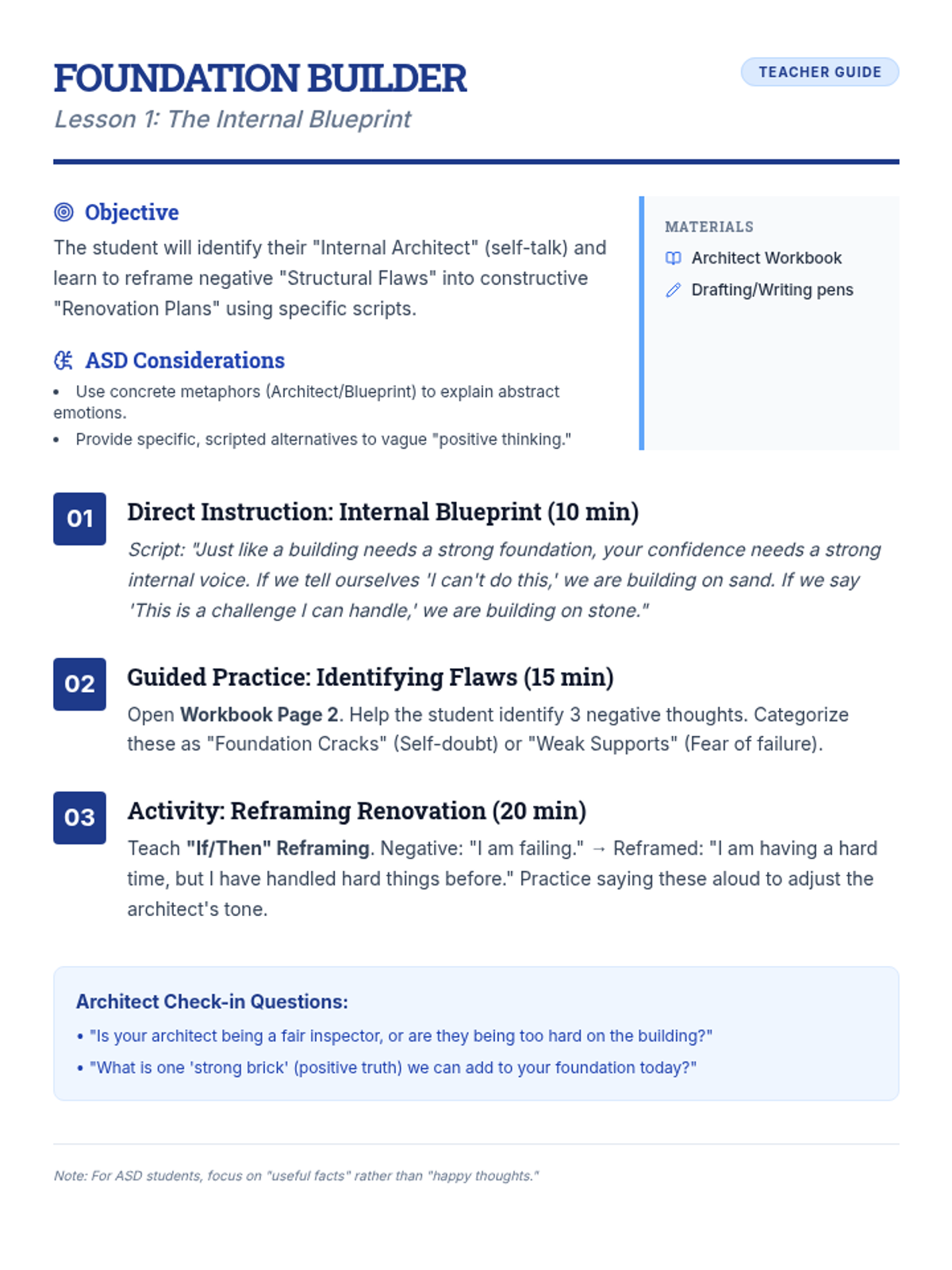
Focuses on identifying internal dialogue and using reframing techniques to shift from negative to constructive thinking.
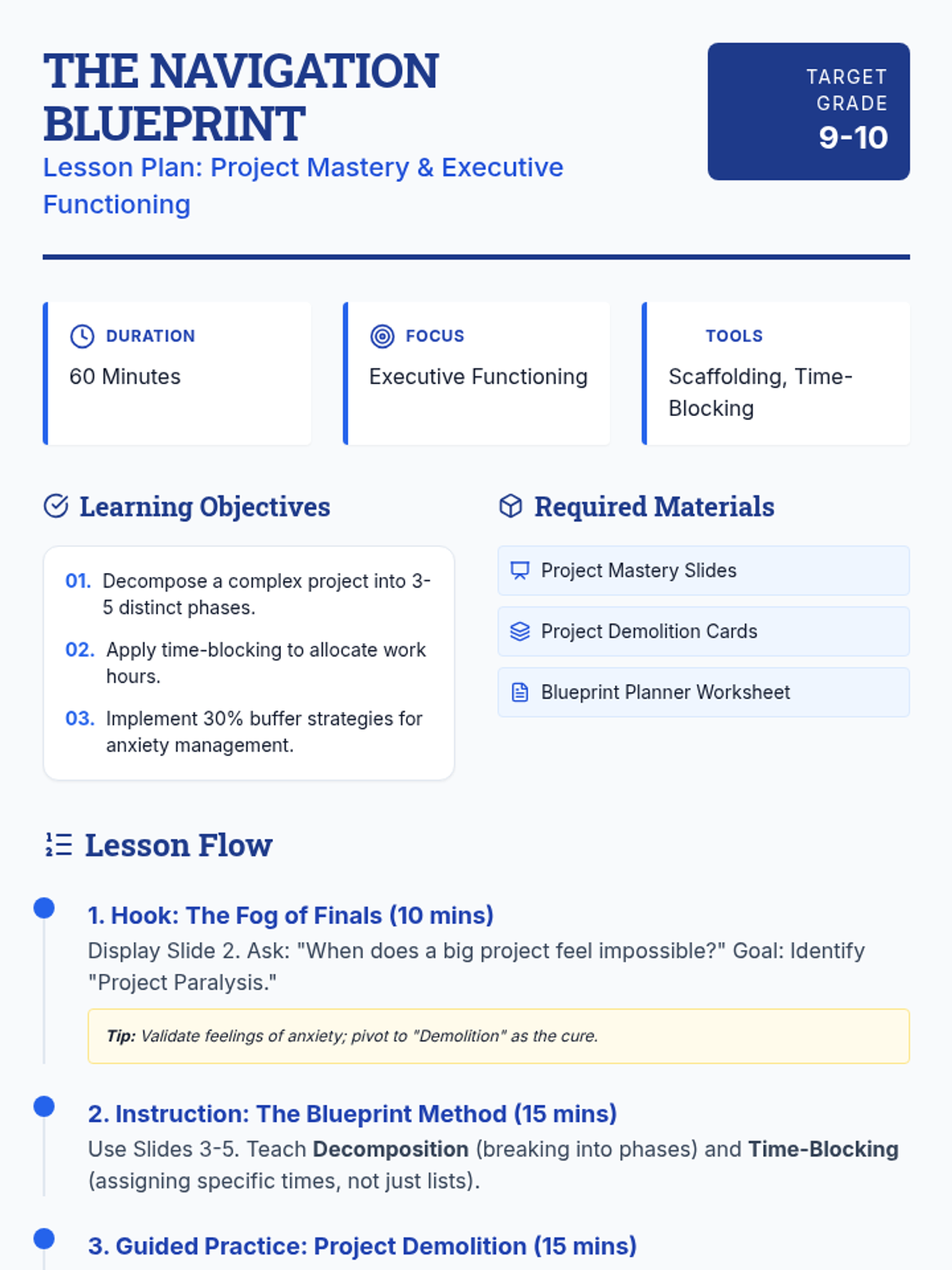
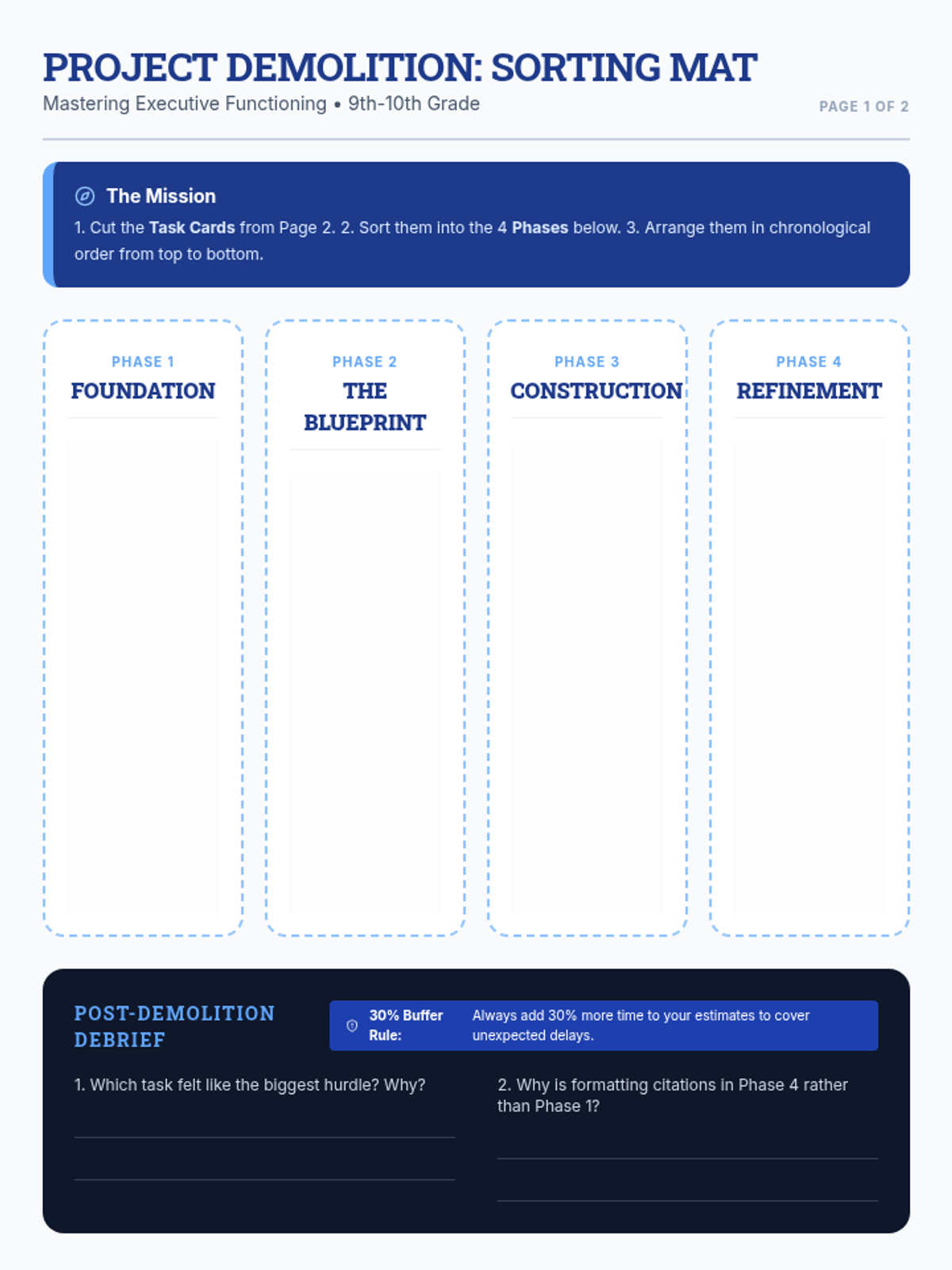
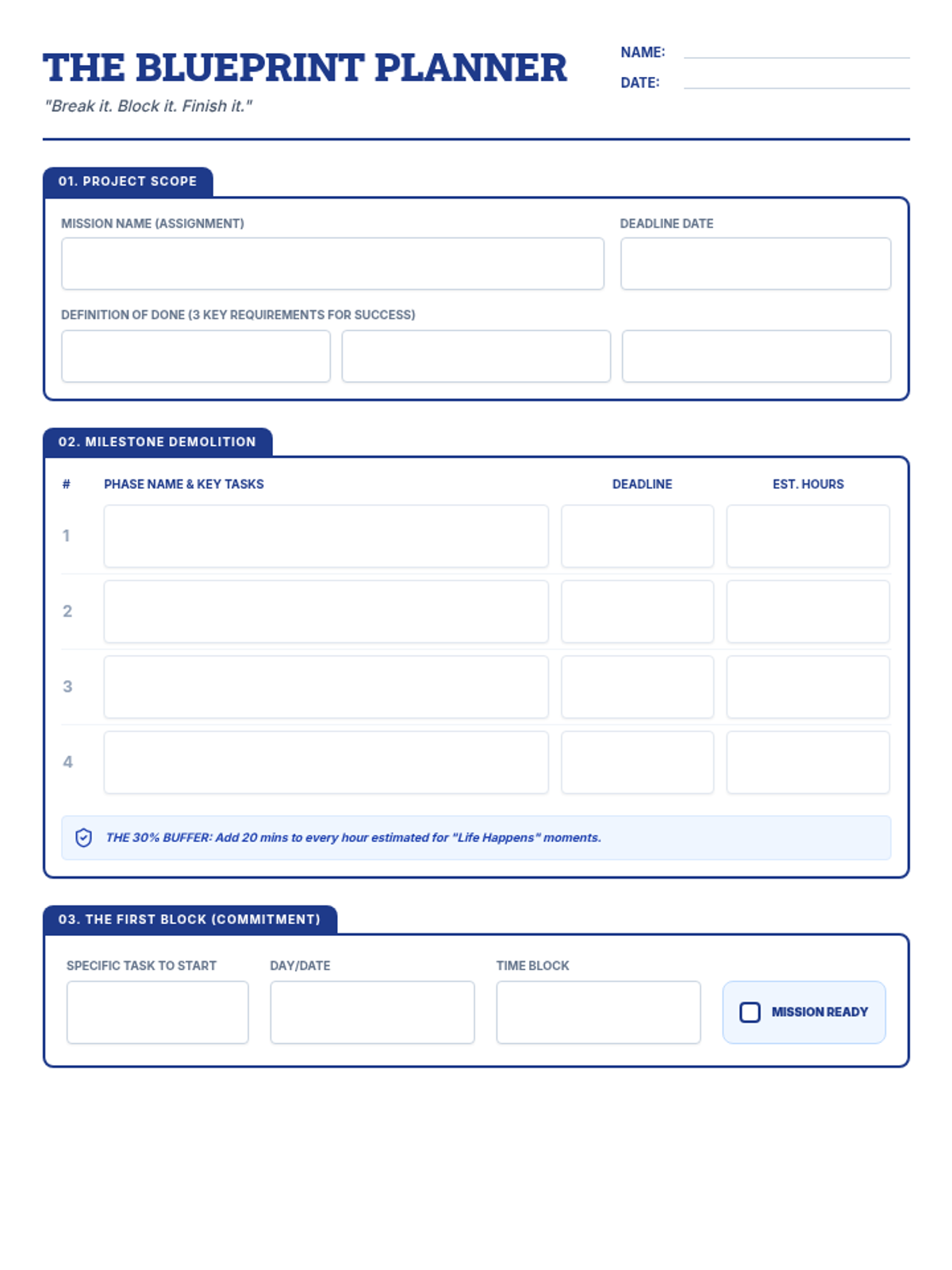
This lesson equips 9th and 10th-grade students with executive functioning skills to tackle complex high school projects. Through visual decomposition and time-blocking techniques, students learn to transform overwhelming assignments into clear, manageable blueprints for success.
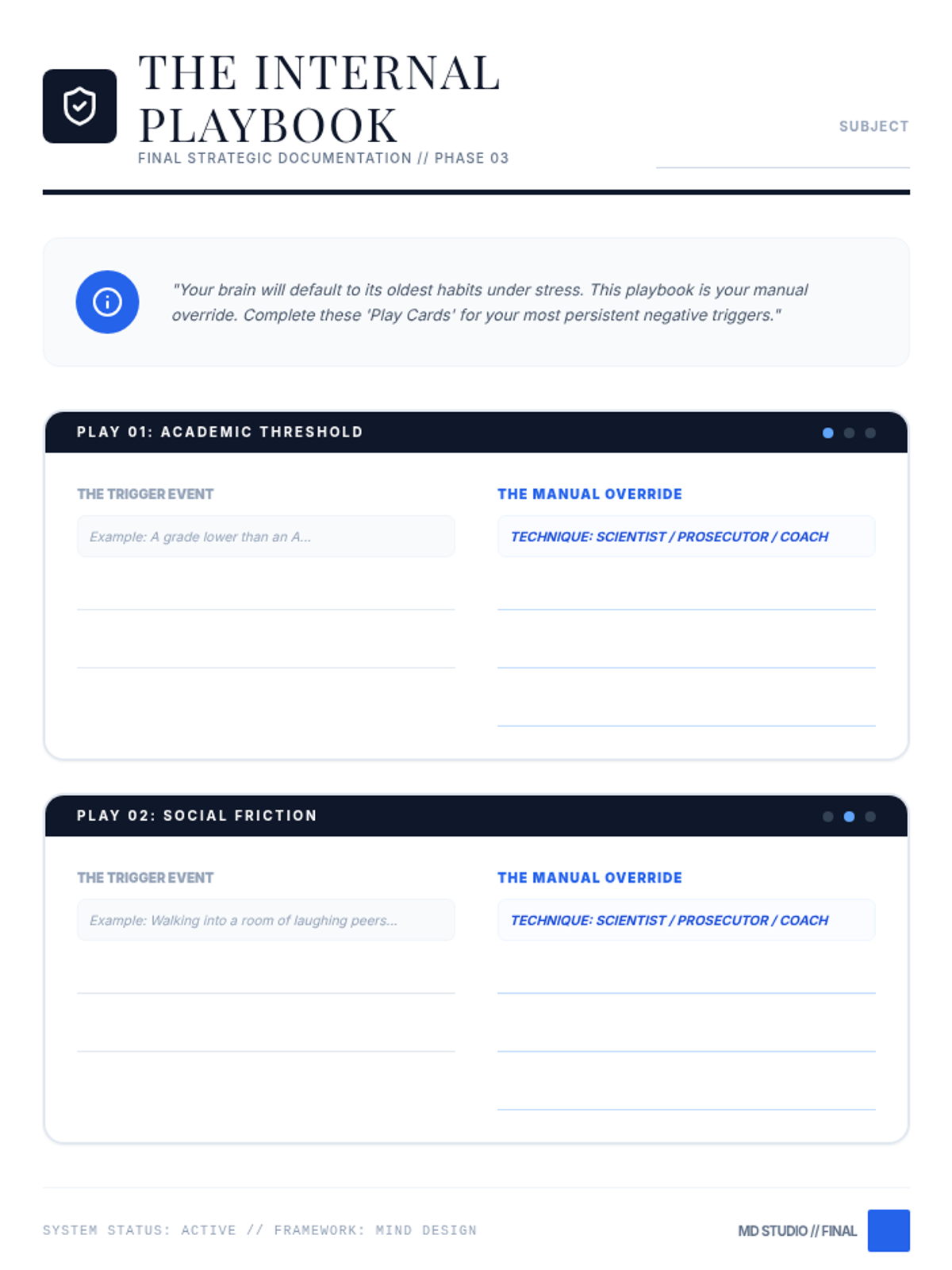
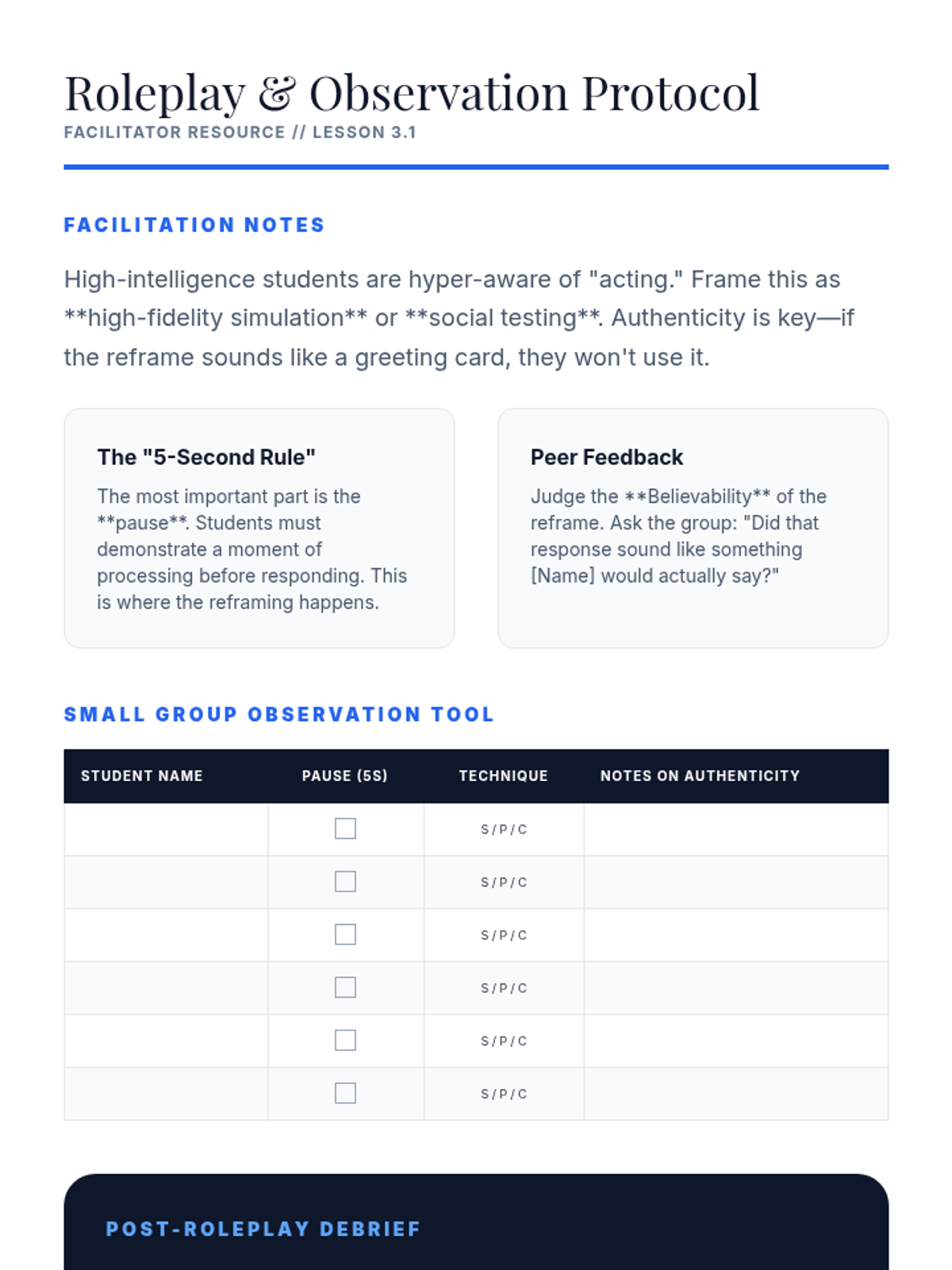
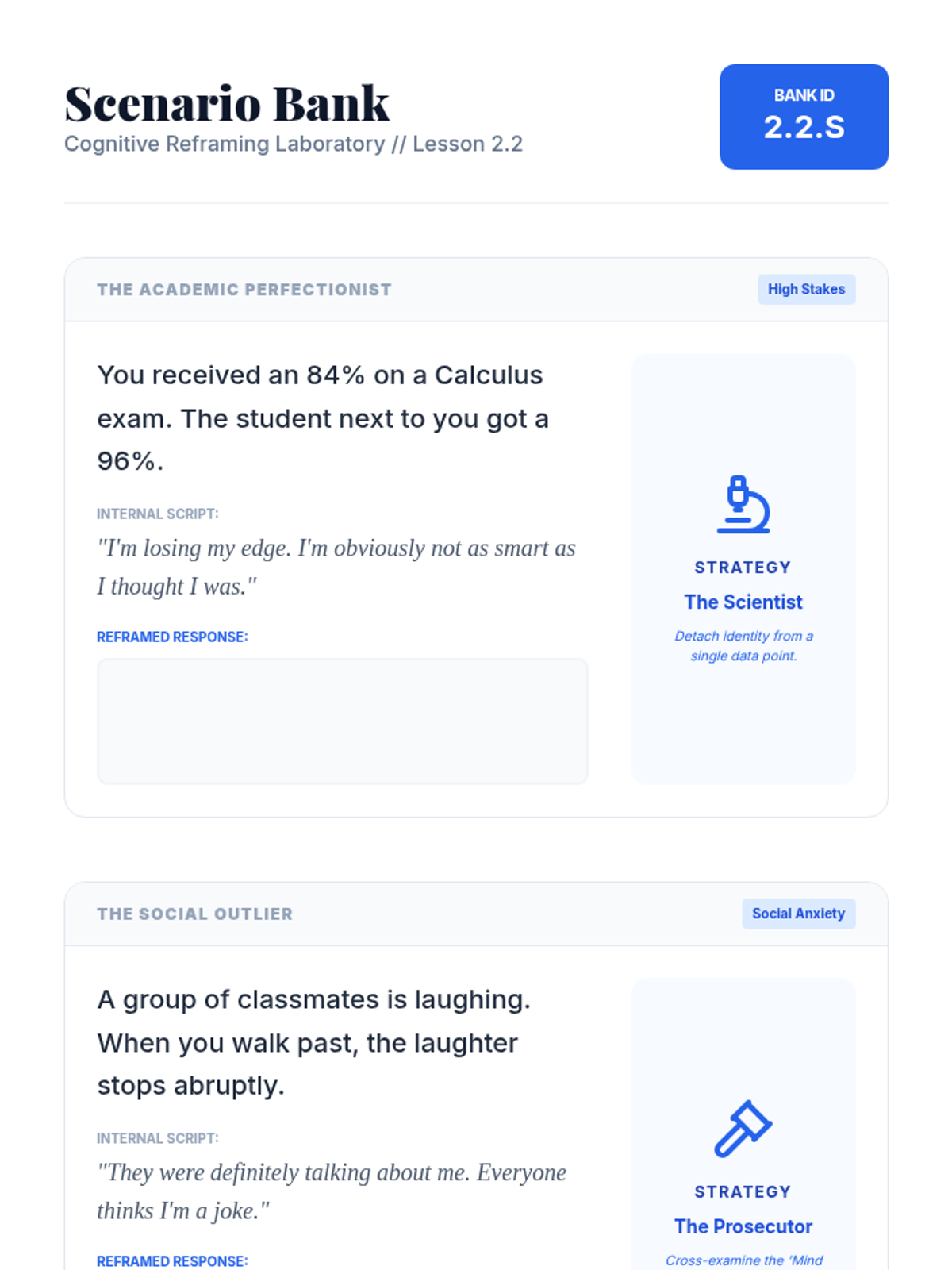
Application of reframing techniques through high-stakes social and academic scenarios, featuring role-play practice and the creation of a personalized mental playbook.
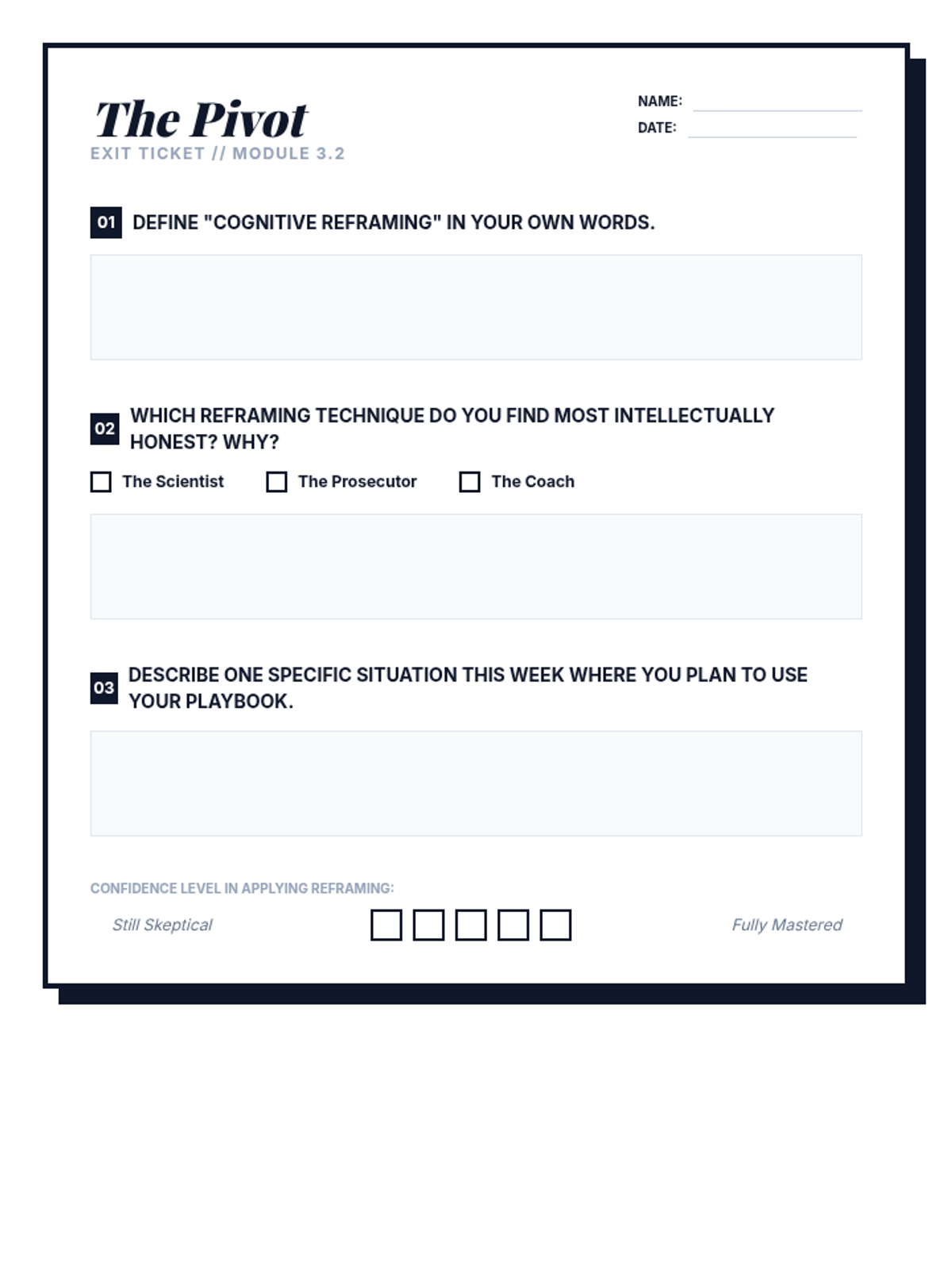
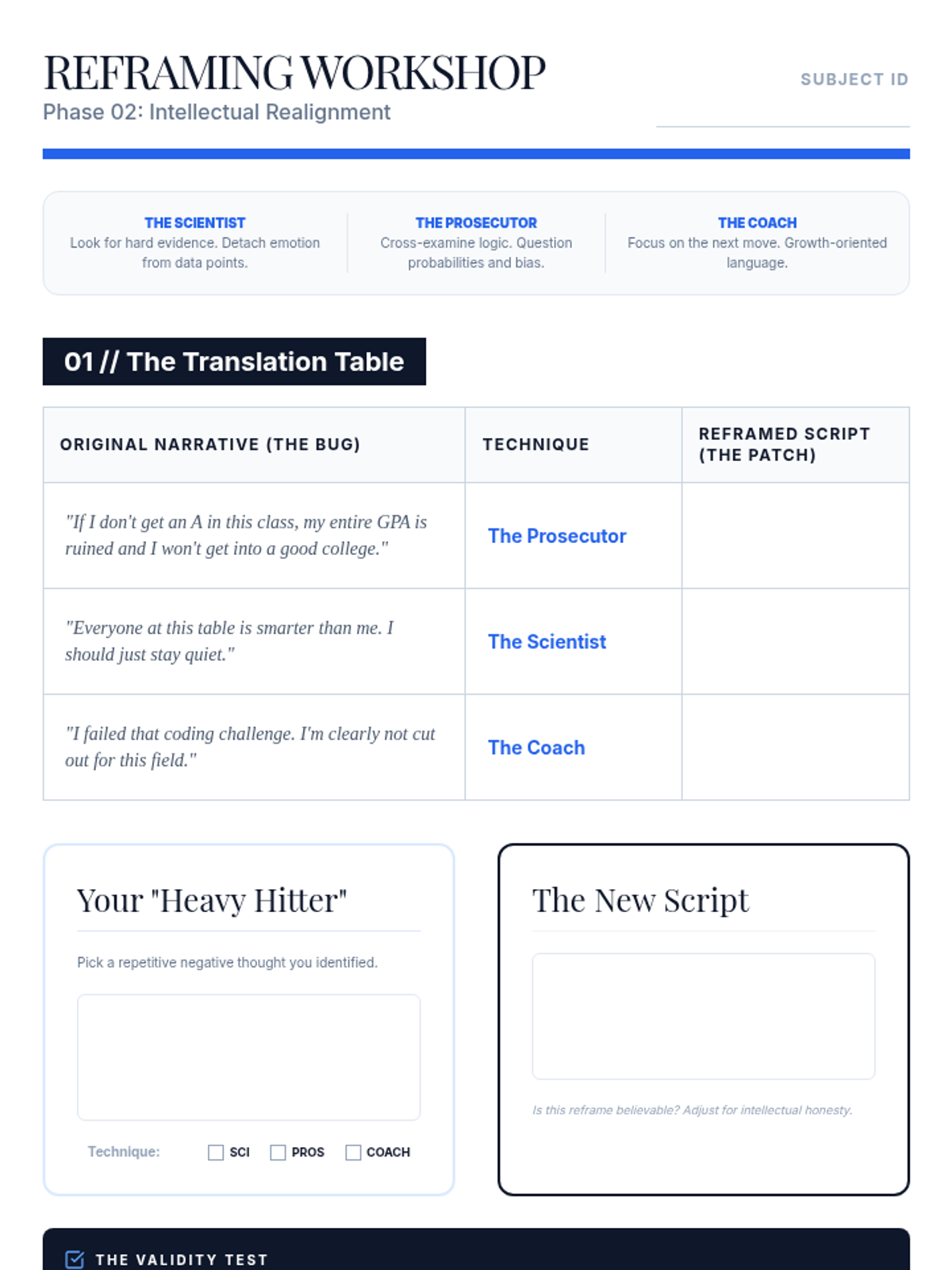
Interactive workshop teaching three core reframing strategies: The Scientist (evidence-based), The Prosecutor (logic-checking), and The Coach (action-oriented).
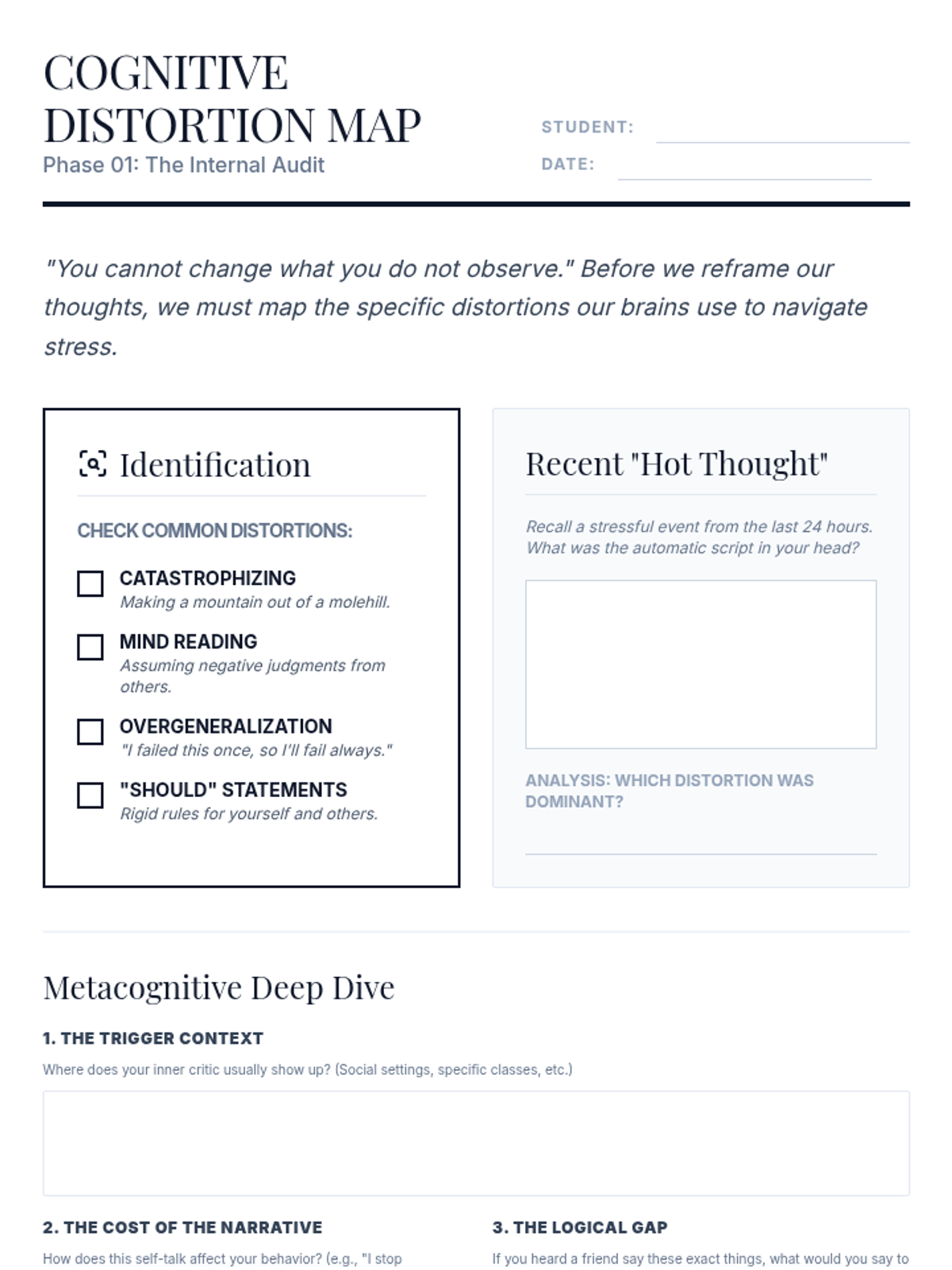
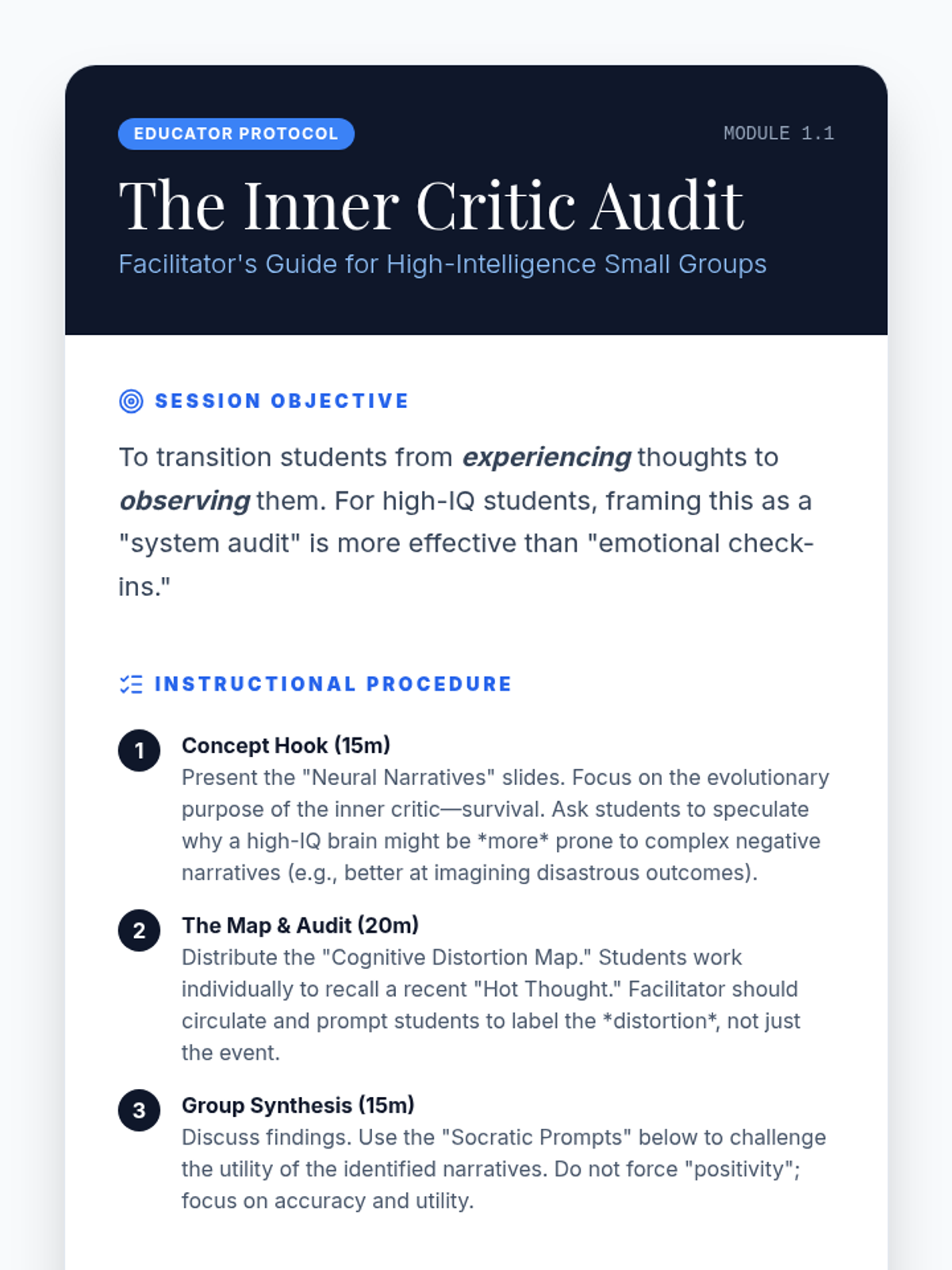
An exploration into the mechanics of the 'Inner Critic,' identifying specific cognitive distortions such as catastrophizing and black-and-white thinking through a psychological lens.