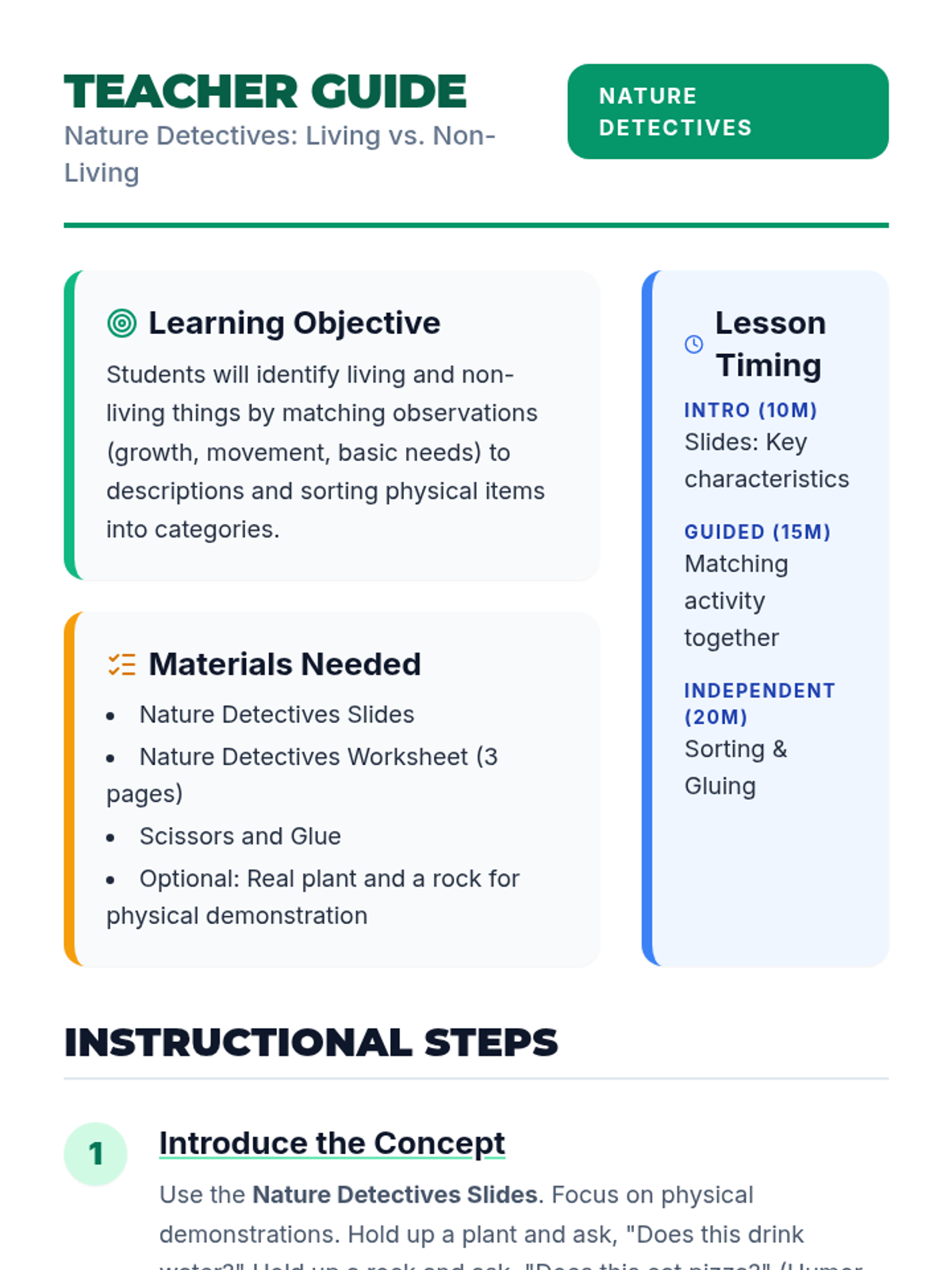
Students will use simple observations to identify living and non-living things based on key characteristics like growth, movement, and the need for food and water.
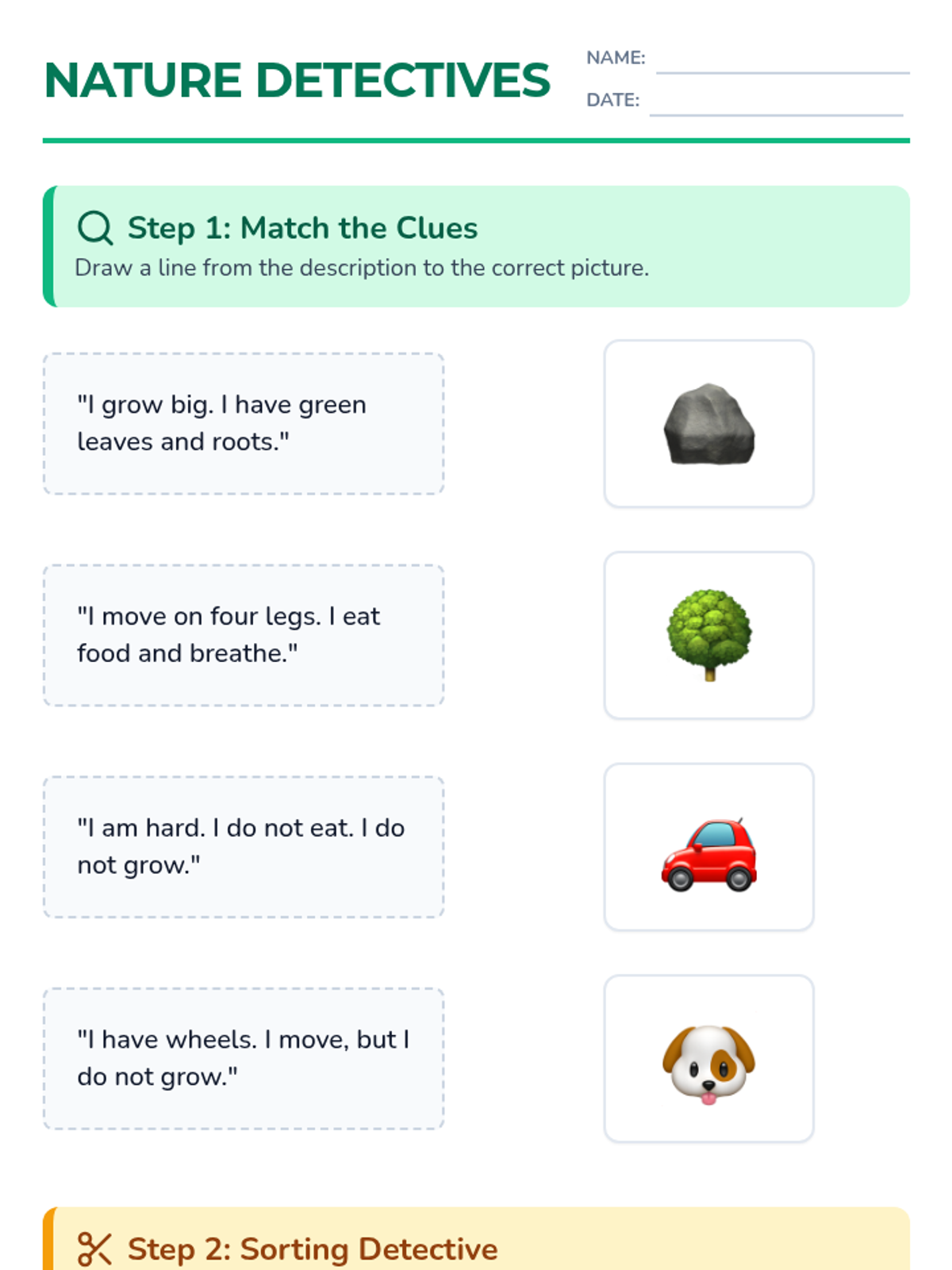
A foundational lesson for students with intellectual disabilities to distinguish between living and non-living things using simple observations like growth, movement, and basic needs.
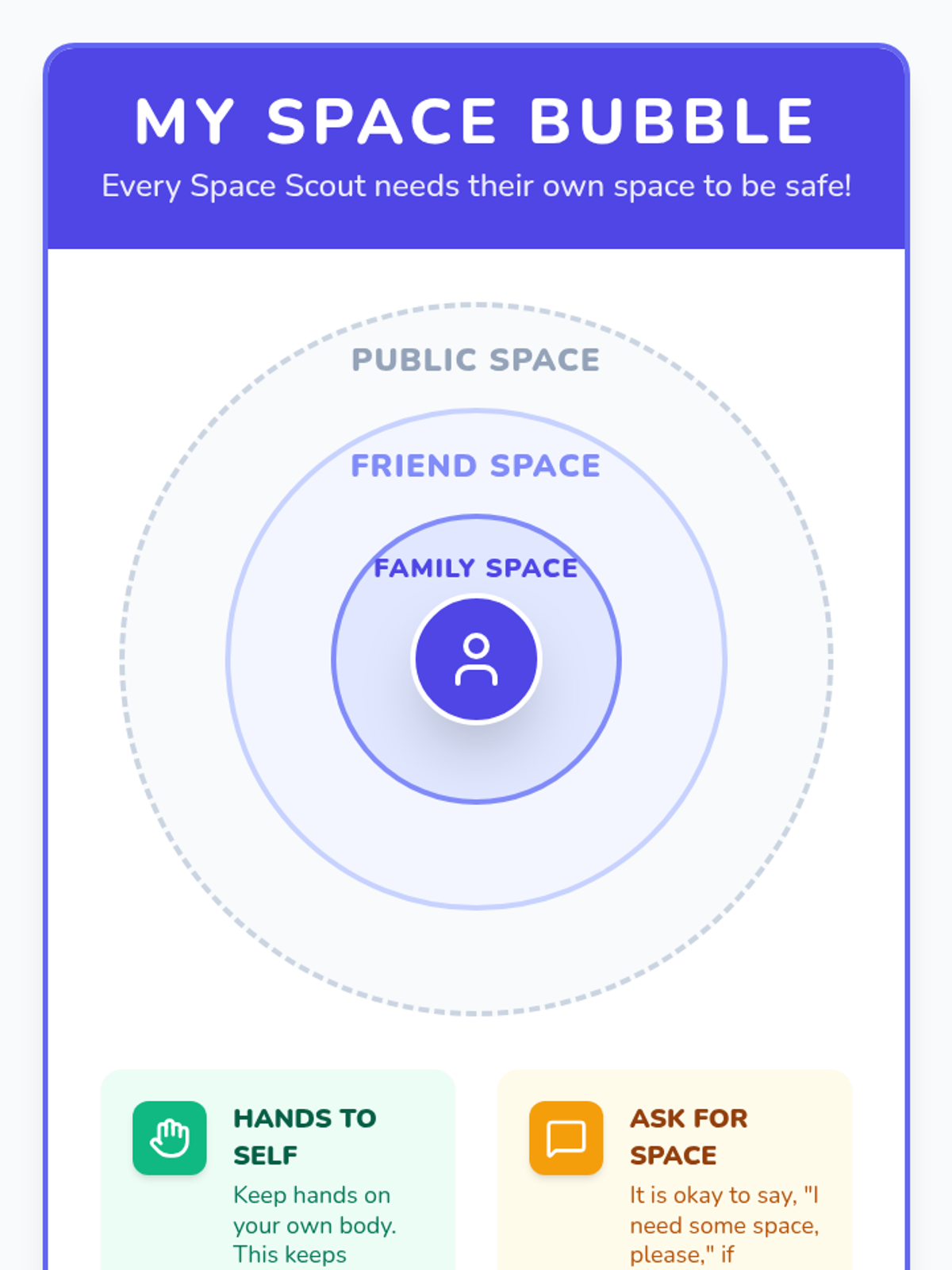
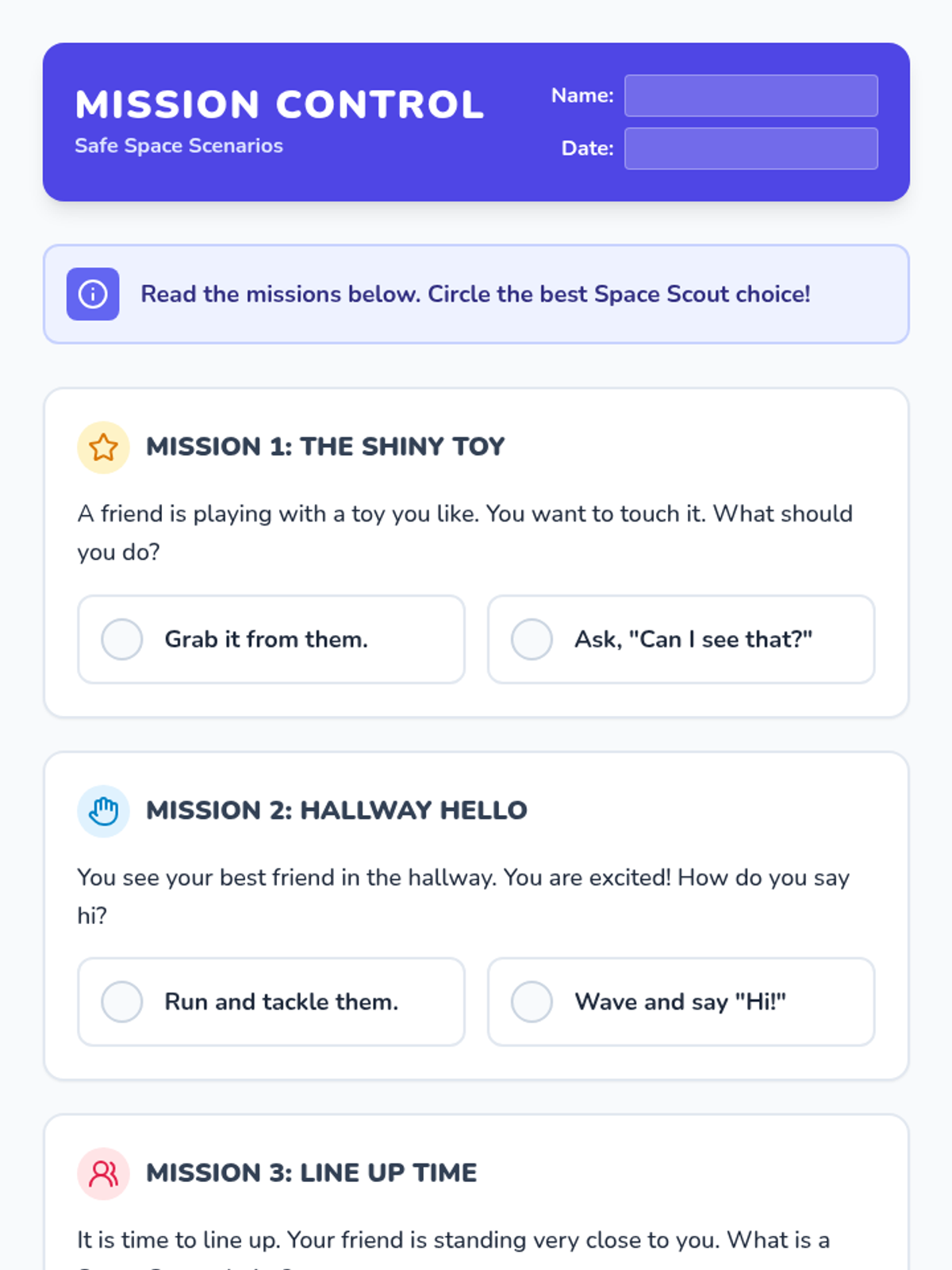
A social skills lesson designed for autistic students to understand personal space boundaries, the concept of a 'space bubble', and how to interact safely and respectfully with others.
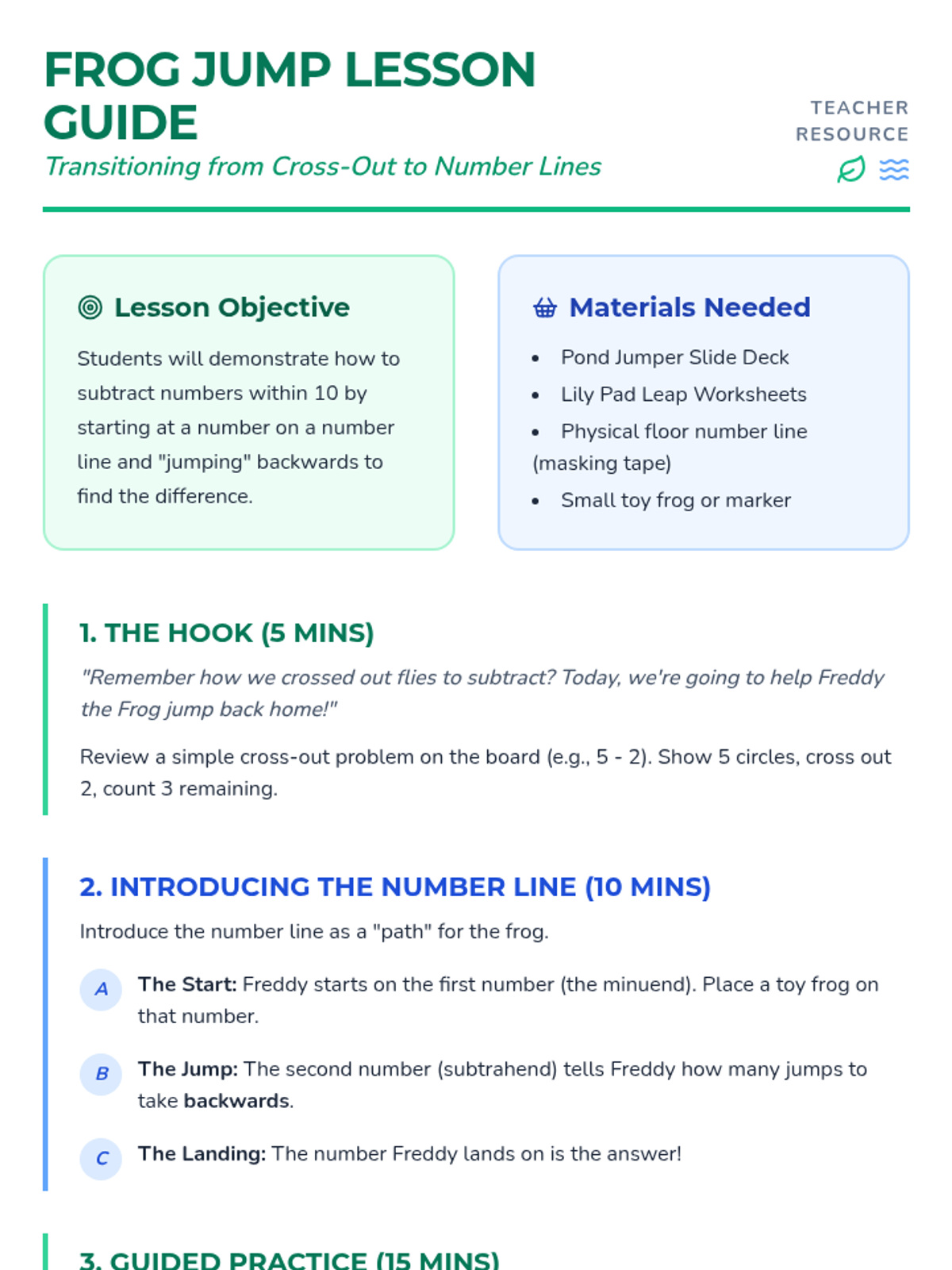
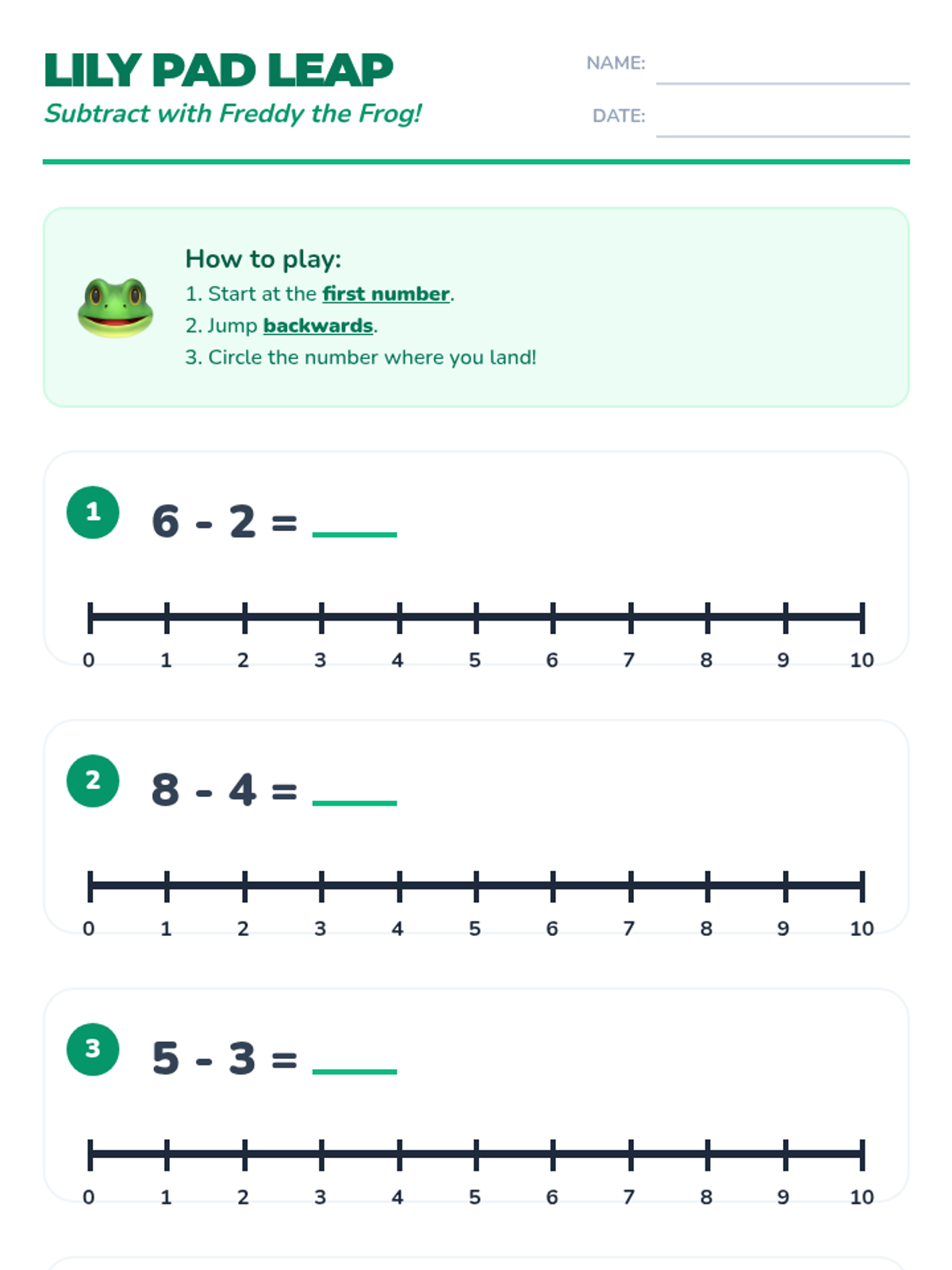
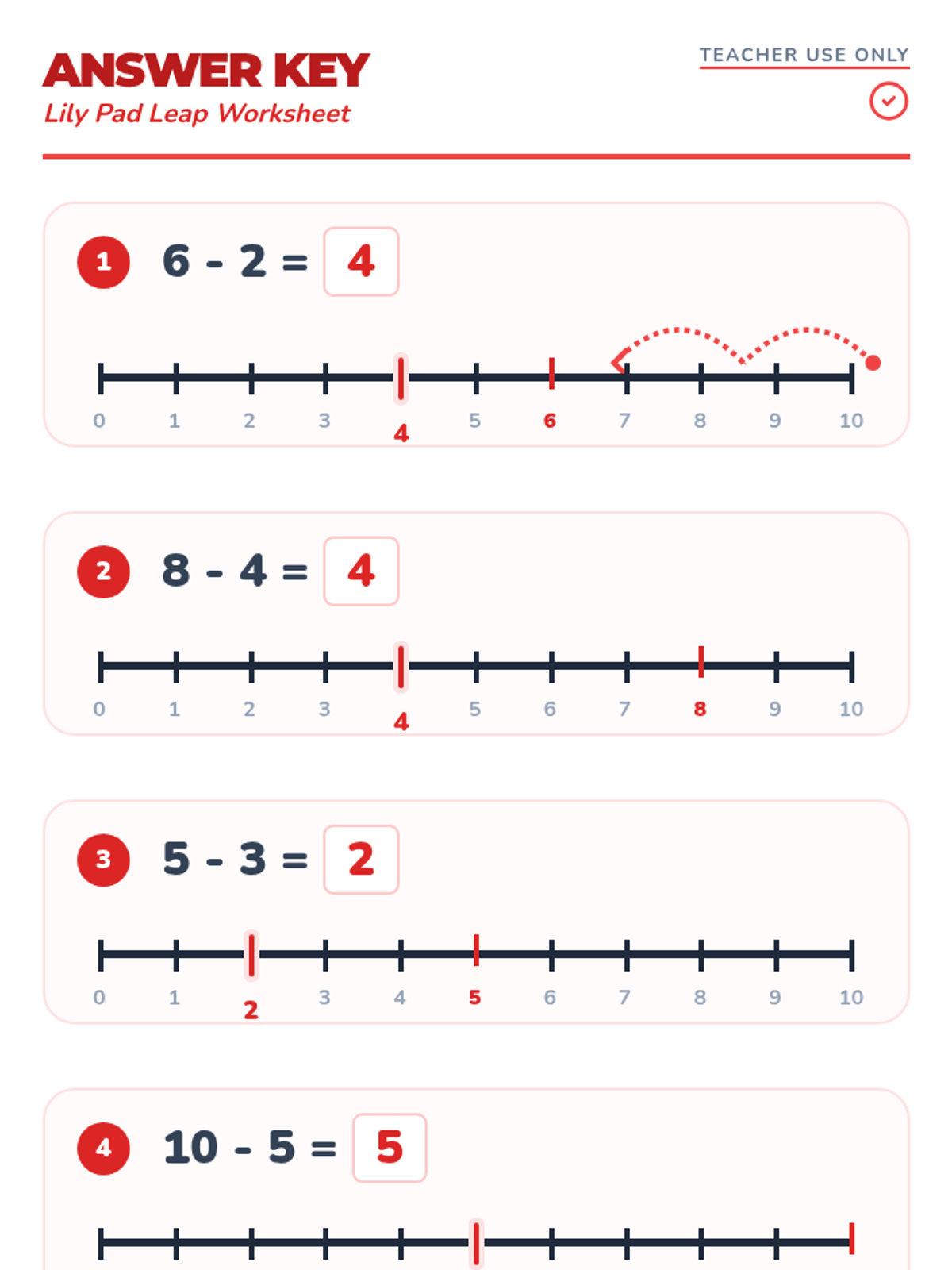
An introductory lesson on using the number line to subtract by jumping backwards, using a 'Frog Hop' metaphor to make the concept concrete.
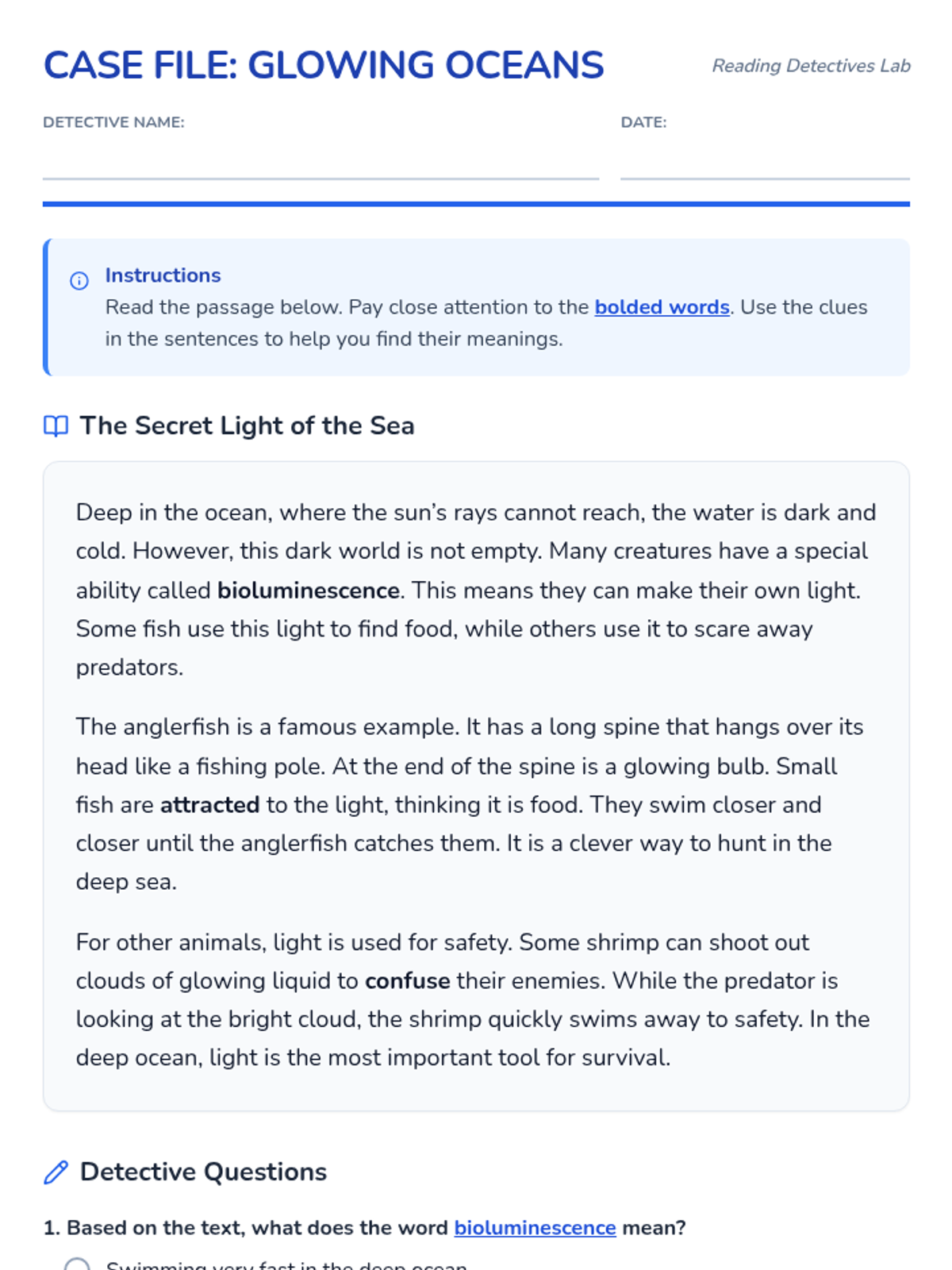
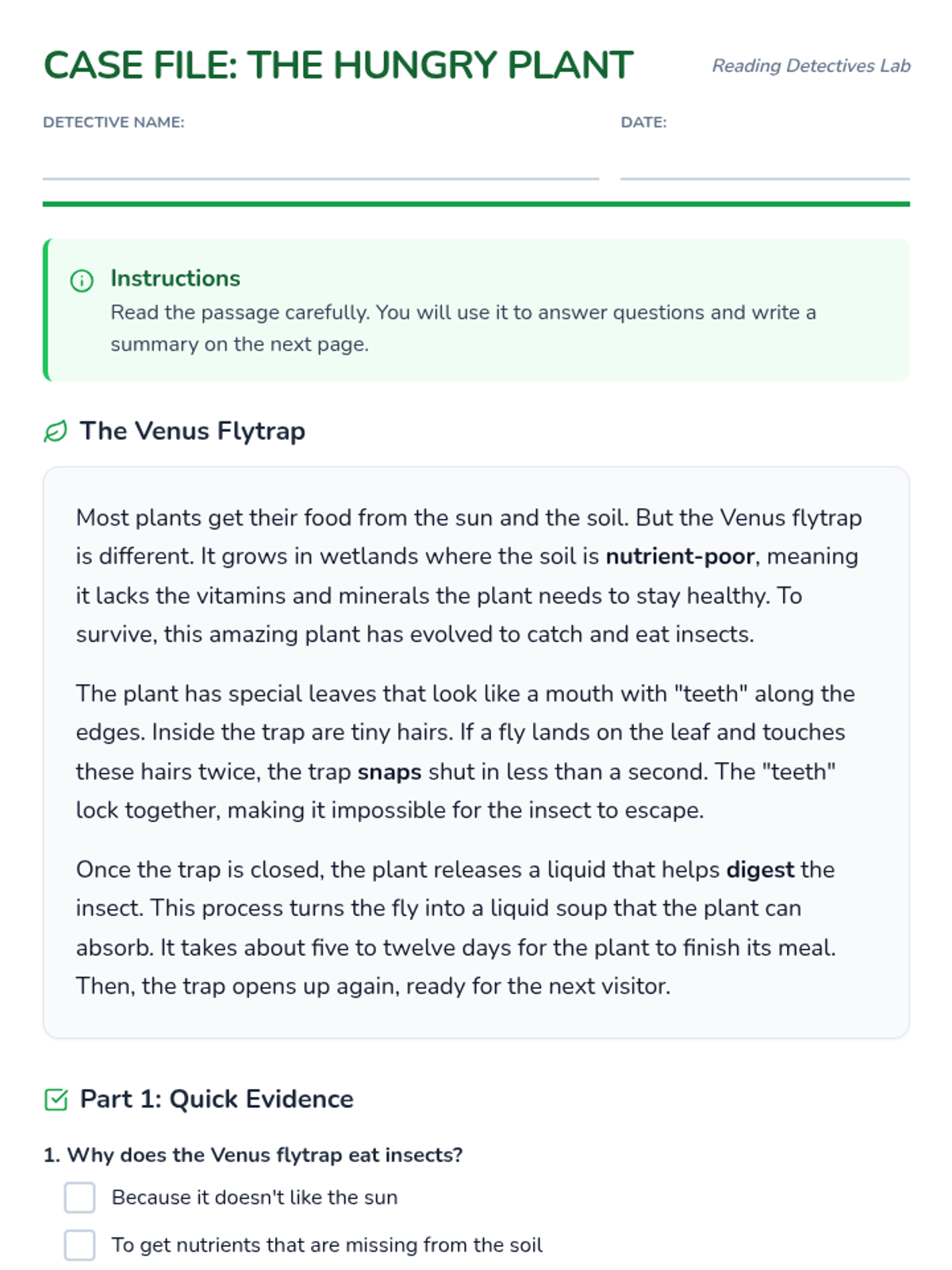
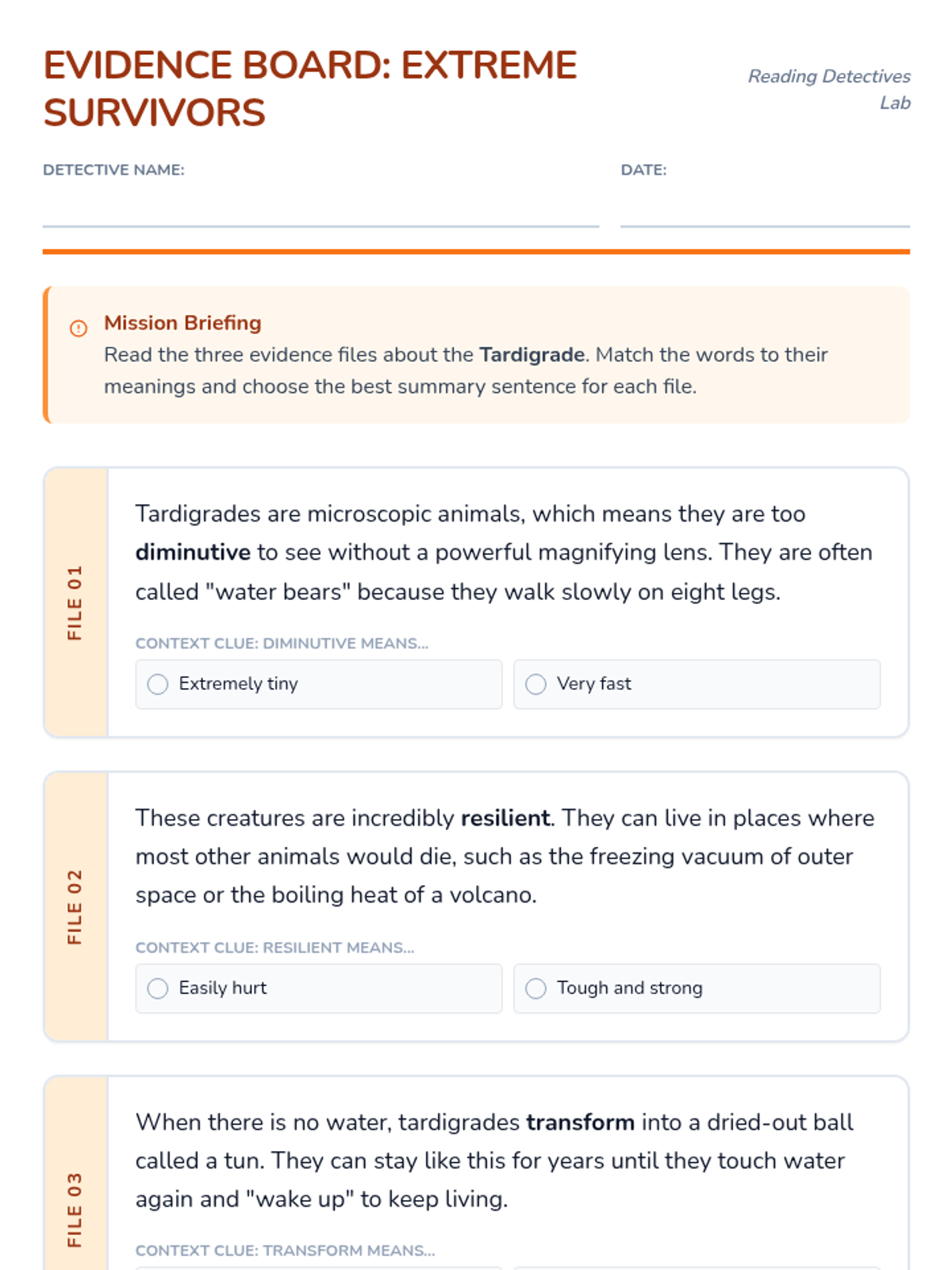
A set of reading comprehension resources focused on context clues, vocabulary, and non-fiction summarizing, specifically designed with clear structures for autistic and high-functioning students.
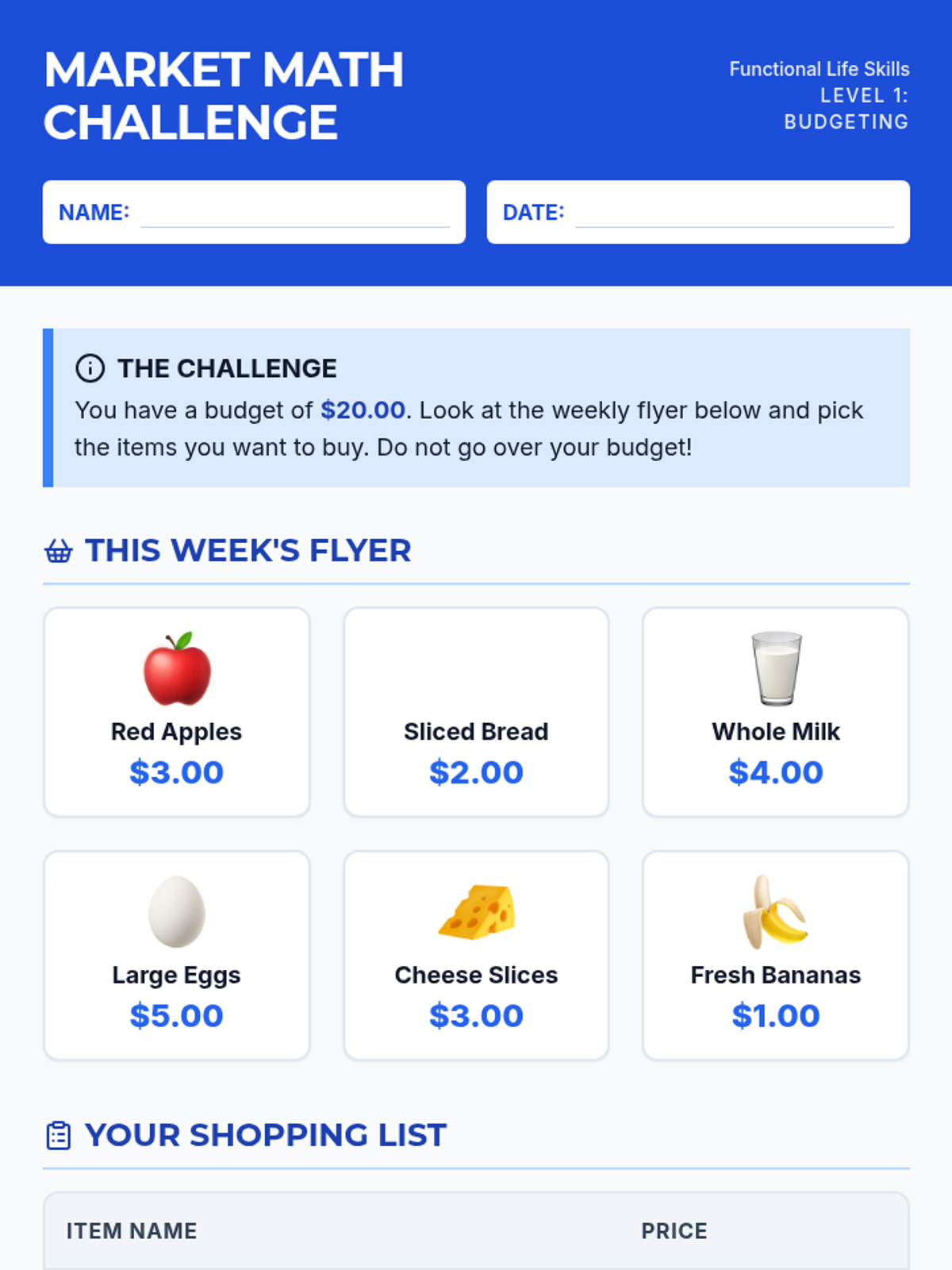
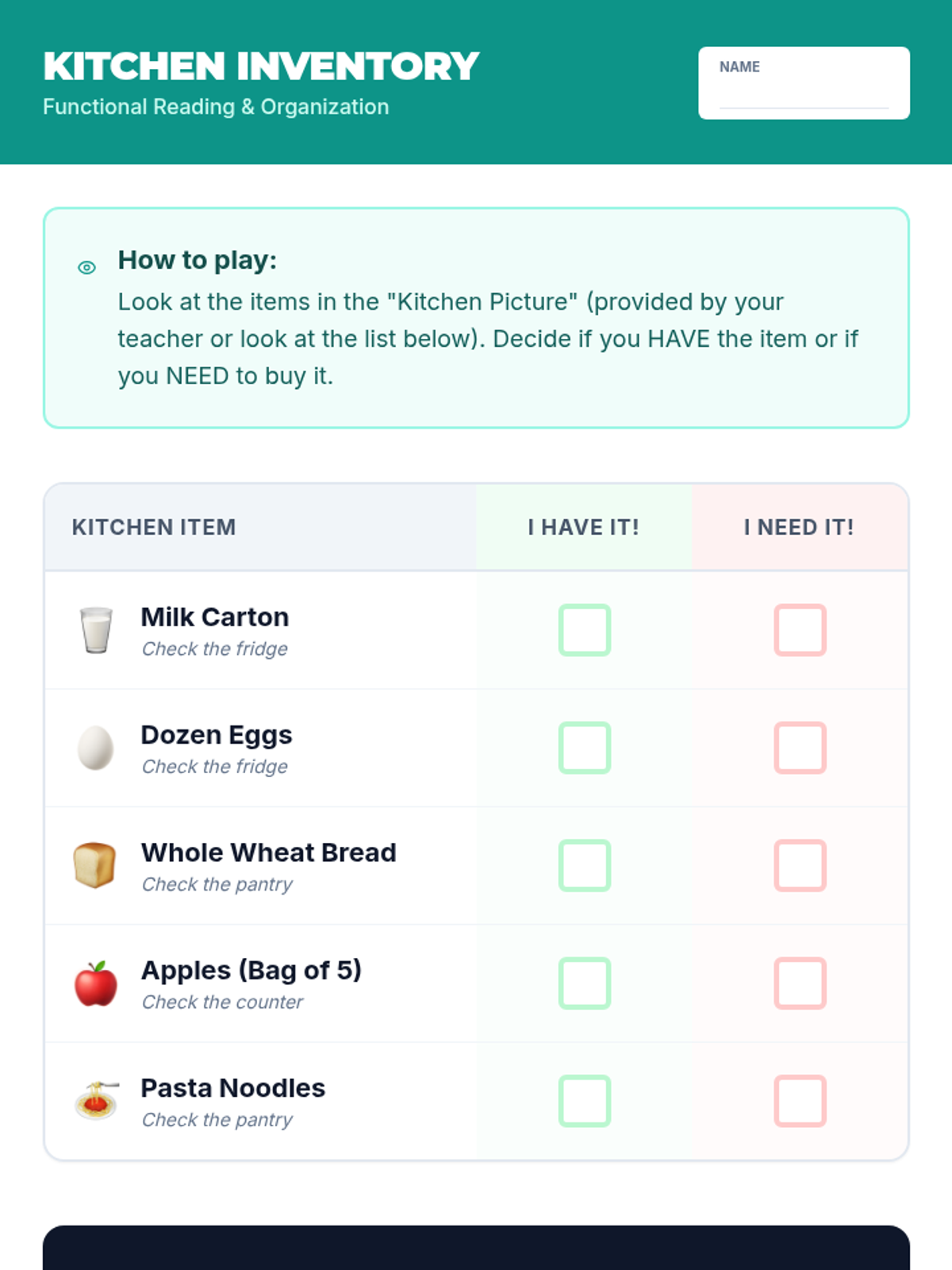
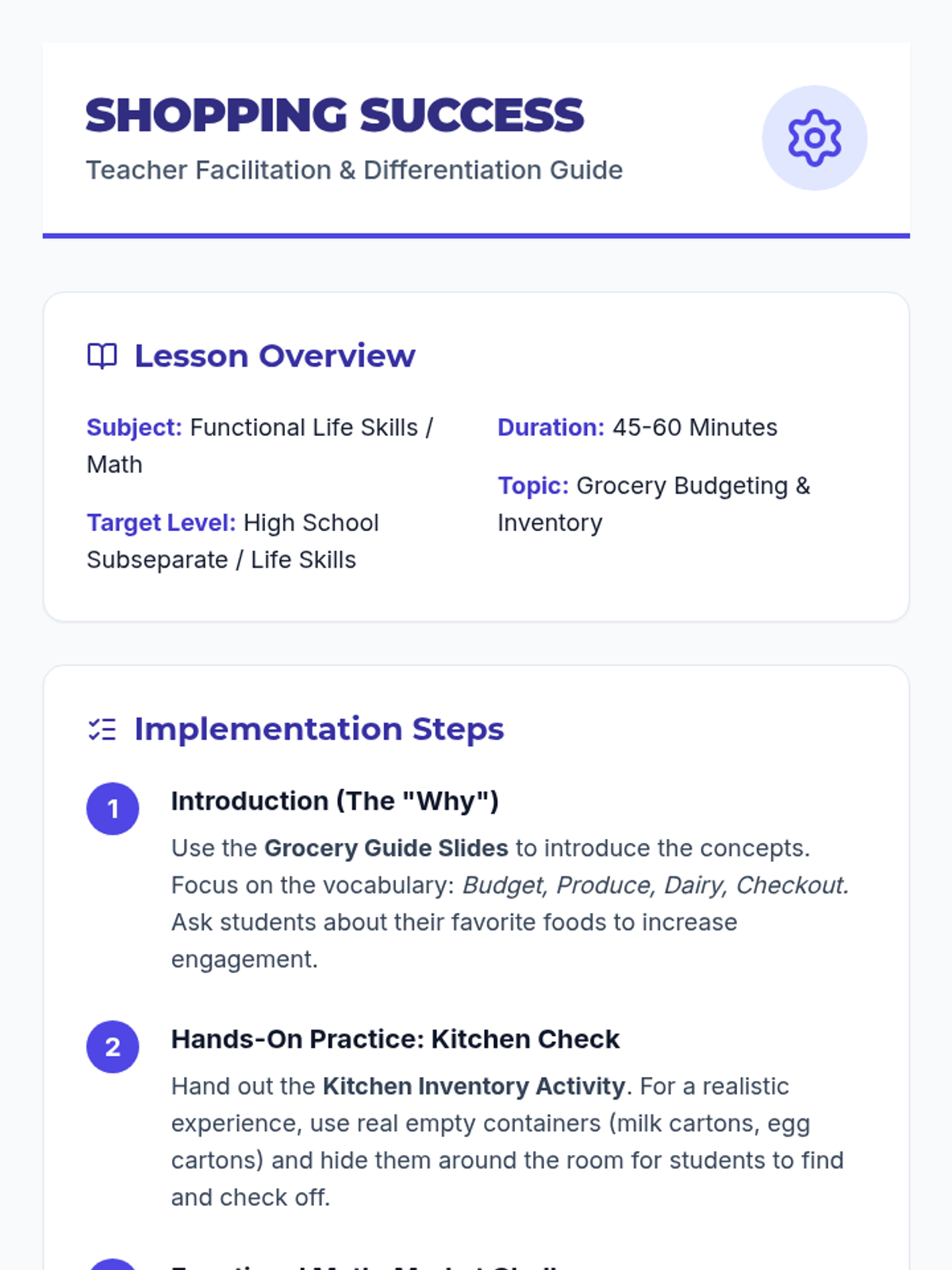
Students will learn how to identify needed items, navigate a grocery flyer, and calculate simple costs to stay within a budget.
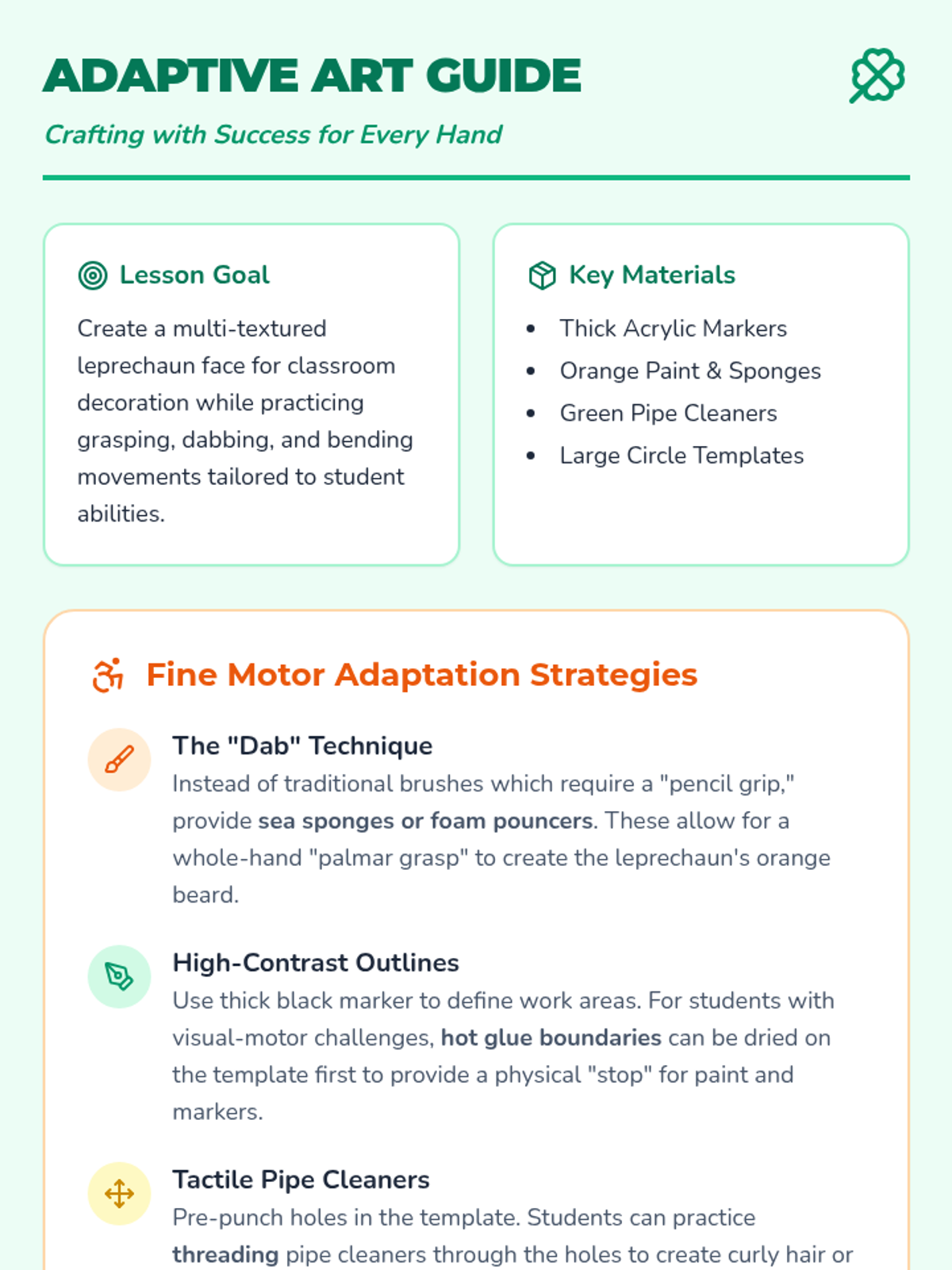
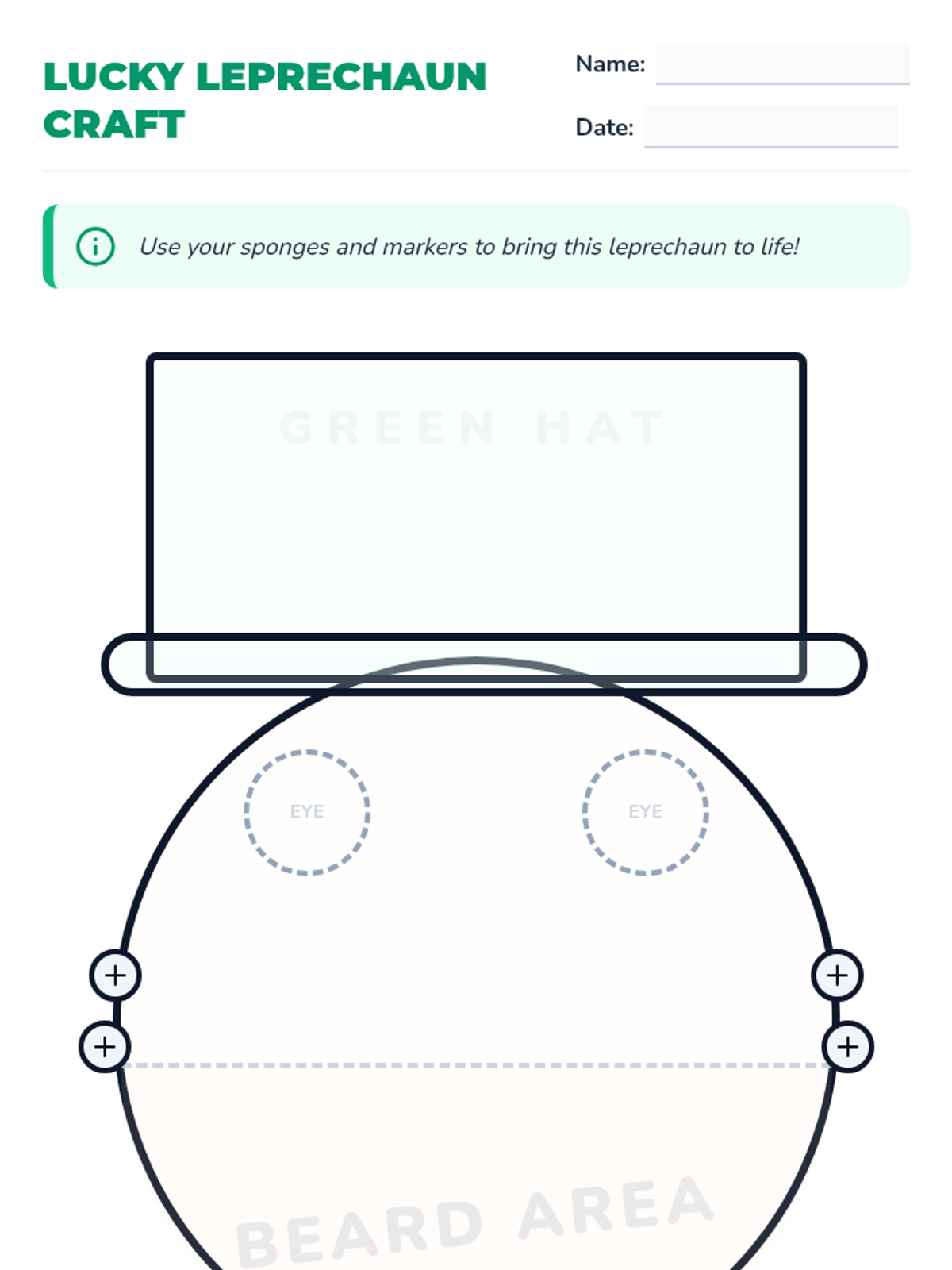
A sensory-friendly craft activity designed specifically for students with fine motor challenges to create vibrant leprechaun classroom decorations. This lesson focuses on accessible art techniques using sponges, thick markers, and tactile pipe cleaners.
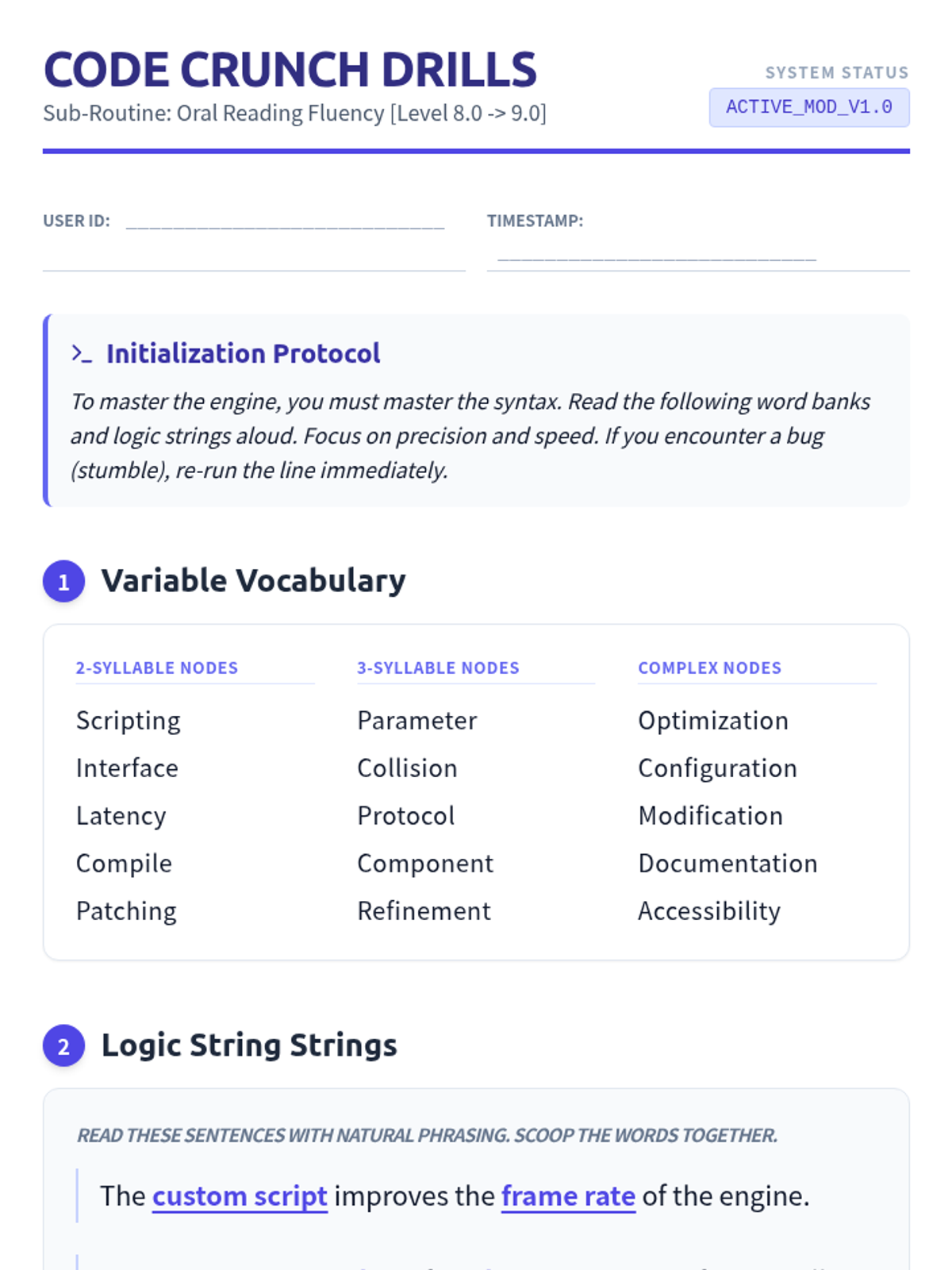
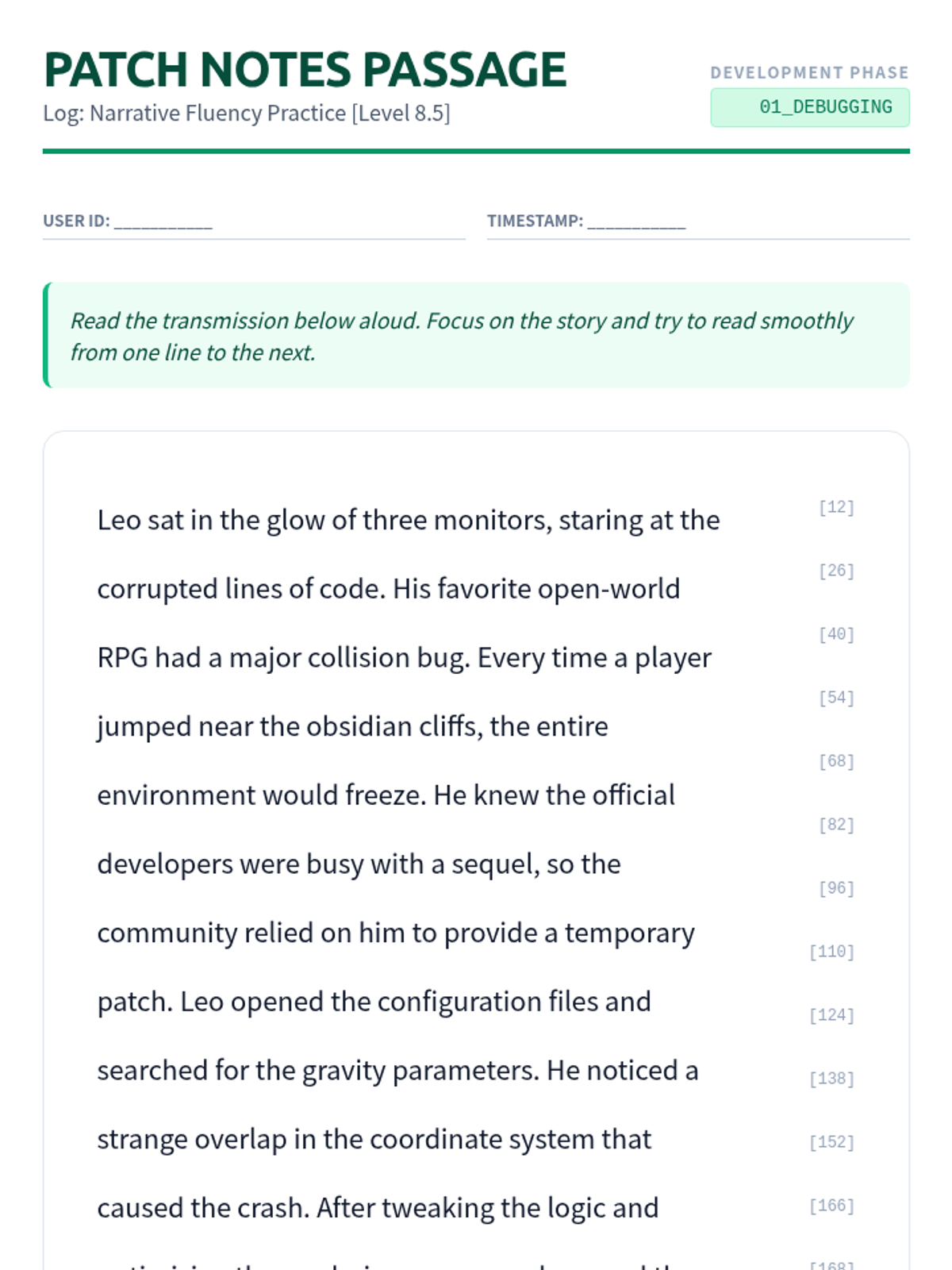
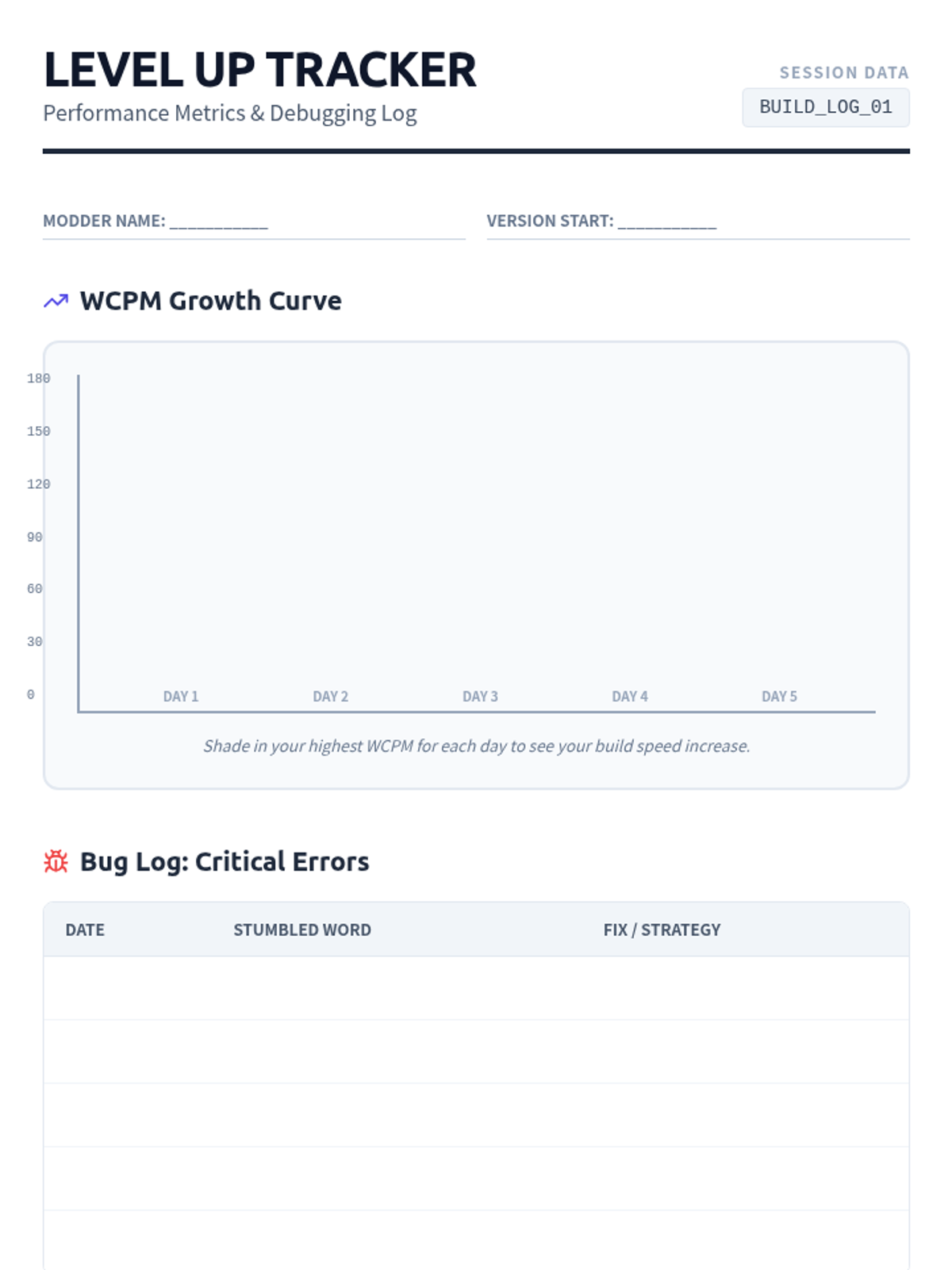
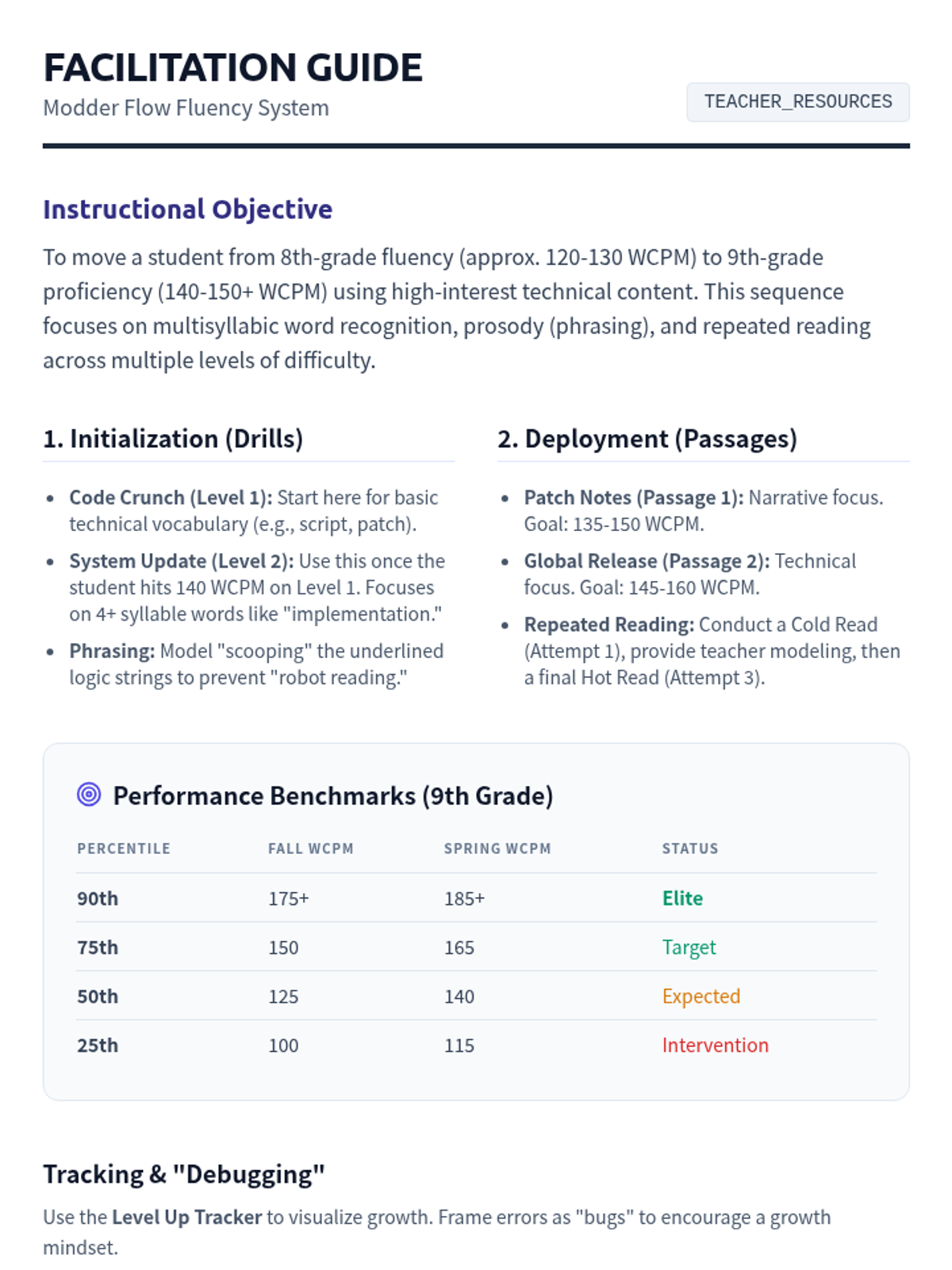
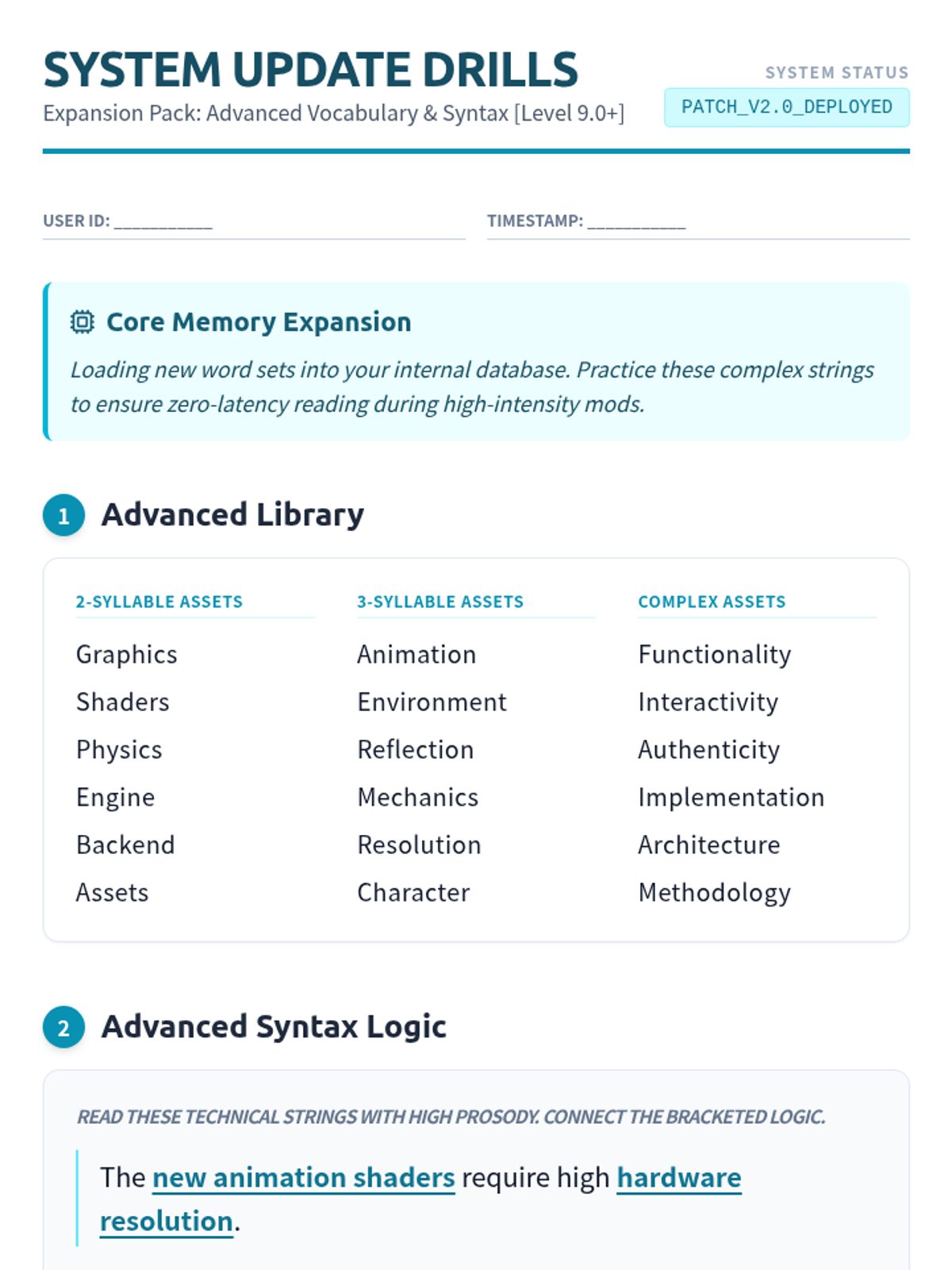
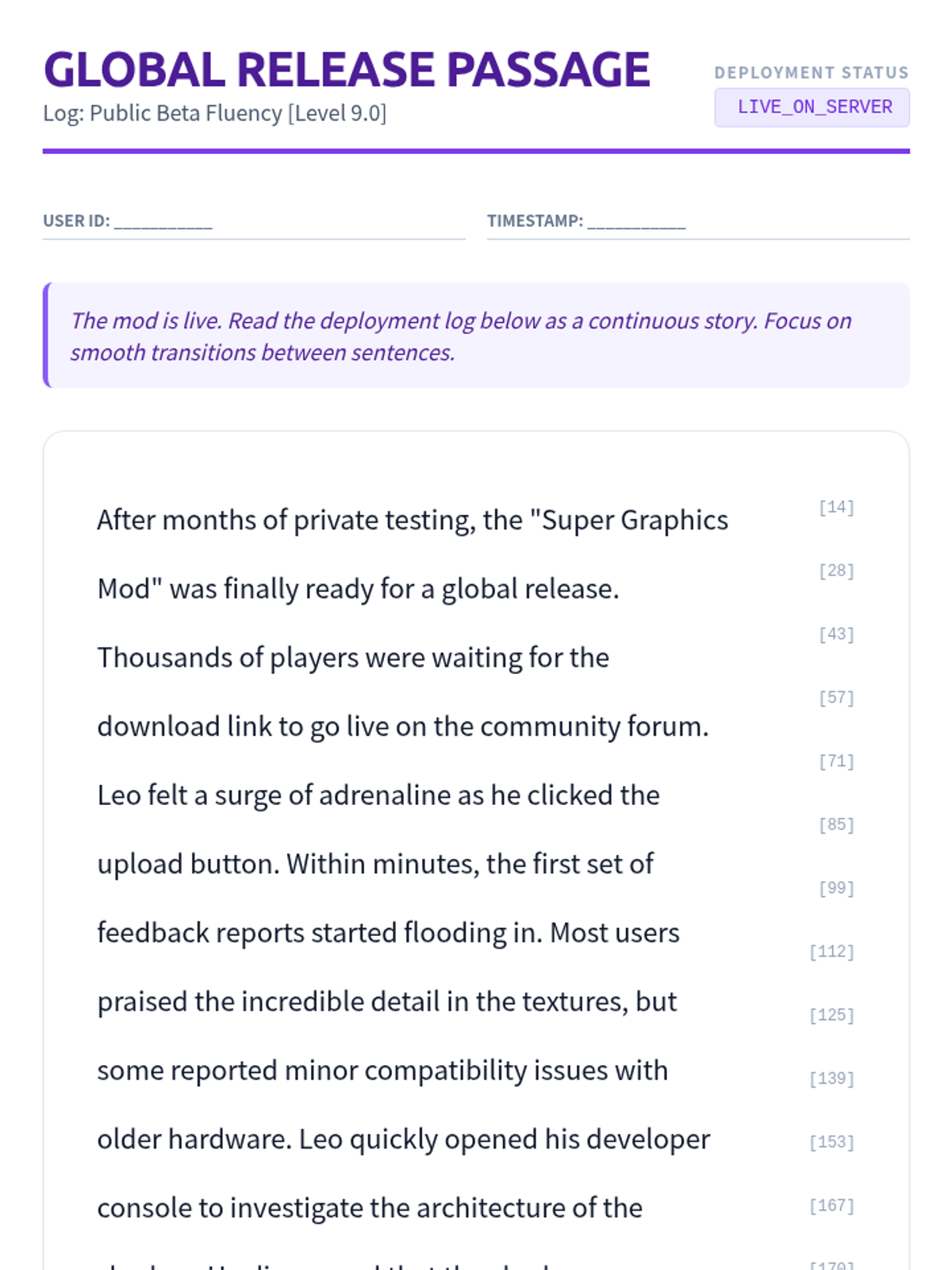
A set of oral reading fluency drills themed around video game modding and software development to engage a 9th grade student reading at an 8th grade level. Includes multisyllabic word lists, phrased sentences, and progress tracking tools.
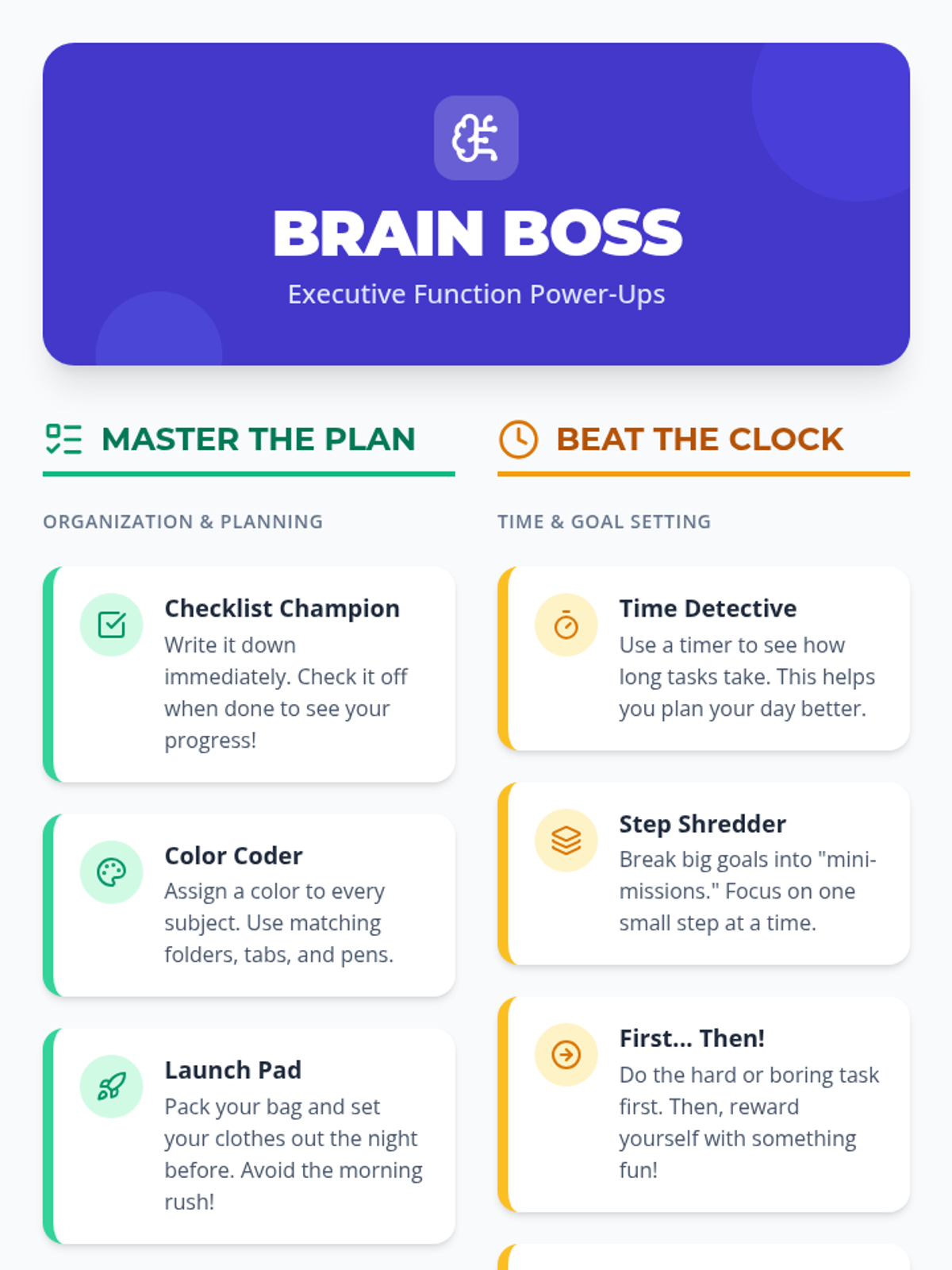
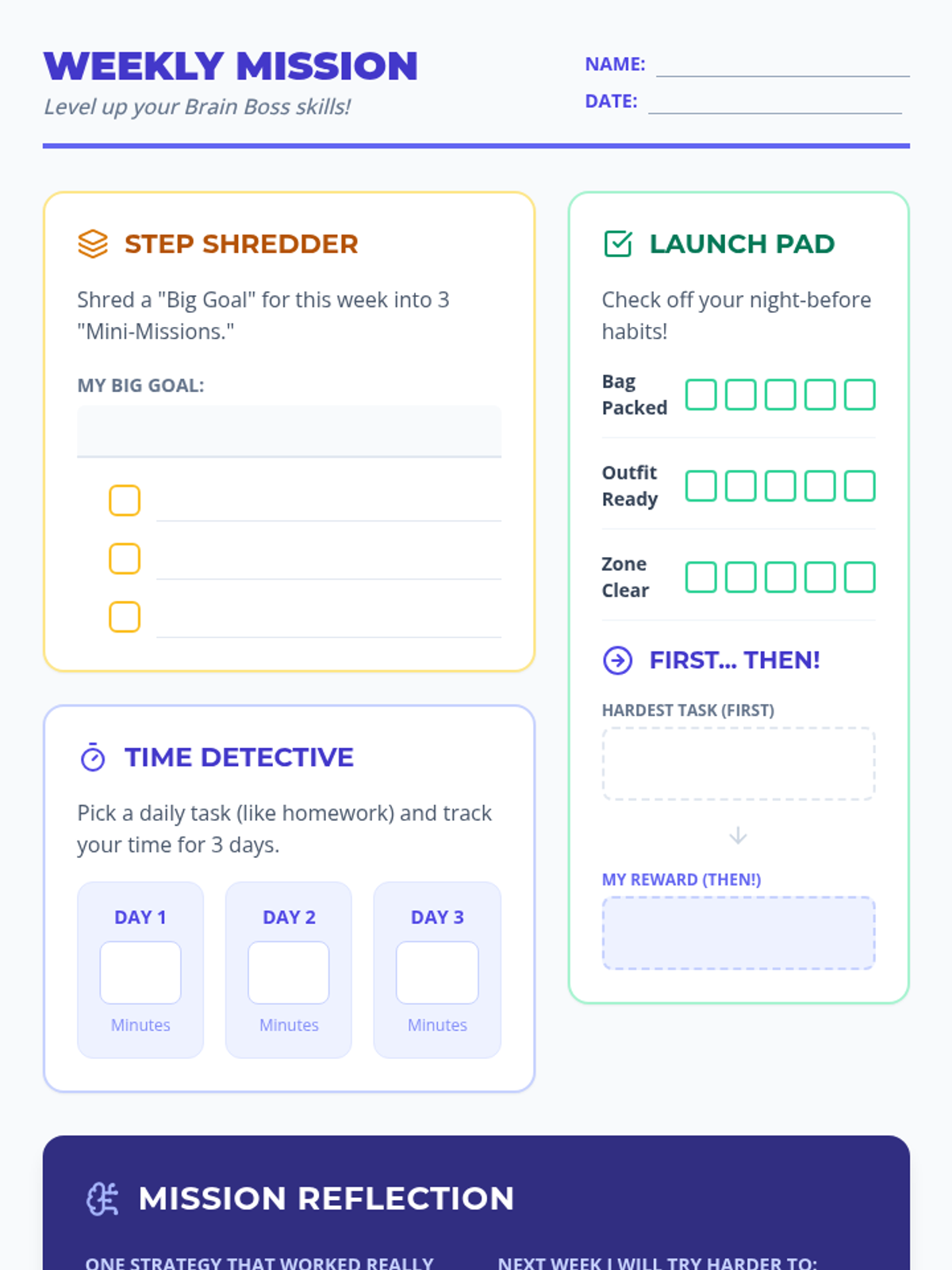
A toolkit of executive function resources including anchor charts and planning sheets to help students master organization and time management.
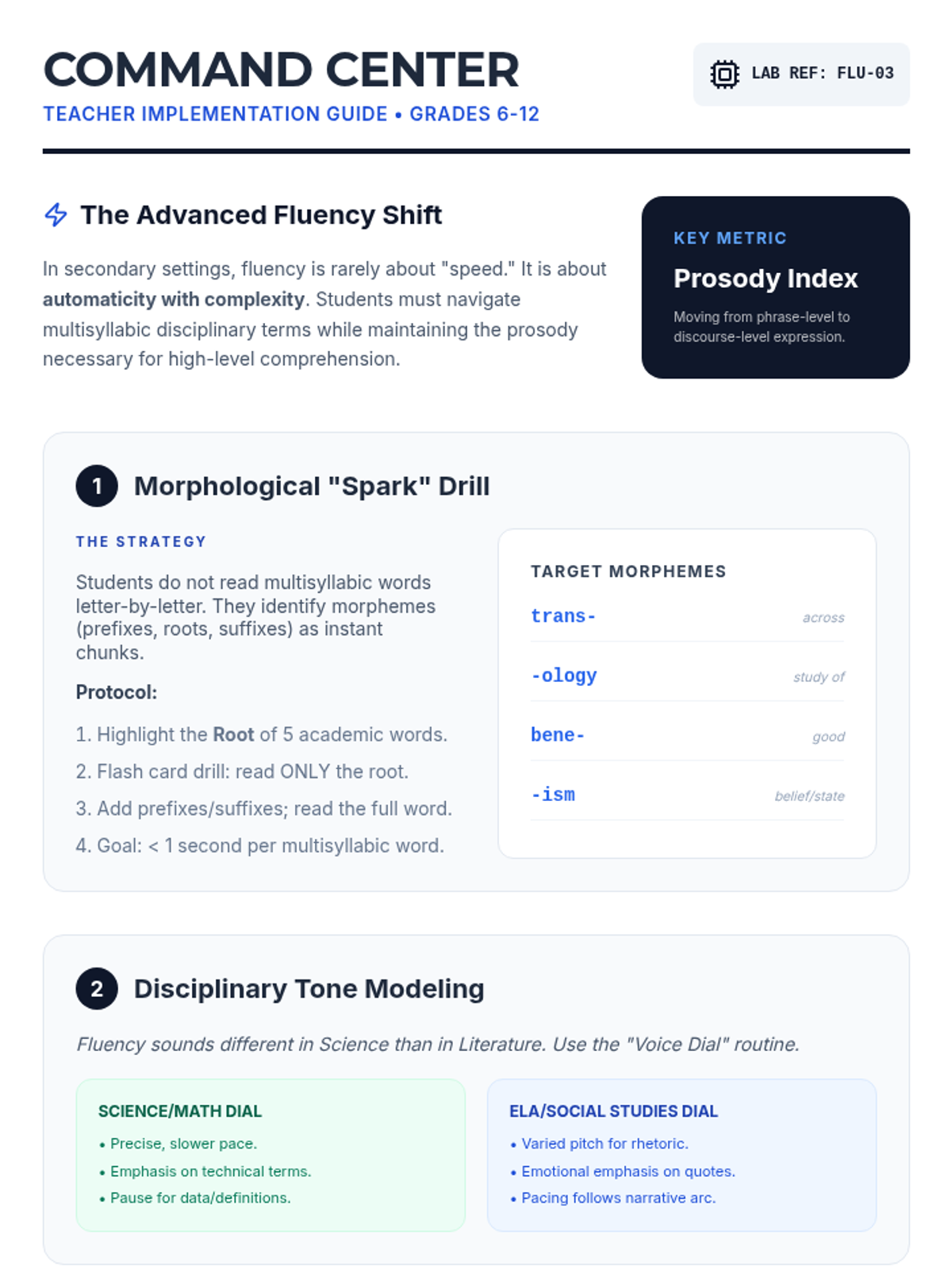
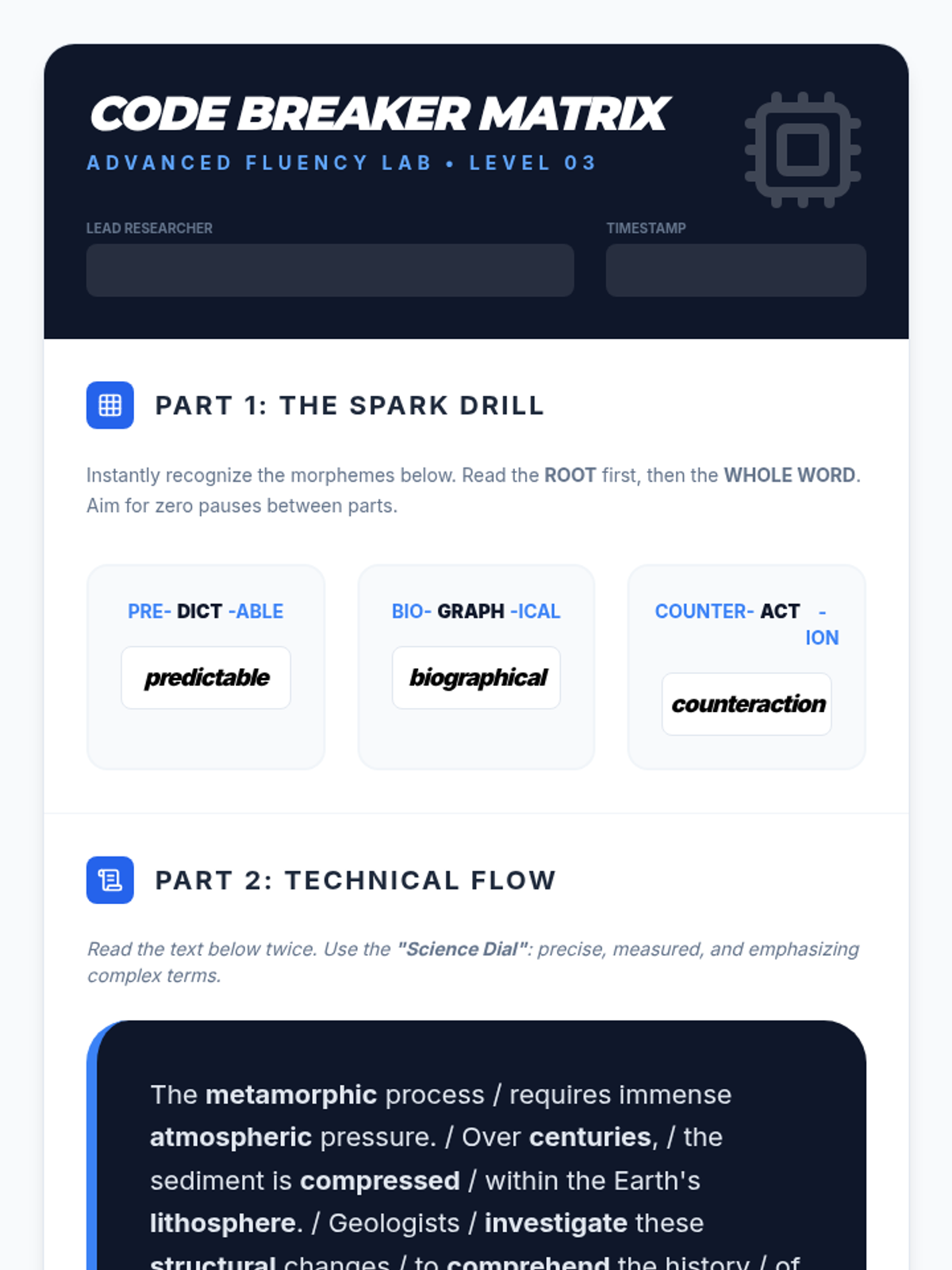
Addresses fluency in complex, multisyllabic texts for 6th-12th grade students, emphasizing morphology and expressive reading in disciplinary contexts.
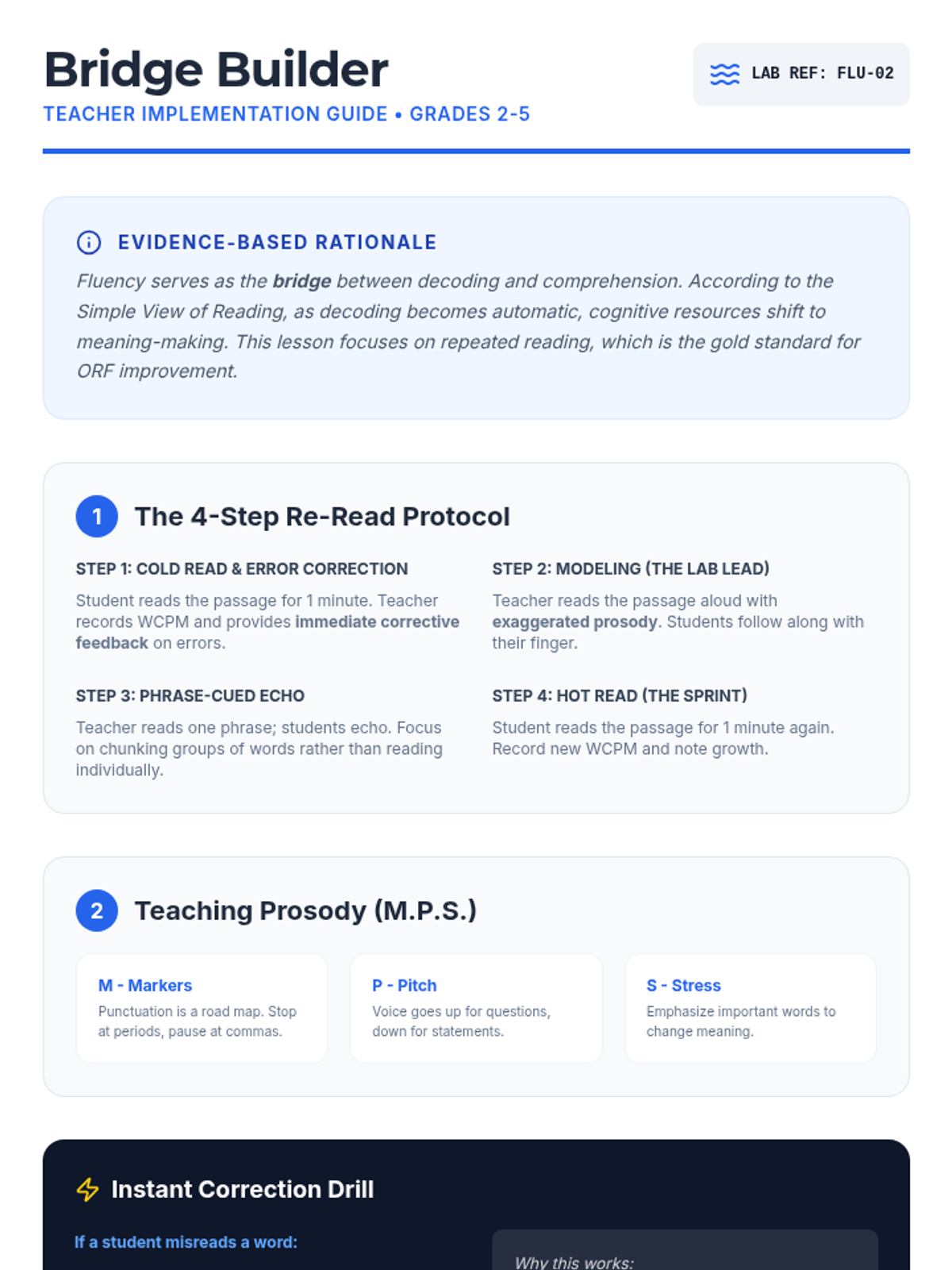
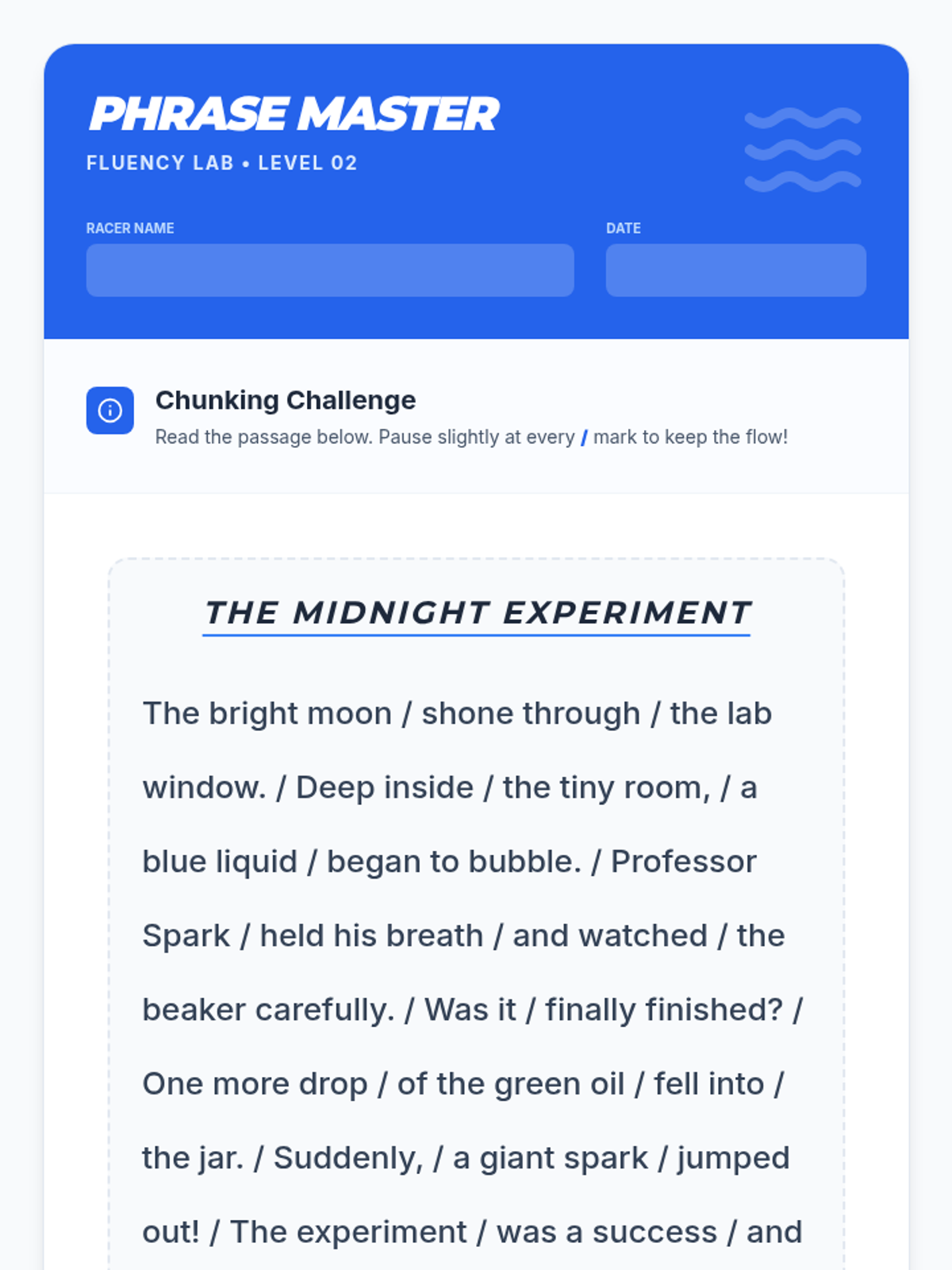
Introduces accuracy, rate, and prosody for 2nd-5th grade learners with a focus on phrase-cued reading and repeated reading techniques.
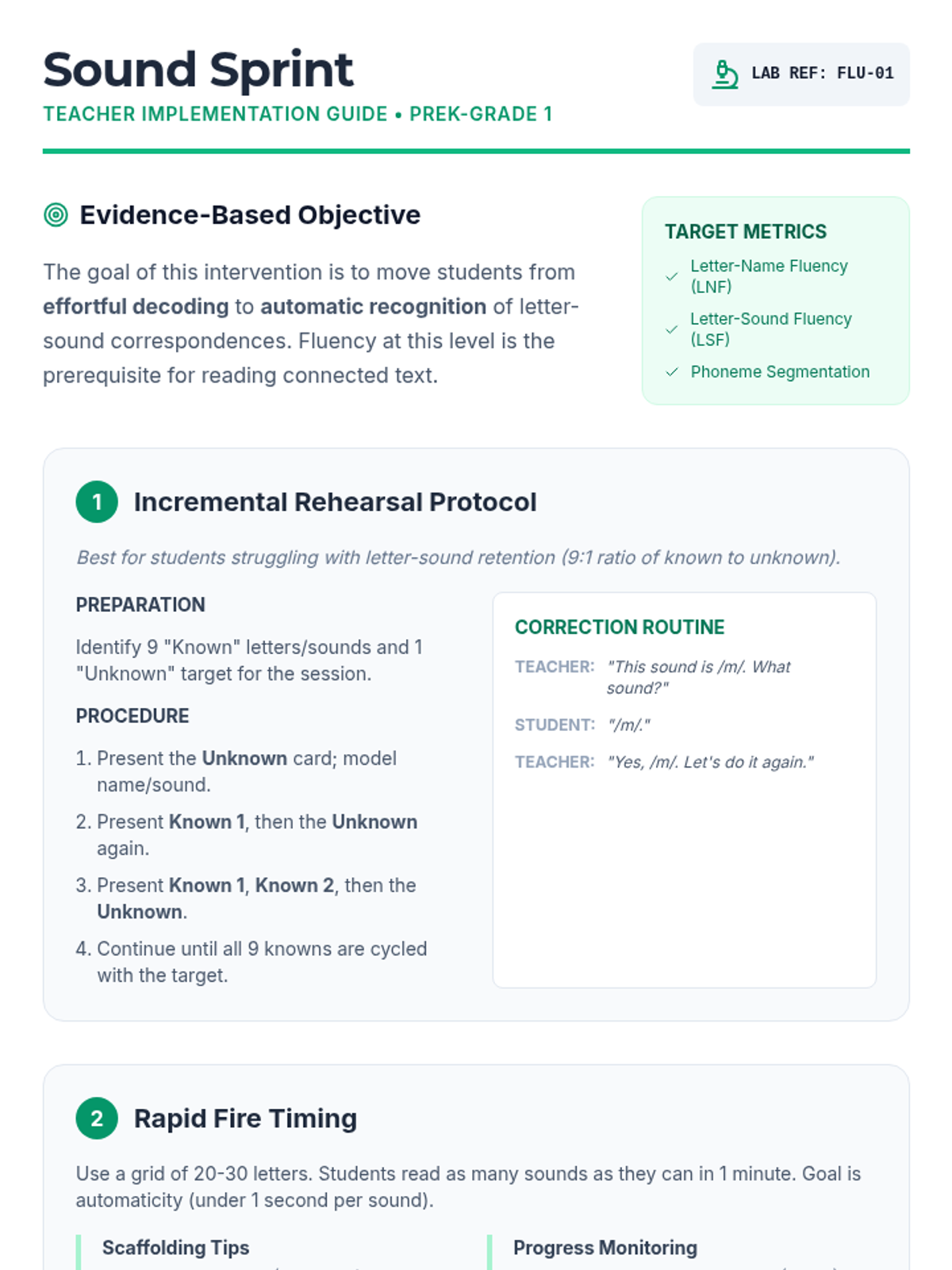
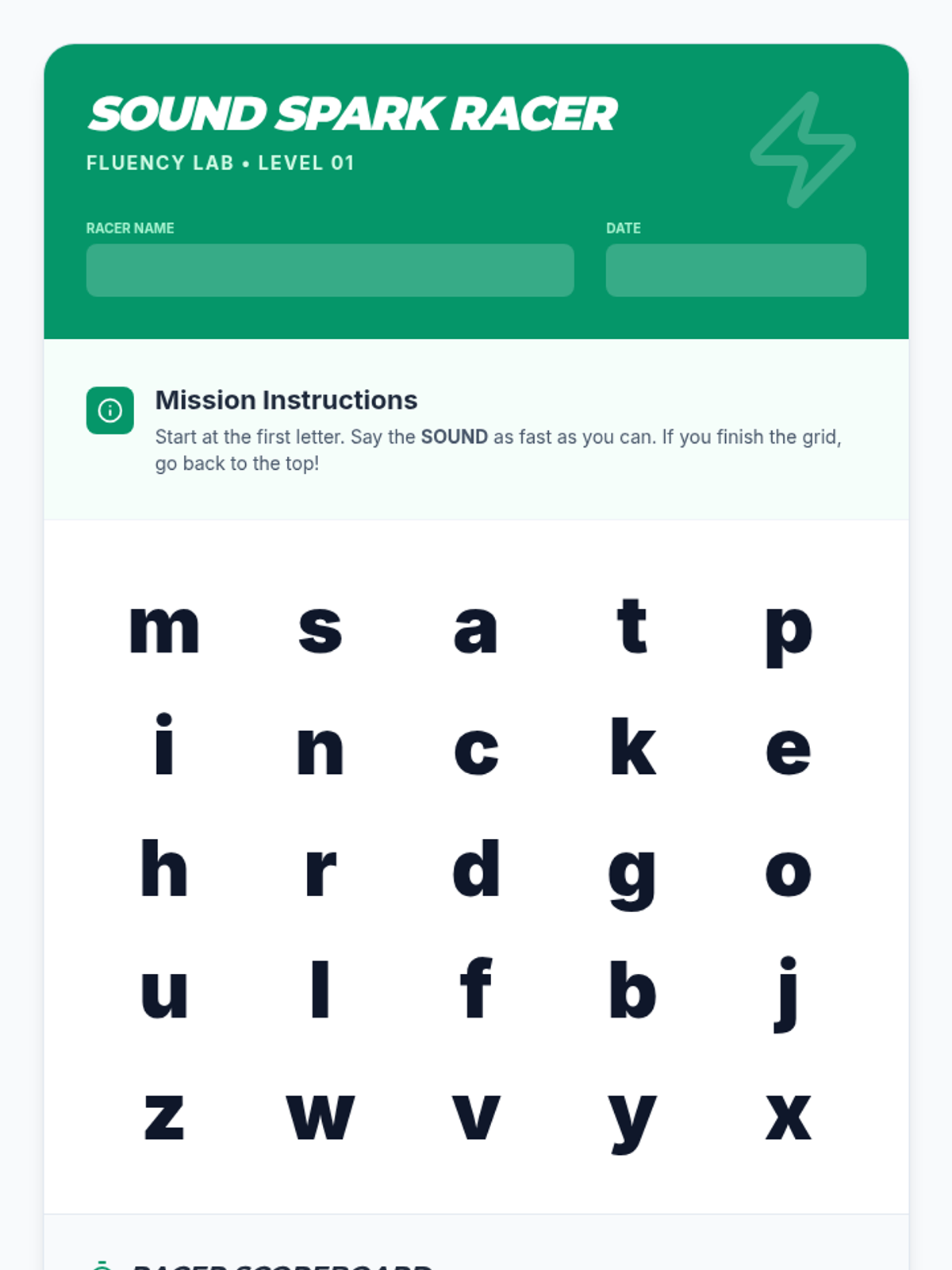
Focused on building letter-name and letter-sound automaticity for PreK-1st grade students using high-frequency practice and evidence-based routines.
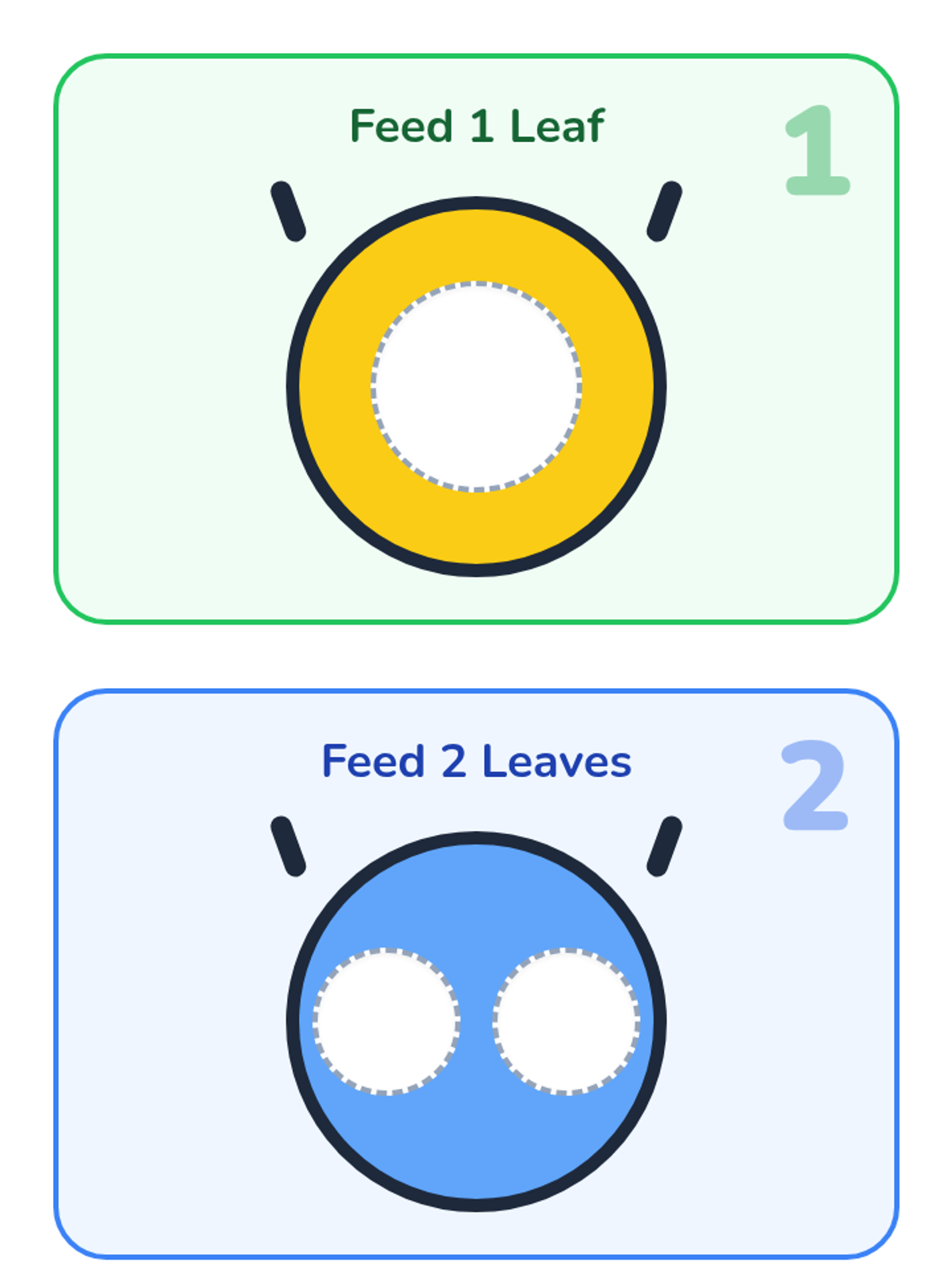
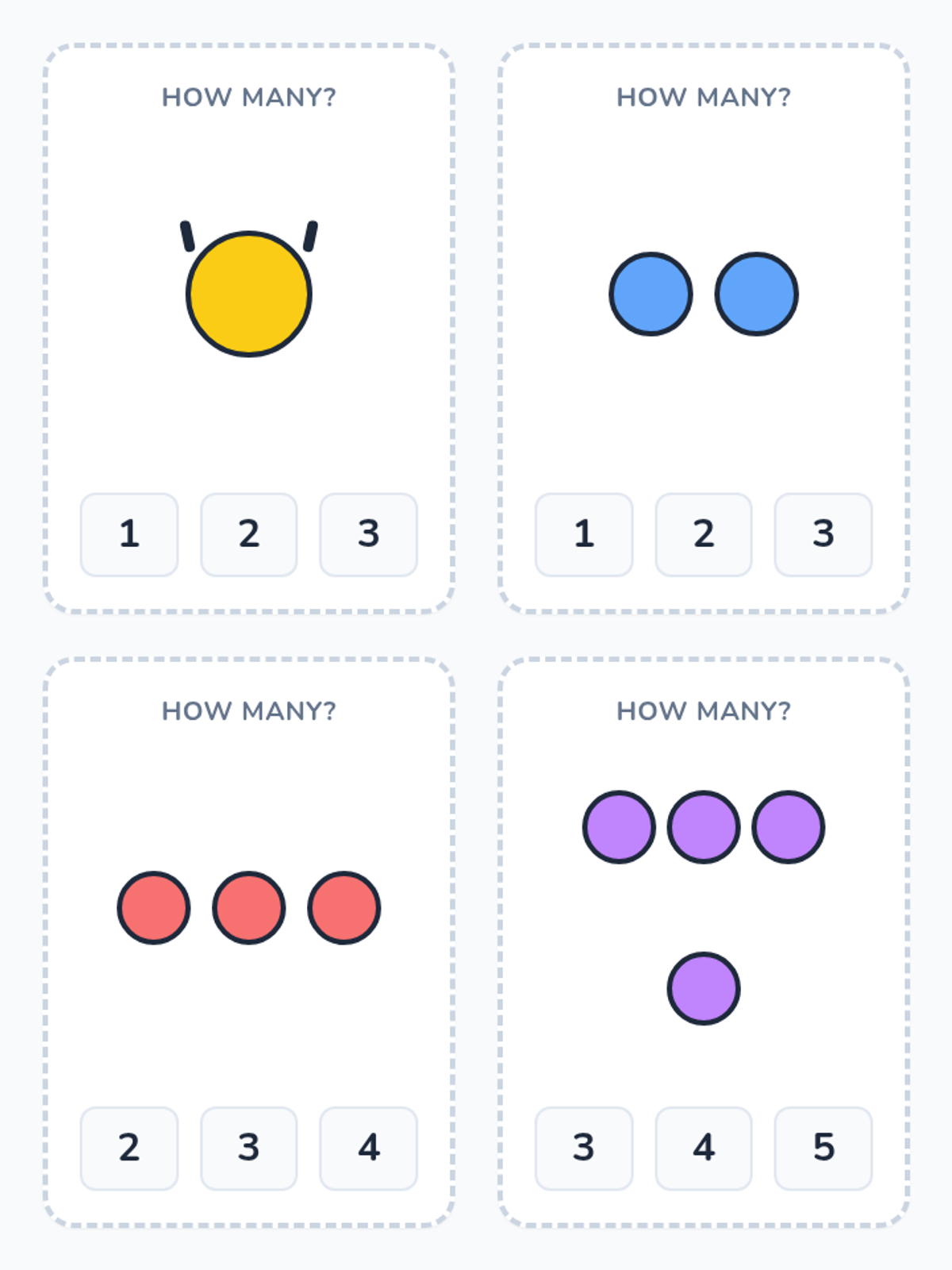
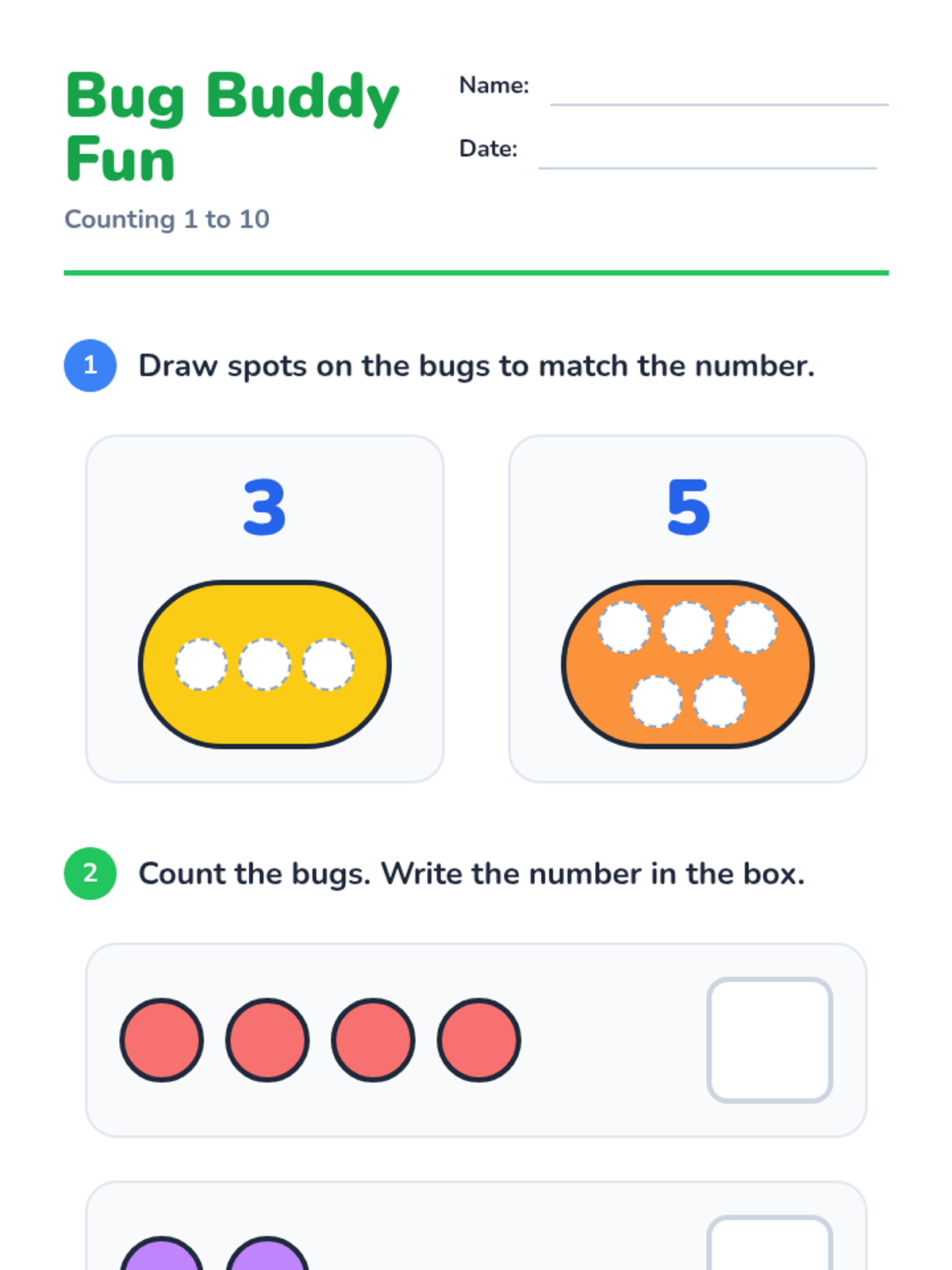
A foundational math lesson focusing on counting 1-10 and one-to-one correspondence using a friendly 'Bug Buddy' theme. Designed for early elementary students with cognitive delays or IEP needs.
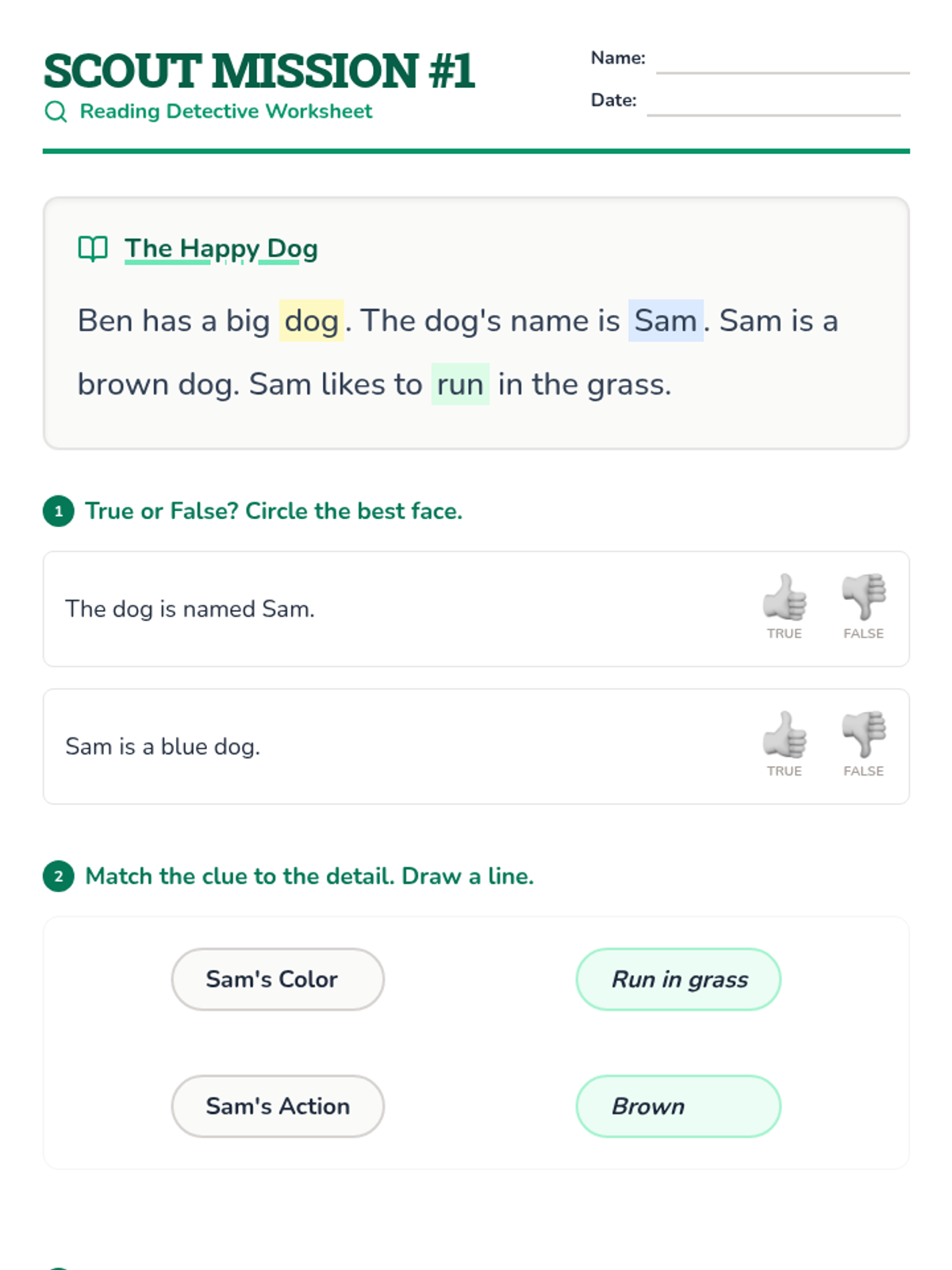
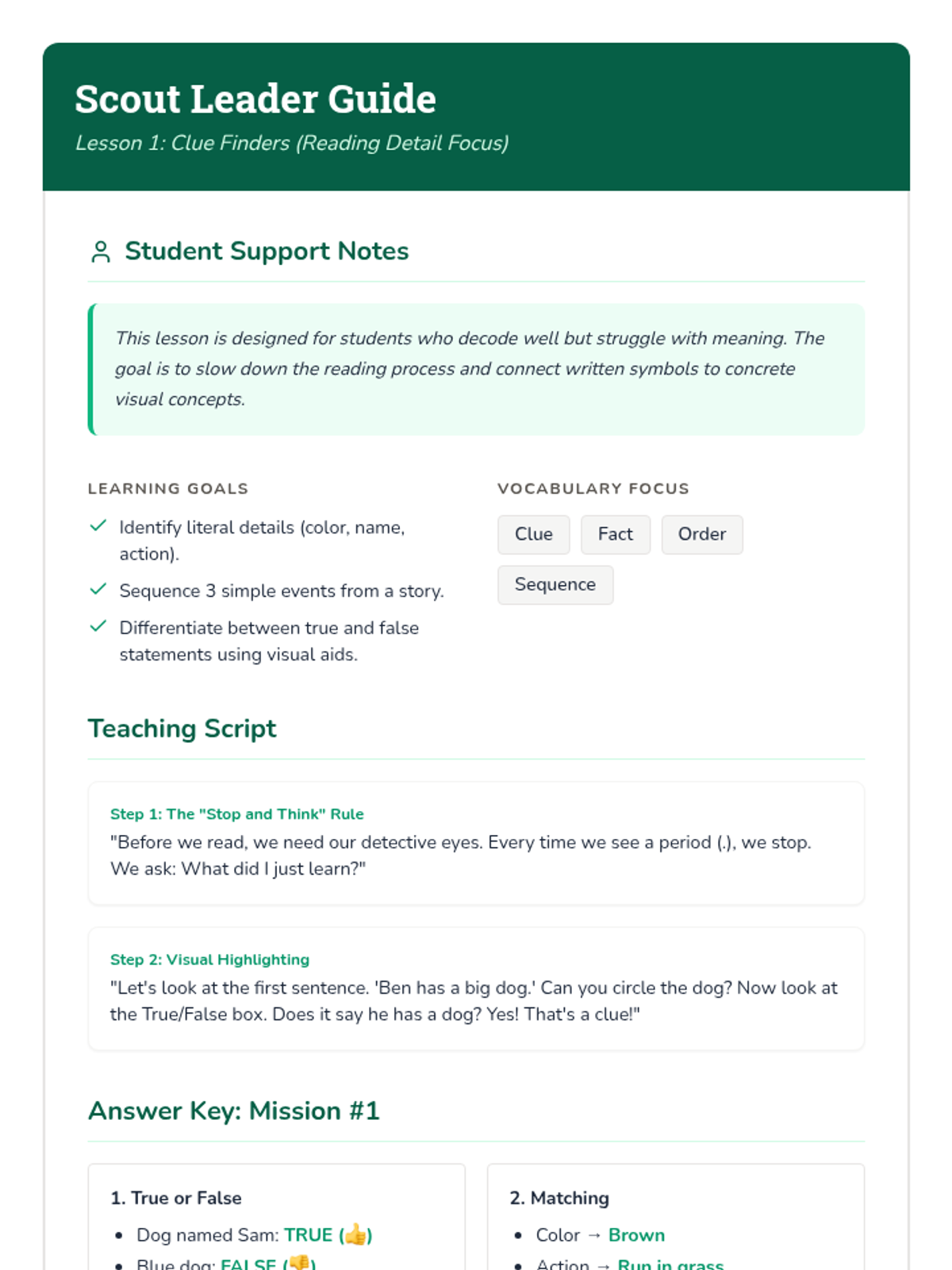
A foundational comprehension lesson for early readers, focusing on identifying key details and sequencing events through visual-heavy interactive tasks.
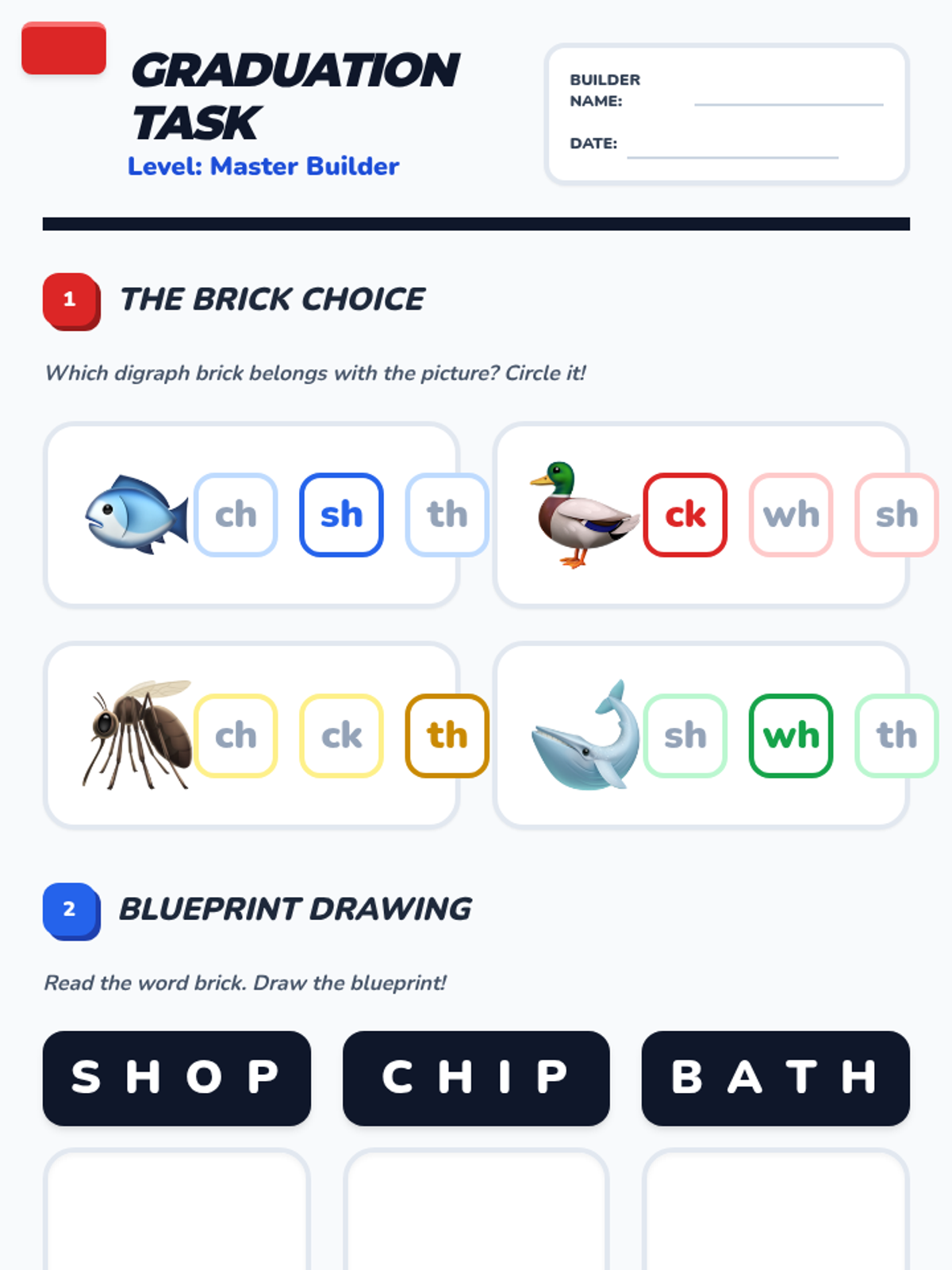
A follow-up lesson focused on building fluency with mixed digraphs, providing cumulative review and a final progress assessment for sh, ch, th, wh, and ck.
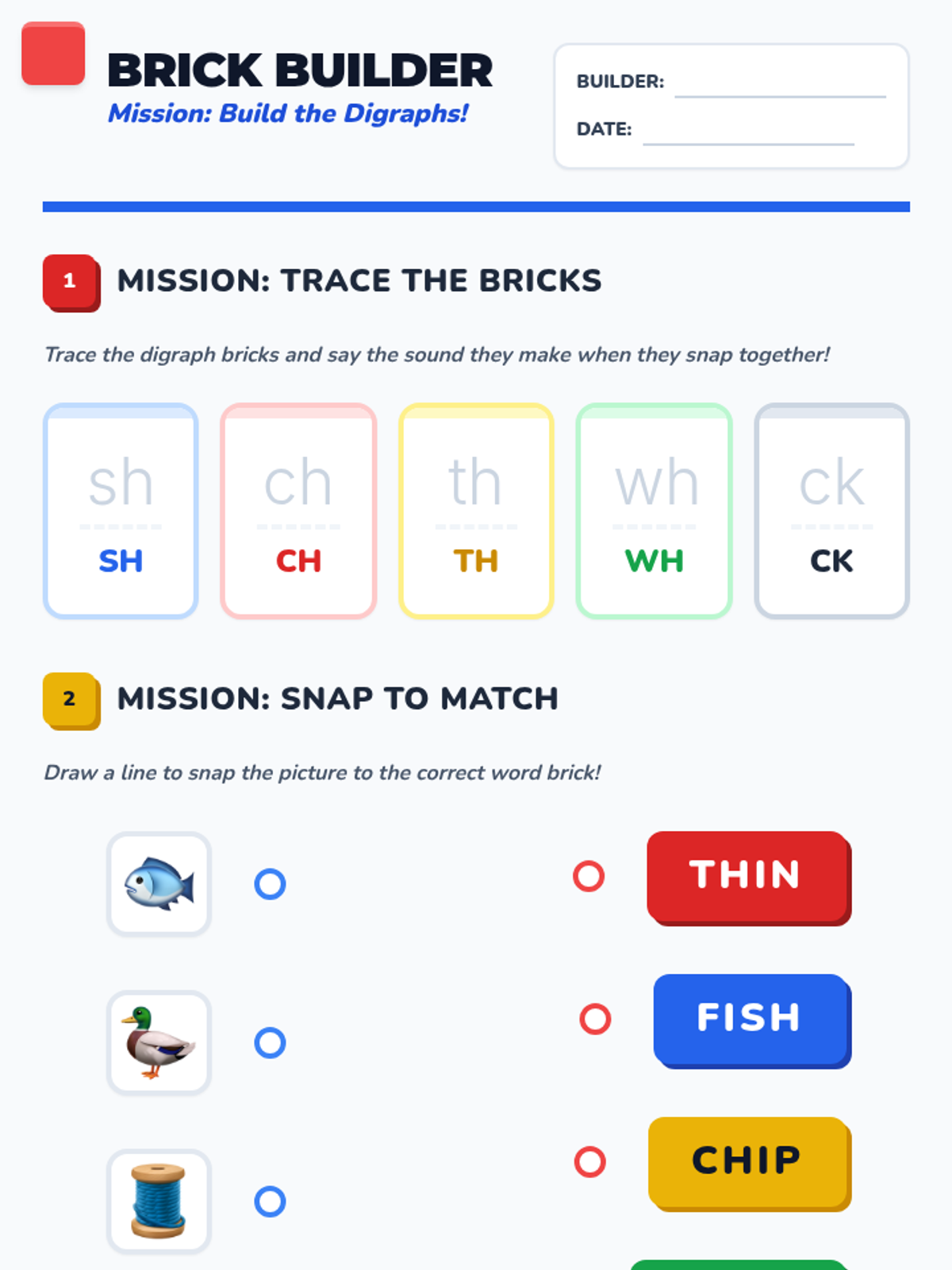
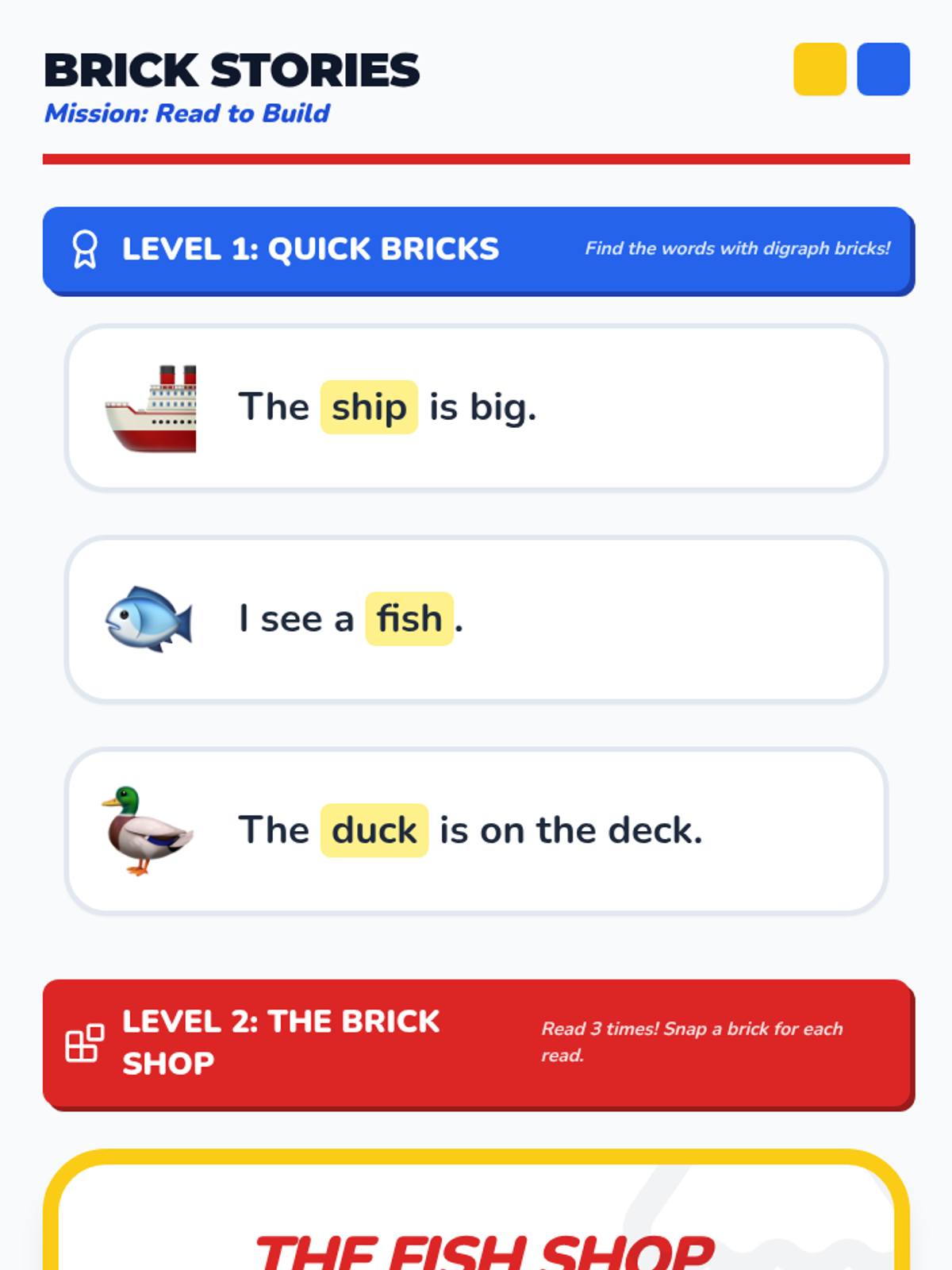
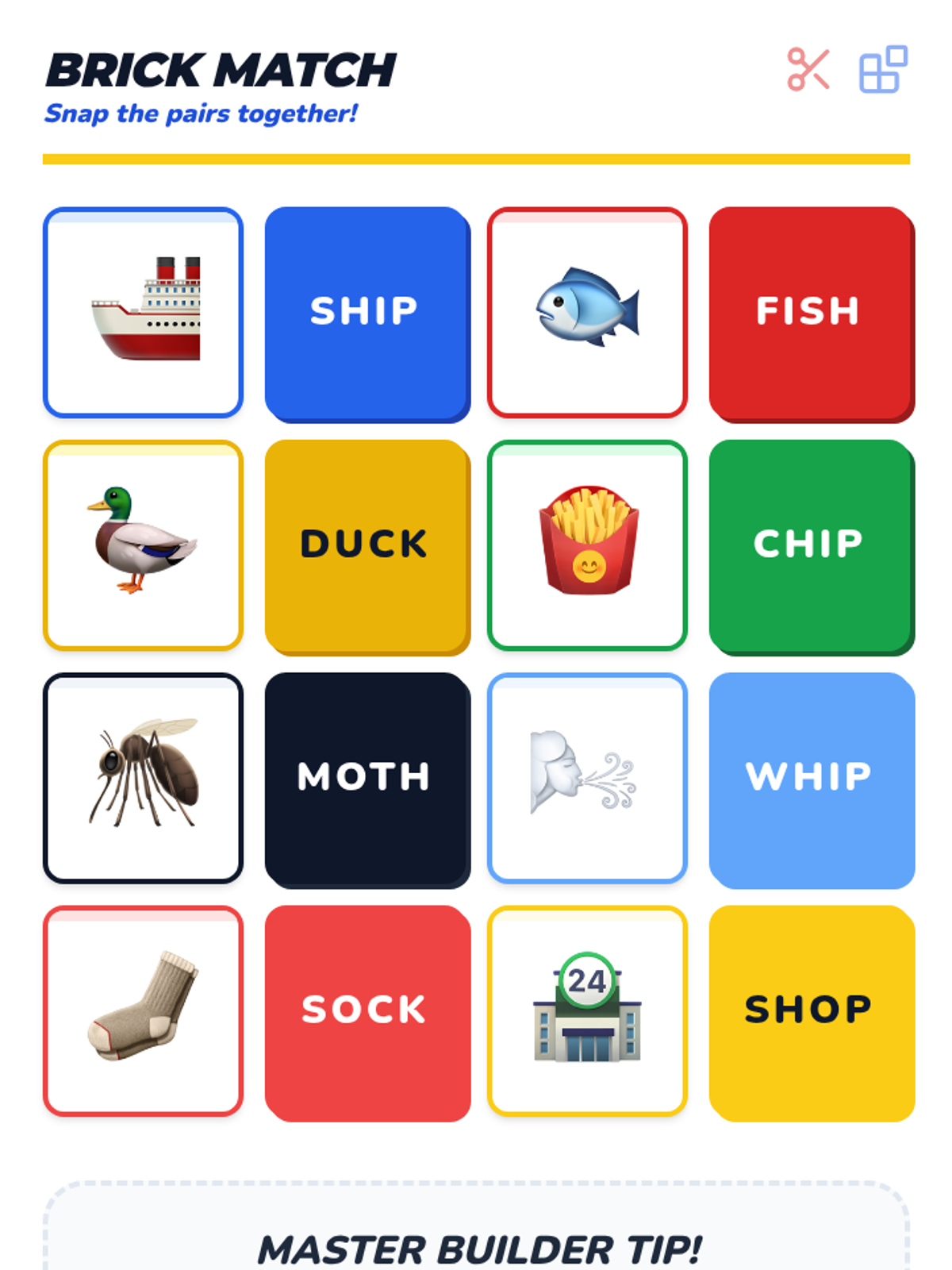
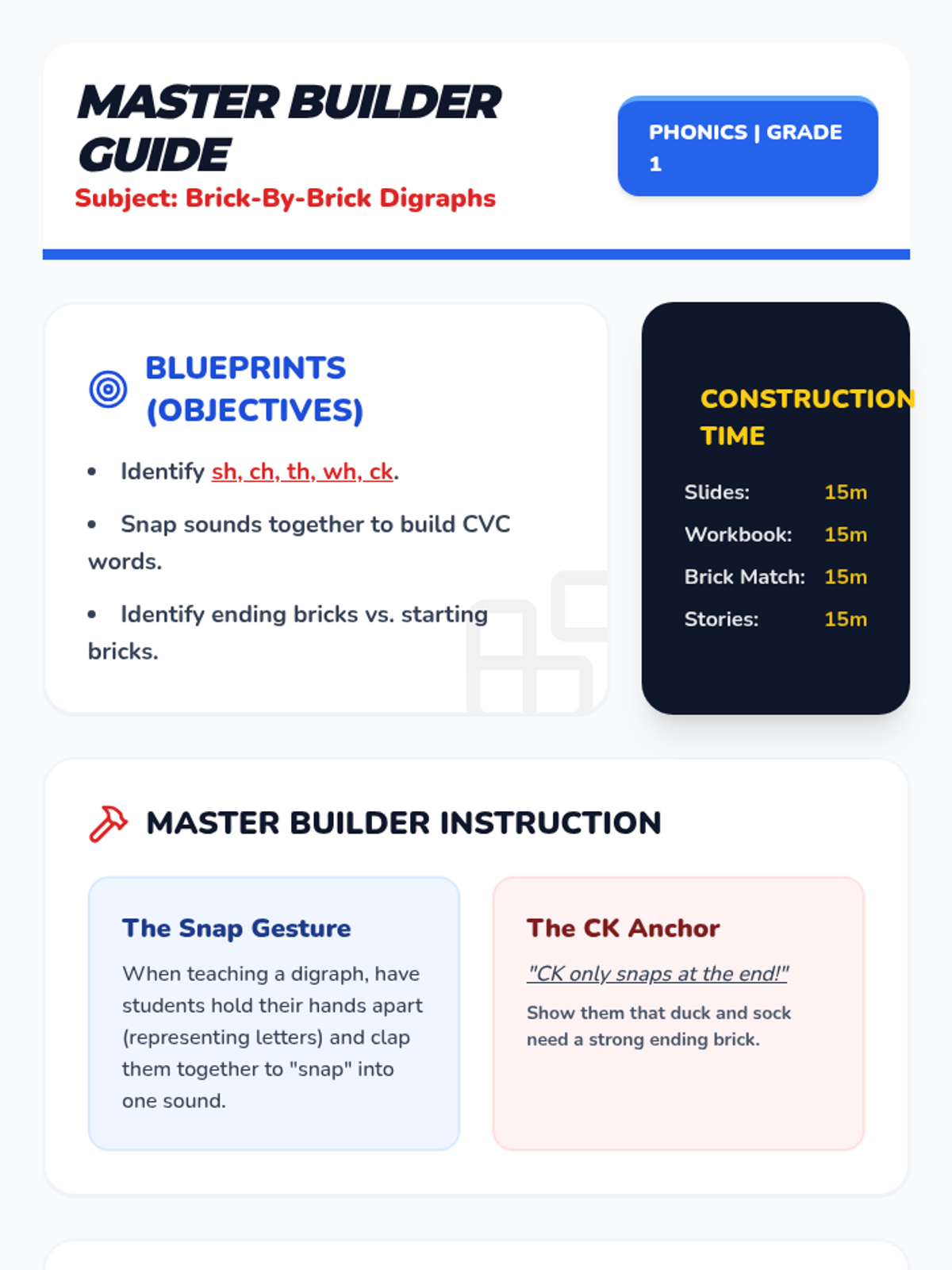
A foundational lesson introducing and practicing common digraphs (sh, ch, th, wh, ck) through multi-sensory activities and differentiated reading tasks using a building-block theme.
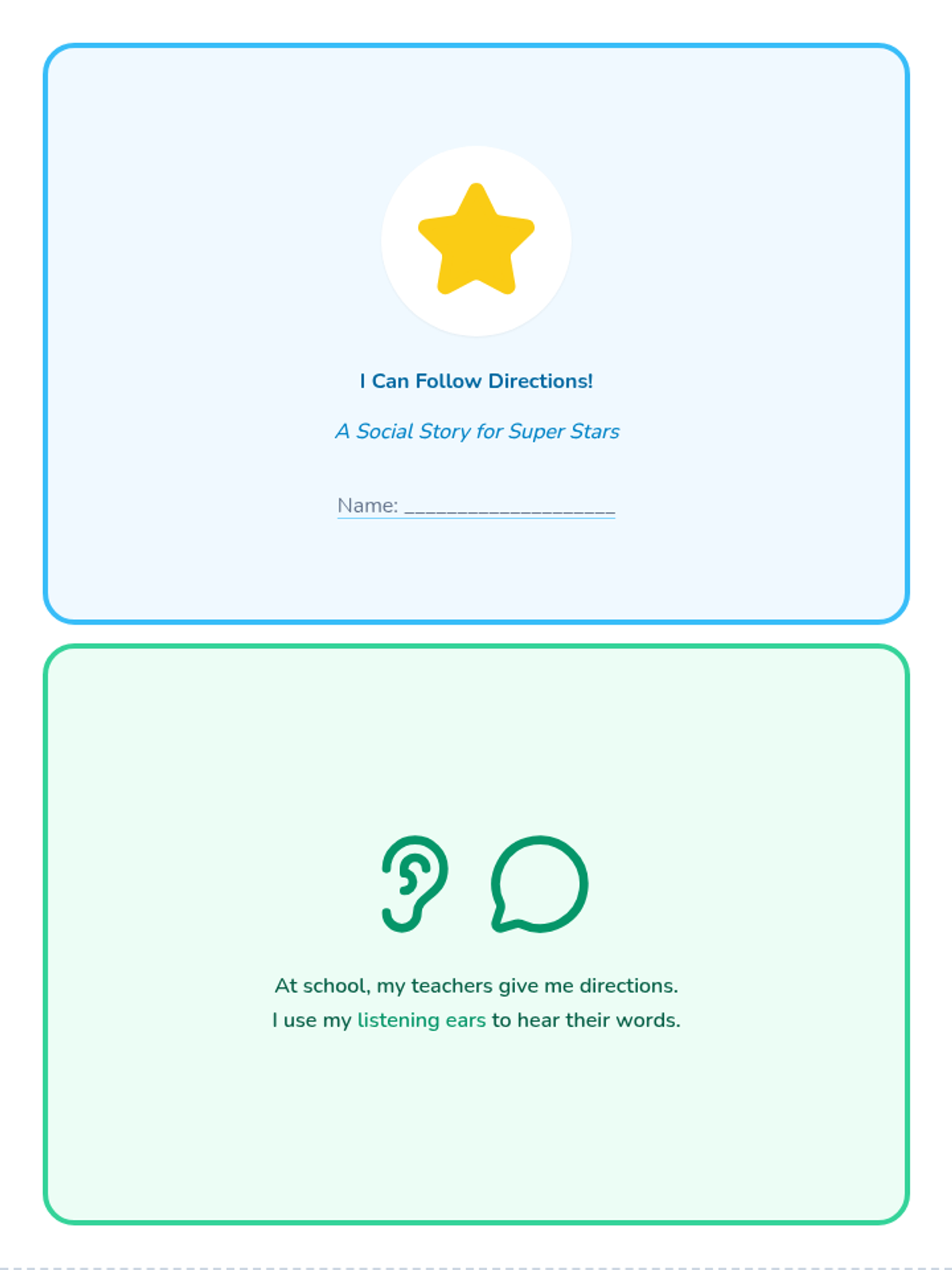
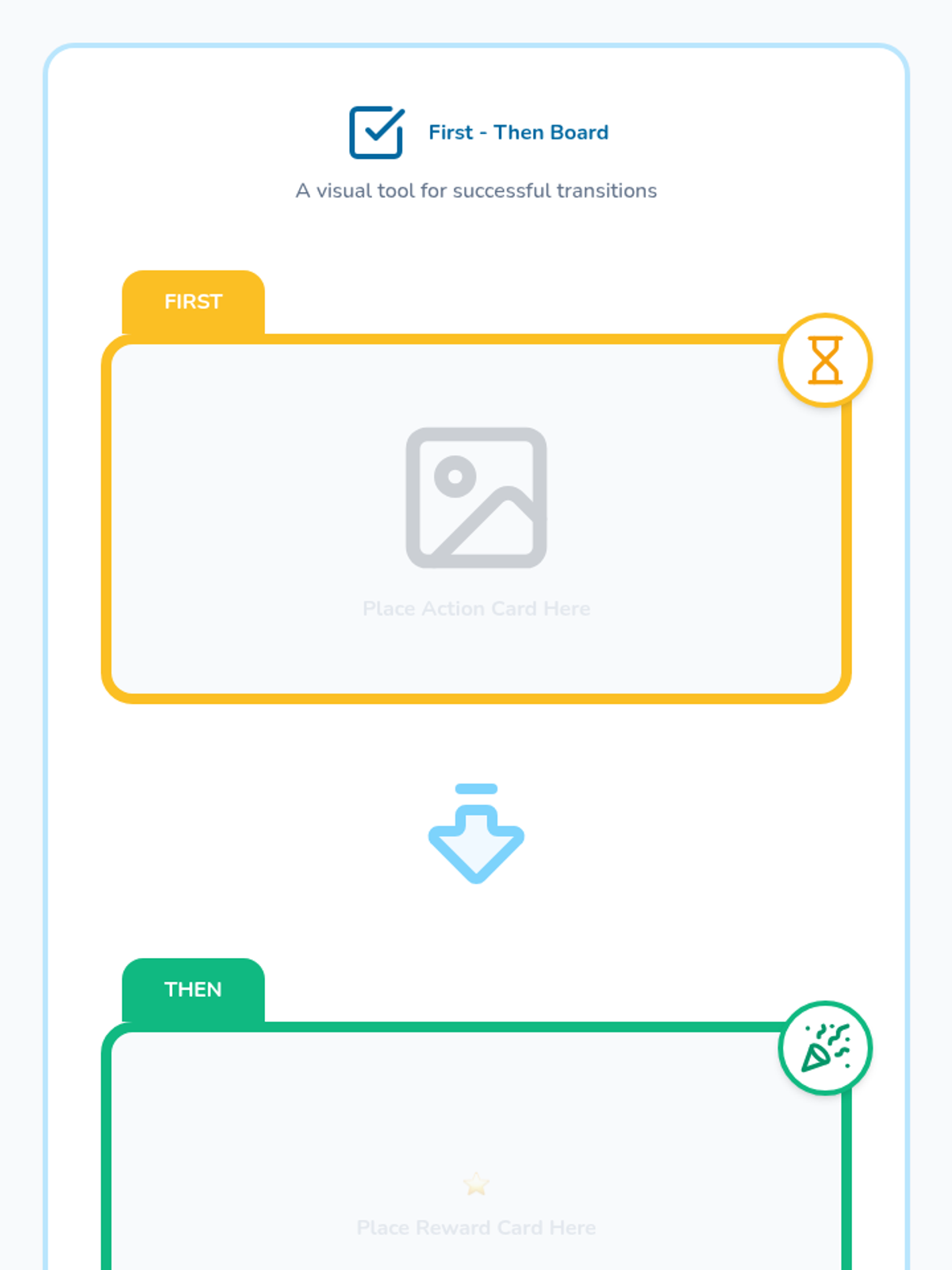
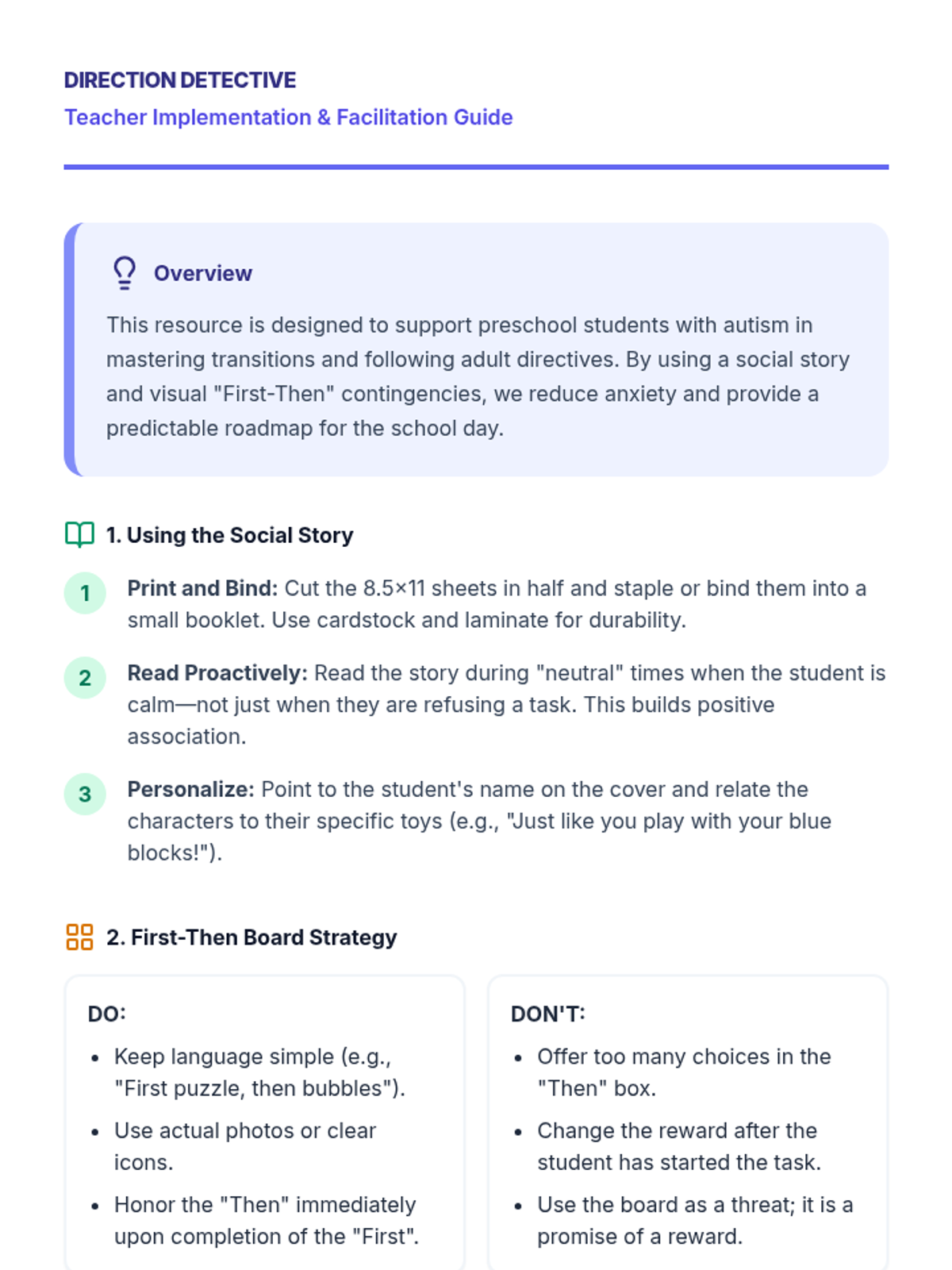
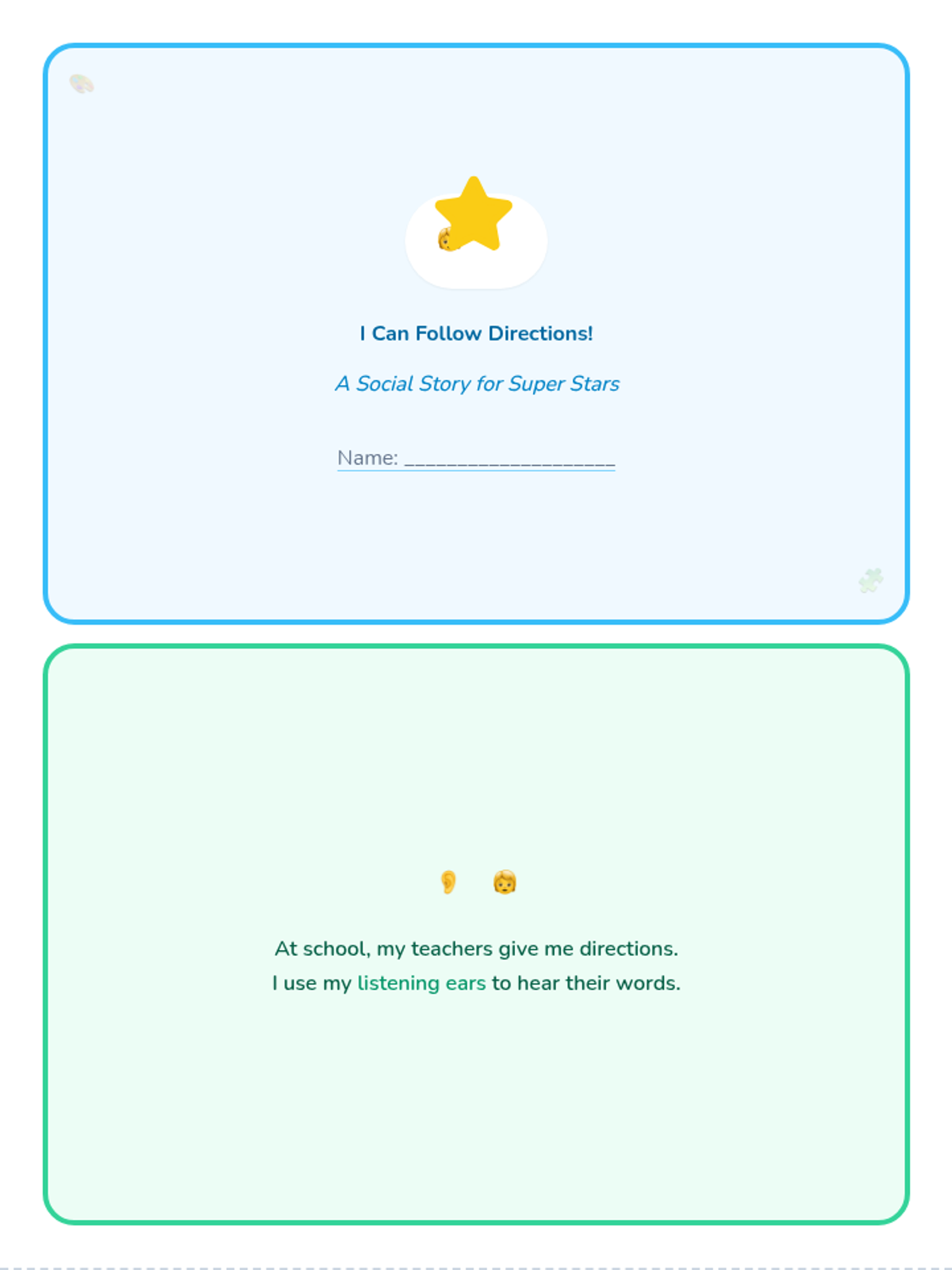
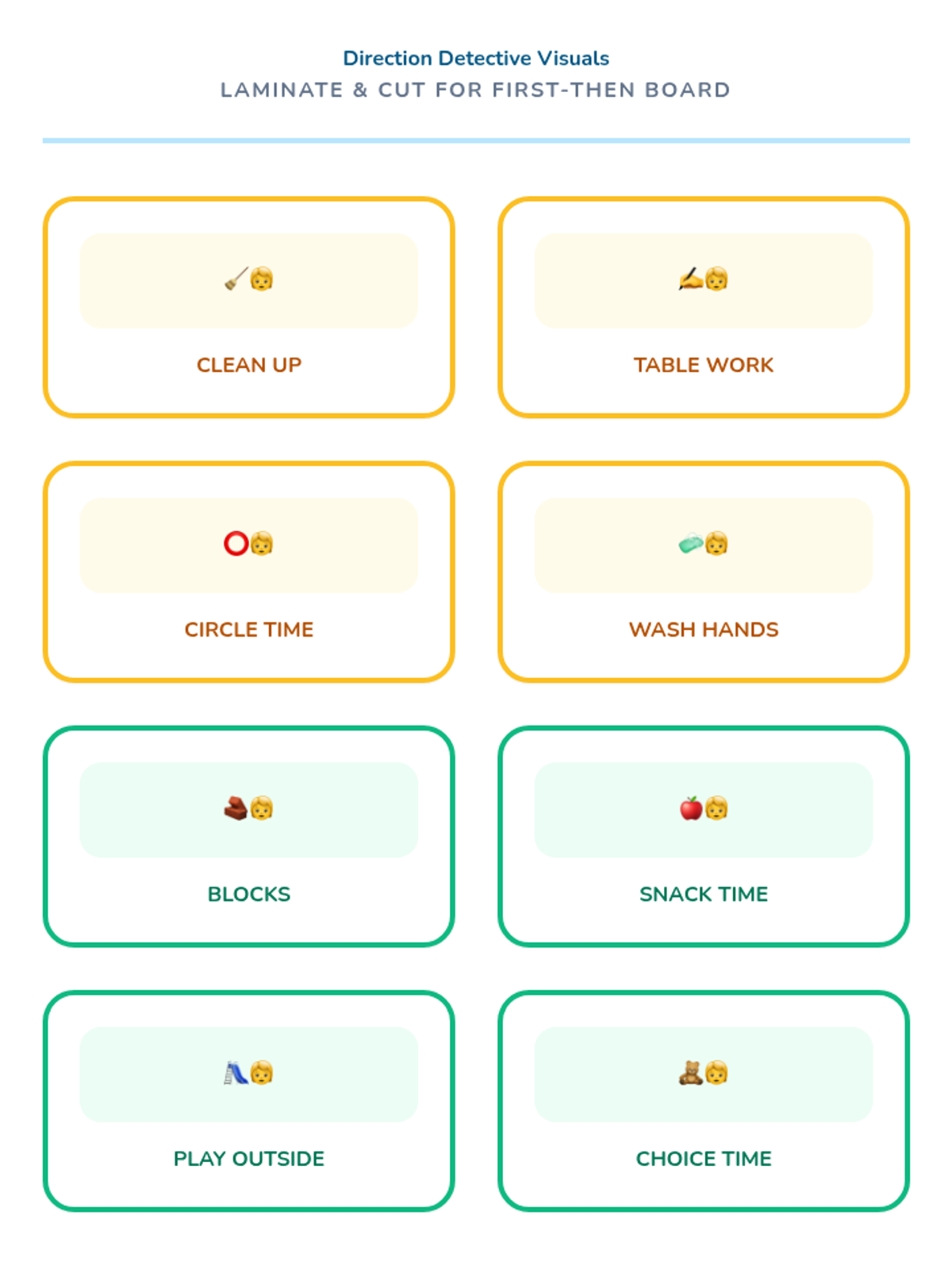
A lesson focused on supporting preschool students with autism in understanding and following directions, especially for non-preferred tasks, using visual supports and a social story.
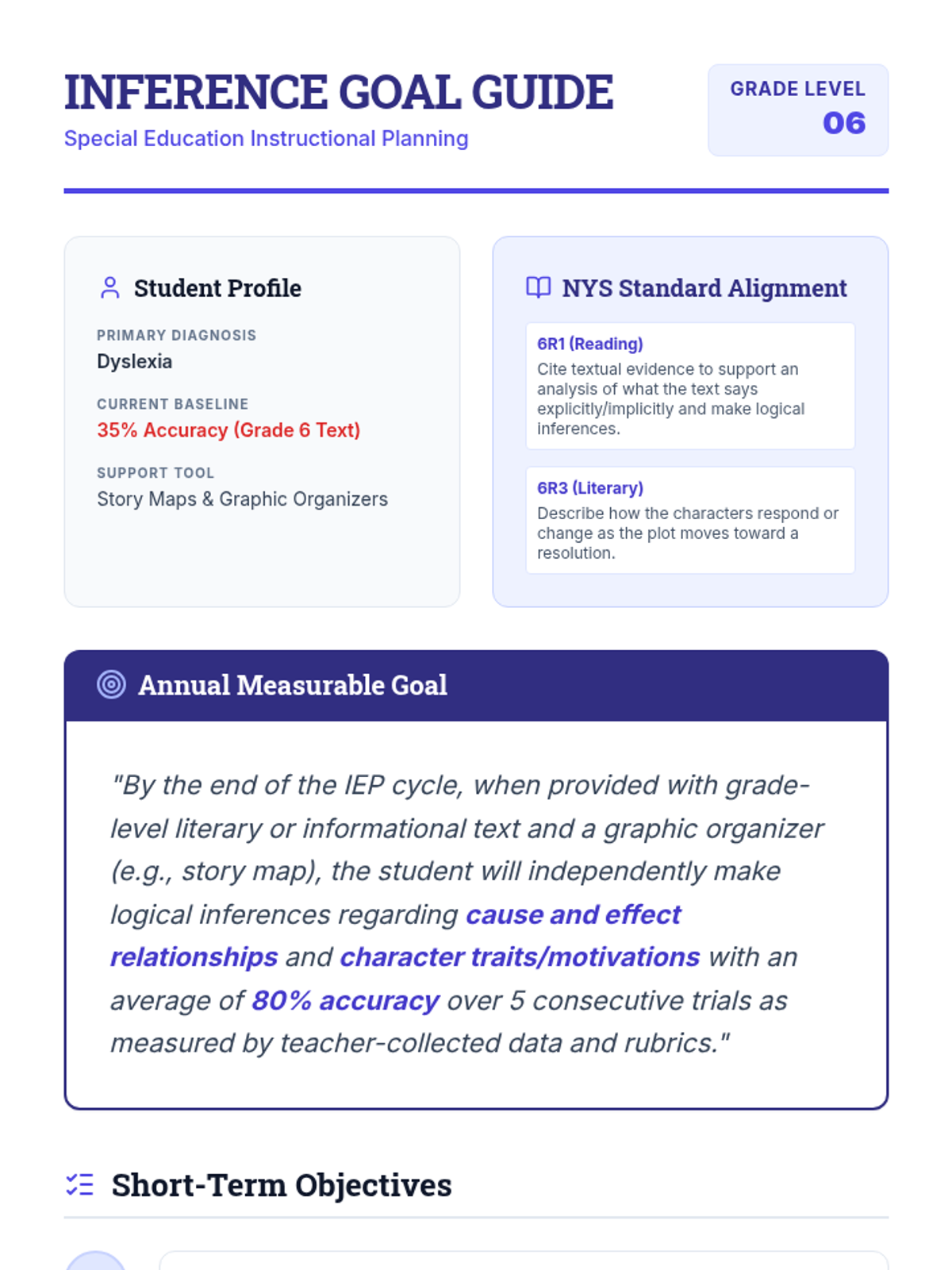
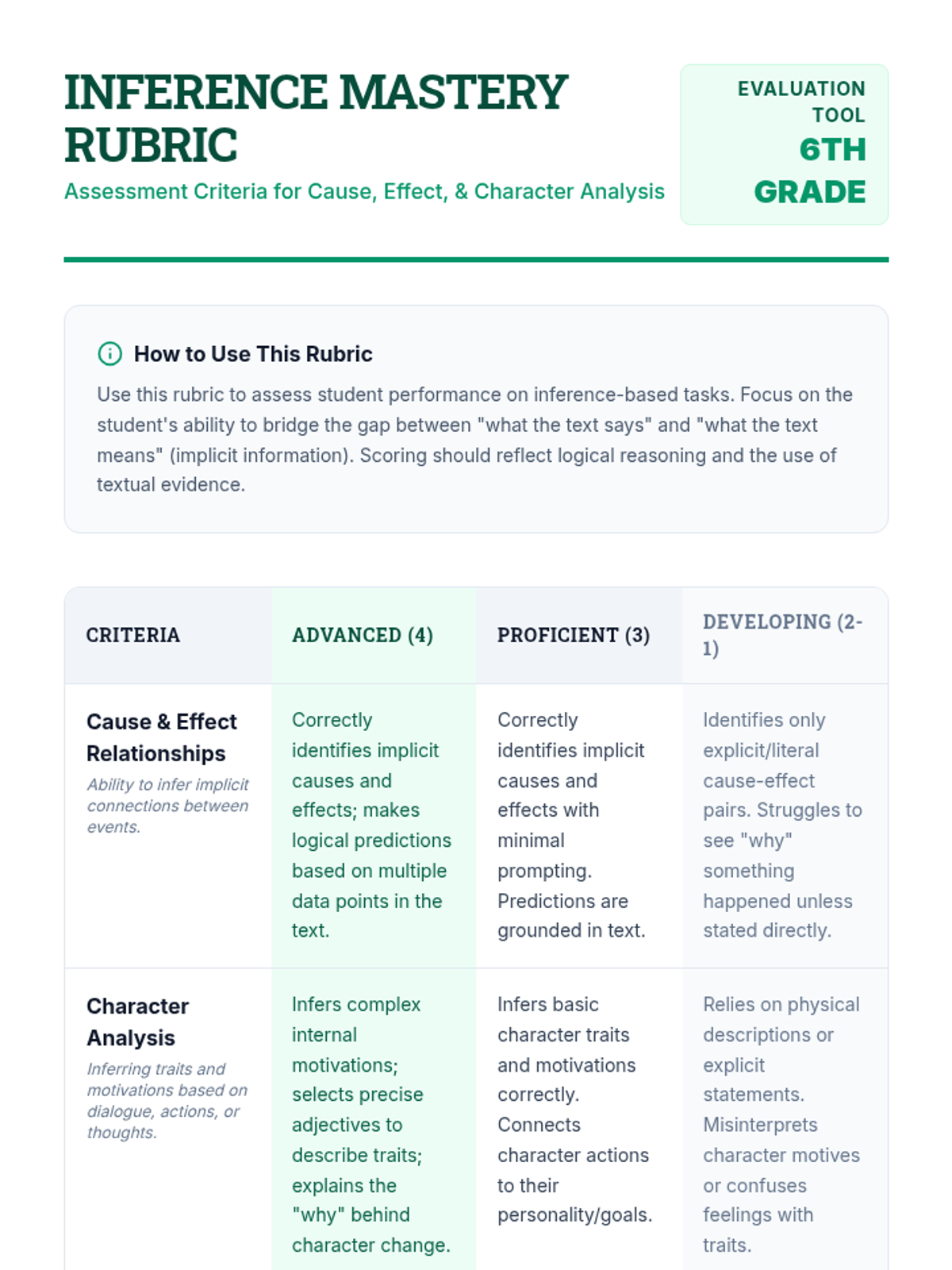
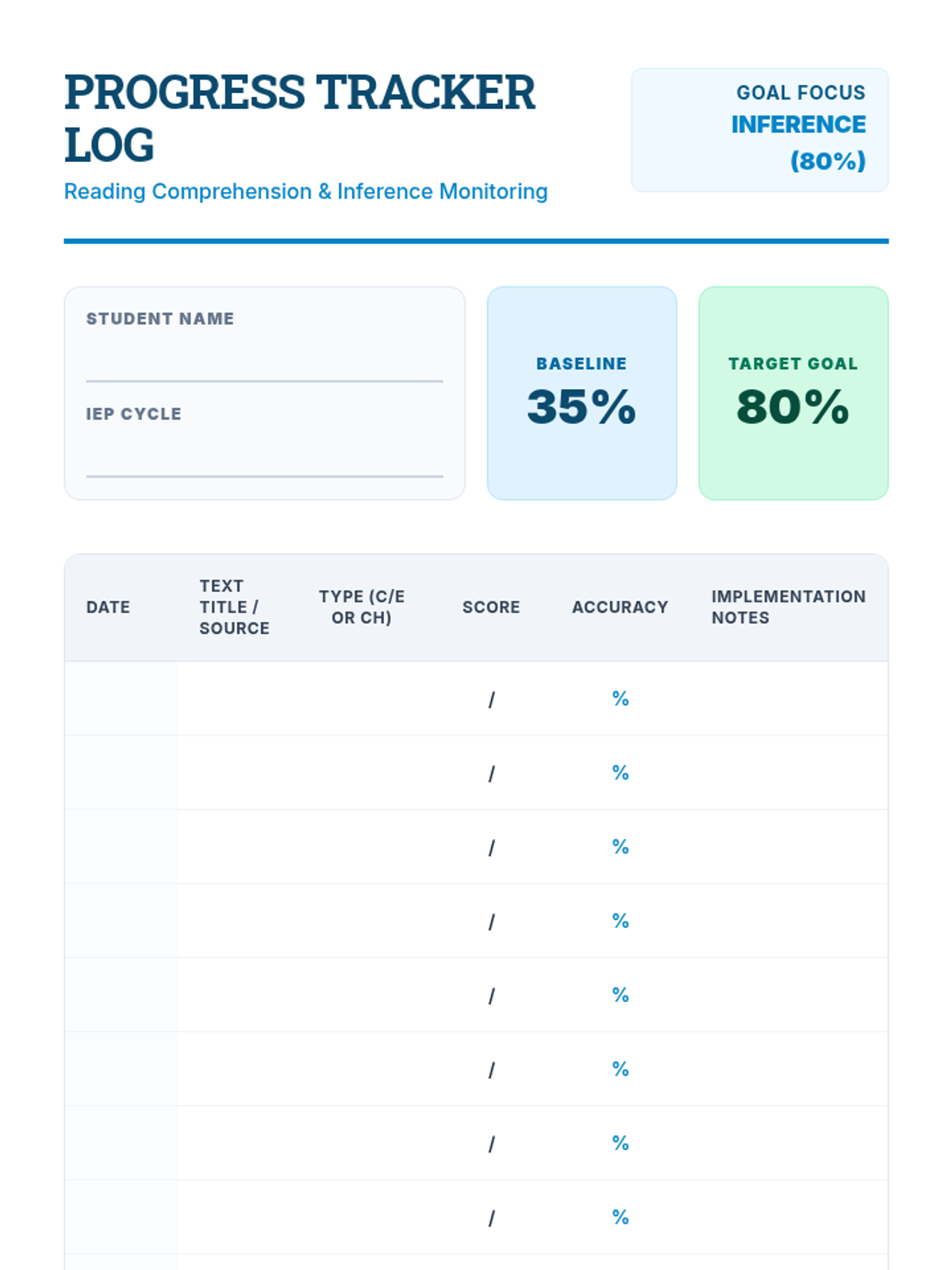
A collection of instructional goals and monitoring tools designed to support a 6th-grade student with dyslexia in mastering complex reading inferences, specifically cause-effect and character motivations.