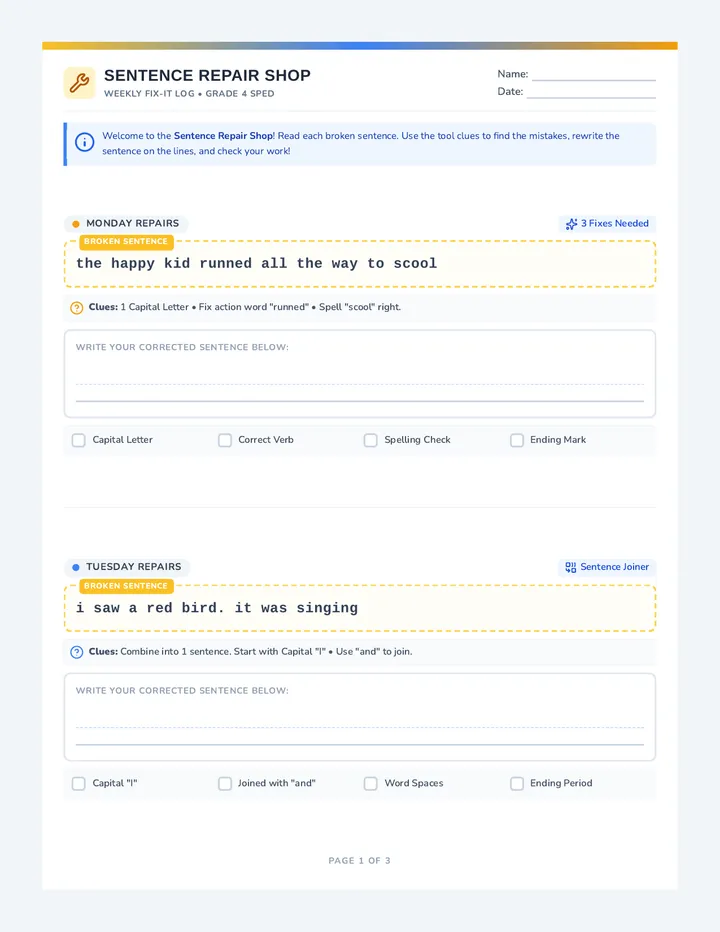
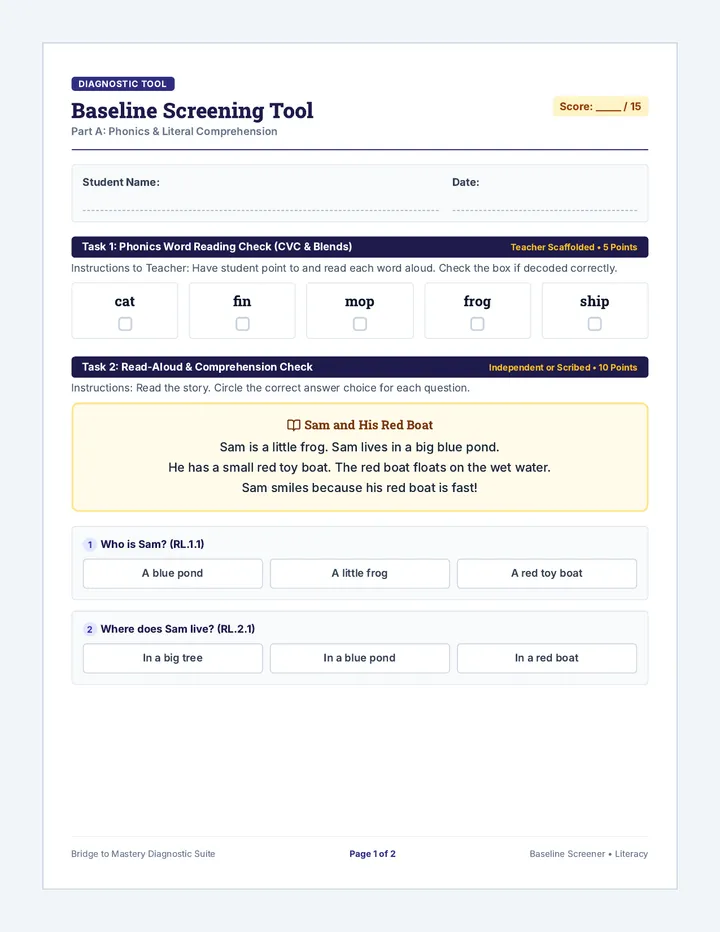
A foundational lesson introducing and practicing common digraphs (sh, ch, th, wh, ck) through multi-sensory activities and differentiated reading tasks using a building-block theme.
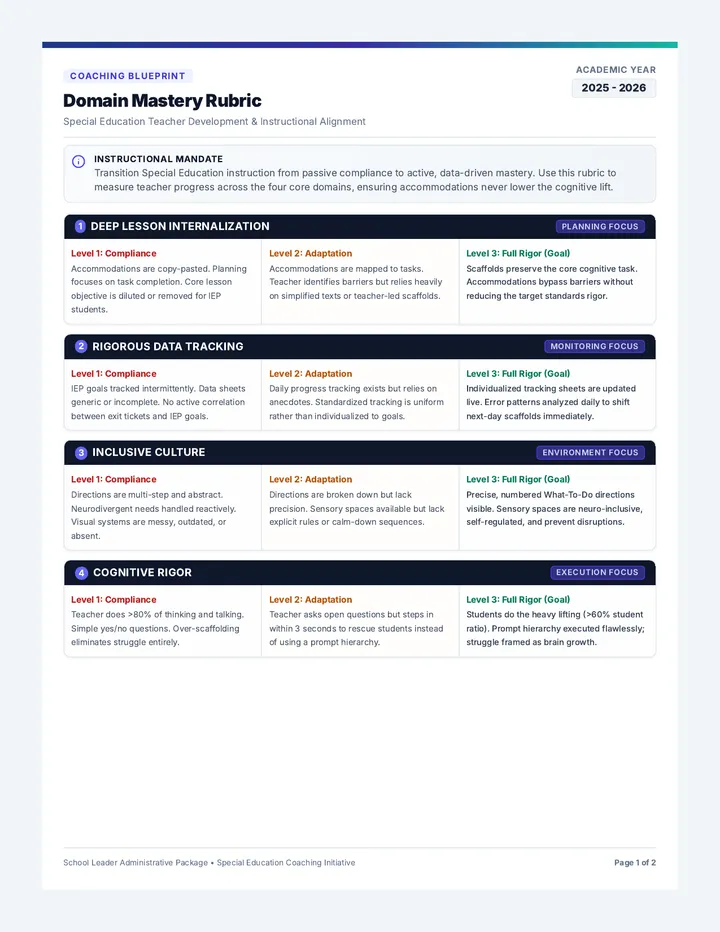
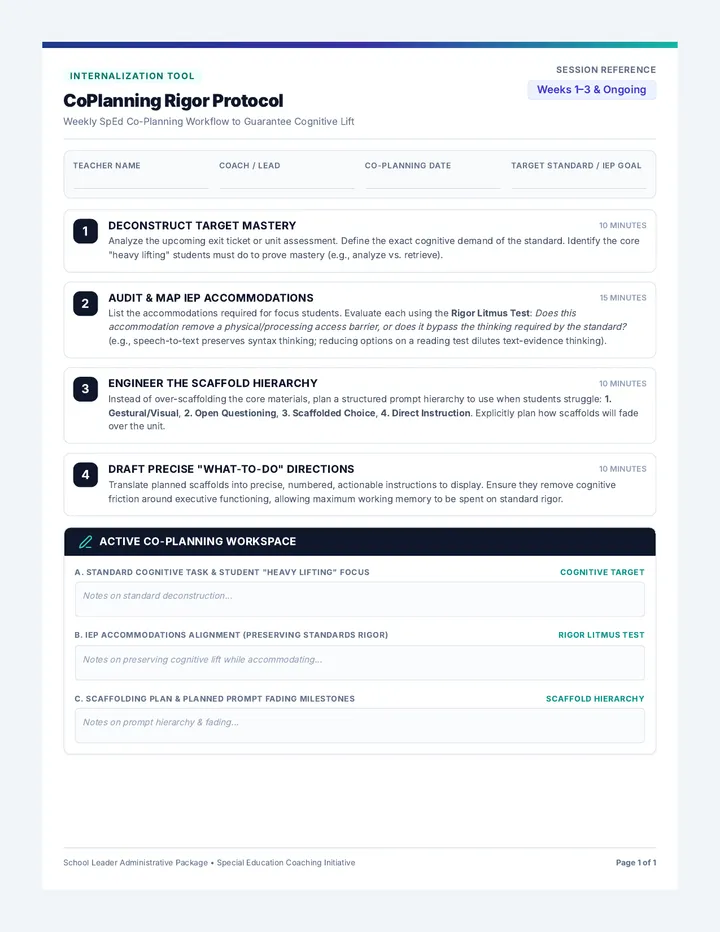
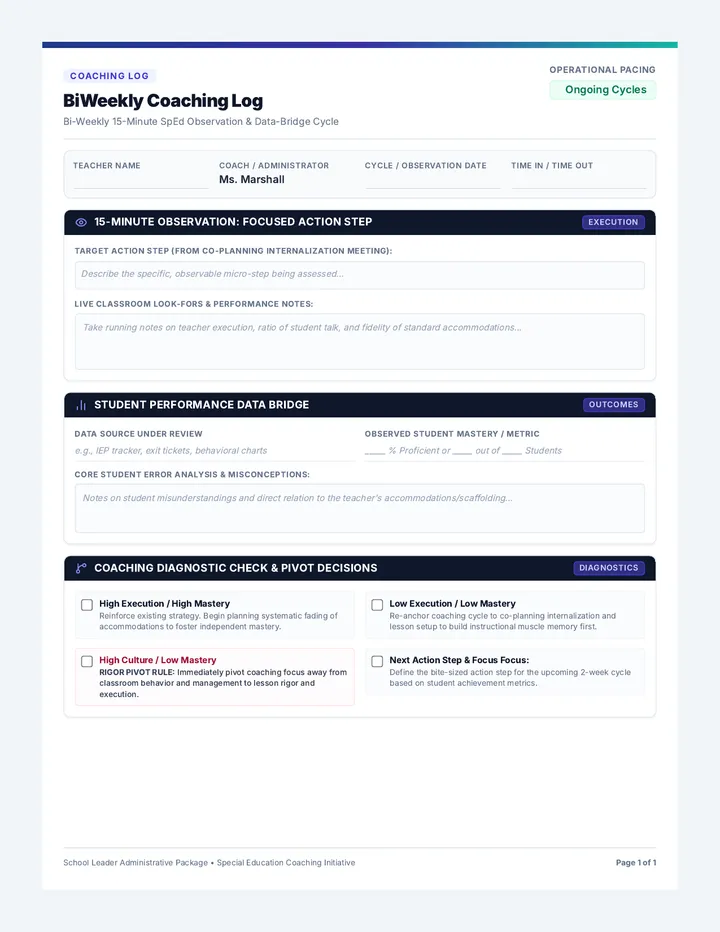
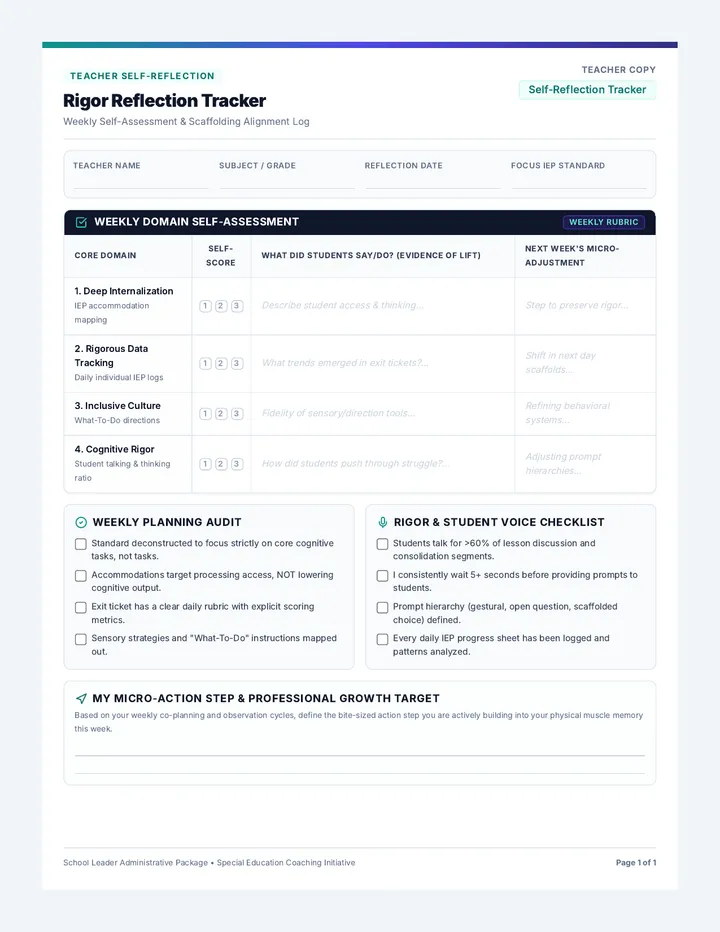
A comprehensive teacher evaluation suite focused on an architectural scaling lesson, incorporating the Marzano framework for formal feedback and professional growth.
Students observe and categorize different cloud formations to predict upcoming weather patterns in the New England area. This meteorology lesson encourages 2nd through 5th graders to use sky observations as data for scientific forecasting.
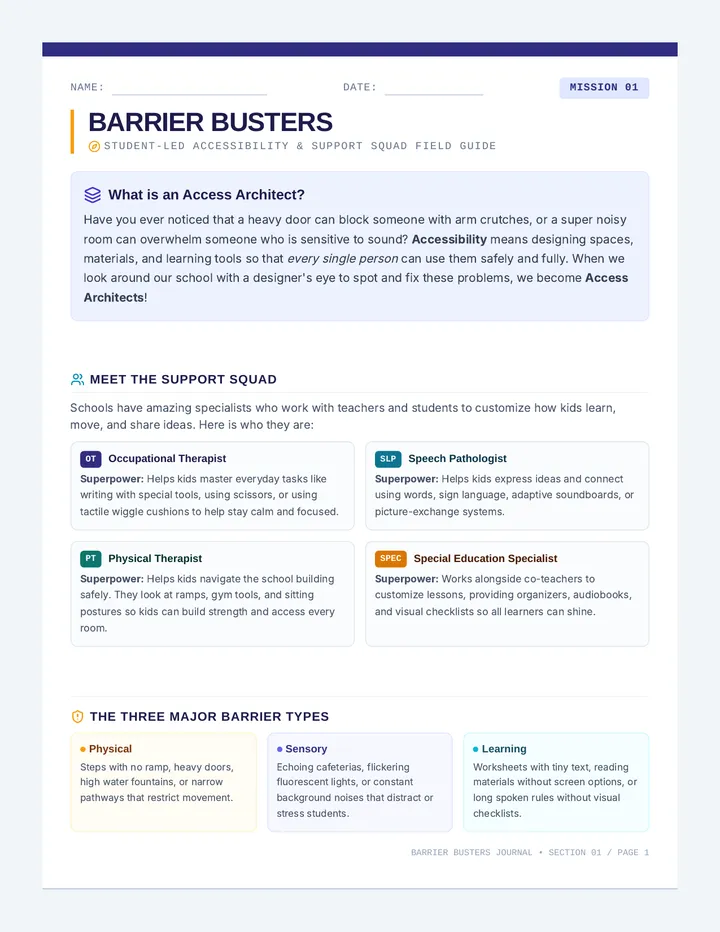
A lesson designed to empower students to understand their IEP goals and practice self-advocacy through scenario-based roleplay. Students will learn the 'Blueprinting' method for communicating their needs effectively to teachers and staff.
An introductory exploration of Earth's diverse biomes, focusing on the ocean, rainforest, and grassland ecosystems. Students learn to identify key characteristics and express personal preferences based on ecological traits.
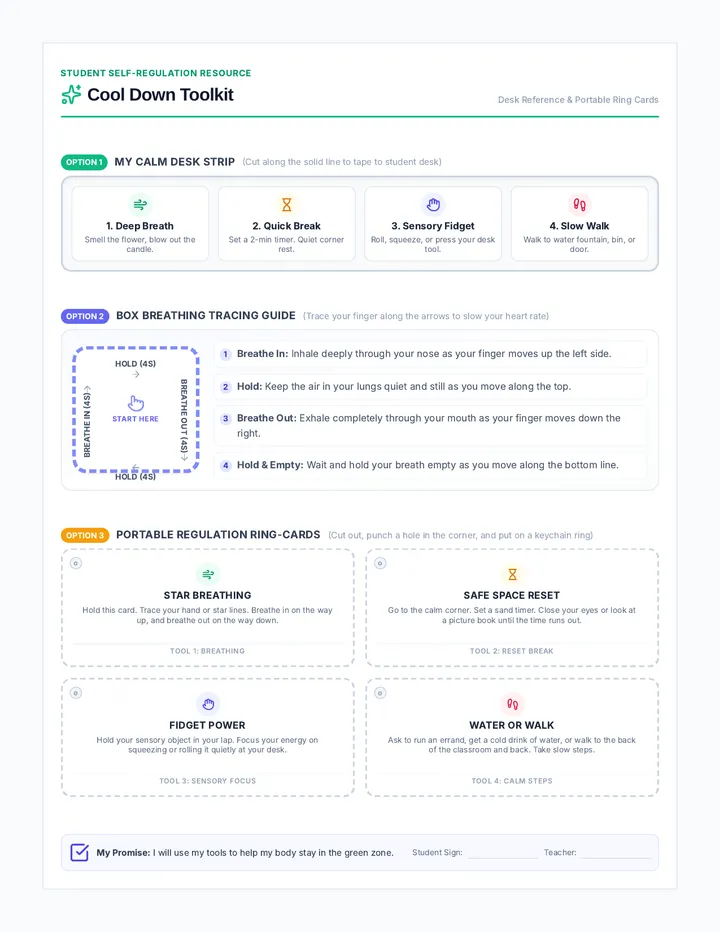
Teaching students to navigate personal space and handle social rejection with maturity and respect.
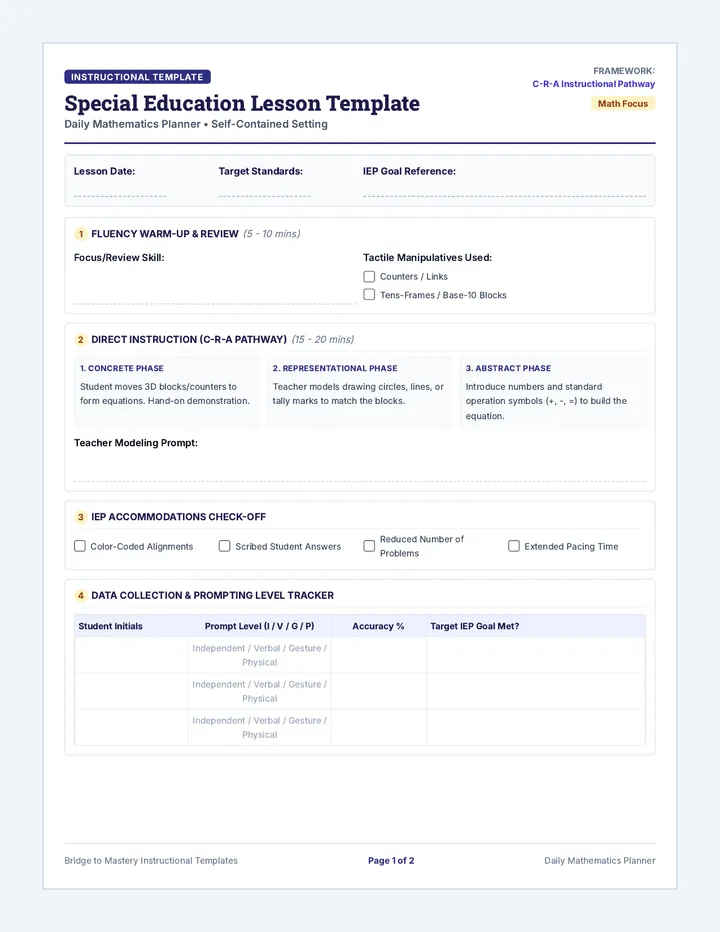
Teachers learn to break complex tasks into smaller, manageable steps using classroom routines and Iowa Core standards as examples.
A critical examination of how systemic inequities influence environmental health outcomes, focusing on Flint's water and urban air quality. Students analyze data and develop advocacy products to promote environmental justice.
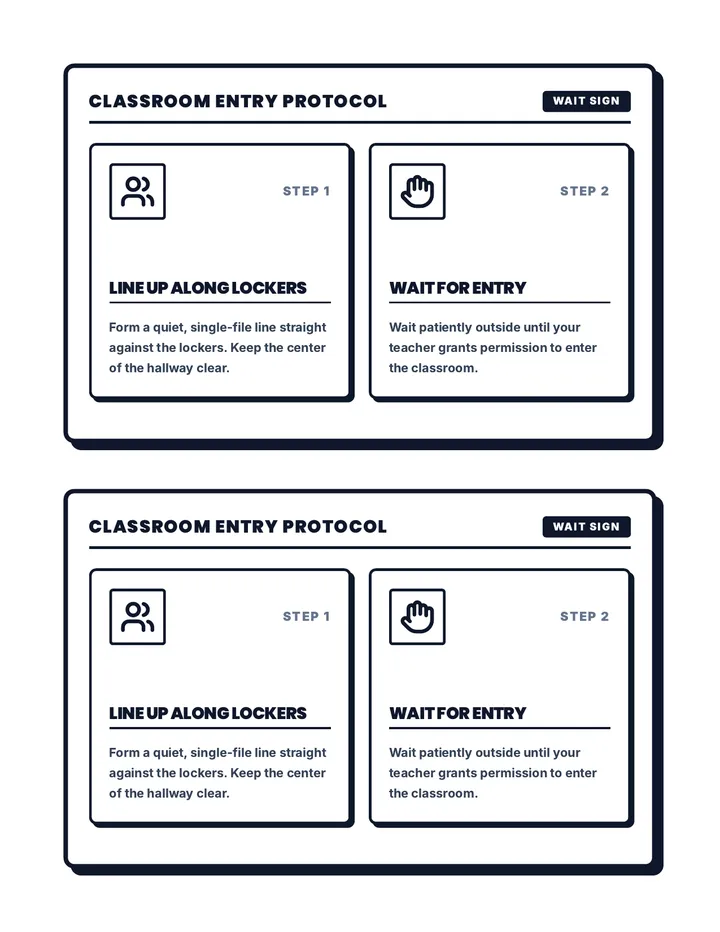
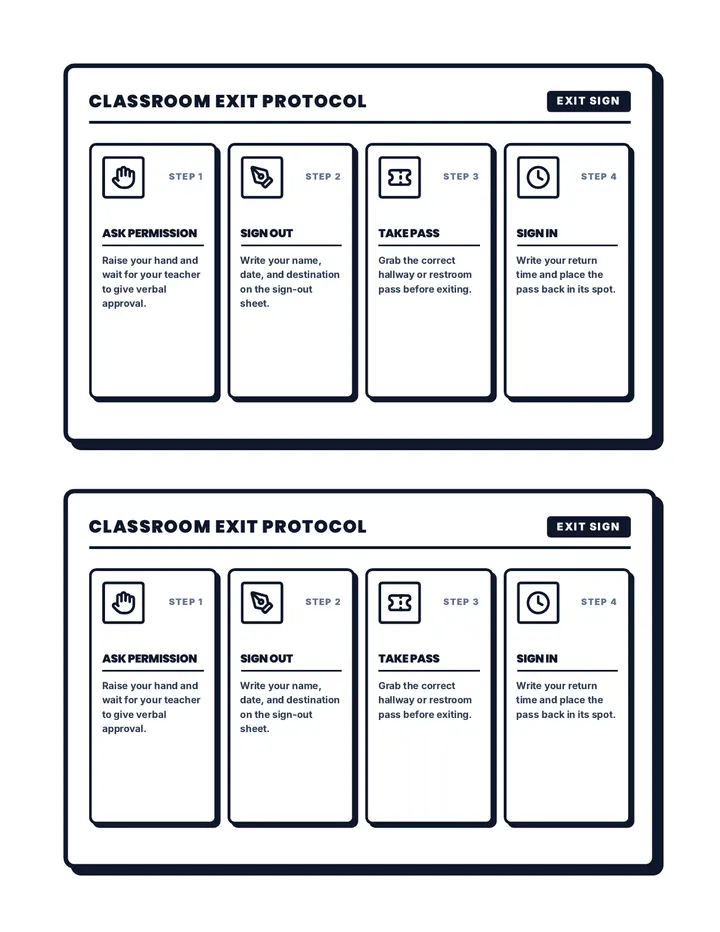
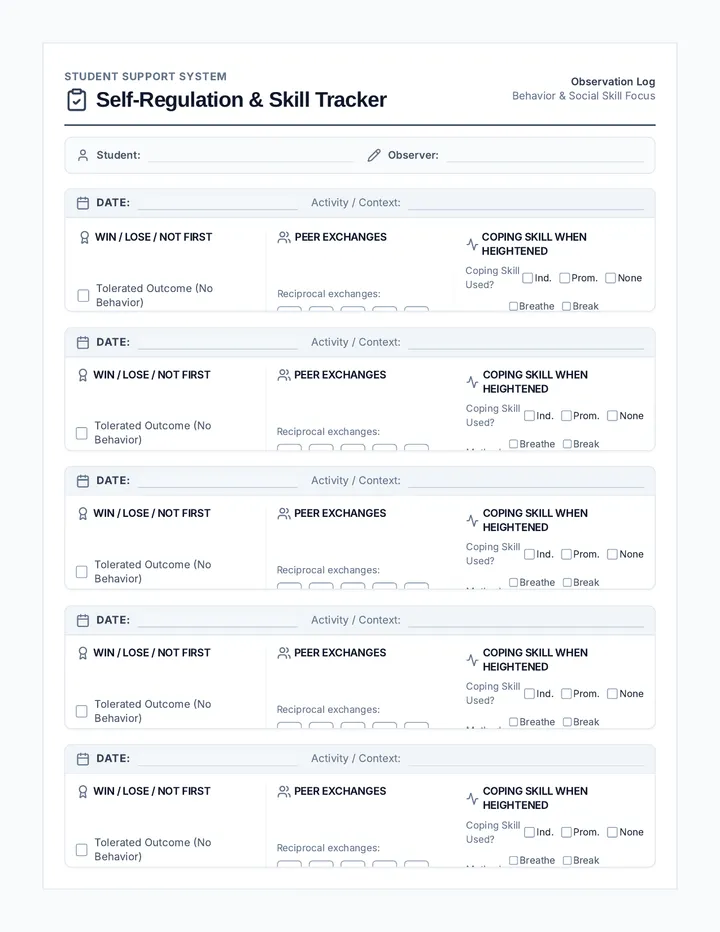
A collection of visual social stories, checklists, and activities designed to help autistic students navigate classroom expectations like listening, waiting, working, and taking breaks.
Strategies and quick-reference tools specifically designed for refocusing and redirecting students with ADHD and defiant behaviors in the Least Restrictive Environment.
A hands-on project where students explore waste management through the lens of Shoji Yamasaki's art, culminating in a creative video showcasing their own upcycling process or performance.
A comprehensive intervention suite designed for 8th-grade students struggling with elopement and vandalism. It focuses on restorative justice, structural scheduling, and teacher-led support strategies.
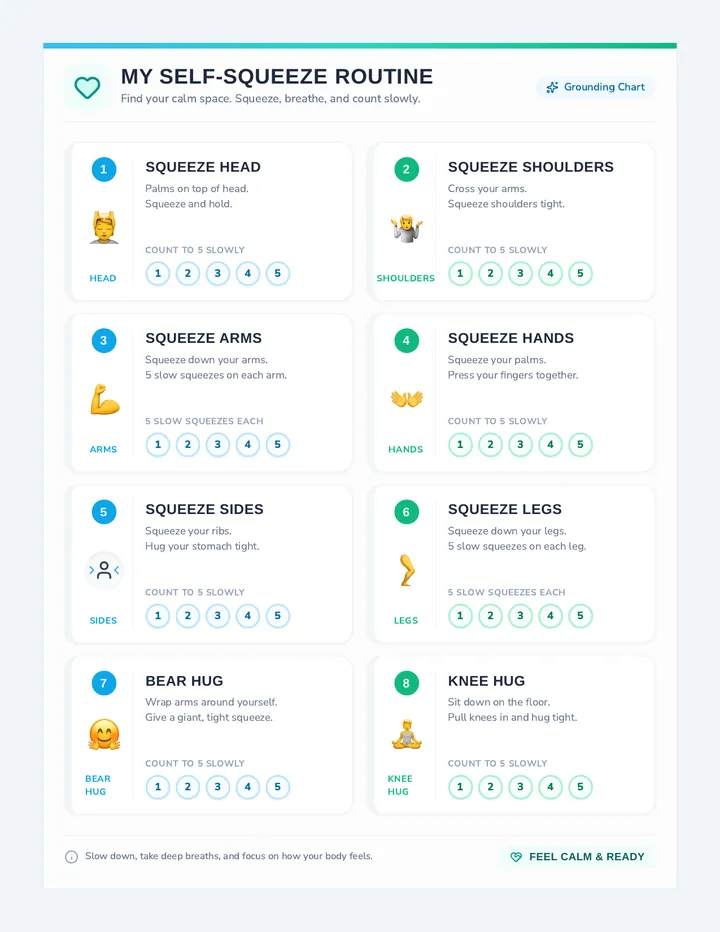
Sensory support strategies and proprioceptive activities designed for students in grades 3-5. Bridges the gap between play-based movement and functional household participation with age-appropriate "strength challenges."
Sensory support strategies and proprioceptive activities specifically designed for students in grades K-3. Focuses on play-based heavy work, animal walks, and simple household participation.
A classroom management system focused on positive reinforcement through a token economy, featuring non-tangible rewards.
A comprehensive K-12 behavior management system that synthesizes best practices from MTSS, PBIS, and restorative justice frameworks. This lesson provides teachers with a clear decision-making flow and a detailed policy handbook for maintaining a positive school culture.
Students define their brand's personality and photography style, using image filters and curation to complete the final section of their professional style guide.
Students create a formal brand style guide, documenting rules for logo usage, color palettes with Hex codes, and typography to ensure brand consistency.
Students learn to use Canva as a professional layout tool, transitioning from building individual design components to assembling a cohesive Brand Board using custom assets, frames, and positioning tools.
Students refine their logo drafts by applying principles of negative space and contrast, creating color and black-and-white versions for professional export.
Students combine their icon and typography choices to build an official brand logo draft, focusing on balance, alignment guides, and the 'Squint Test' for simplicity.
Students master custom shape creation using polyline and curve tools, exploring line weights and the importance of vector scalability for professional branding.
Students move from curating to creating, using Google Drawing to build complex objects with simple geometric shapes while learning the fundamentals of vector design and layering.
Students learn how font choices communicate a brand's tone of voice, distinguishing between serif, sans serif, and display fonts to select a pair that fits their business identity.
Students explore the emotional impact of color in branding, learning to use Hex codes and curated imagery to build a brand mood board that reflects their product's personality.
Students perform quality control on their business proposals through peer review, grammar tools, and text-to-speech auditing before exporting their final work as professional PDFs.
Students learn about intellectual property, source reliability, and technical citation skills like hyperlinking and footnotes to perform ethical competitor research.
Students integrate market research data and customer testimonials into their formal proposals, using evidence to validate their product concepts and finalizing the Solution section.
Students learn to distinguish between product features and customer benefits, drafting the Executive Summary and Problem sections of their business proposal using persuasive formatting.
Students learn the importance of professional document formatting and hierarchy, setting up a formal business proposal template with structured headings and standardized typography.
Students conduct a market research sprint, interviewing classmates to validate their product ideas and learning to 'pivot' based on real user feedback and data synthesis.
Students learn the difference between leading and open-ended questions, developing a research table and interview script to gather unbiased feedback from potential customers.
An exploration of how carbon moves through the atmosphere, hydrosphere, geosphere, and biosphere, and why this cycle is vital for living organisms.
Students explore the concepts of target markets and customer empathy, moving from personal preferences to identifying specific user needs and mapping out a "Day in the Life" for their ideal customer.
Students explore the fundamental economic concepts of scarcity and opportunity cost, applying them to product development by making difficult trade-offs between competing features within a limited resource budget.
Students learn to identify consumer "pain points" as opportunities for innovation, moving from recognizing everyday frustrations to conceptualizing business solutions.
Students explore five major world habitats—Forest, Ocean, Desert, Arctic, and Rainforest—identifying key characteristics and the animals that call them home through visual presentation and hands-on sorting activities.
A lesson focused on the Anglerfish and its bioluminescent trap, designed for early elementary students with IEP supports. Students will learn about deep-sea adaptations through a simple reading passage and structured comprehension activities.
A mini-lesson for a 6th-grade resource room ELA class focusing on Auggie's character traits and his development throughout the first month of school in the novel 'Wonder'. This lesson uses a space-exploration theme and provides high levels of scaffolding.
A comprehensive set of resources for parents of junior high and high school students, focusing on proprioception, sensory seeking behaviors, and practical home-based strategies.
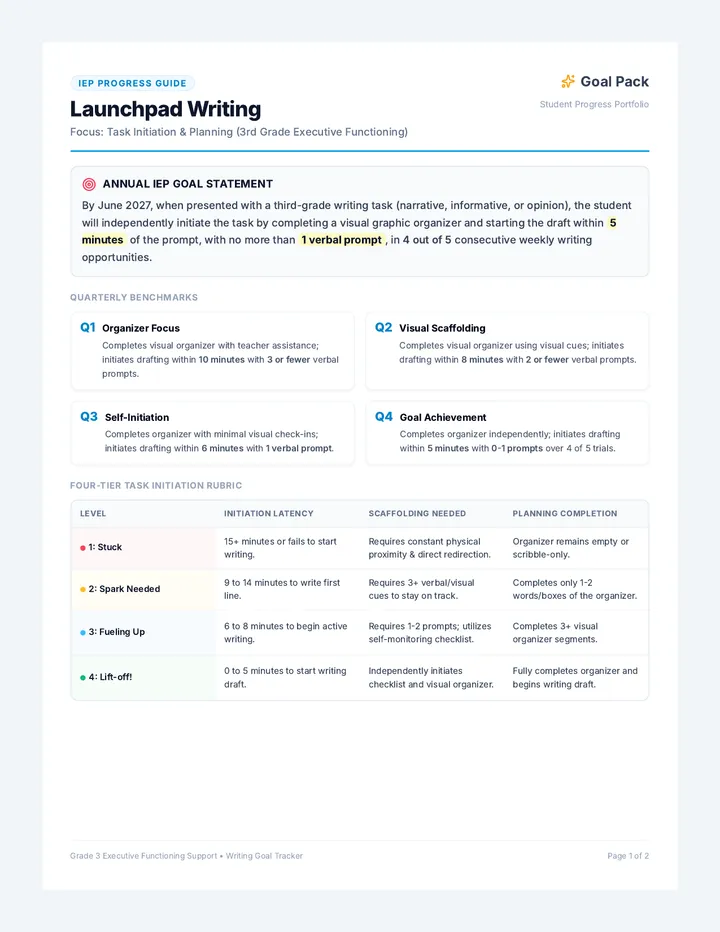
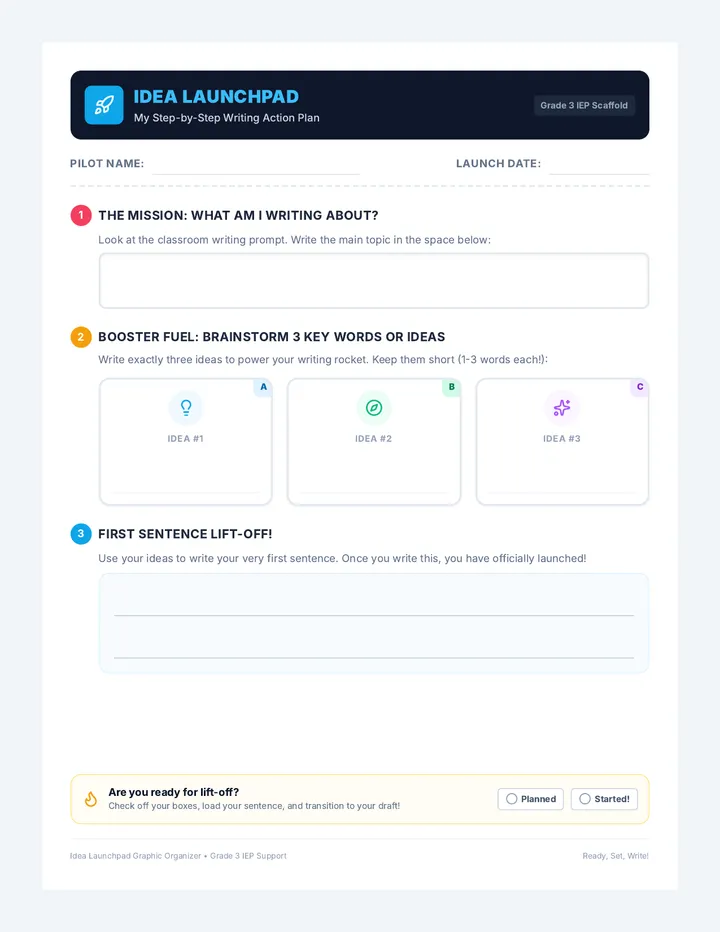
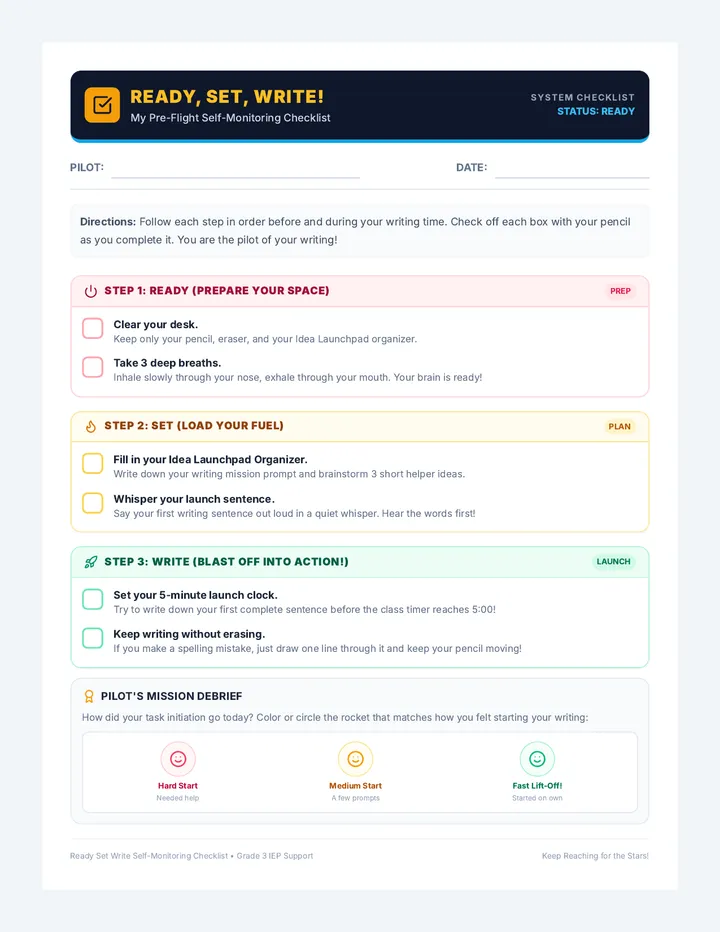
A comprehensive parent training resource designed to support task initiation and sustained focus for students with autism using visual strategies and structured home routines.