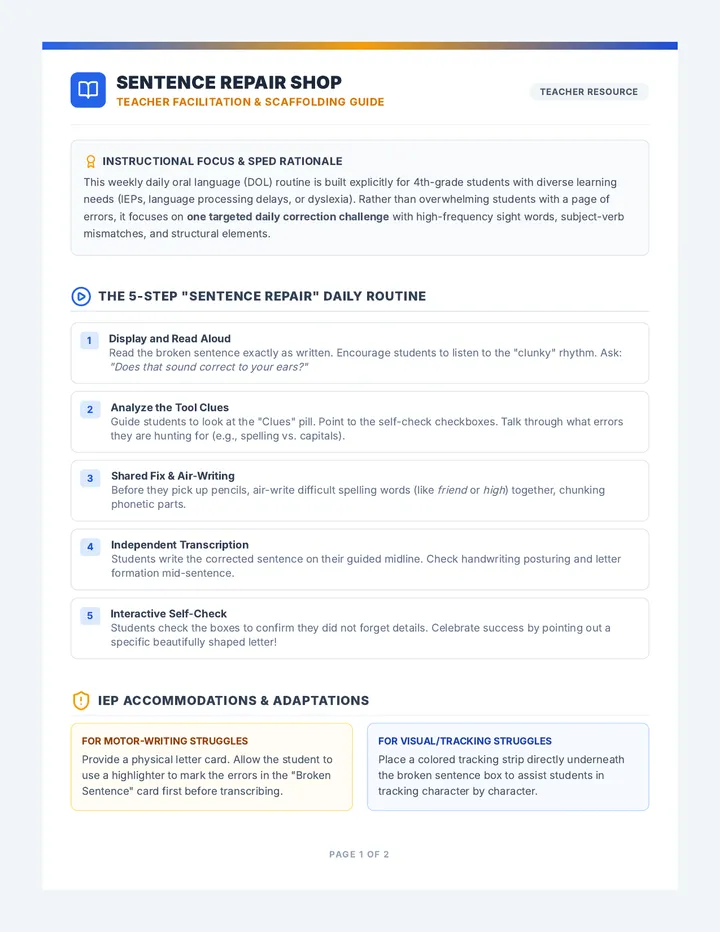
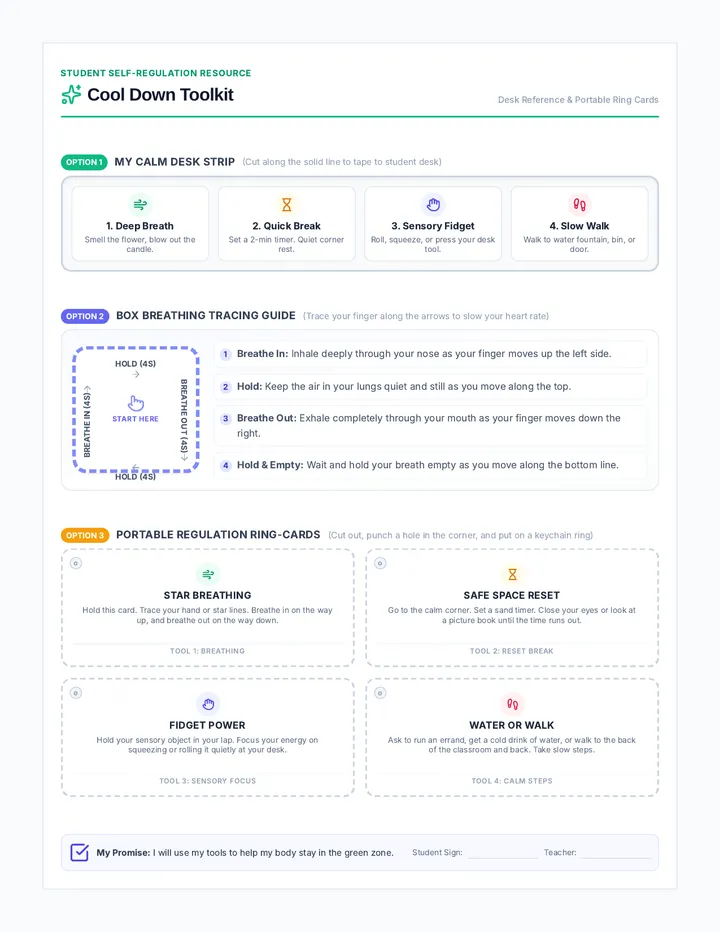
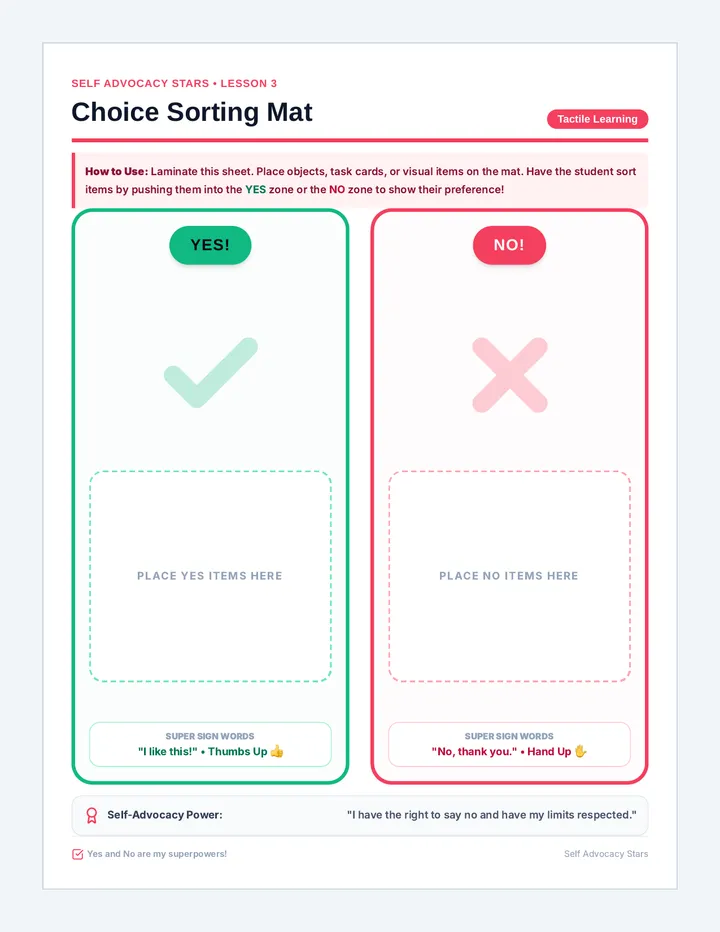
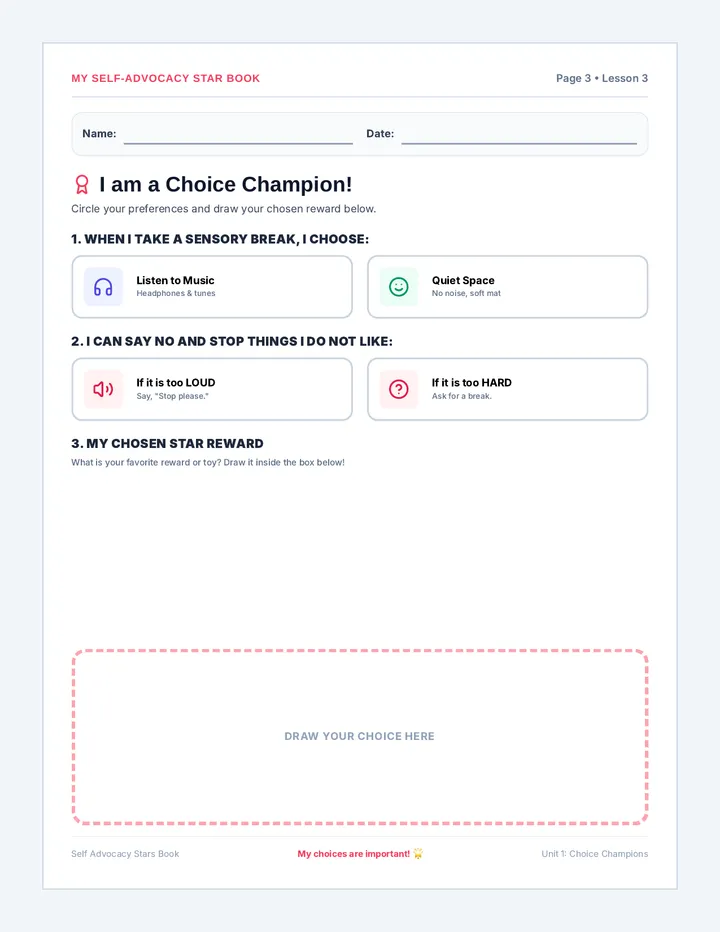
A social skills lesson designed for autistic students to understand personal space boundaries, the concept of a 'space bubble', and how to interact safely and respectfully with others.
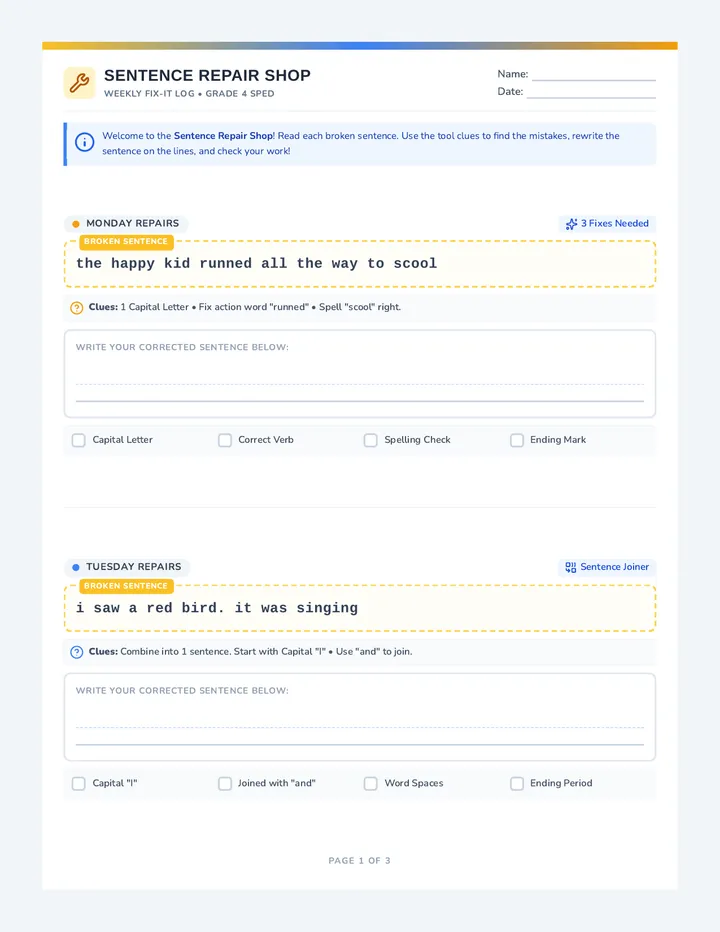
A gym-based lesson for lifeskills kindergartners focusing on foundational social-emotional skills through movement and simple play. The lesson includes high-visibility visual supports and low-complexity games designed to minimize elopement and maximize engagement.
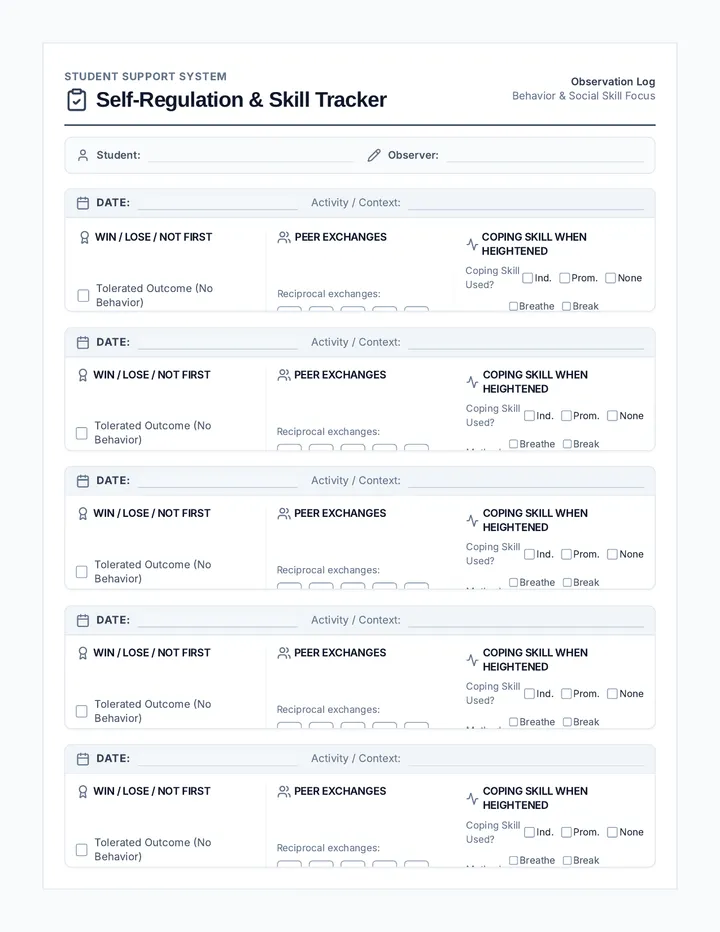
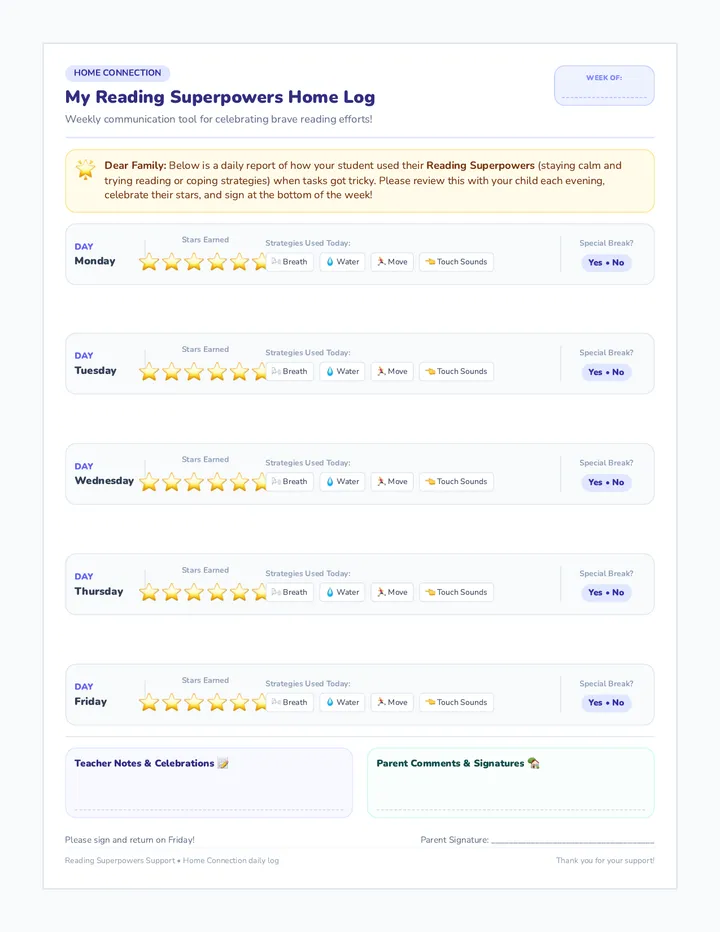
A set of behavioral support tools designed for a 3rd-grade student to track progress in following directions and being respectful, with a focus on independent work strategies.
A foundational lesson teaching personal space and frustration management through a 'Space Hero' theme, utilizing choice-based decision making for a 4th grade student.
A foundational lesson for students with intellectual disabilities to distinguish between living and non-living things using simple observations like growth, movement, and basic needs.
An introductory lesson on using the number line to subtract by jumping backwards, using a 'Frog Hop' metaphor to make the concept concrete.
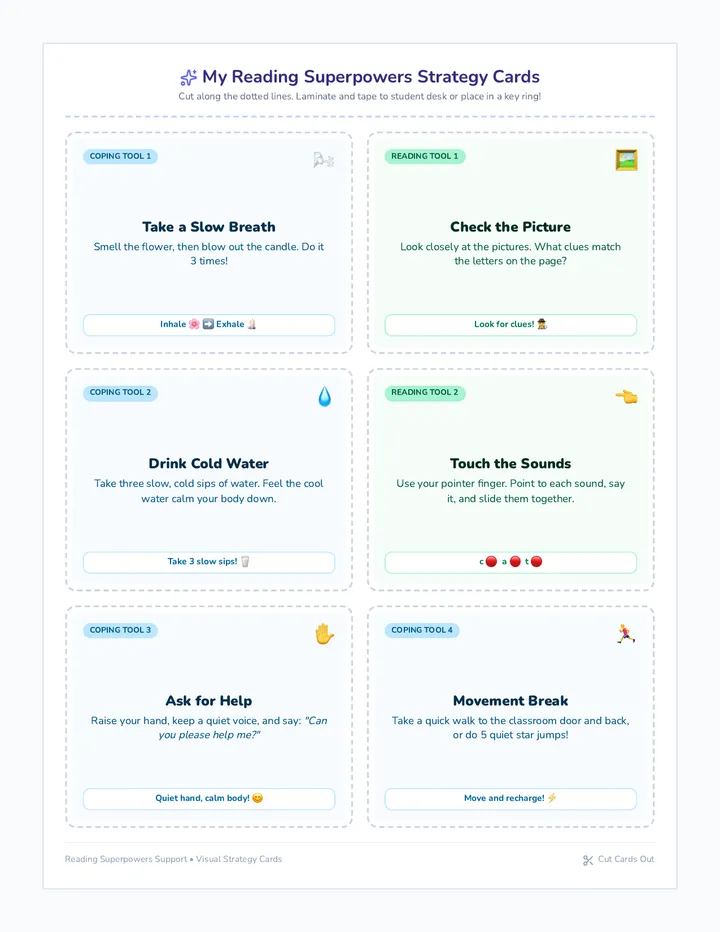
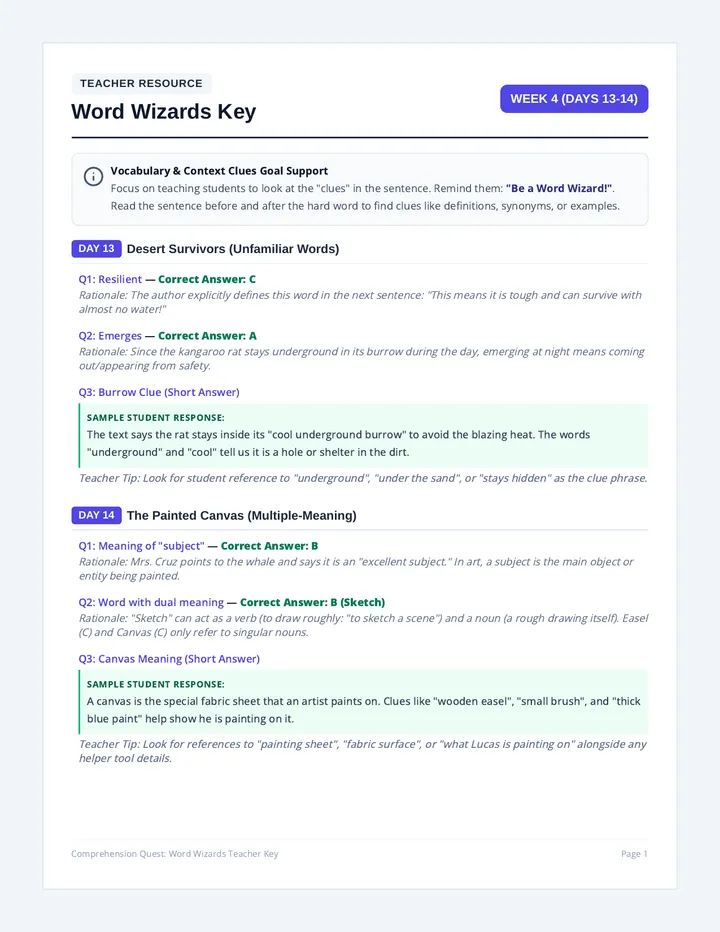
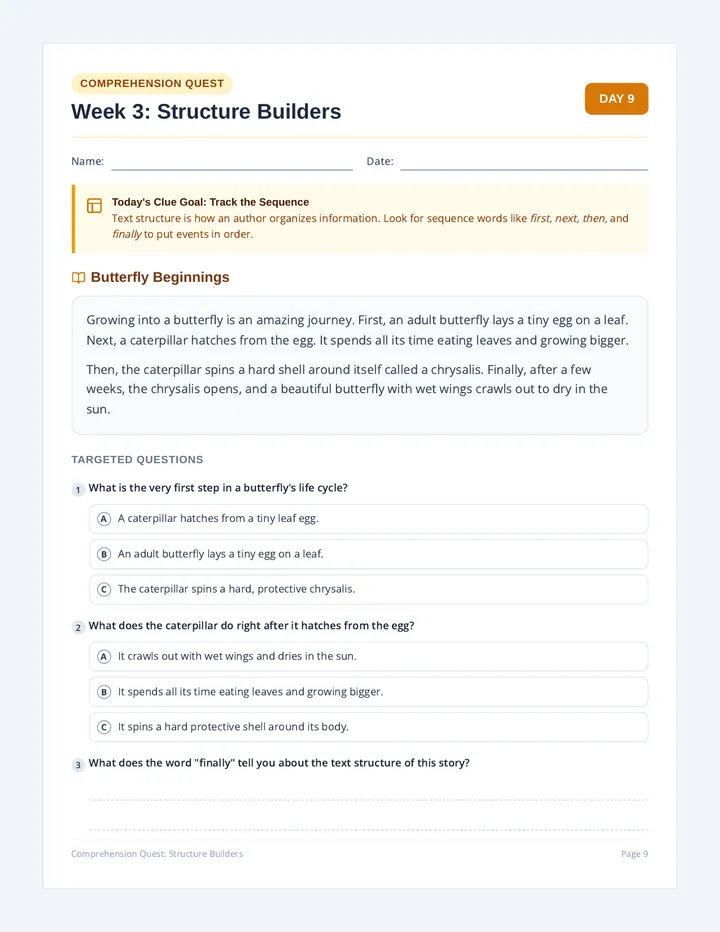
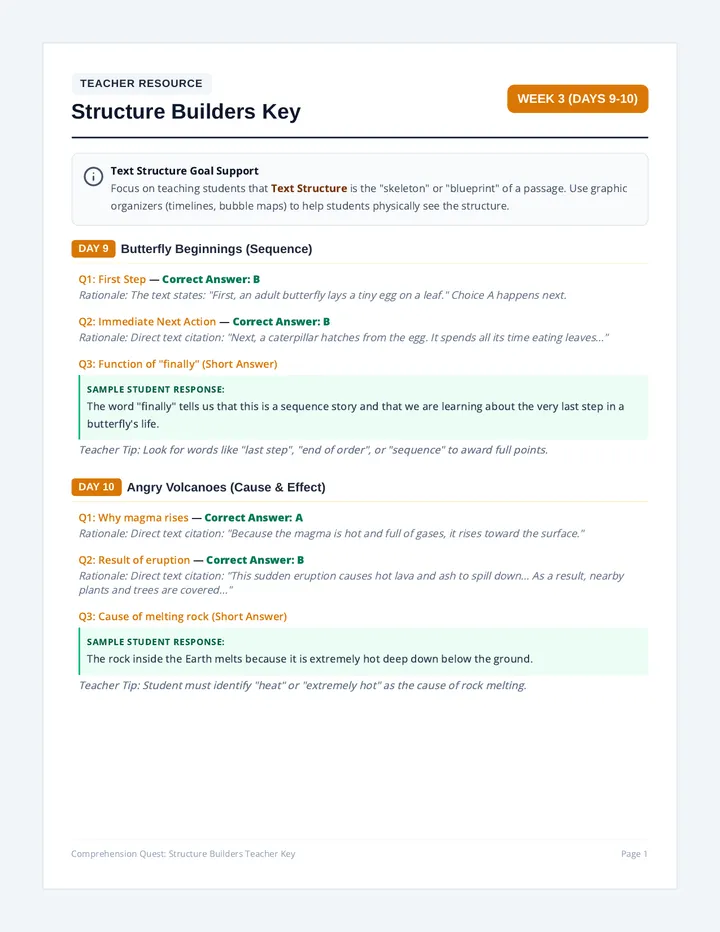
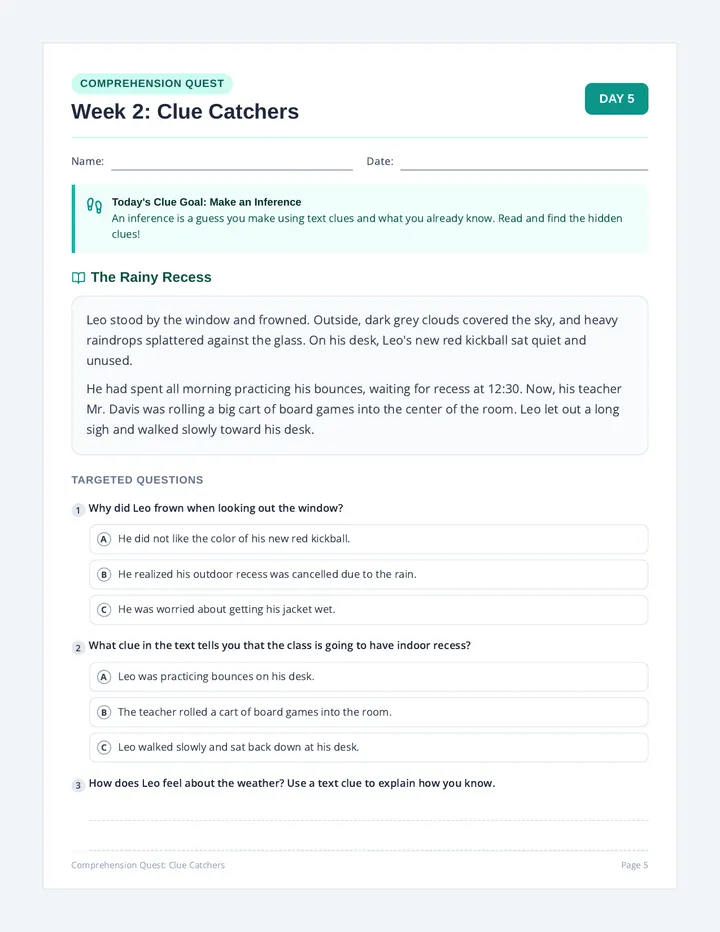
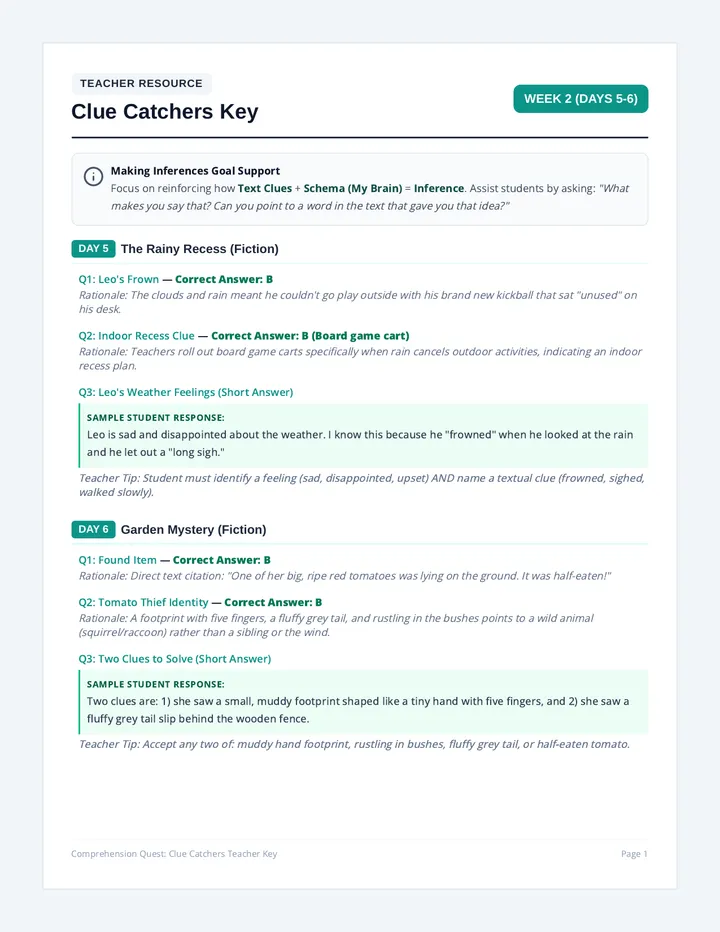
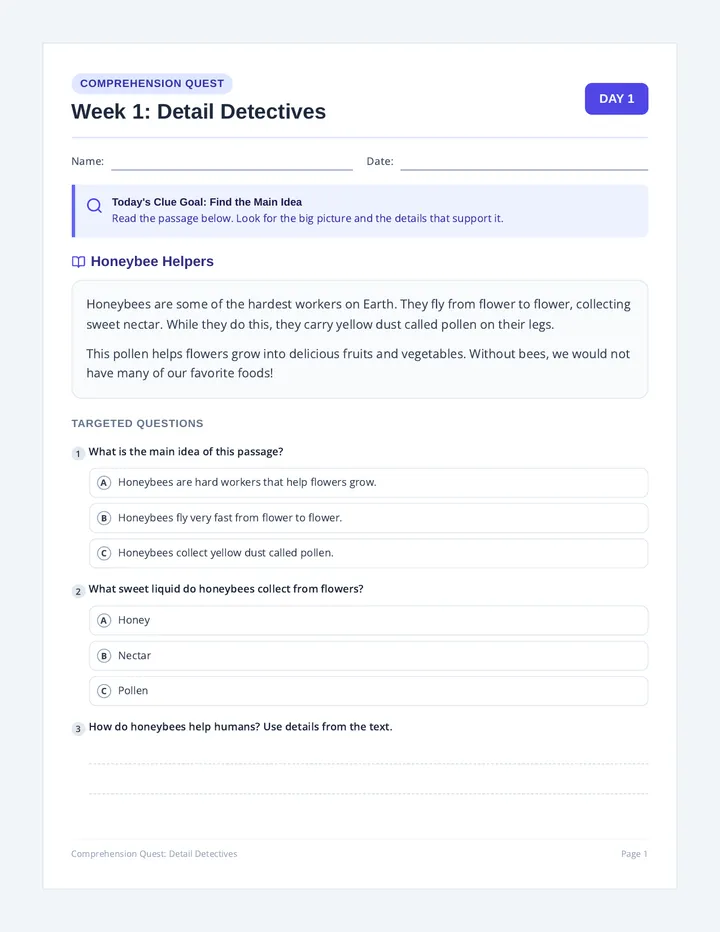
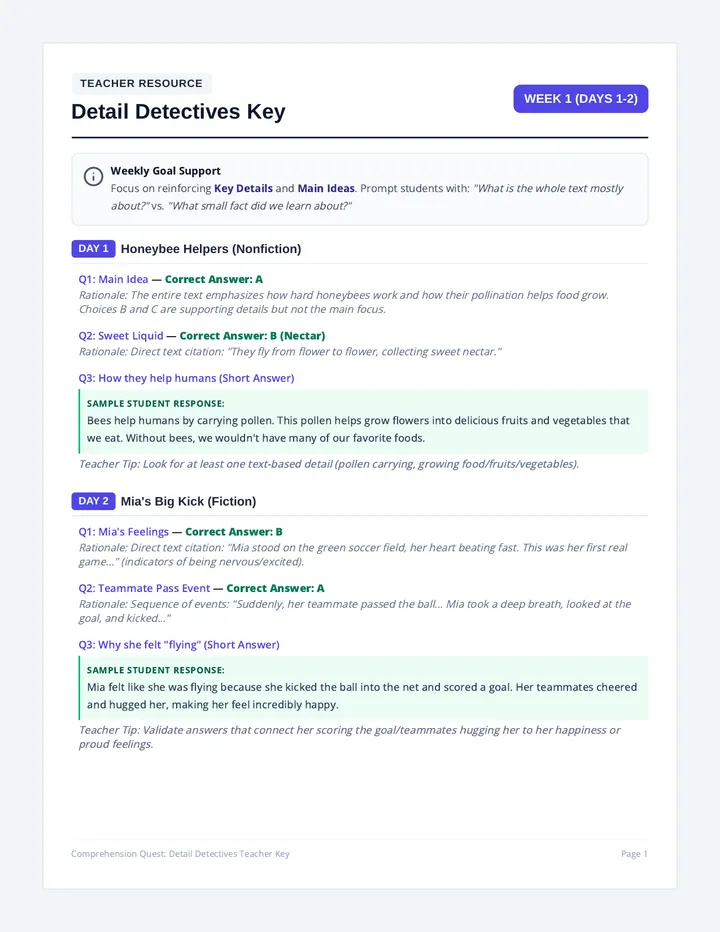
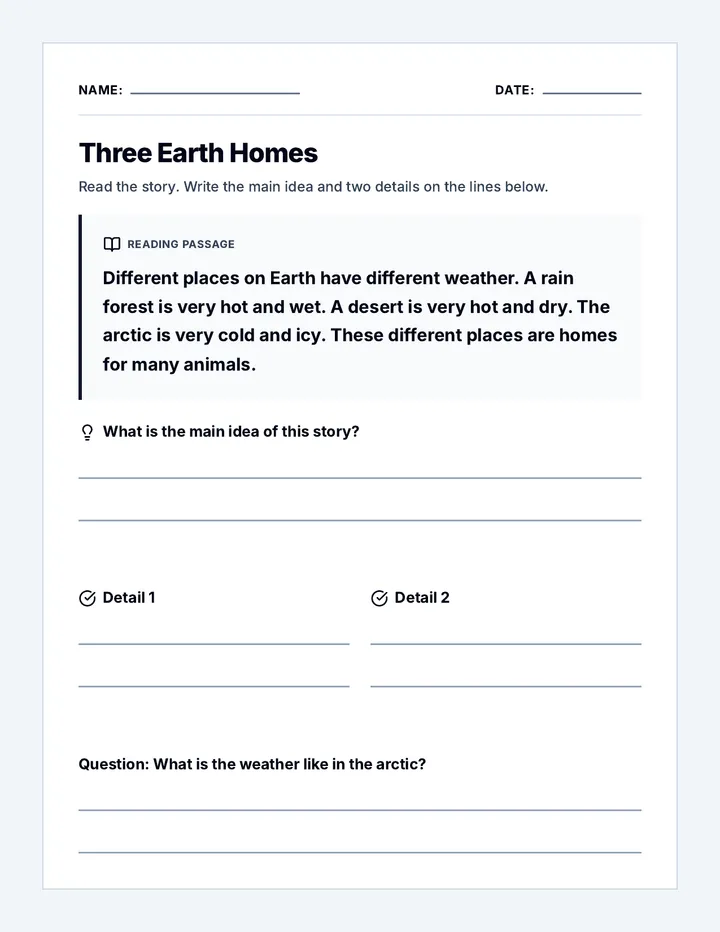
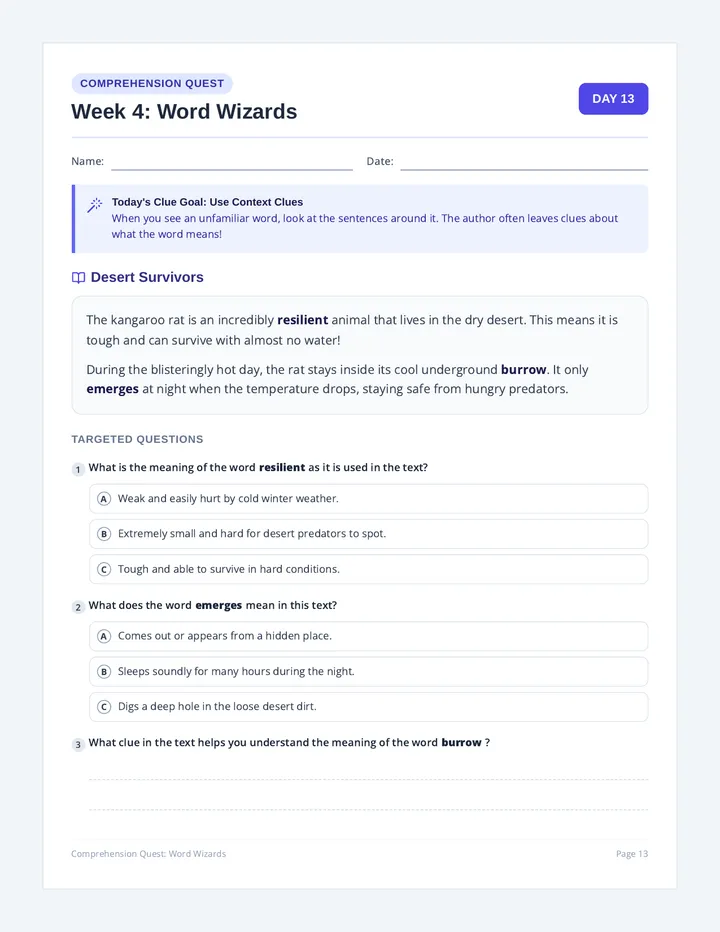
A set of reading comprehension resources focused on context clues, vocabulary, and non-fiction summarizing, specifically designed with clear structures for autistic and high-functioning students.
A sensory-friendly craft activity designed specifically for students with fine motor challenges to create vibrant leprechaun classroom decorations. This lesson focuses on accessible art techniques using sponges, thick markers, and tactile pipe cleaners.
Students will use simple observations to identify living and non-living things based on key characteristics like growth, movement, and the need for food and water.
A toolkit of executive function resources including anchor charts and planning sheets to help students master organization and time management.
A foundational 60-minute lesson introducing K-3 students to the concept of Executive Functioning using the 'Brain Captain' metaphor. Students explore the 9 core mental departments through interactive group activities and self-reflection.
Addresses fluency in complex, multisyllabic texts for 6th-12th grade students, emphasizing morphology and expressive reading in disciplinary contexts.
Introduces accuracy, rate, and prosody for 2nd-5th grade learners with a focus on phrase-cued reading and repeated reading techniques.
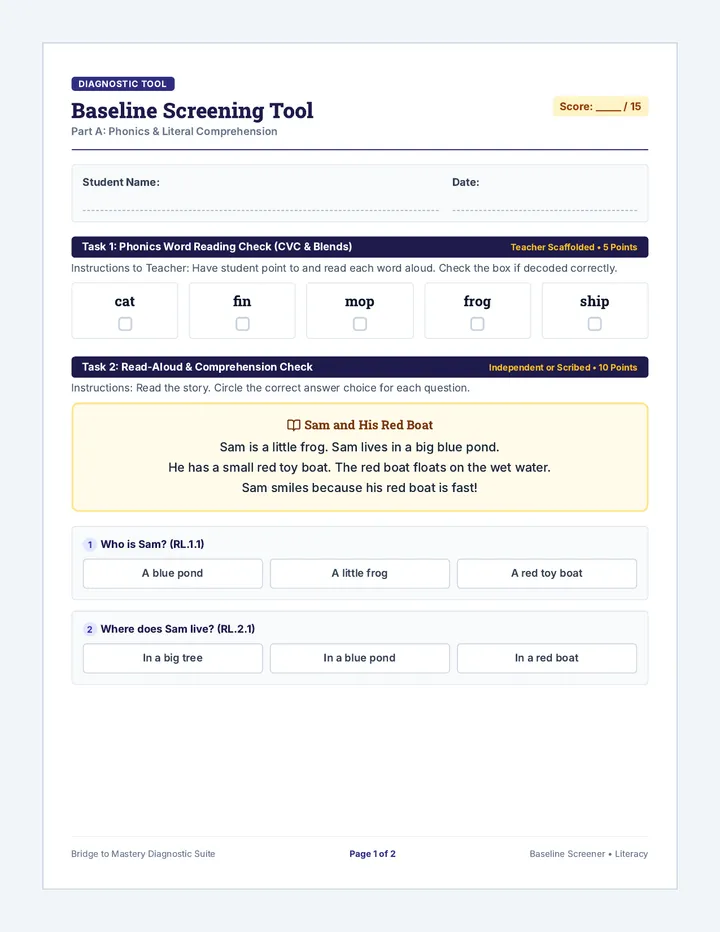
Focused on building letter-name and letter-sound automaticity for PreK-1st grade students using high-frequency practice and evidence-based routines.
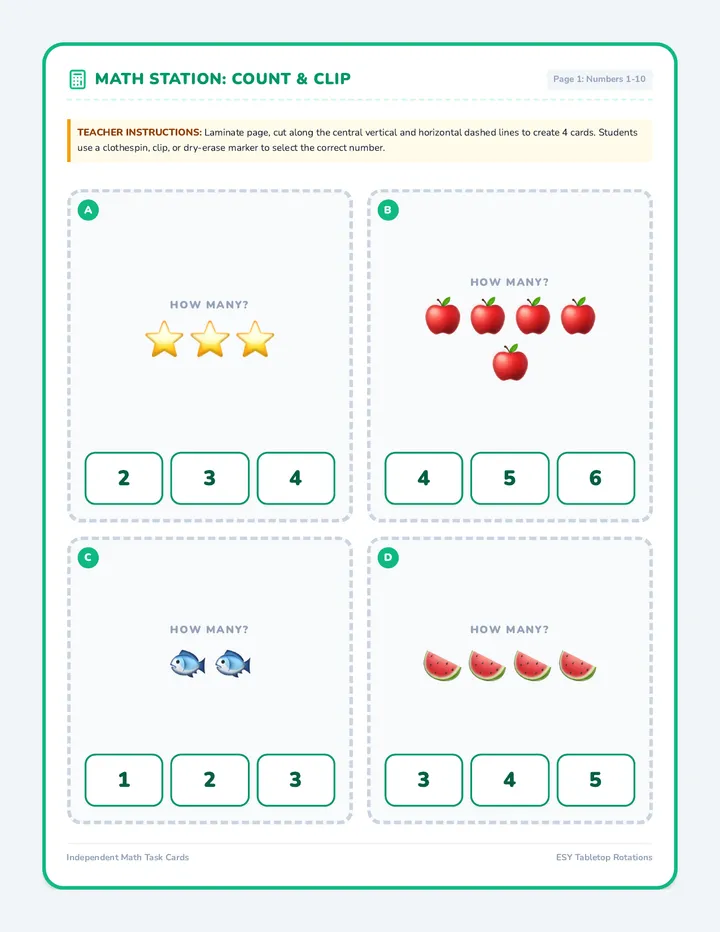
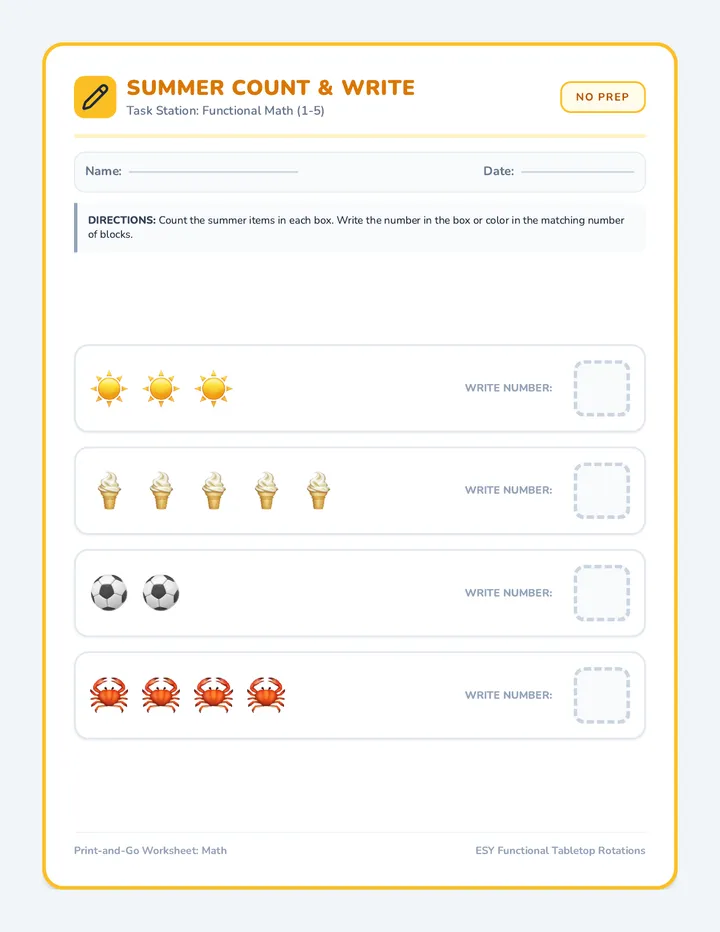
A foundational math lesson focusing on counting 1-10 and one-to-one correspondence using a friendly 'Bug Buddy' theme. Designed for early elementary students with cognitive delays or IEP needs.
A foundational comprehension lesson for early readers, focusing on identifying key details and sequencing events through visual-heavy interactive tasks.
A follow-up lesson focused on building fluency with mixed digraphs, providing cumulative review and a final progress assessment for sh, ch, th, wh, and ck.
A foundational lesson introducing and practicing common digraphs (sh, ch, th, wh, ck) through multi-sensory activities and differentiated reading tasks using a building-block theme.
A lesson focused on supporting preschool students with autism in understanding and following directions, especially for non-preferred tasks, using visual supports and a social story.
A collection of tactile and visual resources focused on the letter N, designed for students with fine motor challenges and sensory needs.
A set of accessible science materials designed for MCAS Alt evidence, focusing on distinguishing between living and non-living things through observation and sorting.
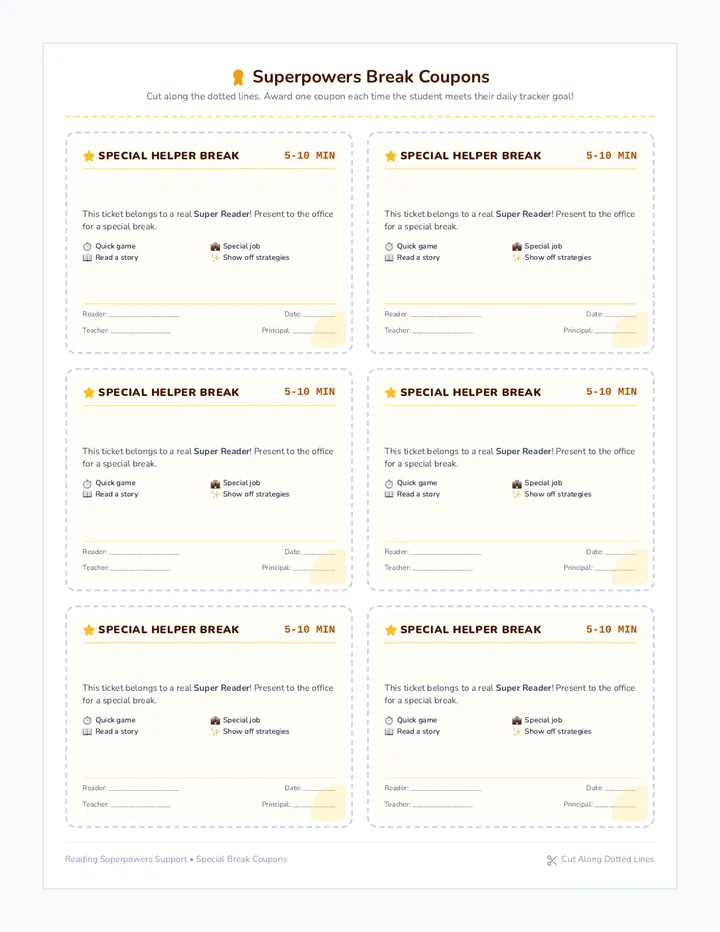
A set of basketball-themed break passes designed for 4th-grade students to manage daily breaks using a punch-card system. Includes designs inspired by the Lakers and Grizzlies teams.
Students create a 'Superpower Passport'—a personalized advocacy tool they can use to share their needs with future middle school teachers.
Students learn and practice specific scripts for requesting their accommodations in general education settings, focusing on clear and polite communication.
Students identify their personal strengths and specific IEP accommodations, reframing them as 'power-ups' that help them succeed in the classroom.
A collection of 10 longer, more complex short stories designed for 3th-4th grade level readers. Focuses on identifying character, setting, and plot elements through multi-paragraph narratives and literal comprehension questions.
A focused lesson for 1st grade special education students to identify clues in word problems and decide whether to add or subtract within 20, themed around a safari animal adventure. Includes visual supports like number lines and animal keyword anchors.
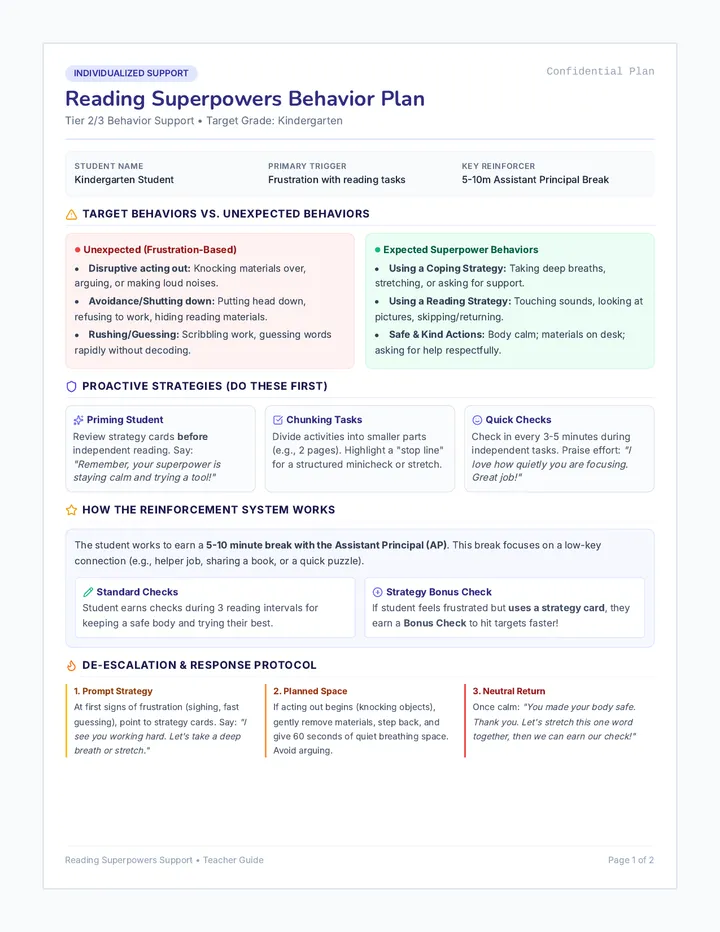
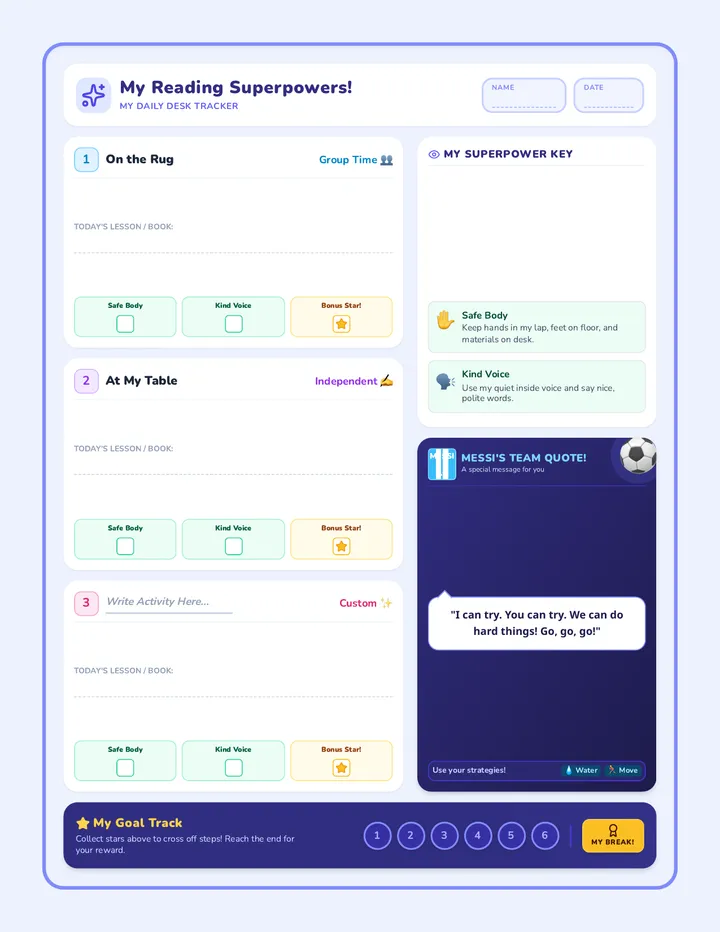
A comprehensive behavior intervention package for kindergarteners focused on staying in their seat and keeping hands to themselves, using a fun space-themed 'Mission Control' approach.