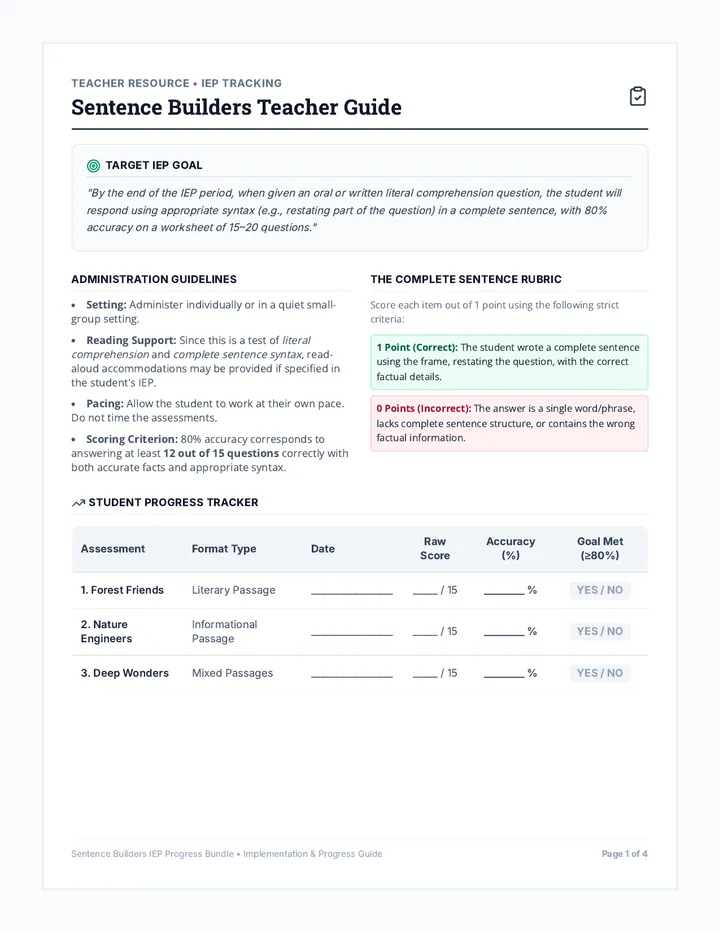
A collection of instructional goals and monitoring tools designed to support a 6th-grade student with dyslexia in mastering complex reading inferences, specifically cause-effect and character motivations.
A lesson focused on supporting preschool students with autism in understanding and following directions, especially for non-preferred tasks, using visual supports and a social story.
This lesson introduces the core concept of making inferences by identifying different types of 'clues' in a text. Students will learn the inference formula and apply it to short, decodable passages to build confidence and accuracy.
A set of accessible science materials designed for MCAS Alt evidence, focusing on distinguishing between living and non-living things through observation and sorting.
A professional development session designed to help educators translate raw student data into actionable instructional changes. Teachers will practice identifying trends and planning specific interventions based on real-world classroom data.
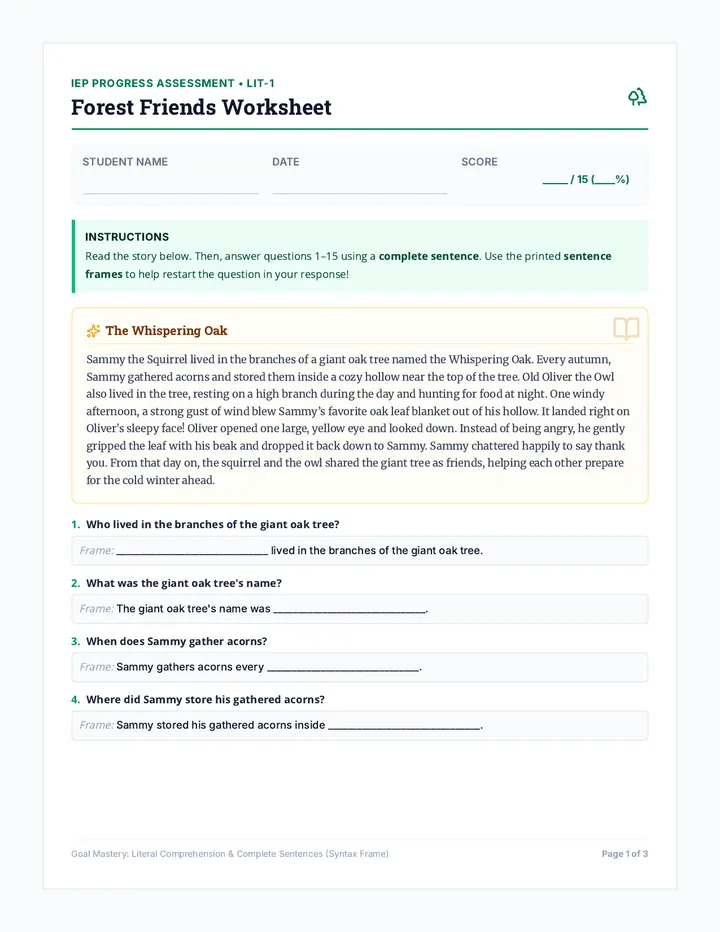
A collection of 10 longer, more complex short stories designed for 3th-4th grade level readers. Focuses on identifying character, setting, and plot elements through multi-paragraph narratives and literal comprehension questions.
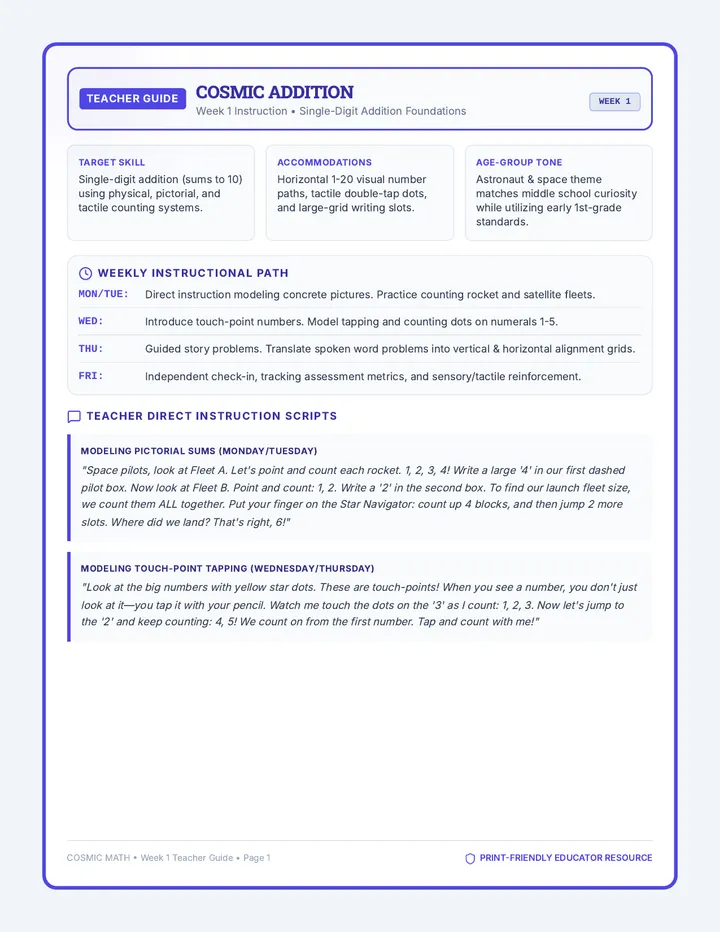
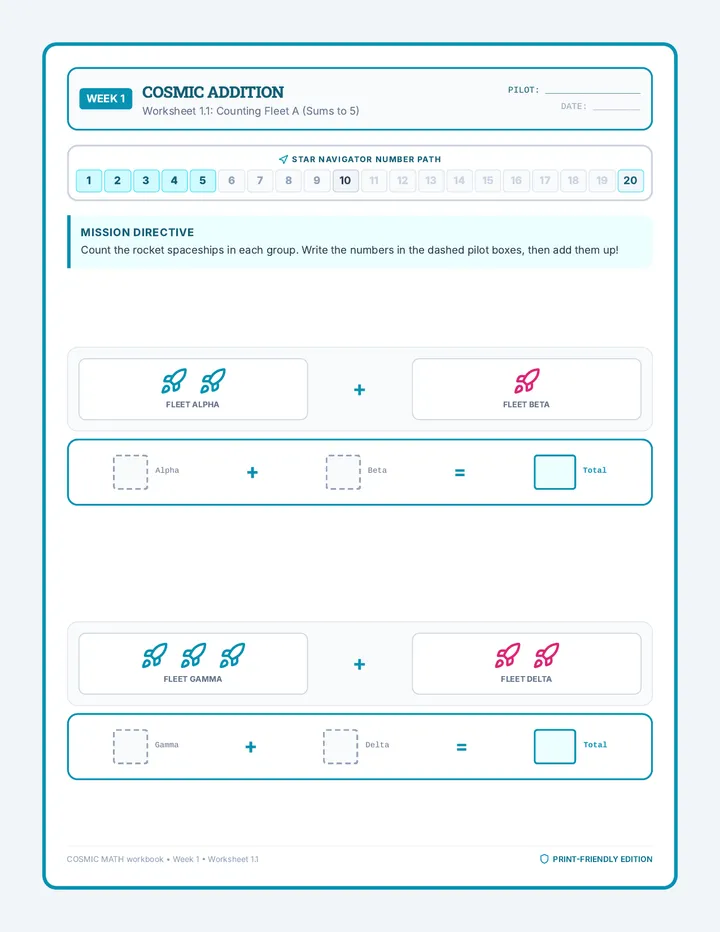
A focused lesson for 1st grade special education students to identify clues in word problems and decide whether to add or subtract within 20, themed around a safari animal adventure. Includes visual supports like number lines and animal keyword anchors.
A comprehensive lesson introducing the 'text evidence + schema' formula to master inferring main ideas and author's purpose.
A comprehensive professional development session for school leaders on implementing Instructional Rounds. Participants will learn to move from evaluative observations to objective evidence gathering, focusing on the relationship between teacher, student, and task.
Resources for drafting meaningful IEP impact statements specifically for students with autism experiencing school refusal. This lesson provides pre-written examples and a structured framework for connecting sensory needs and behavioral rigidity to educational access.
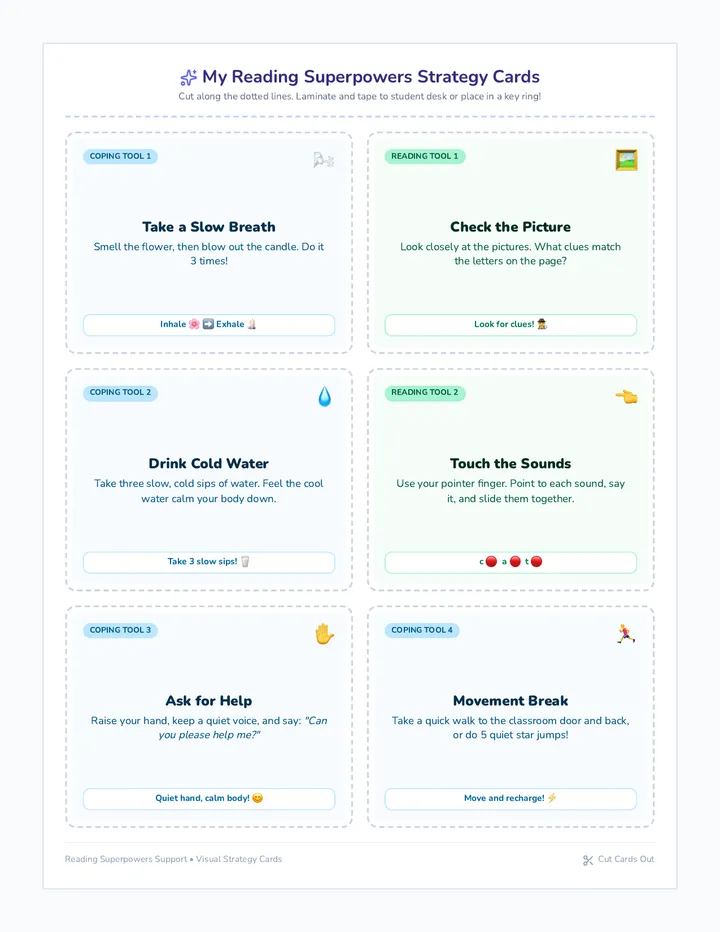
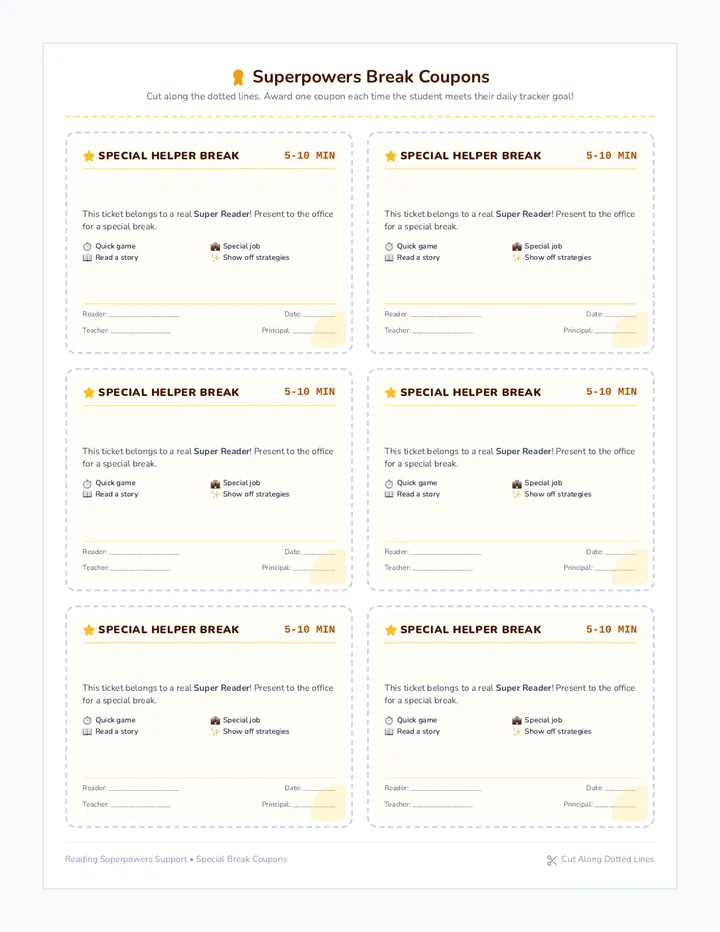
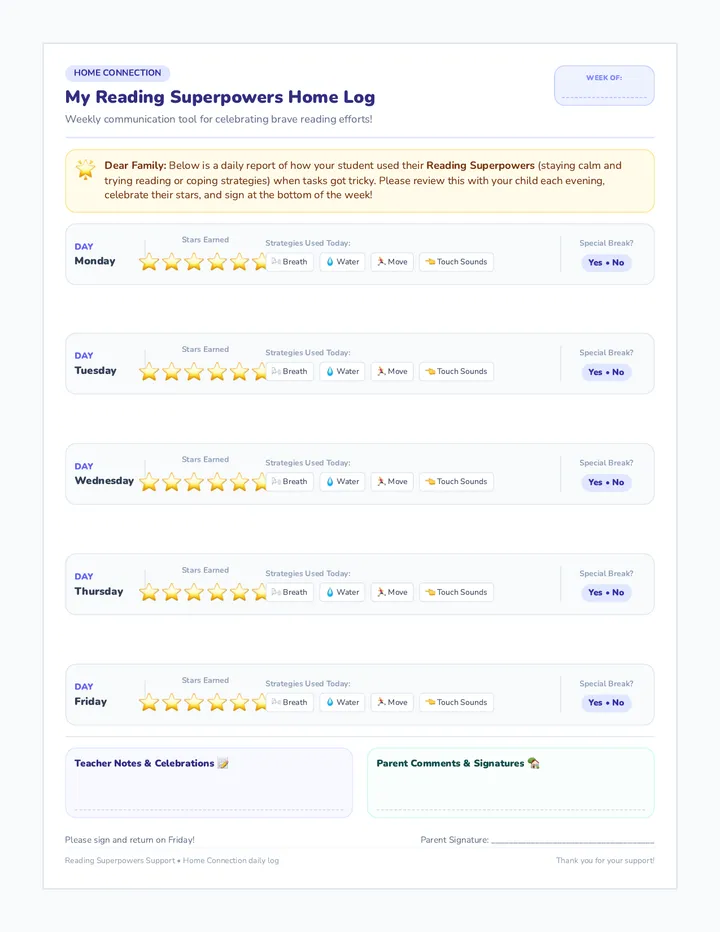
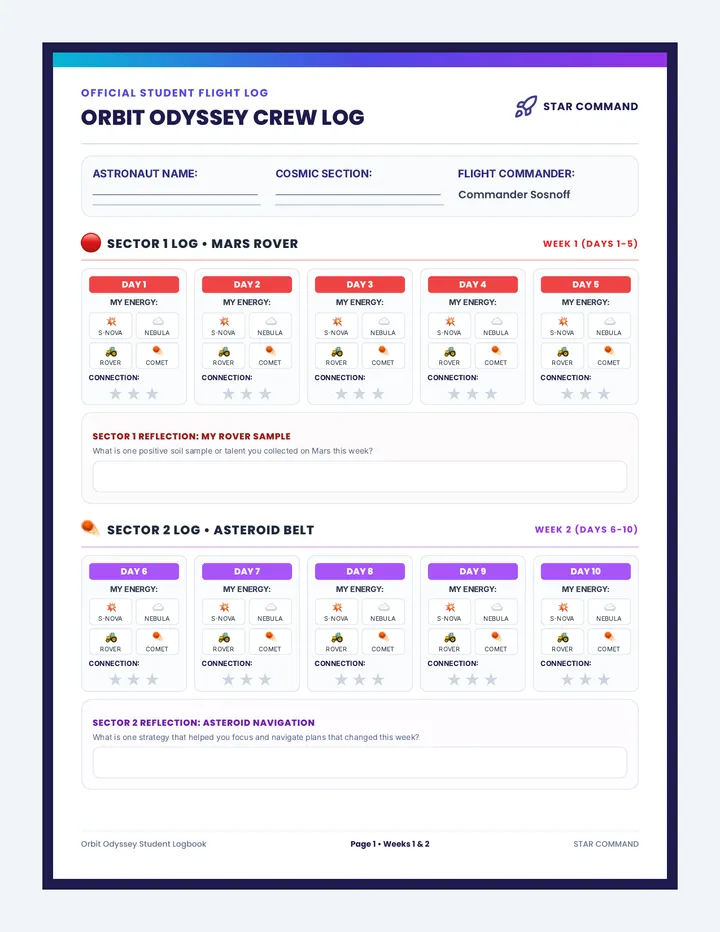
A comprehensive set of resources designed to support students experiencing school avoidance, including SMART IEP goals, instructional strategies for staff, and progress tracking tools for students.
A supportive social story and visual aids designed to help a kindergarten student with severe special needs transition to a new school environment, focusing on meeting their teacher and following a new routine.
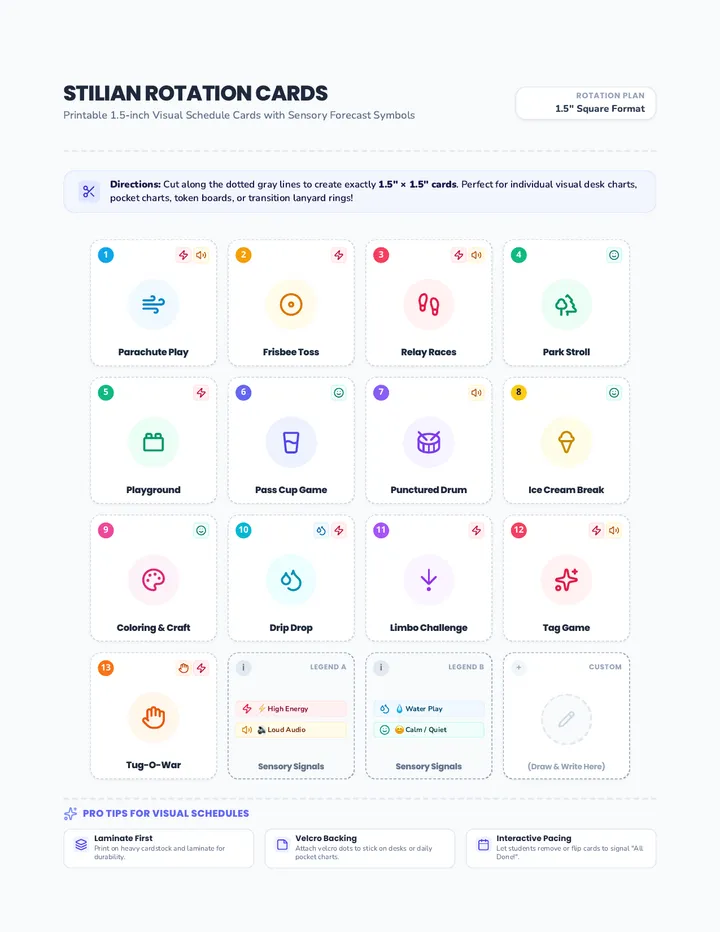
A collection of resources designed to help students transition smoothly between activities using visual aids, movement breaks, and structured "bridge" activities. This lesson focuses on reducing task refusal by providing clear expectations and a physical outlet during changes.
A set of resources designed to gather teacher insights and provide initial social support strategies for a student newly diagnosed with autism.
An introductory lesson focusing on what autism is through the lens of 'superpowers' and unique brain wiring, encouraging students to identify and celebrate strengths.
This professional development lesson introduces school leaders and educators to the Collaborative Proactive Solutions (CPS) model. Participants will move from a compliance-based mindset to one focused on identifying lagging skills and solving problems collaboratively with students.
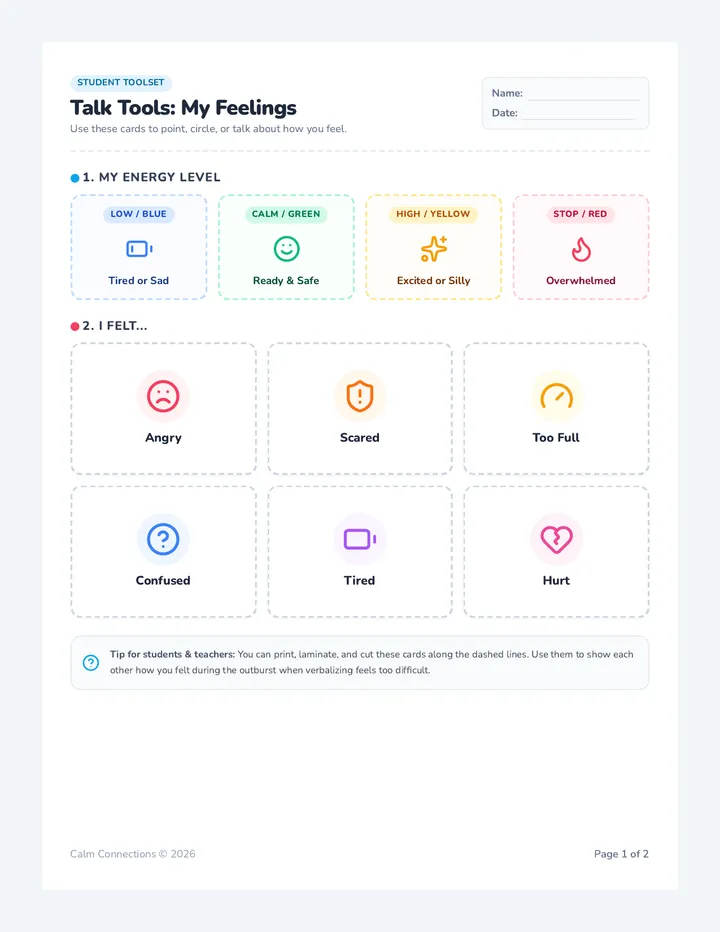
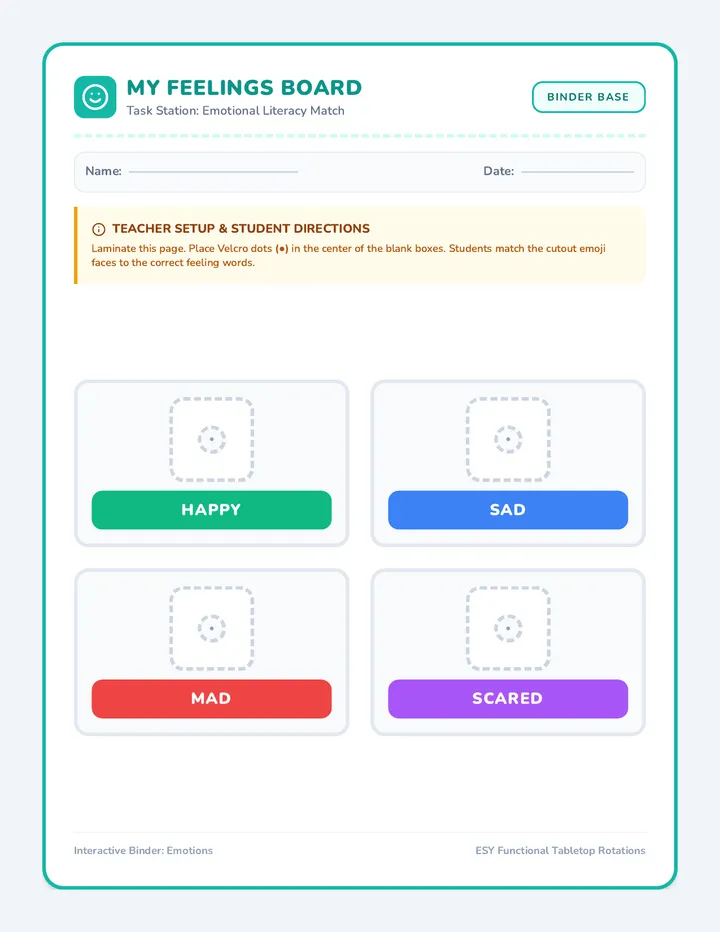
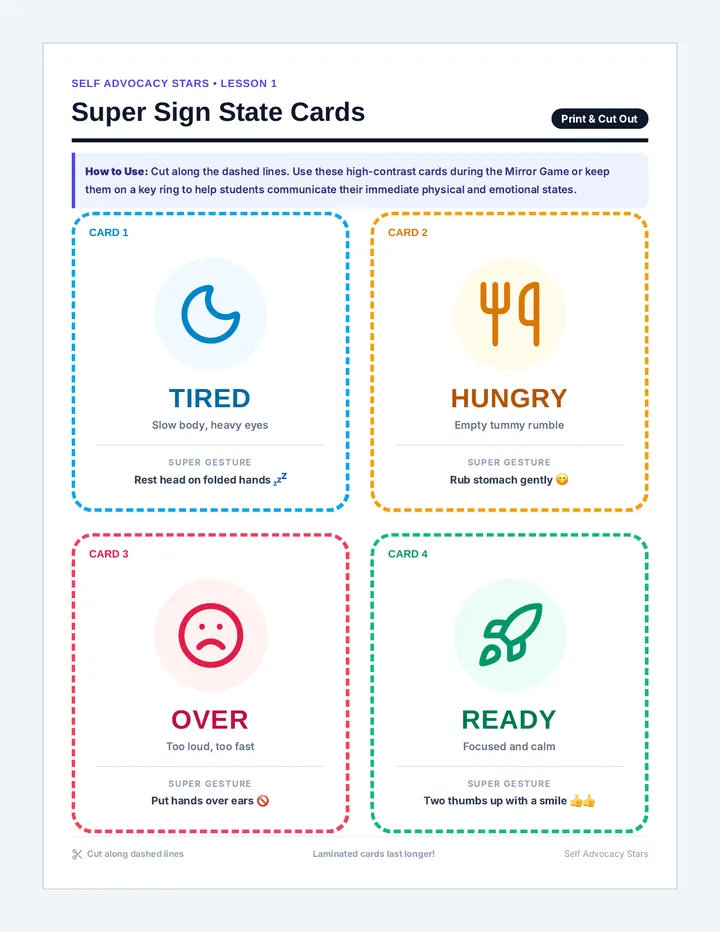
A foundational lesson helping students identify core emotions through visual cues and personal reflection, specifically designed for neurodivergent learners.
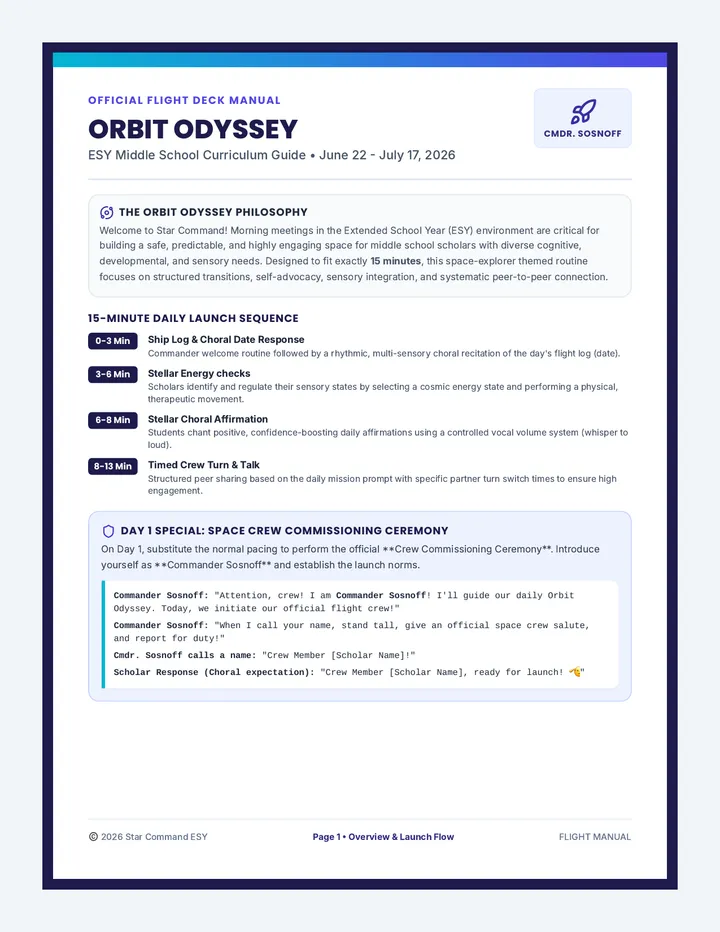
A comprehensive toolkit designed for a 9th-grade student to manage academic tasks and emotional regulation through structured planning and mindfulness strategies.
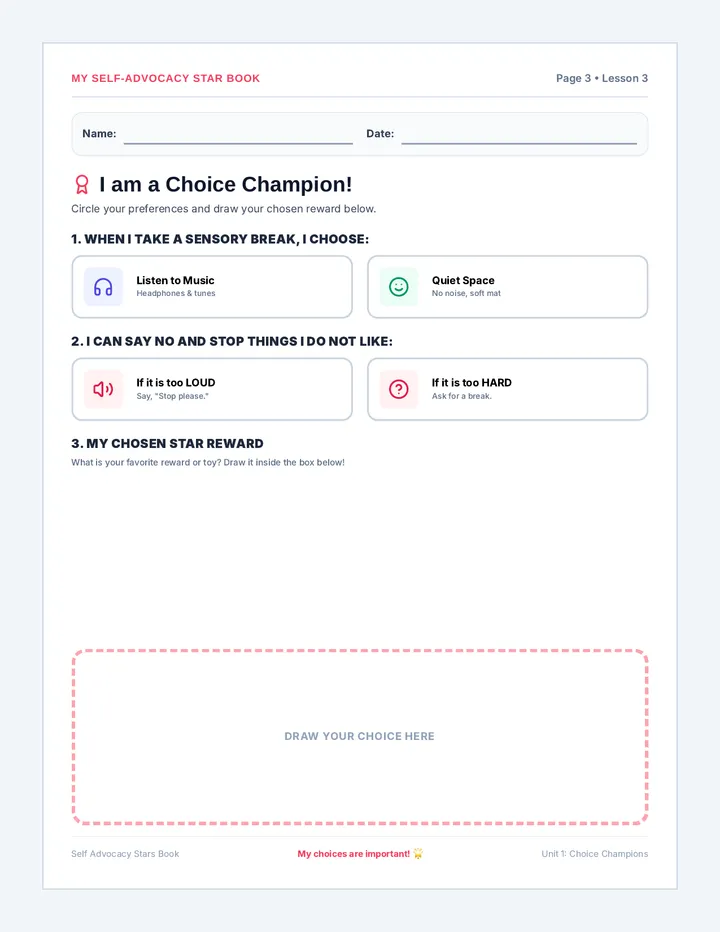
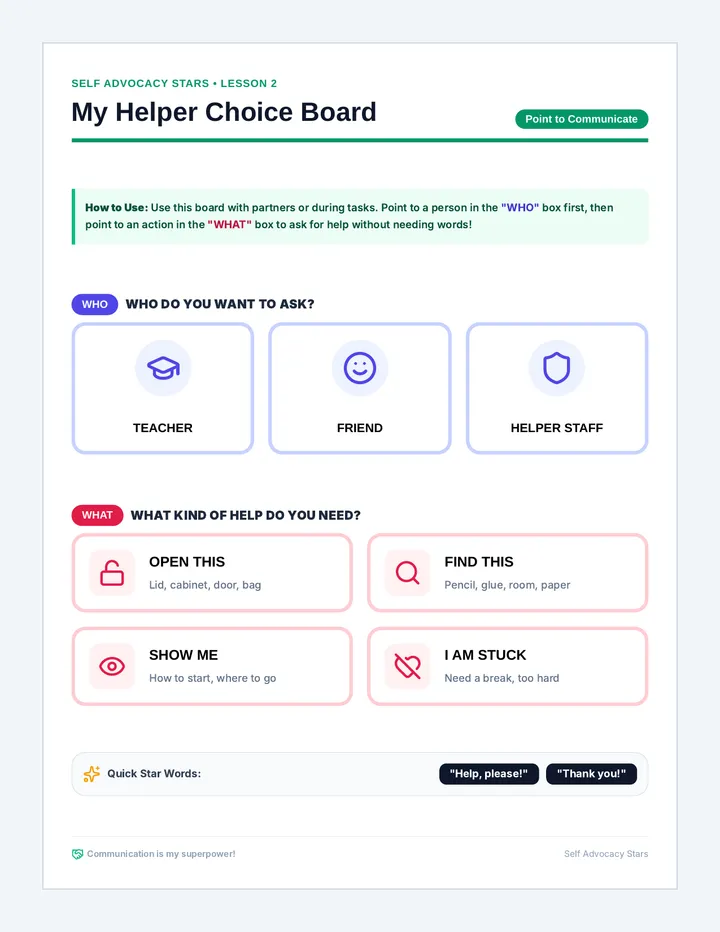
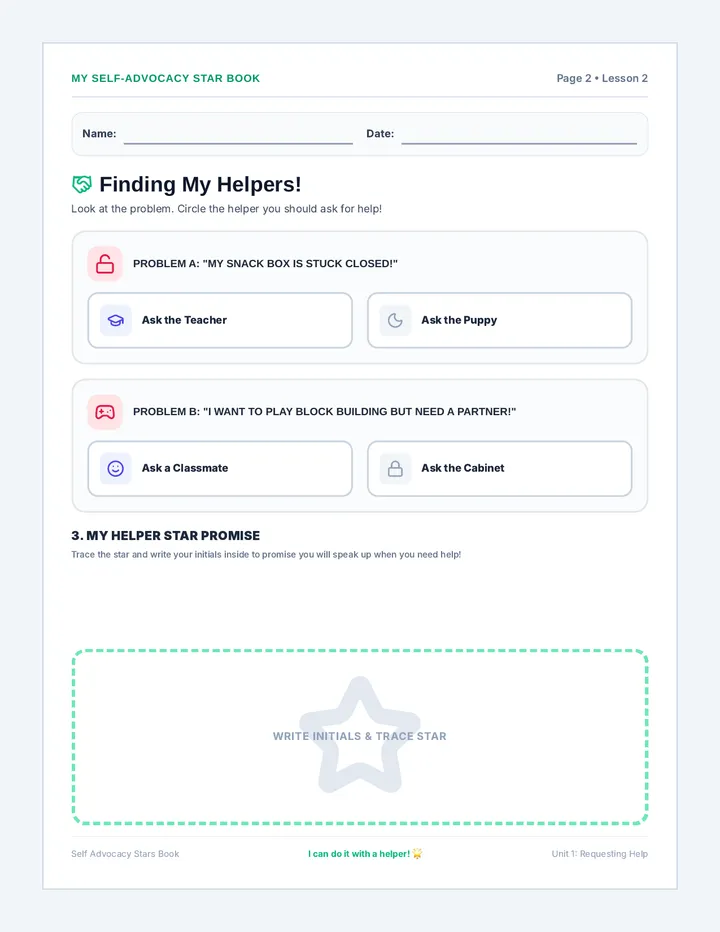
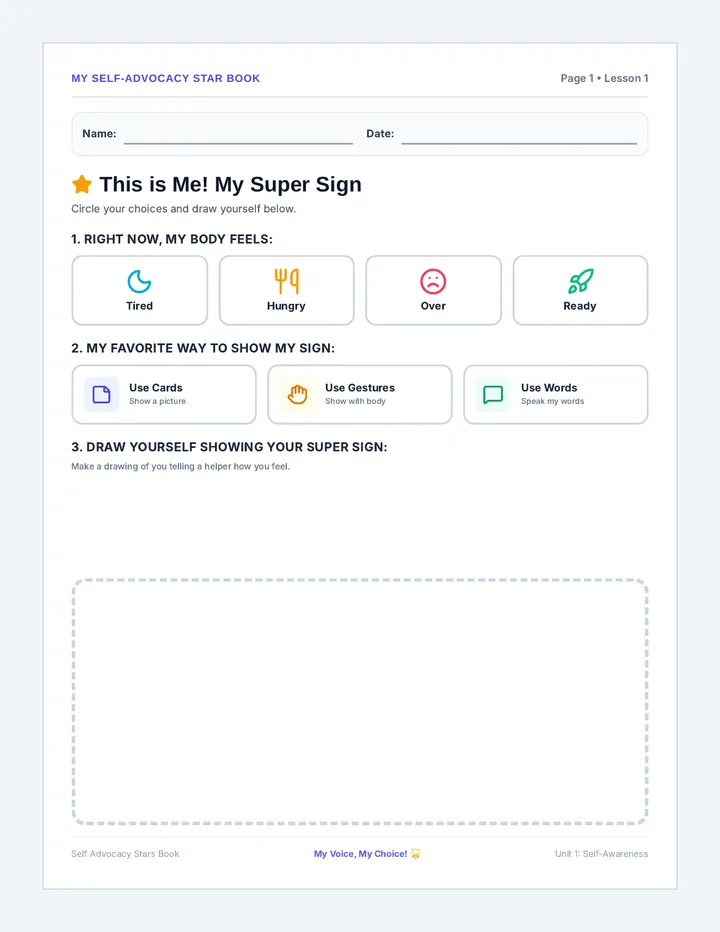
A comprehensive lesson on self-advocacy, teaching students to identify their learning needs and communicate them effectively using scripts and visual supports. Suitable for diverse learners across elementary through high school settings.
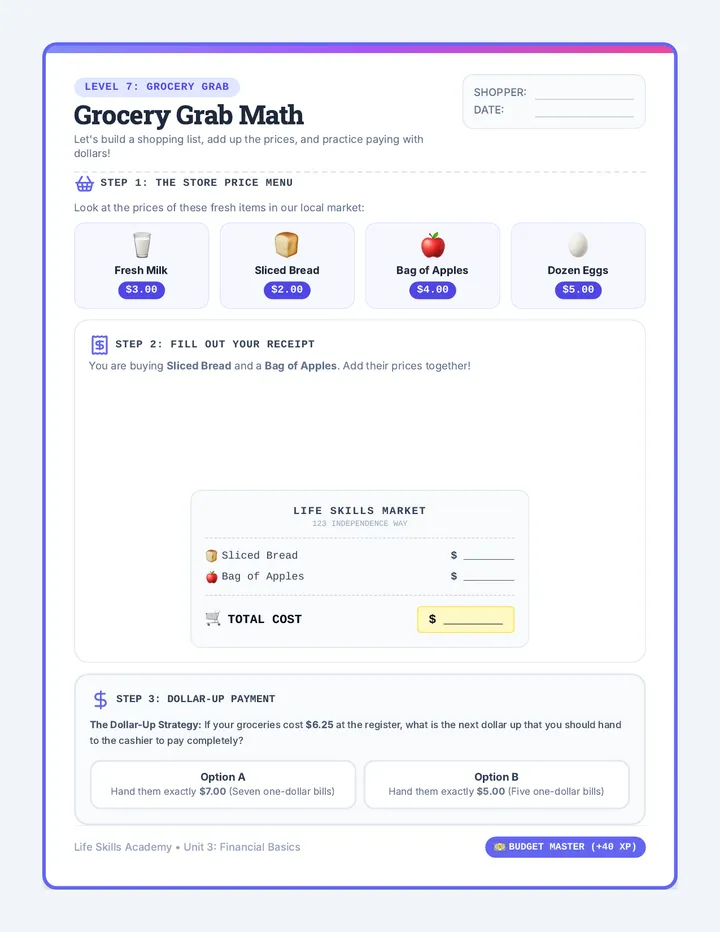
A hands-on financial literacy lesson where students simulate a classroom marketplace to practice budgeting, calculating discounts, and distinguishing between wants and needs.
A simplified story mapping resource designed for 4th-grade special education students to track key elements of any novel they are reading.
A social-emotional learning lesson designed for 3rd-grade students, particularly those with autism, to practice 'reading the room' by identifying environmental and social clues to interpret situations correctly.
A comprehensive toolkit for school administrators to coach teachers in transitioning from reactive discipline to proactive behavior management during the energetic spring months. This lesson provides the framework for professional development and classroom implementation focused on 2nd-4th grade.
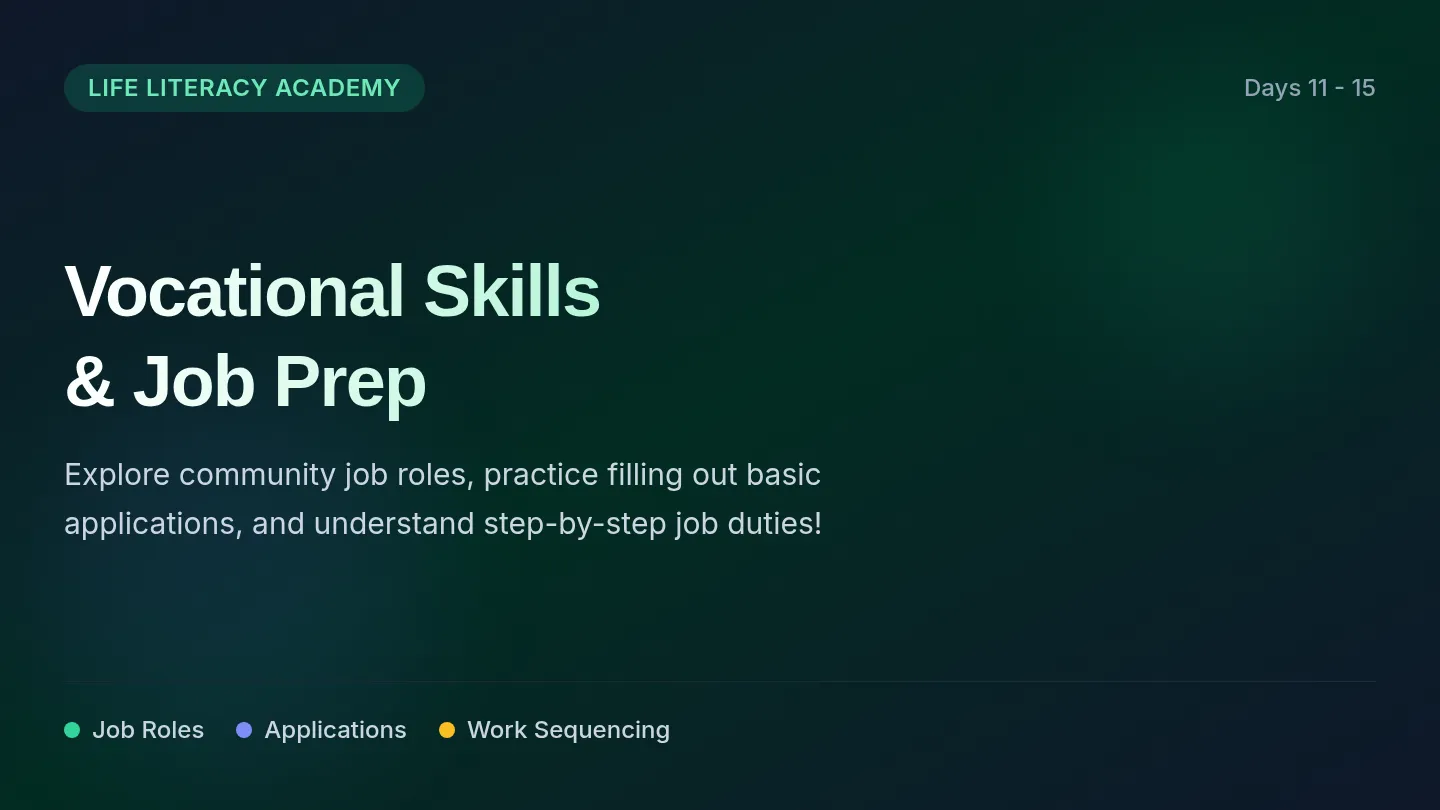
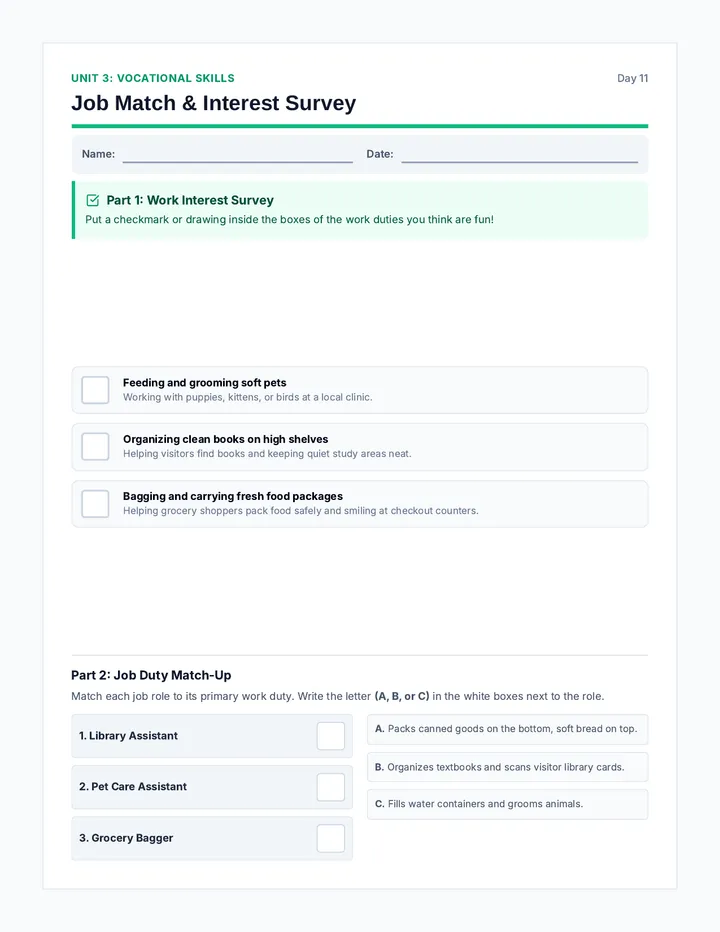
A functional communication lesson focused on improving auditory memory and executive functioning through 2-3 step workplace and social directions. Students practice decoding complex instructions into manageable steps.
A creative art-based activity designed for middle school students who are hesitant to communicate verbally. This lesson uses a meteorological metaphor to help students map out their stressors and triggers through drawing rather than direct conversation.
A hands-on, diagnostic-style lesson where middle schoolers identify their cognitive strengths and build personalized systems for organization, time management, and task initiation.
A 30-minute introductory lesson on metacognition designed for high school students with SLD, ADHD, and neurological disabilities. The lesson uses a 'Brain Boss' theme to teach students how to plan, monitor, and evaluate their own thinking processes.
A collection of visual, low-pressure resources designed to facilitate an introductory meeting with a selectively mute ELL student, focusing on non-verbal communication and rapport building.