Introduces discontinuous measurement systems including whole-interval, partial-interval, and momentary time sampling. Students analyze measurement artifacts and how these systems over- or underestimate behavior.
A set of checklists for instructors to ensure fidelity to housing education goals and provide appropriate supports for neurodivergent participants.
A comprehensive lesson for college students on their rights under the ADA, the principles of Universal Design for Learning (UDL), and strategies for effective self-advocacy in higher education settings.
A dual-track 90-minute activity sequence on pattern recognition, offering a professional development seminar for workplace efficiency and a supportive, scaffolded module for adults with IDD.
A comprehensive 90-minute training session for individuals with disabilities to identify frustration triggers, build a toolkit of healthy coping mechanisms, and master self-advocacy skills. The lesson uses a 'Navigator' theme to help learners chart a course through difficult emotions toward confidence and resilience.
A set of resources designed for college students with mild intellectual disabilities to help them identify their emotions and stay focused on academic tasks. The materials use a professional, adult-appropriate aesthetic while maintaining high accessibility.
An in-depth look at the Comprehensive School Threat Assessment Guidelines (CSTAG) protocol, focusing on the decision-making process for school-based teams.
A comprehensive lesson to prepare students for fire drills, focusing on evacuation steps, identifying emergency signals, and maintaining calm. Includes visual slides, role-play activities, and assessment tools.
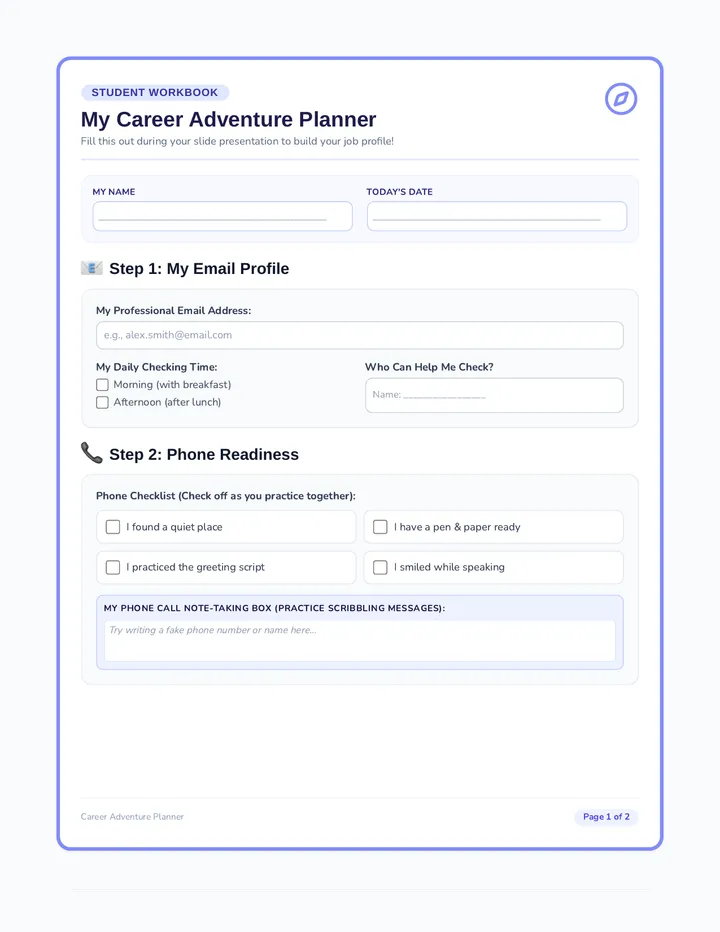
A comprehensive guide for autistic college students to navigate workplace, academic, and social challenges through role-play and self-advocacy strategies.
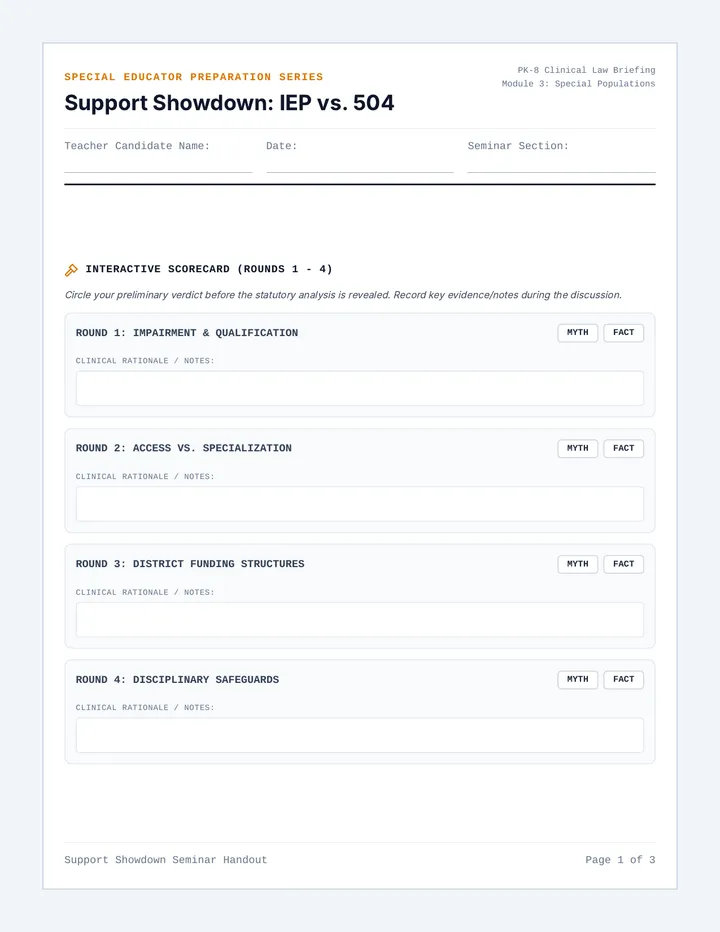
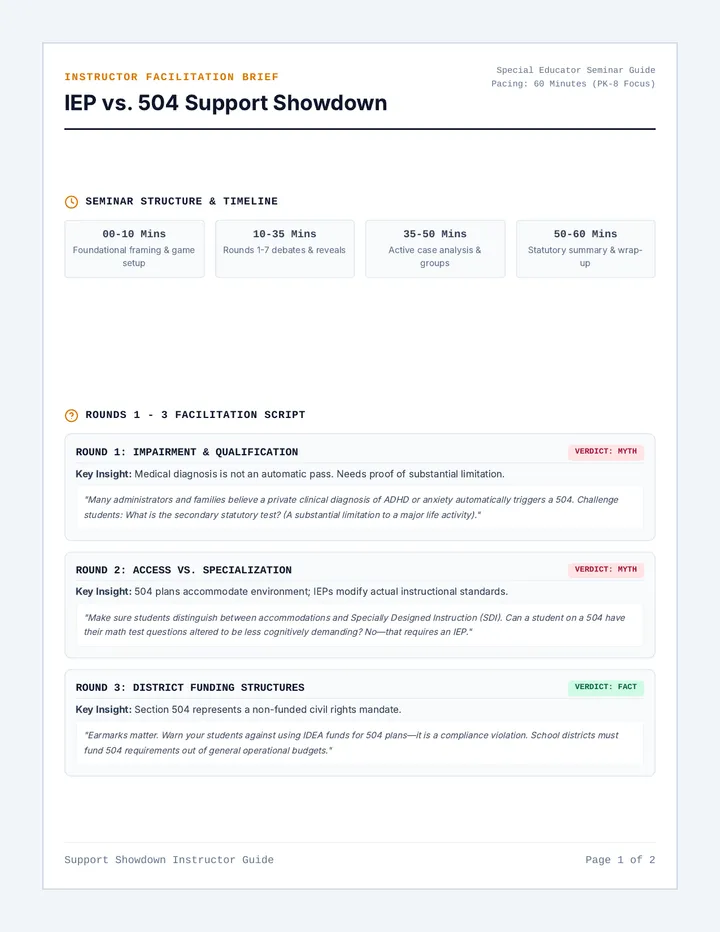
A comprehensive comparison of IEP and 504 Plan requirements specifically within the Colorado Department of Education (CDE) framework, designed for graduate-level study of special education law and compliance.
This lesson equips high school students with practical executive functioning strategies—planning, organization, task initiation, and self-monitoring—using a "Command Center" theme to foster academic independence. It includes instructional slides, hands-on organizational activities, and a personalized project-based assessment.
A comprehensive introduction to the Wide Range Assessment of Memory and Learning, Third Edition (WRAML-3), covering its structure, administration basics, and score interpretation for clinical use.
A synthesis lesson where participants design a 2-week writing unit integrating assistive technology. Includes modeling, guided practice, and assessment of tech-integrated writing products.
Addresses the transition from adult-prompted technology use to student independence. Focuses on data-driven fading plans and teaching students to manage their own troubleshooting.
Teaches the 'Listen-Read' method for auditory editing using Text-to-Speech (TTS). Participants develop student checklists to catch syntax errors and omissions that visual reading might miss.
Focuses on 'dictation fluency' and the coaching techniques required for effective speech-to-text use. Covers 'think-alouds', short-burst drafting, and creating visual scaffolds for voice commands.
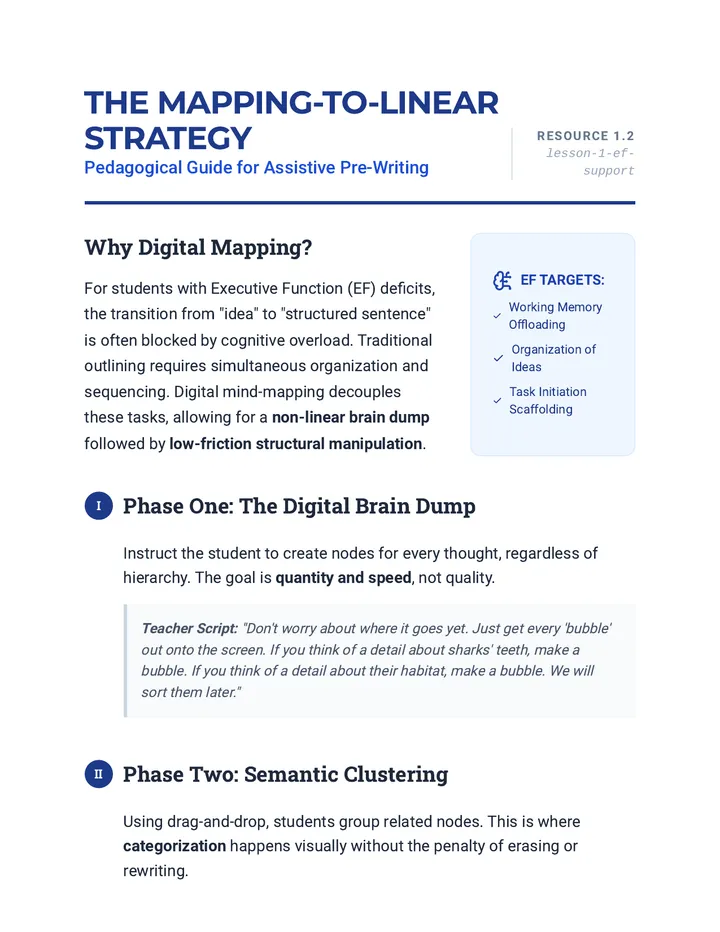
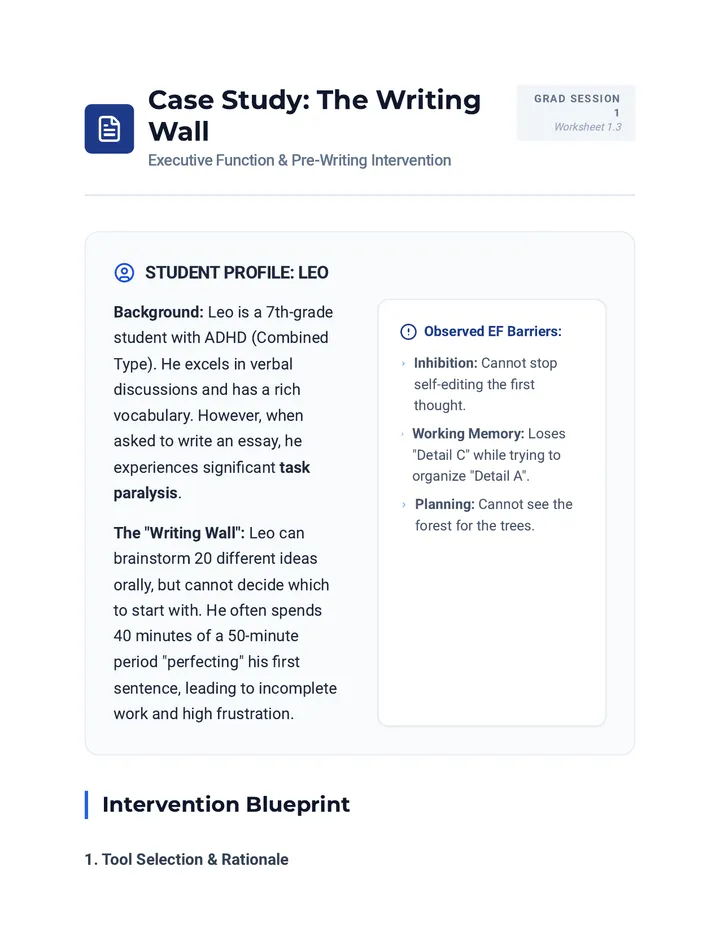
Explores how digital graphic organizers support executive function in the pre-writing stage. Graduate students learn to teach the conversion of mind-maps to linear outlines using drag-and-drop technology.
Master the legal and administrative requirements for documenting AT in the IEP. Draft SMART goals and data-driven justification statements for assistive devices.
Synthesize student profiles and environmental data using the SETT Framework to propose a hierarchy of assistive writing solutions. Includes a consultancy protocol for complex cases.
Investigate the logic of word prediction and text expansion tools. Learn to configure phonetic vs. frequency-based prediction and customize dictionaries for specific learner needs.
Perform a technical stress test of various speech-to-text engines to evaluate accuracy and cognitive prerequisites. Focuses on command sets and error pattern analysis.
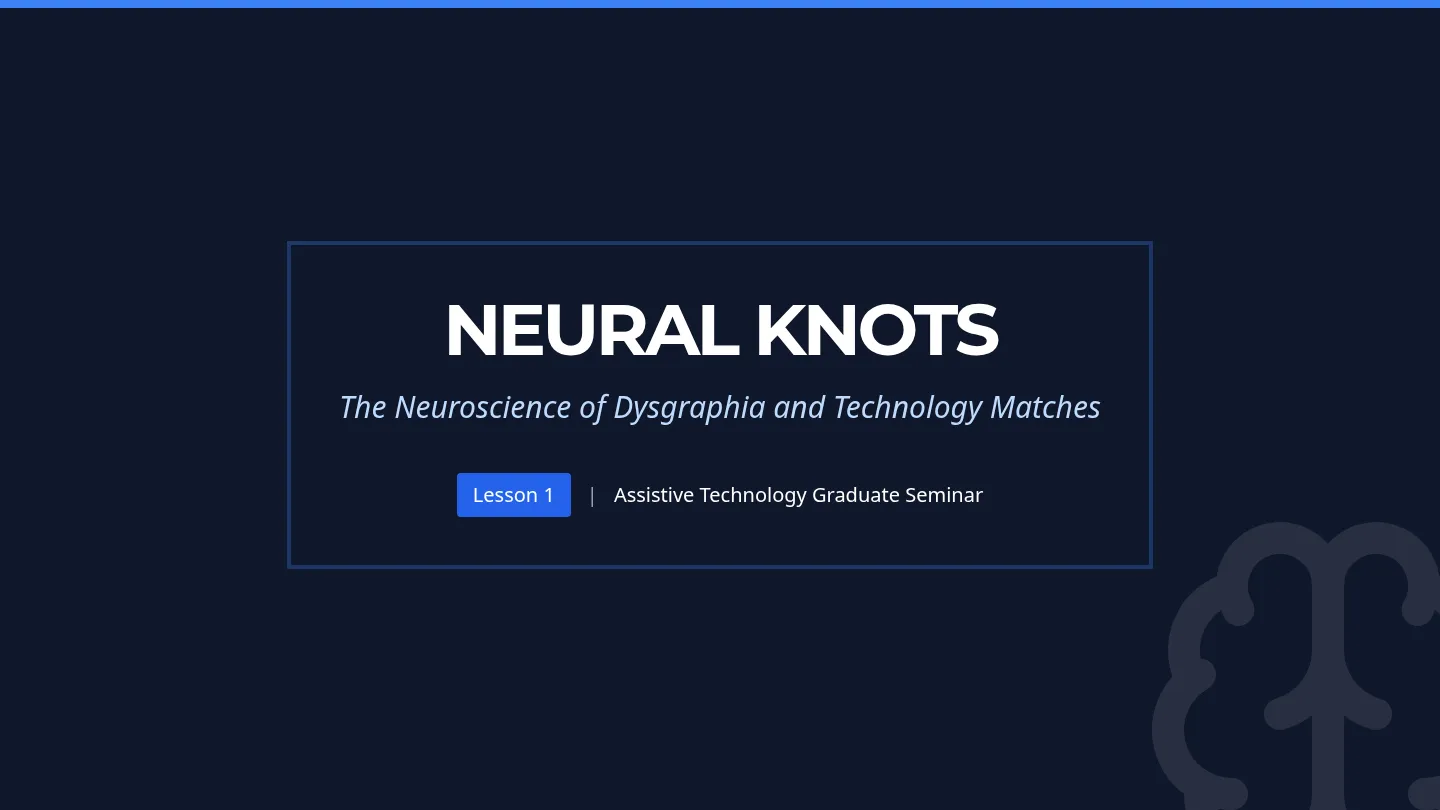
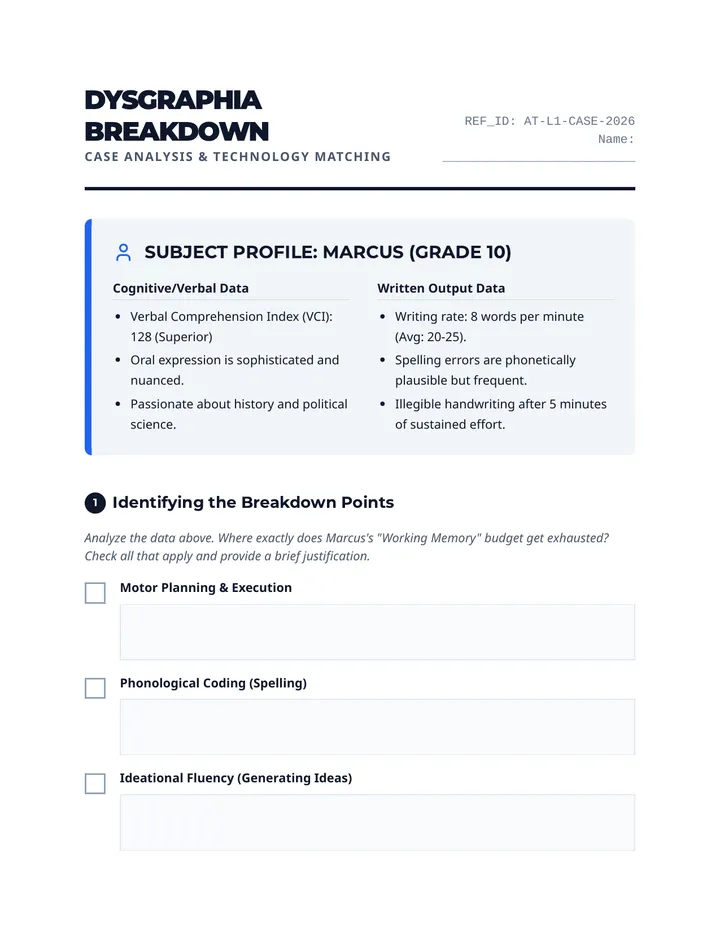
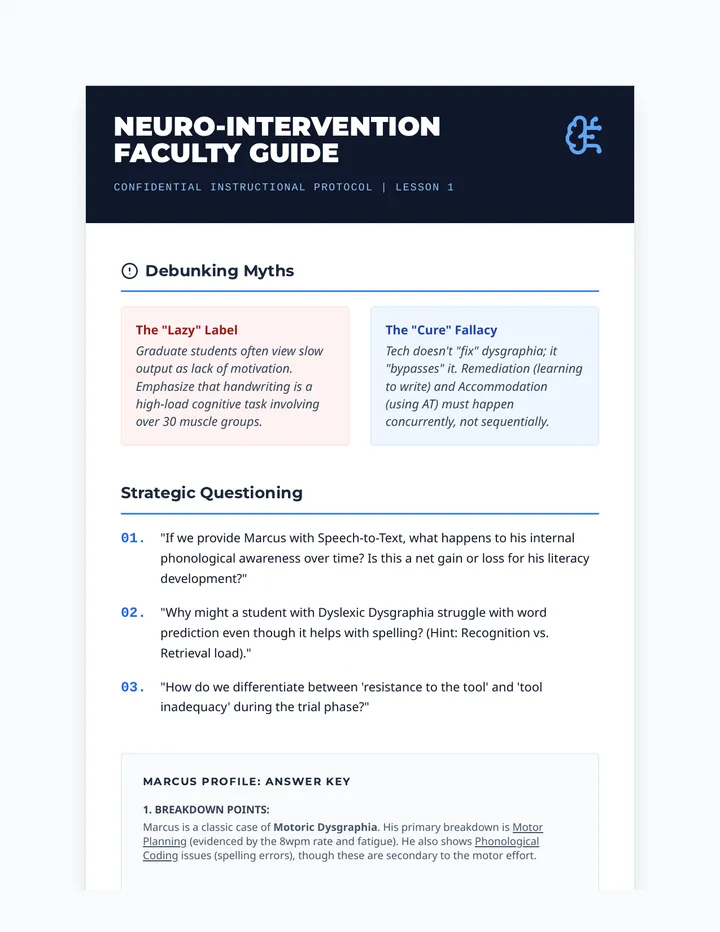
Examine the cognitive and motor bottlenecks of dysgraphia and learn to match specific technological features to neurological deficits. Includes case study analysis and a 'breakdown' identification framework.
Students develop contingency plans for common disruptions (assemblies, teacher absence, testing weeks). They create a 'Make-Up Service' log and protocol to ensure FAPE is maintained despite irregularities.