A collection of family invitation flyers for the English Language Education (ELE) showcase and recognition ceremonies across various grade levels. Each flyer includes specific timing, location details, and a return slip for RSVPs.
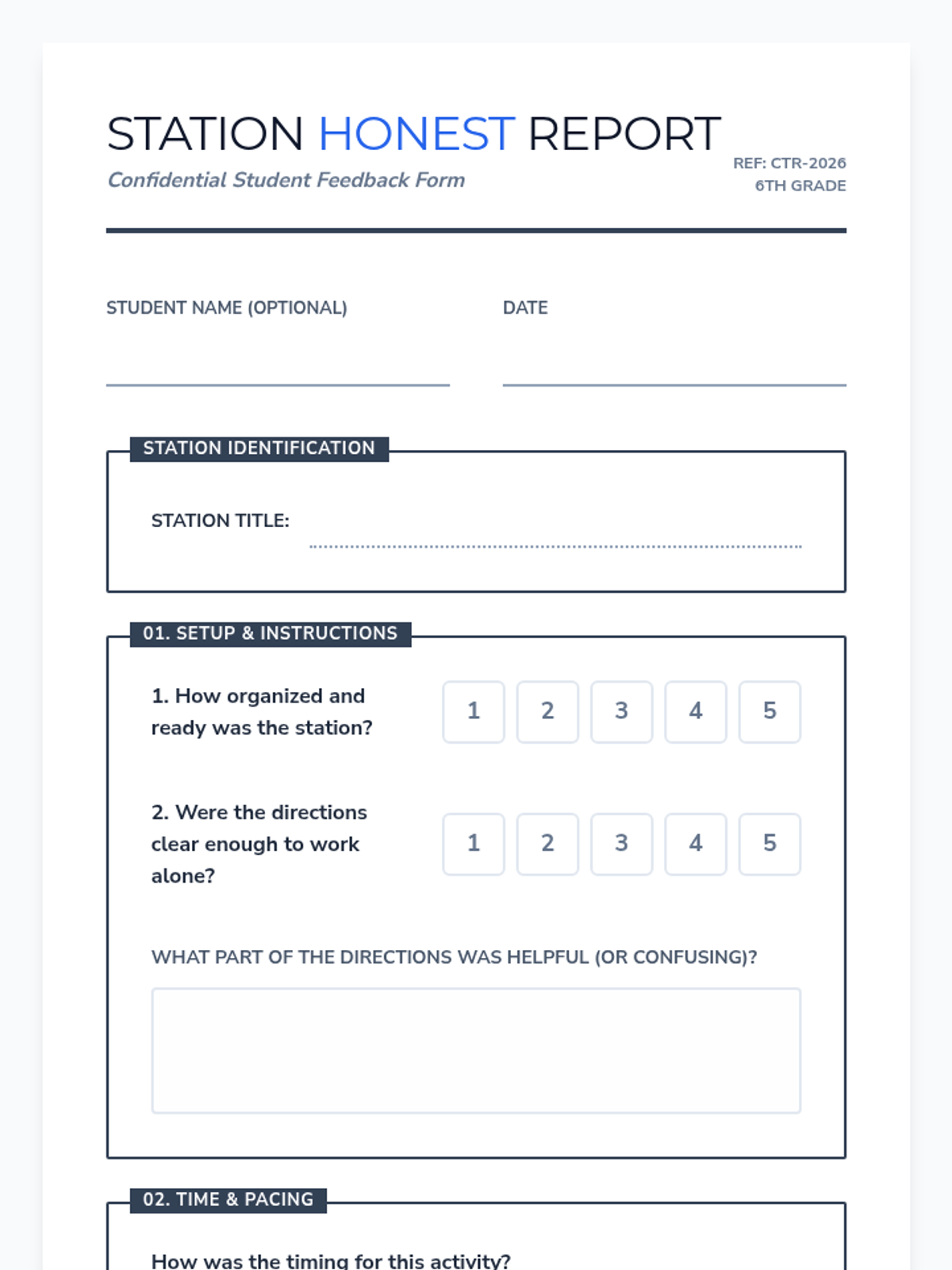
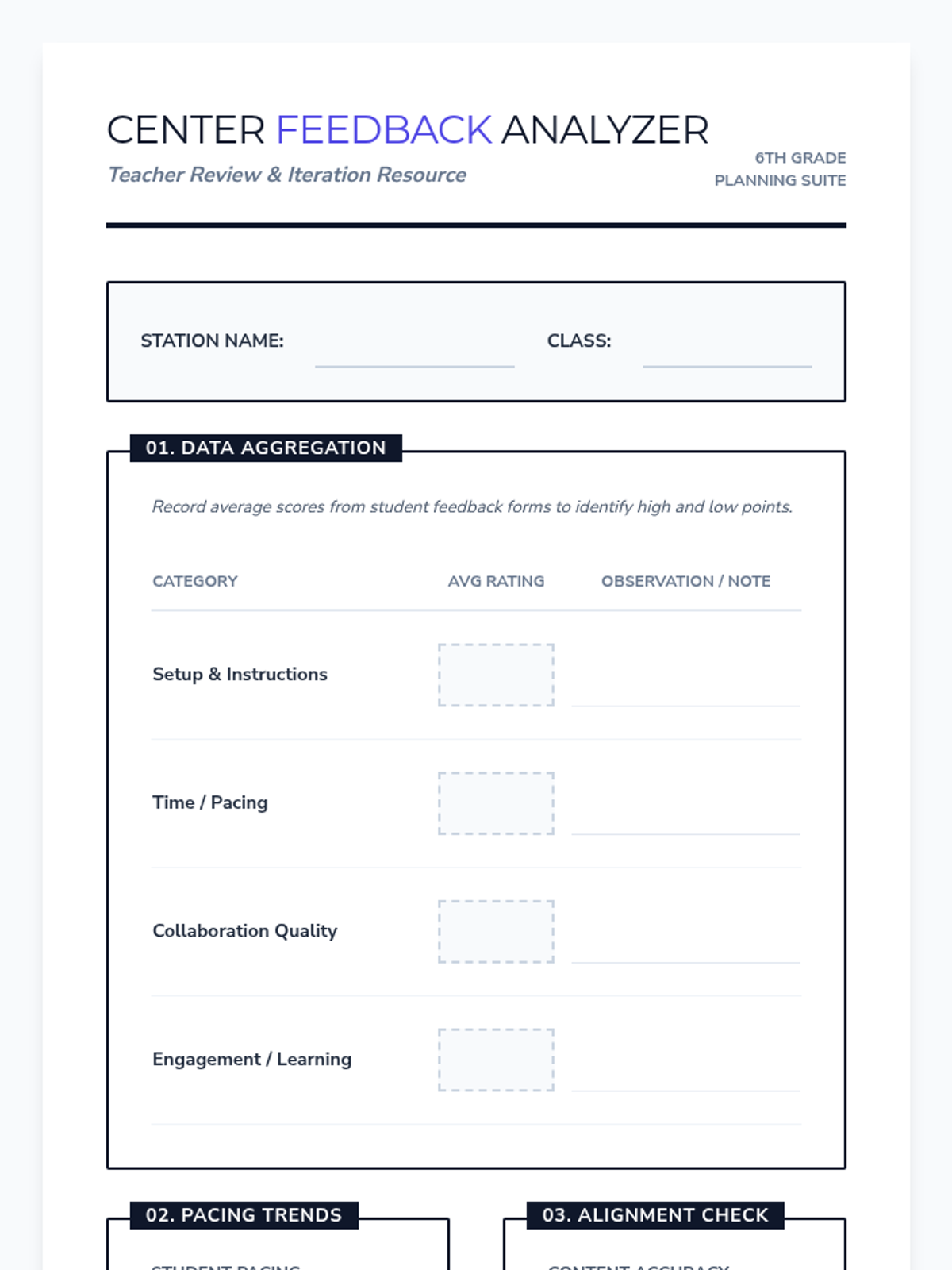
A collection of resources to gather and analyze student feedback on learning centers to improve instructional design for future years.
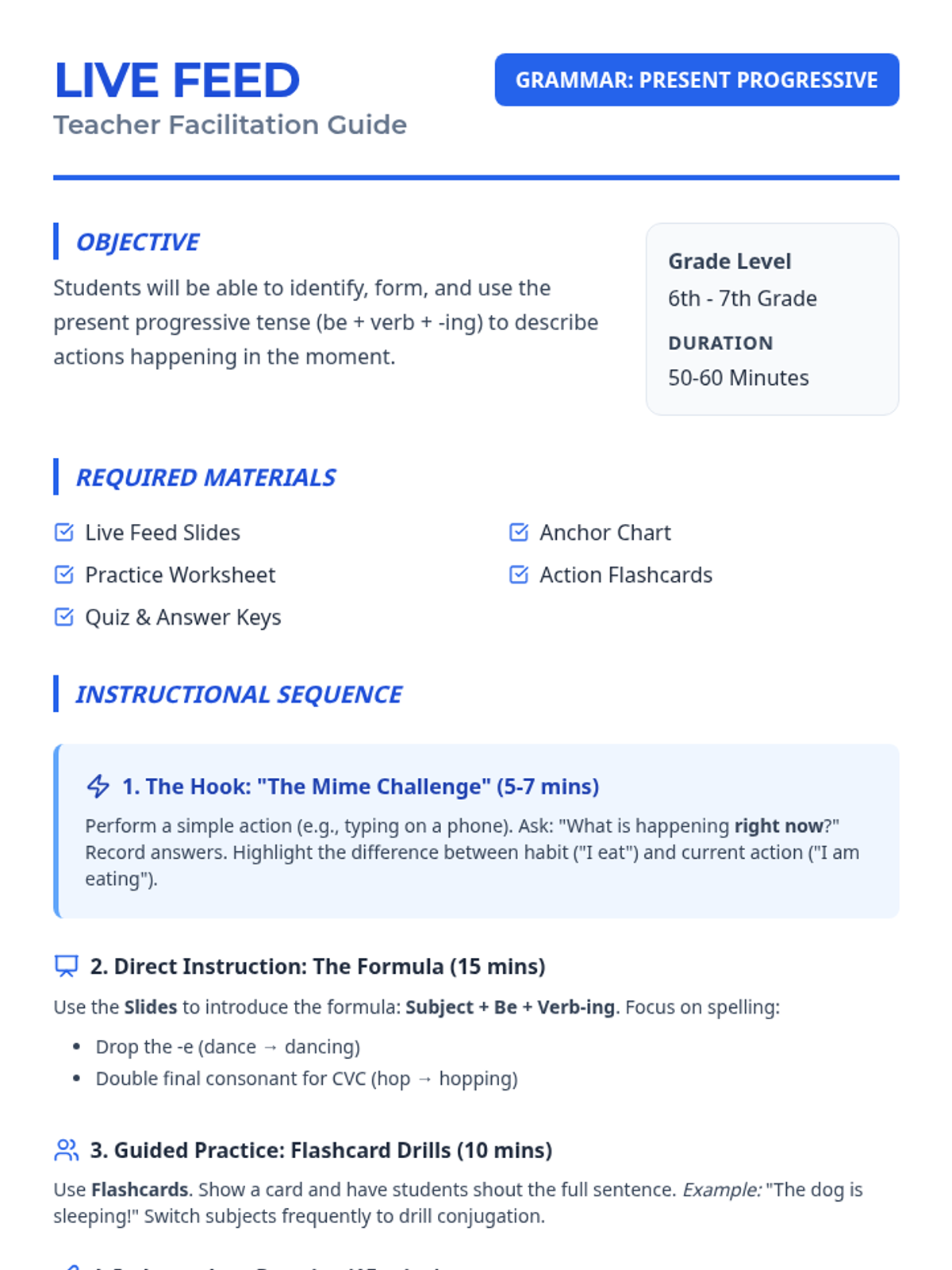
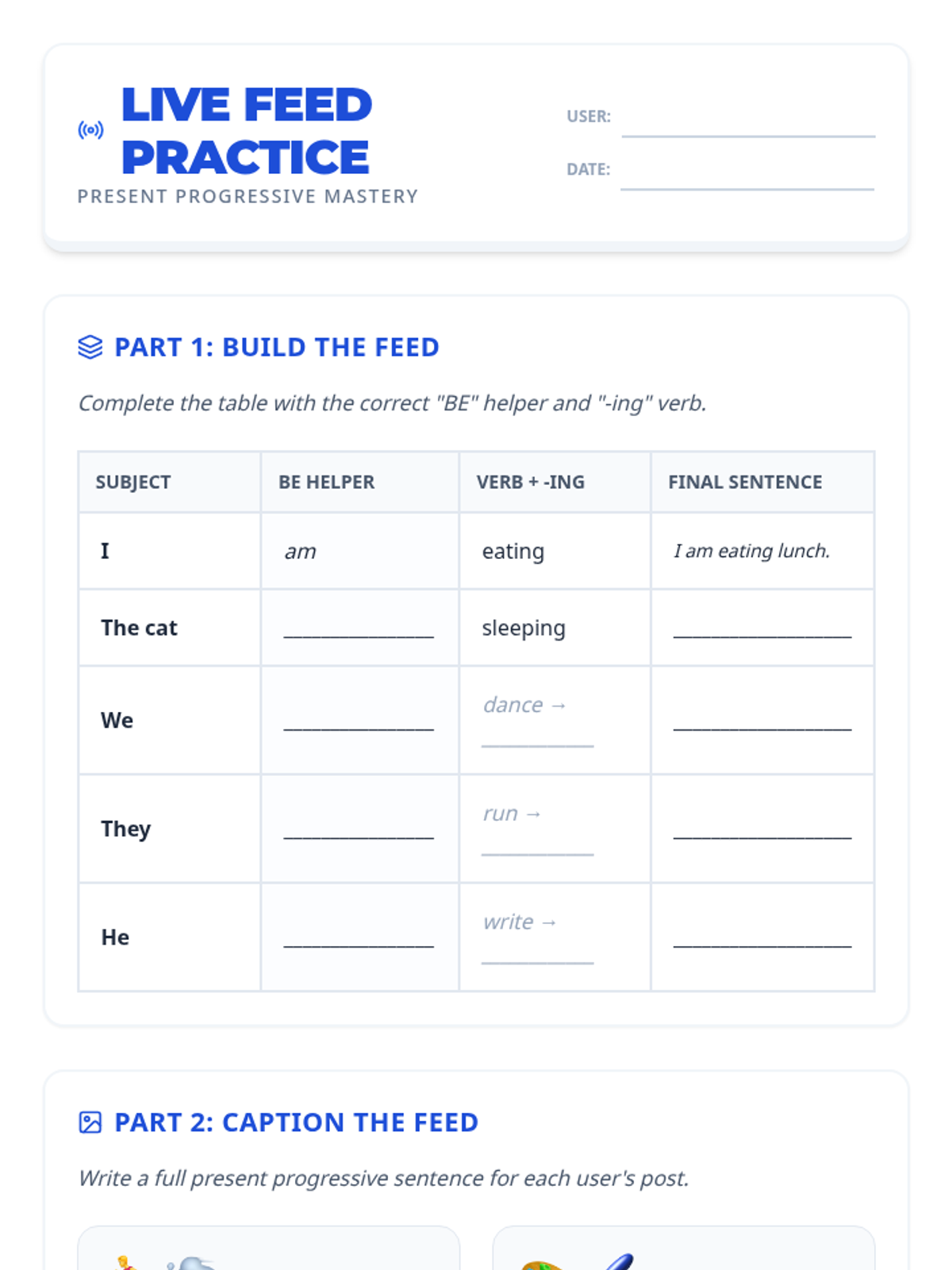
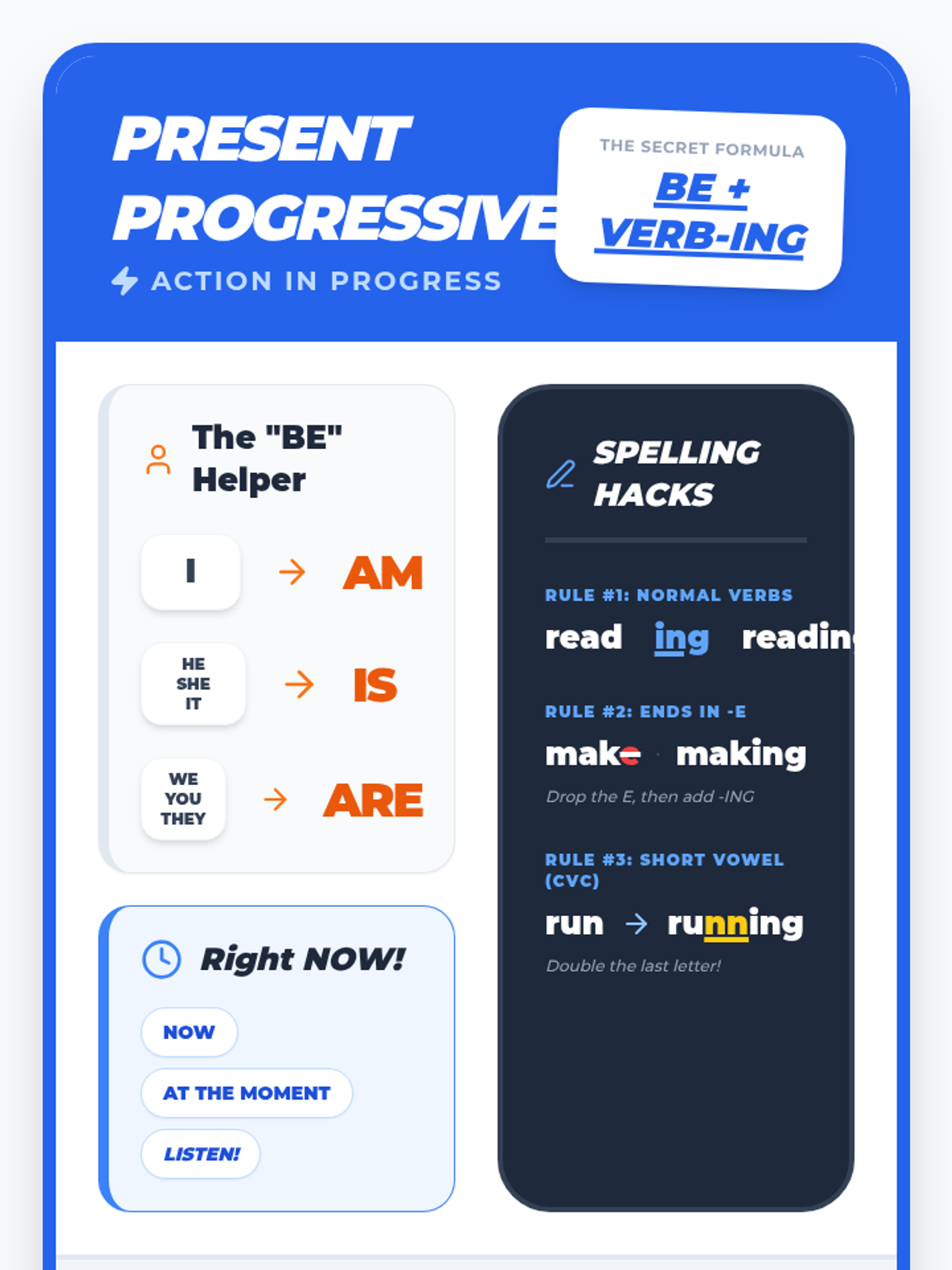
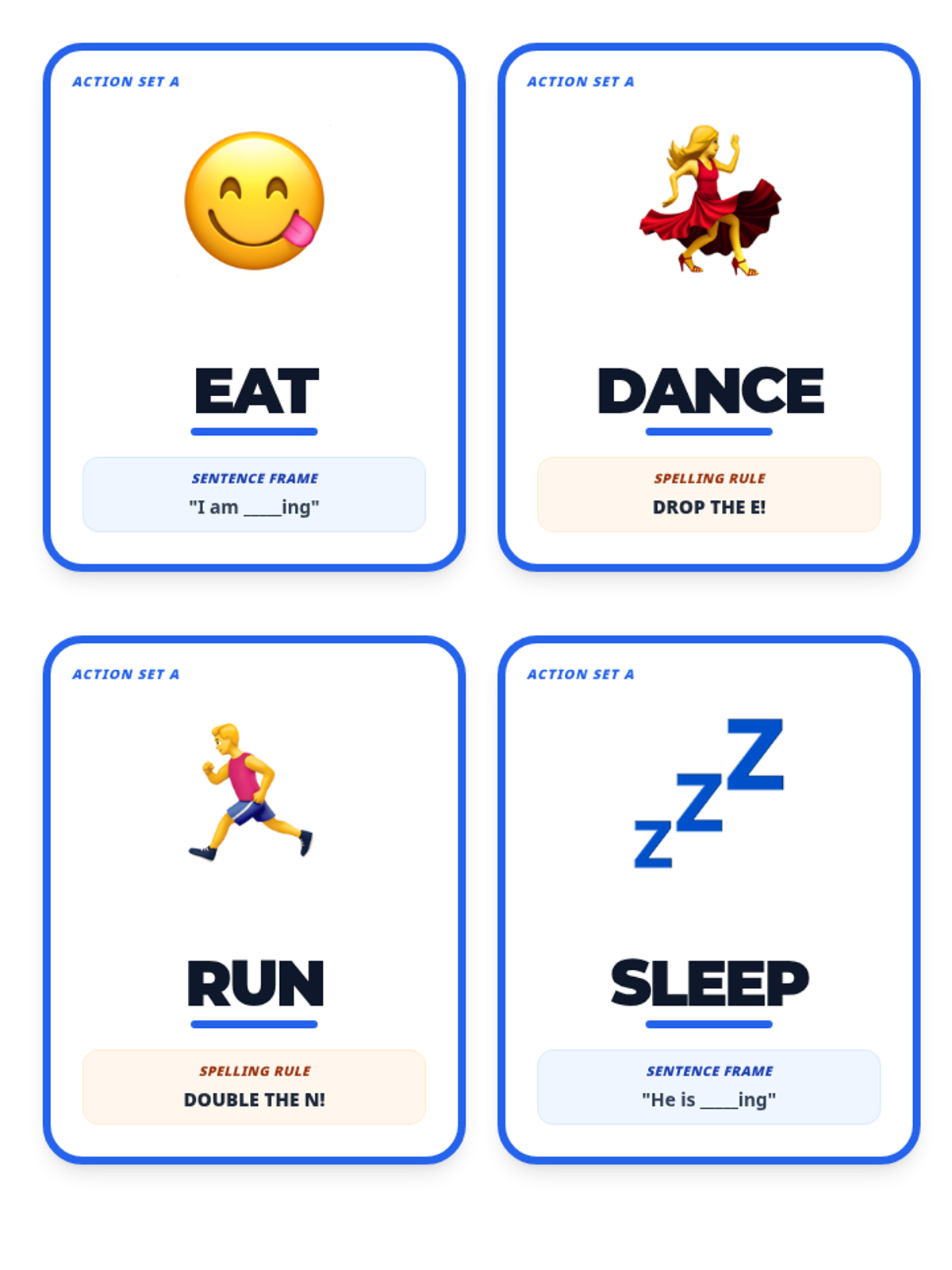
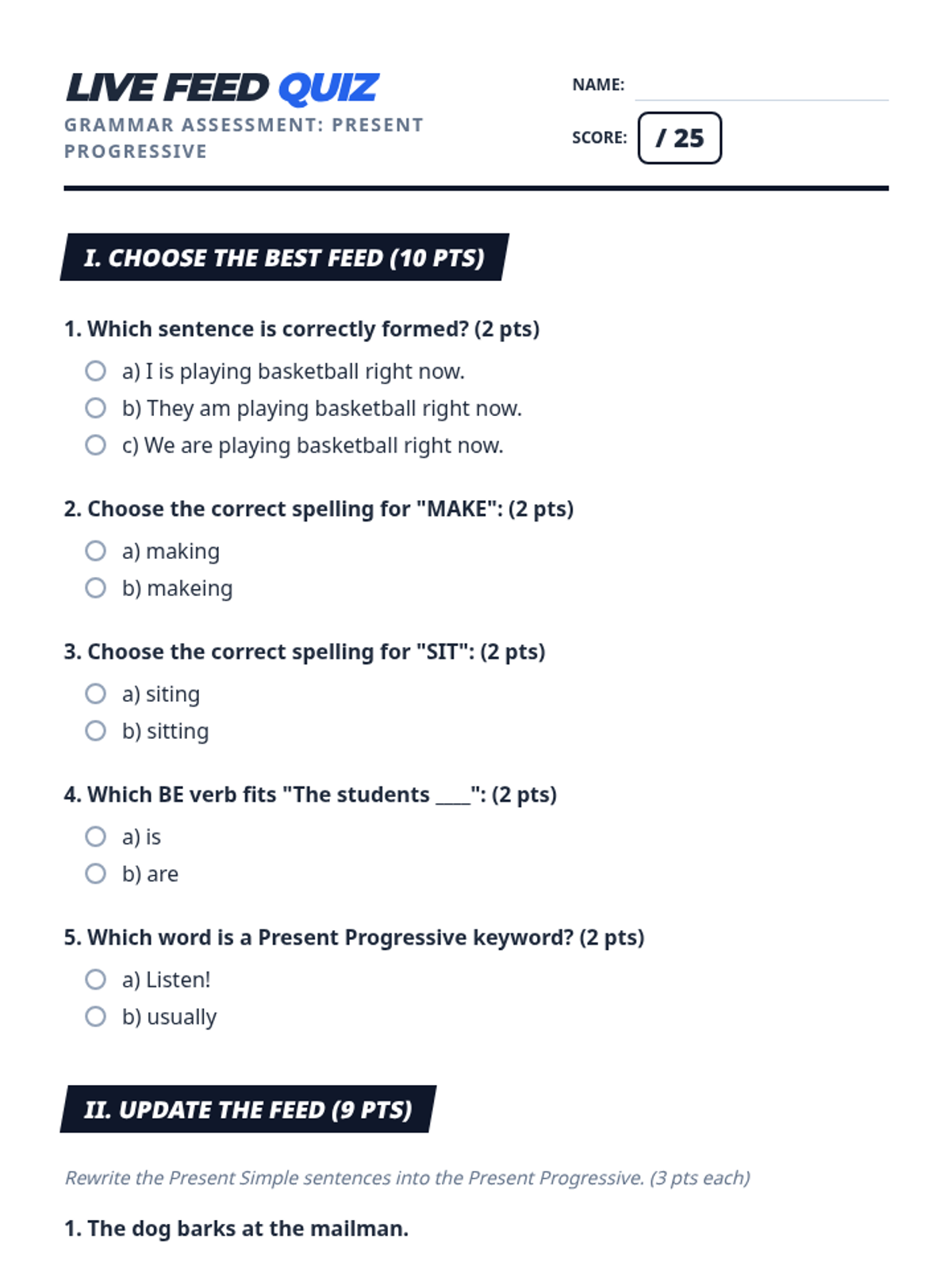
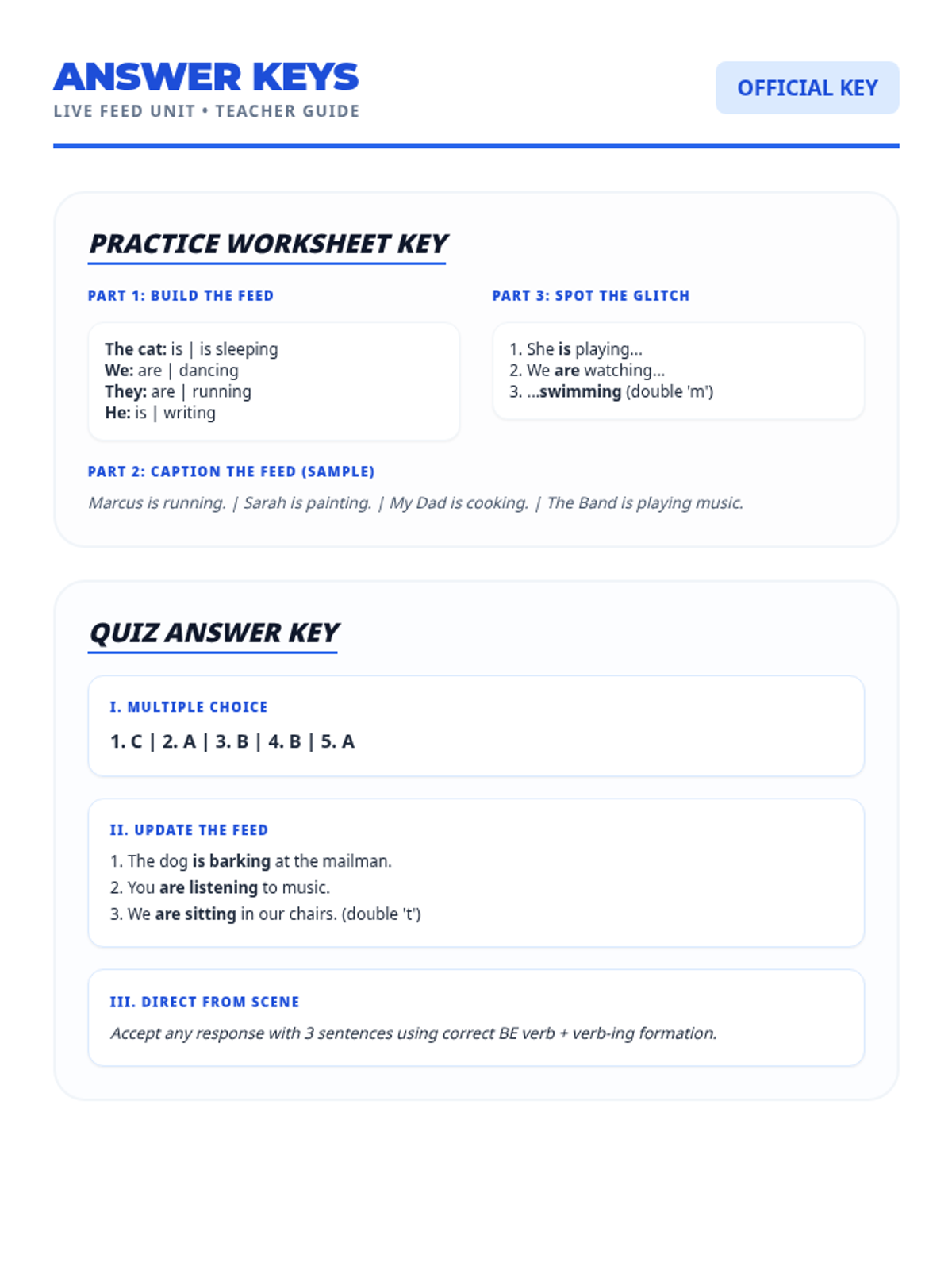
A comprehensive grammar lesson focusing on the formation and use of the present progressive tense. Students will learn to combine the 'be' auxiliary verb with '-ing' participles to describe ongoing actions.
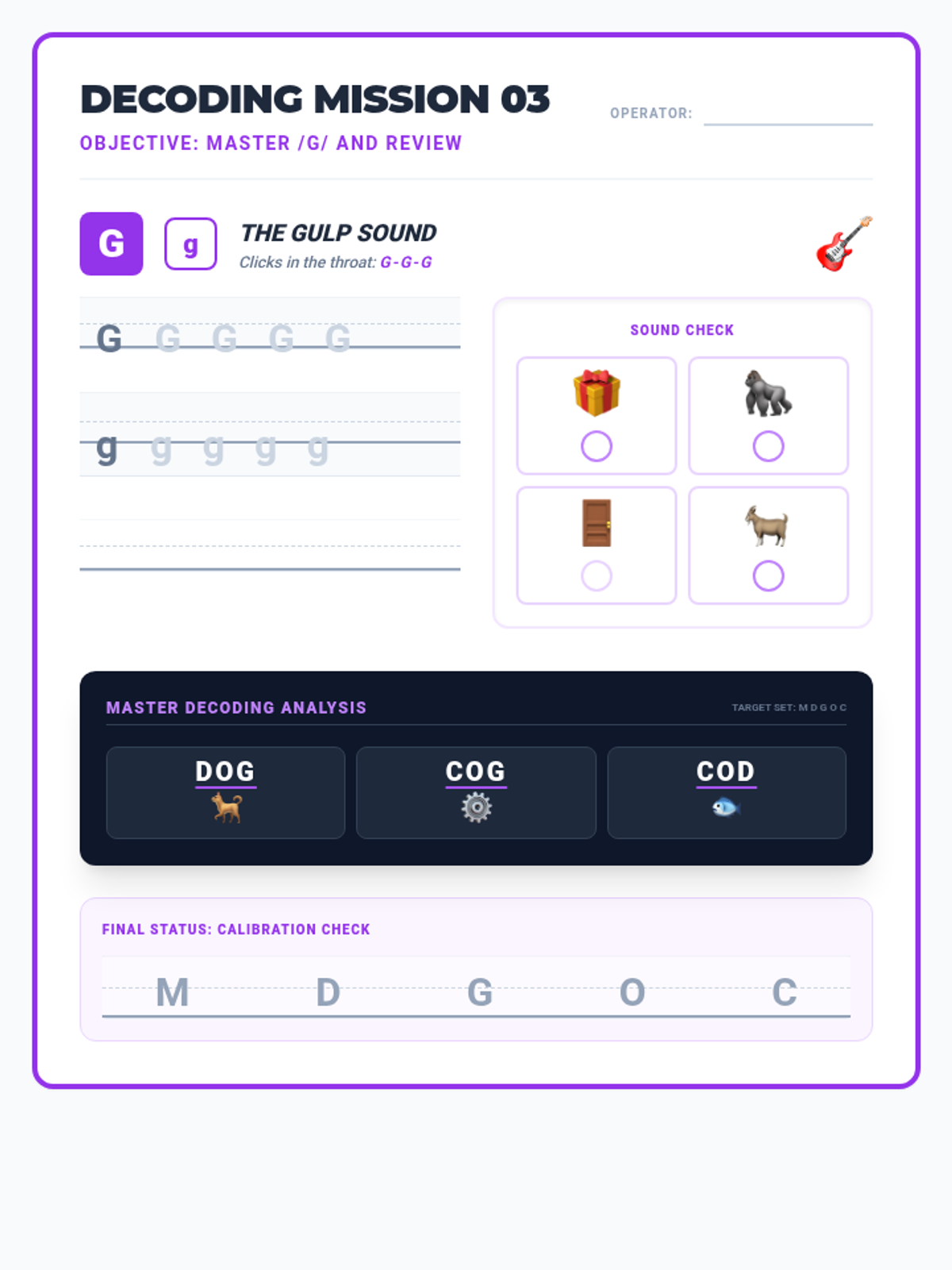
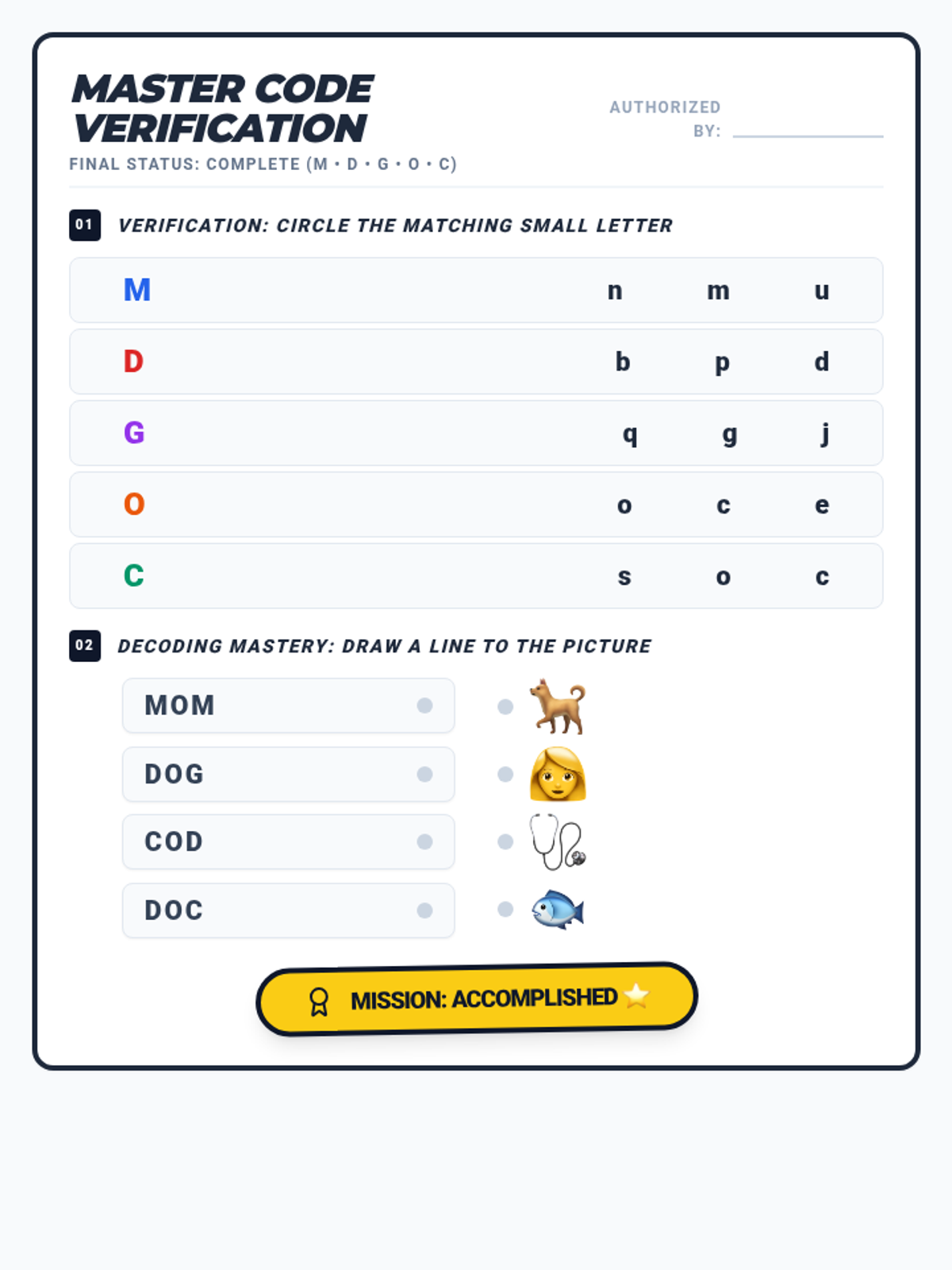
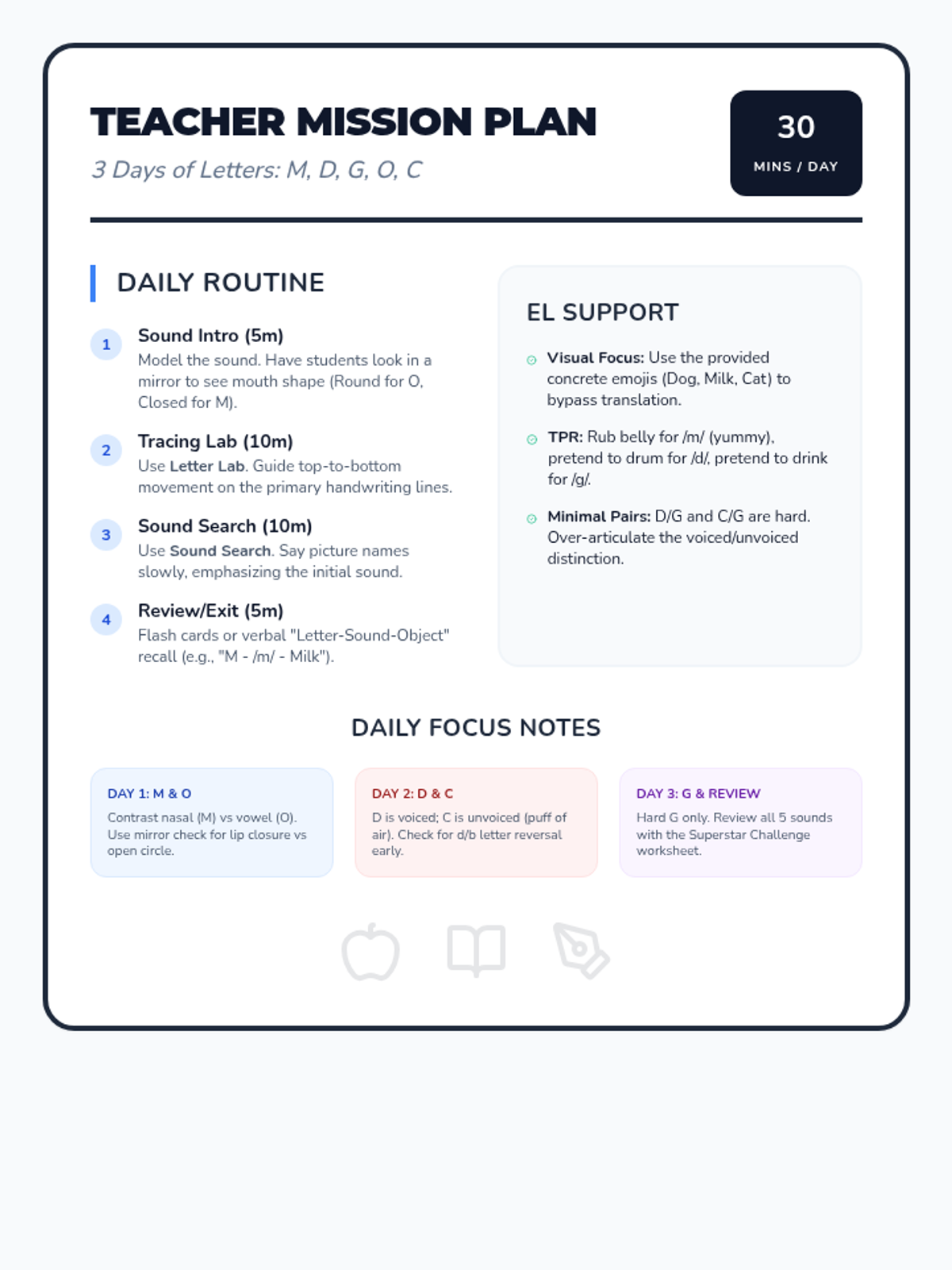
Day 3 masters the /g/ sound and provides a cumulative review of all 5 letters through word building and high-frequency decoding.
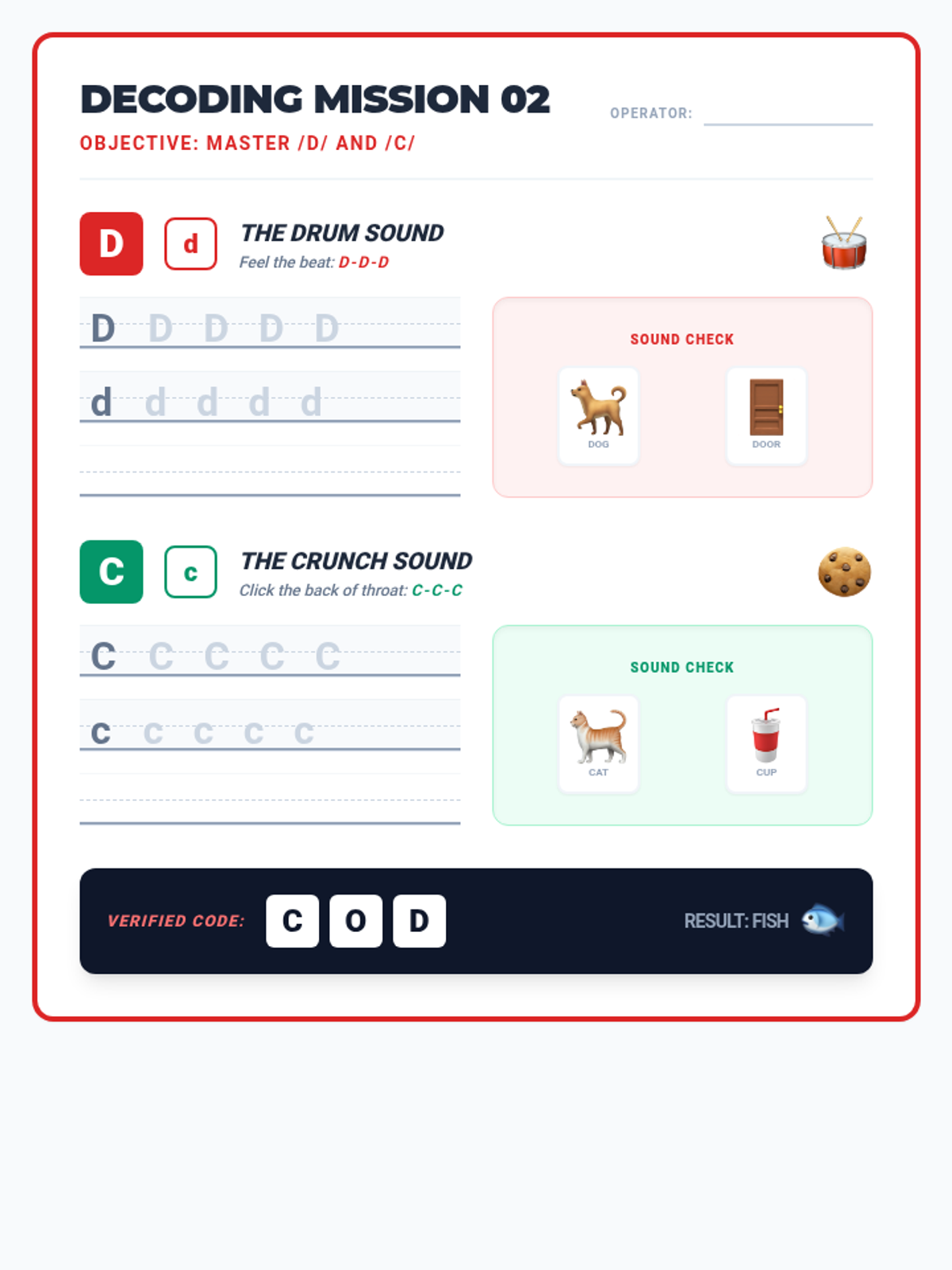
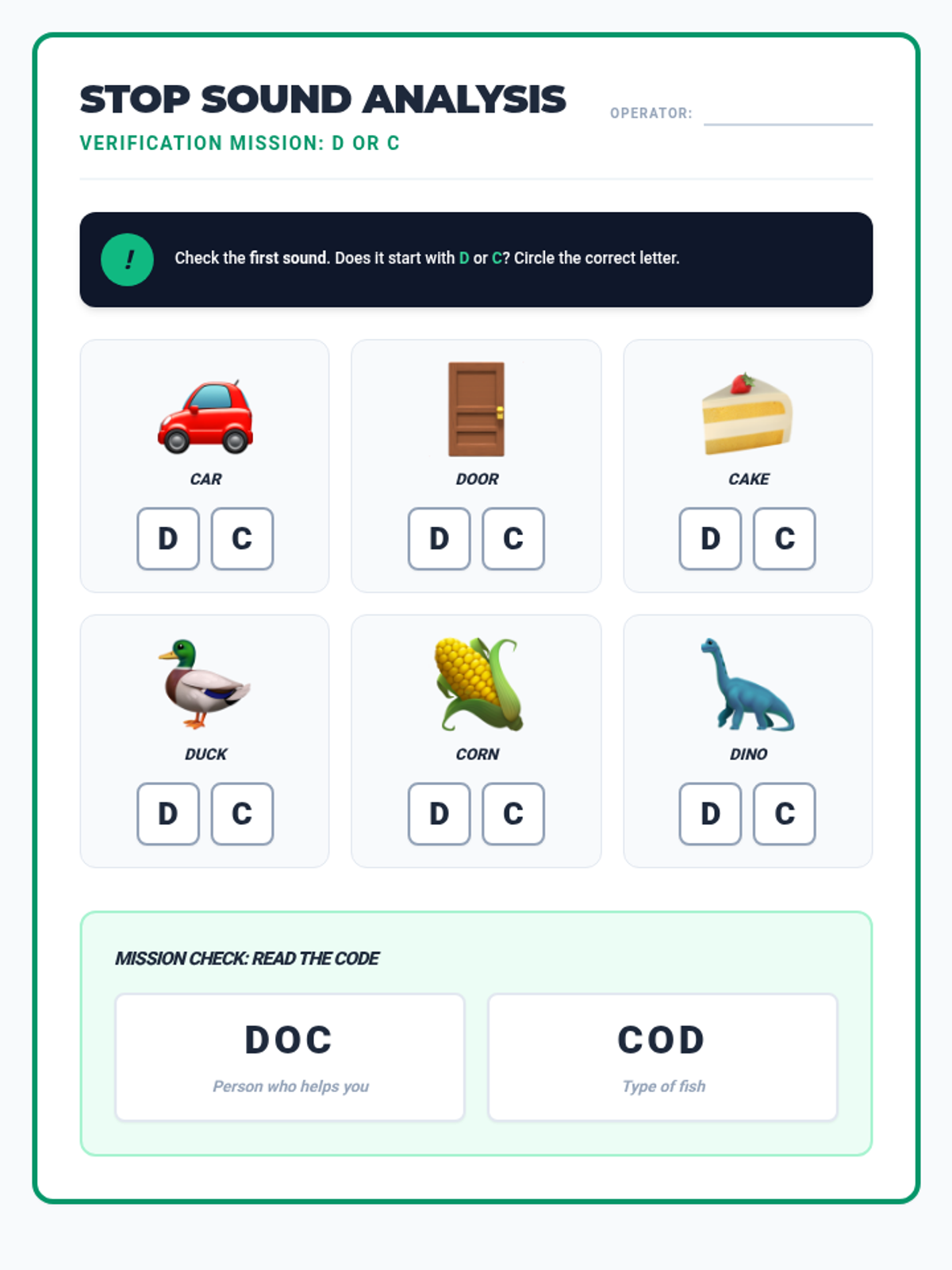
Day 2 focuses on the stop sounds /d/ and /k/, introducing letter C and D with word blending for 'dad', 'mad', and 'cat'.
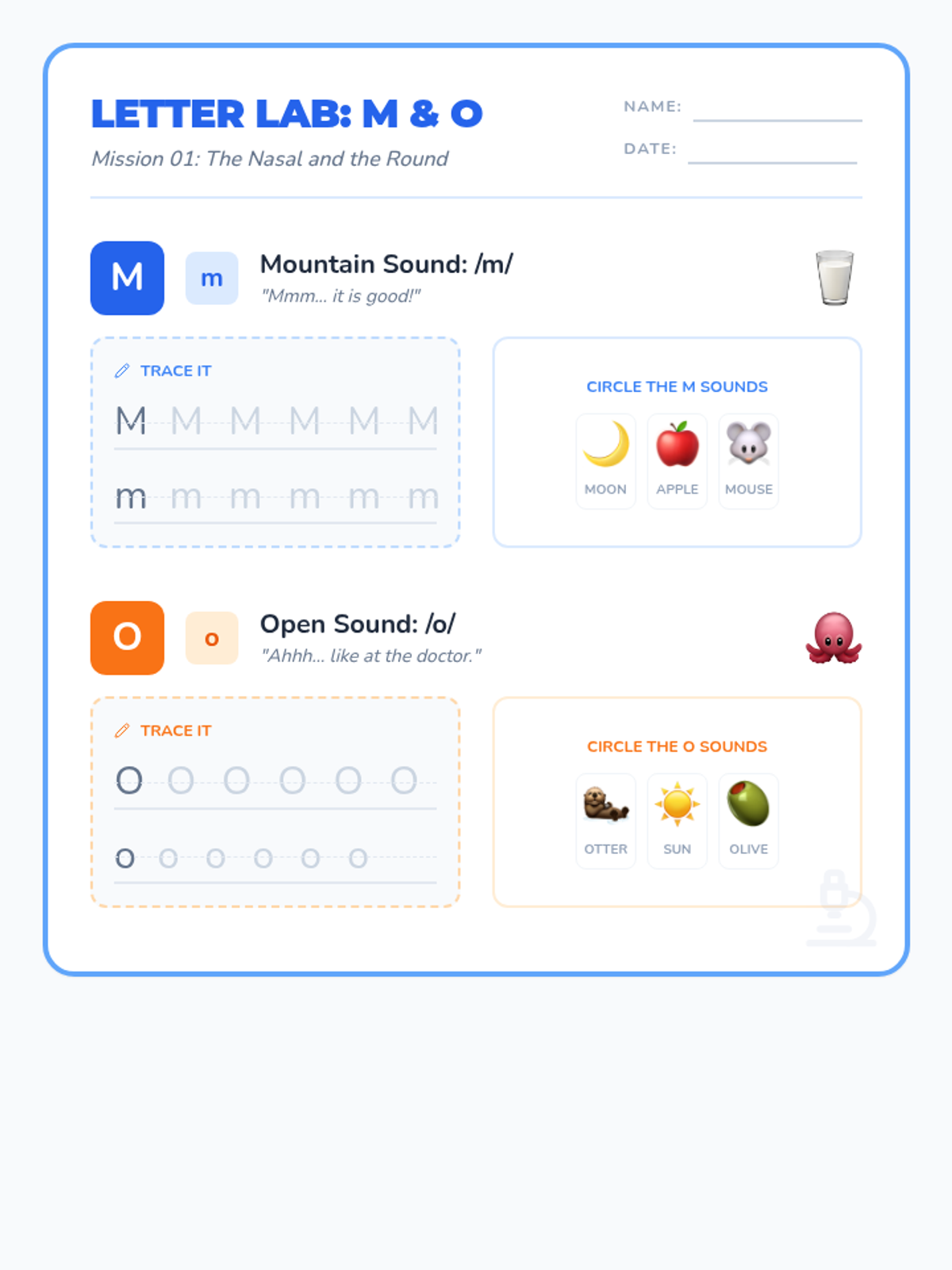
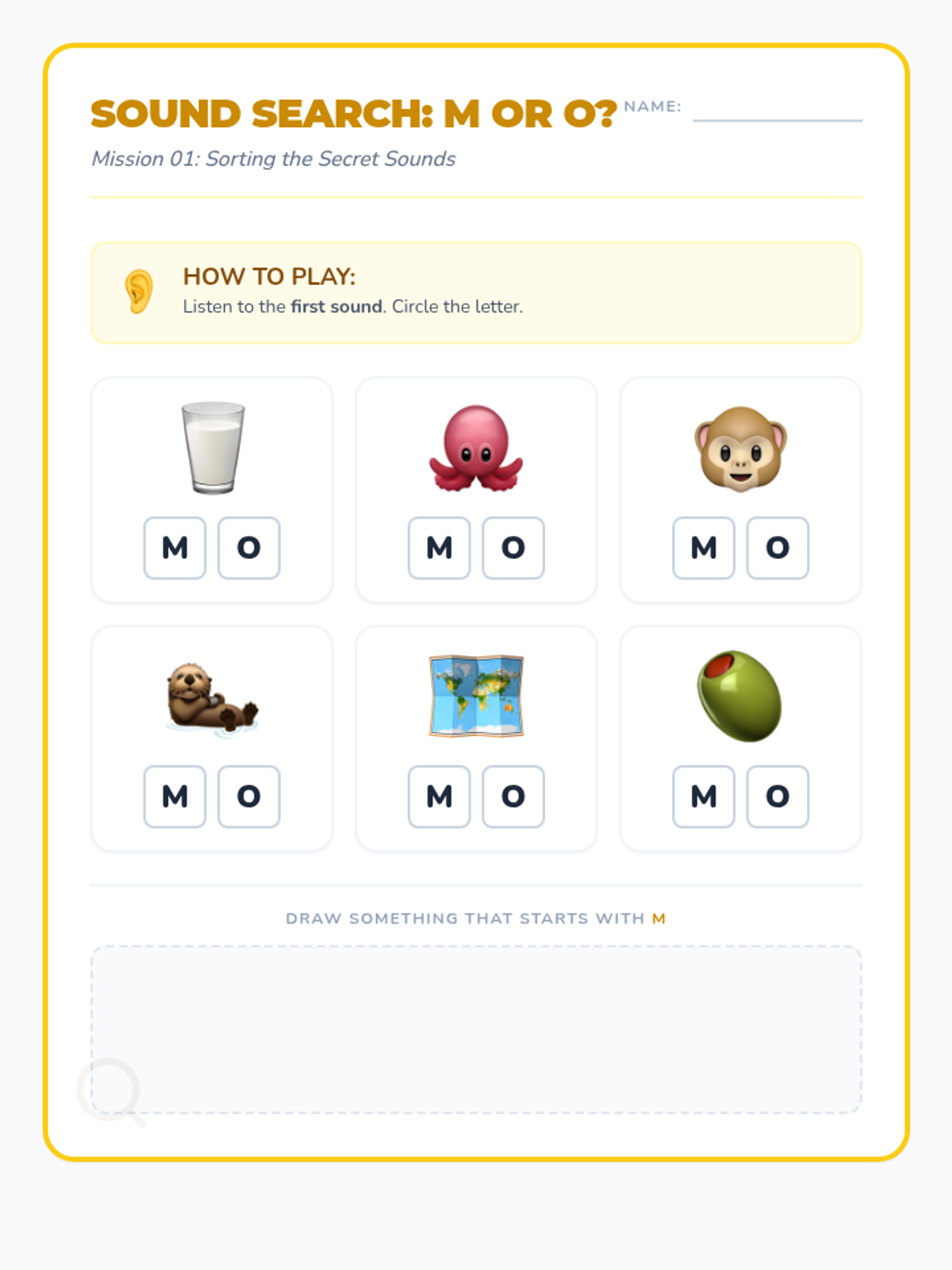
Day 1 introduces the /m/ and short /o/ sounds, focusing on mouth shape and initial sound recognition, concluding with reading the word 'mom'.
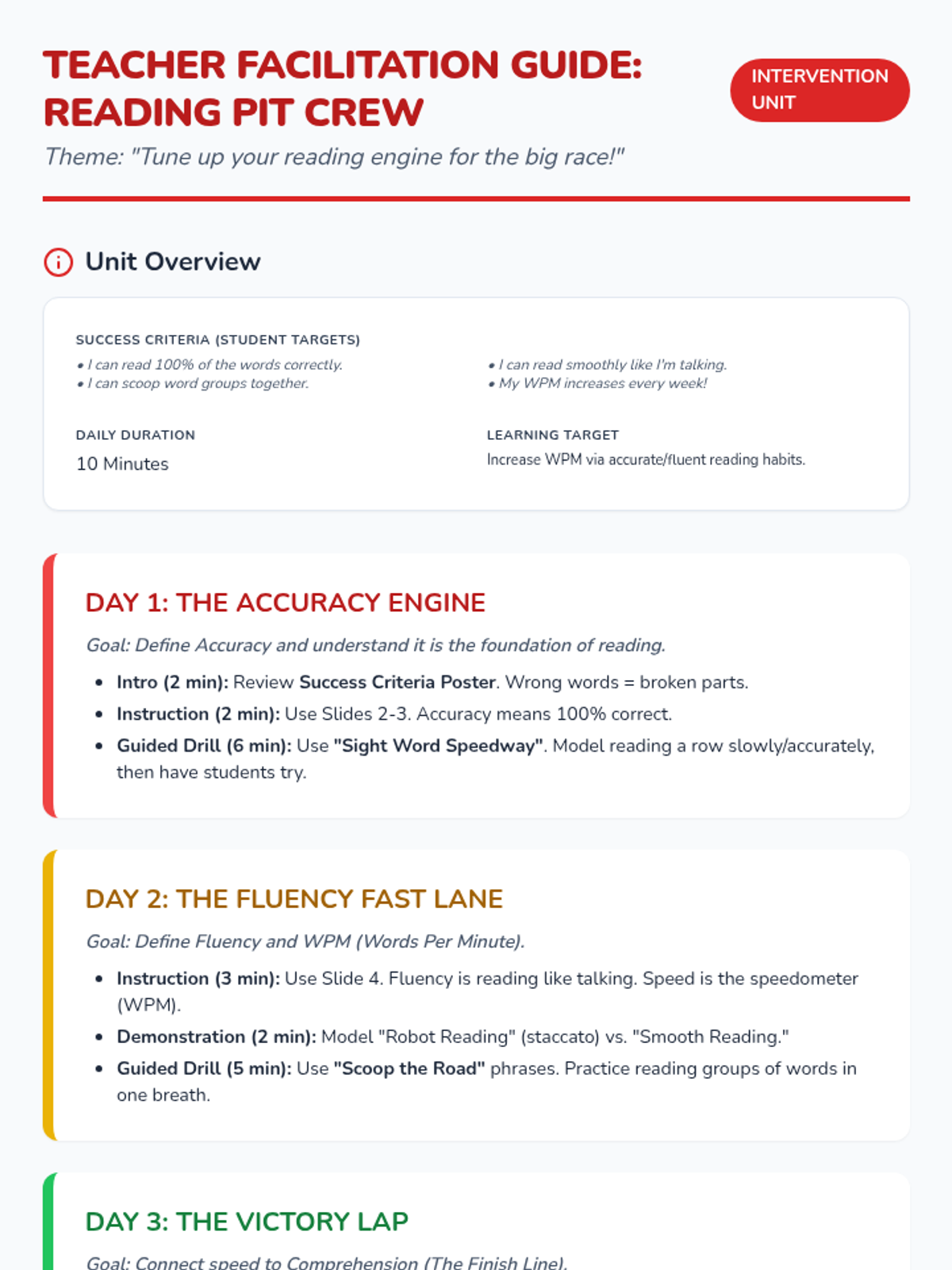
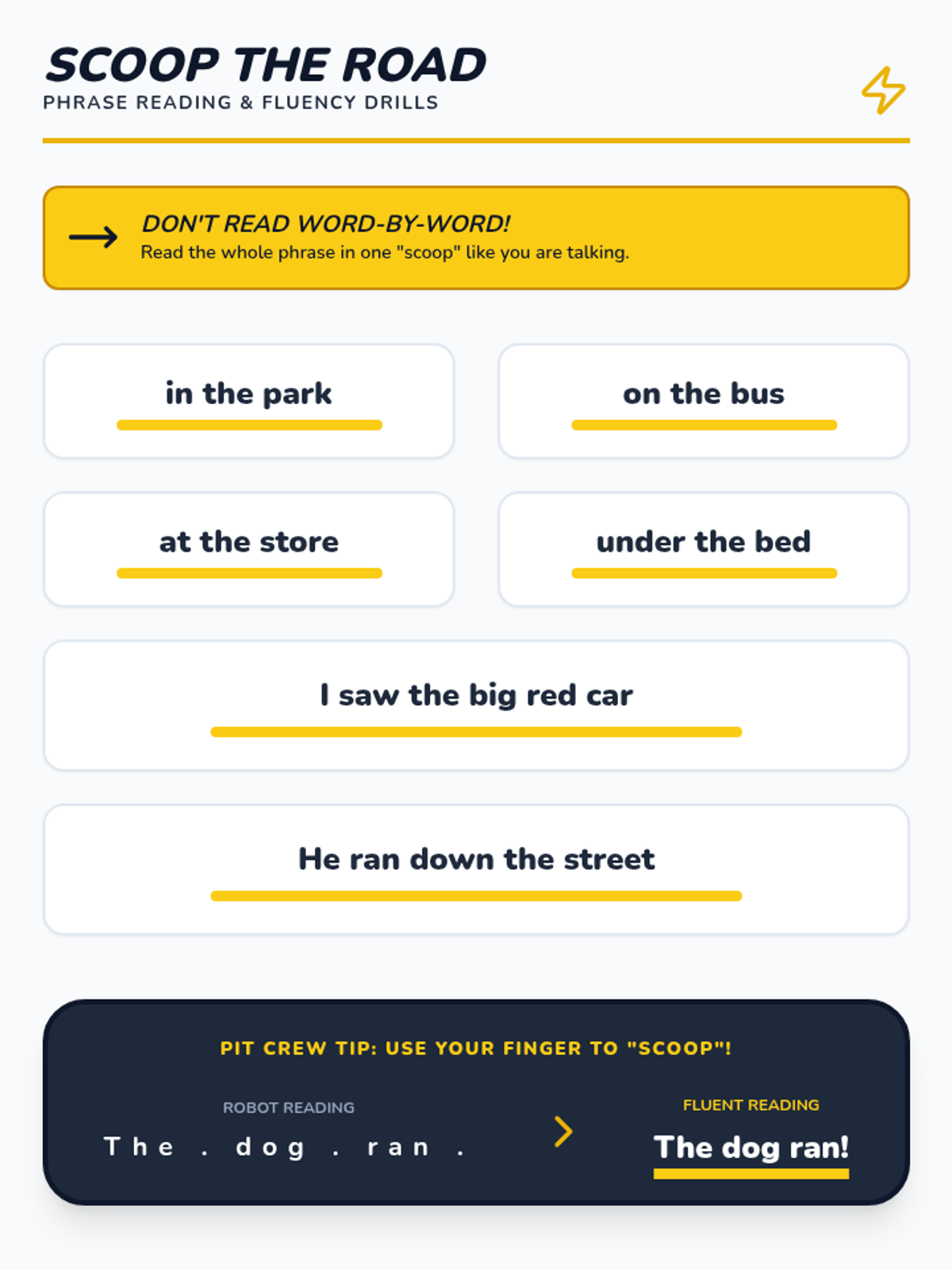
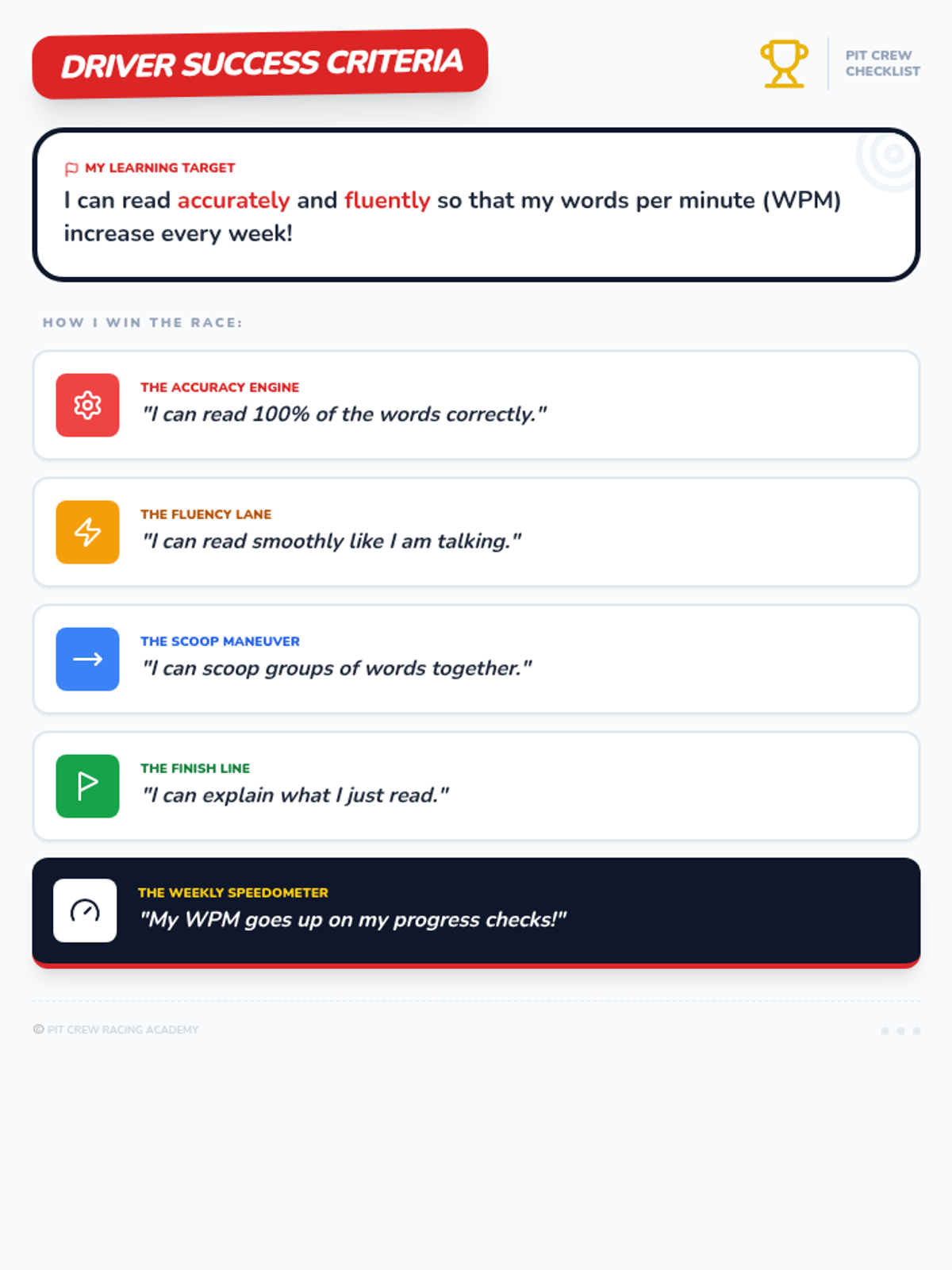
Focused on the definition of fluency, the relationship between accuracy and speed (WPM), and techniques for smoother reading.
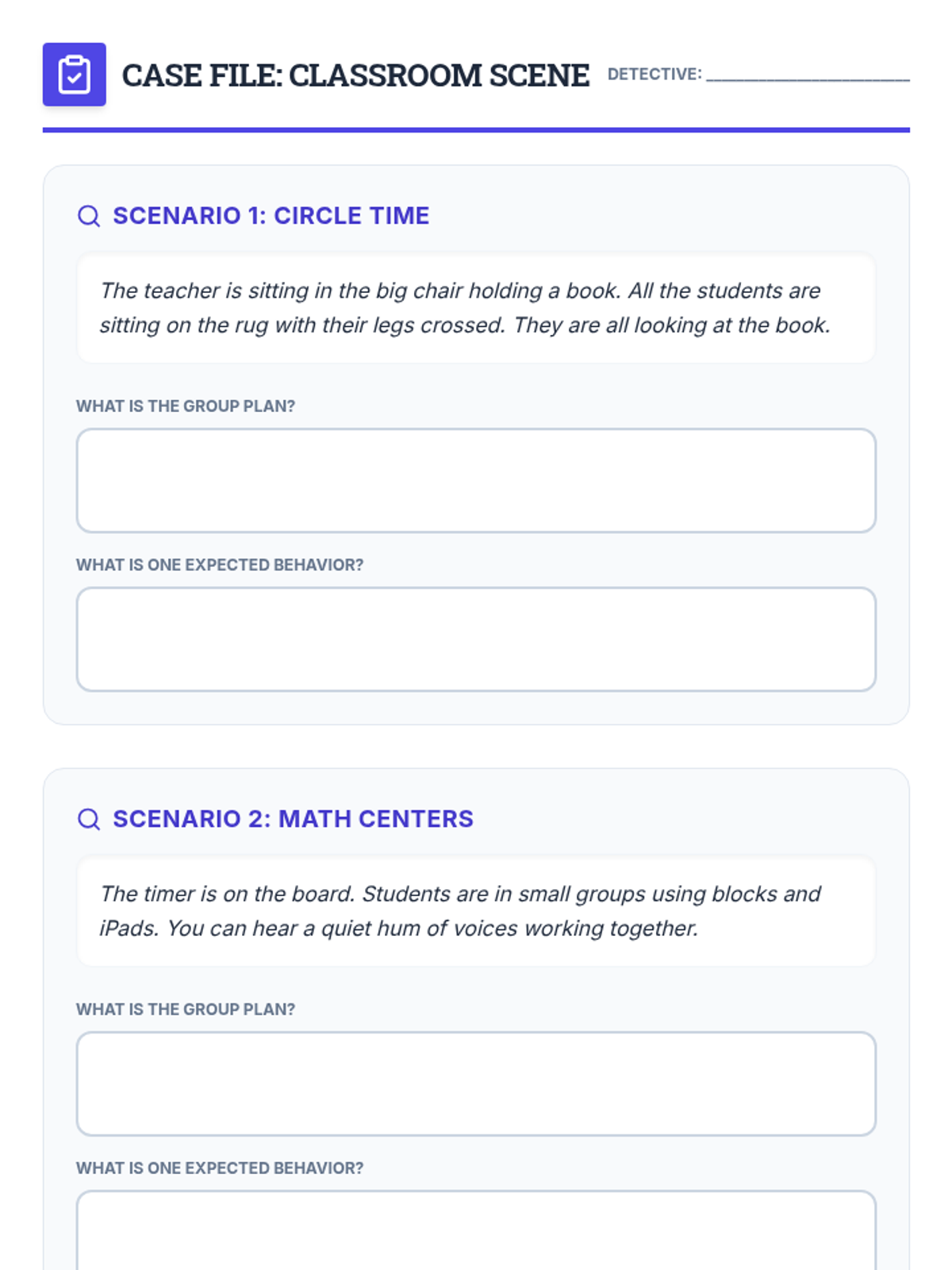
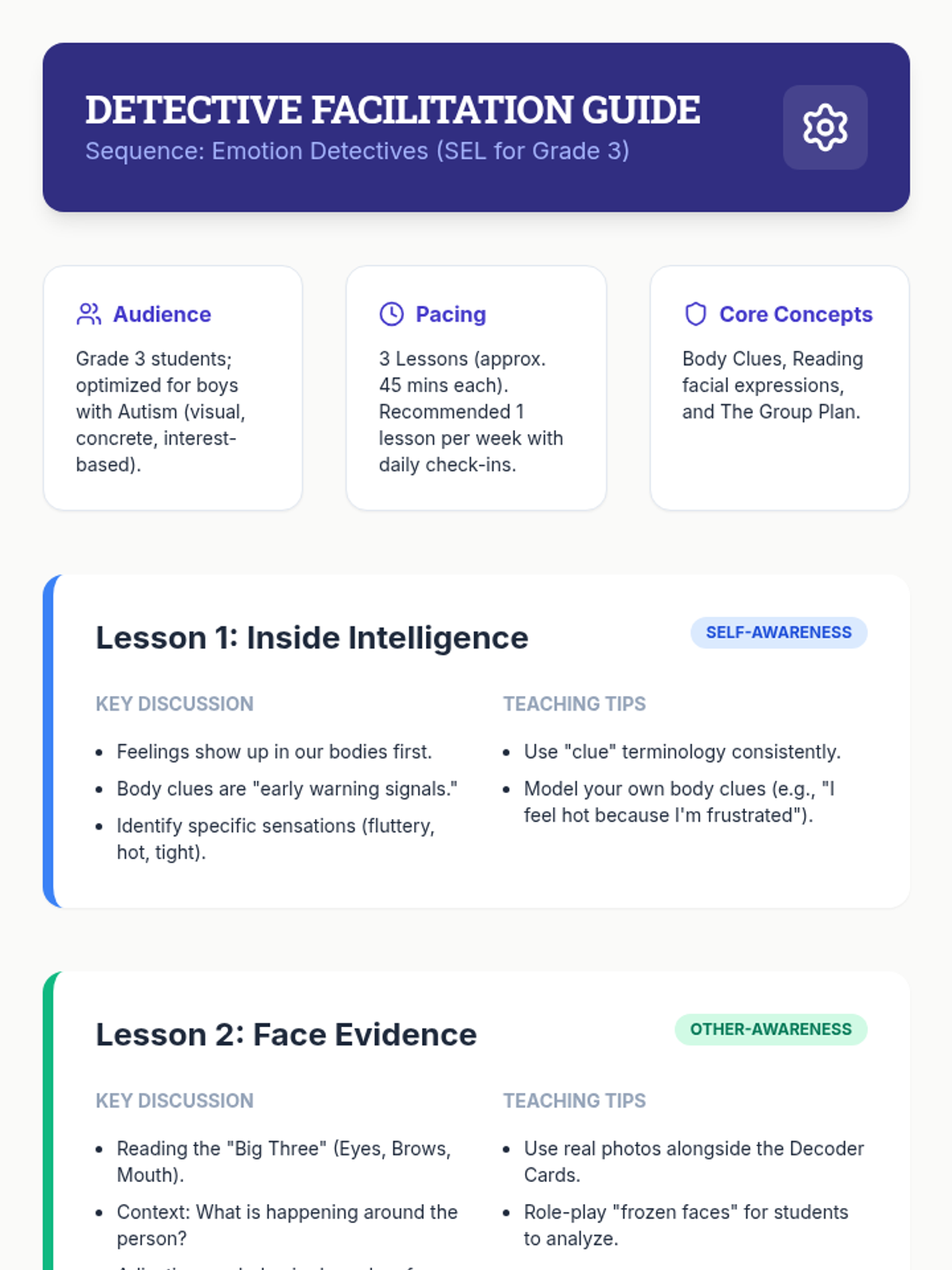
Connects individual and other-awareness to the classroom environment, focusing on 'Expected behaviors' and following the 'Group Plan'.
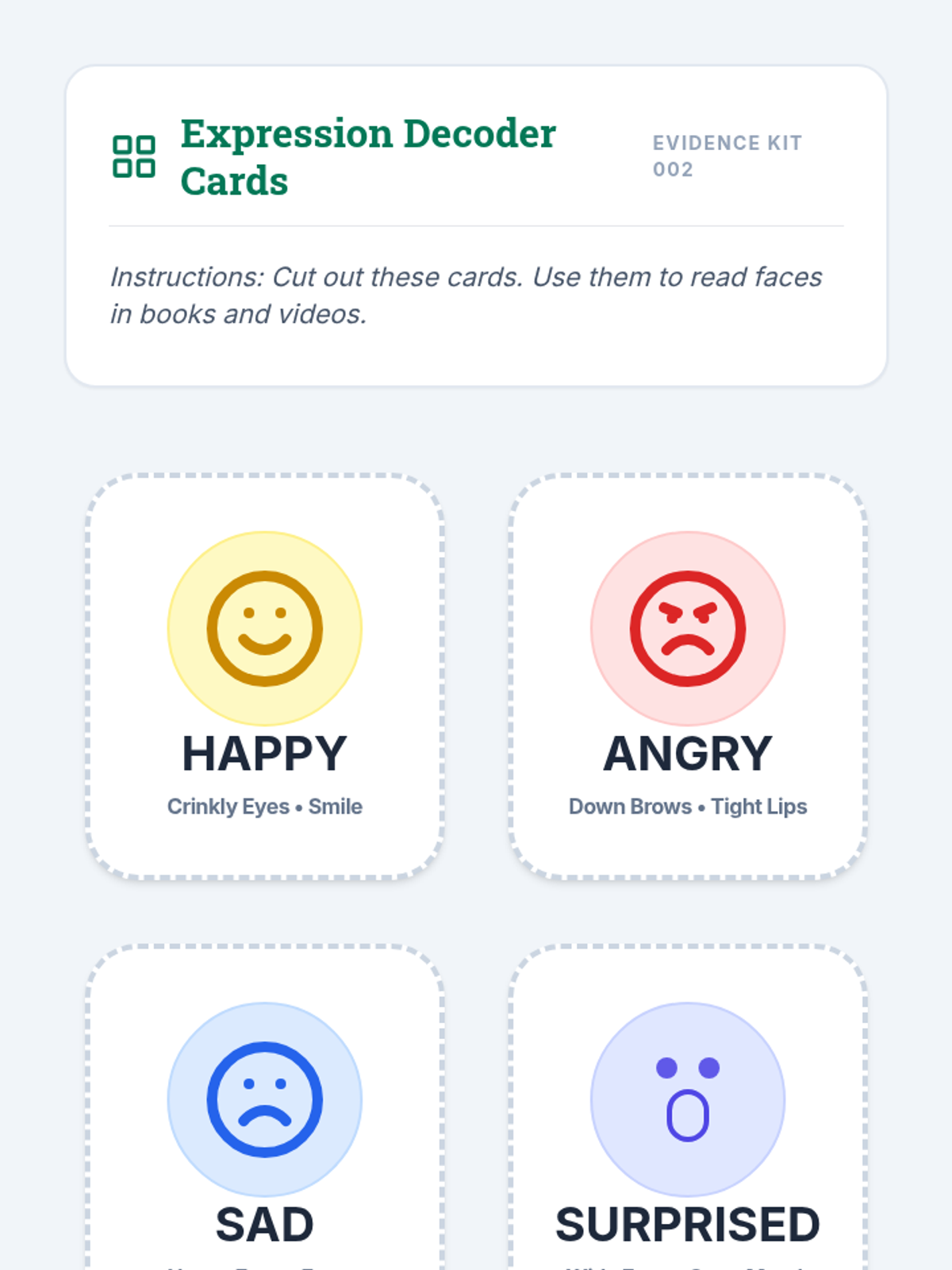
Teaches students how to observe facial expressions and body language to determine how others are feeling.
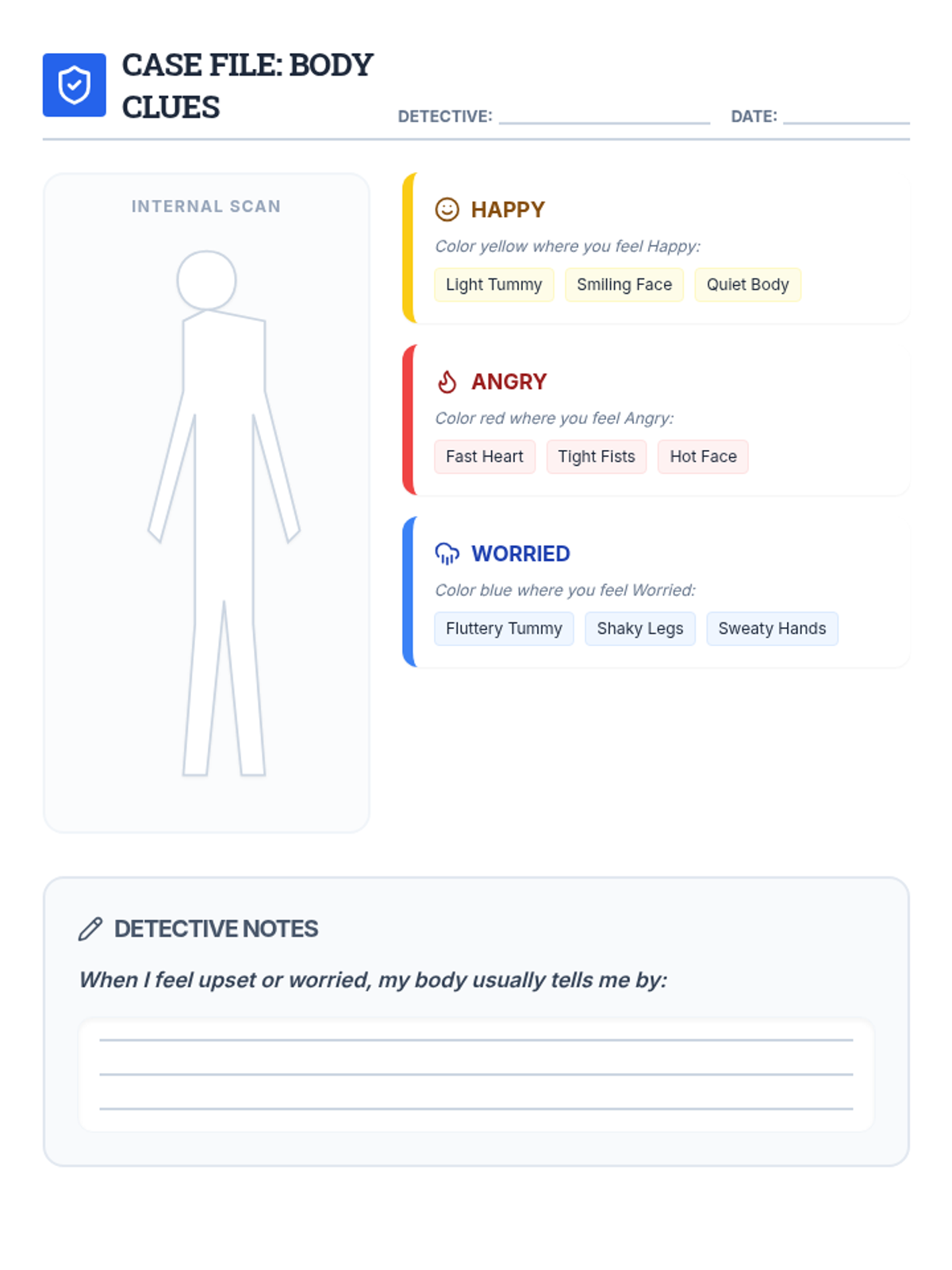
Focuses on self-awareness by teaching students to recognize the physical 'clues' their bodies give off when experiencing different emotions.
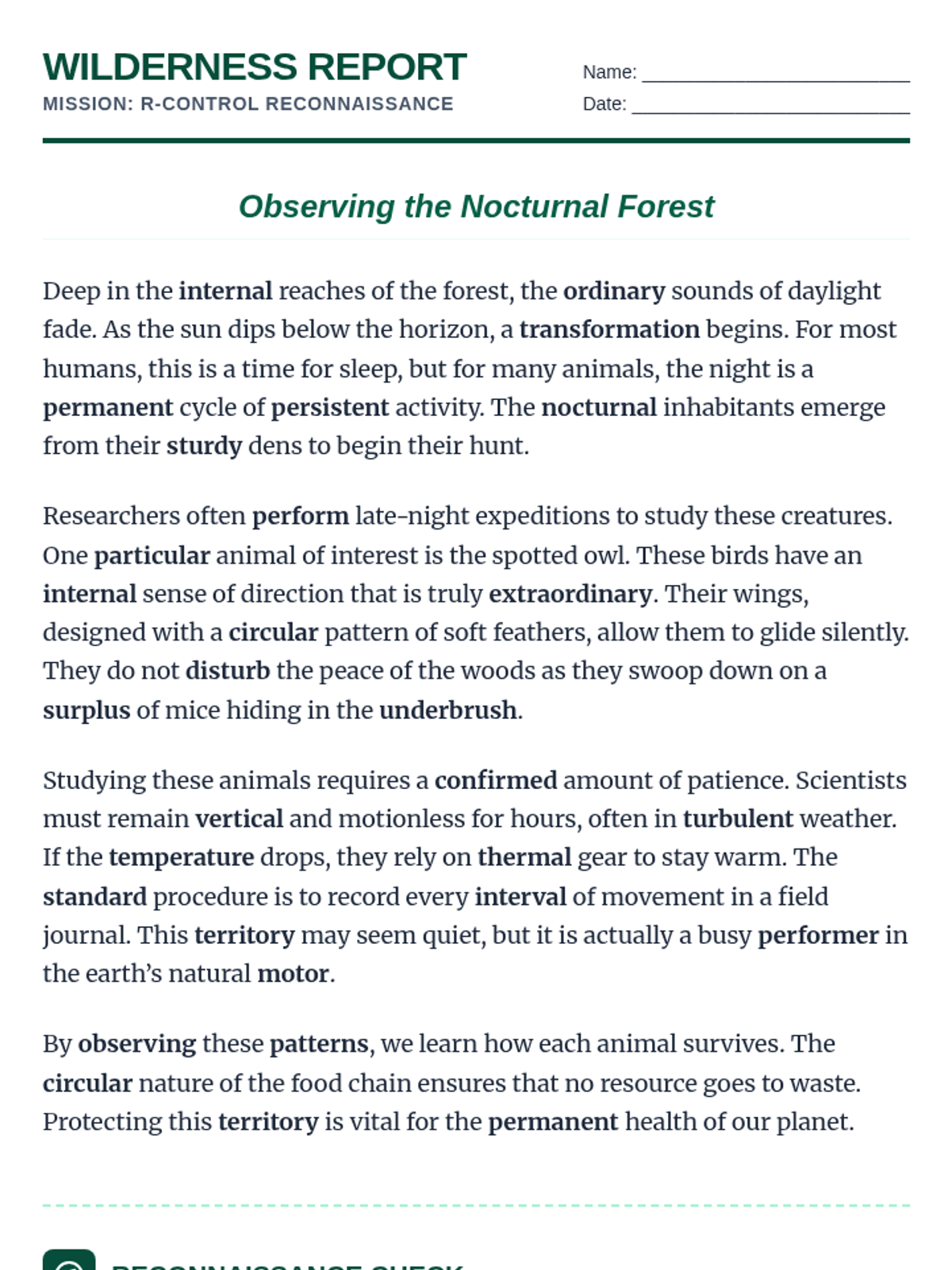
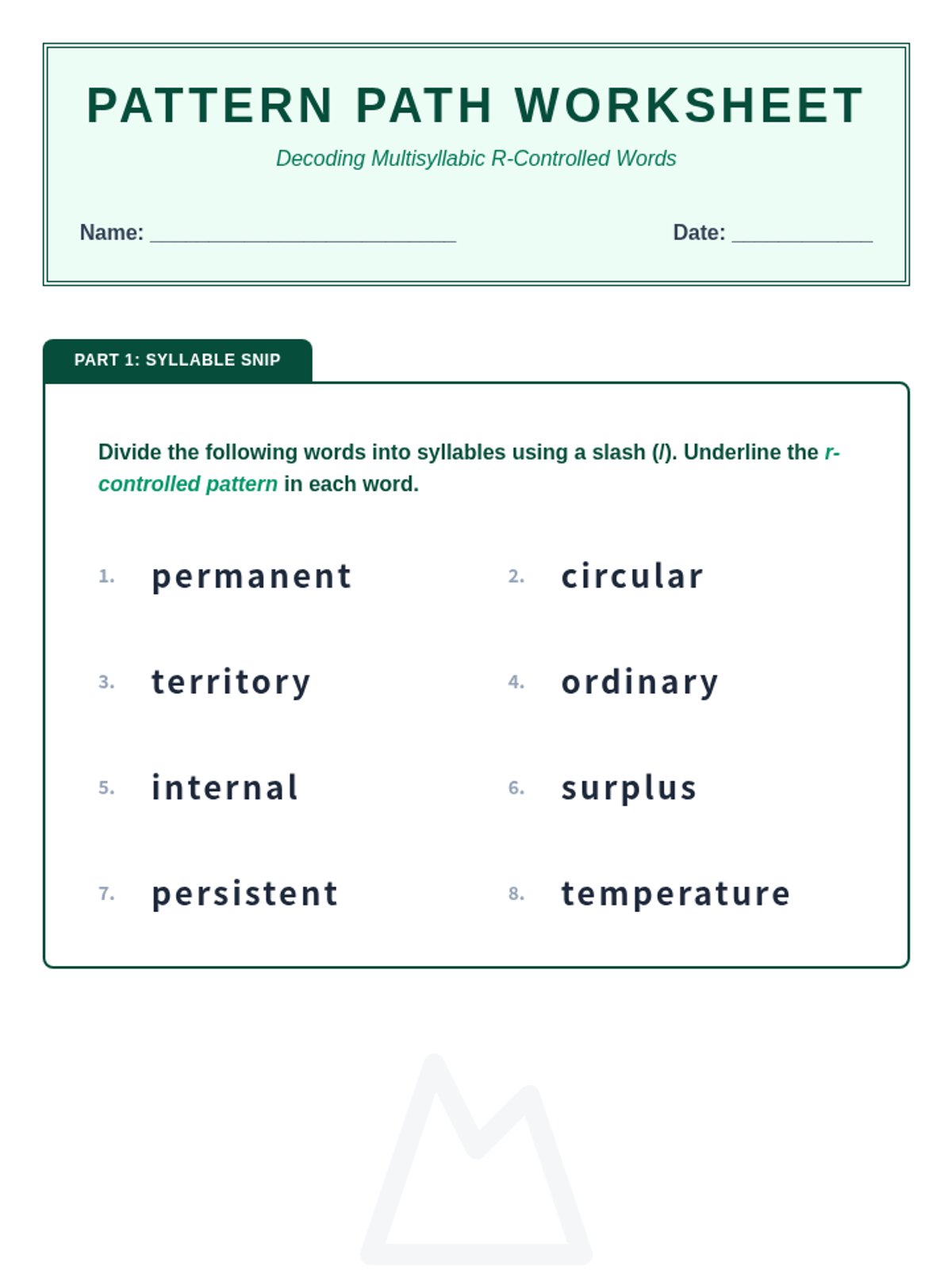
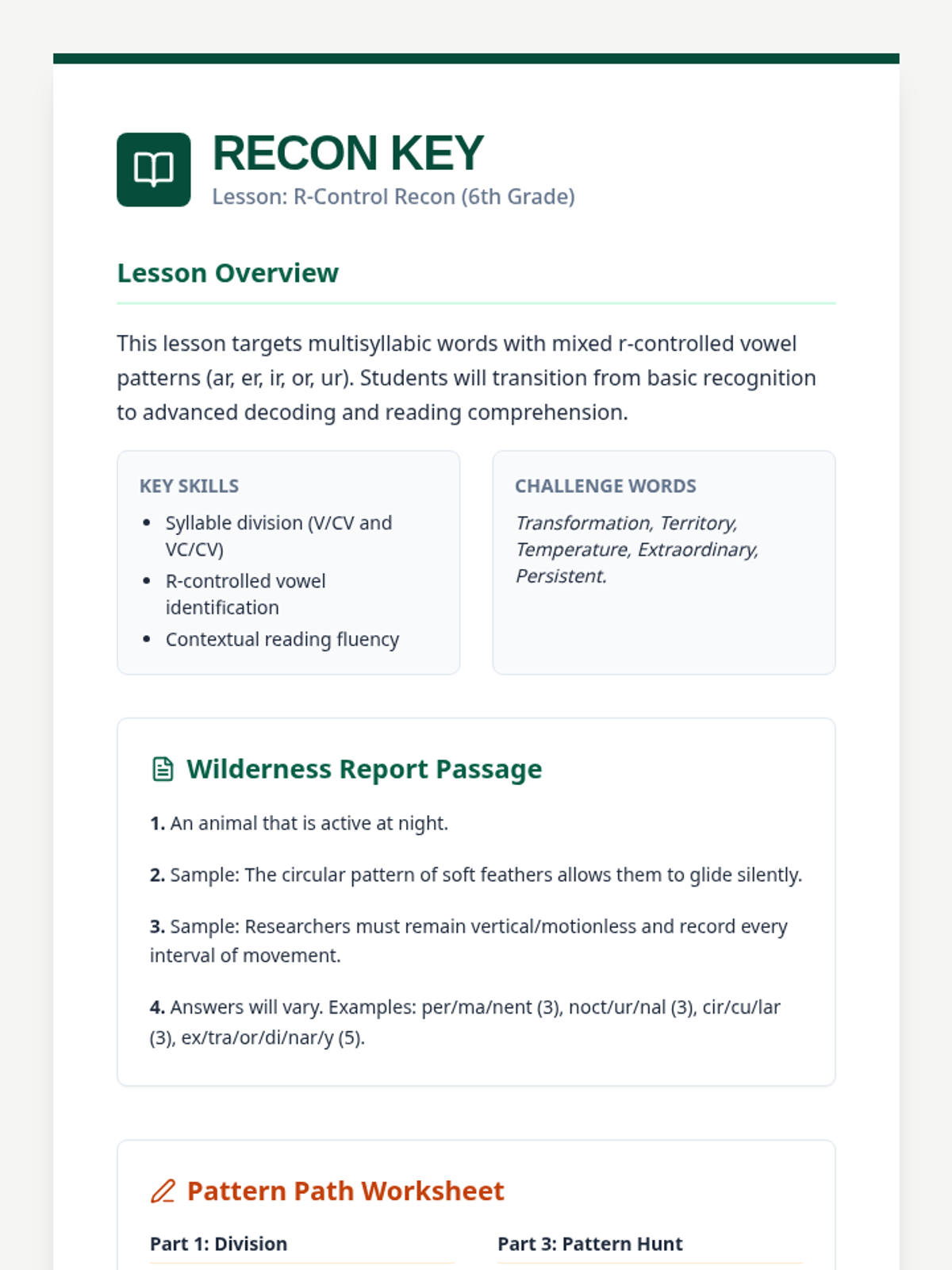
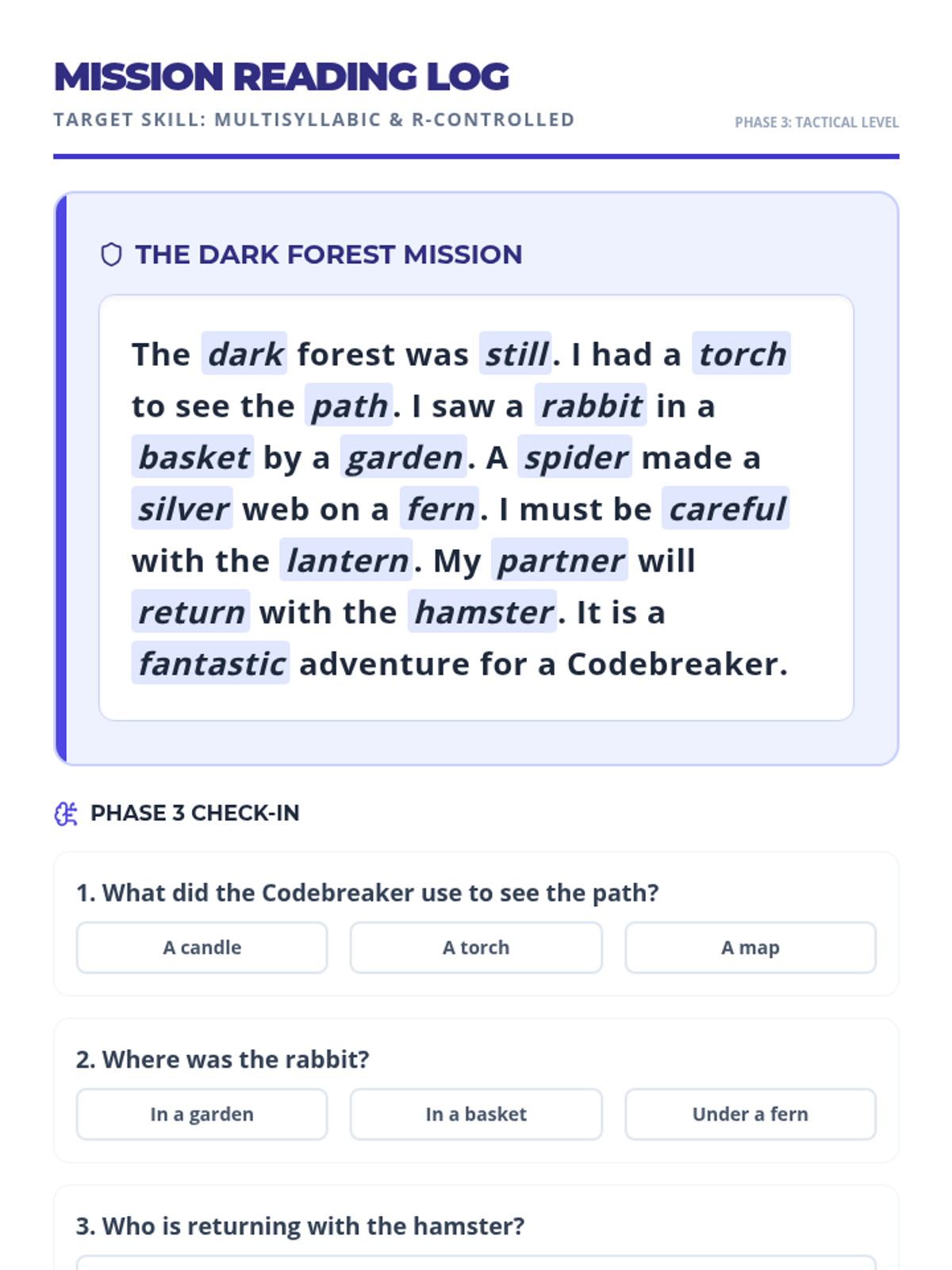
A comprehensive lesson on decoding and understanding multisyllabic r-controlled words through a wilderness exploration theme. Students will practice blending, identifying patterns, and reading complex texts.
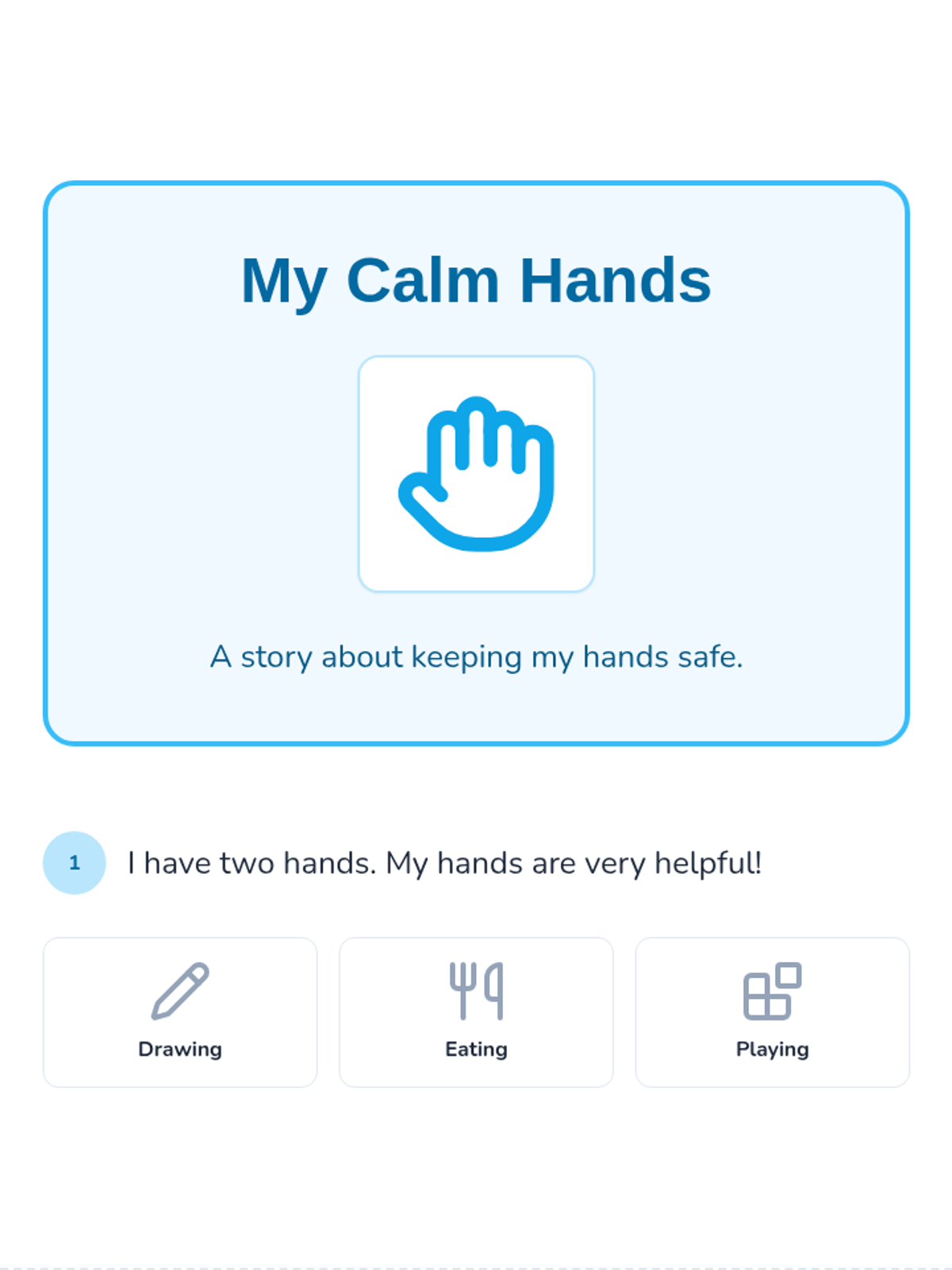
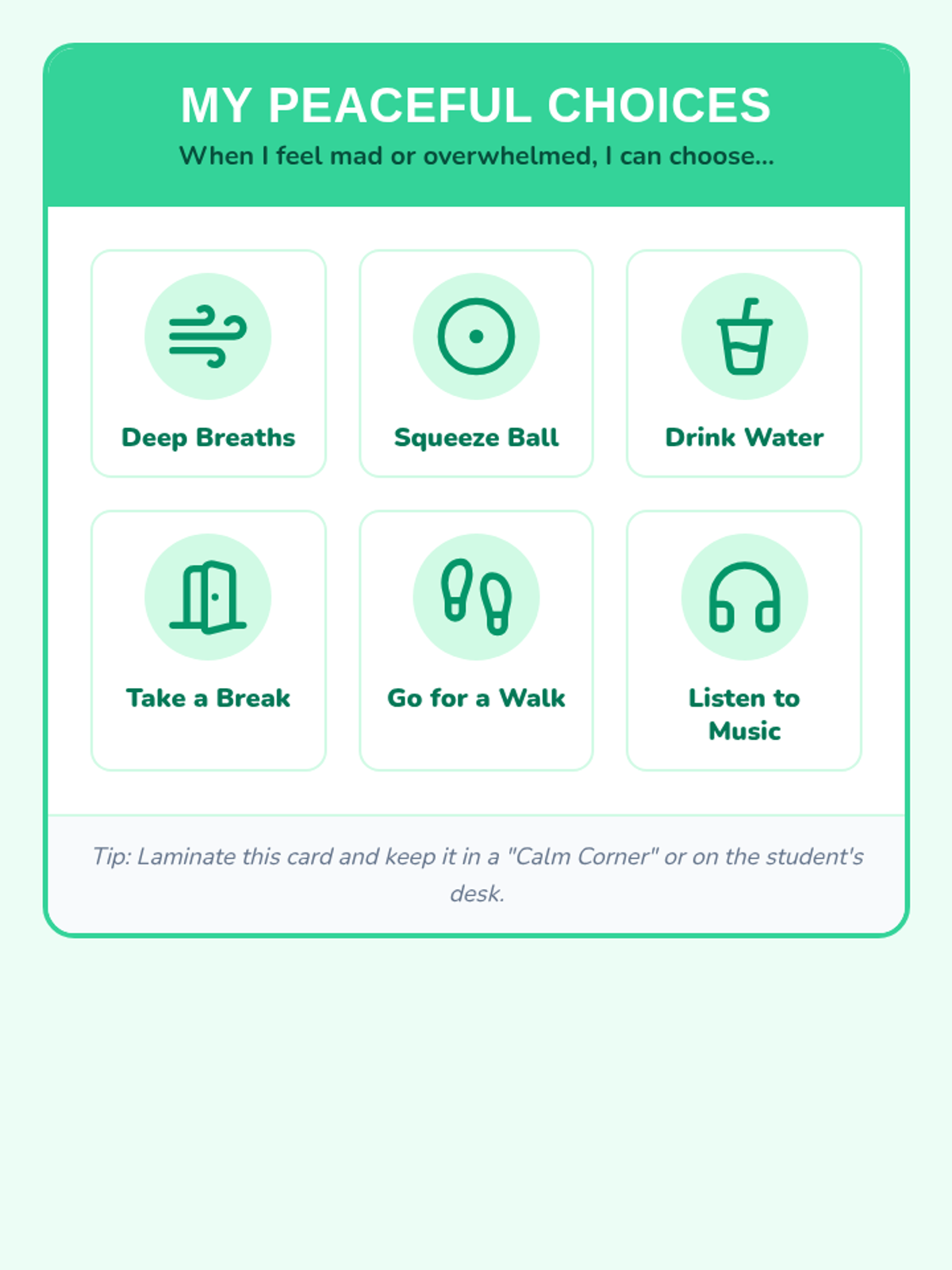
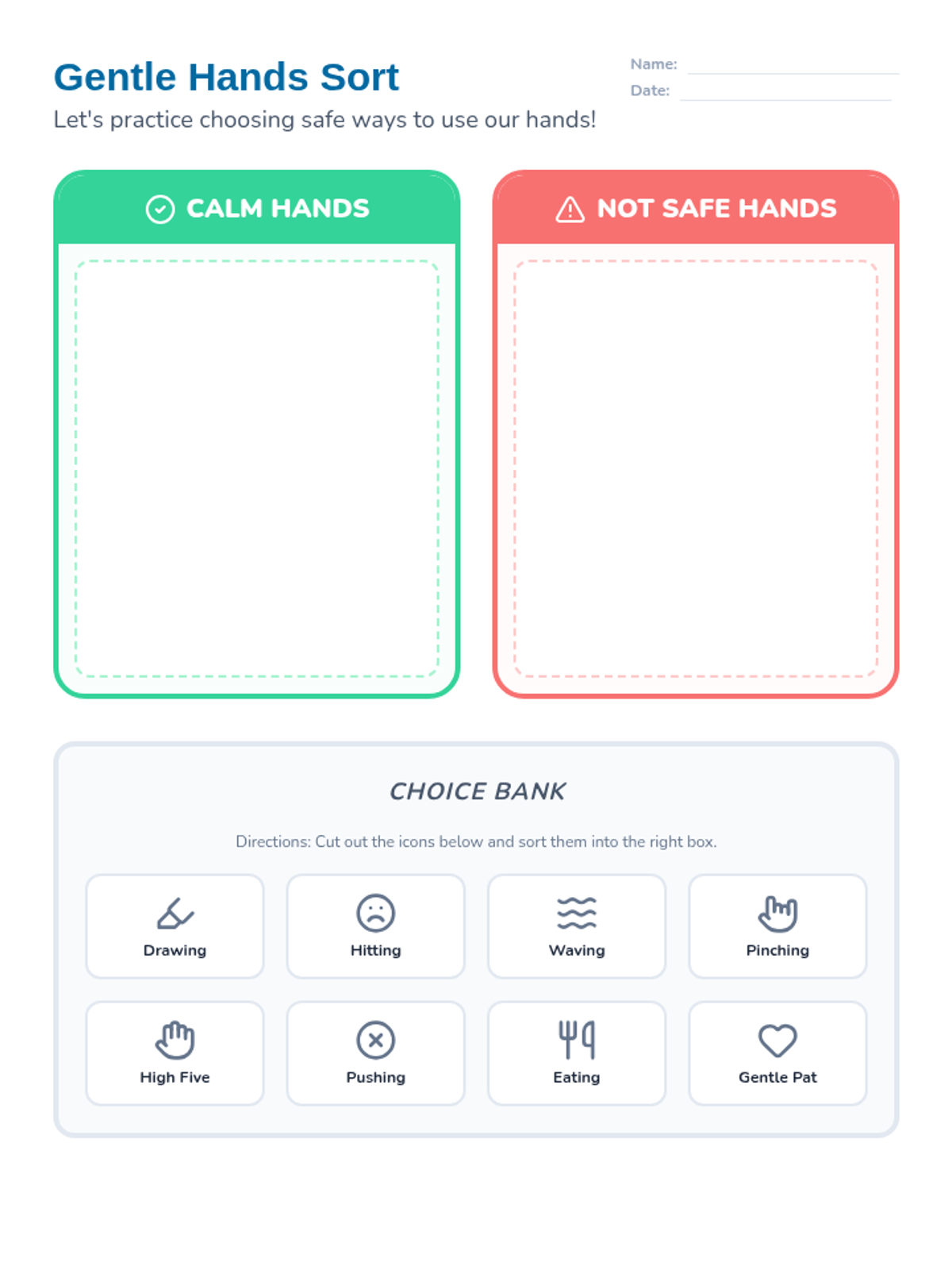
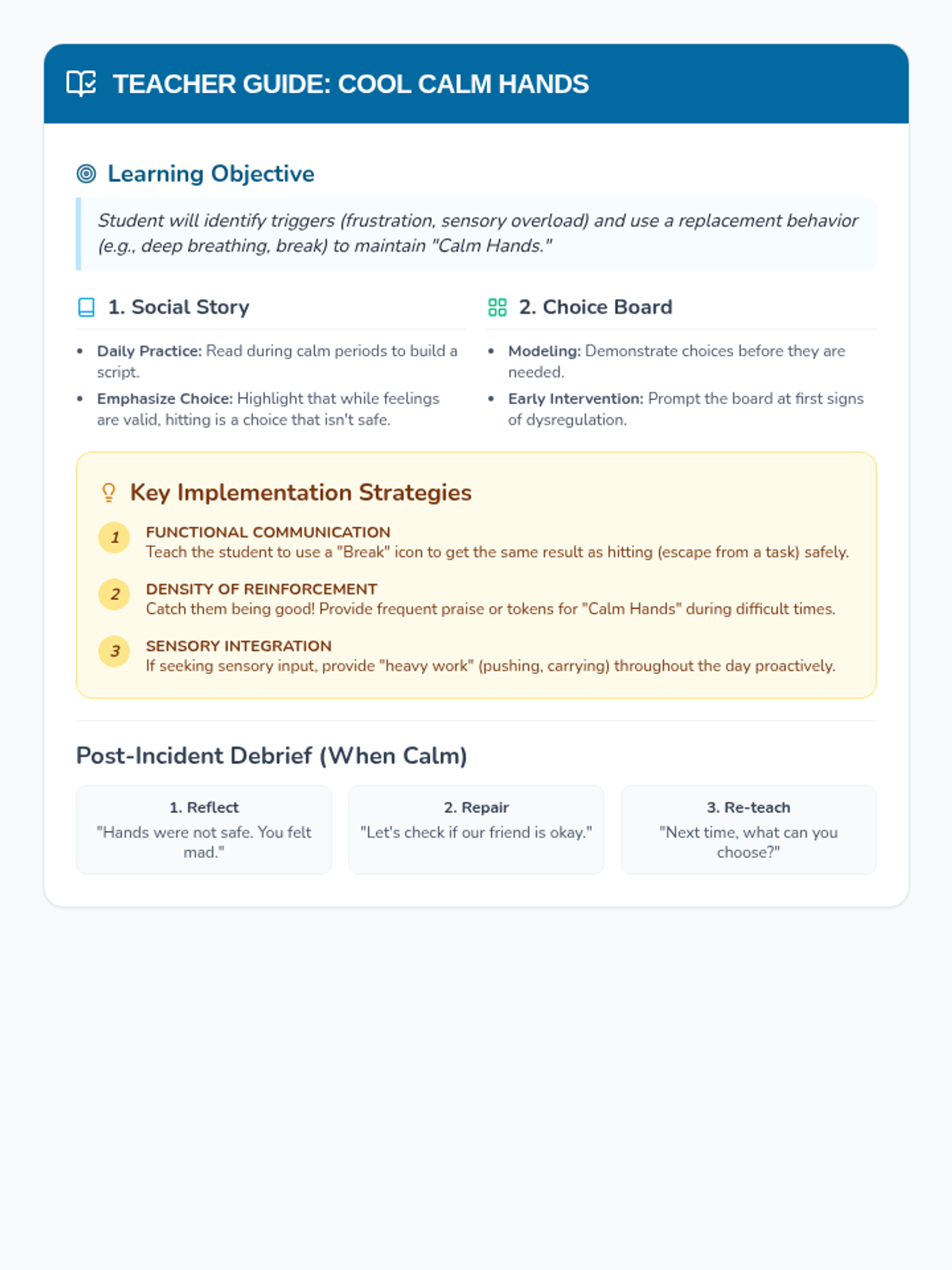
A comprehensive lesson focused on teaching self-regulation and replacement behaviors for hitting, specifically designed for students with Autism. It includes a visual social story, a choice board for calm-down strategies, and a sorting activity to reinforce gentle hands.
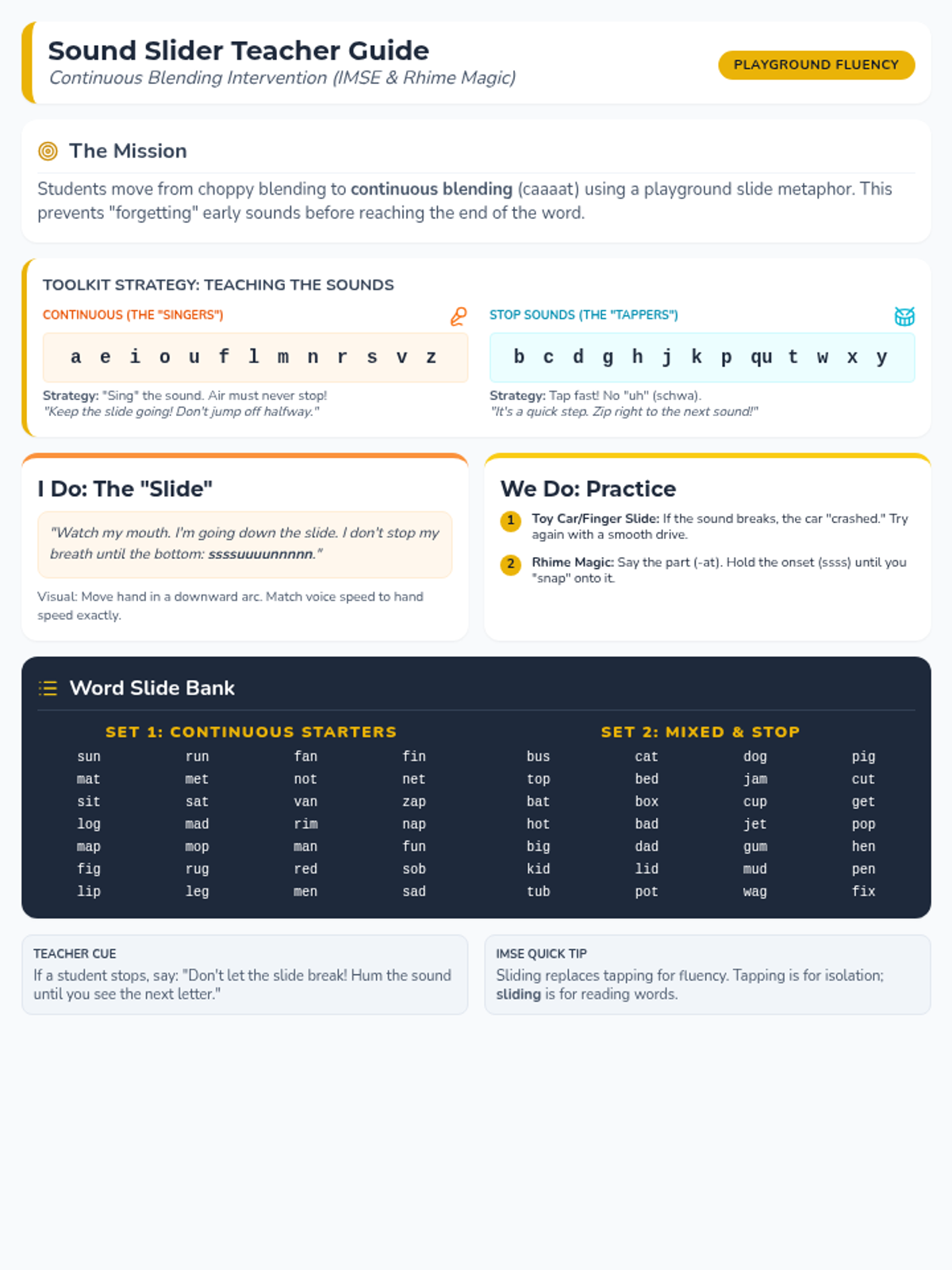
A high-intensity reading intervention lesson for first graders focusing on transitioning from choppy onset-rime blending to smooth CVC word blending using a playground slide metaphor.
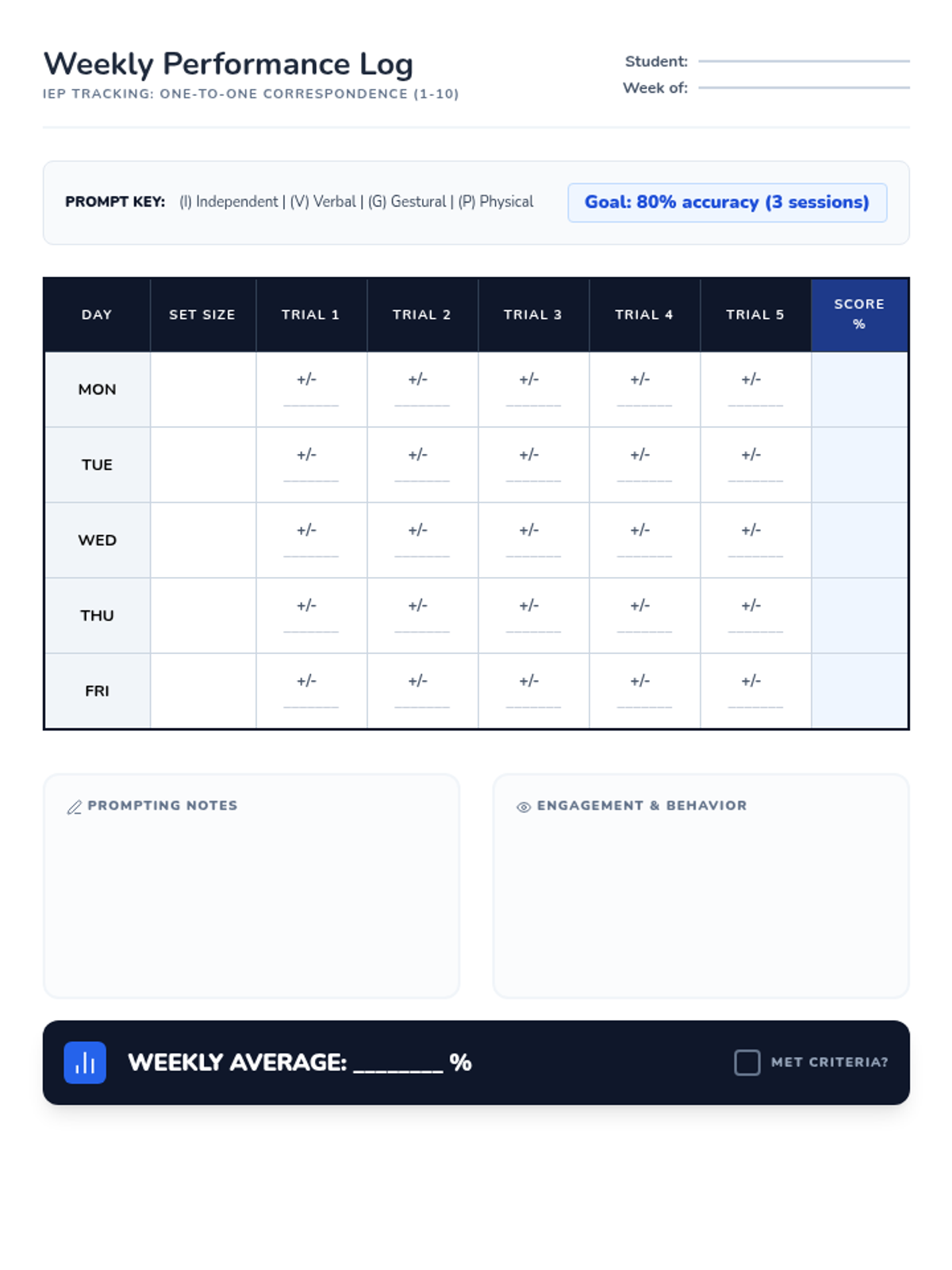
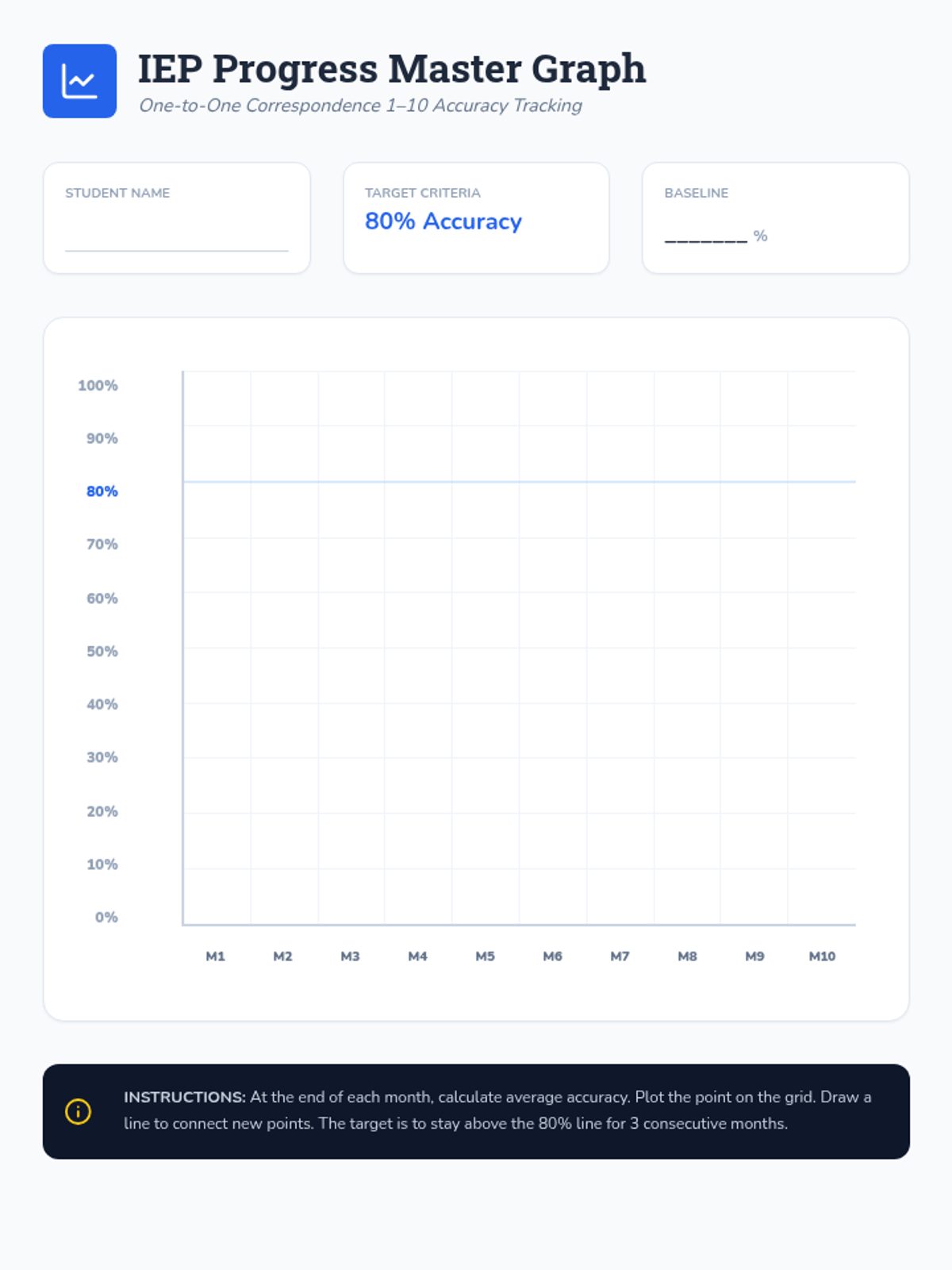
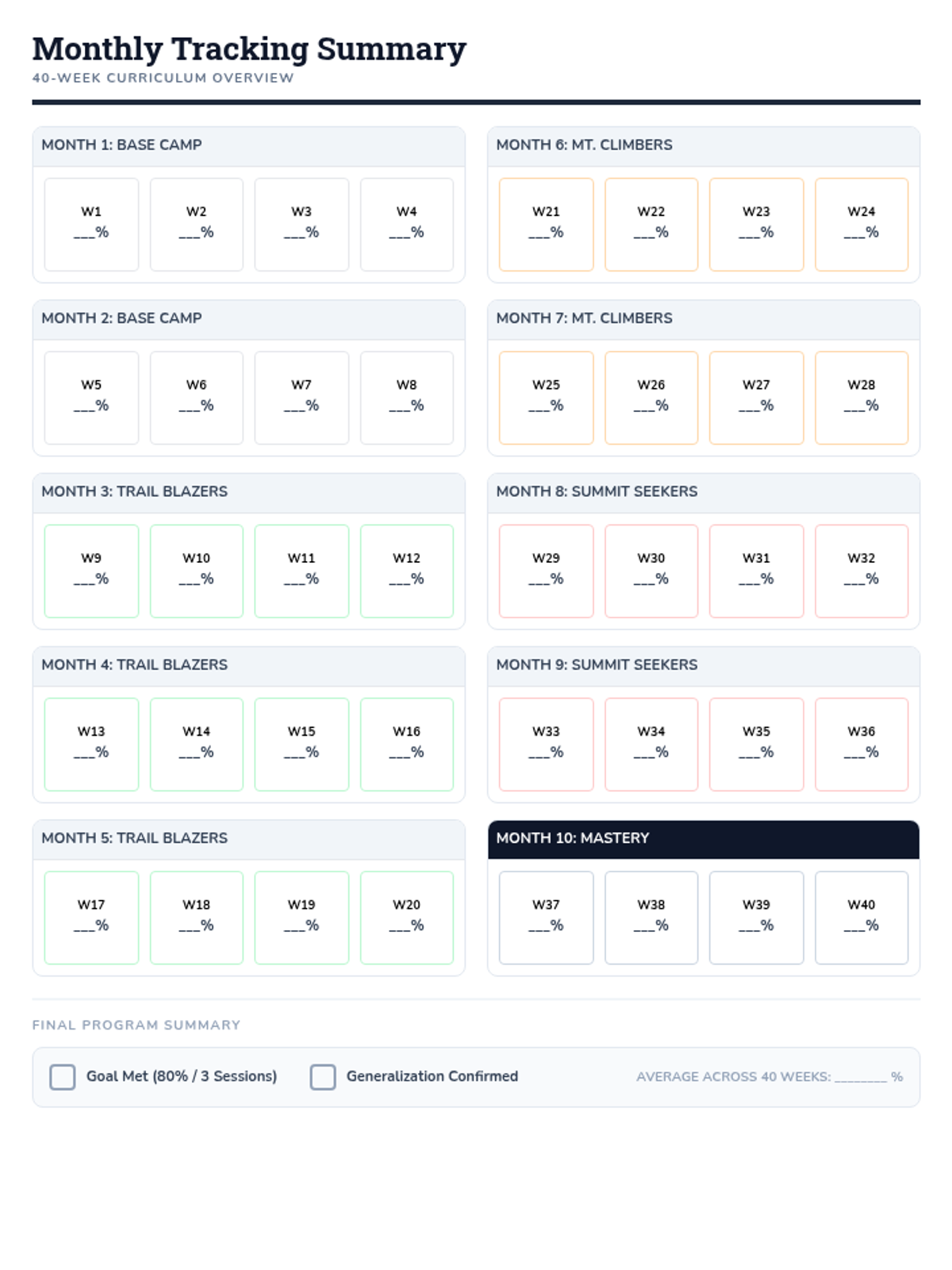
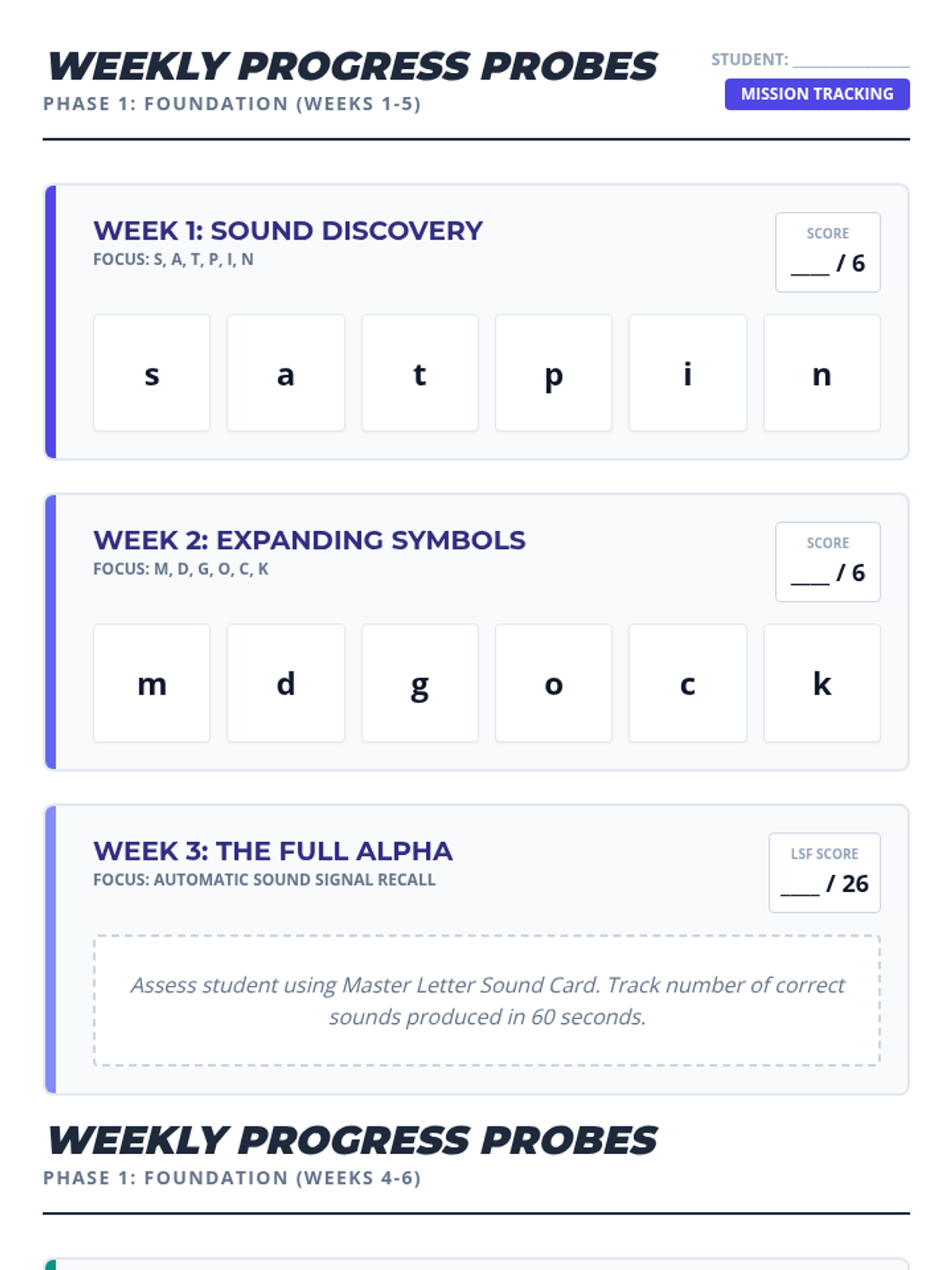
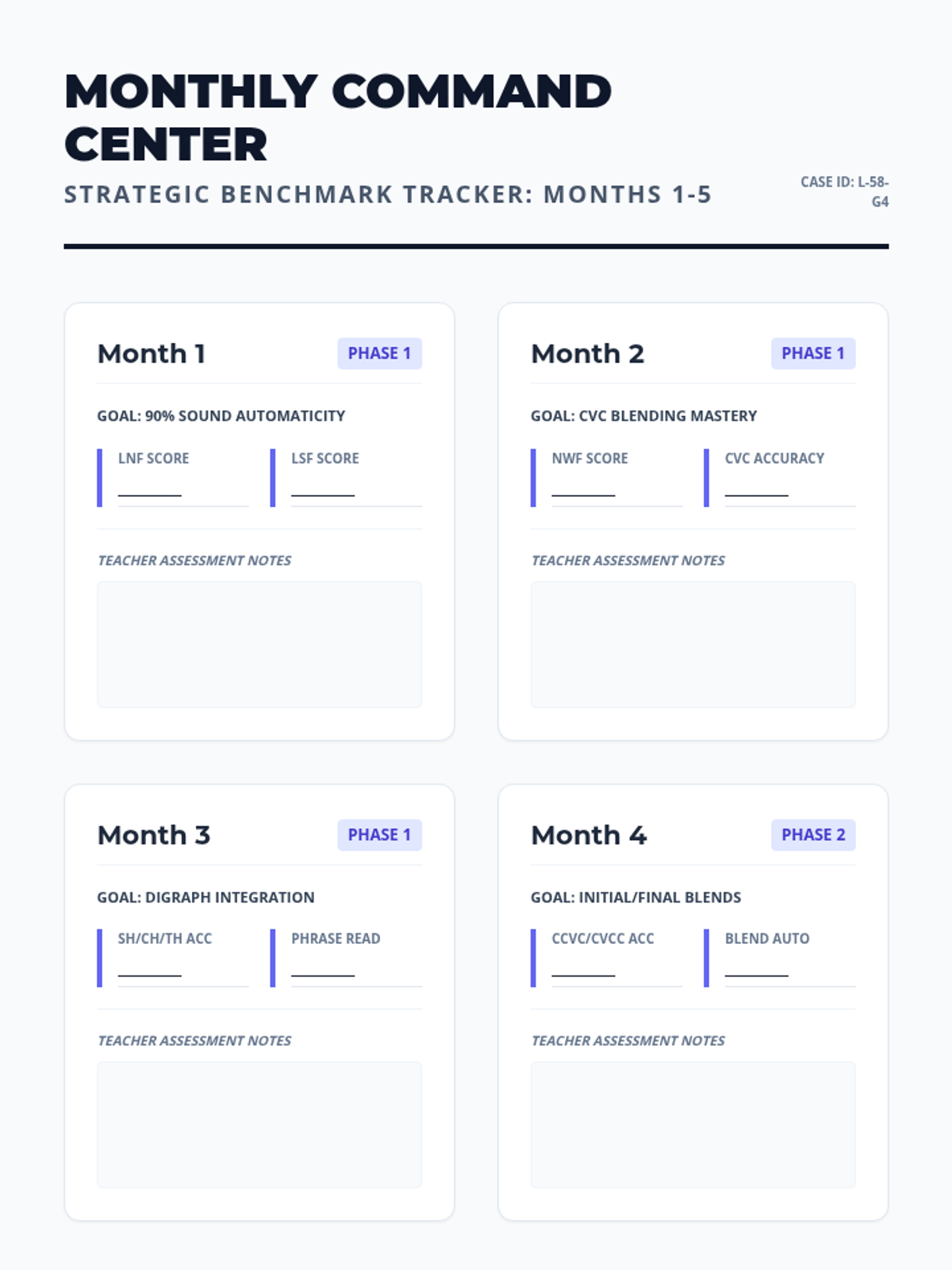
A collection of data collection tools, including weekly logs, monthly charts, and IEP progress graphs to track student growth toward 80% accuracy.
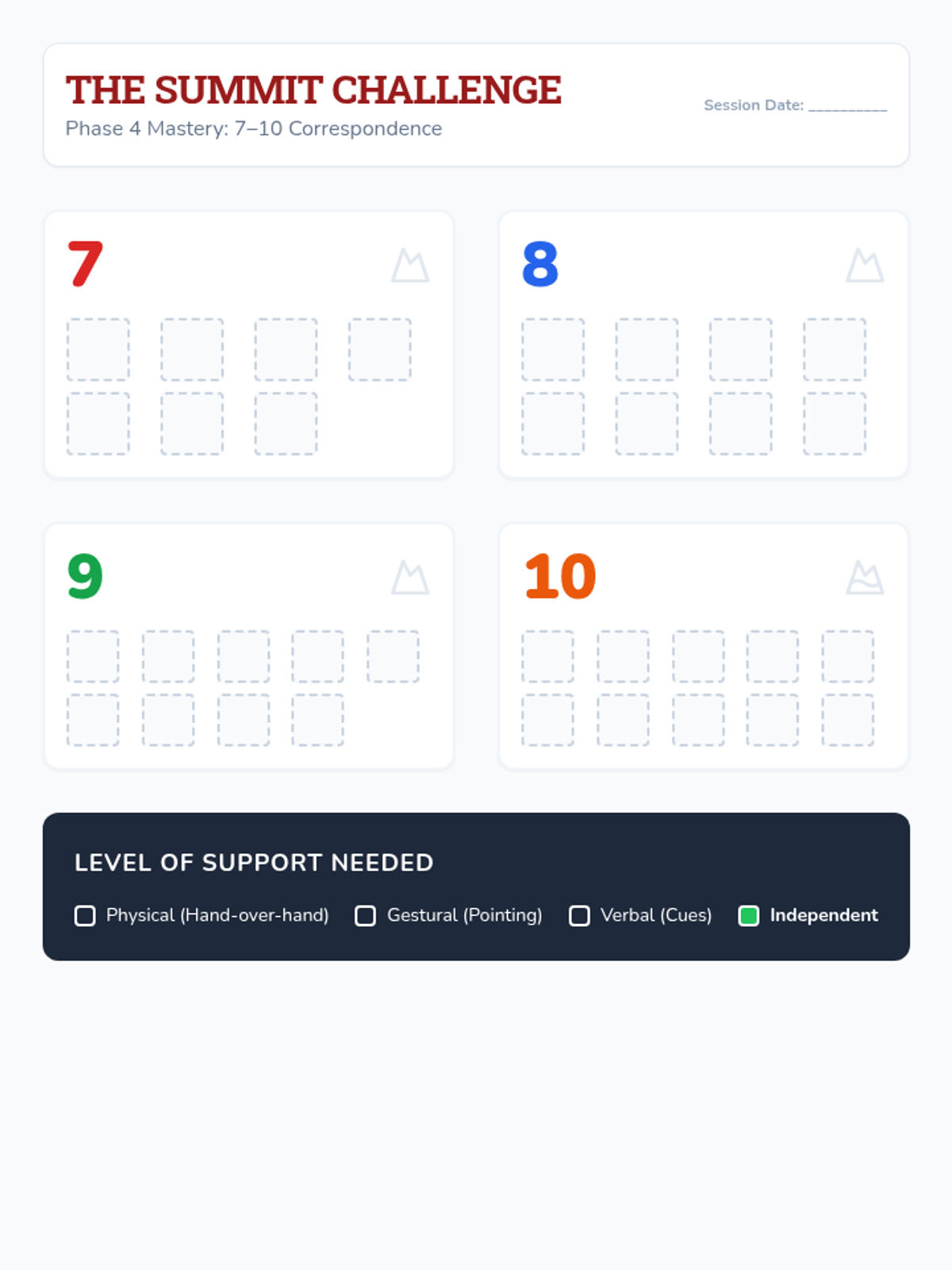
Advanced counting practice for numbers 7 through 10, focusing on fluency and generalization across different manipulatives.
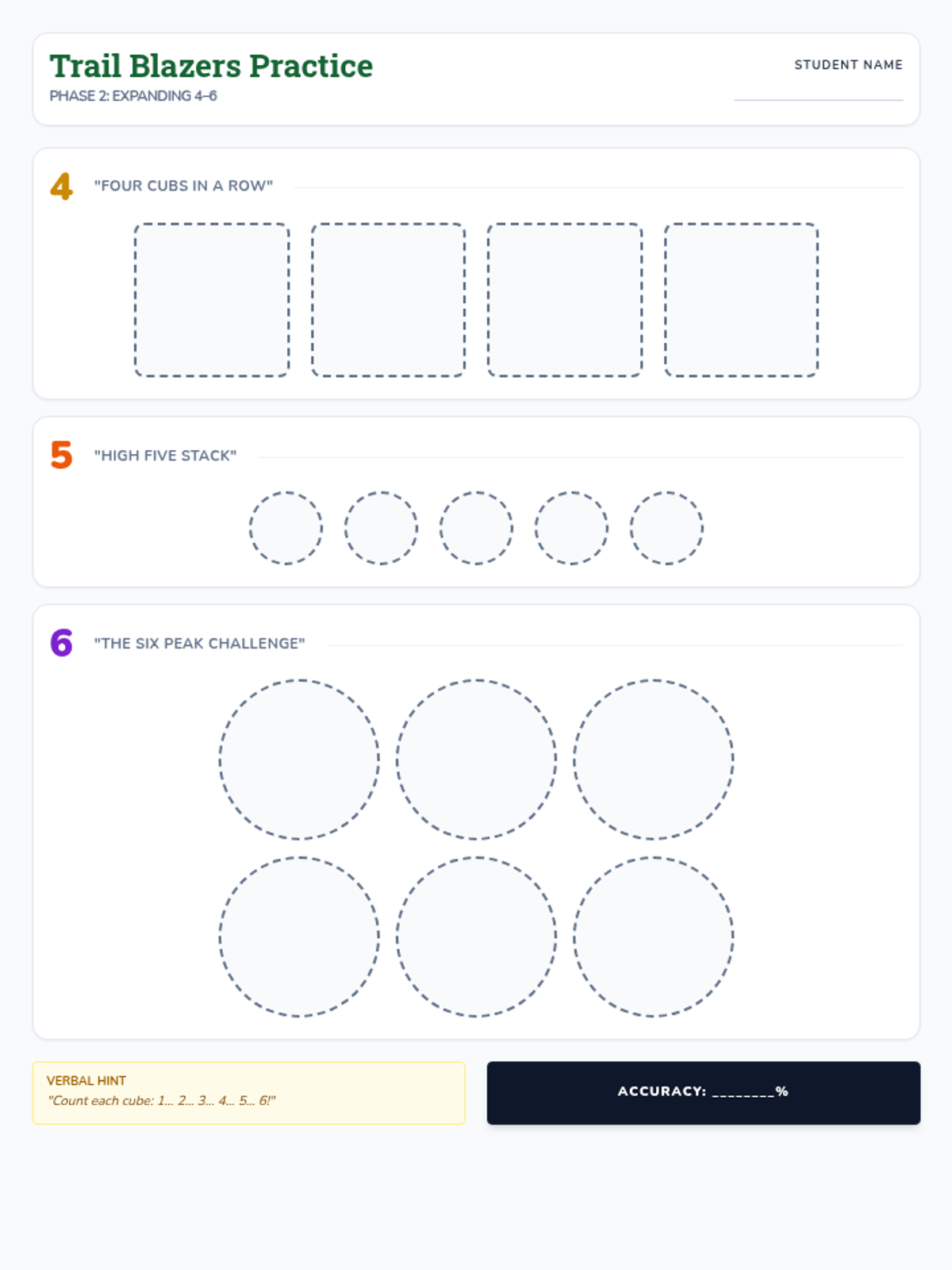
Practice materials and guided activities for expanding counting skills to the numbers 4, 5, and 6.
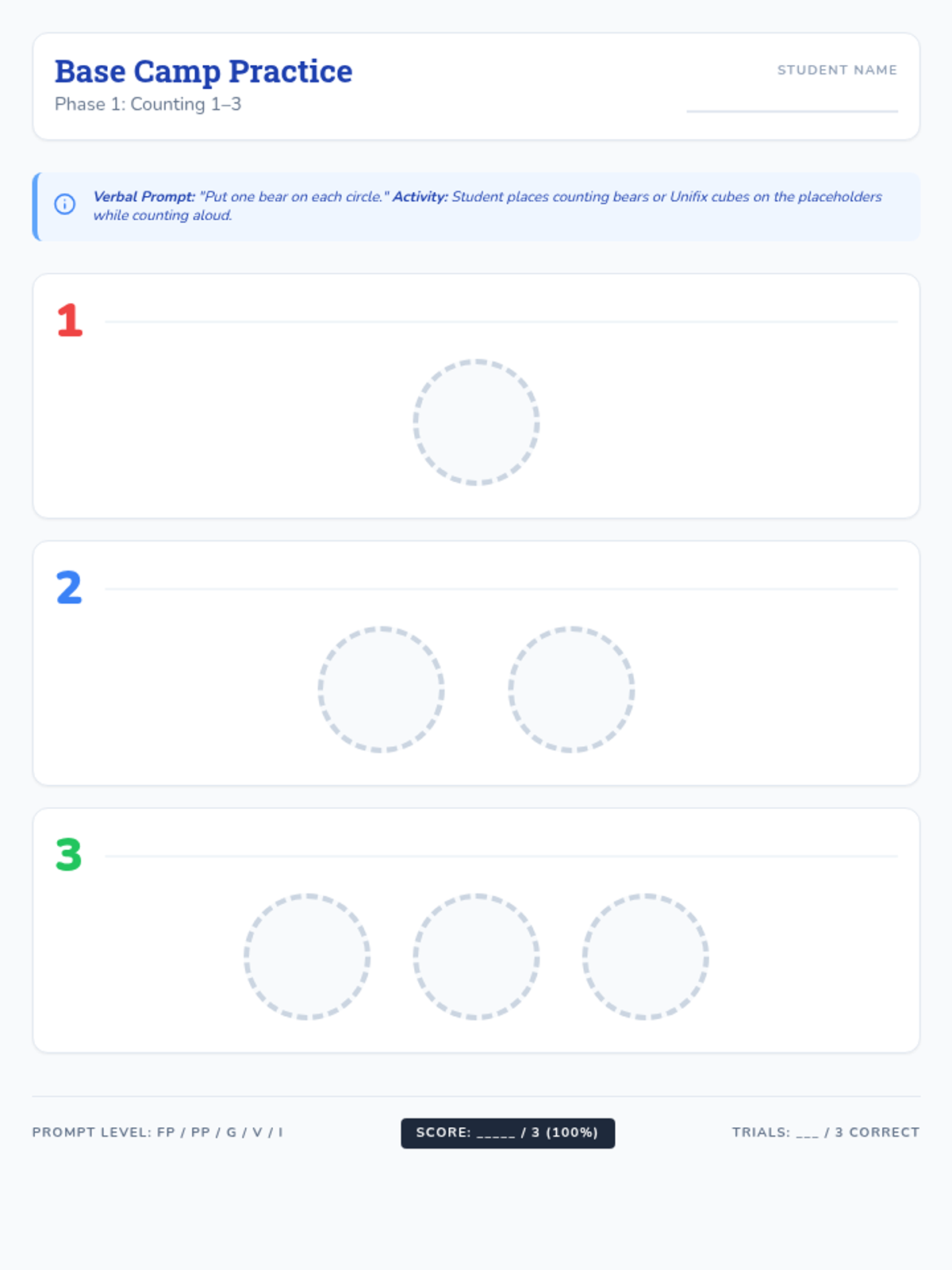
Instructional materials and practice mats focused on establishing one-to-one correspondence for numbers 1 through 3.
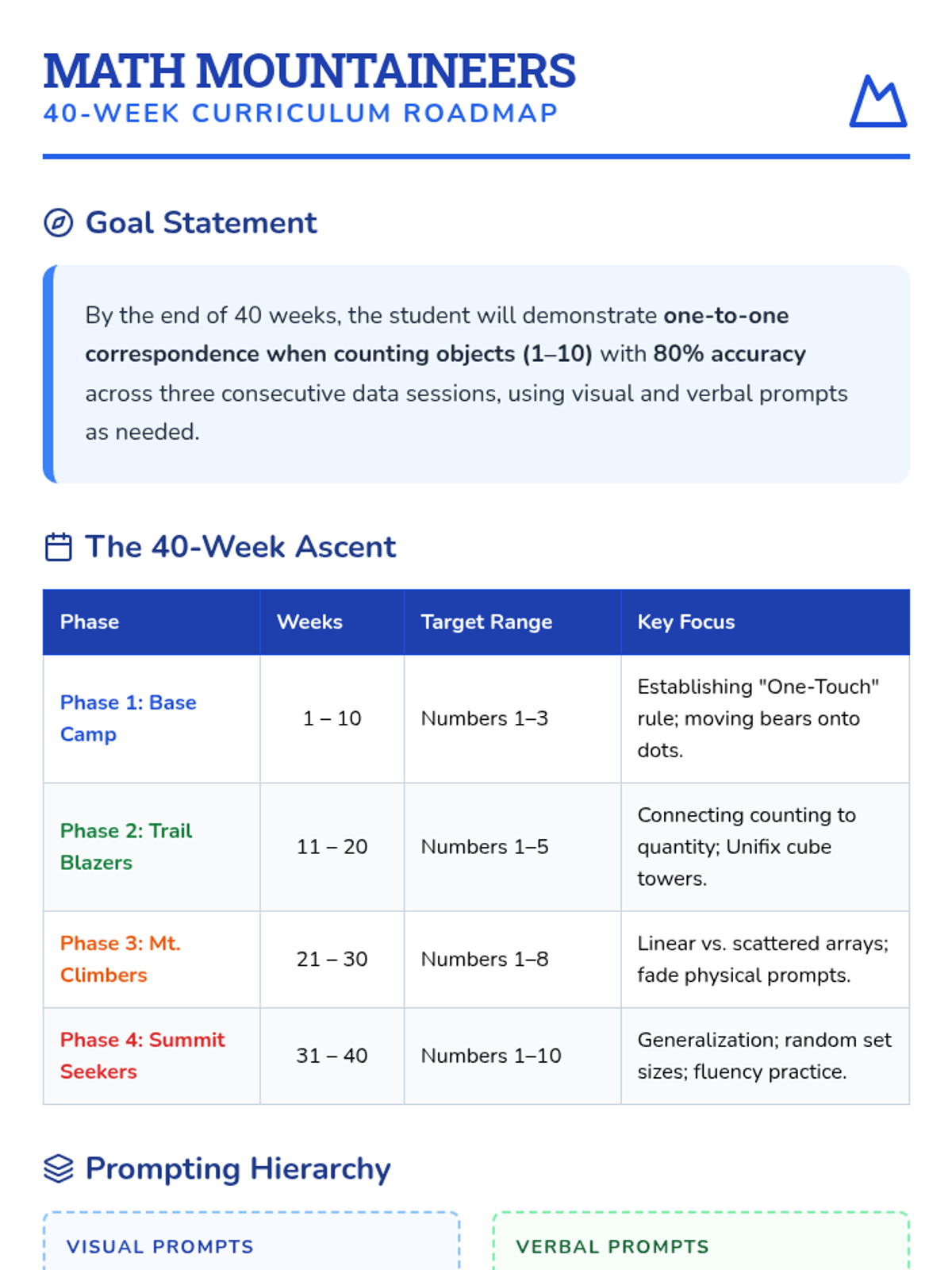
The master instructional framework for the 40-week program, outlining the four phases of learning, prompting strategies, and manipulative integration.
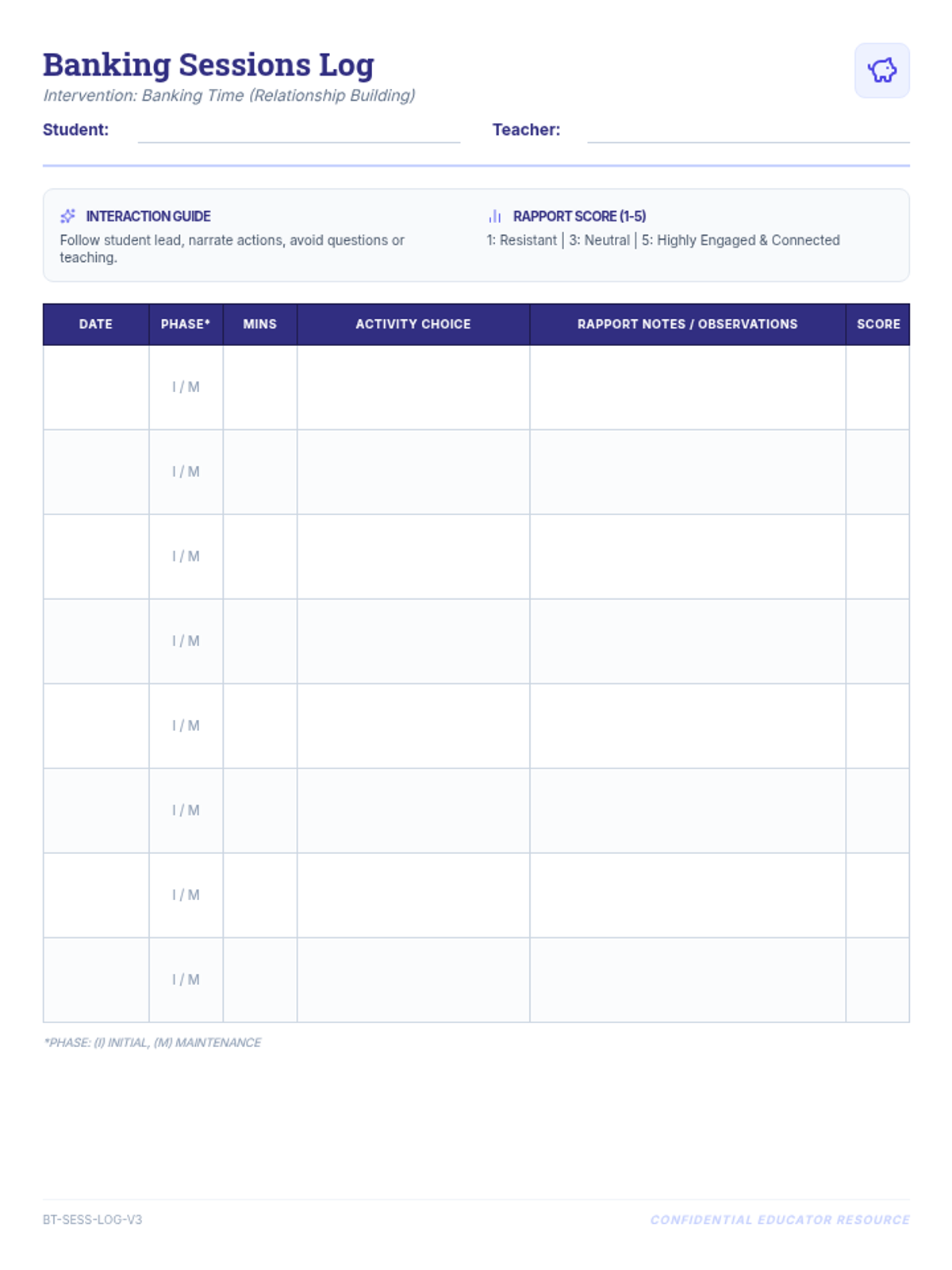
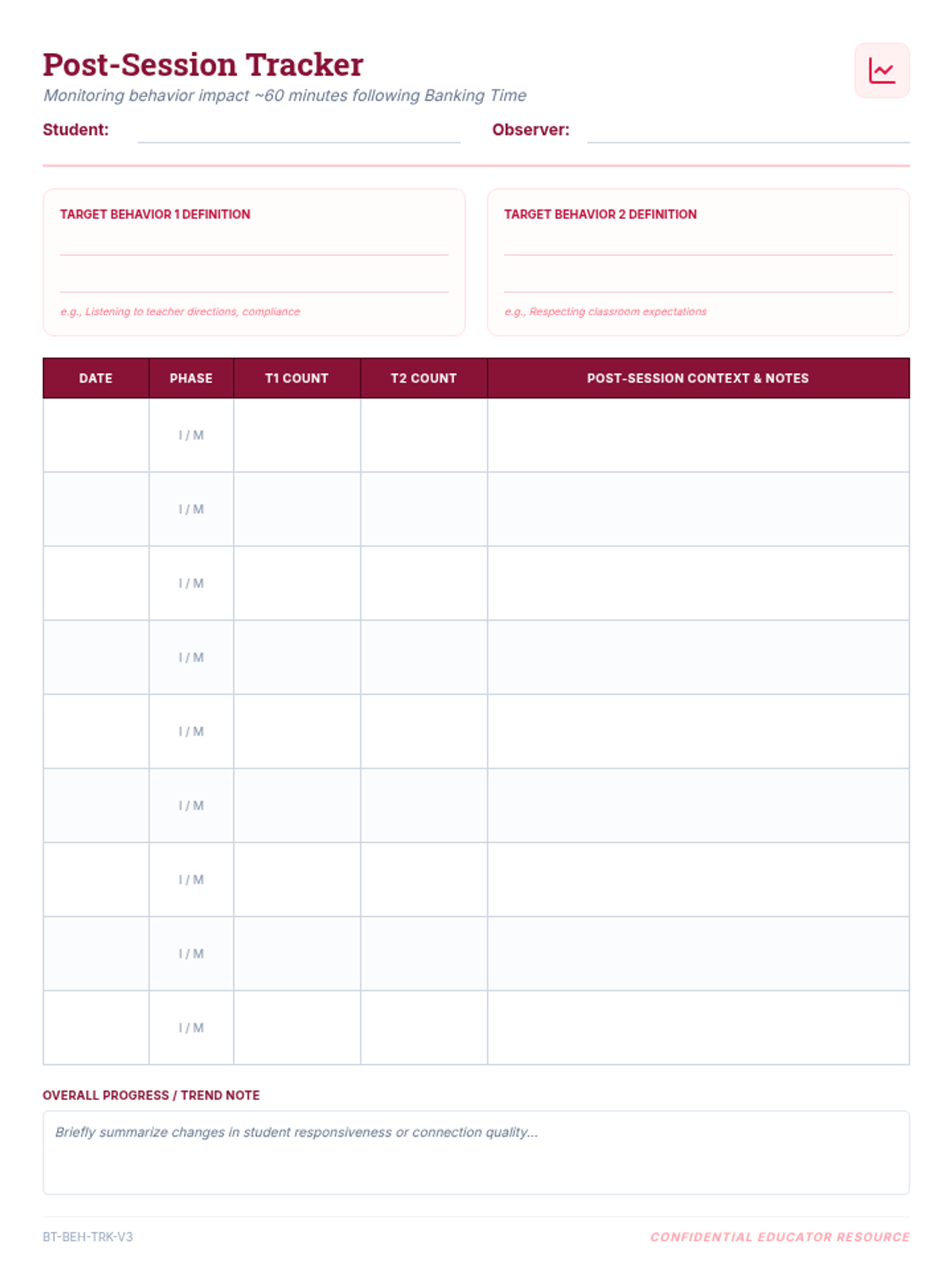
A set of data collection tools for the Banking Time intervention, designed to track session details and subsequent behavioral outcomes to measure the impact of the teacher-student relationship on classroom performance.
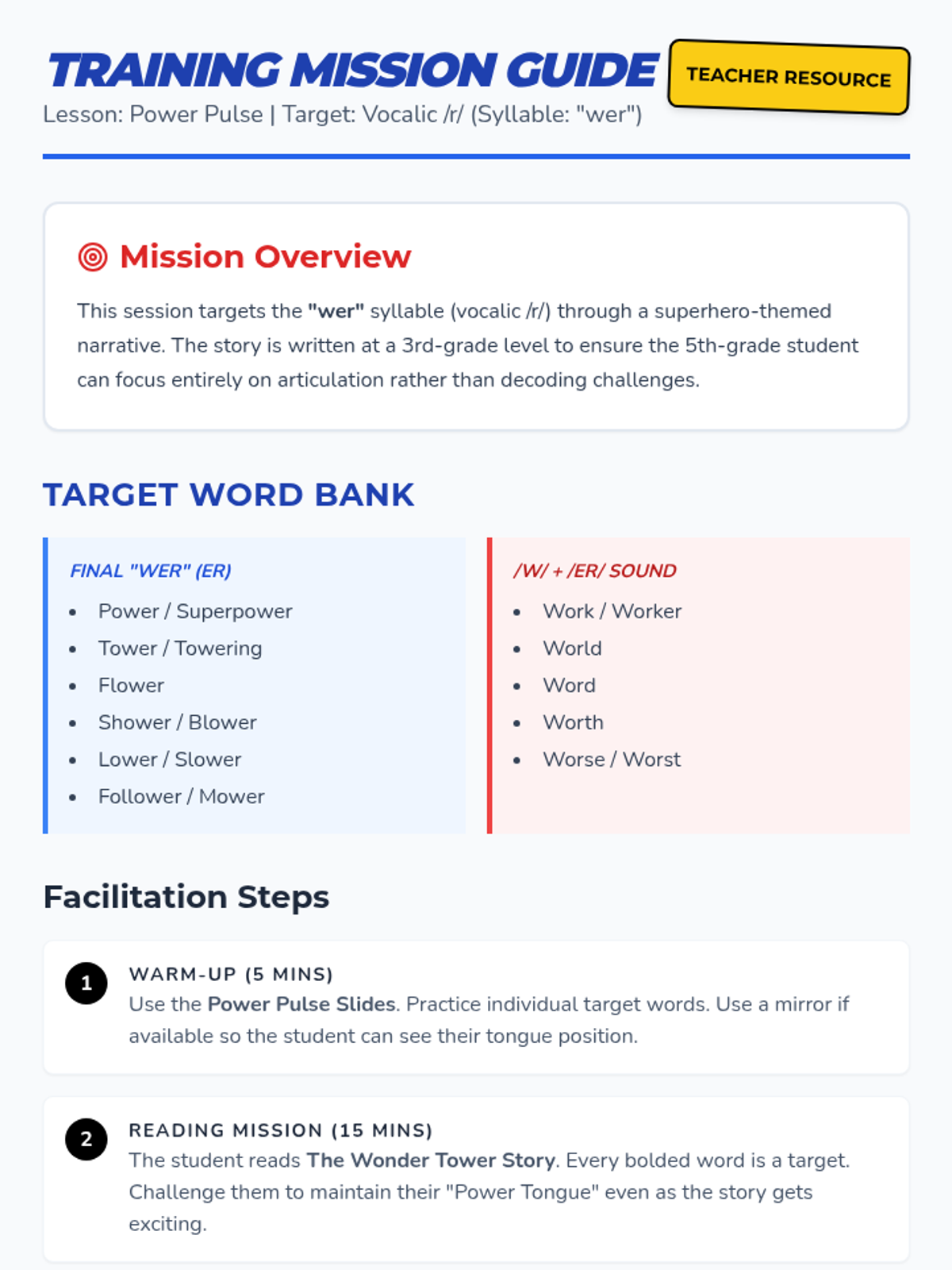
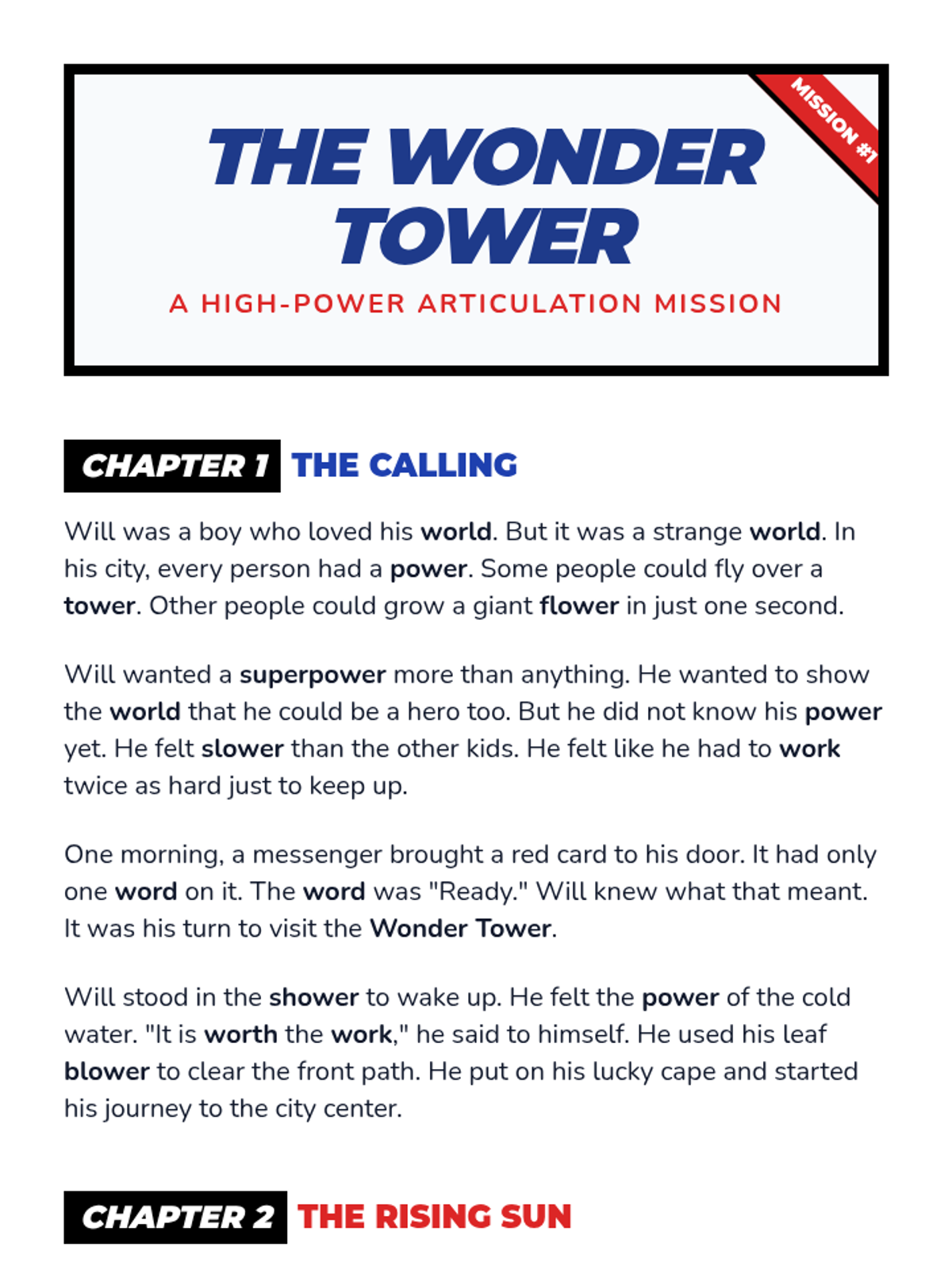
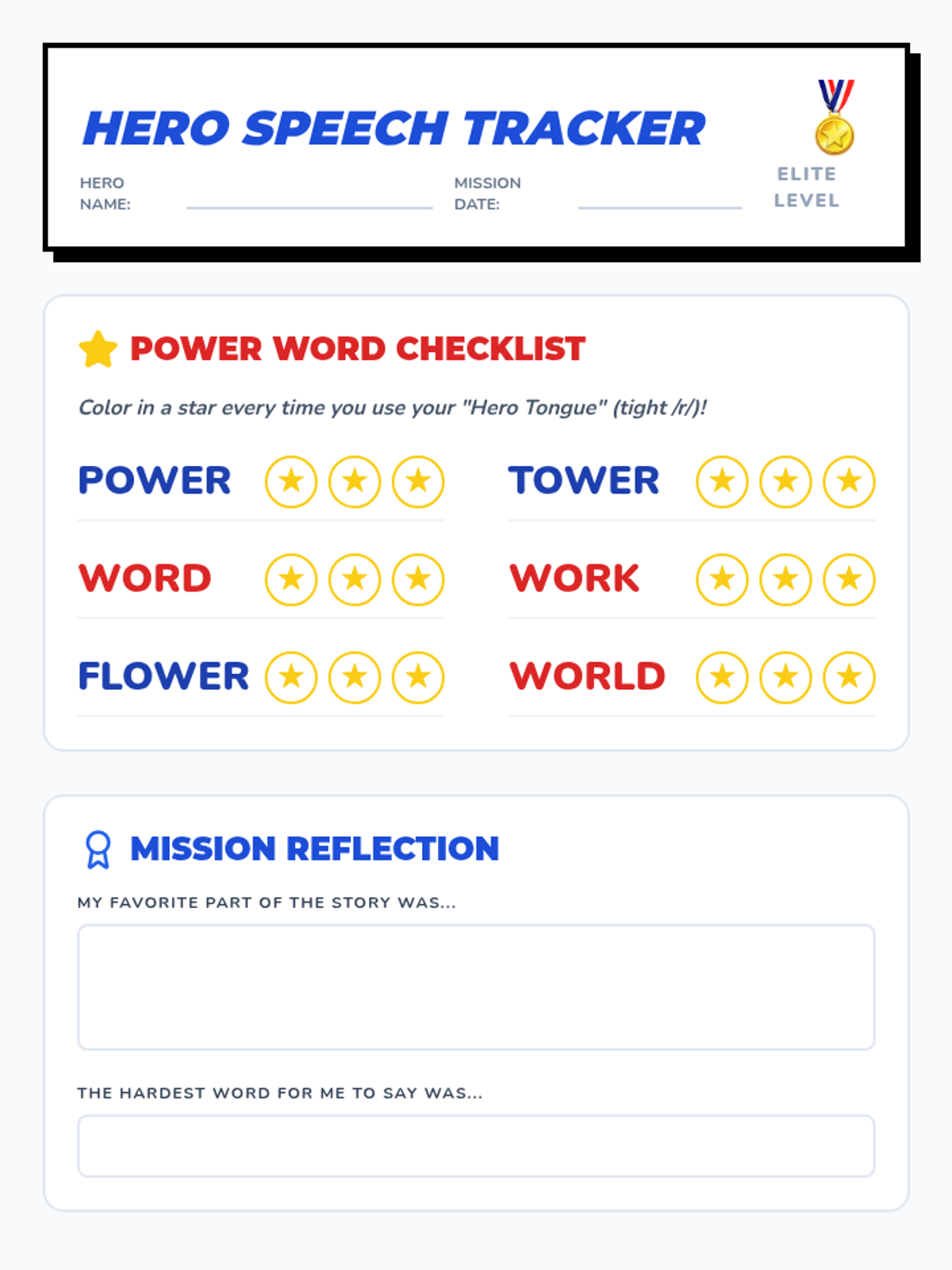
A speech therapy lesson focused on the 'wer' syllable in vocalic /r/ words, featuring a superhero story at a 3rd-grade reading level. Includes warm-up slides, a student tracking sheet, and a facilitation guide for educators.
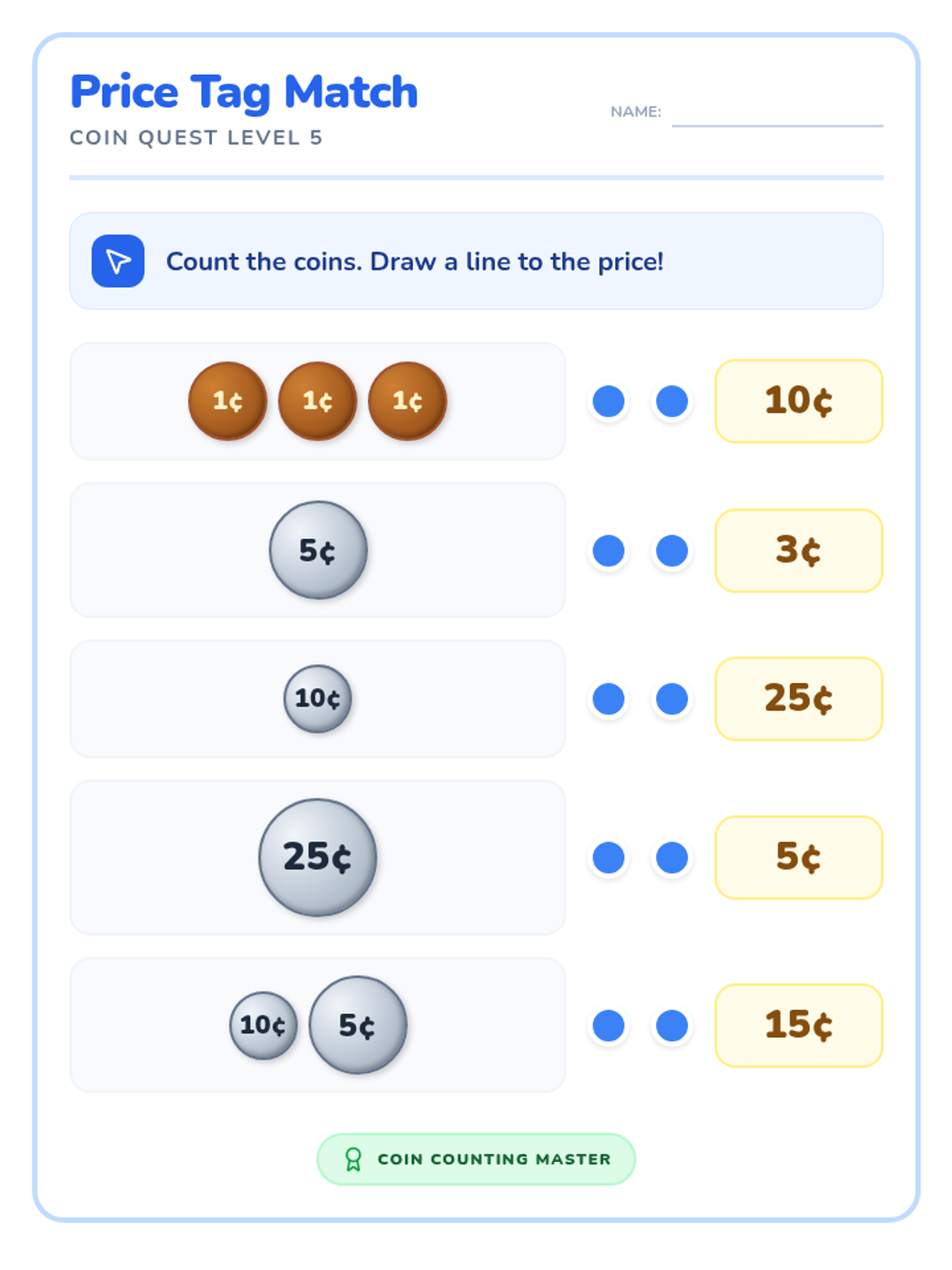
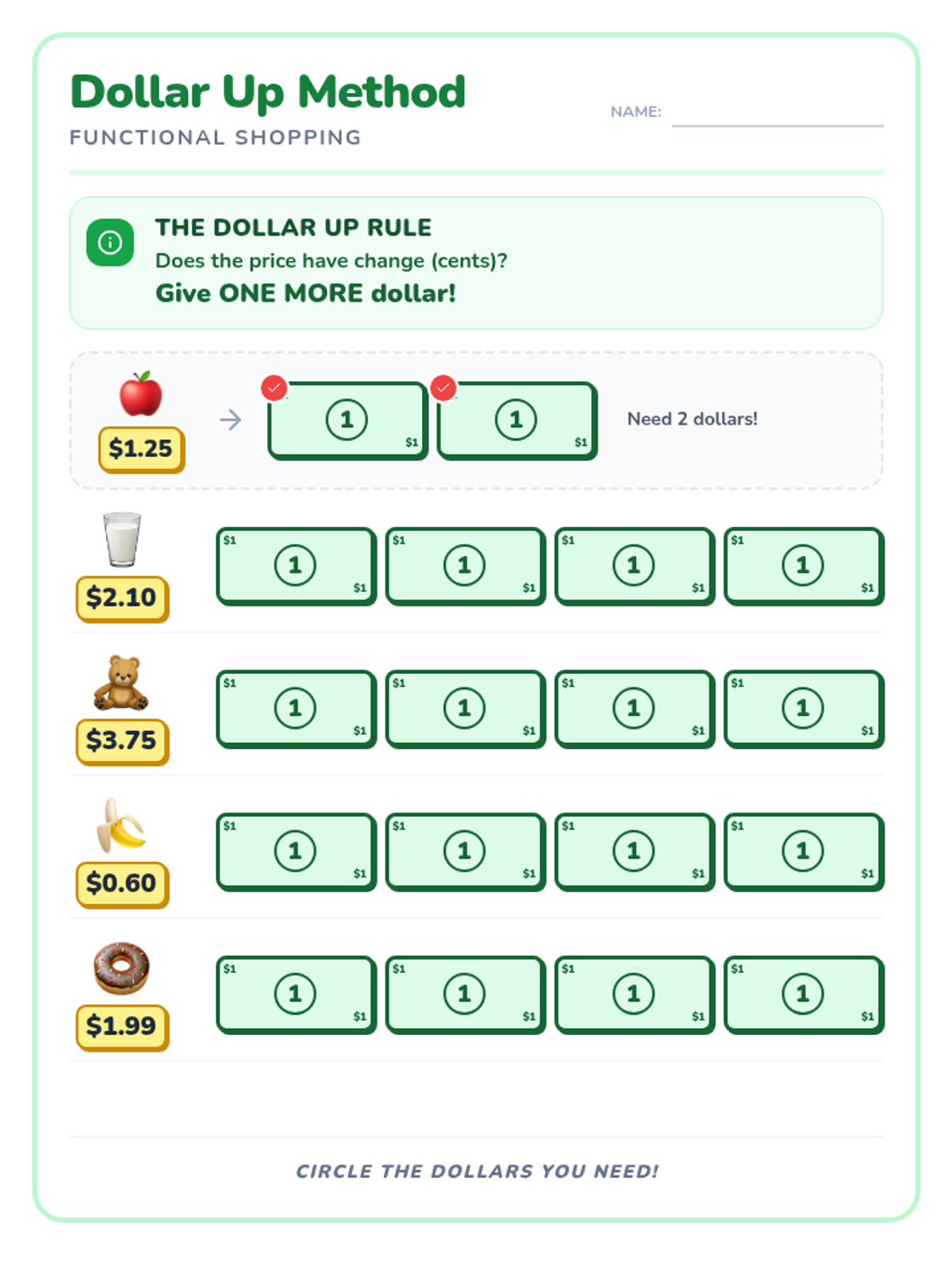
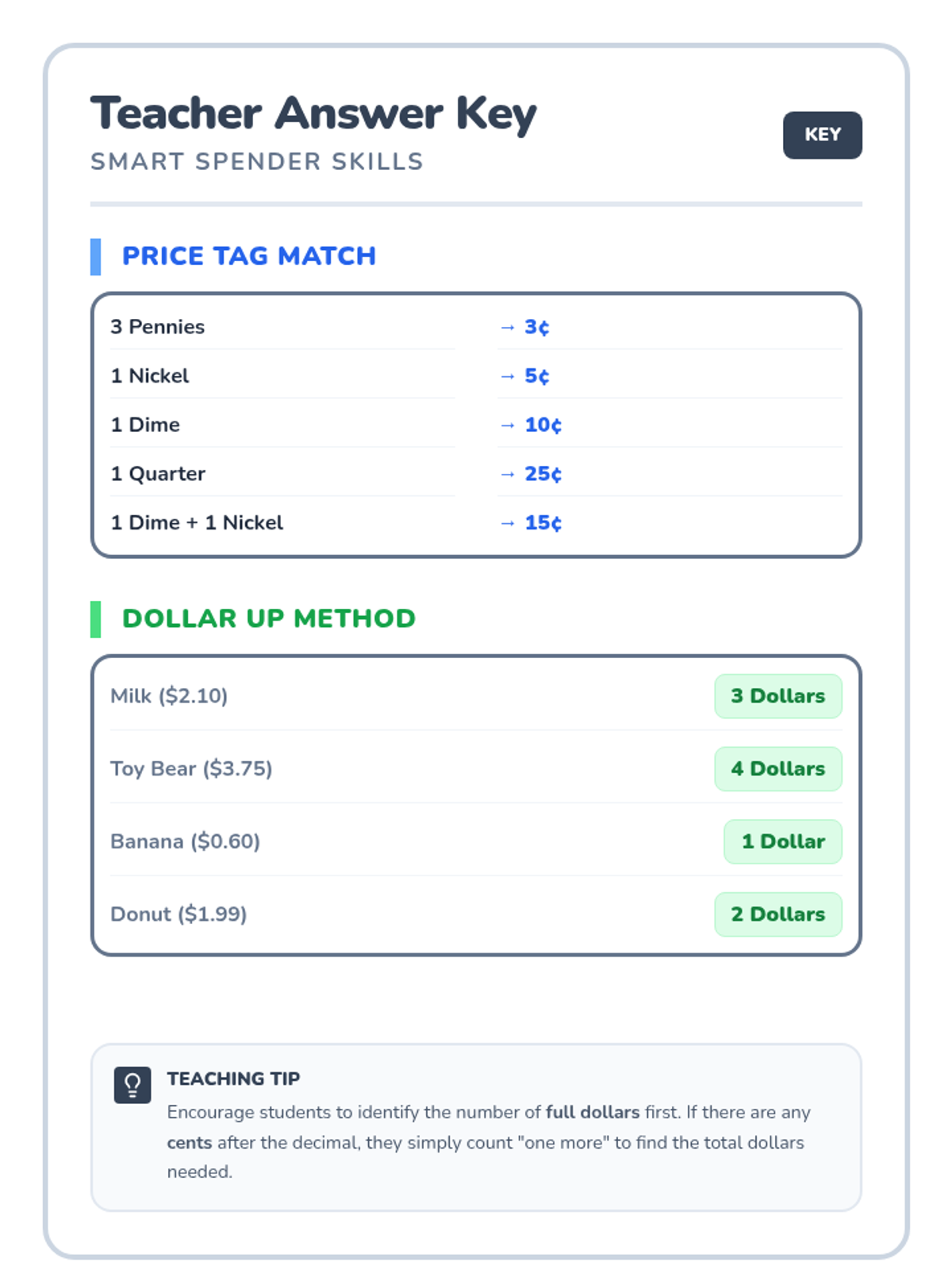
An introduction to functional money skills, focusing on matching coin combinations to prices and applying the 'Dollar Up' method for making purchases.
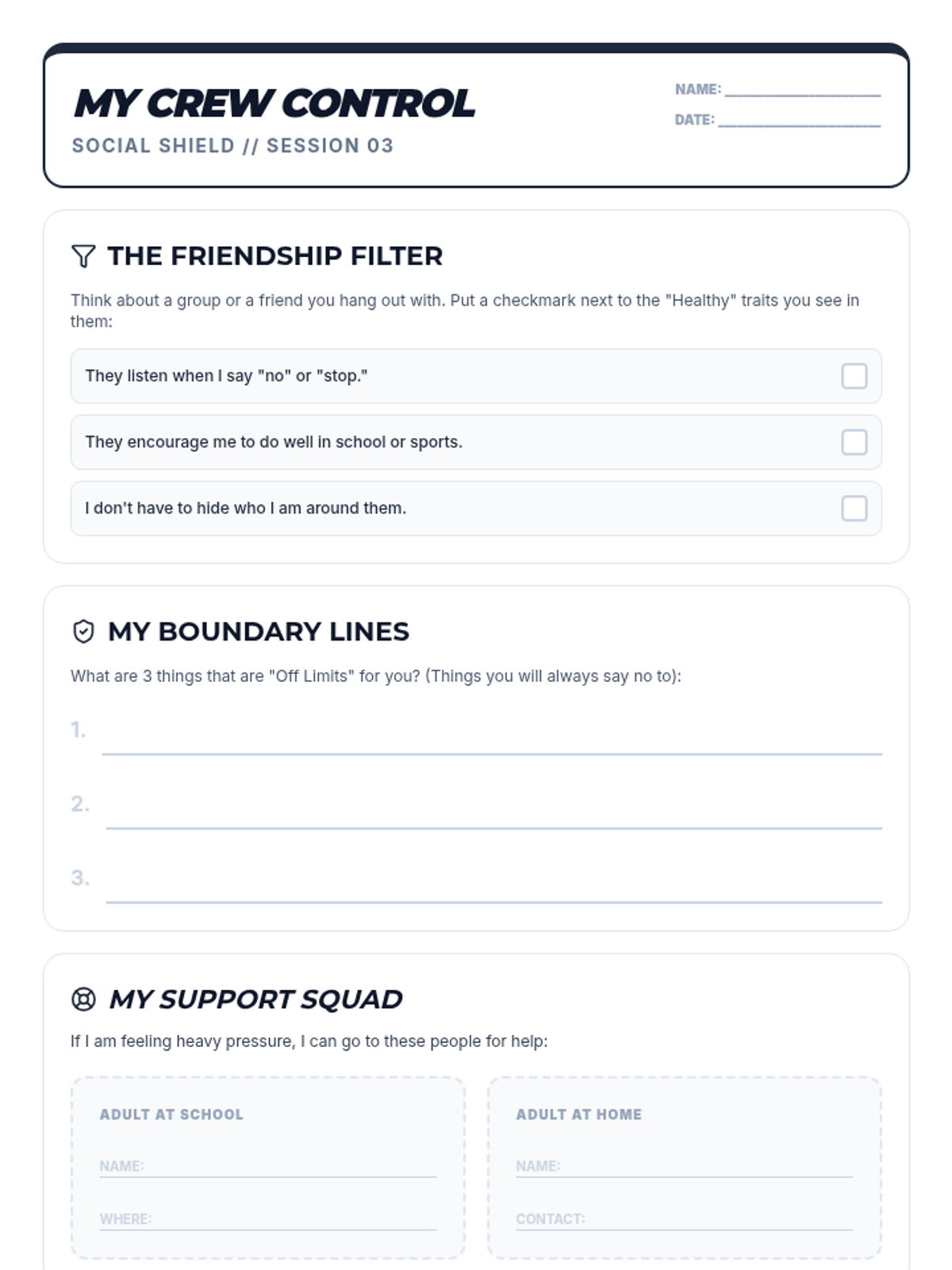
Students evaluate their social circles to identify healthy vs. unhealthy influences and learn how to build a supportive 'crew' that respects boundaries.
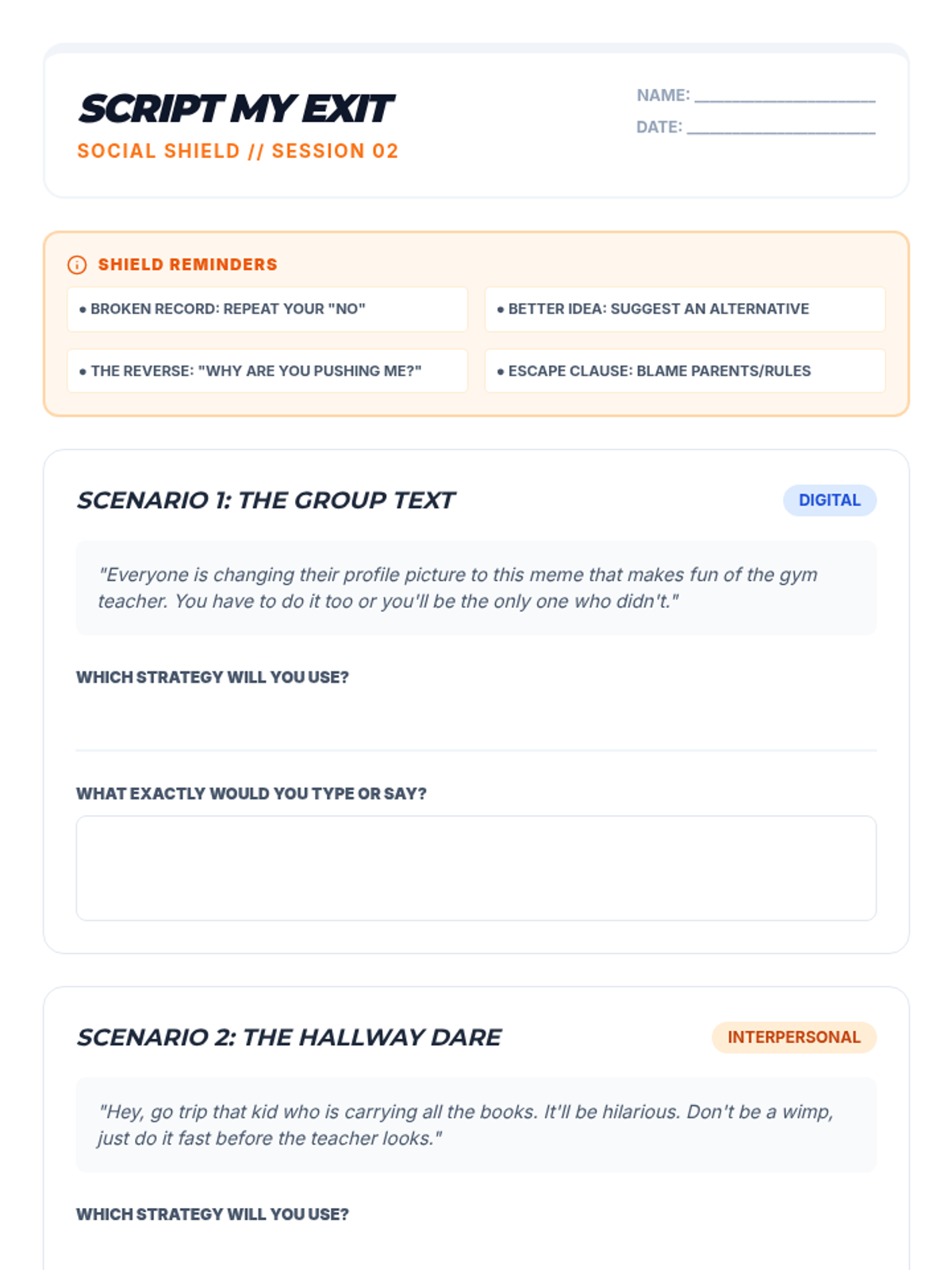
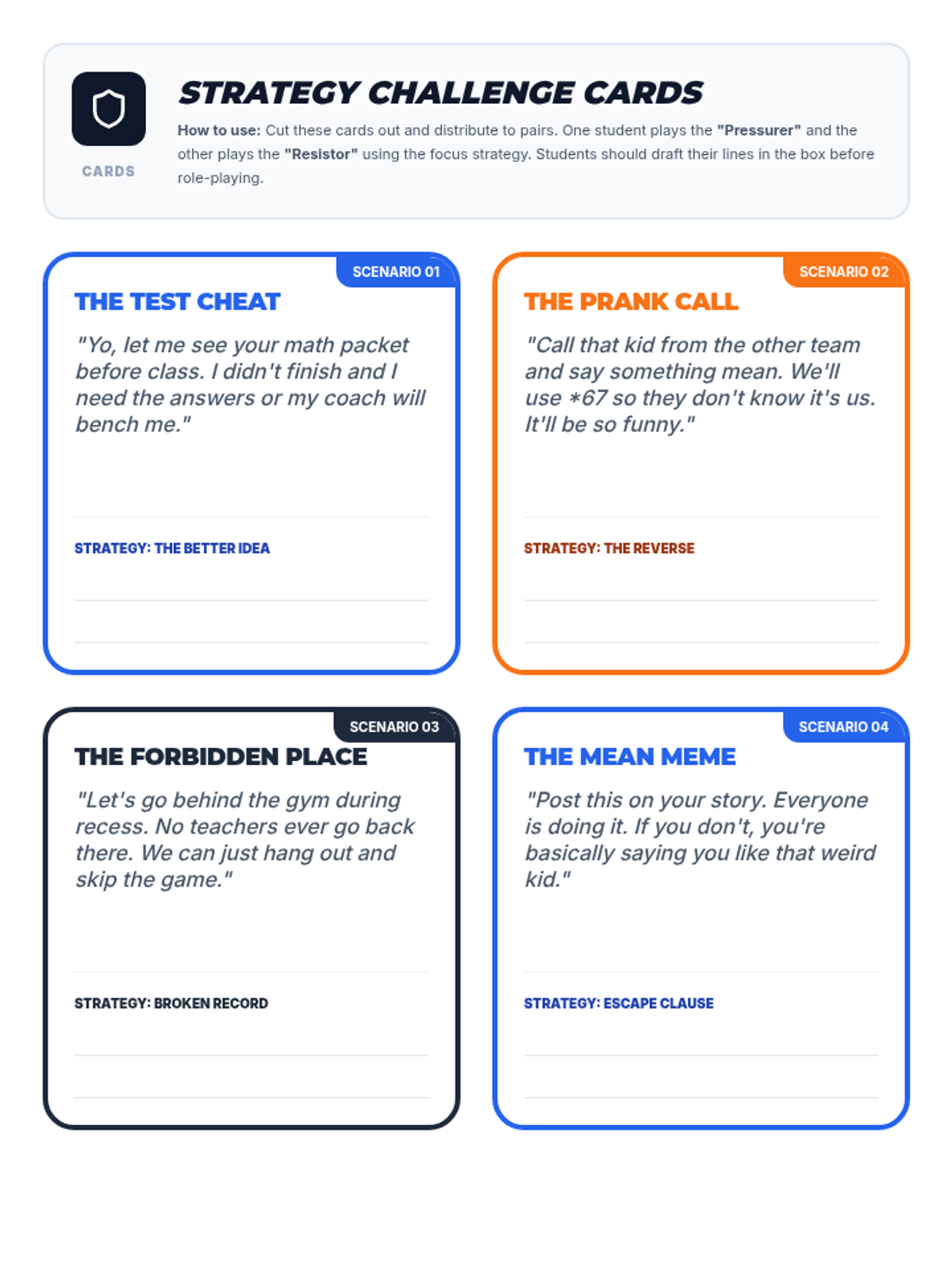
Focused on actionable refusal skills, students practice specific techniques like 'The Broken Record' and 'The Better Idea' to navigate social pressure in real-time.
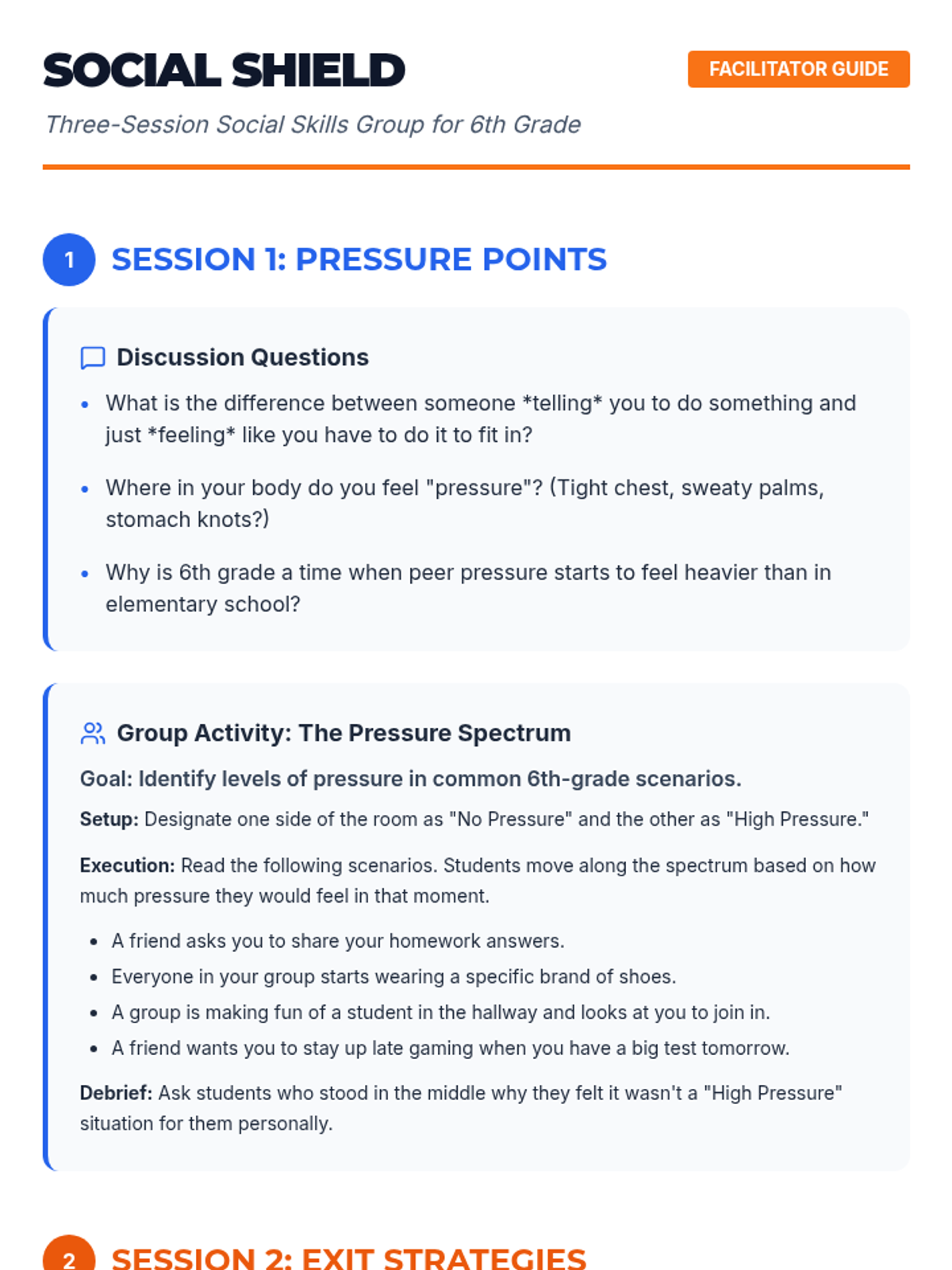
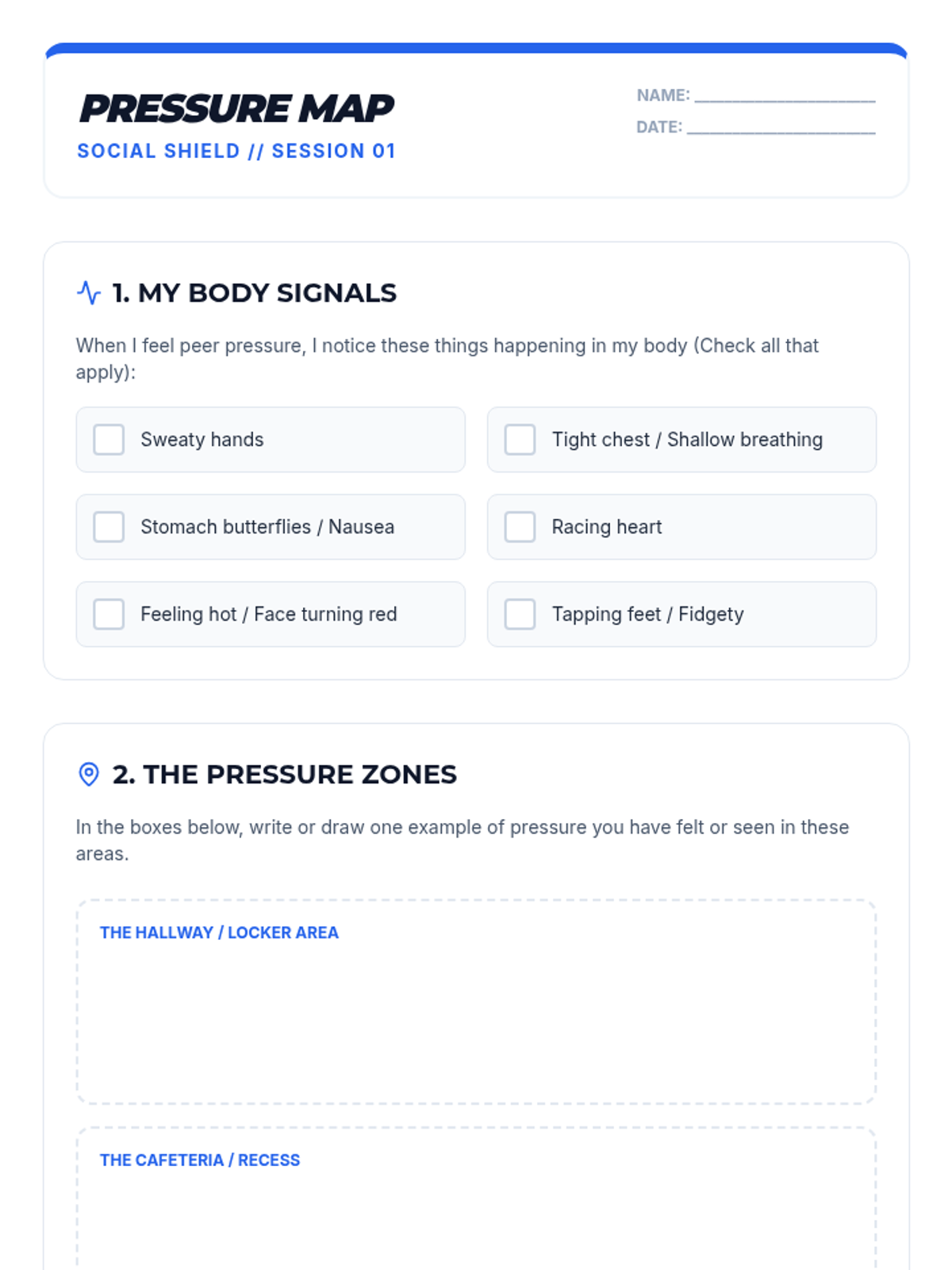
Students learn to distinguish between spoken and unspoken peer pressure and identify the physical and emotional 'red flags' that signal they are being pressured.
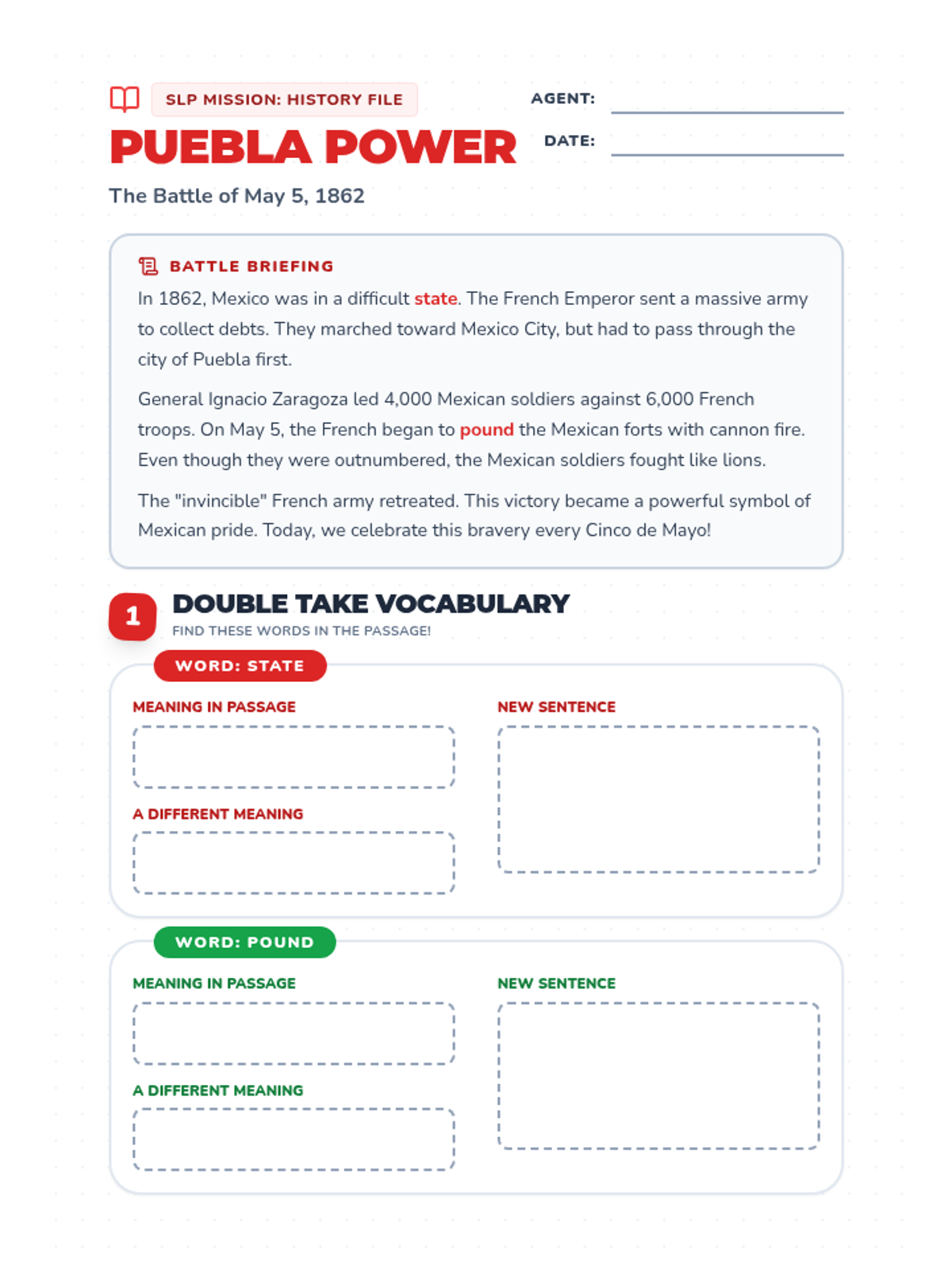
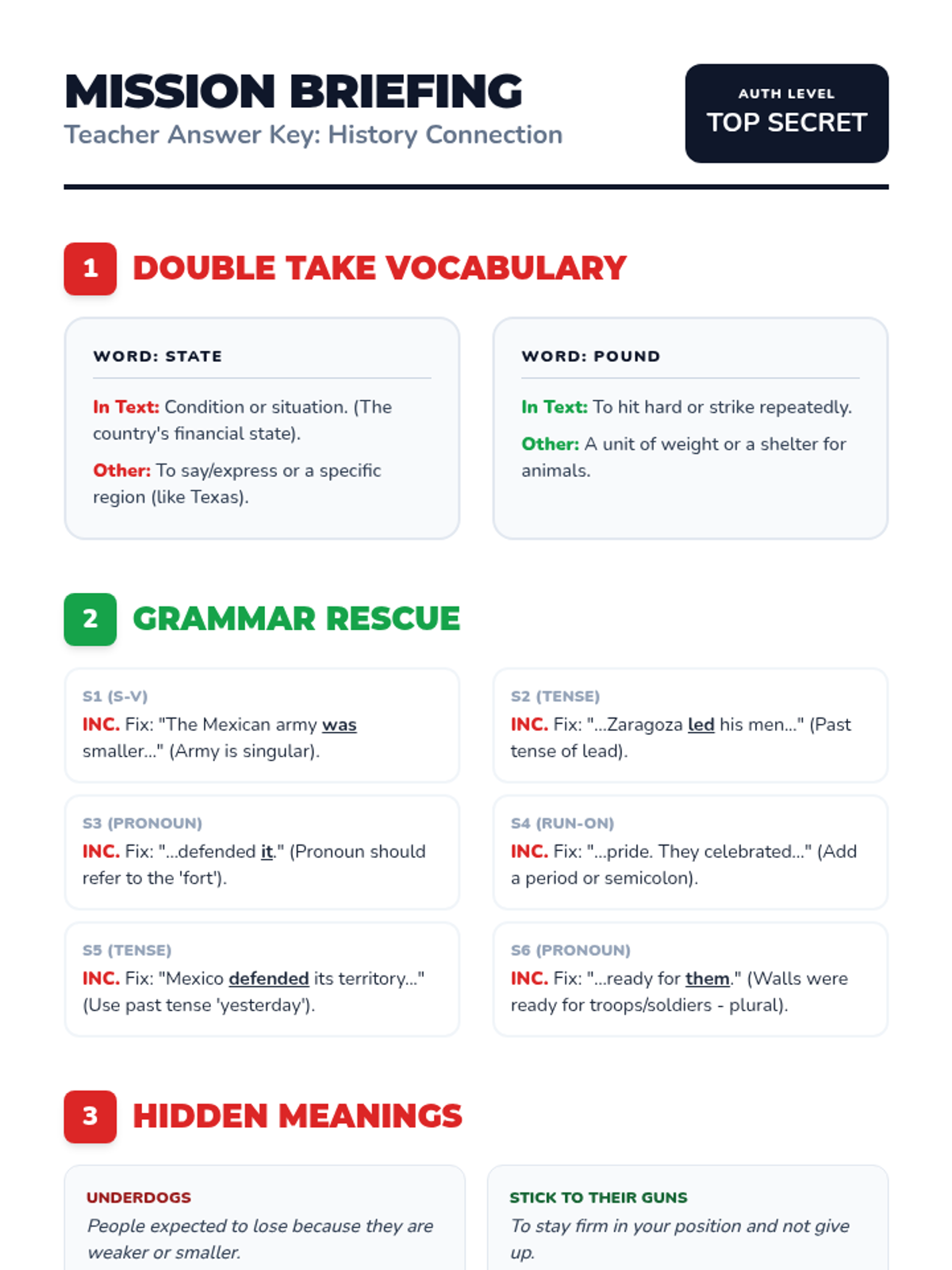
A targeted speech-language lesson for 6th graders focusing on vocabulary, grammar editing, and figurative language through the lens of Cinco de Mayo.
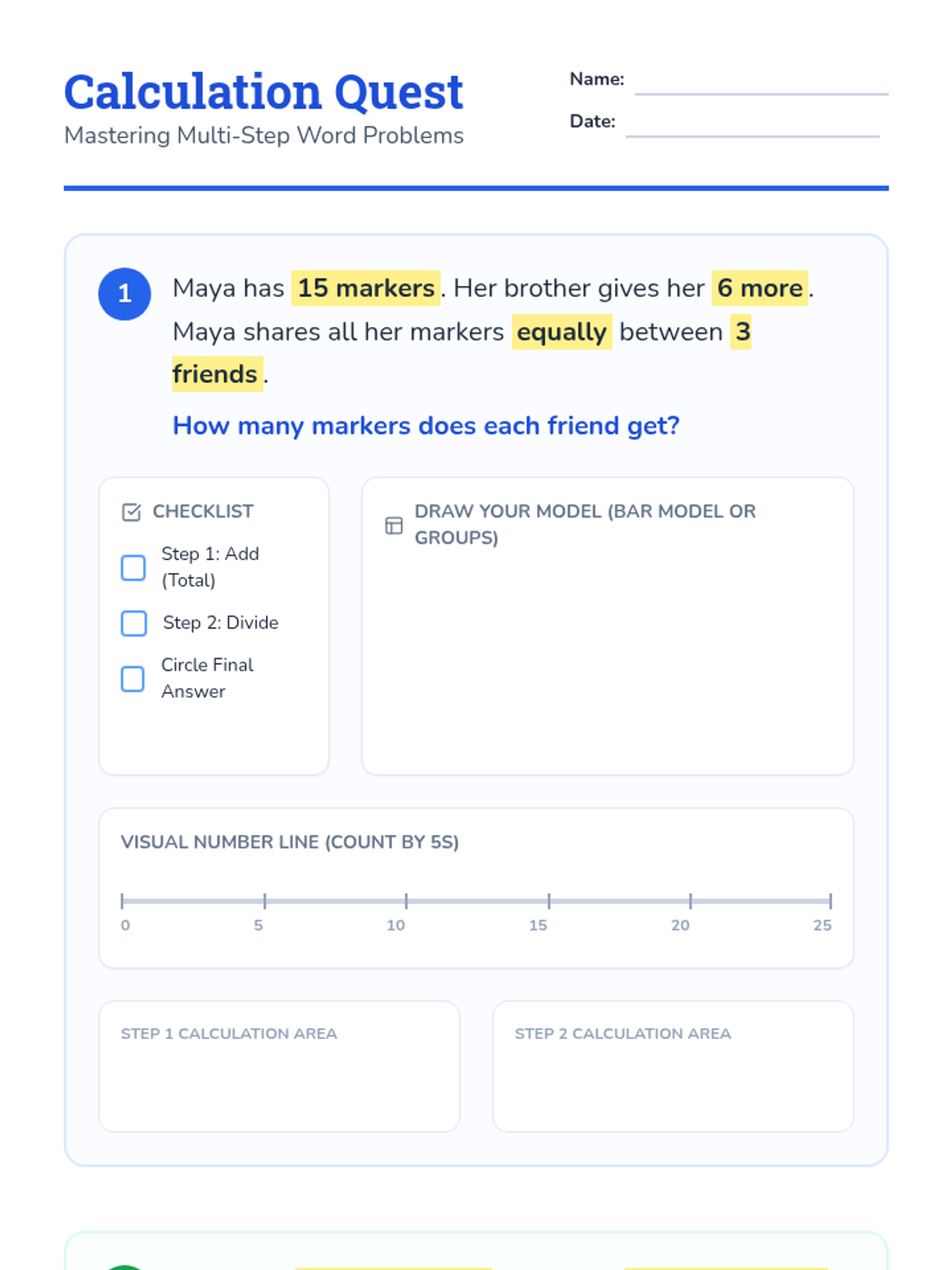
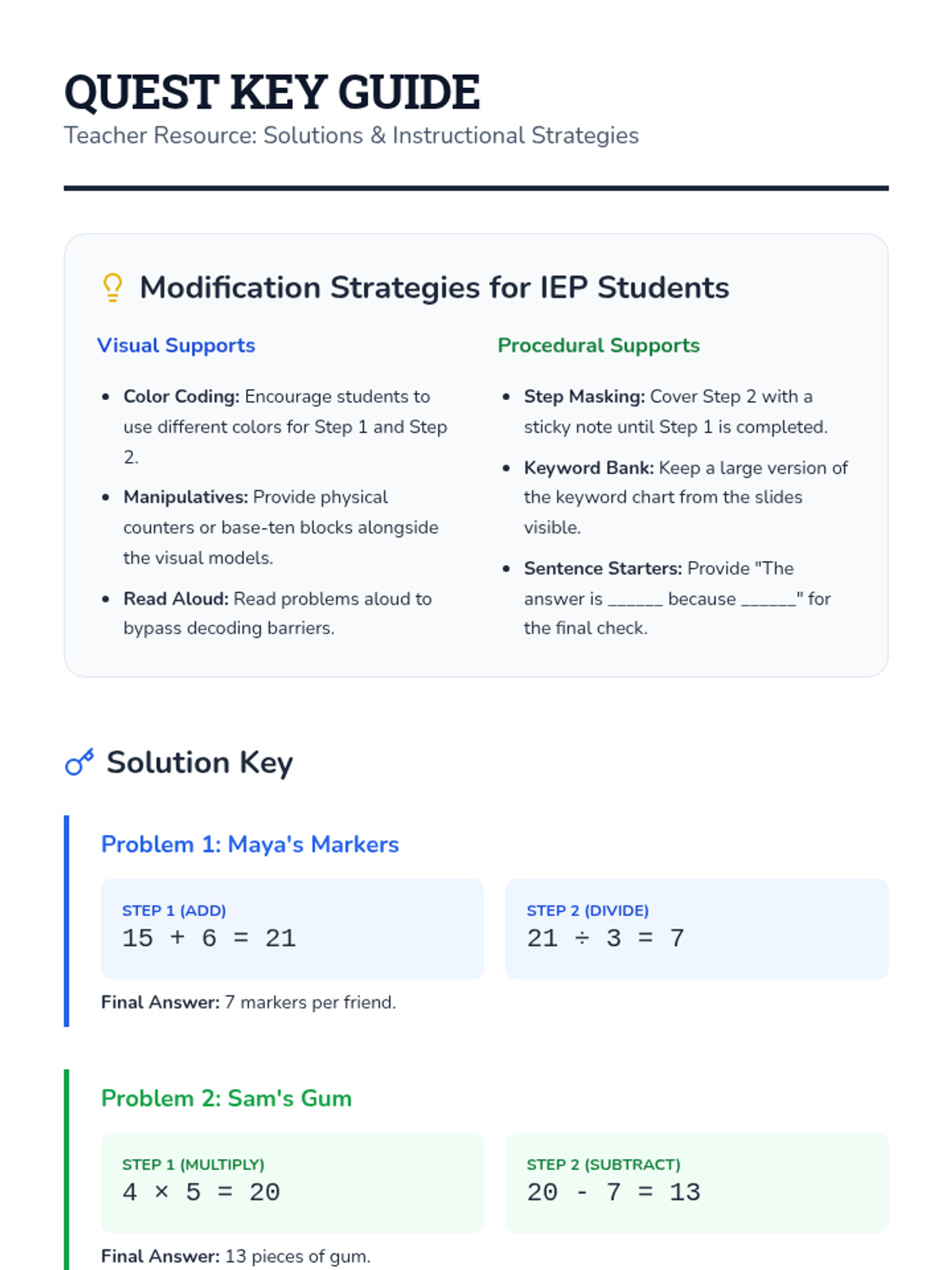
A supportive lesson designed for students with IEPs to master multi-step word problems using a systematic four-step approach. Includes visual aids, keyword strategies, and model drawing to build problem-solving confidence.
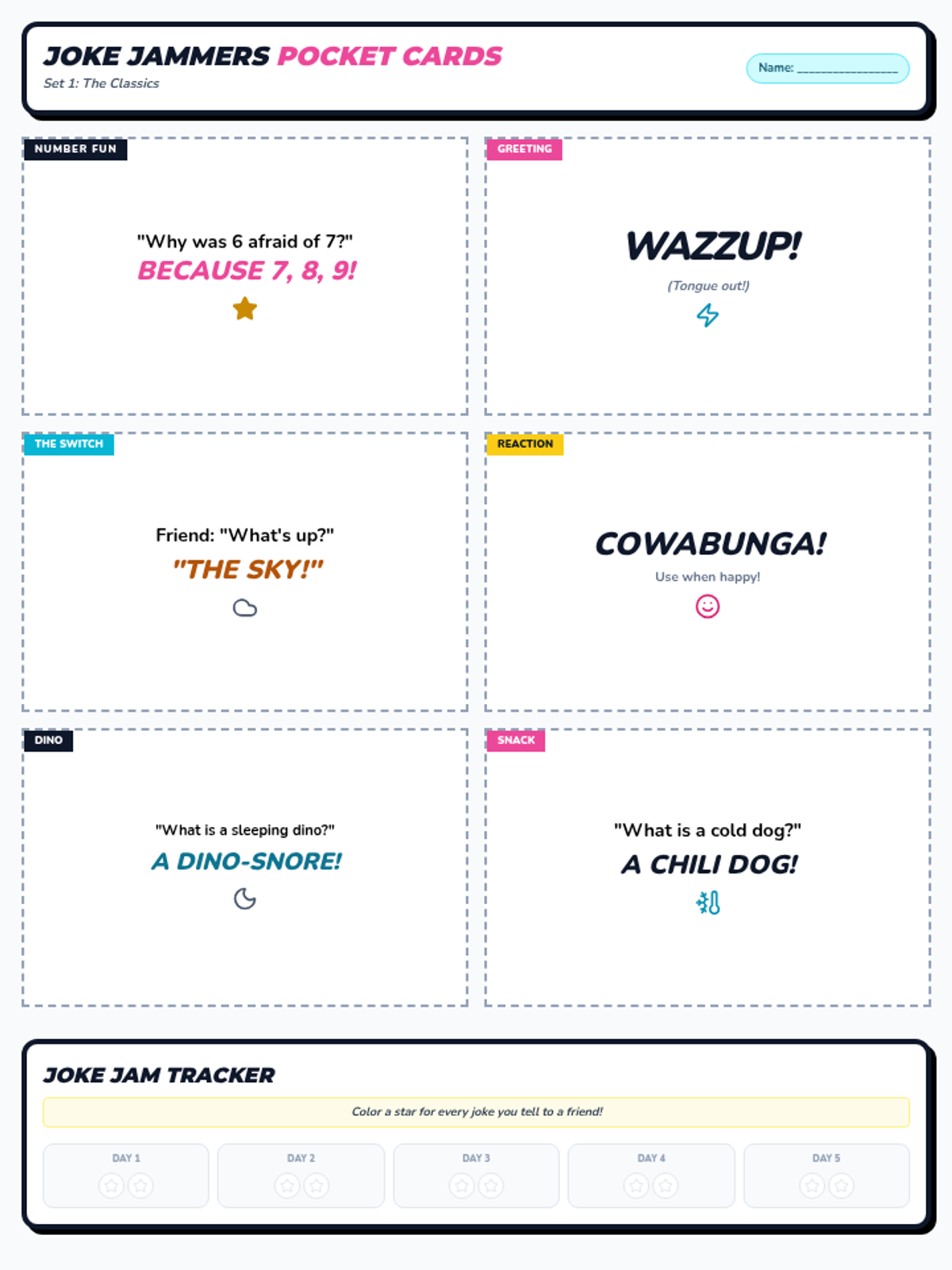
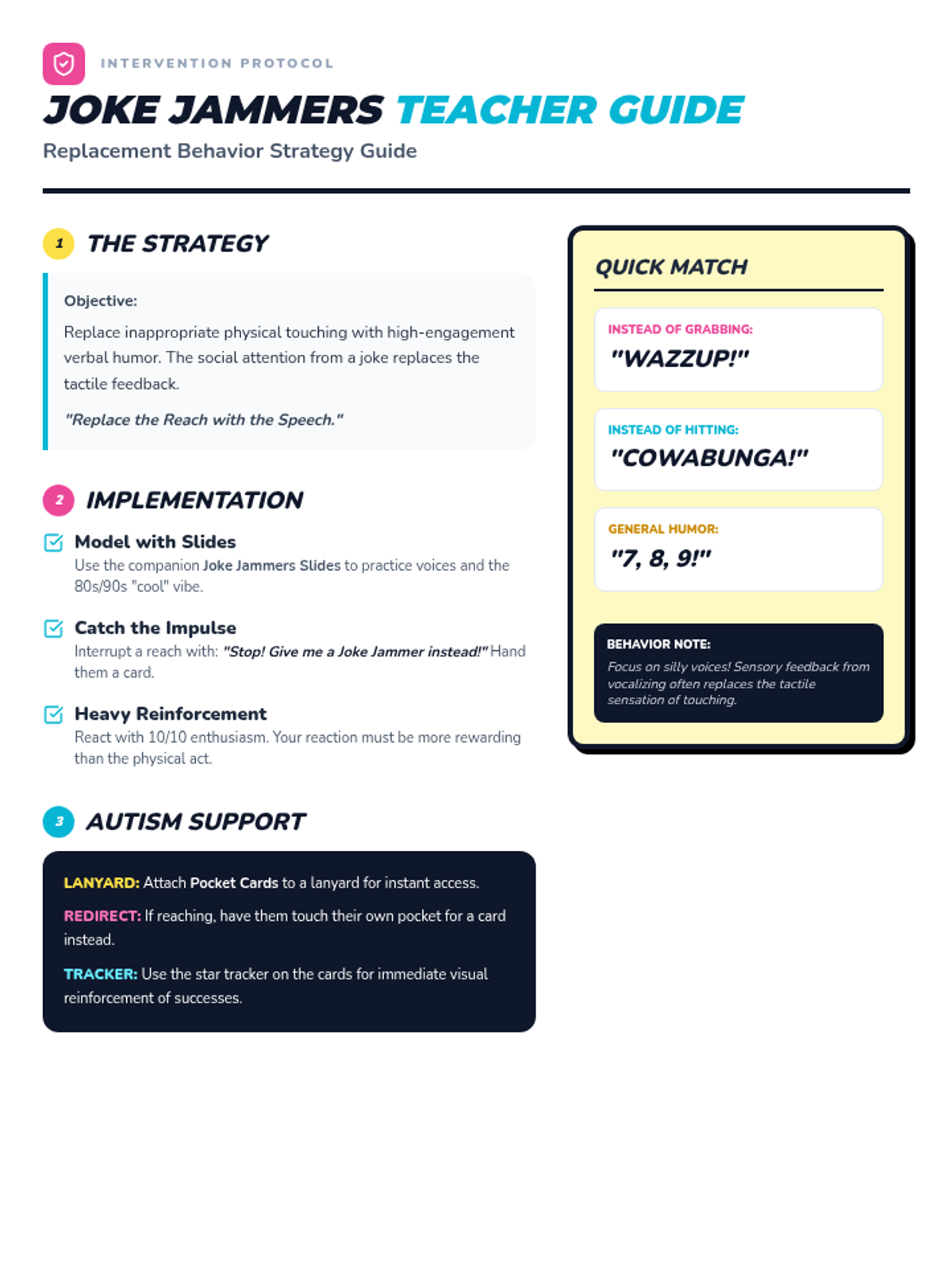
A social skills lesson designed to replace inappropriate physical touching with verbal humor and 'cool' catchphrases, using an 80s/90s neon aesthetic.
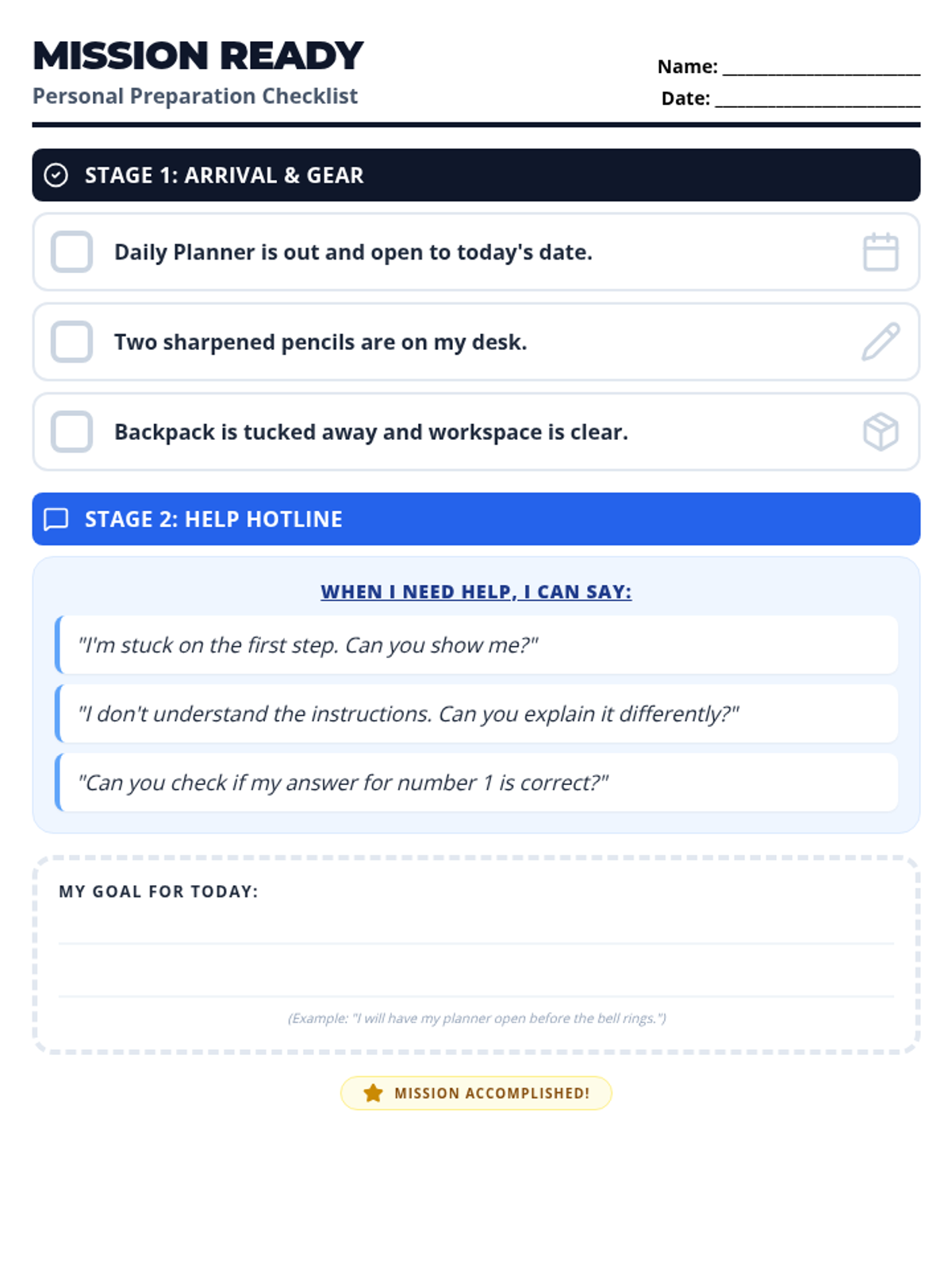
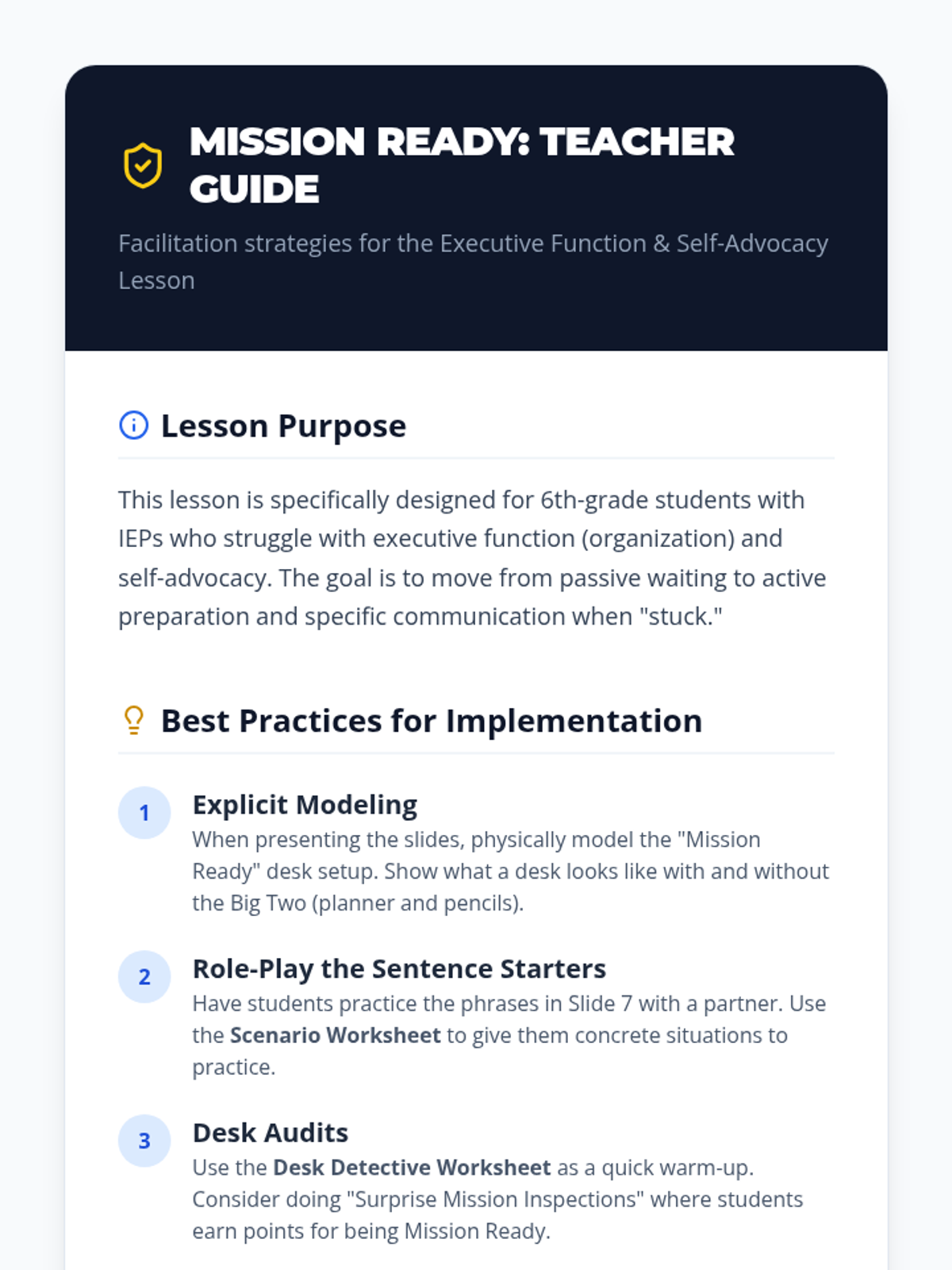
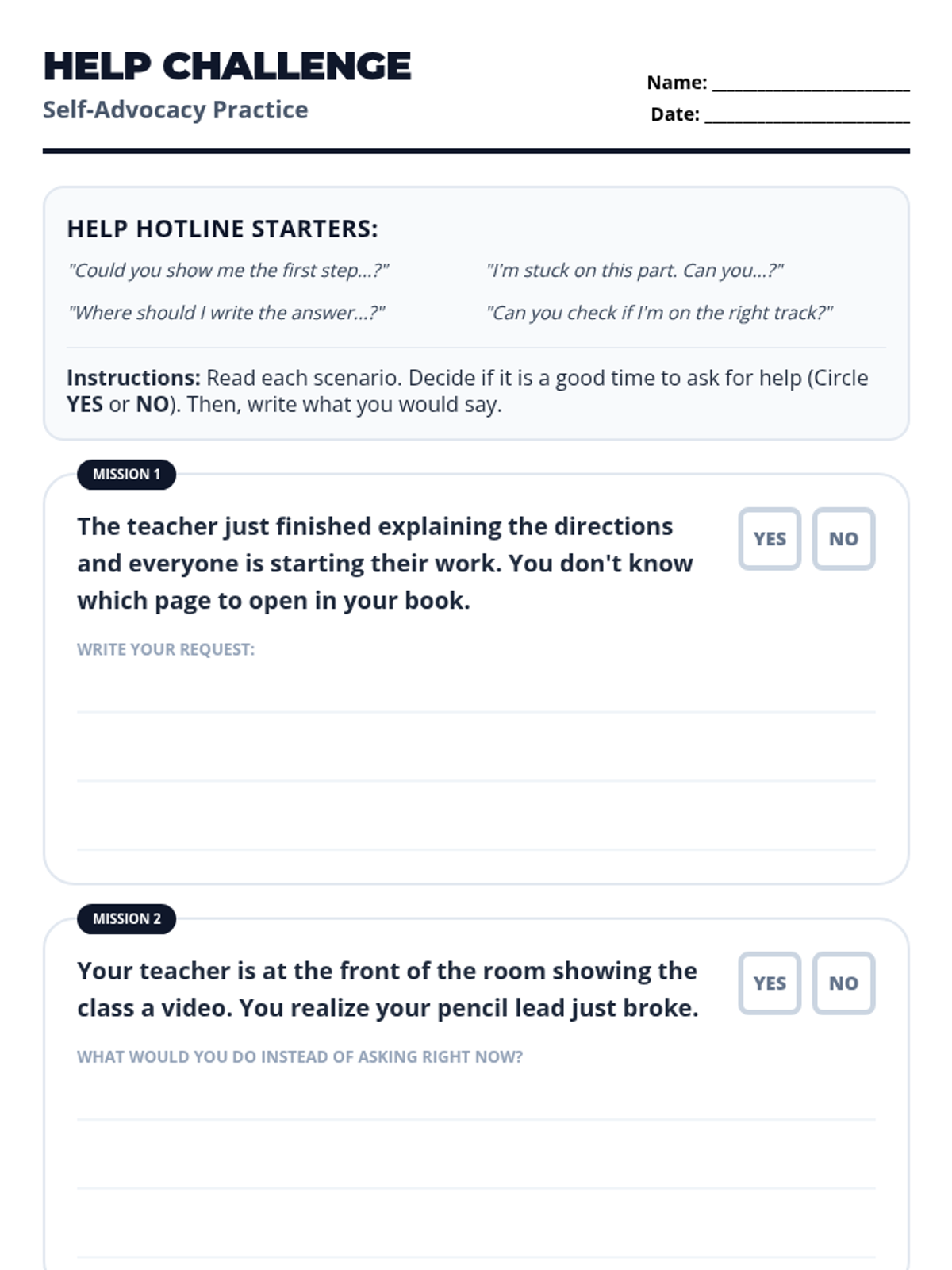
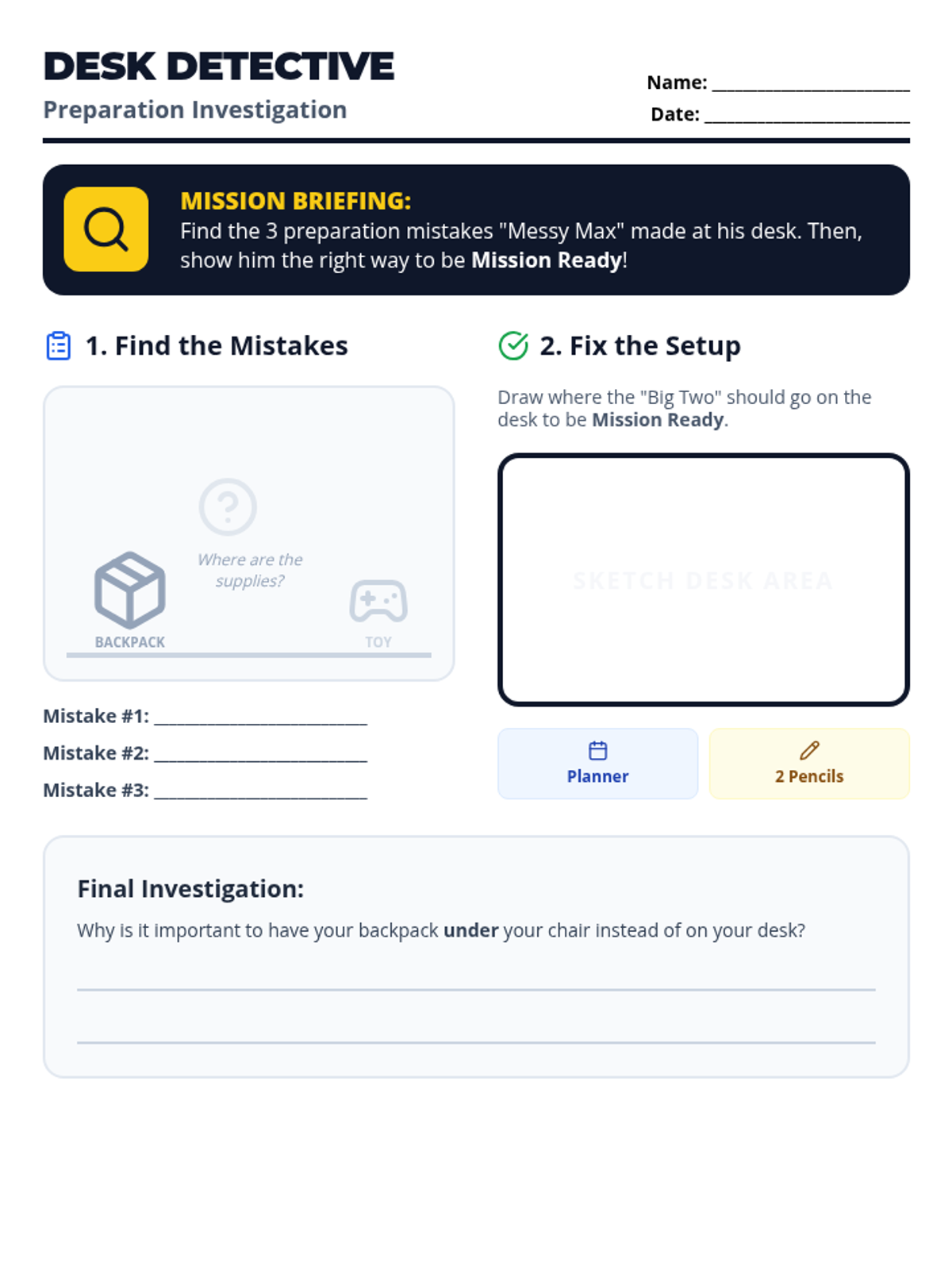
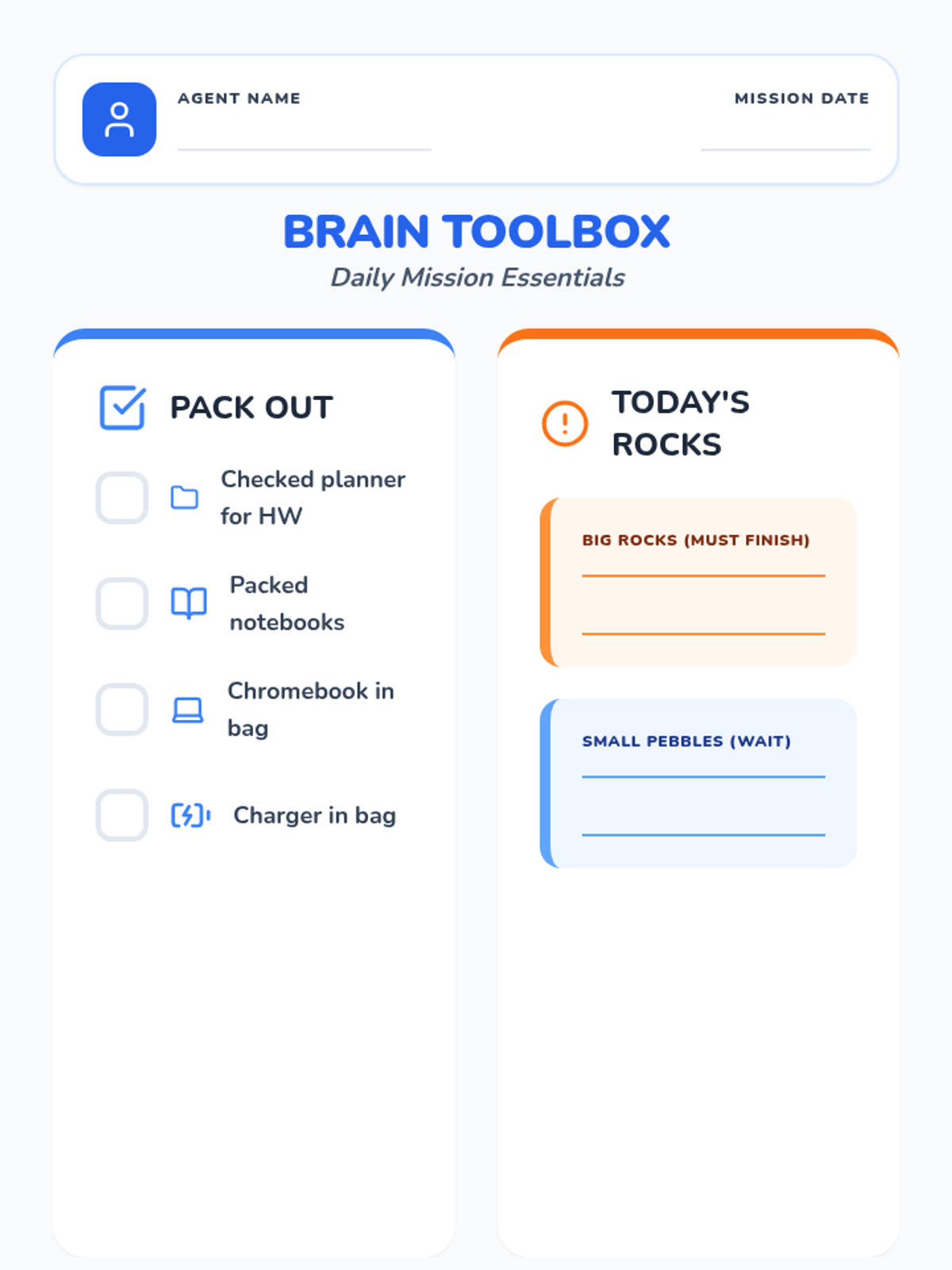
A lesson designed for 6th grade IEP students to build independence in classroom preparation and self-advocacy skills. Students learn to manage their daily planner and pencils while using specific strategies to ask for teacher assistance.
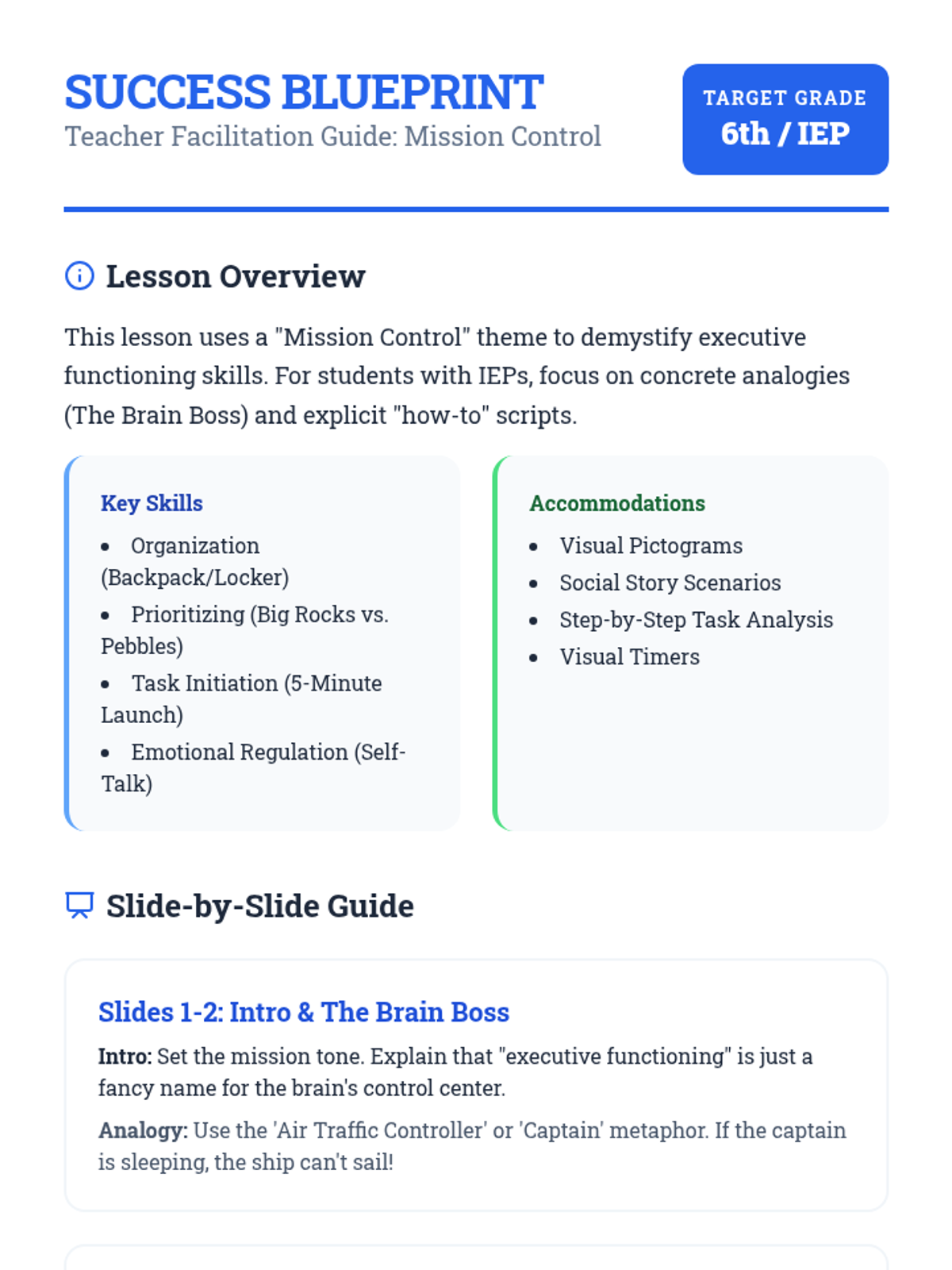
A comprehensive lesson designed for 6th-grade IEP students focusing on essential executive functioning skills like organization, planning, and emotional regulation through visual supports and task analysis.
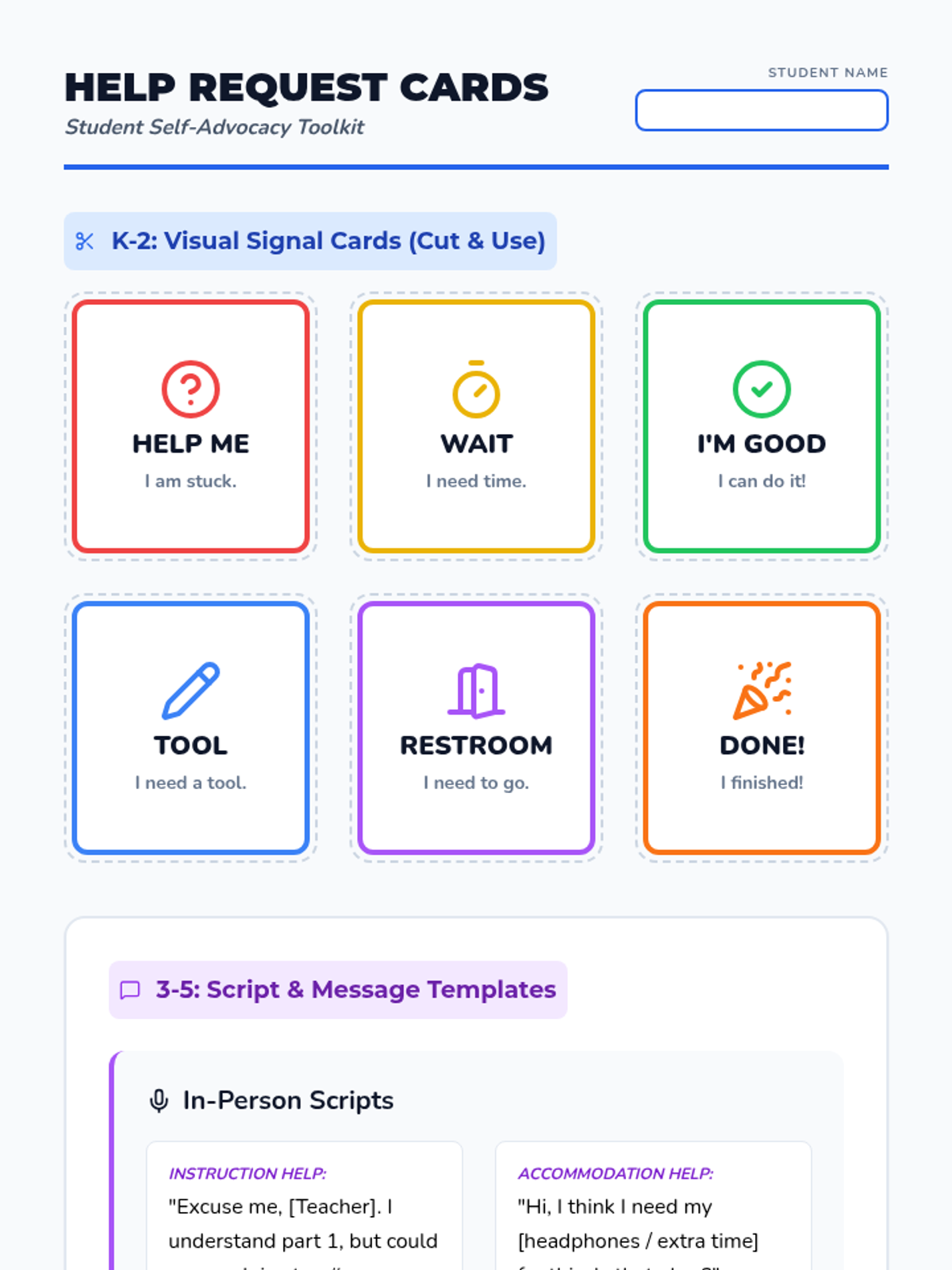
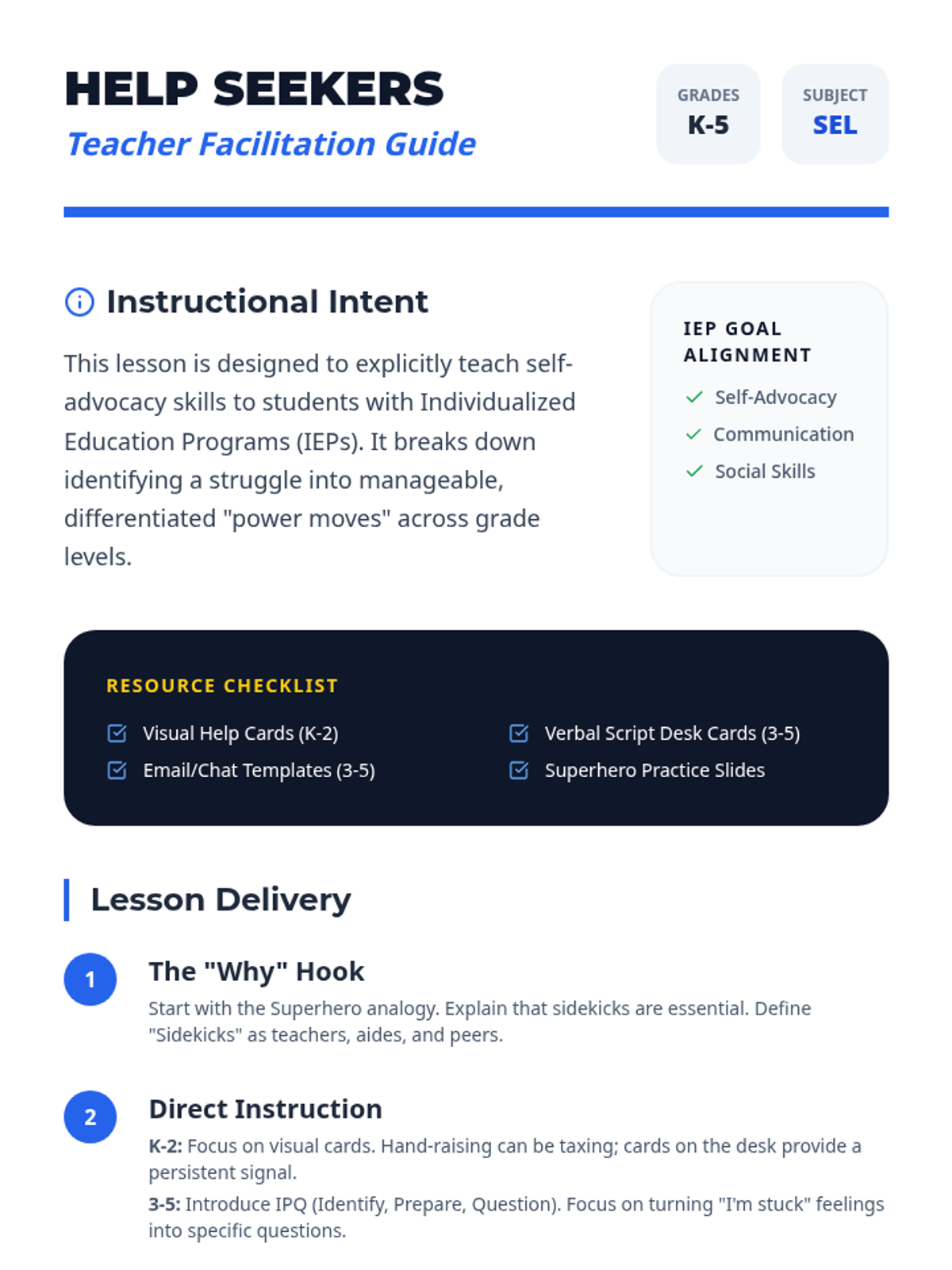
This lesson empowers students with IEPs to advocate for their needs by teaching specific strategies for requesting assistance. Students will learn verbal scripts, digital communication etiquette, and the use of visual support cards across K-5 grade levels.
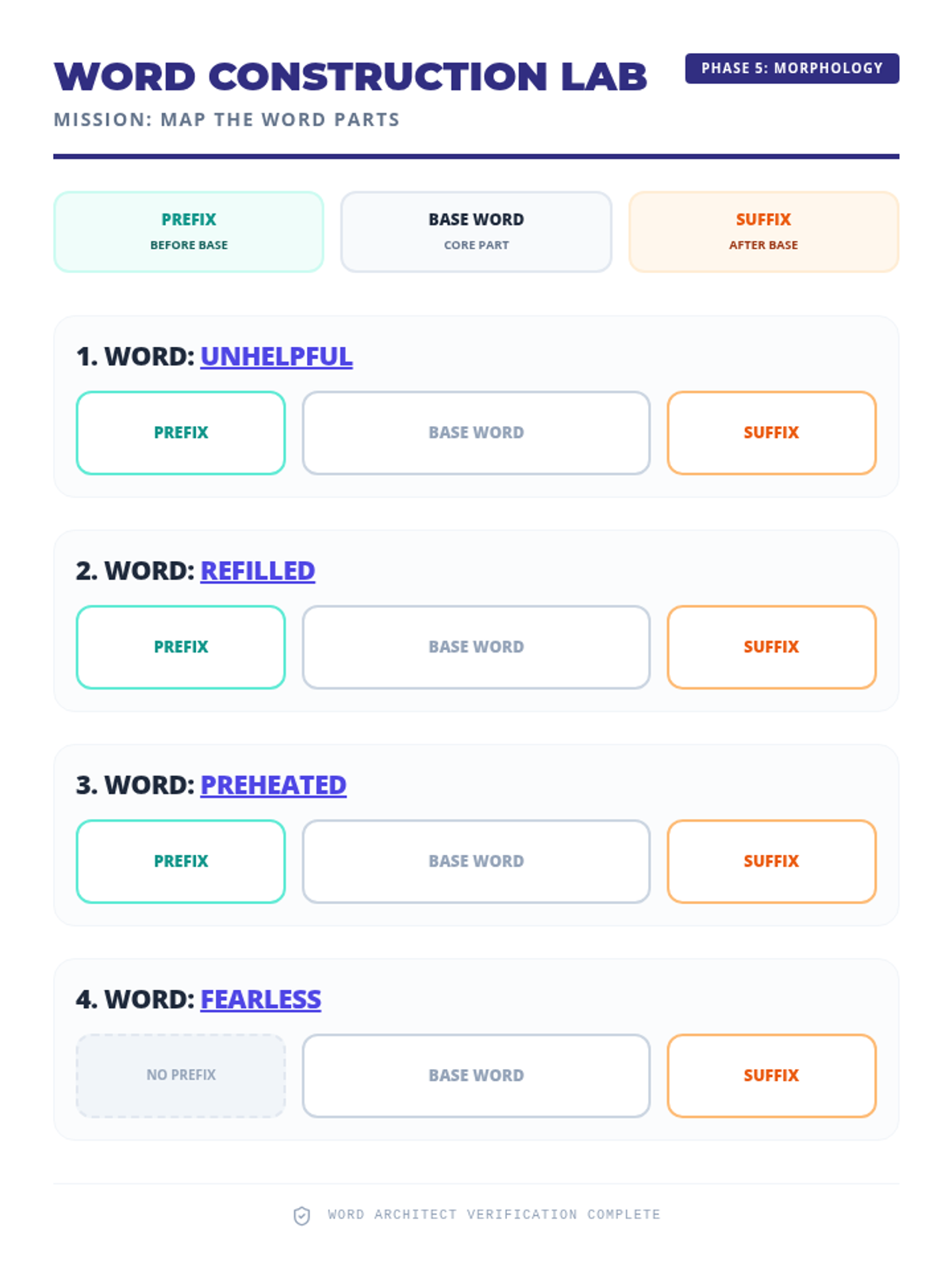
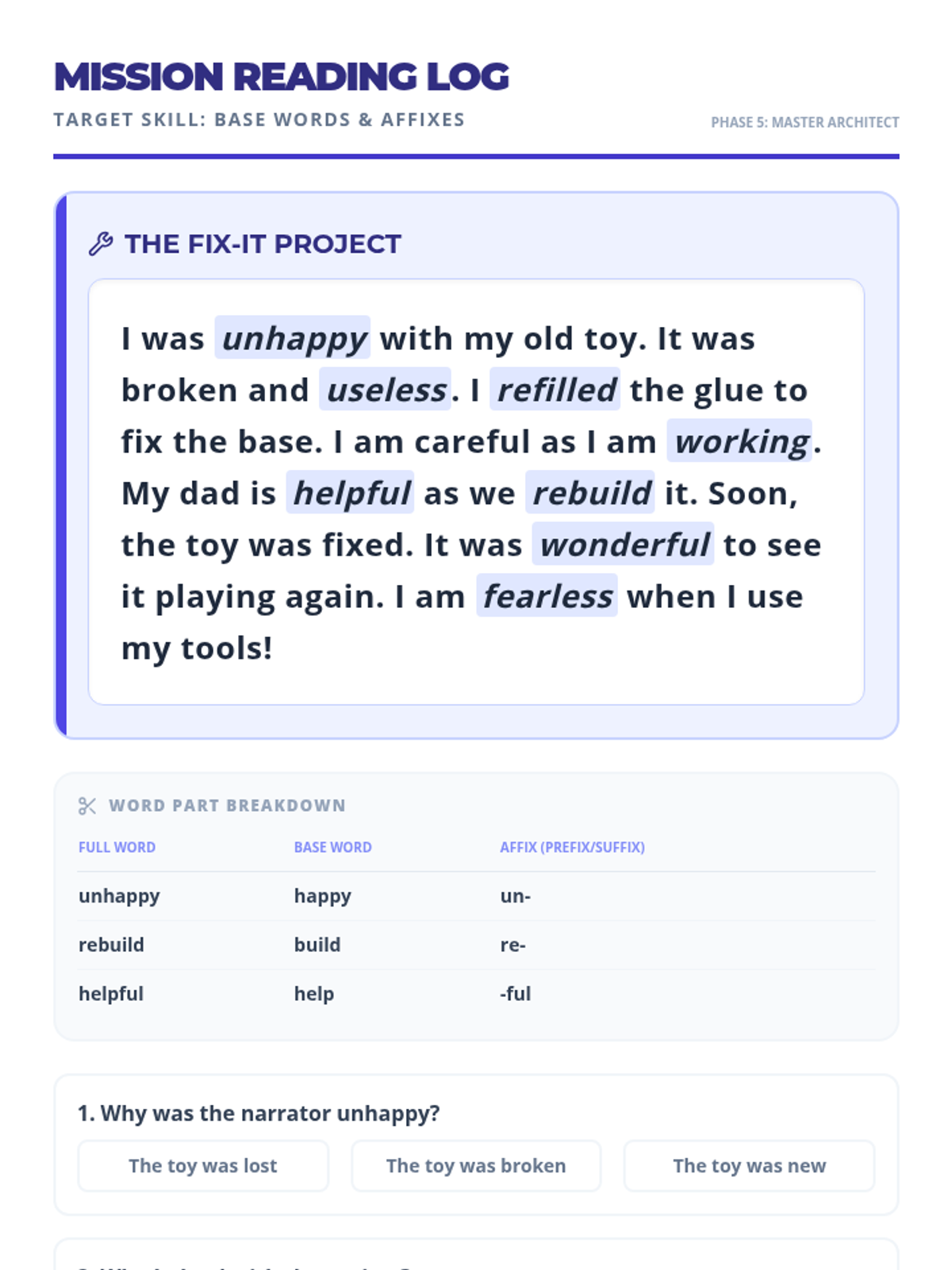
Introduces base words, common prefixes (un-, re-, pre-), and suffixes (-s, -ed, -ing, -ful, -less) to build decoding automaticity and word meaning.
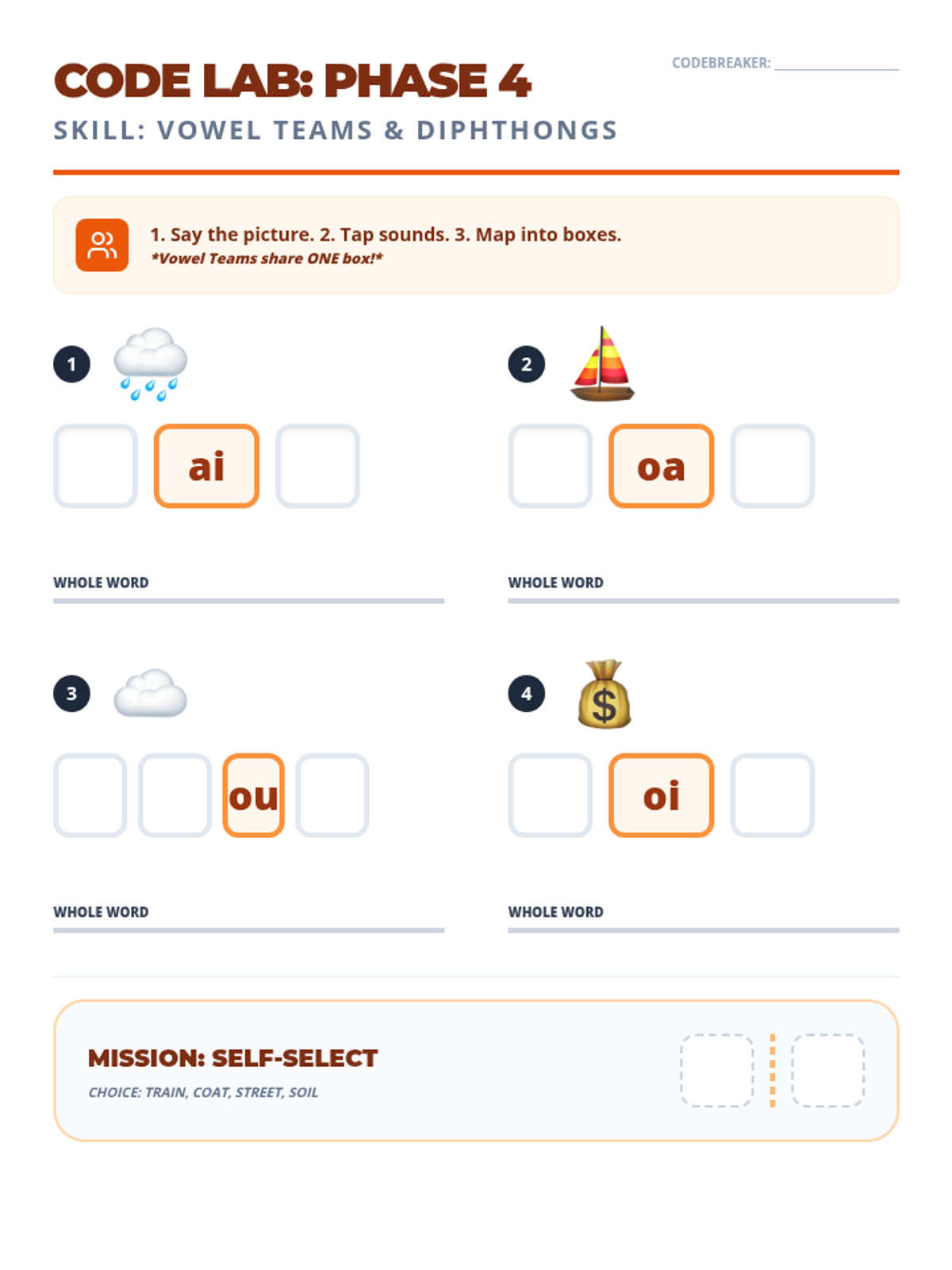
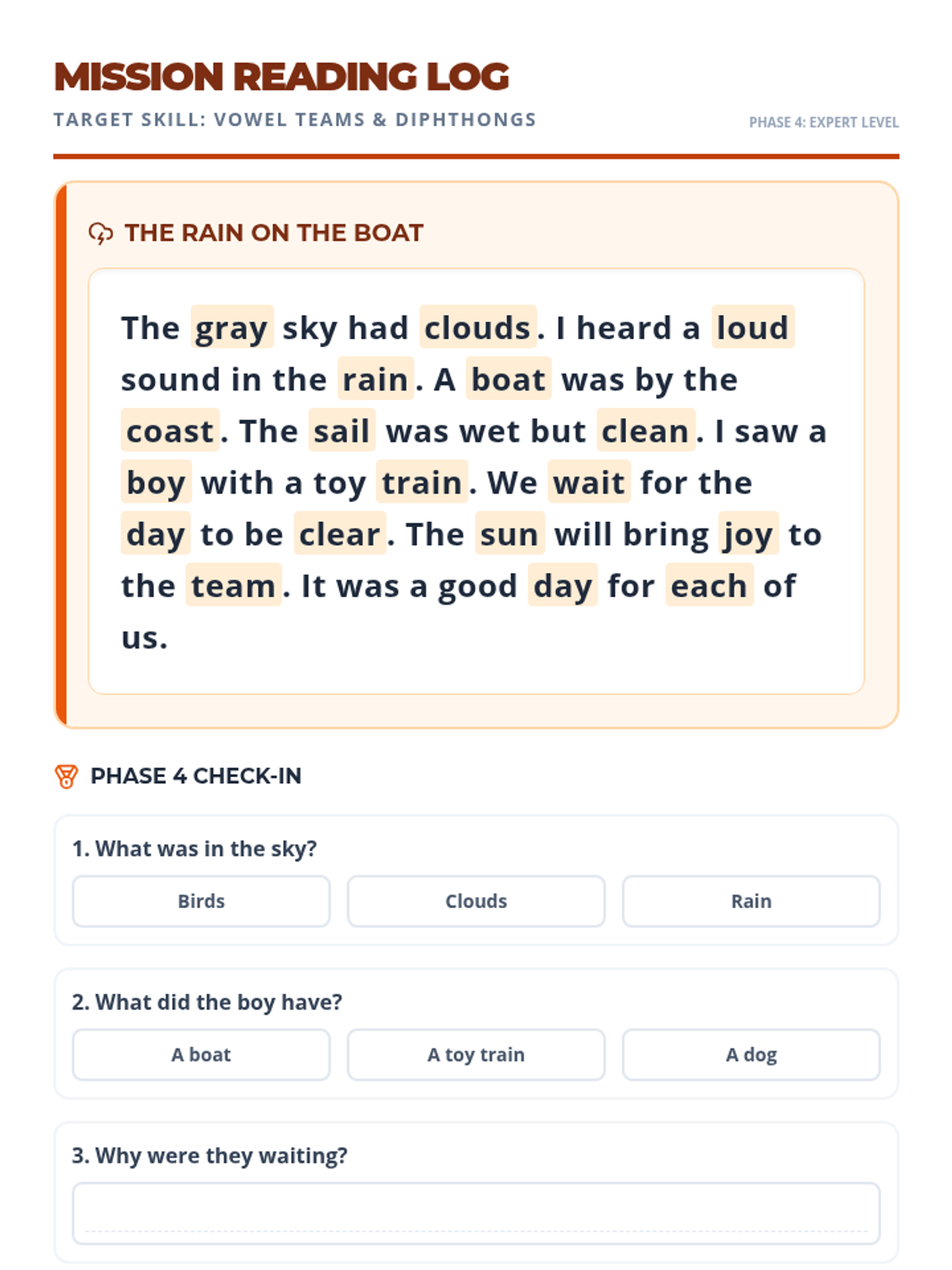
Targets complex vowel teams (adjacent vowels) and diphthongs, transitioning students into advanced morphology and word meaning.
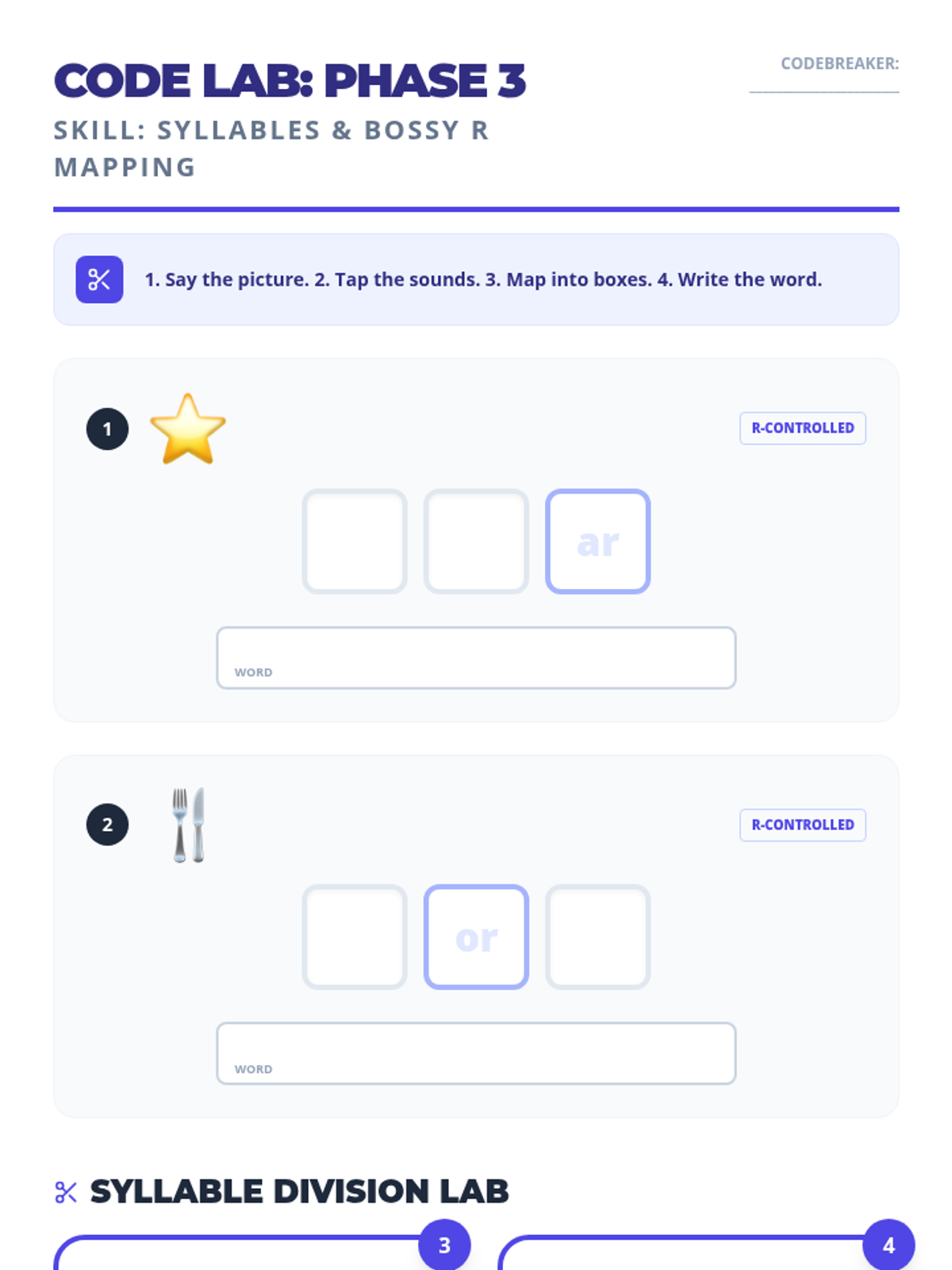
Focuses on decoding 2- and 3-syllable words using syllable division rules and mastering R-controlled vowel patterns.
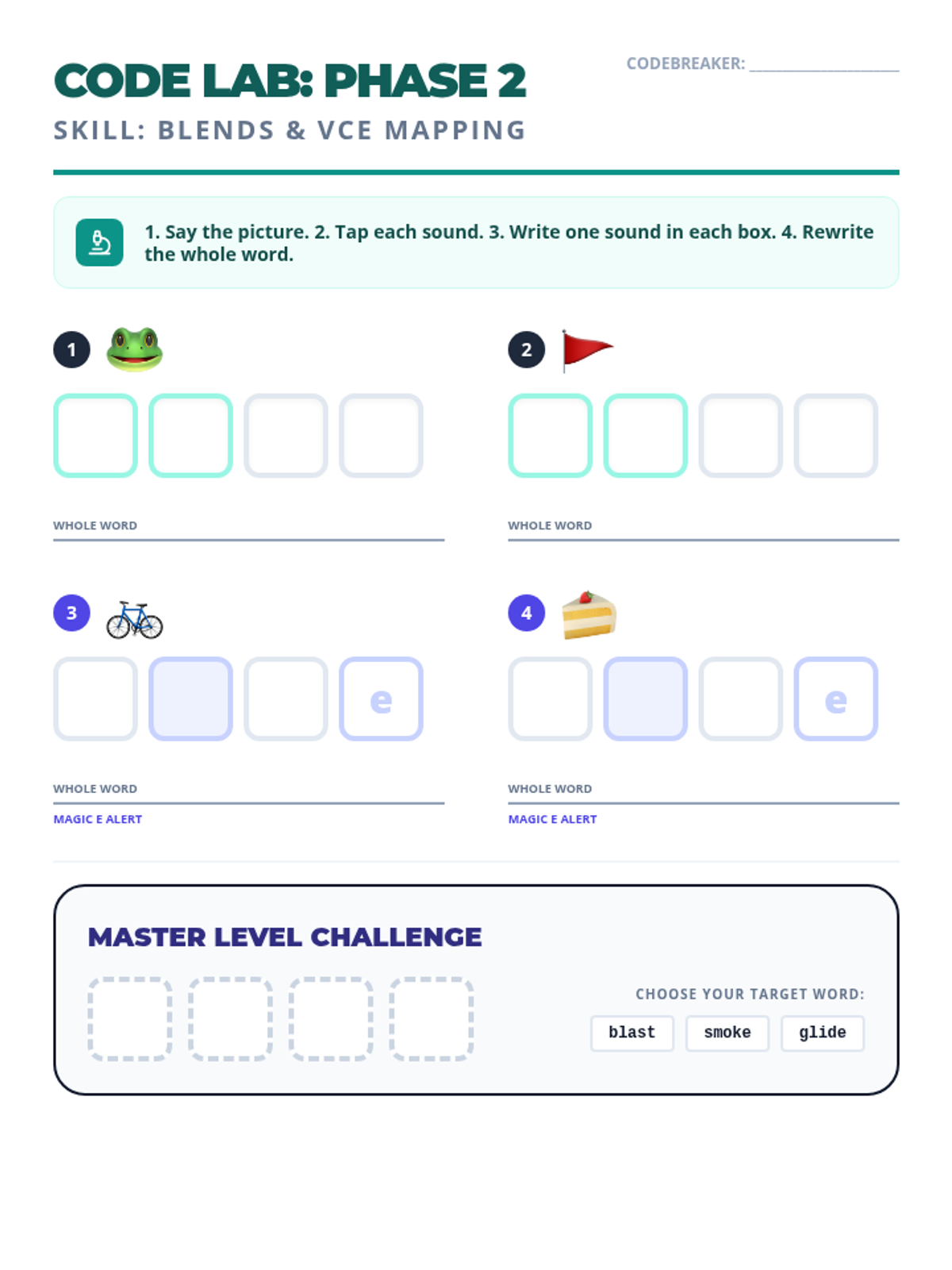
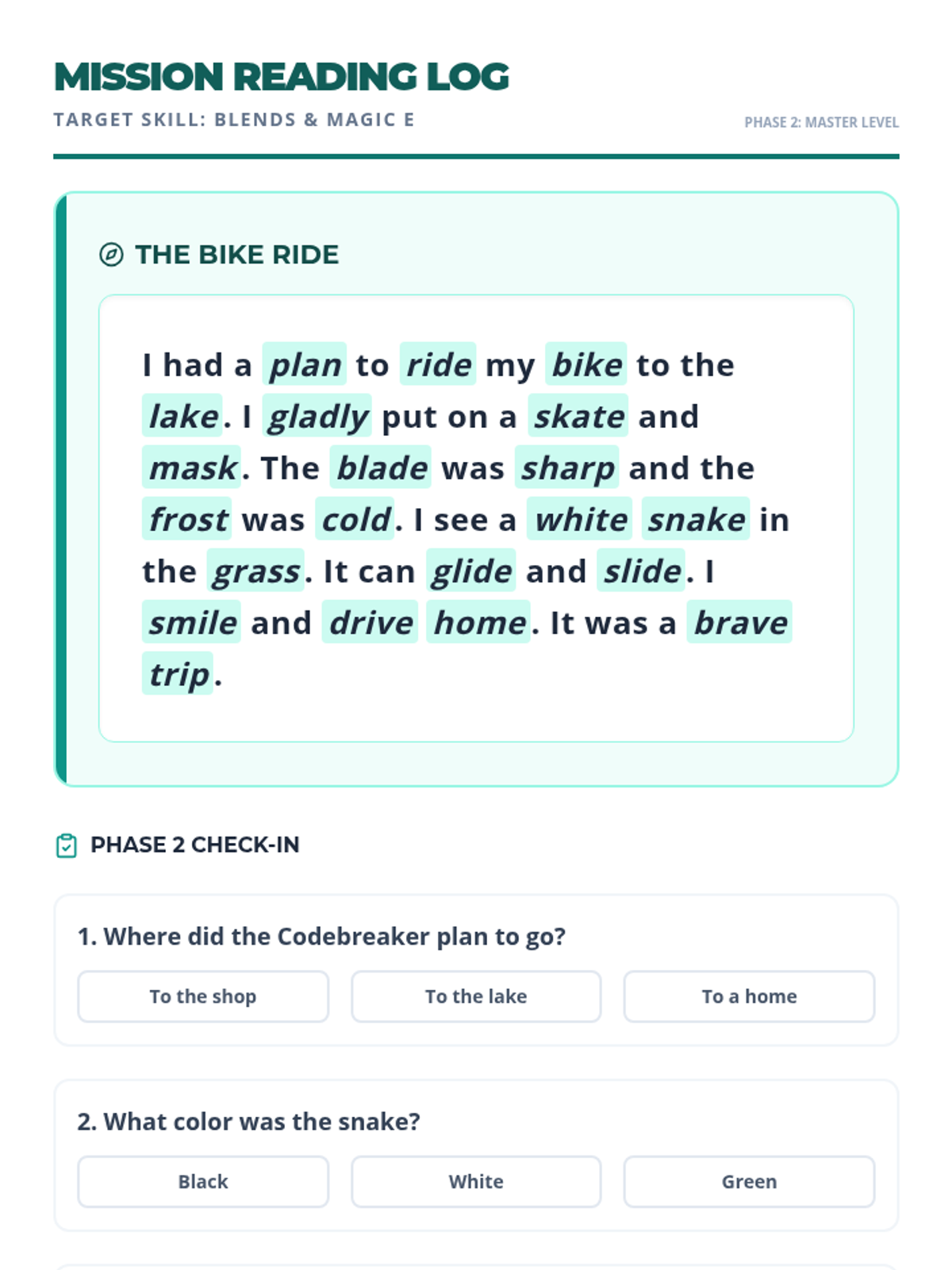
Introduces initial and final consonant blends and the silent-e (VCE) marker pattern for long vowels.
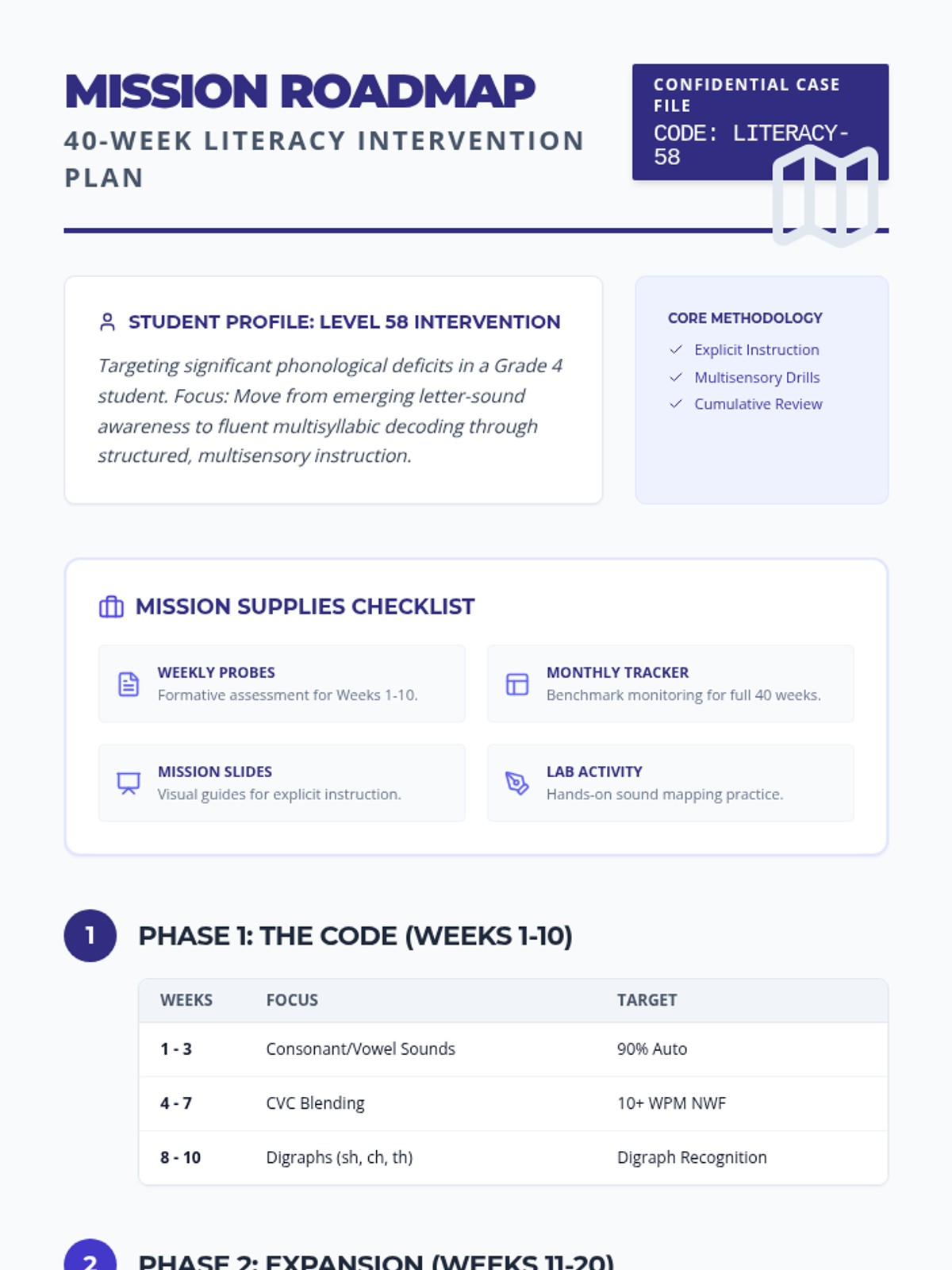
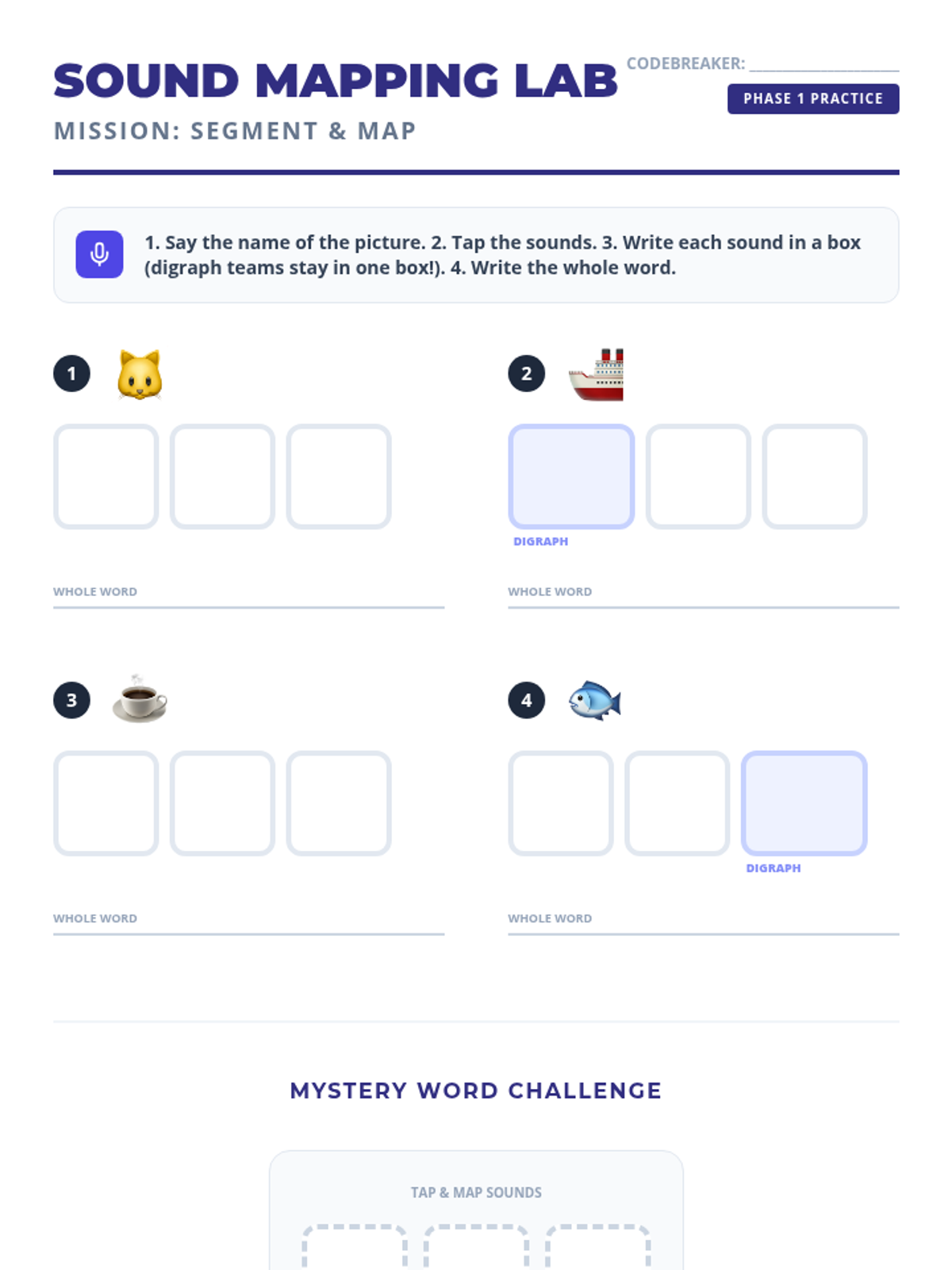
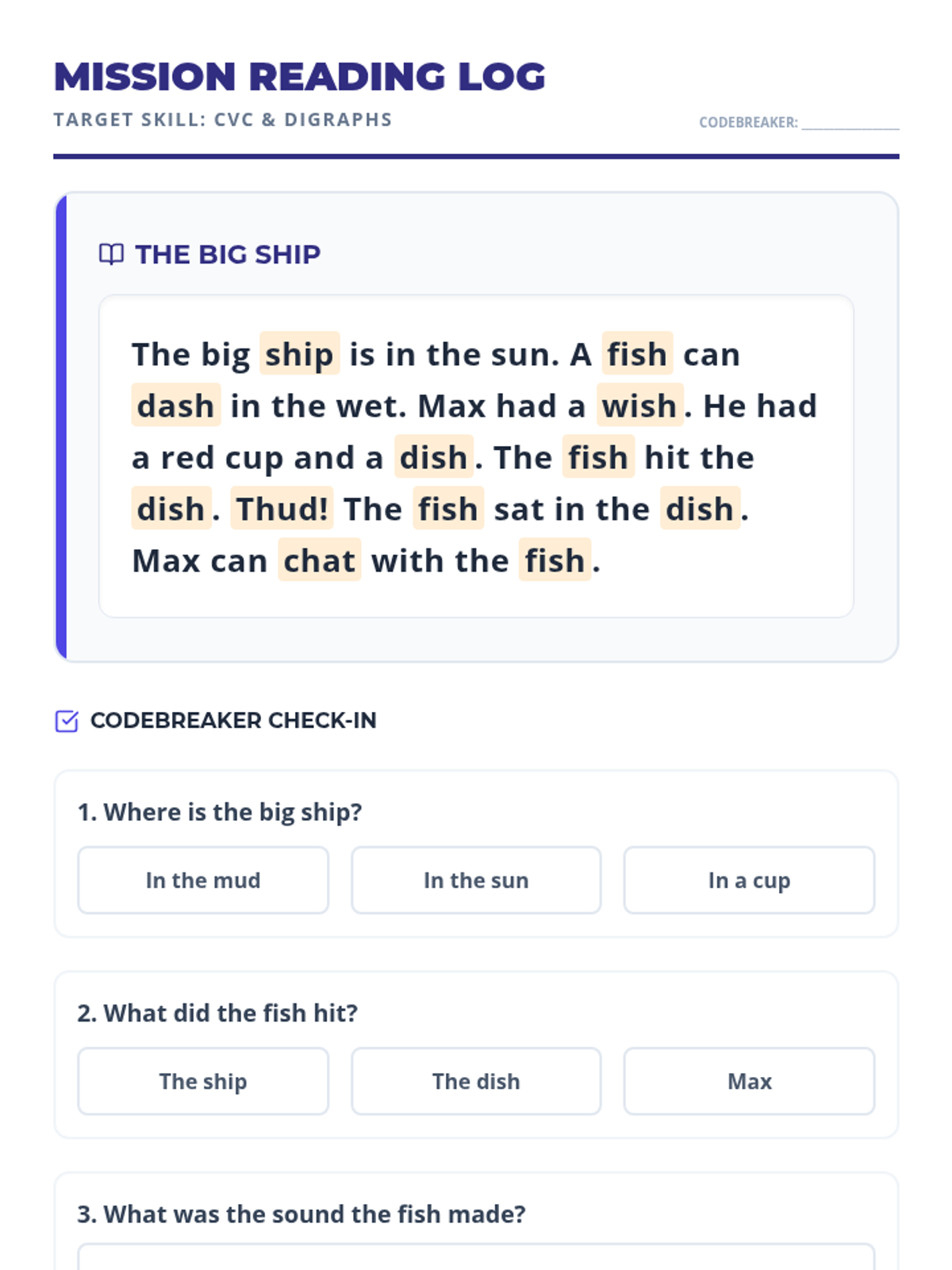
Focuses on the first 10 weeks of intervention, targeting letter-sound automaticity, CVC blending, and the introduction of consonant digraphs (sh, ch, th).
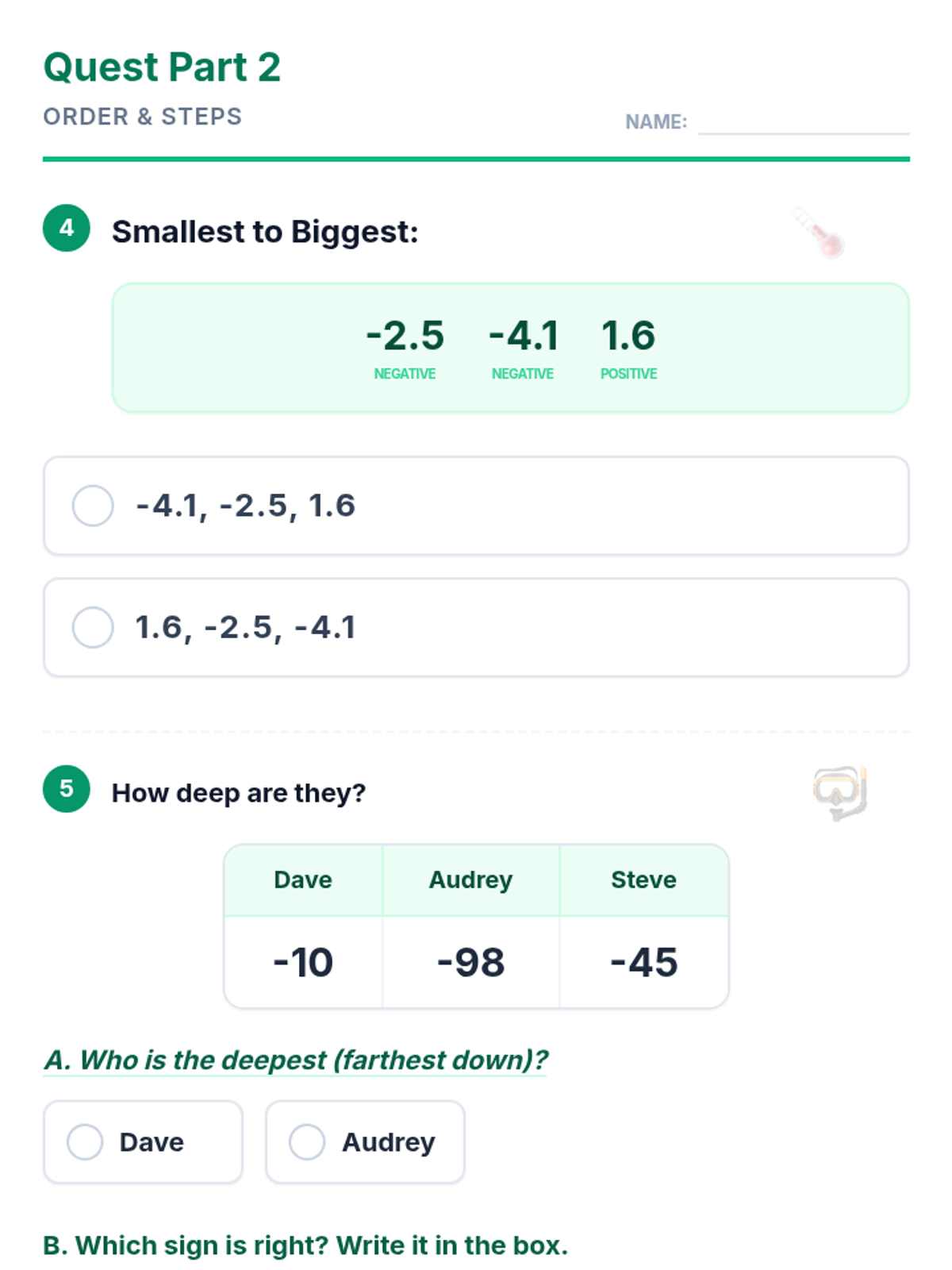
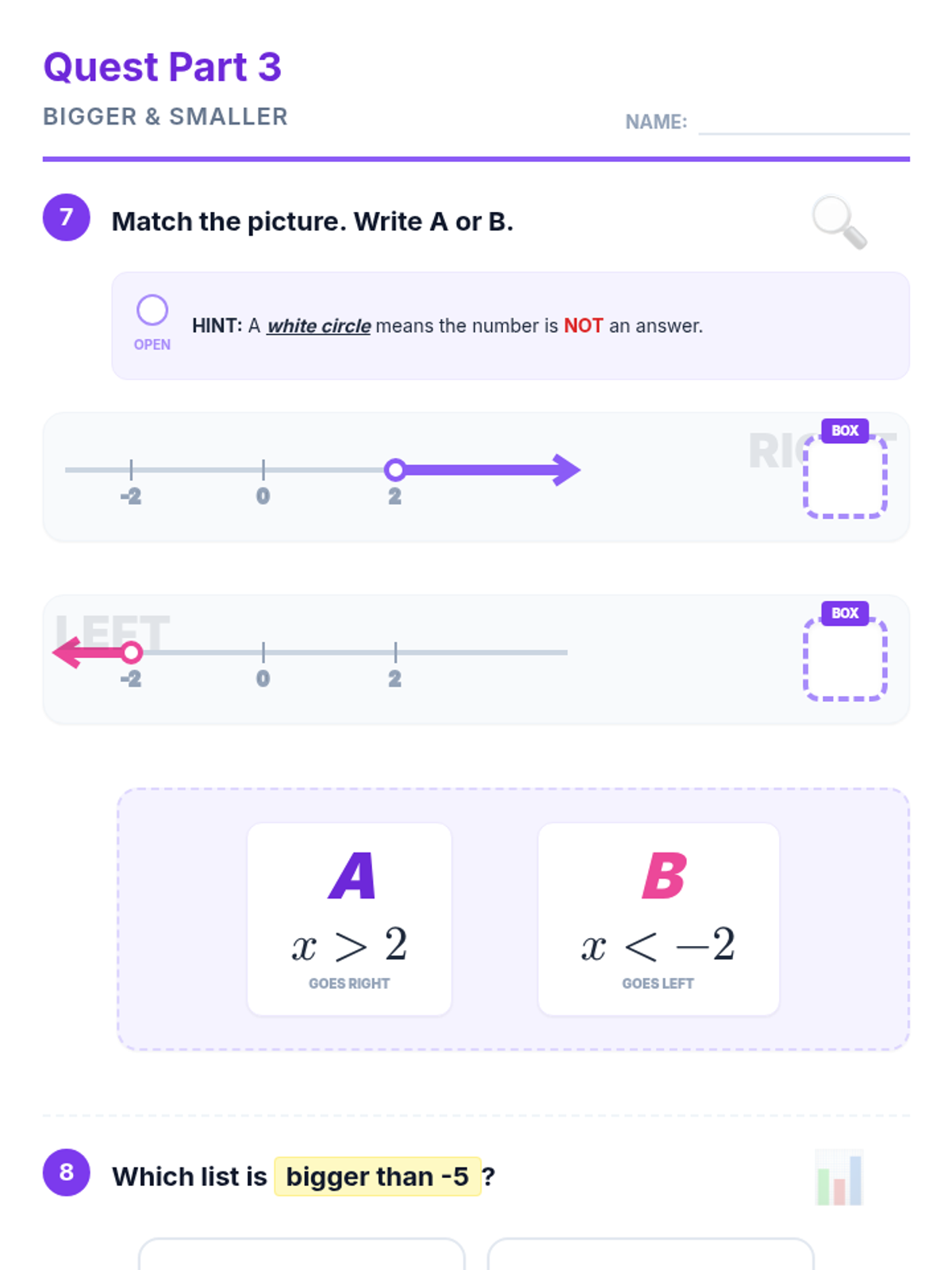
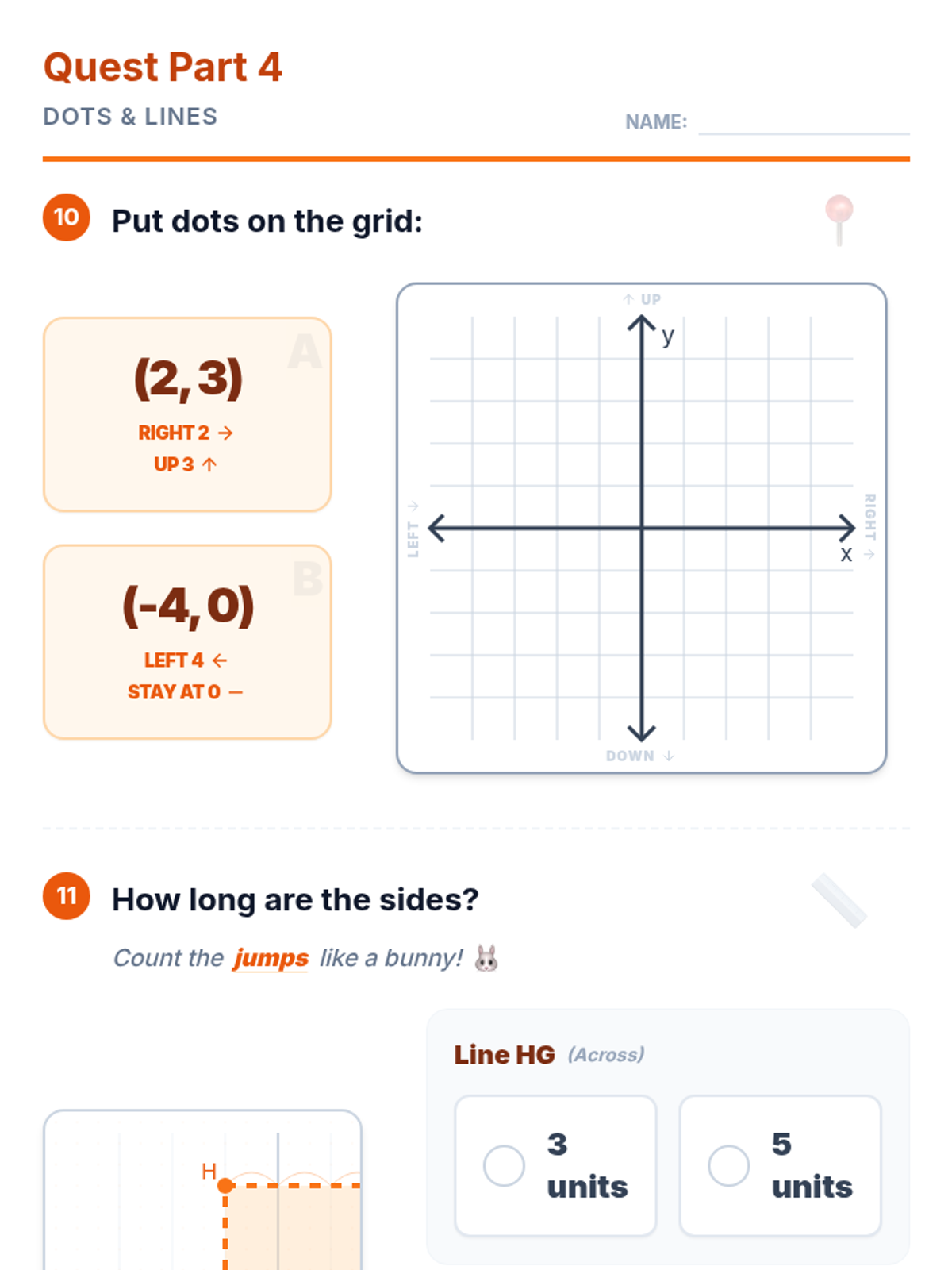
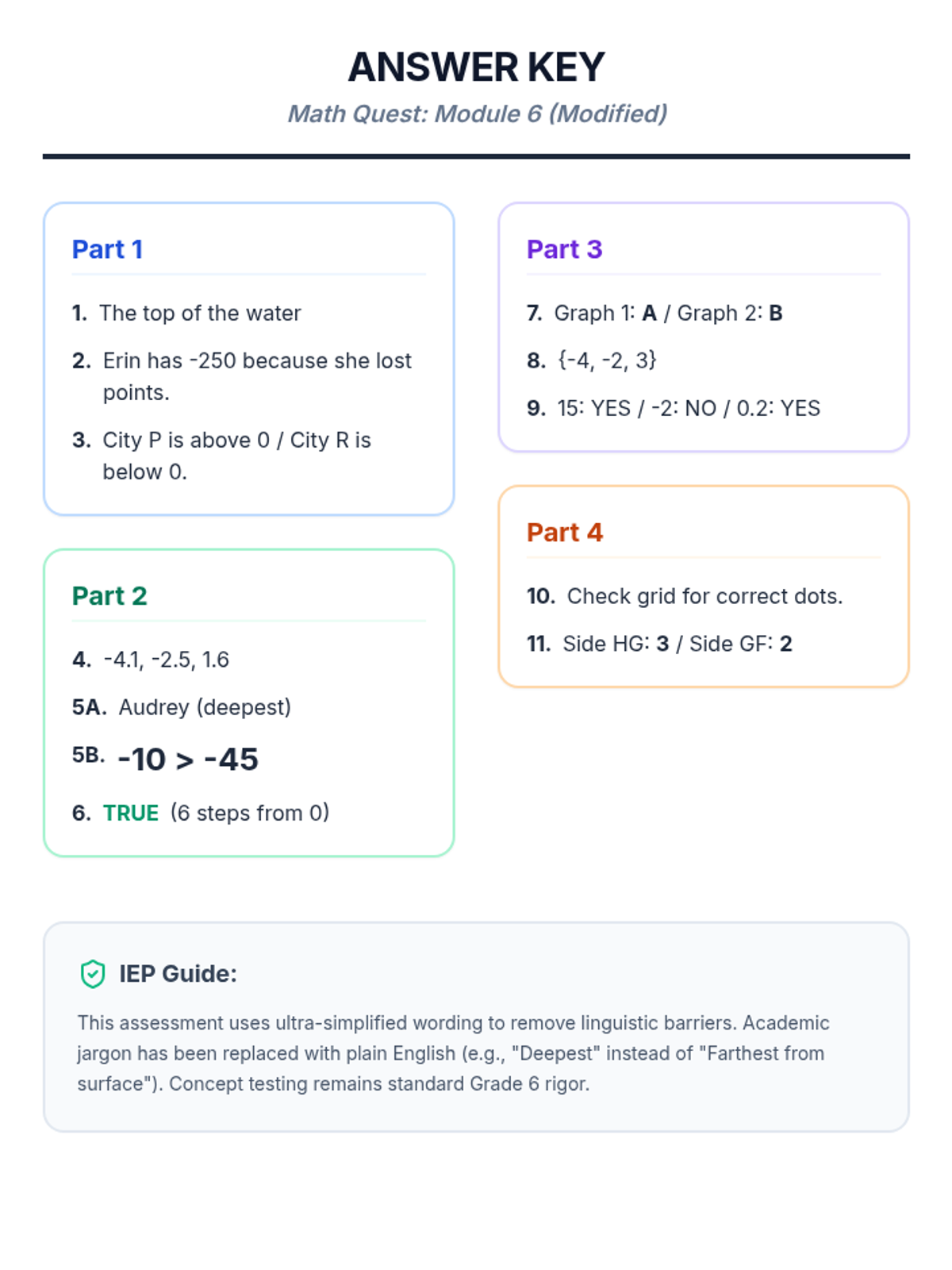
A modified version of the Grade 6 Module 6 Assessment, specifically designed for students with IEPs. The assessment is broken into bite-sized chunks with simplified language, visual supports, and reduced response options to increase accessibility.
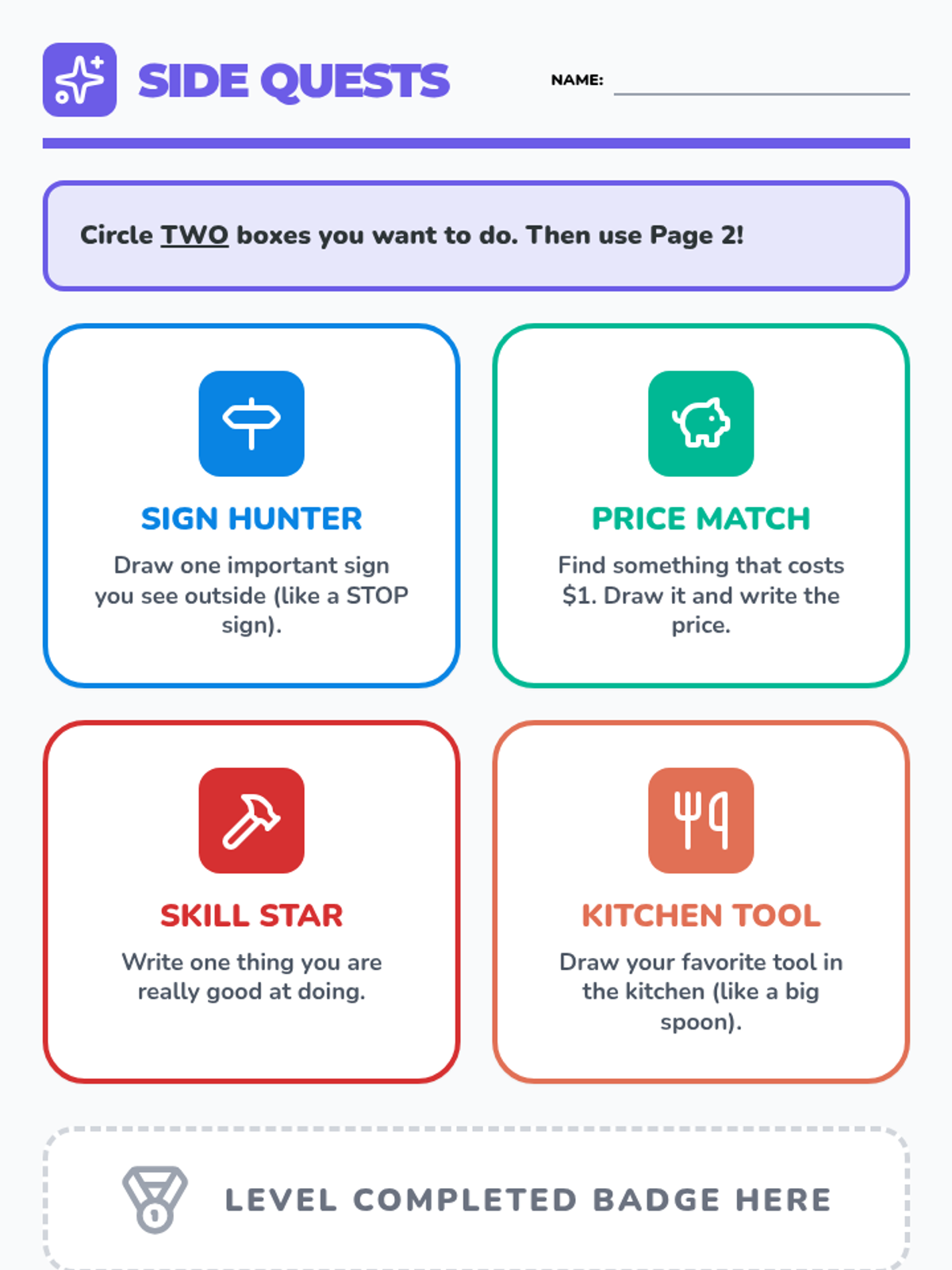
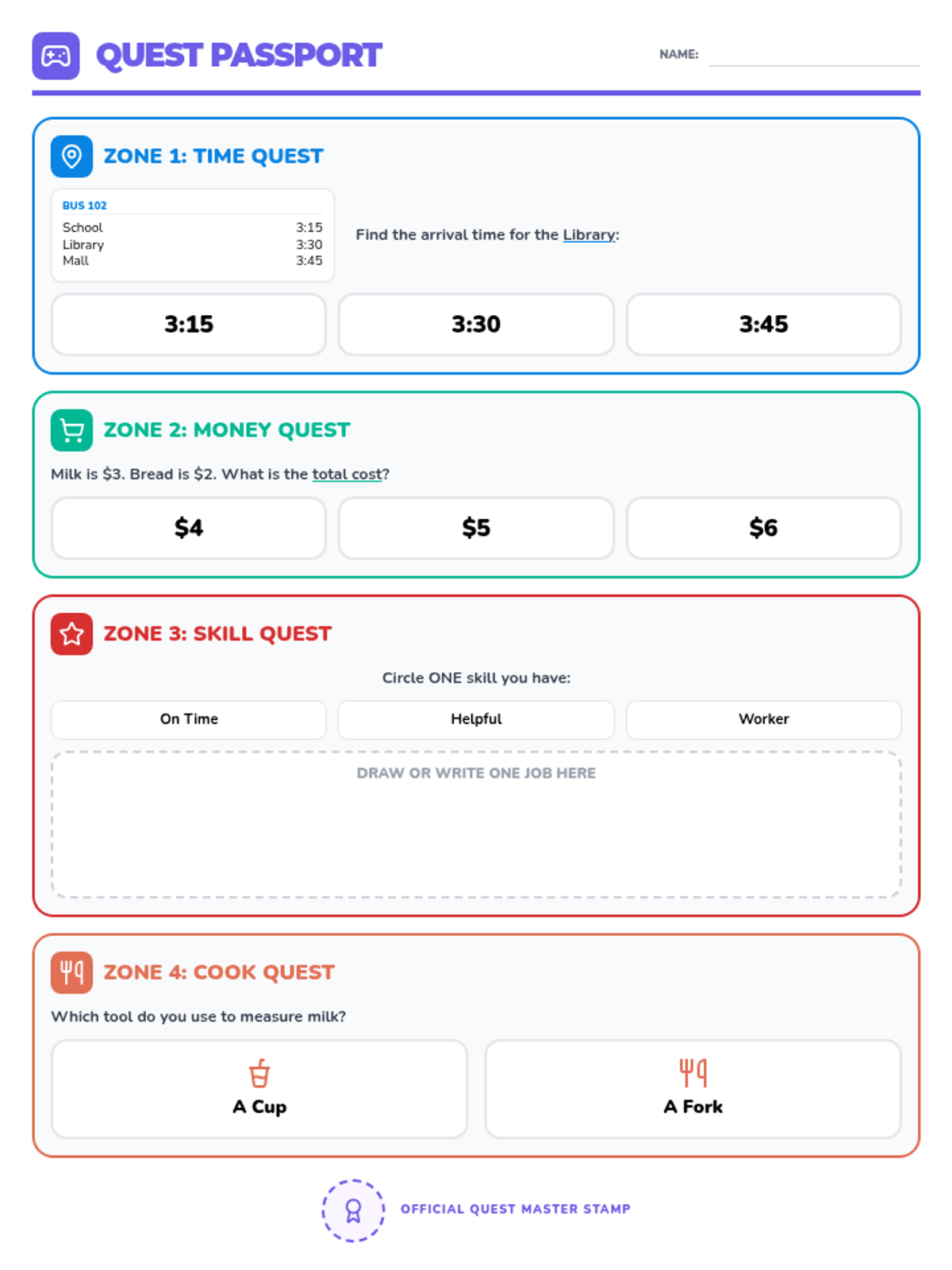
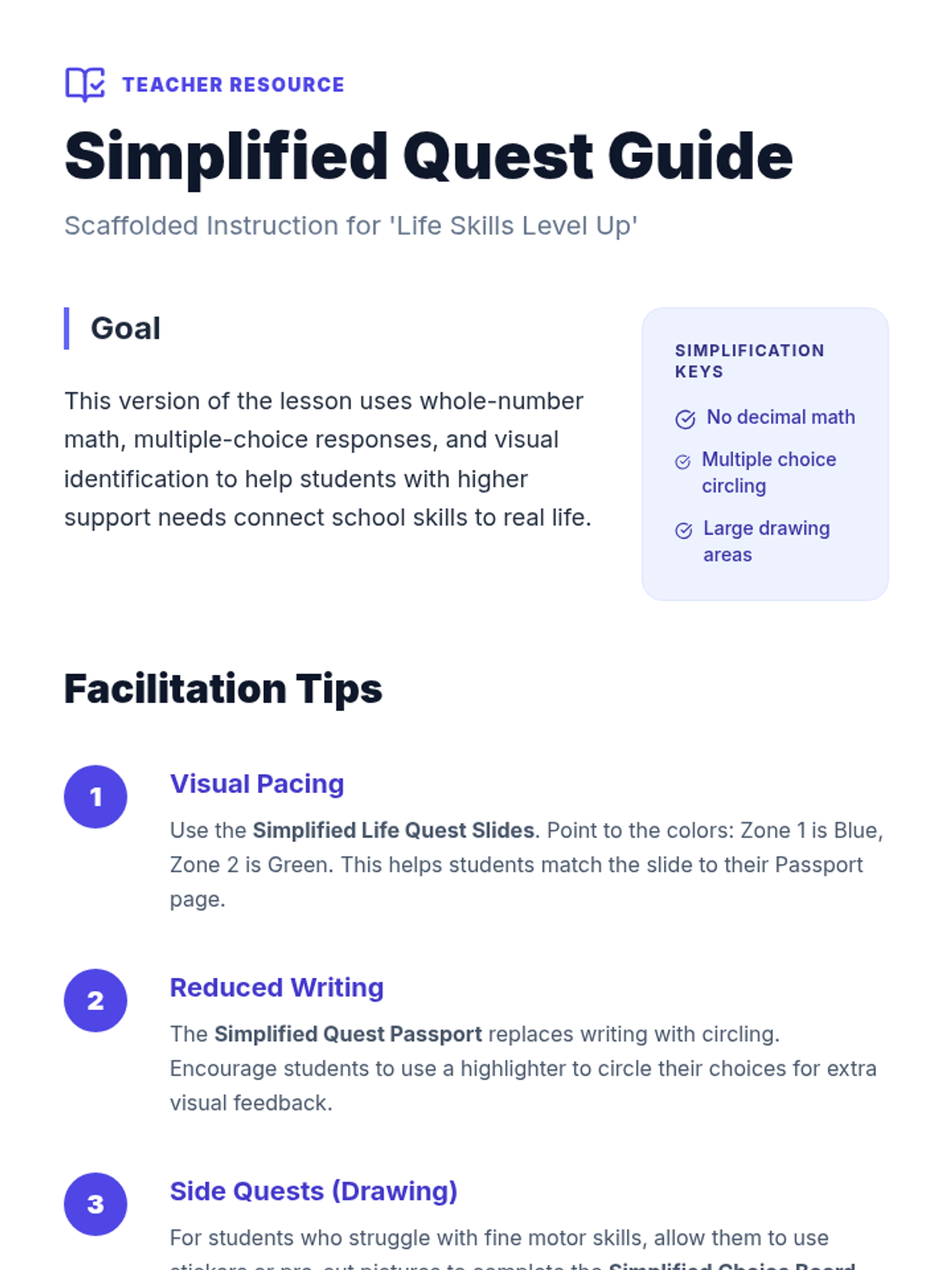
A comprehensive lesson for 6th-grade IEP students connecting academic skills (reading, writing, math) to essential life functions like navigation, budgeting, employment, and cooking. Through a 'Life Quest' theme, students explore how classroom learning prepares them for independence.
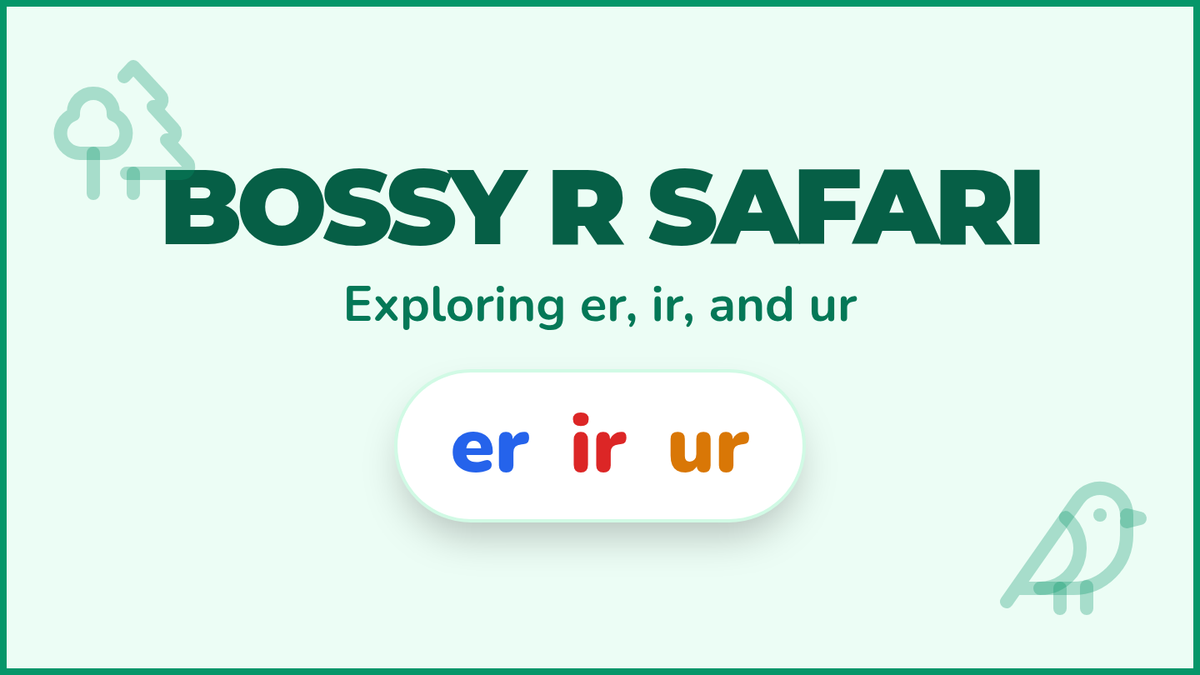
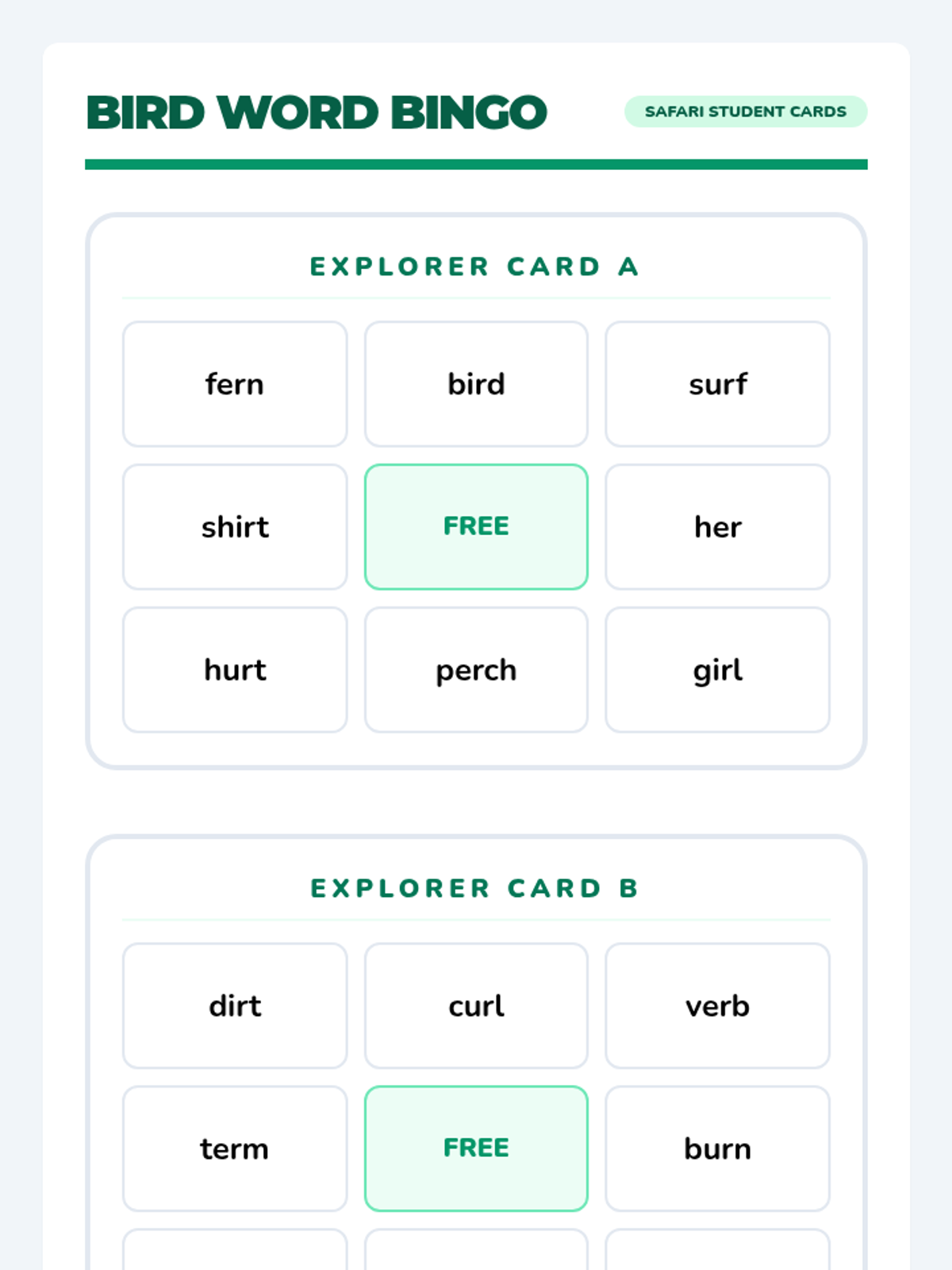
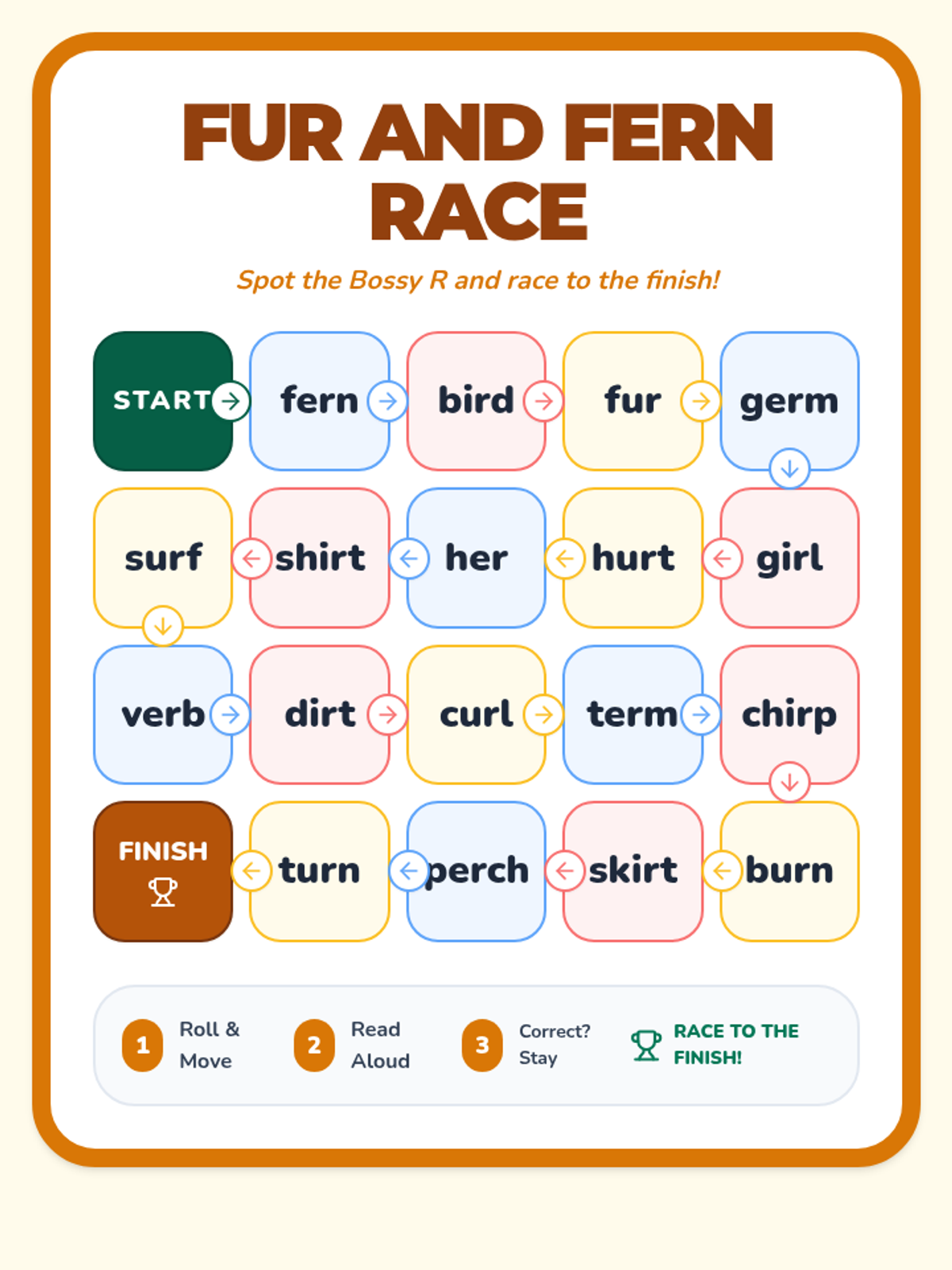
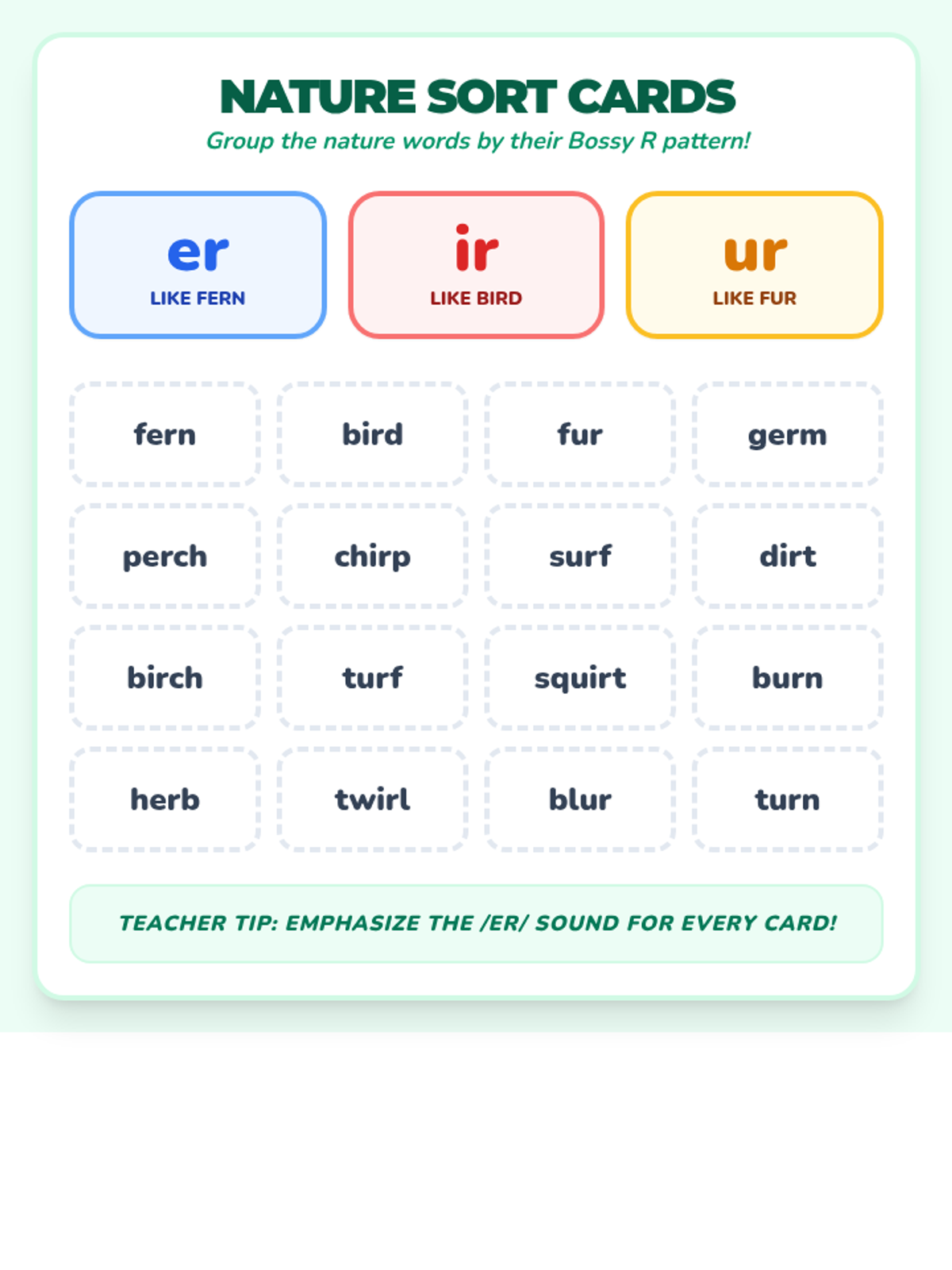
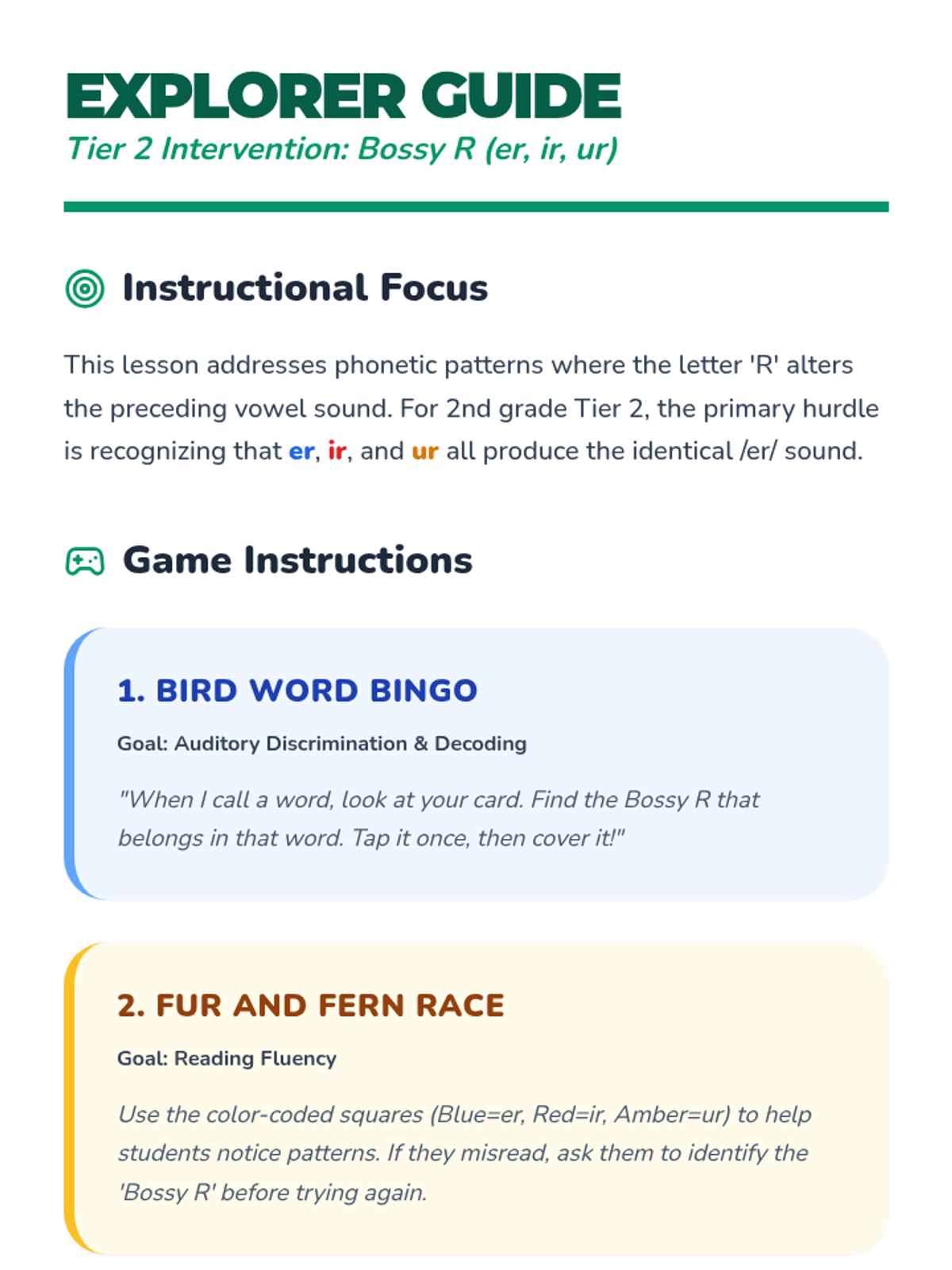
A Tier 2 intervention lesson focusing on R-controlled vowels (er, ir, ur) through interactive games and a nature-themed safari adventure. Students will practice decoding and sorting words with these patterns to improve reading fluency and spelling accuracy.
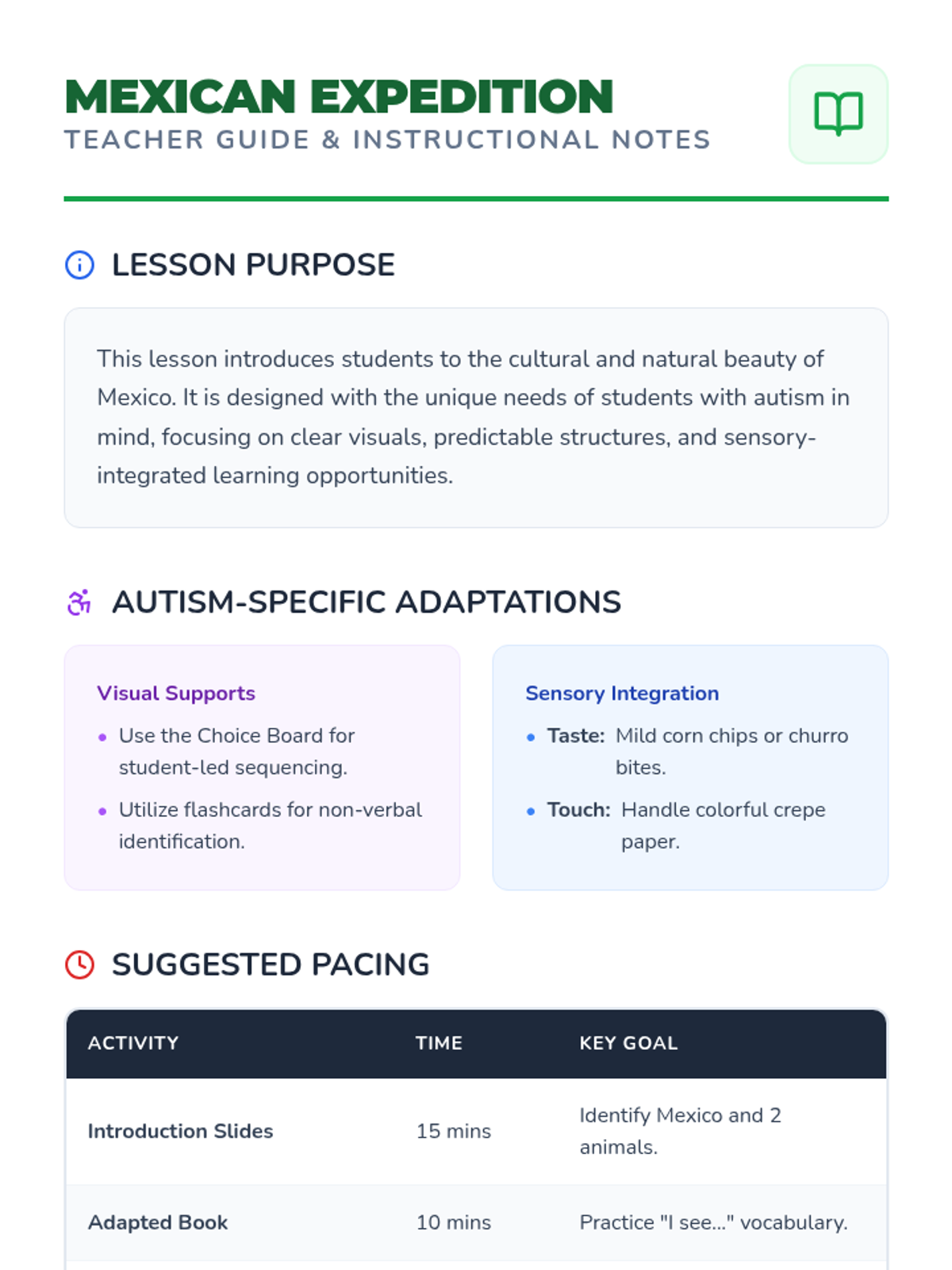
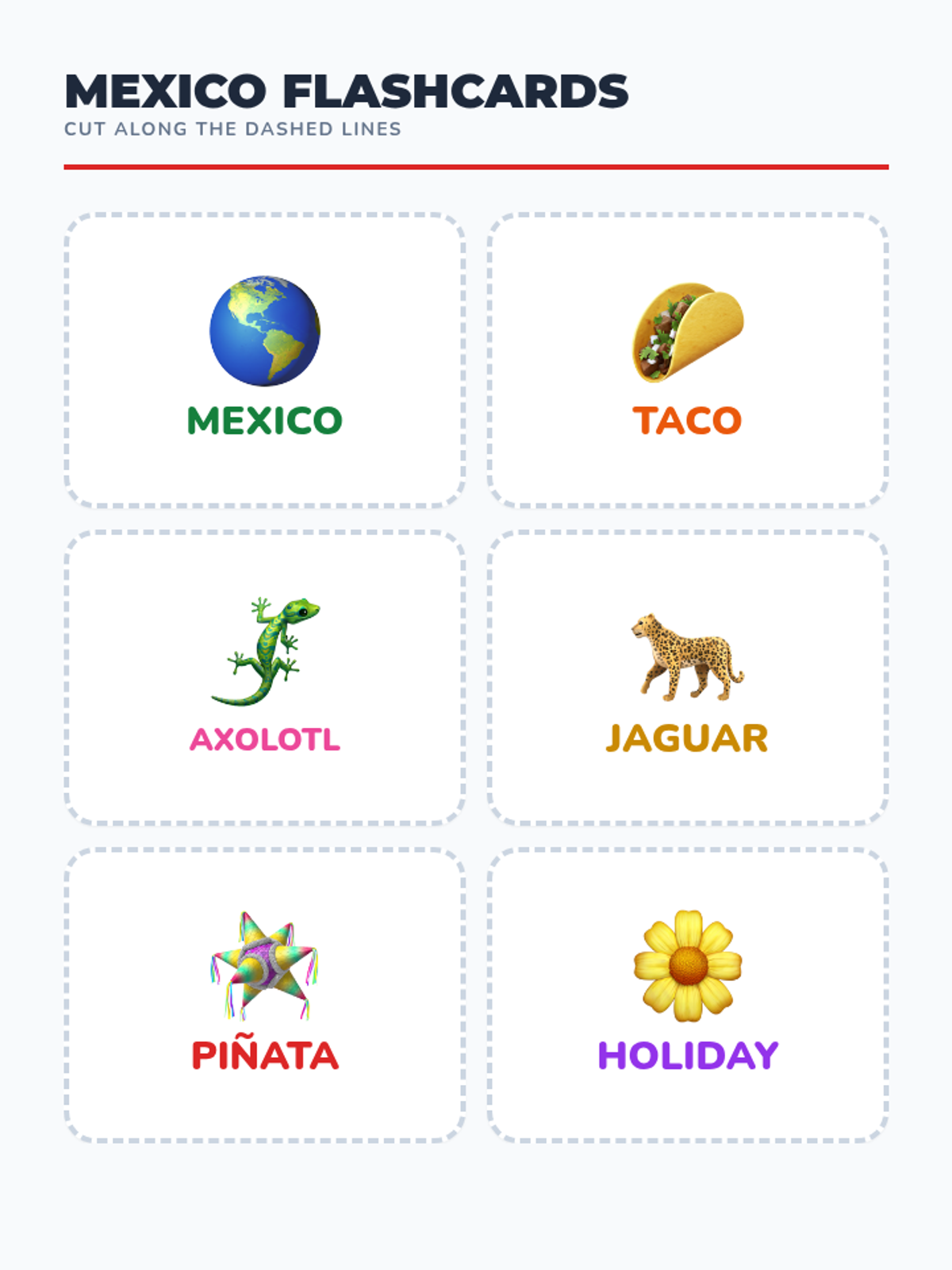
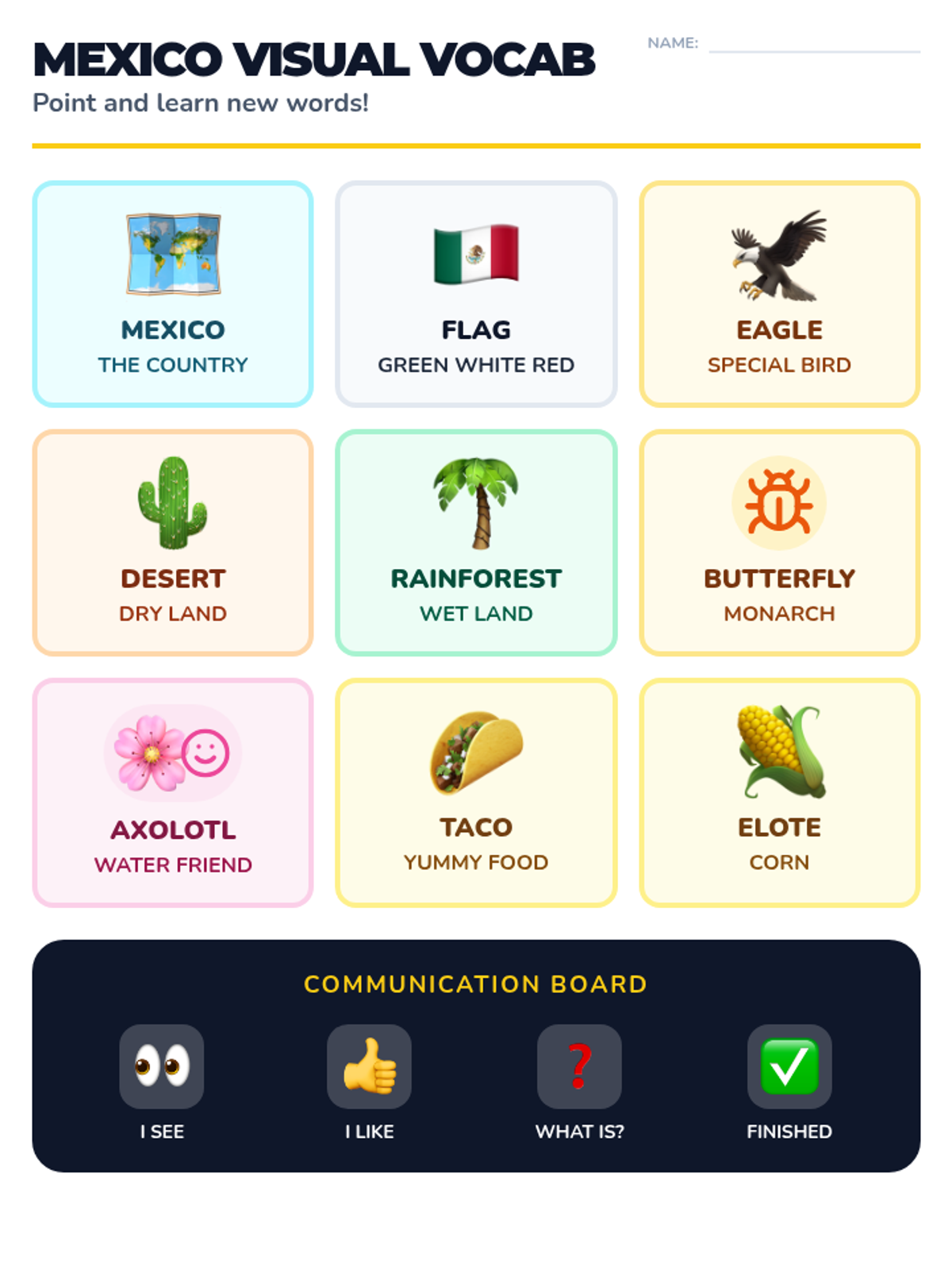
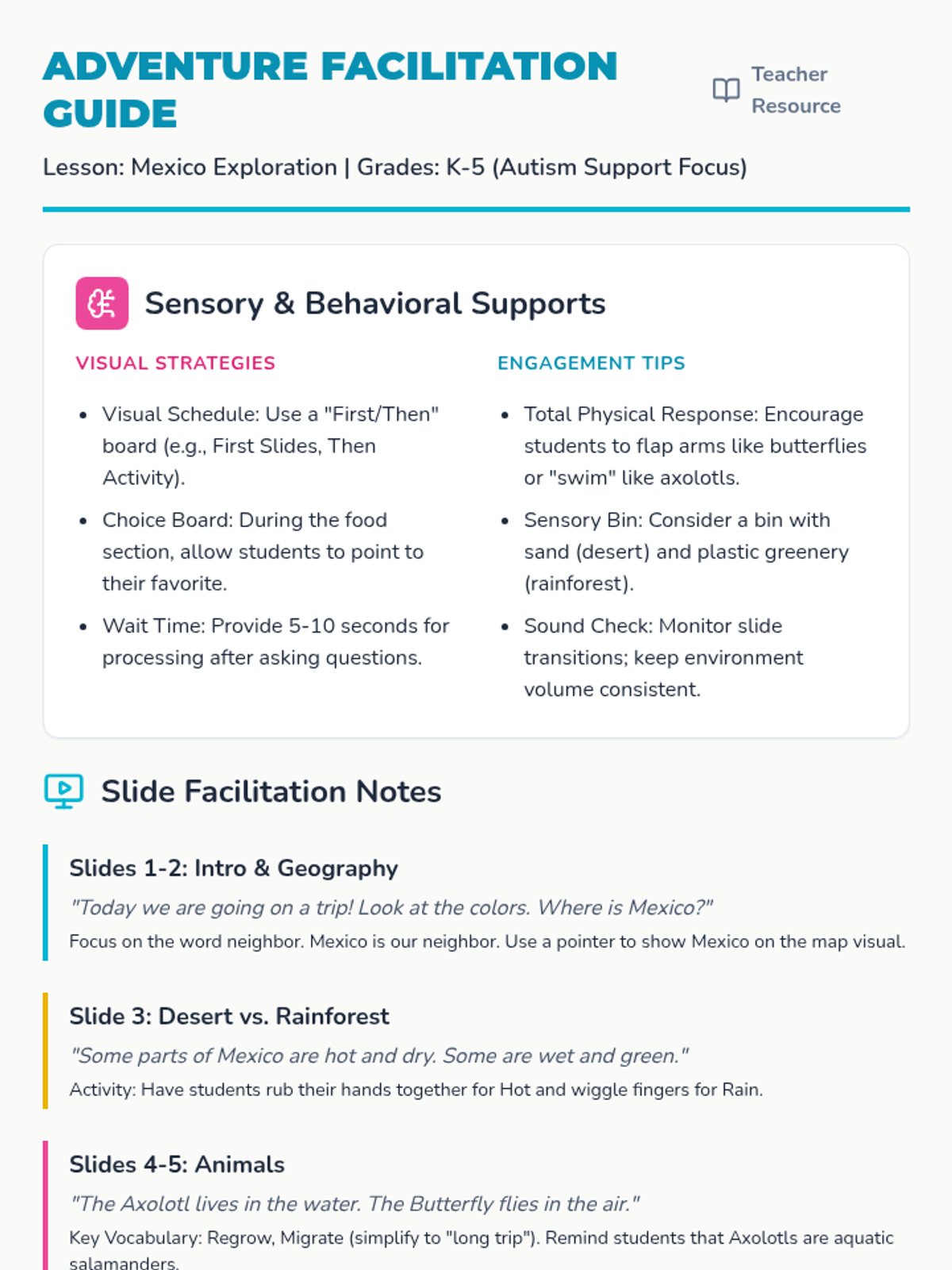
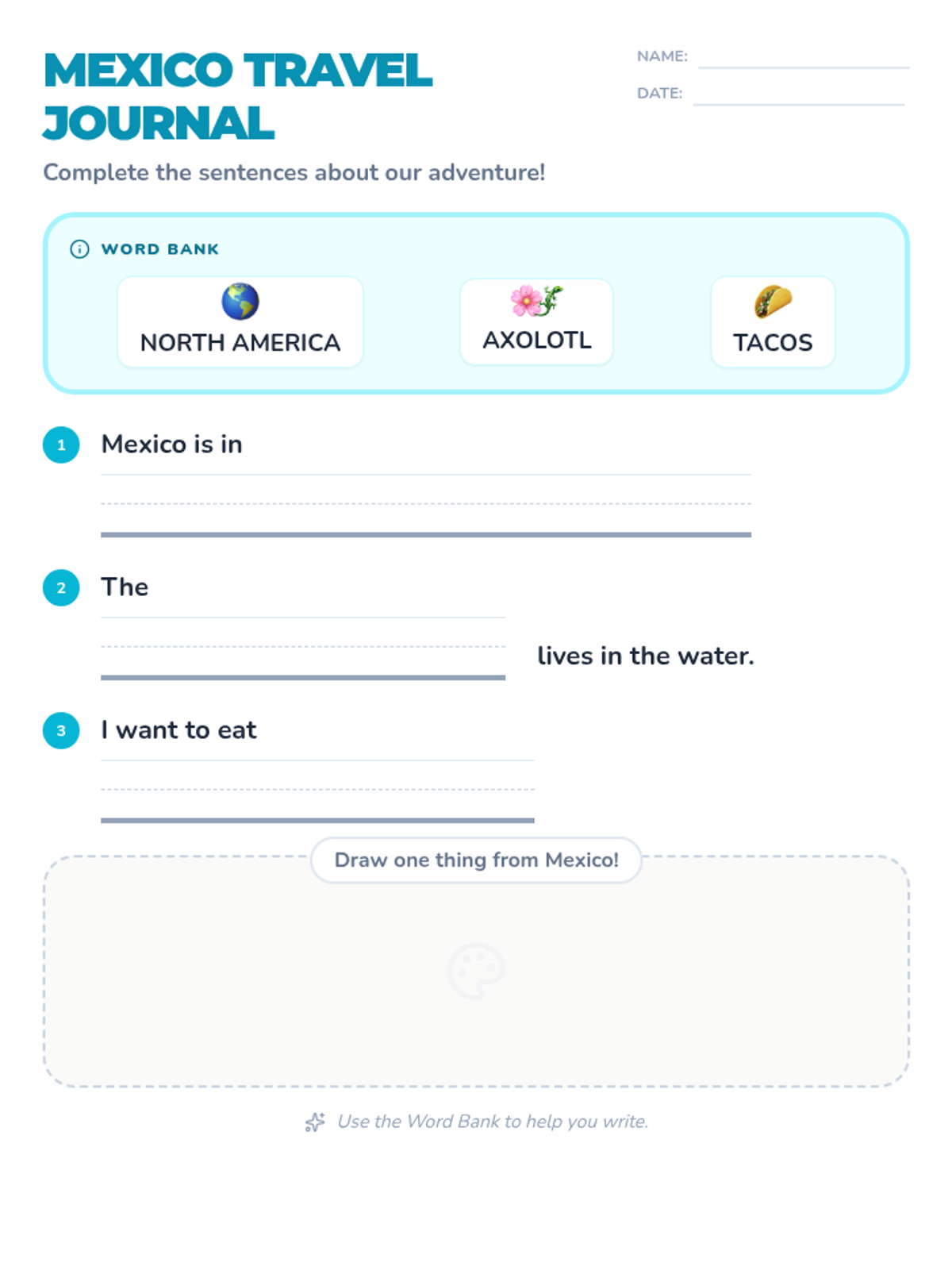
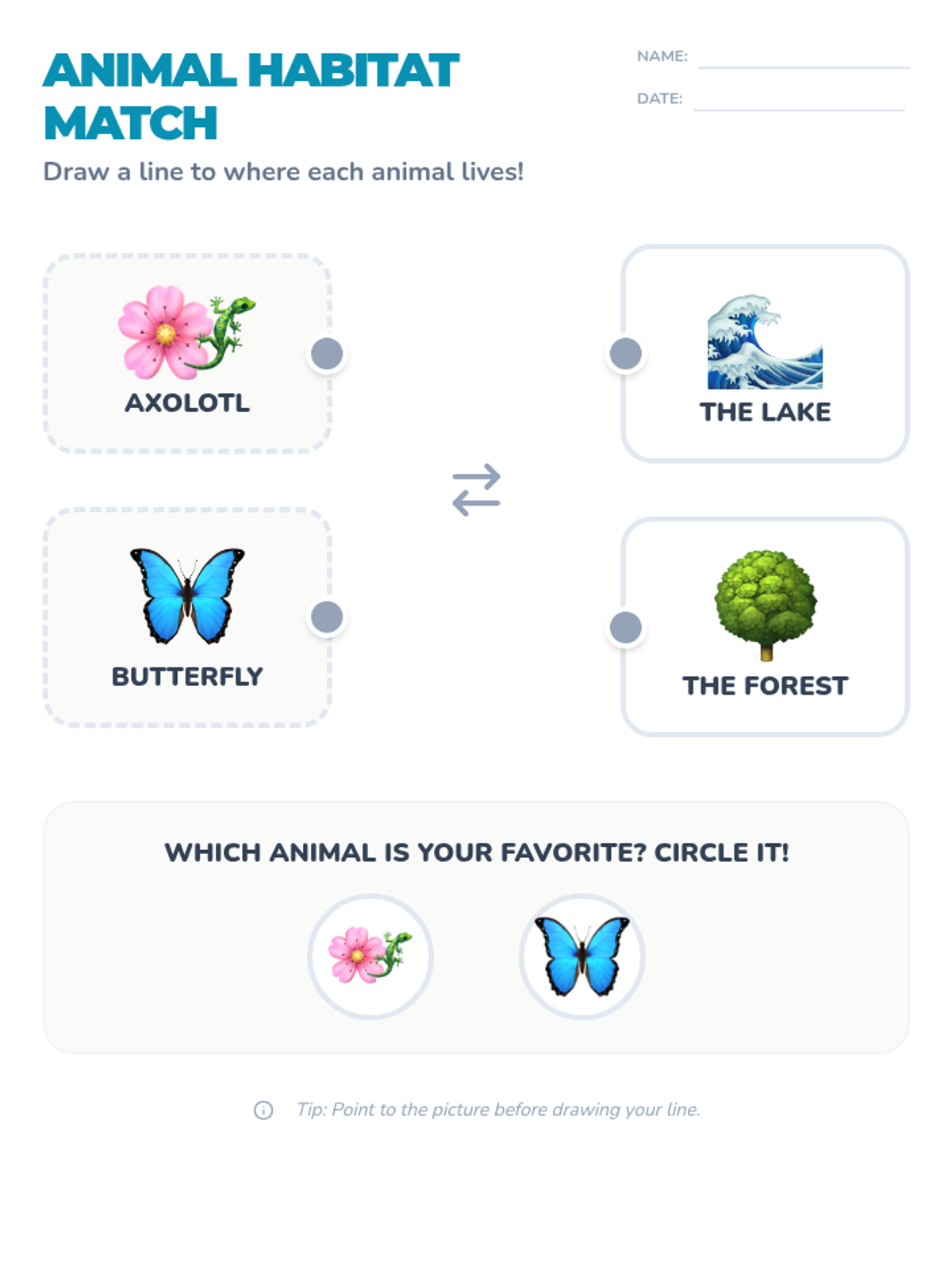
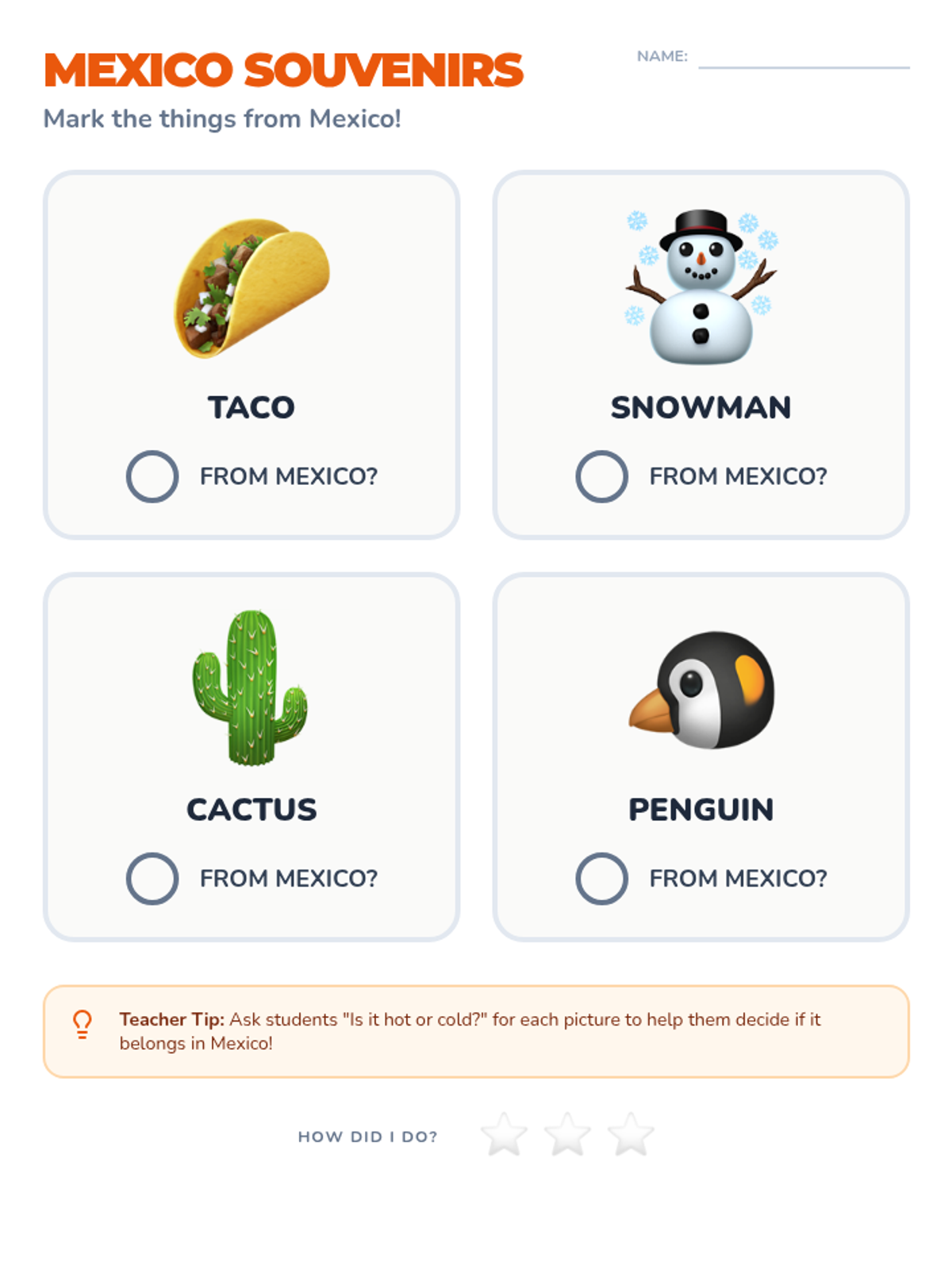
A comprehensive exploration of Mexican culture, geography, and wildlife designed specifically for students with autism, featuring high-visual supports and adapted activities.
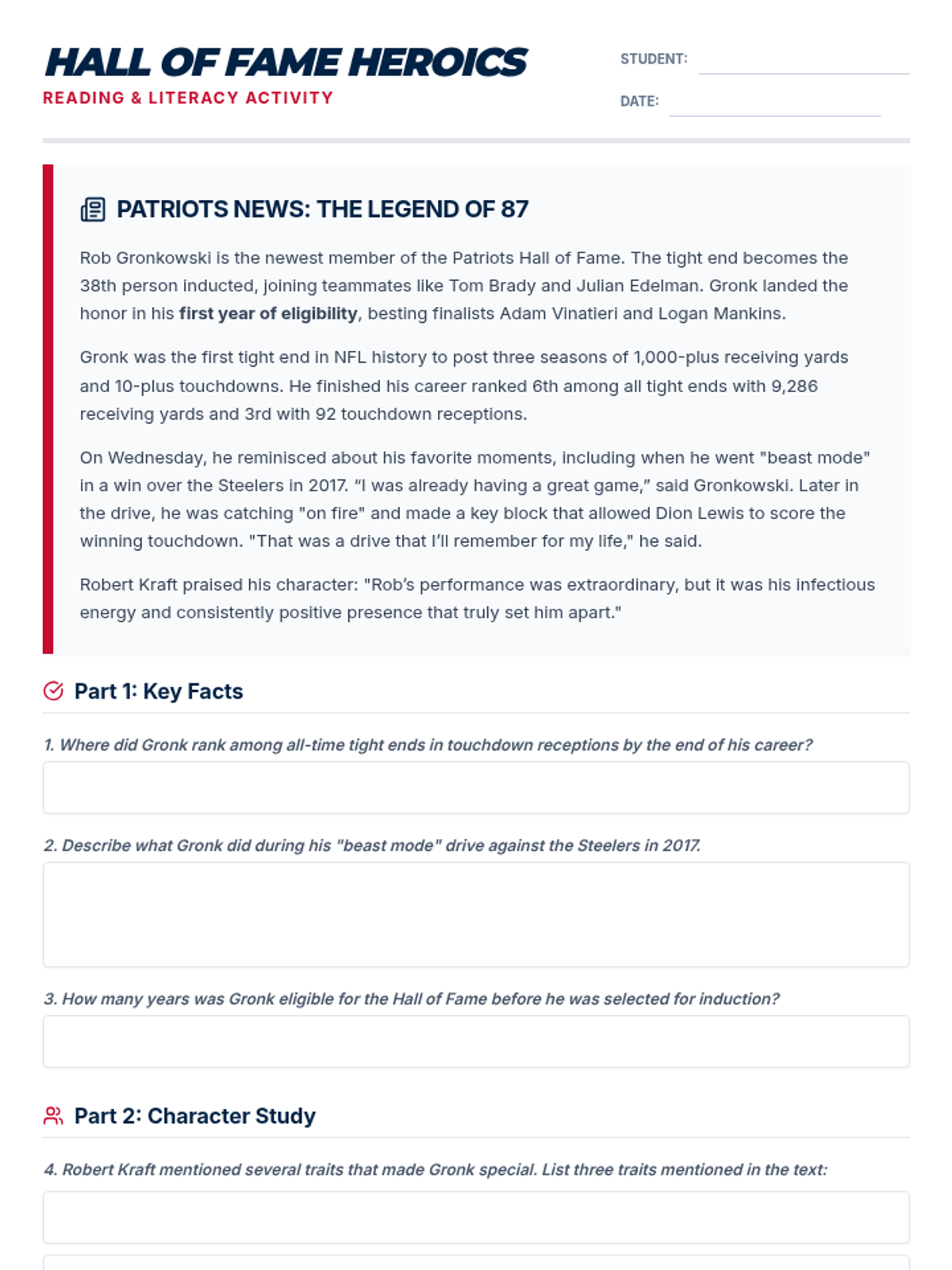
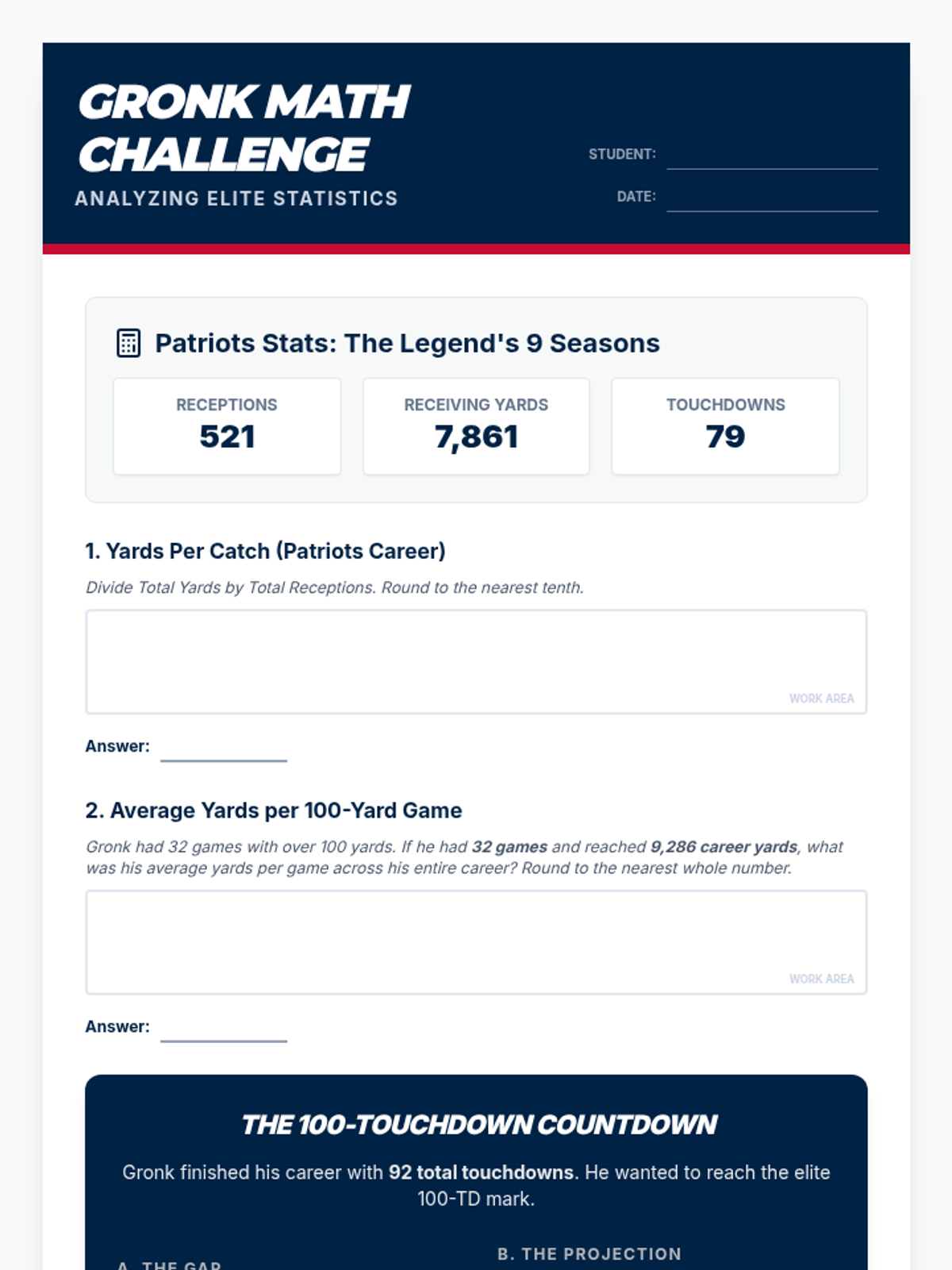
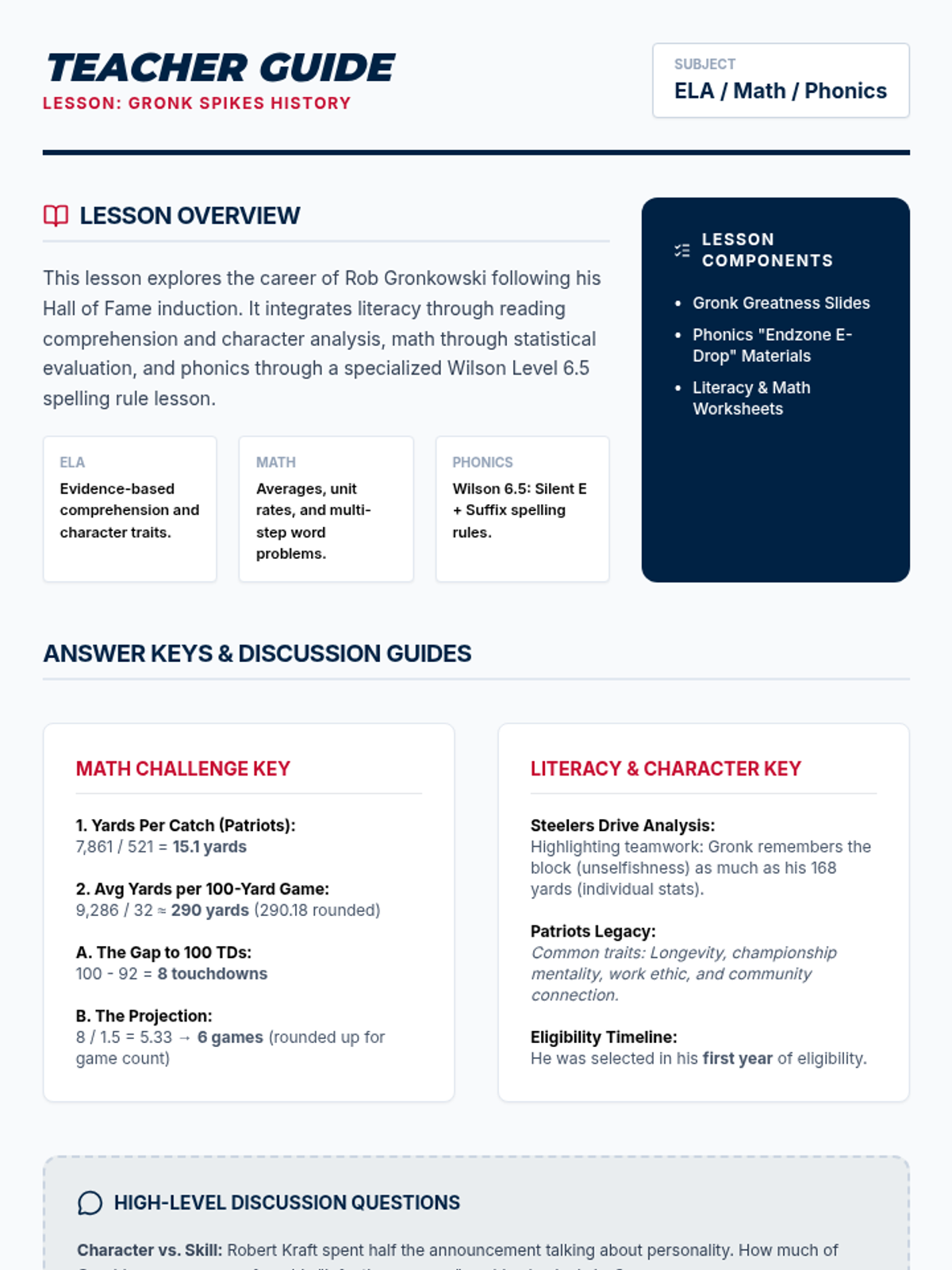
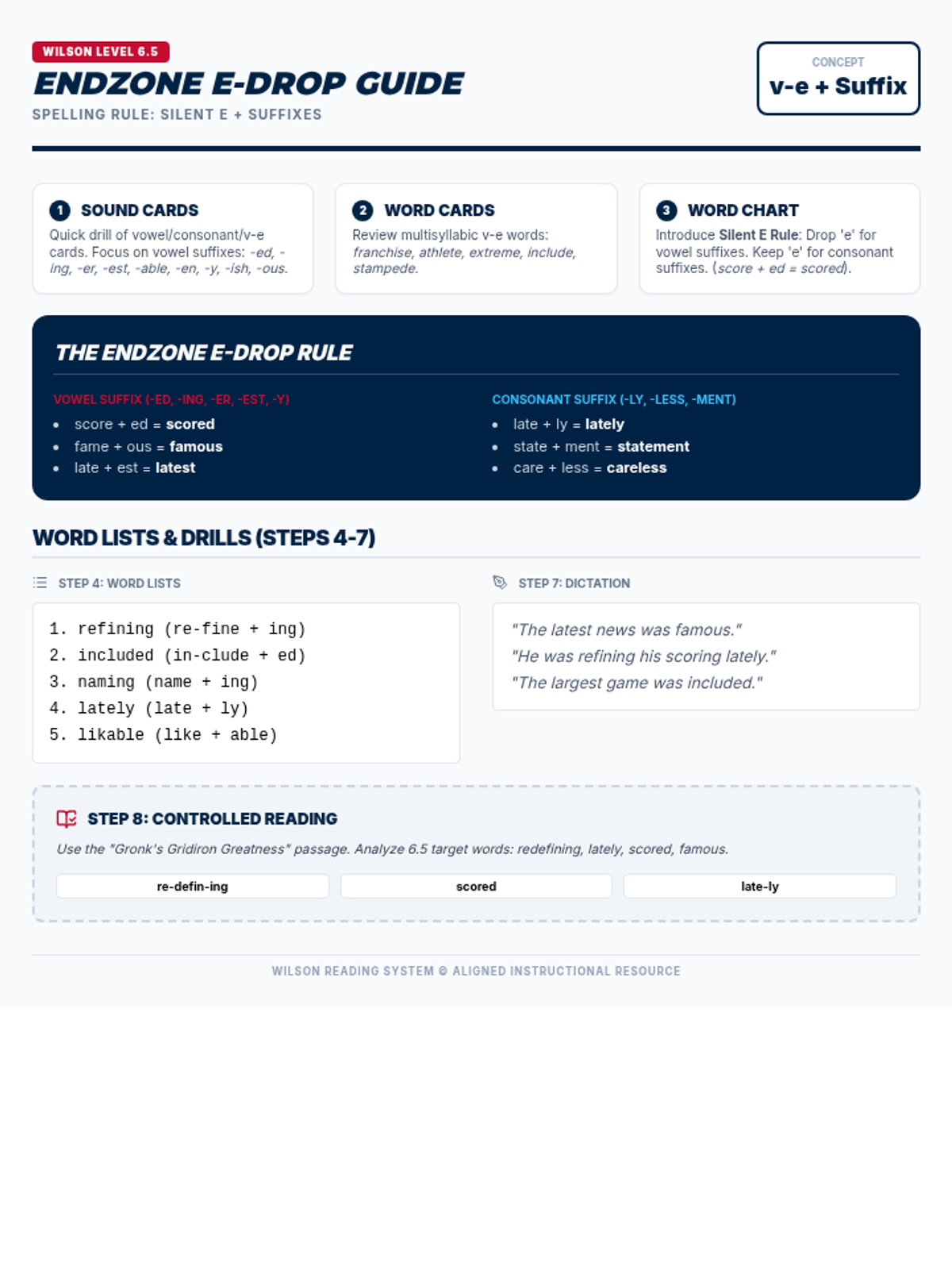
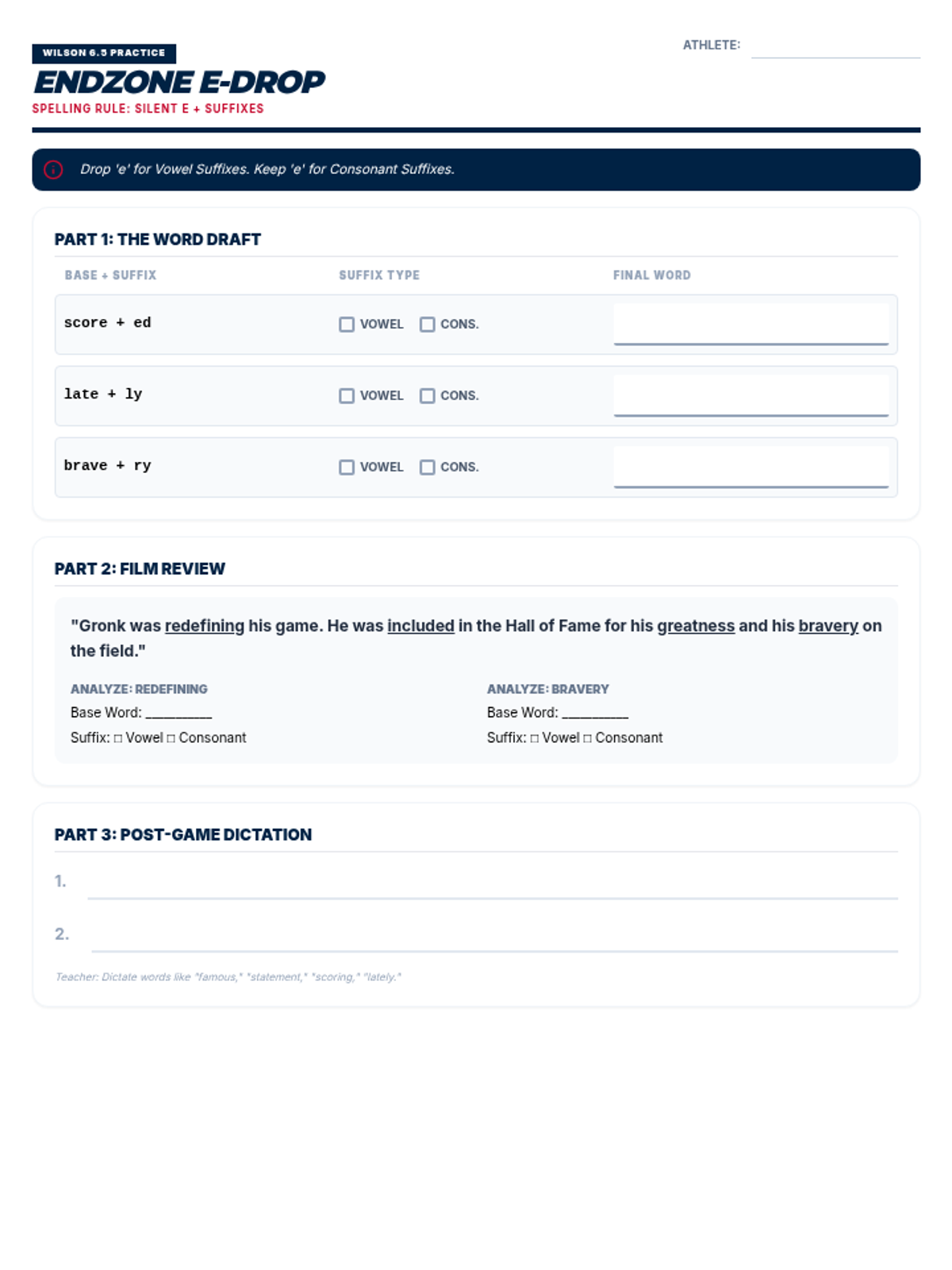
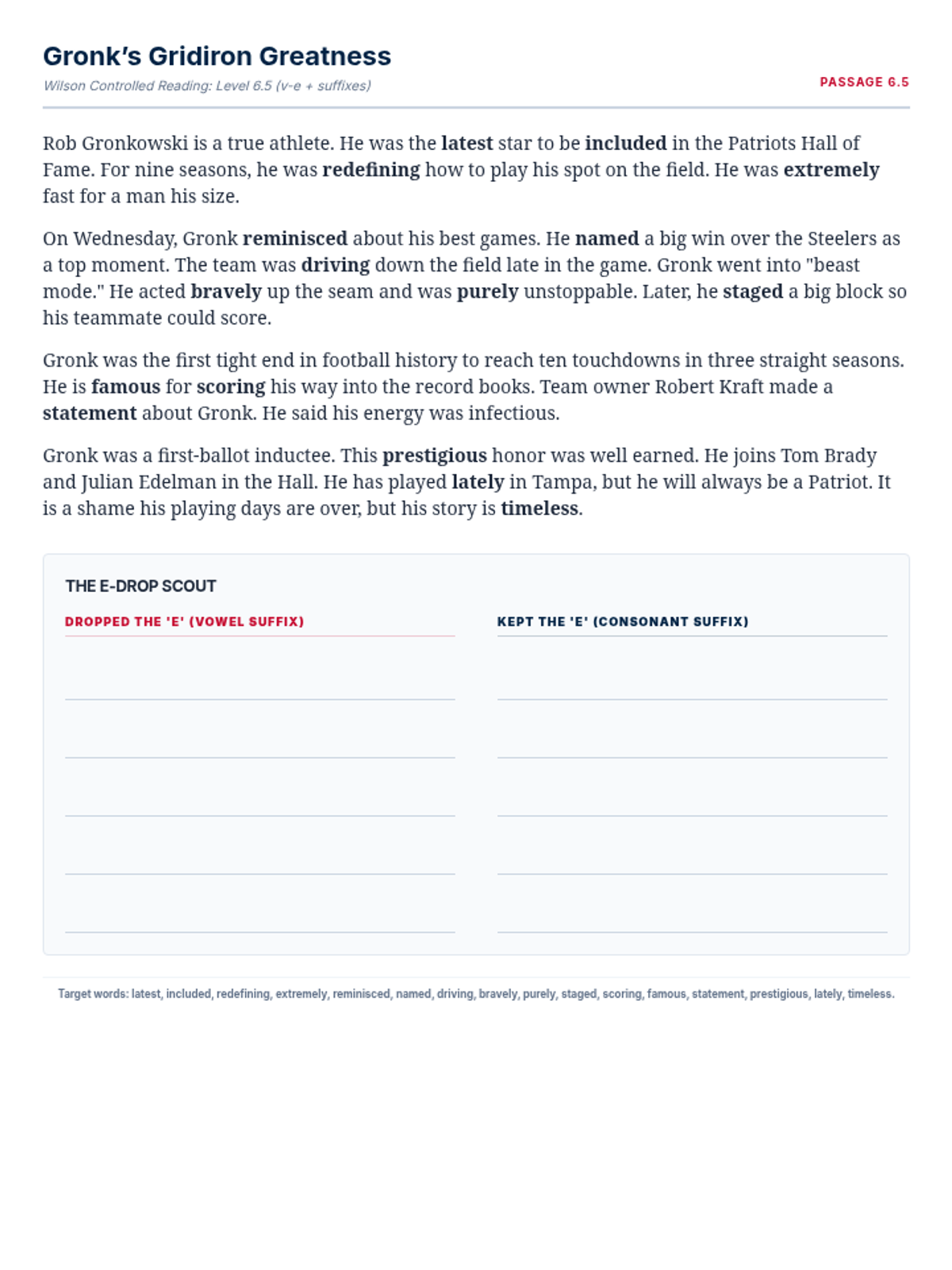
A Wilson Reading System (WRS) aligned lesson for Level 6.5, focusing on the Silent E Spelling Rule (dropping/keeping the e with suffixes) using the career of Rob Gronkowski as the thematic anchor.
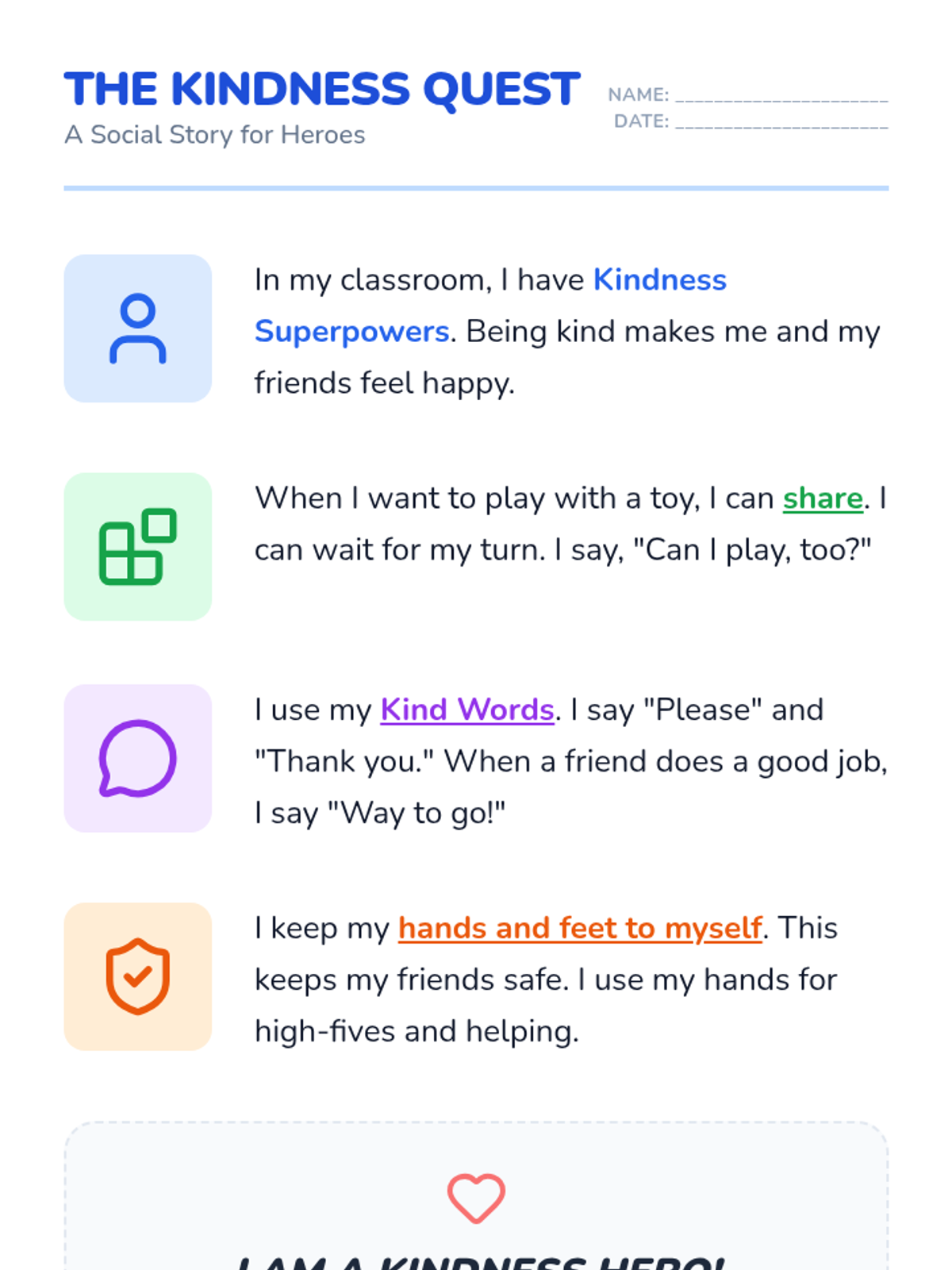
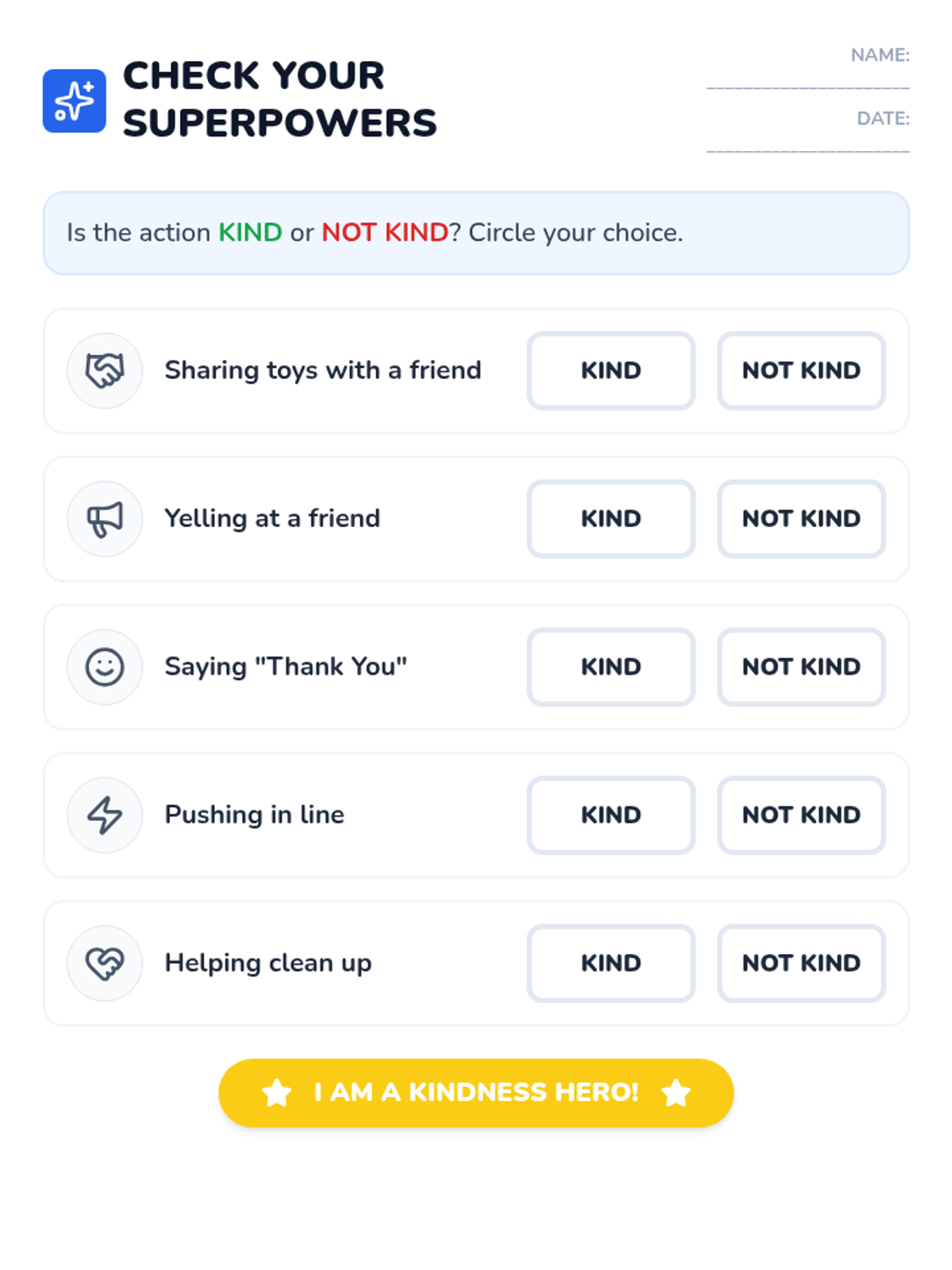
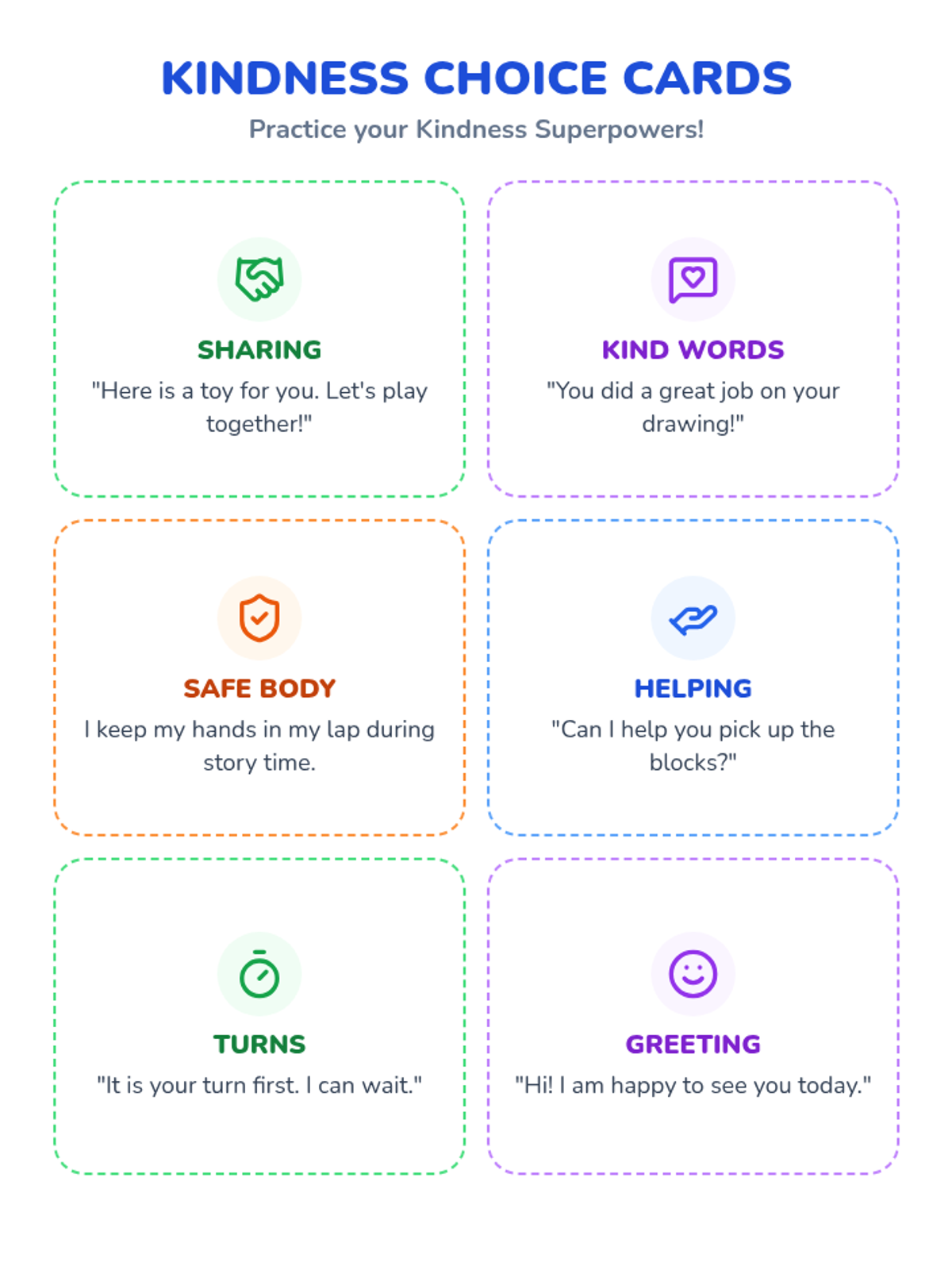
A lesson designed for students with disabilities focusing on three core kindness skills: sharing, using kind words, and keeping hands and feet to oneself. This lesson uses the 'Kindness Superpowers' theme to engage students in social-emotional learning.
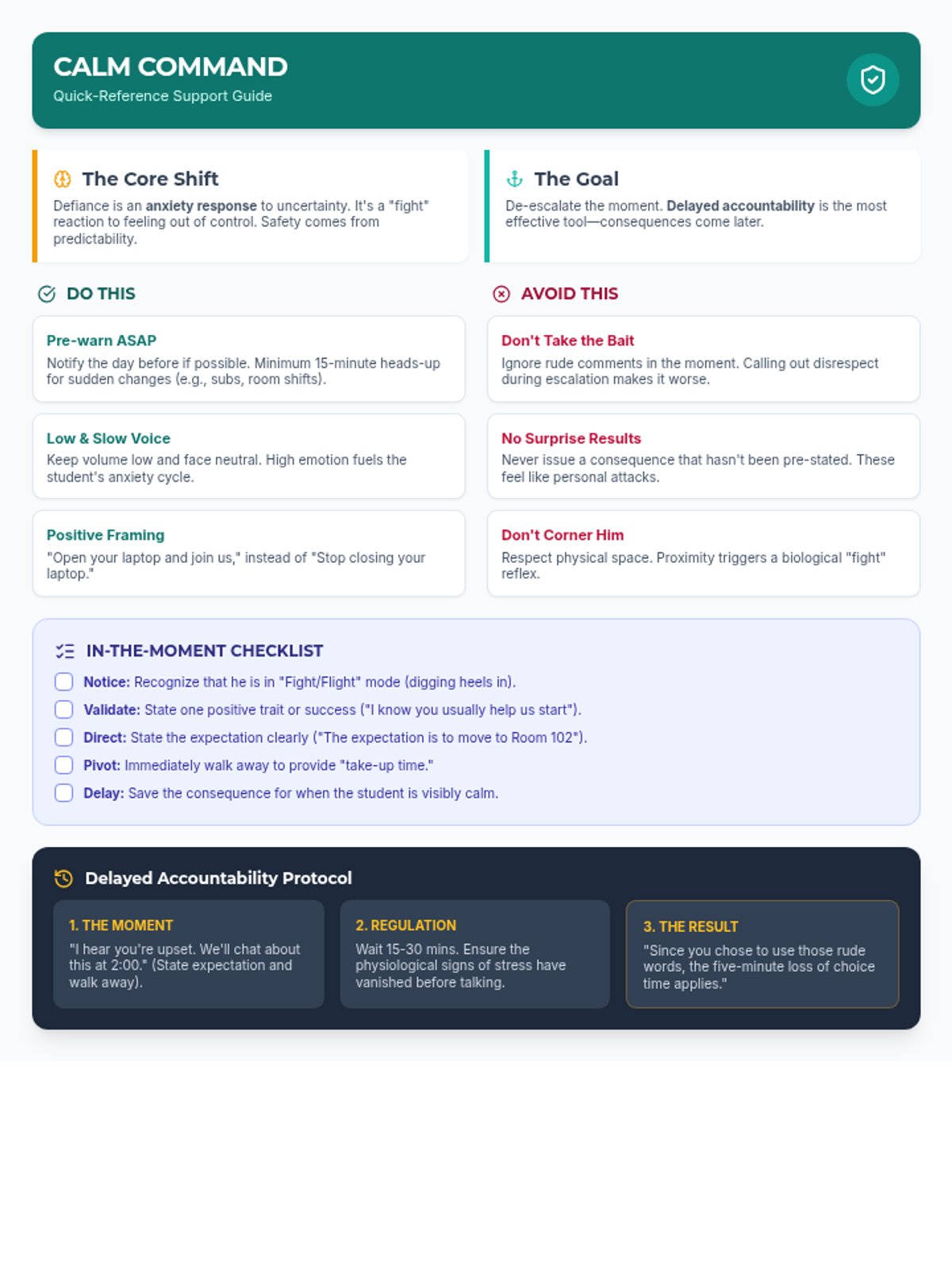
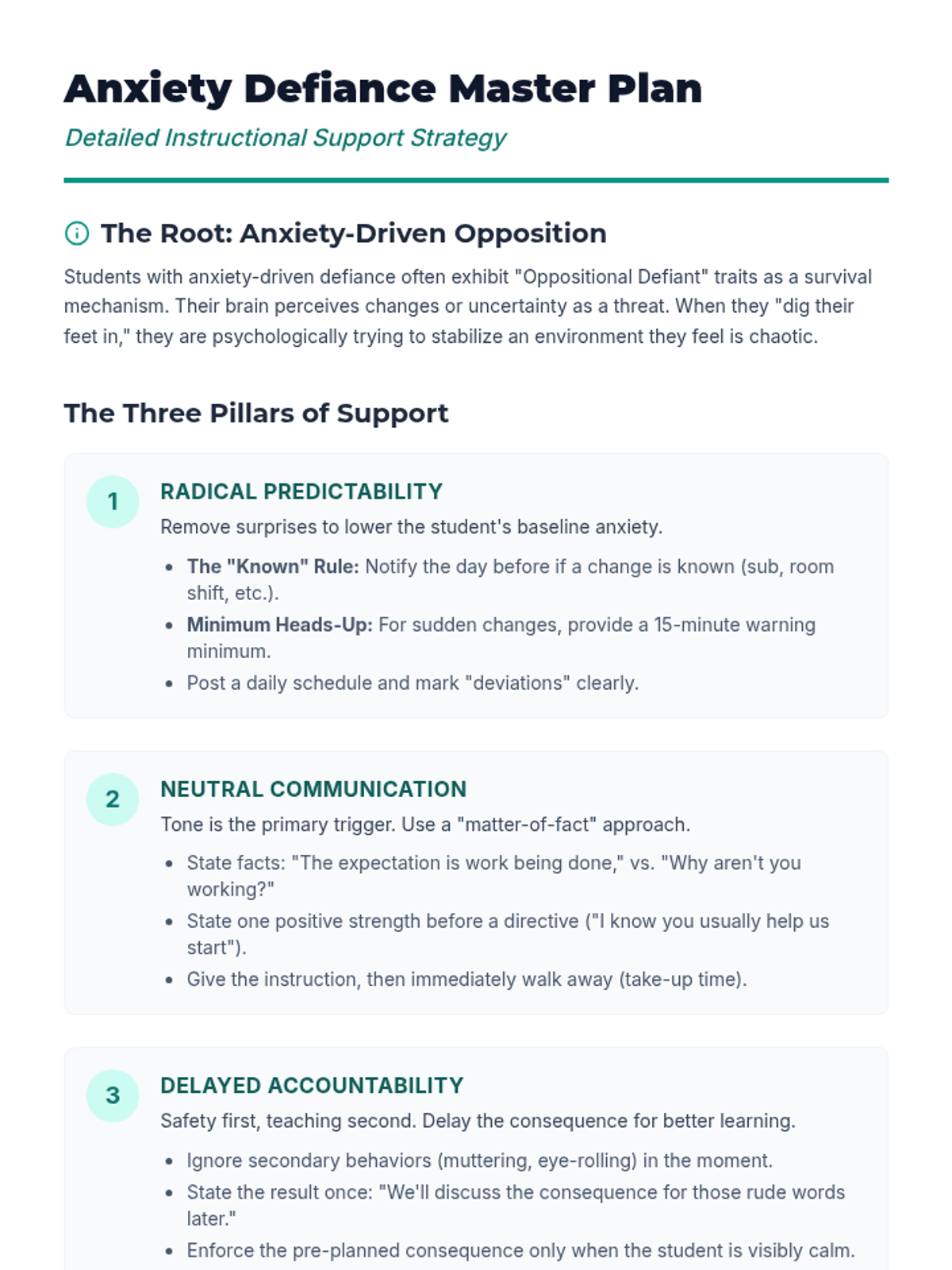
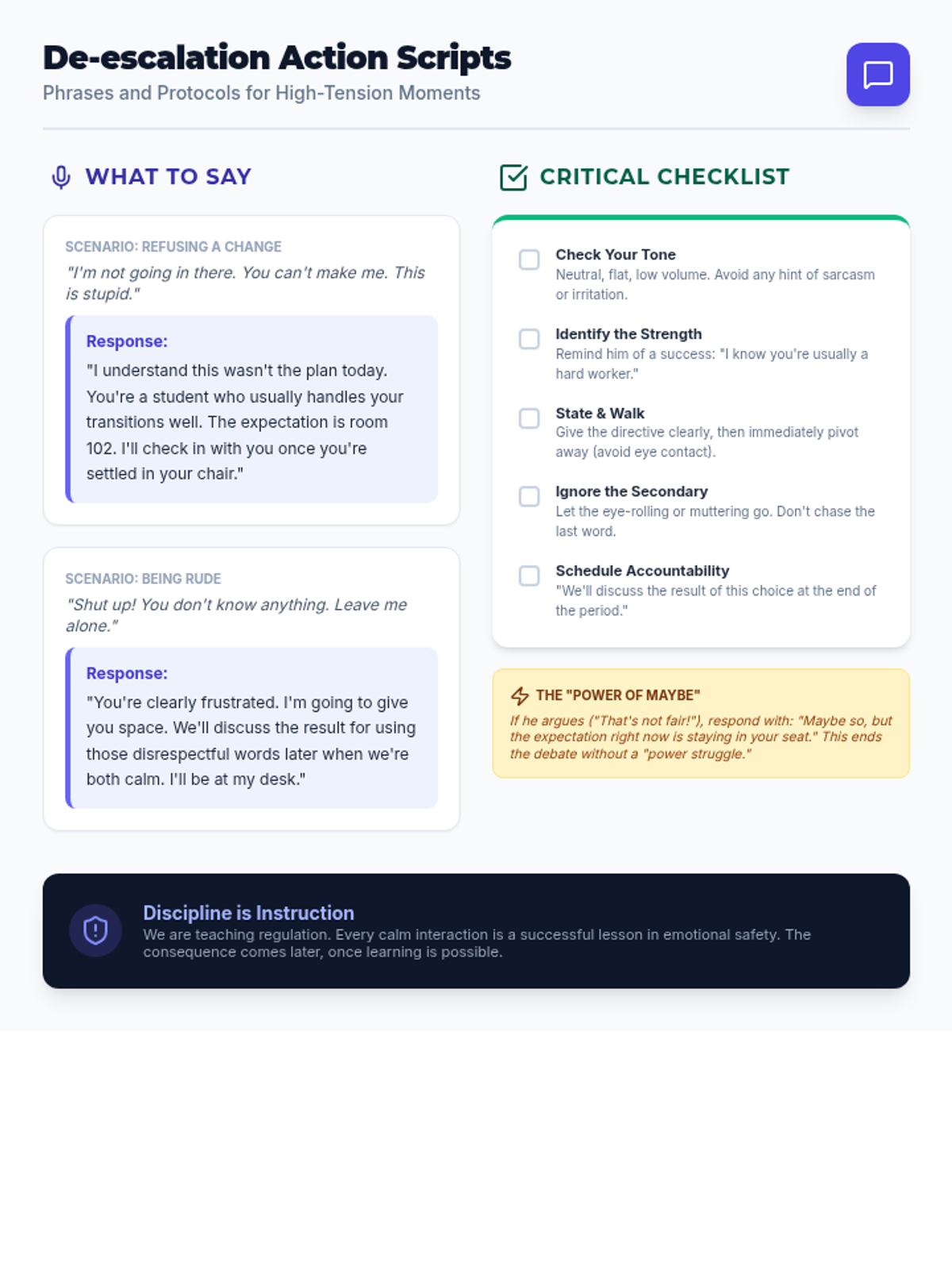
A comprehensive toolkit for educators to support students with anxiety-driven defiance, focusing on pre-emptive strategies, calm communication, and delayed consequence enforcement.
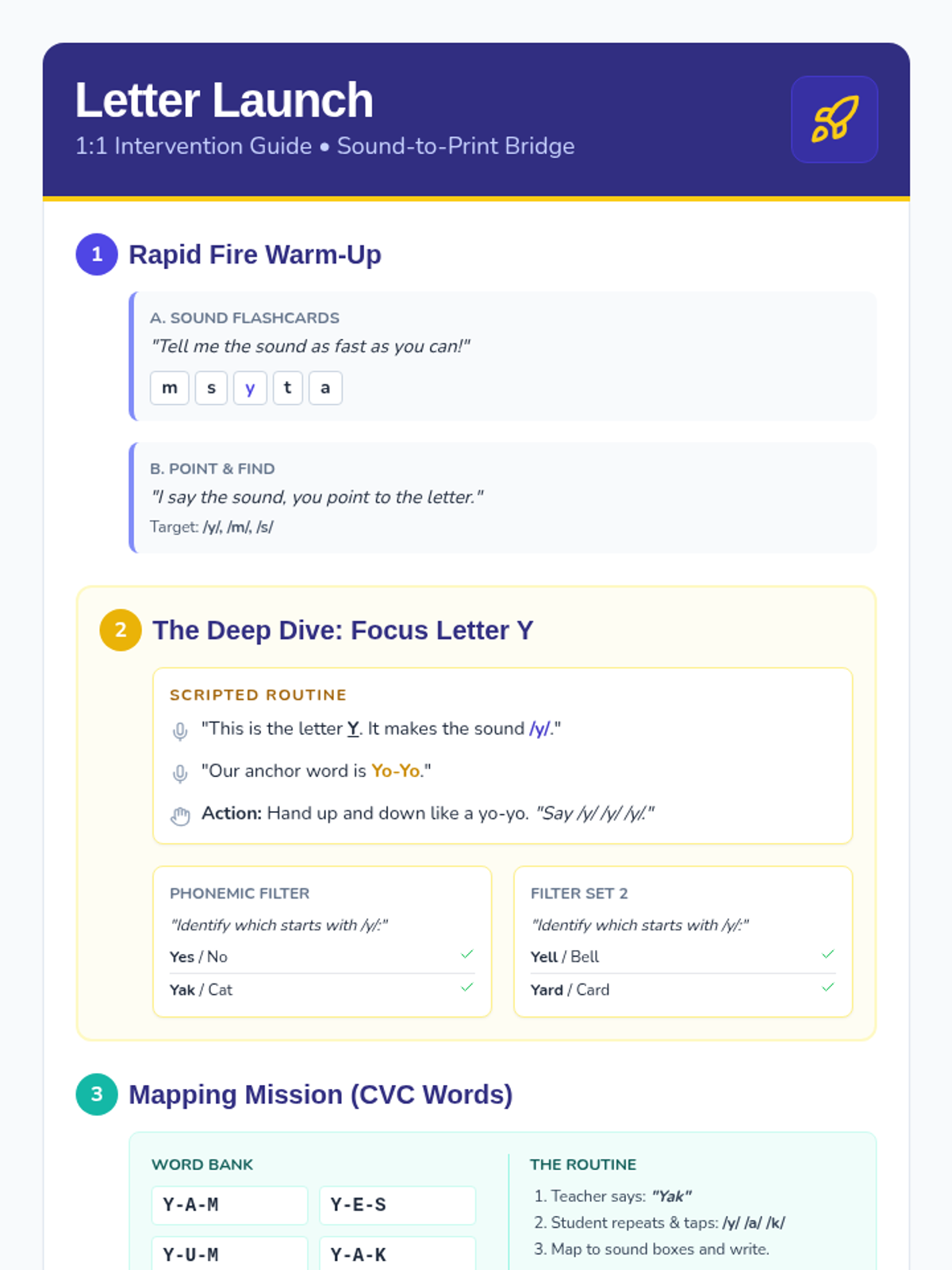
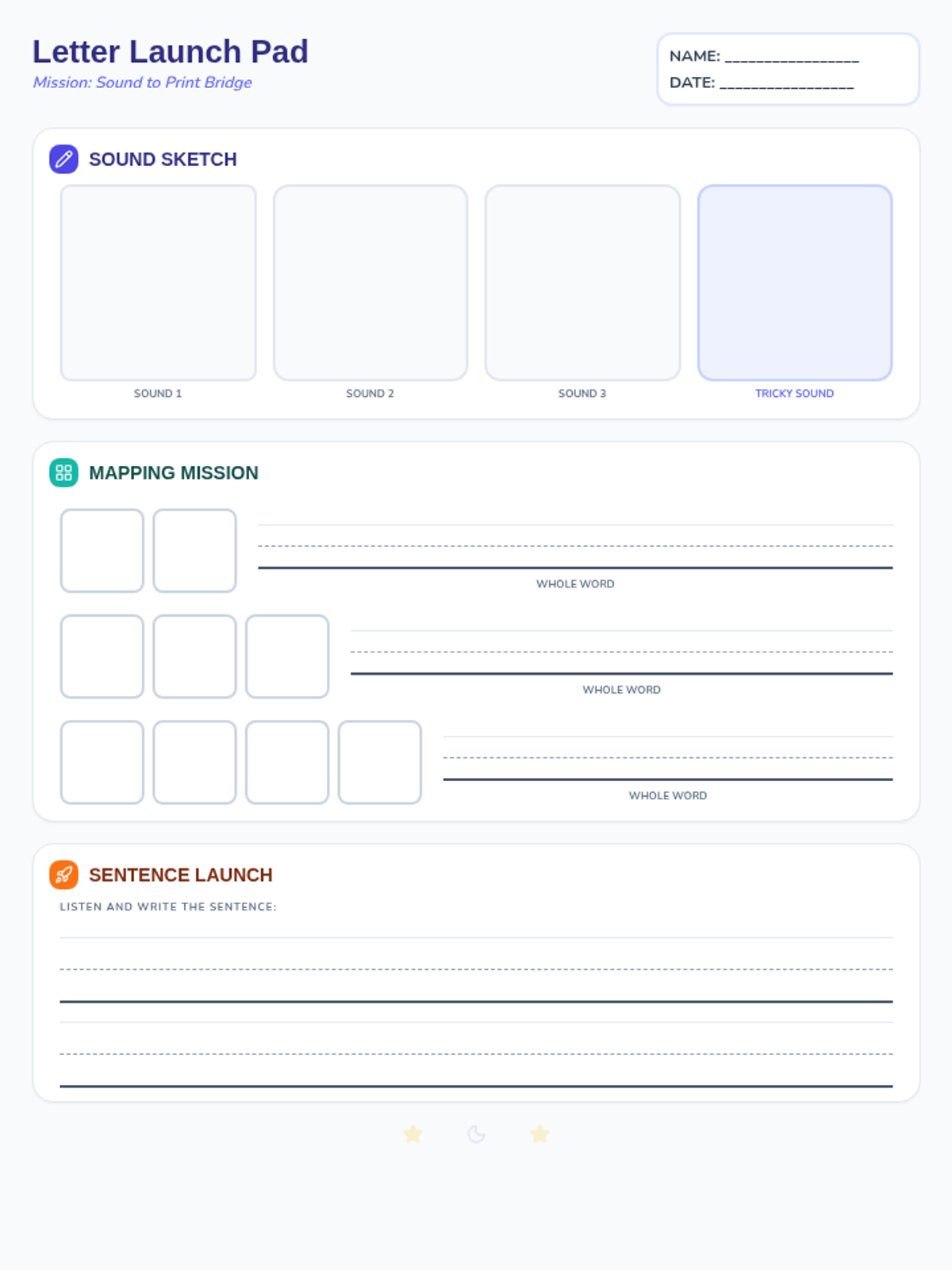
A high-impact 1:1 intervention routine designed to bridge the gap between sound recognition and written application for kindergarten students. This lesson focuses on multisensory techniques for tricky letters, specifically using 'Y' as the primary focus.
An engaging exploration of Mexico's geography, wildlife, and culture designed specifically for elementary students with autism, featuring visual supports and clear, structured information.
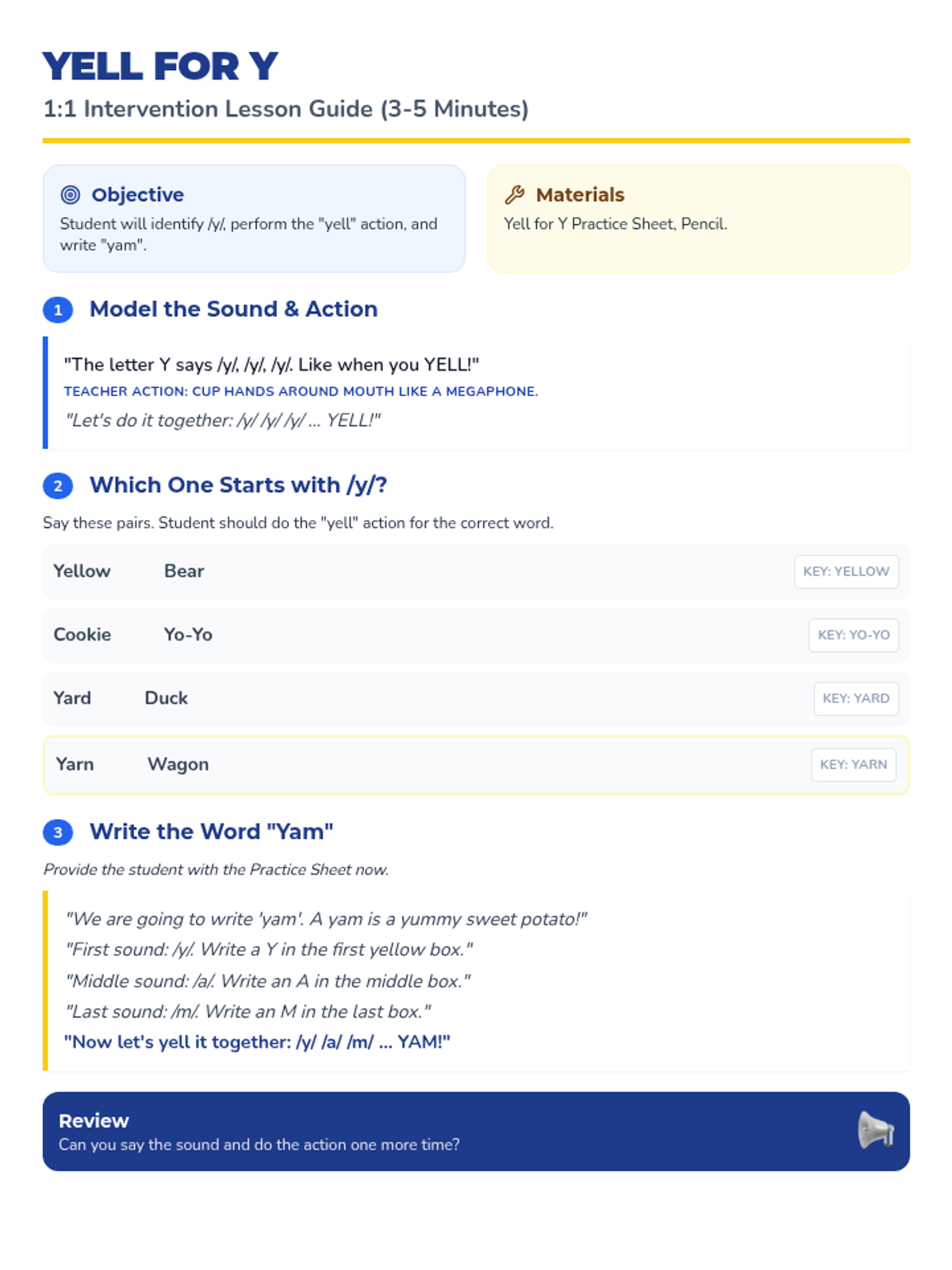
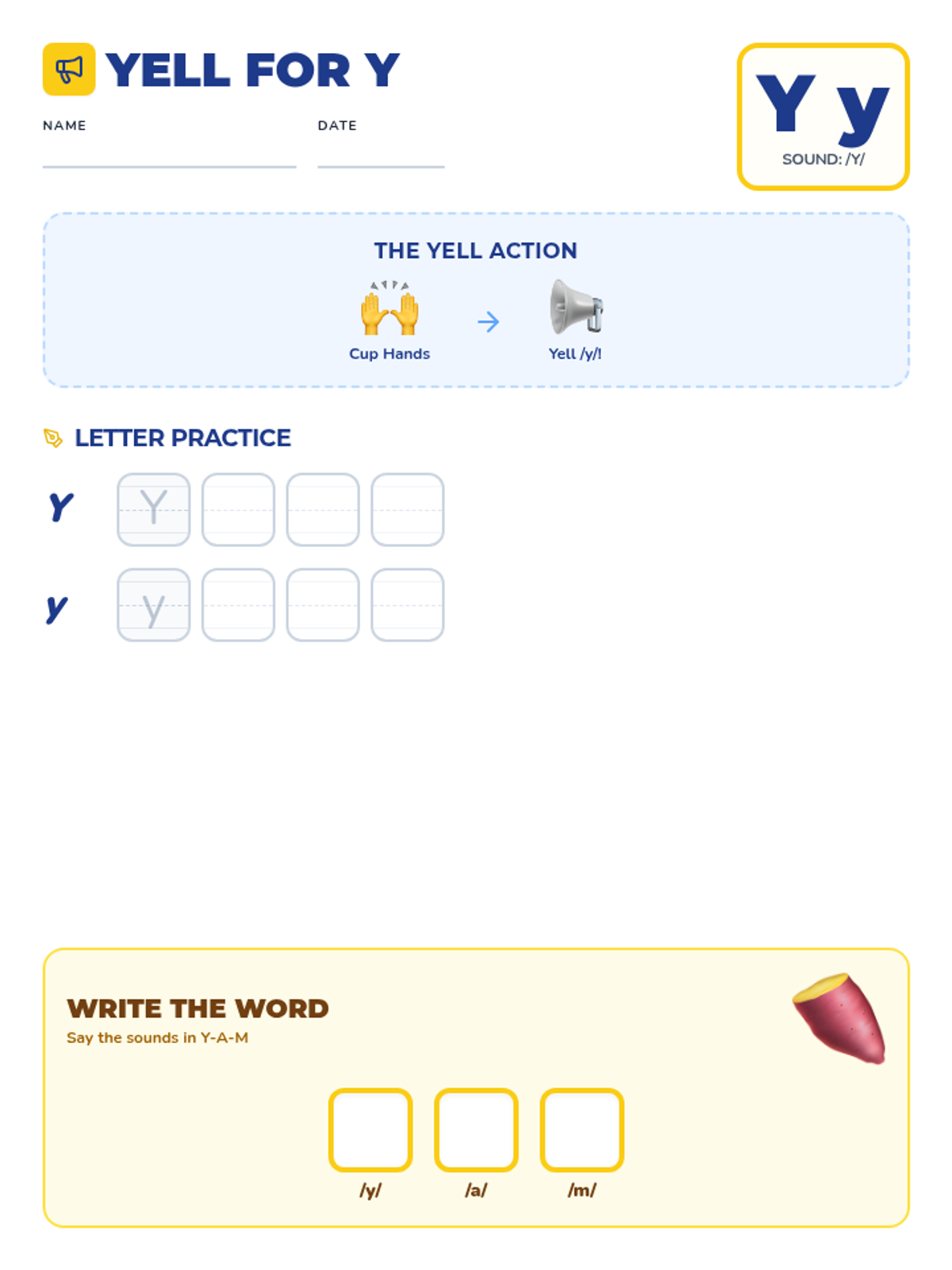
A quick, high-energy 1:1 intervention designed to re-teach the letter Y sound and action. This lesson focuses on phonetic awareness and basic CVC word construction.
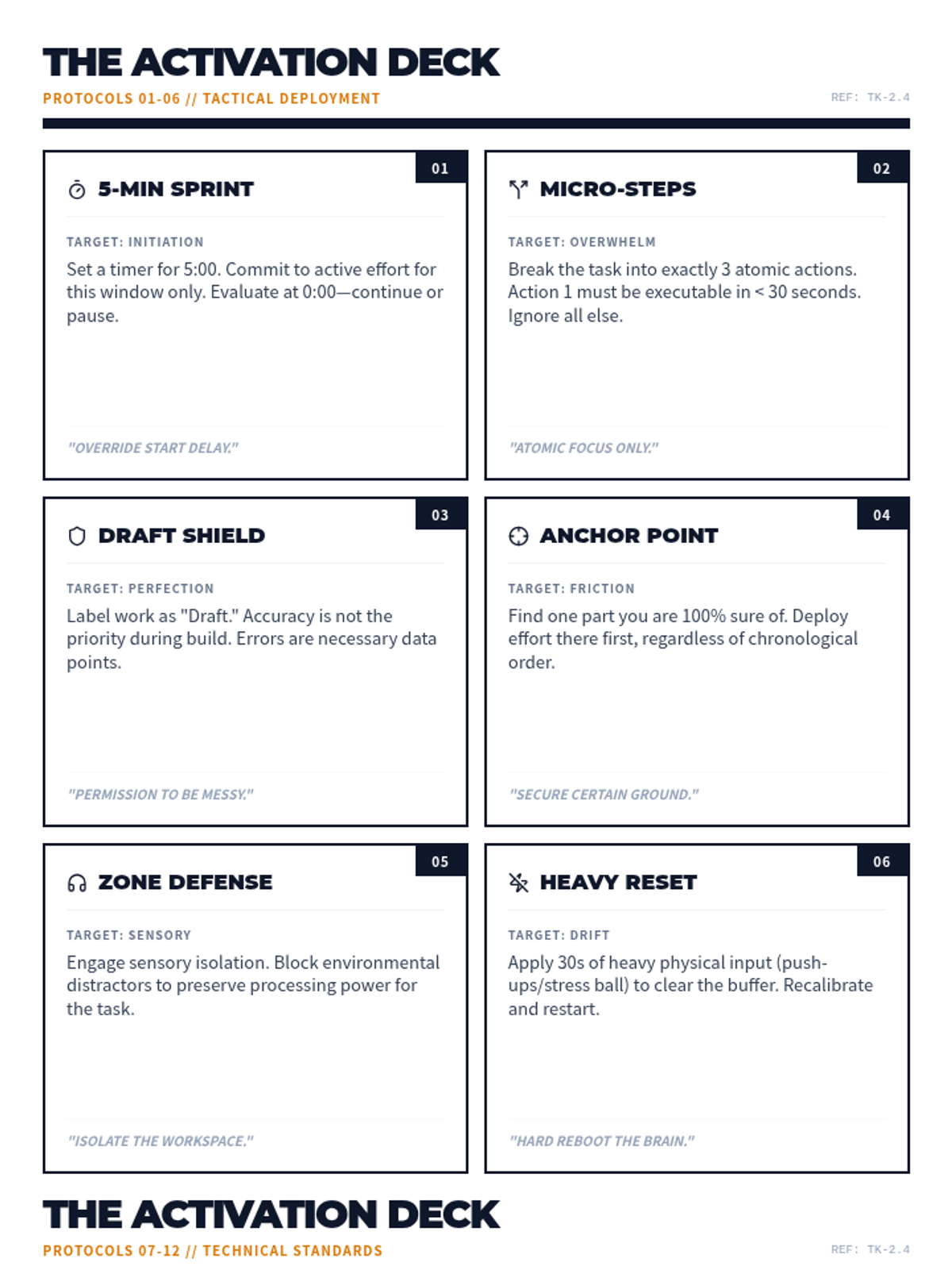
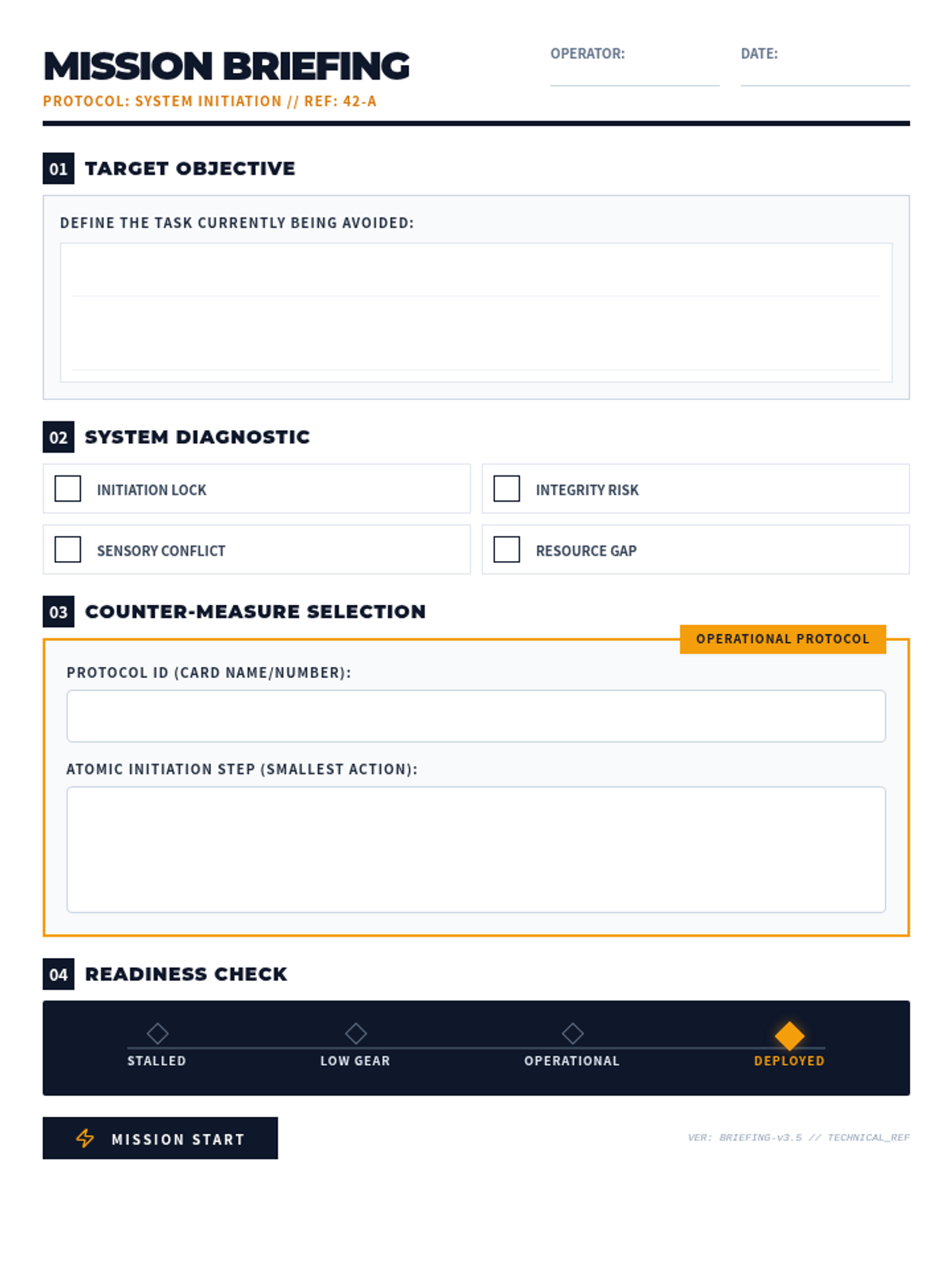
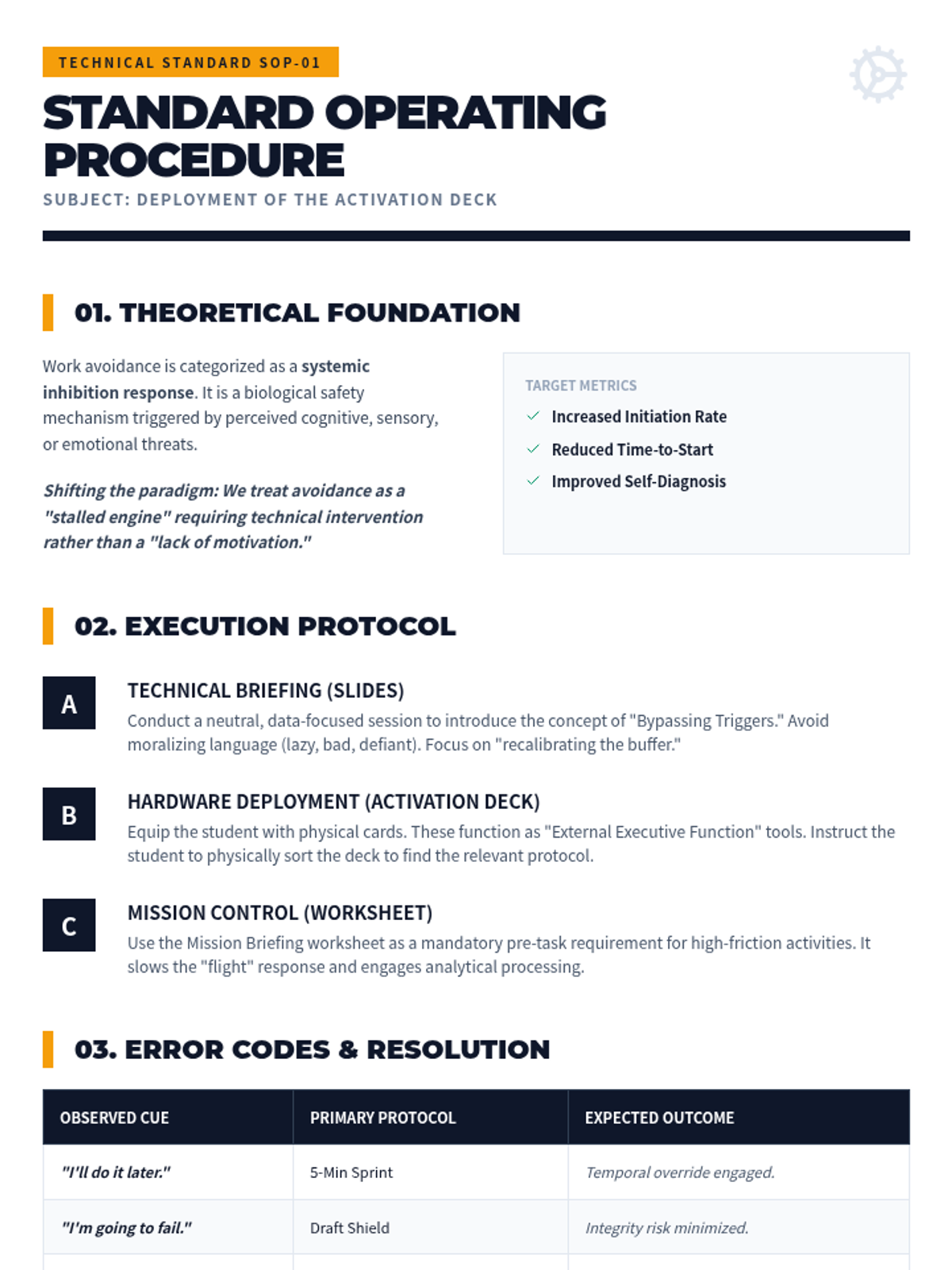
A comprehensive toolkit designed to help students overcome work avoidance by addressing executive functioning, academic confidence, sensory needs, and independent work skills. Includes strategy cards, a presentation for introduction, and a planning worksheet.
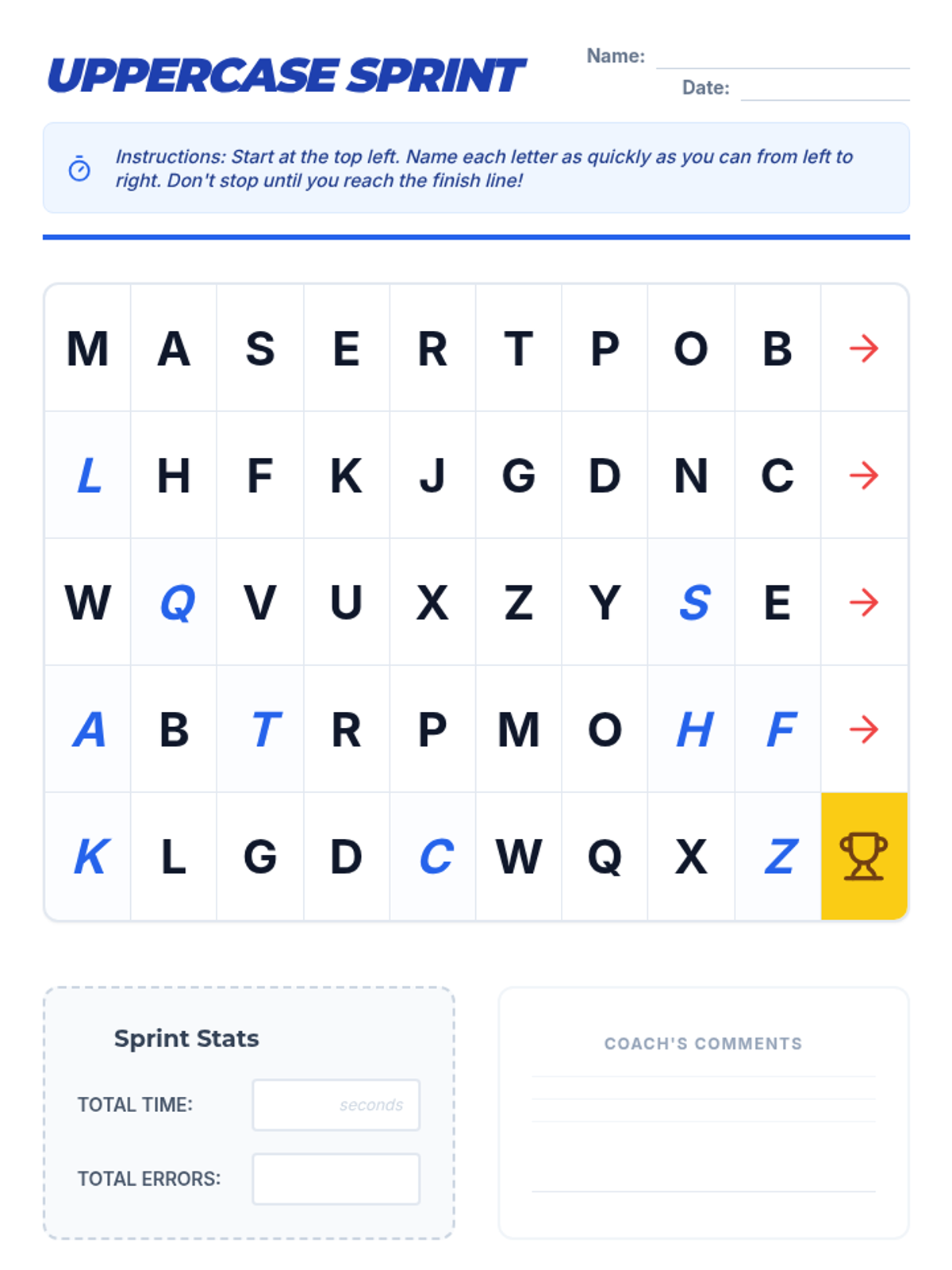
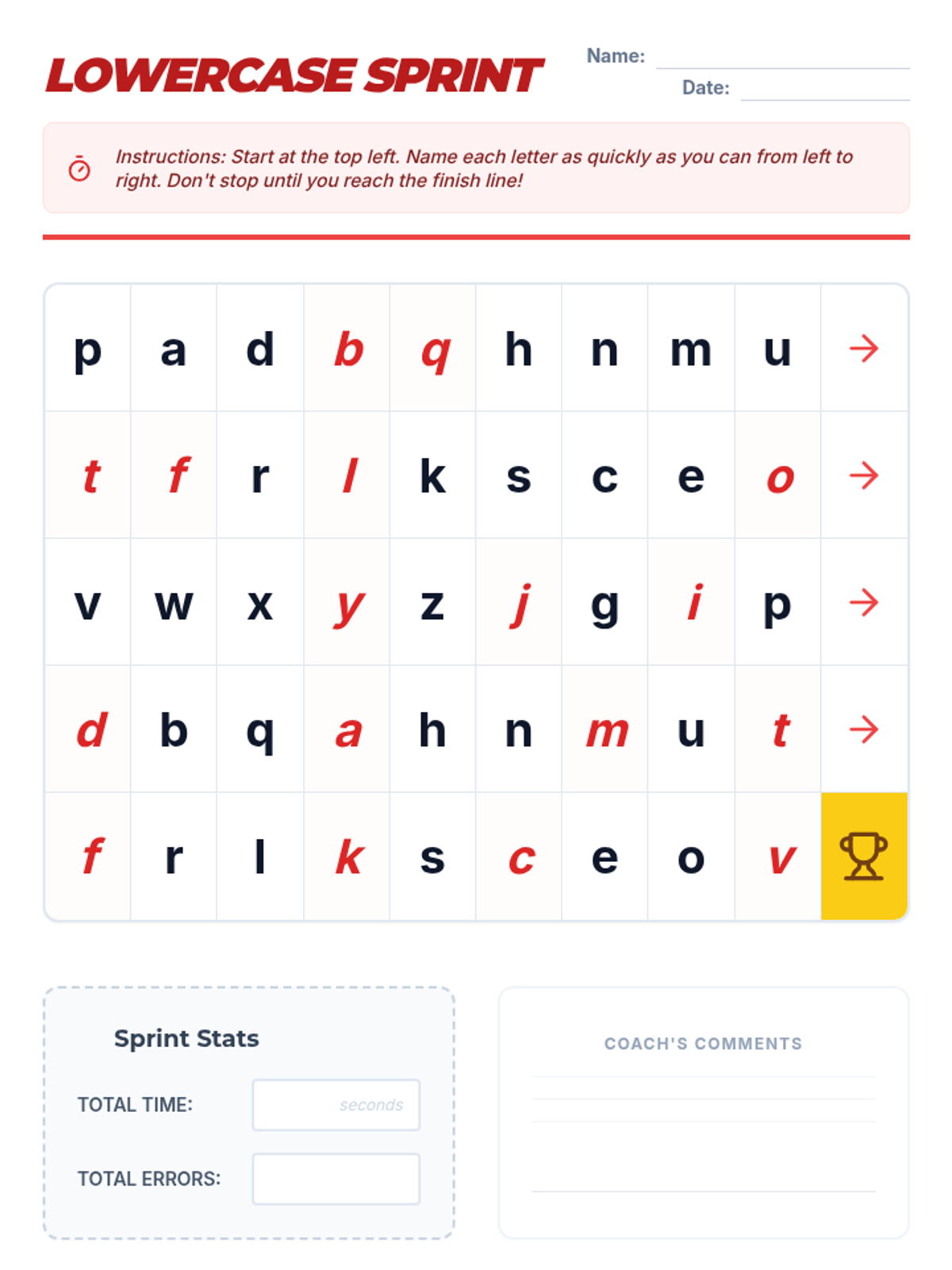
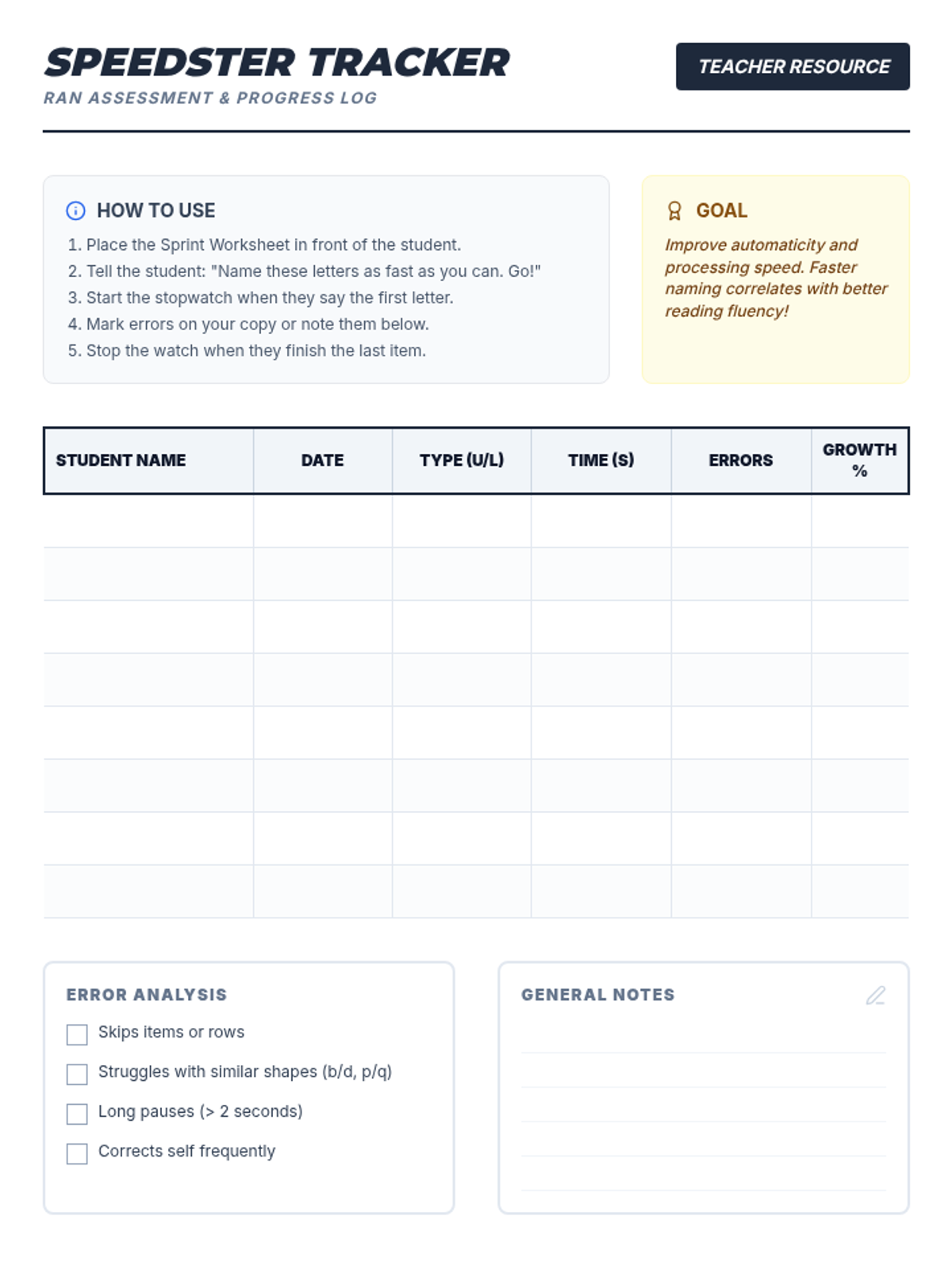
A set of rapid naming activities designed to improve letter recognition speed and automaticity through timed naming sprints.
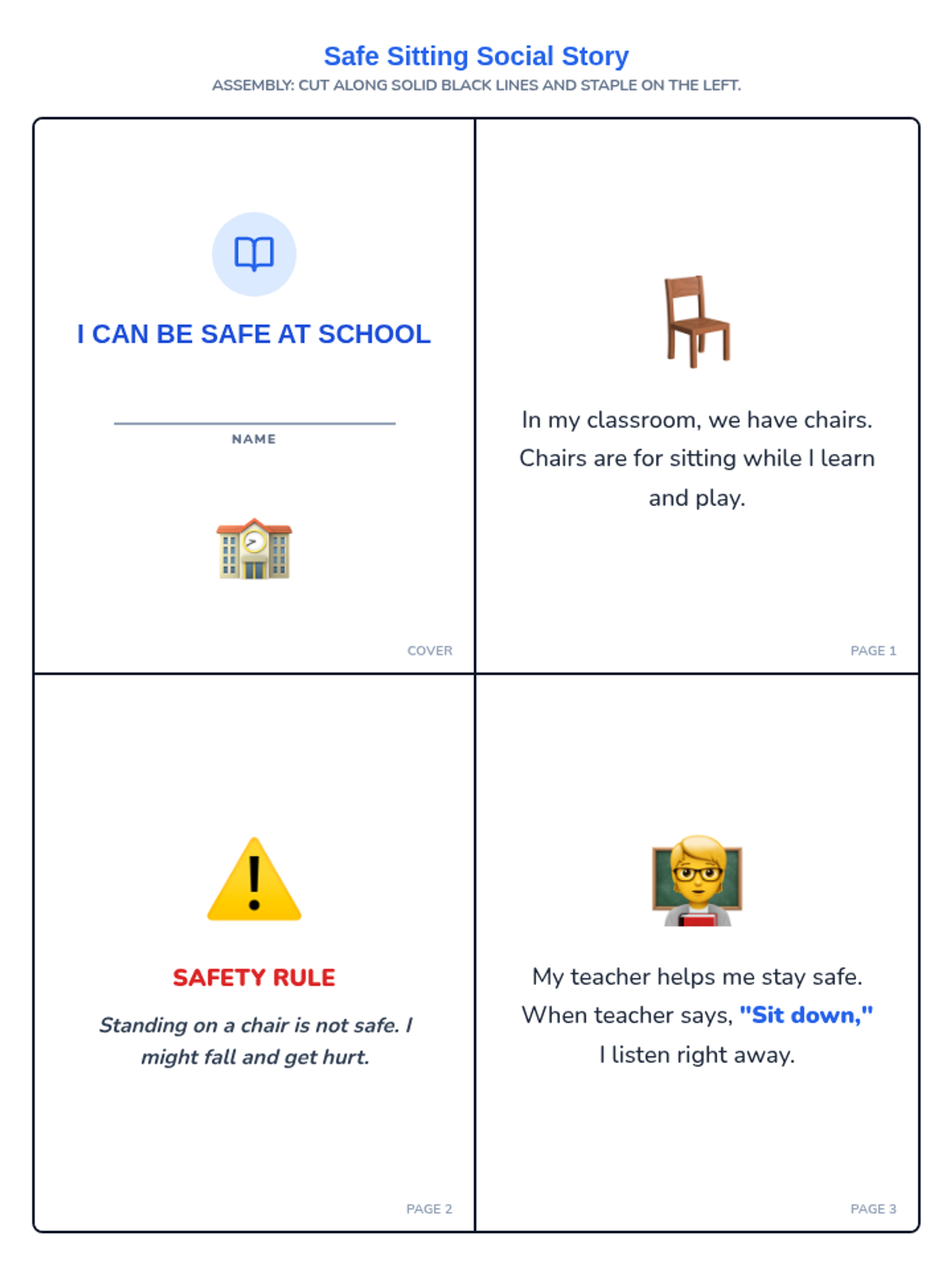
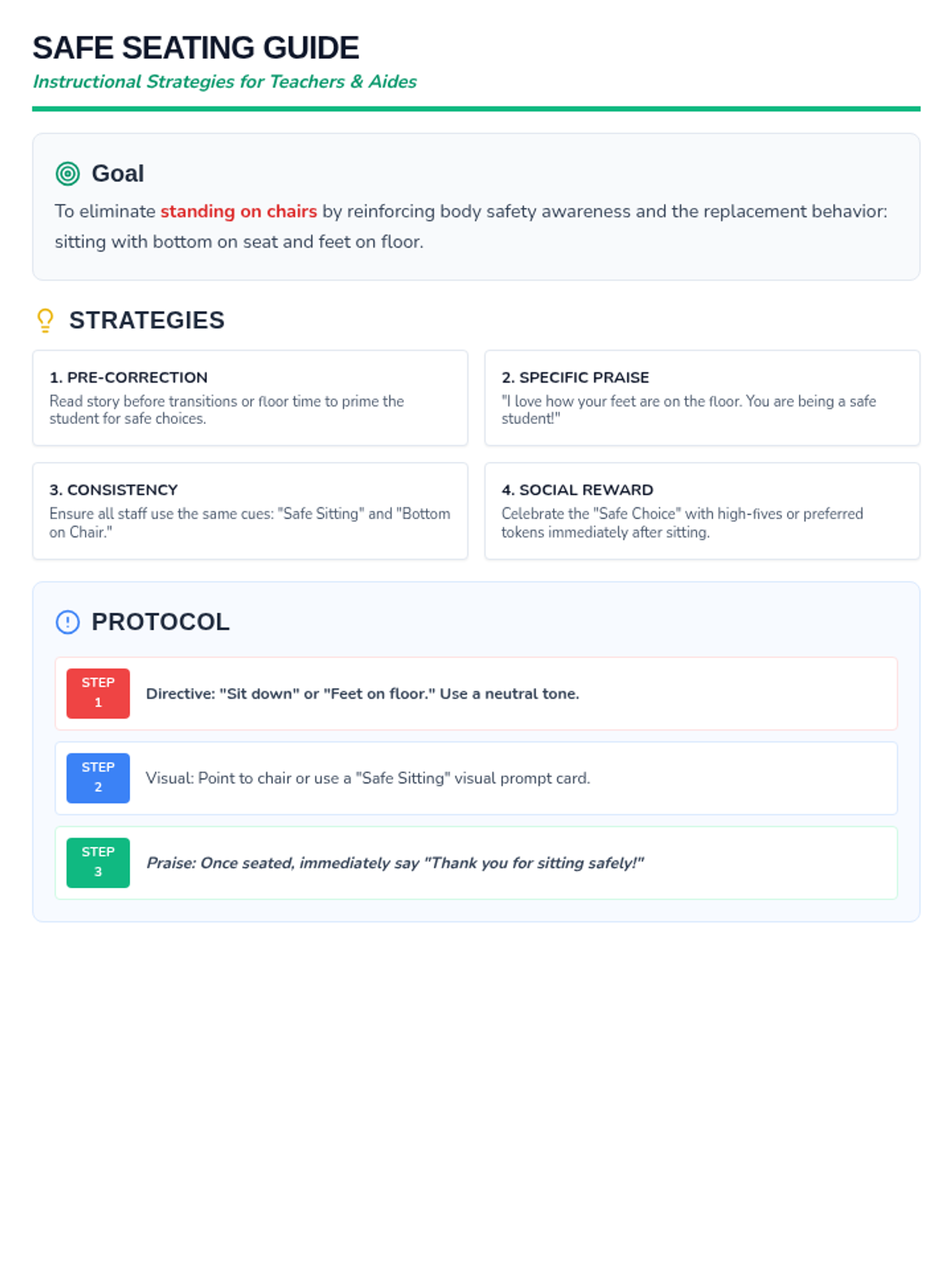
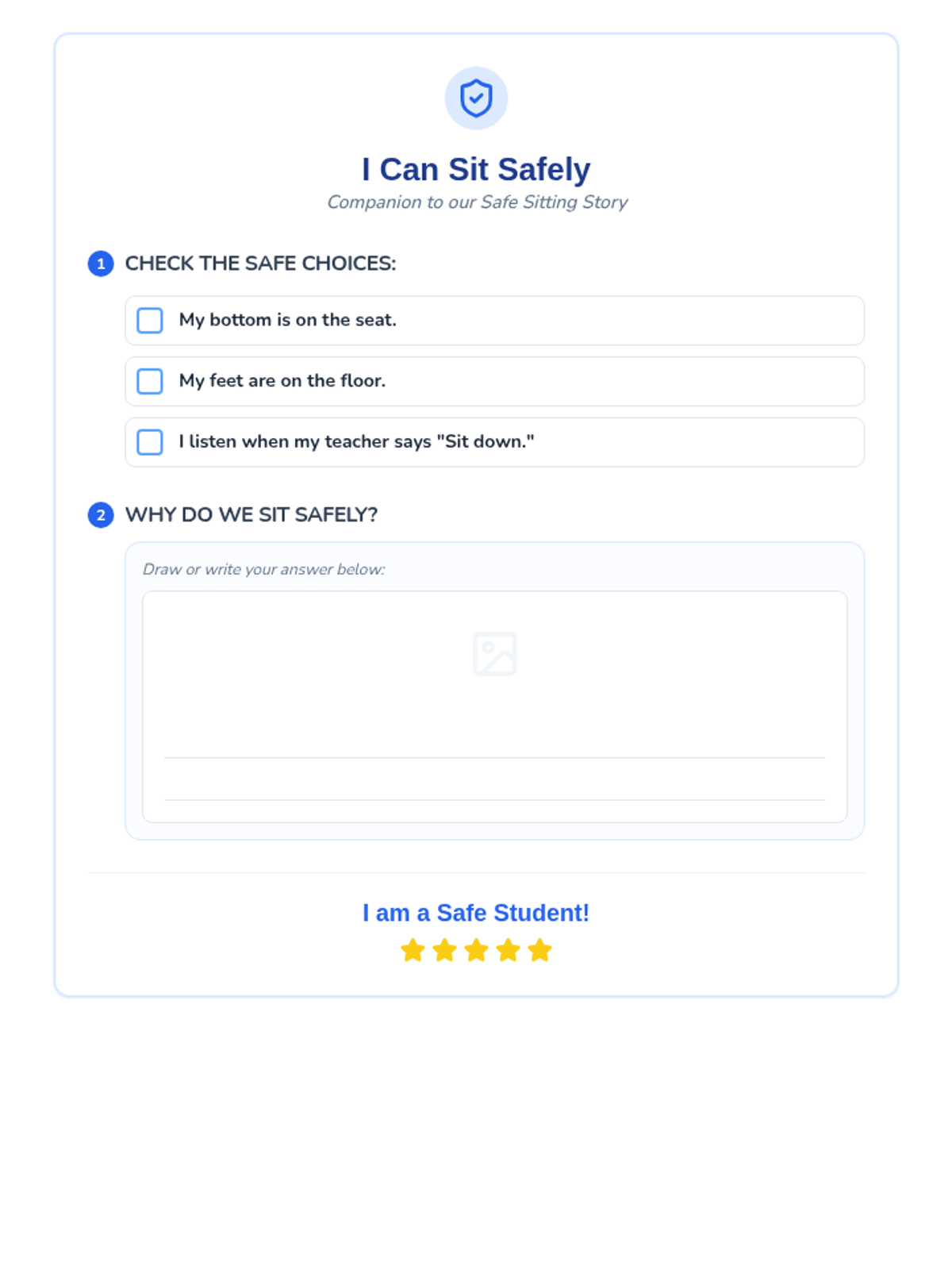
A social story and supporting resources designed to help students understand the importance of sitting safely in chairs and listening to teacher instructions to stay safe at school.