Lenny.com
Explore
Create
ActivitiesNewMathEnglish Language ArtsScience & EngineeringSocial StudiesGlobal LanguagesHealth & Physical EducationSpecial EducationCounseling & Life SkillsArts & CreativityESL
Lenny.com
Lenny.com
Explore
Create
ActivitiesNewMathEnglish Language ArtsScience & EngineeringSocial StudiesGlobal LanguagesHealth & Physical EducationSpecial EducationCounseling & Life SkillsArts & CreativityESL
Lenny.com

Relate Addition and Subtraction to Length

Measurement word problems and number line diagrams representing sums and differences of lengths. Equips learners to use addition and subtraction for solving real-world scenarios involving inches, feet, or centimeters.

Lenny.com

Solutions

Lenny for EducatorsLenny for SchoolsLenny for Districts

Product

ExploreSign inCreateSupportAbout

Resources

Getting startedMTSS Acceleration Program

© 2026 Lenny Learning Inc.

TermsPrivacyAccessibility
LinkedInInstagramX
Lenny
MathNumbers & CountingCounting ObjectsNumber NamesComparing NumbersNumber OperationsCounting SequenceNumbers 0-10Place Value Understanding and SystemAdd and Subtract Within 20Addition and Subtraction ConceptsAddition and Subtraction EquationsAddition and Subtraction ProblemsFoundations for MultiplicationMultiplication and Division PropertiesMultiply and Divide Within 100Multiplication and Division ProblemsFactors and MultiplesProperties of OperationsPatterns and RelationshipsGenerate and Analyze PatternsMulti-Digit ArithmeticPlace Value OperationsMulti-Digit and Decimal OperationsNumerical ExpressionsFour Operations and PatternsFour Operations Problem SolvingMeasurement & DataMeasurable AttributesMeasuring LengthsMeasure and Estimate Lengths in Standard UnitsRelate Addition and Subtraction to LengthClassifying and Counting ObjectsTime and MoneyArea Concepts and MeasurementPerimeter and Area MeasuresAngle Concepts and MeasurementTime, Volume, and MassMeasurement Unit ConversionsGeometryIdentifying ShapesShapes and AttributesShape Attributes and ReasoningShapes and CompositionClassifying 2D FiguresGeometric Figures and RelationshipsLines, Angles, and ShapesAngle, Area, and VolumeGeometric MeasurementVolume of 3D ShapesCoordinate Plane ApplicationsTransformations in the PlaneCongruence and SimilarityUnderstand congruence in terms of rigid motionsSimilarity and TransformationsProve Theorems Involving SimilarityPythagorean TheoremTrigonometry for General TrianglesMake Geometric ConstructionsProve Geometric TheoremsTheorems About CirclesFind Arc Lengths And Areas of Sectors of CirclesVolume FormulasRelationships Between Two-Dimensional and Three-Dimensional ObjectsProve Simple Geometric Theorems AlgebraicallyTranslate Between Geometric Description and Equation for Conic SectionApply Geometric Concepts in Modeling SituationsFractions & DecimalsFractions as NumbersBuilding FractionsFraction Equivalence and OrderingAdding and Subtracting FractionsMultiplying and Dividing FractionsDividing FractionsDecimal FractionsMulti-Digit Computation and FactorsAdd, Subtract, Multiply, and Divide Rational NumbersRational Number SystemIrrational Numbers and ApproximationsRatiosRatios and ProportionsProportional RelationshipsUnit RateAlgebraAlgebraic ExpressionsGenerate Equivalent ExpressionsQuantitative RelationshipsProportional Relationships and Linear EquationsEquations and InequalitiesEquation Solving and ReasoningLinear Equations and SystemsGraph Equations and InequalitiesSystems of EquationsReal-World Algebraic ProblemsQuantitative Reasoning with UnitsExpression StructureEquivalent Expression FormsRadicals and Integer ExponentsRational ExponentsRational and Irrational NumbersPolynomial OperationsPolynomial IdentitiesPolynomial Zeros and FactorsRational ExpressionsComplex Number OperationsComplex Numbers in PolynomialsComplex Numbers on PlaneStatistics & ProbabilityRepresent and Interpret DataData DistributionsStatistical VariabilityProbability ModelsCompound Event ProbabilitiesStatistical SamplingInterpret Categorical and Quantitative DataBivariate Data PatternsInterpret Linear ModelsComparing Two PopulationsRandom Processes in StatisticsIndependence and Conditional ProbabilityExpected ValuesProbability-Based Decision MakingStatistical Inference and ConclusionsFunctionsFunction Concepts and NotationDefine and Compare FunctionsInterpret Functions in ContextAnalyze Function RepresentationsModel Relationships with FunctionsIdentify Linear vs Exponential GrowthDistinguish Between Function TypesCompare Growth RatesInterpret Function ExpressionsBuild Functions from RelationshipsConstruct and Model FunctionsTransform and Combine FunctionsModel Comparison and SelectionSolve Exponential EquationsTrigonometryTrigonometric Ratios Involving Right TrianglesTrigonometric Functions and Unit CircleModel with Trigonometric FunctionsTrigonometric IdentitiesVectors & MatricesIntroduction to Vectors and MatricesVector QuantitiesVector OperationsMatrix OperationsCalculusLimits and ContinuityDerivative Concepts and NotationDerivative Rules and TechniquesApplications of DerivativesOptimization ProblemsRelated RatesCurve Sketching and AnalysisIntegration Concepts and NotationAntiderivatives and Indefinite IntegralsDefinite Integrals and AreaFundamental Theorem of CalculusIntegration TechniquesApplications of IntegrationDifferential EquationsSequences and SeriesParametric and Polar FunctionsVector-Valued Functions

Videos

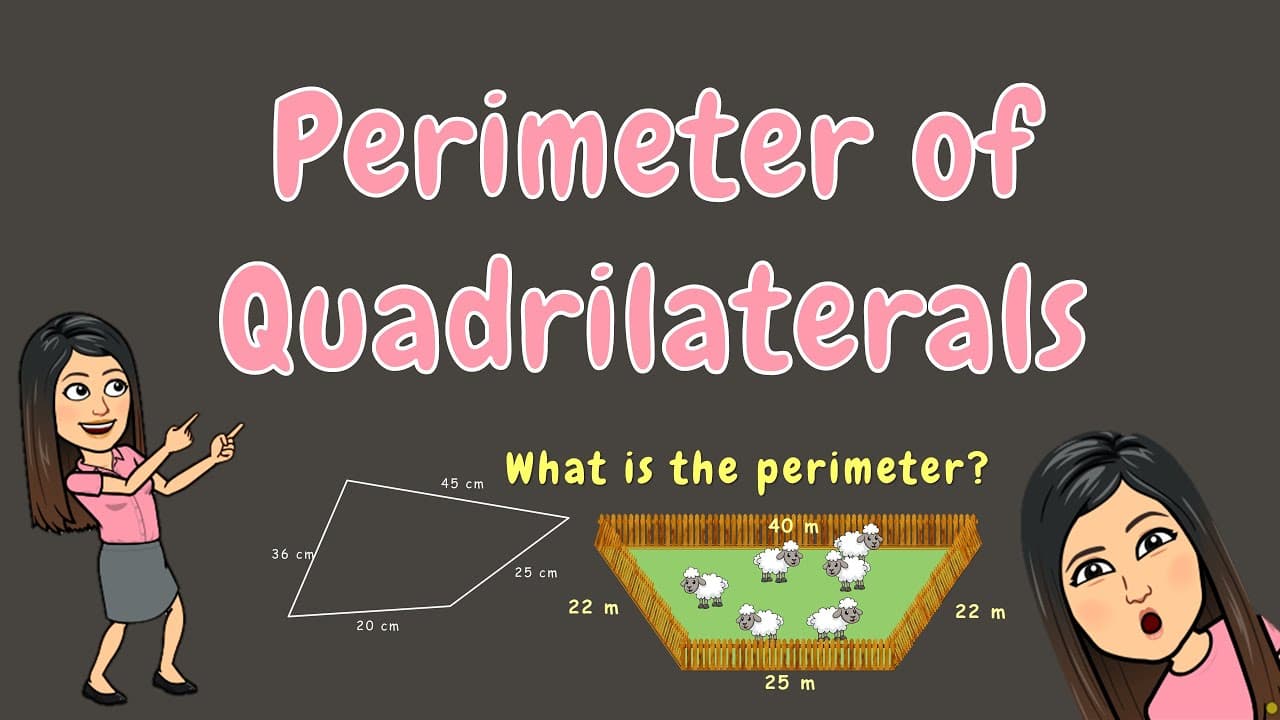
Calculating the Perimeter of Irregular Quadrilaterals

Calculating the Perimeter of Irregular Quadrilaterals

This educational math video provides a clear, step-by-step guide on how to calculate the perimeter of various quadrilaterals, specifically focusing on shapes that are not standard squares or rectangles. Through the use of animated characters and scenarios, it introduces the concept of perimeter as the total distance around a two-dimensional shape and demonstrates the standard algorithm of summing all side lengths to find the answer. The video covers multiple examples, starting with a character running around an irregular quadrilateral track, moving to geometric shapes like parallelograms and trapezoids, and culminating in a real-world word problem about fencing a plot of land for sheep. It concludes with a practice problem for students to attempt on their own, reinforcing the procedural knowledge required to solve these math problems. Teachers can use this video to introduce the concept of perimeter or to model problem-solving strategies for geometry word problems. The step-by-step visual calculations (stacking numbers for addition) model good mathematical habits for students. The video is particularly useful for visual learners who benefit from seeing side lengths highlighted and summed sequentially.

Sheena DoriaSheena Doria

4mins 18s

Solving Word Problems Using Inverse Operations

Solving Word Problems Using Inverse Operations

This energetic animated music video teaches students a comprehensive strategy for tackling math word problems and verifying their answers. Through a catchy hip-hop song, it breaks down the problem-solving process into actionable steps: maintaining concentration, reading carefully, underlining key information, drawing pictures, and using estimation to eliminate incorrect multiple-choice answers. The video emphasizes the importance of labeling units and clarifies that numbers represent real-world quantities, not just abstract figures. A central theme of the video is the mathematical concept of "Inverse Operations." It demonstrates how addition and subtraction, as well as multiplication and division, are opposites that can be used to check work. By reversing a calculation (e.g., checking a subtraction problem by adding the answer to the subtrahend), students can ensure their solutions are correct before moving on. Beyond the math mechanics, the video offers a positive social-emotional message about determination and self-worth. It encourages students to approach testing with confidence and concludes with the powerful affirmation that academic grades do not define a person's value, stating, "You don't gotta be a straight-A student to be an A-plus human." This makes it an excellent resource for test prep, teaching study skills, and building mathematical confidence in upper elementary students.
Math Songs by NUMBEROCKMath Songs by NUMBEROCK

2mins 13s

How to Calculate Perimeter for Polygons

How to Calculate Perimeter for Polygons

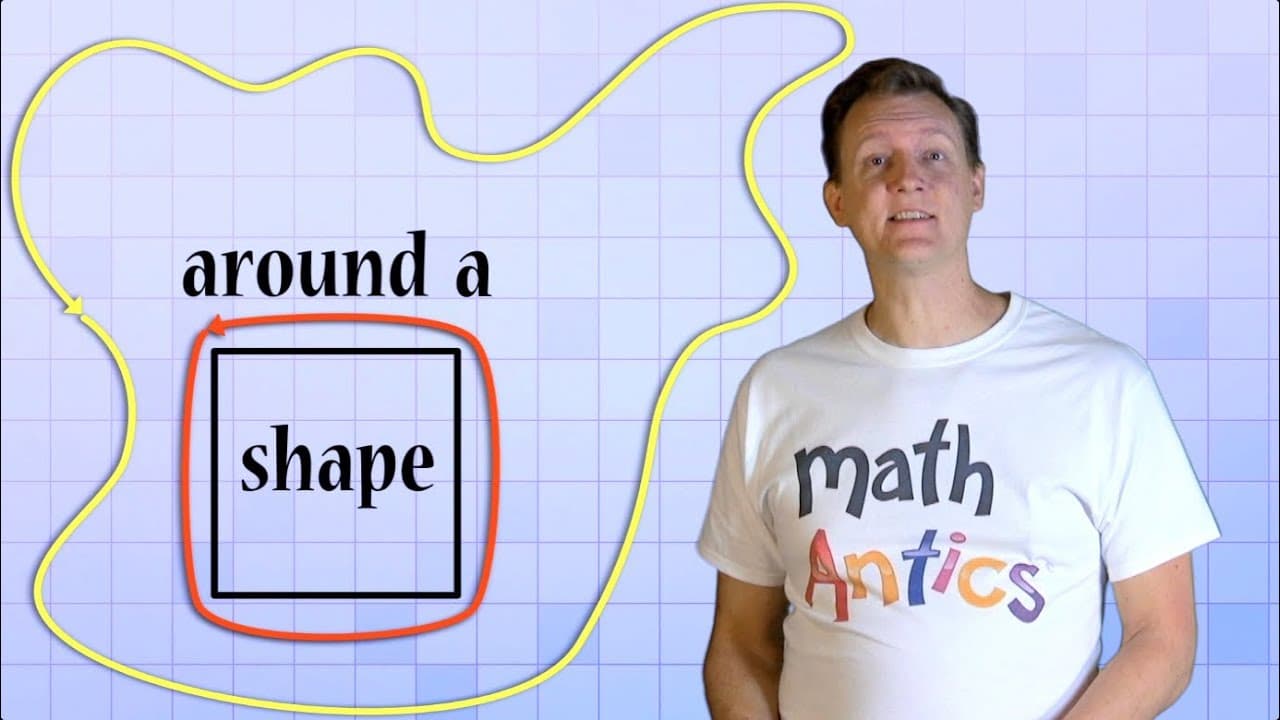
This engaging video introduces students to the concept of perimeter, defining it as the total distance around a two-dimensional shape. Through clear animations and visual metaphors, it explains why perimeter is considered a one-dimensional quantity, demonstrating this by "unfolding" a square into a straight line. The video moves from conceptual understanding to practical application, guiding viewers through the process of calculating perimeter for various polygons by summing their side lengths. The content covers three distinct levels of complexity: simple polygons like triangles and rectangles, regular polygons where multiplication can be used as a shortcut, and complex rectilinear shapes with missing side lengths. This final section is particularly valuable as it teaches a specific problem-solving strategy: using known parallel sides to deduce the lengths of unknown sides, a common hurdle in elementary geometry. For educators, this video serves as an excellent core lesson for introducing geometry measurements. It emphasizes the importance of including units in answers—a critical habit for science and math students. The visual demonstrations, particularly the "walking the path" analogy and the sliding segments to reveal missing lengths, provide intuitive scaffolds that help students grasp abstract geometric concepts.

mathanticsmathantics

7mins 29s

Solving Snowfall Word Problems with Subtraction

Solving Snowfall Word Problems with Subtraction

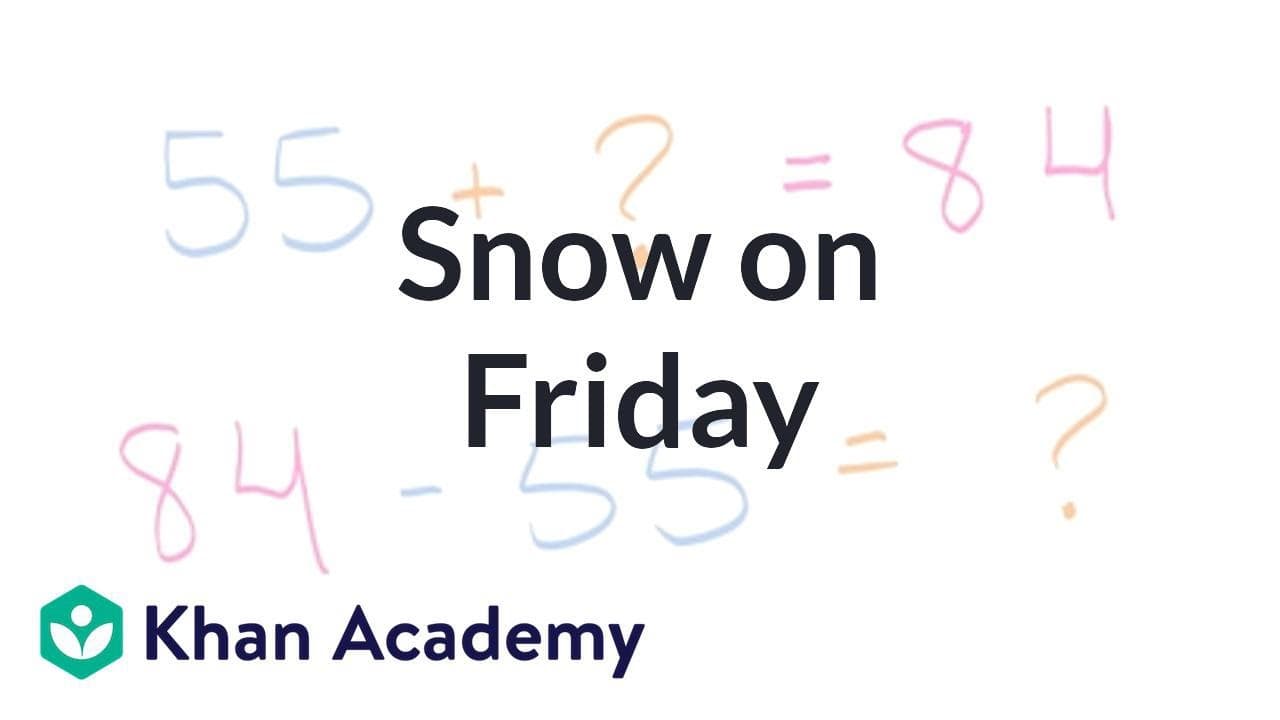
This video guides students through solving a math word problem centered around measuring snowfall depth over two days. Using a visual representation of a vertical ruler, the narrator demonstrates how to translate a real-world scenario into mathematical equations. The video specifically focuses on finding a missing addend—determining how much snow fell on the second day given the starting amount and the final total.

Khan AcademyKhan Academy

4mins 18s

Solving Multiplication Word Problems About Length Using Bar Models

Solving Multiplication Word Problems About Length Using Bar Models

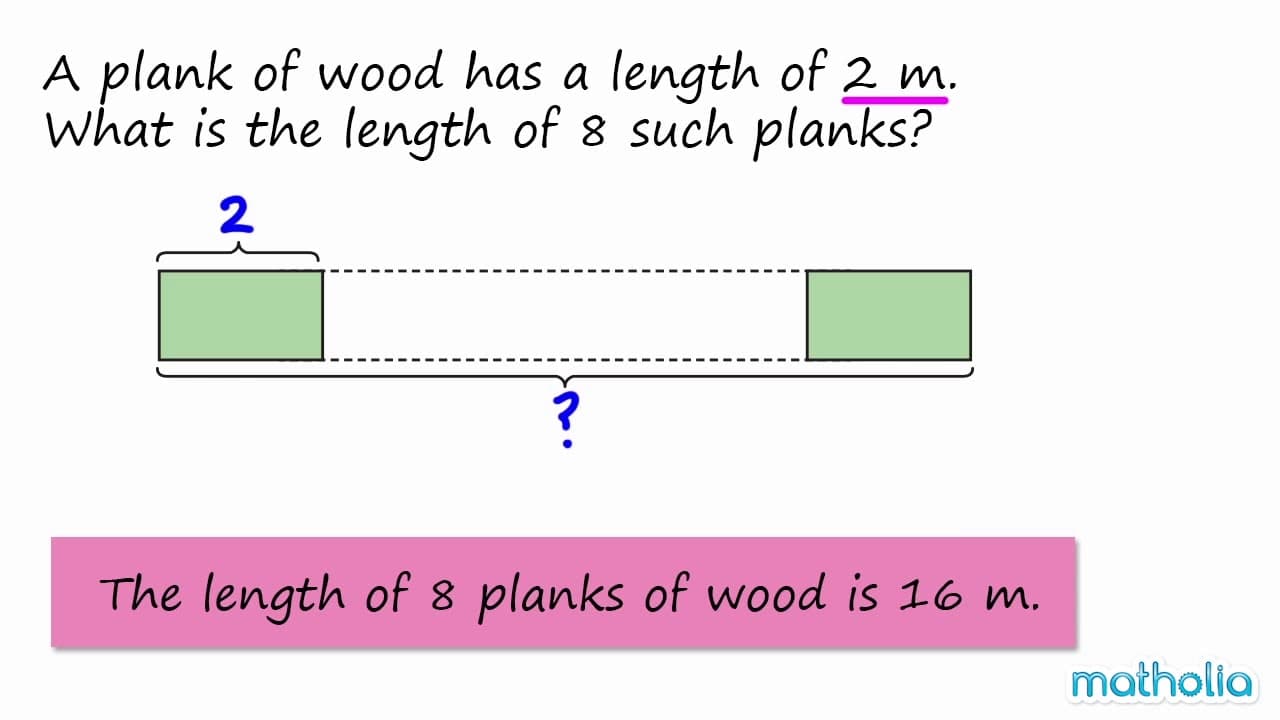
This educational math video demonstrates how to use the bar model method to solve multiplication word problems involving length. It walks viewers through two distinct examples: calculating the total width of multiple folders and finding the combined length of several wooden planks. The step-by-step narration guides students from understanding the problem statement to visualizing the quantities and performing the final calculation. Key themes include multiplication strategies, length measurement (centimeters and meters), and visual problem-solving techniques. The video explicitly connects the text of a word problem to a visual representation (the bar model), bridging the gap between abstract text and mathematical operations. It emphasizes identifying the "unit" size and the number of units to determine the total. This resource is highly valuable for elementary classrooms, particularly those using Singapore Math or similar visual pedagogies. It helps students move beyond rote memorization by providing a conceptual framework for why multiplication is used in these scenarios. Teachers can use this video to introduce the bar model concept or to reinforce problem-solving steps for students struggling to interpret word problems.

MatholiaChannelMatholiaChannel

1min 36s

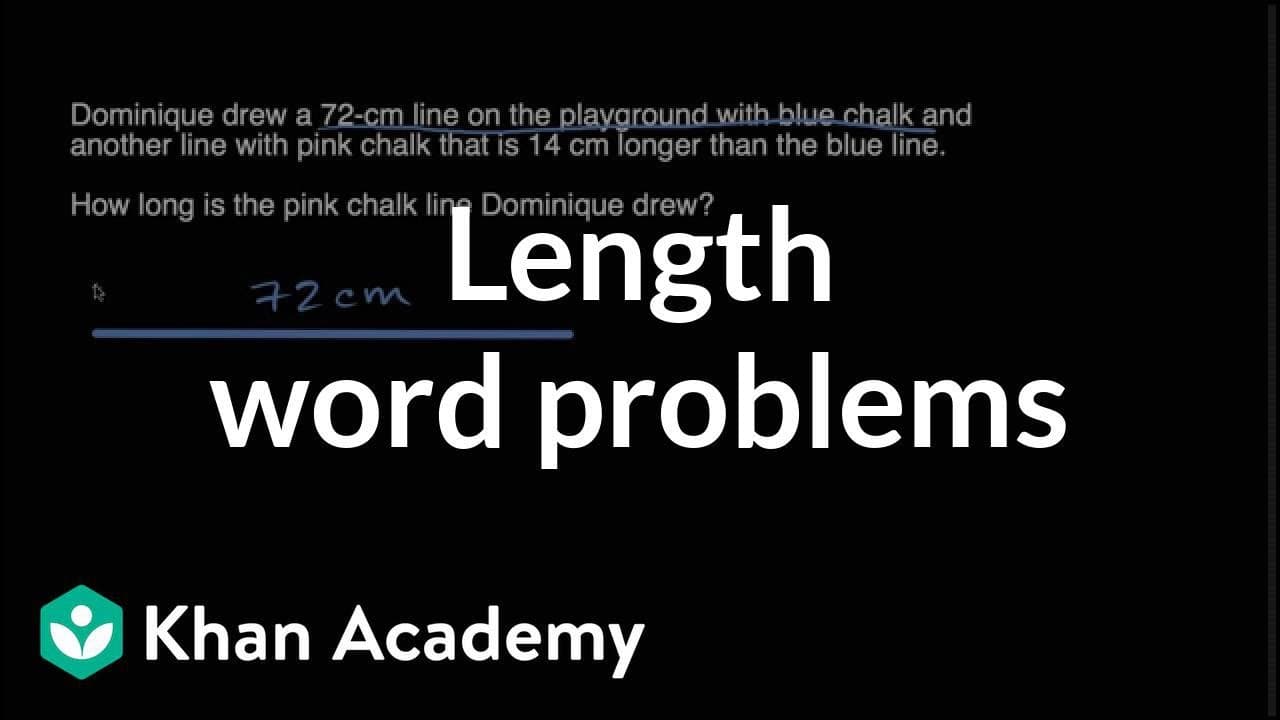
Solving Length Word Problems Step-by-Step

Solving Length Word Problems Step-by-Step

This educational video guides students through solving three distinct word problems involving length measurement. Using a digital whiteboard, the narrator demonstrates how to translate written scenarios into visual diagrams (bar models) to make sense of the mathematical relationships. The video covers addition and subtraction within 100, including single-step comparison problems, two-step total length problems, and difference unknown problems involving regrouping.

Khan AcademyKhan Academy

5mins 49s

Materials

Number Line Champions Practice Pages

Number Line Champions Practice Pages

A premium, 4-page printable independent worksheet packet focused on place value, addition, subtraction, and multiplication using open number lines with a focus on feet and inches (US Customary units). It is designed around the 3rd Grade Bridges in Mathematics curriculum, utilizing an elegant blueprint-inspired visual layout with white, spacious drawing boxes for students' handwriting.

AJ

Alexander Jacinto

Standards Correlation Guide

Standards Correlation Guide

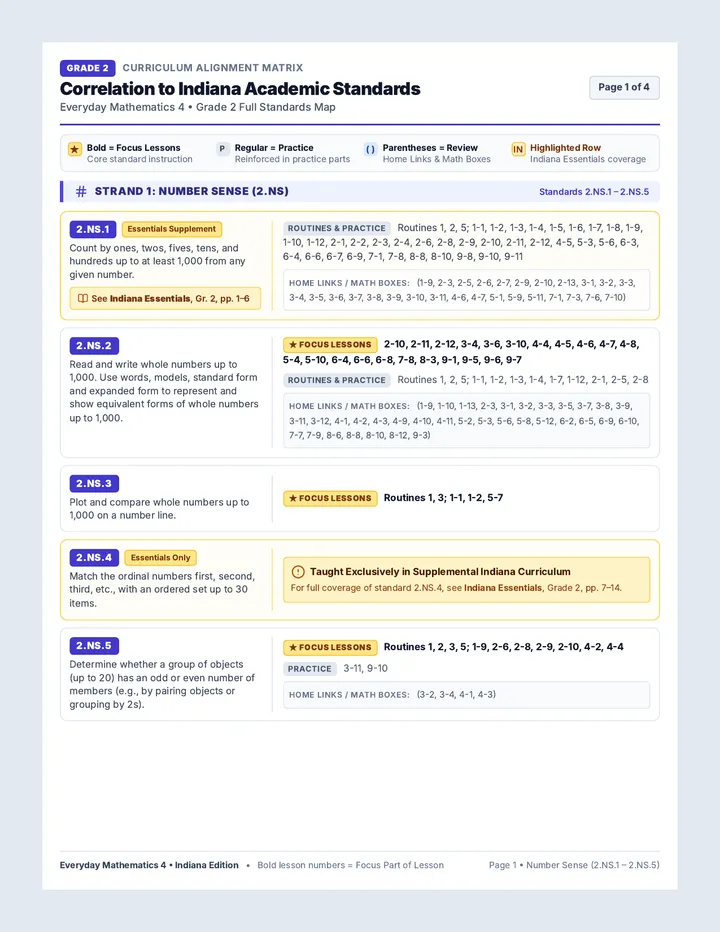
A comprehensive, easy-to-follow correlation guide mapping Grade 2 Indiana Academic Standards for Mathematics to Everyday Mathematics 4 lessons, clearly distinguishing Focus lessons, ongoing practice, Math Boxes, and Indiana Essentials supplements.

CG

Cecilia Goh

Sequences

Expedition Timer Slides

Math Expedition Rotations

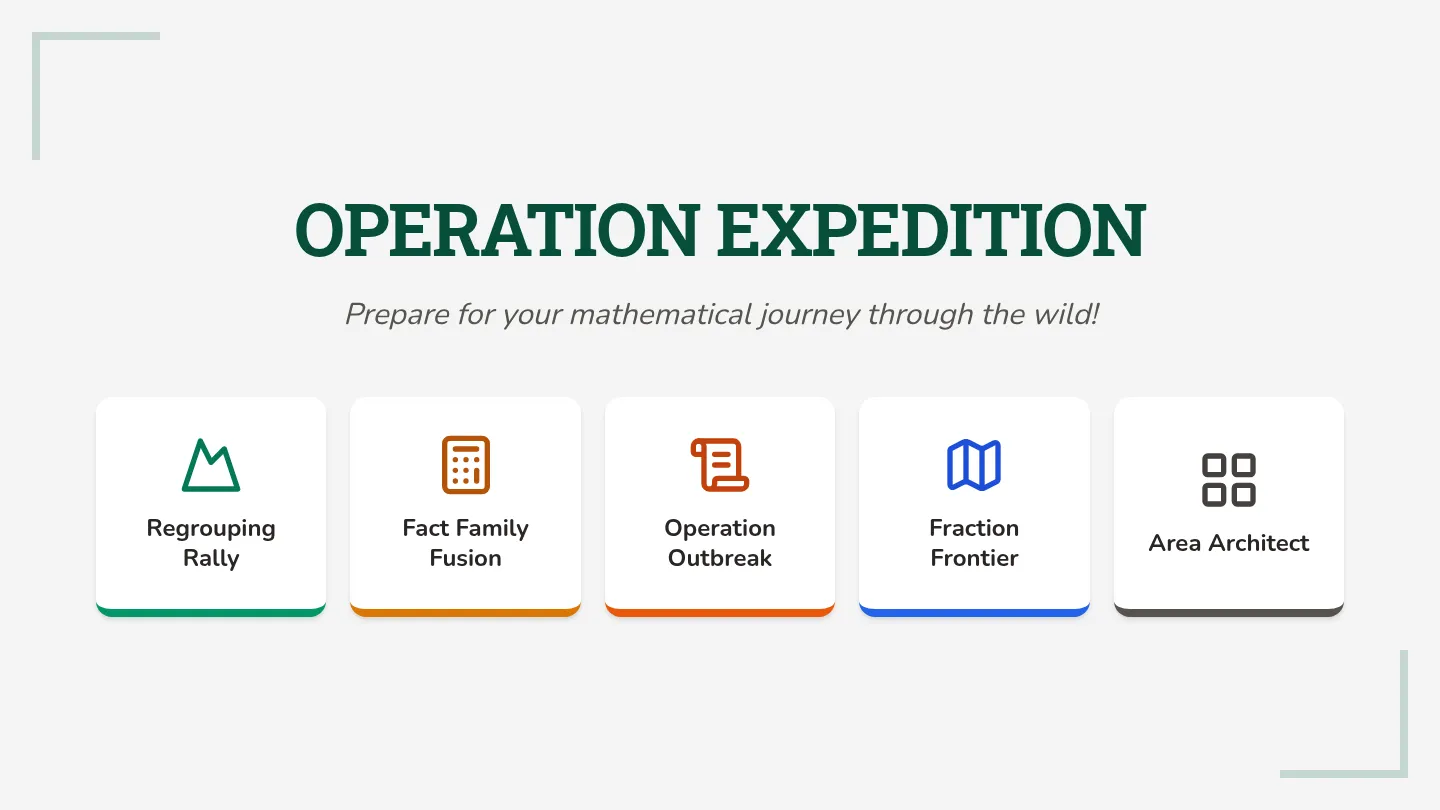
A series of 3rd-grade math rotation stations focusing on key curriculum standards including regrouping, fact families, word problems, fractions, and area. Designed for 15-minute rotations with an expedition theme.

KB

Krista Bodkin

8
Blueprint Basics Anchor Chart

Multi Step Mastery

A comprehensive unit focusing on mastering multi-step word problems using a structured problem-solving routine. Students learn to break down complex problems involving whole numbers, fractions, and decimals using 'blueprint' thinking.

J

jnparrella

9
Action Zone Weekly Map Teacher Resource

Action Zone Math Unit

A 5-day math sequence for 3rd and 4th grade students working at a 2nd-grade level. The unit focuses on addition and subtraction up to 30 using number lines and keyword strategies, themed around Legos, monster trucks, and the Golden State Warriors.

CN

Coleman Newell

14
Inch Investigators Slides

Zero Hero Measurement

A two-part measuring adventure where students join the Zero Hero Academy to master measuring in inches and centimeters, with a strong focus on aligning the start of objects with the ruler's zero mark.

A

amber.sisemore

8
Area Arrays Guide Day 1 Doc

Boundary Builders

A 5-day intensive intervention sequence focused on determining area using multiplication (3.6C) and calculating perimeter including missing side lengths (3.7B). The unit uses a 'Boundary Builders' construction theme to make geometric concepts concrete and engaging for small group instruction.

MC

Melinda Cortez

6
Explorer Field Journal

Ruler Raiders

A multi-day measurement adventure where students act as explorers to measure objects across their classroom, school, and outdoor environment to the nearest whole inch.

M

martineza

6

Lessons

Math Radar Intake Slides

Math Skill Radar

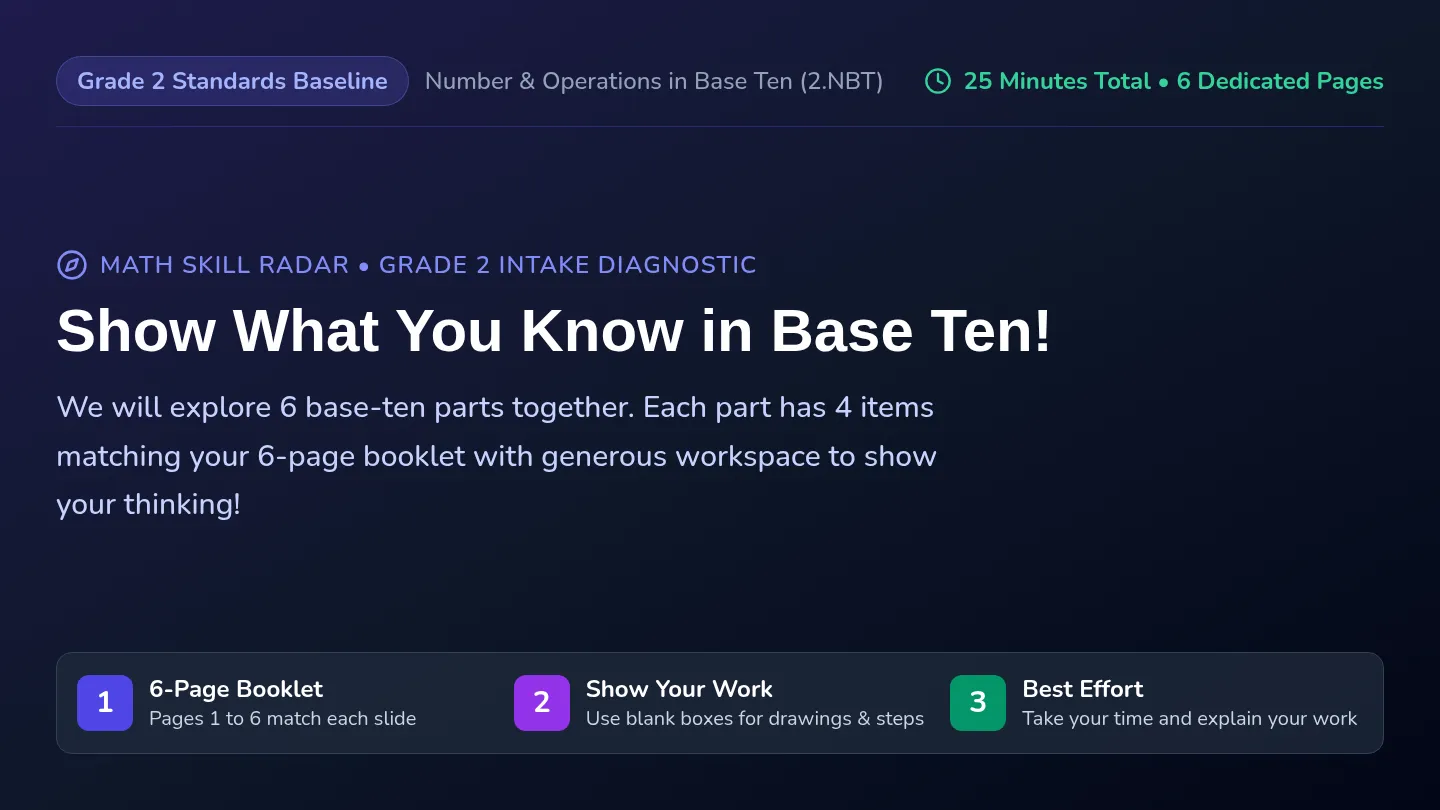
A comprehensive baseline math diagnostic and intervention suite for special education spanning early numeracy through Grade 4. Features complete tiered intake assessments, practice packets, manipulative work mats, and master scoring keys for both 1st Grade Base Ten (1.NBT) and 2nd Grade Base Ten (2.NBT), alongside K-1 early number sense tools.

S

Sara

20
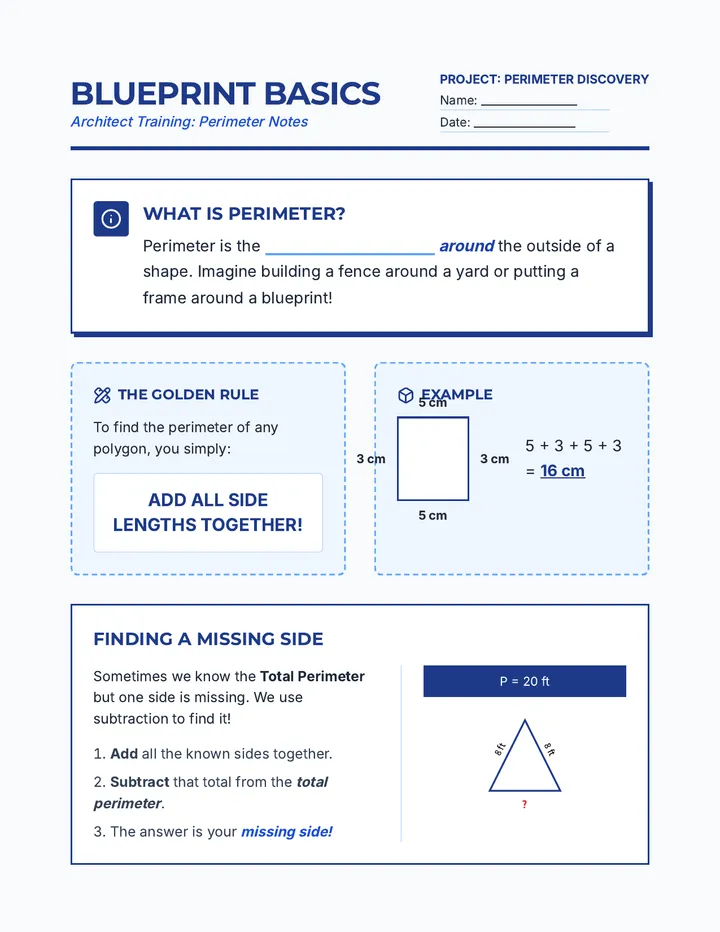
Blueprint Basics Guided Notes

Blueprint Builders

A comprehensive unit on finding the perimeter of various polygons, including unknown side lengths and real-world word problems, themed around architectural blueprints.

SP

sashagaye Panton

5
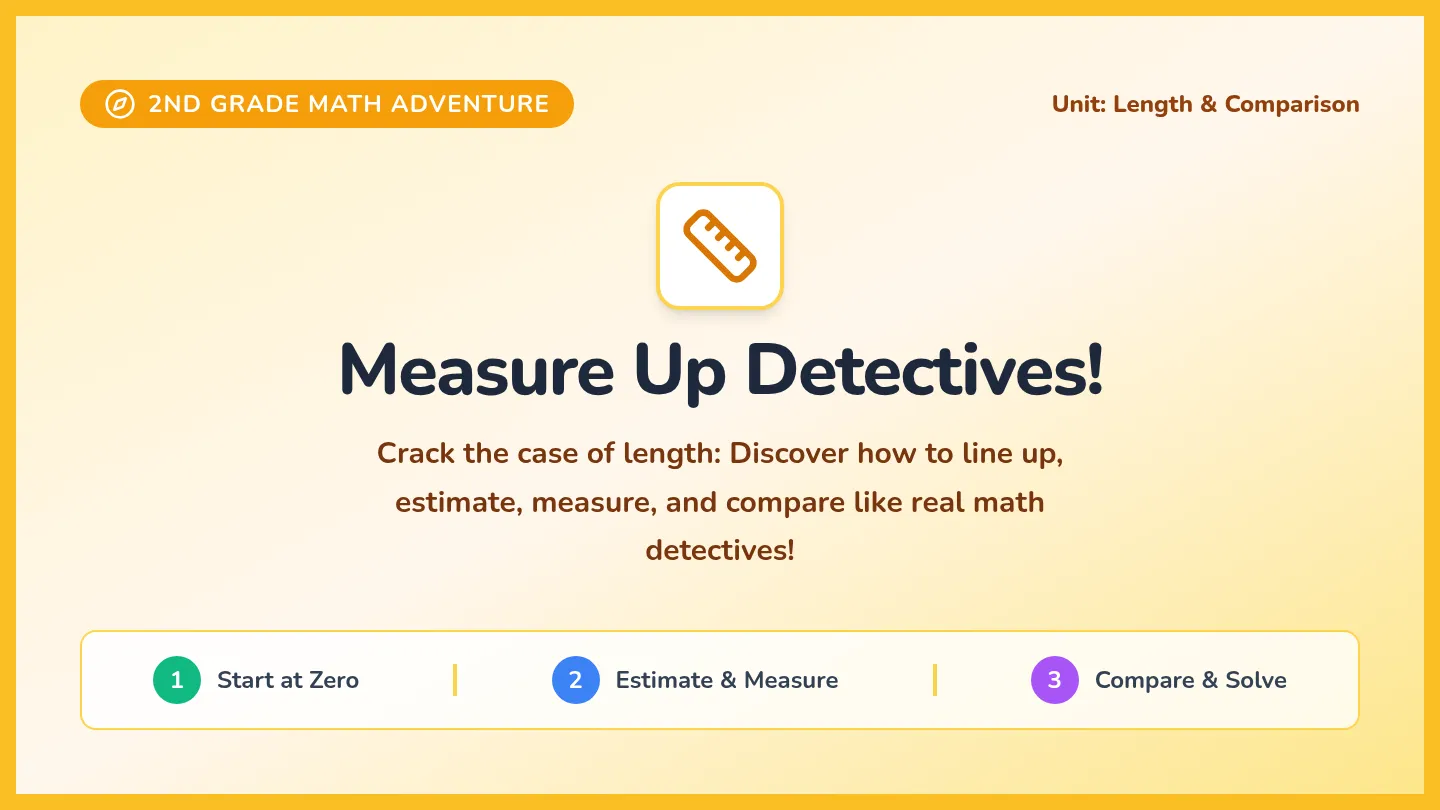
Measure Up Slides

Measure Up Detectives

A comprehensive 2nd grade measurement lesson covering standard units (inches and centimeters), measuring accurately from zero, estimating lengths, comparing objects, and solving single-step measurement word problems.

A

atrotman

5
Perimeter Blueprints Guided Notes

Perimeter Precision

A comprehensive lesson on finding the perimeter of polygons and determining unknown side lengths when given the total perimeter, modeled after NC.3.MD.8 standards.

SP

sashagaye Panton

3
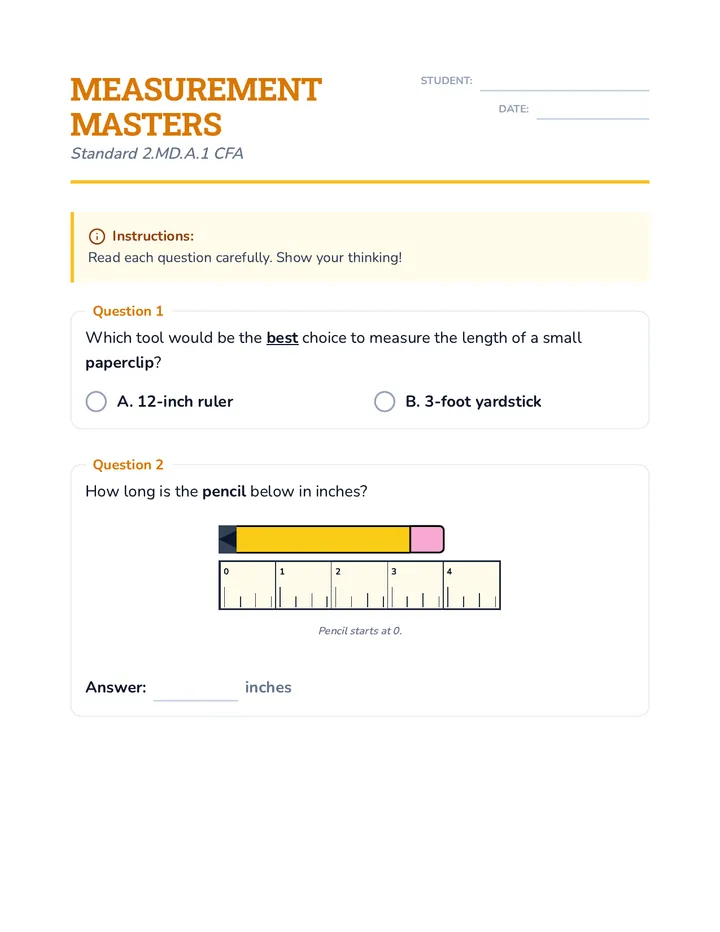
Measurement Mastery CFA

Measuring Masters

A short assessment focusing on selecting and using appropriate measurement tools (rulers and yardsticks) for 2nd-grade students.

DR

Darlene Ramey

4
Border Bosses Teacher Guide

Border Bosses

A comprehensive lesson focused on finding the perimeter of regular and irregular polygons, including real-world applications and solving for missing side lengths.

KA

Kelise Antonio

10