A multi-page printable bulletin board set titled 'Brain Garden' that celebrates neurodiversity through vibrant profiles of Autism, ADHD, Dyslexia, and Dyspraxia, emphasizing strengths and inclusive concepts.
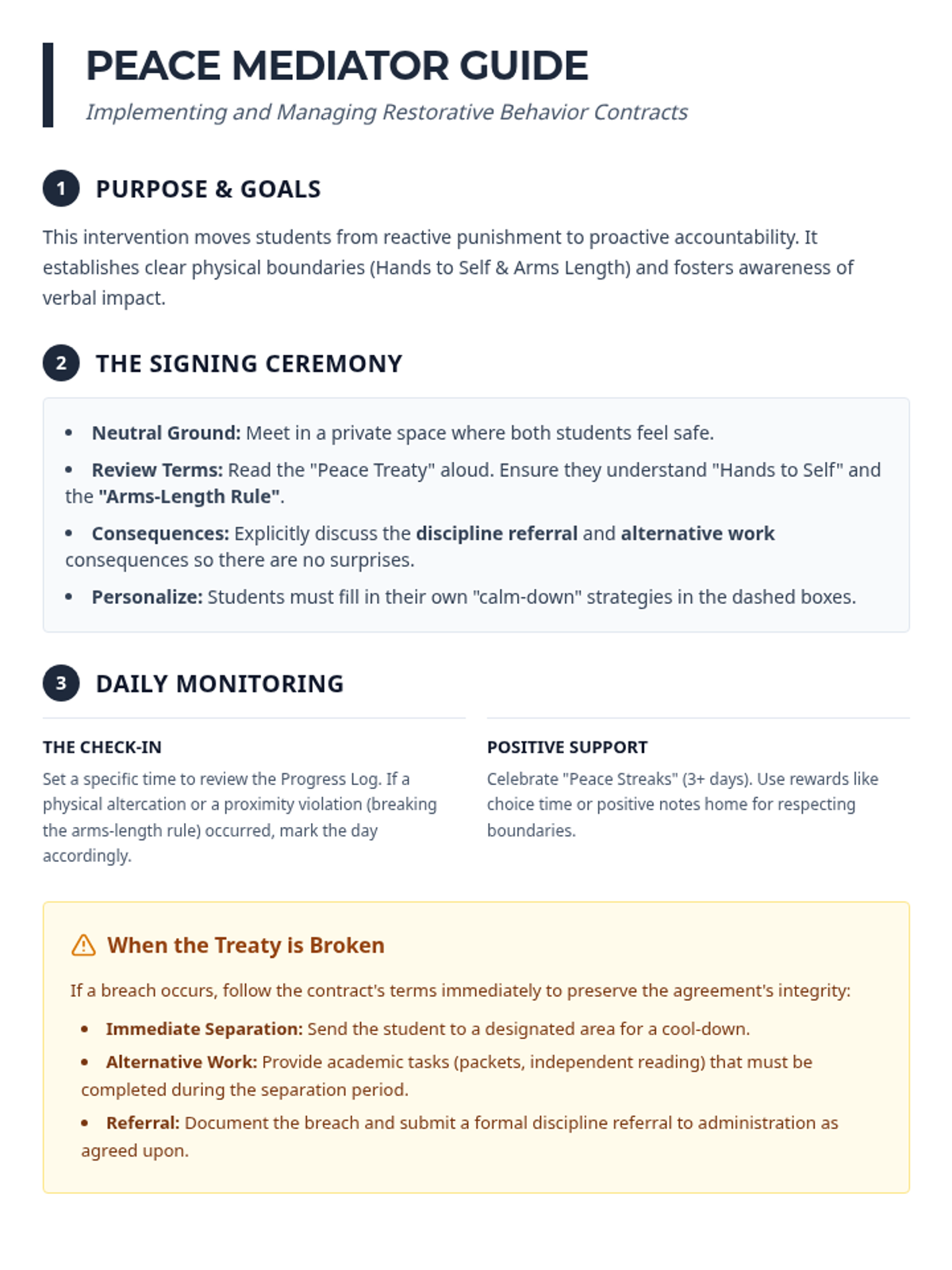
A teacher resource guide providing instructions on how to facilitate the 'Peace Treaty' meeting, managing consequences like alternative work, and coordinating with Specials teachers for behavior monitoring.
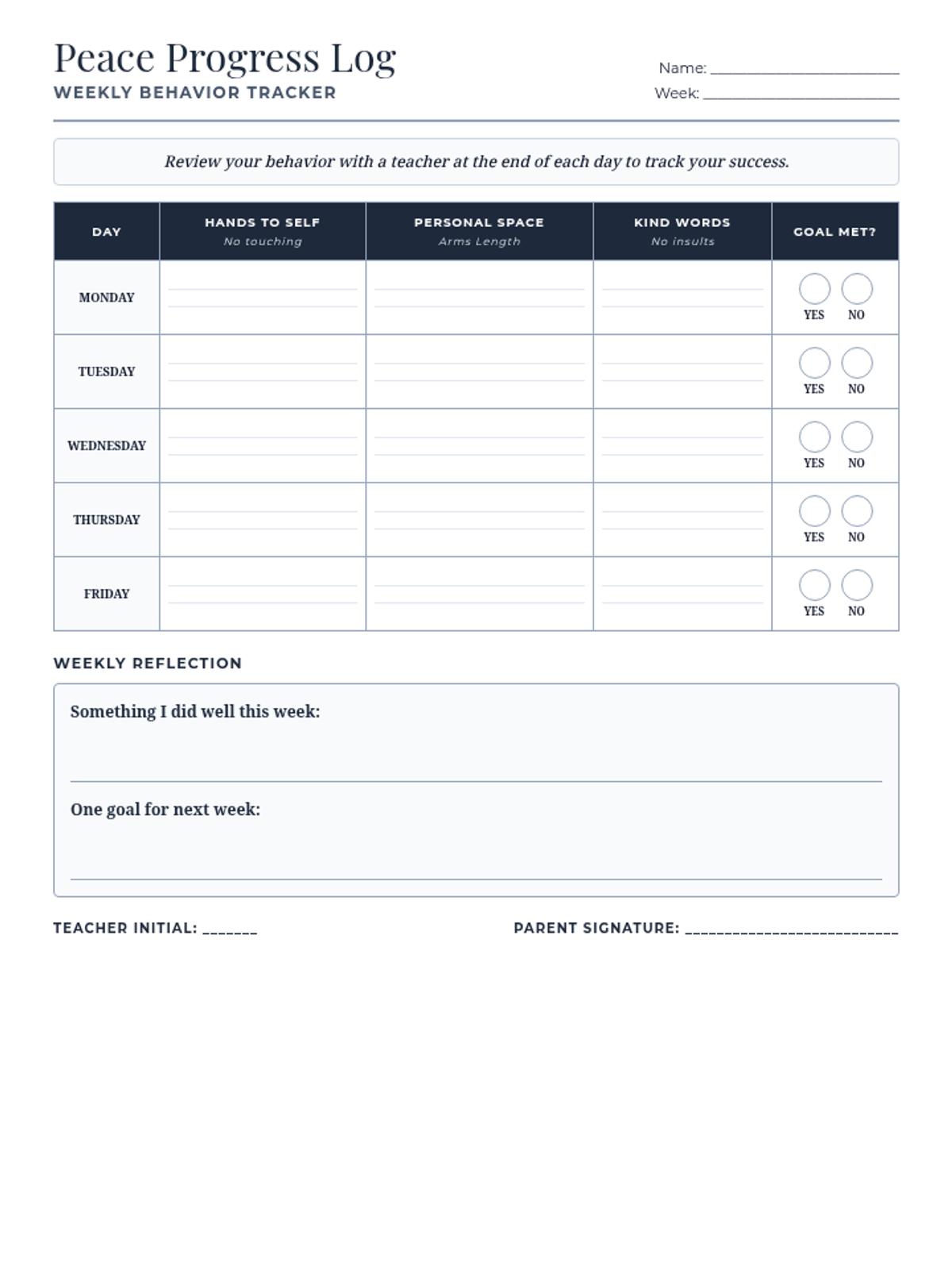
A daily behavior tracking sheet for students to monitor their adherence to the Peace Treaty. Includes specific check-in sections for Art, Music, PE, and Library to ensure consistency across the school day.
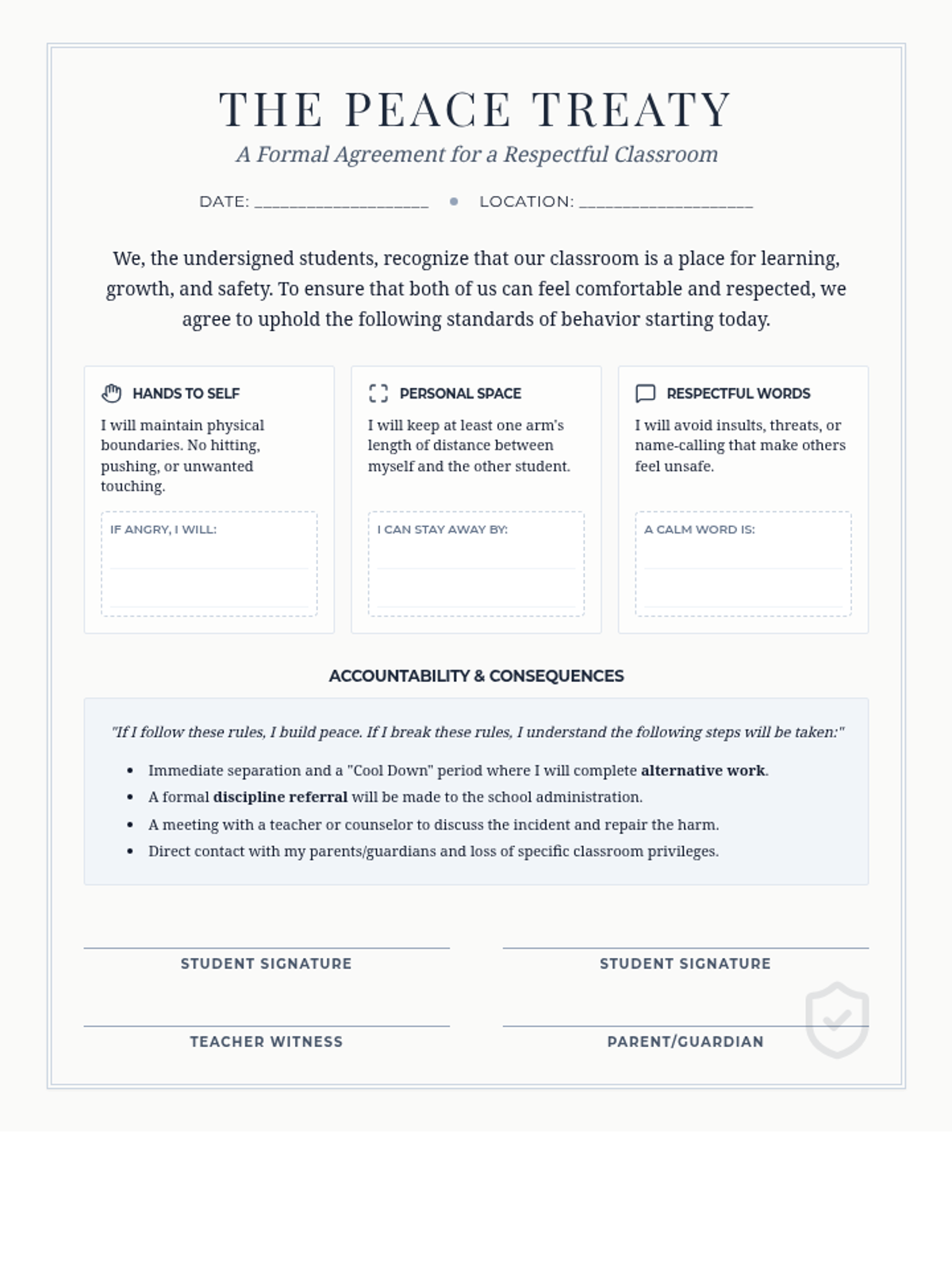
A formal behavior contract designed as a 'Peace Treaty' for two students to agree on physical boundaries, including a specific 'Arms-Length' personal space rule and consequences like discipline referrals and alternative work.
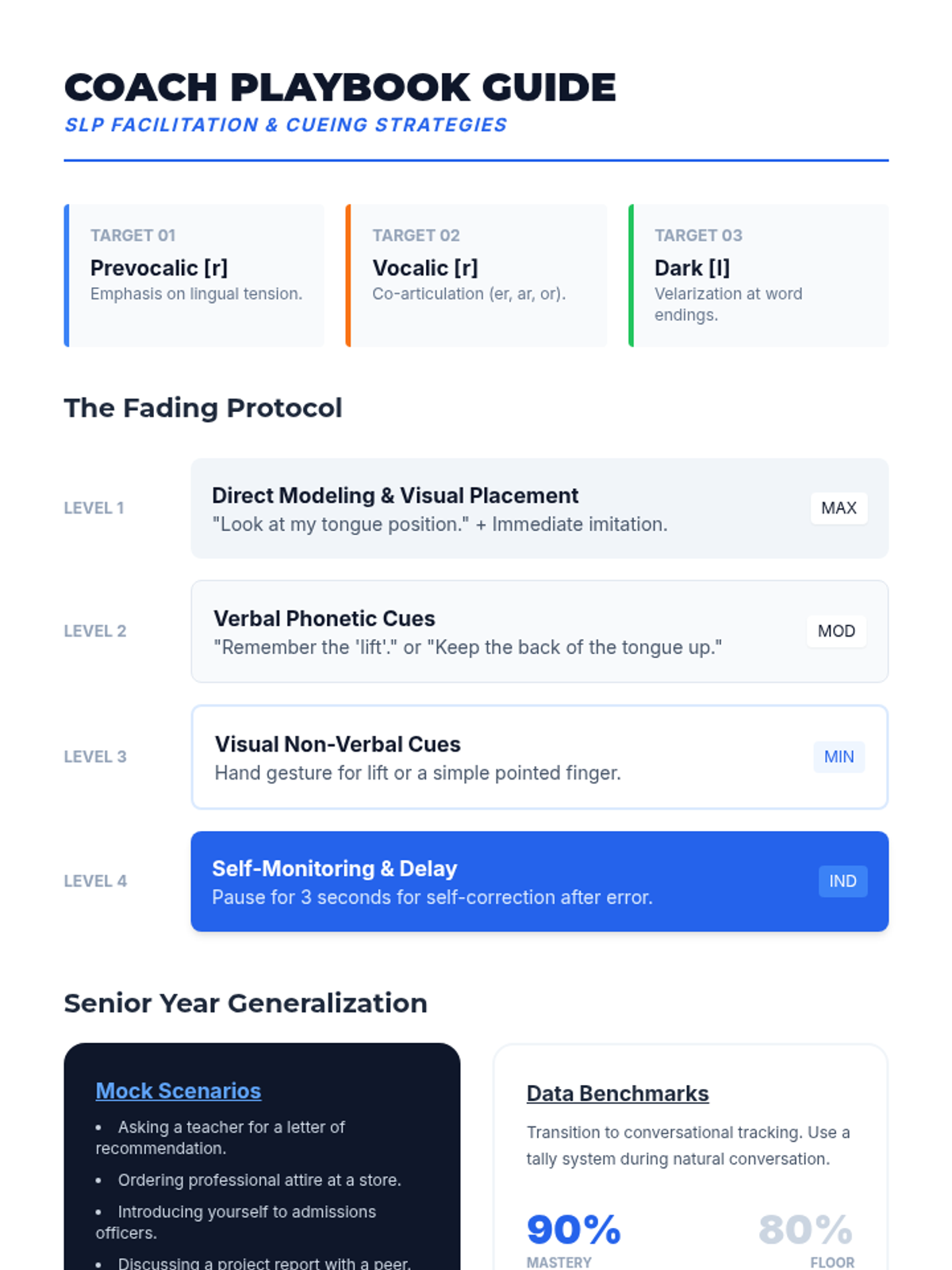
A teacher/SLP facilitation guide for working on articulation with high school seniors. It details a cueing hierarchy (fading support), professional generalization scenarios, and data-tracking benchmarks to reach the 90% accuracy goal.
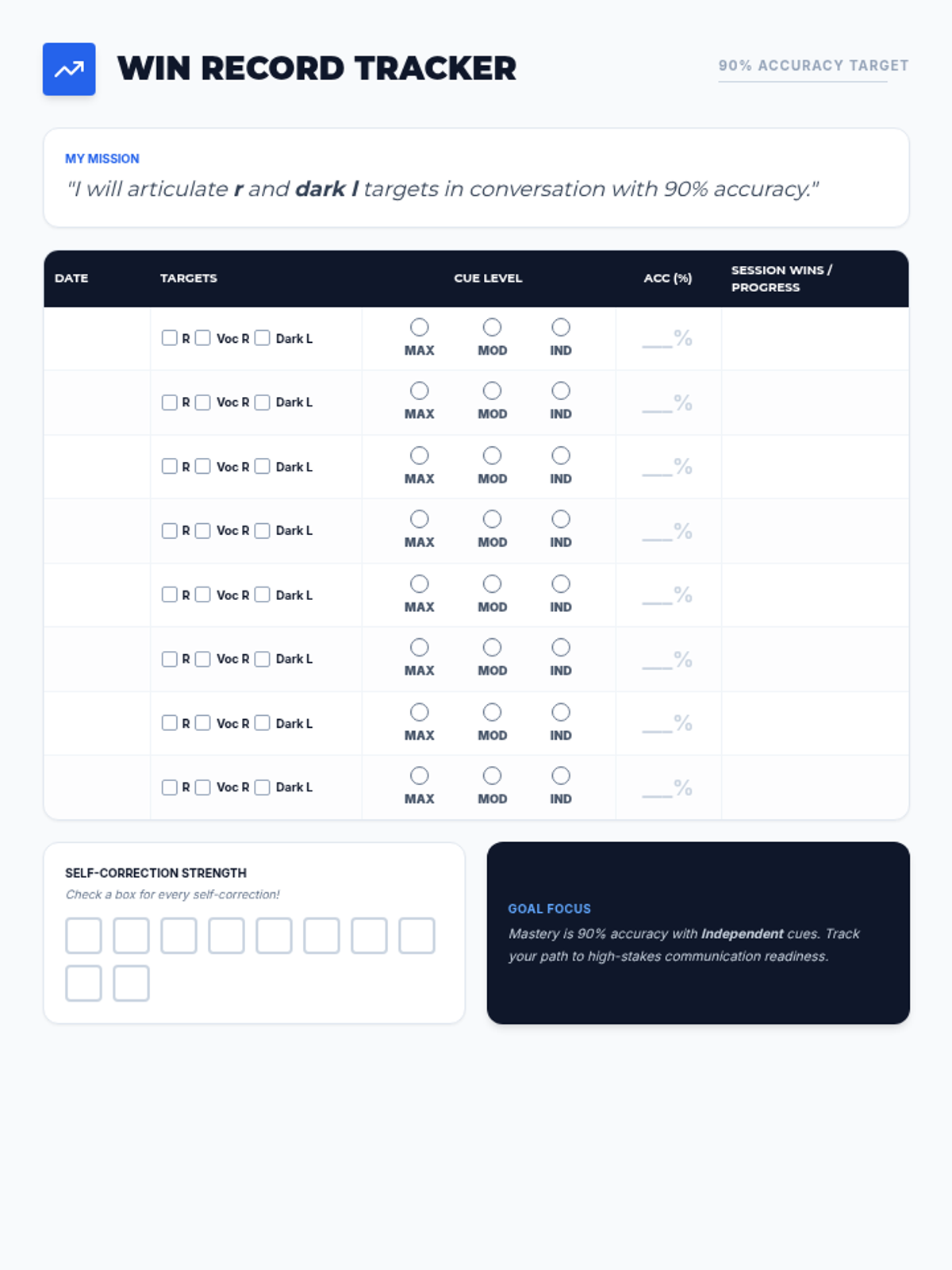
A sophisticated data-tracking log for high school seniors to monitor their articulation goals. Includes a session log for accuracy and cueing levels, as well as a self-monitoring section to track error correction.
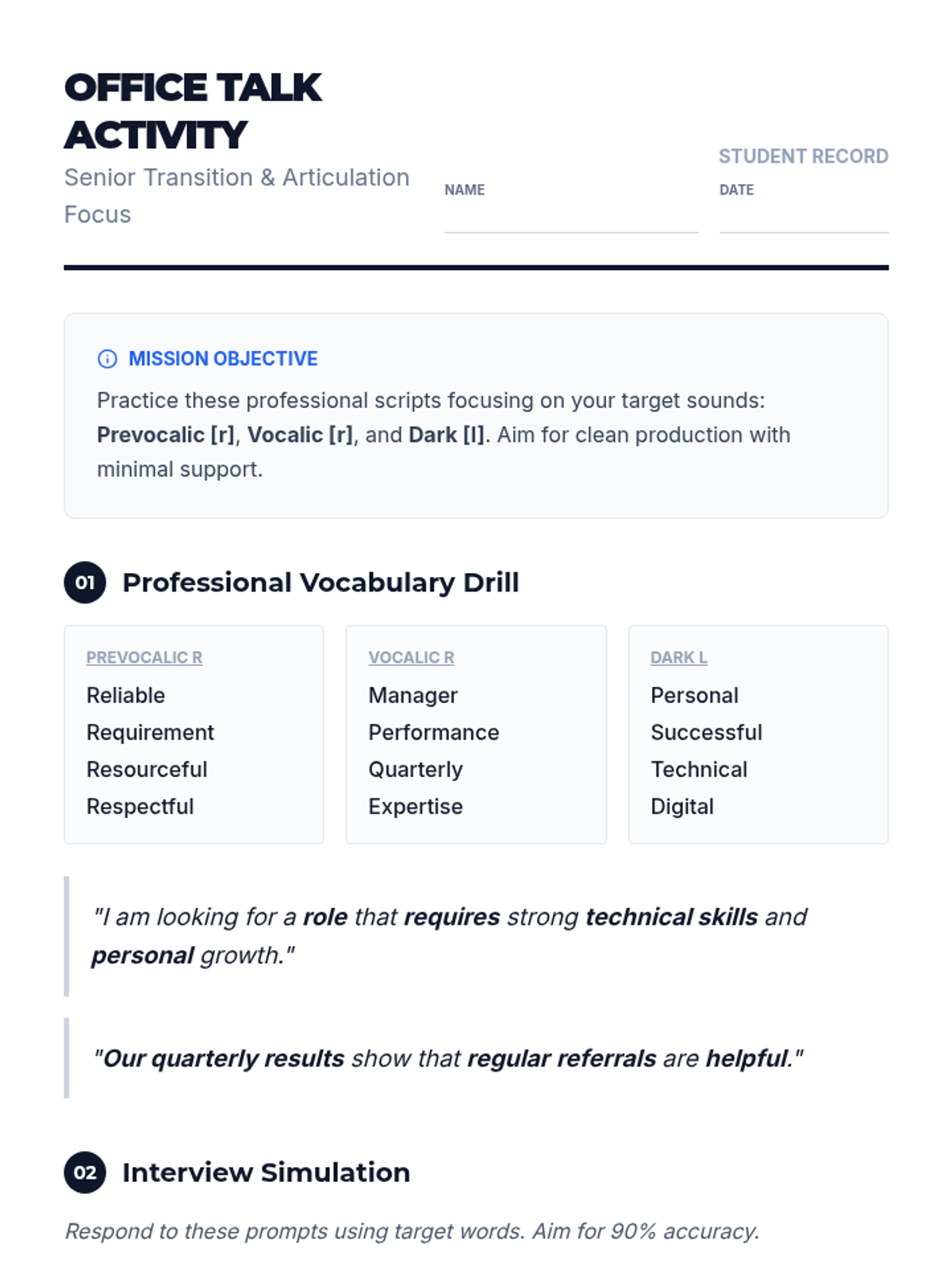
A career-readiness articulation worksheet for high school seniors. Focuses on 'r' and 'dark l' through professional vocabulary, sentence drills, and mock interview questions with spaces for self-reflection and SLP data tracking.
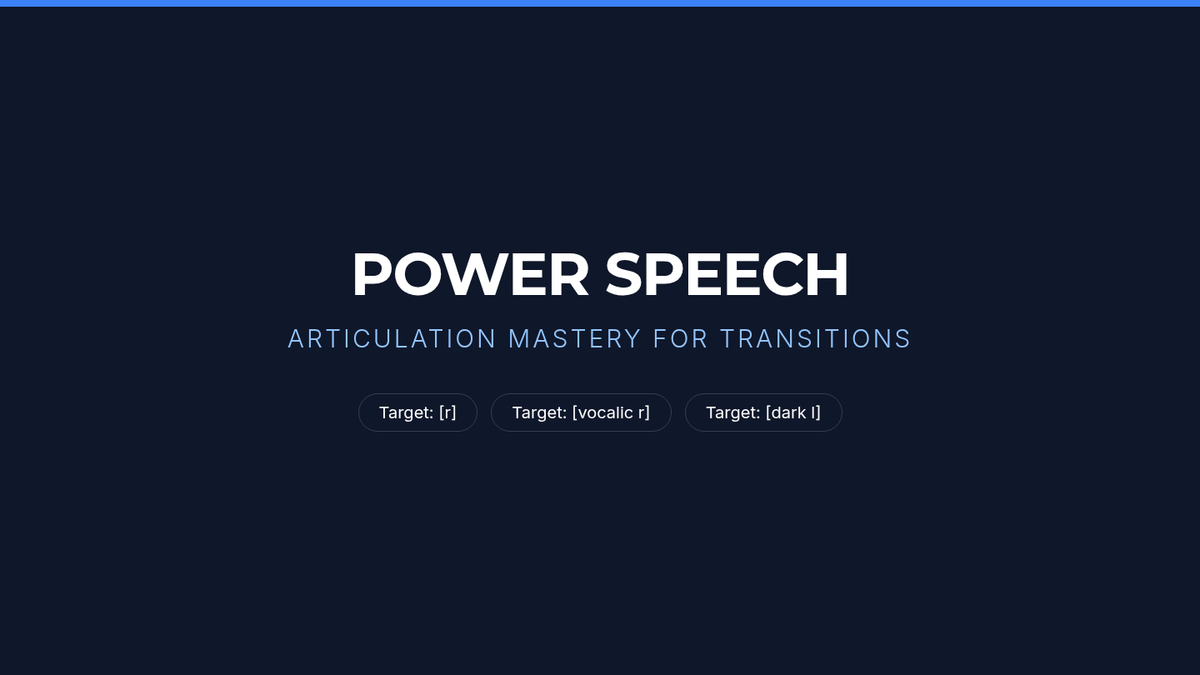
A professional 16:9 slide presentation for high school seniors focusing on articulating 'r' and 'dark l' in career-oriented contexts like interviews and workplace communication. Includes visual cues, word lists, and complex sentence challenges.
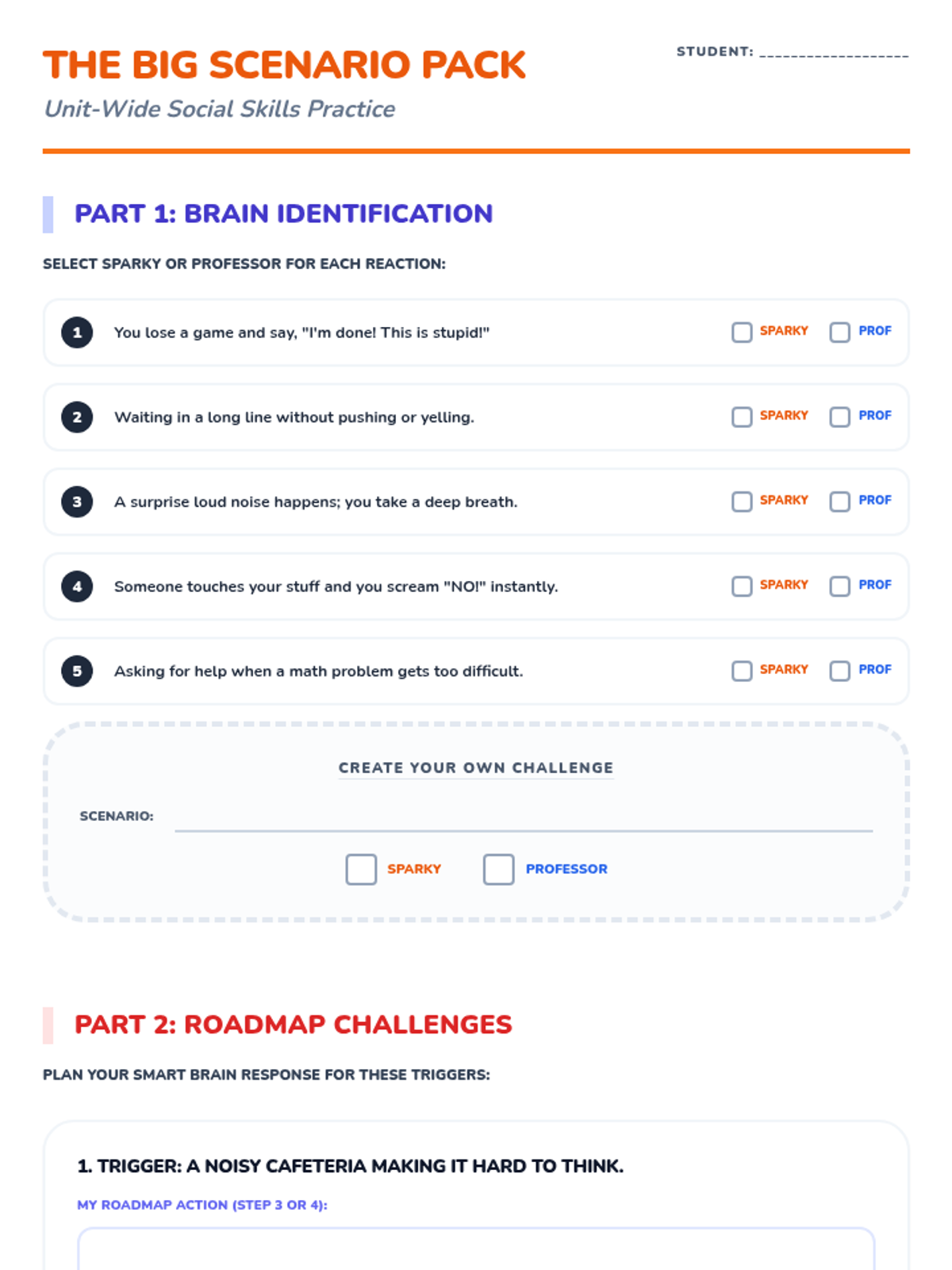
A comprehensive practice sheet with 10 scenarios (5 for early unit and 5 for late unit) plus creation spots, designed to reinforce Sparky vs. Professor PFC choices.
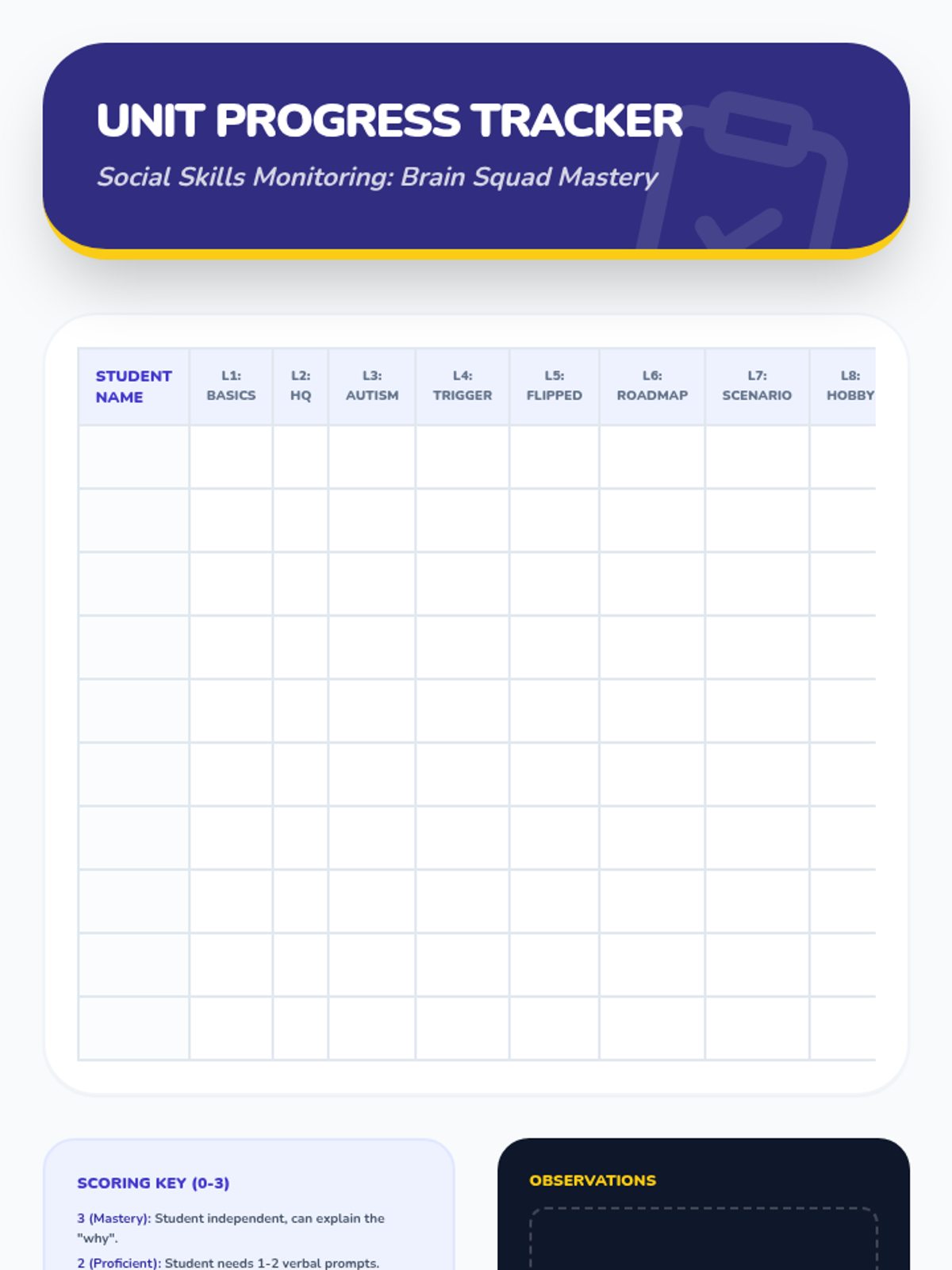
A data collection form for tracking up to ten students' progress across all eight lessons of the Brain Squad Mastery unit.
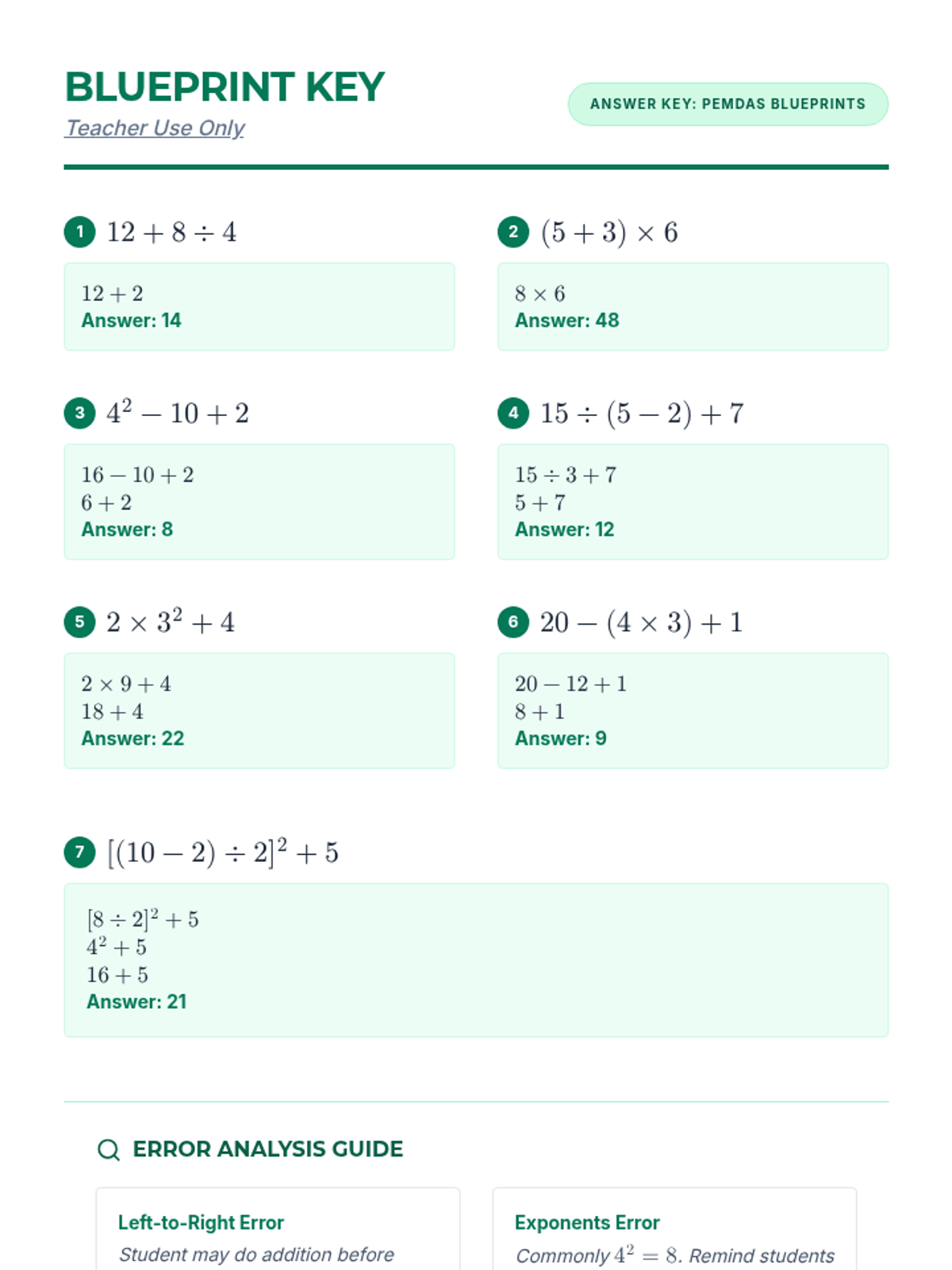
A teacher-facing answer key for the PEMDAS Blueprints worksheet, providing step-by-step solutions and a guide for common student errors.
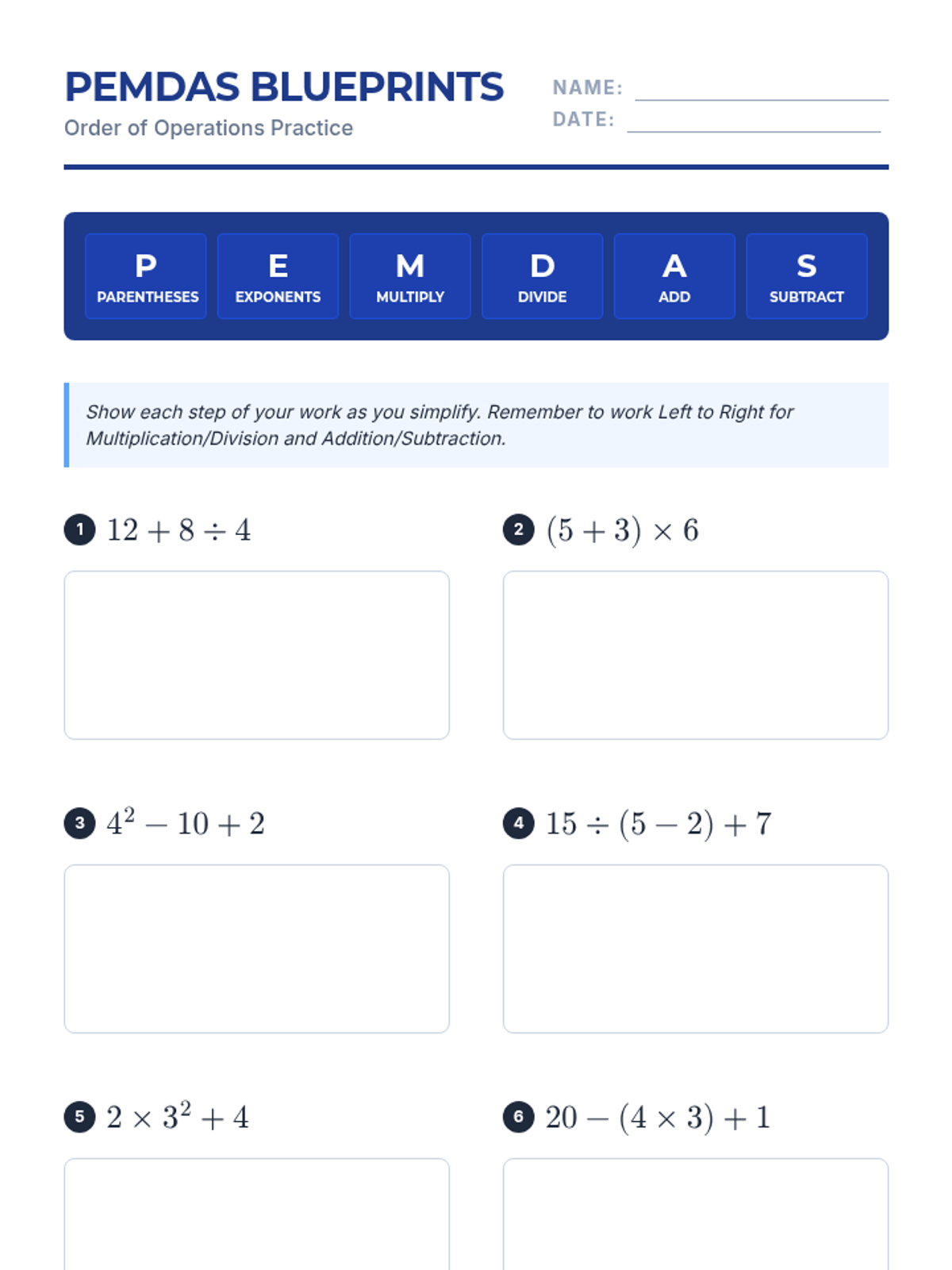
A practice worksheet for students to apply PEMDAS rules to increasingly complex expressions, featuring a clear reference header and dedicated workspaces for showing steps.
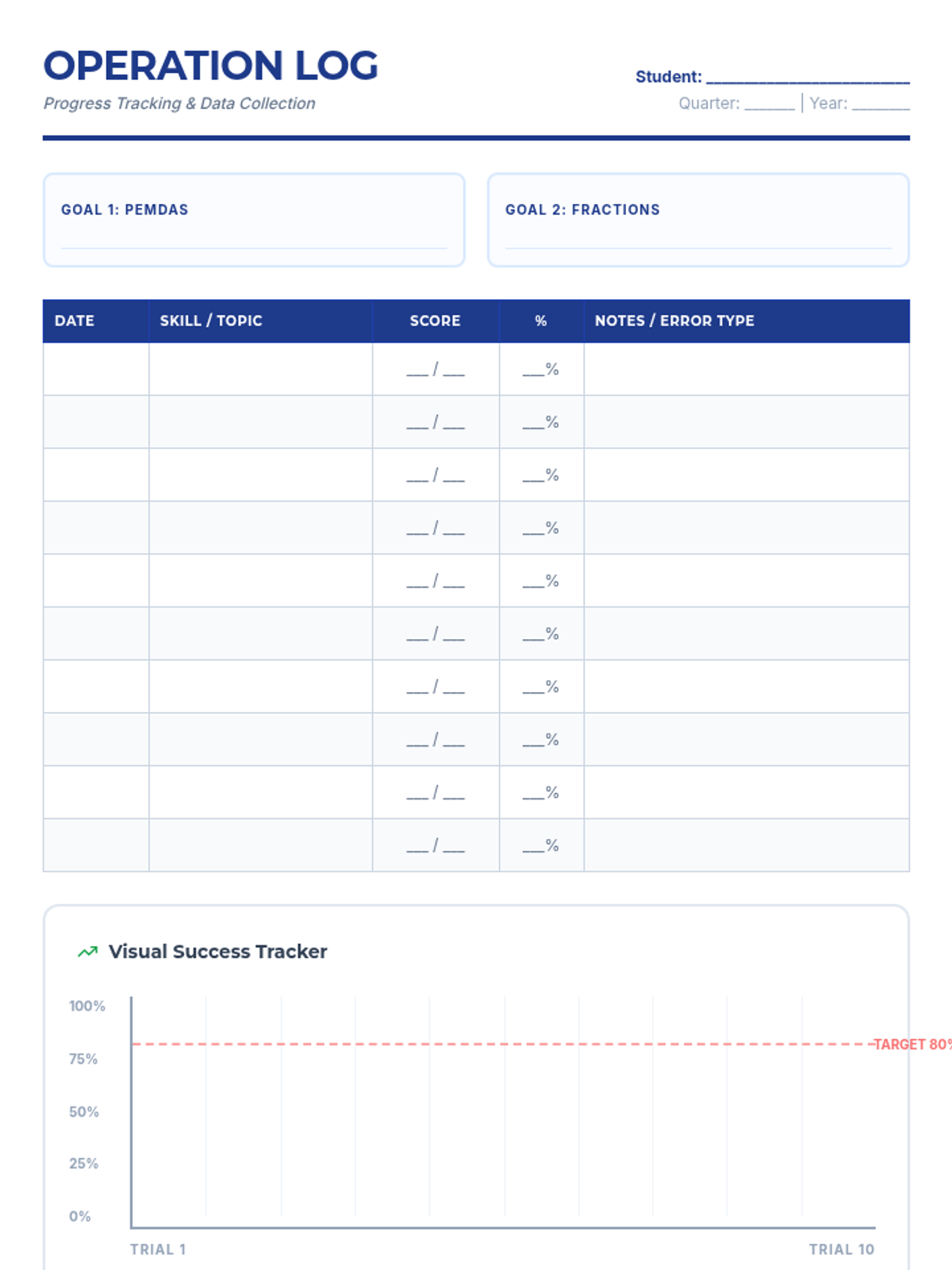
A progress tracker for monitoring student performance on IEP math goals, featuring a data collection table and a visual success chart for graphing accuracy over time.
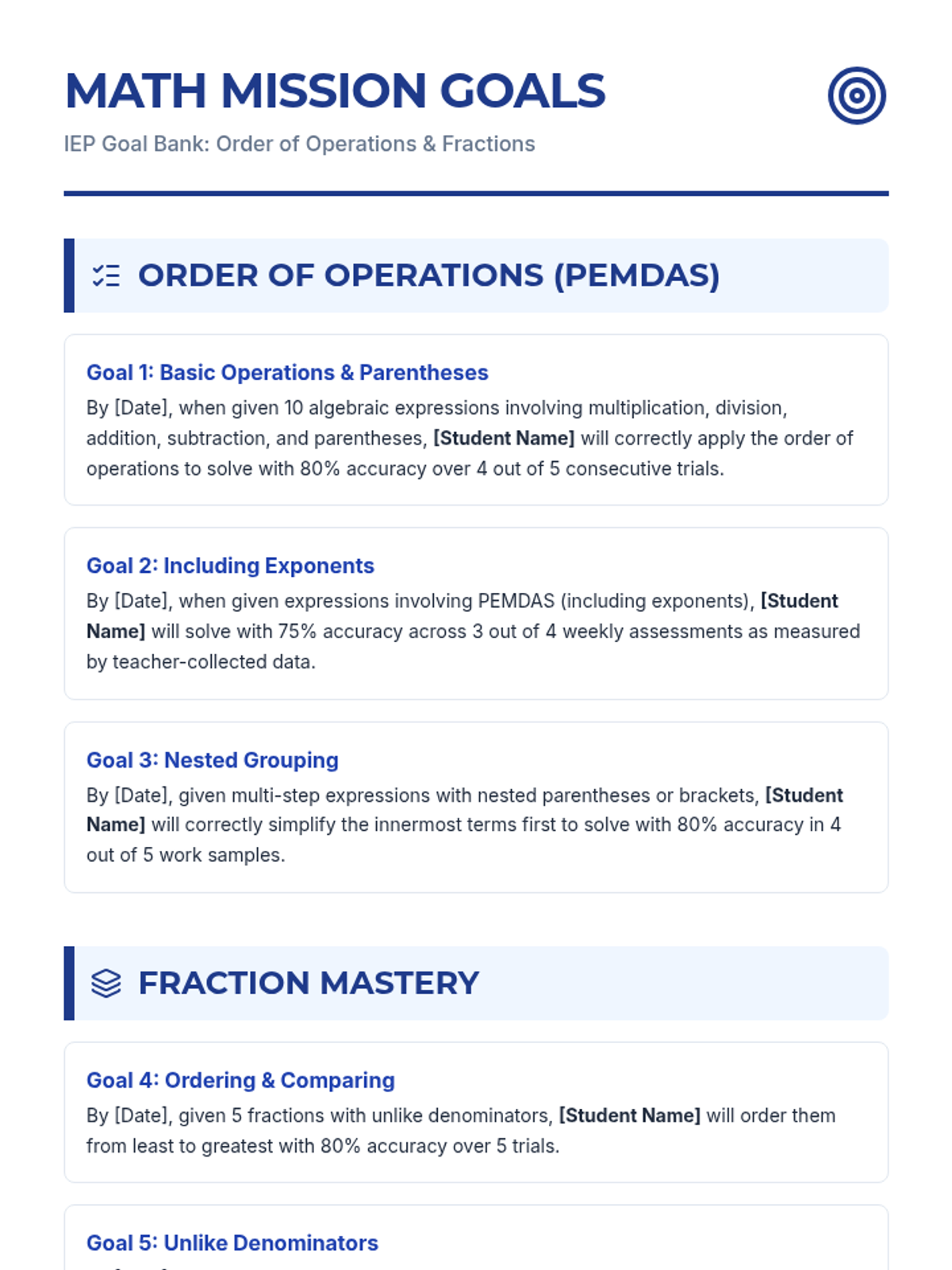
A comprehensive IEP goal bank for teachers, featuring specific, measurable goals for Order of Operations and fraction mastery, complete with instructional strategies.
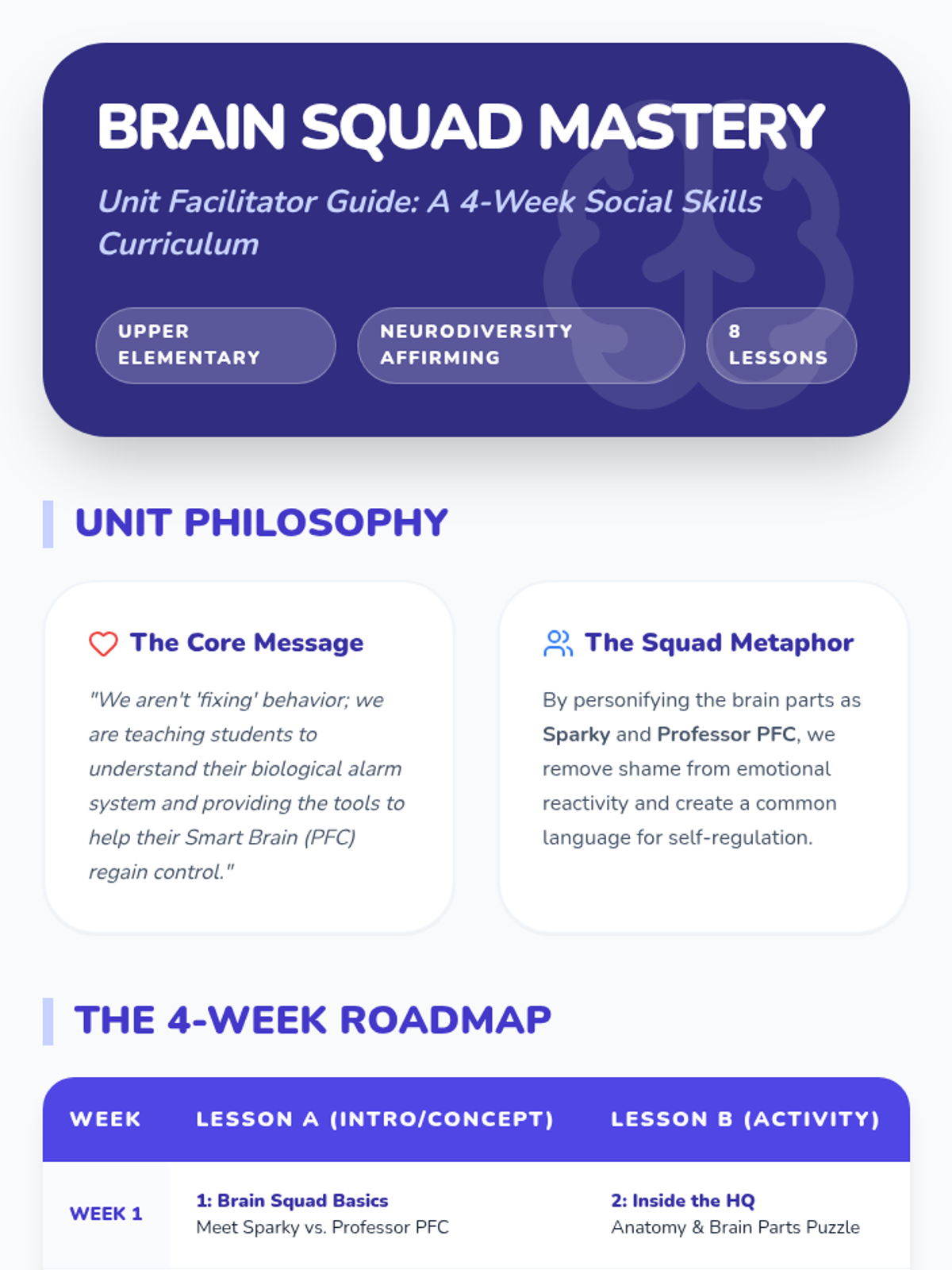
A comprehensive facilitator guide for the 4-week Brain Squad Mastery unit, containing detailed lesson plans, discussion questions, practice activities, and Autism-specific success strategies.
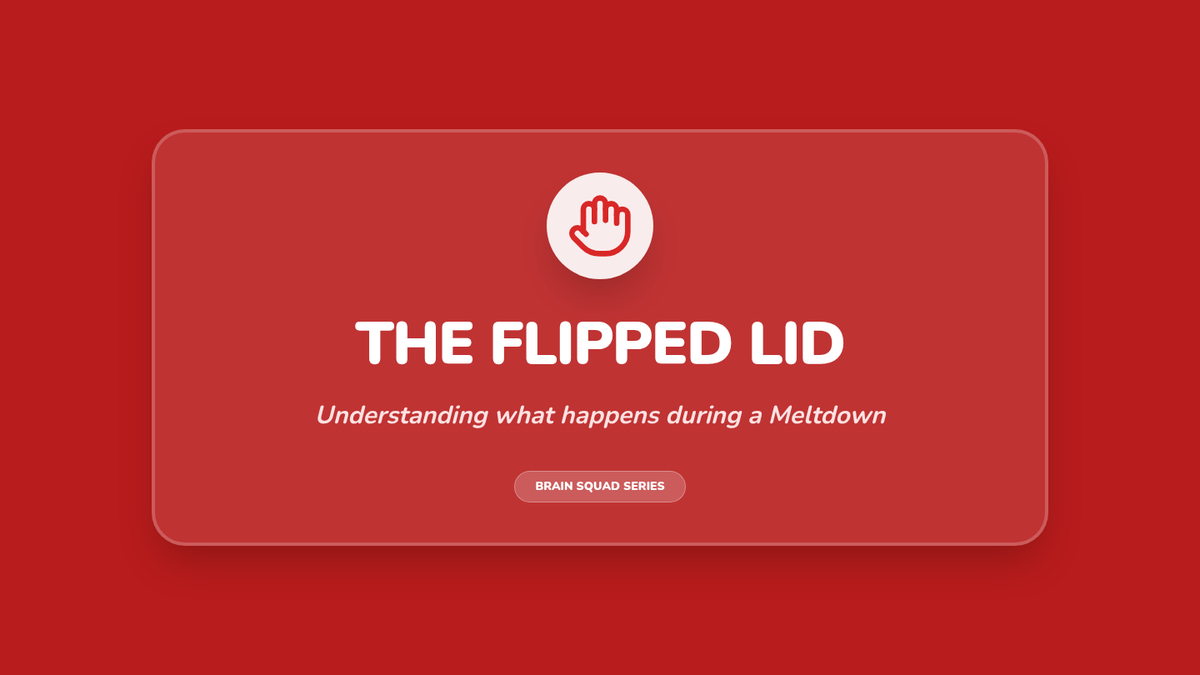
A presentation explaining the 'flipped lid' concept using the hand model of the brain to help students visualize emotional dysregulation.
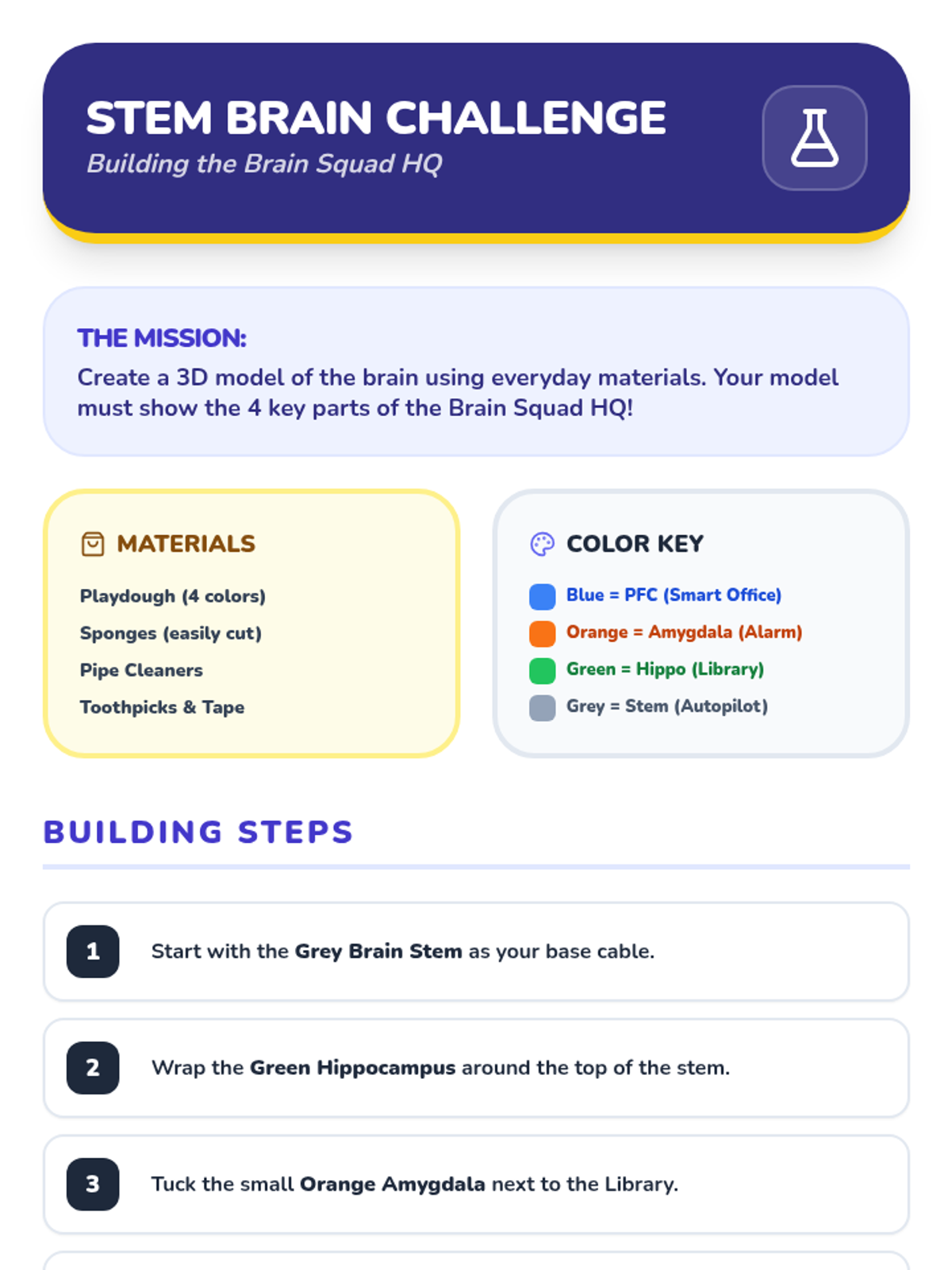
A STEM project guide for building a 3D color-coded model of the brain using common household materials to reinforce understanding of brain anatomy.
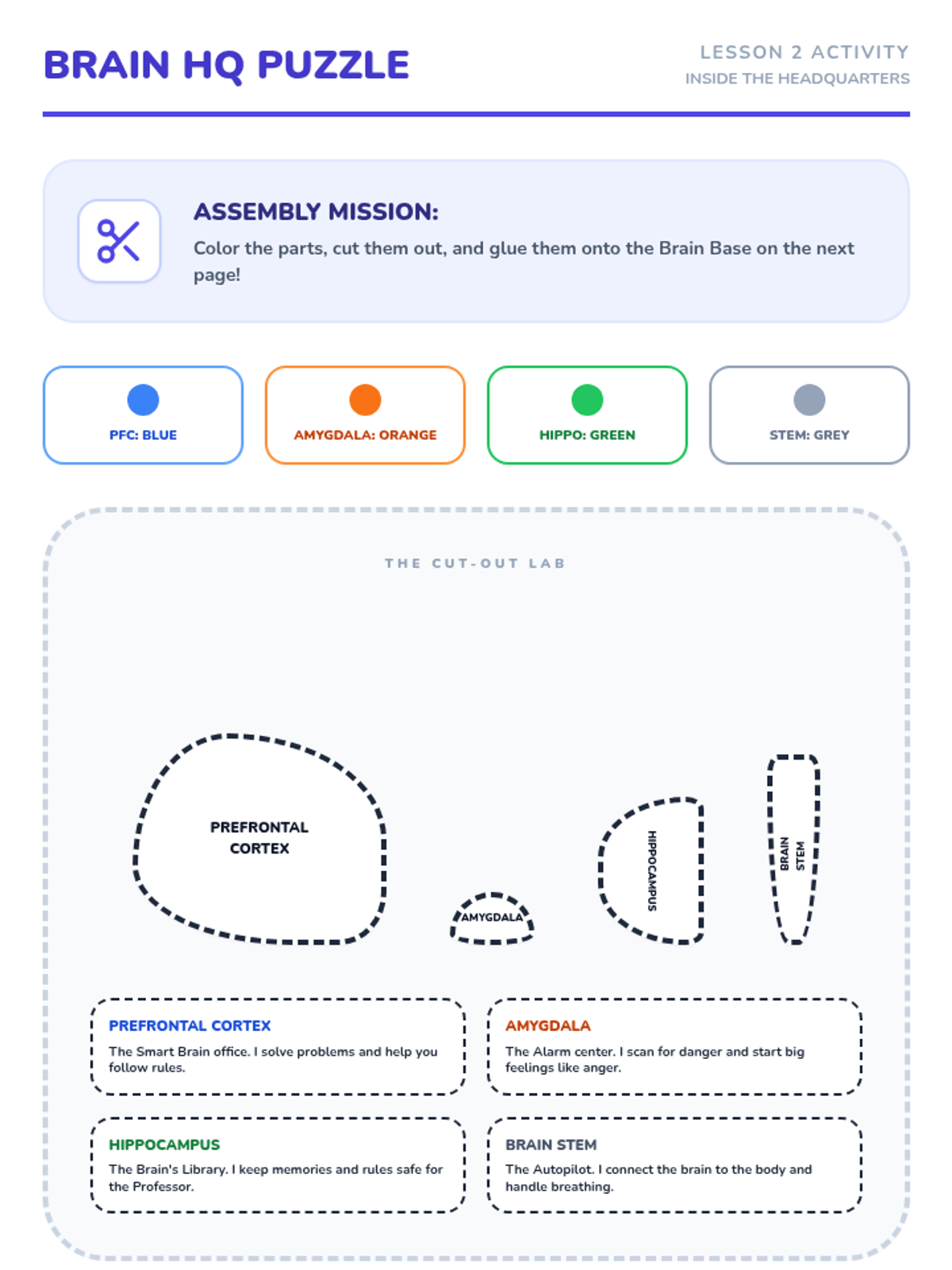
A hands-on cut-and-paste activity for students to identify, label, and define the major parts of the brain associated with emotional regulation.
An introductory slide deck explaining the biological parts of the brain (Amygdala, PFC, Hippocampus, Brain Stem) and linking them to emotional and smart responses.
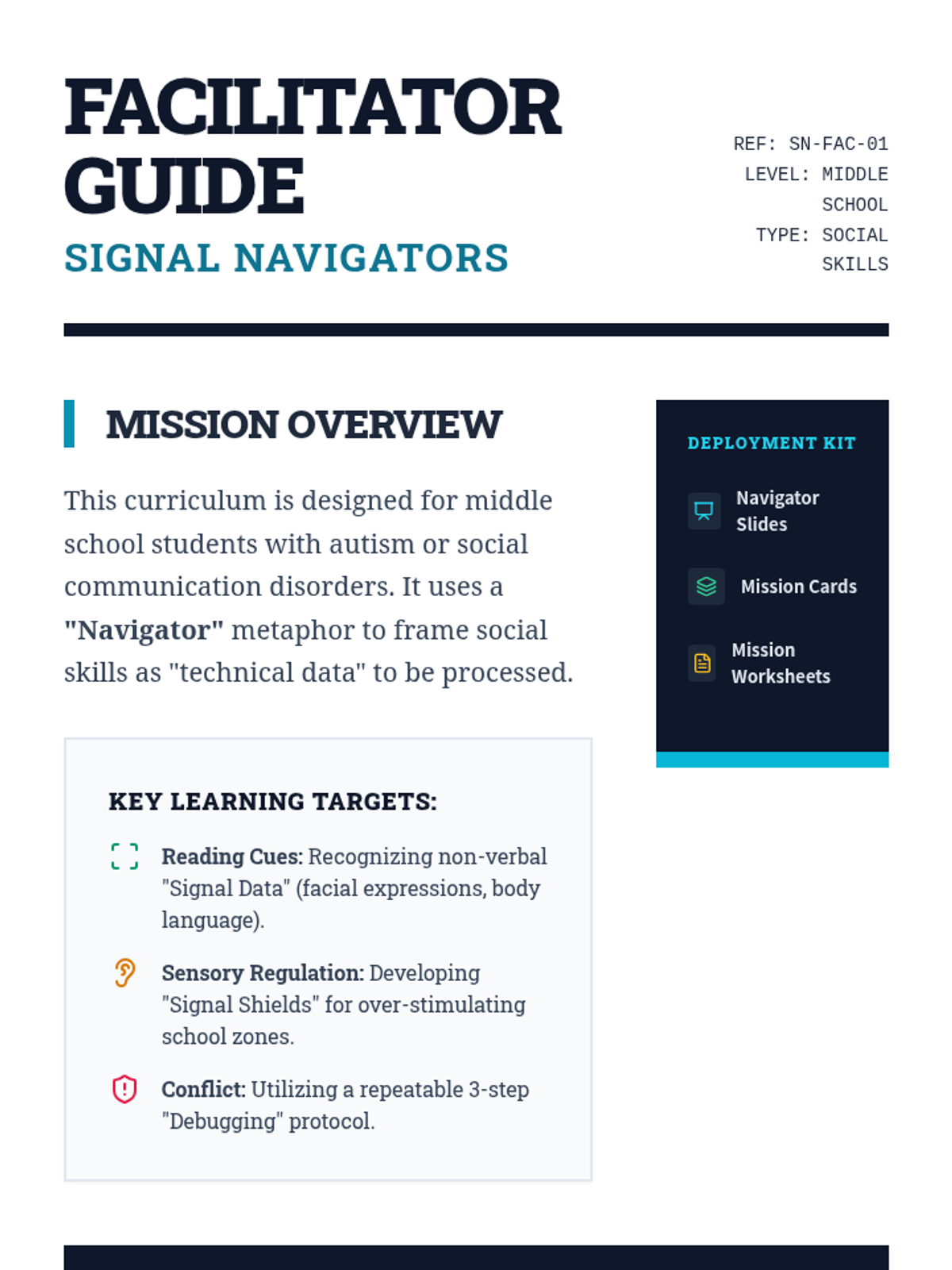
A facilitator guide for teachers or therapists to deliver the Signal Navigators lesson. Includes lesson pacing, student learning targets, materials list, and sample answers/guidance for social scenarios.
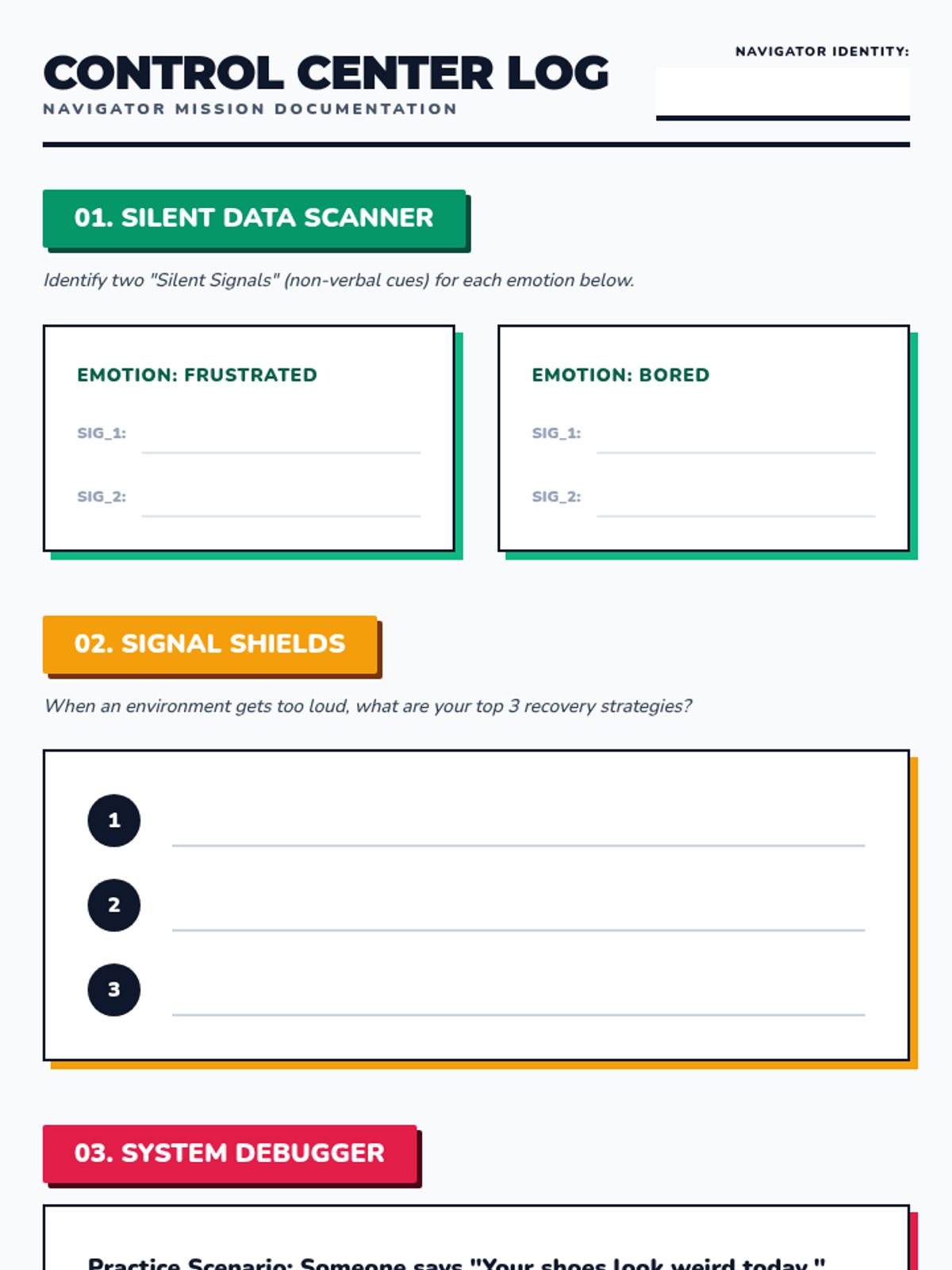
A student reflection and recording sheet to accompany the social skills lesson. It includes sections for identifying non-verbal cues, sensory regulation strategies, and practicing the 3-step conflict resolution method.
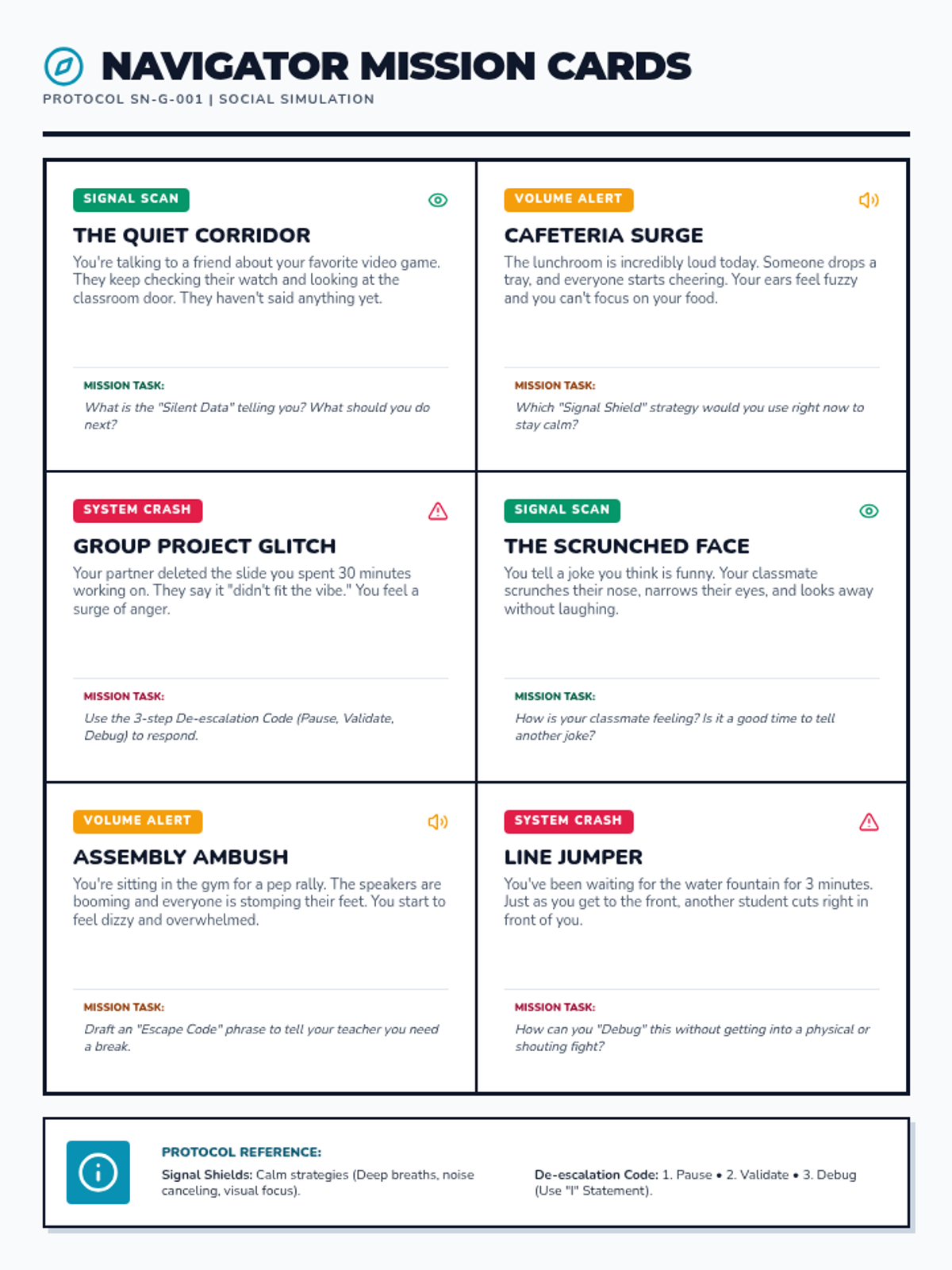
A set of scenario cards for a social skills 'game'. Scenarios focus on non-verbal cues (Signal Scan), sensory regulation (Volume Alert), and conflict management (System Crash). Designed to be printed and cut.
A high-impact visual slide deck for teaching social skills concepts. It uses a 'Signal Navigators' control-center theme to explain non-verbal cues, sensory regulation in loud environments, and conflict resolution steps.
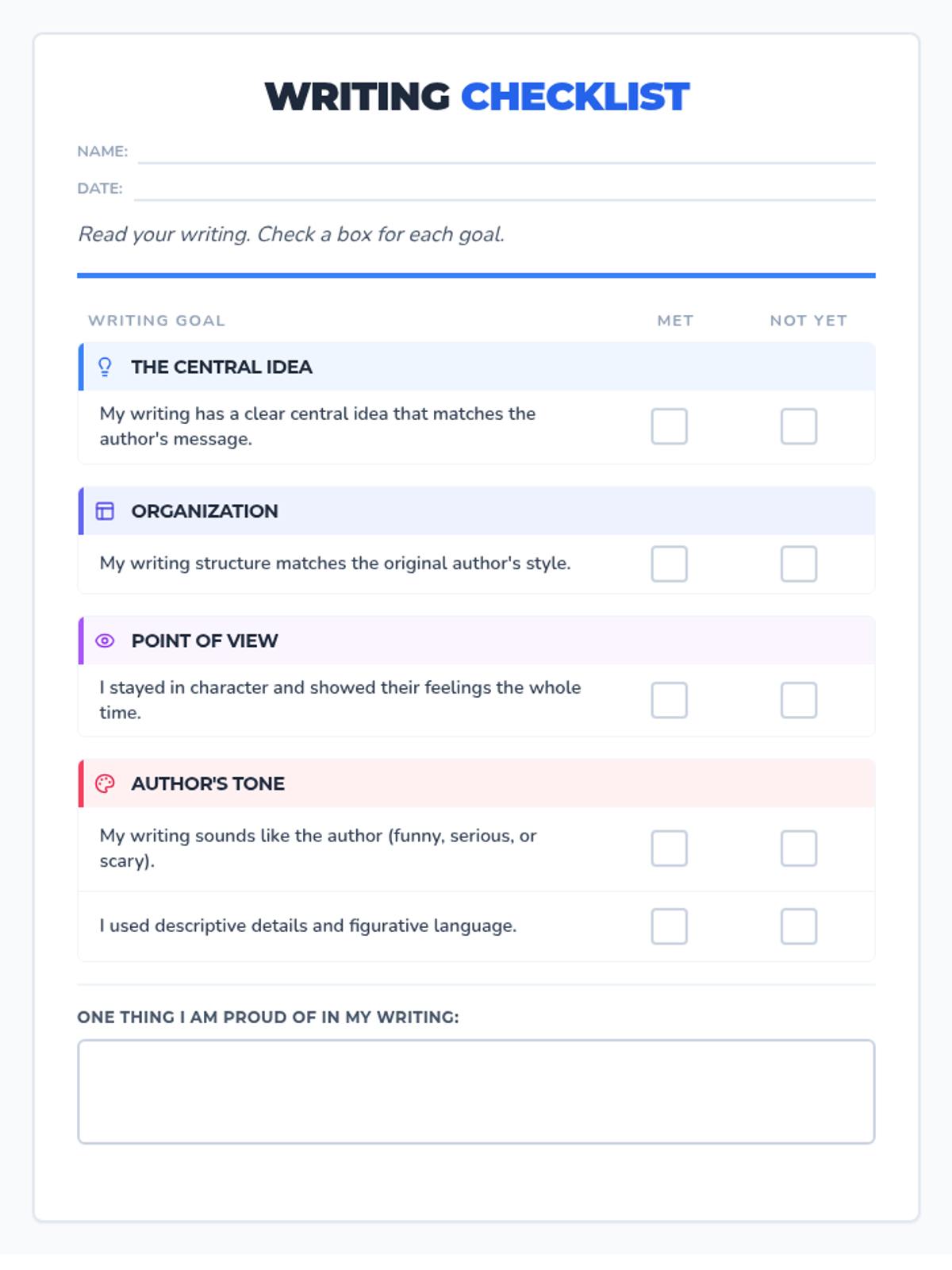
A simplified student self-assessment checklist for 7th-grade special education students, based on a writing rubric. It features clear 'Met' and 'Not Yet' categories for central idea, organization, point of view, and tone.
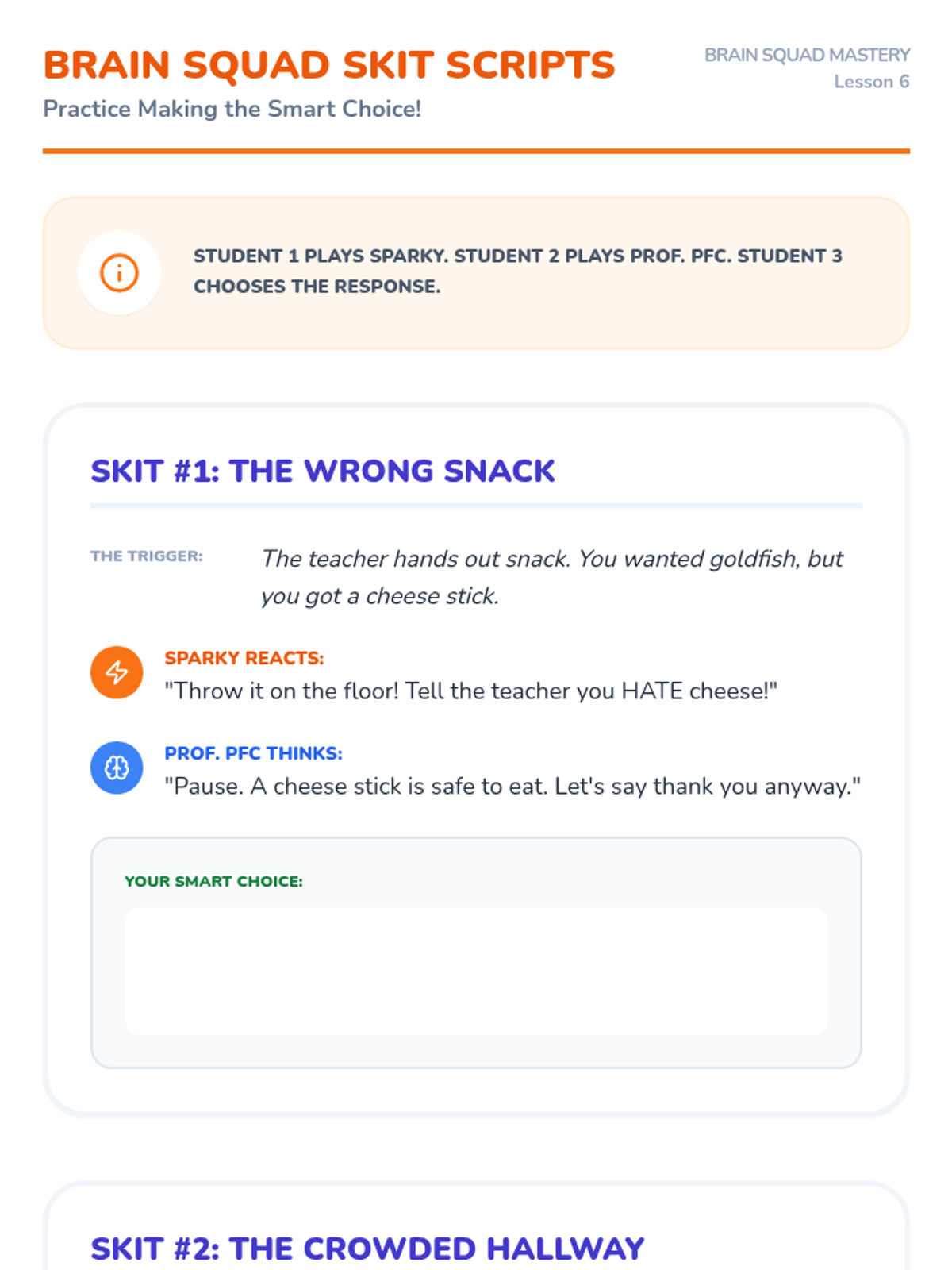
A collection of 5 scripted role-play skits plus a blank student creation template for practicing identifying reactive versus thoughtful responses.
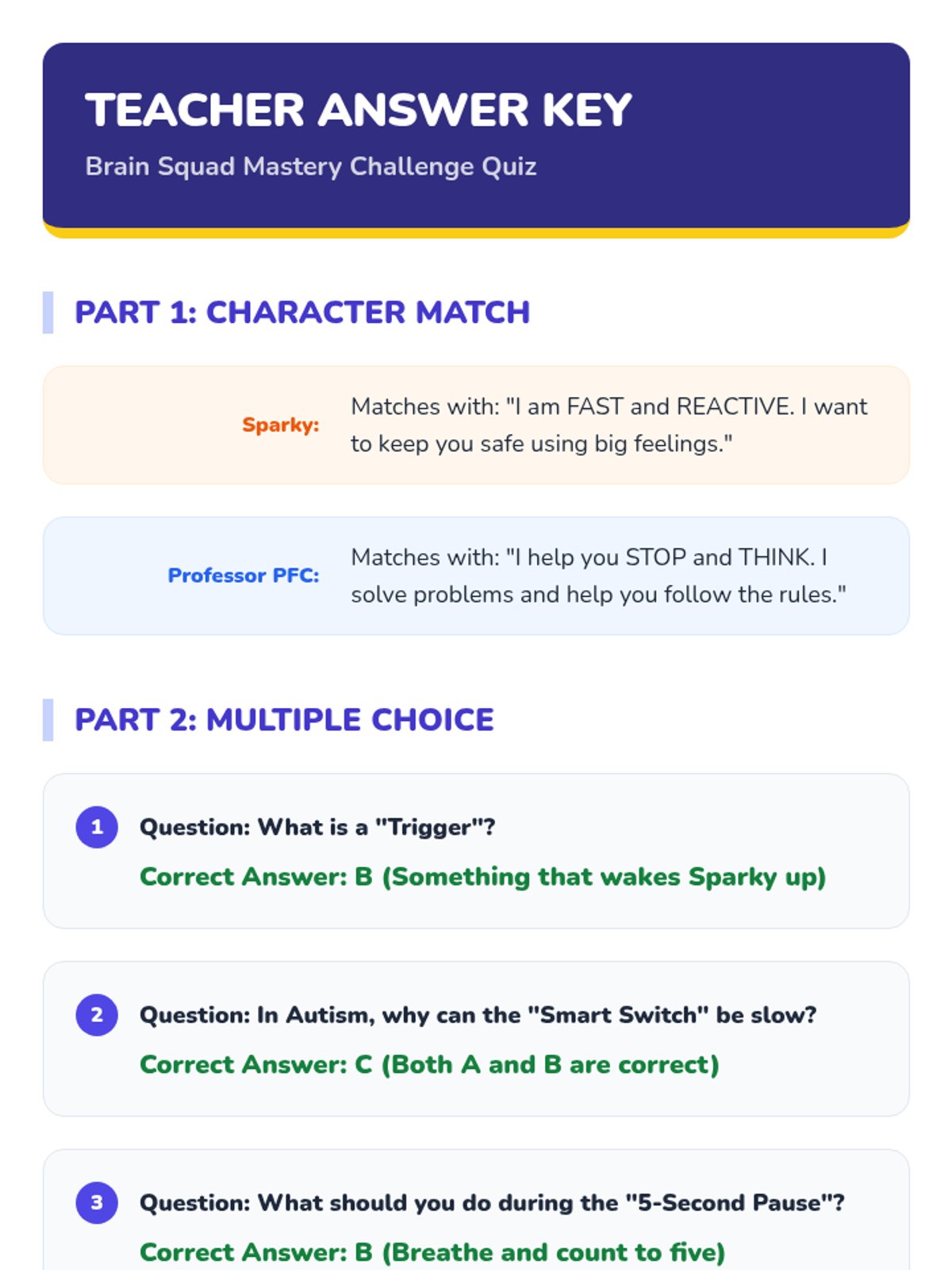
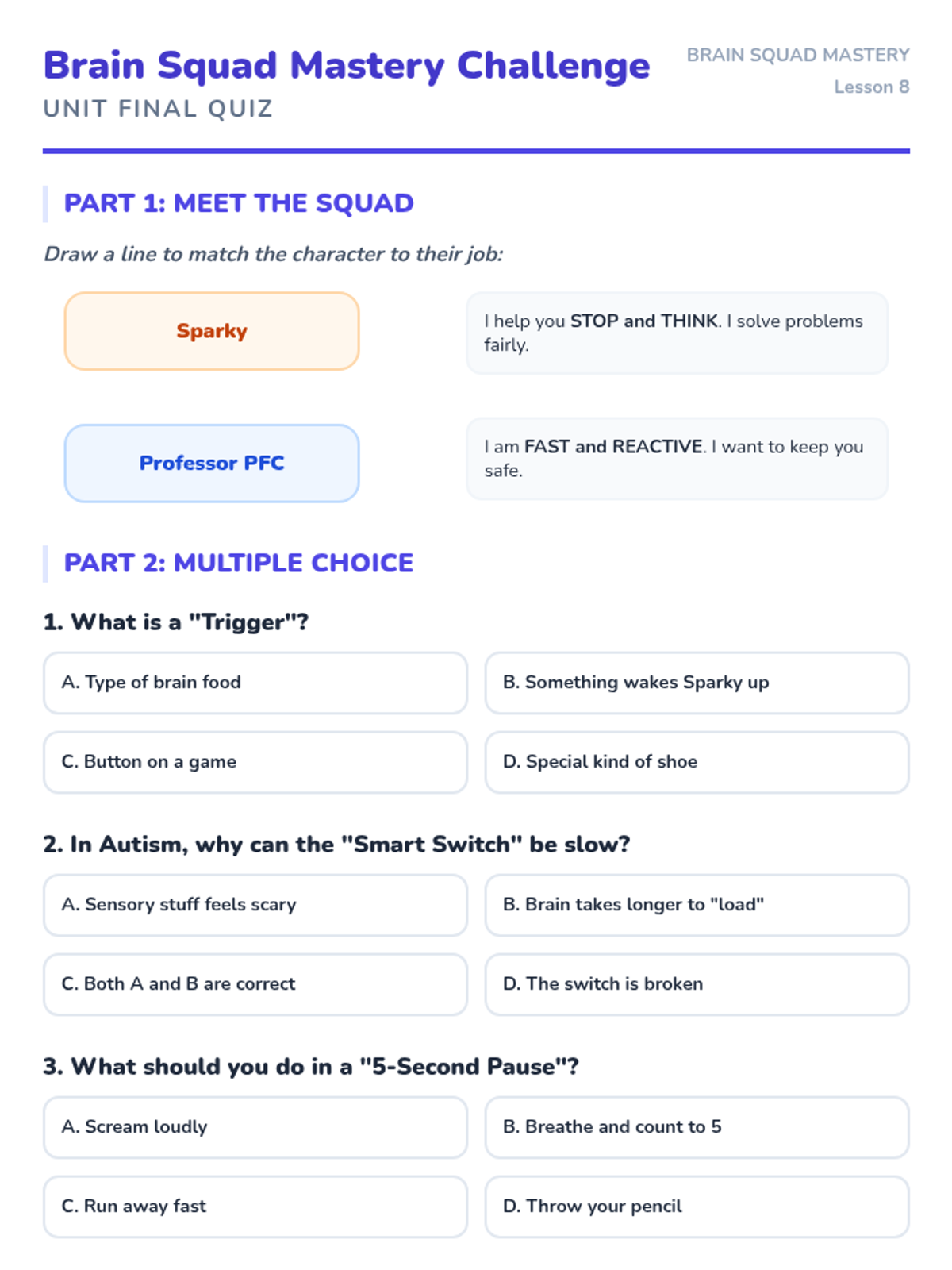
An answer key and teaching guide for the Mastery Challenge Quiz, providing context for the correct answers and grading tips.
A comprehensive final assessment covering the two brain characters, triggers, the impact of autism on regulation, and personal regulation strategies.
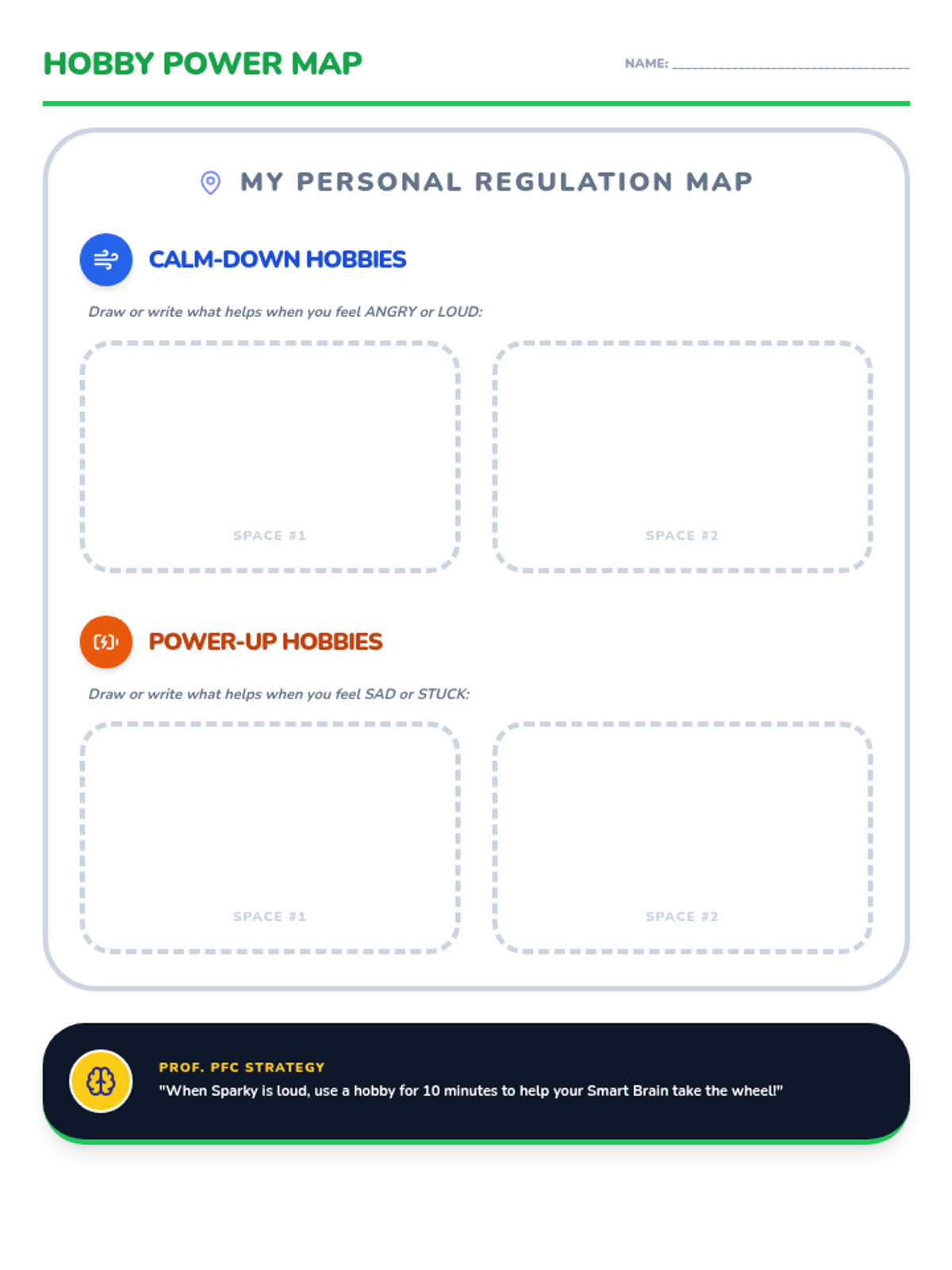
A student worksheet for identifying calming and energizing hobbies that aid in emotional regulation and provide positive outlets.
An interactive game-style slide deck expanded to 5 detailed scenarios plus a student creation slide for practicing Sparky vs. Professor PFC responses.
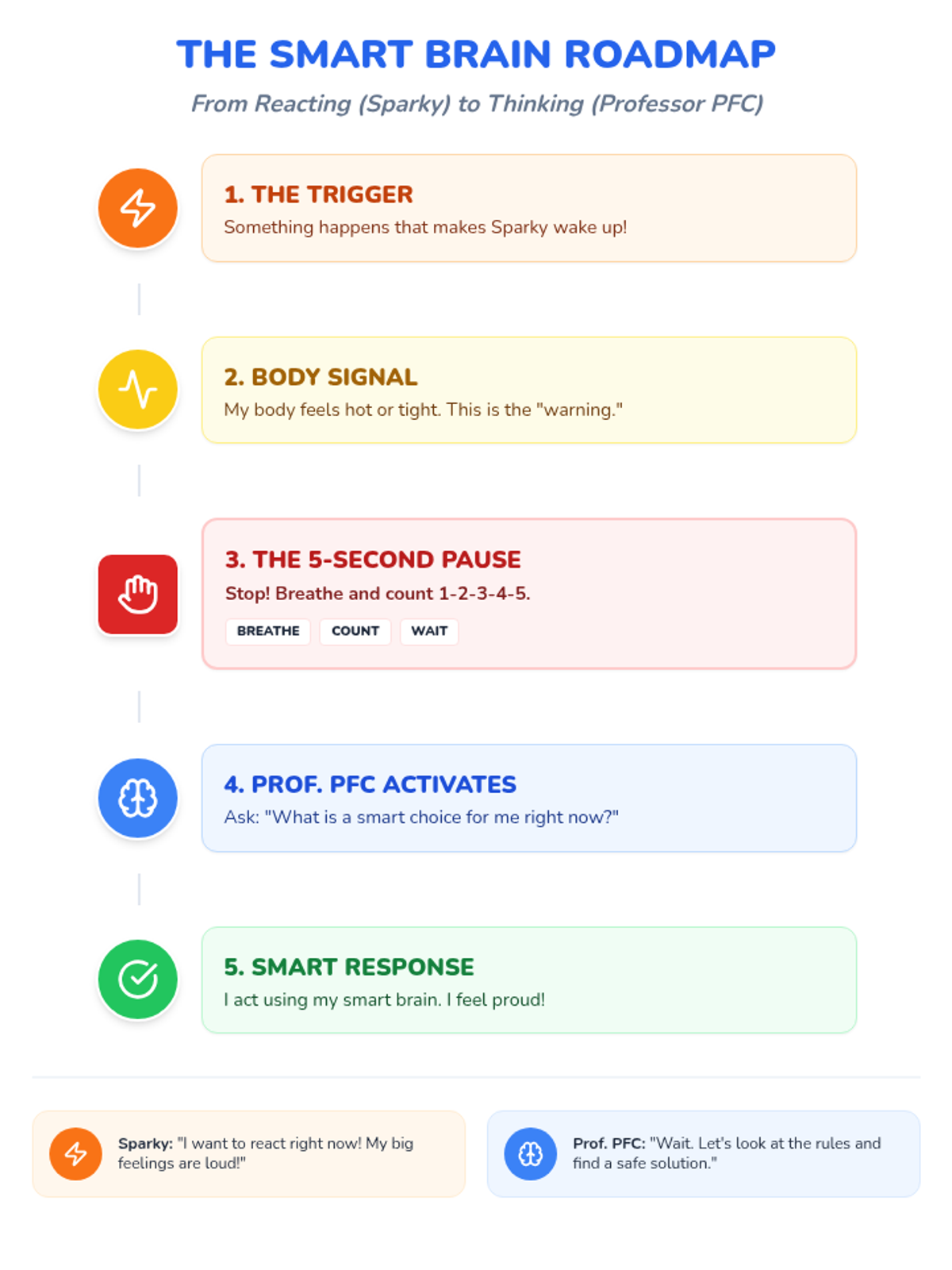
A visual flowchart graphic organizer mapping the steps from identifying a trigger to choosing a smart brain response.
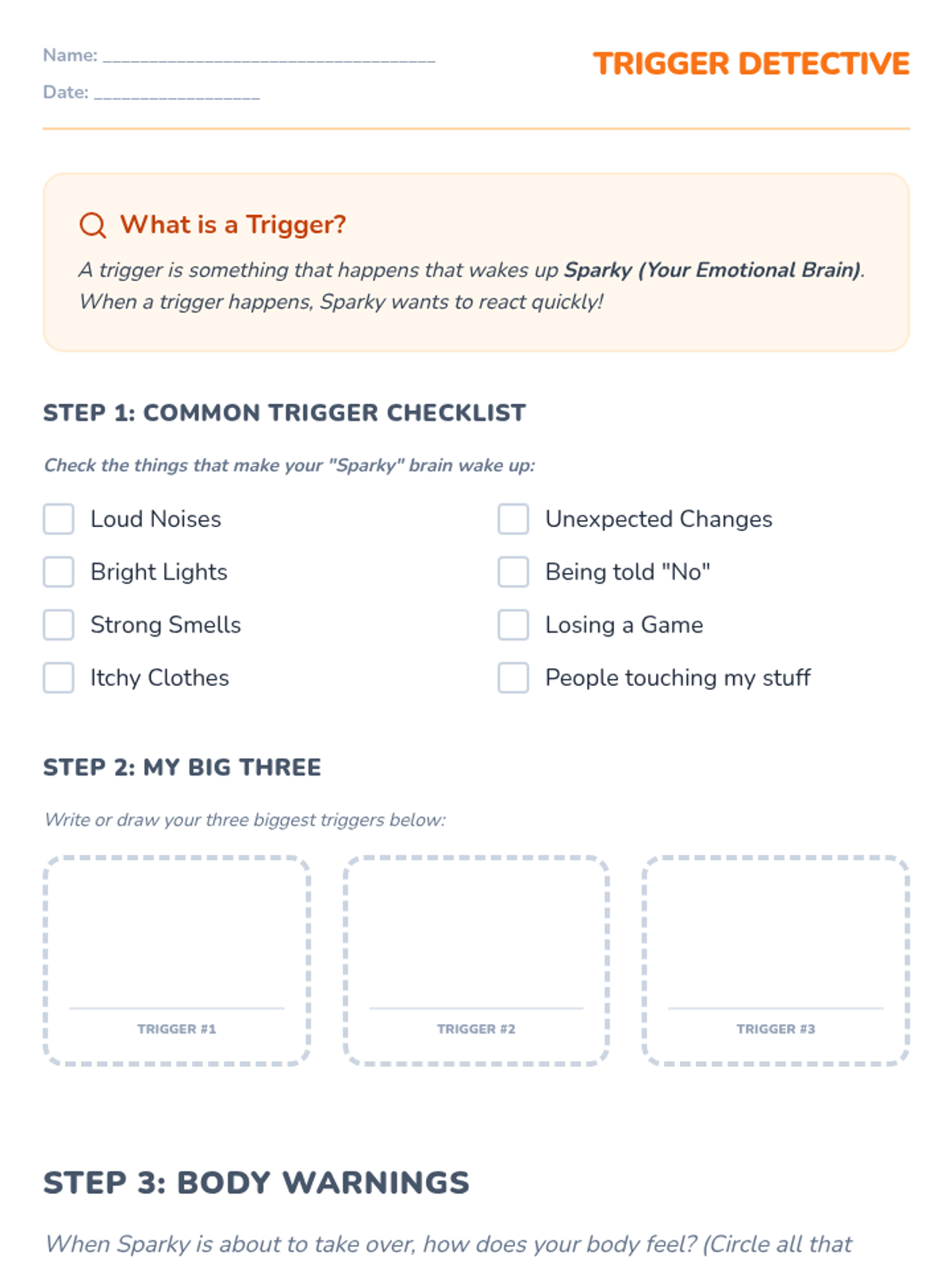
A student worksheet for identifying personal environmental and social triggers that lead to emotional reactivity.
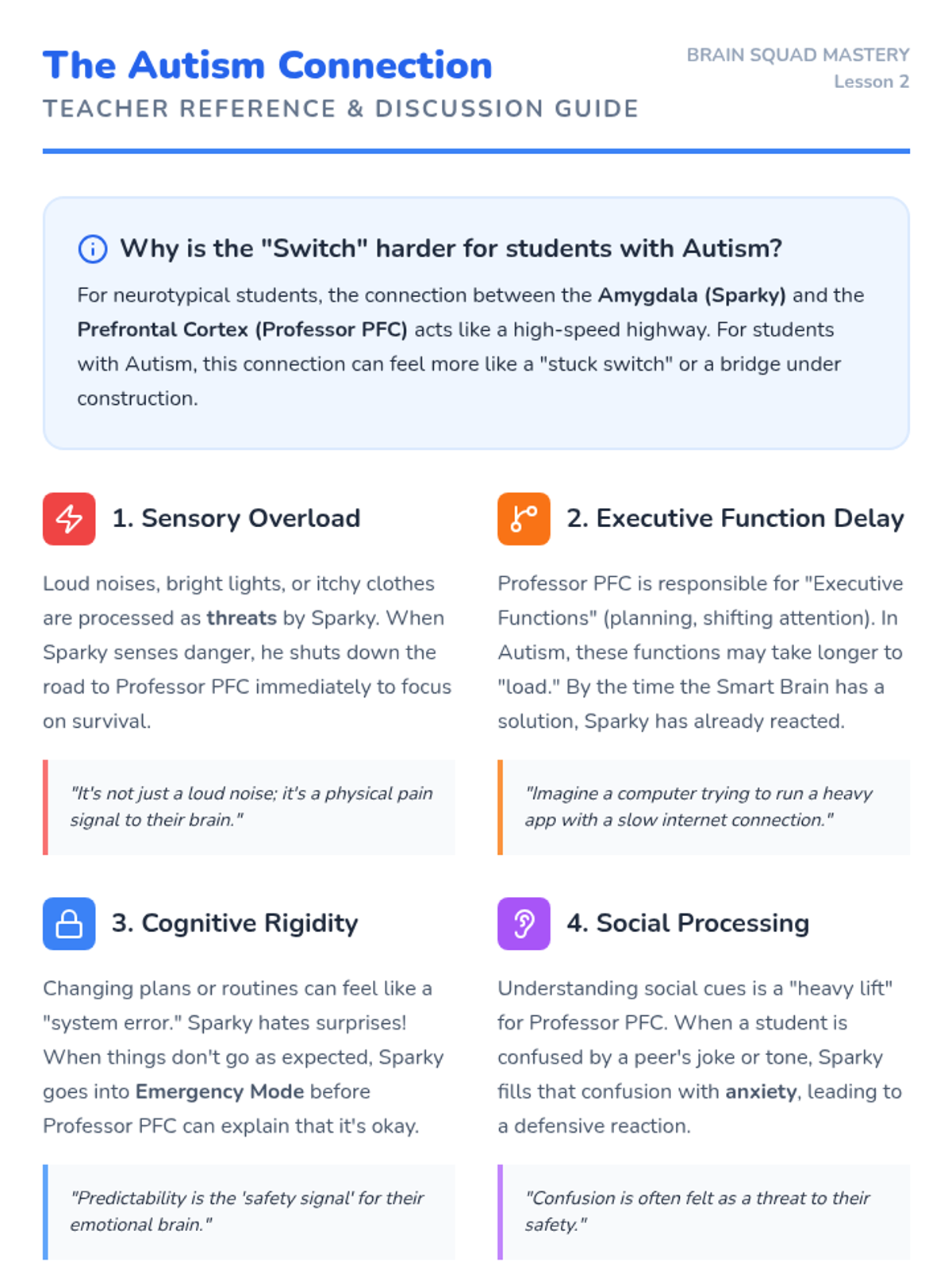
A teacher-facing reference guide explaining the neurological impact of Autism on emotional regulation and the connection between the emotional and smart brains.
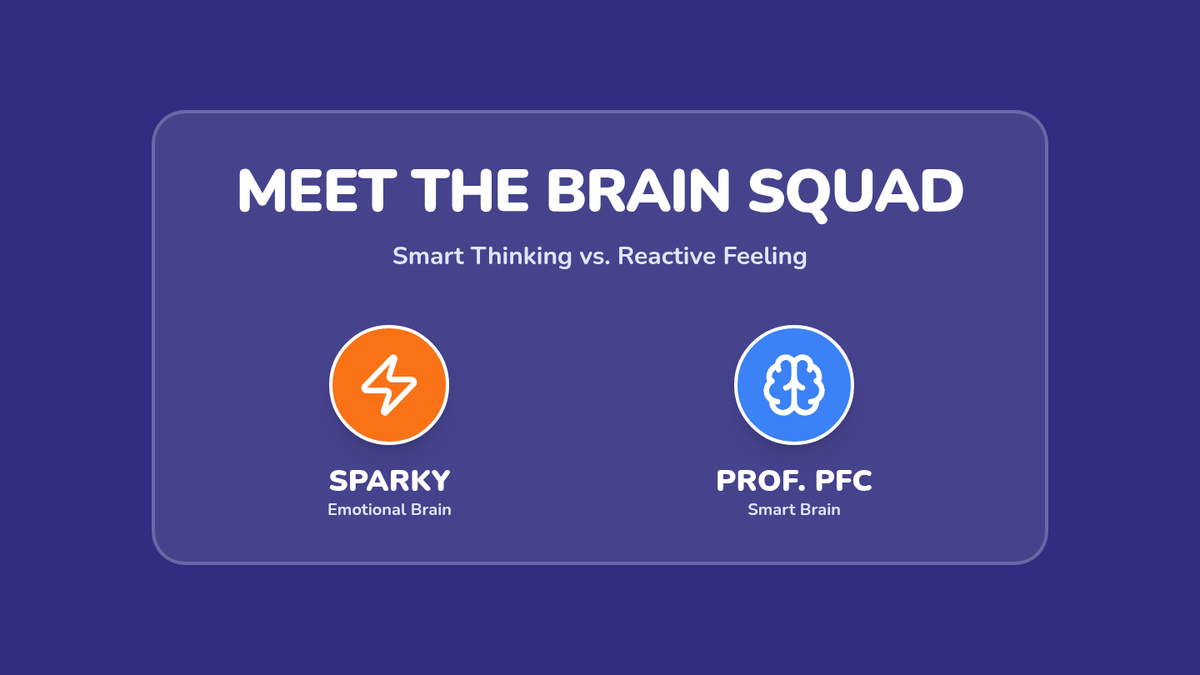
An introductory slide deck featuring the 'Brain Squad' characters Sparky and Professor PFC to teach students the difference between the reactive emotional brain and the thinking smart brain.
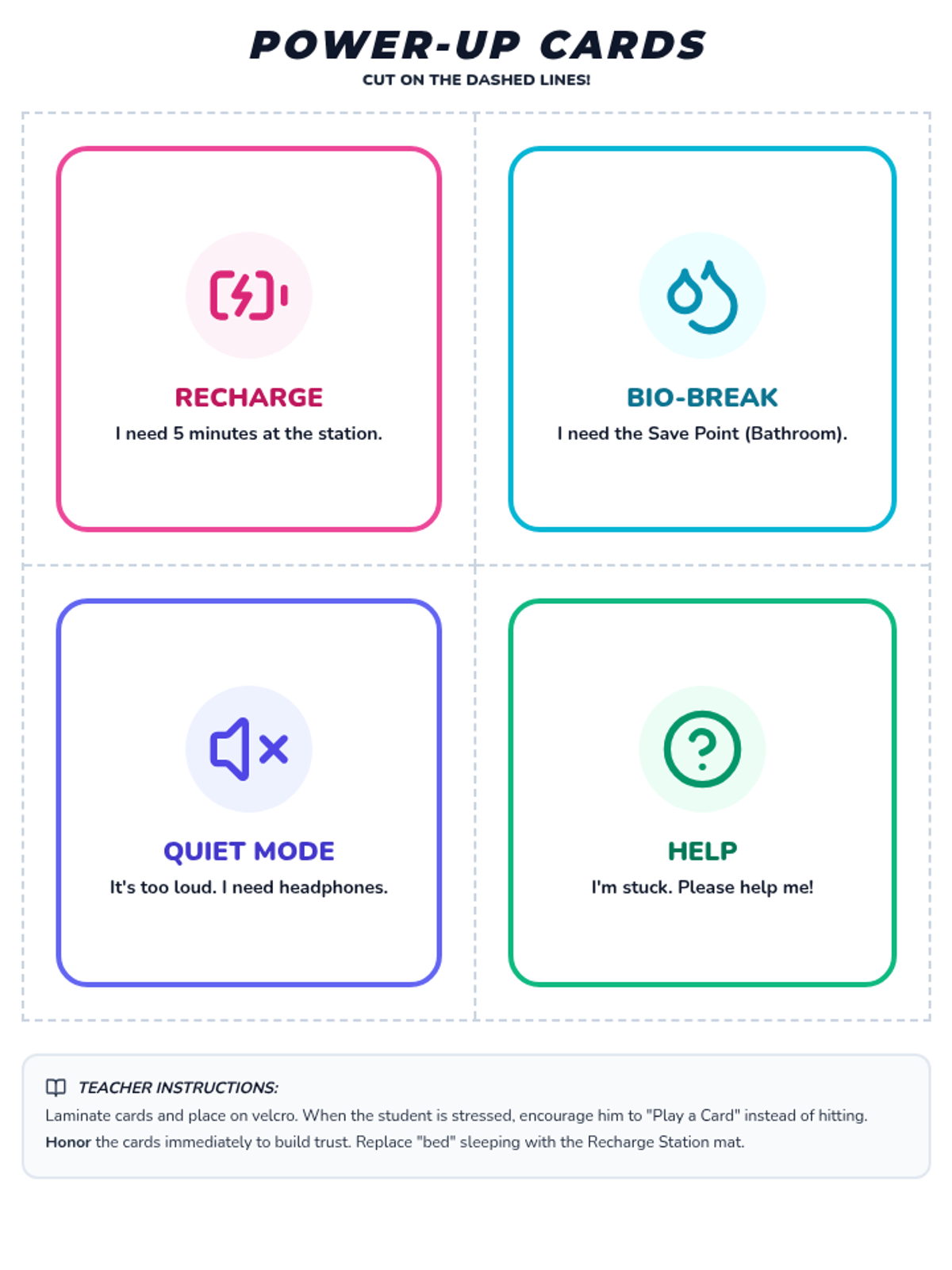
A set of communication cards themed as gaming "Power-Ups" to help the student request breaks, bathroom use, or help appropriately.
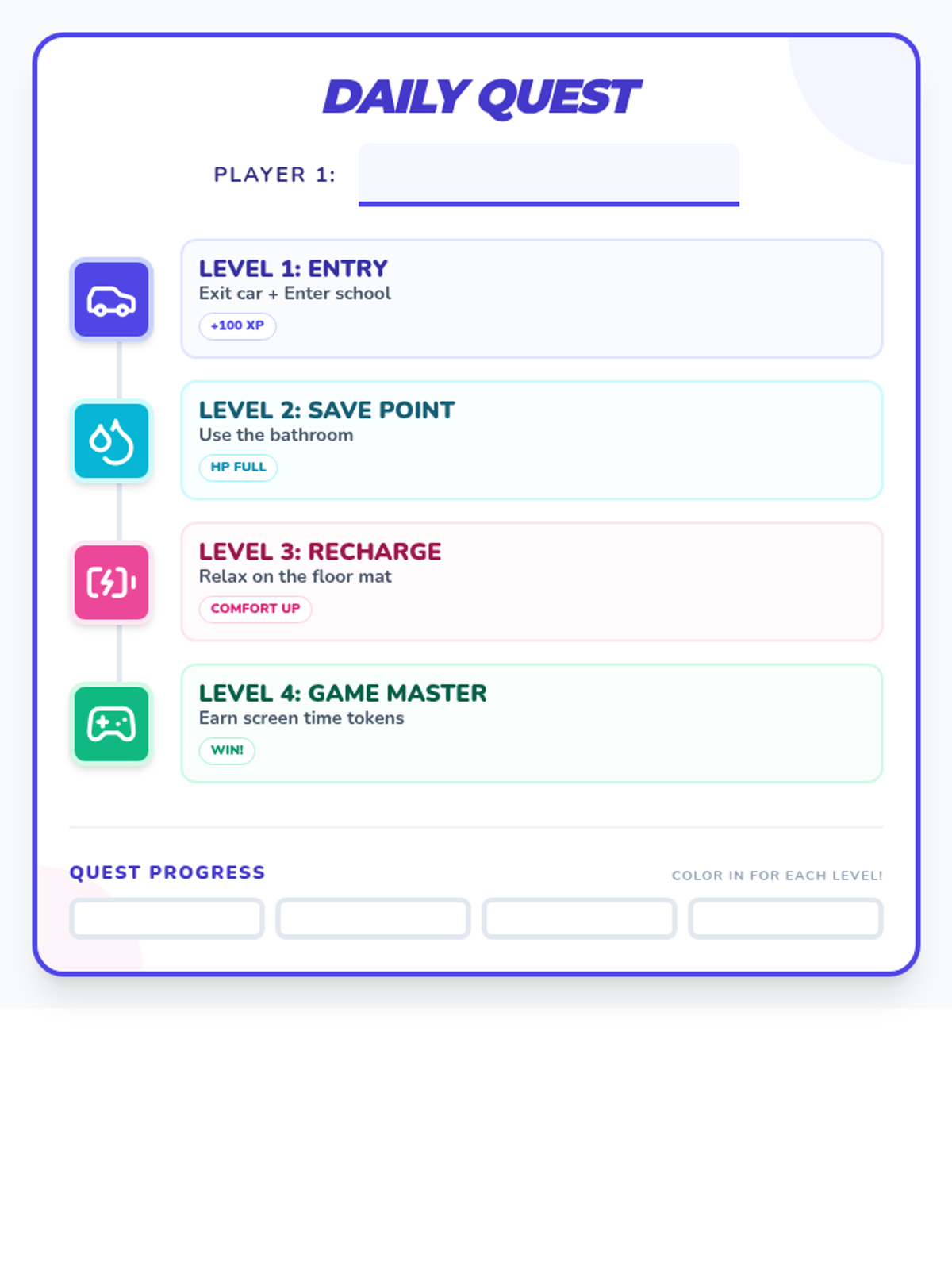
A student-facing visual schedule themed like a video game quest map to increase engagement and predictability during school arrival and the first half of the day.
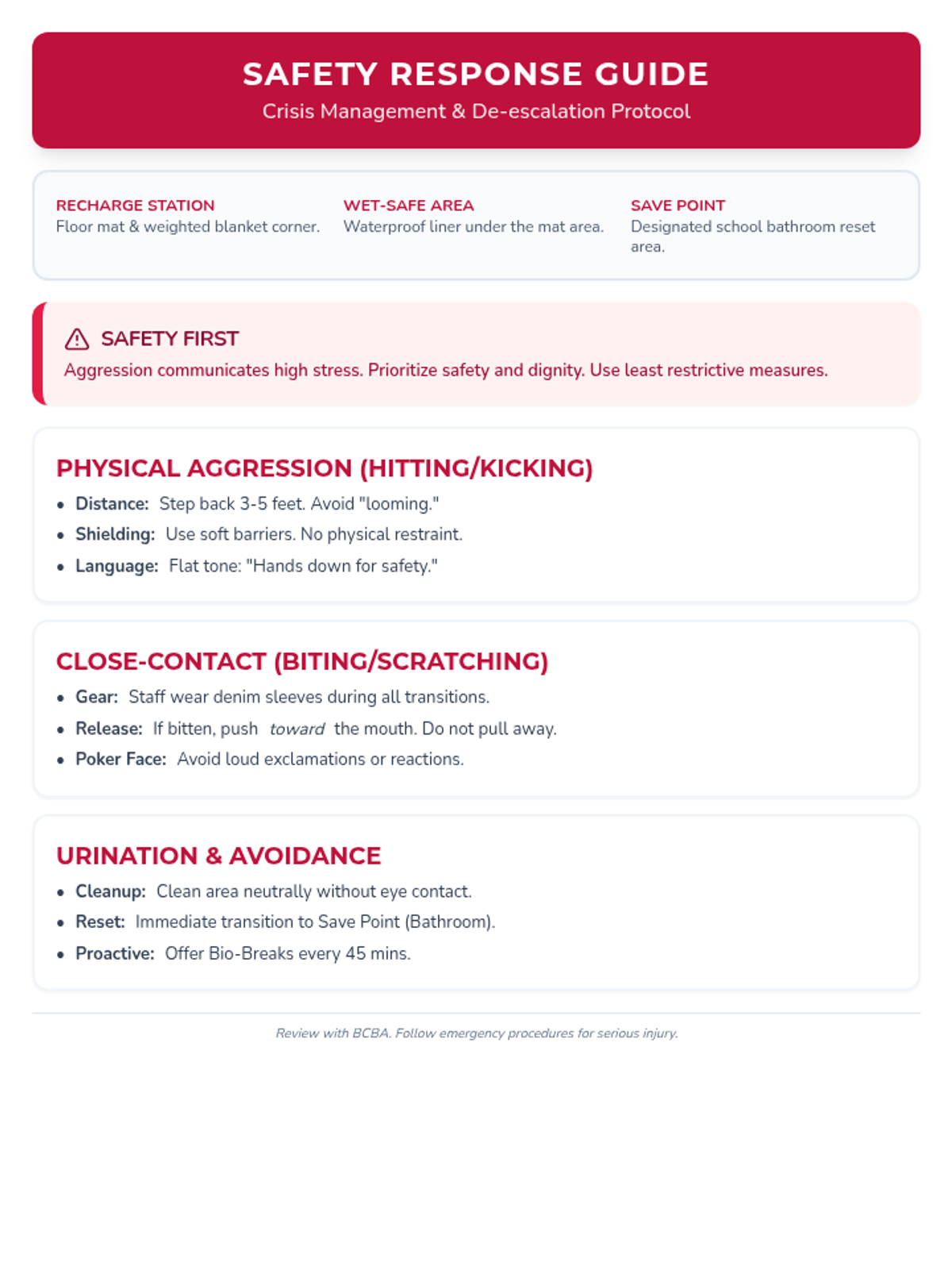
A safety protocol for teachers to manage aggressive behaviors and classroom incidents, focusing on de-escalation and protective strategies.
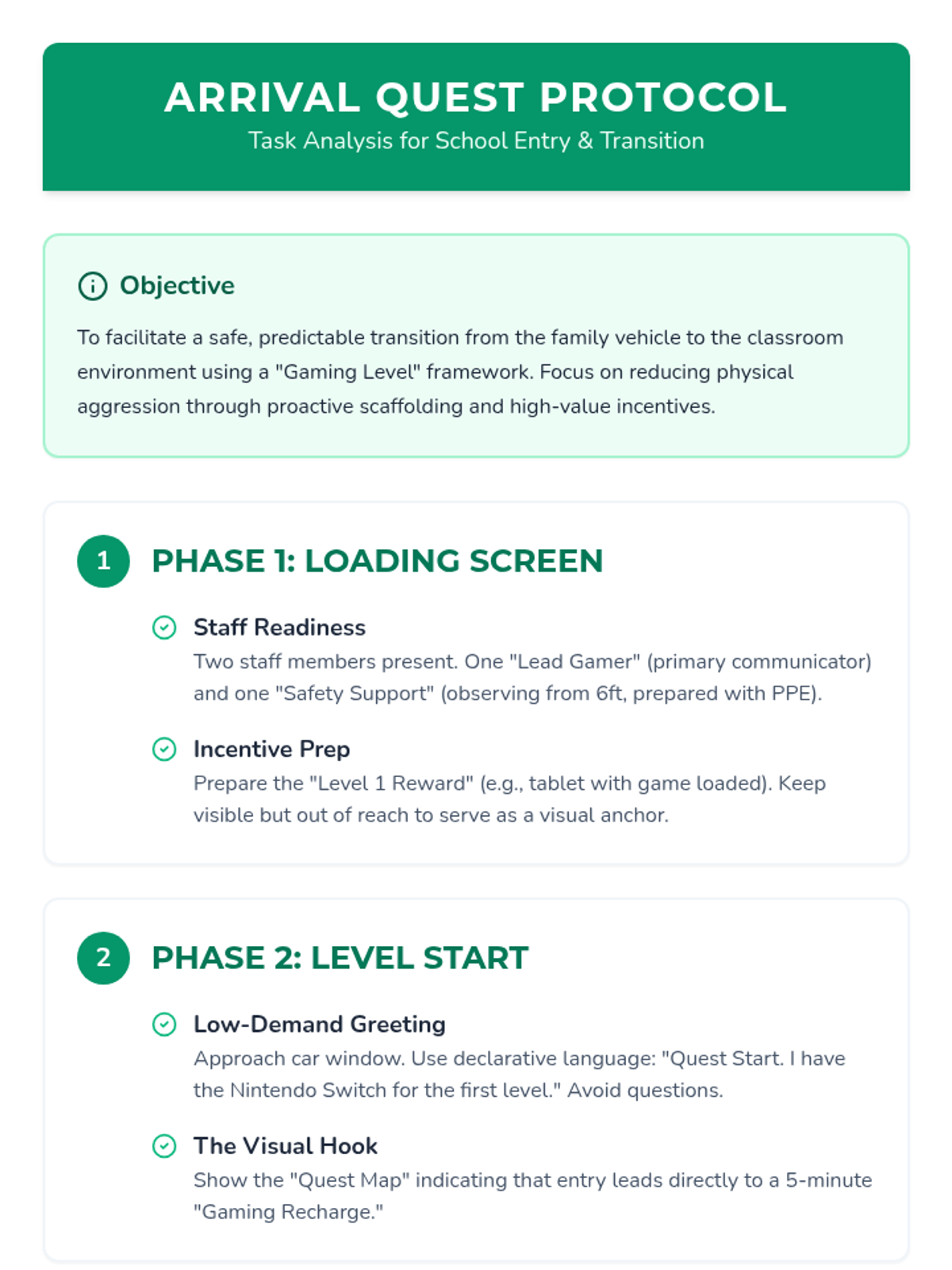
A teacher-facing task analysis protocol for school arrival and transition, using a gaming-themed framework to reduce refusal and aggression.
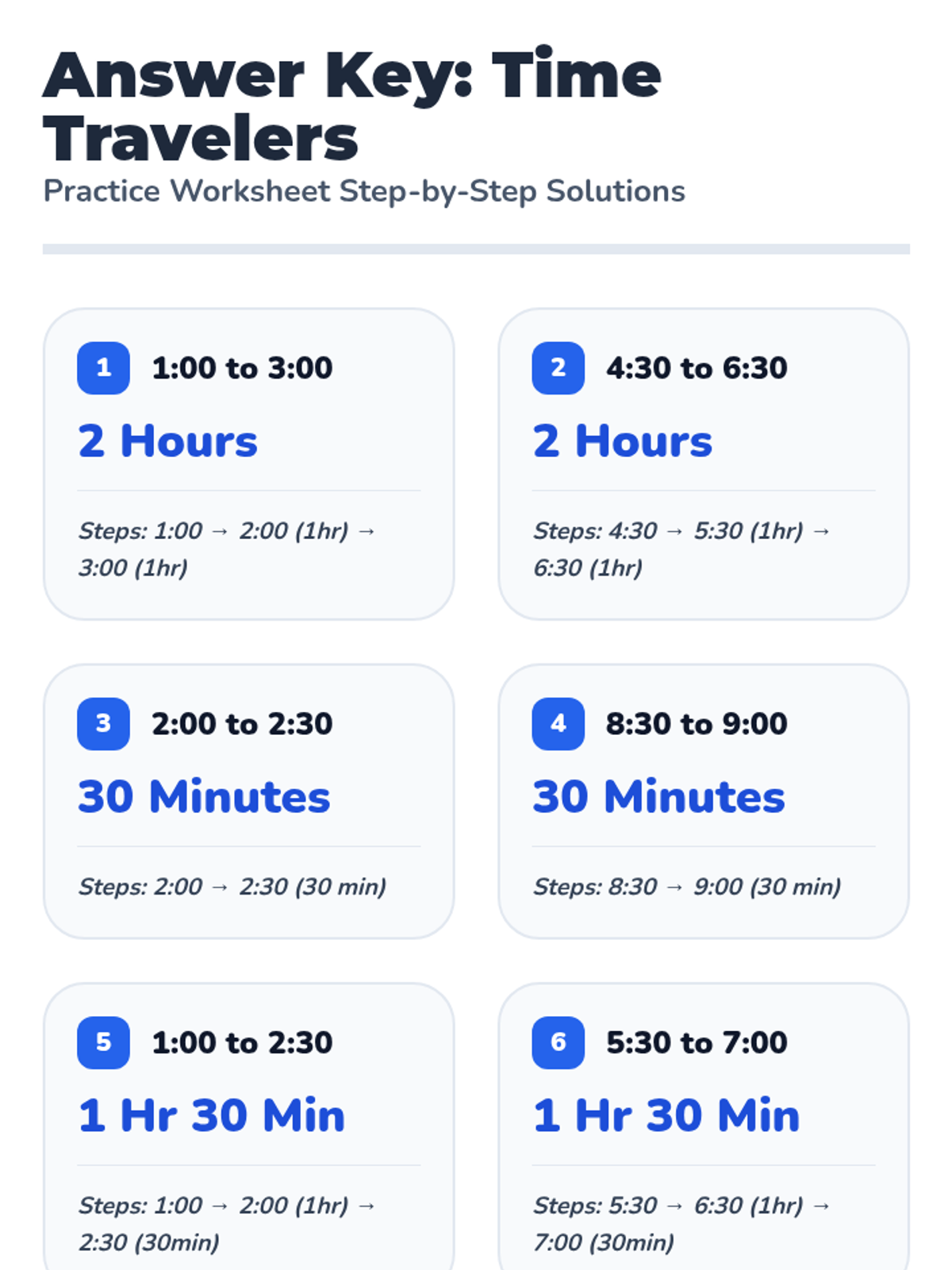
A comprehensive answer key for the Time Travelers Practice Worksheet. Revised with consistent step-by-step logic, improved text contrast, and better page layout to ensure problems stay intact across page breaks.
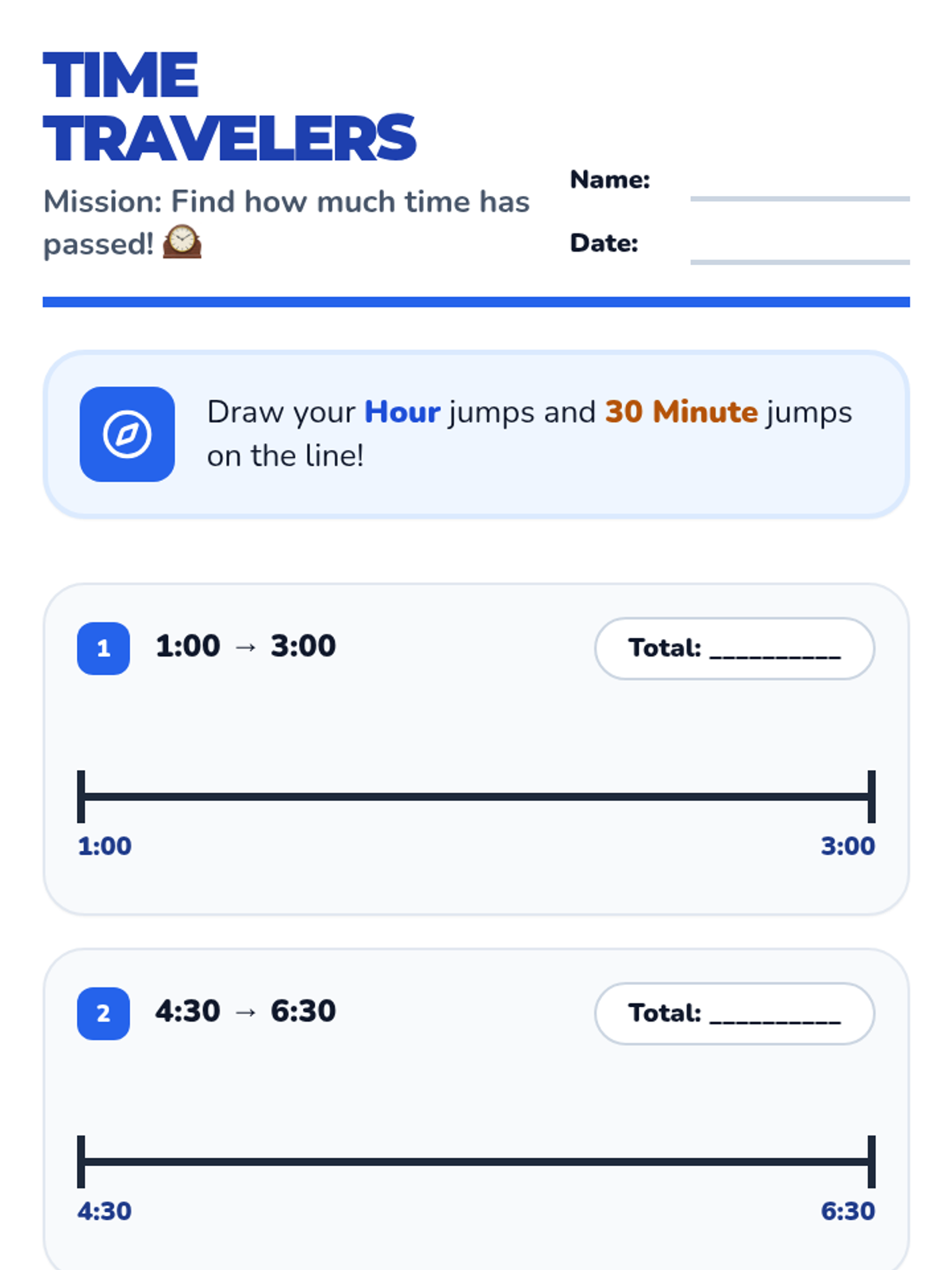
A practice worksheet for elapsed time with 10 problems focusing on hours and 30-minute intervals. Features expanded drawing space and high-contrast number lines for student accessibility. Revised to prevent page breaks within problems.
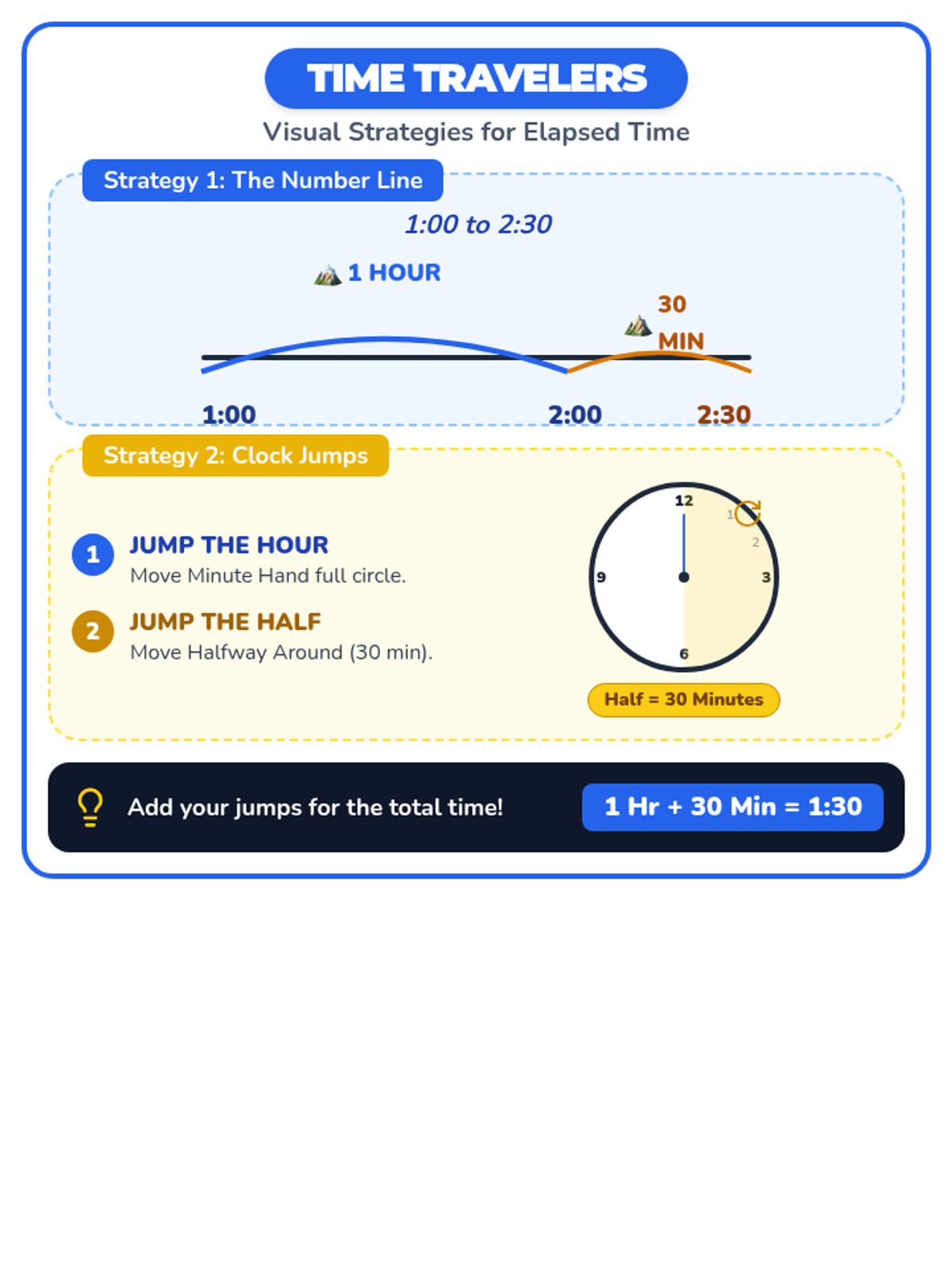
A high-contrast visual anchor chart for 3rd-grade special education students. It uses large text and clear graphics to explain number line and clock jump strategies for elapsed time. Consolidated to a single page for classroom display.
An instructional slide deck explaining elapsed time using number lines and clock jump strategies, designed for 3rd-grade special education with large text and clear visuals. Revised with accurate math, improved graphics, and guided practice.
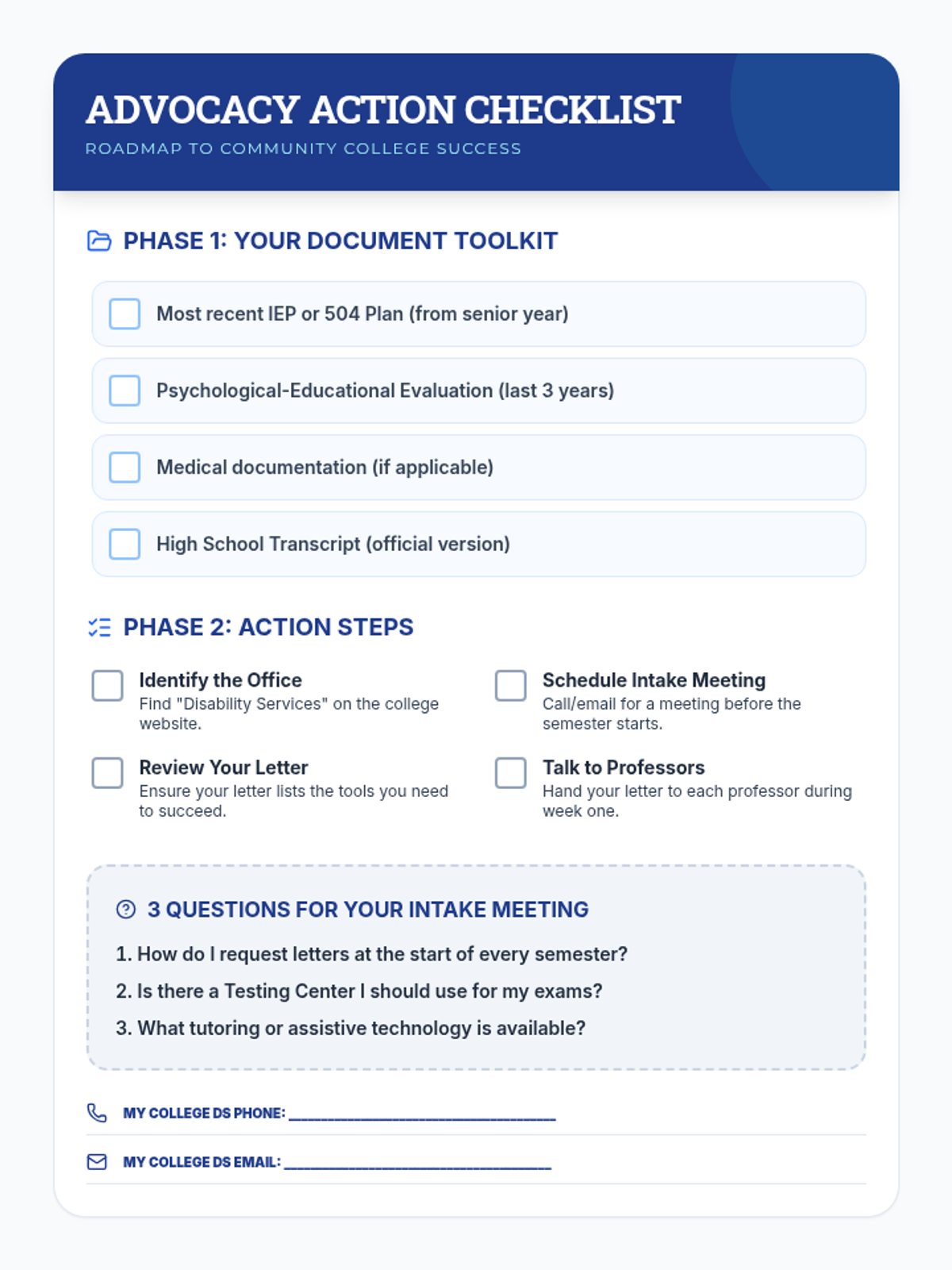
A practical checklist for students to use during their transition to community college, covering document gathering, key action steps, and interview questions for the Disability Services office.
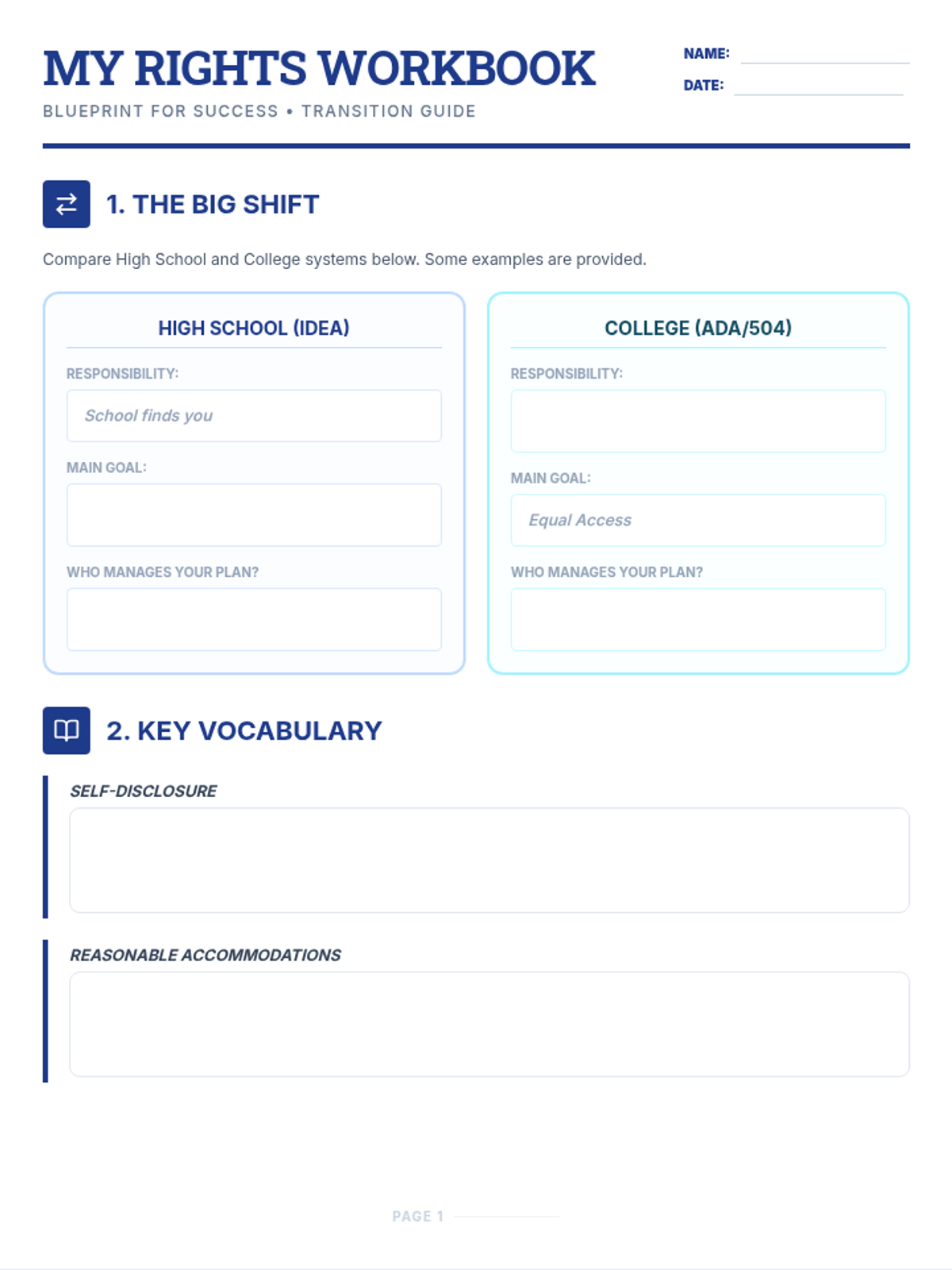
A guided workbook for students to use during the Blueprint for Success lesson. It includes reflection areas, guided notes on the legal shifts, and advocacy script practice.
An interactive slide deck introducing high school seniors to the legal shift from IDEA to ADA/Section 504, the college accommodation process, and self-advocacy skills.
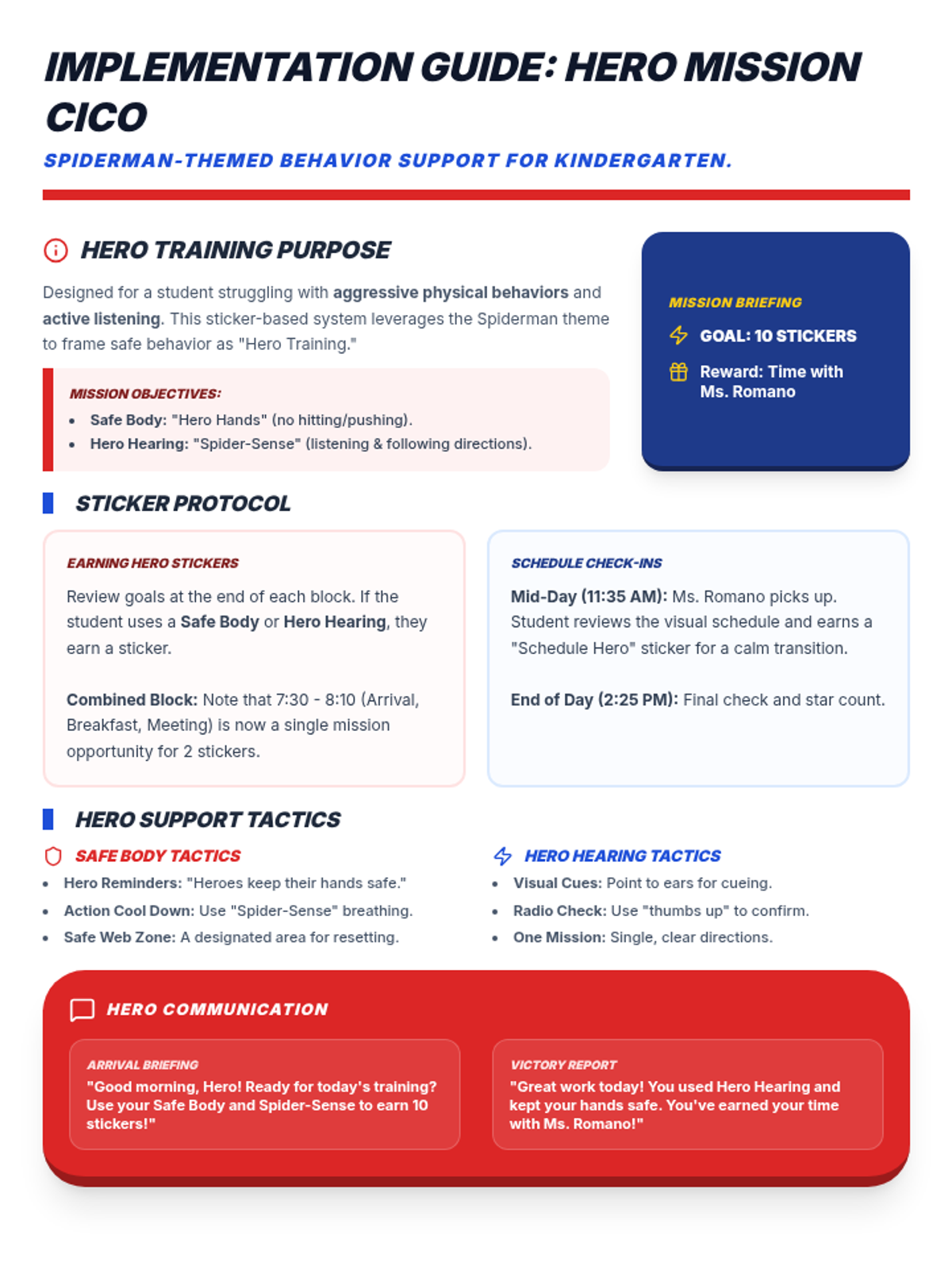
A facilitator guide for teachers implementing the Spiderman-themed Hero Mission CICO system. Includes updated schedule details (Arrival/Meeting combo), specific transition notes, and Hero-themed behavior support strategies. Optimized for a single-page layout.