A practical checklist for students to use during their transition to community college, covering document gathering, key action steps, and interview questions for the Disability Services office.
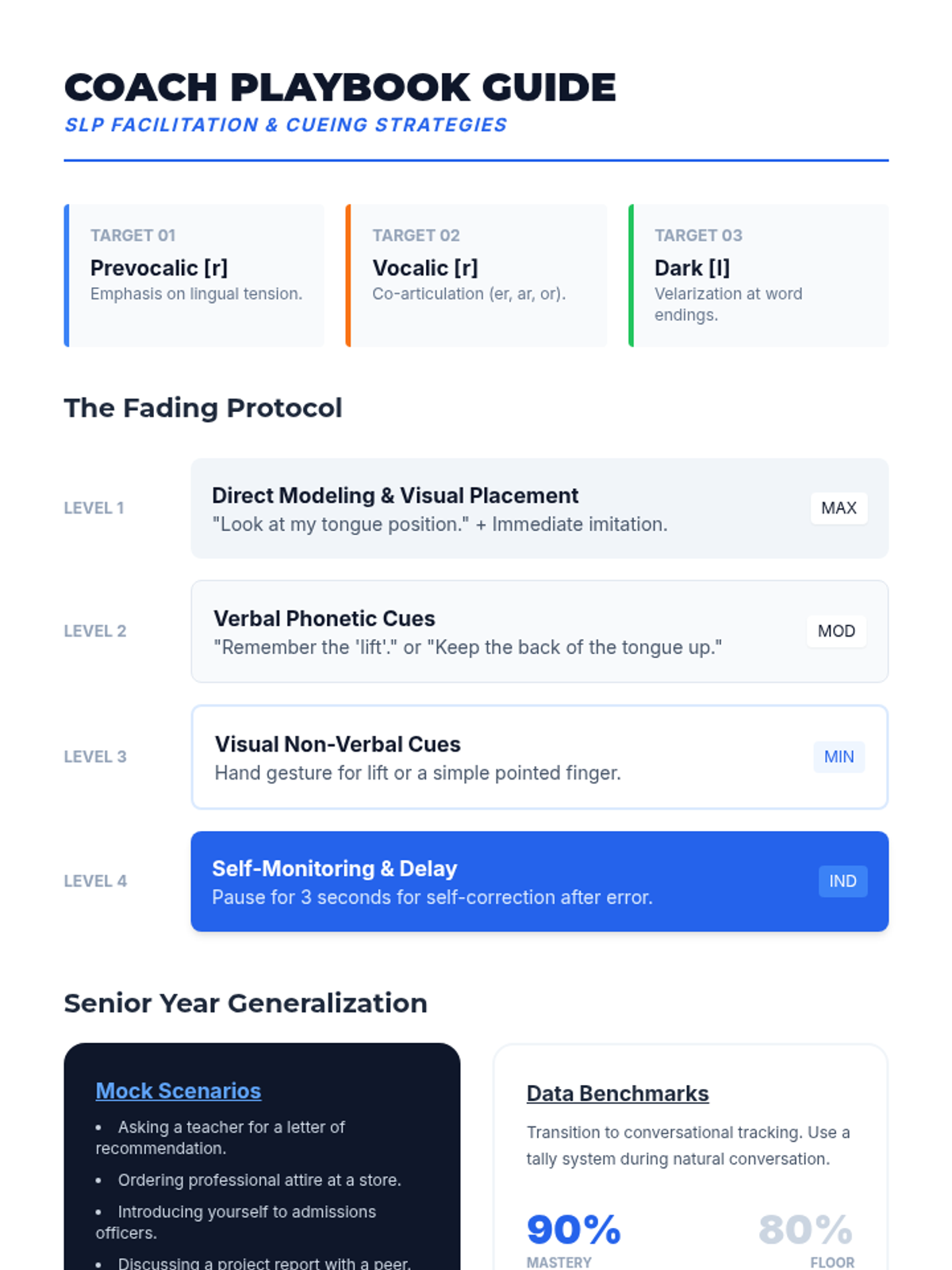
A teacher/SLP facilitation guide for working on articulation with high school seniors. It details a cueing hierarchy (fading support), professional generalization scenarios, and data-tracking benchmarks to reach the 90% accuracy goal.
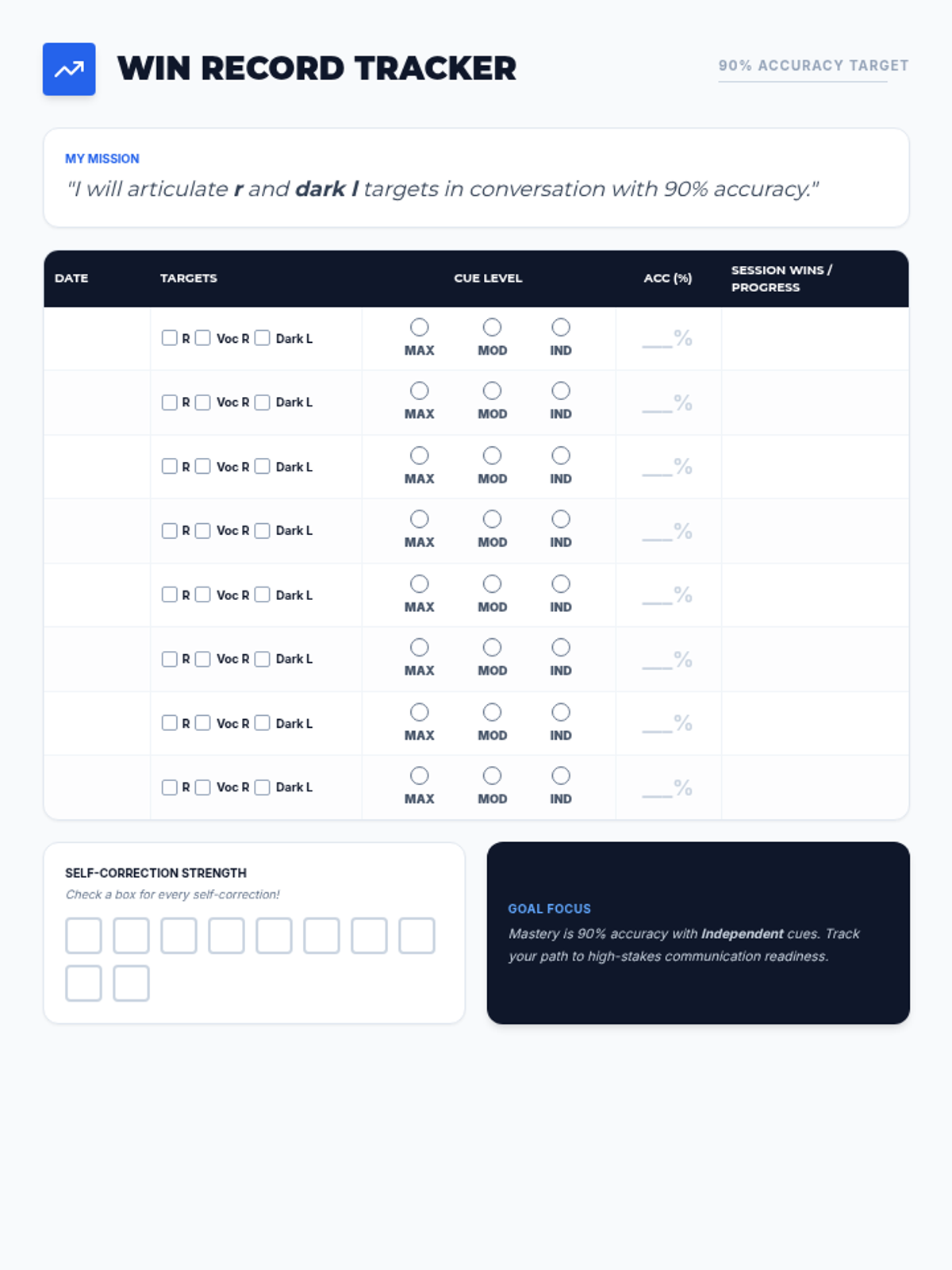
A sophisticated data-tracking log for high school seniors to monitor their articulation goals. Includes a session log for accuracy and cueing levels, as well as a self-monitoring section to track error correction.
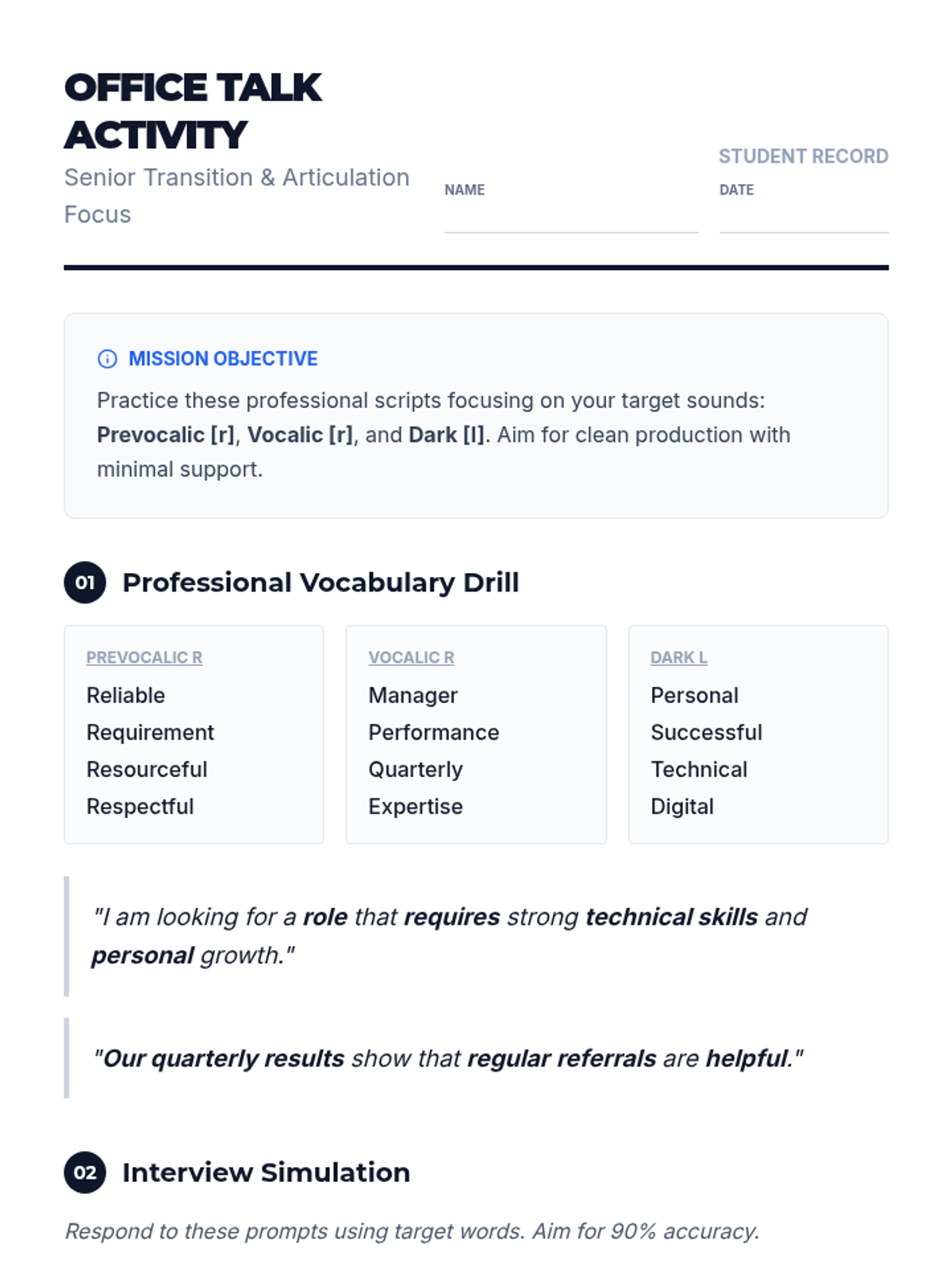
A career-readiness articulation worksheet for high school seniors. Focuses on 'r' and 'dark l' through professional vocabulary, sentence drills, and mock interview questions with spaces for self-reflection and SLP data tracking.
A professional 16:9 slide presentation for high school seniors focusing on articulating 'r' and 'dark l' in career-oriented contexts like interviews and workplace communication. Includes visual cues, word lists, and complex sentence challenges.
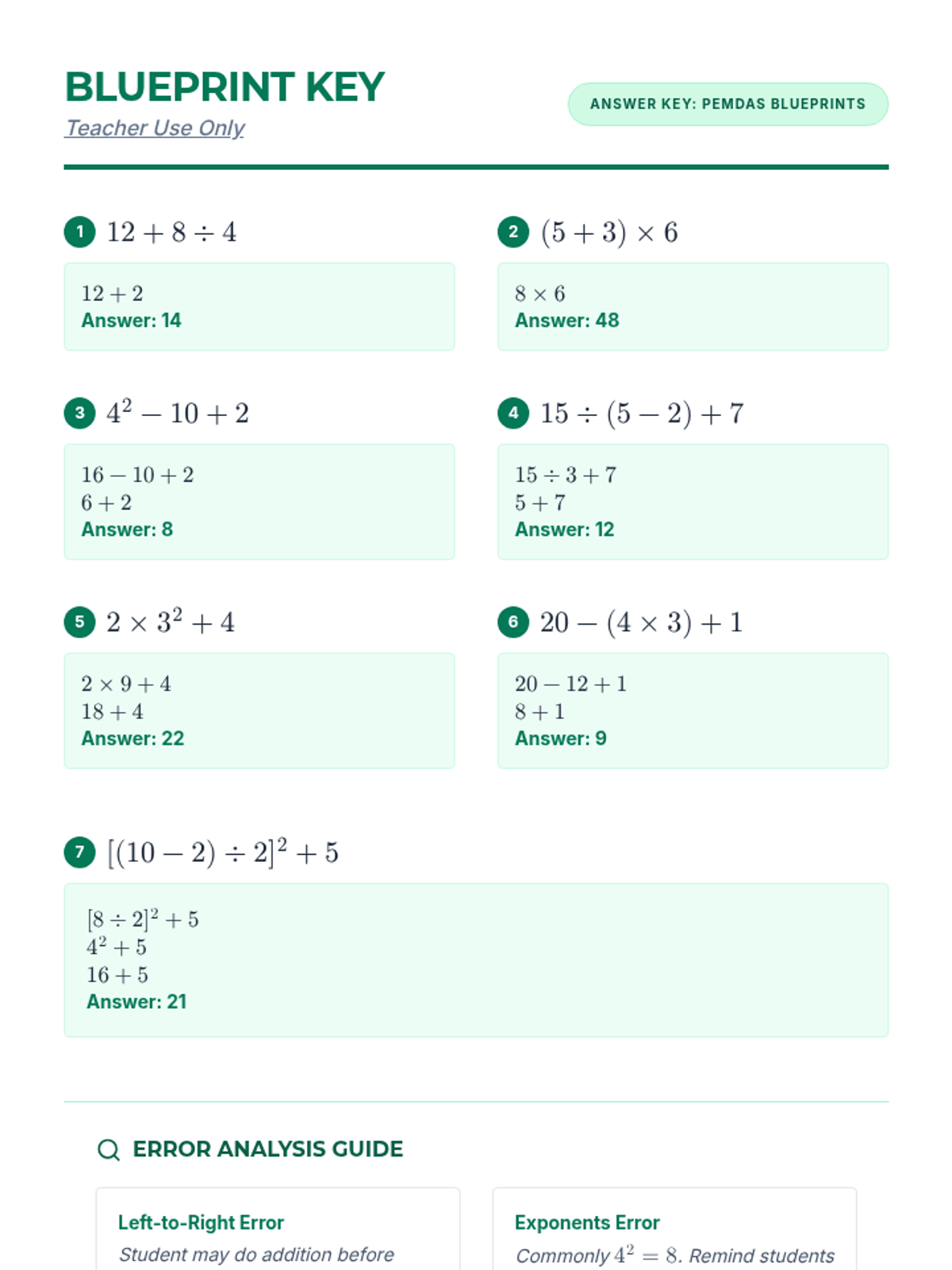
A teacher-facing answer key for the PEMDAS Blueprints worksheet, providing step-by-step solutions and a guide for common student errors.
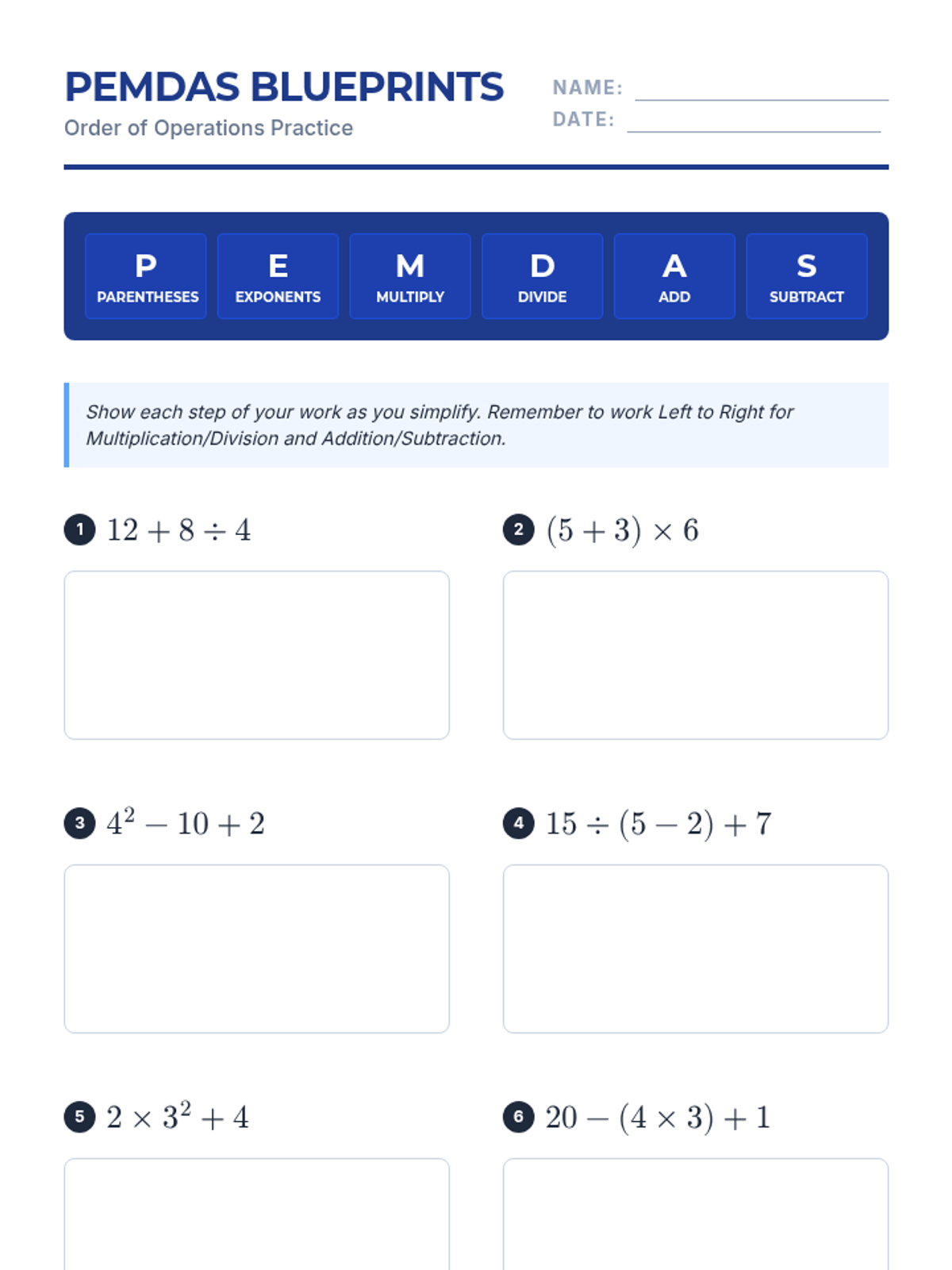
A practice worksheet for students to apply PEMDAS rules to increasingly complex expressions, featuring a clear reference header and dedicated workspaces for showing steps.
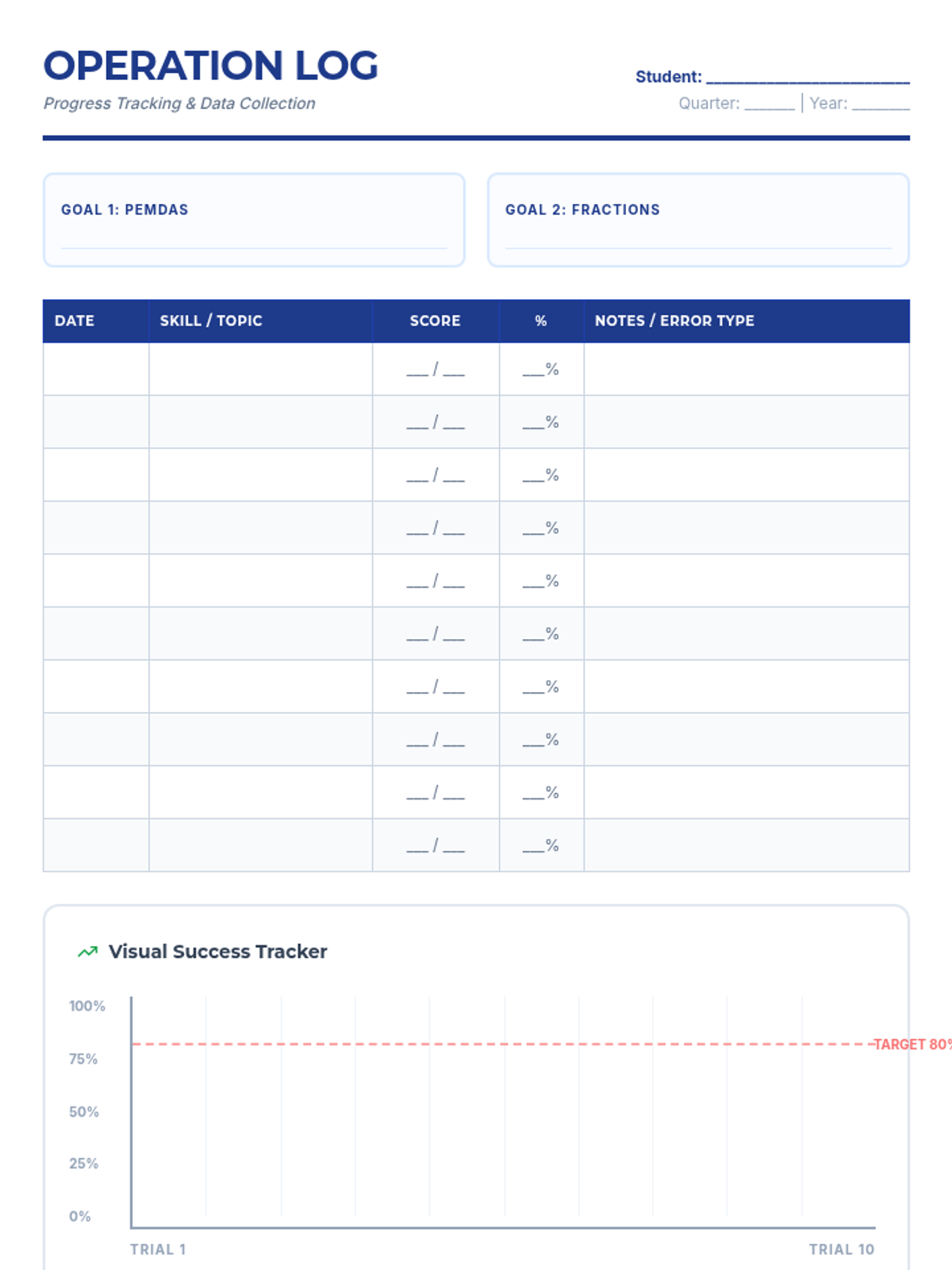
A progress tracker for monitoring student performance on IEP math goals, featuring a data collection table and a visual success chart for graphing accuracy over time.
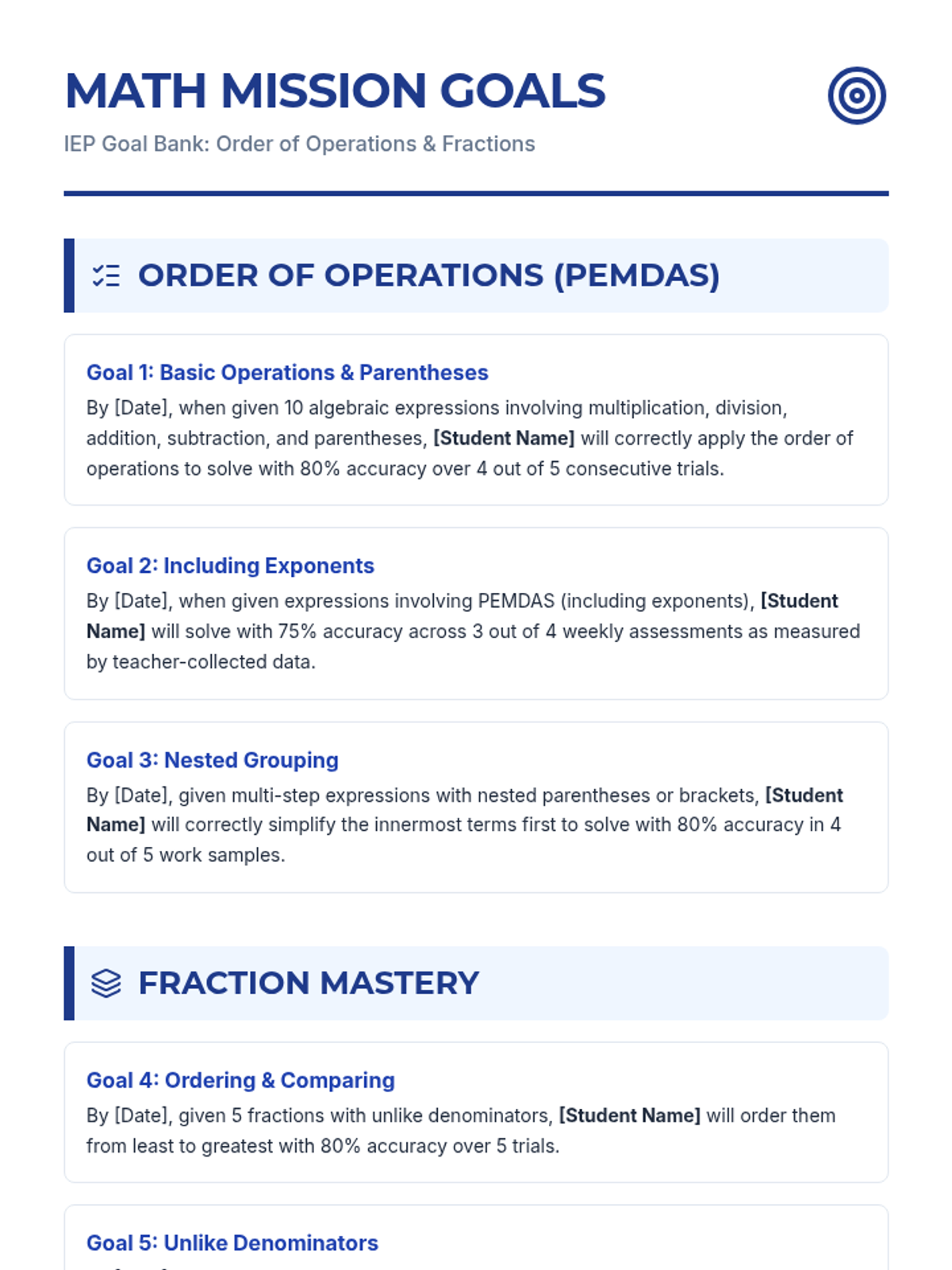
A comprehensive IEP goal bank for teachers, featuring specific, measurable goals for Order of Operations and fraction mastery, complete with instructional strategies.
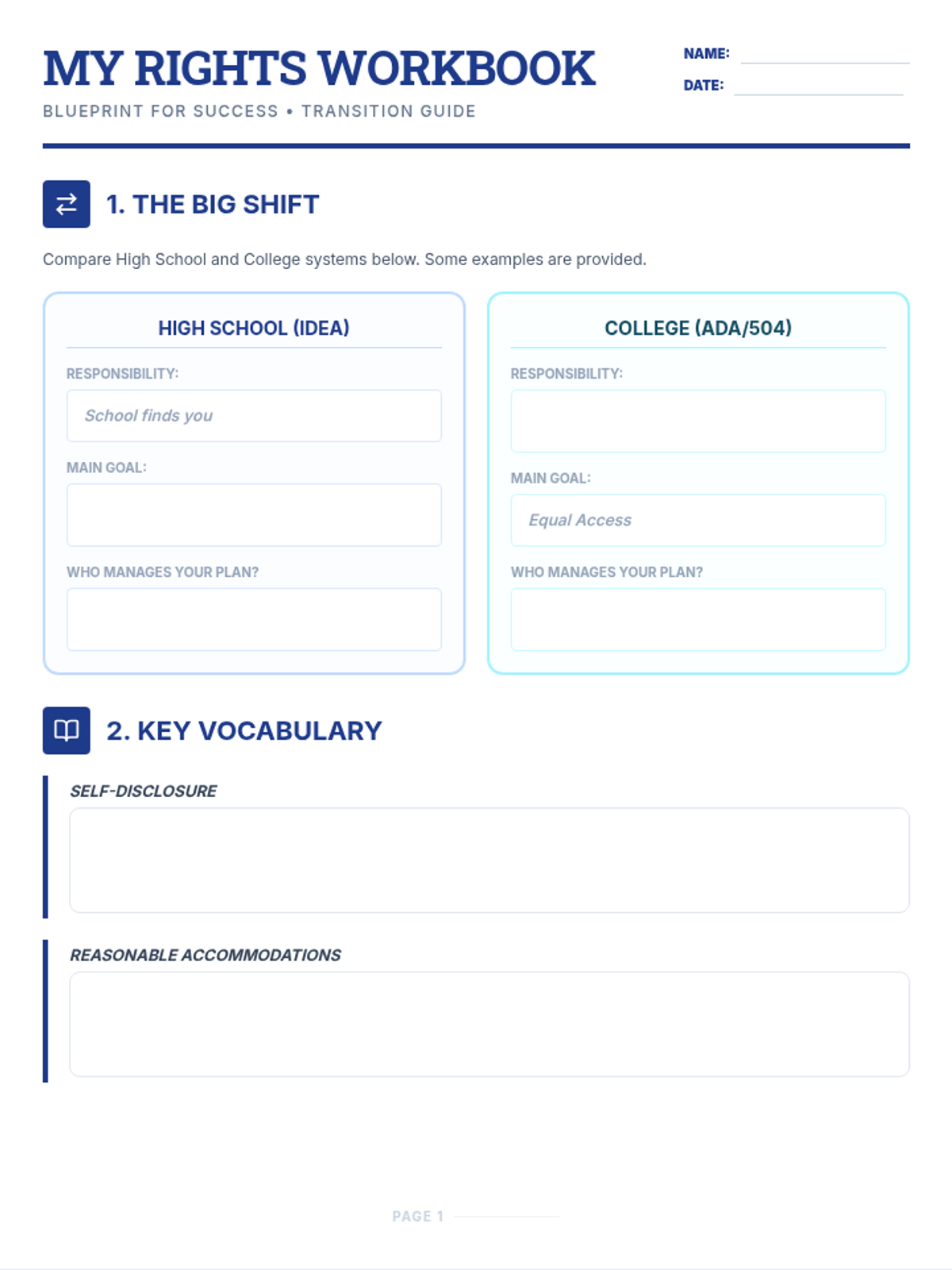
A guided workbook for students to use during the Blueprint for Success lesson. It includes reflection areas, guided notes on the legal shifts, and advocacy script practice.
An interactive slide deck introducing high school seniors to the legal shift from IDEA to ADA/Section 504, the college accommodation process, and self-advocacy skills.
A multi-page printable bulletin board set titled 'Brain Garden' that celebrates neurodiversity through vibrant profiles of Autism, ADHD, Dyslexia, and Dyspraxia, emphasizing strengths and inclusive concepts.
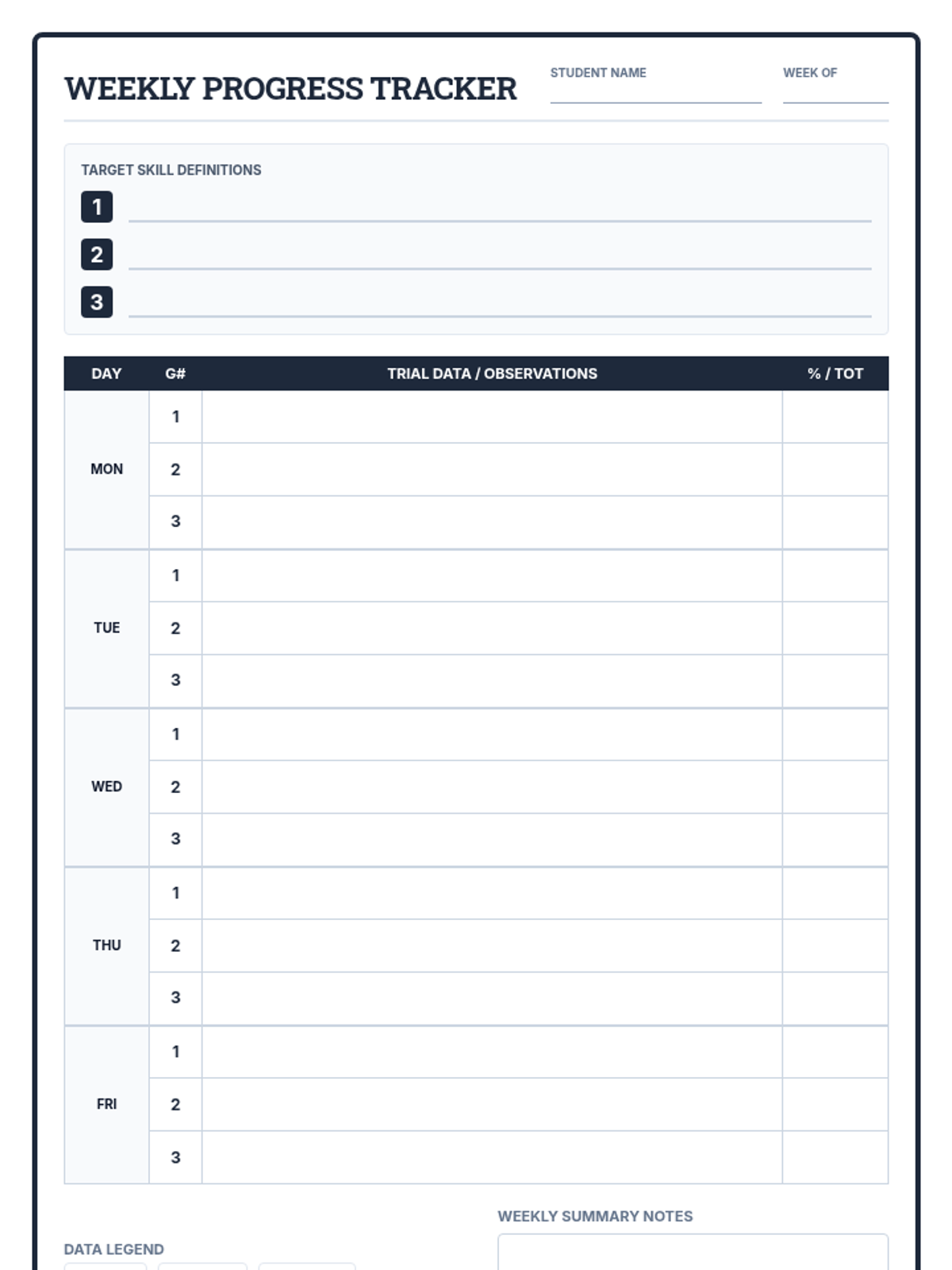
A multi-goal data collection document featuring weekly and monthly tracking. The weekly section supports up to 3 distinct goals with numbered rows, while the monthly section offers dual-tracking (Targets A & B) within a shared calendar grid.
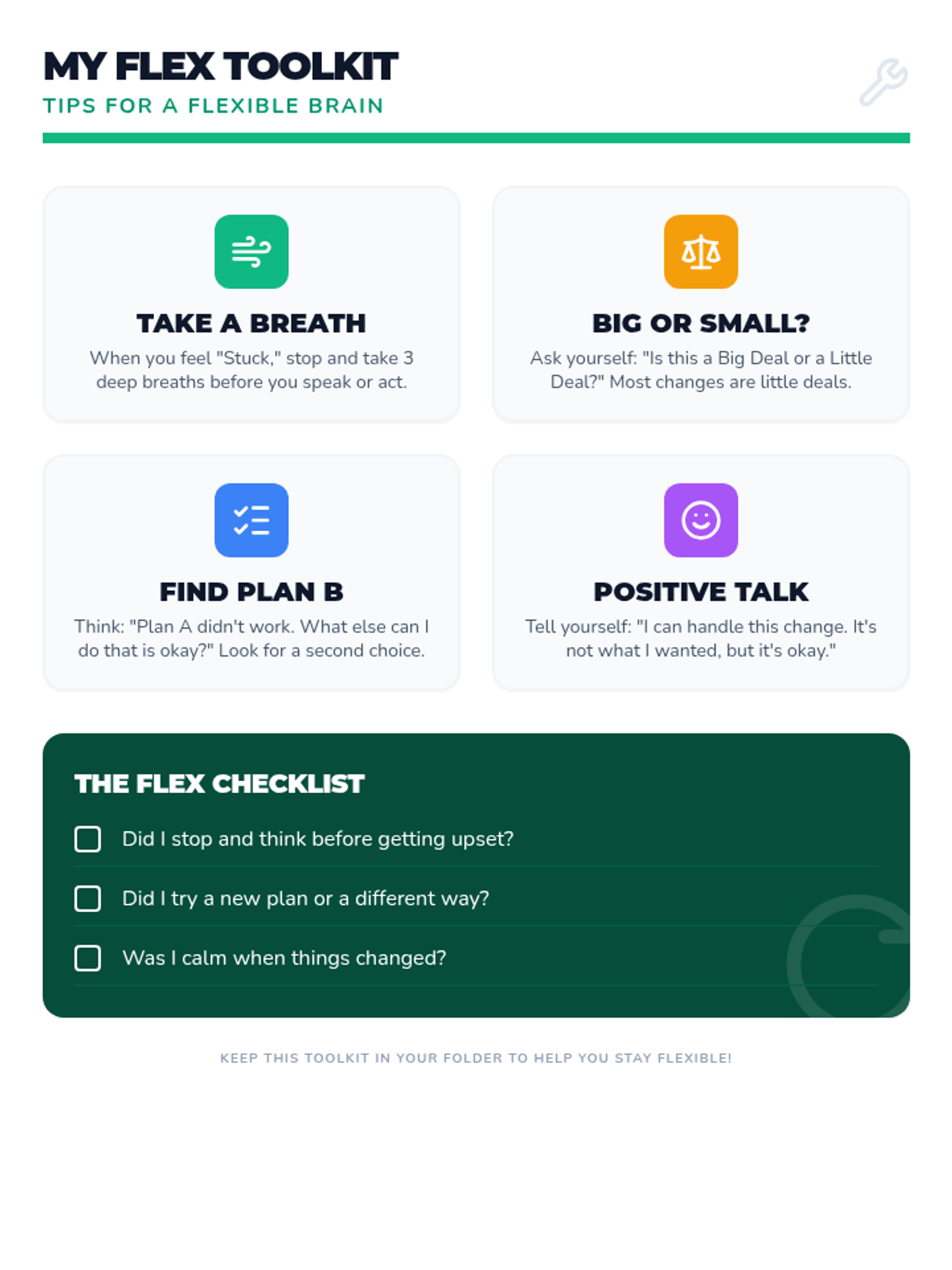
A student-facing reference guide (toolkit) with four actionable tips for improving flexible thinking in real-time, including a self-reflection checklist. Revised for single-page layout and improved contrast.
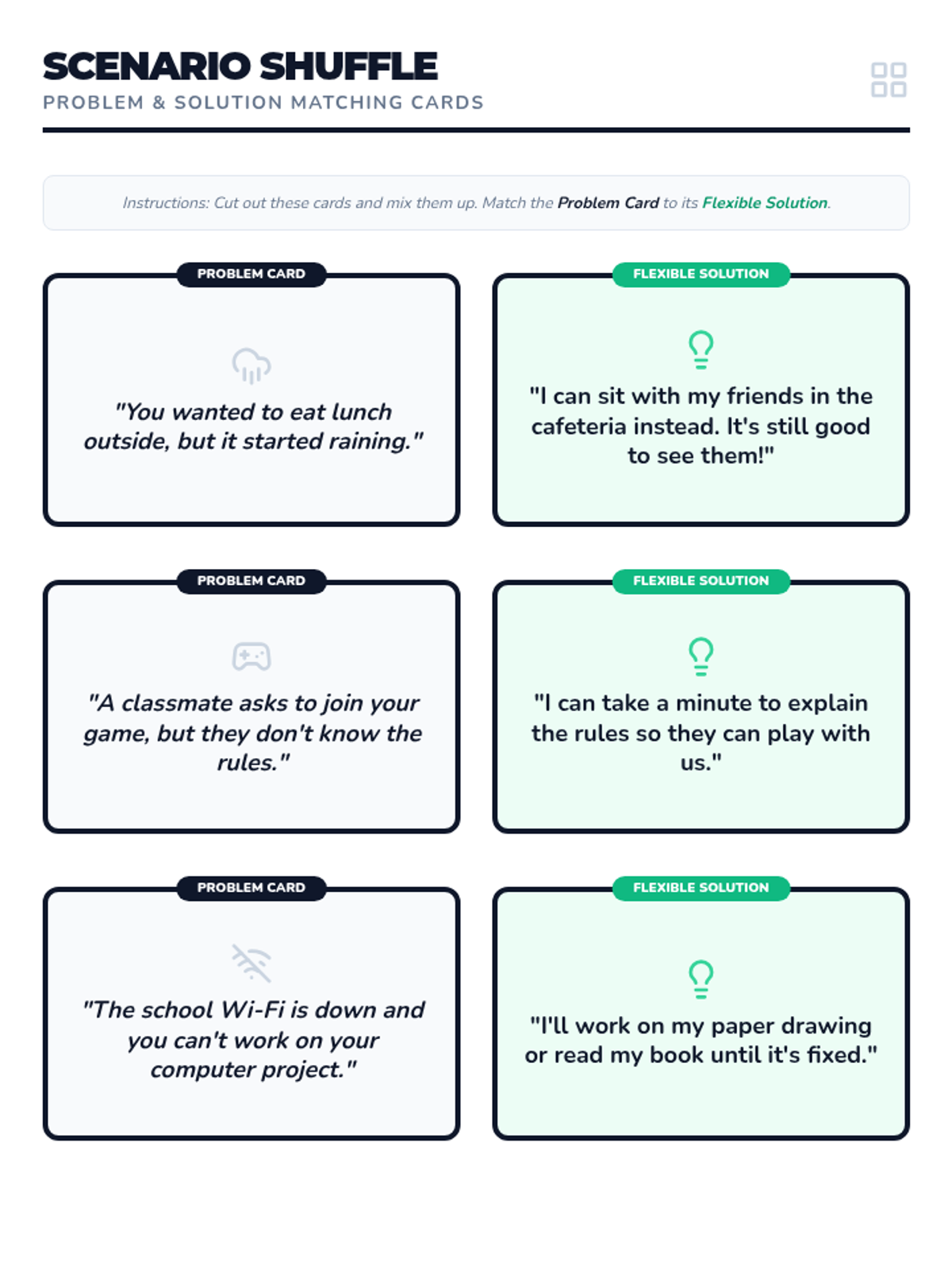
A set of scenario sorting cards featuring three common problems and their corresponding flexible solutions. Revised for uniform borders and single-page layout.
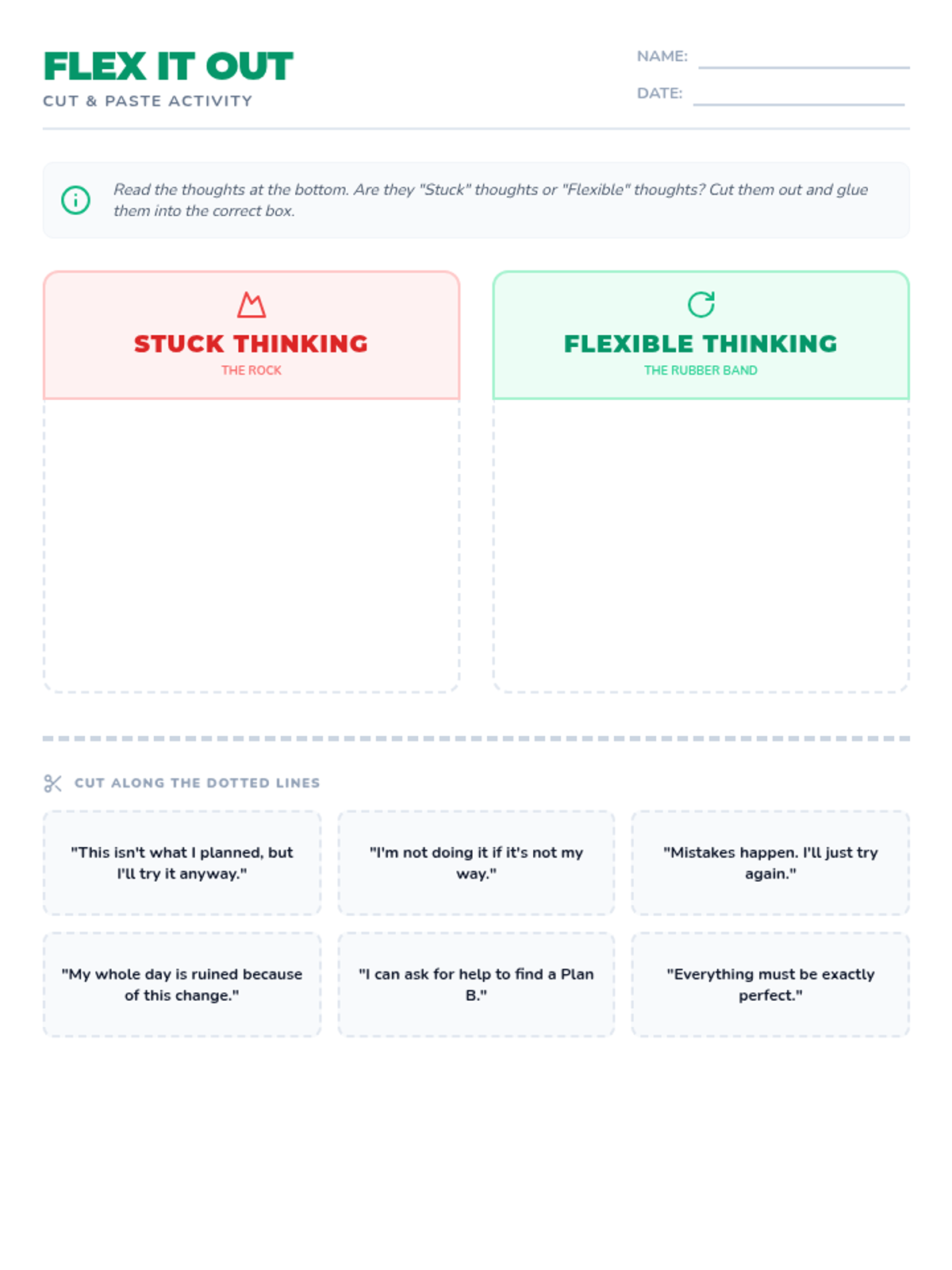
A cut-and-paste activity worksheet where students categorize different thoughts as either 'Stuck Thinking' or 'Flexible Thinking' on a T-chart. Revised to fit on a single page.
An engaging 9-slide presentation designed for high school special education students. Now includes a specific slide with tips on how to improve flexible thinking in real-time. Revised for better polish and larger work areas on discussion slides.
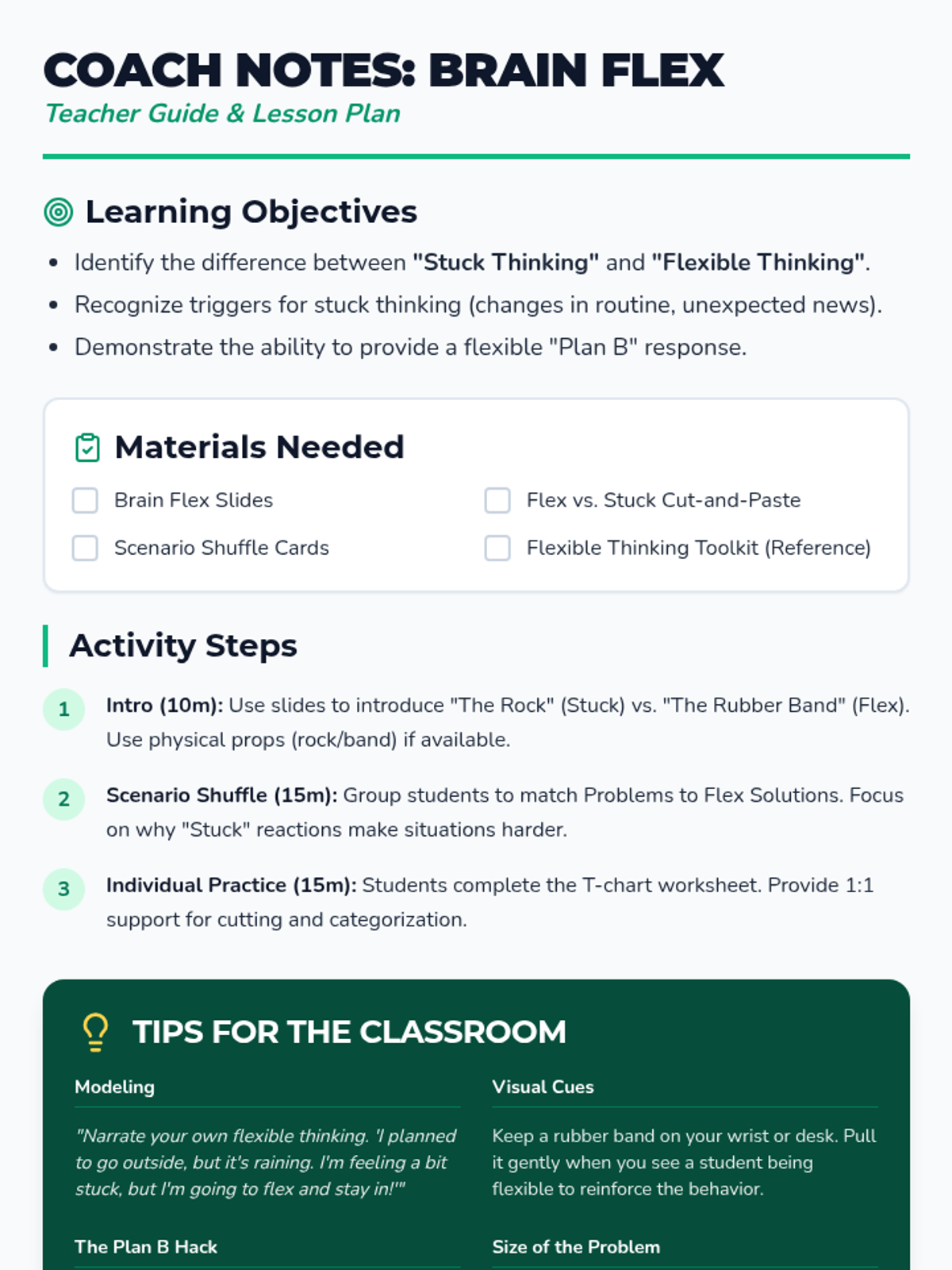
A comprehensive teacher guide for the Brain Flex lesson, including learning objectives, a materials checklist, step-by-step procedures, and an answer key for the student activities. Revised to include instructional tips for classroom implementation.
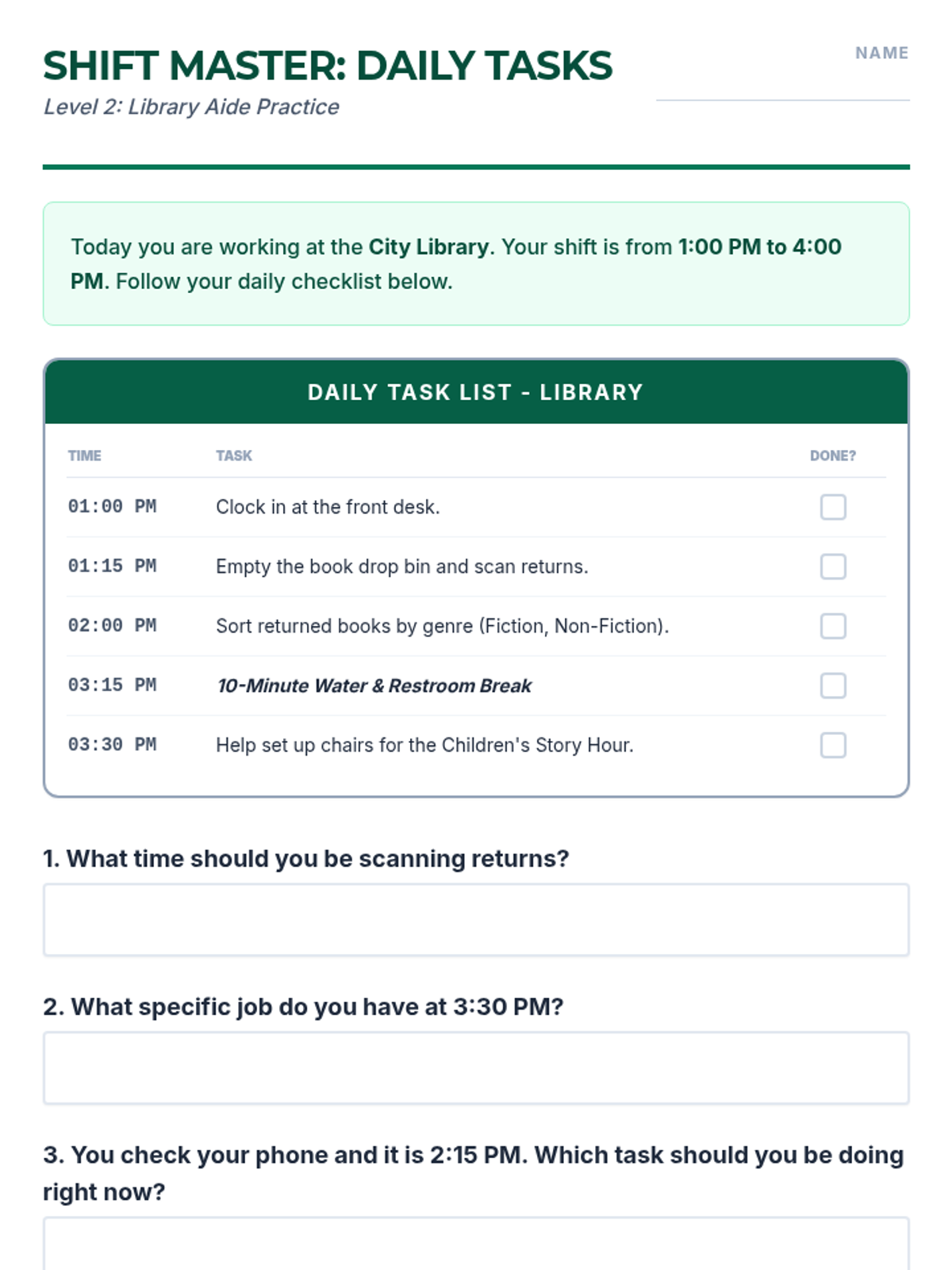
A comprehensive practice packet for transition students to master workplace schedules. Includes new daily task checklists for a library, a weekly roster for a cinema, and a mixed-schedule conflict-checking activity to build real-world planning skills. Revised for better page layout and handwriting legibility.
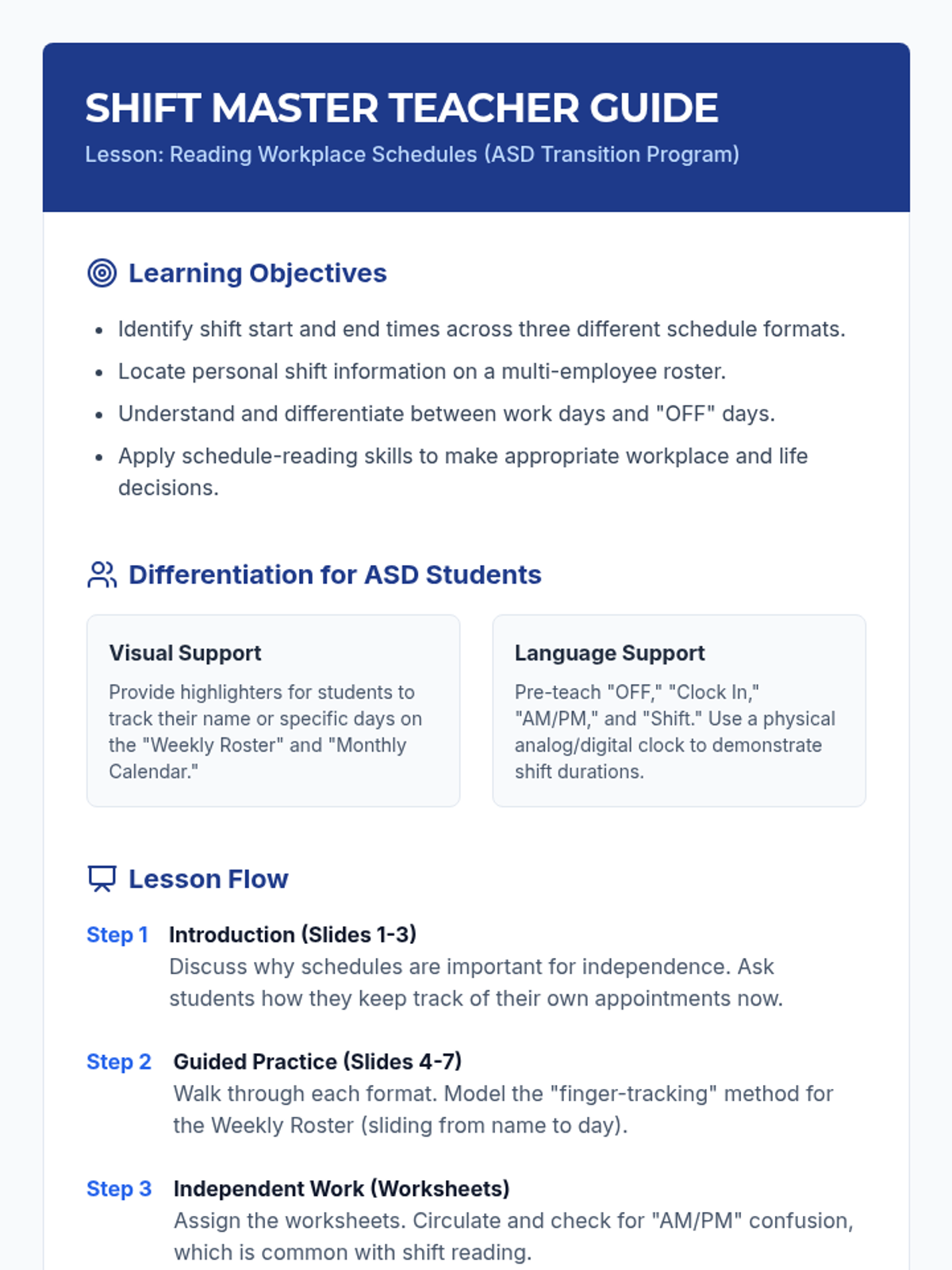
A teacher guide providing instructional strategies, differentiation tips for students with ASD, and a lesson delivery framework. Includes a quick-reference answer key for the shift reading worksheets.
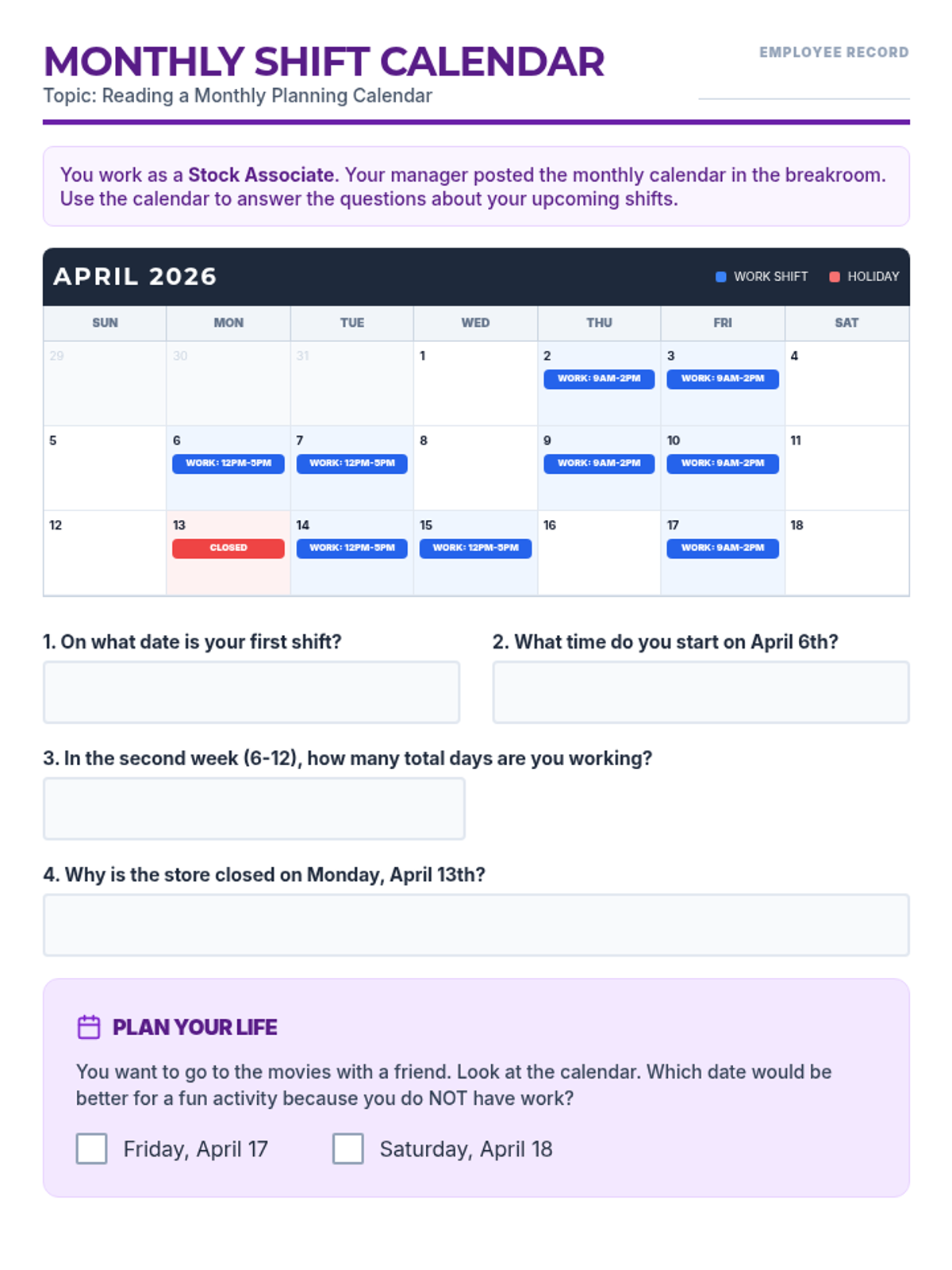
A monthly workplace calendar practice activity. Students analyze an April shift calendar to identify start times, total work days per week, holidays, and use the schedule to make personal planning decisions. Revised to fit on a single page with optimized space and uniform answer choices.
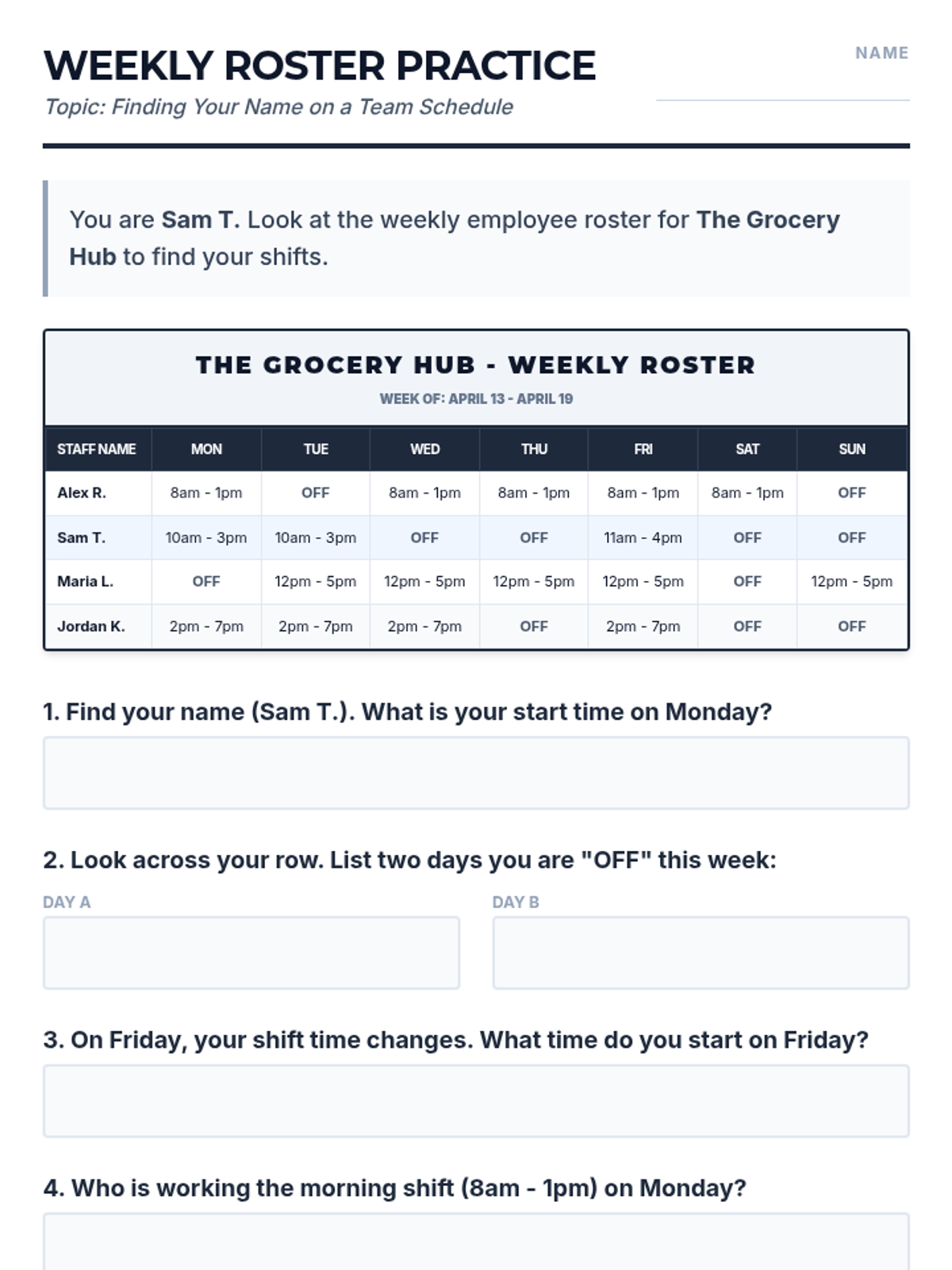
A realistic weekly employee roster worksheet that simulates a grocery store schedule. Students practice locating their names, identifying shift start/end times, recognizing 'OFF' days, and understanding workplace etiquette regarding schedule conflicts. Revised with Saturday/Sunday columns, optimized handwriting space, and uniform answer choices.
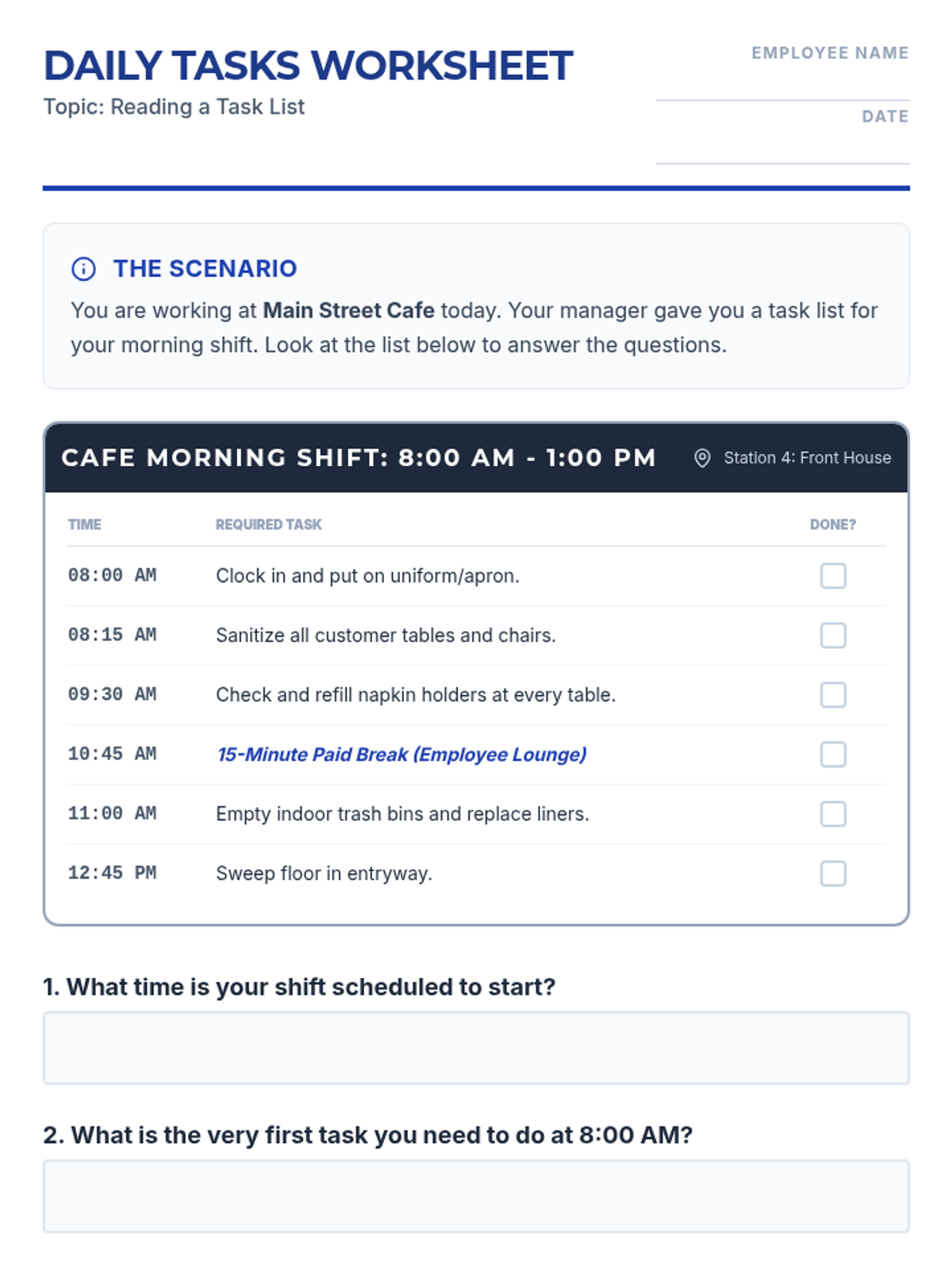
A functional worksheet designed to help students practice reading a daily workplace task list. It features a realistic cafe shift schedule with times and specific duties, followed by comprehension and critical thinking questions. Revised for better page usage, handwriting space, and uniform answer choices.
Interactive slides introducing students to three common workplace schedule formats. Revised to include new content on workplace etiquette, handling emergencies like spills, and identifying schedule conflicts by comparing work and personal calendars.
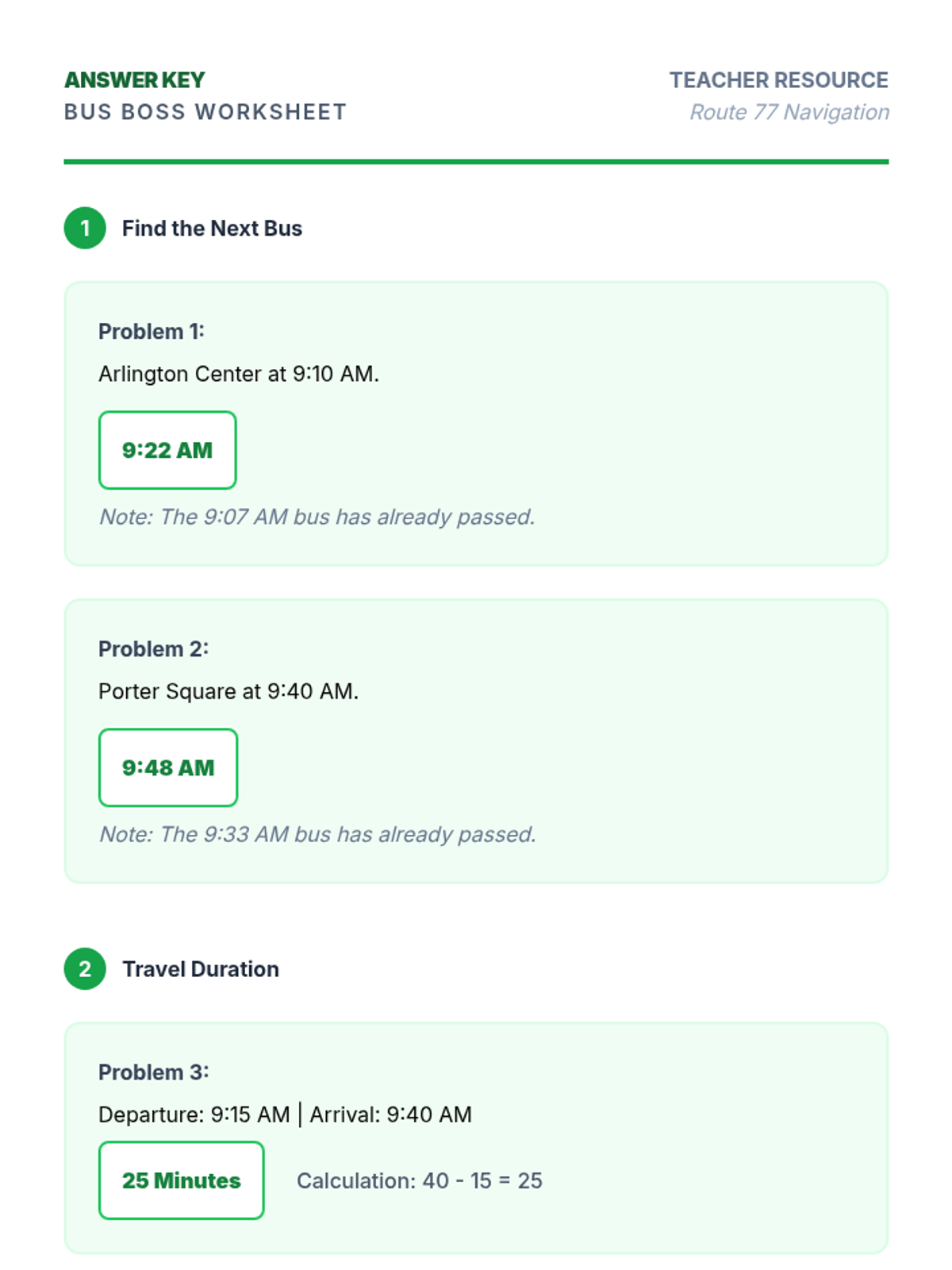
Teacher answer key and instructional guide for the Bus Boss Worksheet, providing clear solutions and specialized teaching strategies for transition-age students with ASD.
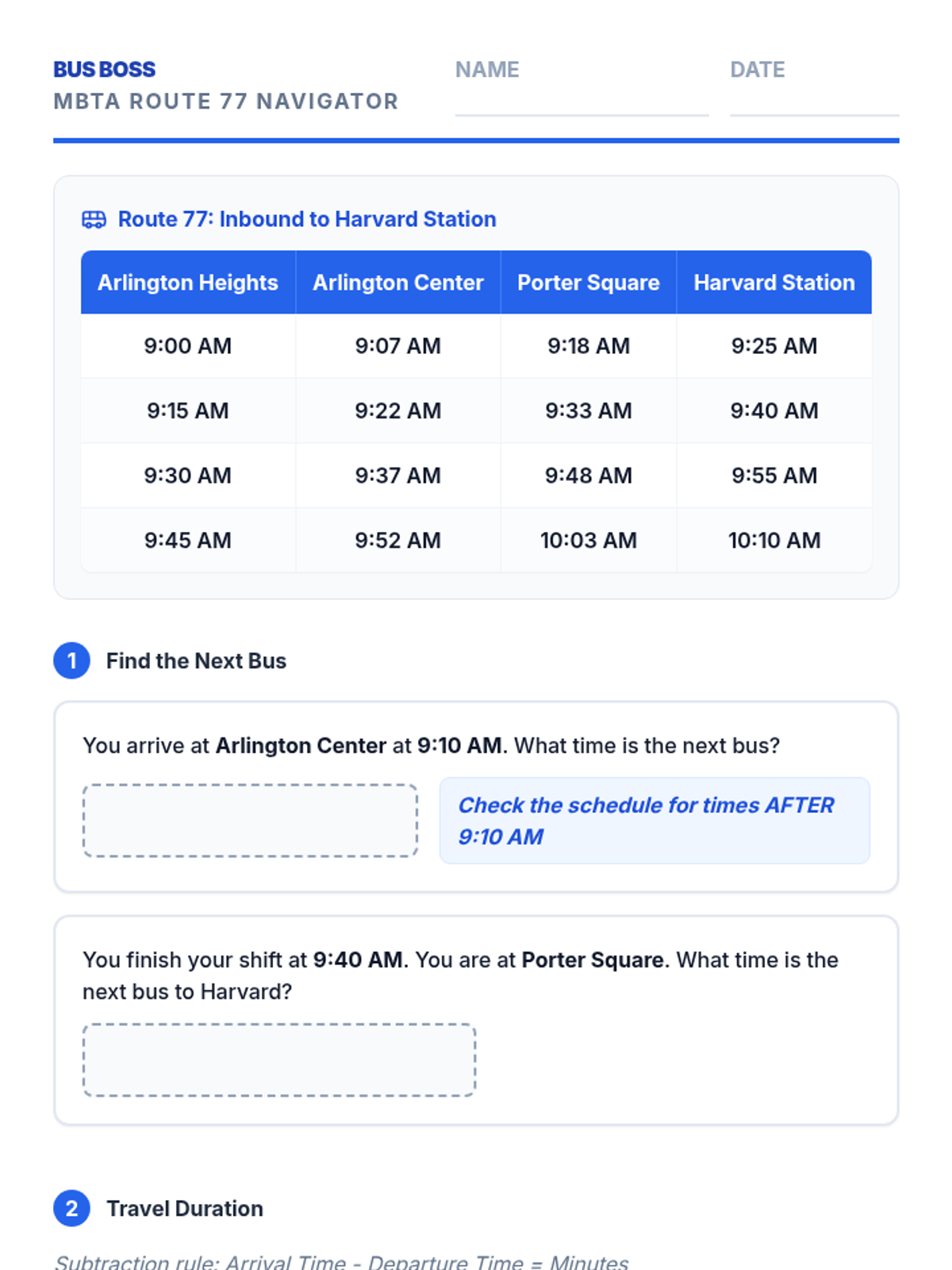
A practice worksheet for transition students to build functional numeracy skills by reading a simplified MBTA Route 77 bus schedule and calculating trip lengths.
A visual presentation designed for students with ASD to learn how to navigate the MBTA Route 77 bus schedule, featuring step-by-step guides for finding departure times and calculating trip duration.
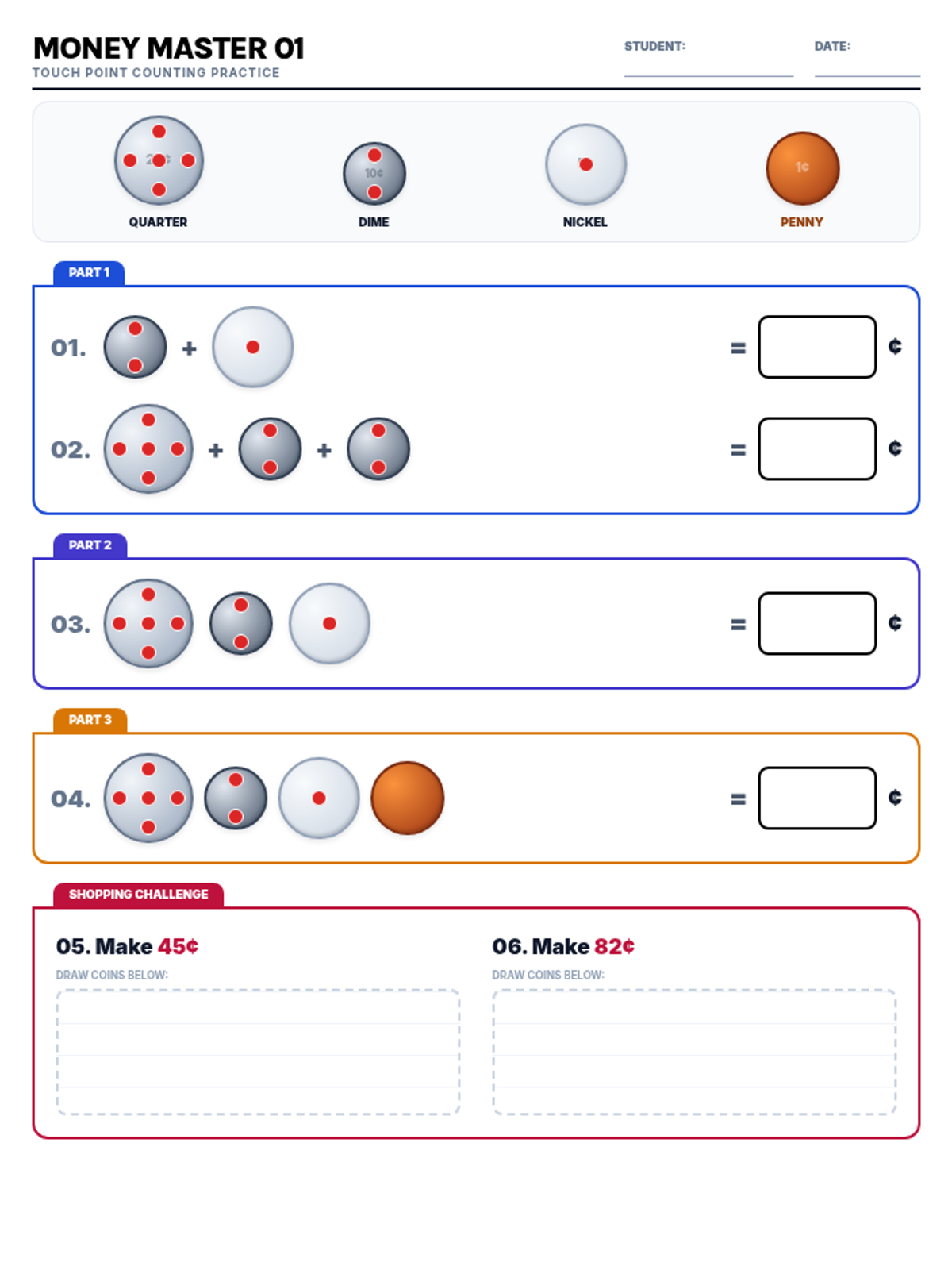
The first practice worksheet in the series for adding mixed coins using the Touch Point method. Features problems with two, three, and four coin types plus a final challenge section for specific totals under $1.00.
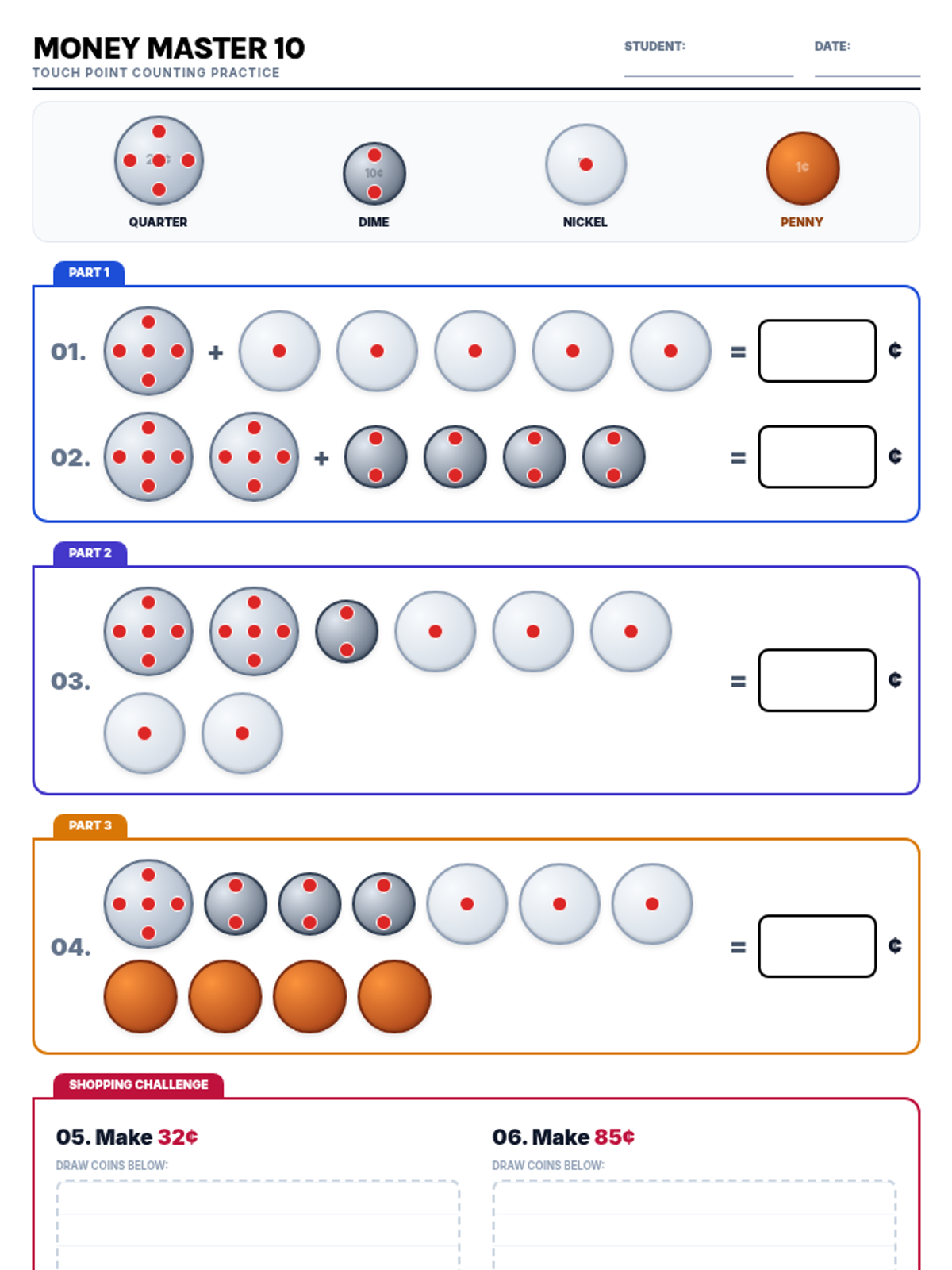
The tenth practice worksheet in the series for adding mixed coins using the Touch Point method. Features problems with two, three, and four coin types plus a final challenge section for specific totals under $1.00.
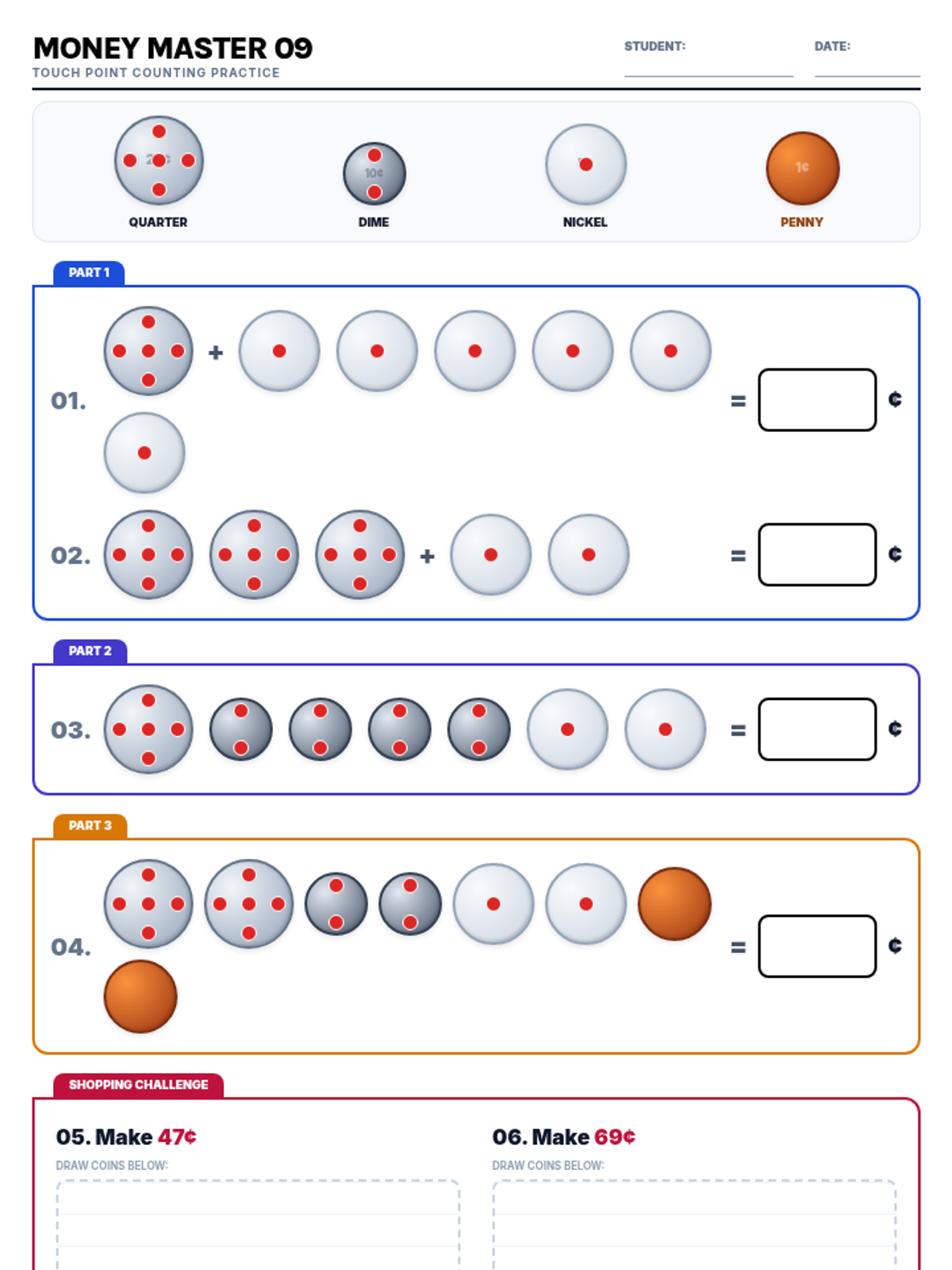
The ninth practice worksheet in the series for adding mixed coins using the Touch Point method. Features problems with two, three, and four coin types plus a final challenge section for specific totals under $1.00.
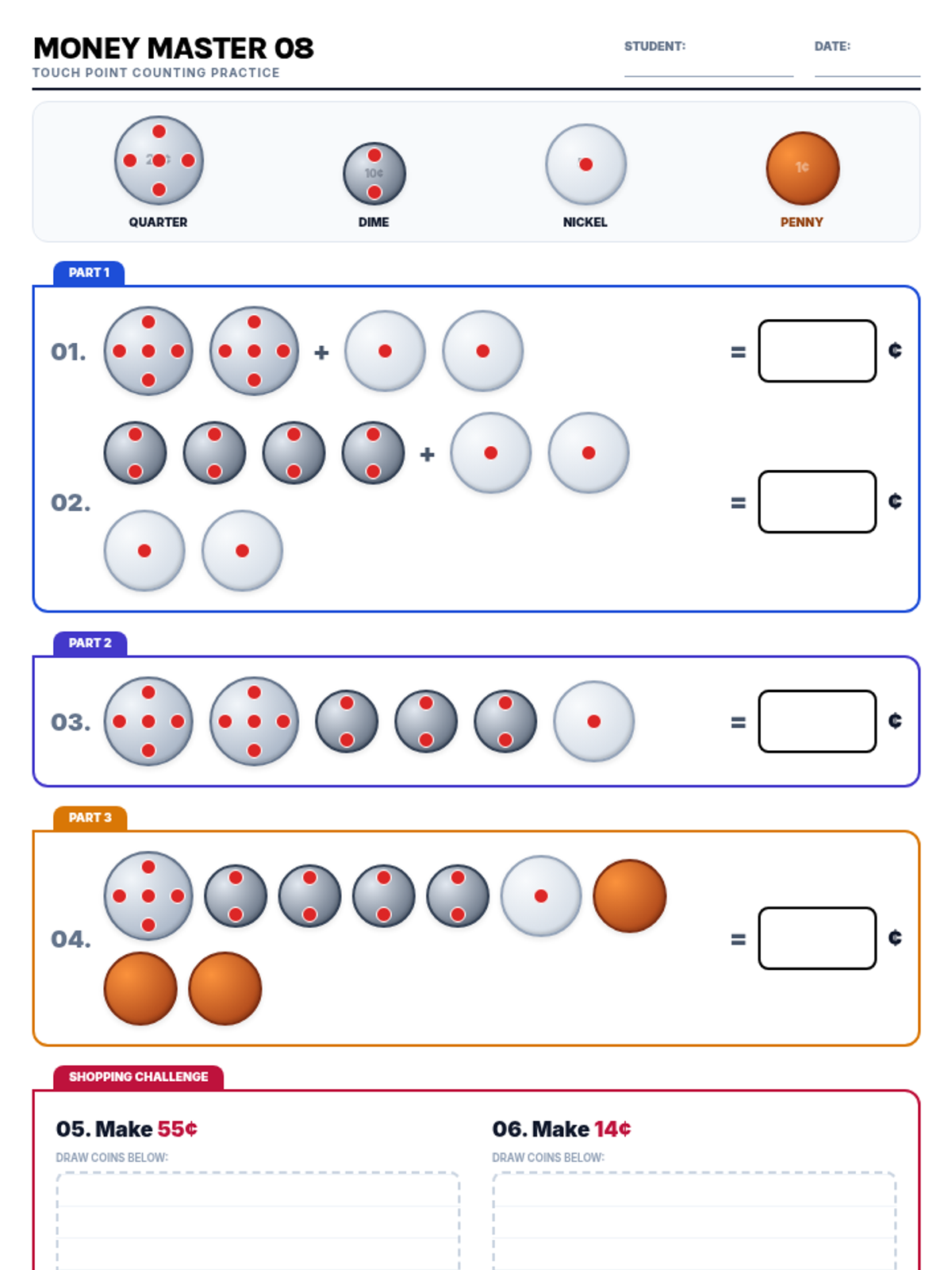
The eighth practice worksheet in the series for adding mixed coins using the Touch Point method. Features problems with two, three, and four coin types plus a final challenge section for specific totals under $1.00.
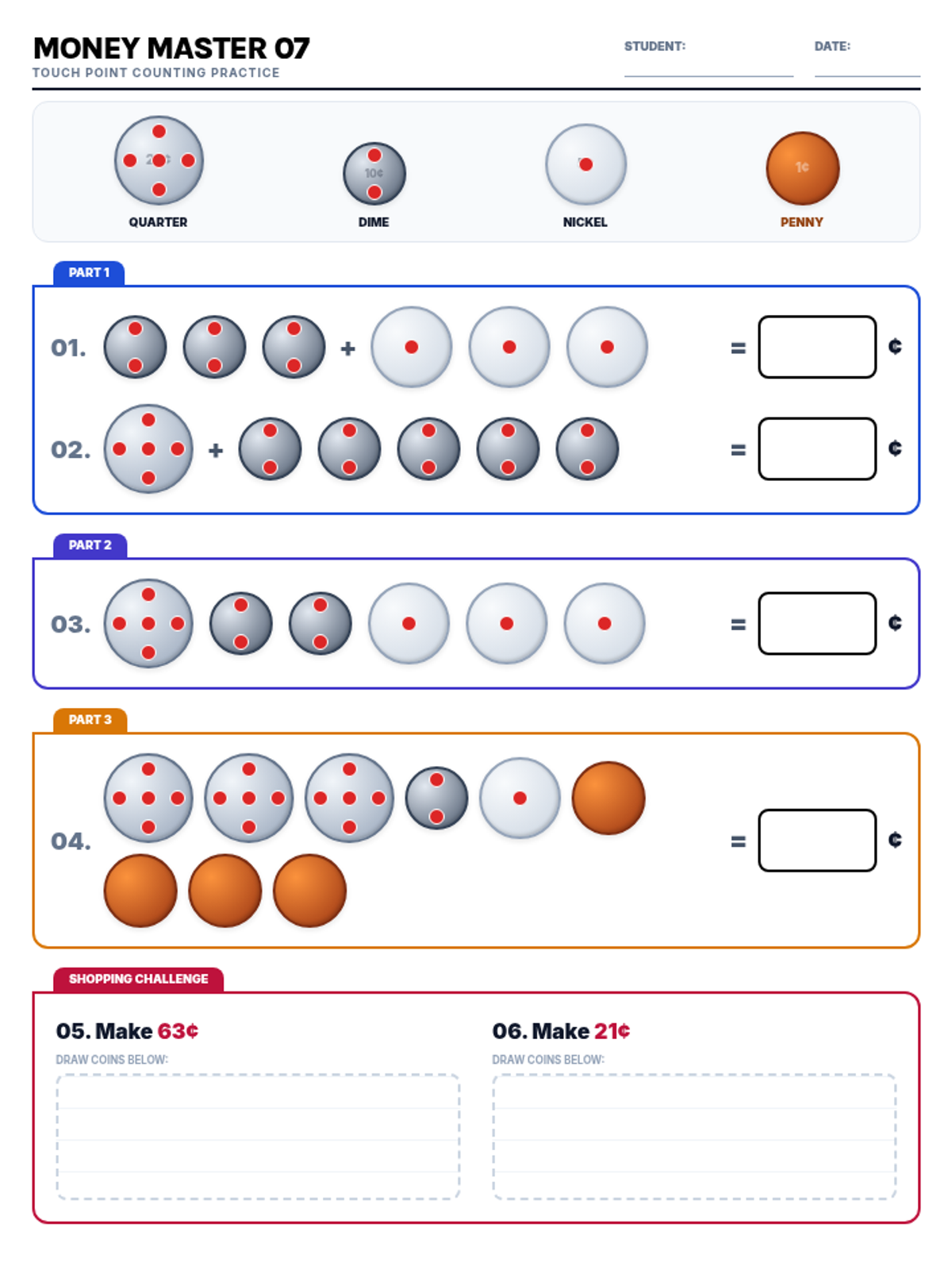
The seventh practice worksheet in the series for adding mixed coins using the Touch Point method. Features problems with two, three, and four coin types plus a final challenge section for specific totals under $1.00.
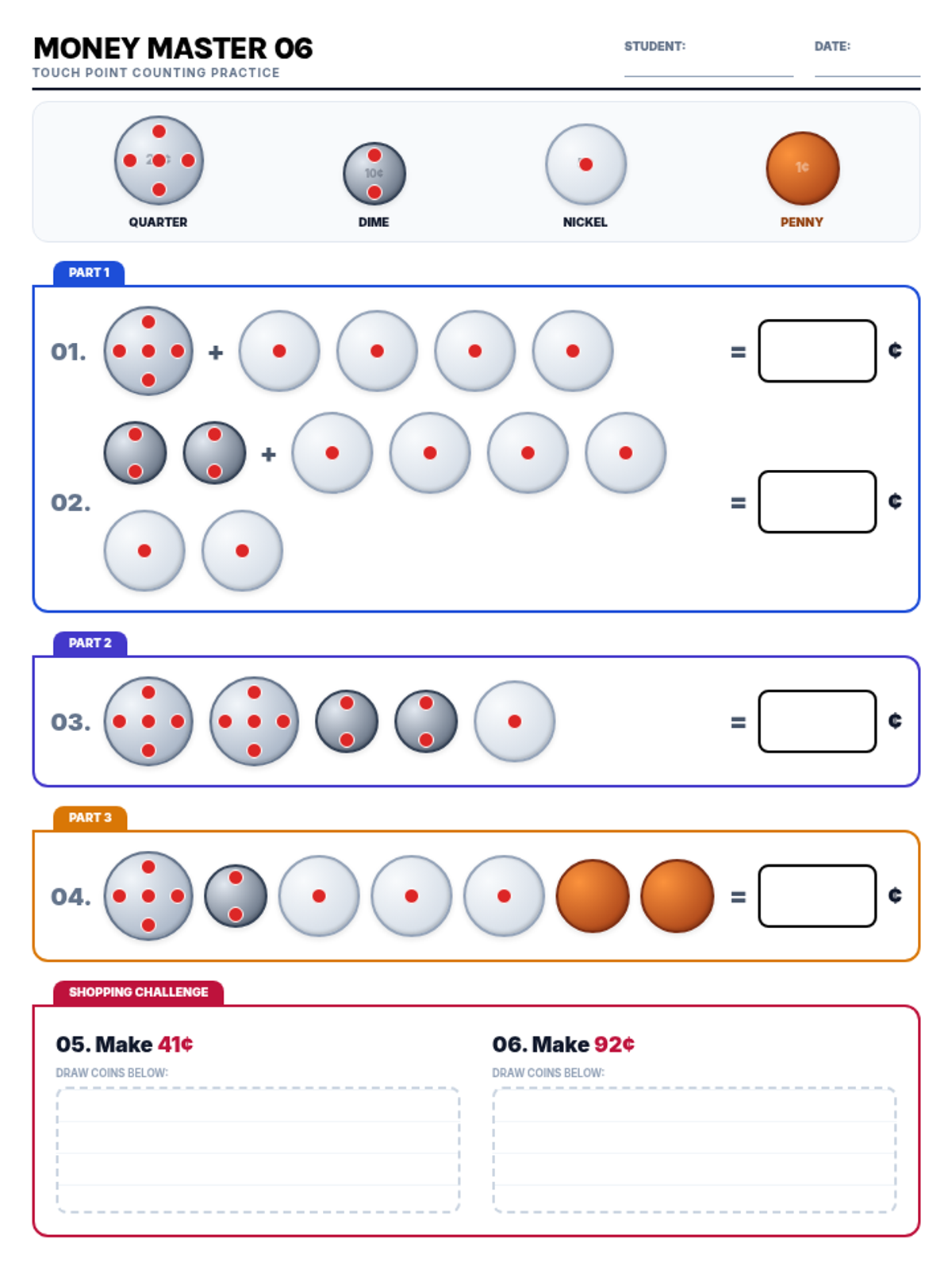
The sixth practice worksheet in the series for adding mixed coins using the Touch Point method. Features problems with two, three, and four coin types plus a final challenge section for specific totals under $1.00.
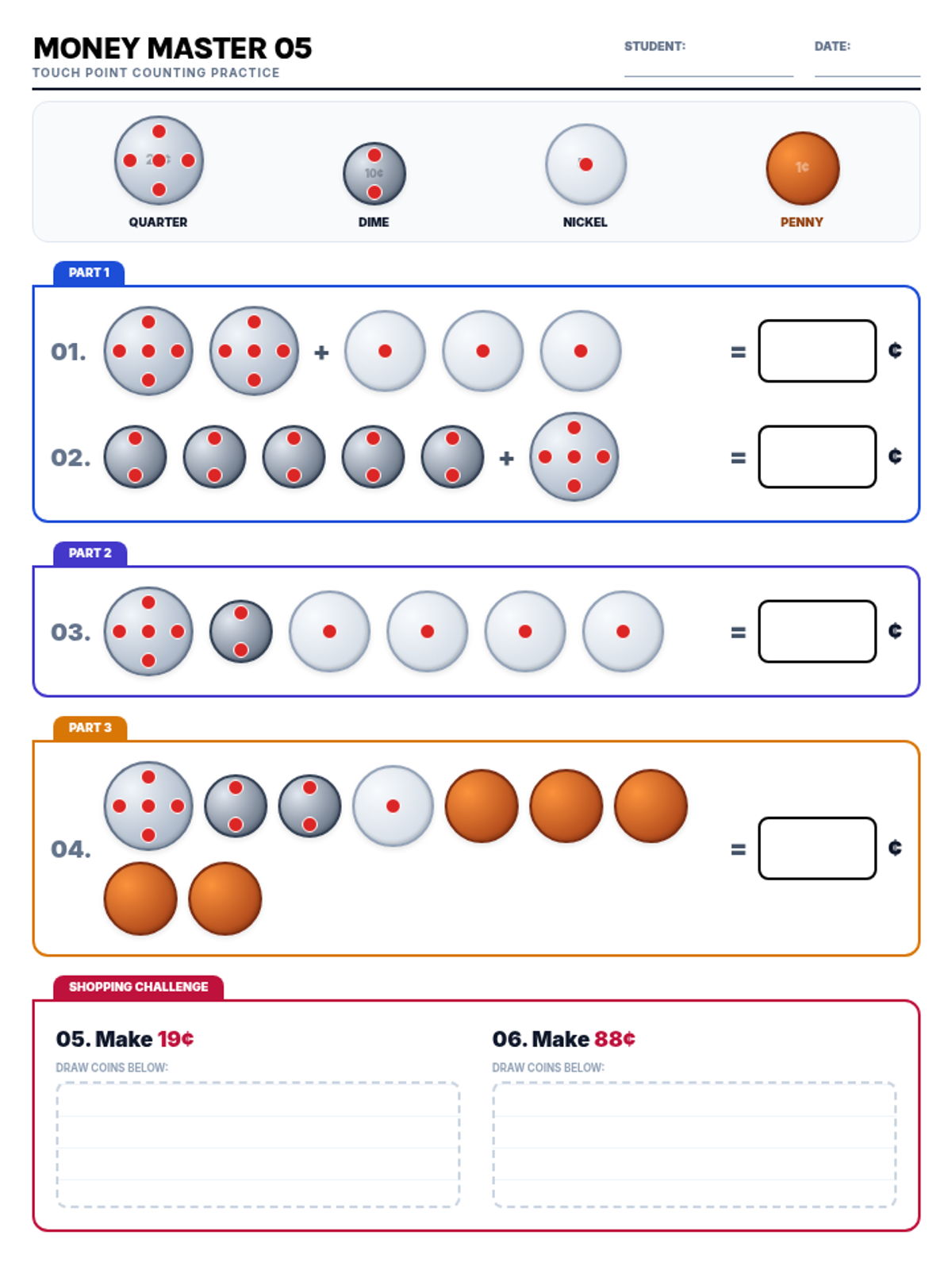
The fifth practice worksheet in the series for adding mixed coins using the Touch Point method. Features problems with two, three, and four coin types plus a final challenge section for specific totals under $1.00.
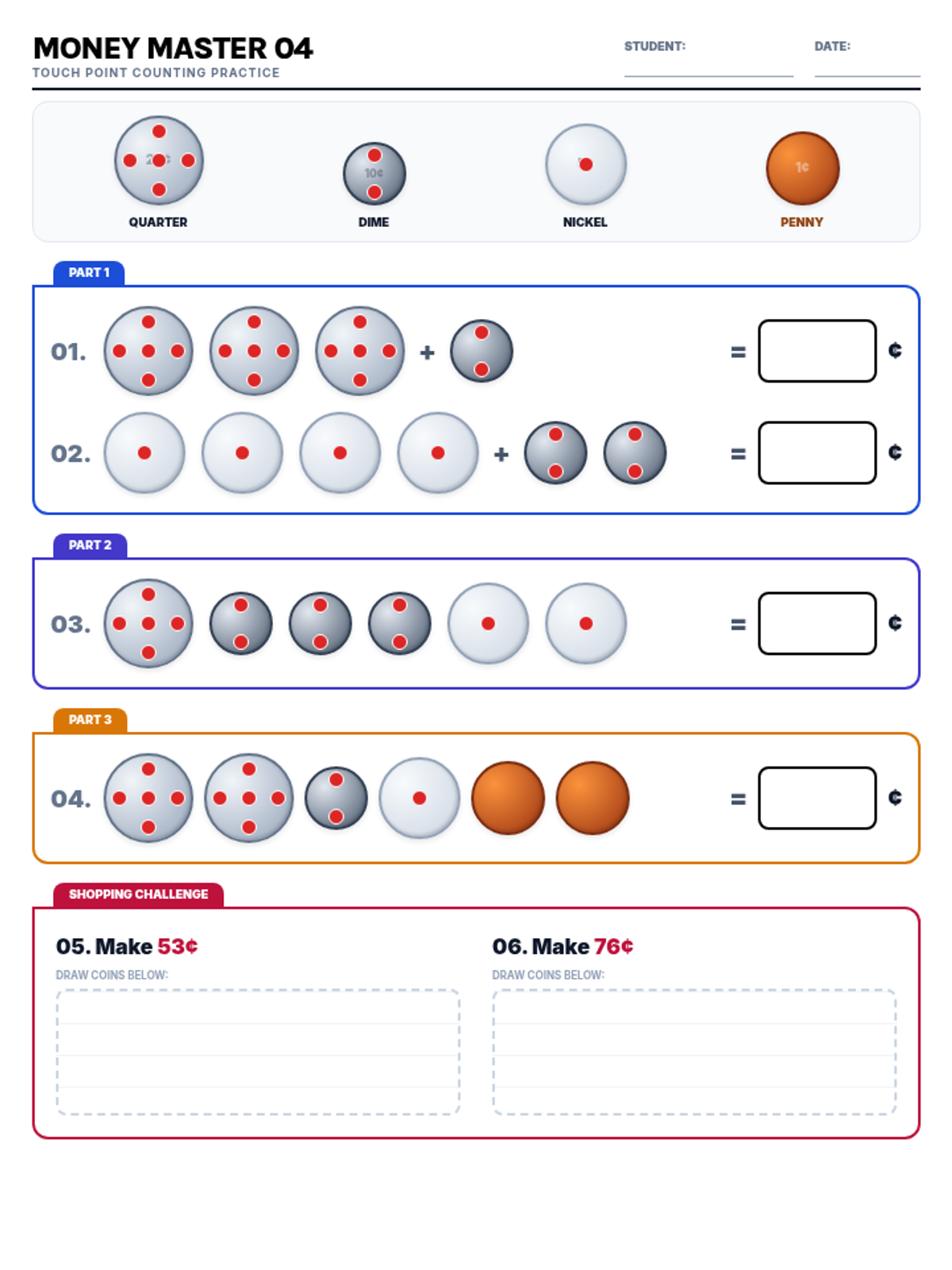
The fourth practice worksheet in the series for adding mixed coins using the Touch Point method. Features problems with two, three, and four coin types plus a final challenge section for specific totals under $1.00.