A multi-goal data collection document featuring weekly and monthly tracking. The weekly section supports up to 3 distinct goals with numbered rows, while the monthly section offers dual-tracking (Targets A & B) within a shared calendar grid.
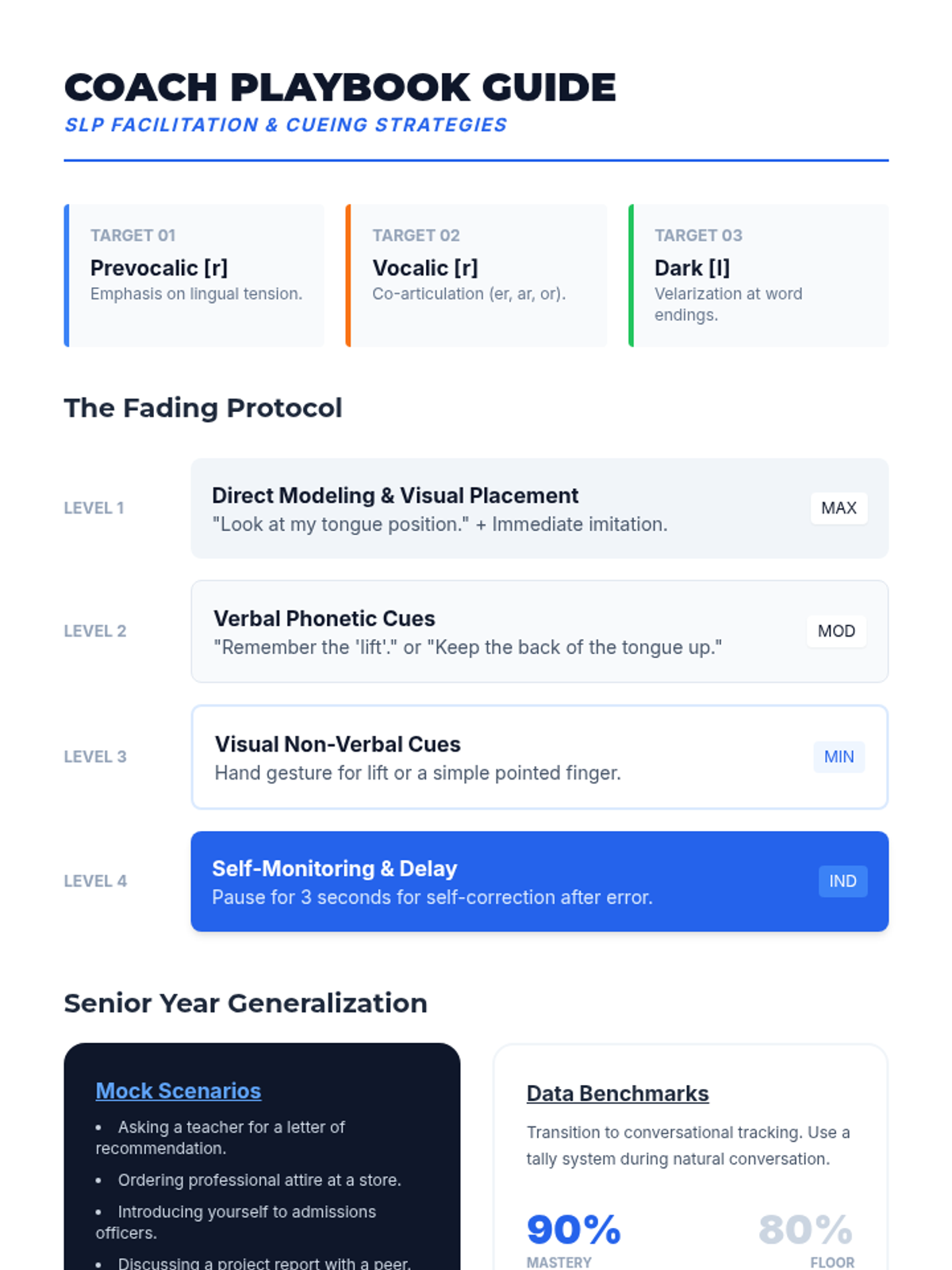
A teacher/SLP facilitation guide for working on articulation with high school seniors. It details a cueing hierarchy (fading support), professional generalization scenarios, and data-tracking benchmarks to reach the 90% accuracy goal.
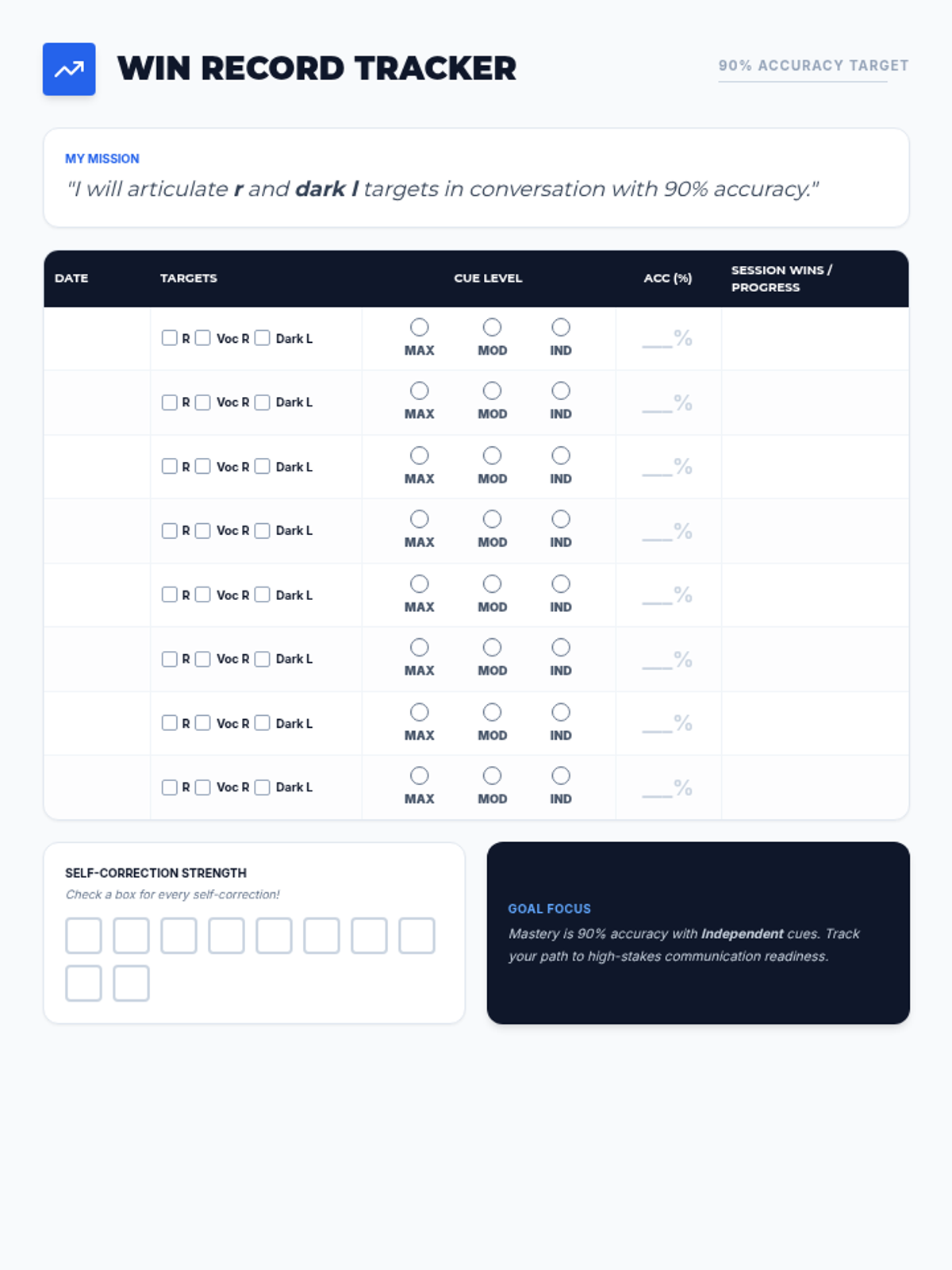
A sophisticated data-tracking log for high school seniors to monitor their articulation goals. Includes a session log for accuracy and cueing levels, as well as a self-monitoring section to track error correction.
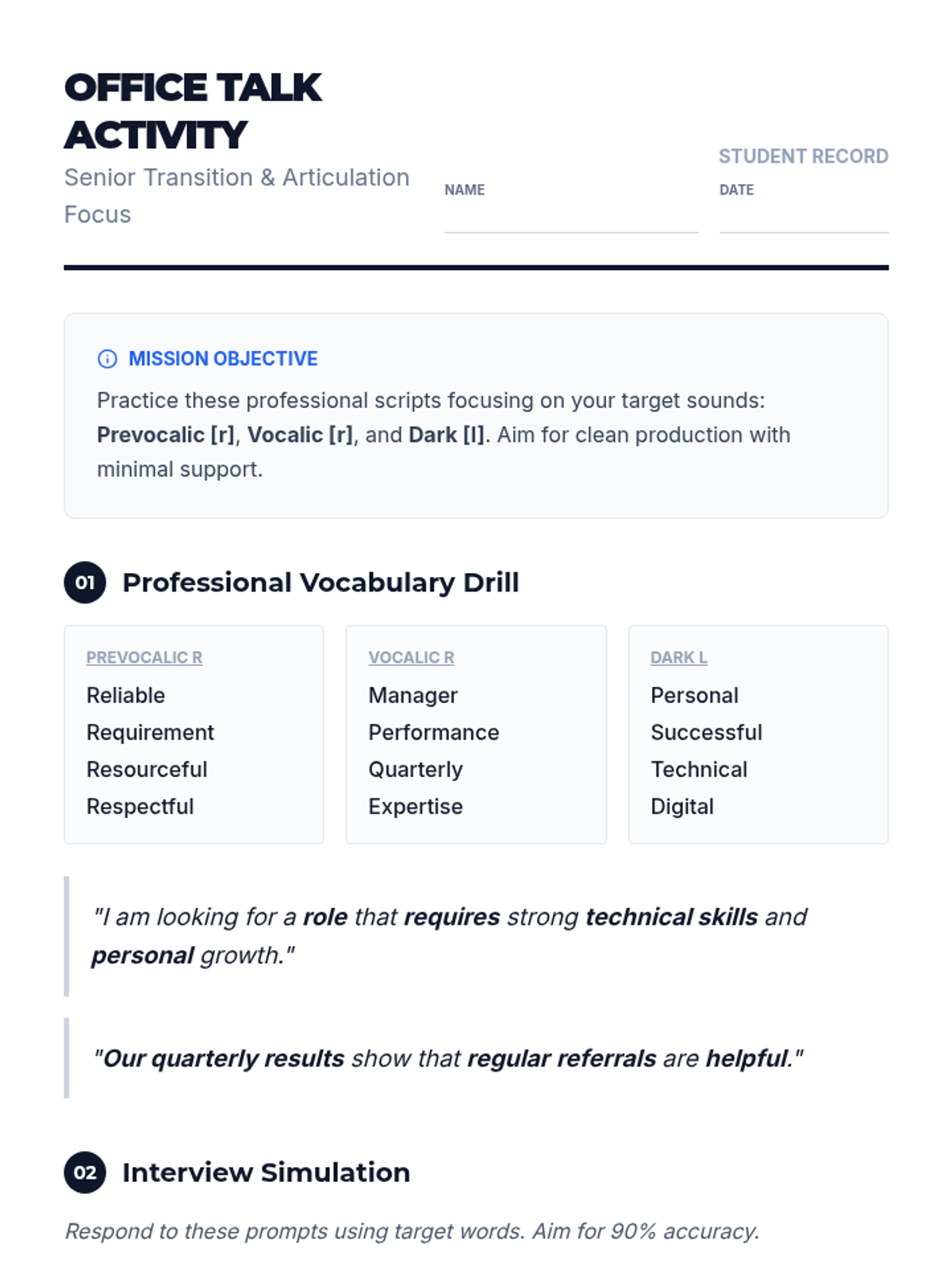
A career-readiness articulation worksheet for high school seniors. Focuses on 'r' and 'dark l' through professional vocabulary, sentence drills, and mock interview questions with spaces for self-reflection and SLP data tracking.
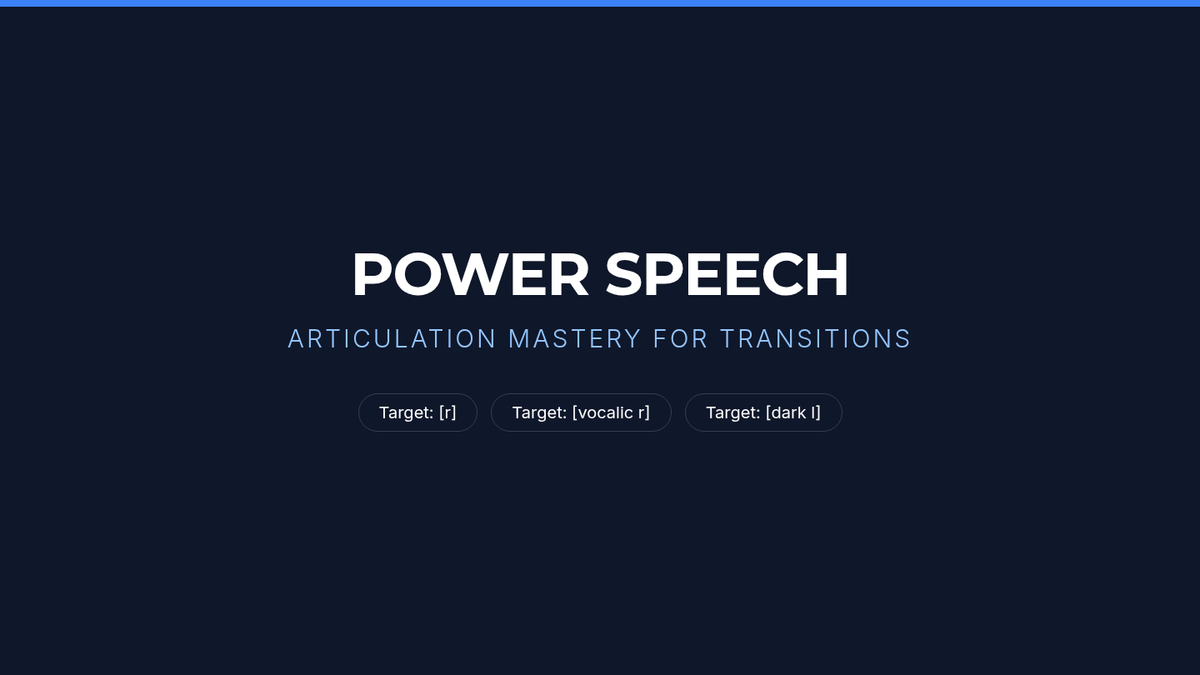
A professional 16:9 slide presentation for high school seniors focusing on articulating 'r' and 'dark l' in career-oriented contexts like interviews and workplace communication. Includes visual cues, word lists, and complex sentence challenges.
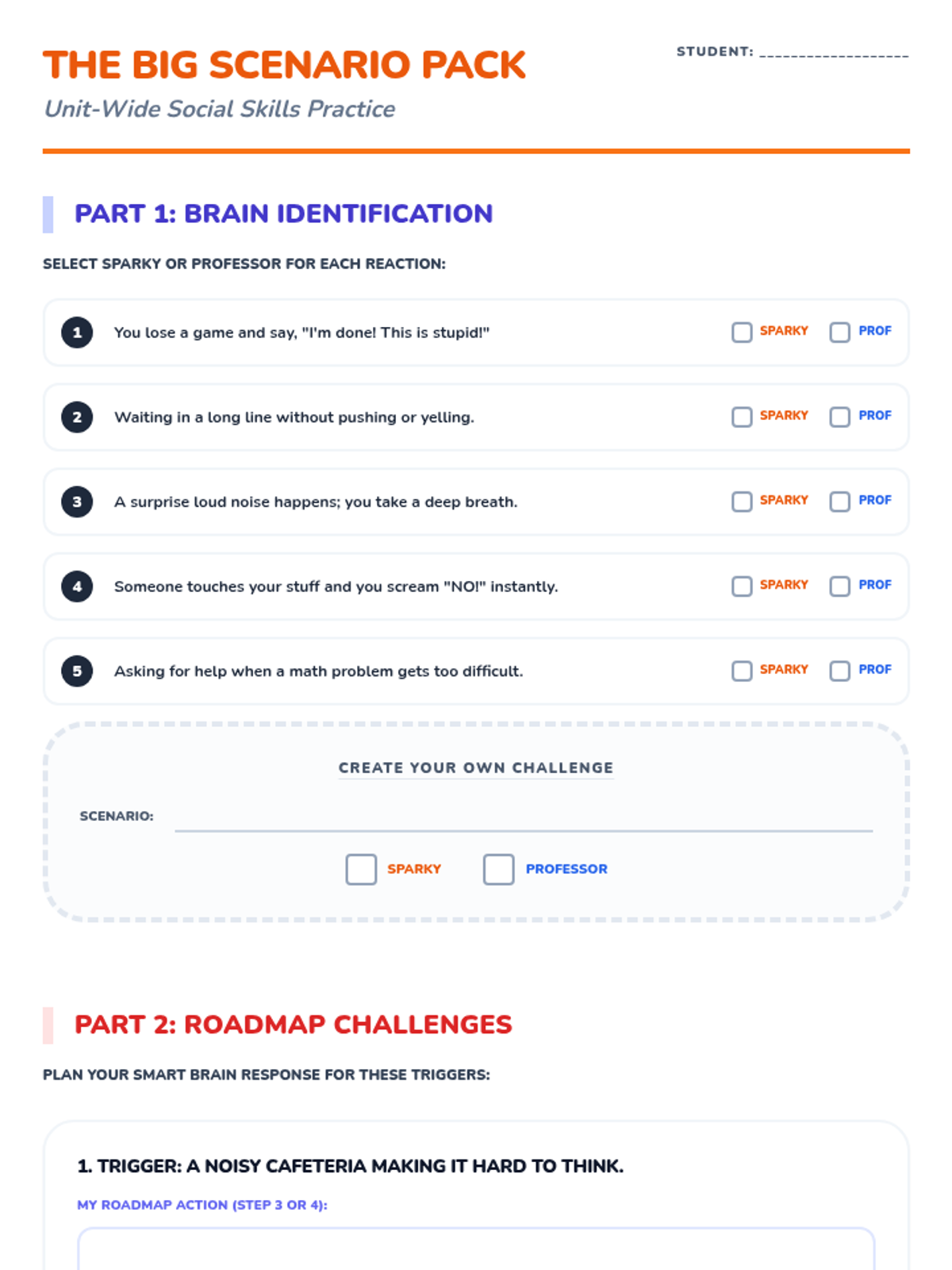
A comprehensive practice sheet with 10 scenarios (5 for early unit and 5 for late unit) plus creation spots, designed to reinforce Sparky vs. Professor PFC choices.
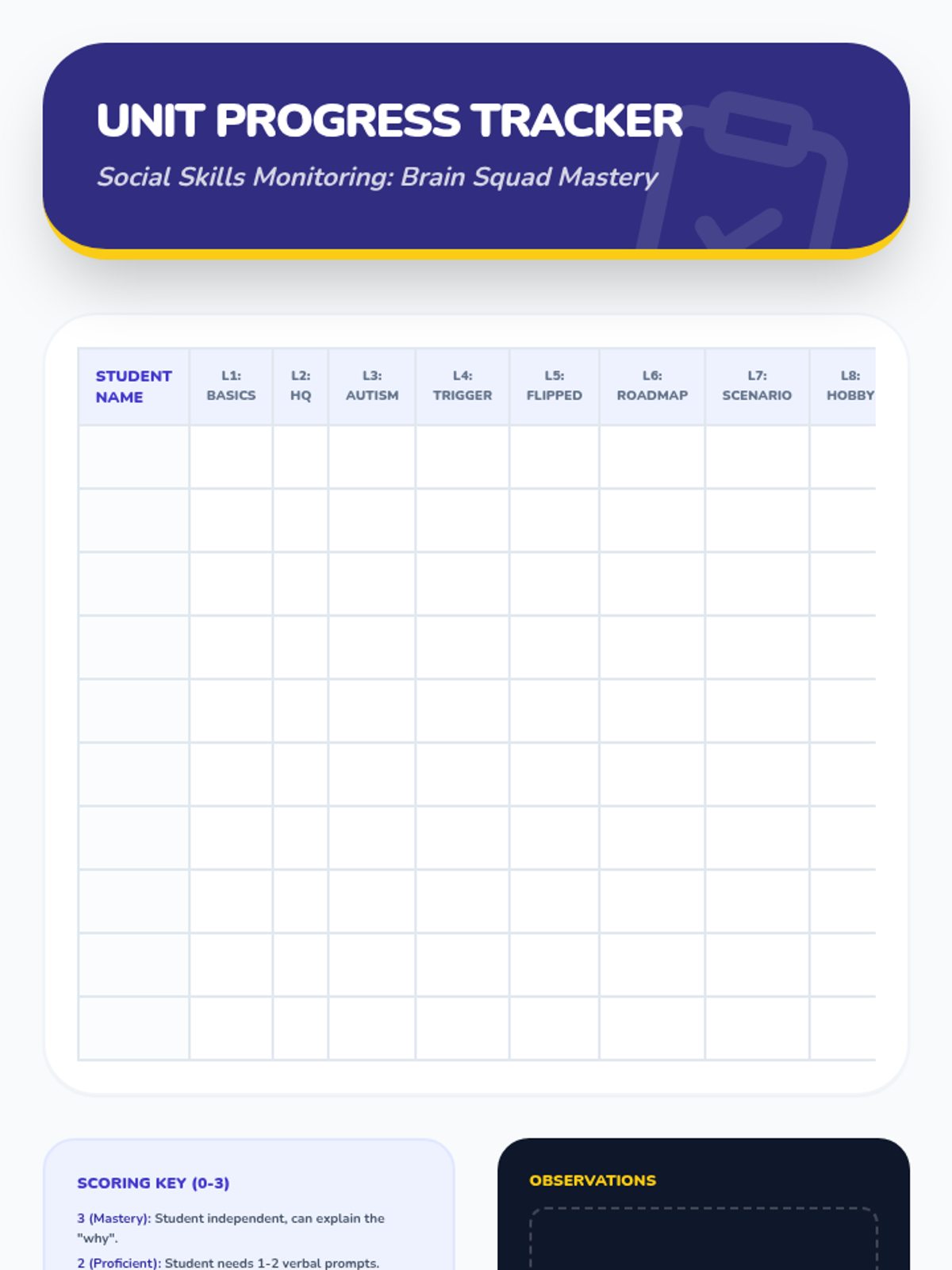
A data collection form for tracking up to ten students' progress across all eight lessons of the Brain Squad Mastery unit.
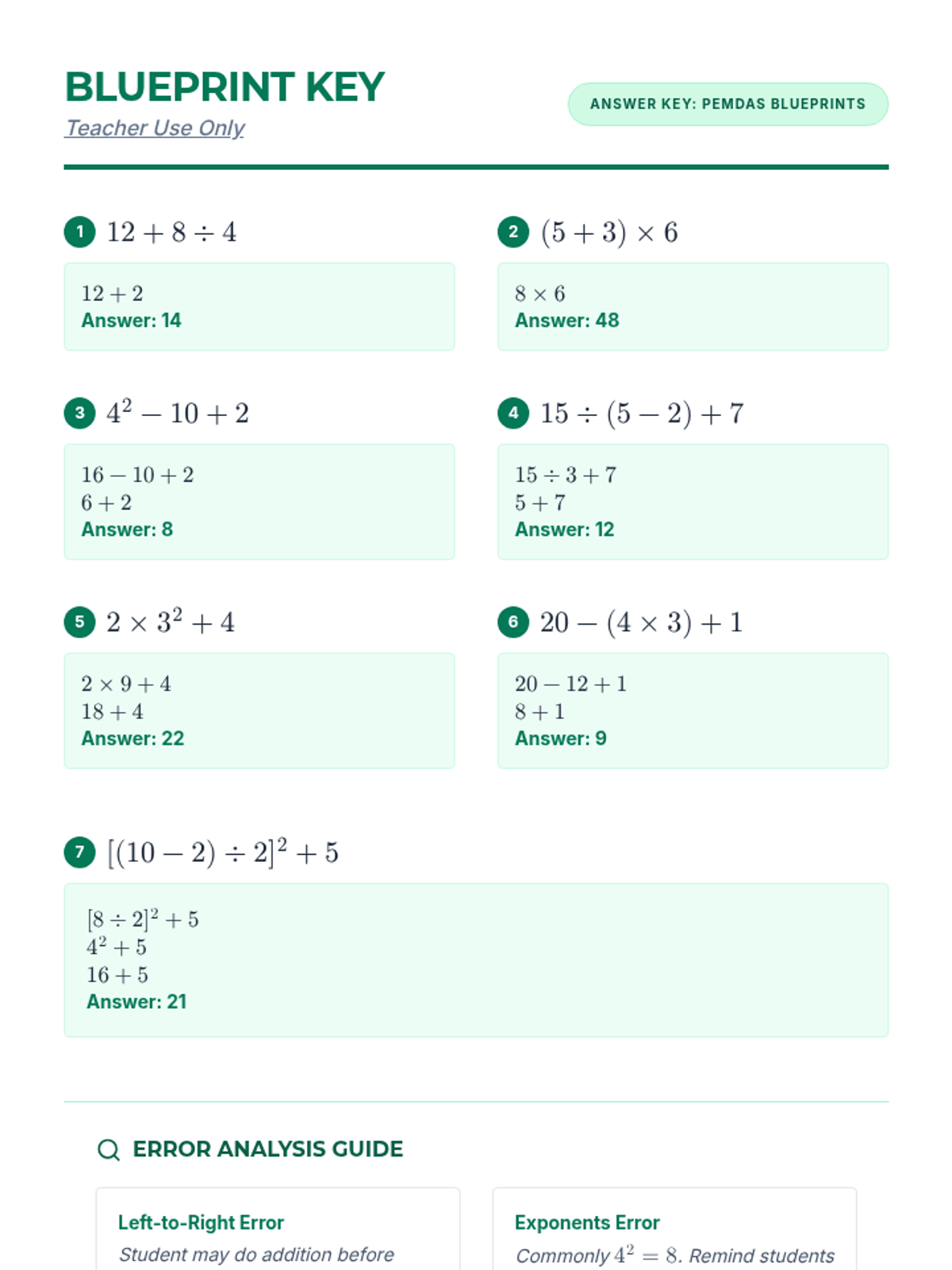
A teacher-facing answer key for the PEMDAS Blueprints worksheet, providing step-by-step solutions and a guide for common student errors.
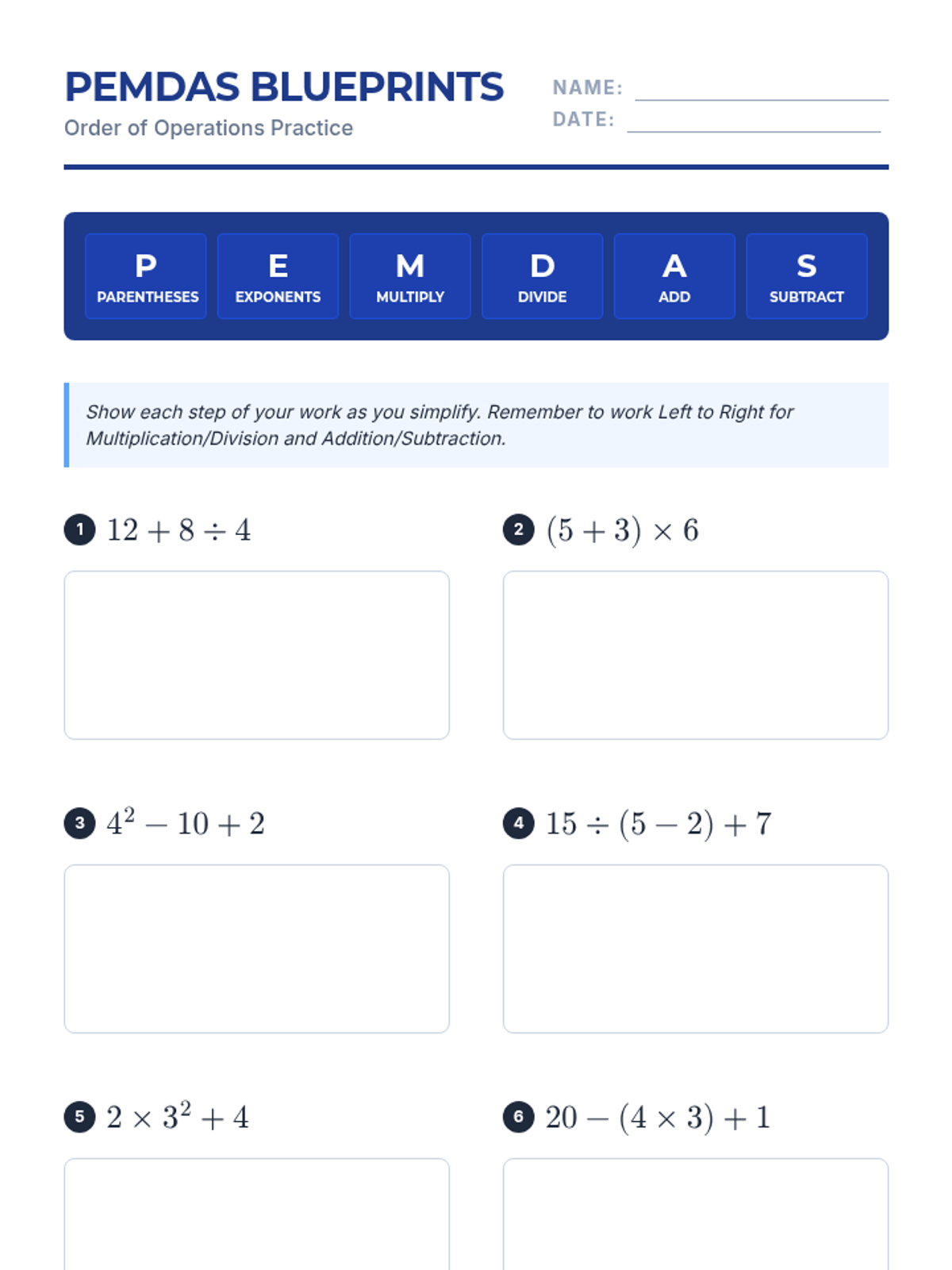
A practice worksheet for students to apply PEMDAS rules to increasingly complex expressions, featuring a clear reference header and dedicated workspaces for showing steps.
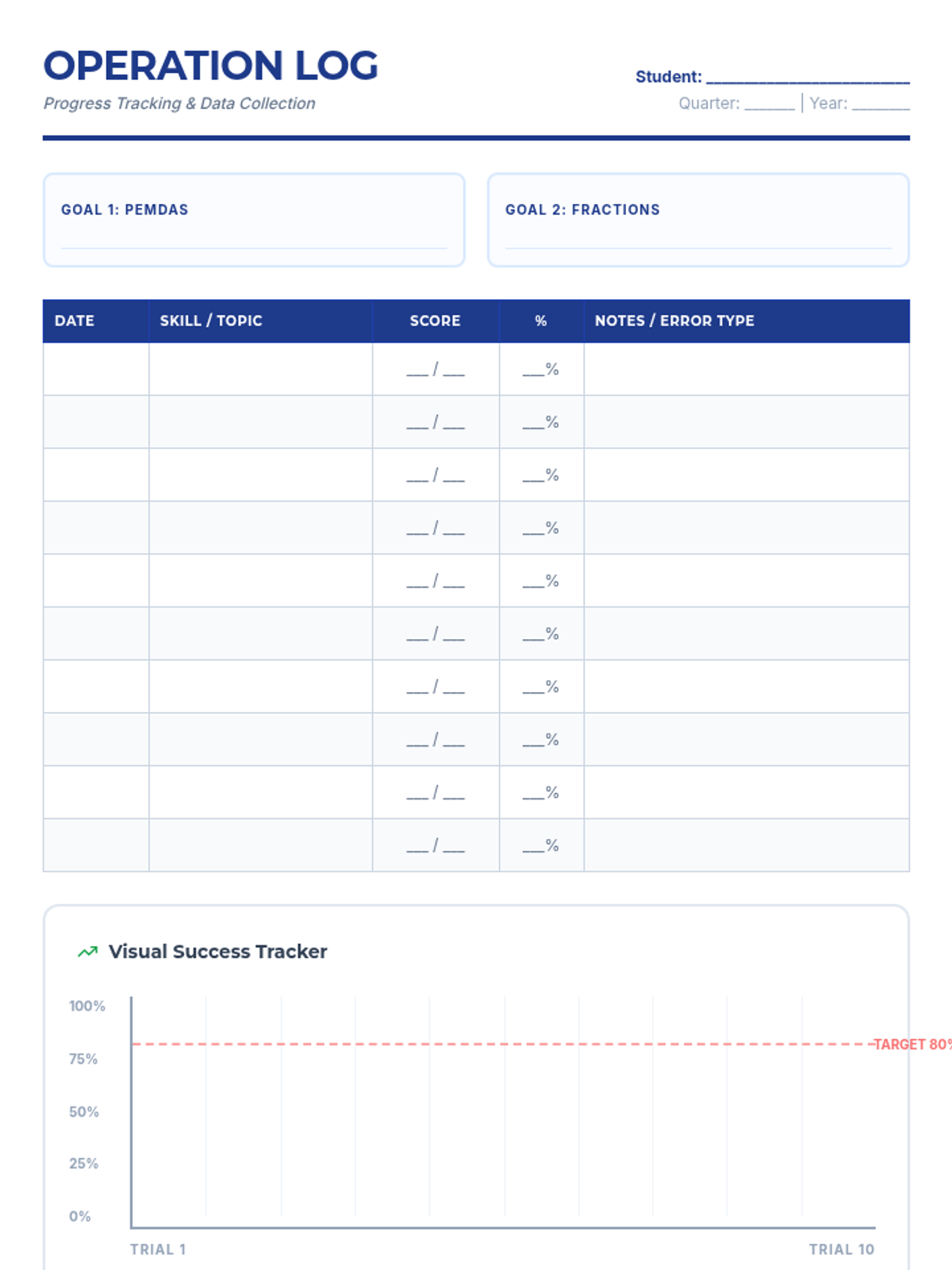
A progress tracker for monitoring student performance on IEP math goals, featuring a data collection table and a visual success chart for graphing accuracy over time.
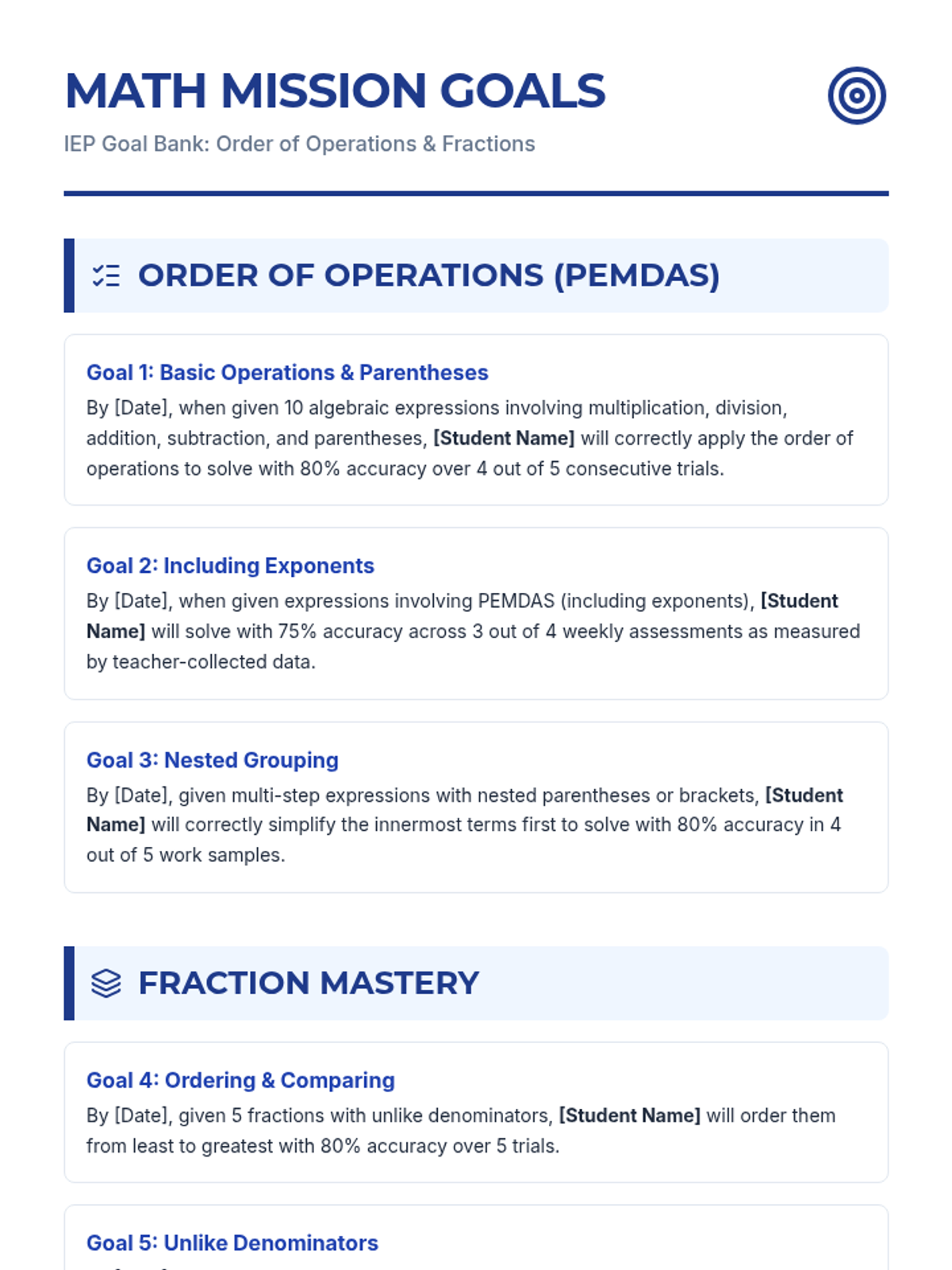
A comprehensive IEP goal bank for teachers, featuring specific, measurable goals for Order of Operations and fraction mastery, complete with instructional strategies.
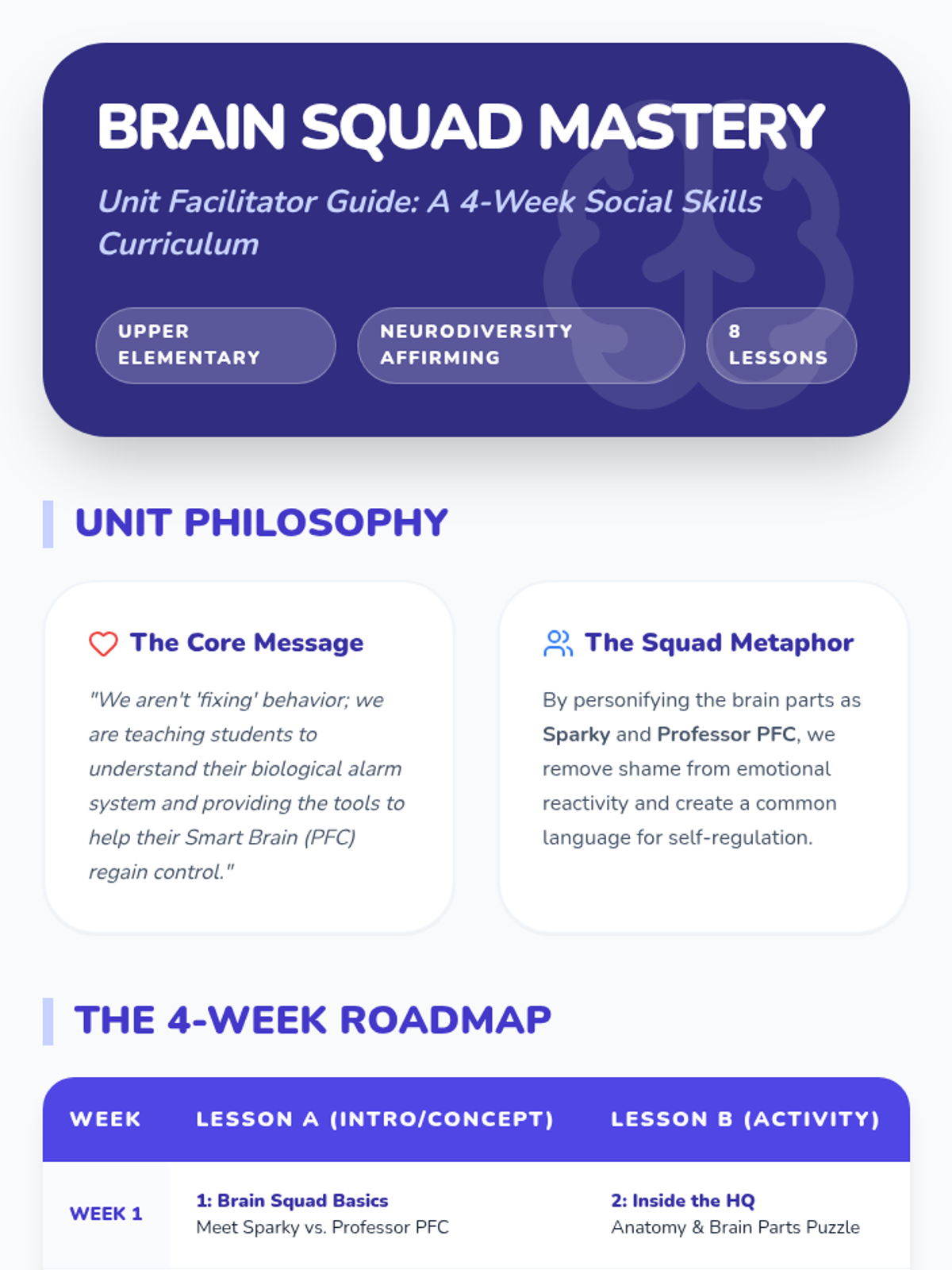
A comprehensive facilitator guide for the 4-week Brain Squad Mastery unit, containing detailed lesson plans, discussion questions, practice activities, and Autism-specific success strategies.
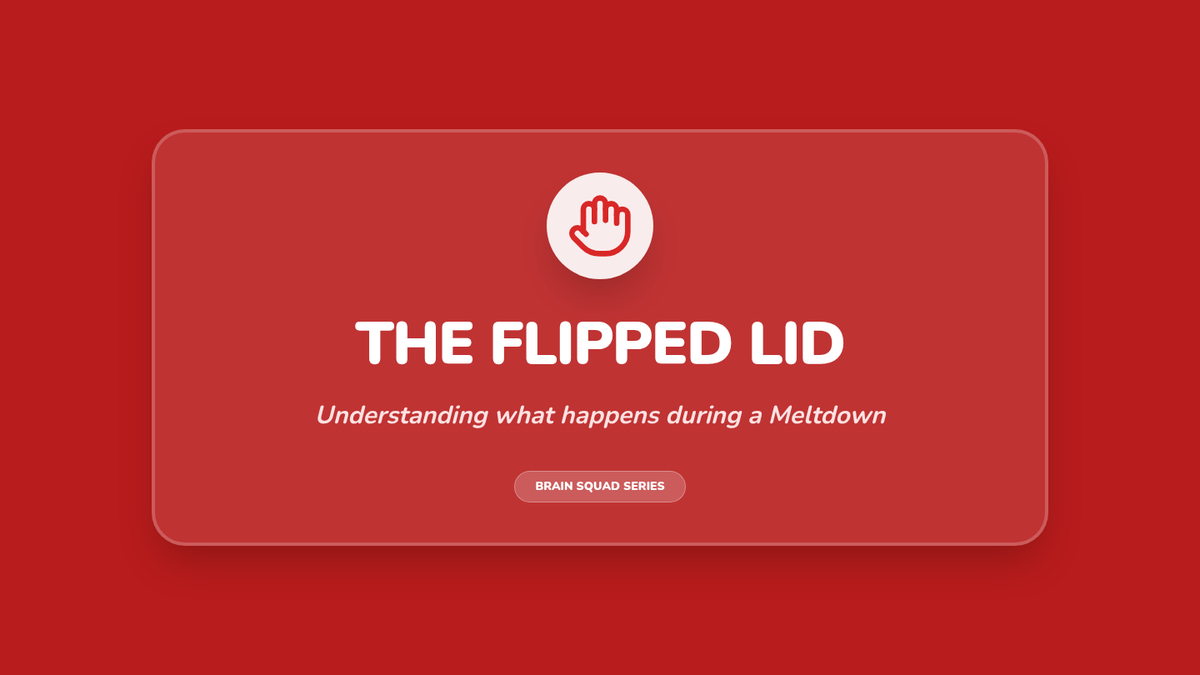
A presentation explaining the 'flipped lid' concept using the hand model of the brain to help students visualize emotional dysregulation.
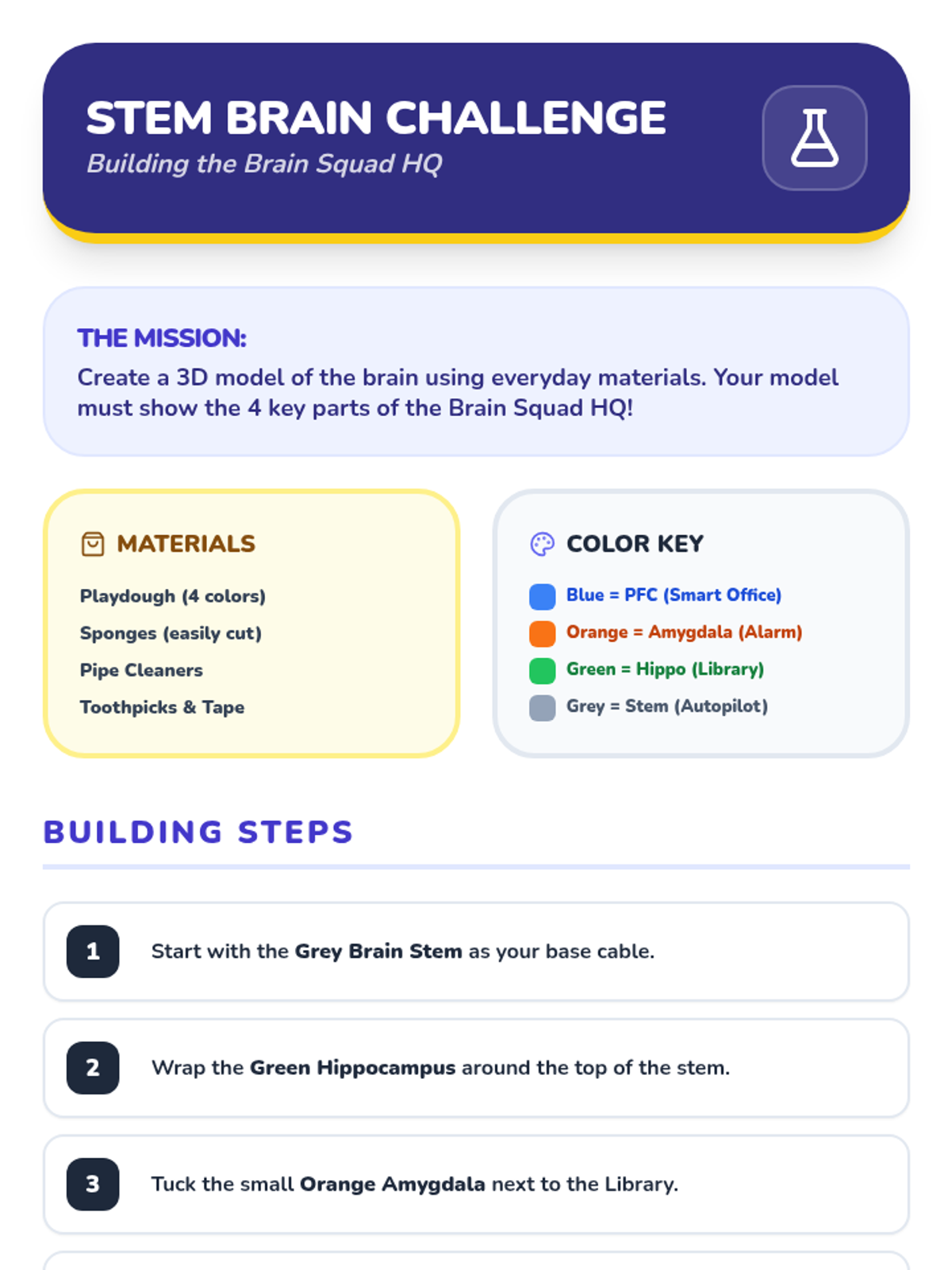
A STEM project guide for building a 3D color-coded model of the brain using common household materials to reinforce understanding of brain anatomy.
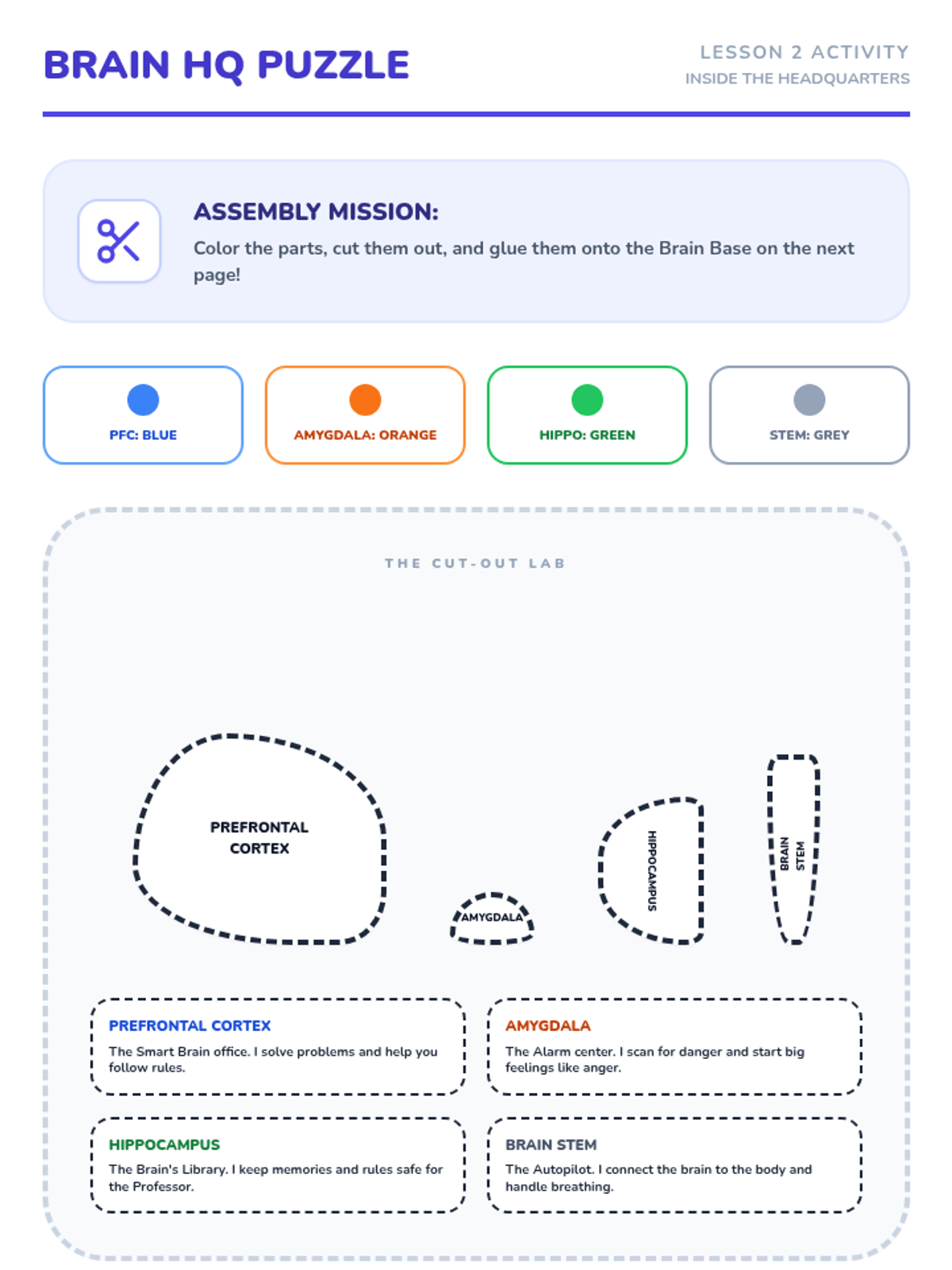
A hands-on cut-and-paste activity for students to identify, label, and define the major parts of the brain associated with emotional regulation.
An introductory slide deck explaining the biological parts of the brain (Amygdala, PFC, Hippocampus, Brain Stem) and linking them to emotional and smart responses.
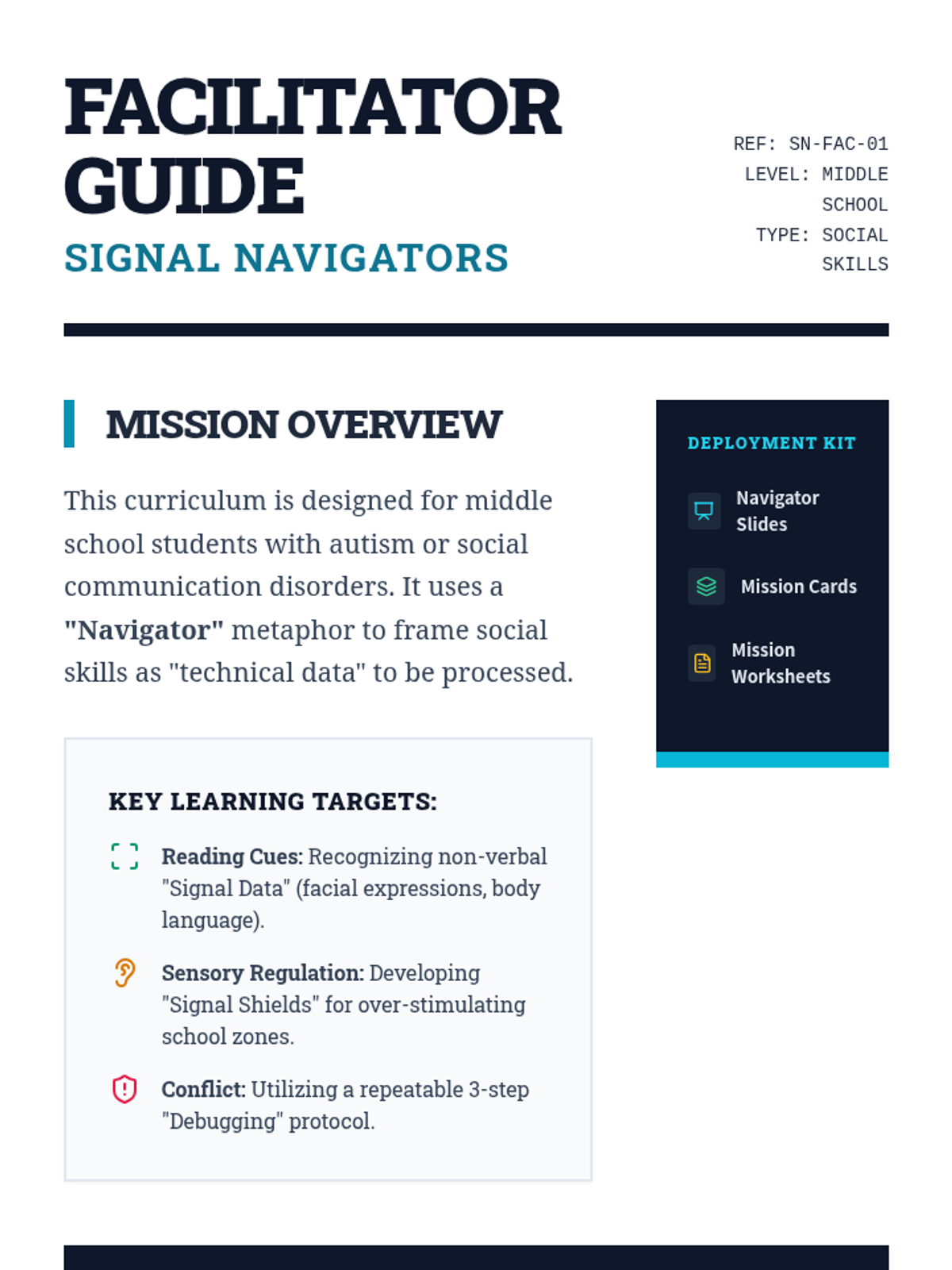
A facilitator guide for teachers or therapists to deliver the Signal Navigators lesson. Includes lesson pacing, student learning targets, materials list, and sample answers/guidance for social scenarios.
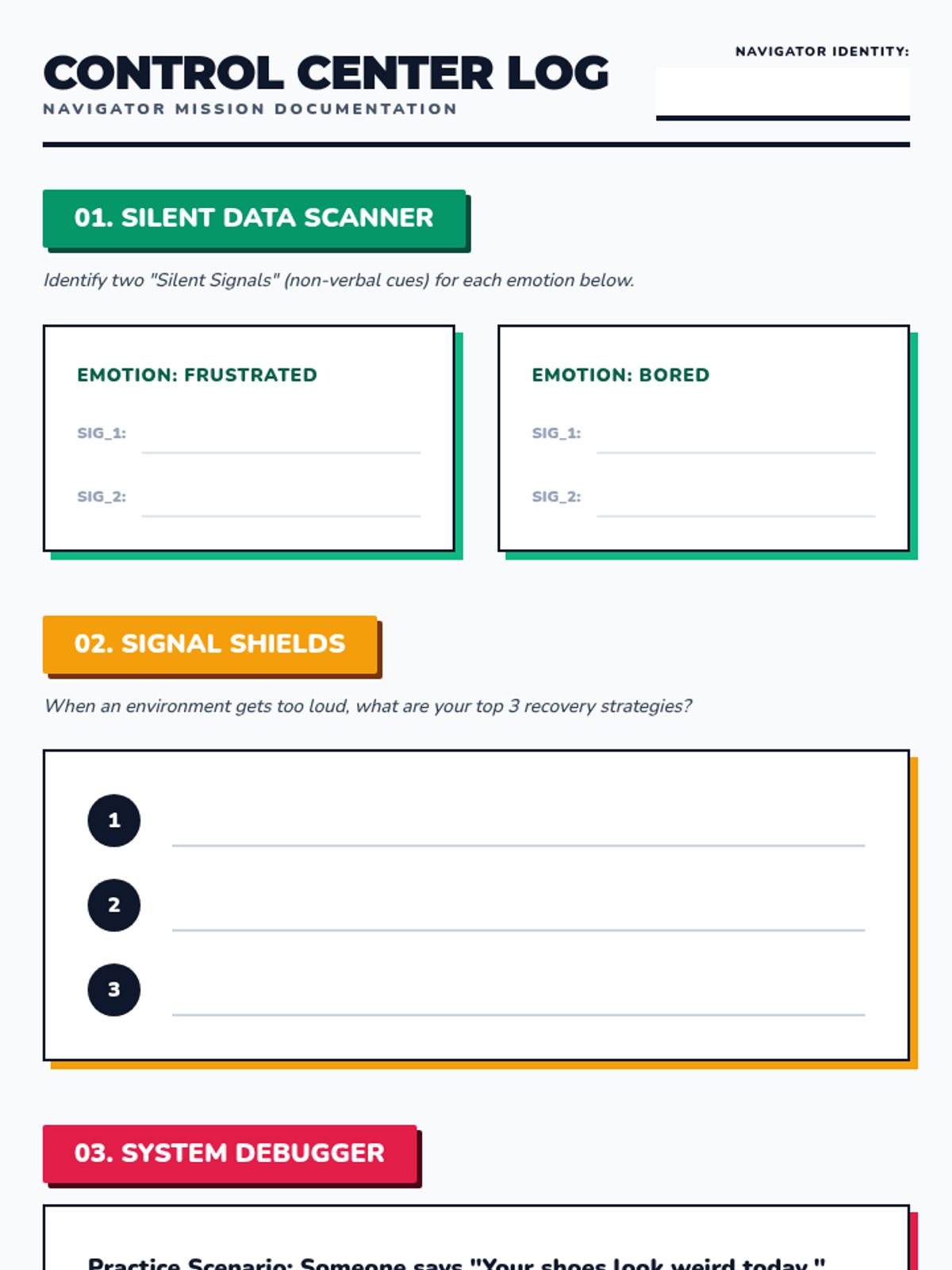
A student reflection and recording sheet to accompany the social skills lesson. It includes sections for identifying non-verbal cues, sensory regulation strategies, and practicing the 3-step conflict resolution method.
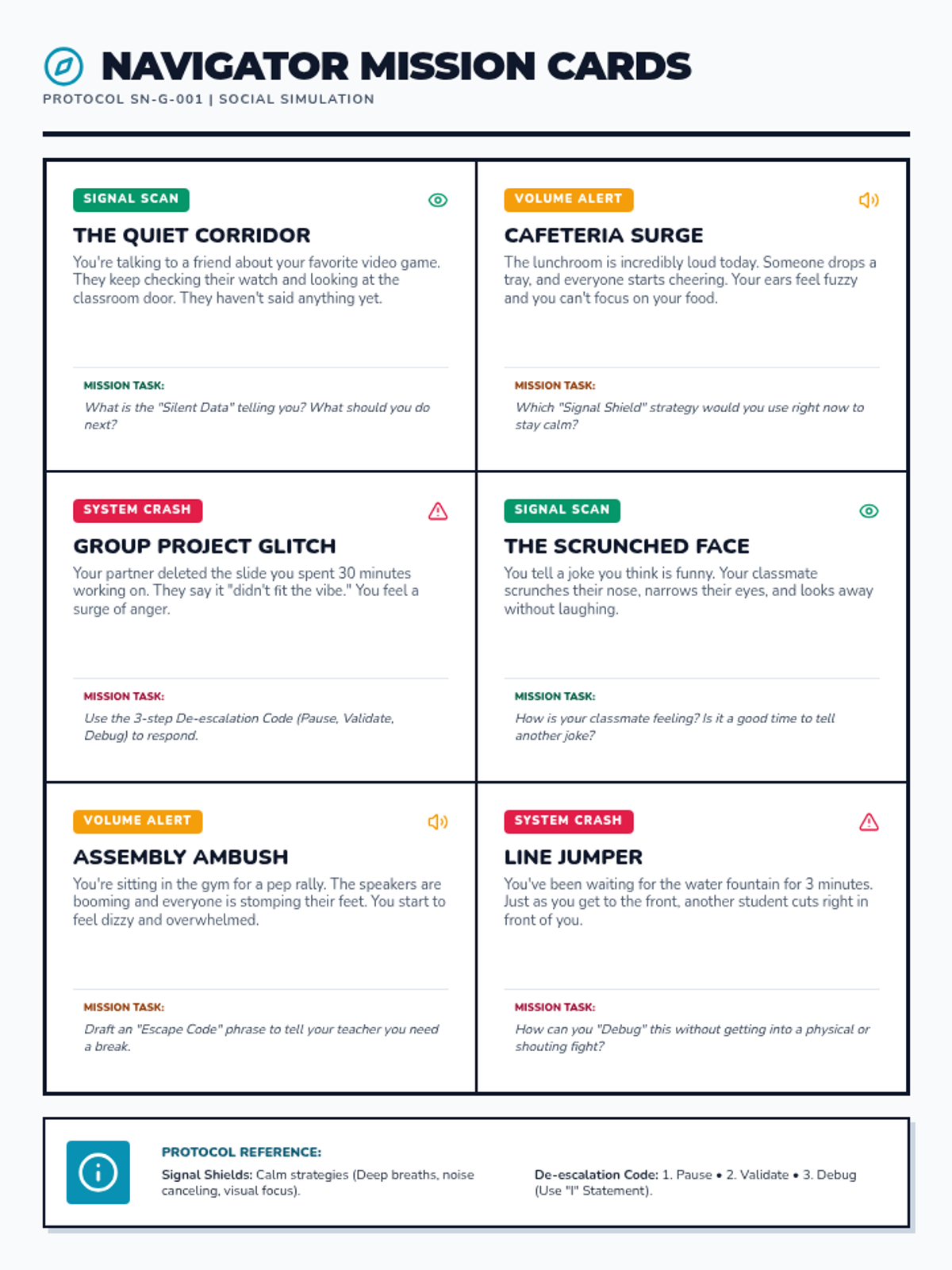
A set of scenario cards for a social skills 'game'. Scenarios focus on non-verbal cues (Signal Scan), sensory regulation (Volume Alert), and conflict management (System Crash). Designed to be printed and cut.
A high-impact visual slide deck for teaching social skills concepts. It uses a 'Signal Navigators' control-center theme to explain non-verbal cues, sensory regulation in loud environments, and conflict resolution steps.
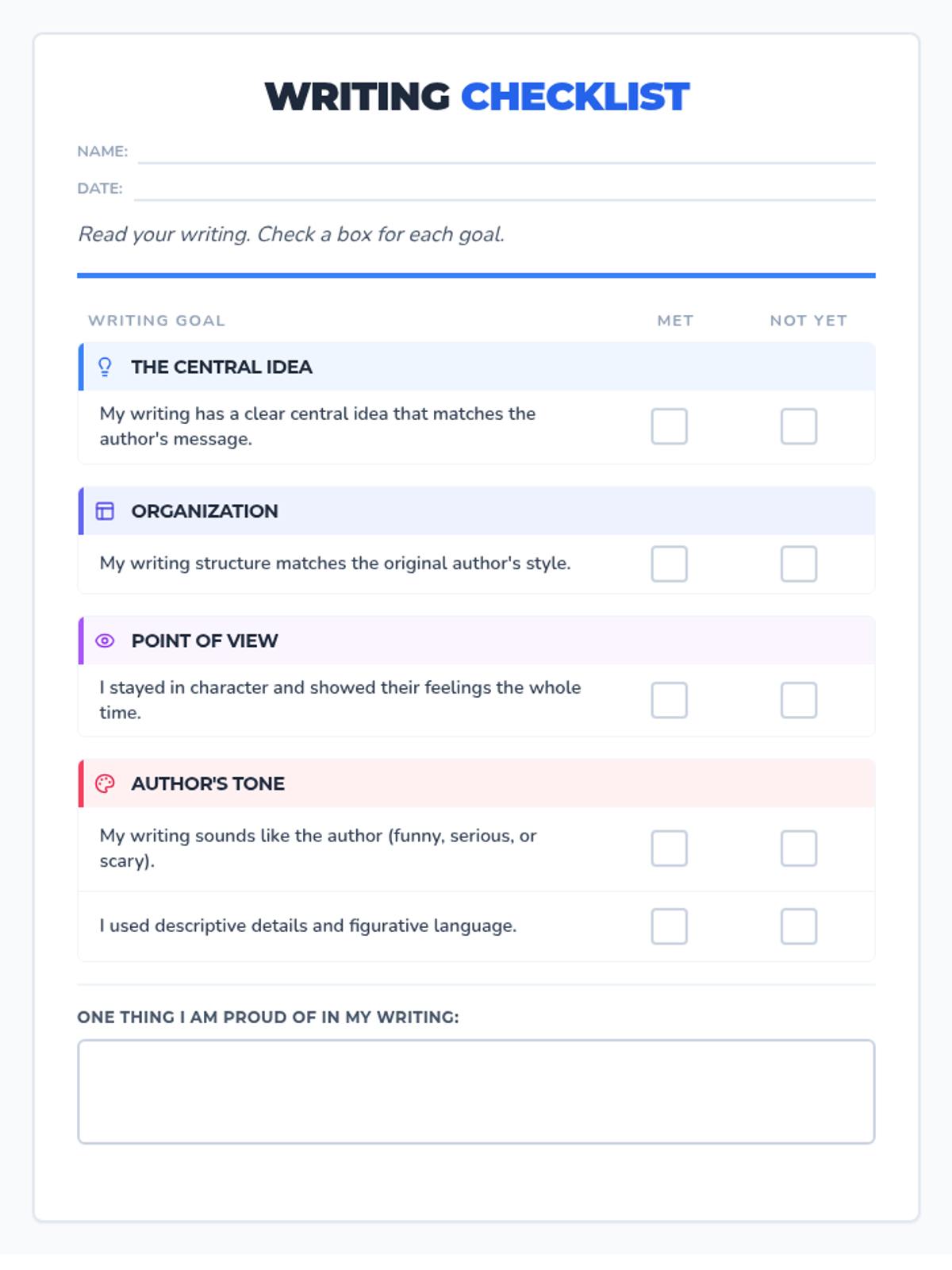
A simplified student self-assessment checklist for 7th-grade special education students, based on a writing rubric. It features clear 'Met' and 'Not Yet' categories for central idea, organization, point of view, and tone.