Instructional slides for Lesson 3 focusing on identifying 'acoustic errors'—words that are spelled correctly but used incorrectly in context. Highlights the difference between typos and dictation errors.
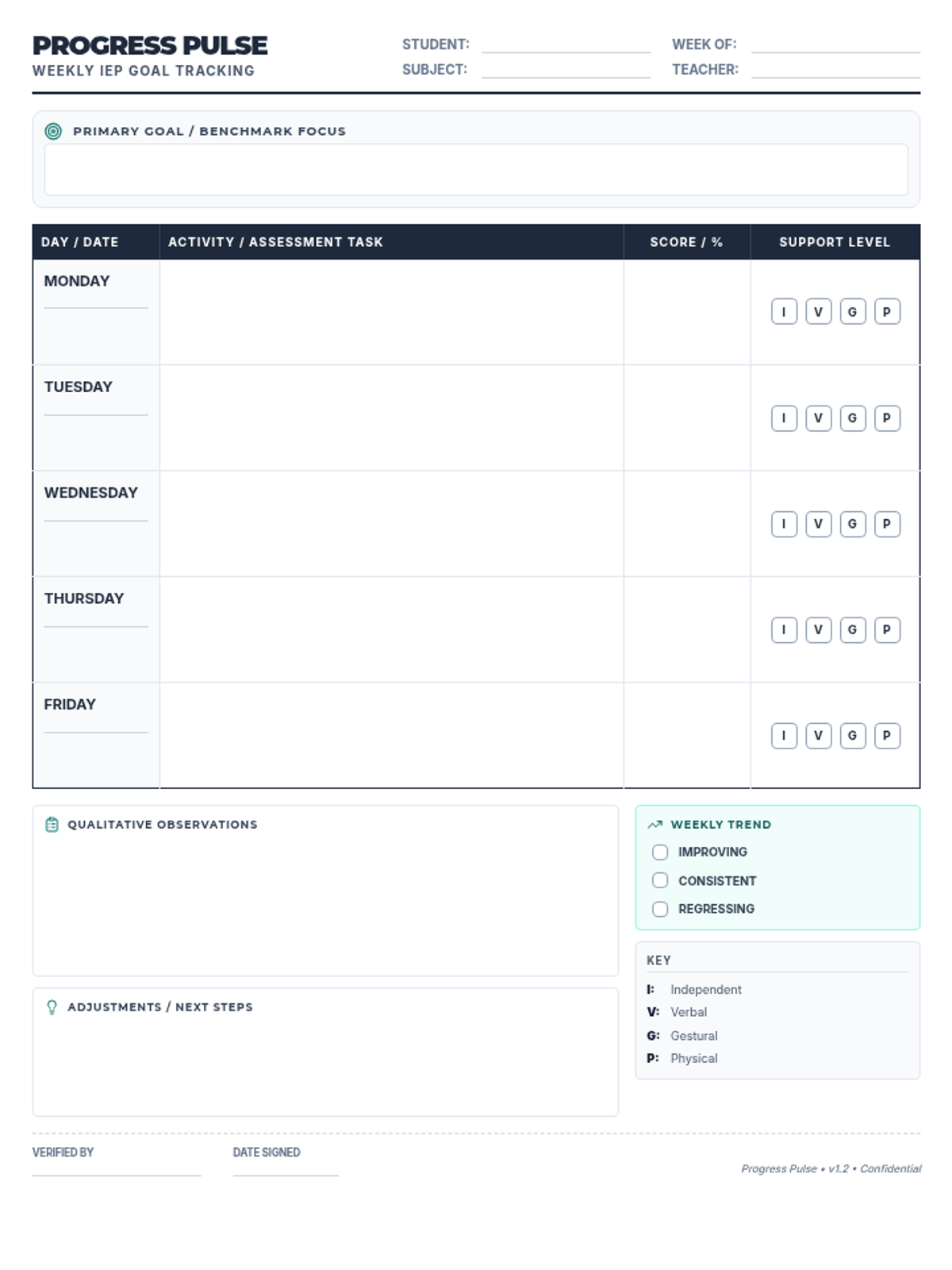
A weekly academic progress monitoring data sheet for individual students with IEPs. Features a structured daily tracking table (Monday-Friday) for goals, prompts, and scores, along with dedicated sections for qualitative observations, next steps, and progress trends. Optimized for single-page printing.
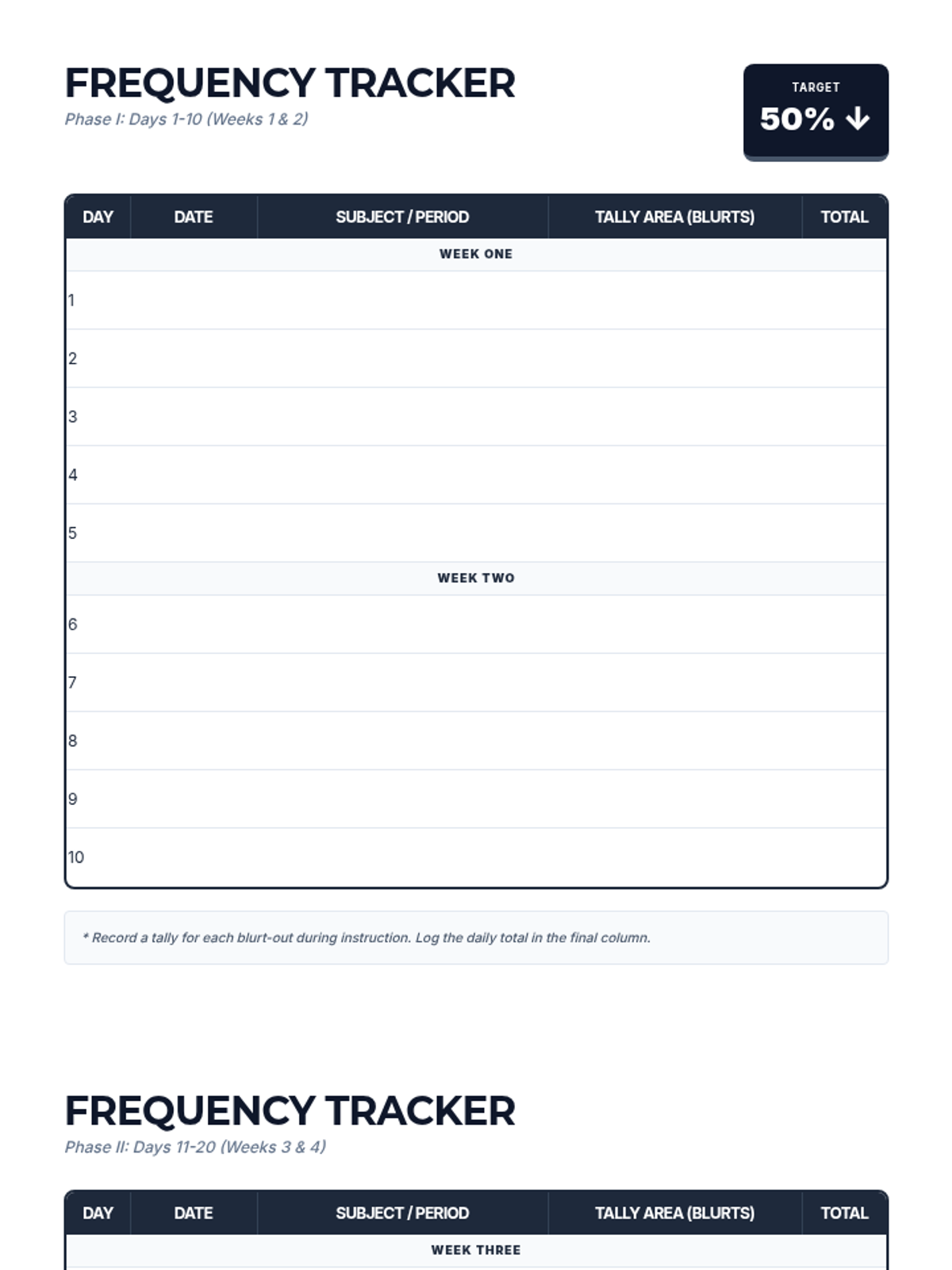
A progress monitoring tracker and visualization tool used to record daily blurting frequency and track the 50% reduction goal over four weeks.
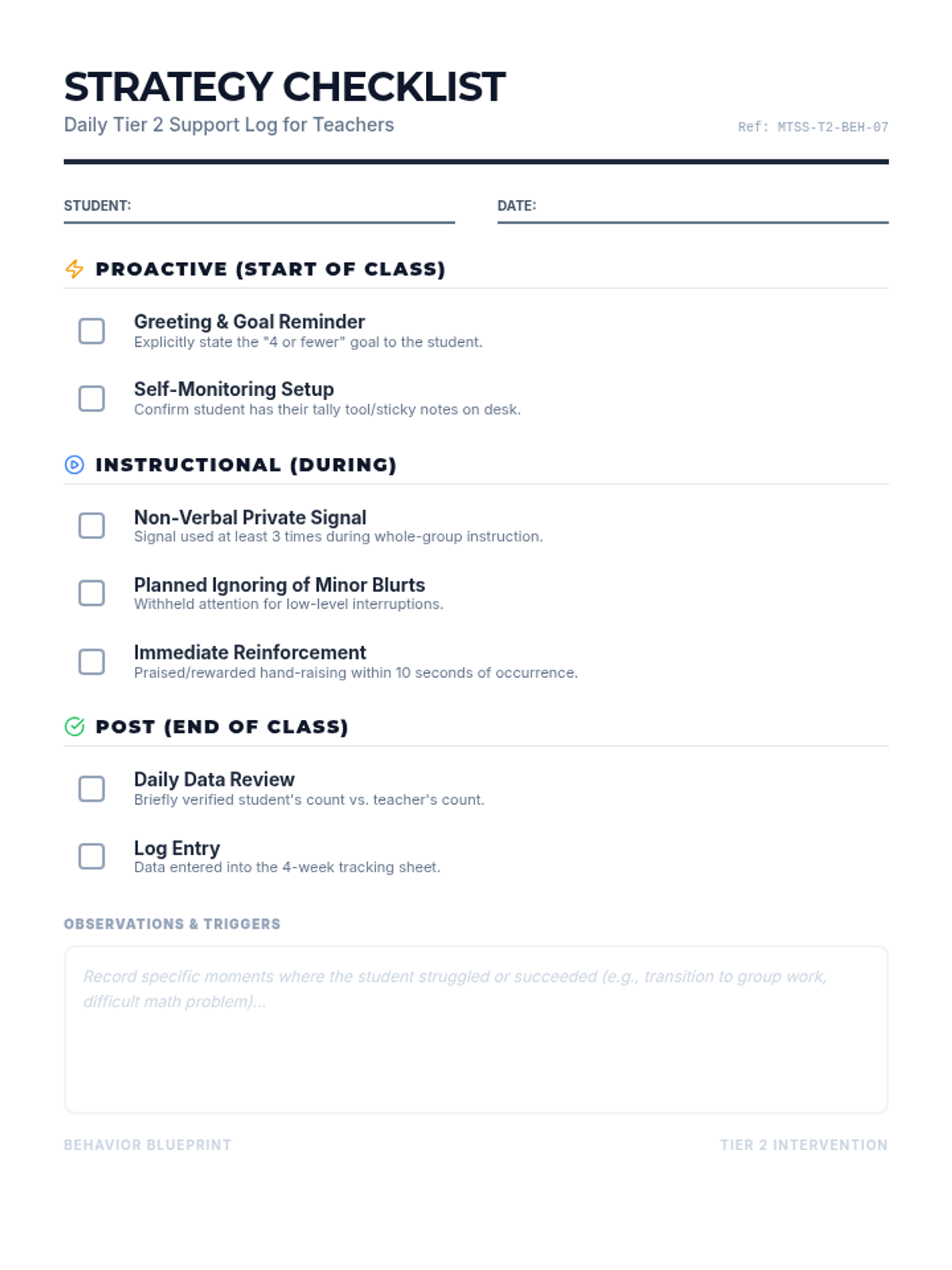
A practical daily checklist for teachers to track implementation of Tier 2 behavioral strategies and record student data.
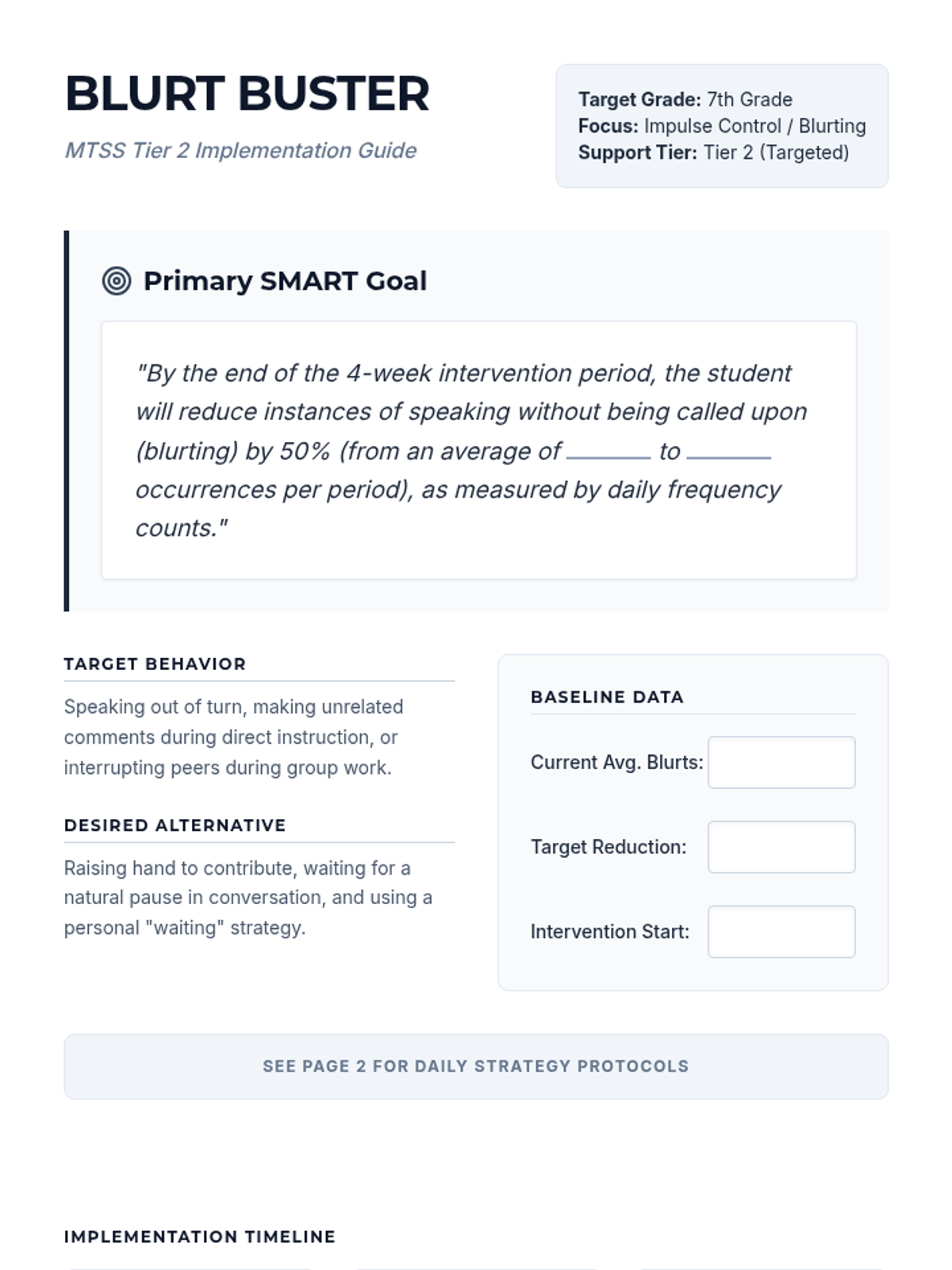
A comprehensive implementation guide for school staff detailing a Tier 2 MTSS goal and specific strategies for reducing student blurting behaviors.
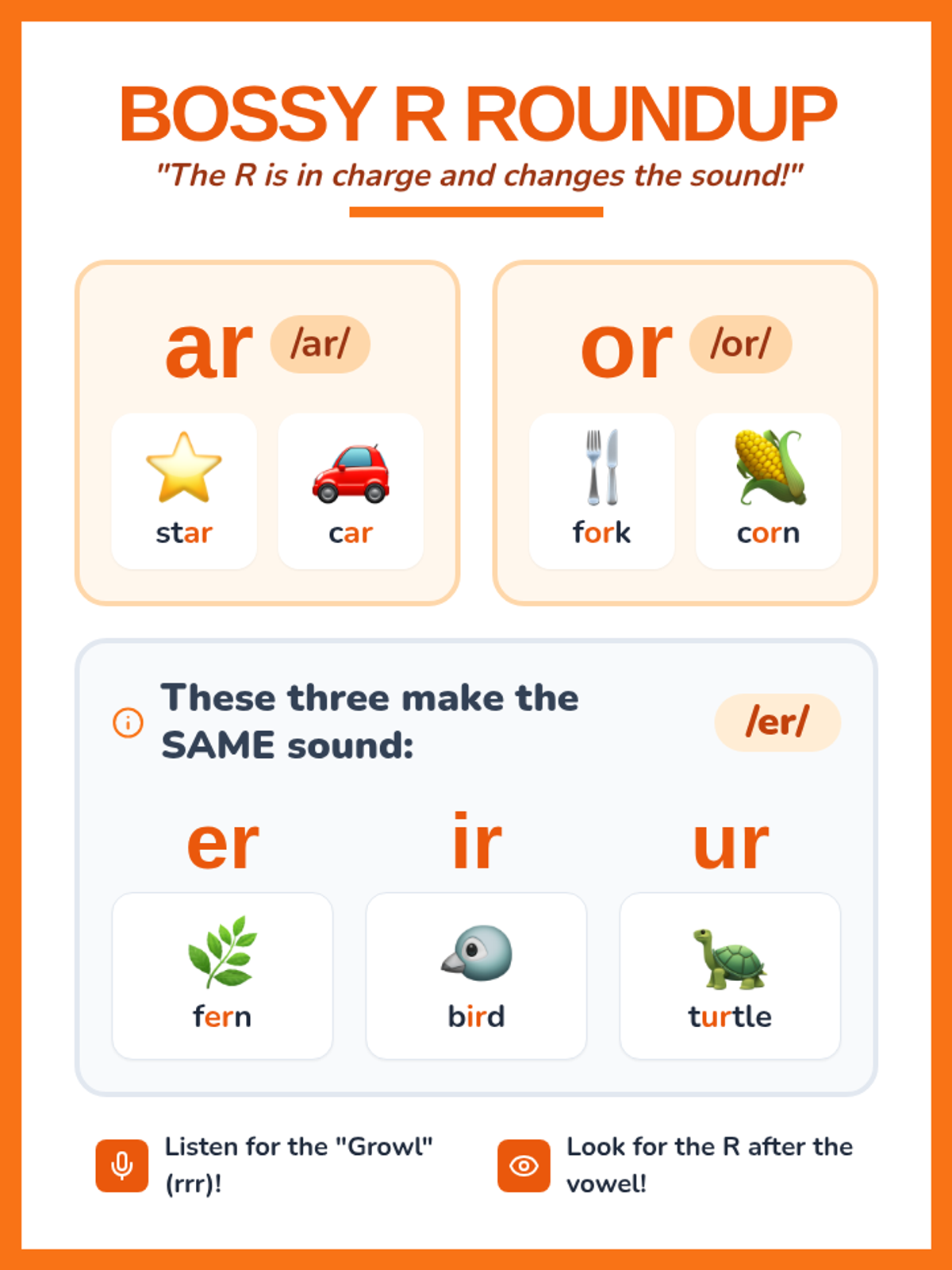
A comprehensive 8.5x11 anchor chart for Bossy R combinations (ar, or, er, ir, ur). Features clear phonetic labels, vibrant emoji visuals for examples, and a highlighted section explaining that er, ir, and ur share the same sound.
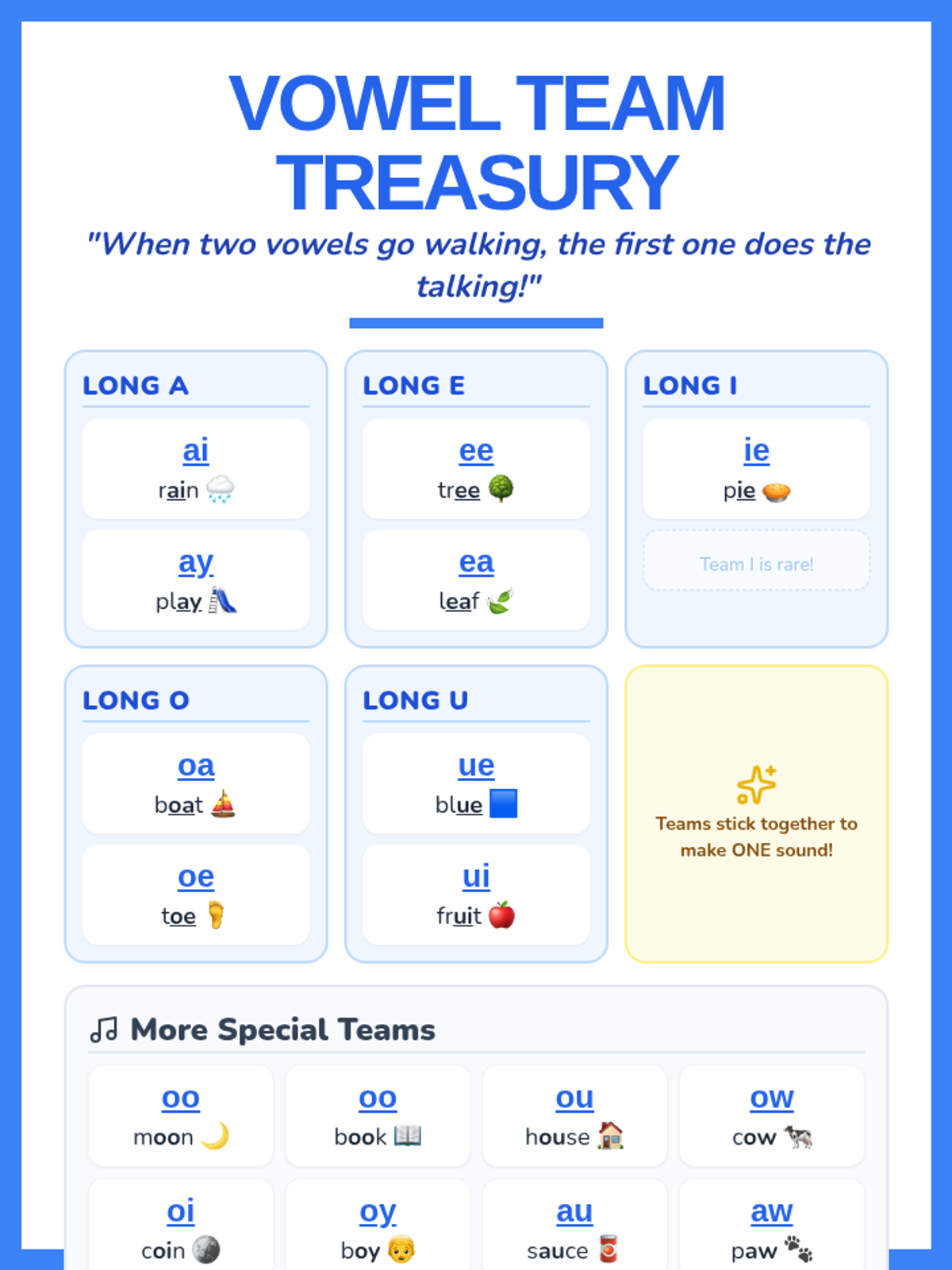
A vibrant 8.5x11 anchor chart for vowel teams, categorized by the long vowel sounds they produce (A, E, I, O, U) and special diphthongs. Optimized to fit on a single printed page with clear examples and illustrative emojis.
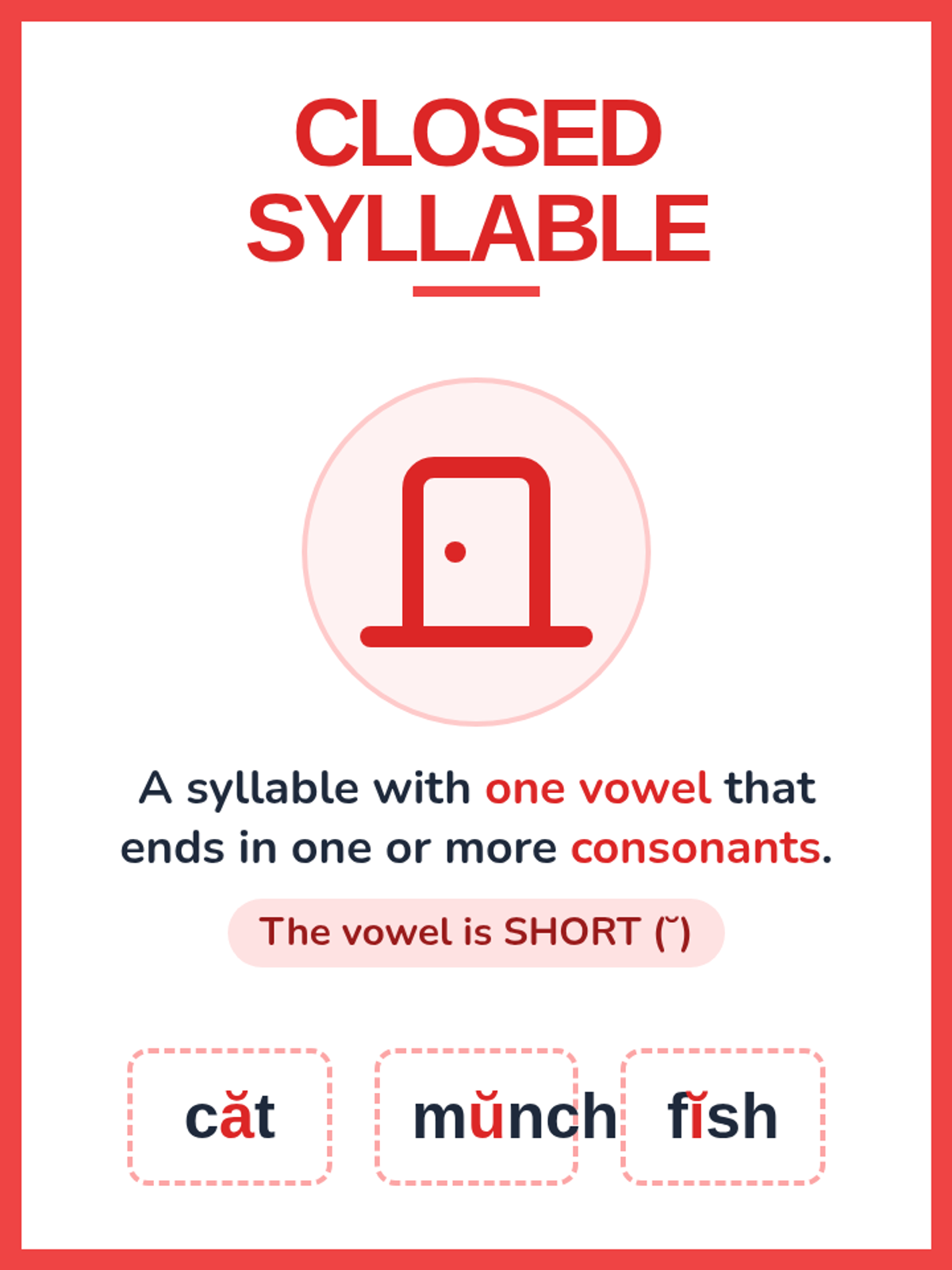
A set of six vibrant, 8.5x11 anchor charts for the primary syllable types (Closed, Open, Magic E, Vowel Team, Bossy R, and Consonant-le). Each chart features a clear definition, a central visual icon, color-coded examples, and pronunciation marks to help students master syllable identification.
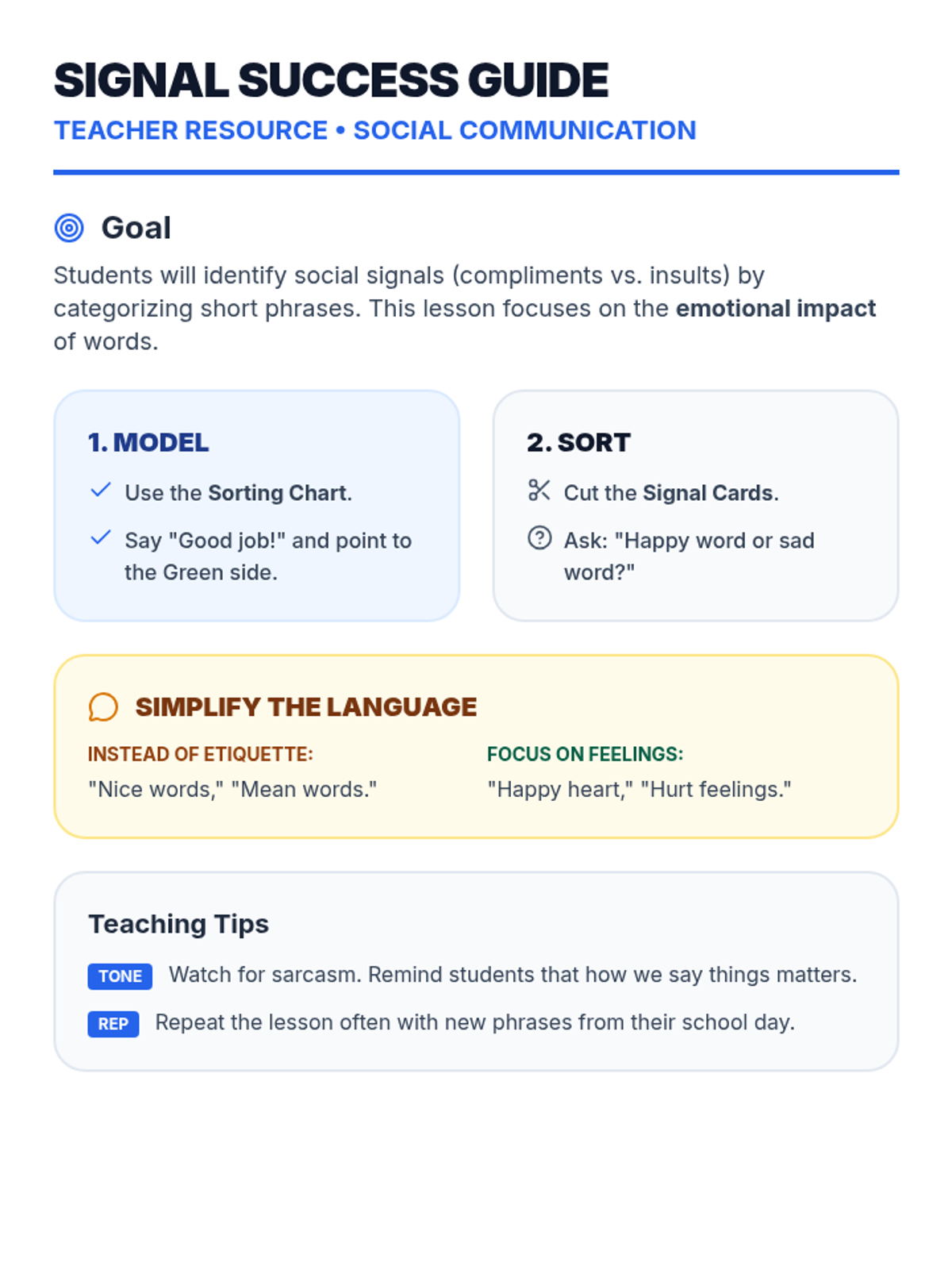
A teacher guide providing concrete strategies for teaching social signals to students with intellectual disabilities. Includes step-by-step instructions and simplified language tips.
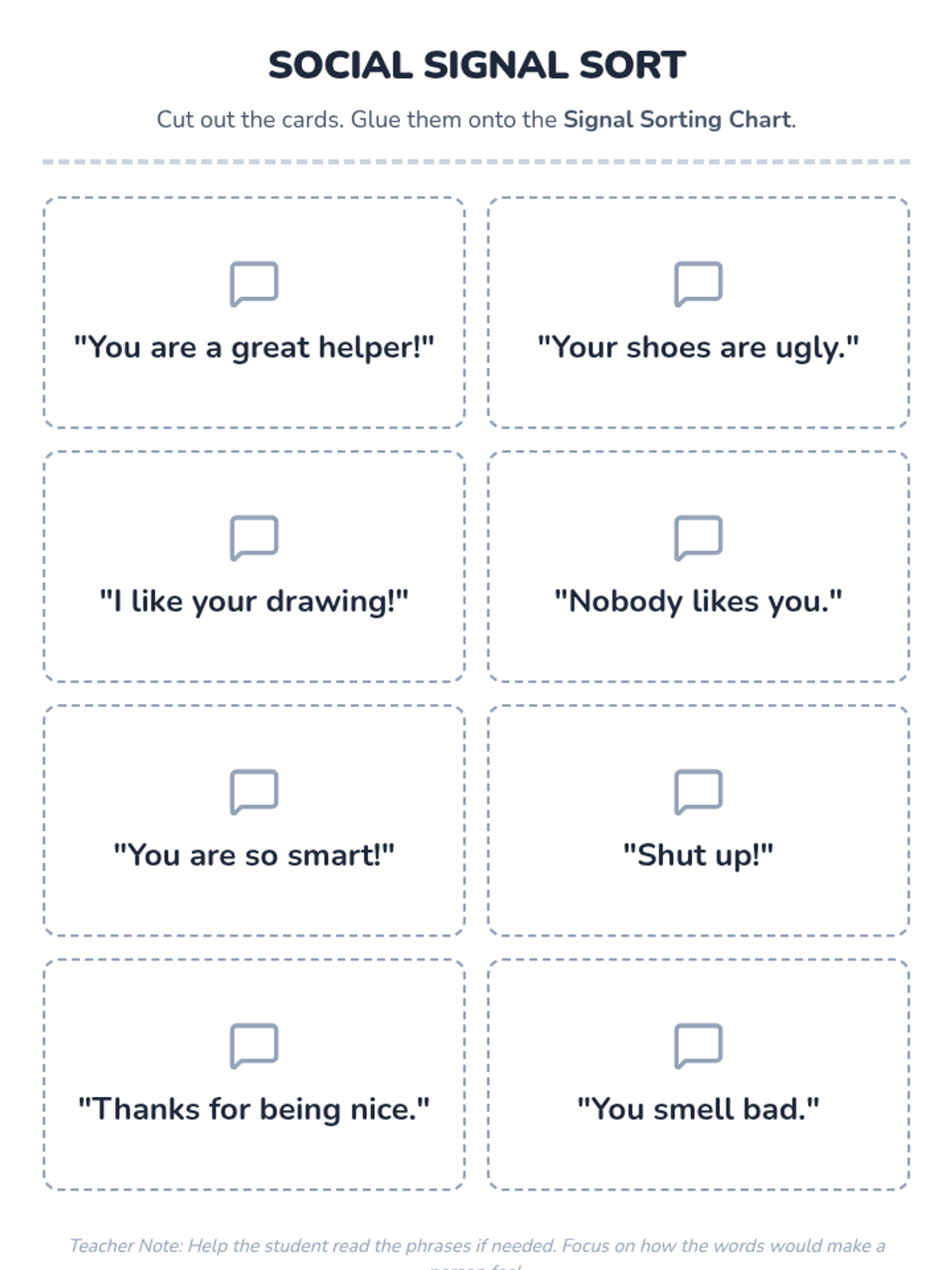
A set of sorting cards for hands-on practice. Students cut out phrases and sort them into compliments or insults to reinforce social understanding.
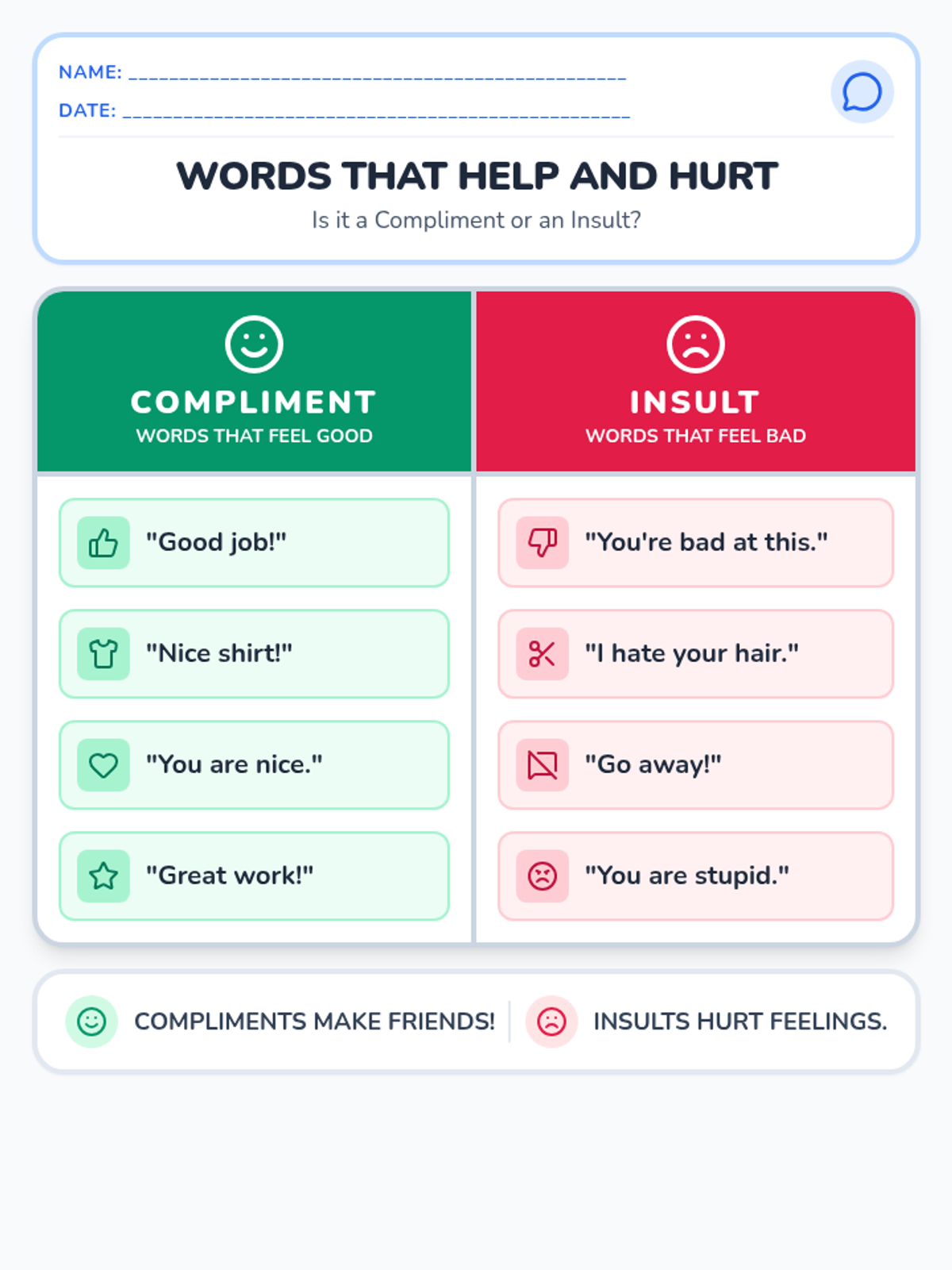
A high-contrast visual T-chart using icons and simple text to help students distinguish between compliments and insults. Includes color-coding (green for positive, red for negative) and relatable junior high examples.
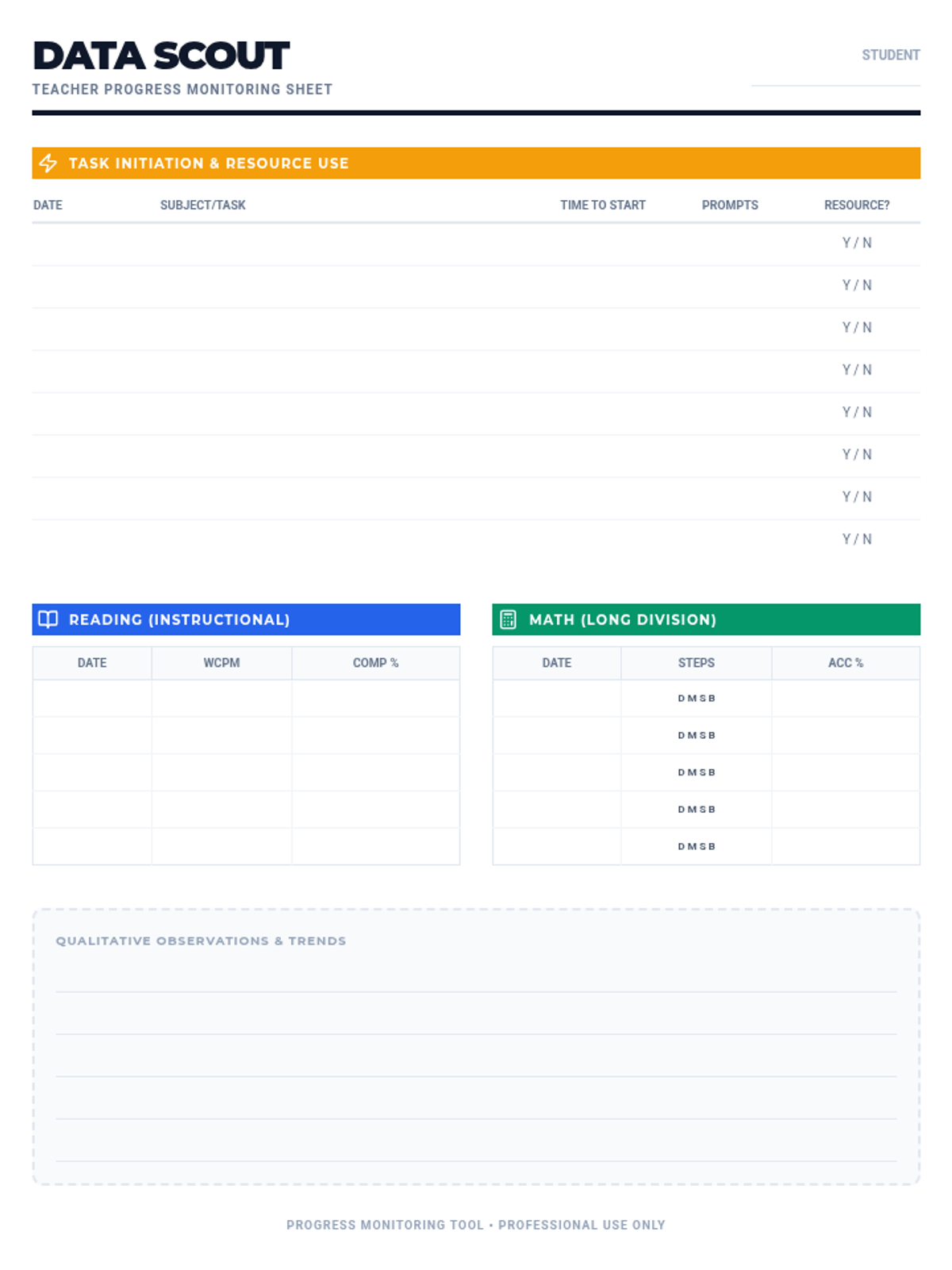
A comprehensive progress monitoring tool for teachers to track task initiation, resource usage, reading fluency, and math accuracy.
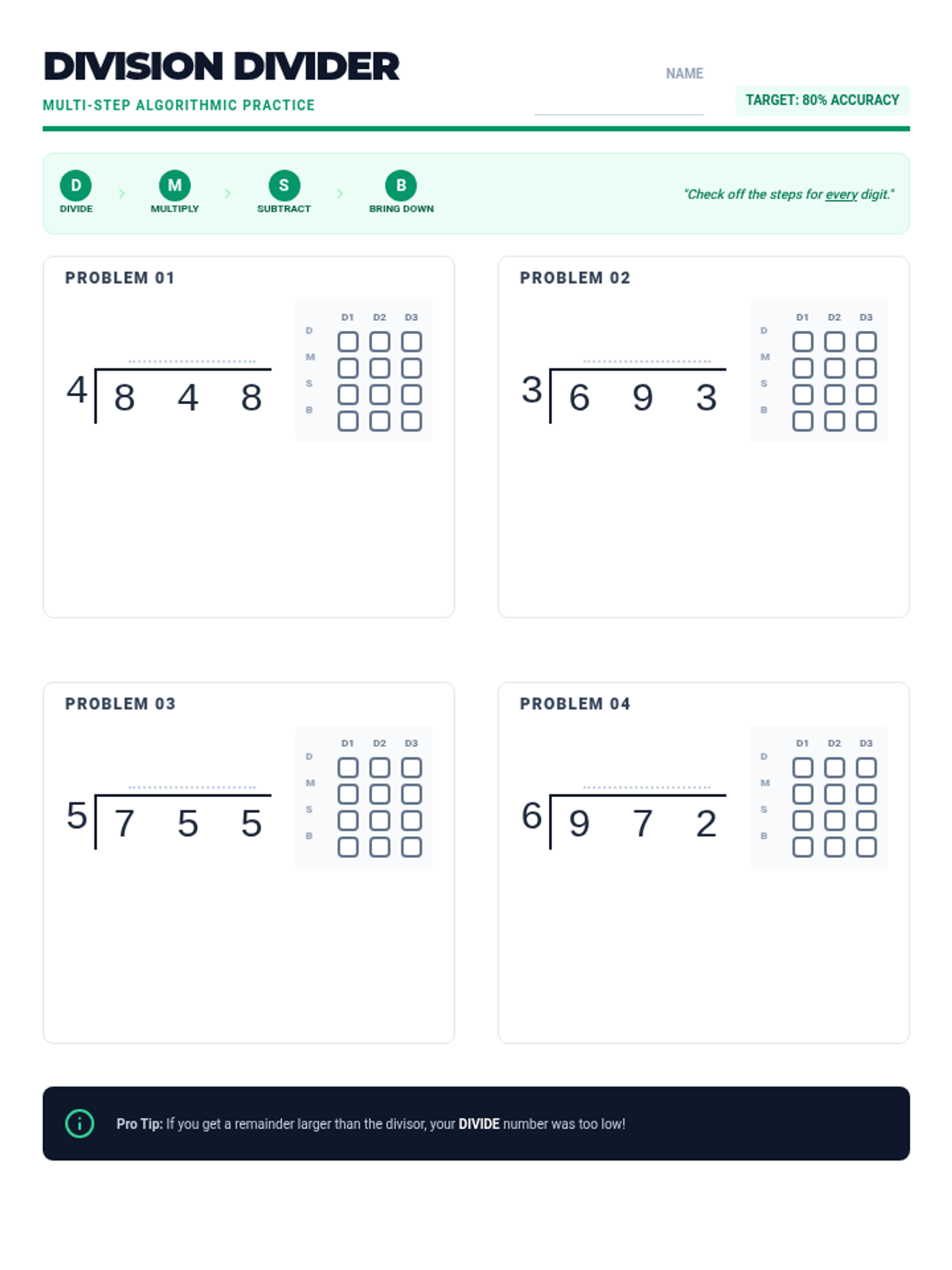
A scaffolded math worksheet for long division featuring integrated checklists for every problem to support multi-step processing and task focus.
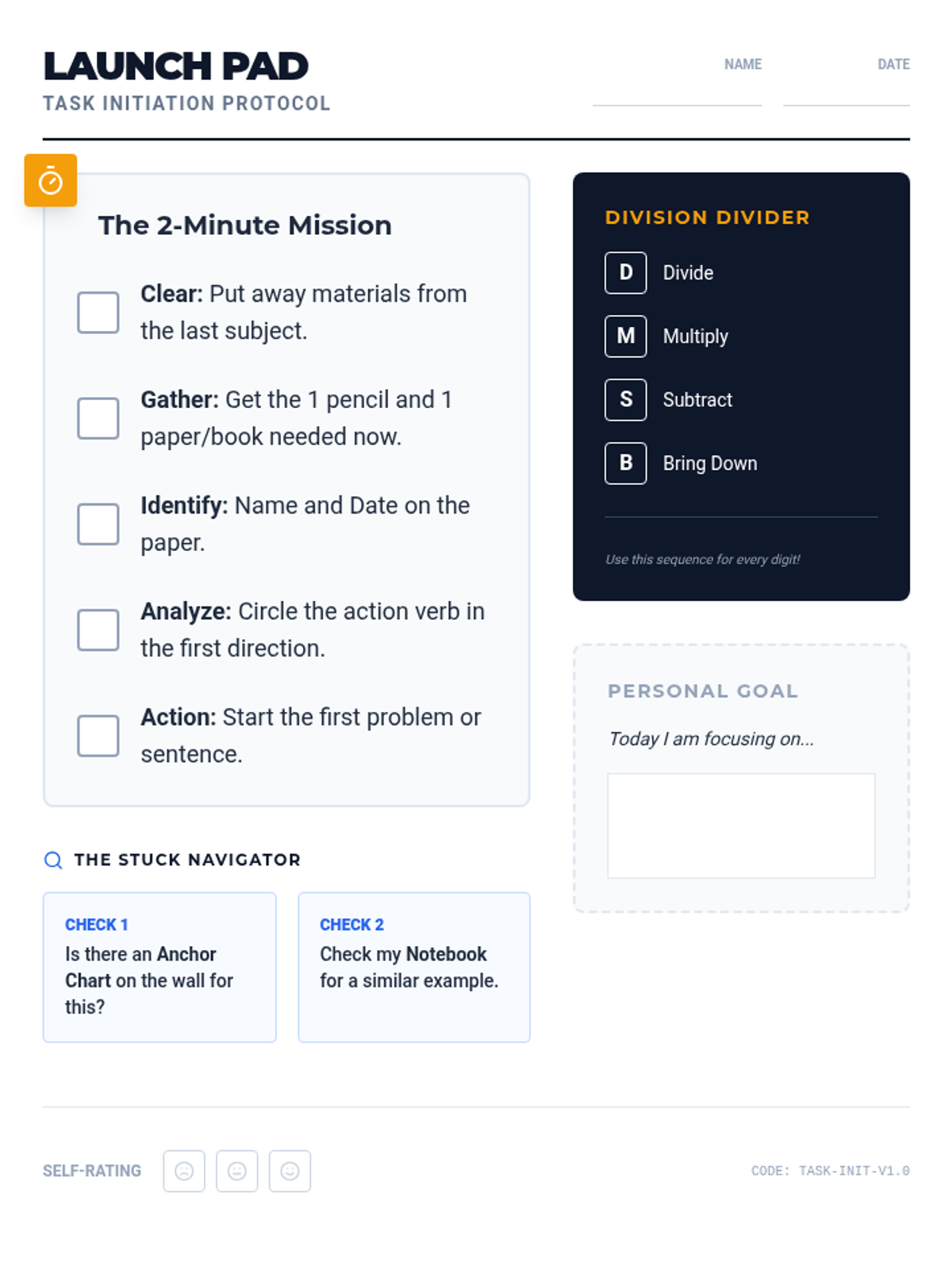
A student-facing desk reference checklist designed to support task initiation, resource-seeking, and multi-step math problem solving.
A student-friendly visual guide for executive functioning strategies, including task initiation techniques and resource-seeking behaviors.
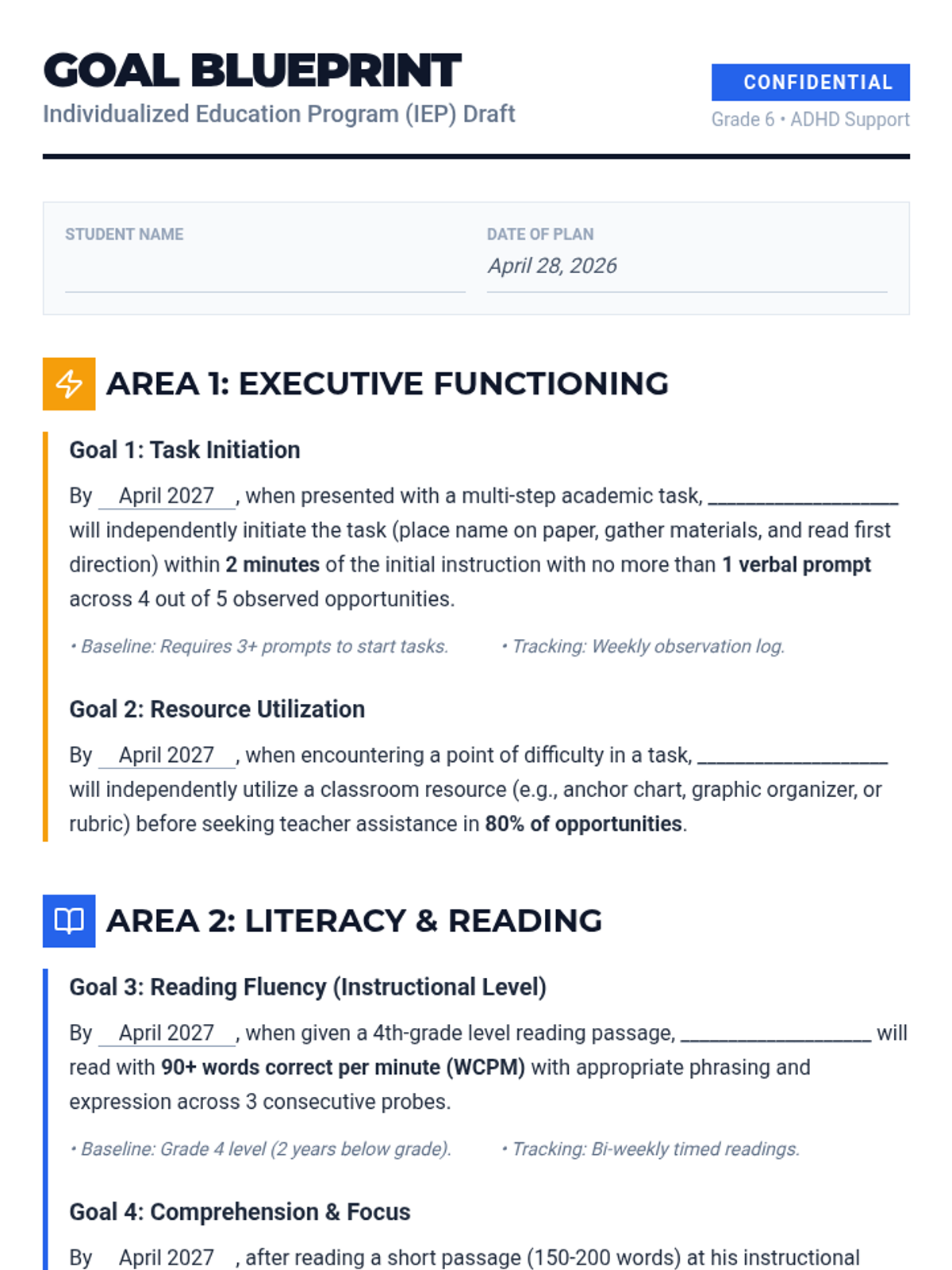
A professional IEP draft outlining specific, measurable goals for reading, math, and executive functioning, tailored for a 6th-grade student with ADHD.
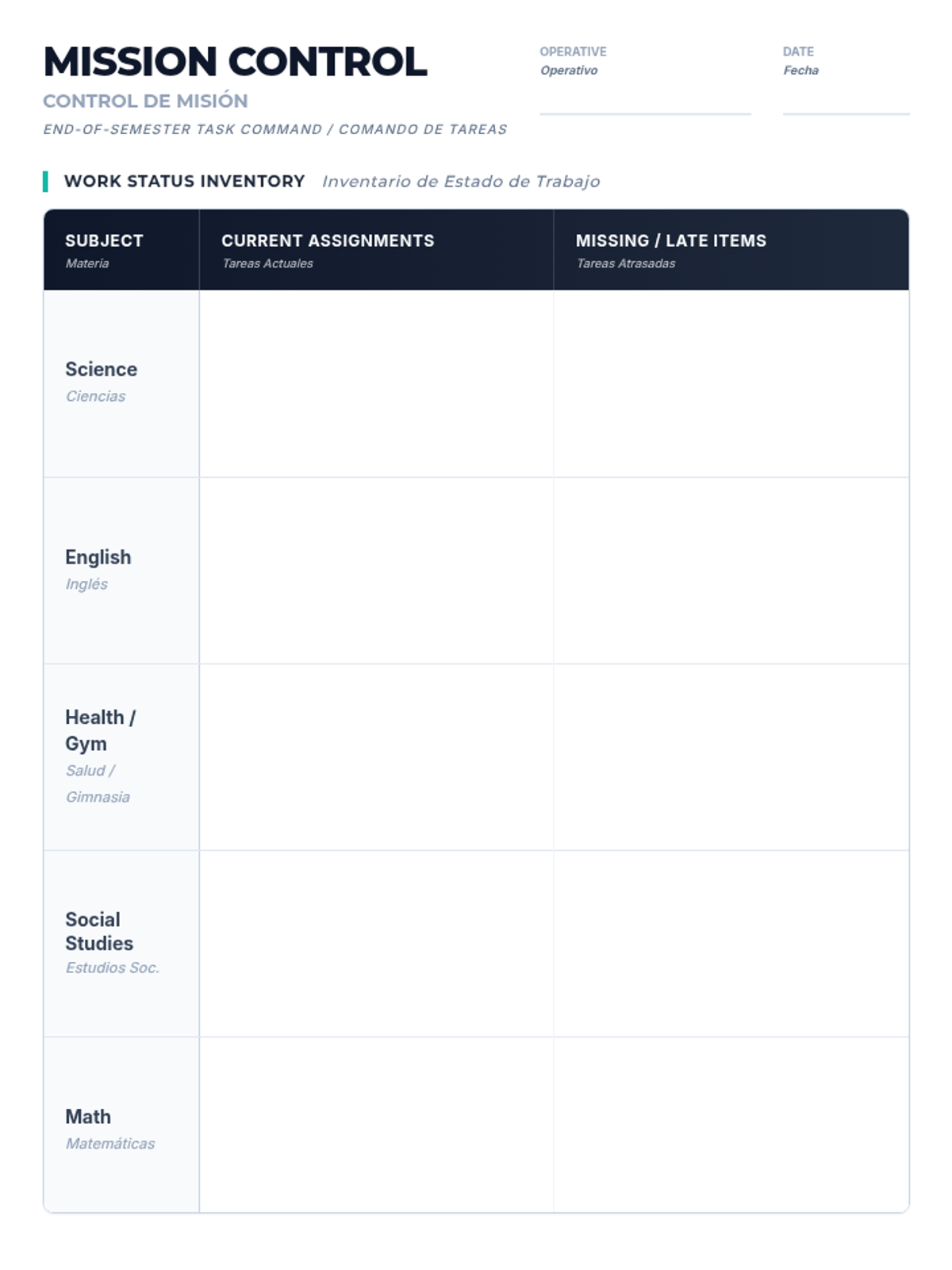
A bilingual (English/Spanish) 'Mission Control' organizer with significantly enlarged writing areas. Features a subject grid for current and missing work, a 'Deployment Sequence' for ordering assignments numerically, and updated reflection questions including a teacher check-in prompt.
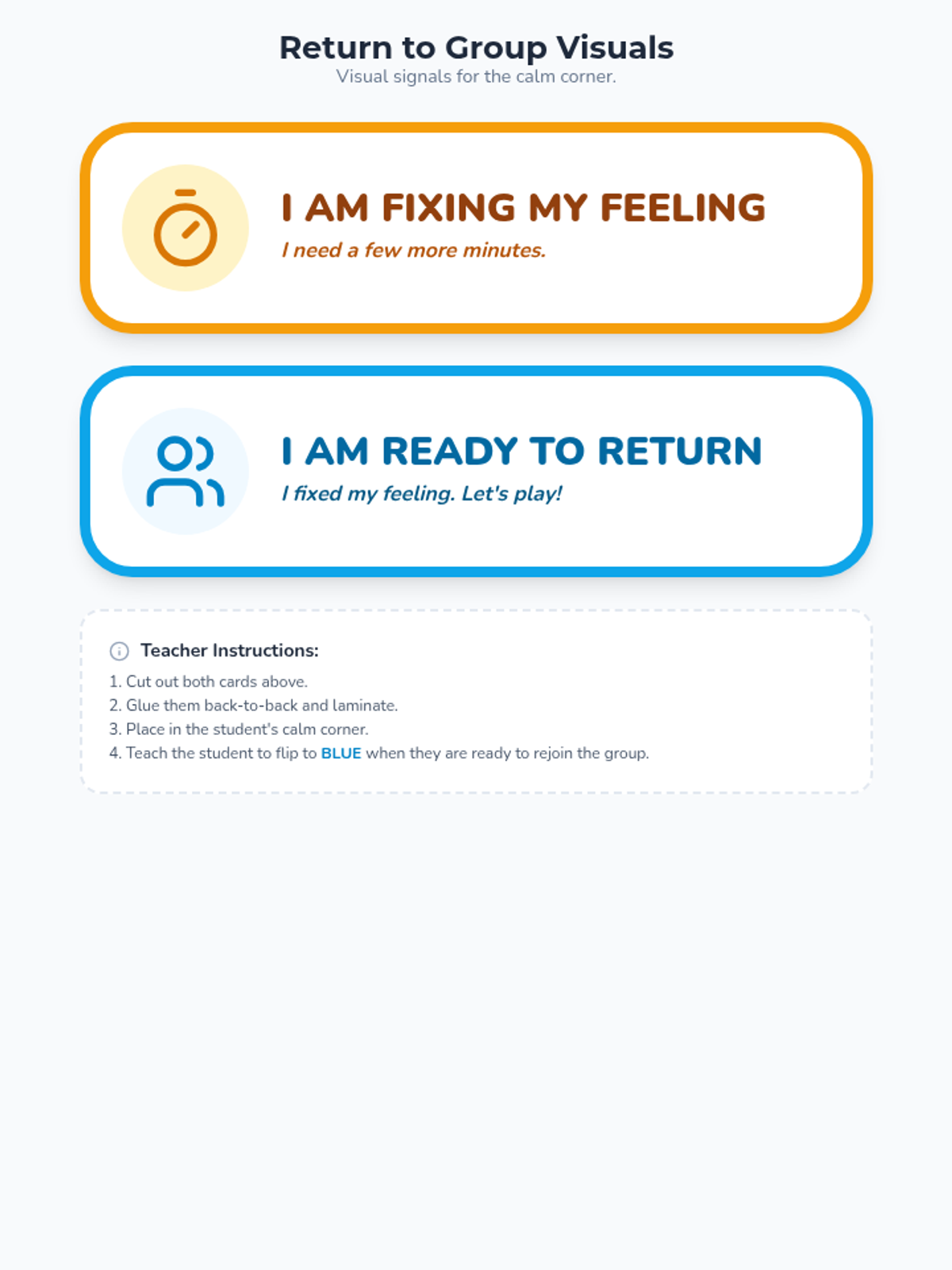
A double-sided visual cue card for students to signal when they are currently using a calming strategy versus when they are ready to return to the group activity.
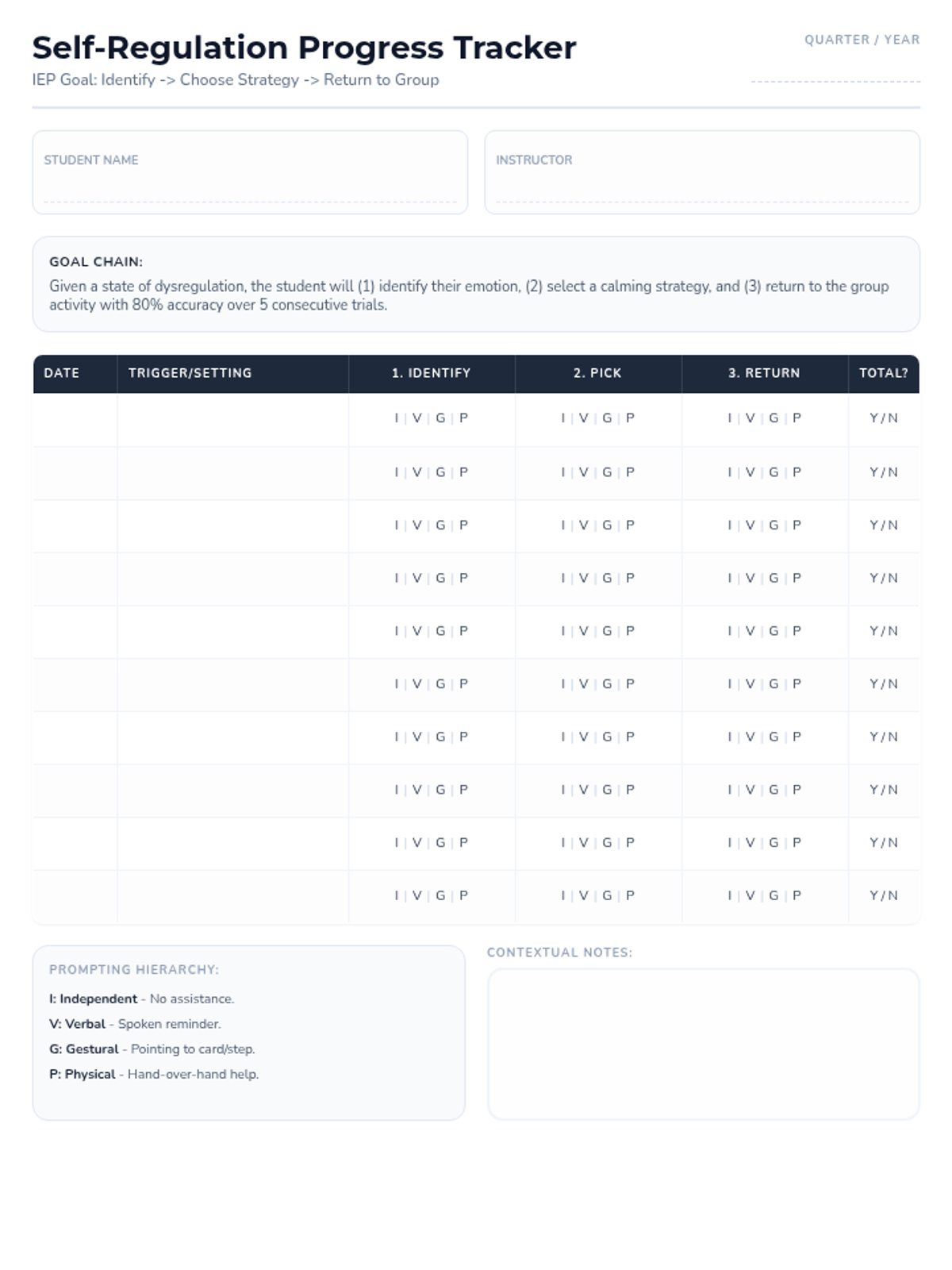
A teacher-facing progress tracker to document a student's accuracy in identifying emotions using visual aids, specifically for IEP goal monitoring.
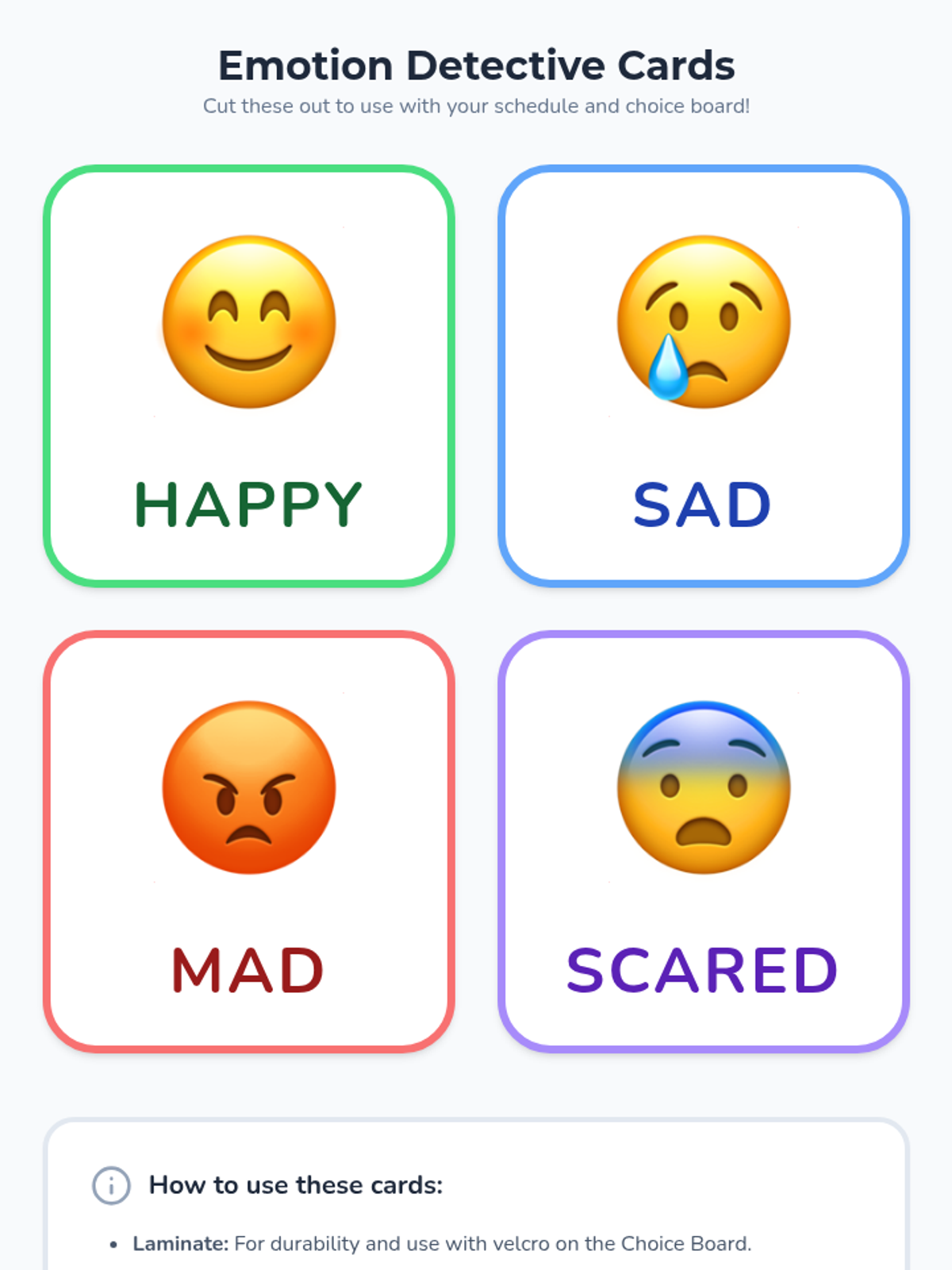
A set of four large, high-contrast emotion cards (Happy, Sad, Mad, Scared) for visual identification and use in self-regulation activities.
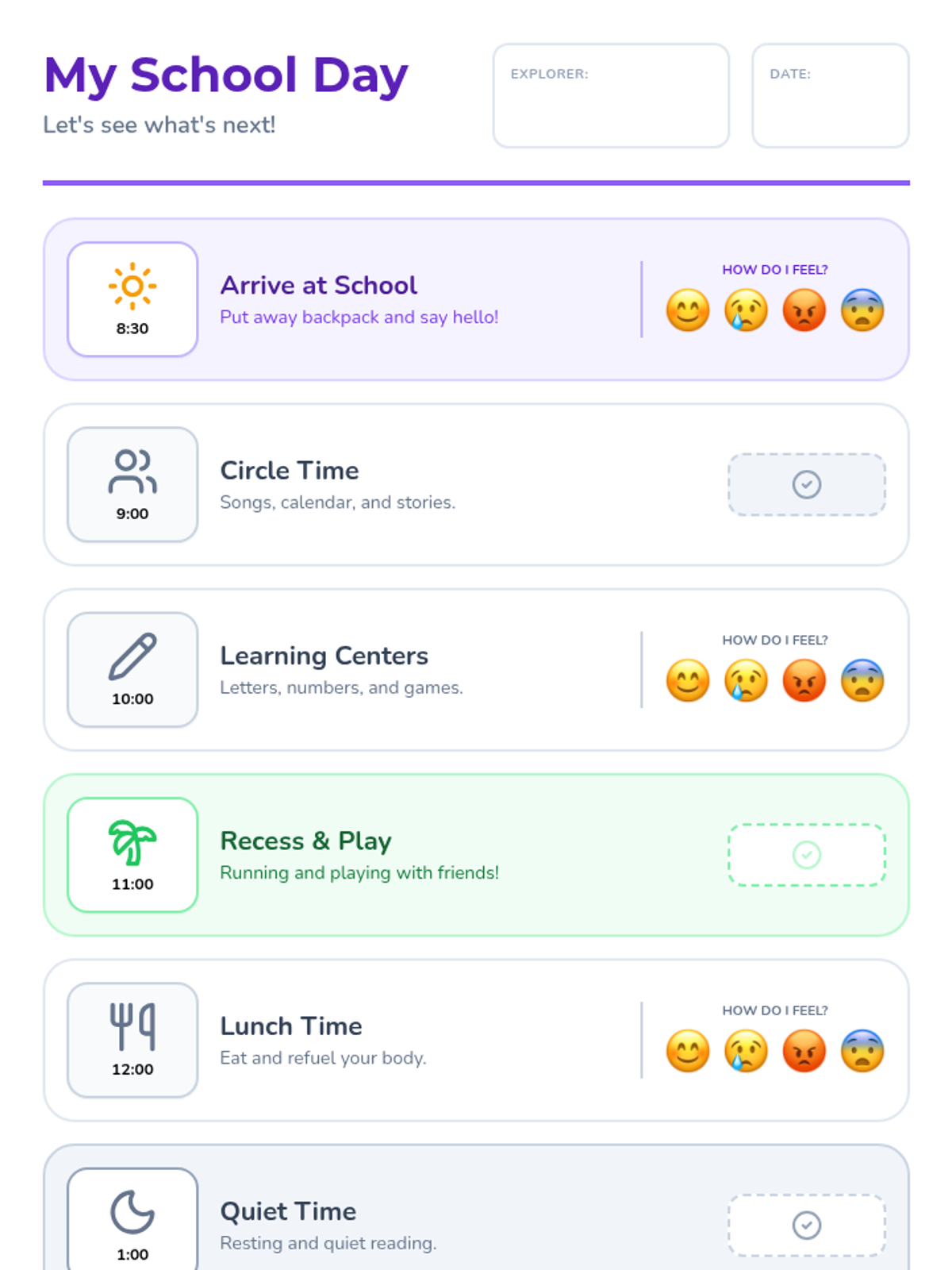
A visual daily schedule for kindergarteners that integrates "Emotion Stations" for frequent self-regulation check-ins throughout the school day.
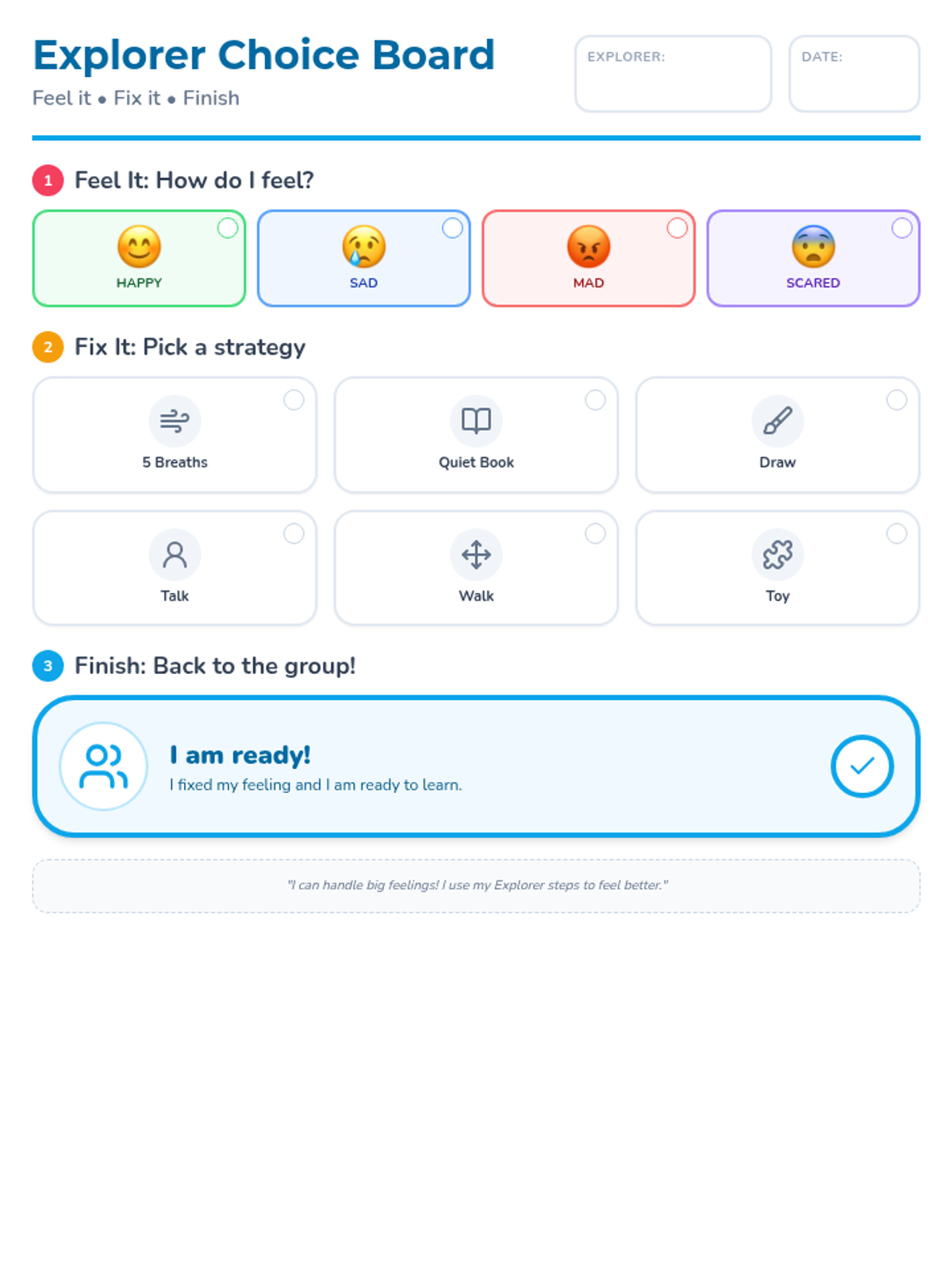
A student-facing choice board designed to help kindergarteners identify their current emotion and select a pre-defined self-regulation strategy.
A visual presentation designed for kindergarteners to introduce and practice identifying basic emotions (Happy, Sad, Mad, Scared) using clear visual cues and emoji representations.
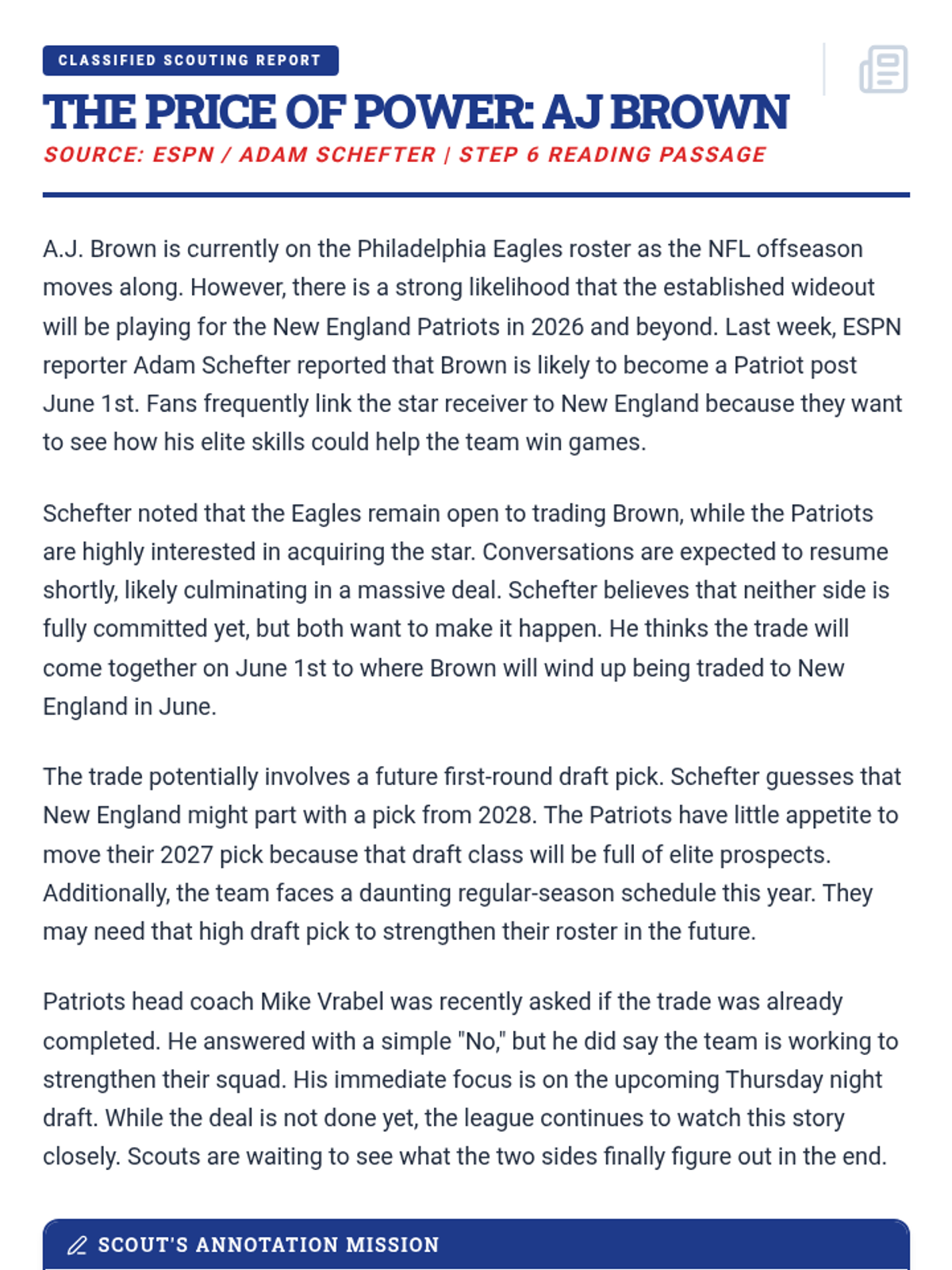
A clean 4-paragraph reading passage based on the AJ Brown trade news, specifically formatted for student annotation of Wilson Step 6 multisyllabic word patterns.
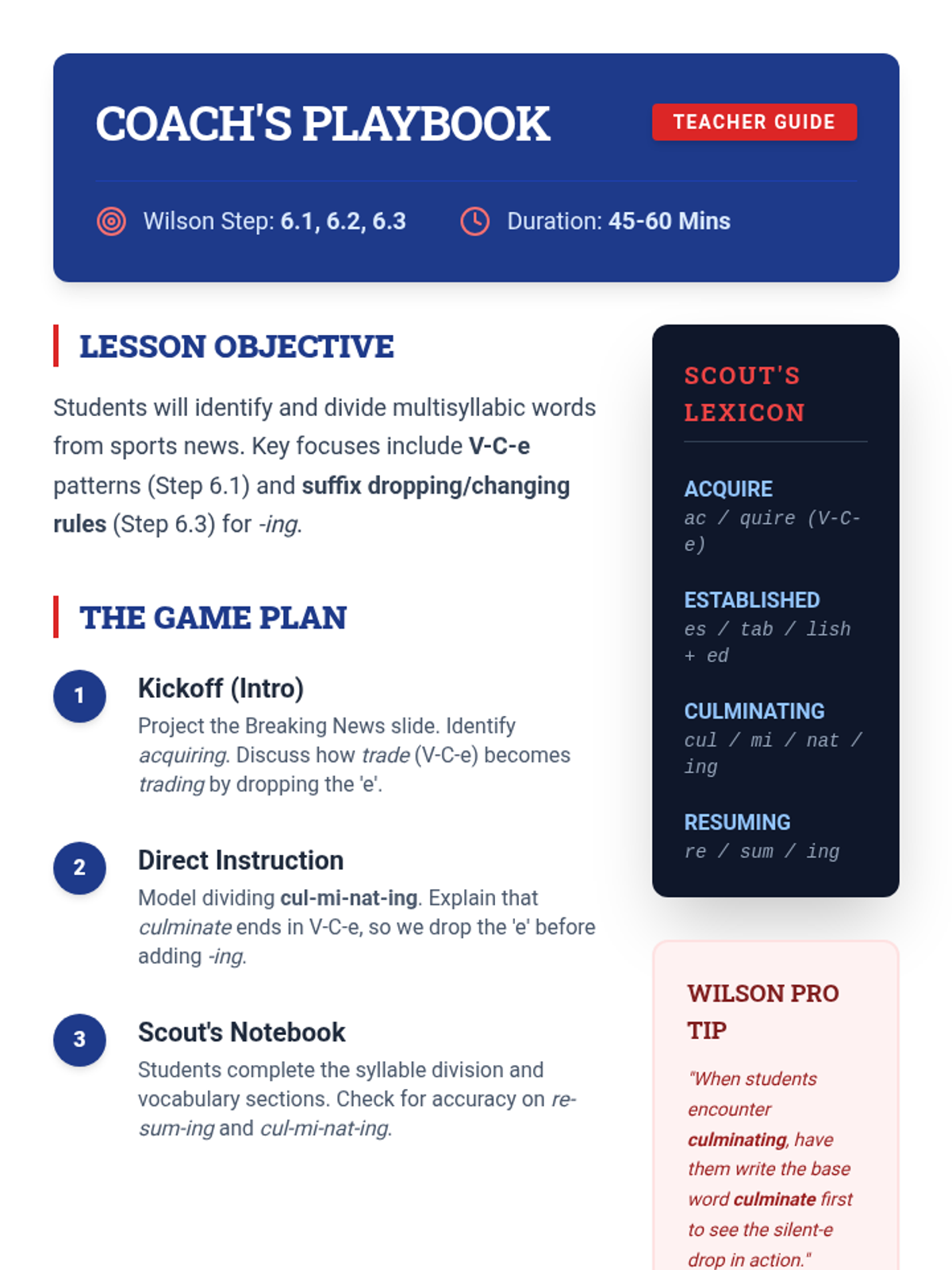
A teacher guide for the Gridiron Grammar lesson. It includes instructional steps for teaching Wilson Step 6 word division, discussion questions based on the AJ Brown trade article, and a vocabulary lexicon.
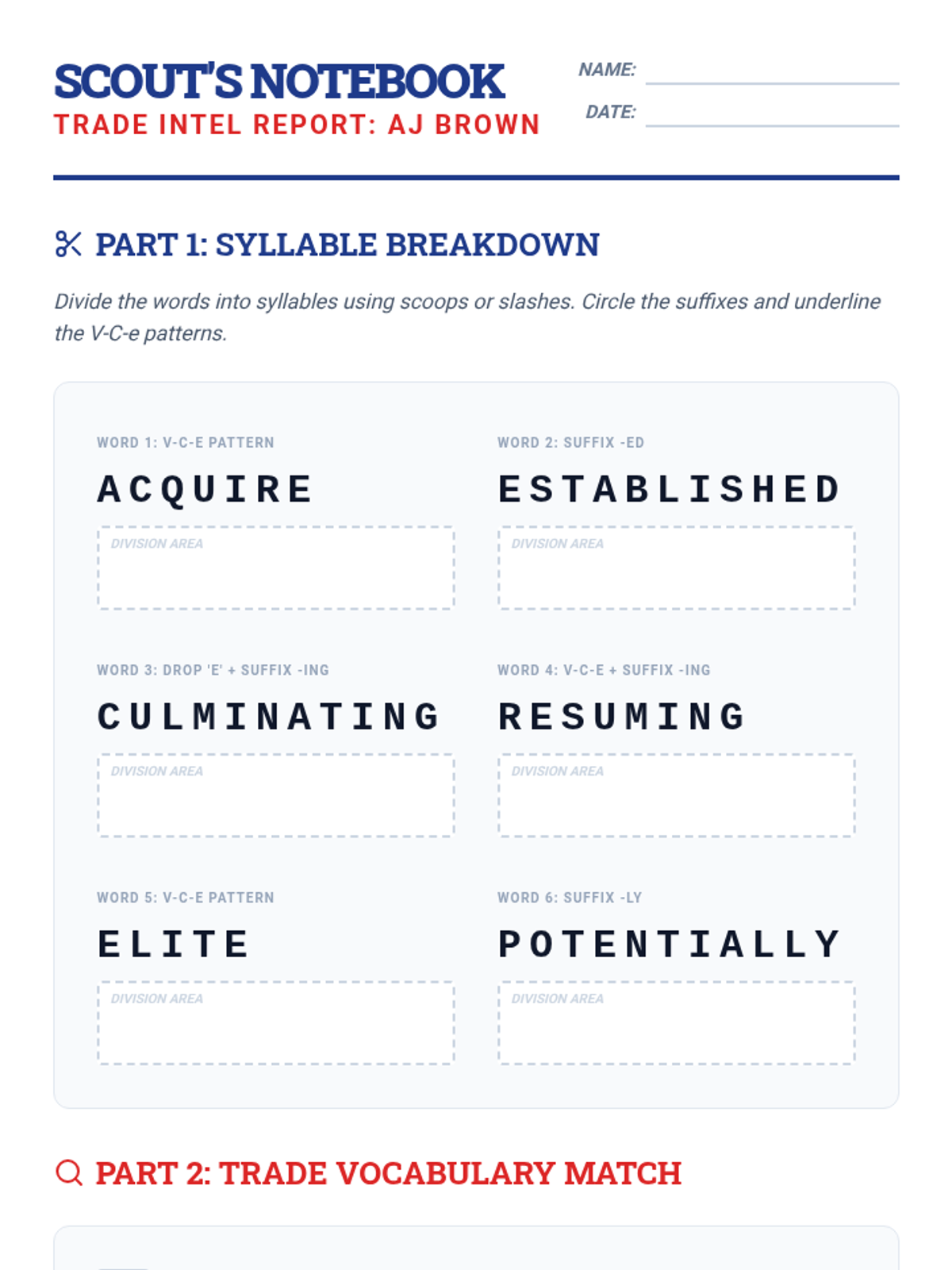
A student worksheet focusing on Wilson Step 6 skills. Includes syllable division practice for multisyllabic words like CULMINATING and RESUMING, vocabulary matching, and reading comprehension questions.
A slide deck for a Wilson Step 6 lesson. It covers multisyllabic word division (V-C-e and suffixes like -ed, -ly, -ing) using football-themed examples and vocabulary from the AJ Brown trade article. Includes specific Tier 2 vocabulary slides and the reading passage.
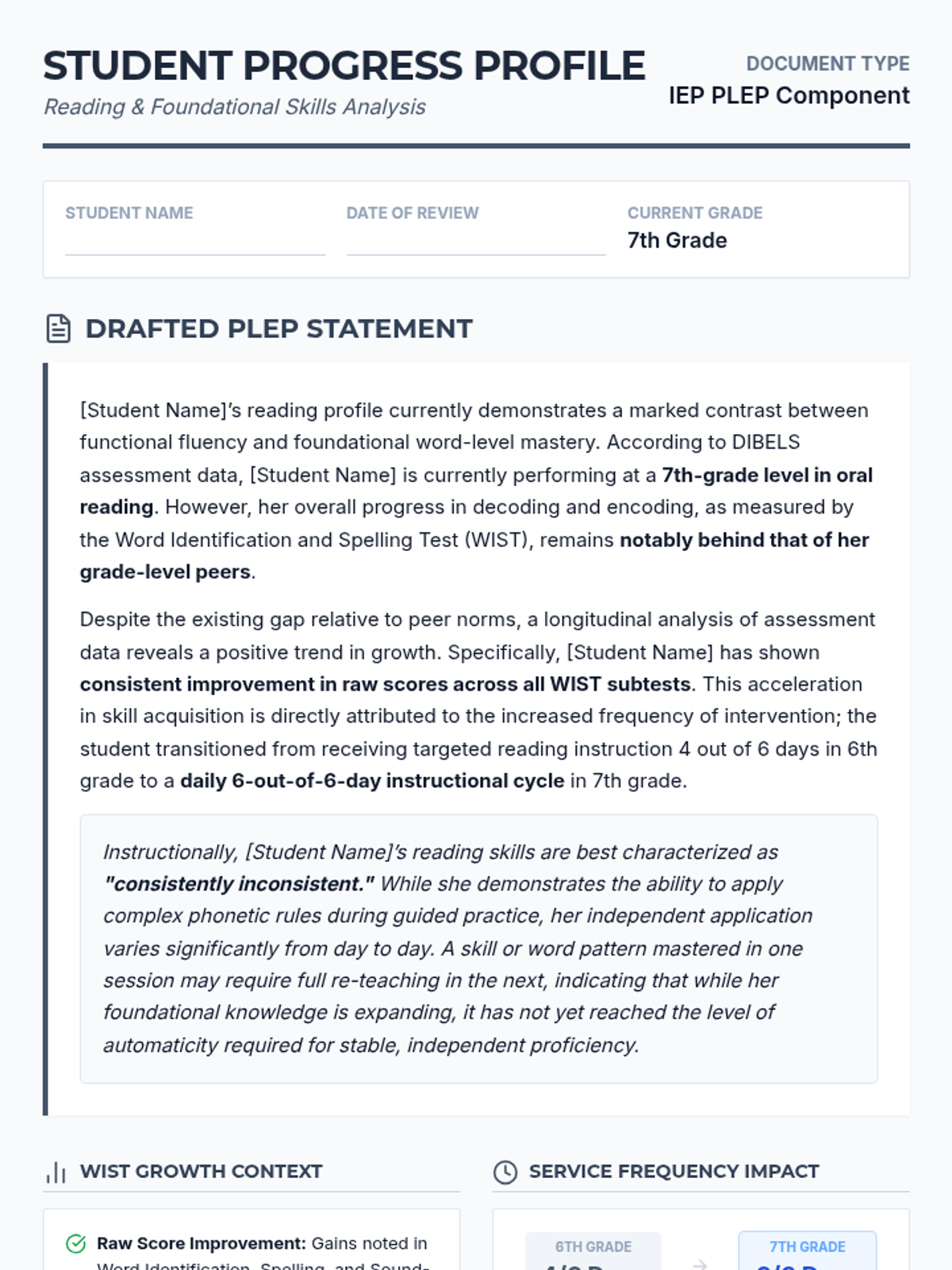
A professional teacher resource providing a drafted IEP PLEP statement for a 7th-grade student. It details reading progress, WIST raw score improvements, and the direct impact of increased instructional frequency while addressing the student's inconsistent skill application.
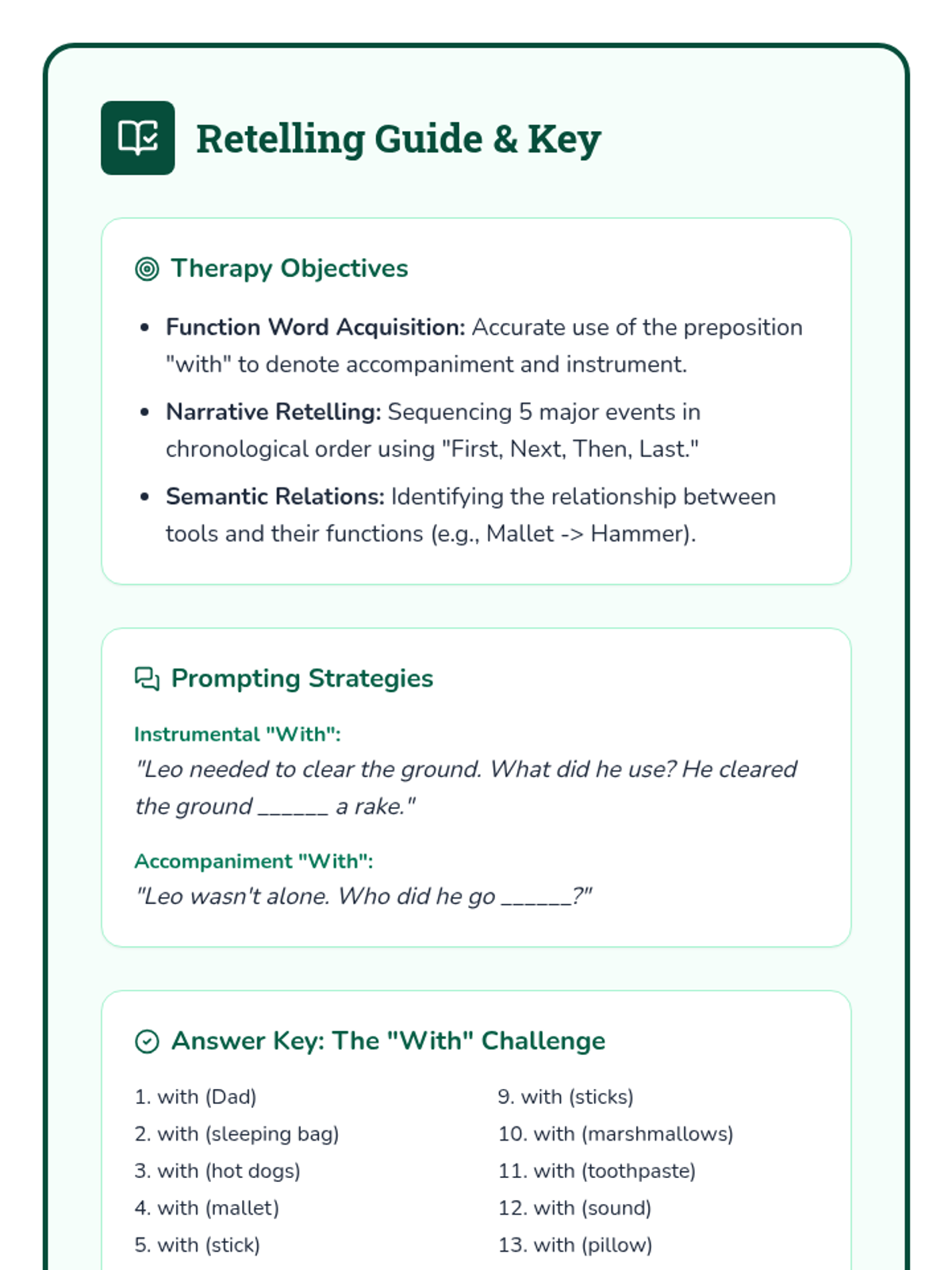
A teacher guide for the camping therapy lesson, including clinical objectives, prompting strategies for 'with', and answer keys for both the worksheet and sequencing activity.
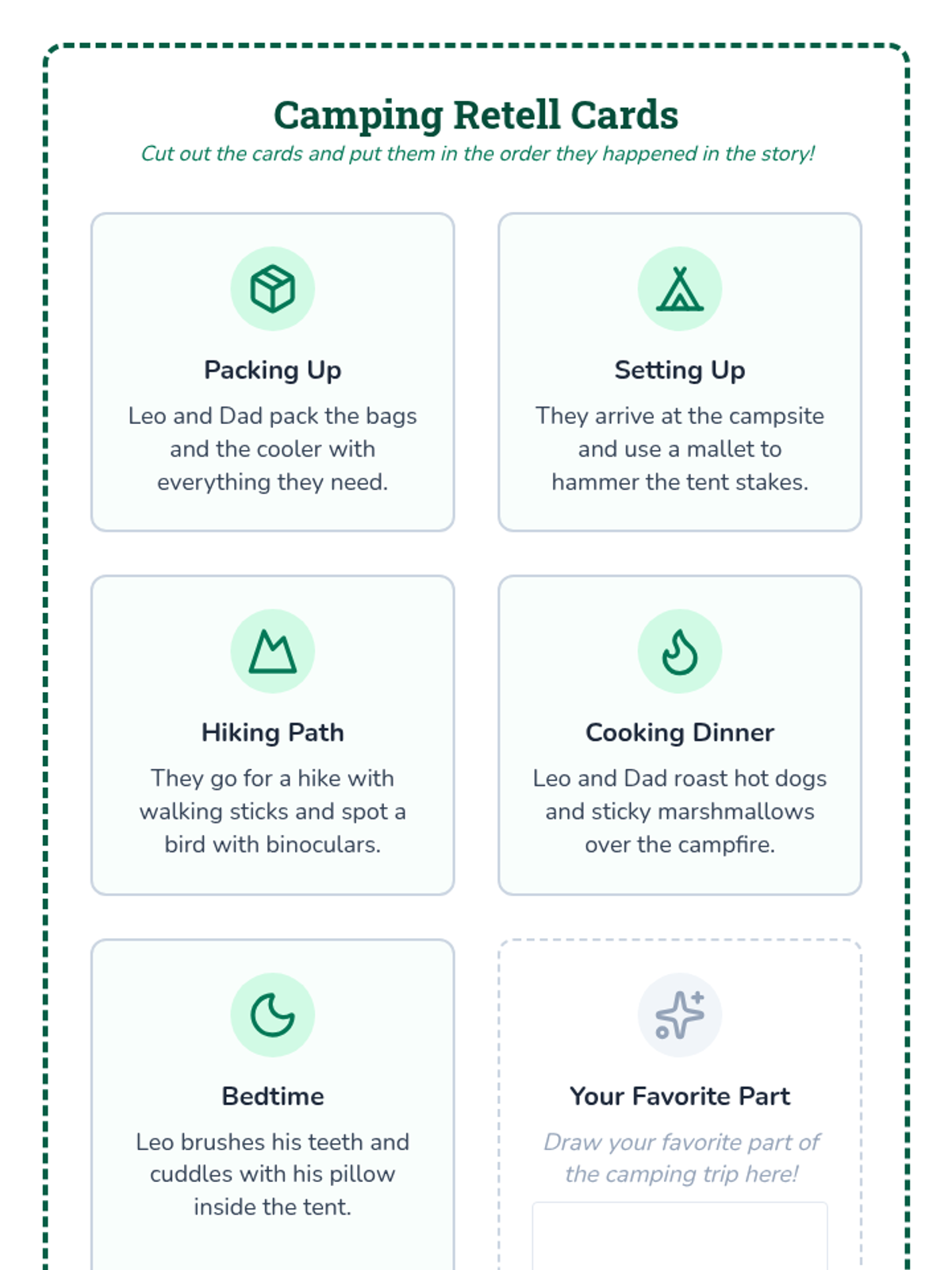
A set of 6 printable cards depicting the sequence of events from the camping story, designed for cutting and reordering to practice retelling skills.
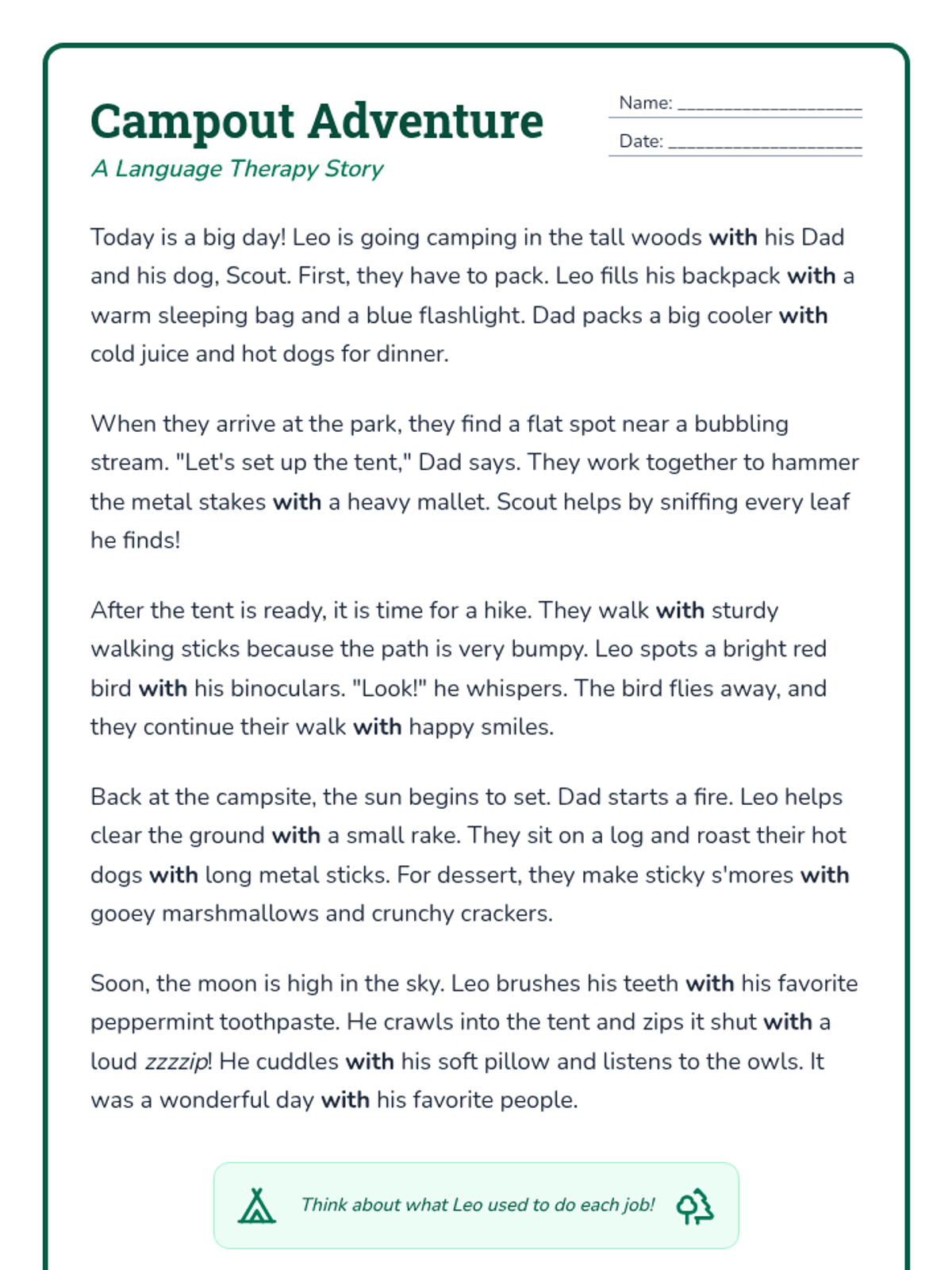
A one-page camping story designed to emphasize the function word 'with' in various contexts, followed by 15 fill-in-the-blank sentences for practice.
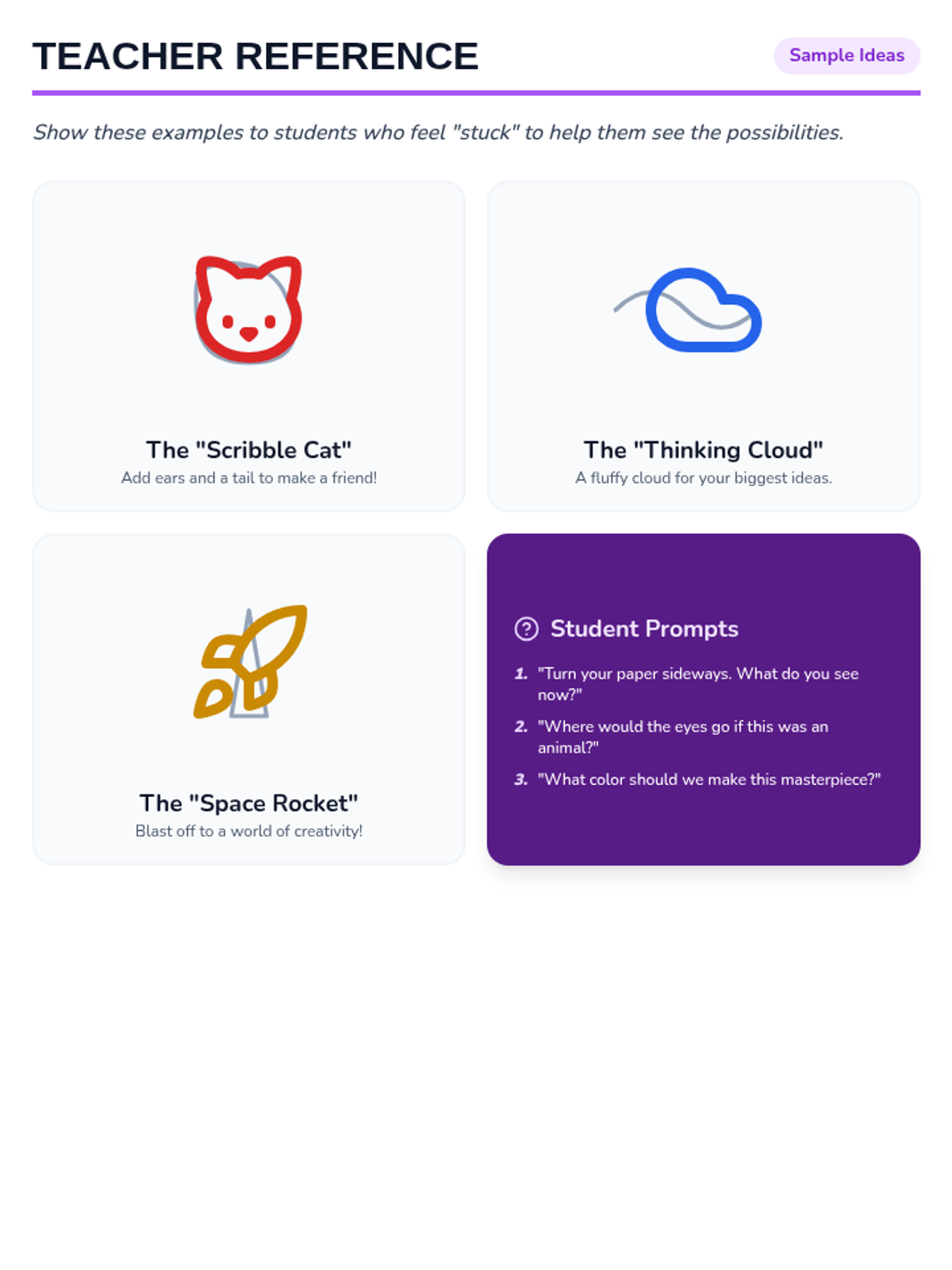
A visual reference for teachers containing sample ideas for the Scribble Surprise activity. Includes prompts and simple illustrated examples to help jumpstart student creativity.
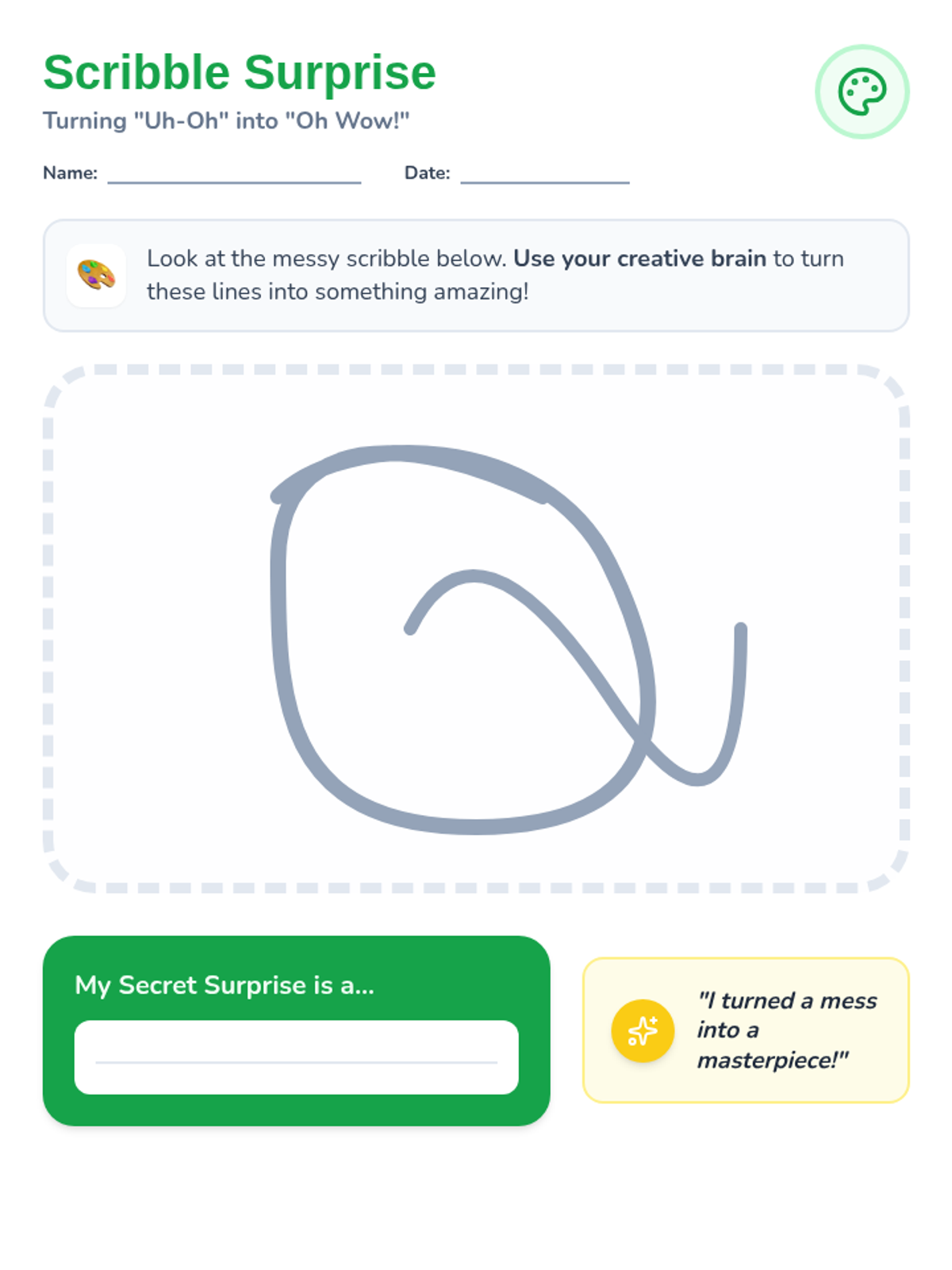
A high-interest activity sheet featuring a large pre-drawn 'scribble'. Students use their creativity to transform the lines into a recognizable object, fostering cognitive flexibility and self-confidence.
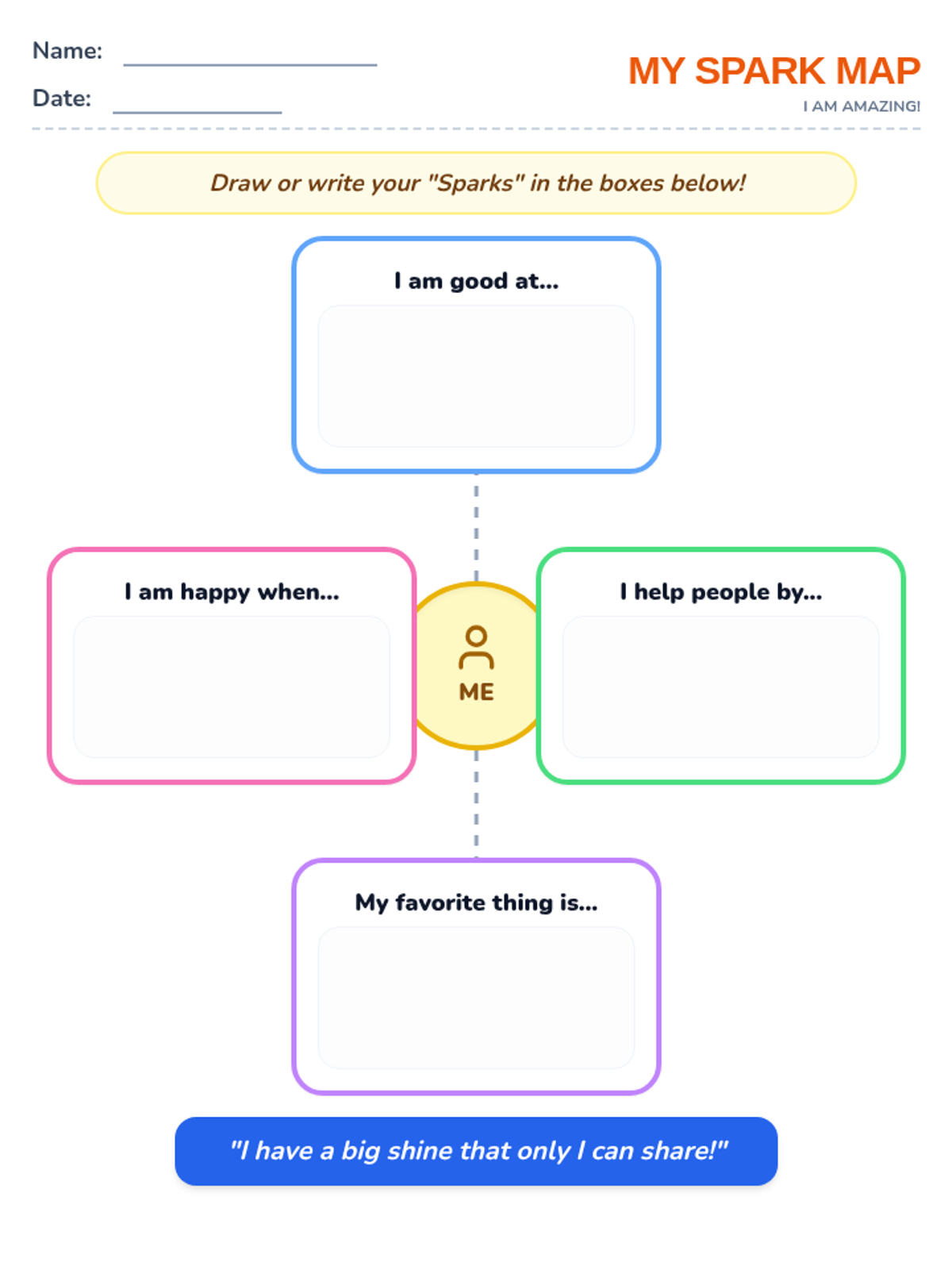
A graphic organizer for K-2 students to visualize their strengths and interests (sparks). Features a lightbulb theme with designated areas for drawing or writing personal reflections.
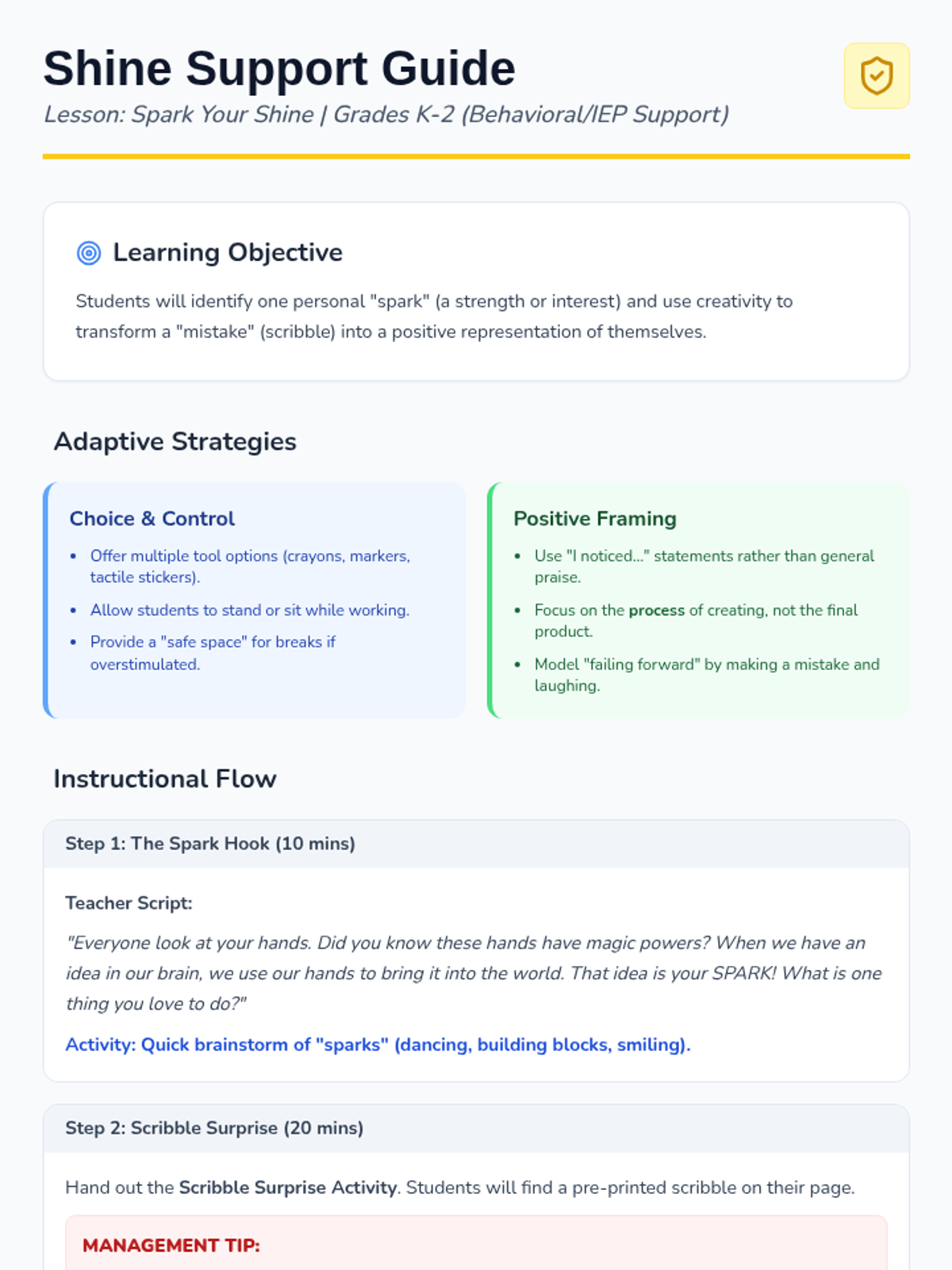
A comprehensive teacher guide providing specific behavioral strategies, a lesson script, and differentiation tips for teaching creativity to K-2 students with IEPs.
A vibrant, high-contrast slide deck designed for K-2 students, introducing the concept of a 'creative spark' and building self-esteem through art. Includes visual prompts and positive affirmations.
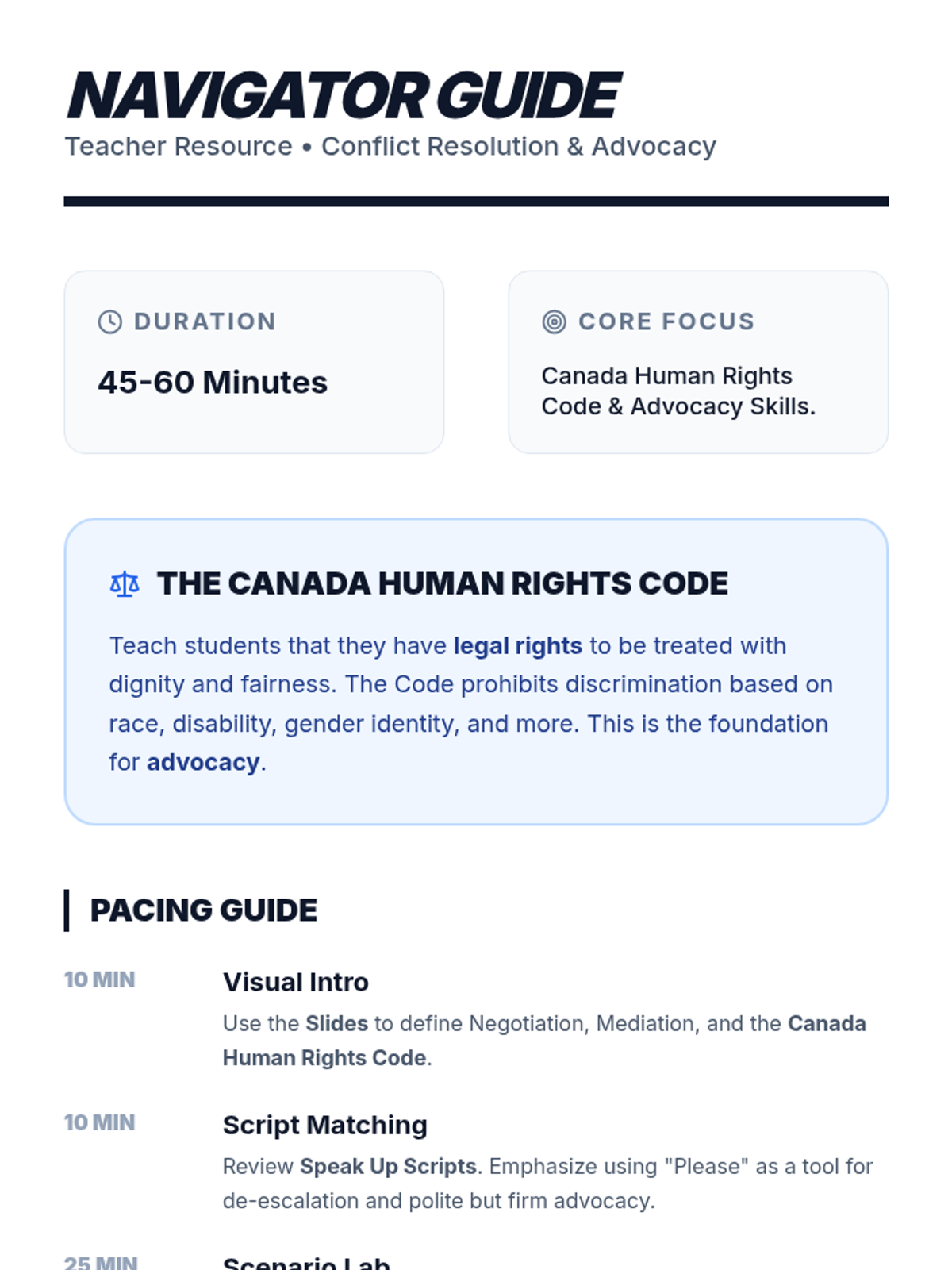
A teacher's guide for the "Conflict Navigators" lesson, providing instructional strategies for teaching advocacy through the lens of the Canada Human Rights Code.
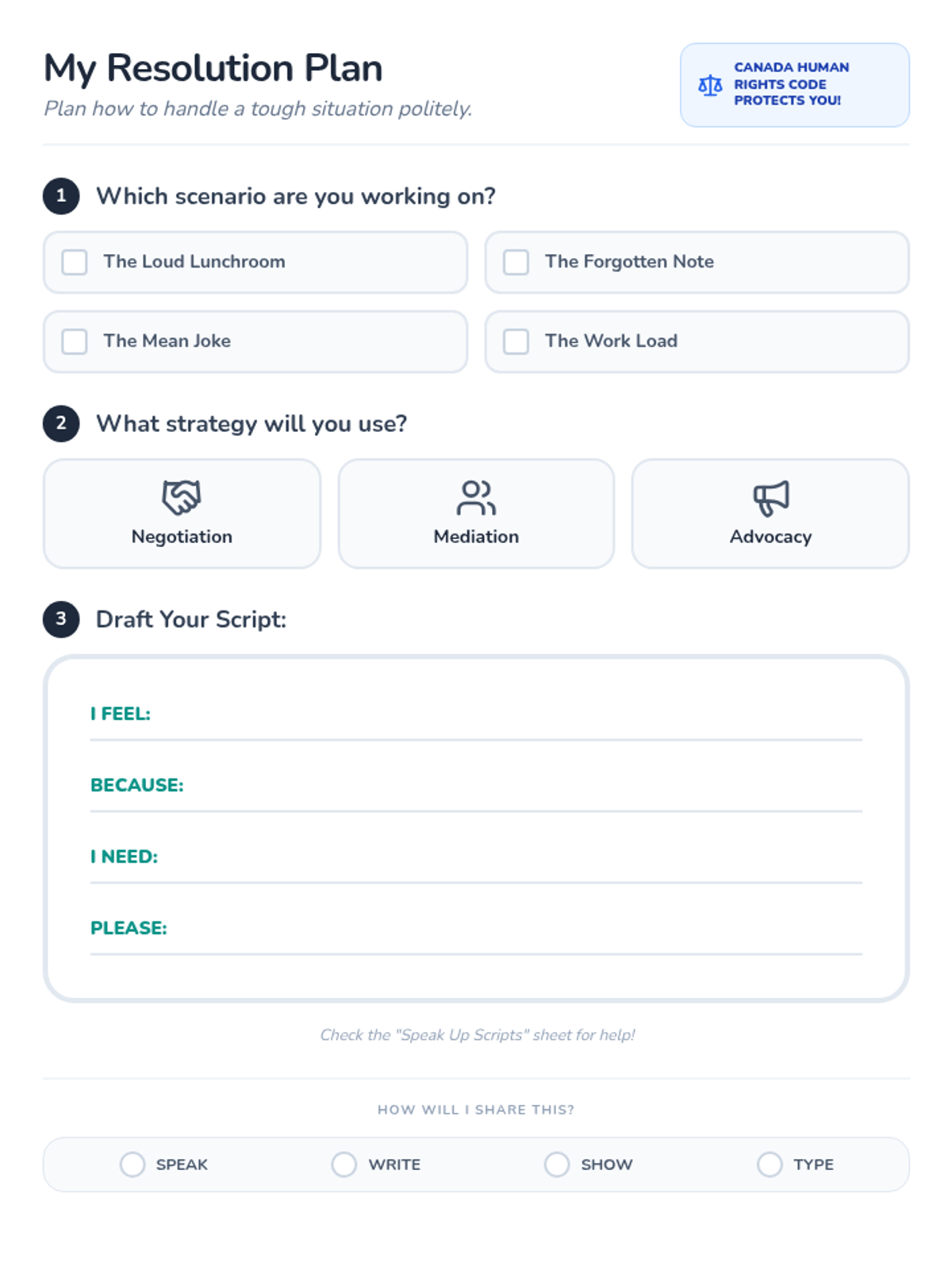
A student worksheet for planning a response to a conflict or advocacy scenario. Updated with the "please" formula, Canada Human Rights Code references, and uniform strategy colors. Space for student writing increased.
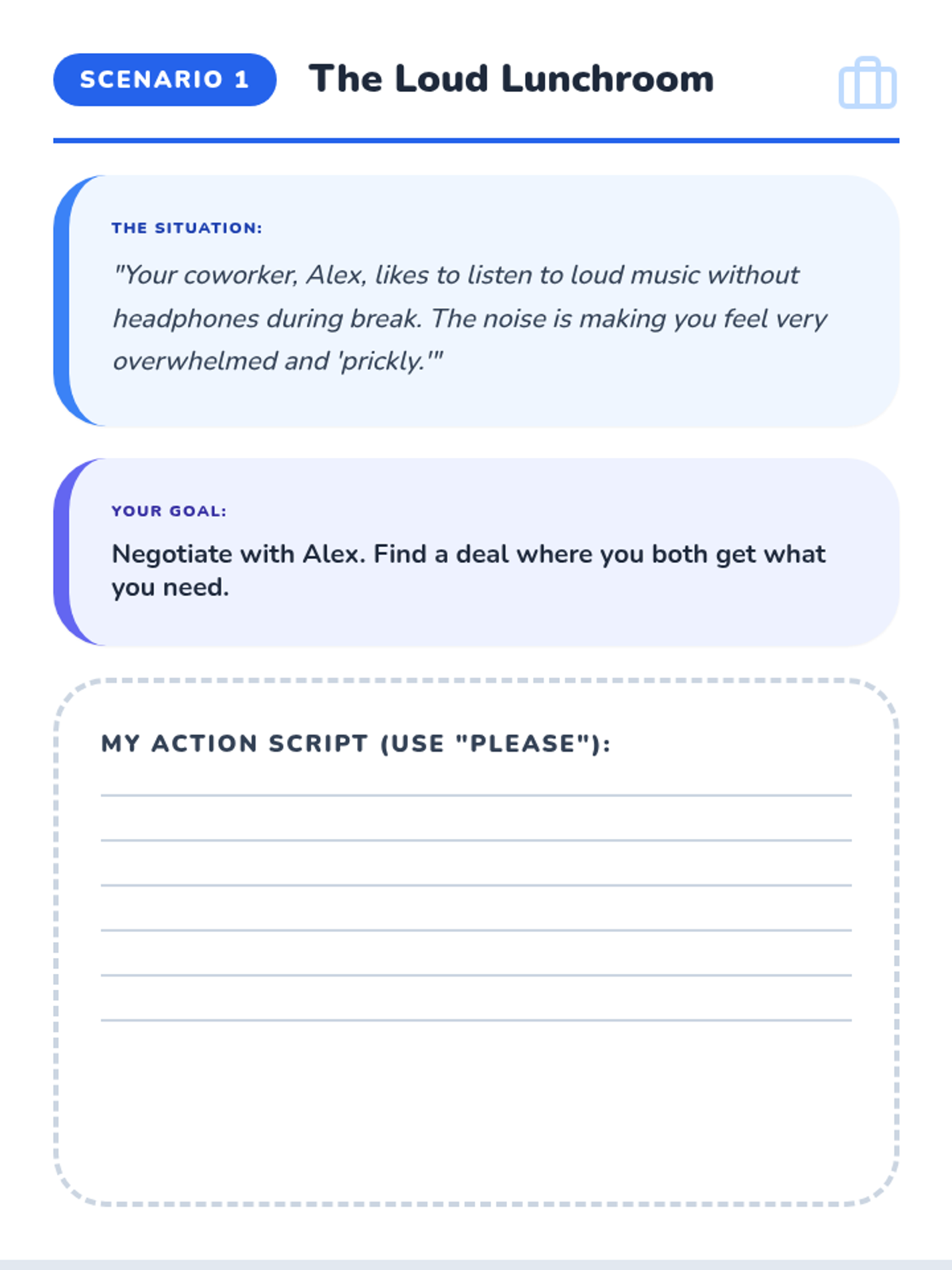
A set of role-play scenario activity sheets focusing on real-world workplace and post-secondary conflict and advocacy situations. Updated with Canada Human Rights Code references.
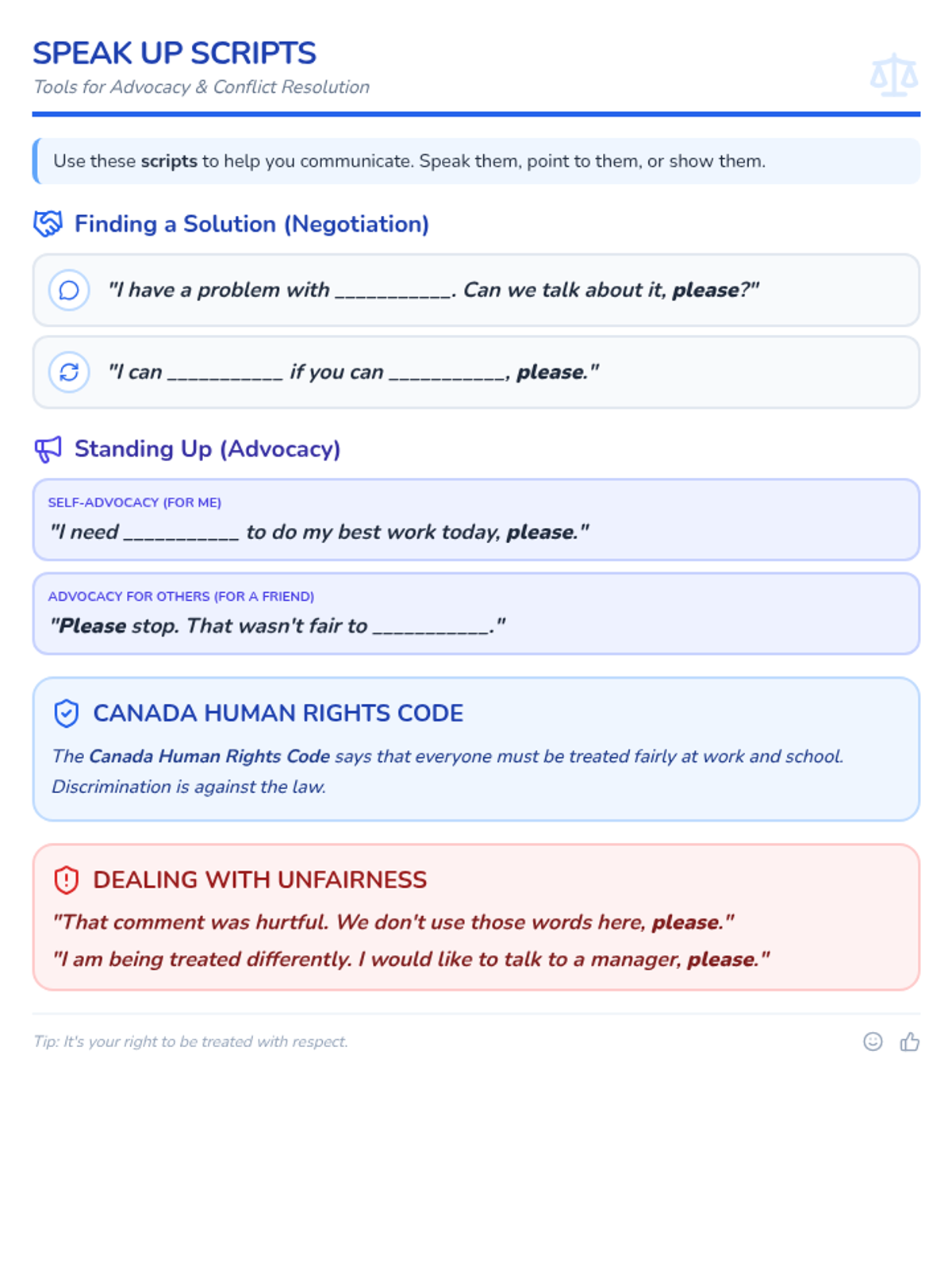
A reference sheet providing scripted phrases for students to use during conflict resolution or advocacy situations. Updated with Canada Human Rights Code references and polite language. Underscores shortened and typo fixed.
A slide presentation for high school students with autism and learning disabilities, covering conflict resolution strategies (negotiation, mediation) and advocacy (self and others) in workplace and post-secondary contexts. Updated with Canada Human Rights Code references and improved script formula.
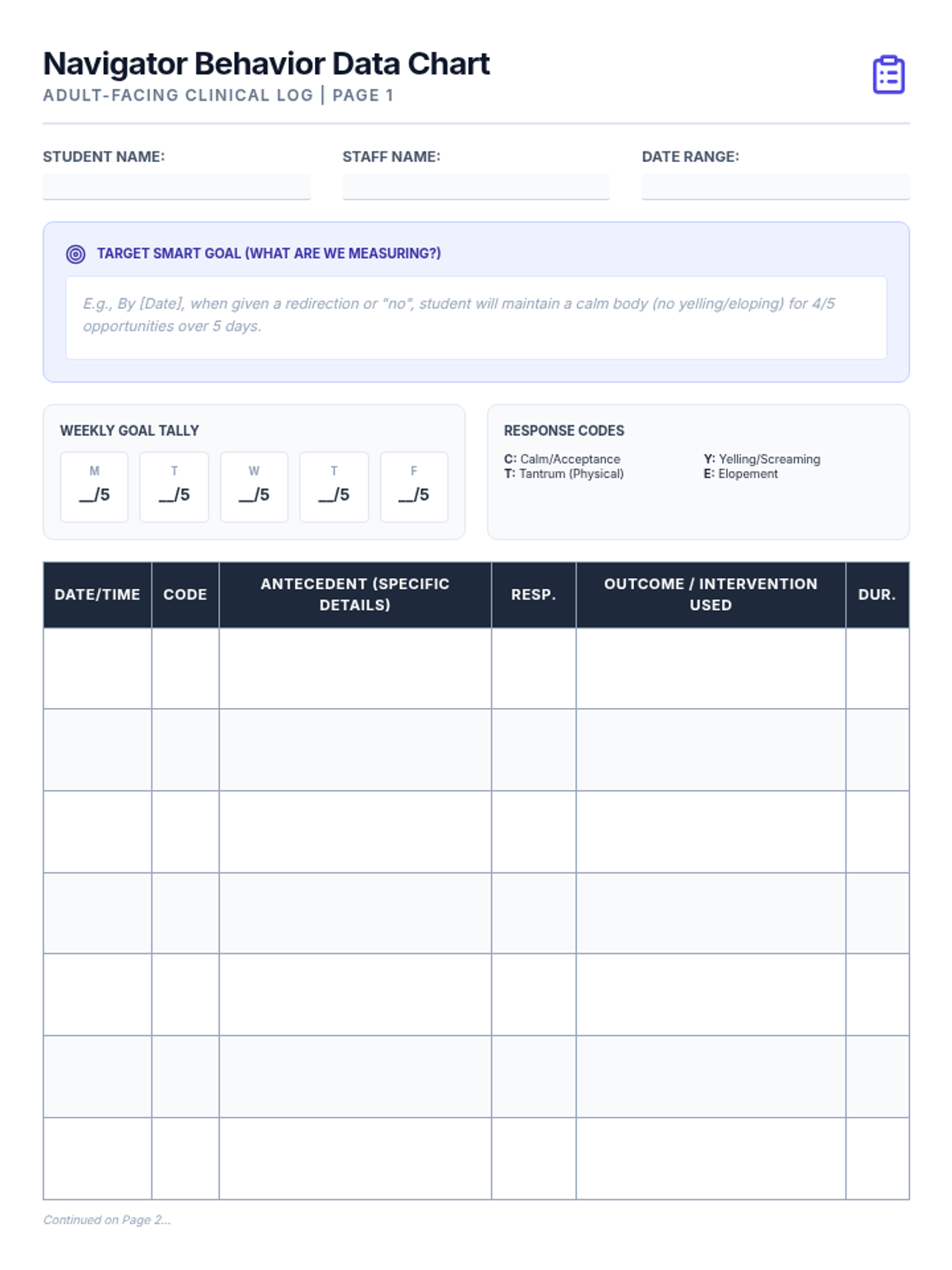
A professional behavior tracking log for adults to collect ABC (Antecedent-Behavior-Consequence) data and monitor progress toward the student's SMART goal.
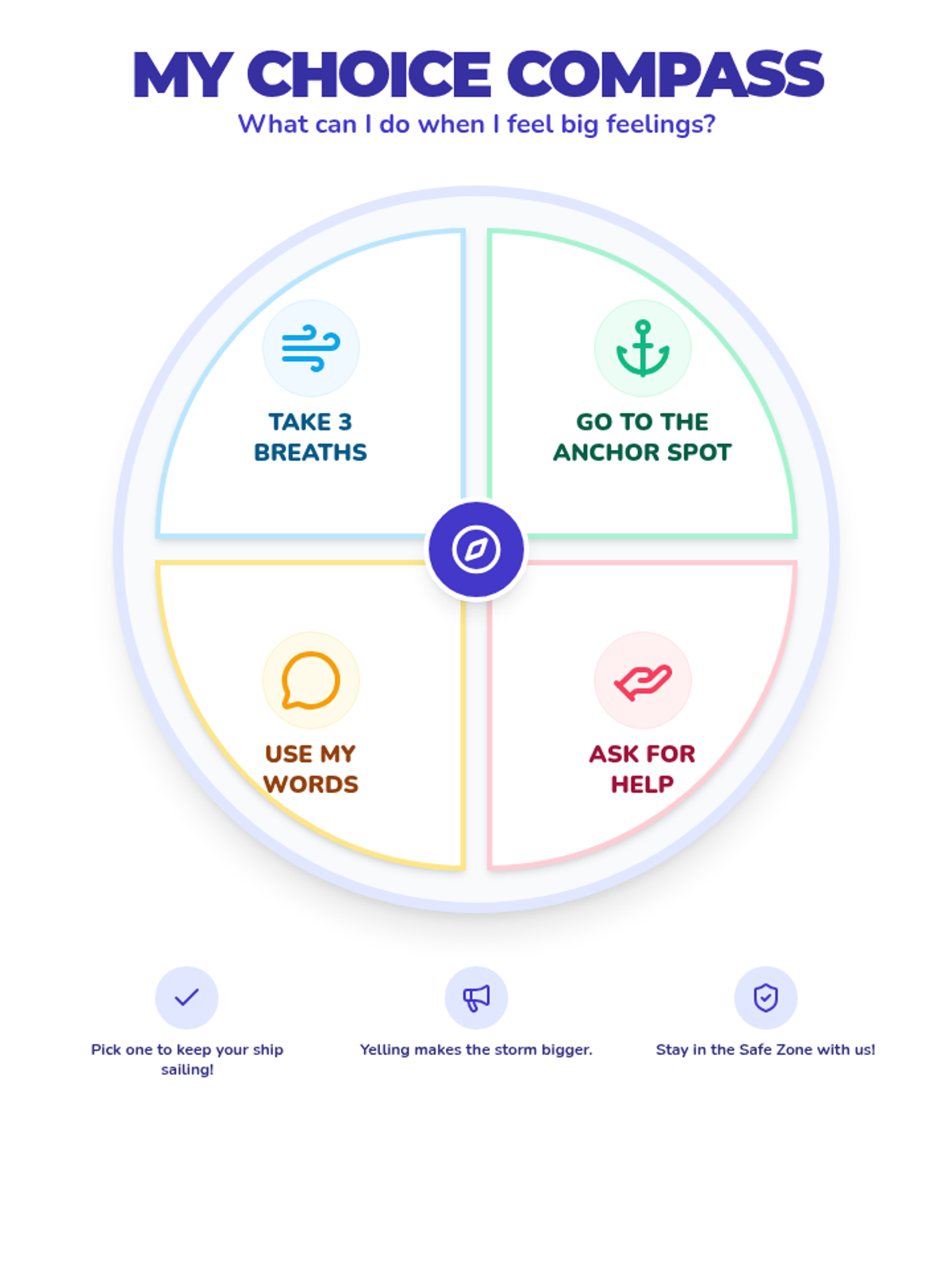
A visual choice board tool designed as a compass to help a kindergarten student select a positive coping strategy when faced with redirection or big emotions.