A comprehensive teacher guide providing specific behavioral strategies, a lesson script, and differentiation tips for teaching creativity to K-2 students with IEPs.
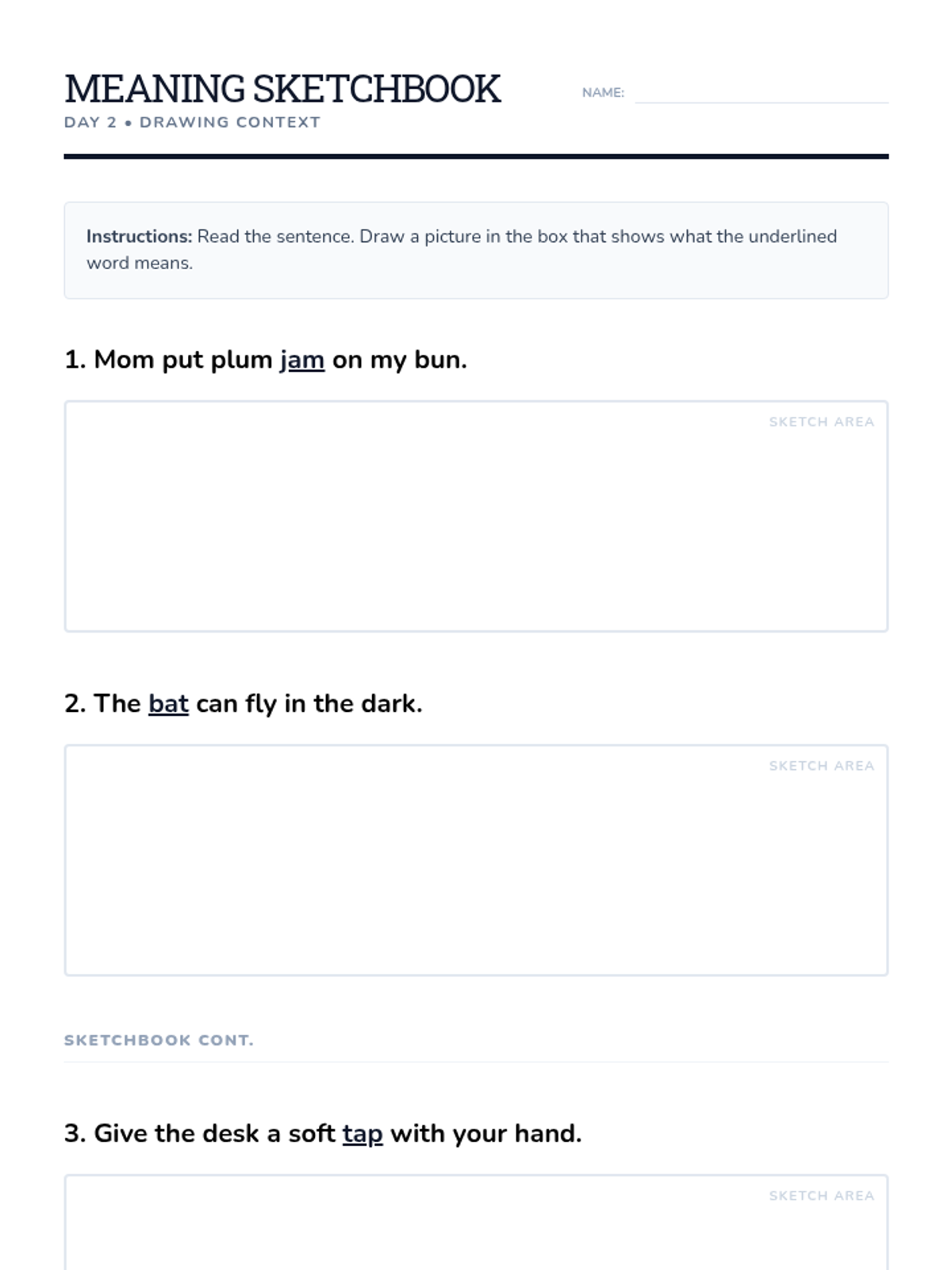
A drawing-based activity where students read sentences with multiple-meaning words and sketch the specific meaning indicated by the context. Provides a creative way to assess comprehension.
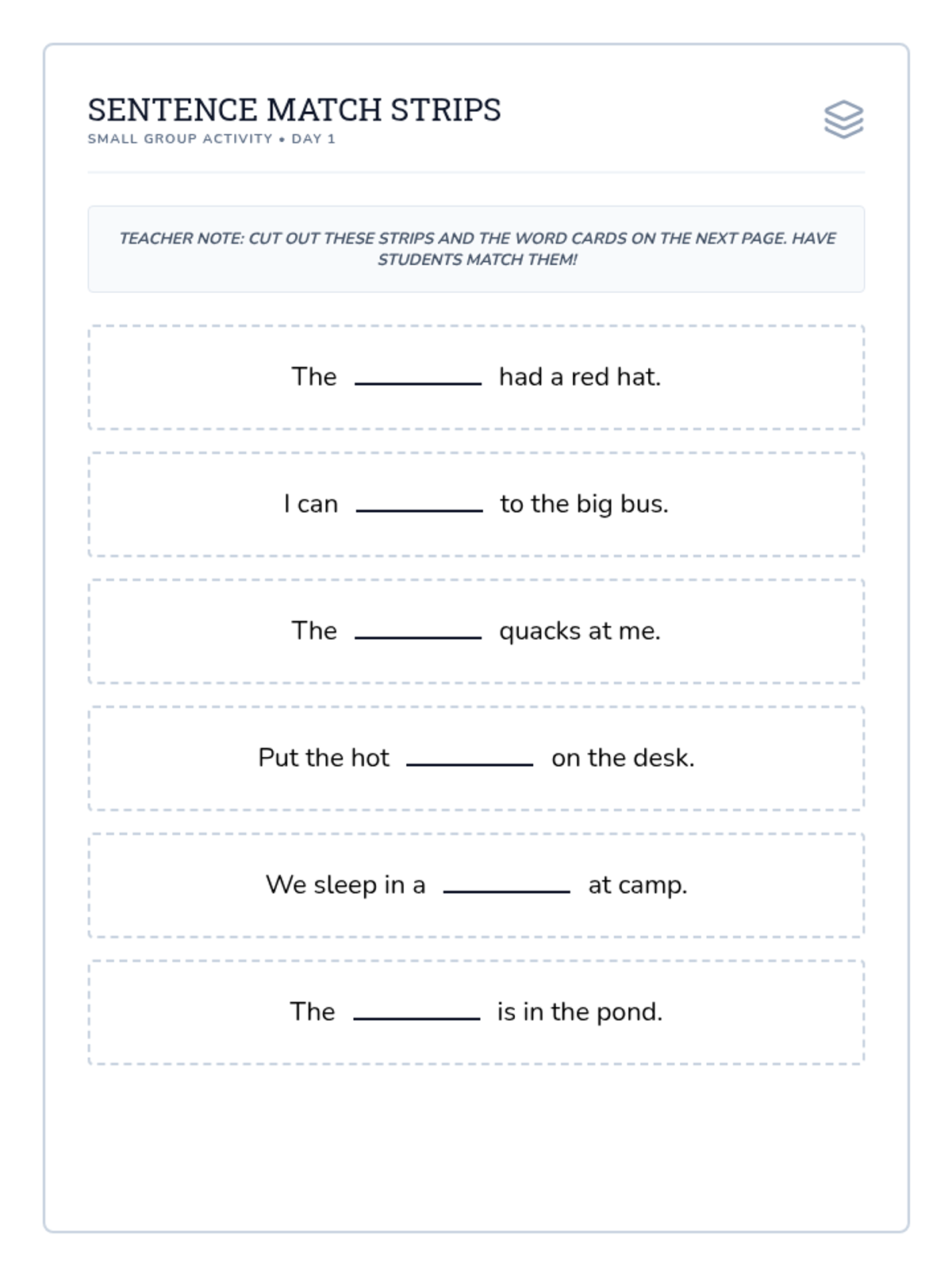
A matching activity with sentence strips and word cards for small group instruction. Students use context clues to pair sentences with the correct decodable words.
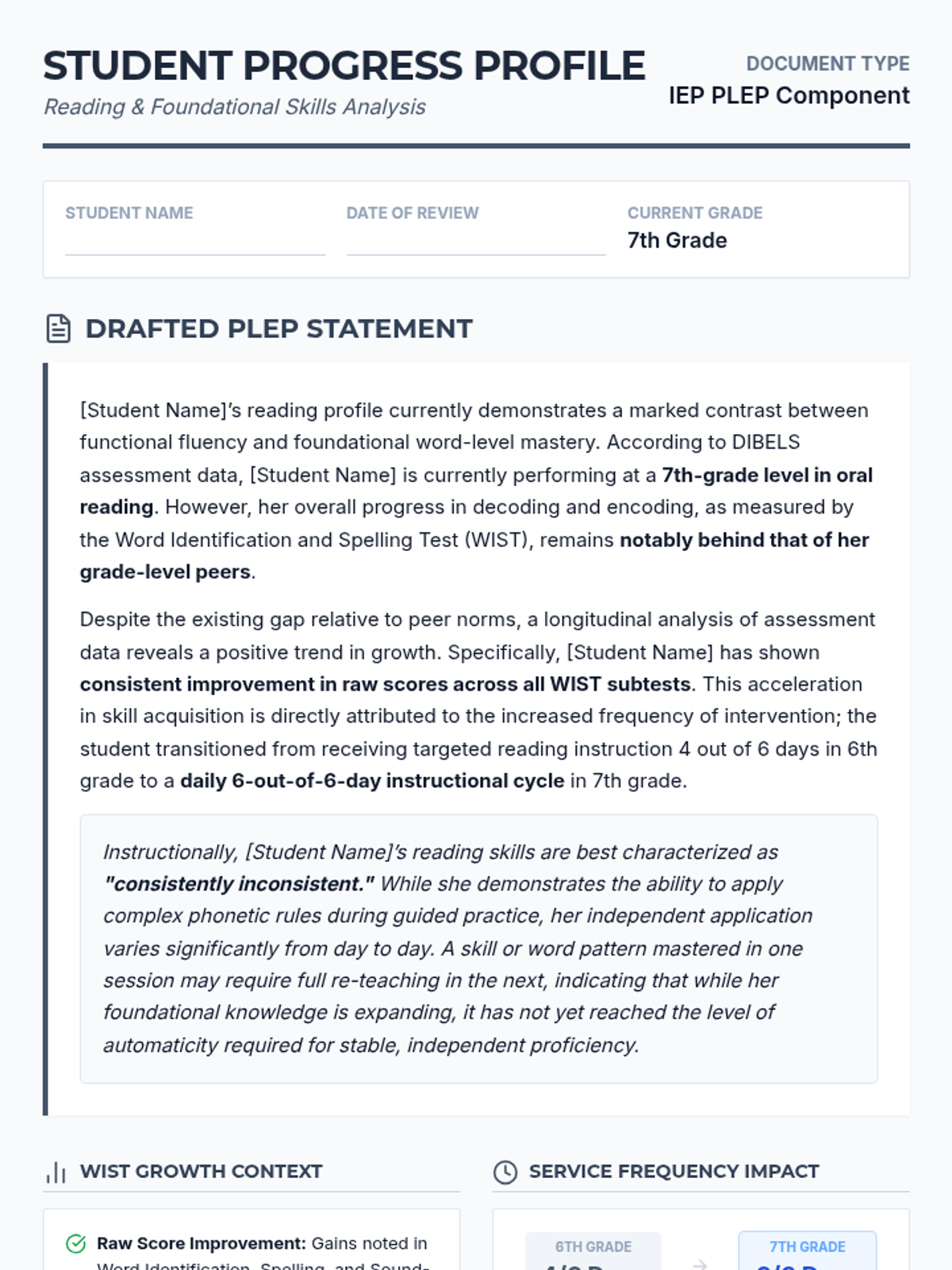
A professional teacher resource providing a drafted IEP PLEP statement for a 7th-grade student. It details reading progress, WIST raw score improvements, and the direct impact of increased instructional frequency while addressing the student's inconsistent skill application.
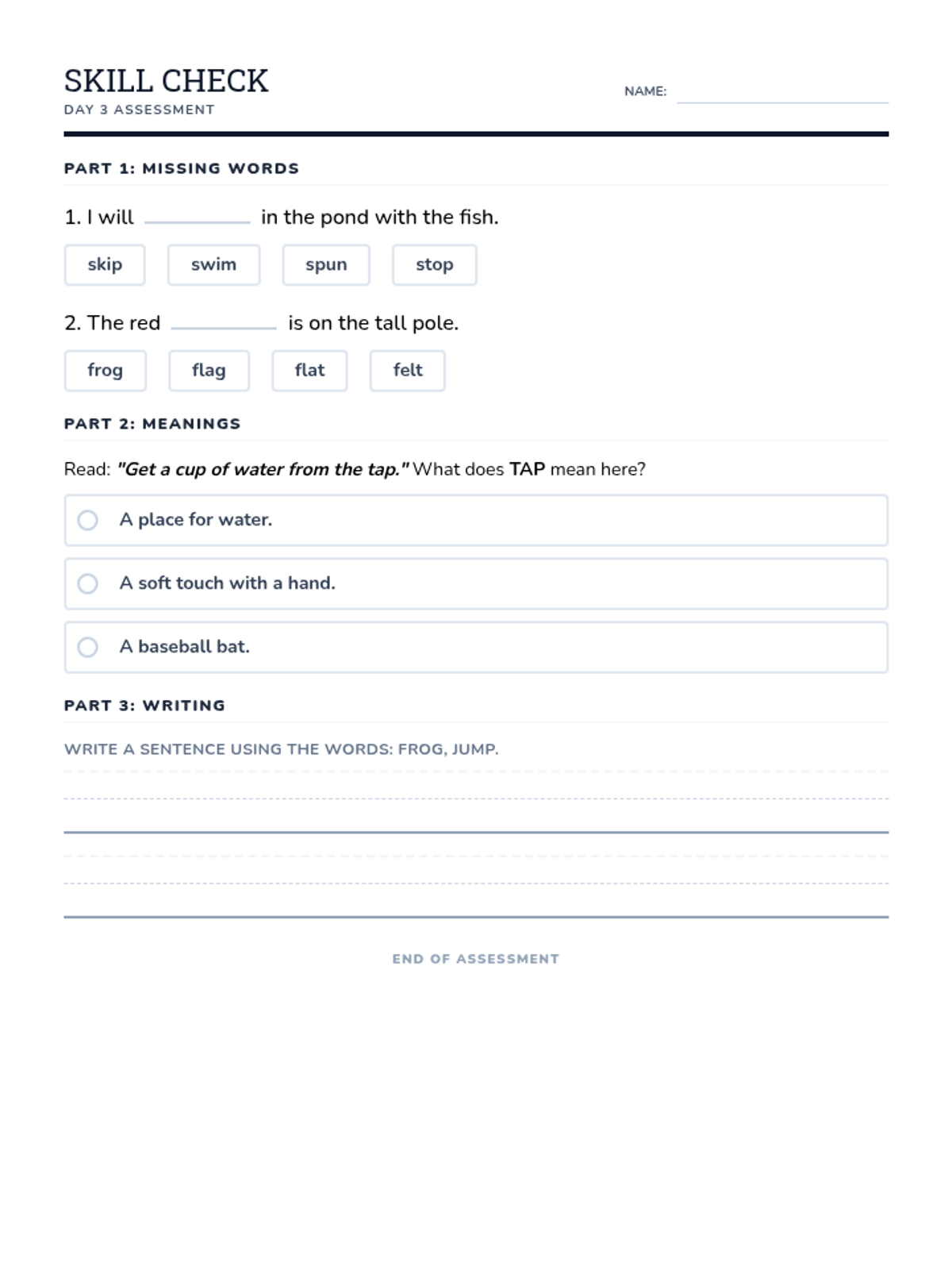
A summative exit ticket assessing context clues, multiple-meaning words, and decodable reading skills. Features multiple-choice and short-writing components.
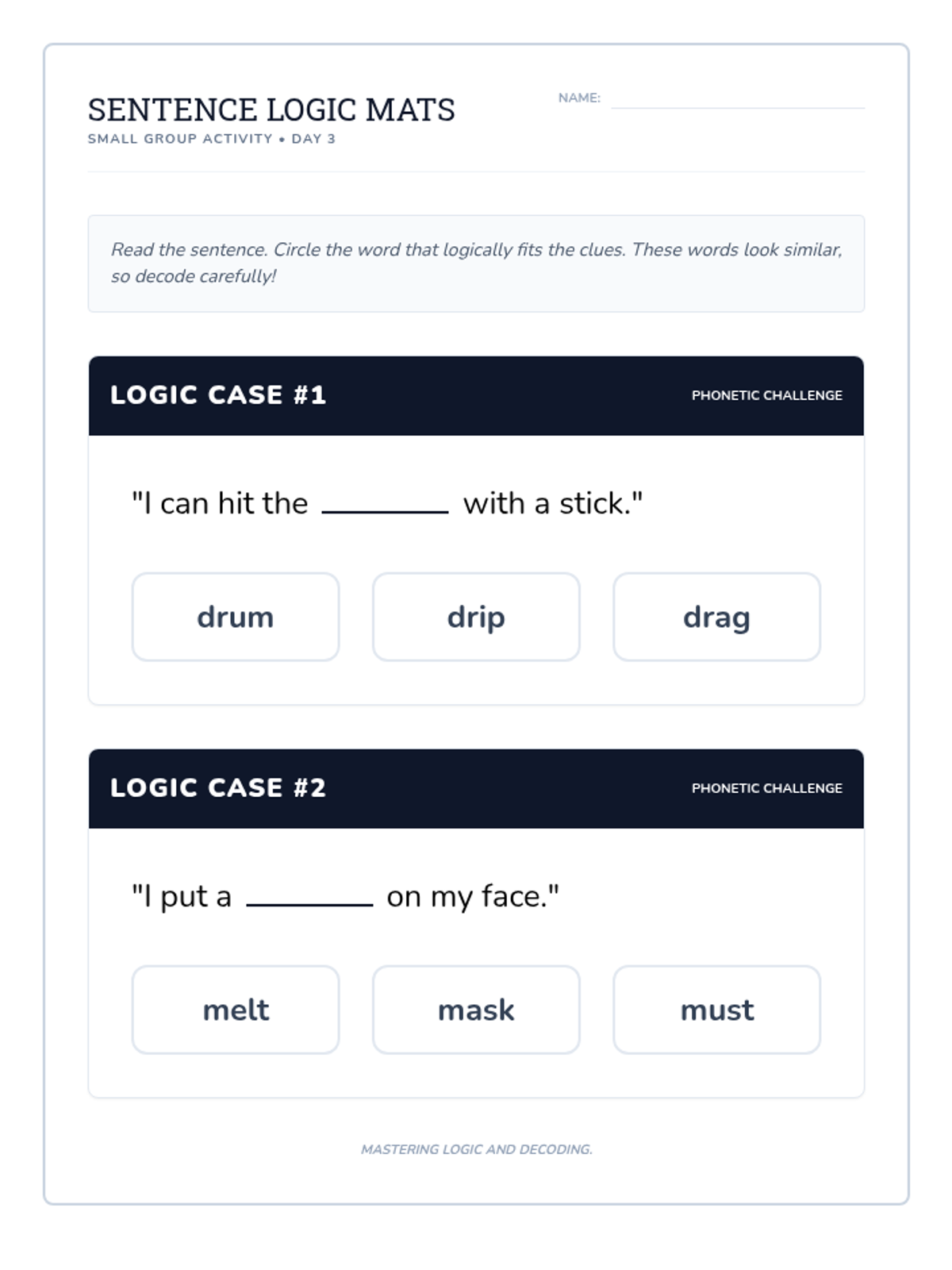
Small group sorting mats where students evaluate if a specific decodable word makes sense in various sentence contexts, reinforcing both decoding and comprehension logic.
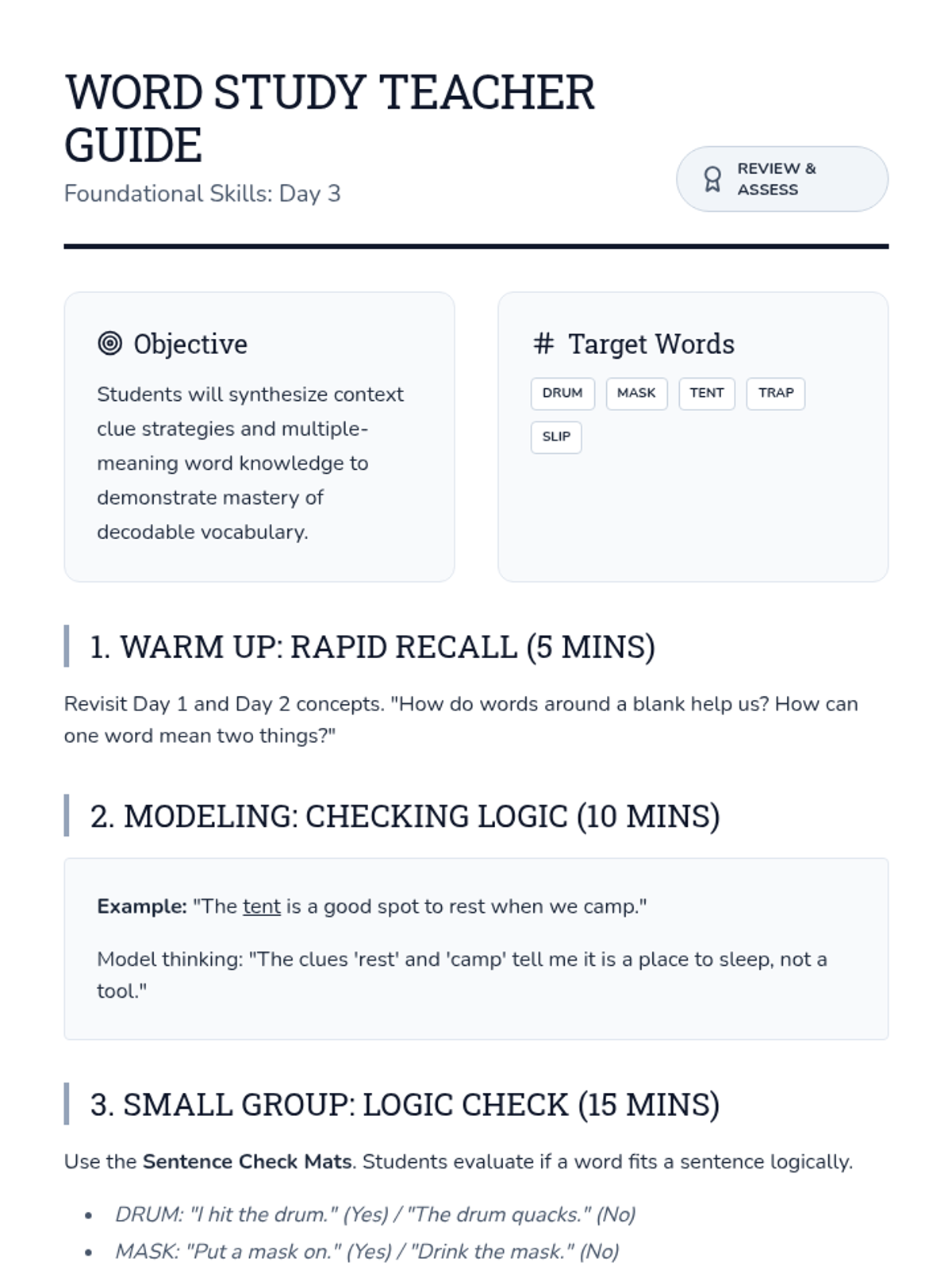
Instructional guide for the final day of the sequence, focusing on synthesis of skills and final assessment. Includes modeling examples and a mastery checklist.
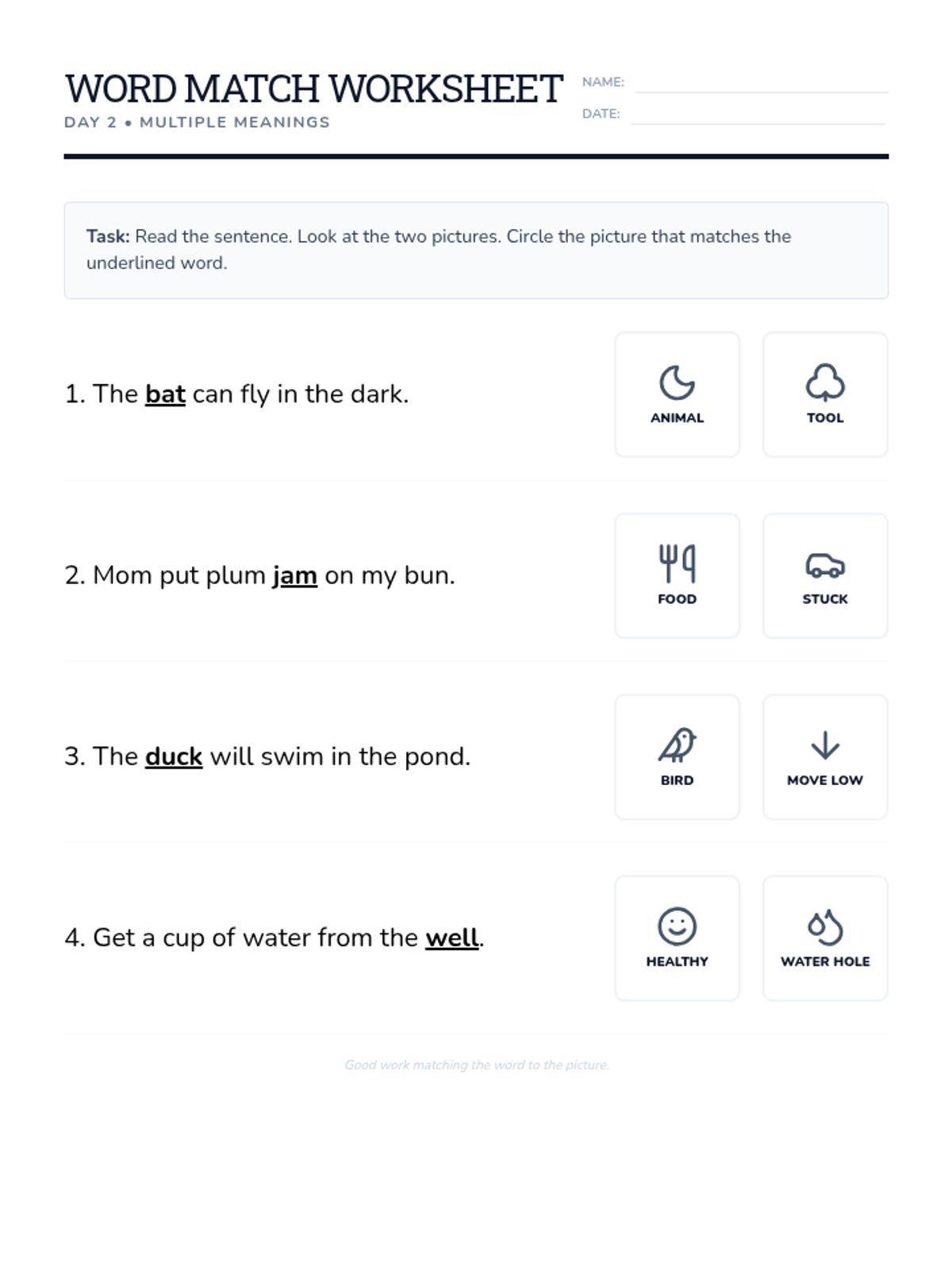
A worksheet for practicing multiple-meaning words where students must identify the correct definition based on sentence context using visual aids.
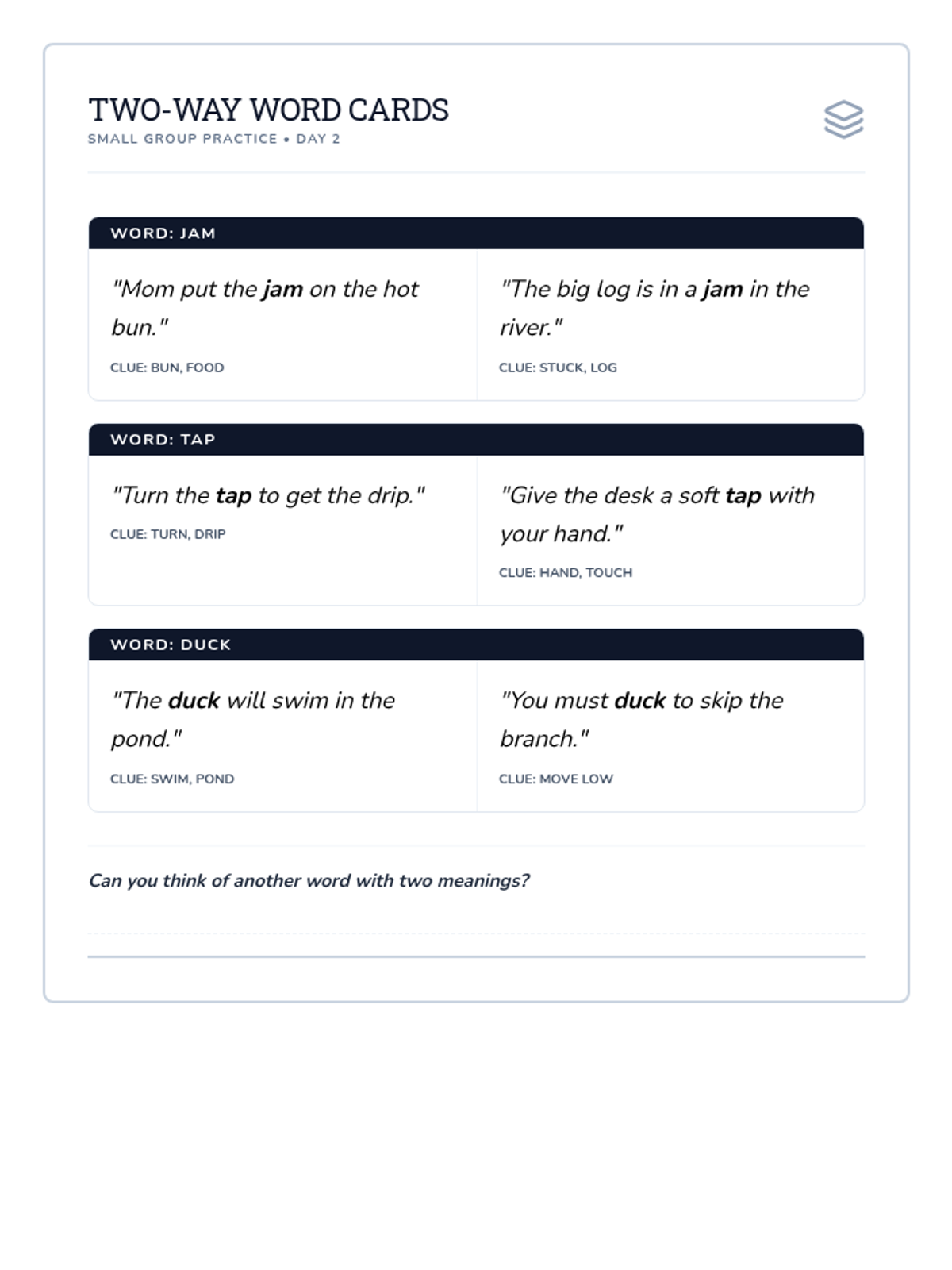
A small group activity material featuring cards with multiple-meaning words used in two different decodable sentence contexts. Helps students visualize and compare meanings.
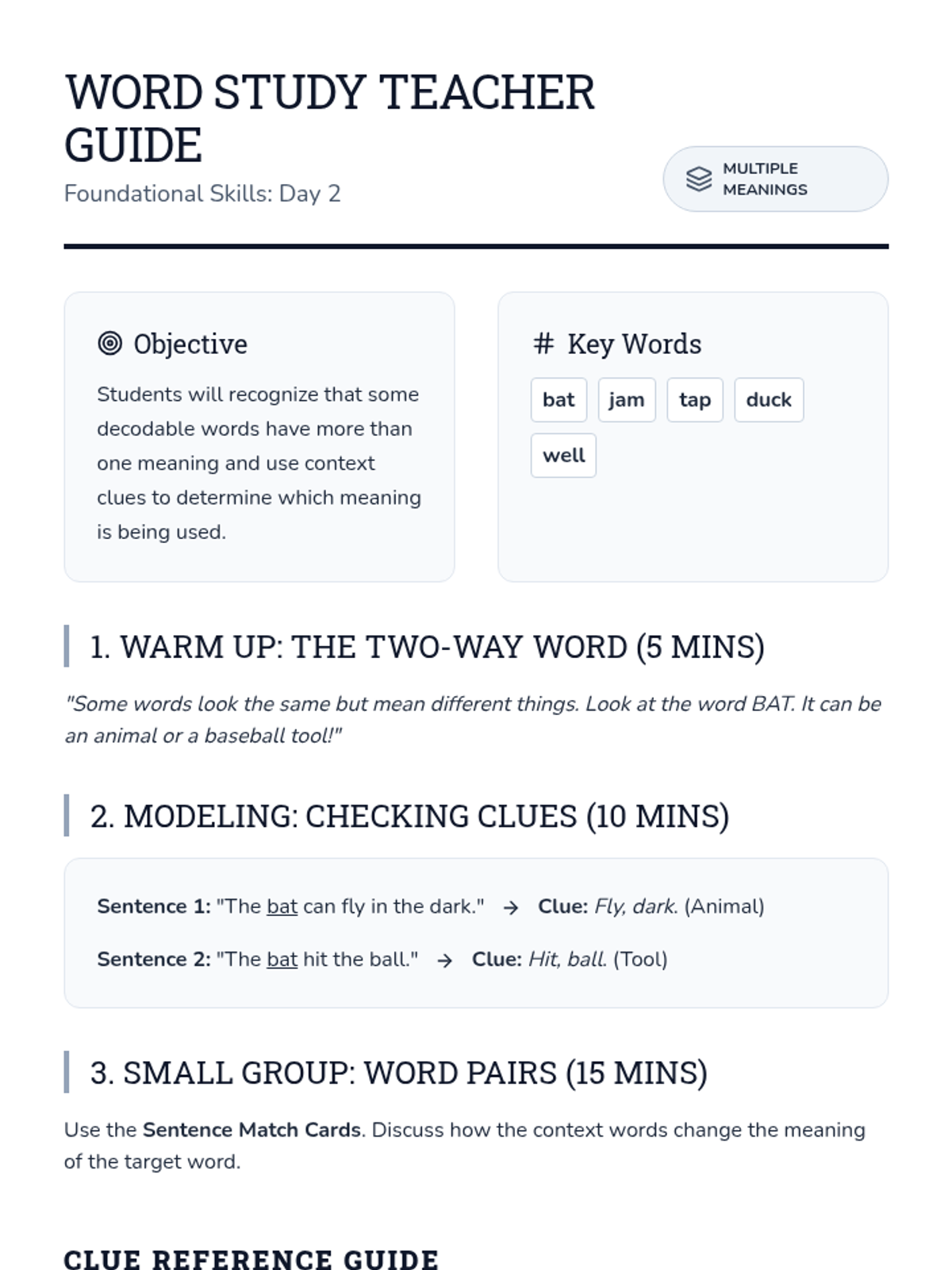
Teacher's instructional guide for Day 2, focusing on multiple-meaning words (homonyms) using decodable vocabulary. Includes modeling scripts and activity directions.
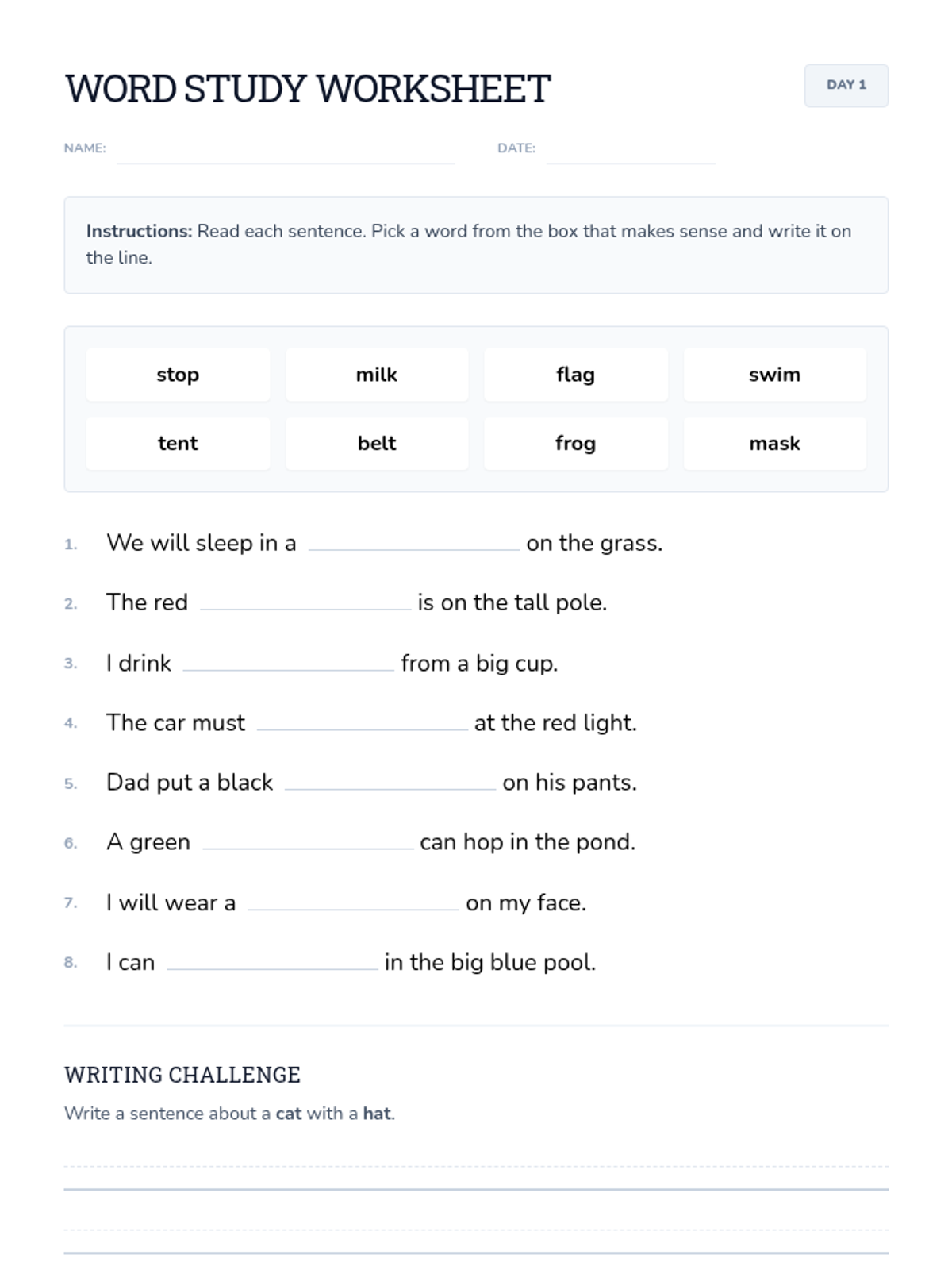
An independent practice worksheet where students apply context clue strategies to complete sentences using a word bank of CCVC and CVCC words.
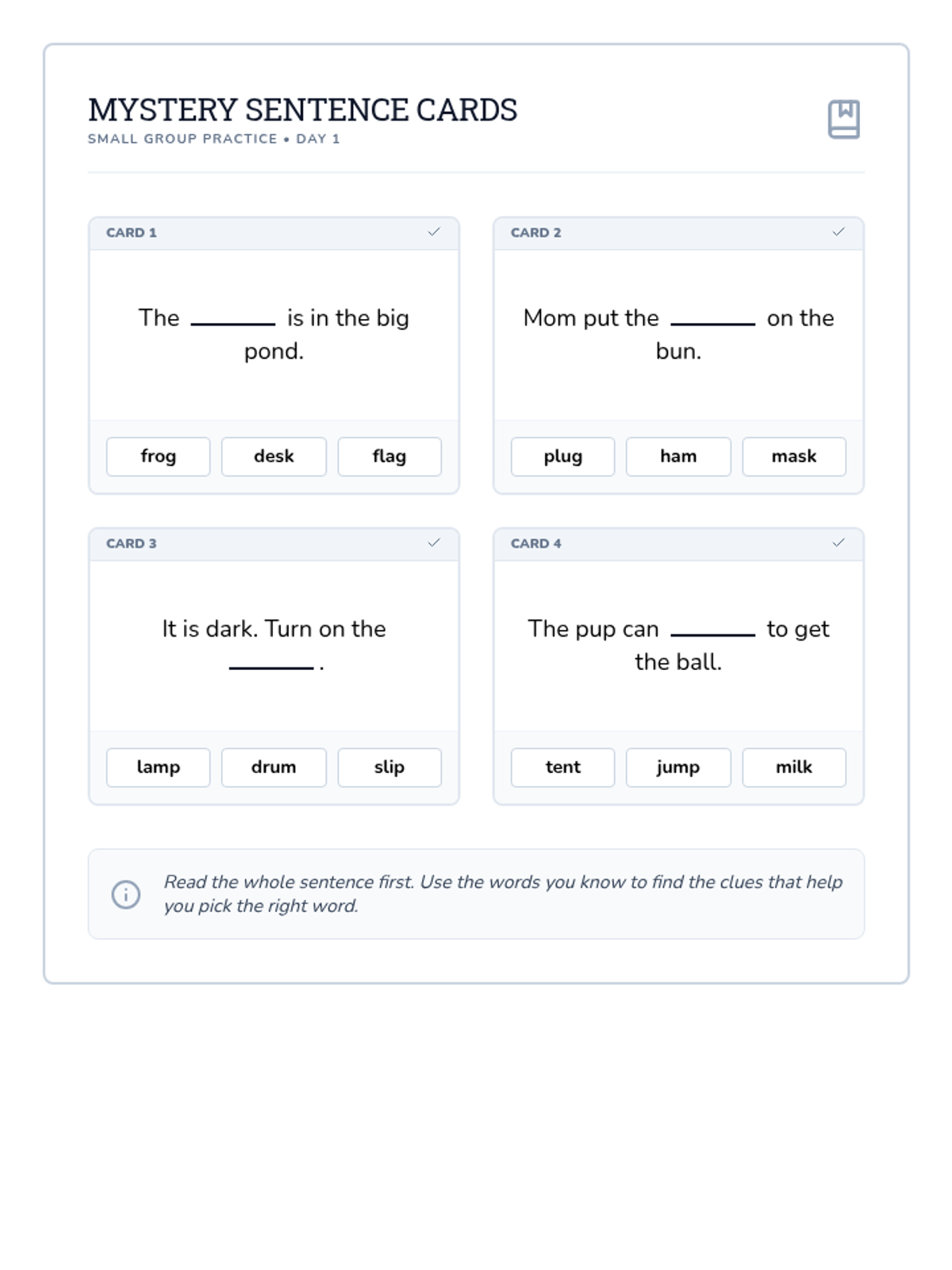
An expanded set of 8 printable mystery cards for small group practice. Each card features a sentence with a missing decodable word and three choices to build context clue skills across two pages.
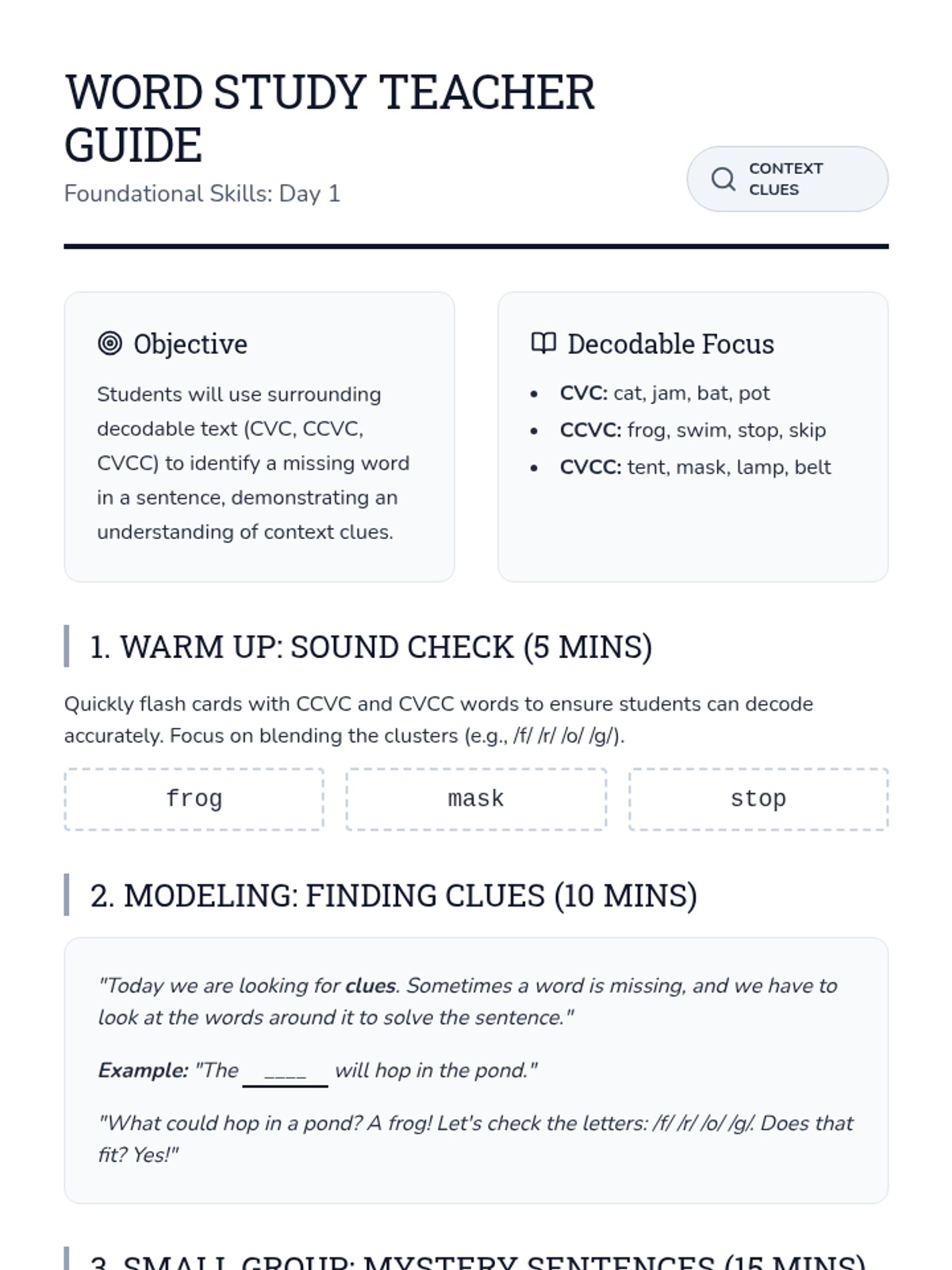
A detailed instructional guide for teachers to lead Day 1 of the Word Study sequence, focusing on using context clues with decodable text.
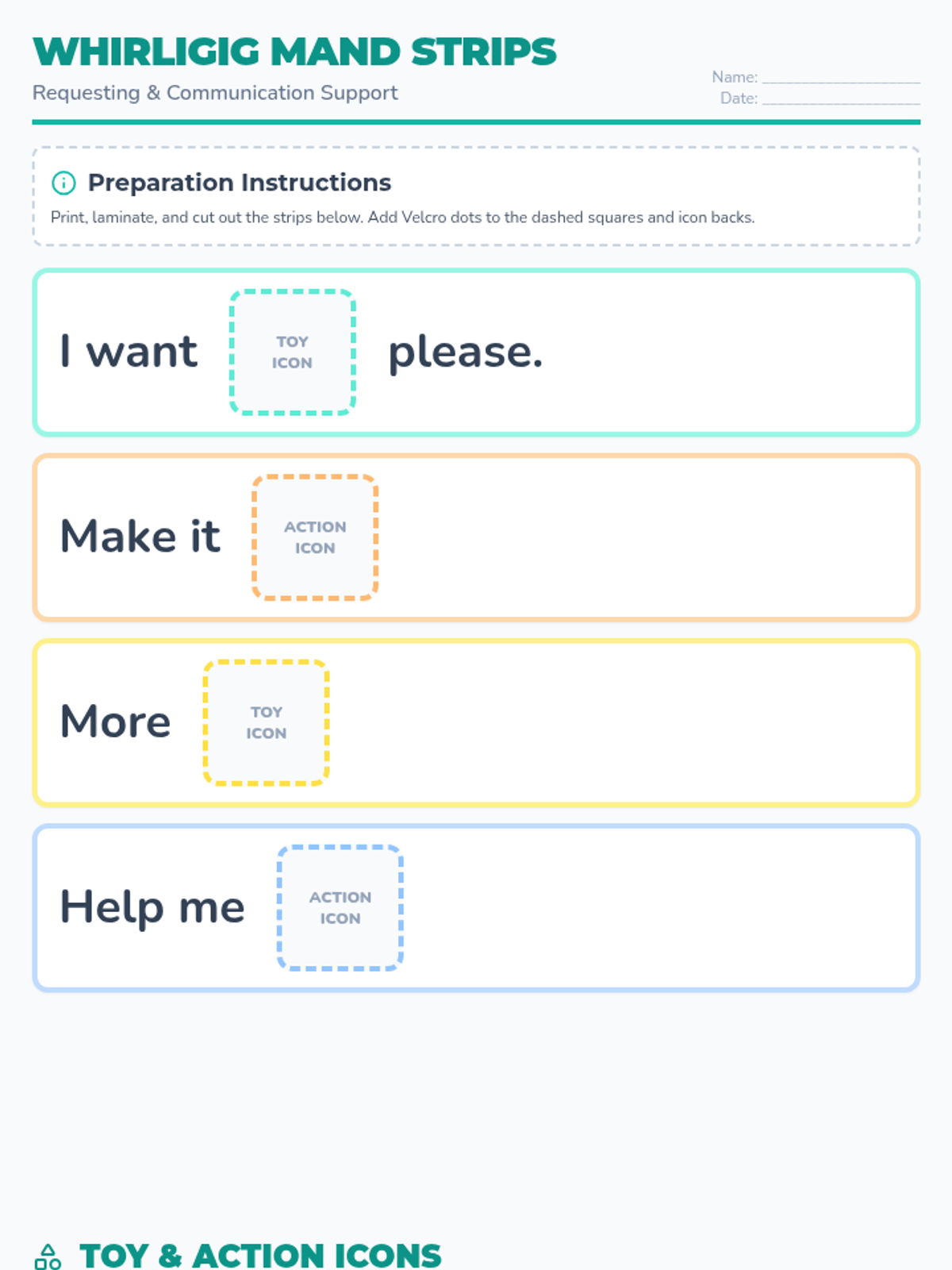
A printable document containing four sentence starter strips and eight communication icons designed for laminating. It supports students in requesting spinning toys and describing their movement (fast, slow, spin, stop).
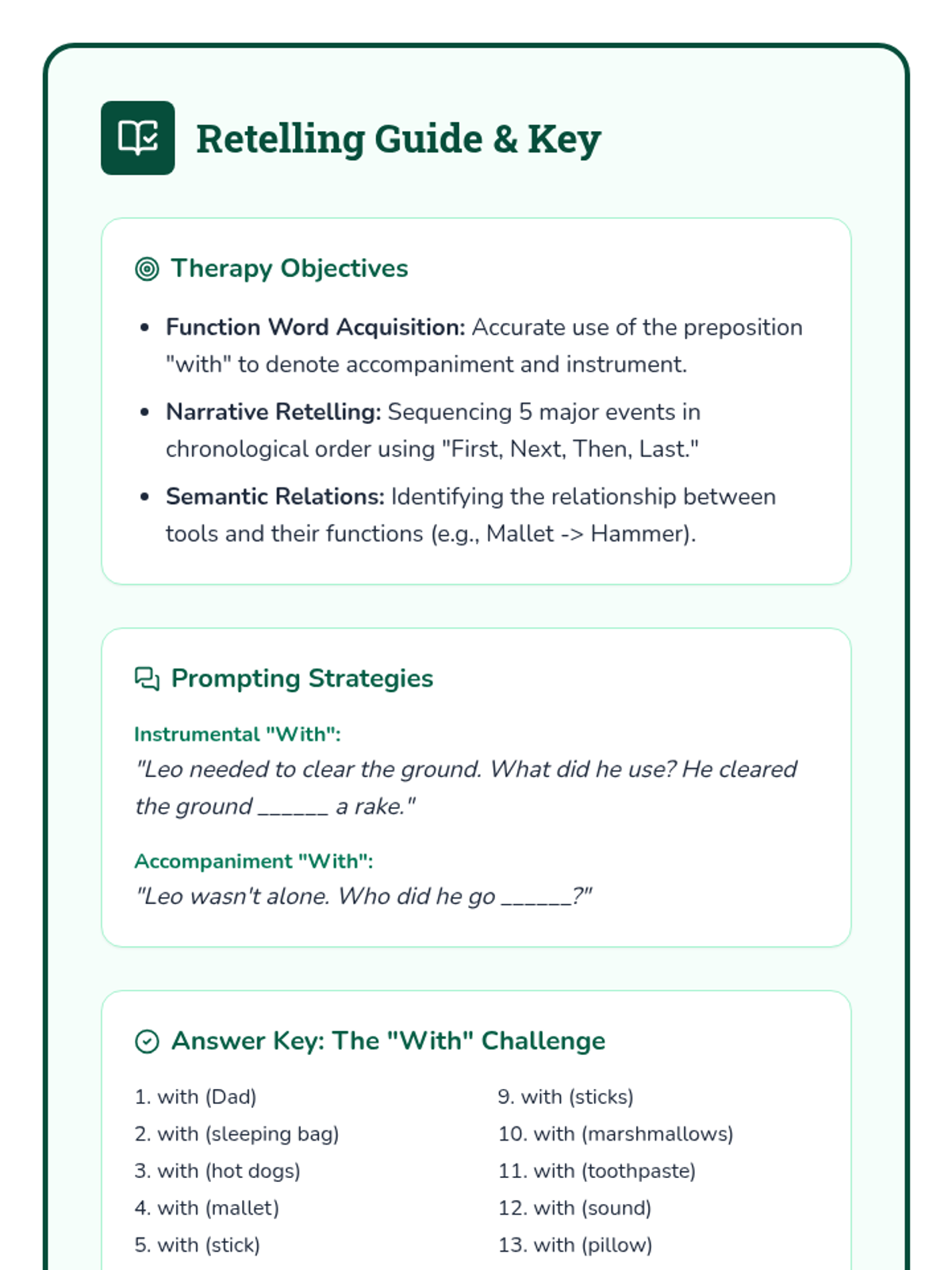
A teacher guide for the camping therapy lesson, including clinical objectives, prompting strategies for 'with', and answer keys for both the worksheet and sequencing activity.
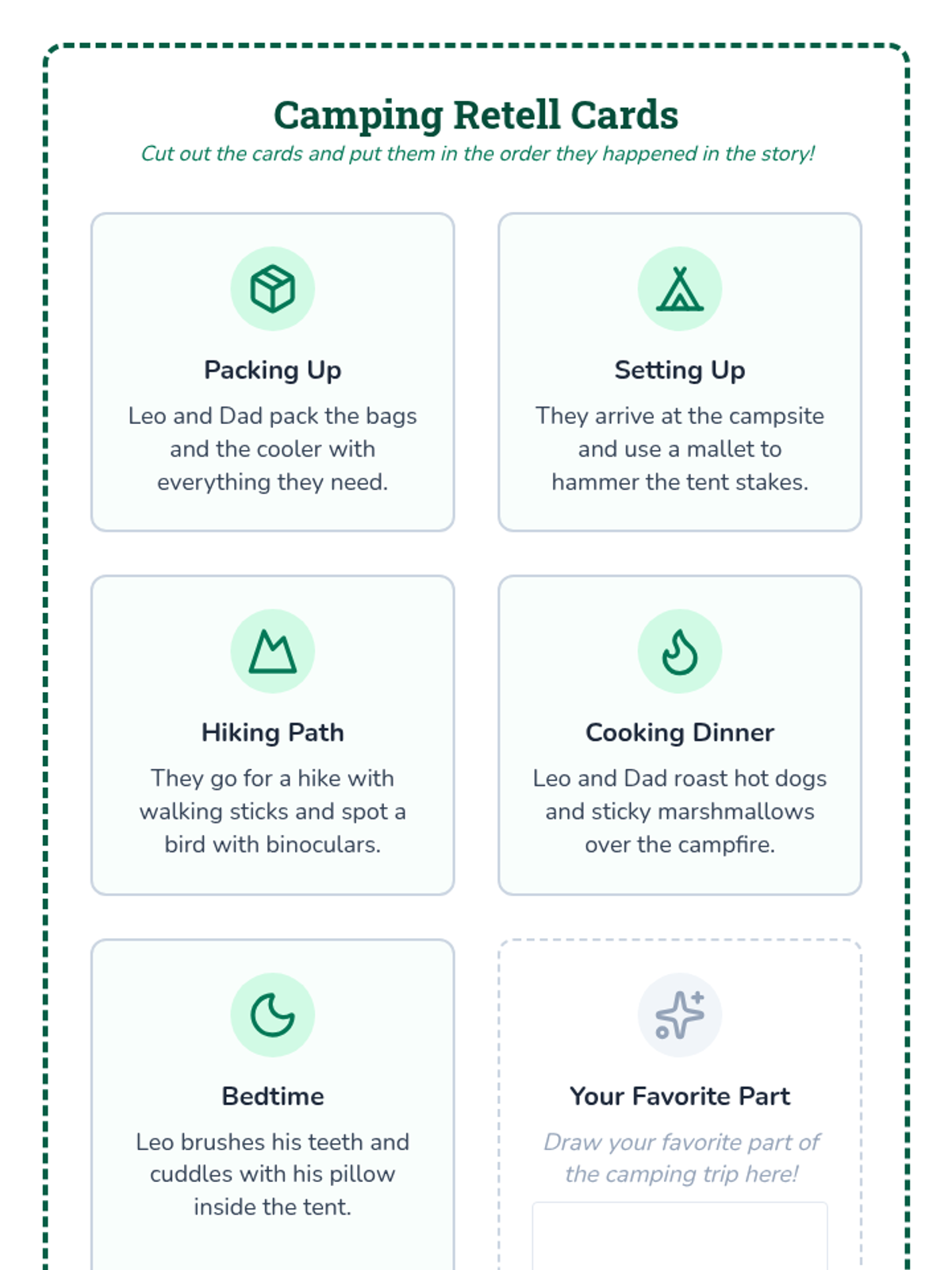
A set of 6 printable cards depicting the sequence of events from the camping story, designed for cutting and reordering to practice retelling skills.
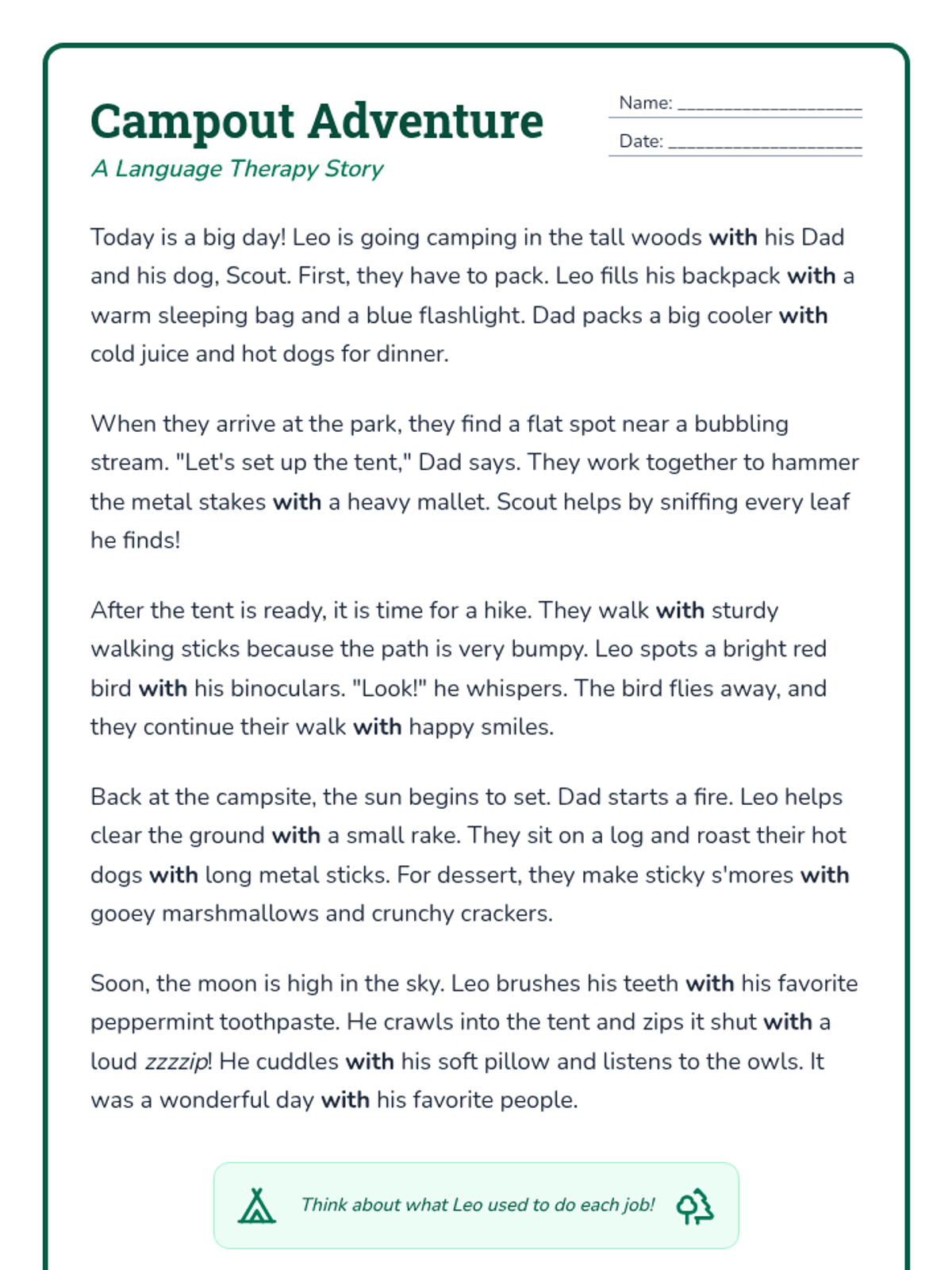
A one-page camping story designed to emphasize the function word 'with' in various contexts, followed by 15 fill-in-the-blank sentences for practice.
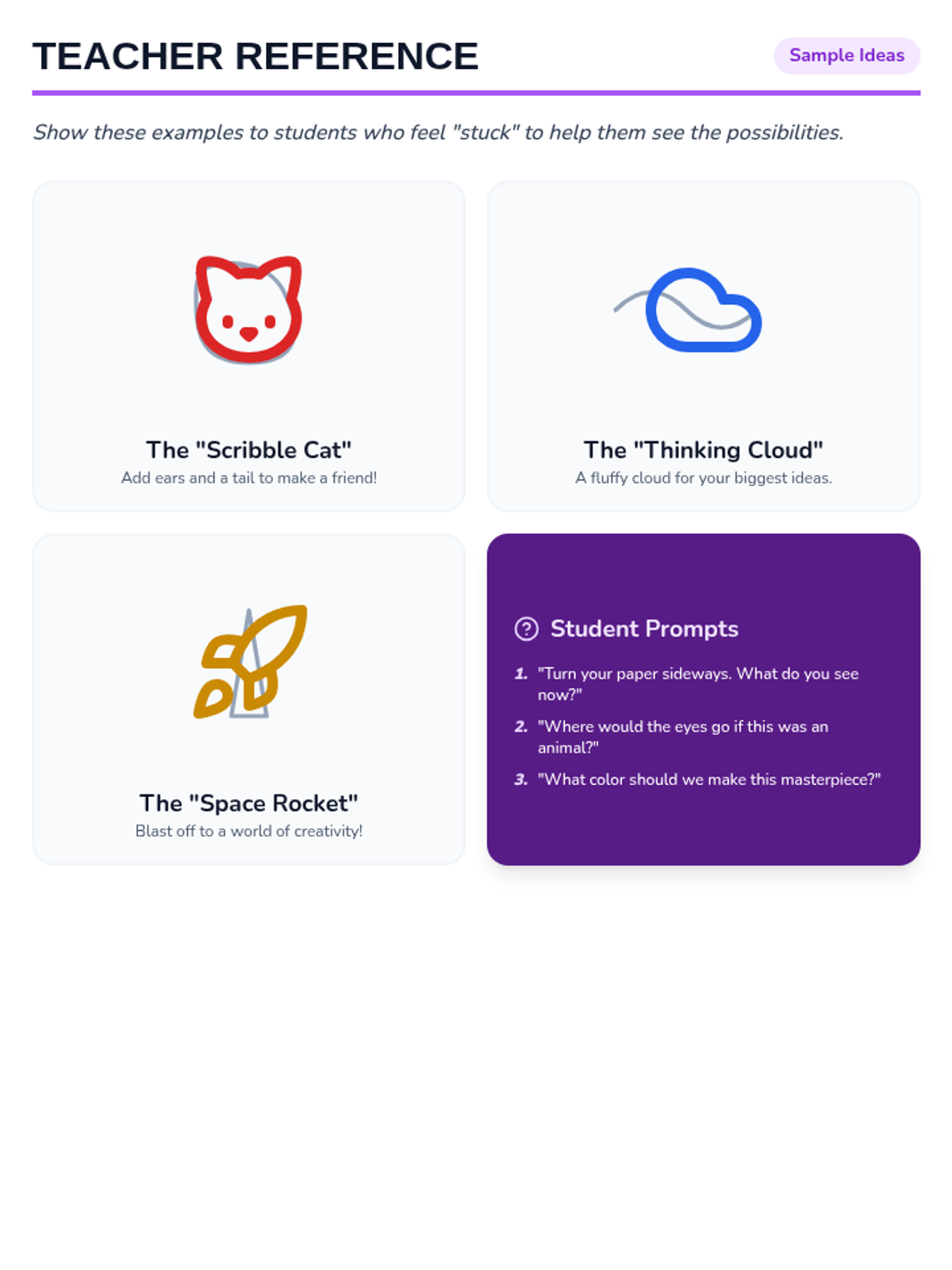
A visual reference for teachers containing sample ideas for the Scribble Surprise activity. Includes prompts and simple illustrated examples to help jumpstart student creativity.
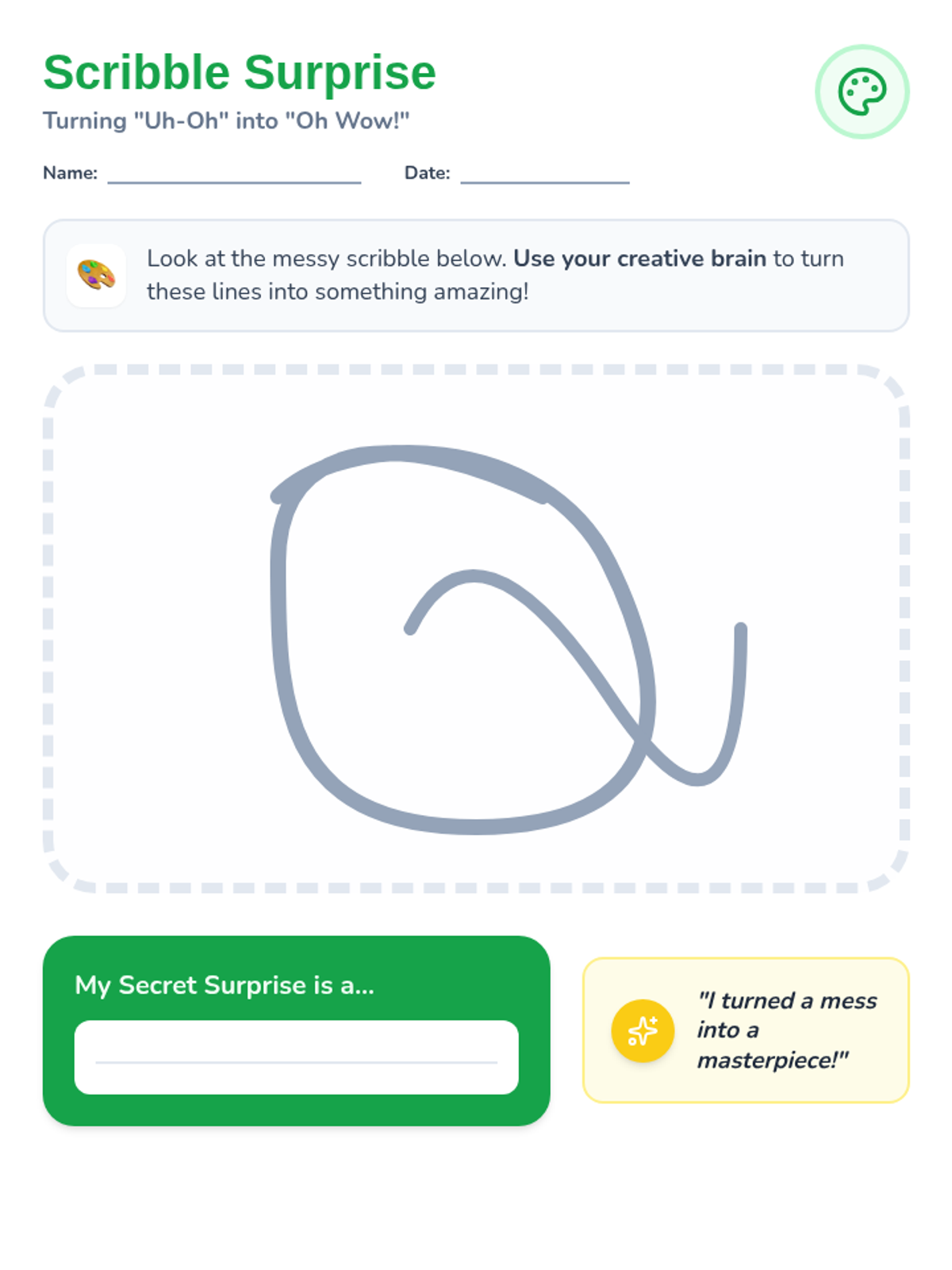
A high-interest activity sheet featuring a large pre-drawn 'scribble'. Students use their creativity to transform the lines into a recognizable object, fostering cognitive flexibility and self-confidence.
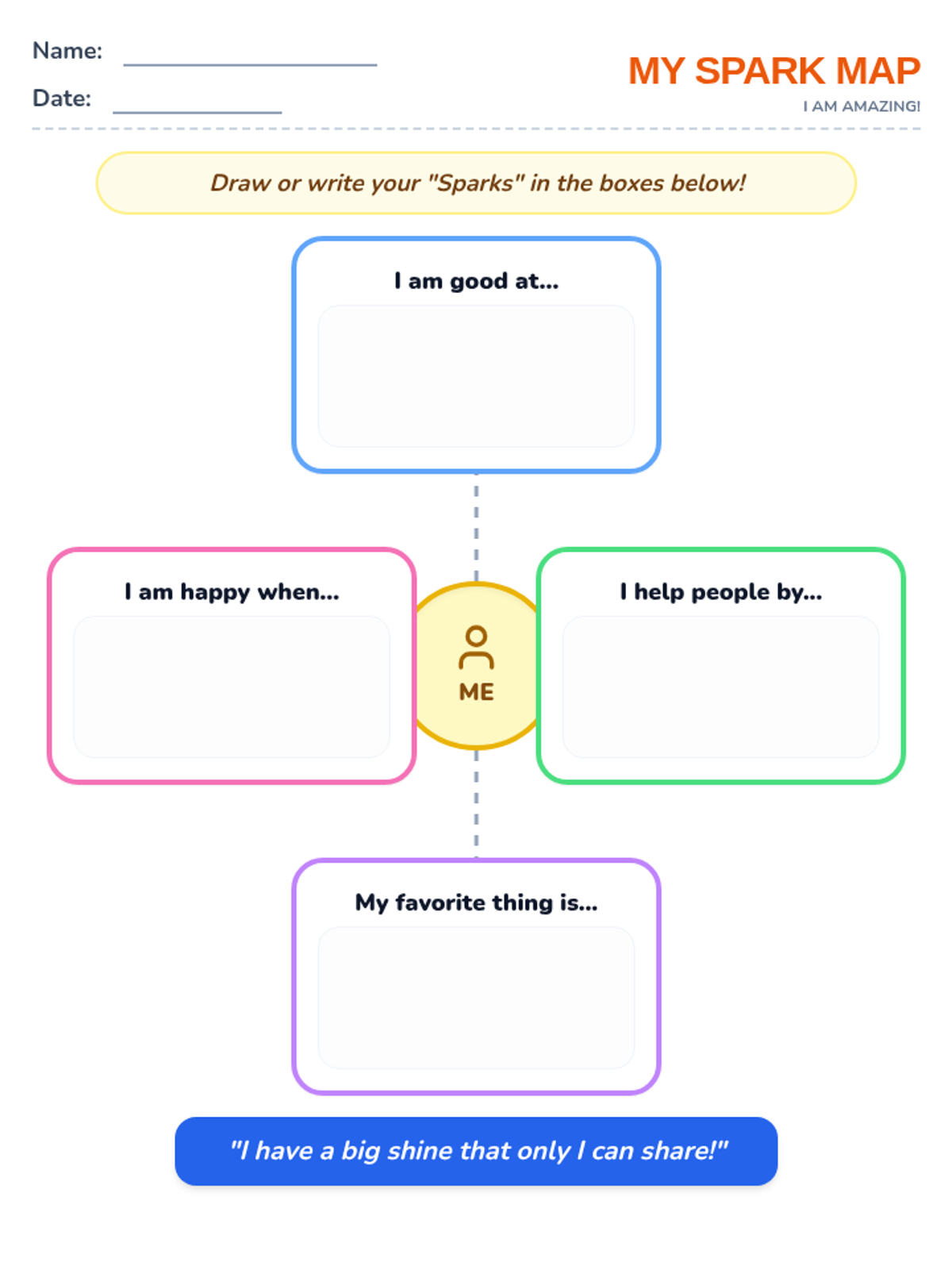
A graphic organizer for K-2 students to visualize their strengths and interests (sparks). Features a lightbulb theme with designated areas for drawing or writing personal reflections.
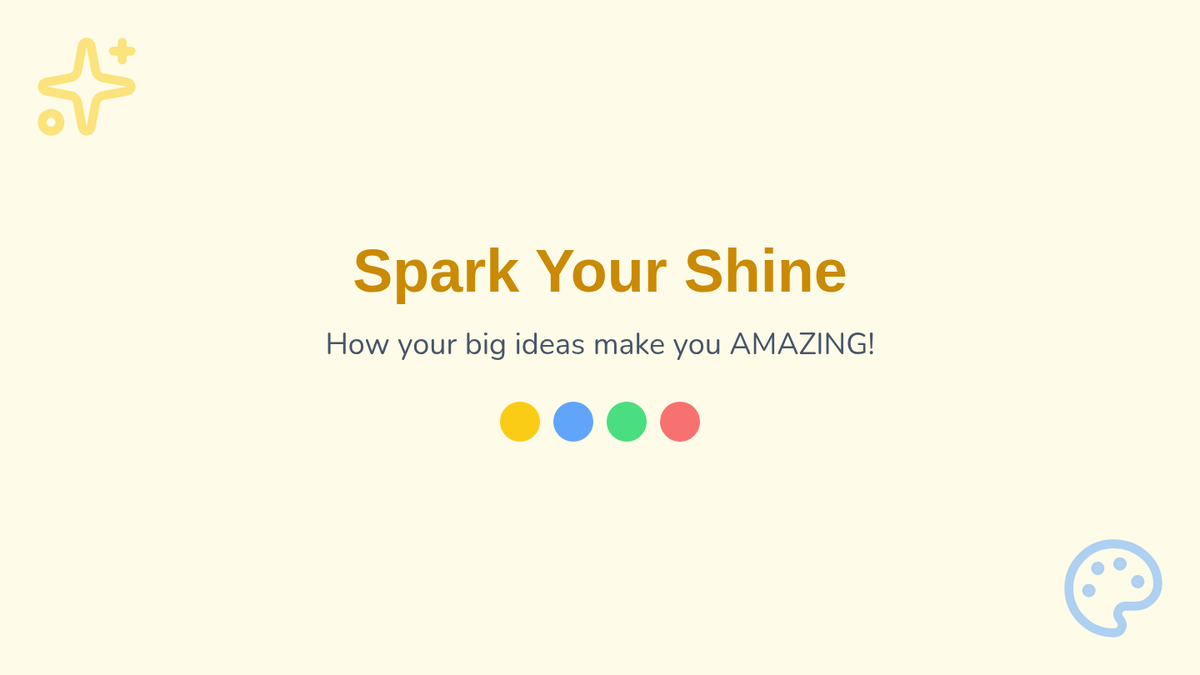
A vibrant, high-contrast slide deck designed for K-2 students, introducing the concept of a 'creative spark' and building self-esteem through art. Includes visual prompts and positive affirmations.
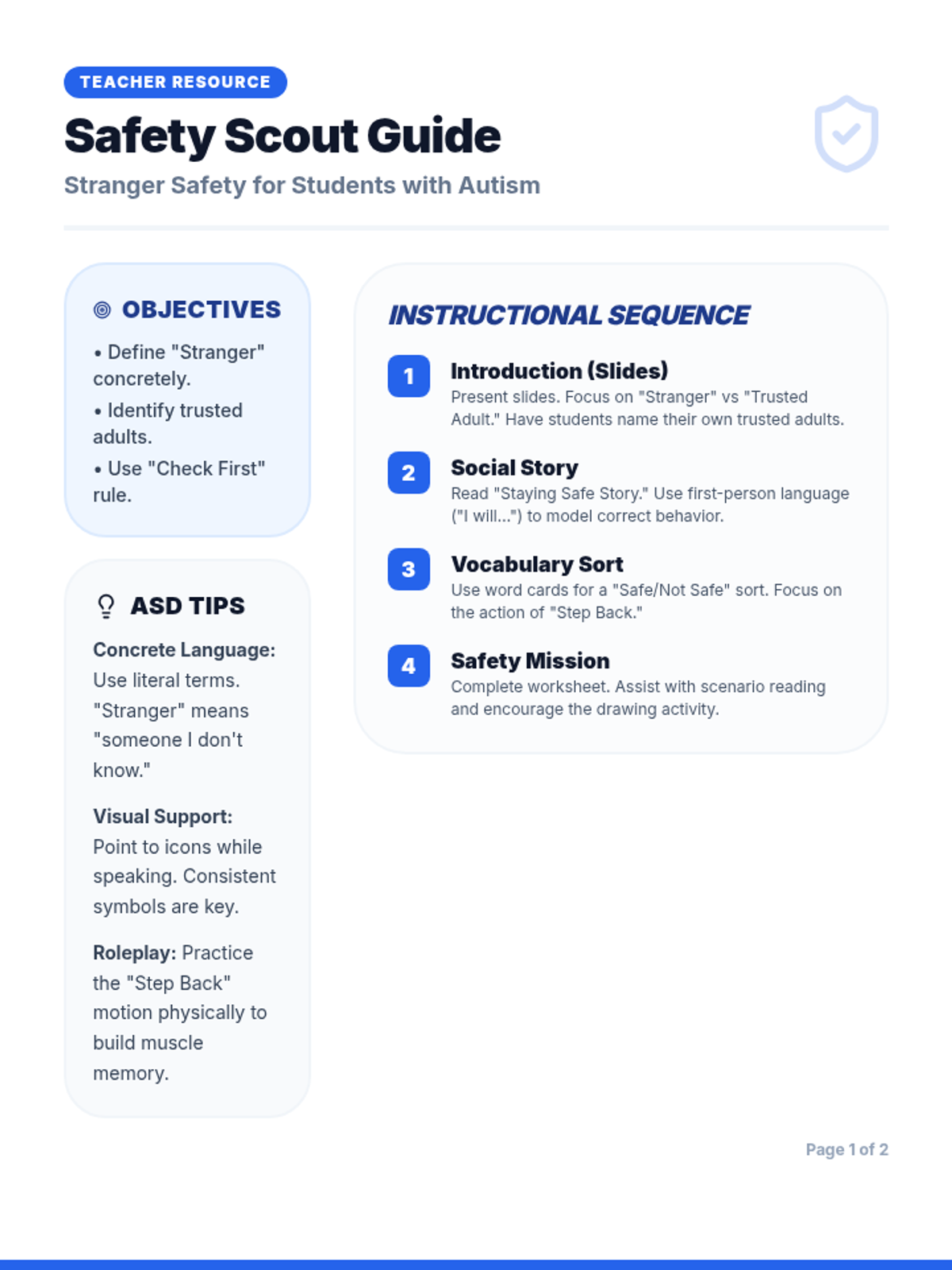
A teacher's facilitation guide with instructional sequences, tips for teaching safety concepts to students with ASD, and differentiation strategies. Revised for improved page breaks and layout efficiency.
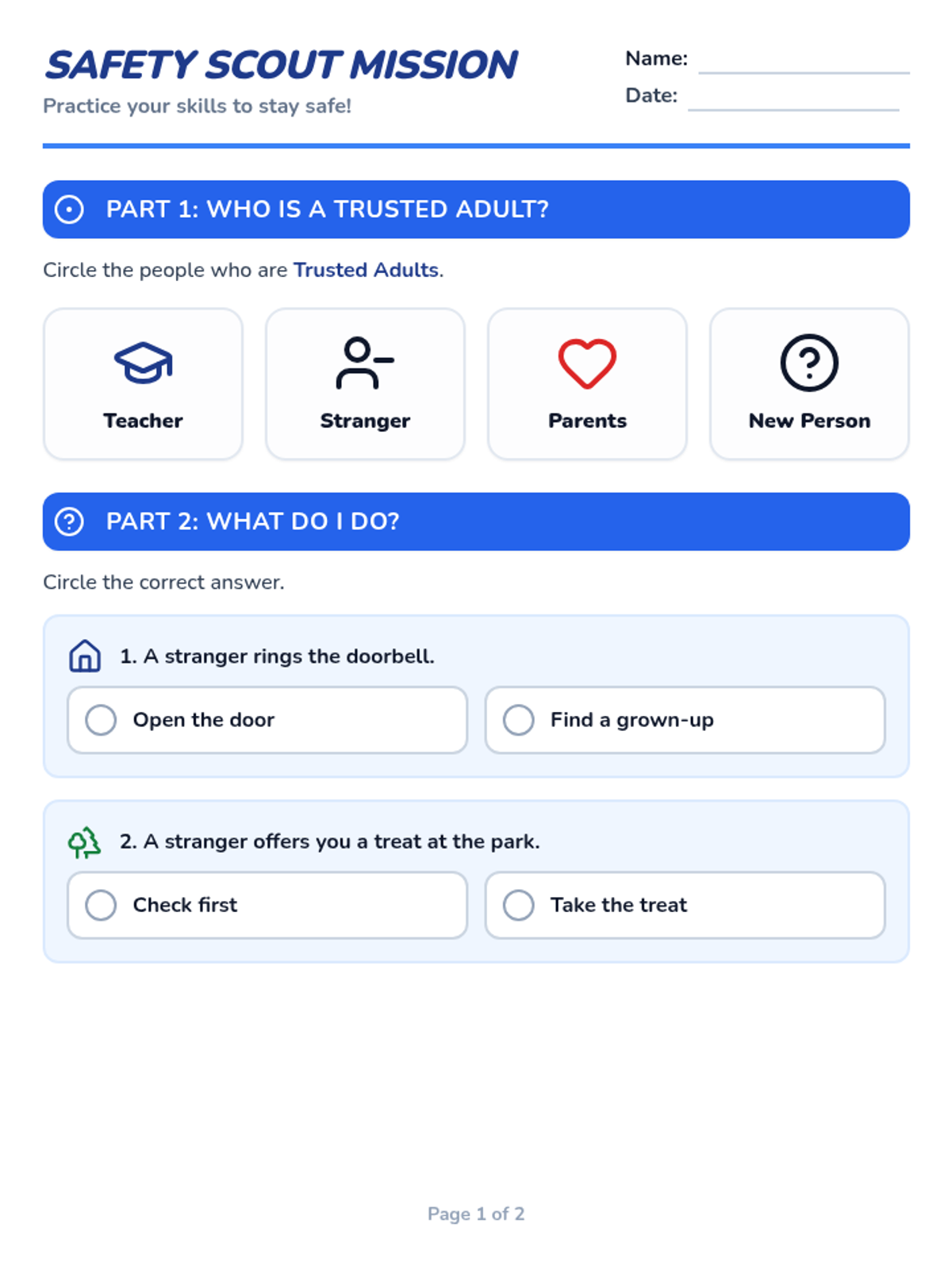
Interactive worksheet for students to identify trusted adults, choose correct safety actions in scenarios, and illustrate a trusted adult in their life. Revised for better page breaks, pure white drawing area, and higher contrast icons.
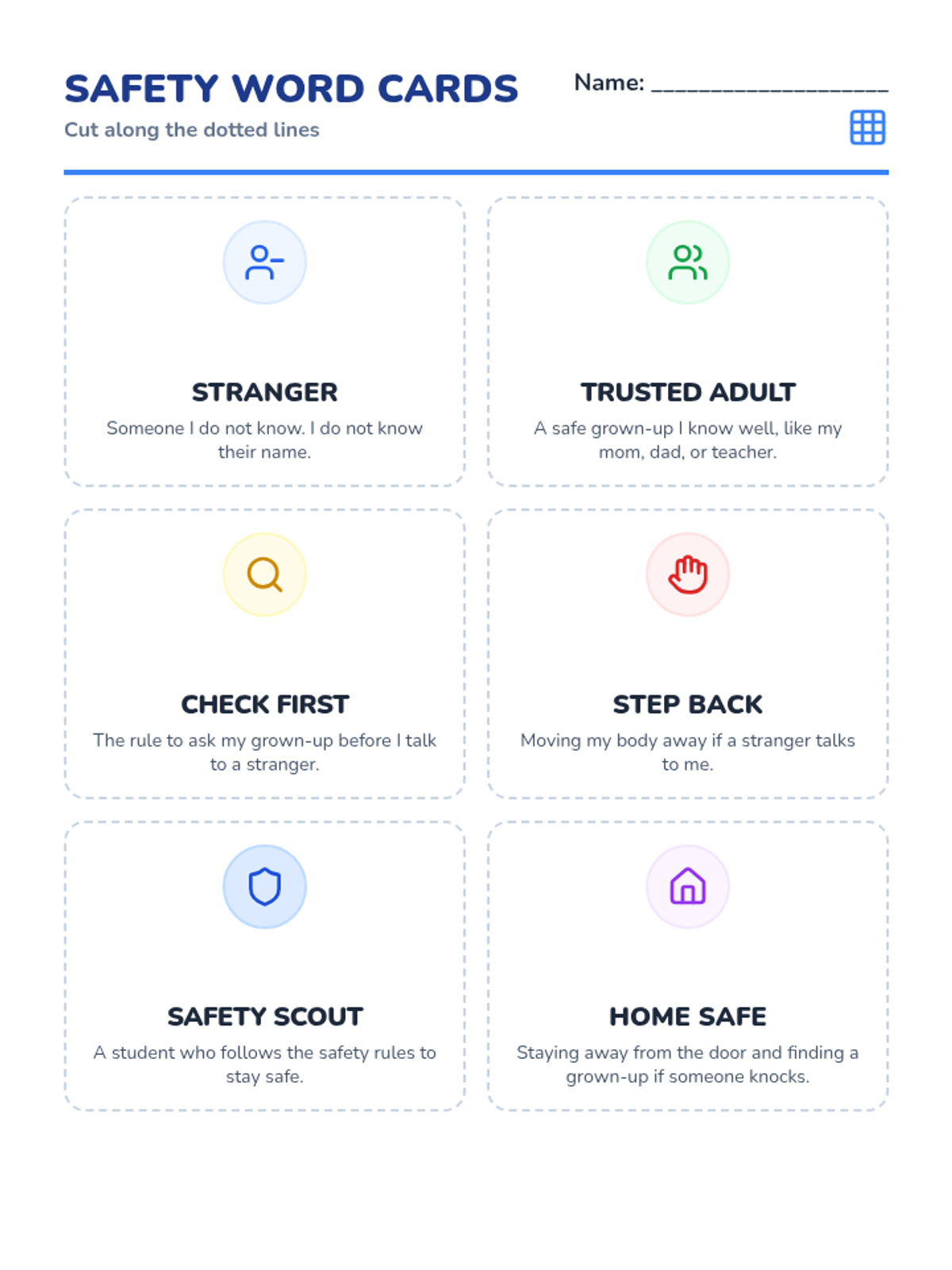
Flashcards featuring key vocabulary (Stranger, Trusted Adult, Check First, Step Back) with visual icons and simple definitions. Revised to fit all 6 cards on one page with the name field at the top.
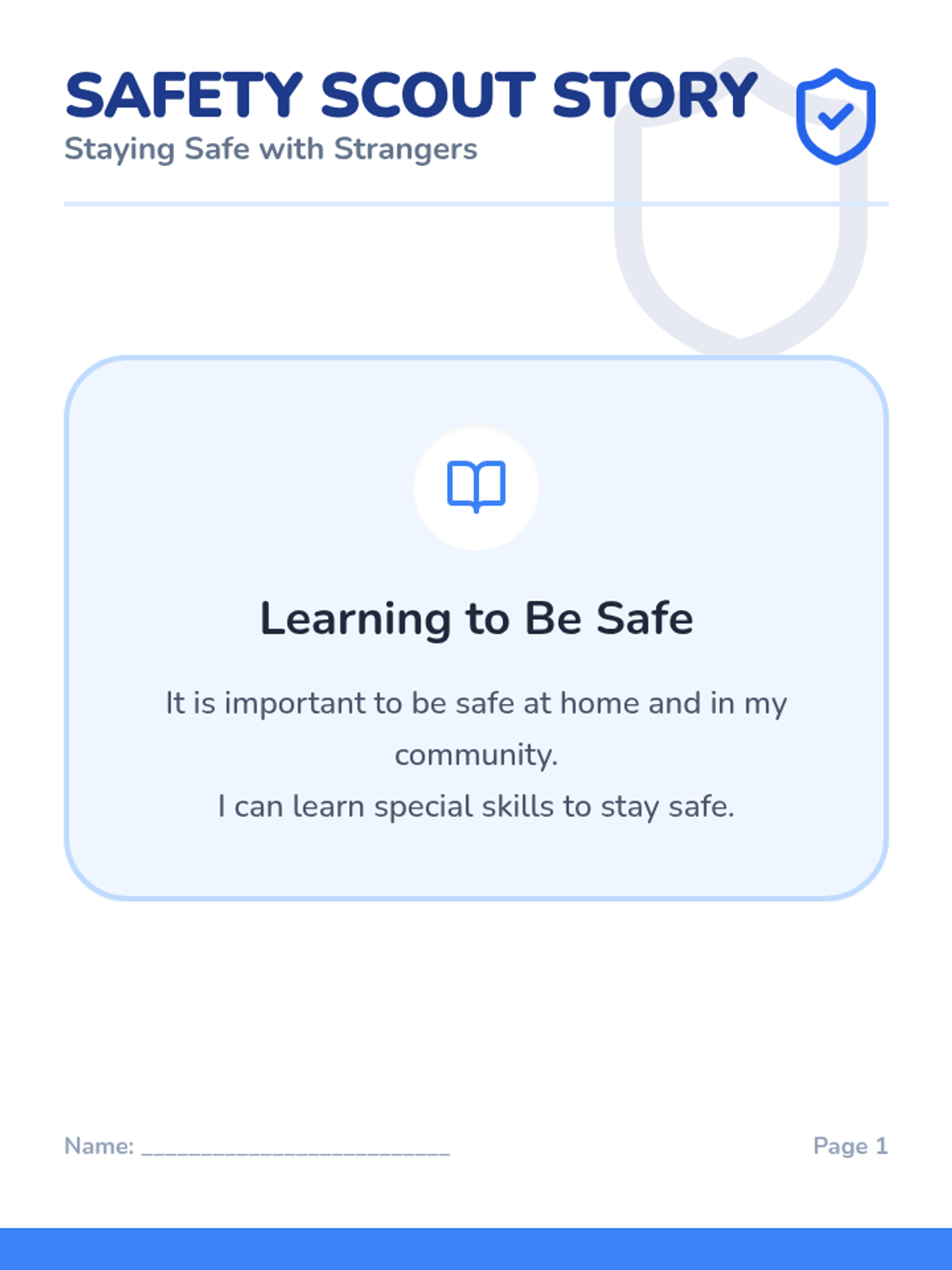
A social story document with visual supports and clear language, focusing on defining strangers and practicing the 'Check First' rule for home and community safety. Revised with improved page breaks and font sizes.
Visual slide presentation teaching the definition of a stranger, identifying trusted adults, and safety rules for home (the door) and community (the park). Includes clear icons and a practice scenario.
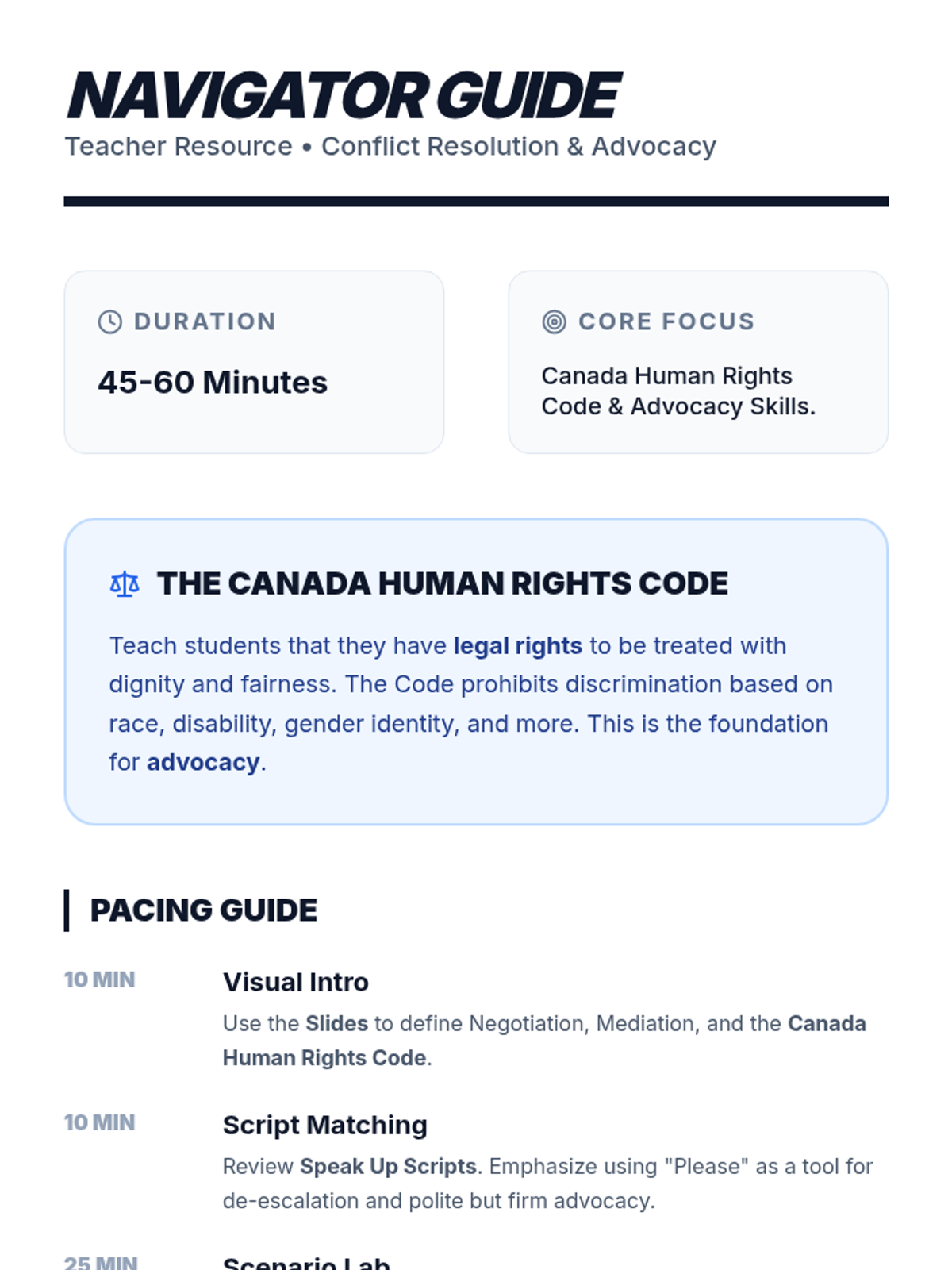
A teacher's guide for the "Conflict Navigators" lesson, providing instructional strategies for teaching advocacy through the lens of the Canada Human Rights Code.
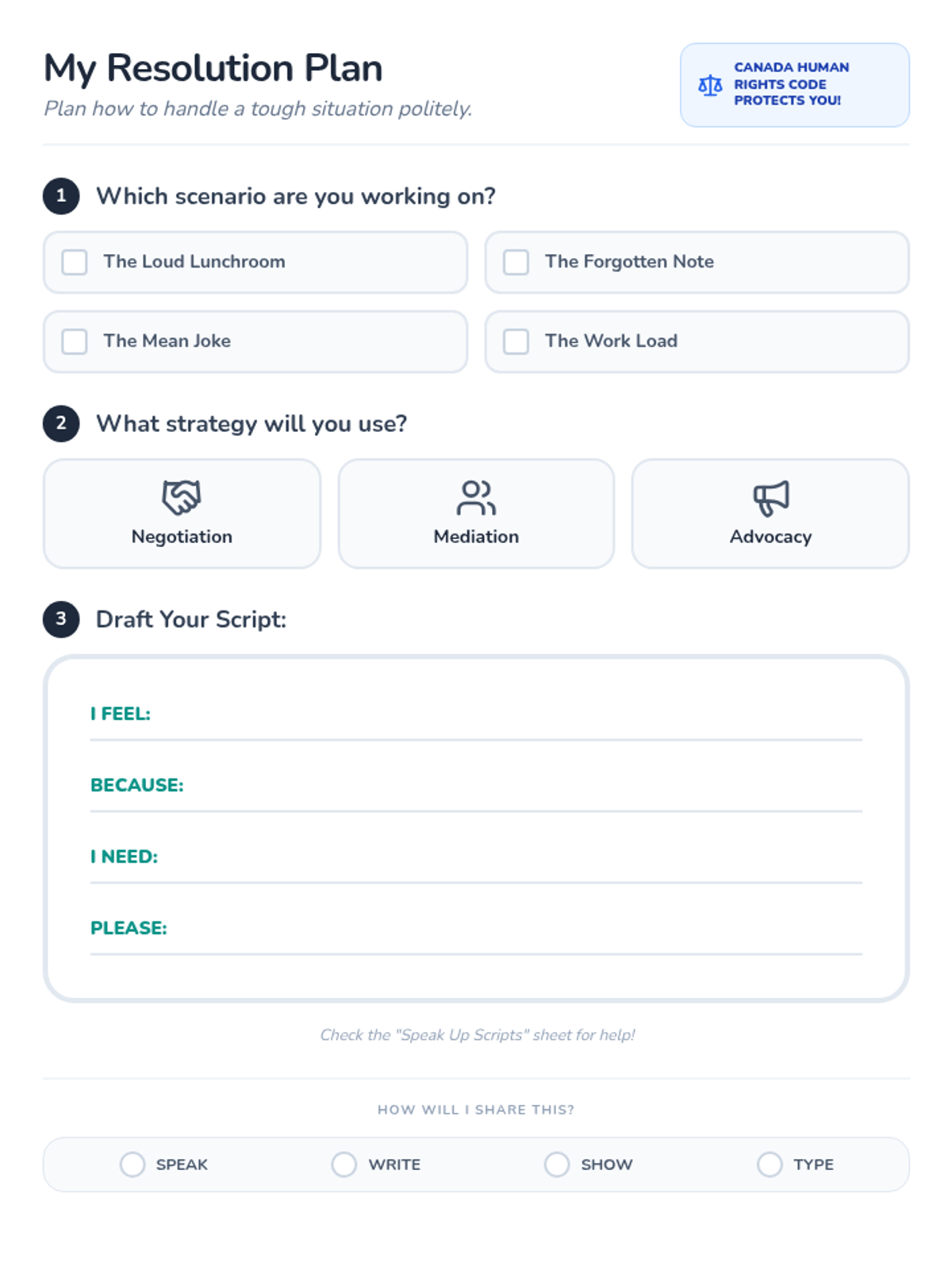
A student worksheet for planning a response to a conflict or advocacy scenario. Updated with the "please" formula, Canada Human Rights Code references, and uniform strategy colors. Space for student writing increased.
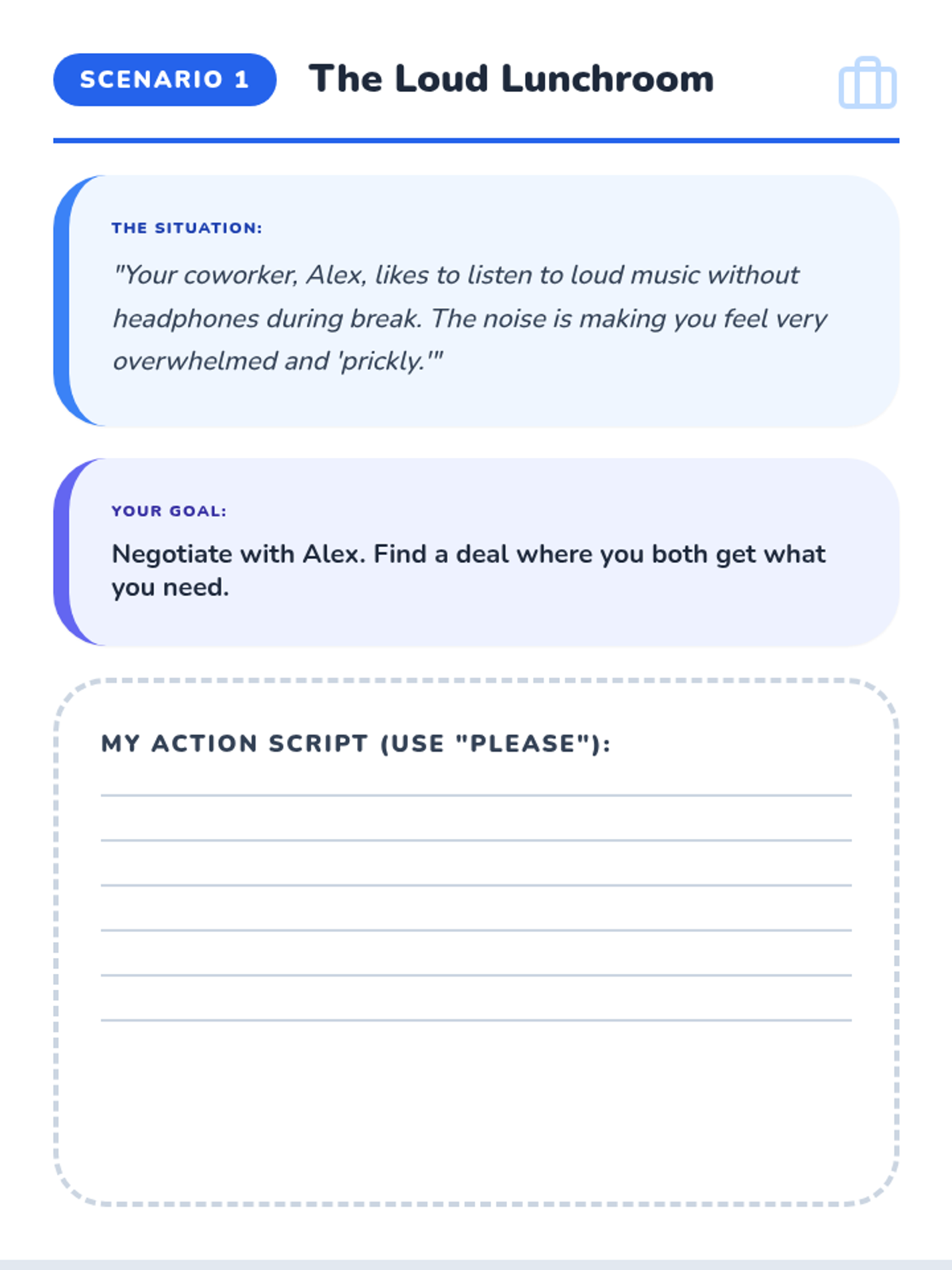
A set of role-play scenario activity sheets focusing on real-world workplace and post-secondary conflict and advocacy situations. Updated with Canada Human Rights Code references.