A teacher guide for the Gridiron Grammar lesson. It includes instructional steps for teaching Wilson Step 6 word division, discussion questions based on the AJ Brown trade article, and a vocabulary lexicon.
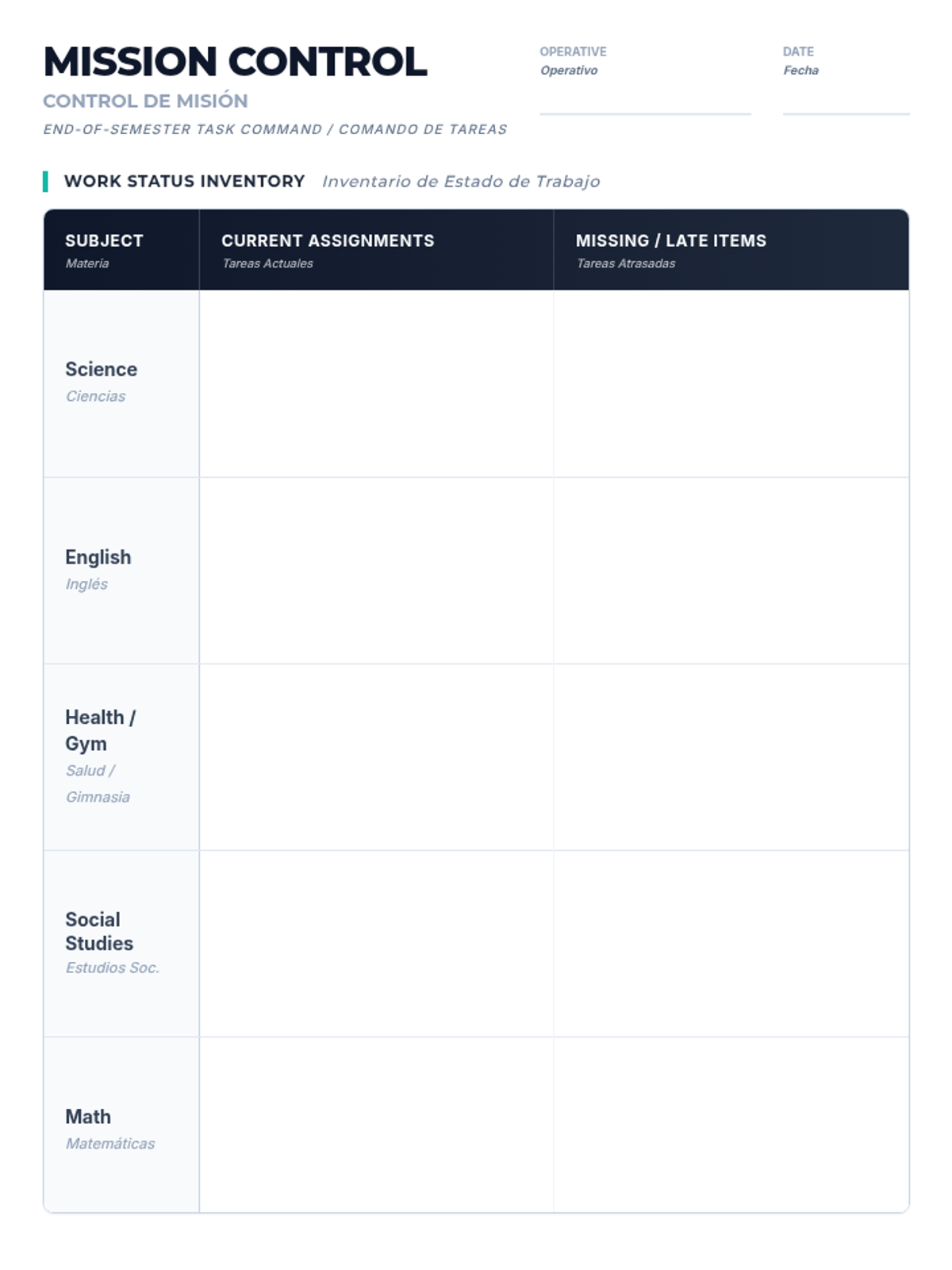
A bilingual (English/Spanish) 'Mission Control' organizer with significantly enlarged writing areas. Features a subject grid for current and missing work, a 'Deployment Sequence' for ordering assignments numerically, and updated reflection questions including a teacher check-in prompt.
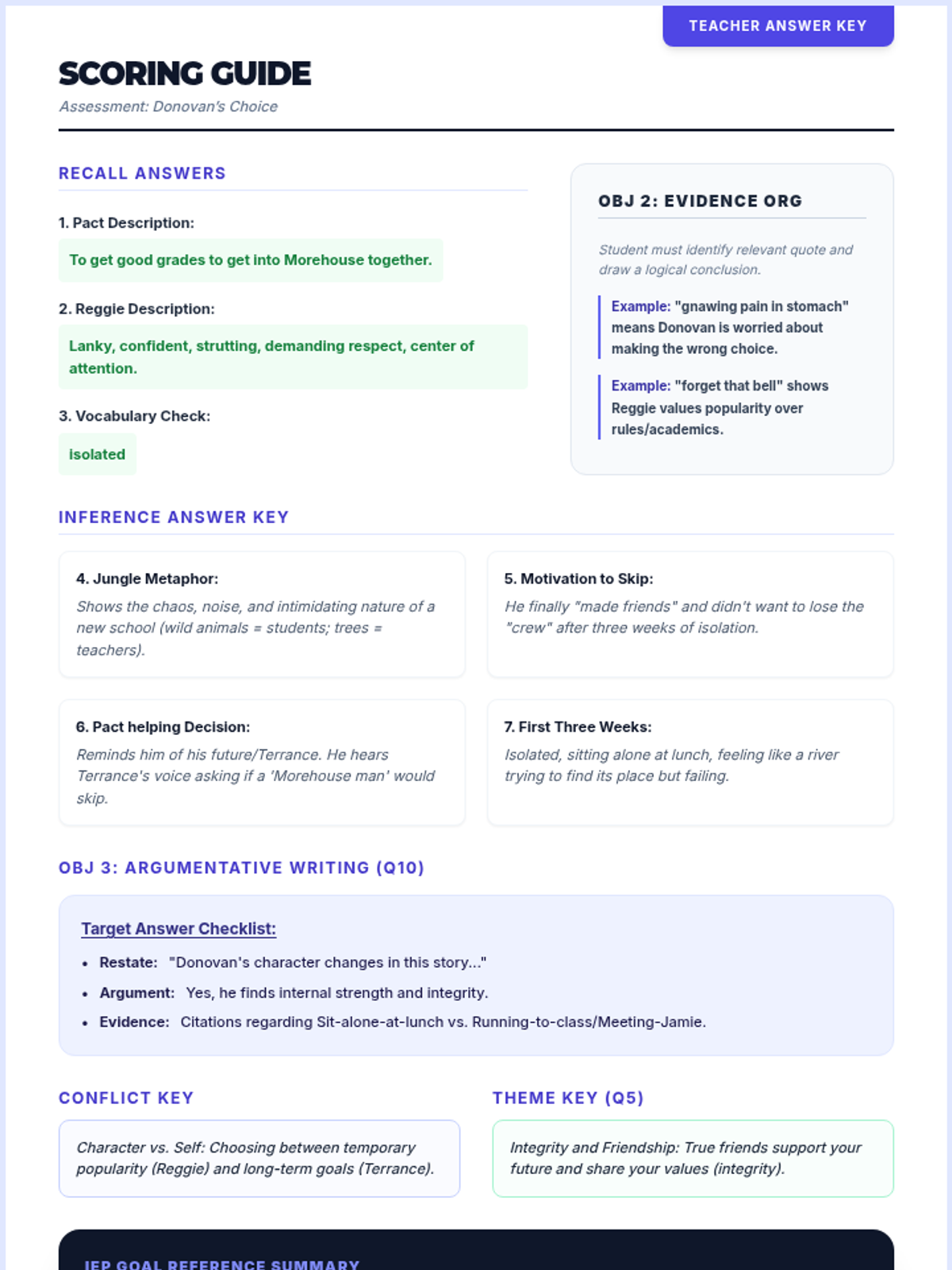
A teacher guide and answer key for the revised Donovan's Choice assessment. Provides clear scoring criteria for active reading reflections, evidence citation, restate/answer formatting, and identification of conflict and theme.
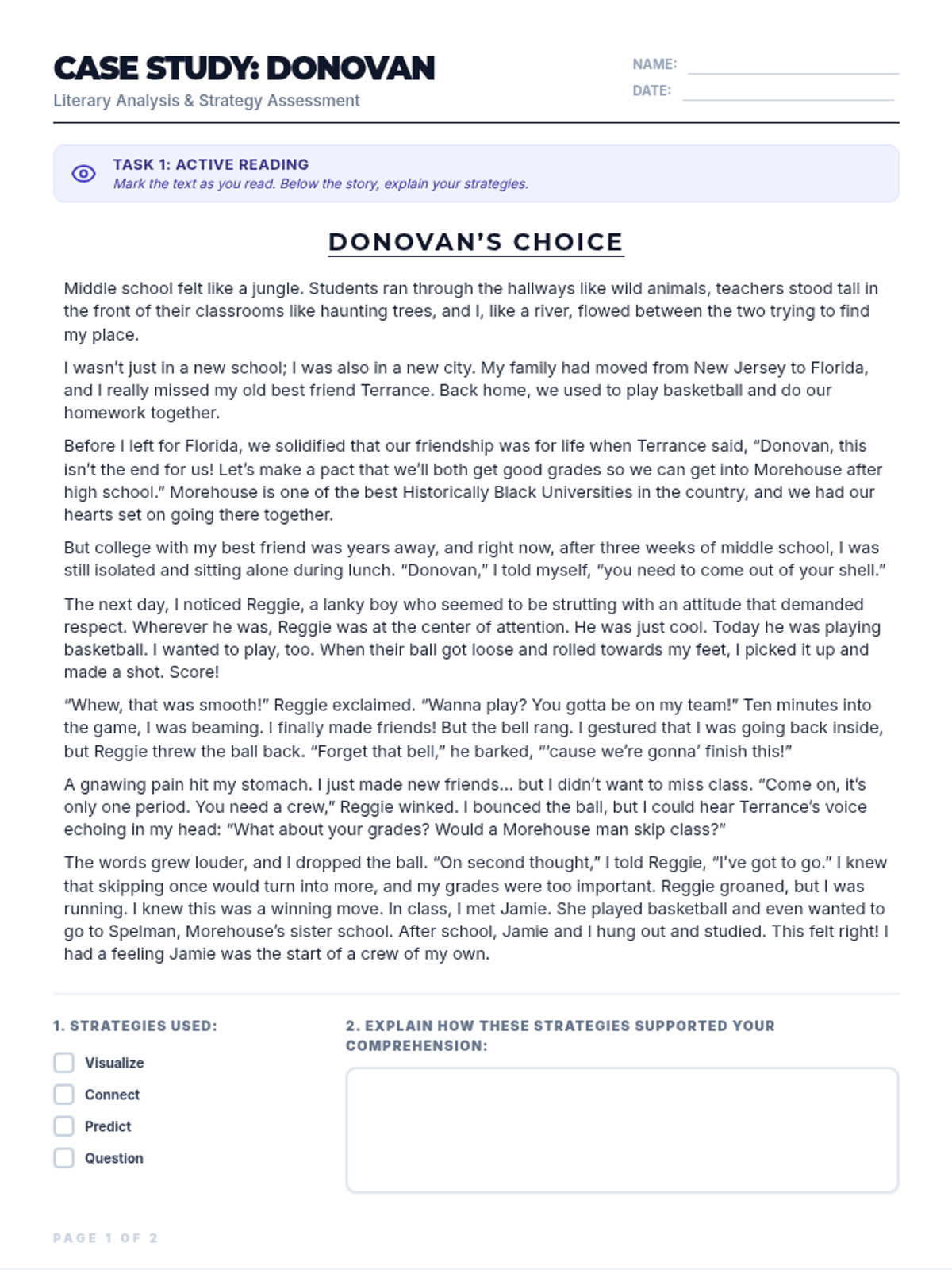
A 2-page student assessment document mapping to specific IEP objectives and incorporating 10 targeted comprehension questions. Includes sections for active reading strategy reflection, a textual evidence organizer, inferential writing with restate/answer formatting, and a conflict/theme graphic map.
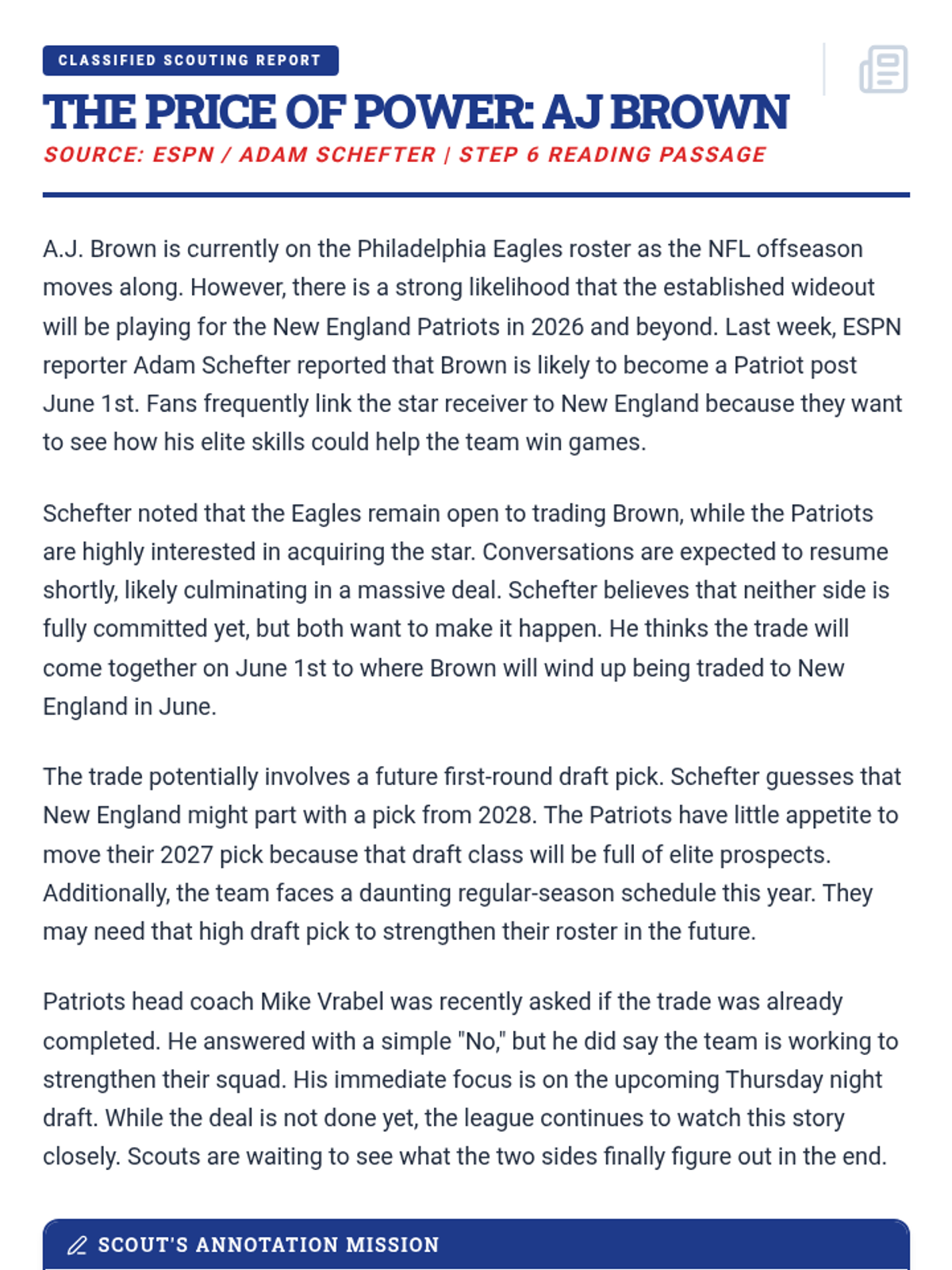
A clean 4-paragraph reading passage based on the AJ Brown trade news, specifically formatted for student annotation of Wilson Step 6 multisyllabic word patterns.
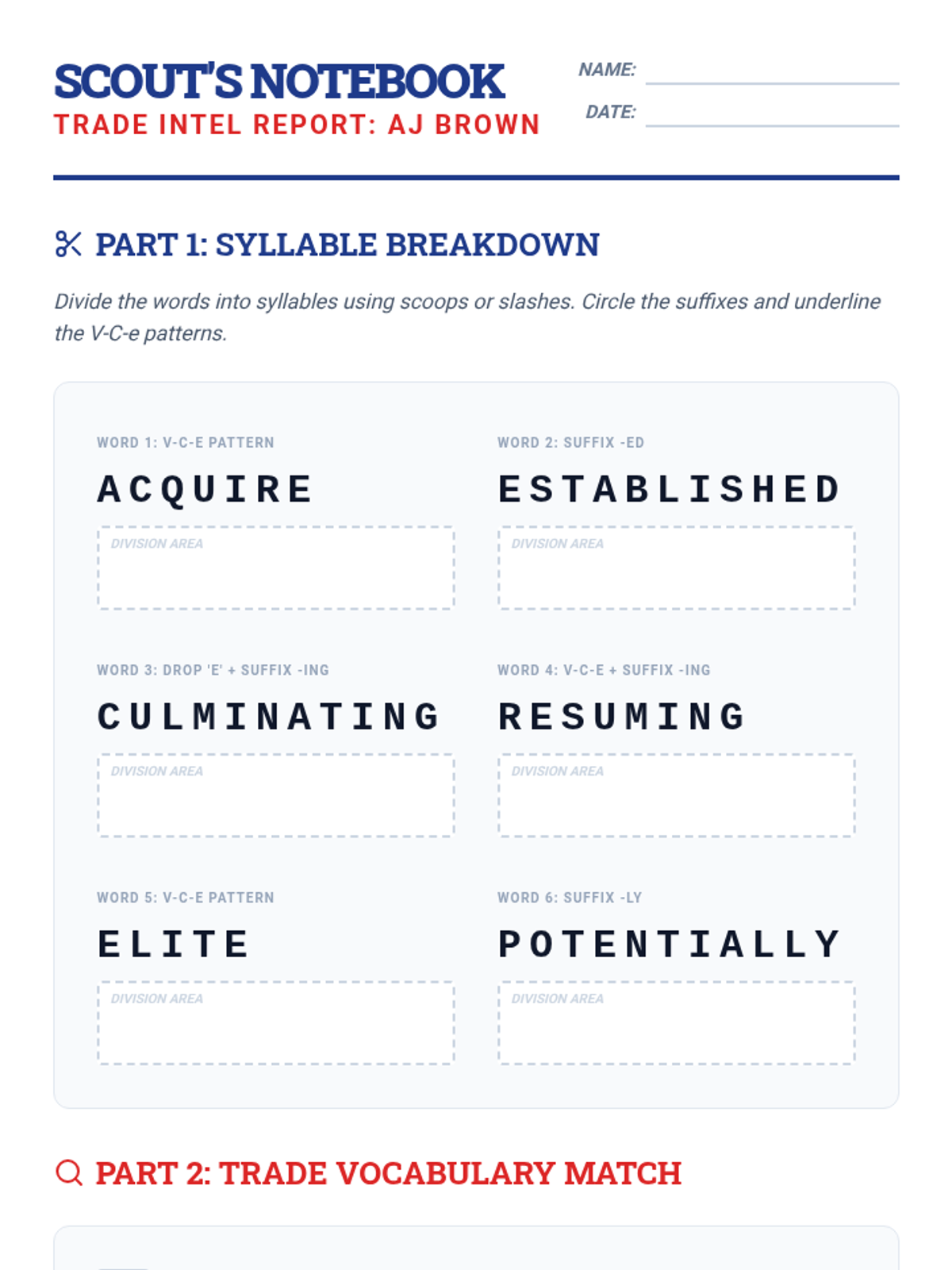
A student worksheet focusing on Wilson Step 6 skills. Includes syllable division practice for multisyllabic words like CULMINATING and RESUMING, vocabulary matching, and reading comprehension questions.
A slide deck for a Wilson Step 6 lesson. It covers multisyllabic word division (V-C-e and suffixes like -ed, -ly, -ing) using football-themed examples and vocabulary from the AJ Brown trade article. Includes specific Tier 2 vocabulary slides and the reading passage.
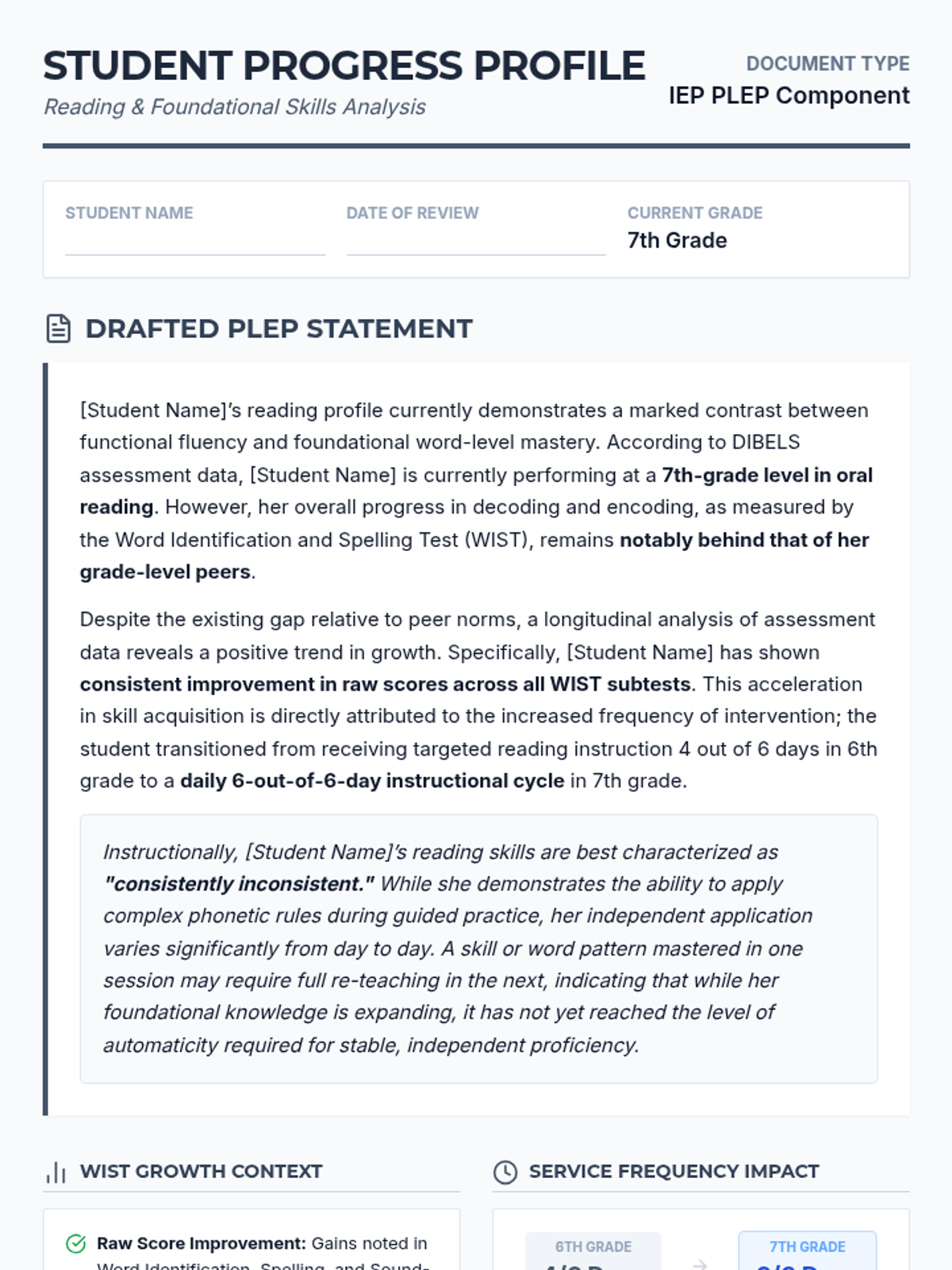
A professional teacher resource providing a drafted IEP PLEP statement for a 7th-grade student. It details reading progress, WIST raw score improvements, and the direct impact of increased instructional frequency while addressing the student's inconsistent skill application.
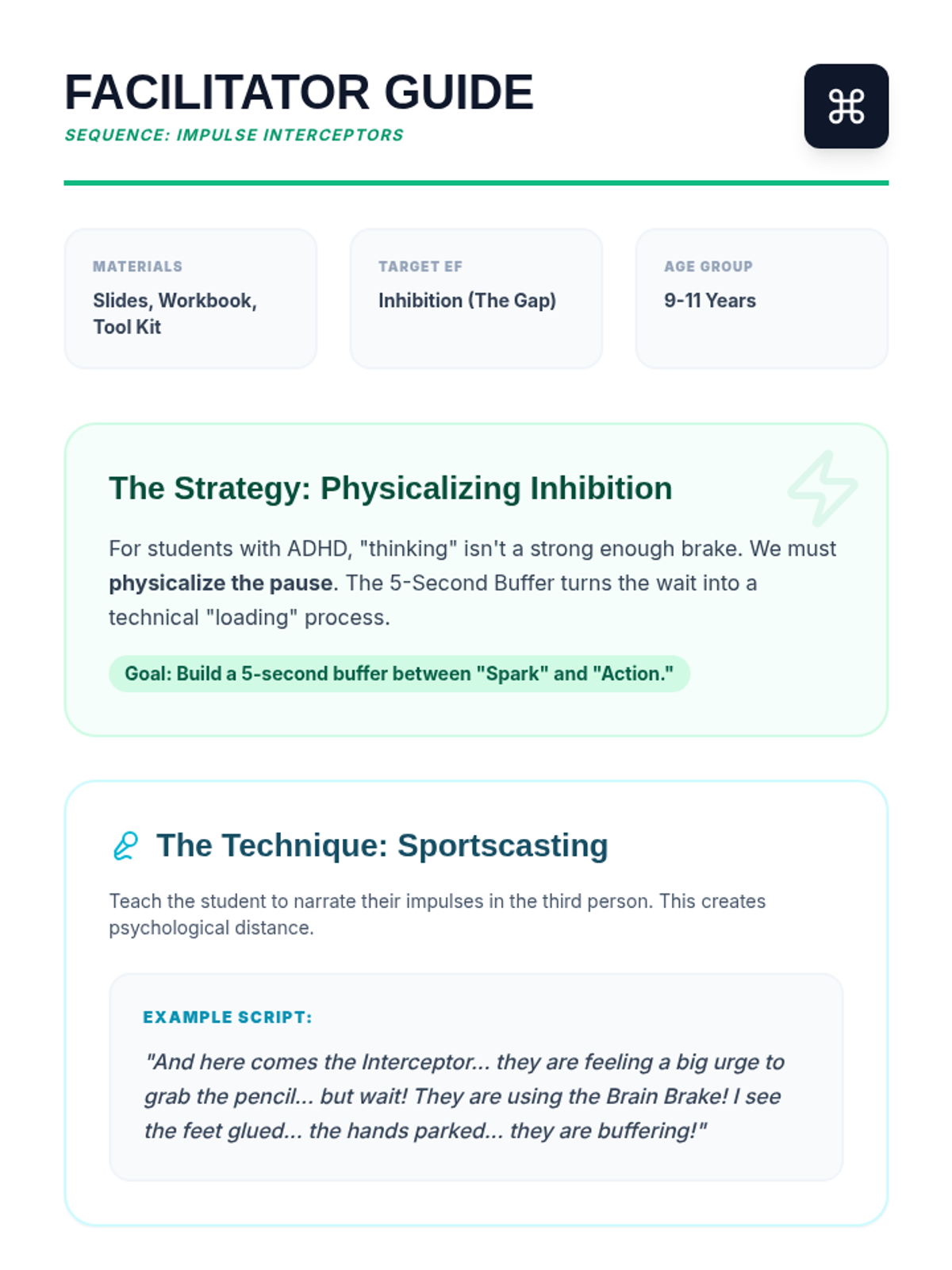
Instructional guide for teachers and facilitators on how to implement the Impulse Interceptors techniques, including cueing strategies and troubleshooting.
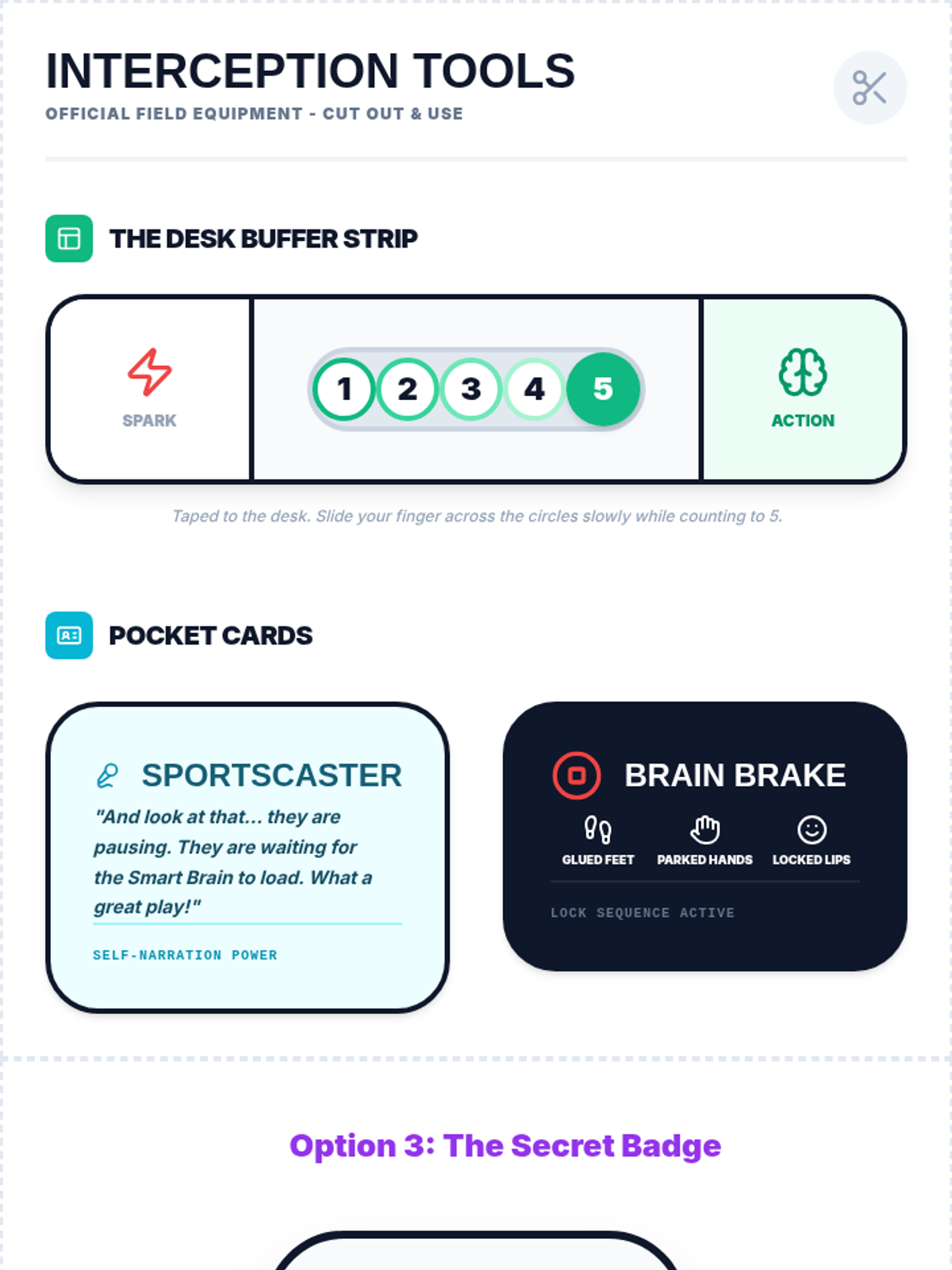
A collection of printable desk strips, pocket cards, and badges to provide tactile and visual reminders for the 'Brain Brake' and '5-Second Buffer' techniques.
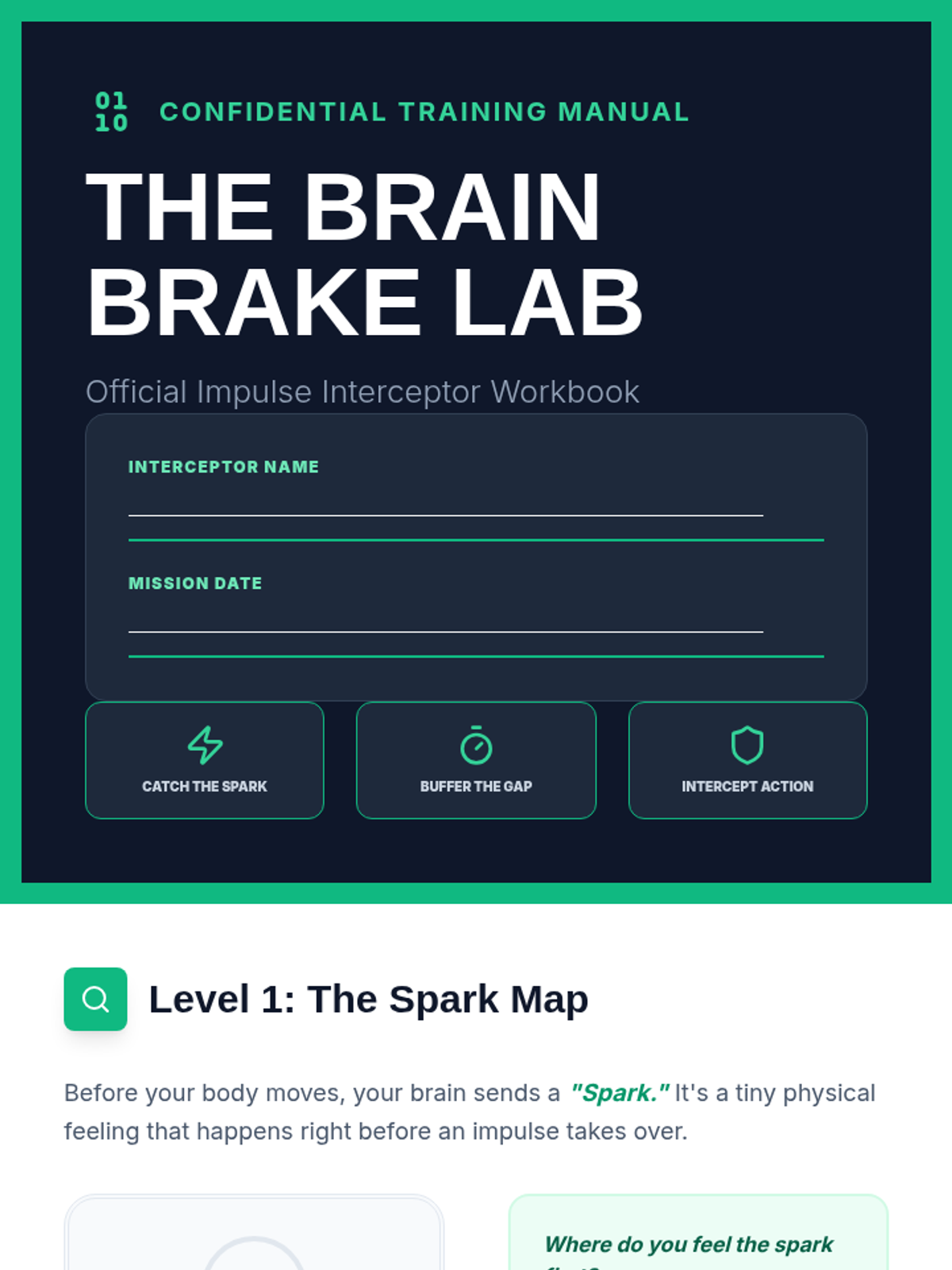
A 4-page interactive workbook teaching the 'Brain Brake', 'Sportscasting', and 'Buffer Zone' techniques for impulse inhibition.
Introductory slide deck for 'Impulse Interceptors', teaching students about the Brain Brake, Sportscasting, and the 5-Second Buffer to improve impulse control.
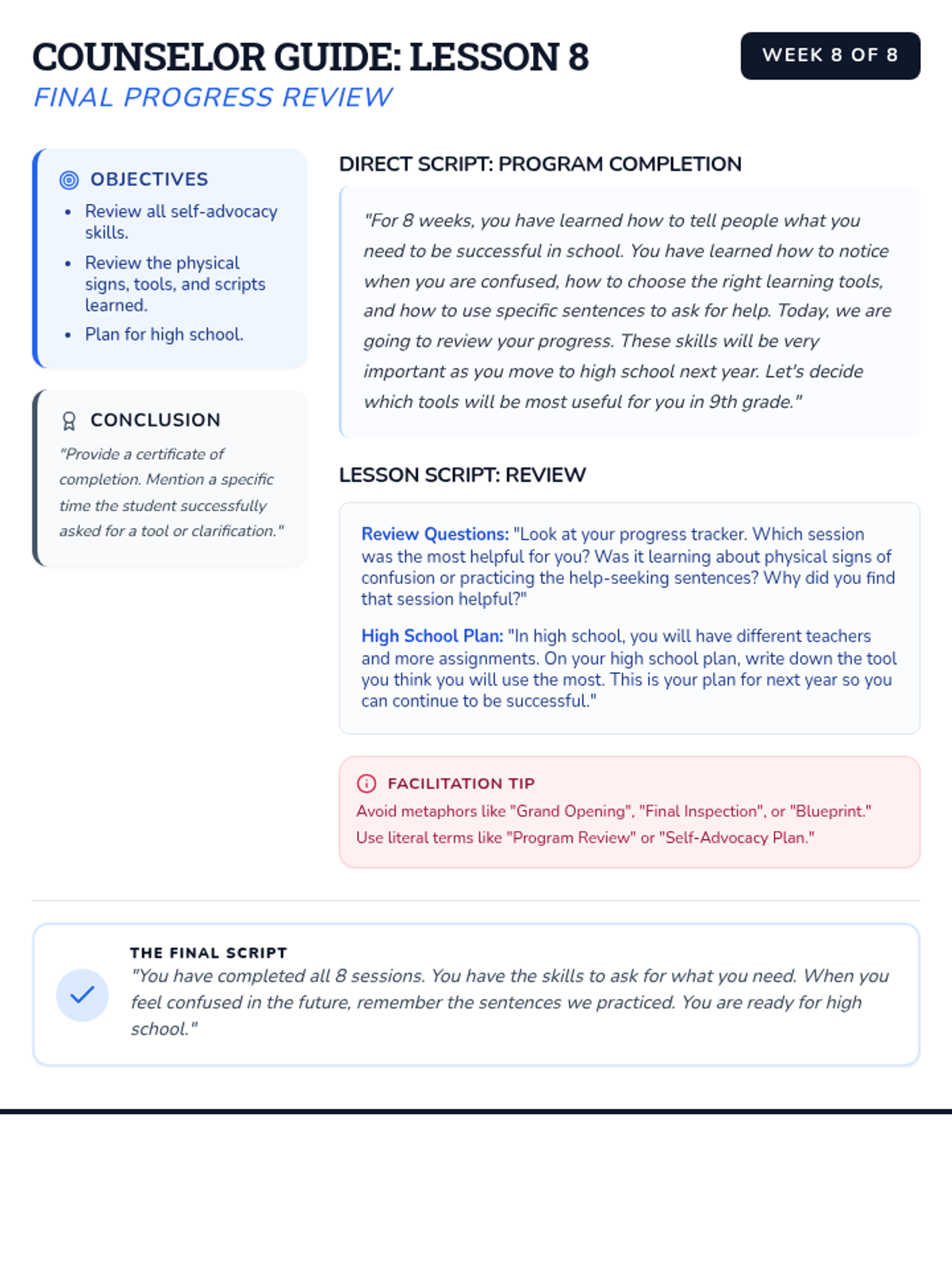
Expanded counselor guide for Week 8 with more detailed word-for-word scripts and instructional notes. Reverted to the original blue blueprint theme. Removed all IEP/Goal terminology.
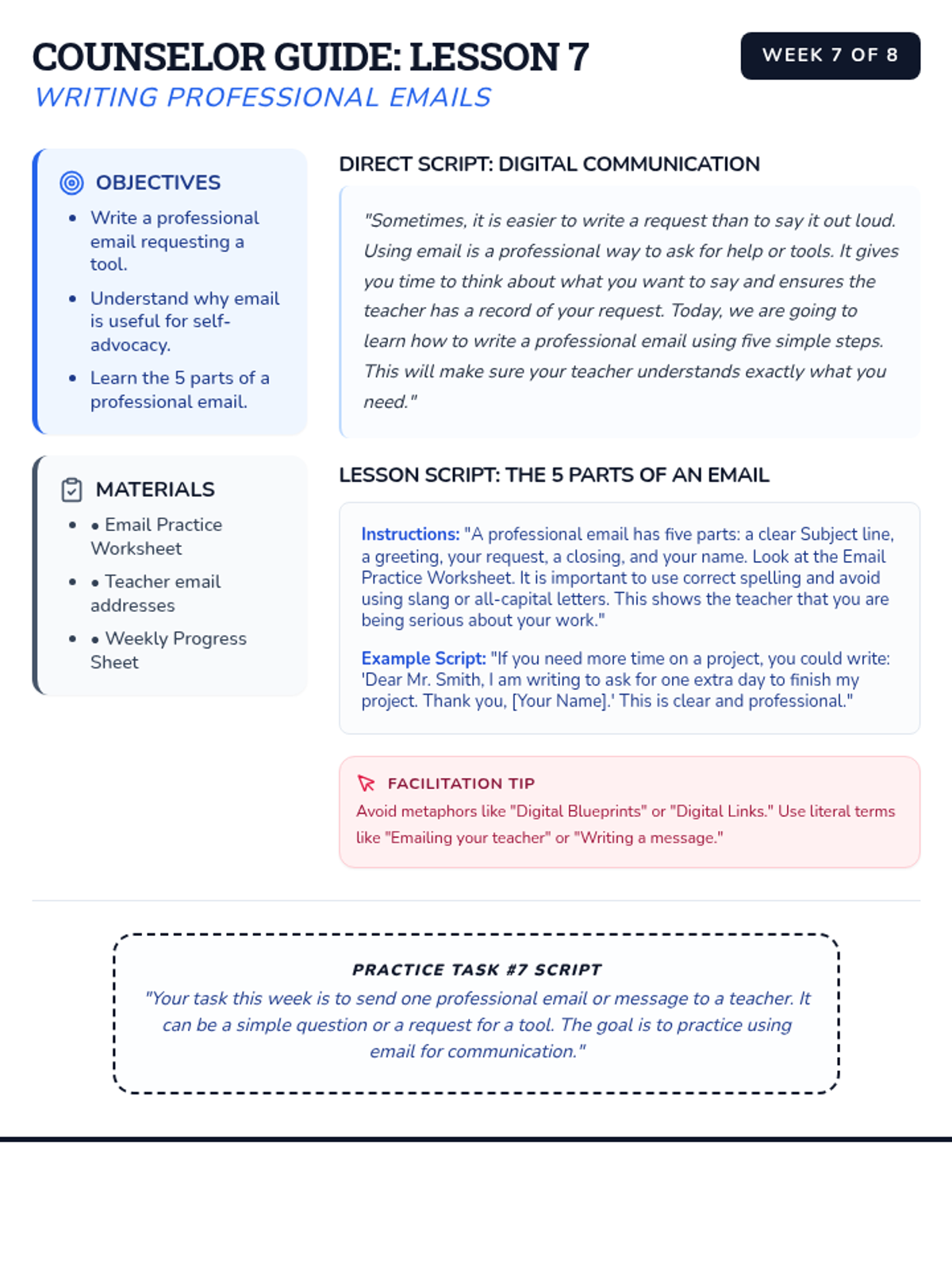
Expanded counselor guide for Week 7 with more detailed word-for-word scripts and instructional notes. Reverted to the original blue blueprint theme. Removed all IEP/Goal terminology.
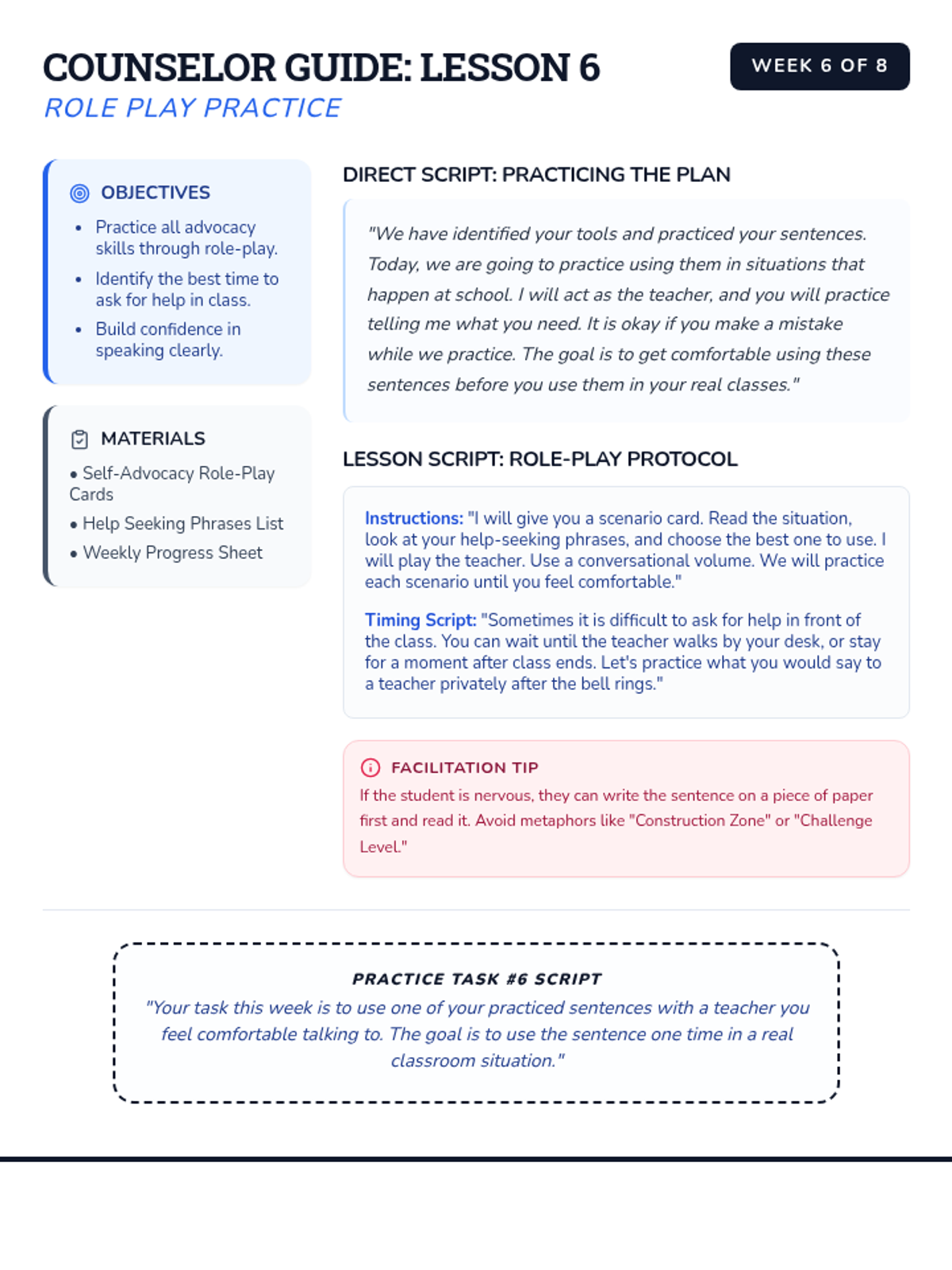
Expanded counselor guide for Week 6 with more detailed word-for-word scripts and instructional notes. Reverted to the original blue blueprint theme. Removed all IEP/Goal terminology.
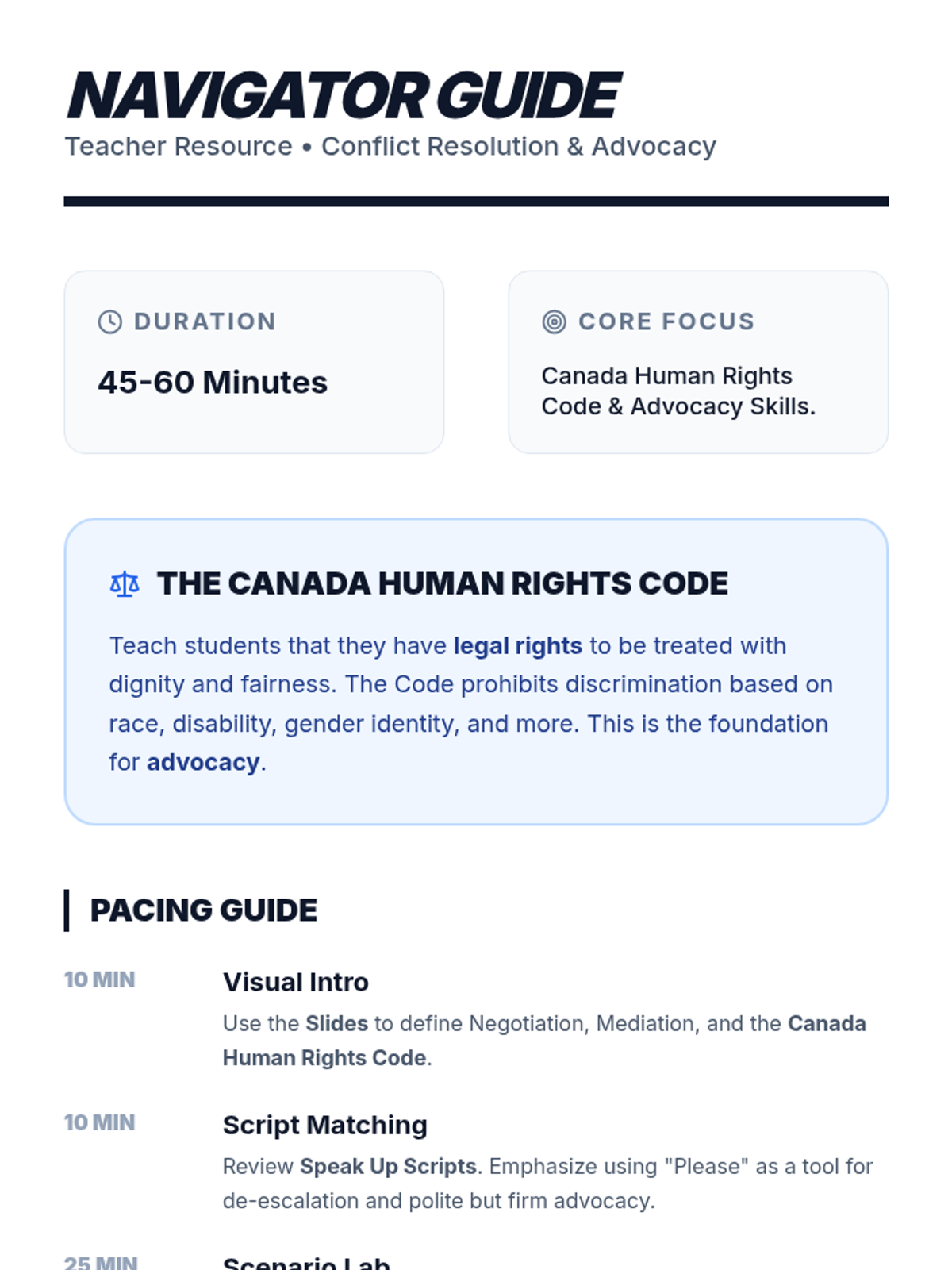
A teacher's guide for the "Conflict Navigators" lesson, providing instructional strategies for teaching advocacy through the lens of the Canada Human Rights Code.
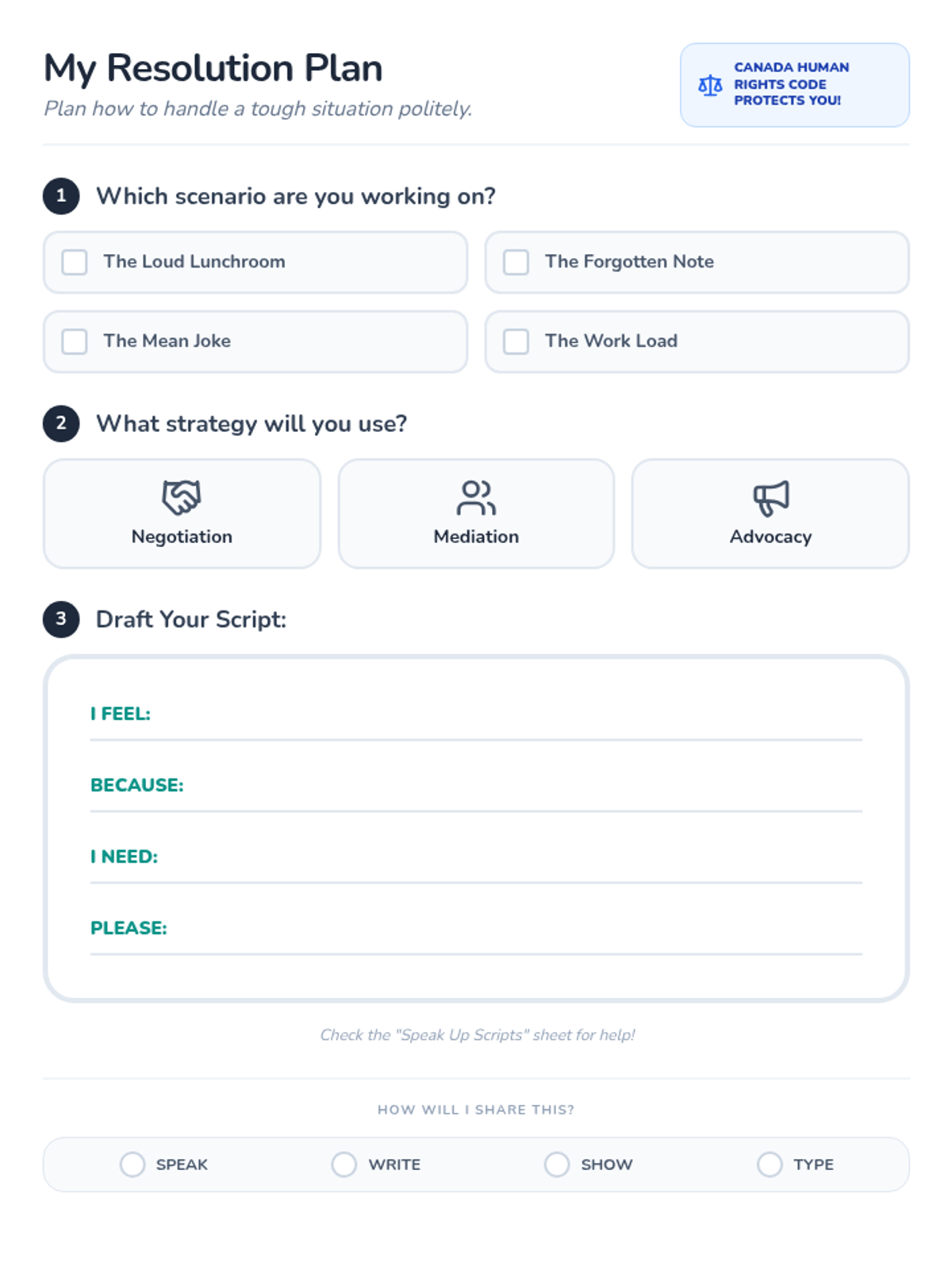
A student worksheet for planning a response to a conflict or advocacy scenario. Updated with the "please" formula, Canada Human Rights Code references, and uniform strategy colors. Space for student writing increased.
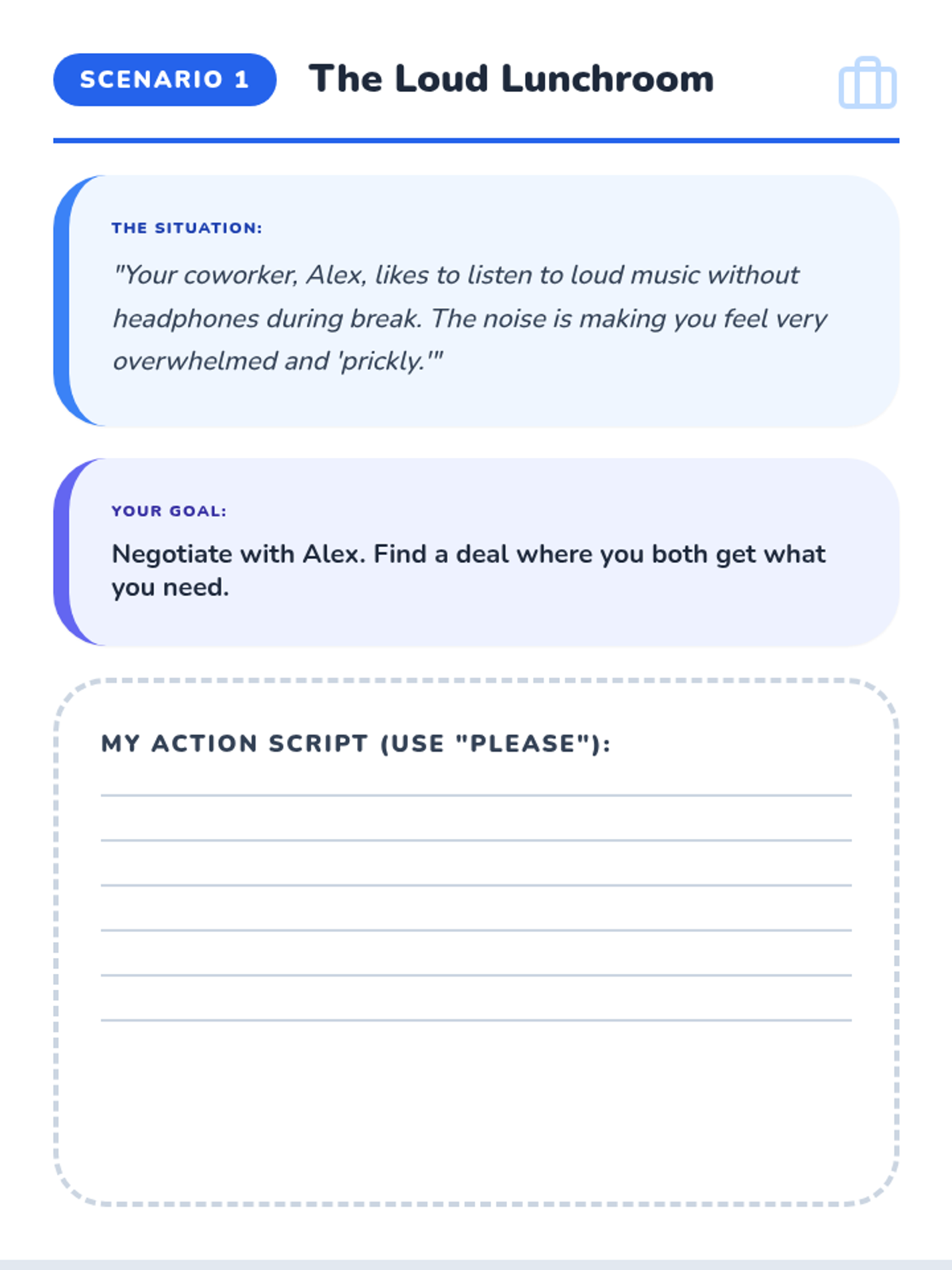
A set of role-play scenario activity sheets focusing on real-world workplace and post-secondary conflict and advocacy situations. Updated with Canada Human Rights Code references.
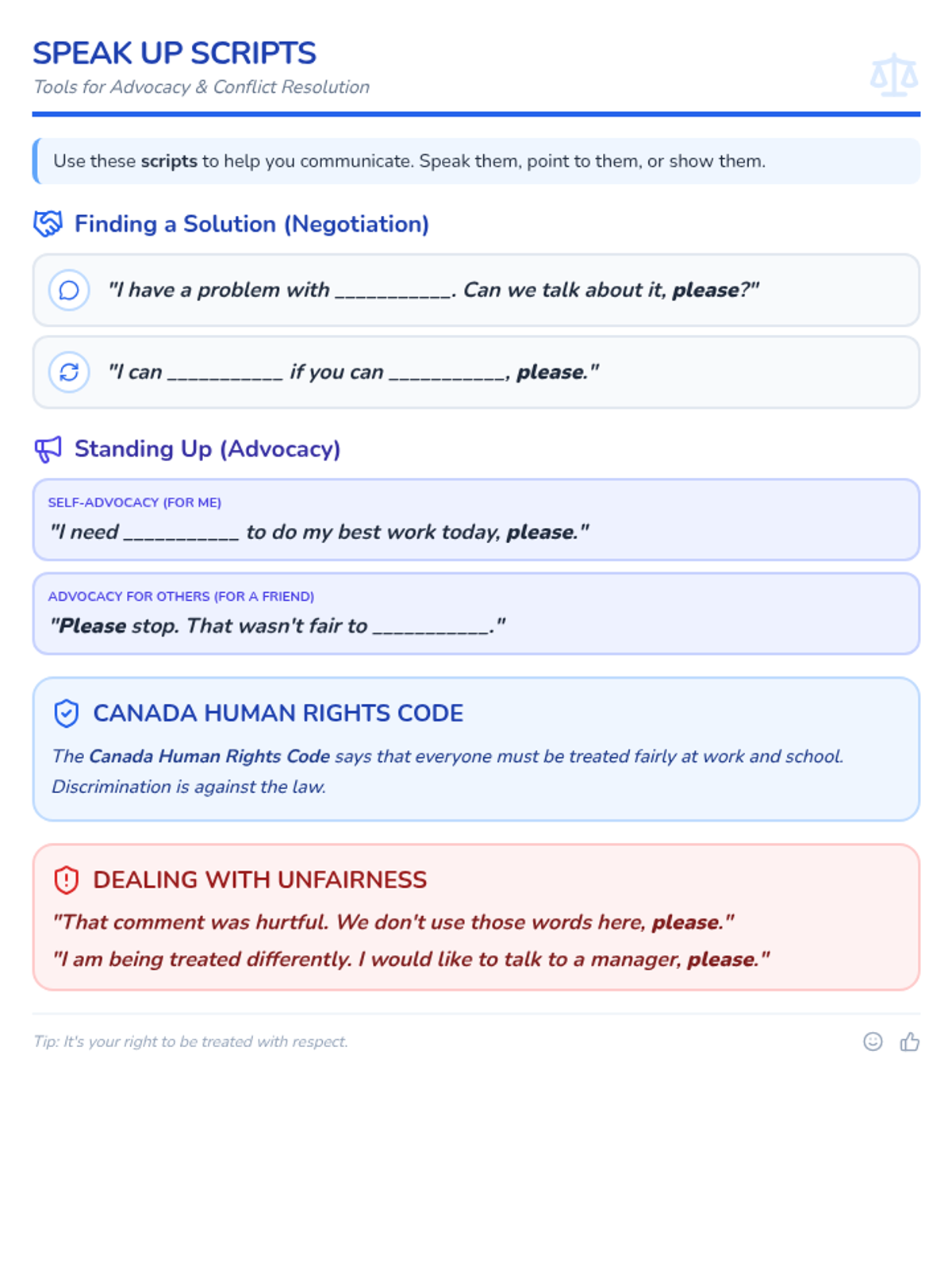
A reference sheet providing scripted phrases for students to use during conflict resolution or advocacy situations. Updated with Canada Human Rights Code references and polite language. Underscores shortened and typo fixed.
A slide presentation for high school students with autism and learning disabilities, covering conflict resolution strategies (negotiation, mediation) and advocacy (self and others) in workplace and post-secondary contexts. Updated with Canada Human Rights Code references and improved script formula.
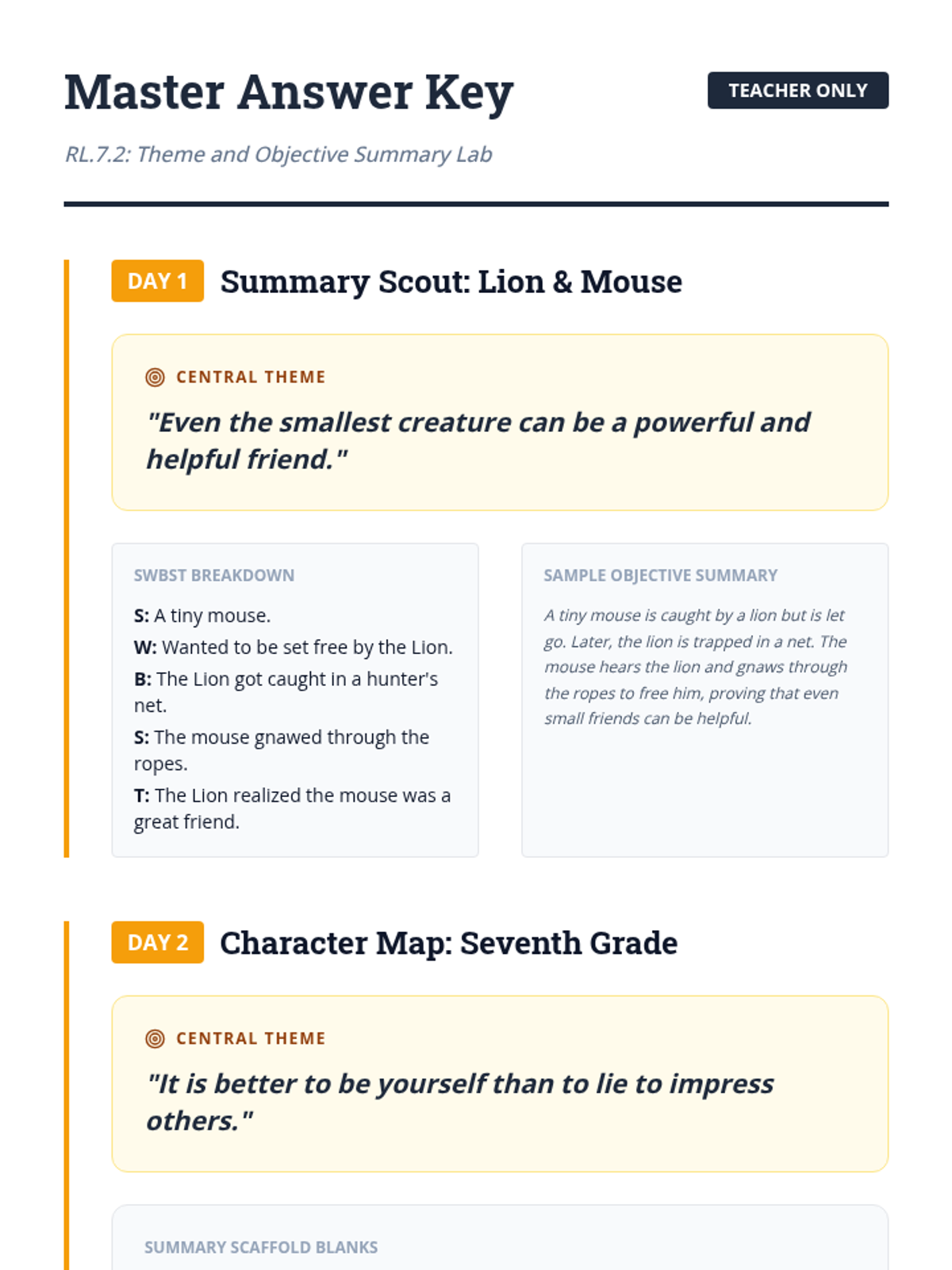
A comprehensive master answer key for the 3-day RL.7.2 unit. Includes correct answers for 'The Lion and the Mouse', 'Seventh Grade', and 'The Locker Loophole', explicitly highlighting the theme/lesson for each story. Features SWBST breakdowns and EOG-style question rationales.
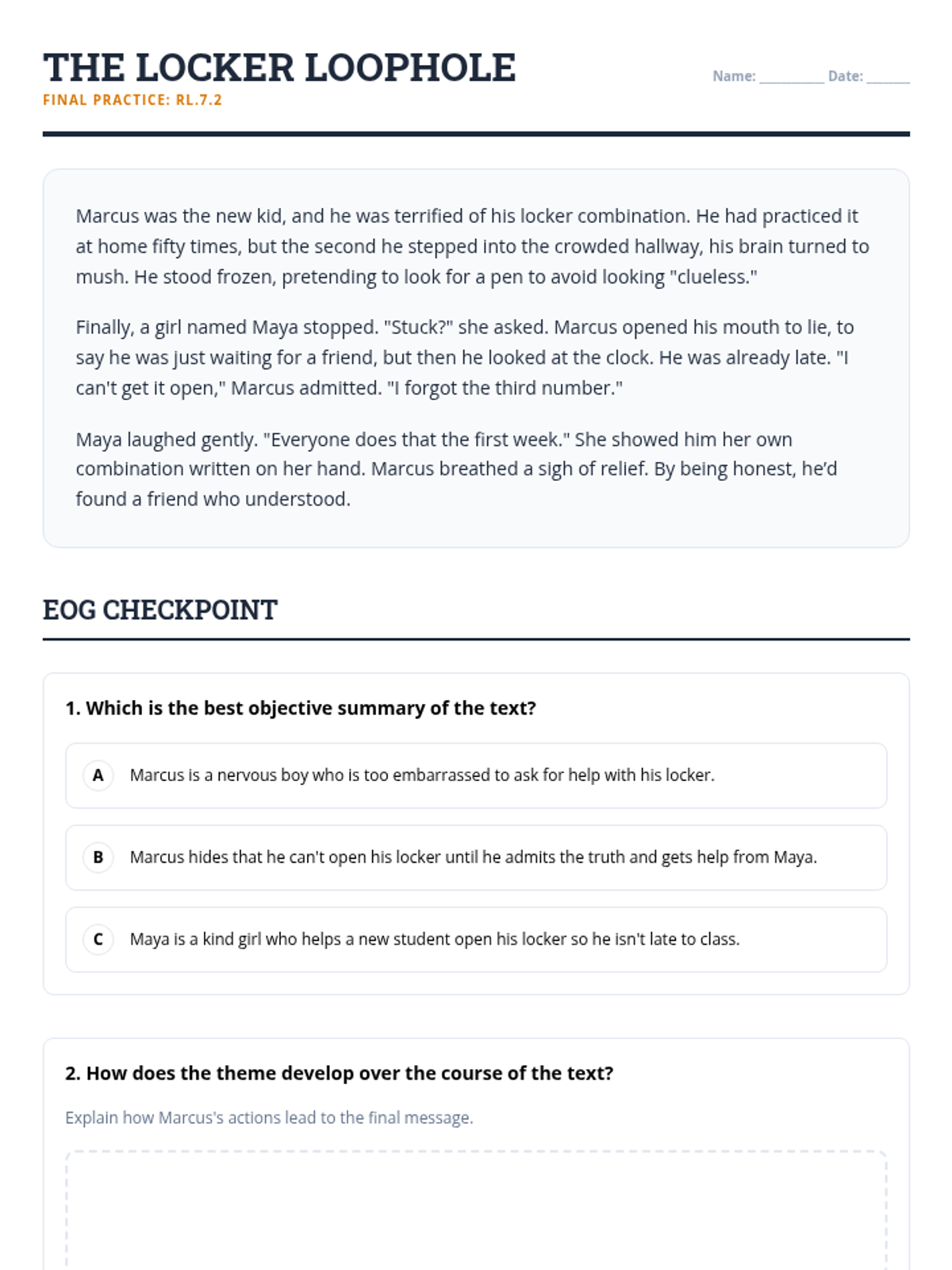
An EOG-style reading assessment for the final day of the reading unit. Features an original realistic fiction passage about school struggles, multiple-choice questions focusing on objective summary and theme development, and a final theme-writing task. Includes visual scaffolds for test-taking strategies.
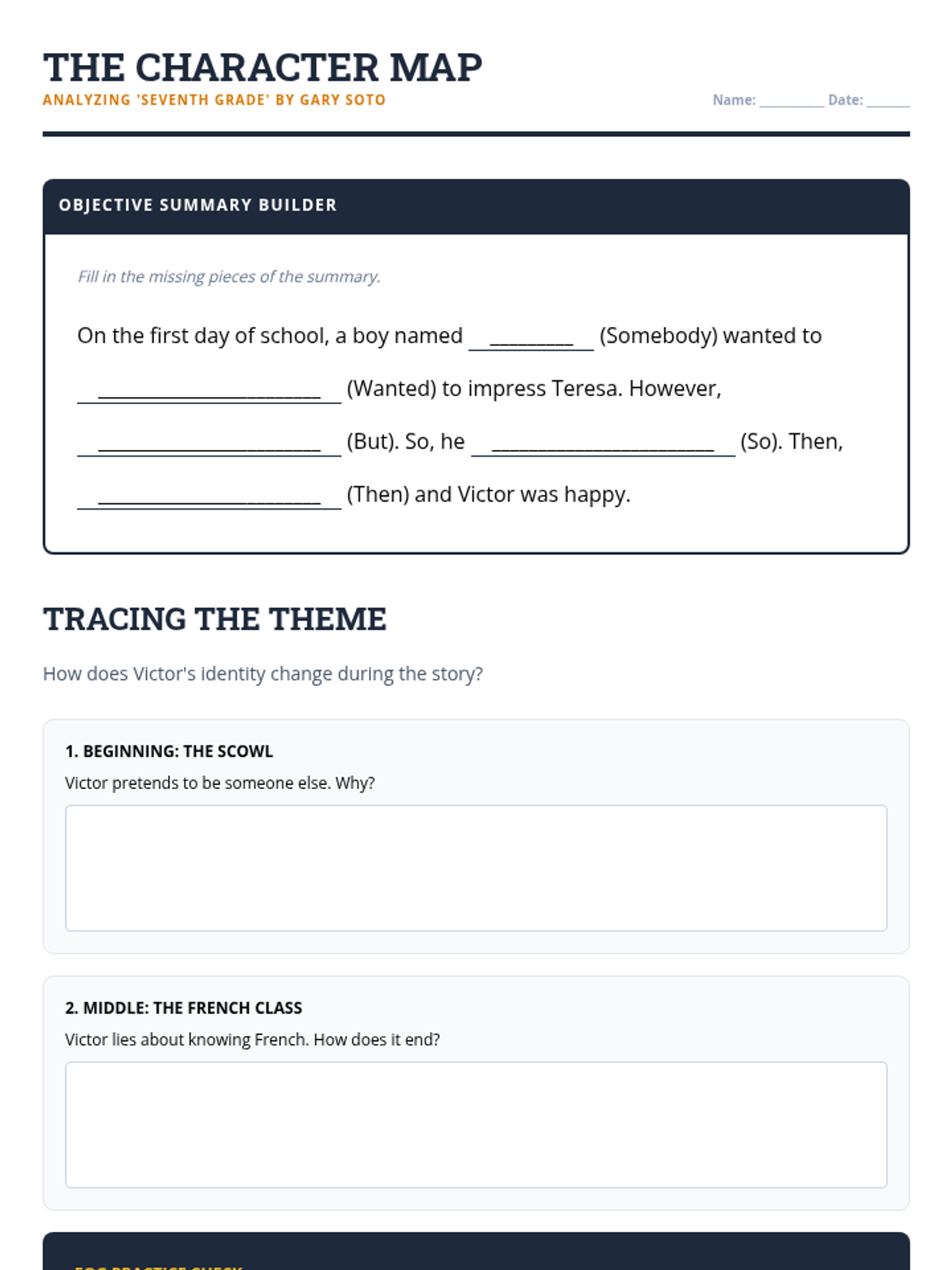
A focused character and theme analysis sheet for Gary Soto's 'Seventh Grade'. Includes a fill-in-the-blank SWBST summary scaffold to support special education students in objective writing, and a three-step theme development tracker. Ends with an EOG-style multiple choice question on objective vs. subjective writing.
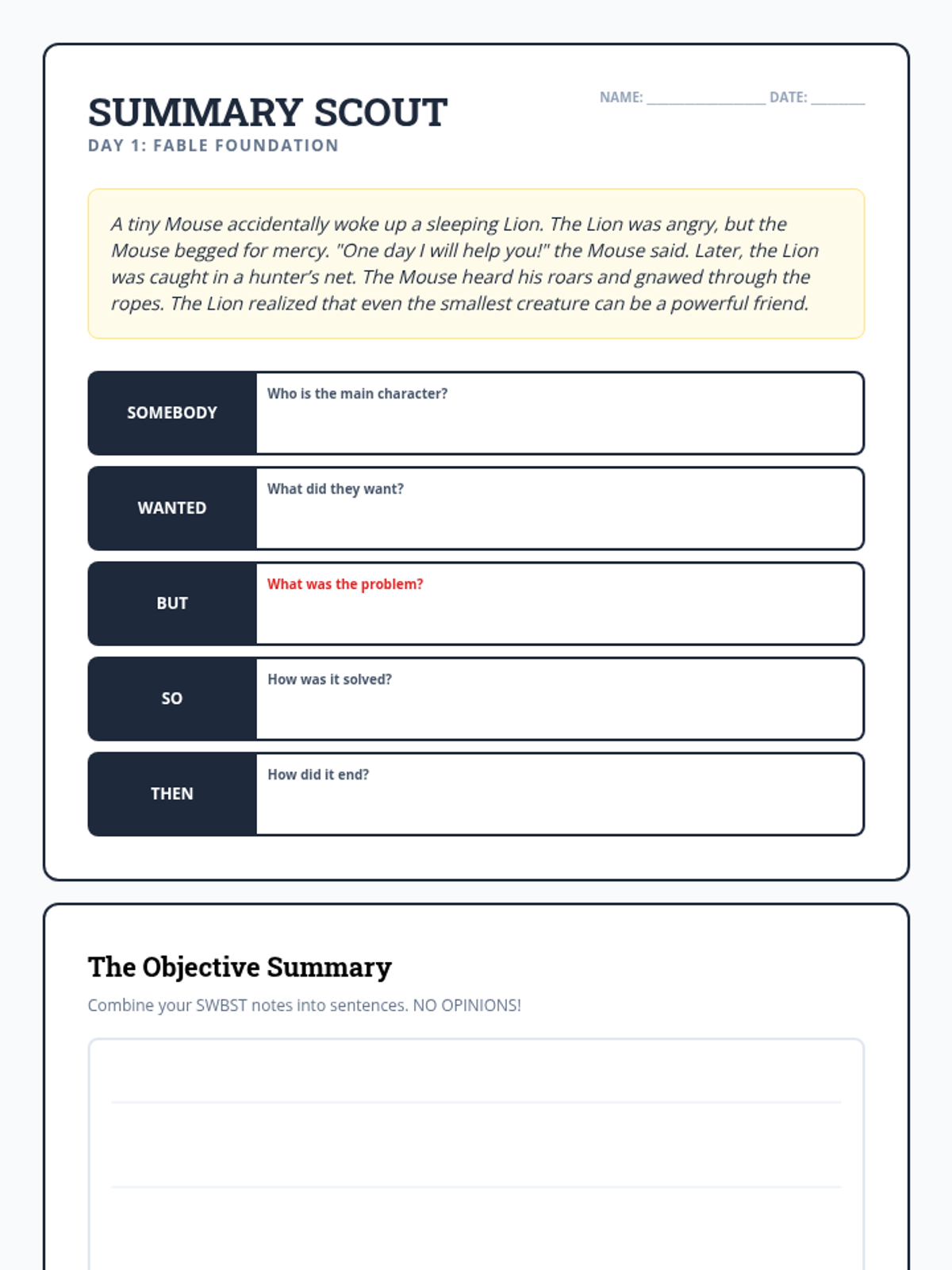
A heavily scaffolded worksheet for Day 1 of the RL.7.2 unit. Includes the text of 'The Lion and the Mouse' and a full-page SWBST (Somebody Wanted But So Then) graphic organizer for objective summaries, providing ample space for student handwriting. Ends with a theme tracker and a self-check answer key page.
A visually engaging slide deck designed for small-group instruction. It now features a step-by-step progressive reveal for the SWBST strategy, prompting students to identify each component before seeing the answer. Covers theme definitions, character development in Gary Soto's 'Seventh Grade', and EOG-style practice. Answer choices are synced with student worksheets and the Master Answer Key.
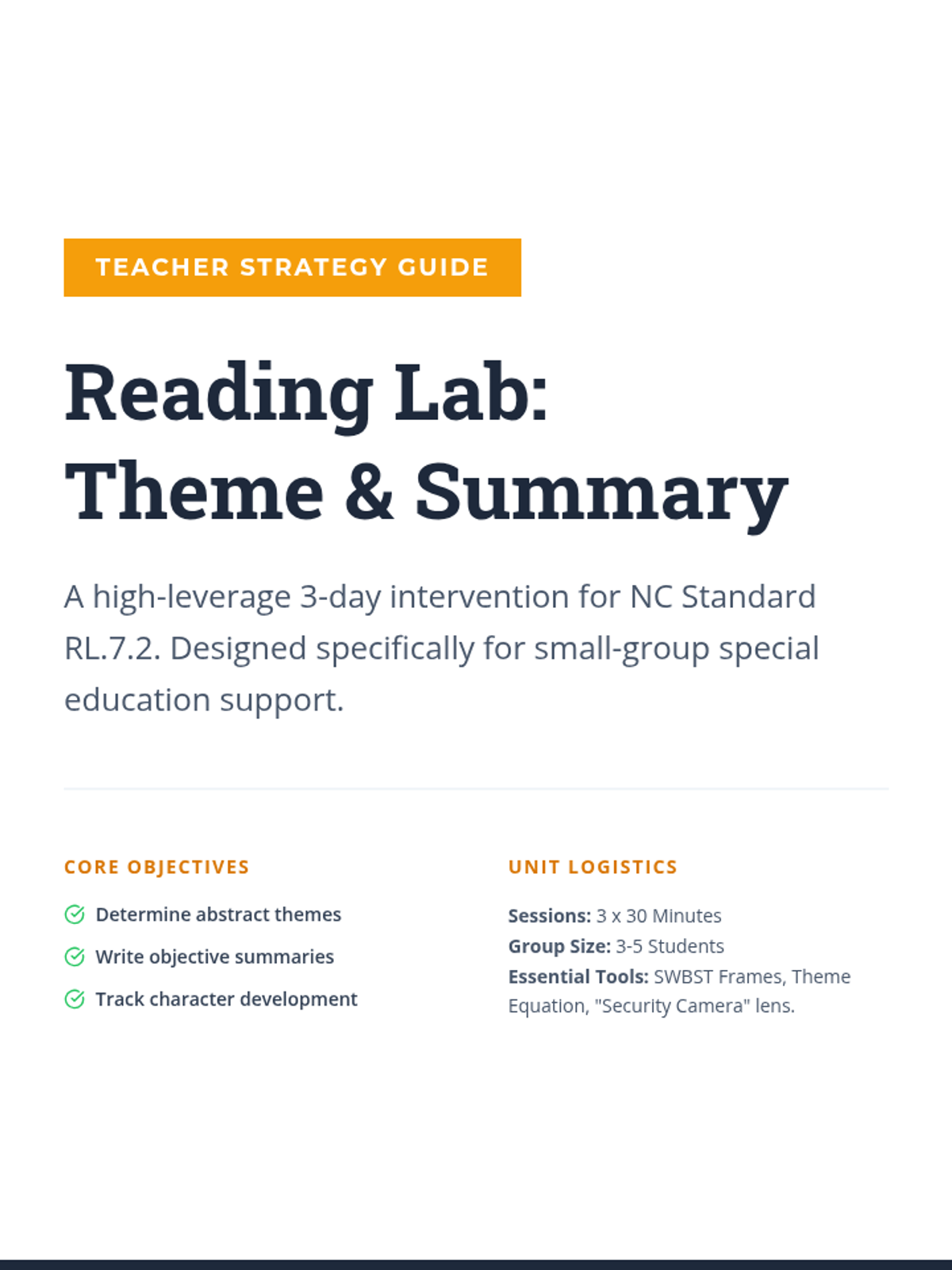
An expanded teacher's guide for a 3-day small-group reading intervention focusing on RL.7.2. Includes detailed daily pacing with specific "Warm-up," "I Do/We Do," and "You Do" sections, instructional metaphors like the "Security Camera" for objectivity, EOG test-taking strategies, and a quick-reference theme list.
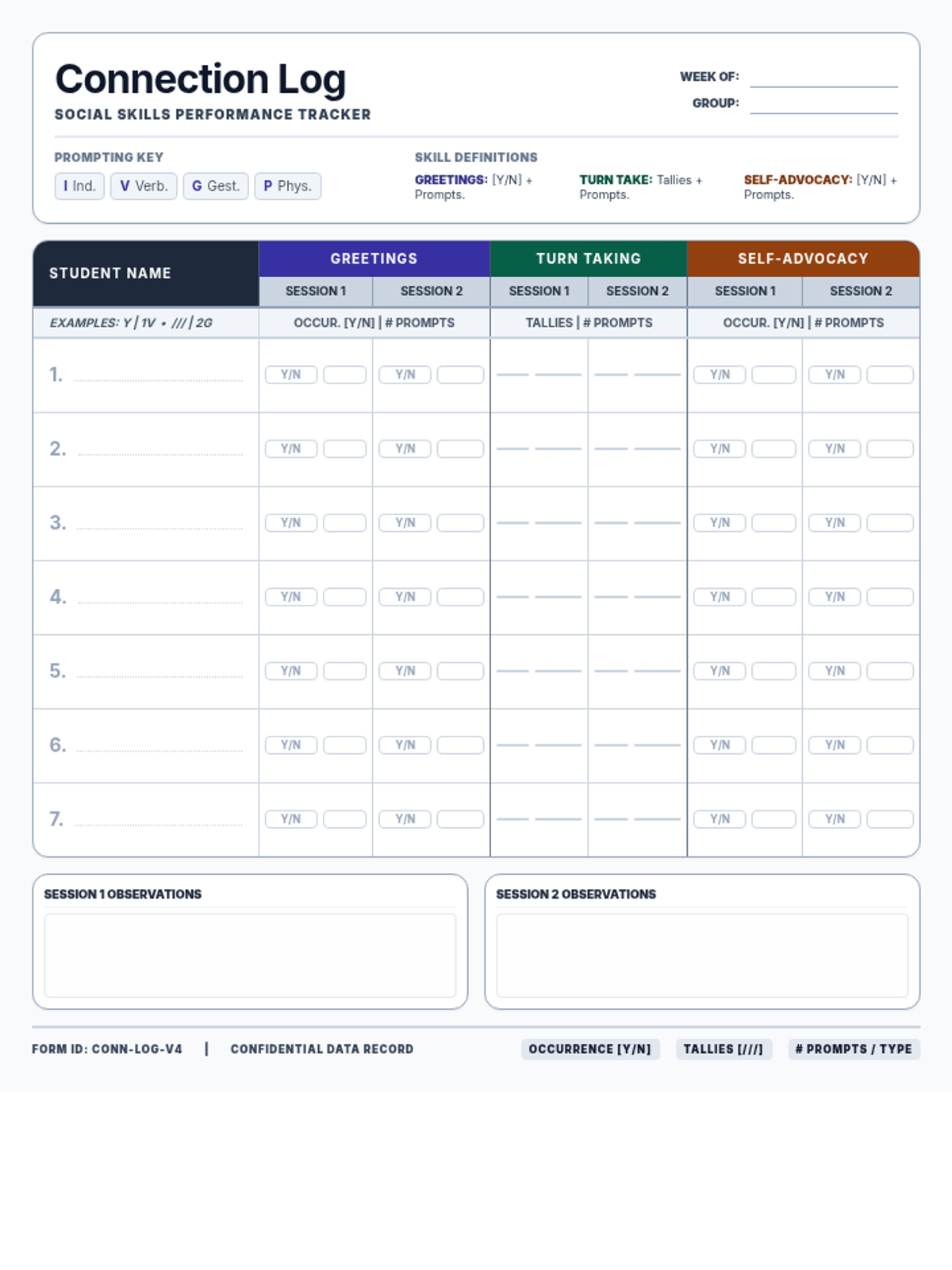
A professional data collection sheet for a 7-student social skills group. It features specific tracking for three skills over two sessions: Y/N and # Prompts for Greetings and Self-Advocacy, and Tallies and # Prompts for Turn Taking.
A professional slide deck for parent presentations, covering the neurobiology of dyslexia, reading impact areas, and myth-busting with a focus on Chapter 2 of the MA Guidelines.
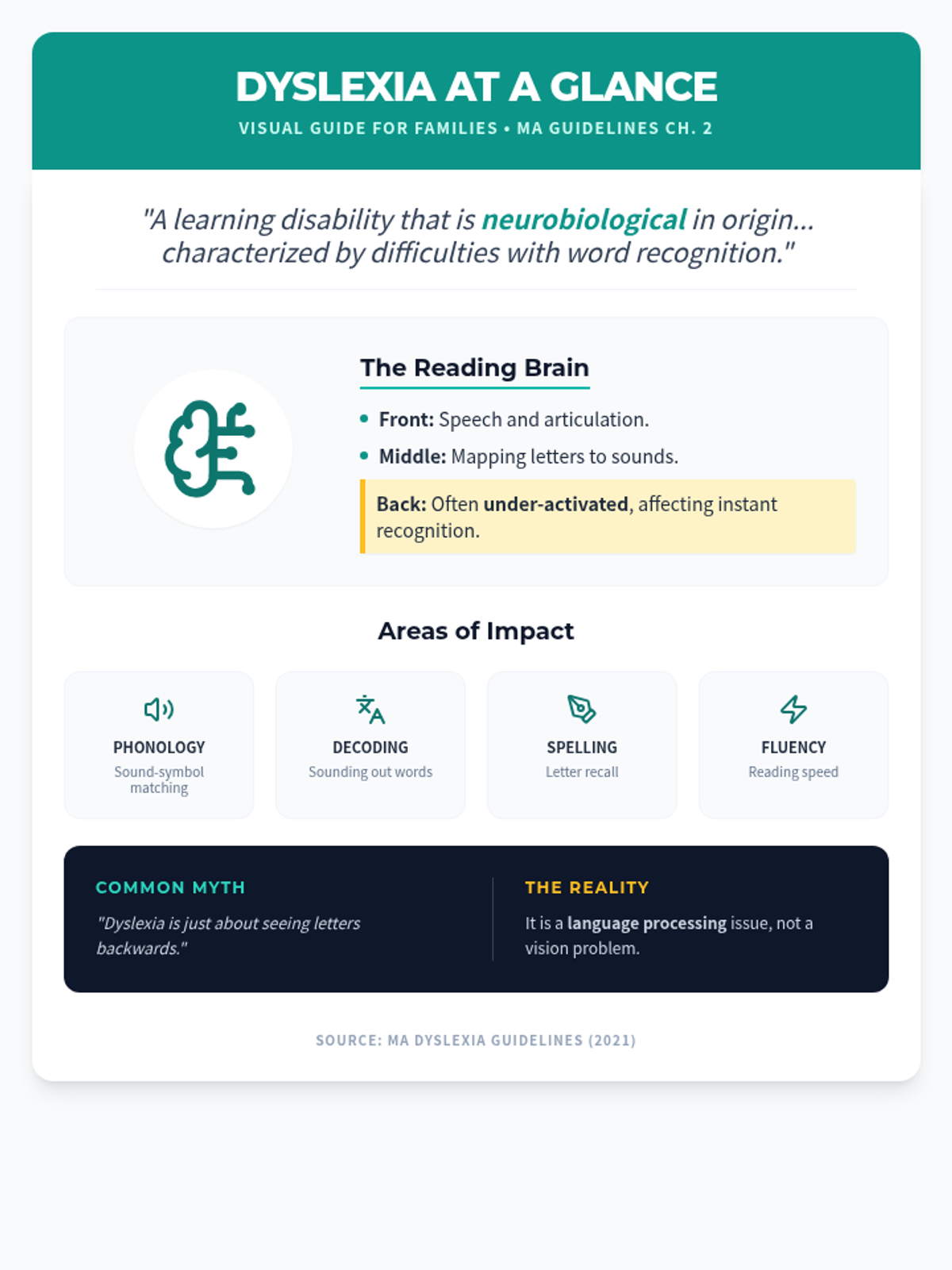
A visually engaging infographic summarizing the core concepts of dyslexia, including brain processing, reading impact areas, and debunking common myths for parents.
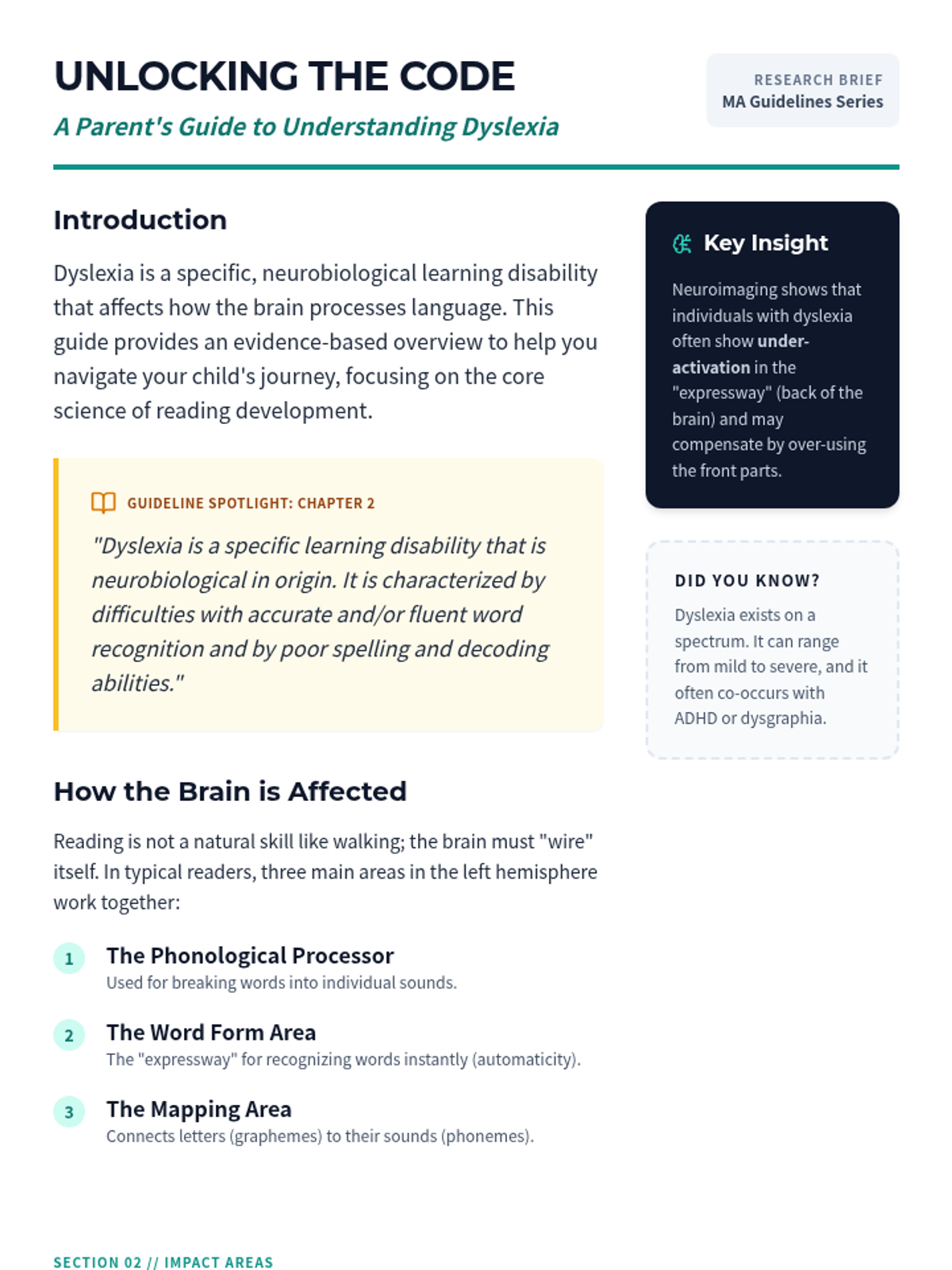
A professional 3-page white paper for parents, detailing the neurobiology of dyslexia, areas of reading impact, and debunking common myths using evidence from the Massachusetts Dyslexia Guidelines.
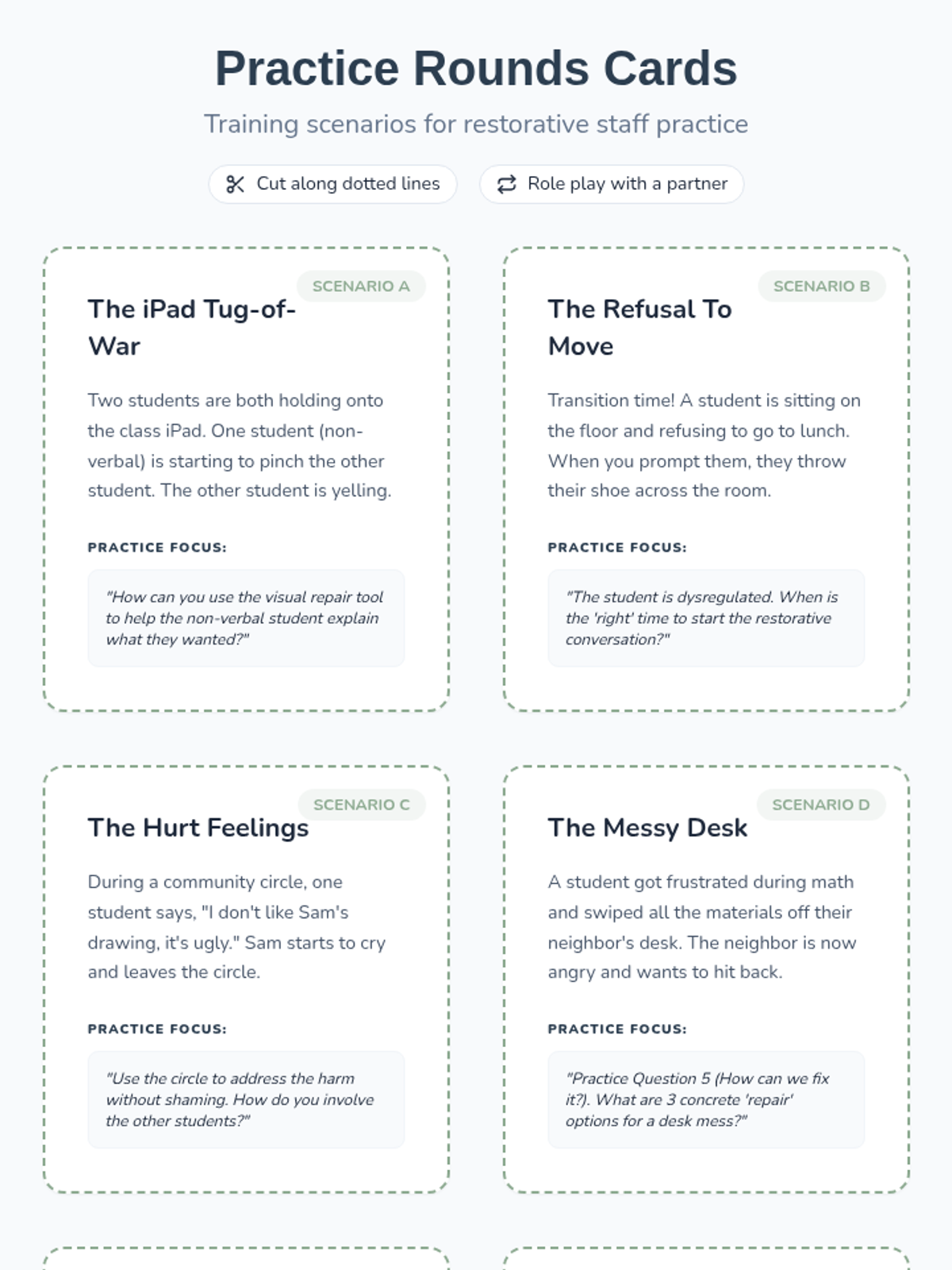
A set of six role-play scenario cards for staff training. Each card presents a common special education classroom challenge. Revised to ensure cards stay on one page and remove all placeholder text.