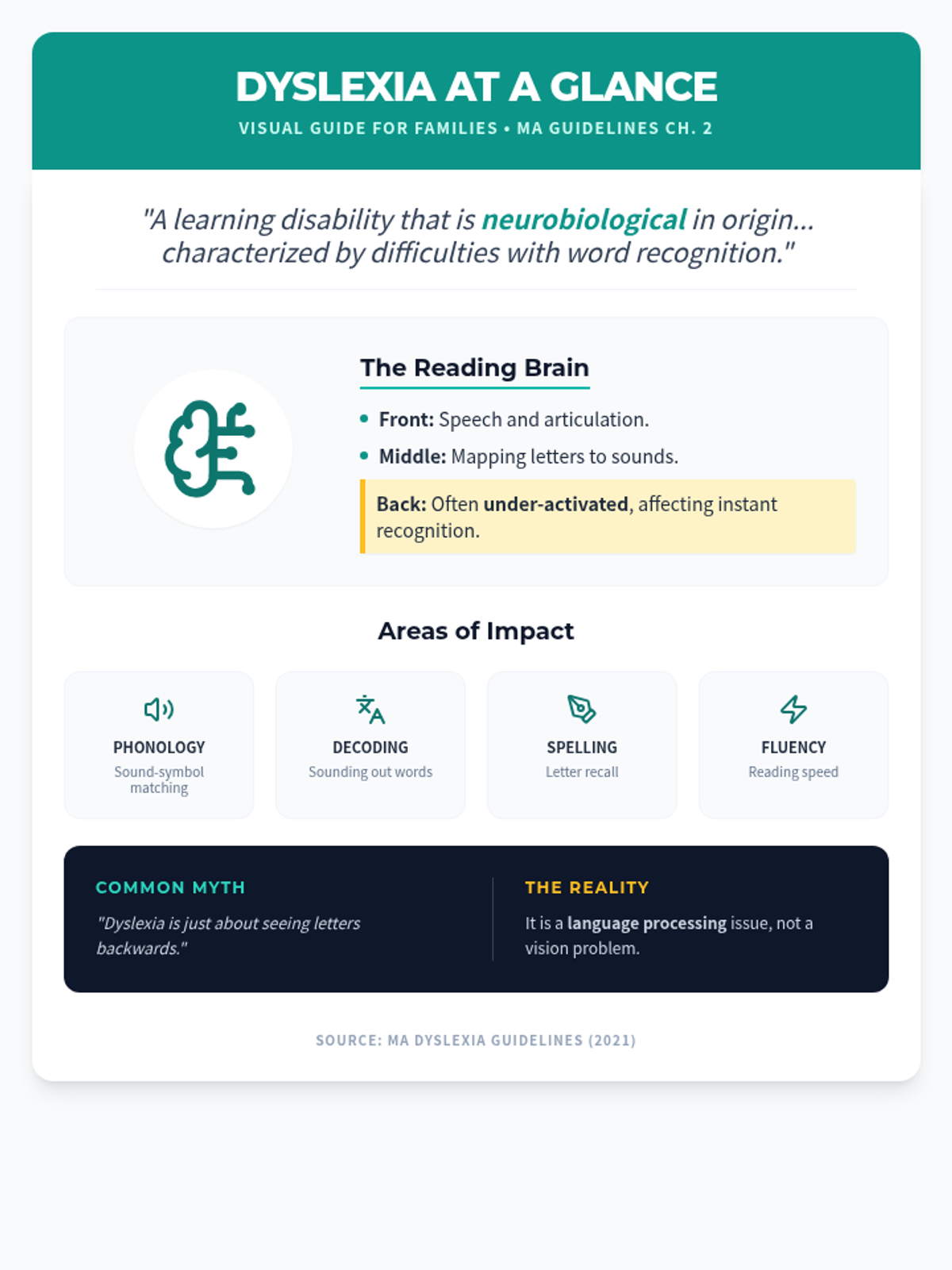
A professional slide deck for parent presentations, covering the neurobiology of dyslexia, reading impact areas, and myth-busting with a focus on Chapter 2 of the MA Guidelines.
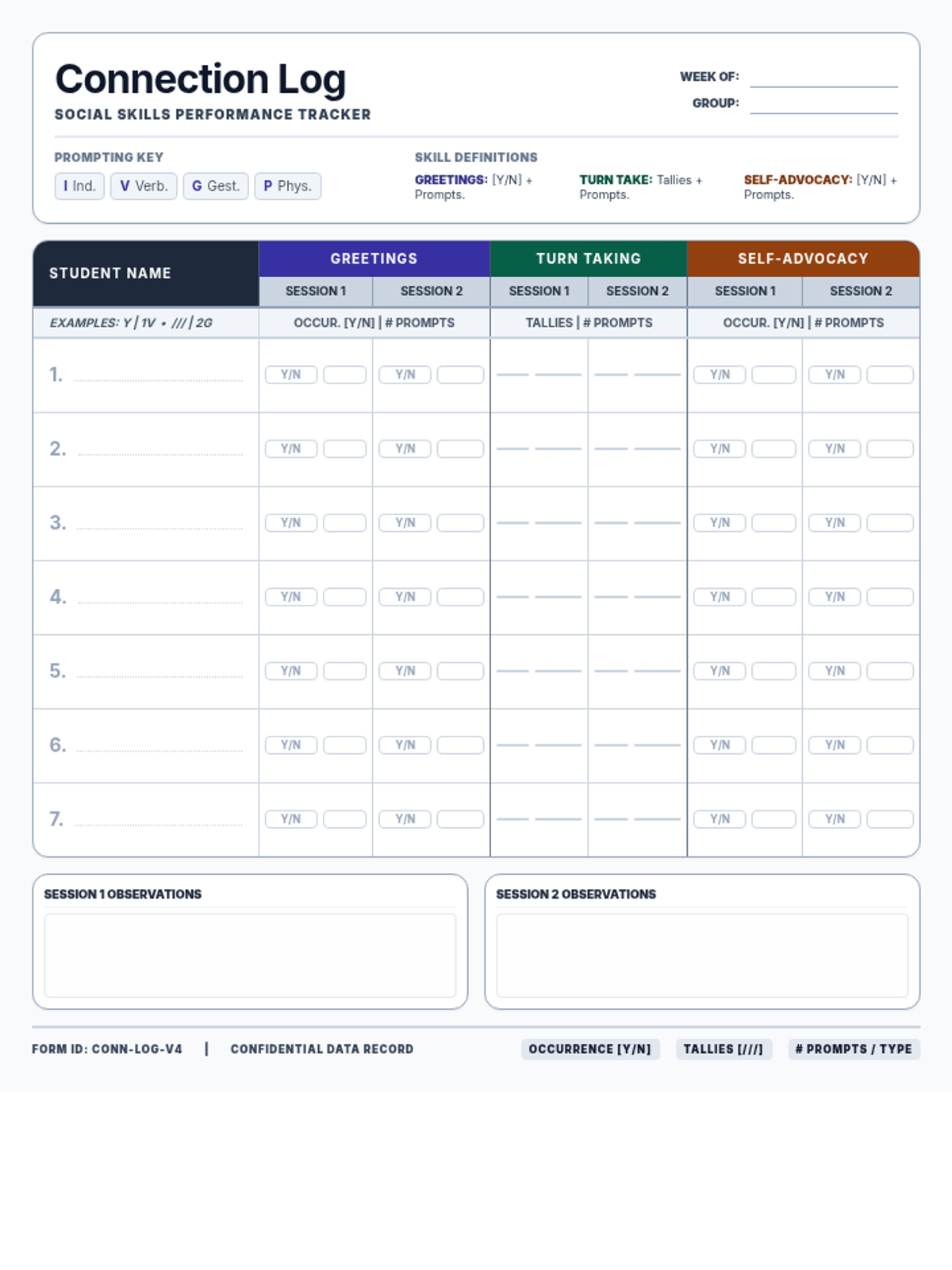
A professional data collection sheet for a 7-student social skills group. It features specific tracking for three skills over two sessions: Y/N and # Prompts for Greetings and Self-Advocacy, and Tallies and # Prompts for Turn Taking.
A visually engaging infographic summarizing the core concepts of dyslexia, including brain processing, reading impact areas, and debunking common myths for parents.
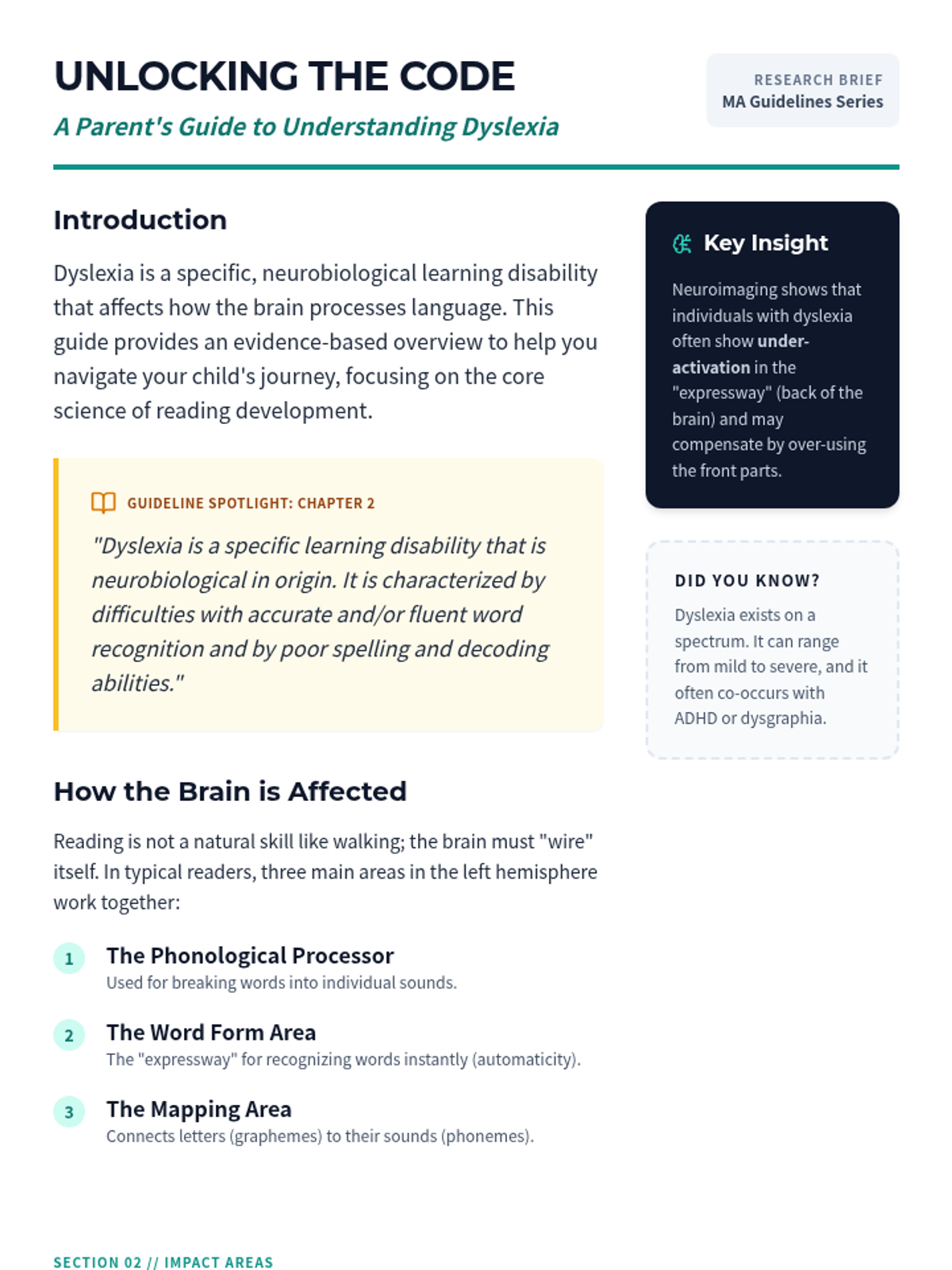
A professional 3-page white paper for parents, detailing the neurobiology of dyslexia, areas of reading impact, and debunking common myths using evidence from the Massachusetts Dyslexia Guidelines.
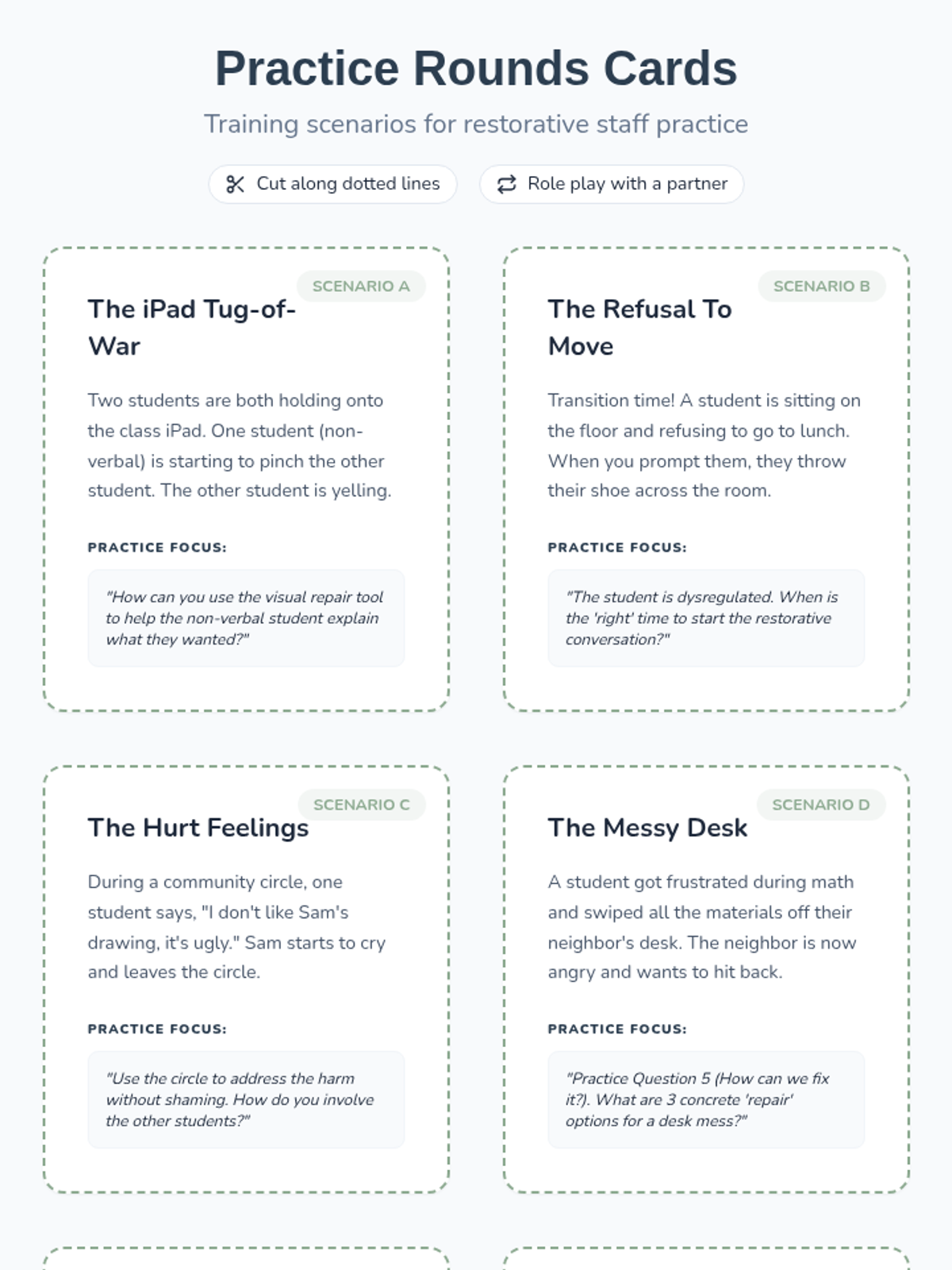
A set of six role-play scenario cards for staff training. Each card presents a common special education classroom challenge. Revised to ensure cards stay on one page and remove all placeholder text.
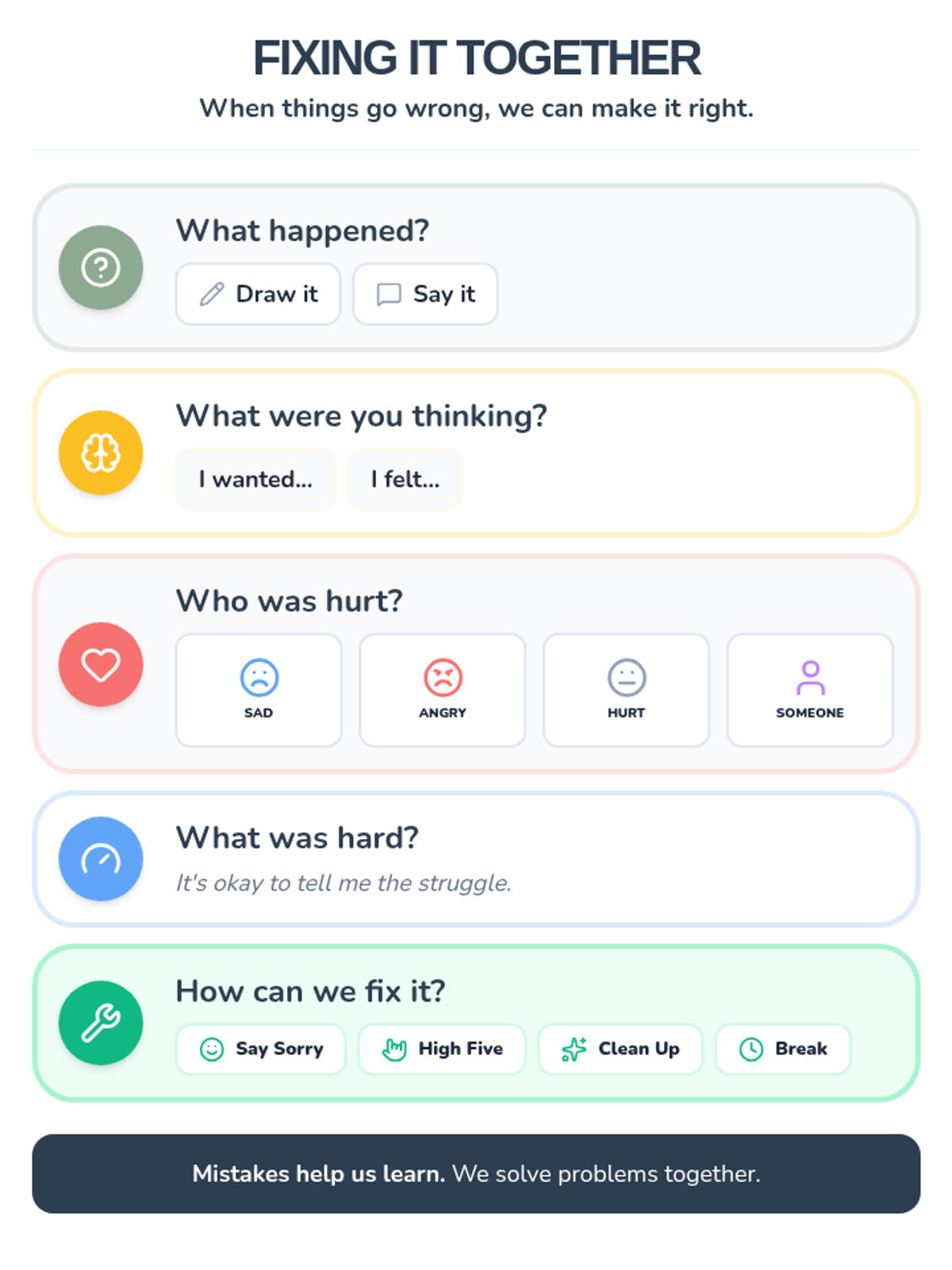
A student-facing visual aid for restorative conversations. Uses simplified language, large icons, and clear steps to guide students through the 5 repair questions. Revised for single-page printing and larger interactive targets.
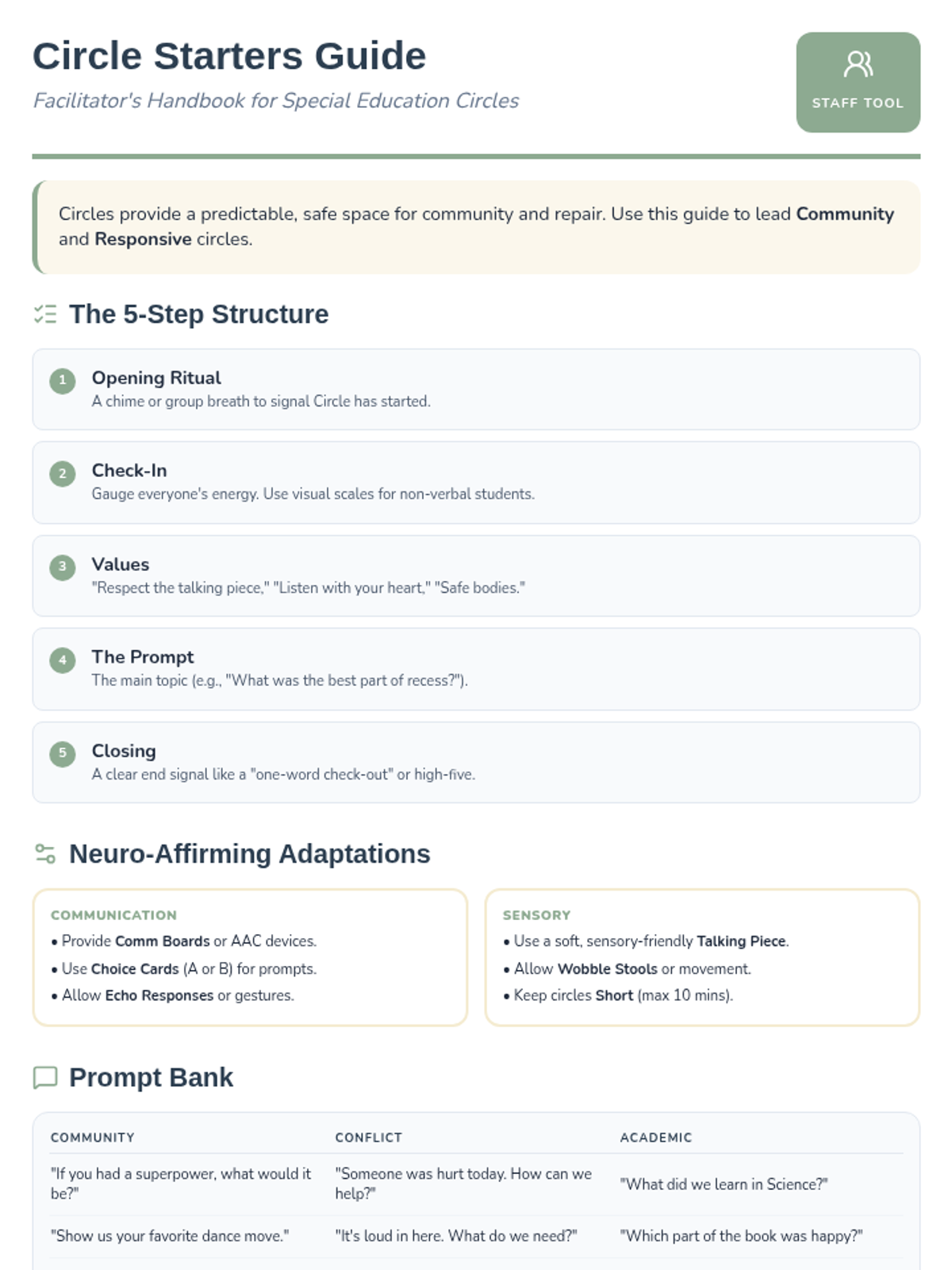
A facilitator's guide for staff on how to structure and implement restorative circles. Includes a 5-step structure, specific neurodiversity-affirming adaptations (communication and sensory), and a bank of circle prompts. Revised to ensure all content fits on one page and avoids awkward breaks.
A comprehensive staff training slide deck on implementing restorative practices in special education. Focuses on the shift from punitive to restorative mindsets, specific adaptations for neurodiverse learners, and simplified repair questions. Revised for better contrast and includes a workshop practice slide.
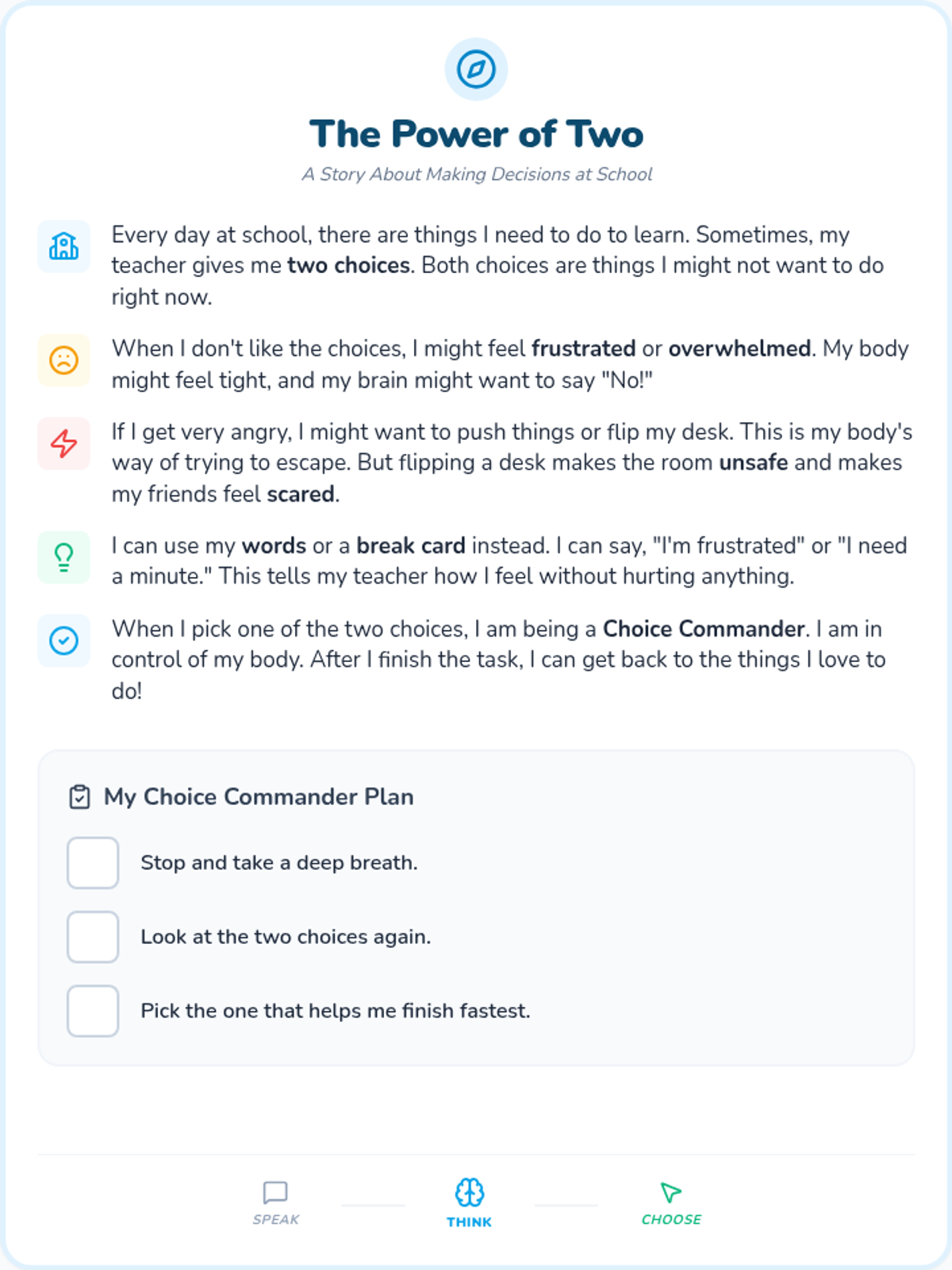
A combined resource featuring a social story to help students manage choice-based frustration and a behavior reflection worksheet for processing desk-flipping incidents.
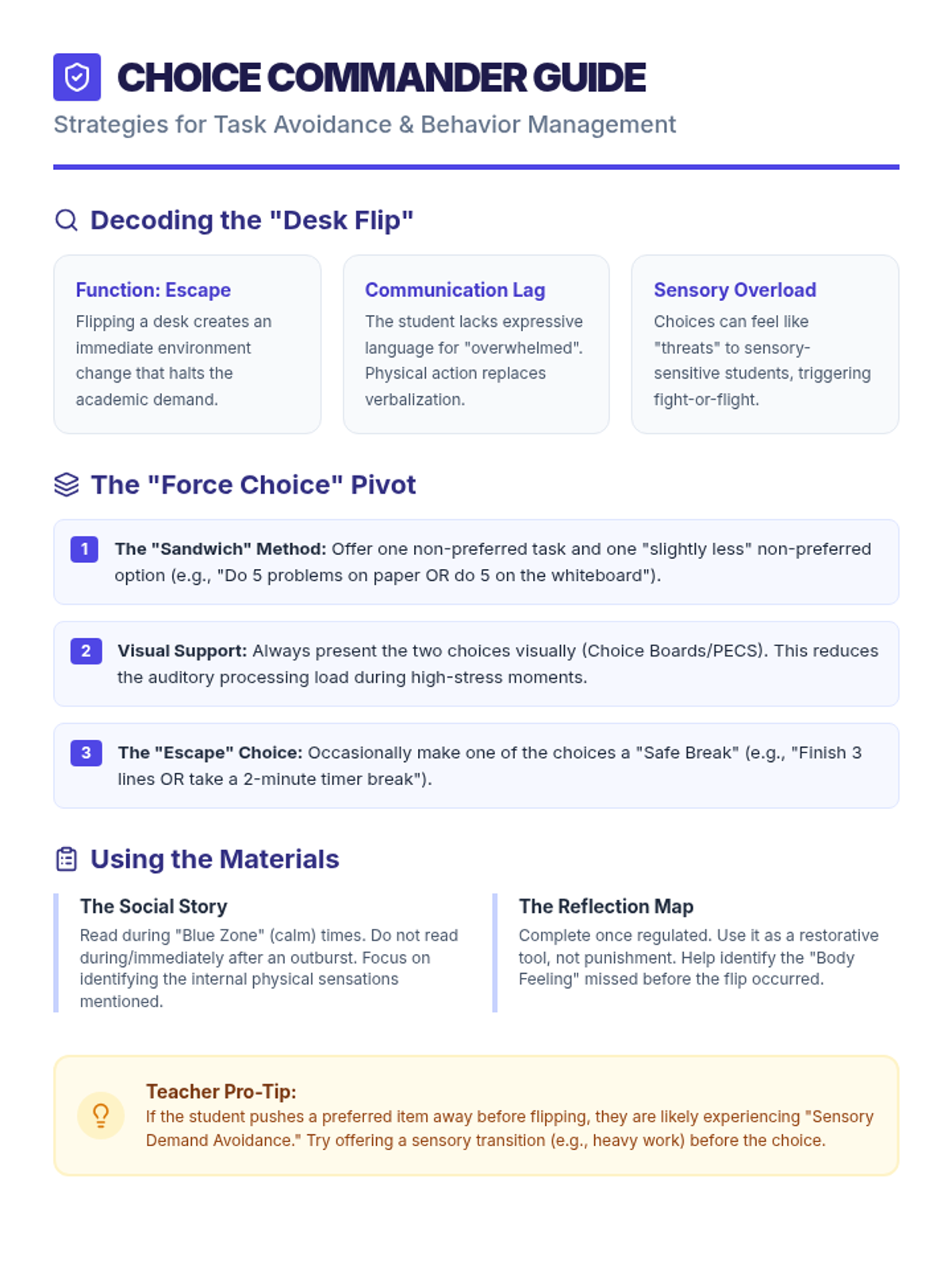
A comprehensive teacher-facing guide providing insights into the functional behavior of desk-flipping, as well as specific instructional strategies for implementing forced-choice interventions.
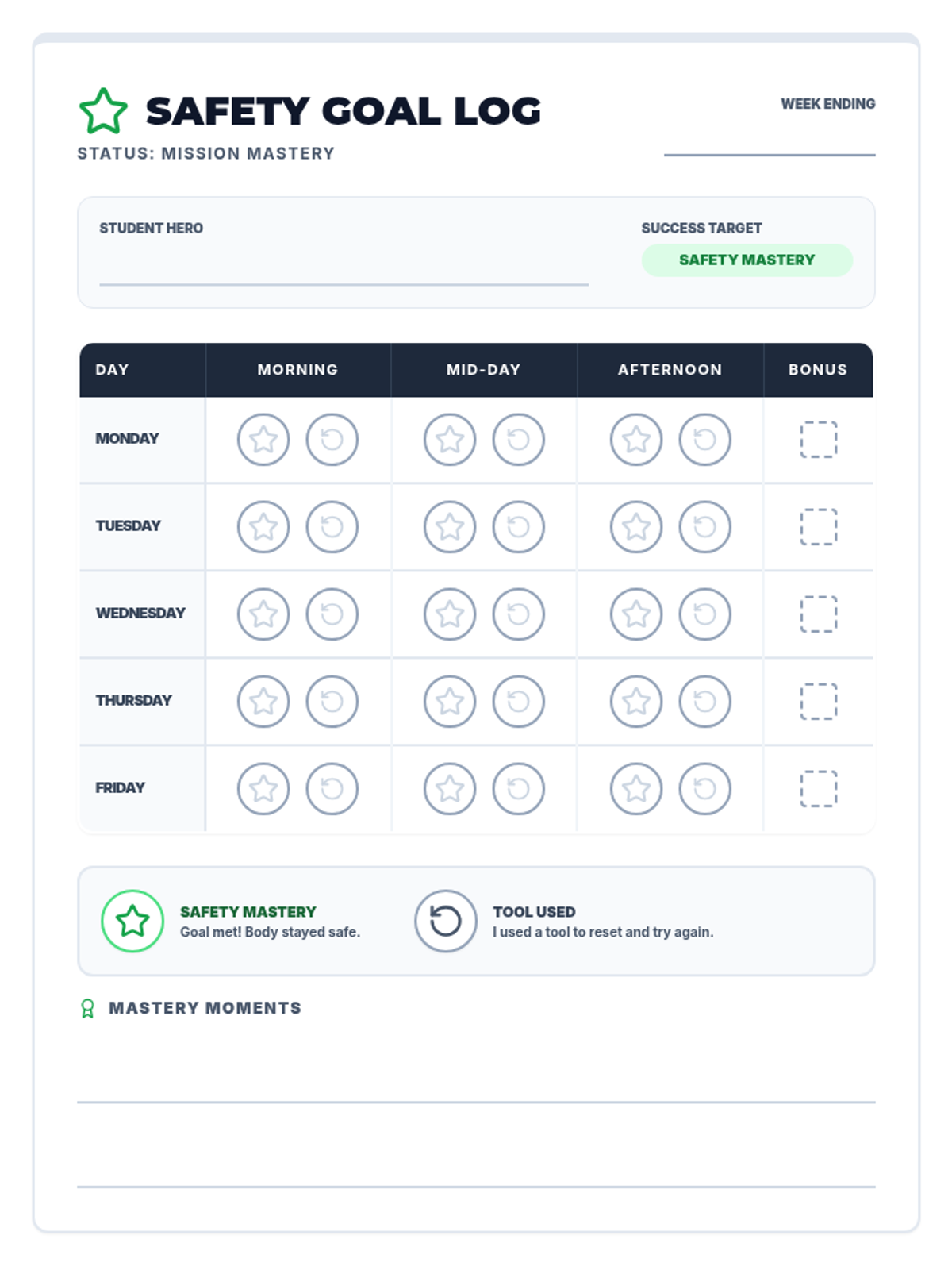
A purely positive, goal-oriented 'Safety Mastery' tracking log for 4th graders. It replaces the smile/frown system with 'Star' (Mastery) and 'Reset' (Tool Use) icons to encourage self-regulation and skill building.
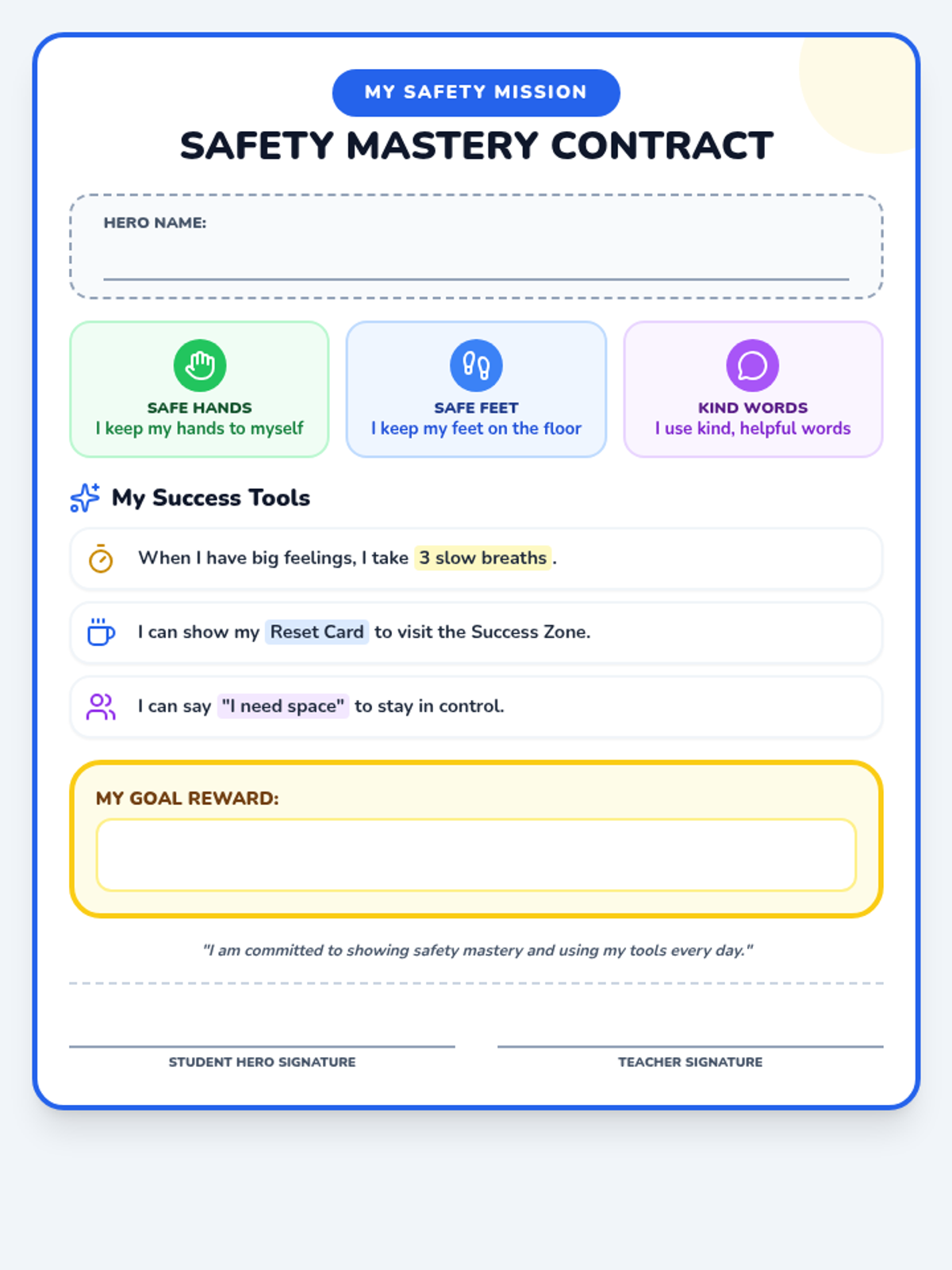
A positive, goal-oriented 'Safety Mastery' contract for 4th graders. It focuses on the mission of keeping hands, feet, and words safe through use of self-regulation tools and commitment to a personal goal.
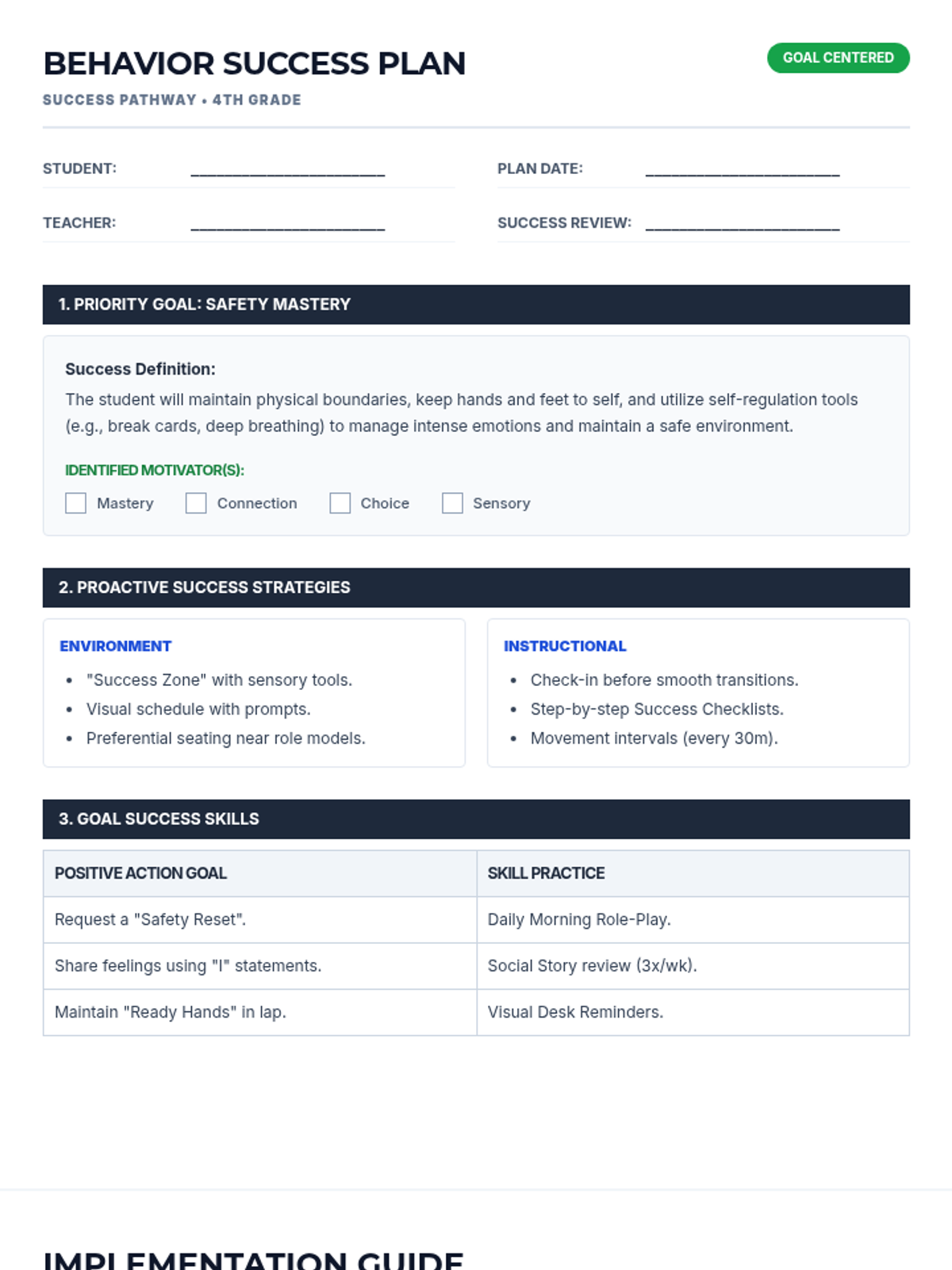
A strengths-based Behavior Success Plan and teacher guide for 4th graders, focused on 'Safety Mastery' goals and positive reinforcement strategies. All negative framing has been removed in favor of skill-building and proactive support.
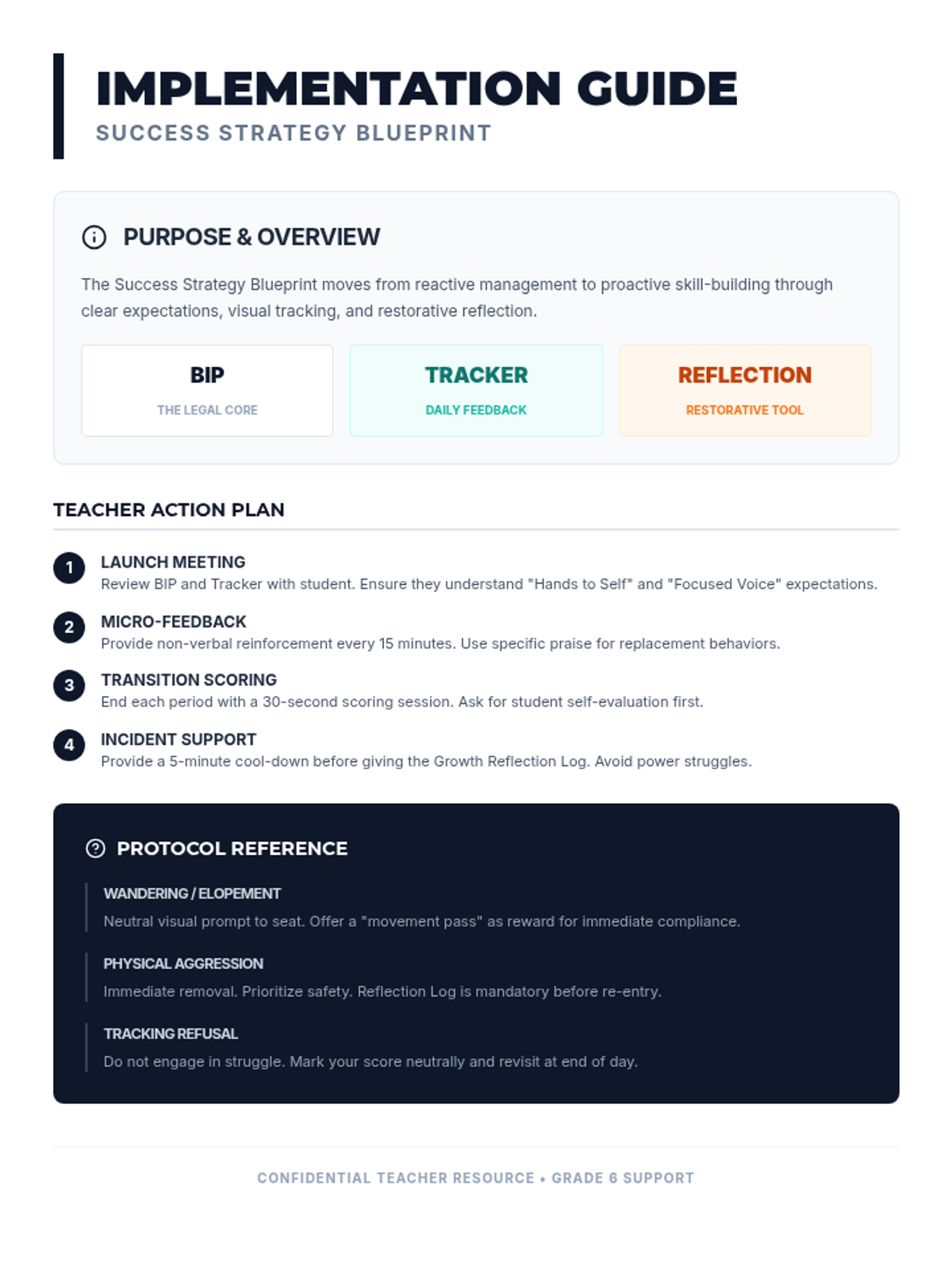
A facilitation guide for teachers and administrators on how to implement the Success Strategy Blueprint, including launch steps, monitoring strategies, and scenario-based advice.
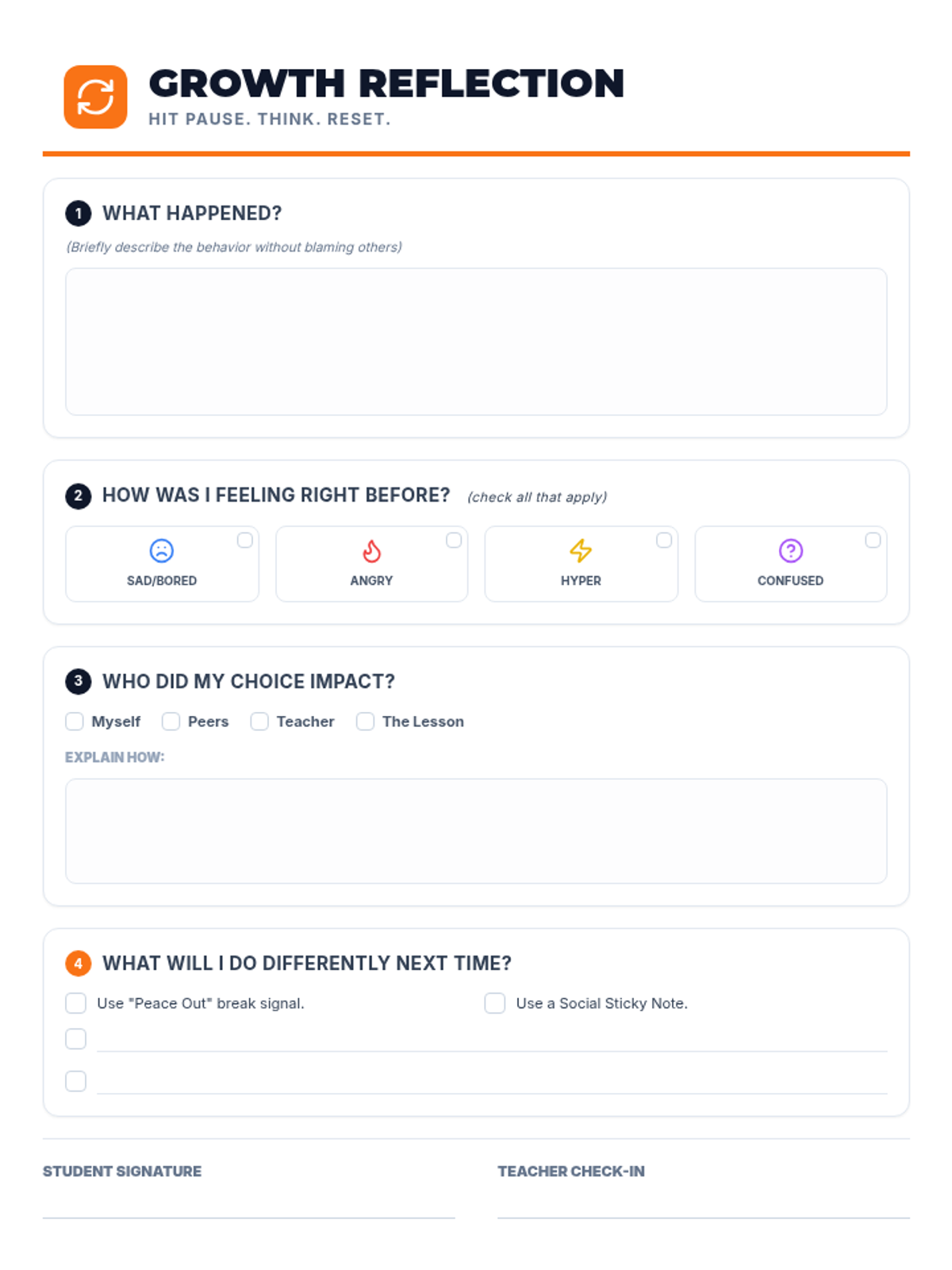
A restorative "Growth Reflection" log for a student to complete following a behavioral incident, prompting them to identify feelings, impacts, and alternative future actions with expanded emotion options and guided handwriting lines.
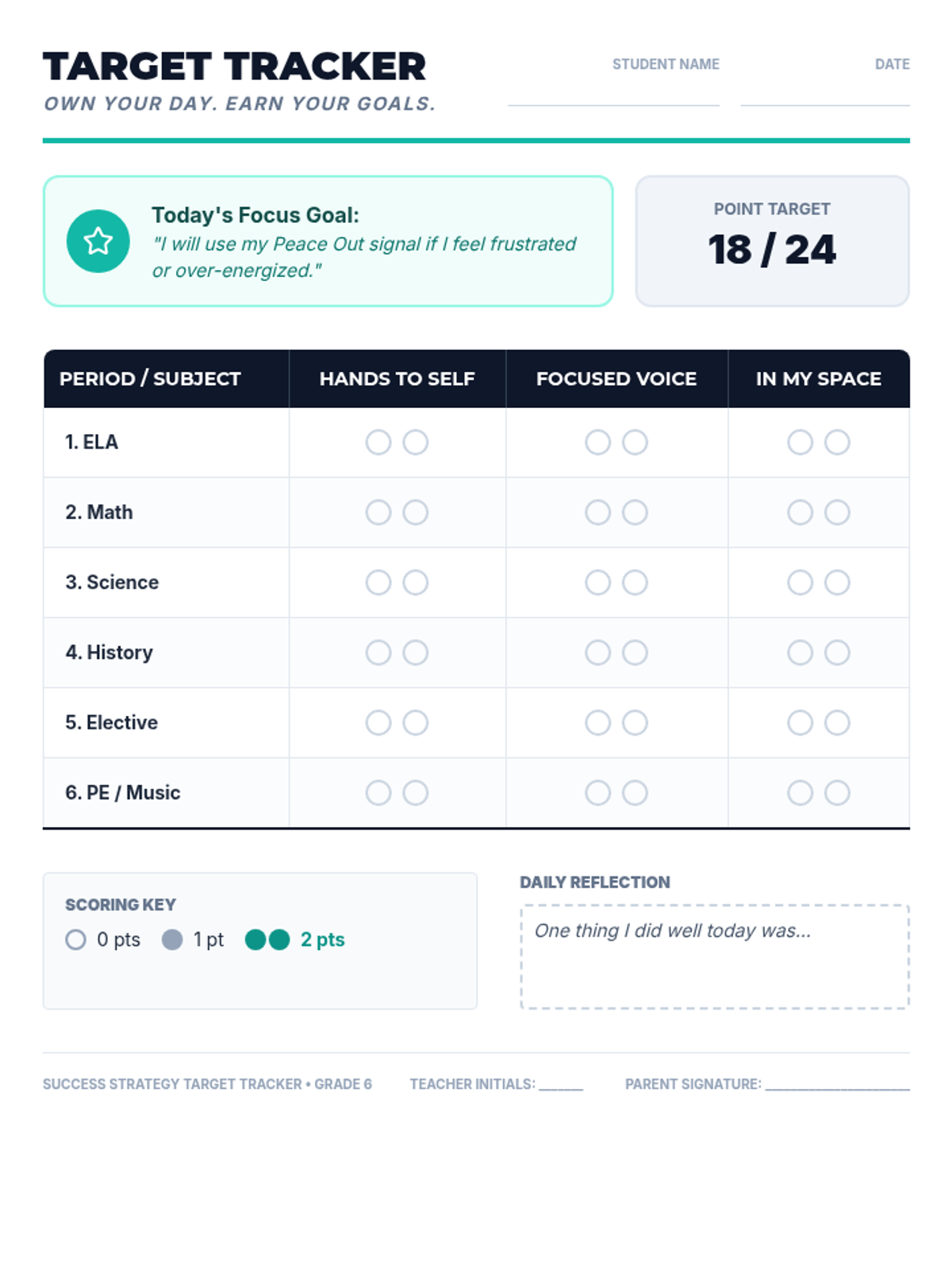
A daily behavior tracking point sheet for a 6th-grade student, focusing on "Hands to Self", "Focused Voice", and "In My Space" with a clear point system and goal-setting area.
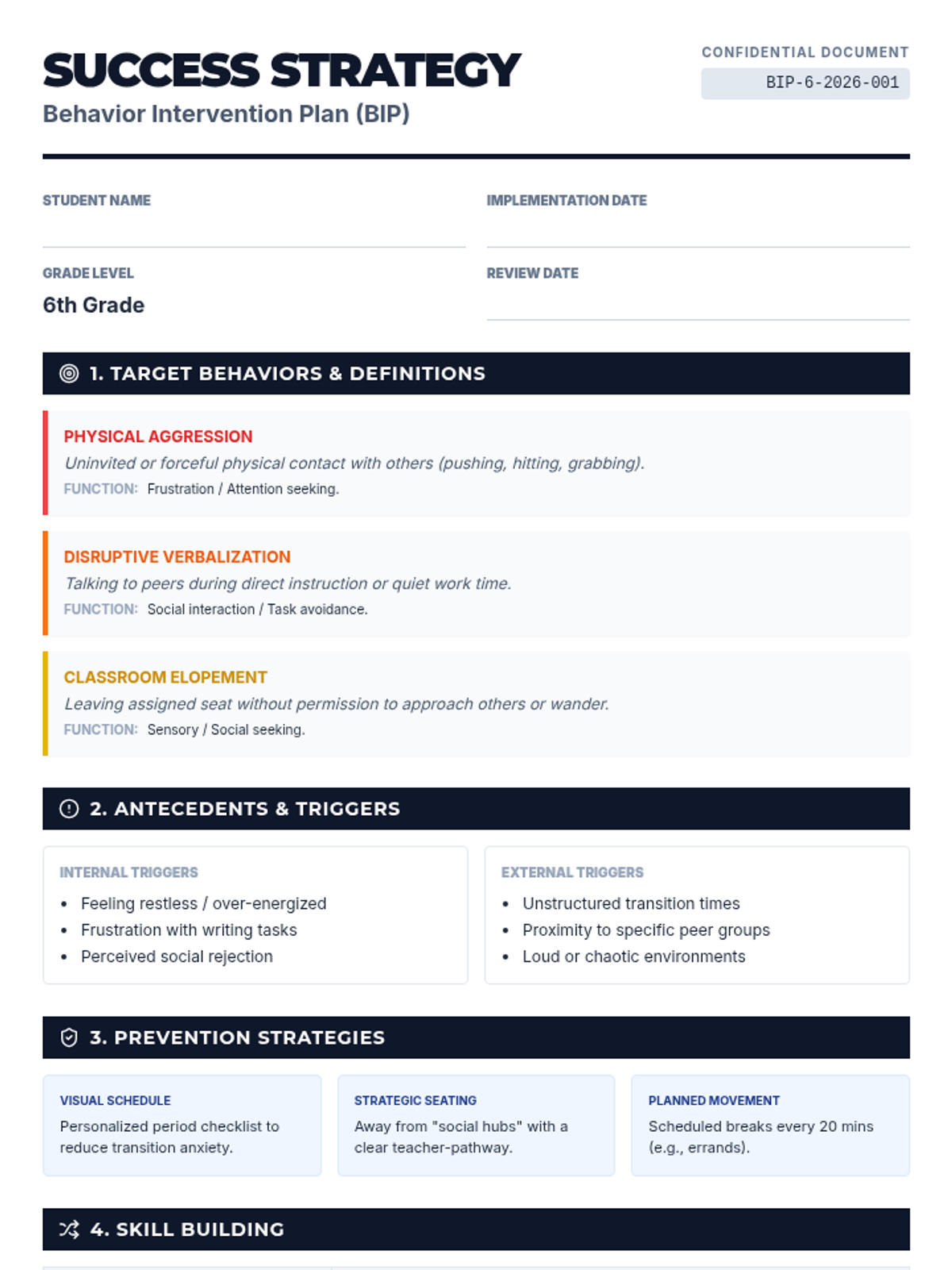
A formal Behavior Intervention Plan (BIP) template for a 6th-grade student, featuring operational definitions, antecedent strategies, and replacement behaviors for physical aggression and classroom disruption, including safe regulation tools like wall pushes and Riss Coordinator breaks.
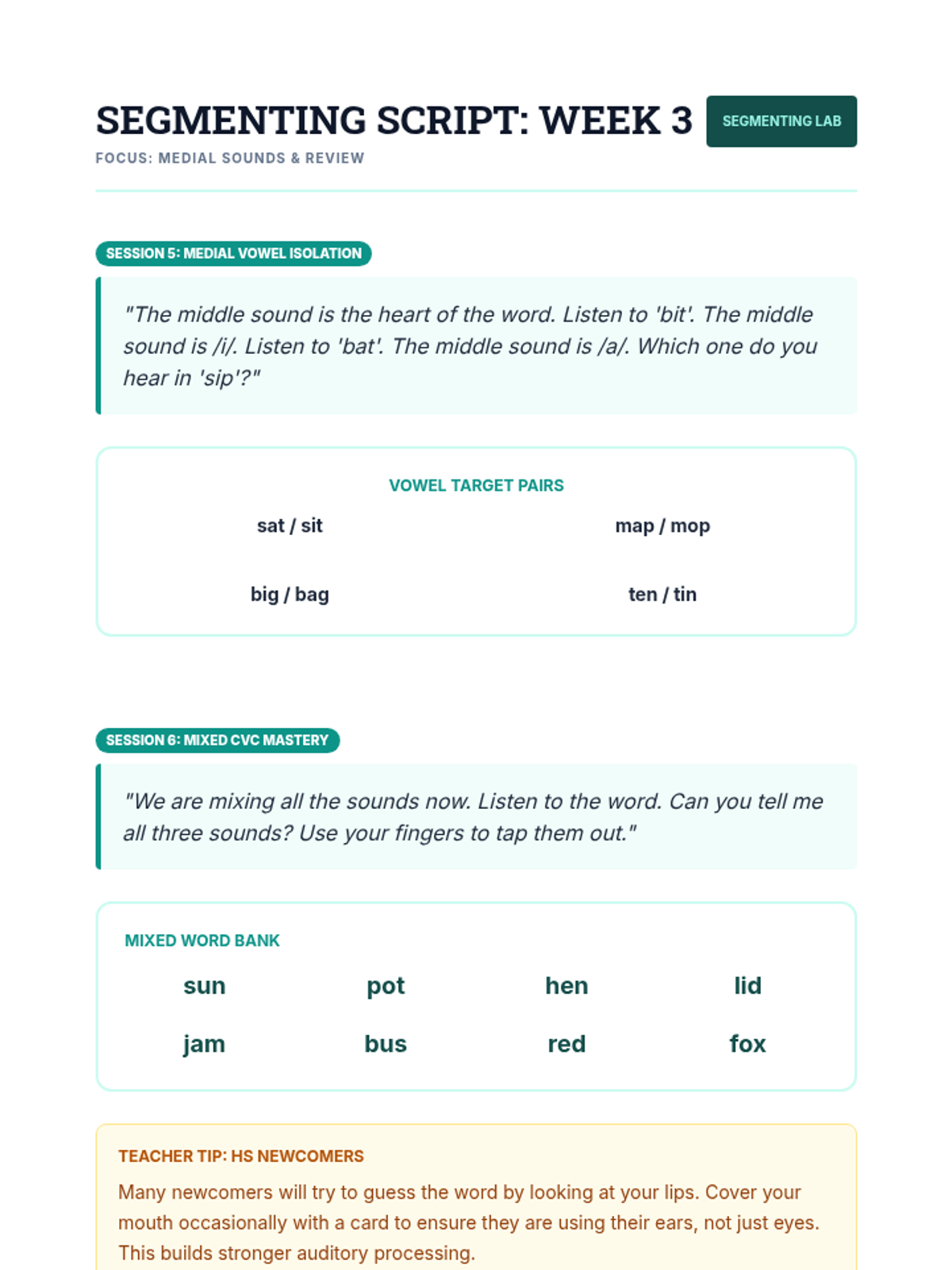
A comprehensive teacher-facing script and oral word bank for the 10-session Phoneme Segmenting Intervention, featuring specific prompts for finger tapping and sound isolation. Includes mixed pre/post assessment banks.
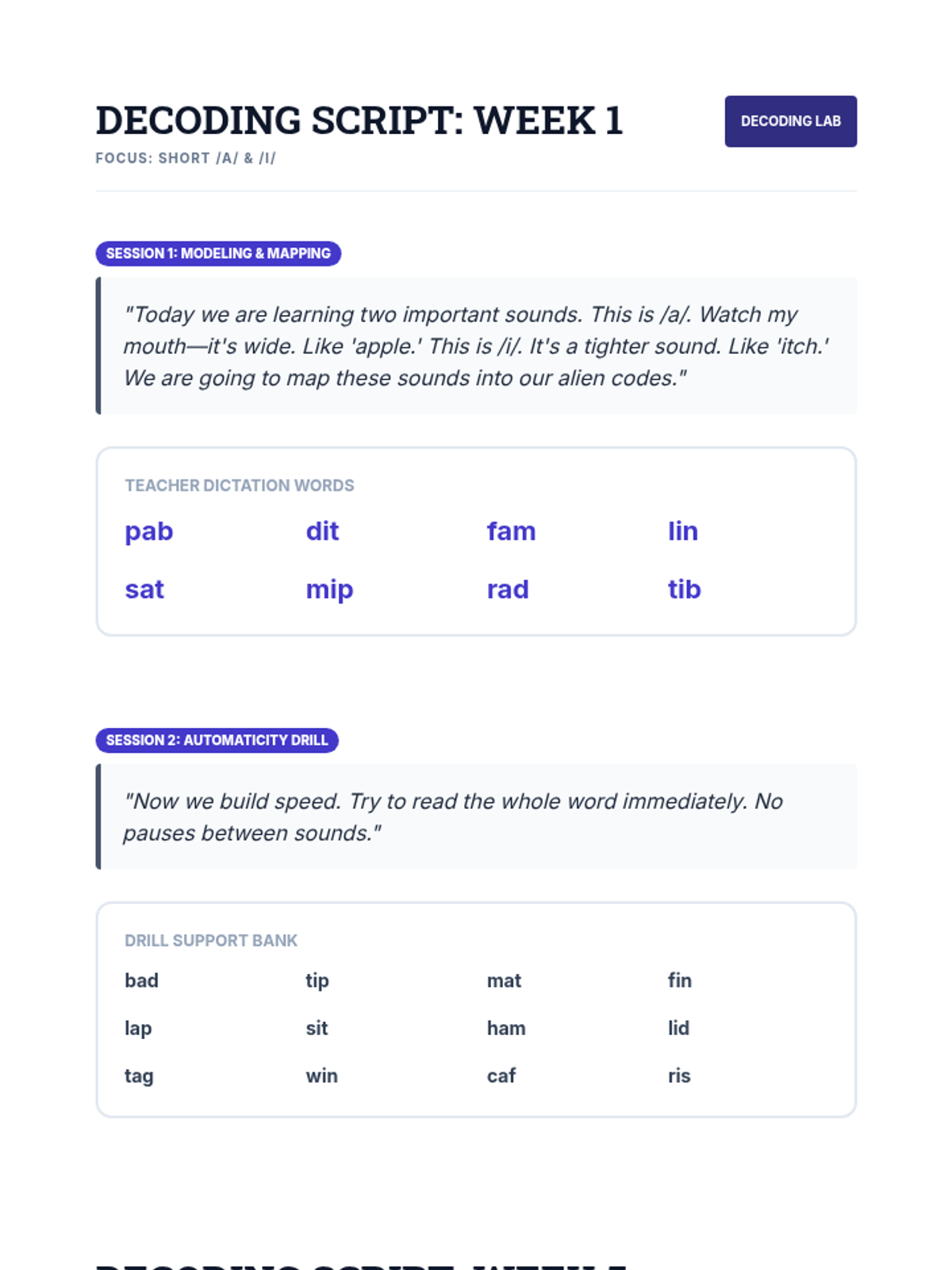
A comprehensive teacher-facing script and word bank for the 10-session Decoding Intervention, providing explicit instruction prompts and targeted word lists for modeling. Includes master assessment word lists.
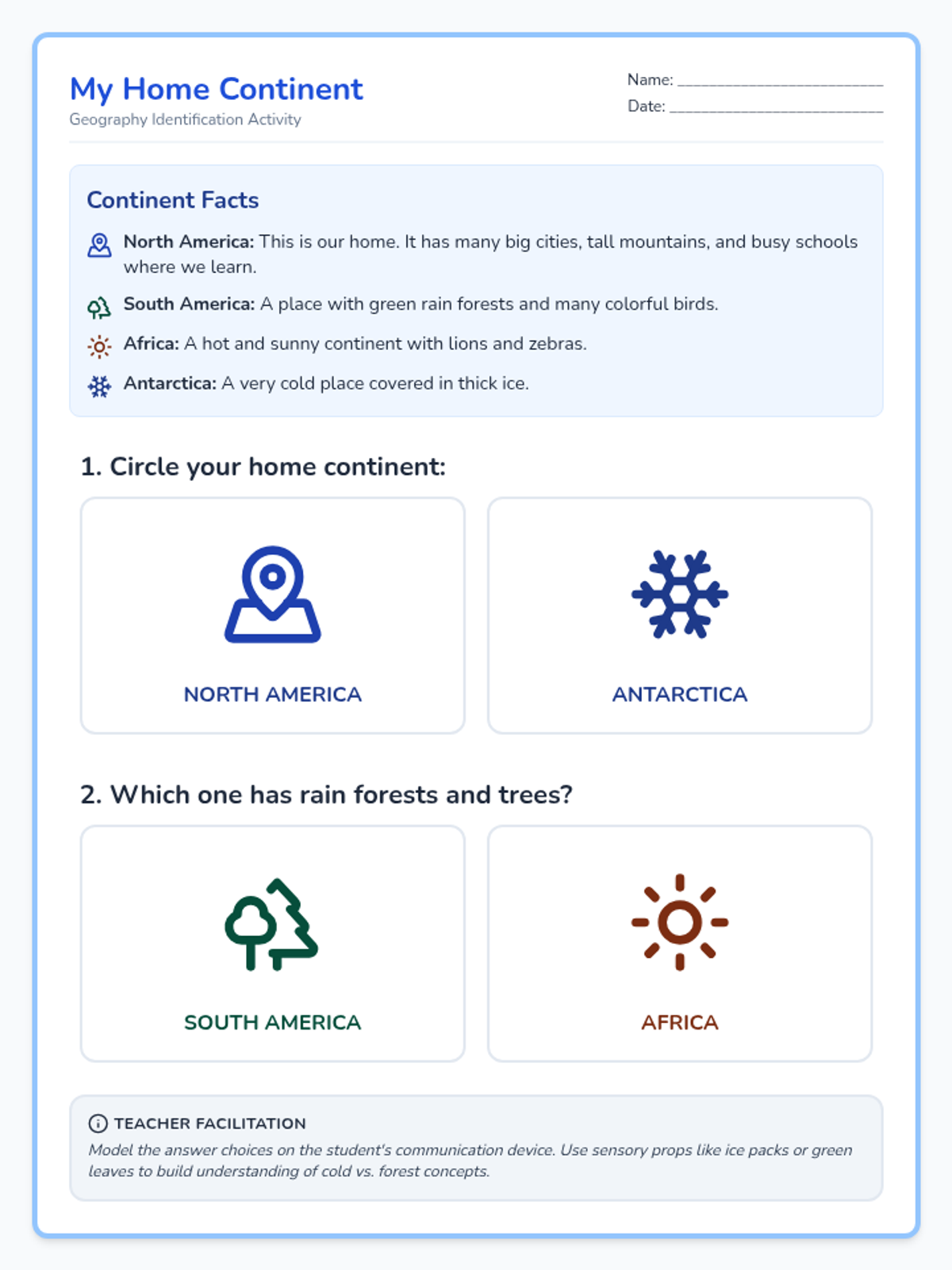
A simple identification worksheet for students to identify where they live and characteristic traits of continents like Antarctica.
A large-format slide deck for group instruction. Features 4 sentences per slide, realistic world photography, and integrated AAC symbols for communication support. Includes multiple continents.
A symbol-supported adapted book focusing on all 7 continents. Features 4 sentences per page and realistic world photo framing to support literacy and communication for kindergarten students. Includes all 7 continents with Unsplash photography.
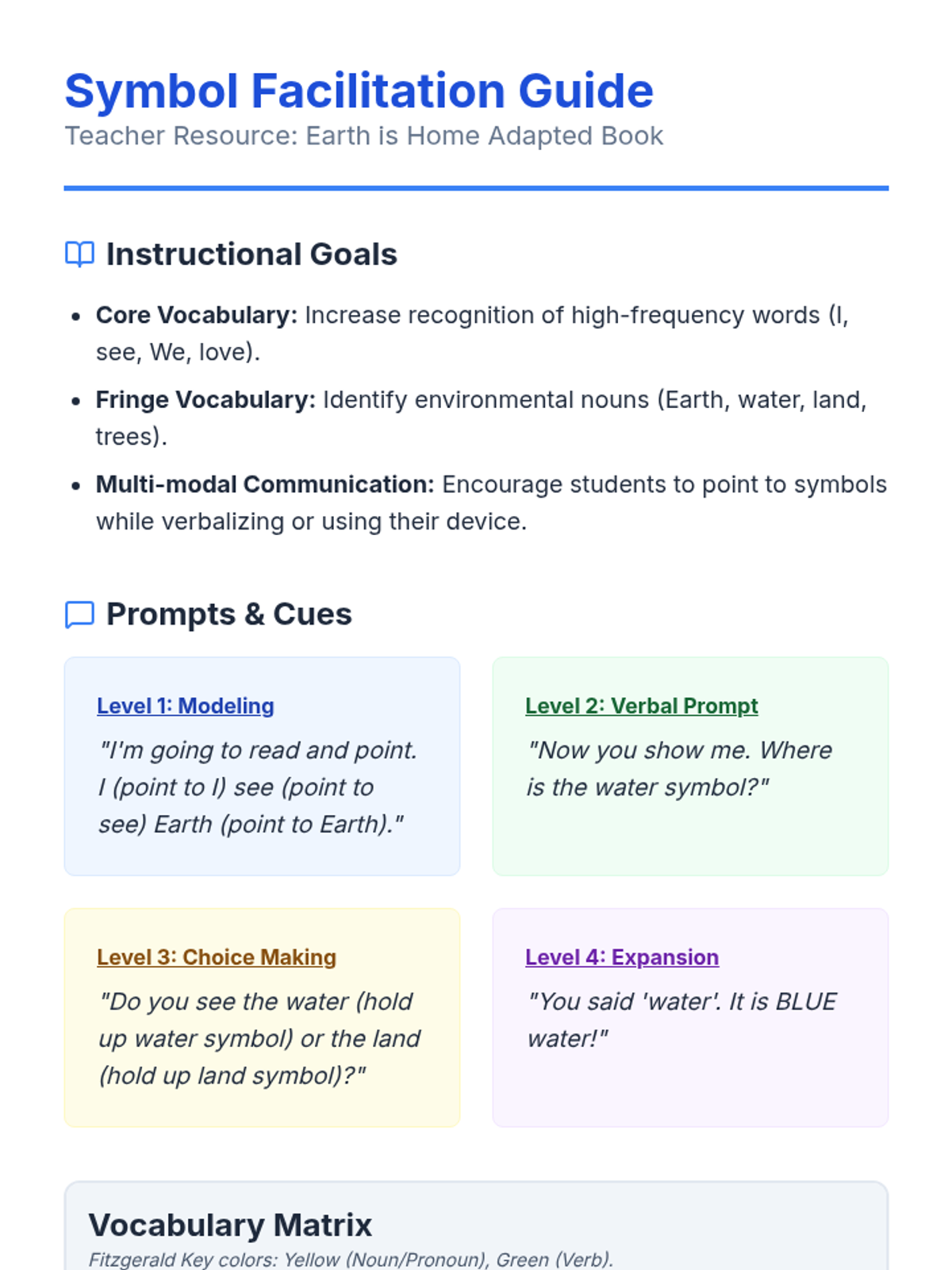
A guide for educators to facilitate the use of the Earth is Home adapted book. Includes prompting levels, vocabulary goals, and modeling strategies for AAC users.
A large-format slide deck for group instruction. Features 4 sentences per slide, realistic world photo framing, and integrated AAC symbols for communication support.
A high-contrast, symbol-supported adapted book for kindergarten students. Features 4 sentences per page, realistic world photography from Unsplash, and integrated AAC symbols for literacy support.
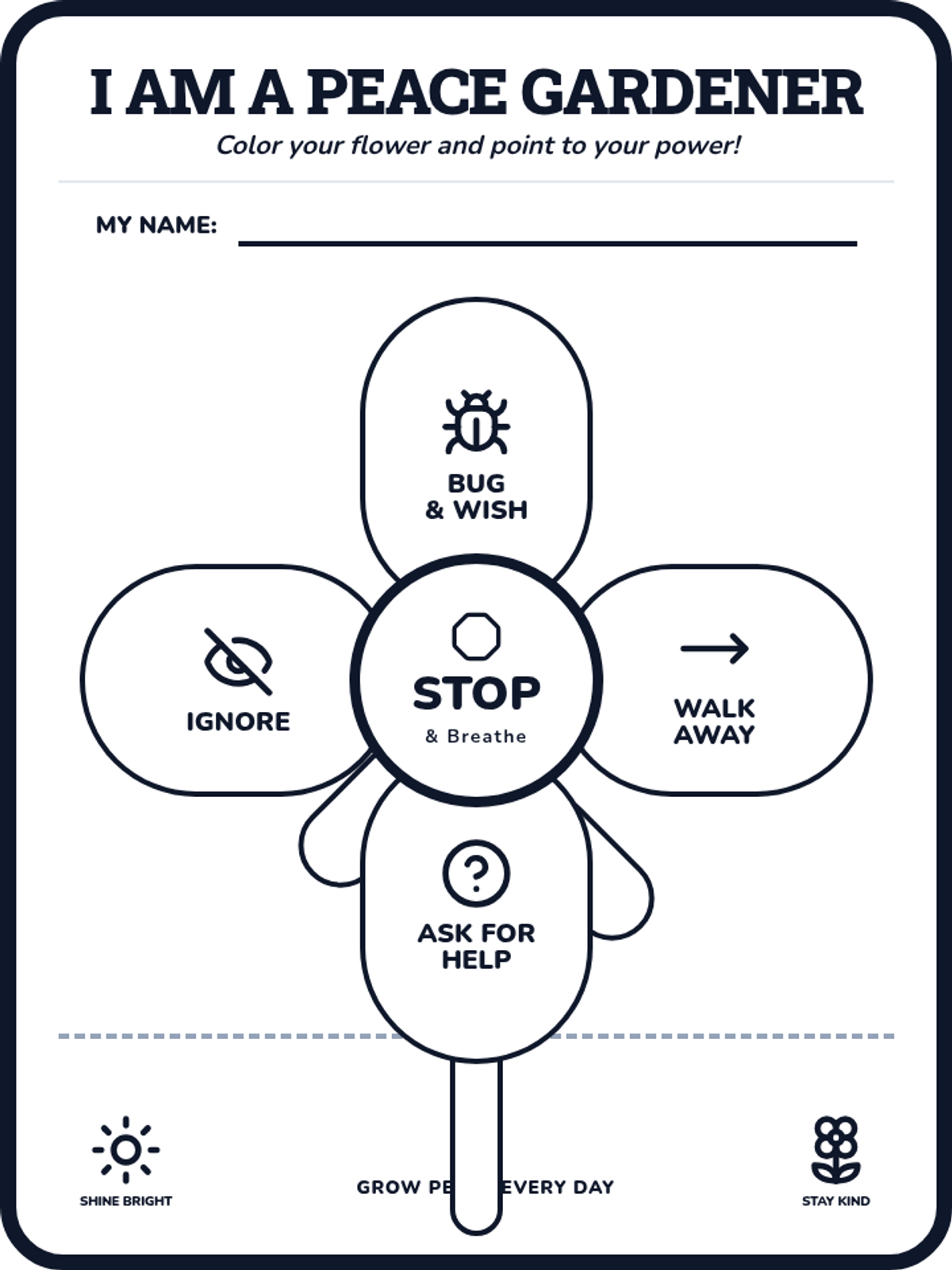
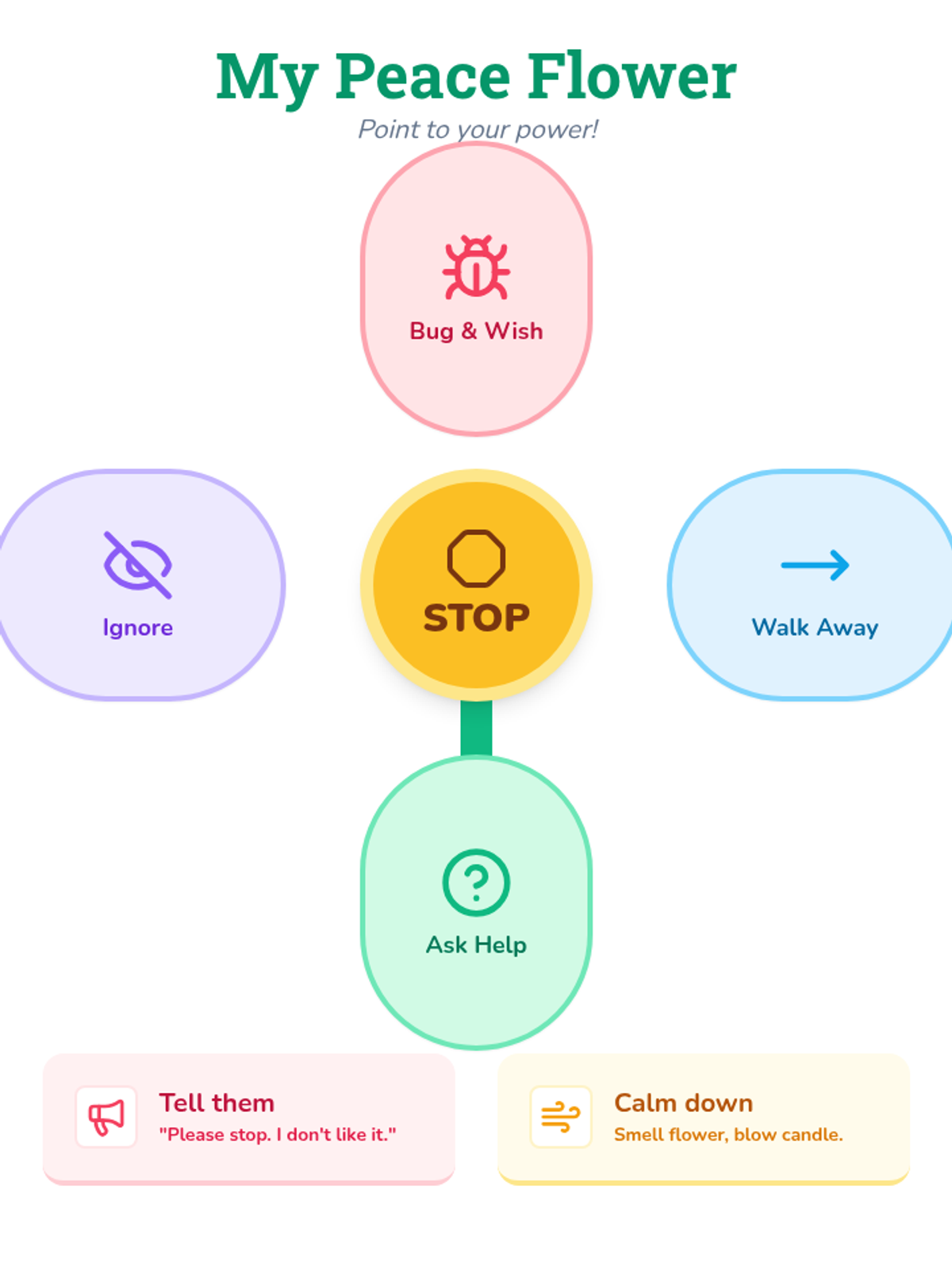
A high-contrast, black-and-white Peace Flower coloring page designed for students to practice conflict resolution strategies while being creative. Features a second page with cut-out communication cards for AAC support.
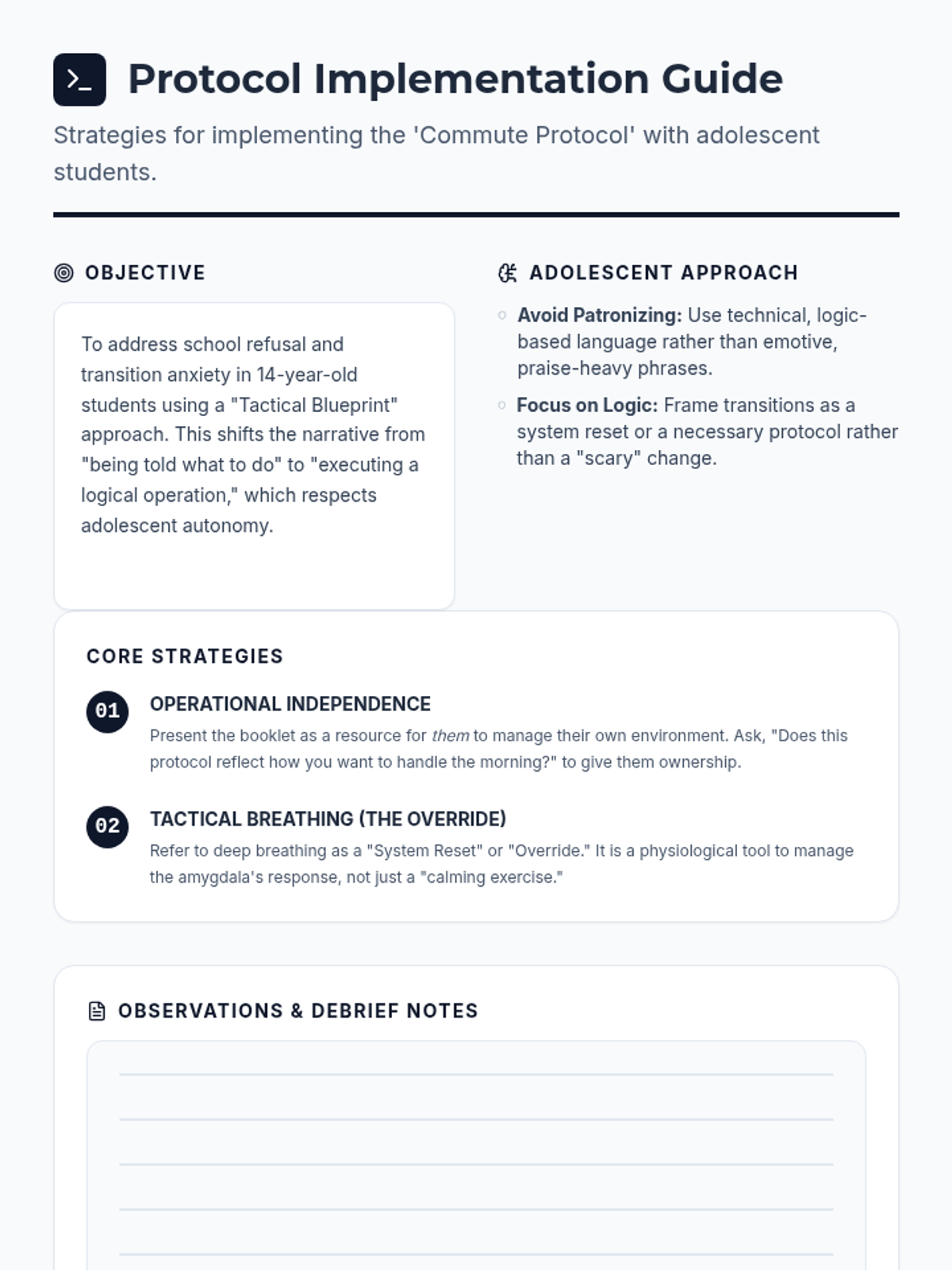
A teacher/parent implementation guide designed for older students, focusing on collaborative debriefing and a tactical approach to implementing the 'Commute Protocol' social story.
A mature, tactical 'Commute Protocol' social story booklet designed for a 14-year-old boy, using respect-based language and a high-tech blueprint aesthetic to address school transitions and refusal.
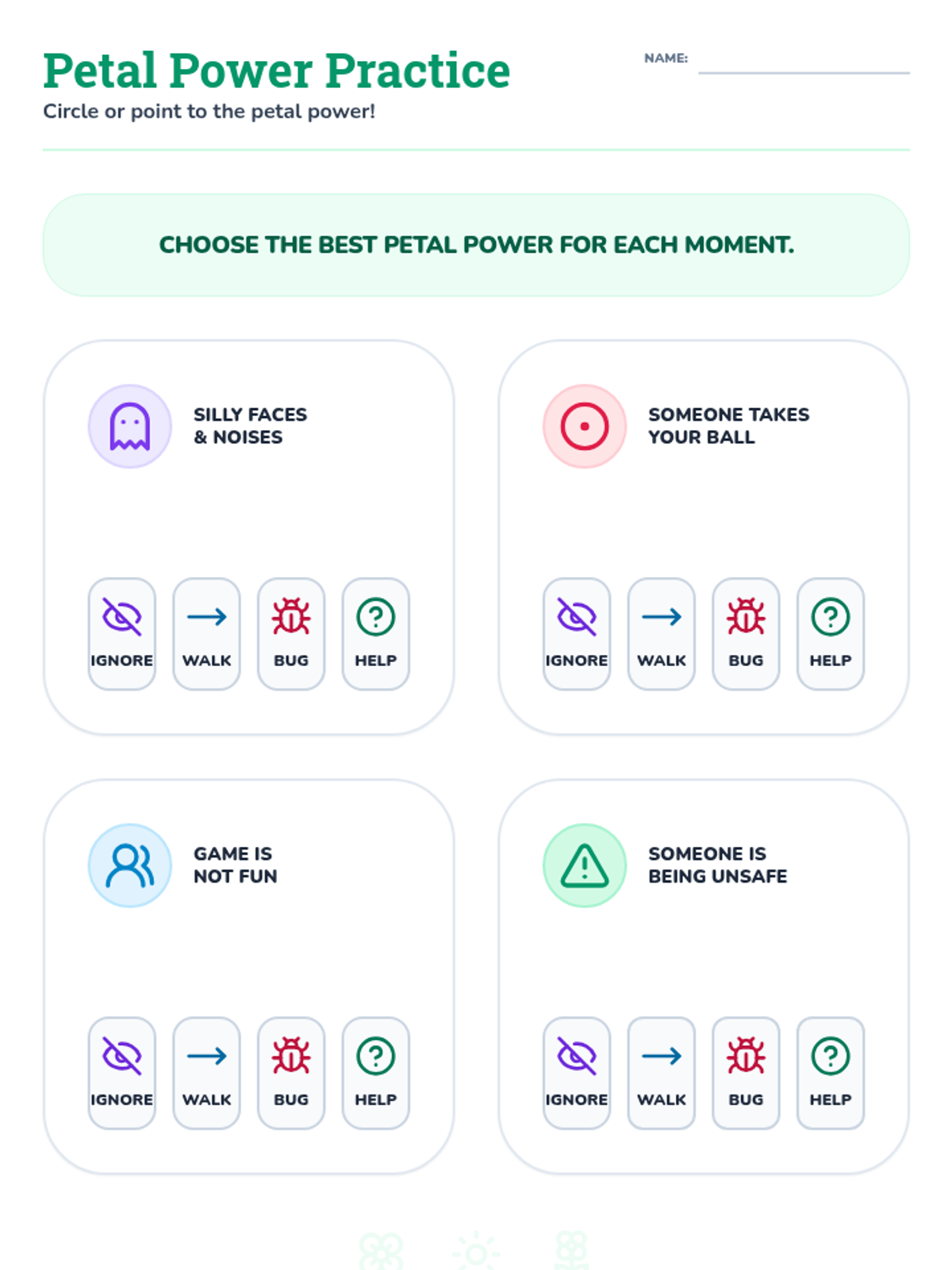
A simplified scenario-based practice worksheet for students using AAC or who are minimally verbal. Features clear icons and single-choice answers to reinforce the best Peace Petal for common conflicts.
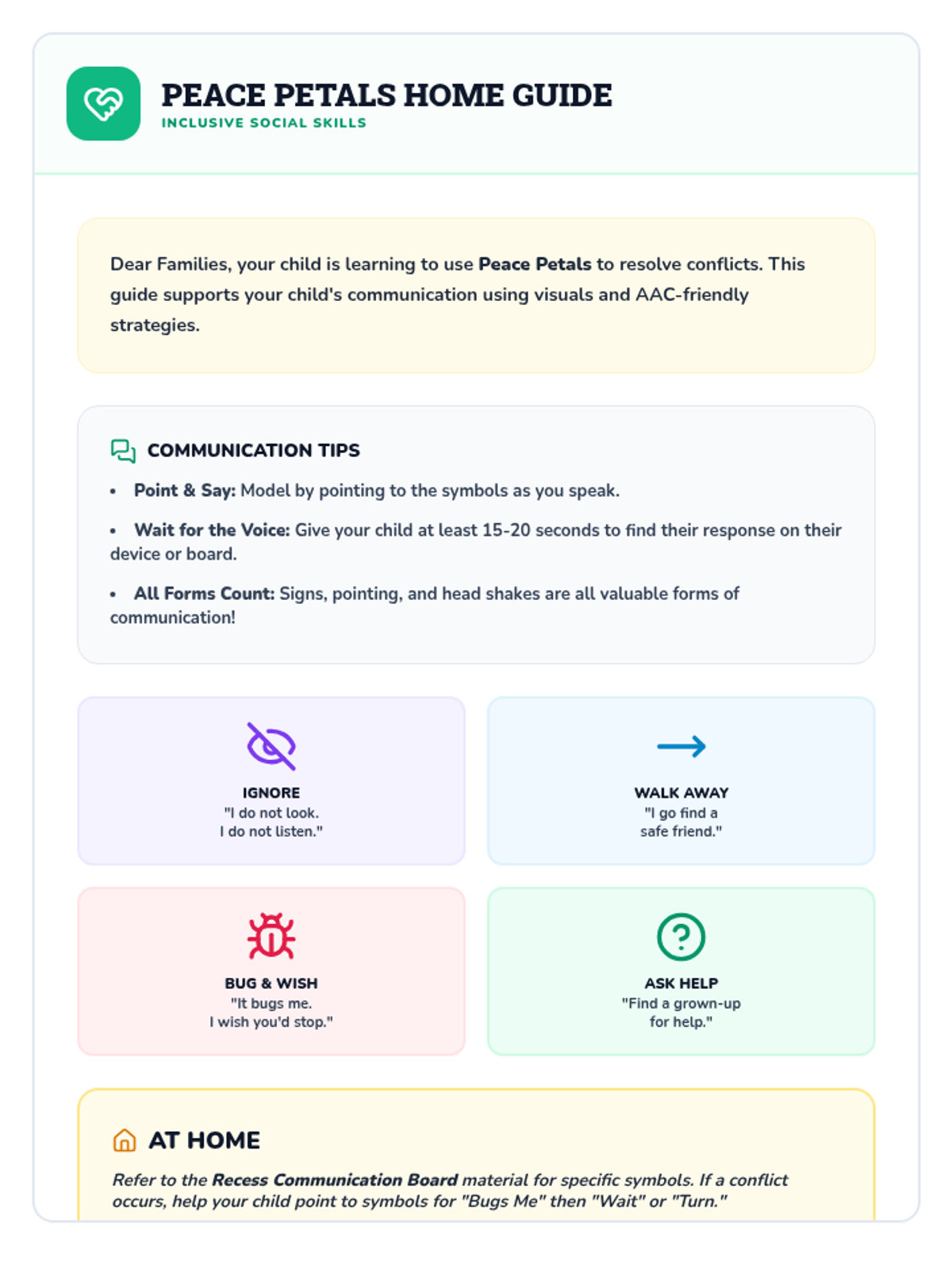
A parent handout designed to support inclusive conflict resolution at home, providing tips for families of students who use AAC or are minimally verbal to practice the 'Peace Petals' framework.
An inclusive, highly visual slide deck for the 'Peace Petals' lesson, featuring simplified text, large icons, and symbol support to engage students who are minimally verbal or use AAC.
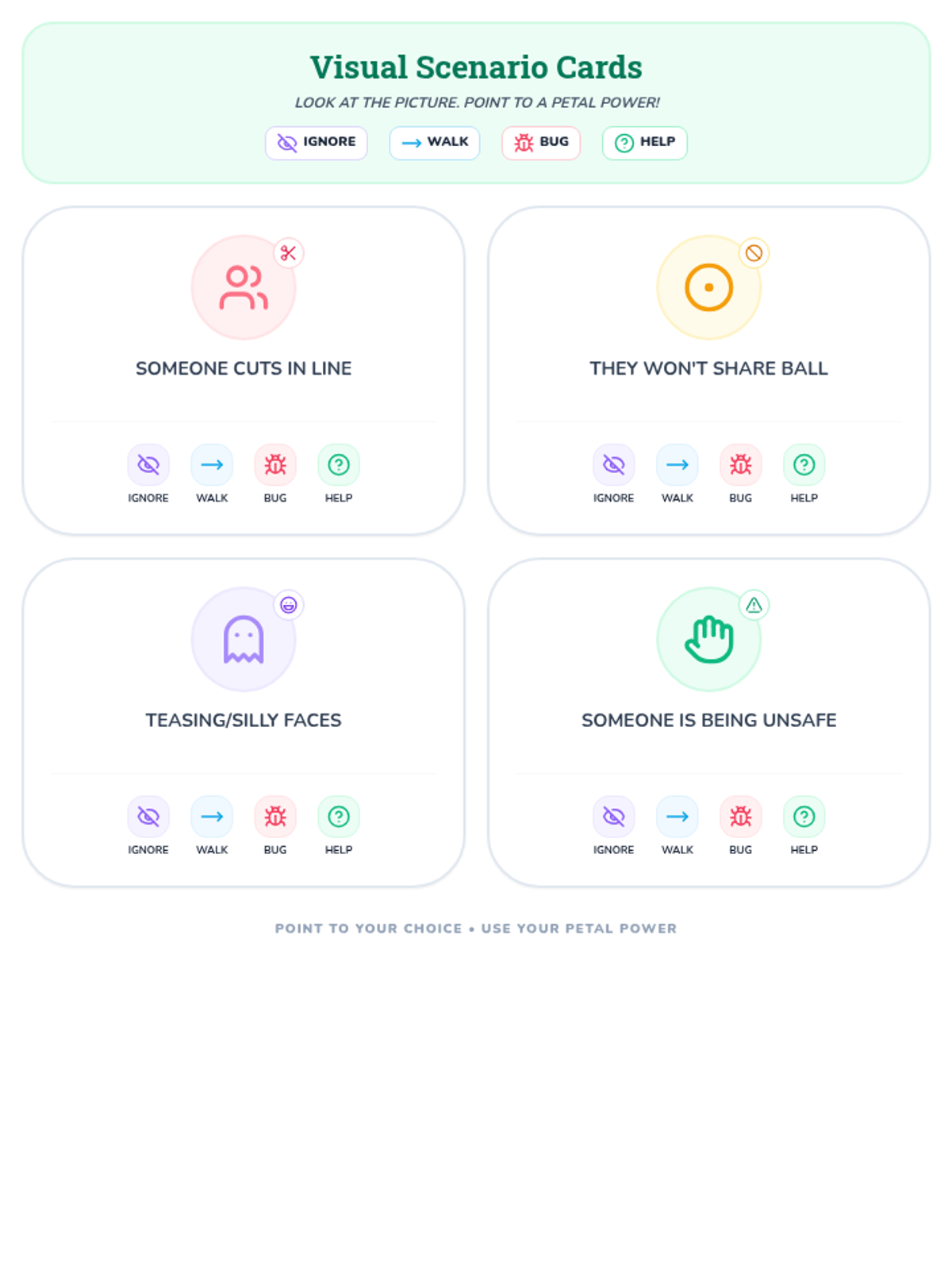
Visual scenario cards designed for students who are minimally verbal or use AAC. Each card features a clear, icon-based conflict and a selection of the four Peace Petals for easy communication and choice-making.
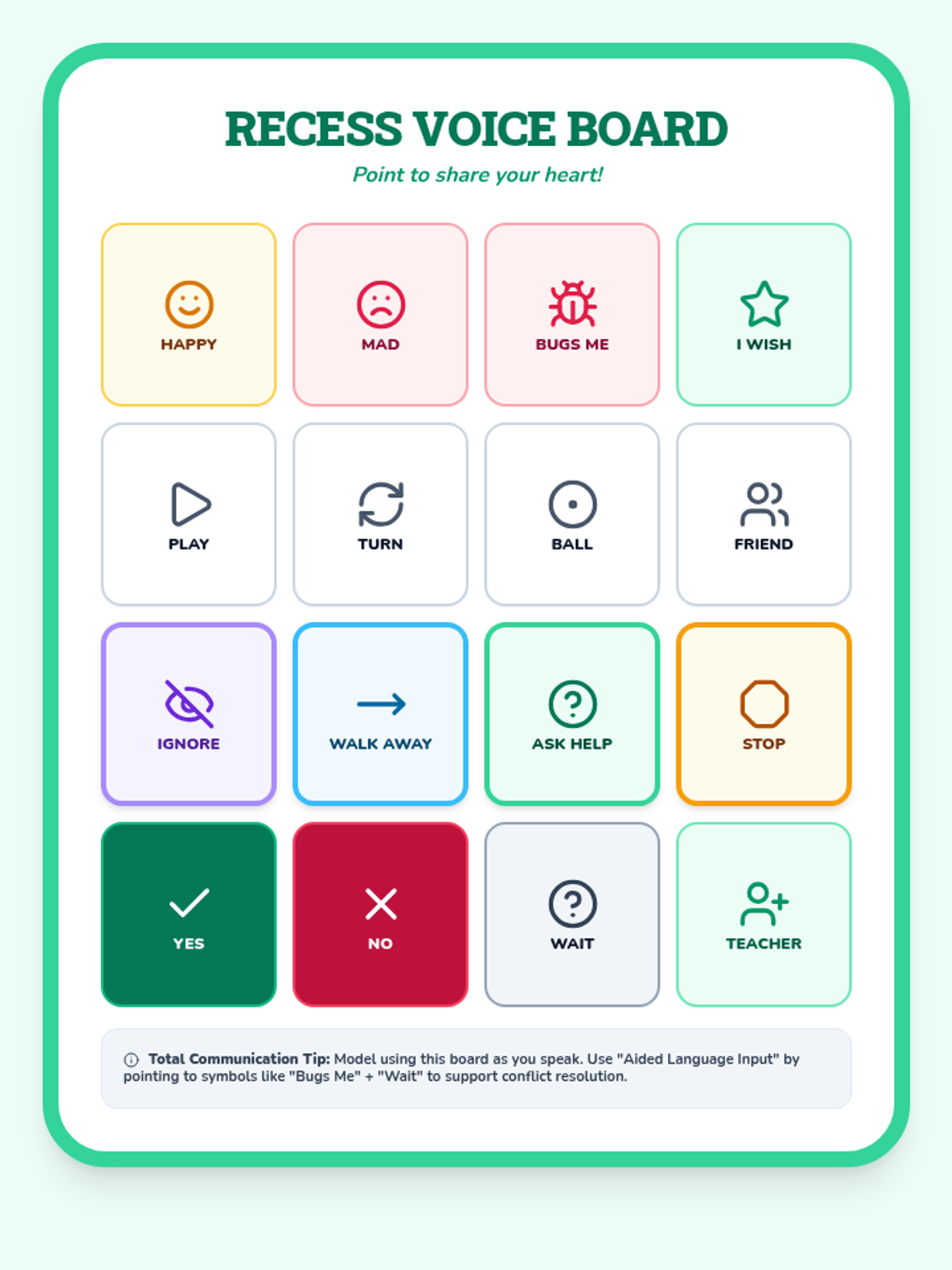
A specialized communication board for recess, featuring key vocabulary for conflict resolution, the four Peace Petals, and basic playground needs. Ideal for students using AAC or who are minimally verbal.
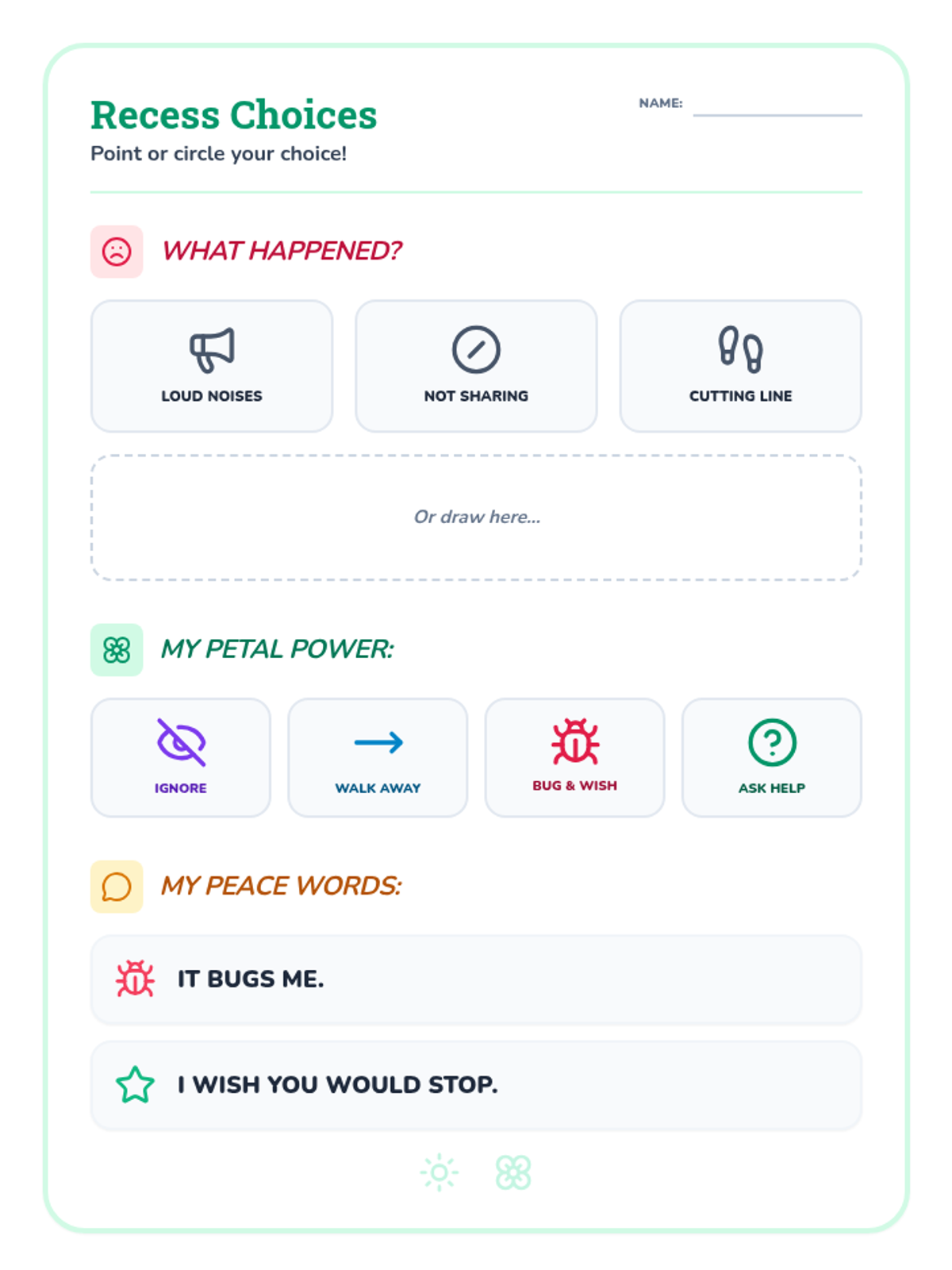
A visual-choice worksheet for students who are minimally verbal or use AAC, featuring large icons and simplified options for communicating recess problems and solutions.
A visual poster and a set of mini-reminders featuring high-contrast symbols and simplified text to support students who are minimally verbal or use AAC.
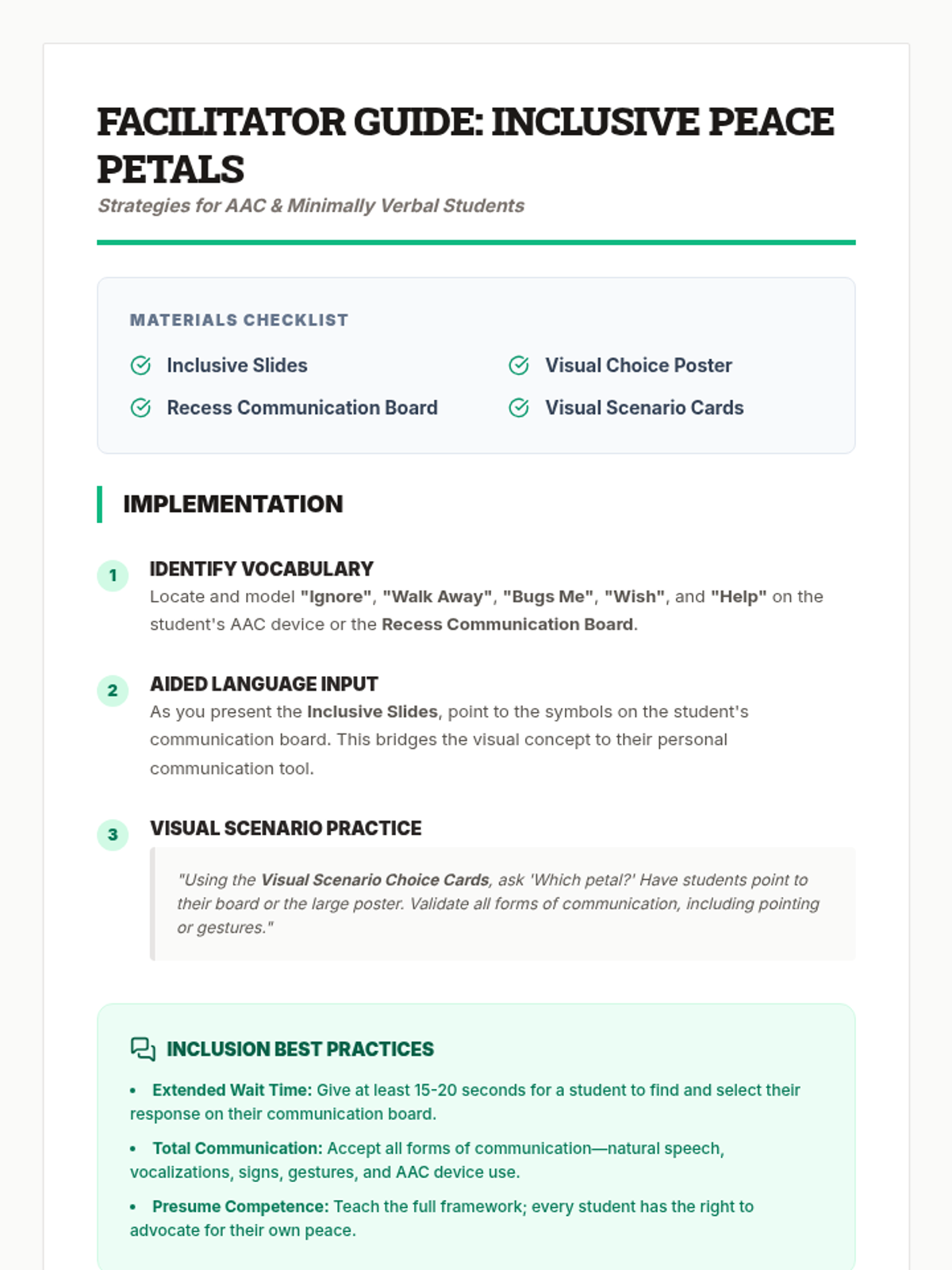
A teacher-facing facilitator guide for the inclusive 'Peace Petals' lesson, providing specific strategies for supporting students who are minimally verbal or use AAC.
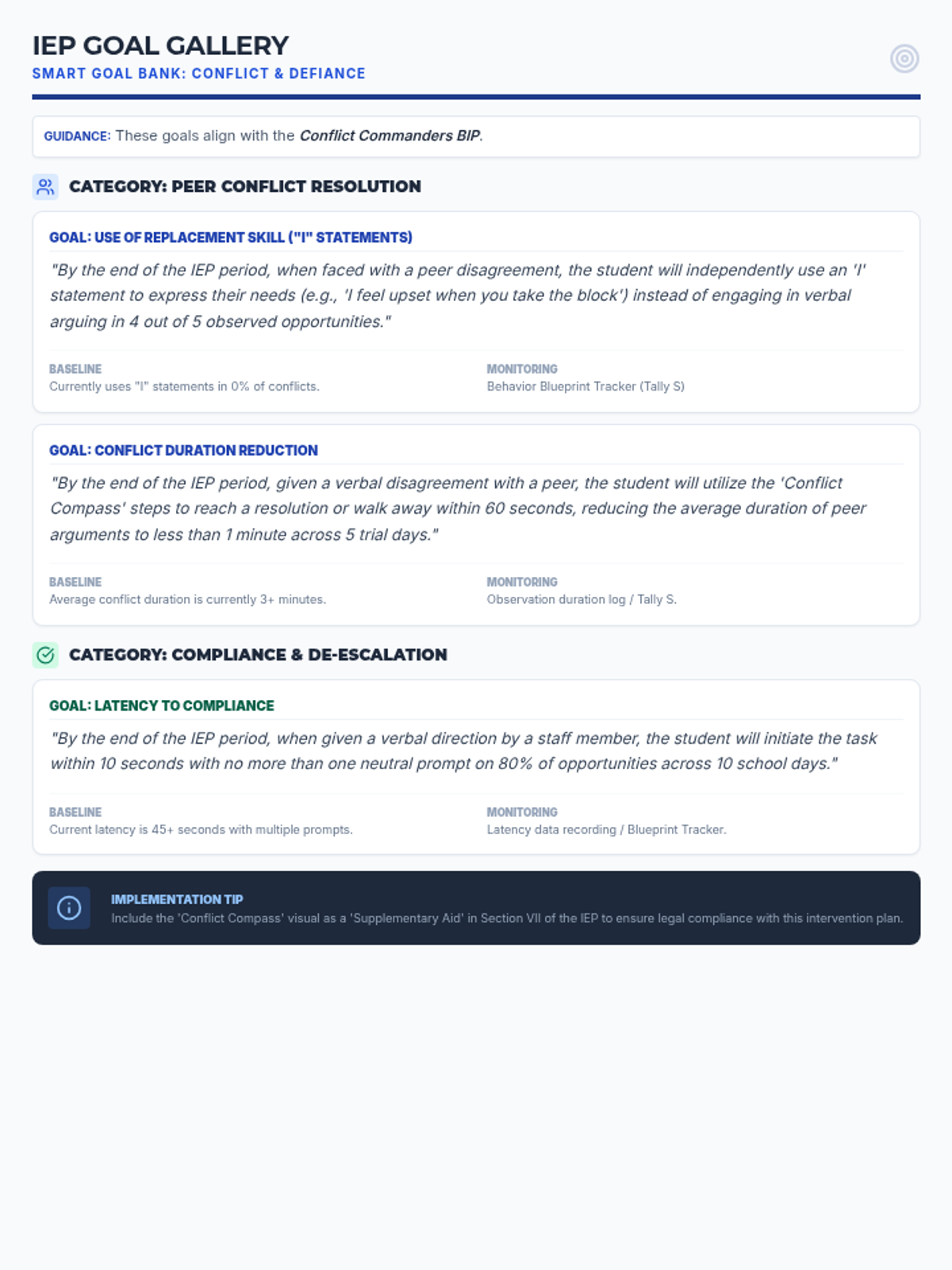
A bank of SMART IEP goals focused on reducing peer conflict and defiance, aligned with the Conflict Commanders BIP strategies.
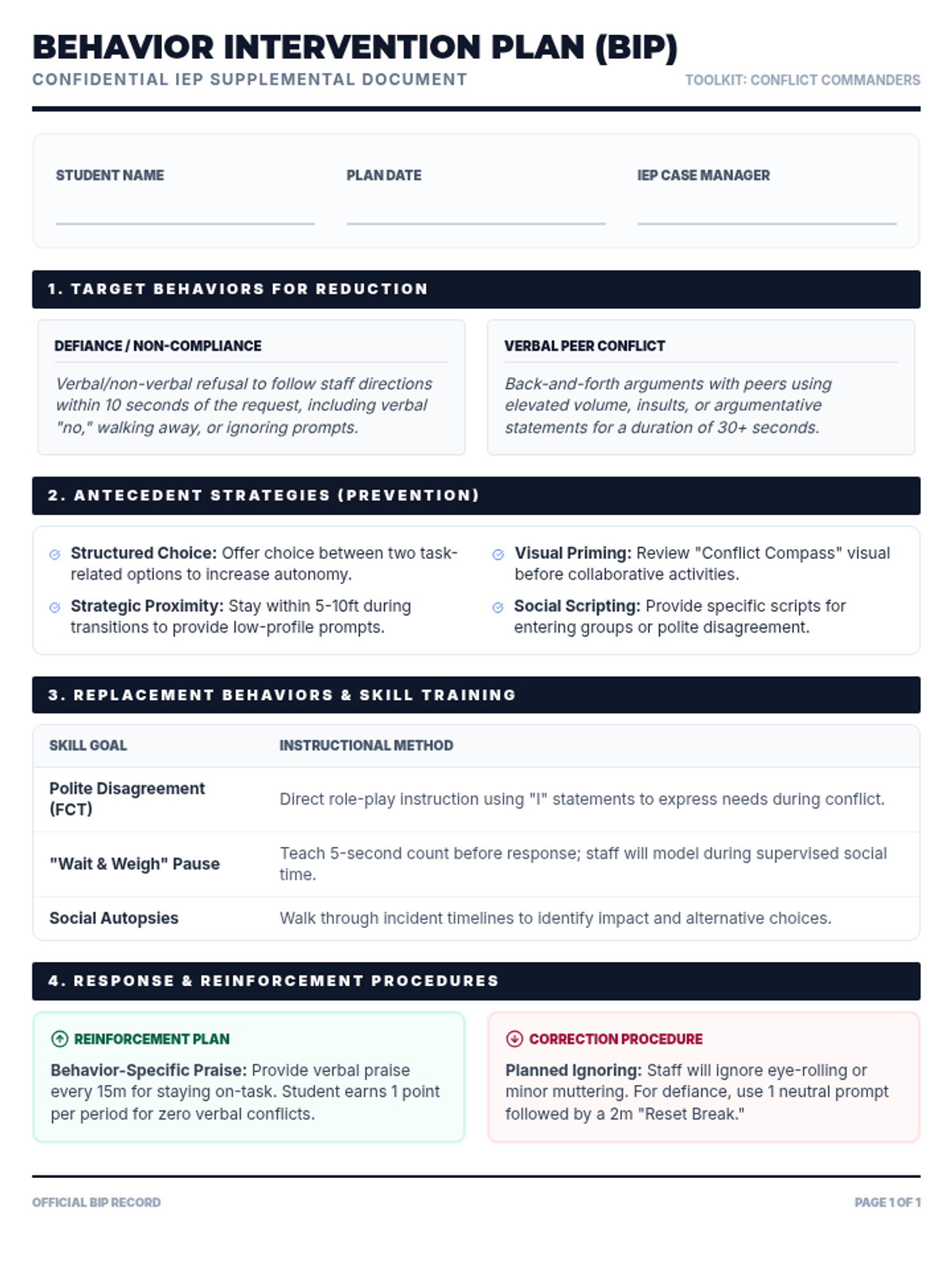
A formal Behavior Intervention Plan (BIP) document formatted for IEP inclusion, organizing strategies into target behaviors, antecedents, and replacement skills.
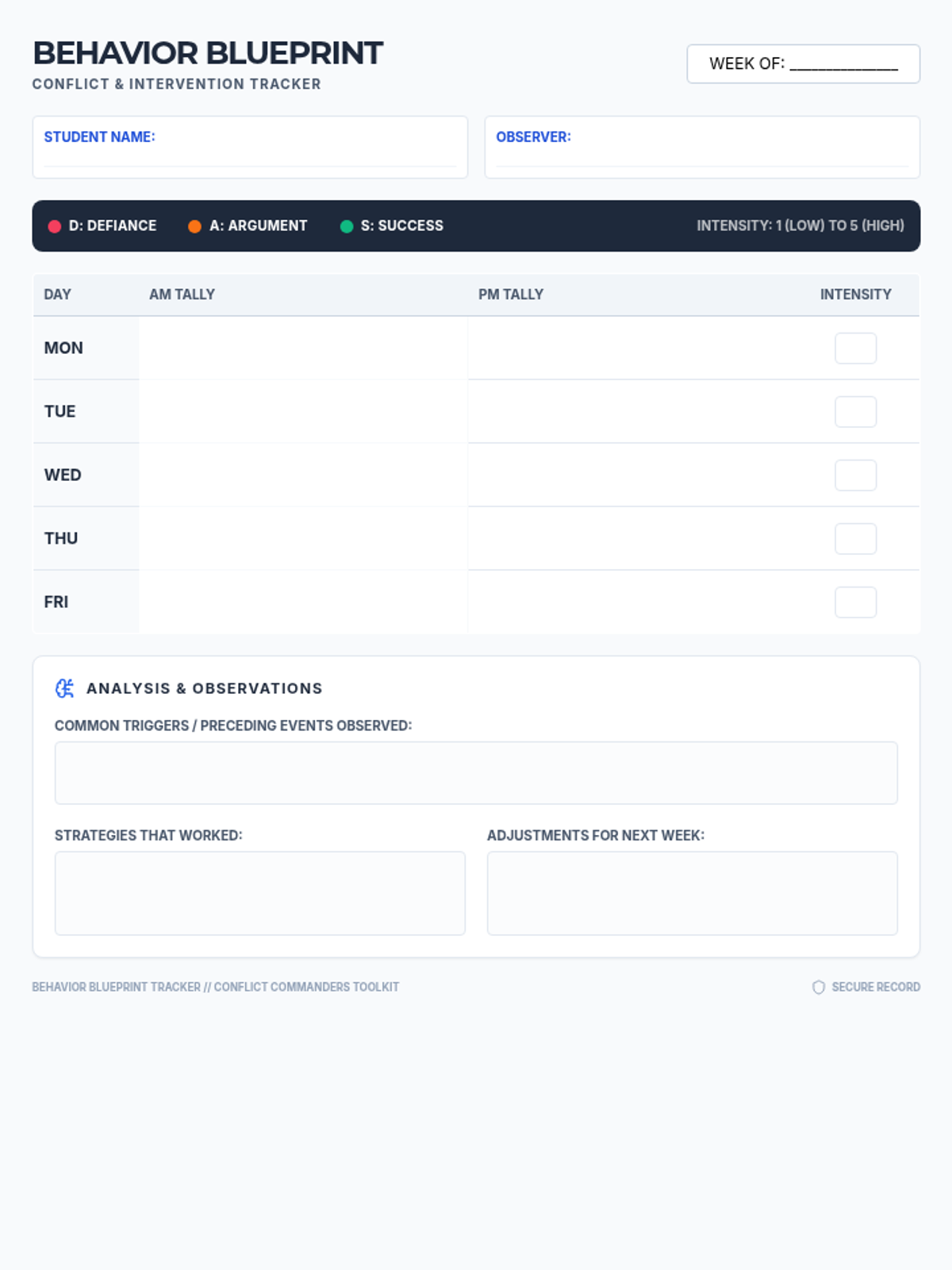
A tracking sheet designed for educators to record the frequency and intensity of defiant behaviors and peer arguments, with space for qualitative analysis.