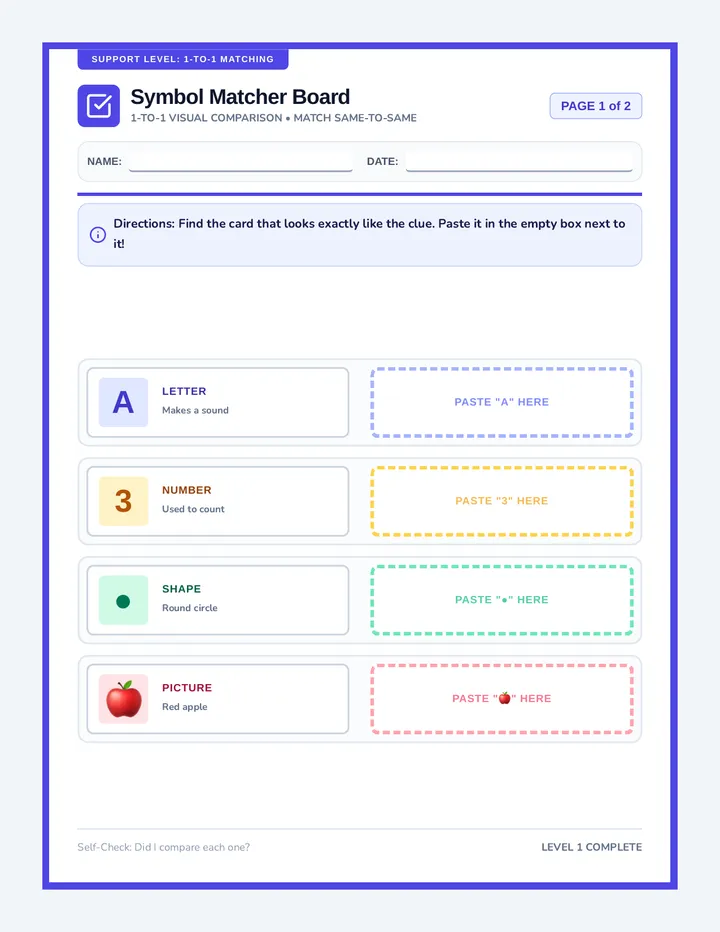
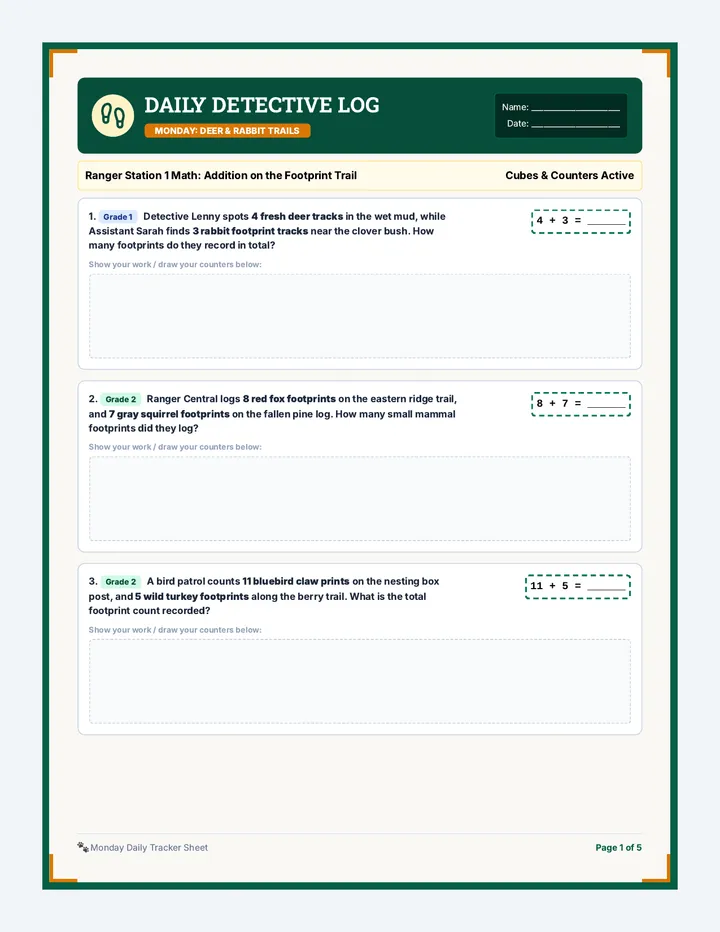
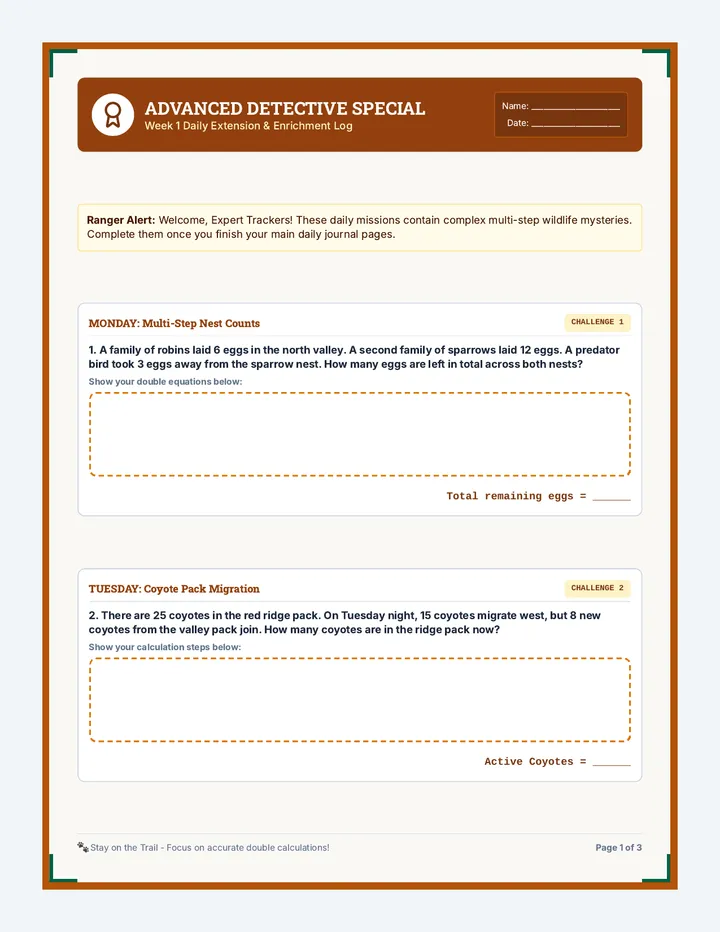
A highly visual, 15-minute activity designed for non-verbal students to practice turn-taking and sharing using concrete manipulatives and visual supports.
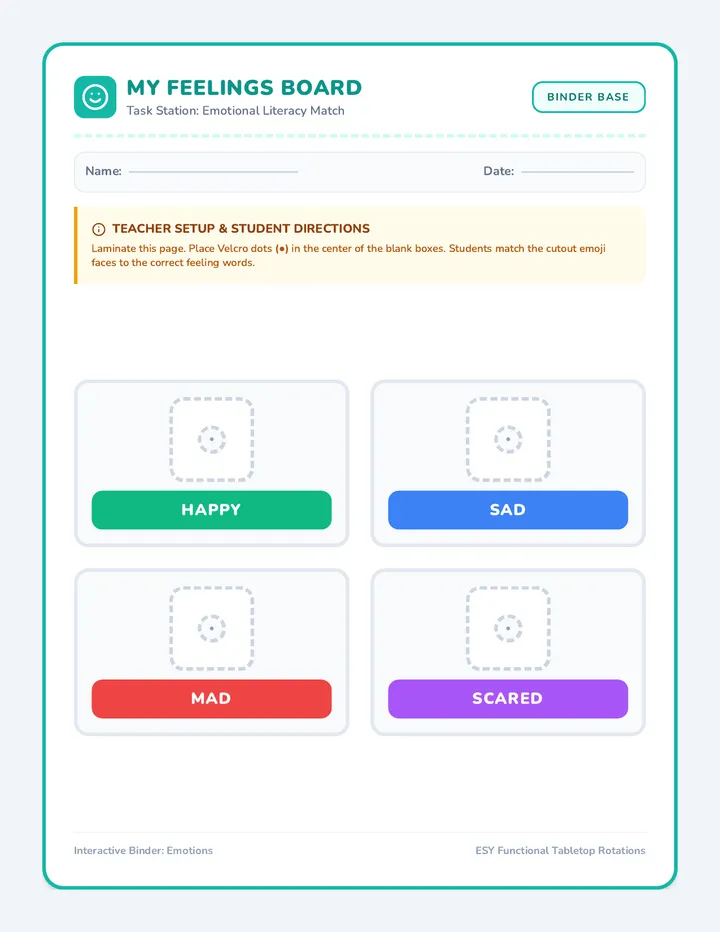
A collection of resources to help teachers and students navigate the technical aspects of virtual learning, with a focus on accessibility features like closed captioning.
A 10-15 minute daily check-in routine designed to help students build self-awareness regarding disruptive noises and expressions, focusing on 'signals' and 'impact'.
Post-game reflection sessions to accurately analyze conflict outcomes and the effectiveness of used strategies.
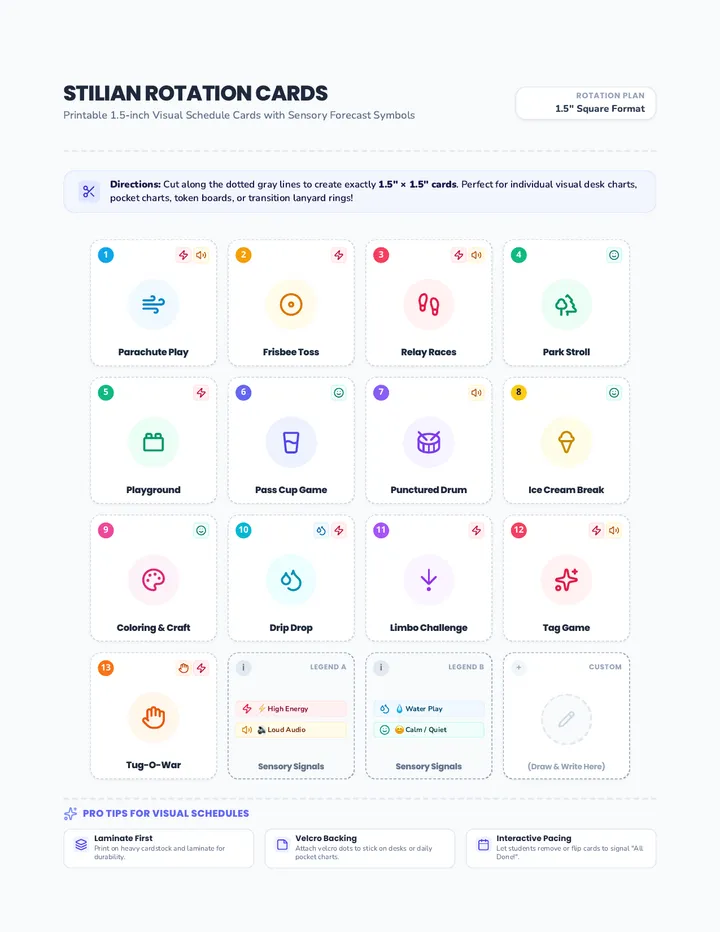
Using the 4-step 'Game Plan' (Identify, Brainstorm, Pick, Try) to solve independent problems without a referee's help.
Explicit coaching on 'Voice Passes' (I-statements) and active listening to resolve court-side friction through clear communication.
Practice in 'Fair Repair' (Apologizing and Compromising) to maintain team harmony and fix accidental mistakes.
Focus on 'Subbing Out' (Walking away and seeking adult help) when social situations become unsafe or 'Red Flag' moments occur on the court.
Introduction to the 'Starting Lineup' of conflict tools. Focuses on naming the 4 strategies in isolation using sports metaphors (Sub Out, Fair Repair, Voice Pass, Game Plan).
Intensive sessions focused on looking back at conflicts to determine tool effectiveness and accuracy (Goal 3).
Step-by-step guidance through a 4-step brainstorm process for independent problem solving (Goal 1 & 2).
Structured coaching on drafting and delivering I-statements for clear communication (Goal 1 & 2).
Practice in repairing social connections through apologies and finding fair deals (Goal 1 & 2).
Focus on discriminating between independent walking away and needing adult support for safety (Goal 1 & 2).
Explicit introduction to the 4 conflict resolution tools with high-repetition identification trials (Goal 1).
A concise, 20-minute social skills lesson designed for K-2 students with learning disorders, focusing on the core steps of following classroom directions through visual cues and sequencing.
This lesson introduces the concept of emotions as 'inner weather,' focusing specifically on identifying the physical 'warning signs' of stress and anxiety and introducing initial grounding techniques.
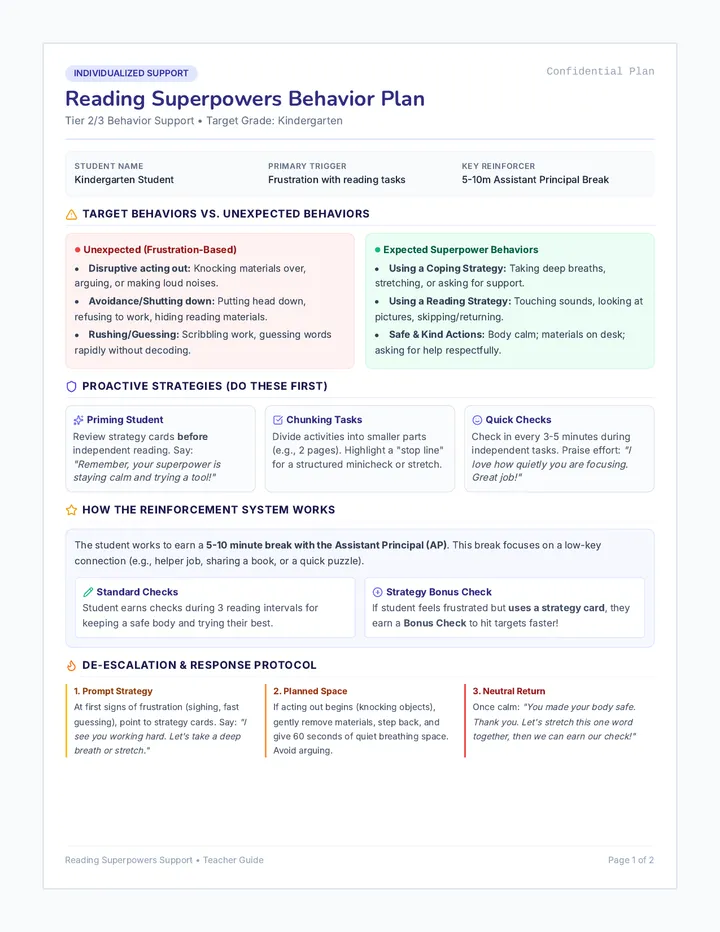
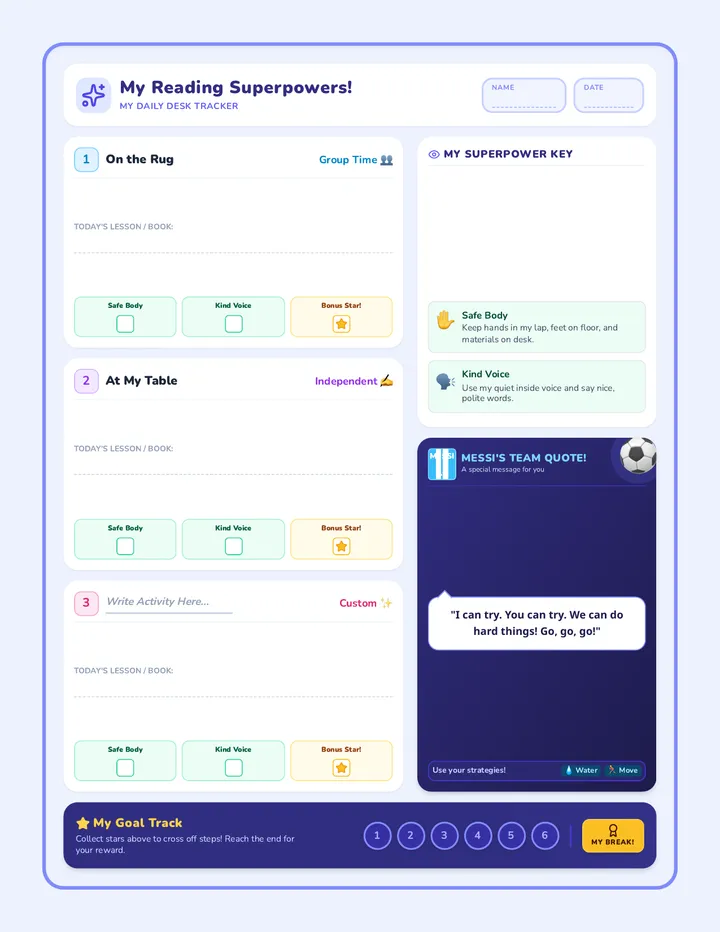
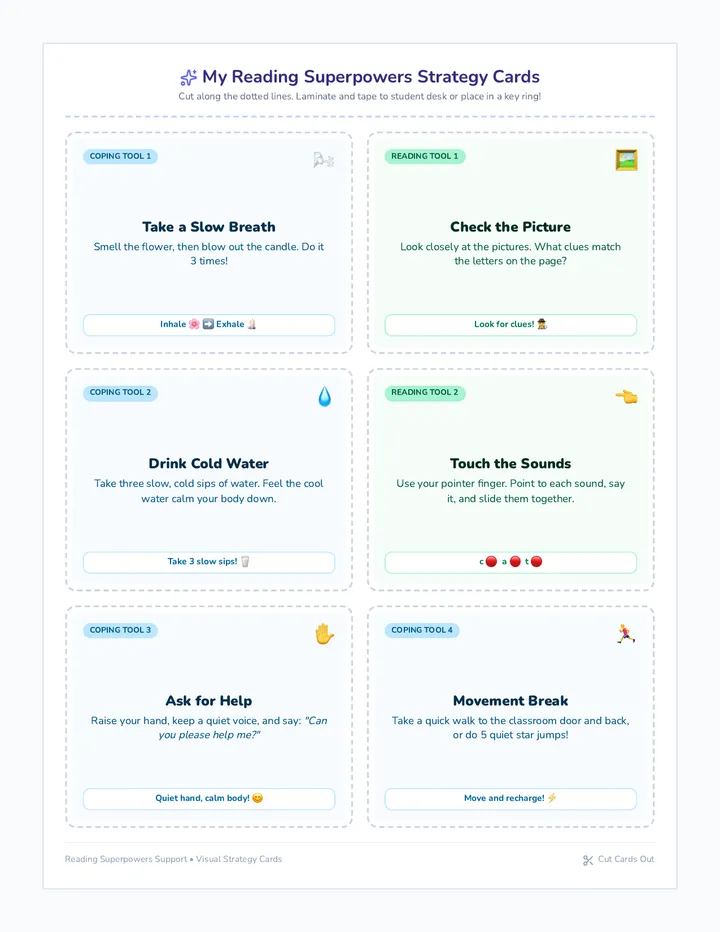
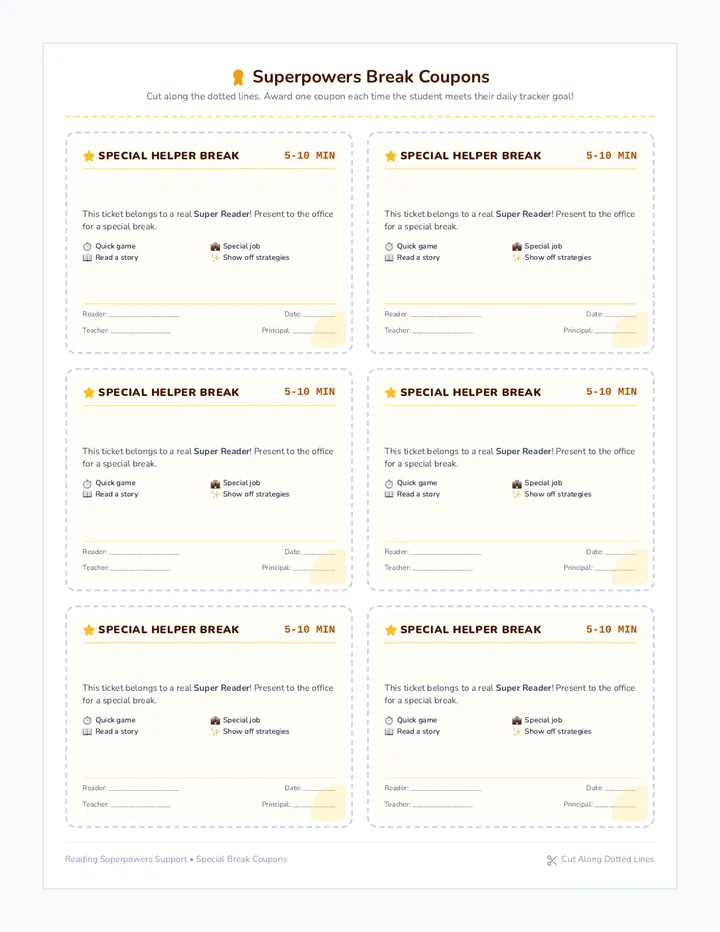
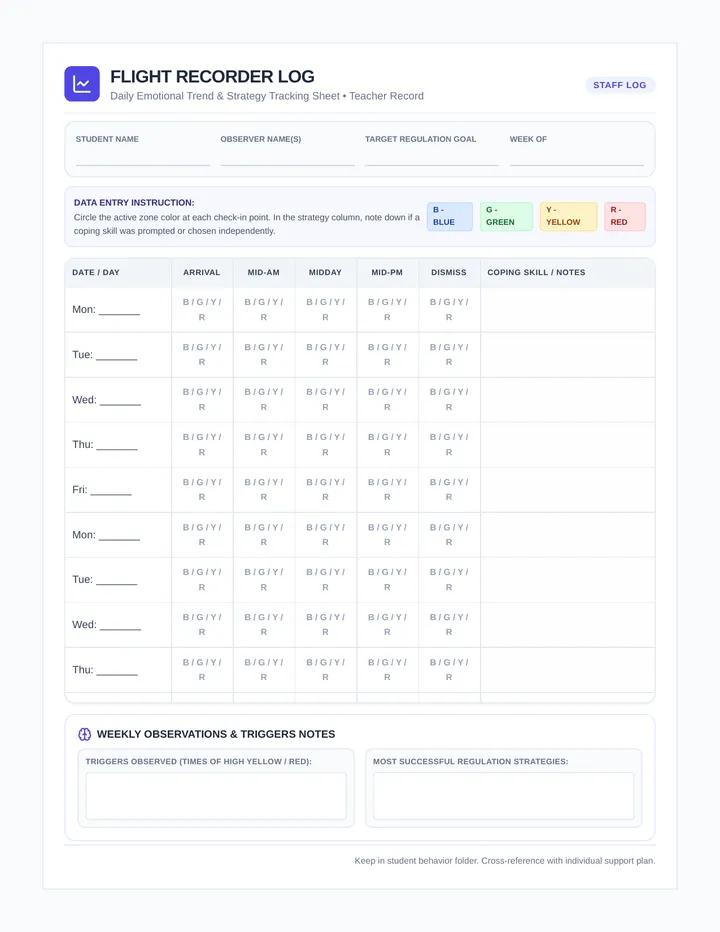
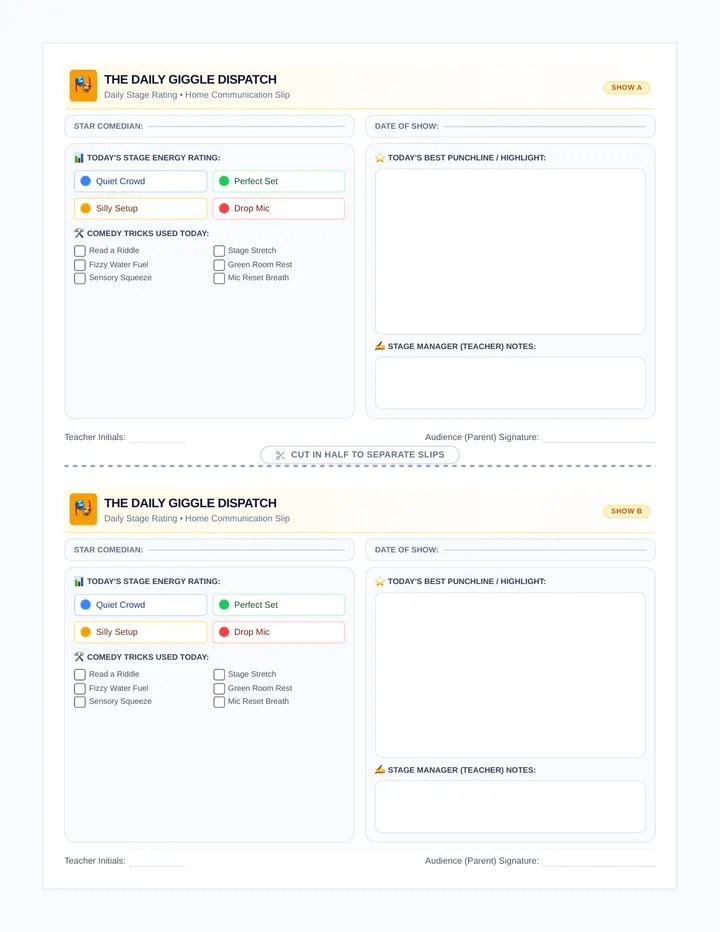
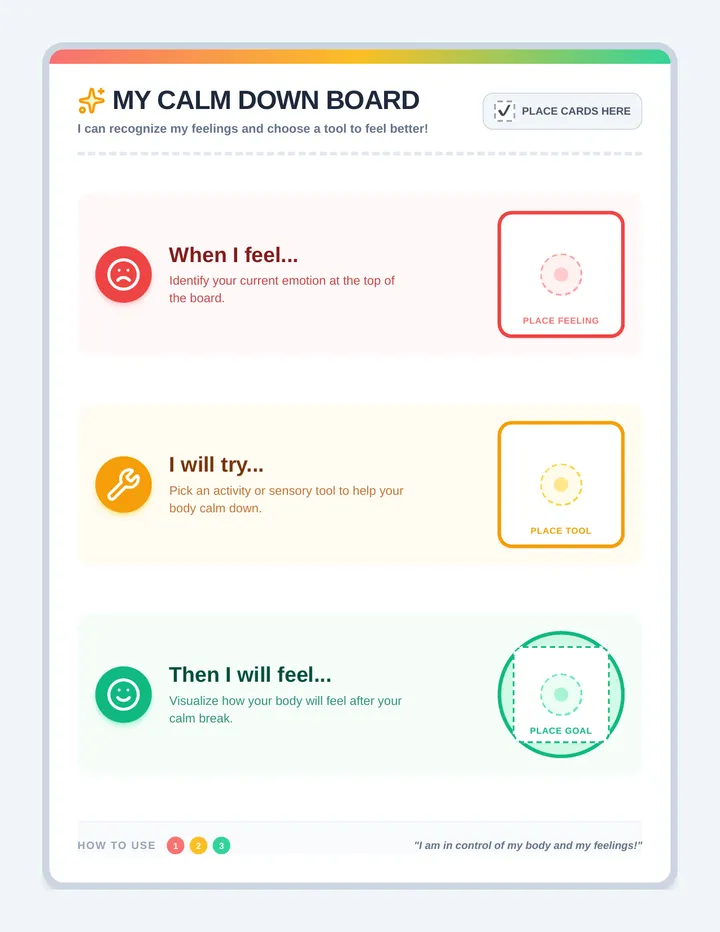
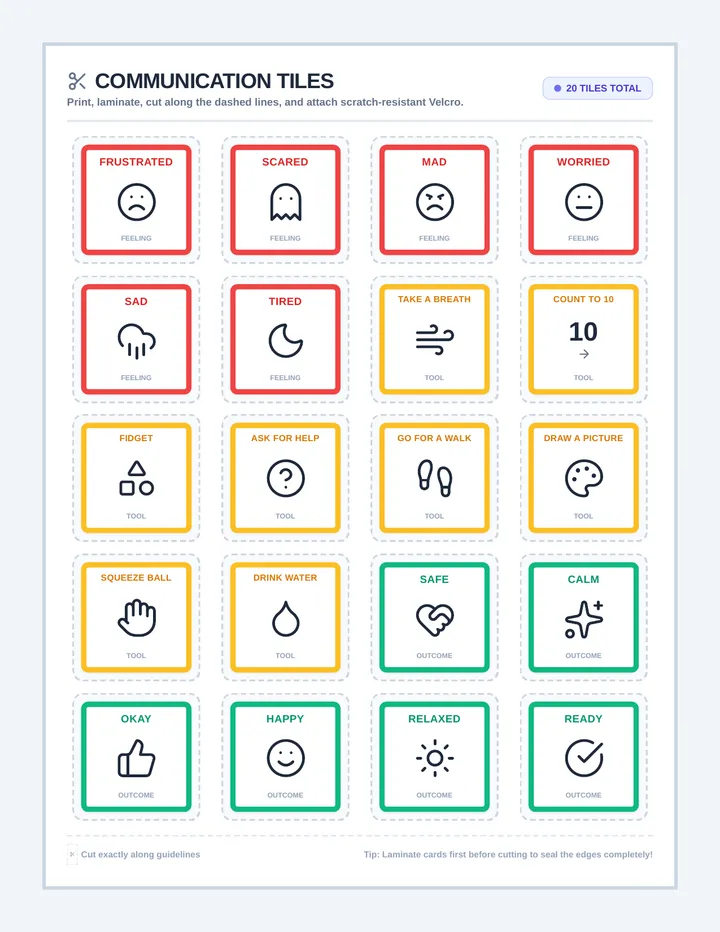
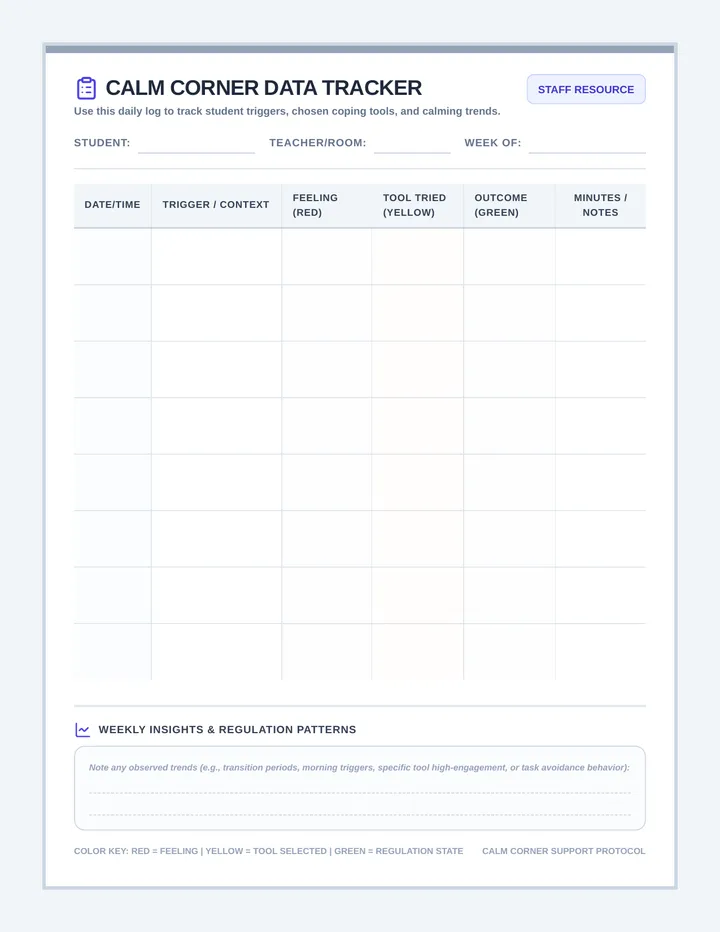
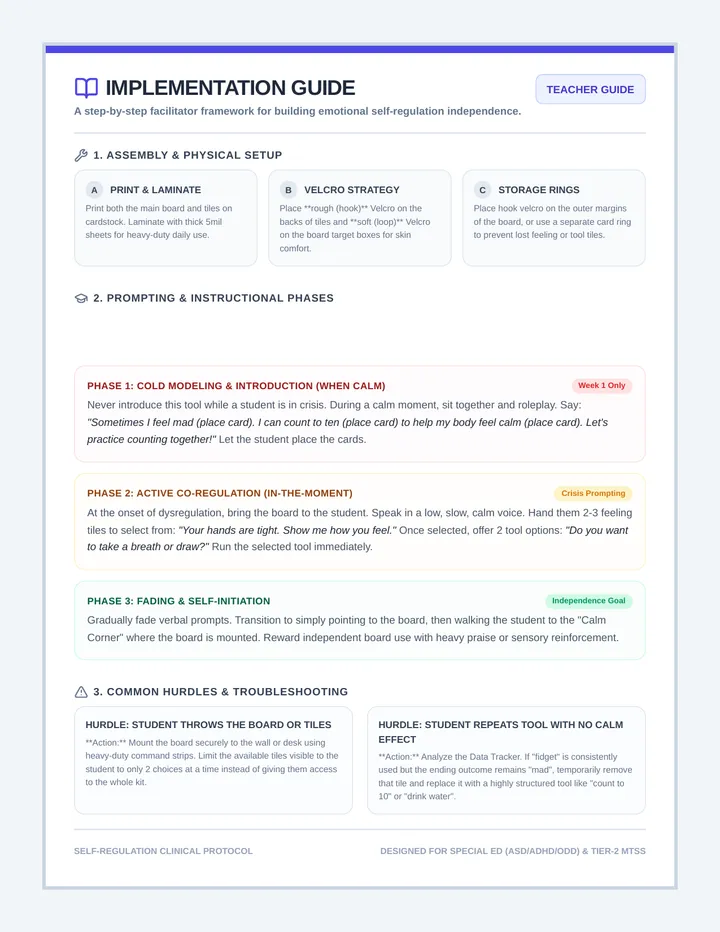
A collection of self-regulation tools for a student to improve focus, impulse control, and task completion. These resources help the student visualize their behavior choices and track daily progress through child-friendly rubrics and check-ins.
A final review of all strategies with a focus on independent mastery and final data collection for the reporting period.
Practicing the reflection process on real and hypothetical past conflicts to improve accuracy in self-assessment.
Introduction to the 'Post-Flight Review'—a reflection tool to evaluate how well a strategy worked after a conflict.
Fast-paced identification drills and implementation challenges to build fluency in strategy selection.
Guided role-play scenarios where students implement their chosen strategies in a controlled environment.
Teaching a 4-step process for solving problems independently: Identify, Brainstorm, Pick, and Try.
Developing 'I-statements' and active listening skills to resolve conflicts through talking and sharing.
Exploring the nuance of genuine apologies and the art of finding a 'middle ground' through compromise.
Focused practice on recognizing 'big' problems that need adult help and 'small' problems where walking away is the best first step.
A deep dive into knowing when a conflict requires walking away versus talking it out.