A foundational grammar lesson focusing on sentence structure through visual scaffolds and color-coding. Students learn to identify fragments, complete sentences, and run-ons using a 'Construction' metaphor.
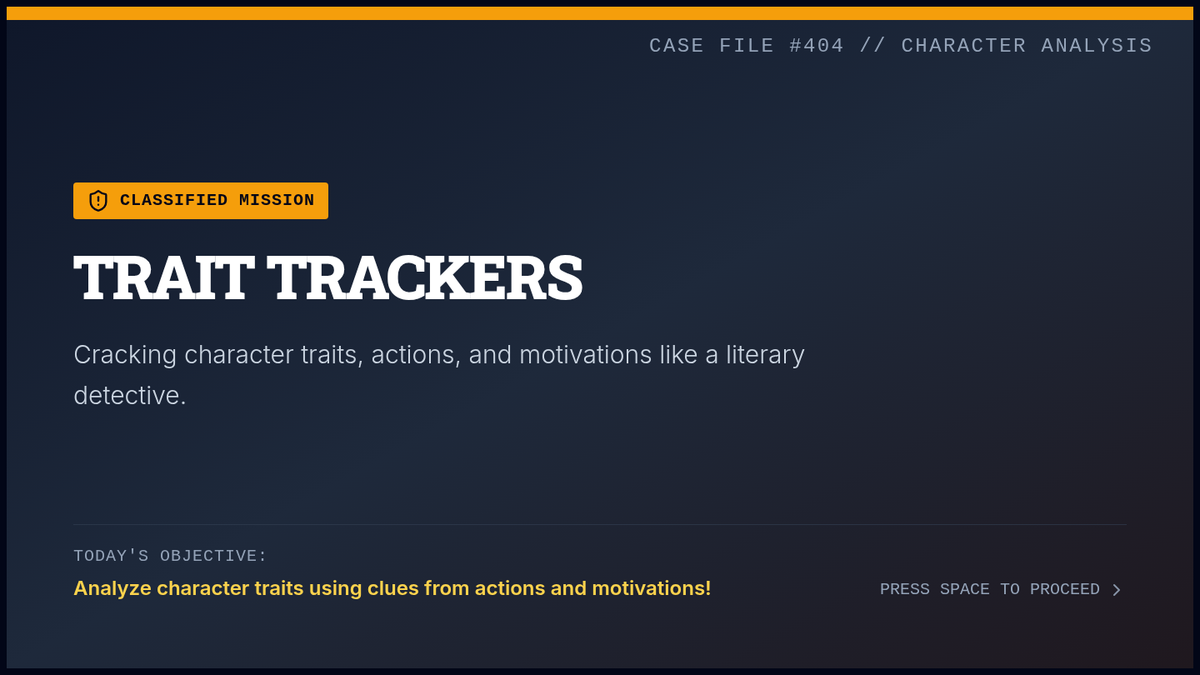
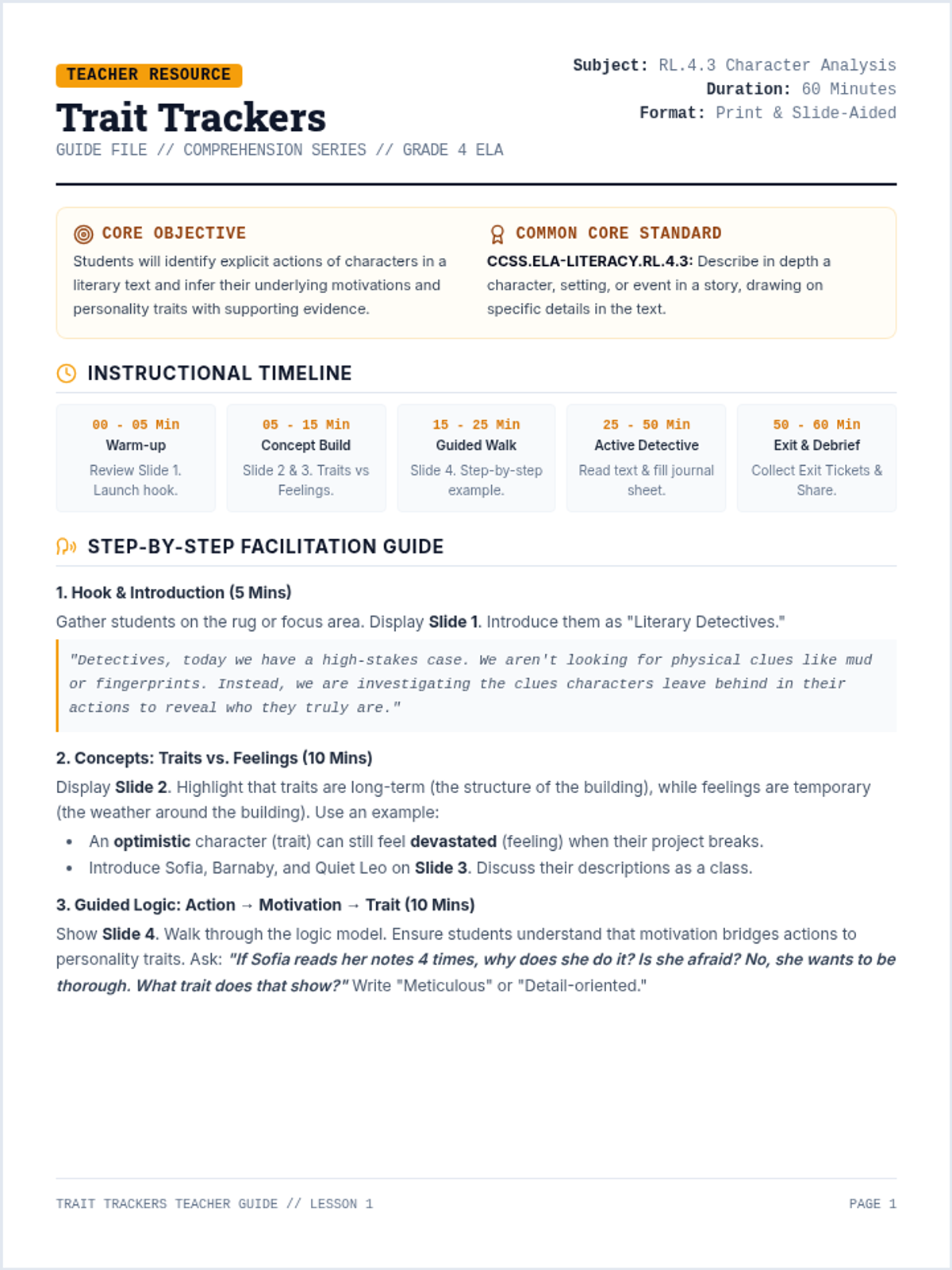
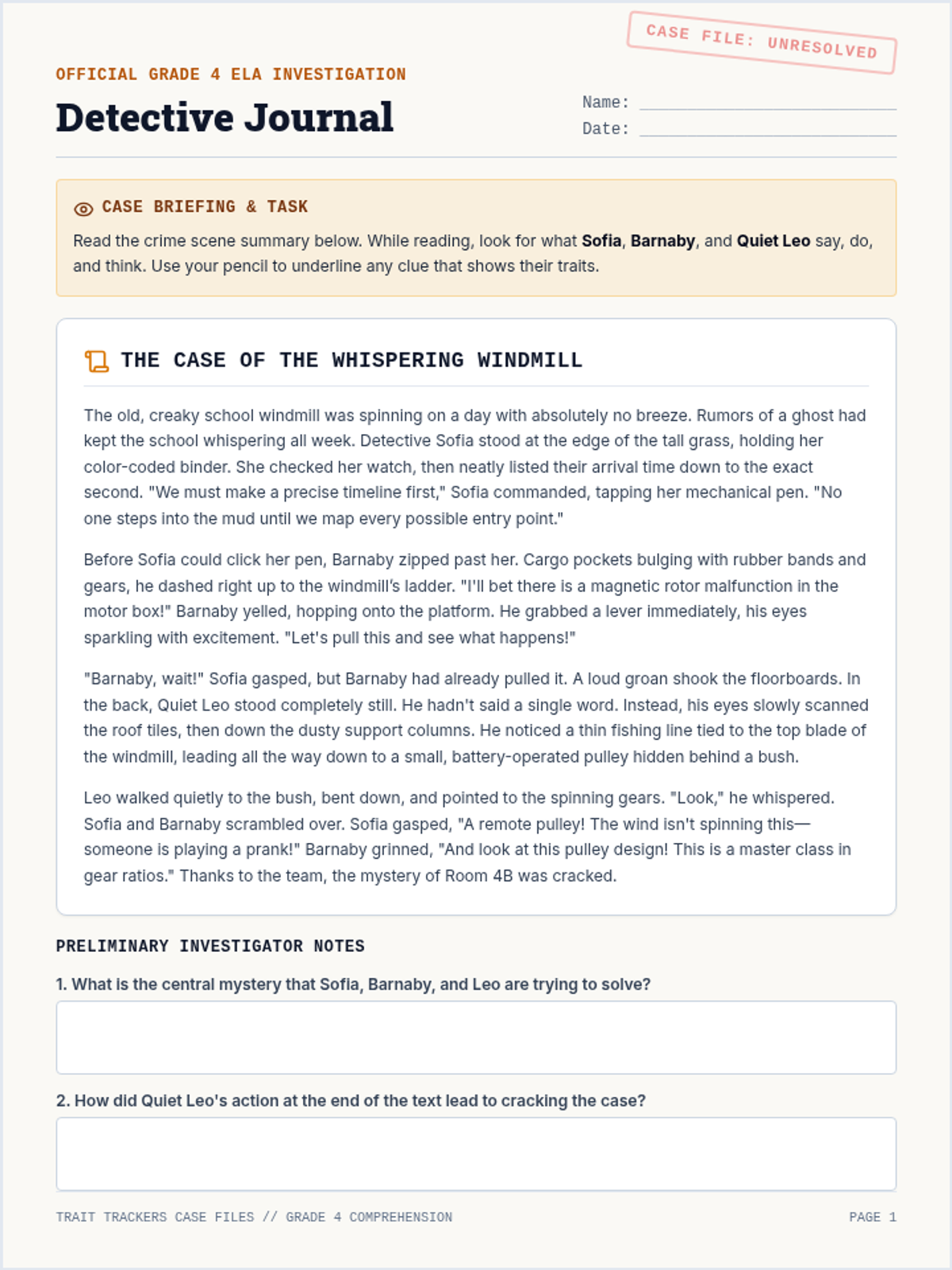
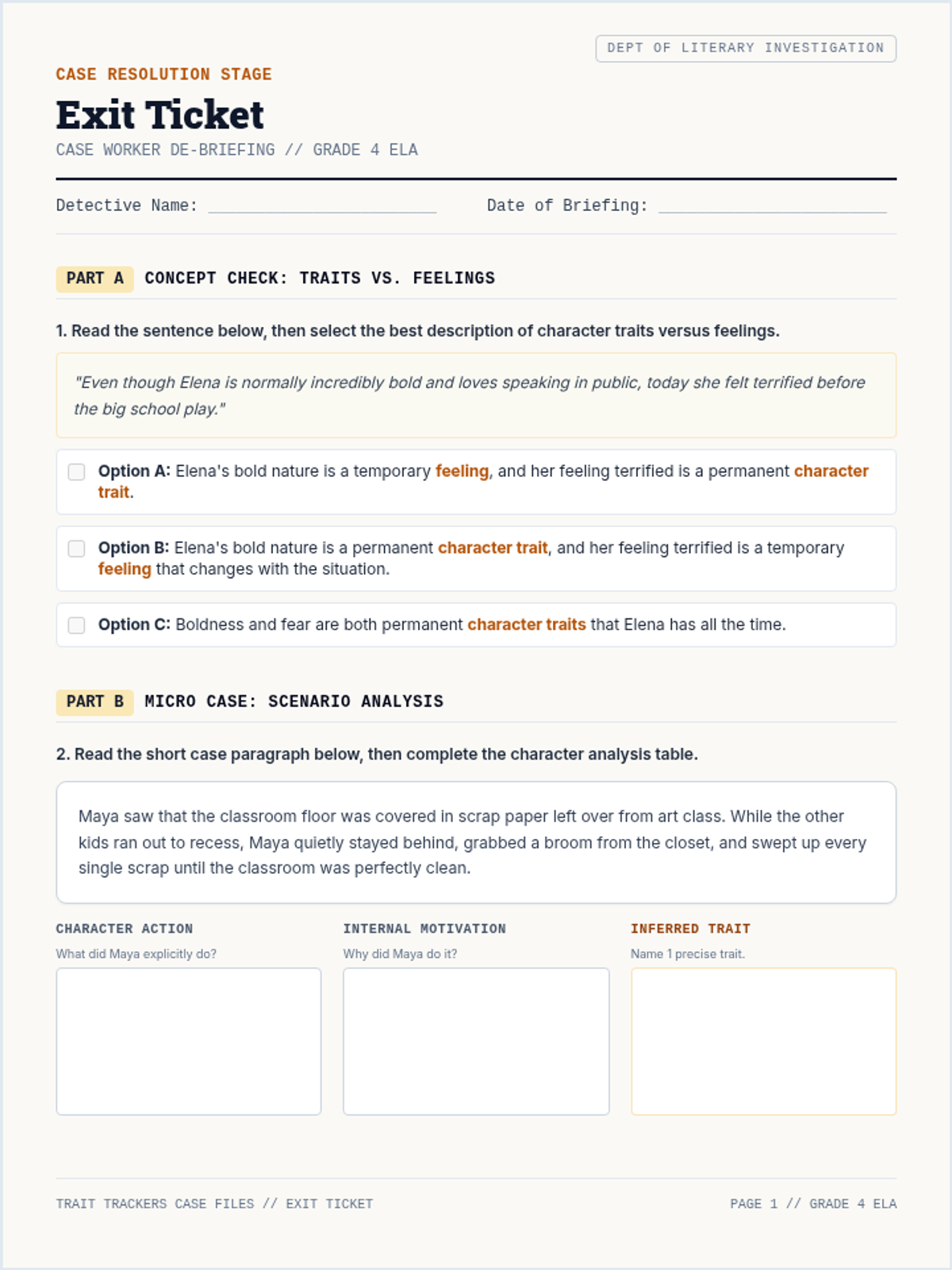
A high-engagement 4th-grade ELA lesson on character analysis, where students become literary detectives to crack character traits, motivations, and actions using textual evidence.
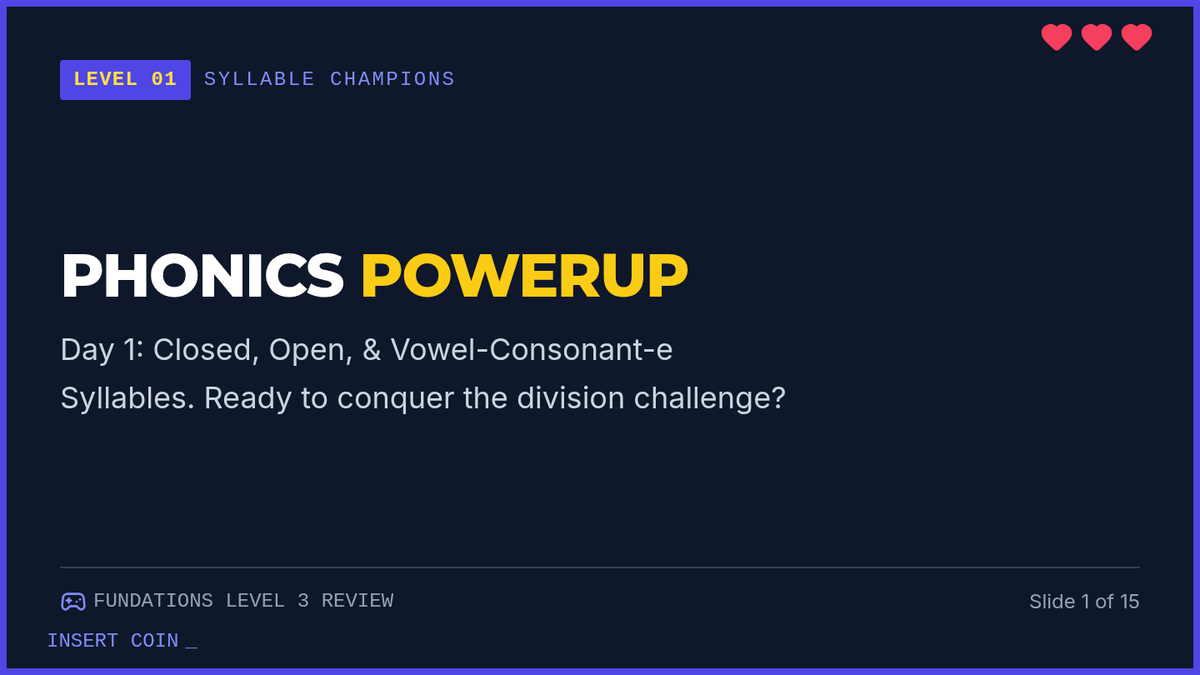
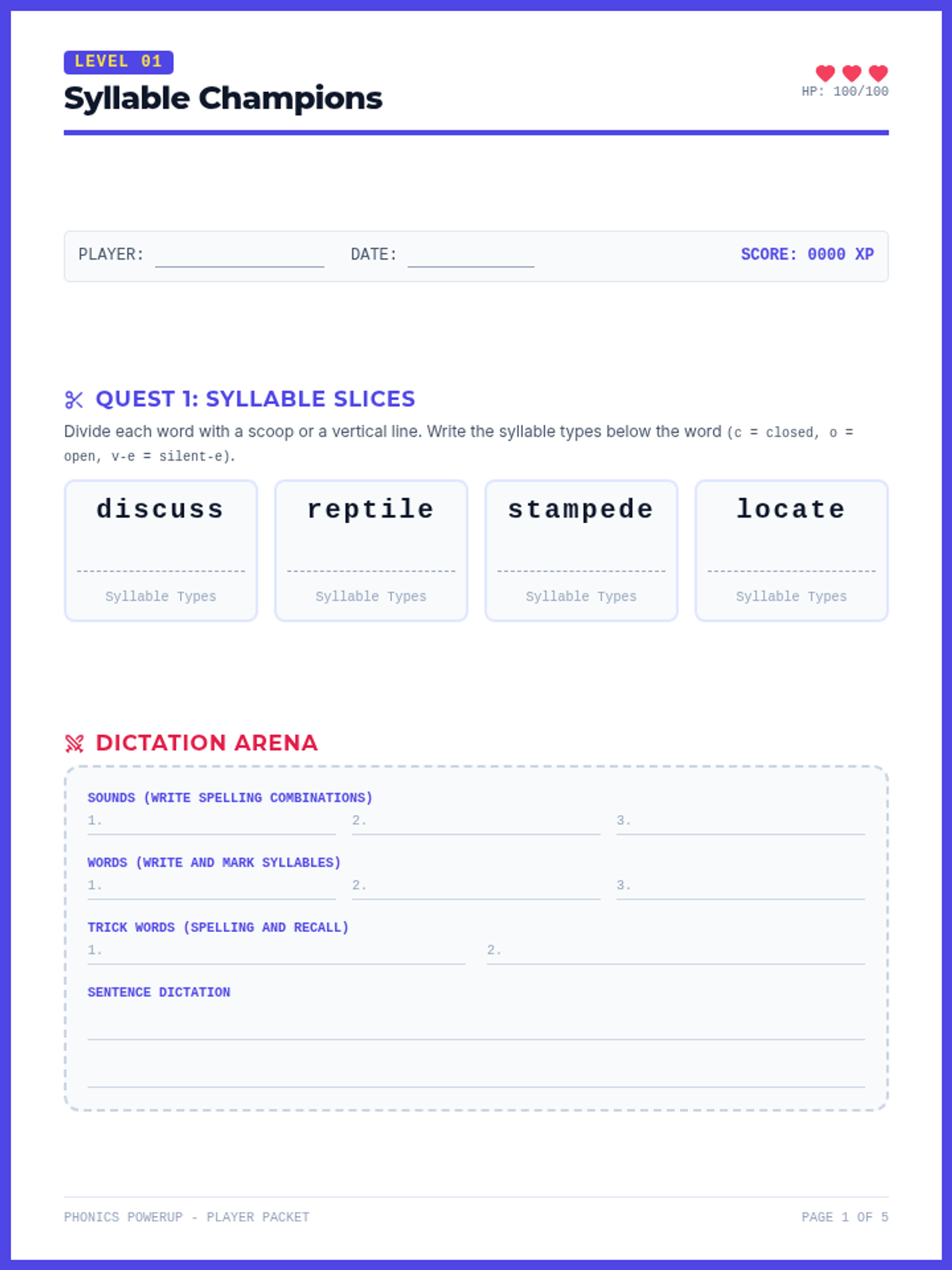
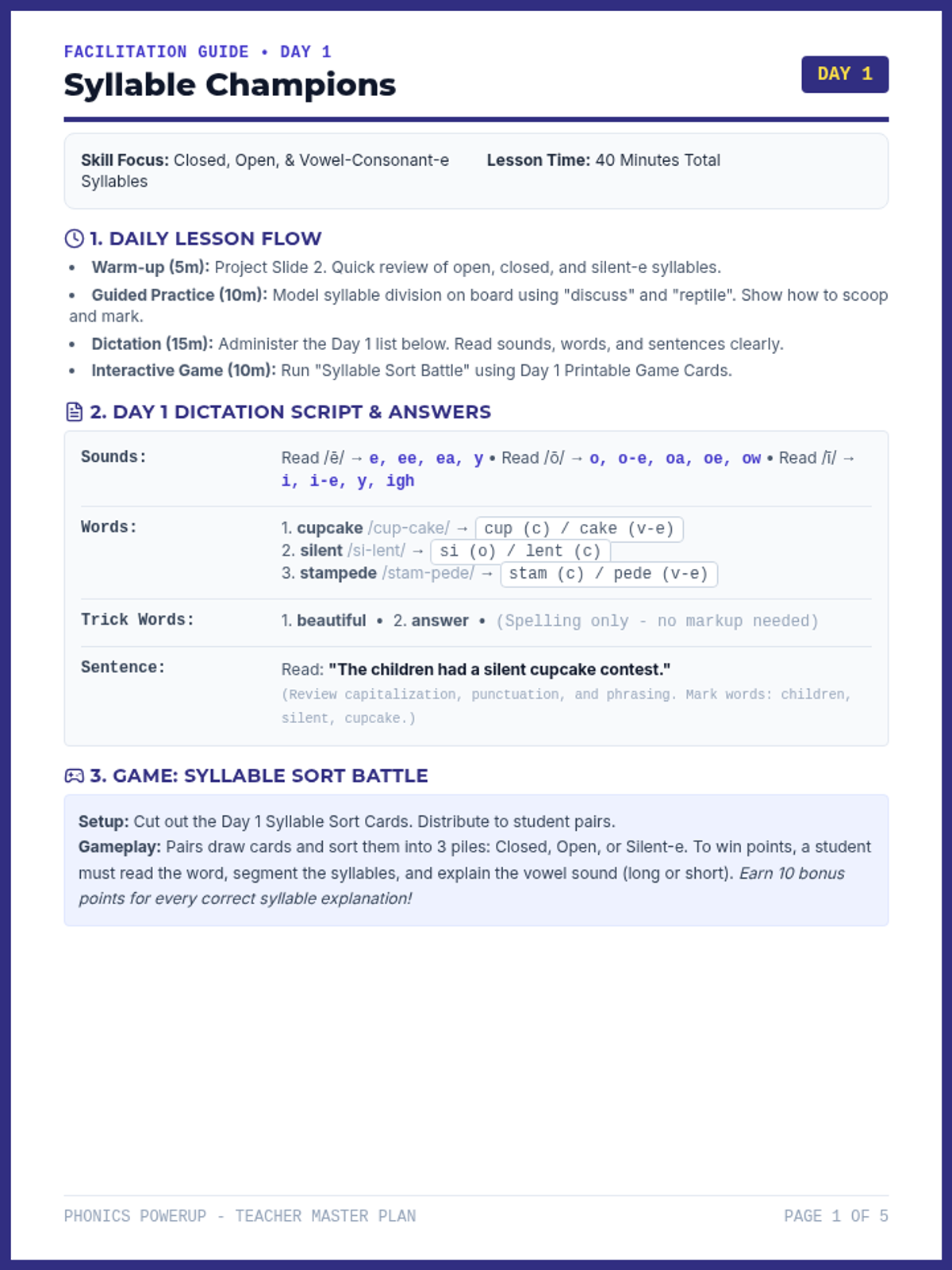
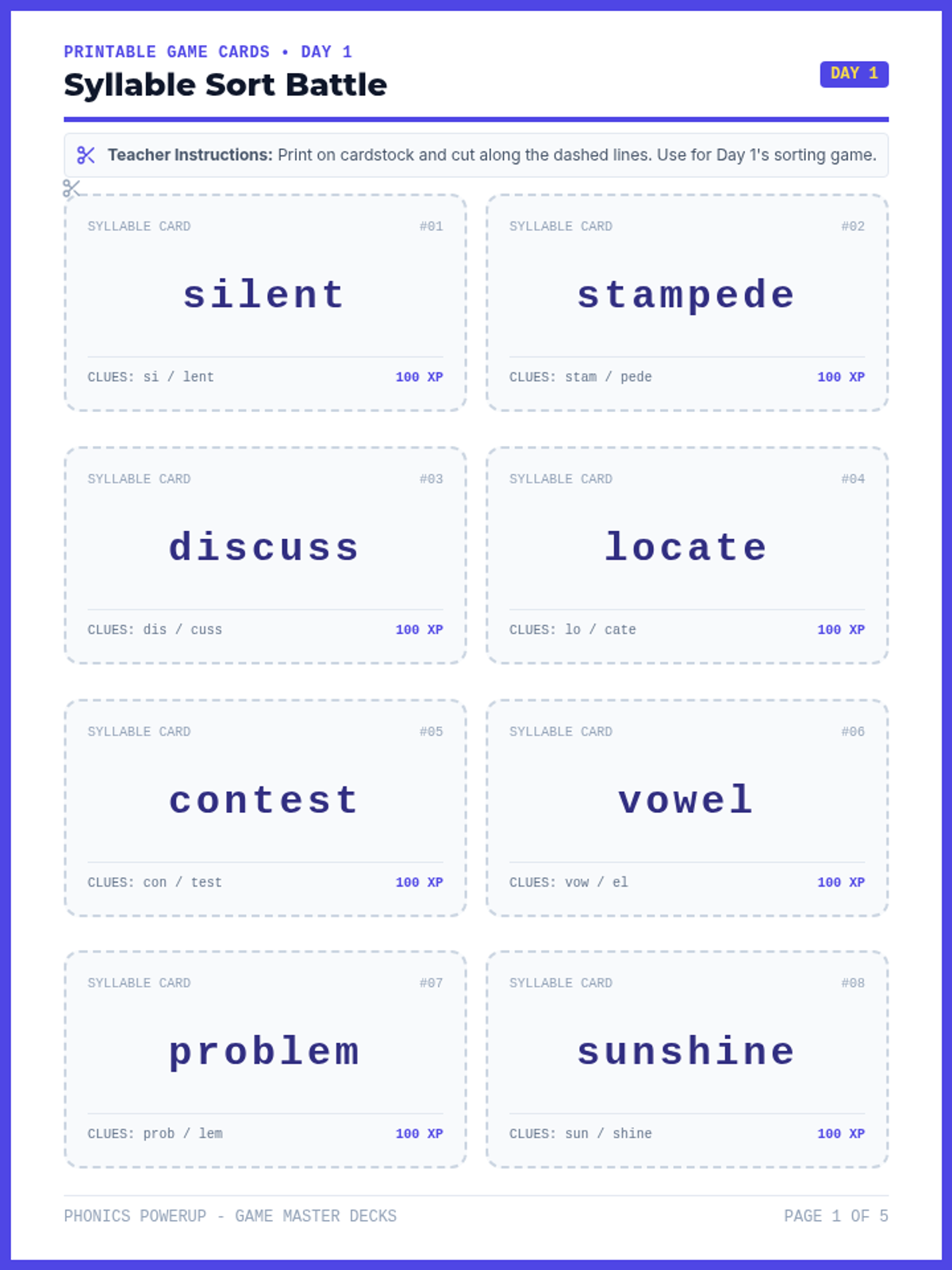
A comprehensive 5-day review of Fundations Level 3 skills (Units 1-9), focusing on suffix rules, syllable division, dictation, and interactive spelling games. Includes visual slides, a printable student packet, a teacher script, and interactive game cards.
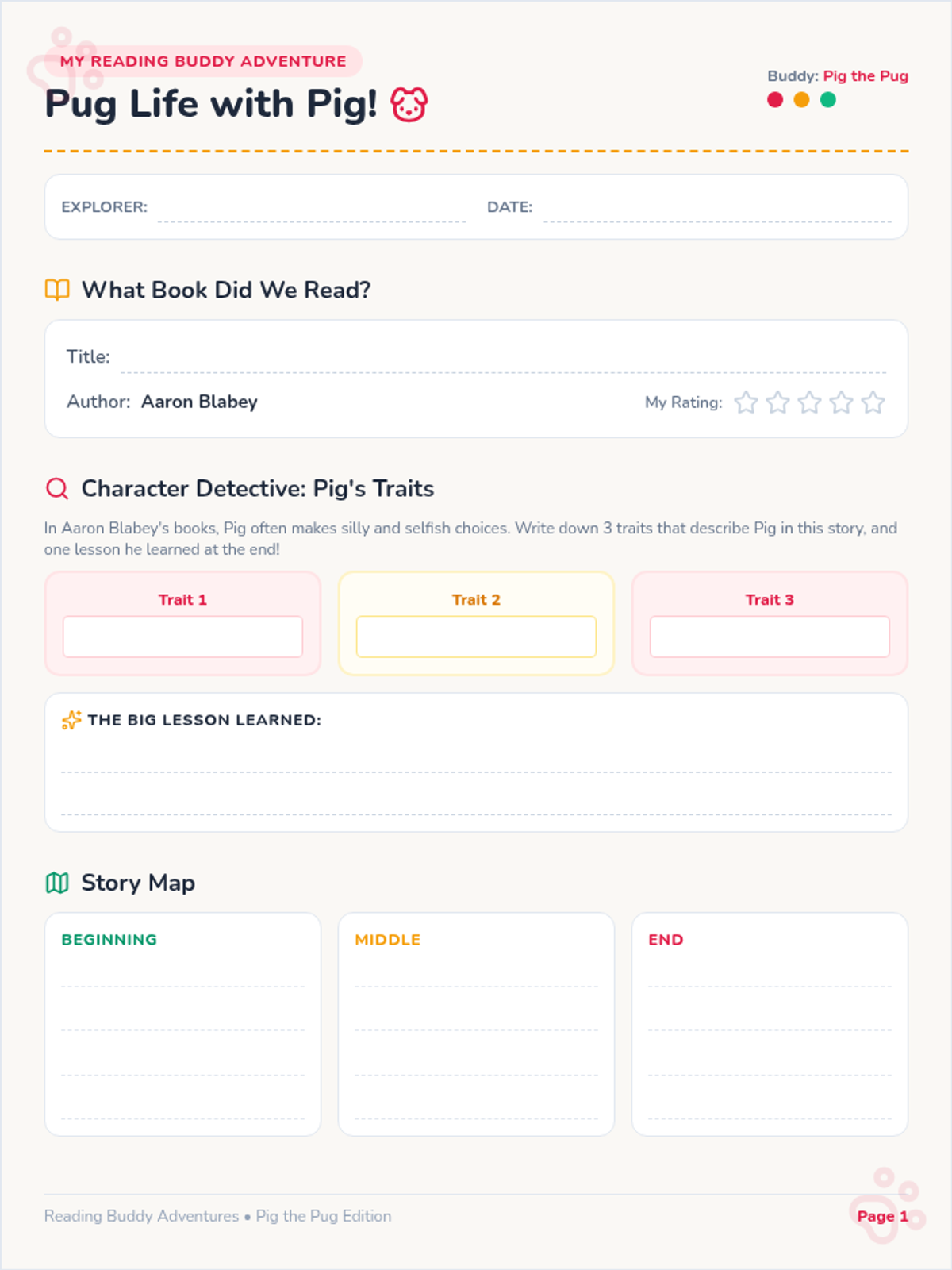
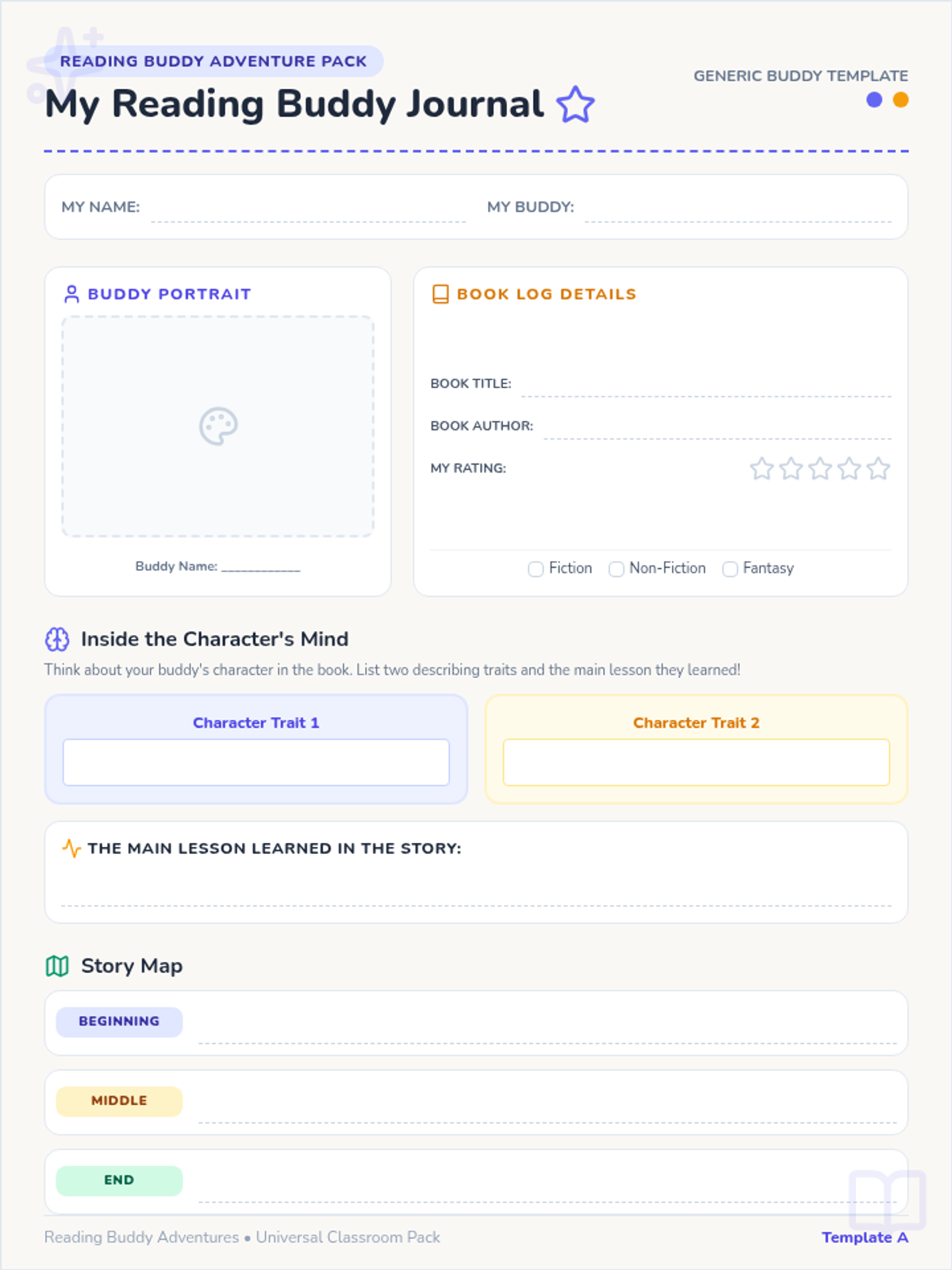
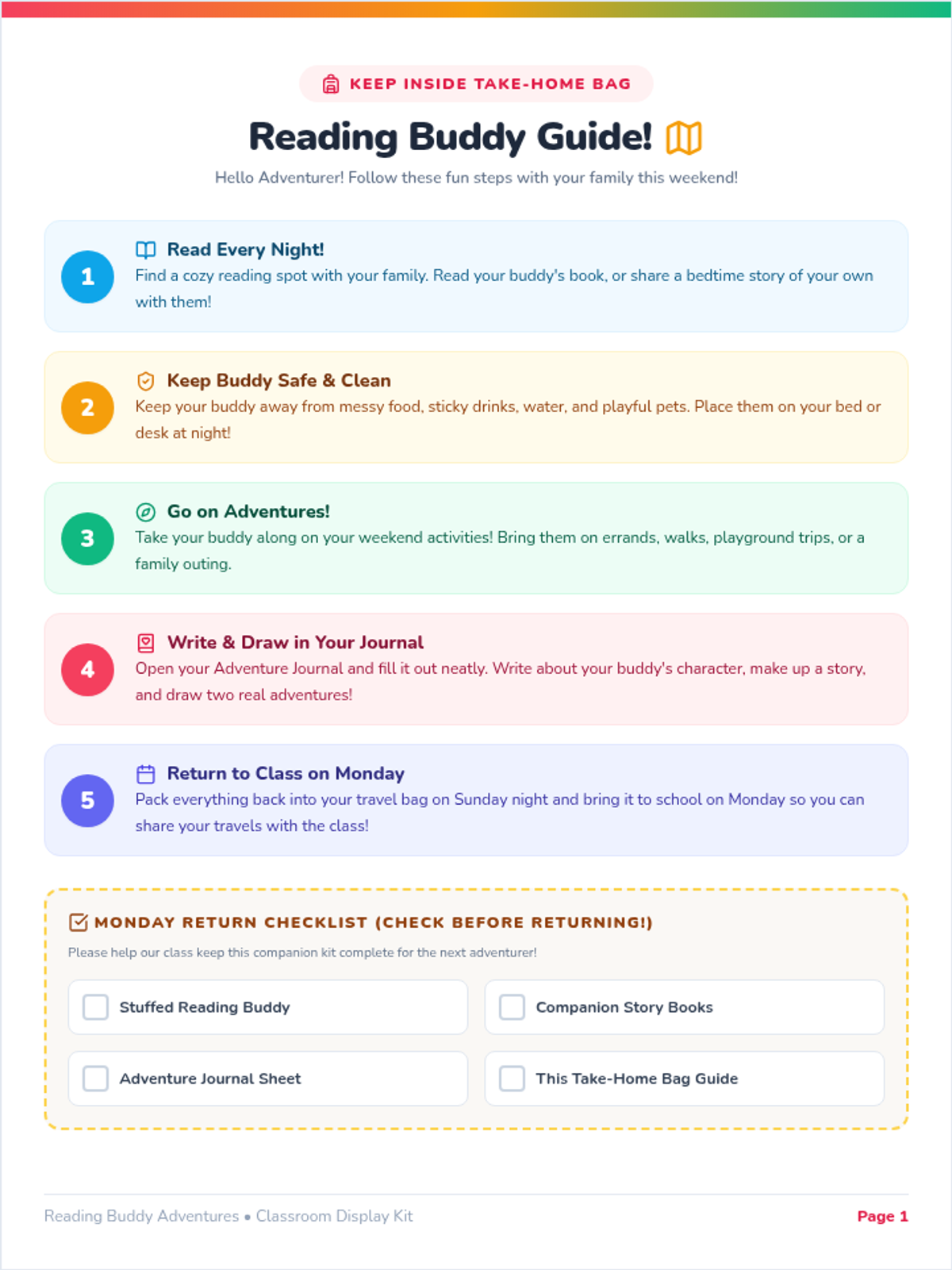
A magical reading initiative where students take home a stuffed book character (starting with Pig the Pug) along with companion books. They read the books, document character traits, write imaginative stories, and keep an interactive travel journal of their real-world adventures with their buddy.
A targeted set of practice materials for the Grade 3 Language standards: L.3.4 (Unknown and Multiple-Meaning Words) and L.3.5.a (Literal and Nonliteral Meanings). Includes a student test booklet and teacher answer key.
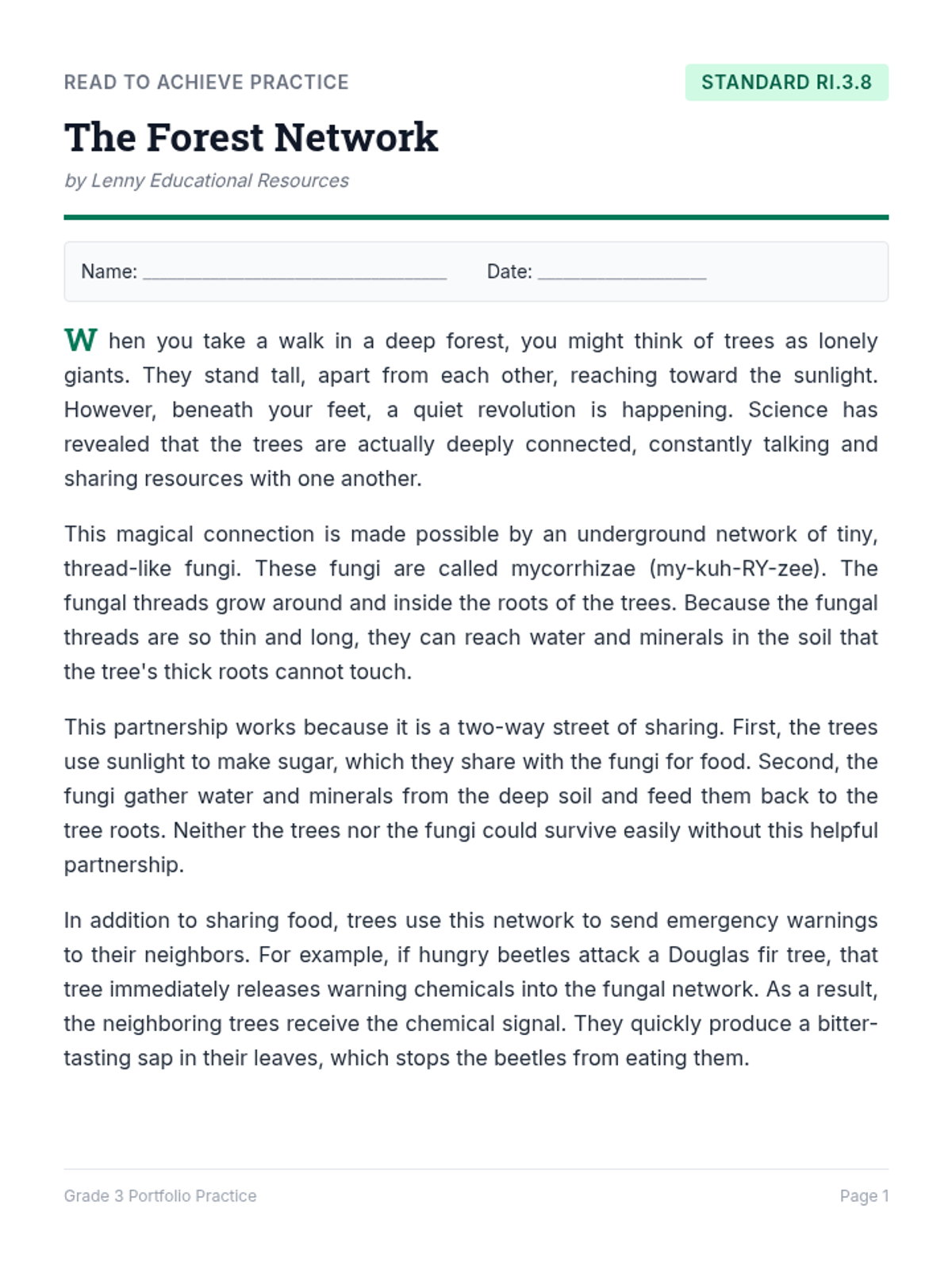
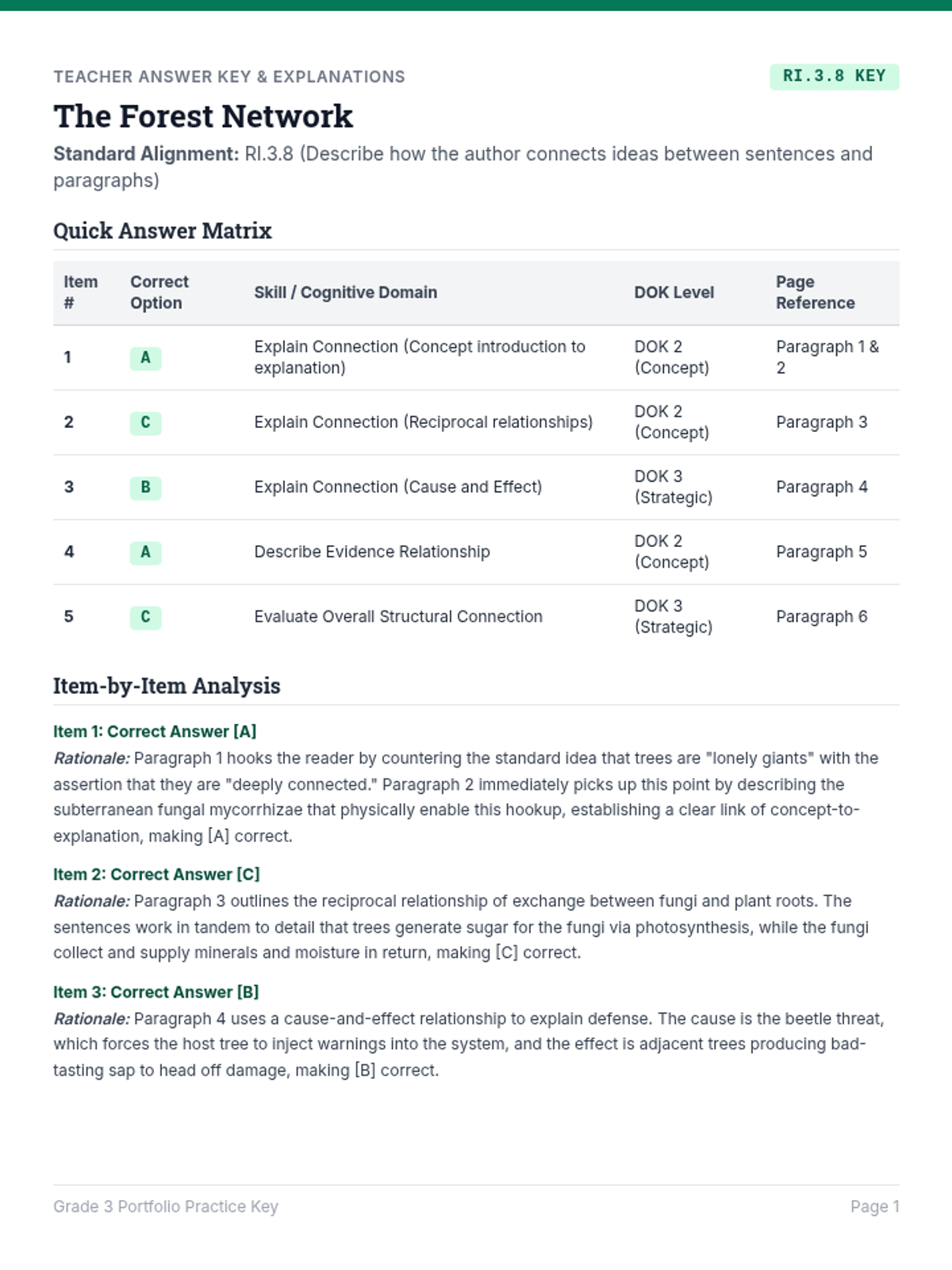
A targeted set of practice materials for the Grade 3 Informational Text standards: RI.3.1 (Evidence), RI.3.2 (Main Idea), RI.3.3 (Relationships), RI.3.4 (Academic/Domain Words), and RI.3.8 (Author's Points/Connections). Includes a comprehensive student test booklet and teacher answer key.
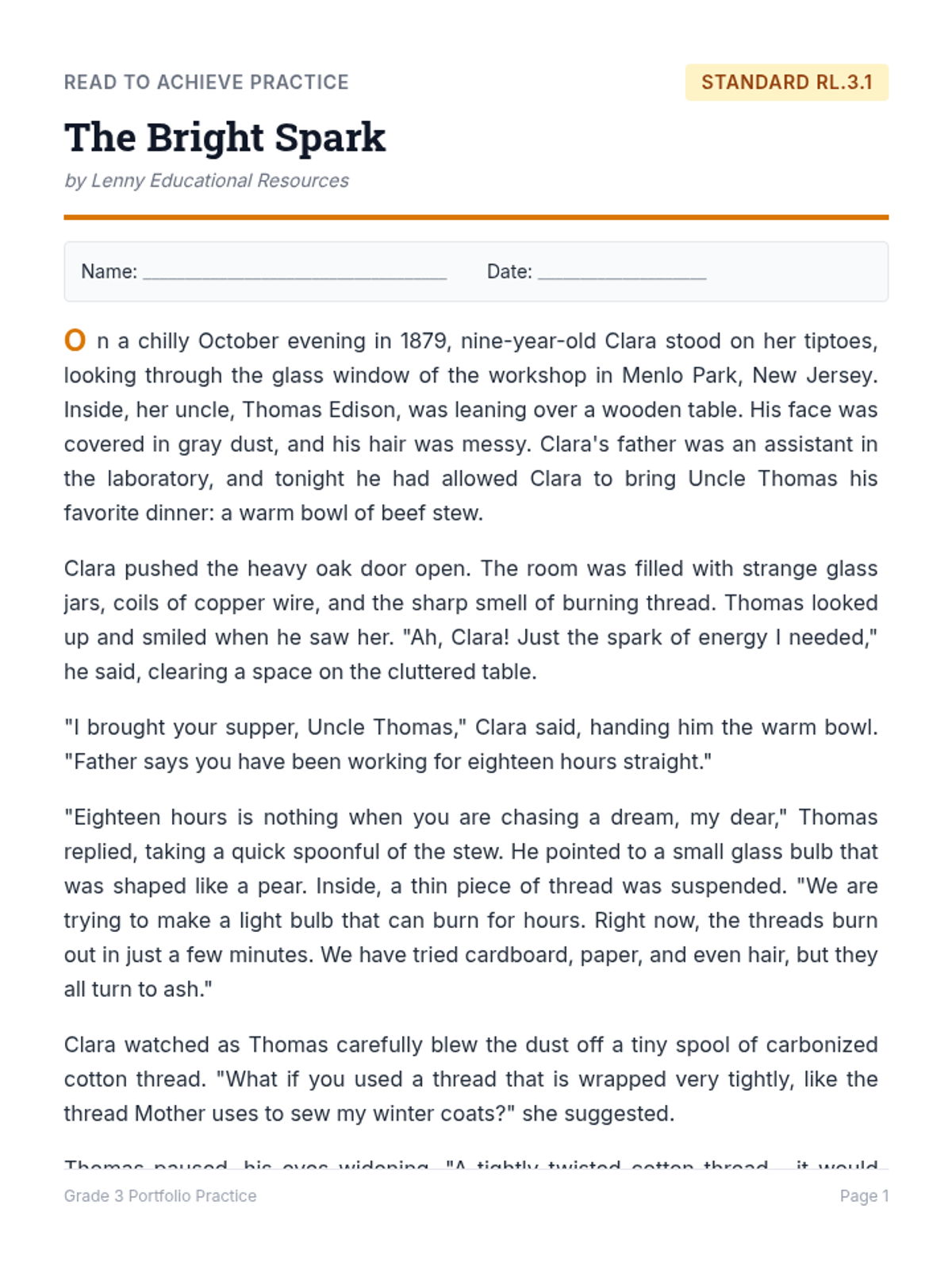
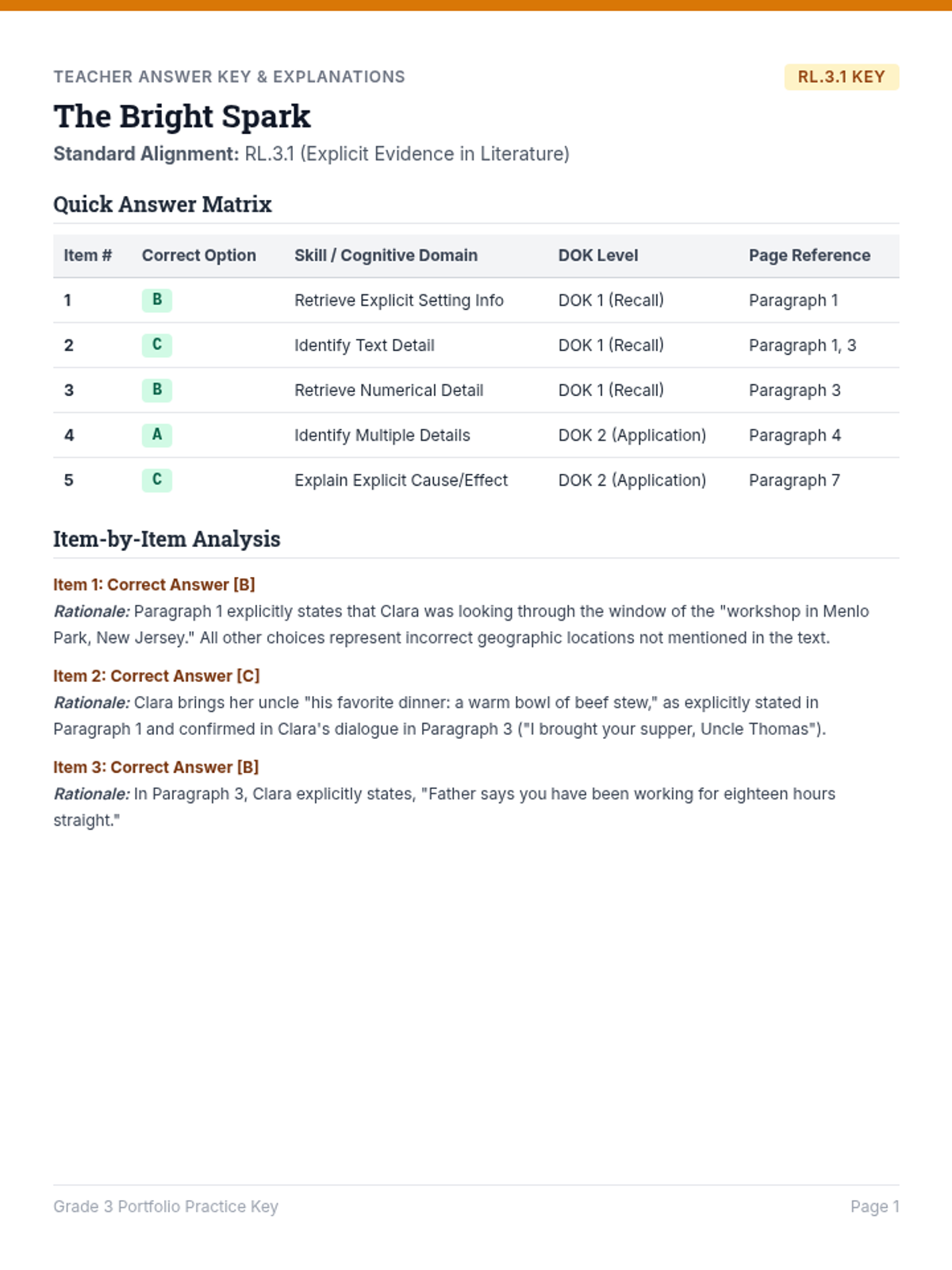
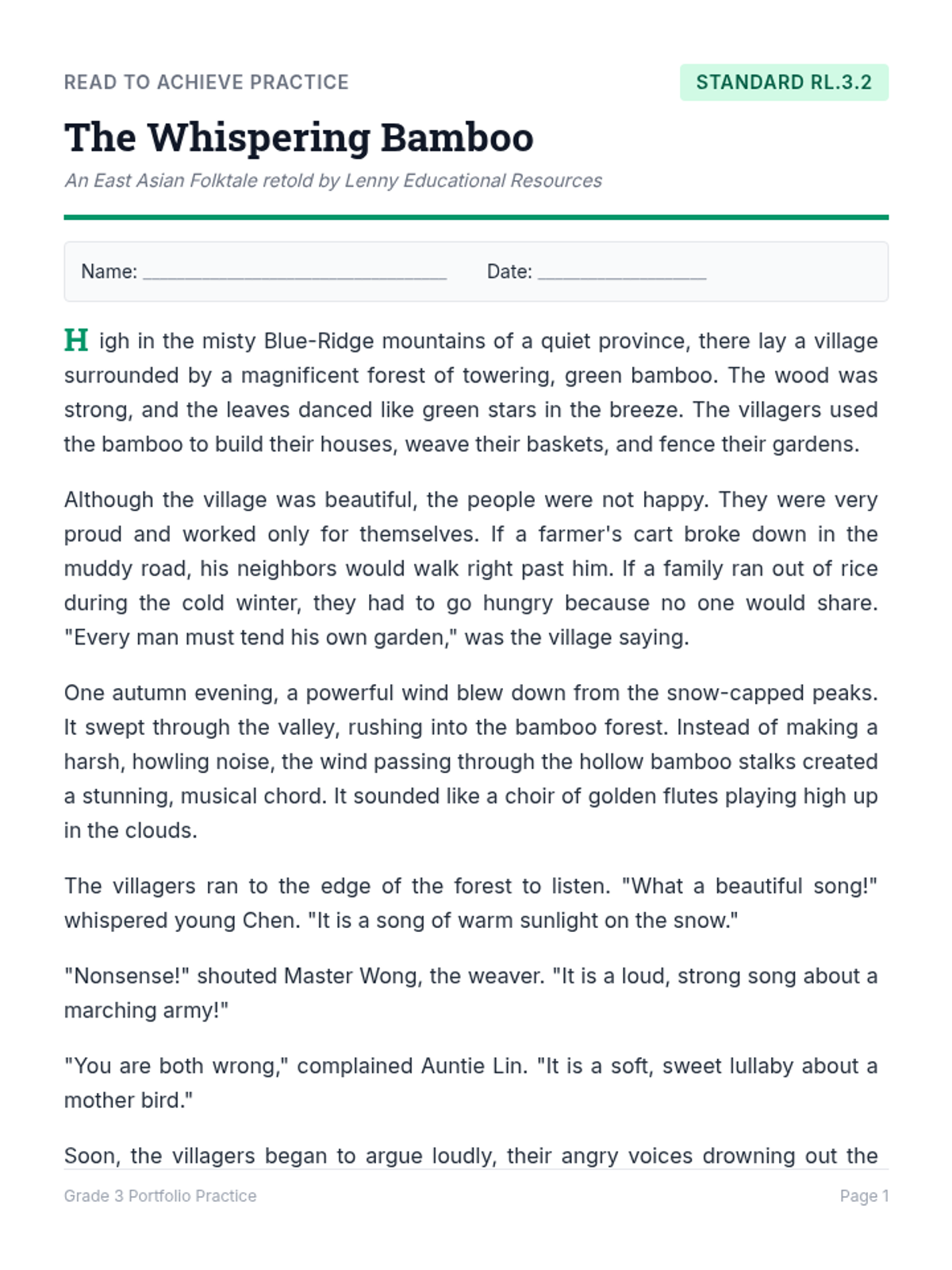
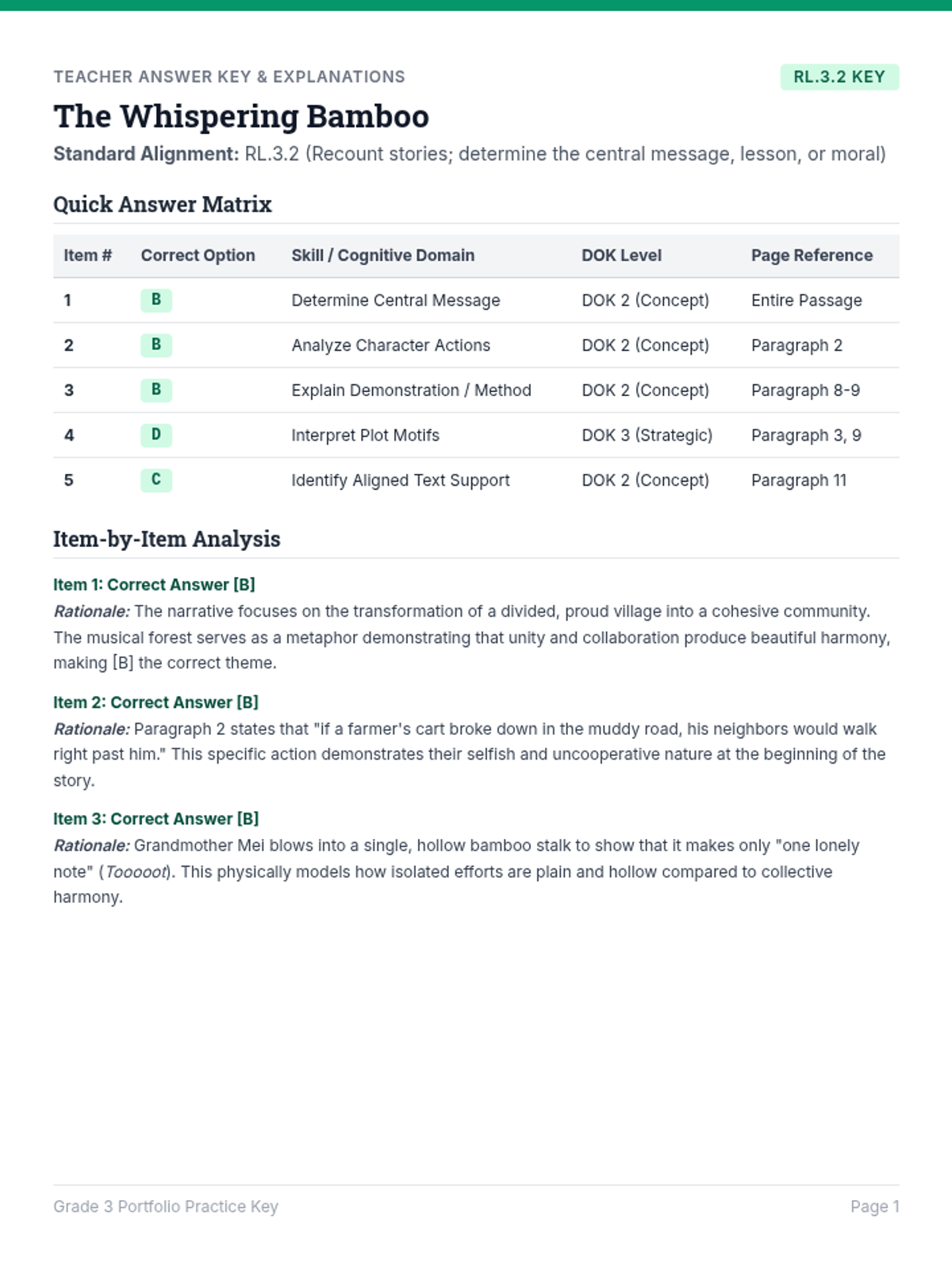
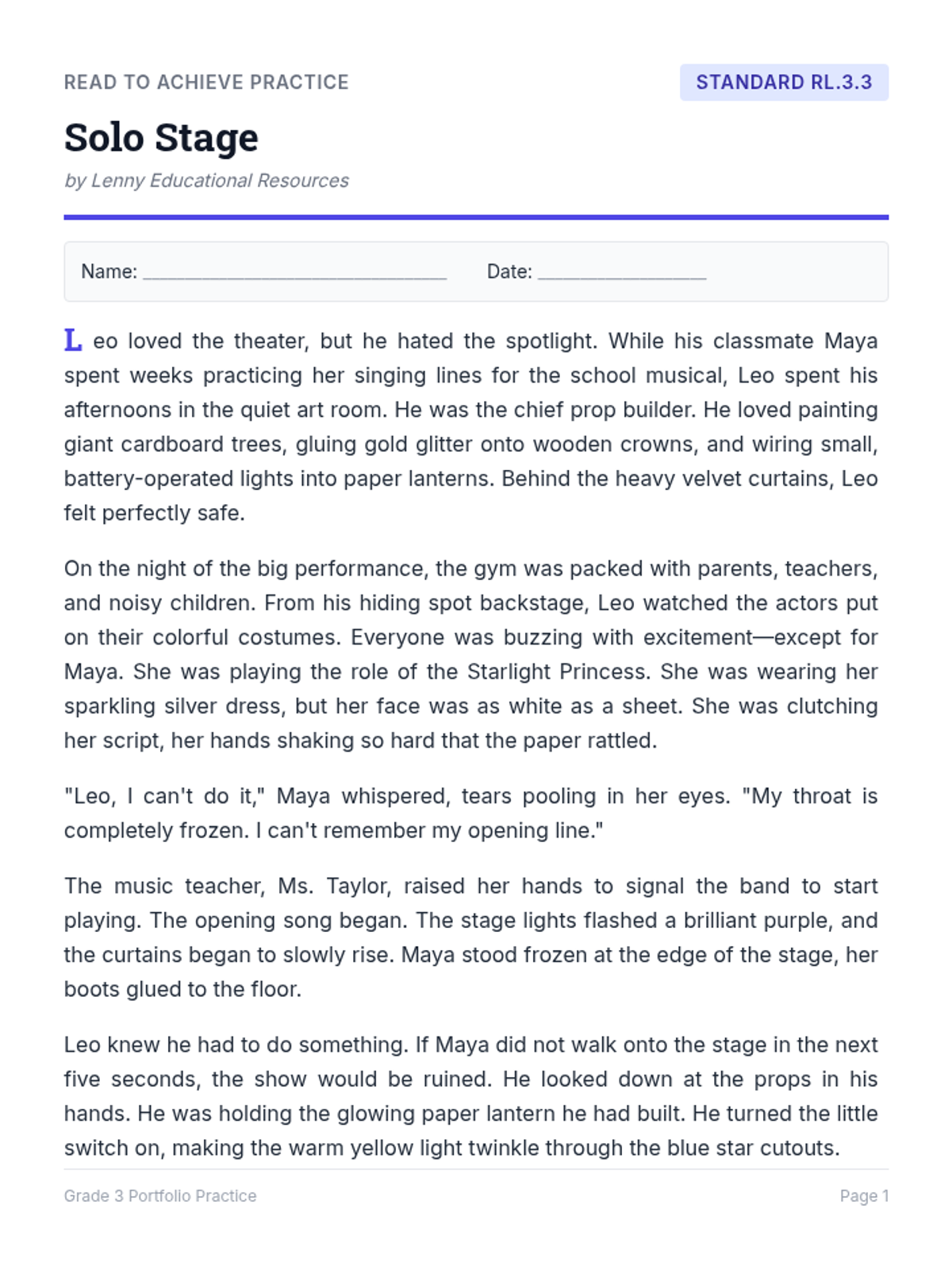
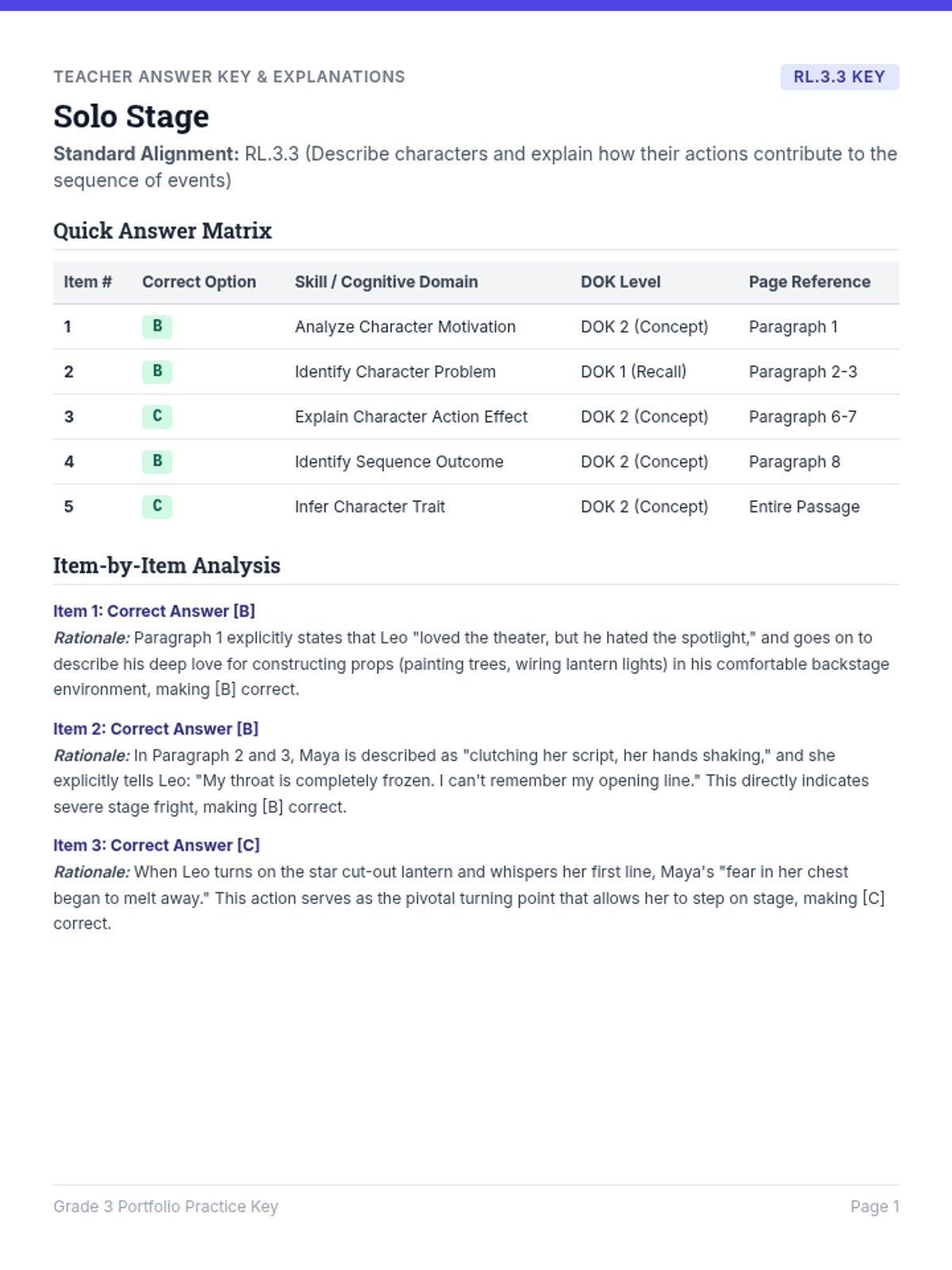
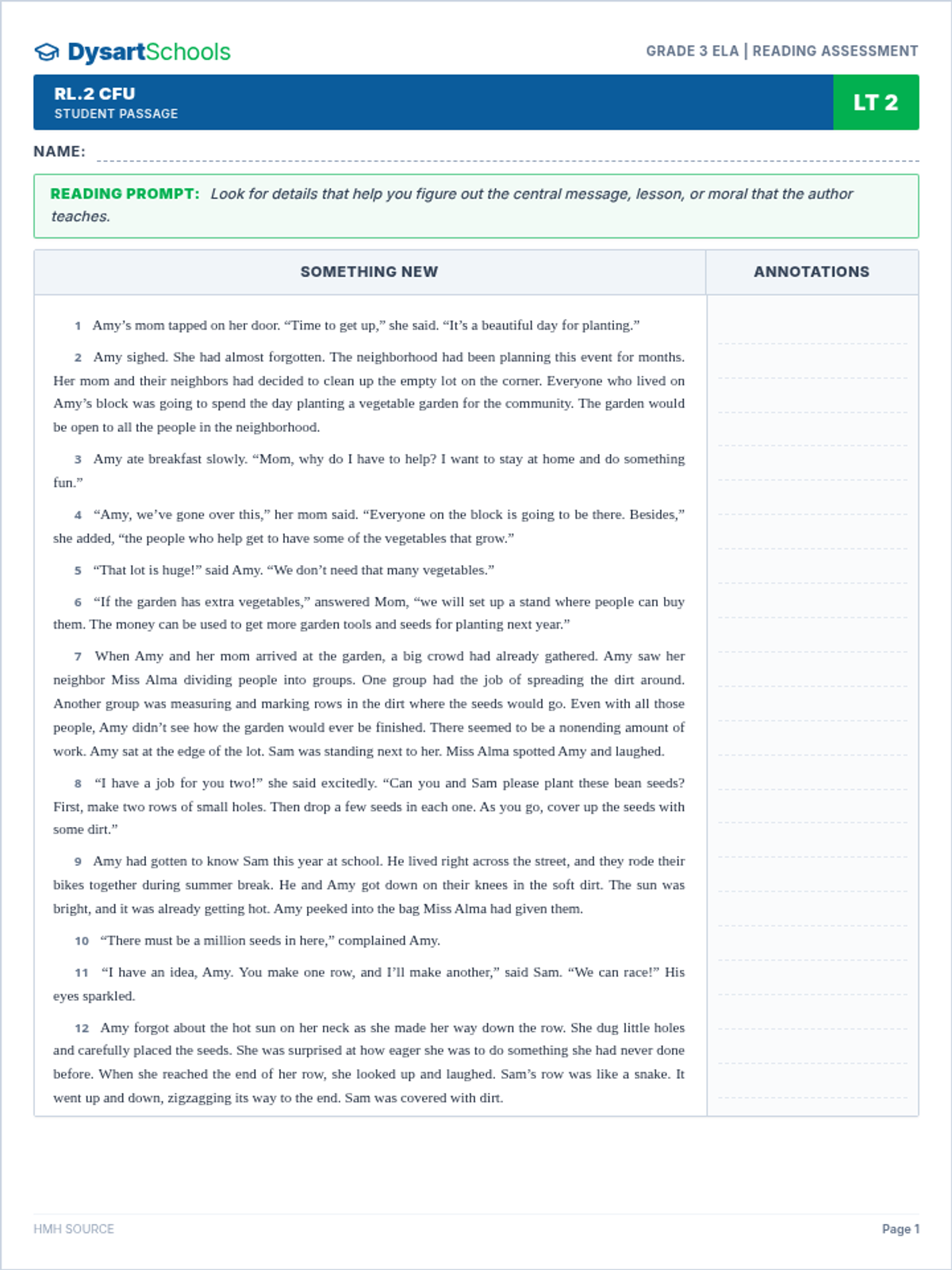
A targeted set of practice materials for the Grade 3 Literature standards: RL.3.1 (Explicit Evidence), RL.3.2 (Central Message/Moral), RL.3.3 (Character Contributions), and RL.3.4 (Words and Phrases in Context). Includes a comprehensive student test booklet and teacher answer key.
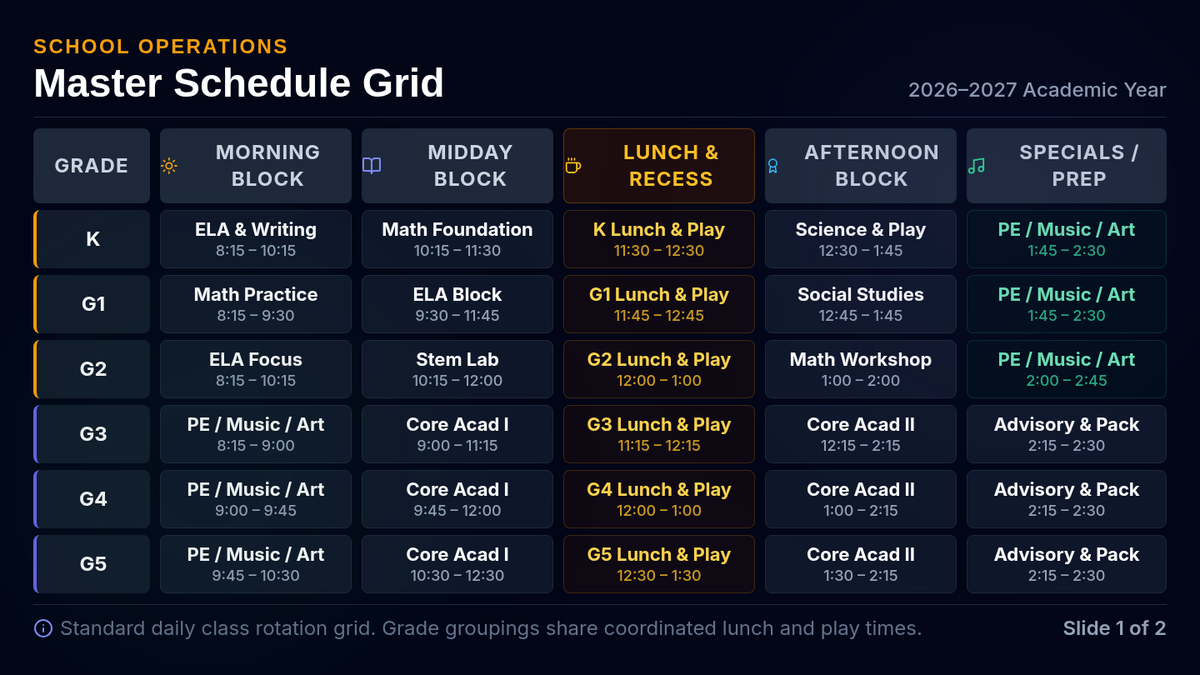
A complete master schedule lesson containing operational slide decks for school staff and students.
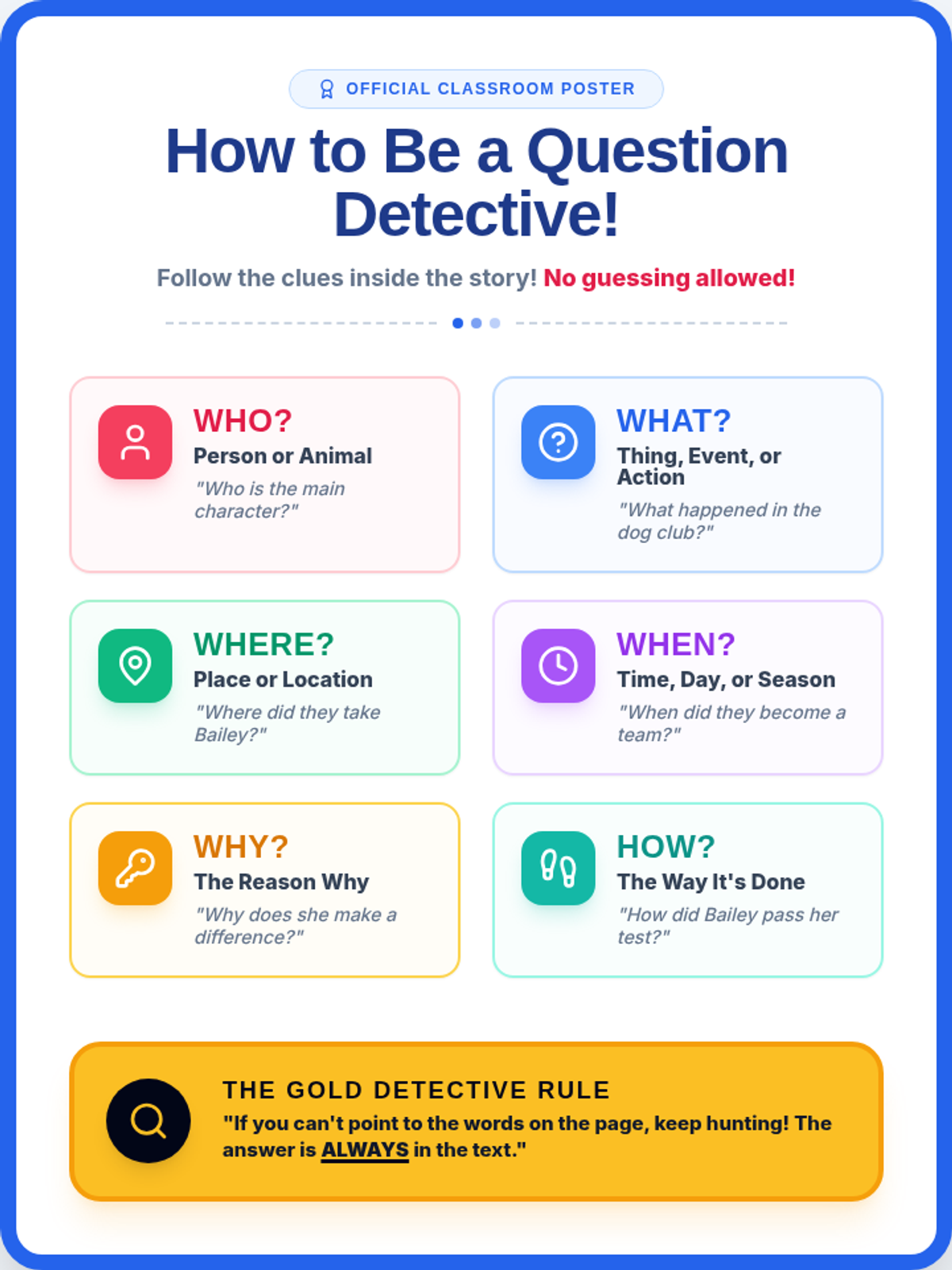
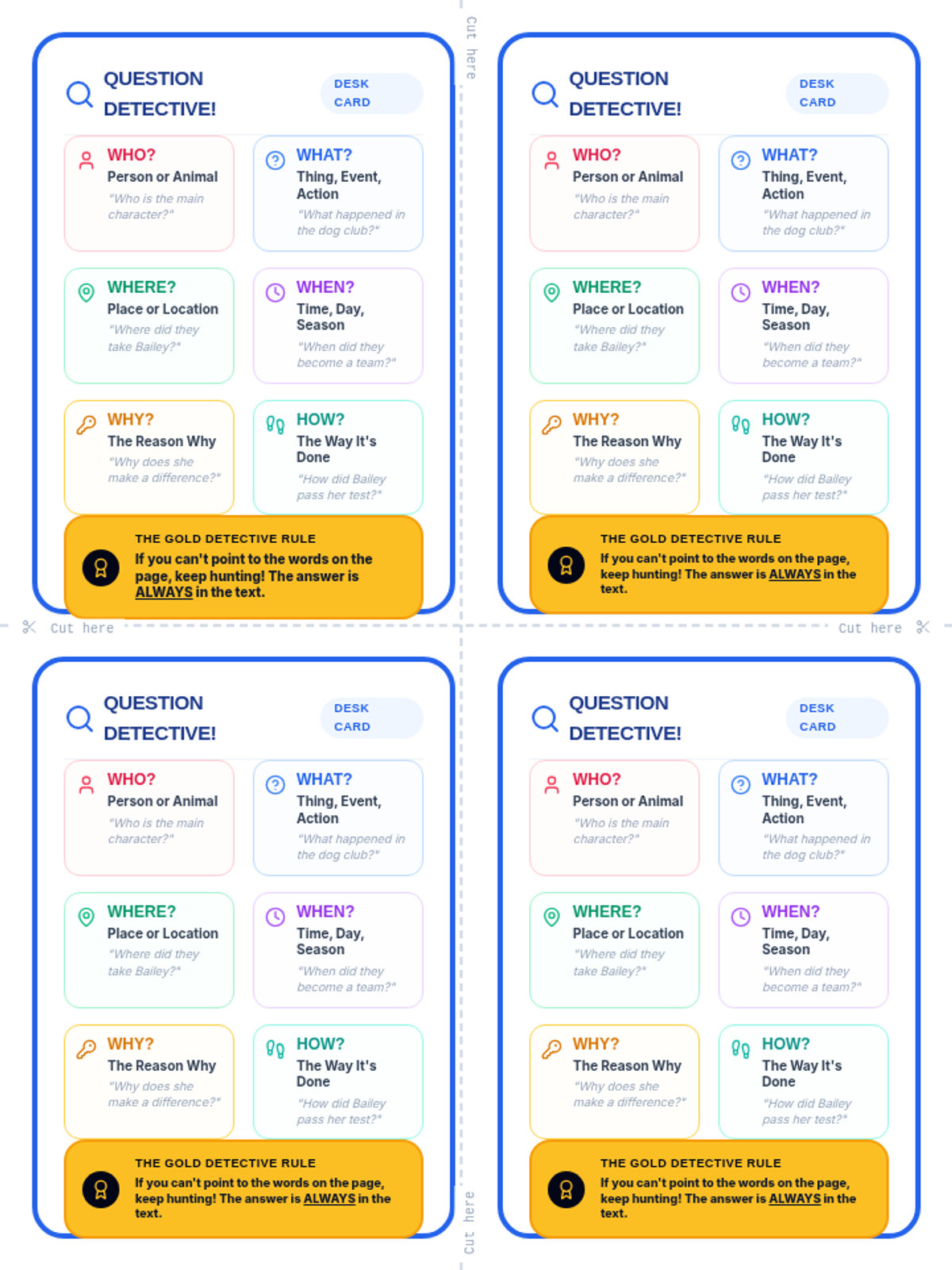
A collection of visual resources to help students locate text evidence and answer key comprehension questions using the 5Ws and How framework.
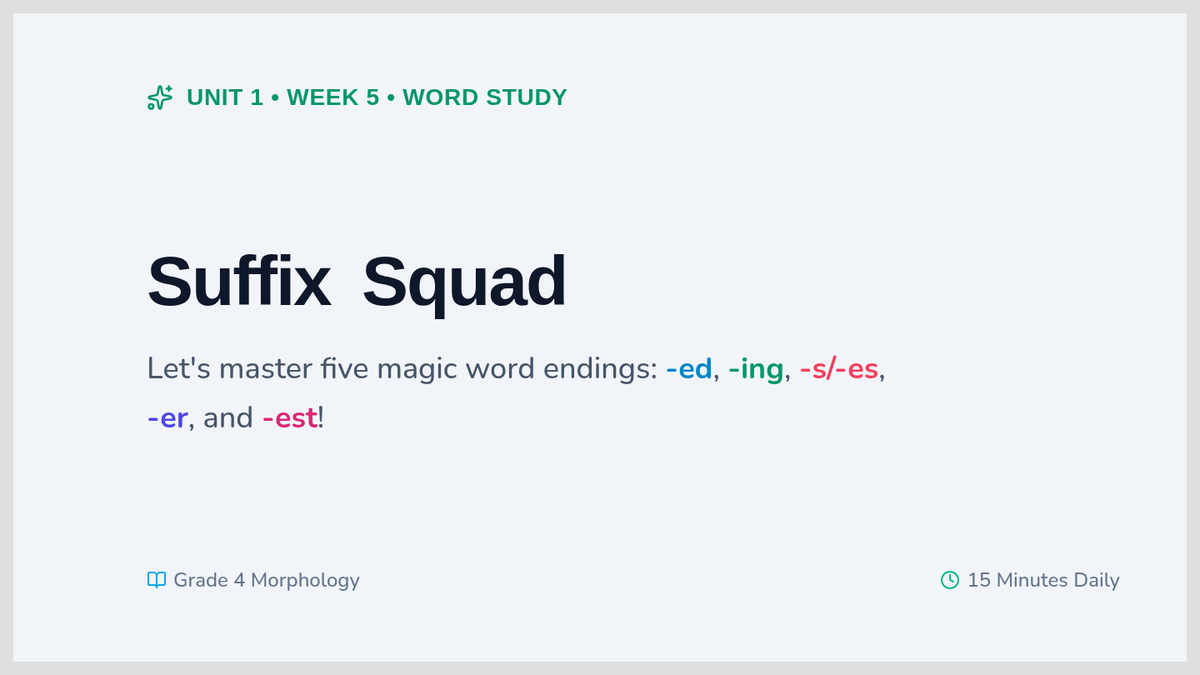
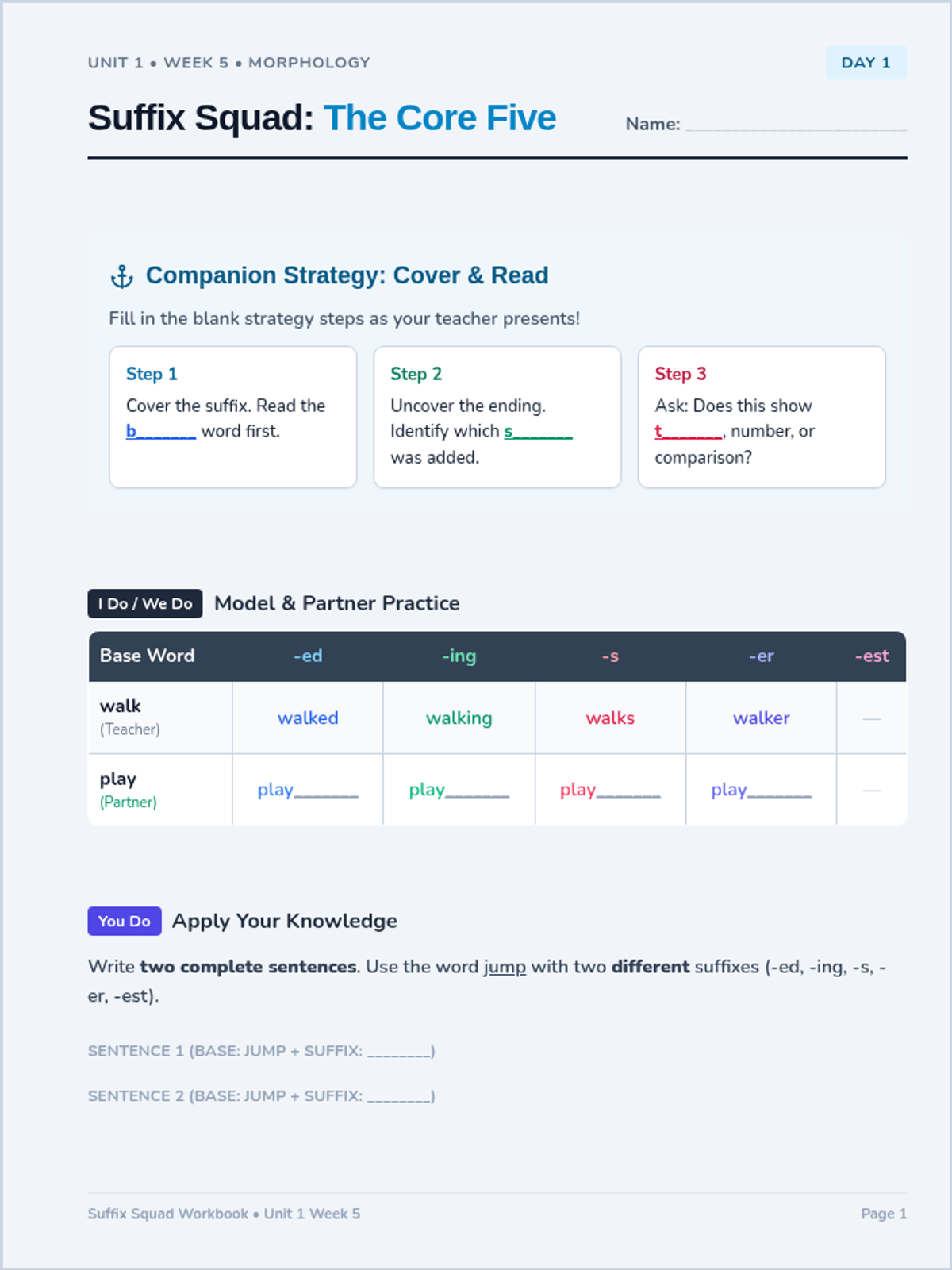
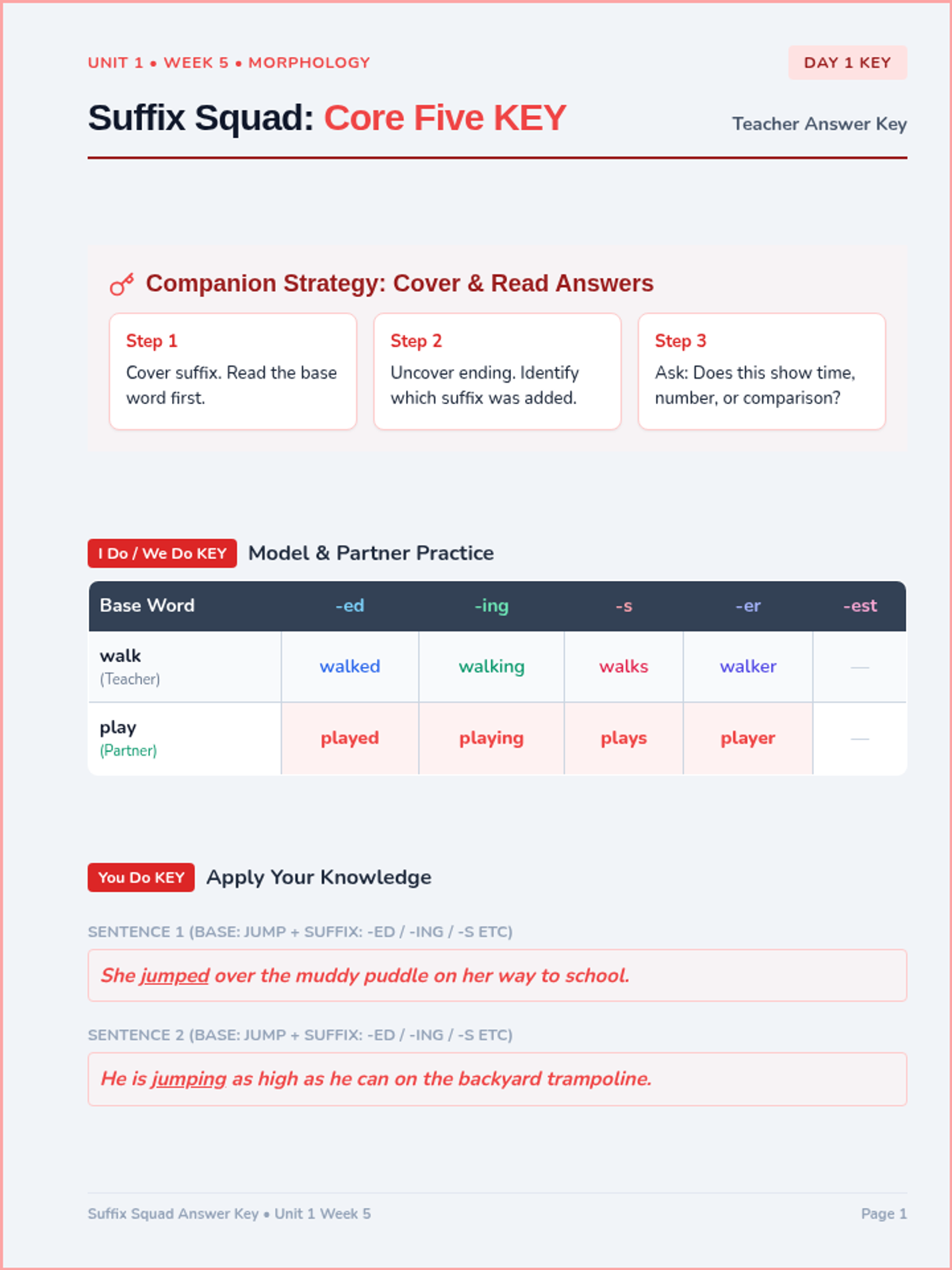
A comprehensive 5-day morphology unit for 4th grade focusing on the inflectional suffixes -ed, -ing, -s/-es, -er, and -est, including spelling rules, pluralization, comparative usage, and cumulative review.
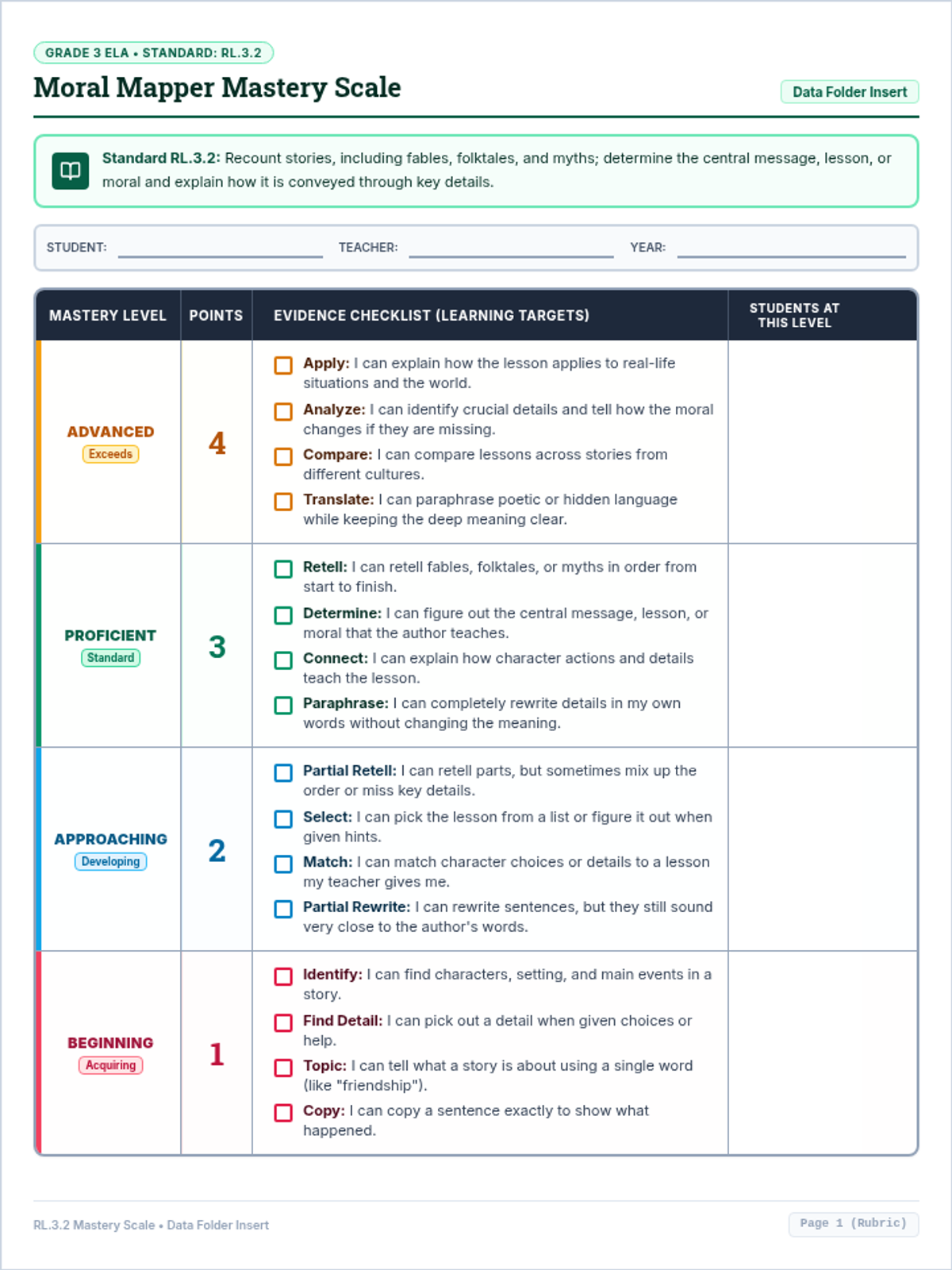
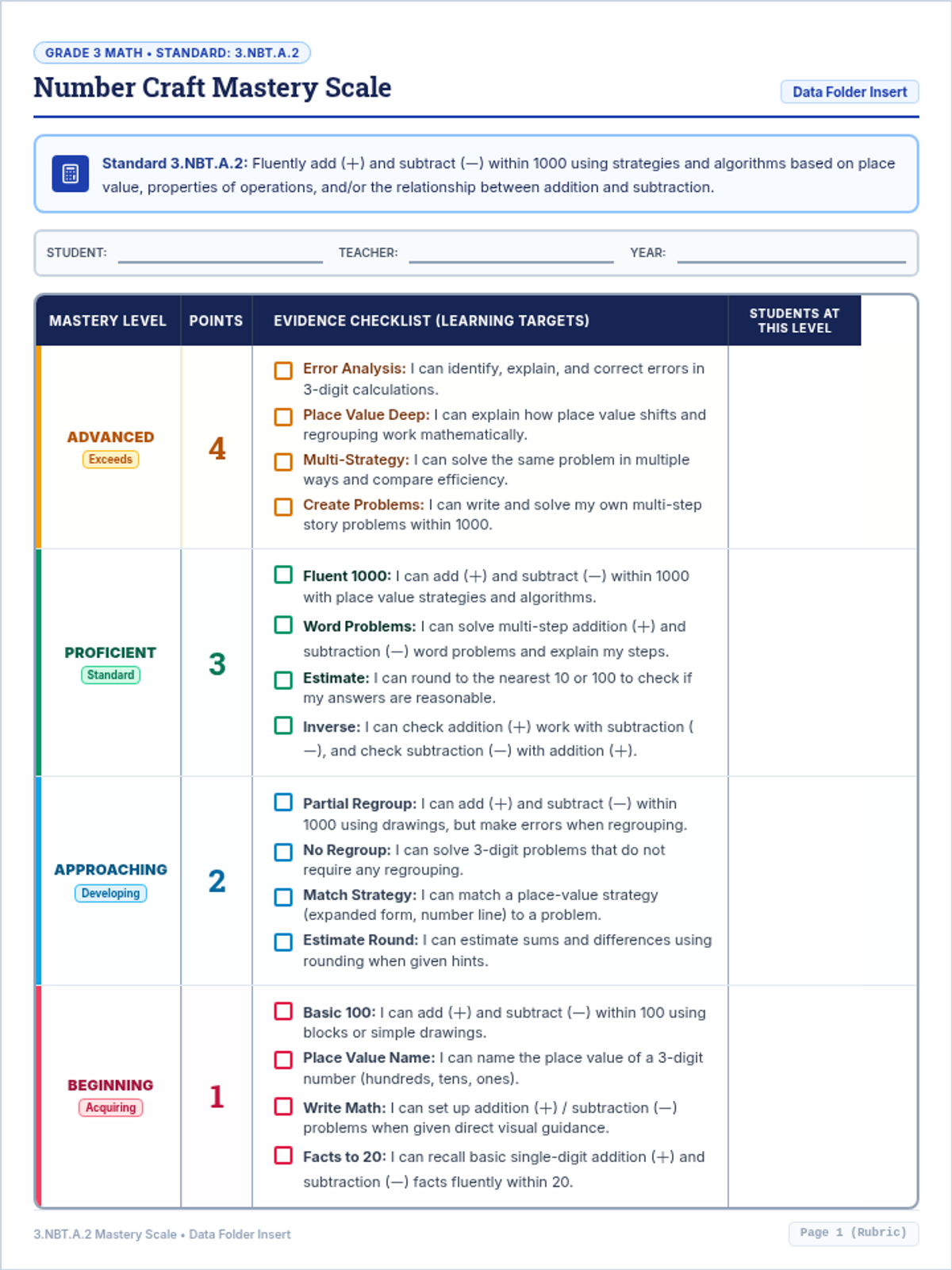
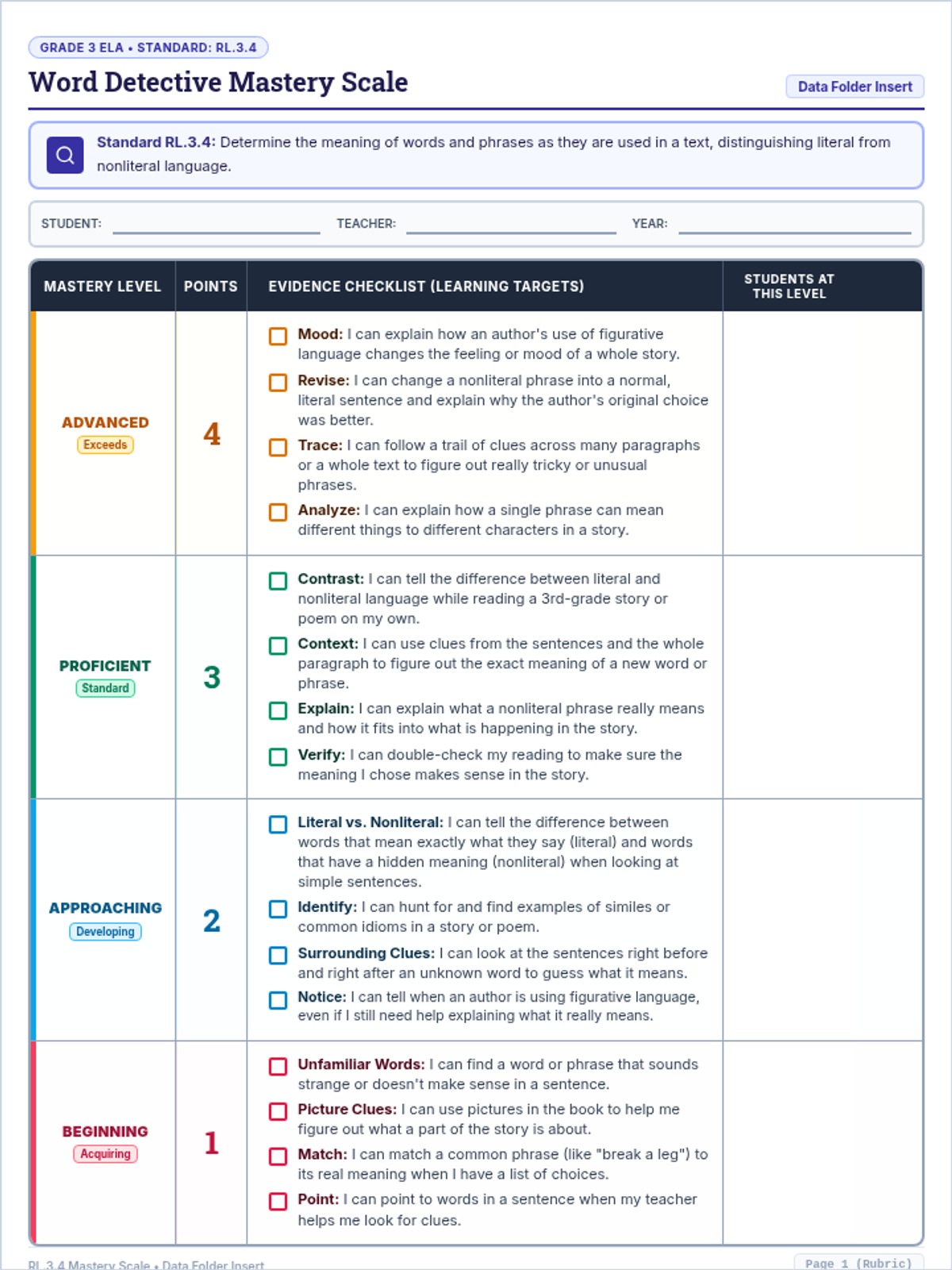
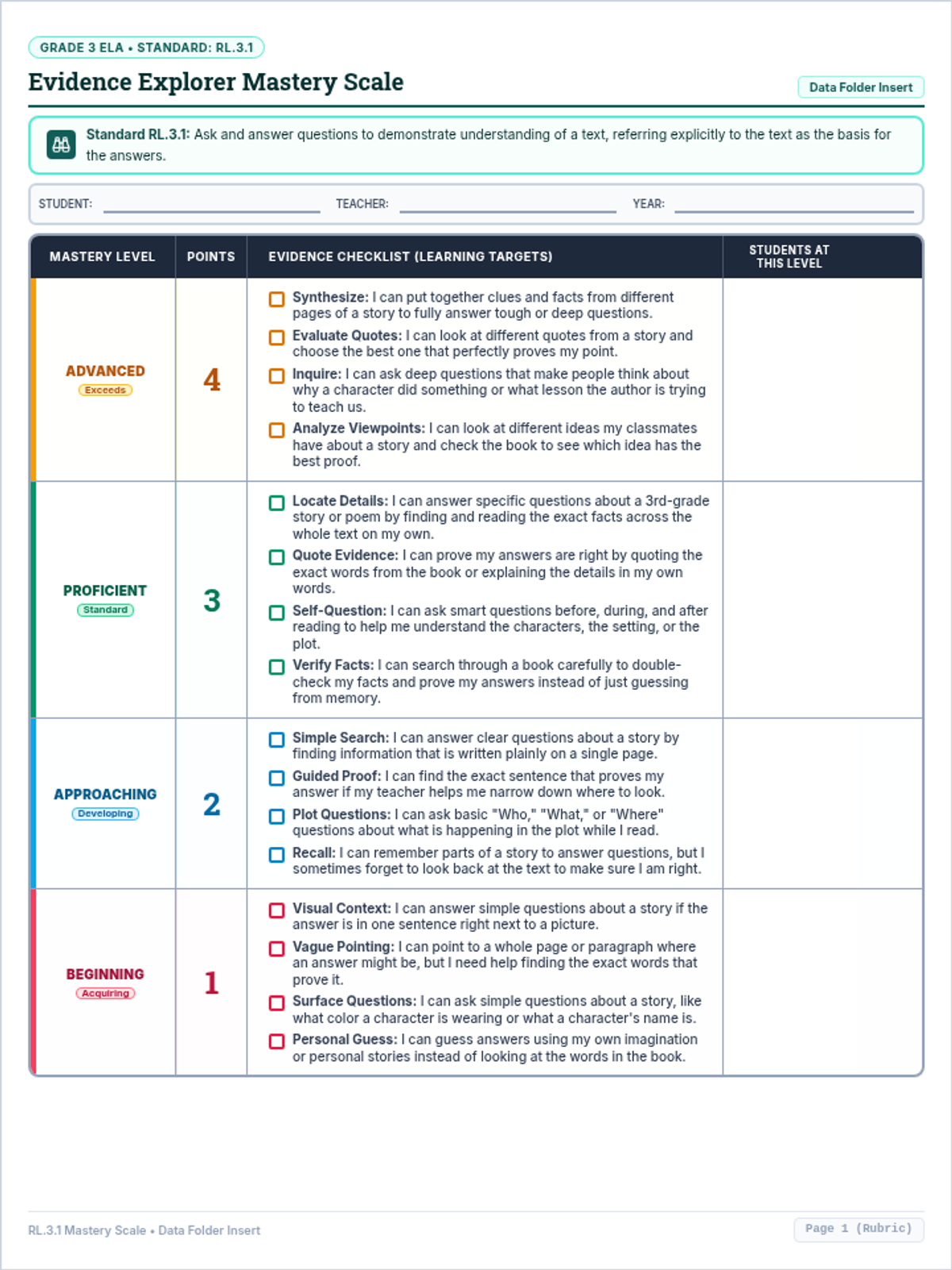
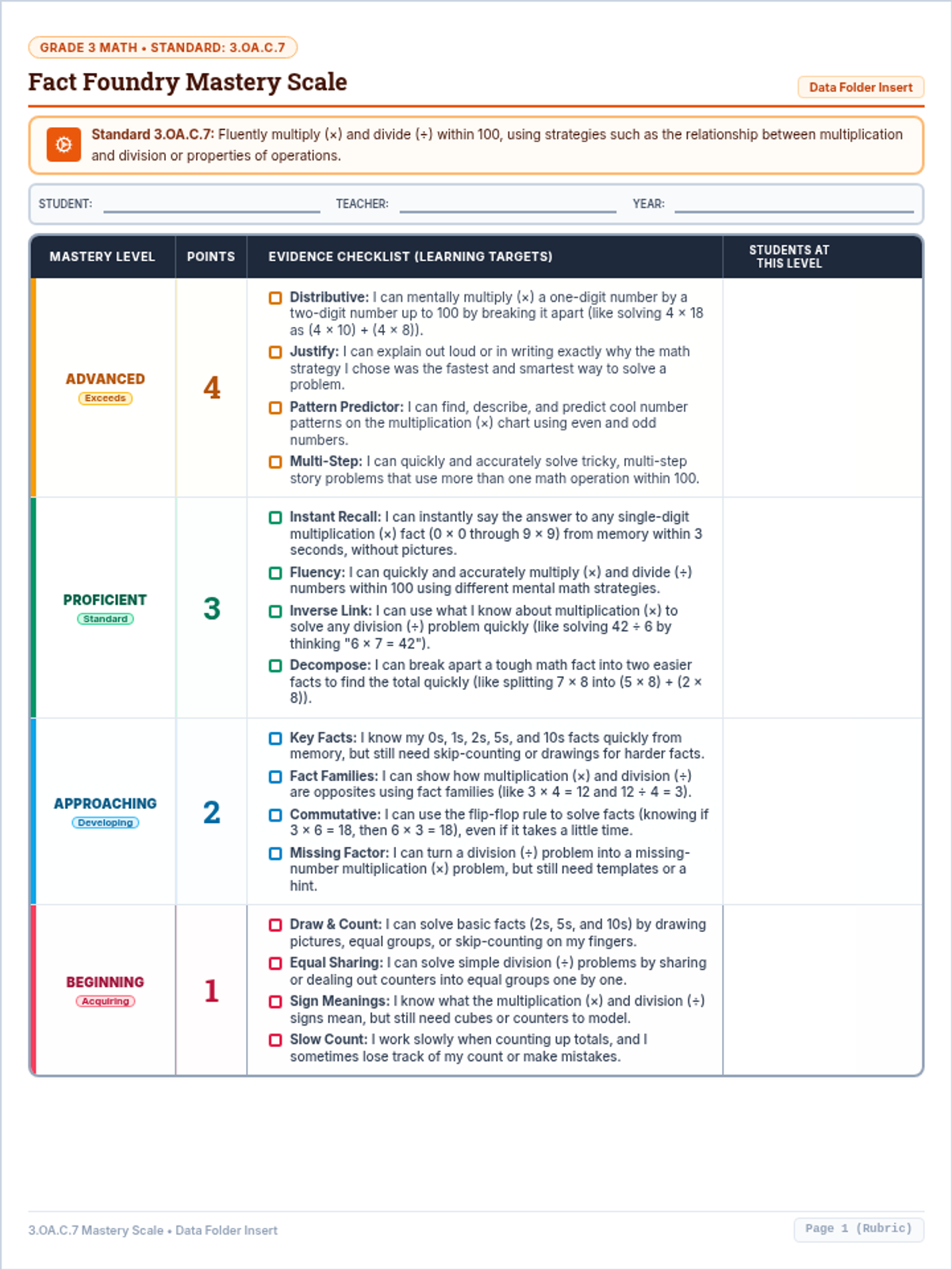
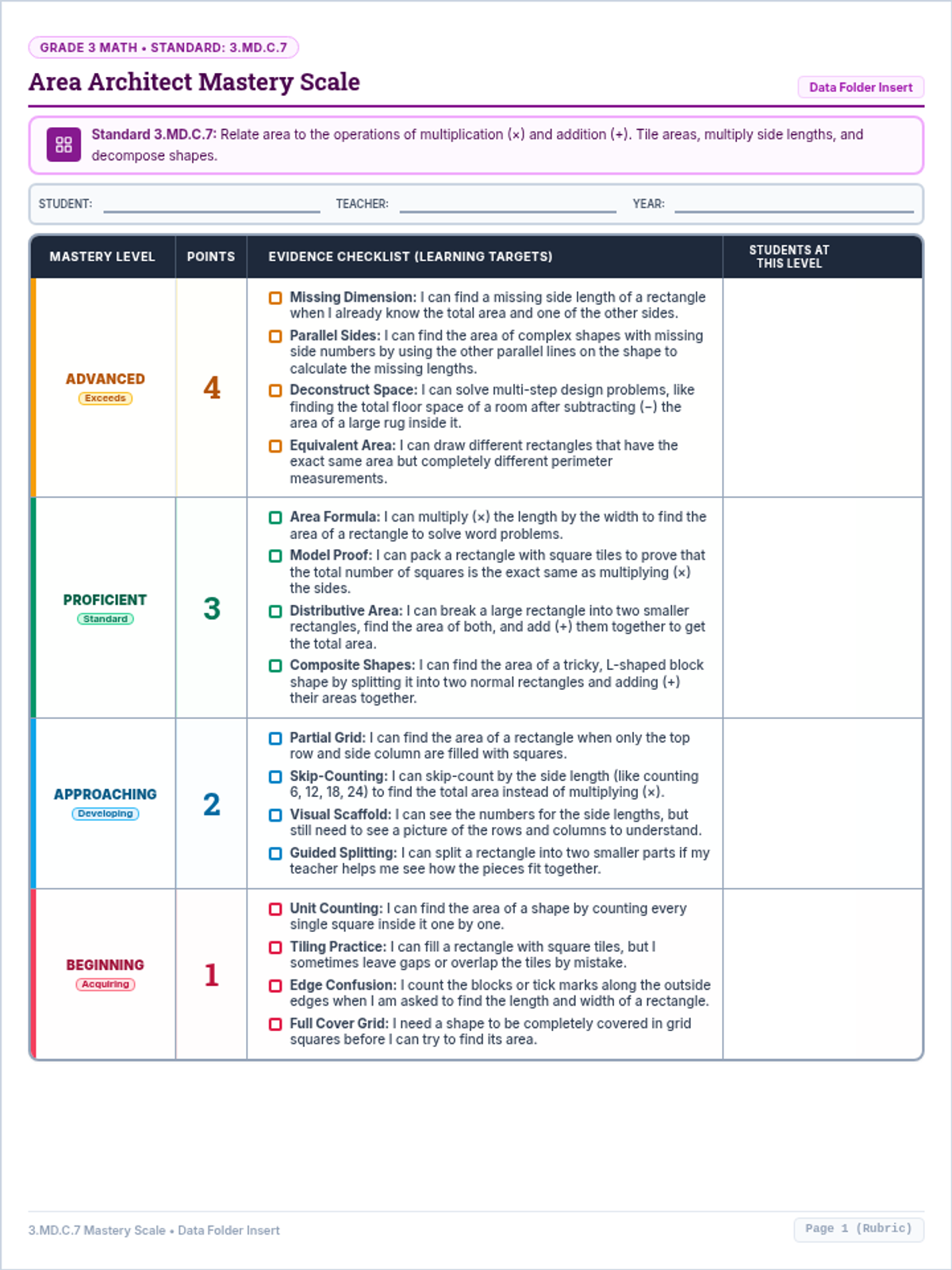
A collection of beautifully designed, compact data folder inserts featuring proficiency scale charts and progress tracking logs for Grade 3 standards.
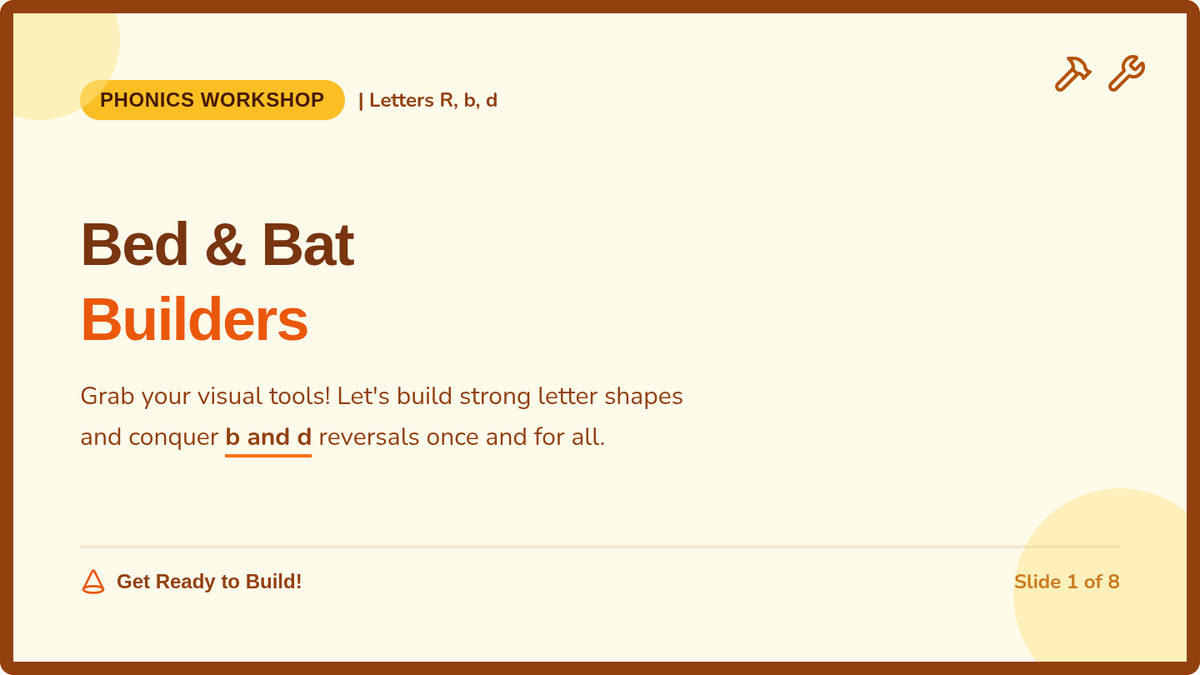
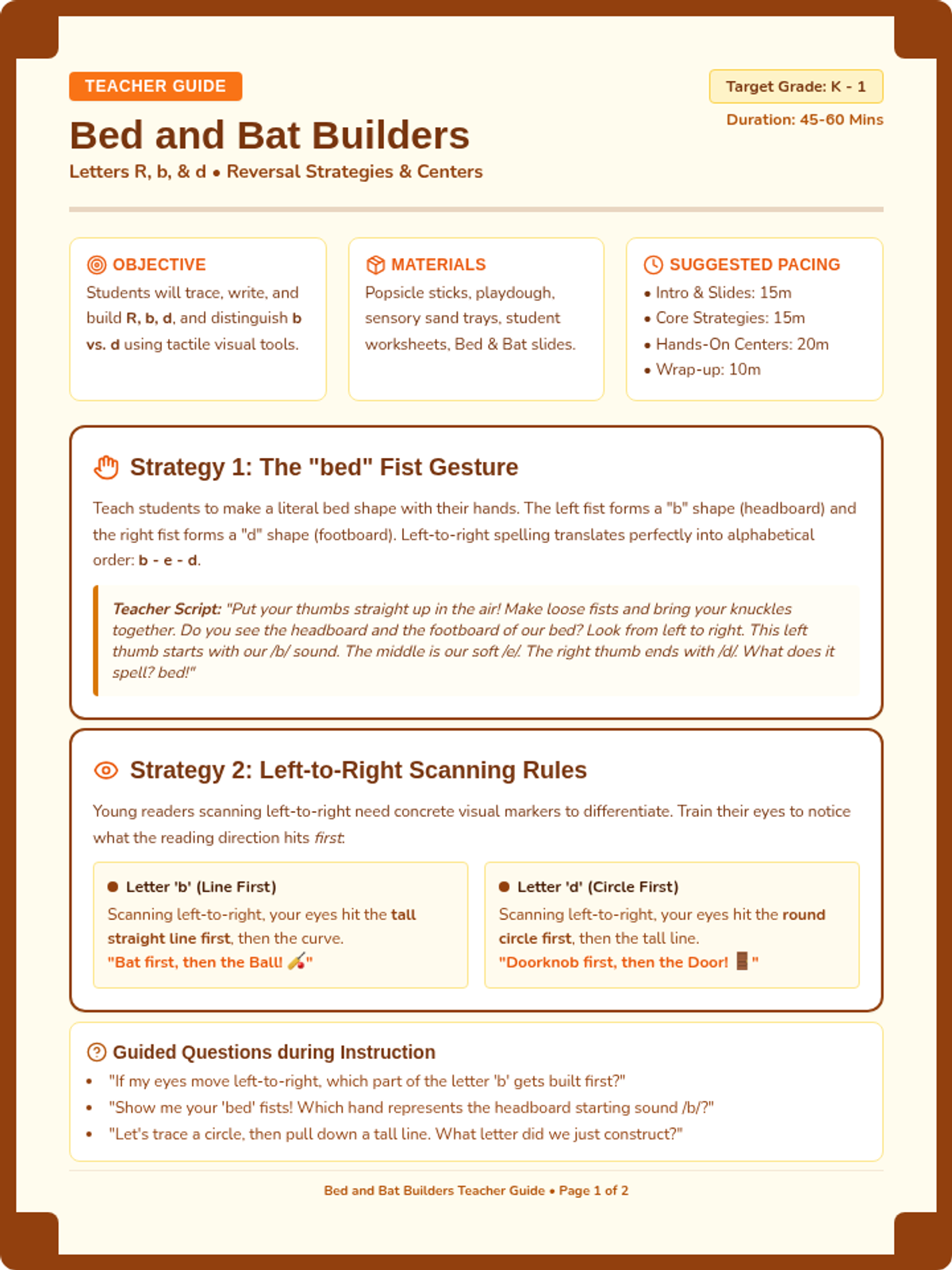
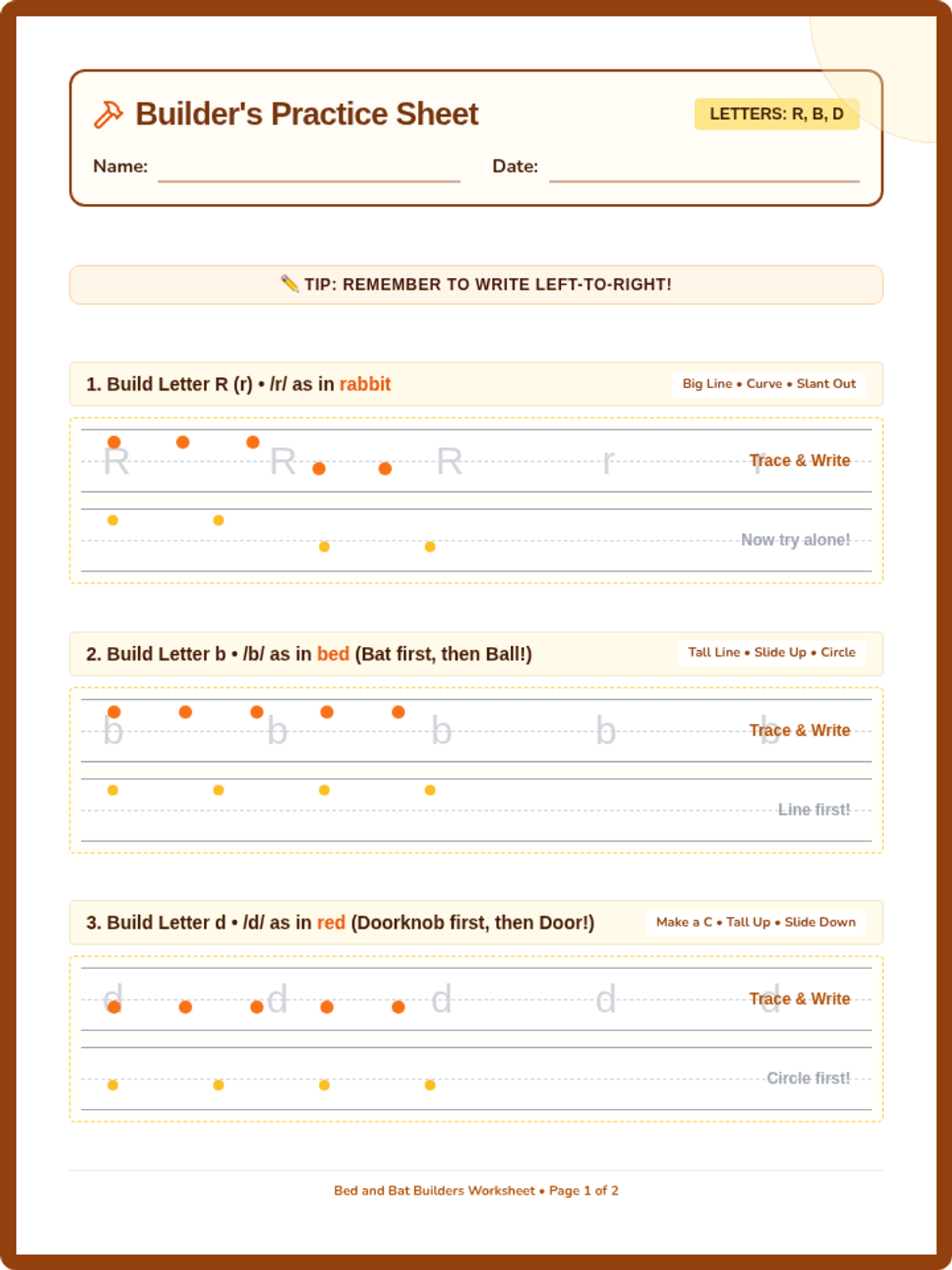
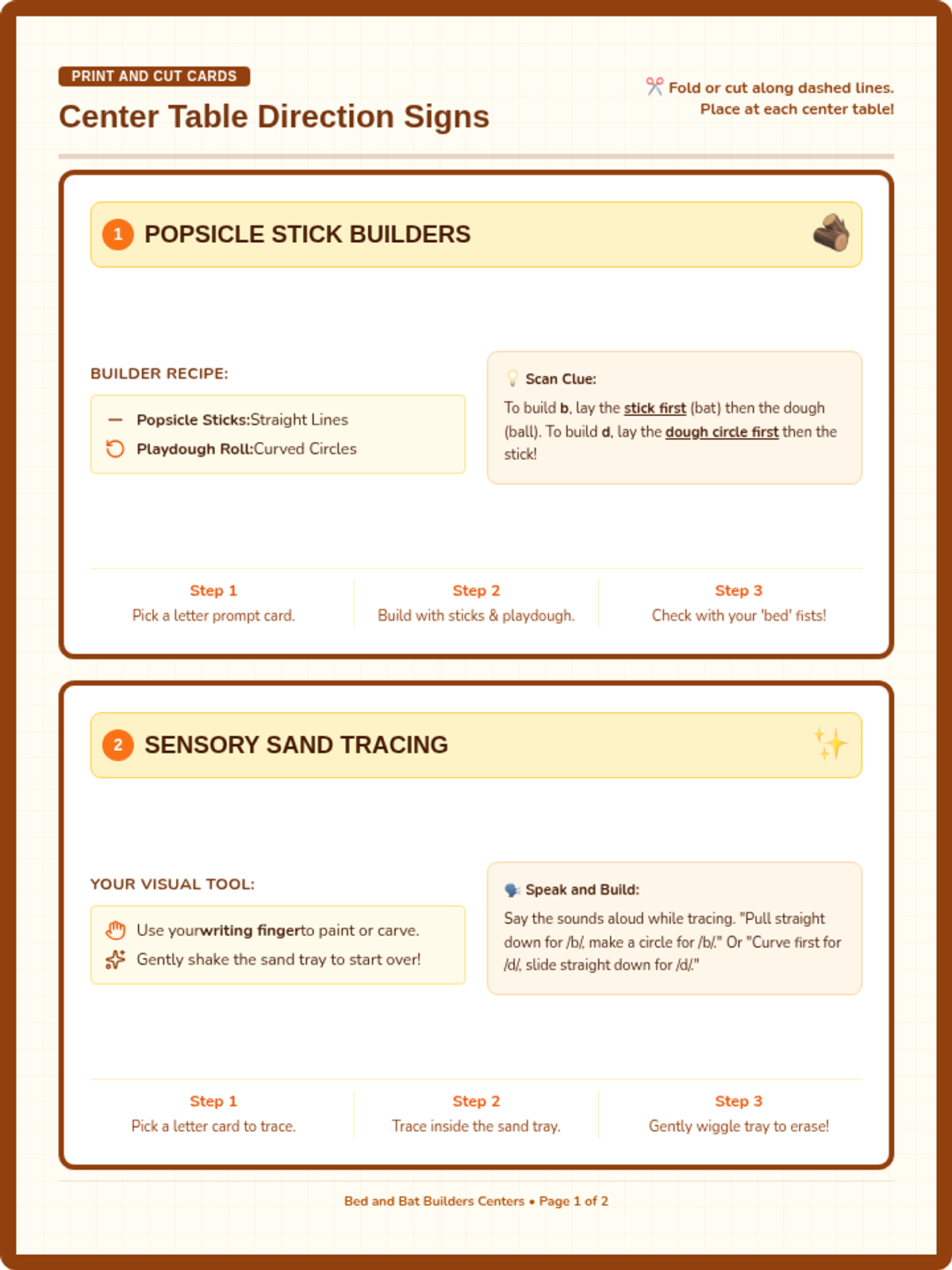
A complete phonics and handwriting lesson focused on teaching letters R, b, and d. It features powerful b/d reversal strategies (the 'bed' hand gesture and left-to-right line-first vs. circle-first clues), an interactive circle map activity, and hands-on tactile and sensory building centers.
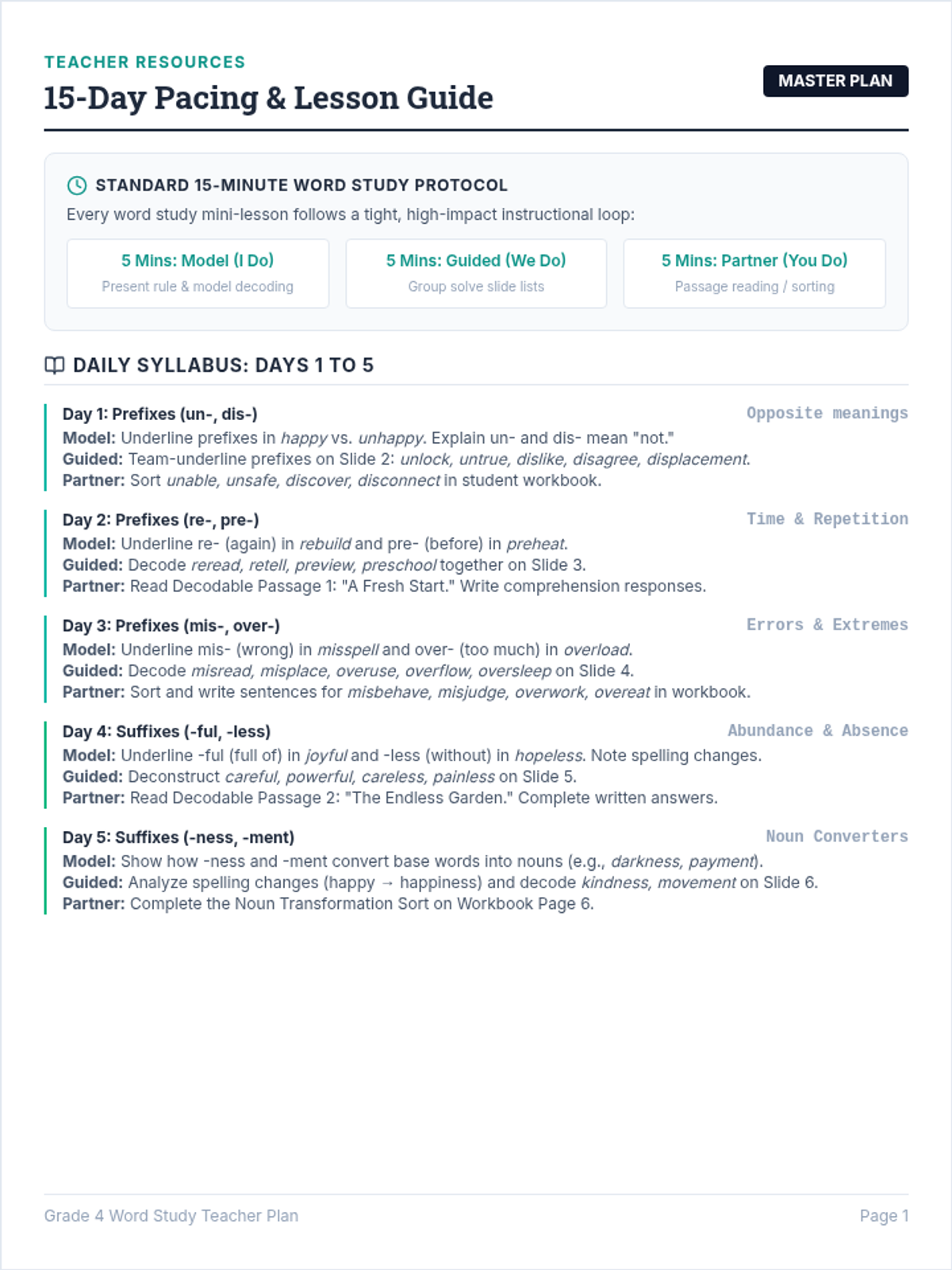
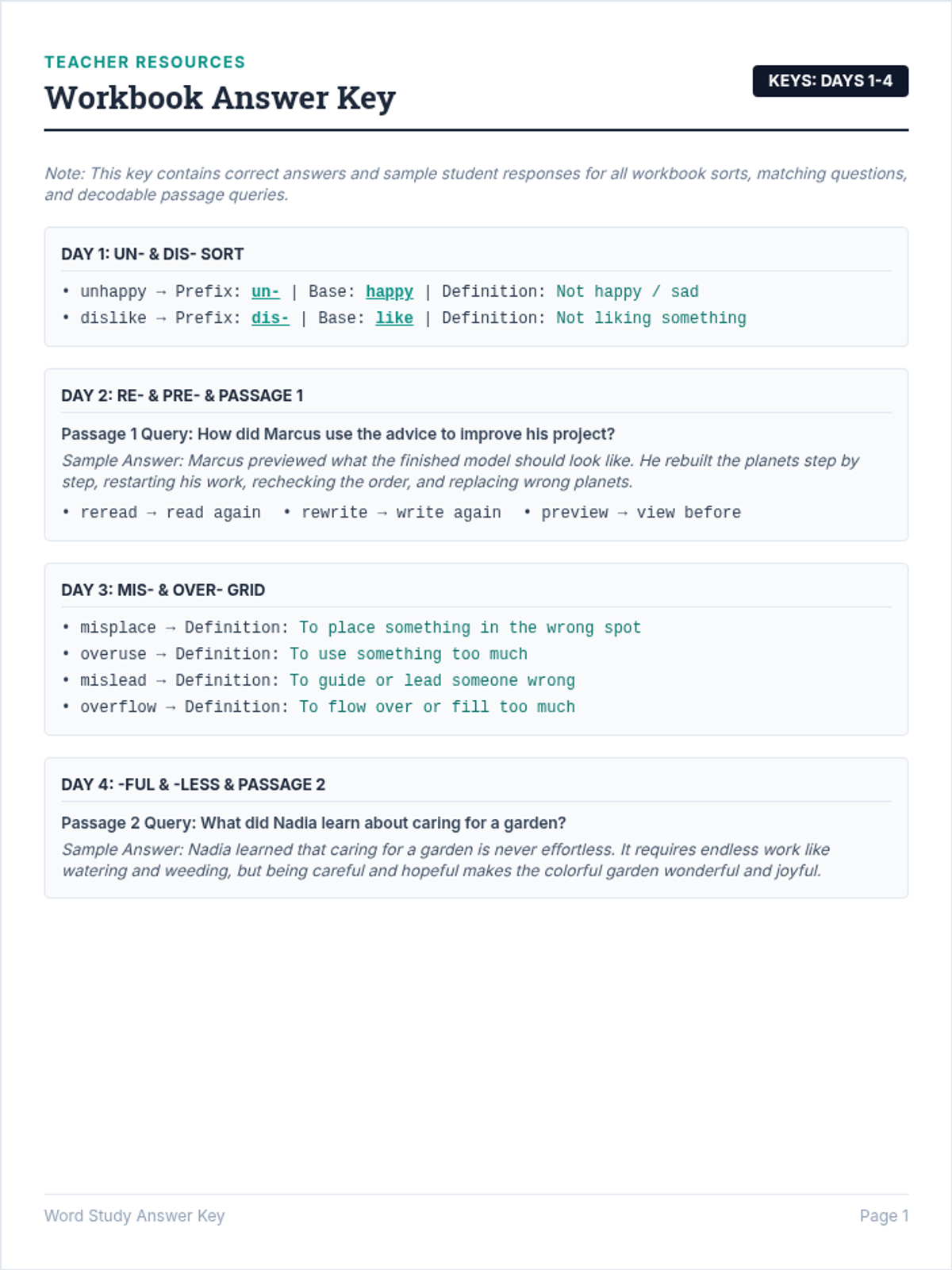
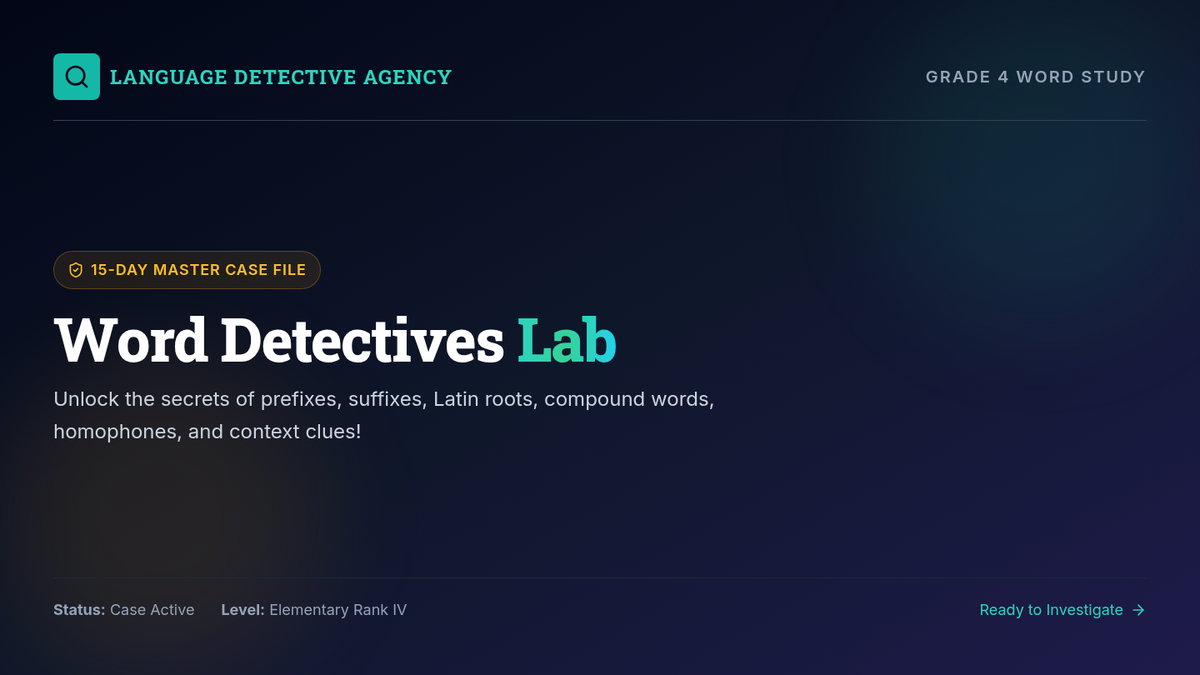
A comprehensive 15-day word study unit for Grade 4 focused on prefixes, suffixes, Latin roots, compound words, homophones, synonyms/antonyms, and context clues. Includes a master slide deck and a complete student workbook.
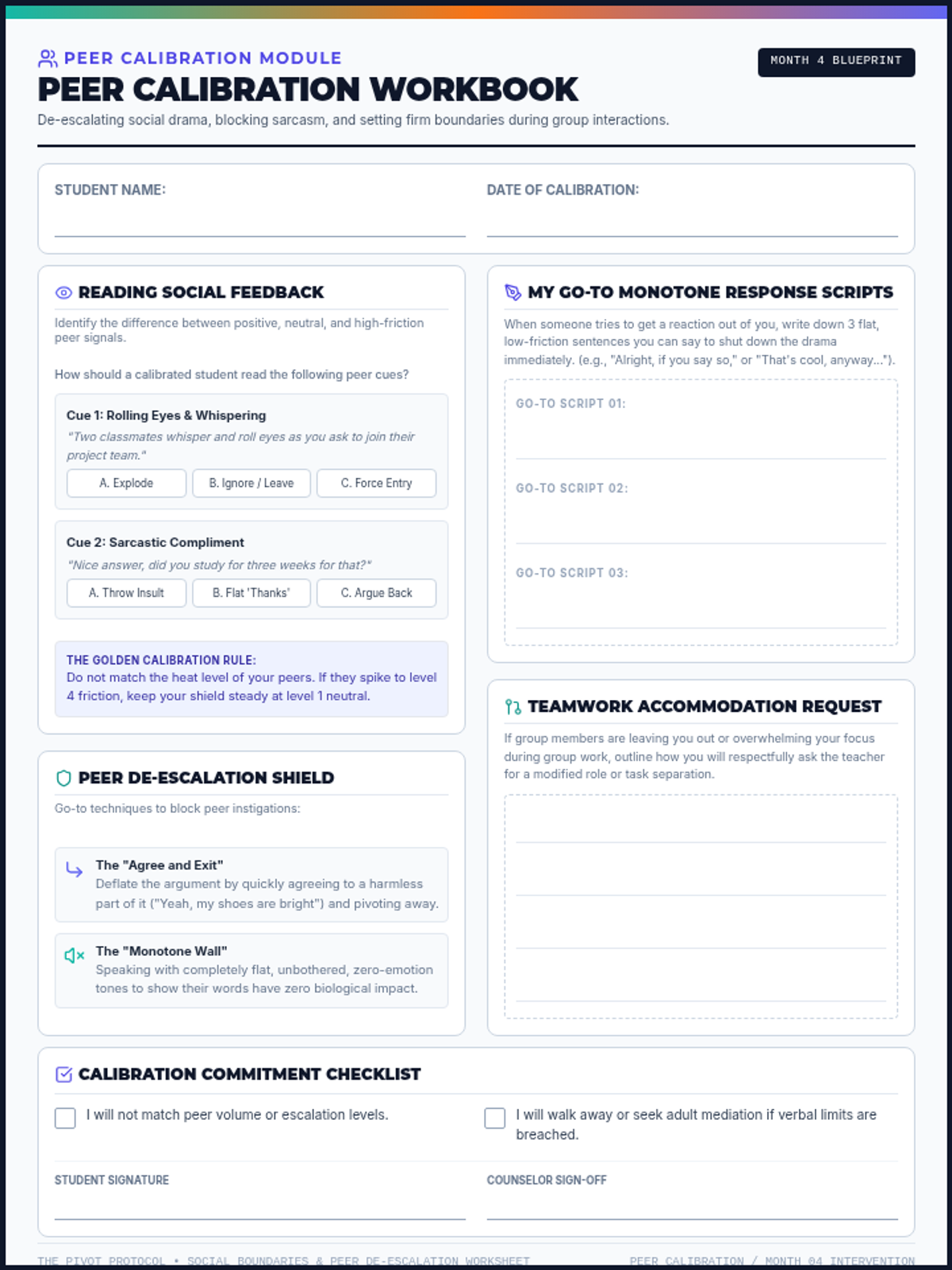
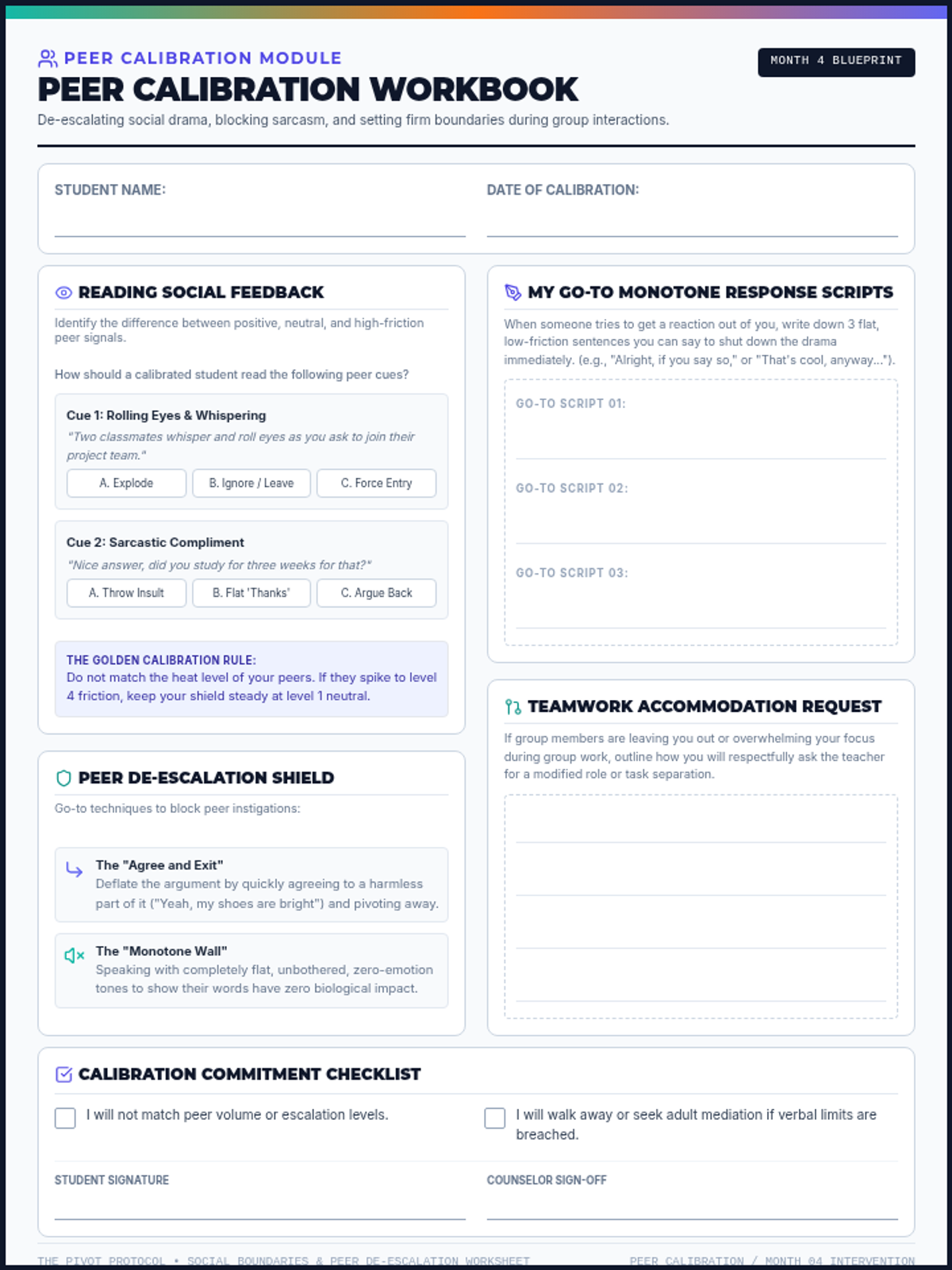
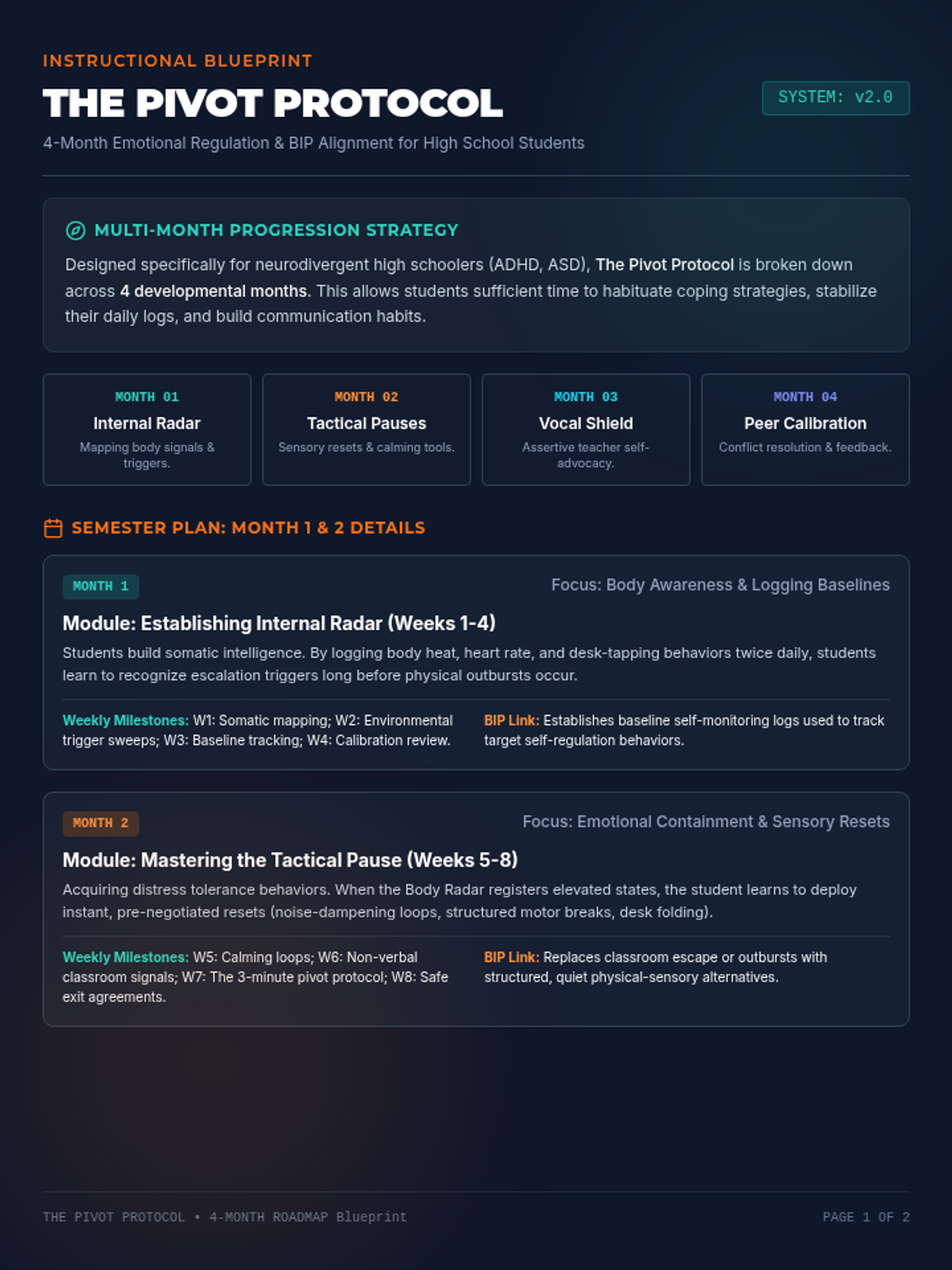
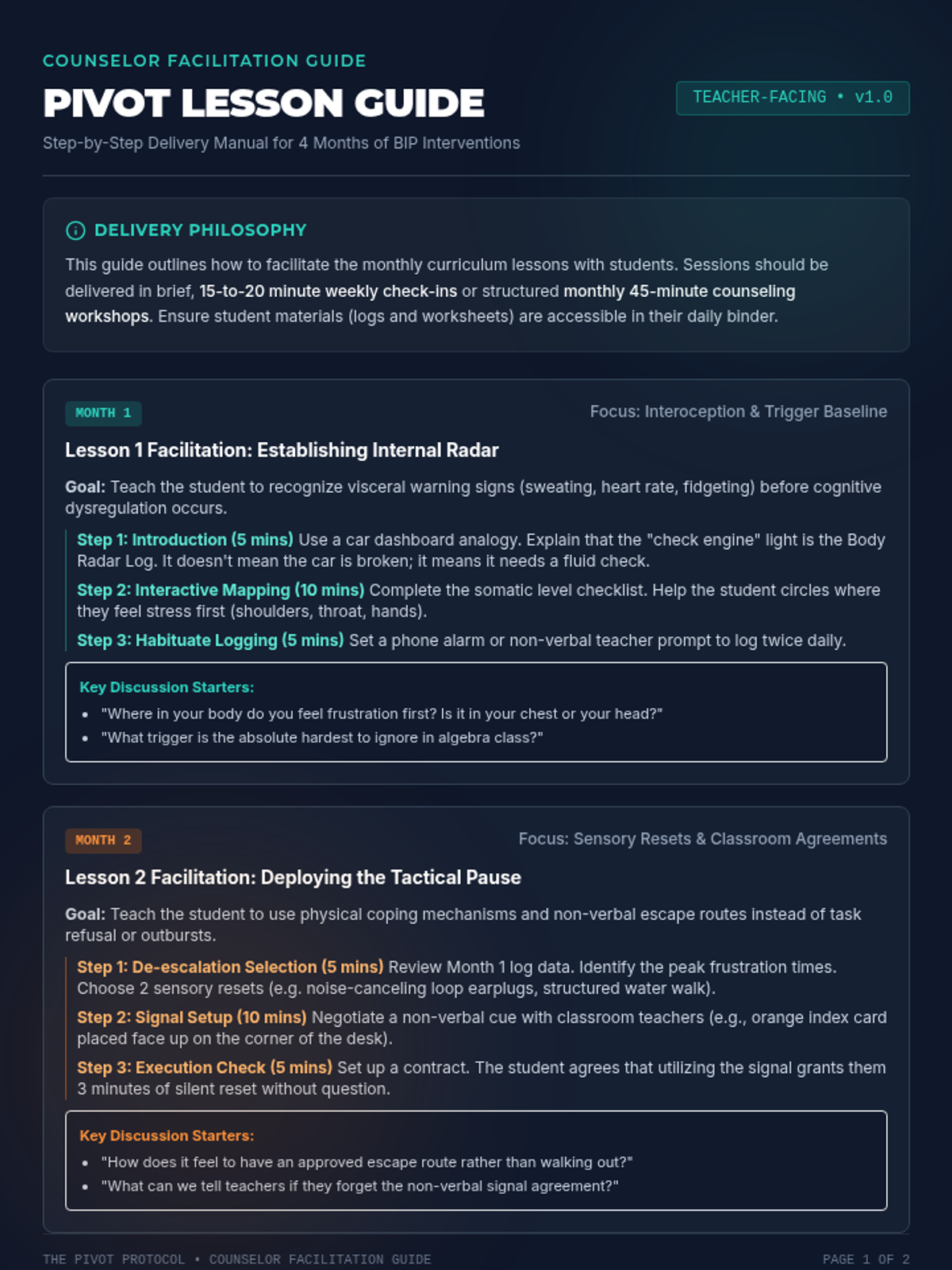
Month 4 focus on peer-to-peer conflict resolution, de-escalating social tension, responding to sarcasm, and reading social feedback cues without dysregulating.
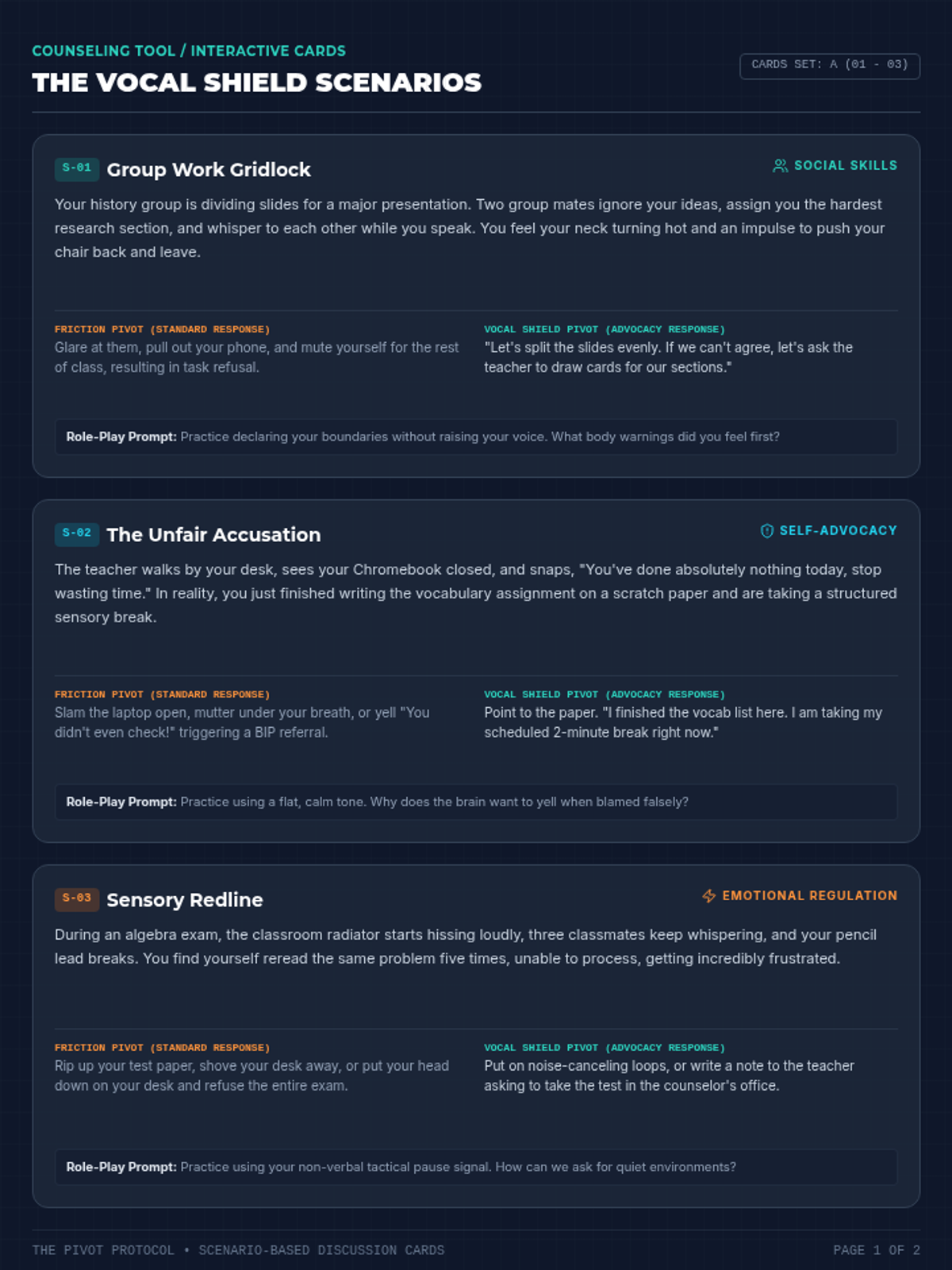
Addresses social skills, self-advocacy with teachers, navigating peer-to-peer conflict, and reading social feedback cues without dysregulating.
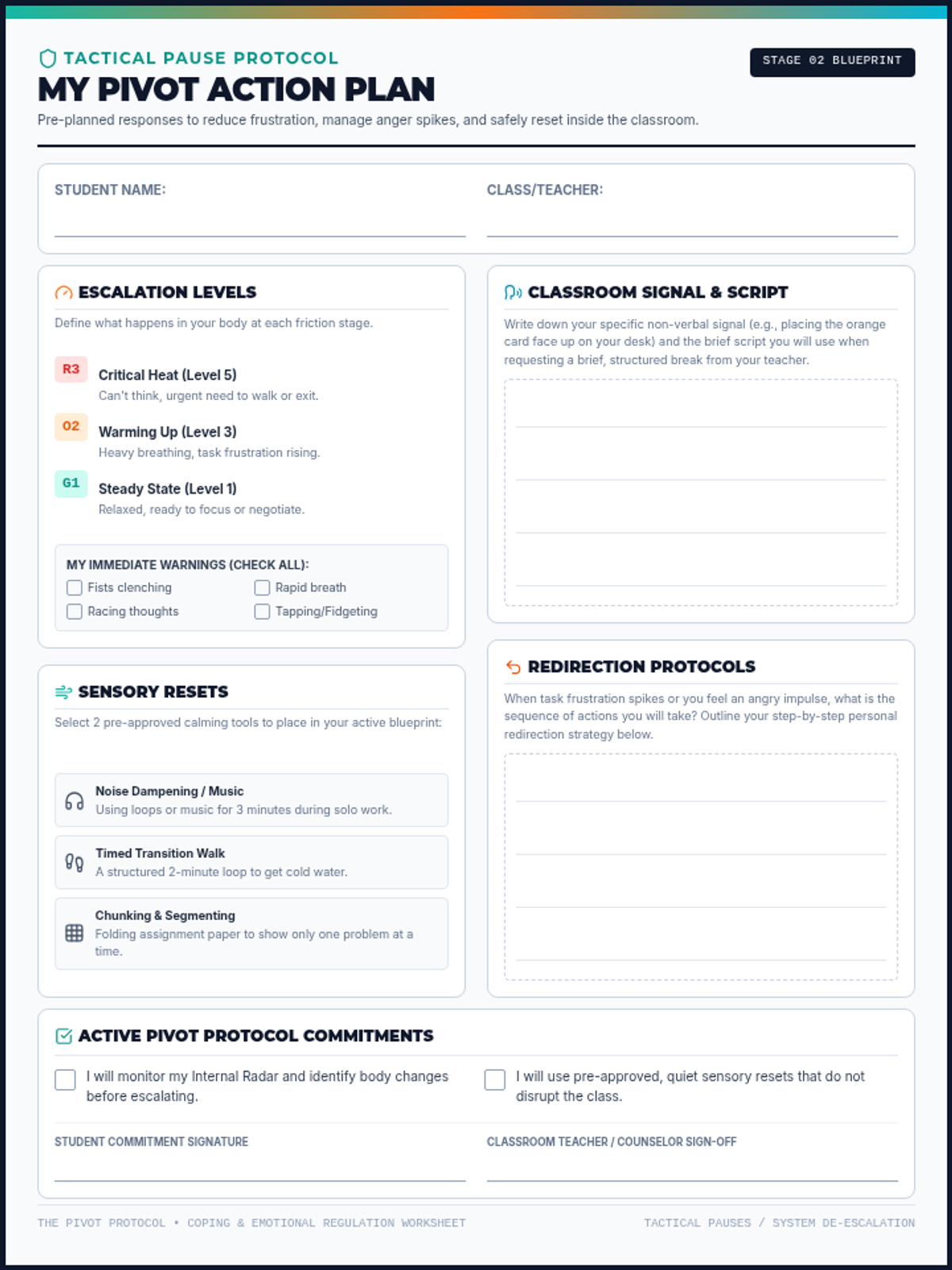
Focuses on calming techniques, active anger management, and frustration tolerance when triggers spike, introducing personalized 'Pivot Plans' for classroom situations.
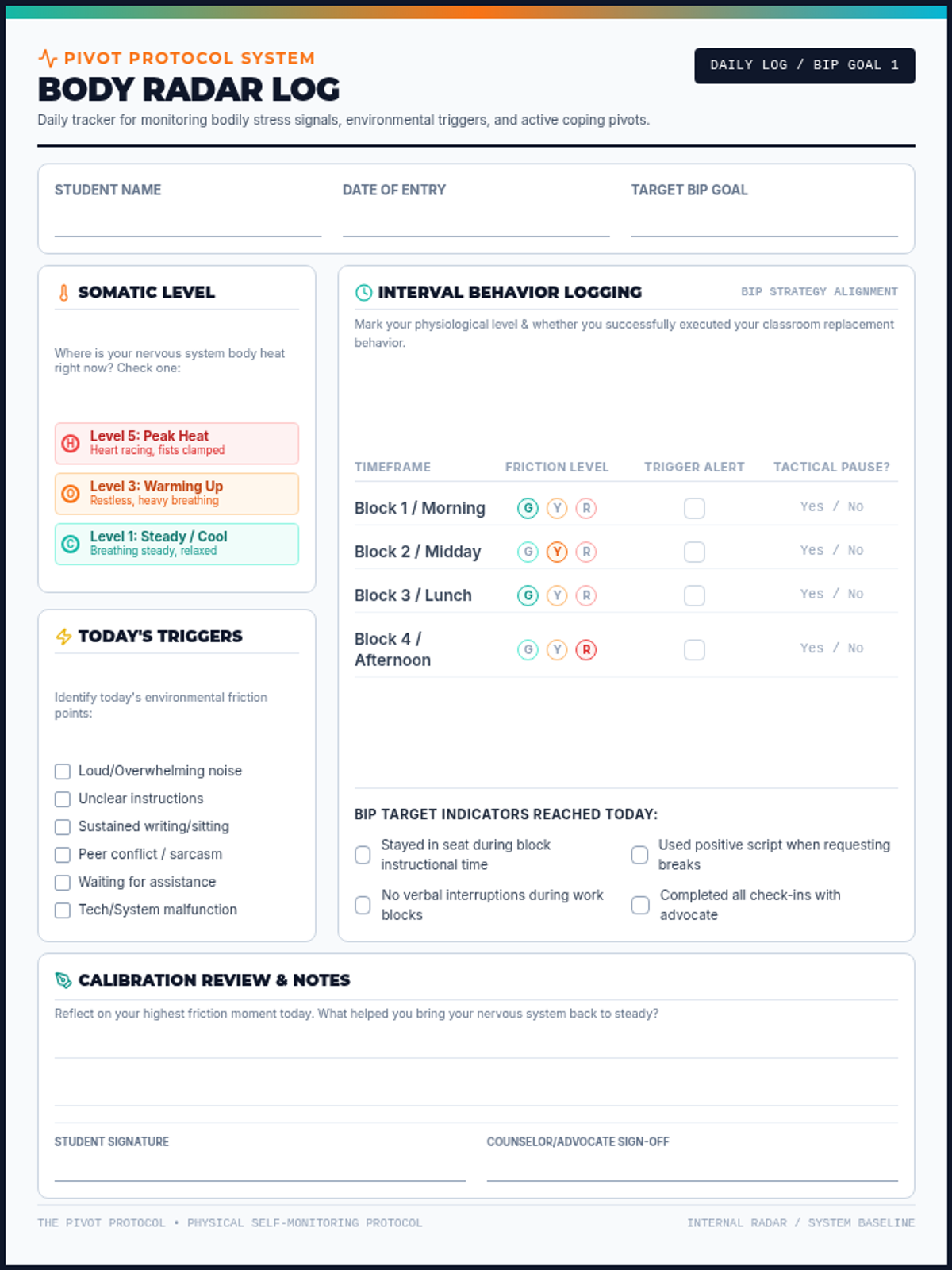
Establishes the foundation of self-awareness by helping students map their physical trigger responses ('Internal Radar') and setting up their baseline self-monitoring daily tracker.
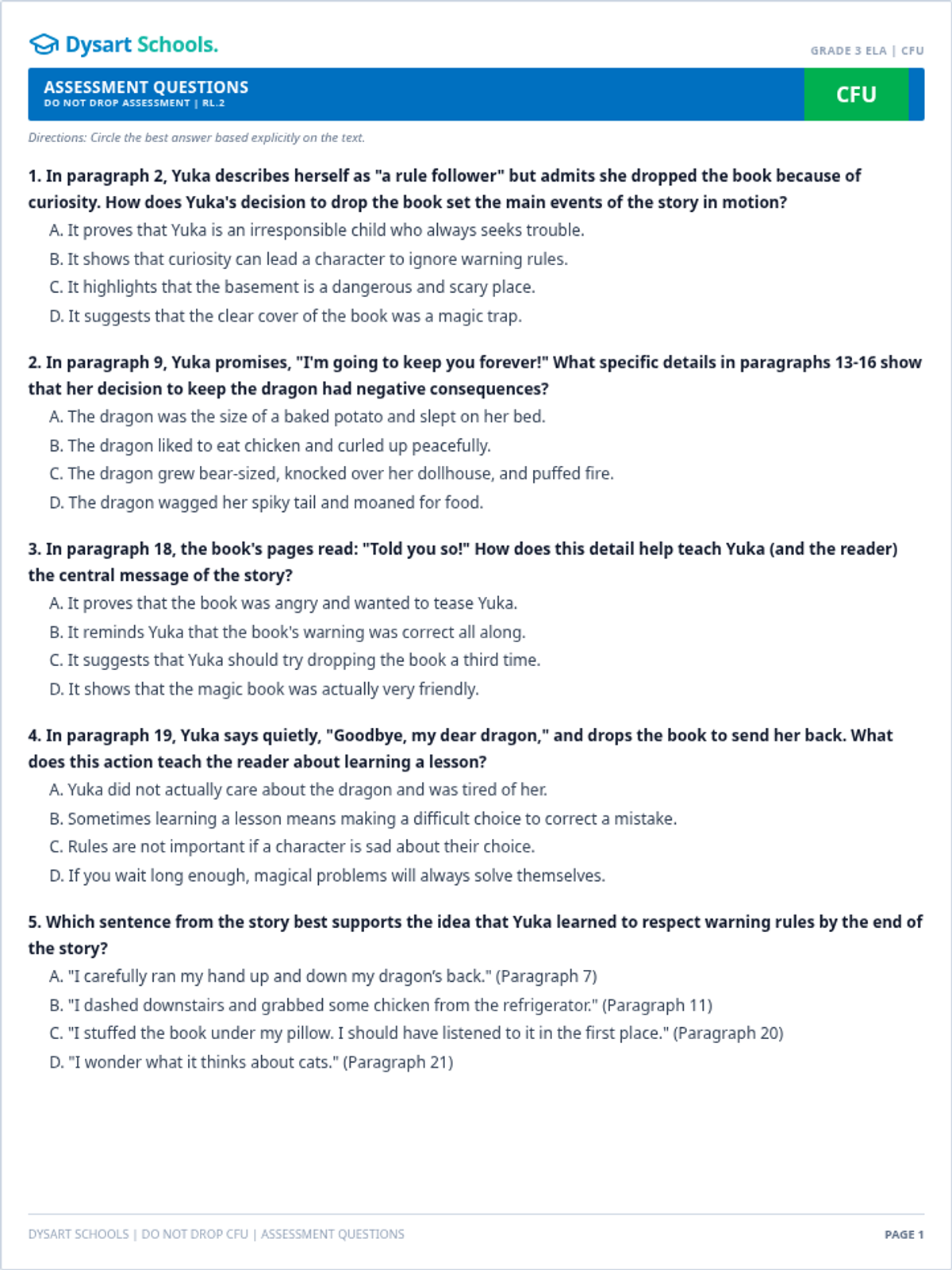
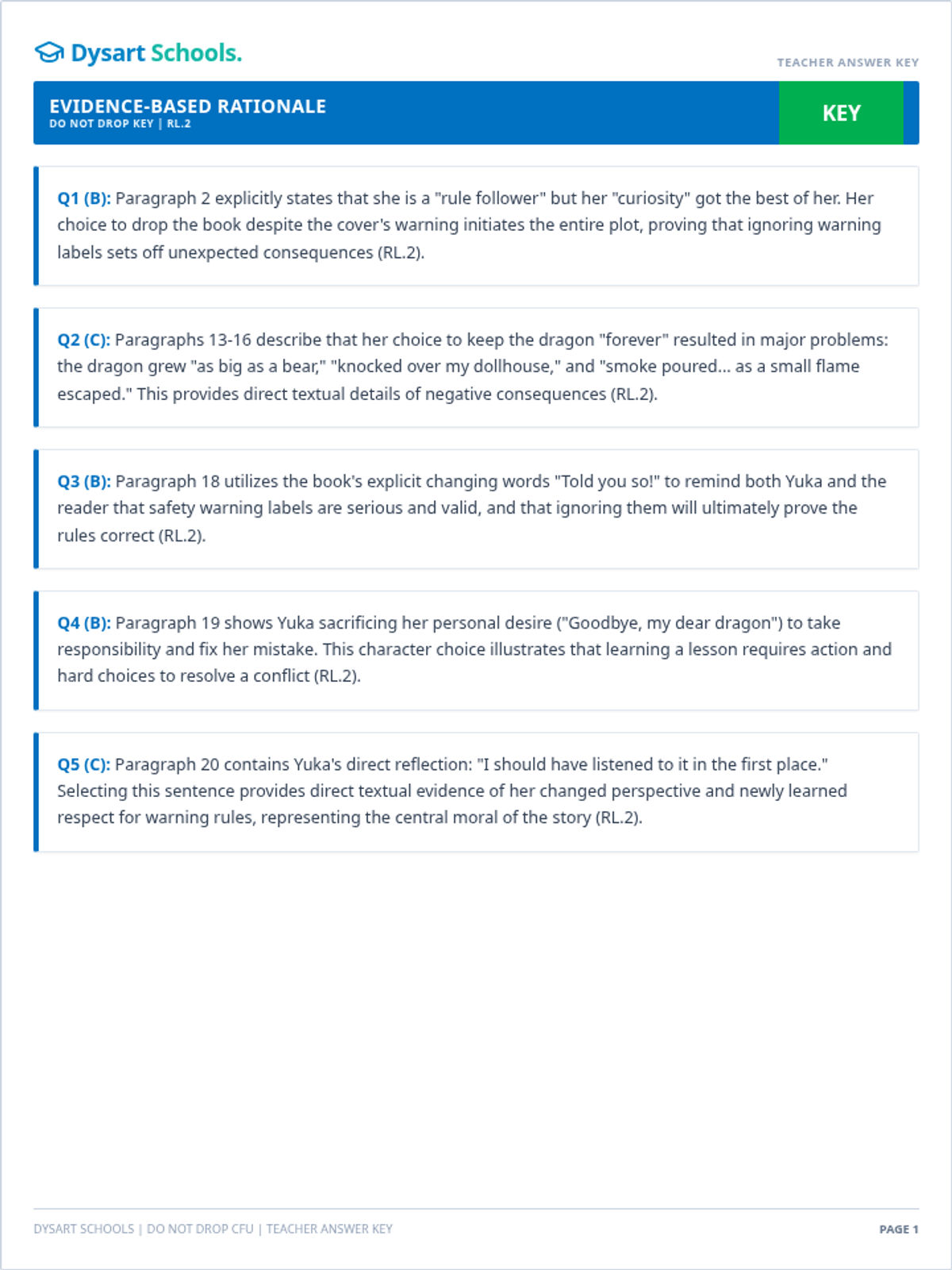
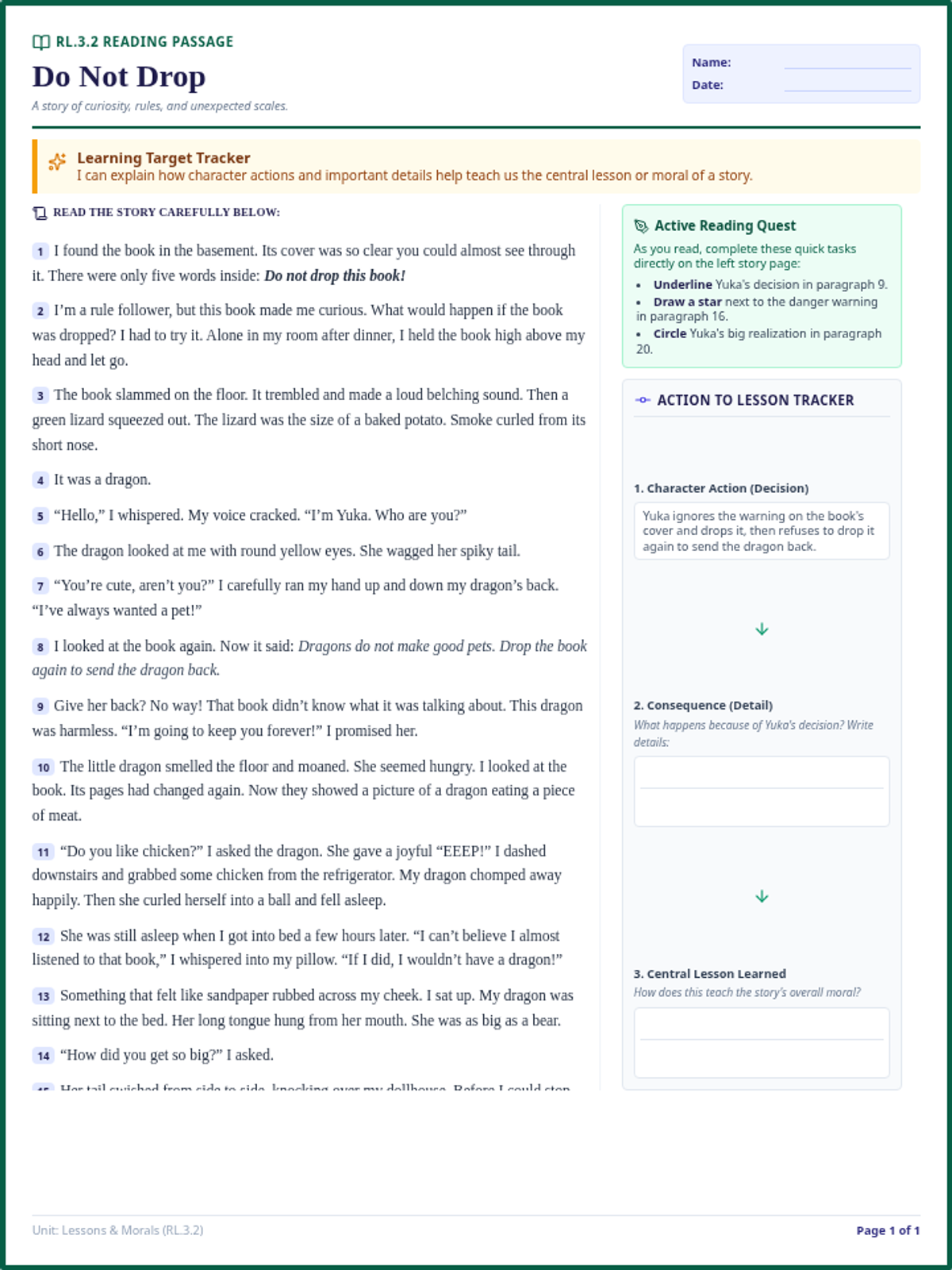
A third-grade reading comprehension lesson focused on standard RL.2 (learning target: explaining how character actions and details teach the lesson/moral) using the story "Do Not Drop". Students analyze Yuka's choices and their consequences to discover the story's core lesson.
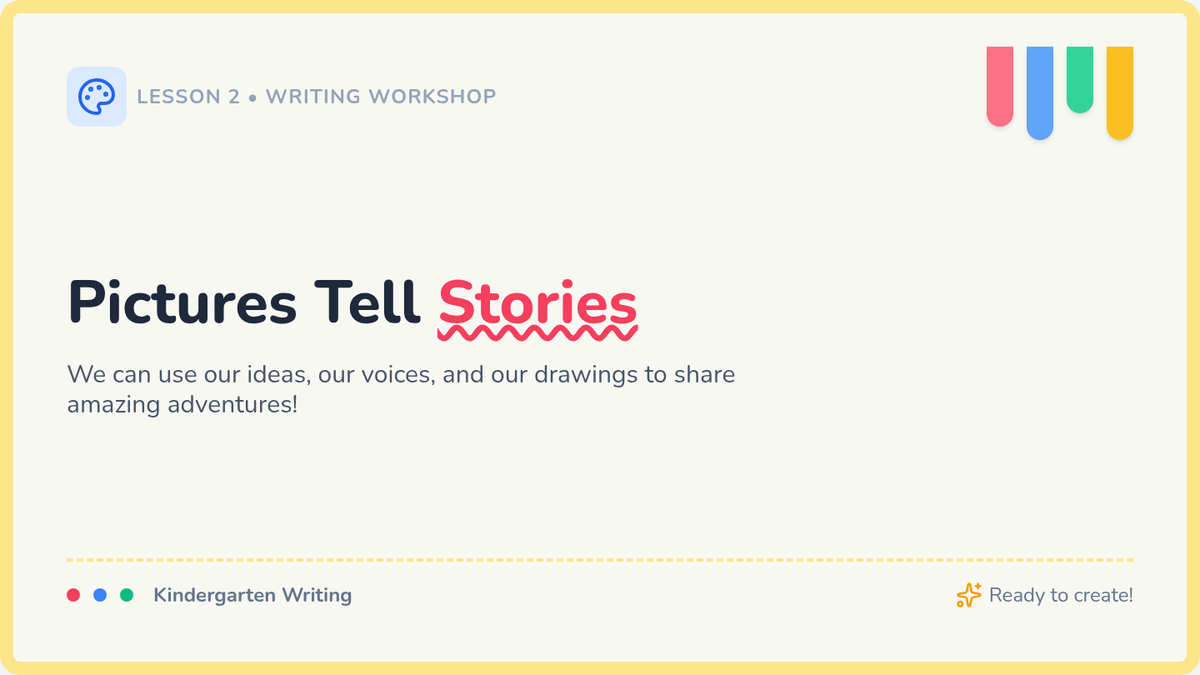
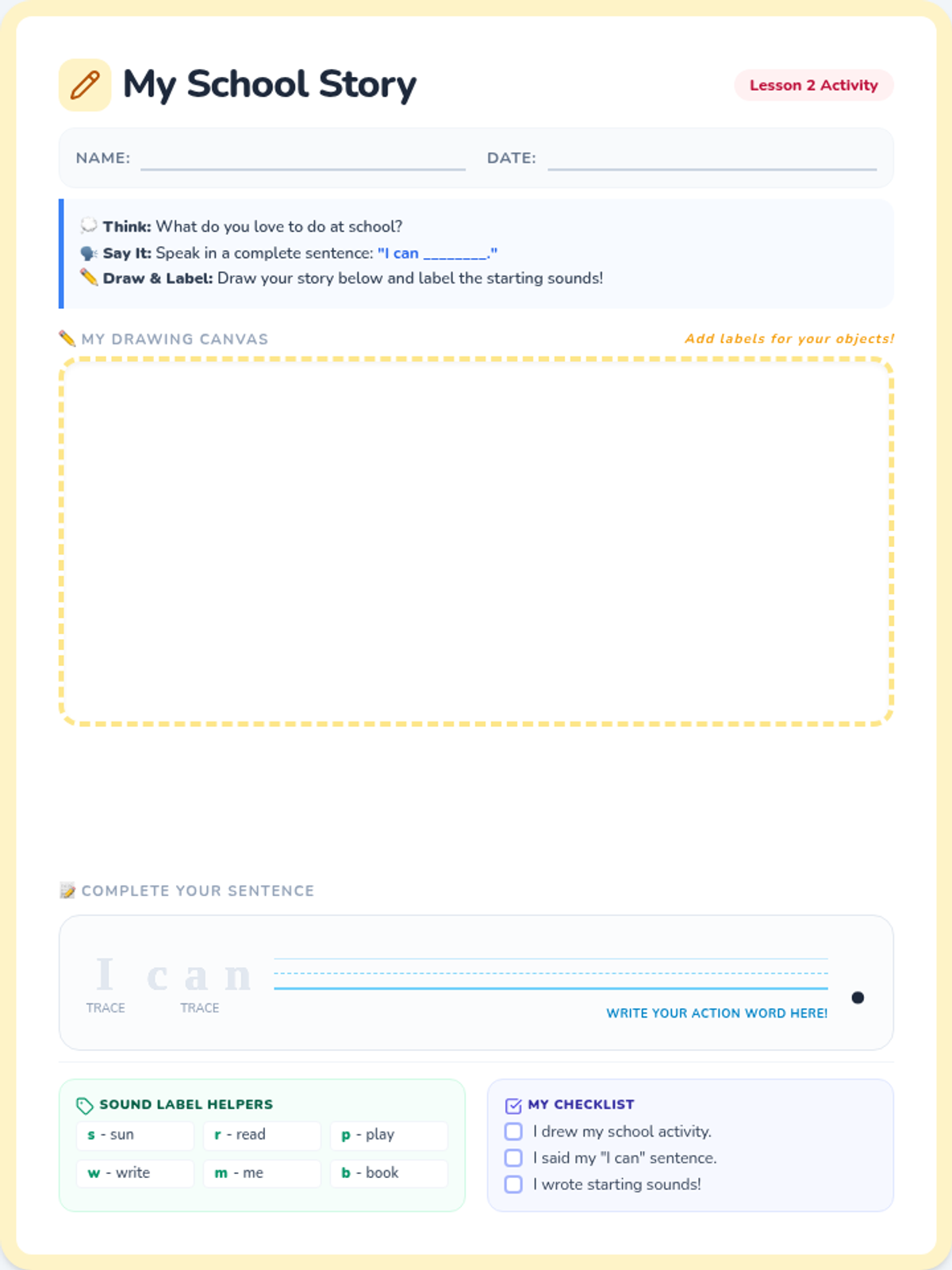
A foundational writing lesson for early learners exploring how pictures can tell stories. Students practice speaking in complete sentences before drawing themselves doing an activity at school.
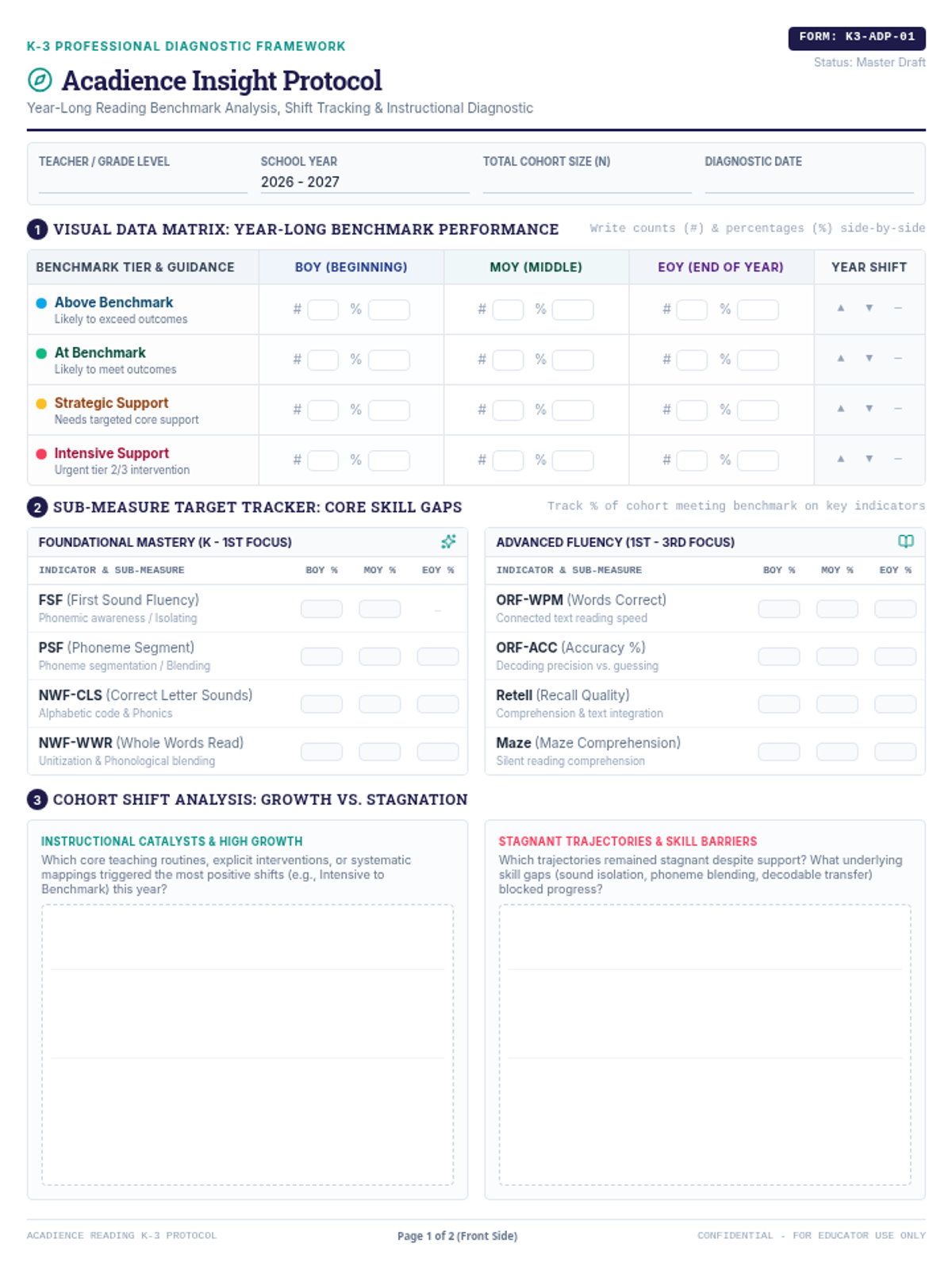
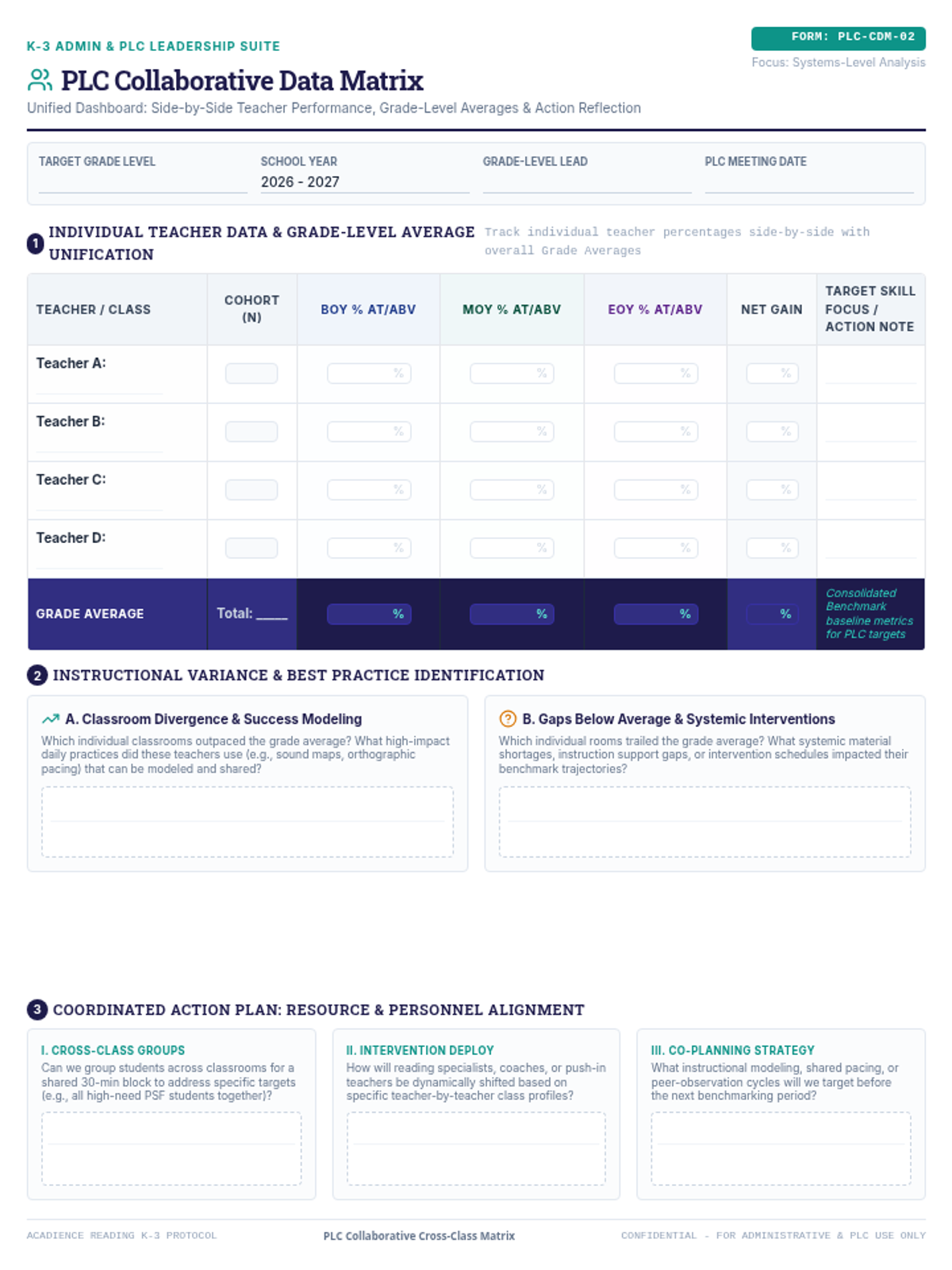
A professional data analysis lesson framework and diagnostic guide to help K-3 educators dissect Acadience Reading benchmarks, identify systemic teaching gaps, and design proactive prevention plans for the upcoming school year.
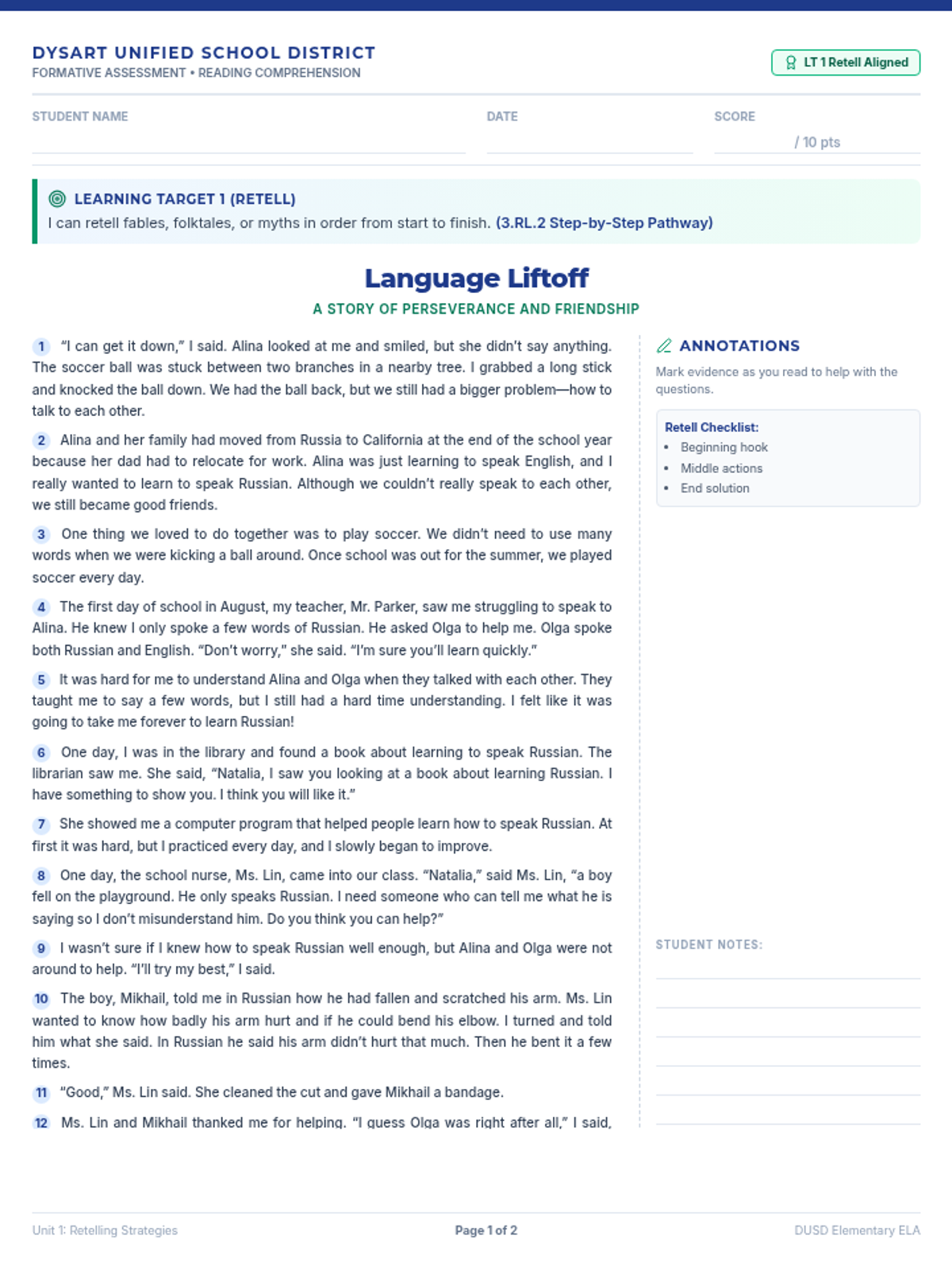
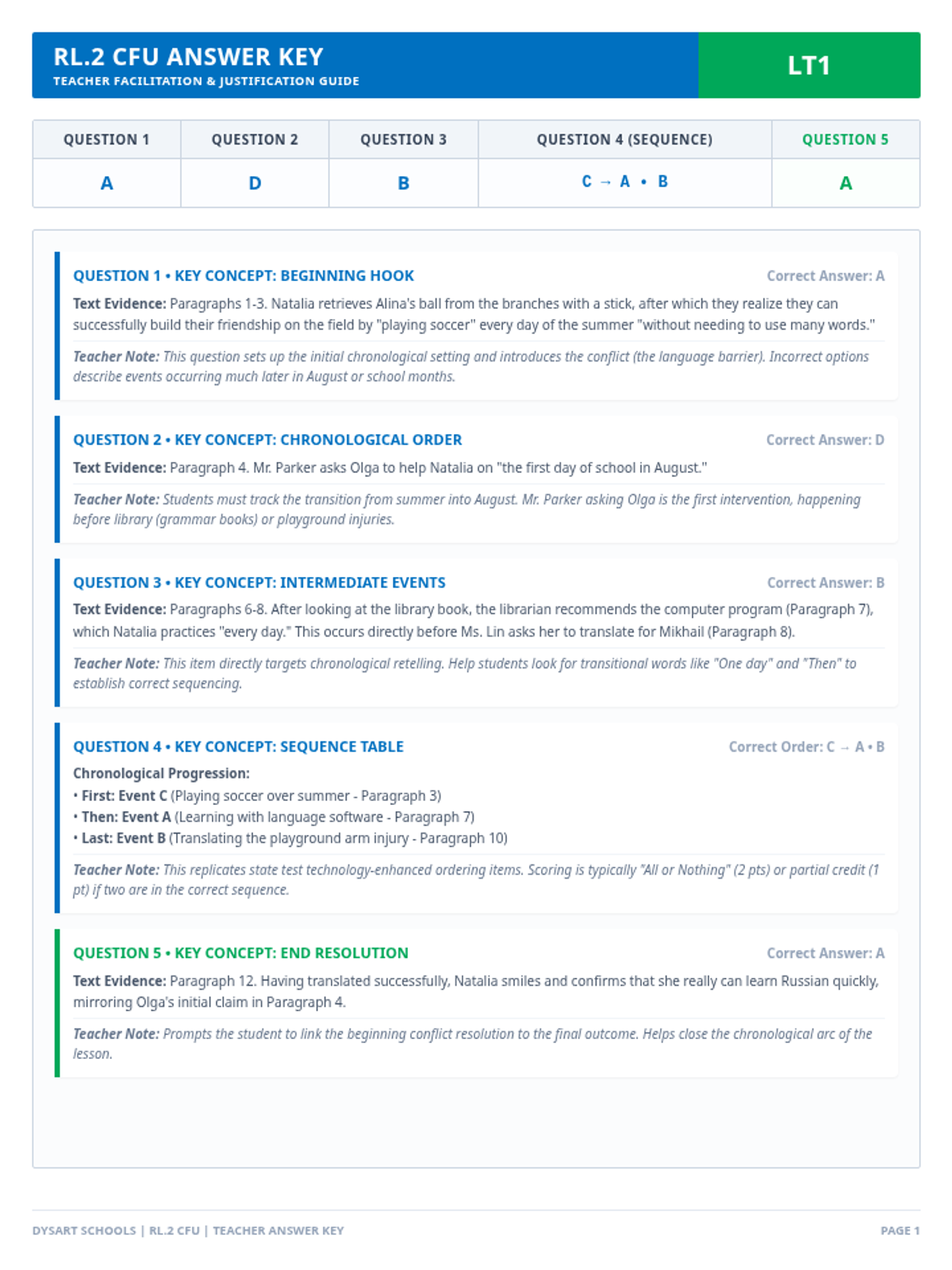
A formative assessment lesson targeting chronological retelling (3.RL.2) using the realistic fiction passage 'Language Liftoff' with a Dysart-themed blue and green styling.
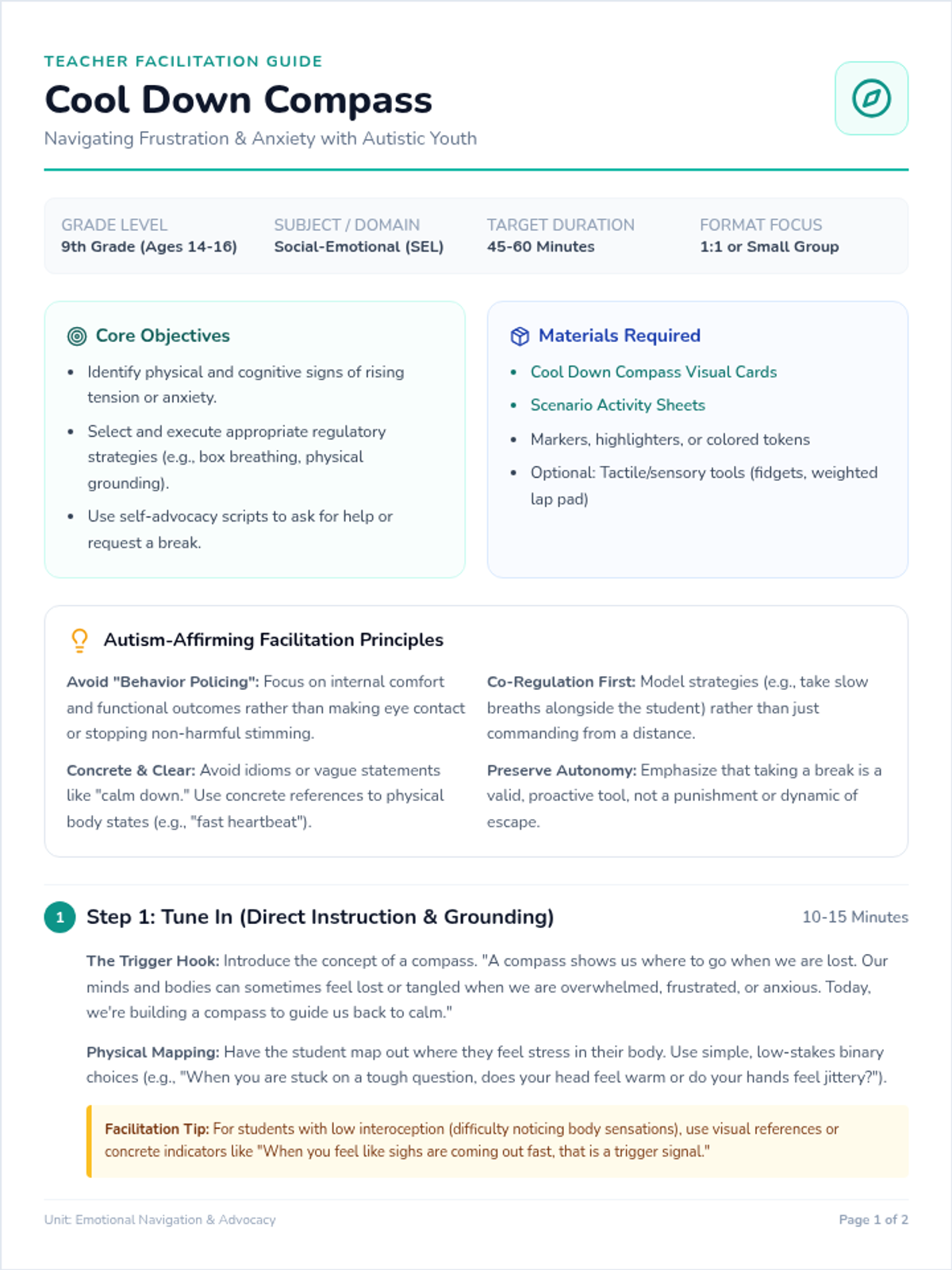
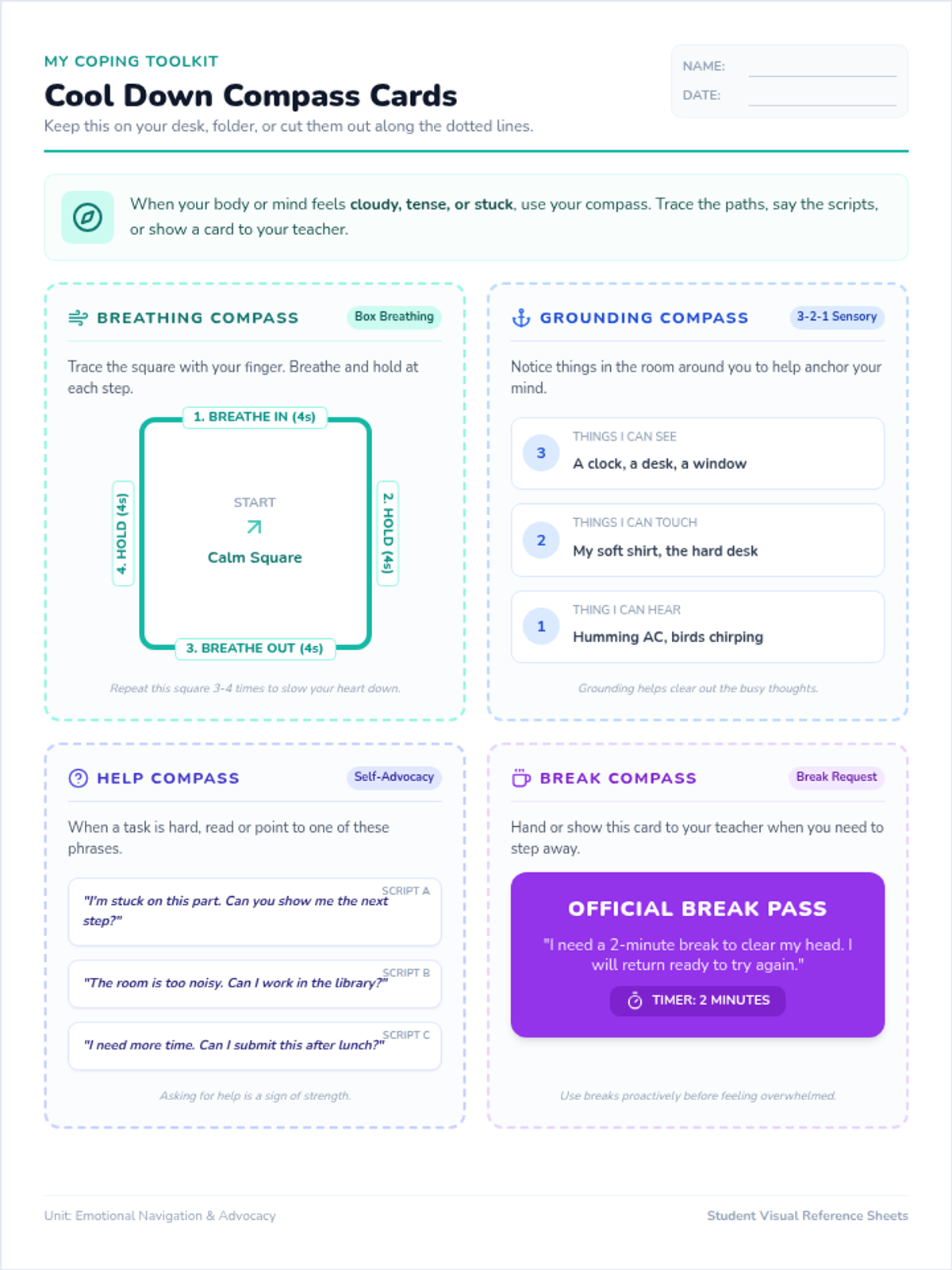
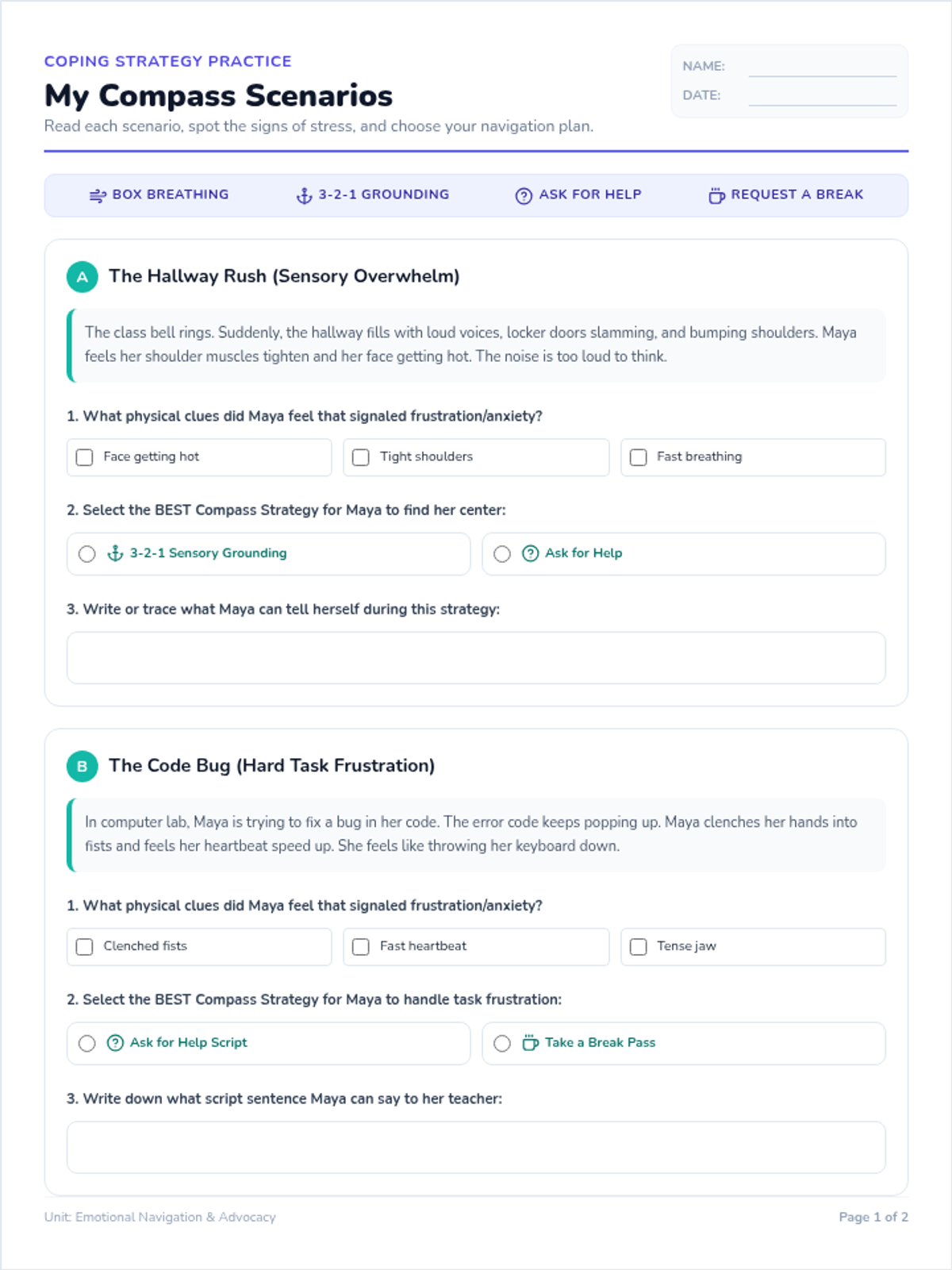
A comprehensive social-emotional learning lesson designed for 9th-grade students with autism to recognize triggers of anxiety or frustration and employ concrete coping strategies (breathing, physical grounding, self-advocacy, and requesting breaks). Includes teacher facilitation guides, visual strategy cards, and structured scenario worksheets.
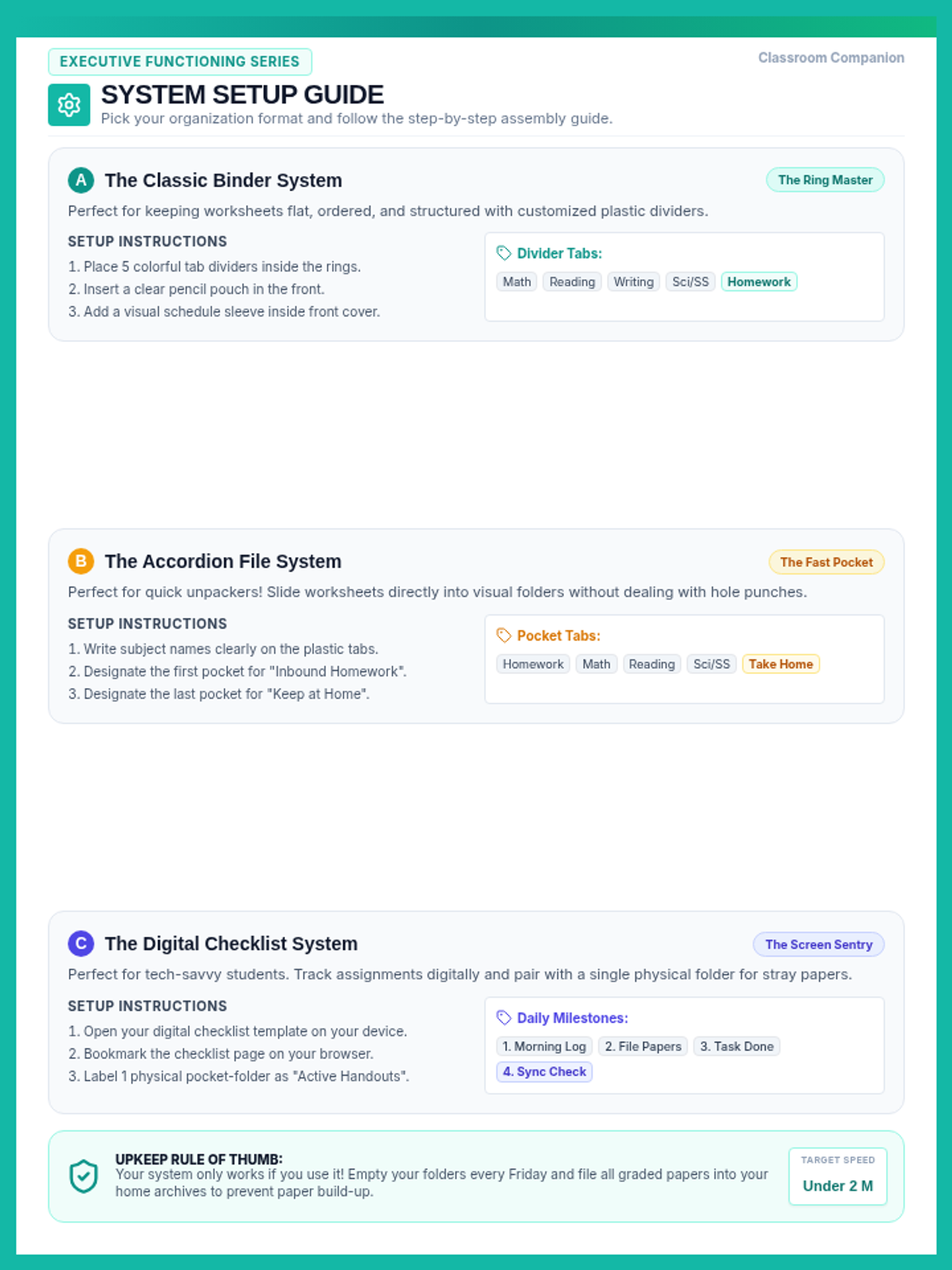
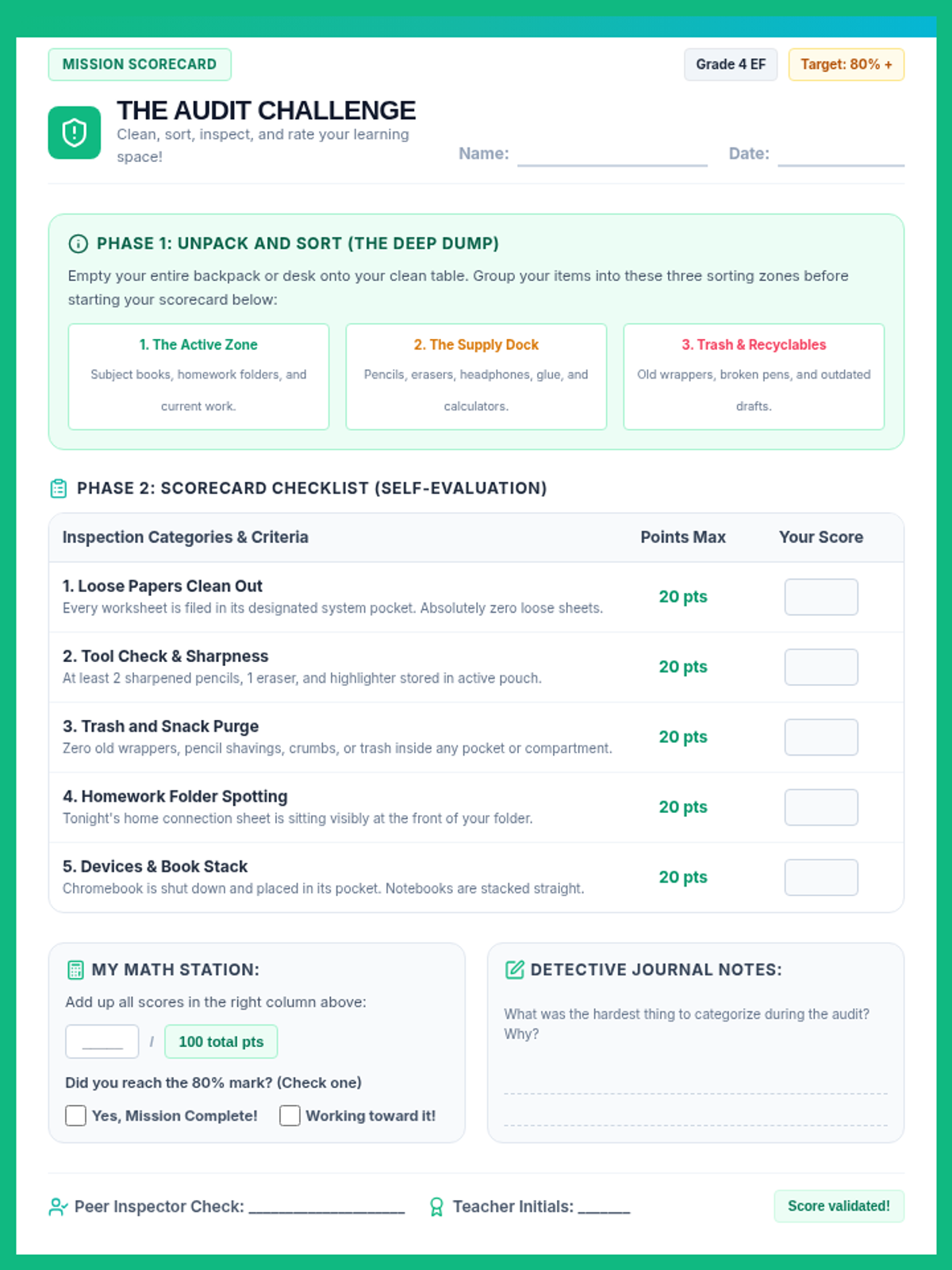
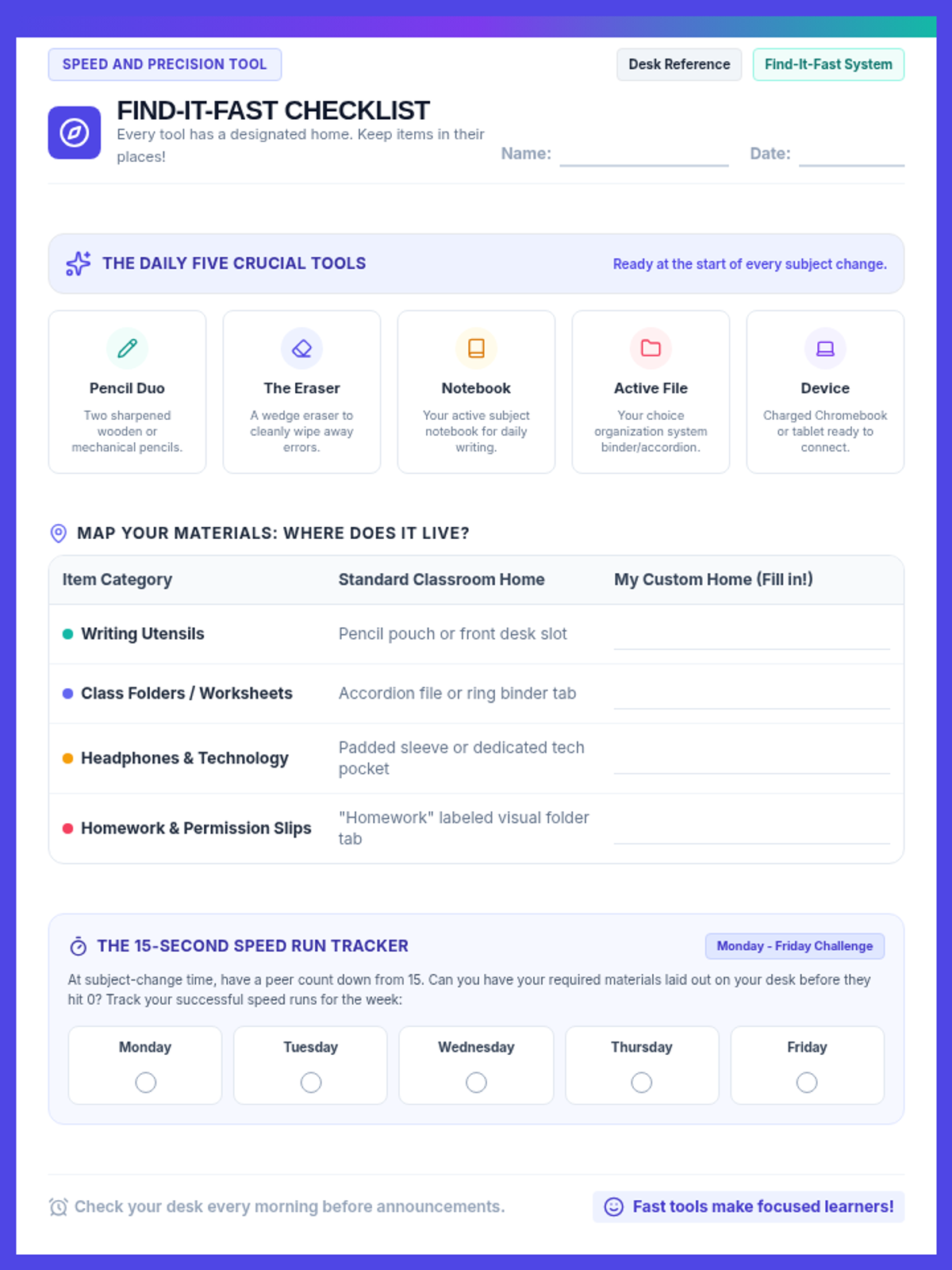
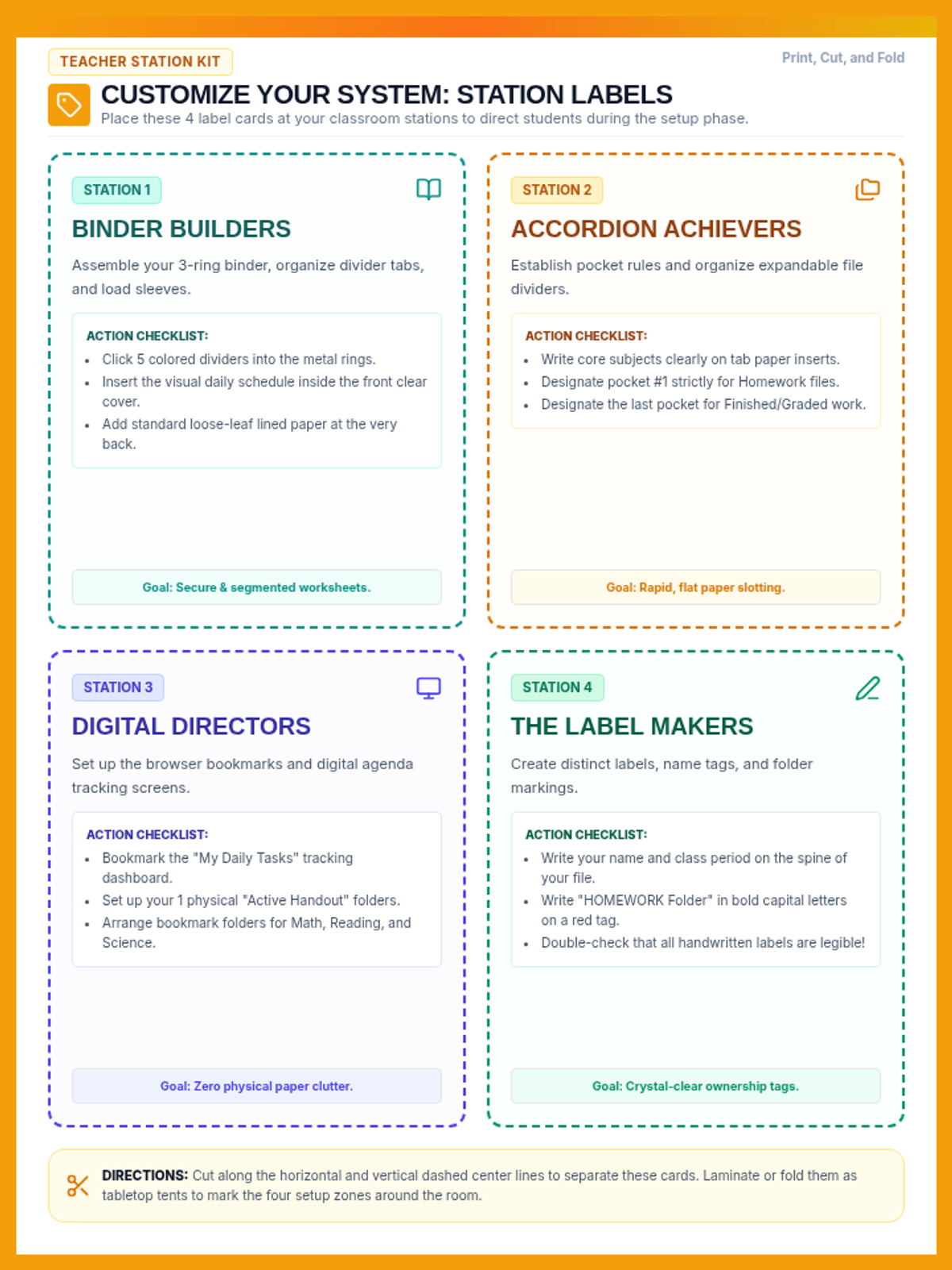
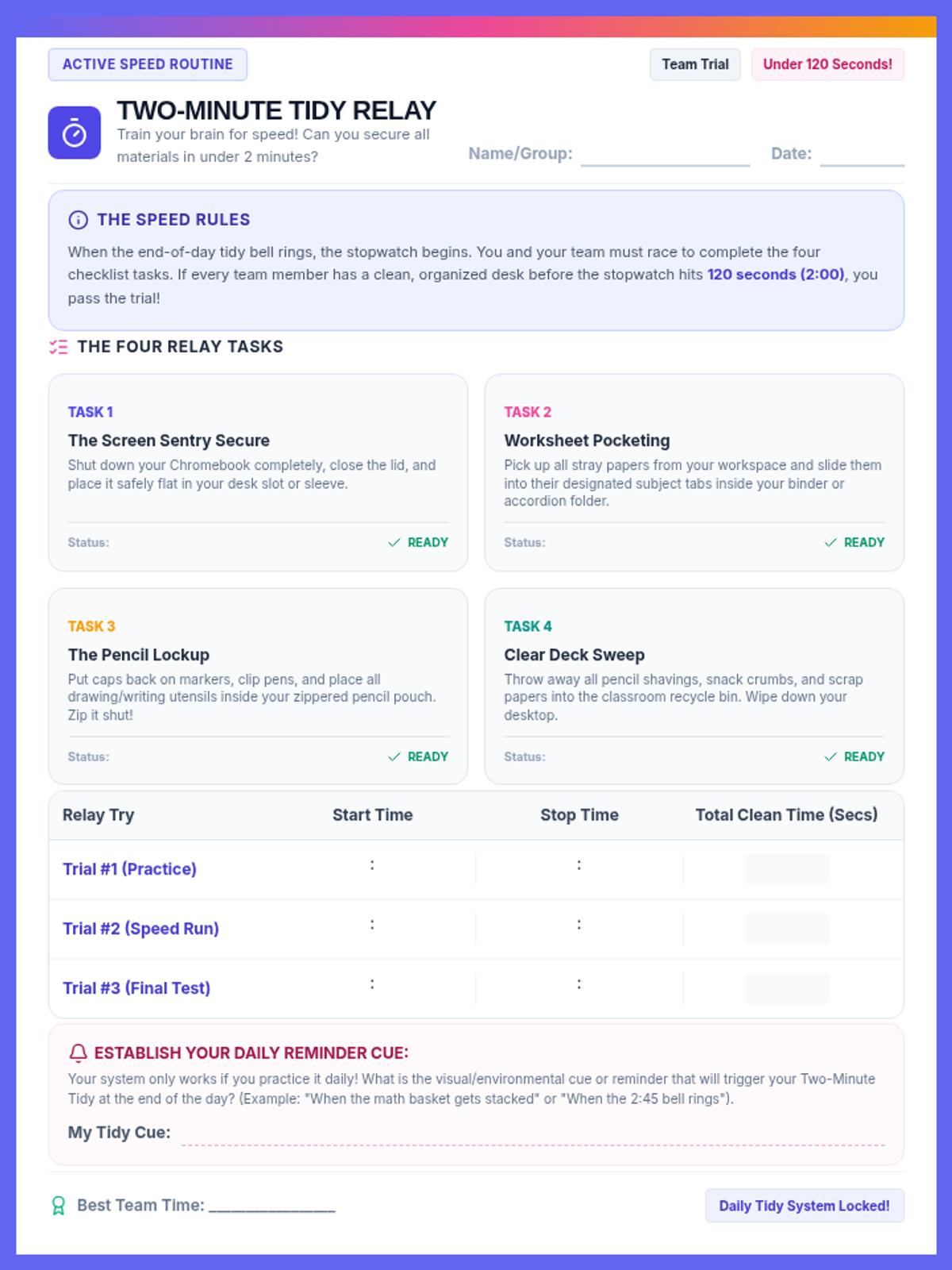
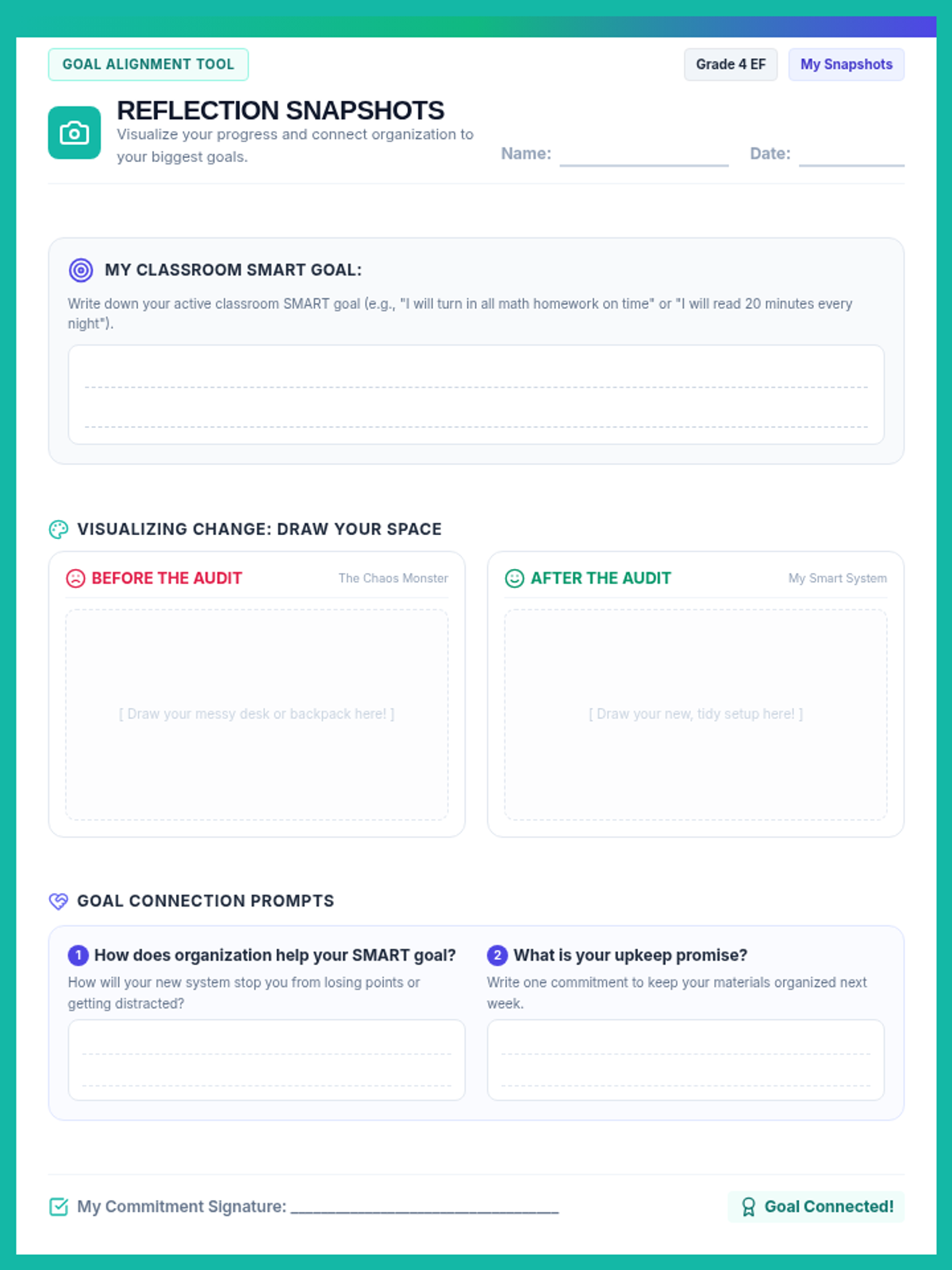
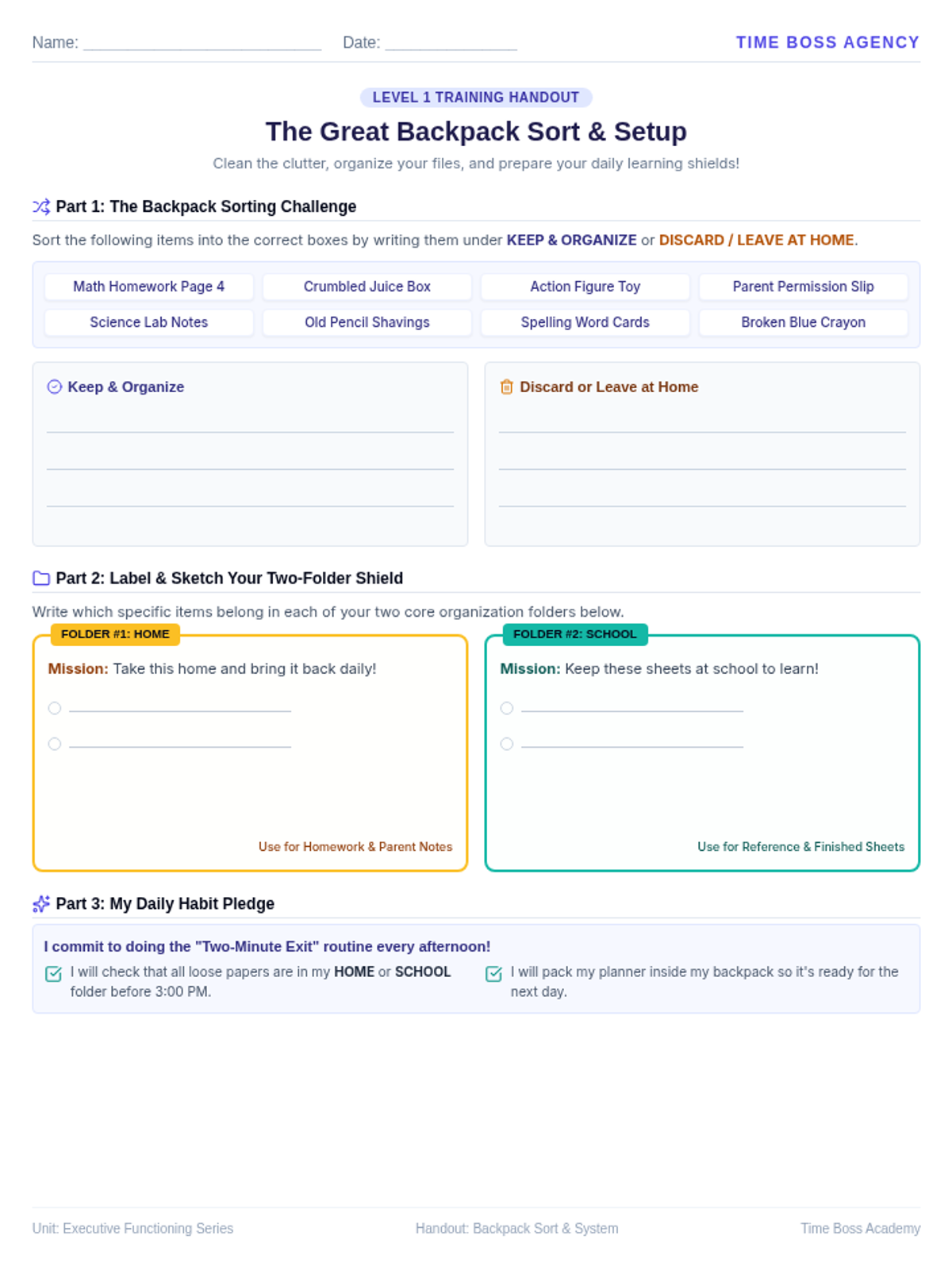
A 45-minute active executive functioning lesson for 4th graders to choose, set up, and test an organization system (binder, accordion file, or digital tracker) and establish routines like a backpack audit and a two-minute tidy relay.
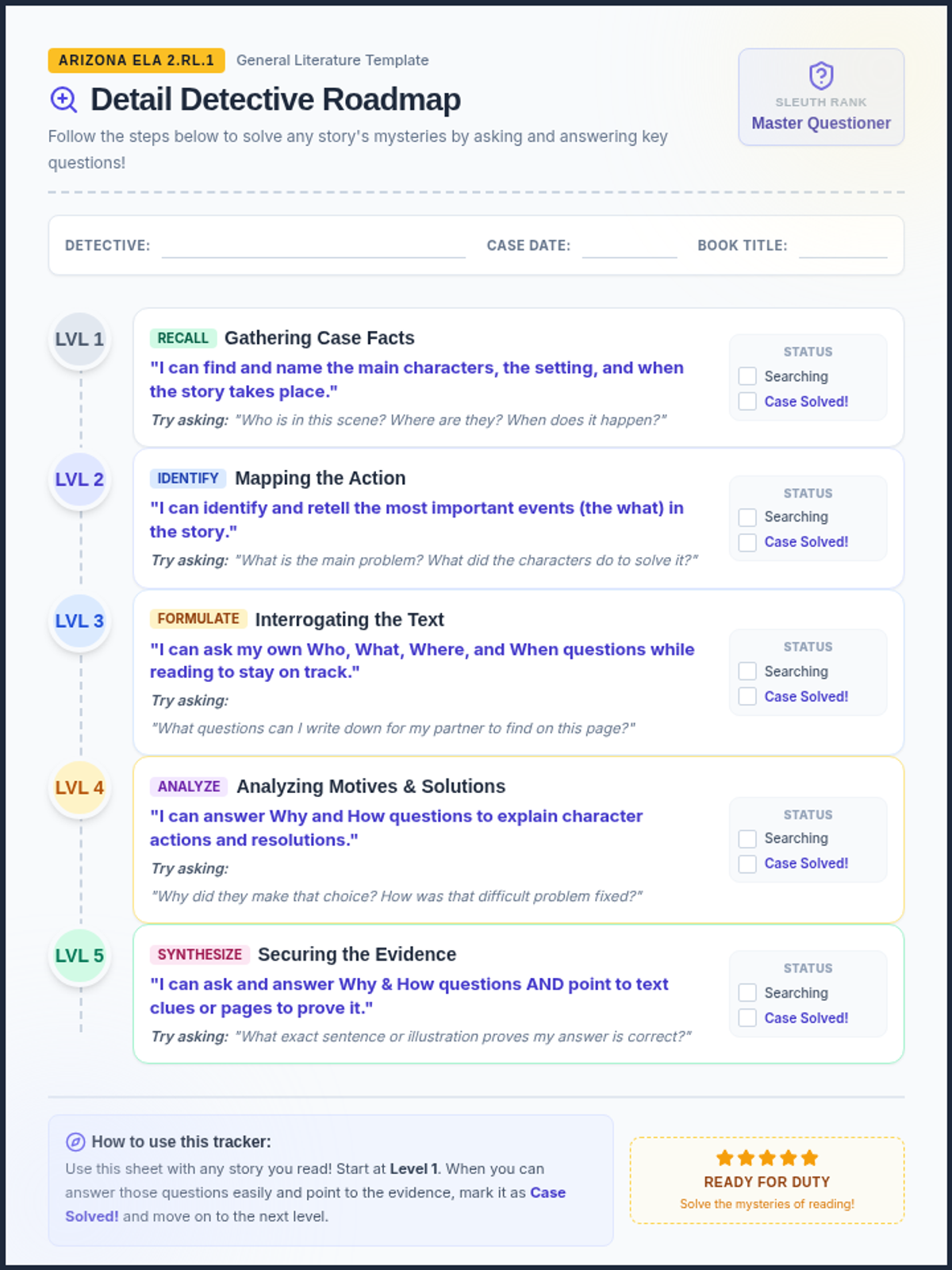
A lesson focused on teaching students how to ask and answer who, what, where, when, why, and how questions using a progression of student-friendly learning targets.
Focuses on VC & CVC practice across all learned sounds, featuring the decodable story 'I See'. Students practice reading, tracking with dots, and identifying characters.
Focuses on the short vowel sound /ĕ/ with the decodable story 'Ten on the Bed'. Students practice reading words with short e and tracking with dots.
Focuses on the consonant sound /b/ with the decodable story 'A Bug on the Bus'. Students practice tracking, blending, and CVC reading.
Focuses on the consonant sound /g/ with the decodable story 'Gus the Dog'. Students practice tracking, blending, and CVC reading.
Focuses on the short vowel sound /ŭ/ with the decodable story 'The Pup'. Students practice reading, tracking with dots, and blending.
Focuses on the consonant sound /k/ represented by letter c, with the decodable story 'The Cat Can'. Students practice reading, tracking with dots, and blending.
Focuses on the consonant sound /d/ with the decodable story 'Sid and Dad'. Students practice tracking, blending, and CVC reading.
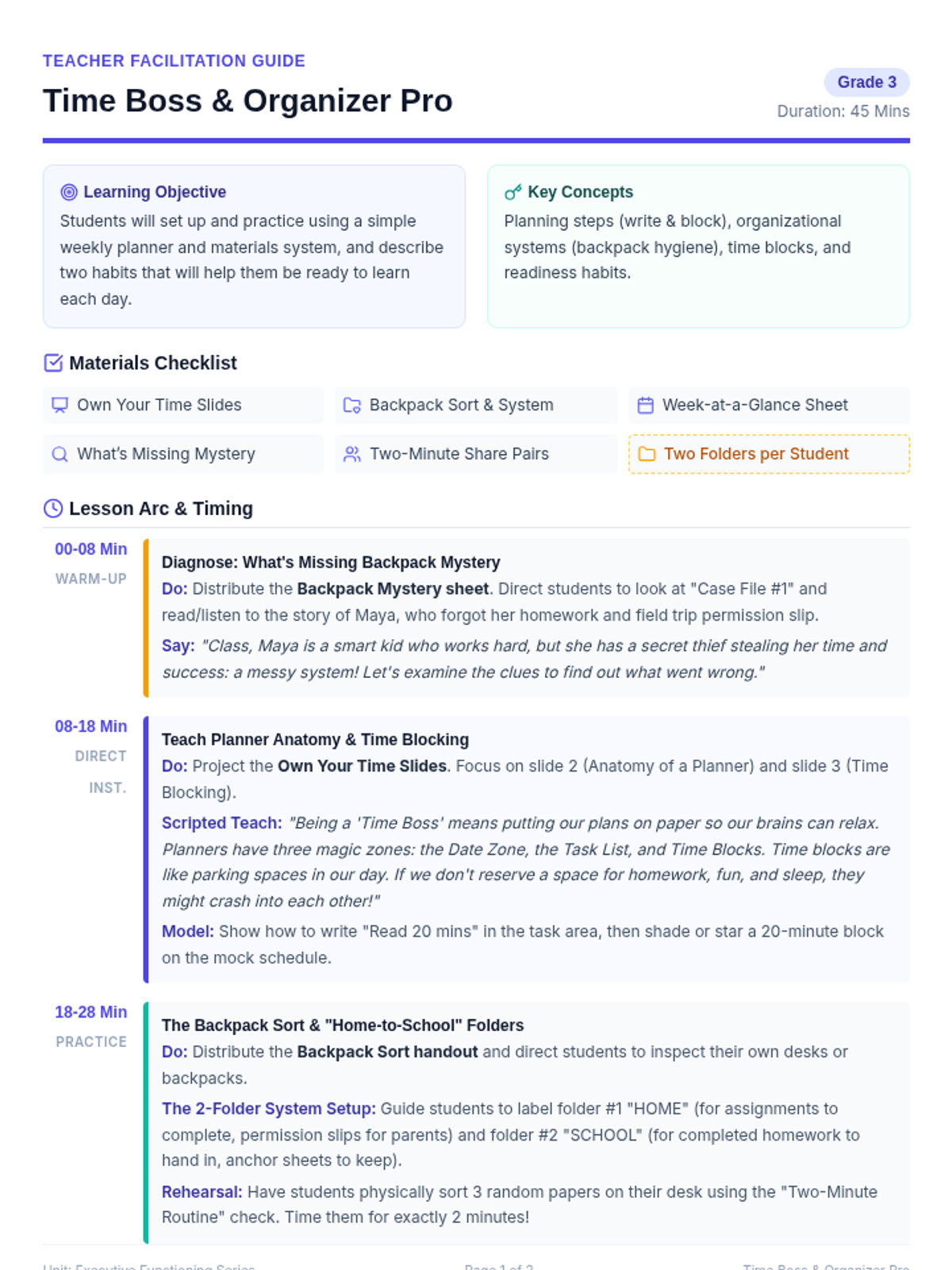
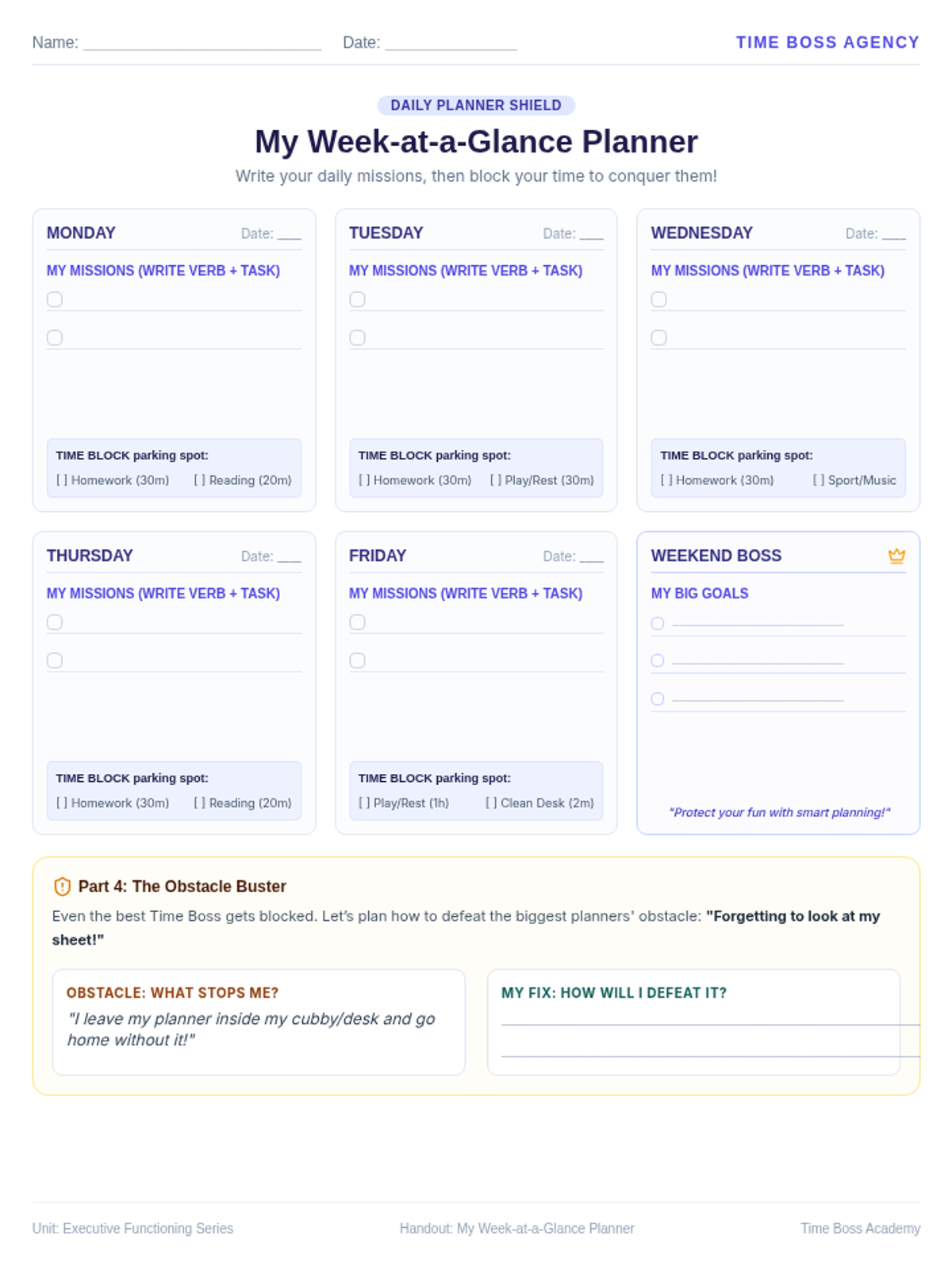
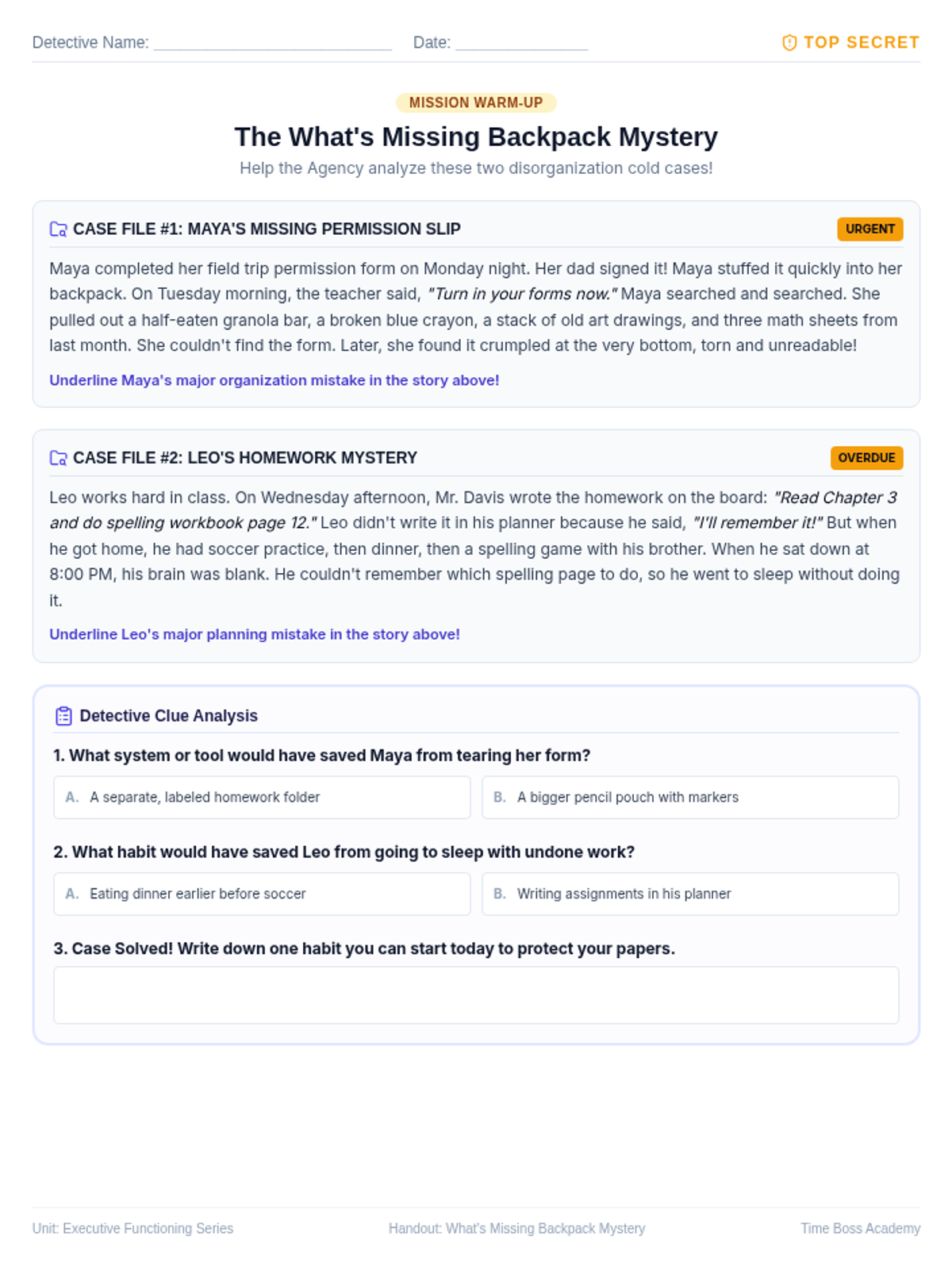
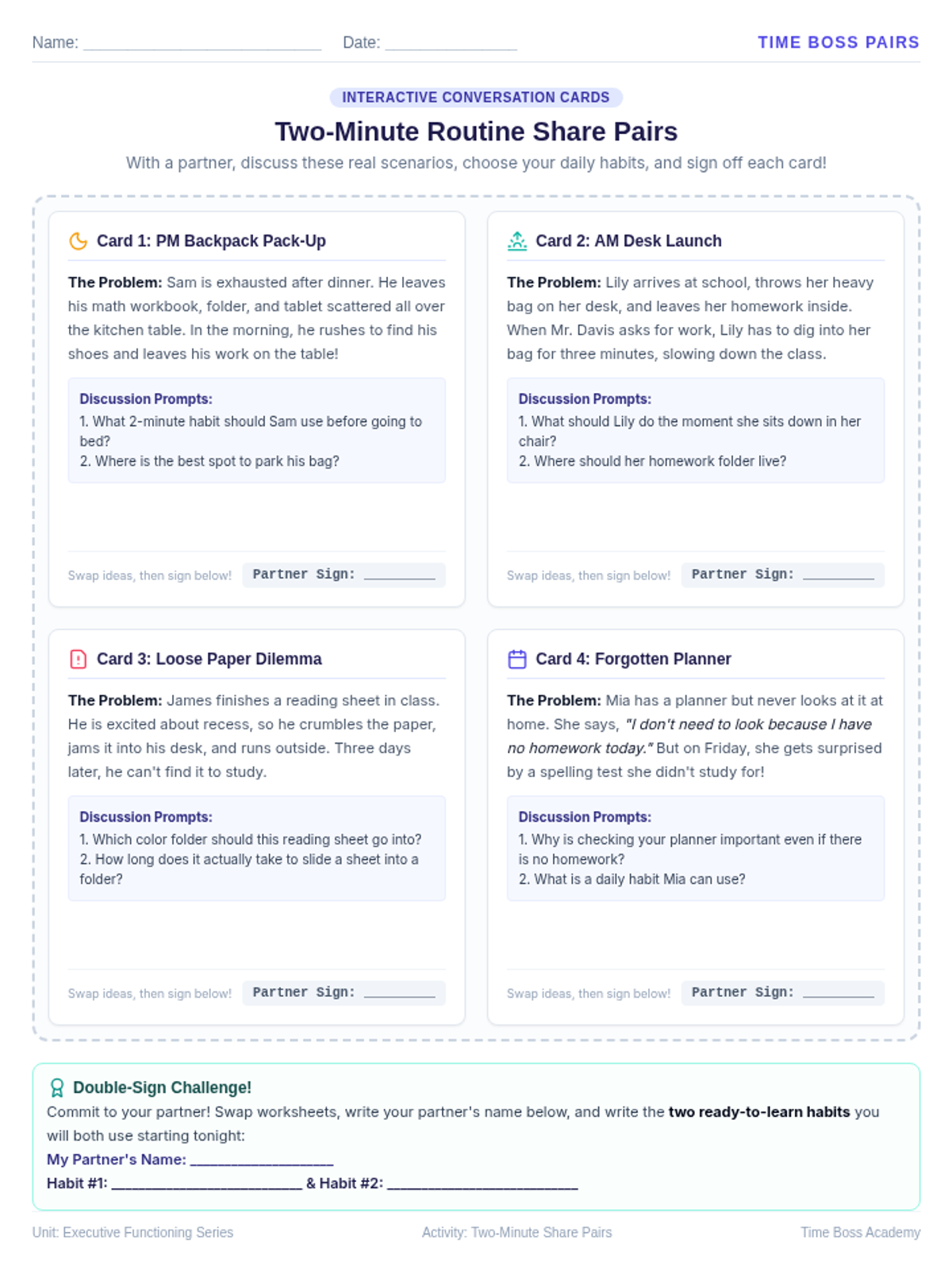
A comprehensive lesson for 3rd graders to master executive functioning skills. Students learn to use a weekly planner, establish material organization systems (the 'Backpack Sort'), and develop daily readiness habits through engaging activities like a classroom mystery and discussion cards.
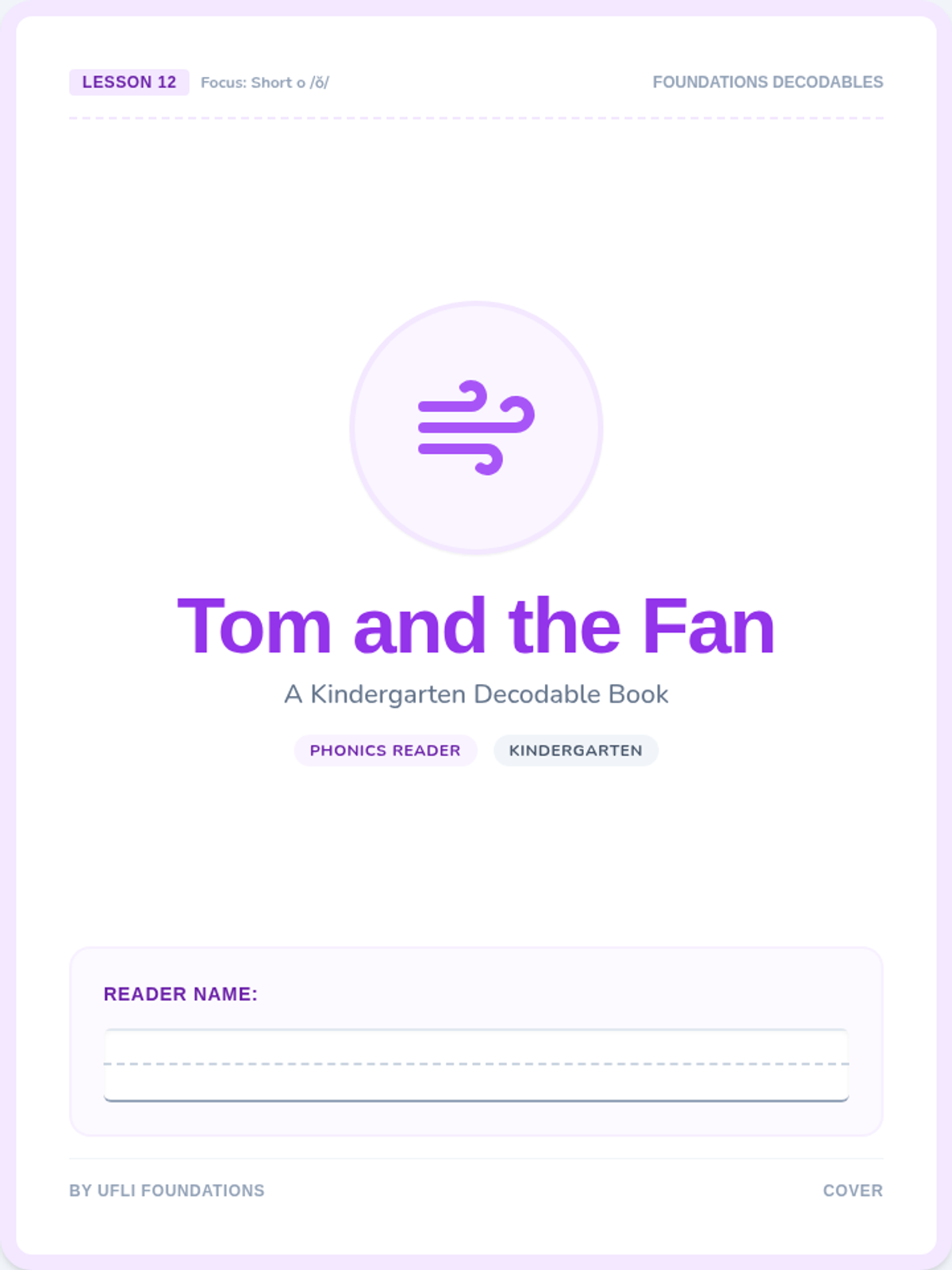
Focuses on the short vowel sound /ŏ/ with the decodable story 'Tom and the Fan'. Students practice reading words with short o and tracking with dots.
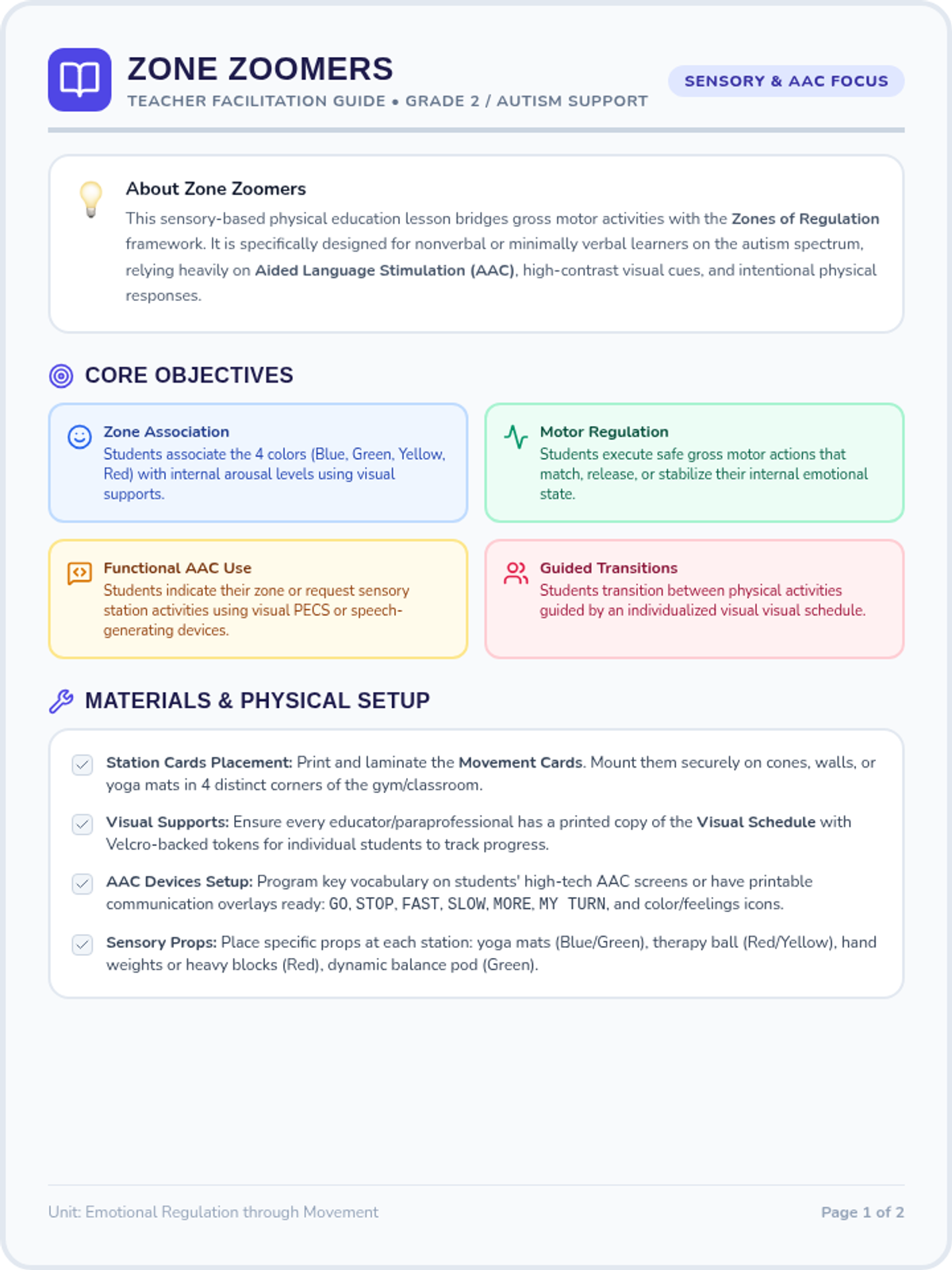
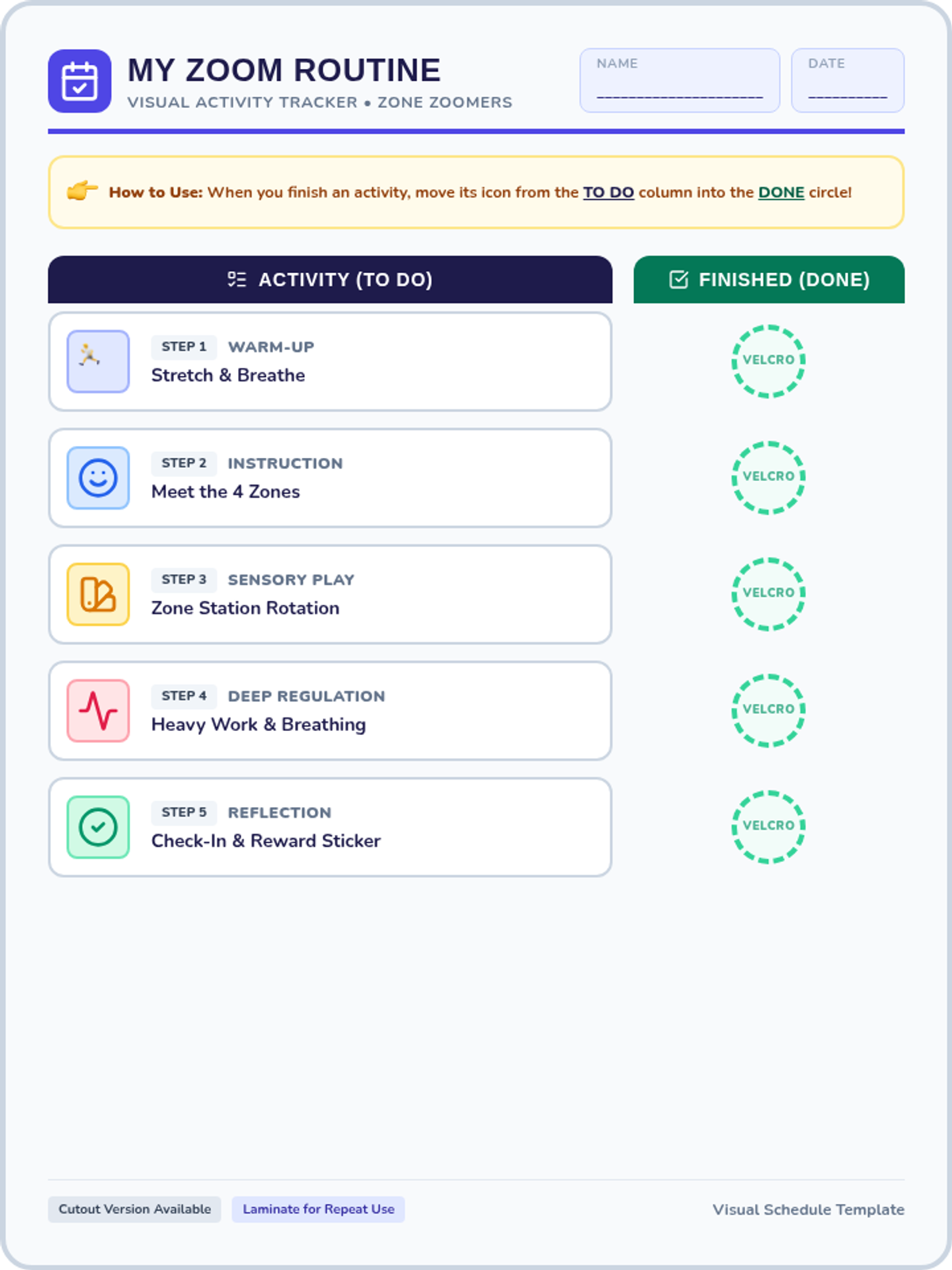
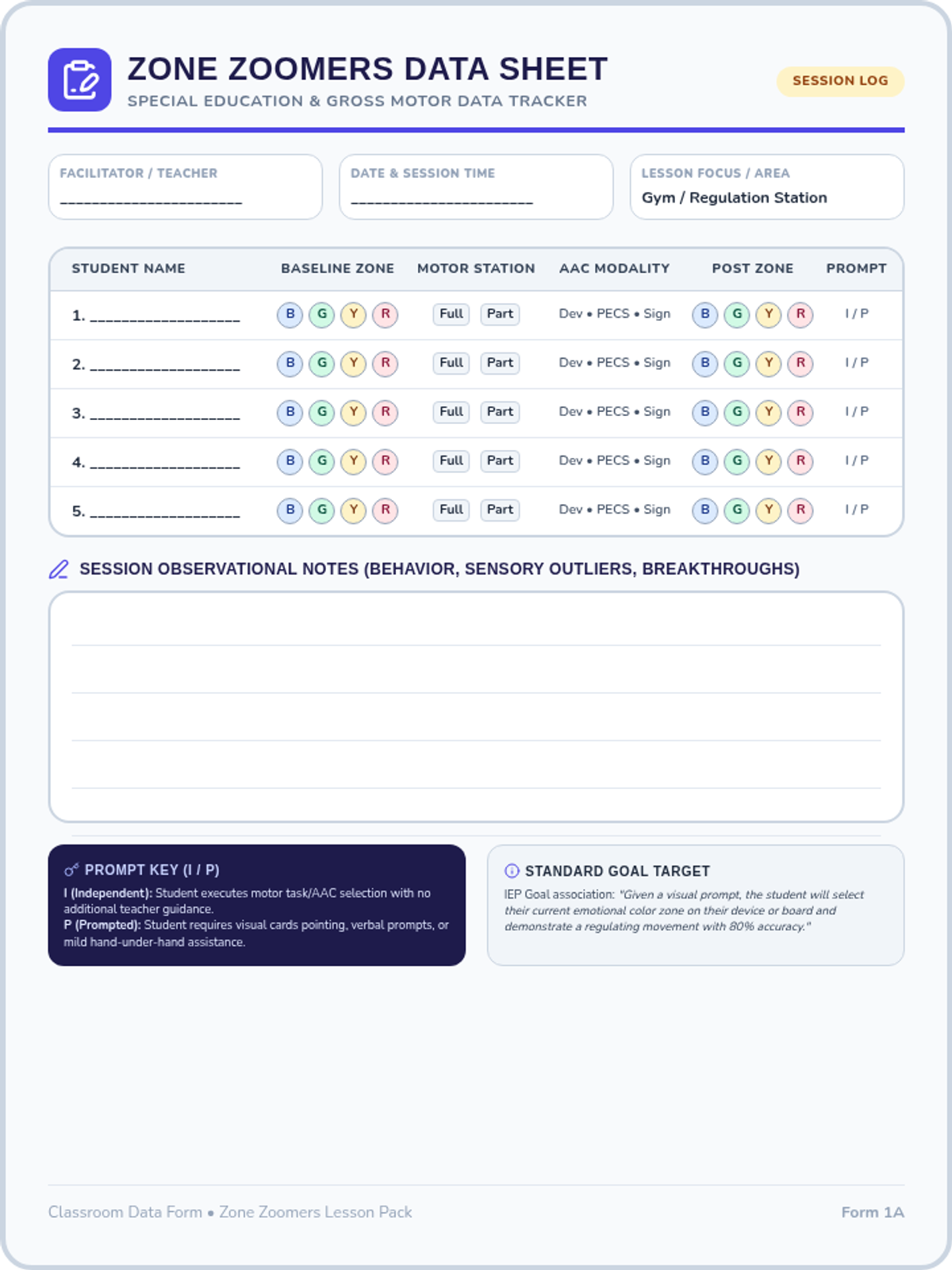
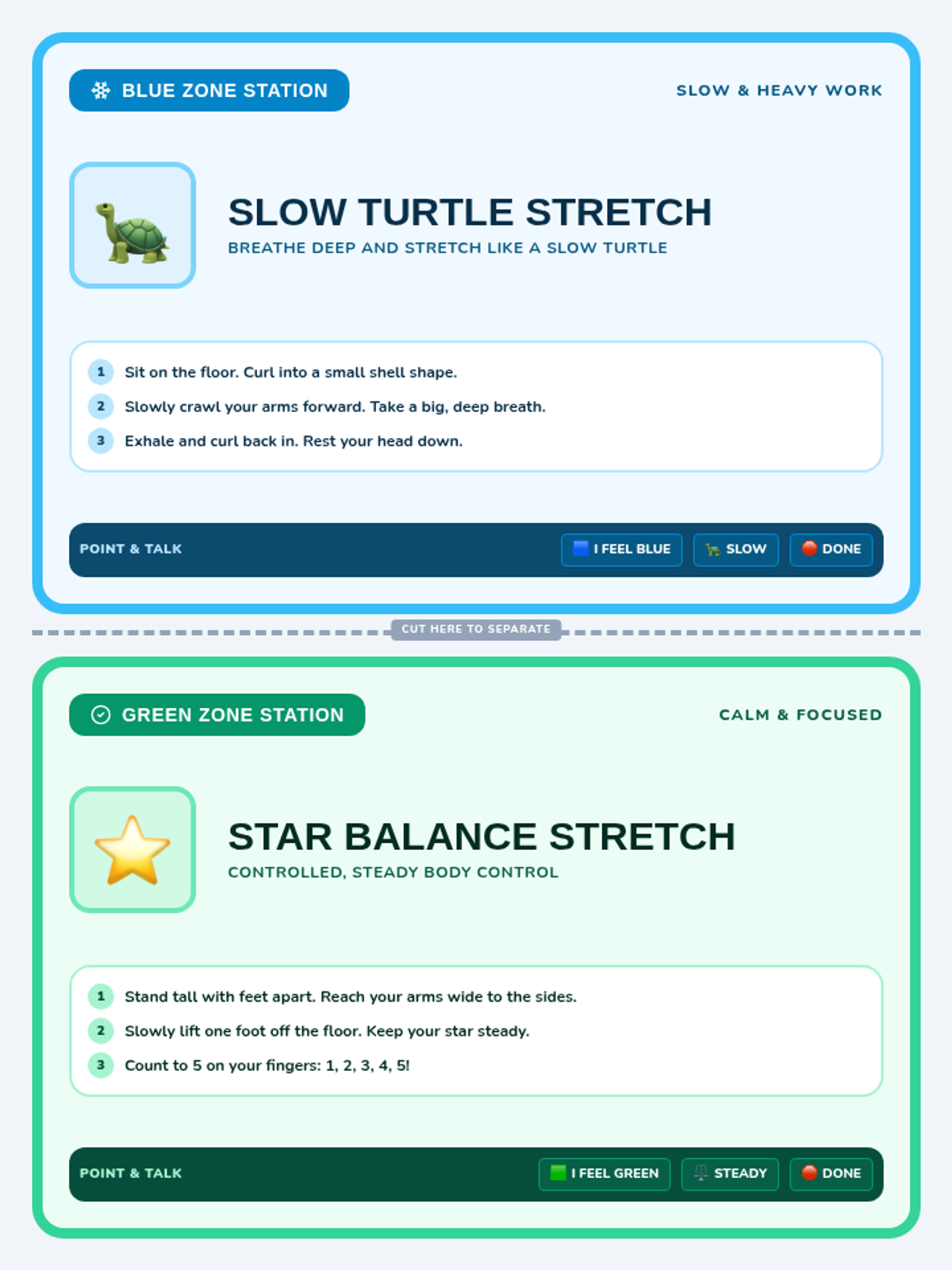
A high-energy, sensory-friendly physical lesson on emotional regulation for Grade 2. It connects the Zones of Regulation to gross motor movements and AAC communication supports, helping nonverbal and autistic learners identify and regulate their states through movement.
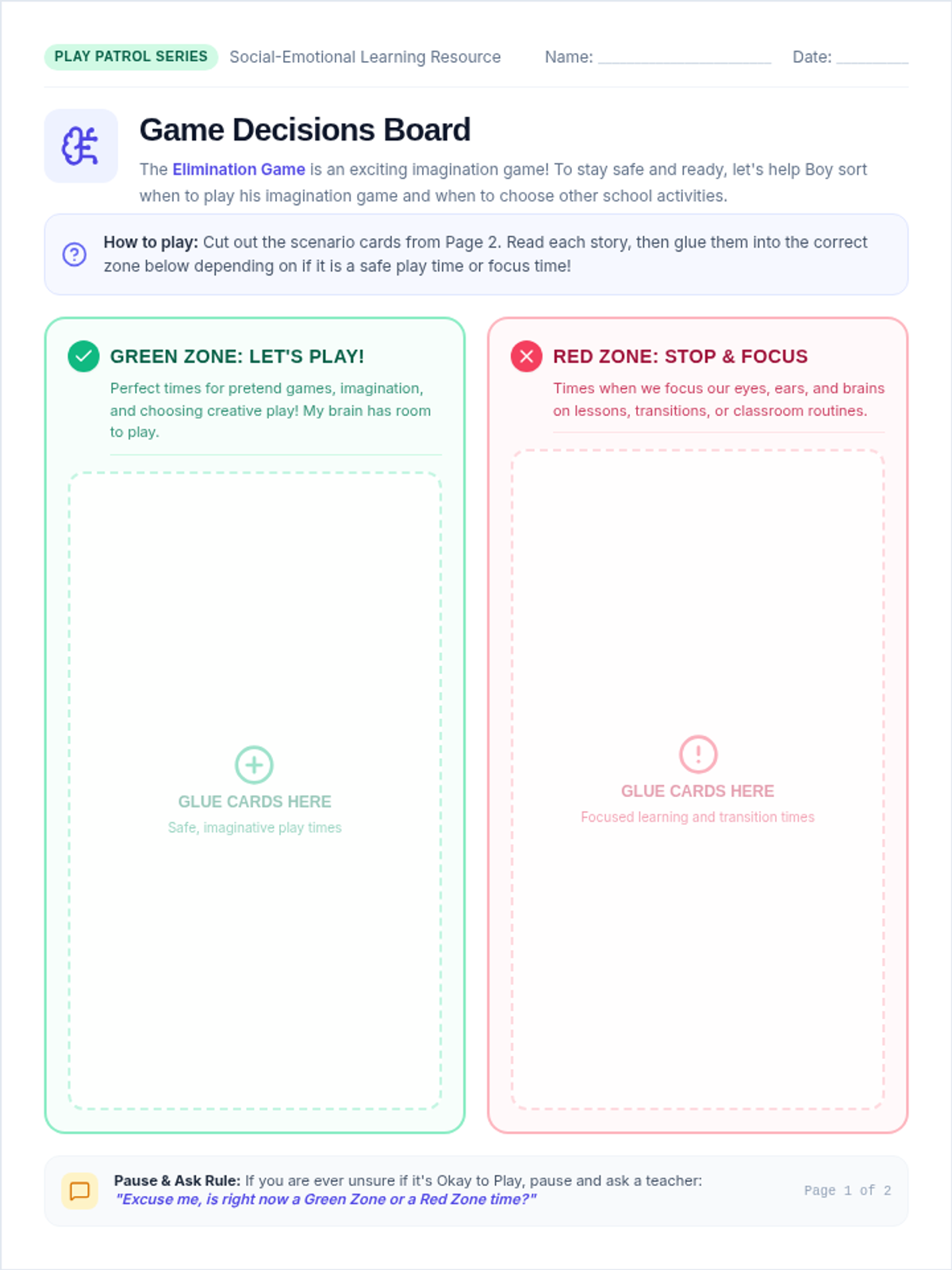
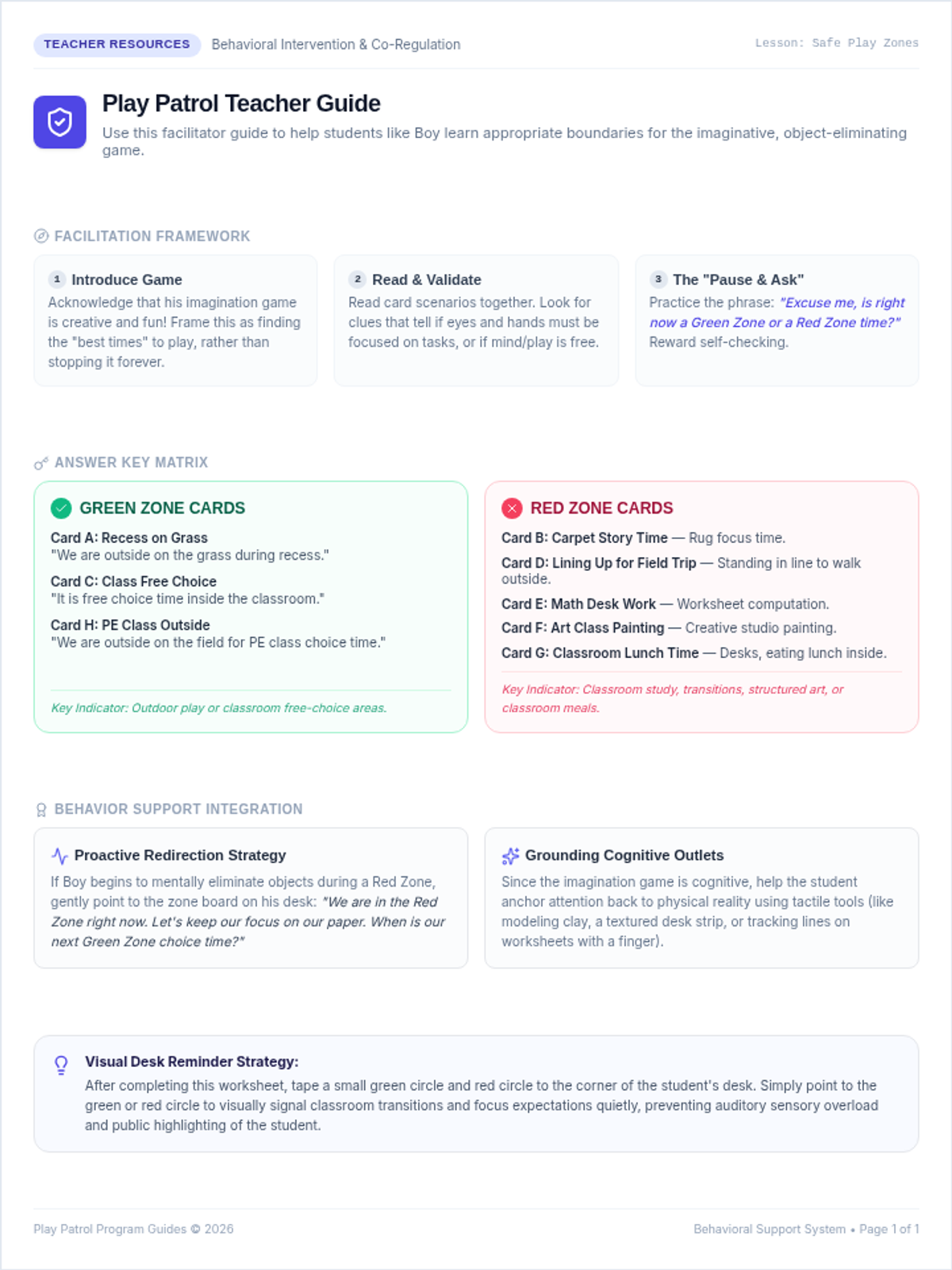
This lesson helps students learn appropriate boundaries for high-energy games, specifically the "elimination game", by sorting social narratives into 'safe play' and 'learning/transition' times.
Focuses on the nasalized sound of a (am, an) with the decodable story 'Sam and Pam'. Students practice tracking, blending, and illustrating.
Focuses on CVC practice with vowels a and i, featuring the decodable story 'The Pit'. Students practice reading, tracking with dots, and illustrating scenes.
Focuses on the consonant sound /n/ with the decodable story 'The Pin in the Map'. Students practice reading words with short i, a, and n.
Focuses on the short vowel sound /ĭ/ with the decodable story 'I Sit, I Tap'. Students practice reading words with short i and tracking with dots.
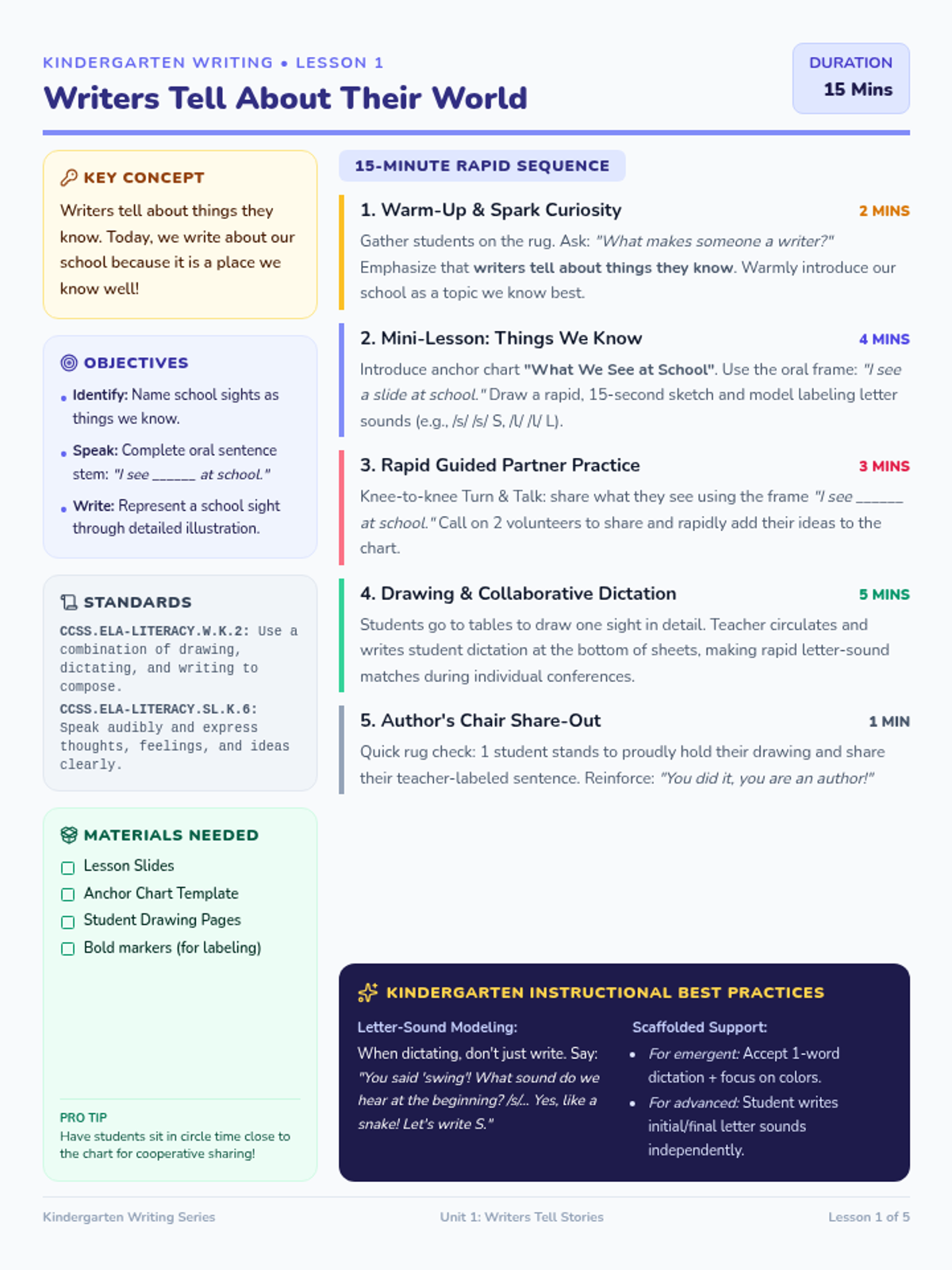
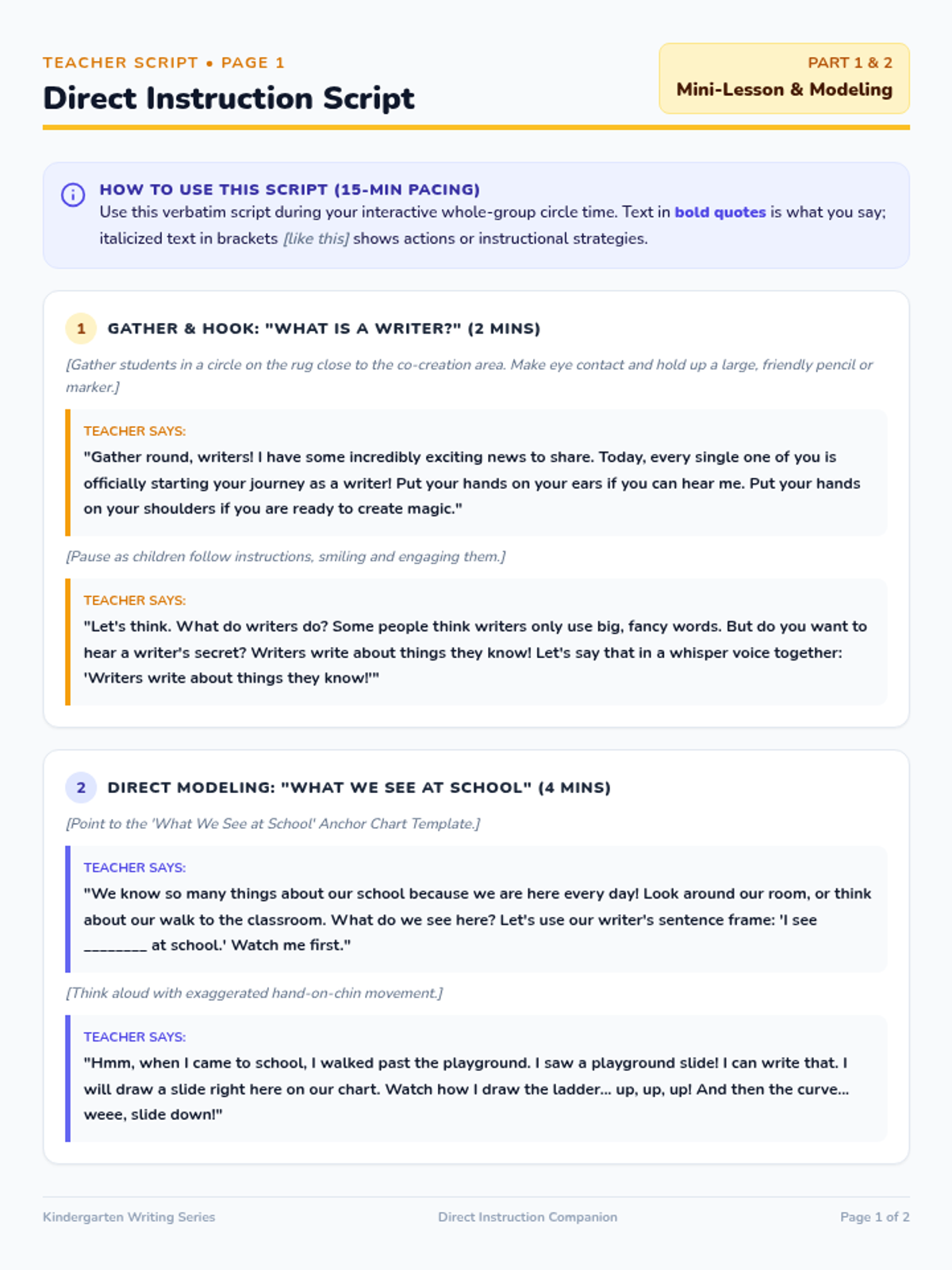
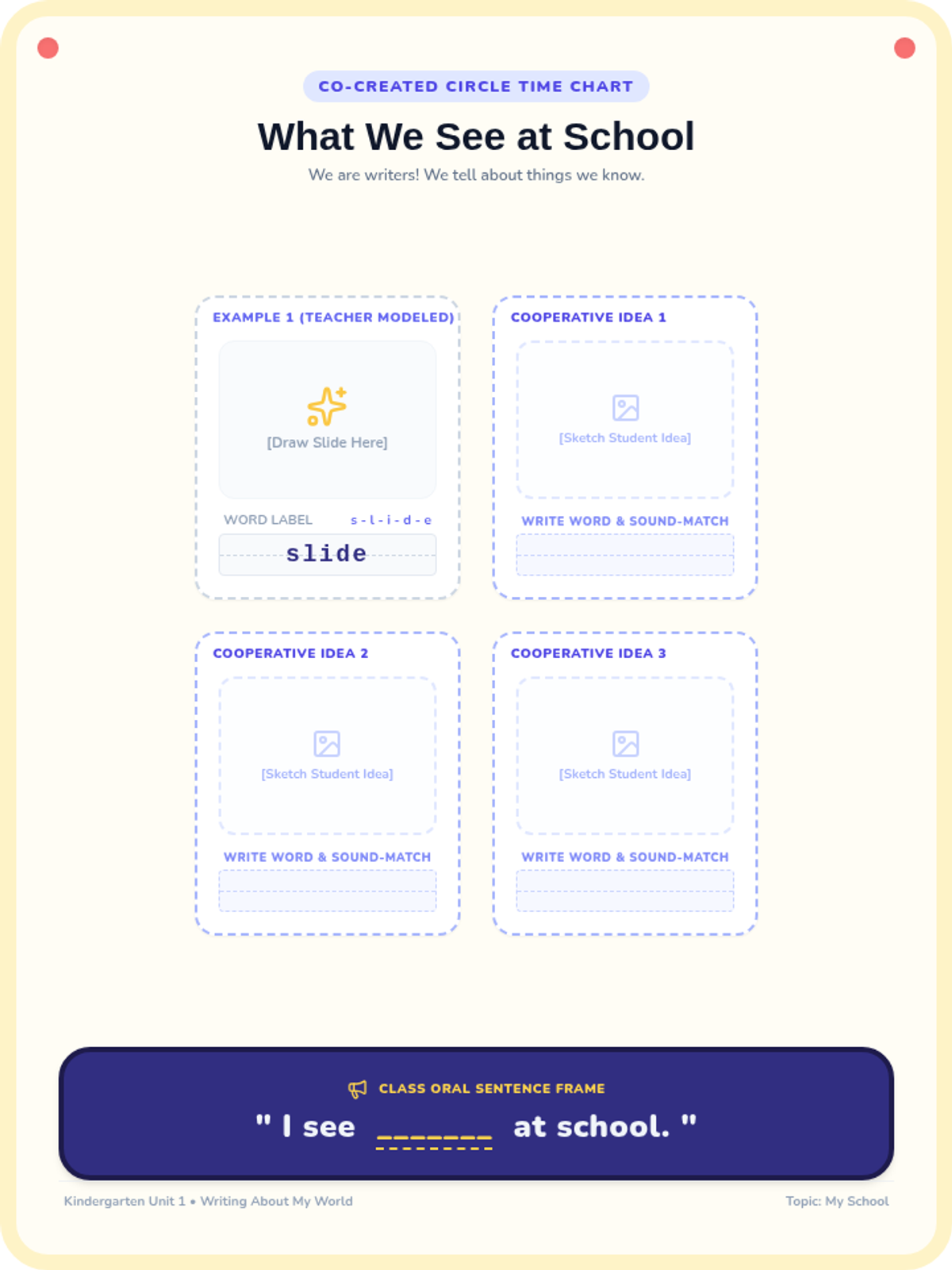
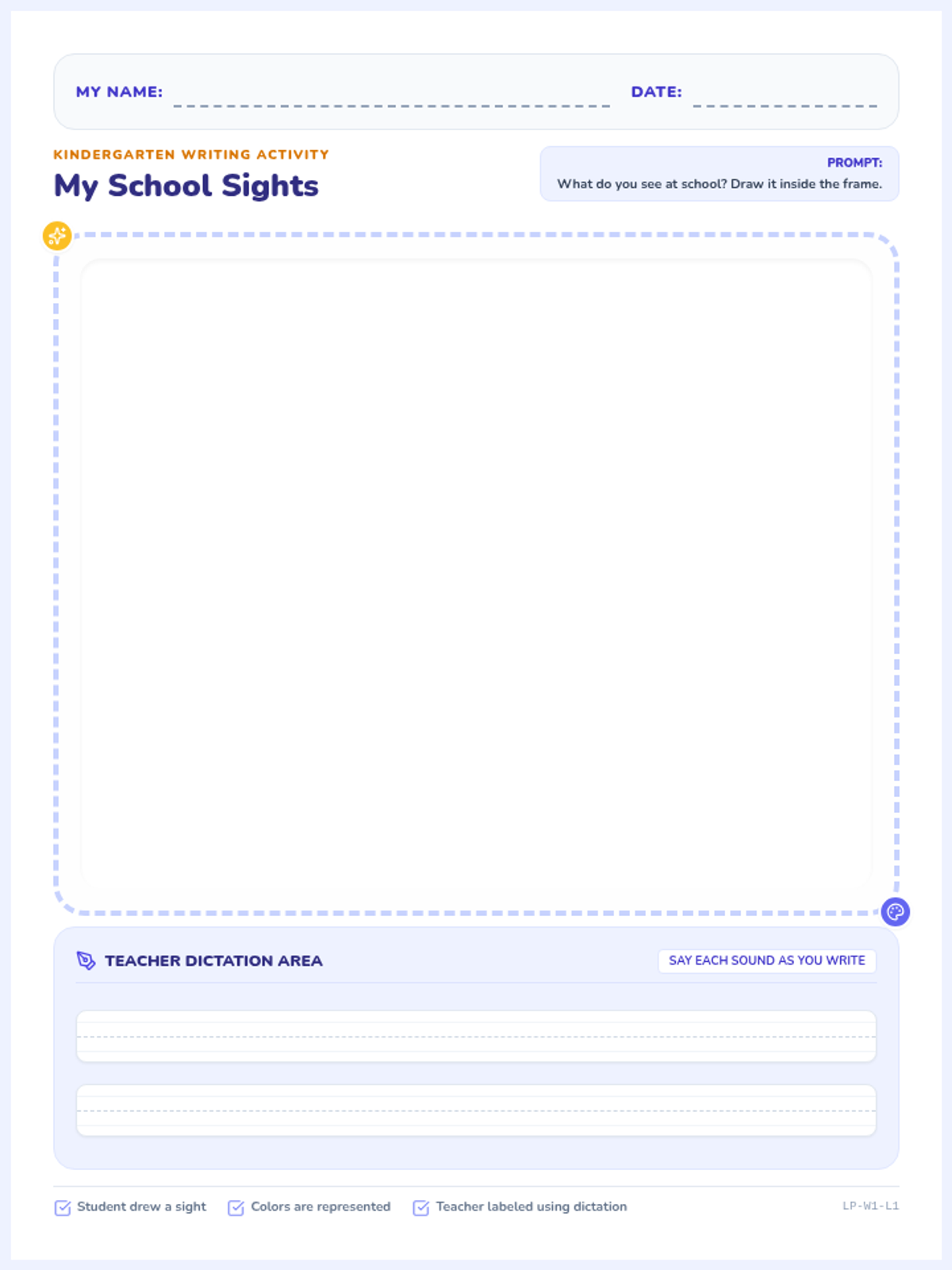
A foundational Kindergarten writing lesson where students discover that writers tell about things they know, starting with their school. Students practice oral sentence stems and create drawings representing their school environment, which teachers support by labeling using dictation.
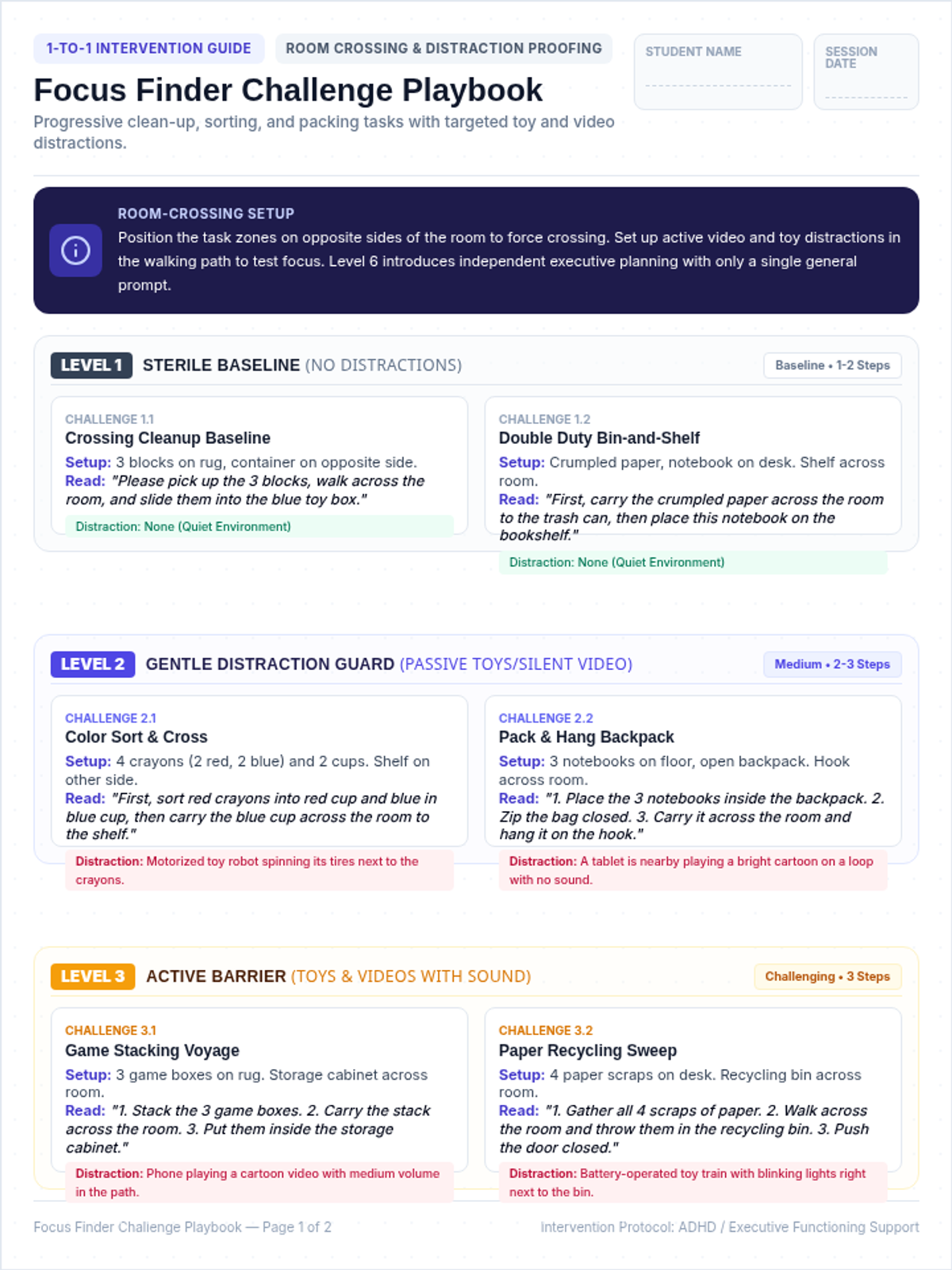
A 1-to-1 intervention lesson designed to help students master multi-step cleaning instructions while ignoring external and internal distractions. Includes a visual board game, specialized scenario cards, and self-regulation visual supports.
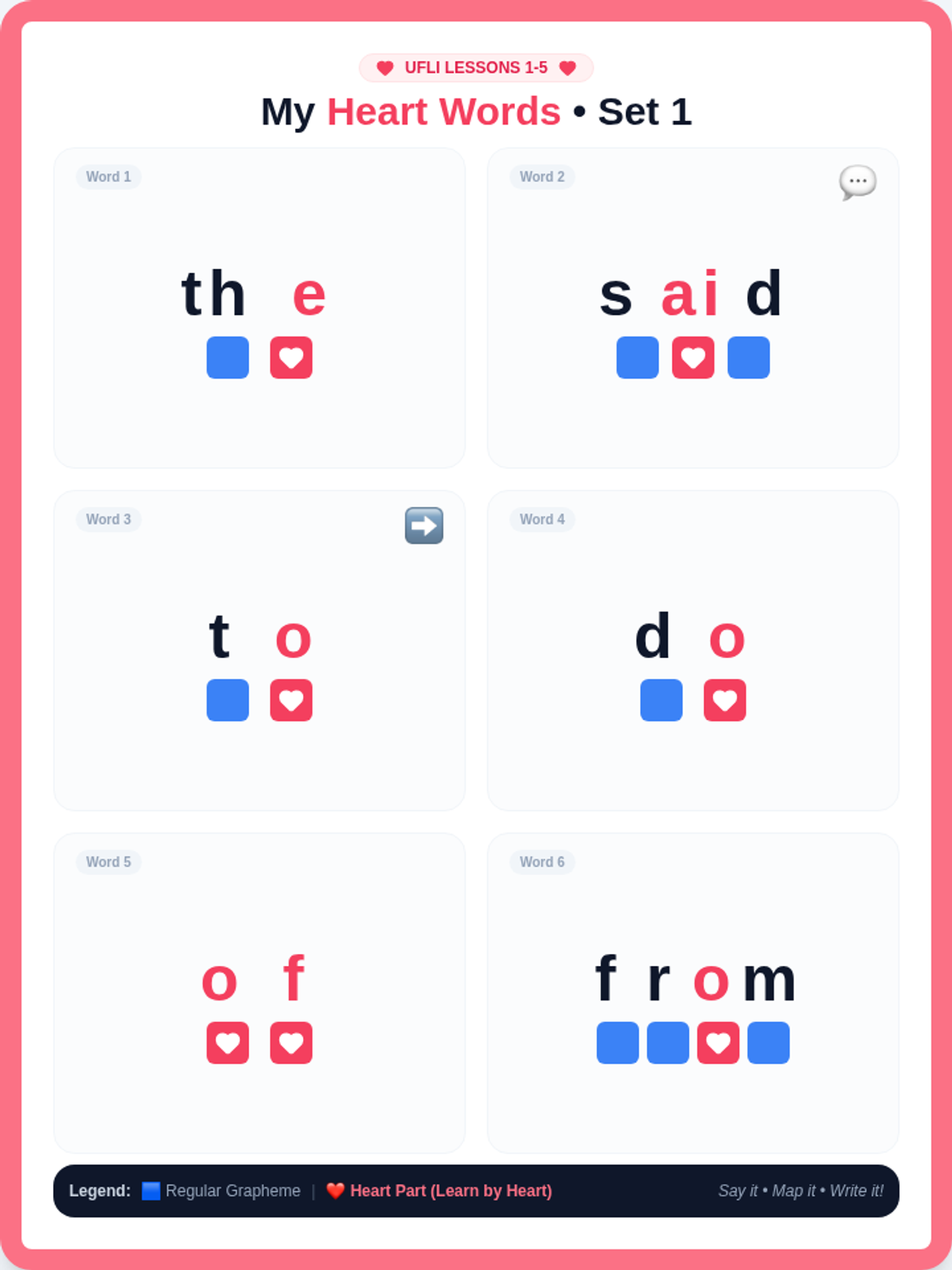
A collection of visual anchor charts and posters for UFLI foundations heart words, designed to support students in orthographic mapping with clear visuals and phonetic cues.
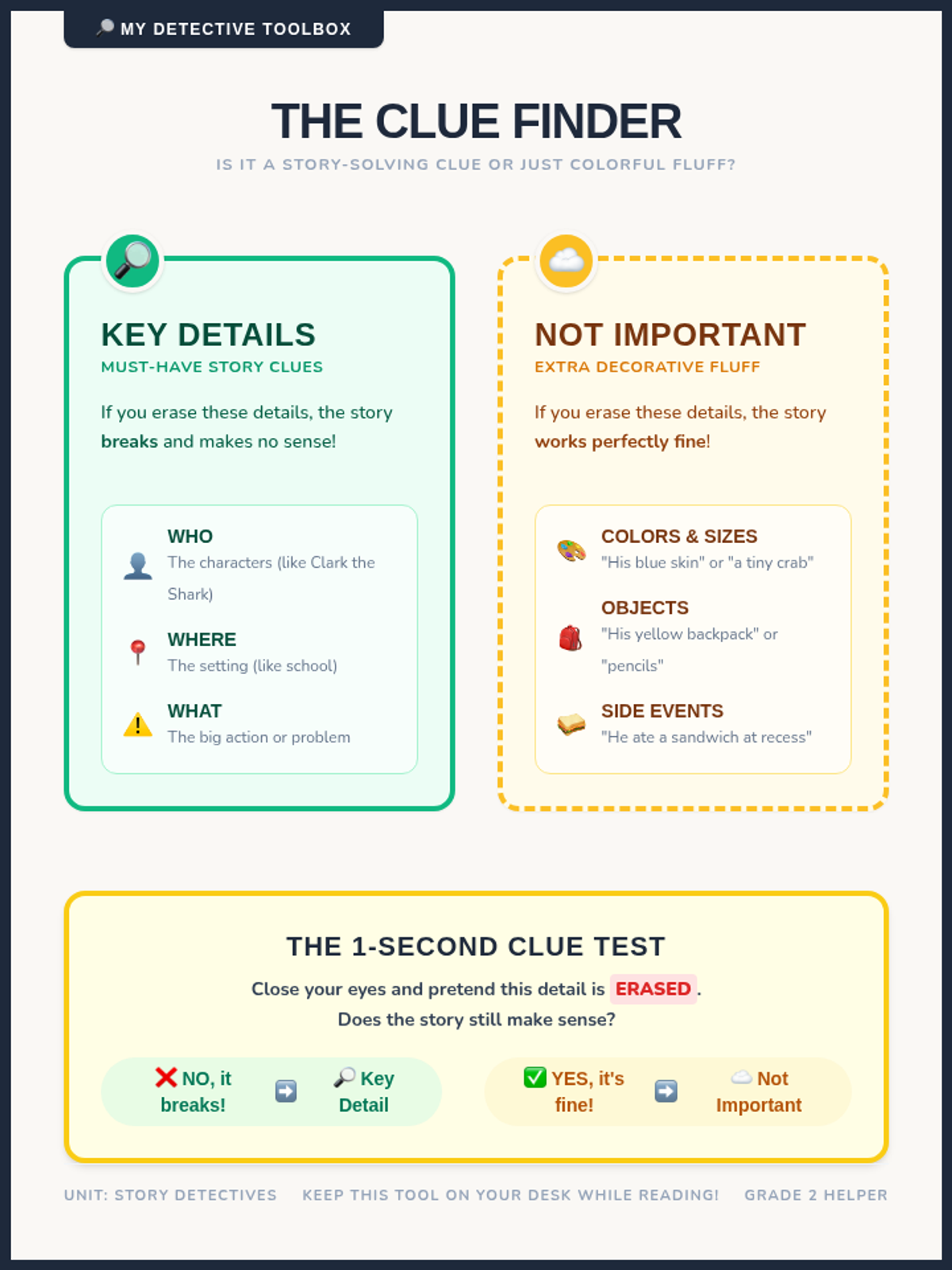
A lesson designed for second graders to distinguish between key details (character, setting, key plot points) and unimportant extra details (fluff) using a fun mystery detective theme.
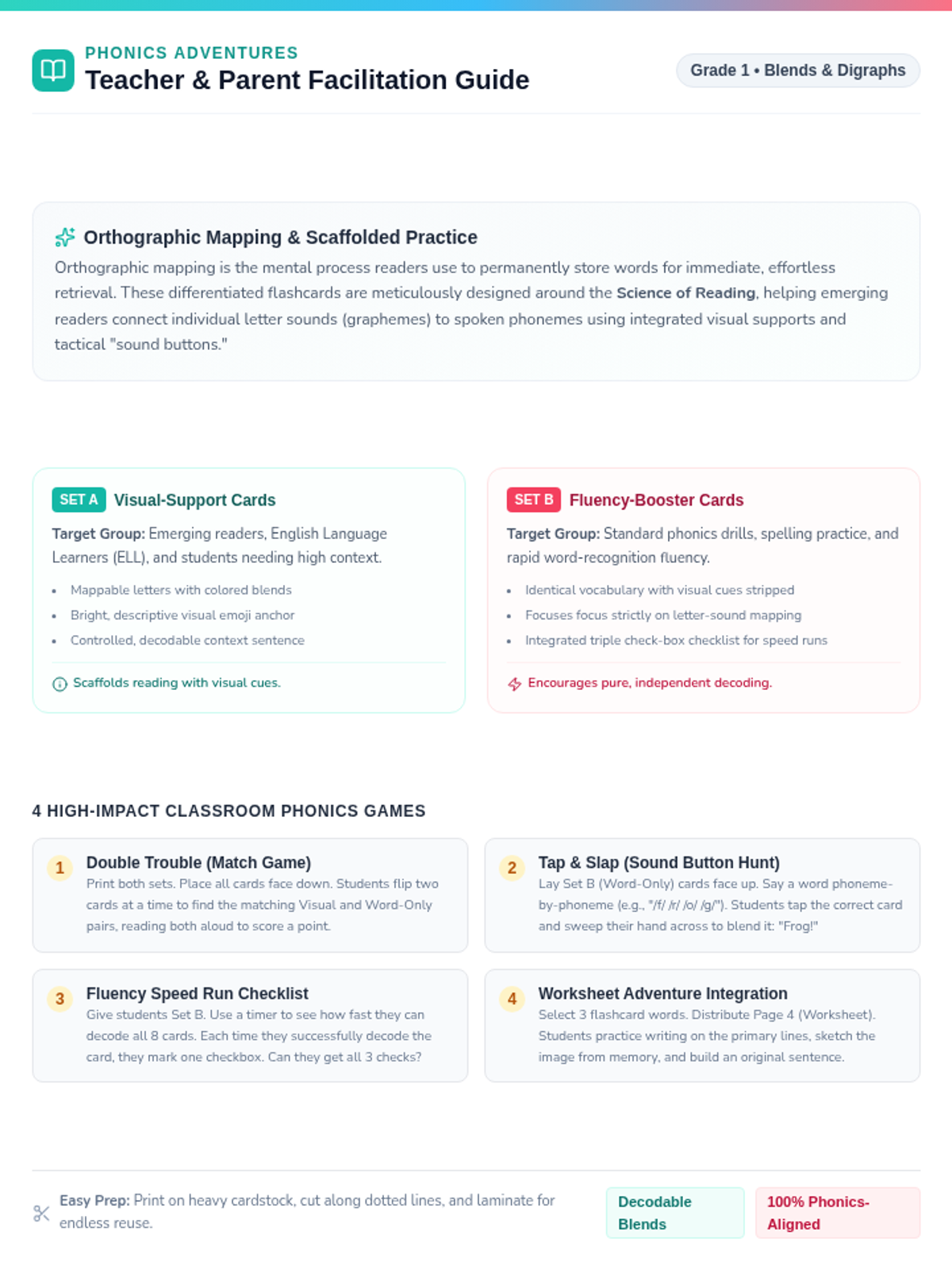
A foundational phonics lesson focusing on reading words with consonant blends and digraphs. This lesson includes differentiated flashcards designed for emerging readers, ELLs, and fluency practice.
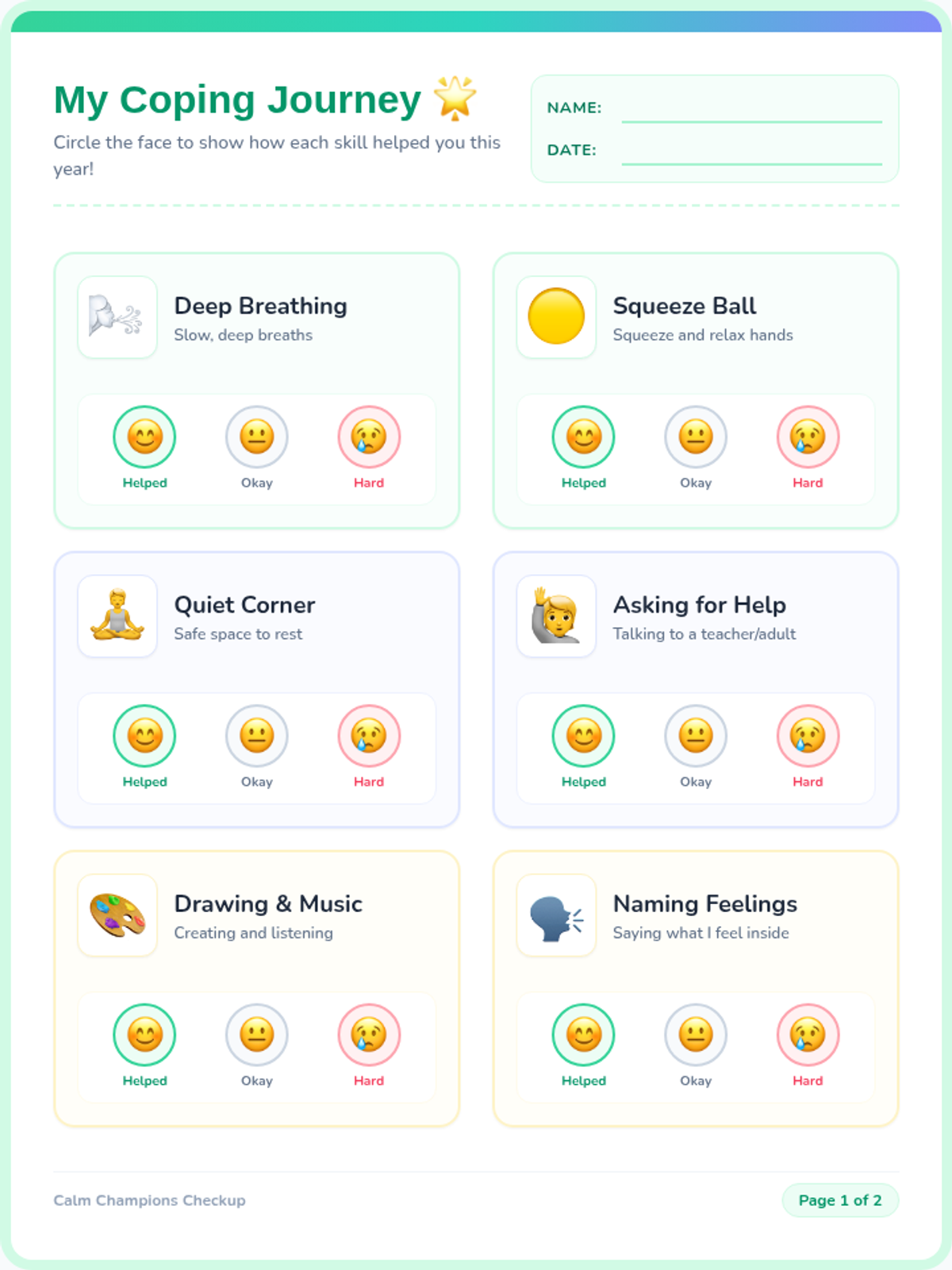
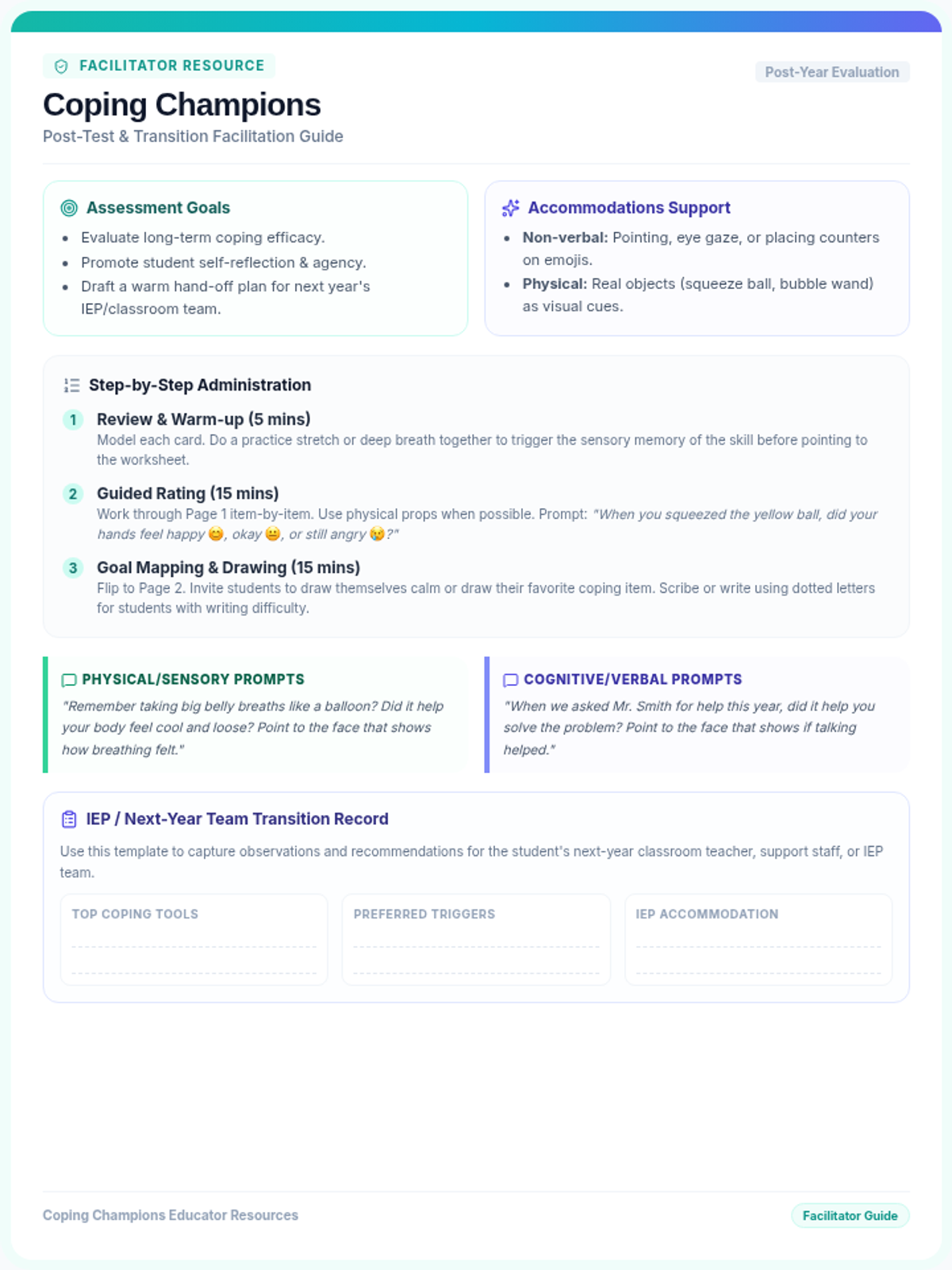
A post-test and reflection lesson designed for students with lower cognitive abilities to evaluate their coping skills from the past year and set gentle goals for the next school year using visual emojis and guided drawing/writing templates.
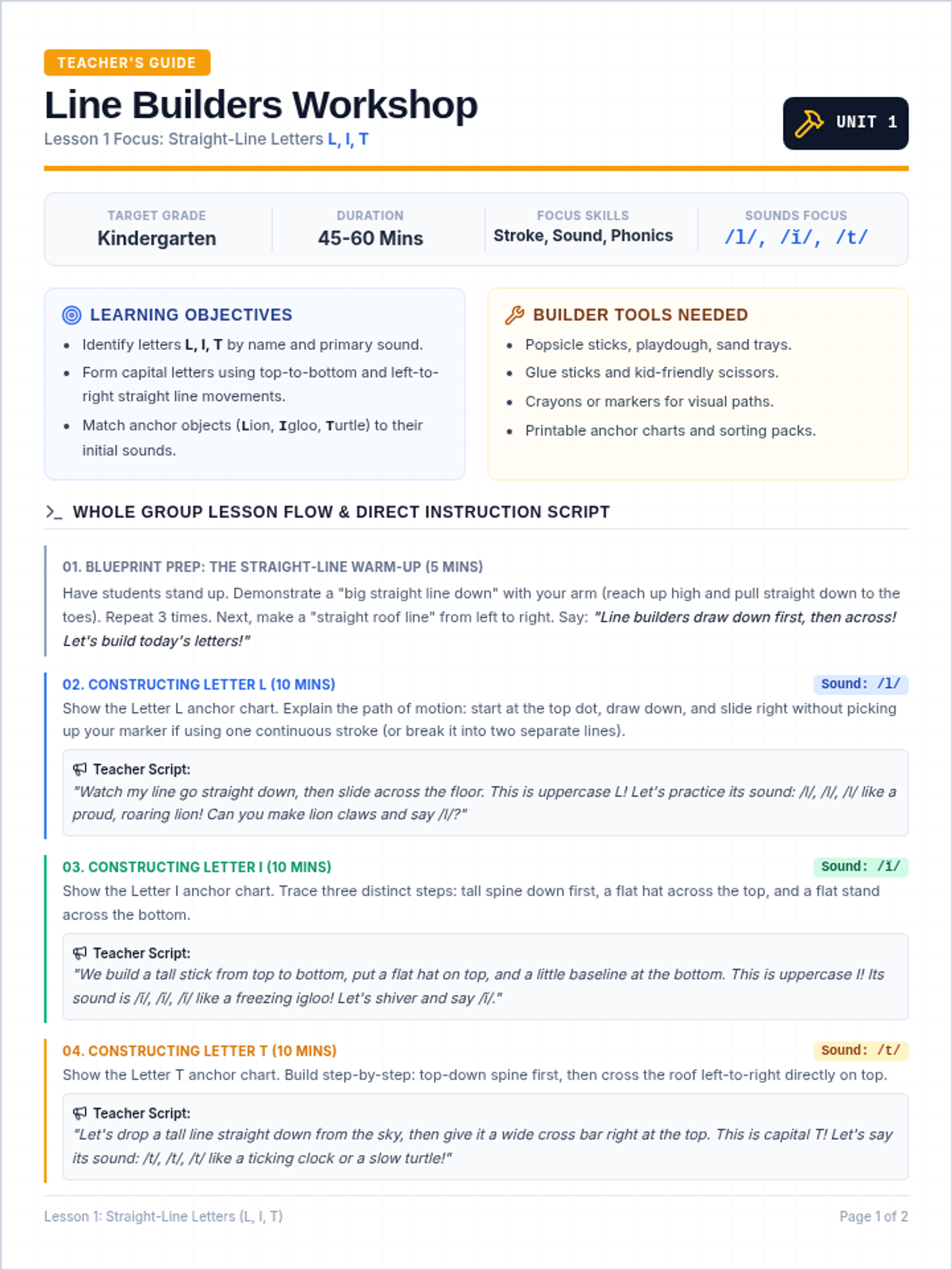
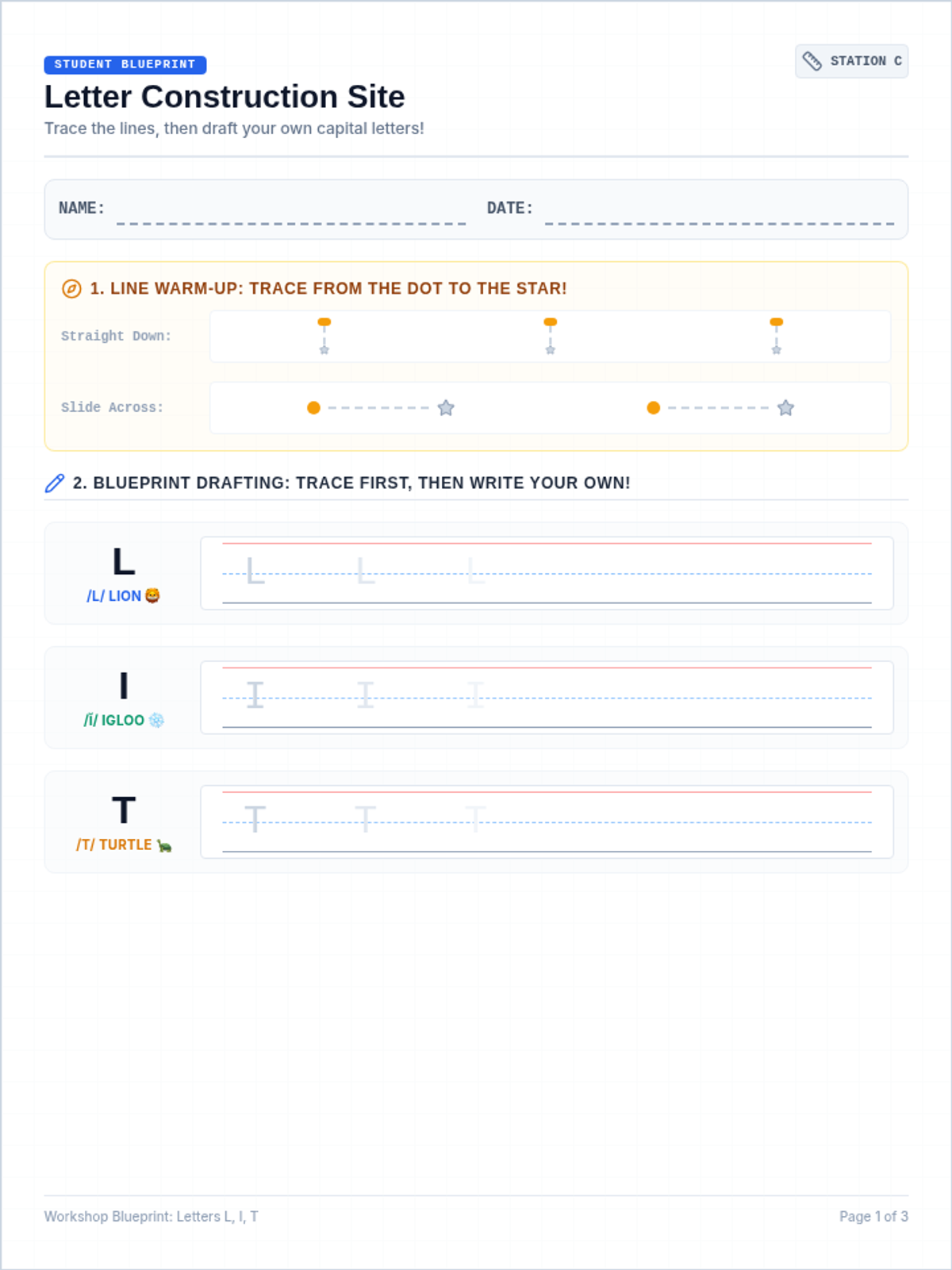
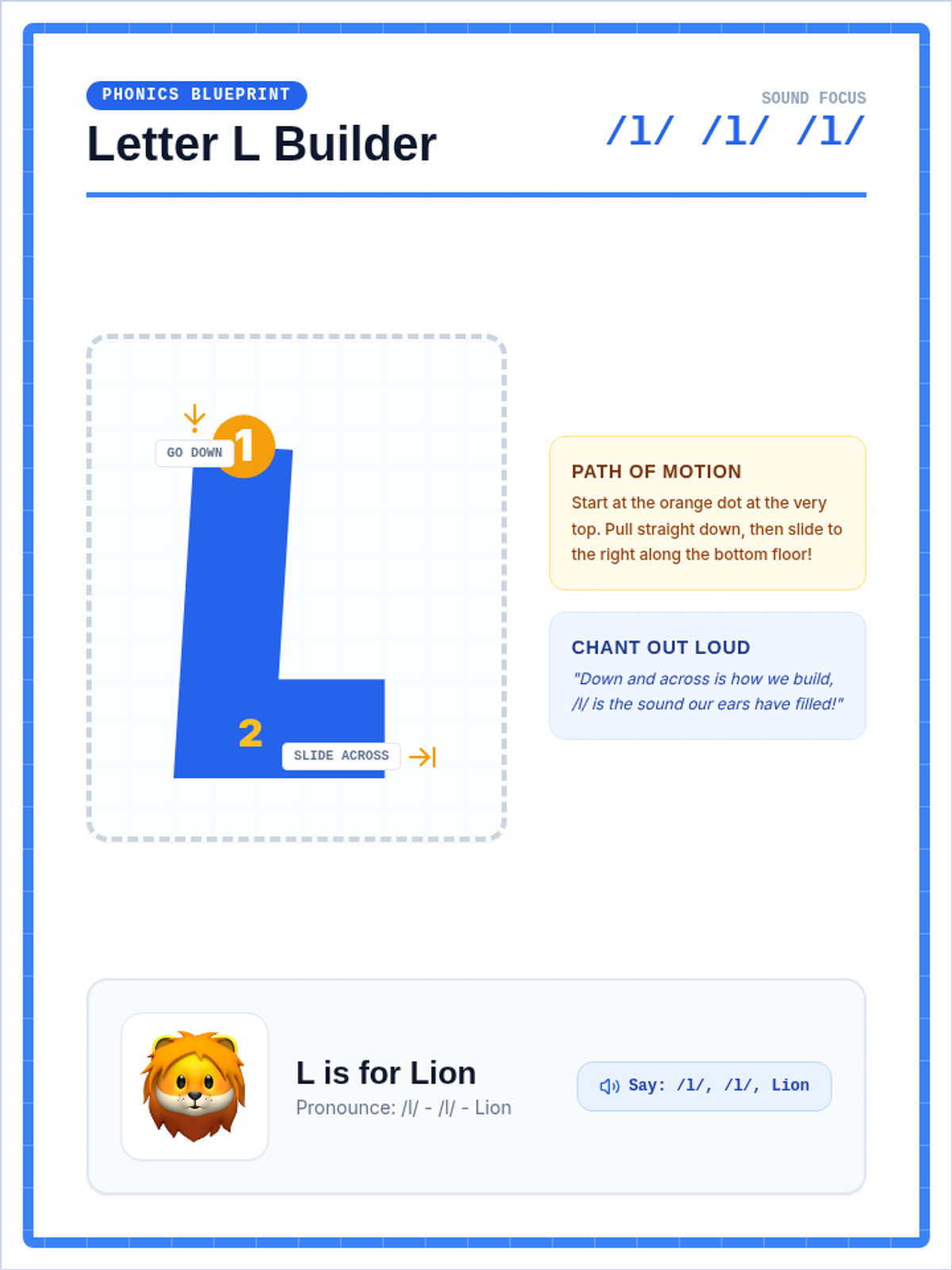
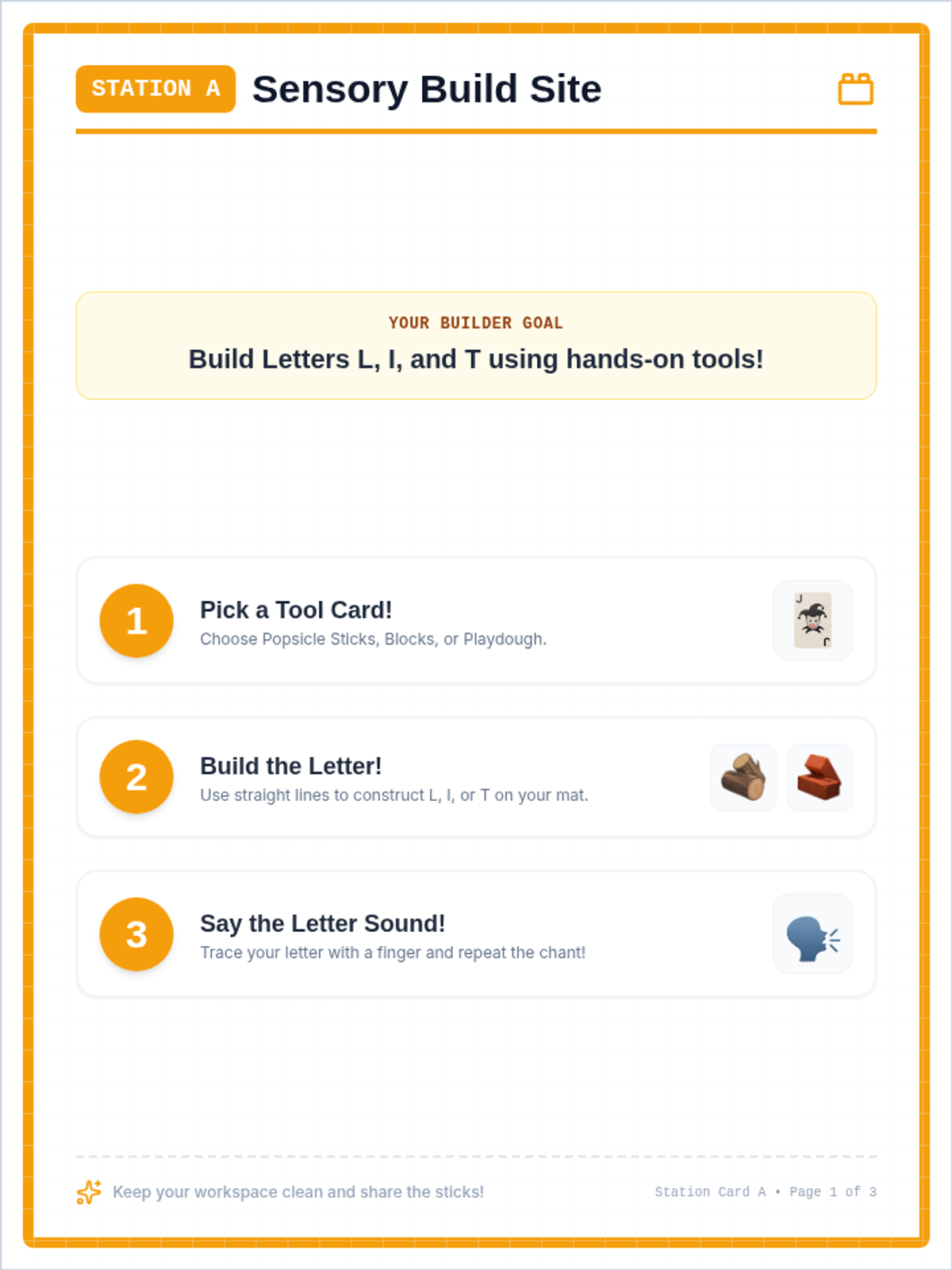
A foundational phonics lesson focusing on constructing straight-line letters L, I, and T through multisensory building, sound-sorting, and fine motor handwriting practice.
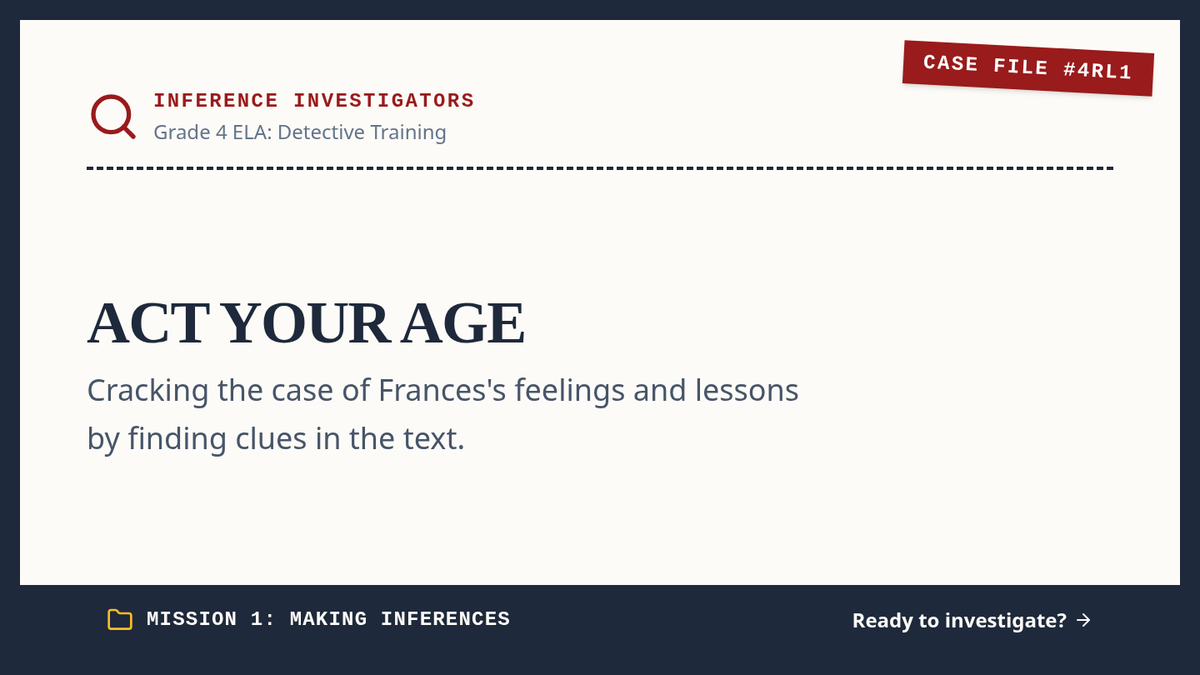
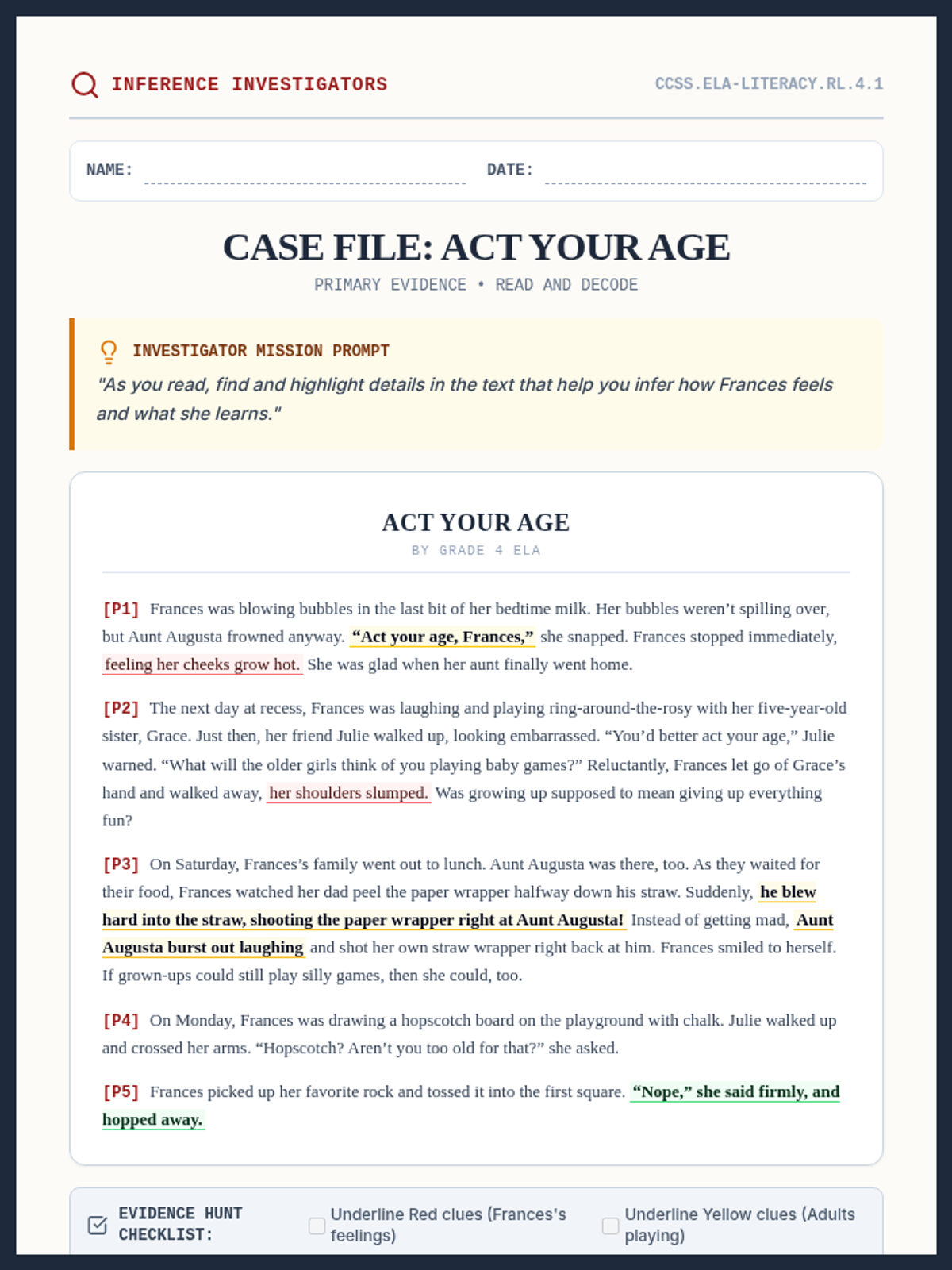
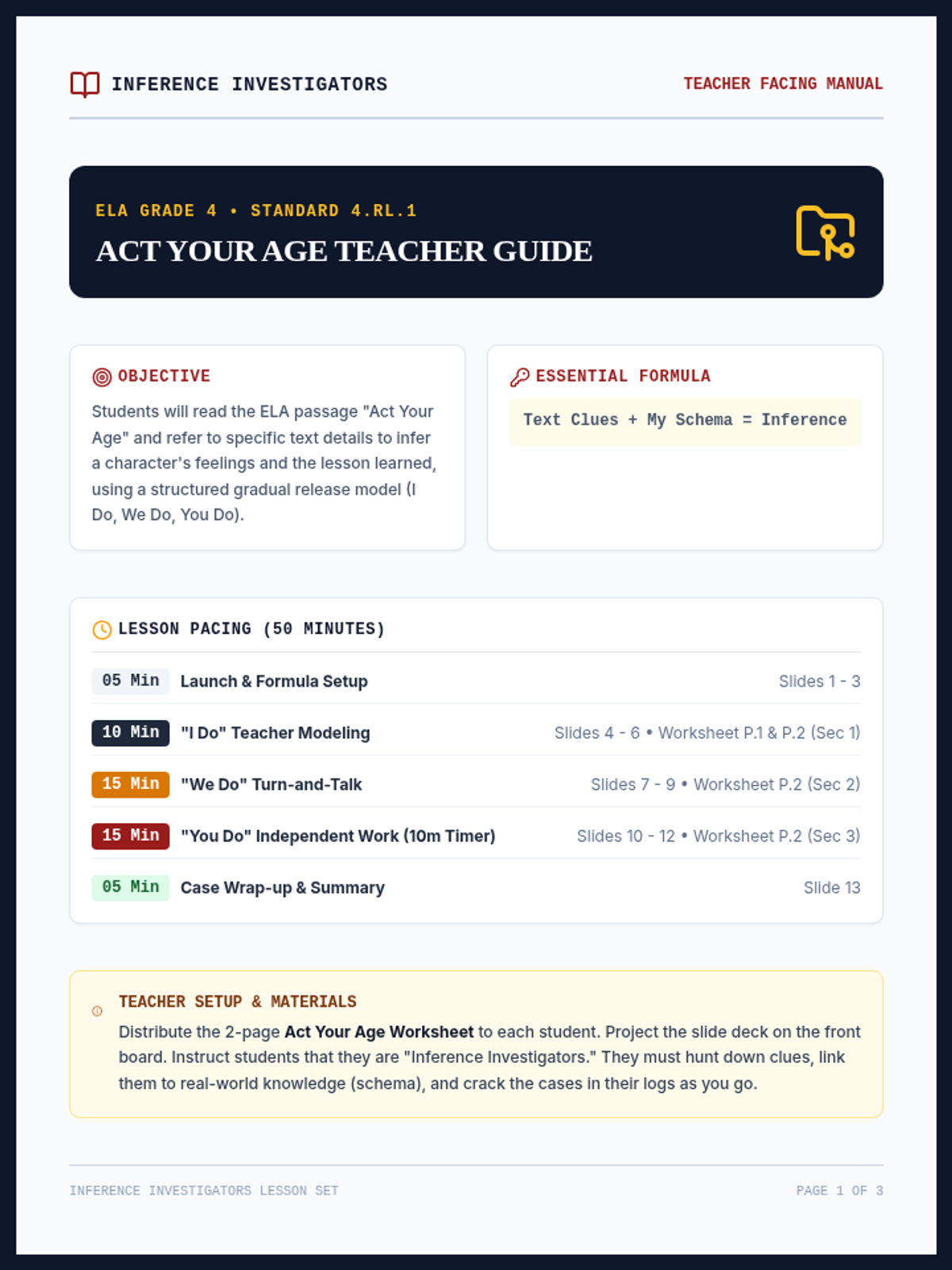
An engaging, detective-themed 4th Grade ELA lesson designed to teach students how to make text-based inferences using the story 'Act Your Age'. Follows an interactive 'I Do, We Do, You Do' gradual release model with class-wide discussion and turn-and-talk prompts.
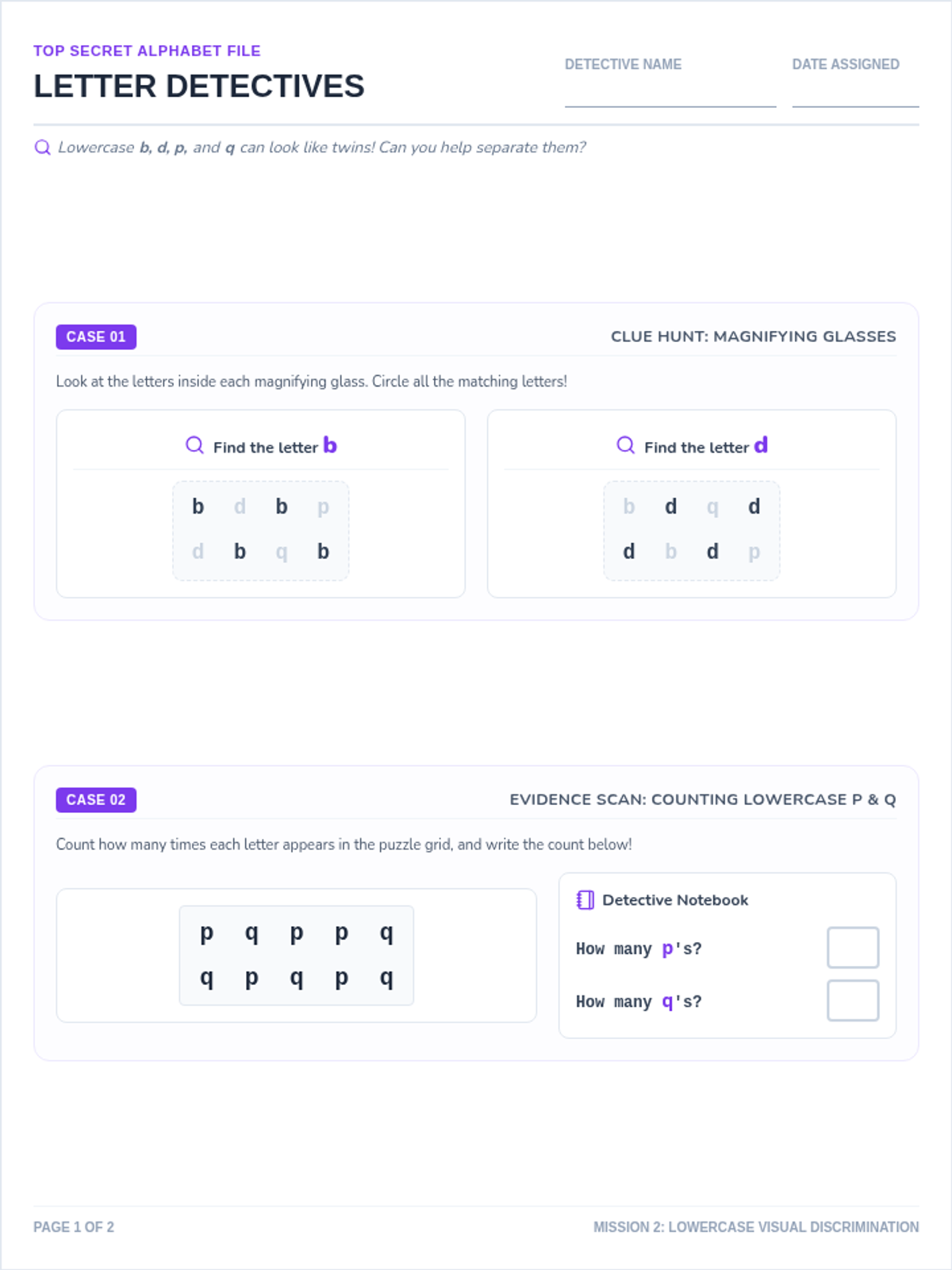
A first-grade letter recognition and formation lesson focusing on identifying uppercase and lowercase letter pairs, distinguishing visually similar letters (like b, d, p, q), and practicing correct stroke pathways.