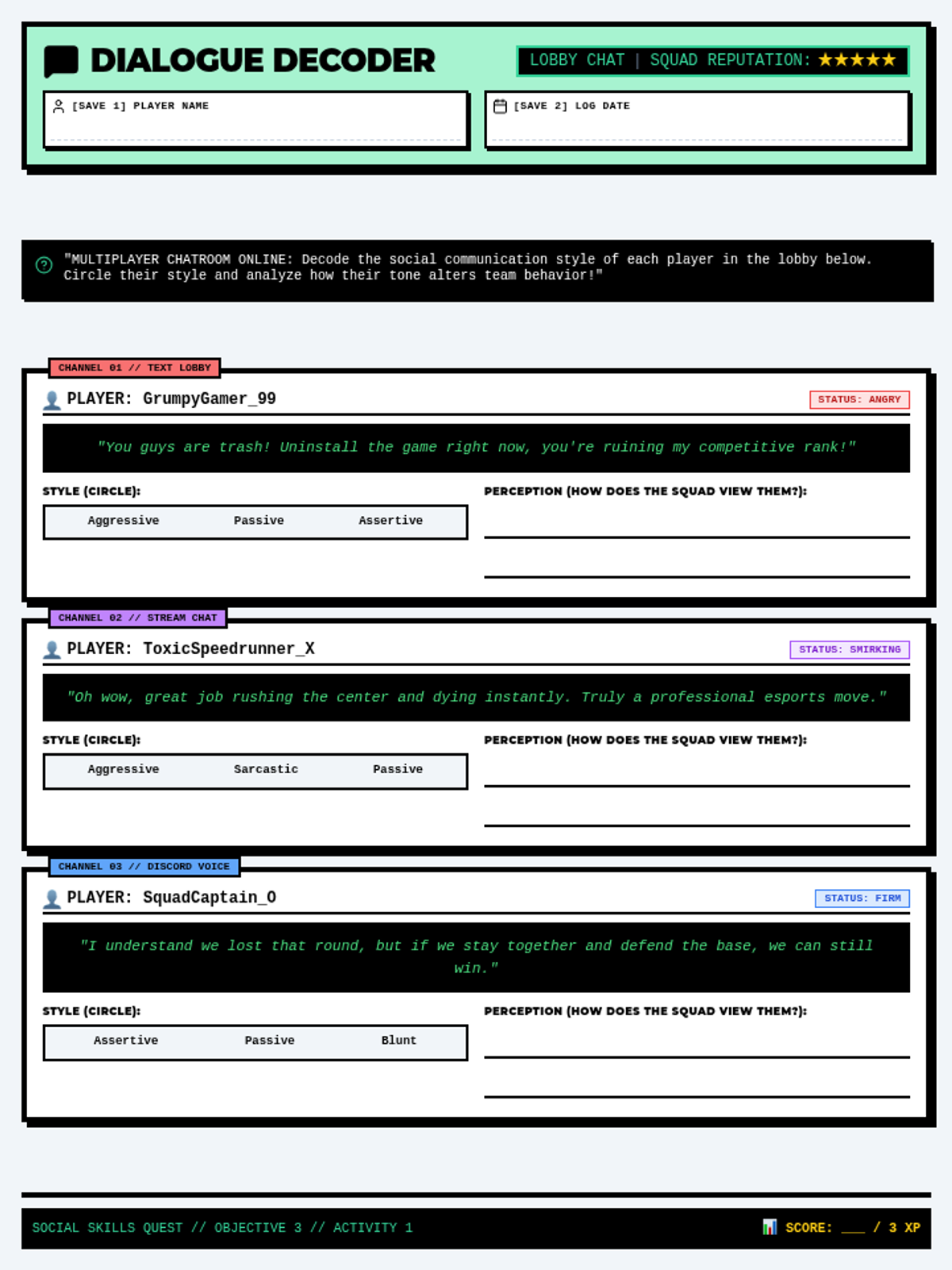
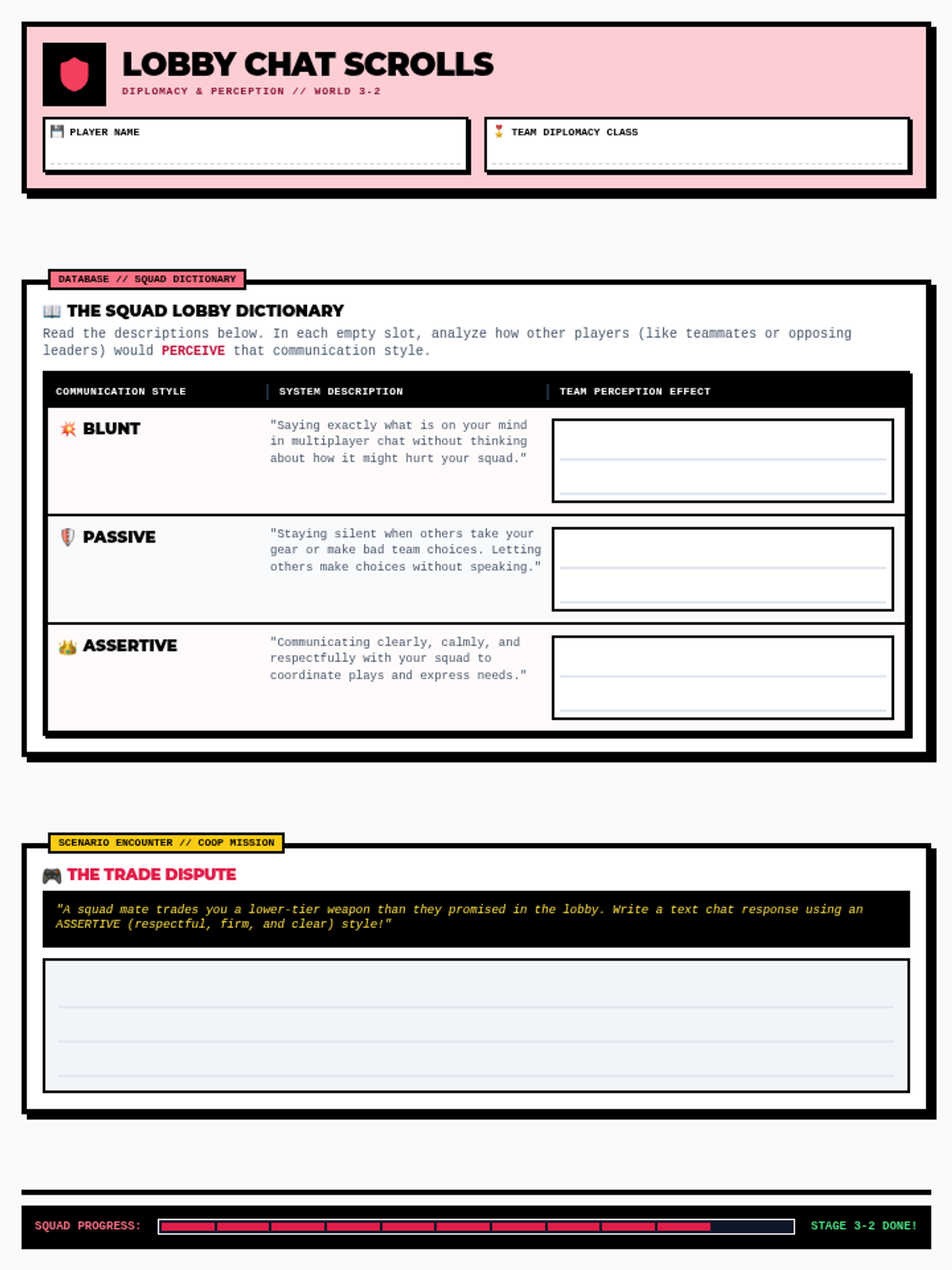
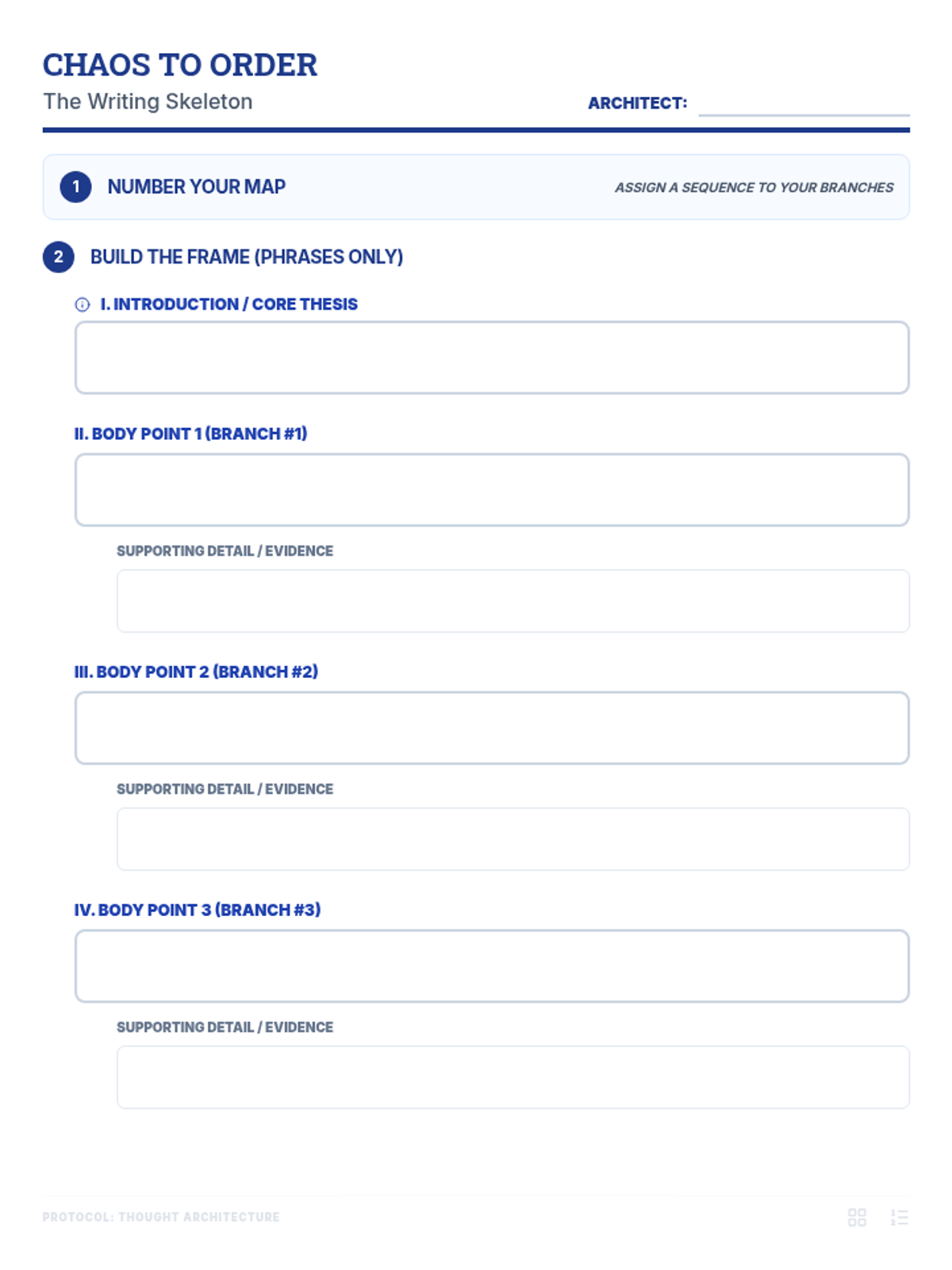
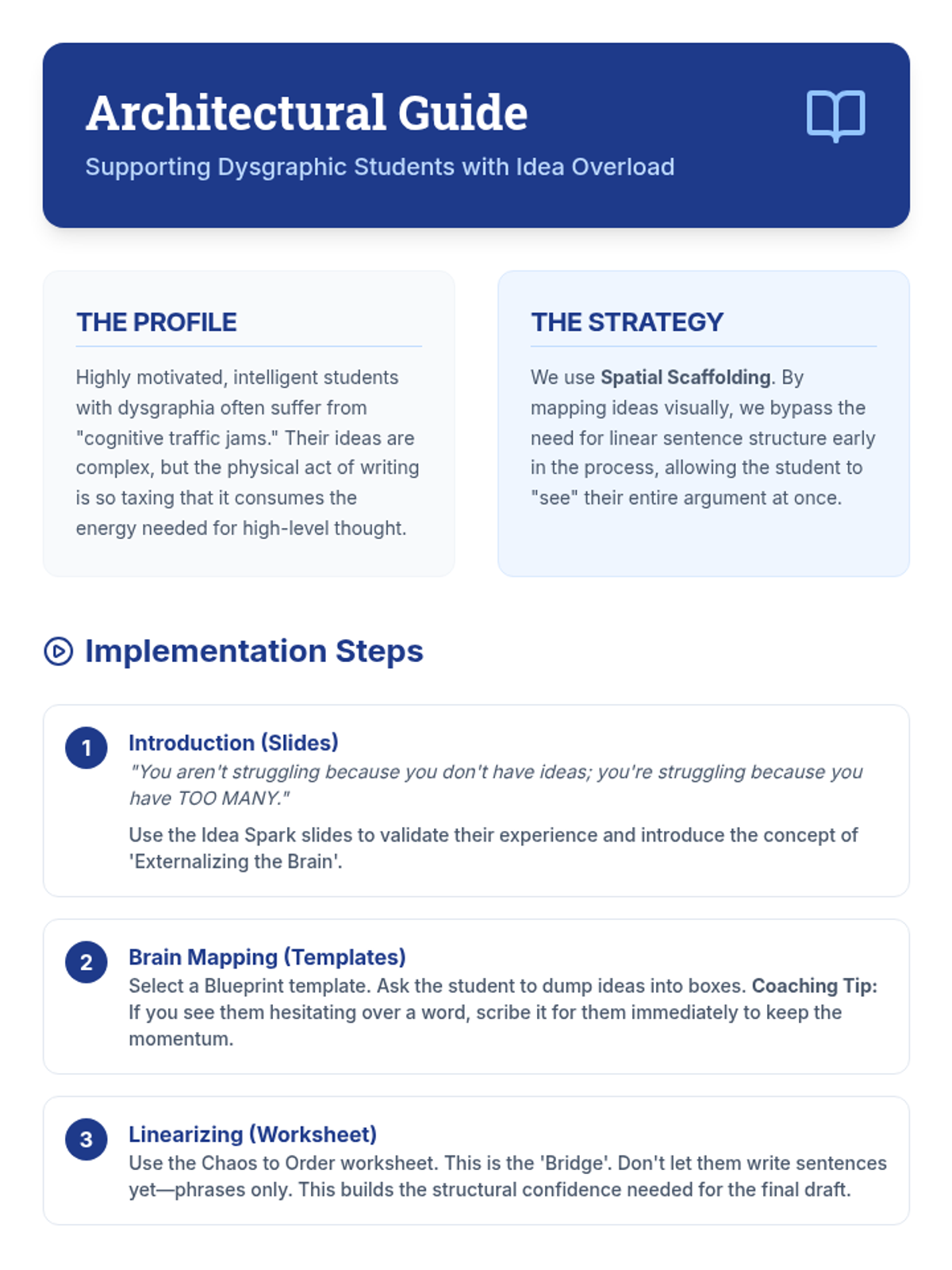
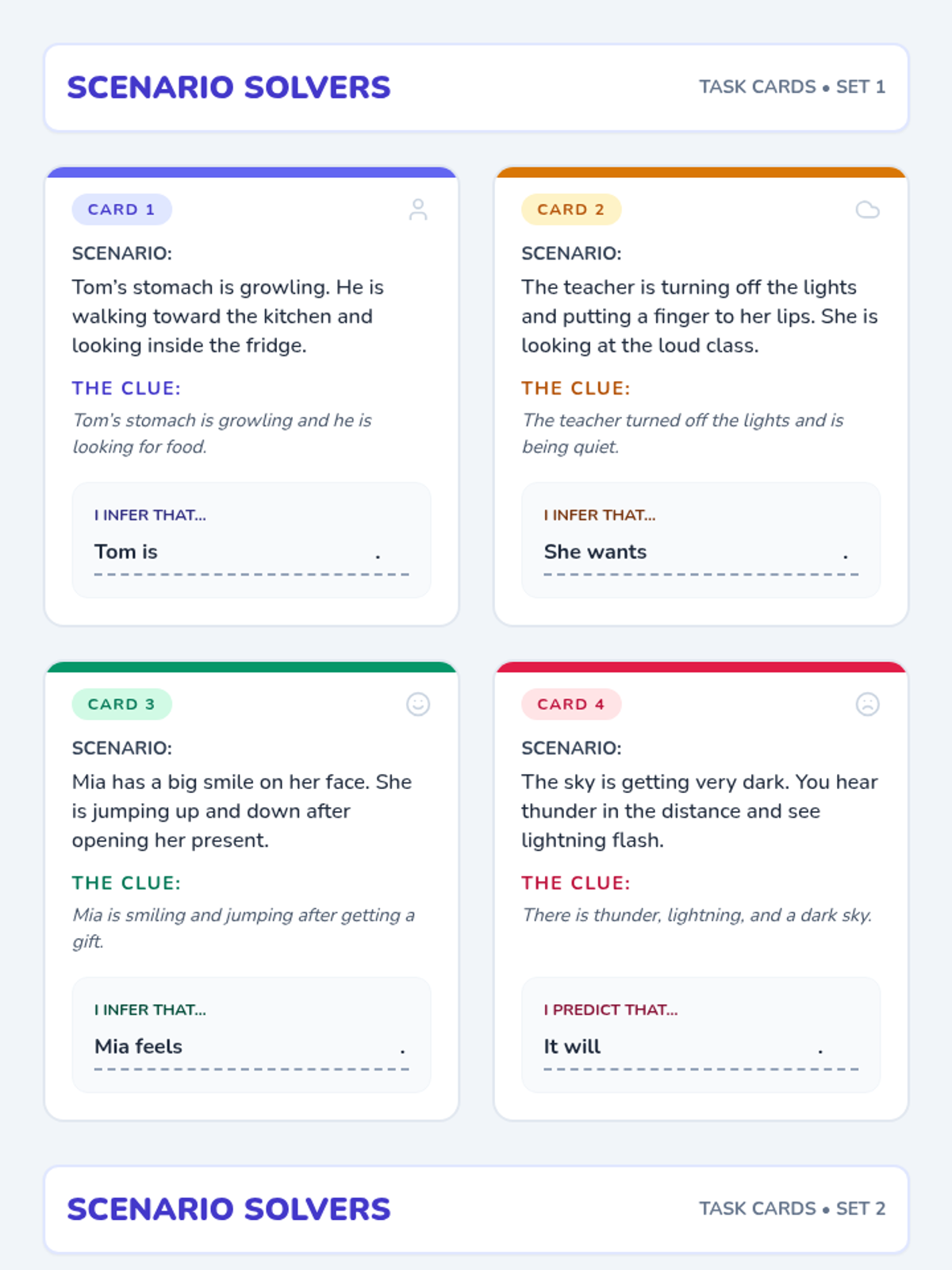
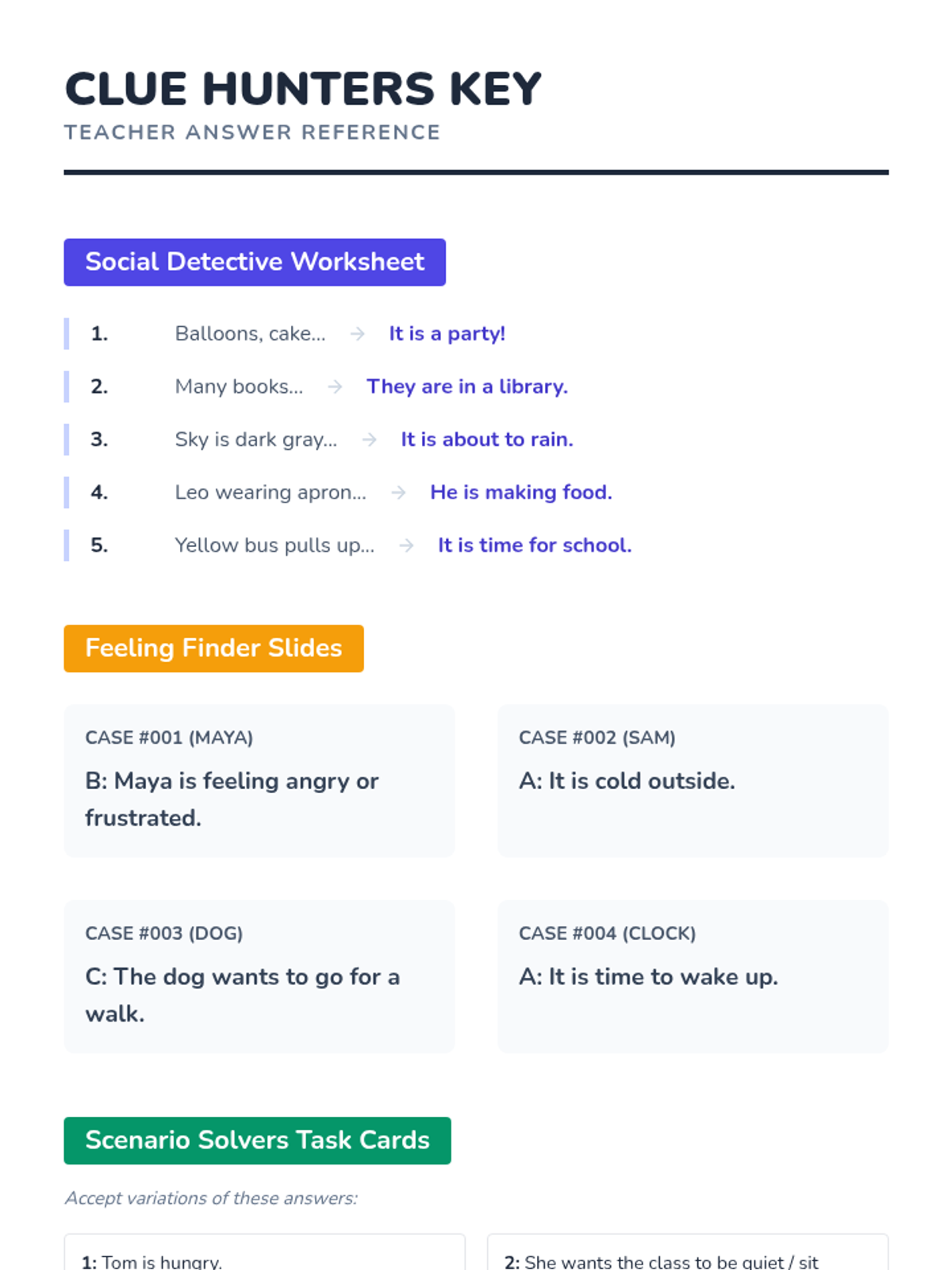
Students explore the speed of speech vs. typing and practice 'brain dumping' ideas using dictation software to overcome writer's block.
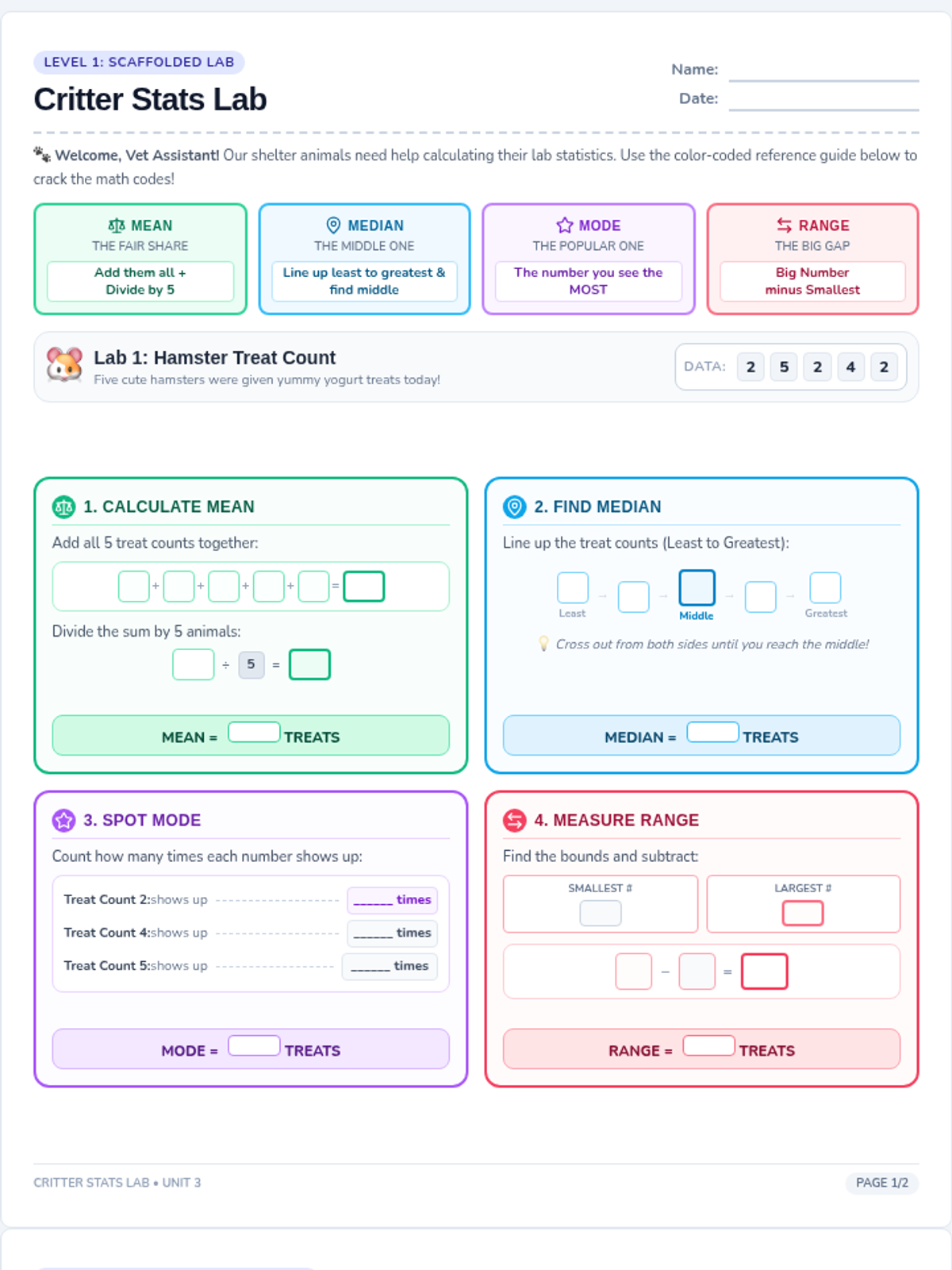
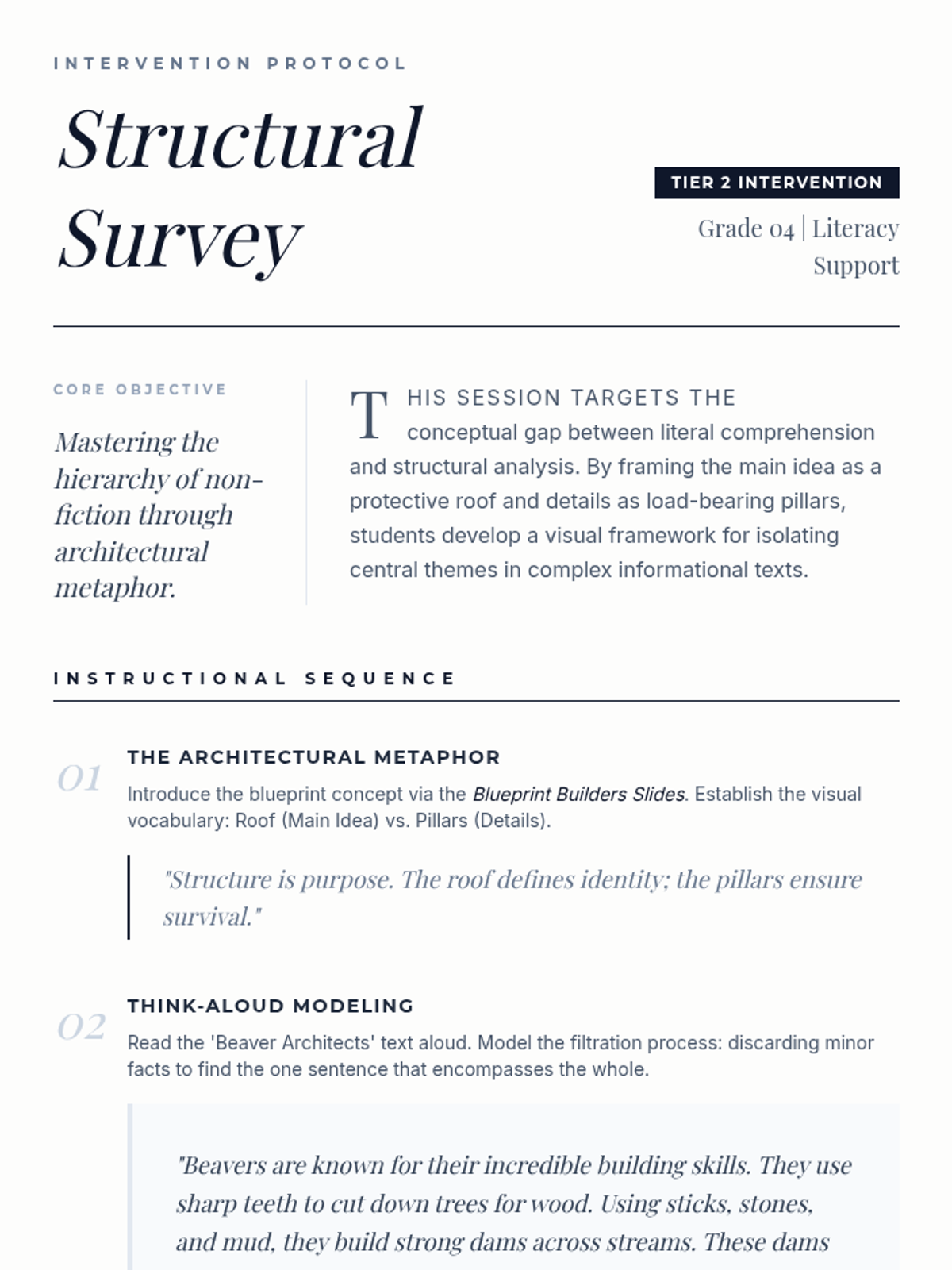
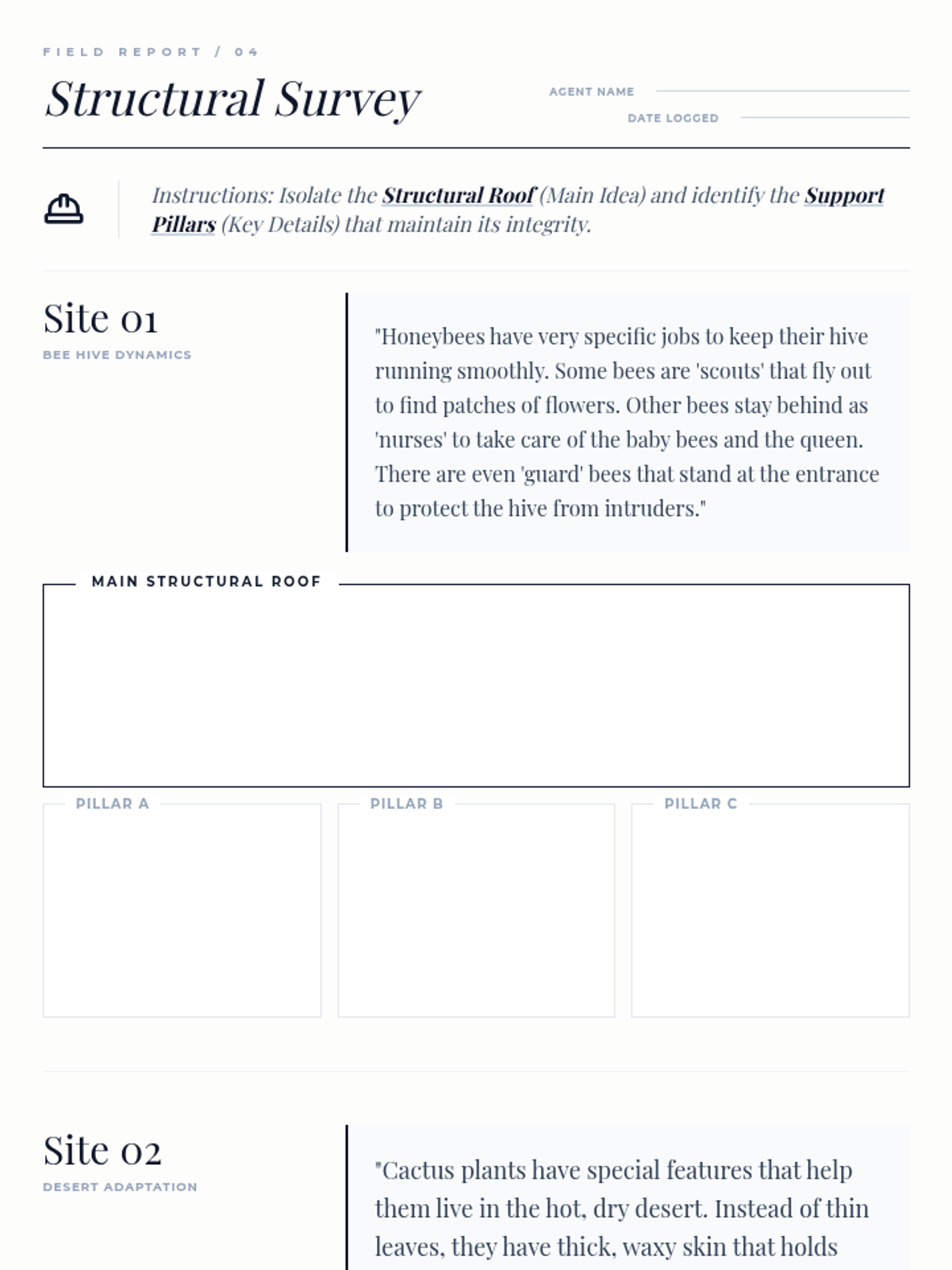
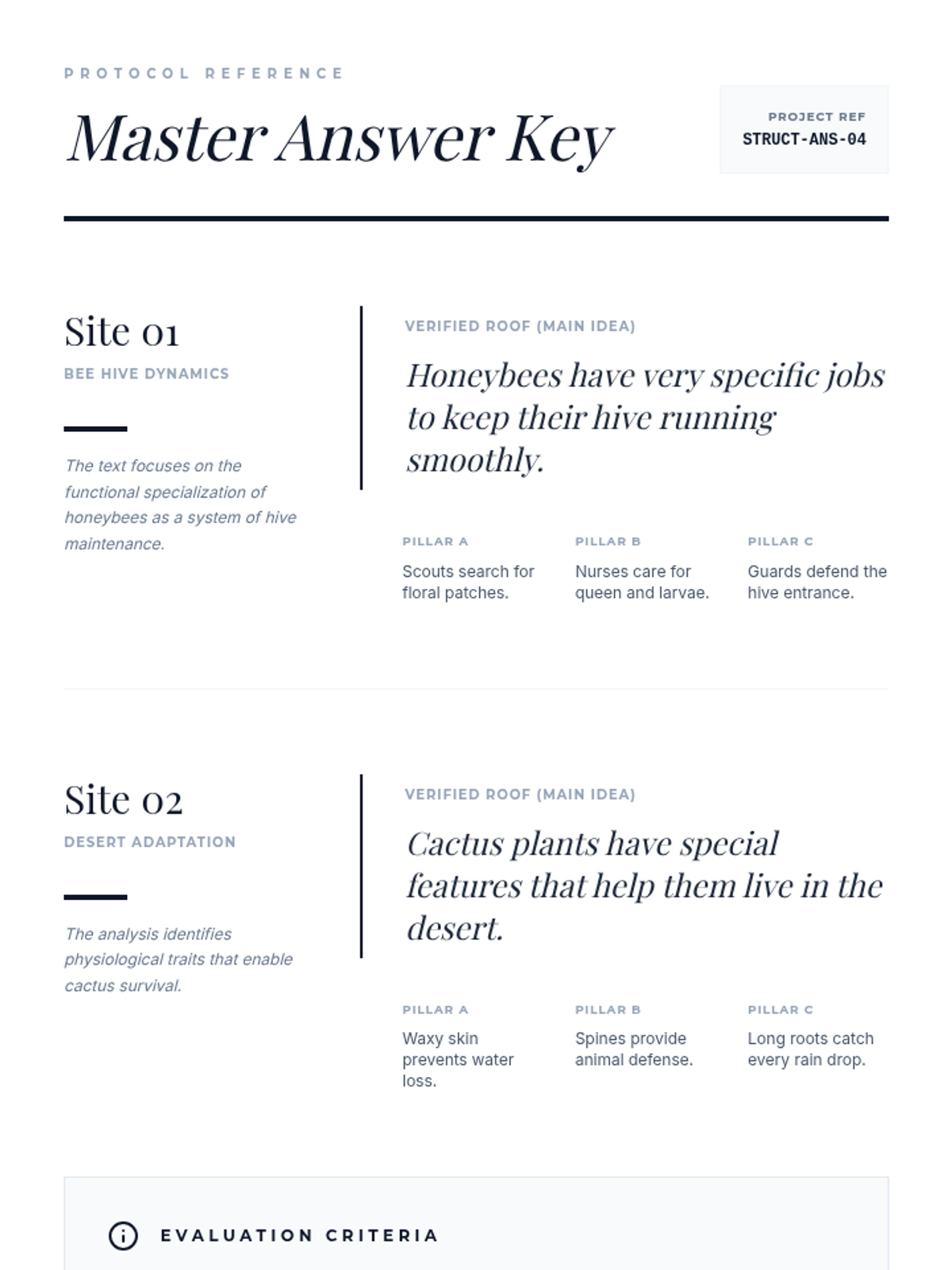
A targeted reading intervention lesson focused on identifying the main idea and supporting details using high-interest, low-readability texts. Designed for students who decode well but struggle with comprehension.
Cumulative review with a focus on encoding (spelling) 2-syllable words with silent-e syllables.
Mixed practice of closed/open + silent-e syllables with a focus on flexible decoding strategies.
Focuses on 2-syllable words combining an open syllable with a silent-e syllable (e.g., remote, feline, locate).
Focuses on 2-syllable words combining a closed syllable with a silent-e syllable (e.g., sunshine, reptile, mistake).
A collection of resources to help students with low reading levels identify their vocational interests across four key industries using simple language and visual cues.
Teaching students the 'Next Dollar Up' strategy to successfully make purchases without needing to calculate exact change, focusing on items up to $10.
Encourage joint attention and exploration through the core words Open and Look.
Develop social interaction skills and transition management using Mine, You, Finished, and Turn.
Focus on expressing preferences and seeking assistance using core words Like, Don't Like, and Help.
Introduce the primary 'power words' (Go, Stop, More, Want) to establish basic requesting and agency in play-based settings.
A review of all skills with a final assessment and celebration of social space mastery.
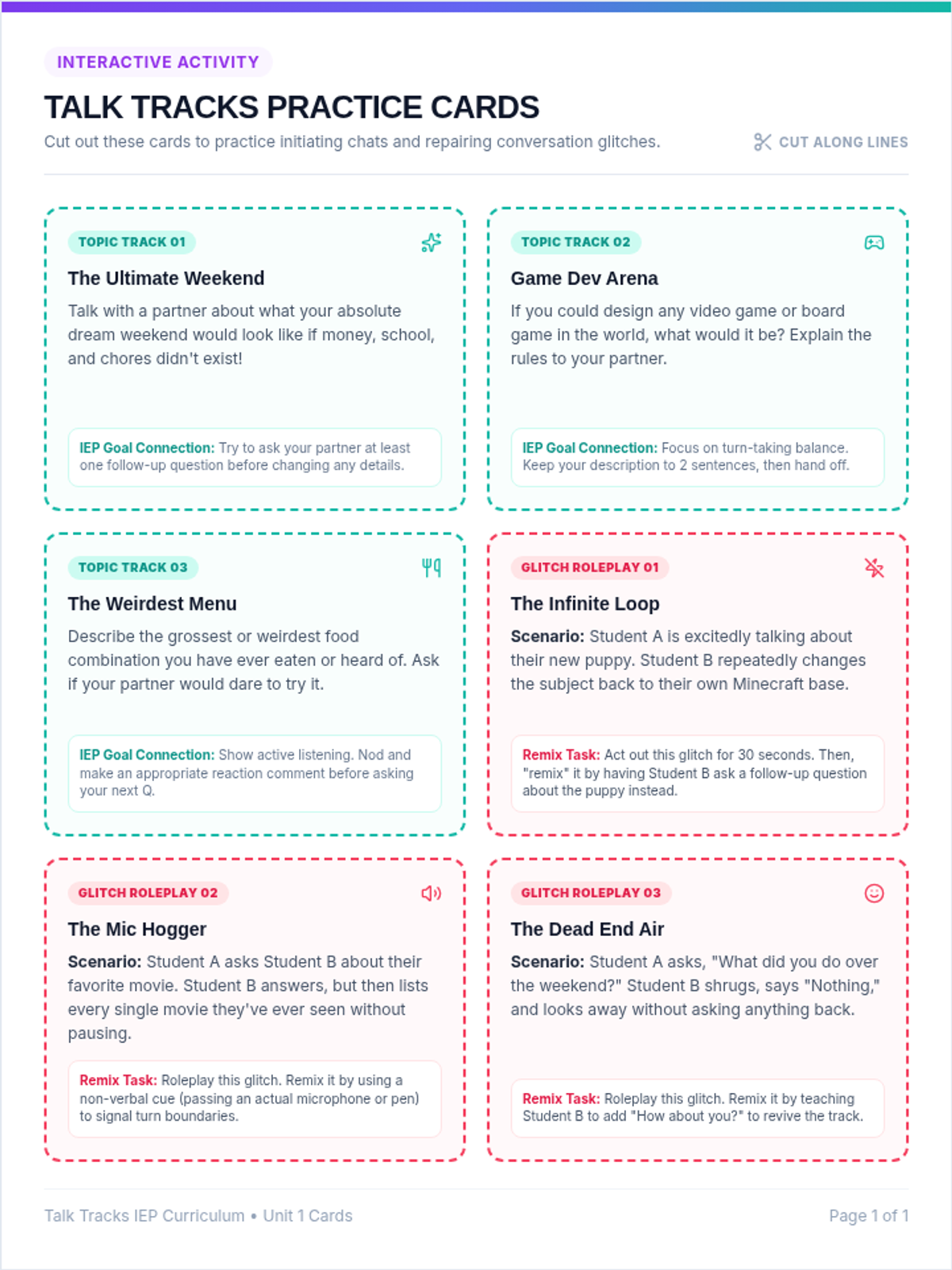
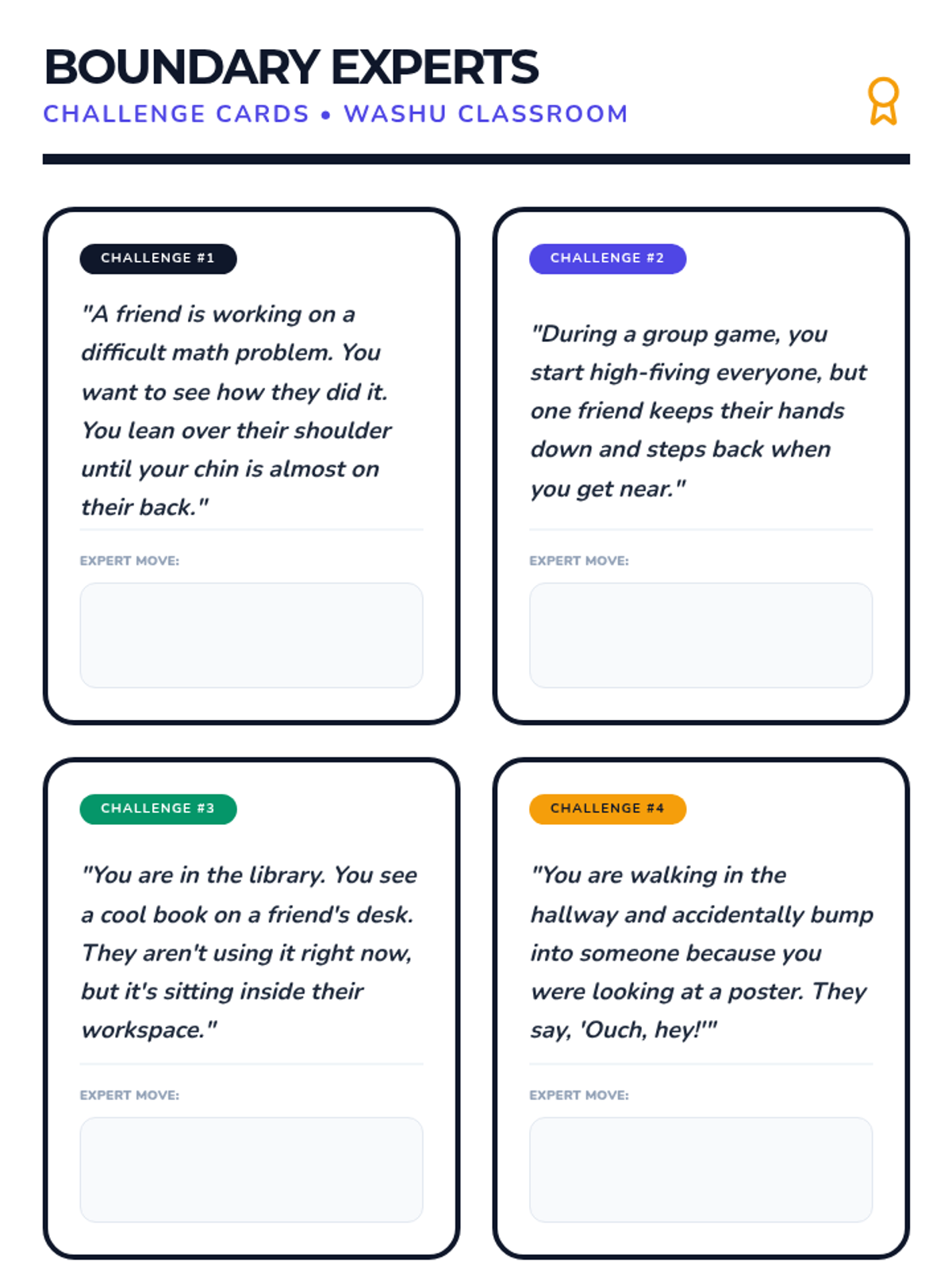
Real-world practice and role-playing of common classroom scenarios like asking for help or sharing a story.
Focuses on identifying non-verbal cues from teachers that indicate they need more space or are ready to interact.
Teaches a concrete 3-step script for asking permission before touching a teacher or their belongings.
Differentiates between space for peers and the 'Professional Zone' for teachers and staff.
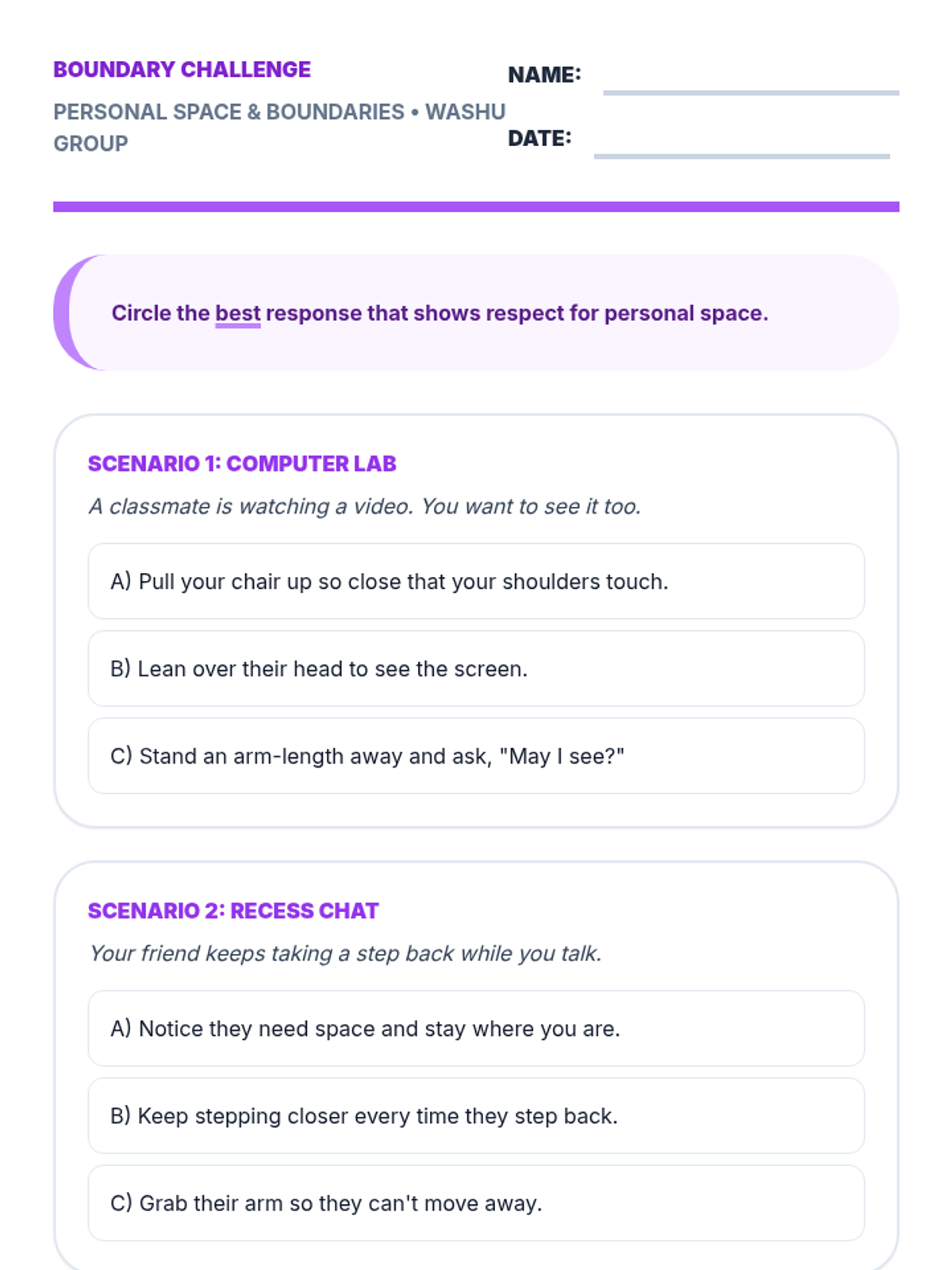
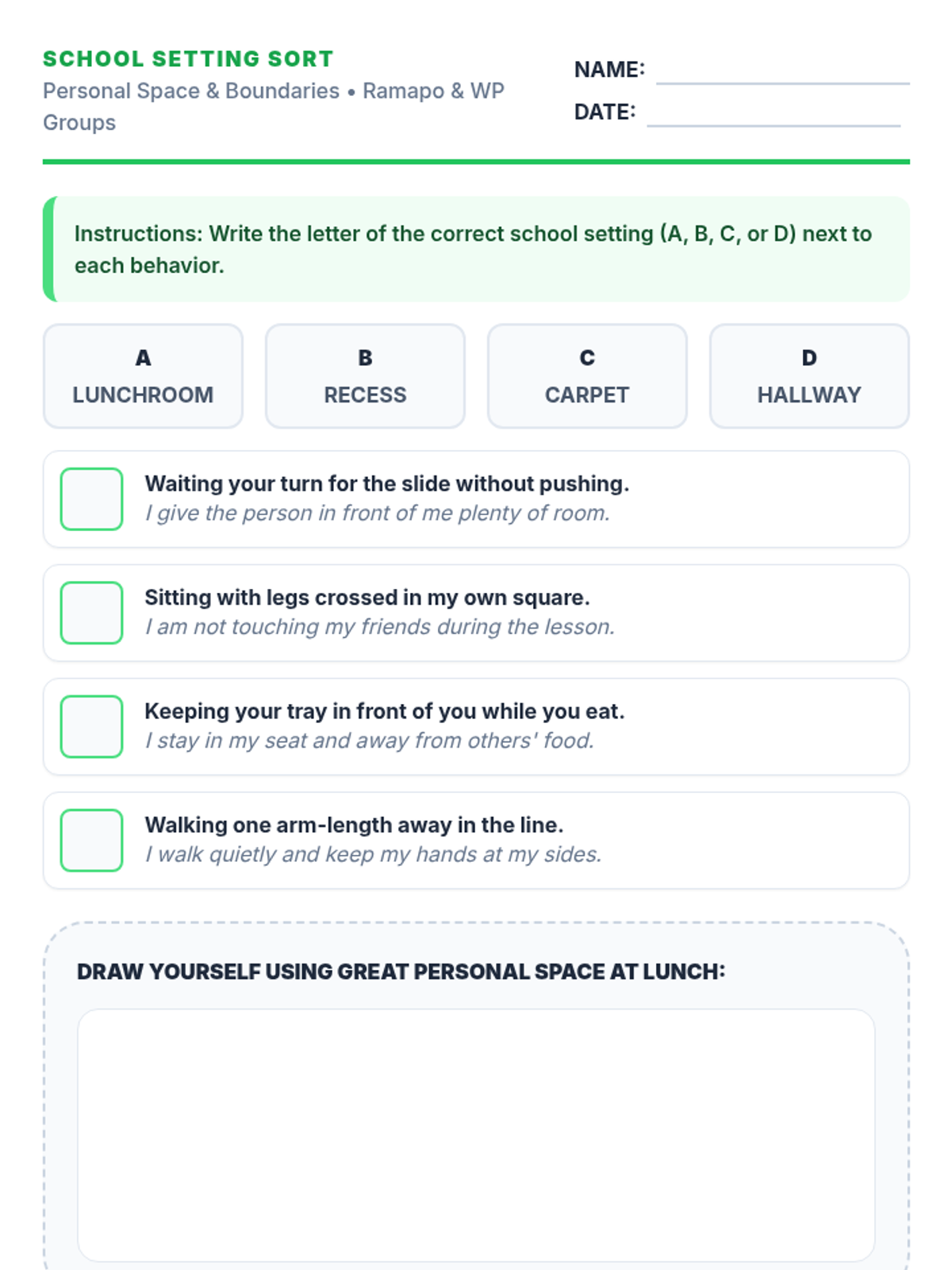
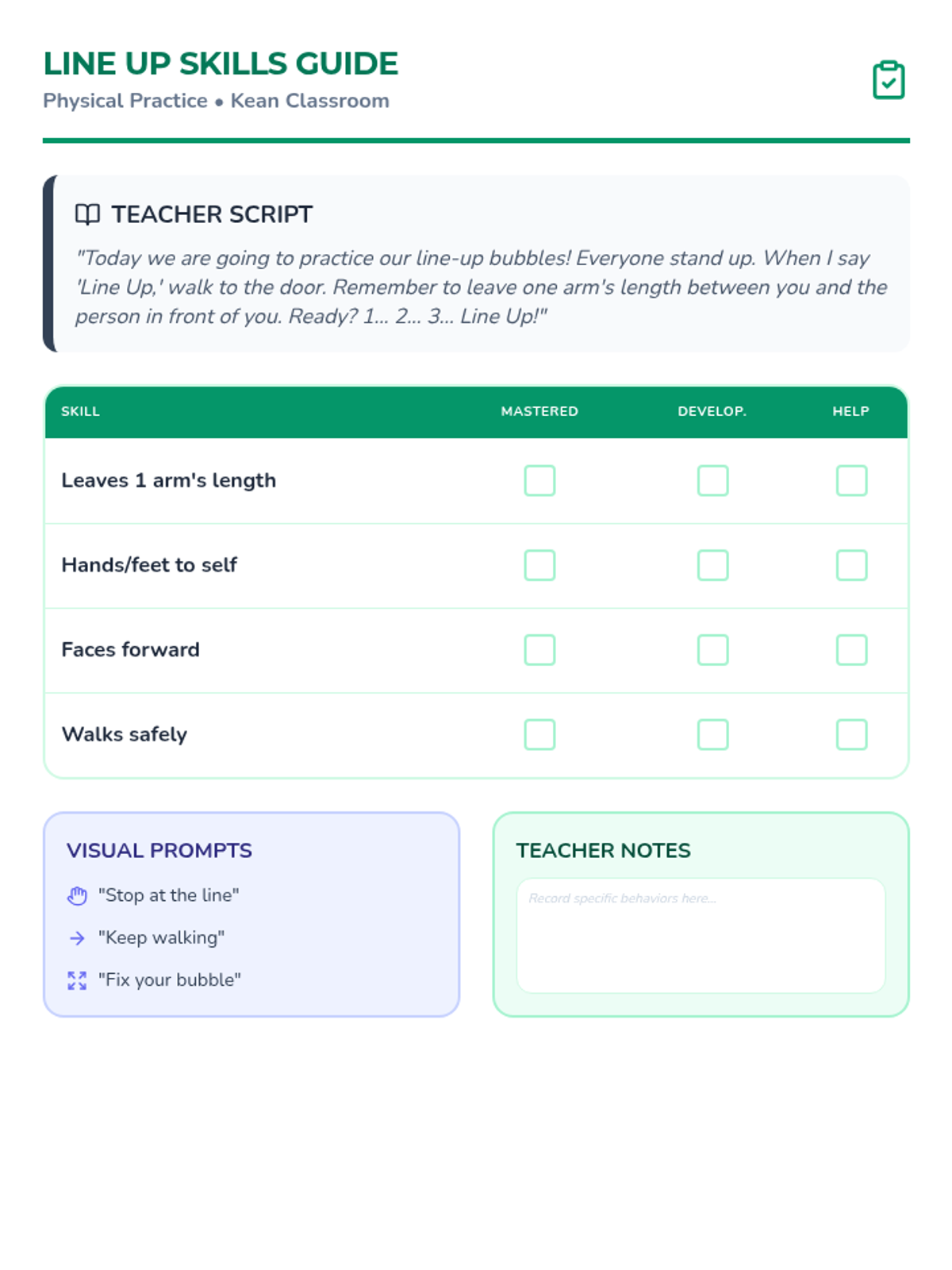
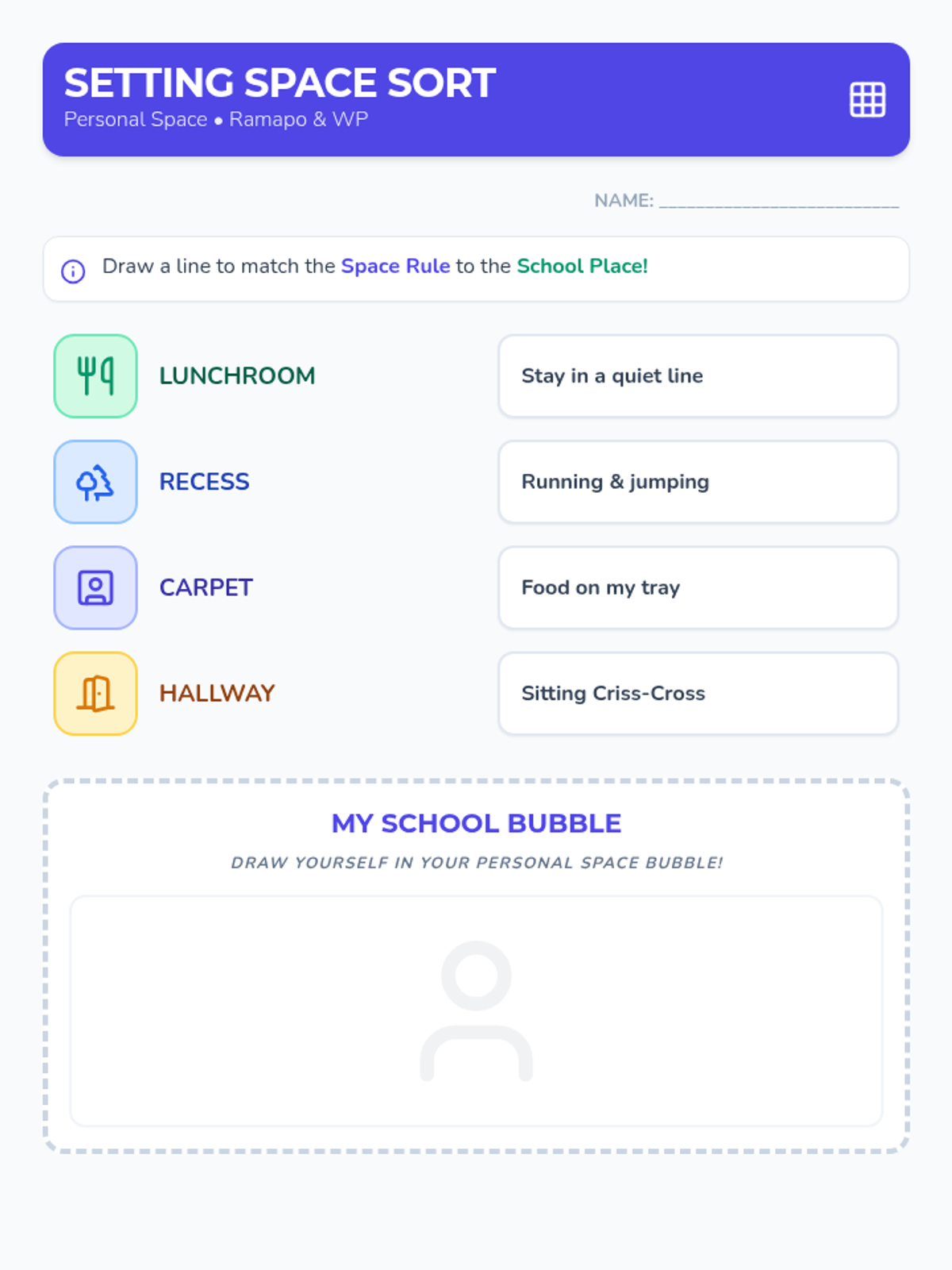
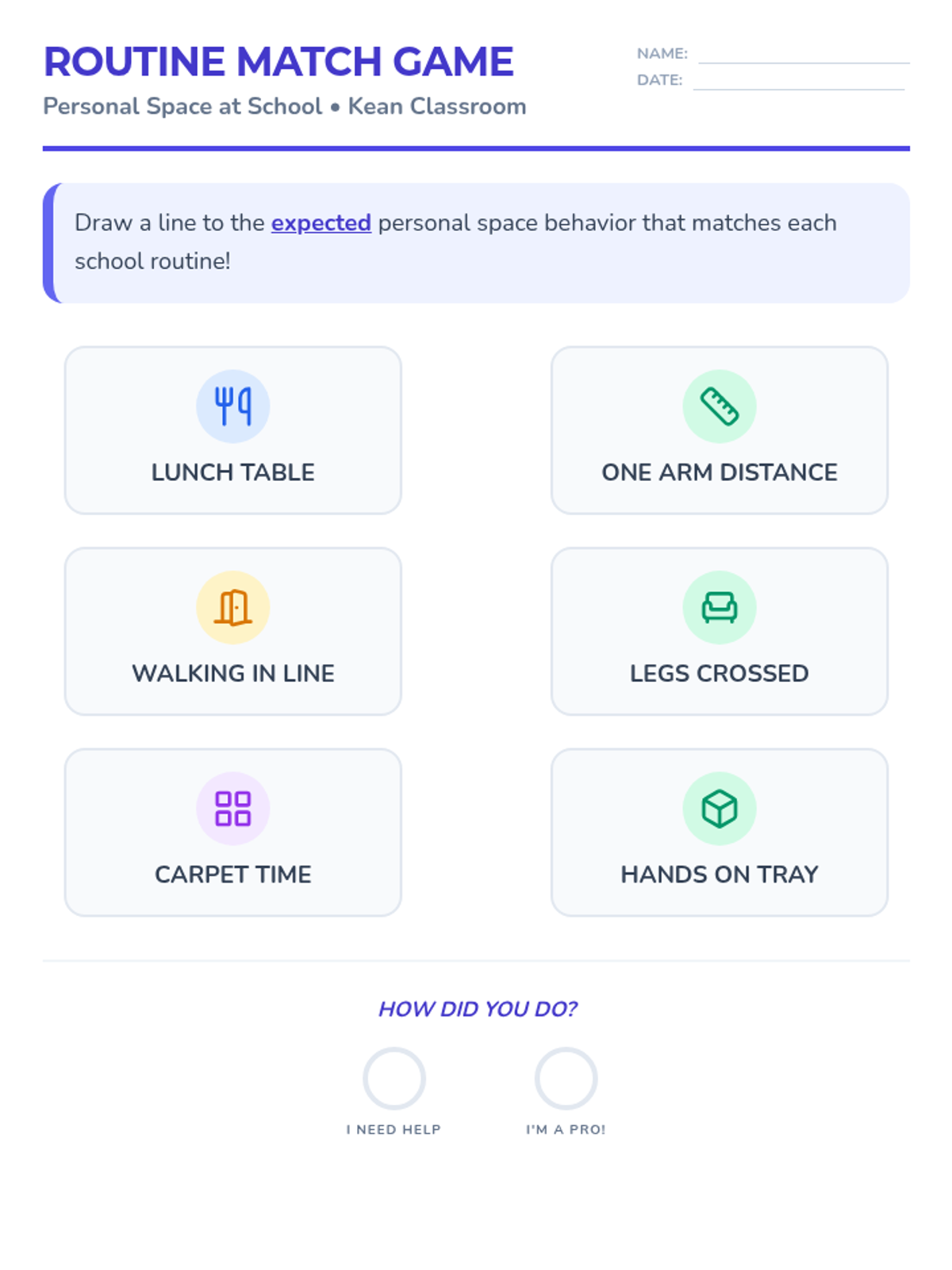
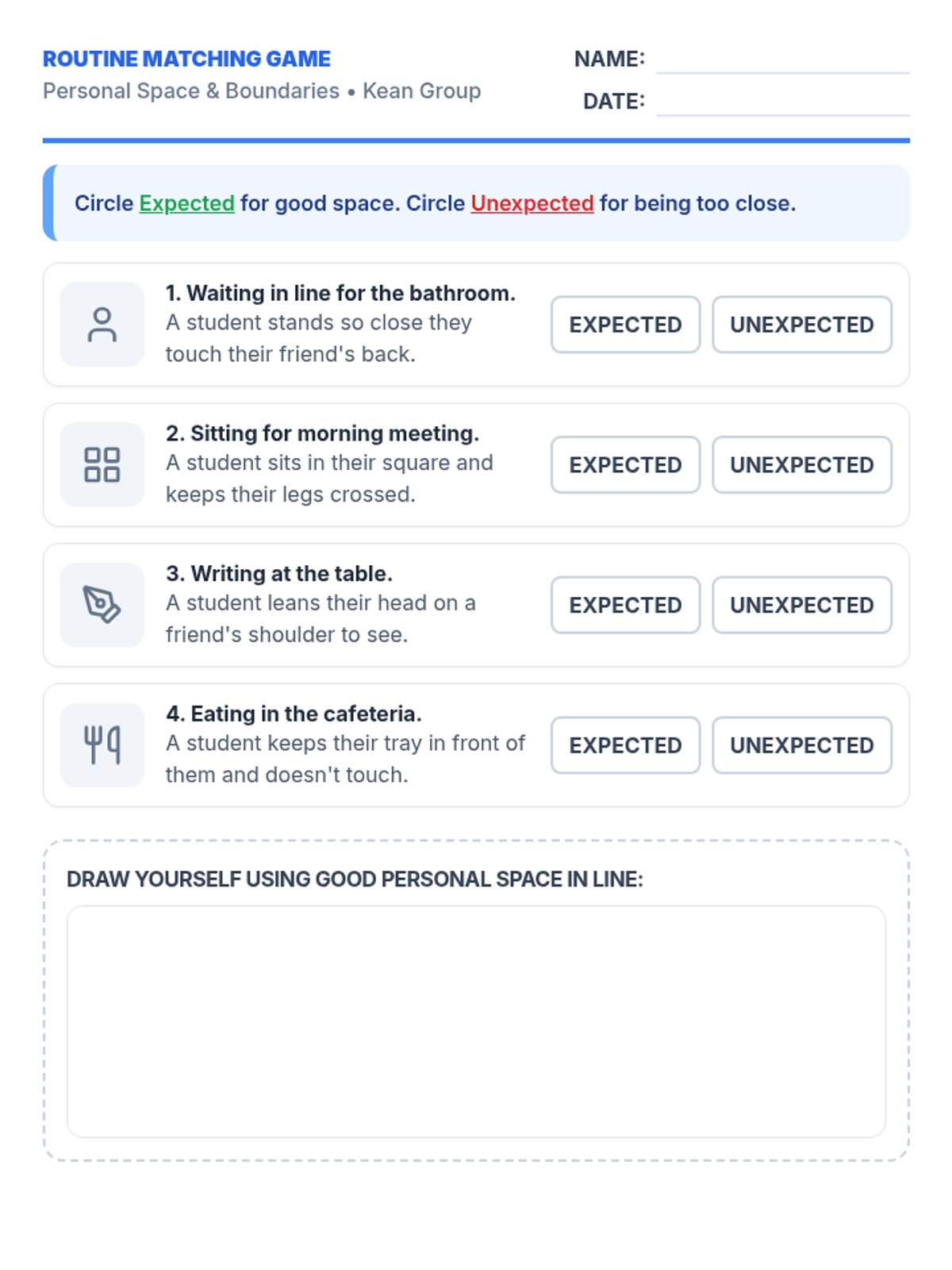
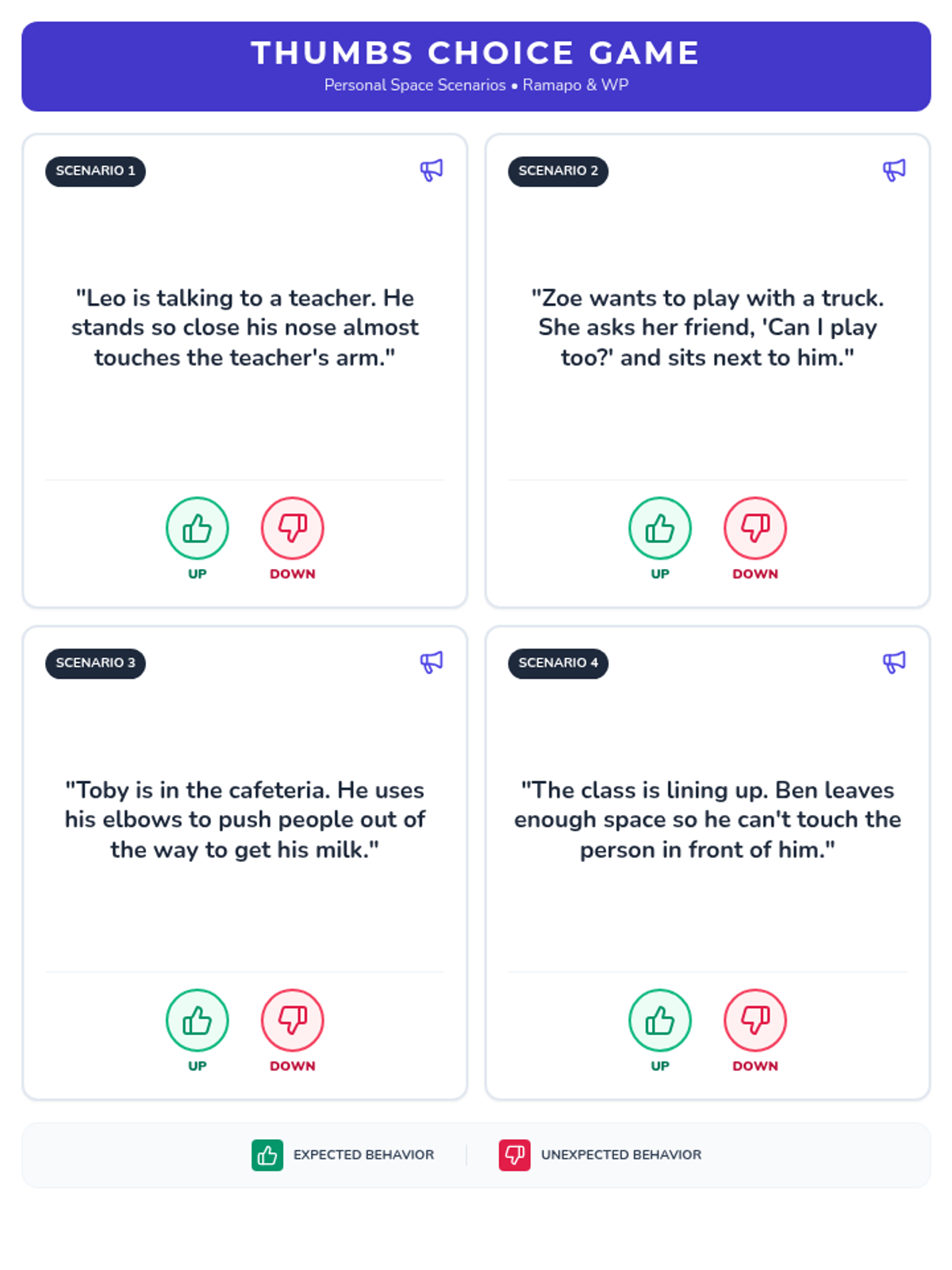
Introduces the concept of 'Personal Space' as an invisible bubble and establishes the standard 3-foot rule for classroom interactions.
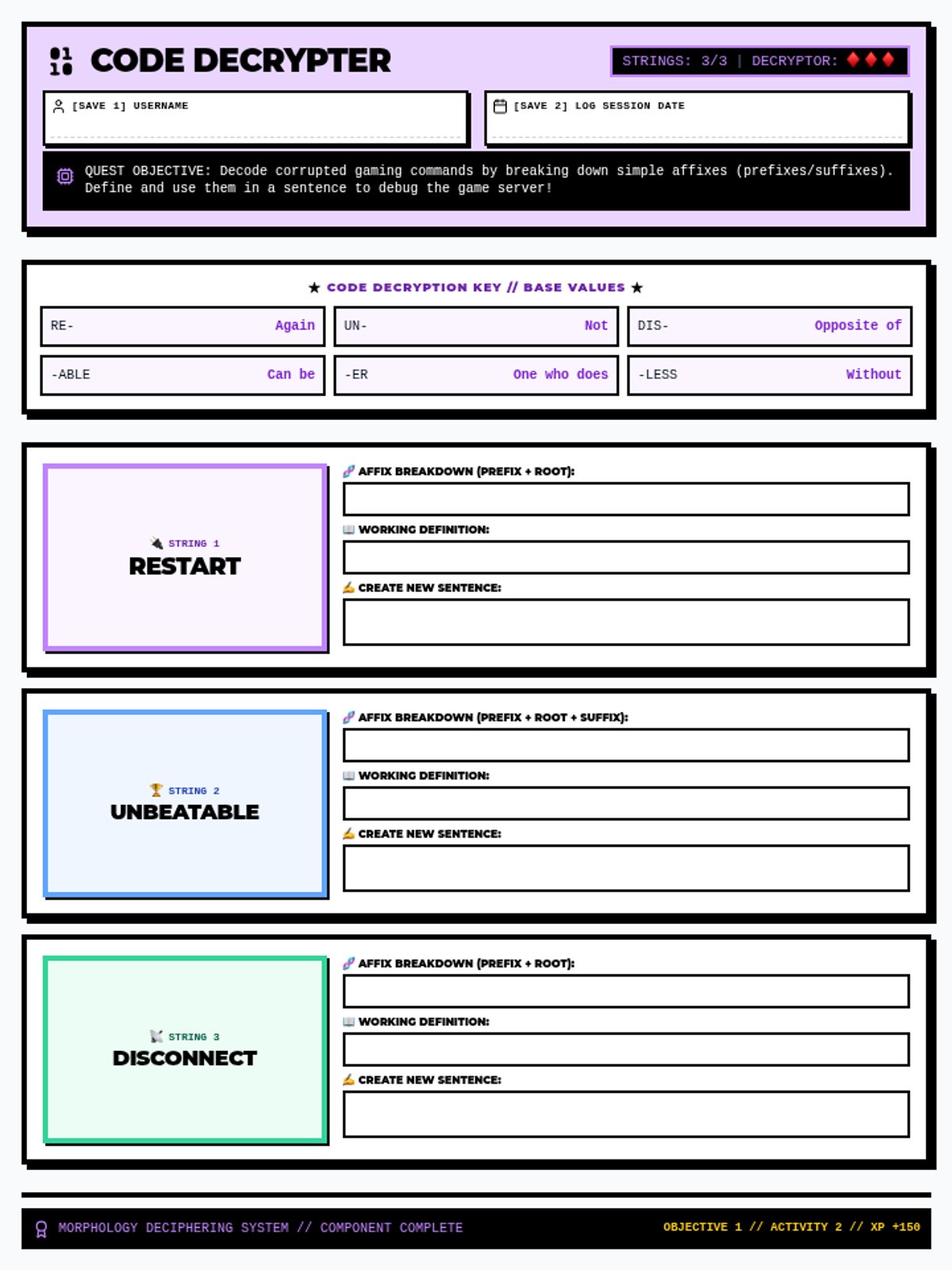
A 45-minute lesson for 5th-grade ESL students on using prefixes and suffixes to decode complex word meanings using a 'Word Lab' theme.
A specialized writing intervention lesson using Roblox themes to help students master basic sentence structure, capitalization, and punctuation through sentence frames and word banks.
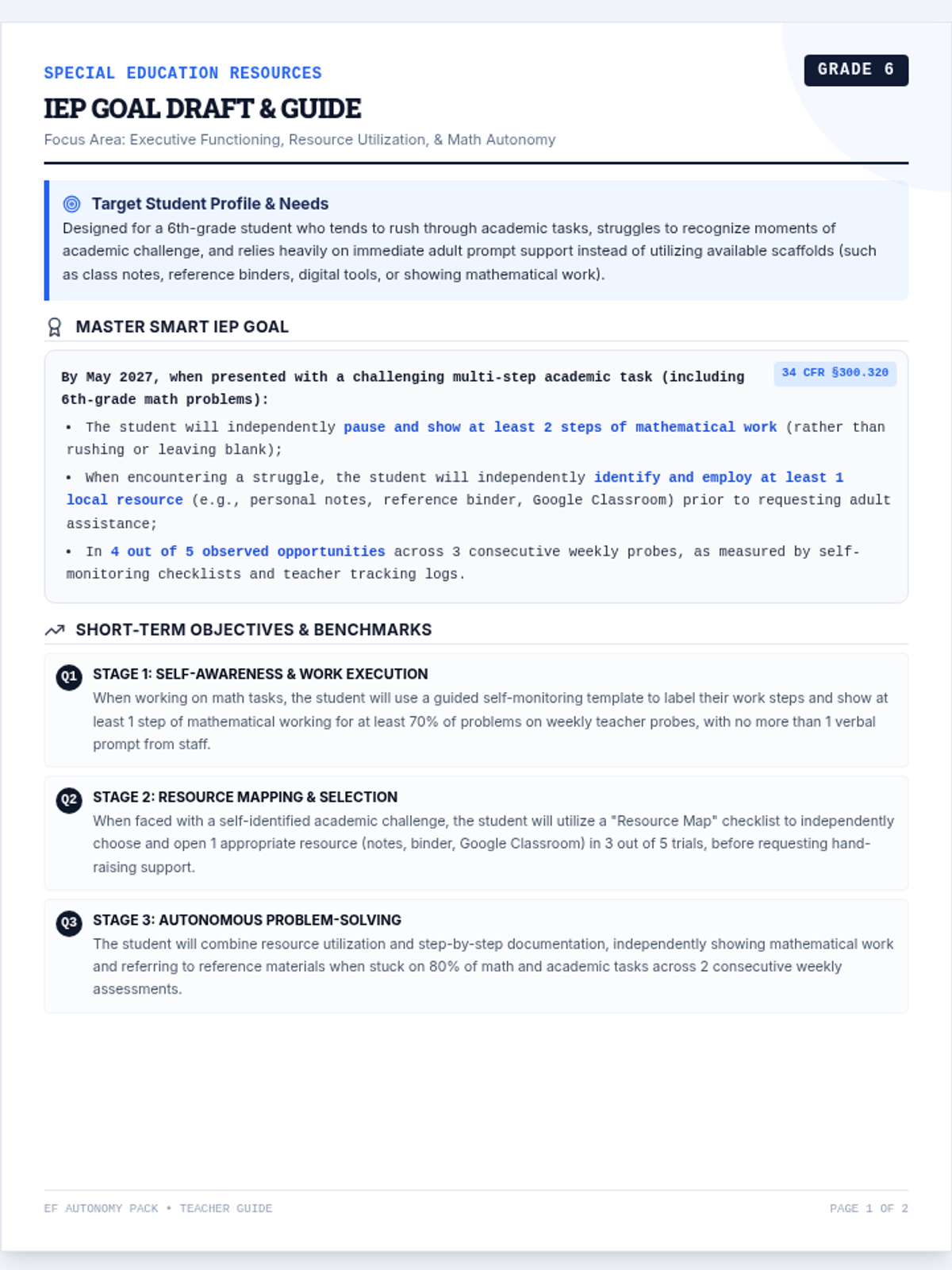
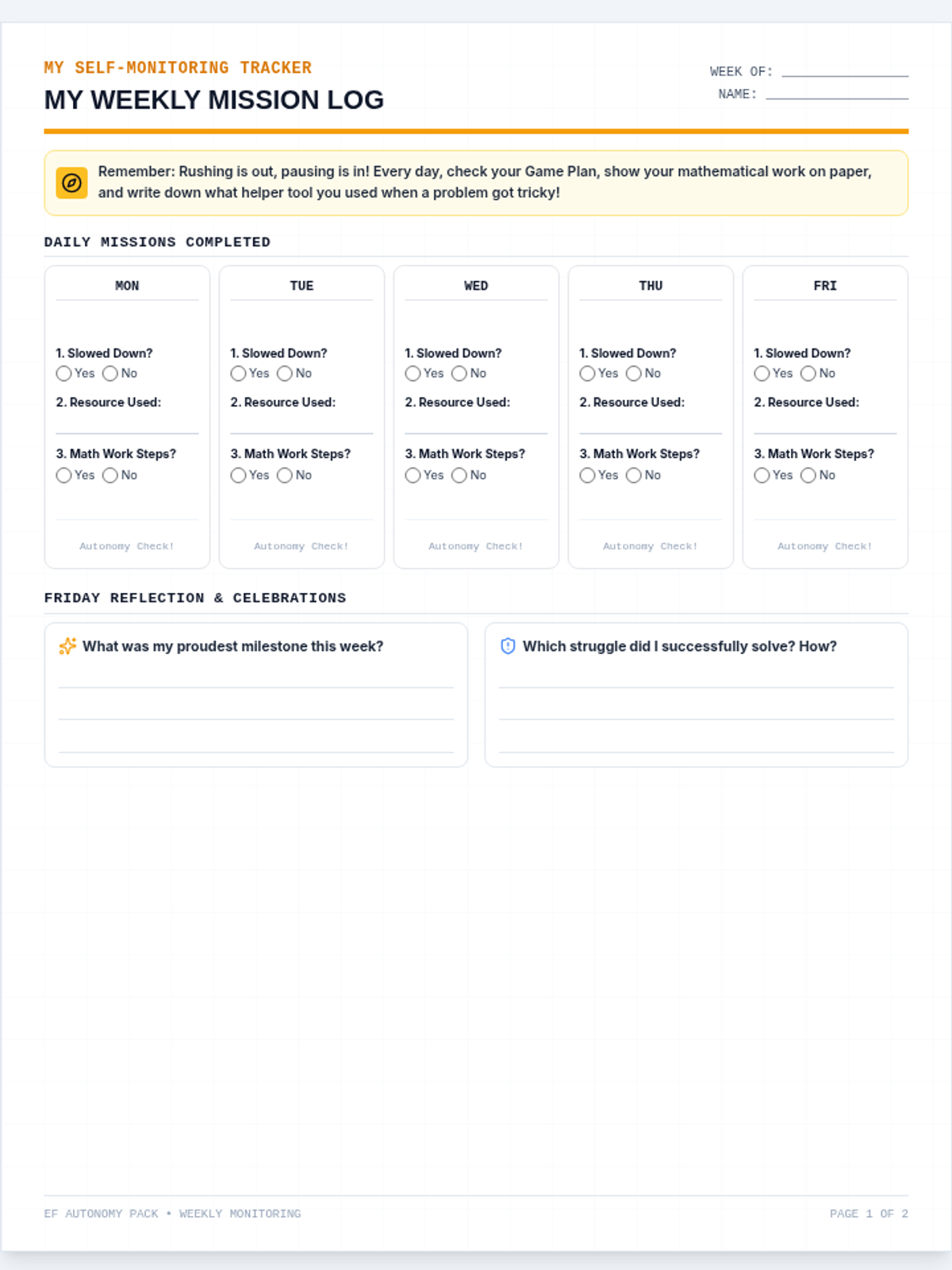
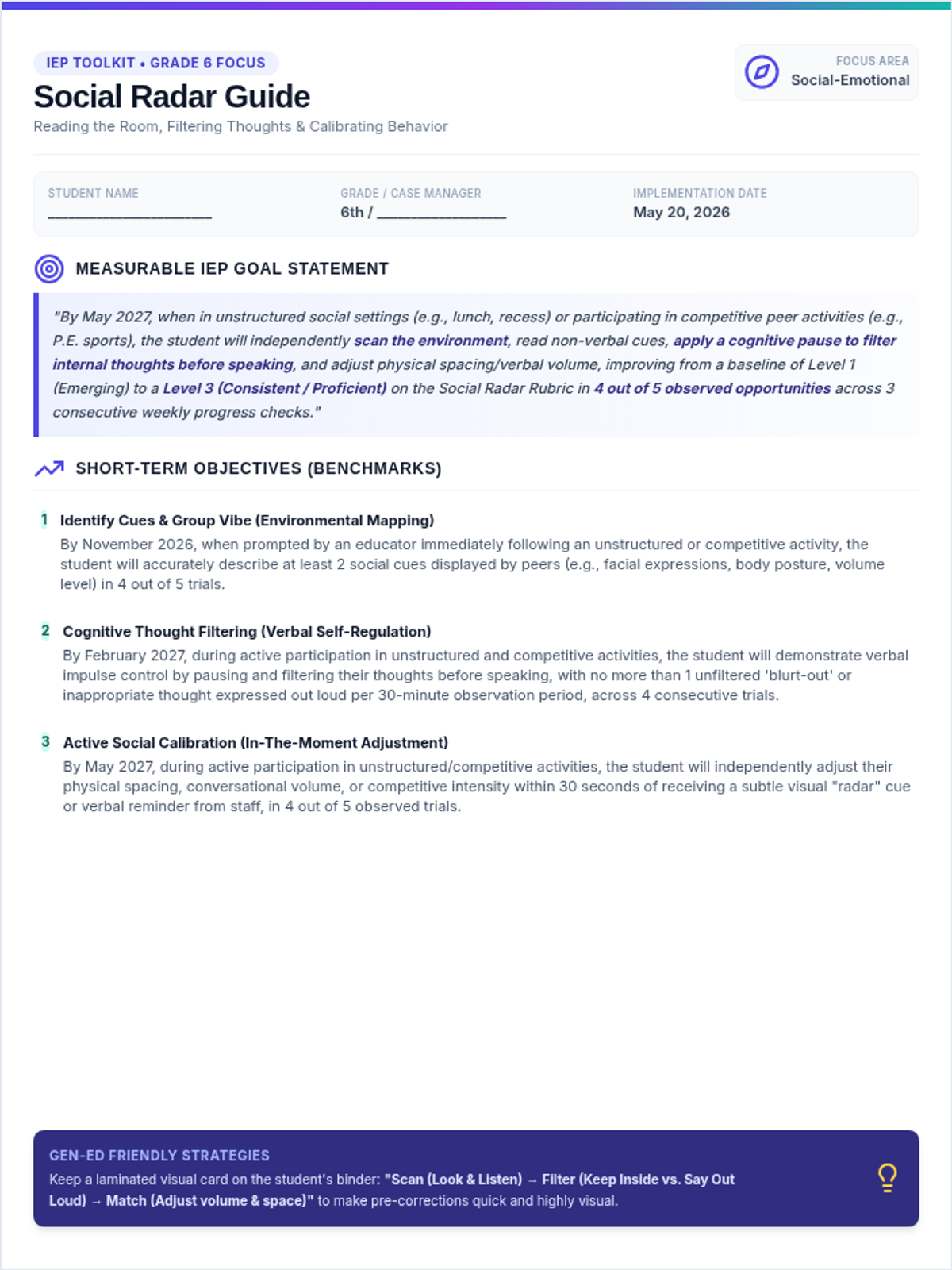
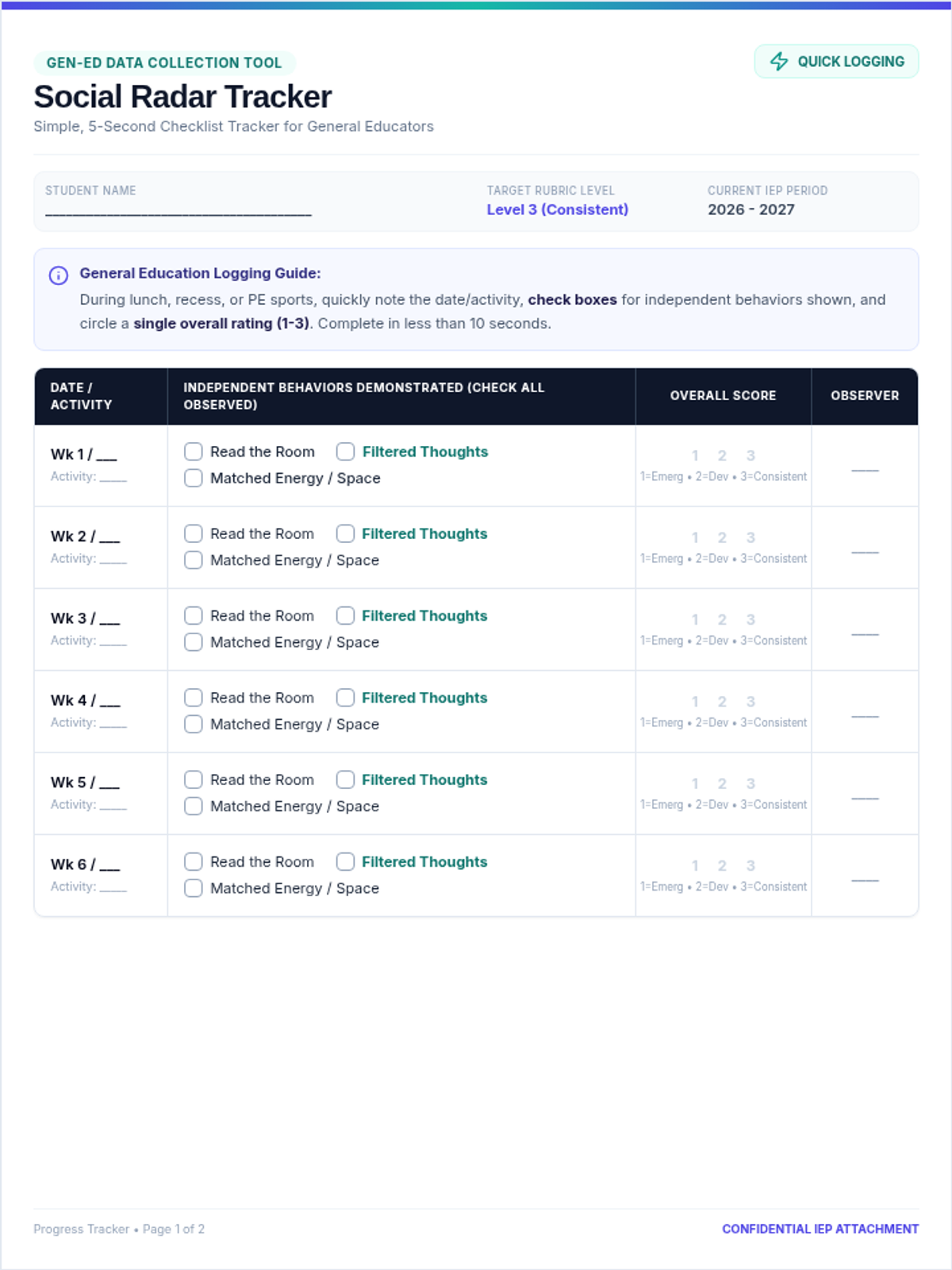
A comprehensive toolkit of data collection sheets for tracking various types of IEP goals, including frequency, duration, and trial-based skill acquisition.
A comprehensive lesson on identifying and matching essential safety signs from community, household, road, and workplace environments. This lesson focuses on visual discrimination and functional literacy through picture-to-picture matching tasks.
The final lesson of the sequence, reviewing all prefixes, suffixes, and roots with a cumulative assessment.
Covers the Latin root 'ject' (throw), emphasizing the physical meanings behind abstract academic terms.
Explores the Latin root 'struct' (build), using word trees to visualize how multiple morphemes combine.
Focuses on the Latin root 'port' (carry), connecting it to familiar words like 'transport' and 'portable'.
Introduces the Latin root 'spect' (look), identifying it in common multisyllabic academic words.
A review of all suffixes covered, featuring a 'Suffix Showdown' game and a progress monitoring check.
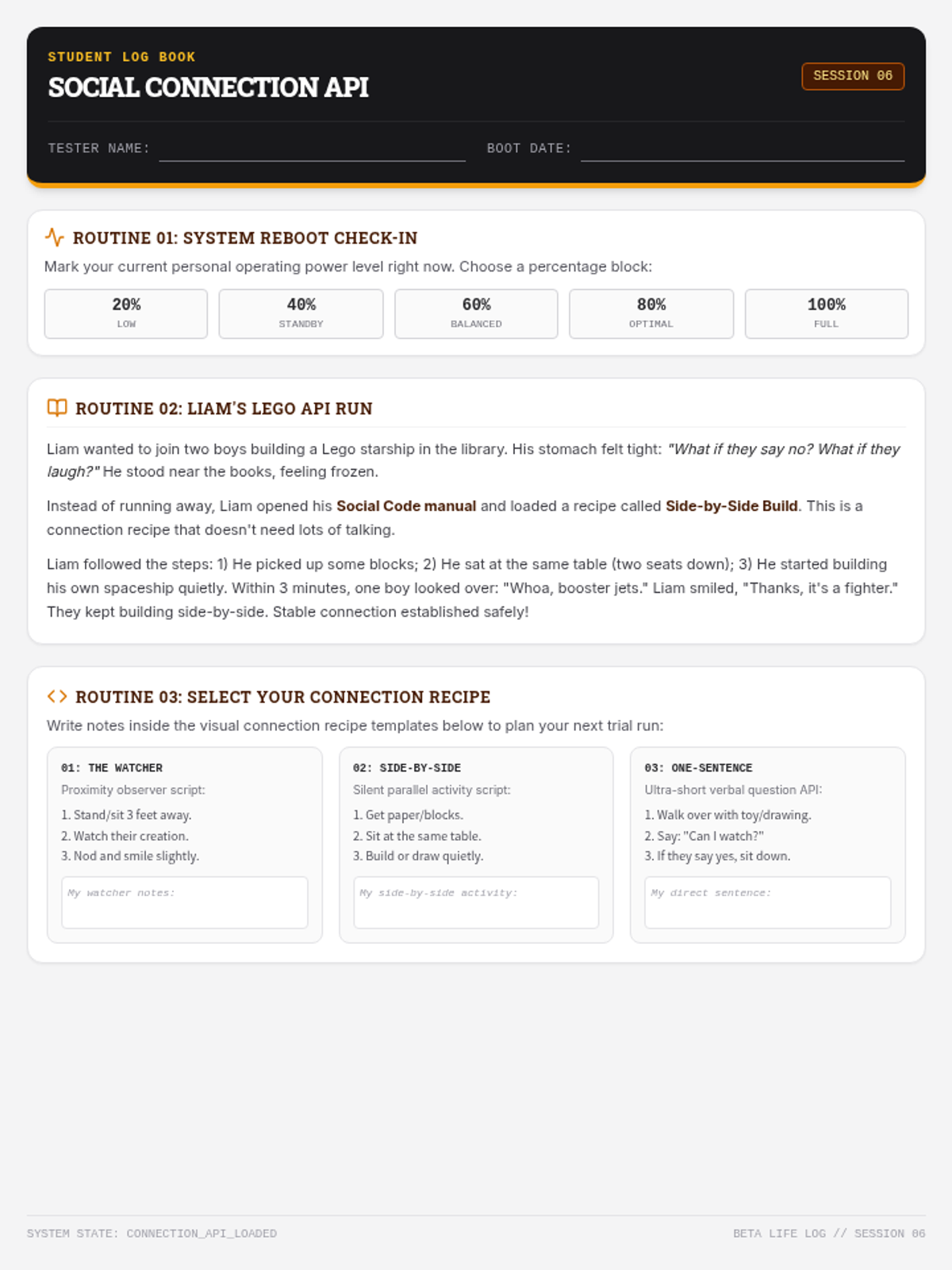
Focuses on the quantity-based suffixes -ful and -less, using contrasting word pairs to build understanding.
Explores suffixes -ment and -ity, emphasizing how they transform verbs and adjectives into abstract nouns.
Examines noun-forming suffixes -tion and -sion, focusing on spelling patterns and syllable division.
Shifts focus to suffixes -able and -ible, helping students determine when to use each based on the root word.
A review lesson of all prefixes covered in the first four lessons, including a quick progress monitoring assessment.
Introduces time-based prefixes pre- and post-, focusing on academic vocabulary used in history and science contexts.
Investigates prefixes dis- and mis- to understand words related to opposites and errors, featuring word-sorting activities.
Focuses on identifying and using common prefixes like un- and re- to decode and understand multisyllabic words. Includes word building and sentence application.
Covers the 'not' prefixes in-, im-, il-, and ir-, exploring how spelling changes based on the root word's initial letter.
Program review, celebration of growth, and completion of the EF Post-Test.
Instruction on effective note-taking and test-taking strategies tailored for middle school.
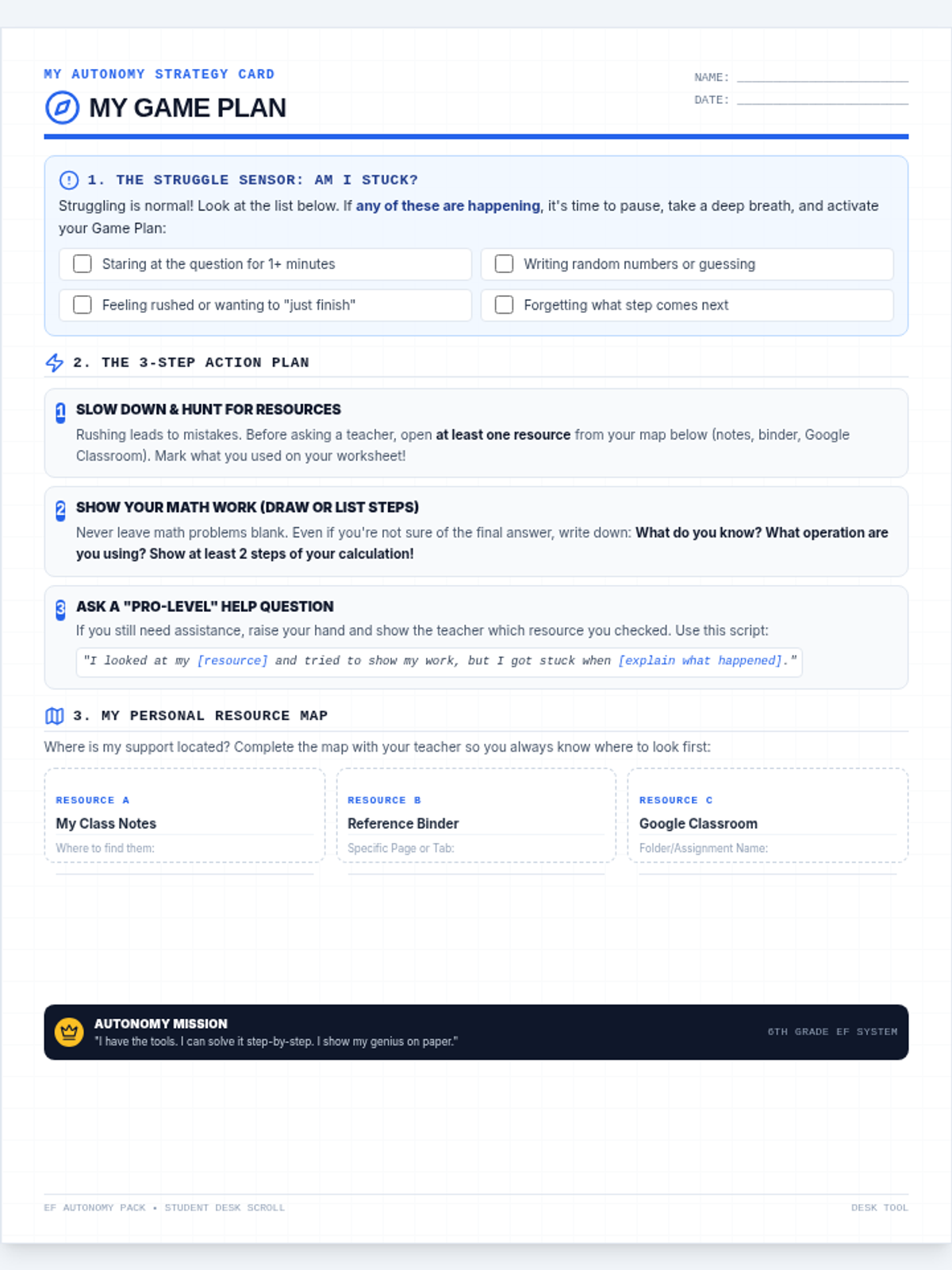
Practical strategies to defeat procrastination and streamline homework routines.
Building an awareness of time and learning how to estimate how long tasks actually take.