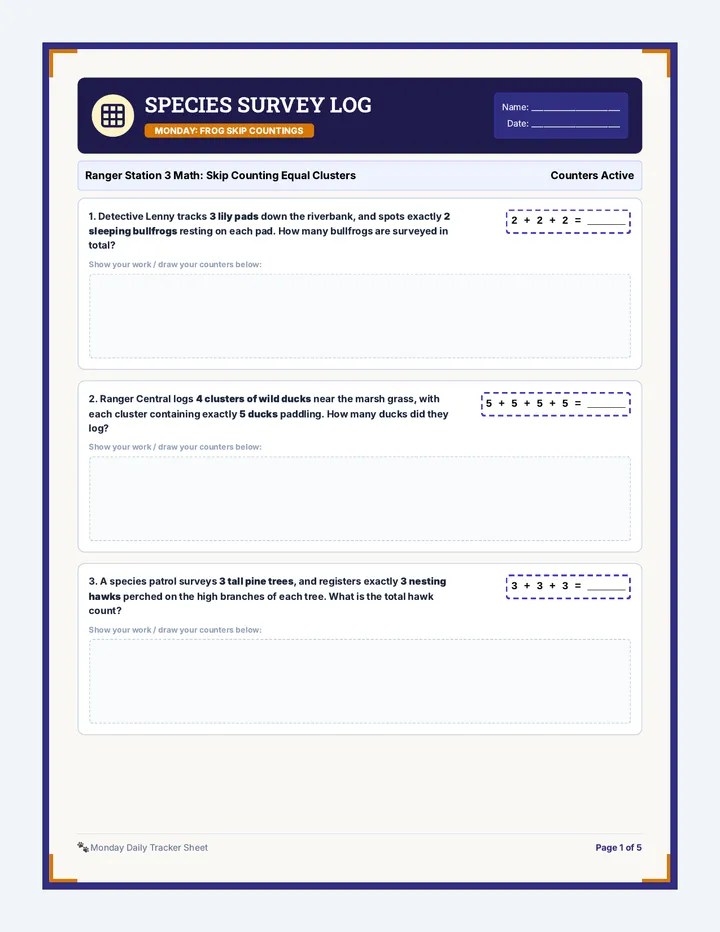
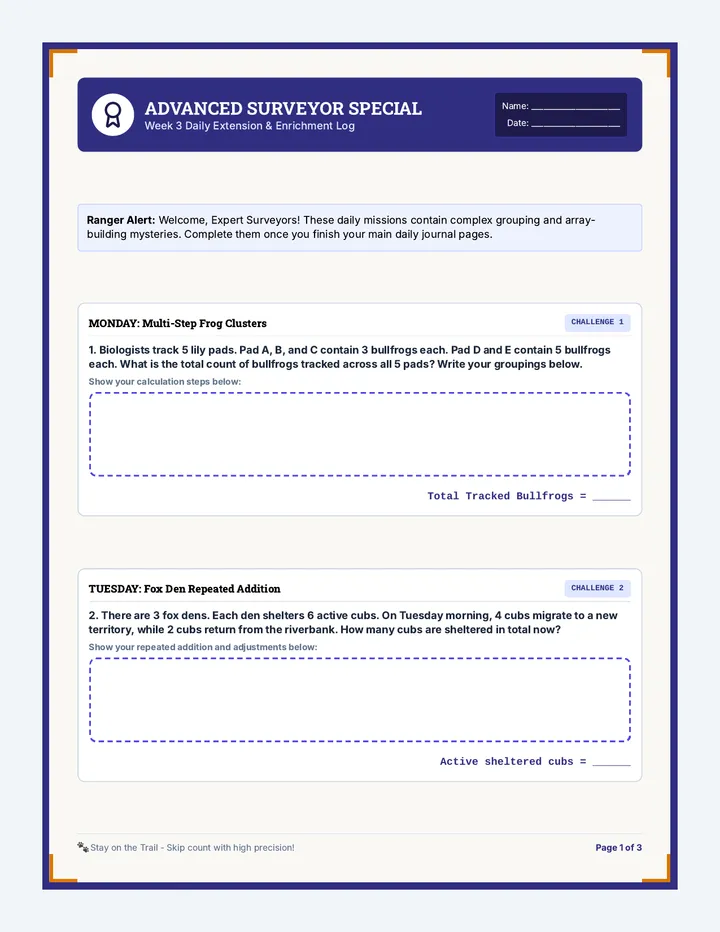
A 20-minute barrier game session for third graders focused on following and giving directions using spatial concepts (in front of, behind, below, beside, above) on a neighborhood map.
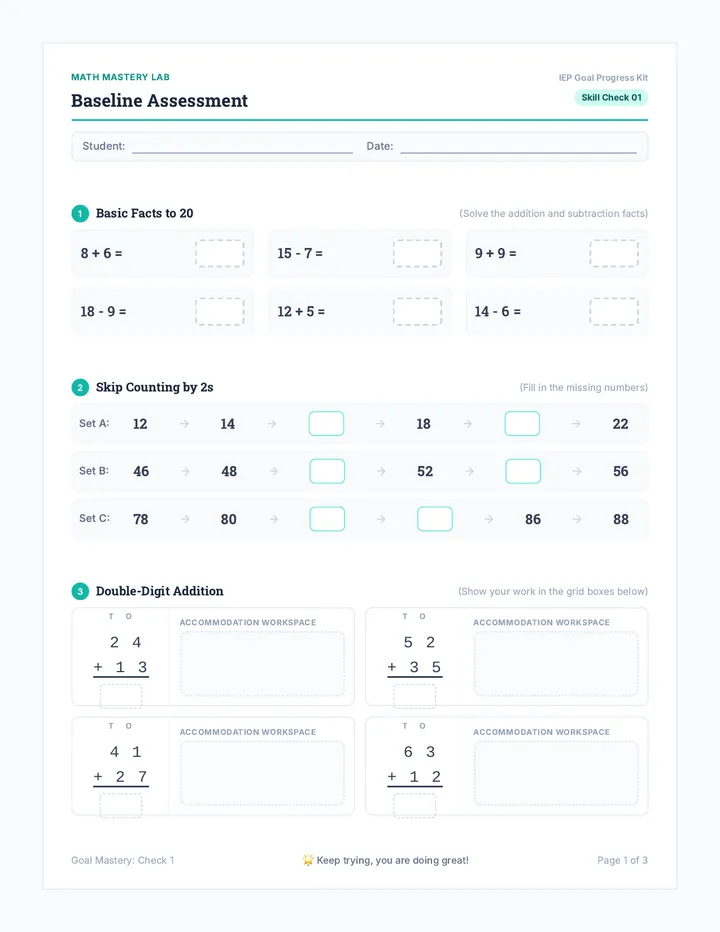
A dedicated hub for sequence-level evaluations, including the Placement Mission (pre-assessment) and the Final Graduation (post-assessment).
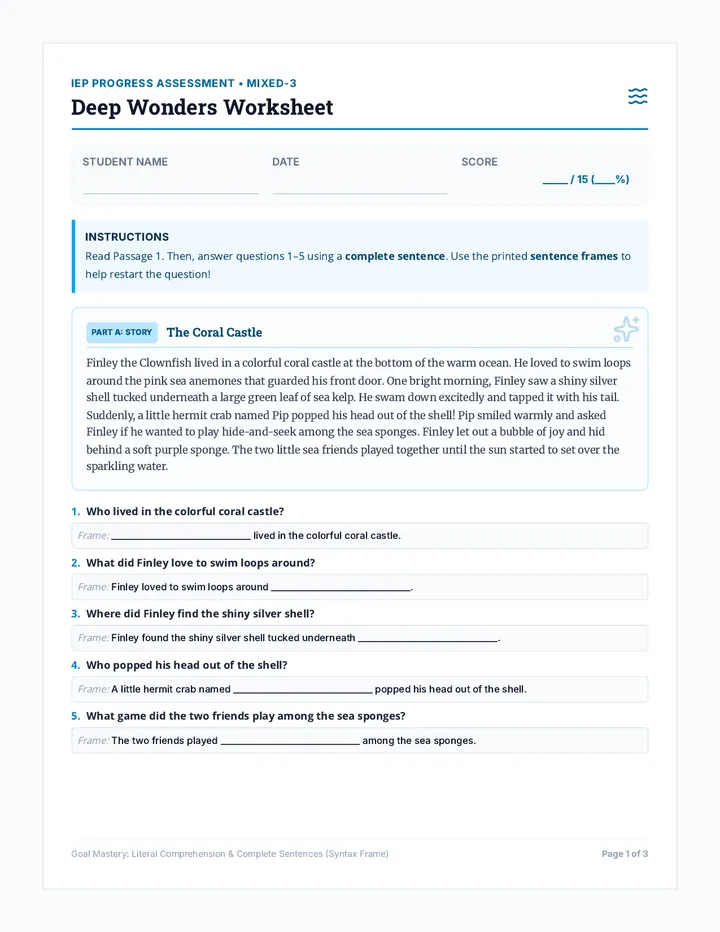
A 5-day handwriting practice program focused on animal kingdom facts and vocabulary, designed to improve fine motor skills through short, daily exercises.
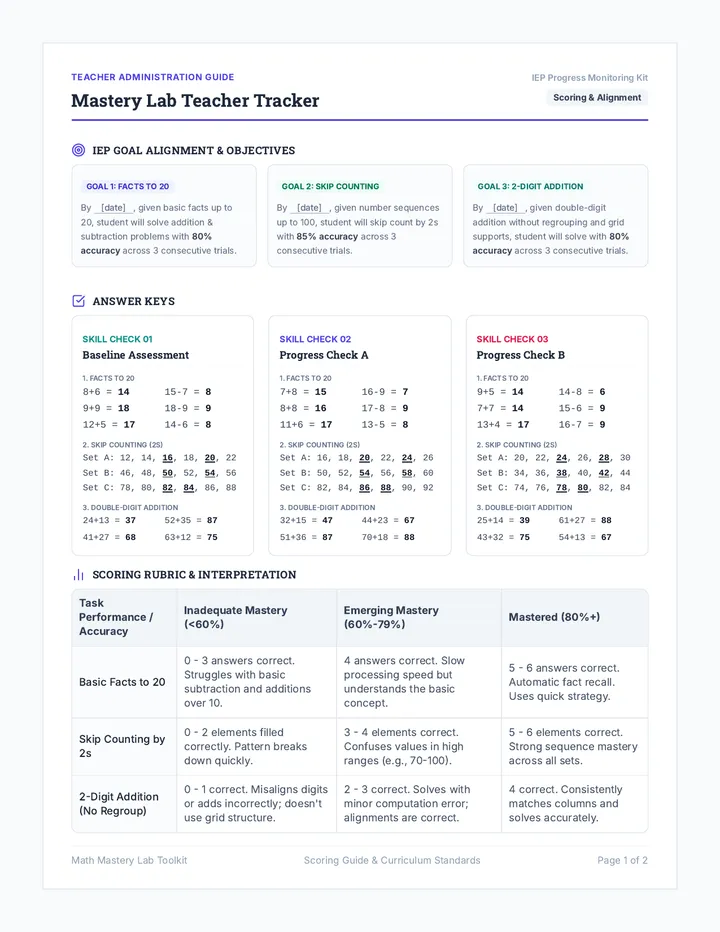
A week-long focus on multi-digit subtraction with regrouping, focusing on 'trading' tens for ones and hundreds for tens. Materials utilize base ten block imagery and expanded form to make the abstract process of borrowing more concrete and manageable.
A week-long focus on multi-digit addition with regrouping, emphasizing the connection between base ten blocks and the expanded form method. Students will practice 'making a ten' and 'making a hundred' through guided visualization and structured practice.
Week 5 concludes the series with the consonant-le syllable type. Students learn the rule of counting back three letters from the end of the word to find the syllable break.
Week 4 explores r-controlled syllables (ar, er, ir, or, ur). Students identify how the 'r' changes the vowel sound and practice decoding multi-syllabic words with these patterns.
Week 3 focuses on the Magic E (VCE) syllable type in two-syllable words. Students learn to spot the silent 'e' and apply long vowel sounds across syllable boundaries.
Week 2 introduces open syllables (V/CV pattern). Students practice dividing after the first vowel to create a long vowel sound in the first syllable.
Week 1 focuses on closed syllables (VC/CV and VCC/V patterns). Students learn to identify two consonants between two vowels and divide the word accordingly to maintain short vowel sounds.
A comprehensive lesson on the events of Holy Week designed for early elementary students with dyslexia, focusing on sequencing and retelling skills through visual aids and hands-on activities.
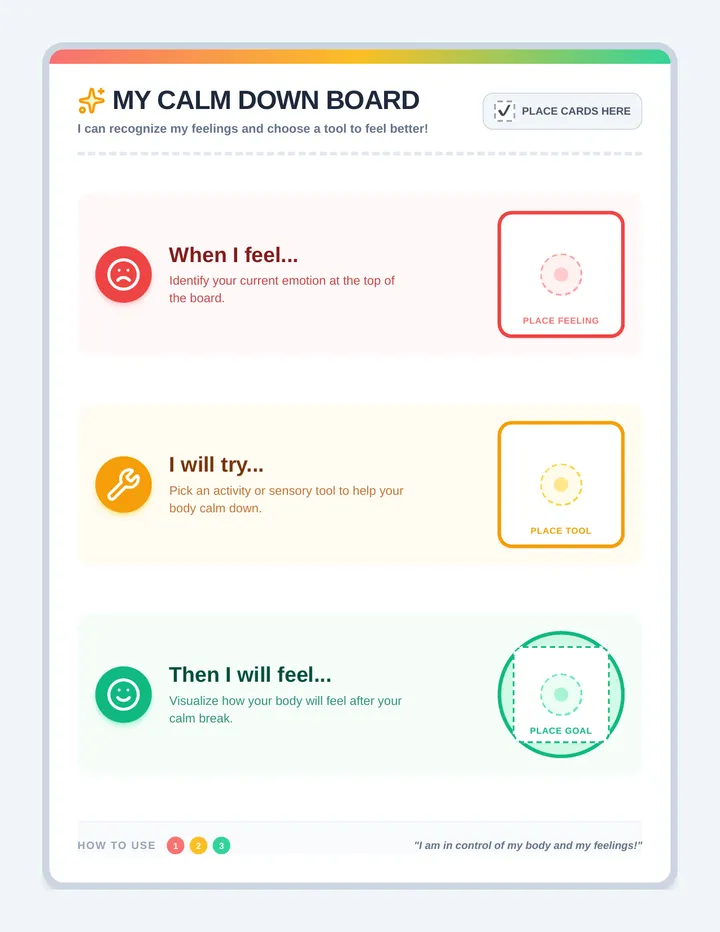
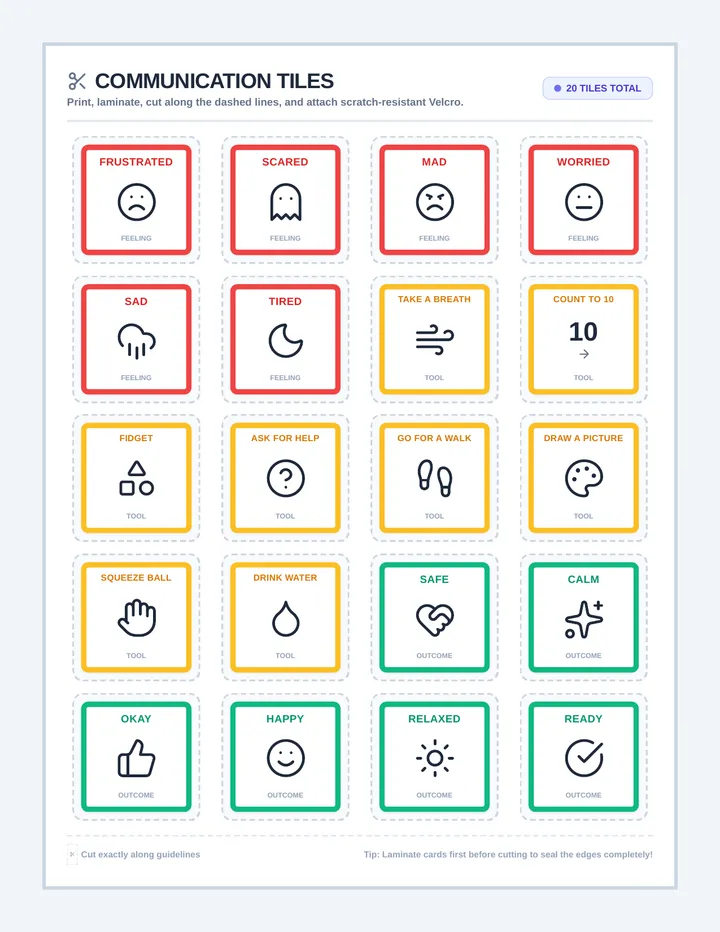
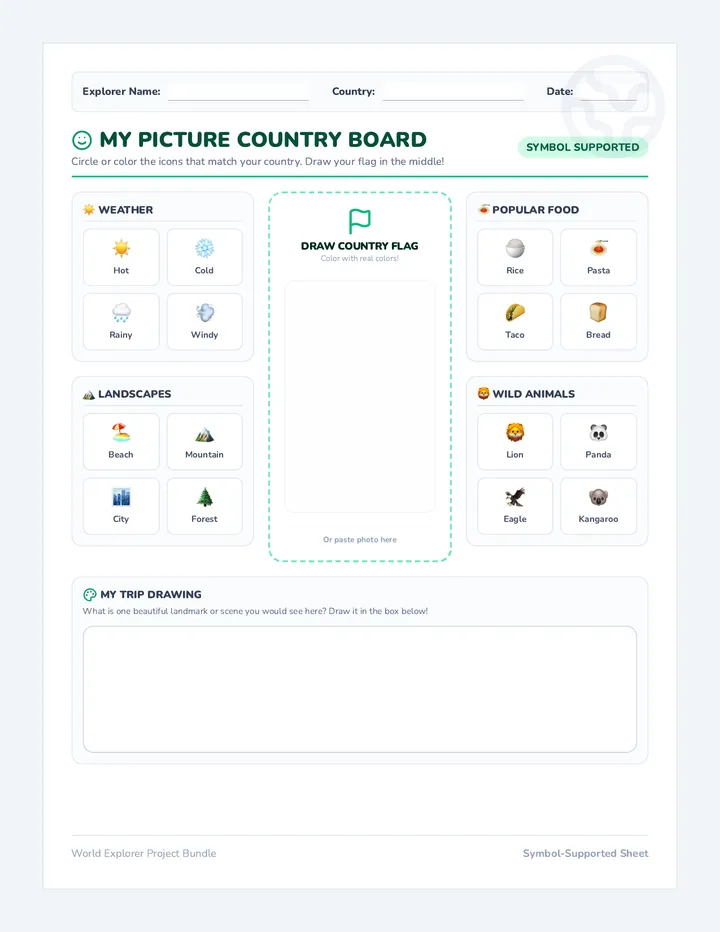
A collection of resources to support students using symbol-based communication systems to express needs and engage in learning.
Reviewing all steps and setting a long-term goal for classroom independence.
Practicing 'Pause Power' in controlled classroom situations.
Understanding how charting success leads to 'Power Rewards' (bonus break time).
Preparing to transition back to academic work and re-entering the classroom flow.
Activities during the 'Pause' that lead to regaining self-control and readiness to learn.
The mechanics of requesting a break through verbal and non-verbal cues.
Understanding what a 'Pause Power' break is, its purpose (self-control, not just escape), and how it works.
Identifying the feelings of 'shutting down' or avoidance and framing them as signals that it's time for a 'Pause'.
A lesson focused on teaching elementary students, particularly those with autism, how to effectively use verbal initiations to start conversations with peers.
A collection of fairy-tale-themed behavioral support materials designed for a student with PDA, focusing on autonomy, high-interest themes, and low-demand framing.
A sensory regulation routine using self-applied deep pressure to help students ground themselves and manage overstimulation. The lesson includes visual squeeze cards for the student and a facilitation guide for the teaching assistant.
This lesson focuses on a simplified version of 'Eyes Looking to the Sky,' using visual supports, scaffolded questions, and sentence stems to help students with IEPs understand the themes of navigation and journey.
Tier 3 intensive instruction for students requiring the highest level of linguistic and cognitive scaffolding. This lesson focuses on the fundamental 'subject-verb-object' structure of goal setting through highly visual, interactive 'action blocks' and one-on-one facilitation.
A comprehensive system to help students master desk and locker organization through a 'Mission Control' theme, including visual checklists and instructional slides.
A comprehensive introductory lesson on functional money management and grocery store navigation, designed for students with diverse communication and reading needs. Students will practice identifying currency, matching prices, and using visual choice boards to navigate a simulated market environment.
A collection of 'Where' question task cards and choice boards focusing on essential life skill environments including home, school, work, and community.
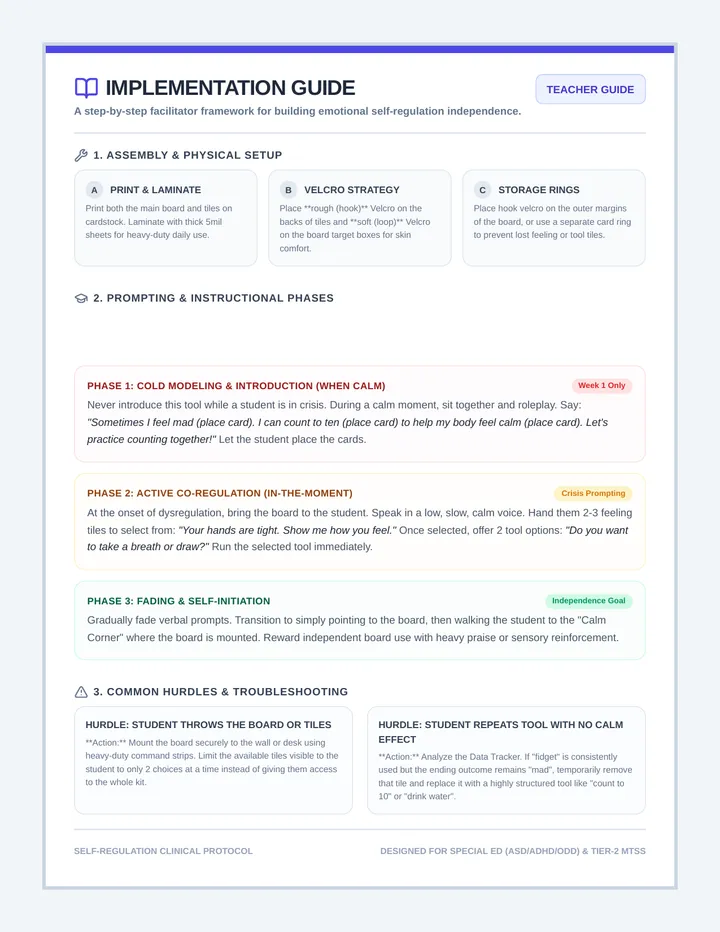
A comprehensive lesson focusing on self-regulation, emotional communication, and frustration management. It includes a formal IEP goal framework, a detailed rubric for tracking progress, and student-facing tools for identifying triggers and using coping strategies.
A modified reading unit for IEP students (2nd-3rd grade level) based on the story 'Eyes Looking to the Sky'. Includes simplified text, visual vocabulary, and a picture-supported comprehension quiz.
A hands-on introduction to basic budgeting and grocery shopping. Students practice identifying prices, comparing costs, and making simple purchasing decisions using dollars and cents with high visual support.
A social story and support materials to help students in an 8:1:1 setting understand the importance of wearing a helmet during Adapted PE bike activities.