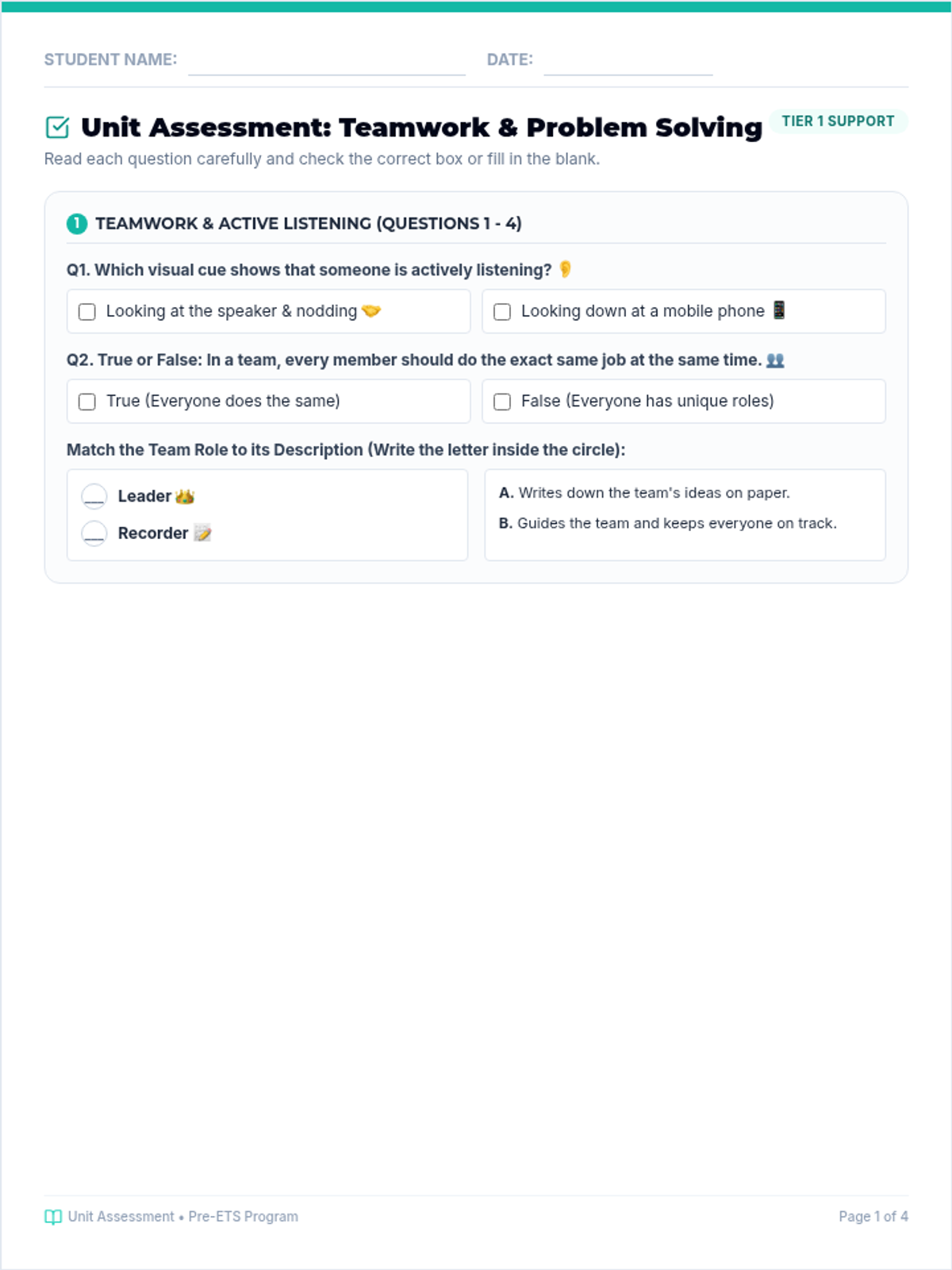
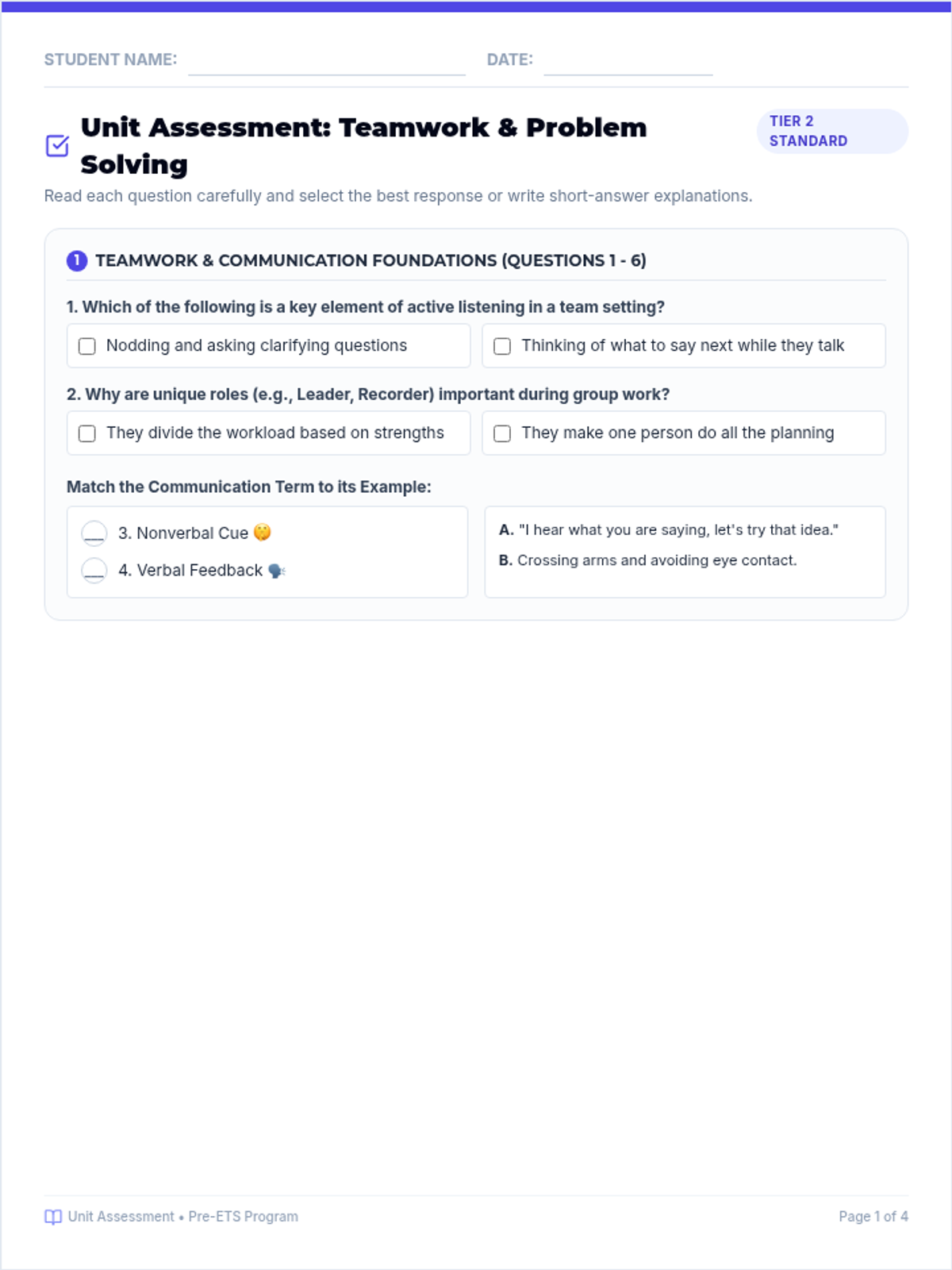
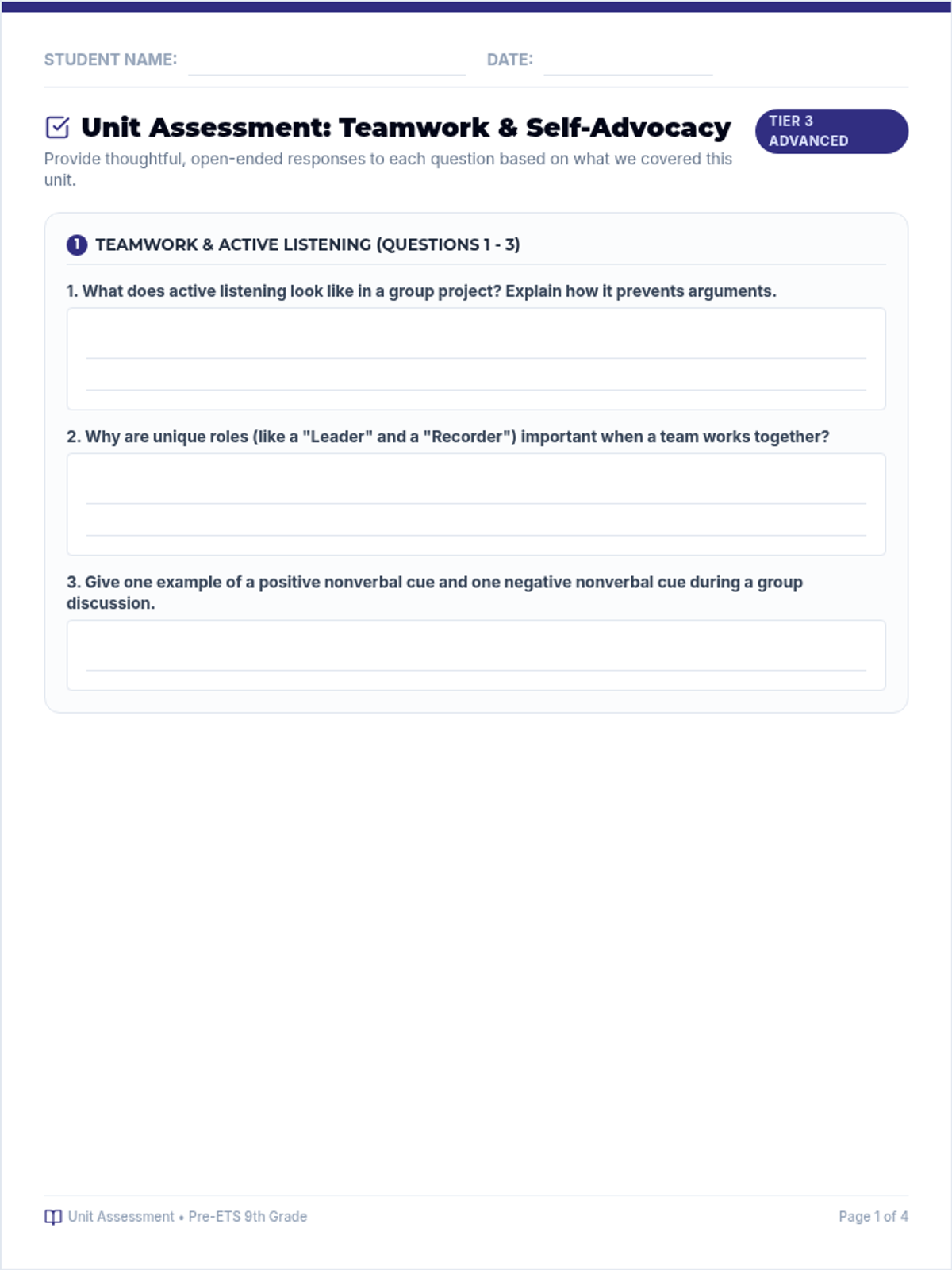
A structured, non-evaluative walkthrough initiative for intermediate school leaders, focusing on active engagement, manipulatives, and hands-on learning in all subject areas to compile actionable school-wide trend data.
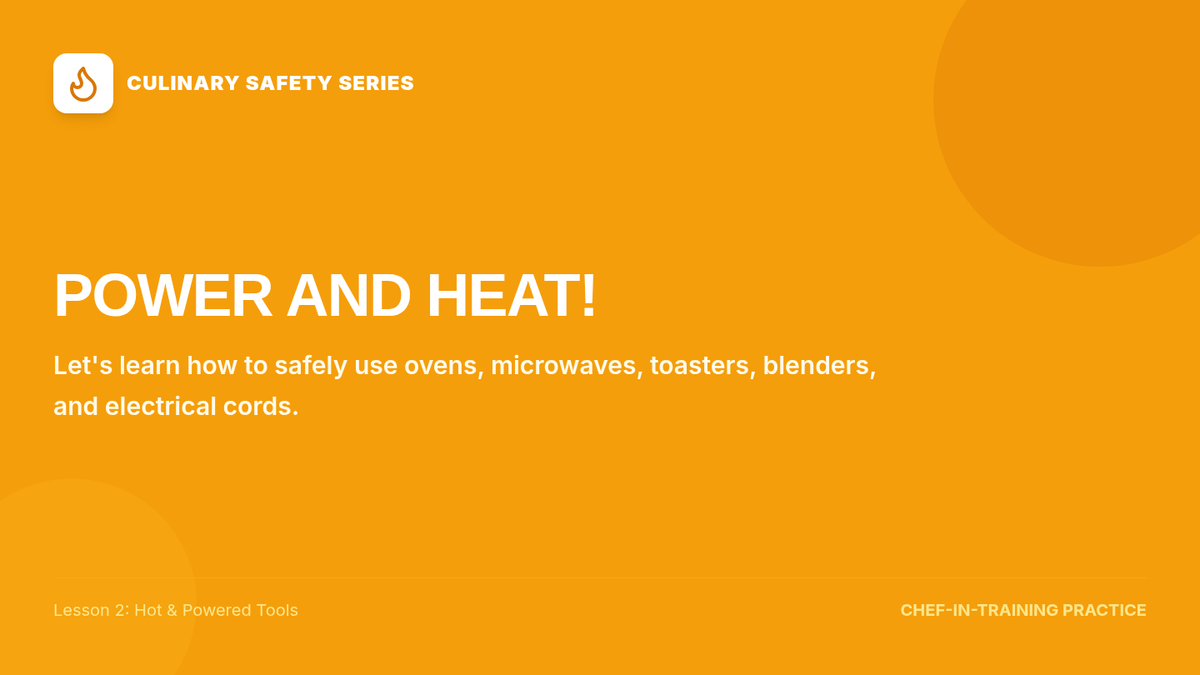
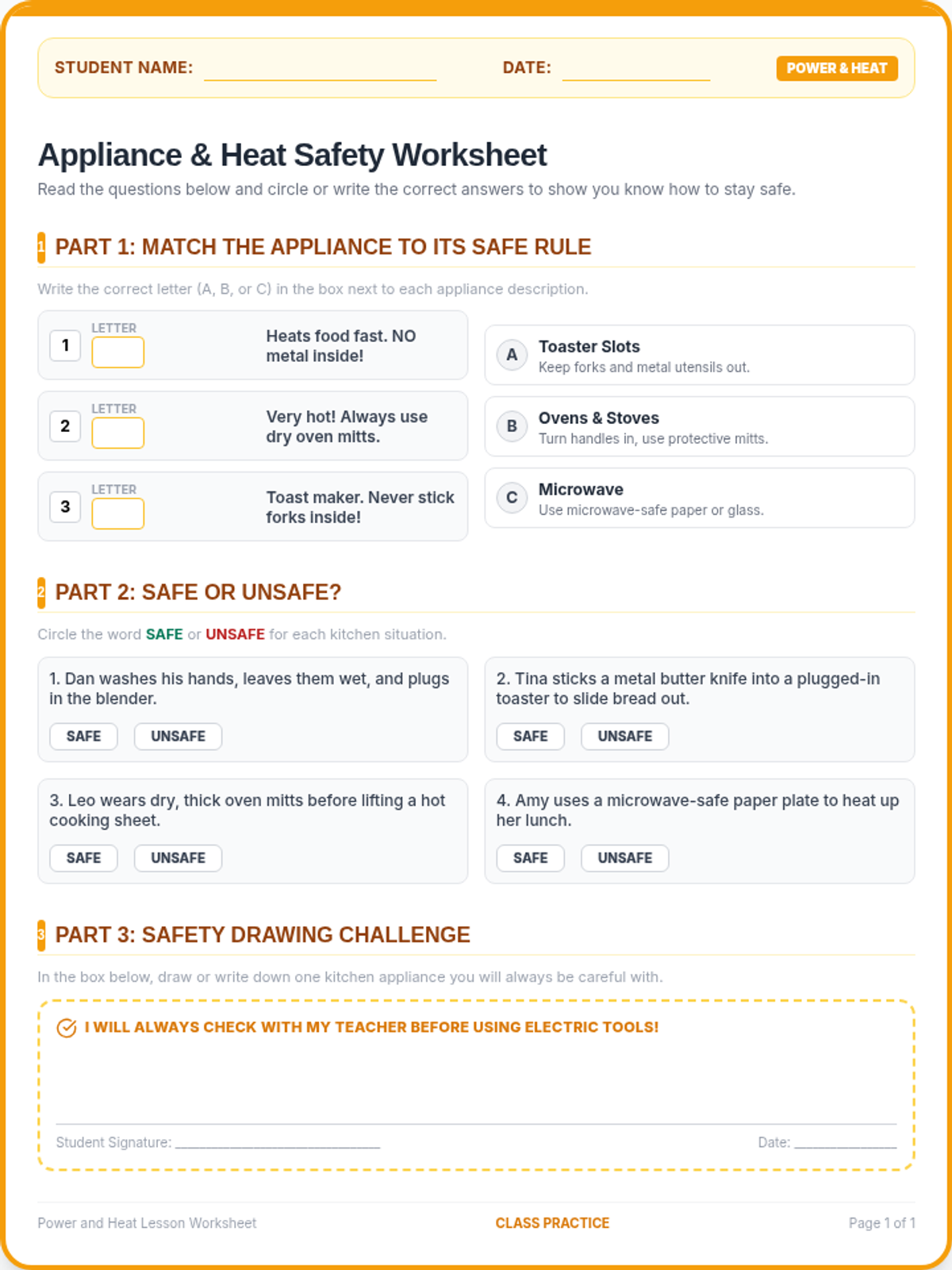
A comprehensive lesson focusing on heat safety, general kitchen appliances (microwaves, ovens, toasters, blenders), and electrical safety. It includes interactive visual slides and a matching worksheet tailored for high school special needs students.
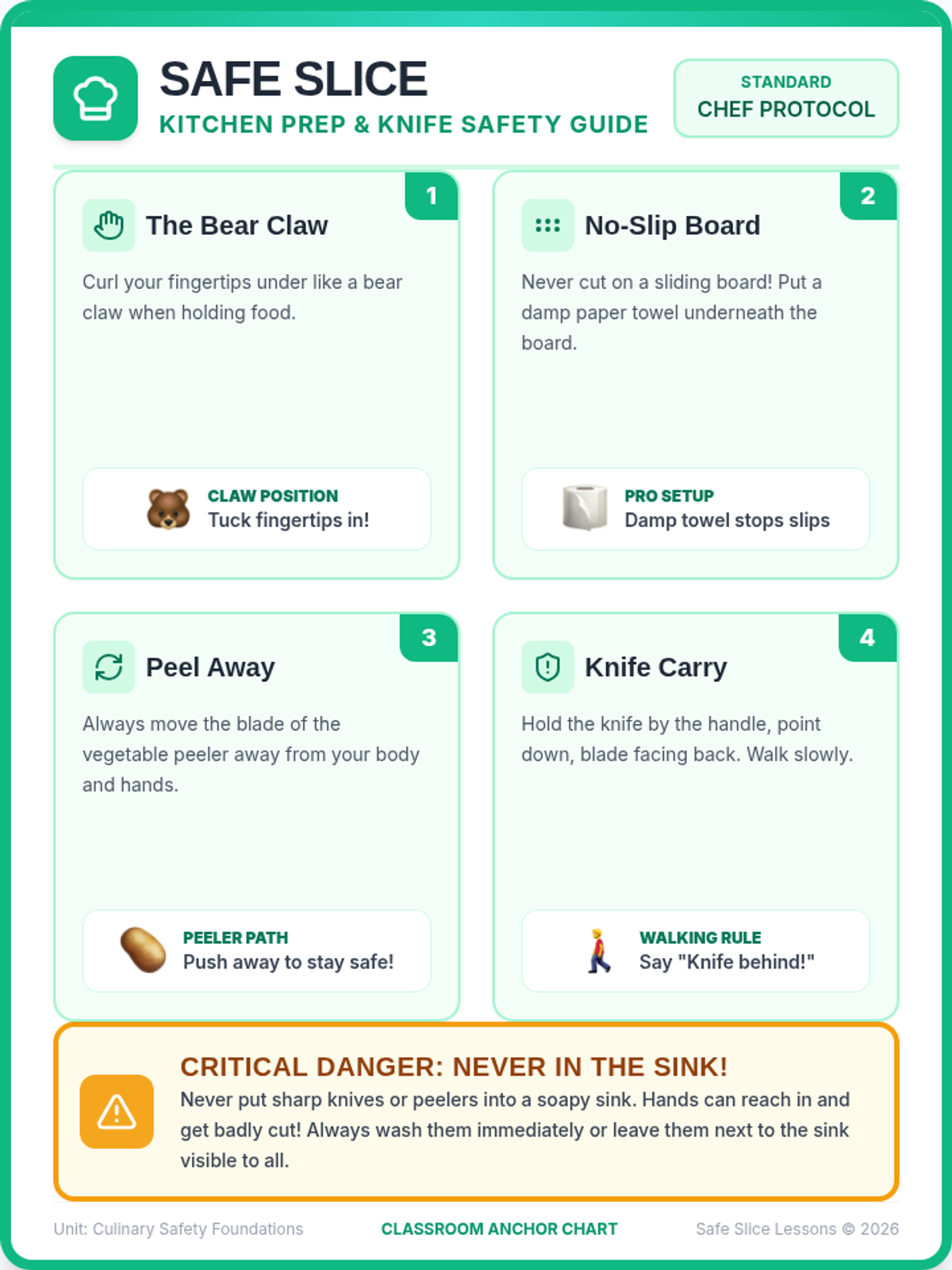
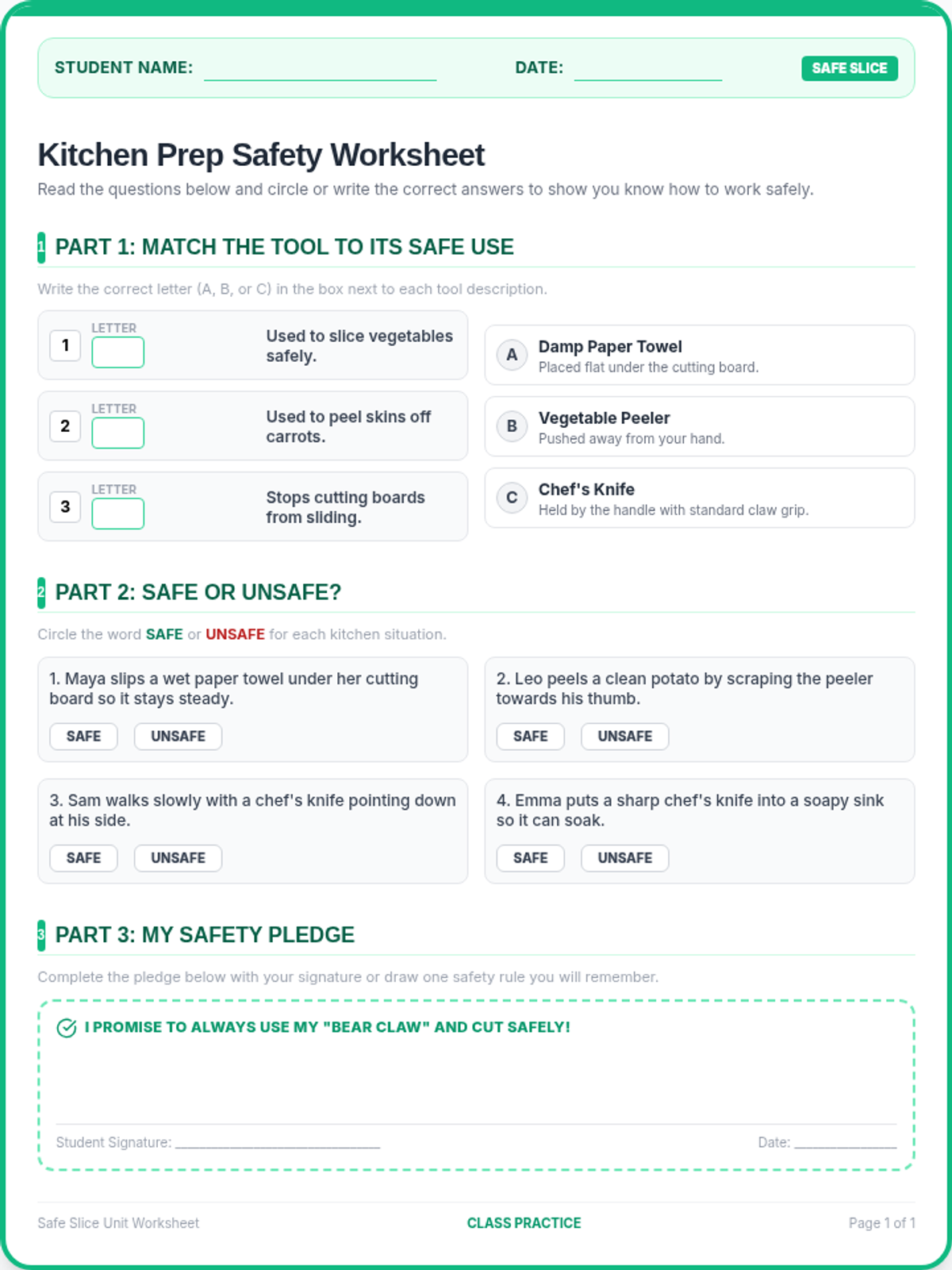
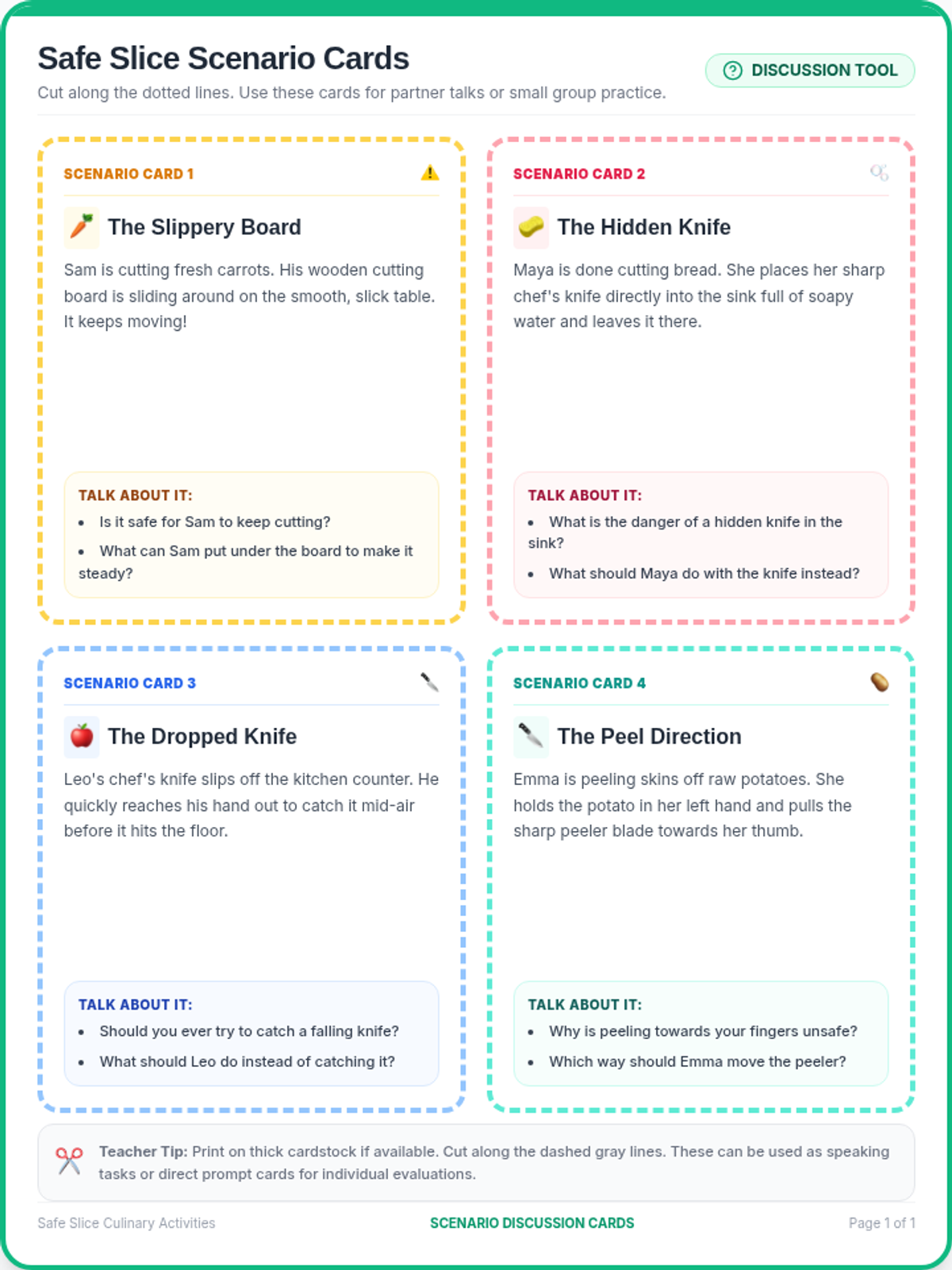
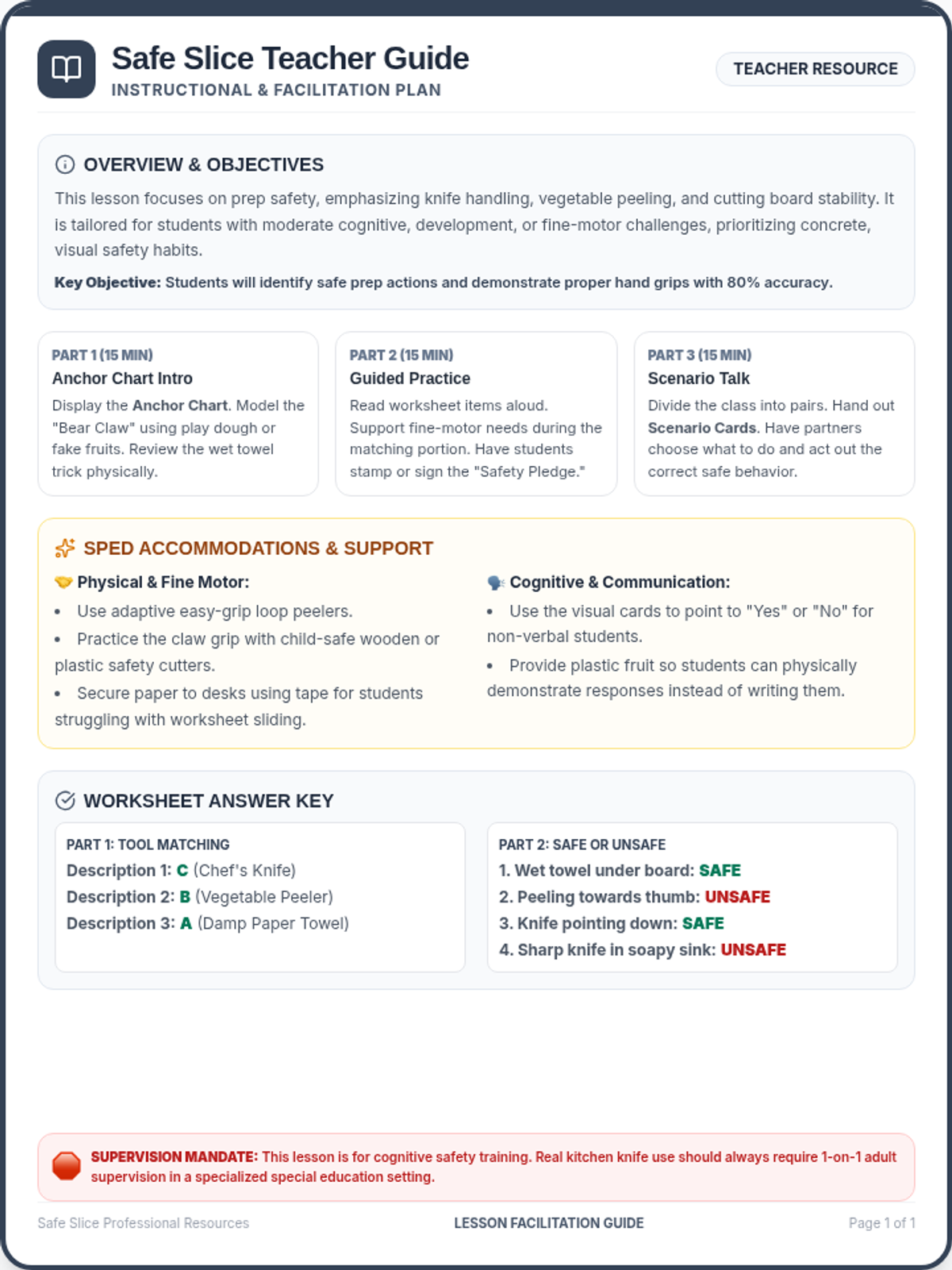
A comprehensive kitchen safety lesson focusing on cutting and preparation tools, designed for high school special education students. It includes visual guides, matching practice, and real-world scenario cards to teach knife safety, peeling, and cutting board stability.
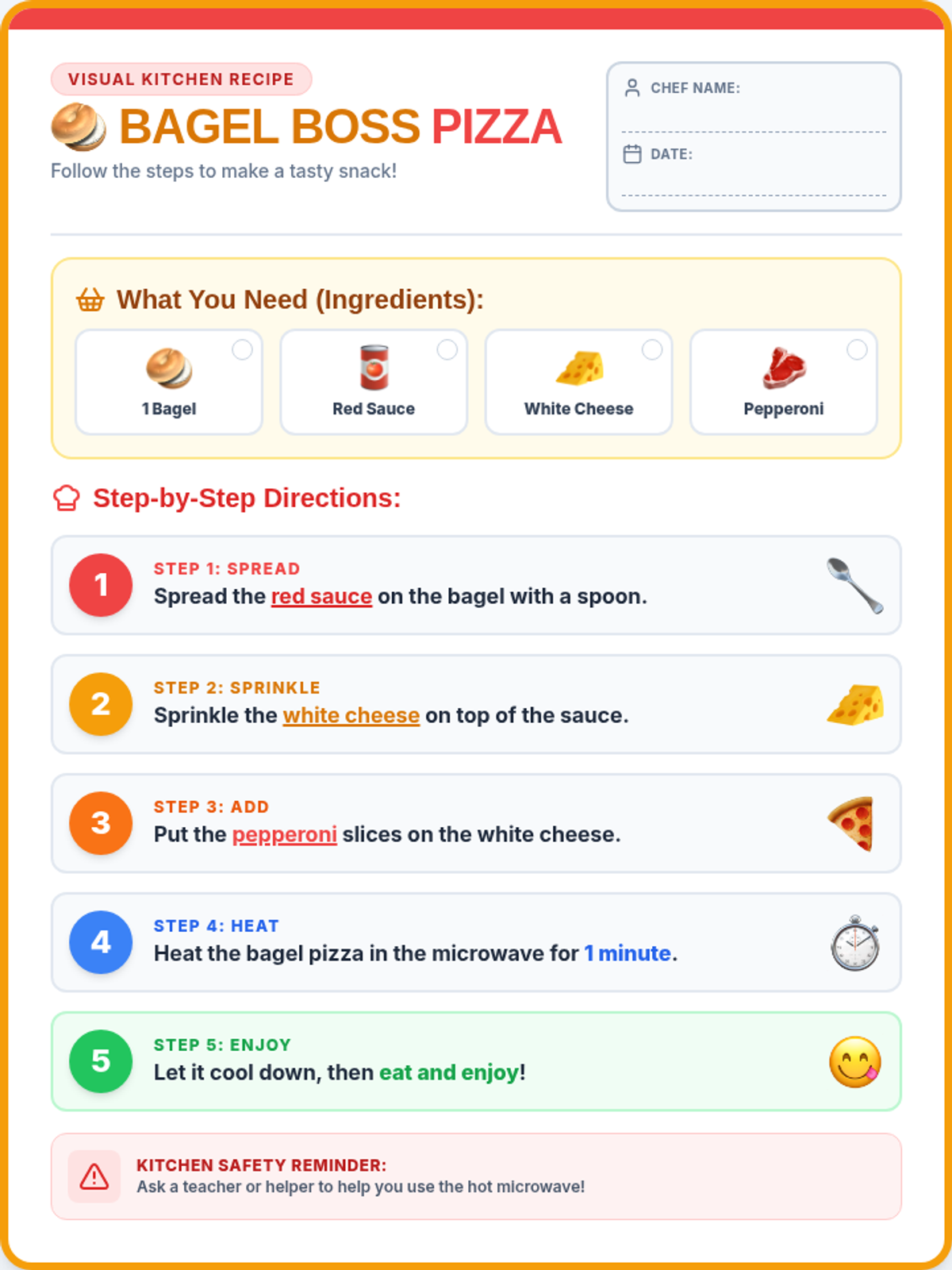
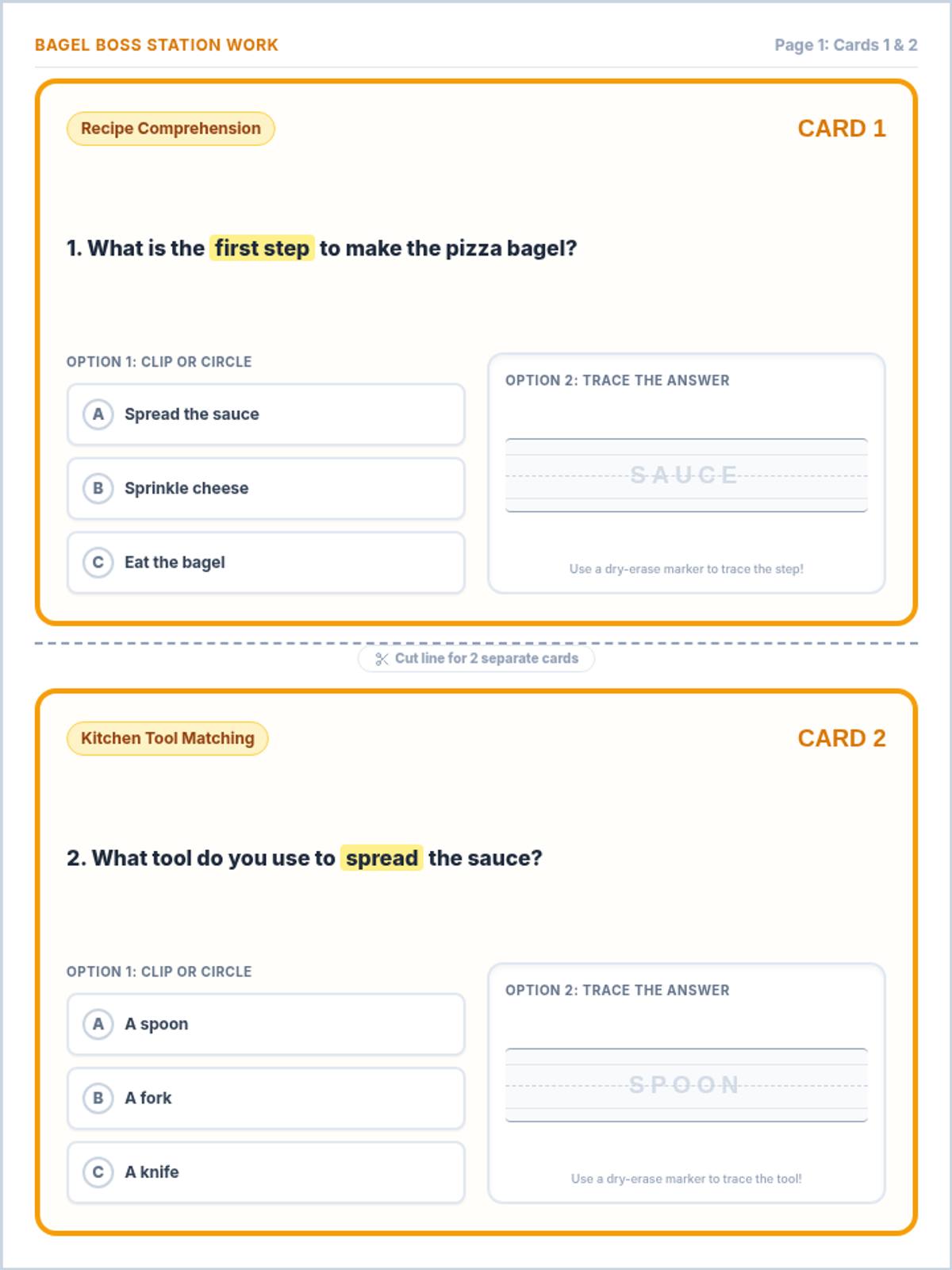
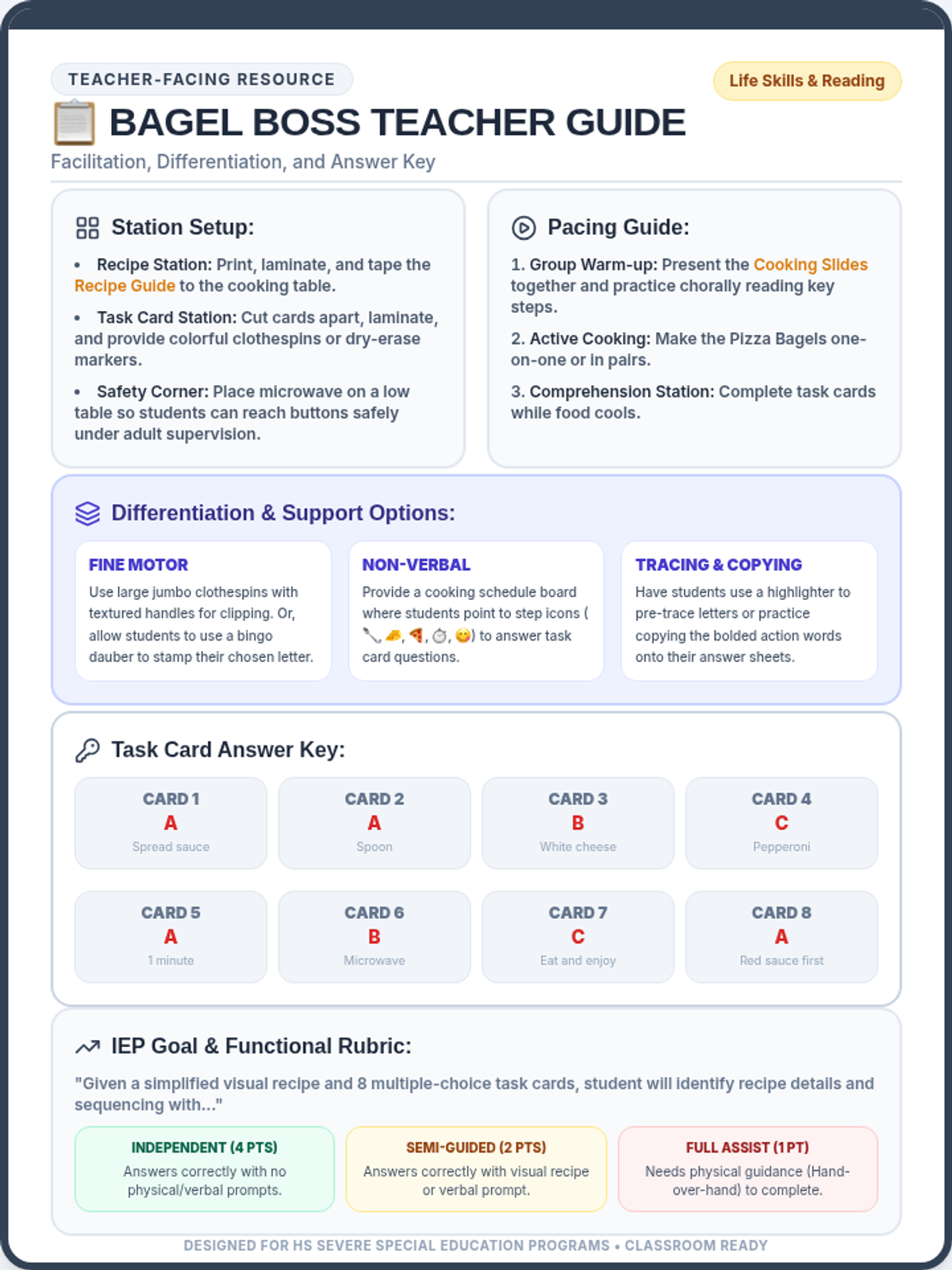
A highly visual, step-by-step cooking and comprehension lesson for students with severe special needs. Students learn to read a simplified recipe for Pizza Bagels and answer functional text comprehension questions using reusable task cards with tracing, copying, or clip-card options.
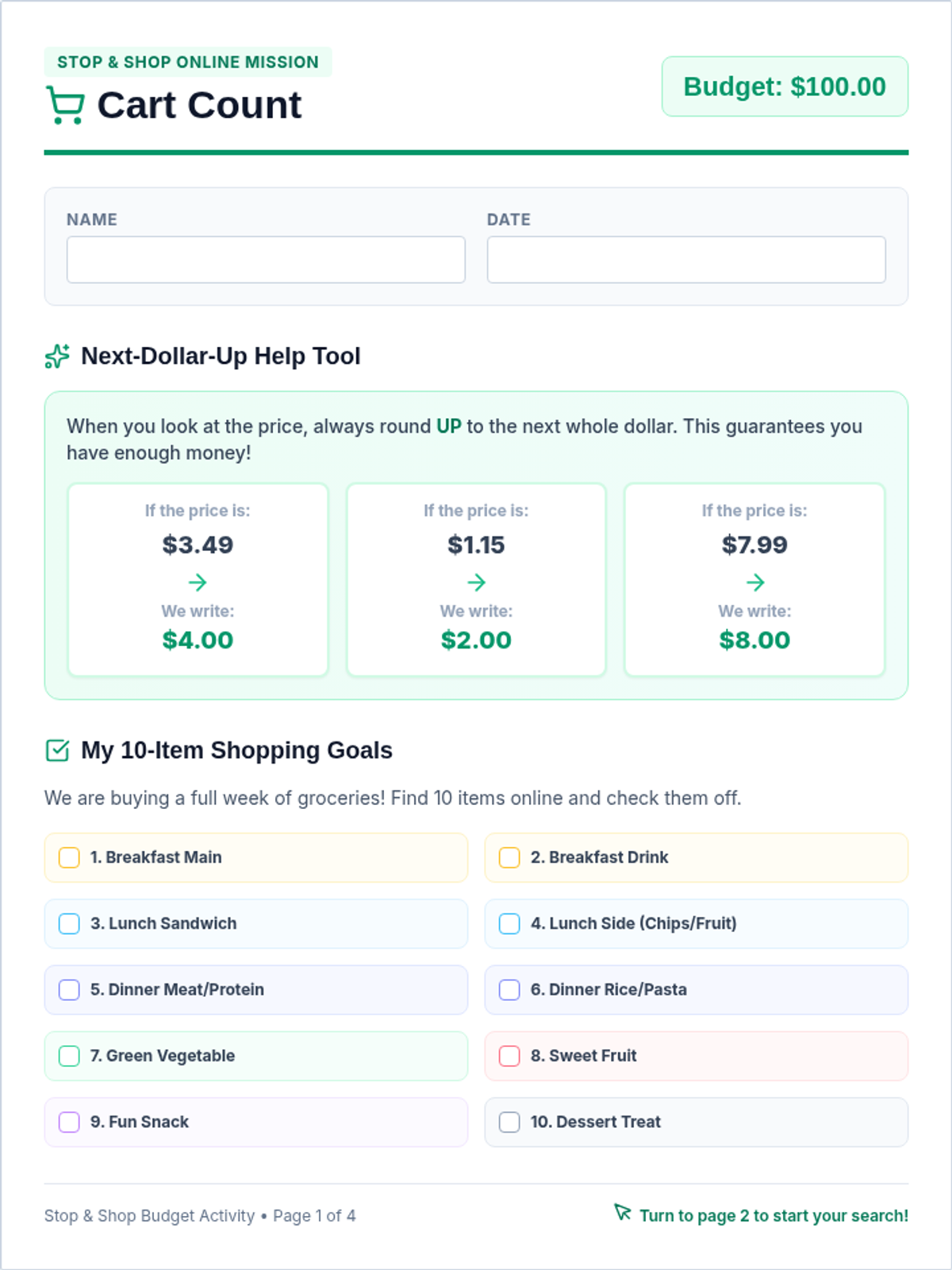
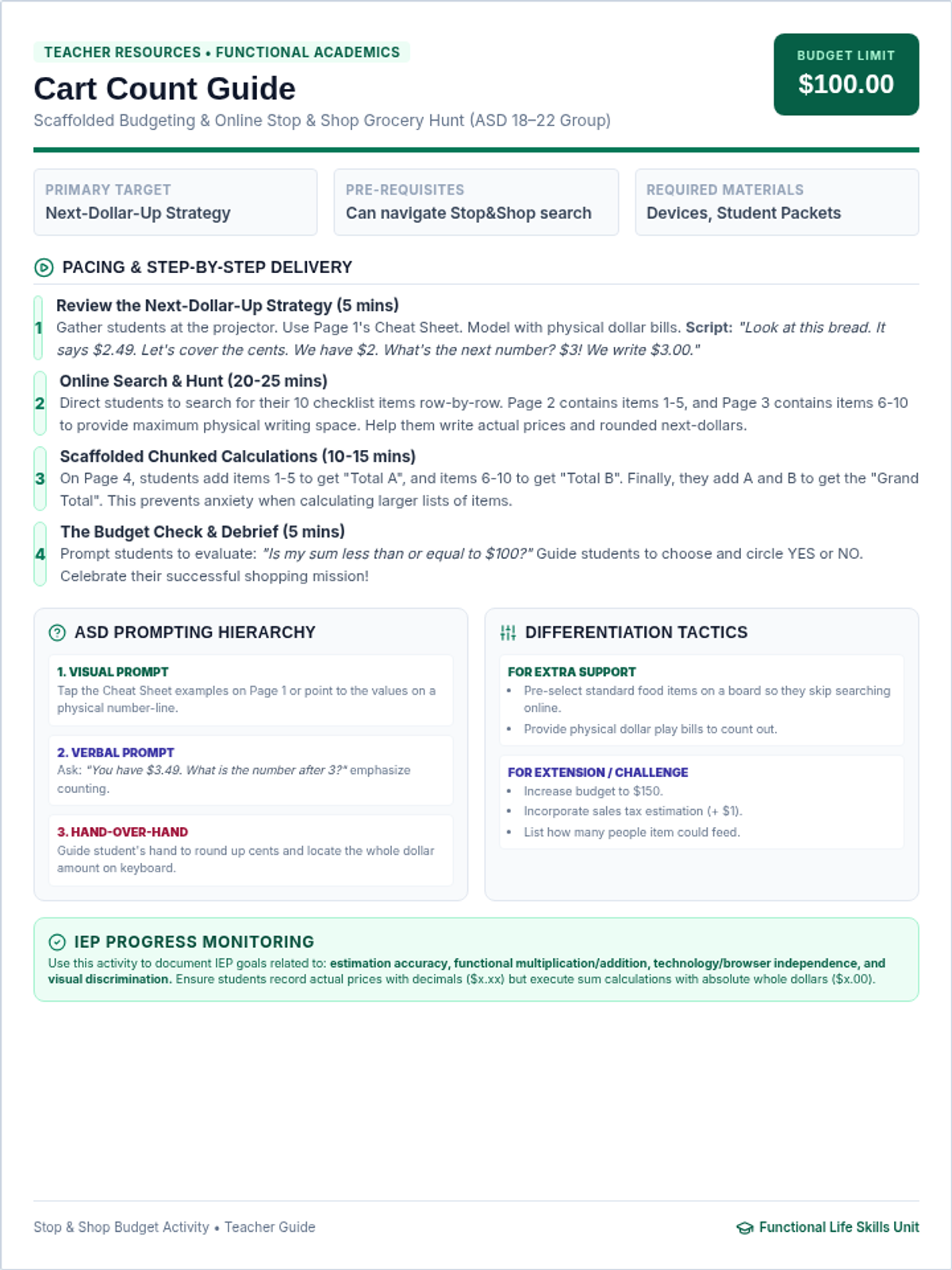
A highly scaffolded functional math lesson where students use the next-dollar-up estimation strategy to shop online at Stop & Shop, planning meals and staying strictly within a budget.
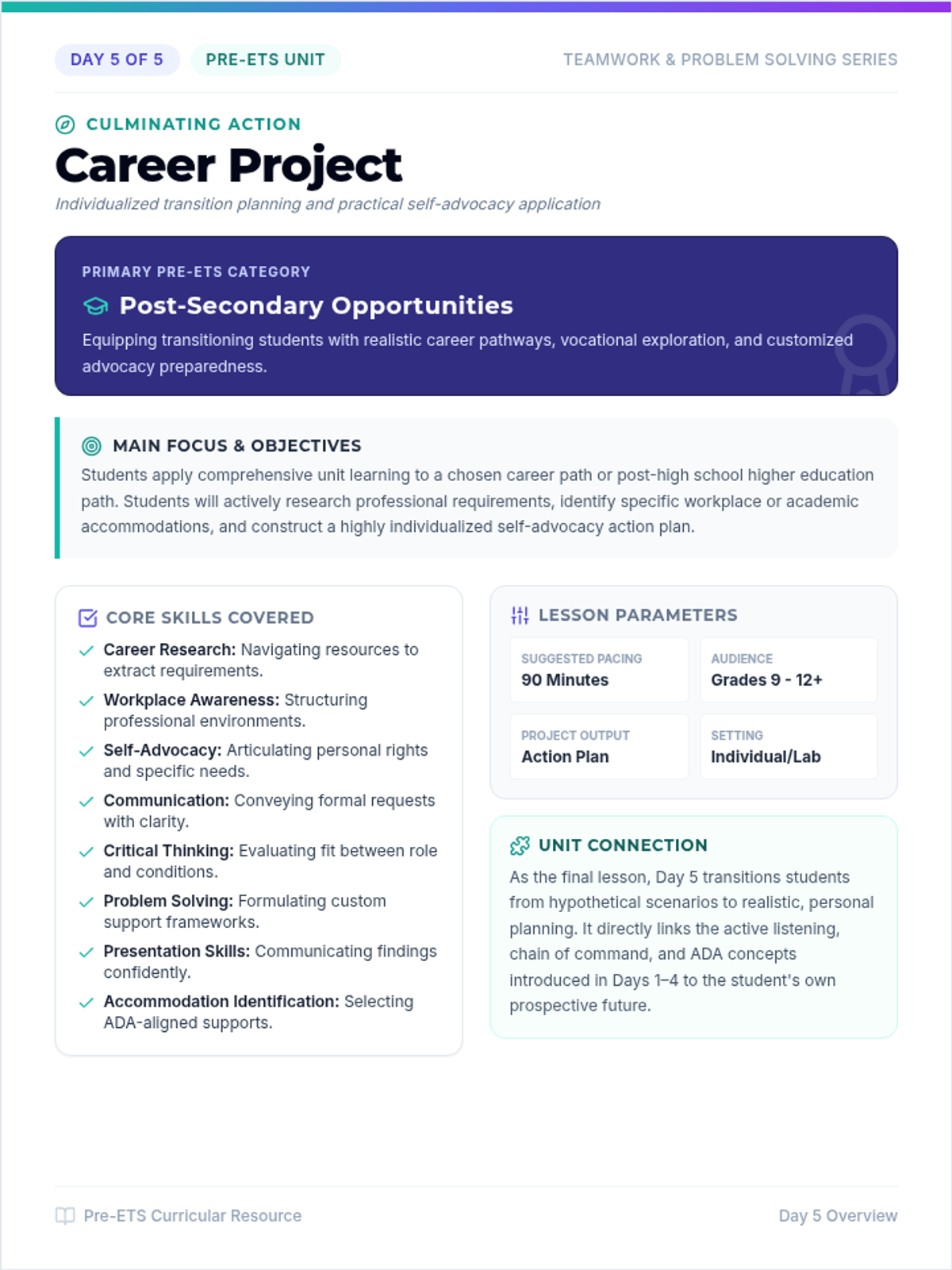
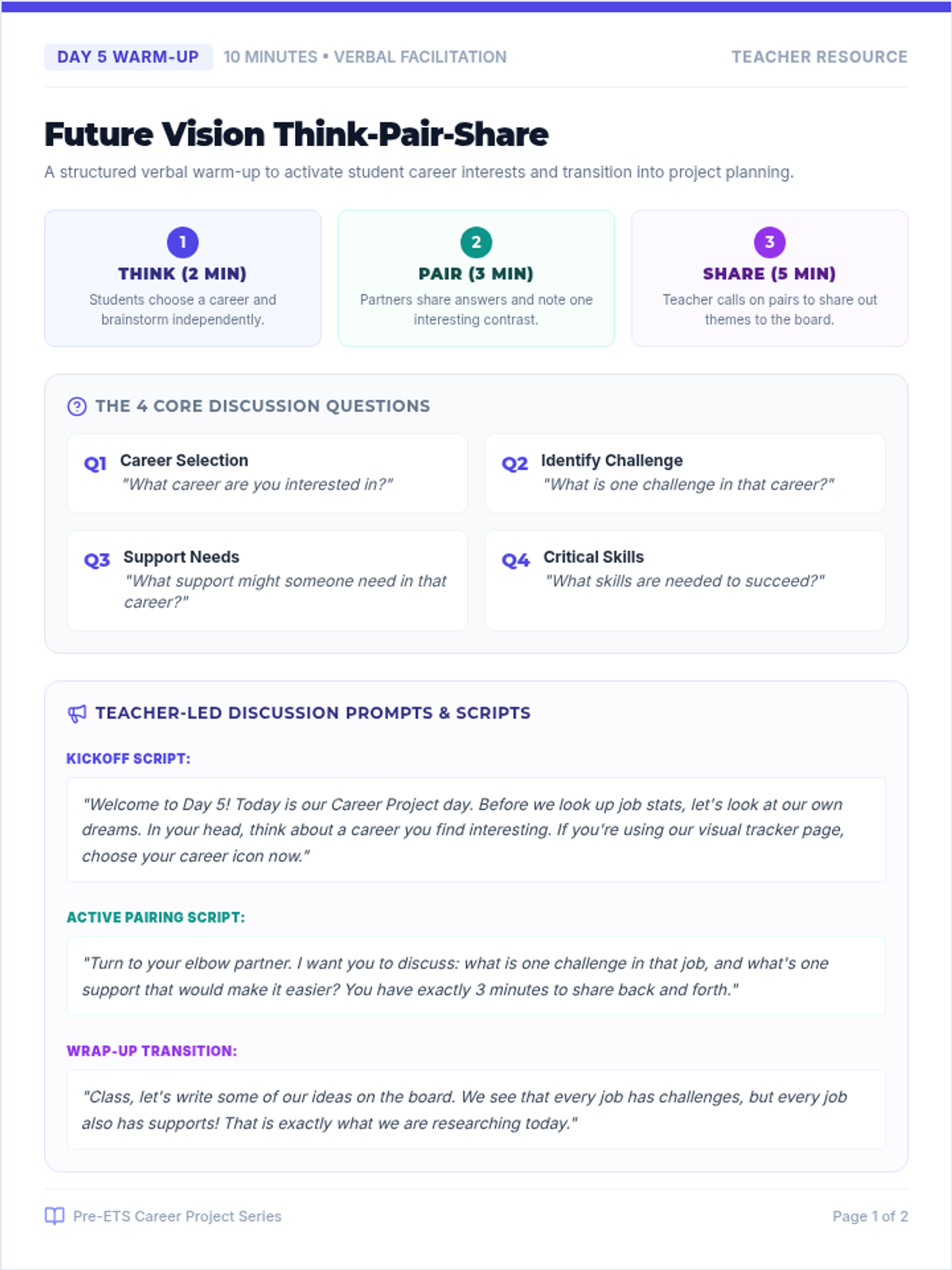
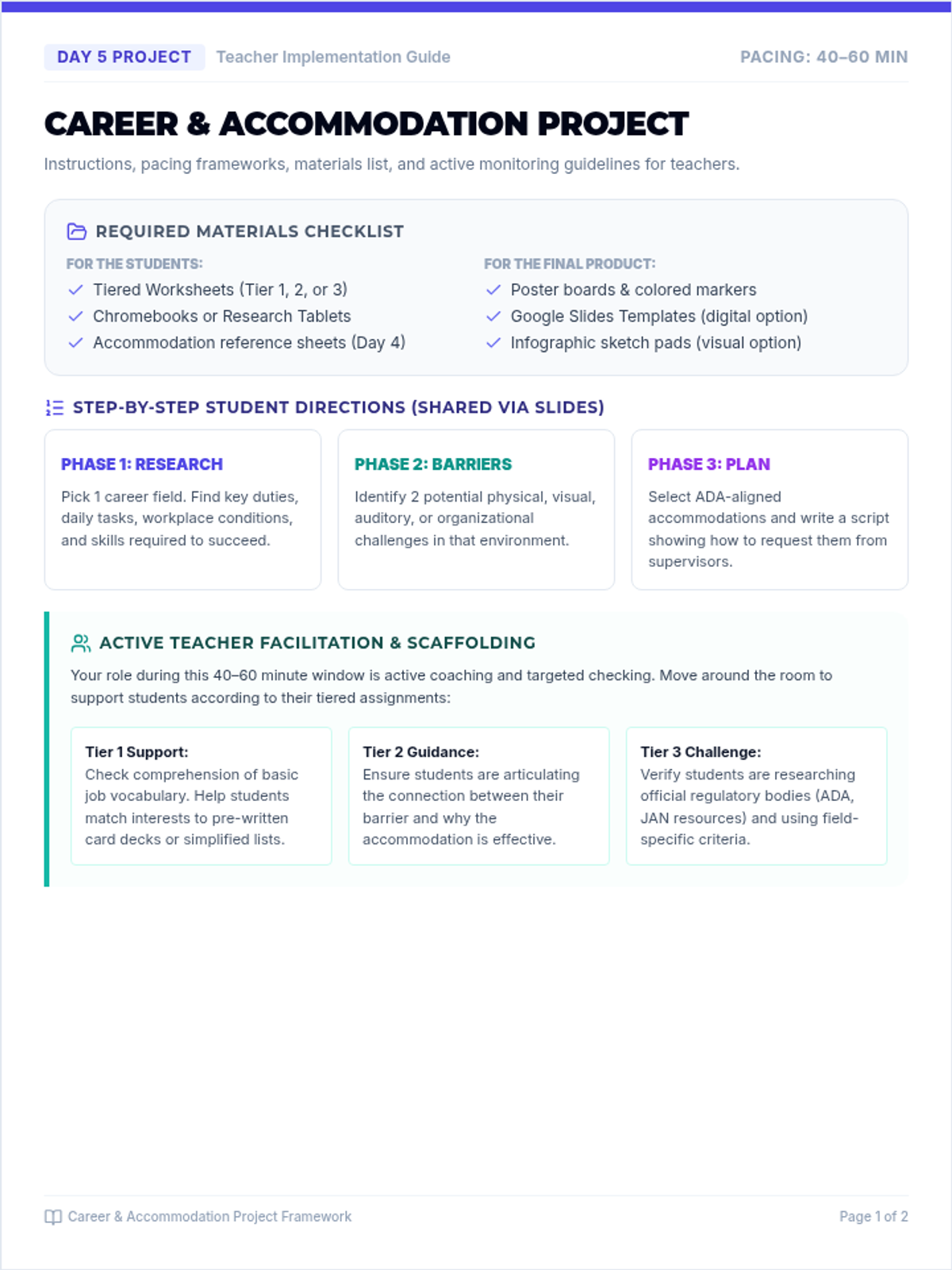
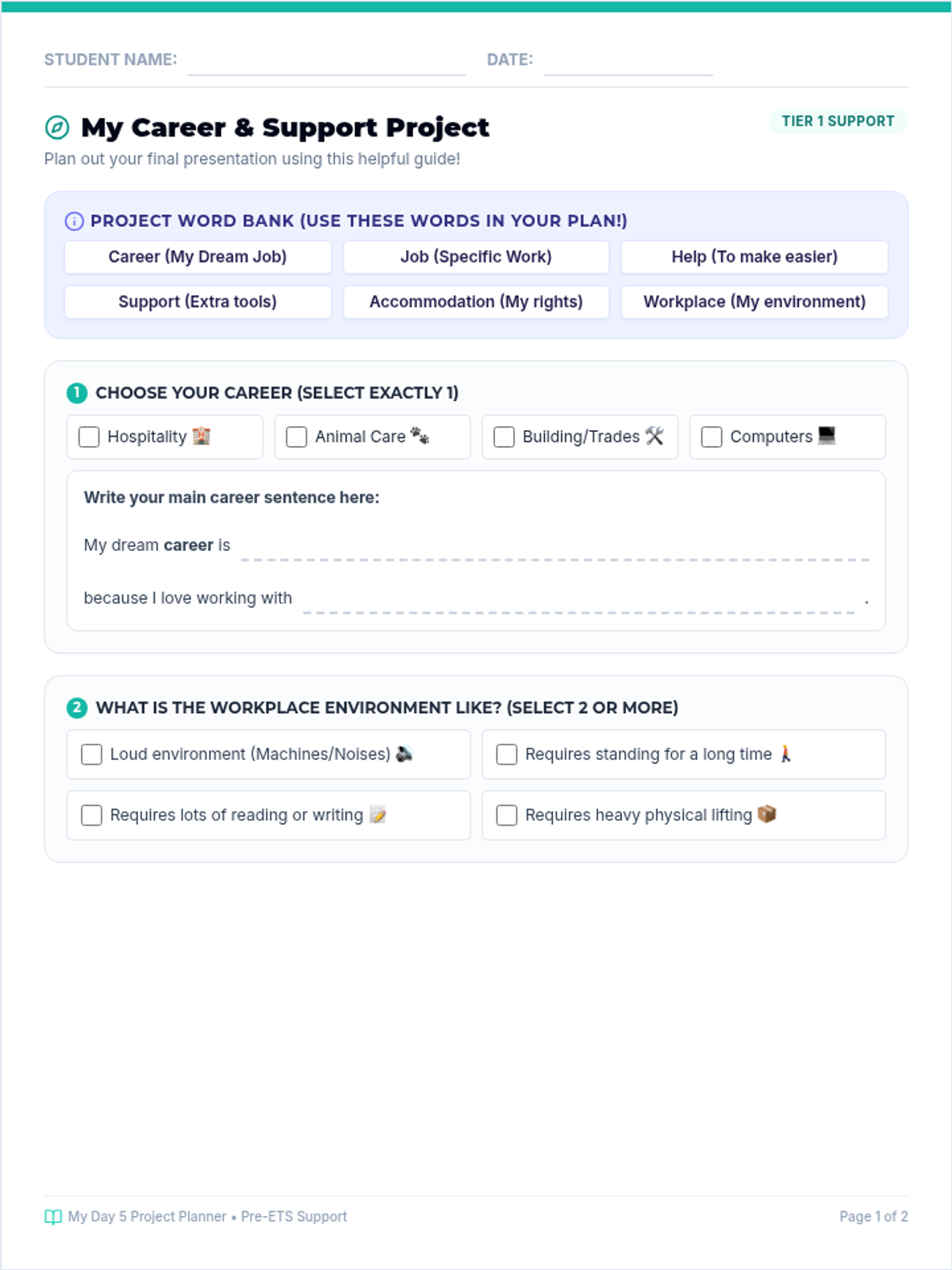
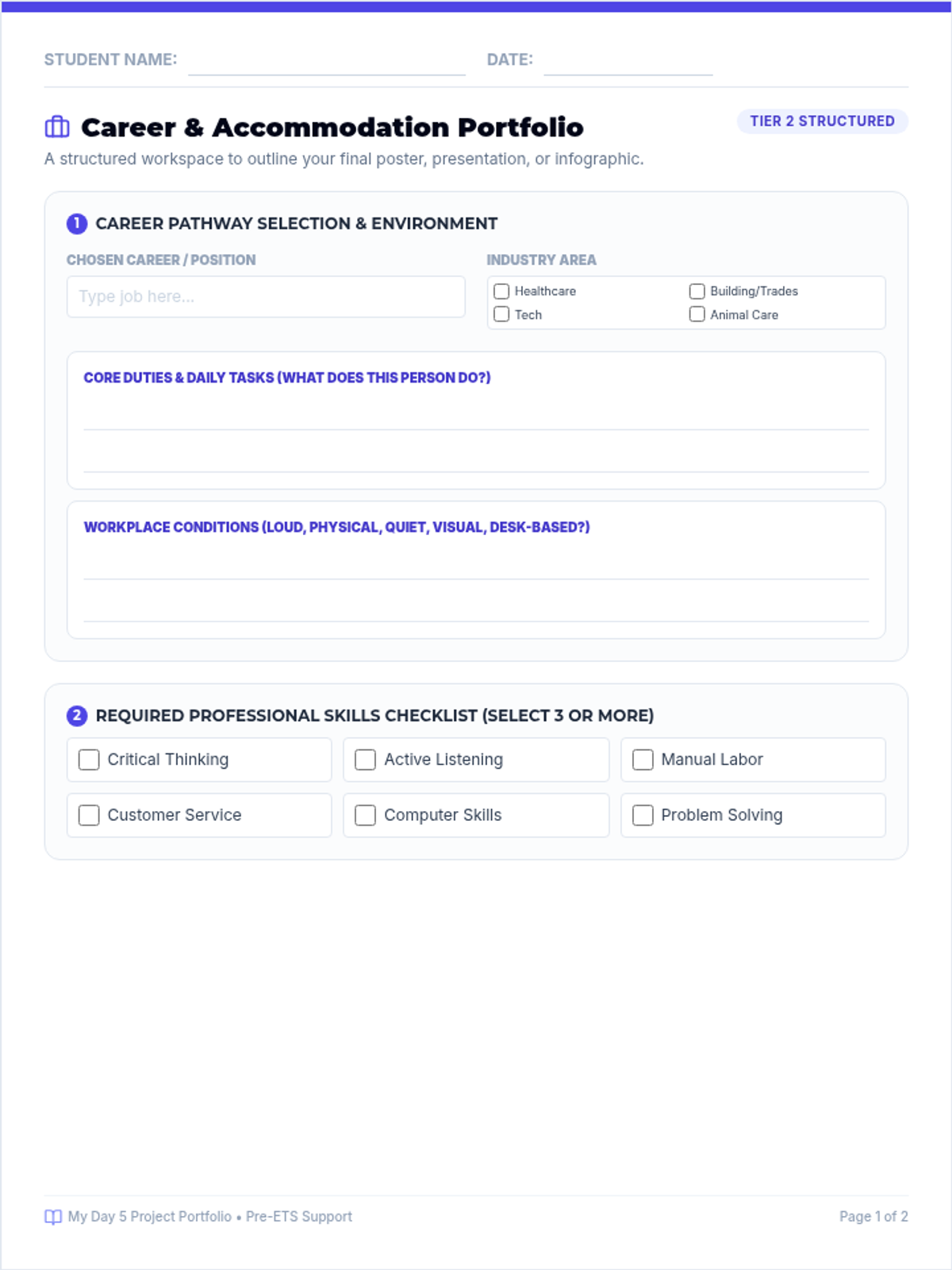
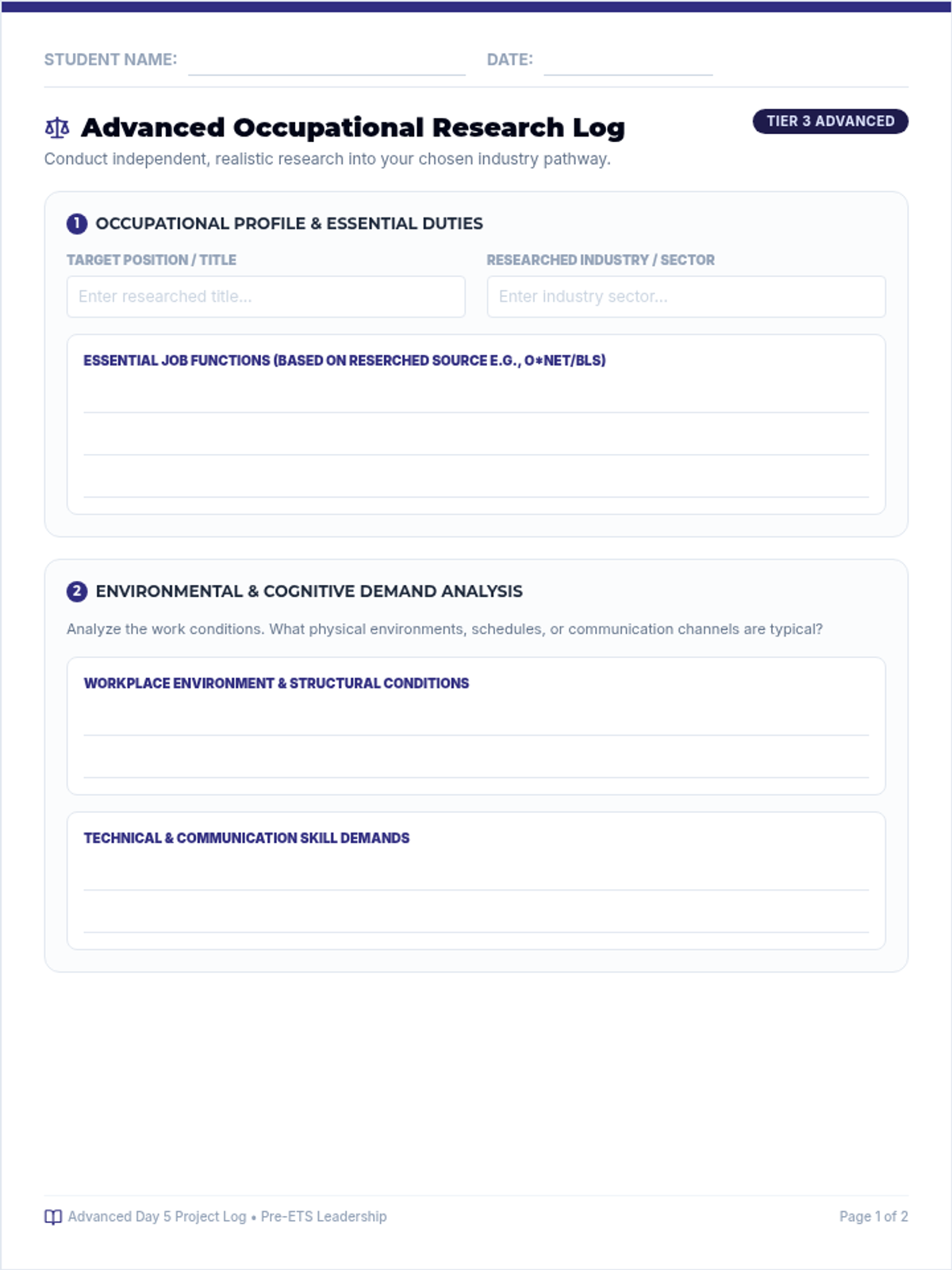
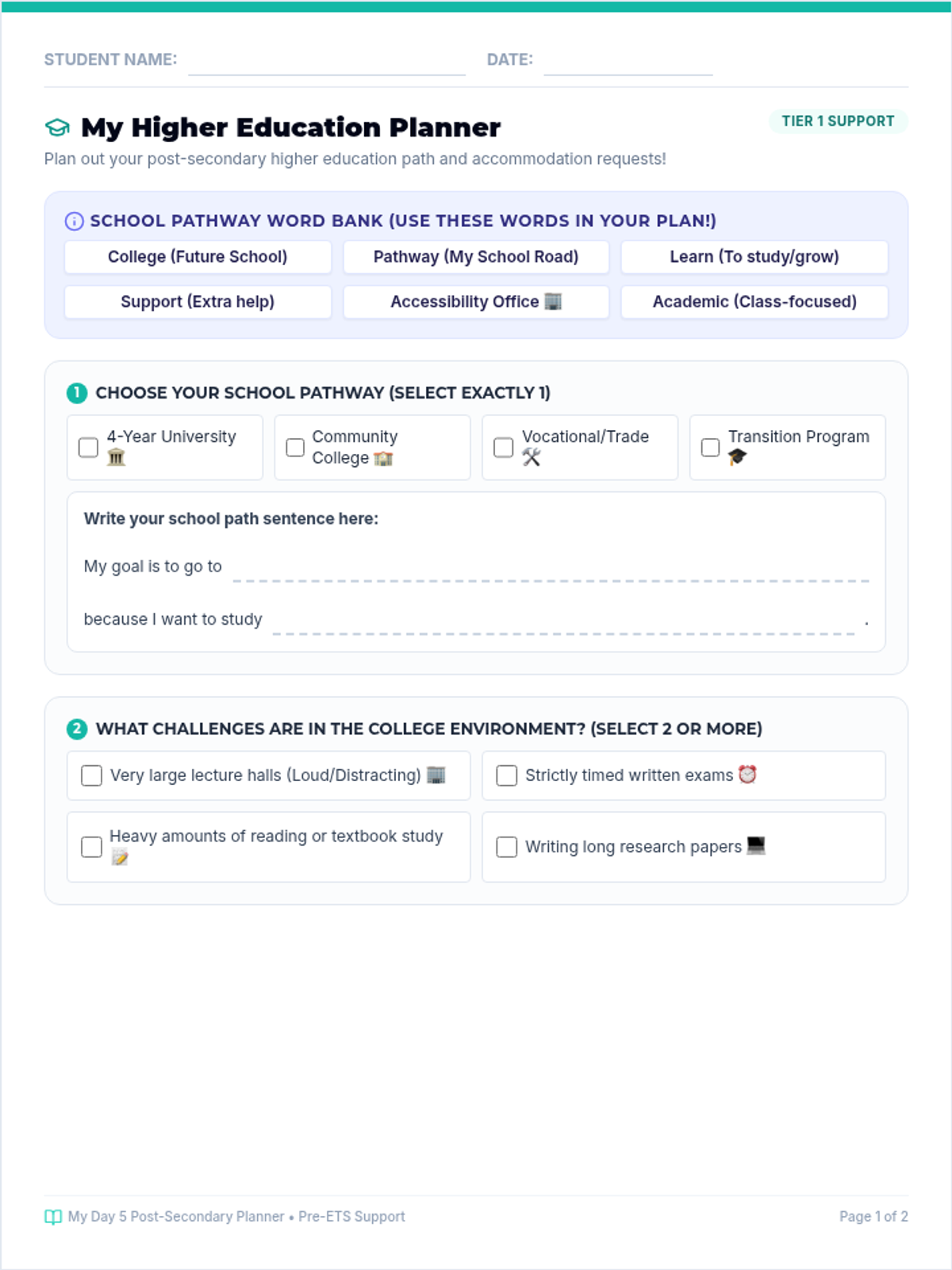
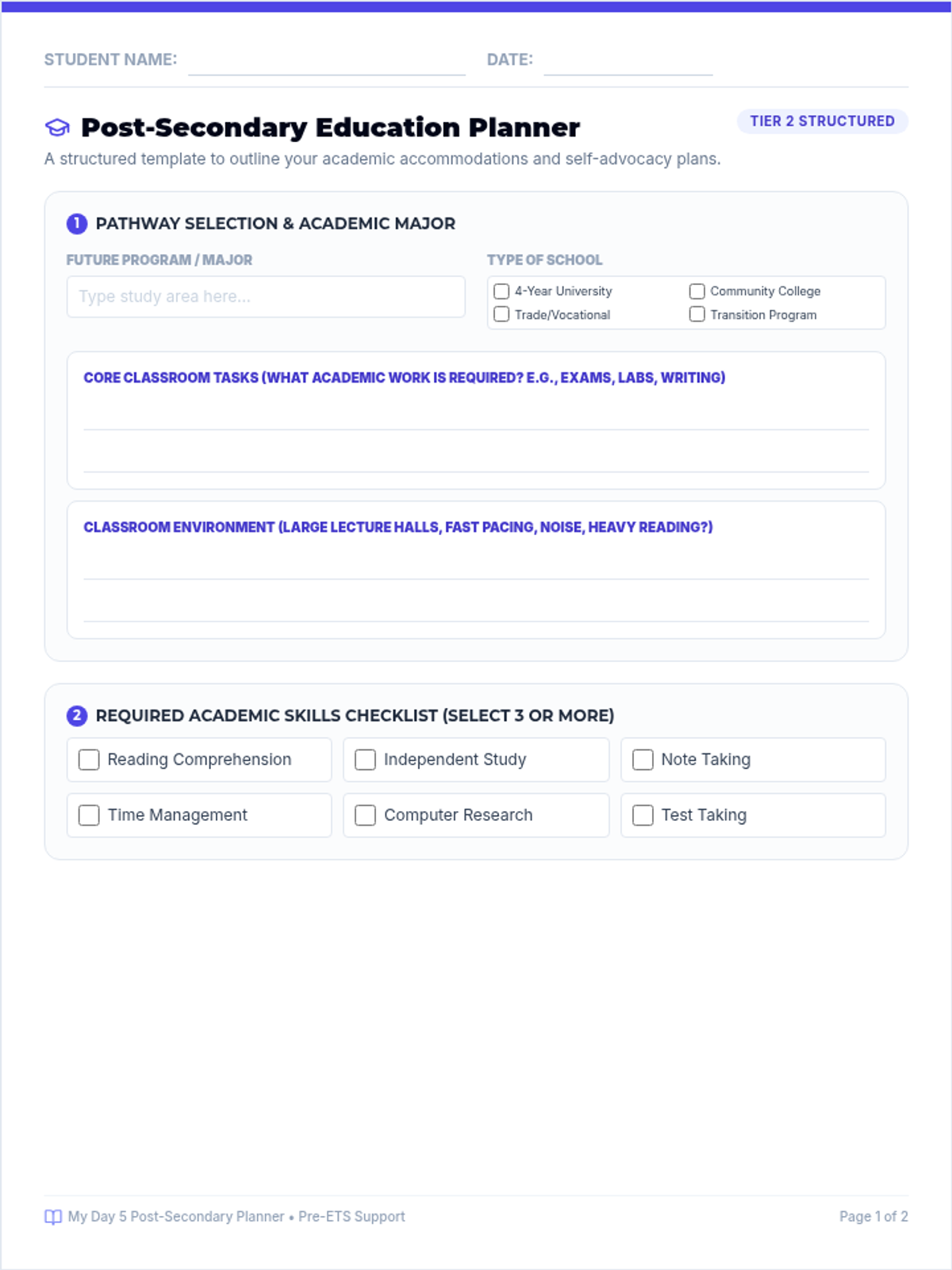
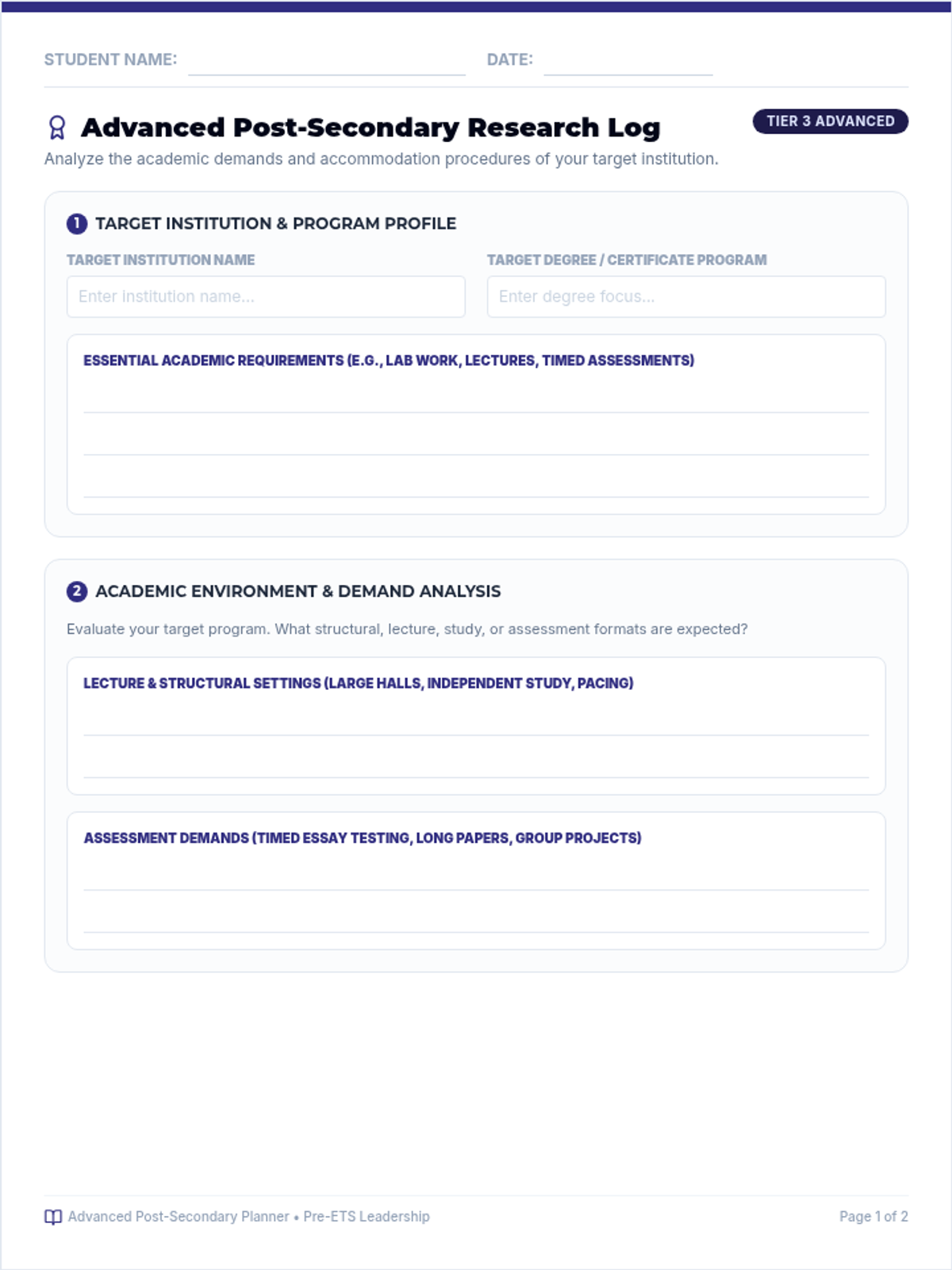
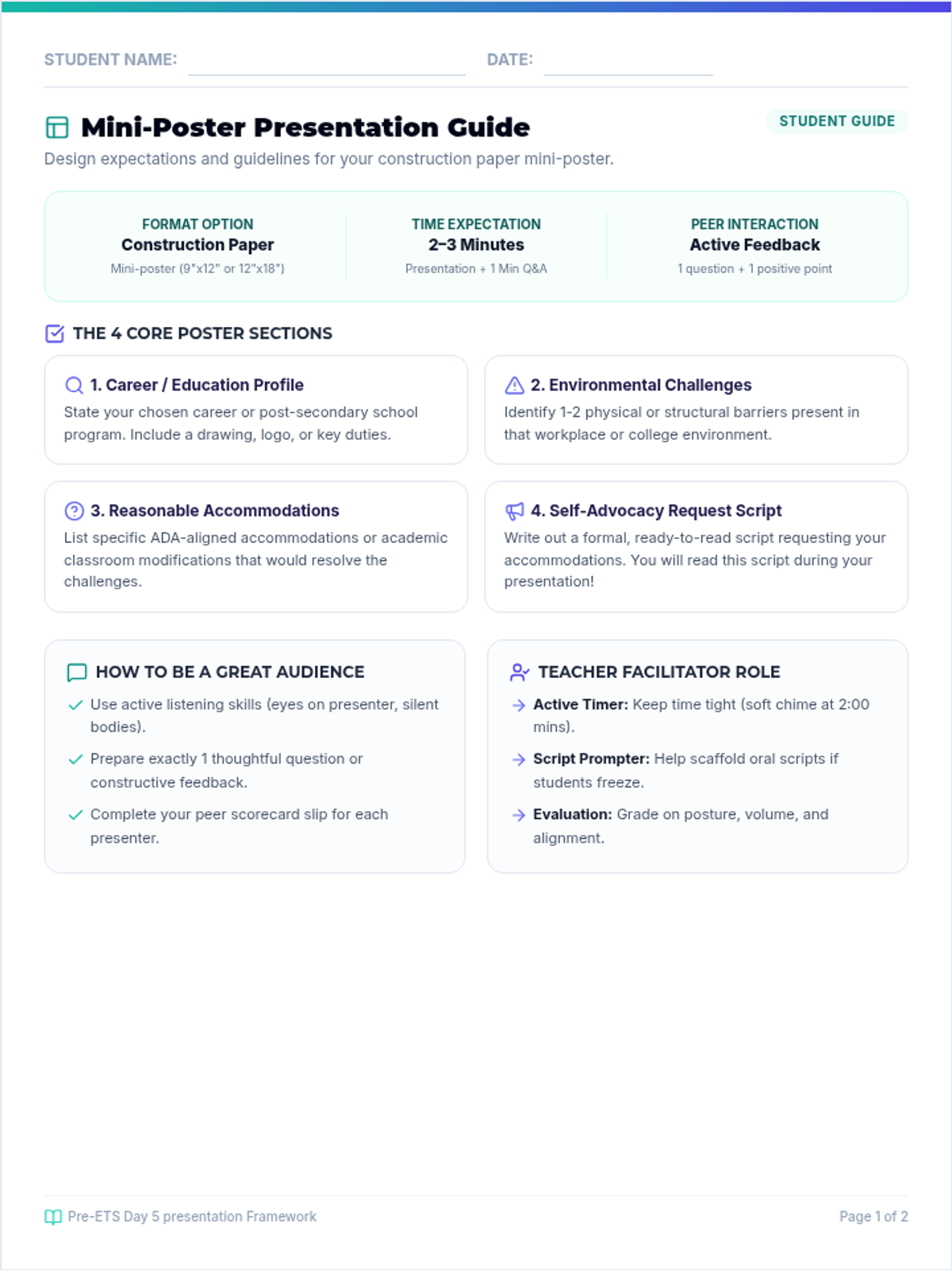
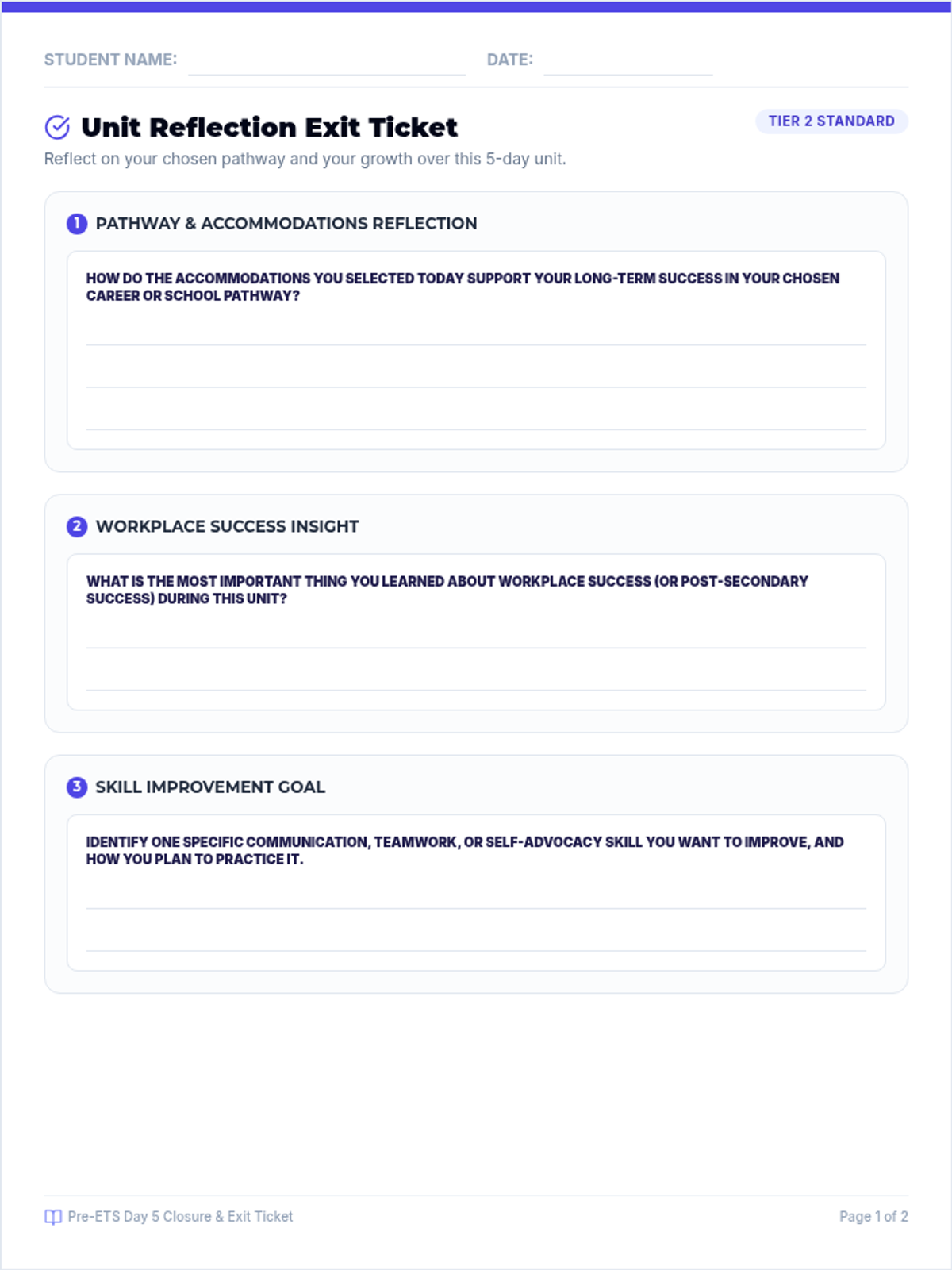
Students apply unit learning to a chosen career or post-secondary education path, identifying workplace accommodations and constructing a self-advocacy plan.
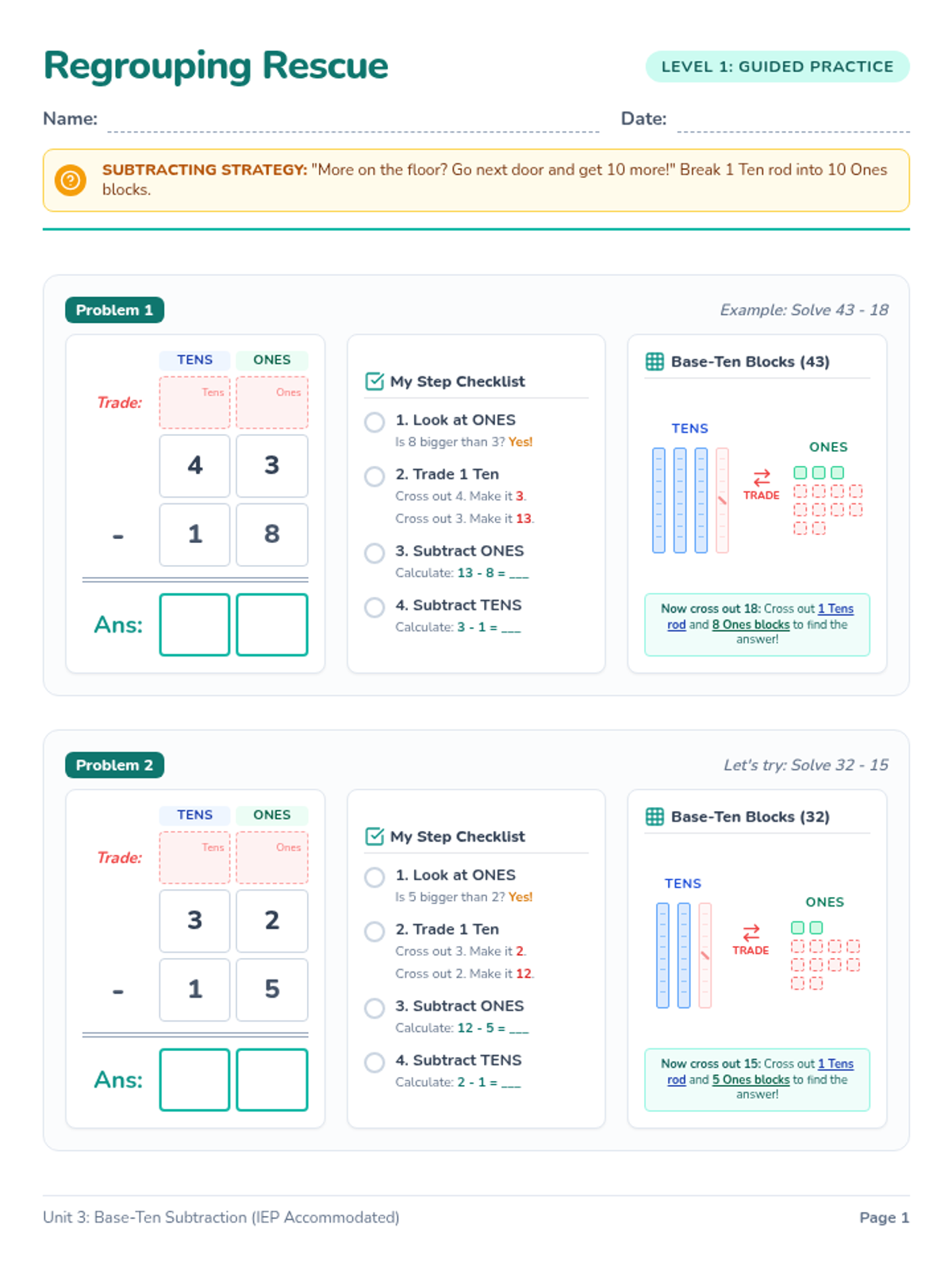
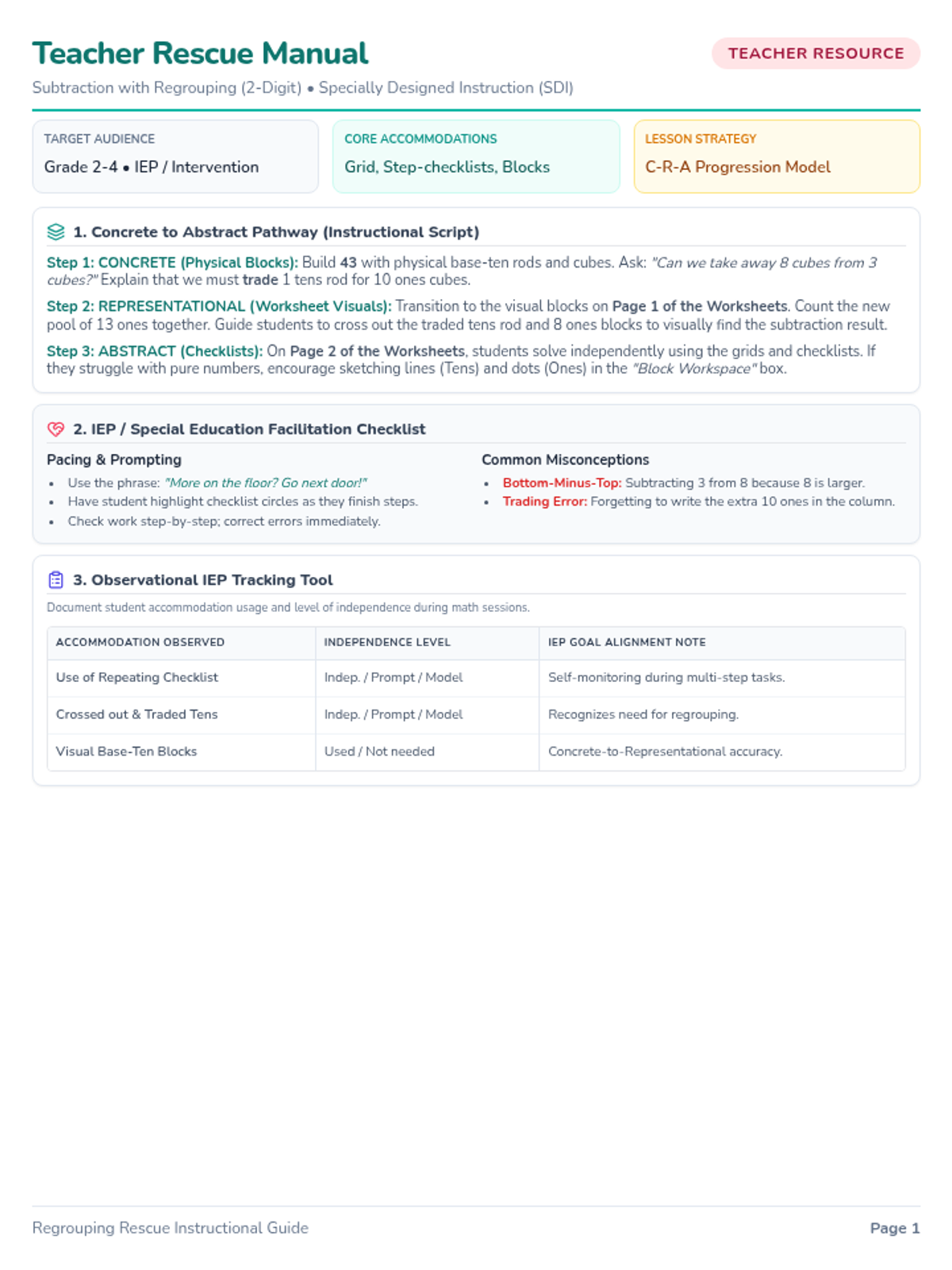
A highly-structured, research-backed lesson on subtracting two-digit numbers with regrouping, specifically designed with IEP accommodations. Includes grid-aligned practice sheets with repeating step-by-step visual checklists and built-in base-ten visual blocks to support concrete-representational-abstract transitions.
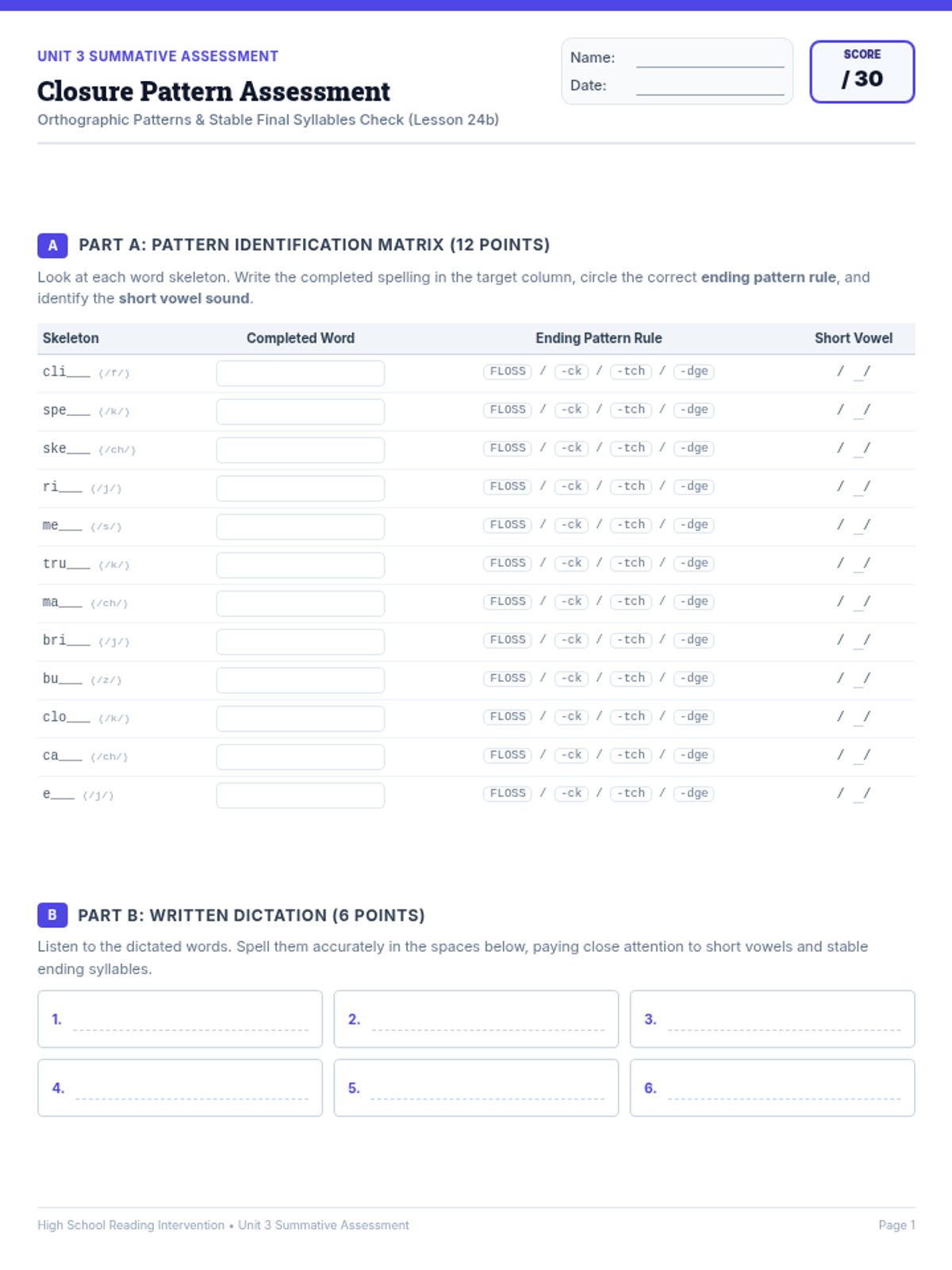
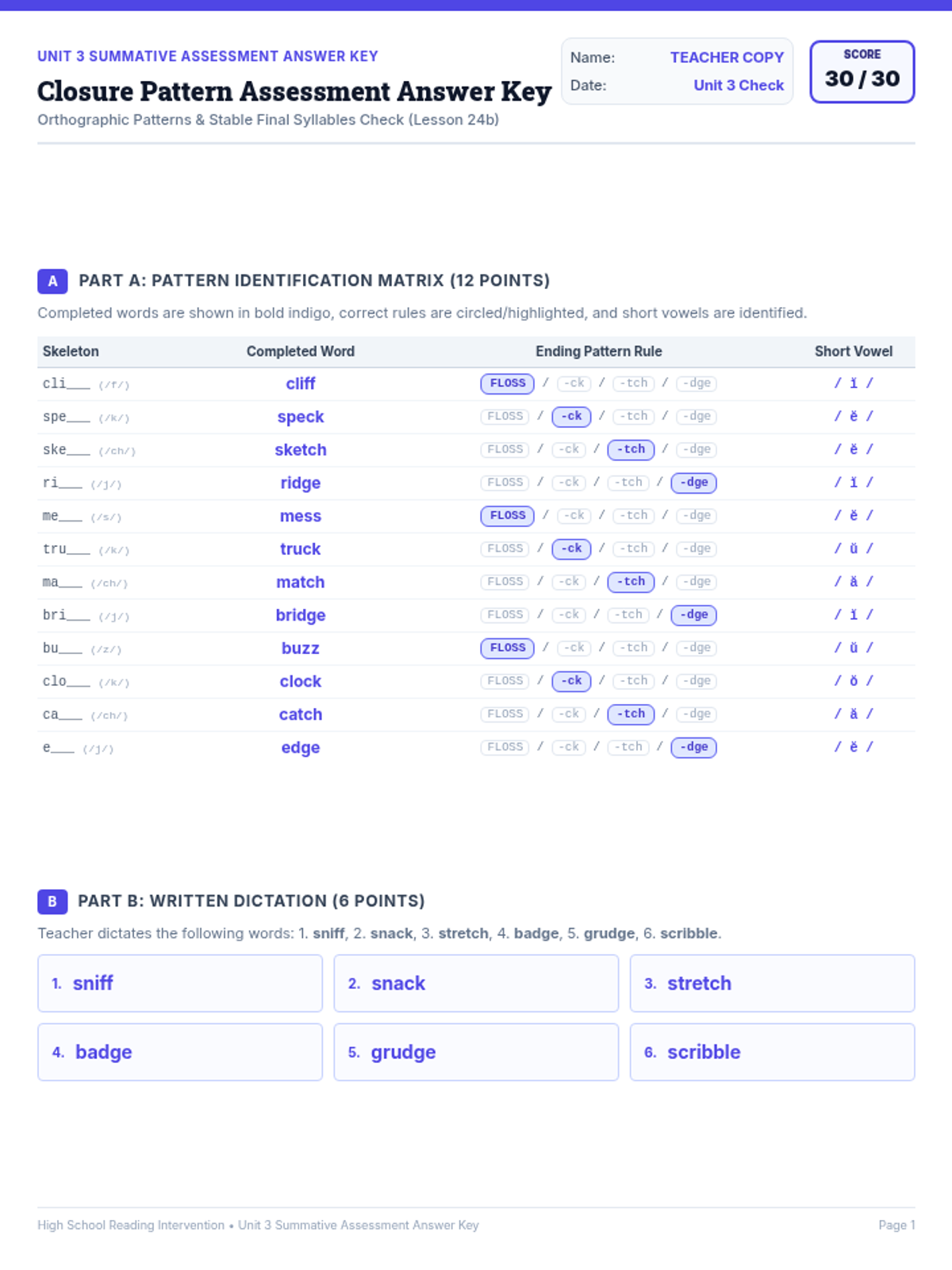
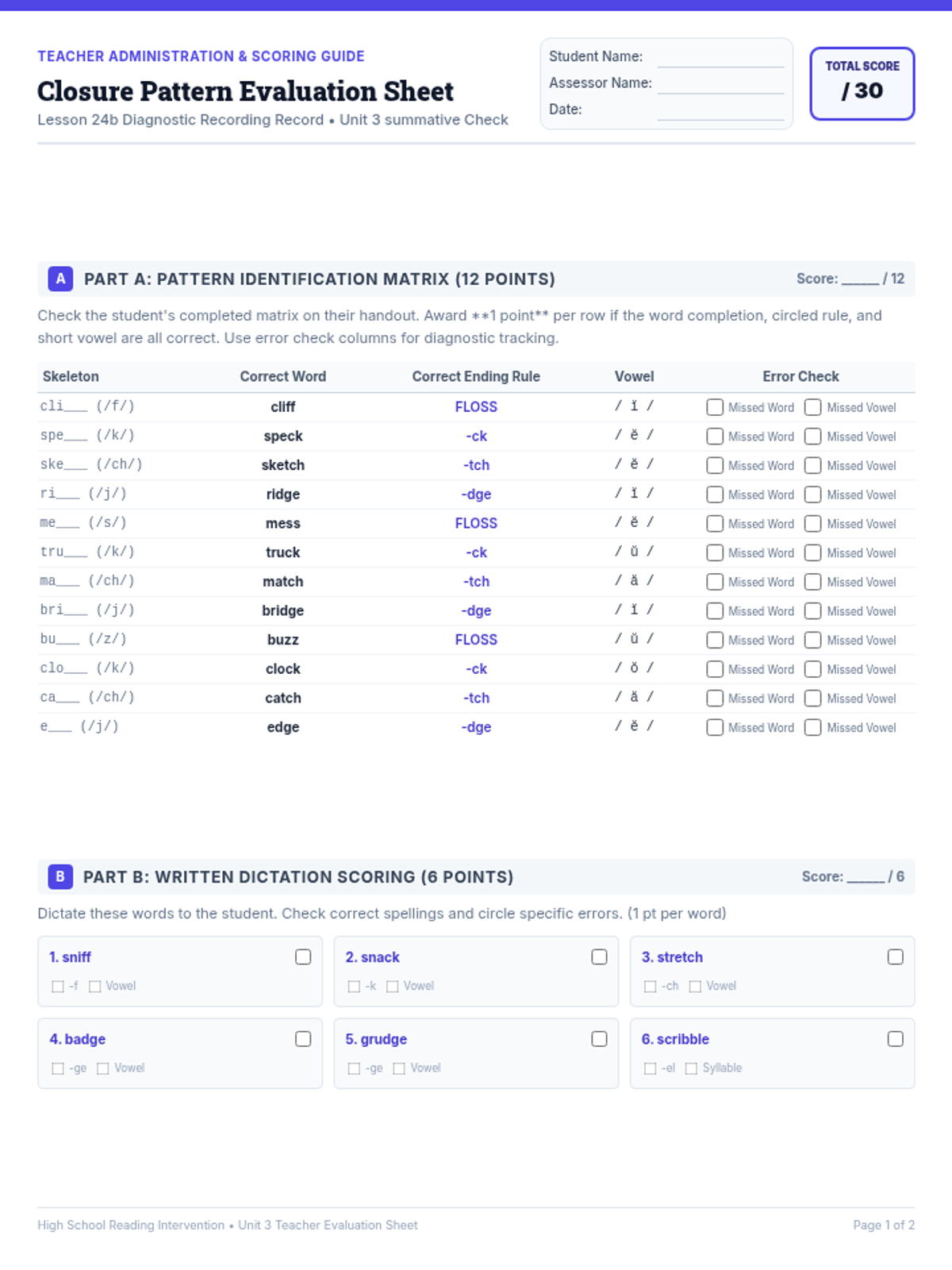
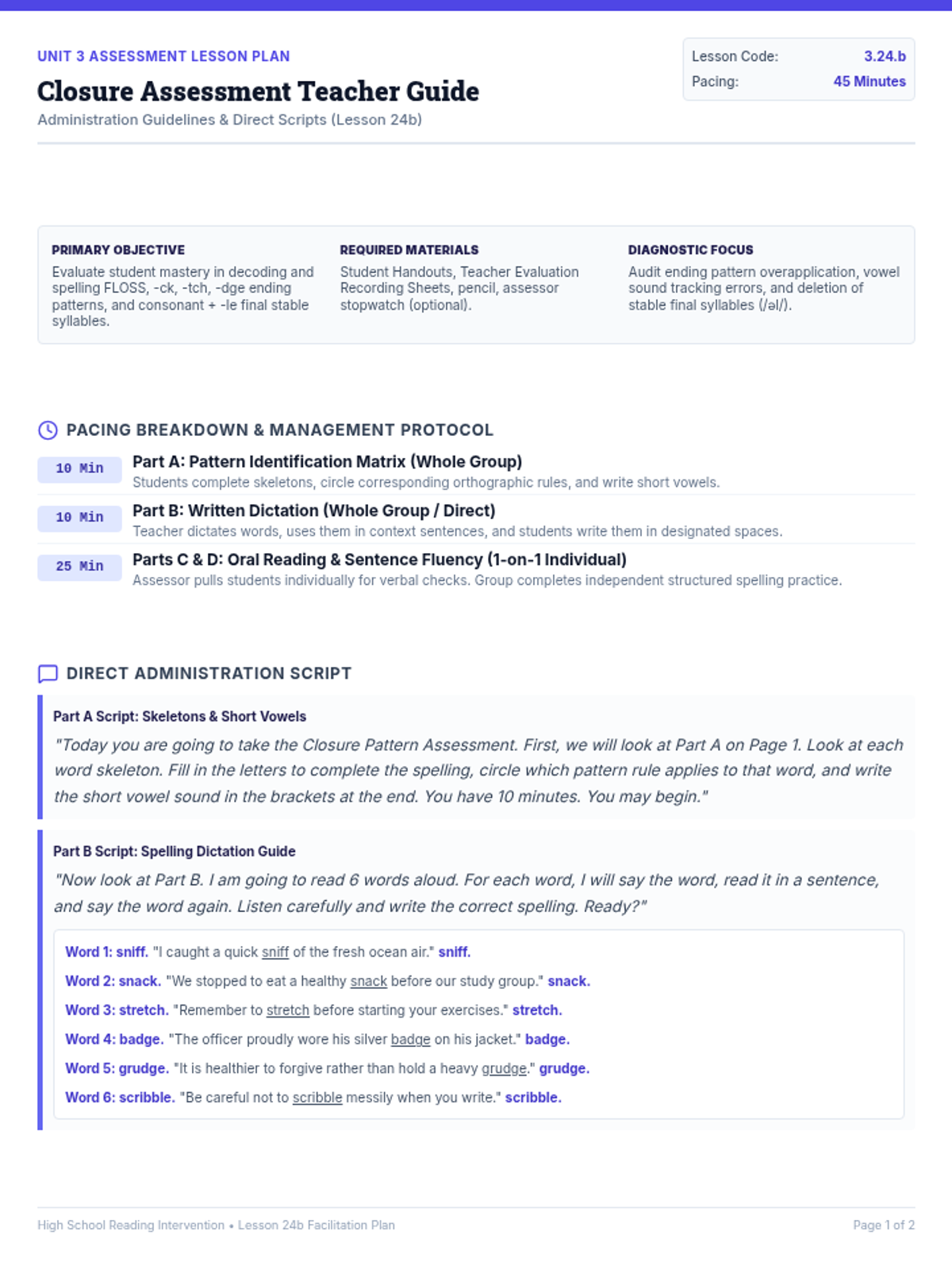
An intensive summative assessment lesson designed to check student mastery of FLOSS, -ck, -tch, -dge, and -le decoding and spelling patterns.
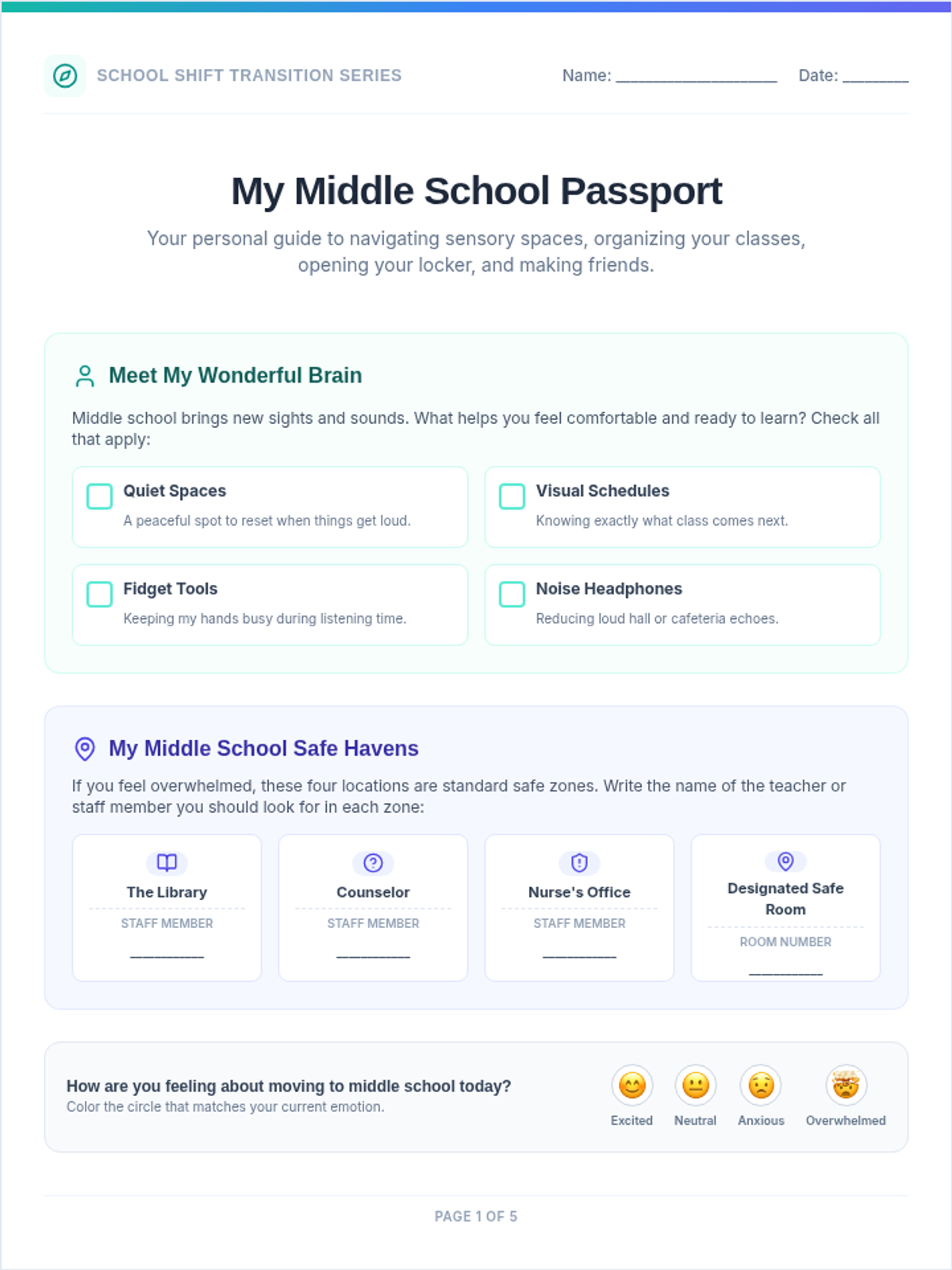
A transition lesson designed specifically for middle school students with ASD, focusing on navigating sensory changes, learning social scripts, practicing physical tasks like locker combinations, and organizing multiple classes.
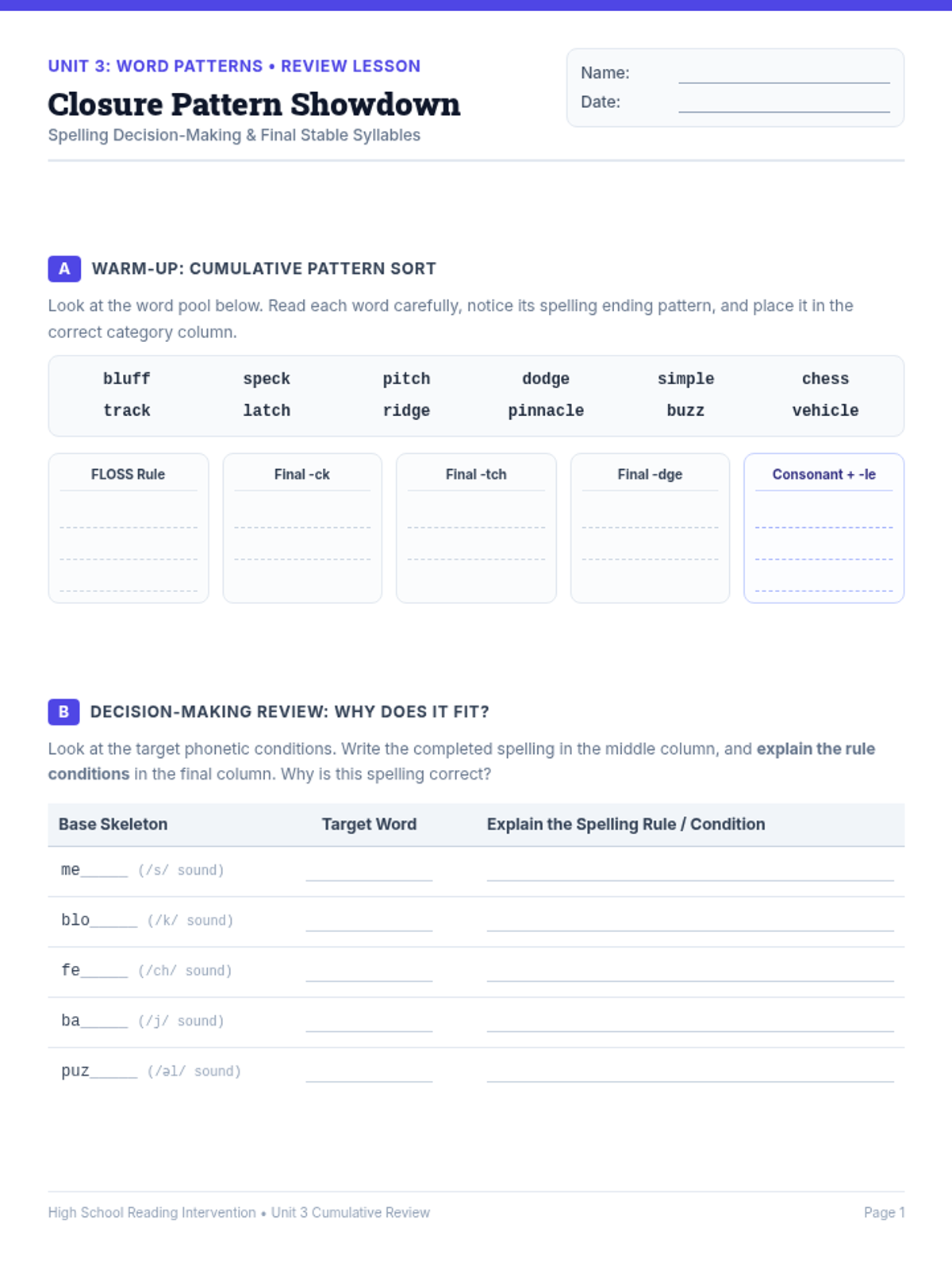
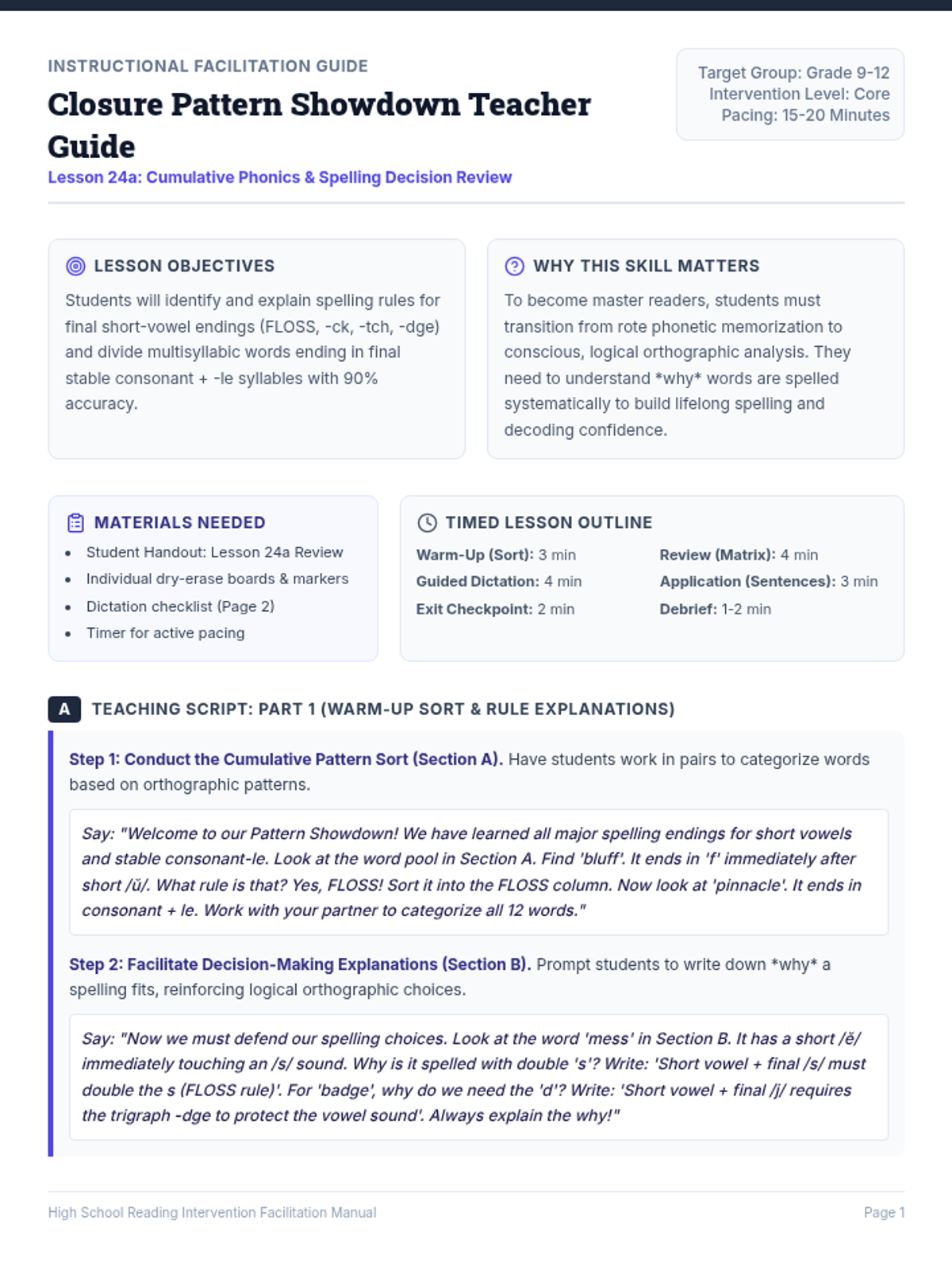
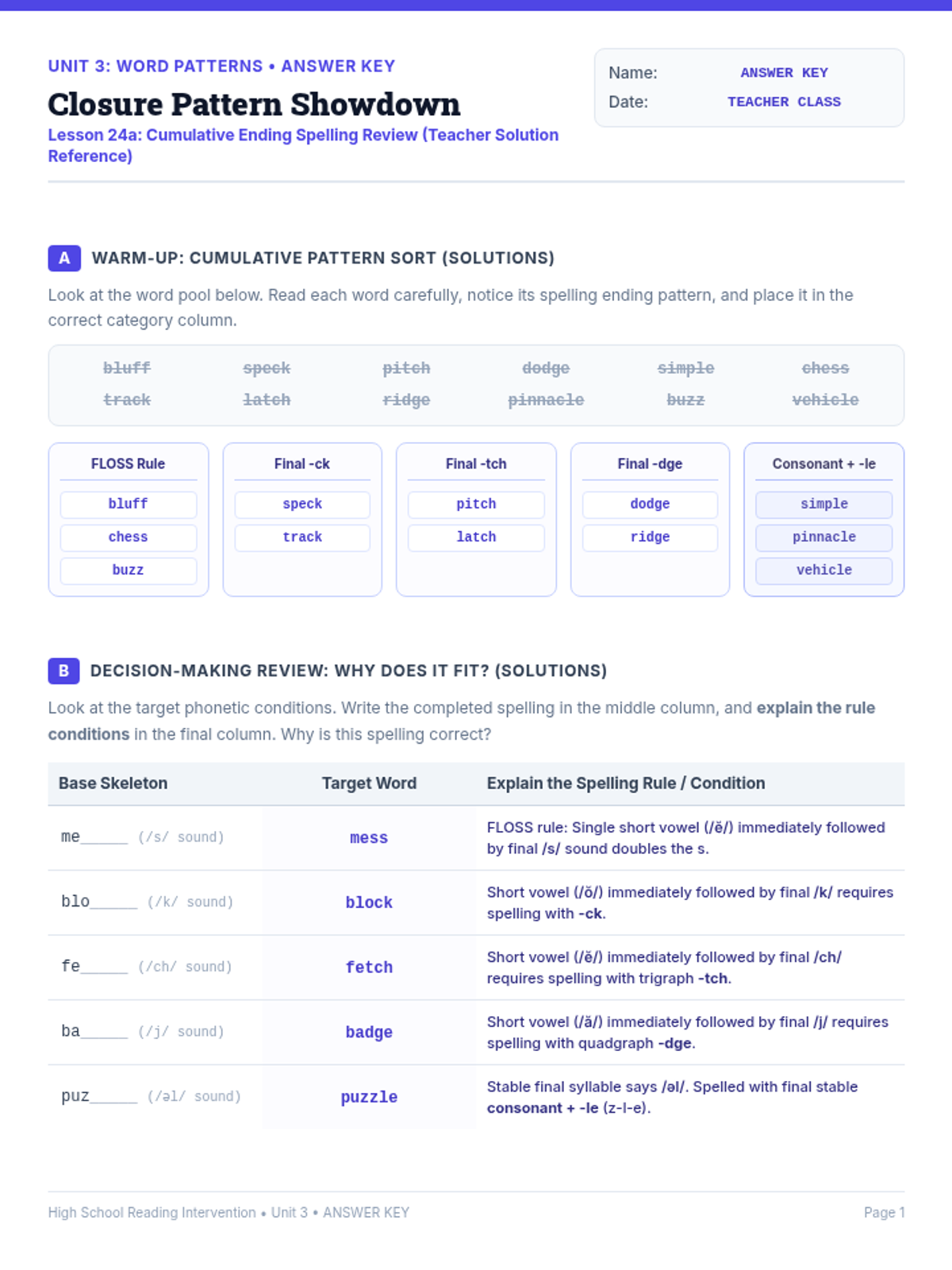
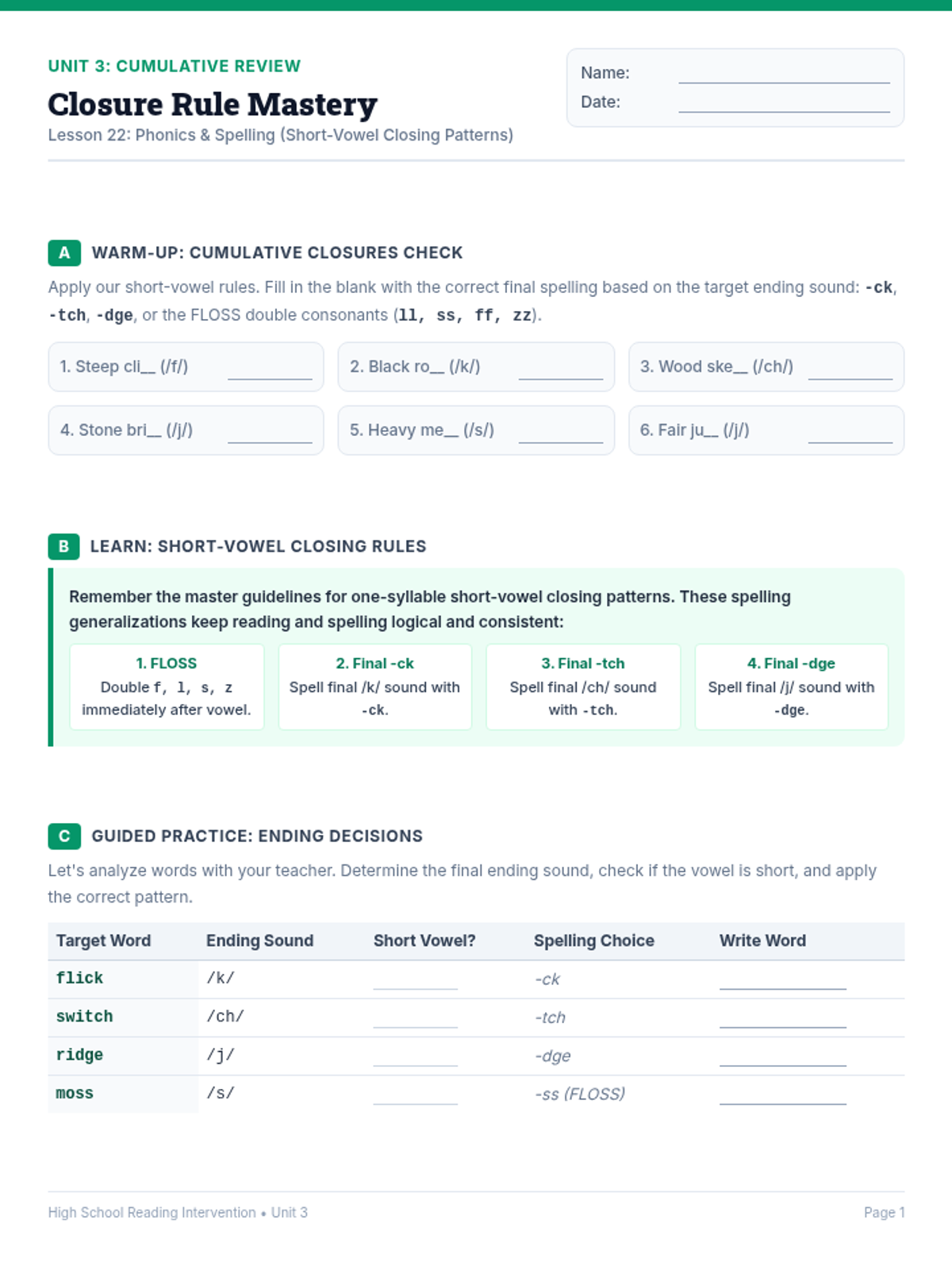
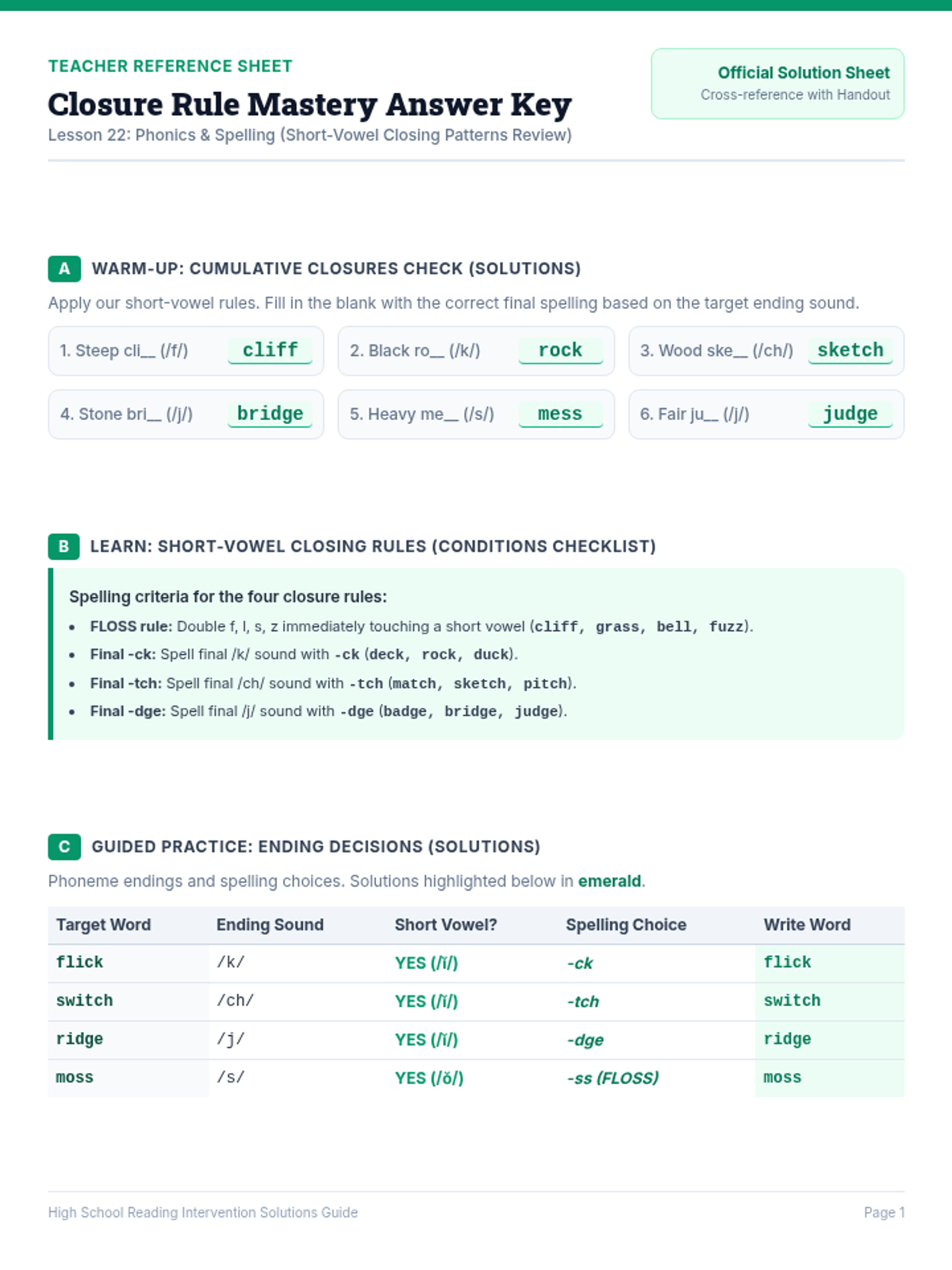
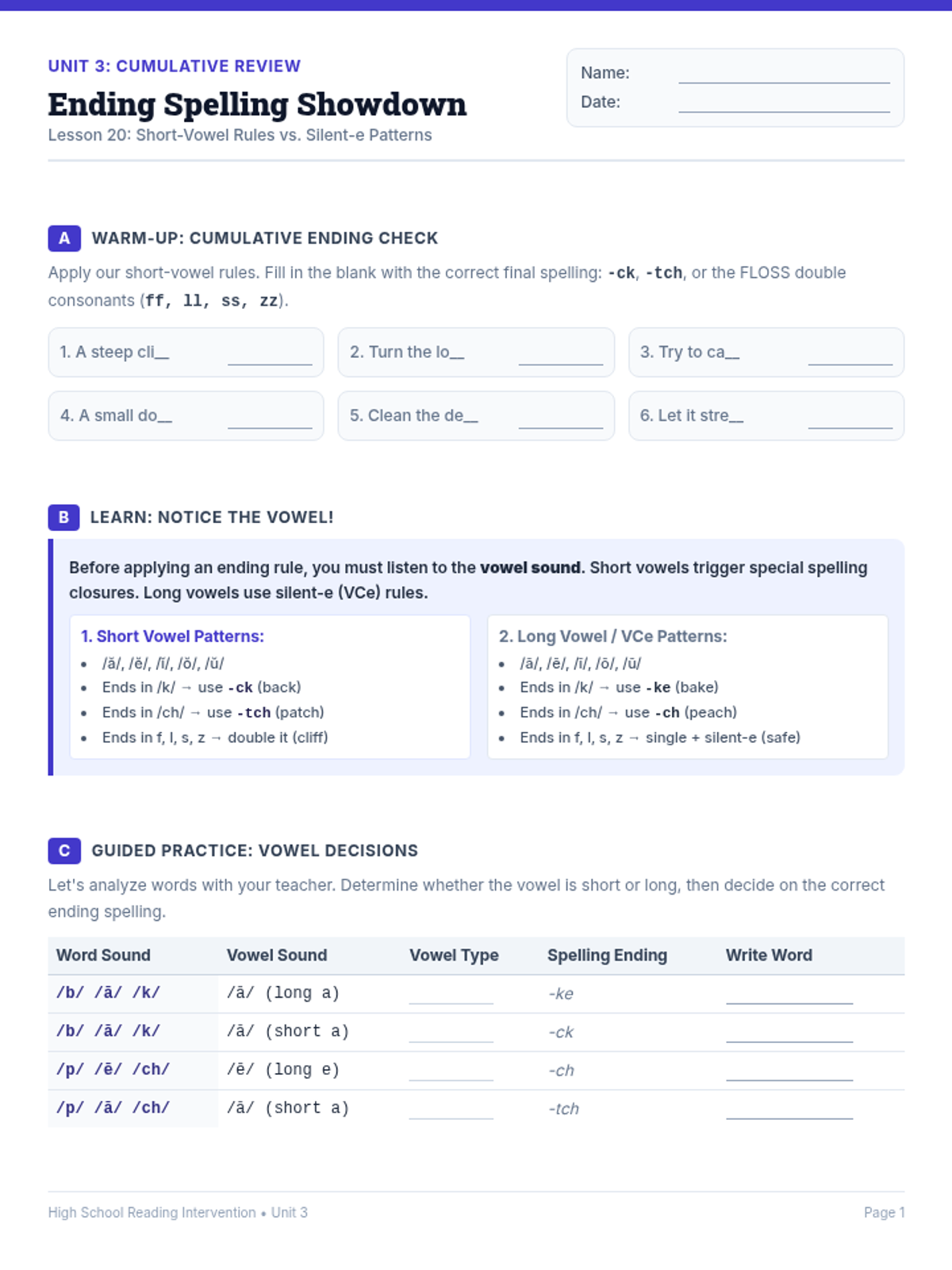
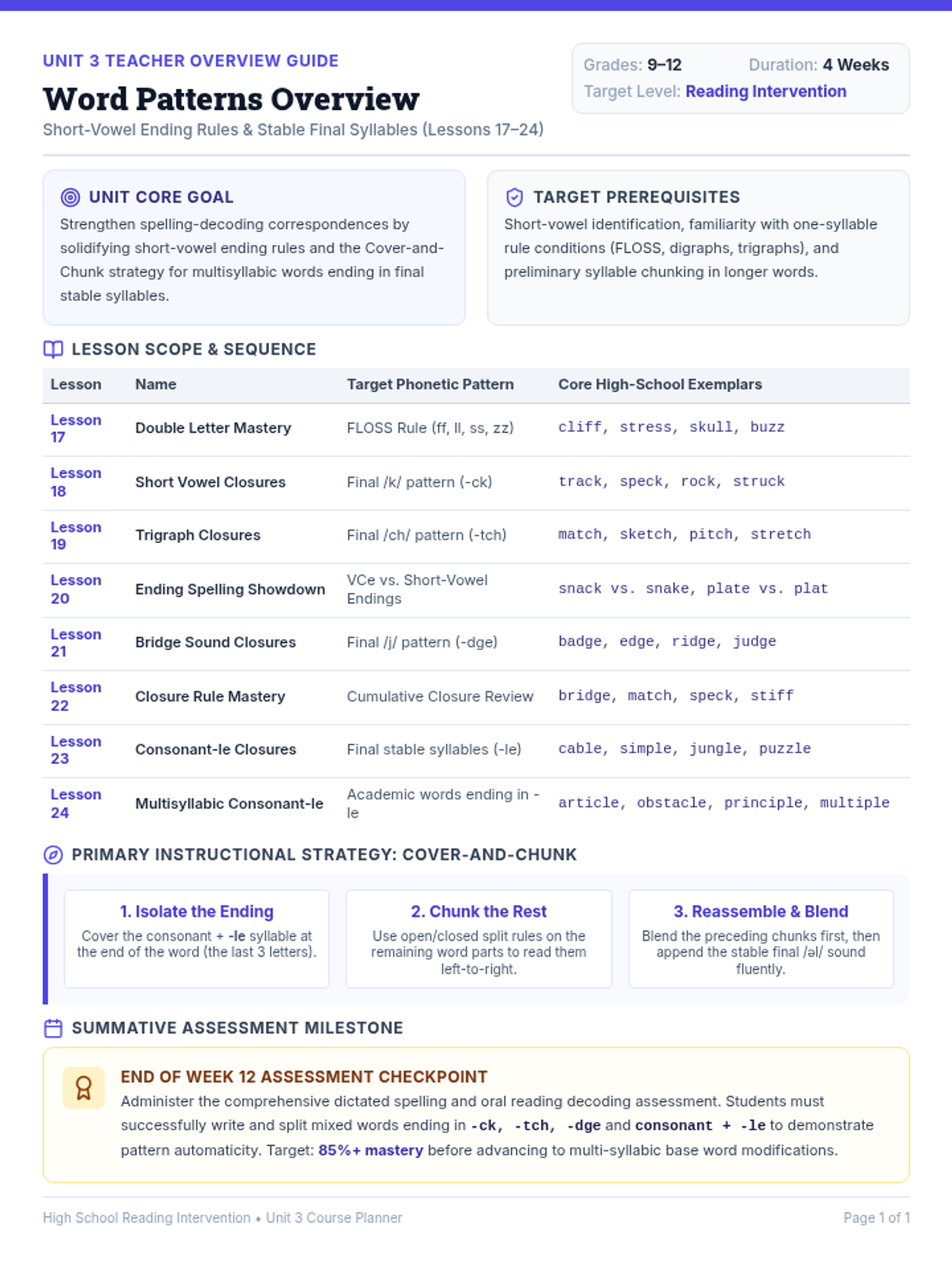
A cumulative review and decision-making lesson consolidating all short-vowel ending rules (FLOSS, -ck, -tch, -dge) and stable final syllables (consonant + -le) to cement orthographic reasoning and decoding precision.
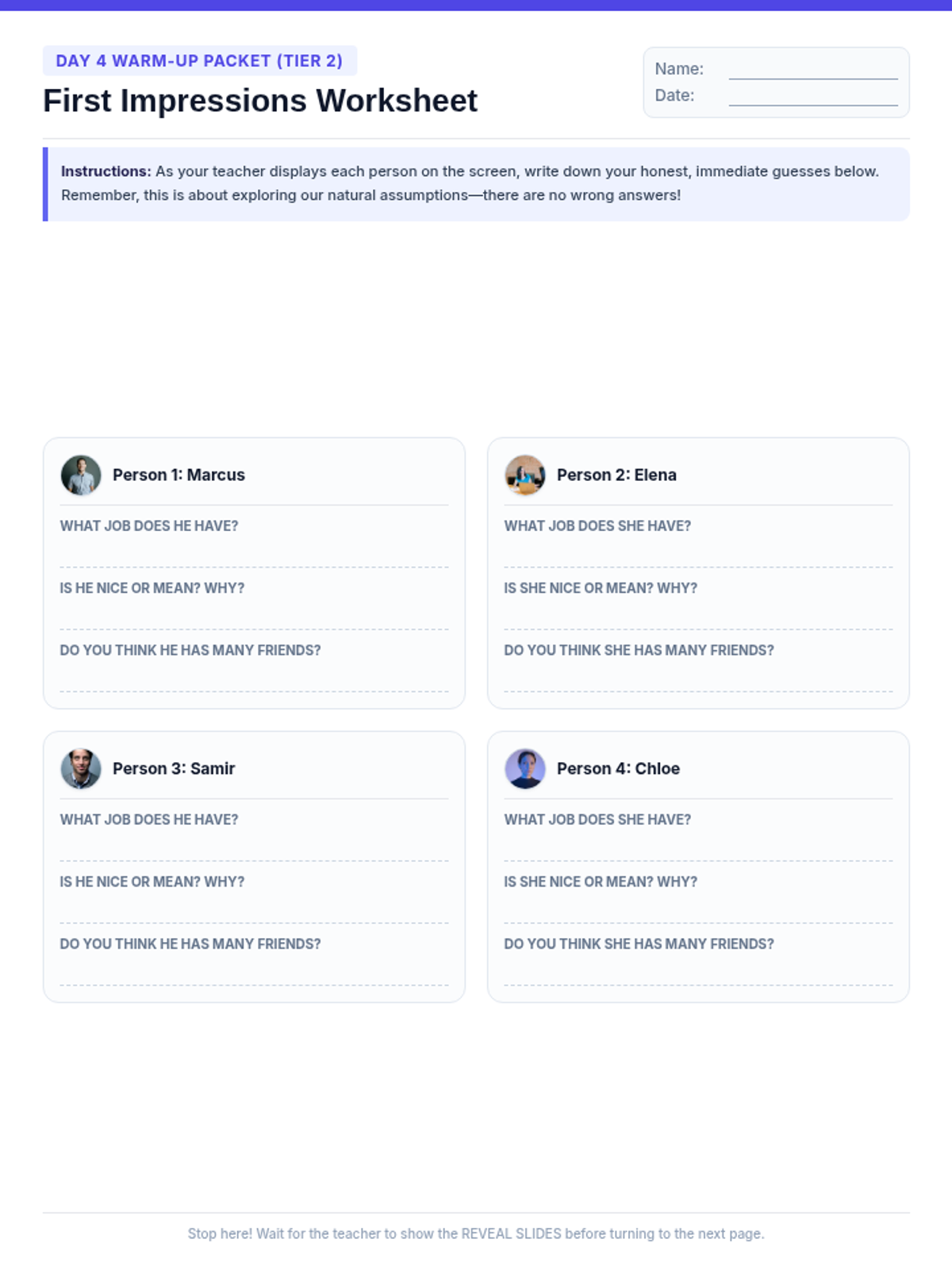
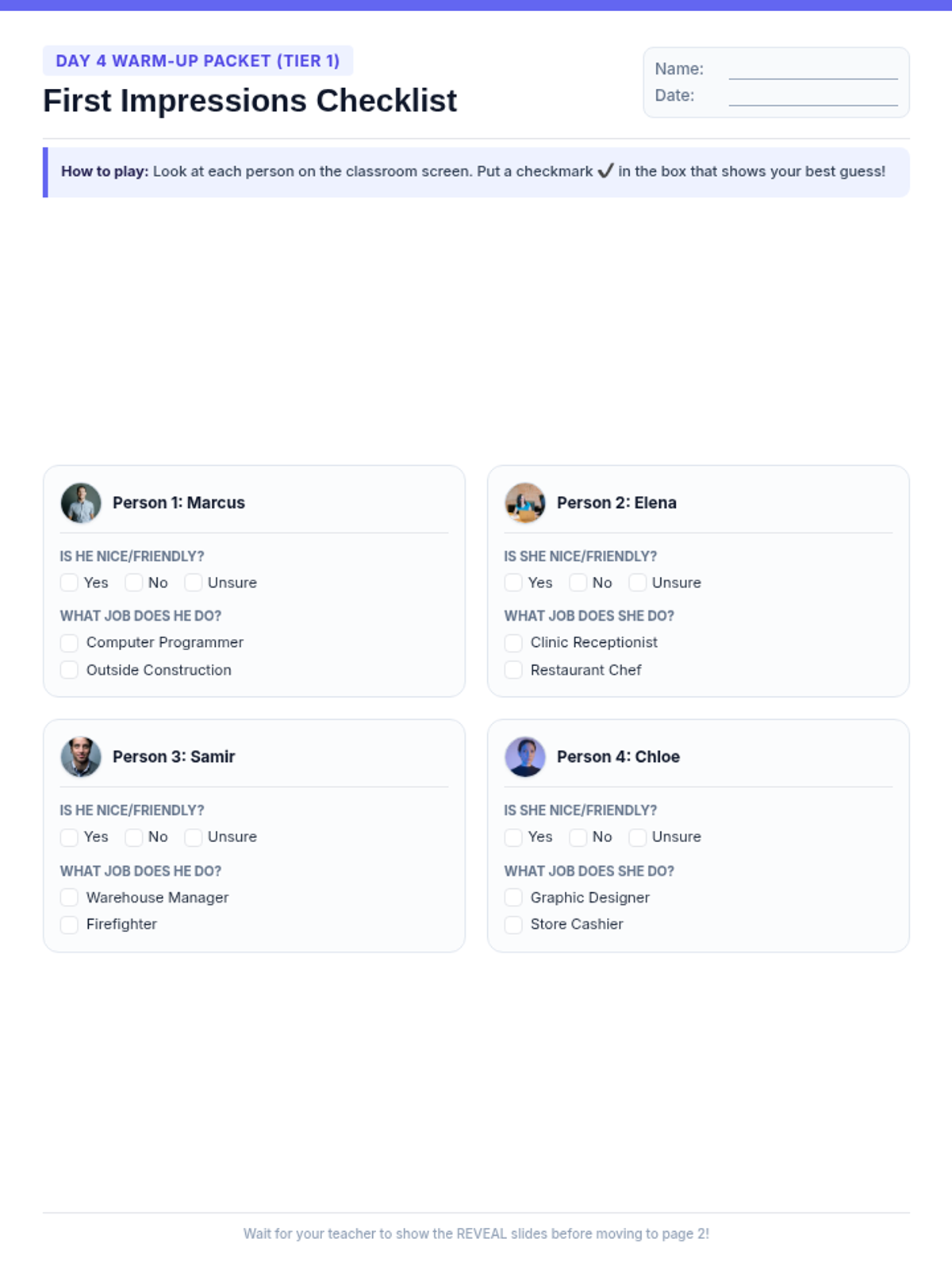
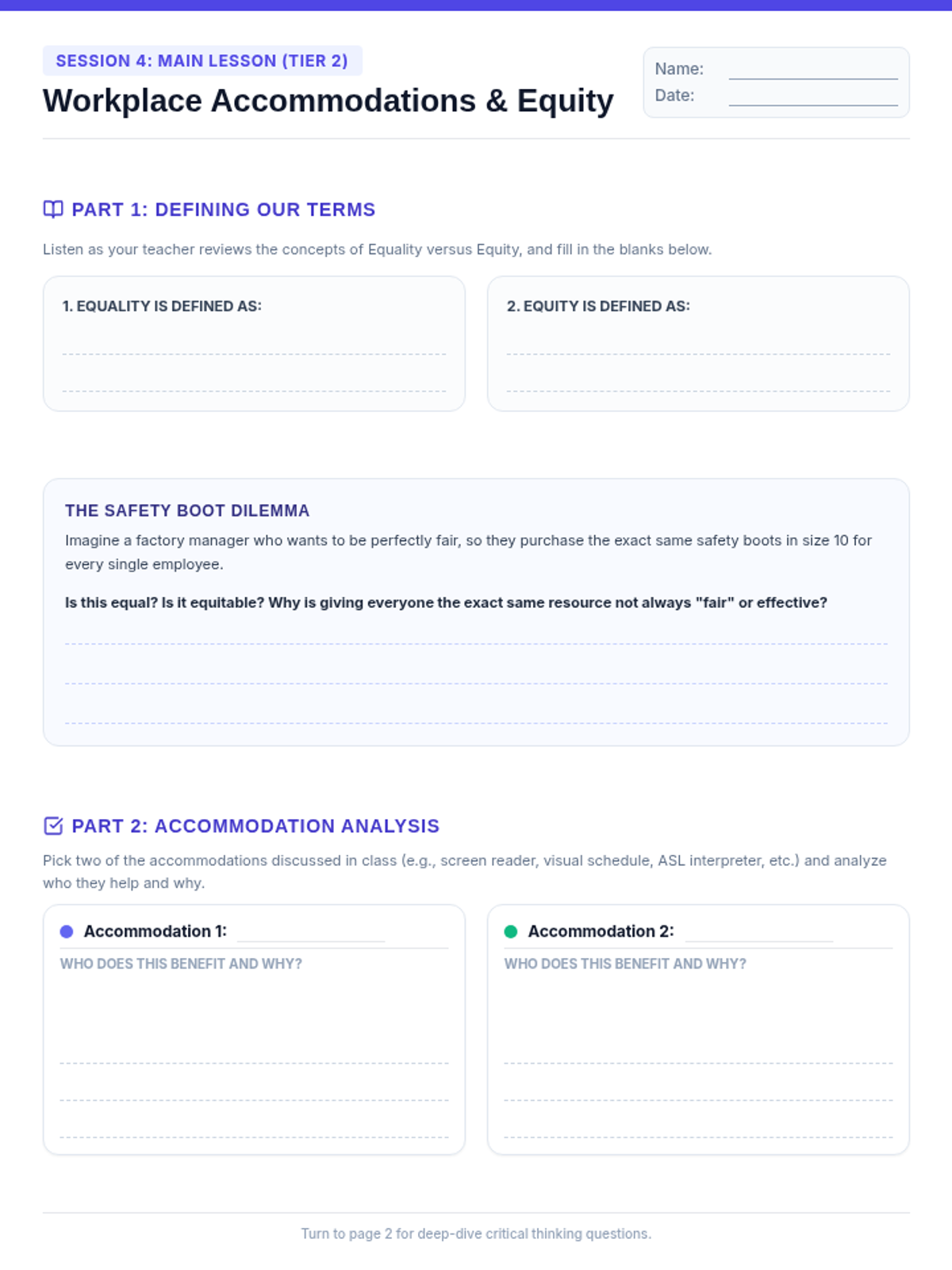
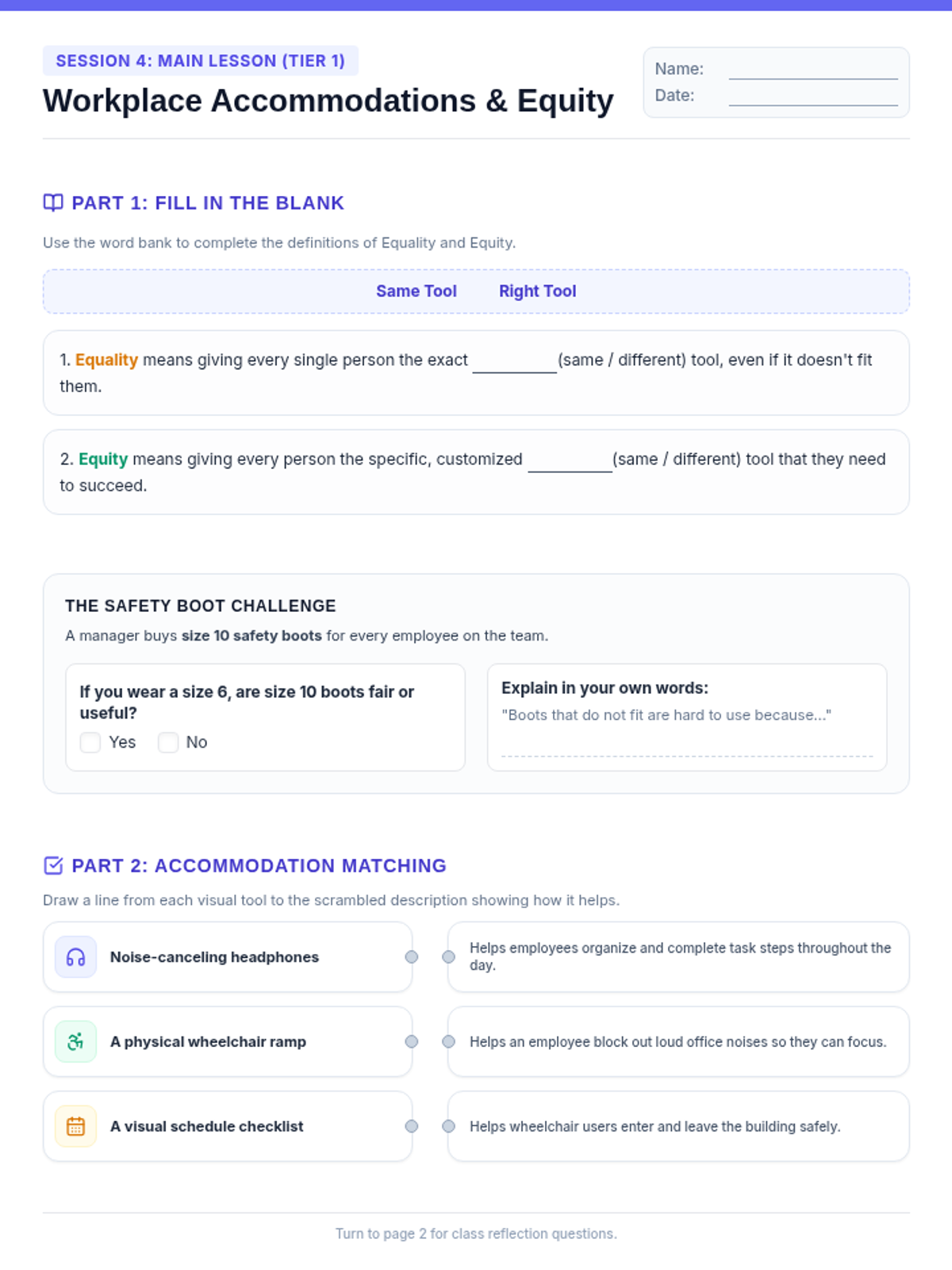
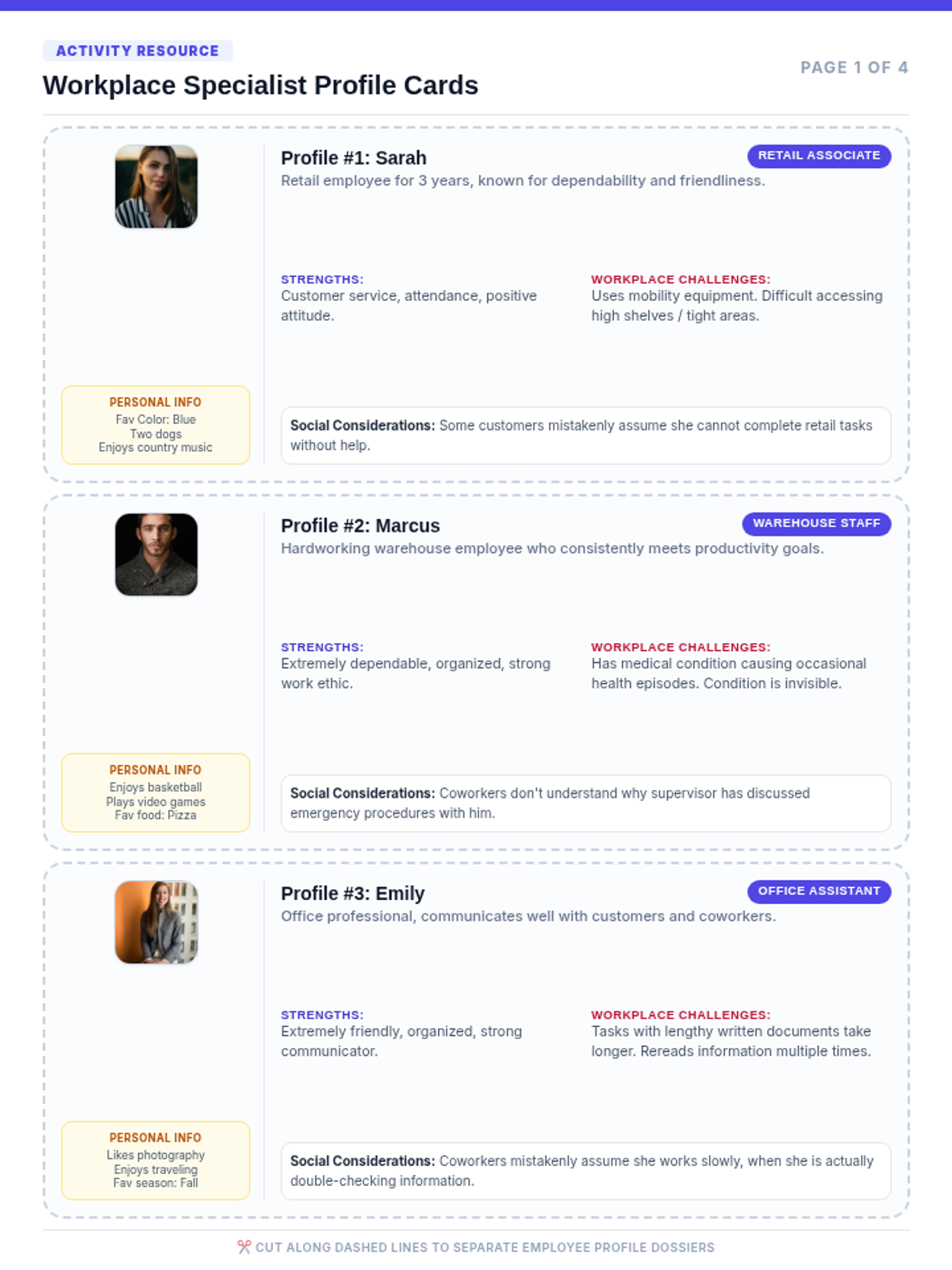
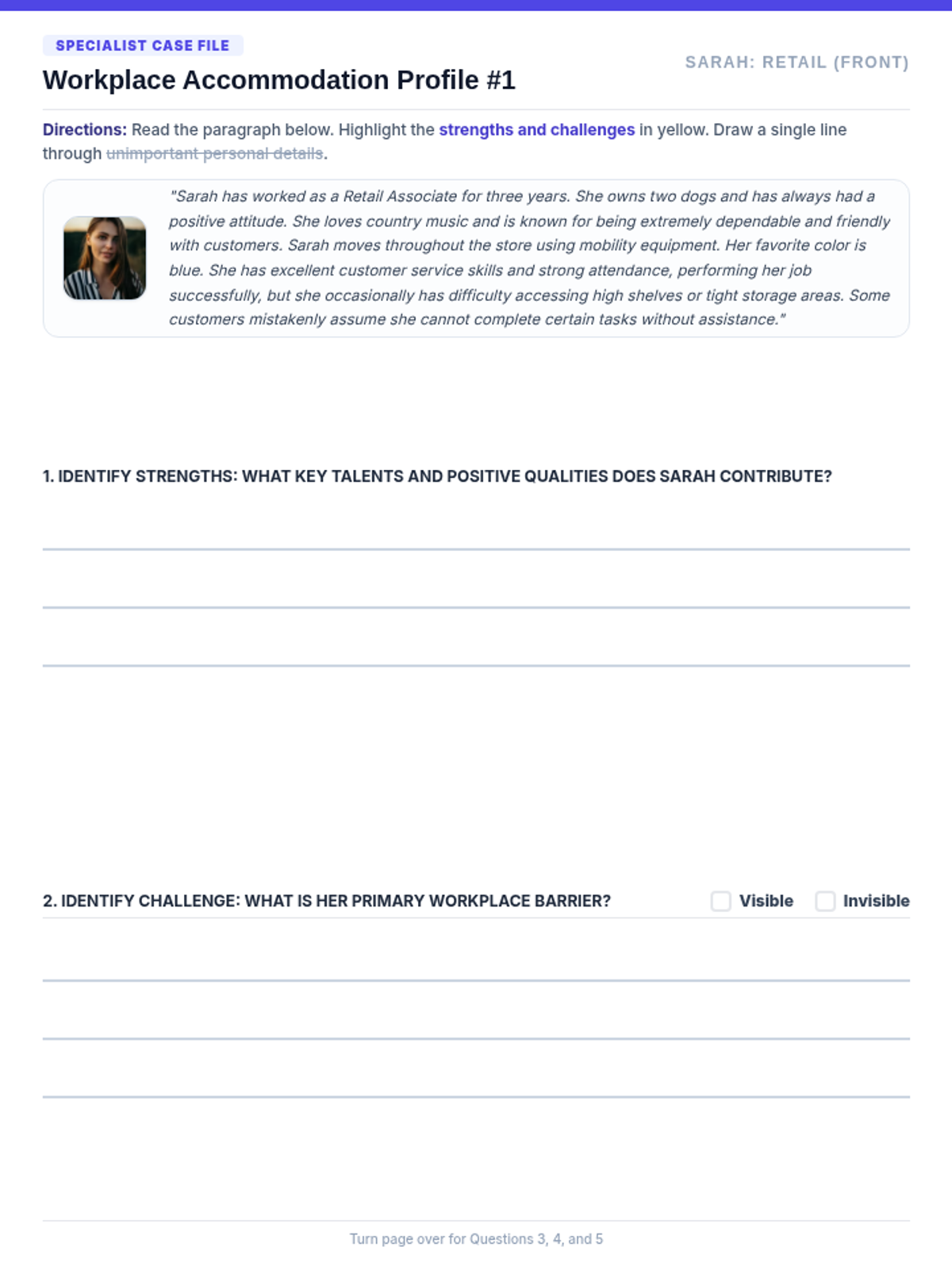
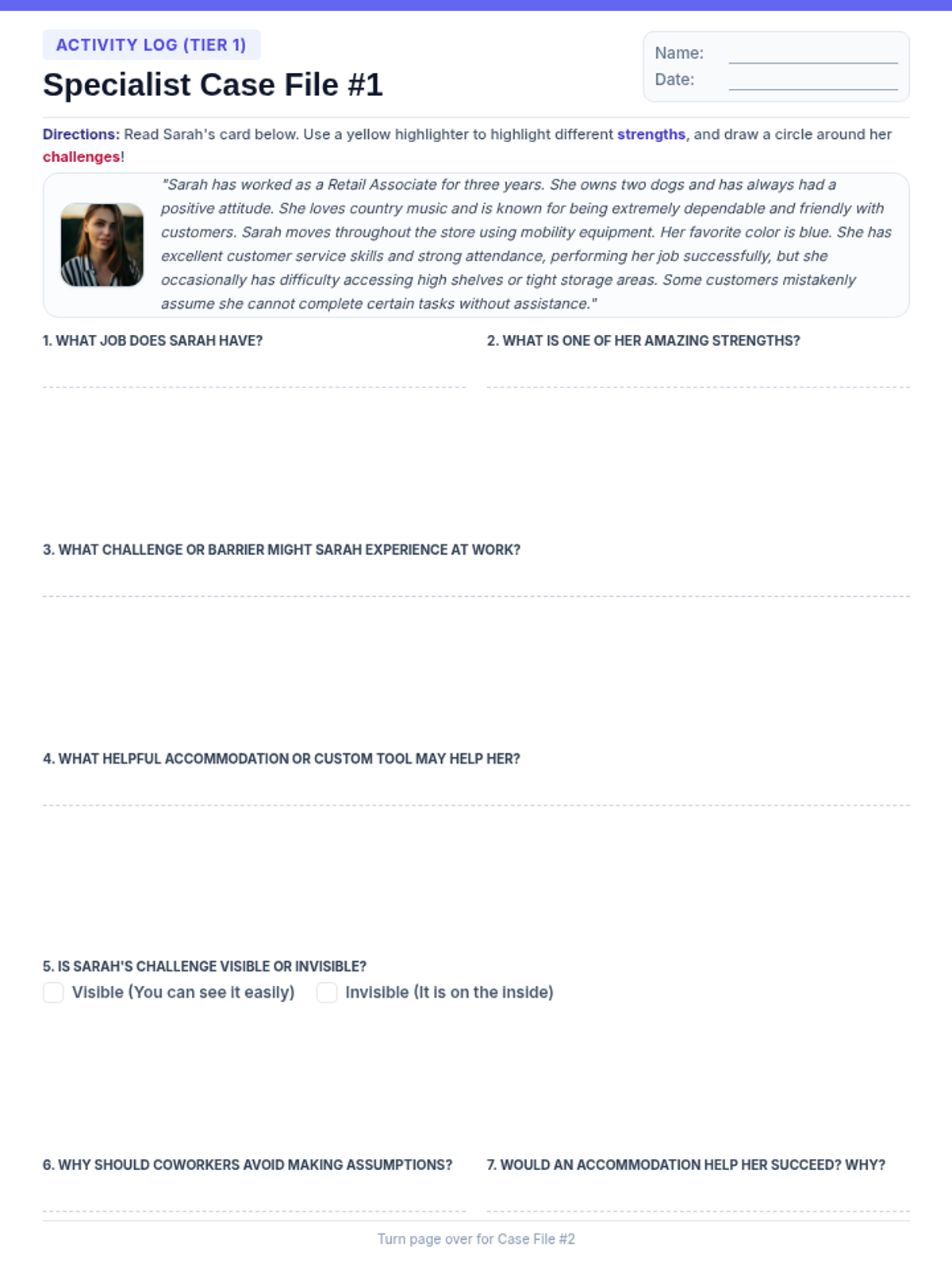
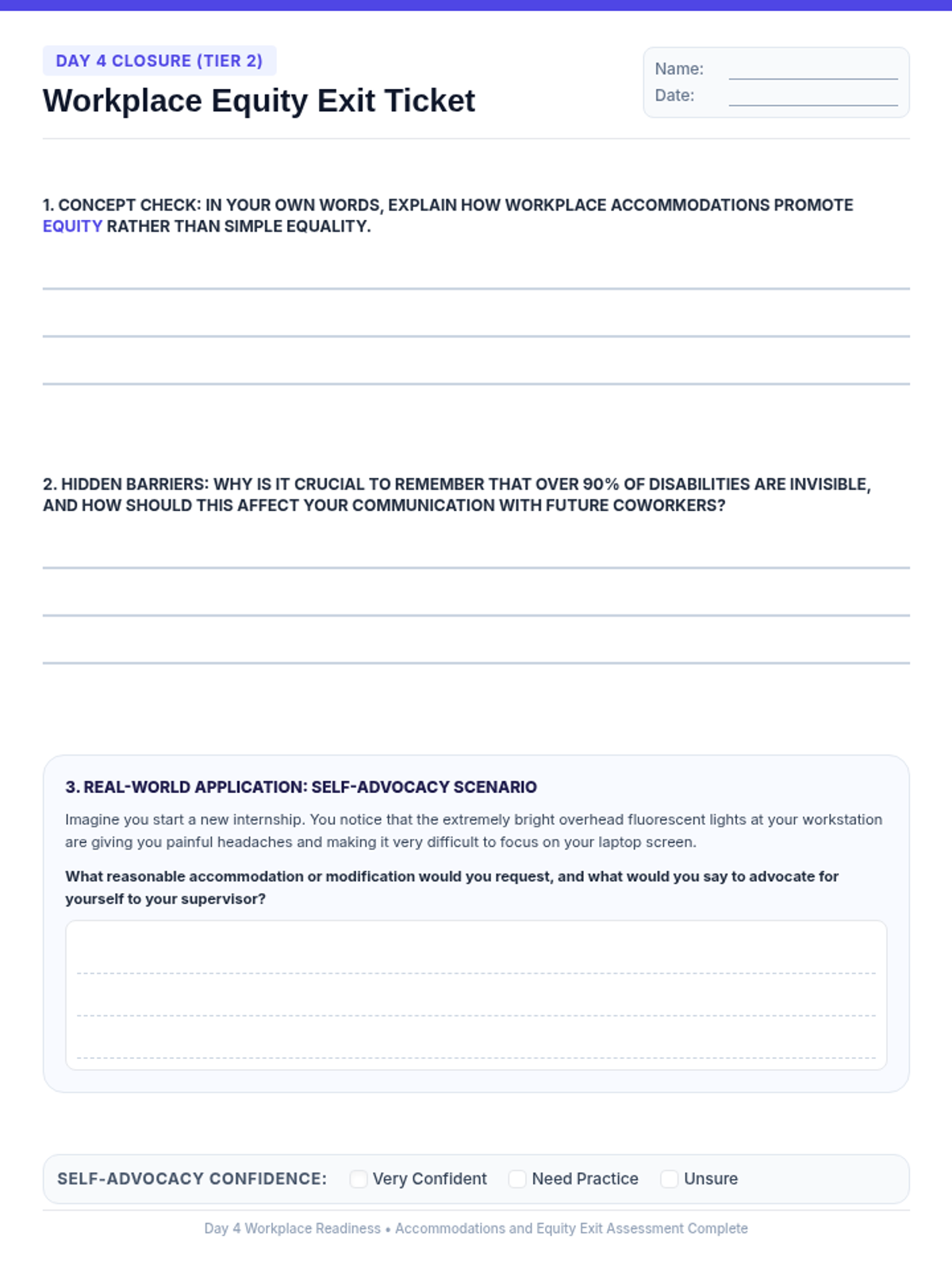
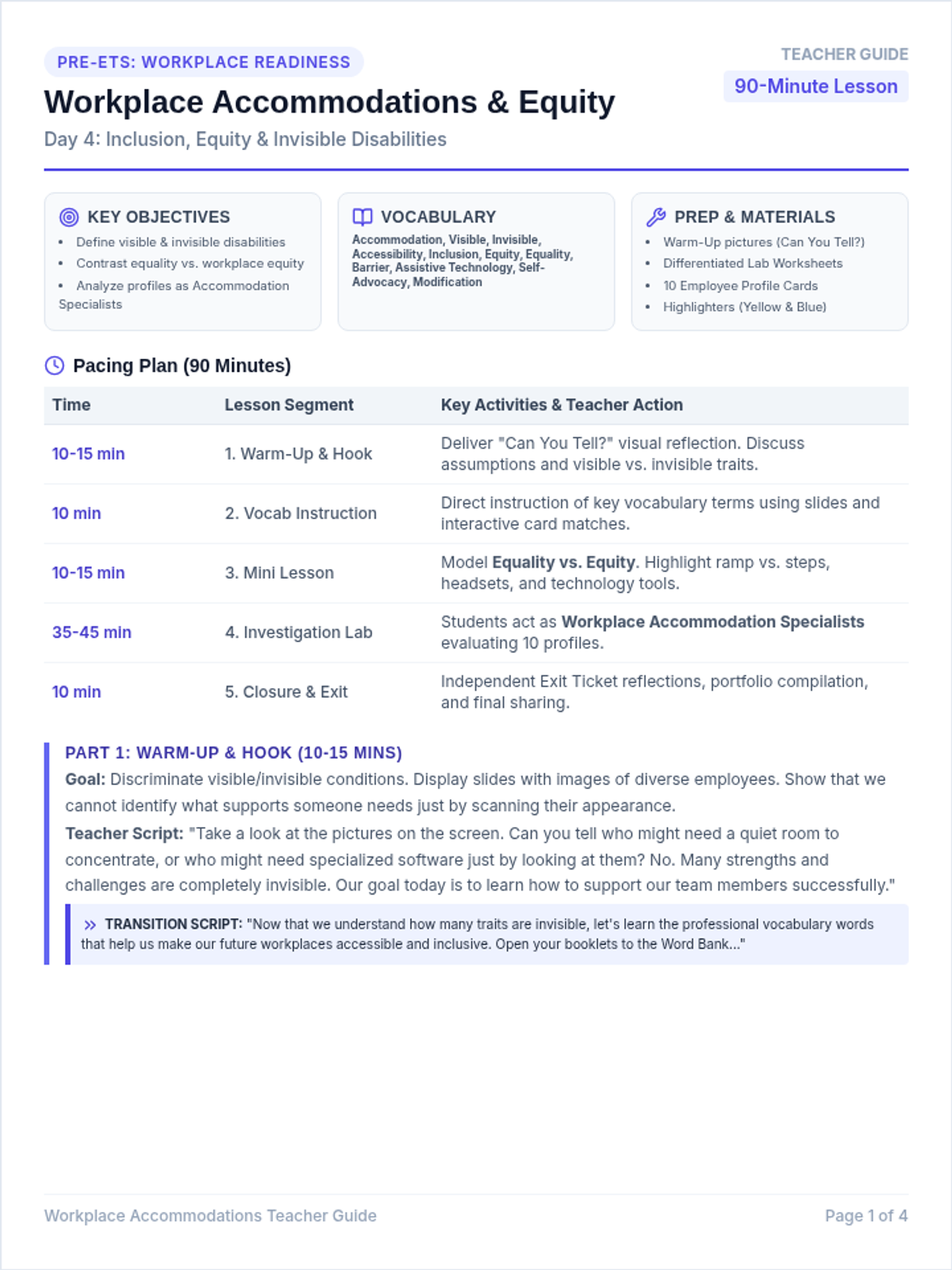
Under the Pre-ETS category of Counseling on Post-Secondary Opportunities, this lesson equips transitioning high school students with knowledge of workplace accommodations, visible/invisible disabilities, and self-advocacy. Students explore equity rights to prepare for post-secondary career and vocational opportunities.
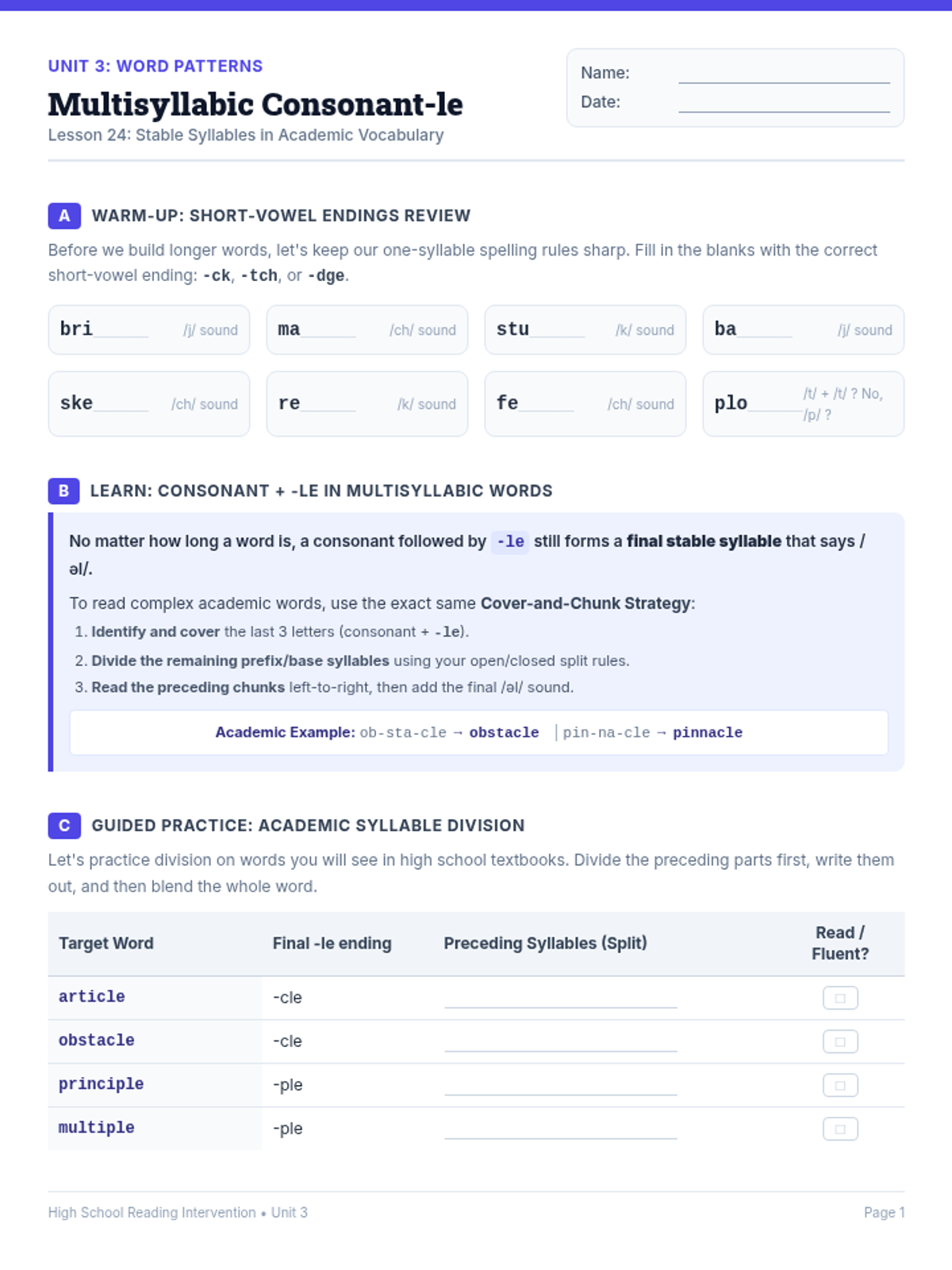
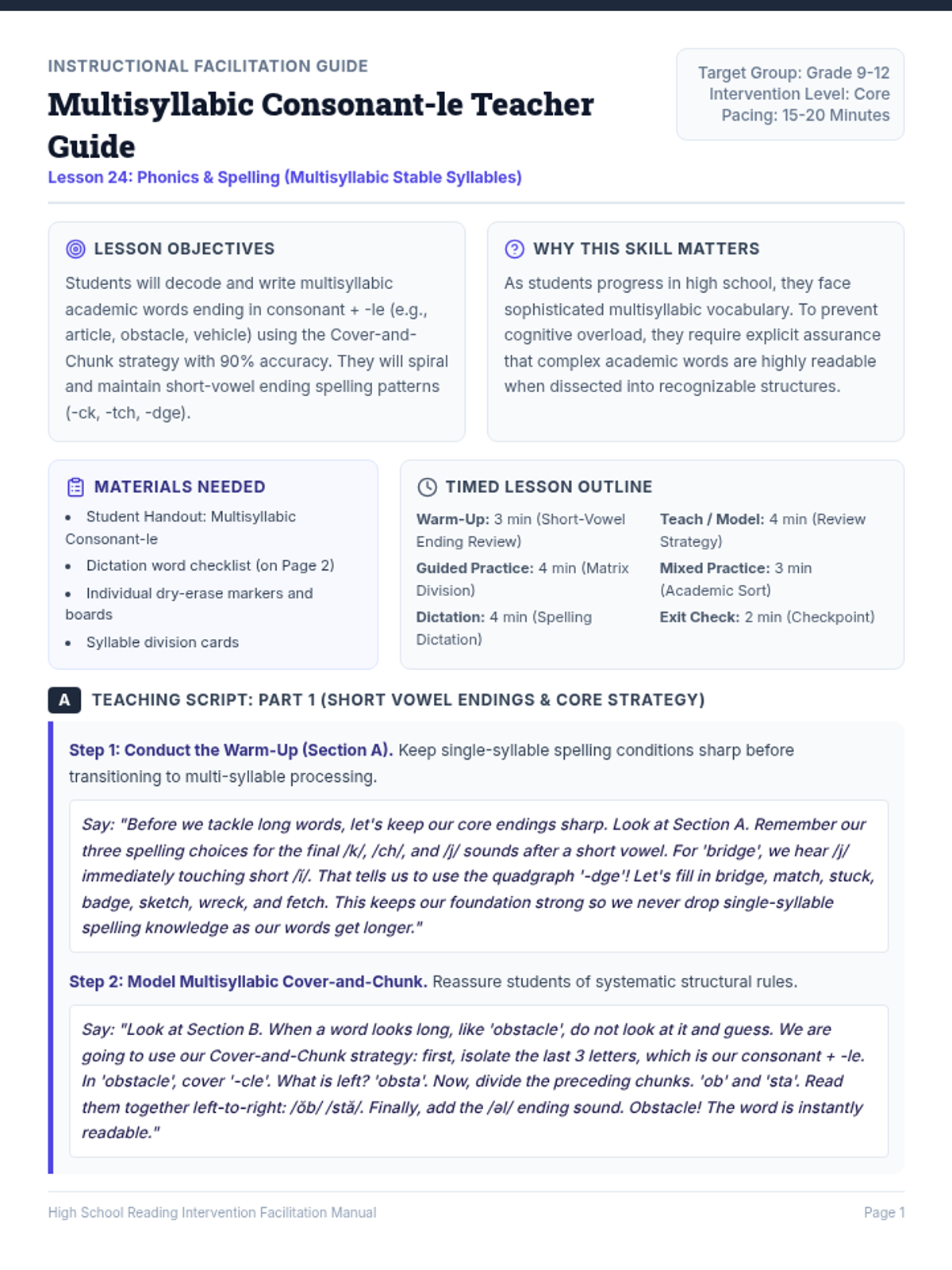
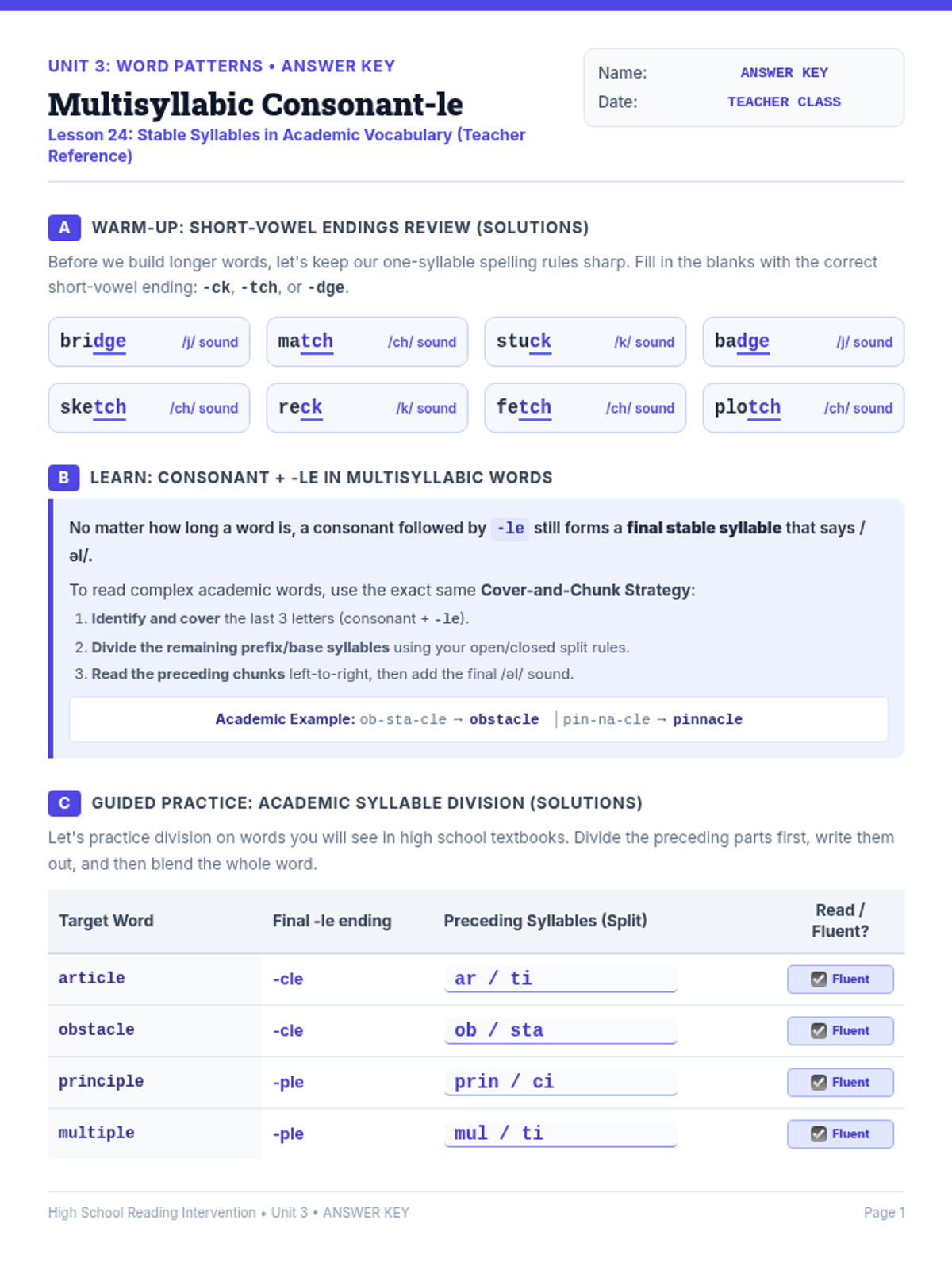
Focuses on decoding and spelling longer, academic multisyllabic words ending in consonant + -le, while spiraling previously learned short-vowel spelling patterns (-ck, -tch, -dge) during warm-ups and comparative activities.
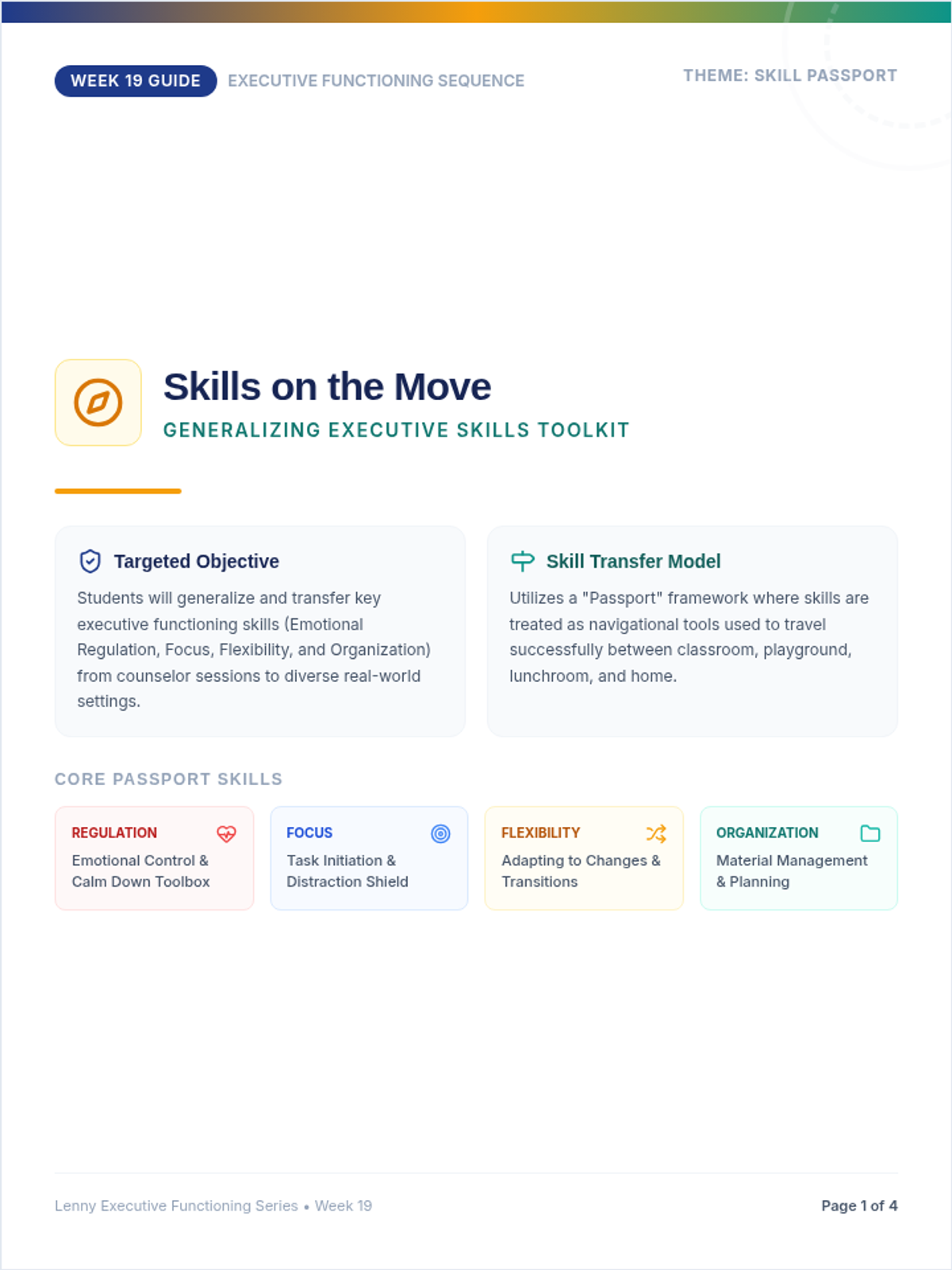
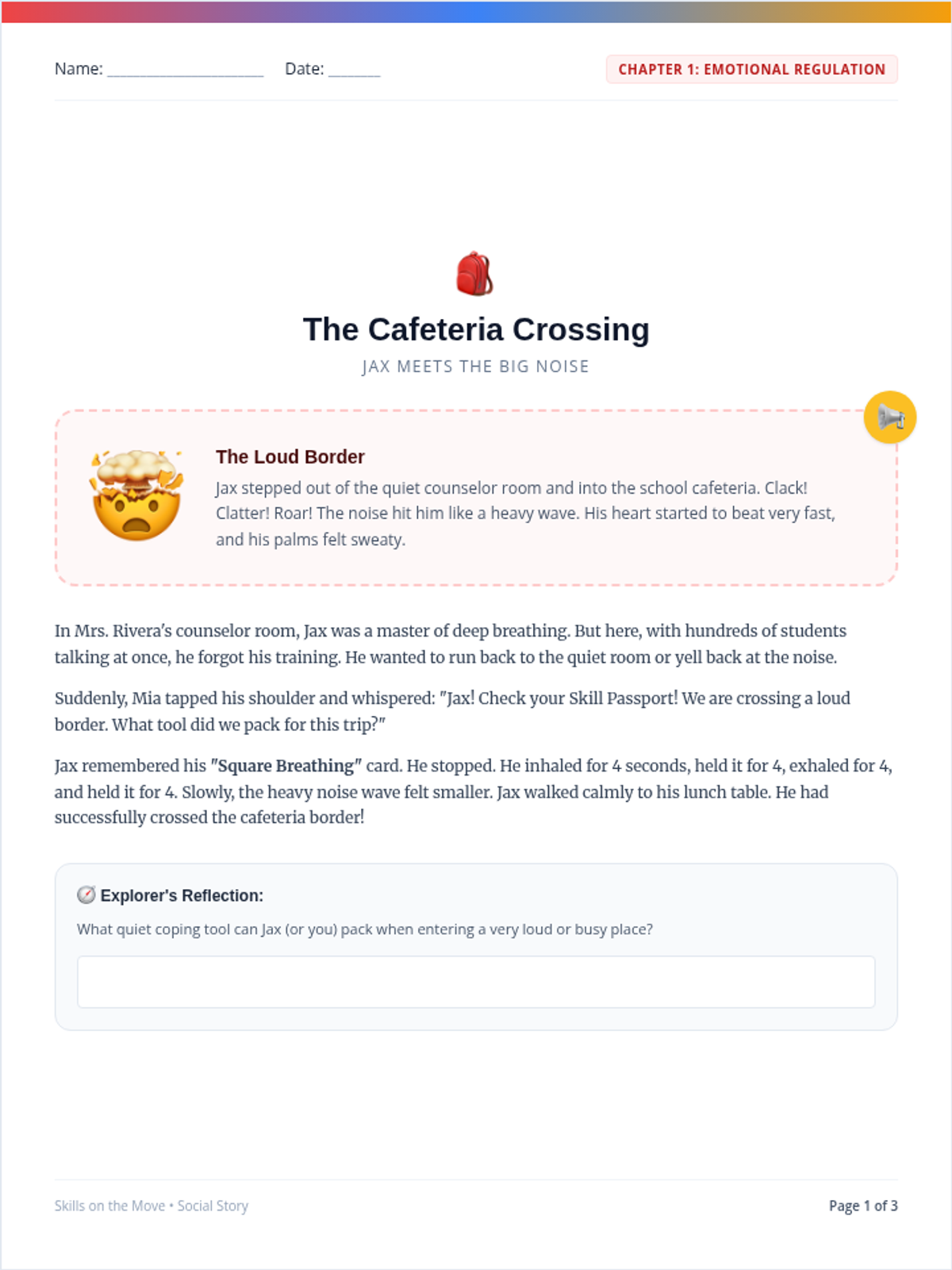
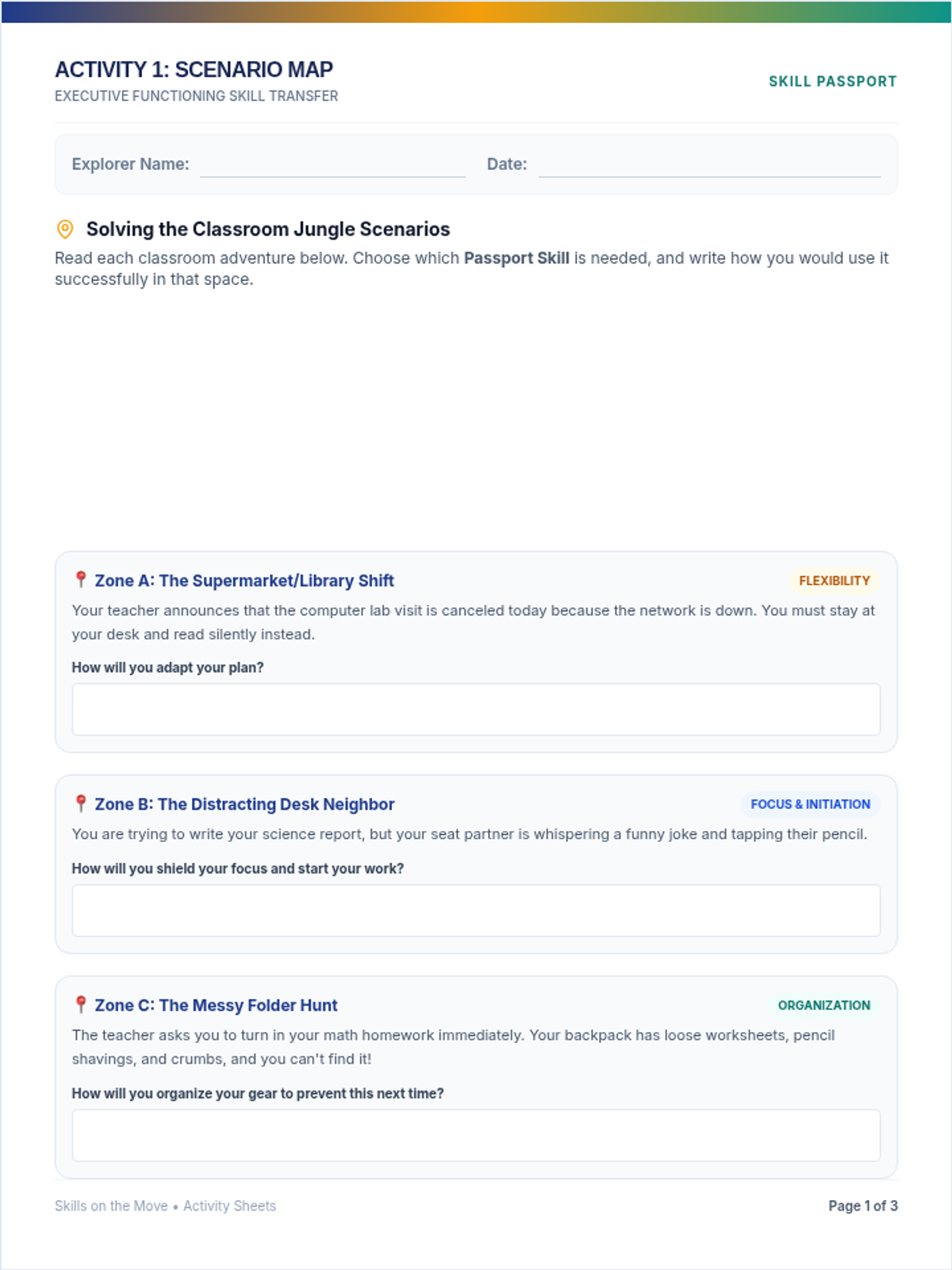
A comprehensive lesson designed to help students generalize and transfer their executive functioning skills—including emotional regulation, focus, flexibility, and organization—across various settings.
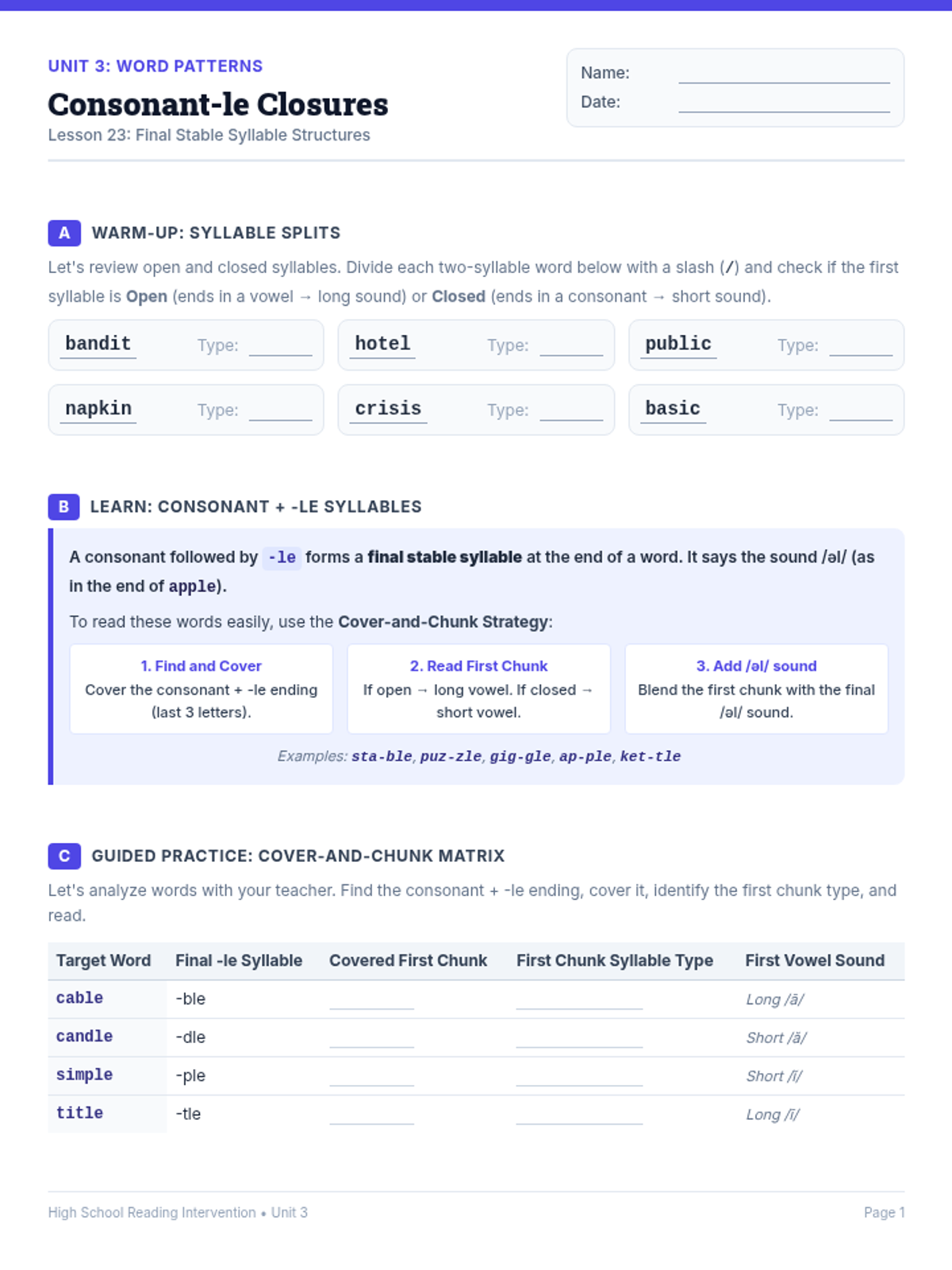
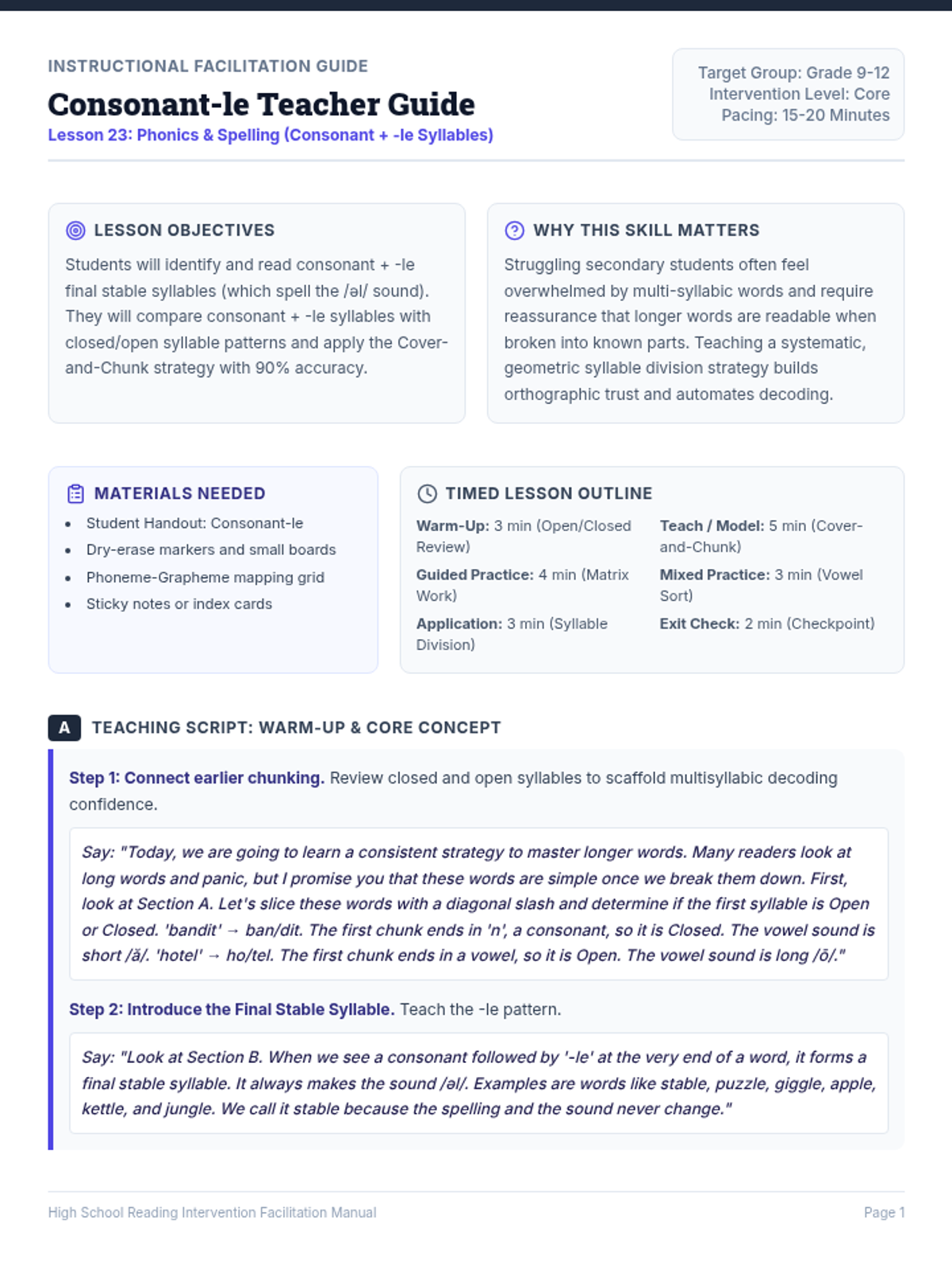
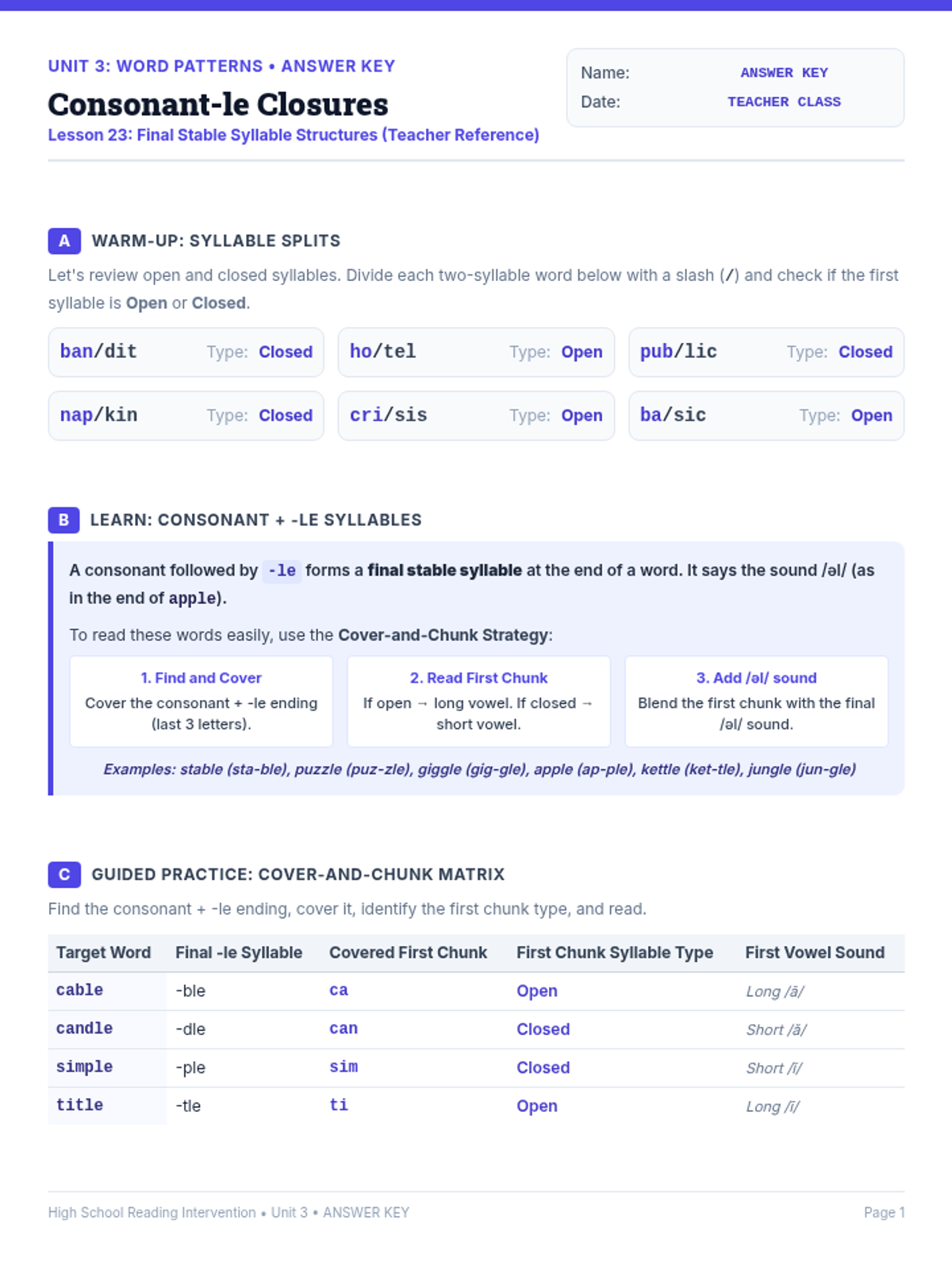
Introduces the final stable syllable consonant + -le, teaching a consistent cover-and-chunk strategy while spiraling open and closed syllable prerequisites.
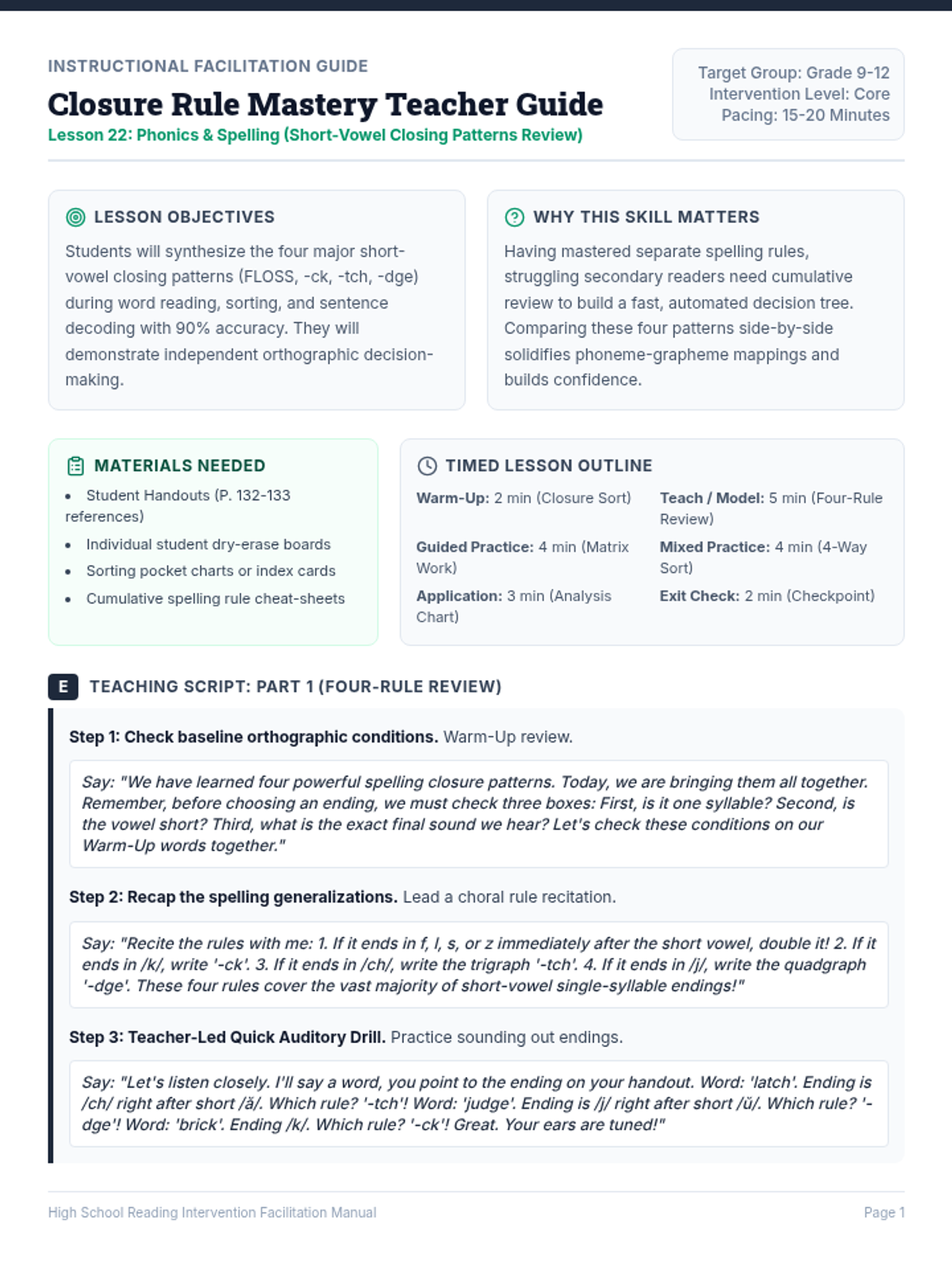
An intensive review and comparative lesson integrating all four major short-vowel closing patterns (FLOSS, -ck, -tch, -dge) to cement master-level orthographic decoding and spelling logic.
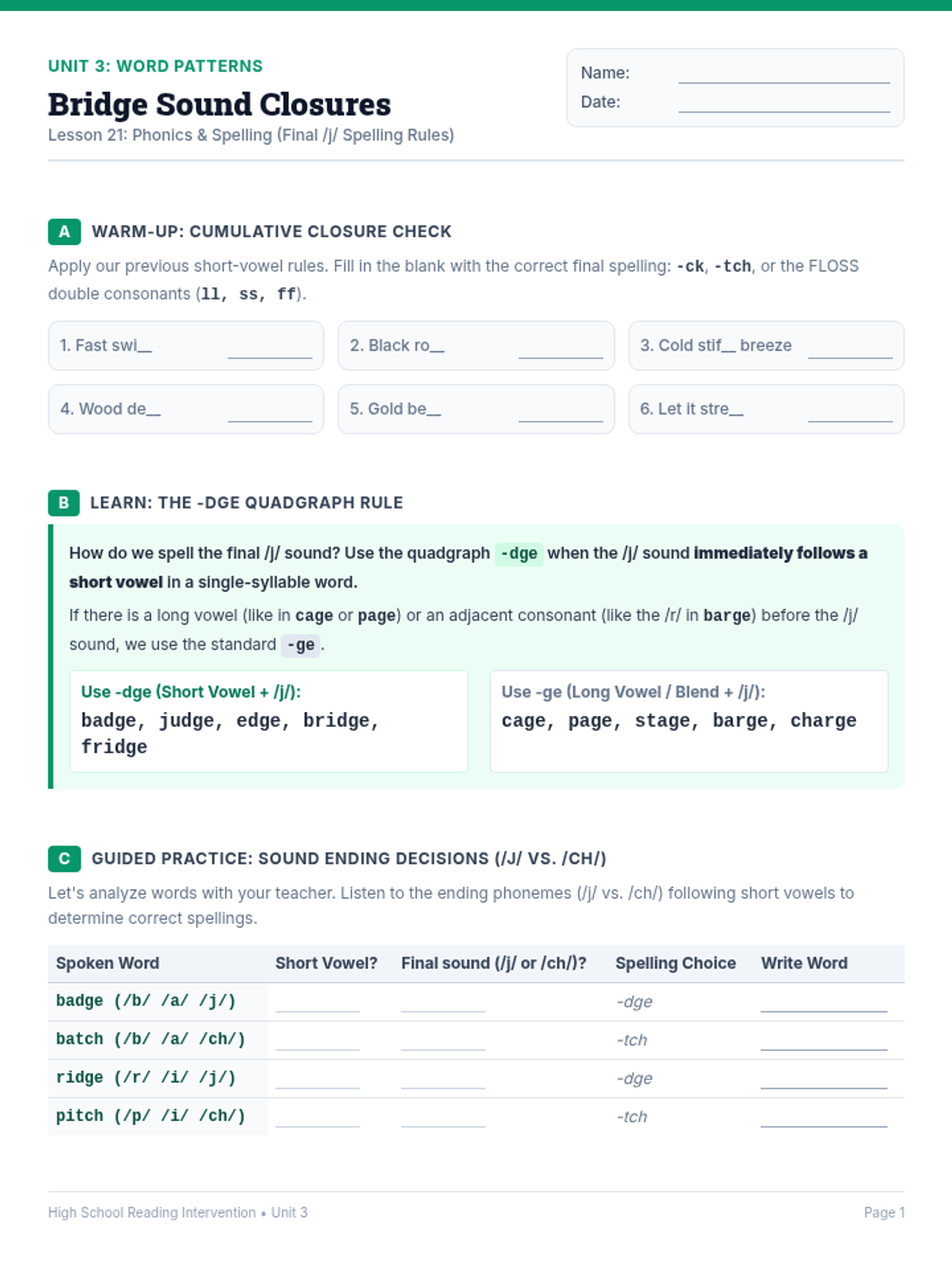
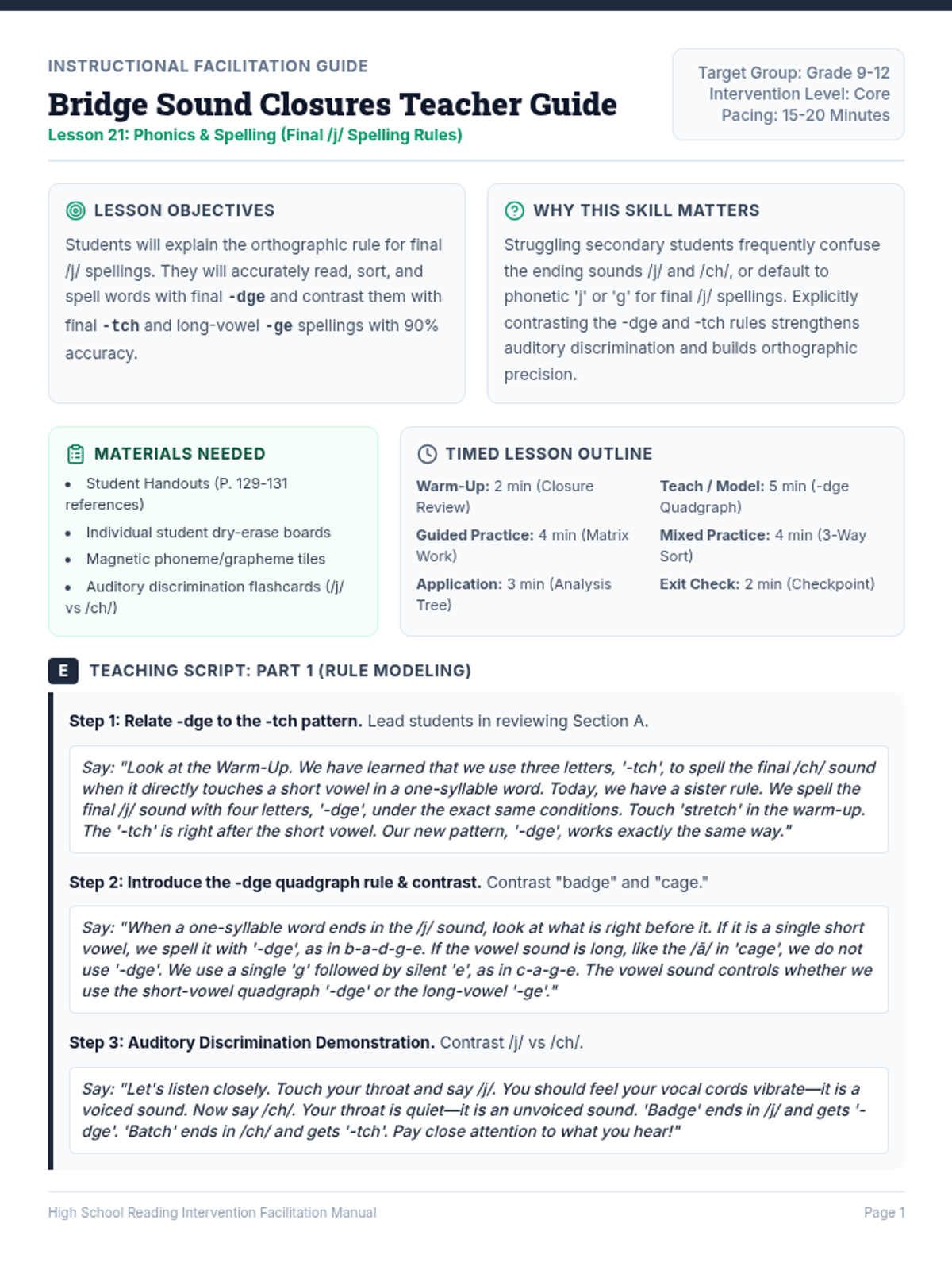
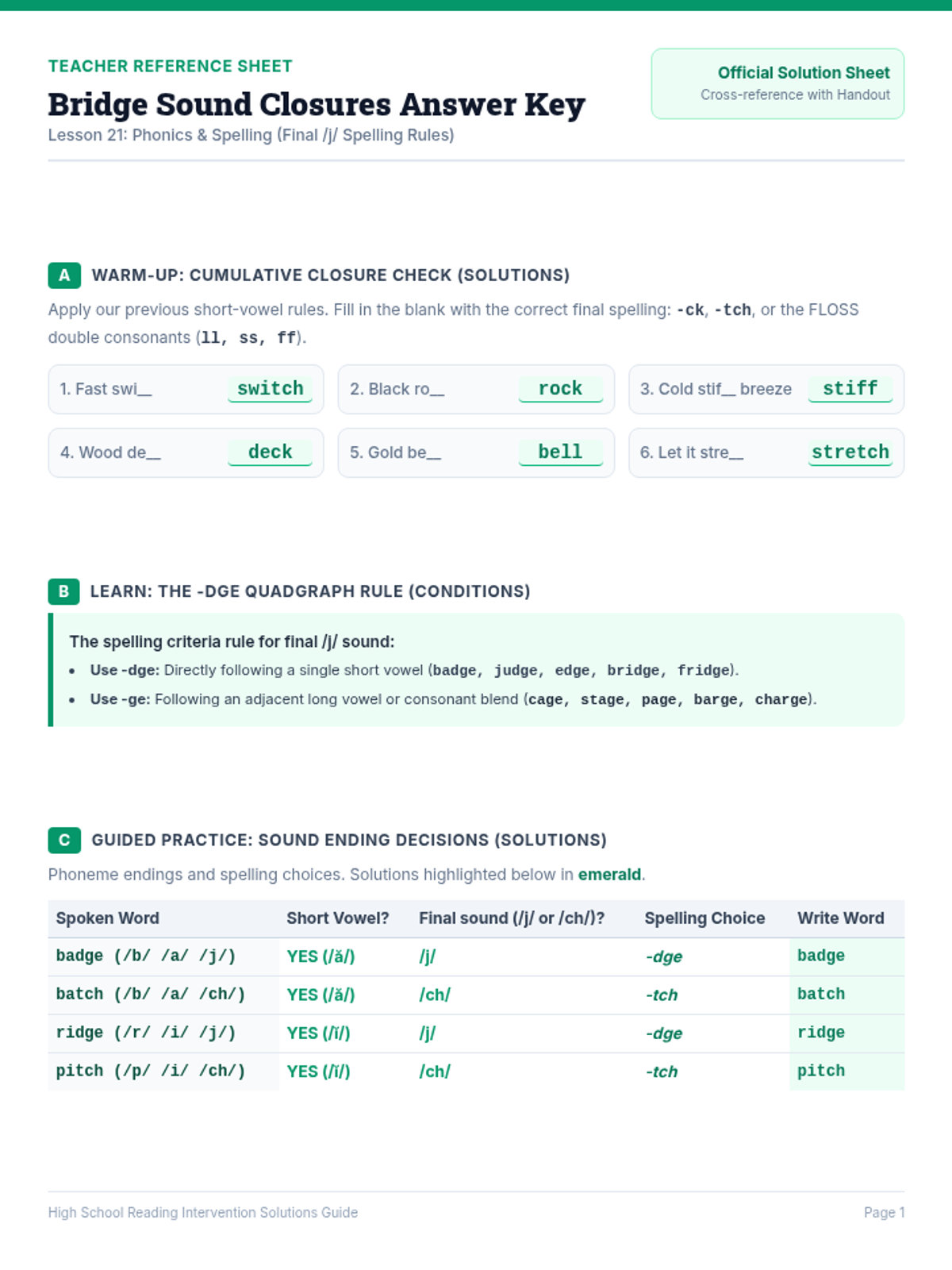
Introduces the spelling pattern -dge for the final /j/ sound following short vowels, contrasting it with the -tch trigraph to strengthen phoneme-level auditory discrimination.
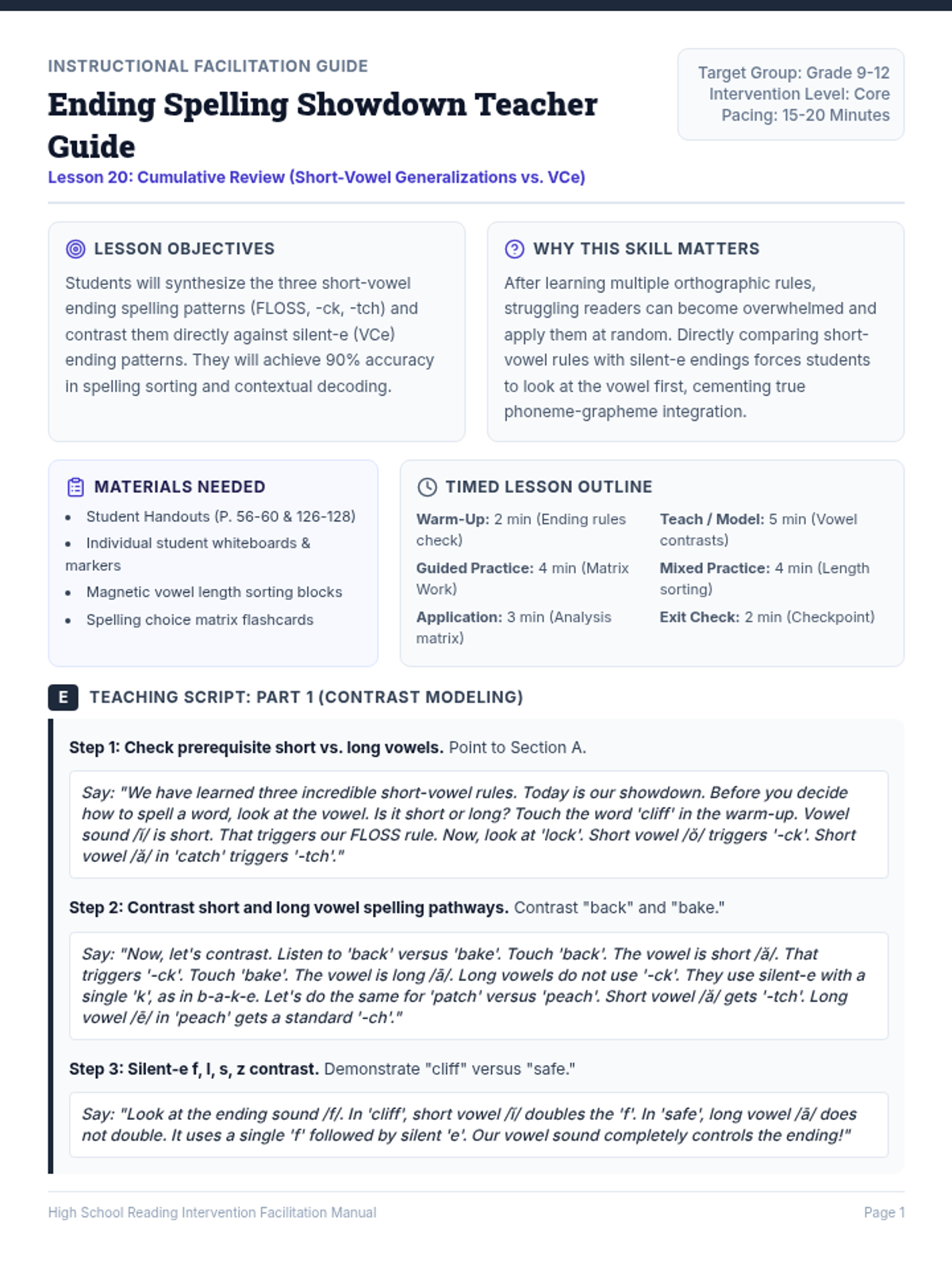
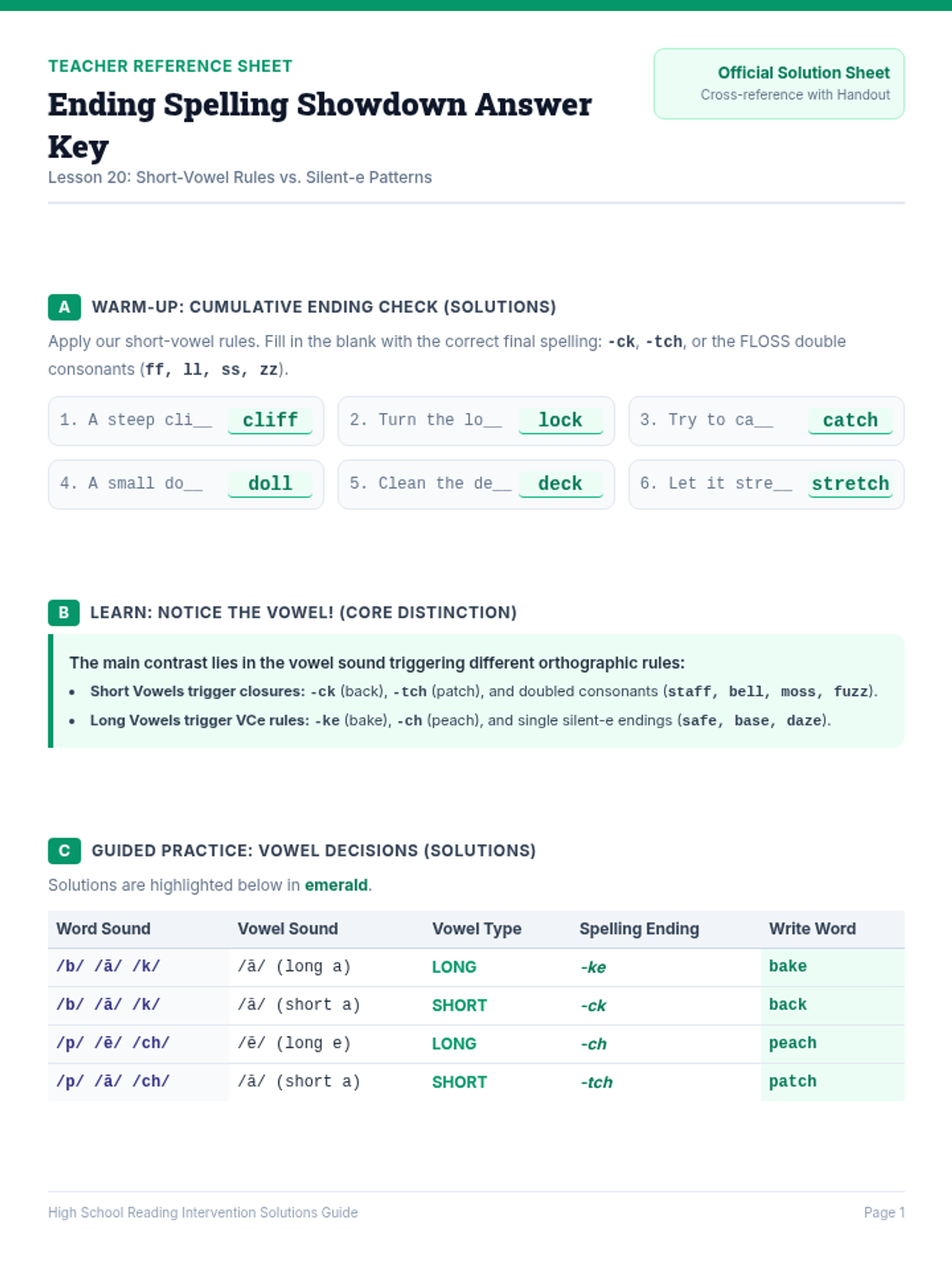
A cumulative practice and review lesson contrasting the short-vowel spelling rules (FLOSS, -ck, -tch) with VCe silent-e patterns to build master-level orthographic decoding and vowel recognition.
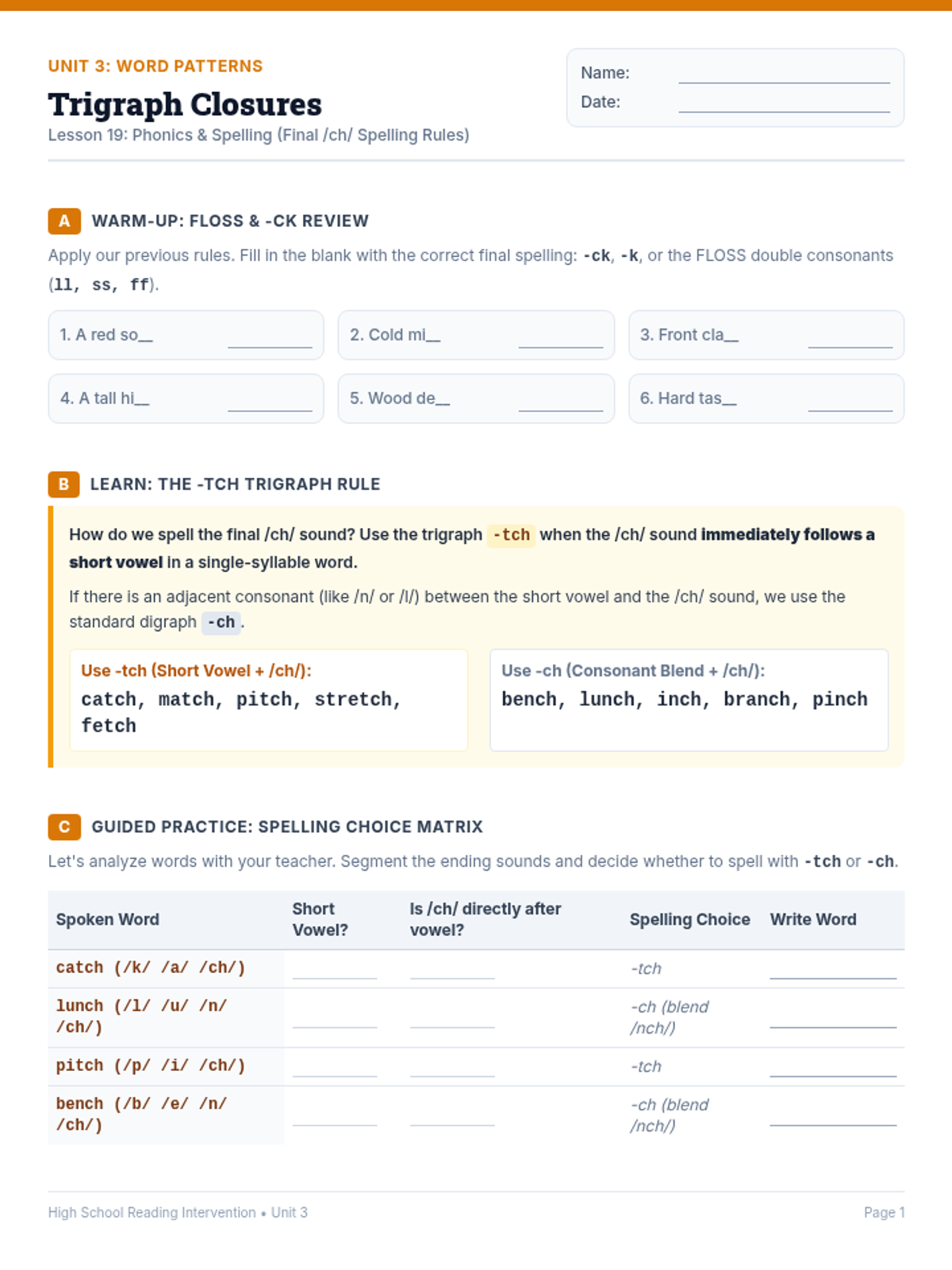
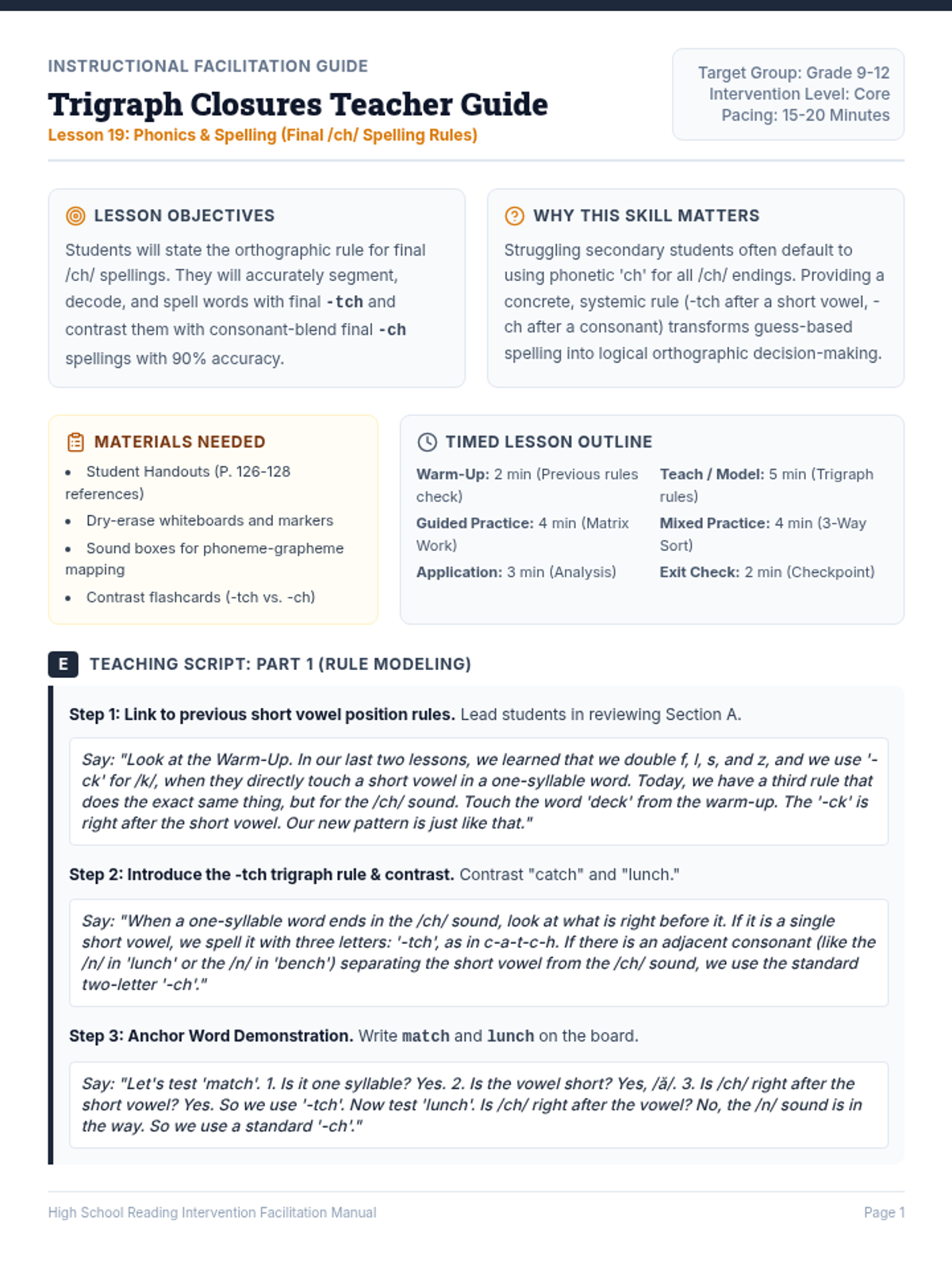
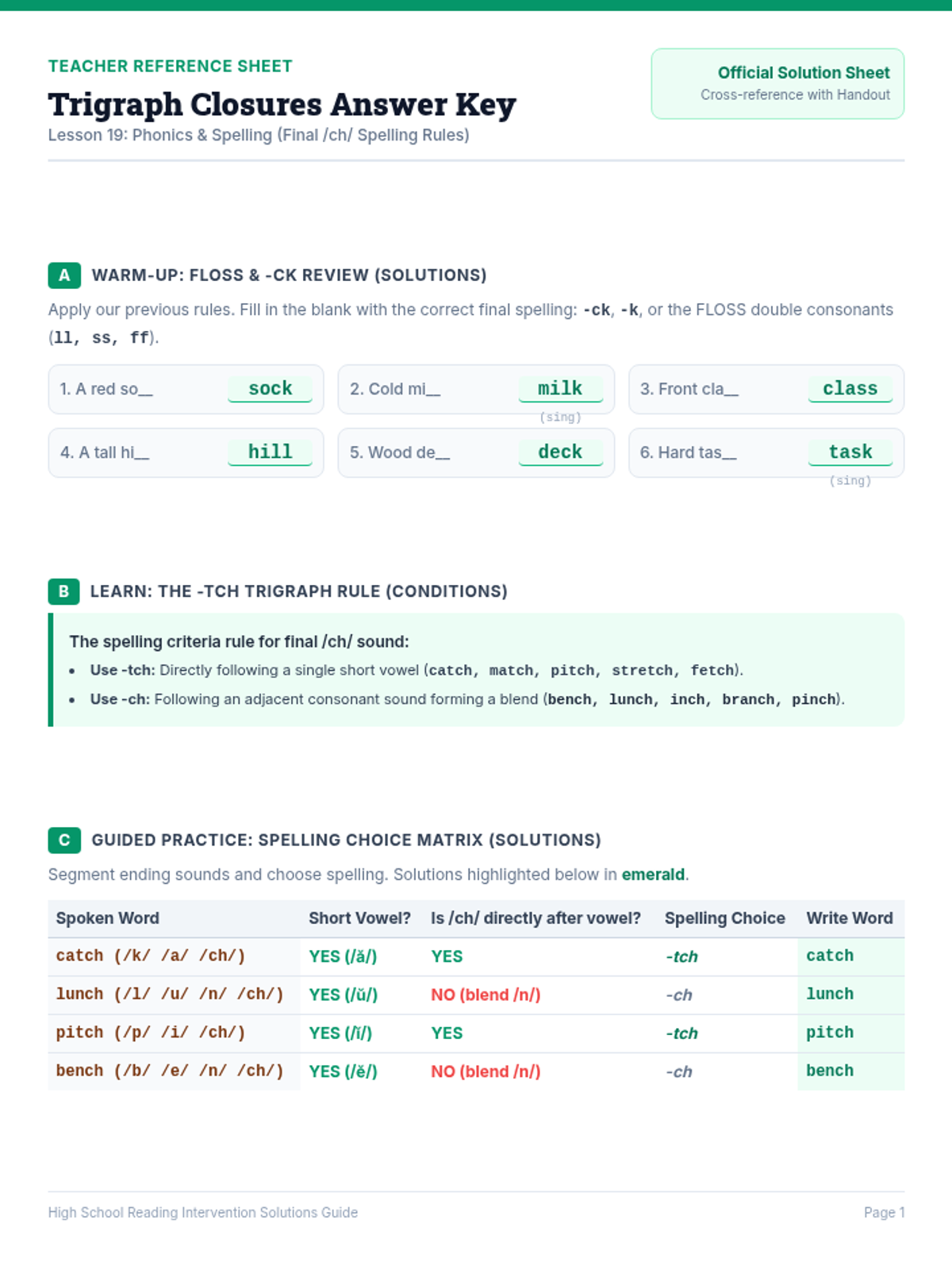
Introduces the spelling pattern -tch for the final /ch/ sound following short vowels, comparing and contrasting it with the -ck spelling rule for final /k/ sounds to build orthographic precision.
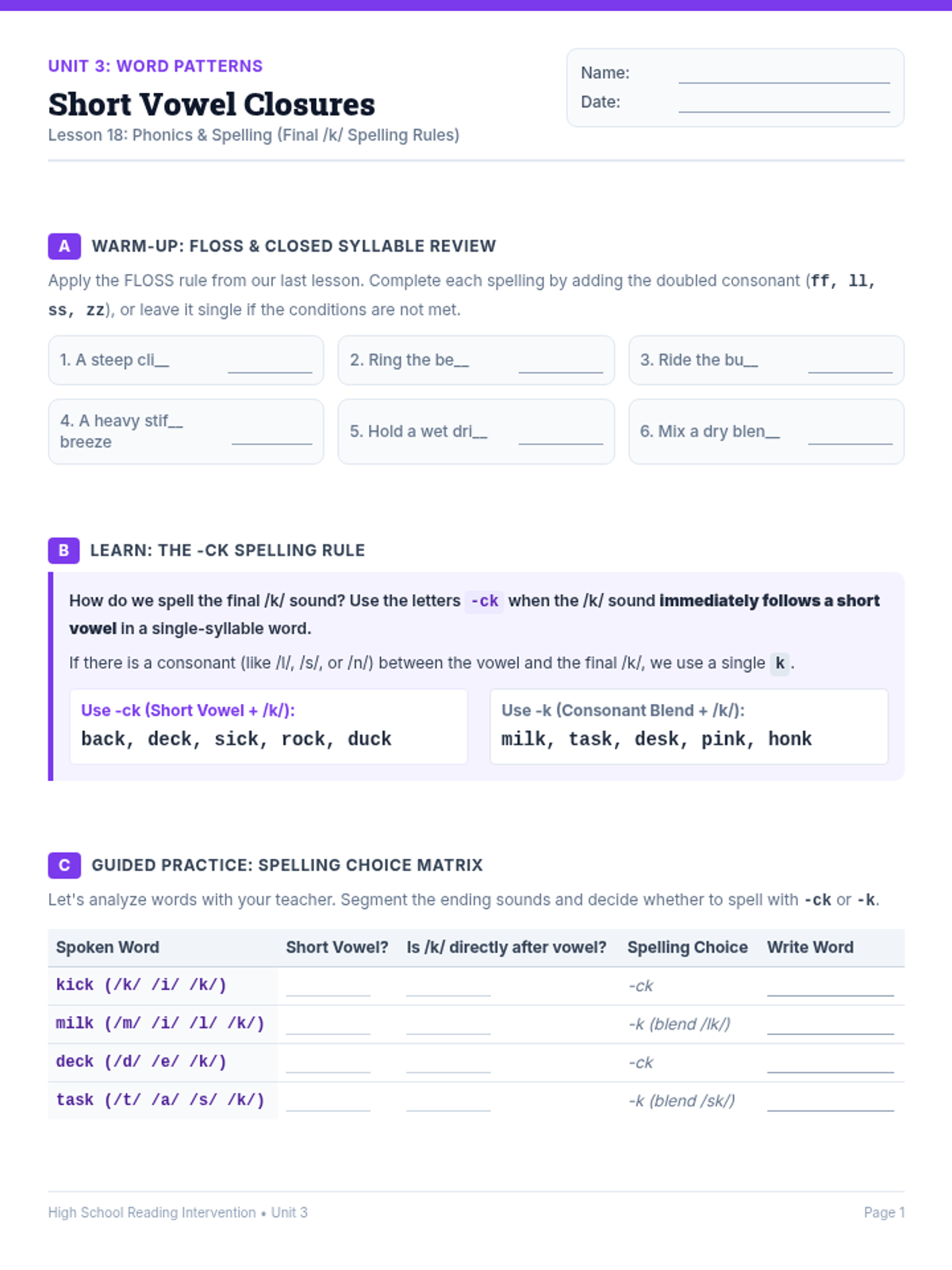
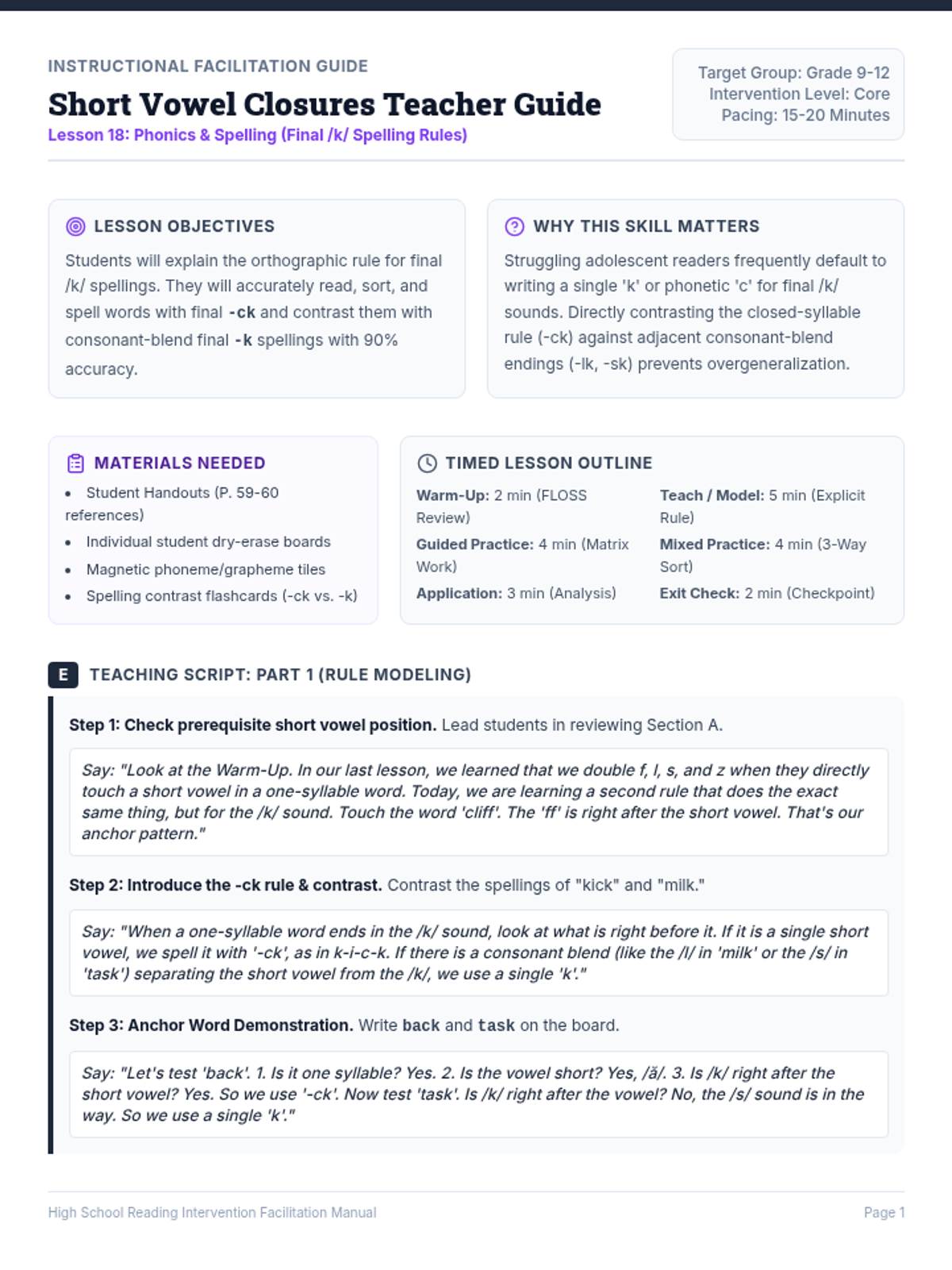
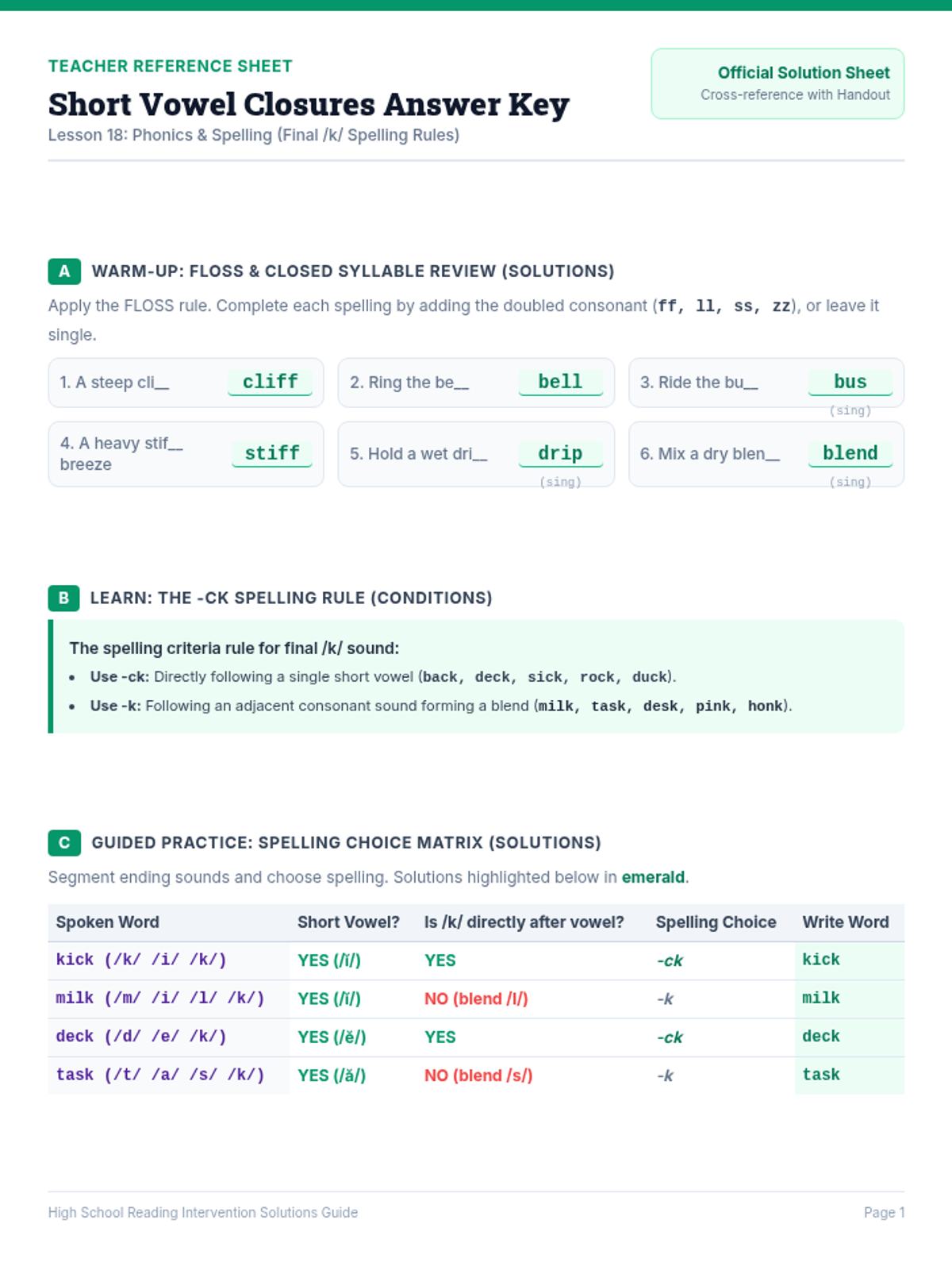
Introduces the spelling pattern -ck for the final /k/ sound following short vowels, contrasting it with the FLOSS rule to build systematic orthographic decision-making.
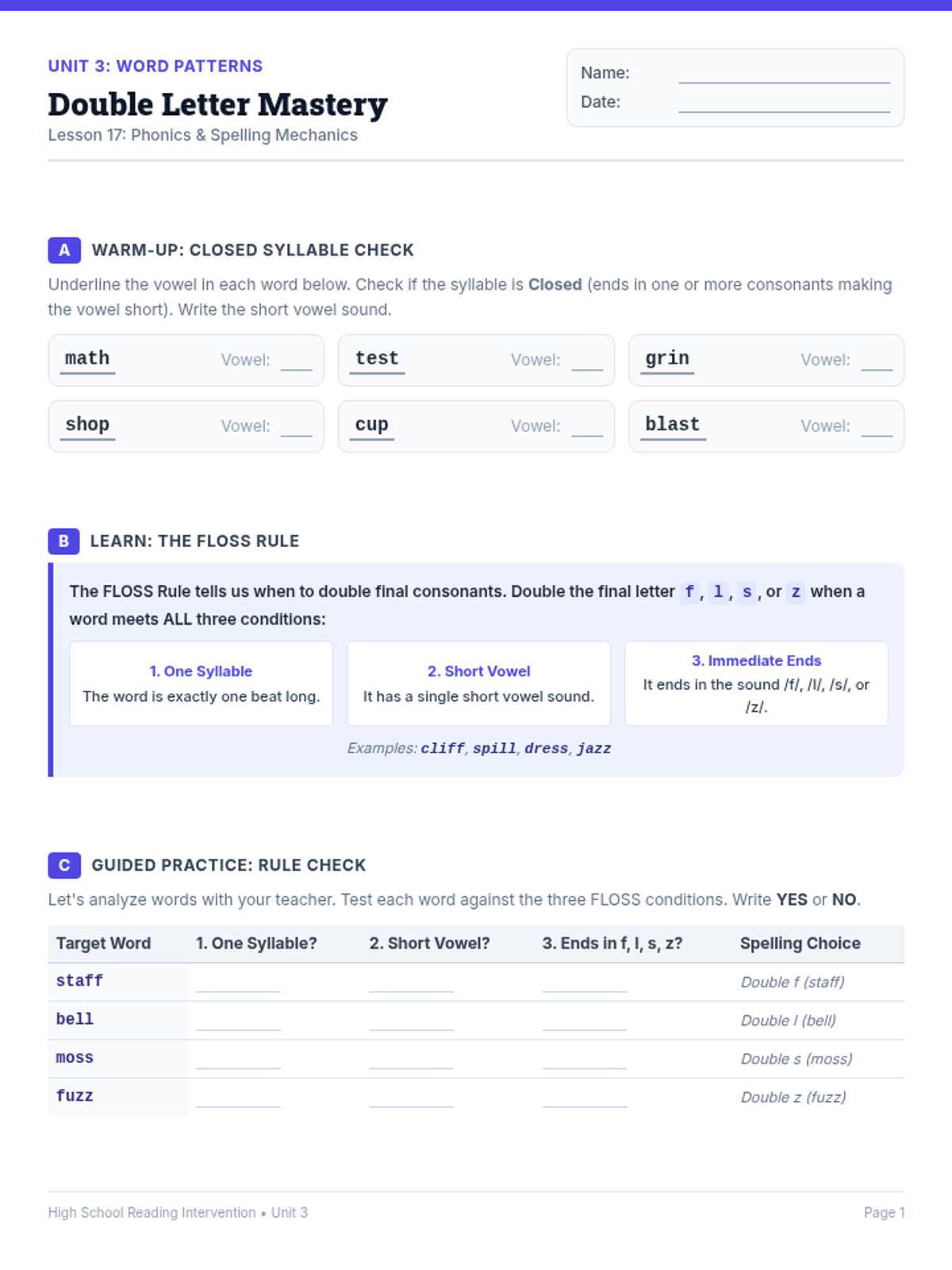
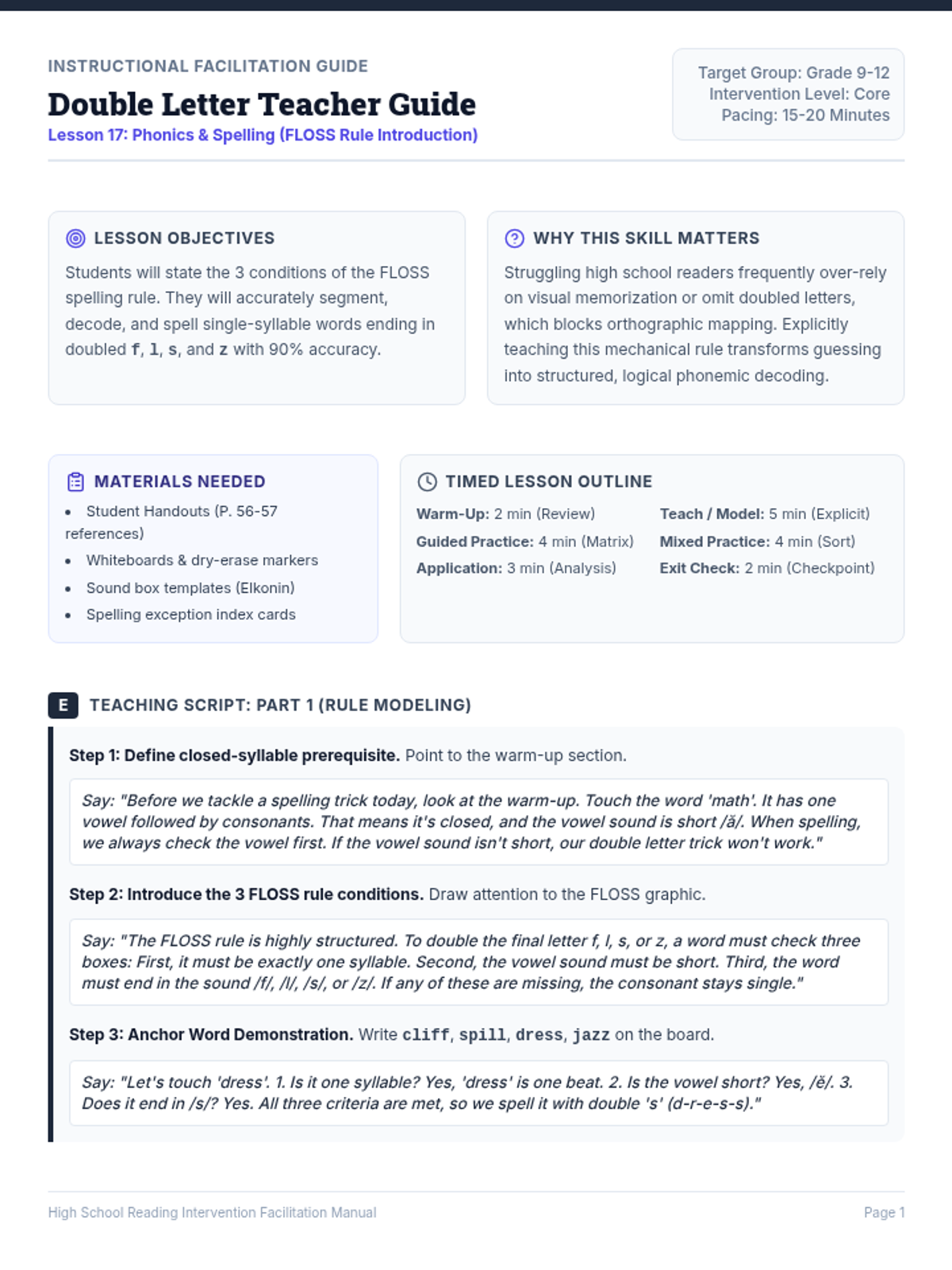
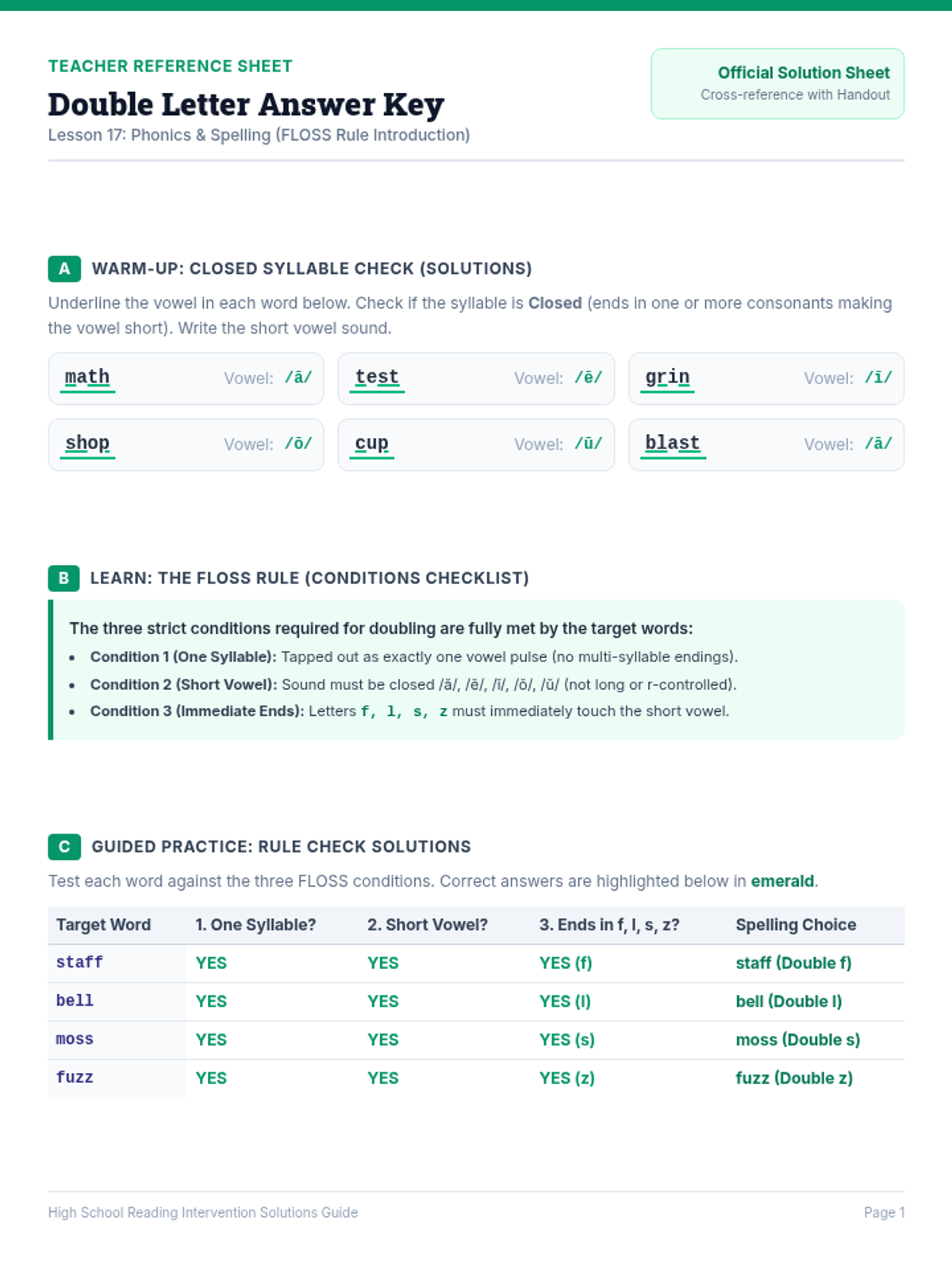
Introduces the FLOSS rule for single-syllable words containing short vowels, emphasizing the conditions under which final f, l, s, and z are doubled, while spiraling closed-syllable patterns.
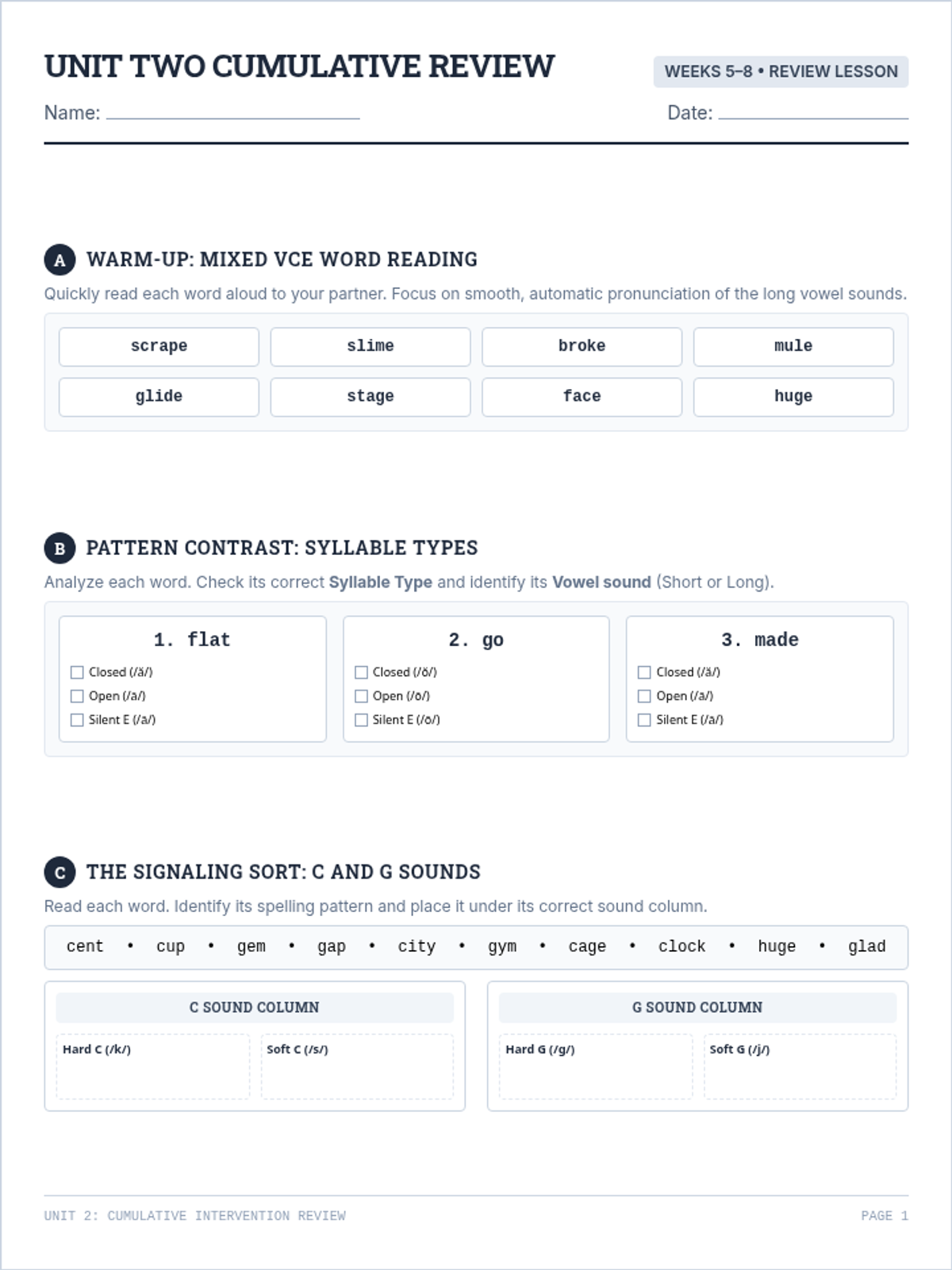
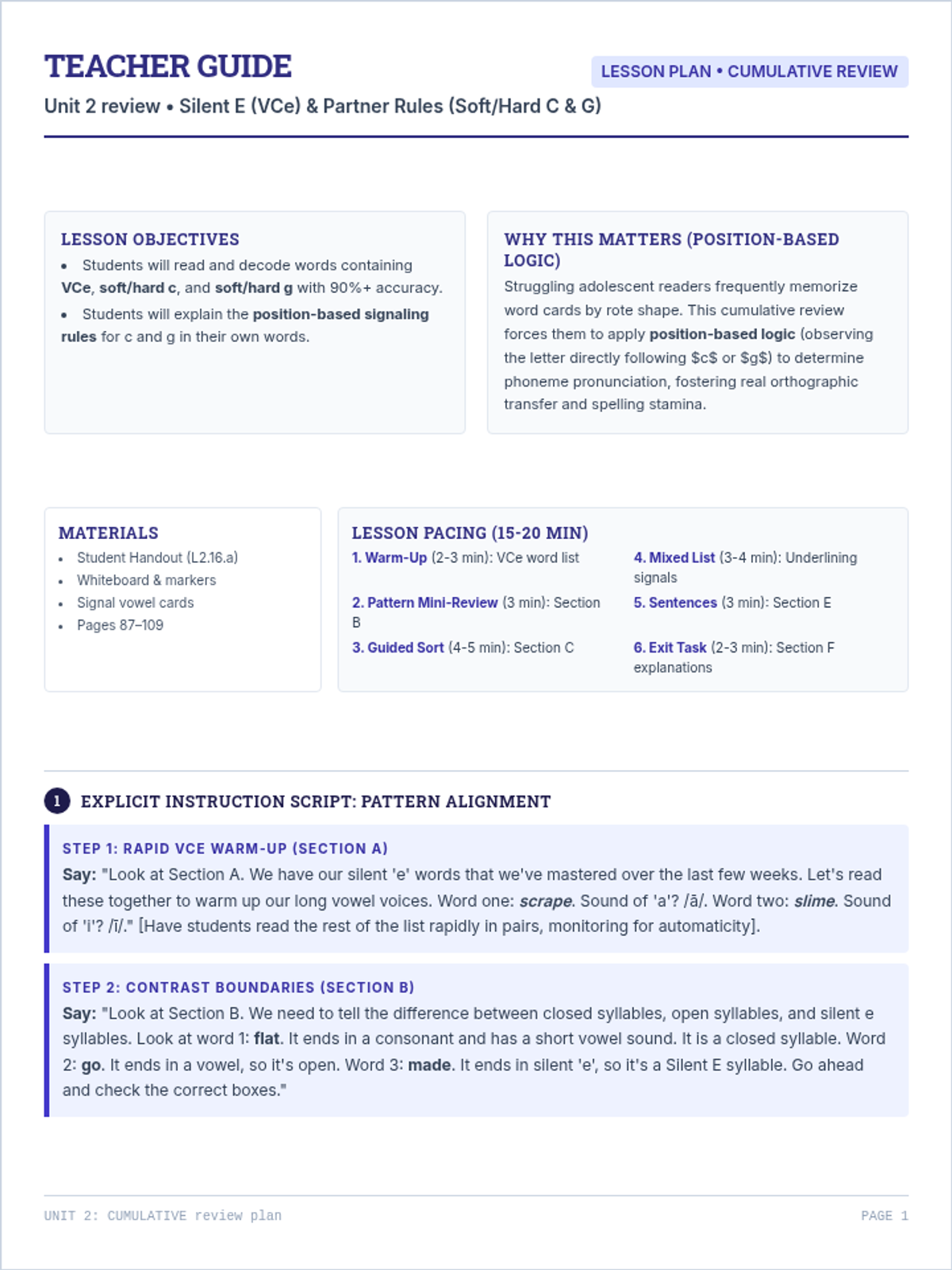
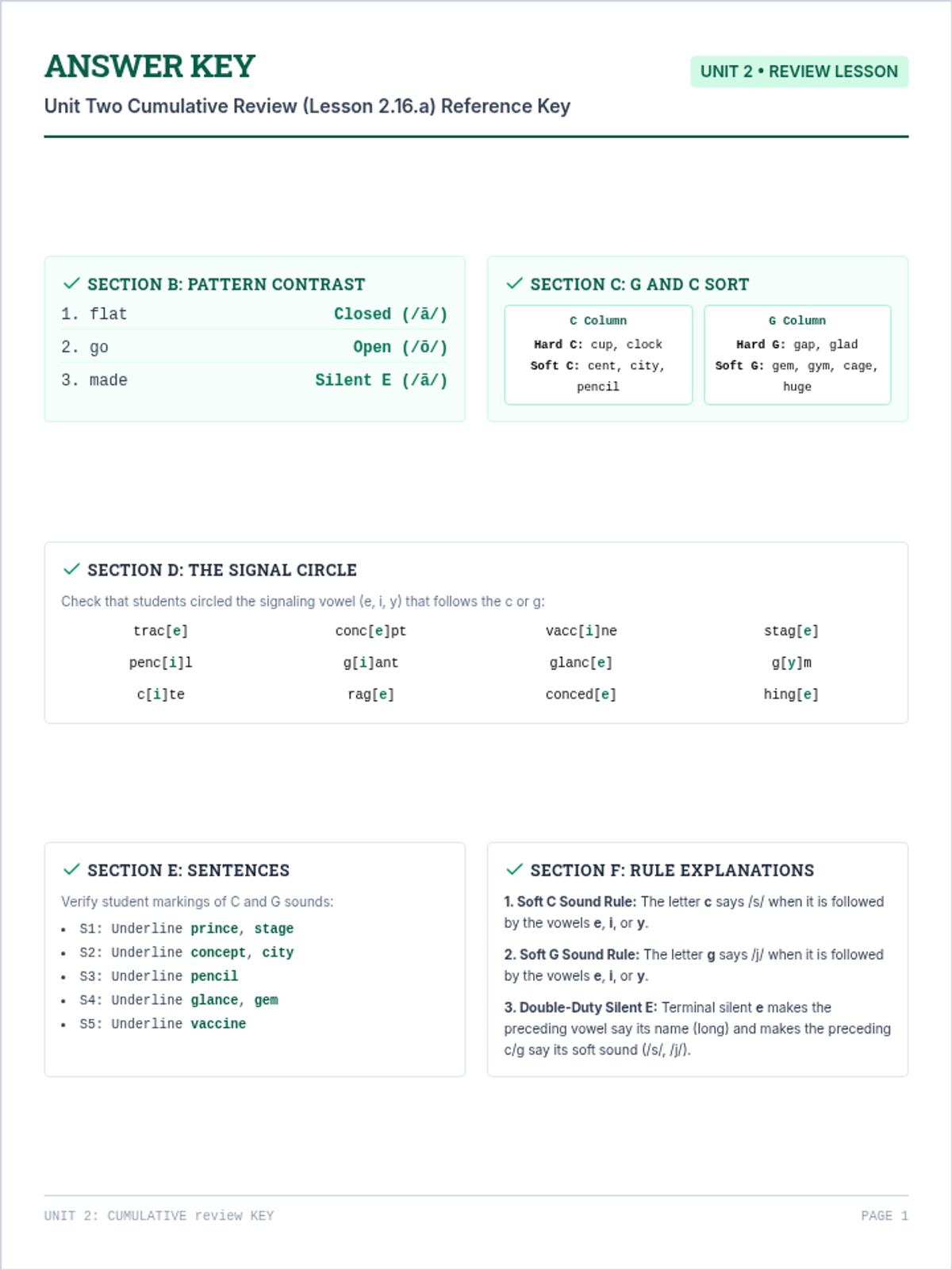
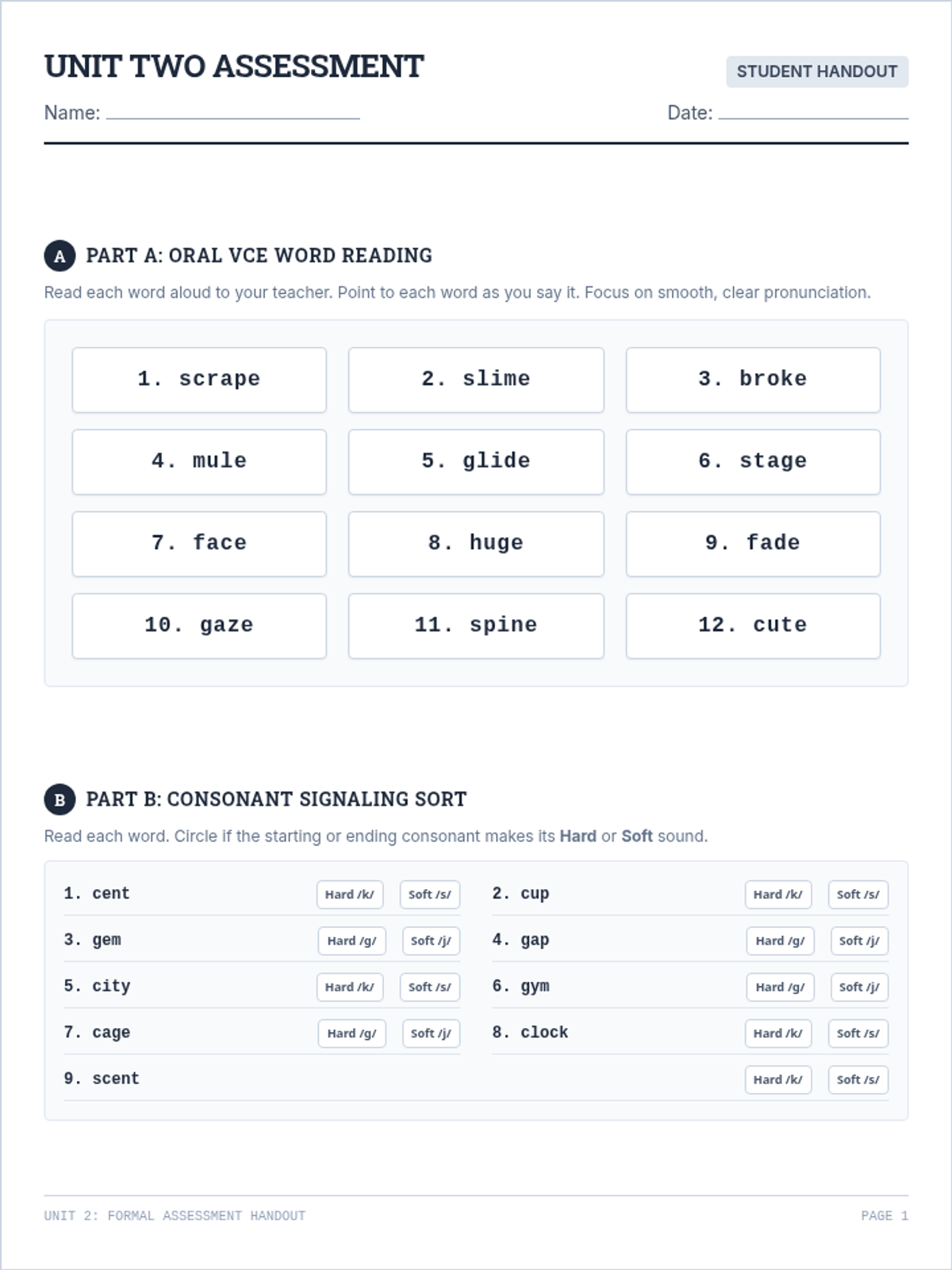
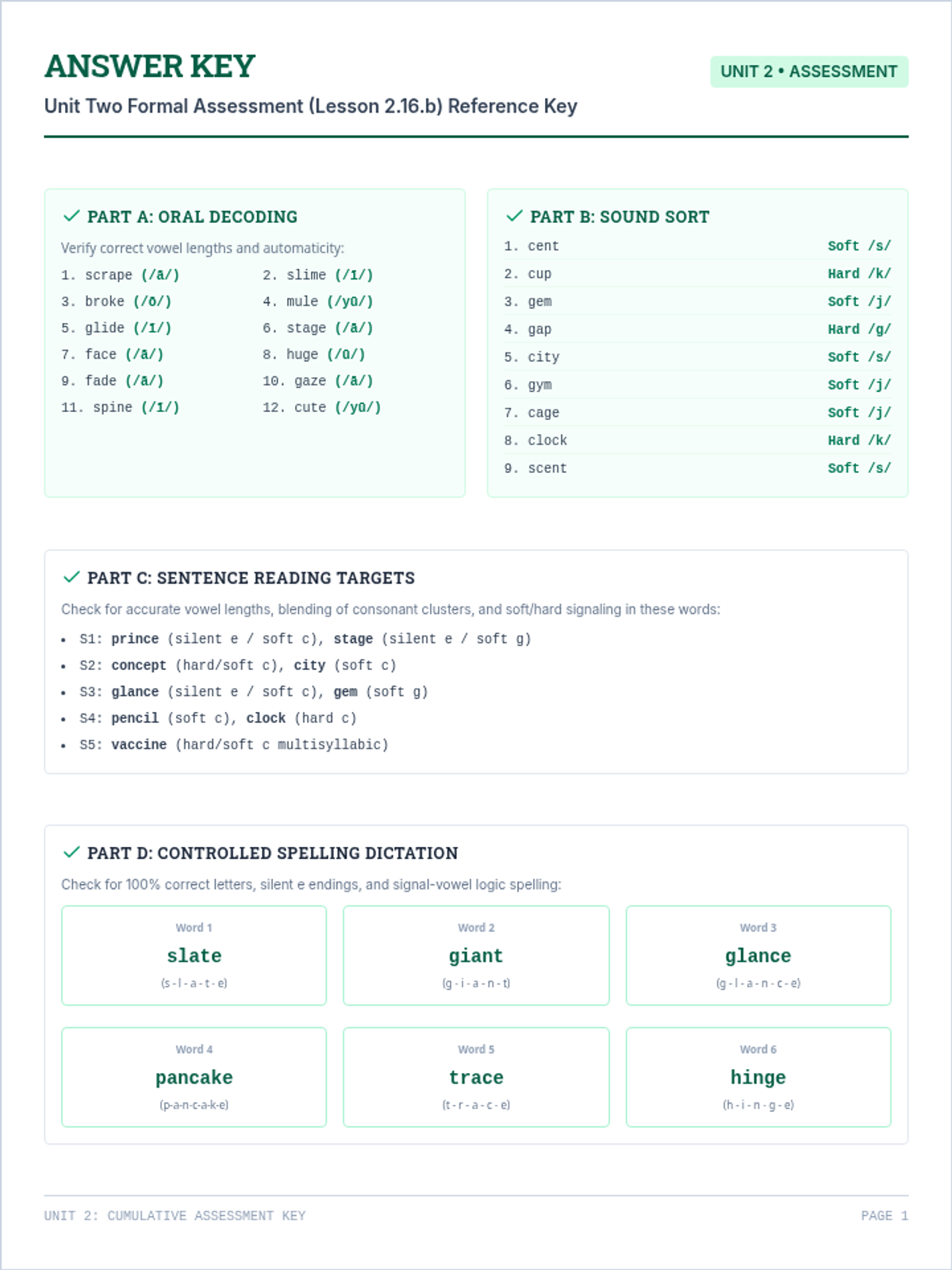
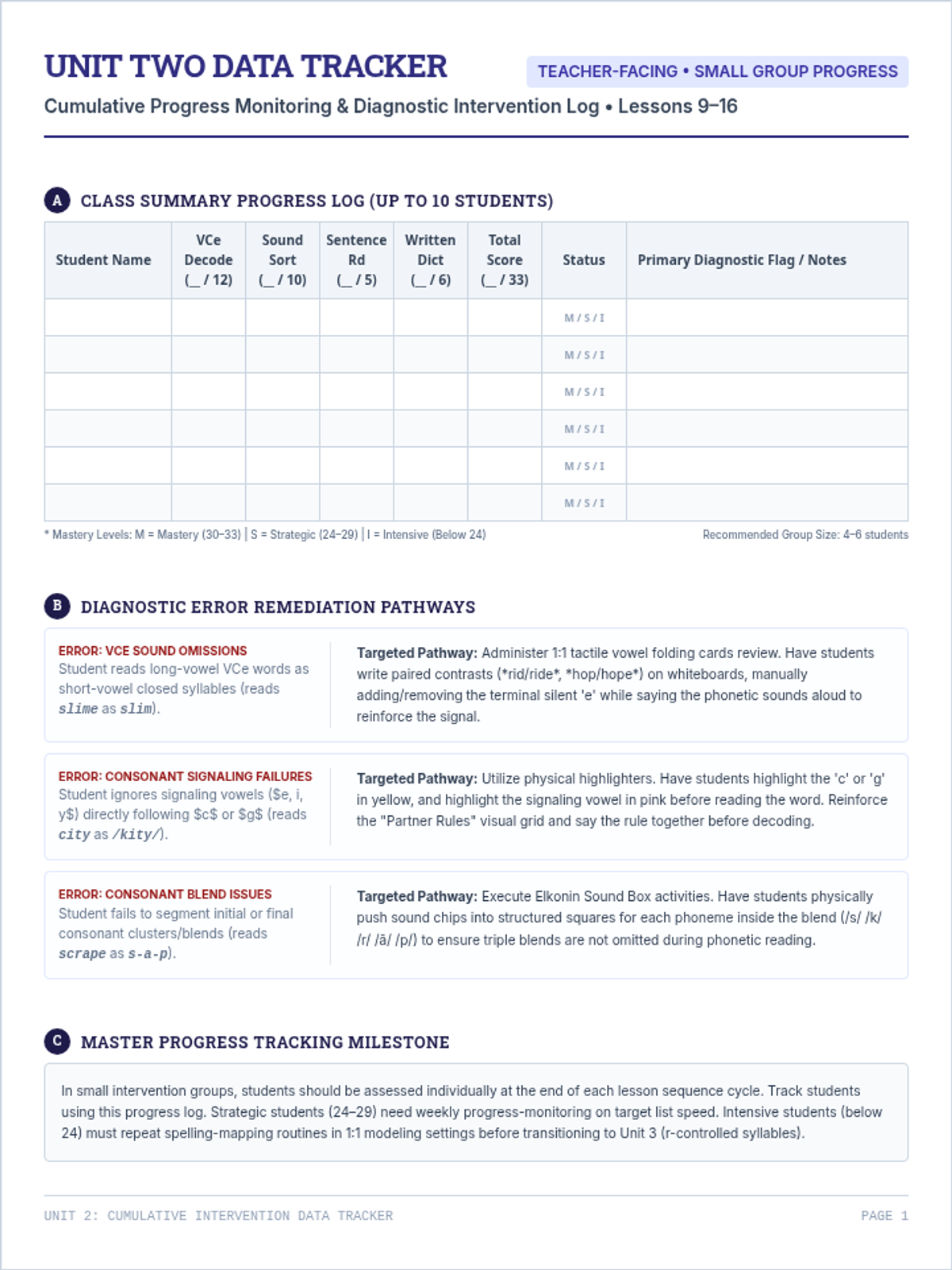
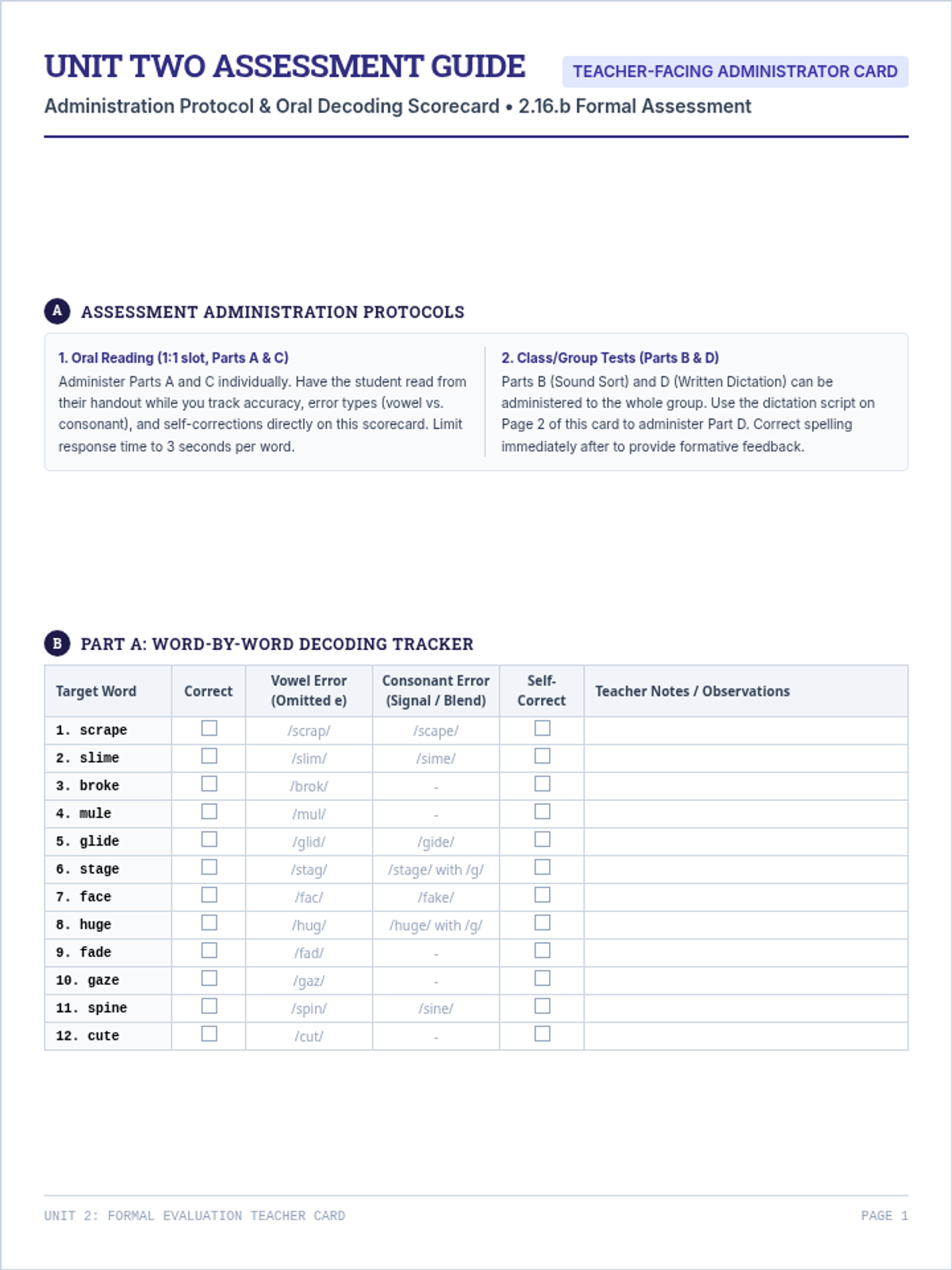
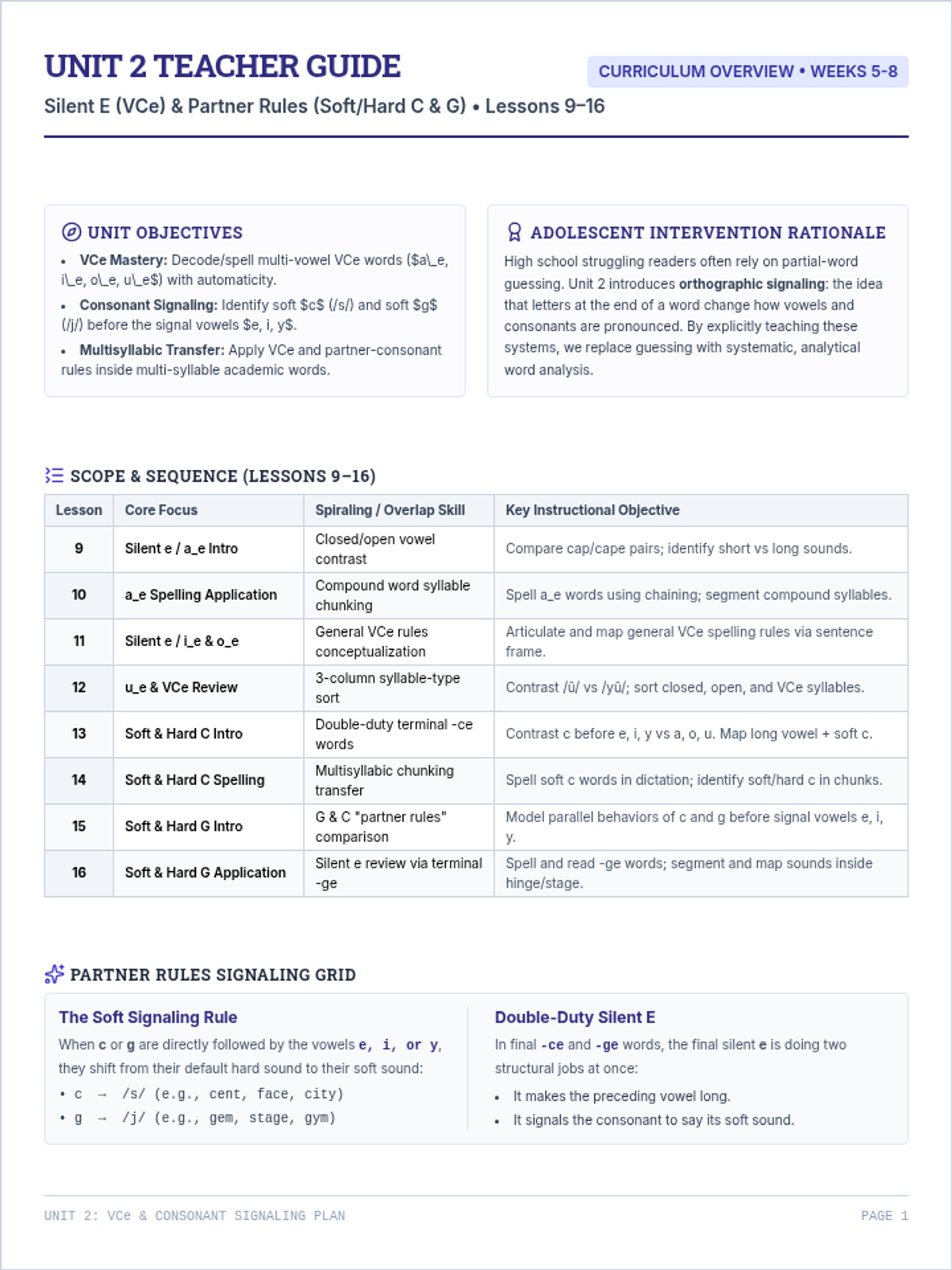
A cumulative review lesson covering Unit 2 (Lessons 9-16). Students practice reading and spelling silent e/VCe words, soft/hard c, and soft/hard g patterns, and explain the position-based sound logic. Designed for high school students.
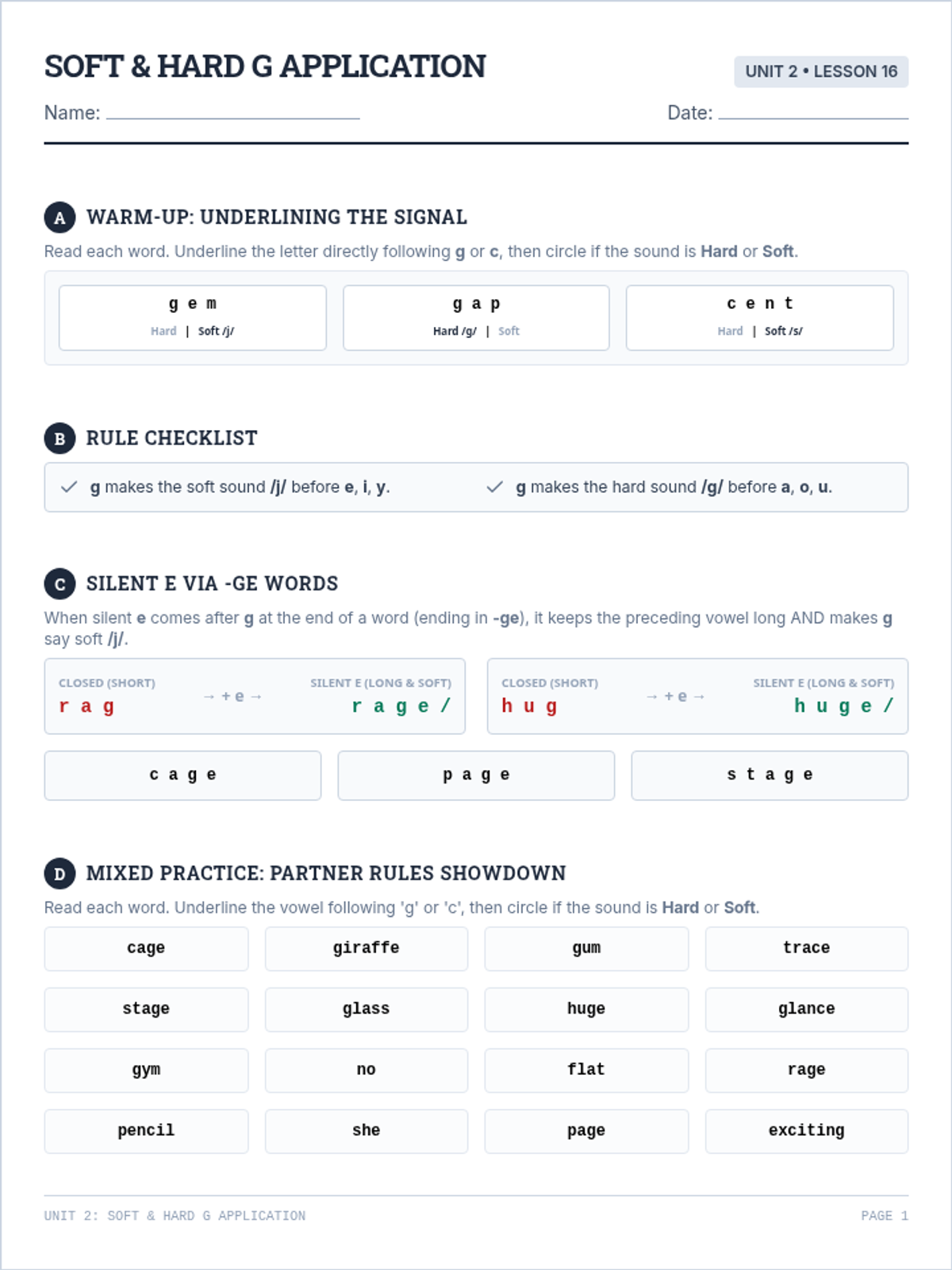
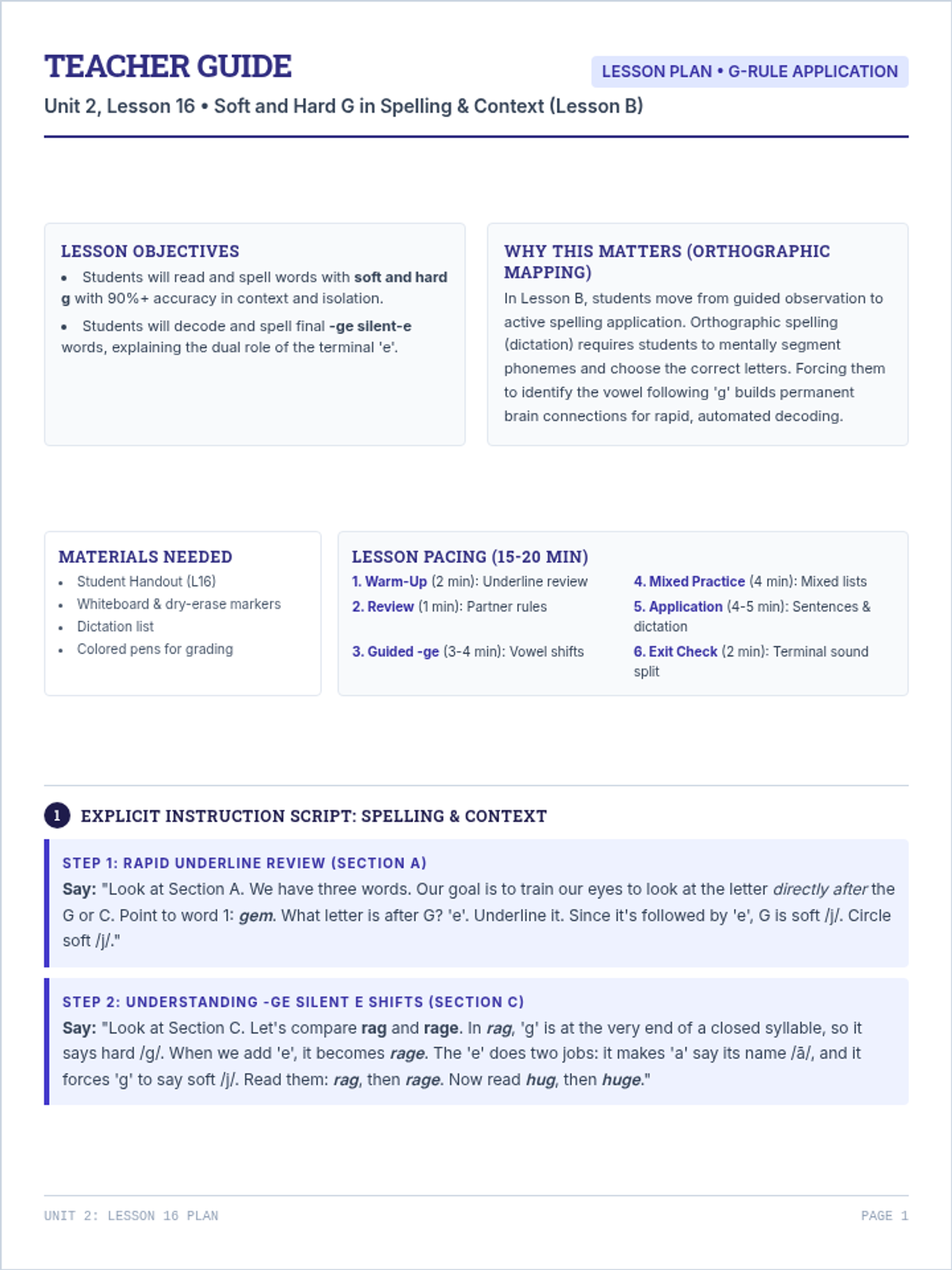
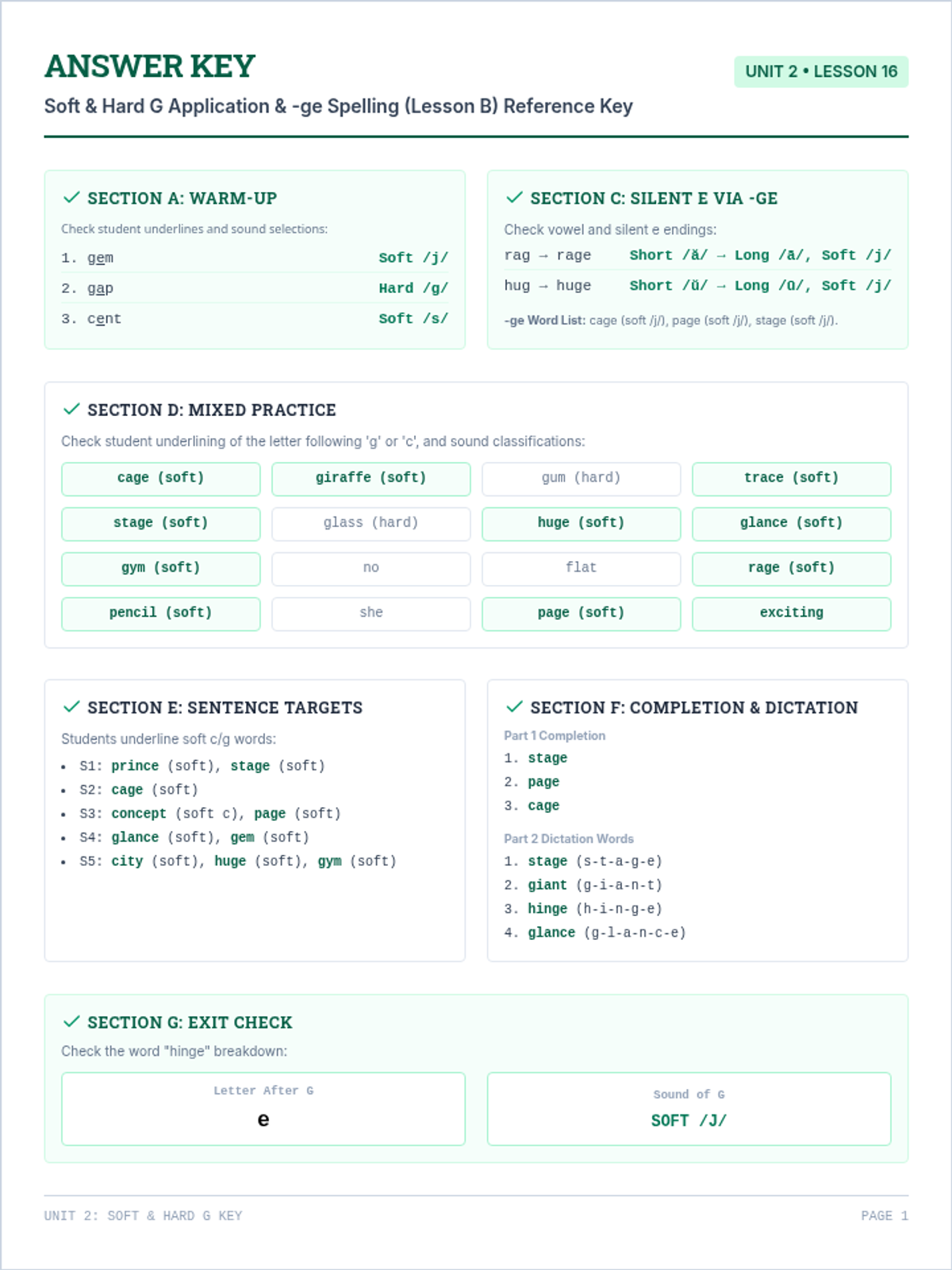
Lesson 16 of the sequence. Focuses on the application of soft/hard g and c rules in spelling, dictation, and -ge silent-e words using structured vowel-signaling strategies. Designed for high school students.
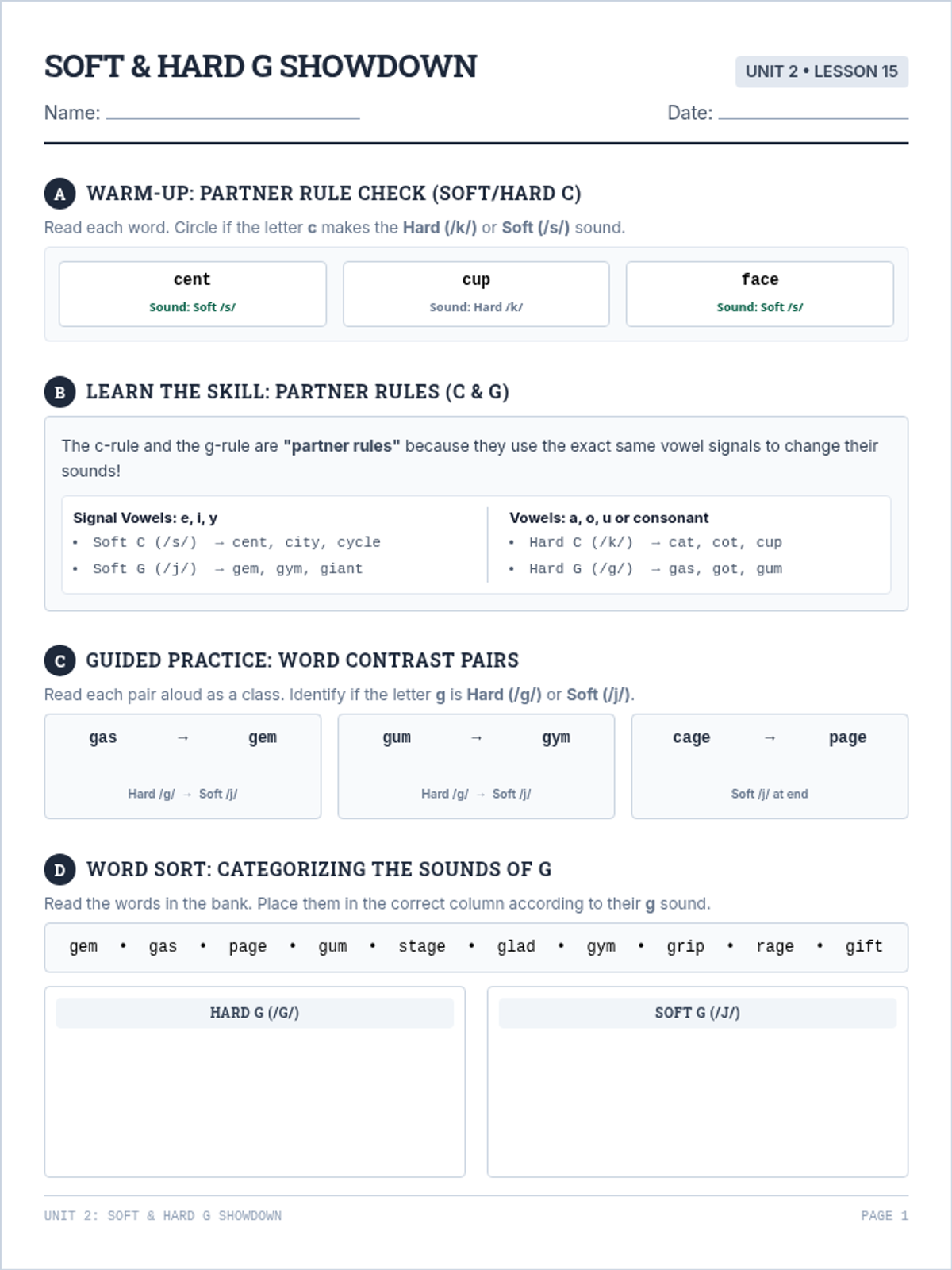
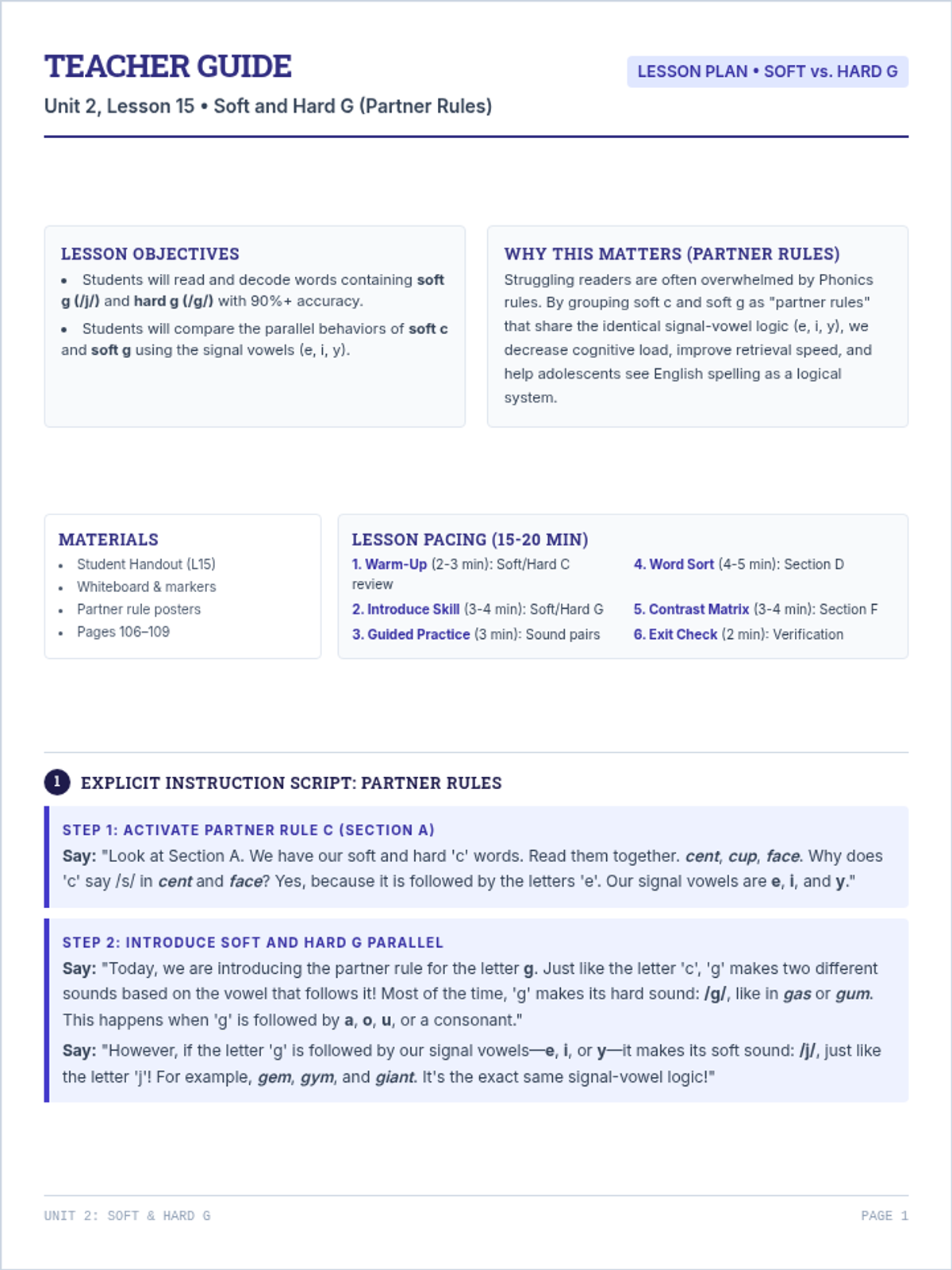
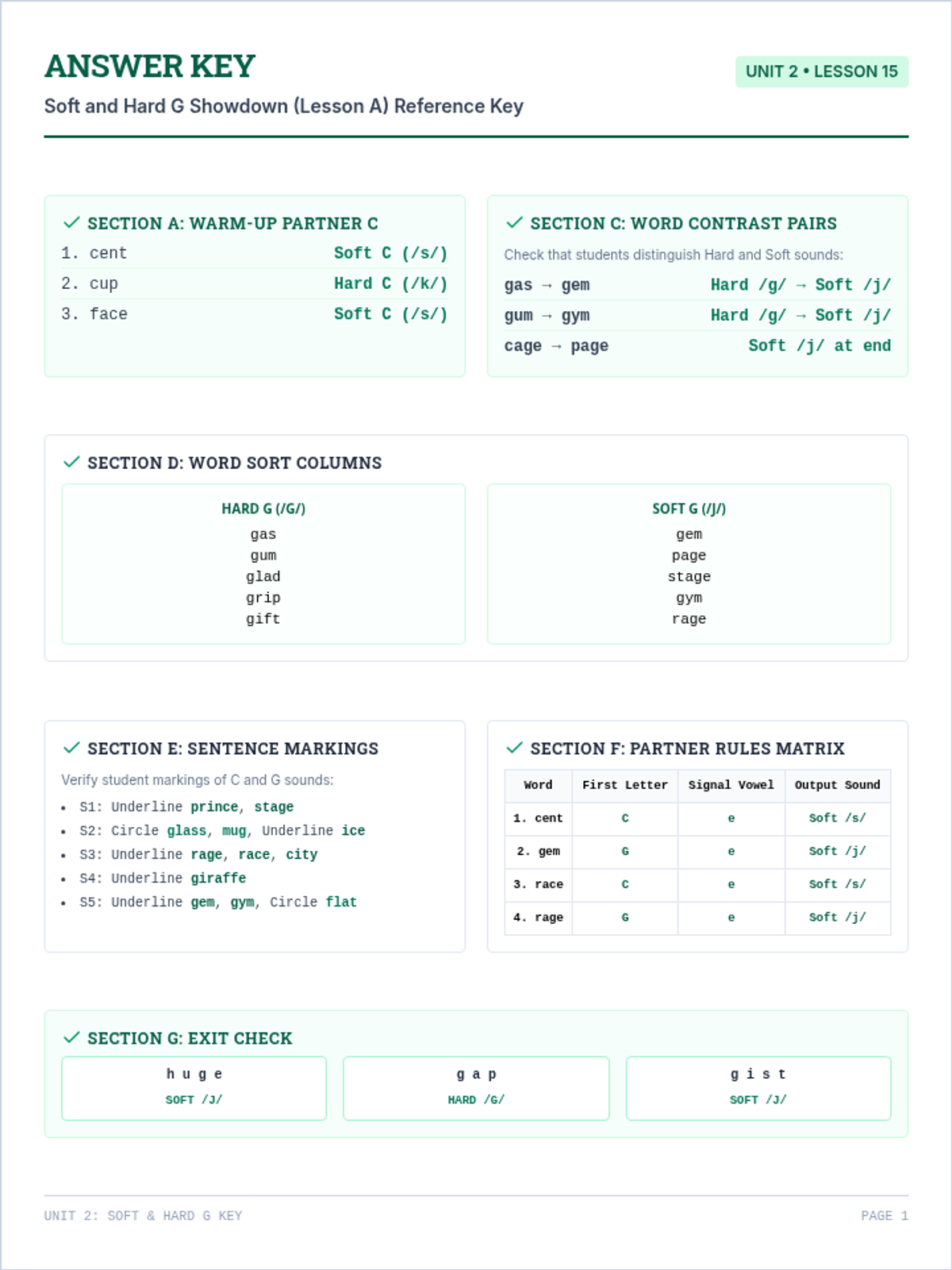
Lesson 15 of the sequence. Introduces soft g (/j/) and hard g (/g/), drawing explicit parallels to the hard/soft c rules as "partner rules" and reviews vowel signaling. Designed for high school students.
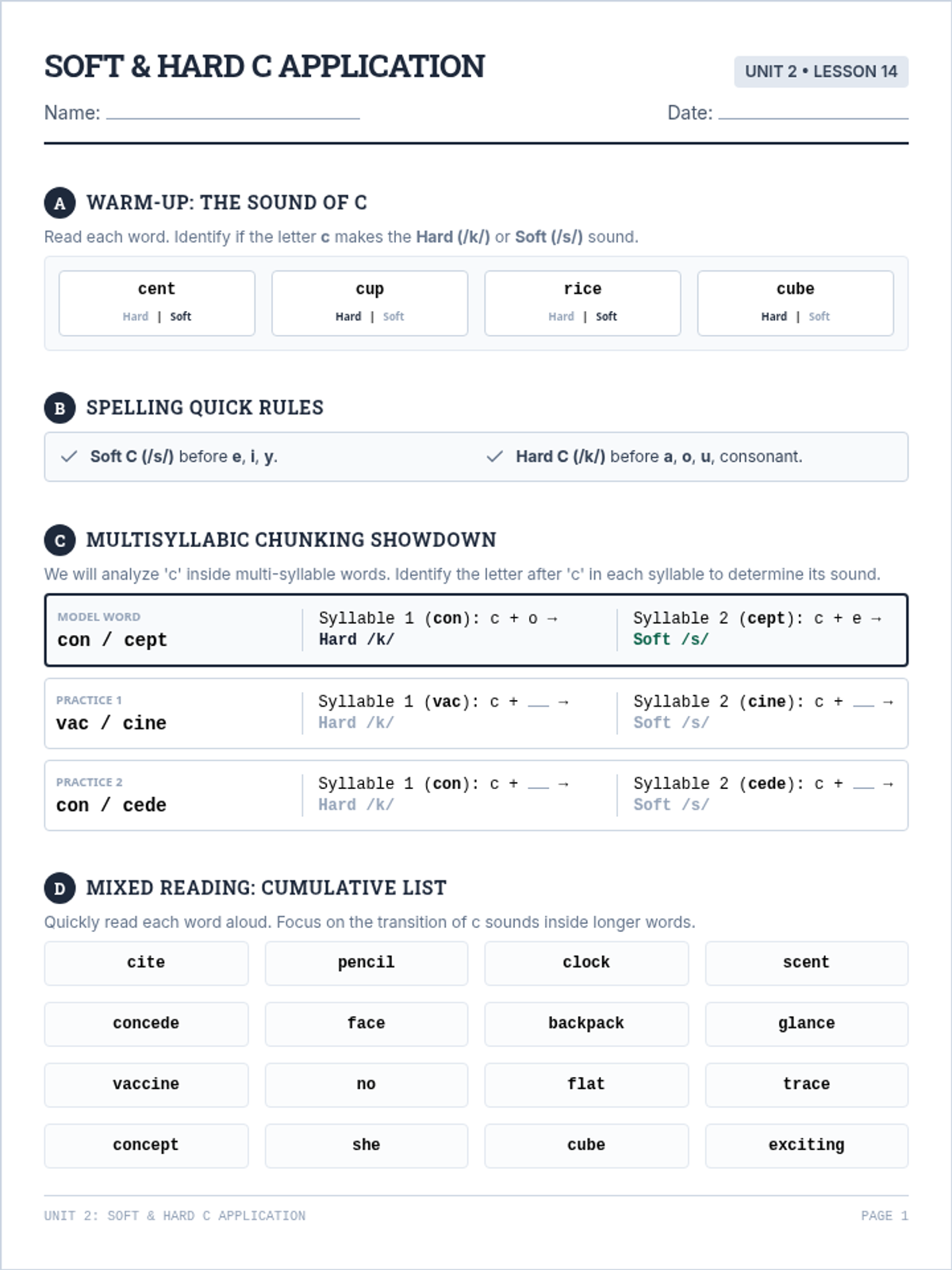
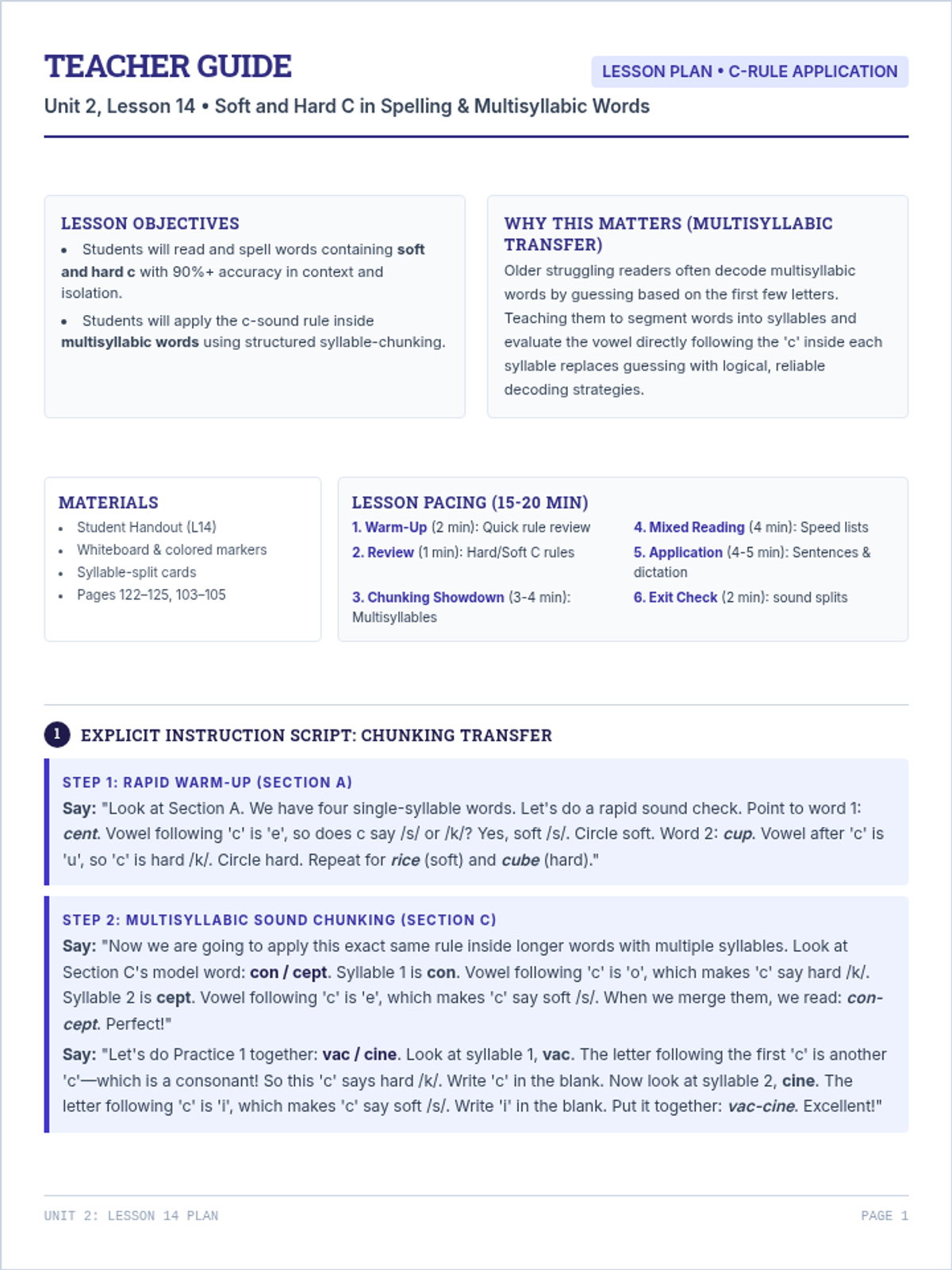
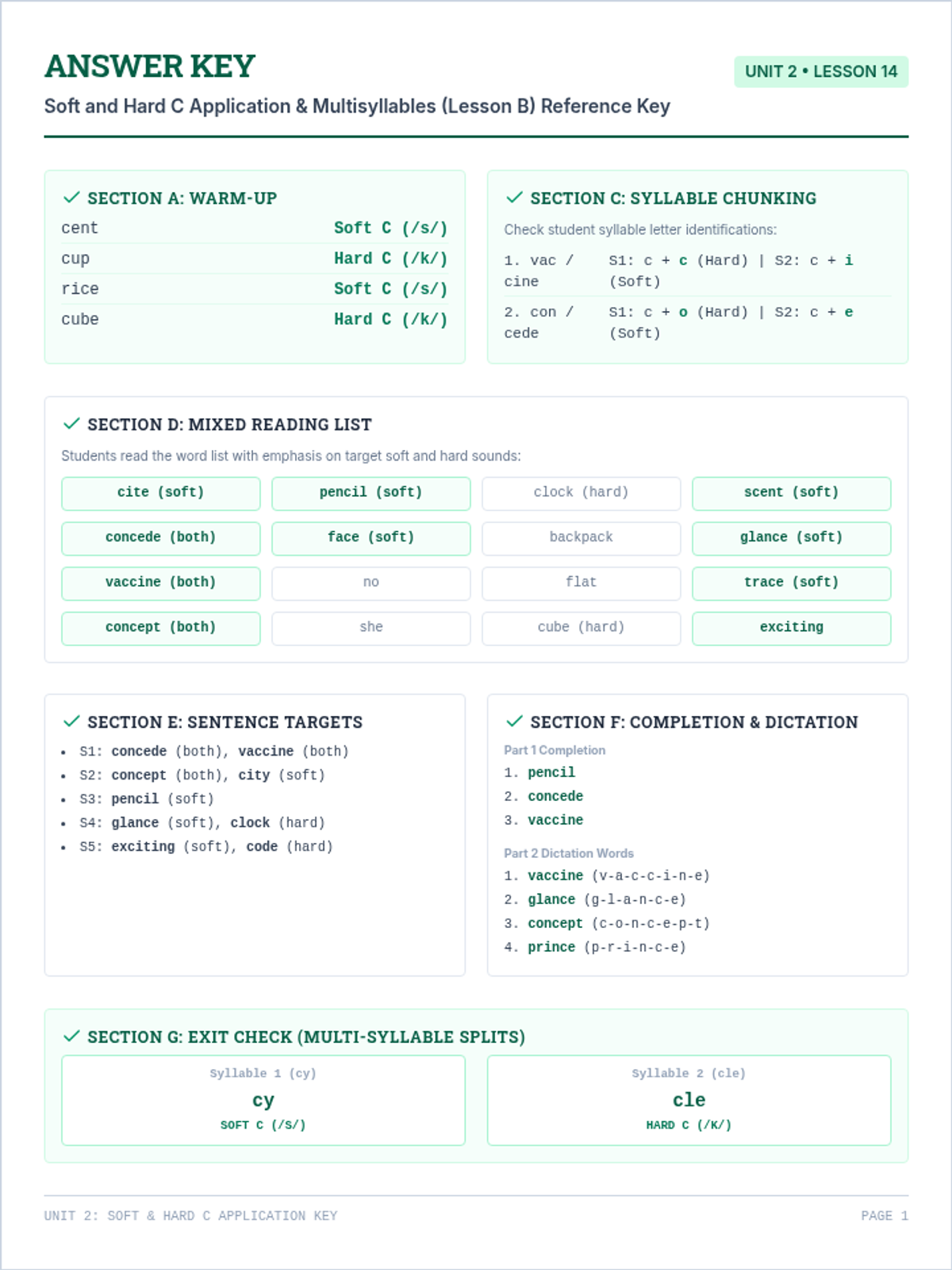
Lesson 14 of the sequence. Focuses on the application of soft and hard c rules in spelling, dictation, and multisyllabic words using structured chunking strategies. Designed for high school students.
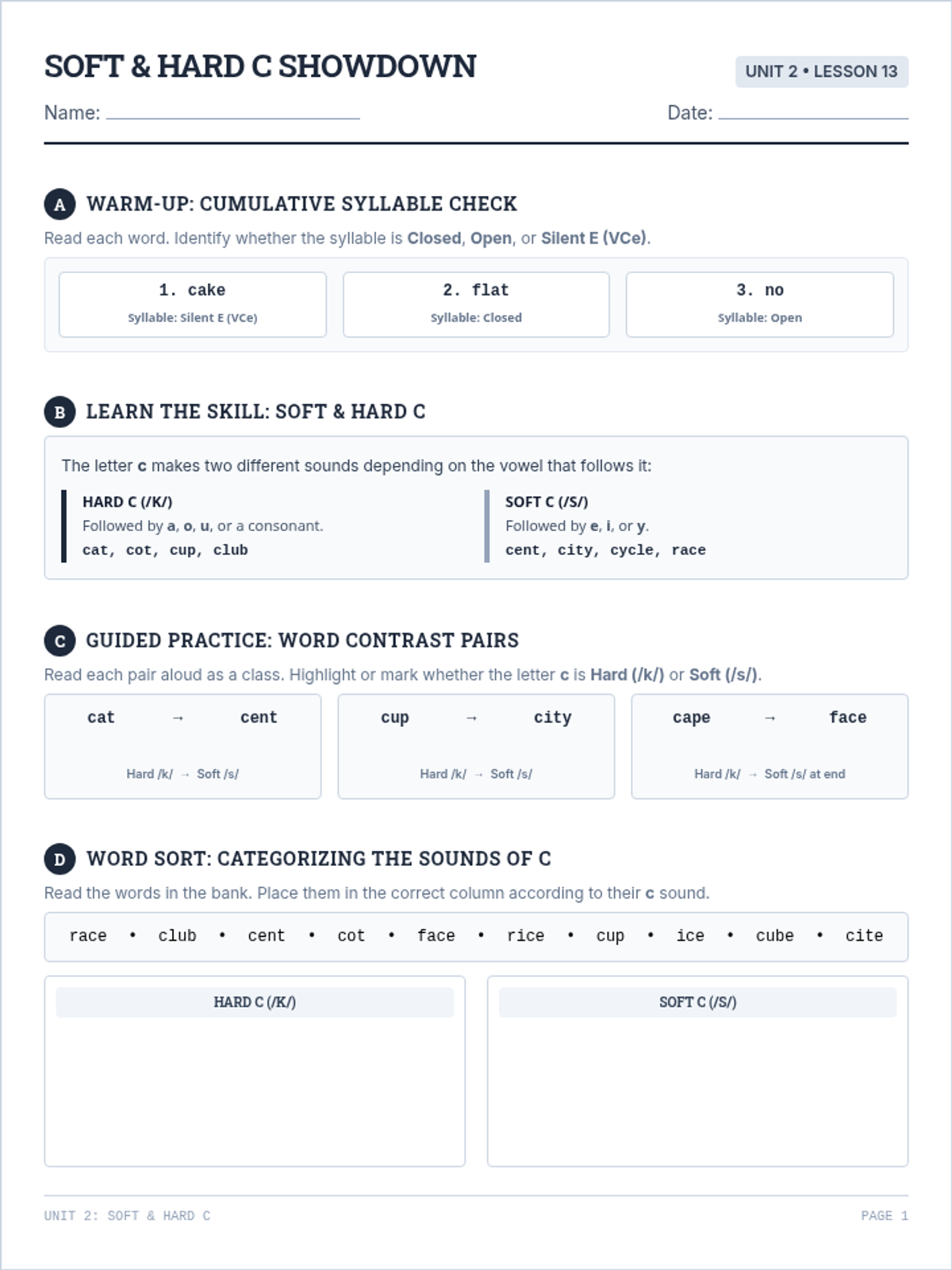
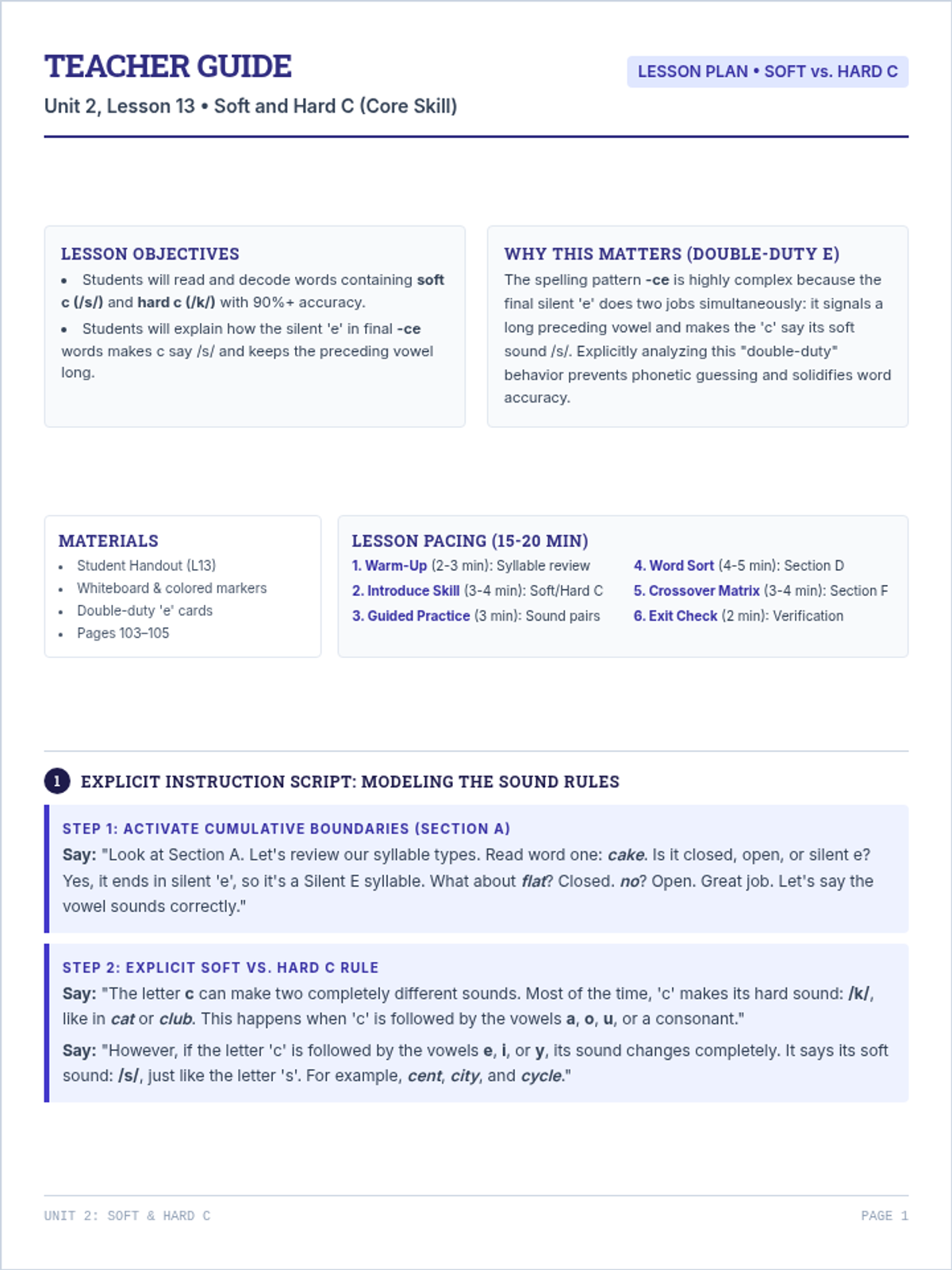
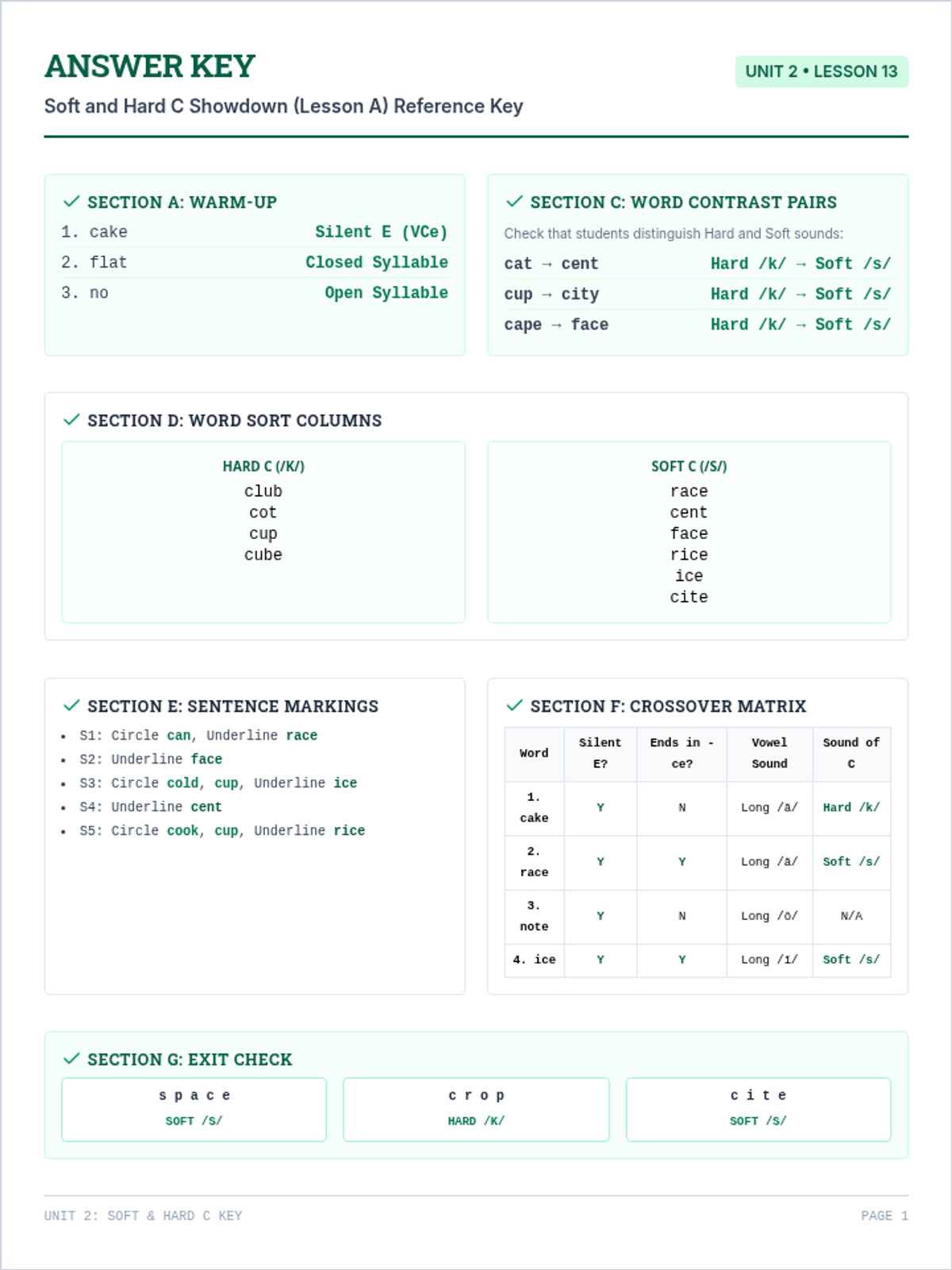
Lesson 13 of the sequence. Introduces soft c (/s/) and hard c (/k/), explicitly contrasting them, and reviews VCe syllables through words ending in -ce. Designed for high school students.
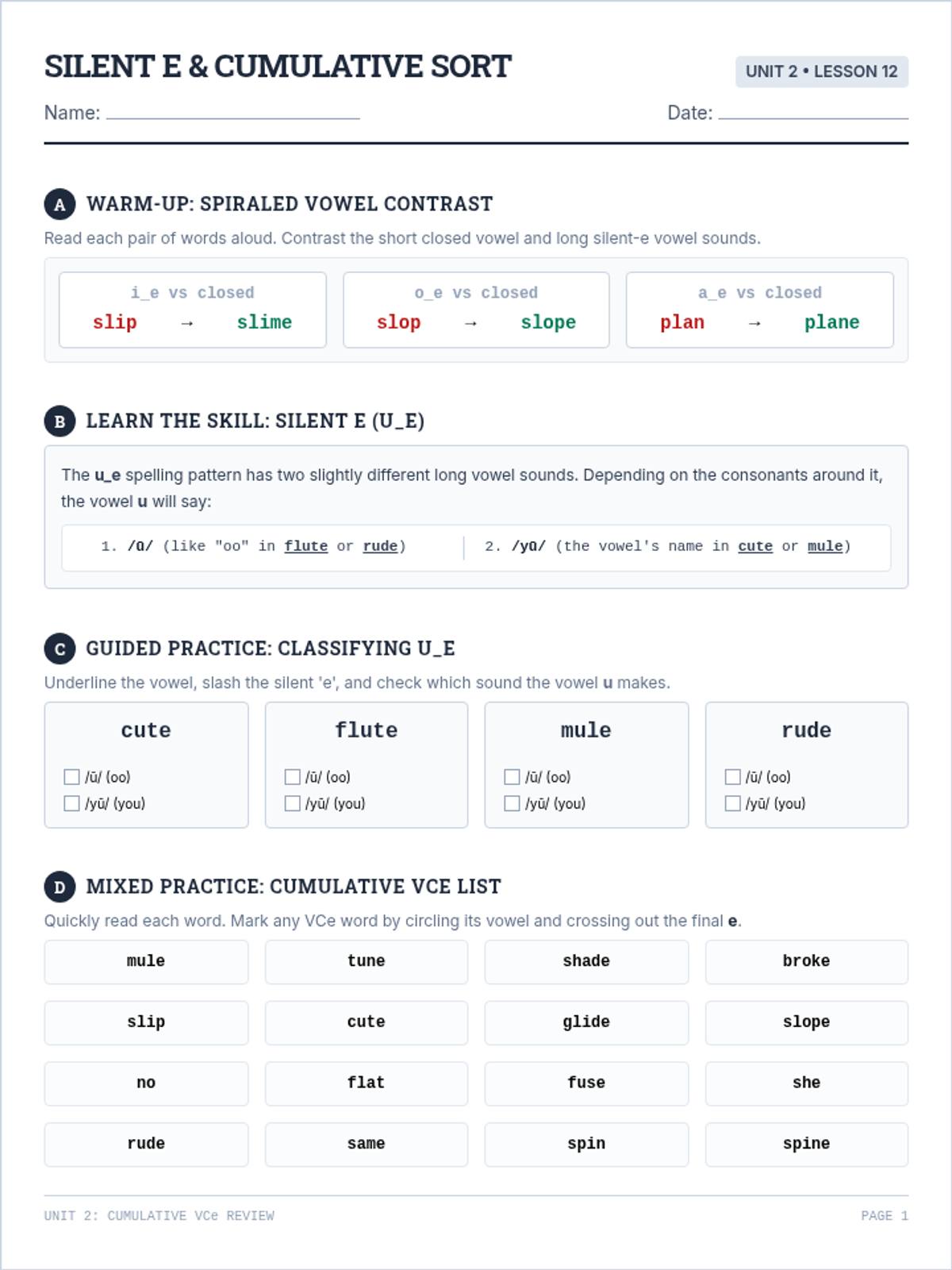
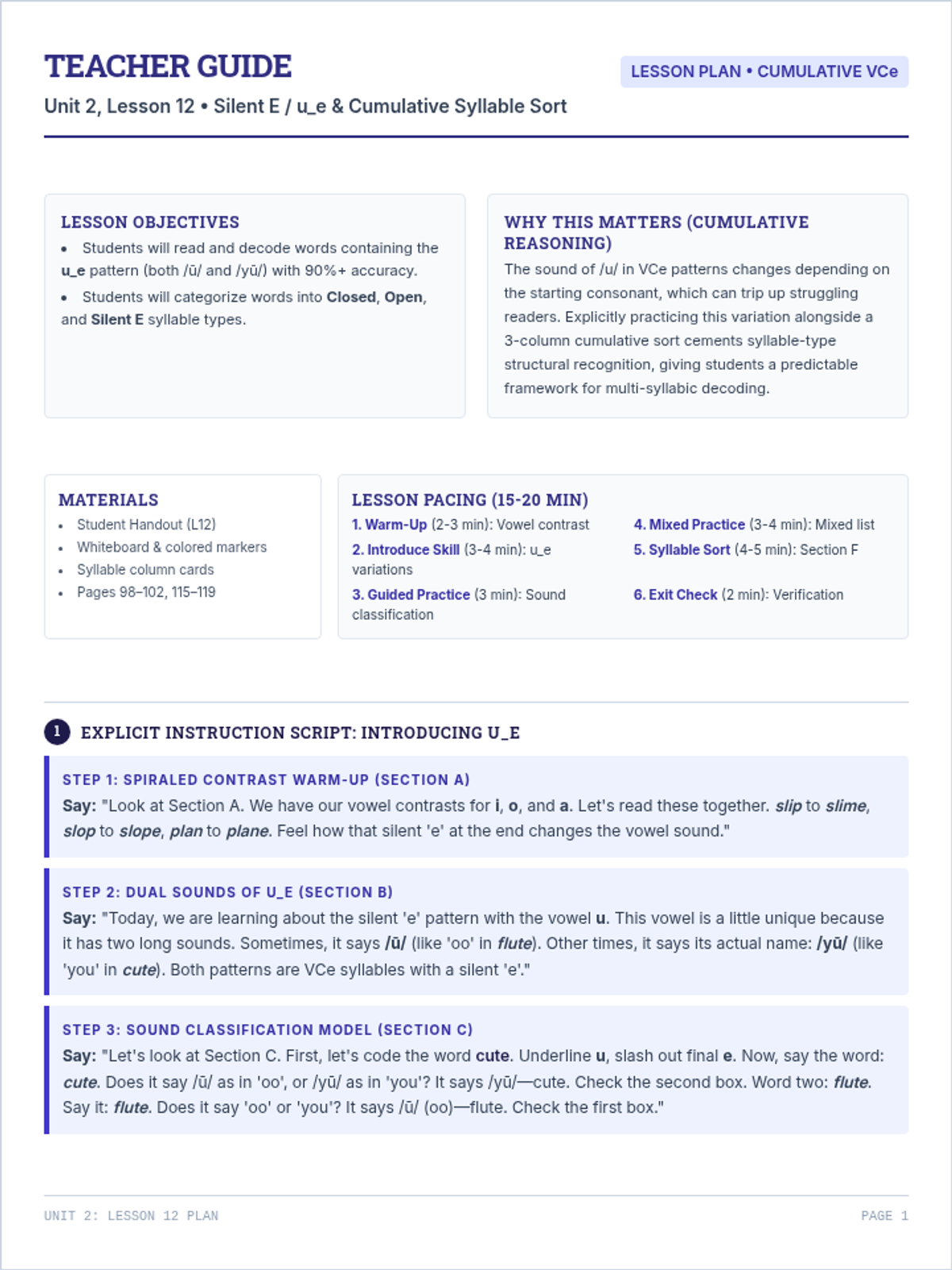
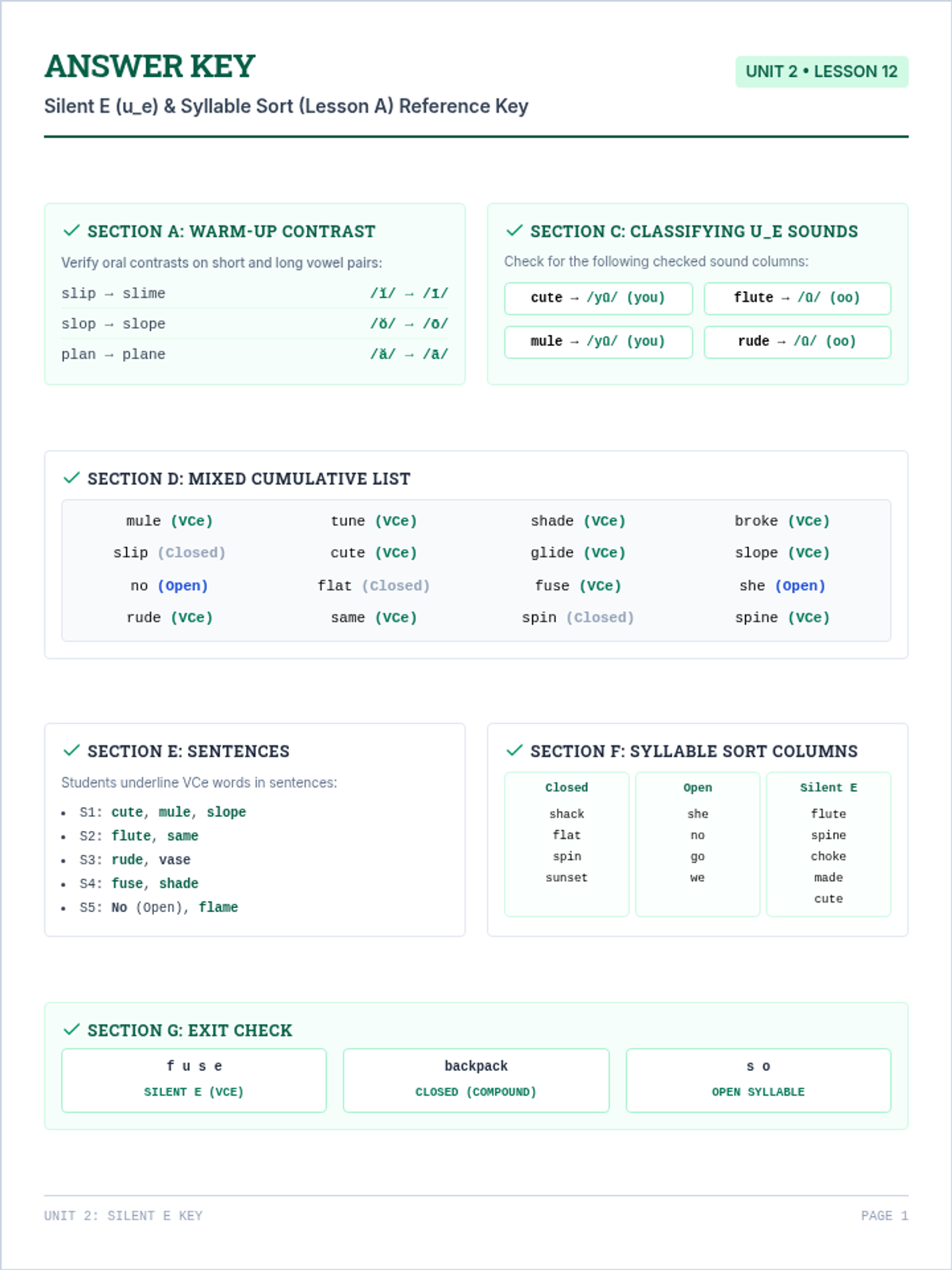
Lesson 12 of the silent e sequence. Introduces the u_e silent e pattern (including /ū/ vs /yū/ variations), reviews a_e, i_e, and o_e patterns, and finishes with a 3-column syllable-type sort. Designed for high school students.
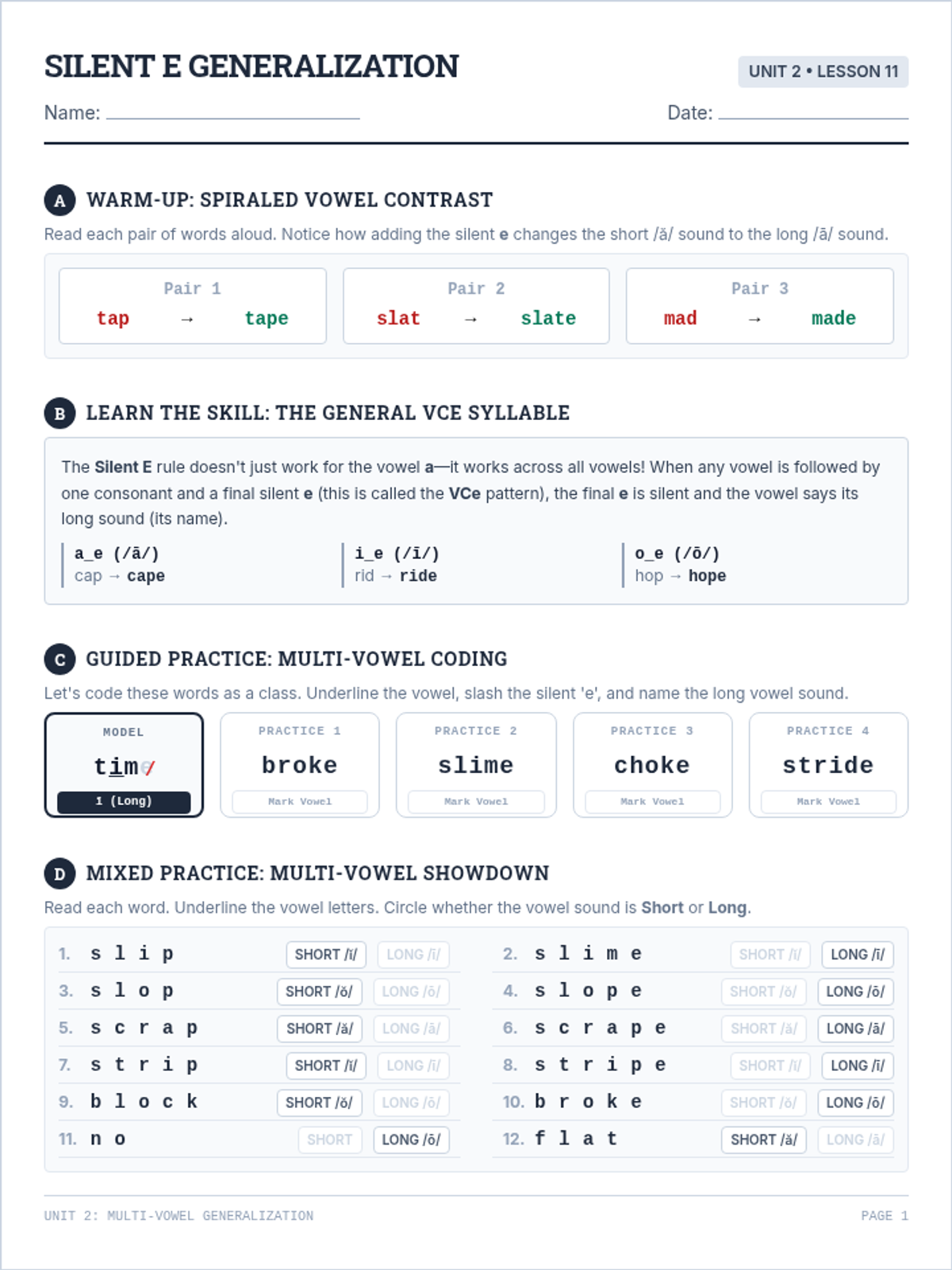
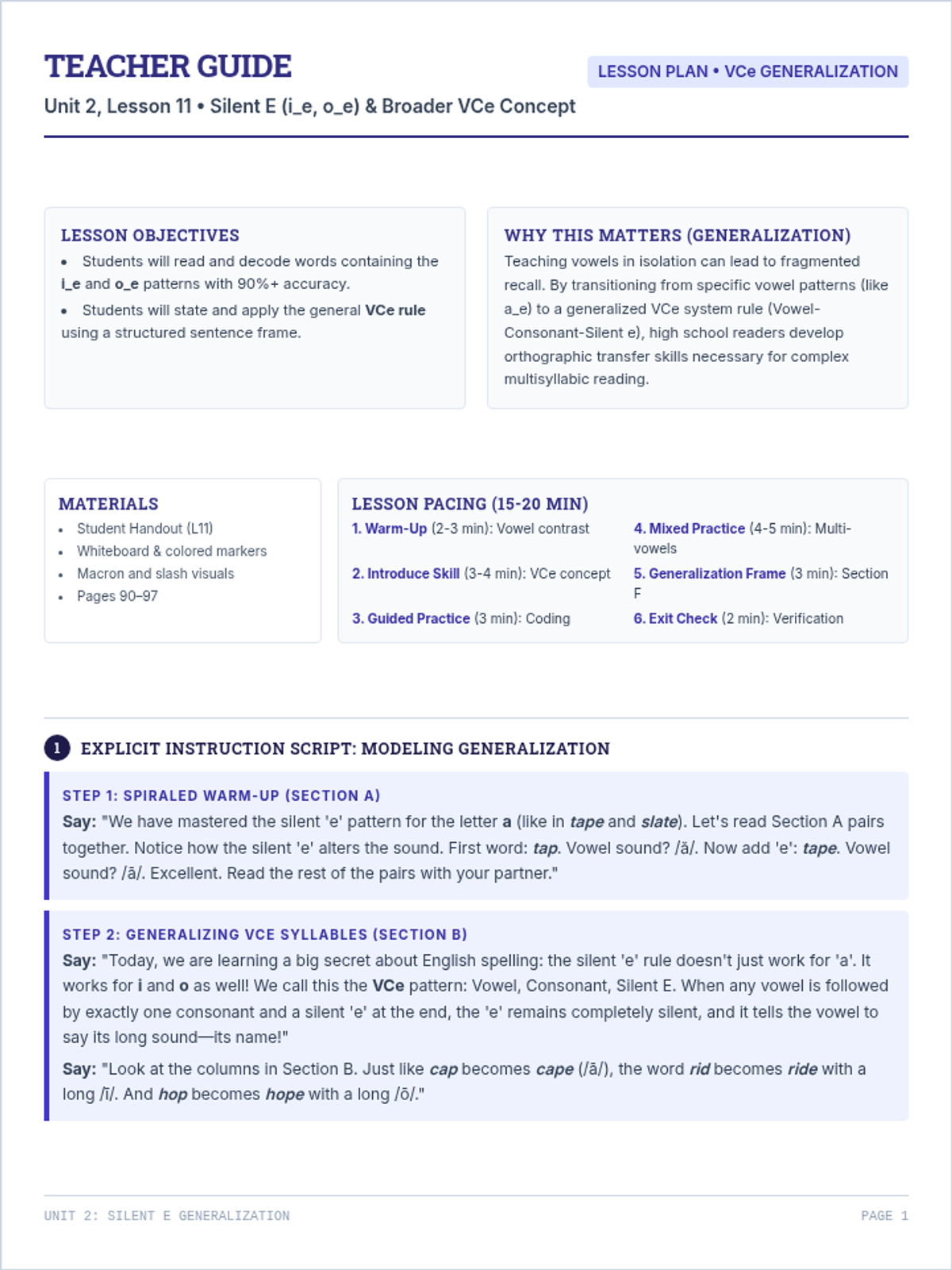
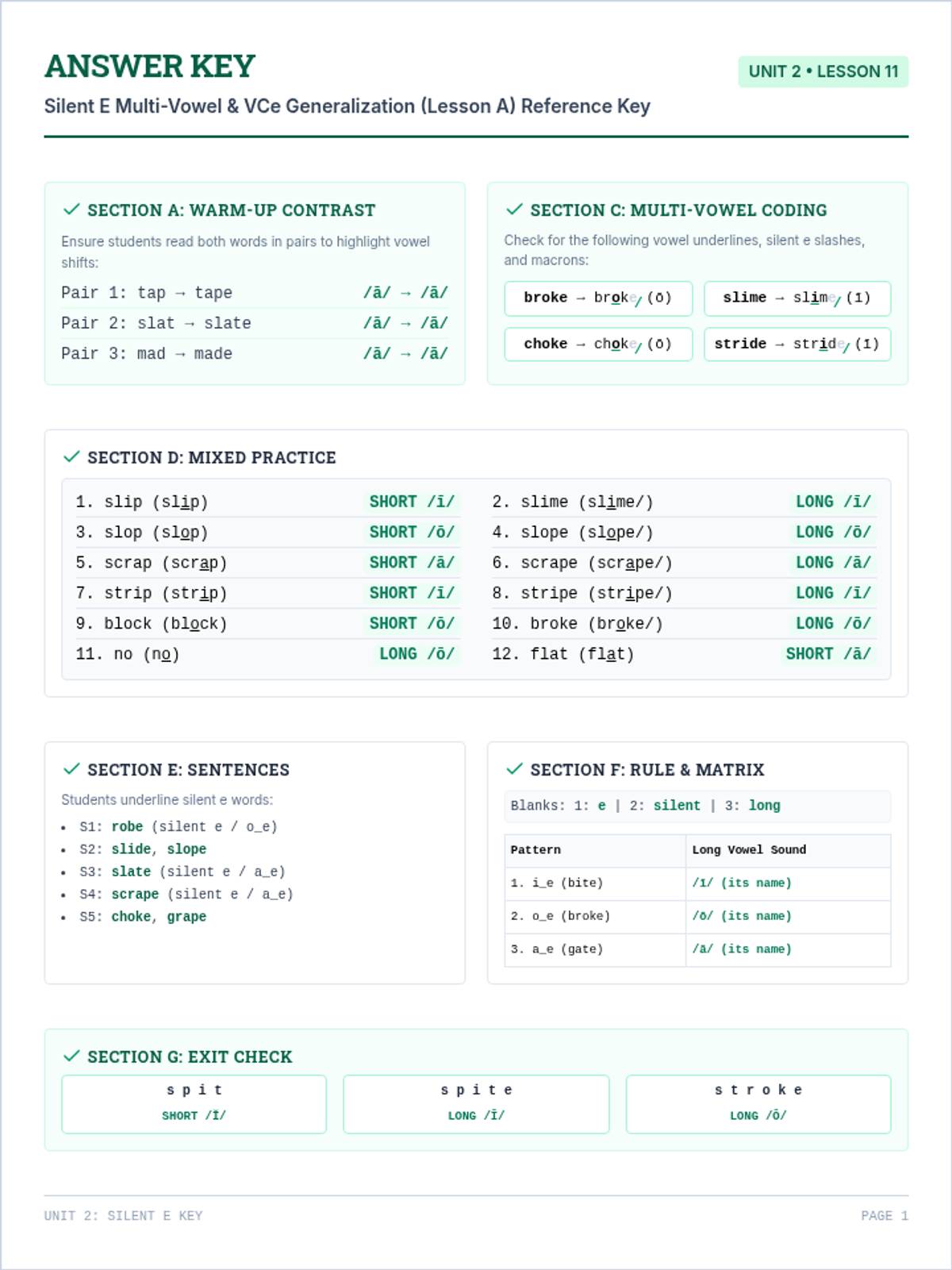
Lesson 11 of the silent e sequence. Introduces the i_e and o_e patterns, spirals a_e, and guides students to articulate the general VCe syllable rule using a structured sentence frame. Designed for high school students reading below grade level.
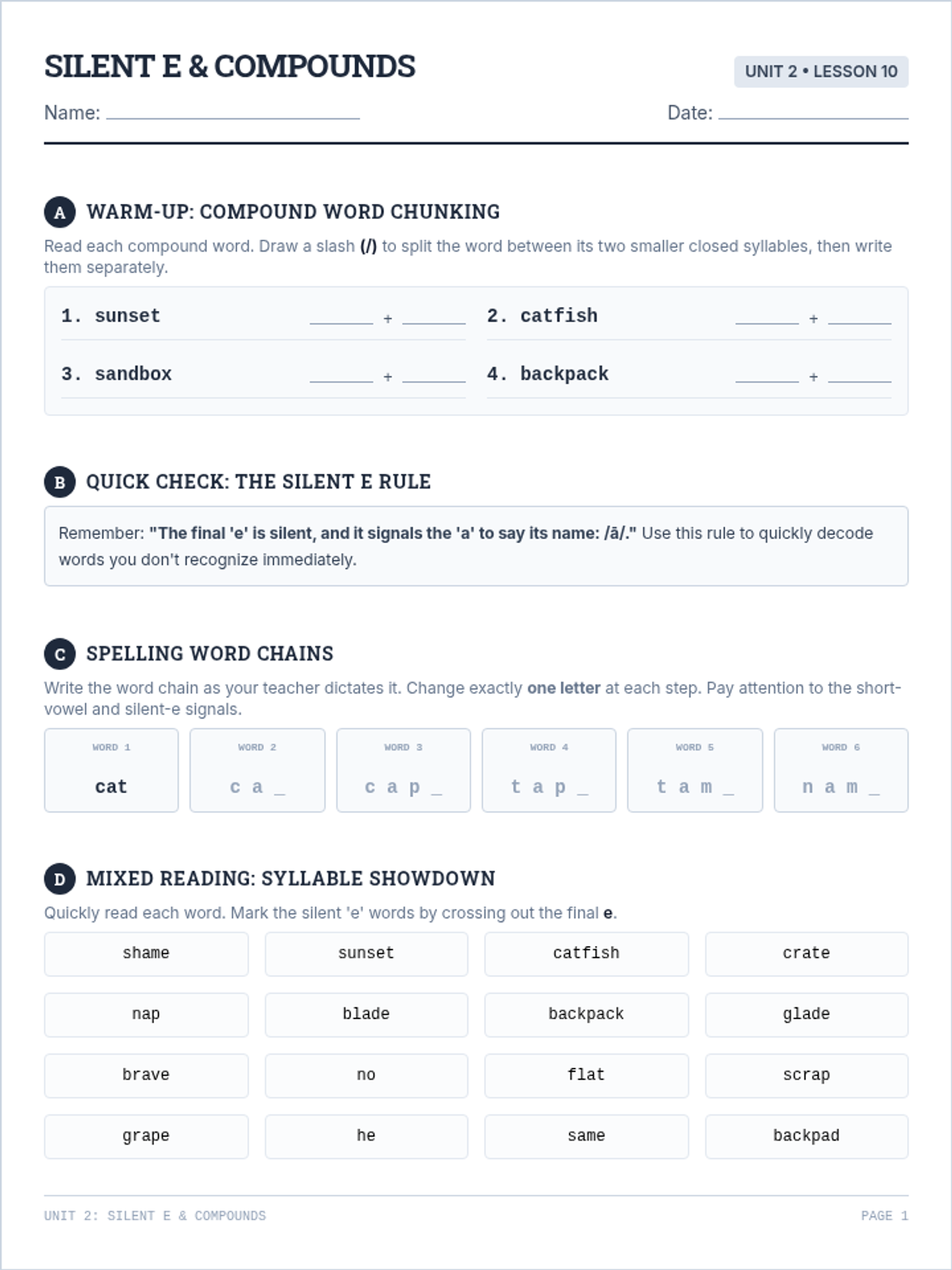
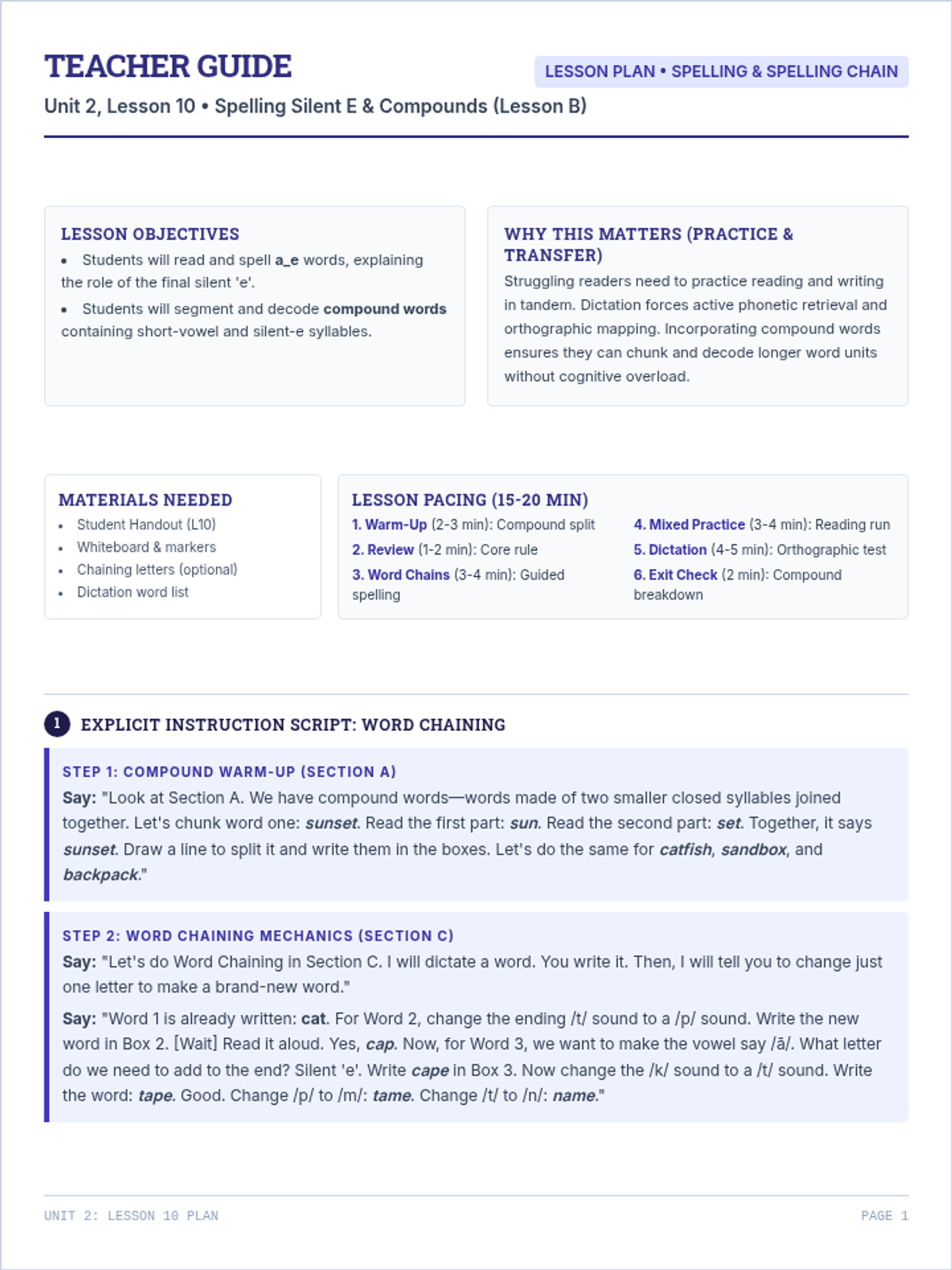
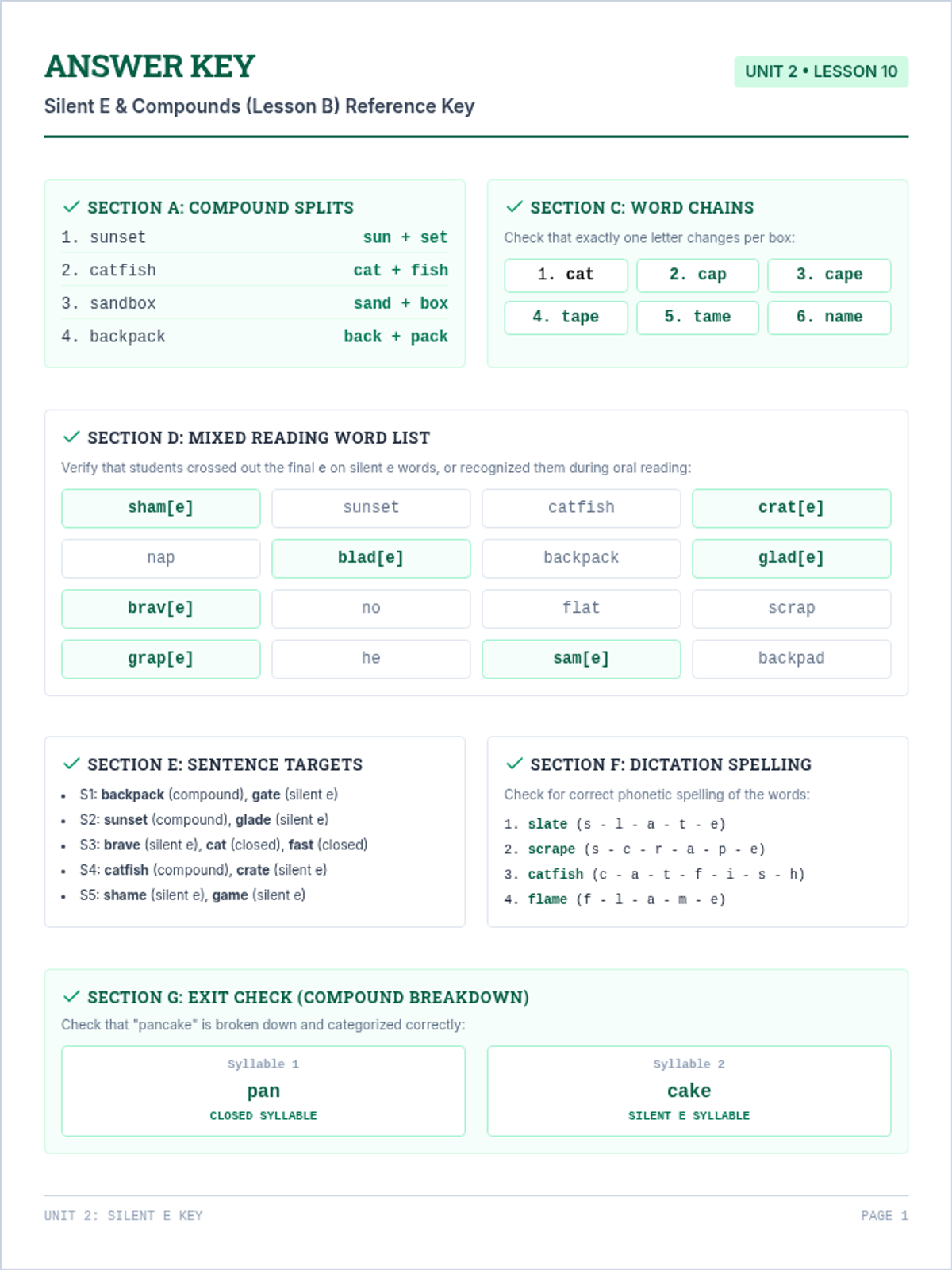
Lesson B of the silent e sequence. Students practice reading and spelling a_e words with less direct explanation, featuring compound word chunking in the warm-up, oral spelling chains, and a dictation assessment.
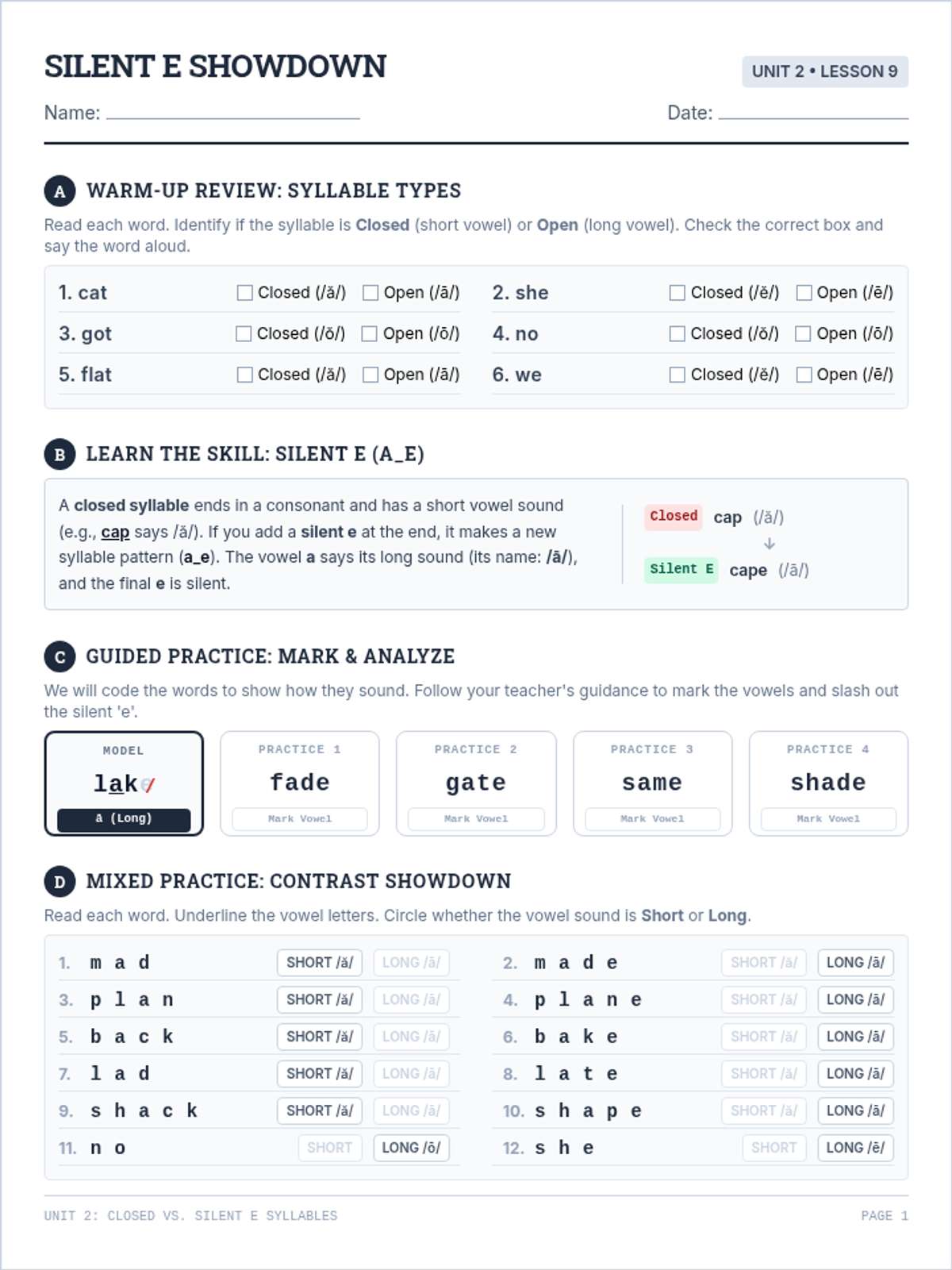
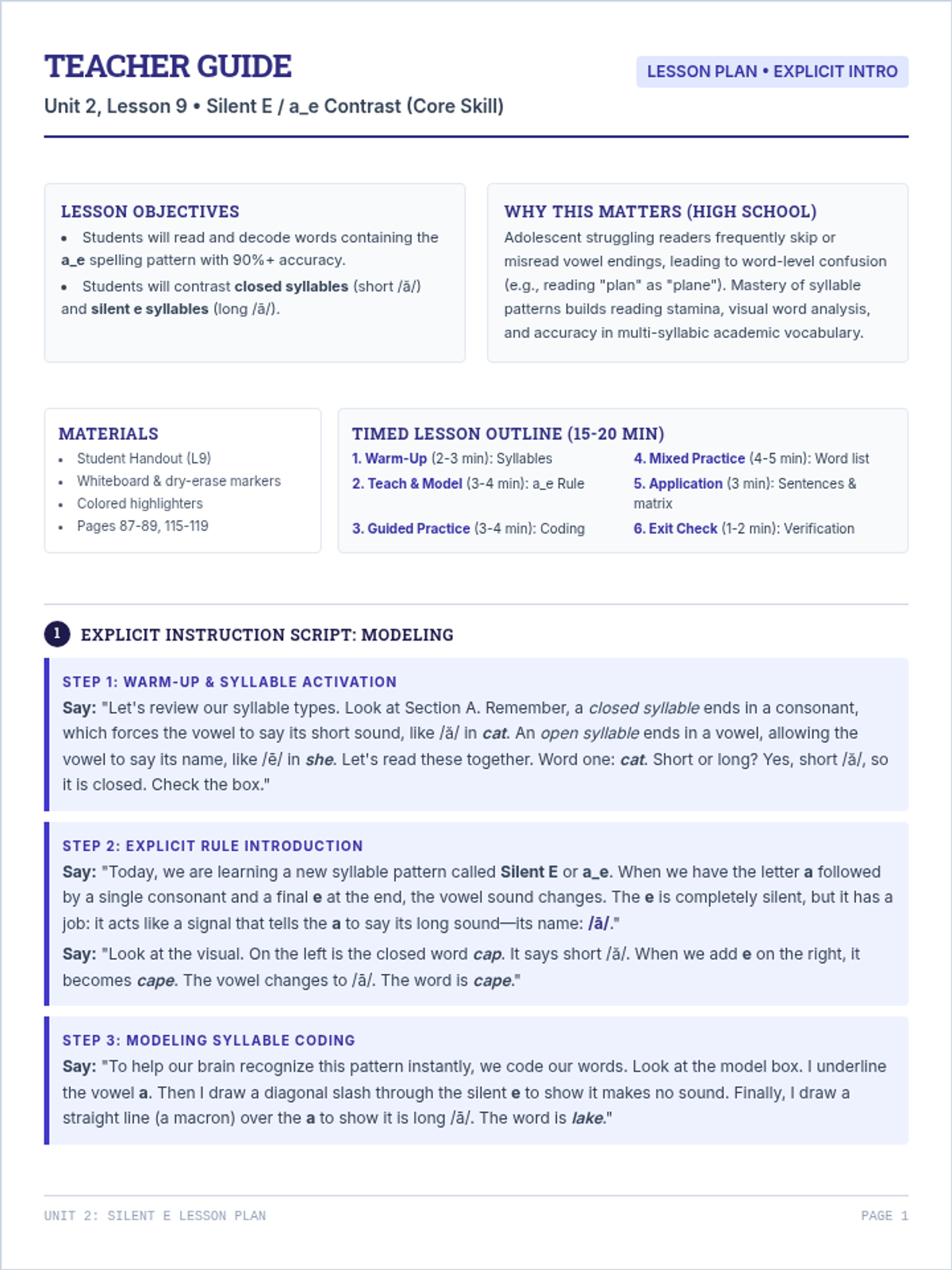
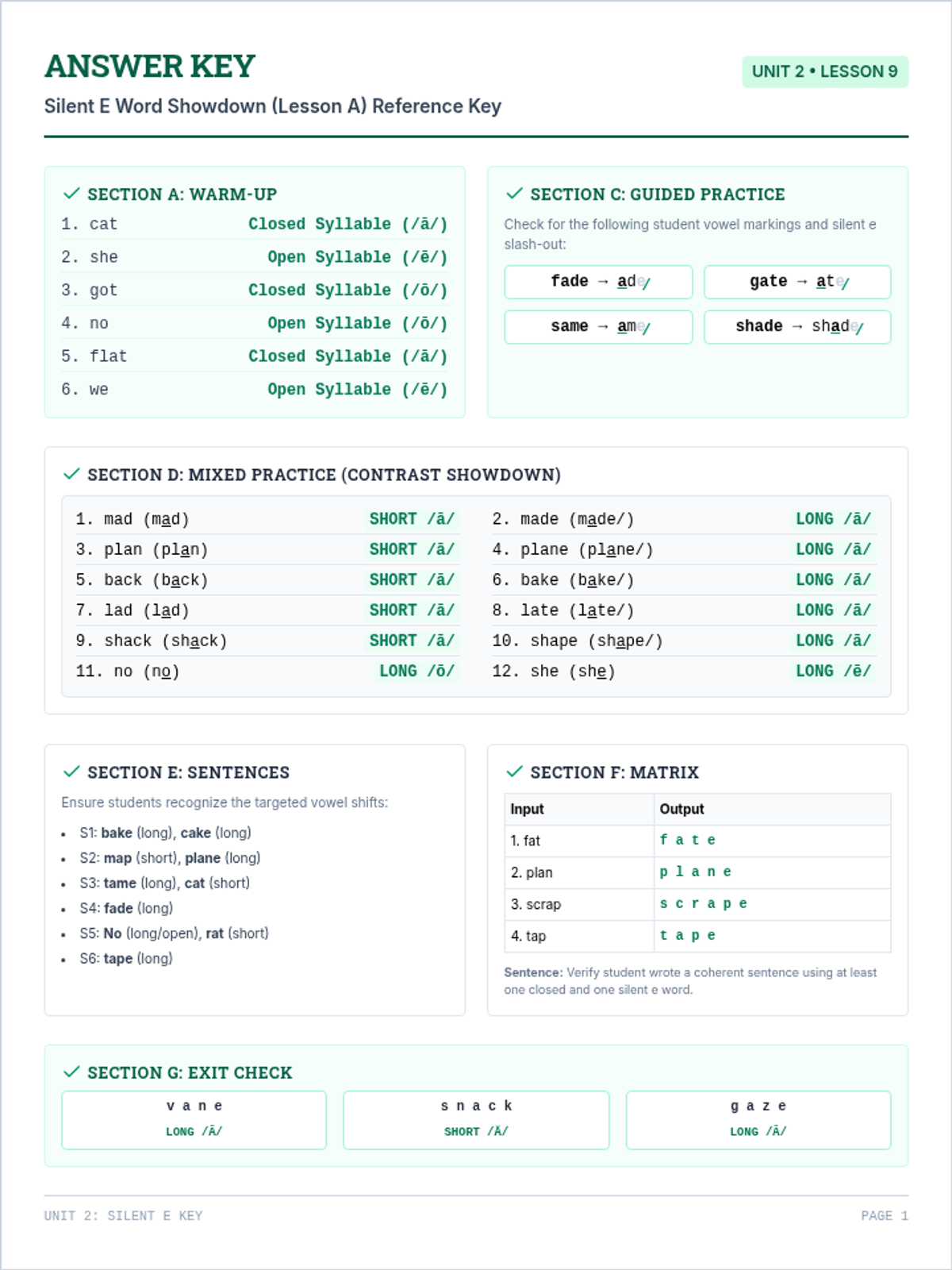
A structured reading intervention lesson introducing the silent e (a_e) spelling pattern and contrasting it with short-vowel closed syllables. Designed with explicit instruction and highly scaffolded practice for high school students reading below grade level.
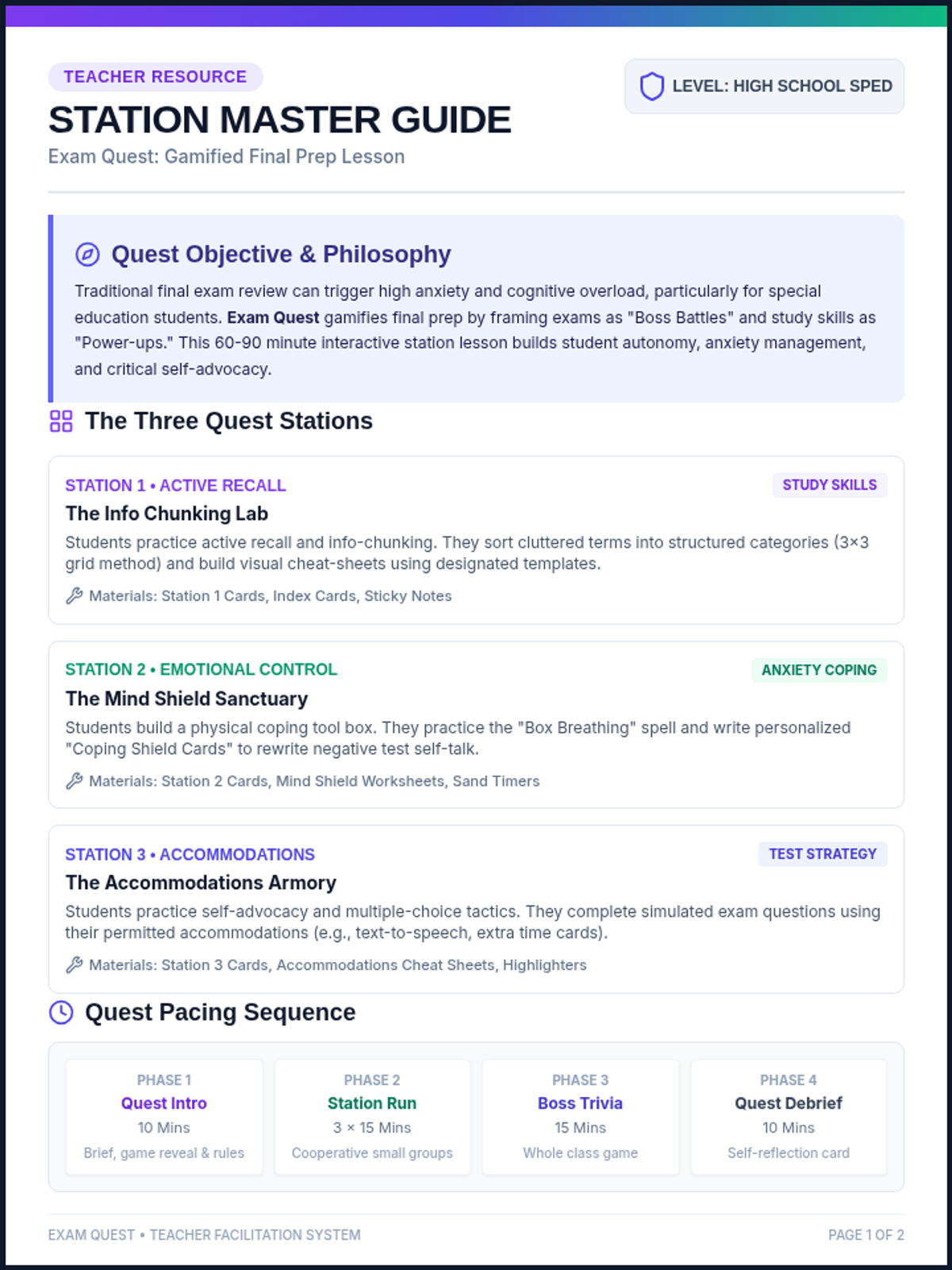
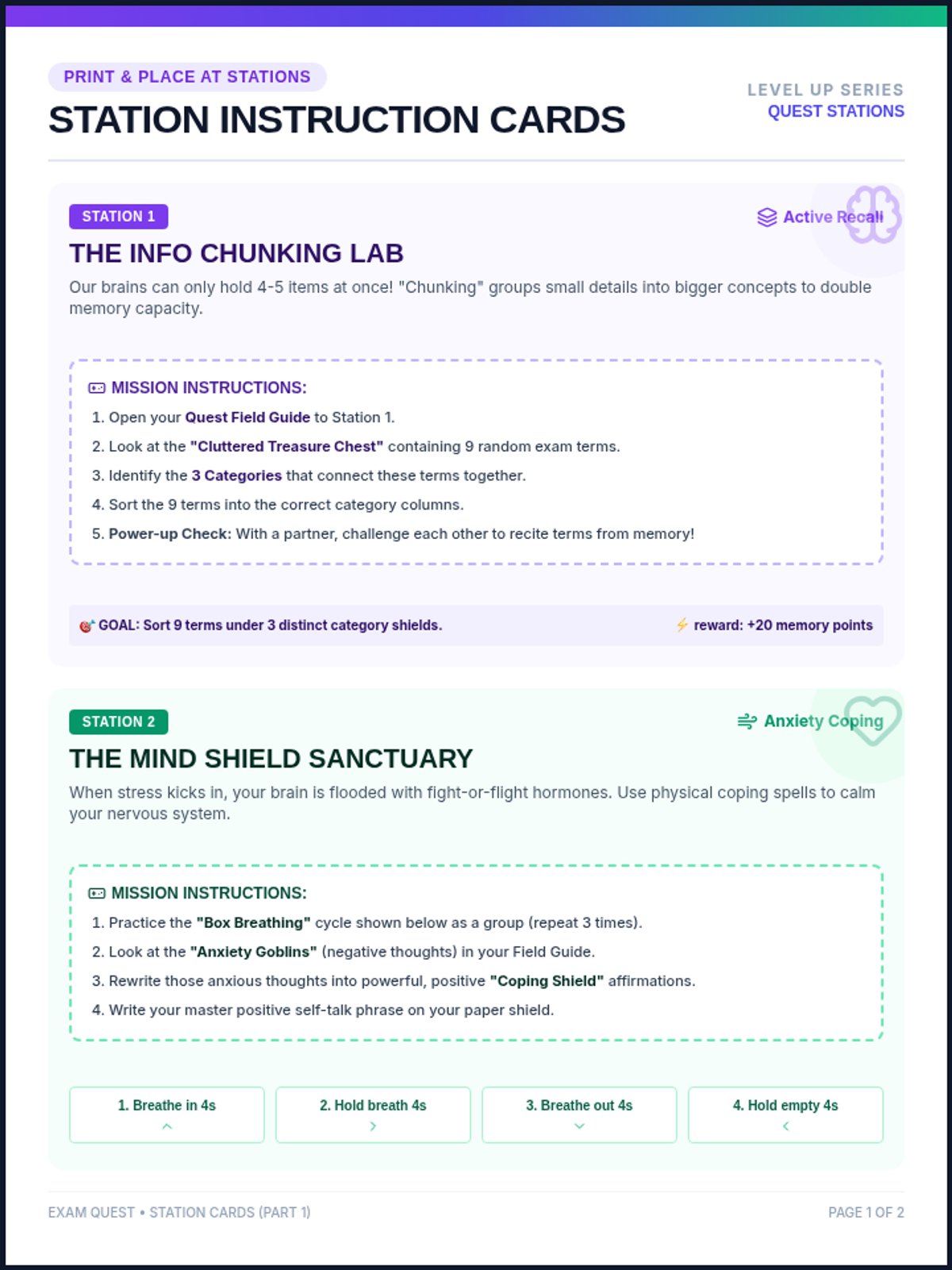
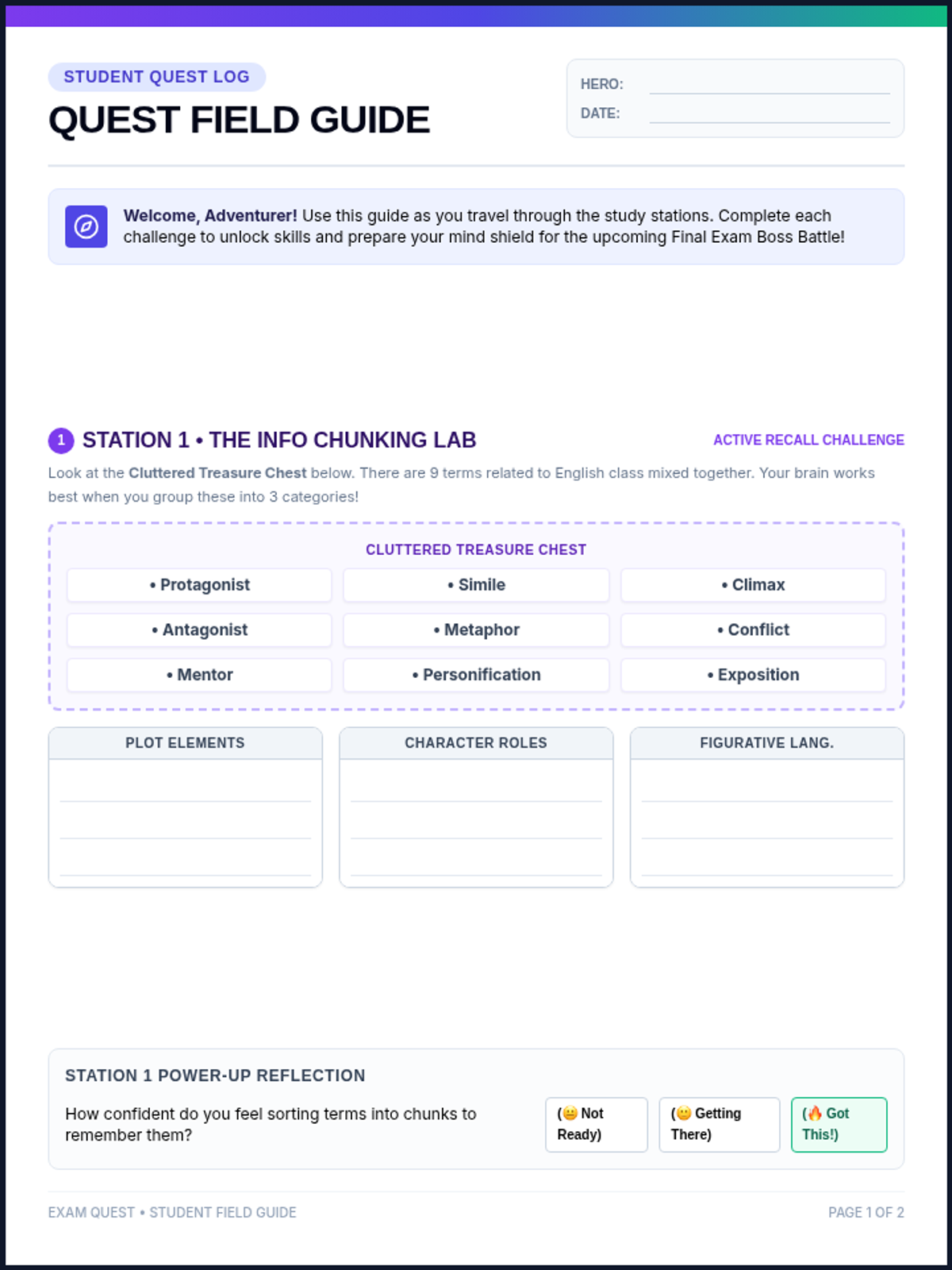
A hands-on, highly supportive final exam preparation lesson designed for special education high school students. It uses a gamified 'level up' adventure theme to teach study organization, anxiety management, and effective accommodations use across interactive study stations and cooperative review activities.
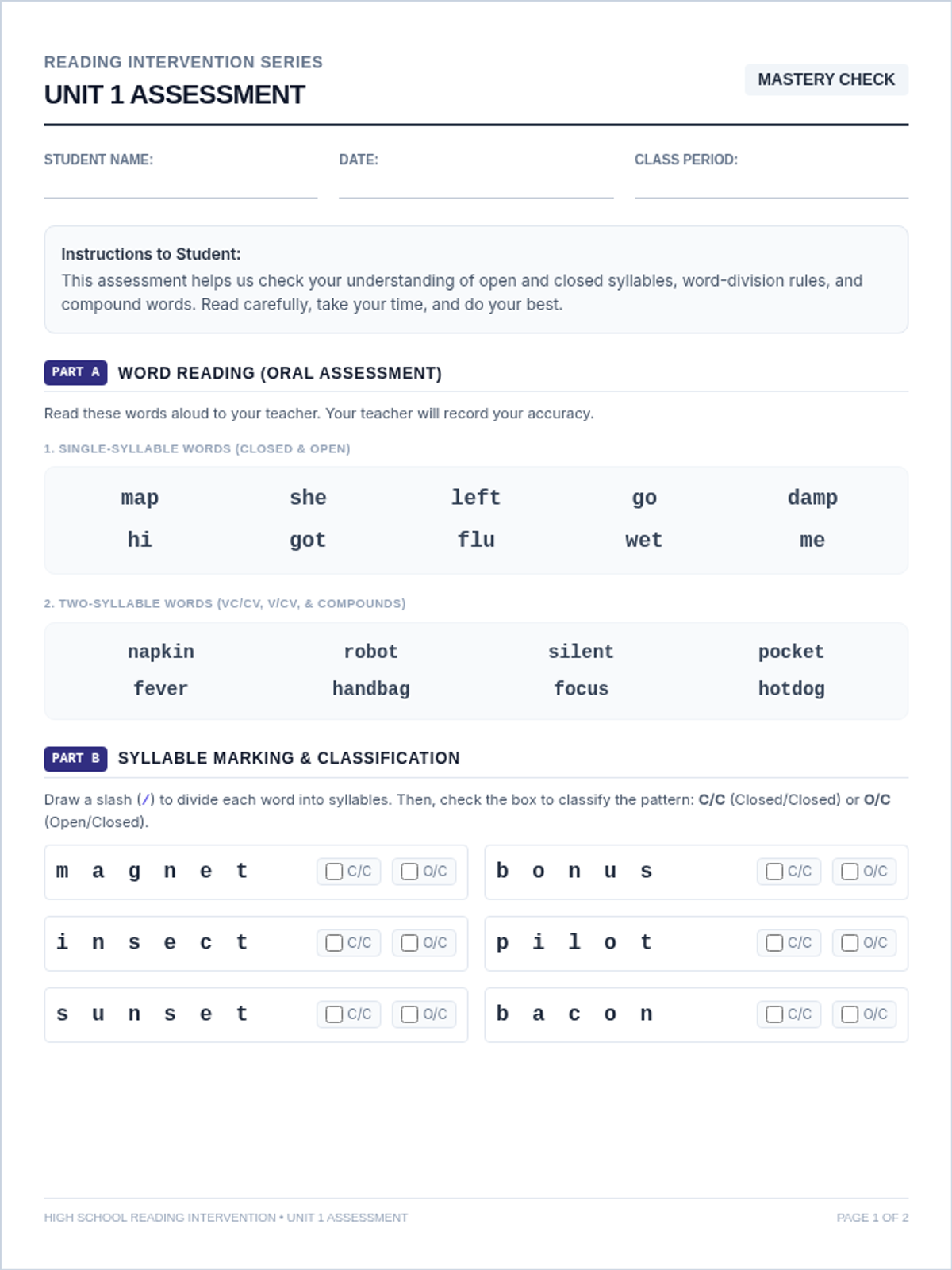
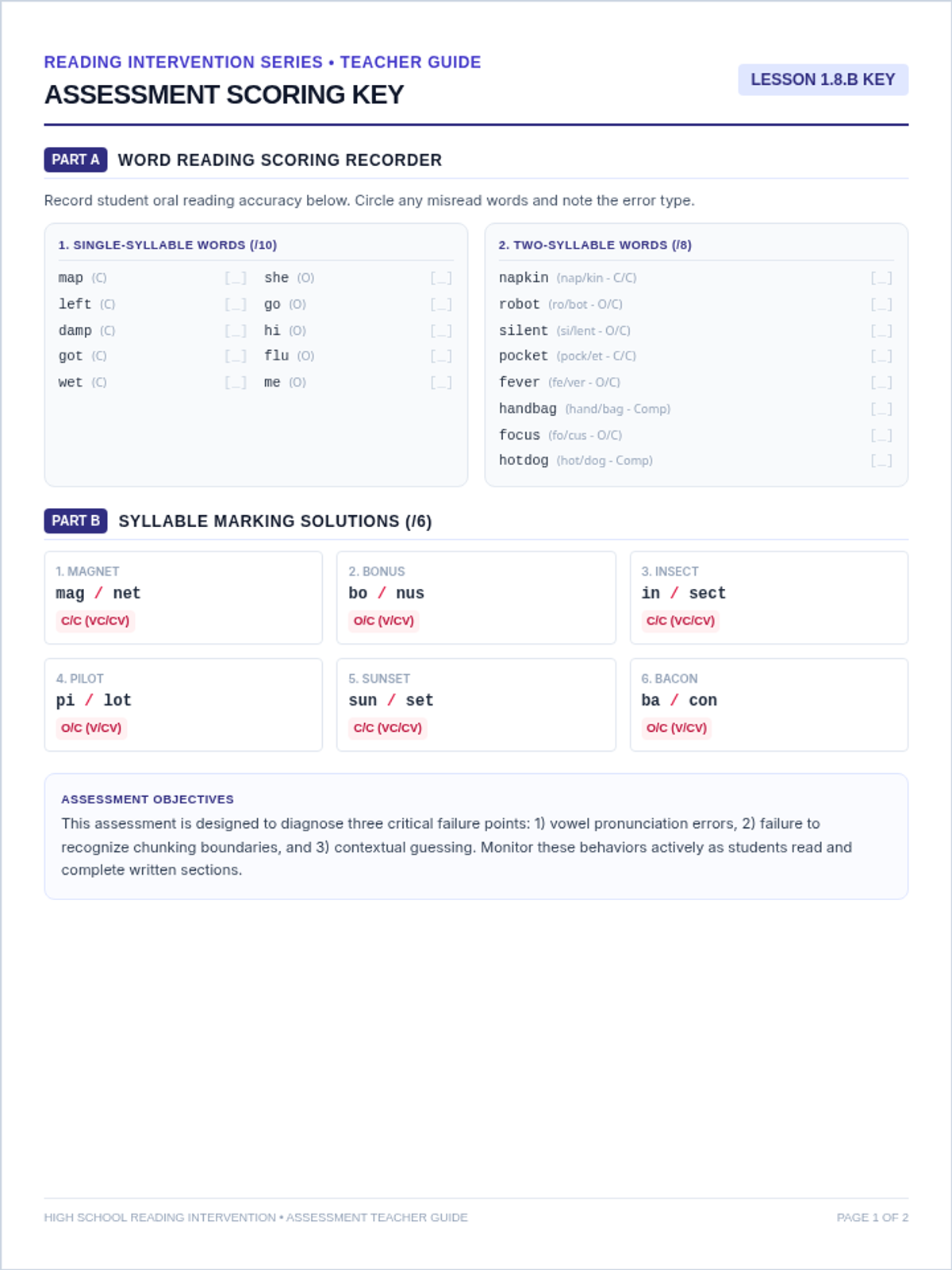
A formal end-of-unit mastery check assessing student decoding of closed and open syllables, multisyllabic word division patterns (VC/CV and V/CV), and compound word recognition in isolation and context.
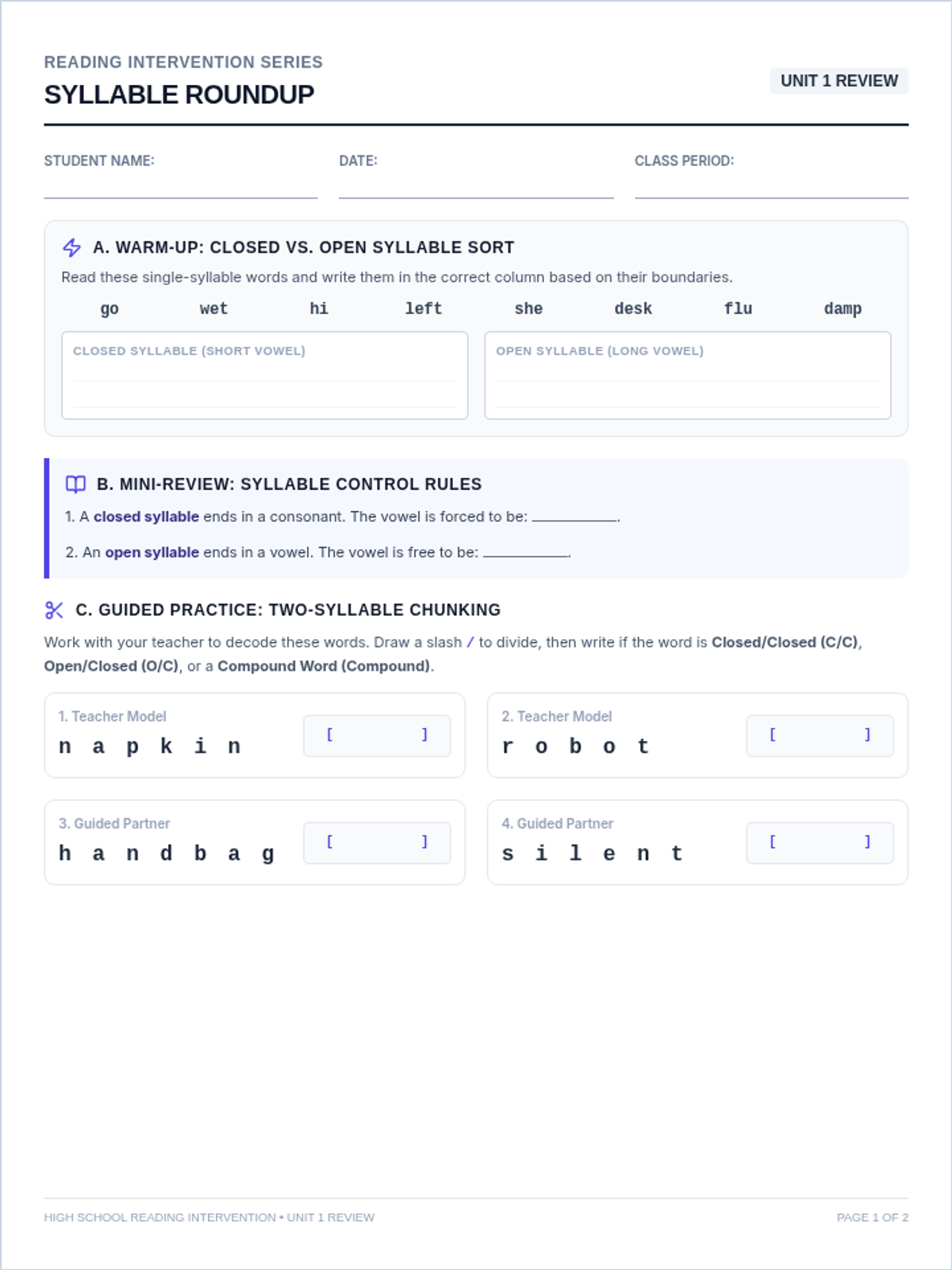
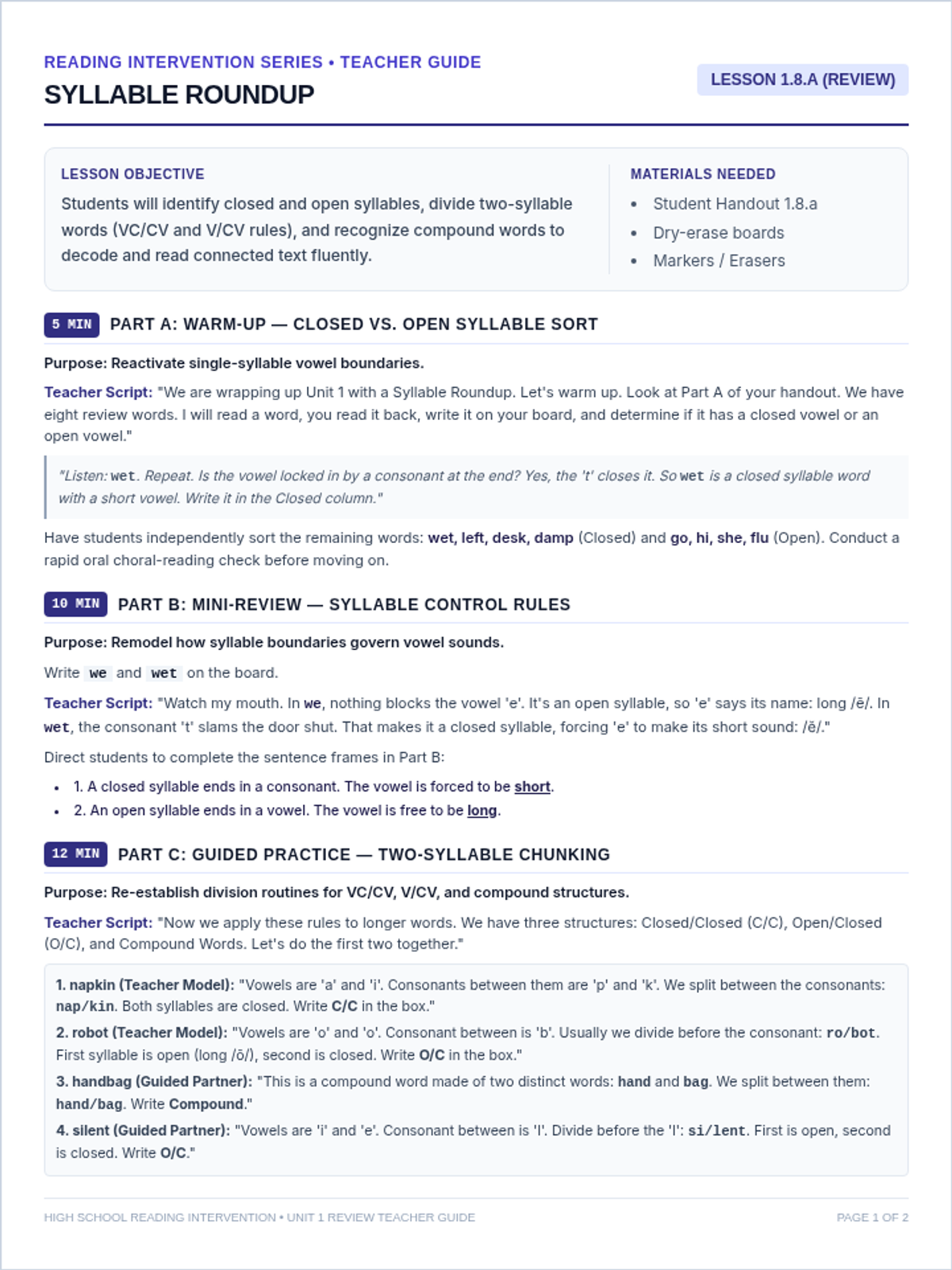
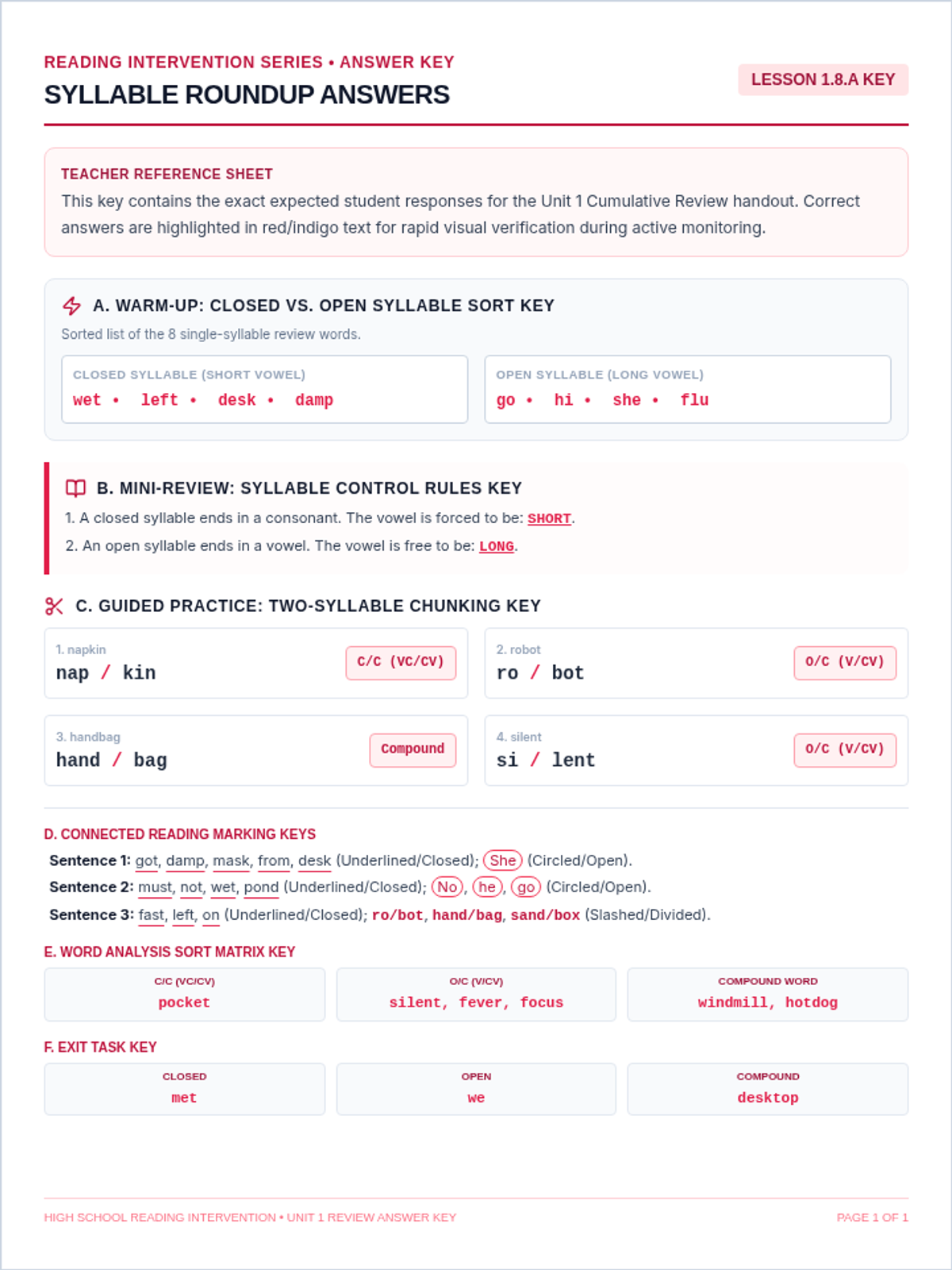
A cumulative review lesson covering closed and open syllables, two-syllable VC/CV and V/CV divisions, and compound words, consolidating Unit 1 skills for older struggling readers.
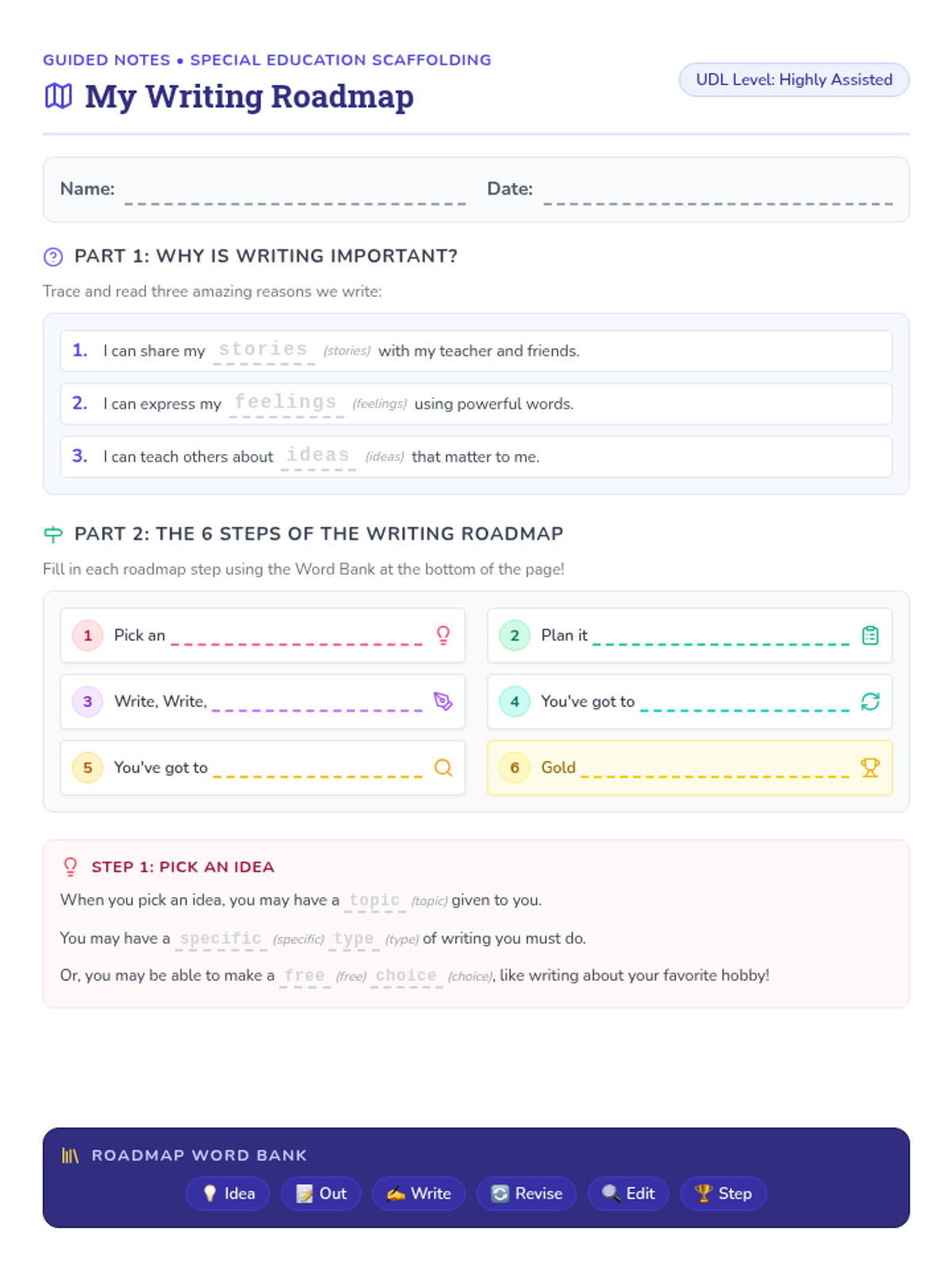
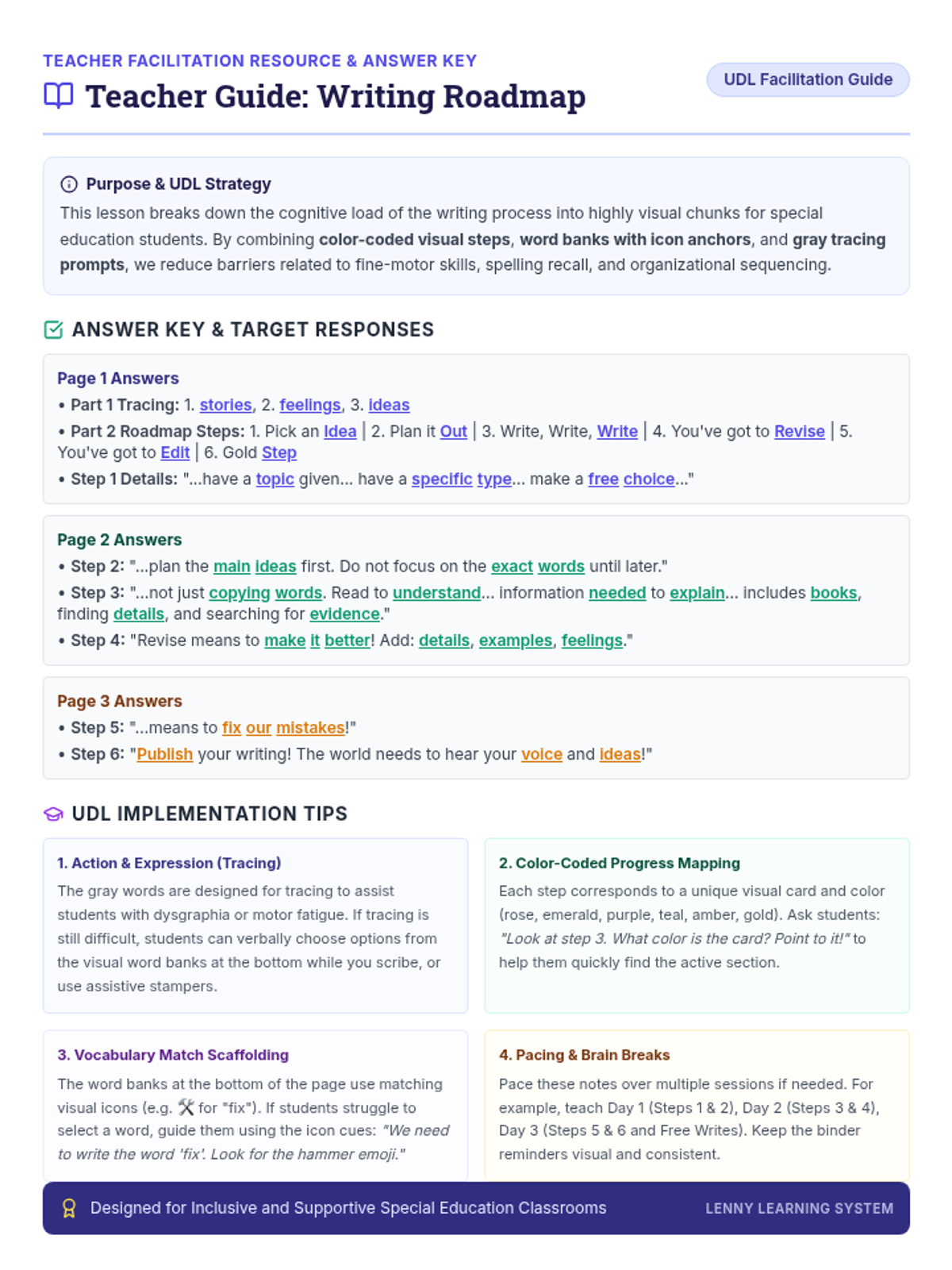
A scaffolded lesson focused on the writing process, redesigned specifically for special education students using Universal Design for Learning (UDL) principles, featuring sentence frames, visual word banks, and tracing support.
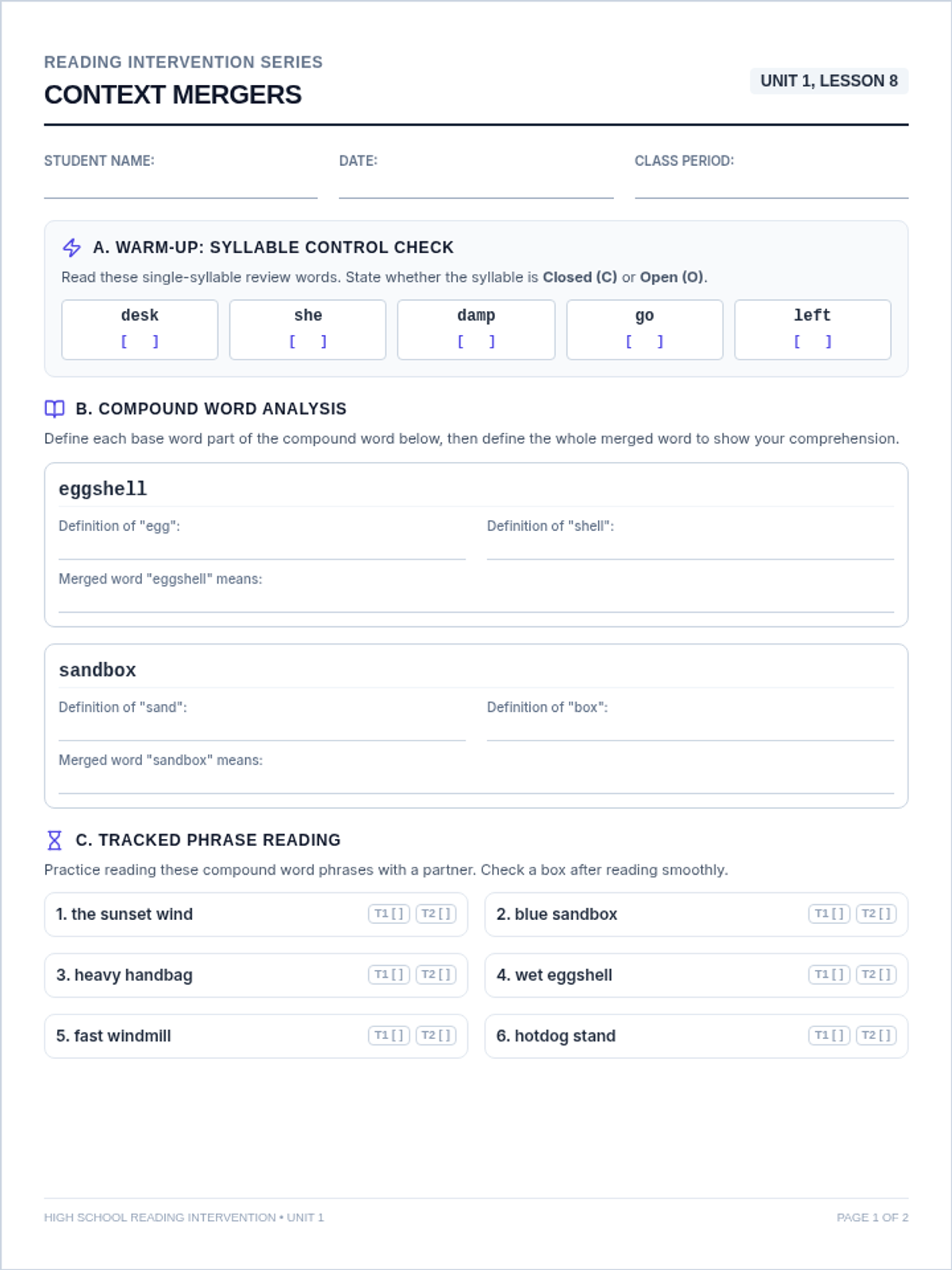
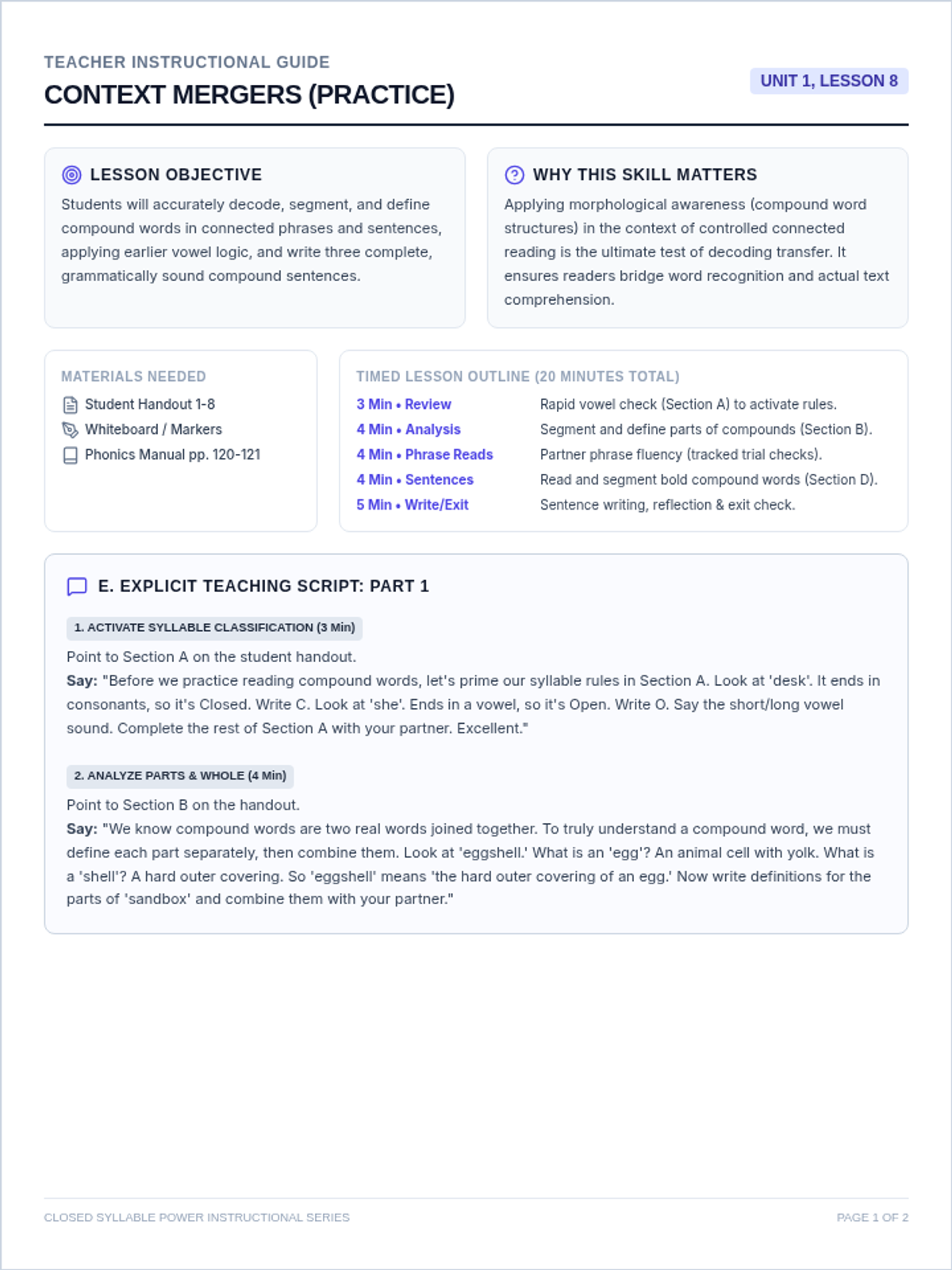
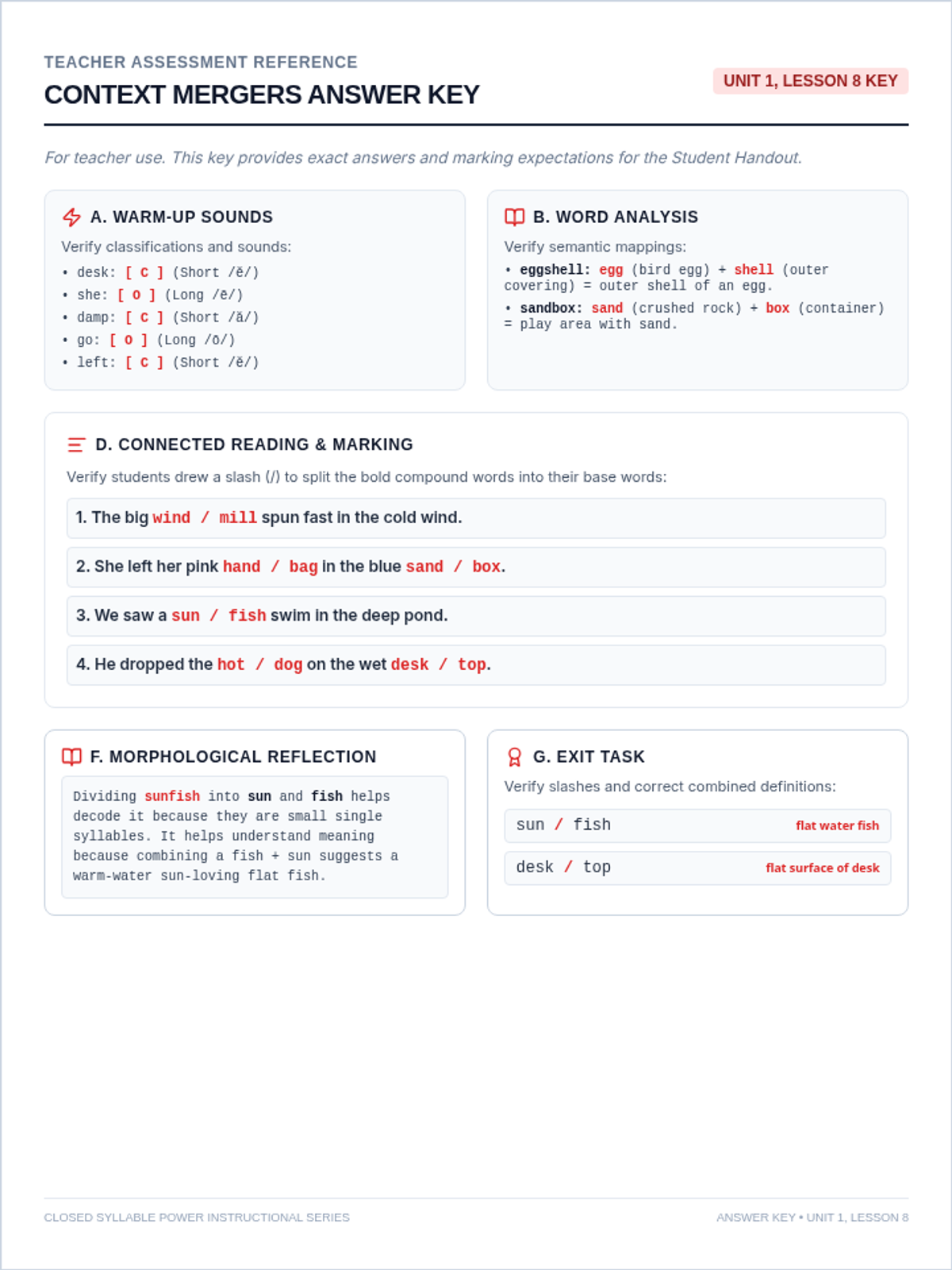
A practice and application lesson focused on reading compound words in context. Students read sentences, analyze base word meanings, and identify open and closed syllable structures within compound parts.
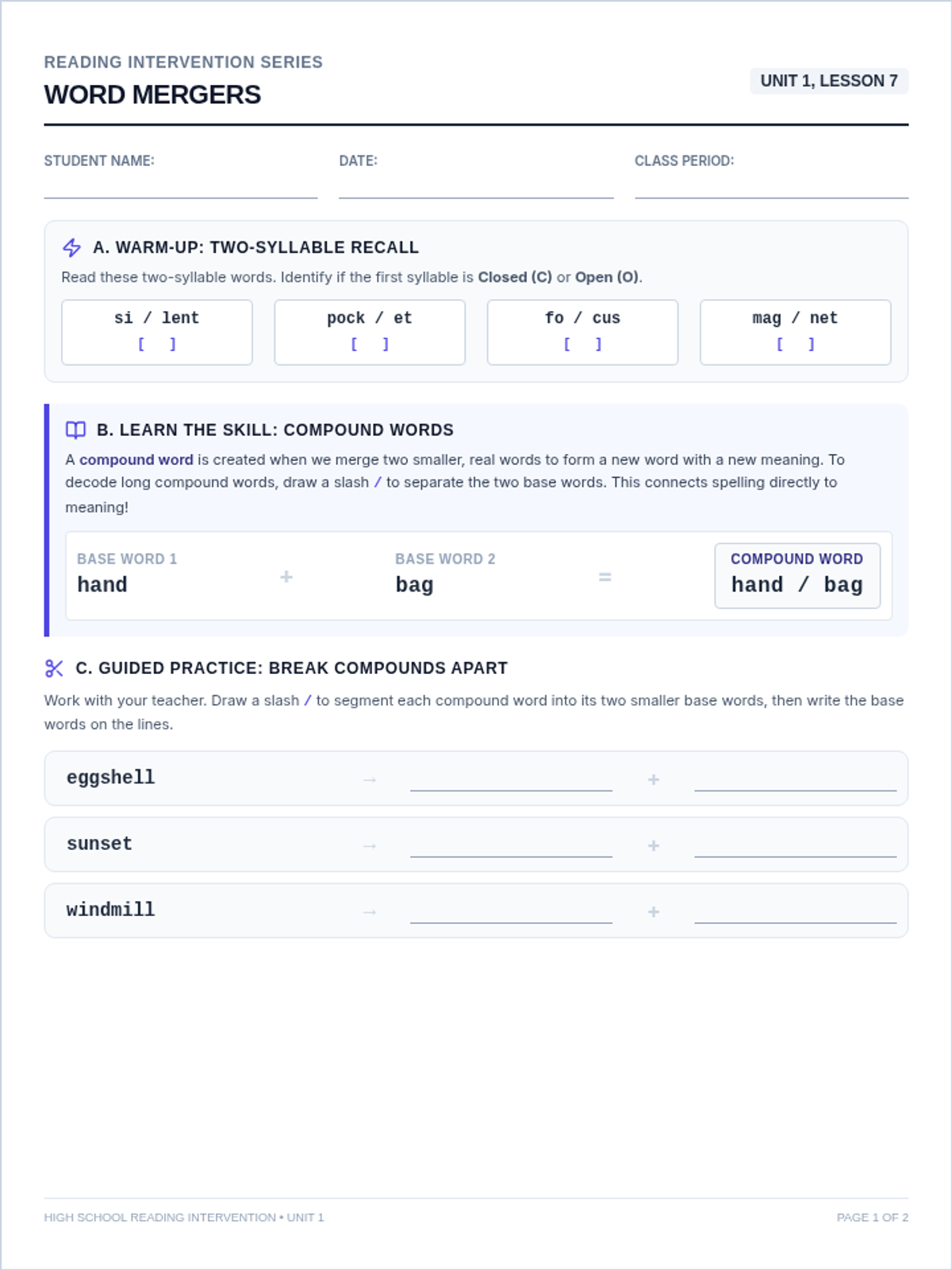
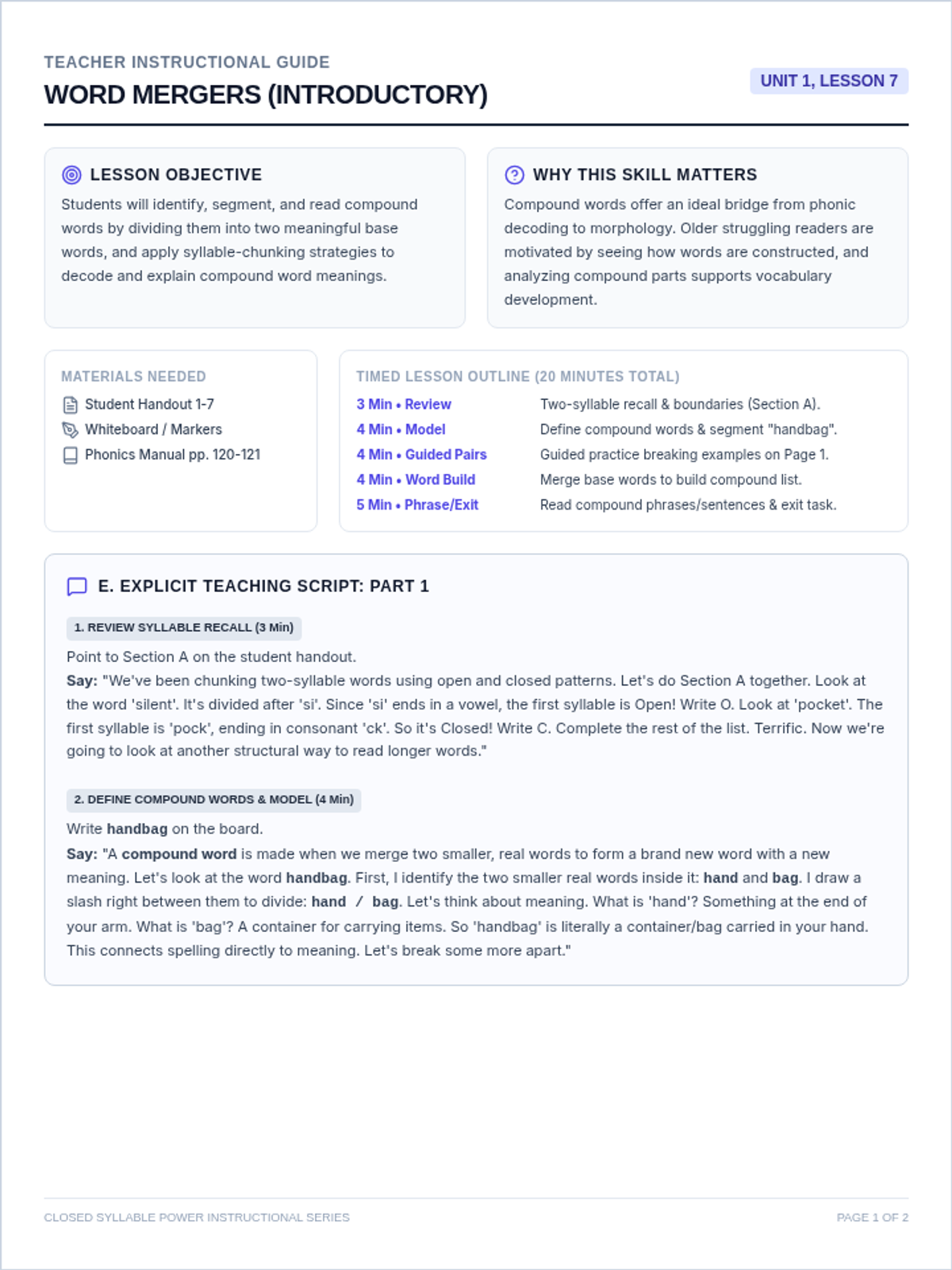
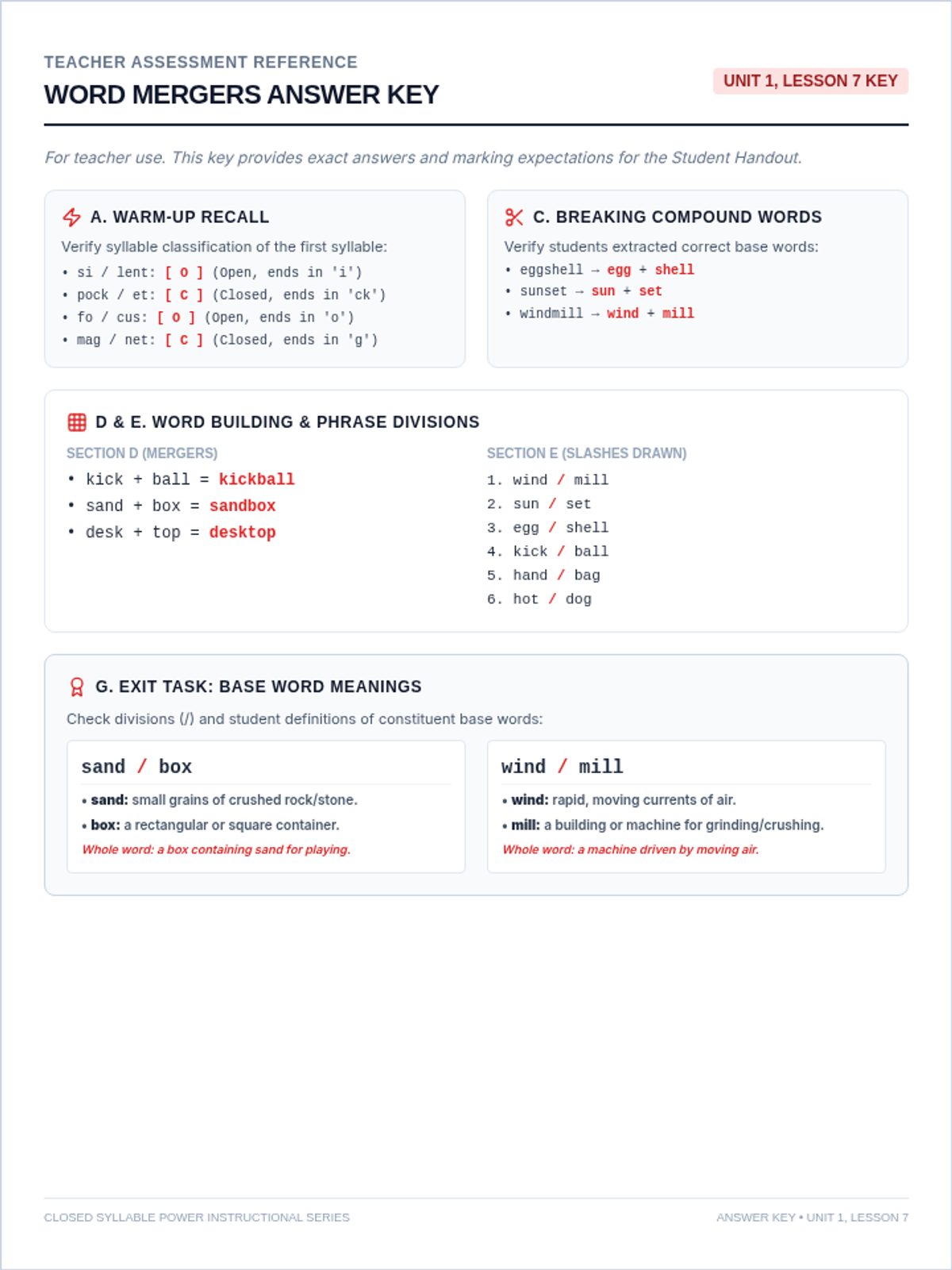
An introductory lesson on reading compound words. Students learn to segment compound words into their two smaller base words and use syllable chunking to decode and comprehend longer combined words.
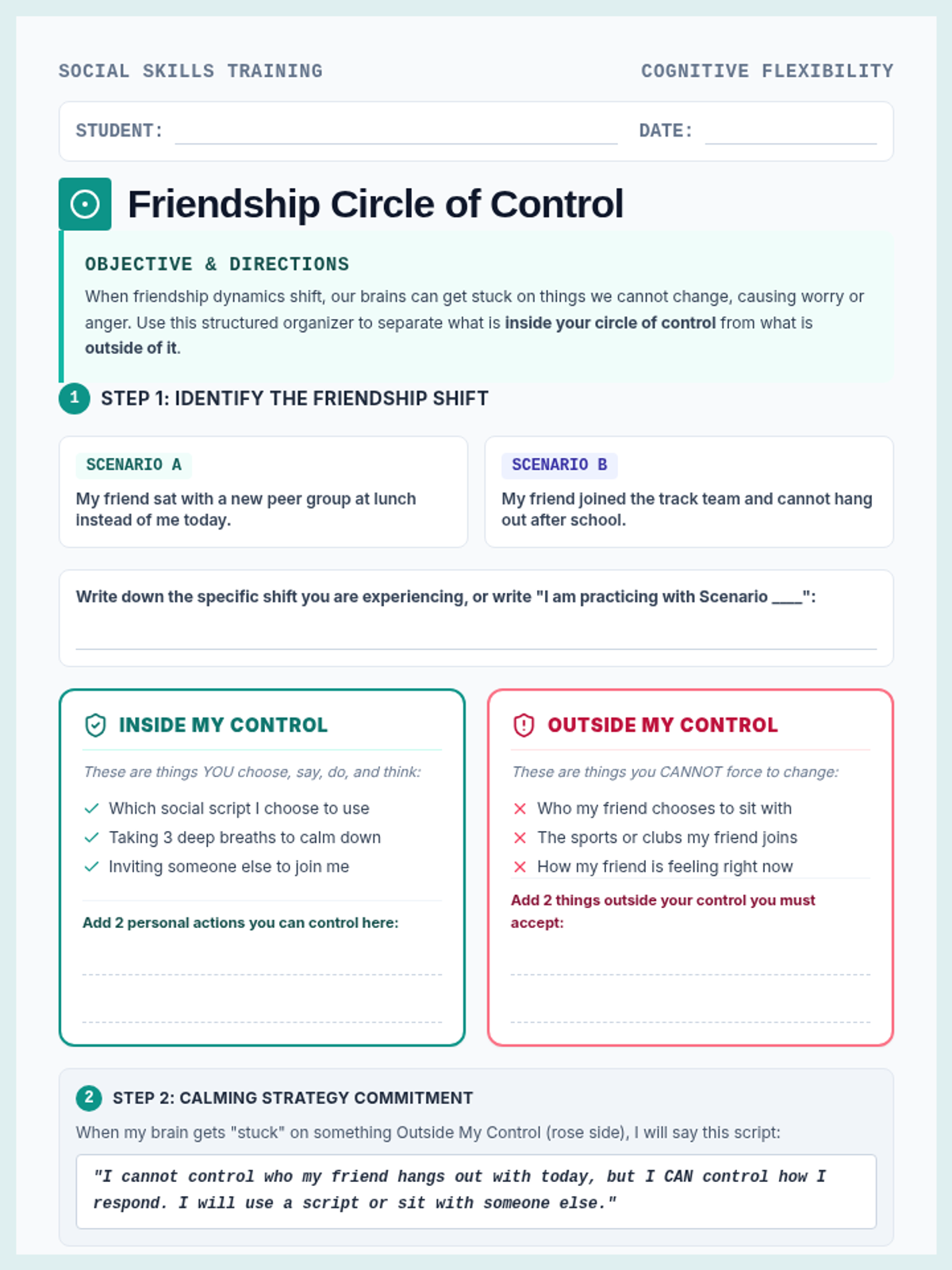
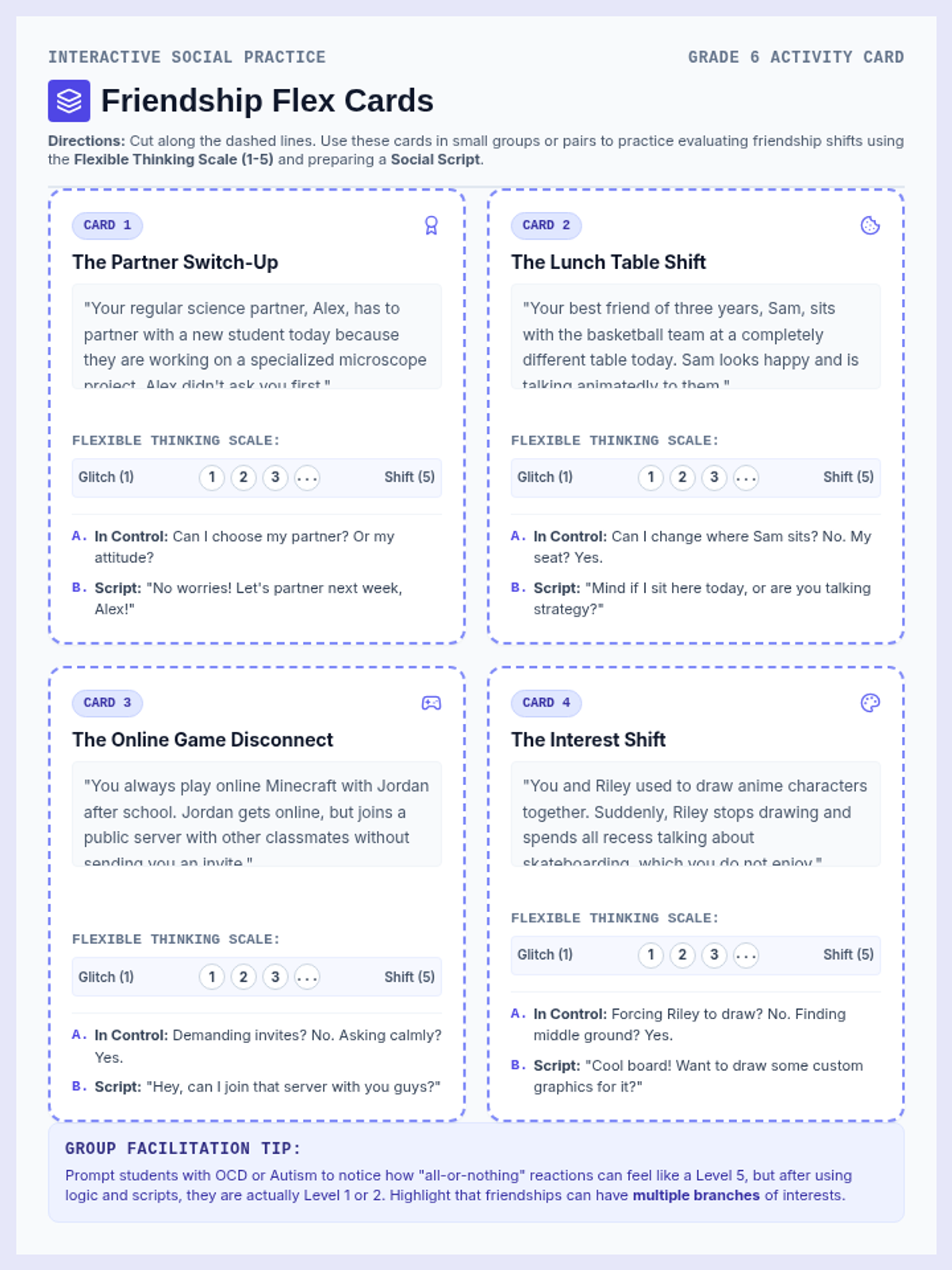
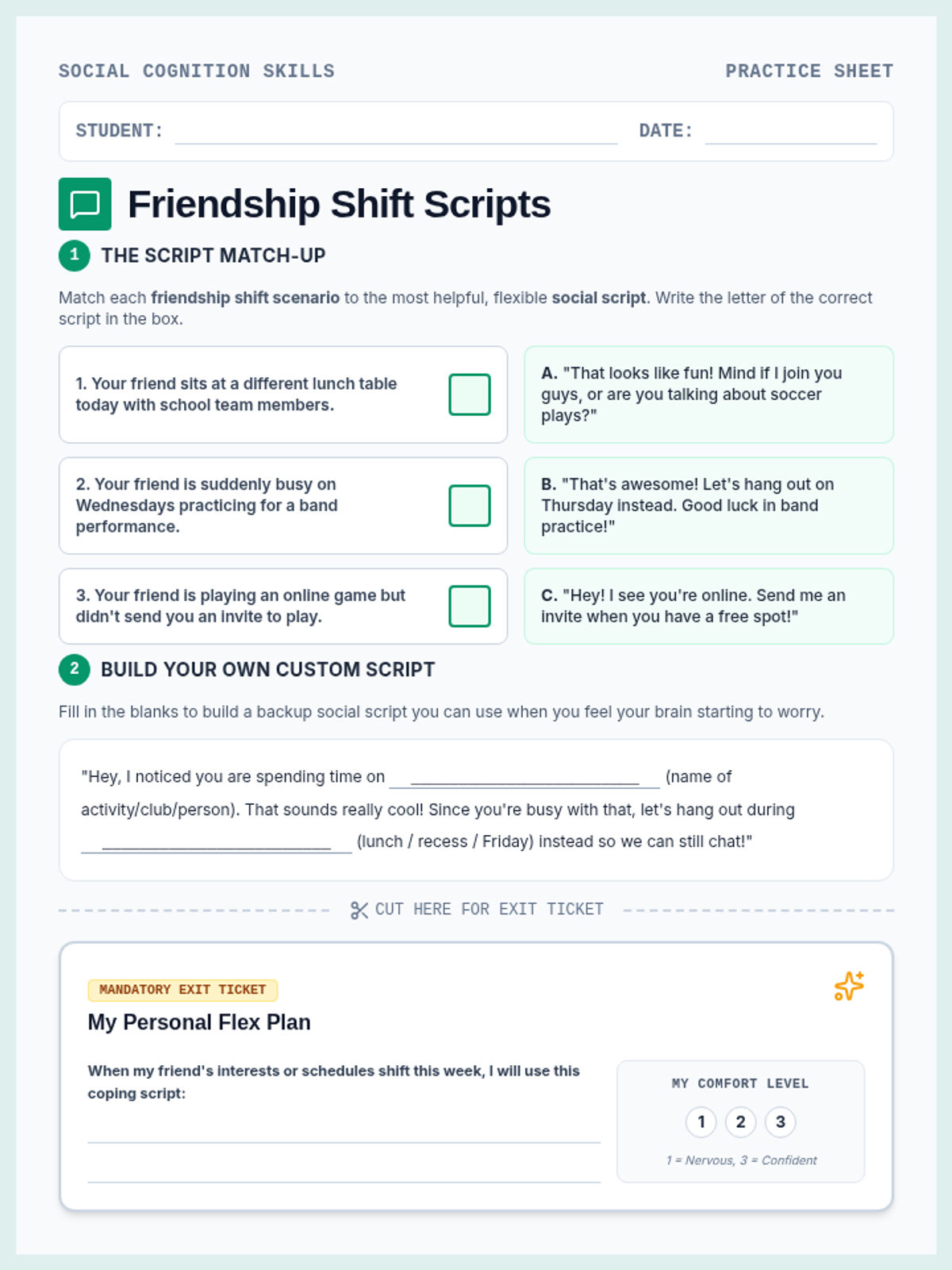
A structured social-emotional learning lesson designed for 6th-grade students with Autism and OCD, focusing on managing friendship shifts through concrete strategies including the Circle of Control, Flexible Thinking Scales, and social scripts.
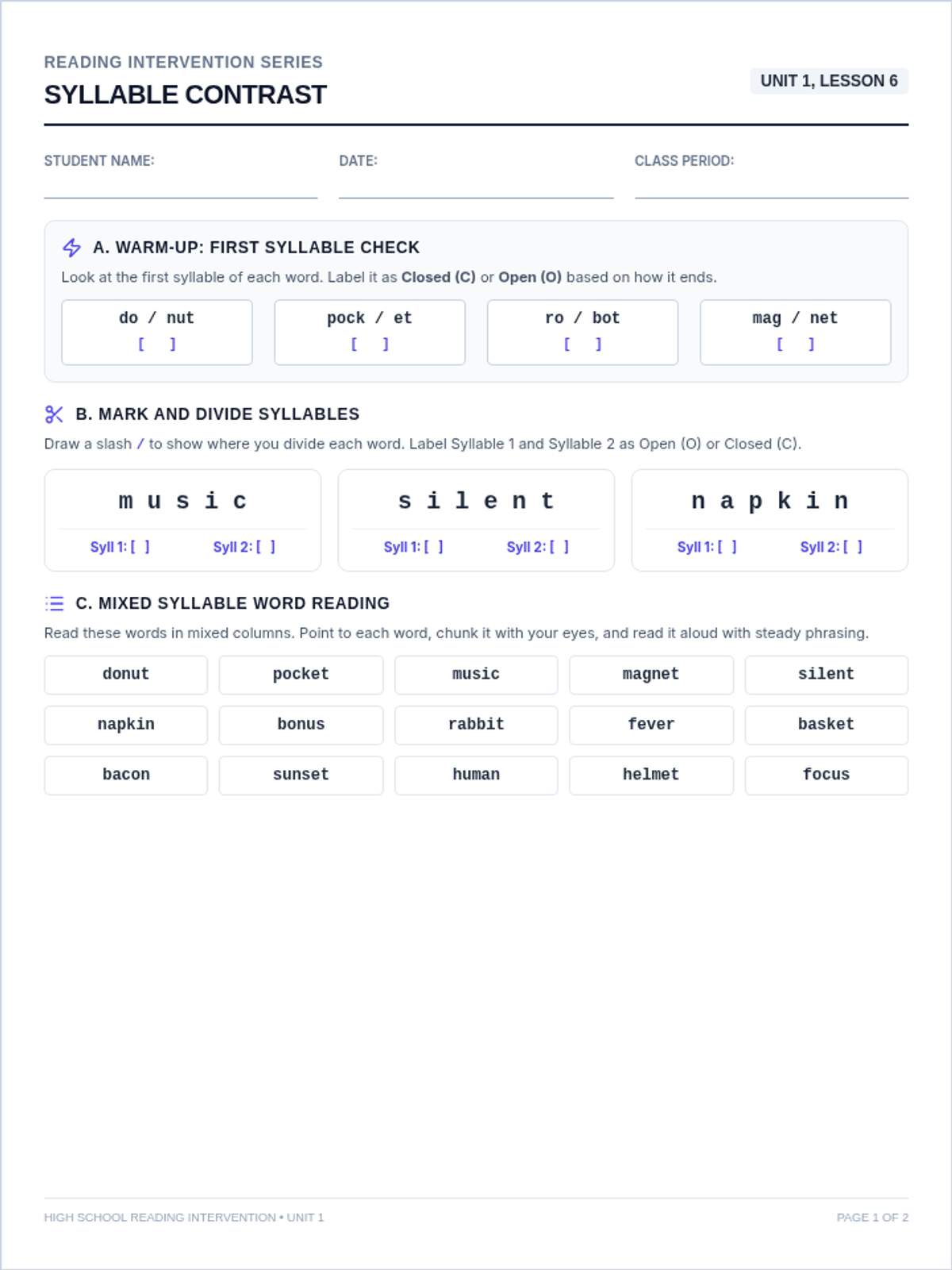
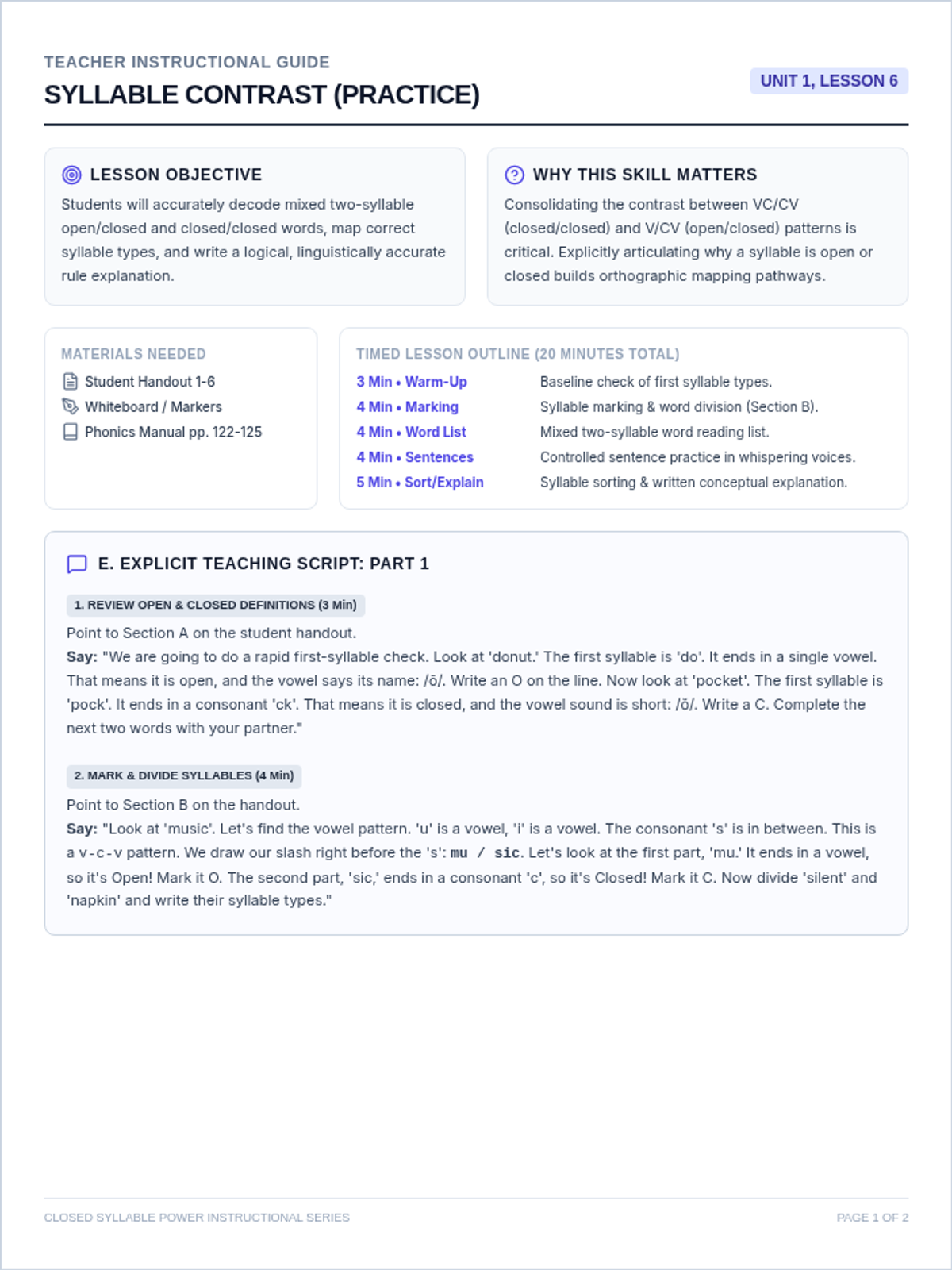
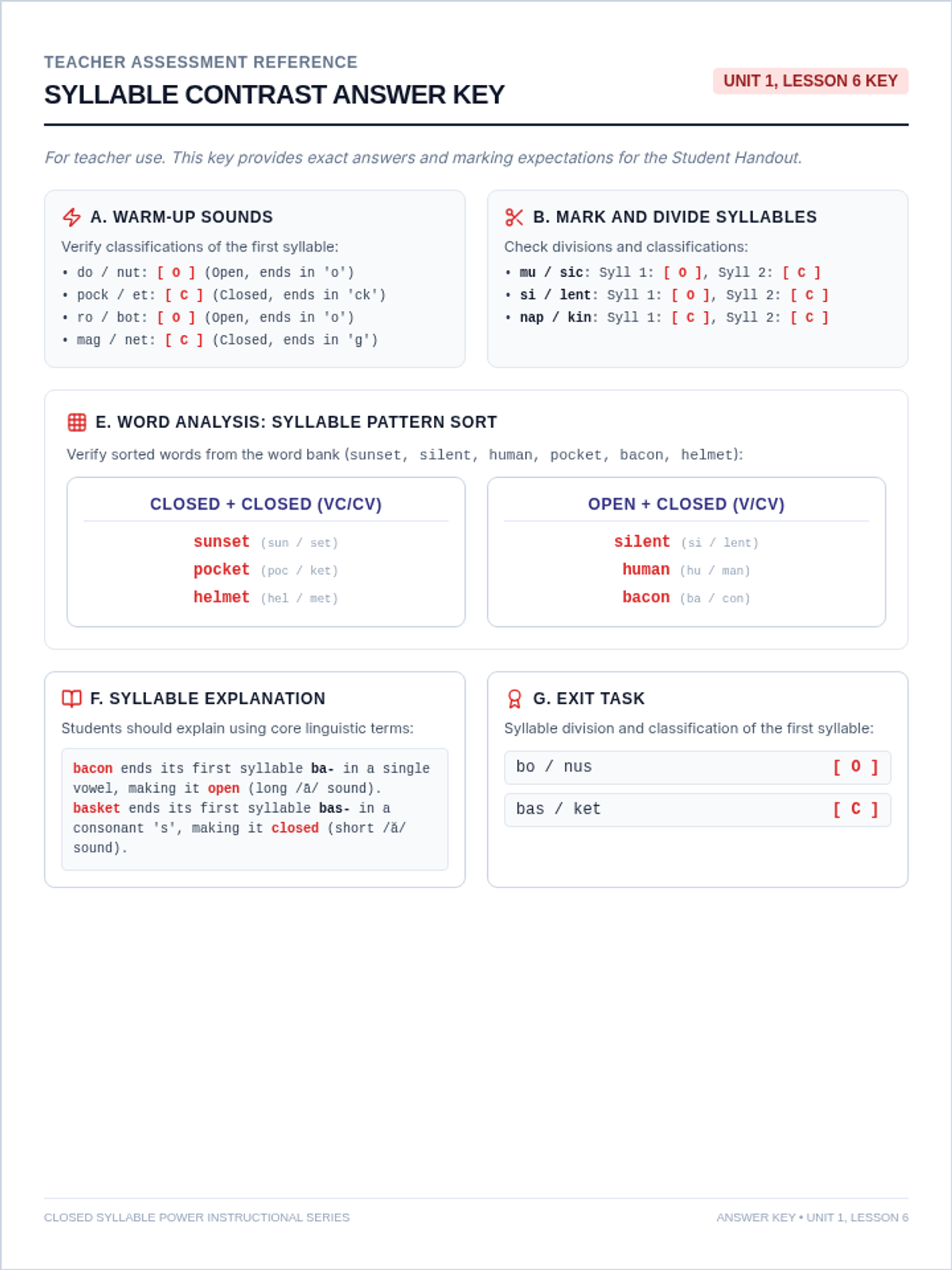
A practice and application lesson on two-syllable words, contrasting closed/closed (VC/CV) and open/closed (V/CV) patterns. Promotes automatic chunking and fluid connected reading.
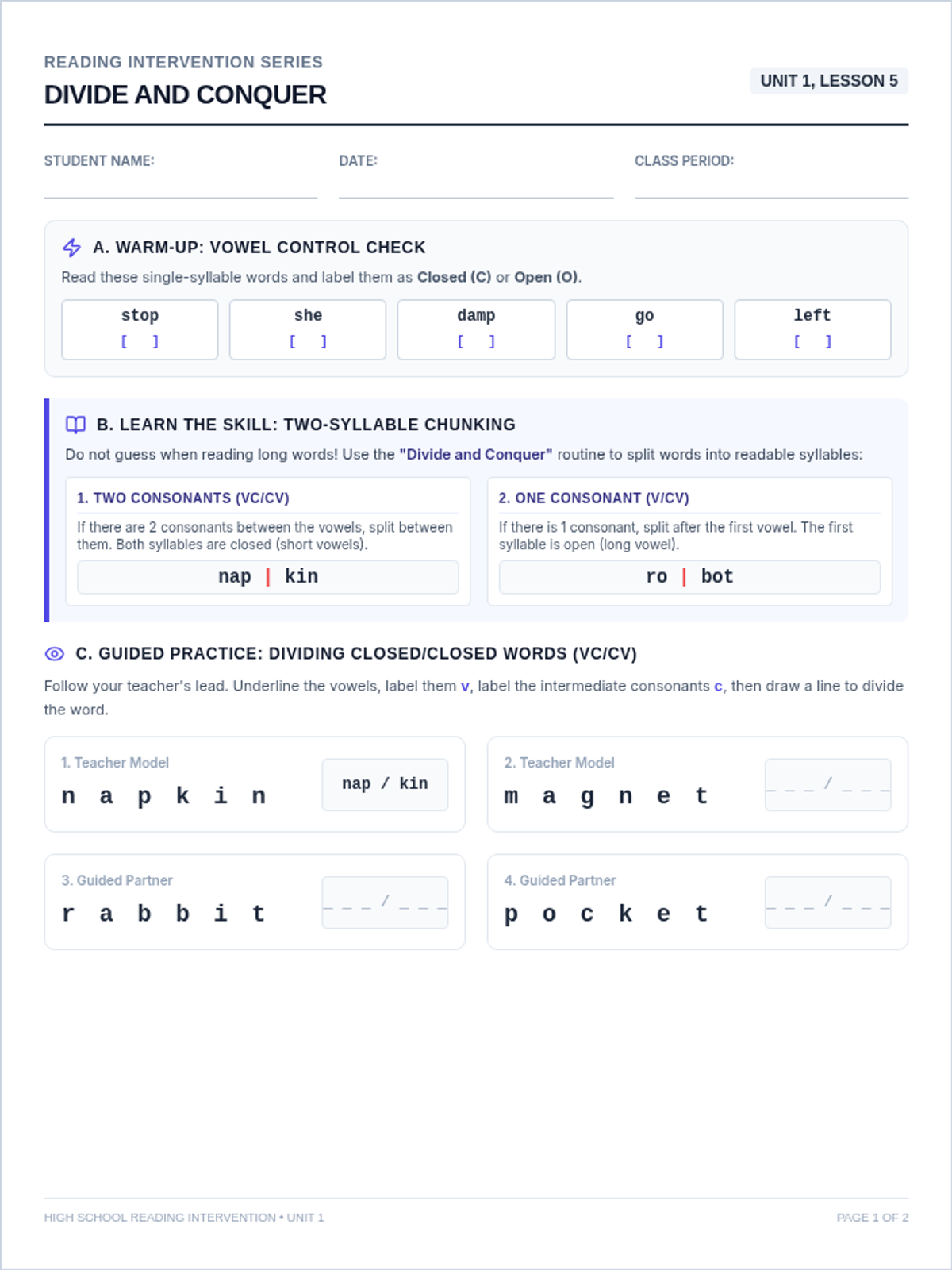
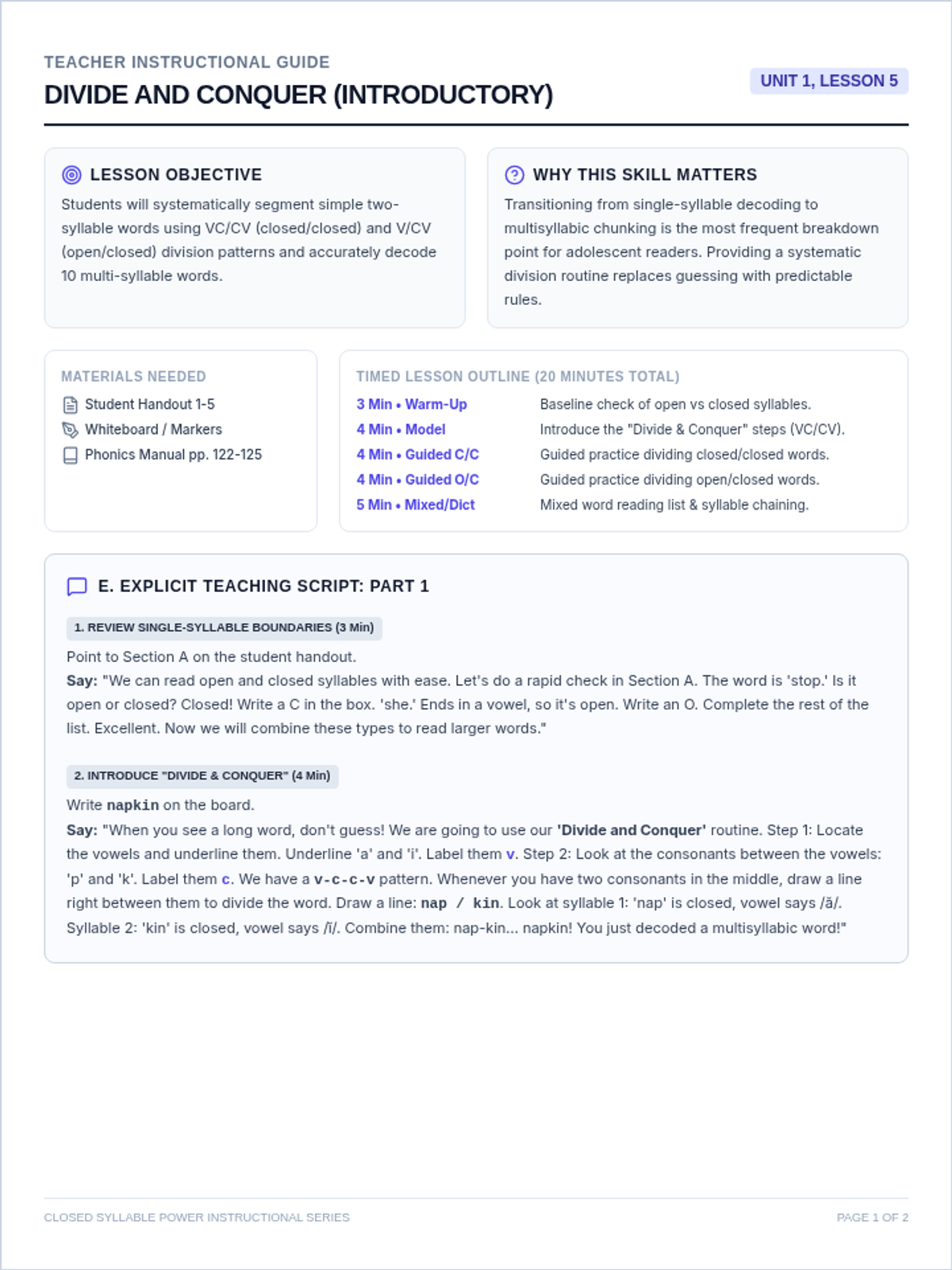
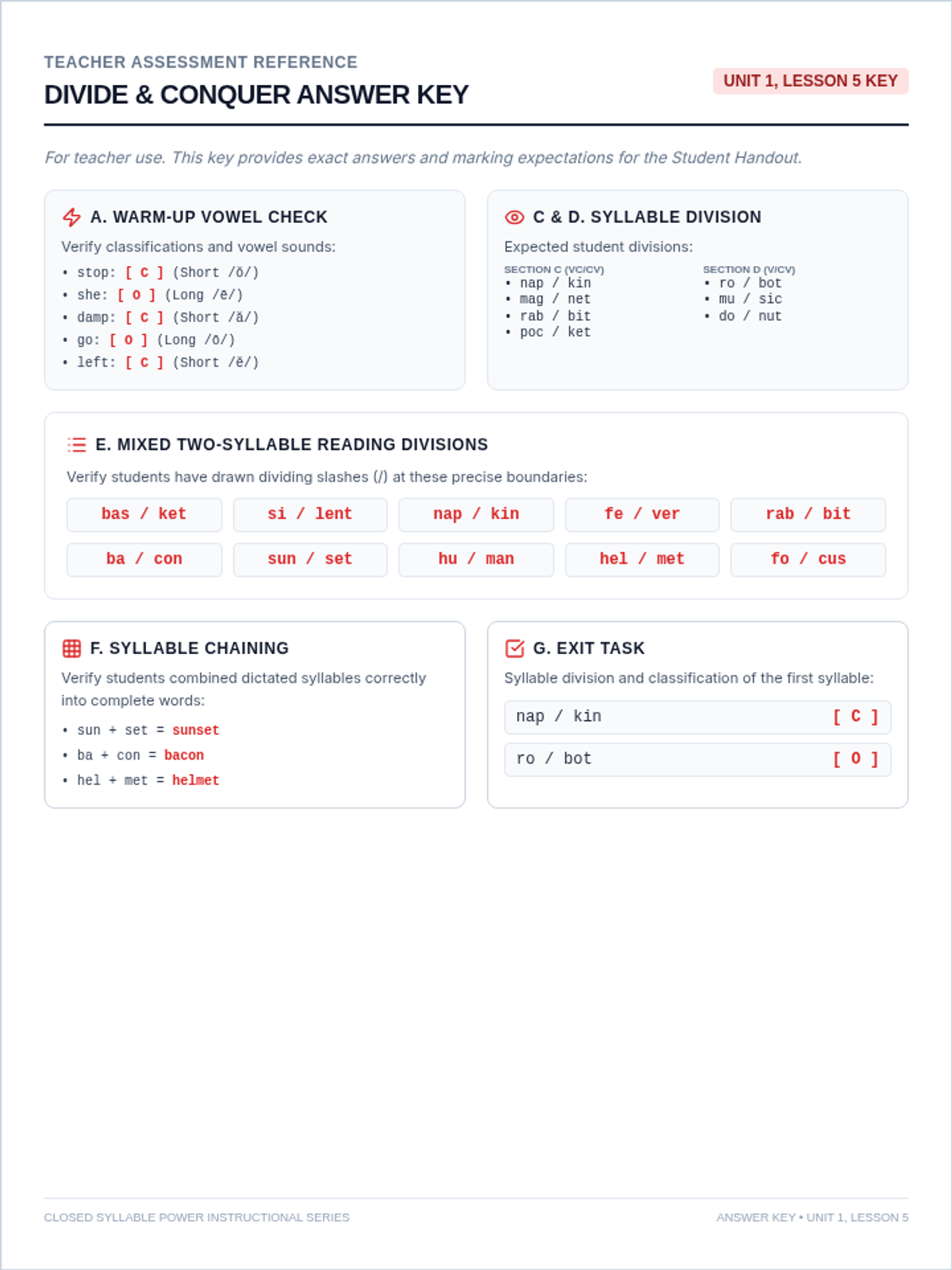
An introductory lesson on chunking two-syllable words using open and closed syllable rules. Introduces systematic division routines for VC/CV (closed/closed) and V/CV (open/closed) patterns to build decoding confidence in longer words.
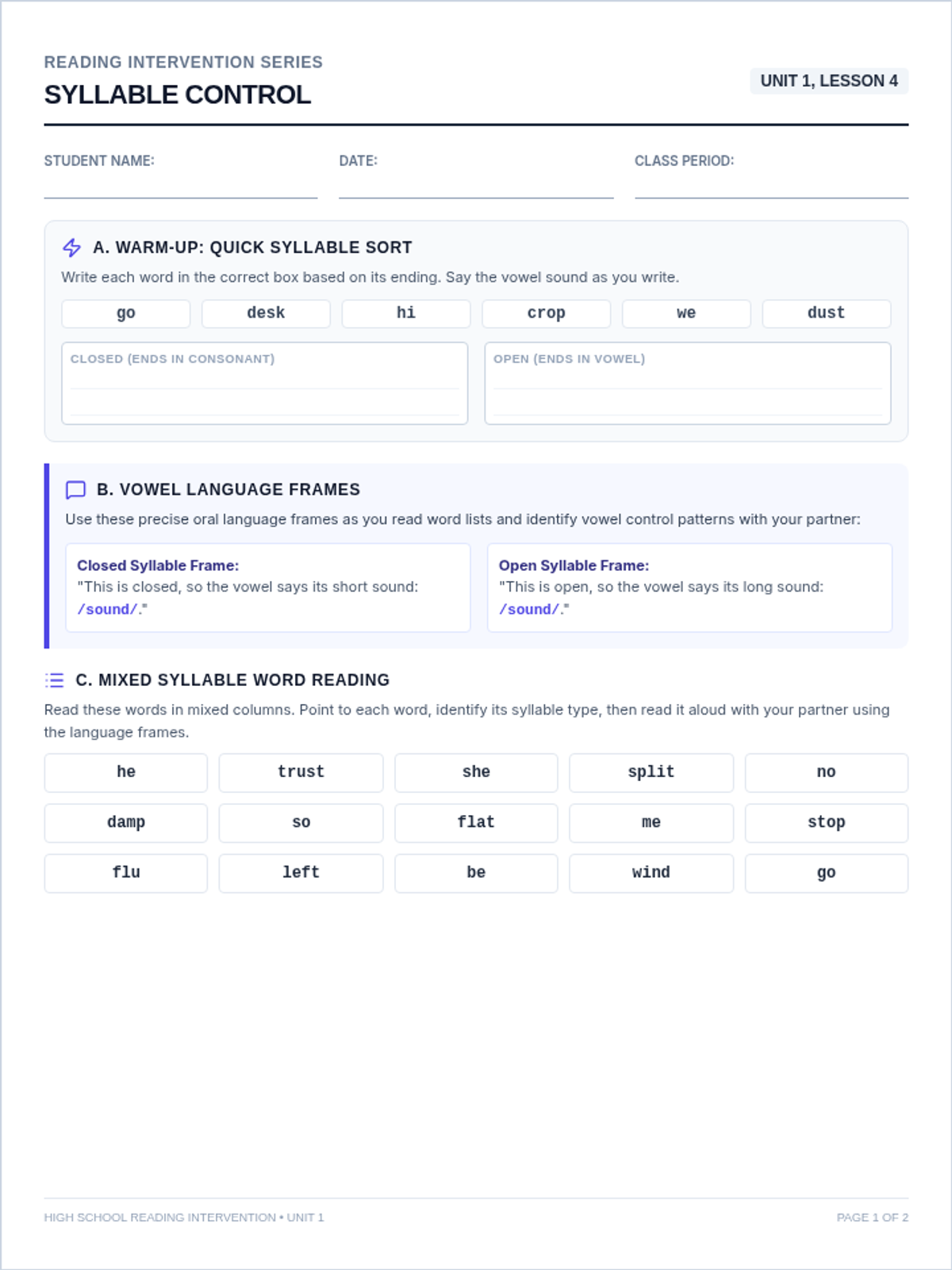
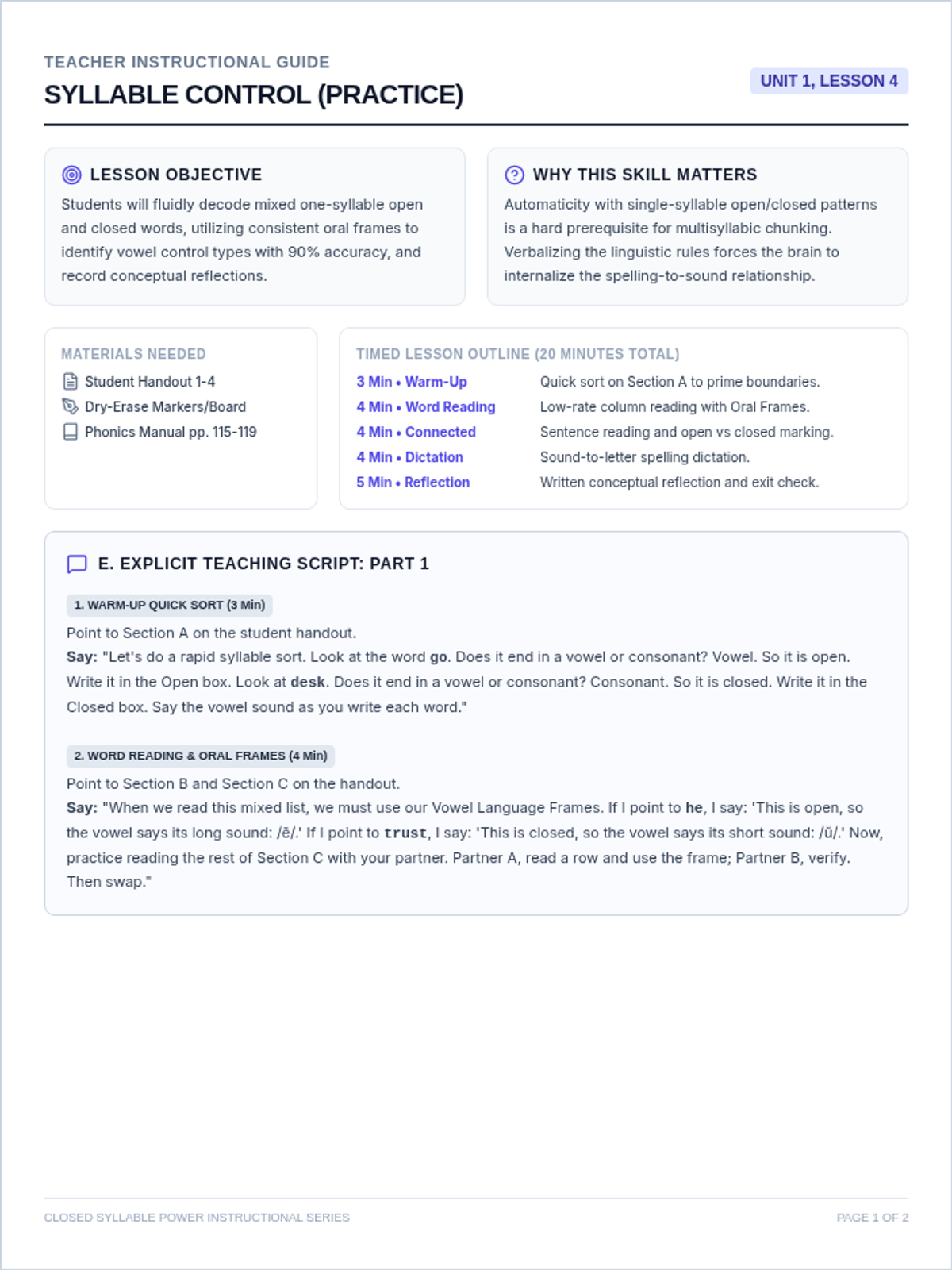
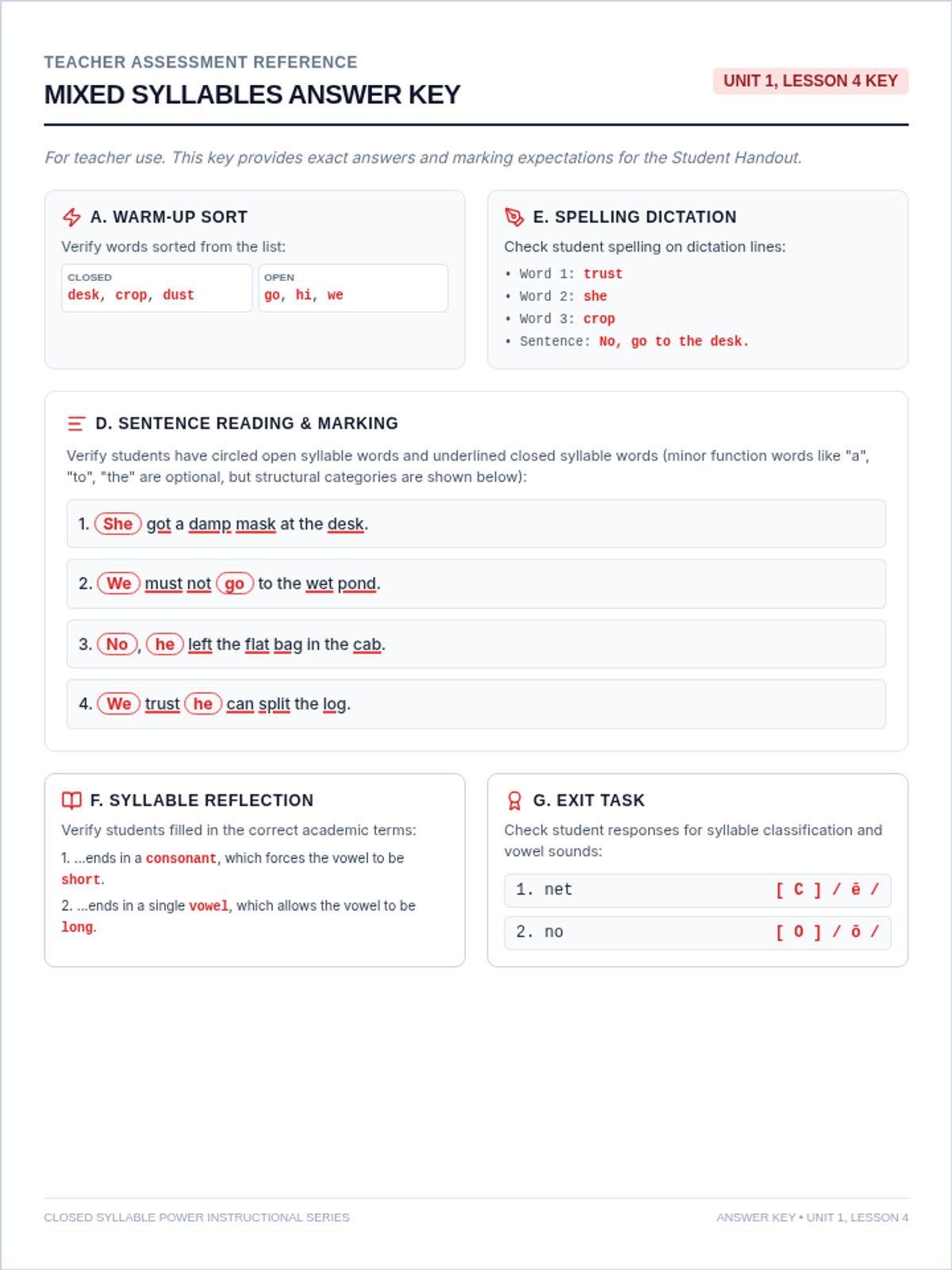
A practice and application lesson on mixed closed and open syllable structures. Emphasizes consistent, precise terminology and active syllable pattern identification to build automatic decoding skills.
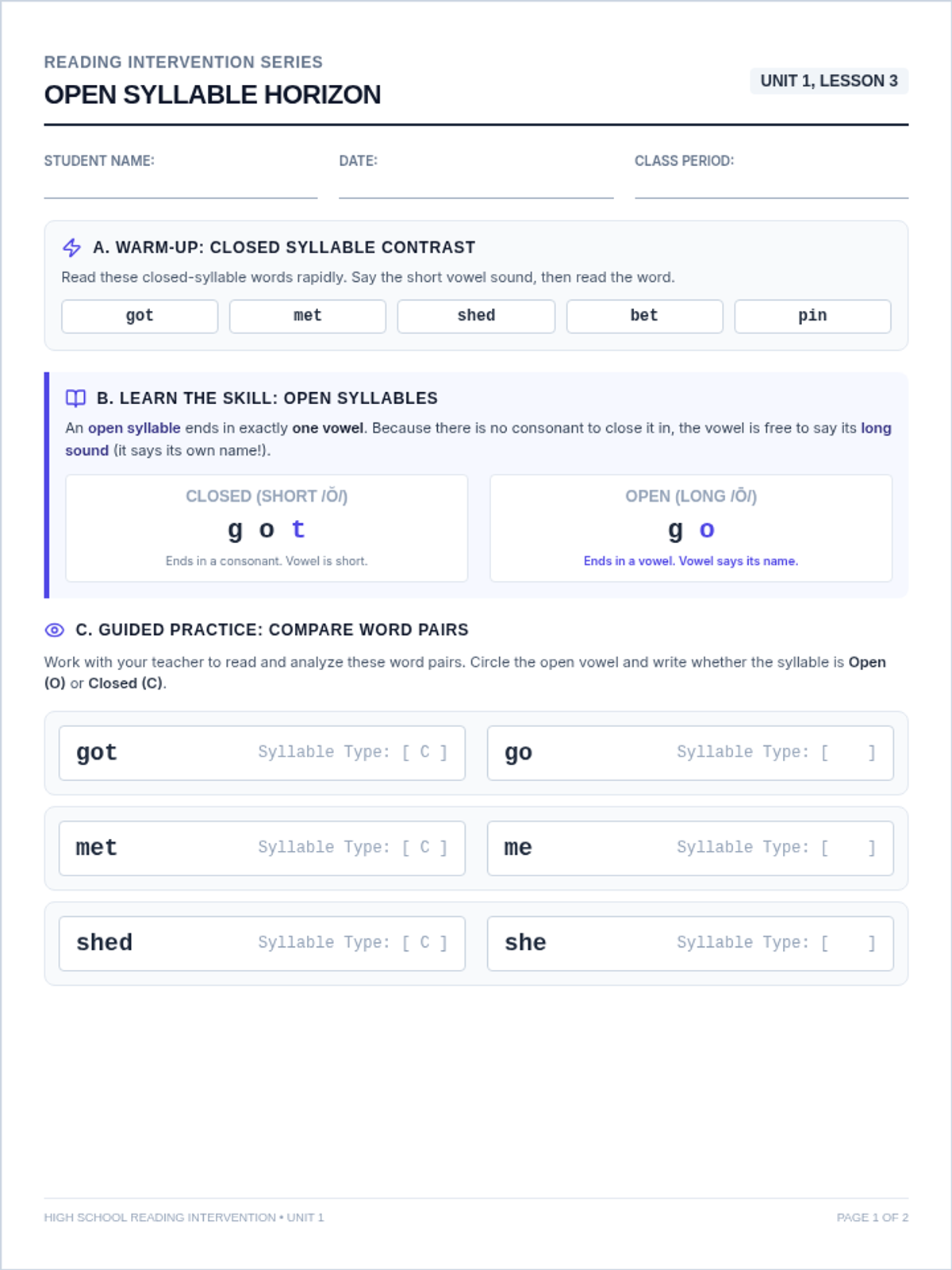
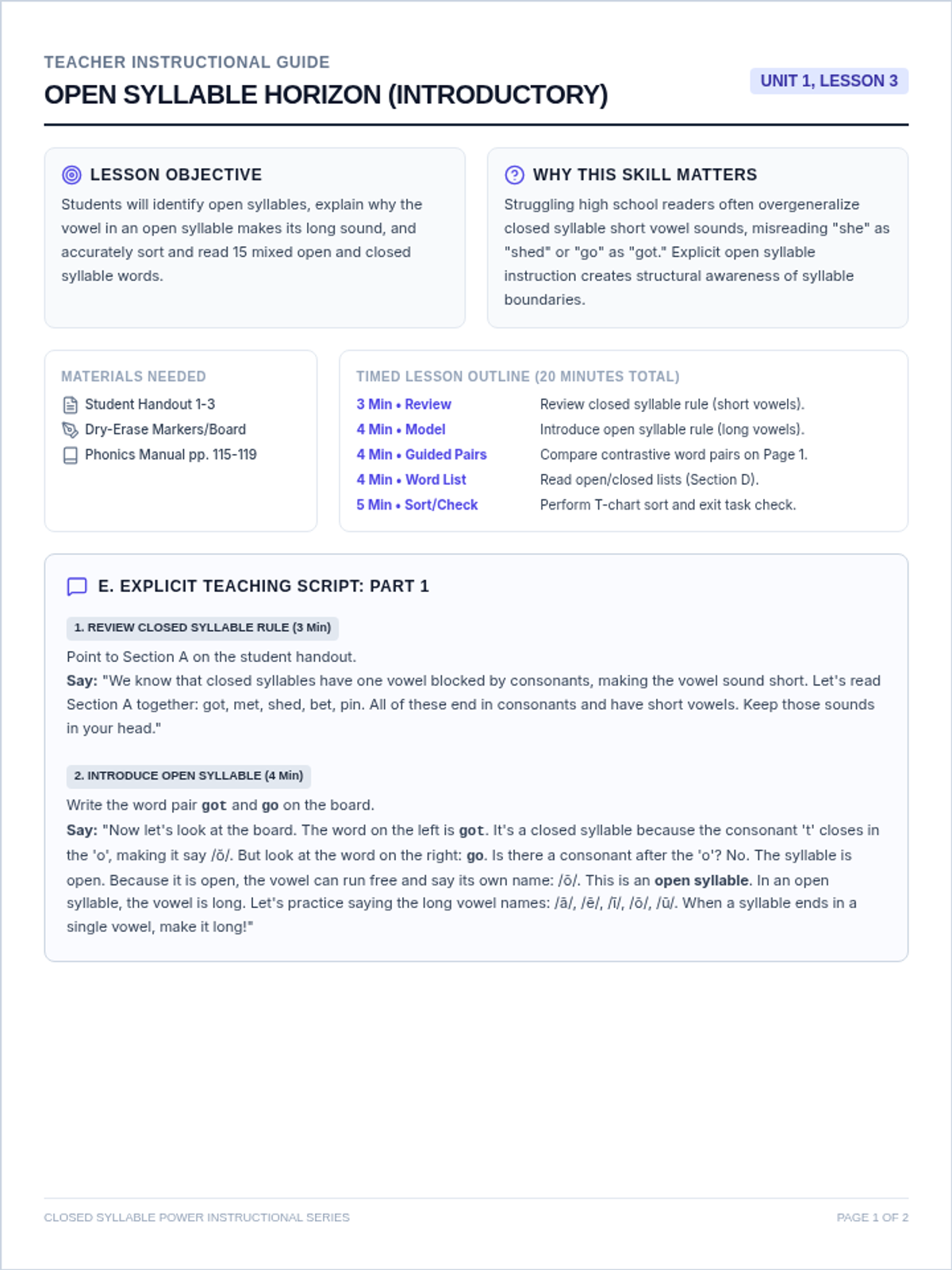
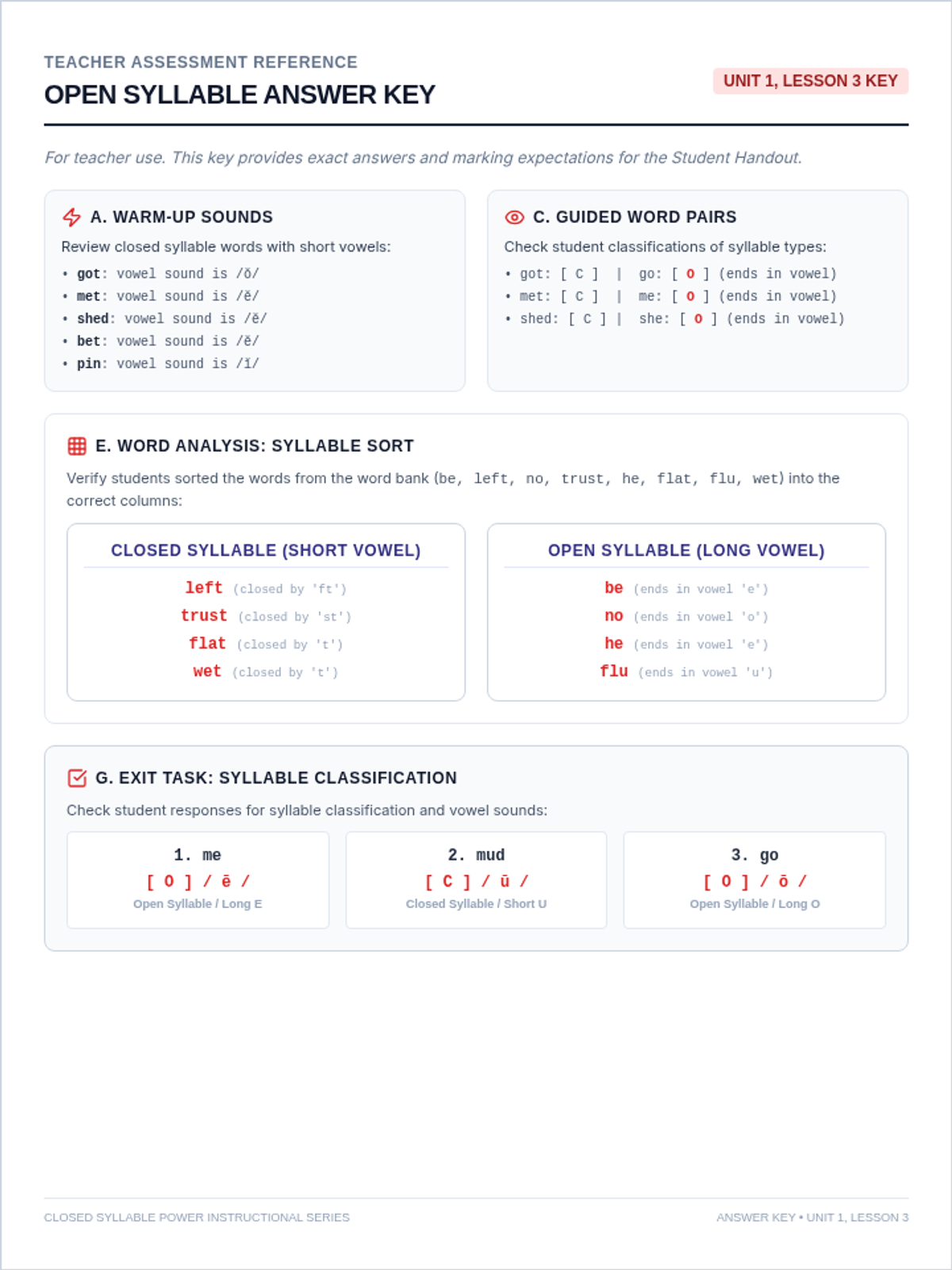
An introductory lesson on open syllables, using explicit contrast with closed syllables to teach older readers to identify long vowel sounds in open-ended syllable structures.
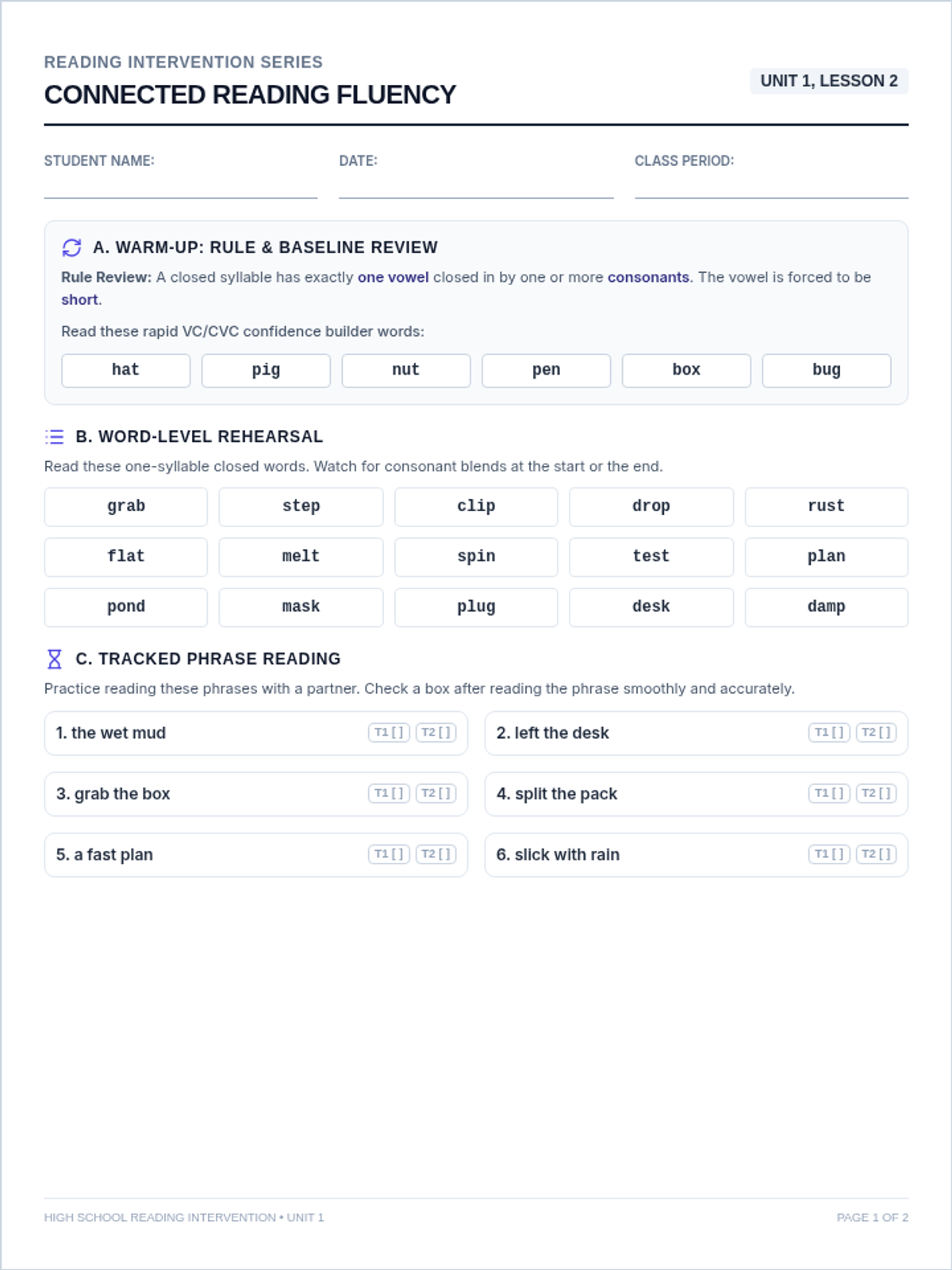
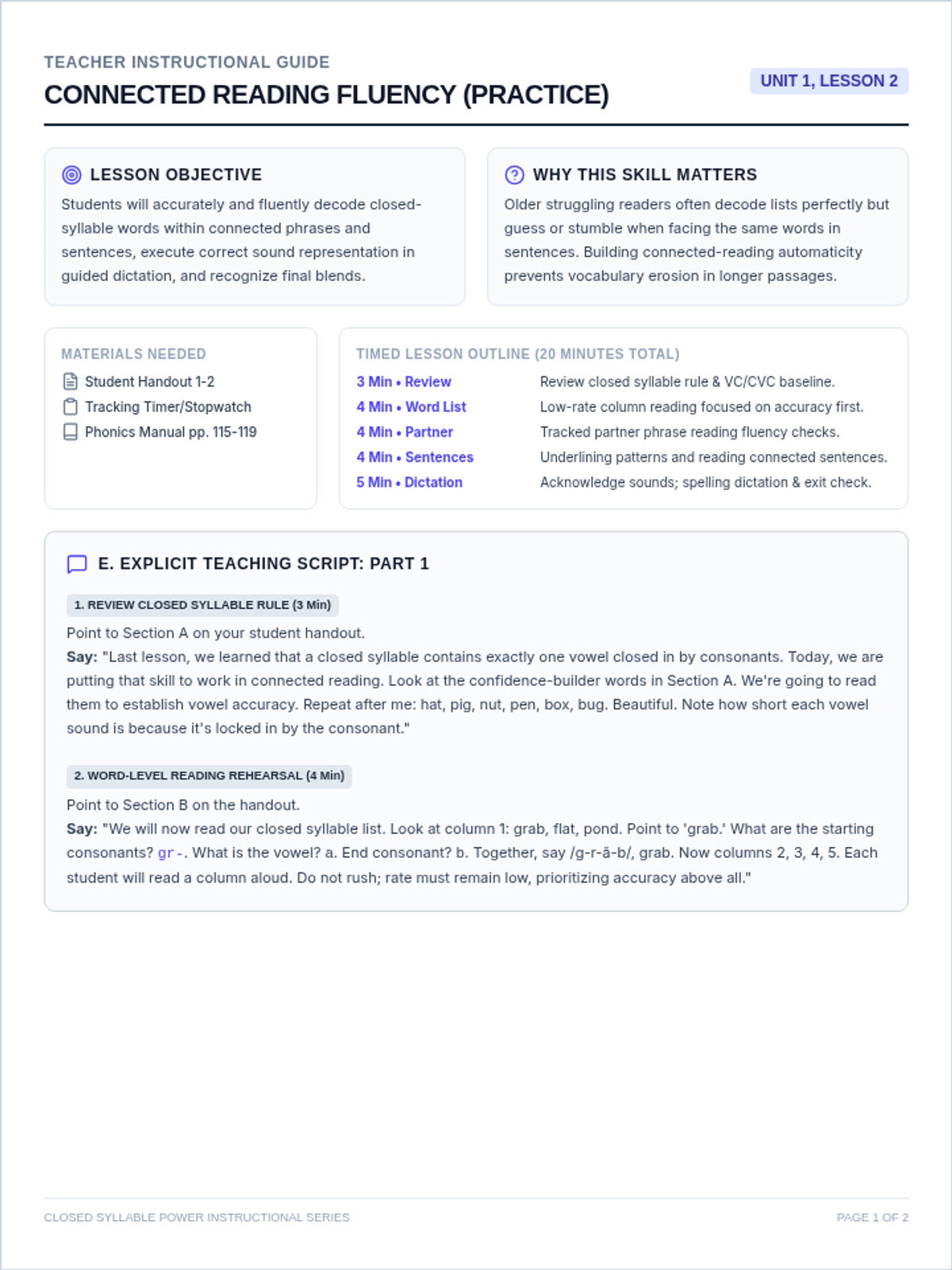
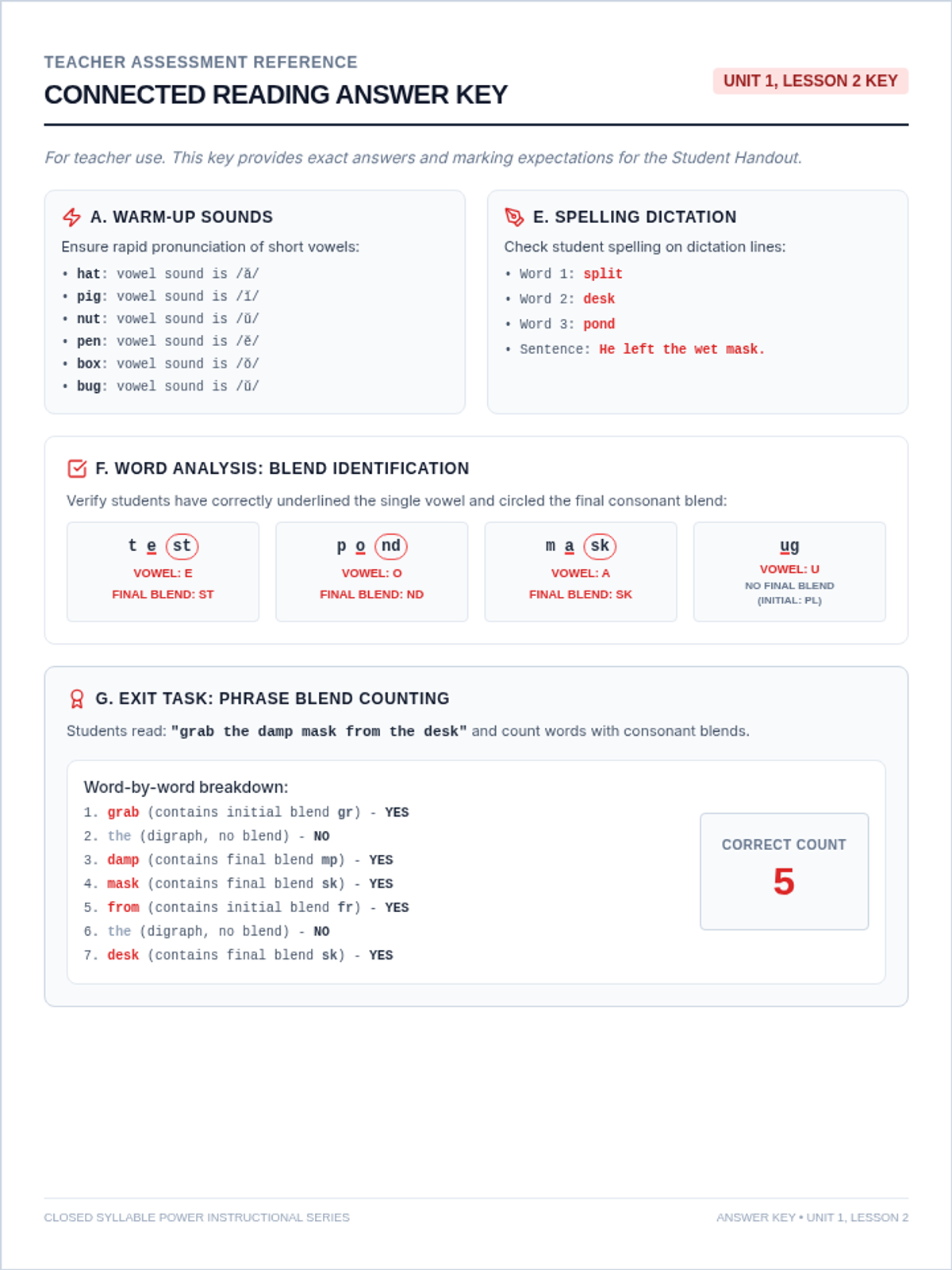
A practice and application lesson focused on closed syllables in connected reading. Rehearses short-vowel VC/CVC patterns alongside simple consonant blends to build fluency and accuracy in older struggling readers.
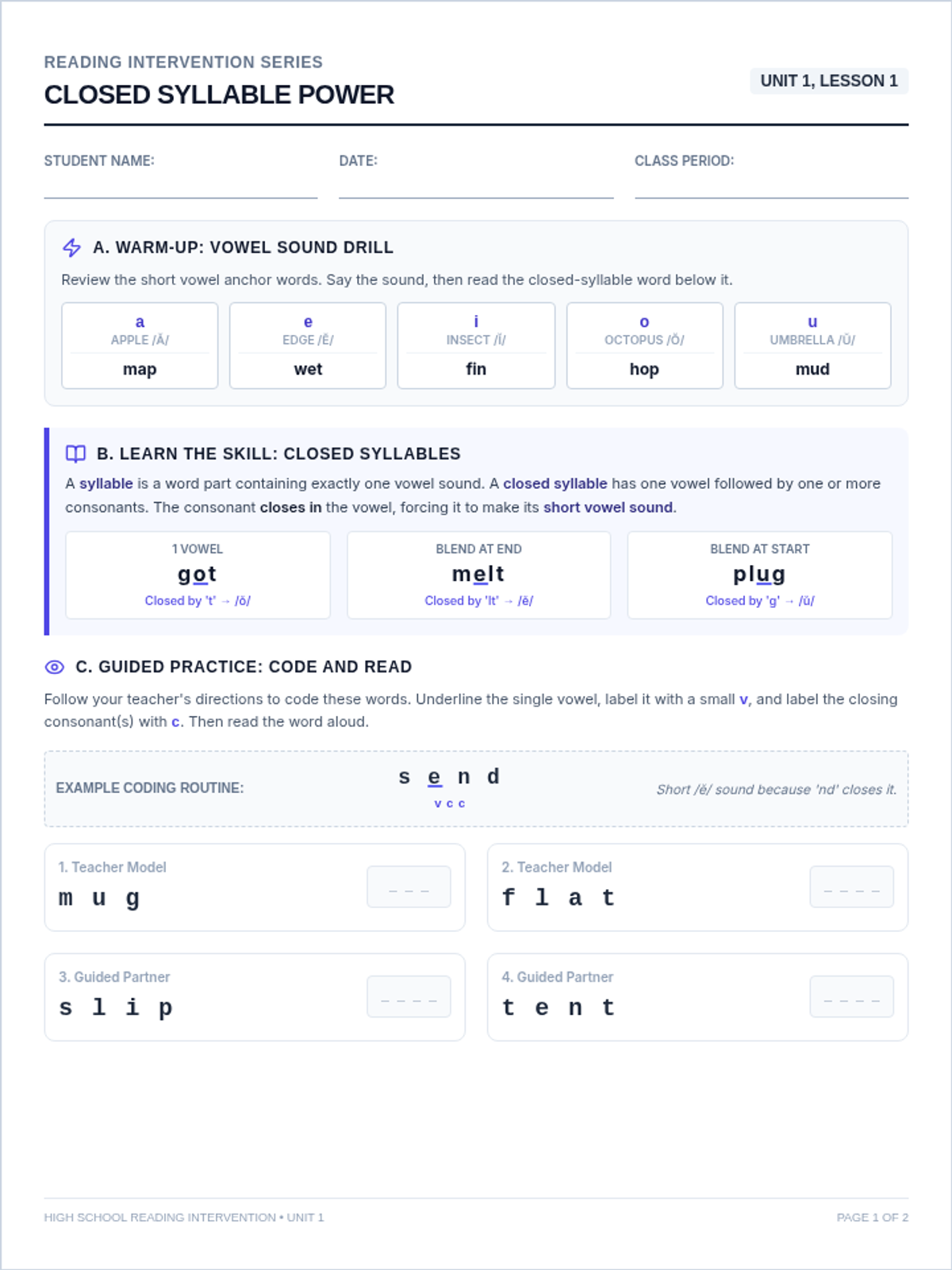
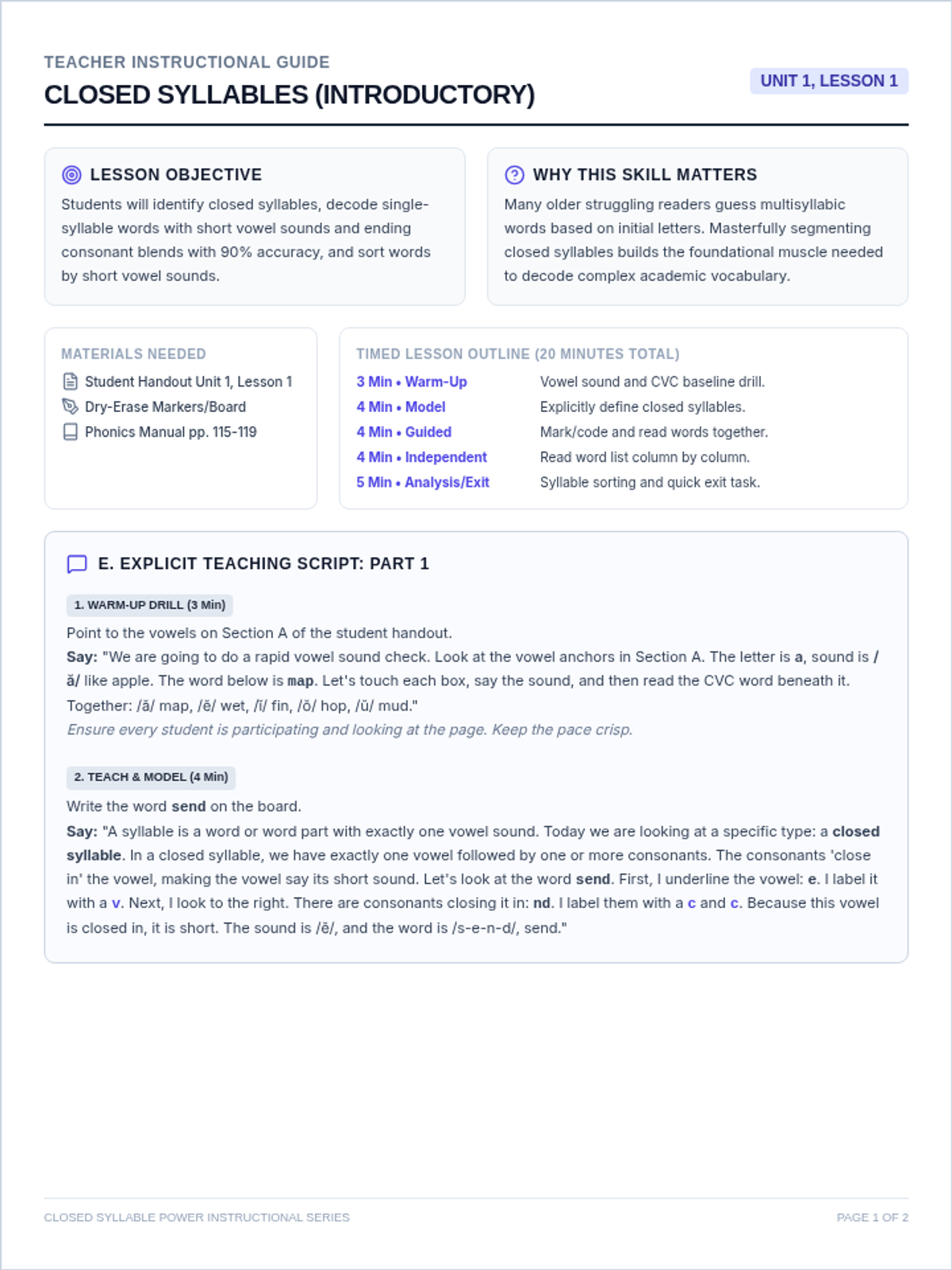
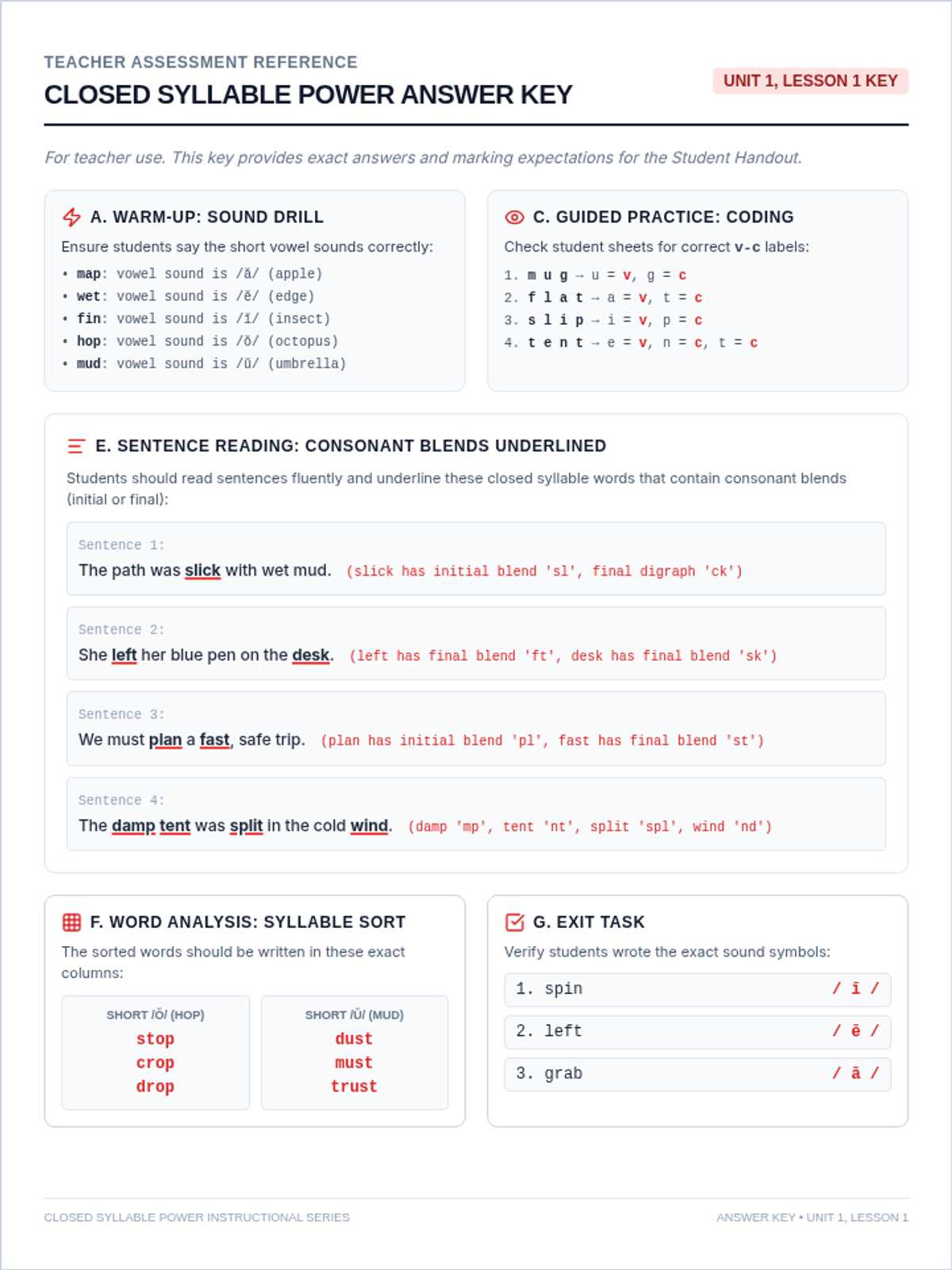
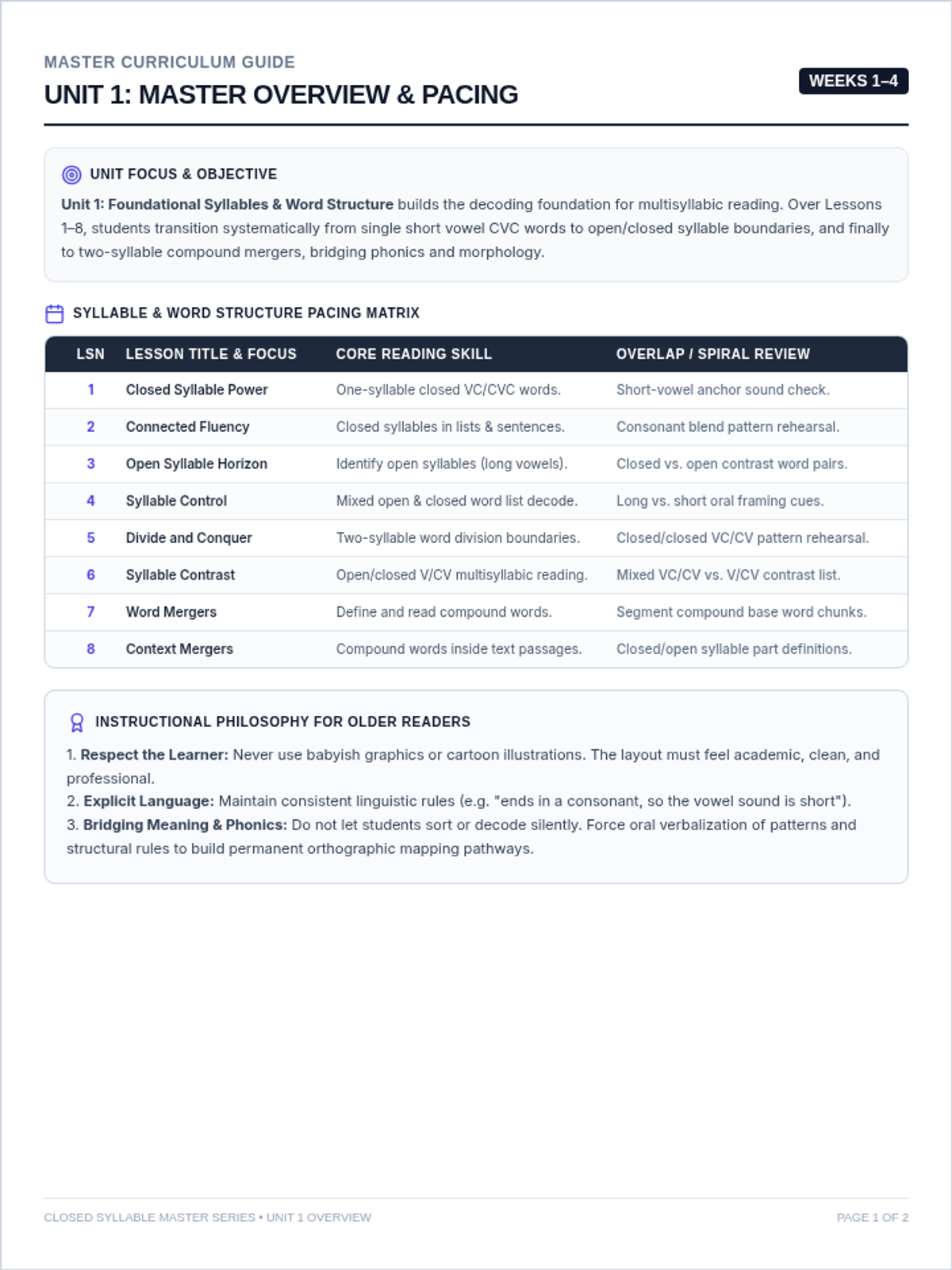
An intensive reading intervention lesson on closed syllables and short vowel sounds. Tailored specifically for high school students reading below grade level, featuring structured practice, high-frequency word integration, and explicit teaching routines.
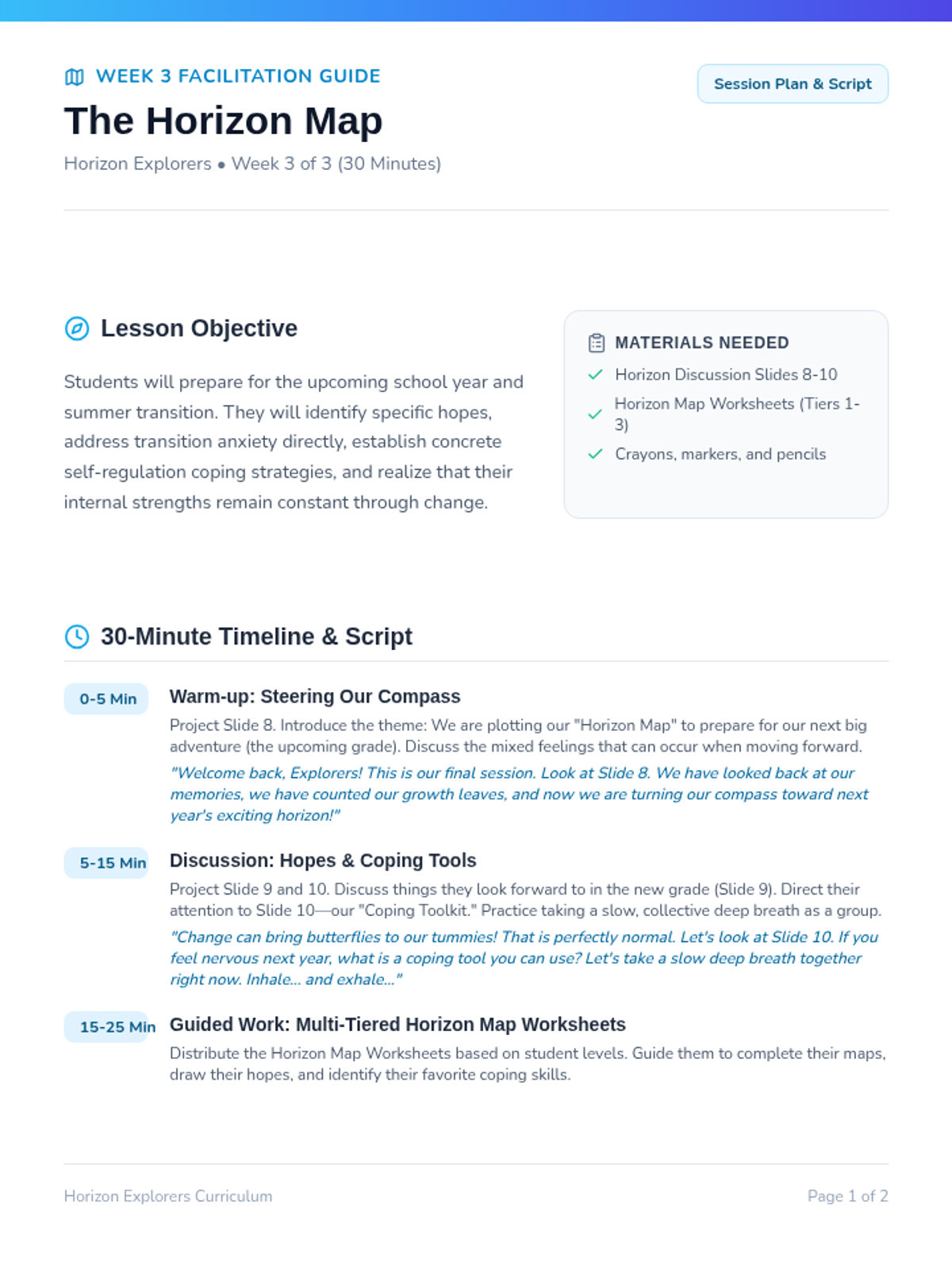
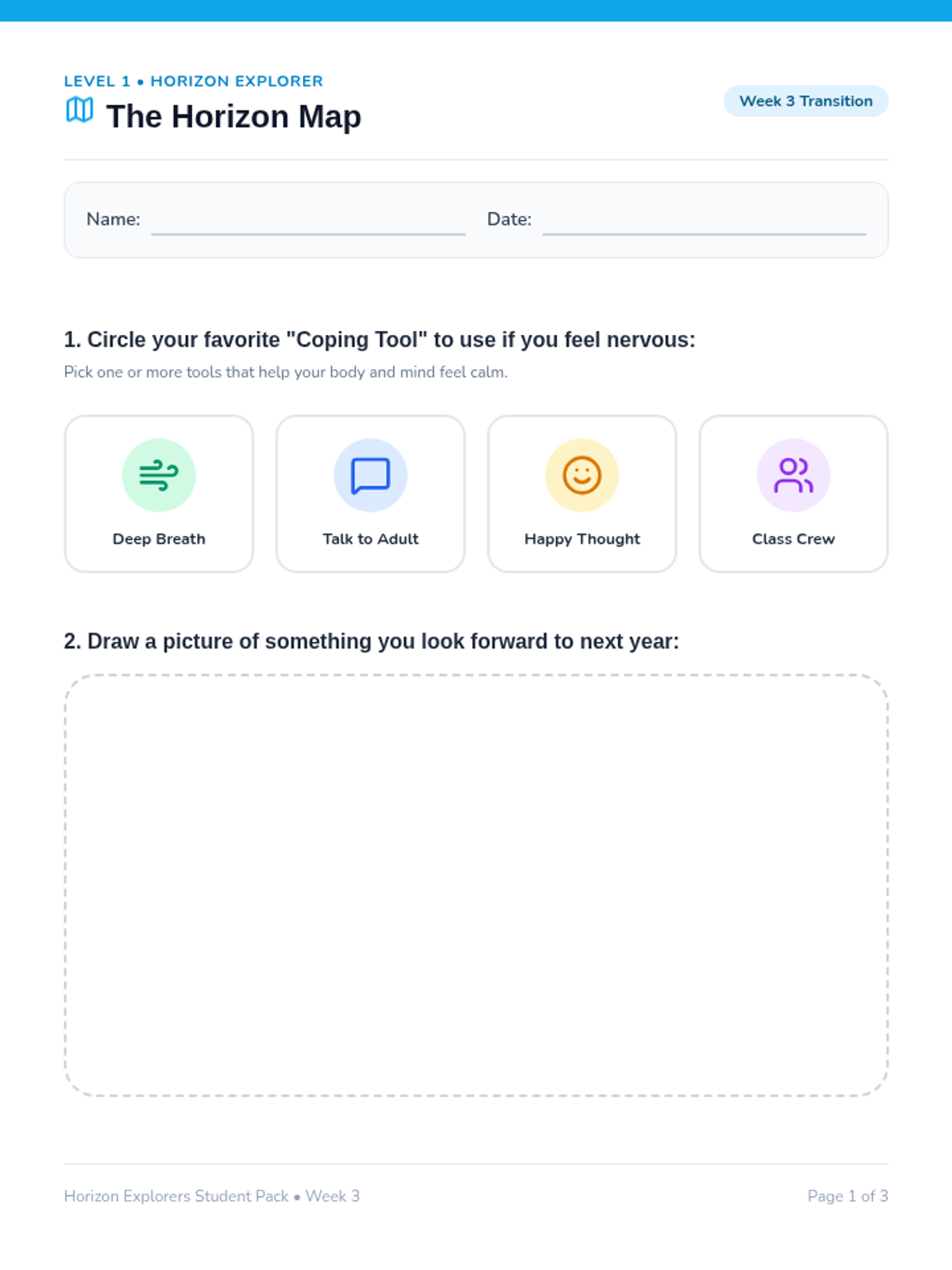
Week 3 prepares students for the upcoming school year, addressing transition anxiety directly and helping them map out coping strategies and future goals.
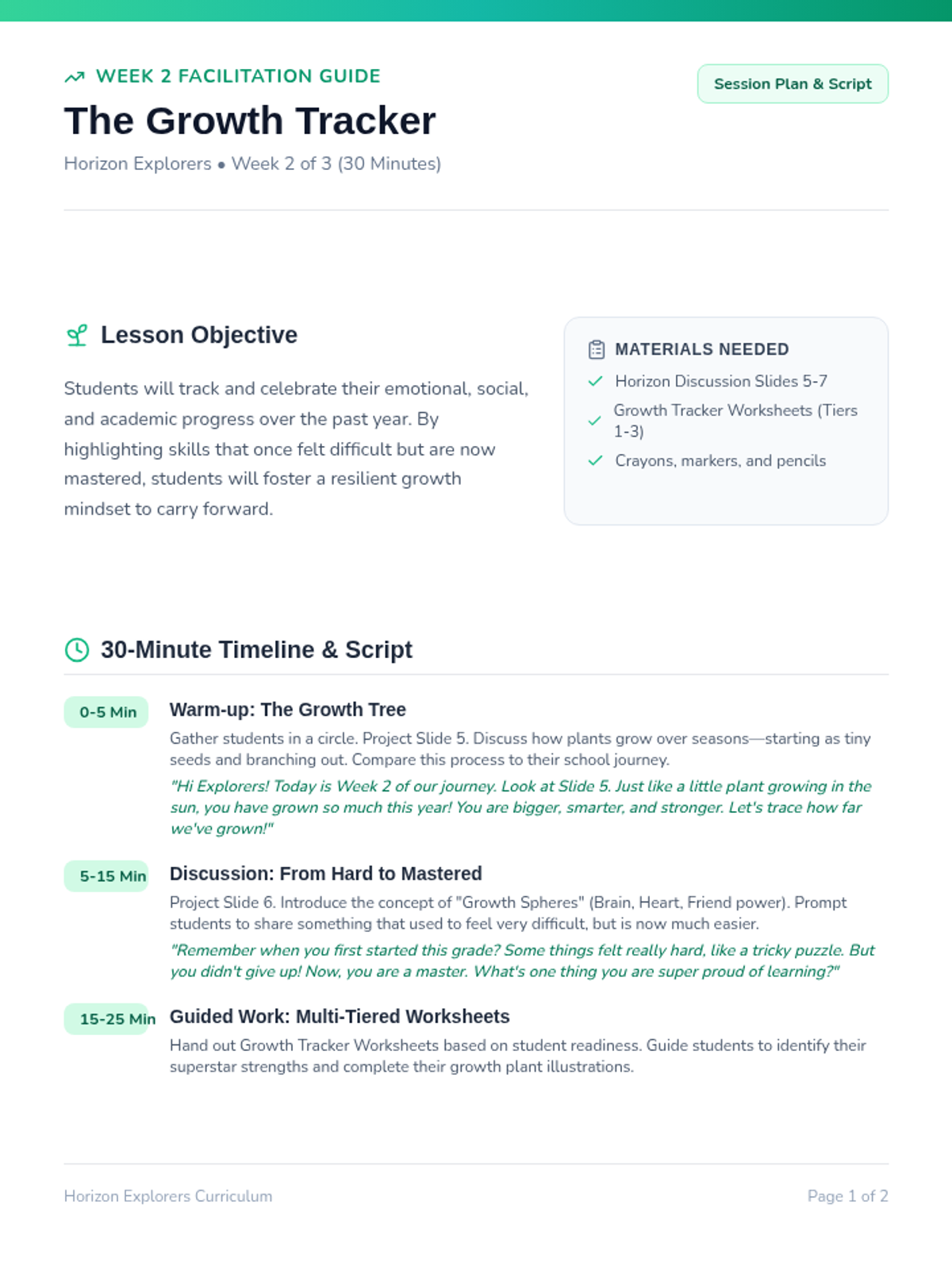
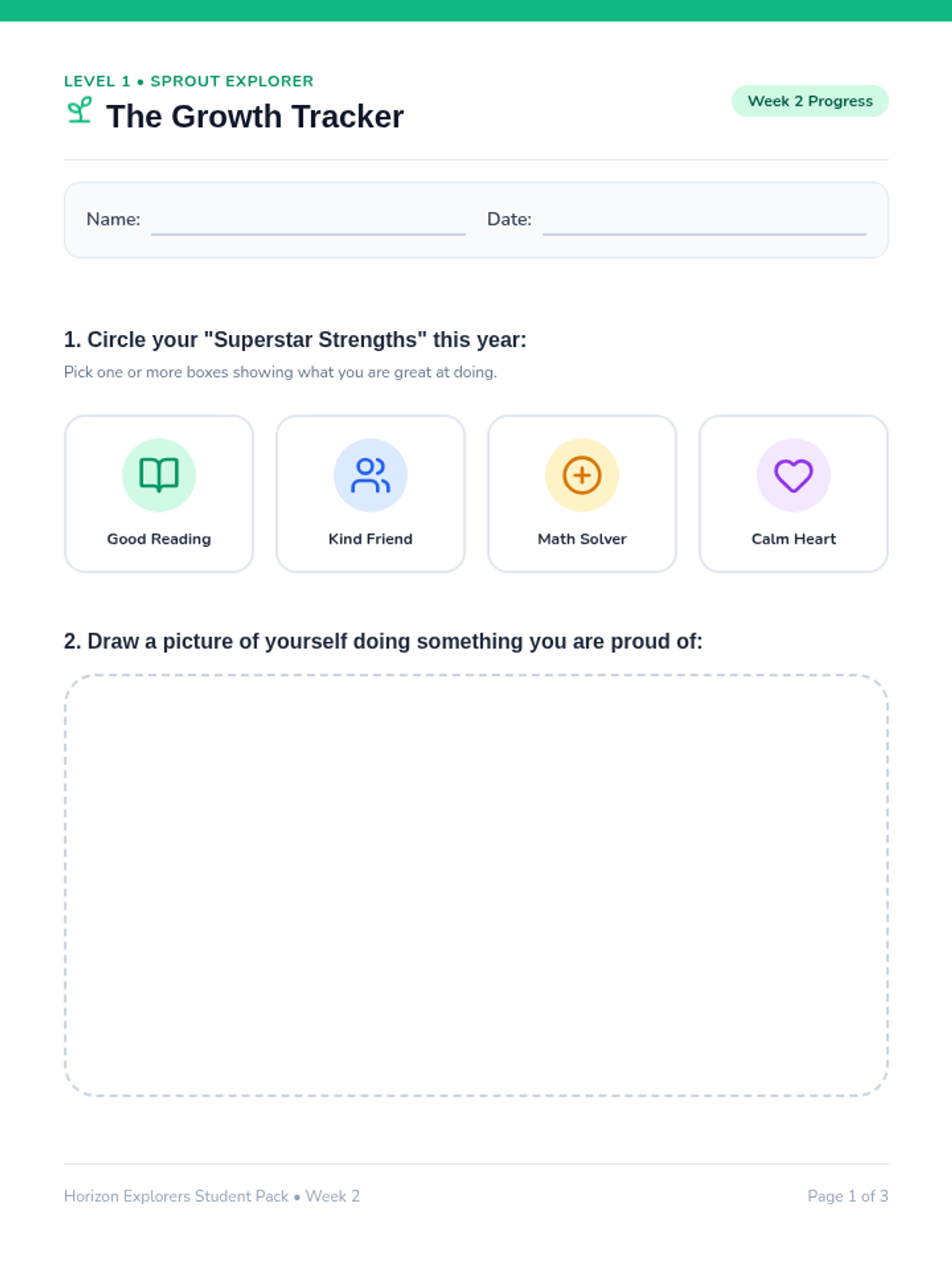
Week 2 focuses on celebrating personal progress, identifying new skills mastered, and tracking how each student has grown emotionally, socially, and academically.
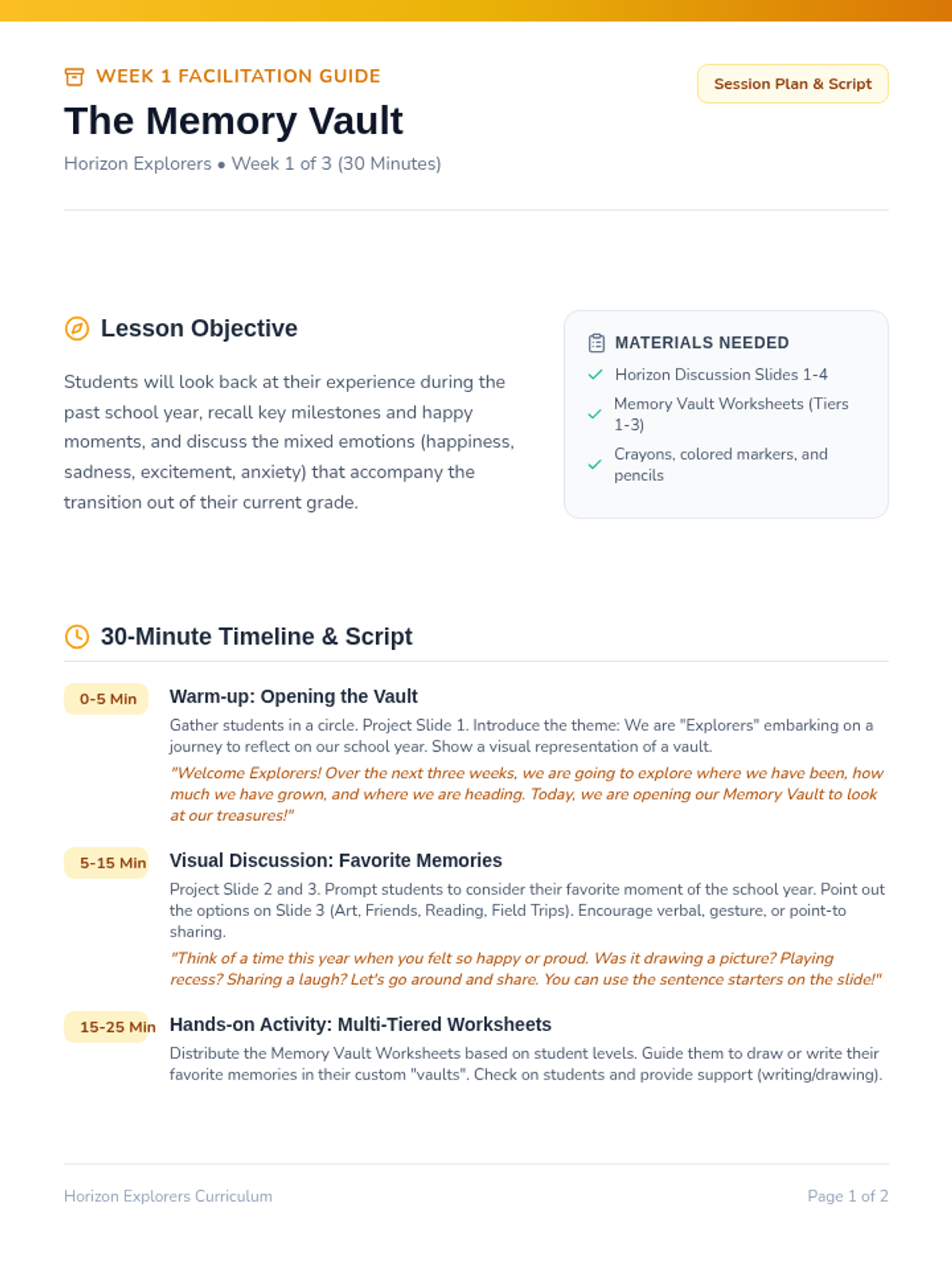
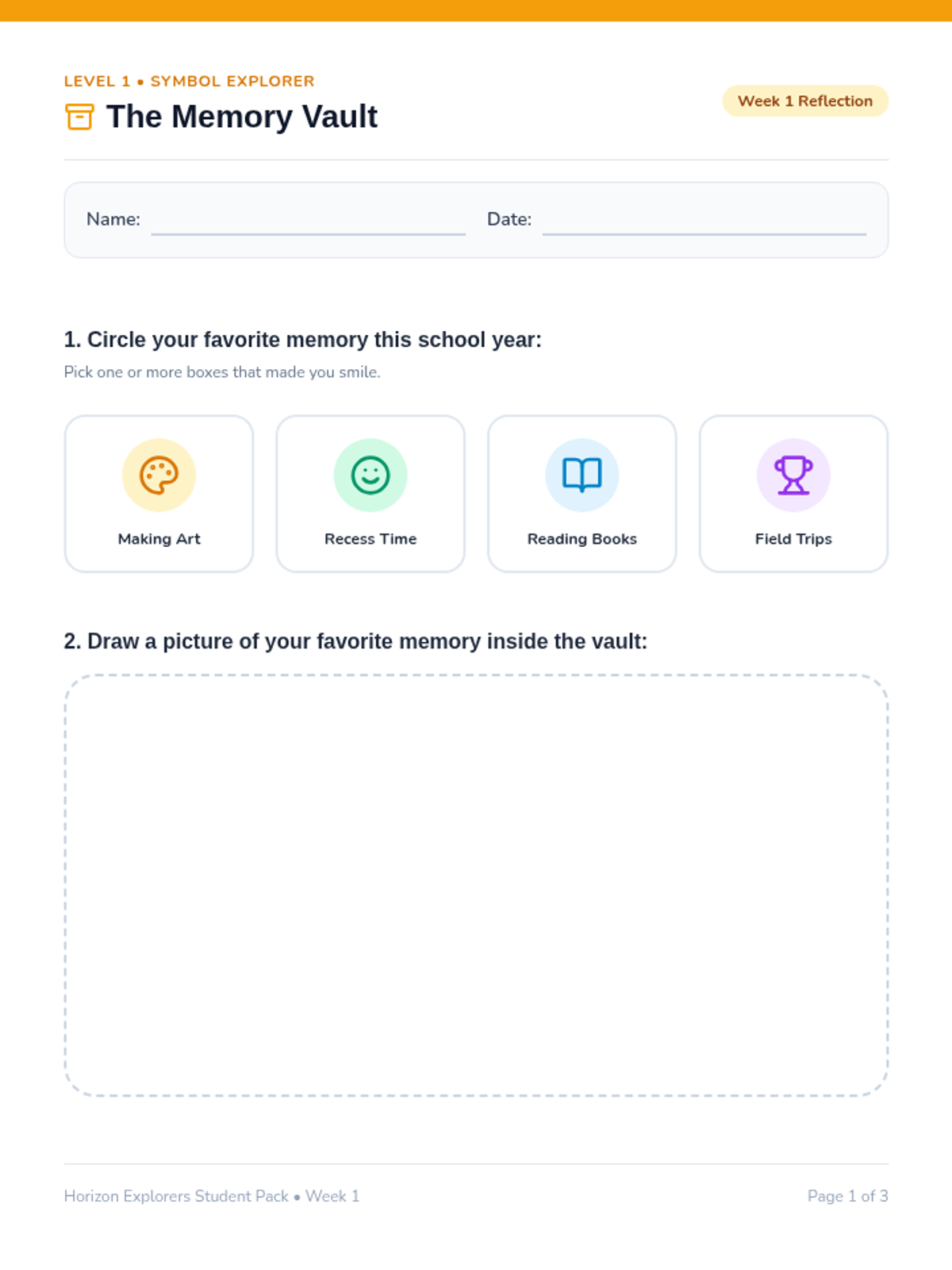
Week 1 focuses on looking back at favorite moments, triumphs, and highlights from the past school year, while acknowledging the complex emotions that come with endings.
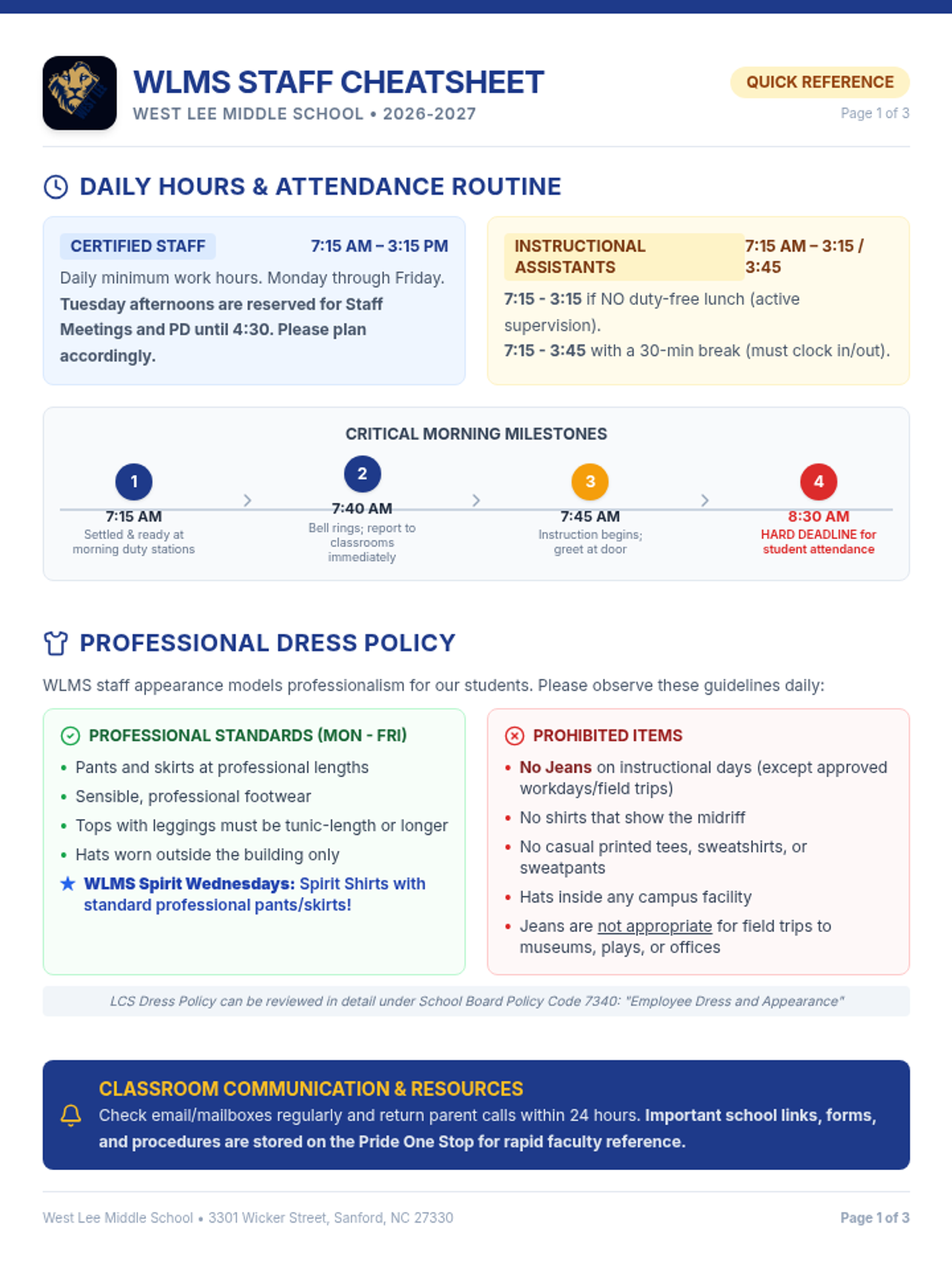
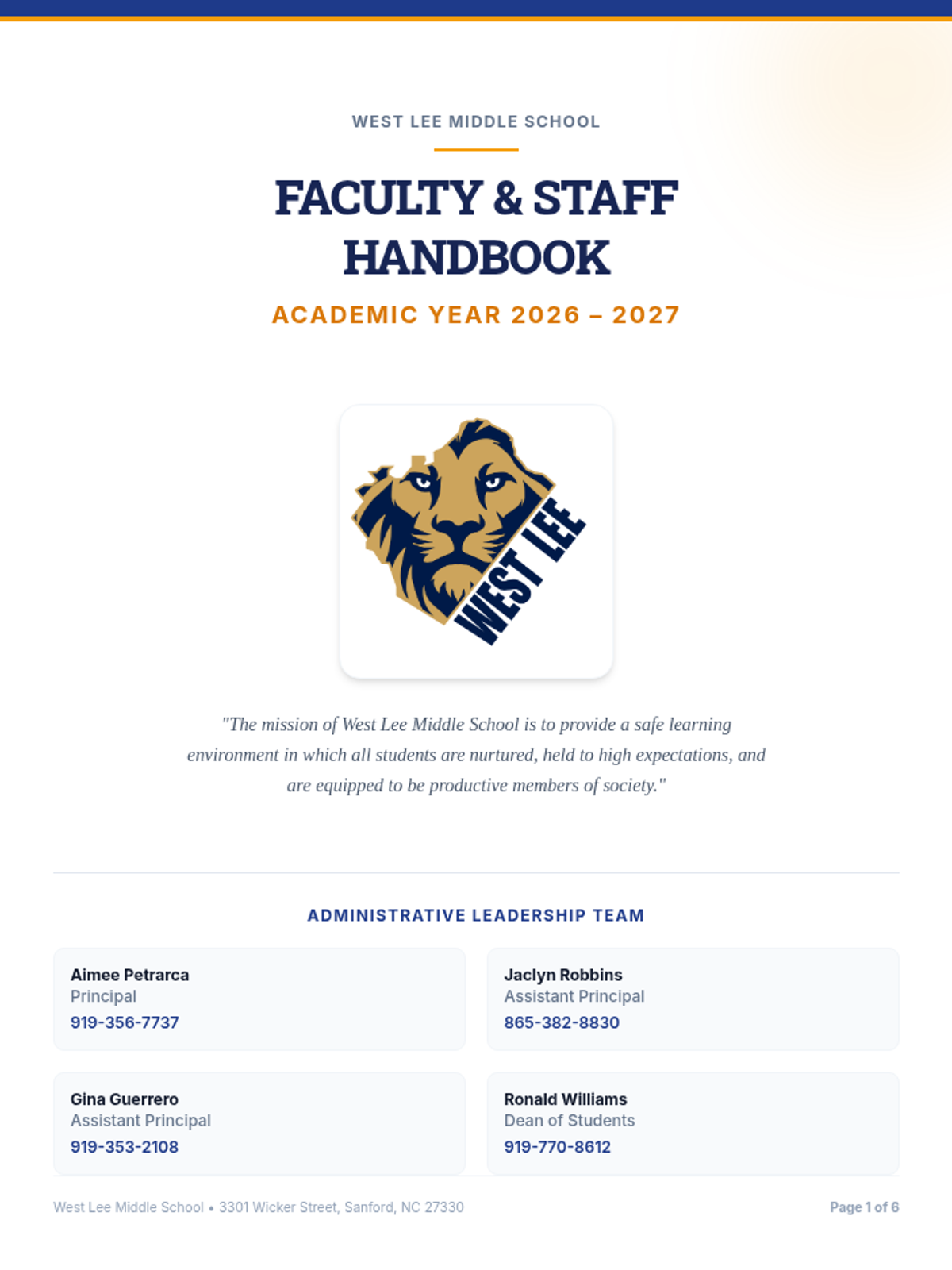
A complete set of administrative and instructional guidelines for West Lee Middle School faculty, including a redesigned comprehensive staff handbook, a condensed procedure cheatsheet, and a presentation deck for staff meetings.
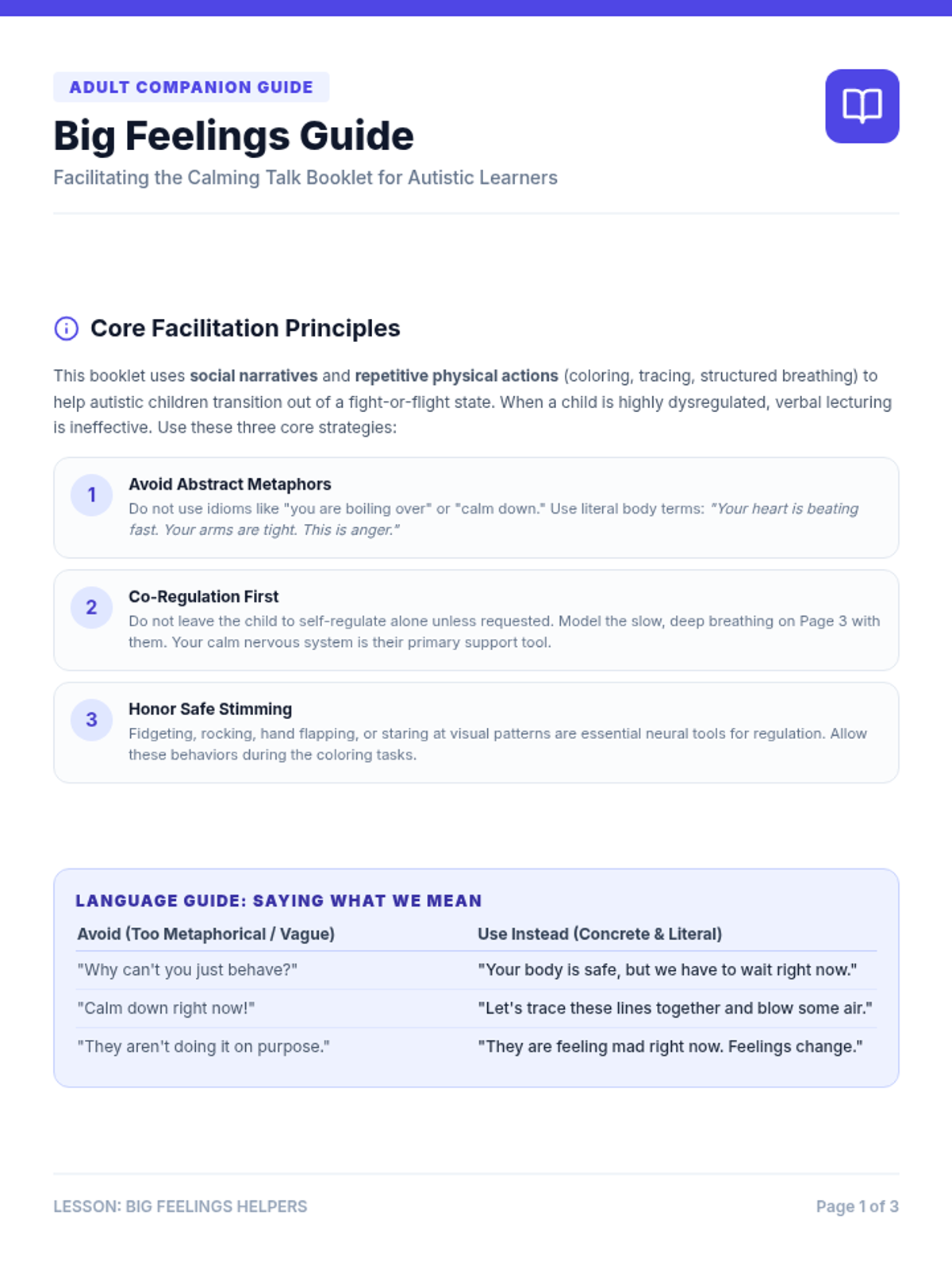
A supportive social narrative and positive self-talk booklet designed specifically for autistic children to cope with anger, the word 'no', and friendship anxieties. Includes clear visual scenes, concrete language, and calming coloring pages with traceable phrases.
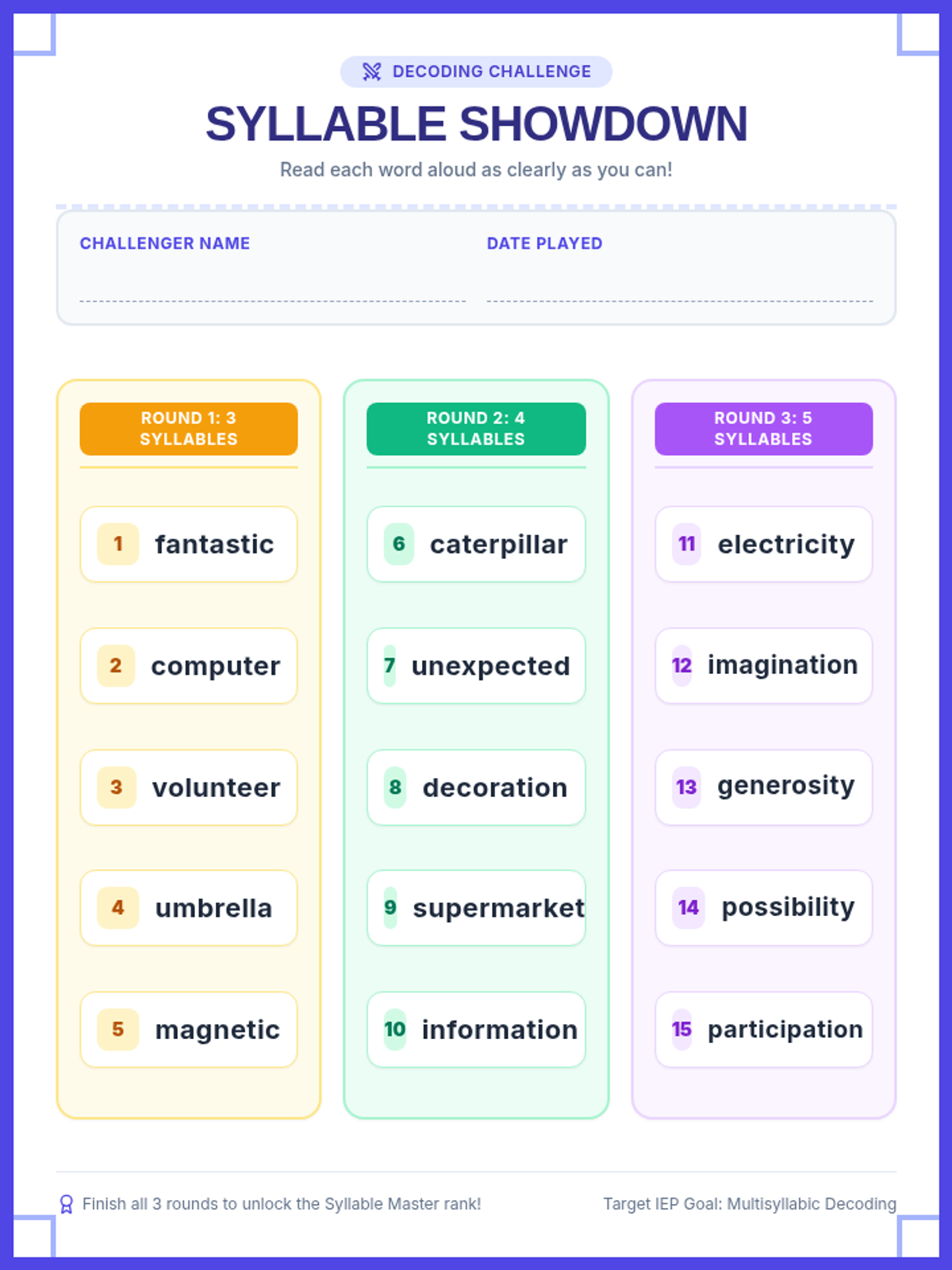
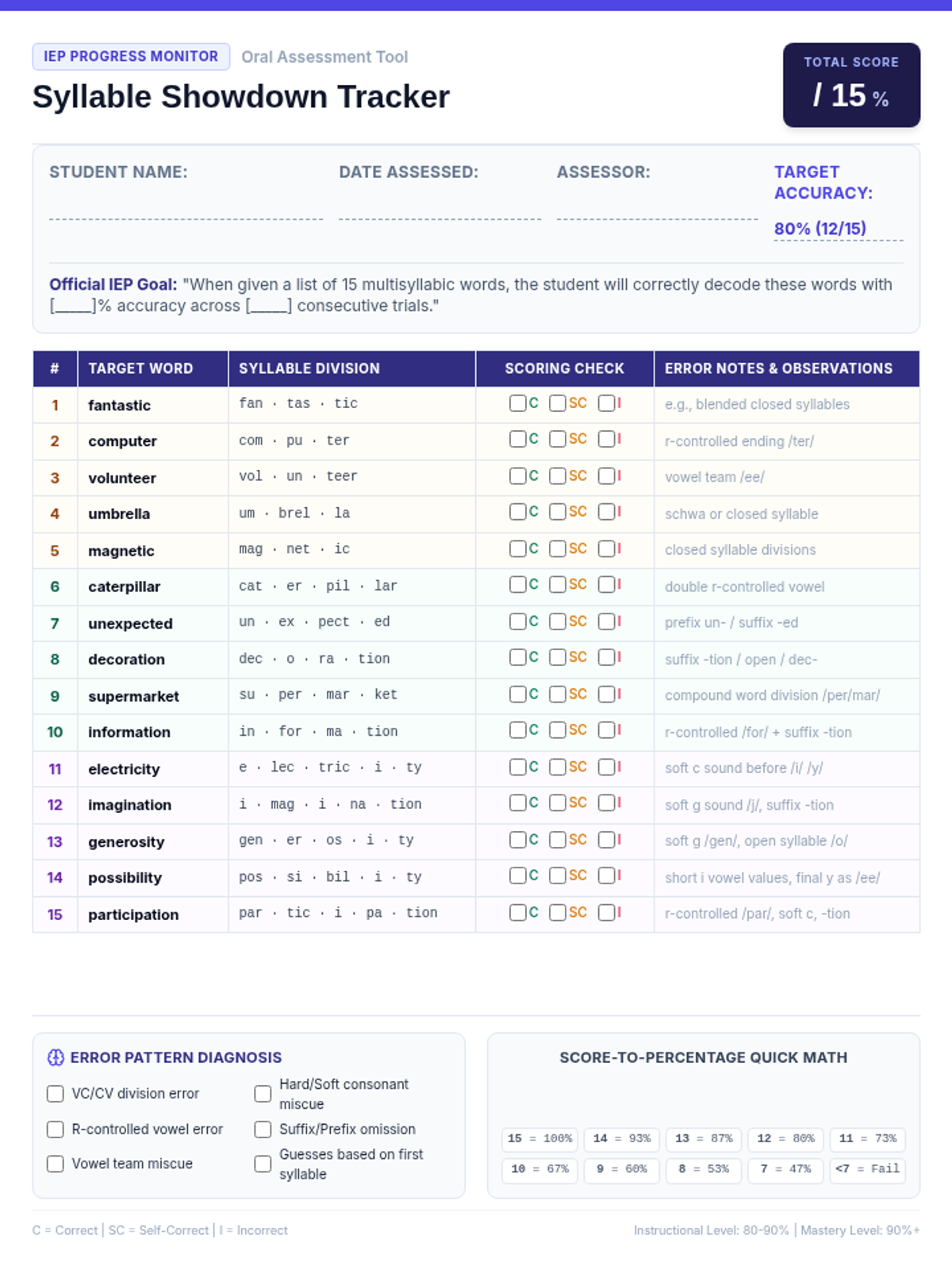
A targeted decoding assessment lesson designed for IEP progress tracking, containing a student-facing reading list of fifteen multisyllabic words and a teacher-facing progress tracking sheet.
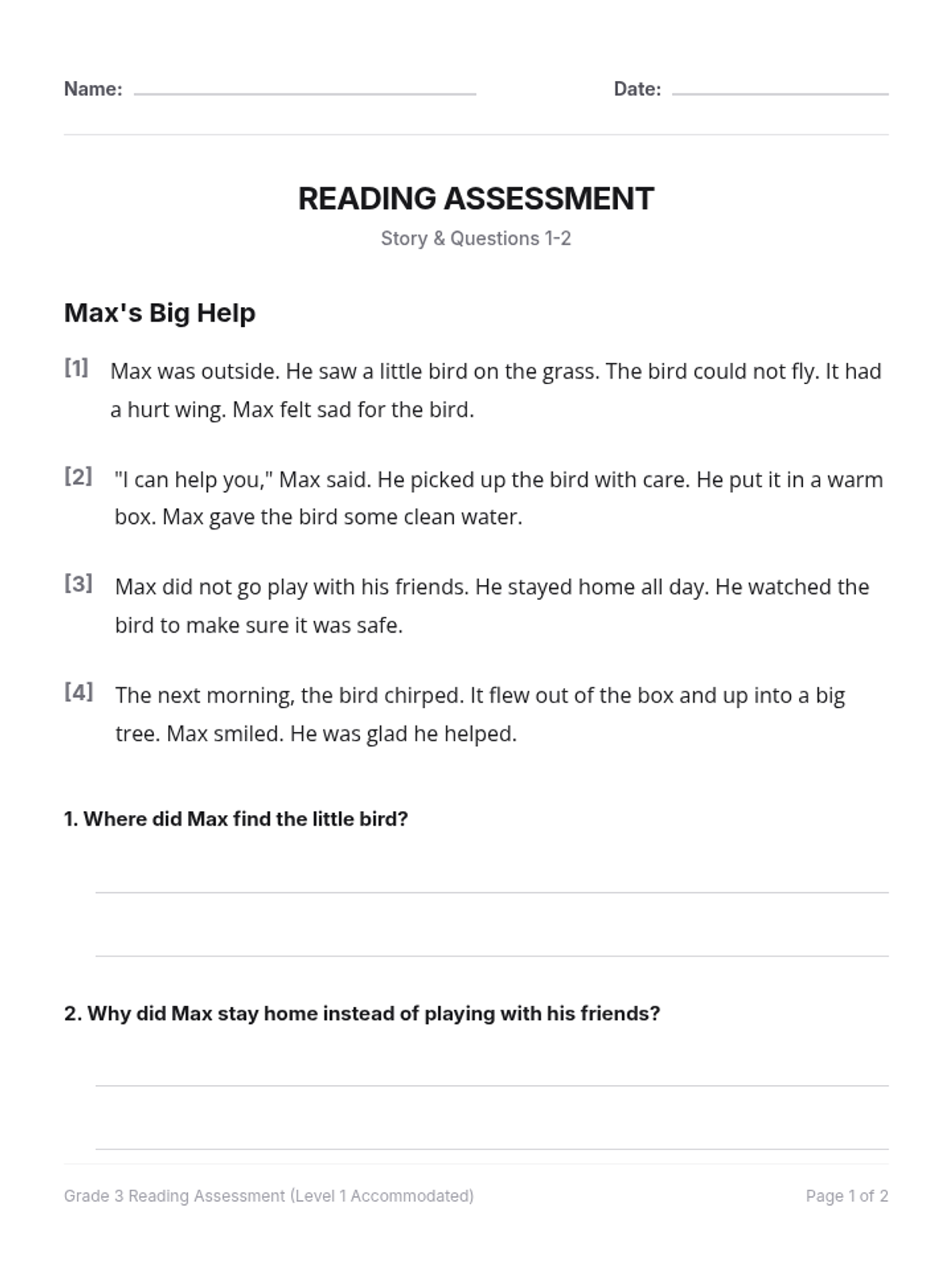
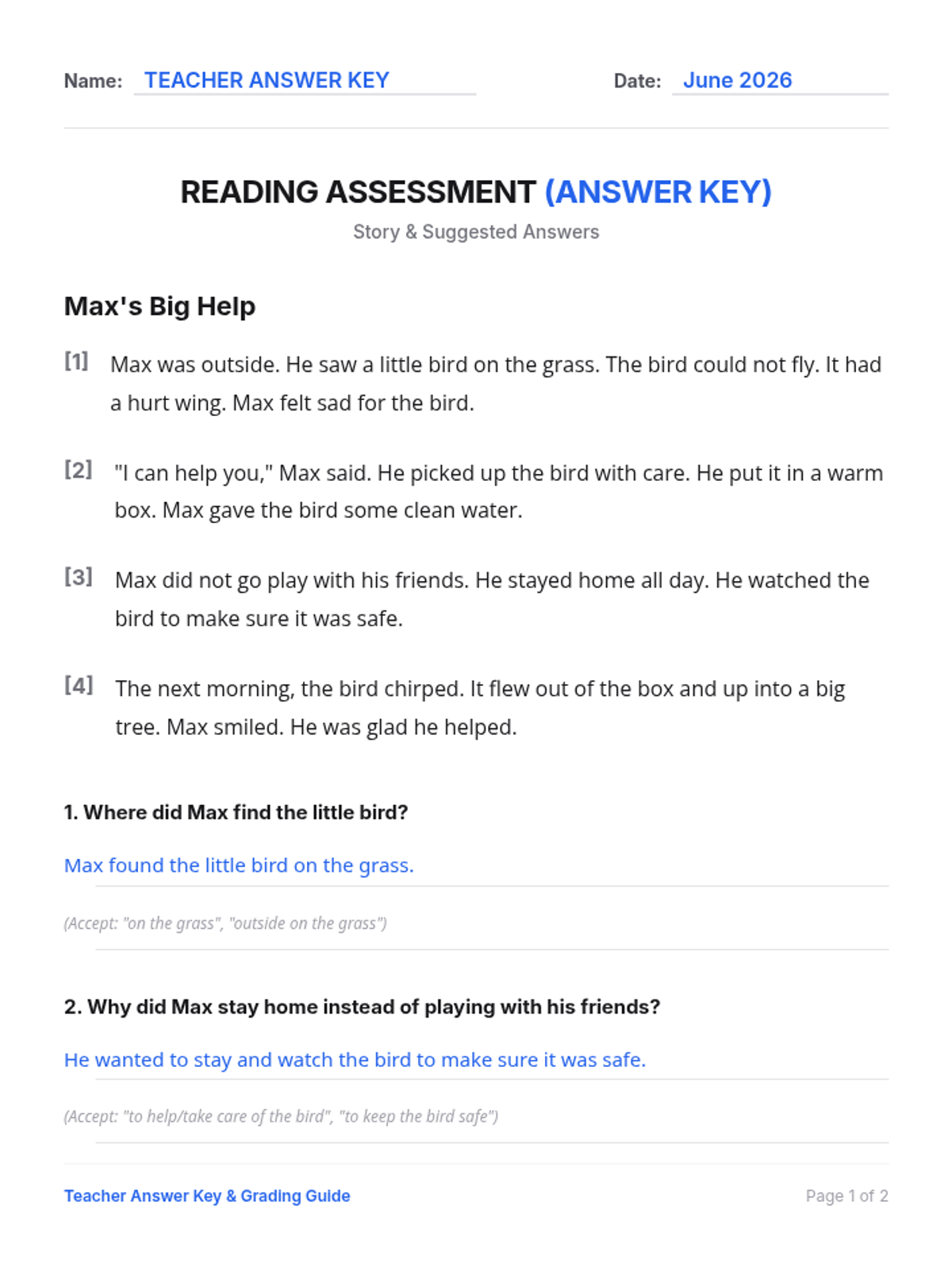
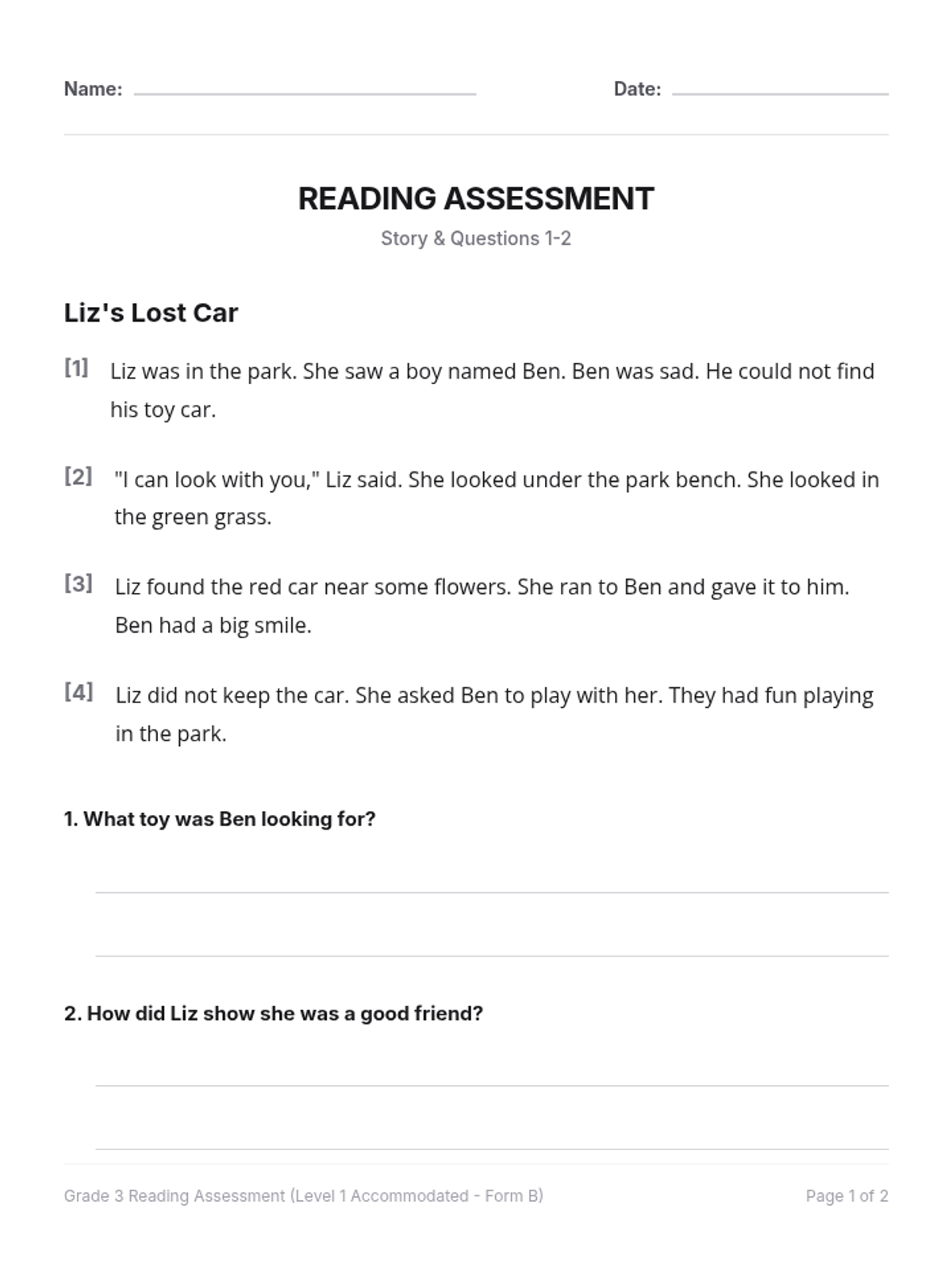
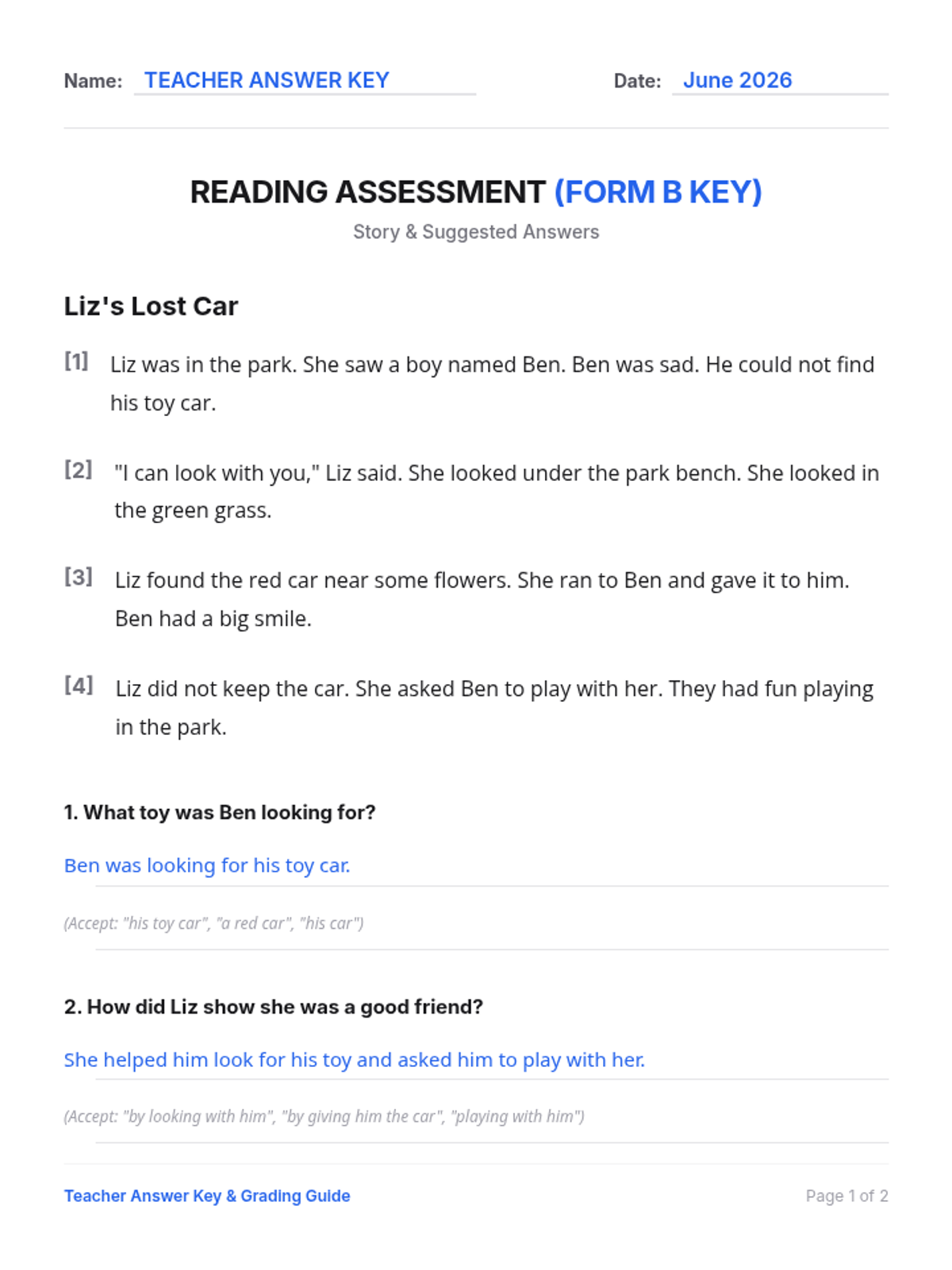
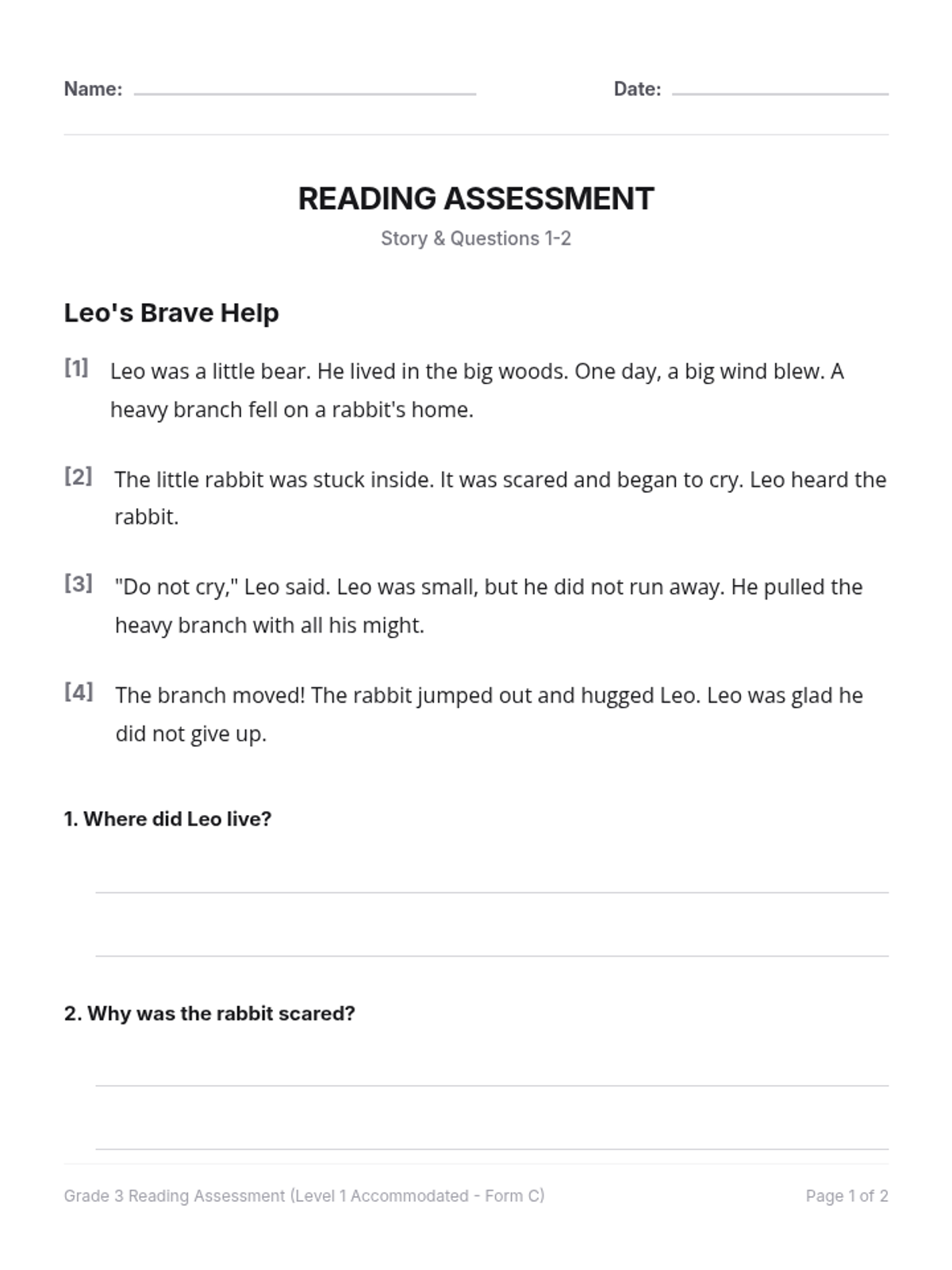
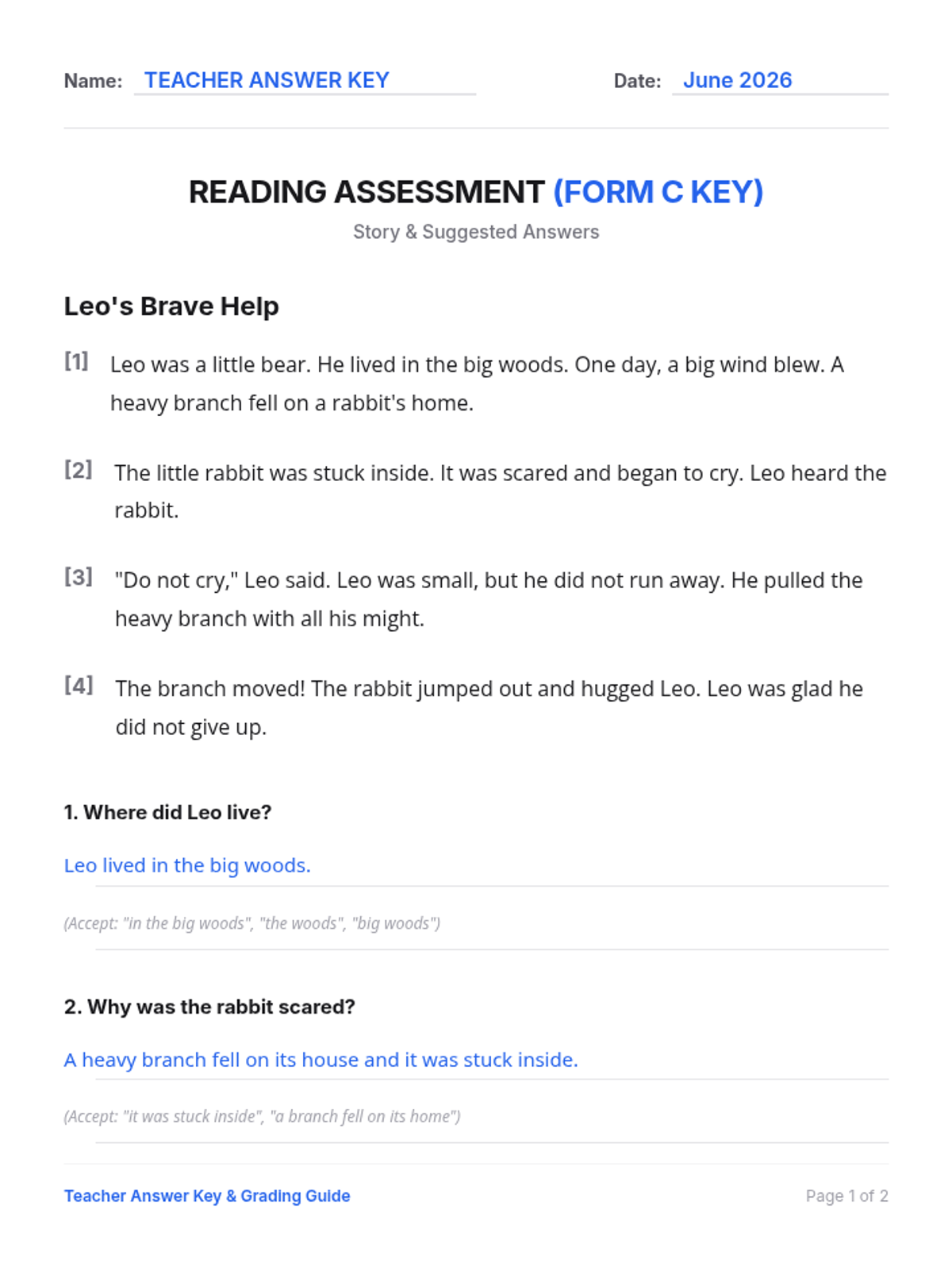
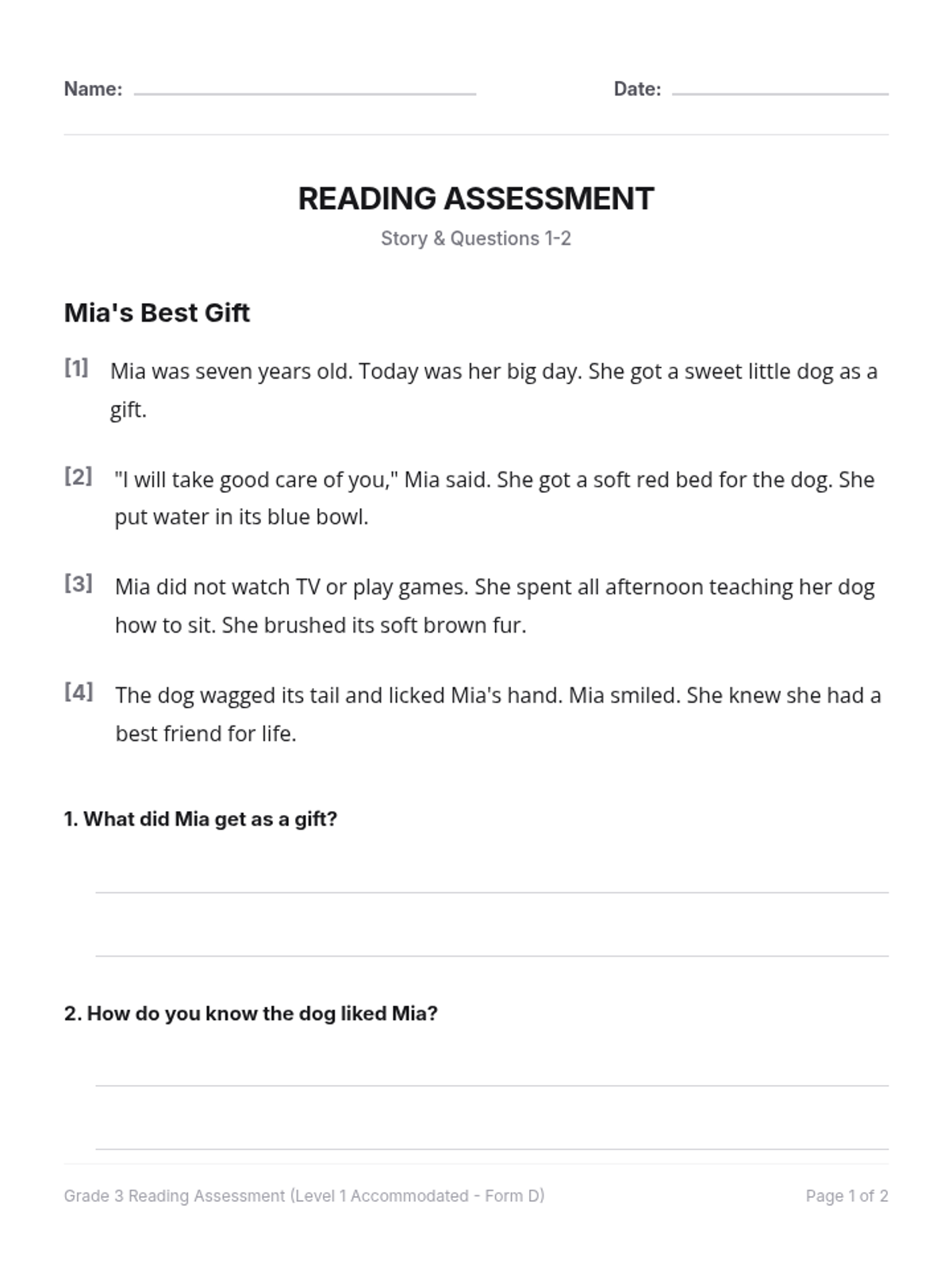
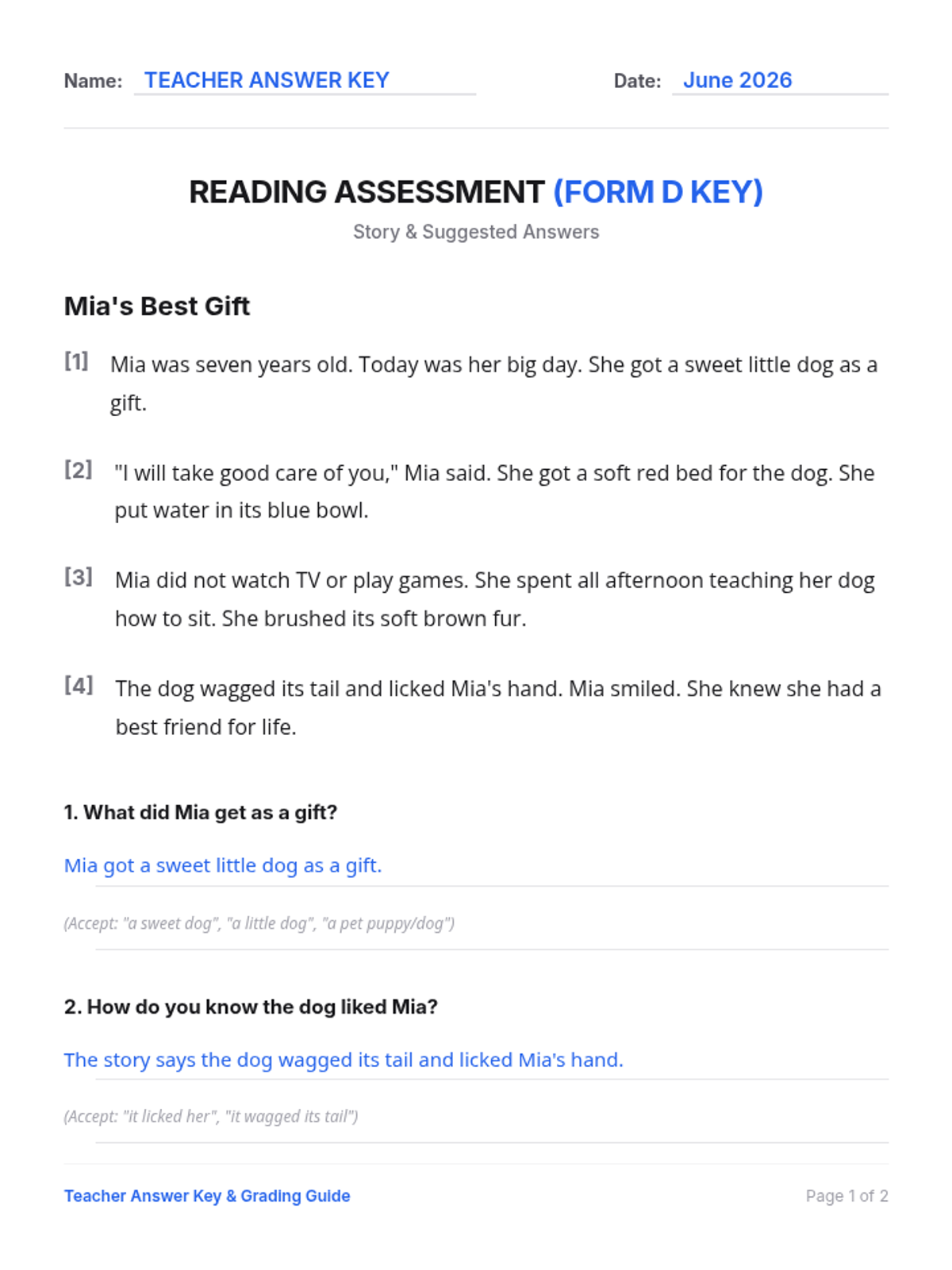
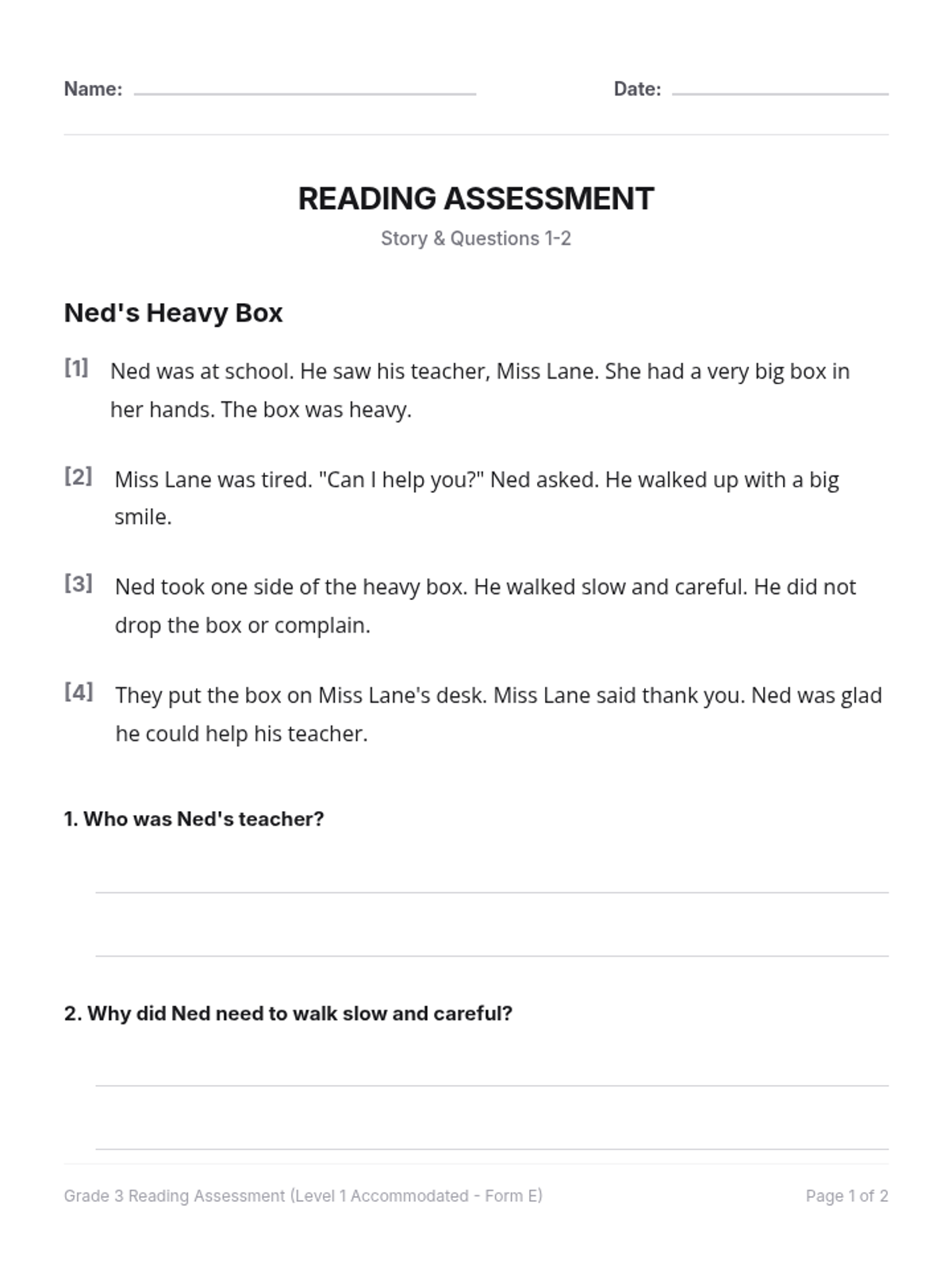
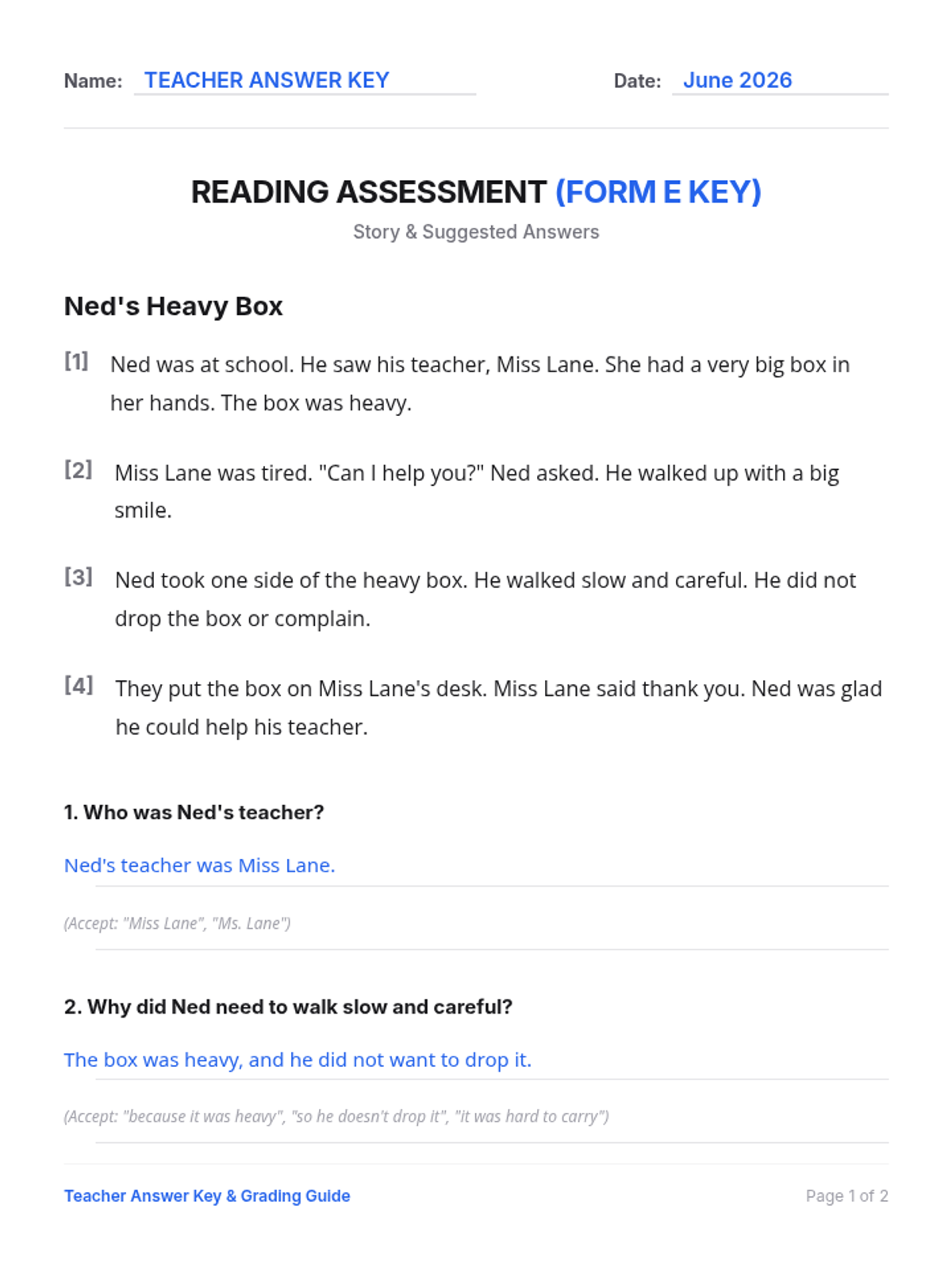
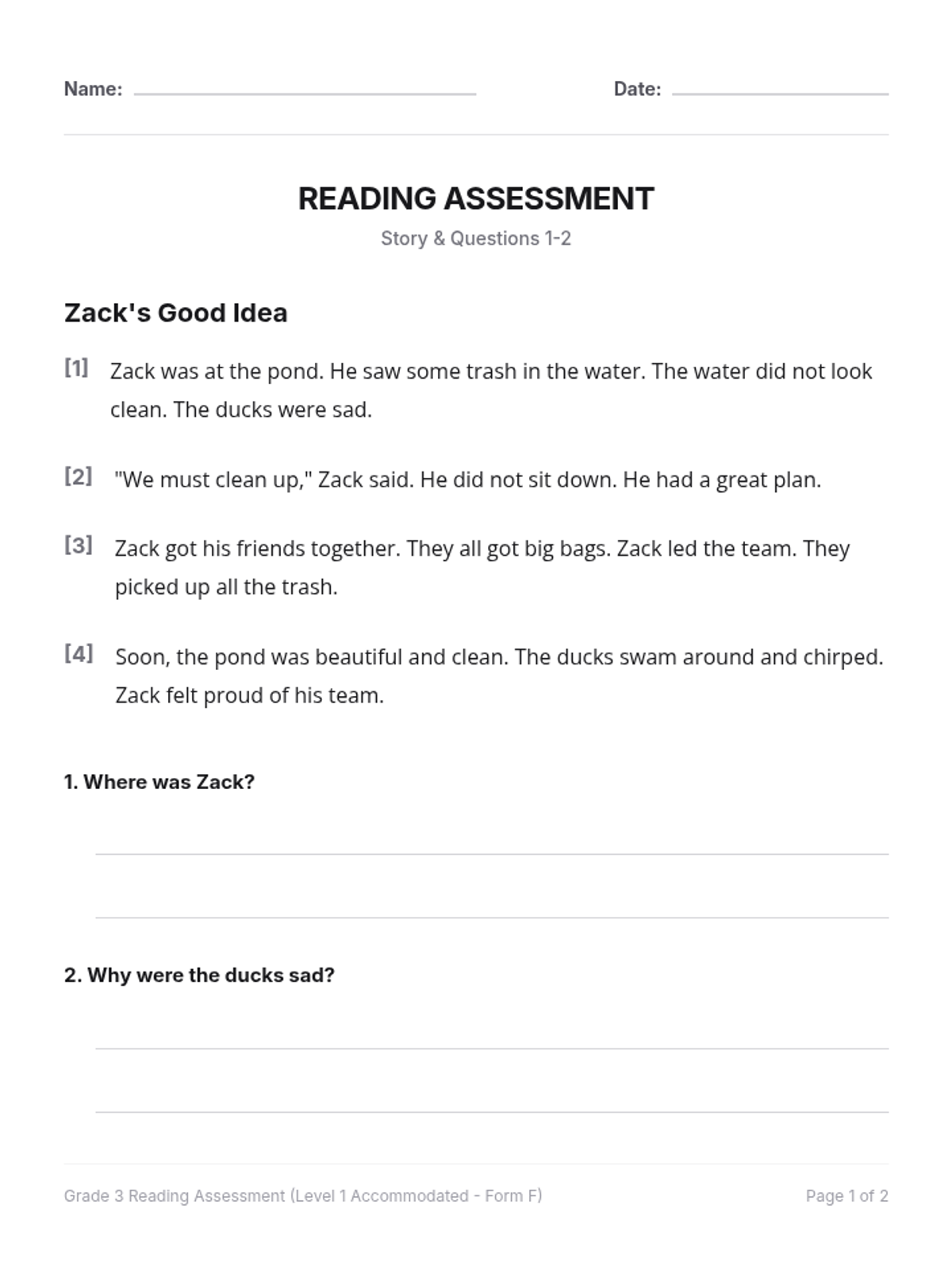
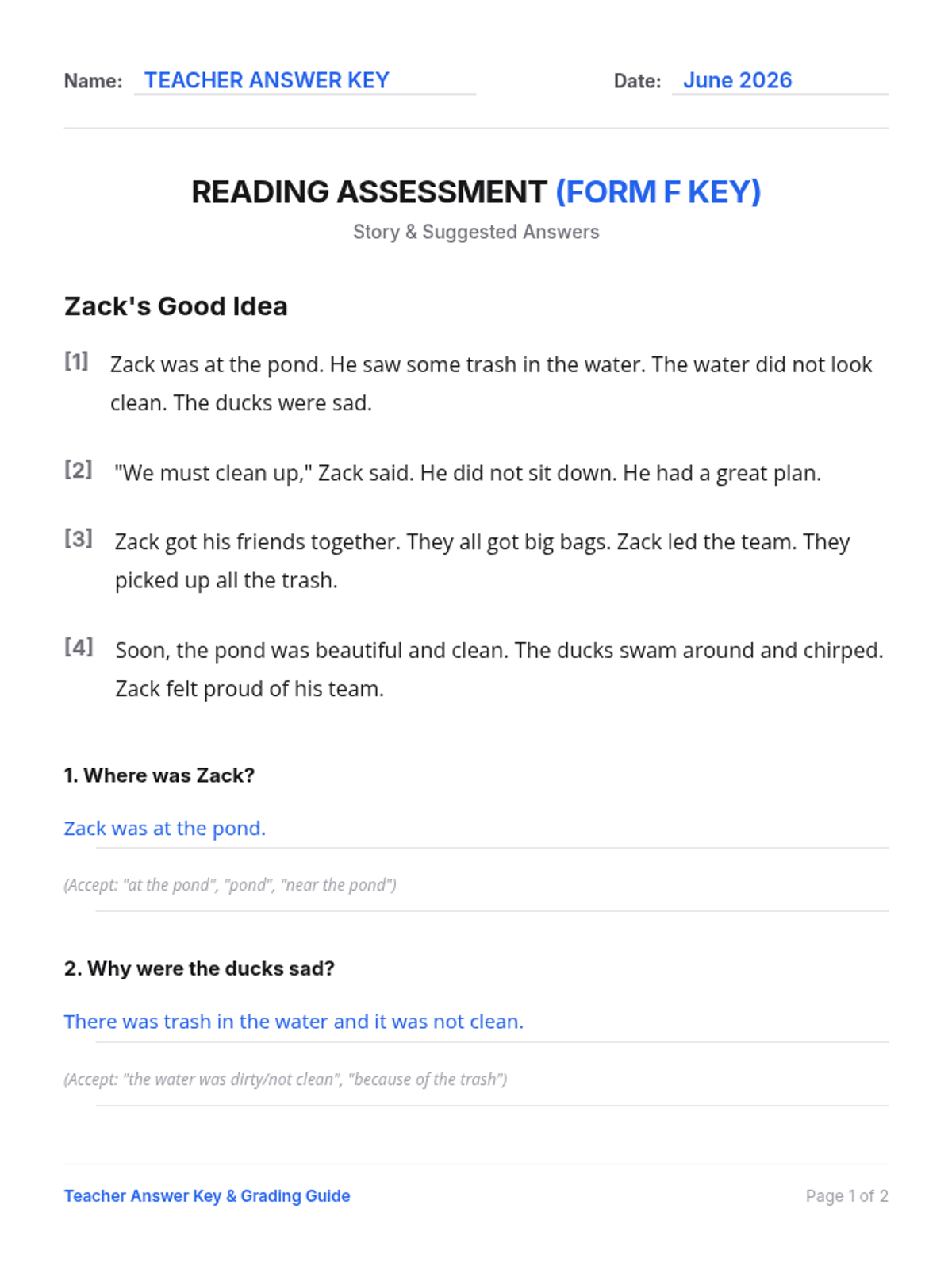
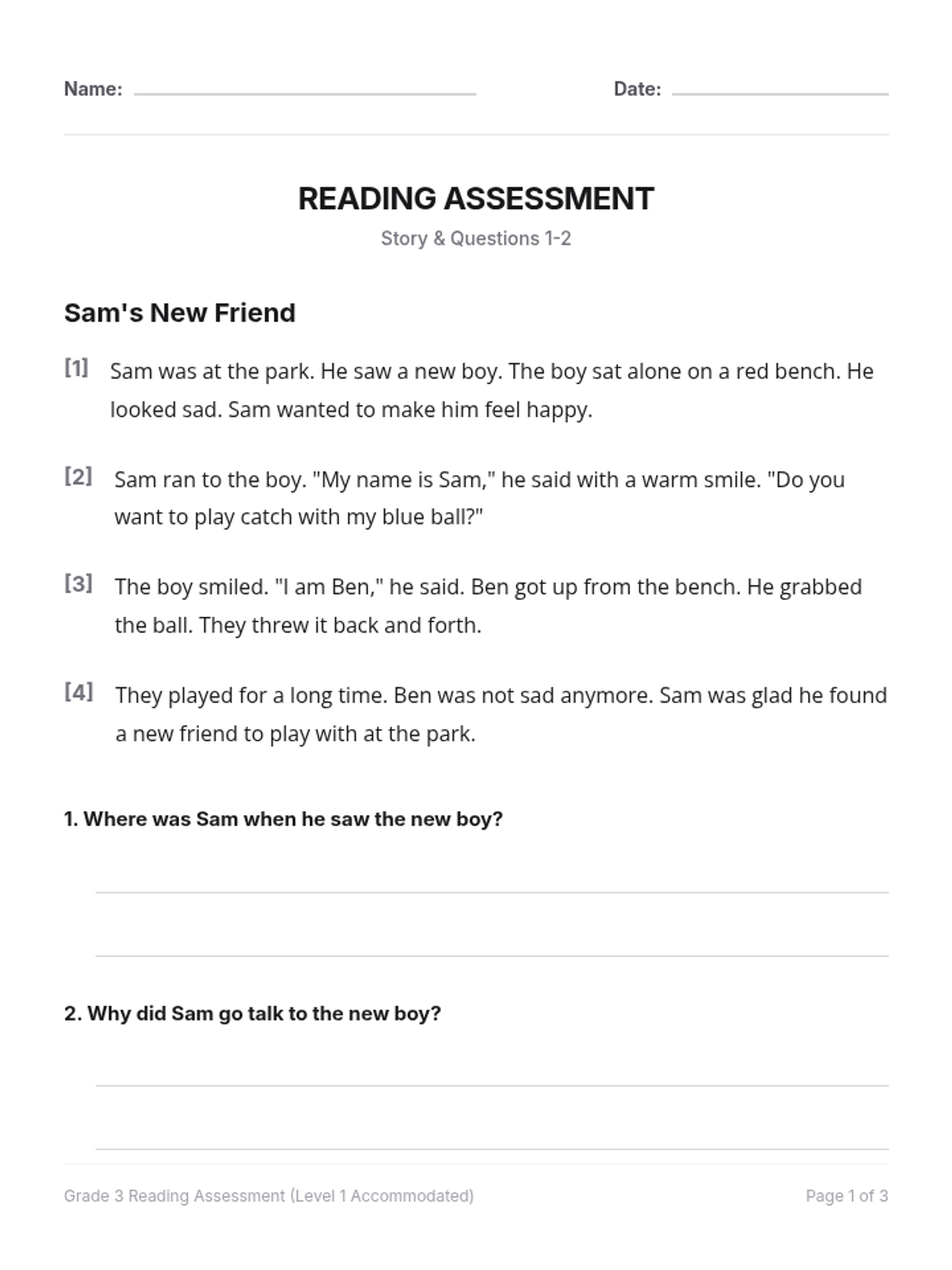
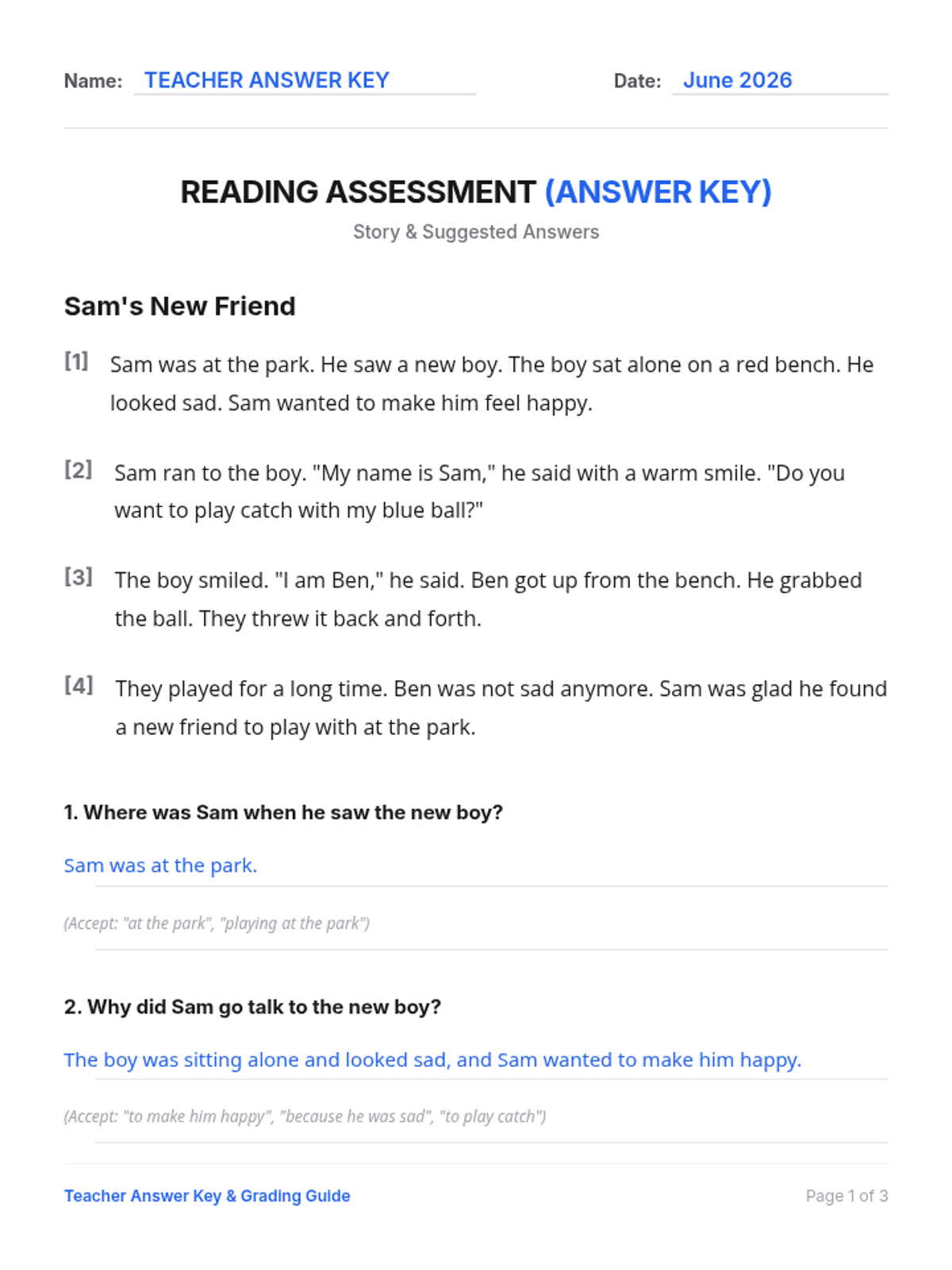
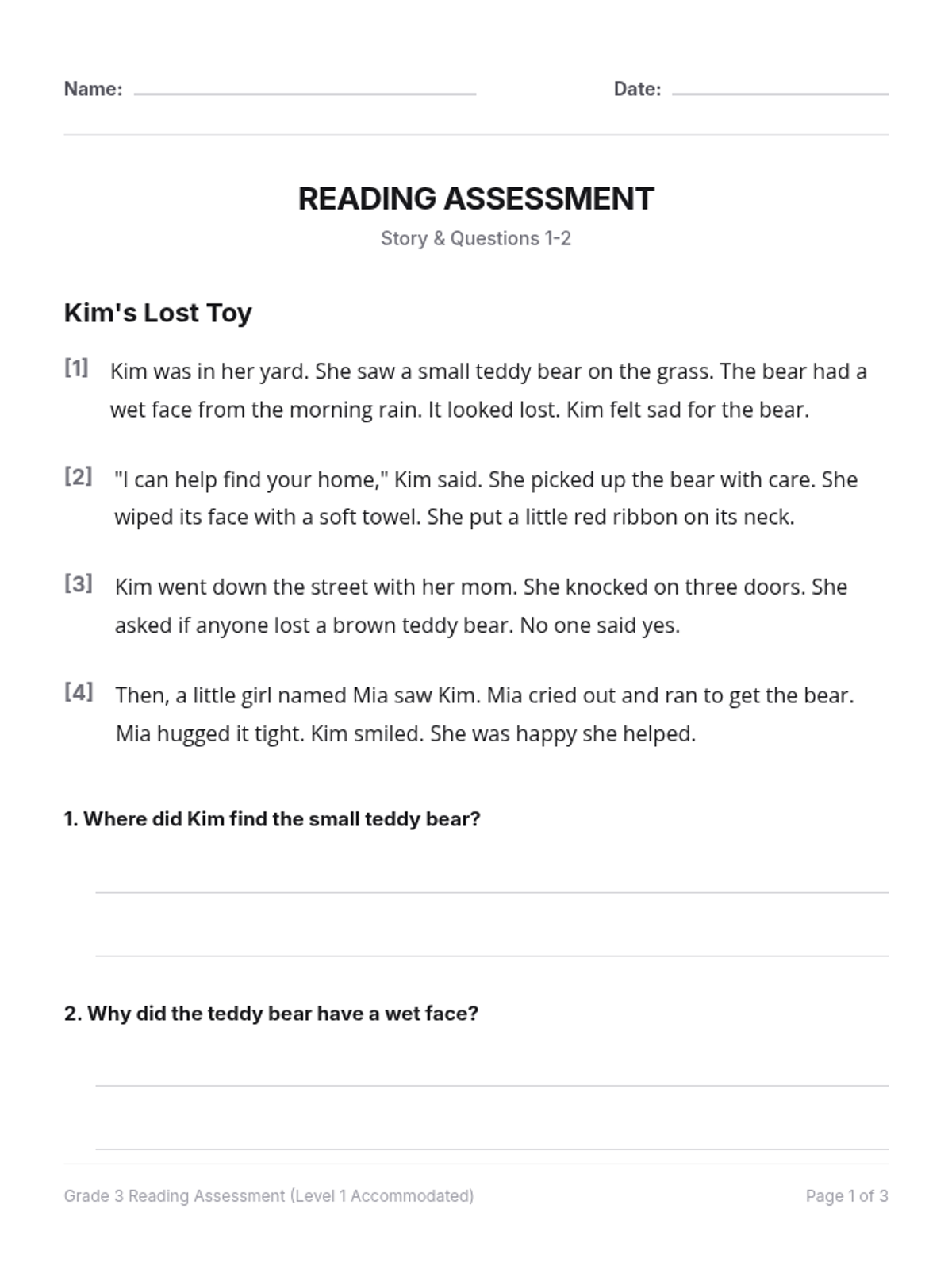
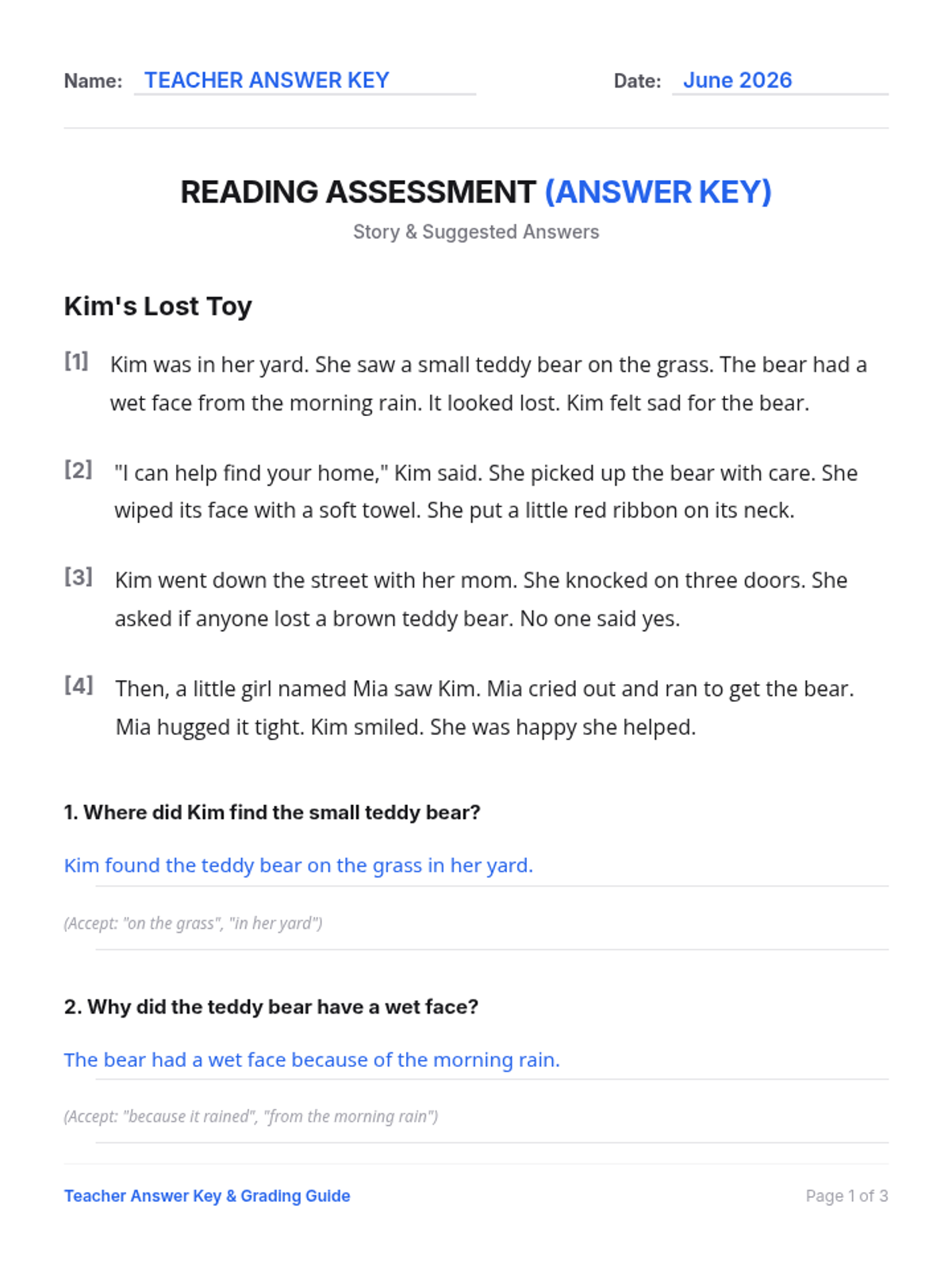
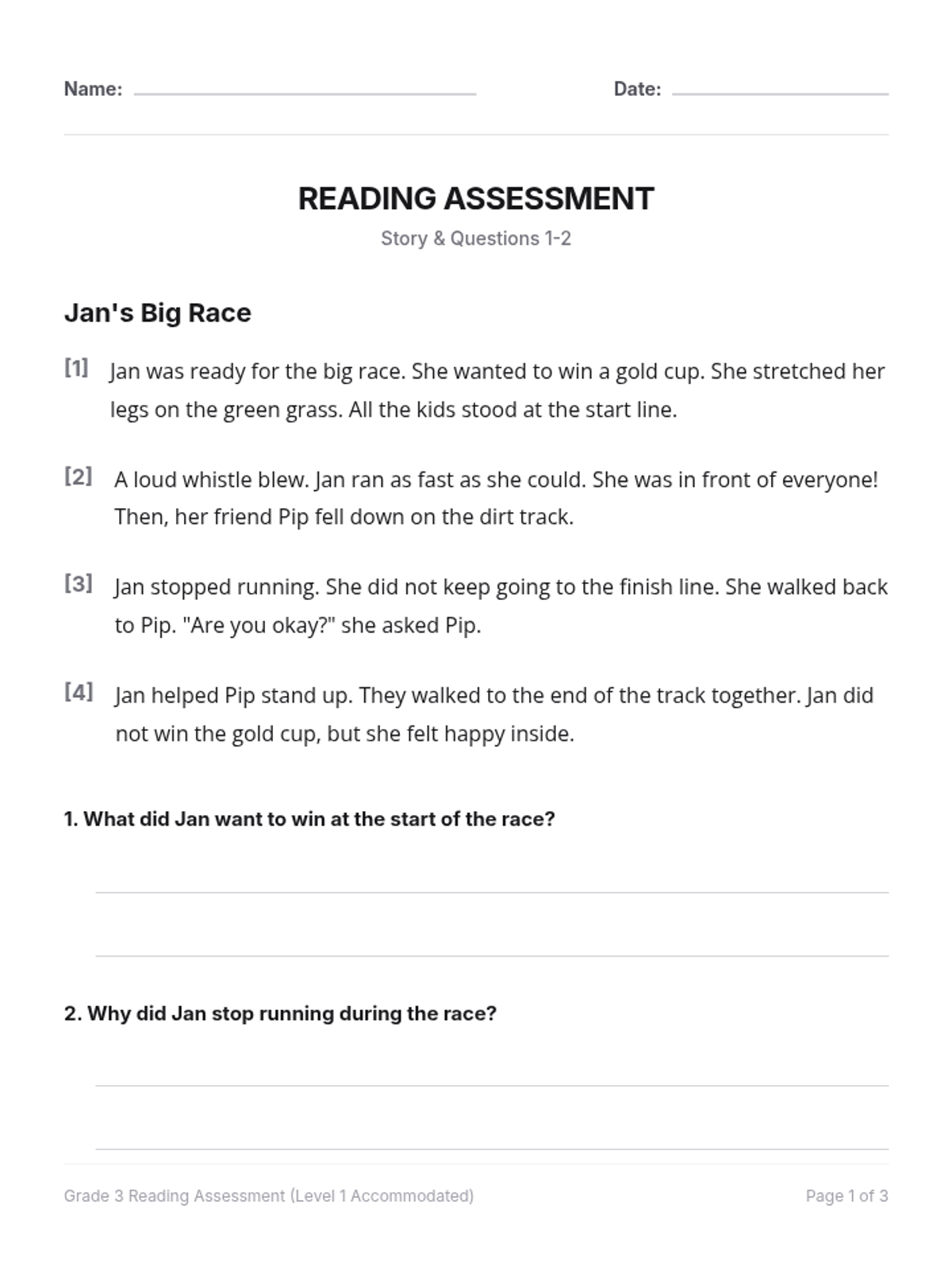
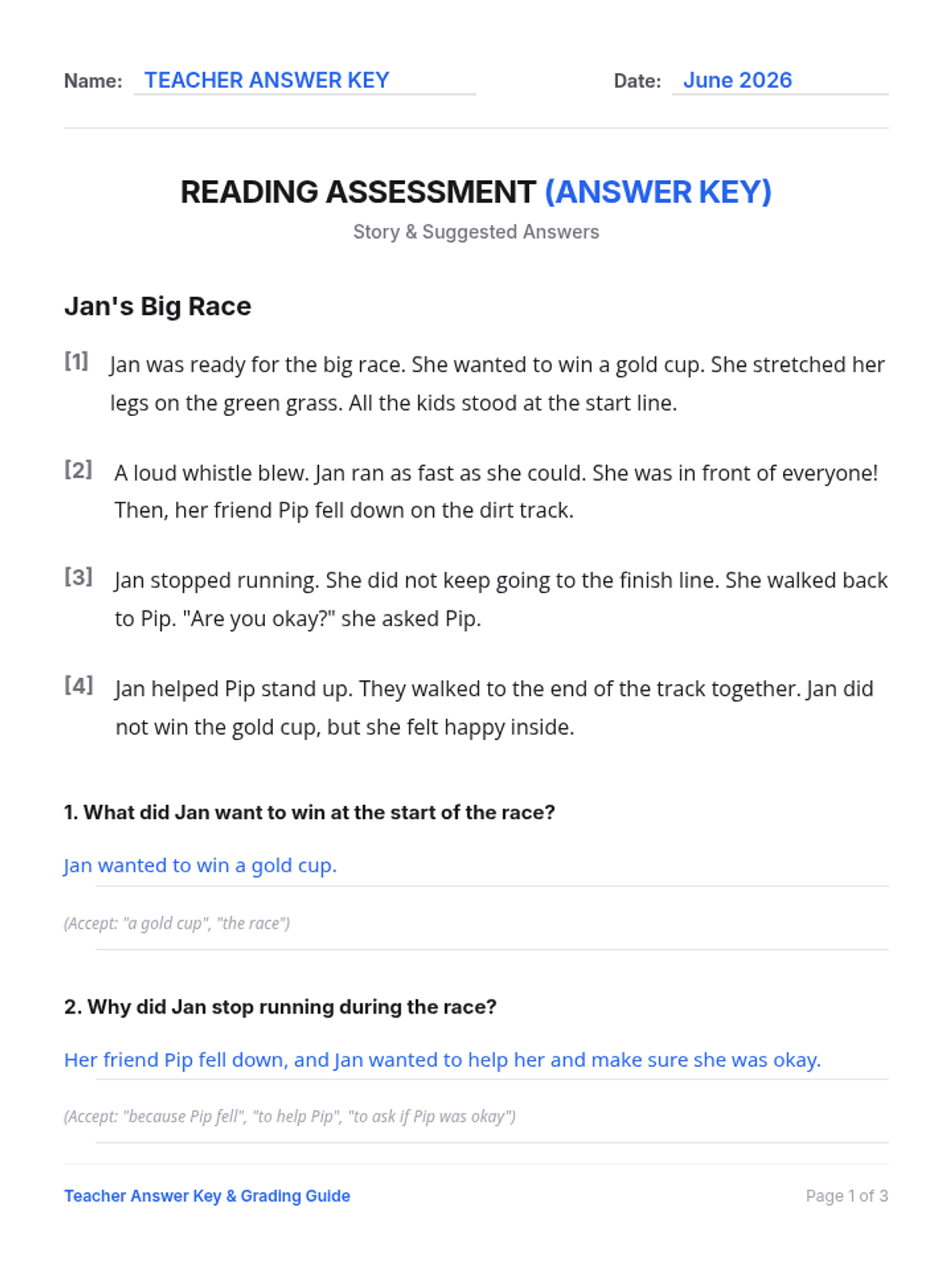
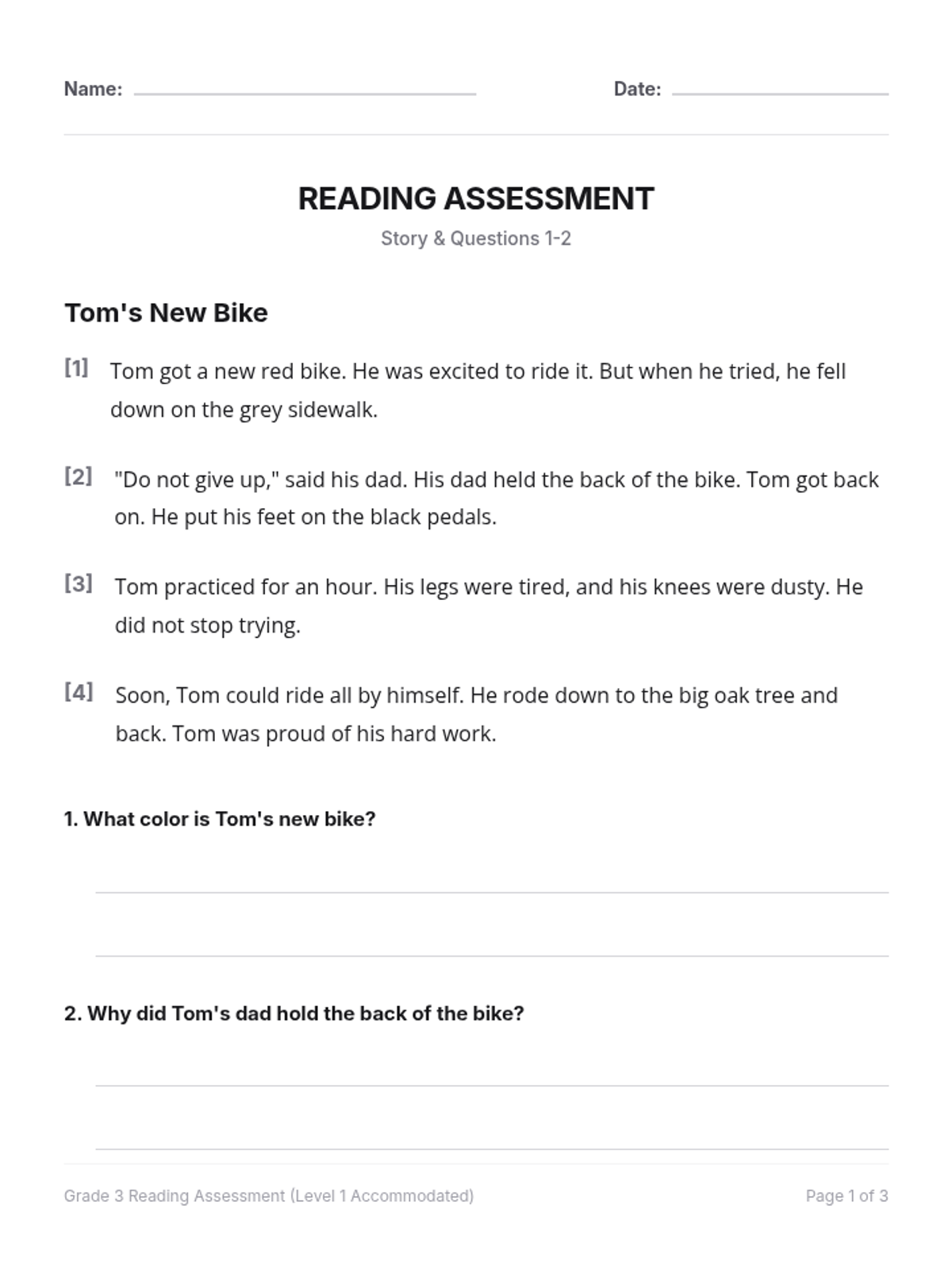
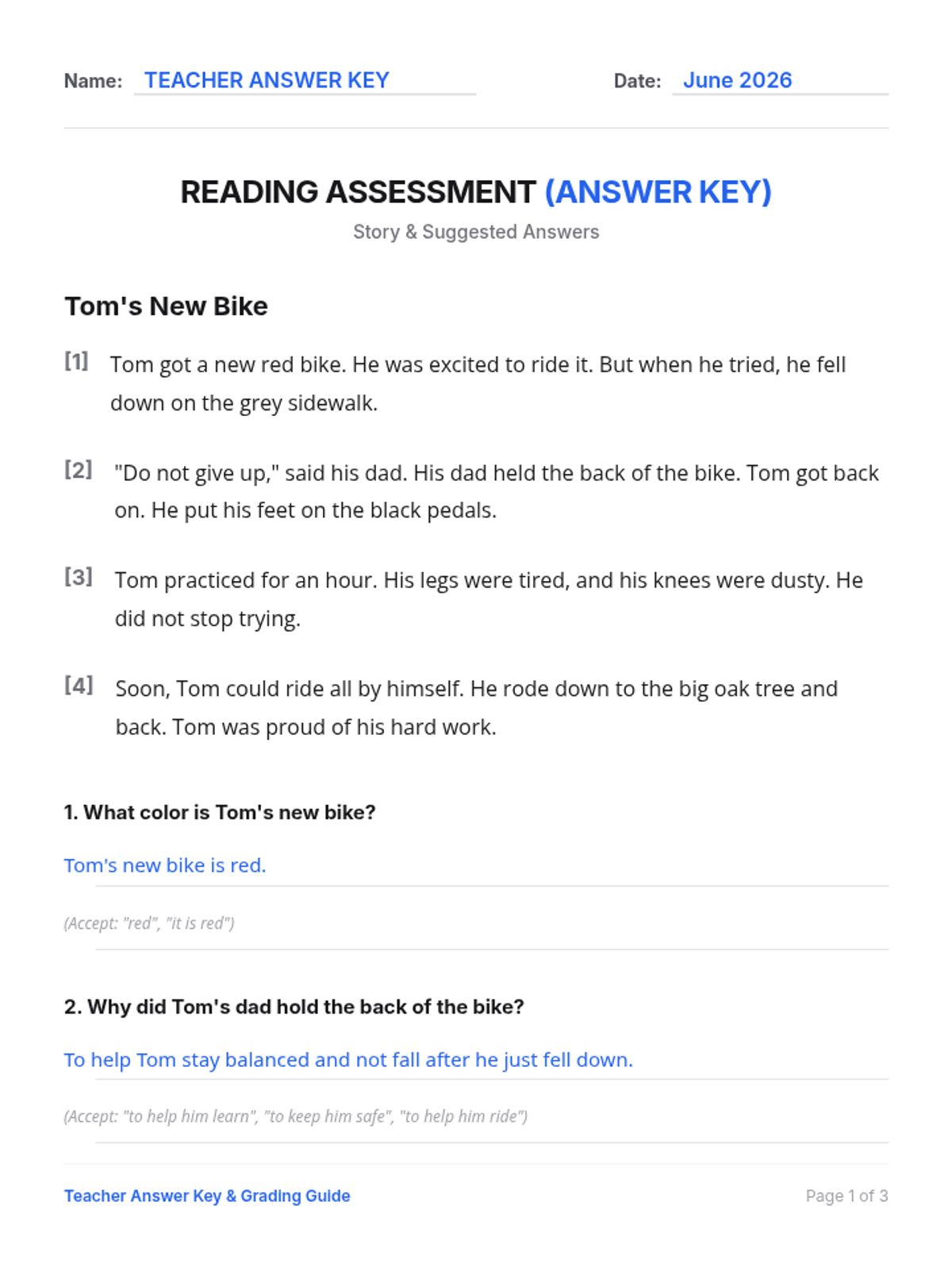
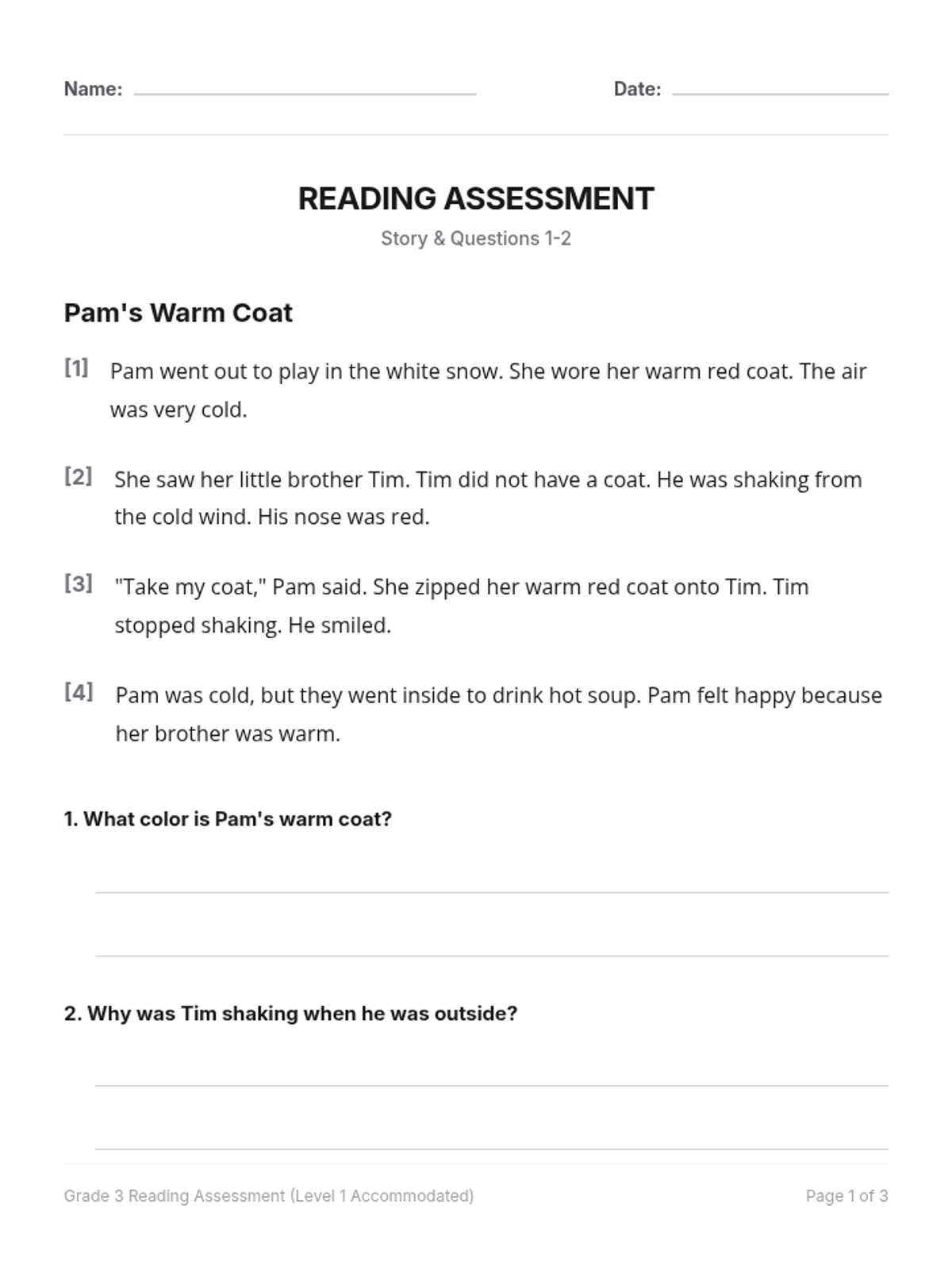
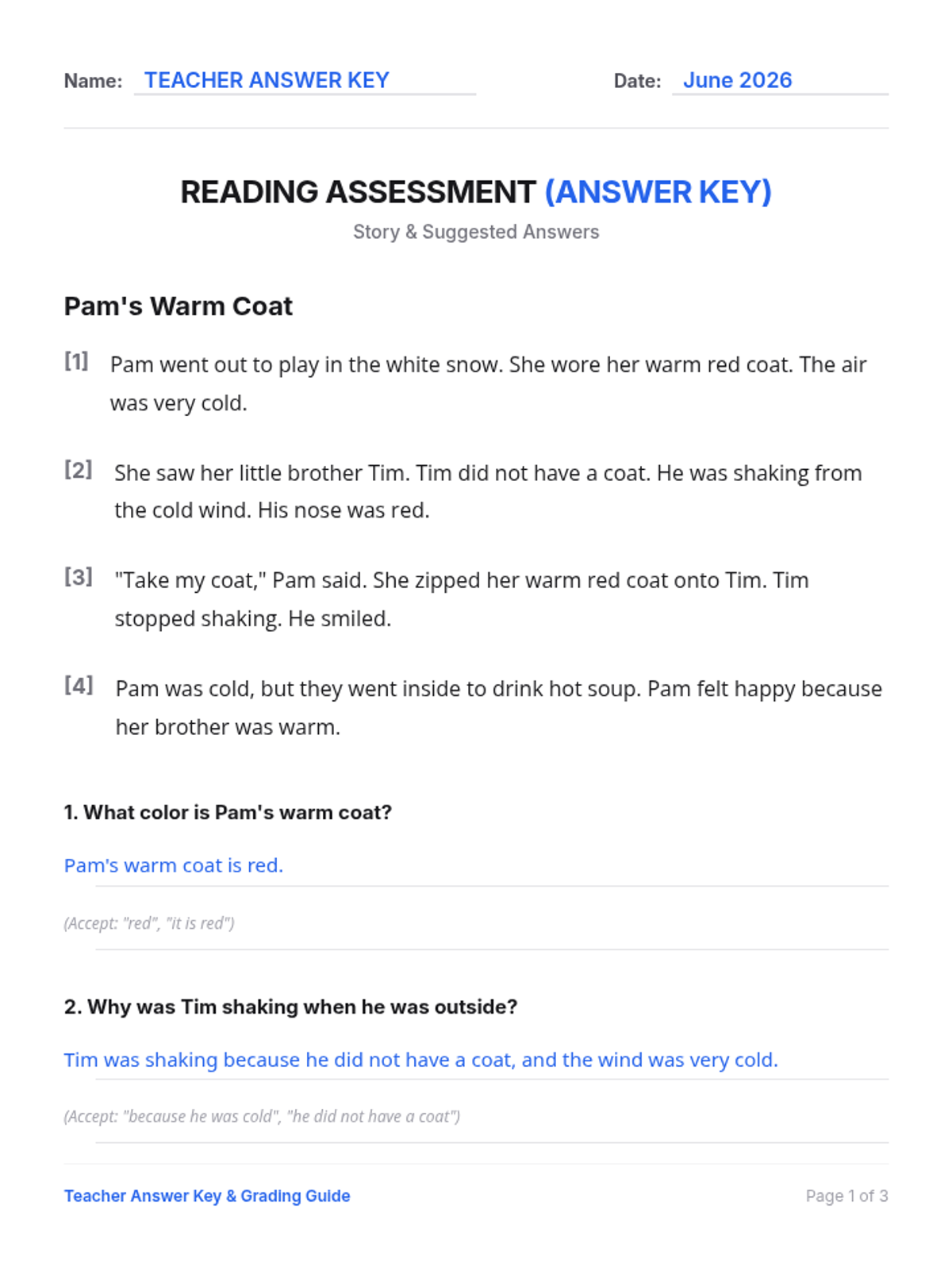
An accommodated reading assessment designed for a third-grade student reading at a first-grade level. Features a highly accessible passage, generous writing lines, explicit and implicit comprehension questions, and simplified layouts.
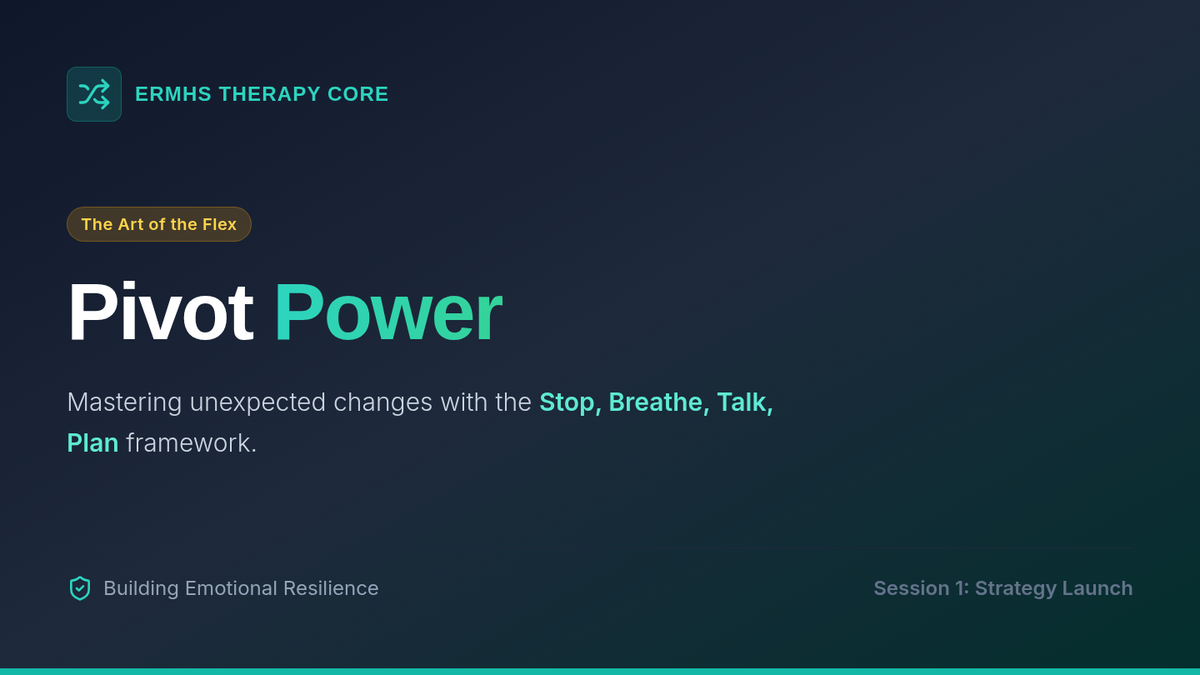
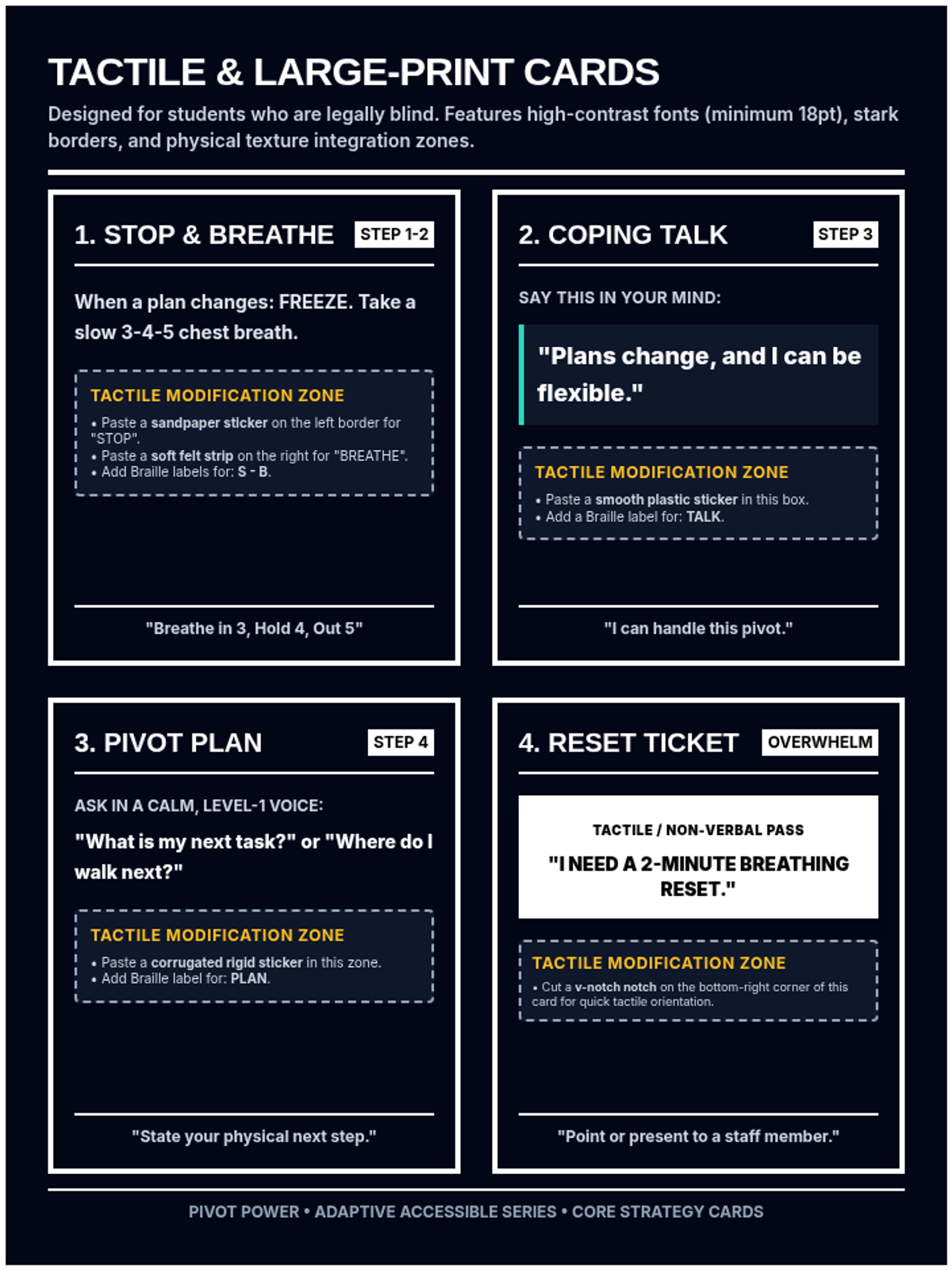
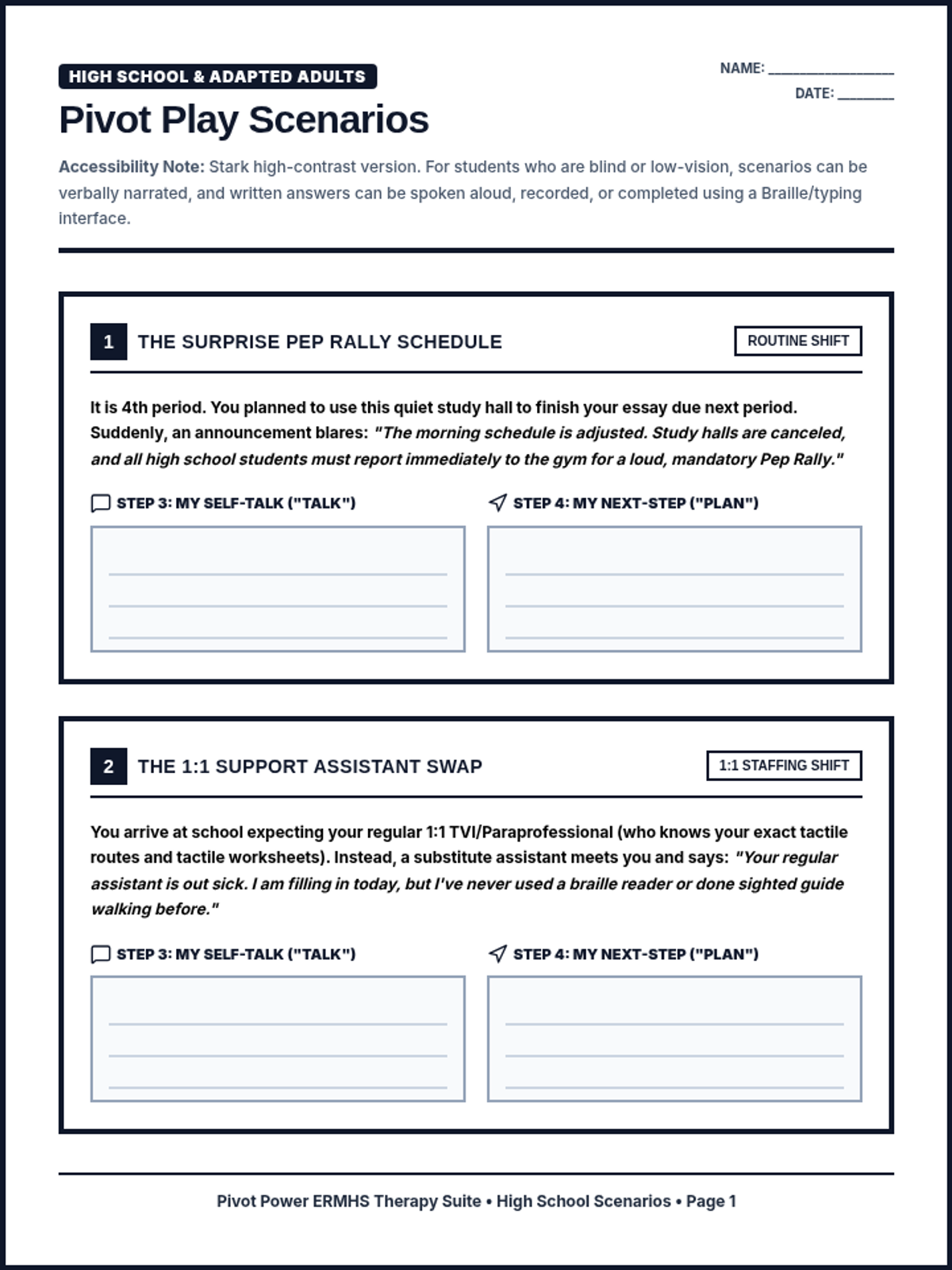
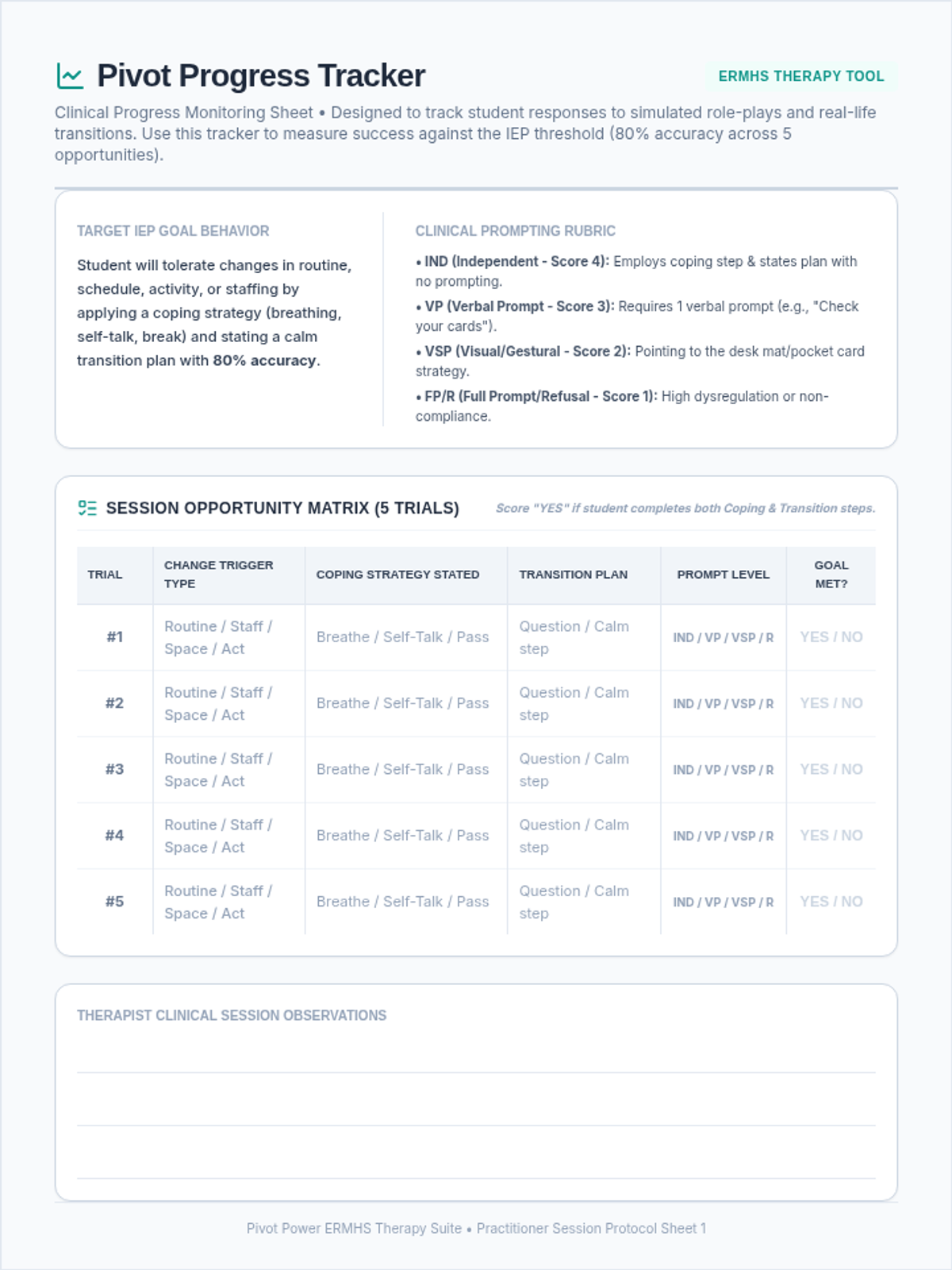
An intensive ERMHS therapy lesson designed to help students build tolerance to unexpected changes. Students learn and practice the 'Stop, Breathe, Talk, Plan' coping framework through direct instruction, interactive role-plays, and personalized visual strategy cards.
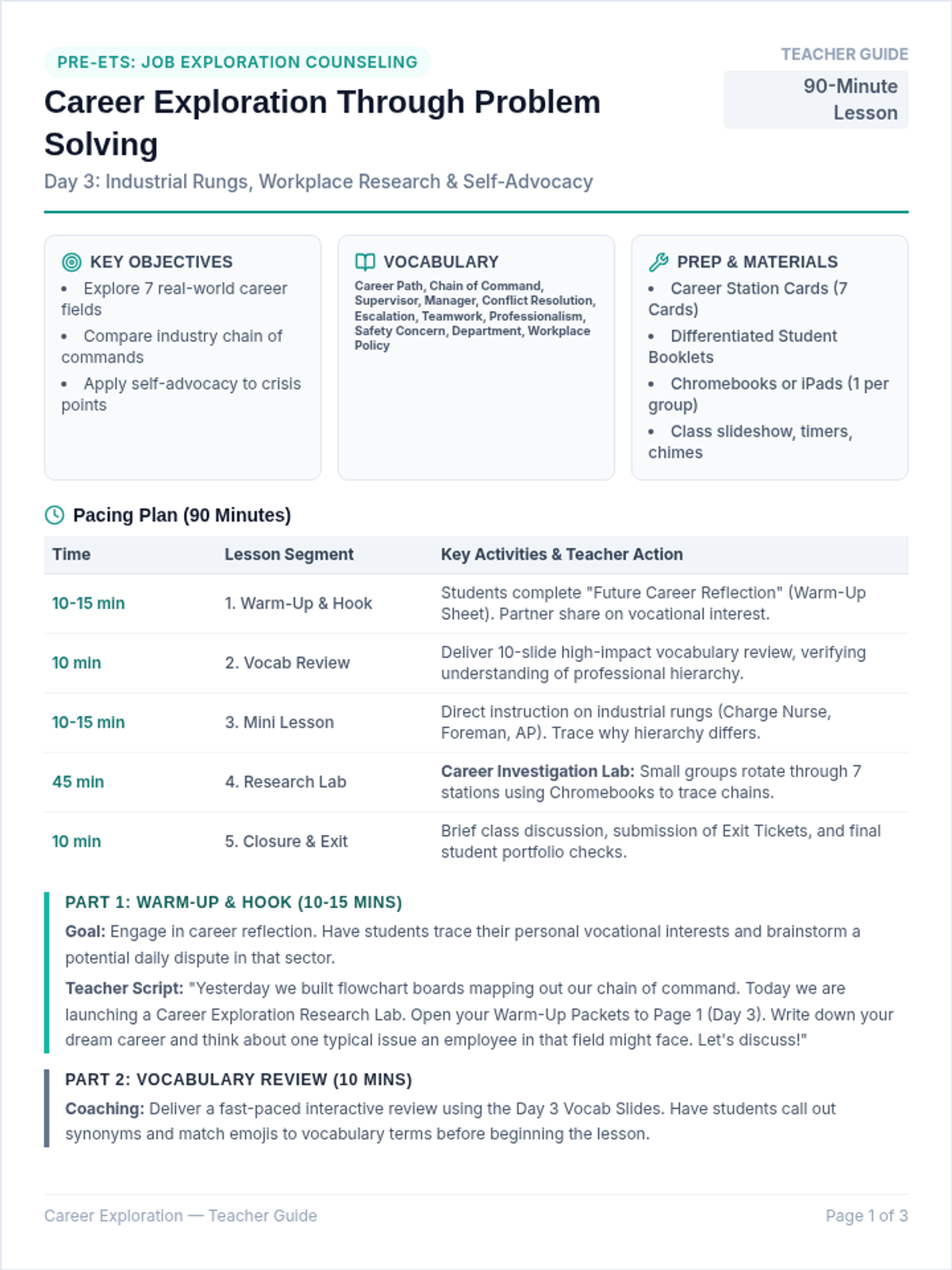
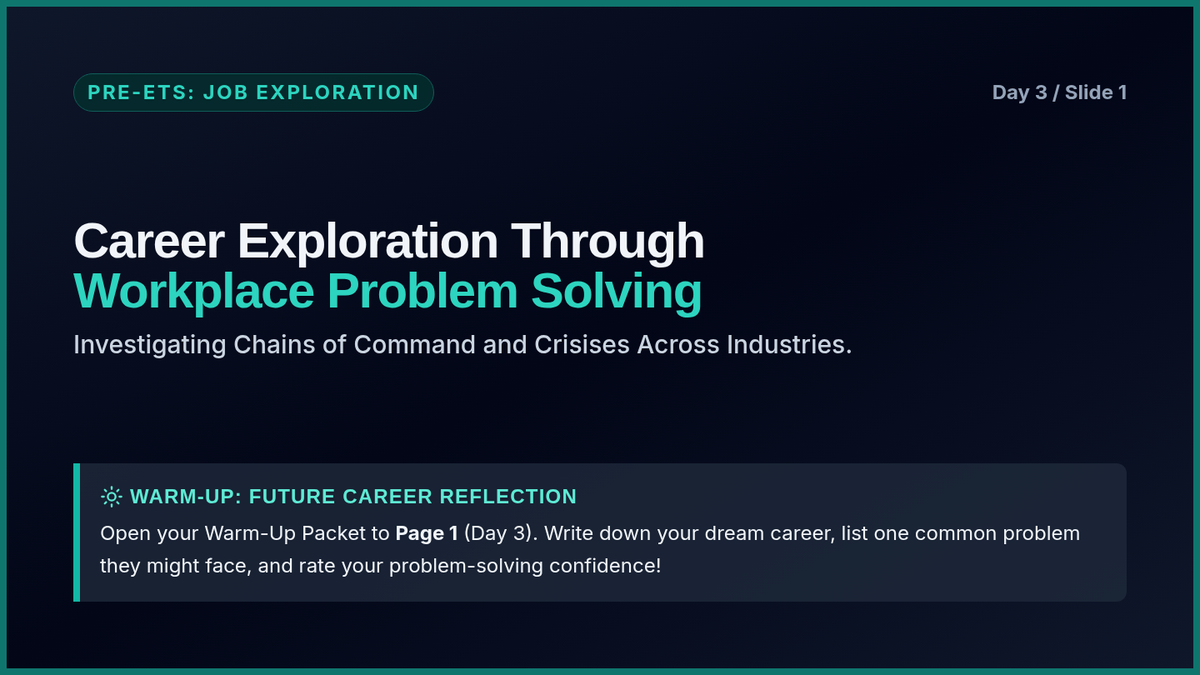
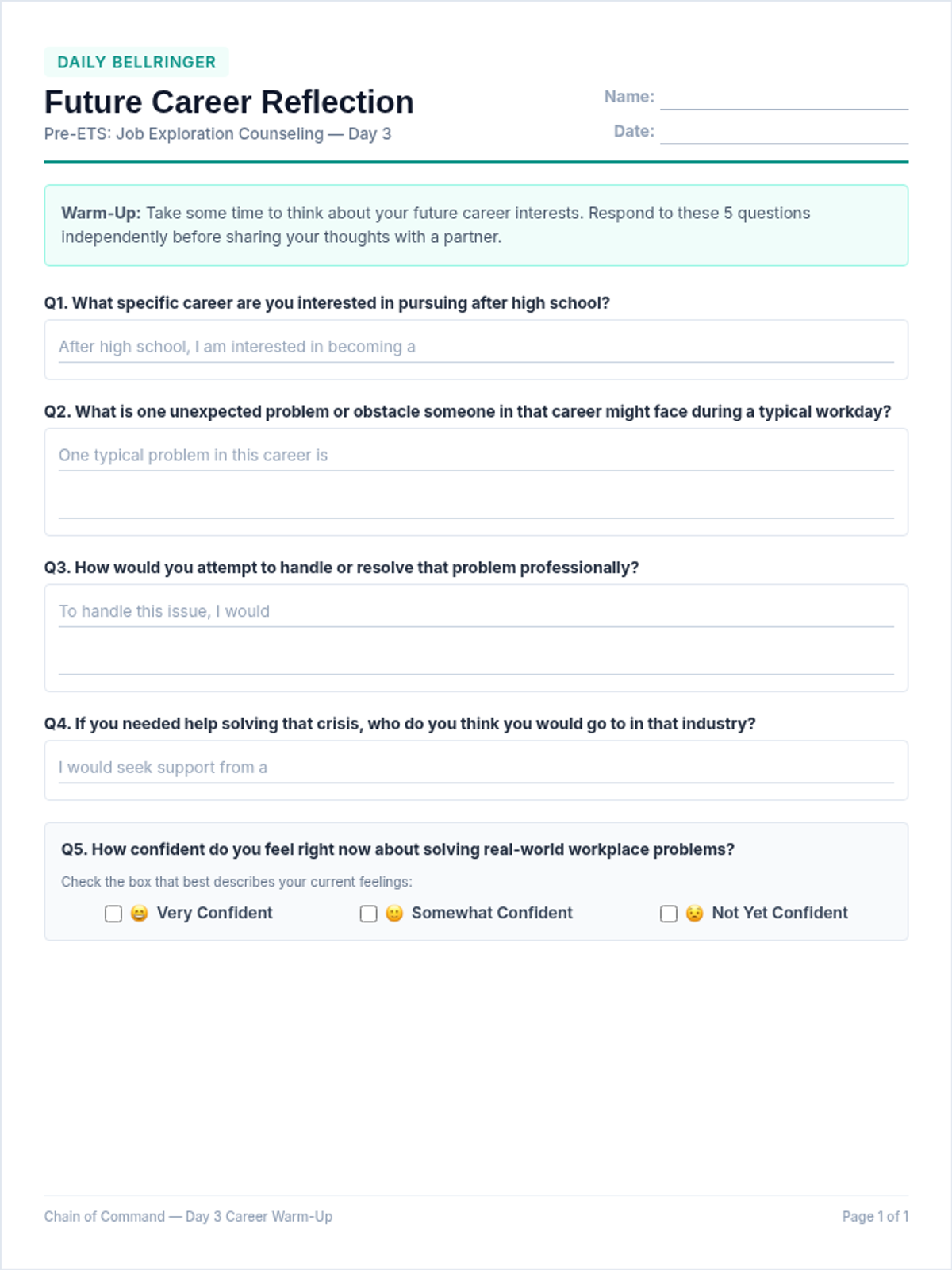
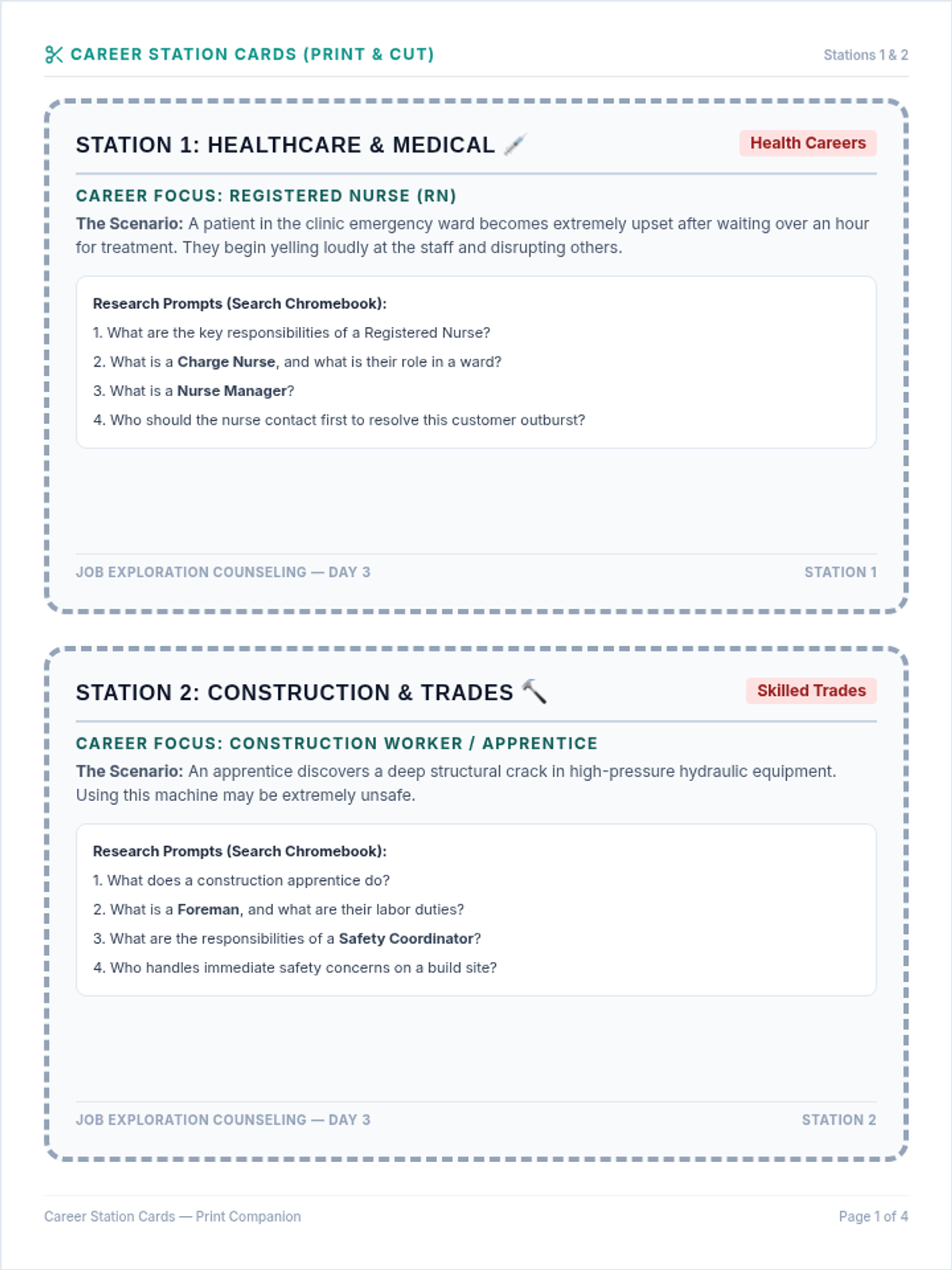
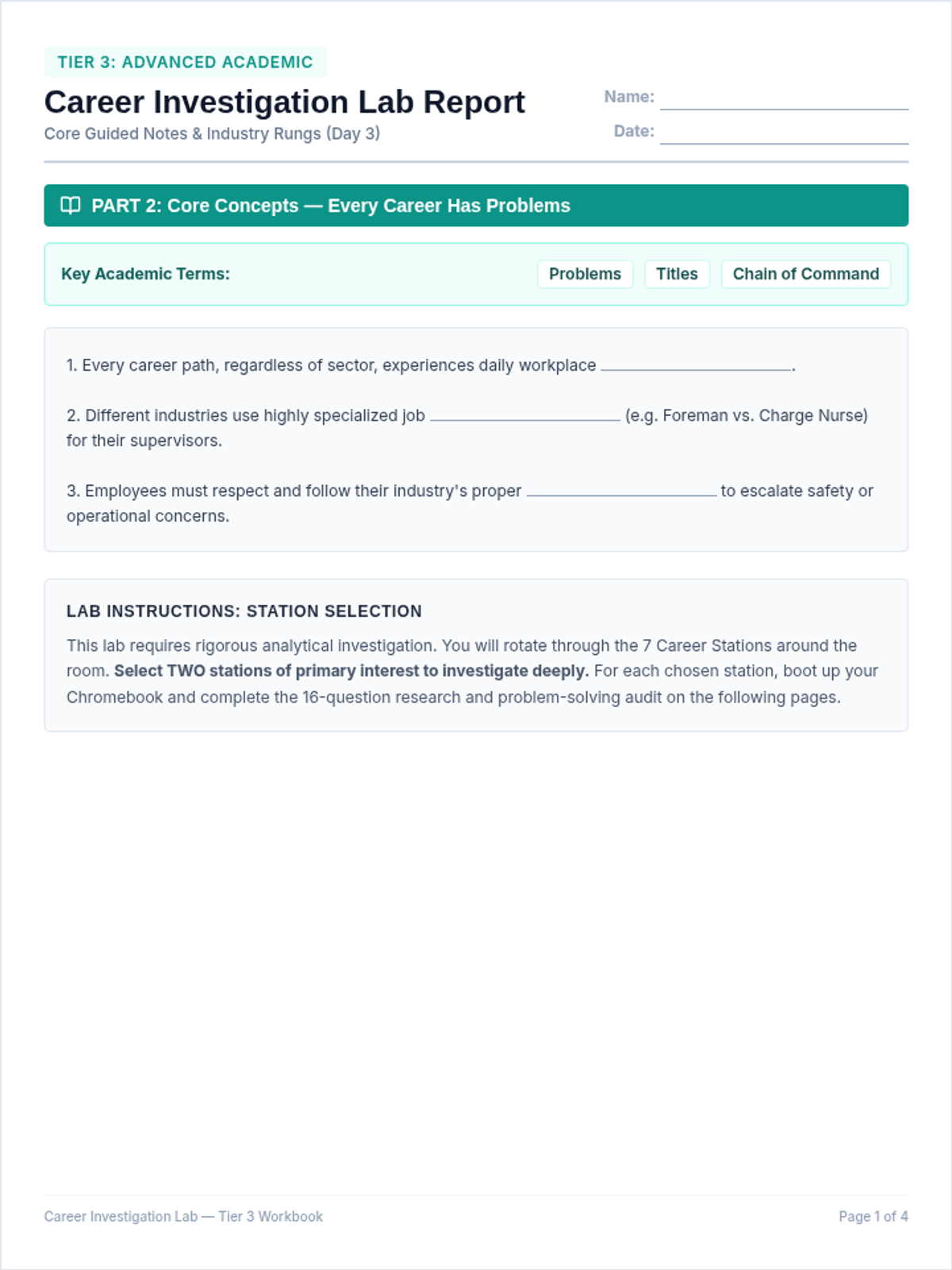
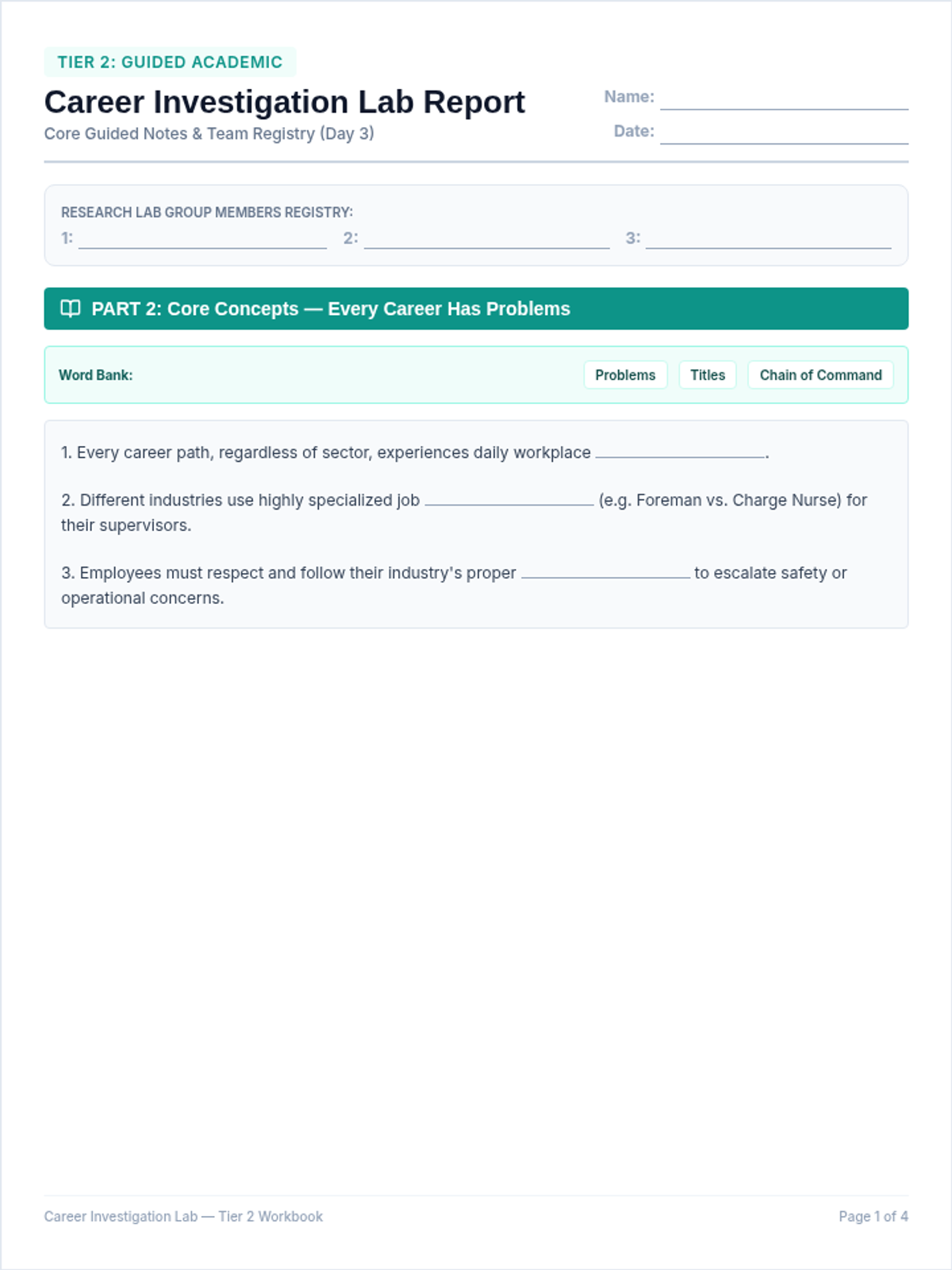
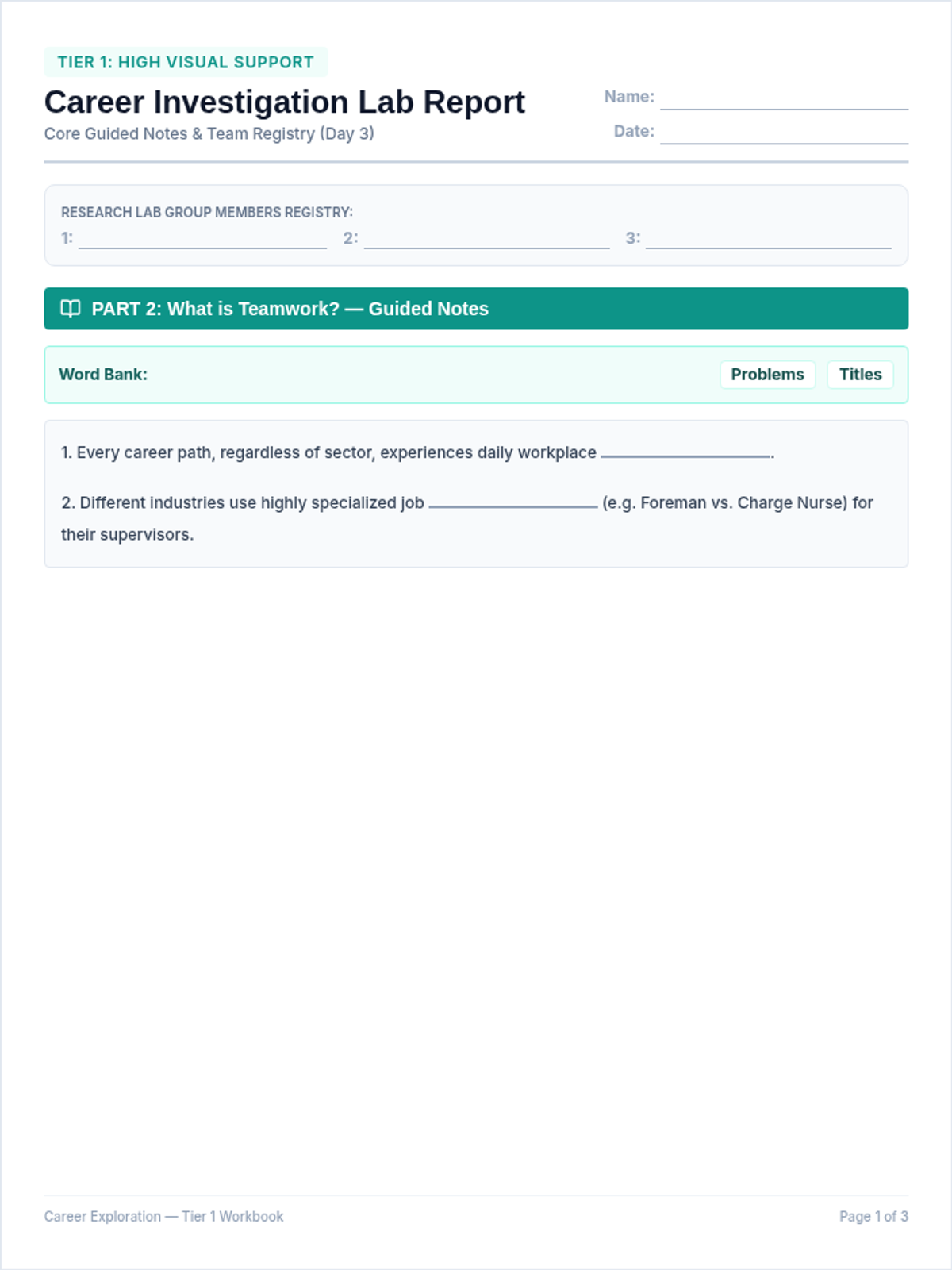
This lesson introduces students to real-world career fields (Healthcare, Trades, Education, Retail, Engineering, Restaurant, Animal Care) while exploring how each industry organizes authority and resolves crises. Students research job roles and solve situational scenarios using industry-specific chains of command.