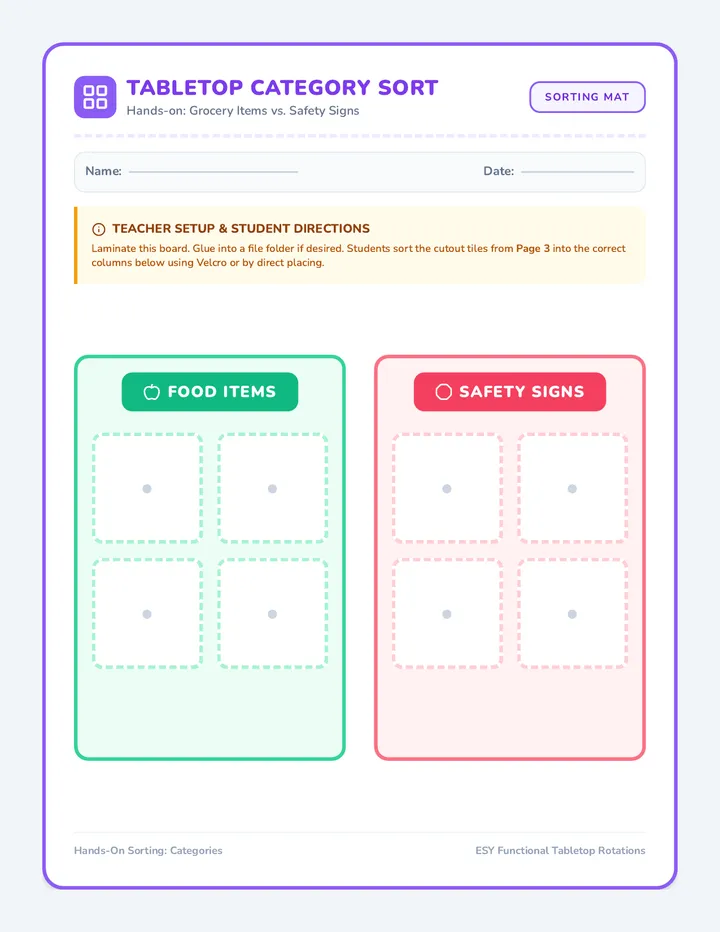
A foundational lesson for students with intellectual disabilities to identify and practice appropriate classroom behaviors like personal space, kind language, and turn-taking through a social story and interactive sorting.
A visually-focused lesson for students with ASD to learn about personal space and keeping hands to themselves through picture-based scenarios.
A lesson focused on identifying US coins (penny, nickel, dime, quarter) through visual identification and value matching, designed for students requiring visual support or modified materials.
A structured lunch bunch session designed to foster social rapport through collaborative LEGO building and tech-themed problem-solving challenges.
A social skills lesson focused on listening to full instructions, handling multi-step tasks, and beginning work immediately using a detective theme.
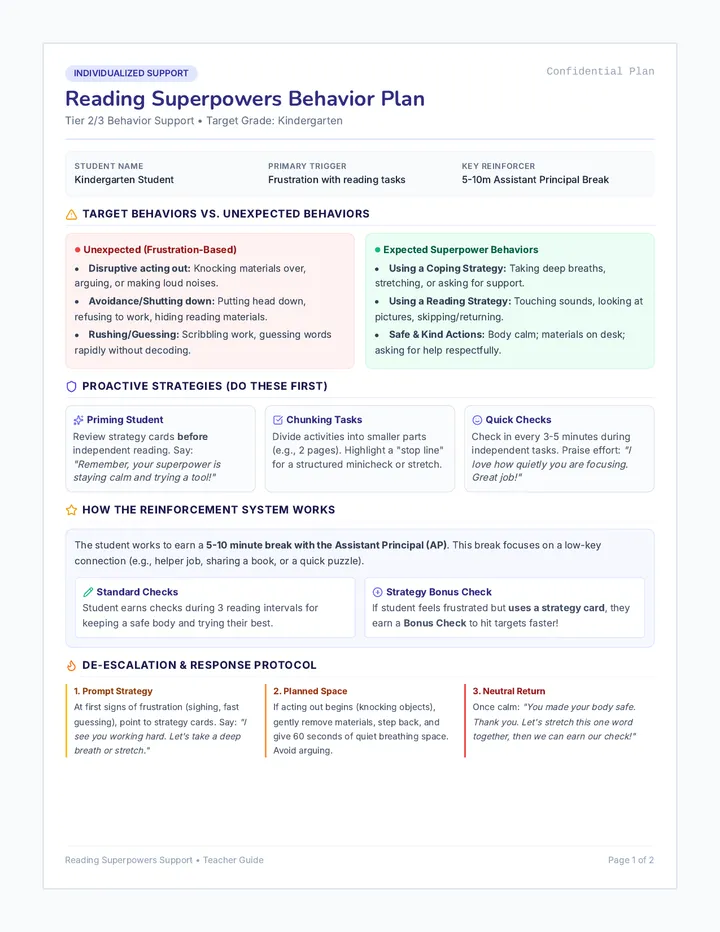
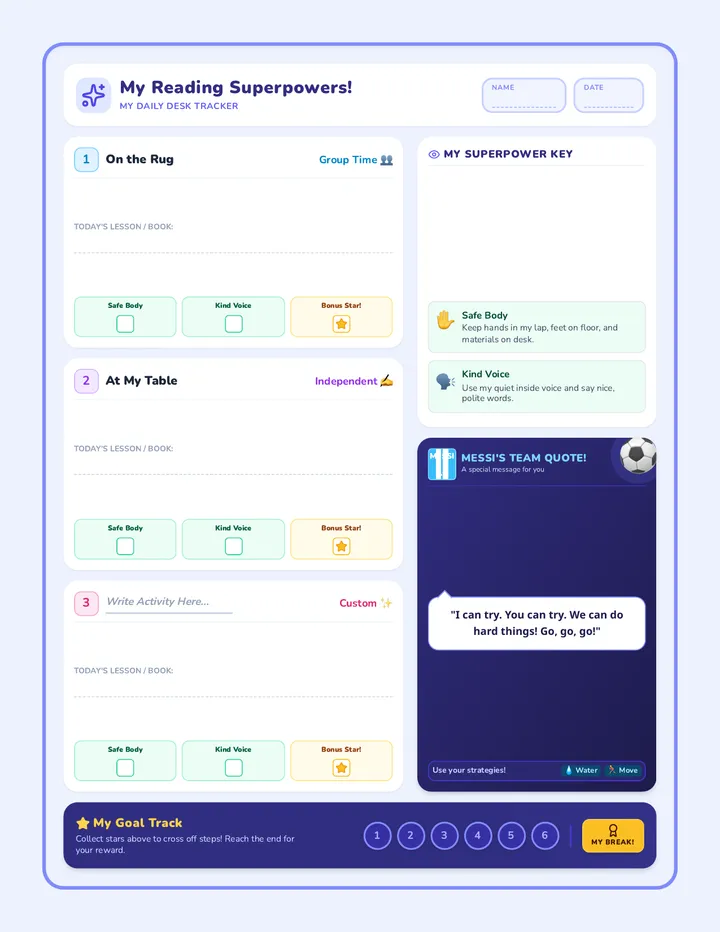
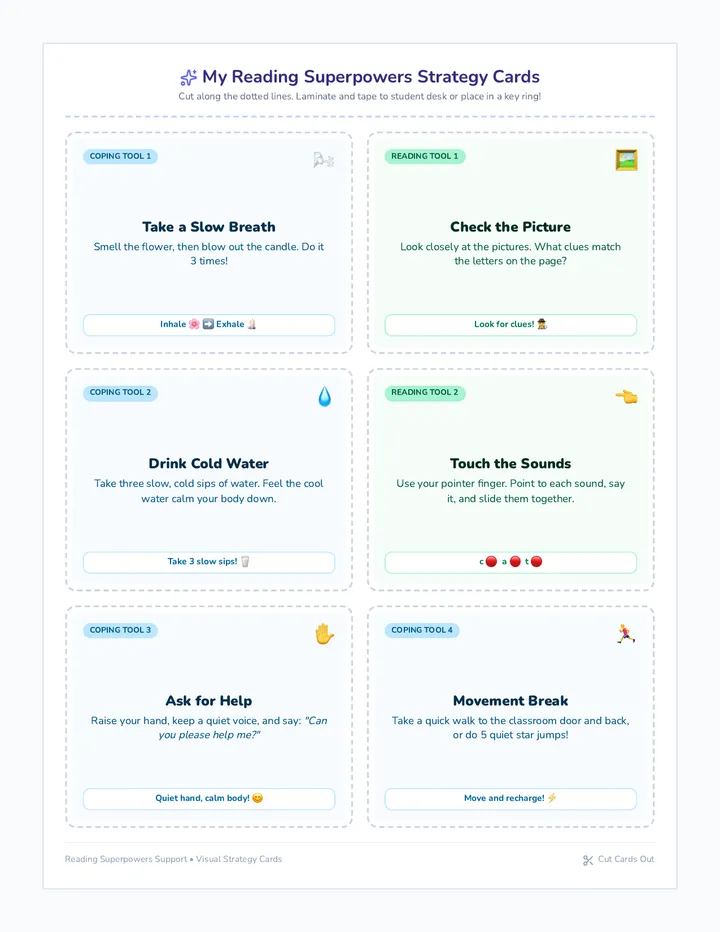
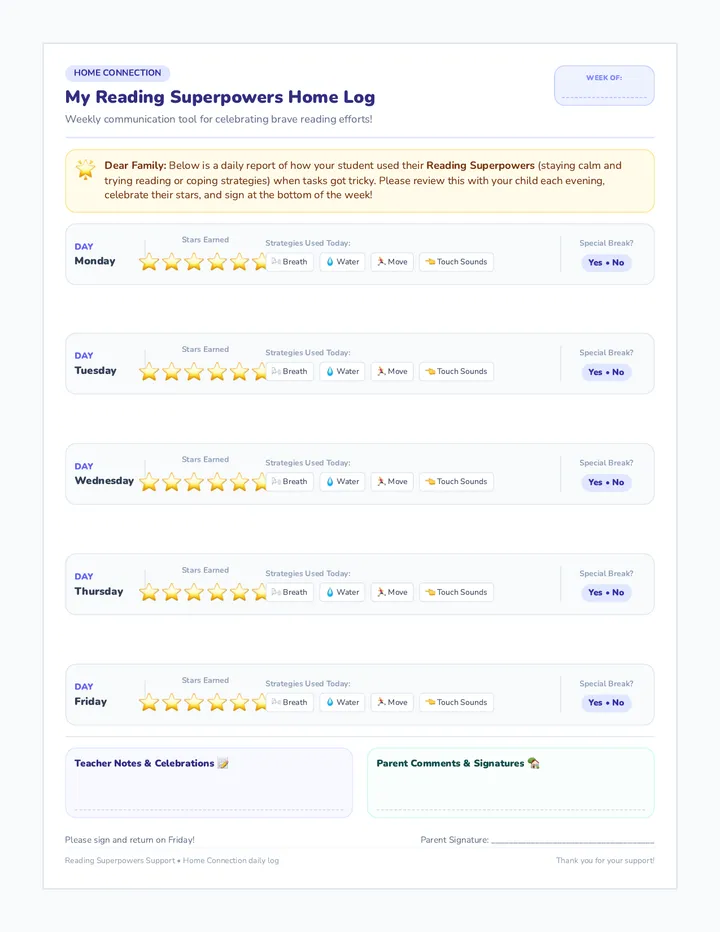
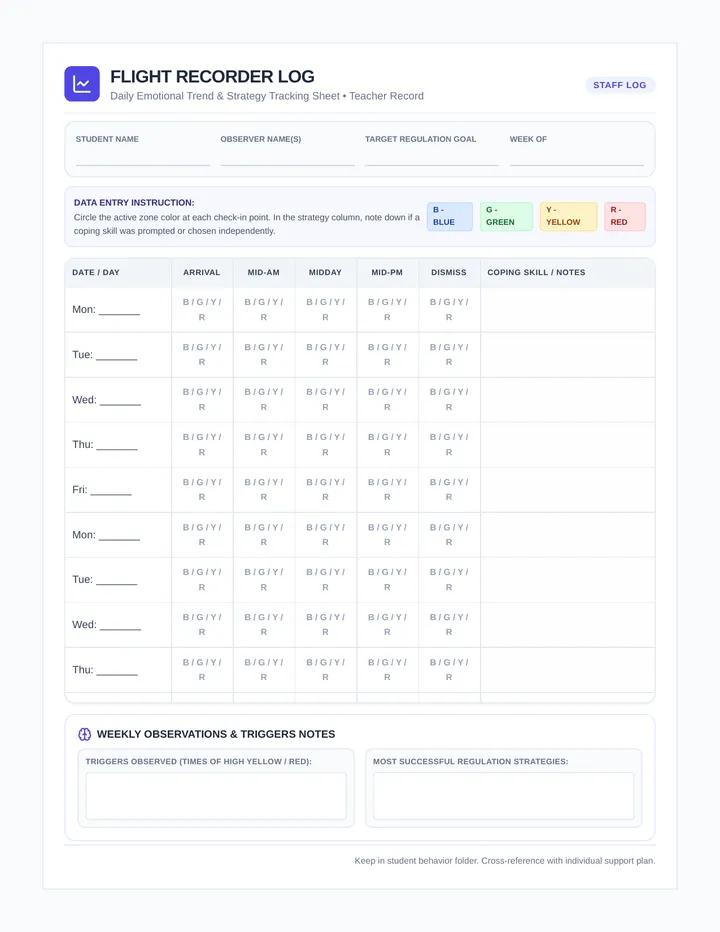
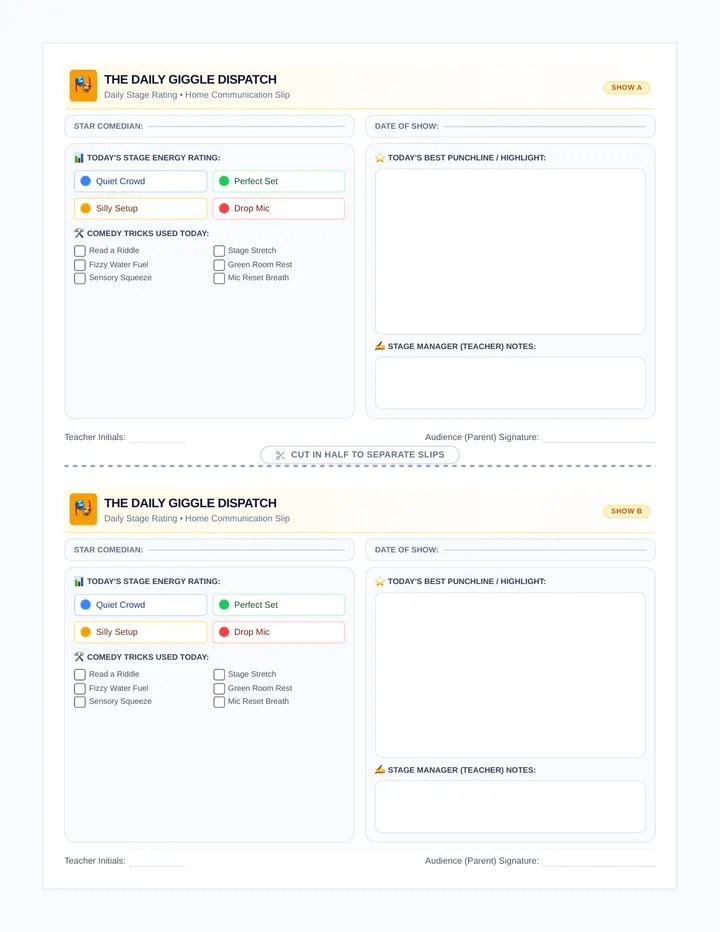
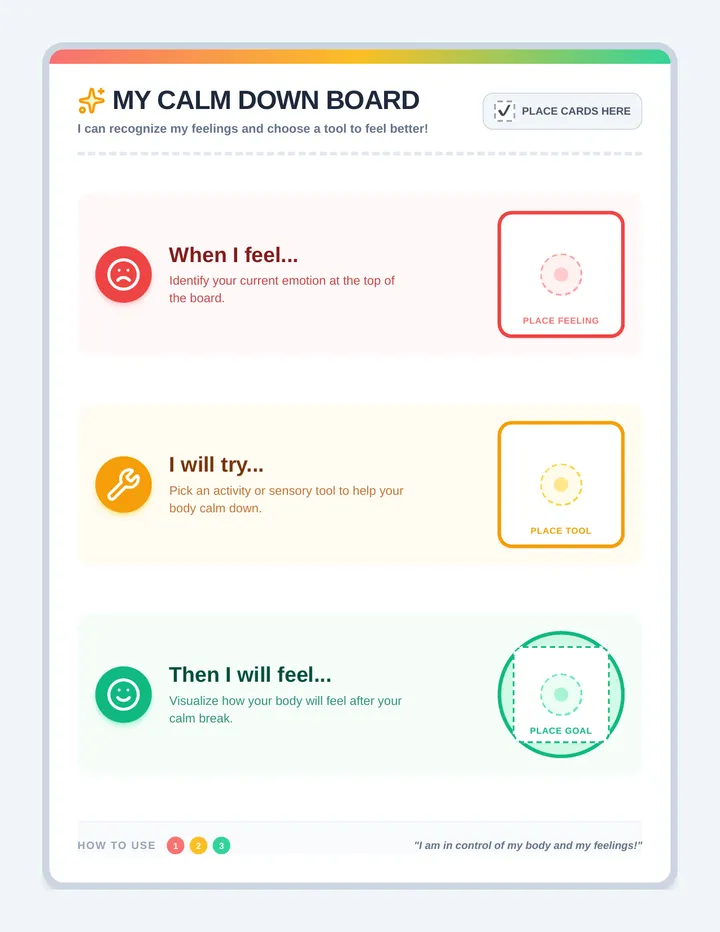
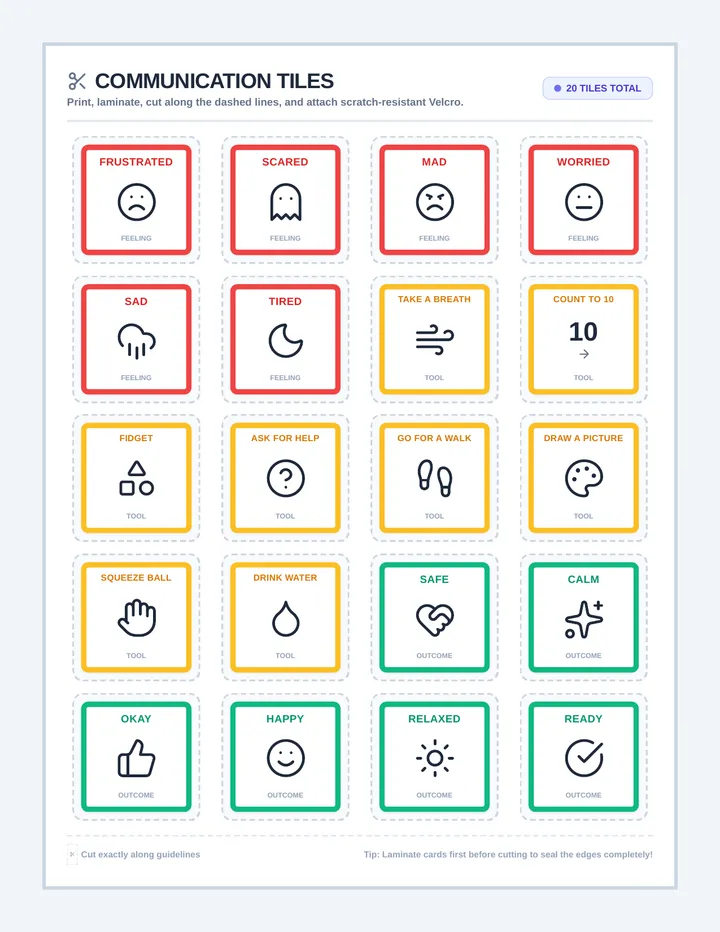
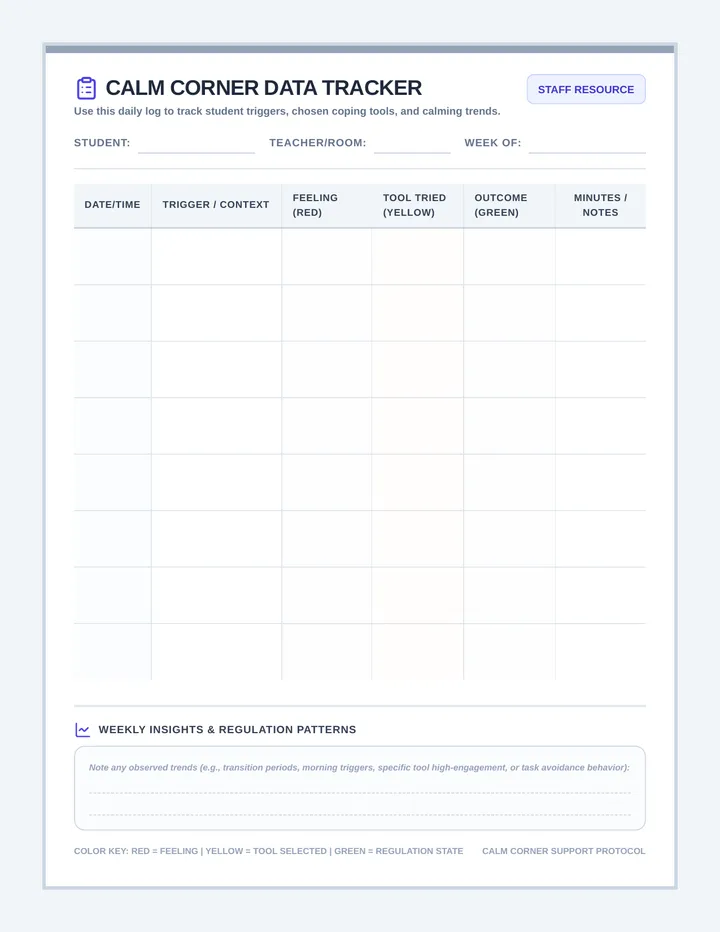
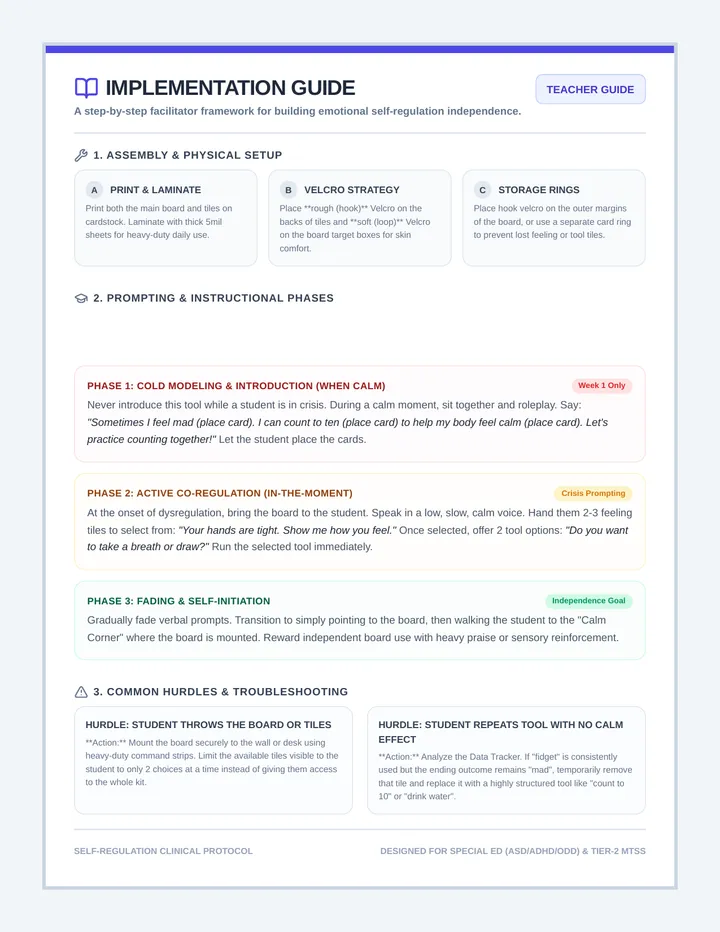
A comprehensive set of tools designed to help kindergarten students with ADHD manage impulsivity through visual cues, self-regulation strategies, and positive reinforcement.
A modified introductory lesson on unit fractions (1/2 and 1/4) specifically designed for students with Down Syndrome, using high-visual pizza models and the Concrete-Representational-Abstract (CRA) approach.
Covers short 'e' and mixed vowel review, synthesizing comprehension skills, and celebrating fluency progress with a final reading challenge.
Targets short 'o' and 'u' CVC words, identifying the main idea of short passages, and increasing reading rate with sight word phrases.
Focuses on short 'a' and 'i' decoding, sequencing three-part stories, and mastering initial high-frequency 'trail words'.
An introductory station-based lesson for preschool and kindergarten SDC students to explore the beginning sound /t/ through tactile manipulatives and simplified worksheets.
A foundational lesson on recognizing and coloring basic fractions using visual models, specifically designed for students who benefit from high-contrast, simple layouts and repetitive practice.
A foundational lesson on fractions as parts of a whole, specifically focusing on halves and quarters, designed with high-contrast visuals and simple instructions for third-grade students with diverse learning needs.
A beginner-friendly lesson on fractions focusing on halves and quarters using clear, bold visual aids designed for 3rd-grade students with diverse learning needs.
An introductory lesson on halves and quarters designed with high visual support and simplified language for students who benefit from concrete representations and clear, uncluttered layouts.
Resources and activities focused on teaching students how to identify blurting, practice waiting, and use appropriate communication for their needs.
A quick, high-impact lesson focusing on recognizing the urge to say 'no' and practicing 'The Choice Pause' to make better decisions. Includes a social story, visual task cards, and a choice map to help students with ODD navigate defiant impulses.
A foundational lesson on blending phonemes to read CVC and CVCC words, featuring short vowels and common digraphs (sh, ch, th). This lesson includes a guided slide deck, a targeted reading passage, and interactive flashcards.
A 30-minute interactive lesson for Pre-K students using Eric Carle's 'From Head to Toe' to target gross motor imitation, verb identification, and speech sound production. Students will mimic animal movements while practicing specific vowel-consonant combinations and functional phrases like 'I can do it!'
A foundational phonics station focused on CVC word decoding, blending, and word chaining to support 2nd-grade students working on early literacy skills.
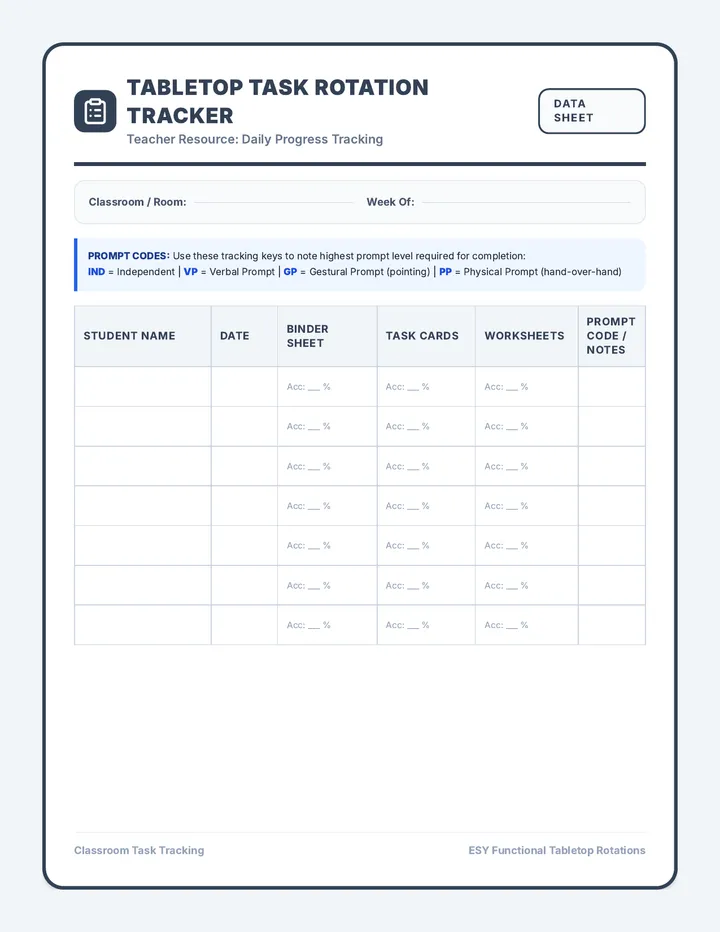
A set of tools for educators to monitor and analyze student focus and teacher interventions through systematic redirection tracking.
This lesson introduces the "Scientific Researcher" persona. It frames school work as collecting data and solving puzzles to fill a research log, focusing on predictability and sensory-friendly visual supports.
This lesson introduces the concept of 'Leveling Up'—the idea that trying hard on school tasks is like gaining experience points in a game. It focuses on visual cues and simple rewards to build academic stamina and motivation for students who are currently disengaged.