A foundational phonics station focused on CVC word decoding, blending, and word chaining to support 2nd-grade students working on early literacy skills.
A high-energy lesson focused on UFLI Lesson 60 (VCe /s/ with 'ce' and 'se'), featuring the 'S-Man' visual cue to help students master reading and writing words with the soft /s/ sound.
A foundational phonics lesson focused on identifying and using common digraphs (sh, ch, th, wh, ck, ph, kn, wr) through a fun detective-themed exploration.
A foundational lesson on blending phonemes to read CVC and CVCC words, featuring short vowels and common digraphs (sh, ch, th). This lesson includes a guided slide deck, a targeted reading passage, and interactive flashcards.
A 30-minute interactive lesson for Pre-K students using Eric Carle's 'From Head to Toe' to target gross motor imitation, verb identification, and speech sound production. Students will mimic animal movements while practicing specific vowel-consonant combinations and functional phrases like 'I can do it!'
A playful, ocean-themed lesson focused on mastering high-frequency sight words through interactive gameplay and card-based activities. Students build recognition speed and fluency using custom 'Word Catchers' cards.
A phonics lesson focused on segmenting two-syllable words with the V/CV pattern (Open-Closed). Students practice identifying syllable boundaries and recognizing long and short vowel sounds within these patterns.
A phonics-focused lesson where students identify and sort 2-syllable words based on whether their first syllable is open or closed. Includes a hands-on cut-and-paste activity with a space exploration theme.
A set of tools for educators to monitor and analyze student focus and teacher interventions through systematic redirection tracking.
A collection of engaging practice pages for high-frequency sight words, featuring tracing, writing, and sentence-based recognition activities with a cheerful garden theme.
A foundational literacy lesson for 2nd graders to practice building complete sentences using four key components: Who, Action, Where, and When. Includes colorful prompt cards and a teacher guide with activity ideas.
A comprehensive collection of flashcards and tracking tools for mastering Fry's First 100 sight words, designed specifically for Kindergarten learners with high-contrast, easy-to-read typography.
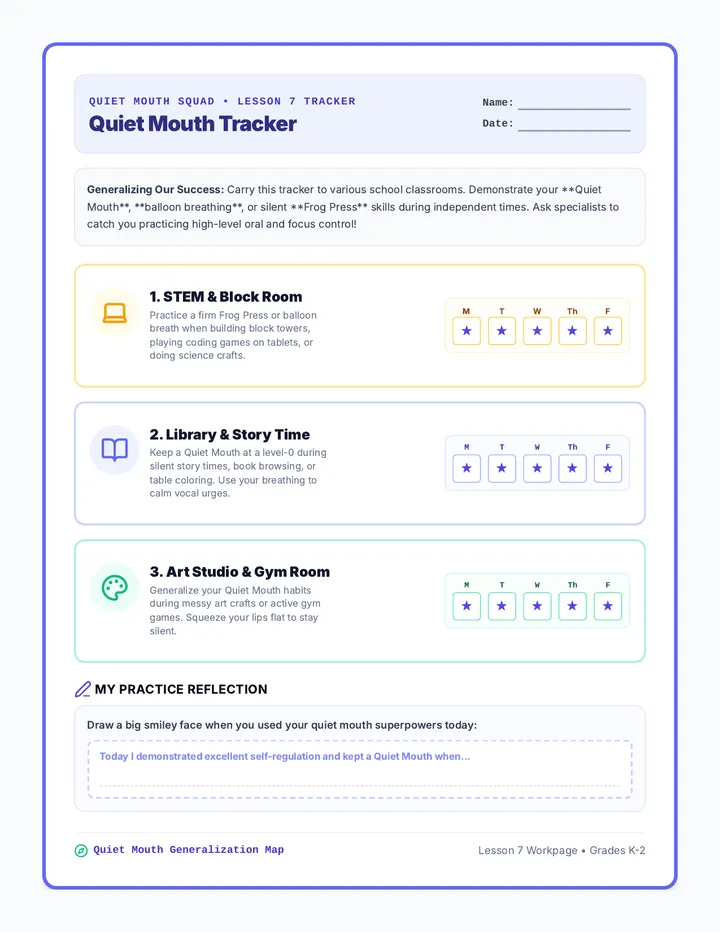
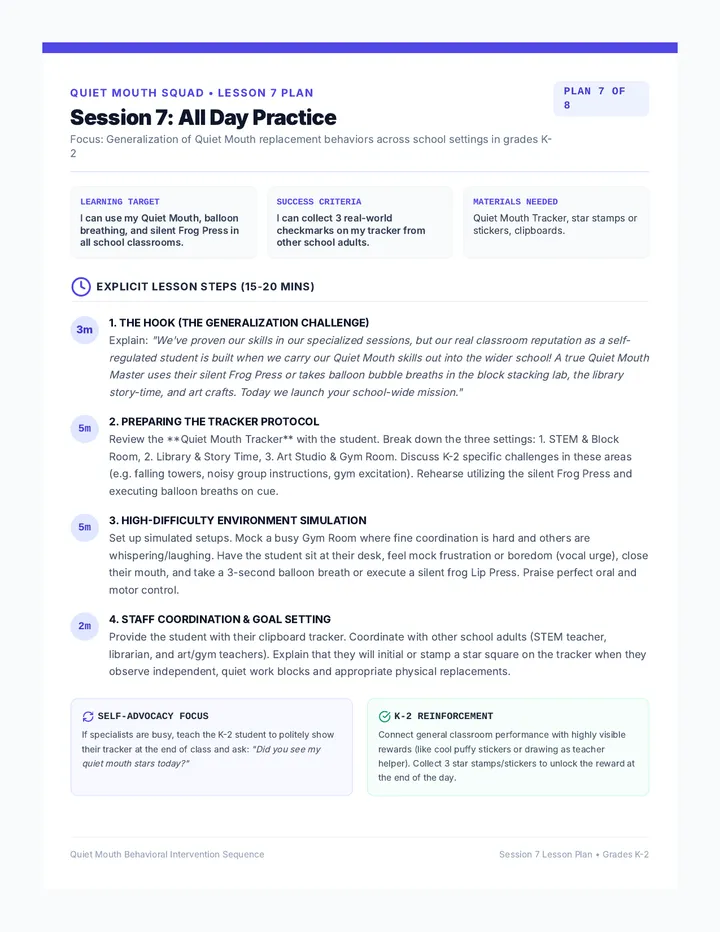
This lesson introduces the "Scientific Researcher" persona. It frames school work as collecting data and solving puzzles to fill a research log, focusing on predictability and sensory-friendly visual supports.
This lesson introduces the concept of 'Leveling Up'—the idea that trying hard on school tasks is like gaining experience points in a game. It focuses on visual cues and simple rewards to build academic stamina and motivation for students who are currently disengaged.
A comprehensive set of behavior intervention materials designed to support a student's on-task behavior and compliance through structured tracking, clear rubrics, and motivational contracts.
A set of resources designed to help parents understand and support their child's reading fluency progress at home, focusing on the balance between speed and accuracy.
A social story and supporting resources focused on Dr. Martin Luther King Jr.'s vision of a 'Beloved Community,' designed specifically for students with autism to understand and practice kindness.
A Tier 3 individualized lesson designed for a non-verbal Kindergarten student to learn emotion identification and expression through social stories and visual aids. The lesson focuses on the functional skill of pointing to a visual to communicate internal states.
The foundational phase of the reentry process, focusing on immediate proactive strategies and safety protocols. This lesson provides the essential documents and training materials needed for staff to manage defiance, elopement, and work refusal during the critical first weeks of return.
A 30-minute interactive session focused on language development and functional skills using the book 'What's in my house?' for a small group of students with autism.
An interactive, multi-sensory lesson designed for 5-year-old students with autism to practice following 1 and 2-step directions using concepts of size and prepositions, inspired by the book 'Where's Spot?'.
A 30-minute interactive lesson using 'Where's Spot?' to build 1-step and 2-step direction-following skills with spatial concepts for ECSE students.