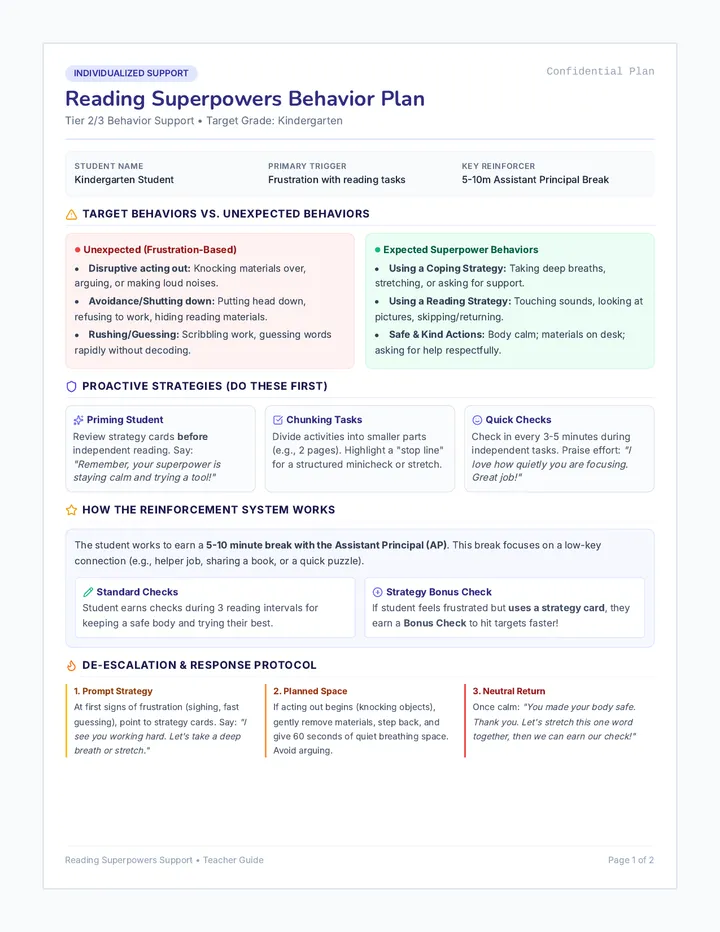
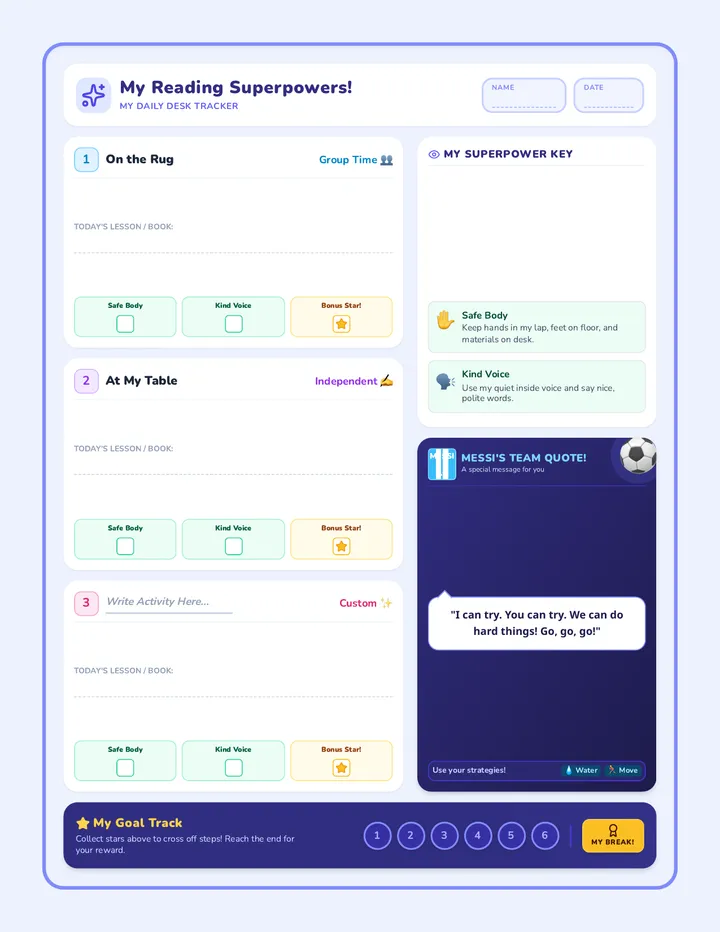
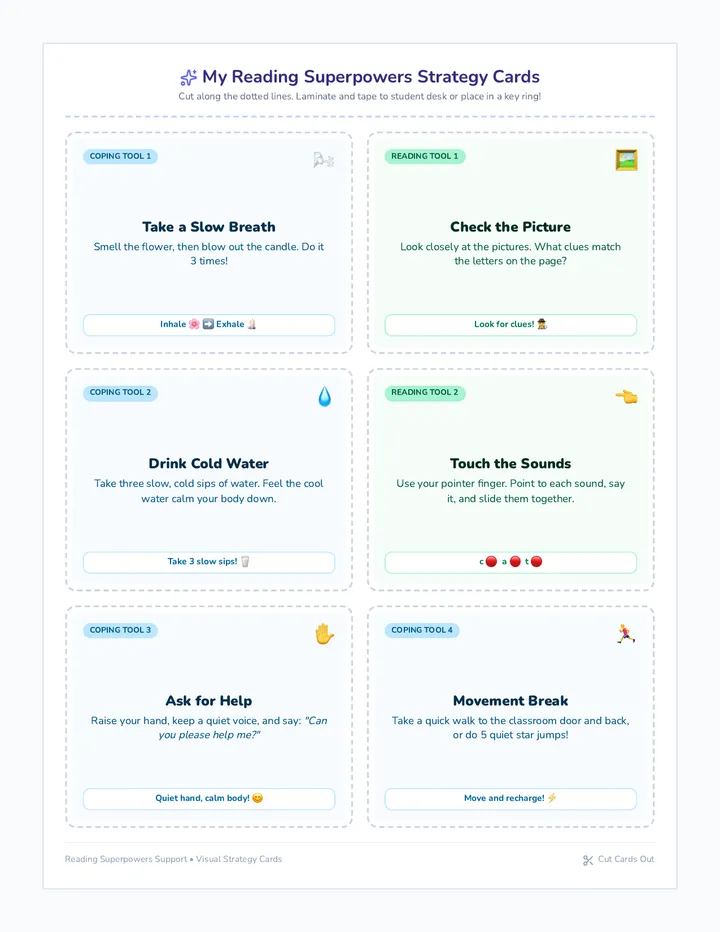
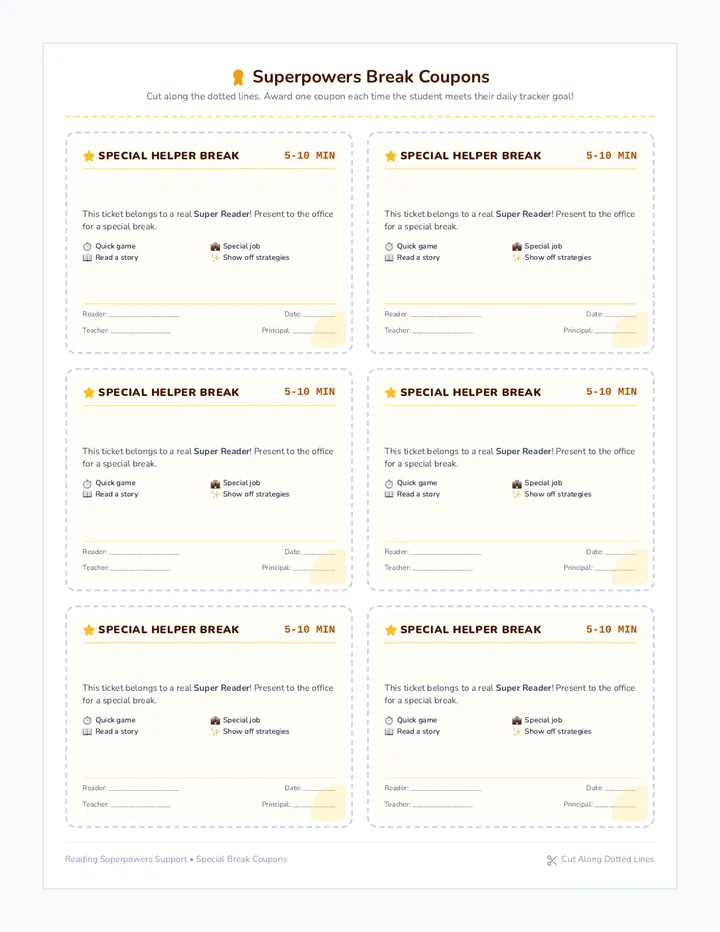
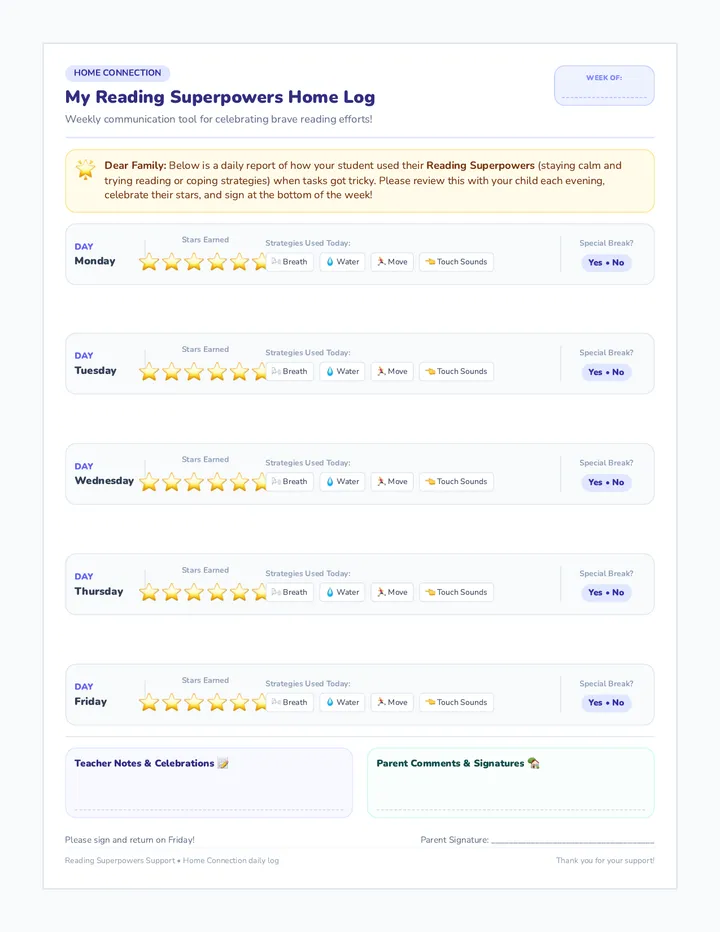
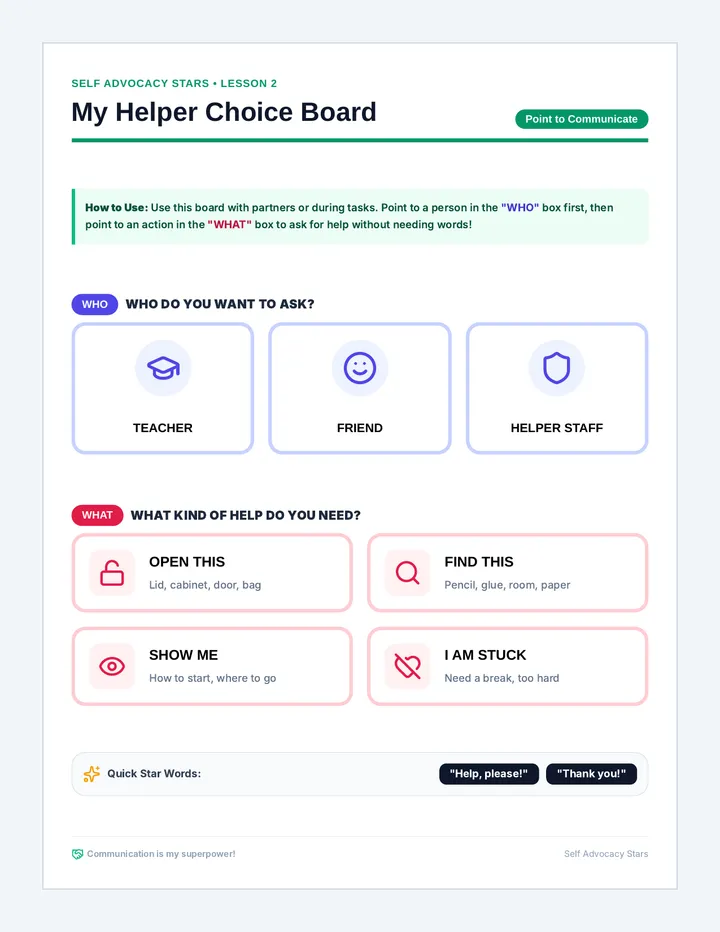
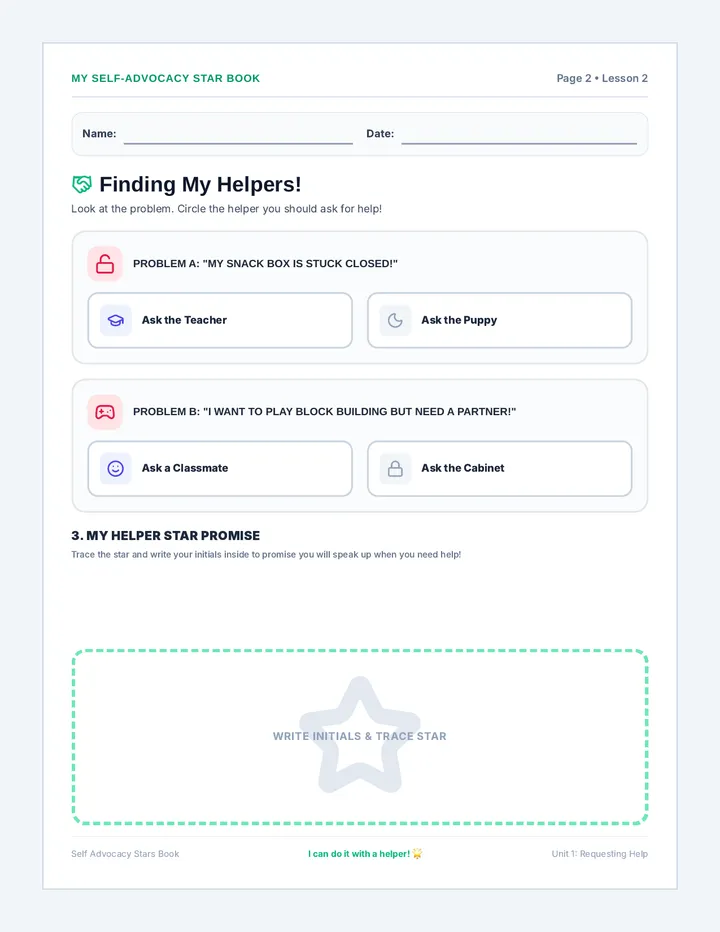
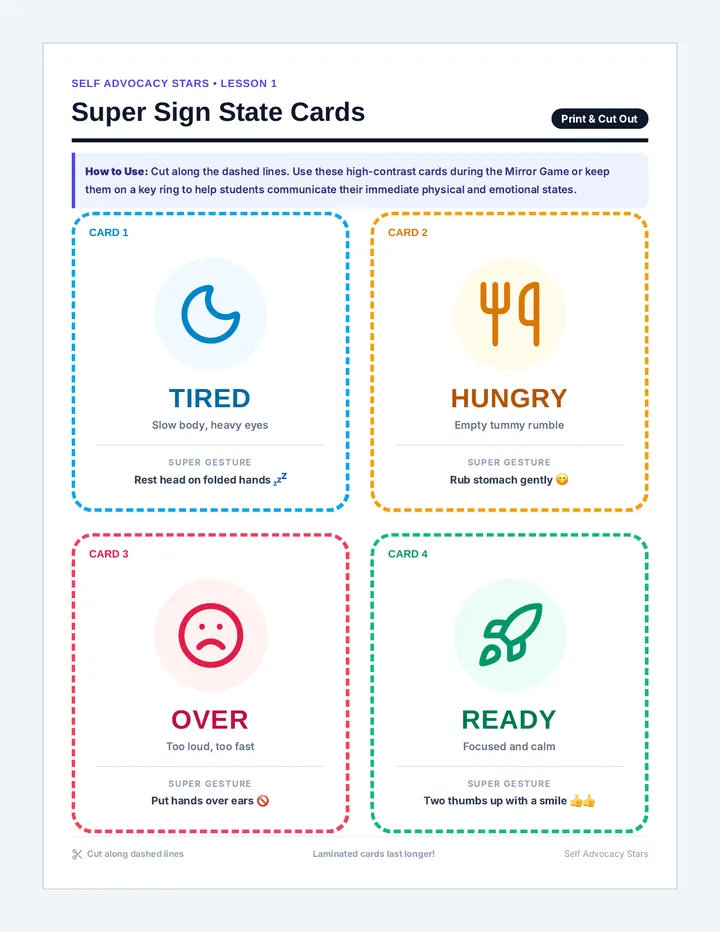
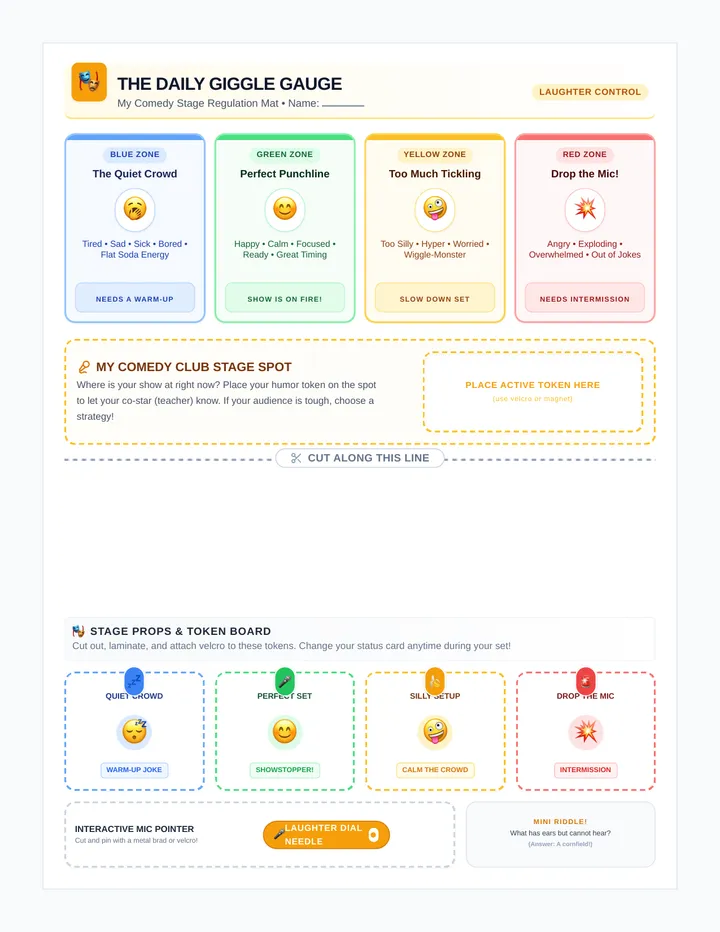
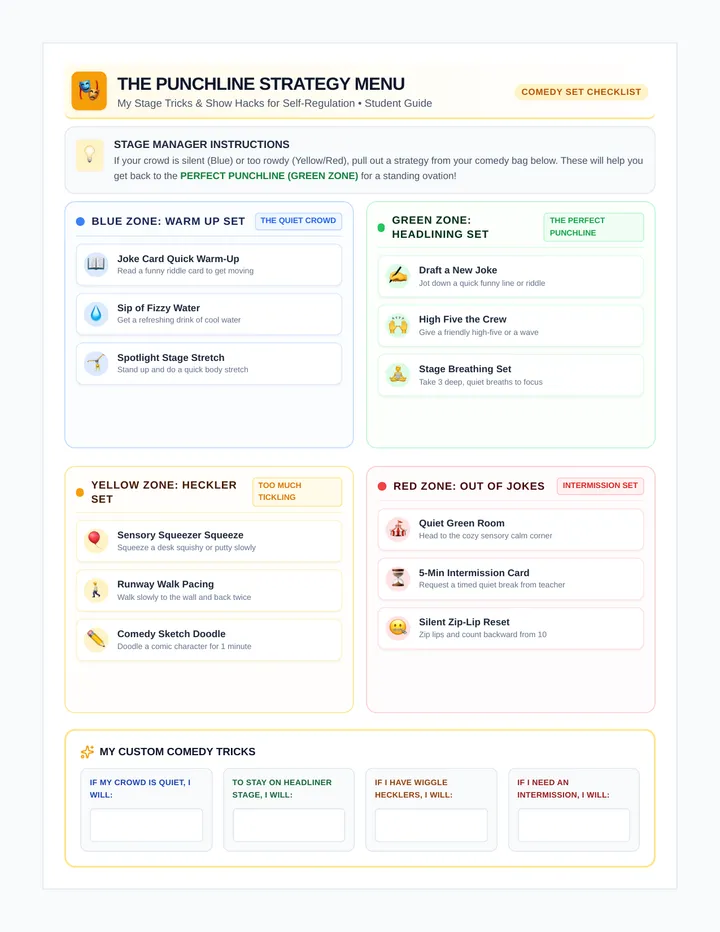
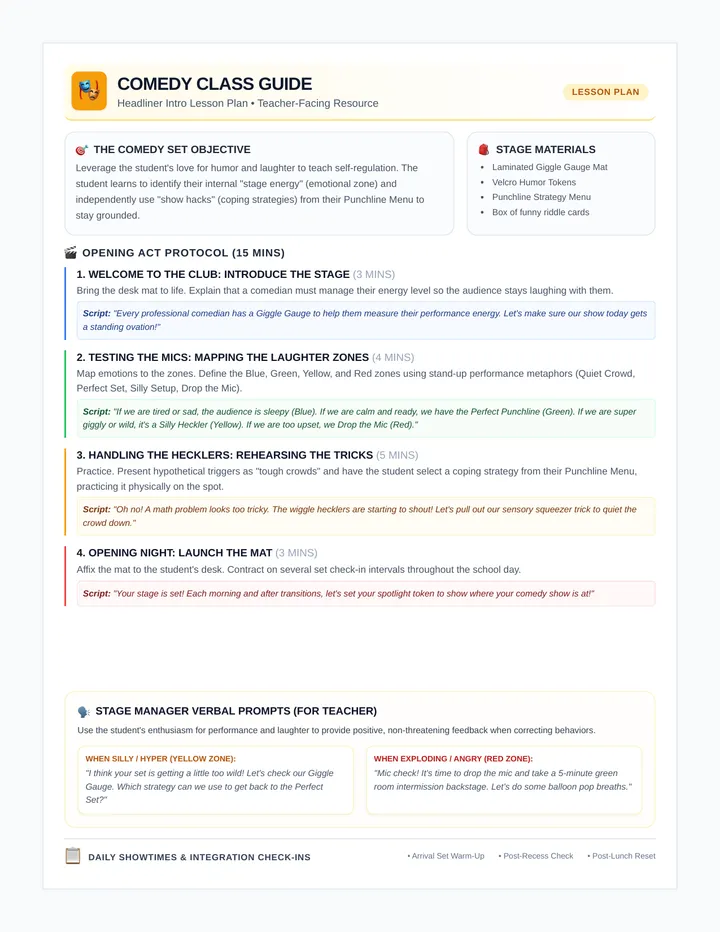
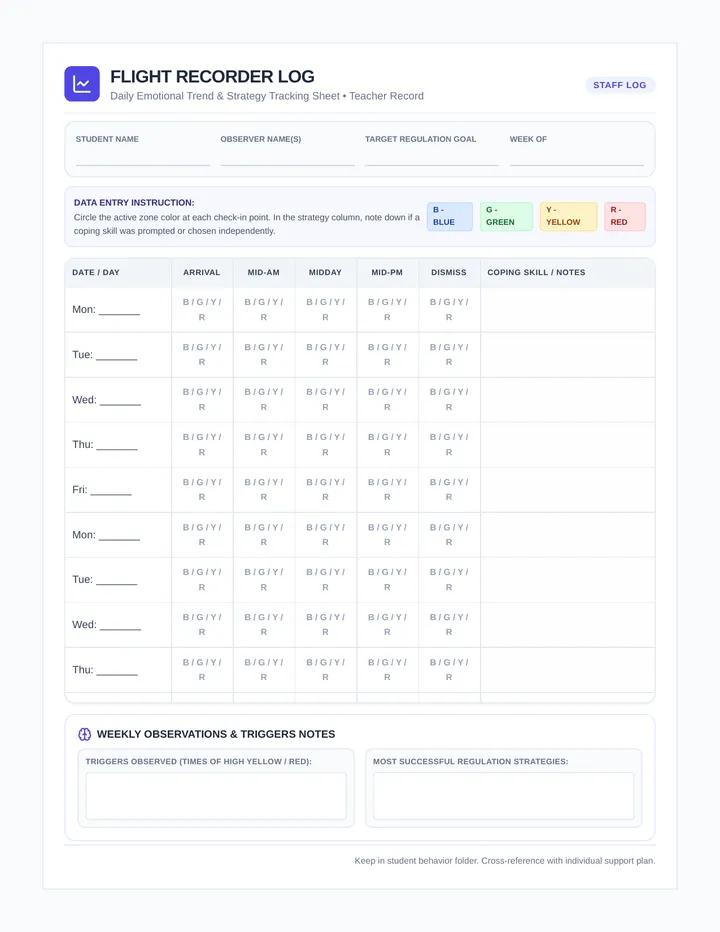
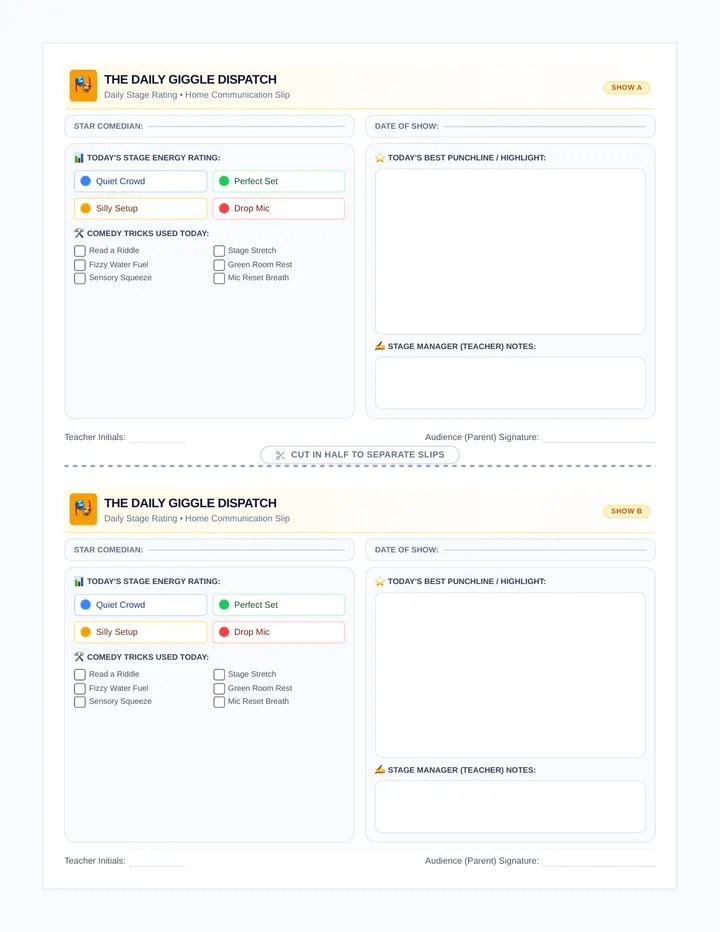
A comprehensive set of tools designed to help kindergarten students with ADHD manage impulsivity through visual cues, self-regulation strategies, and positive reinforcement.
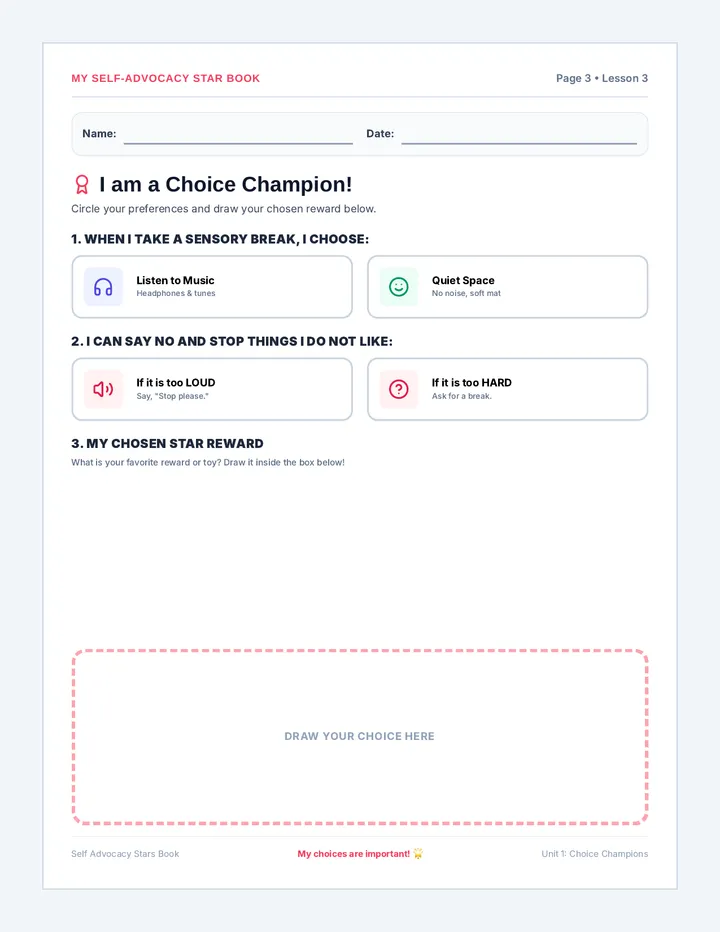
A foundational lesson for students with intellectual disabilities to identify and practice appropriate classroom behaviors like personal space, kind language, and turn-taking through a social story and interactive sorting.
A sophisticated, technical approach to distress tolerance for 2e students, focusing on emotional systems, logical analysis of impulsive vs. regulated behavior, and radical acceptance as a data-driven strategy.
A professional development session for teachers focused on de-escalation strategies and understanding behavioral manifestations of various disability classifications. This lesson aims to shift teacher response from reactive referrals to proactive support using the CPI model and emotional constancy.
This lesson introduces middle school students in therapeutic settings to the concept of working memory using the 'Mental Workbench' analogy. Students will practice auditory and visual-spatial memory tasks and learn strategies to manage 'cognitive overload' in a supportive environment.
A comprehensive guide on scoring Correct Writing Sequences (CWS) in Writing Curriculum-Based Measurement, focusing on calculating accuracy percentages to monitor student progress.
A culminating project where students reflect on the 8-week journey and create a 'Value Vault' for themselves or Gregor.
Analyzes the end of the novella, Gregor's death, and the family's disturbing relief and new-found 'value'.
Focuses on Part III, the arrival of the boarders, and Gregor becoming a 'nuisance' in his own home.
Analyzes the climax of Part II, the father's return to work, and the symbolic 'apple' attack on Gregor.