An engaging end-of-year reflection activity designed for middle school speech-language therapy students, featuring a self-assessment survey and printable appreciation cards to express gratitude to peers and school staff.
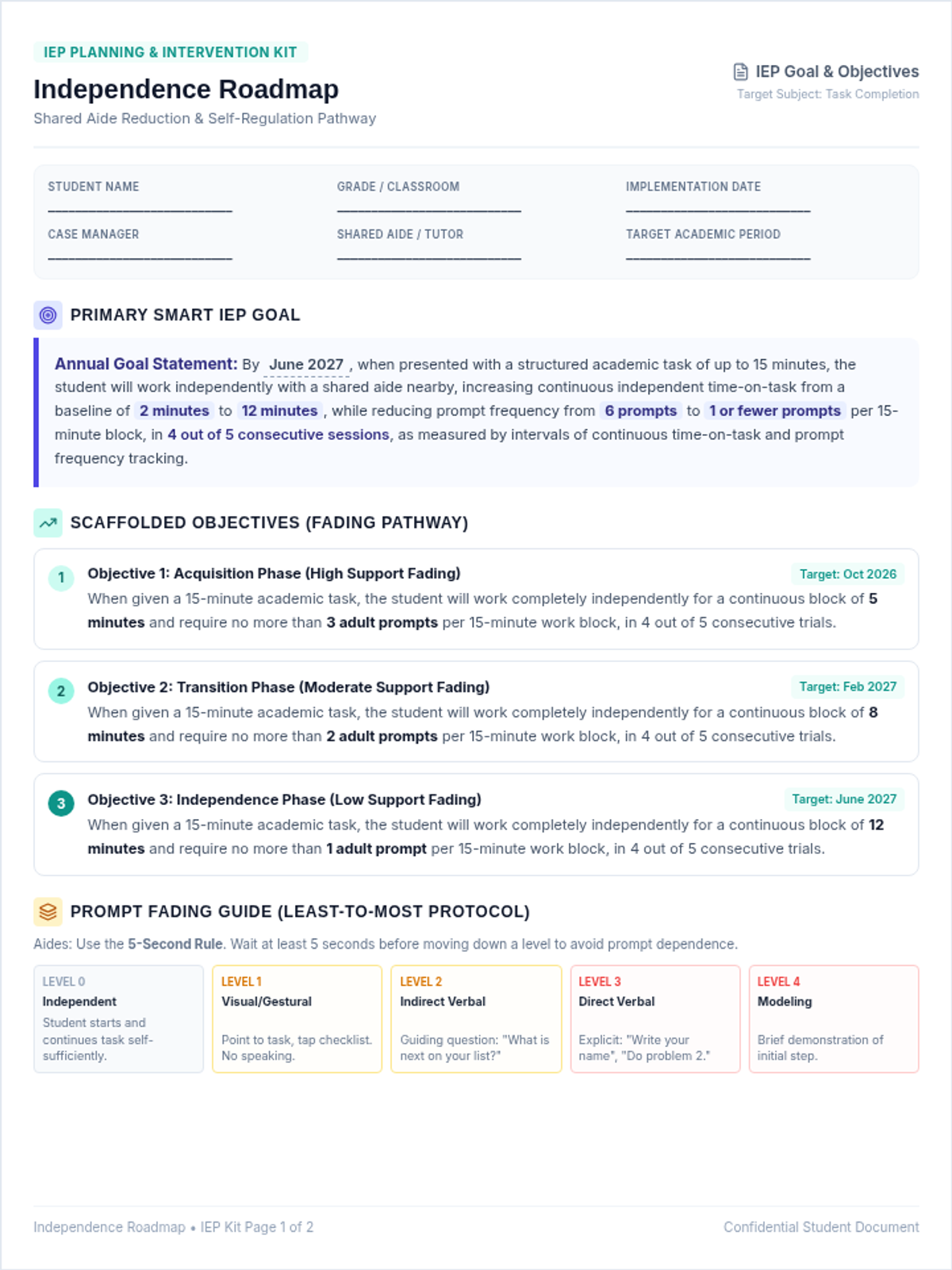
A comprehensive IEP goal planning and progress tracking system designed to transition a student from shared aide dependence to independent classroom work completion.
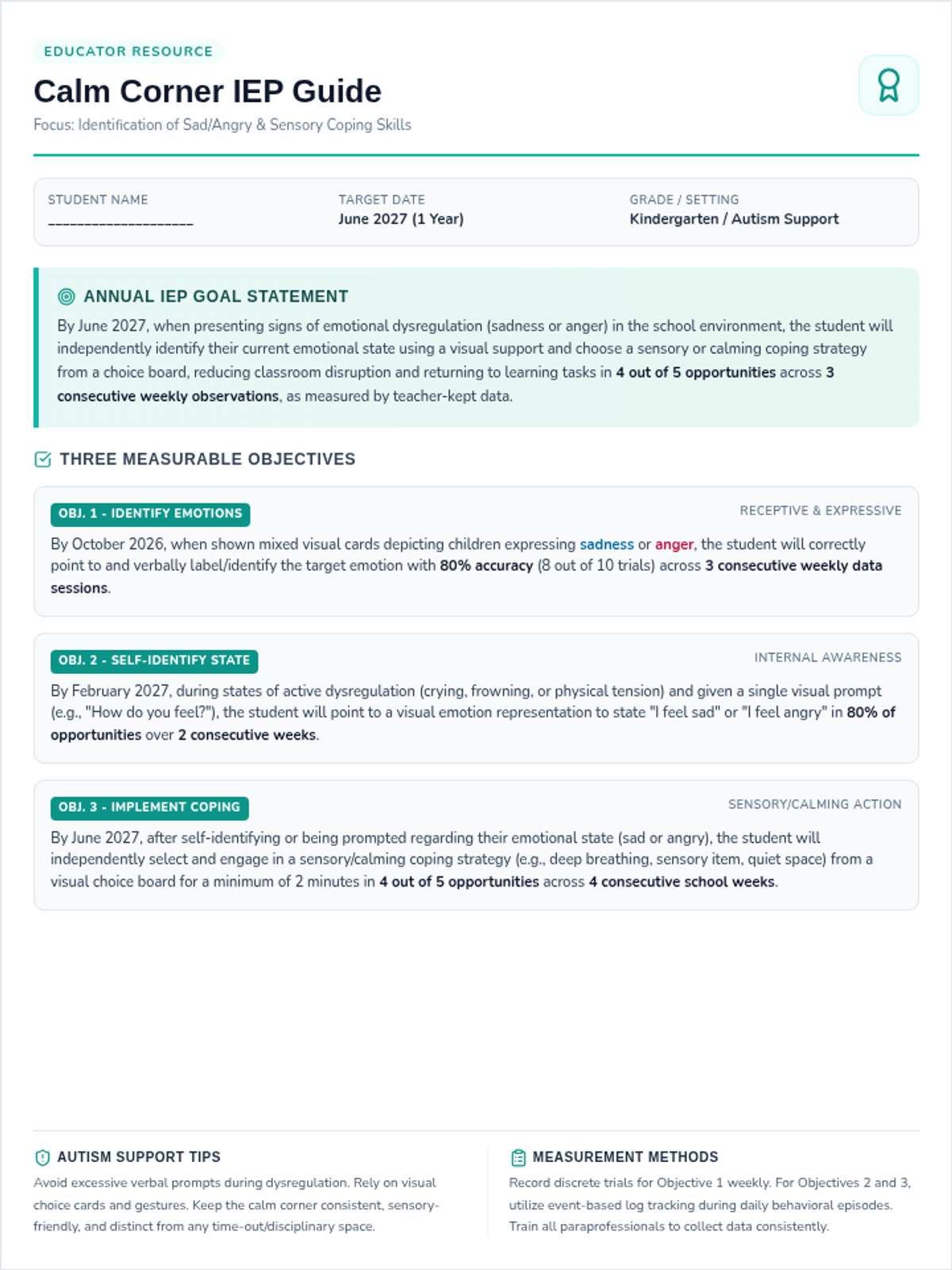
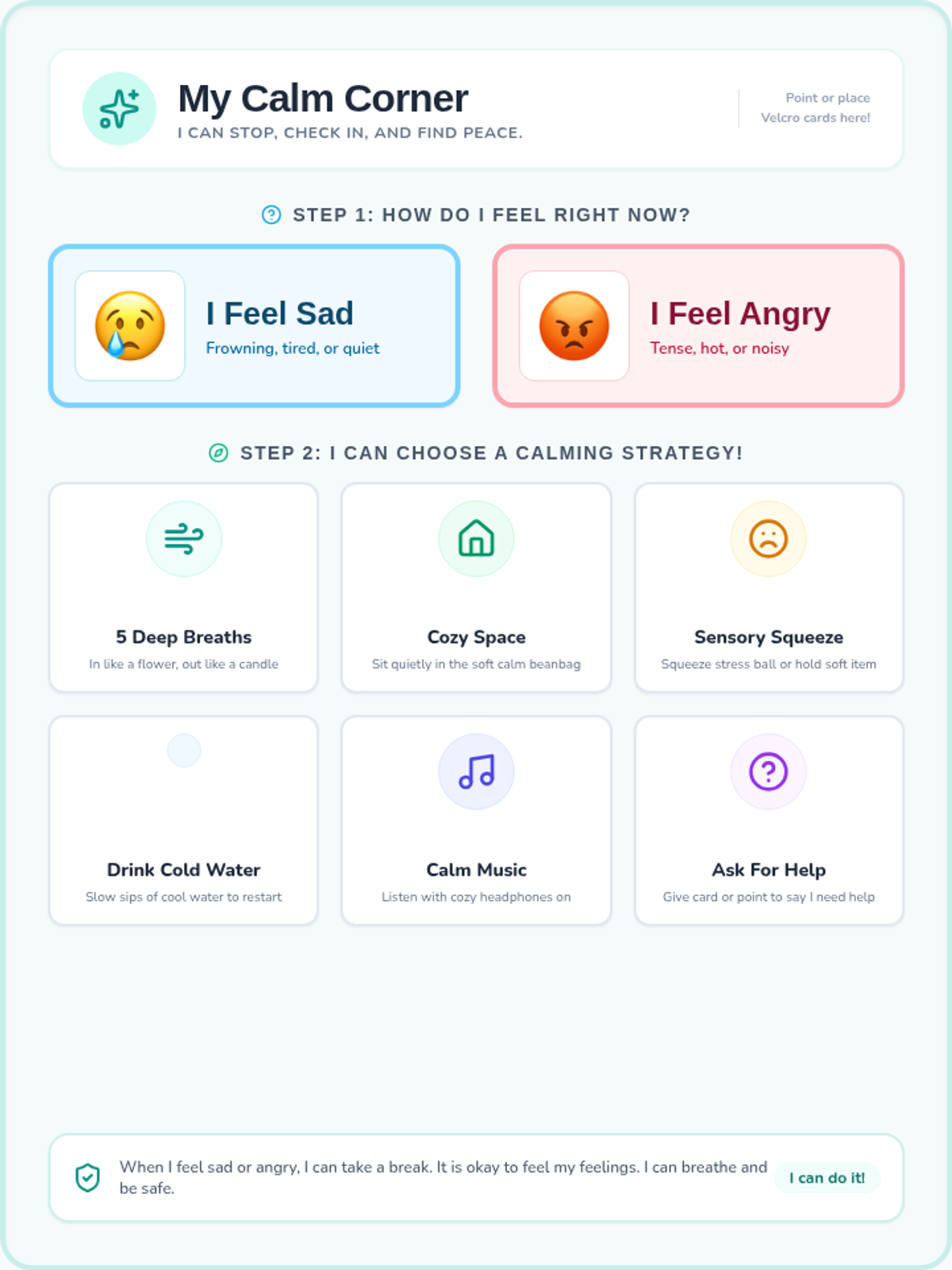
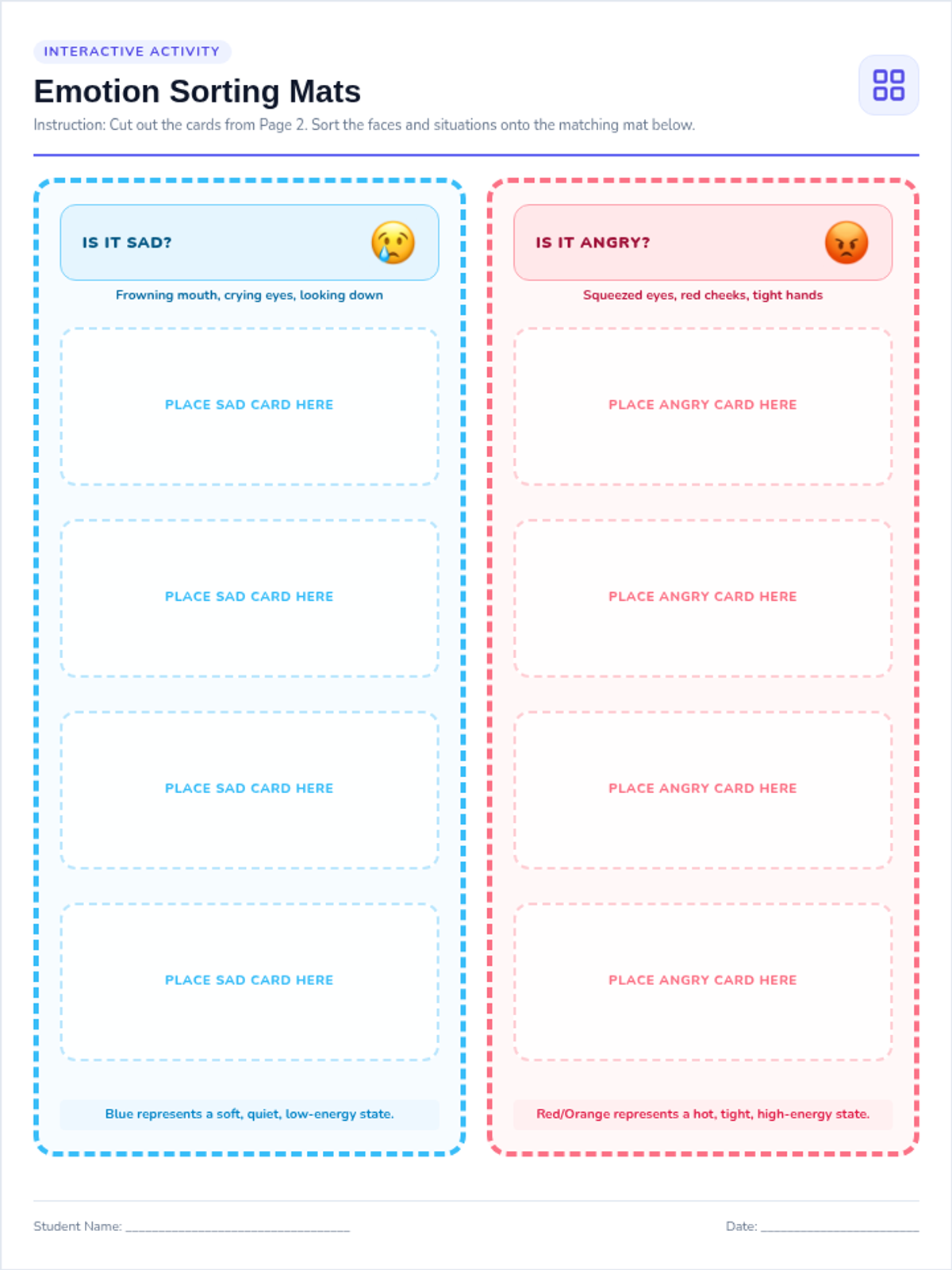
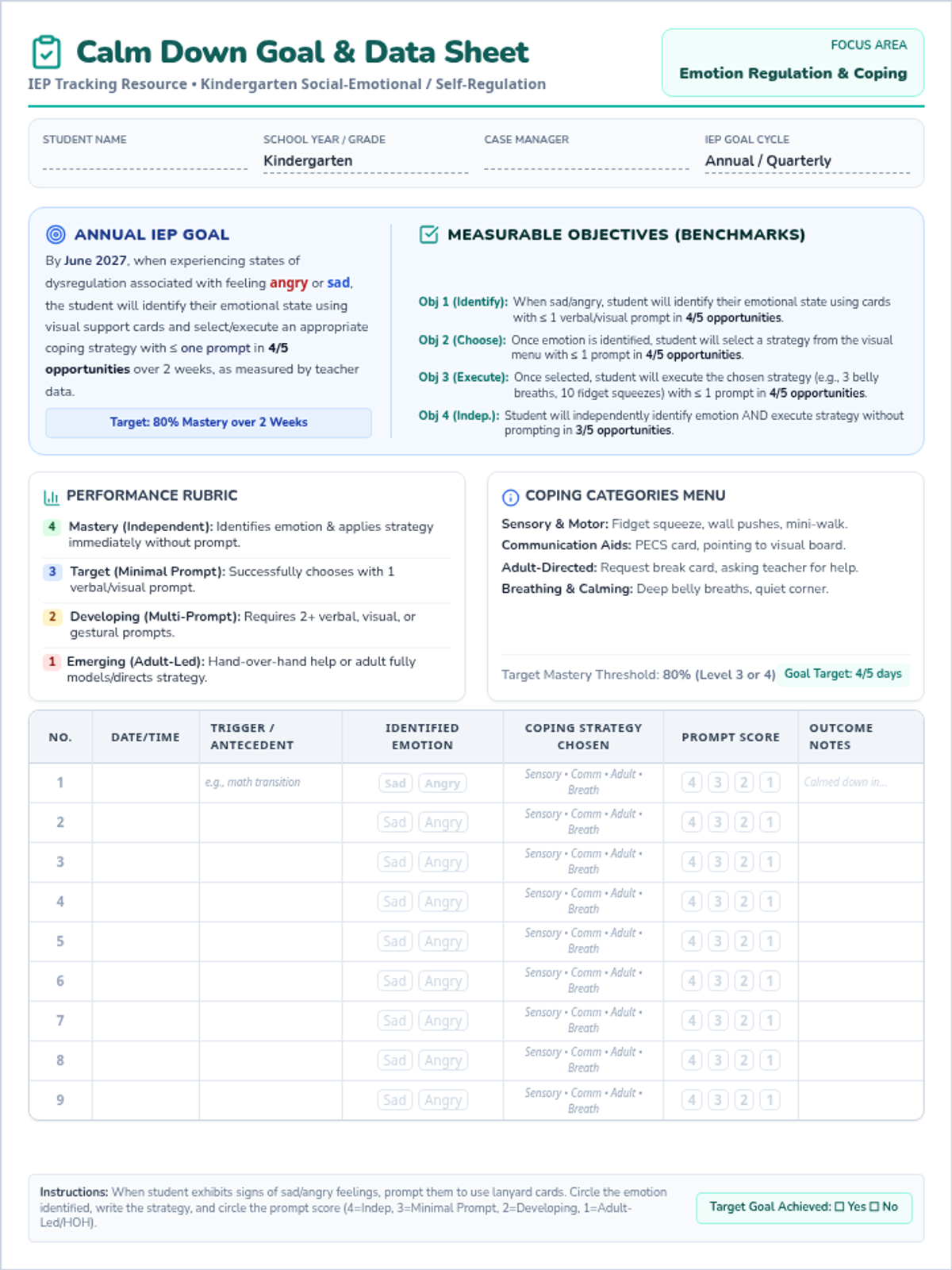
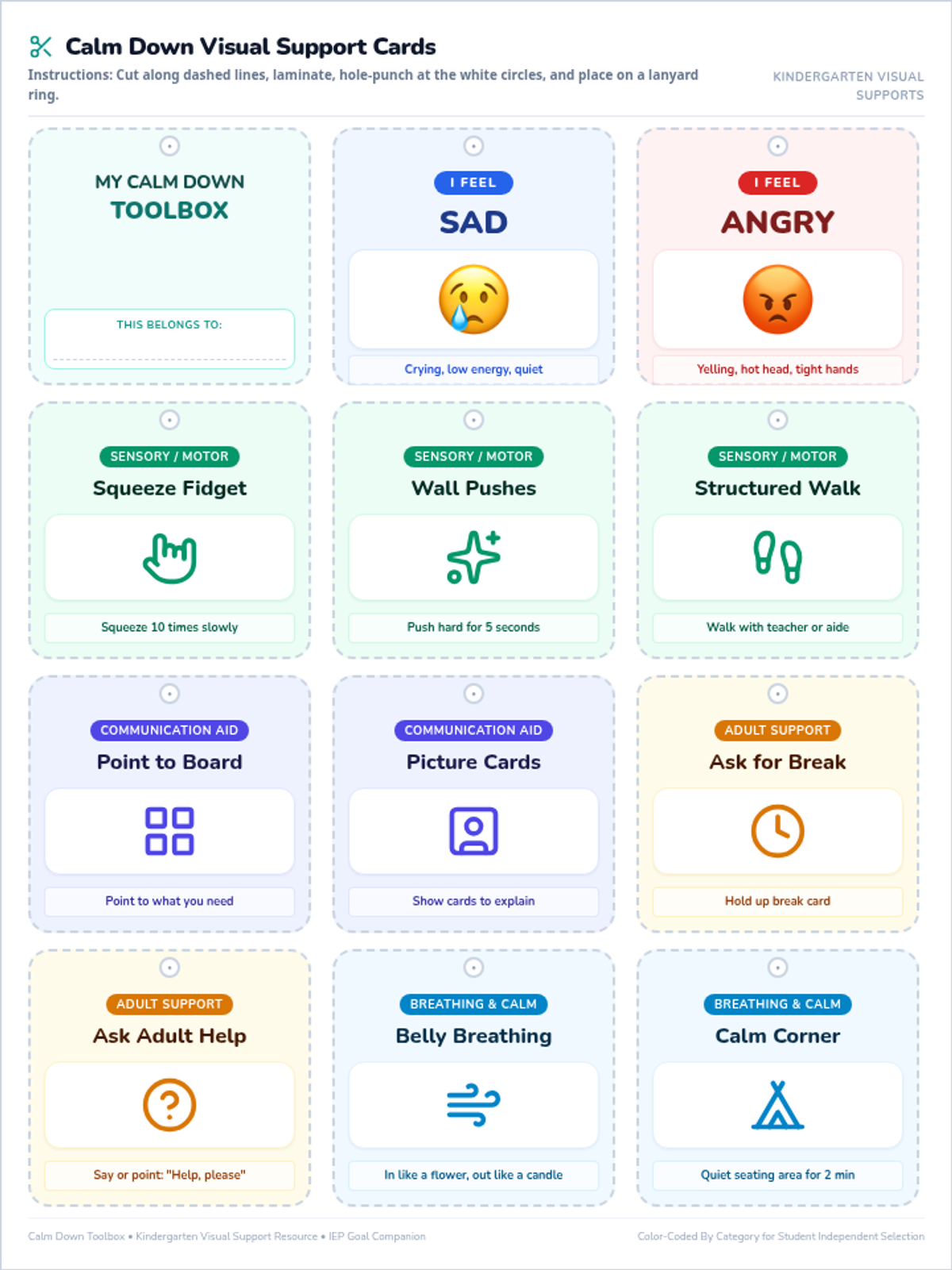
A structured support program designed for Kindergarten students with autism, focusing on identifying sad and angry emotions and utilizing sensory and calming coping strategies.
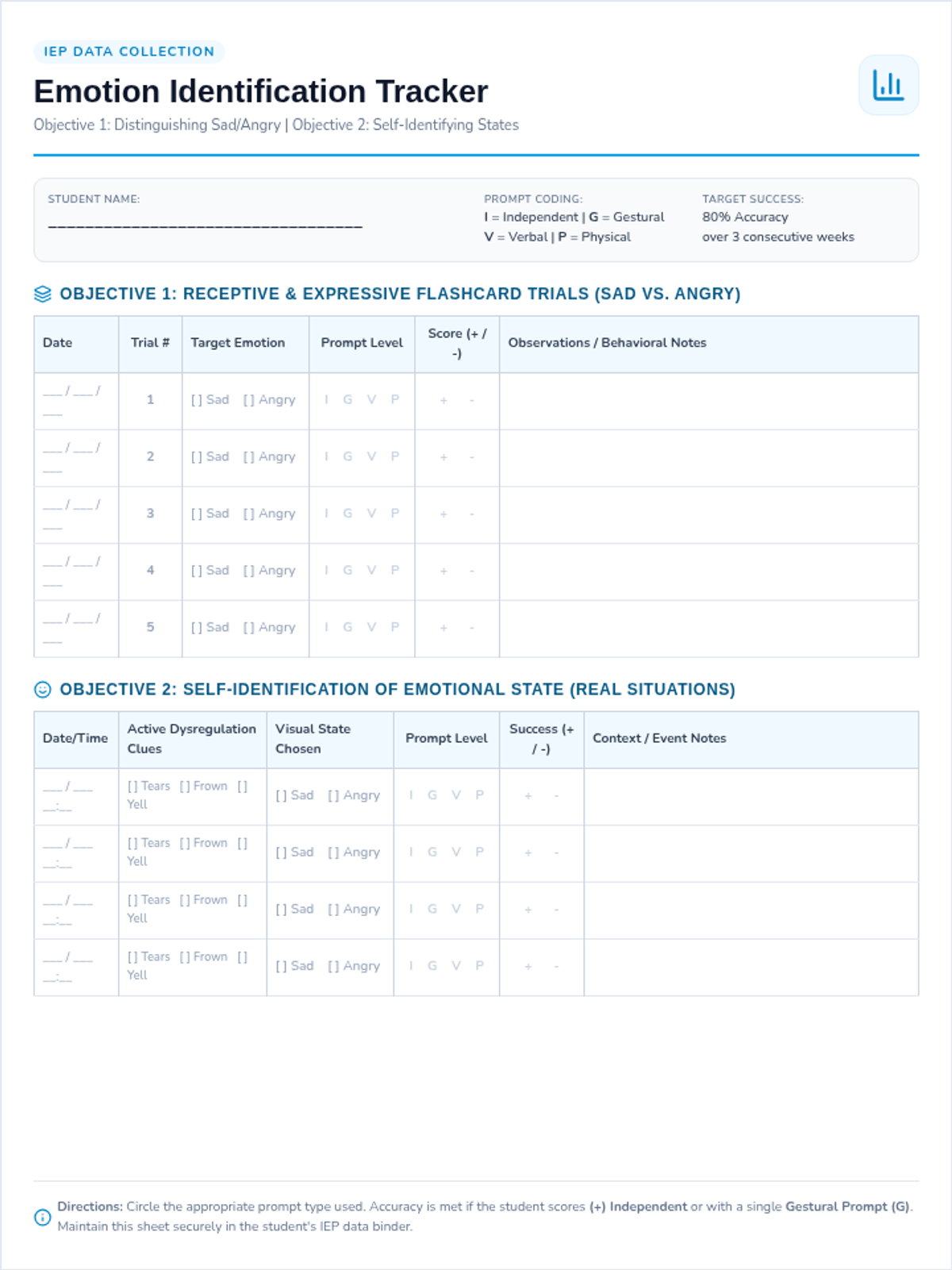
A specialized kit designed to support a Kindergarten student with autism in identifying emotions and practicing coping strategies. Includes a clear IEP goal and data collection sheet, along with printable visual support cards.
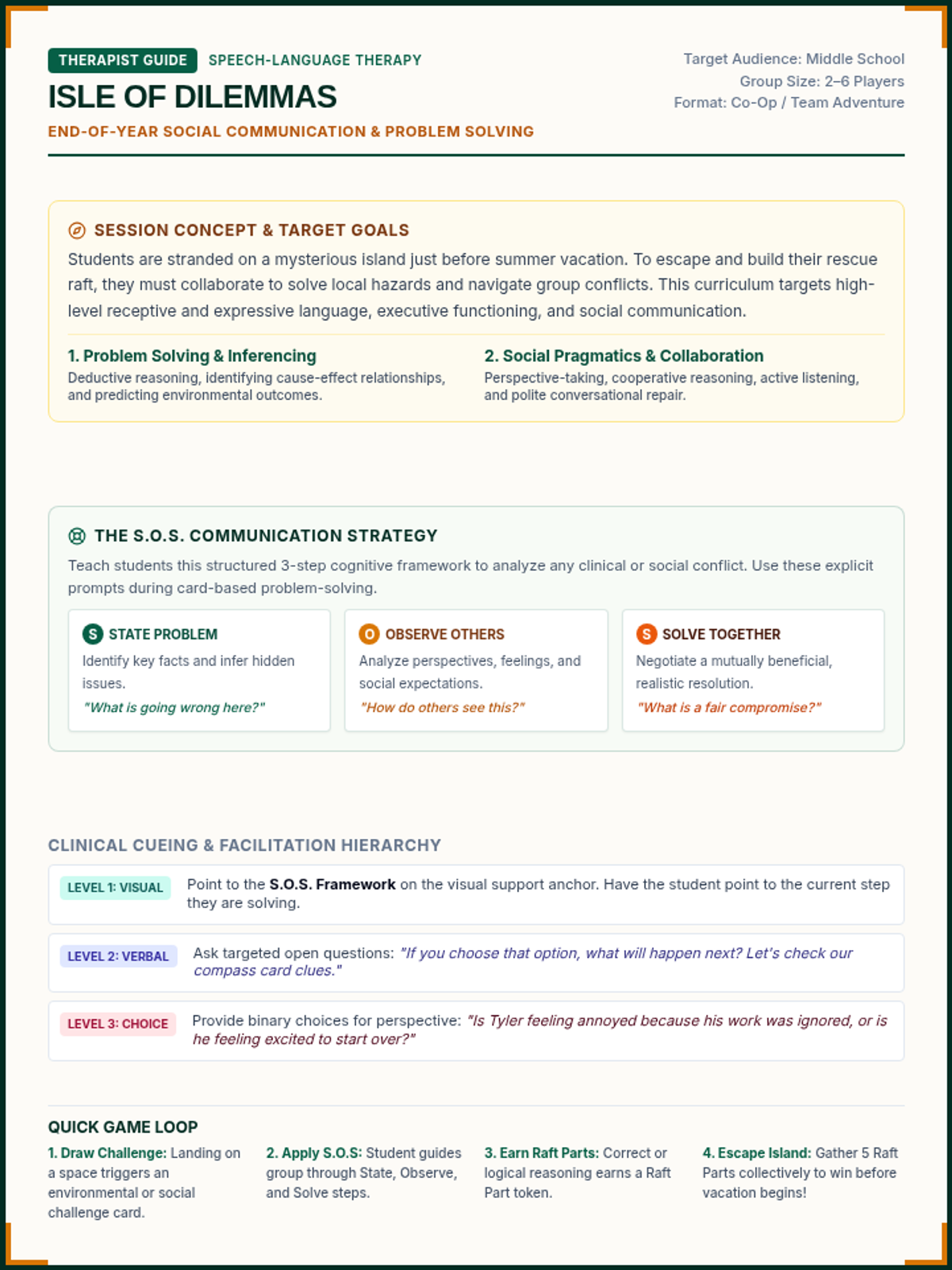
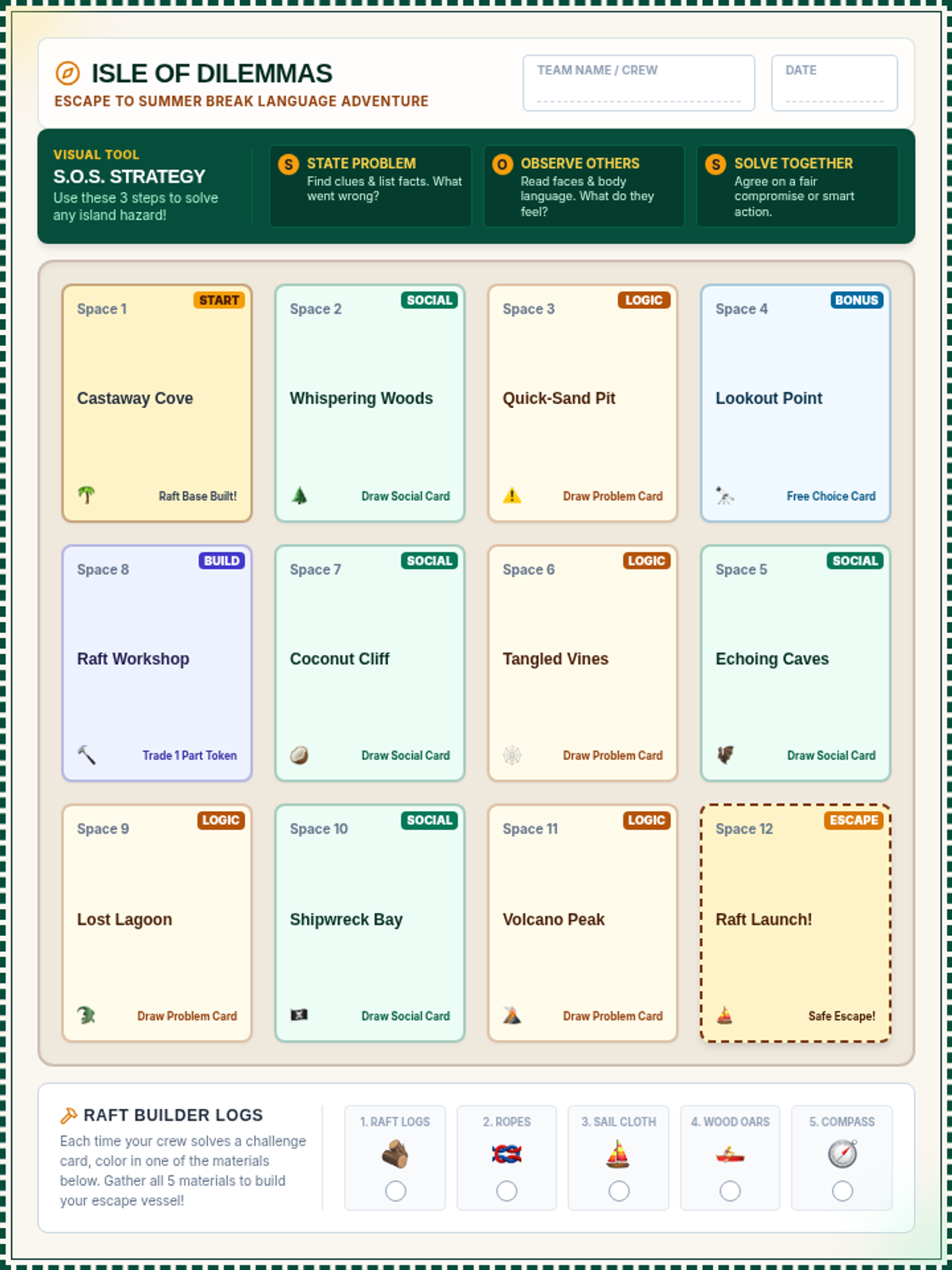
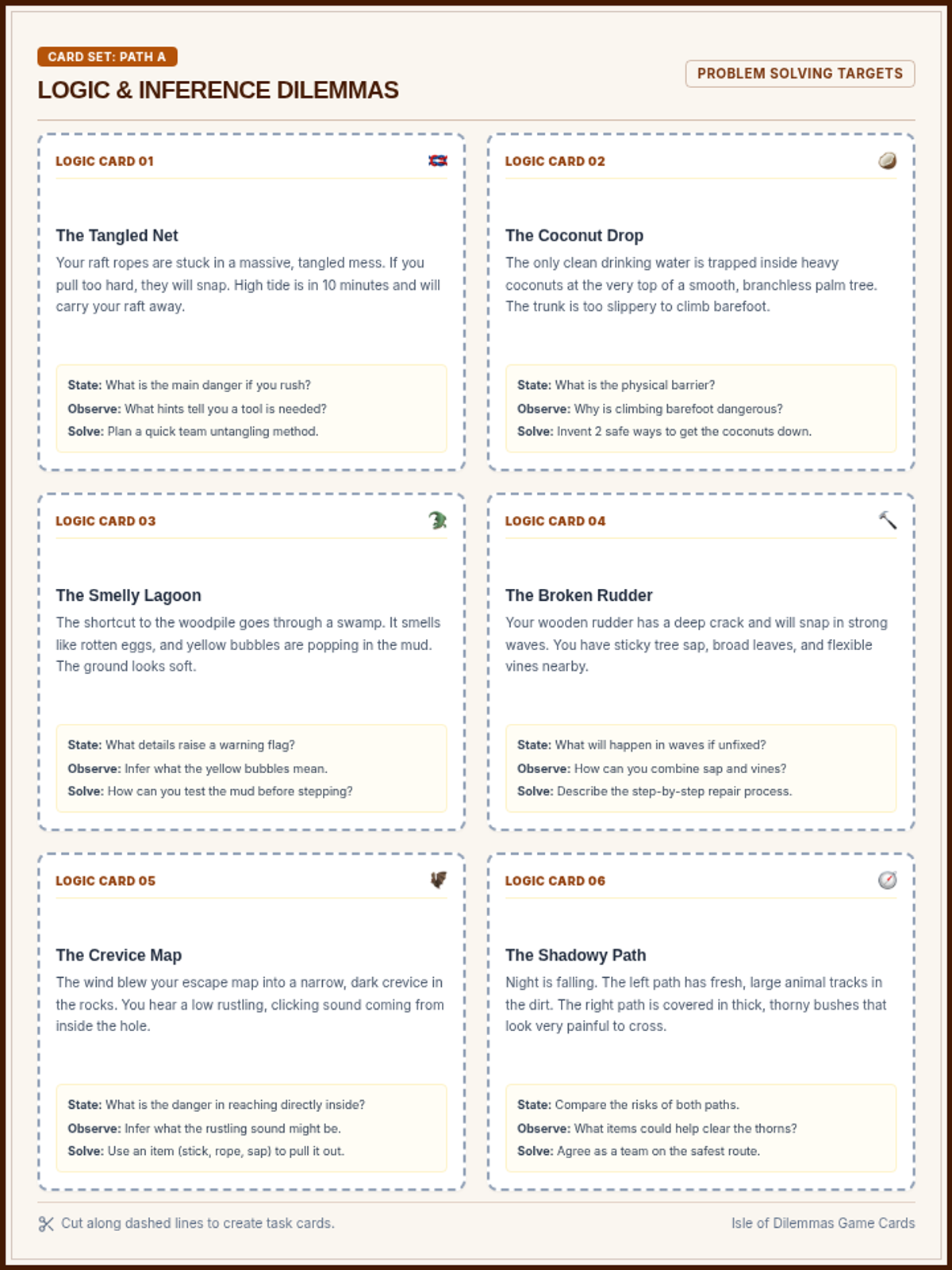
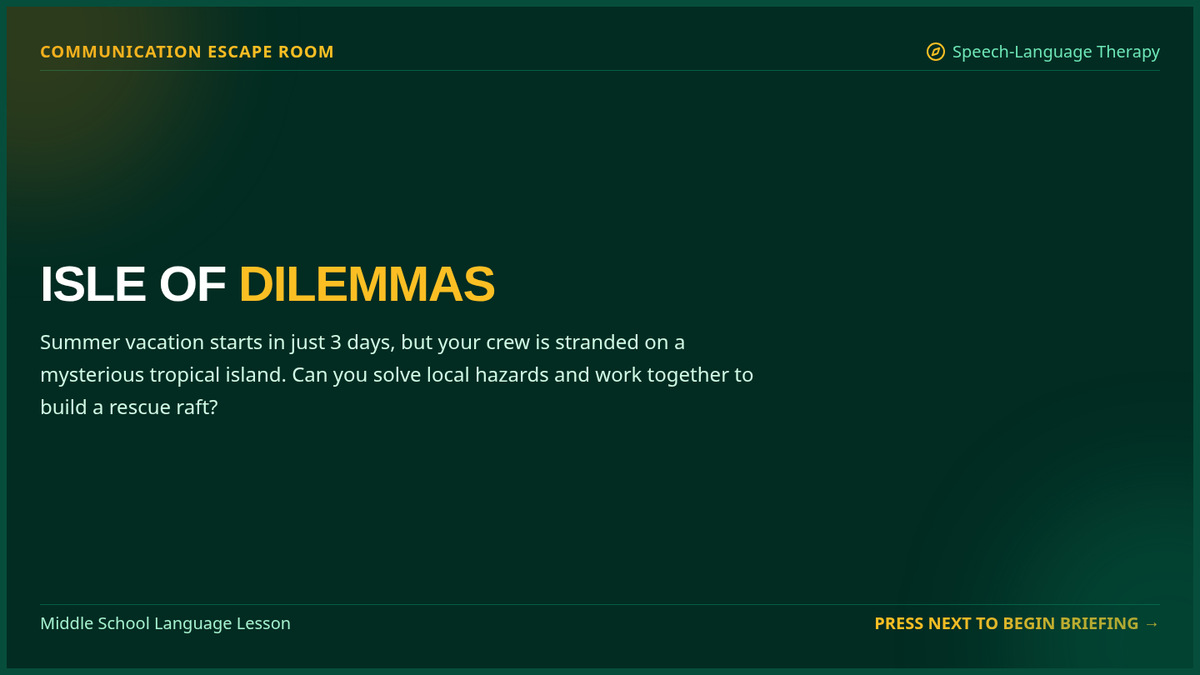
An adventure-themed speech-language therapy lesson for middle schoolers to practice problem-solving, inferencing, and social communication. Students solve 'island dilemmas' to escape a mysterious tropical island before summer break begins.
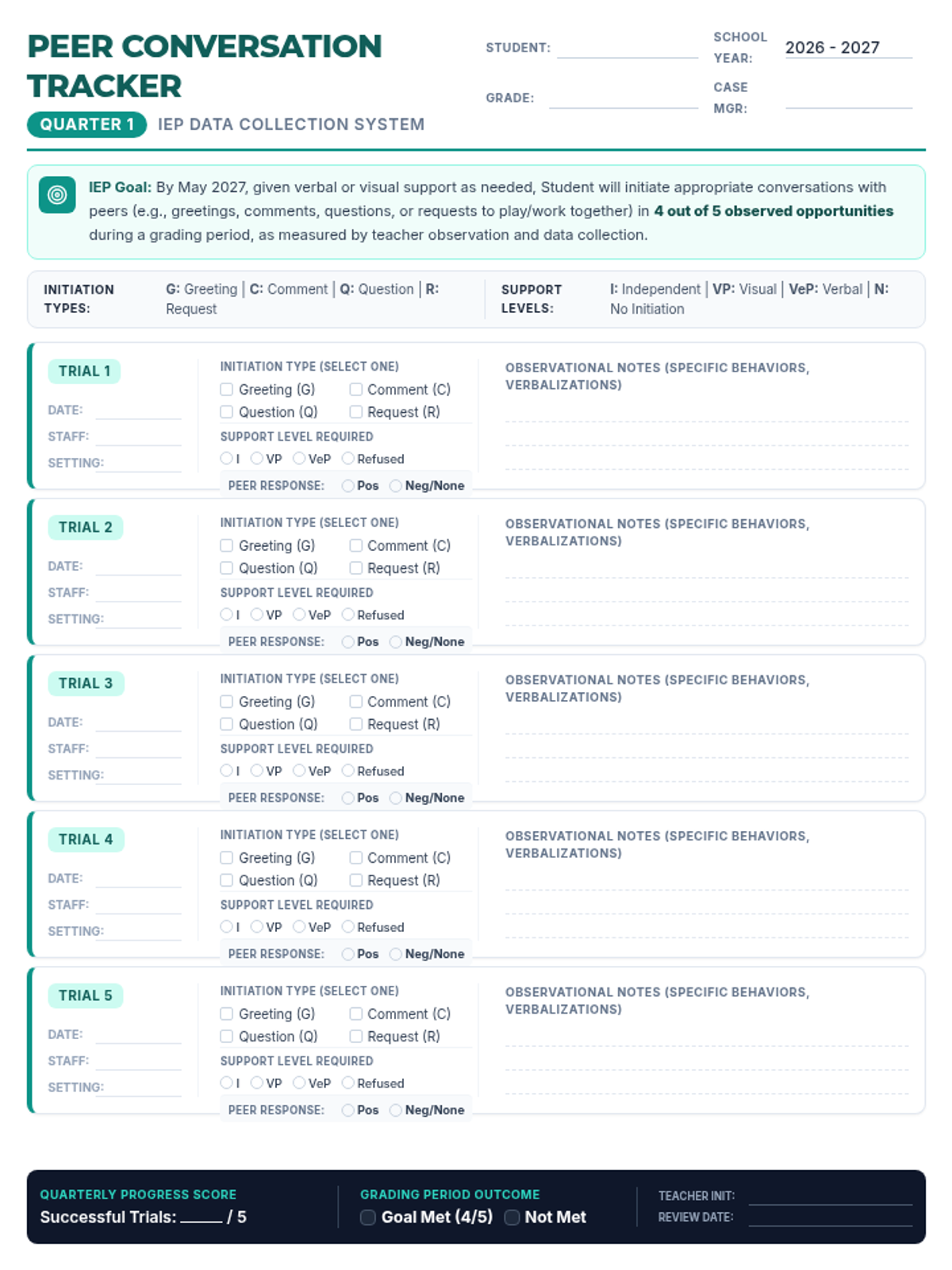
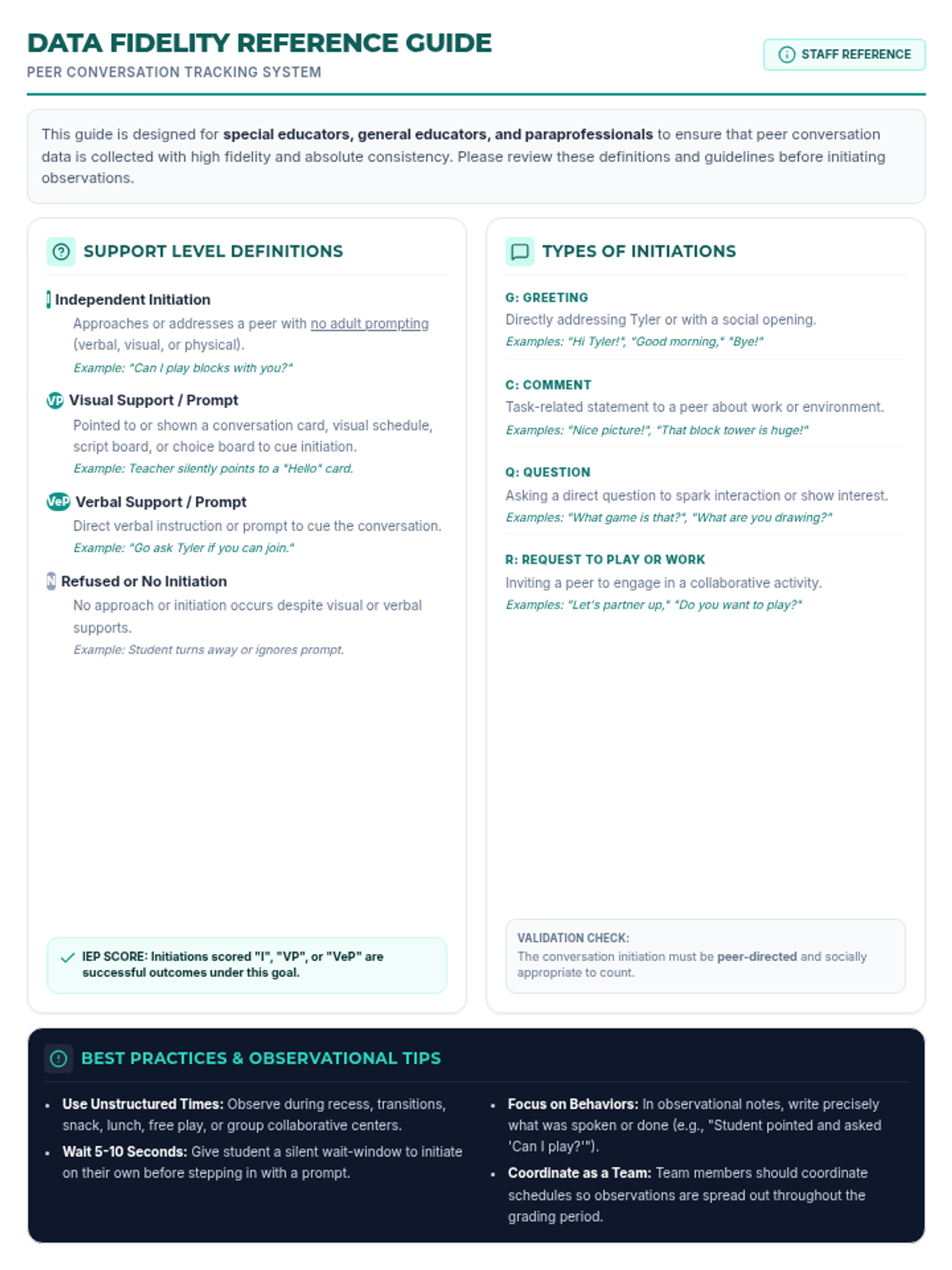
A collection of highly structured data tracking sheets for monitoring and recording student progress on IEP social skills goals, specifically focusing on peer conversational initiations with varying levels of prompt supports.
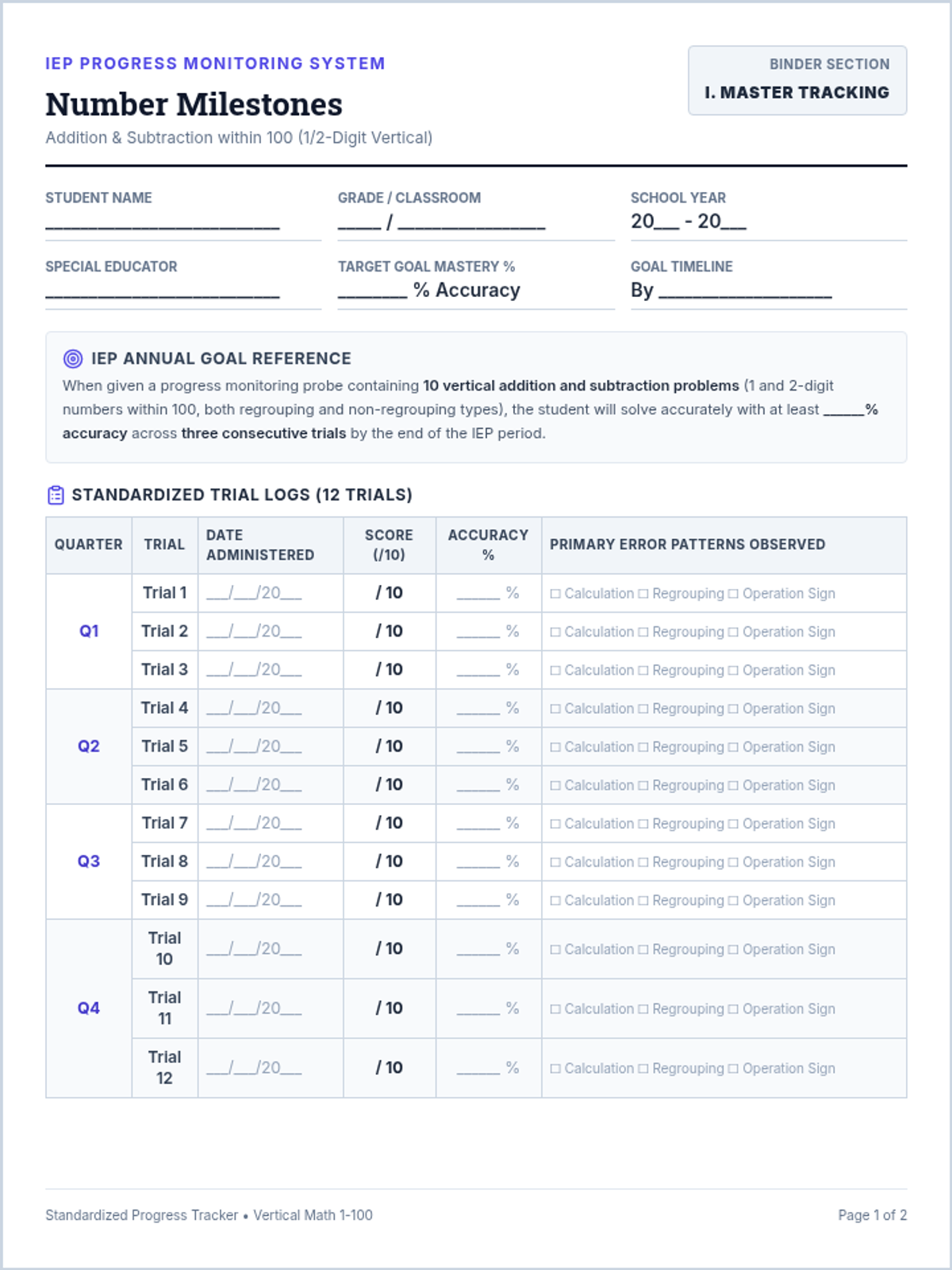
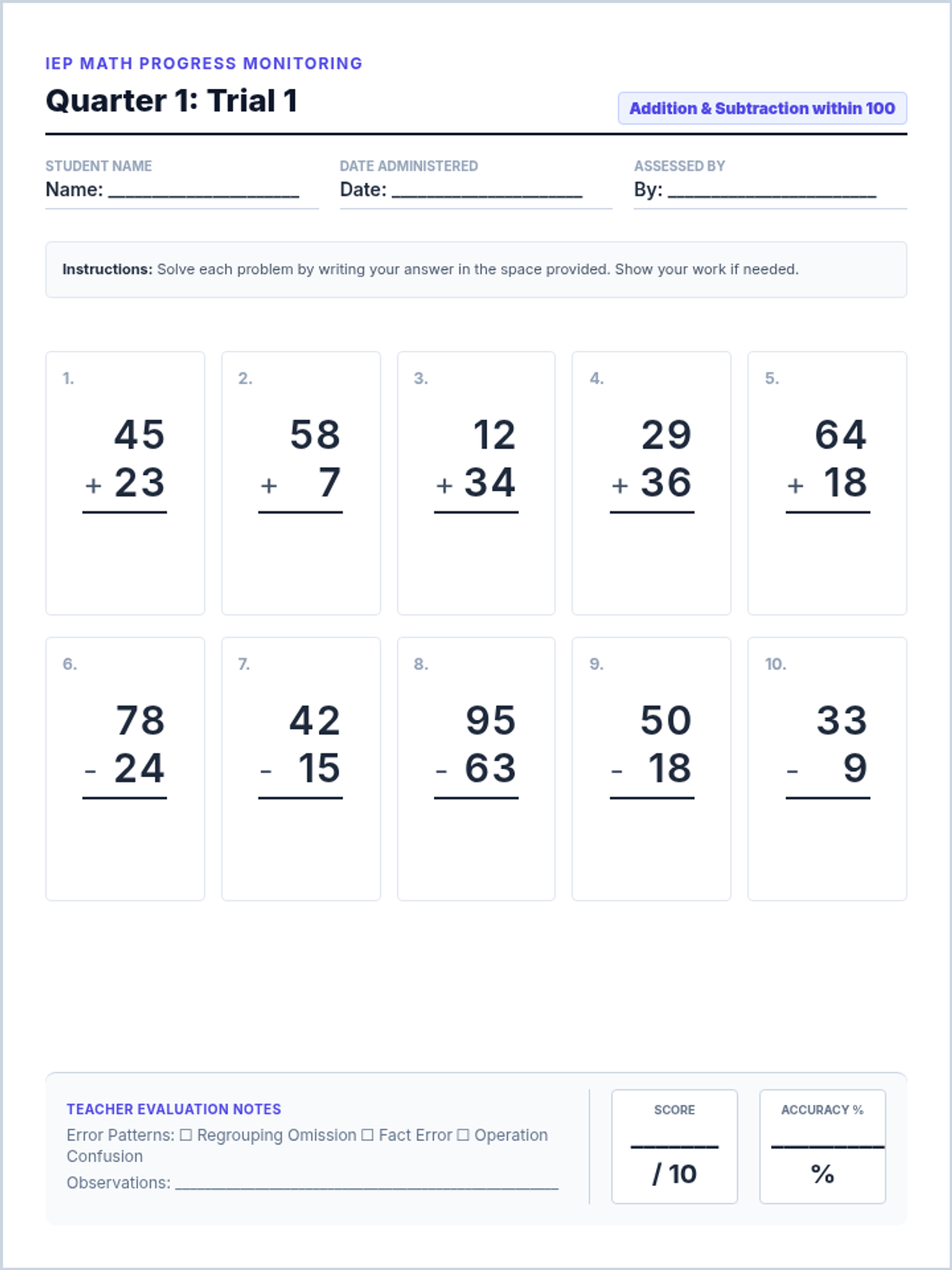
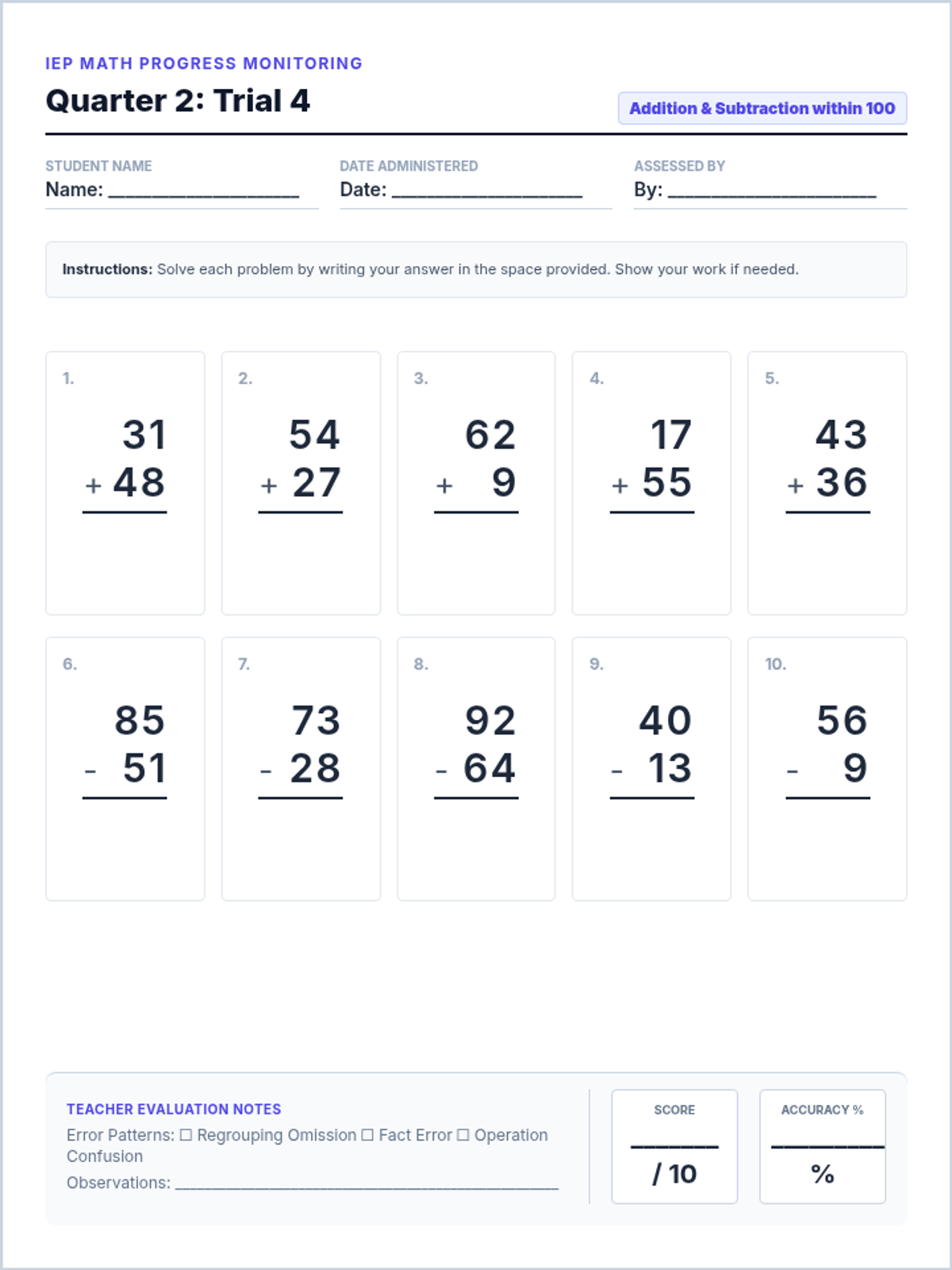
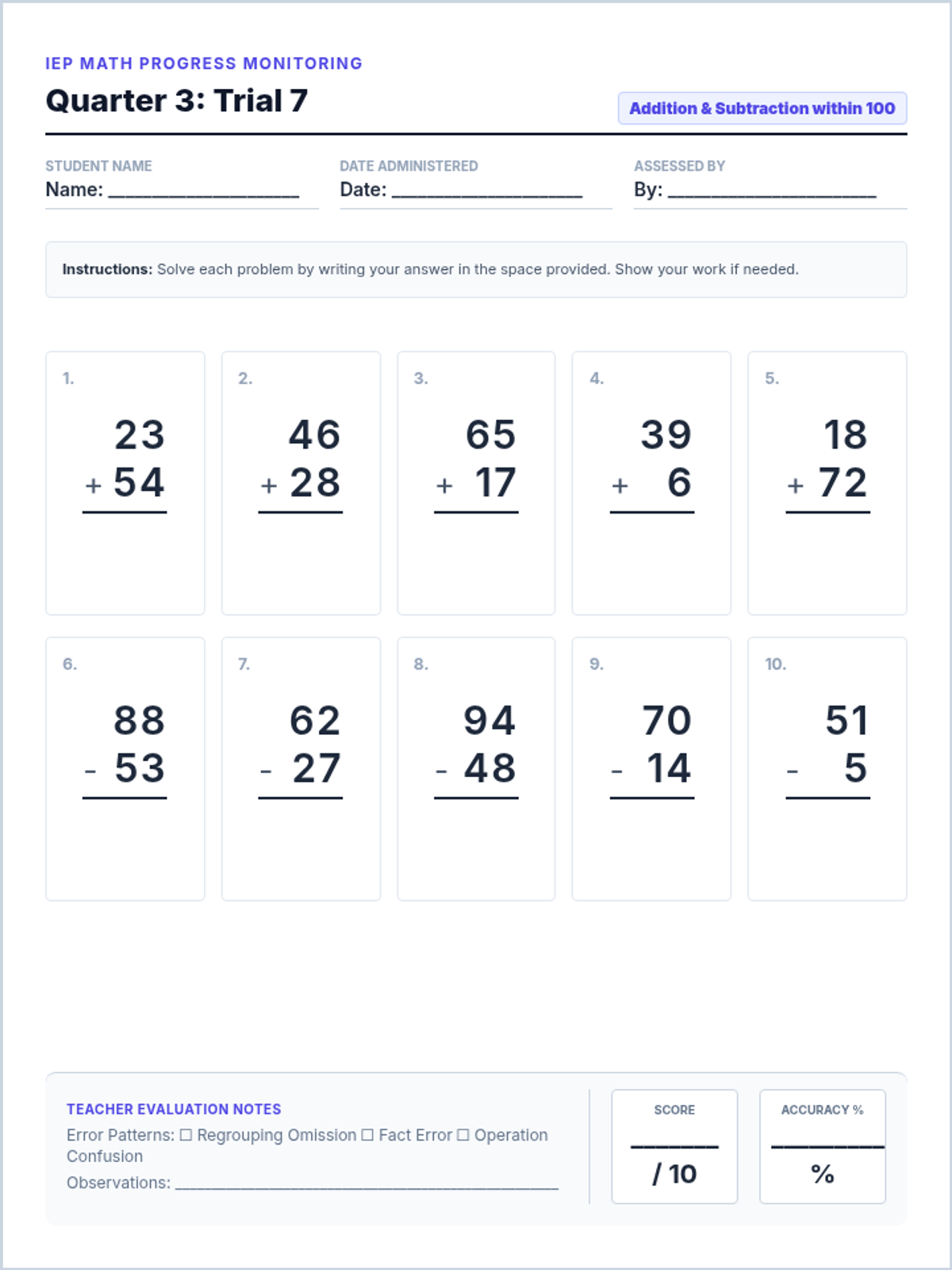
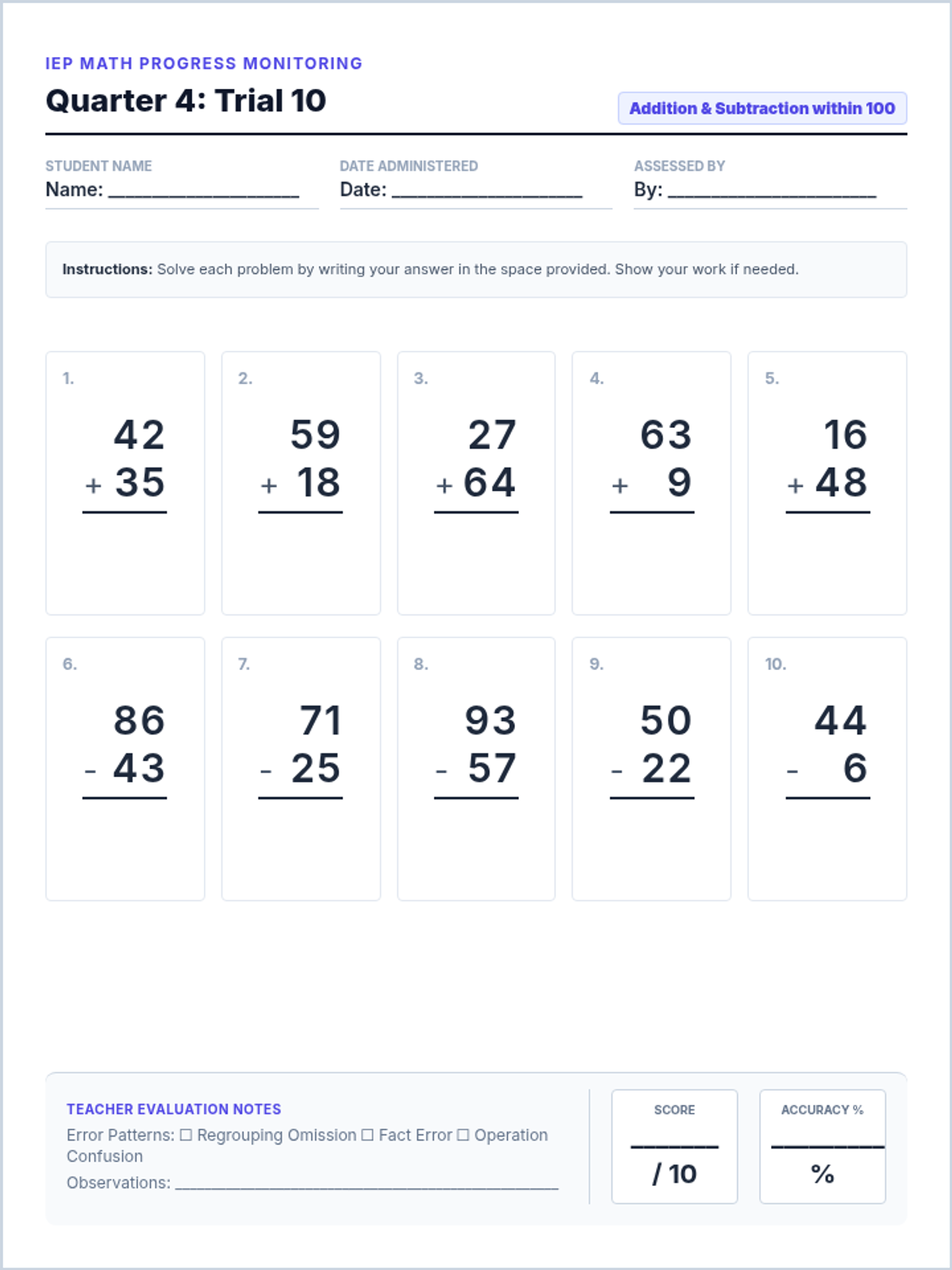
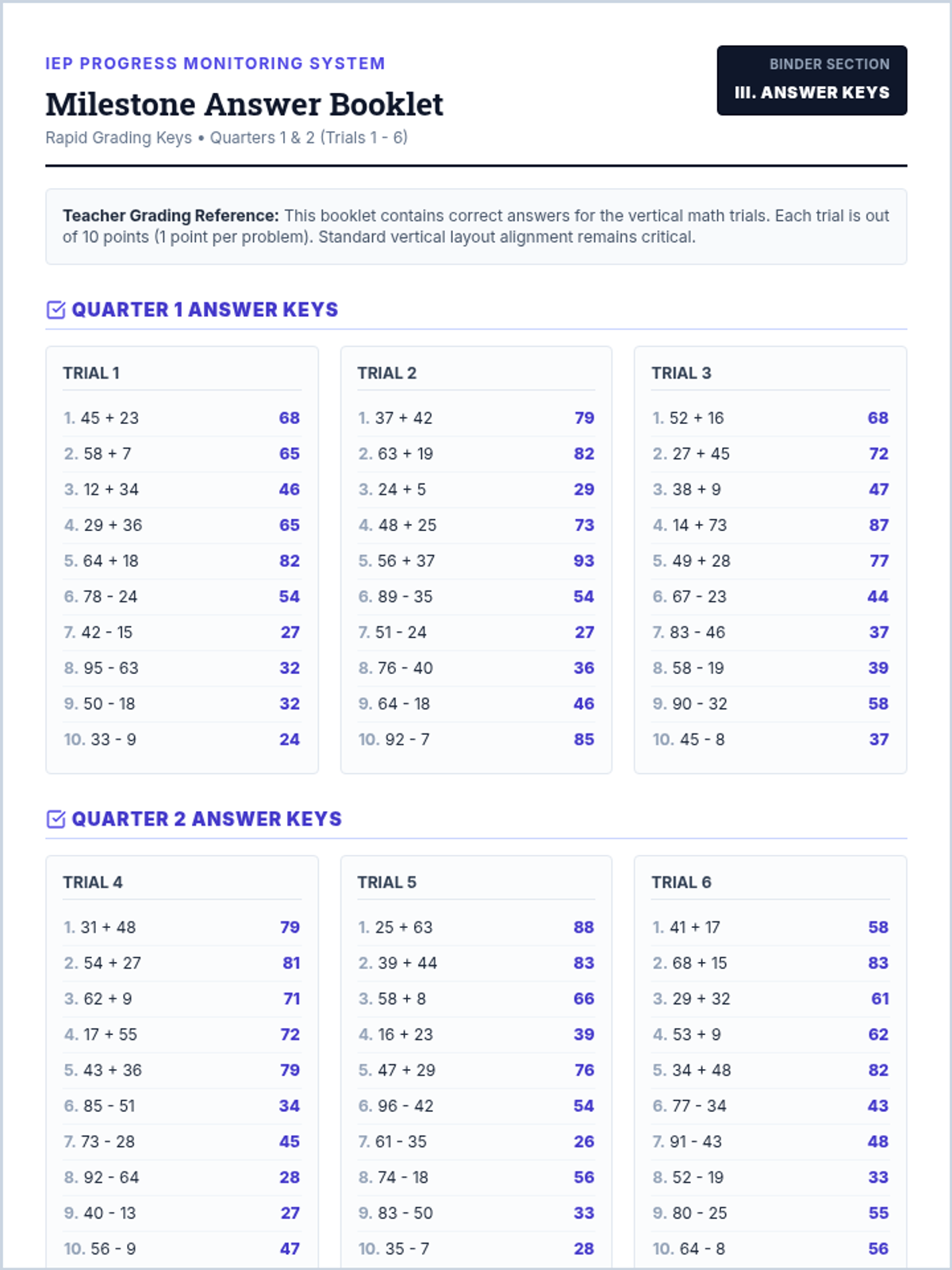
A systematic progress monitoring tracking binder for tracking student mastery of 1 and 2-digit vertical addition and subtraction within 100, featuring 12 standardized trials across four quarters, IEP goal tracking data sheets, and a complete teacher answer booklet.
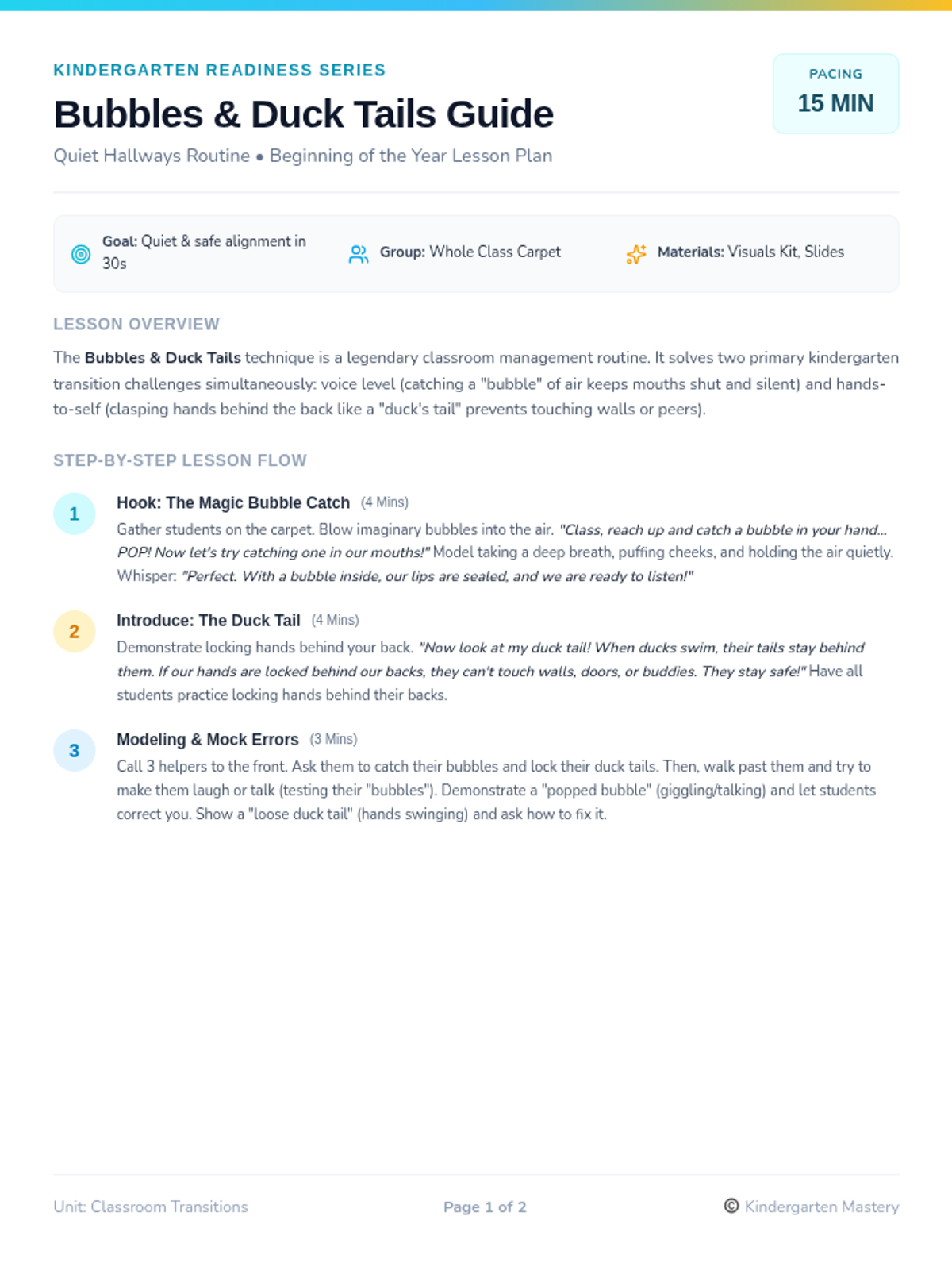
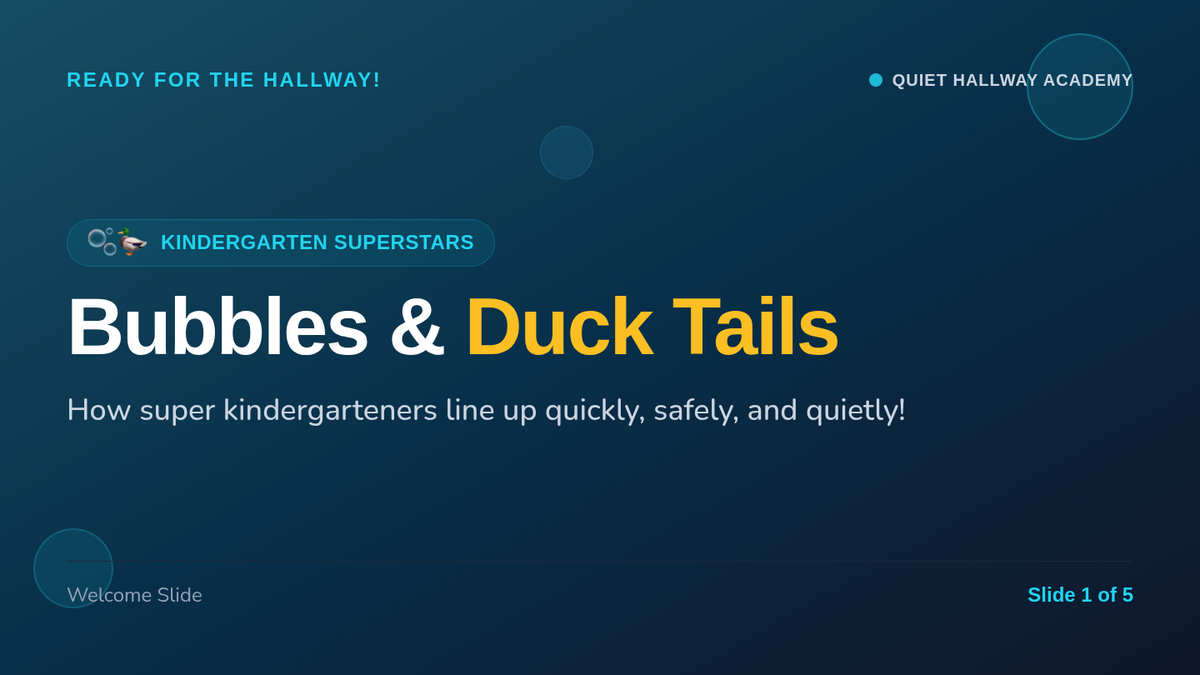
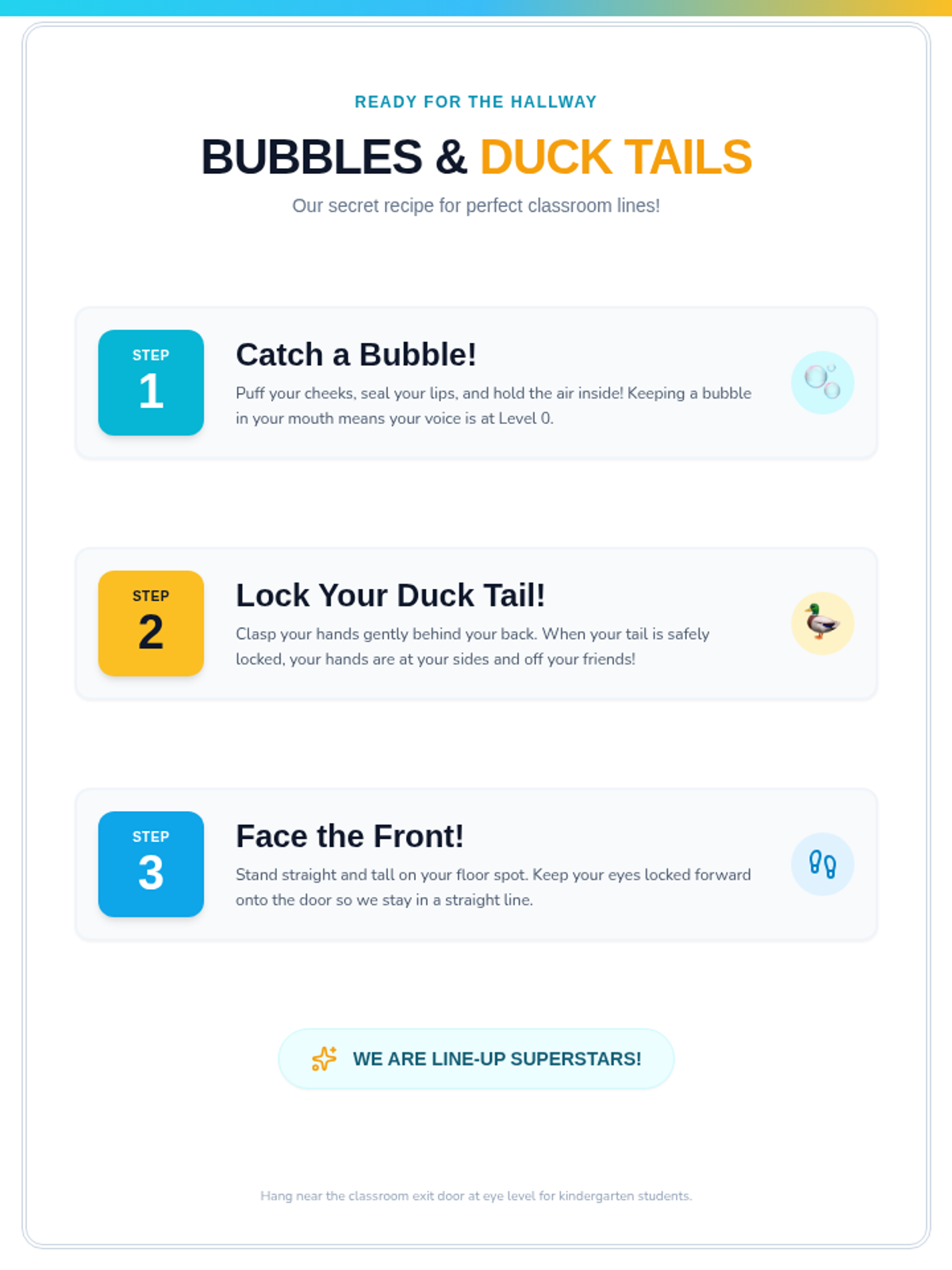
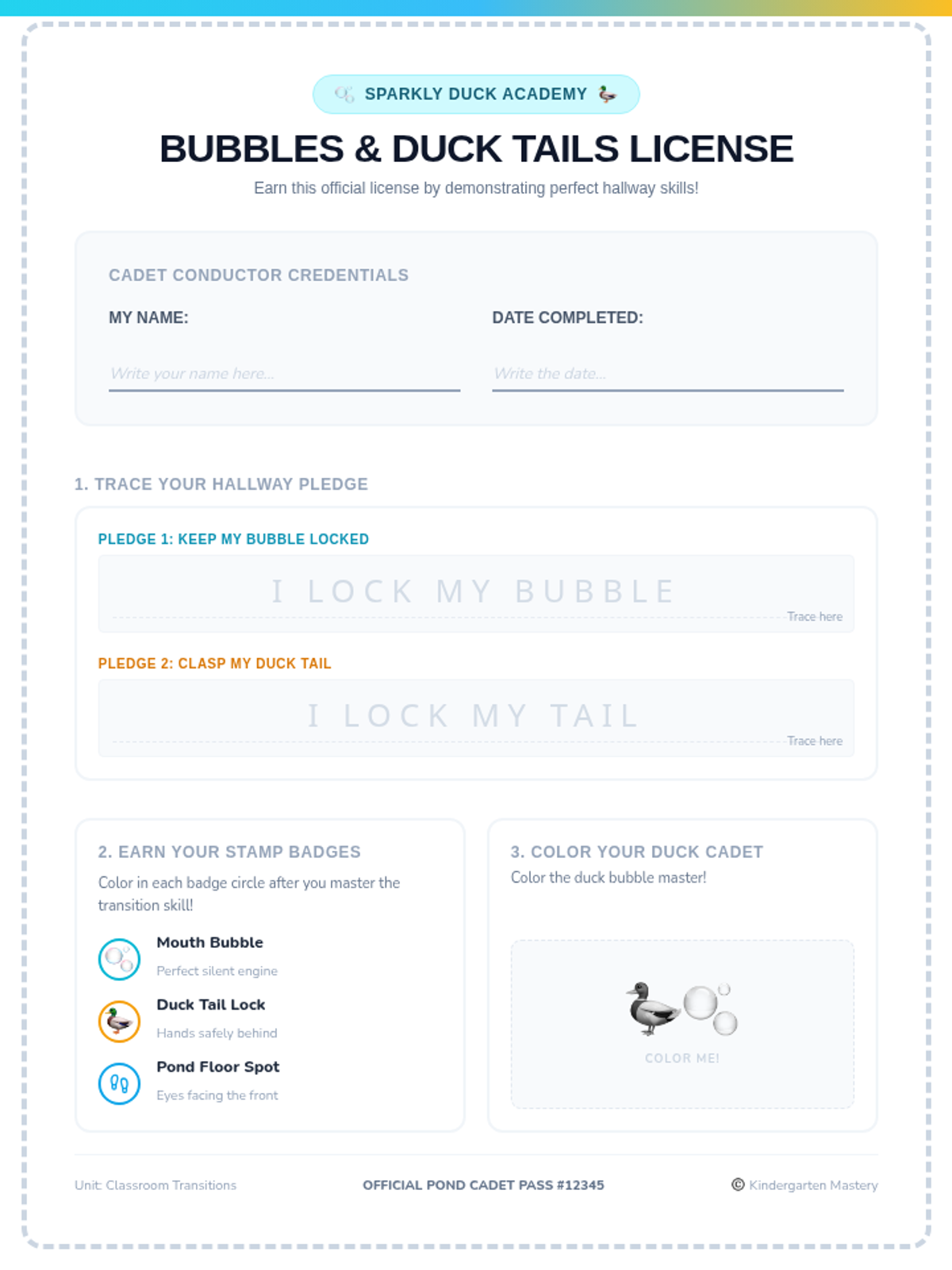
A structured, high-engagement lesson designed to teach beginning-of-the-year kindergarteners how to line up quickly and quietly using the 'Bubbles & Duck Tails' routine. Includes interactive slides, printable visual reminders, a 15-minute carpet lesson plan, and student certificates.
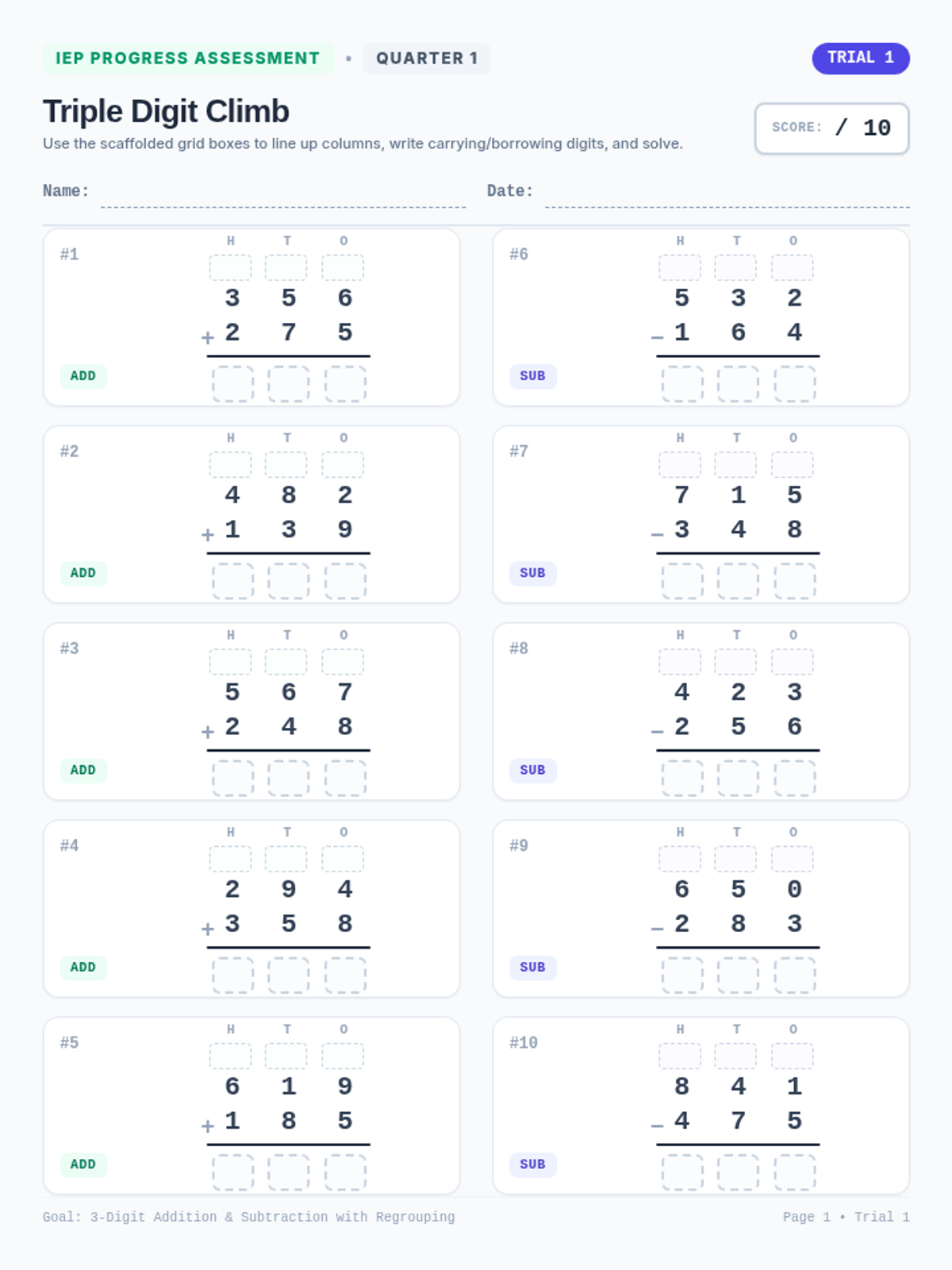
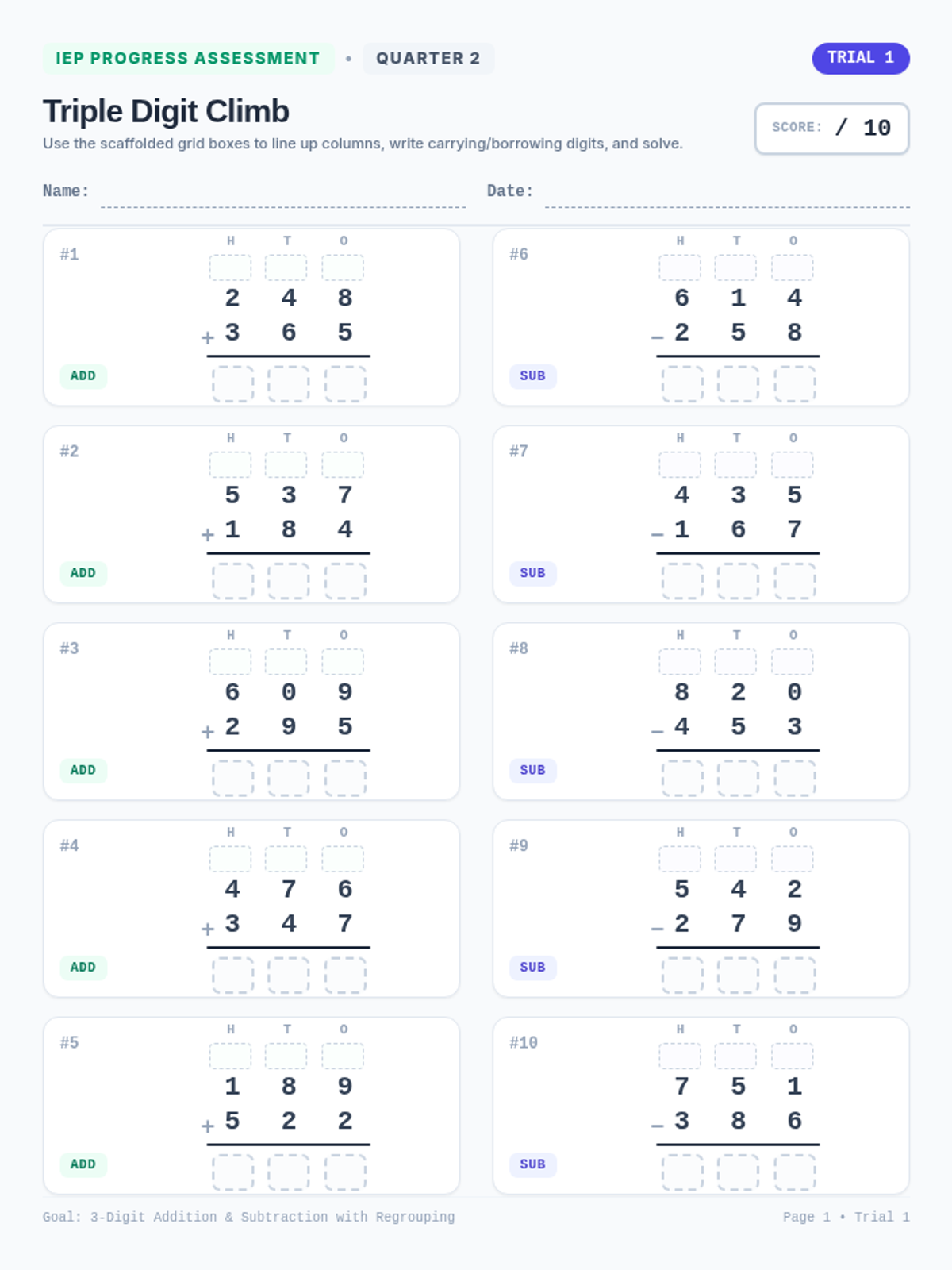
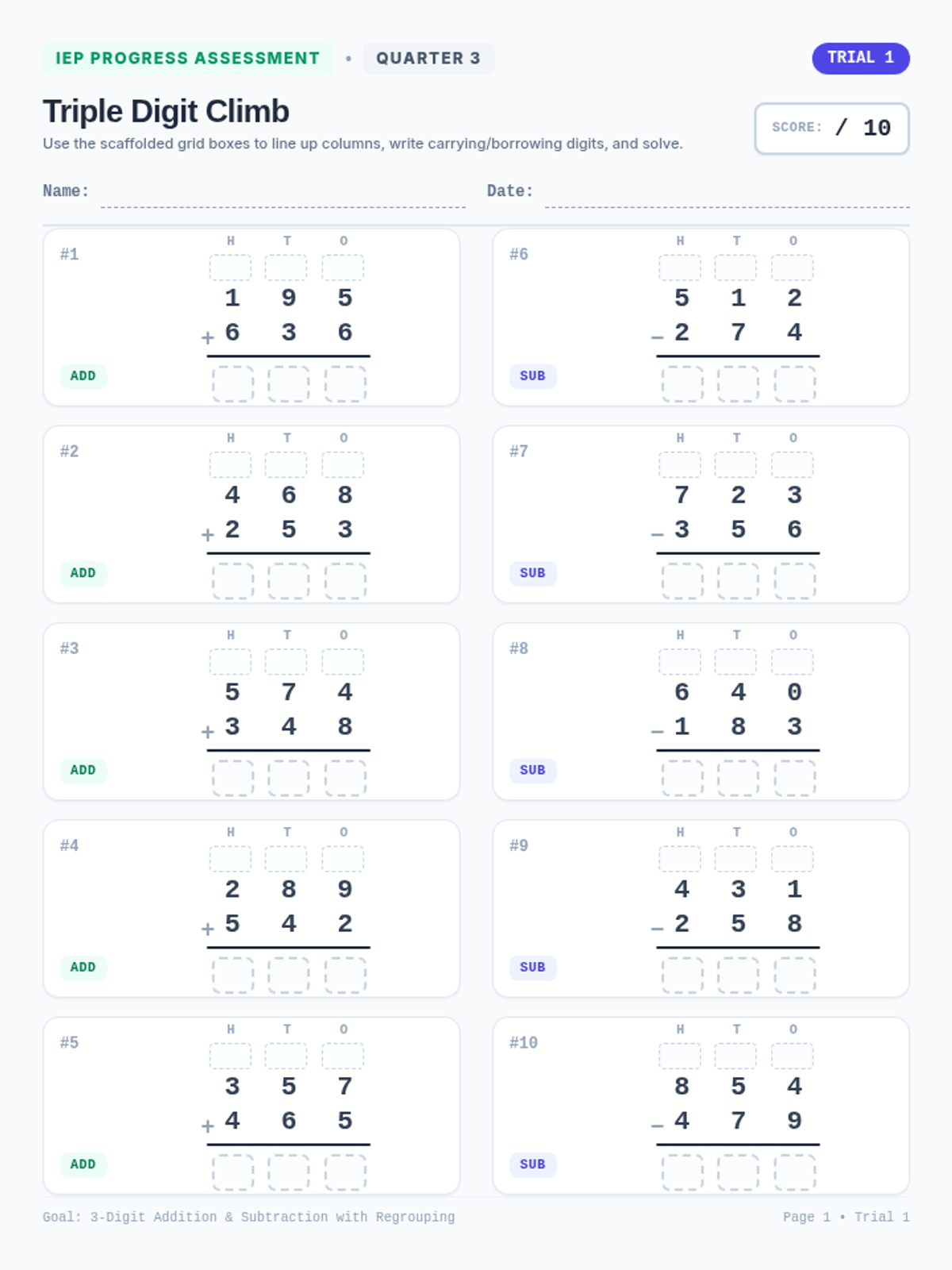
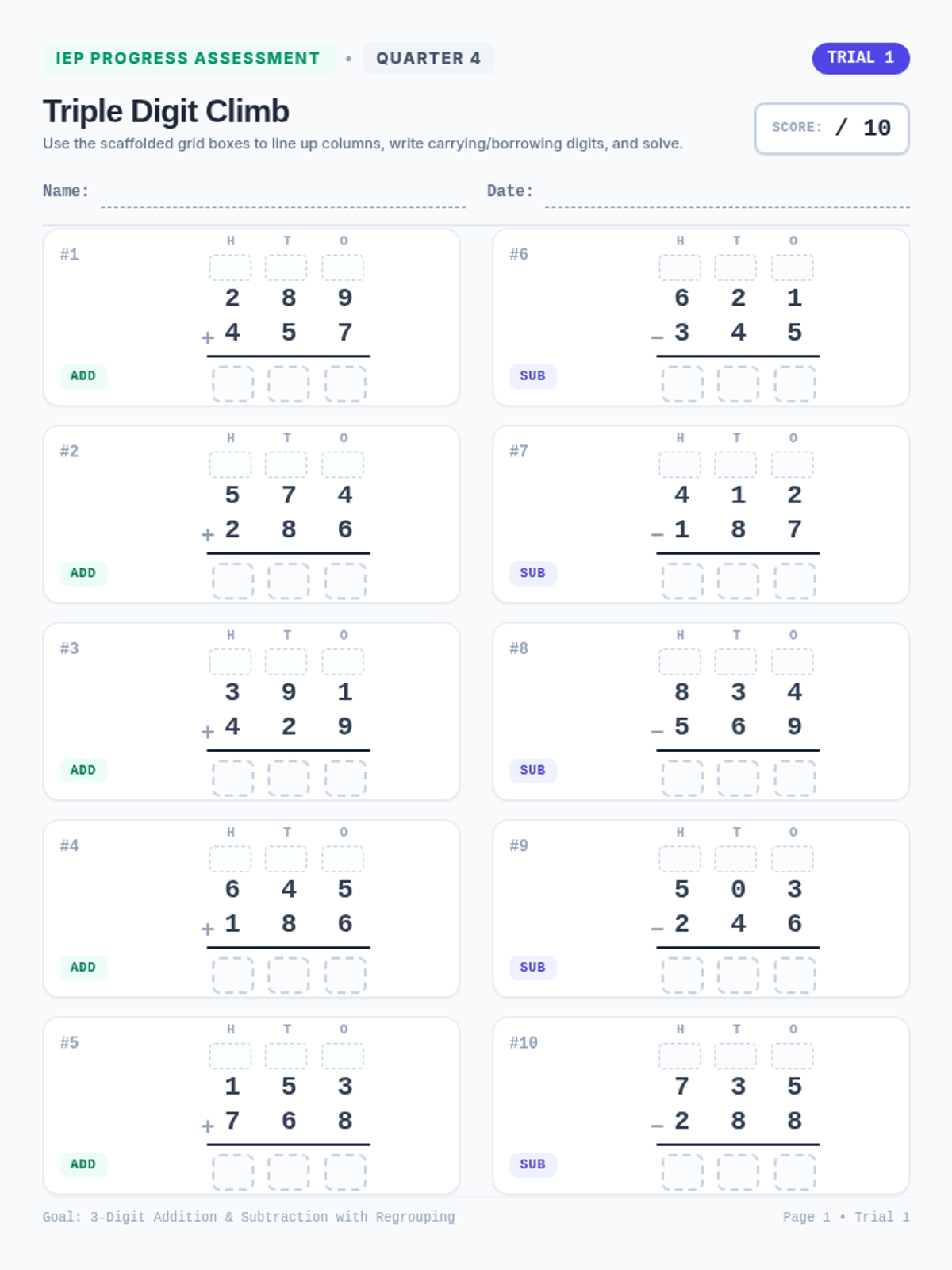
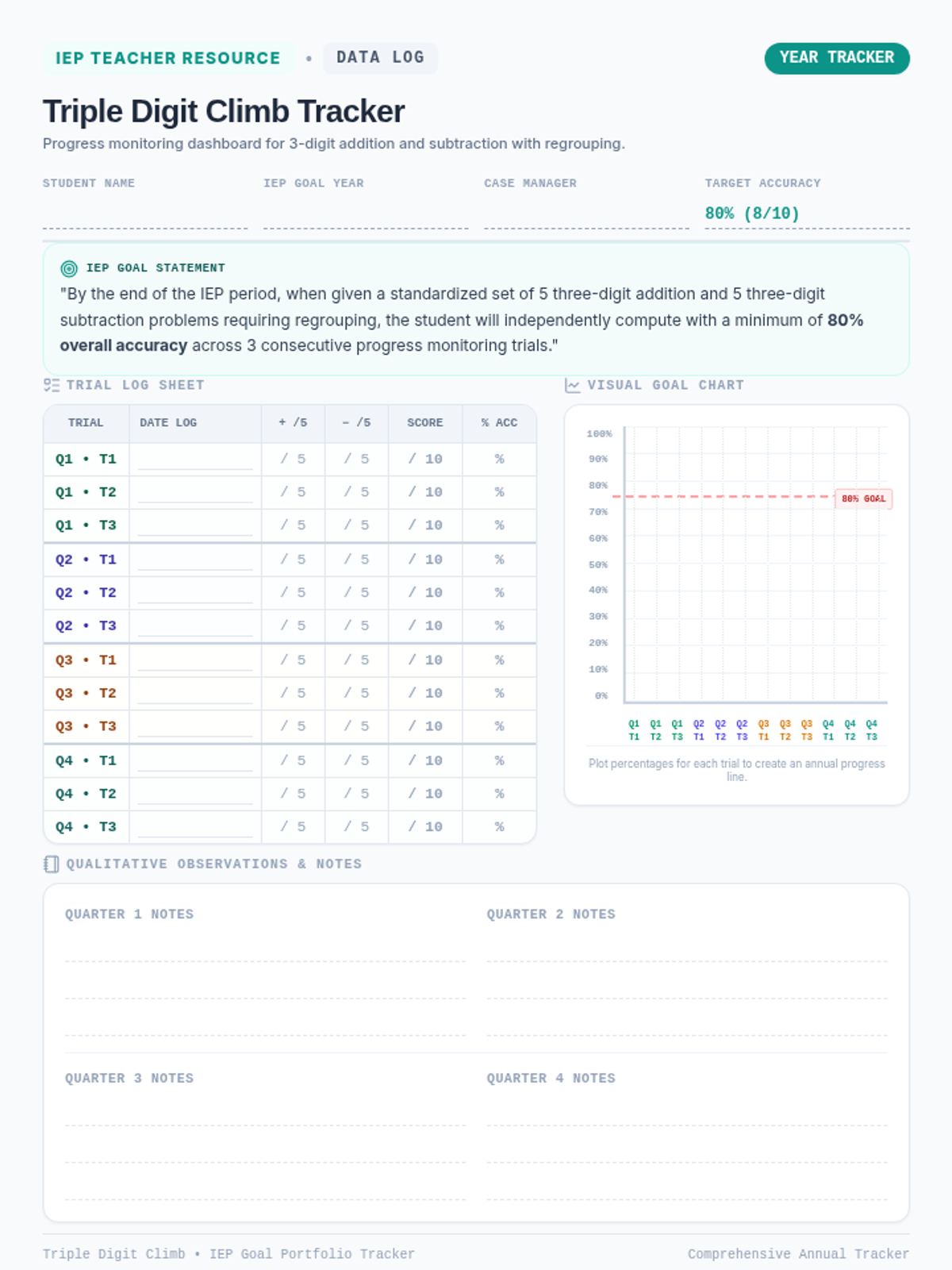
A progress monitoring assessment program for an IEP goal focusing on three-digit addition and subtraction with regrouping. Features clean grids, large fonts, and minimal clutter.
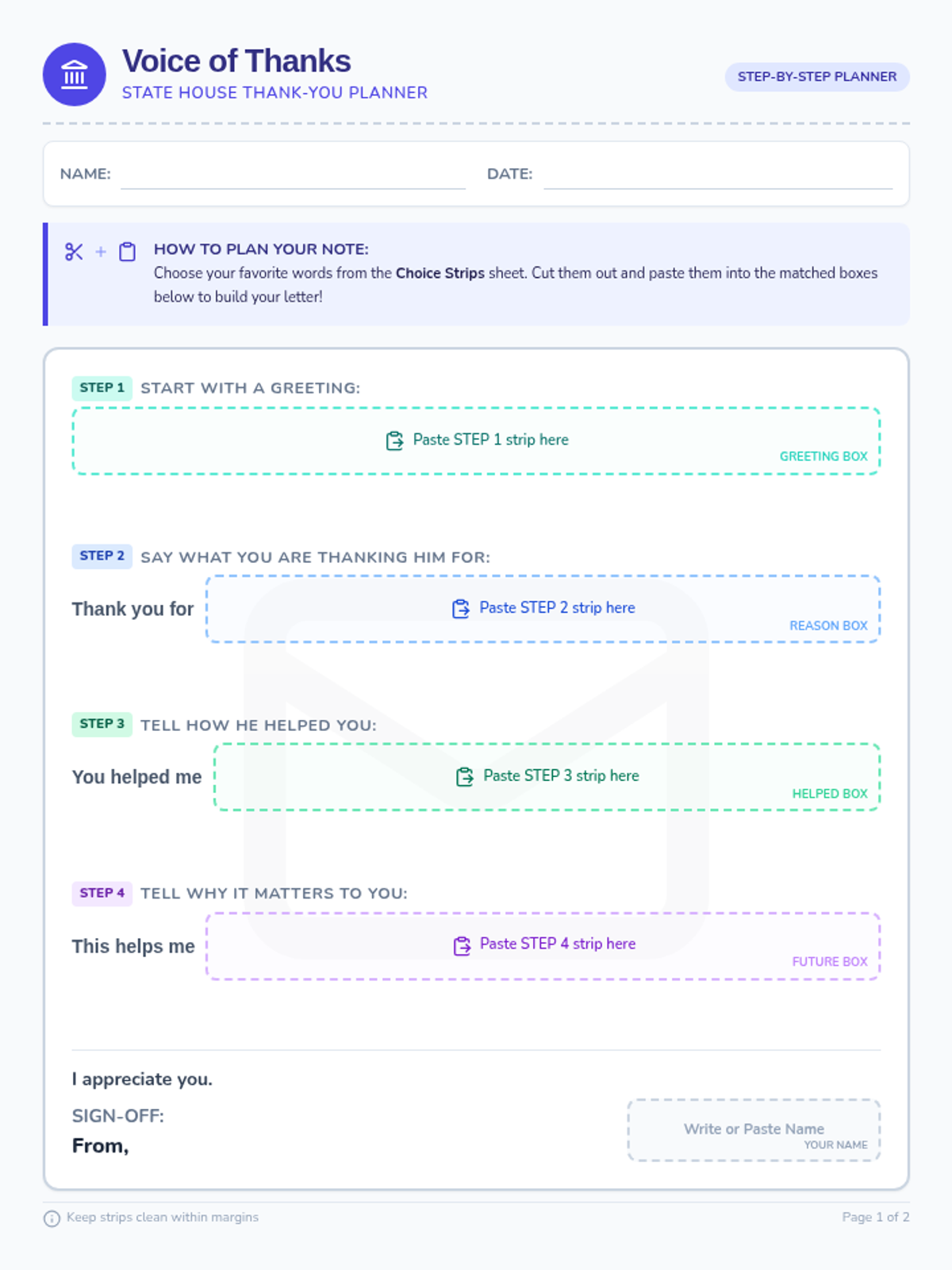
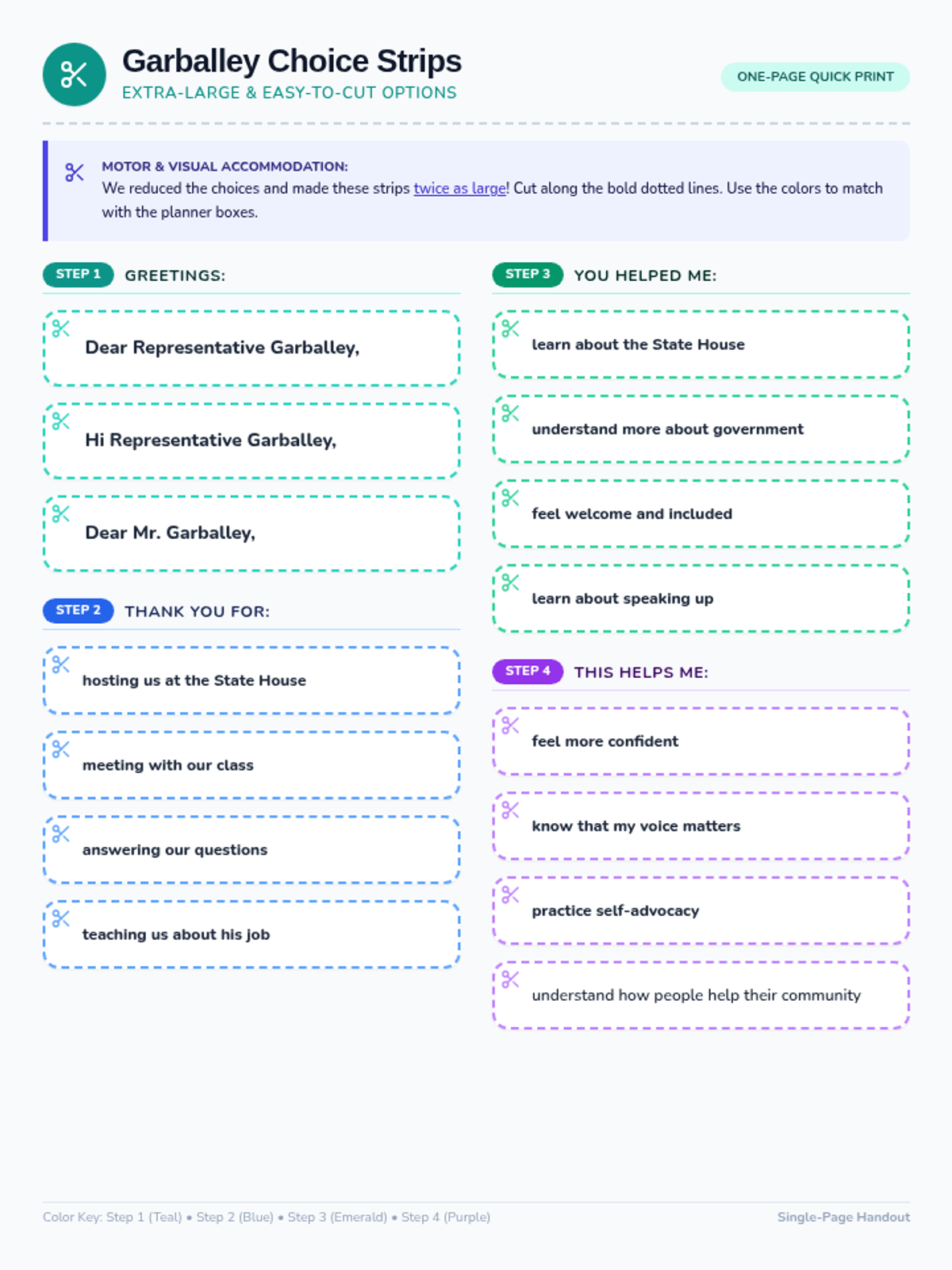
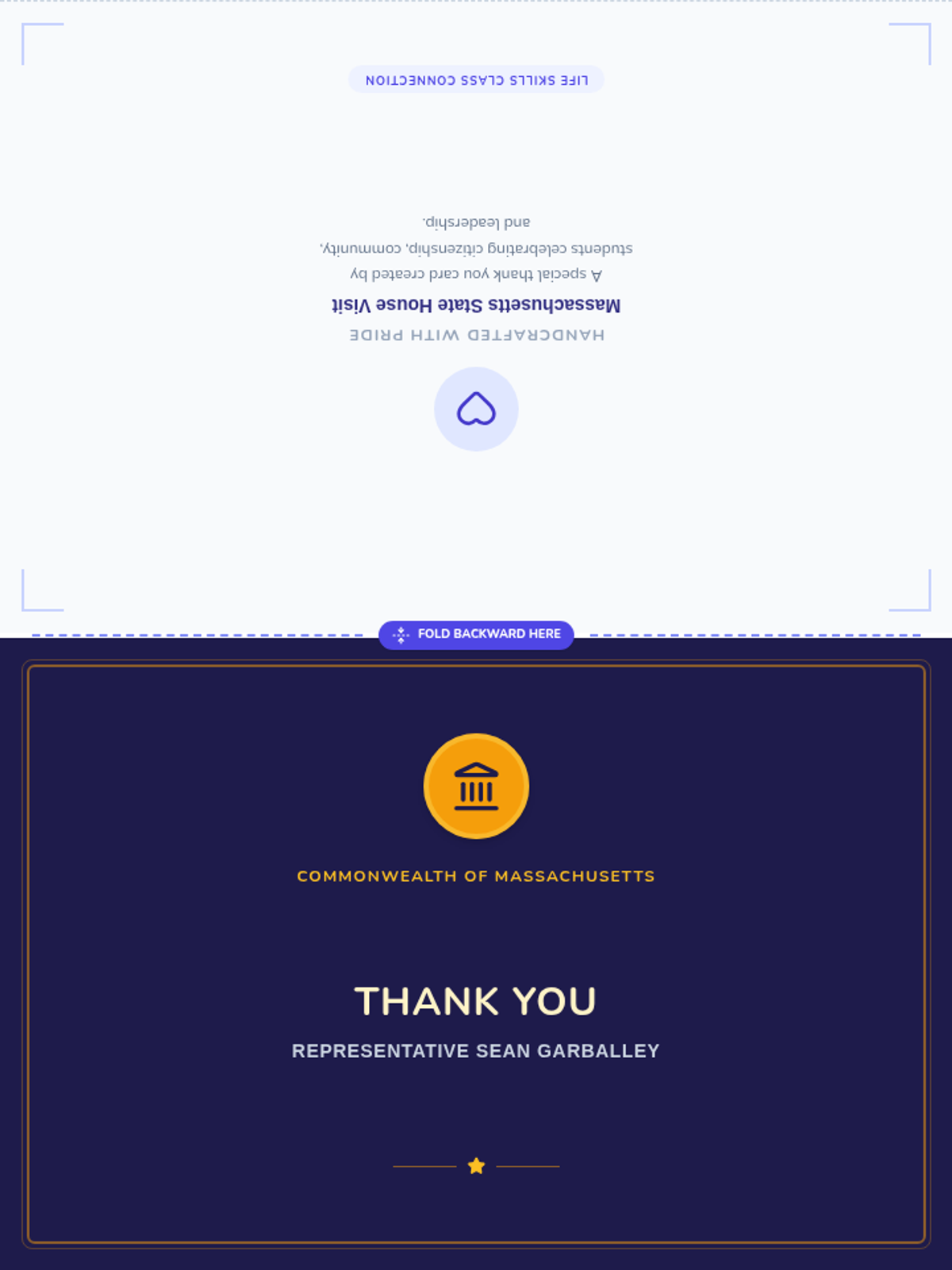
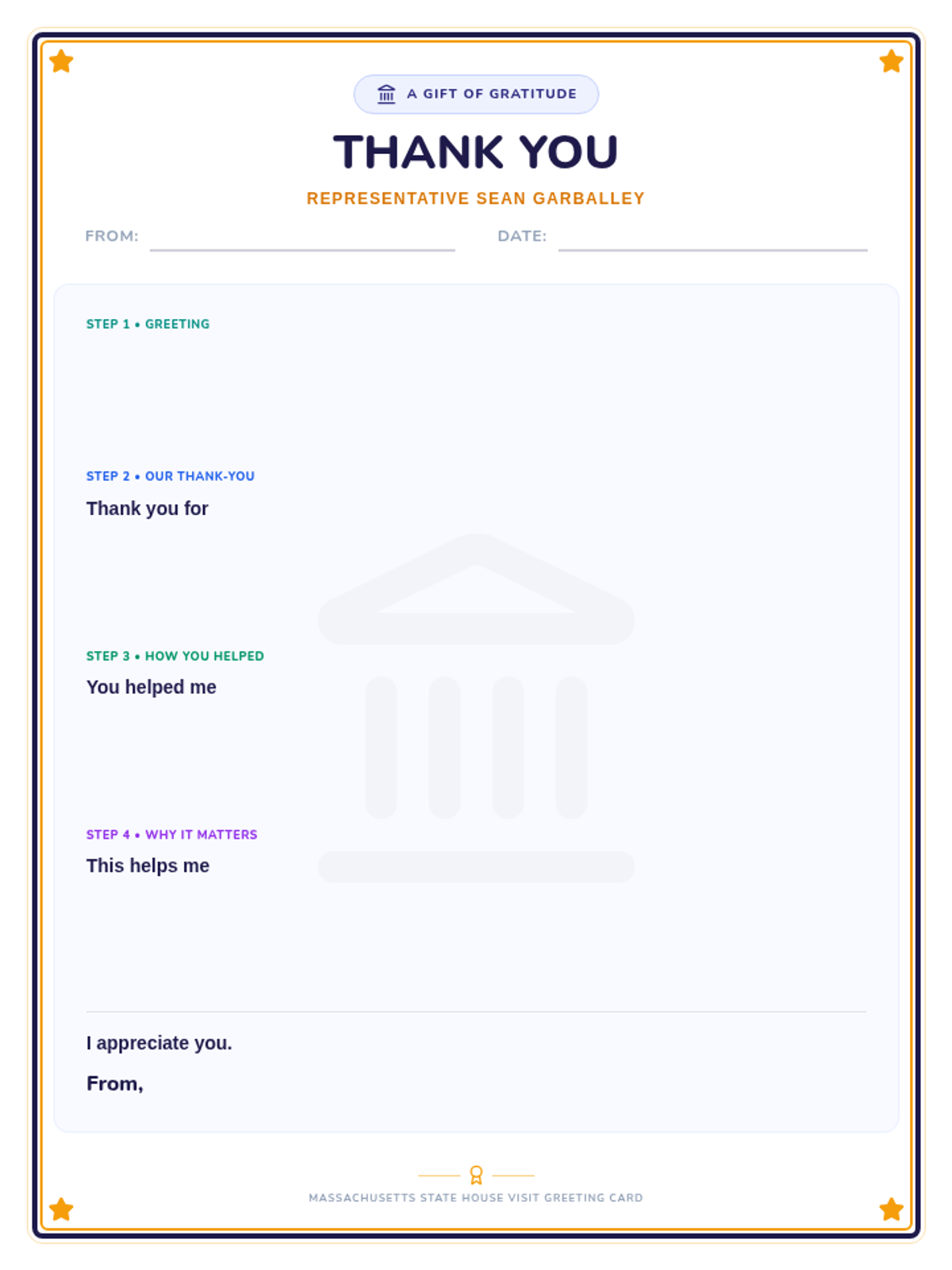
A life-skills-focused lesson where students learn to write a formal thank-you note to State Representative Sean Garballey using visual planners, errorless cut-and-paste choice strips, and a printable fold-over greeting card. This lesson scaffold is optimized for students with diverse fine-motor and cognitive needs.
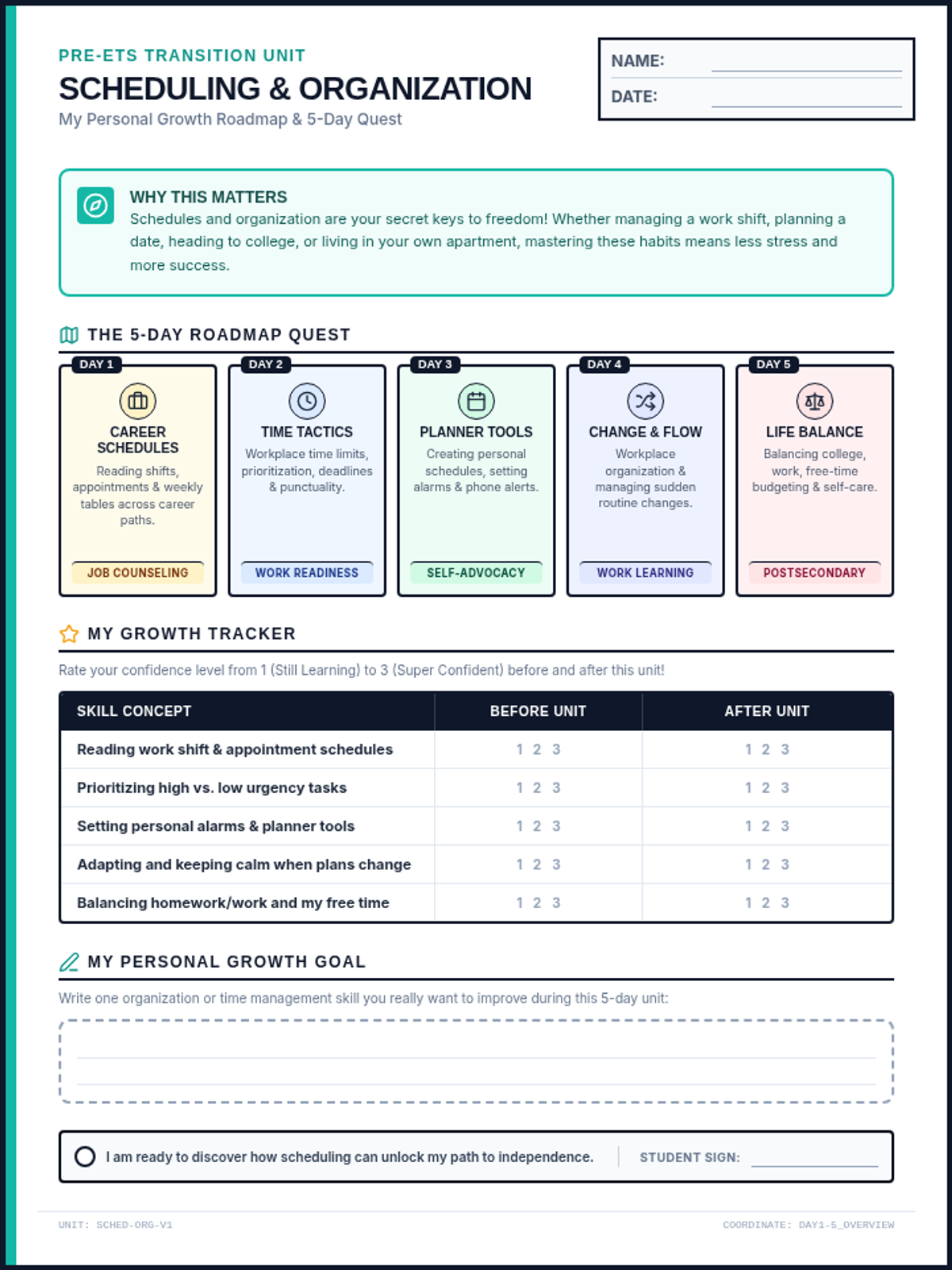
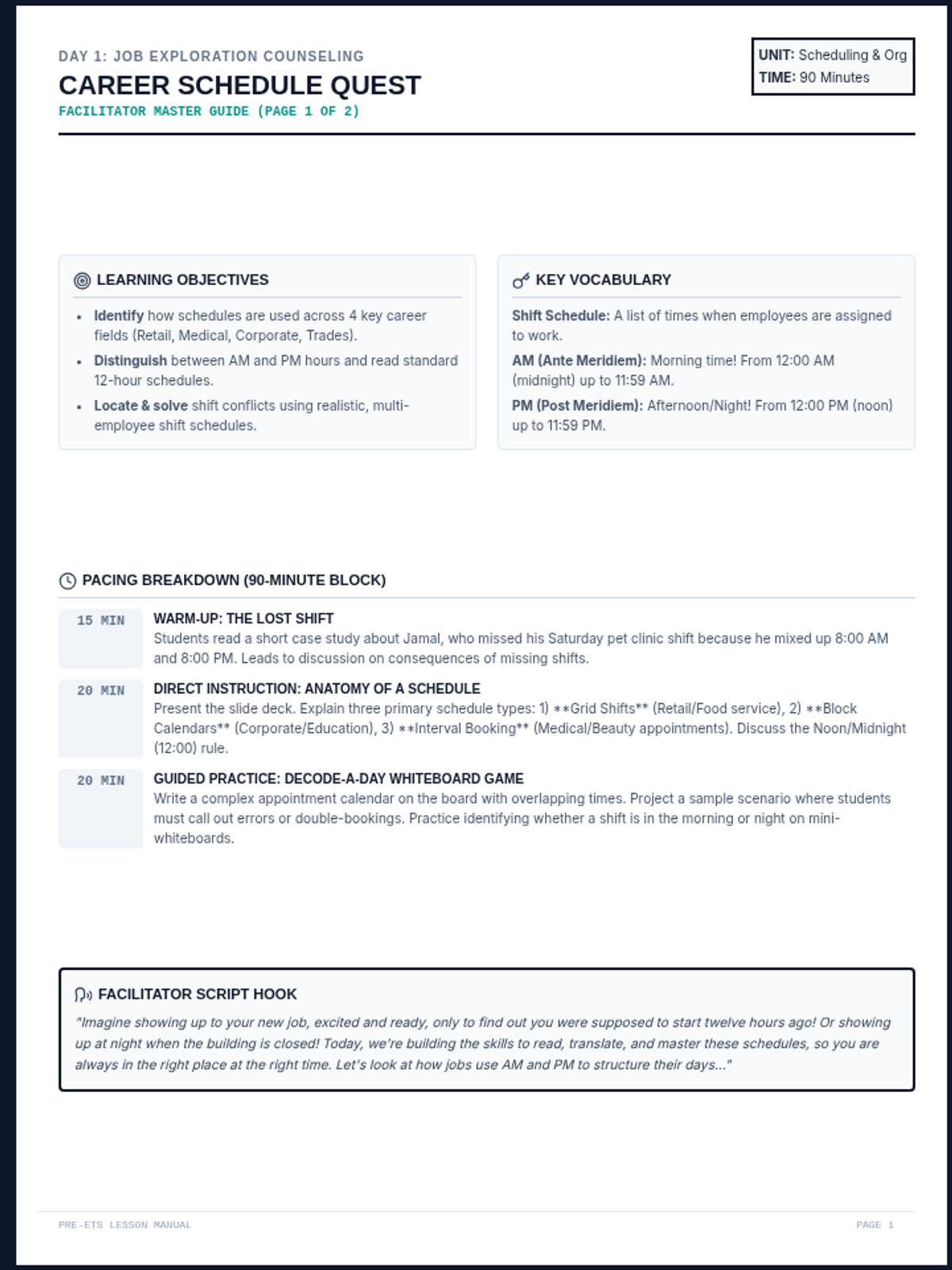
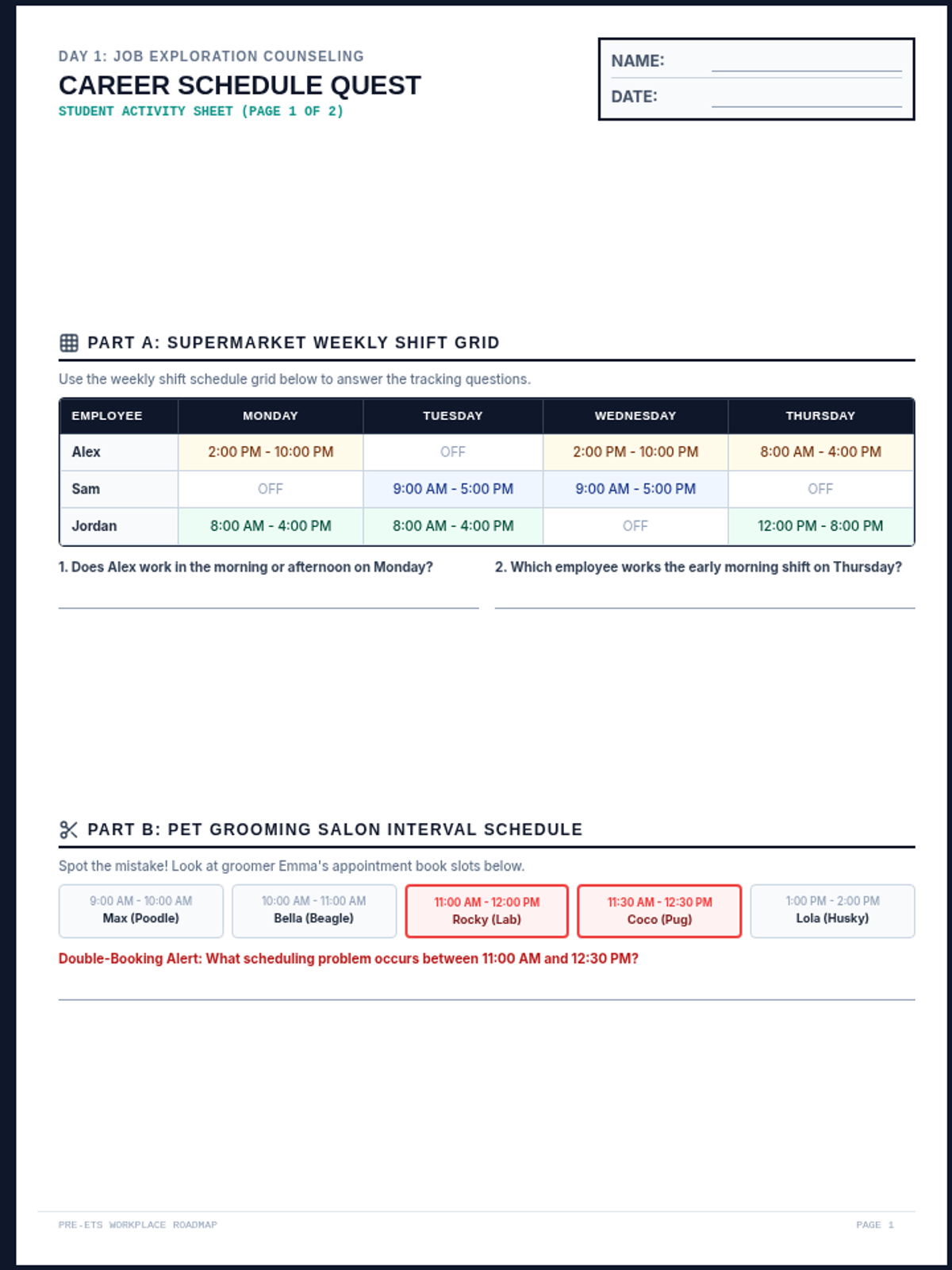
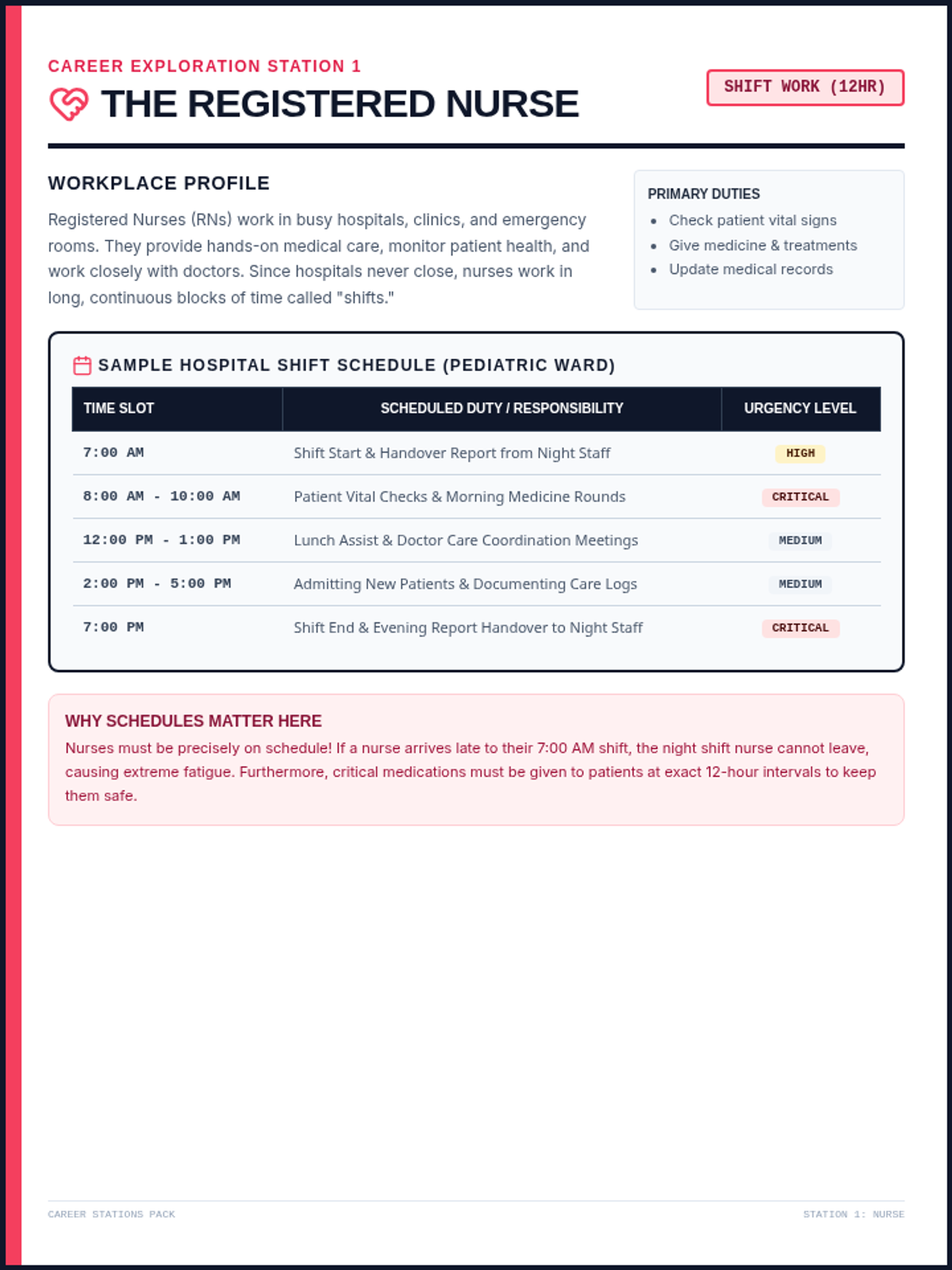
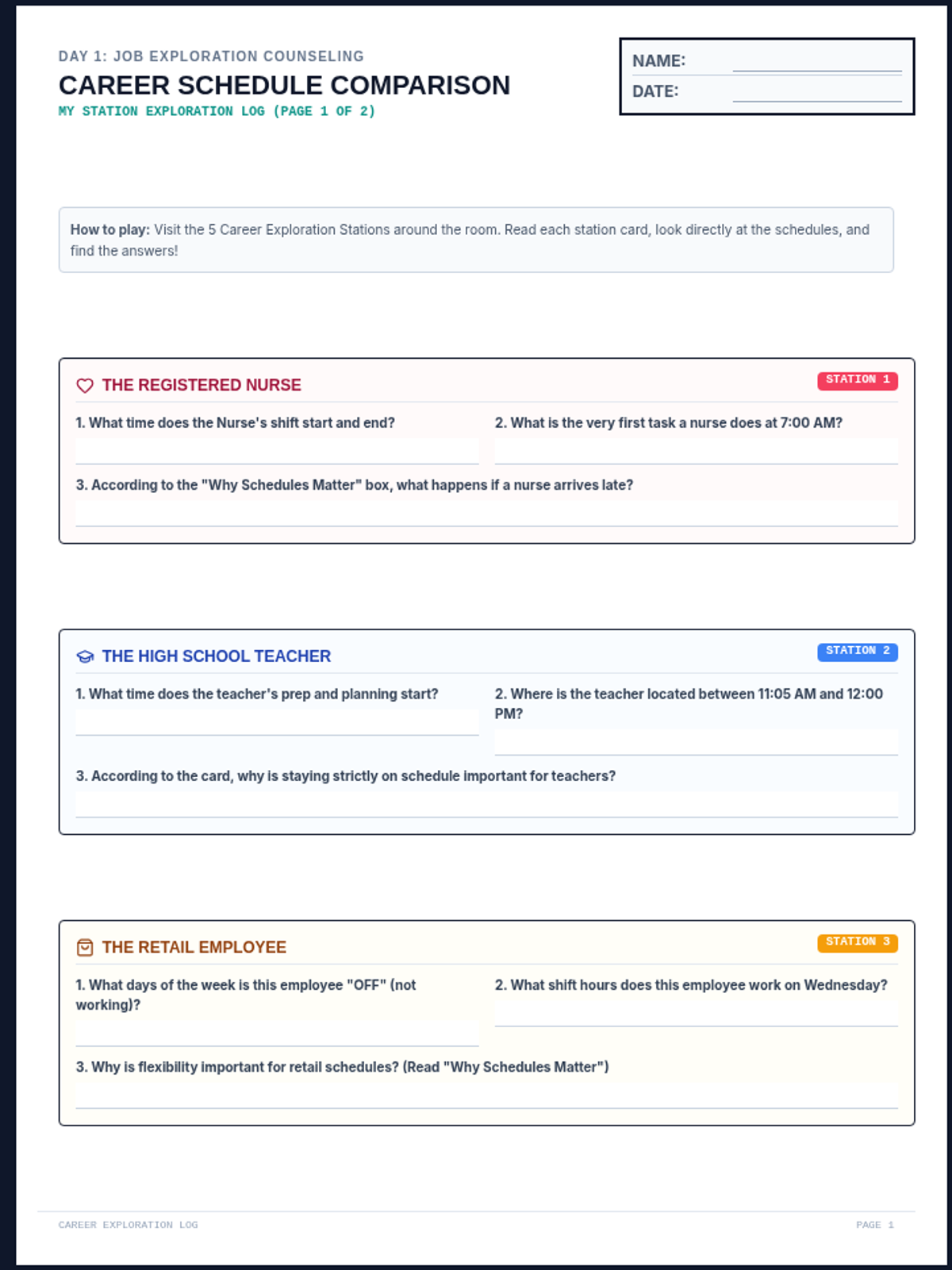
Students explore how schedules are used across various career paths, analyze real-world shift and appointment schedules, and practice reading workplace timetables.
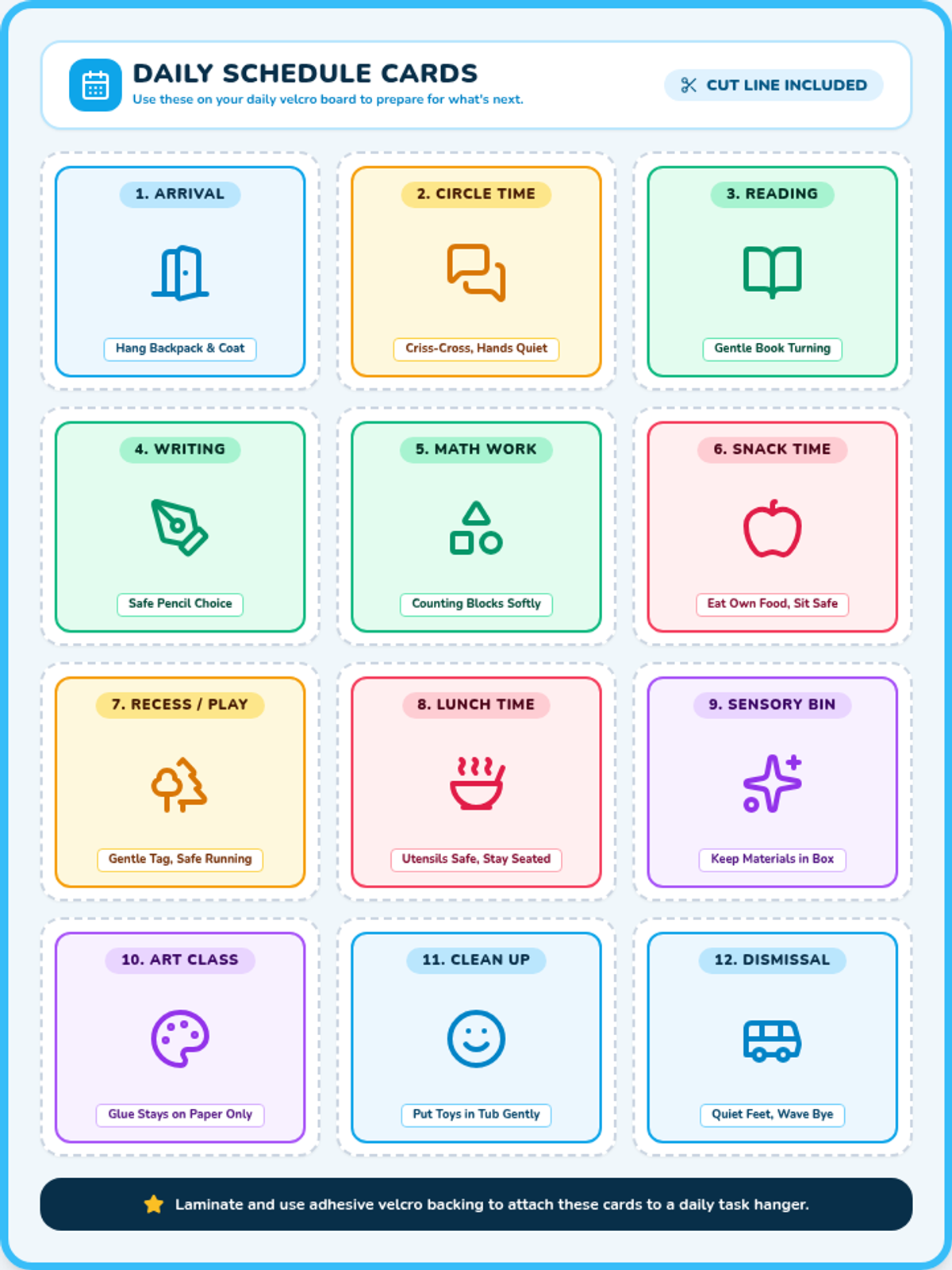
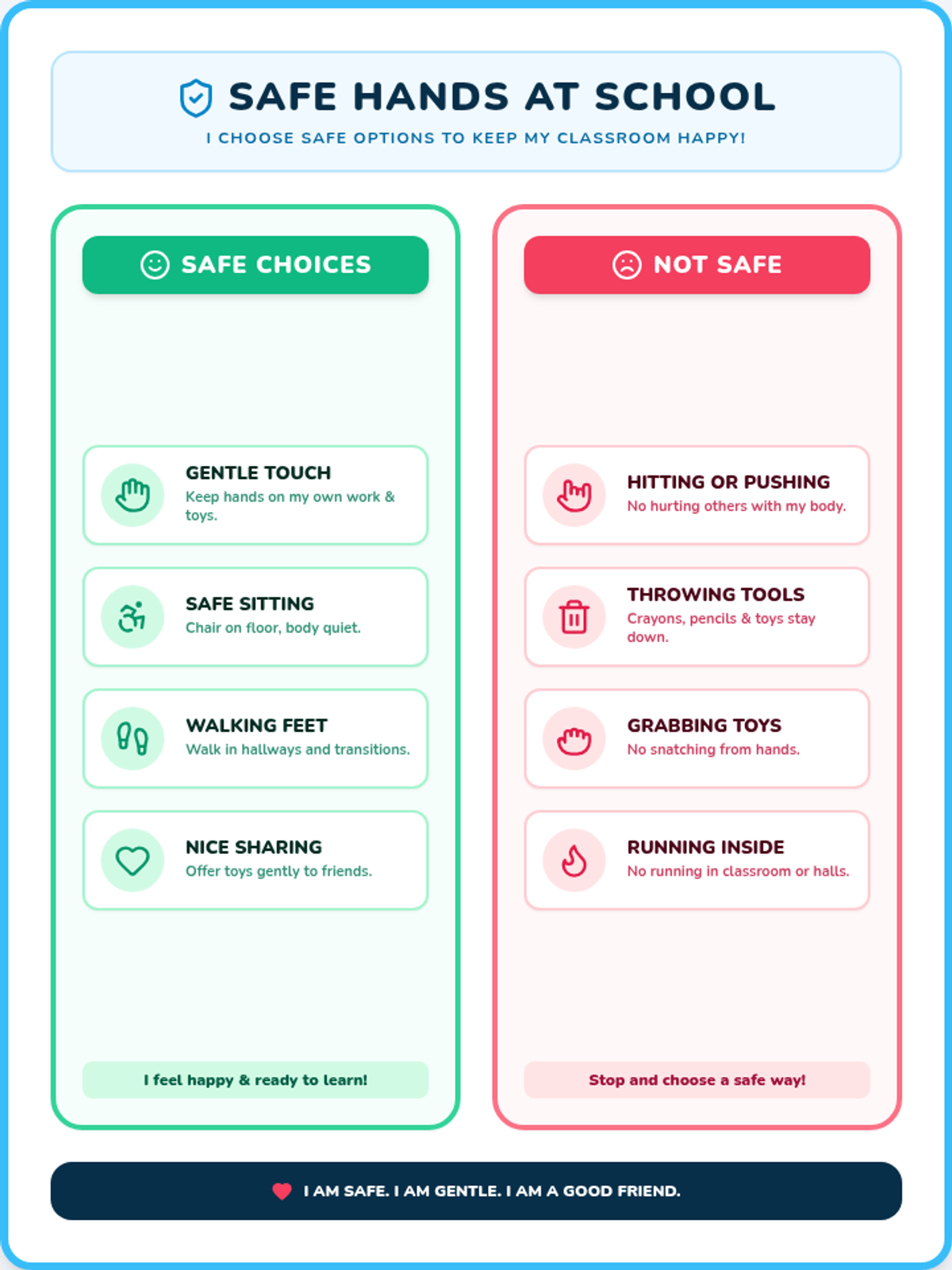
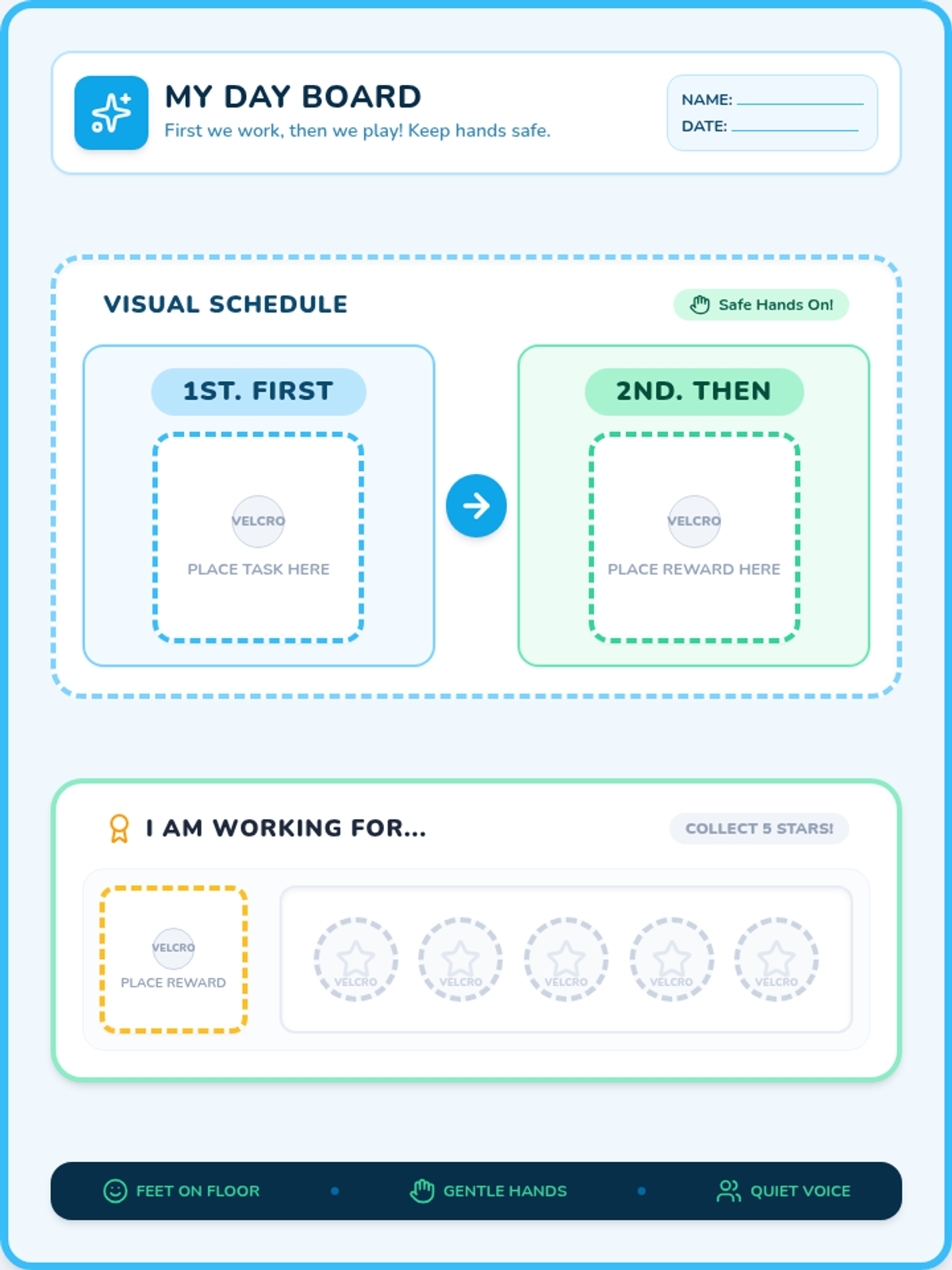
A comprehensive visual support system designed for a non-verbal kindergartener, focusing on safe choices, gentle hands, and structured routines. Includes a First-Then board, daily schedule cards, behavioral expectation cards, and visual routine anchor charts.
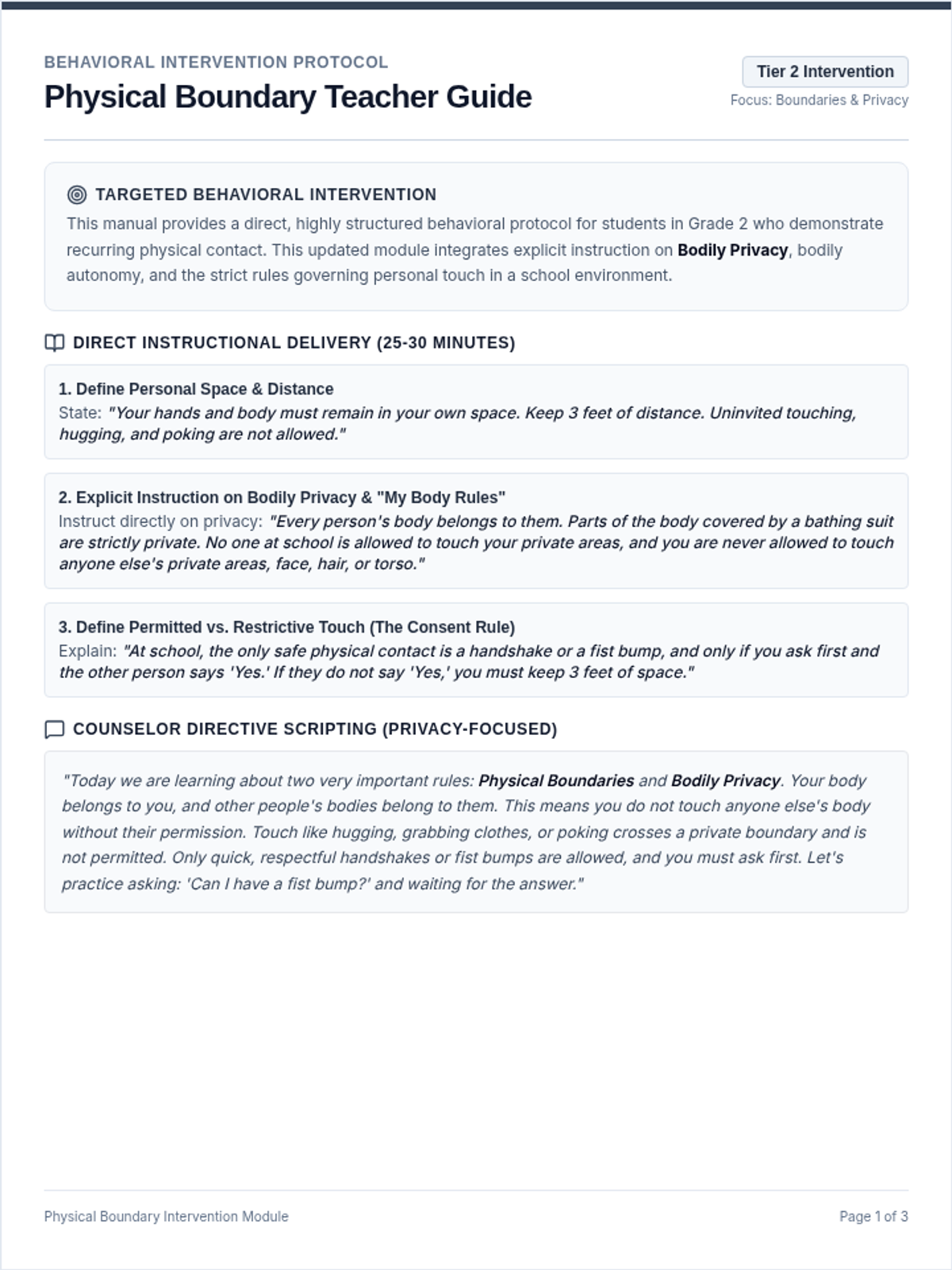
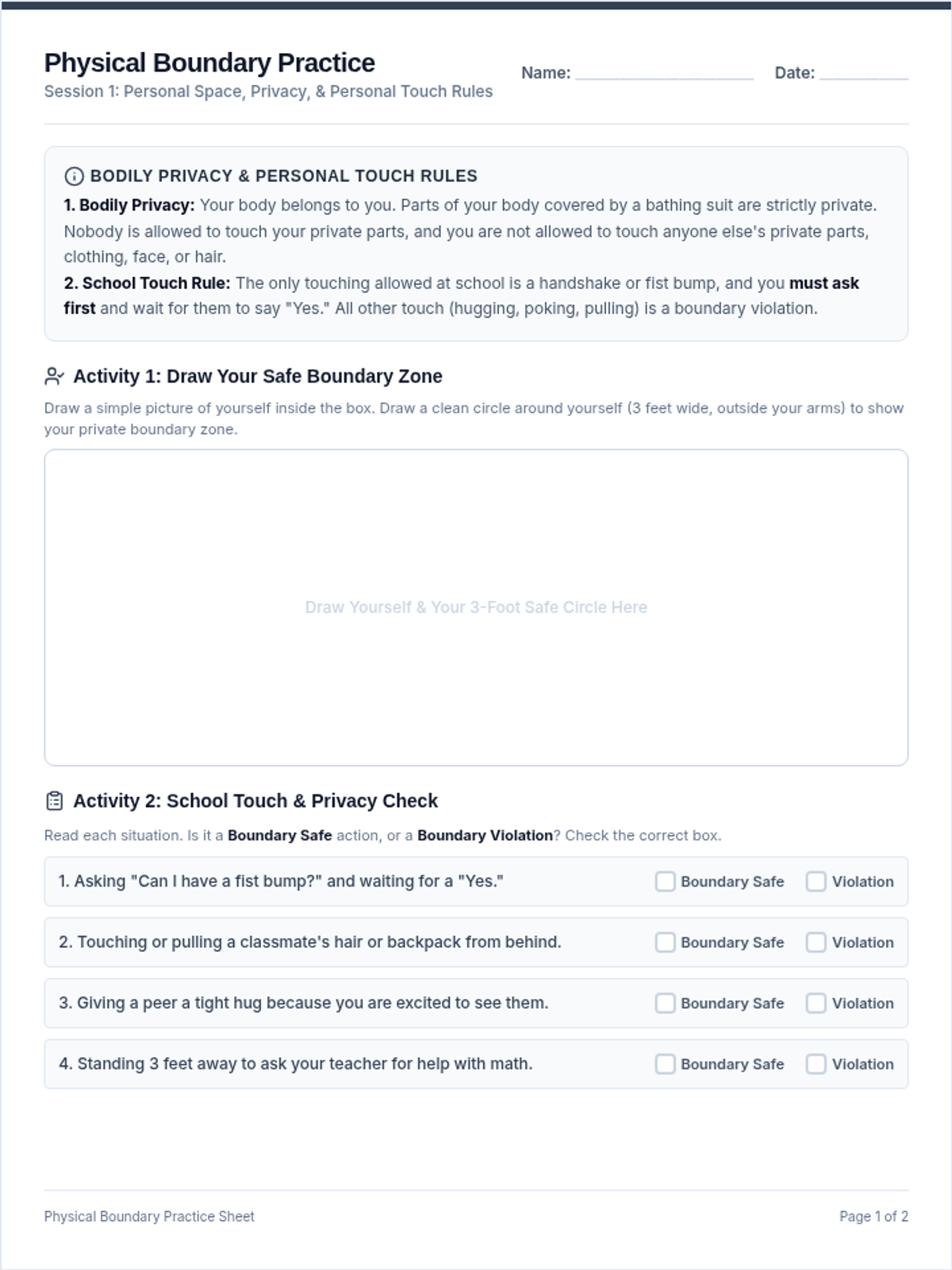
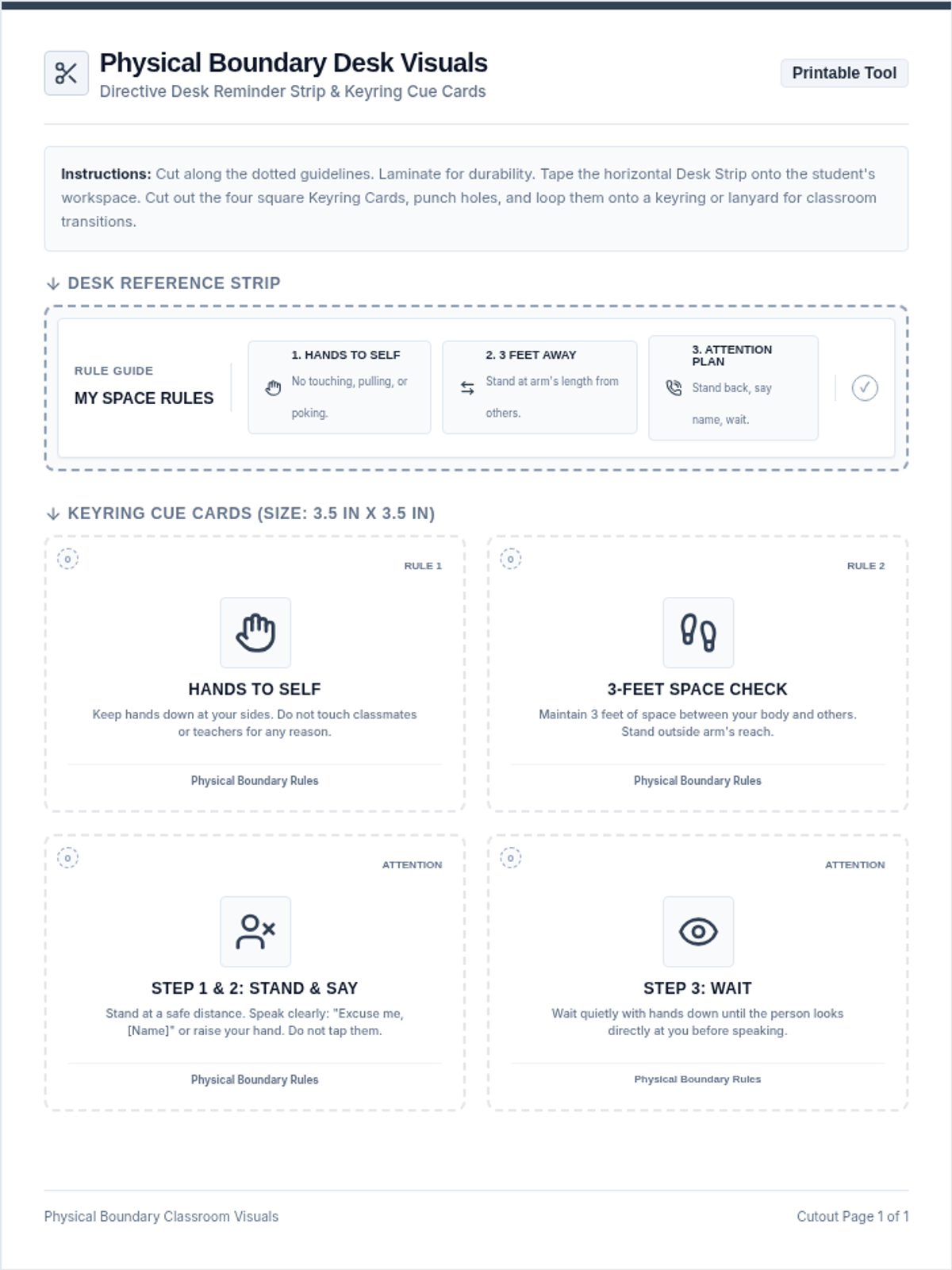
A directive behavioral intervention lesson designed for 2nd-grade students to learn explicit physical boundary limits, replace inappropriate touching of peers and adults, and practice structured attention-seeking replacement actions. Includes a professional guidance packet with de-escalation scripts, student workbooks, and desk visual reminders.
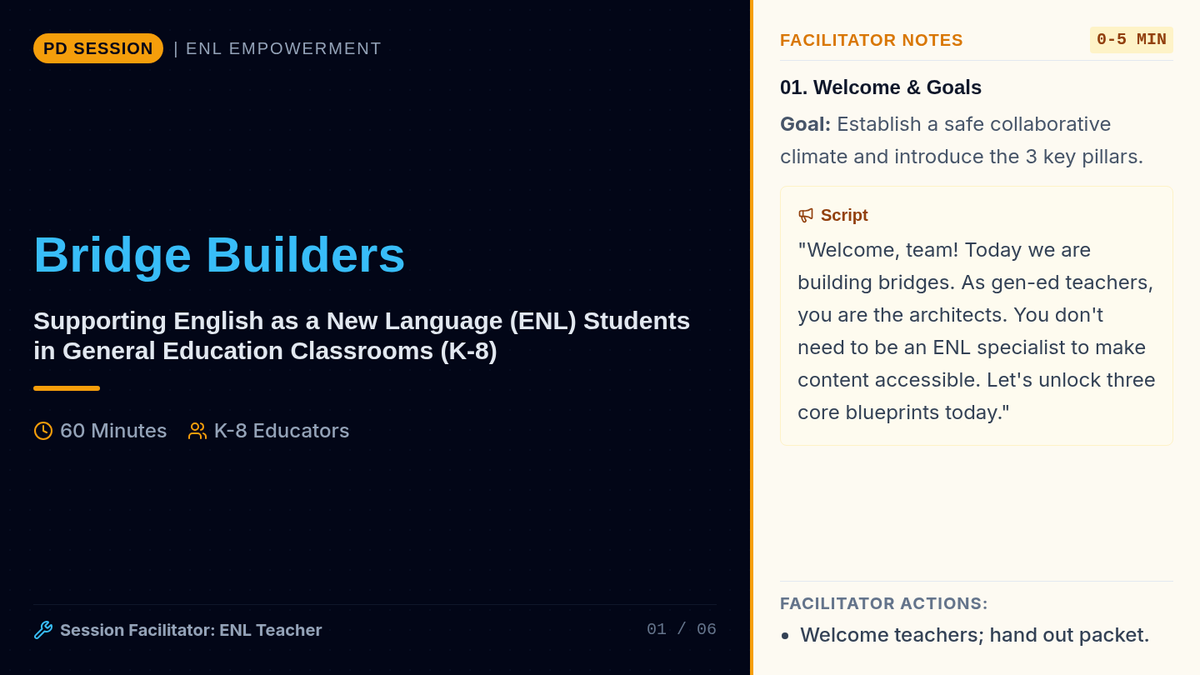
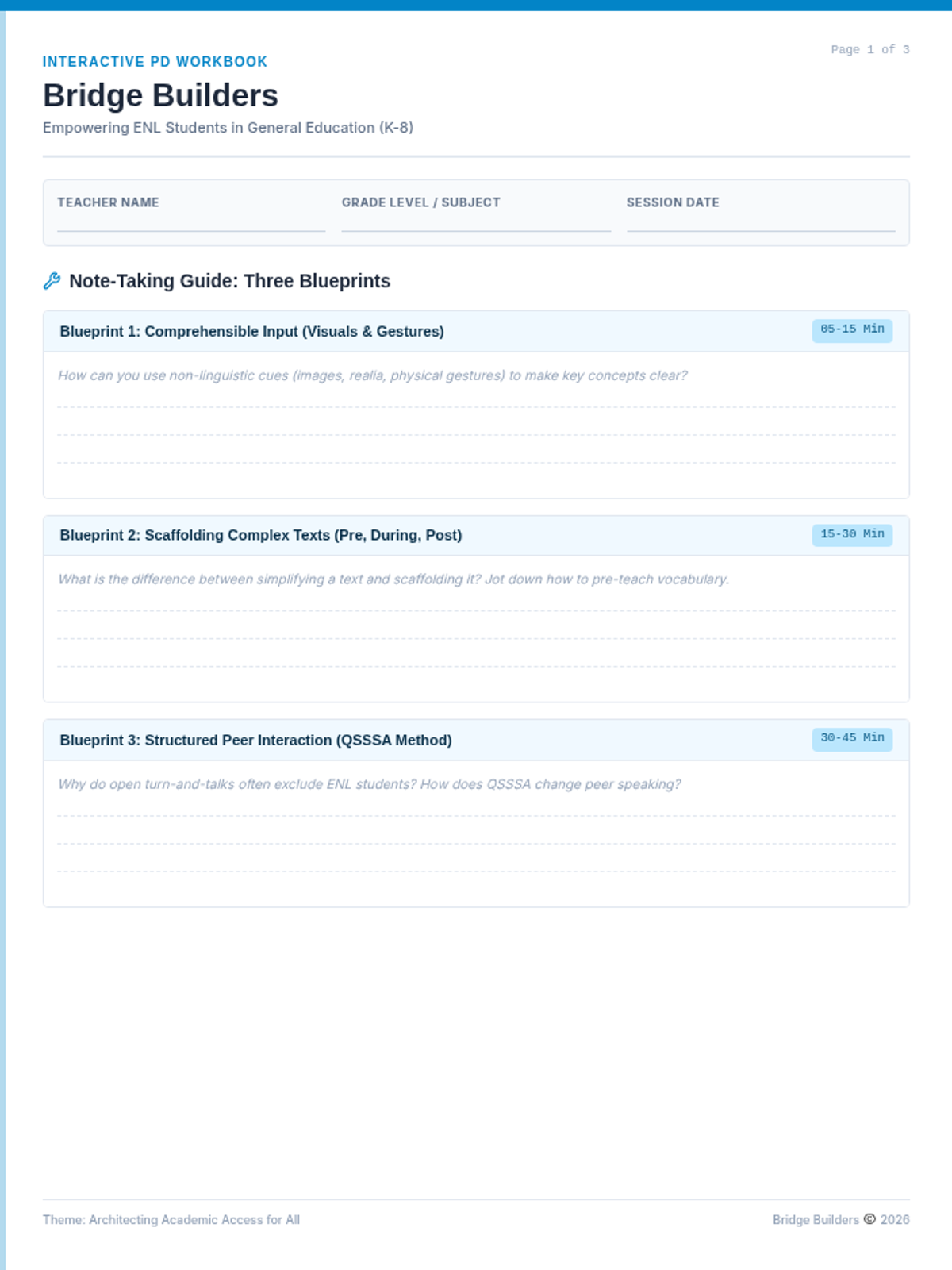
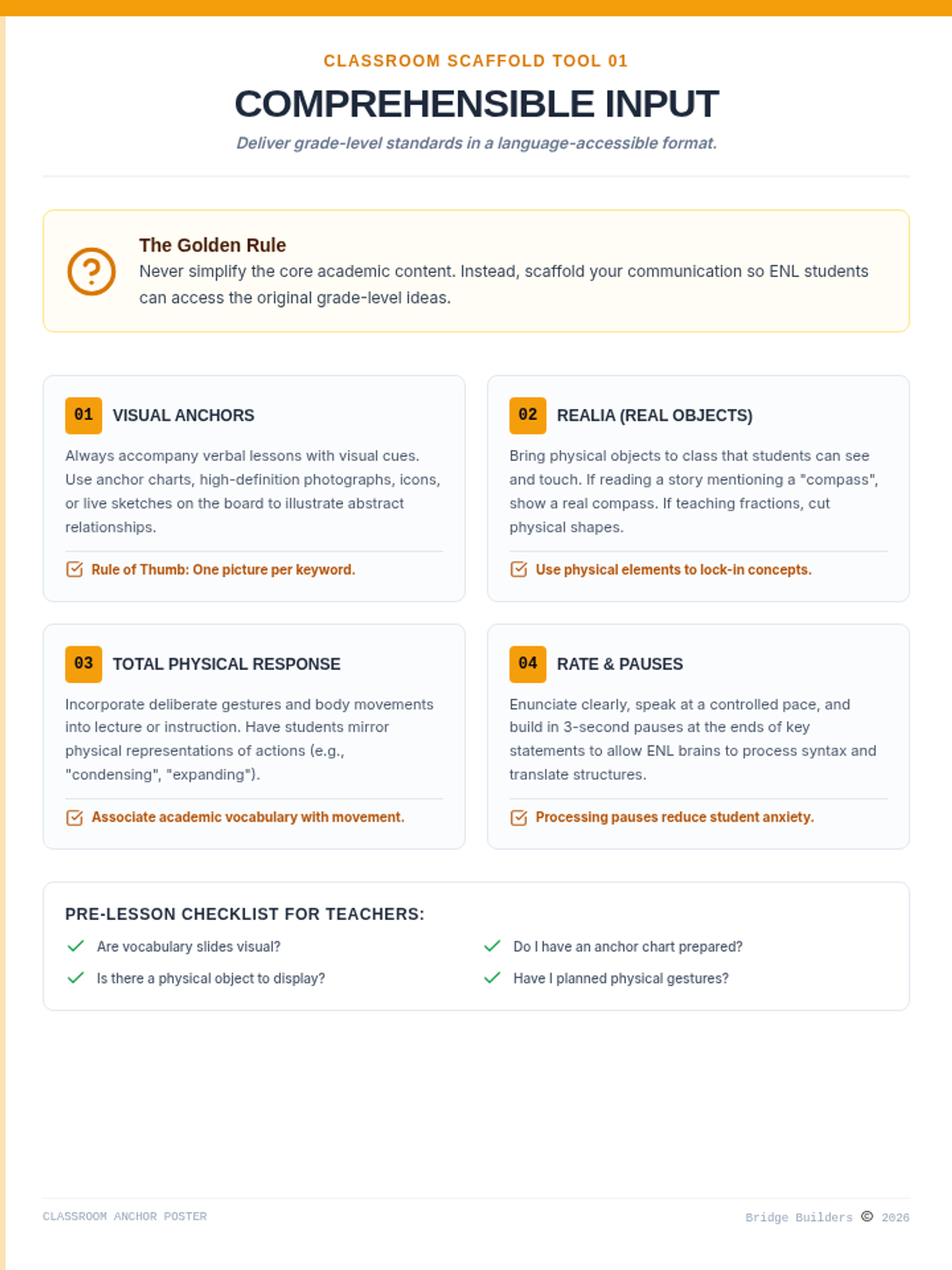
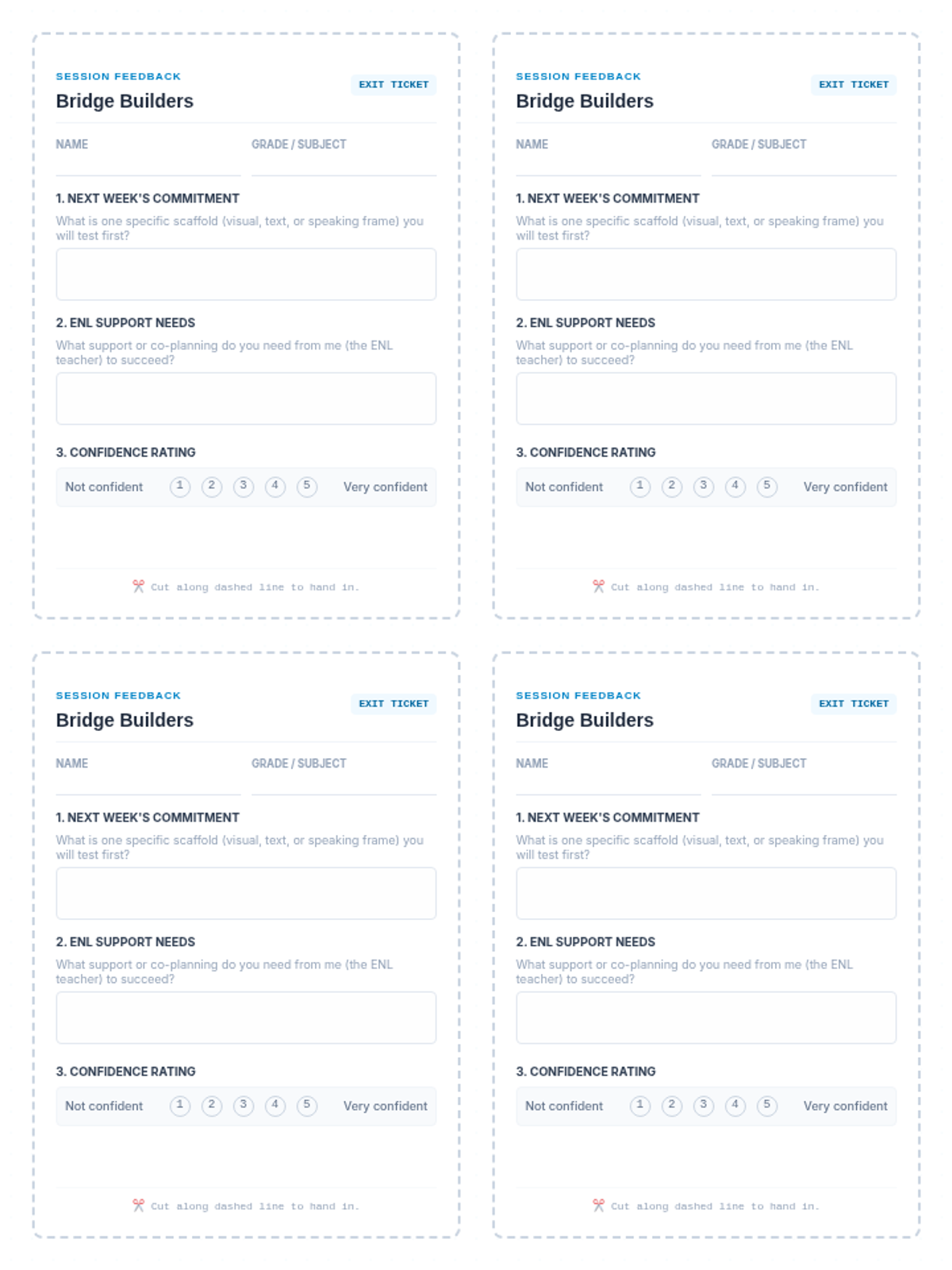
A 60-minute interactive professional development session for general education teachers (K-8) to master comprehensible input, text scaffolding, and structured peer speaking.
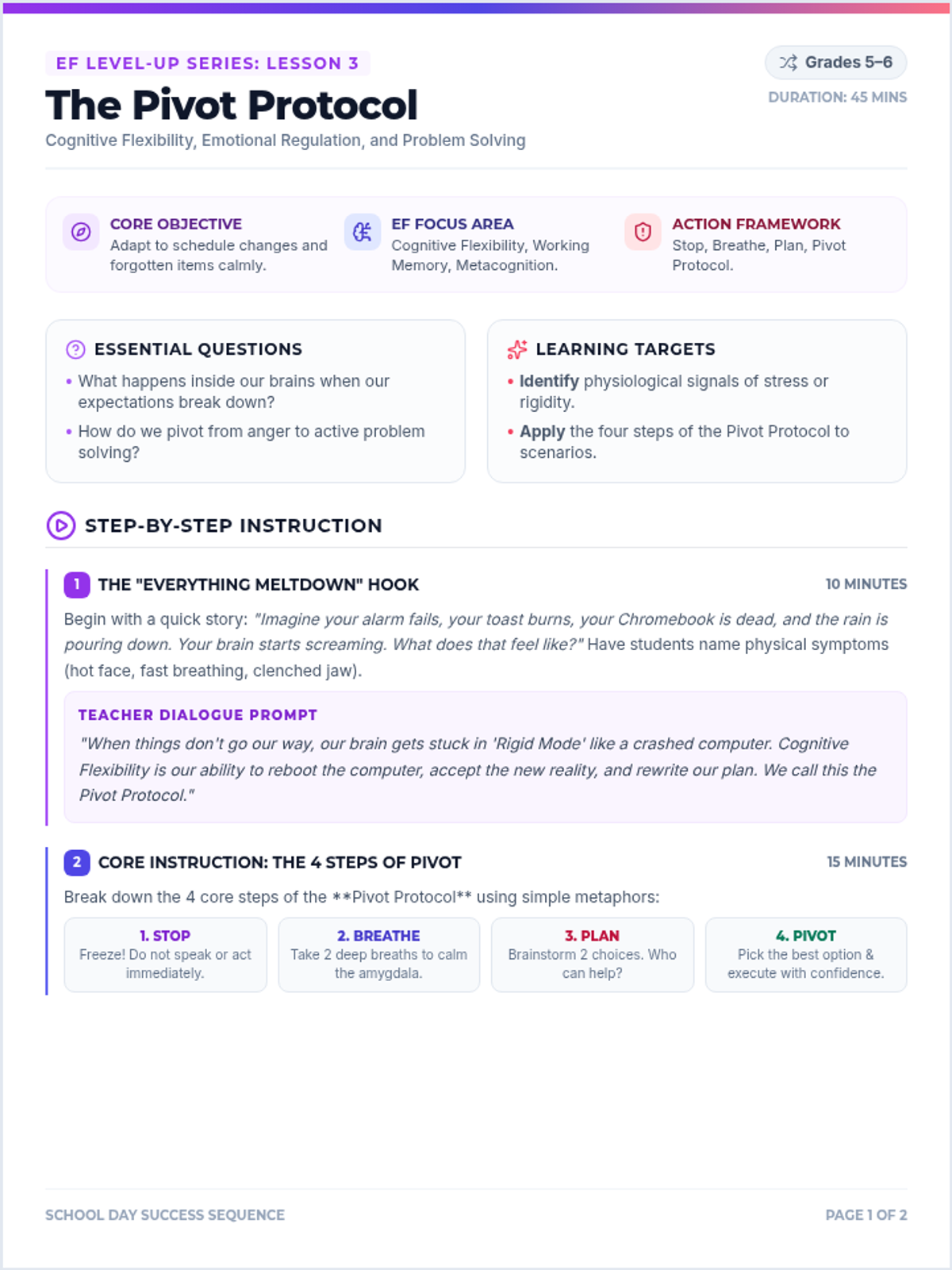
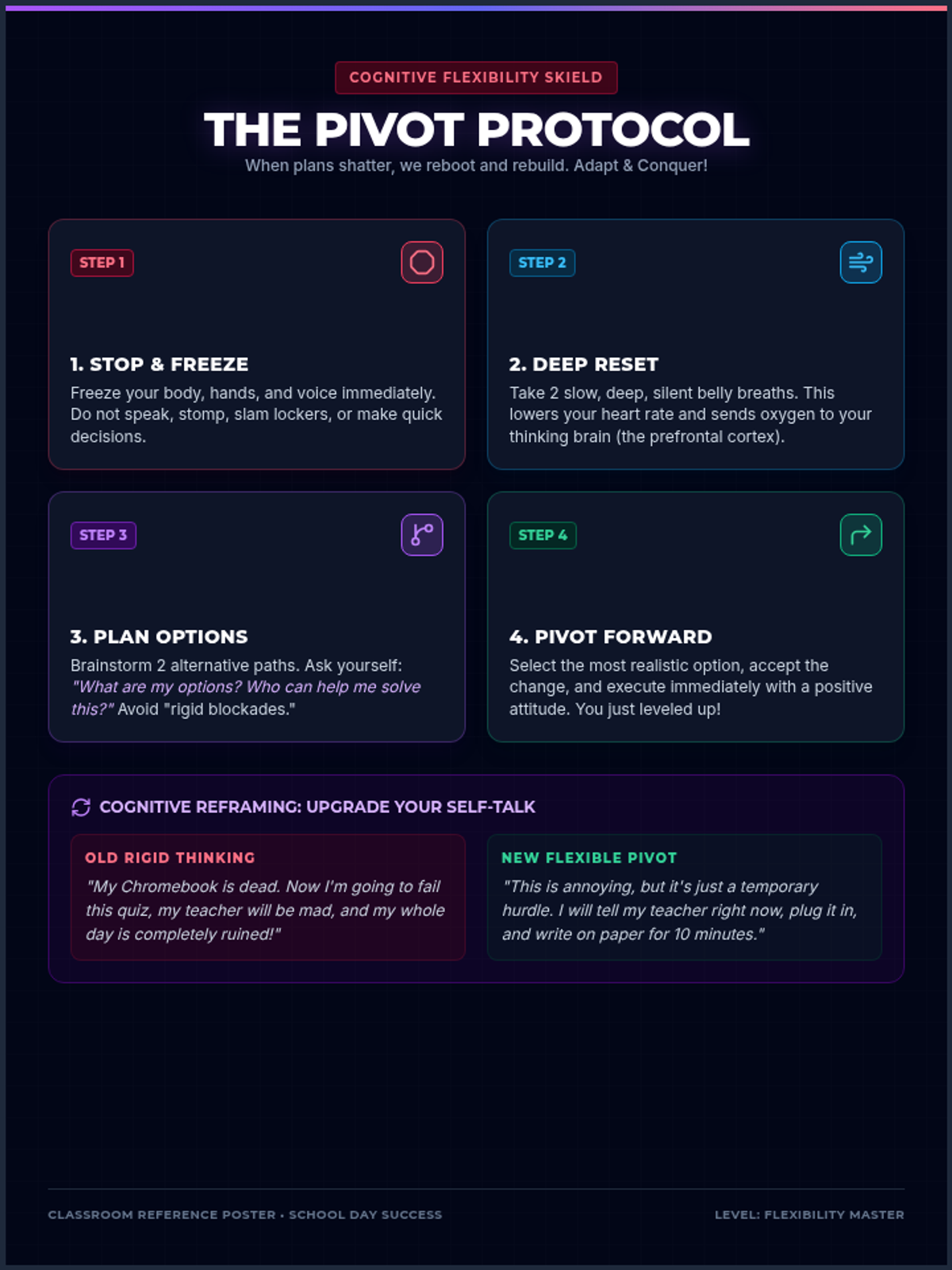
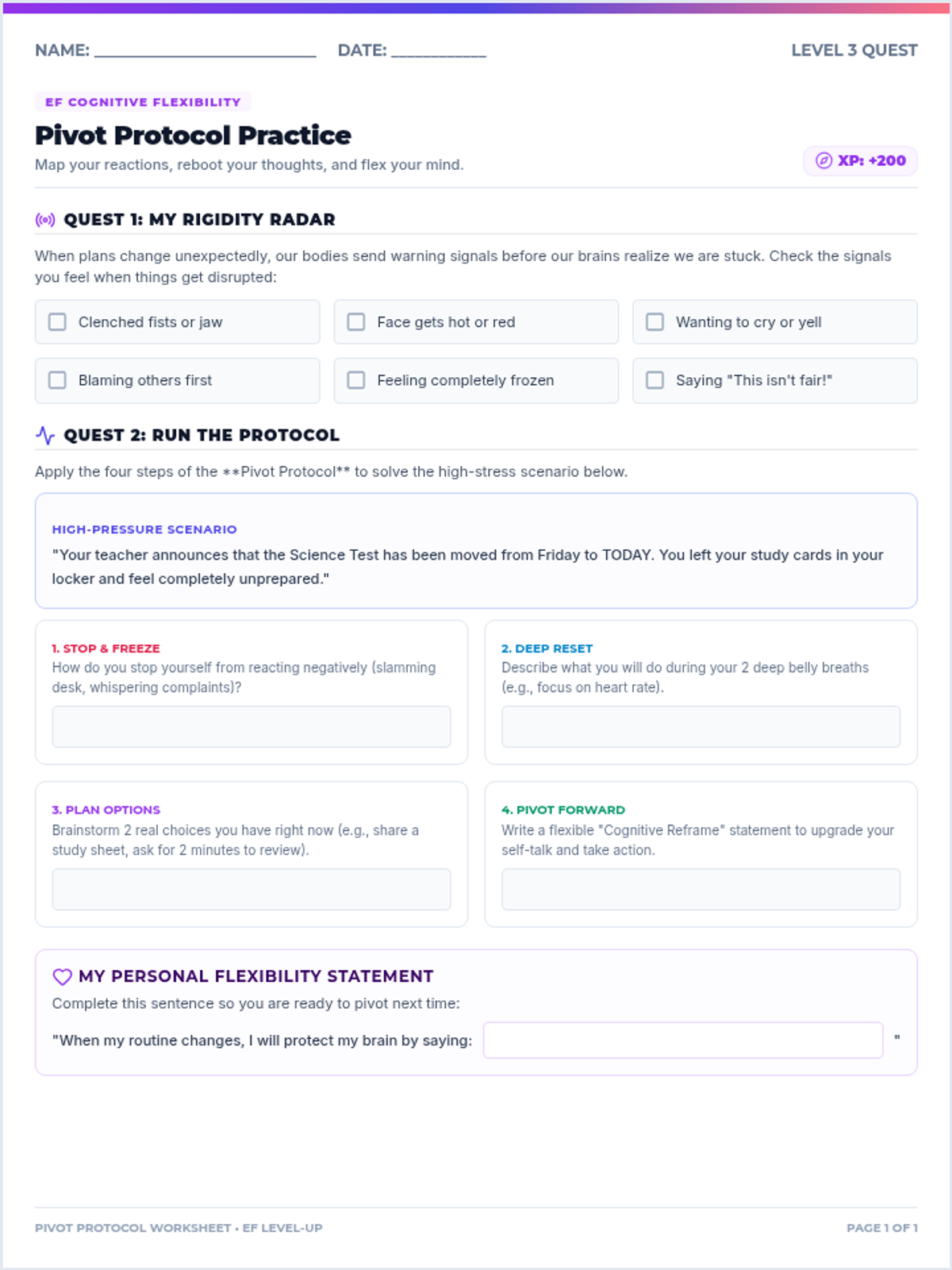
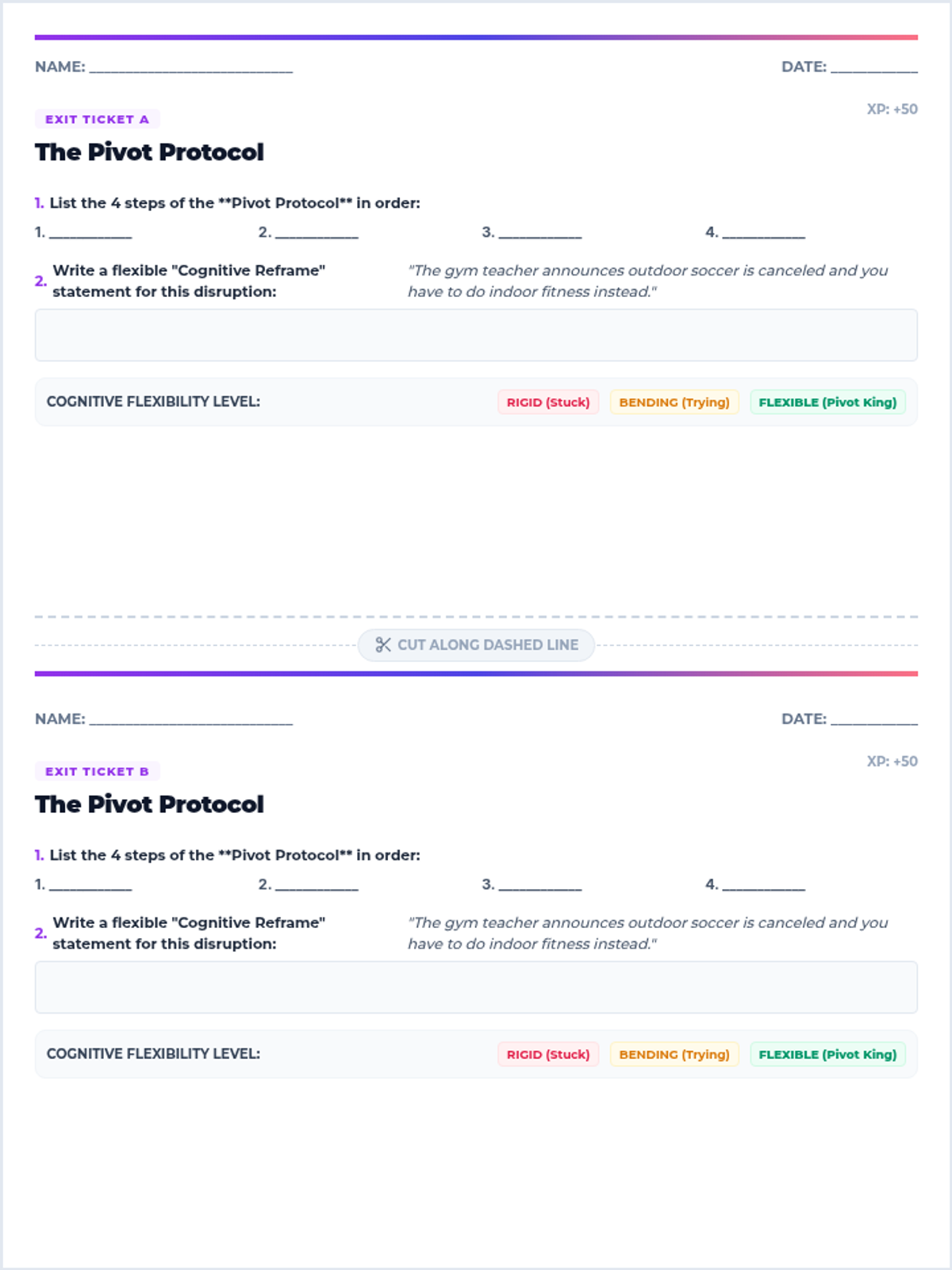
Focuses on cognitive flexibility, teaching students how to adapt to unexpected morning disruptions, schedule changes, or forgotten items using a step-by-step coping and problem-solving framework.
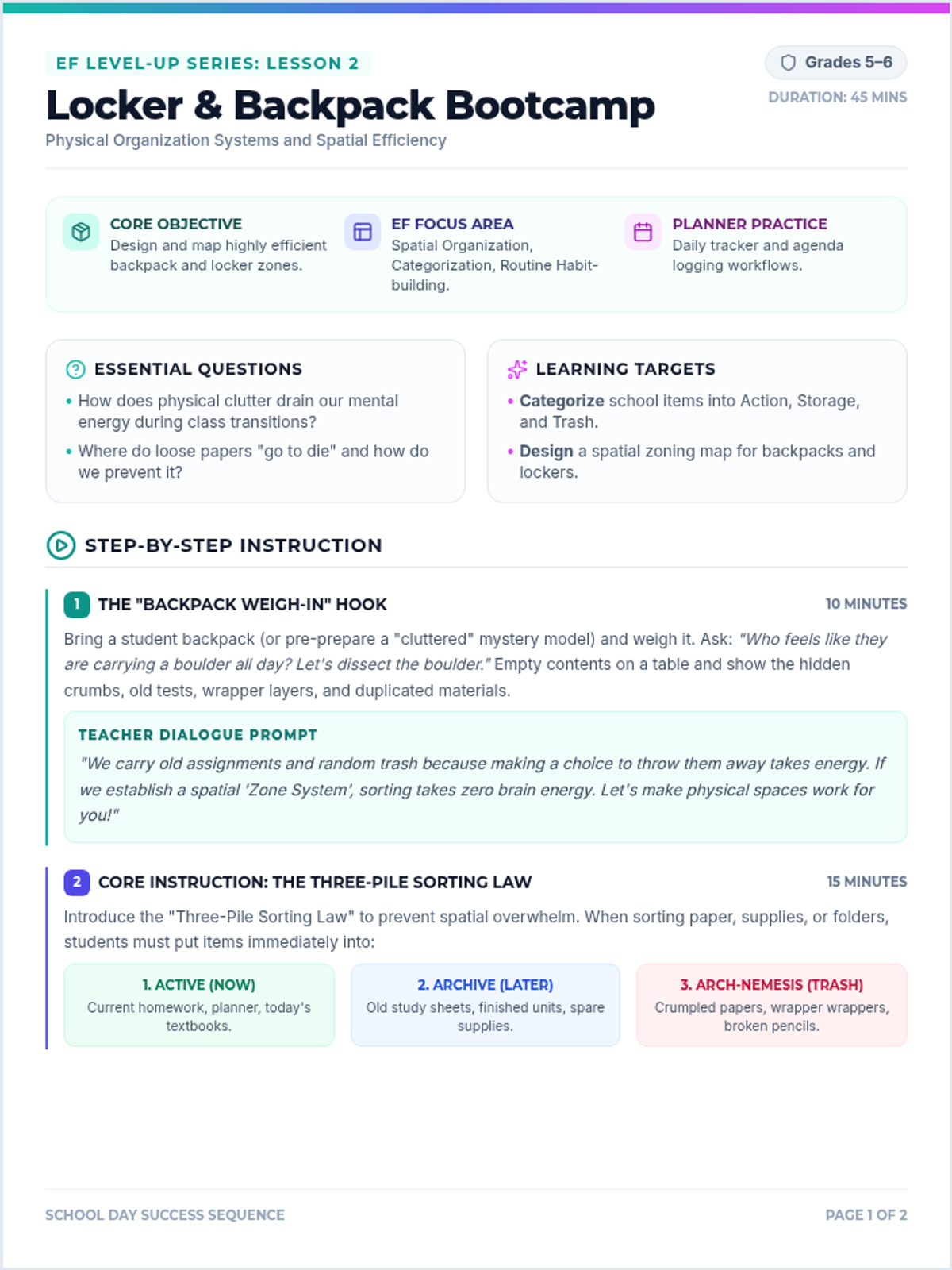
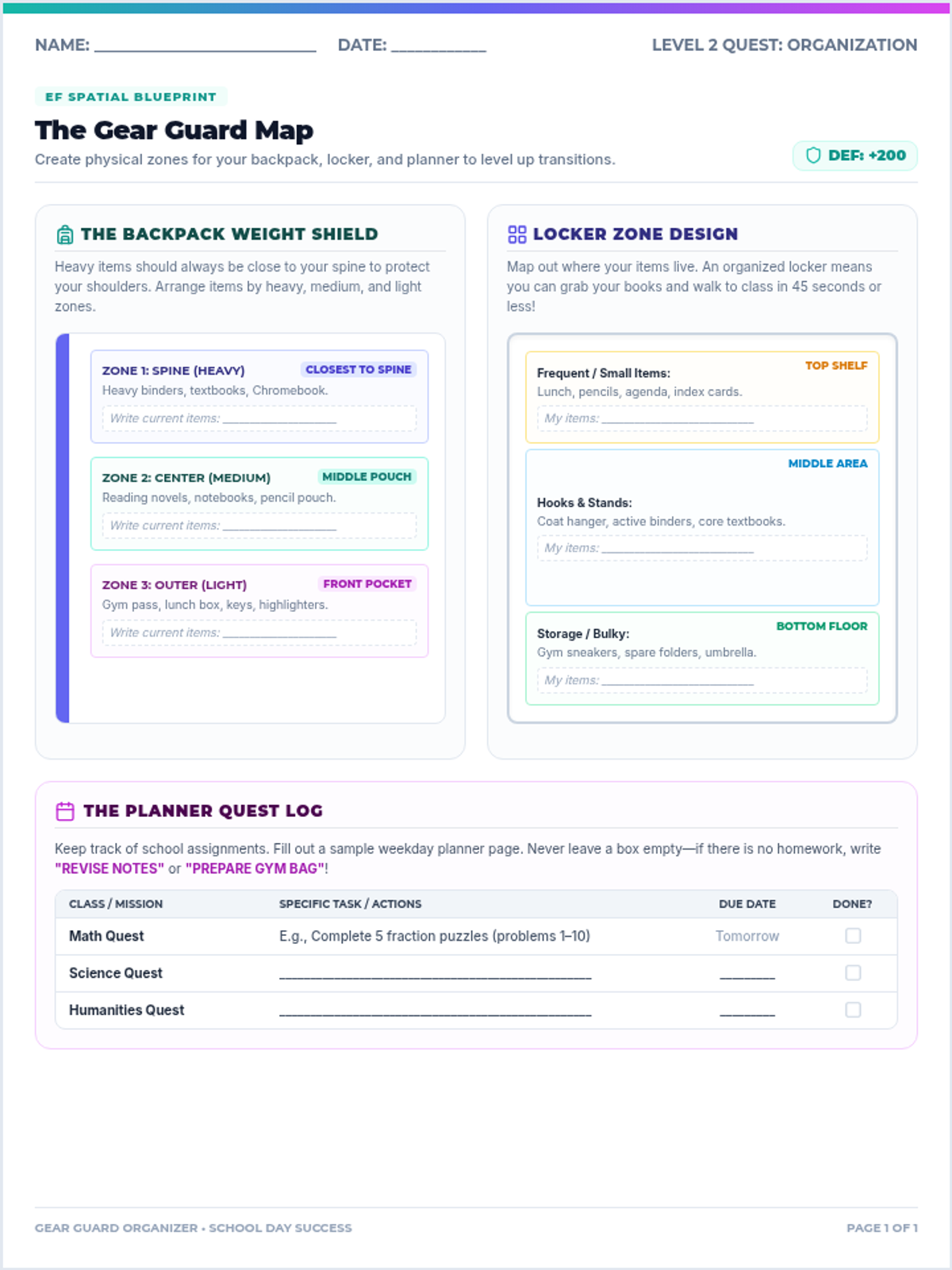
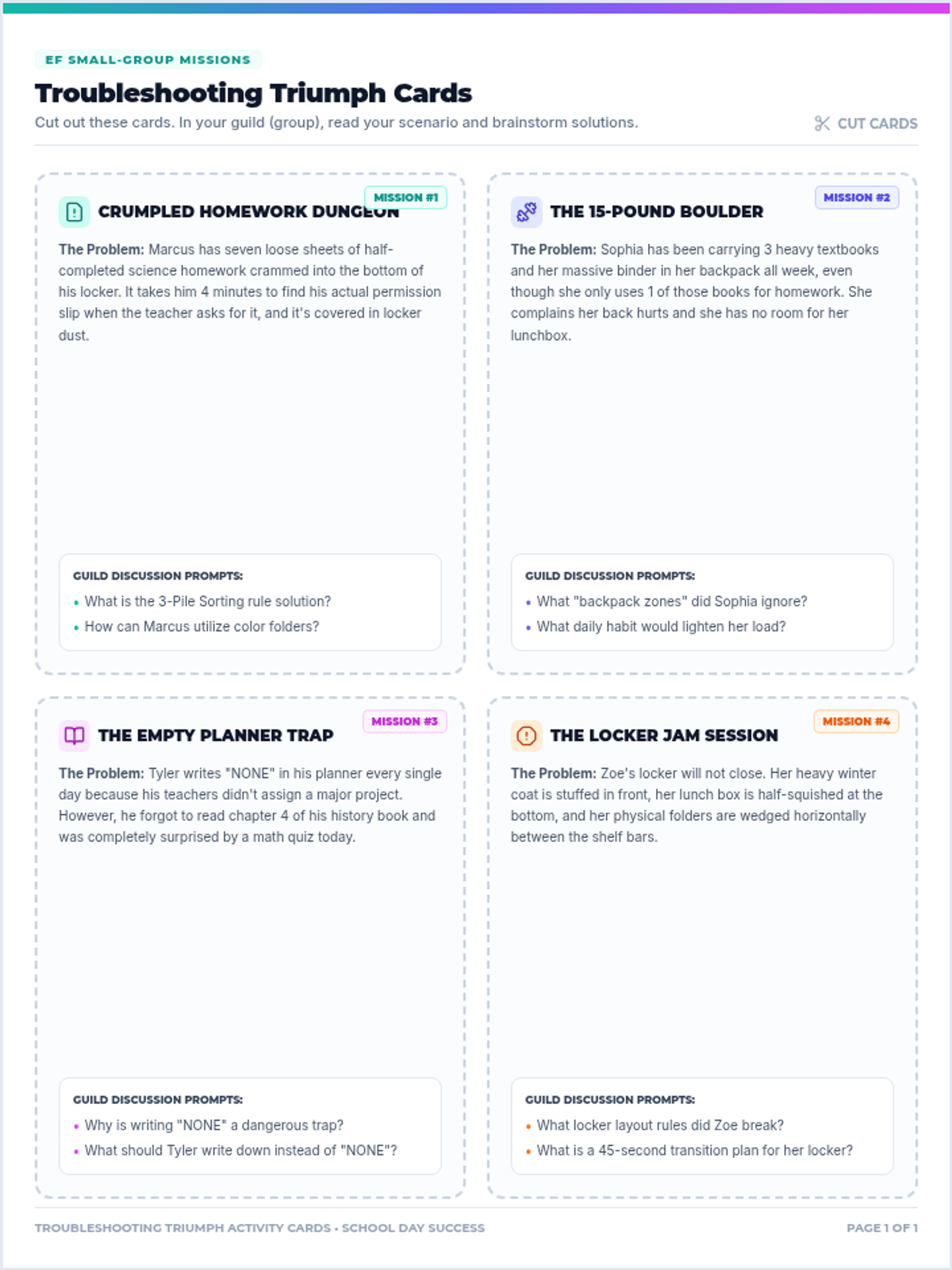
Focuses on organization and order, helping students design efficient physical systems for their backpacks, desks, and lockers, alongside practicing planner management.
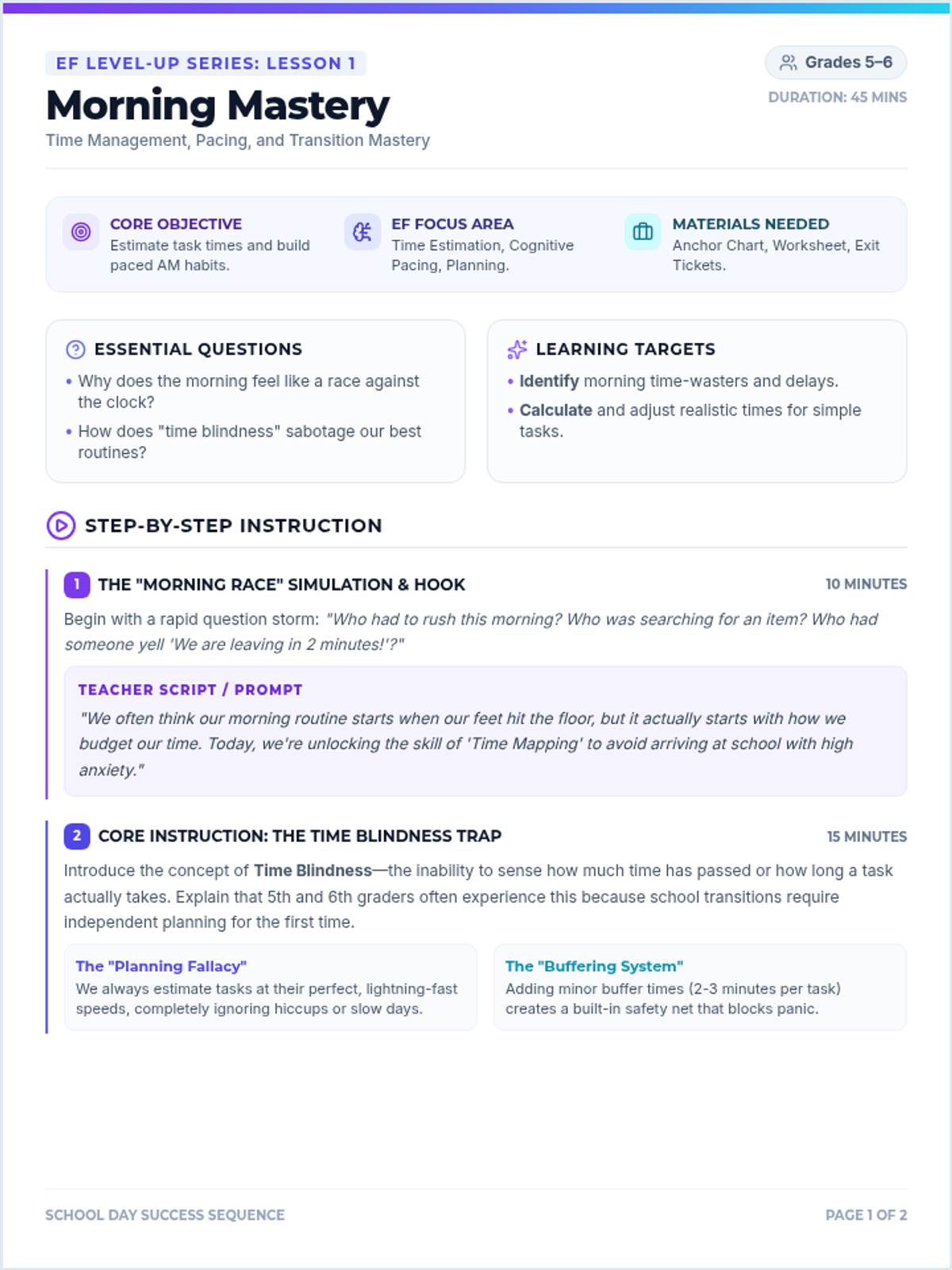
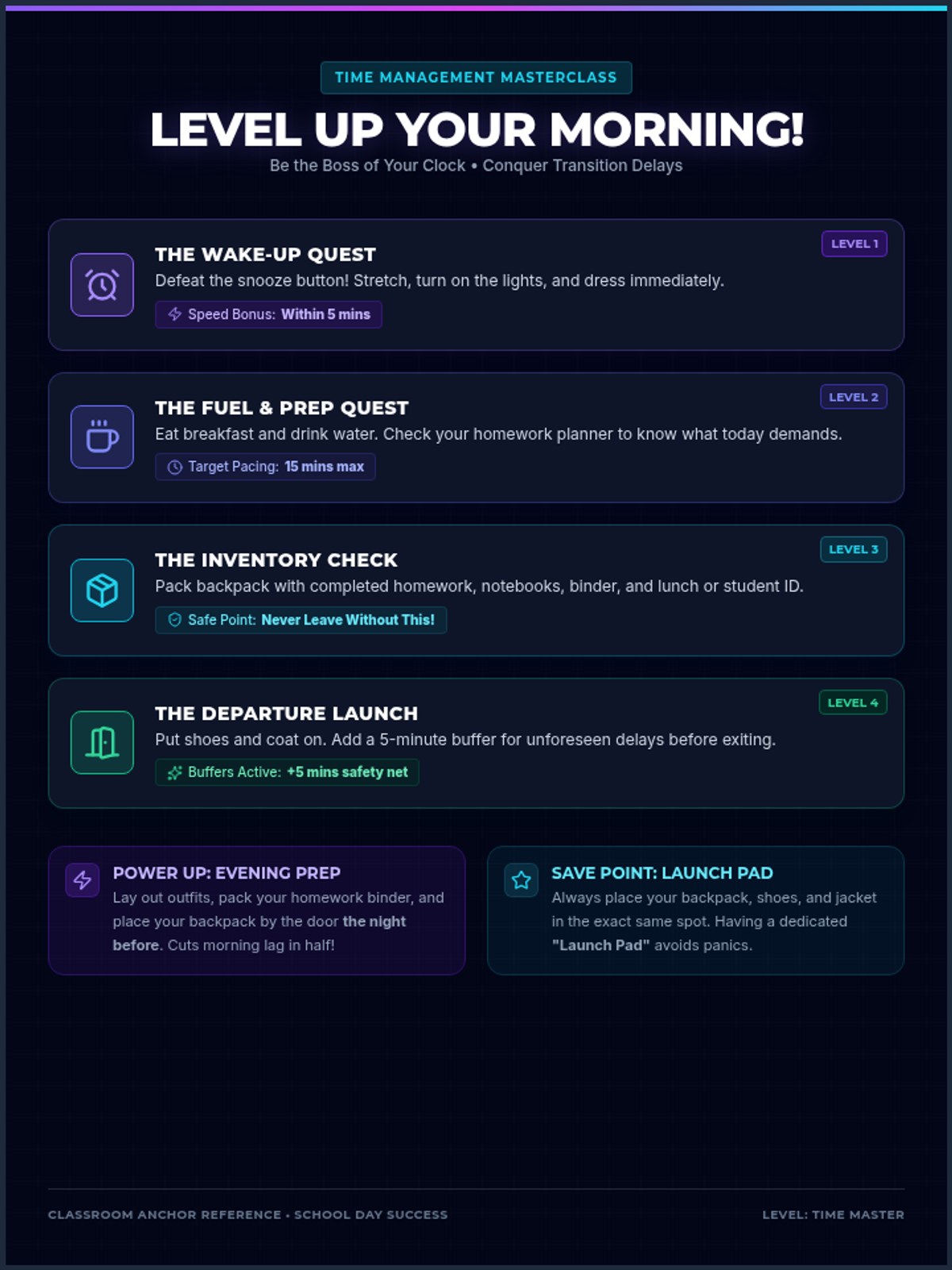
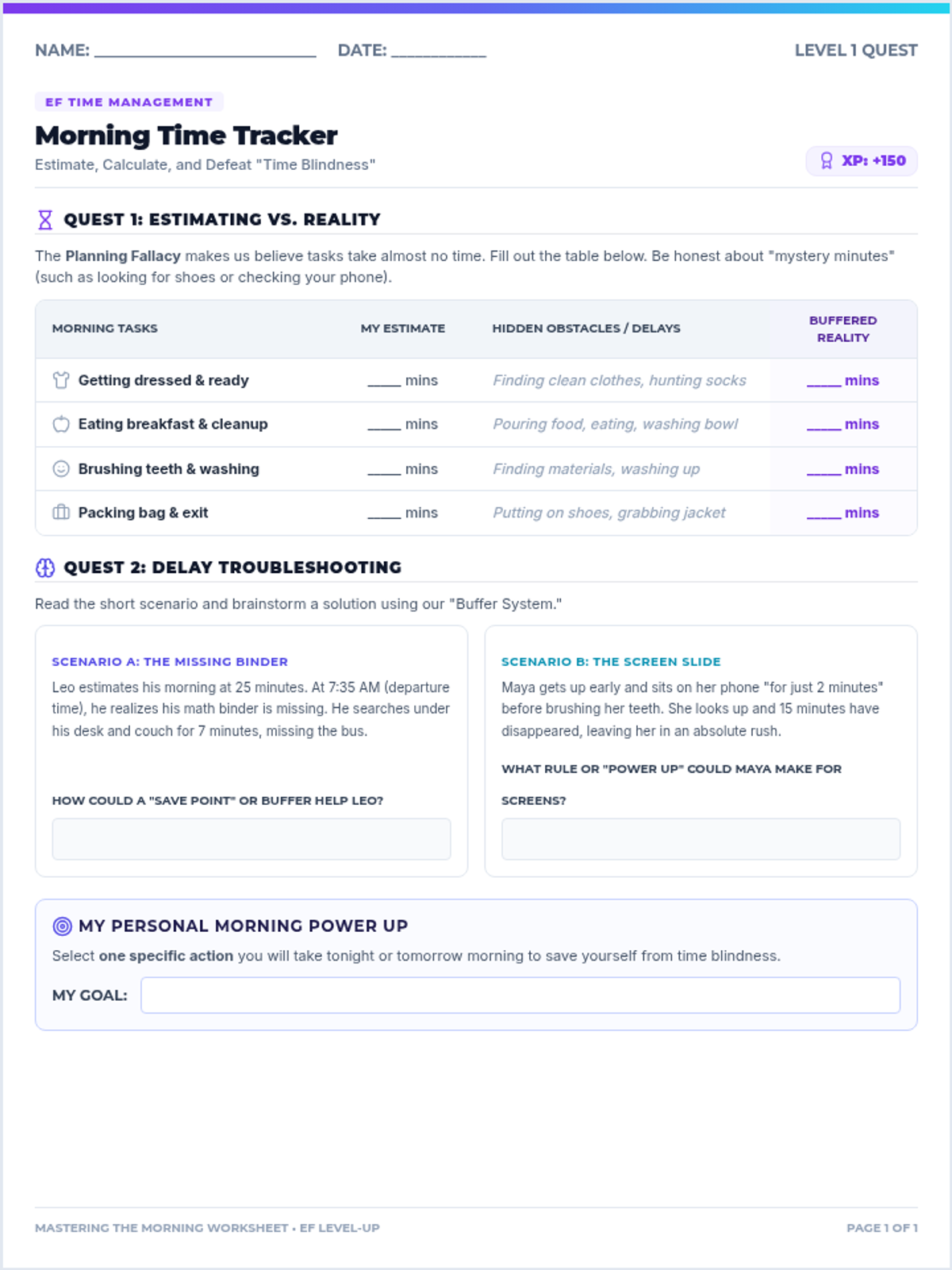
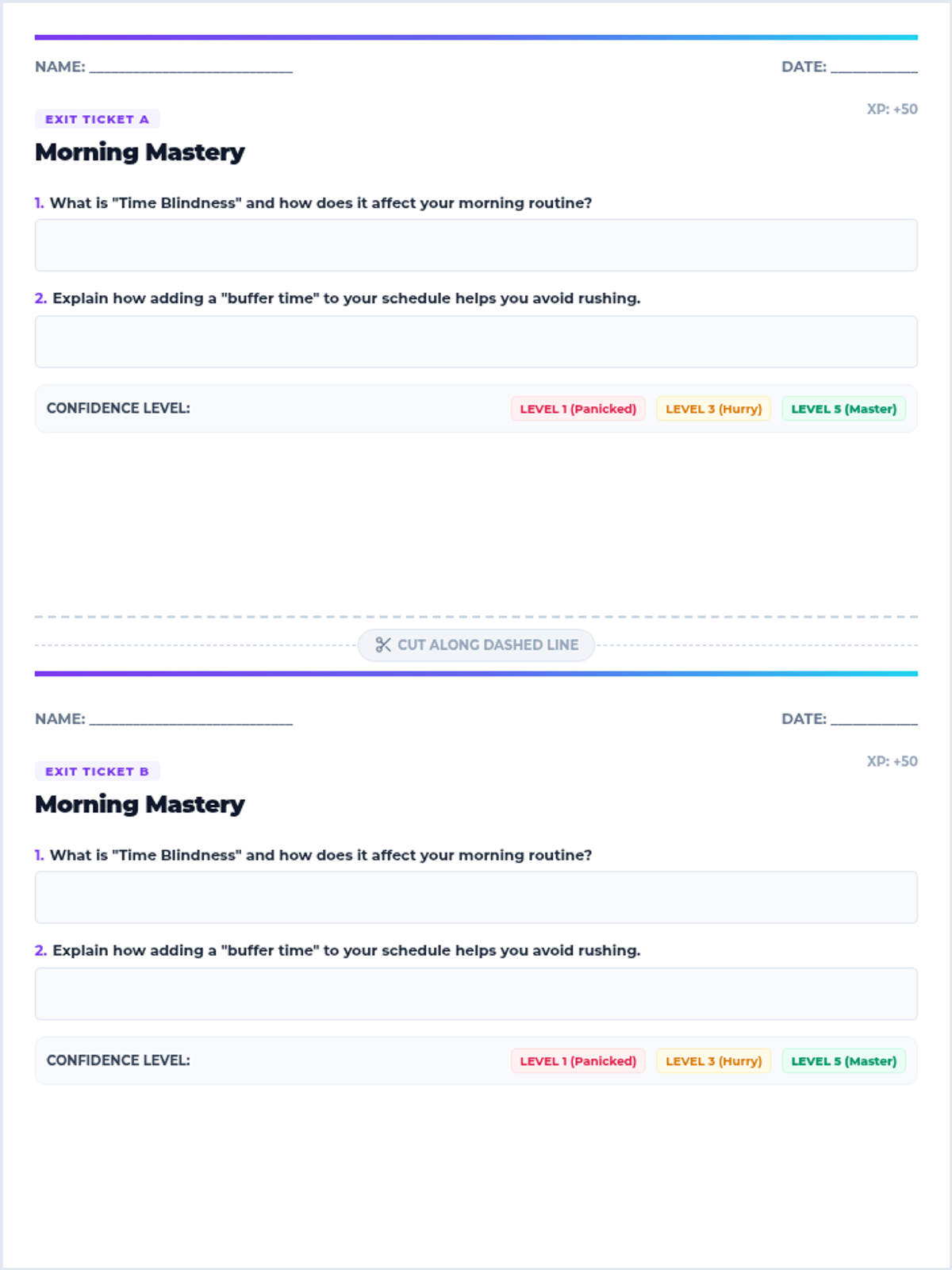
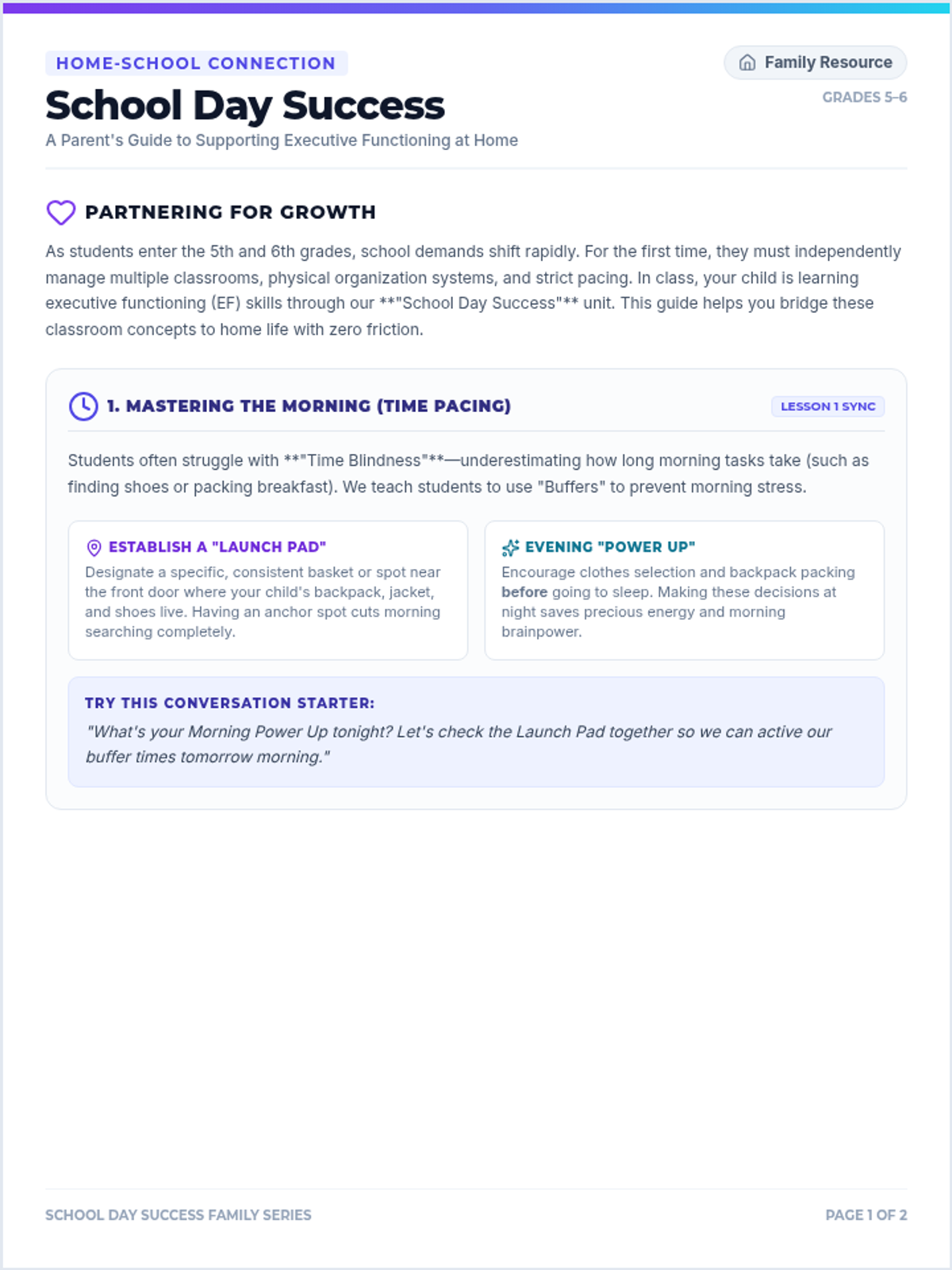
Focuses on time management, estimating task durations, and establishing efficient morning routines to arrive at school ready to learn without transition delays.
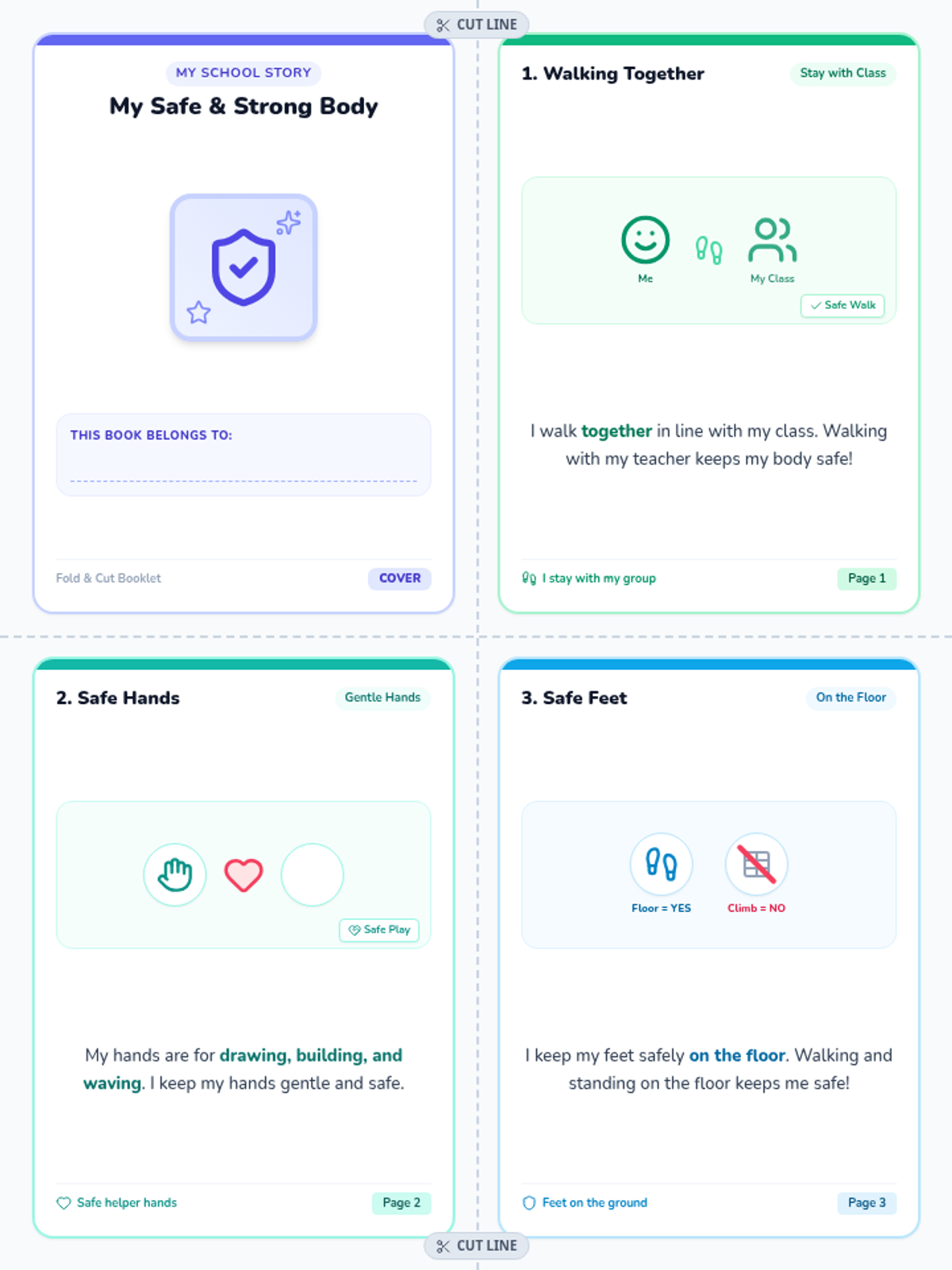
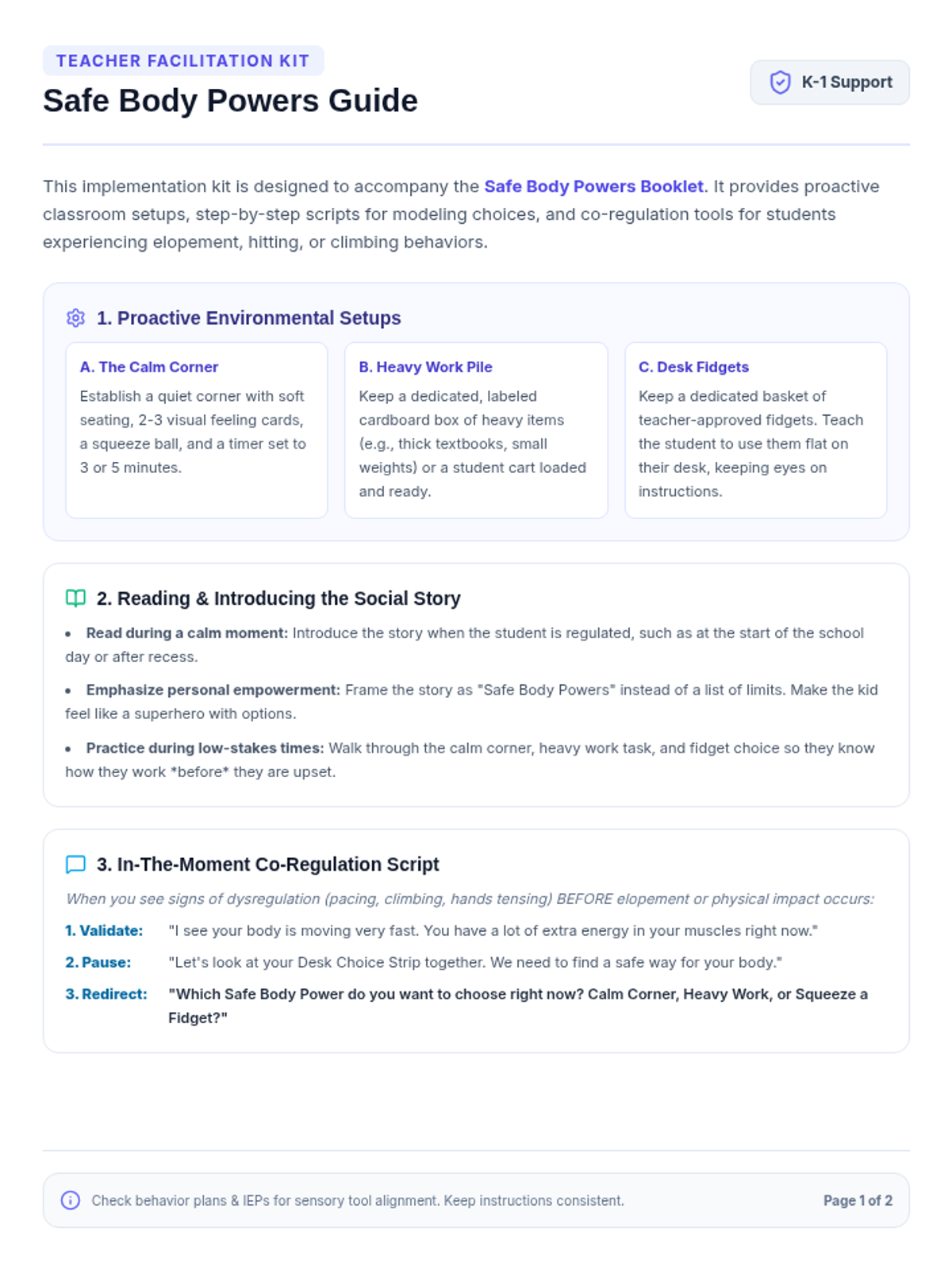
A supportive social story and teacher facilitation kit designed to help kindergarteners develop self-regulation, stay with their class, maintain a safe body, and choose safe physical outlets instead of eloping, hitting, or climbing.
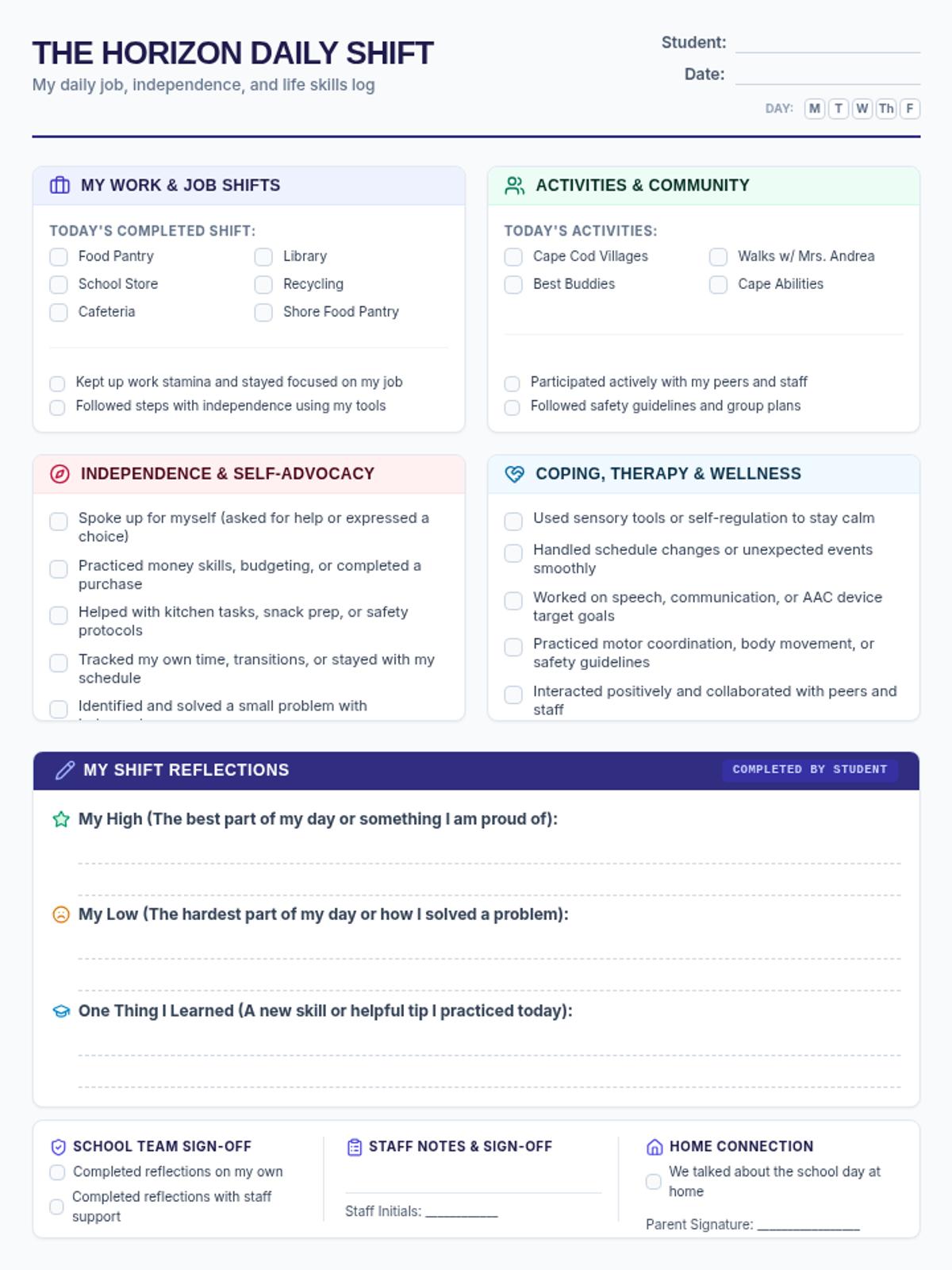
Practical tools and templates for tracking daily student performance, self-reflection, and home-school communication for young adults preparing for independent life.
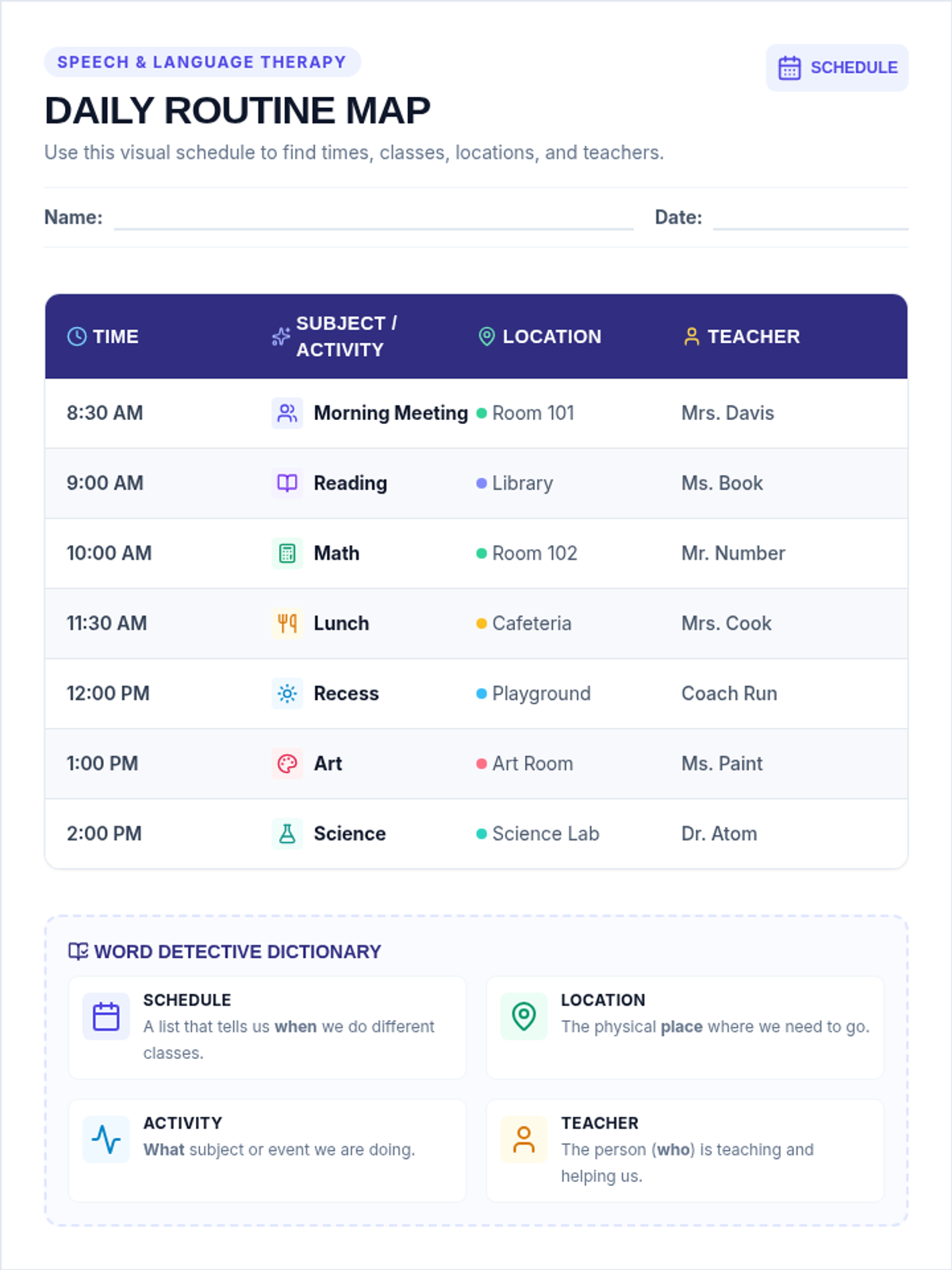
A speech-language therapy lesson designed to teach minimally verbal autistic students how to read and comprehend a school visual schedule, building academic vocabulary and independence.
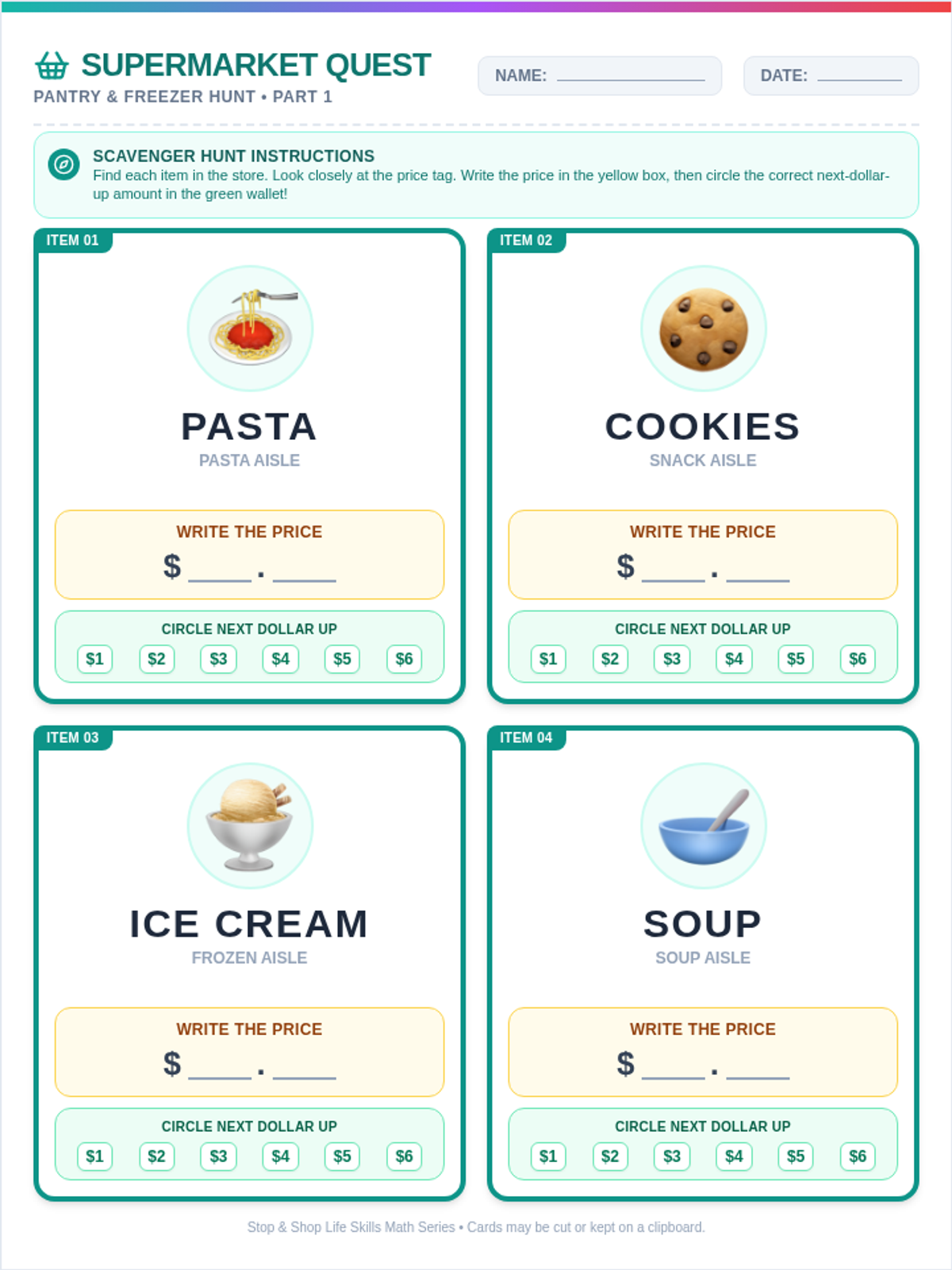
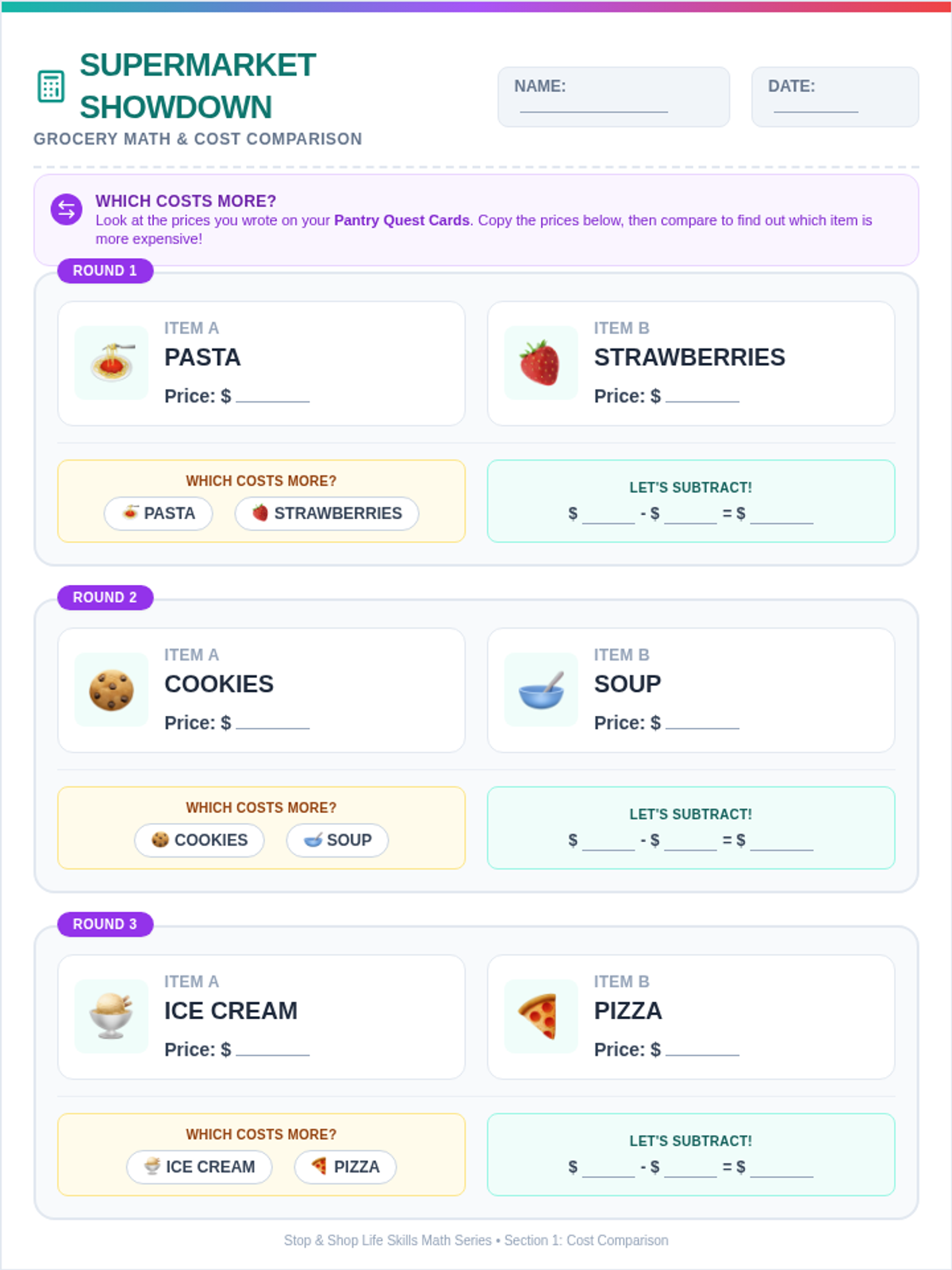
A real-world functional math lesson designed for life skills students. Students navigate a supermarket to locate pantry staples, snack items, and frozen foods, practicing next-dollar-up calculations and pricing comparison.
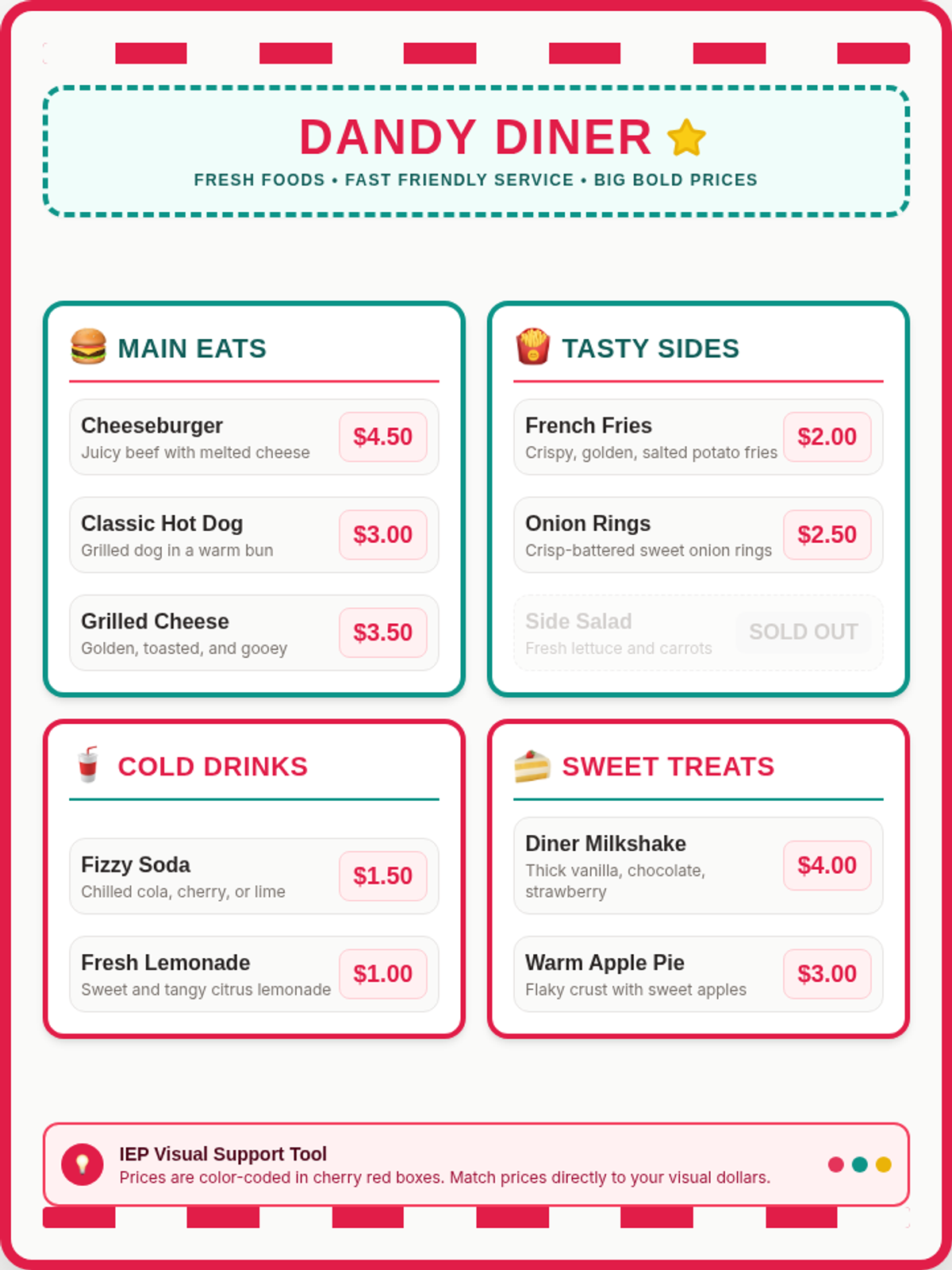
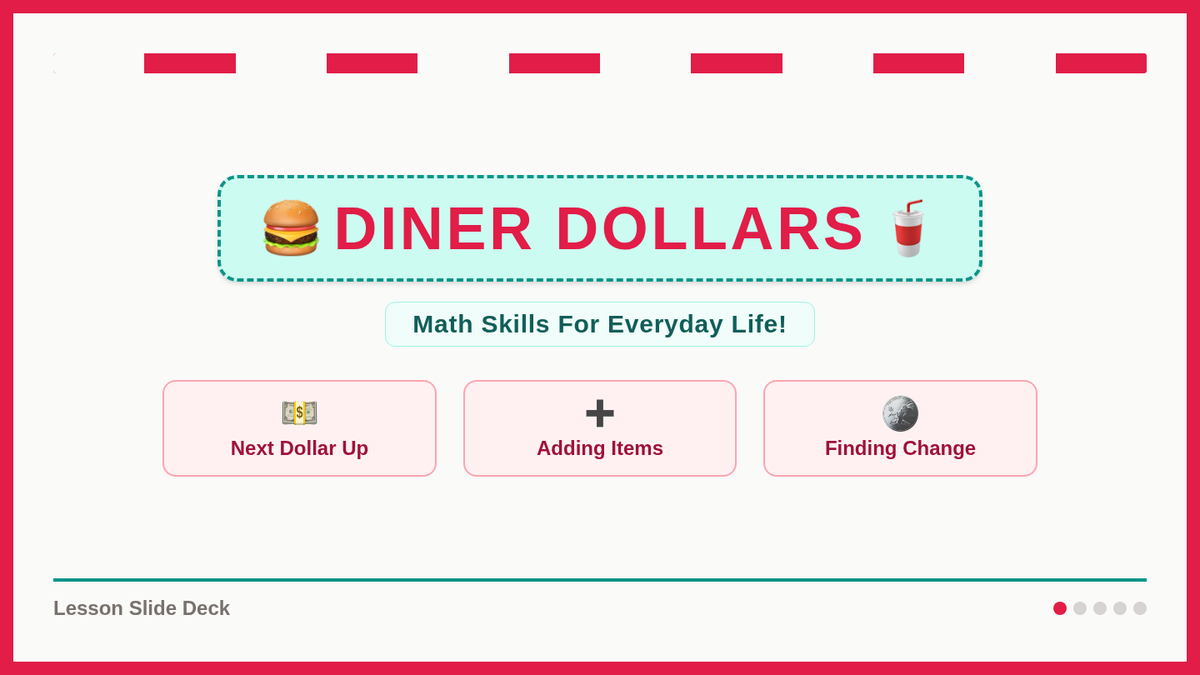
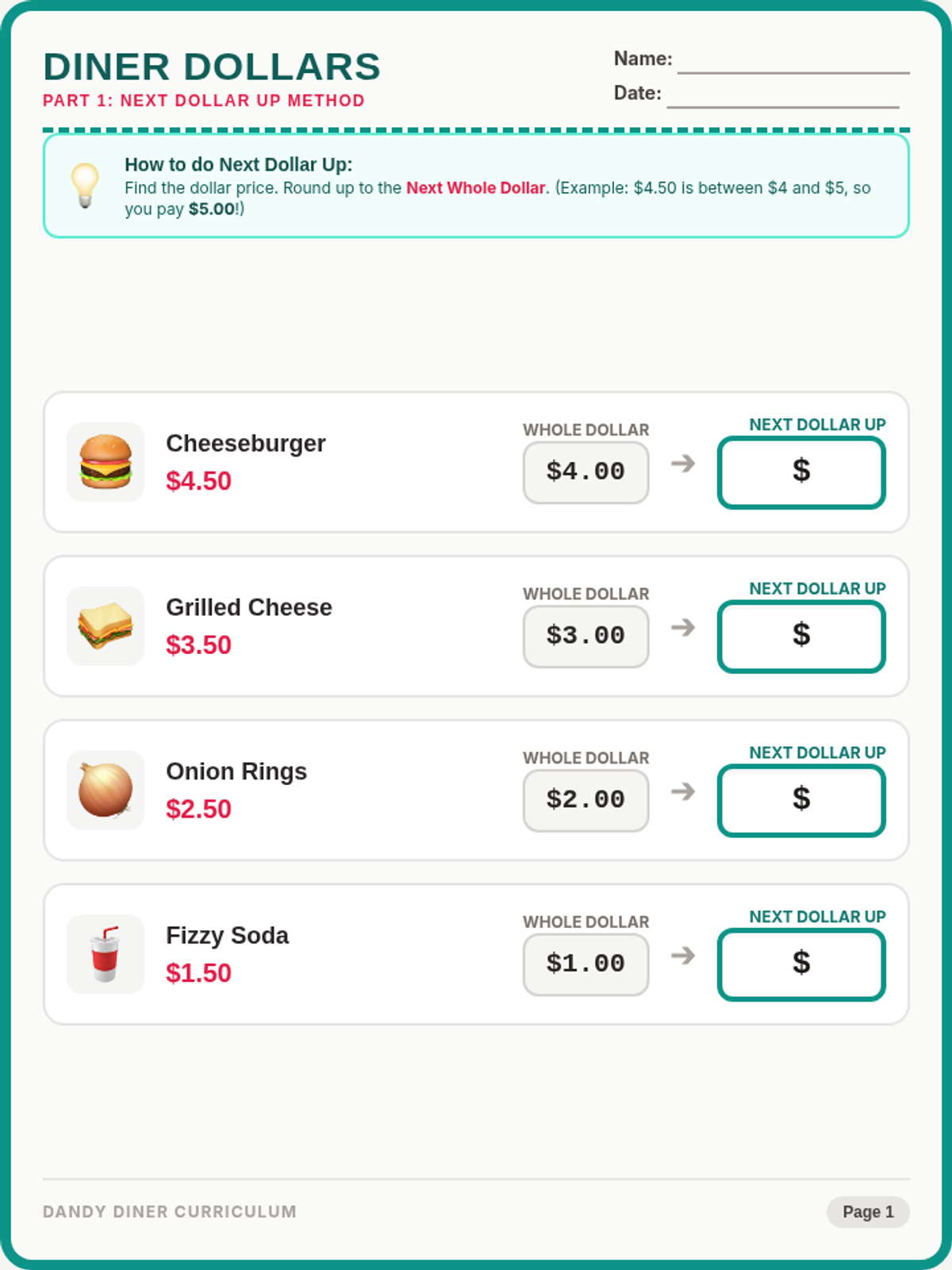
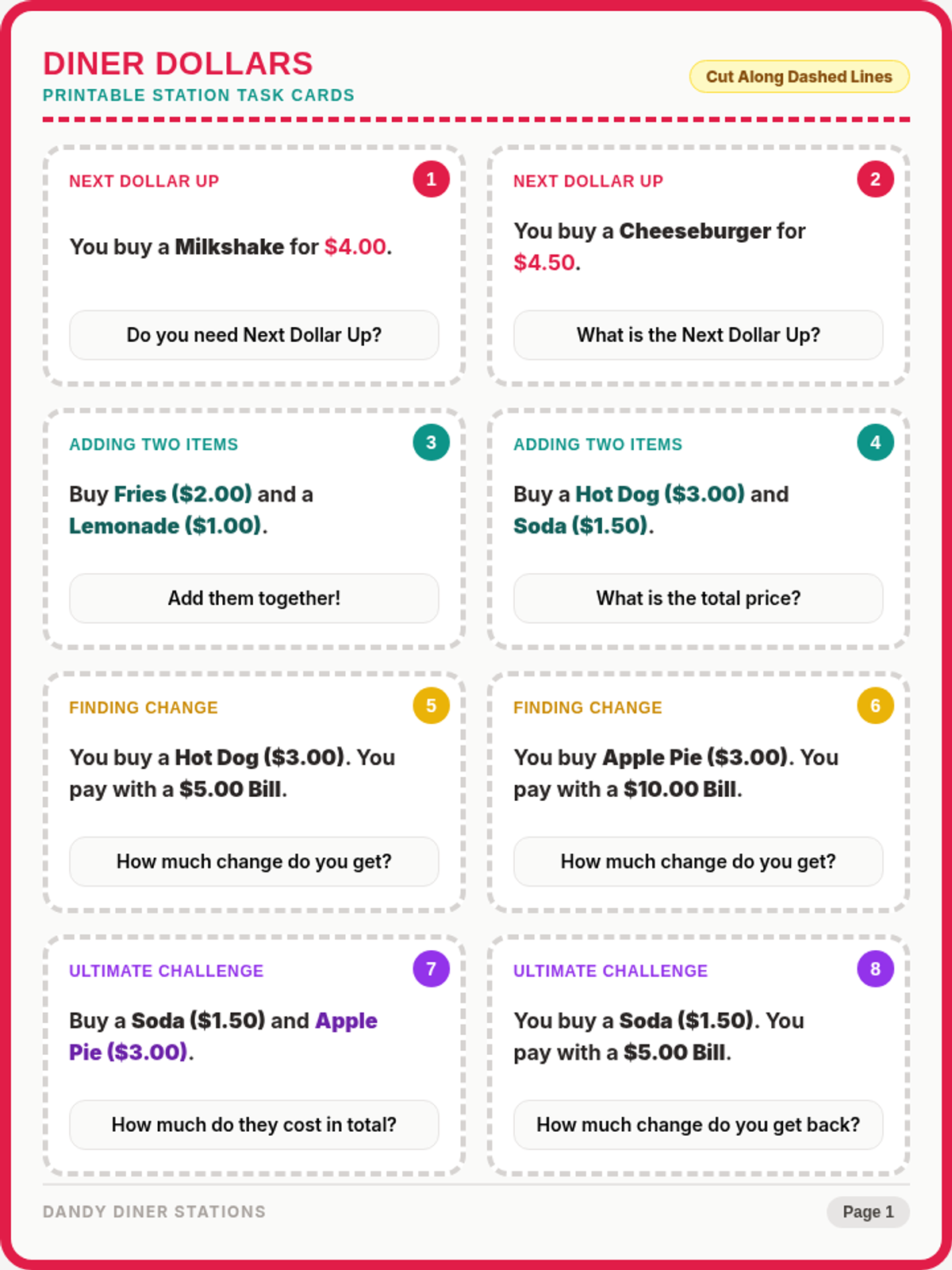
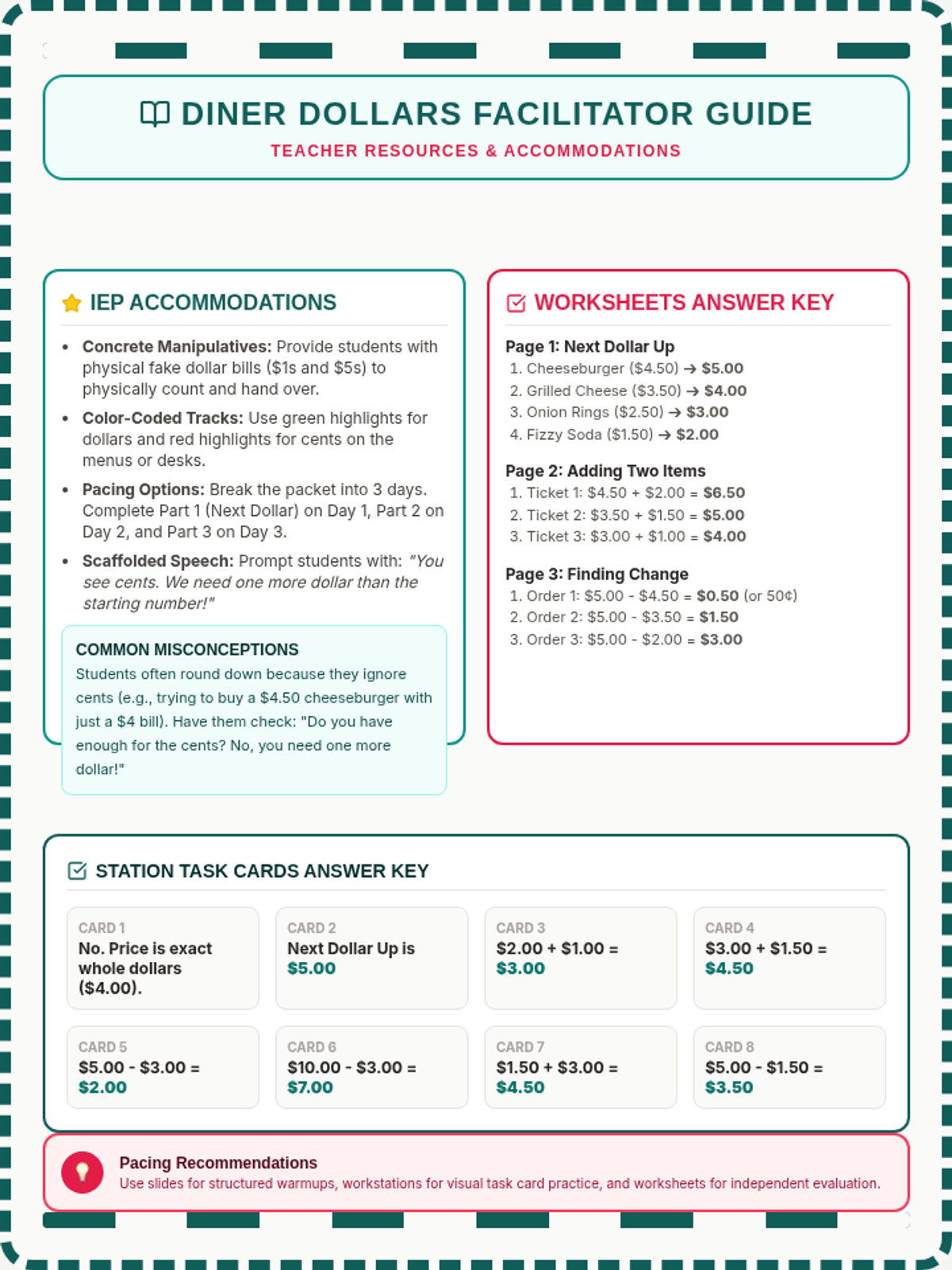
A comprehensive, highly scaffolded menu math lesson tailored for IEP students. Using a friendly retro diner theme, it covers the Next Dollar Up method, simple decimal addition of two items, and calculating change using concrete visual supports.
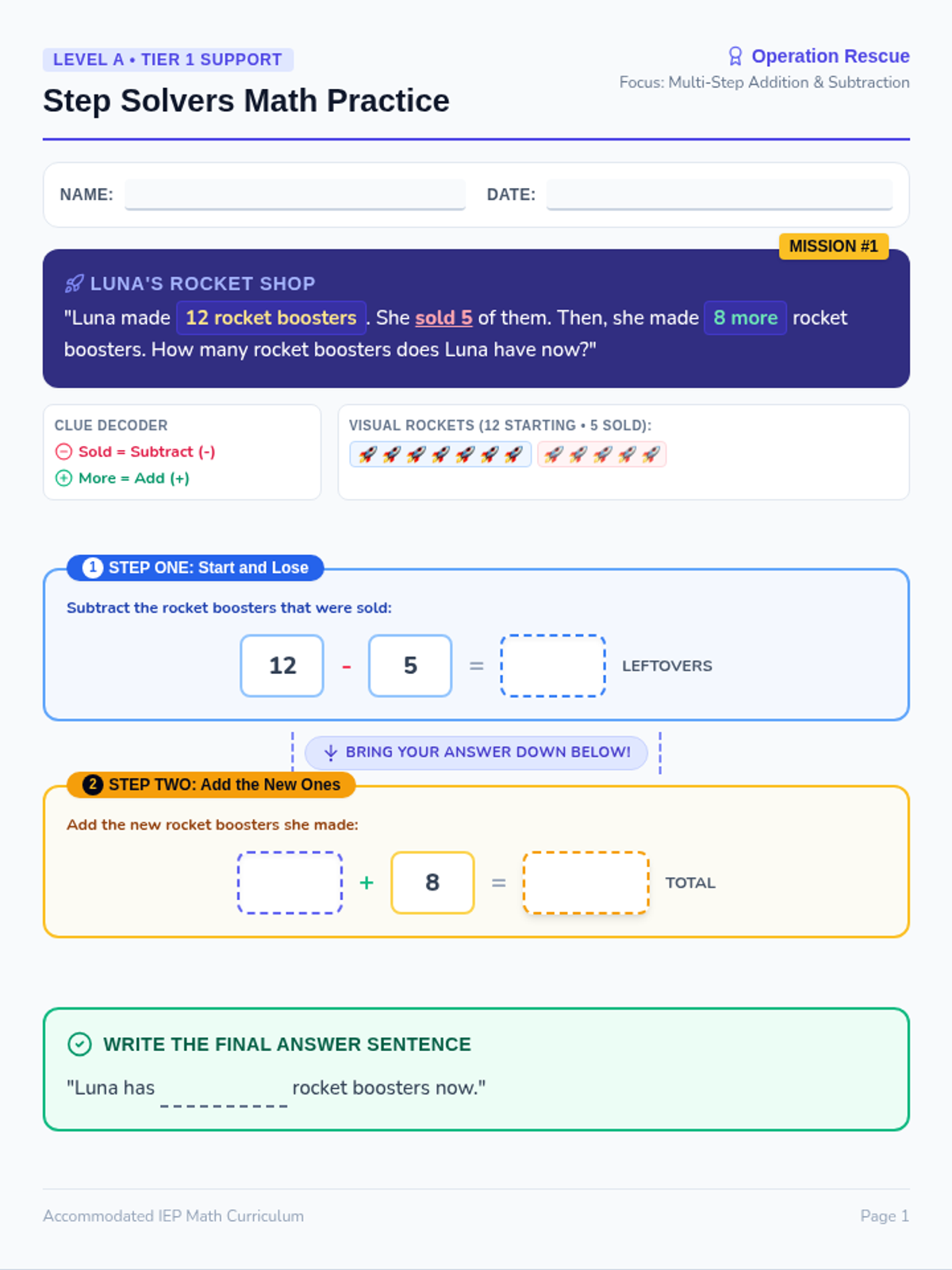
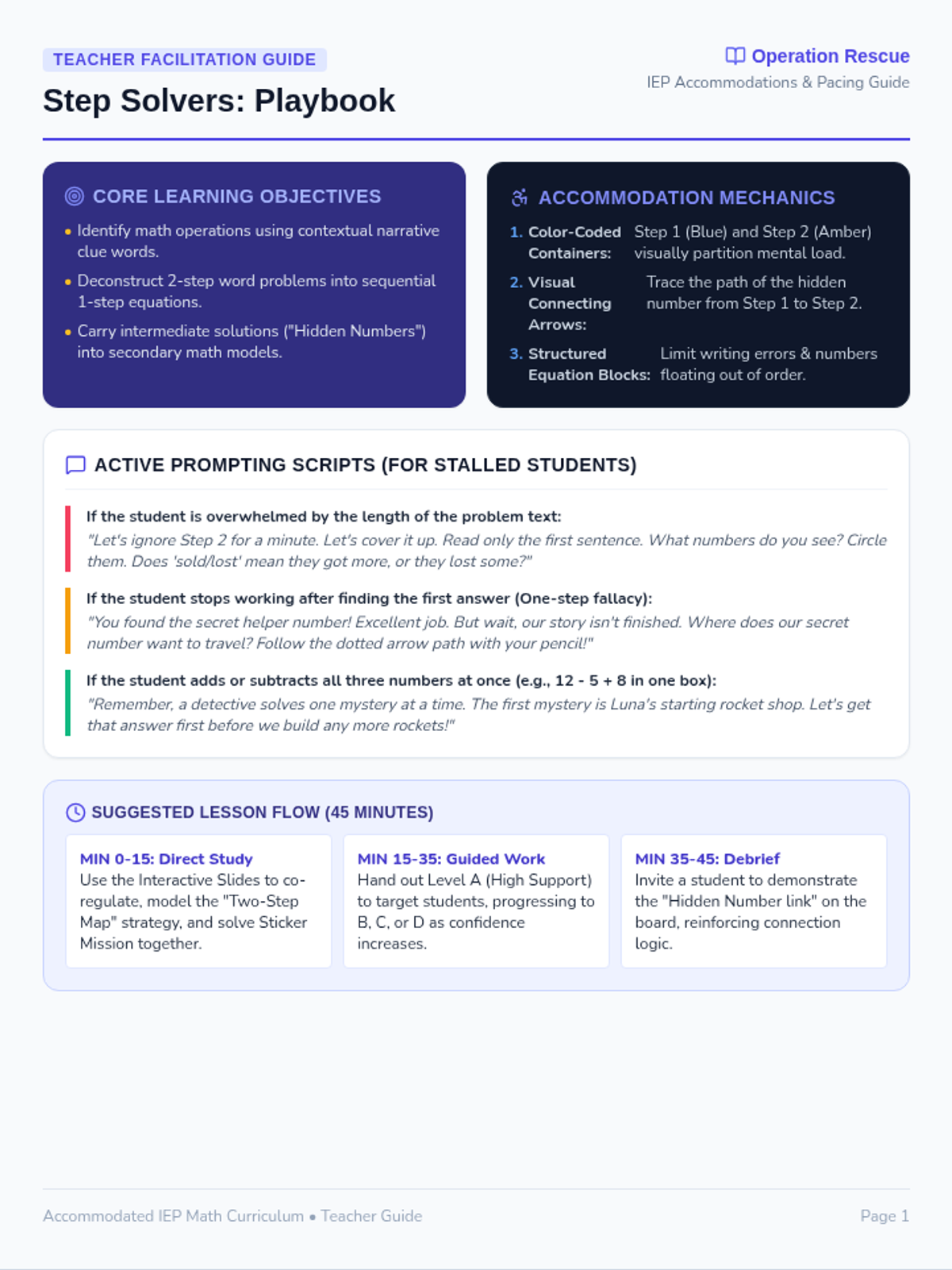
A modified math lesson on solving multi-step word problems, specifically designed for students with IEP accommodations. It features highly structured visual graphic organizers, pictorial supports, and sentence frames to break down complex multi-step problems into manageable, sequential steps.
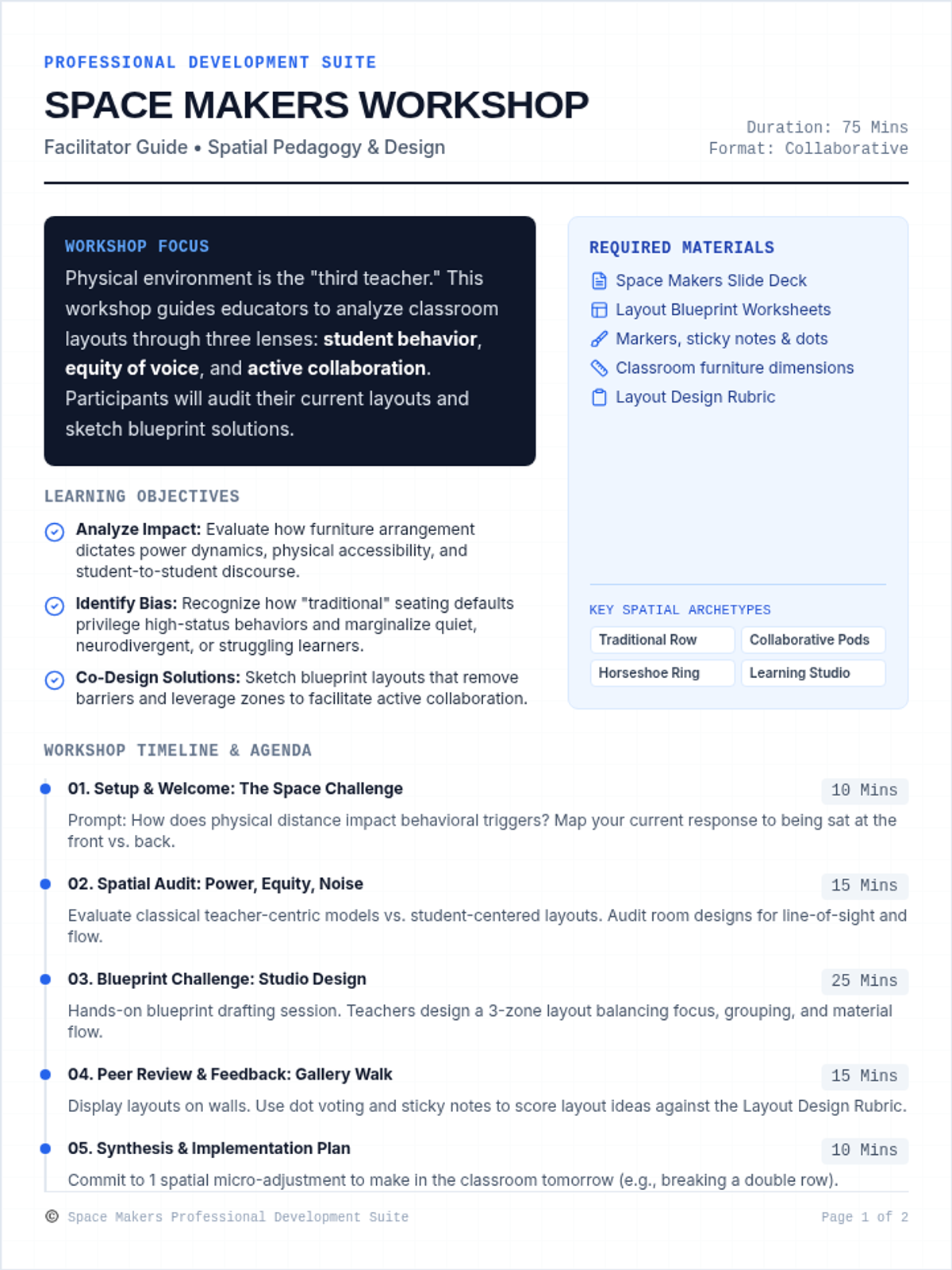
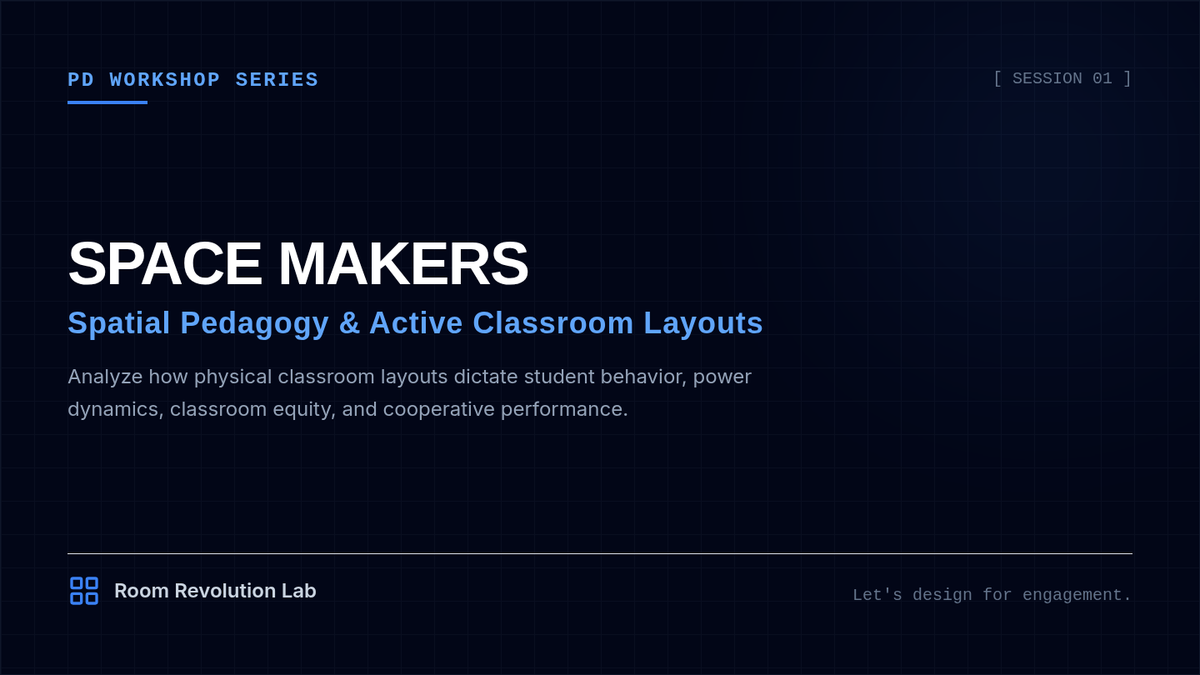
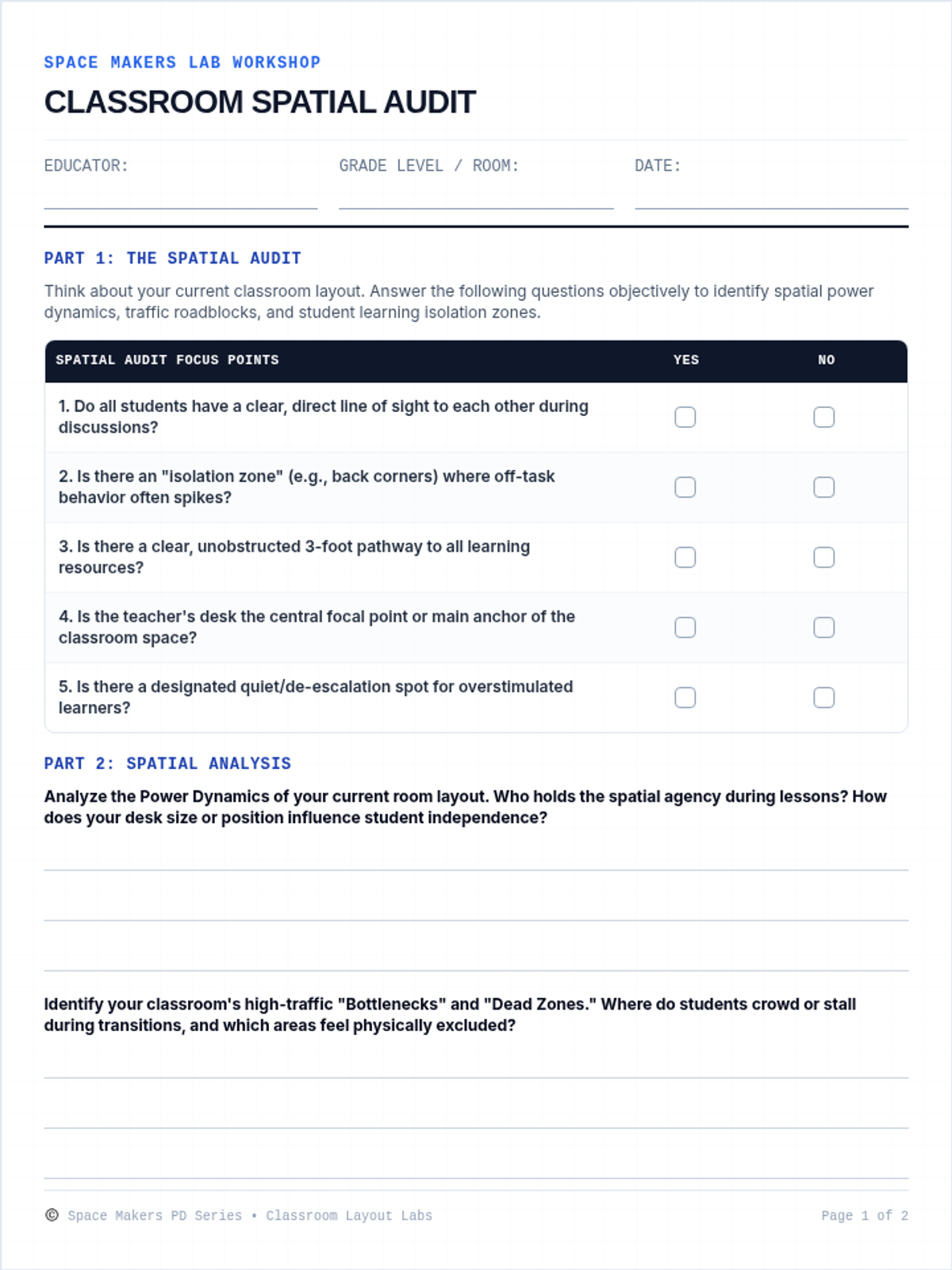
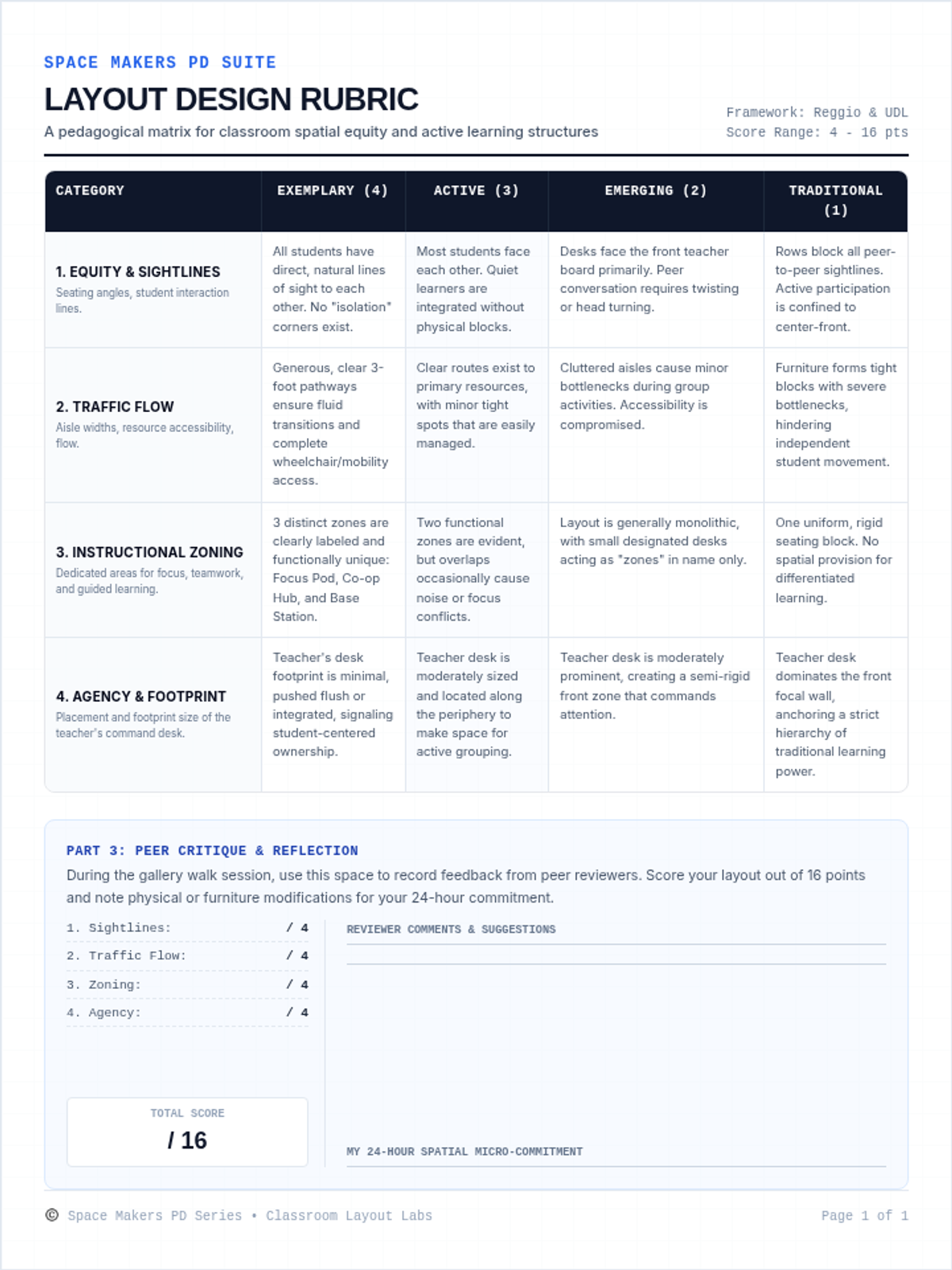
An interactive professional development workshop for educators to analyze physical classroom layouts, evaluate their impact on student behavior and equity, and design collaborative future spaces.
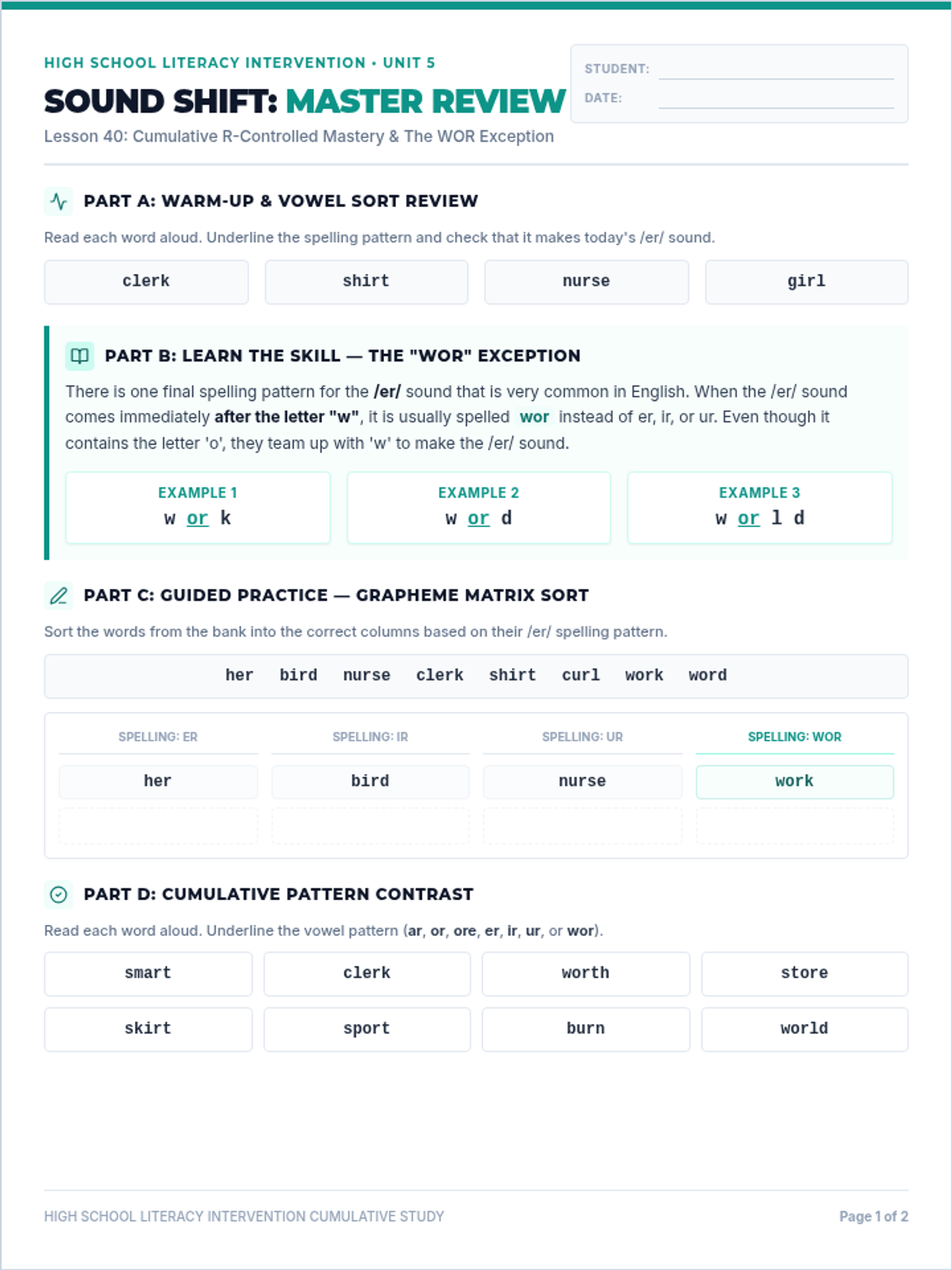
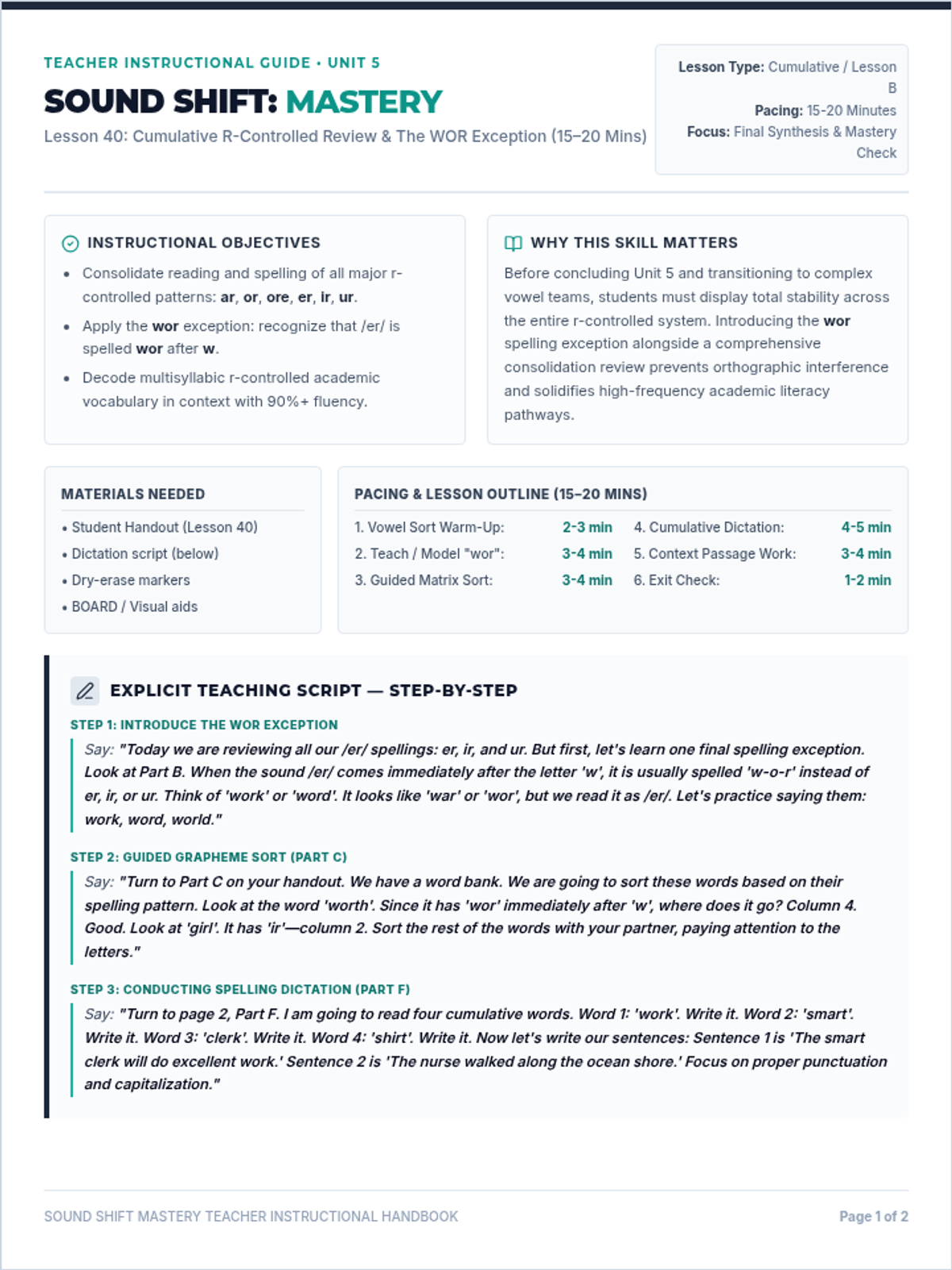
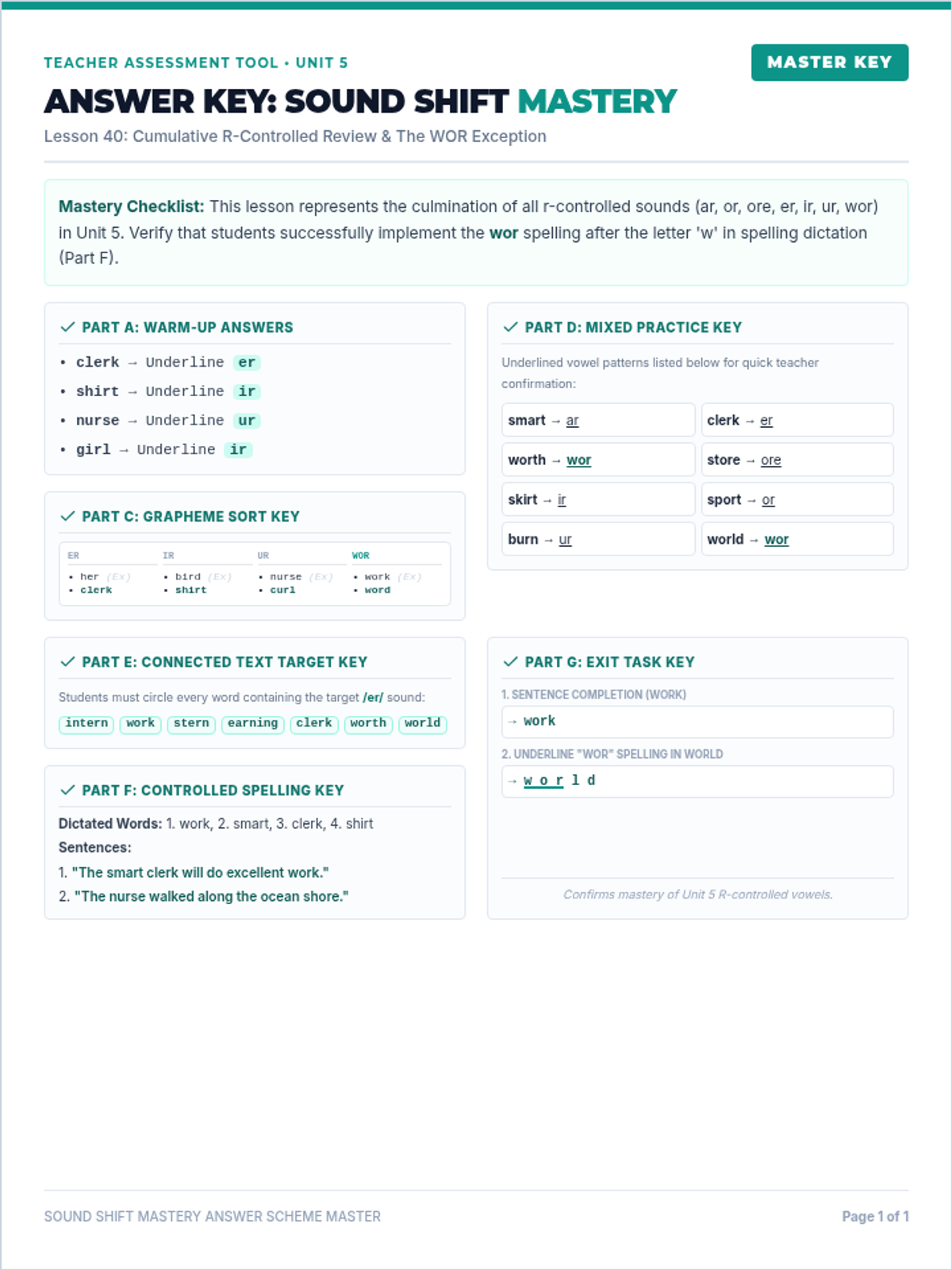
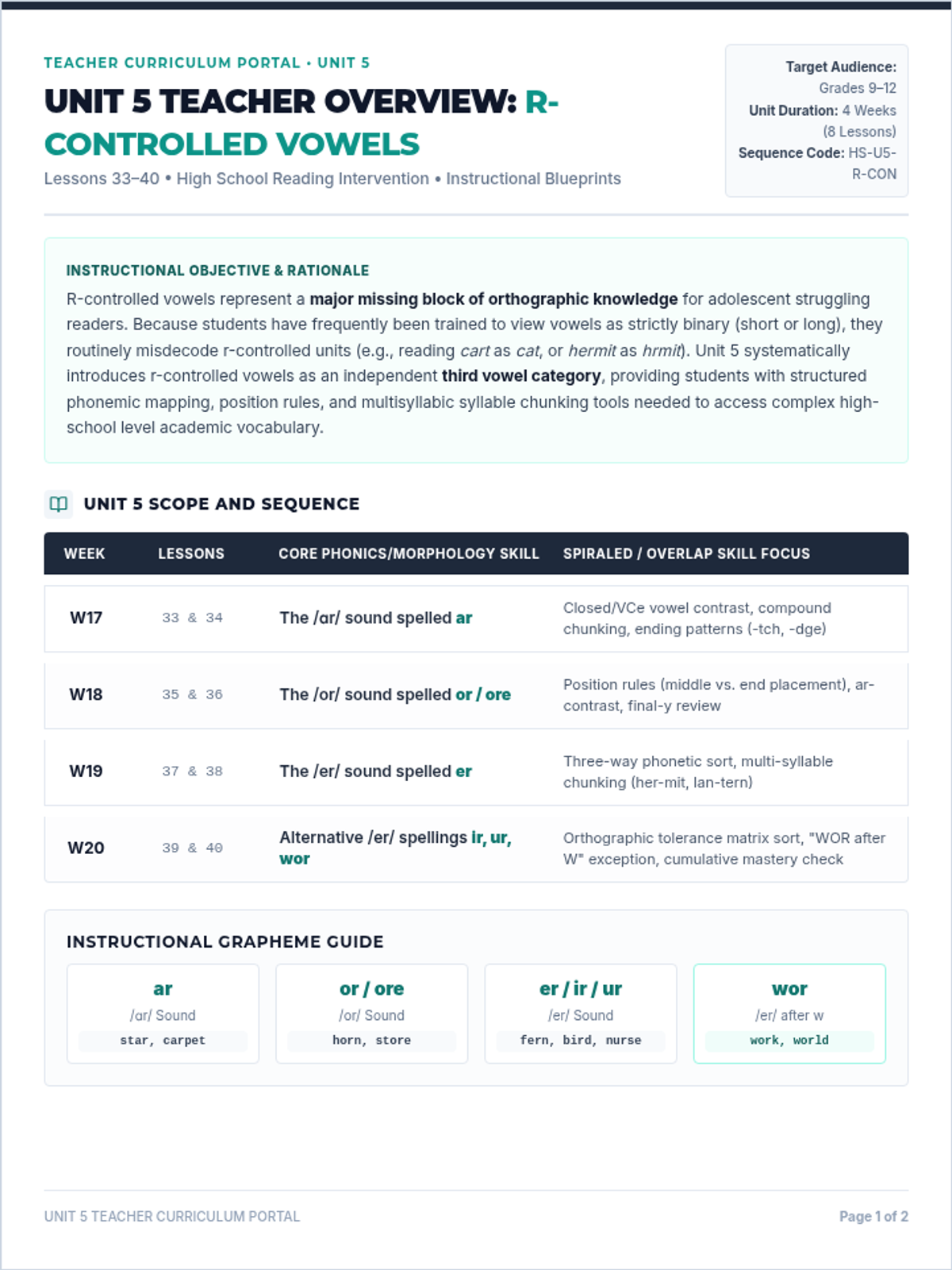
A cumulative high school reading intervention review lesson consolidating all r-controlled vowel patterns (ar, or, ore, er, ir, ur, wor) and introducing the 'wor' spelling pattern after 'w'.
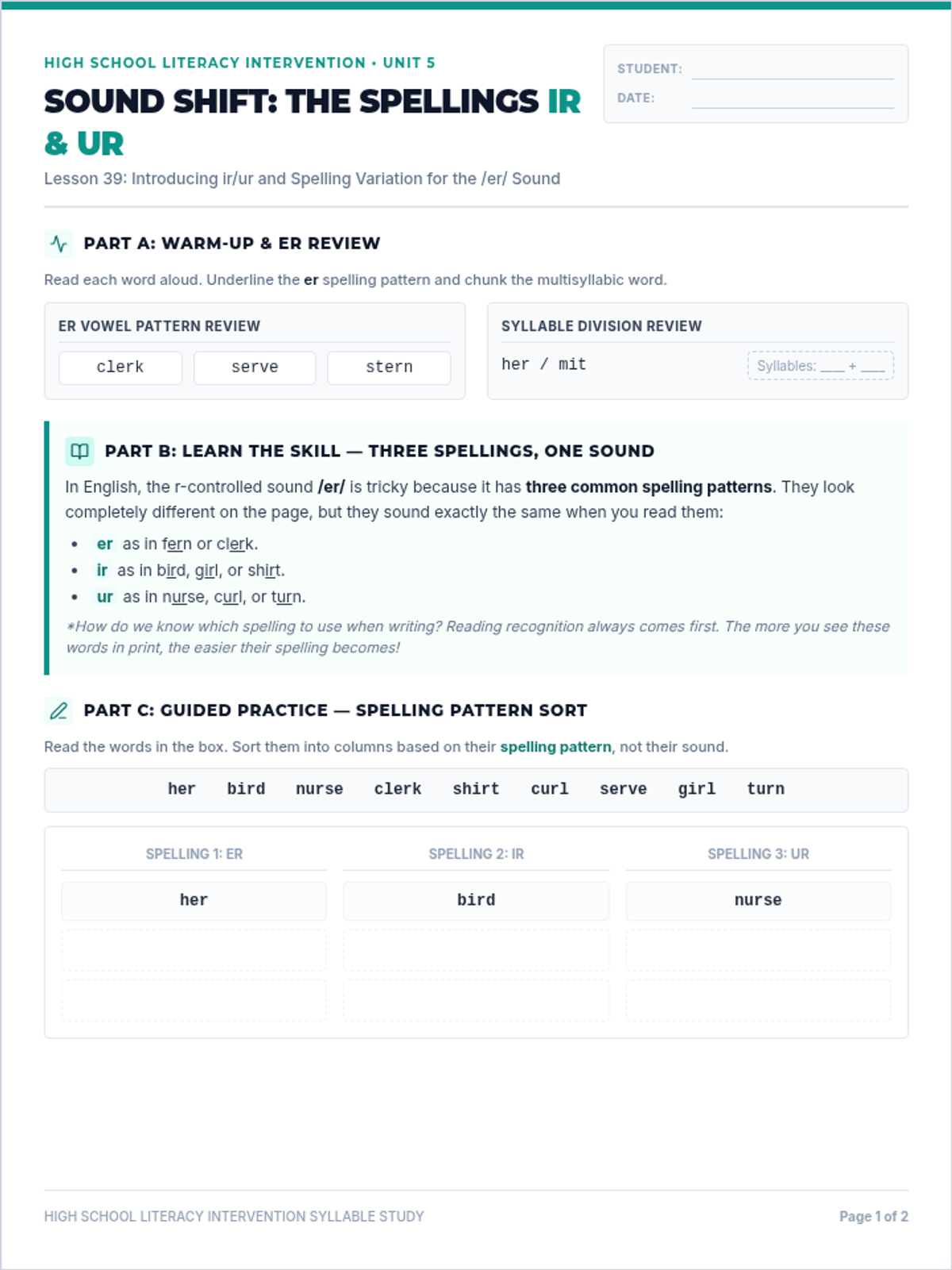
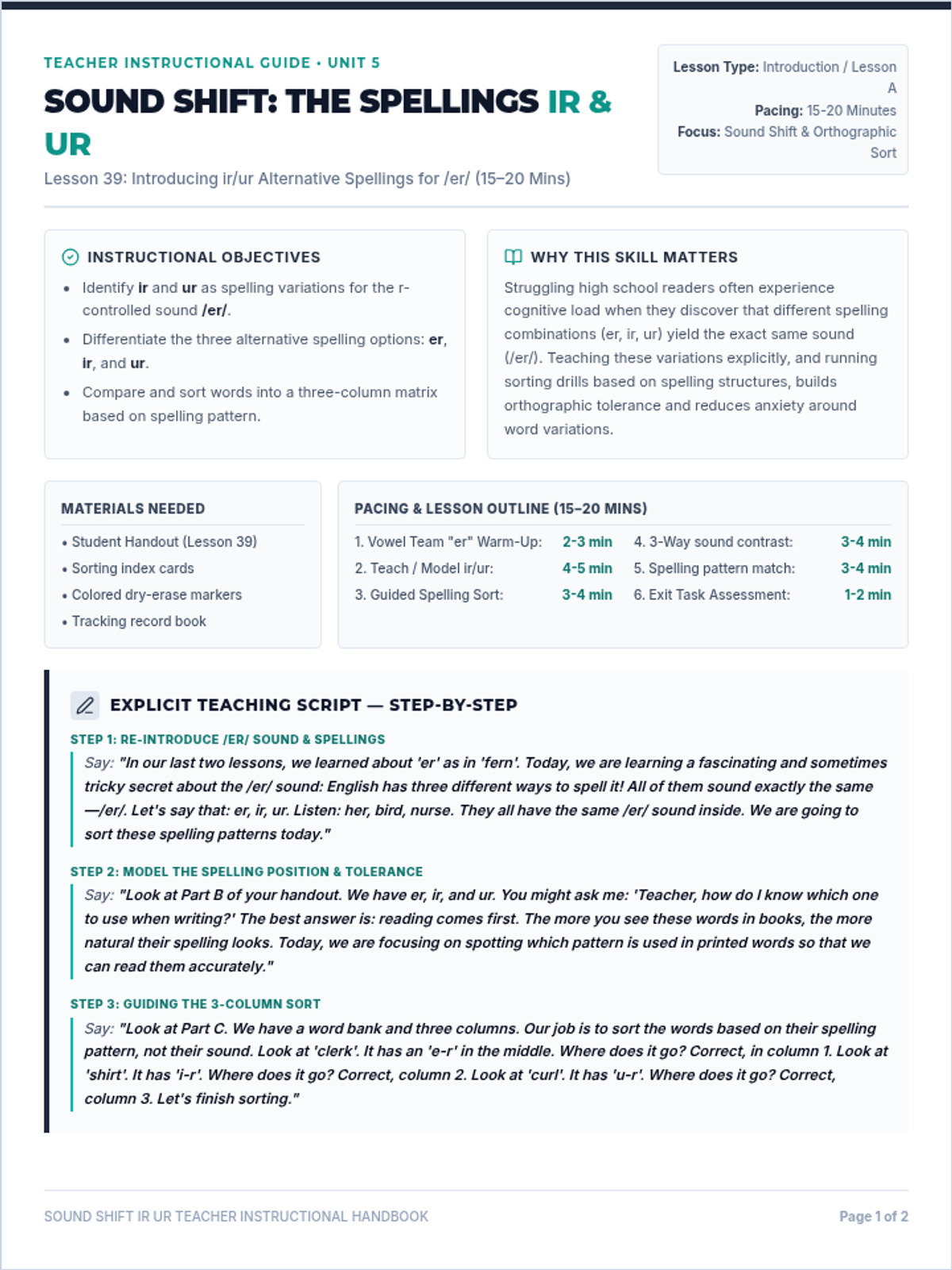
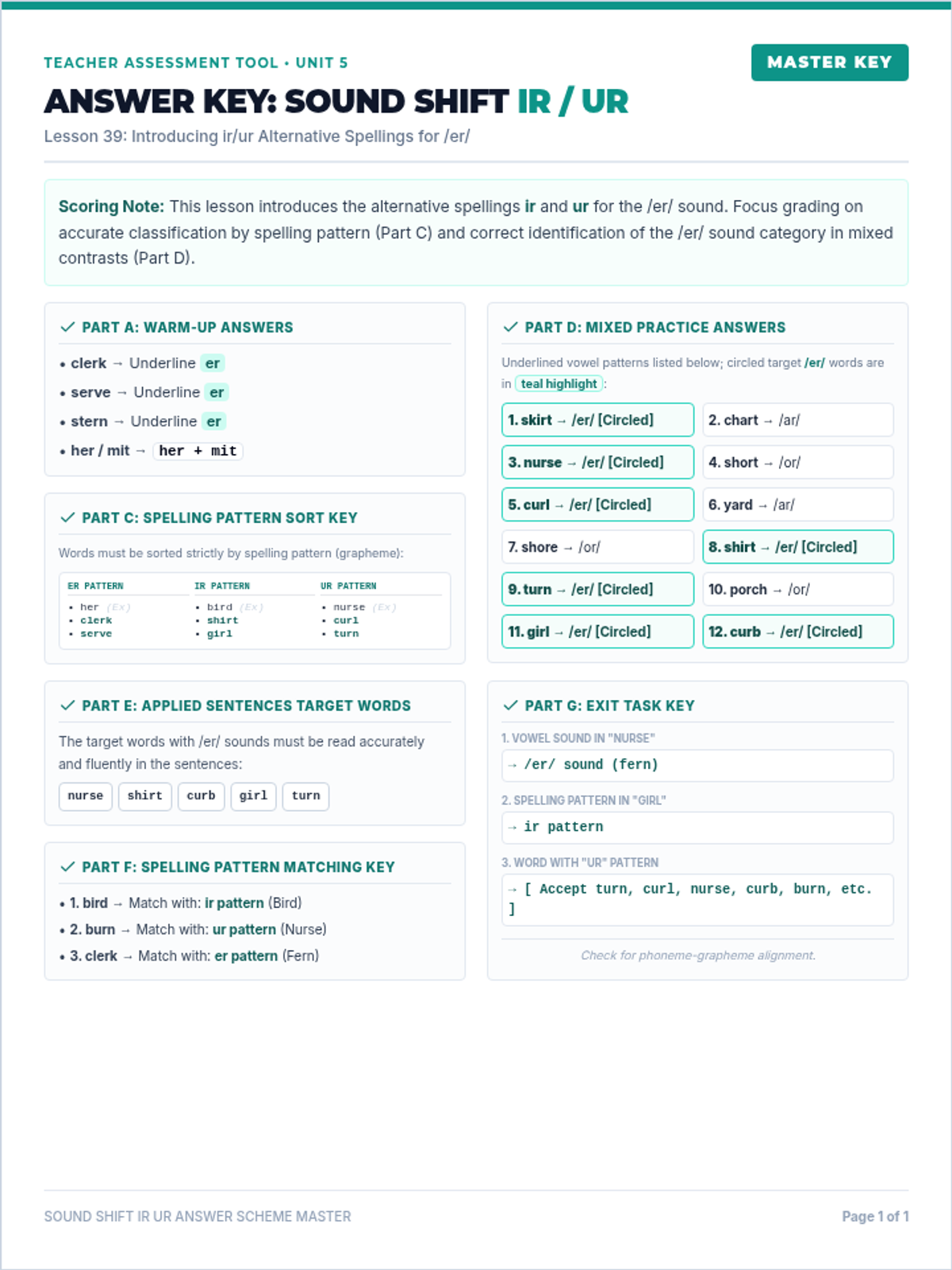
An intensive reading intervention lesson introducing 'ir' and 'ur' as alternative spelling patterns for the r-controlled sound /er/, contrasting them with 'er'.
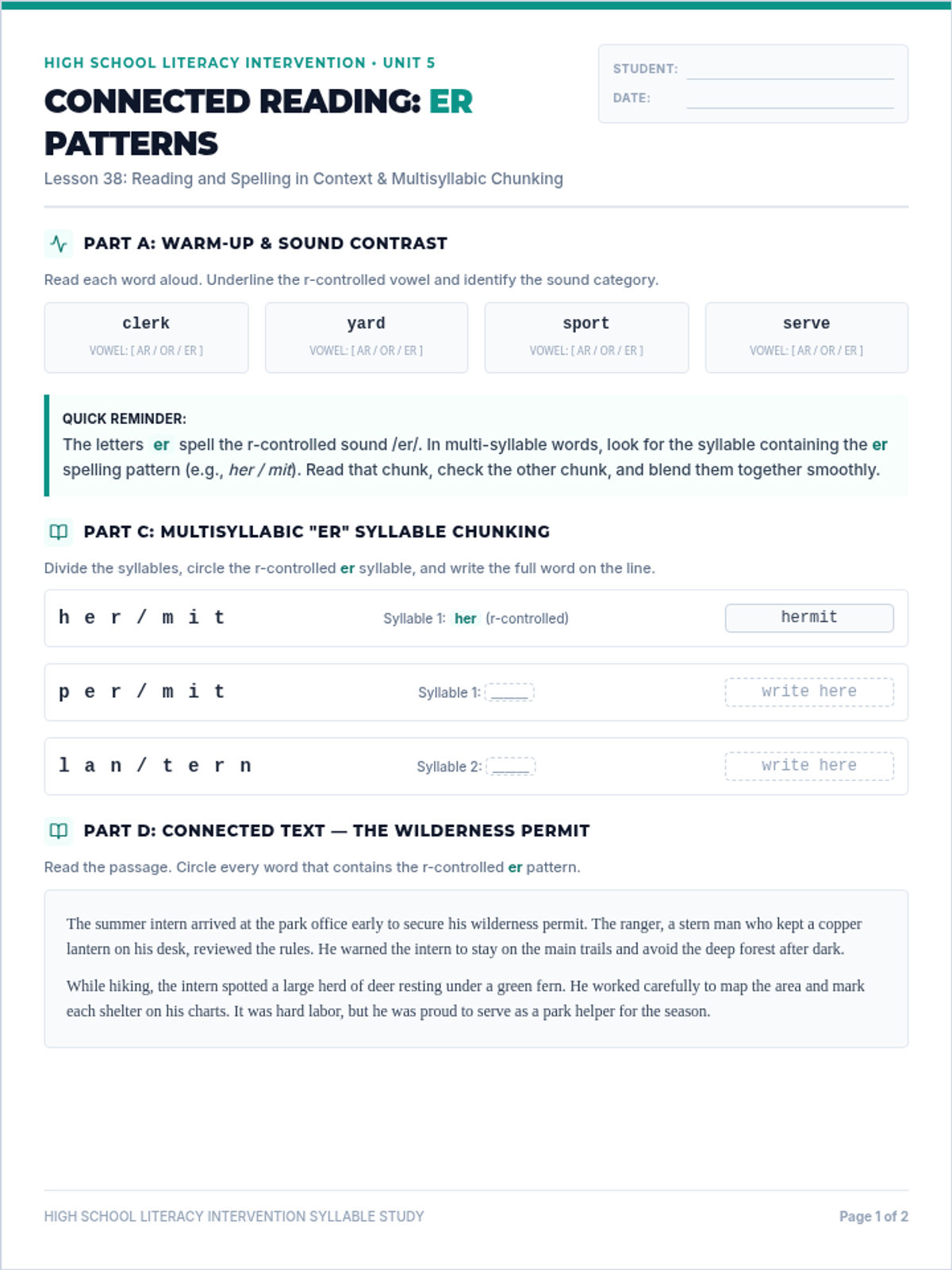
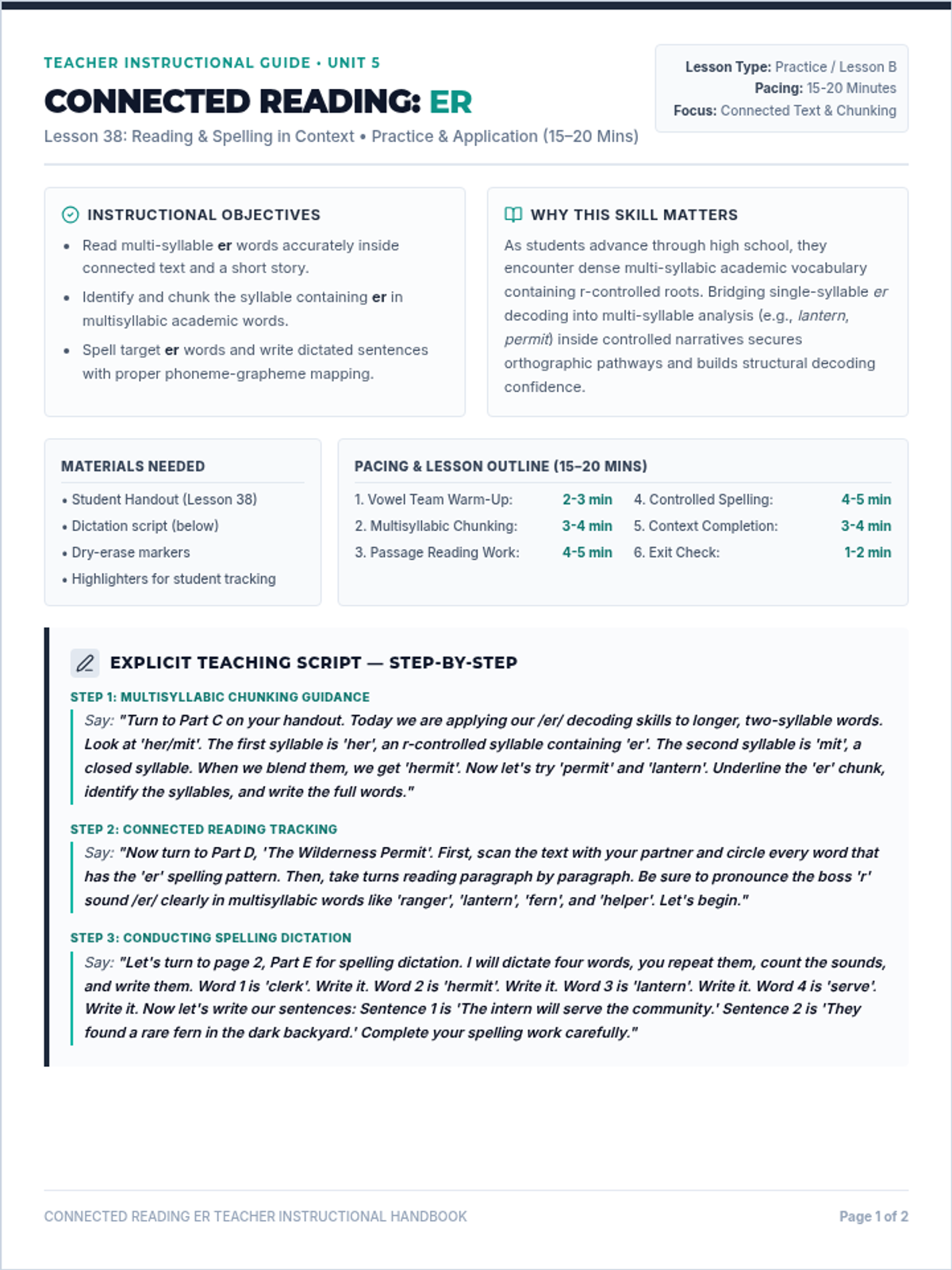
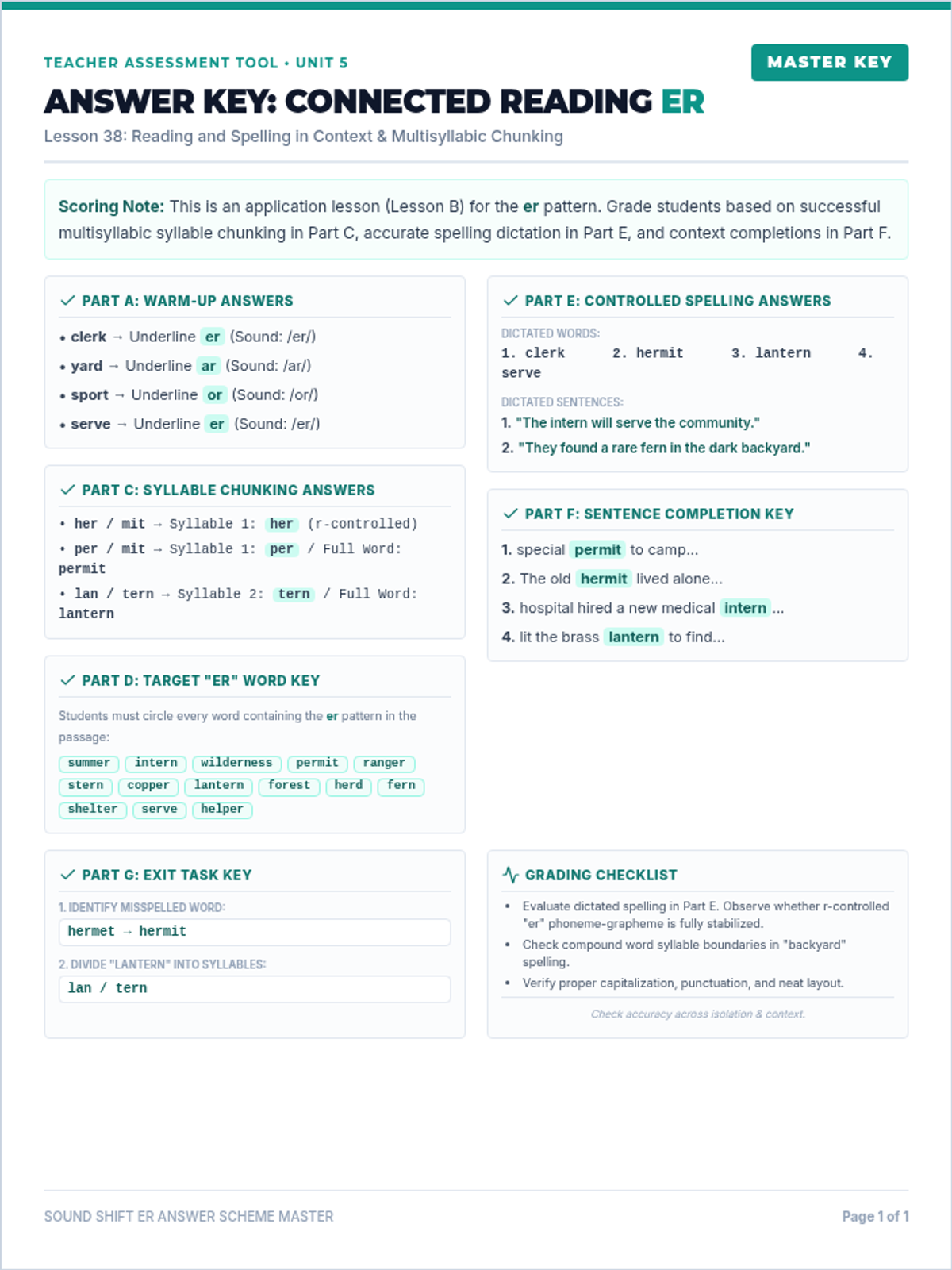
A high school reading intervention practice lesson focusing on reading and spelling 'er' words in isolation, chunks, and connected text, with syllable-level review.
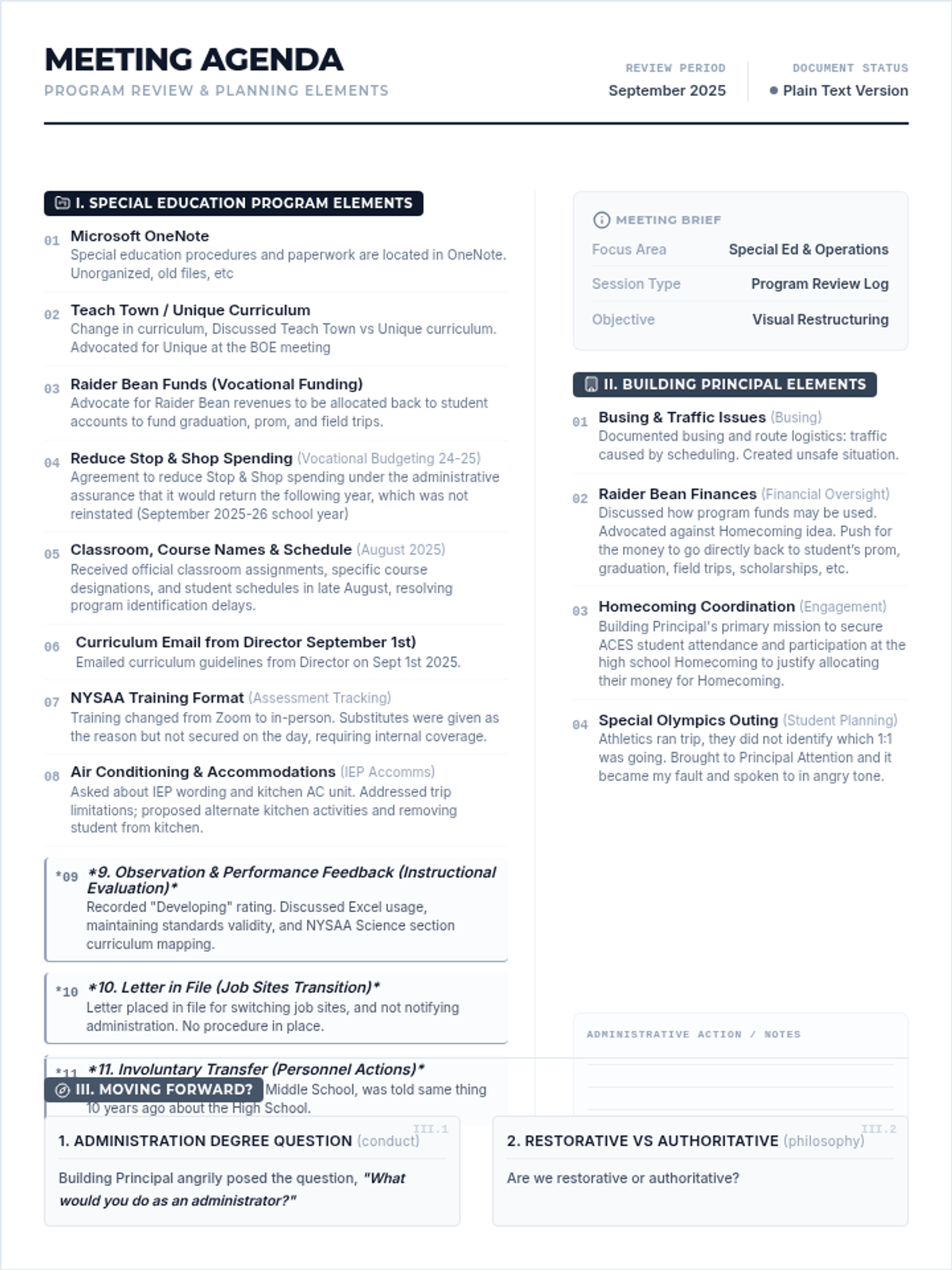
A strategic review of special education and building principal program elements, focusing on visual clarity, readability, and structured layout.
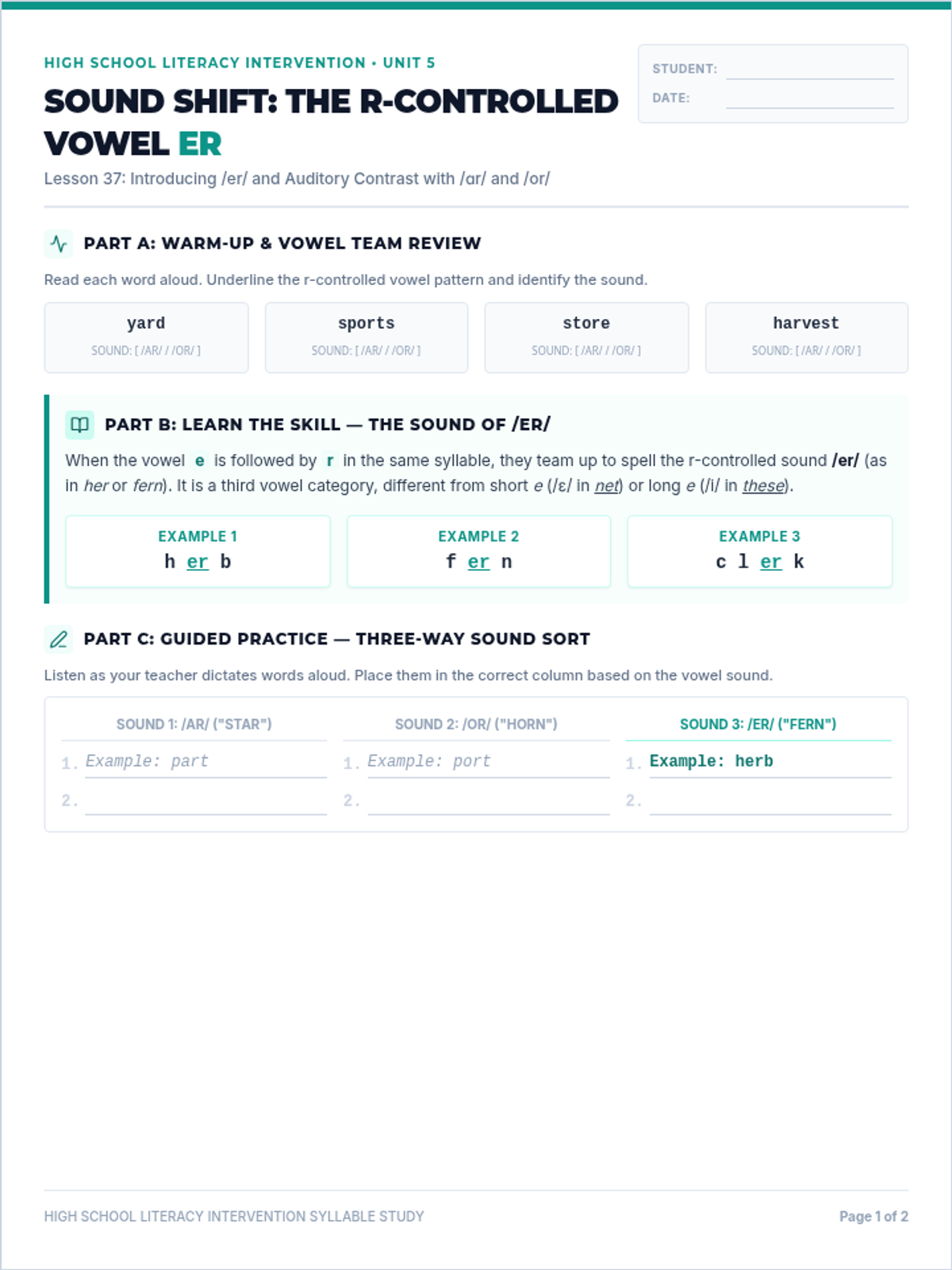
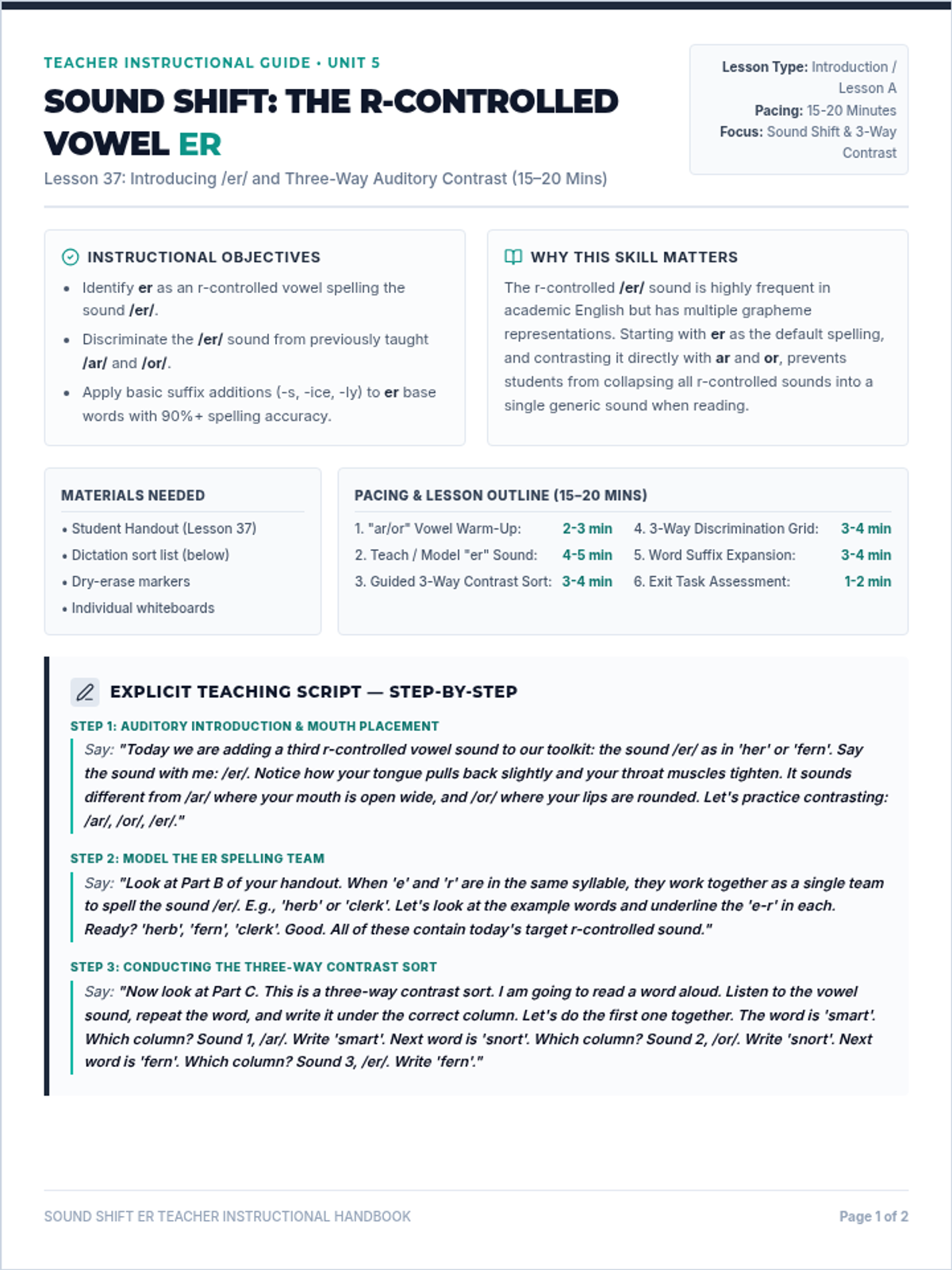
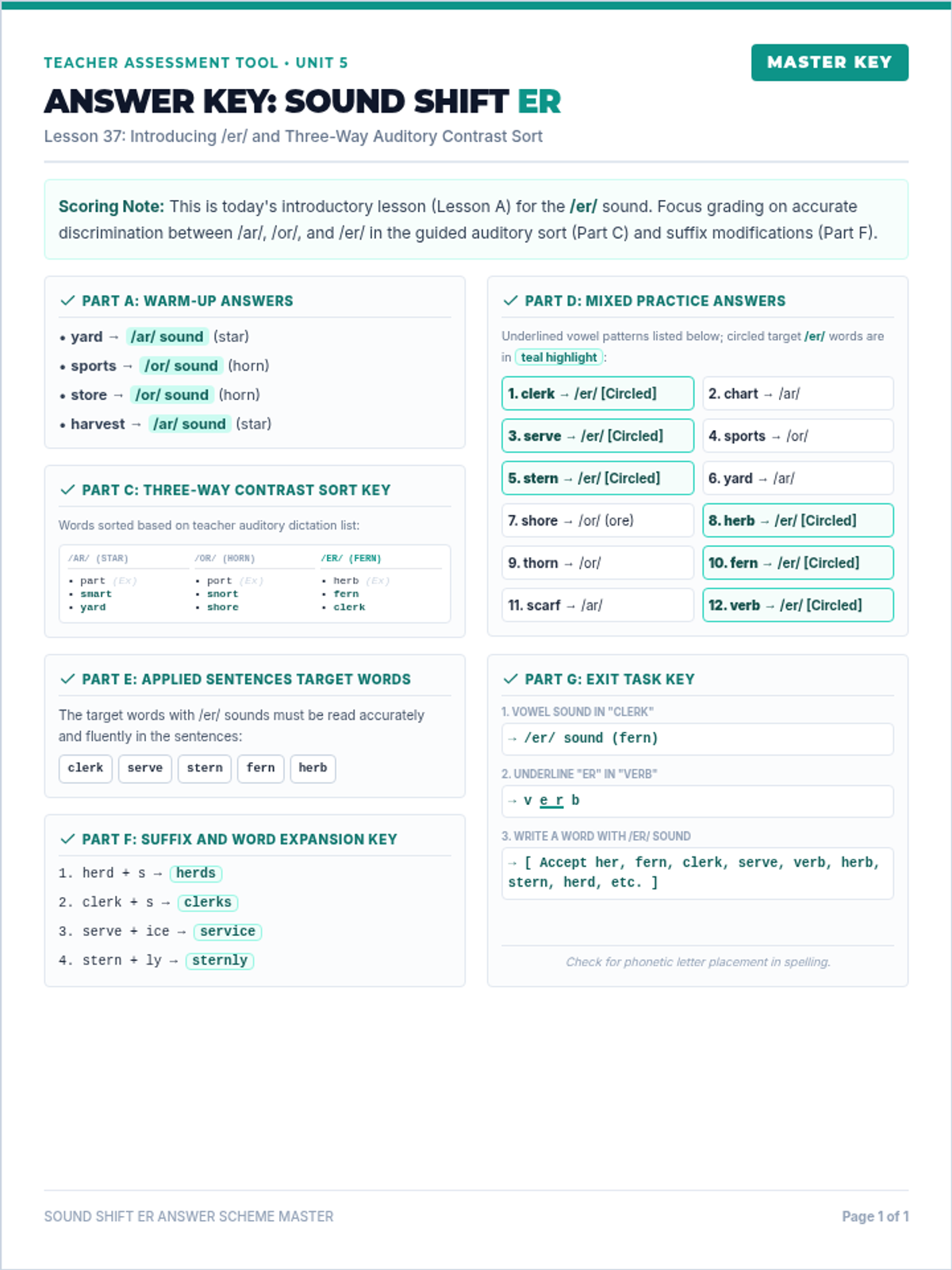
An intensive reading intervention lesson introducing the r-controlled vowel pattern 'er', contrasting it with earlier patterns 'ar', 'or', and 'ore', and using explicit auditory discrimination techniques.
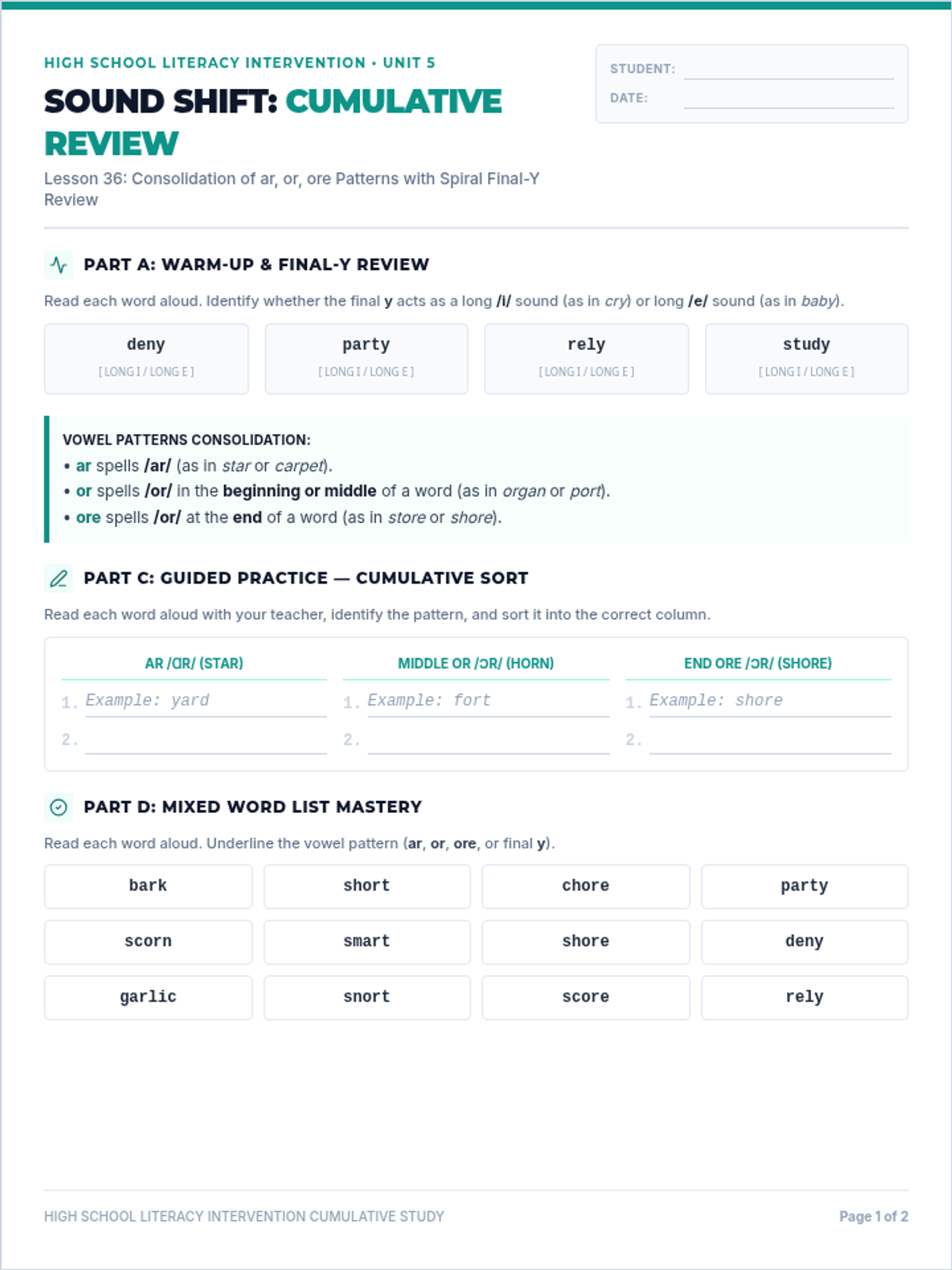
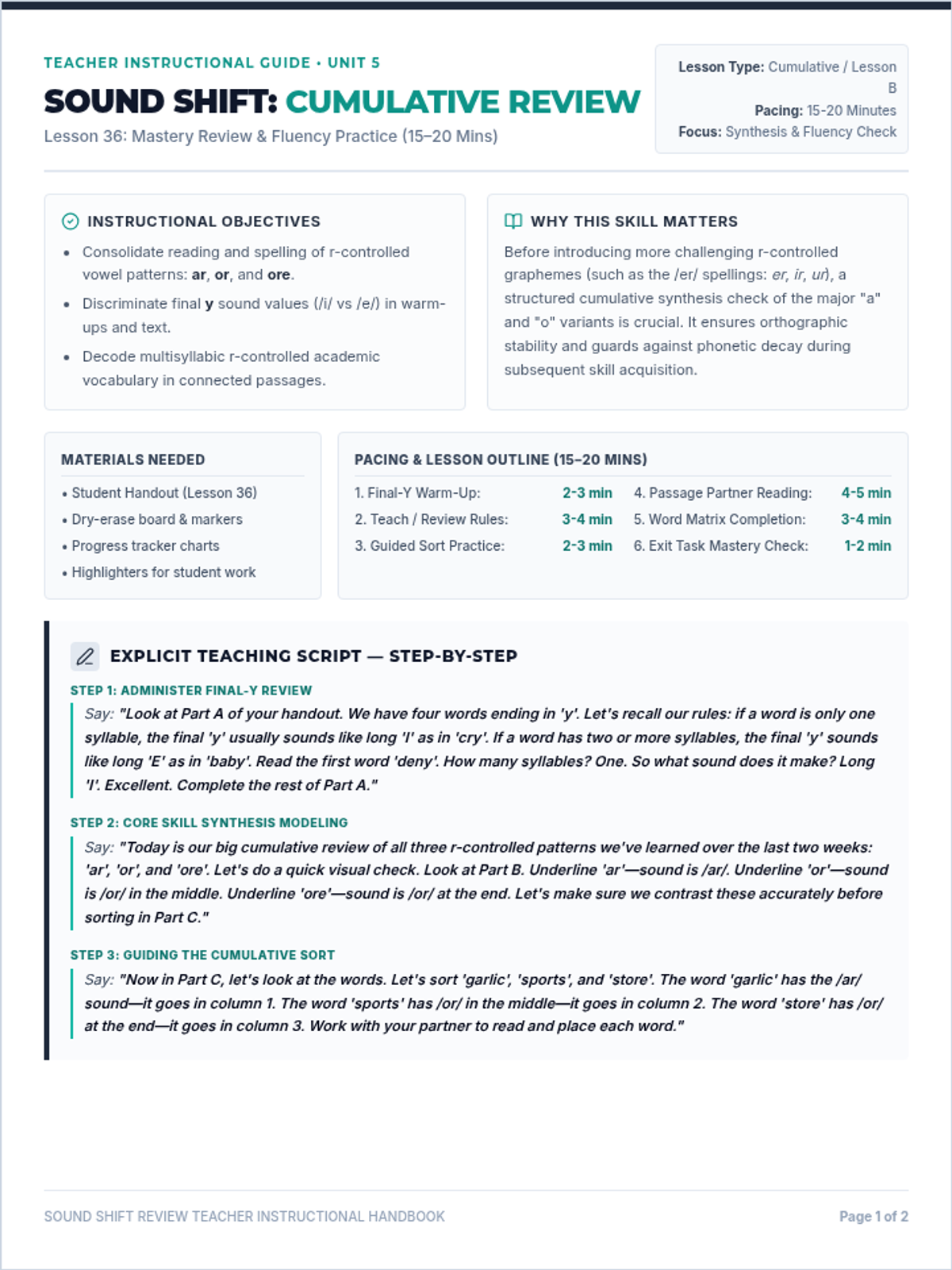
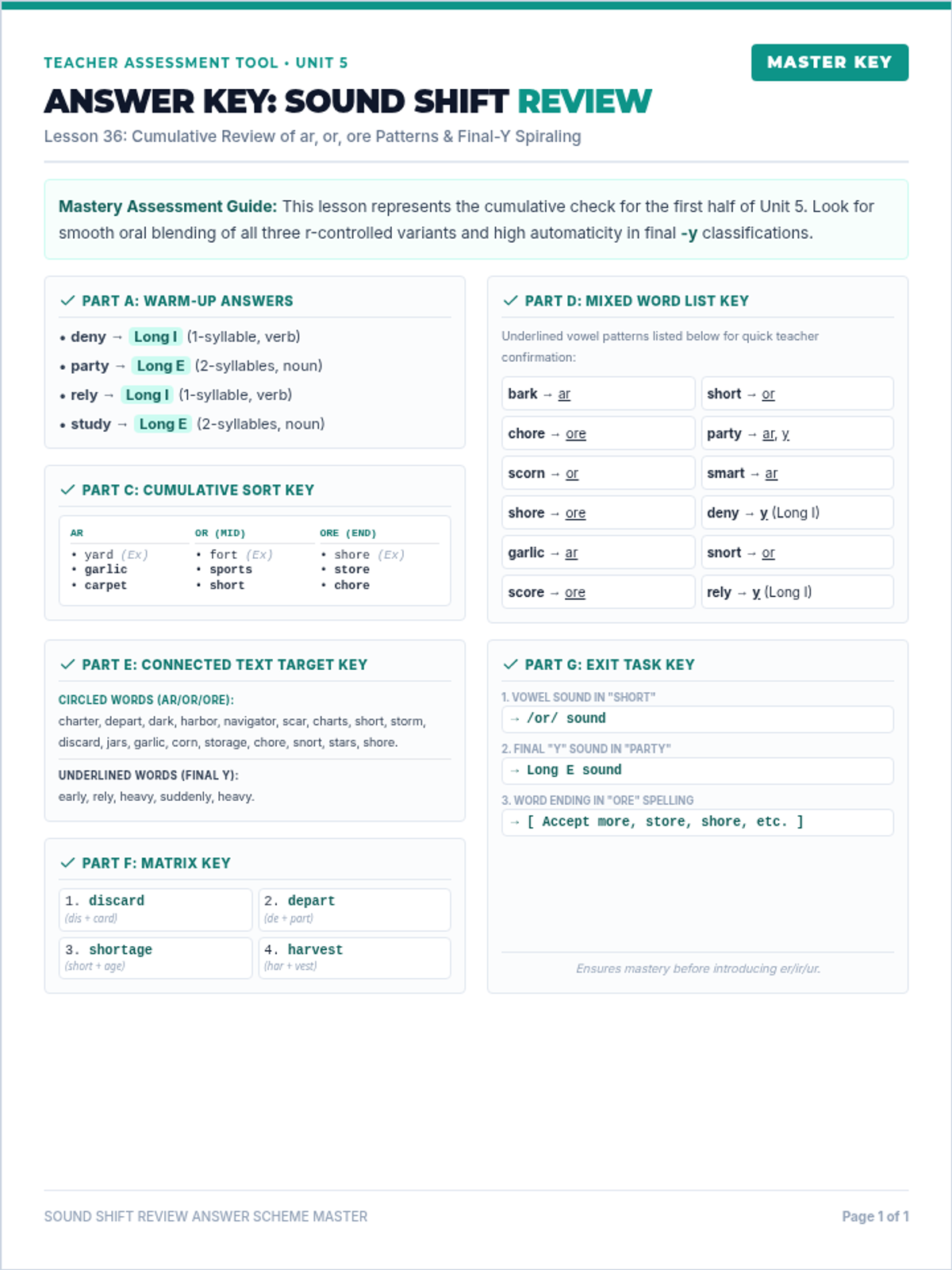
A cumulative high school reading intervention review lesson consolidating r-controlled vowel patterns (ar, or, ore) and integrating a spiral review of the final-y spelling pattern.
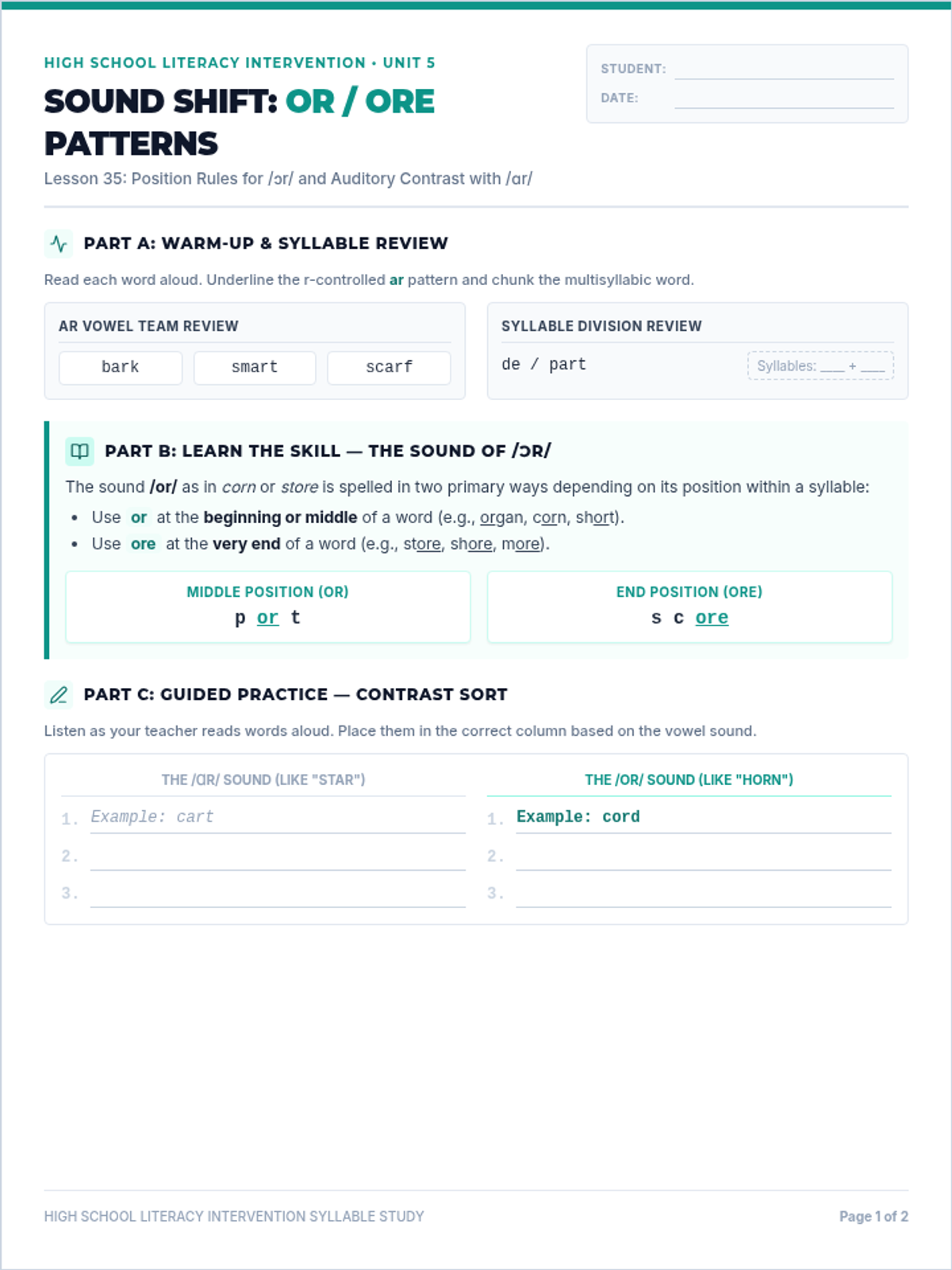
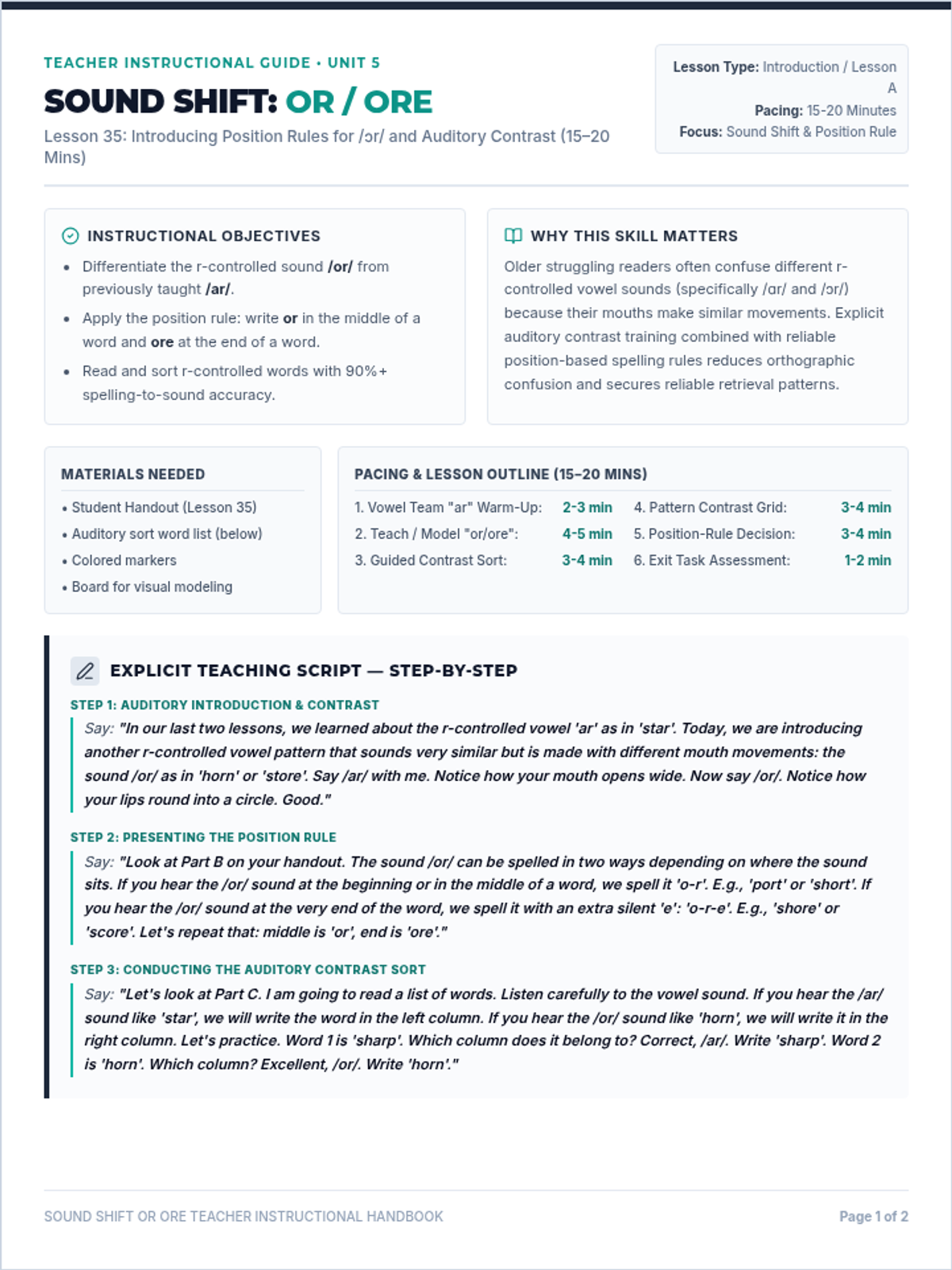
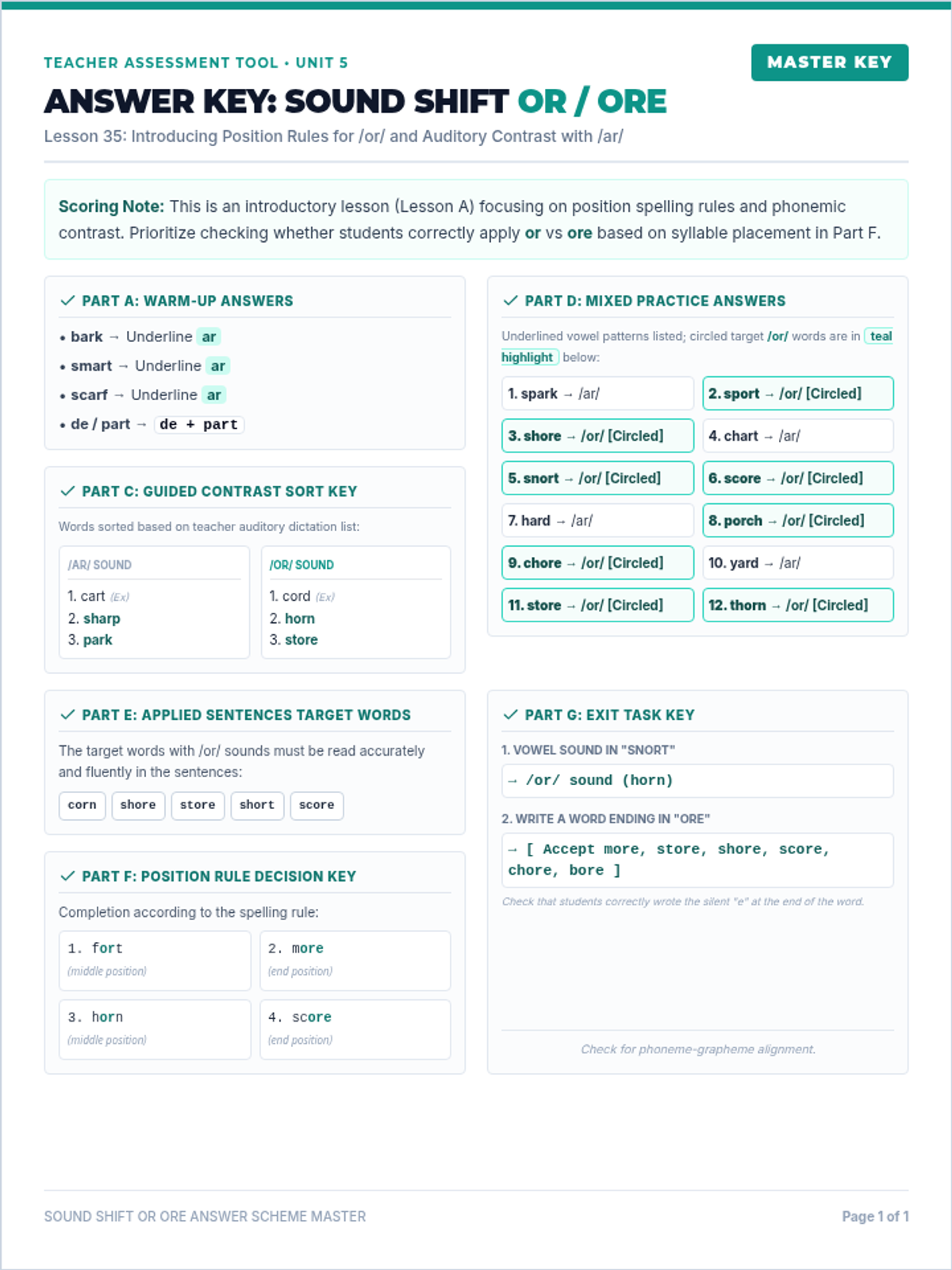
An intensive reading intervention lesson introducing the r-controlled patterns 'or' and 'ore', contrasting position rules, and comparing them with 'ar'.
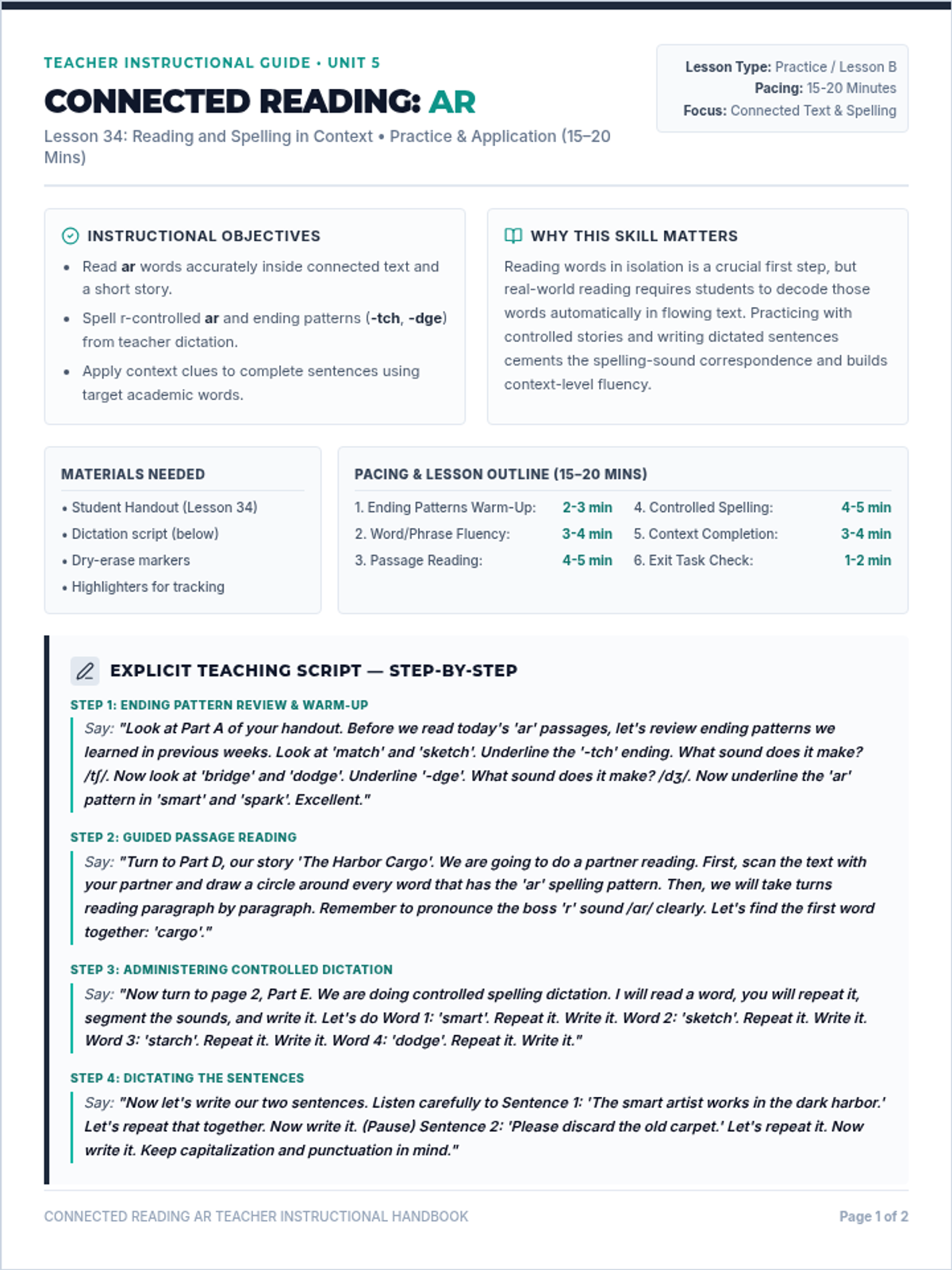
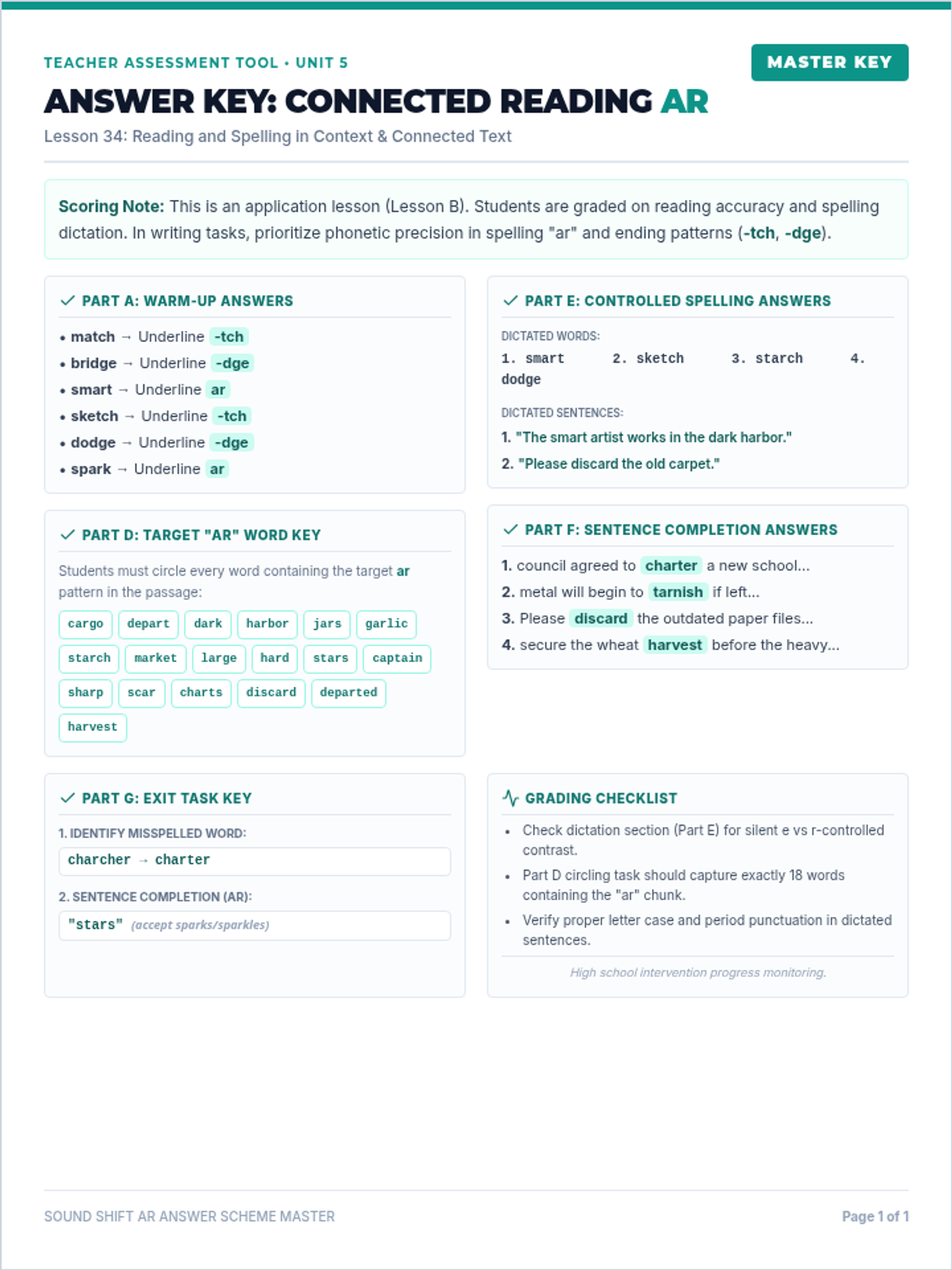
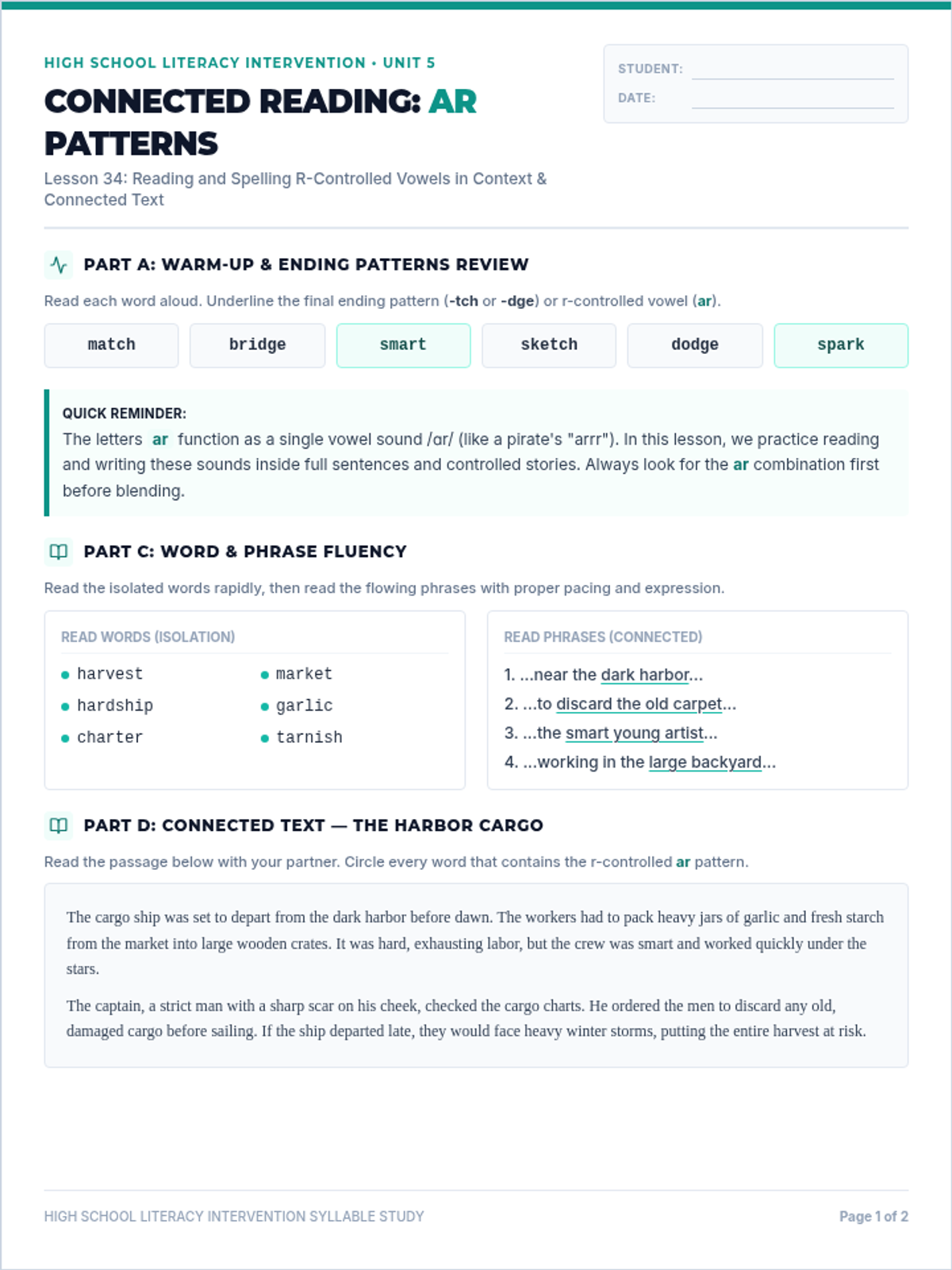
A high school reading intervention lesson focusing on reading and spelling 'ar' words in context and connected text. Includes a spiral review of ending patterns (weeks 12-16) and a controlled spelling task.
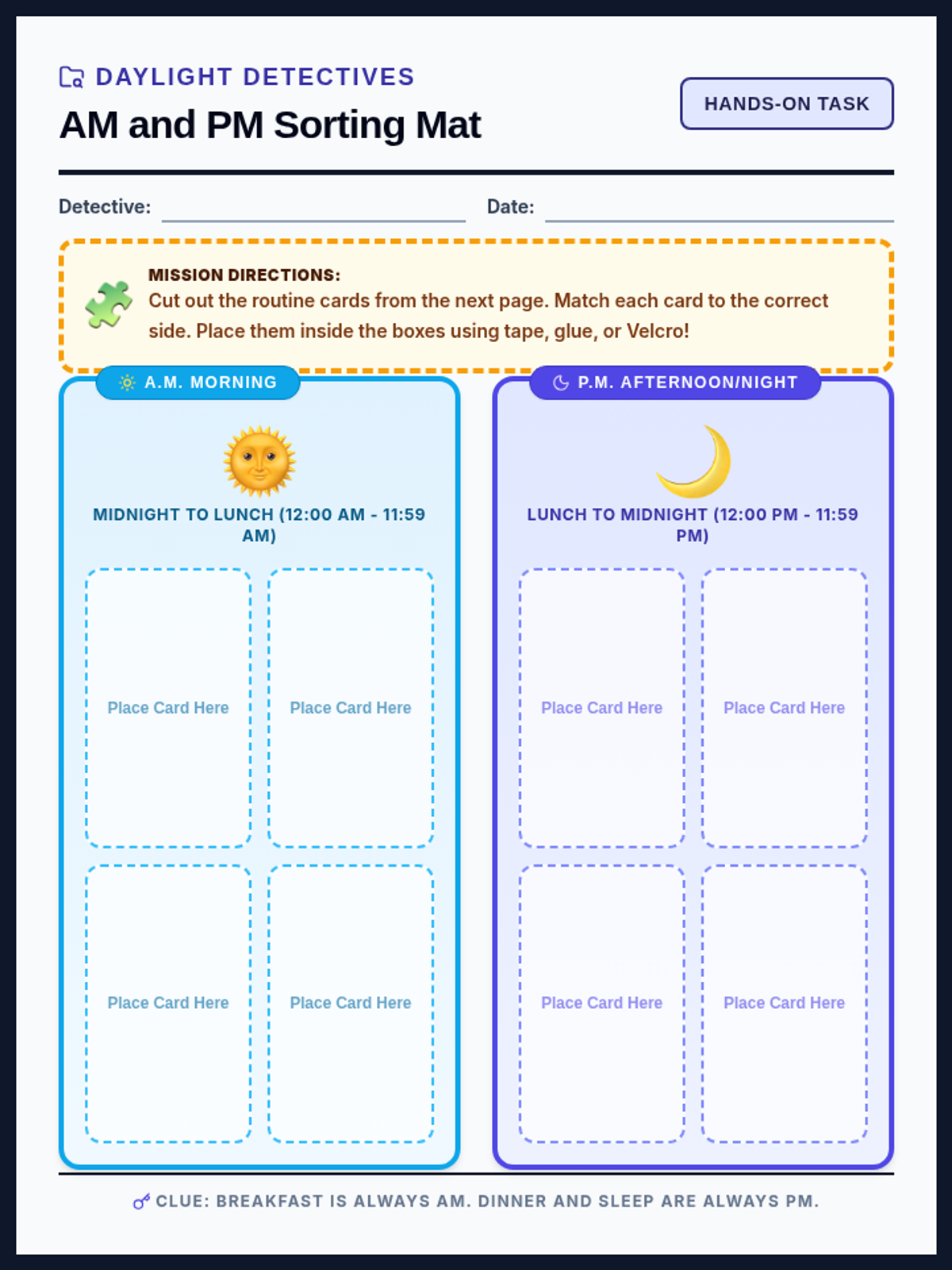
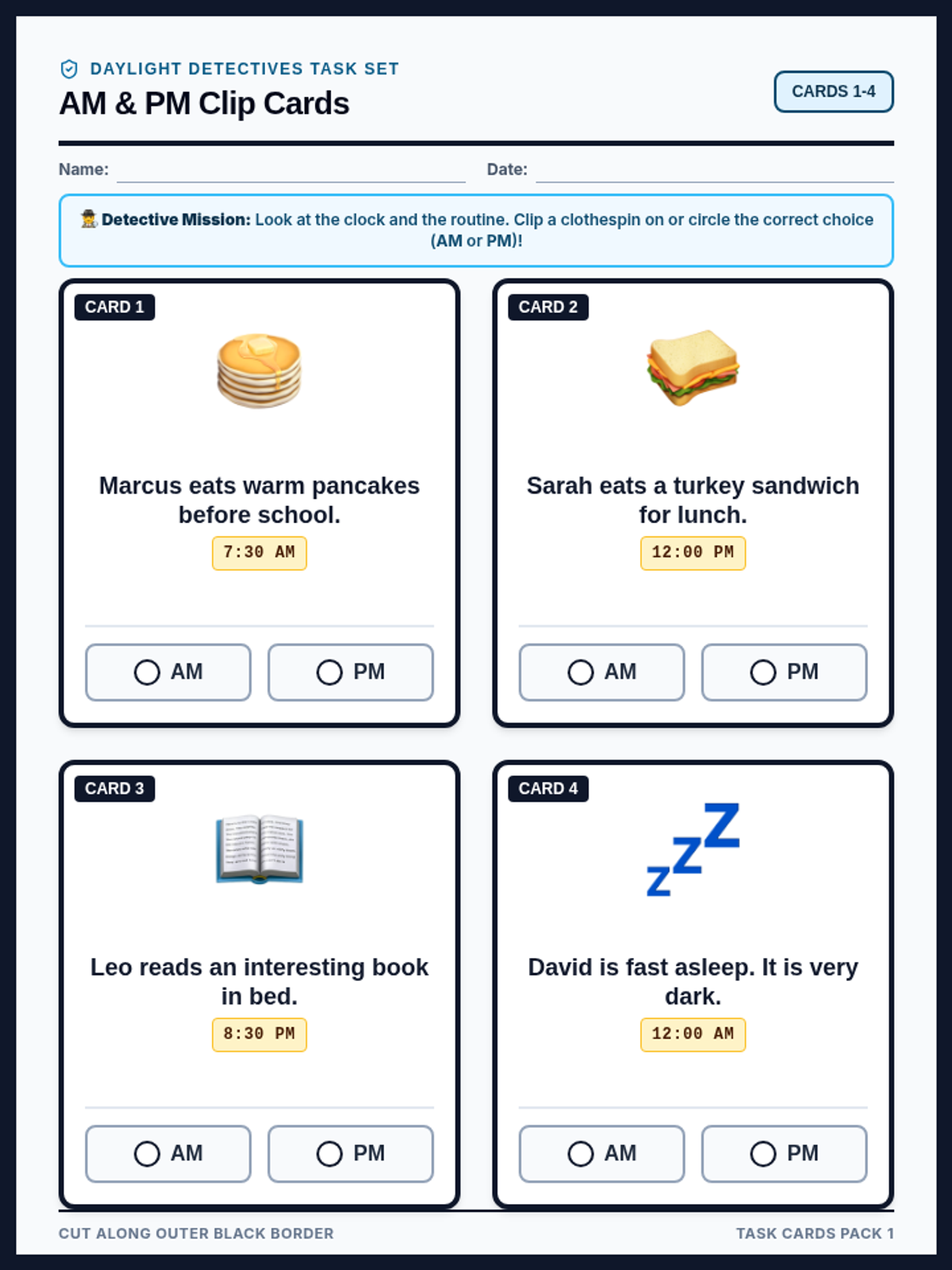
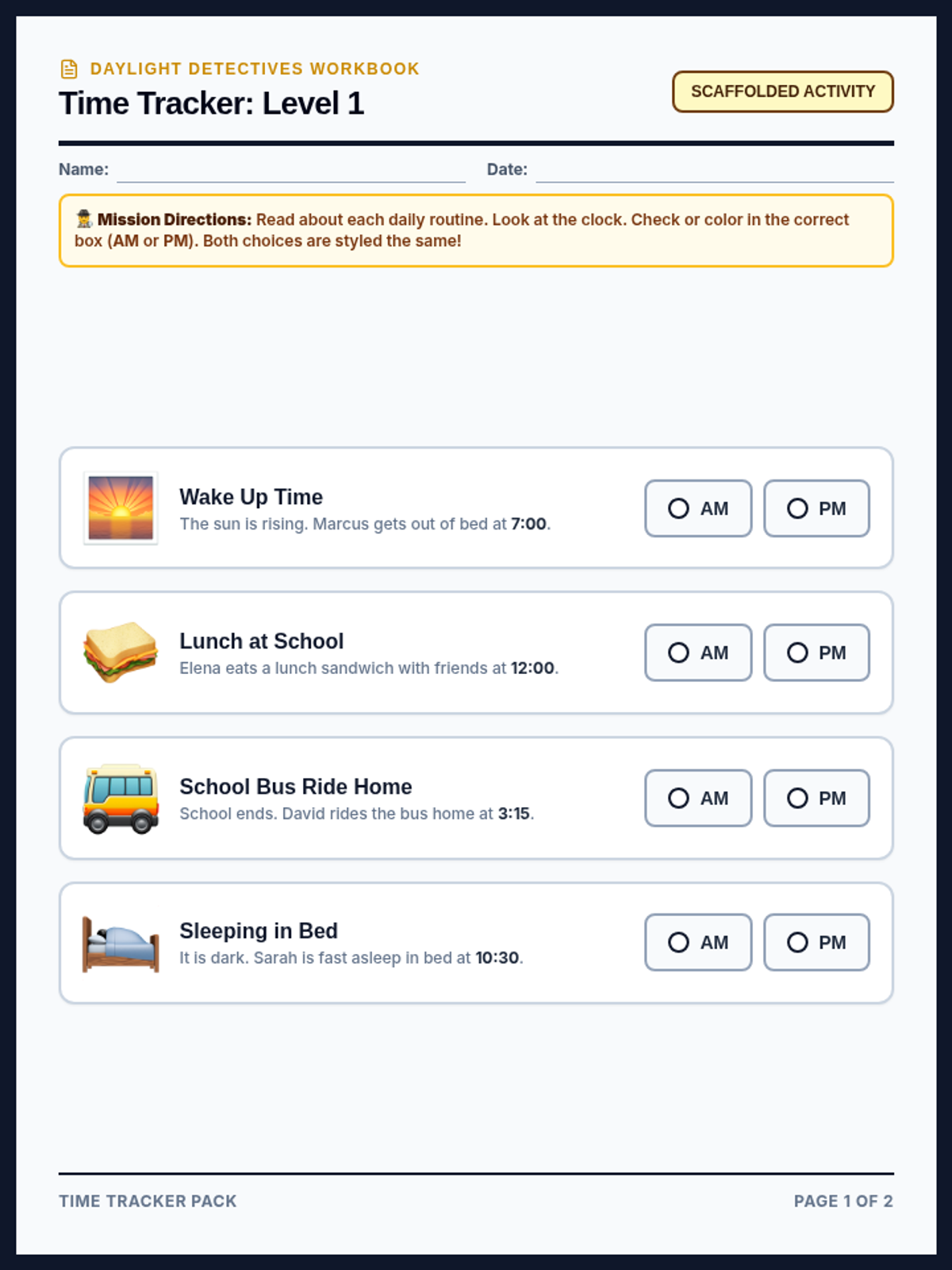
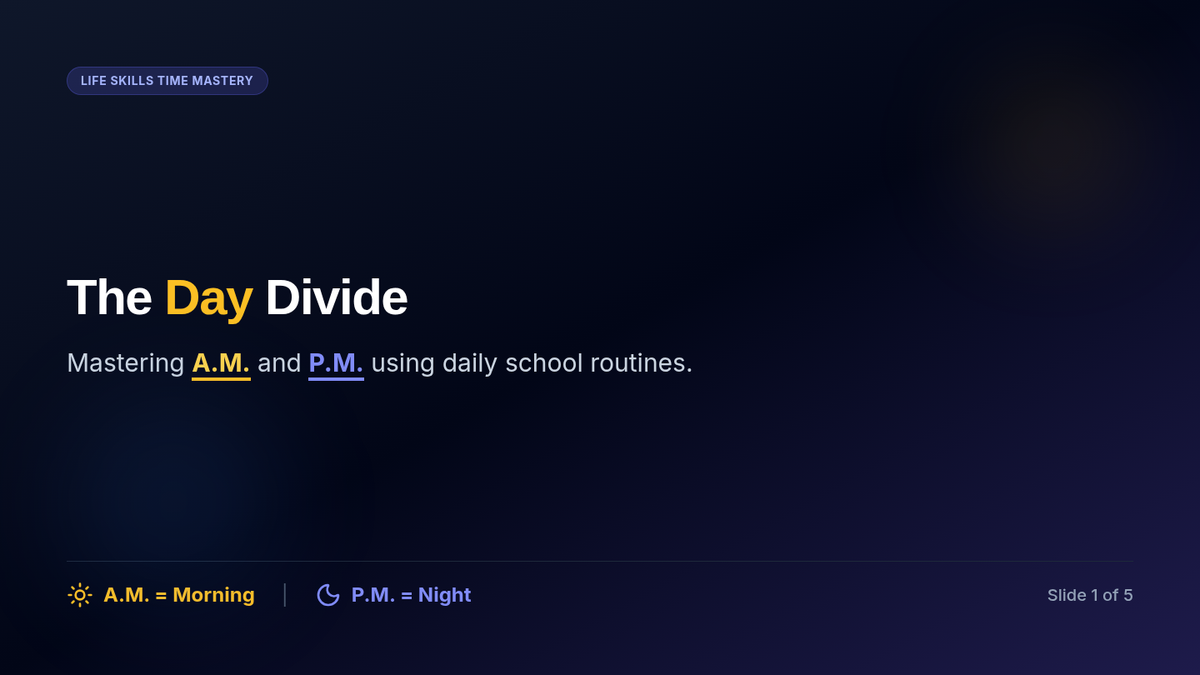
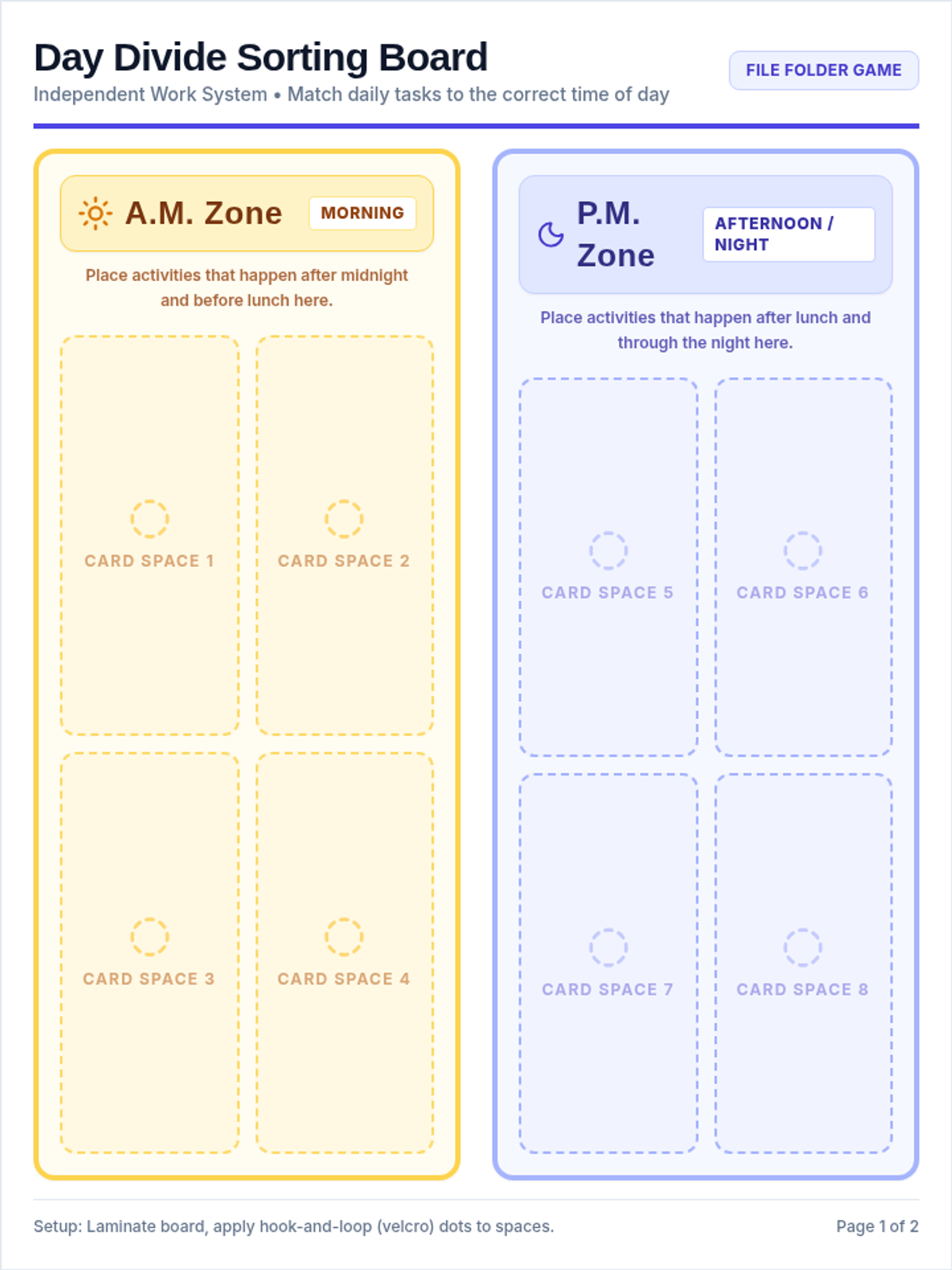
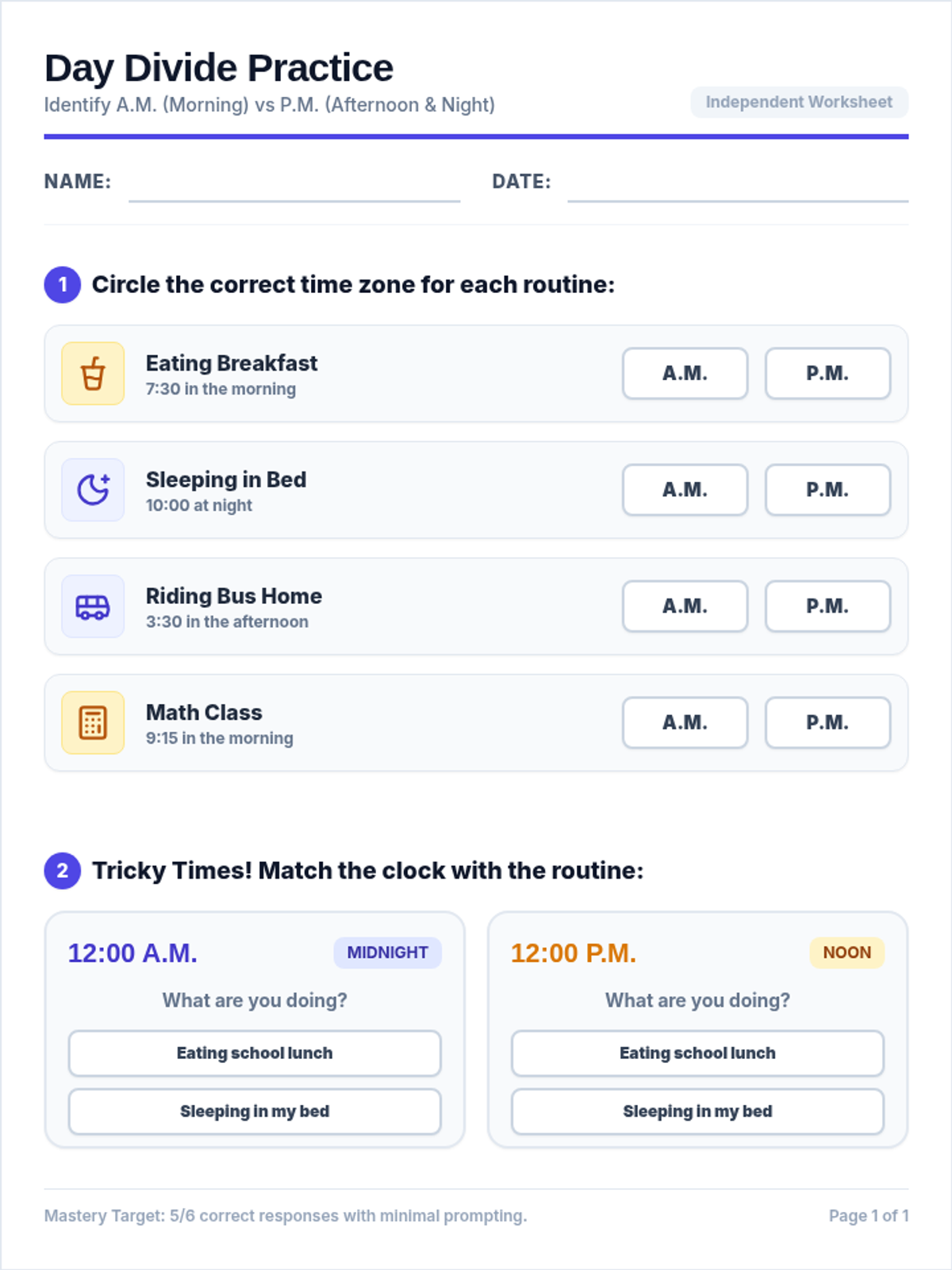
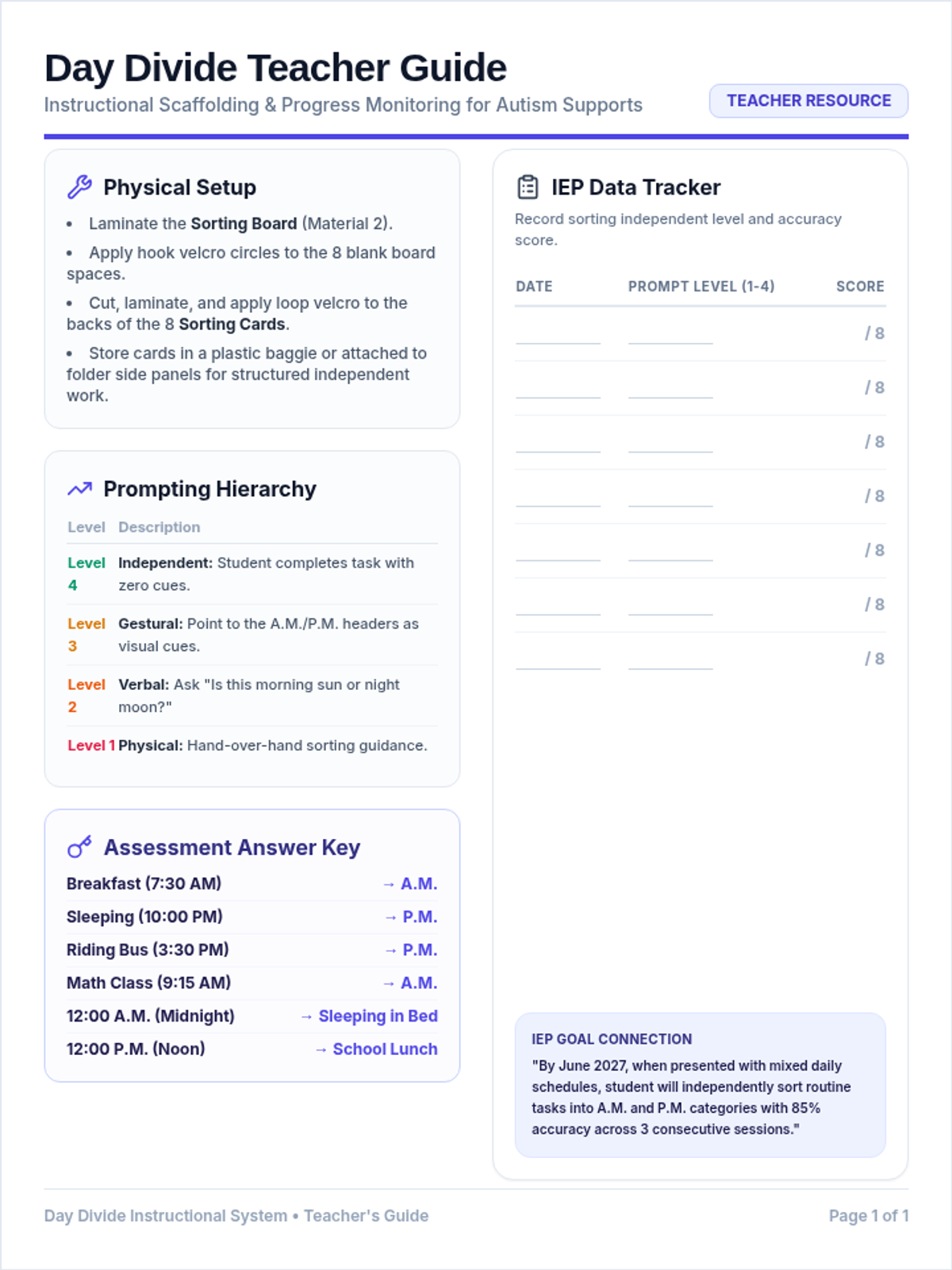
A highly visual, structured lesson designed for middle school students on the autism spectrum to master AM and PM. It uses real-world routines, consistent color-coding (yellow/blue for AM, dark indigo for PM), and structured hands-on tasks to reduce cognitive load and promote independence.
A structured, visually-supported lesson introducing AM and PM concepts tailored for middle school students on the autism spectrum. It utilizes color-coding, predictable routines, and physical sorting to reinforce functional life-skills timing.
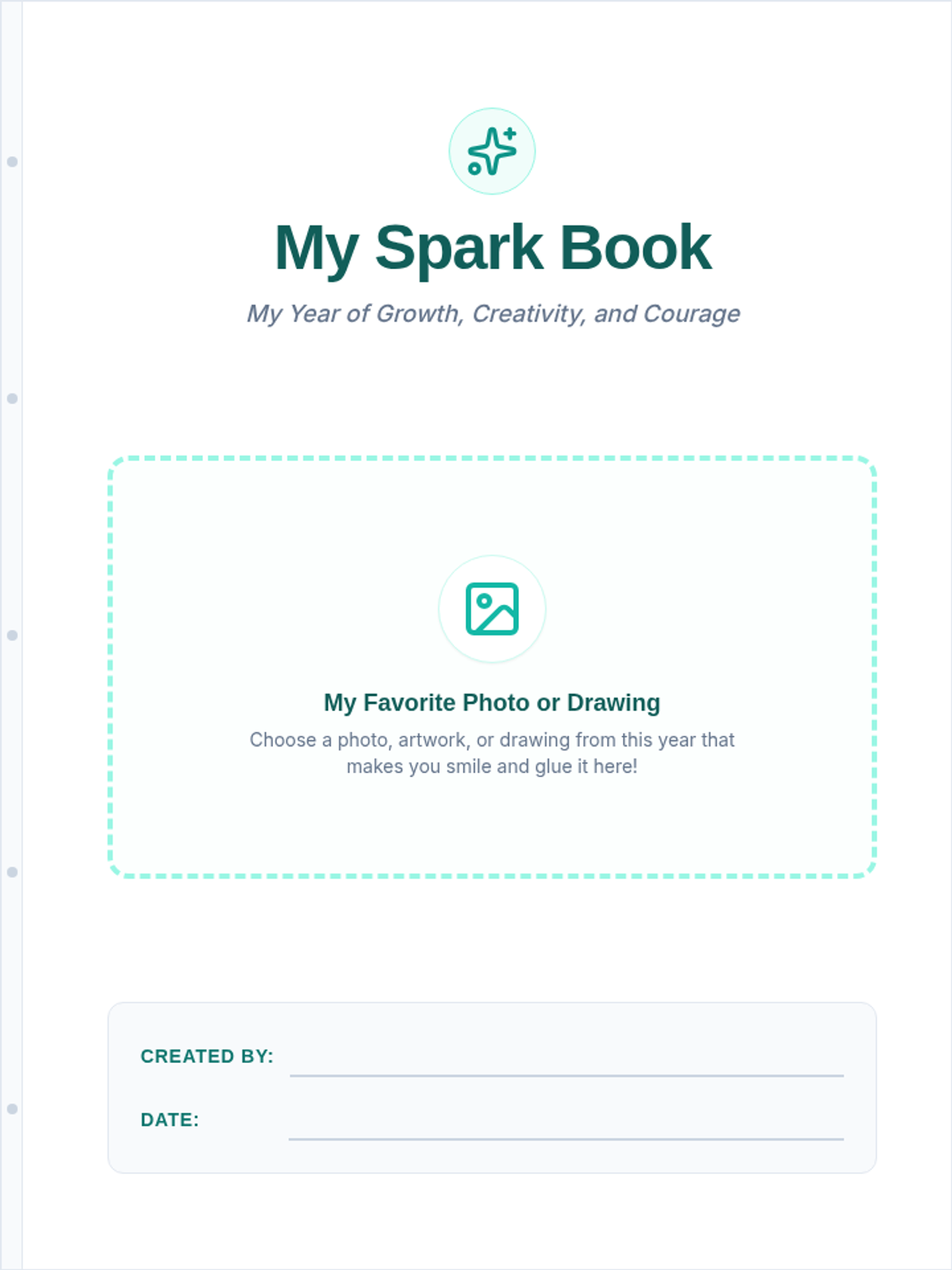
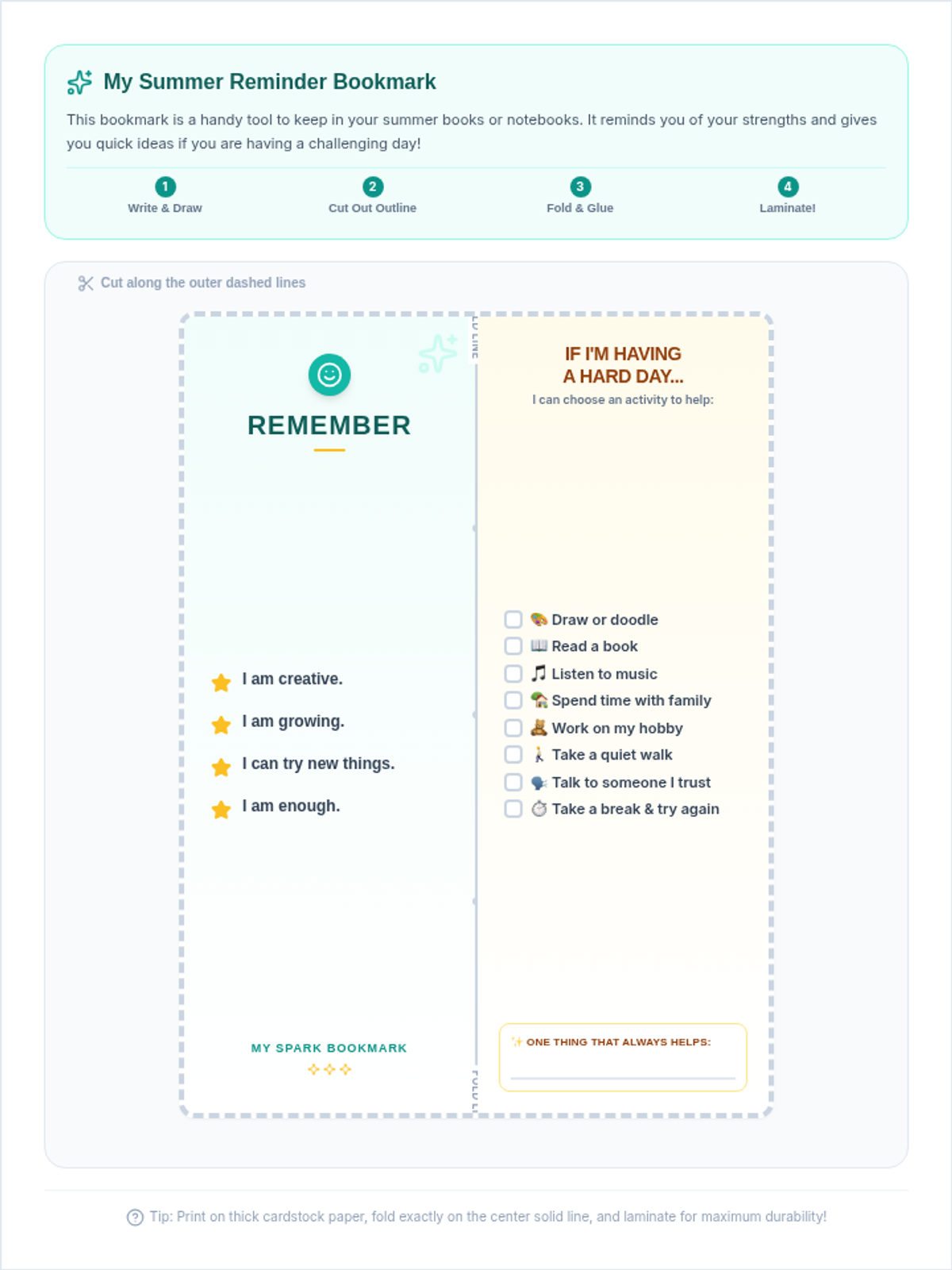
A year-long personal reflective diary and mindfulness tool for middle school students, designed with clean layouts and predictable structures to support neurodivergent learners through art, self-expression, and self-regulation prompts.
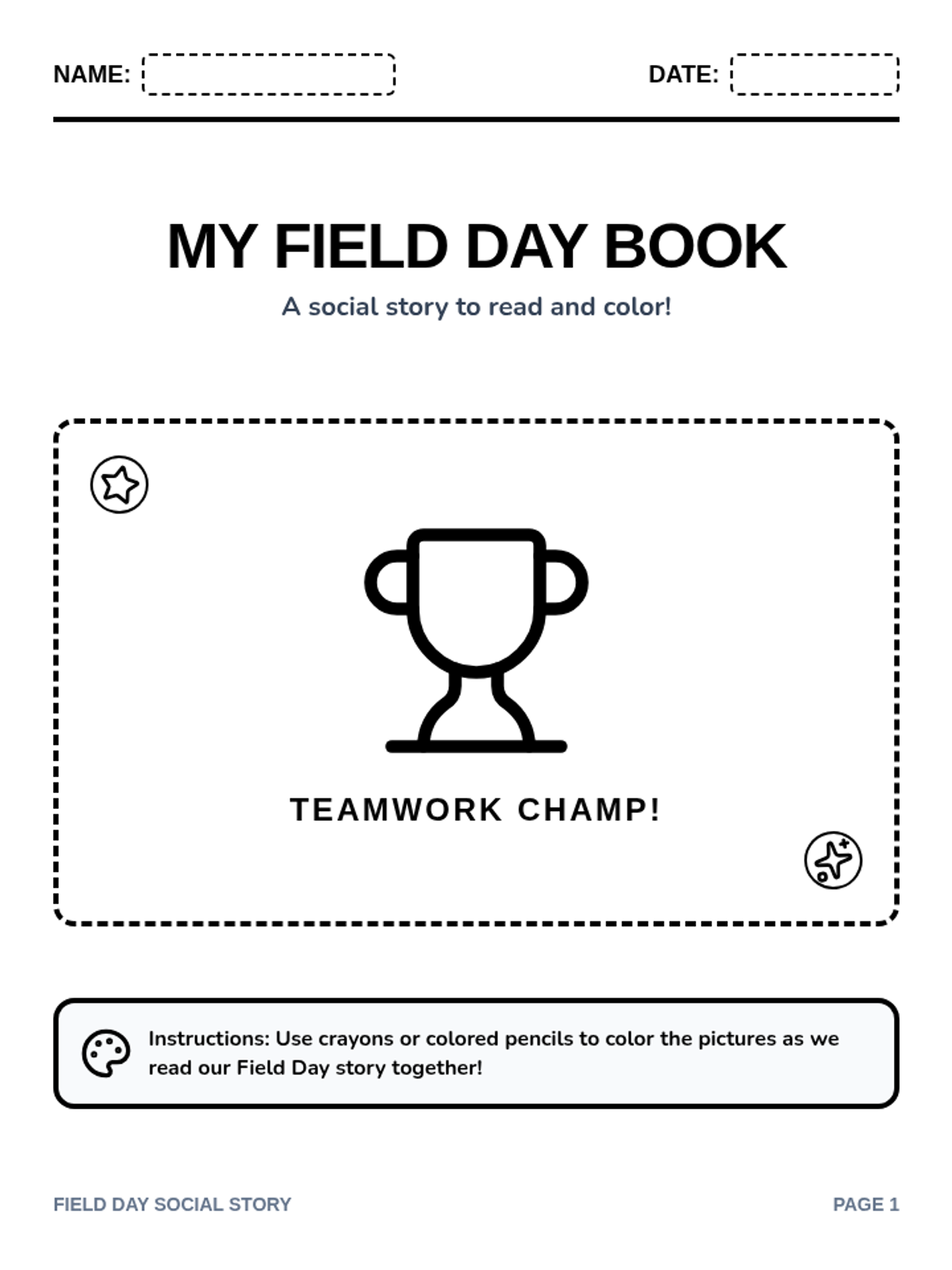
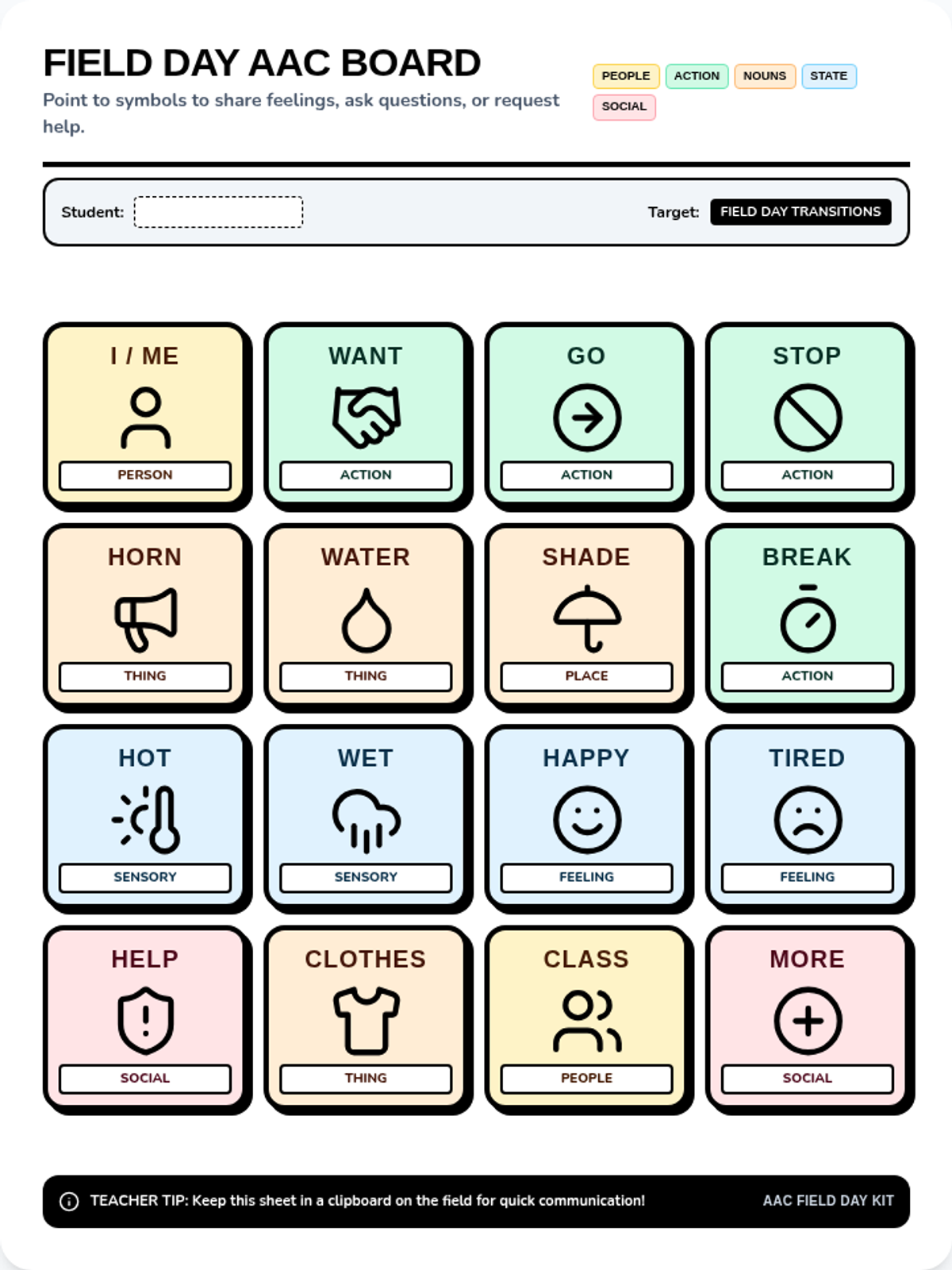
A single-session social story lesson designed to prepare students for the sensory and behavioral expectations of school Field Day using visual, colorable-style line art.
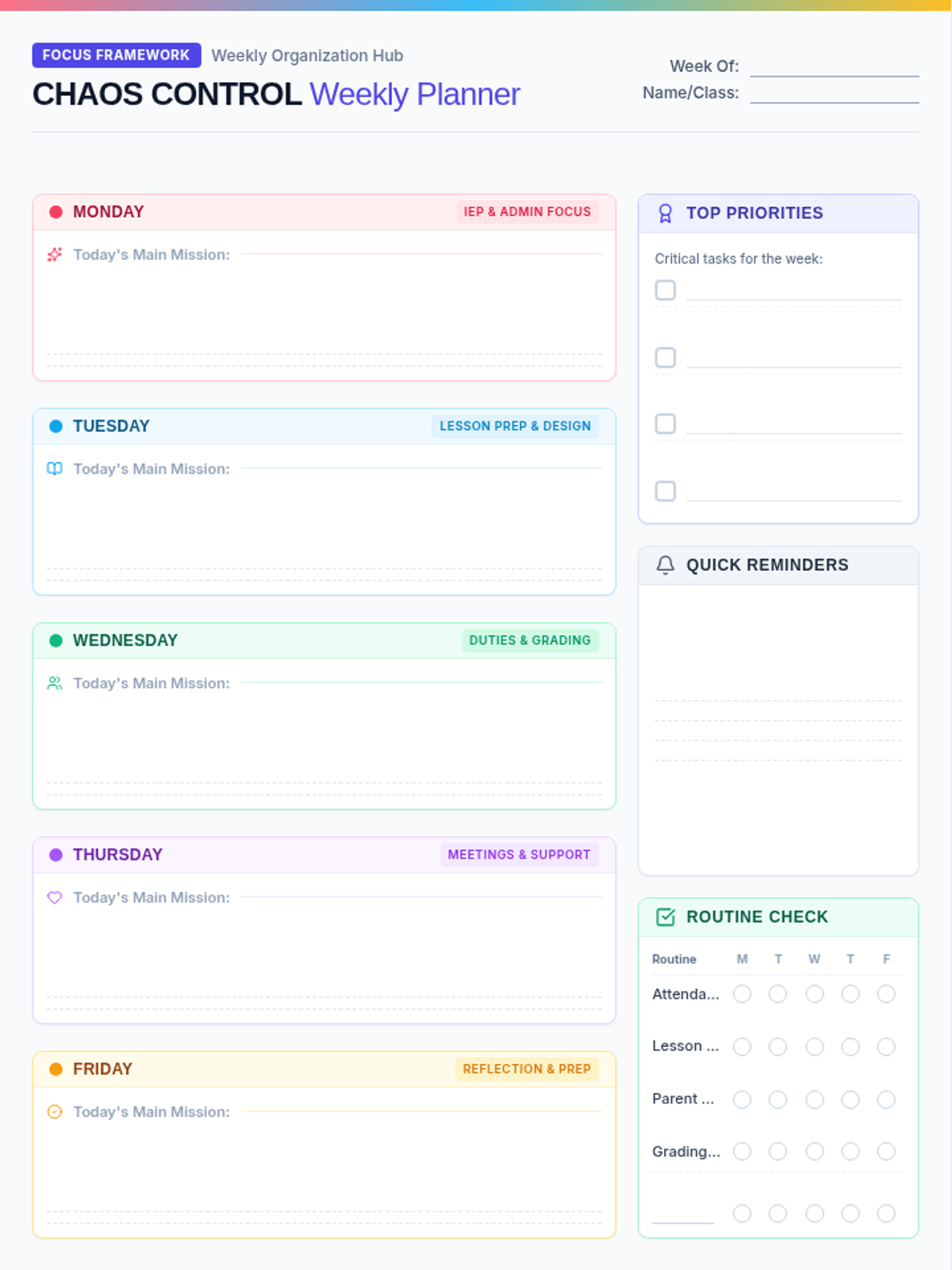
A comprehensive planning lesson containing high-visibility, color-coded dashboard tools for special educators and classroom teachers to organize their week and stay on top of paperwork deadlines.
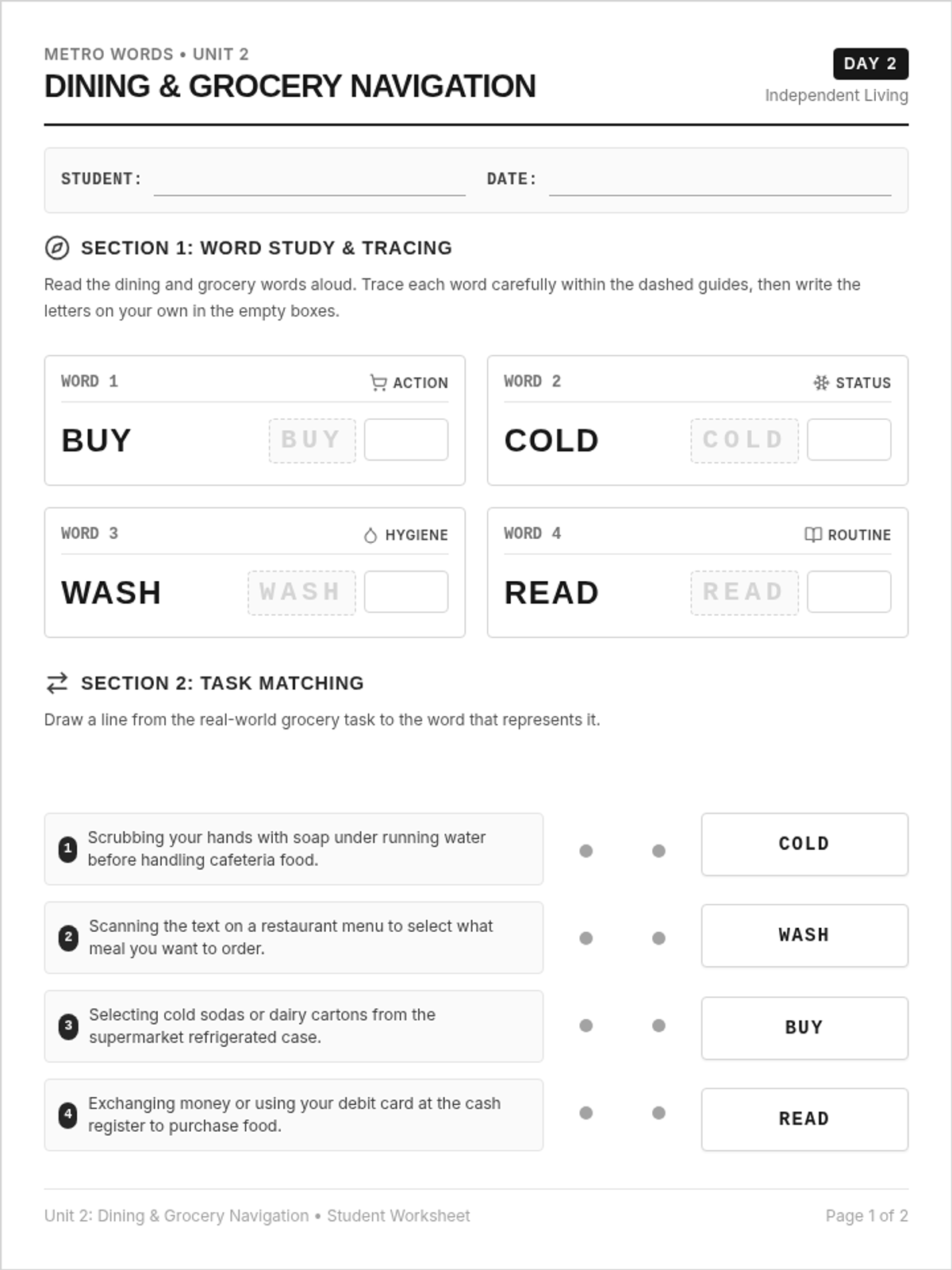
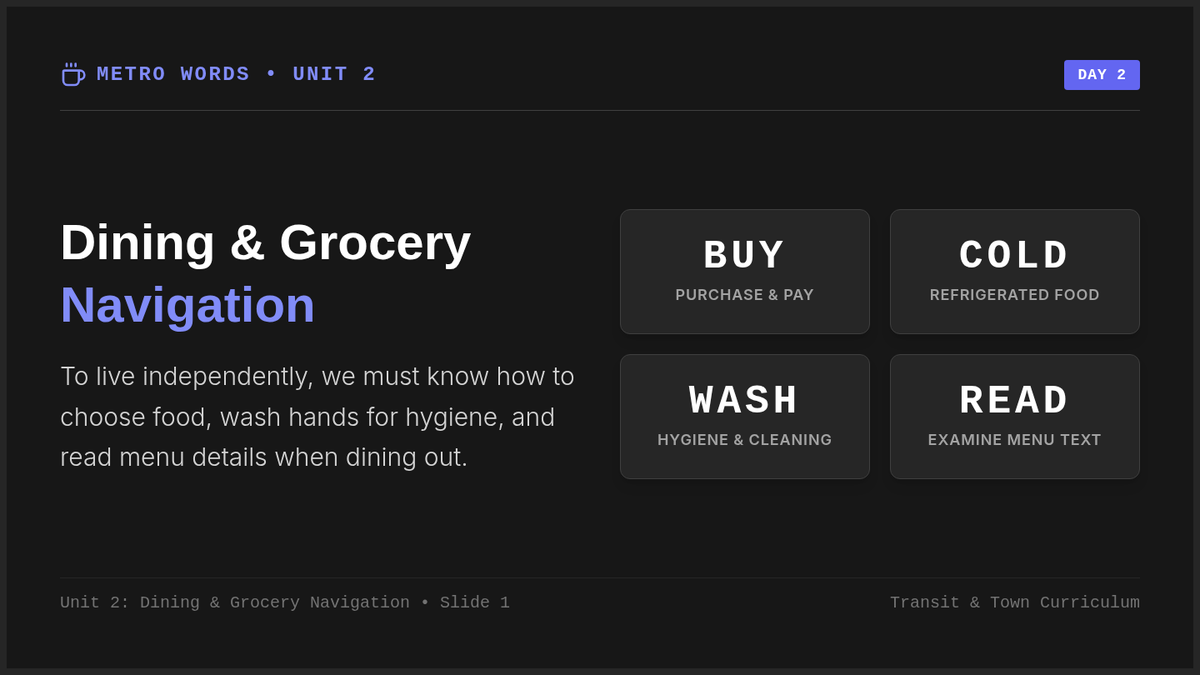
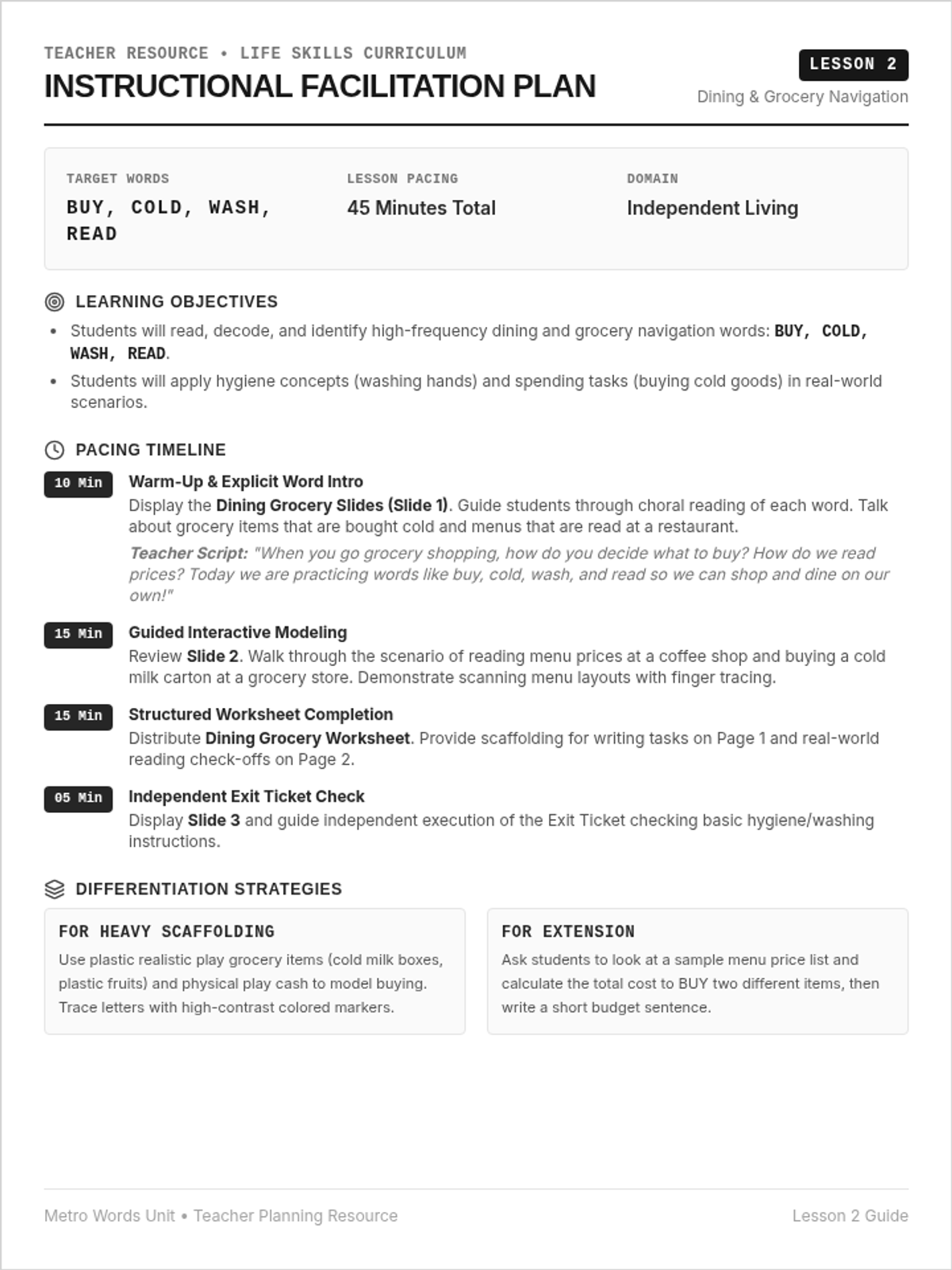
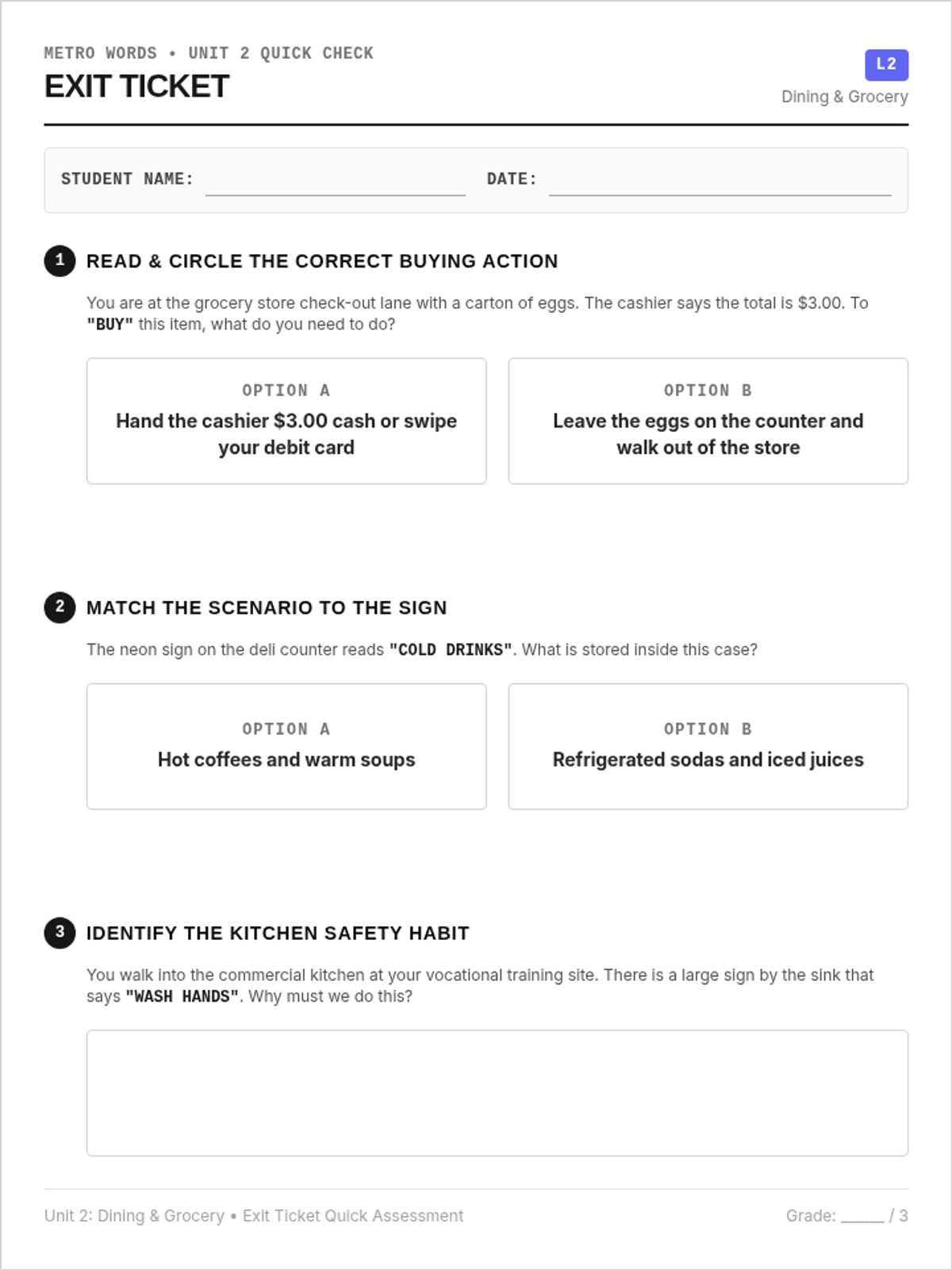
Focuses on high-frequency kitchen, store, and restaurant words: BUY, COLD, WASH, and READ. Students learn to navigate restaurant menus, follow hygiene signs, and purchase groceries.
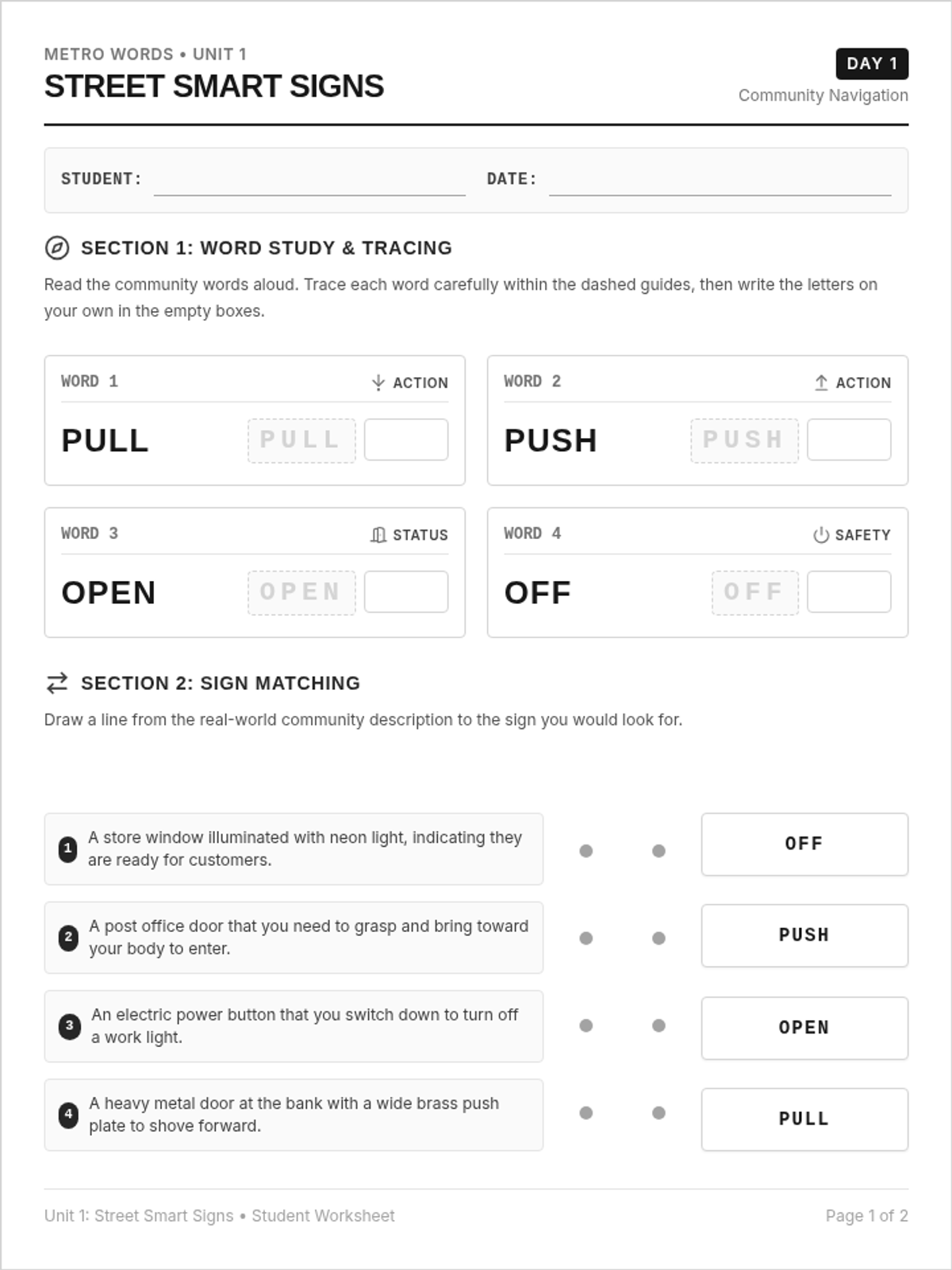
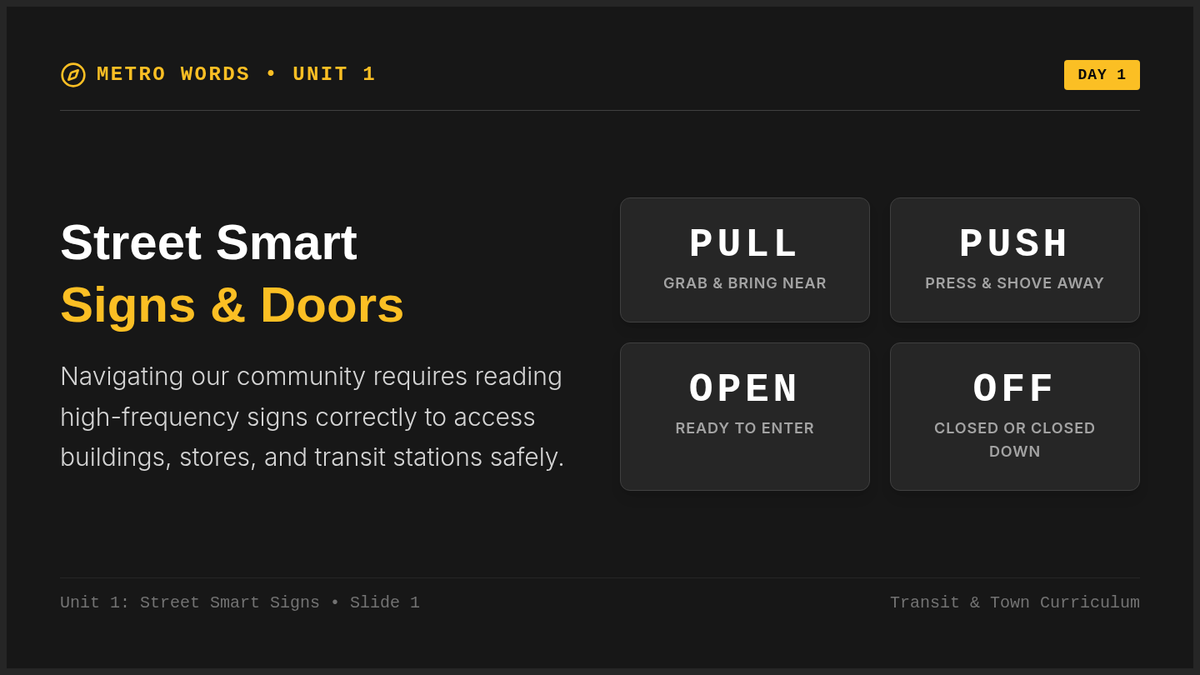
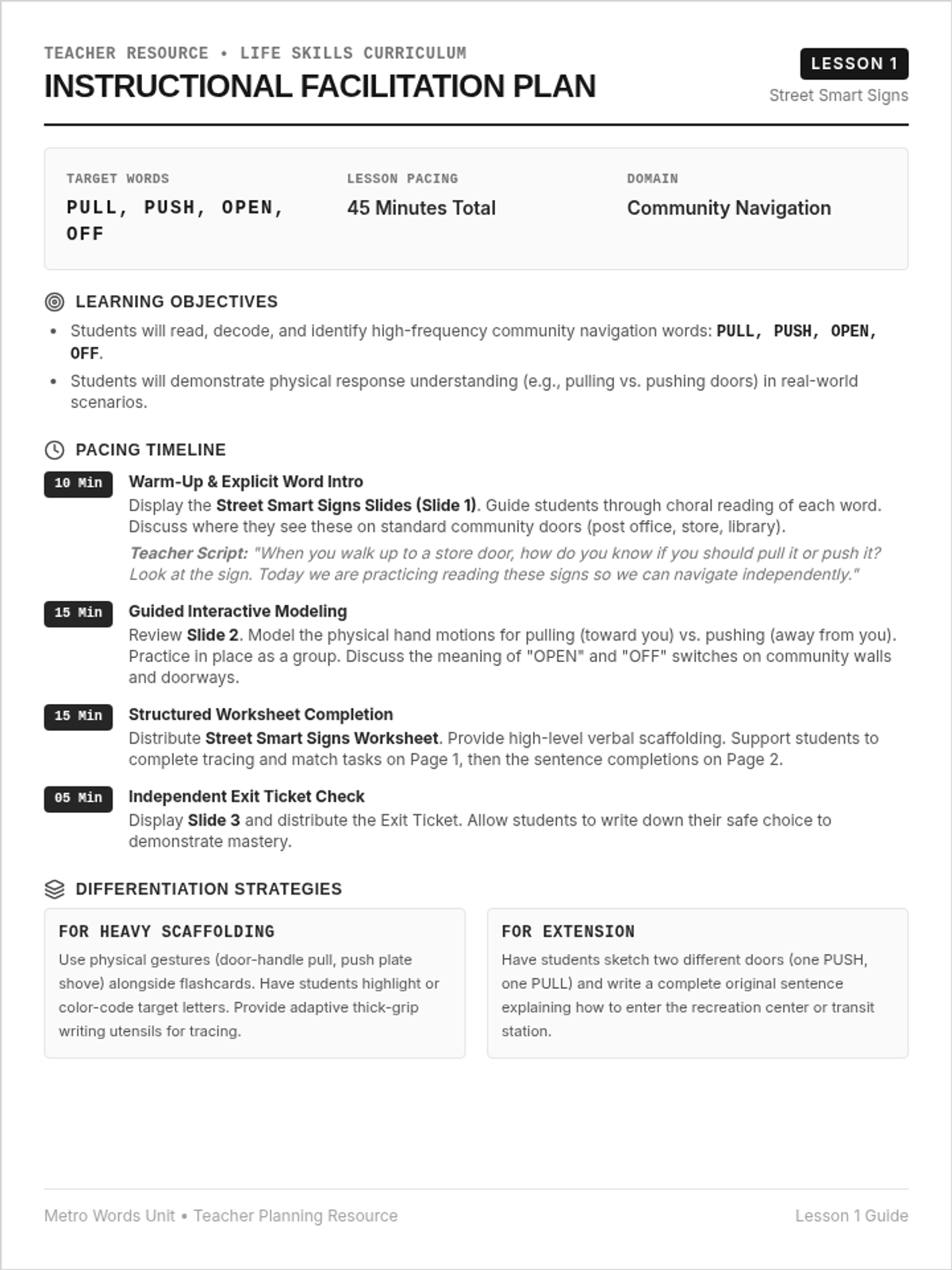
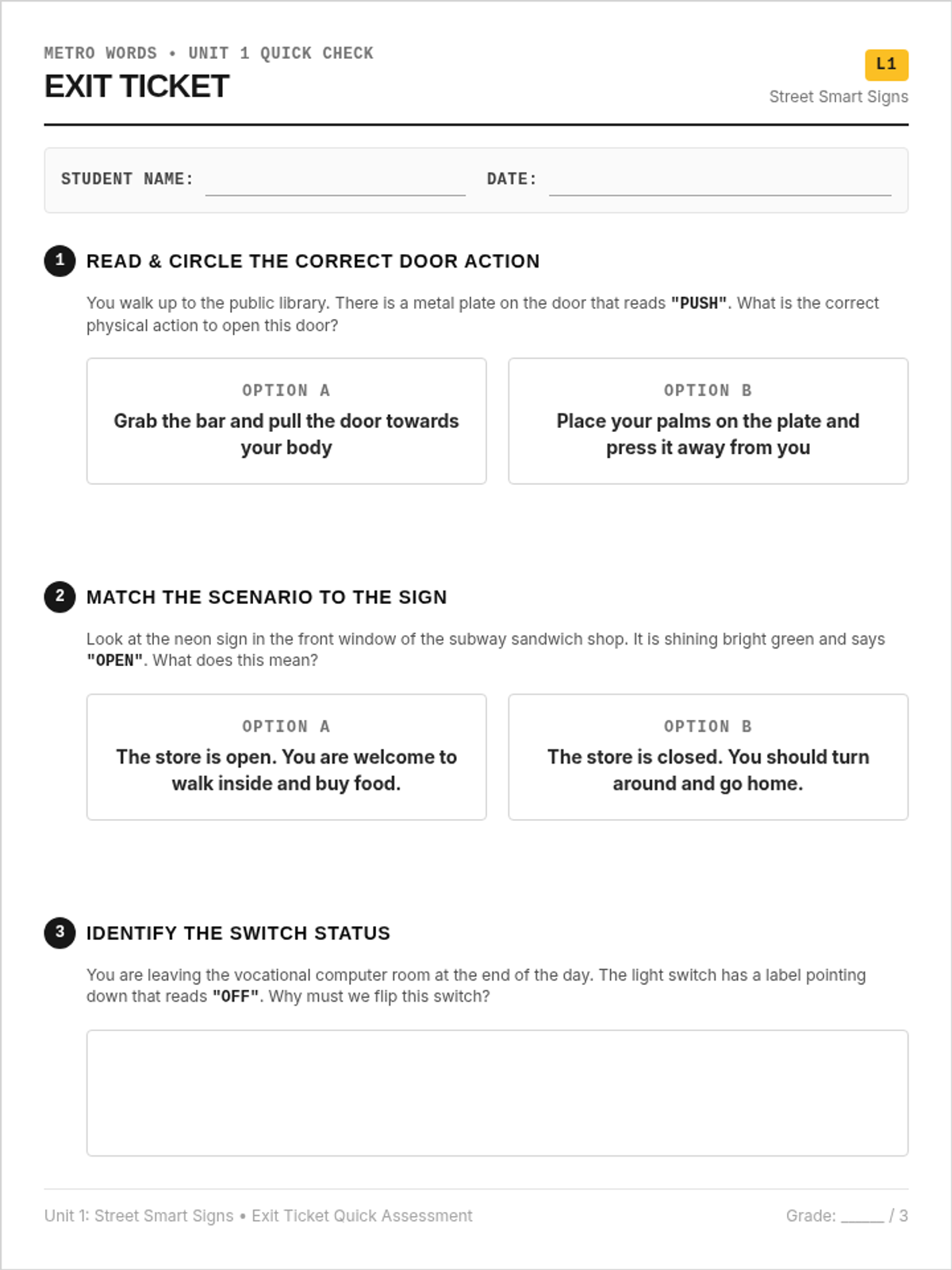
Focuses on high-frequency safety and navigation words found on community doors and signs: PULL, PUSH, OPEN, and OFF. Students learn to read, write, and respond to these words in real-world community contexts.
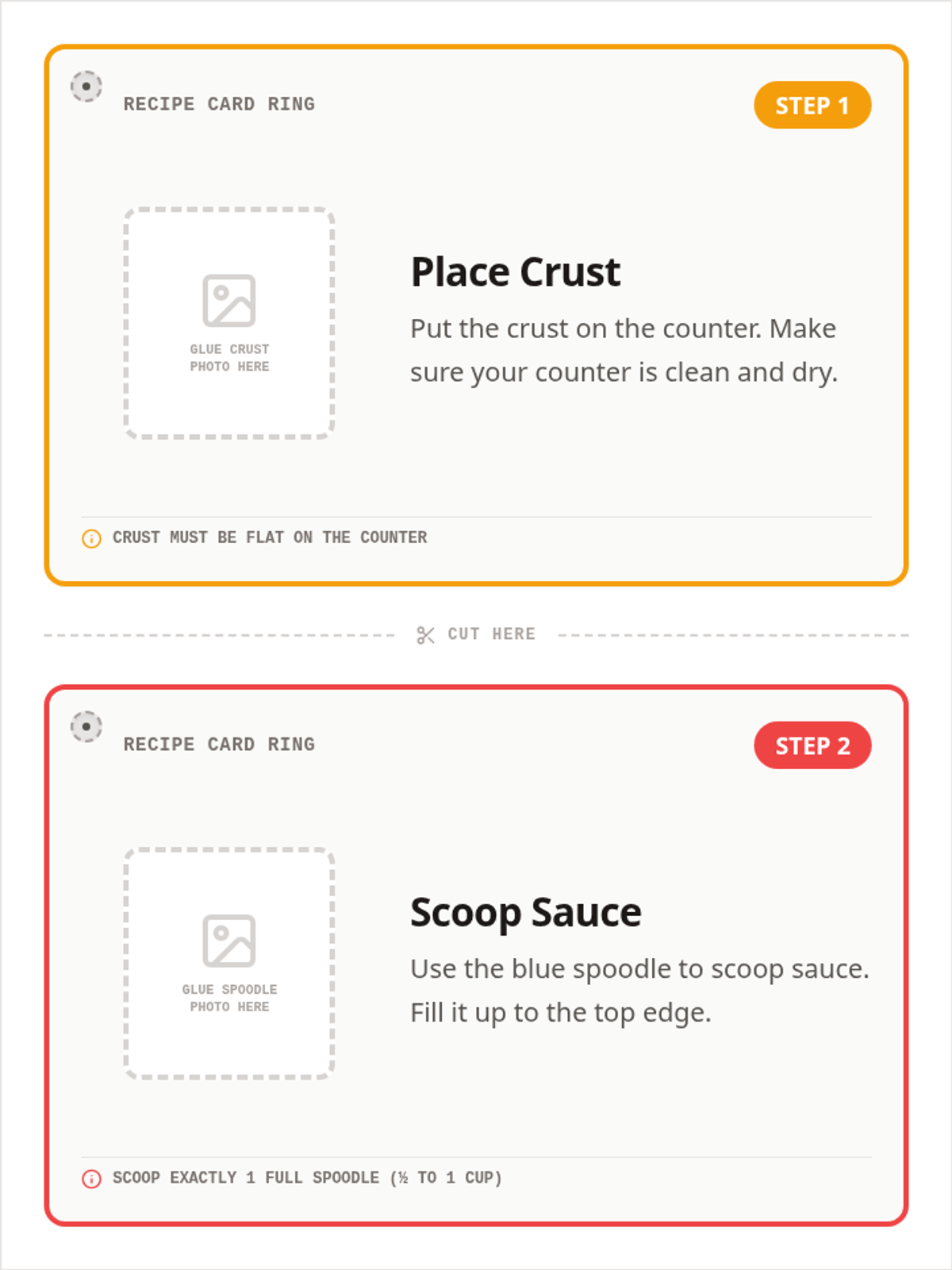
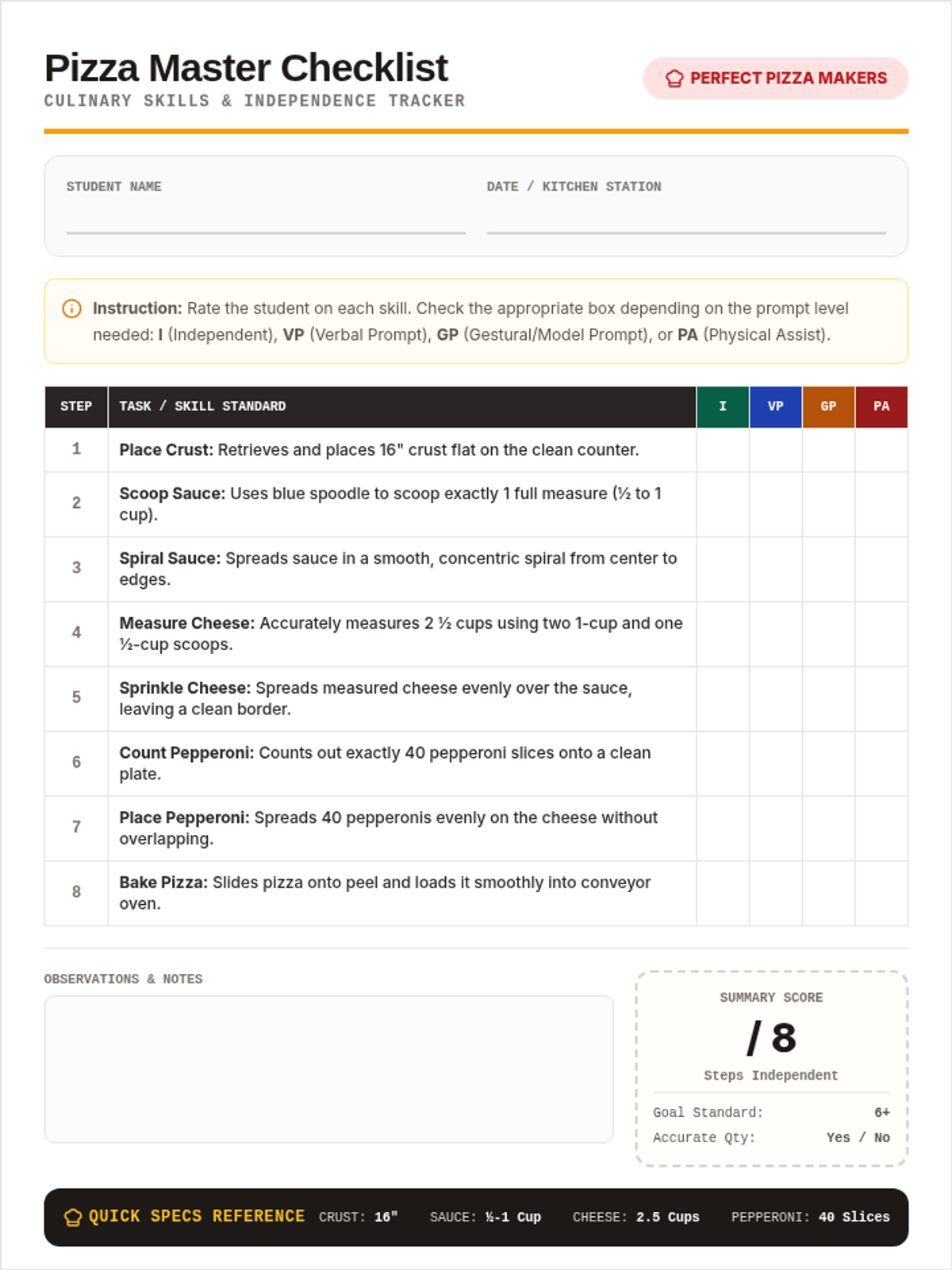
A comprehensive, highly visual lesson teaching students how to assemble and bake a 16-inch pizza using precise measurements. Features step-by-step visual presentation slides for group instruction and printable task cards for individual student kitchen stations.