Lenny.com
Explore
Create
ActivitiesNewMathEnglish Language ArtsScience & EngineeringSocial StudiesGlobal LanguagesHealth & Physical EducationSpecial EducationCounseling & Life SkillsArts & CreativityESL
Lenny.com
Lenny.com
Explore
Create
ActivitiesNewMathEnglish Language ArtsScience & EngineeringSocial StudiesGlobal LanguagesHealth & Physical EducationSpecial EducationCounseling & Life SkillsArts & CreativityESL
Lenny.com
Lenny.com

Solutions

Lenny for EducatorsLenny for SchoolsLenny for Districts

Product

ExploreSign inCreateSupportAbout

Resources

Getting startedMTSS Acceleration Program

© 2026 Lenny Learning Inc.

TermsPrivacyAccessibility
LinkedInInstagramX
Lenny

Probability Models

Statistical analysis using sample spaces, tree diagrams, and area models to predict outcomes. Calculates probabilities of simple and compound events while comparing theoretical results to experimental data.

MathNumbers & CountingCounting ObjectsNumber NamesComparing NumbersNumber OperationsCounting SequenceNumbers 0-10Place Value Understanding and SystemAdd and Subtract Within 20Addition and Subtraction ConceptsAddition and Subtraction EquationsAddition and Subtraction ProblemsFoundations for MultiplicationMultiplication and Division PropertiesMultiply and Divide Within 100Multiplication and Division ProblemsFactors and MultiplesProperties of OperationsPatterns and RelationshipsGenerate and Analyze PatternsMulti-Digit ArithmeticPlace Value OperationsMulti-Digit and Decimal OperationsNumerical ExpressionsFour Operations and PatternsFour Operations Problem SolvingMeasurement & DataMeasurable AttributesMeasuring LengthsMeasure and Estimate Lengths in Standard UnitsRelate Addition and Subtraction to LengthClassifying and Counting ObjectsTime and MoneyArea Concepts and MeasurementPerimeter and Area MeasuresAngle Concepts and MeasurementTime, Volume, and MassMeasurement Unit ConversionsGeometryIdentifying ShapesShapes and AttributesShape Attributes and ReasoningShapes and CompositionClassifying 2D FiguresGeometric Figures and RelationshipsLines, Angles, and ShapesAngle, Area, and VolumeGeometric MeasurementVolume of 3D ShapesCoordinate Plane ApplicationsTransformations in the PlaneCongruence and SimilarityUnderstand congruence in terms of rigid motionsSimilarity and TransformationsProve Theorems Involving SimilarityPythagorean TheoremTrigonometry for General TrianglesMake Geometric ConstructionsProve Geometric TheoremsTheorems About CirclesFind Arc Lengths And Areas of Sectors of CirclesVolume FormulasRelationships Between Two-Dimensional and Three-Dimensional ObjectsProve Simple Geometric Theorems AlgebraicallyTranslate Between Geometric Description and Equation for Conic SectionApply Geometric Concepts in Modeling SituationsFractions & DecimalsFractions as NumbersBuilding FractionsFraction Equivalence and OrderingAdding and Subtracting FractionsMultiplying and Dividing FractionsDividing FractionsDecimal FractionsMulti-Digit Computation and FactorsAdd, Subtract, Multiply, and Divide Rational NumbersRational Number SystemIrrational Numbers and ApproximationsRatiosRatios and ProportionsProportional RelationshipsUnit RateAlgebraAlgebraic ExpressionsGenerate Equivalent ExpressionsQuantitative RelationshipsProportional Relationships and Linear EquationsEquations and InequalitiesEquation Solving and ReasoningLinear Equations and SystemsGraph Equations and InequalitiesSystems of EquationsReal-World Algebraic ProblemsQuantitative Reasoning with UnitsExpression StructureEquivalent Expression FormsRadicals and Integer ExponentsRational ExponentsRational and Irrational NumbersPolynomial OperationsPolynomial IdentitiesPolynomial Zeros and FactorsRational ExpressionsComplex Number OperationsComplex Numbers in PolynomialsComplex Numbers on PlaneStatistics & ProbabilityRepresent and Interpret DataData DistributionsStatistical VariabilityProbability ModelsCompound Event ProbabilitiesStatistical SamplingInterpret Categorical and Quantitative DataBivariate Data PatternsInterpret Linear ModelsComparing Two PopulationsRandom Processes in StatisticsIndependence and Conditional ProbabilityExpected ValuesProbability-Based Decision MakingStatistical Inference and ConclusionsFunctionsFunction Concepts and NotationDefine and Compare FunctionsInterpret Functions in ContextAnalyze Function RepresentationsModel Relationships with FunctionsIdentify Linear vs Exponential GrowthDistinguish Between Function TypesCompare Growth RatesInterpret Function ExpressionsBuild Functions from RelationshipsConstruct and Model FunctionsTransform and Combine FunctionsModel Comparison and SelectionSolve Exponential EquationsTrigonometryTrigonometric Ratios Involving Right TrianglesTrigonometric Functions and Unit CircleModel with Trigonometric FunctionsTrigonometric IdentitiesVectors & MatricesIntroduction to Vectors and MatricesVector QuantitiesVector OperationsMatrix OperationsCalculusLimits and ContinuityDerivative Concepts and NotationDerivative Rules and TechniquesApplications of DerivativesOptimization ProblemsRelated RatesCurve Sketching and AnalysisIntegration Concepts and NotationAntiderivatives and Indefinite IntegralsDefinite Integrals and AreaFundamental Theorem of CalculusIntegration TechniquesApplications of IntegrationDifferential EquationsSequences and SeriesParametric and Polar FunctionsVector-Valued Functions

Videos

Mastering Probability: Marbles, Replacement, and Compound Events

Mastering Probability: Marbles, Replacement, and Compound Events

This comprehensive math tutorial guides students through solving probability word problems using a classic "marbles in a jar" scenario. The video begins with calculating simple probabilities using fractions, decimals, and percentages, establishing the foundational concept of part-over-whole. It systematically progresses to more complex concepts, including the probability of "not" selecting a specific color and the addition rule for "or" events (e.g., green or yellow). A significant portion of the video is dedicated to compound events, distinguishing between independent and dependent events through the concepts of "with replacement" and "without replacement." The narrator explicitly breaks down the difference between "then" (specific order) and "and" (non-specific order), demonstrating how this changes the calculation logic. This resource is highly valuable for middle and high school math classrooms as it visually color-codes calculations to match the marble colors, making abstract algebraic steps concrete. It serves as both an introduction to basic probability and a deep dive into the nuances of compound probability rules, addressing common student stumbling blocks like reducing fractions and interpreting word problem vocabulary.

The Organic Chemistry TutorThe Organic Chemistry Tutor

18mins 4s

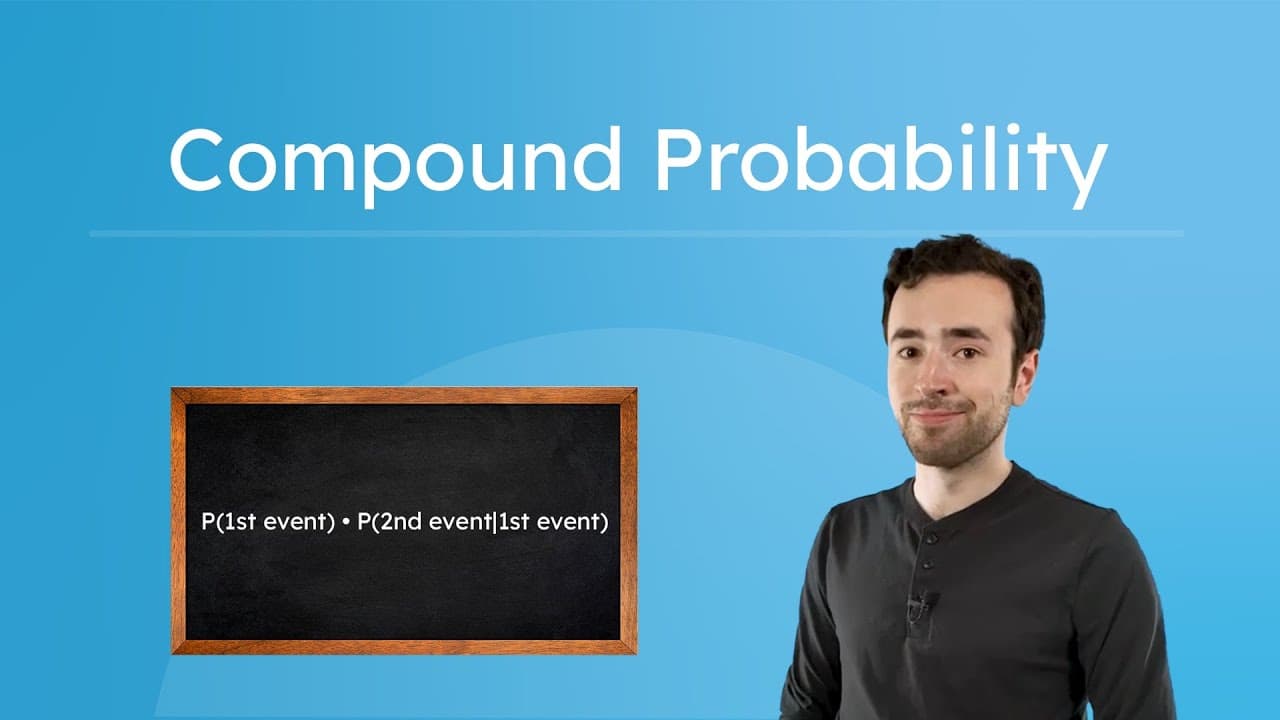
How to Calculate Compound Probability With and Without Replacement

How to Calculate Compound Probability With and Without Replacement

This educational video provides a clear and structured introduction to compound probability, specifically focusing on the "multiplication rule" for calculating the likelihood of two events occurring together. Host Justin uses visual aids and step-by-step examples to explain the critical difference between events that happen "with replacement" versus "without replacement." The video breaks down the mathematical formula P(A and B) = P(A) * P(B|A), making the abstract notation accessible through concrete examples involving bags of marbles and baskets of bagels. The content explores three distinct scenarios: calculating probability without replacement (dependent events), calculating with replacement (independent events), and a real-world word problem involving bagels. Through these examples, the video demonstrates how the sample space—the denominator in the probability fraction—changes when an item is removed and not returned, a common stumbling block for students learning probability statistics. Visual animations of marbles leaving and returning to a jar help students mentally model these changes. This video is an excellent resource for middle and high school math classrooms introducing statistics and probability standards. It serves as a perfect direct instruction tool for distinguishing between independent and dependent events. Teachers can use the built-in pause points to allow students to calculate answers on their own before seeing the solution, making it an interactive component of a lesson on compound events or a review tool for standardized test preparation.

Miacademy & MiaPrep Learning ChannelMiacademy & MiaPrep Learning Channel

8mins 22s

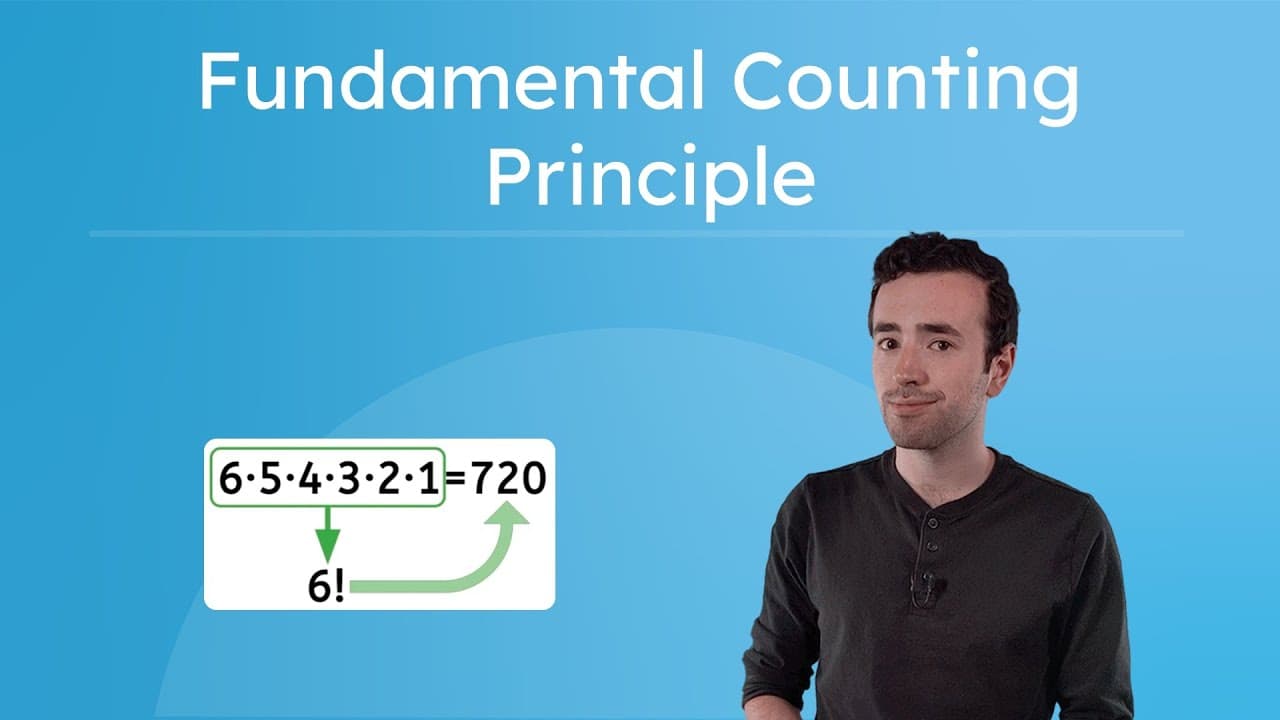
Mastering Outcomes With the Fundamental Counting Principle

Mastering Outcomes With the Fundamental Counting Principle

This video lesson introduces the Fundamental Counting Principle, a key mathematical concept used to determine the total number of possible outcomes in a given scenario without needing to list them all manually. The instructor, Justin, begins by demonstrating the limitations of visual methods like tree diagrams when dealing with multiple choices, using a car-buying scenario to illustrate how quickly diagrams become unwieldy. He then provides the solution: multiplying the number of options for each decision to find the total outcomes efficiently. The video explores key themes of probability, combinations, and permutations. It walks through three distinct scenarios: selecting features for a new vehicle, building a three-course meal from a menu, and determining the order of completing daily chores. Through the final example, the video introduces the concept of factorials (notated as n!), explaining how this mathematical operation serves as a shortcut for calculating the number of ways to arrange or order items. For educators, this video serves as an excellent bridge between concrete visual representations and abstract calculation in probability units. It effectively addresses the standard on finding the number of outcomes for compound events. The clear, step-by-step examples provide ready-made practice problems for the classroom, while the introduction to factorials prepares students for more advanced study in permutations and statistics.

Miacademy & MiaPrep Learning ChannelMiacademy & MiaPrep Learning Channel

10mins 37s

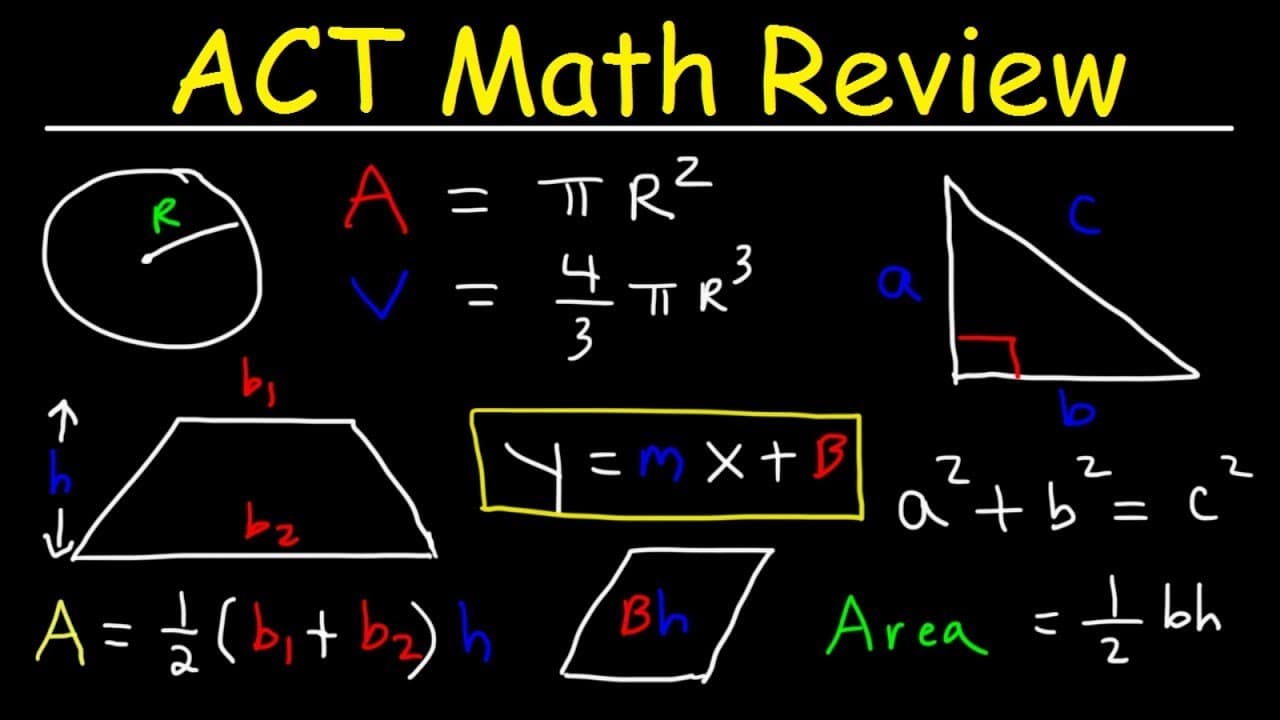
ACT Math Practice Test: Review of Algebra, Geometry, and Trig Concepts

ACT Math Practice Test: Review of Algebra, Geometry, and Trig Concepts

This comprehensive video tutorial serves as an intensive review for the ACT Math section, covering a wide array of topics crucial for high school students preparing for college entrance exams. The content is structured as a series of 31 practice problems that mimic the style and difficulty of actual ACT questions. It progresses through various mathematical domains including pre-algebra, elementary algebra, intermediate algebra, coordinate geometry, plane geometry, and trigonometry. The video adopts a pause-and-practice format, encouraging active participation where viewers attempt each problem before watching the detailed step-by-step solution. Key themes explored in this review include solving linear and quadratic equations, working with functions, understanding geometric properties of polygons and circles, applying trigonometric ratios (SOH CAH TOA) and identities, and analyzing statistical data. The video also places a strong emphasis on real-world application problems involving percentages, sales tax, discounts, and unit conversions. Particular attention is given to algebraic manipulation strategies, such as solving systems of equations and simplifying complex expressions, as well as test-taking tactics like identifying key information in word problems. For educators and students, this video is a valuable resource for standardized test preparation. It allows teachers to identify specific areas of weakness in student understanding by isolating problem types (e.g., if a student struggles with problem 10, they need more support with circle geometry). The step-by-step explanations model clear mathematical reasoning, demonstrating not just *how* to get the right answer, but *why* specific methods work. This makes it an excellent tool for flipped classrooms, homework support, or intensive boot-camp style review sessions prior to test dates.

The Organic Chemistry TutorThe Organic Chemistry Tutor

20mins 33s

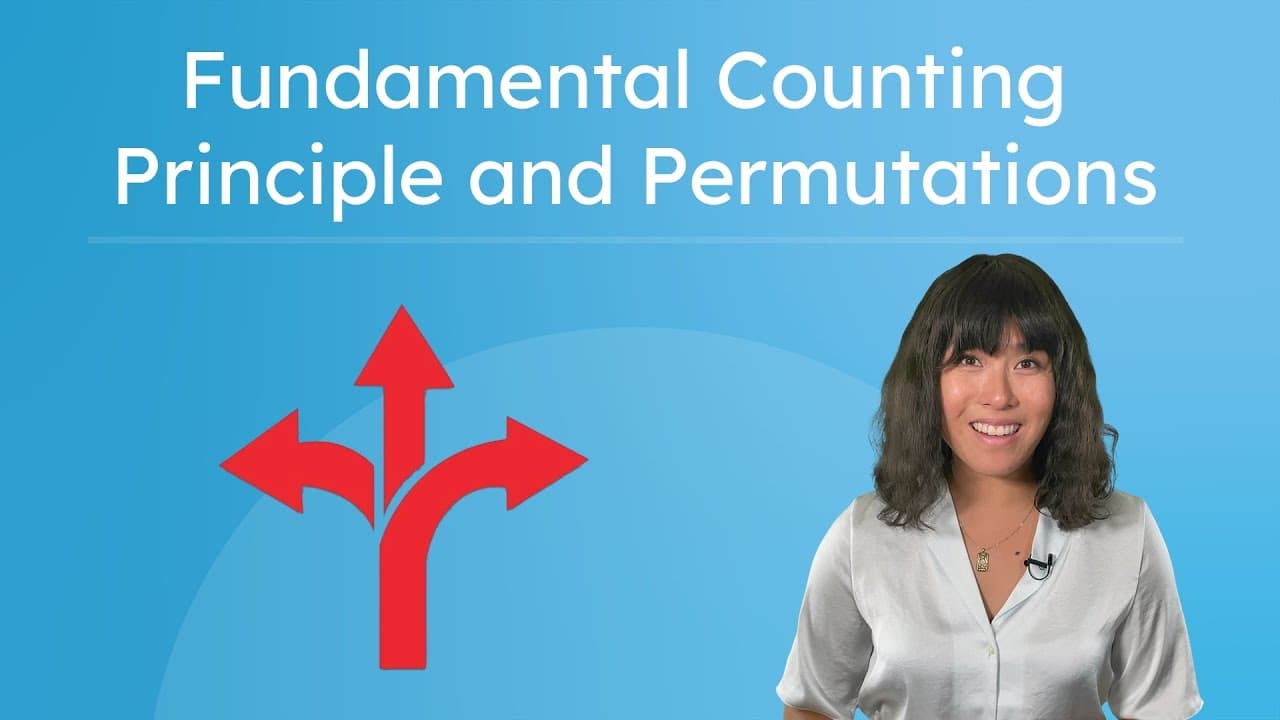
Mastering the Fundamental Counting Principle and Permutations

Mastering the Fundamental Counting Principle and Permutations

This educational video provides a comprehensive introduction to combinatorics through the Fundamental Counting Principle (FCP) and permutations. Using clear visual aids and relatable examples like choosing outfits, ordering from a menu, and setting a baseball batting lineup, the narrator breaks down complex mathematical concepts into digestible steps. The video transitions from simple decision trees to the multiplication rule, introducing factorials and the permutation formula in a logical progression. The content covers key statistical topics including the Fundamental Counting Principle ($m \times n$), the concept and notation of factorials ($n!$), distinguishing between permutations with and without repetition, and the mathematical definition of zero factorial. It addresses common student stumbling blocks, such as why $0!$ equals 1 and how to determine if order matters in a given scenario. The distinction between selecting from multiple pools (like a menu) versus a single pool (like a team roster) is clearly drawn. For educators, this video is an excellent resource for Algebra II, Pre-Calculus, or Statistics units. It effectively scaffolds learning by starting with concrete visualizations before moving to abstract formulas. The video includes built-in pause points for student practice, making it ready-to-use for interactive classroom instruction or independent review. It helps students grasp not just how to plug numbers into a calculator, but the logic behind *why* the formulas work.

Miacademy & MiaPrep Learning ChannelMiacademy & MiaPrep Learning Channel

15mins 20s

Calculating Simple Probability of Everyday Events

Calculating Simple Probability of Everyday Events

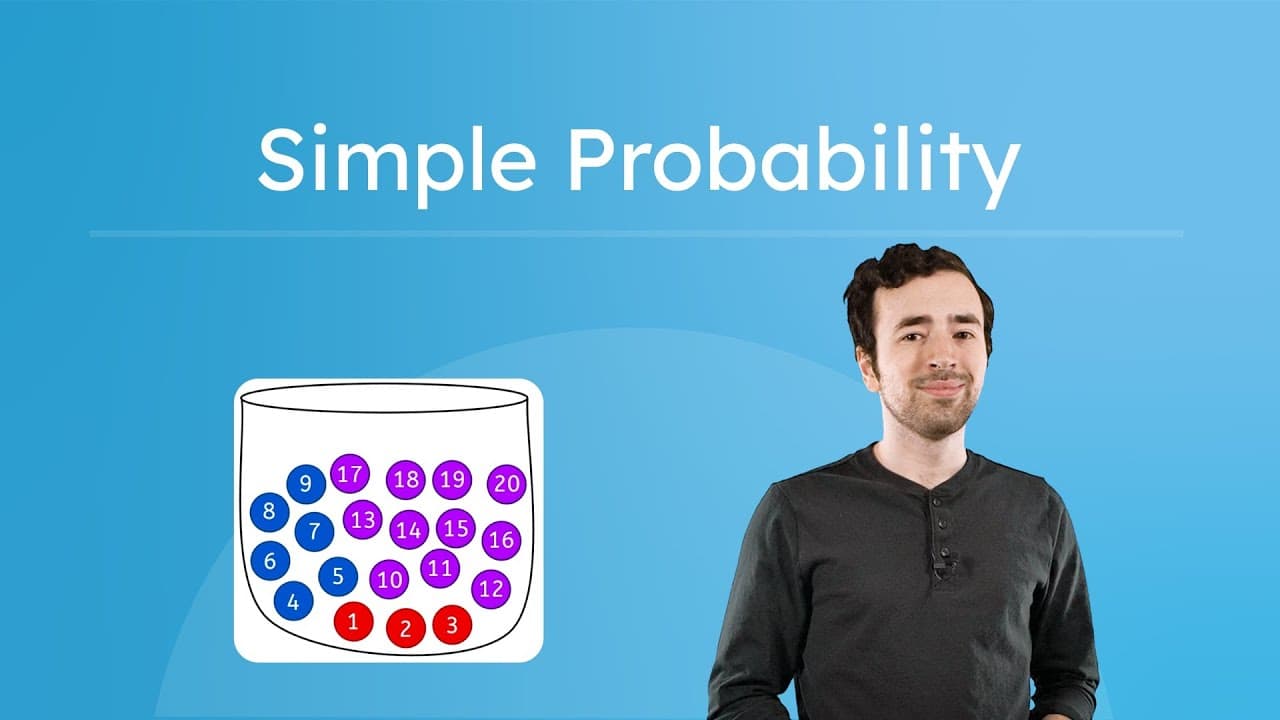
This educational video introduces students to the fundamental concepts of simple probability through relatable, step-by-step examples involving dice, marbles, and clothing. Hosted by an engaging narrator, the lesson begins by establishing the probability scale from 0 (impossible) to 1 (certain) and defines essential vocabulary such as "outcome" and "sample space." It then guides viewers through the logical derivation of the simple probability formula: determining the total number of possible outcomes and identifying how many of those outcomes meet specific criteria. The video explores key themes including calculating theoretical probability, converting real-world scenarios into mathematical fractions, and the importance of simplifying fractions for final answers. It introduces standard probability notation, such as P(event), and covers scenarios involving "not" statements (complementary events). A significant portion of the video is dedicated to addressing common student misconceptions, particularly the error of counting categories (e.g., number of colors) rather than total individual items when determining the sample space. For educators, this video serves as an excellent primary instruction tool or review for a probability unit. It features built-in pause points that encourage active participation, asking students to predict answers before they are revealed. The visual aids—including animated dice rolls, a transparent marble jar, and clear text lists—make abstract concepts concrete. The lesson structure moves from a simple concept (rolling a die) to more complex multi-step word problems, effectively scaffolding the learning process for middle school students.

Miacademy & MiaPrep Learning ChannelMiacademy & MiaPrep Learning Channel

11mins 18s

Materials

Expected Outcomes Worksheet

Expected Outcomes Worksheet

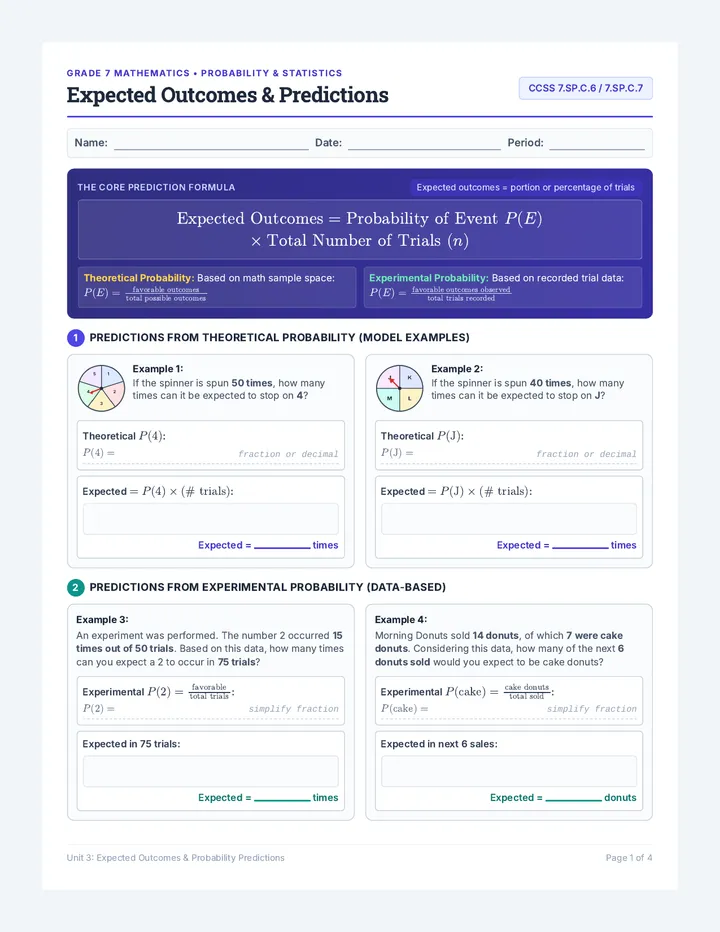
A comprehensive, four-page math worksheet packet on predicting expected outcomes using theoretical and experimental probability. Cleanly designed without leading probability prompts, allowing students to set up their own equations and show their work in generous handwriting areas.

D

dlspadaro

Chance Cafe Menu Worksheet Compendium

Chance Cafe Menu Worksheet Compendium

A probability-focused cafe menu worksheet featuring 2 snacks and 3 drinks. Includes a combination tracker grid for students to record all 6 possible snack and drink pairings.

L

Lorie.Shiveley

Week 2 Morning Work Review Packet

Week 2 Morning Work Review Packet

An 8-page print-ready review packet for 8th-grade students in NYS, structured as "Week 2 Morning Work". It covers all 7th-grade math domains (The Number System, Ratios & Proportional Relationships, Expressions & Equations, Geometry, and Statistics & Probability) in a beautifully themed "Pixel Quest" retro-gaming review grid format with ample workspace.

AW

Austin WIllis

Brevet Correction Sujet Zero Mathématiques

Brevet Correction Sujet Zero Mathématiques

Correction ultra-pédagogique et méthodologique du Sujet Zéro du Brevet (DNB) de Mathématiques, combinant rédaction type examen, conseils de prof, pièges classiques et astuces pour réussir le jour J. Version optimisée pour éviter tout débordement de page.

WM

Weber Myriam

Dice Odds Anchor Chart

Dice Odds Anchor Chart

An anchor chart designed for classroom display that explains compound probability using two dice. It features a specific example with a tree diagram, a 6x6 sample space grid, and the clear mathematical formula for independent events.

JH

John Holt

Probability Mastery Exam Compact Test Revised

Probability Mastery Exam Compact Test Revised

A revised 4-page Probability Mastery Exam with a complete 4-option Question 18 and standardized, smaller student work boxes (h-24) for calculations. The layout remains efficient, using a 12pt Arial-style font with single spacing to ensure all 30 questions fit perfectly within the 4-page limit. Math notation has been simplified for consistent rendering.

AC

Anjoe Calamba

Sequences

Regents Mastery Blueprint Study Guide

Regents Mastery Suite

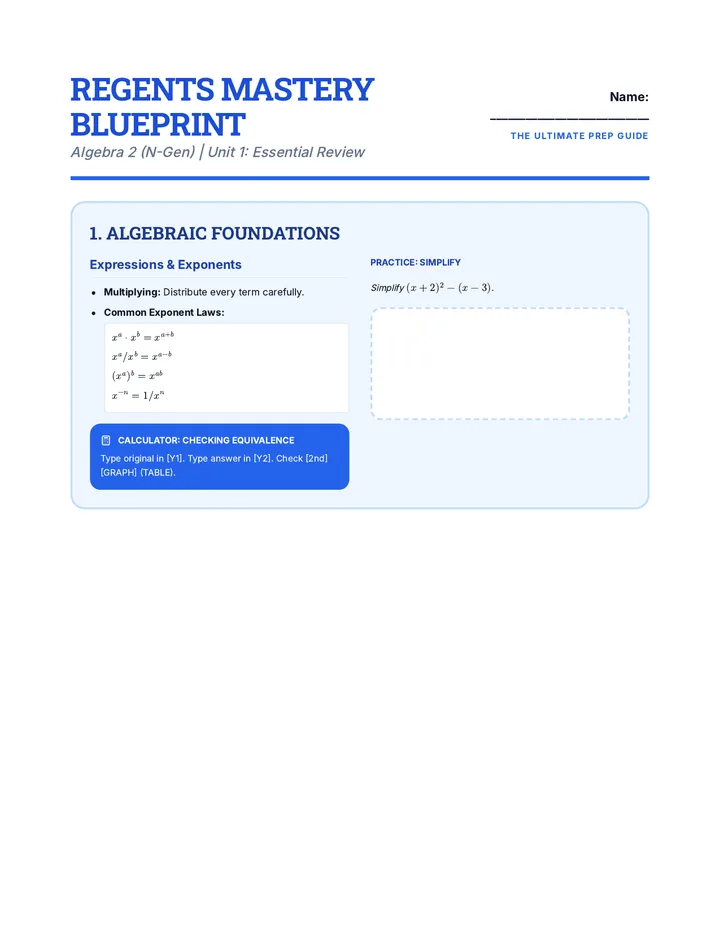
A comprehensive review suite for the New York State Mathematics Regents exams, including Algebra 1, Geometry, and Algebra 2, featuring mastery blueprints, calculator strategies, and exam-taking tips.

KB

Kayla Borozny

15
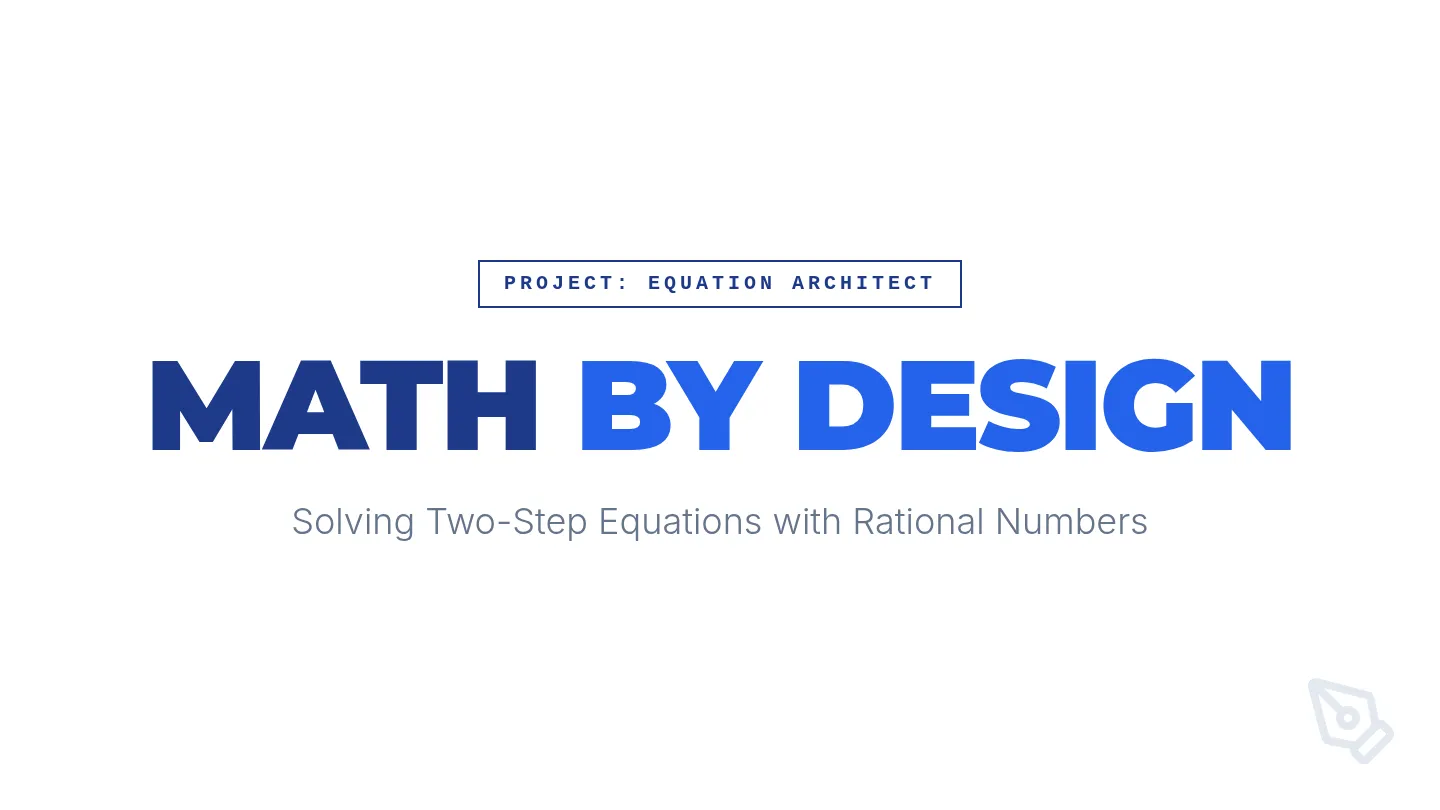
Equation Architect Slides

Geometric Foundations

A comprehensive unit covering 7th-grade geometry standards, focusing on scale drawings, geometric constructions, 3D cross-sections, angle relationships, and solving real-world area, volume, and surface area problems.

D

dbonicoro

25
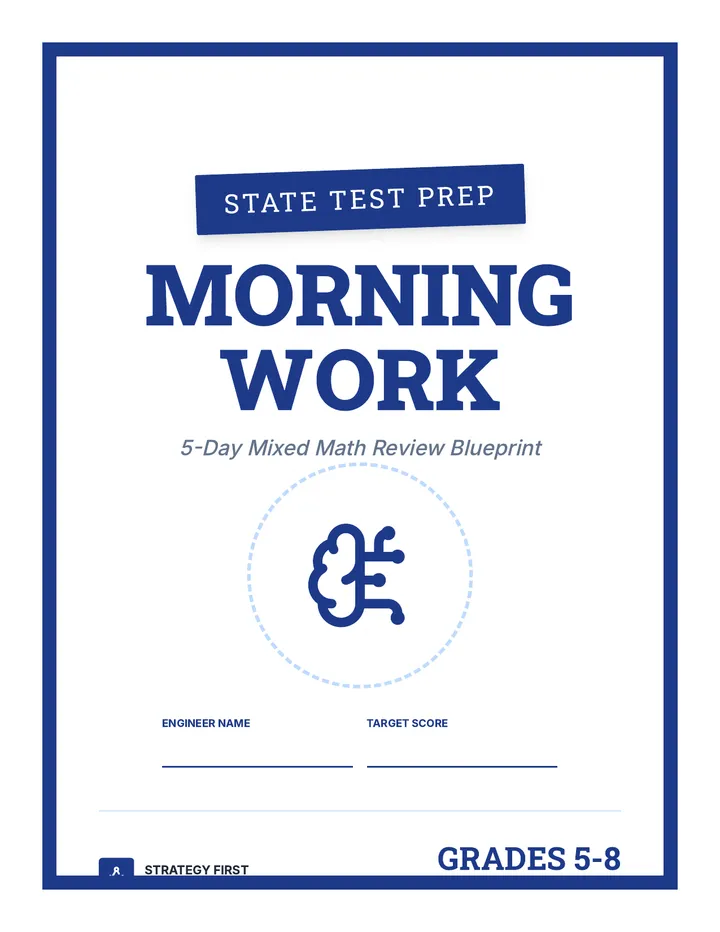
Morning Work Cover Page

Brain Blueprint Math Review

A comprehensive 5-day math review sequence designed for middle school students preparing for state testing. The sequence covers number systems, expressions, ratios, geometry, and statistics through a 'Brain Blueprint' theme.

AA

alicia accapezzato

7
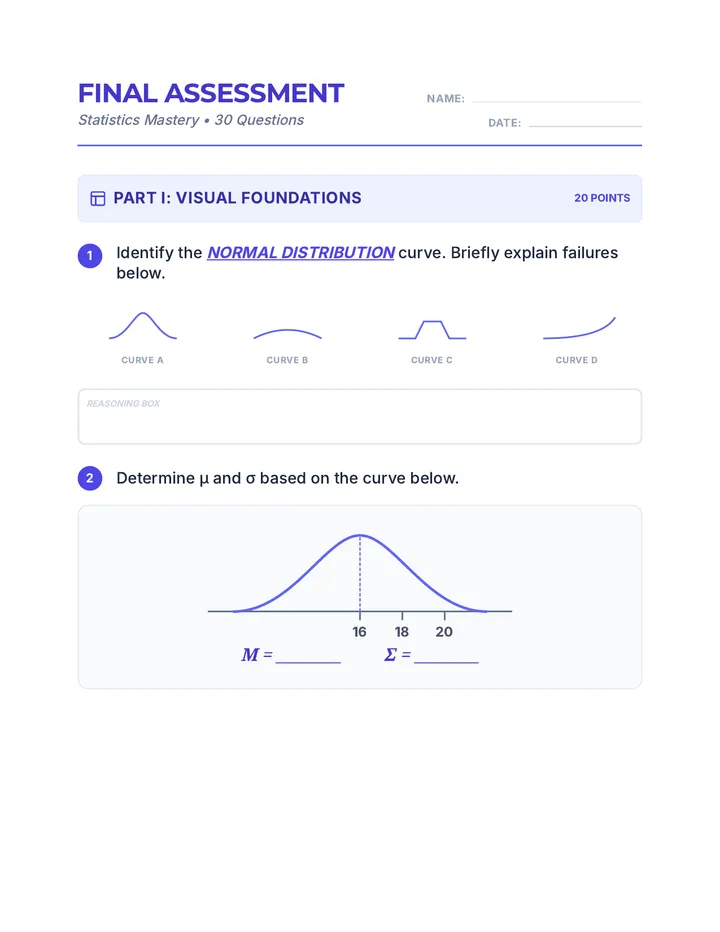
Normal CLT Mastery Test v3

Statistics Mastery

A comprehensive assessment sequence covering Normal Distributions, Z-scores, and the Central Limit Theorem.

AC

Anjoe Calamba

13
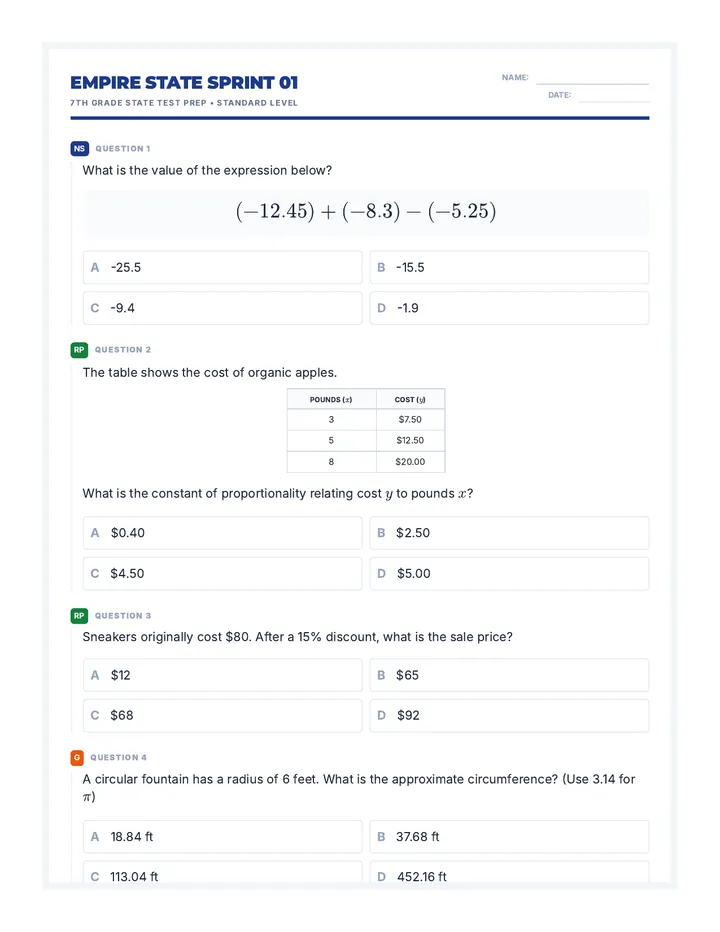
Sprint One Homework

Empire State Math Sprints

A series of four targeted homework assignments designed to prepare 7th-grade students for the New York State Mathematics Test. Each assignment covers key domains including Number Systems, Ratios and Proportions, Geometry, Statistics, and Probability in a standardized format.

CW

Cheyenne Watkins

5
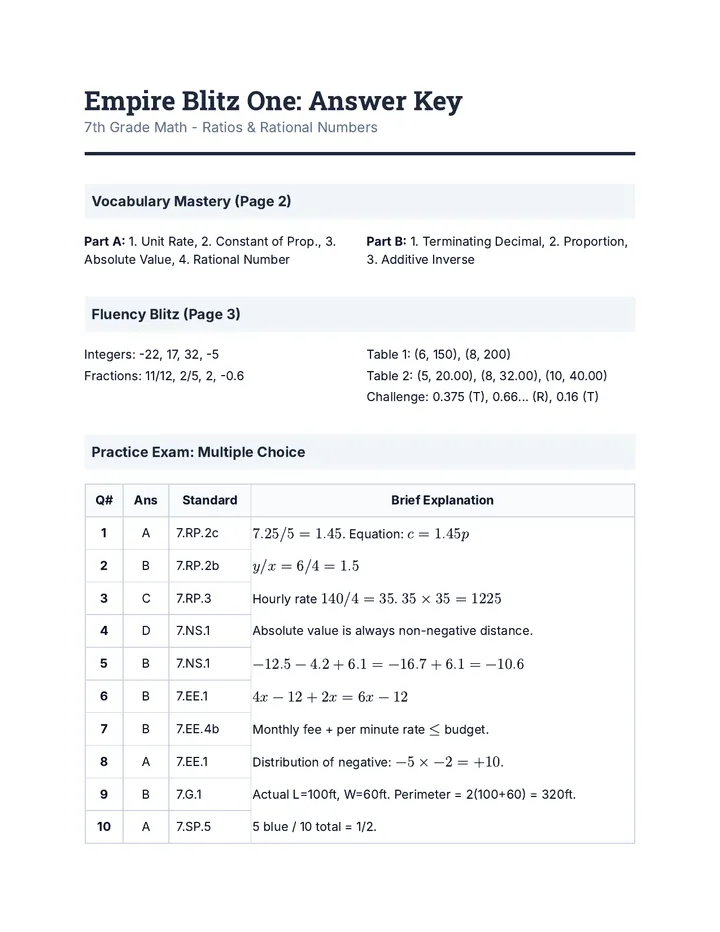
Empire Blitz One Answer Key

Metro Math Mastery

A comprehensive 3-packet New York State test prep series for 7th grade math, covering all major domains including Ratios, Number Systems, Expressions, Equations, Geometry, and Statistics. Each packet includes vocabulary, fluency, guided practice, and a 15-question mock exam.

CW

Cheyenne Watkins

12

Lessons

DNB Chrono Livret de Révision

Brevet Express

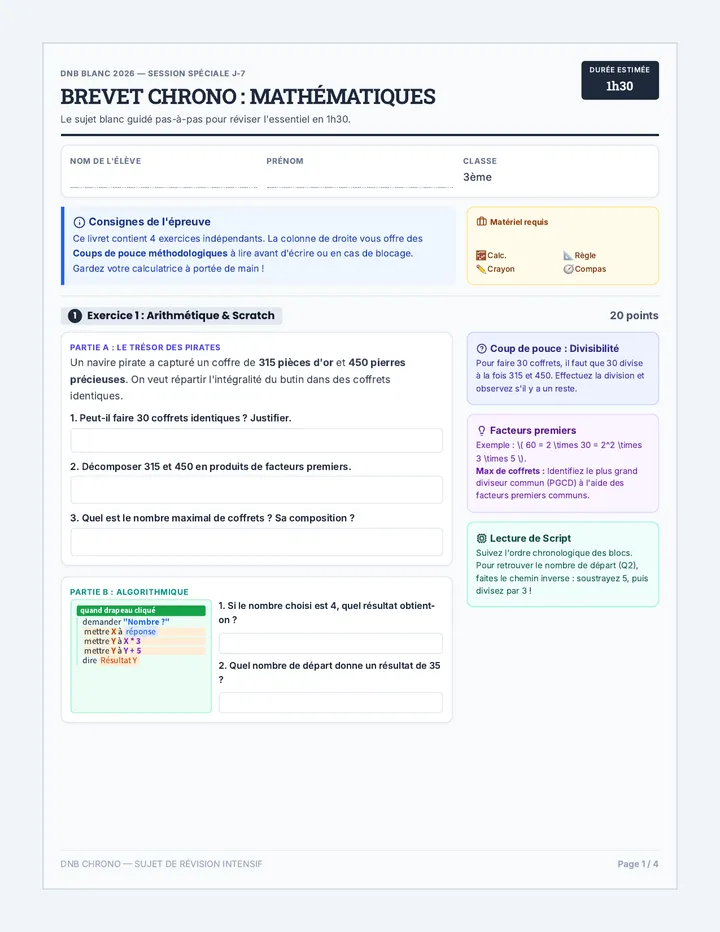
Un kit complet de révision de dernière minute pour le DNB de Mathématiques, comprenant un sujet blanc guidé pas-à-pas pour les élèves et un corrigé détaillé avec barème pour l'enseignant.

E

Enseignante

4
Rational Number Blueprint Packet

Rational Number Blueprint

A comprehensive workshop focused on mastering rational number operations and common CCSS 7th grade math misconceptions in preparation for the NYS test.

CW

Cheyenne Watkins

5
Binomial Breakdown Worksheet slice edition

Binomial Breakdown

A focused lesson on the binomial distribution, covering the BINS criteria, identifying parameters, and calculating probabilities using digital spreadsheet tools.

KC

Katelyn Coleman

4
Cube Chaos Slides

Cube Chaos

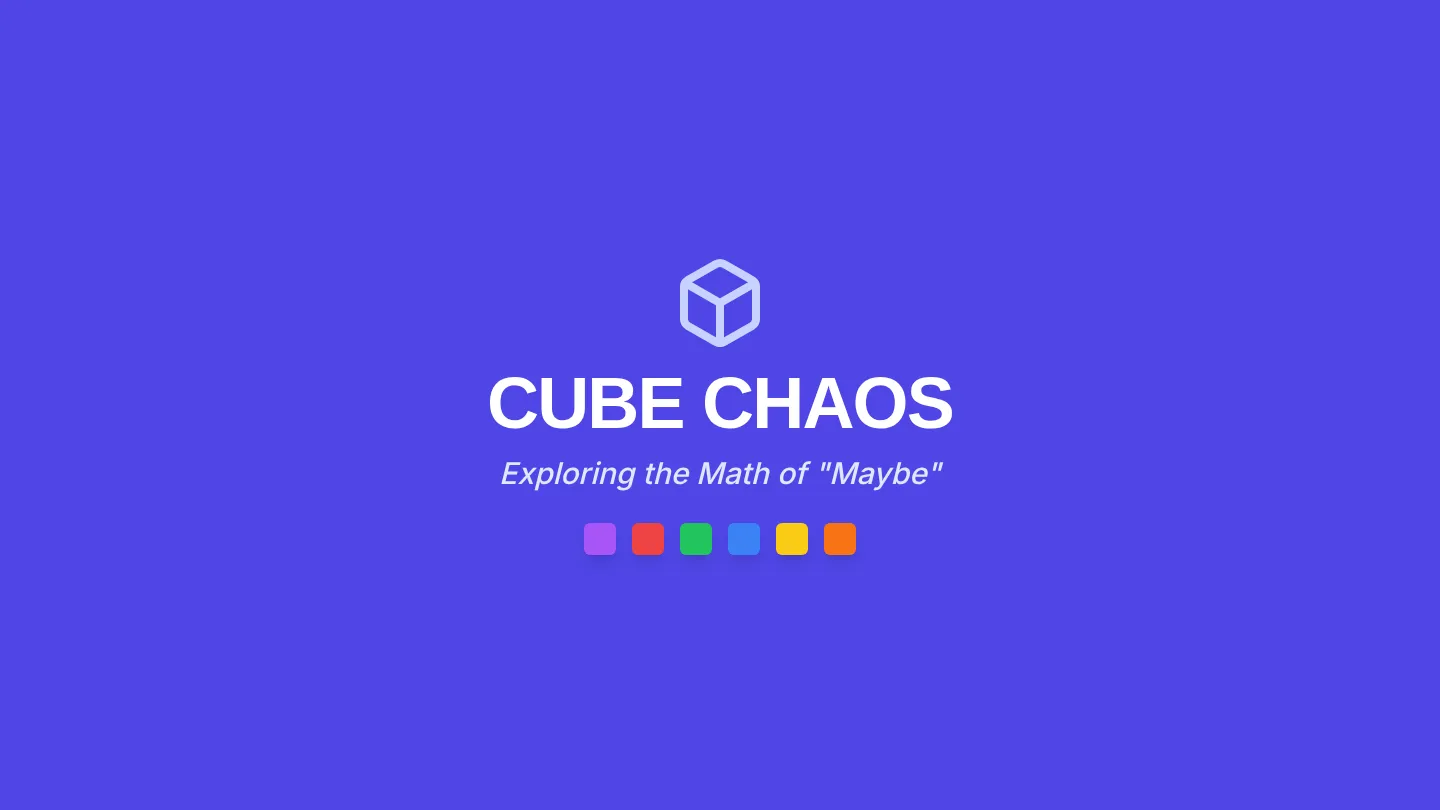
A hands-on exploration of probability concepts using a specific set of 10 colored cubes. Students learn to calculate theoretical and experimental probability, identify sample spaces, and understand complements.

L

Lorie.Shiveley

3
Toon Stats Student Packet

Toon Stats Challenge

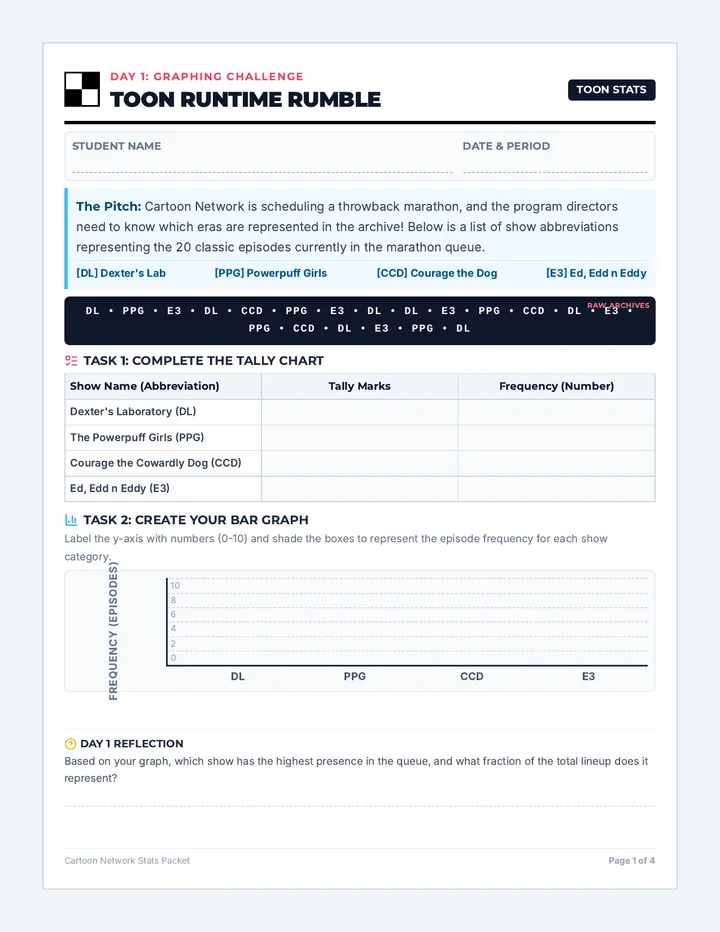
A four-day statistics packet using Cartoon Network shows to teach tallying, graphing, probability, range, and outliers, complete with a comprehensive teacher guide for IEP tracking.

MR

Maddy Roberts

2
Brevet Correction Mathématiques

Révisions Brevet Maths

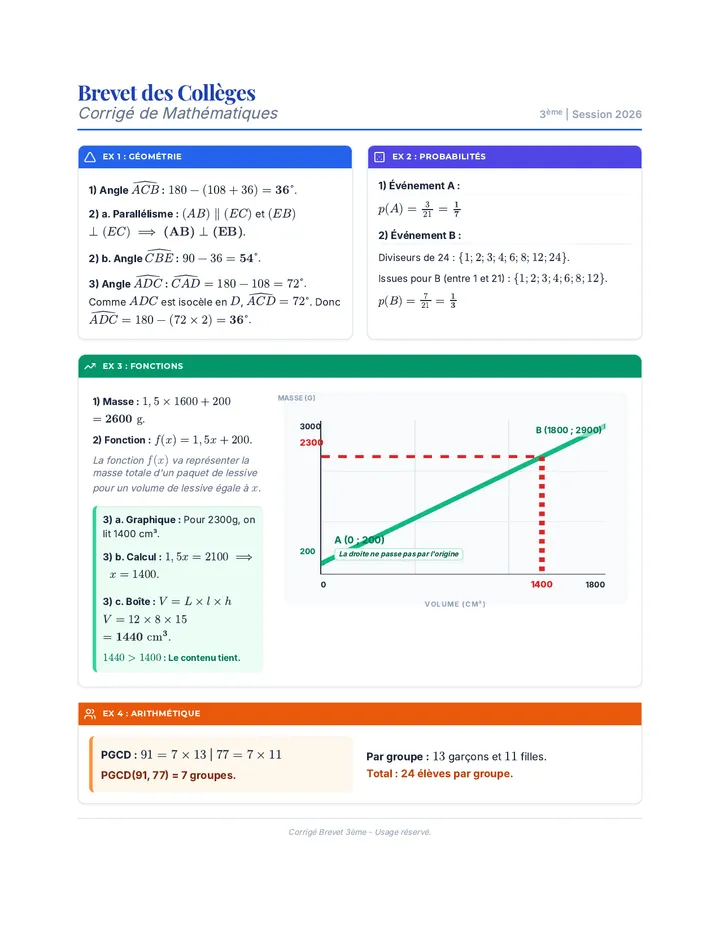
Une série de ressources complètes pour préparer les élèves de 3ème à l'épreuve de mathématiques du DNB, incluant des corrigés détaillés et des fiches méthodologiques.

E

Enseignante

3