A visual 4-page printable Bingo set with a teacher calling card sheet (including letter-animal references), 4 unique high-contrast 3x3 student boards featuring letters and animal visual cues, and a page of themed tokens to cut out.
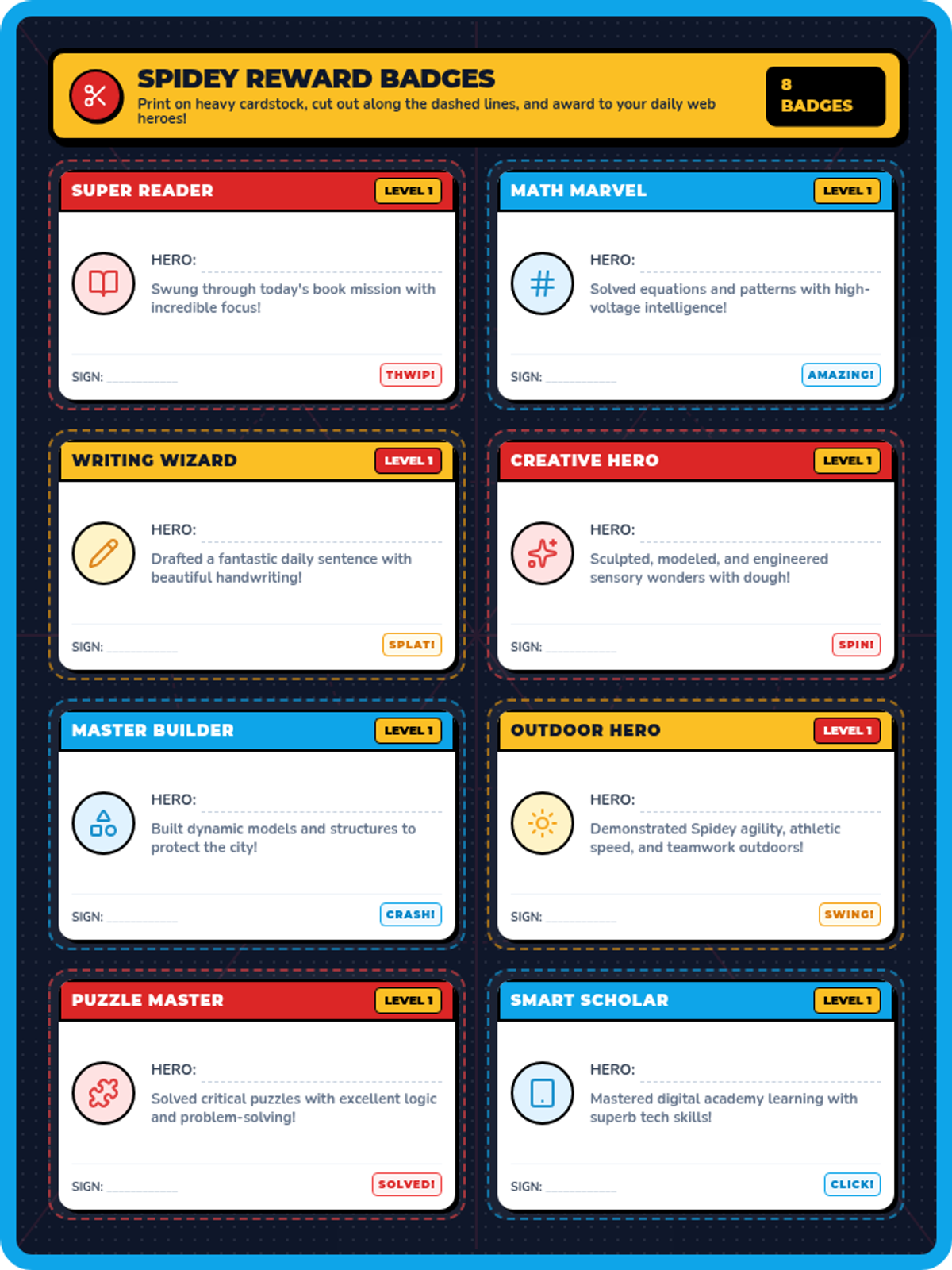
A set of 8 printable, themed reward badges matching each of Spider-Man's daily web missions (Reading, Numbers, Writing, Creativity, Building, Outdoors, Logic, Tech). Features high-contrast labels, customized commendation texts, and teacher signature fields with cut-guidelines for classroom convenience.
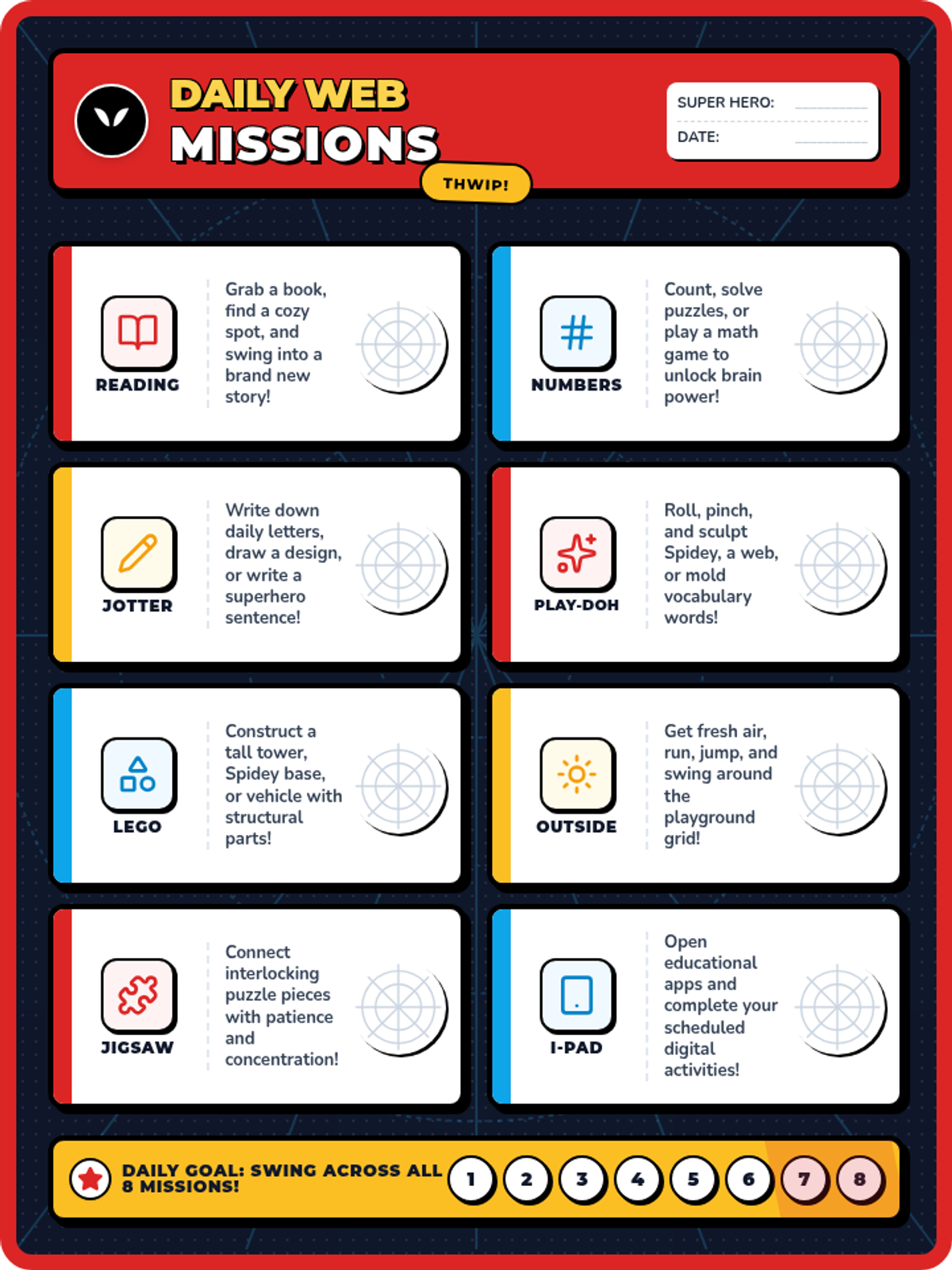
A dynamic, comic-book style classroom poster inspired by Spider-Man's iconic colors and web motifs. Designed for teachers to display, laminate, and track 8 daily tasks (reading, numbers, jotter, play-doh, lego, outside, jigsaw, i-pad) using interactive dry-erase circular web-targets.
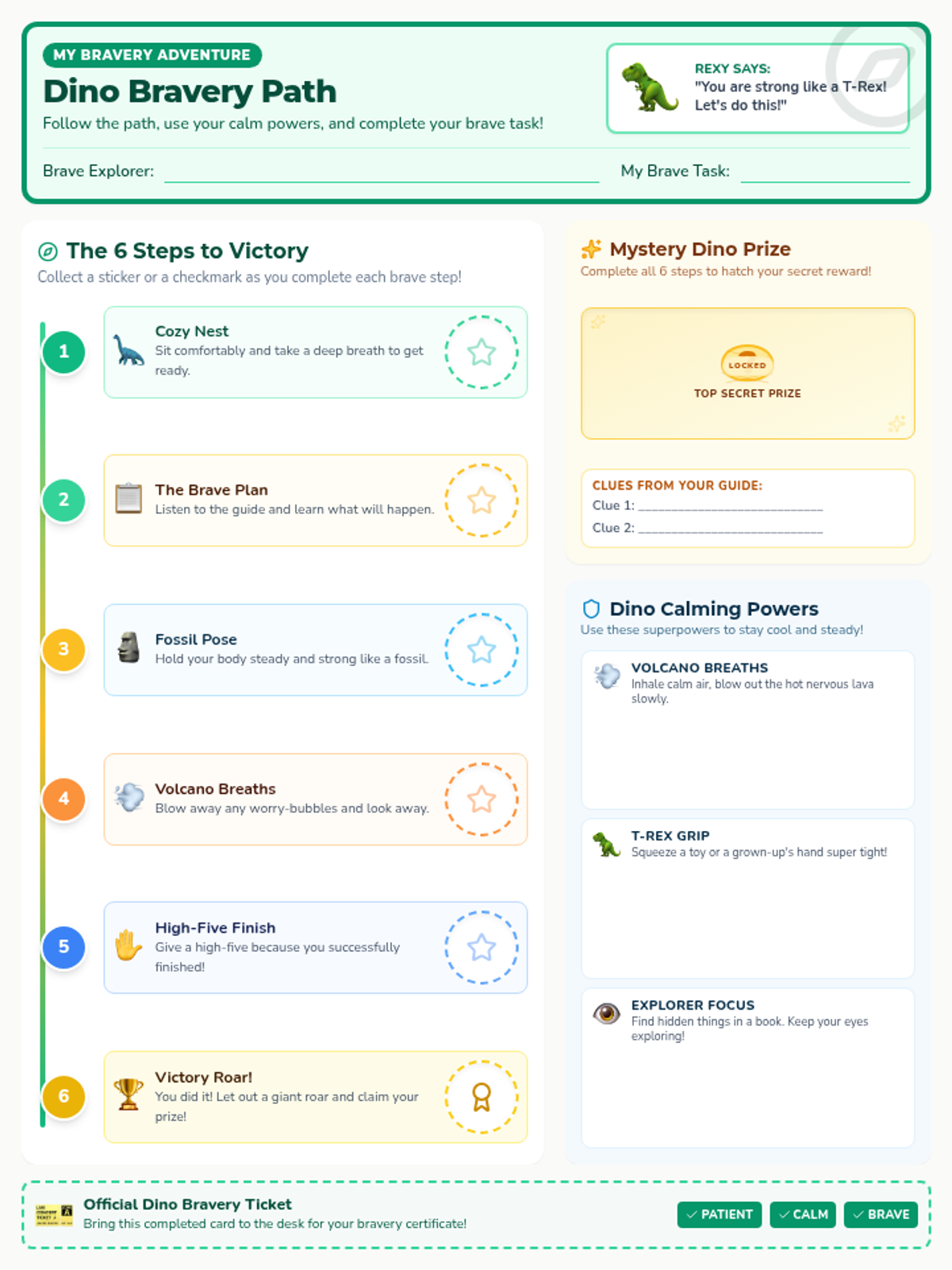
A progressive, dinosaur-themed bravery reward chart for children undergoing medical checkups, school tasks, or other scary activities. Features a step-by-step visual path mapping bravery stages, coping strategy cards, and a designated reward drawing space to make stressful experiences manageable.
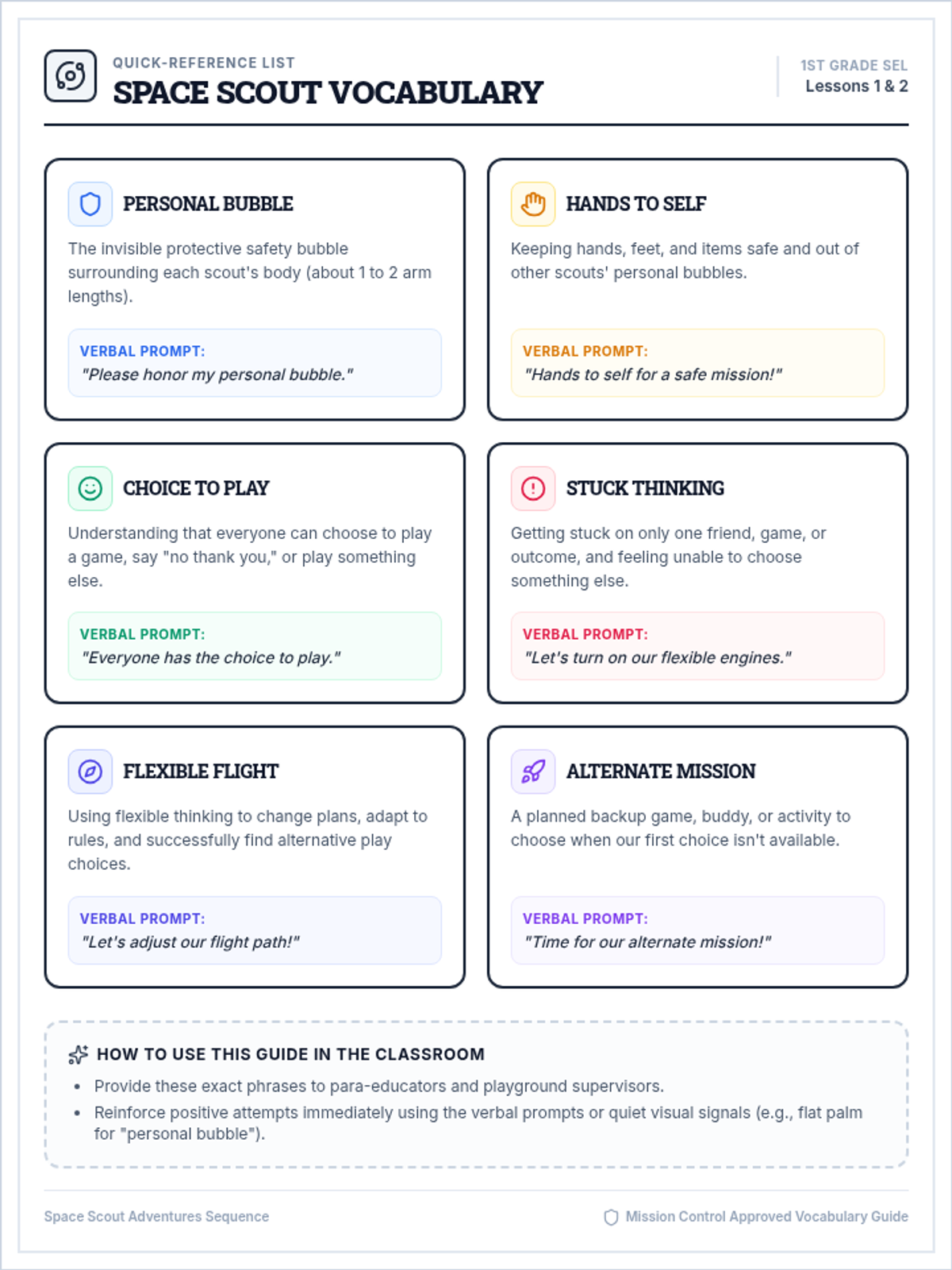
A printer-friendly teacher reference handout providing a quick prompting guide, core vocabulary, and visual cues aligned with Lessons 1 and 2 of the Space Scout Adventures sequence. Designed to help general education teachers reinforce social-emotional metaphors in the classroom.
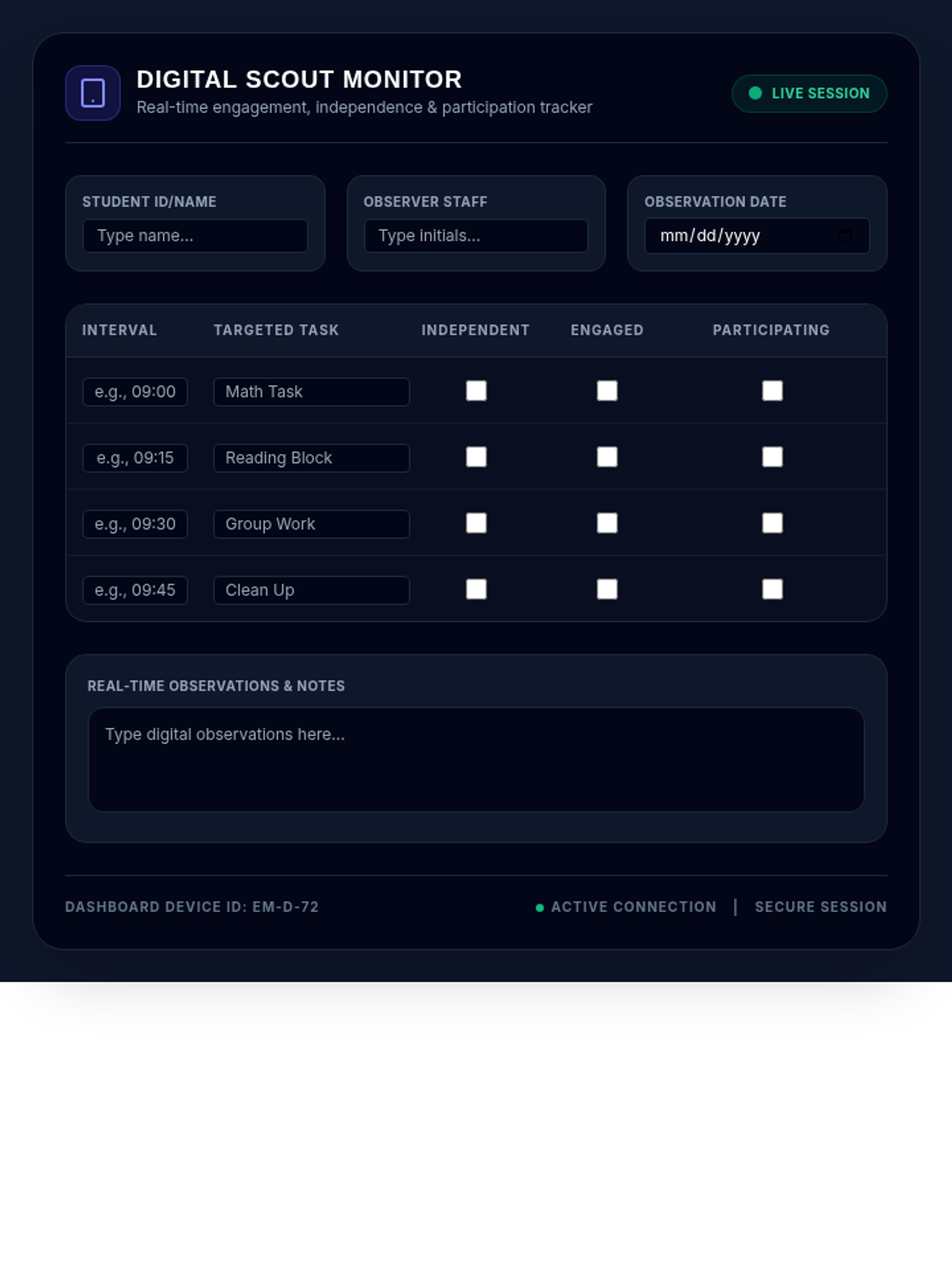
A tablet-optimized digital dashboard for paraprofessionals to track student independence, engagement, and participation metrics in real-time.
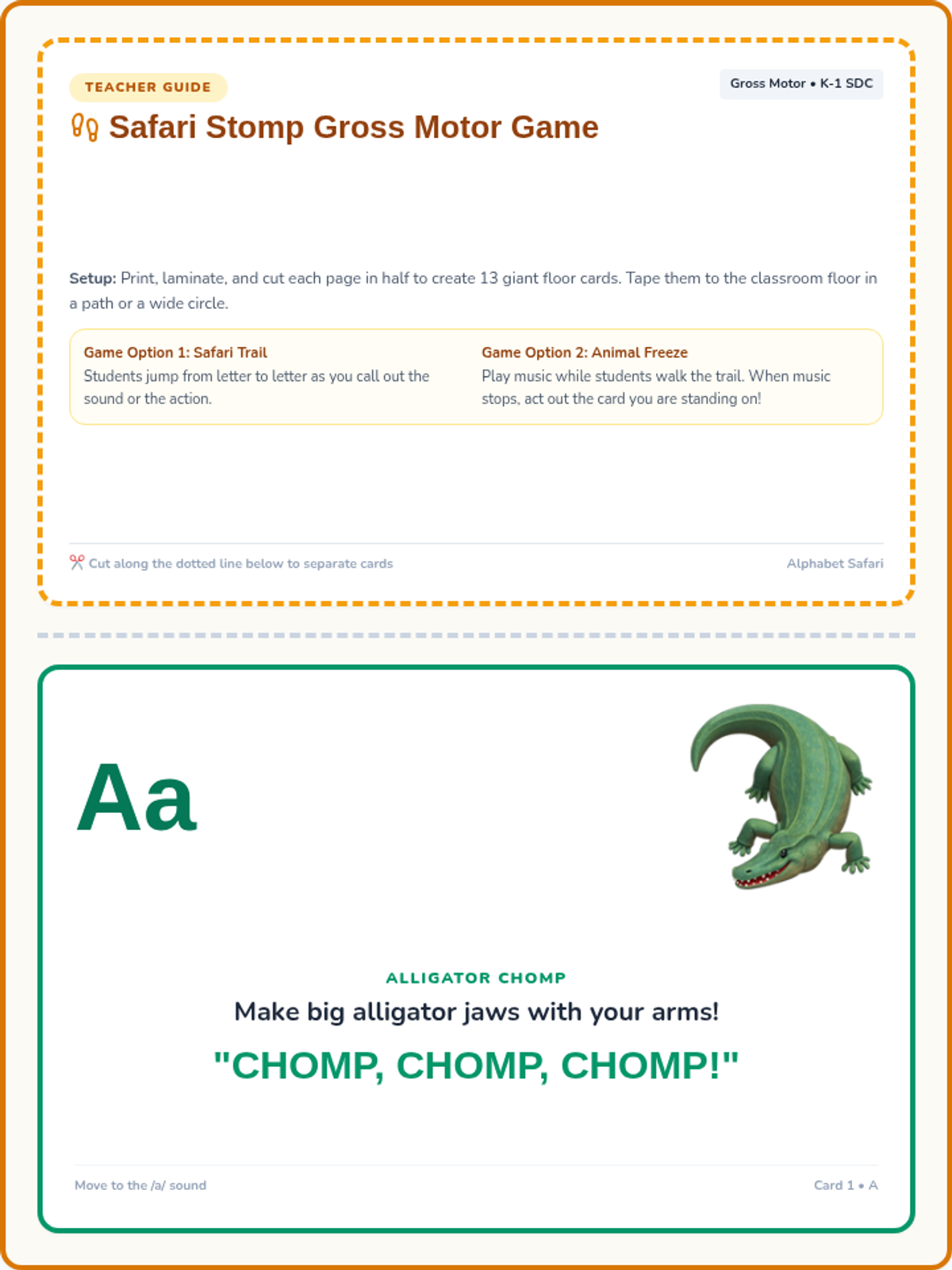
A multi-sensory set of 13 printable half-page floor-mat cards (plus a teacher instruction guide) featuring the letters A, B, C, D, F, G, I, M, N, O, R, S, T. Each card contains large, high-contrast letters, a matching safari animal, and a specific gross motor action prompt.
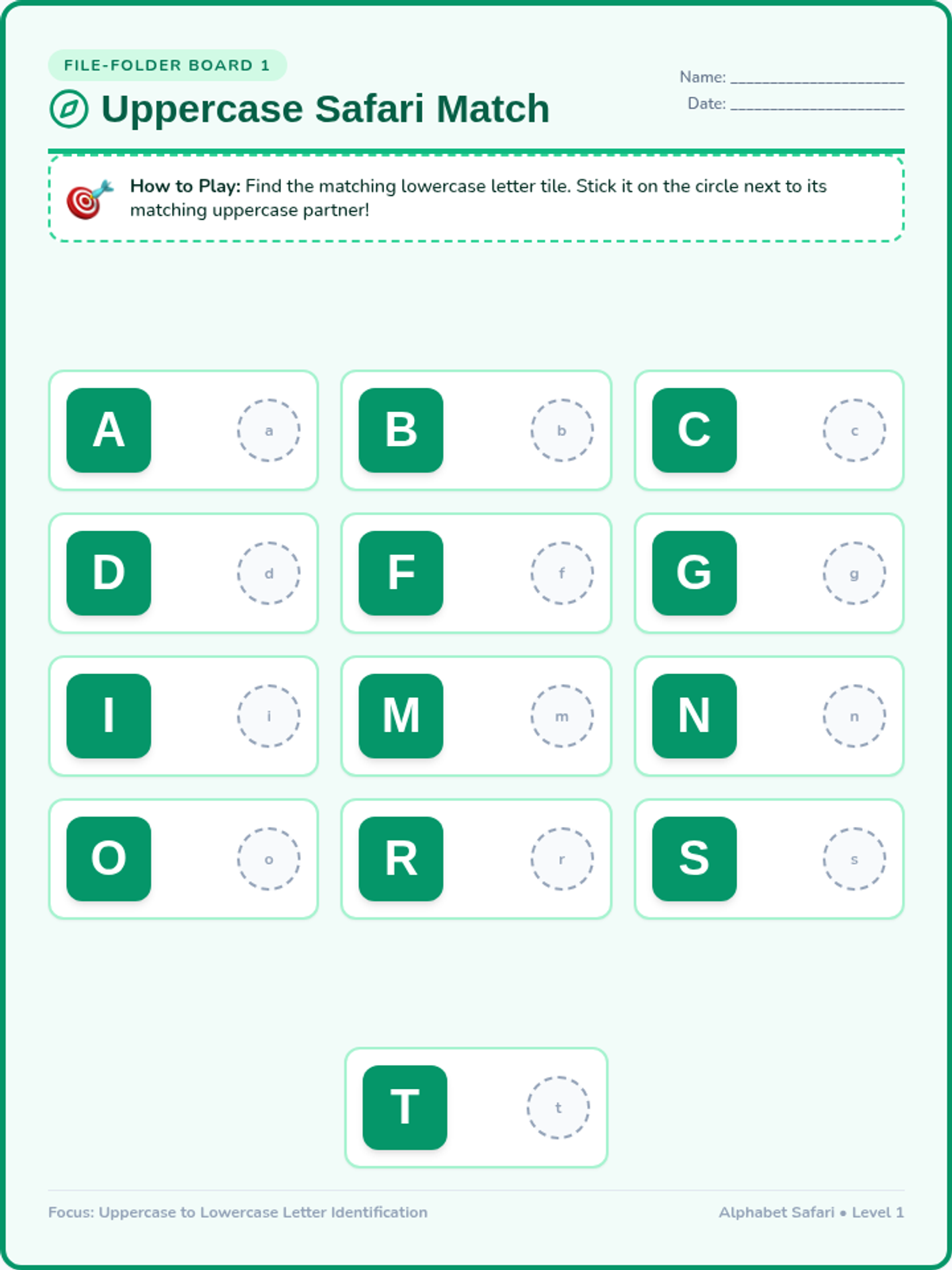
A 3-page printable file-folder matching game designed for K-1 SDC students. It includes a board for matching uppercase and lowercase letters (A, B, C, D, F, G, I, M, N, O, R, S, T), an animal initial-sound matching board, and a page of high-contrast, visual matching tiles.
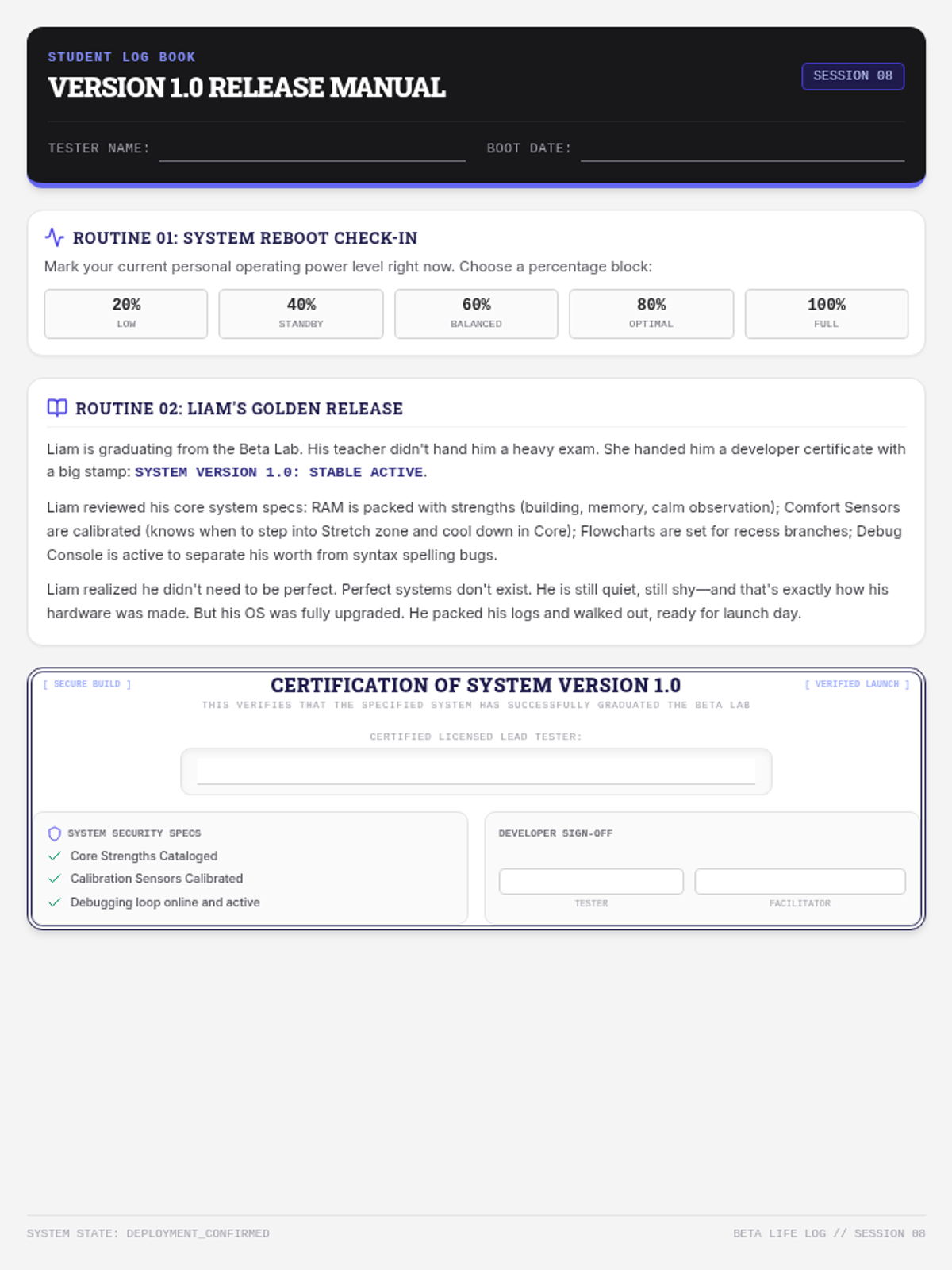
This student-facing spec sheet serves as the primary workspace for Session 8. It contains a predictable energy level check-in, Liam's story on graduating from the Beta Lab, and a beautiful certificate layout for the final signoff.
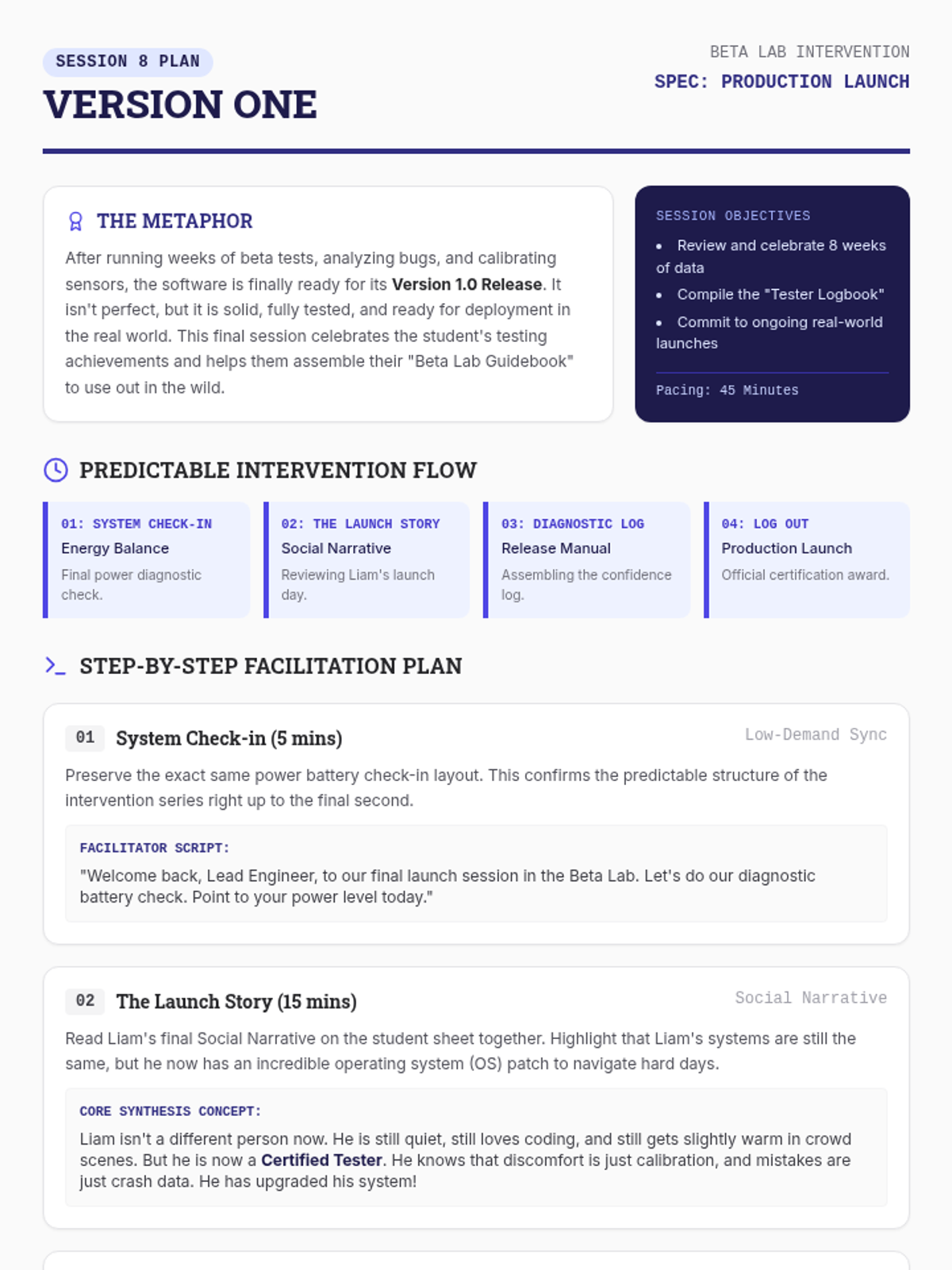
This facilitation guide provides the step-by-step lesson plan and engagement tips for Session 8, synthesizing the 8-week journey and guiding the teacher in organizing a quiet, professional celebration of the student's testing achievements.
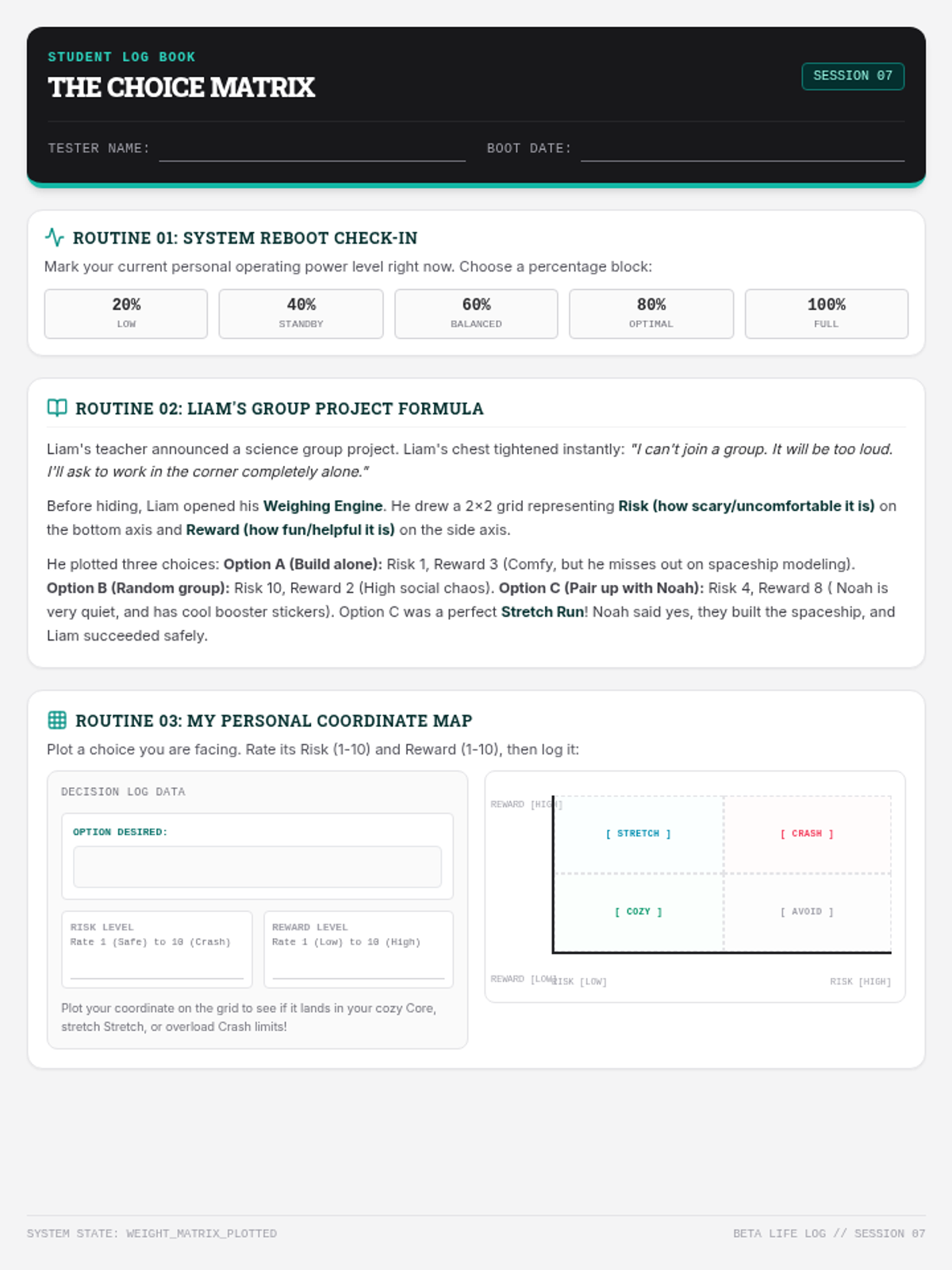
This student-facing spec sheet serves as the primary workspace for Session 7. It contains a predictable energy level check-in, Liam's story on using coordinates to analyze a scary science group assignment, and a structured 2x2 plotting grid.
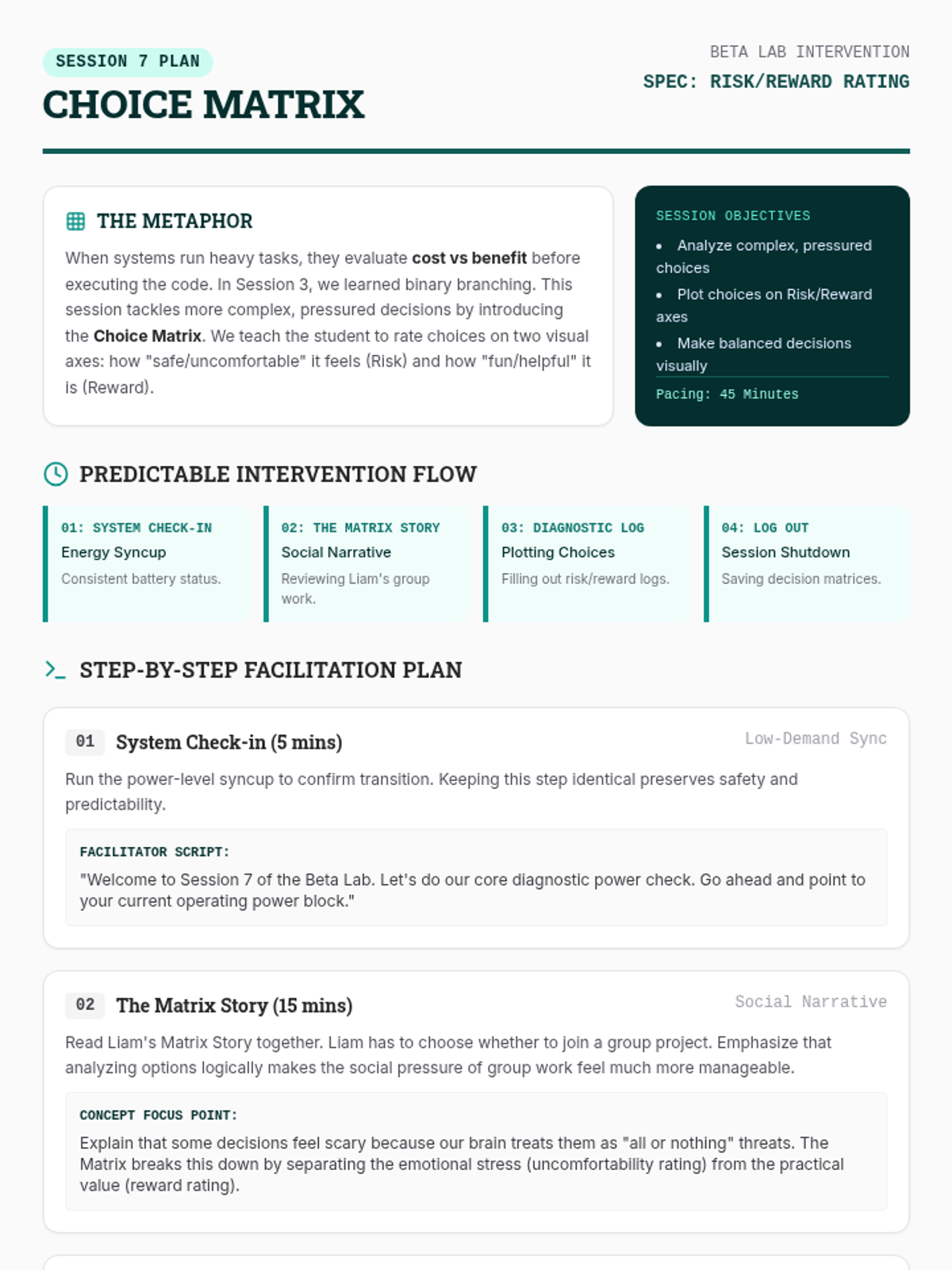
This facilitation guide provides the step-by-step lesson plan and engagement tips for Session 7, teaching the student how to use a visual Risk/Reward rating matrix to analyze complex choices.
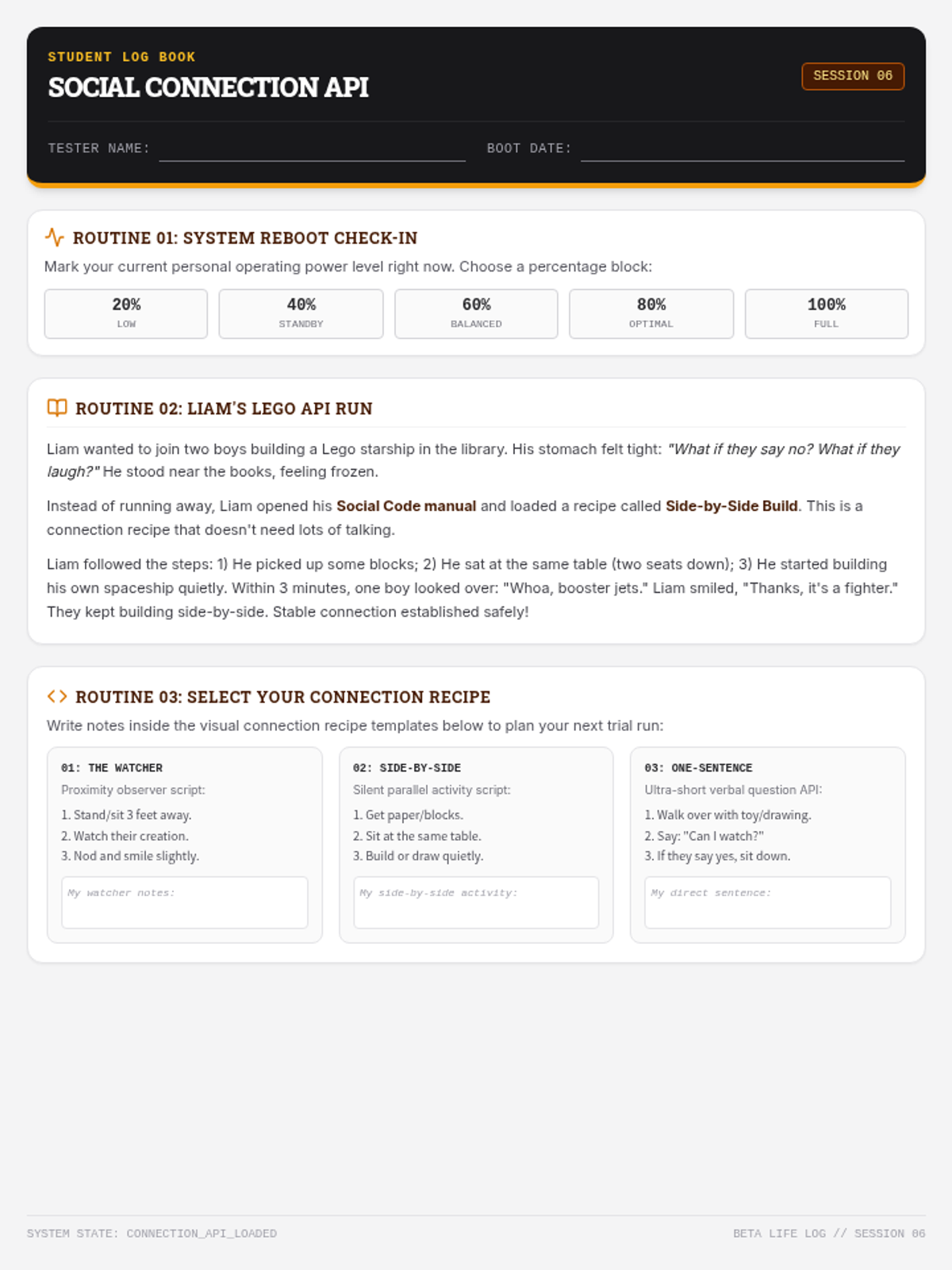
This student-facing spec sheet serves as the primary workspace for Session 6. It contains a predictable energy level check-in, Liam's story on parallel play lego connection, and three visual recipes for peer connection.
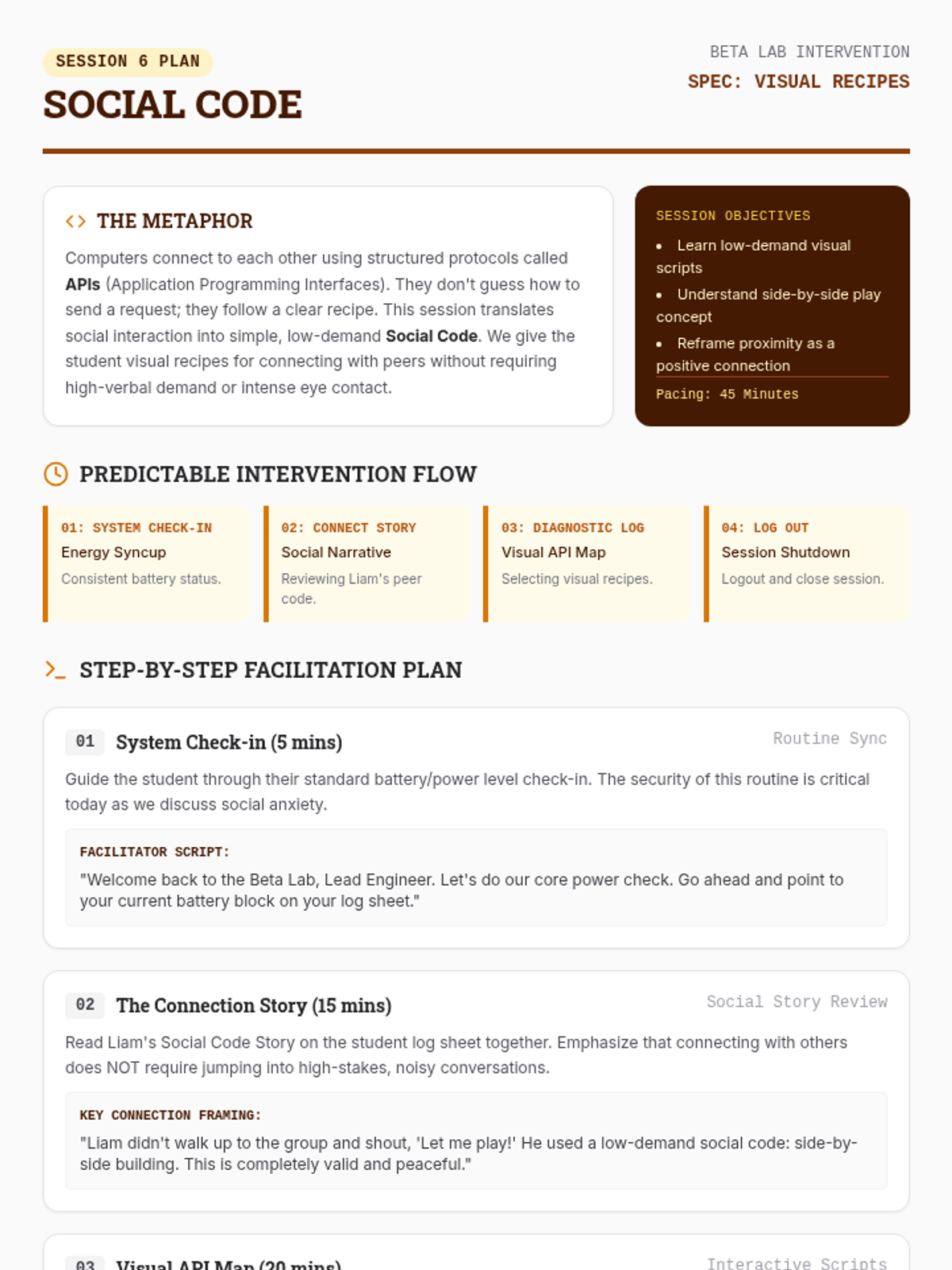
This facilitation guide provides the step-by-step lesson plan and engagement tips for Session 6, introducing low-demand social scripts and structured visual recipes for peer connection.
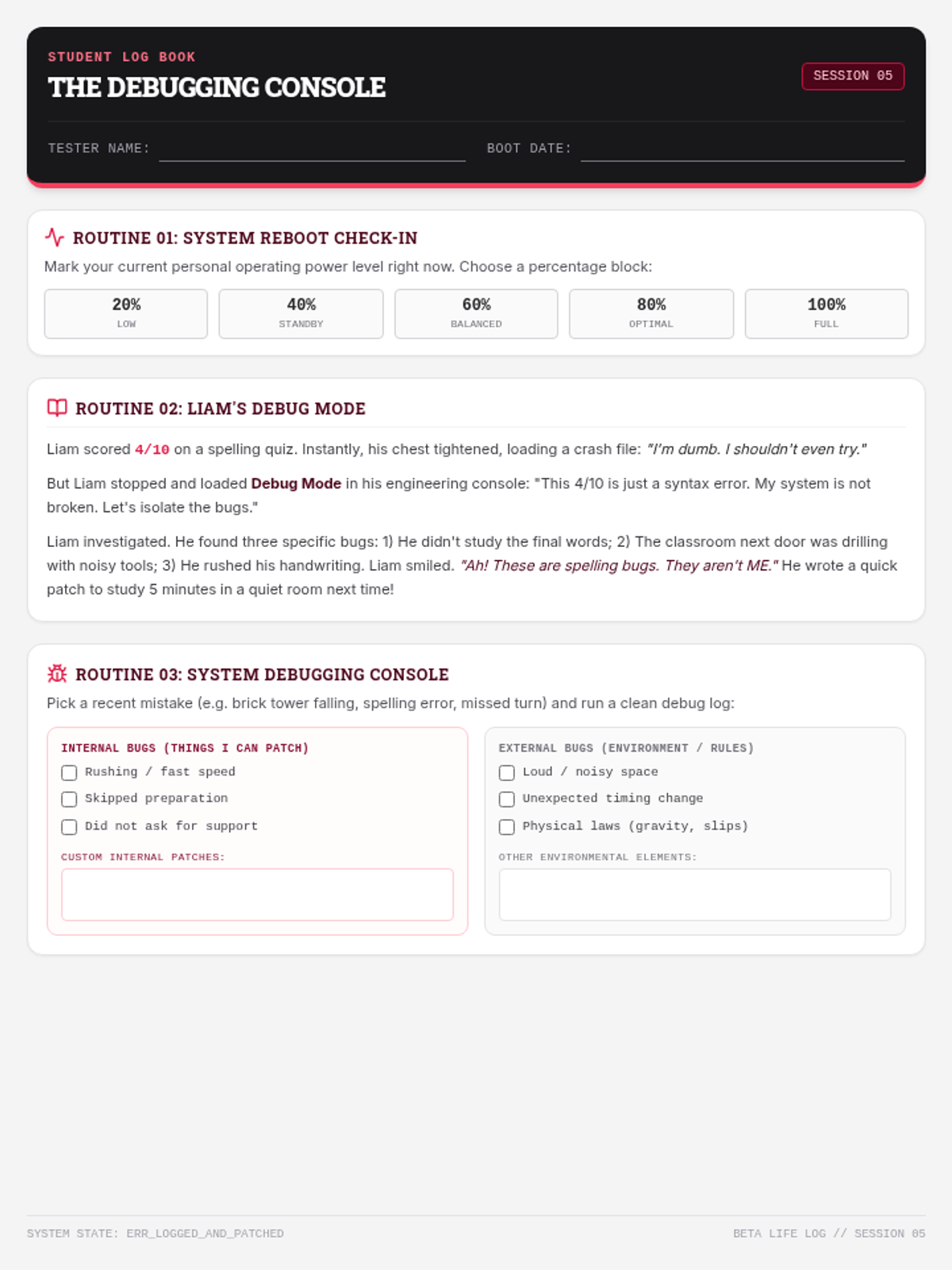
This student-facing spec sheet serves as the primary workspace for Session 5. It contains a predictable energy level check-in, Liam's story on debug mode, and an interactive sorting console for isolating internal vs. external error sources.
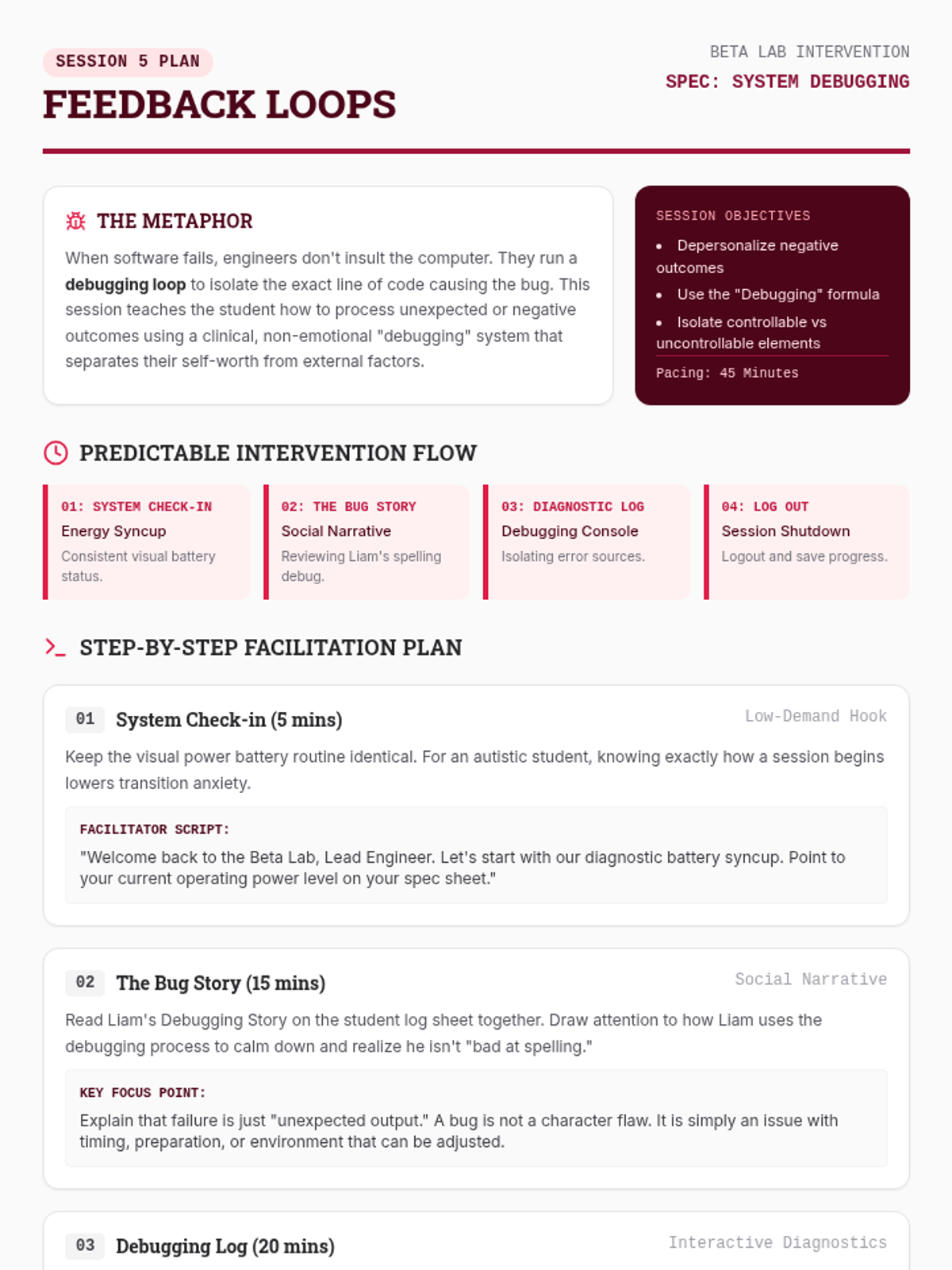
This facilitation guide provides the step-by-step lesson plan and engagement tips for Session 5, focusing on a structured, objective 'debugging' framework to help students analyze mistakes without personal shame.
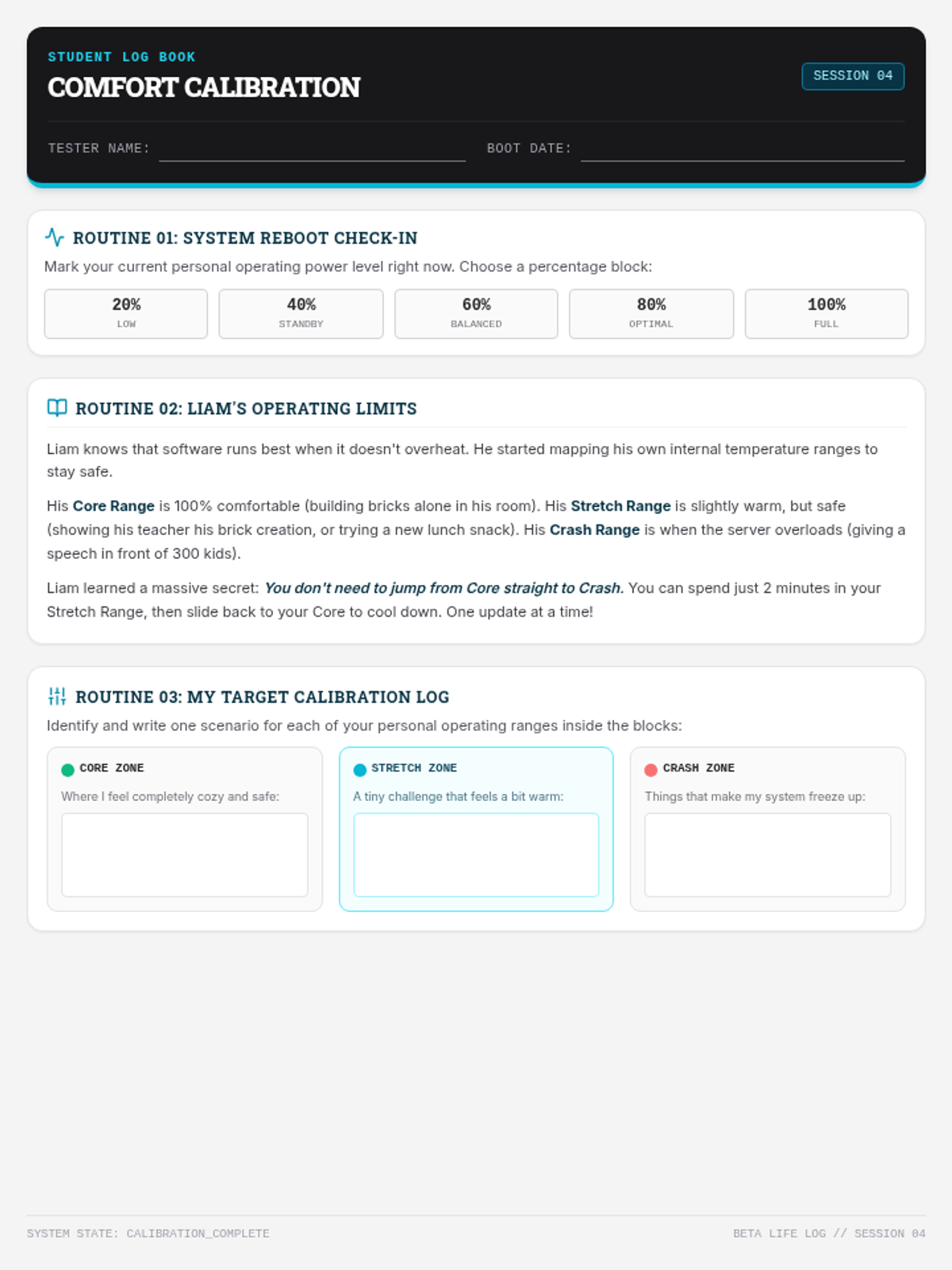
This student-facing spec sheet serves as the primary workspace for Session 4. It contains a predictable energy level check-in, Liam's story on comfort zones (Core, Stretch, and Crash), and a structured 3-tier calibration log.
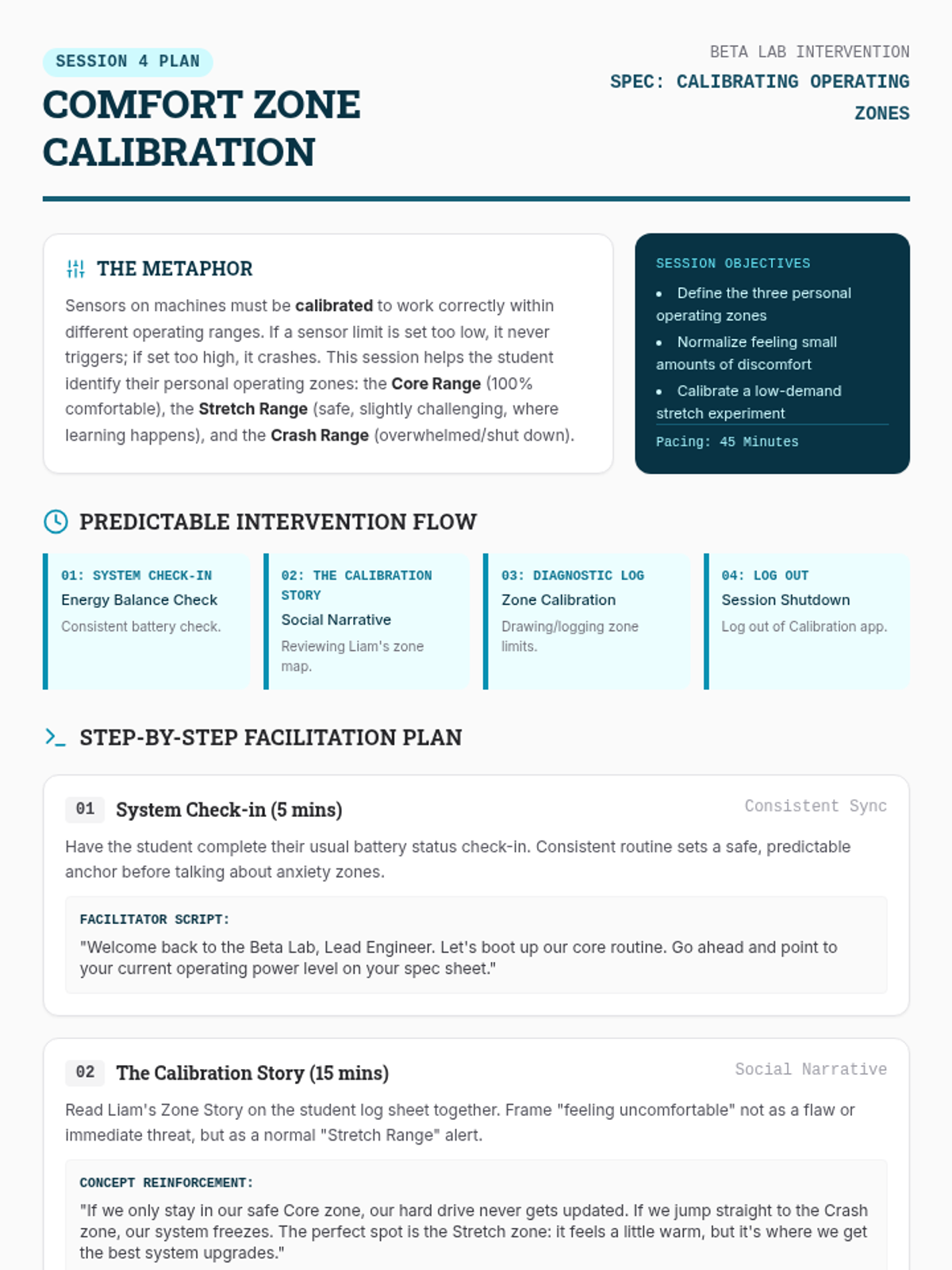
This facilitation guide provides the step-by-step lesson plan and engagement tips for Session 4, focusing on helping the student map their comfortable operating zones (Core, Stretch, and Crash) to make gradated risk-taking feel structured and safe.
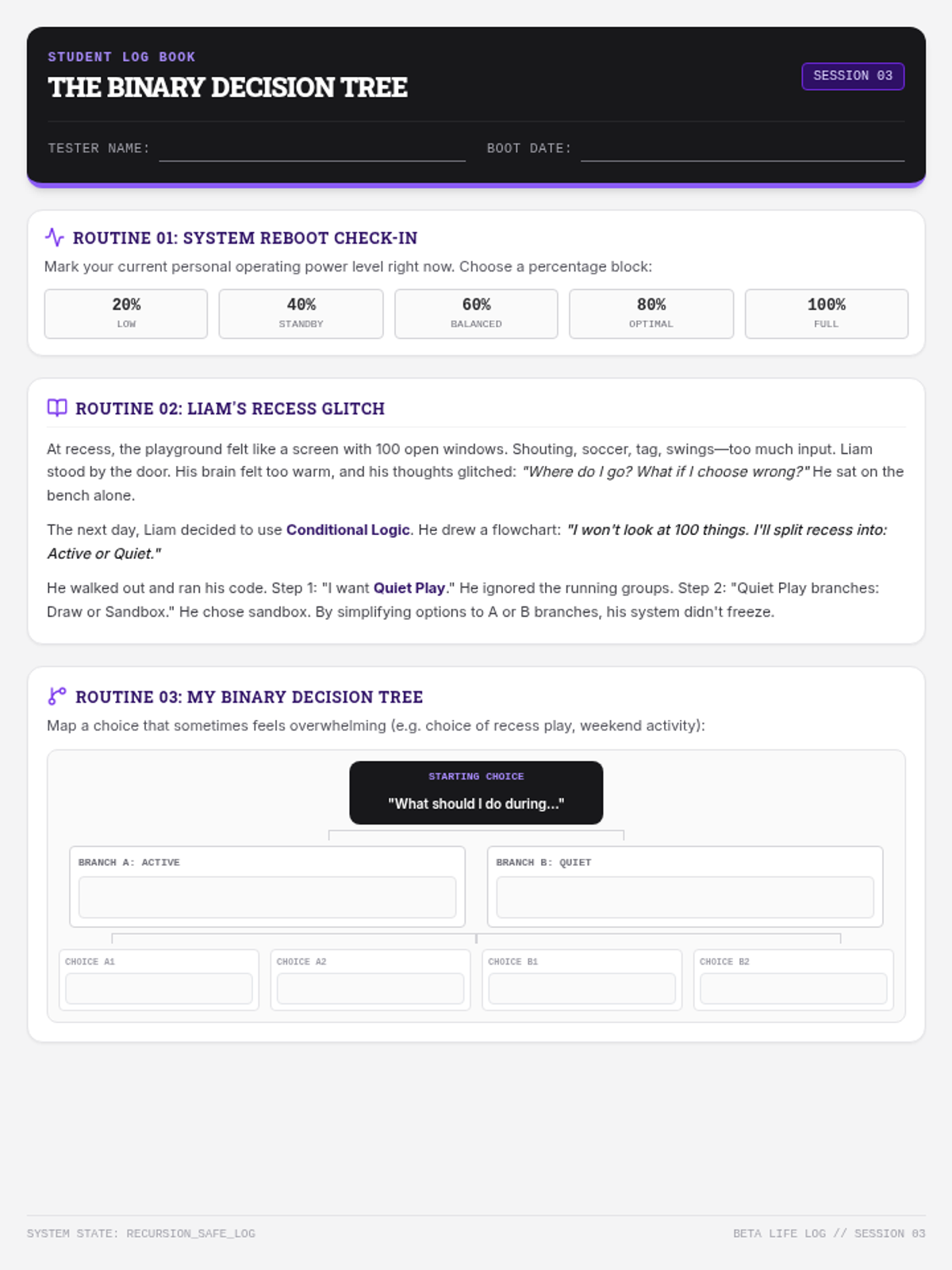
This student-facing spec sheet serves as the primary workspace for Session 3. It contains a predictable energy level check-in, Liam's story on choice overload at recess, and a structured flowchart for practicing binary choice branch logic.
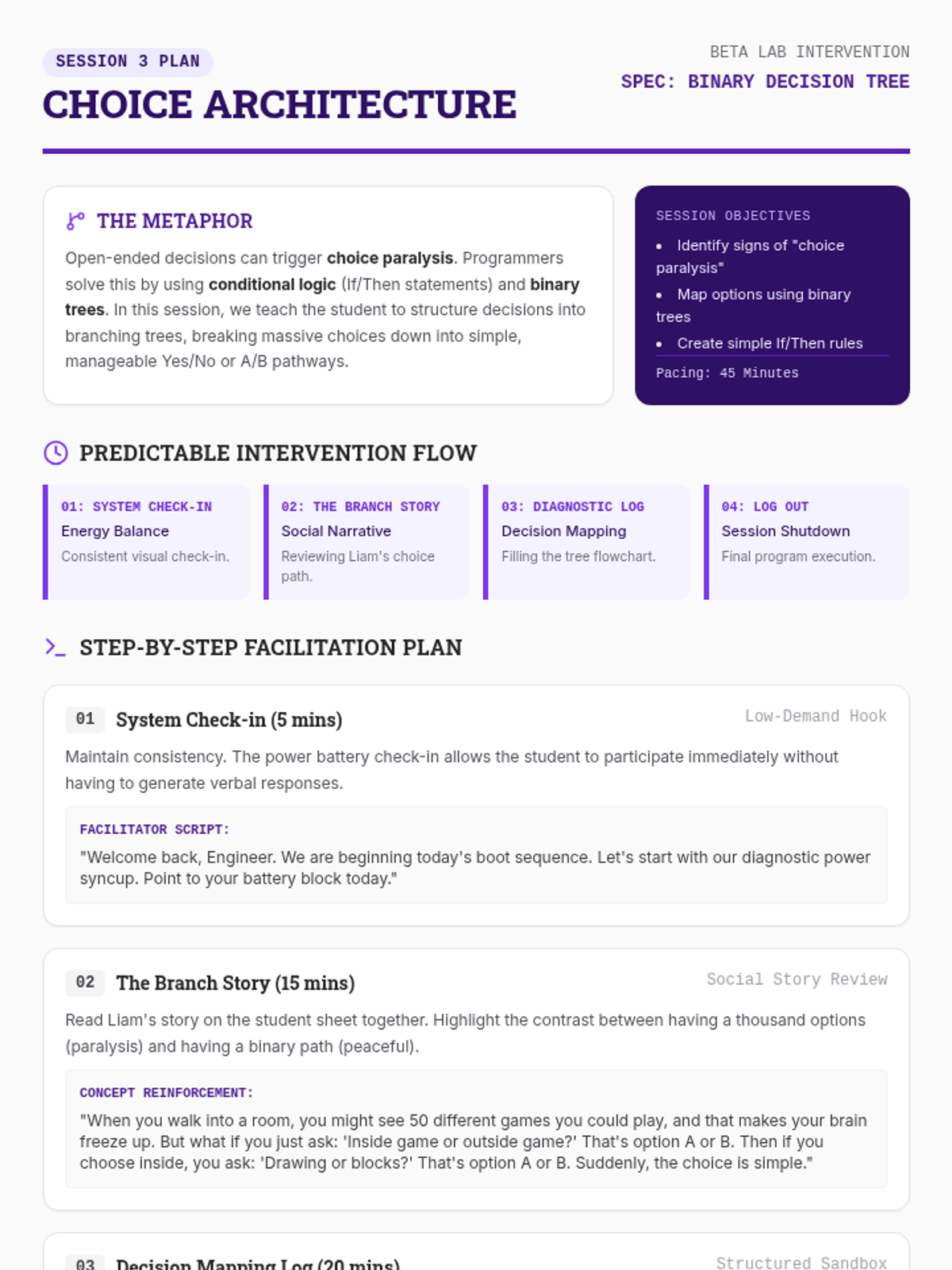
This facilitation guide provides the step-by-step lesson plan and engagement tips for Session 3, introducing branching choice architecture to simplify decisions and lower cognitive load for the student.
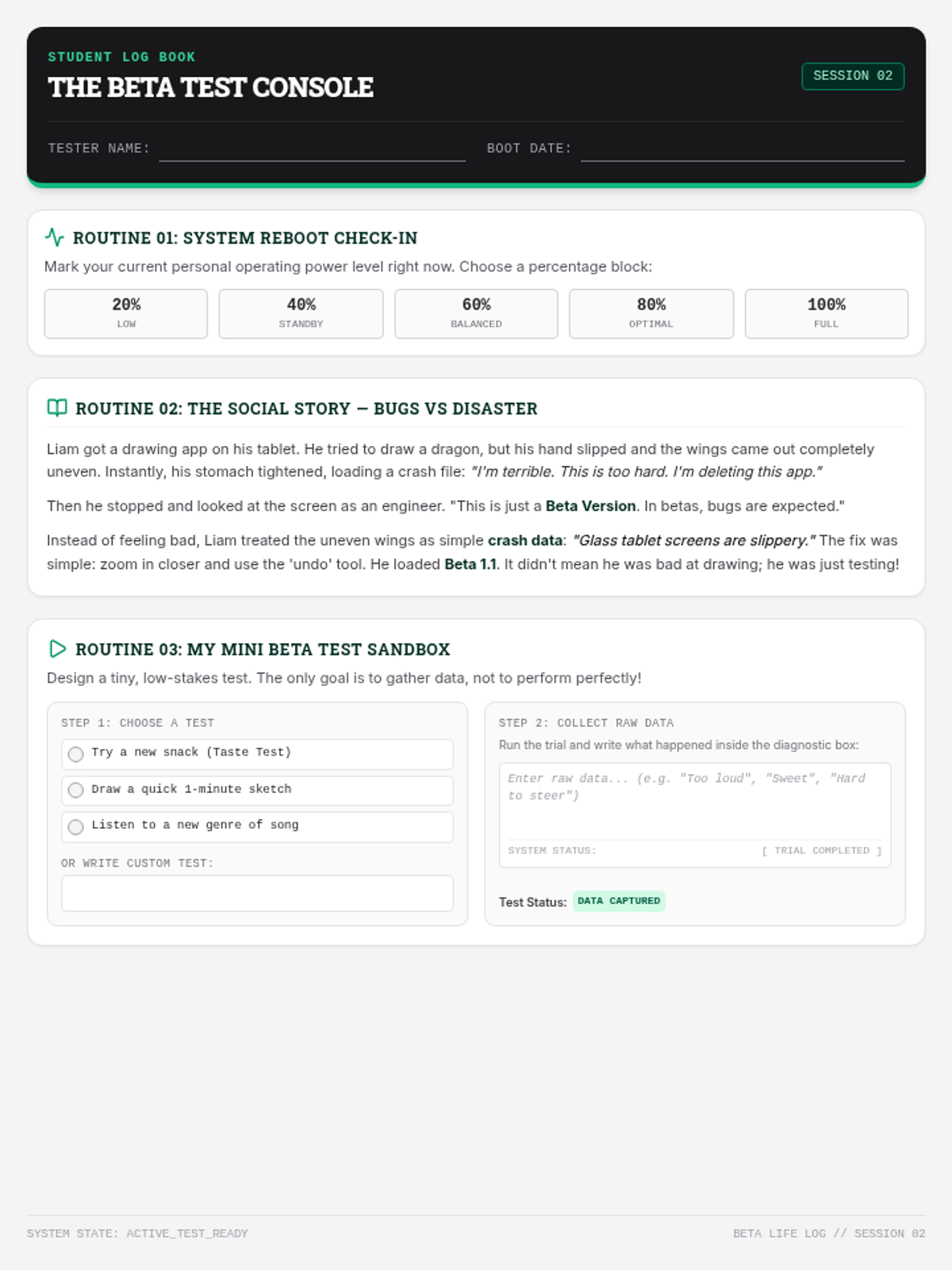
This student-facing spec sheet serves as the primary workspace for Session 2. It contains a predictable energy level check-in, Liam's beta story on reframing failure as simple crash data, and a structured sandbox for designing and running a tiny beta test.
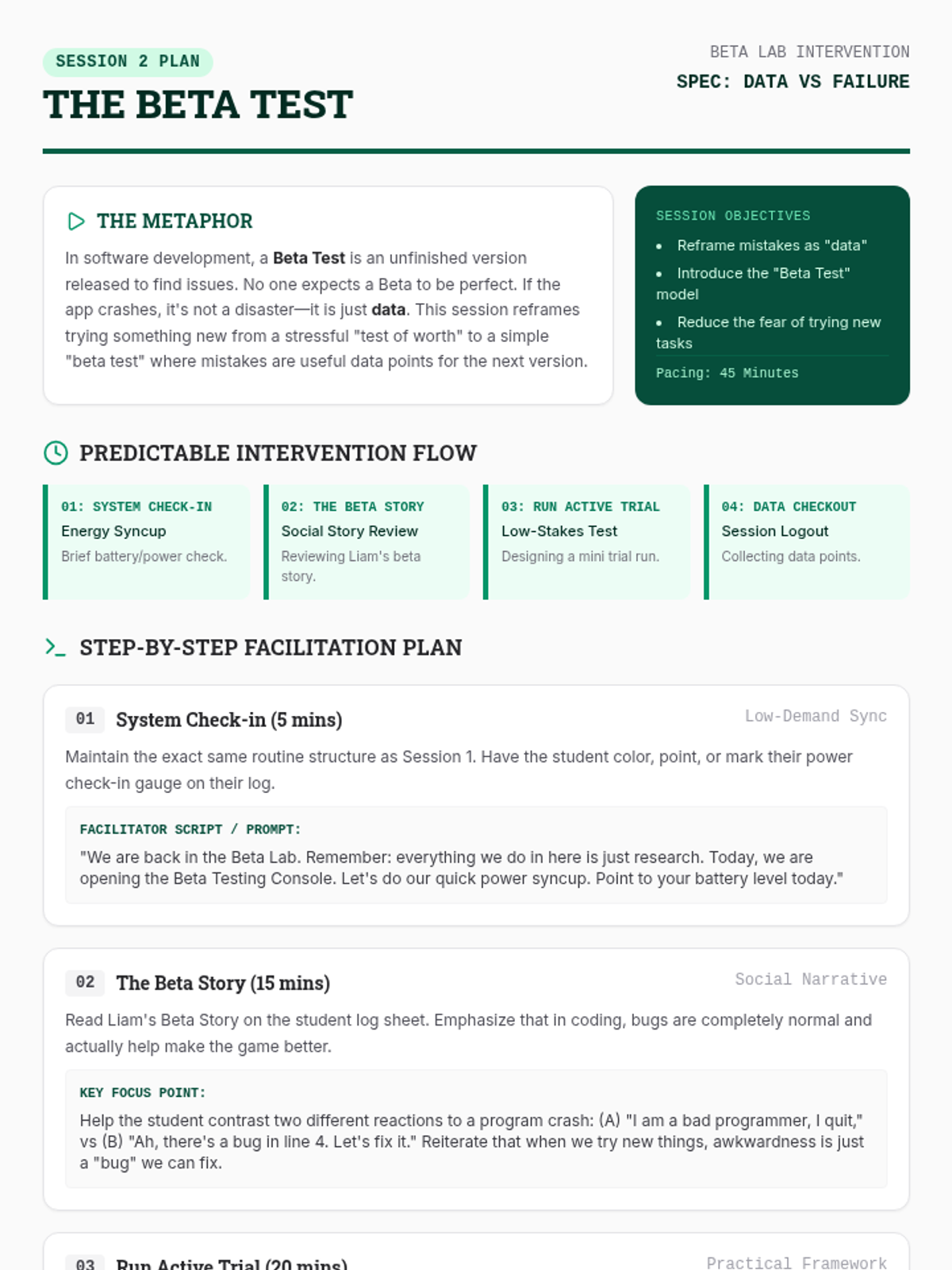
This facilitation guide provides the step-by-step lesson plan and engagement tips for Session 2, helping teachers reframe mistakes as data and guiding the student to outline a low-stakes 'beta test' in their environment.
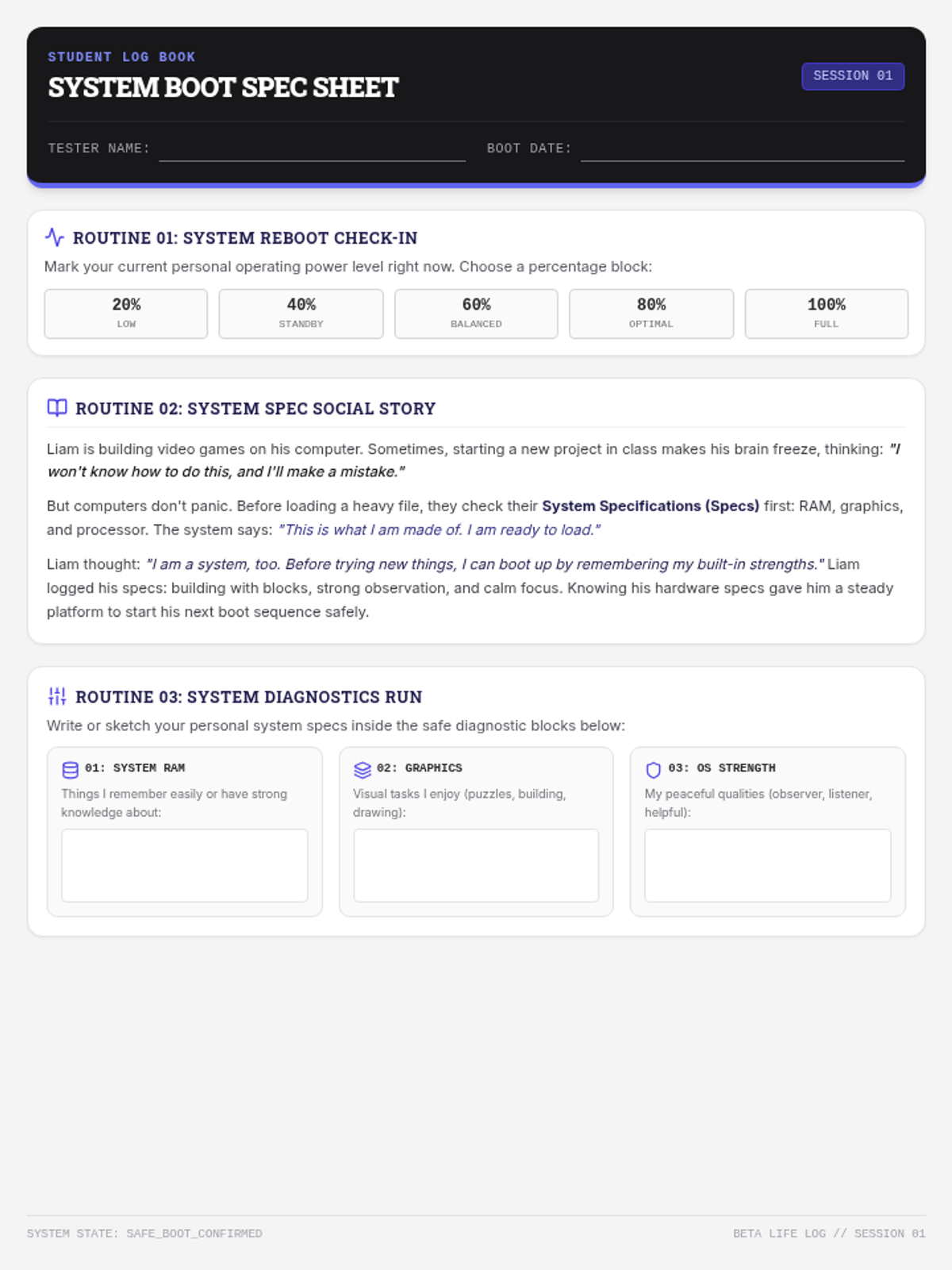
This student-facing spec sheet serves as the primary workspace for Session 1. It contains a predictable energy level check-in, a step-by-step social story reframing strengths as 'system specs', and structured modules for logging personal strengths.
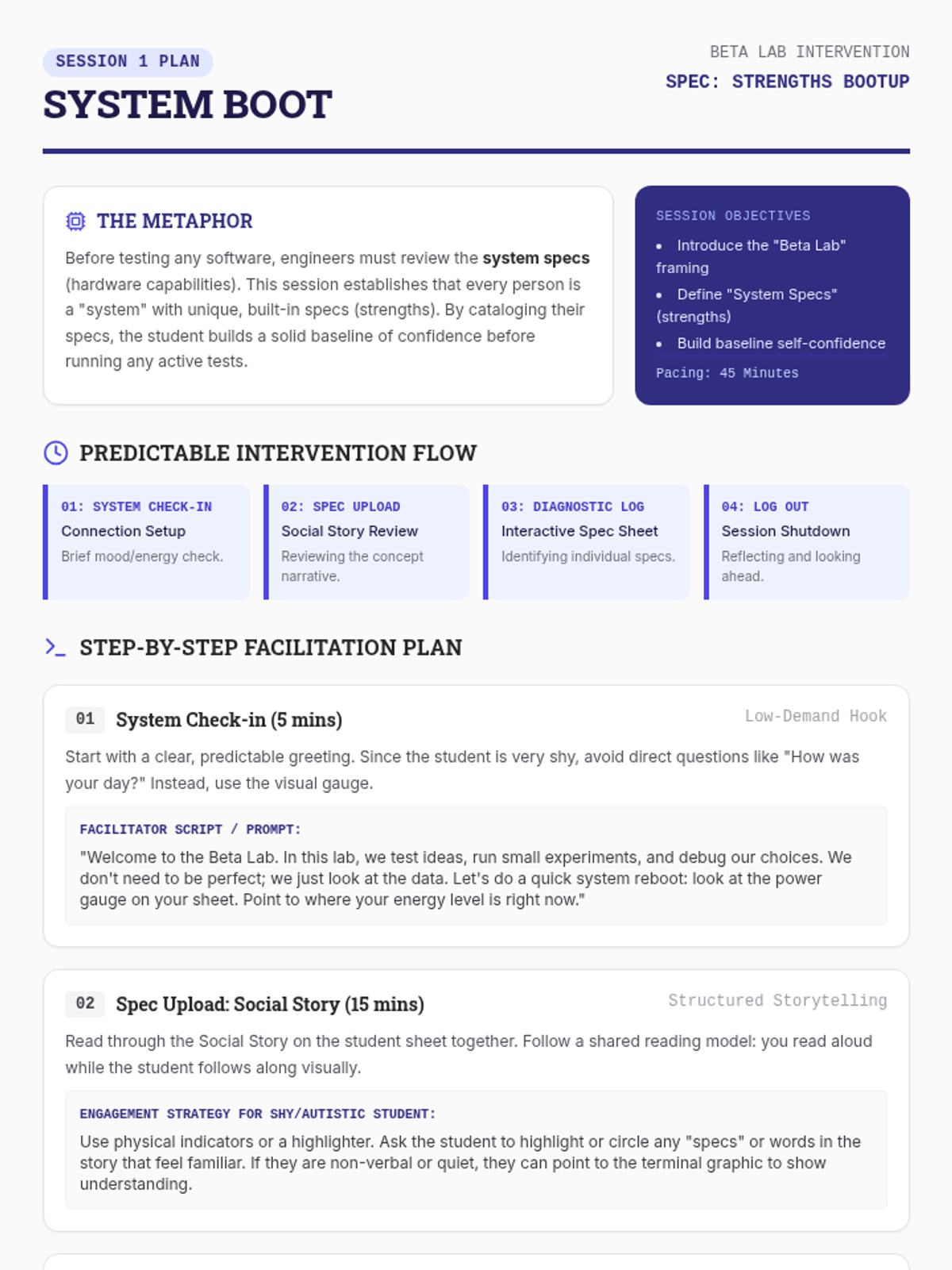
This facilitation guide provides the step-by-step lesson plan and engagement tips for Session 1, introducing the 'Beta Lab' engineering metaphor and helping the student identify their 'system specs' (personal strengths) in a predictable and supportive environment.
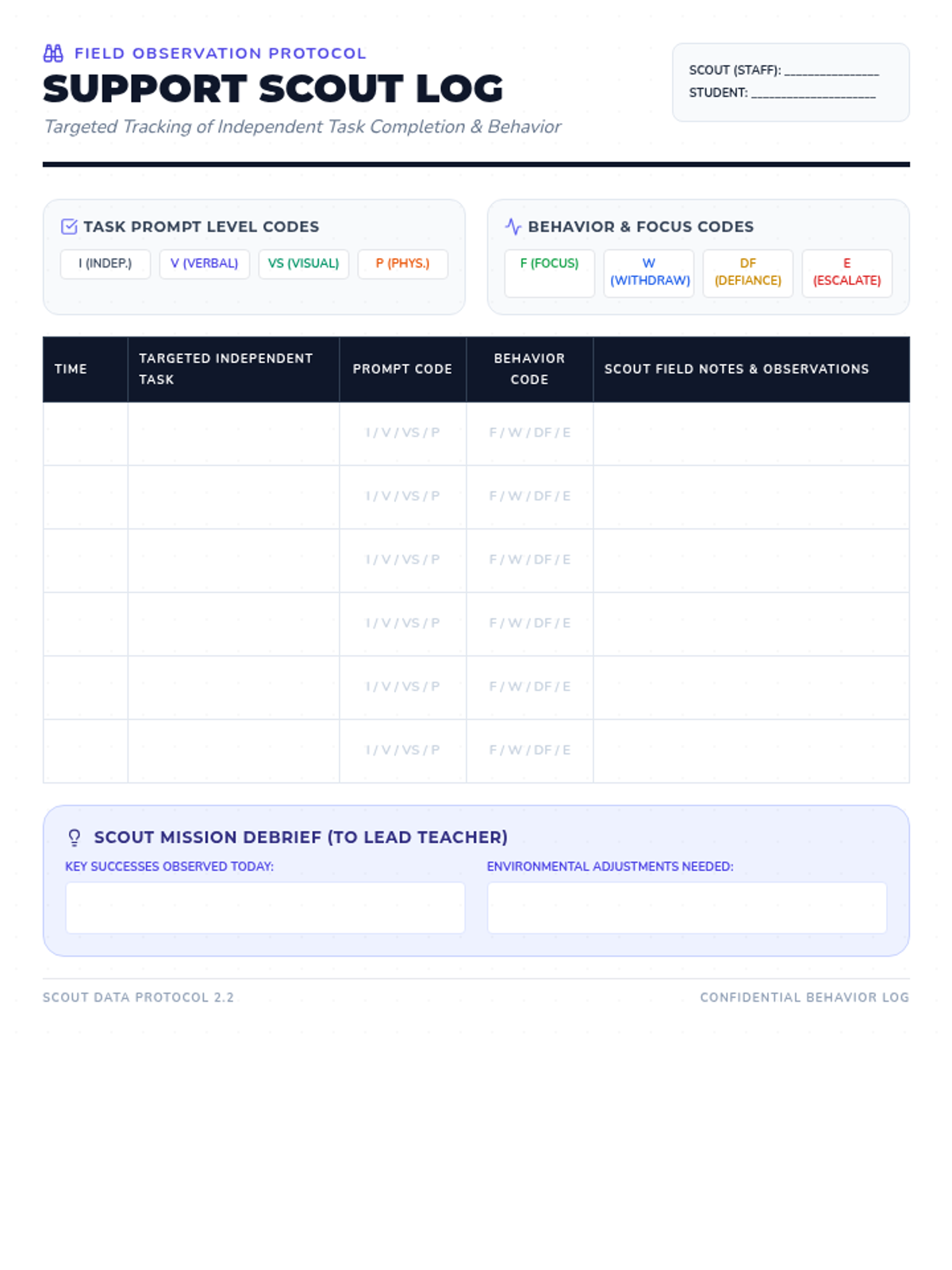
A tracking sheet for paraprofessionals to systematically observe and record student performance on independent task completion and emotional regulation/behavior.
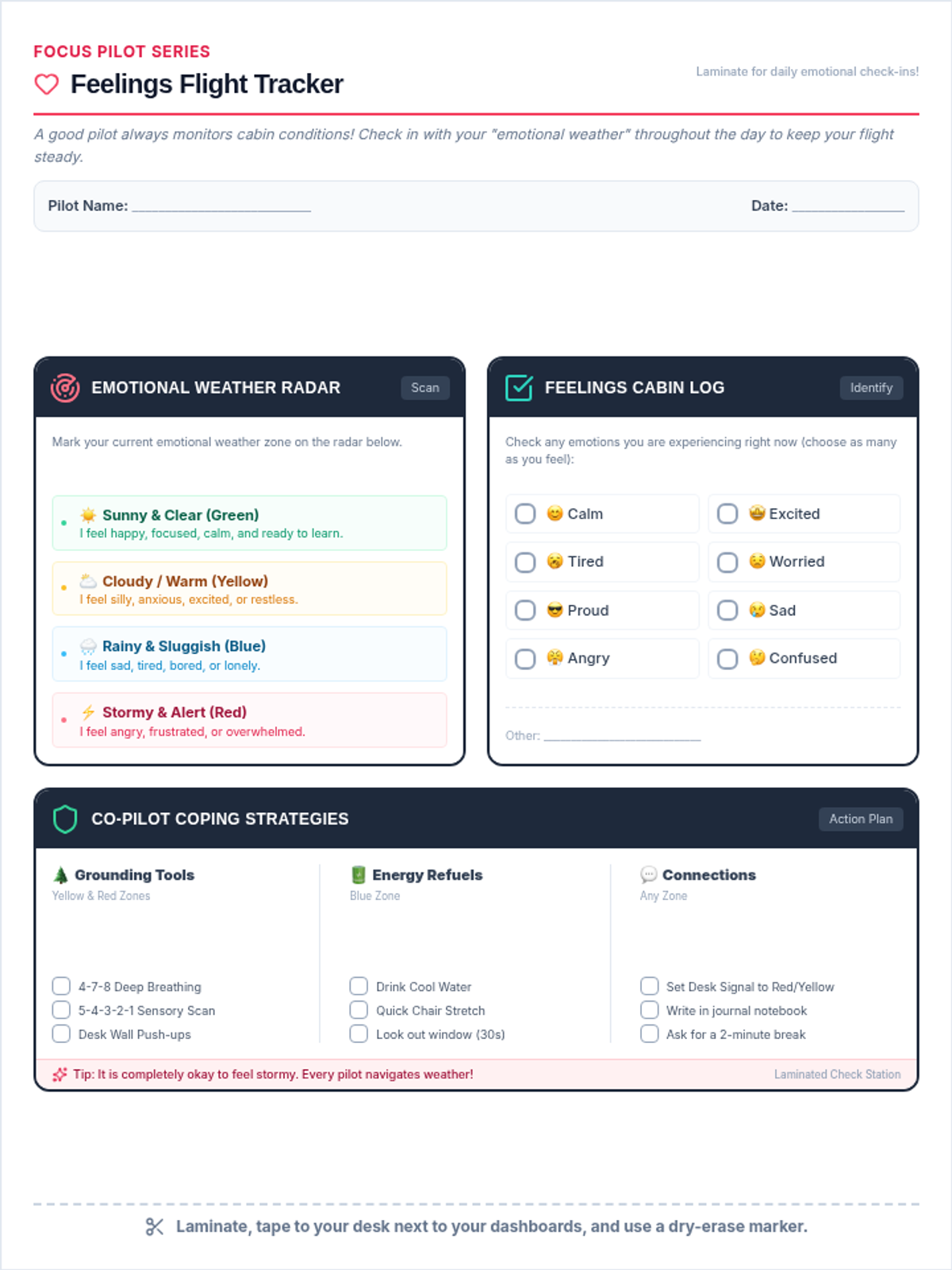
A visual, student-facing feelings checklist and emotional regulation dashboard styled as a flight weather log. Includes emotion zoning guides, feel-specific check boxes, and concrete coping strategy options for the classroom.
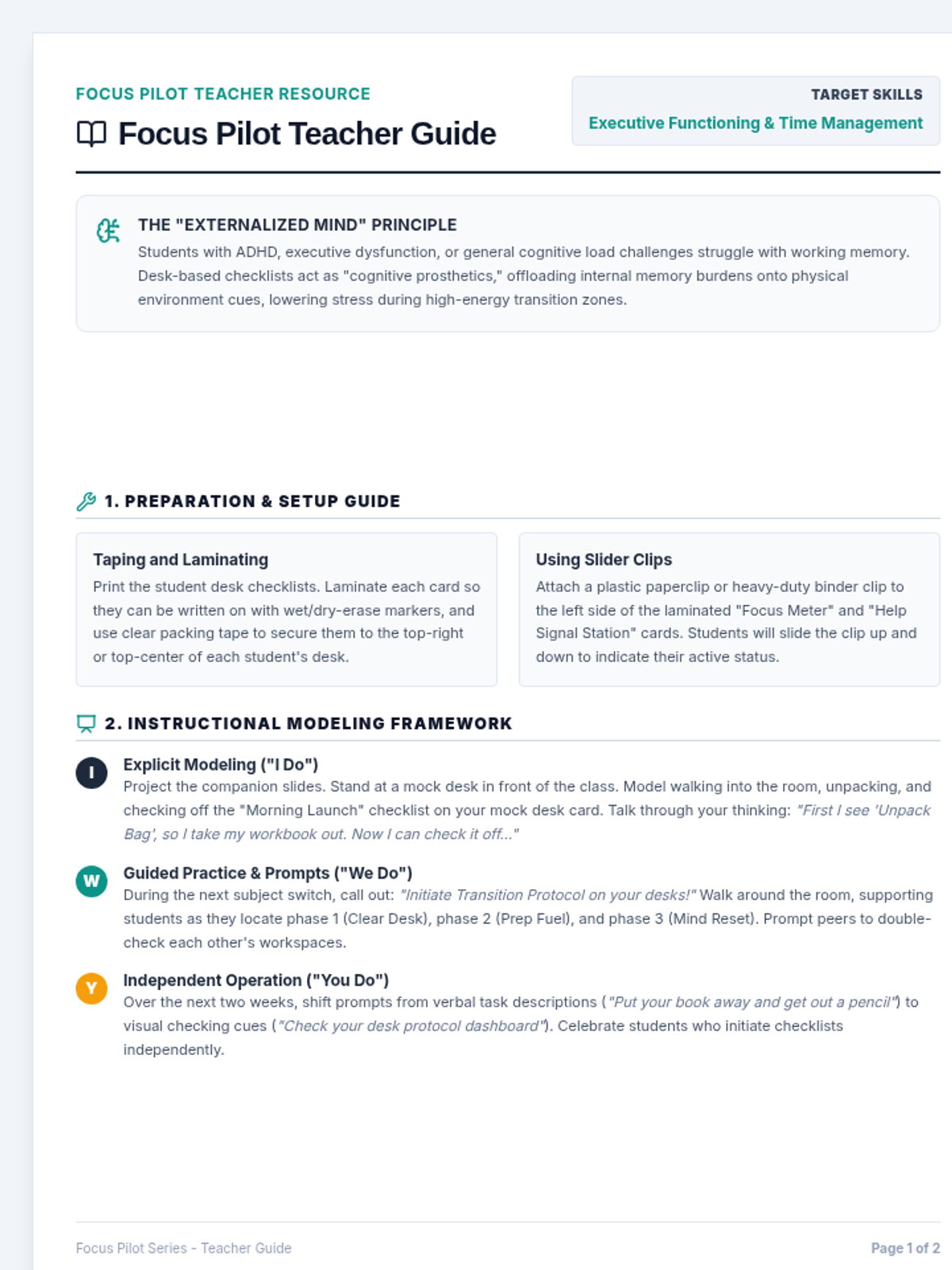
A comprehensive, structured teacher guide outlining instructional strategies, behavior management techniques, explicit modeling frameworks, and scaffold fading procedures for introducing the desk checklist system in the classroom.
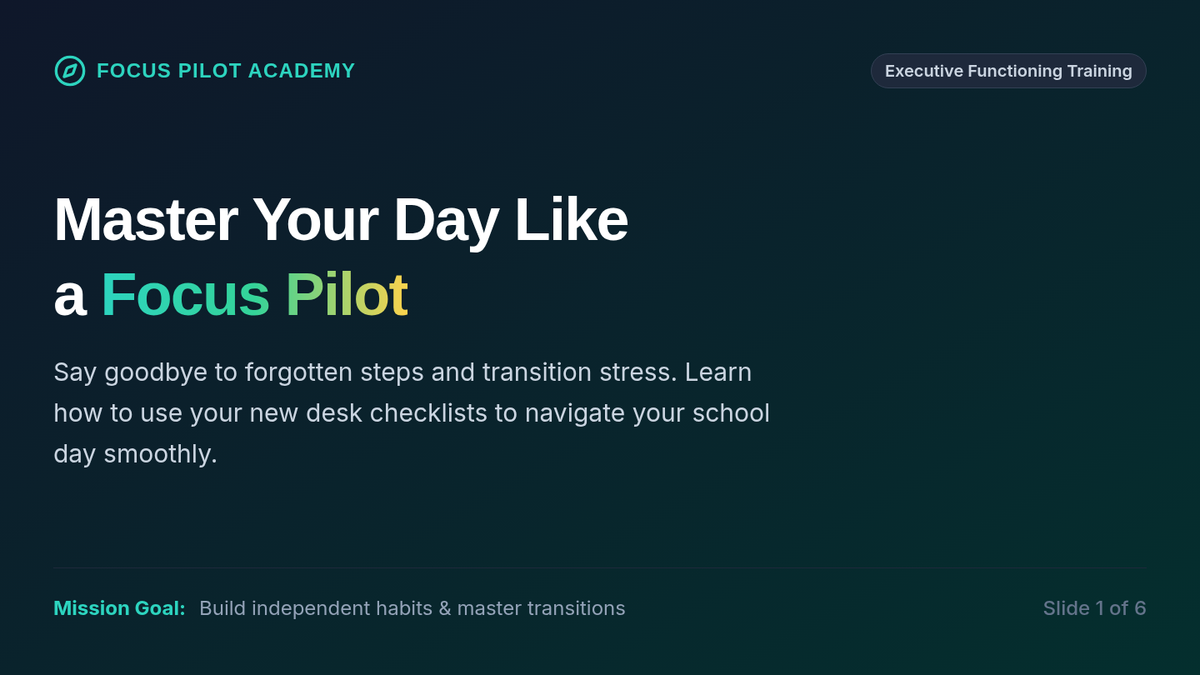
A companion presentation that models the desk checklist routines for students. Introduces the 'Morning Launch', 'Mission Transition', 'Afternoon Landing', and 'Help Signal Station' protocols using high-contrast slides with student-friendly, bold text.
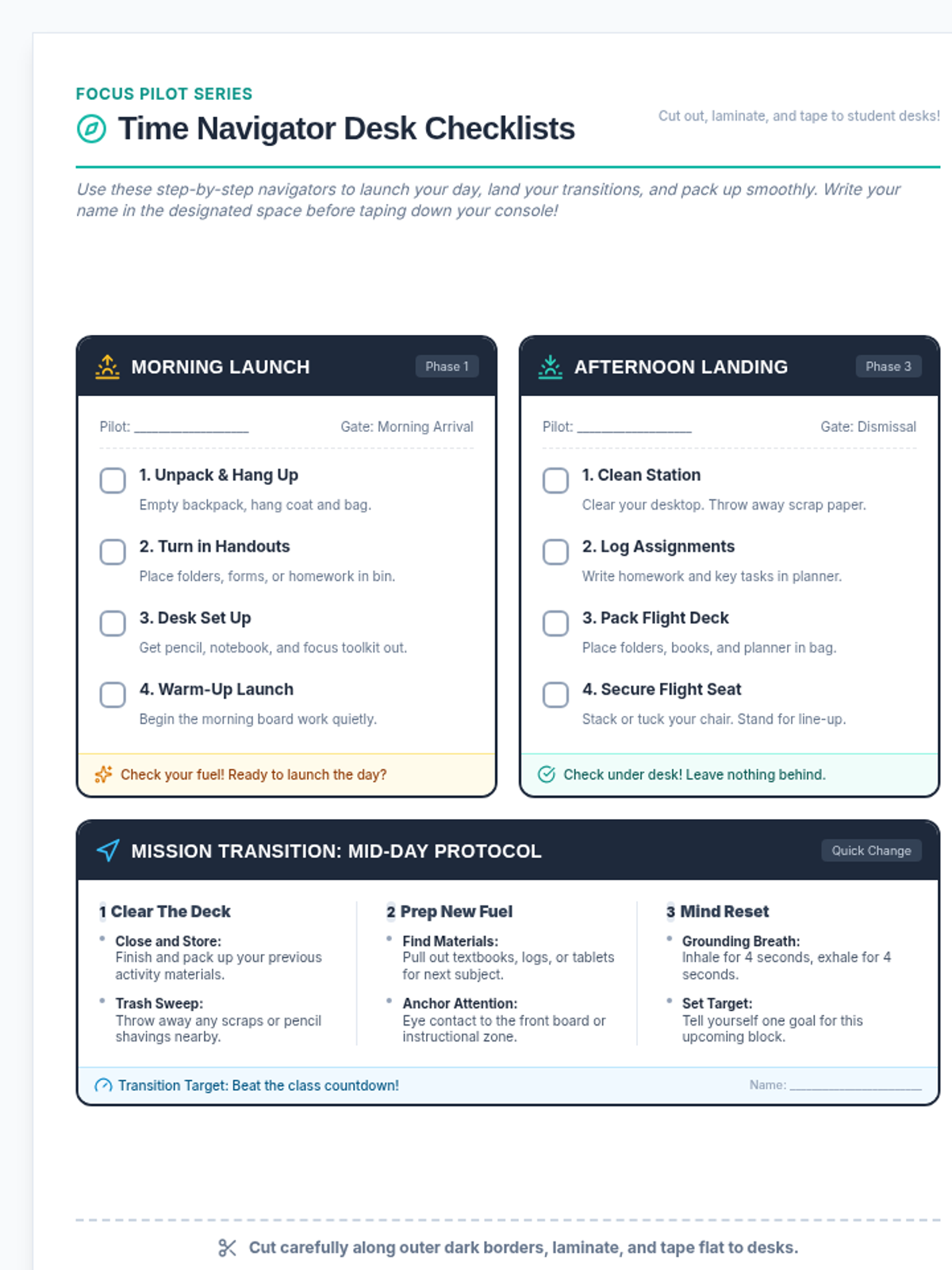
A set of student-facing desk checklists styled as navigation flight controls. Includes pre-filled checklists for arrival, mid-day transition, and dismissal routines, alongside a customizable student dashboard, focus gauge, help signal indicator, and mini-schedule tracker.
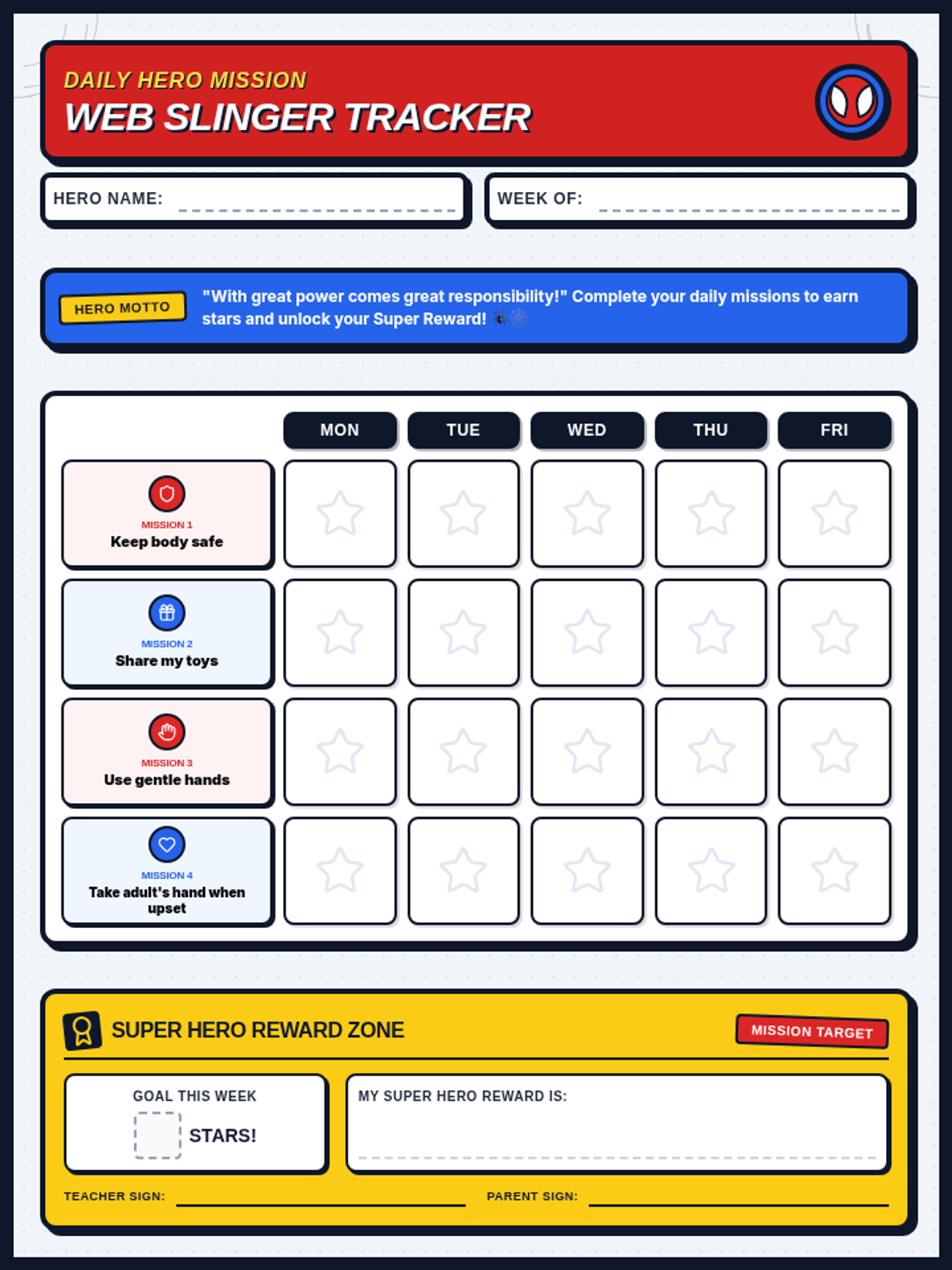
A beautifully illustrated Spider-Man themed weekly individual student behavior tracker designed for pediatric or classroom environments. Features bold comic-style cards, name fields, custom behavioral missions, larger sticker boxes, and a dedicated reward zone for target tracking.
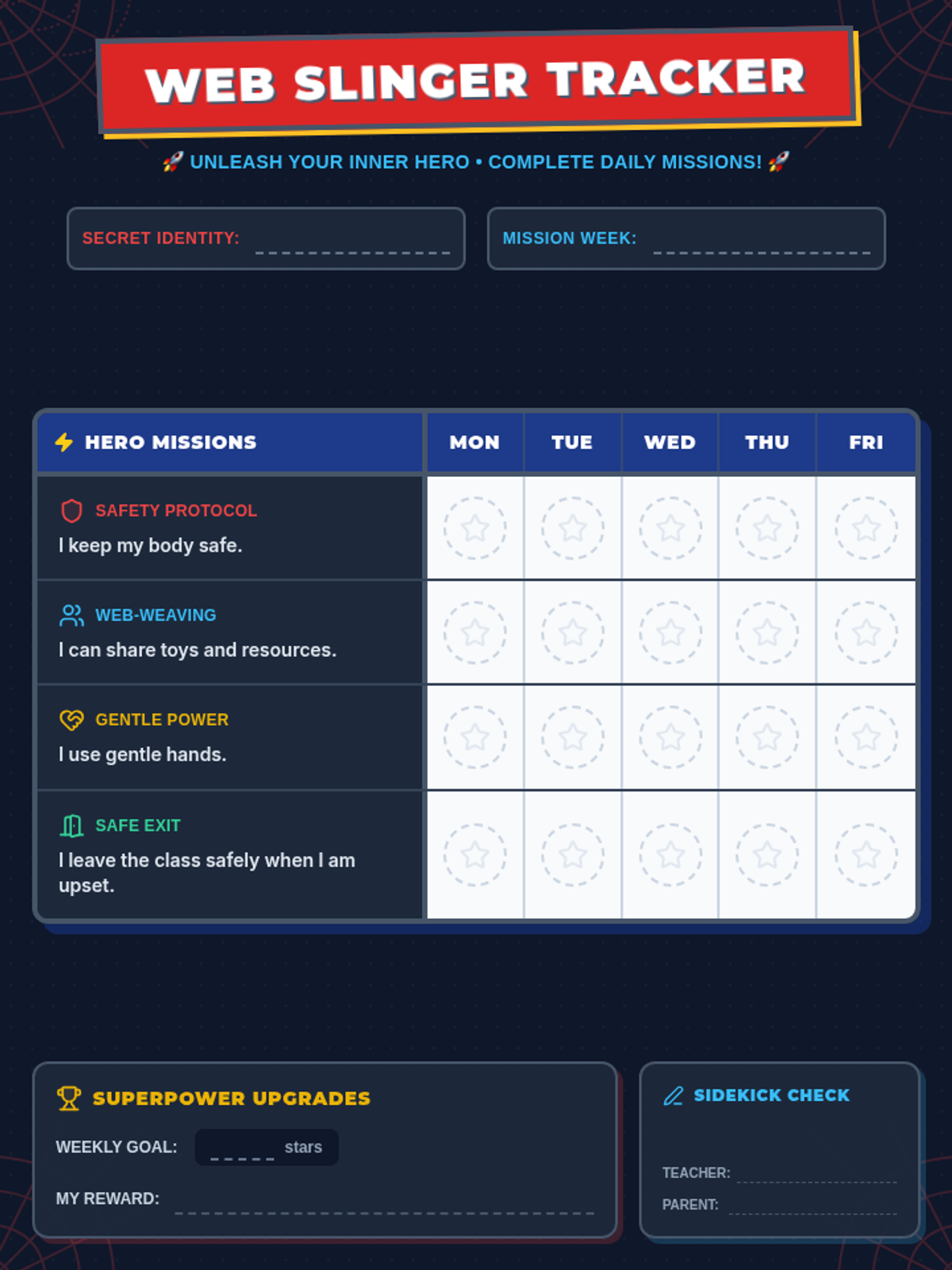
A beautifully styled Spider-Man themed weekly reward chart designed for young students. It features clean rows for tracking safety, sharing, gentle hands, and emotional self-regulation behavior goals across Monday through Friday with high-contrast, easy-to-use star fields.
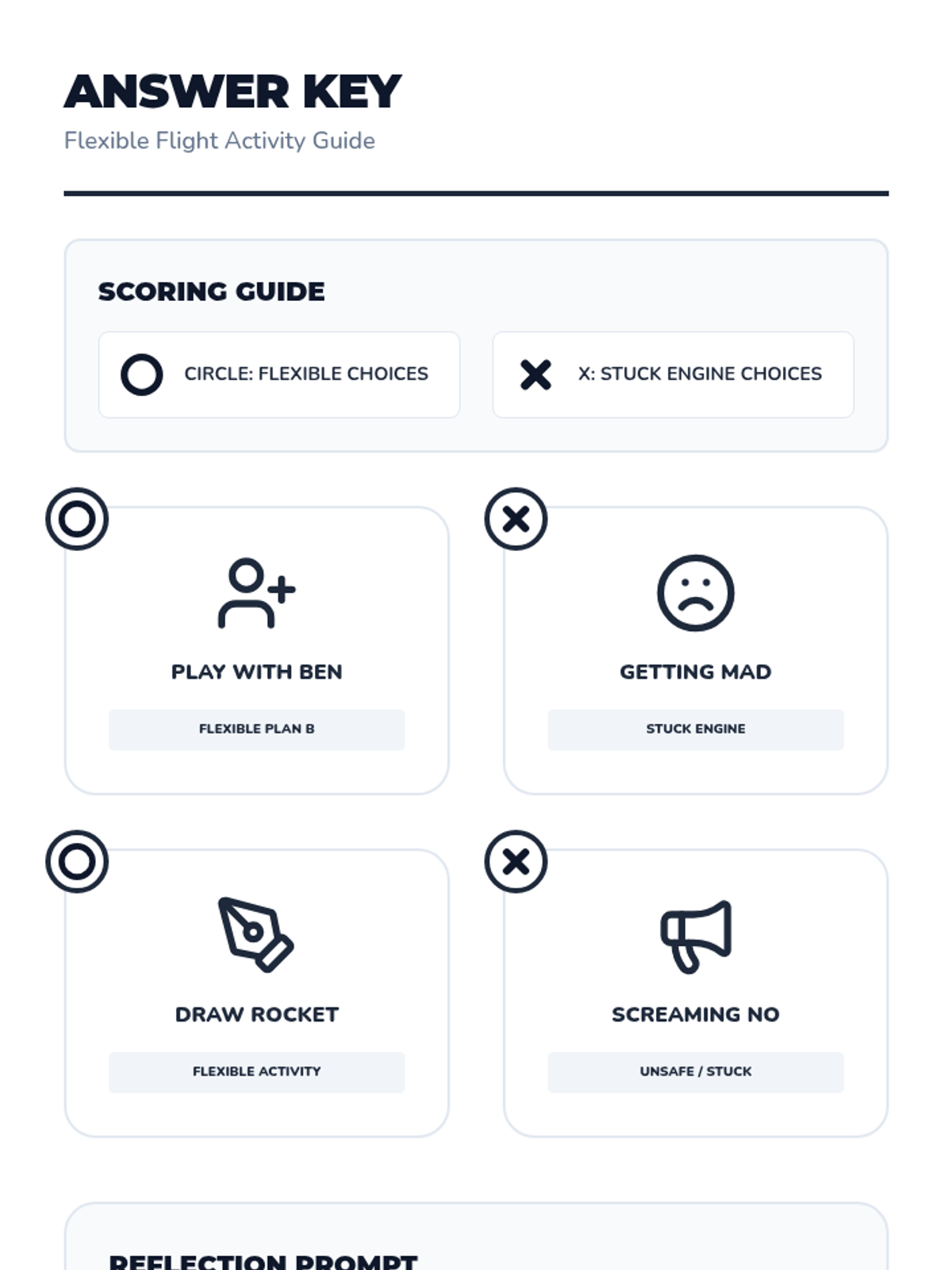
A printer-friendly teacher answer key for the Flexible Flight Activity. Provides visual guidance on correct responses for the sorting task and expected themes for the reflection prompt. Consistent with the minimalist activity worksheet design.
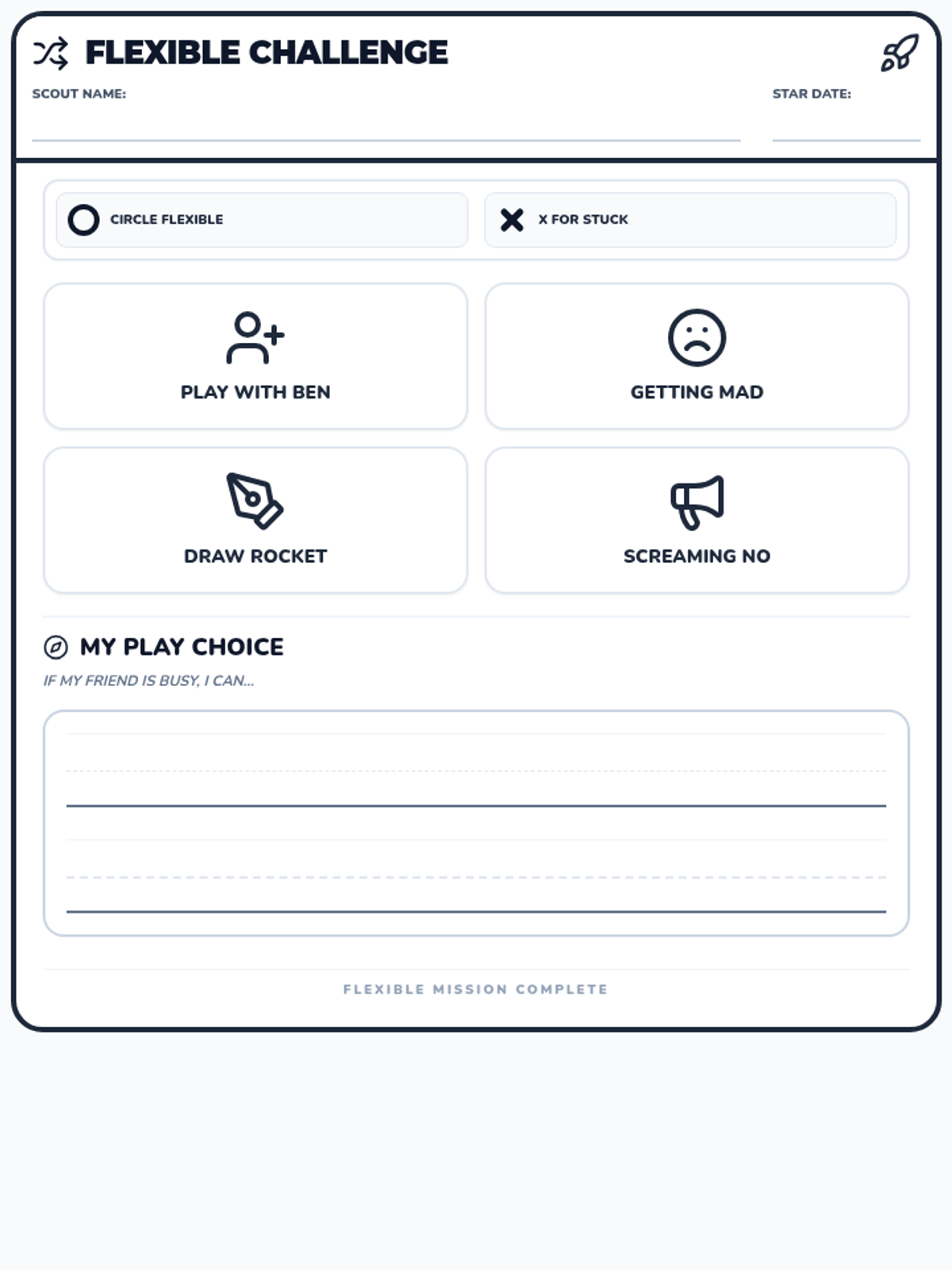
A printer-friendly social skills activity worksheet for 1st graders. Features a minimalist black-and-white design to save ink while maintaining clarity. Students sort stuck vs flexible behaviors and complete a writing prompt.
A printer-friendly social story booklet for 1st graders using simple sentences and large, consistent visual symbols. Focuses on the transition from stuck thinking (wanting only one friend) to flexible thinking and choosing alternate plans. Minimalist black-and-white layout.
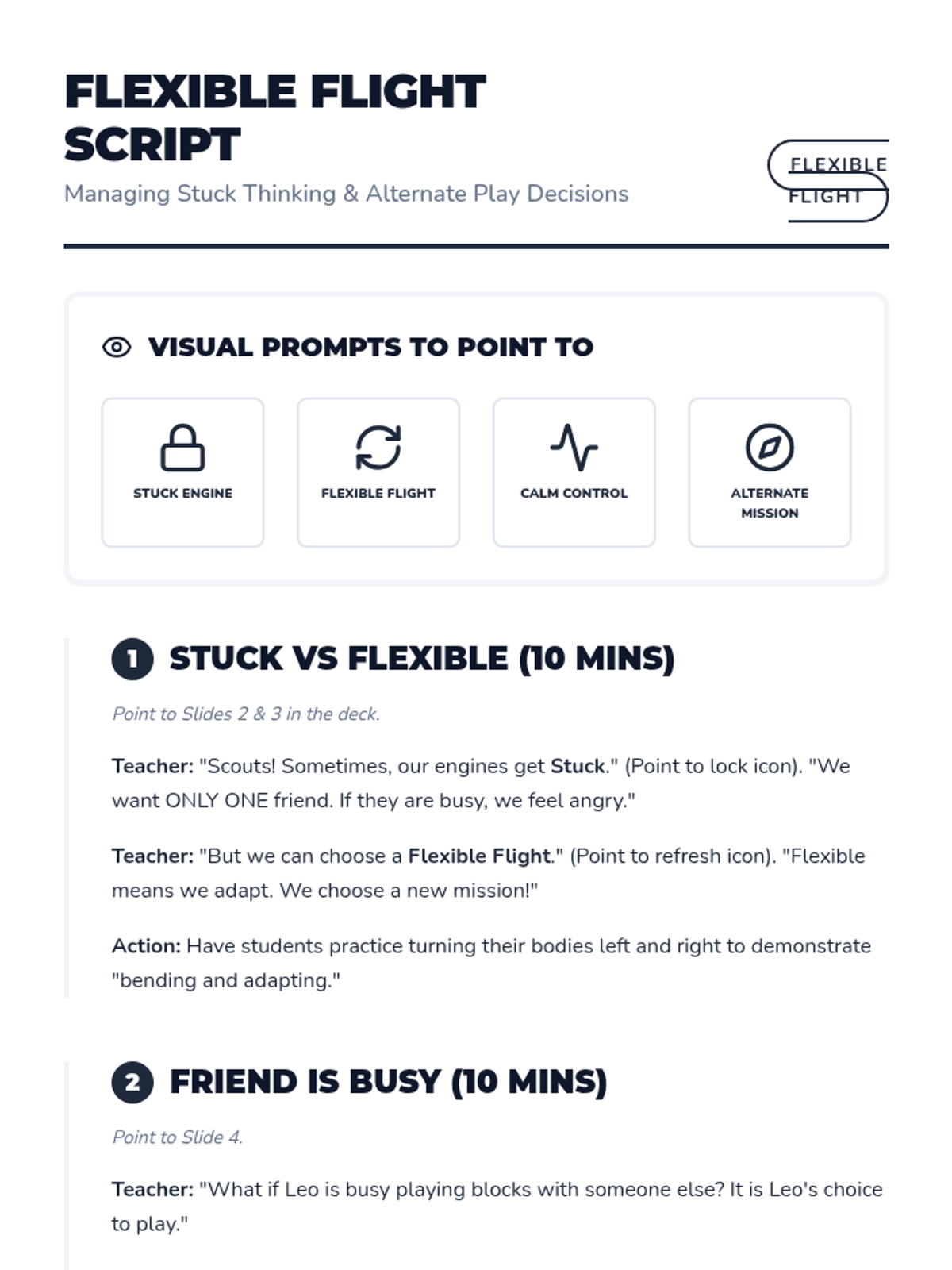
A simplified teacher script for the 'Flexible Flight' 30-minute lesson. Includes a visual prompt key and direct instructions on how to handle stuck thinking, big disappointment, and redirecting students to alternate playtime plans. Now has fixed page breaks.
A visual slide deck for 1st graders using a space theme to teach flexible thinking when preferred friends are busy. Uses a rich dark space theme with high-contrast, beautiful visuals. Replaces abstract emojis with literal icons.
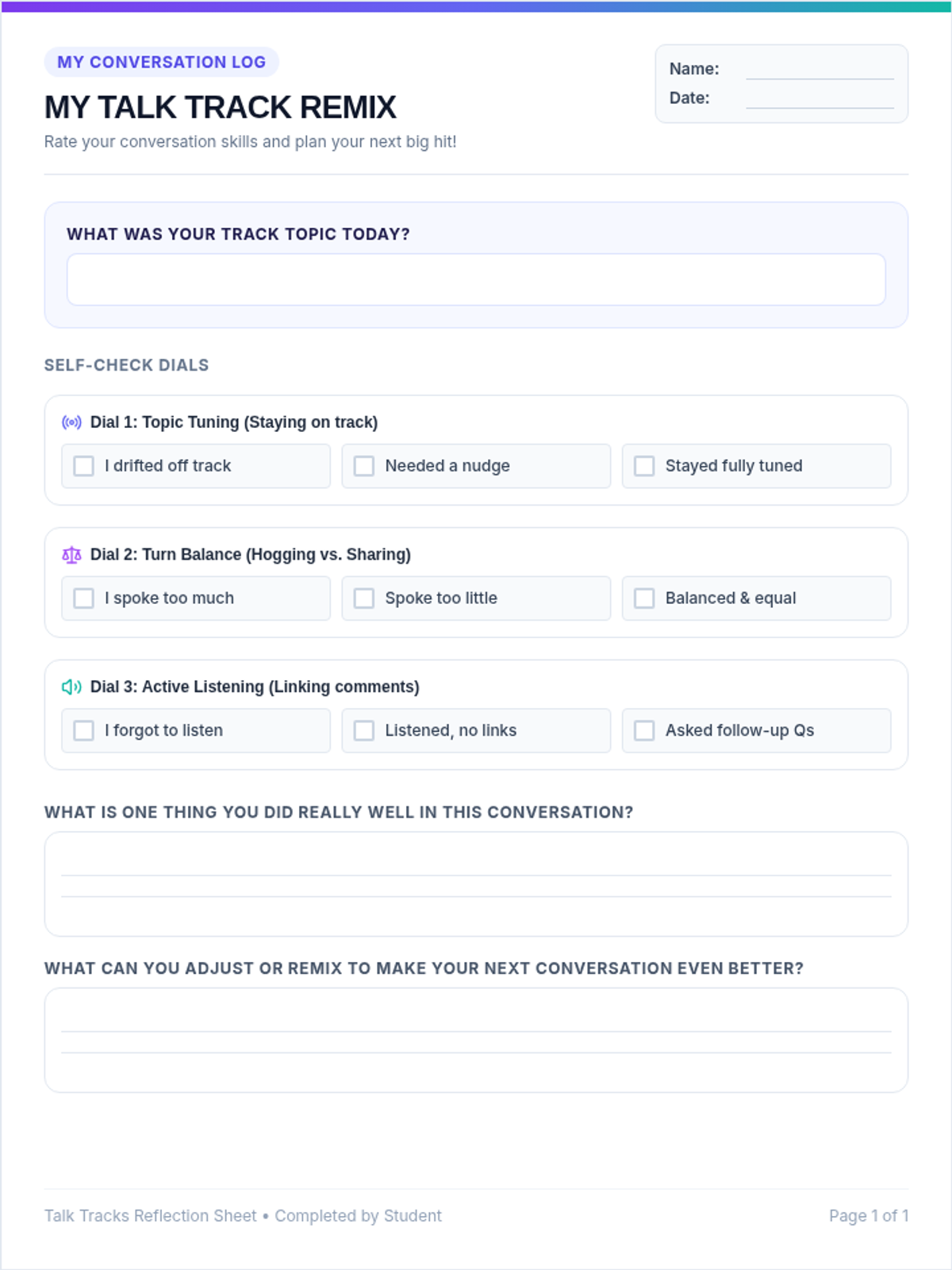
A student-facing self-evaluation and reflection page for tracking personal conversation progress after peer-to-peer practice sessions.
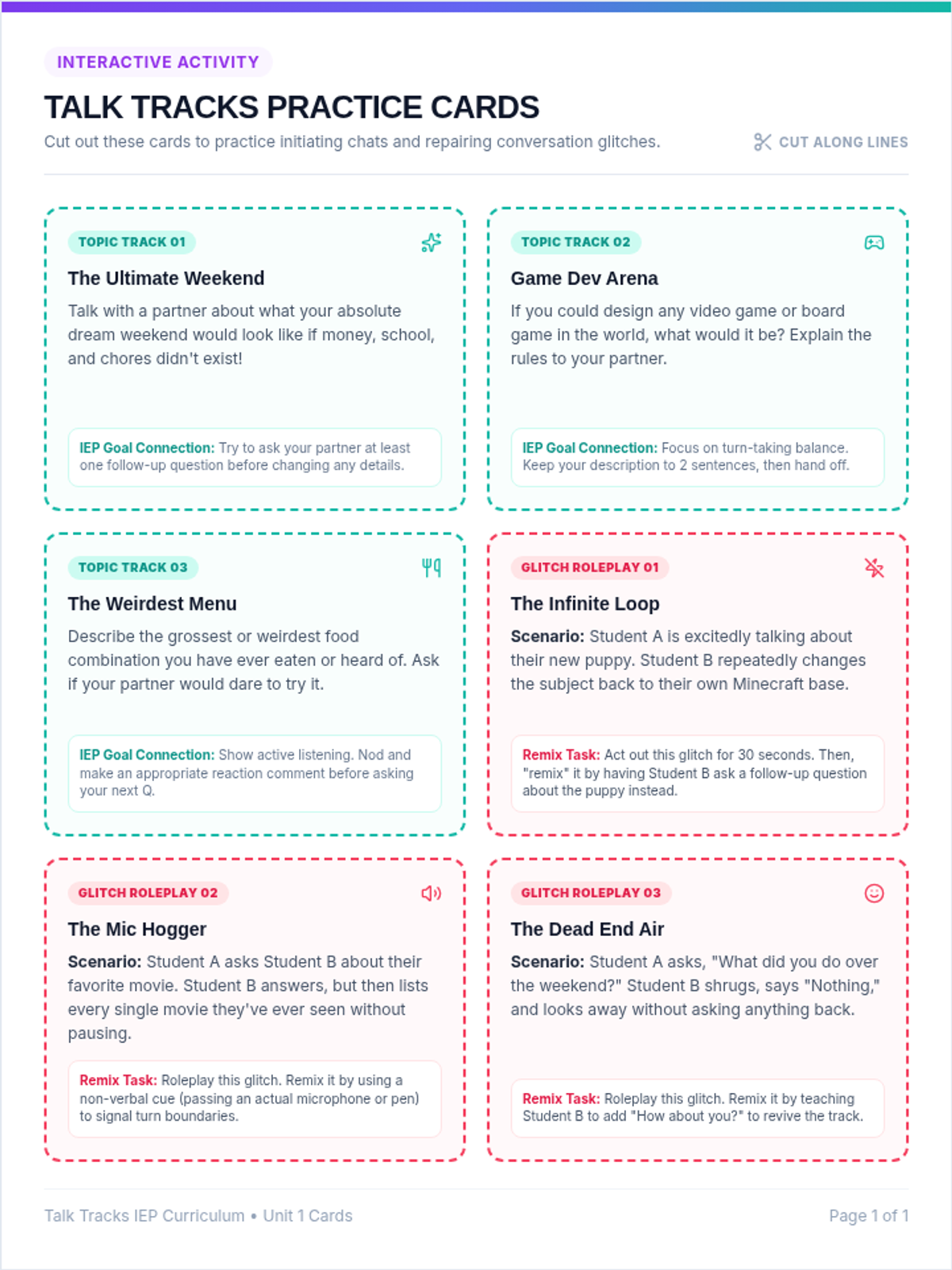
A set of printable roleplay, topic-starter, and conversation "glitch" cards for direct instruction, small group practice, and peer turn-taking lessons.
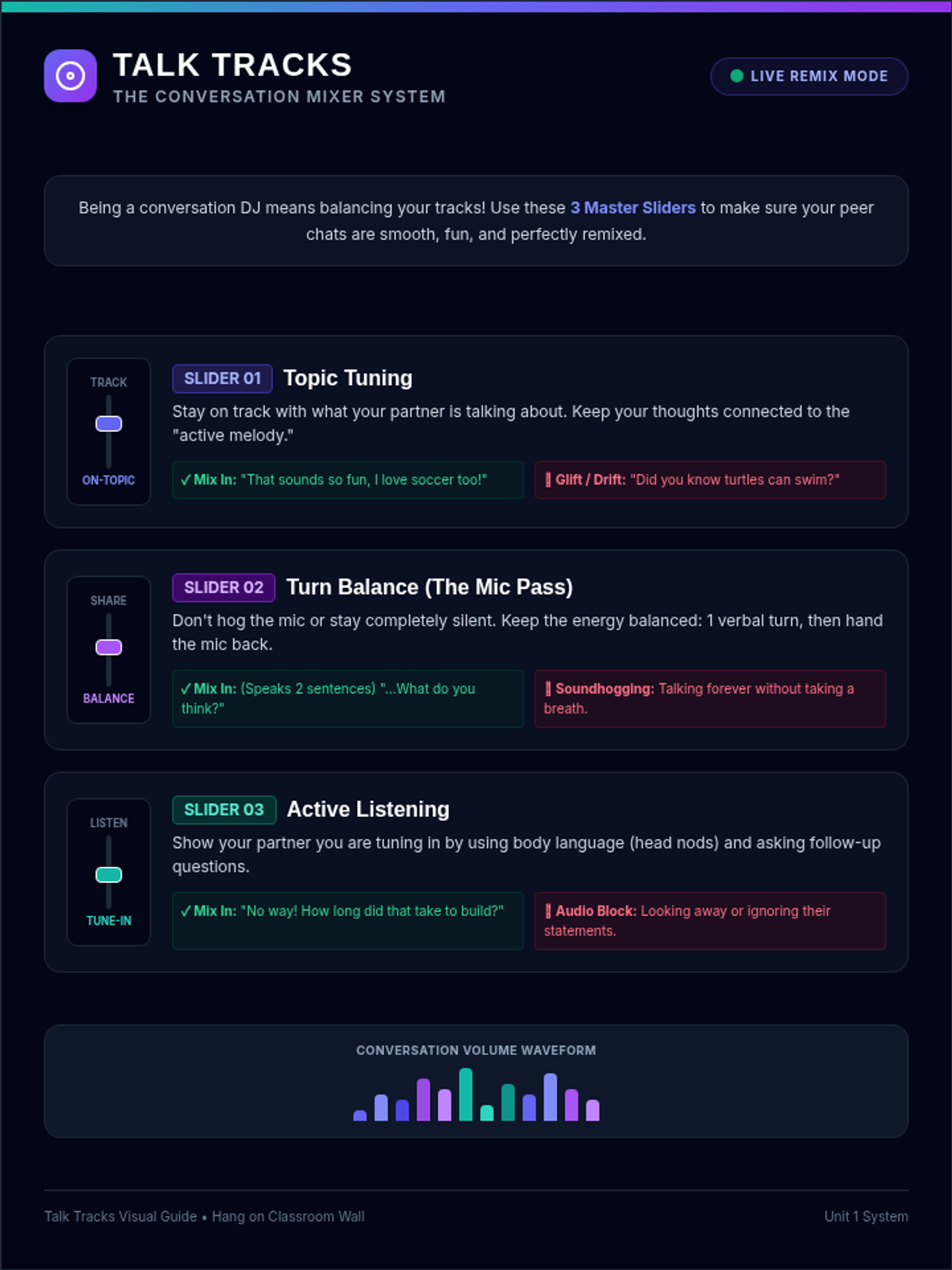
A highly visual poster utilizing a DJ mixer metaphor to help students adjust their "conversation dials" (topic, volume, turn-taking, and body language) during peer chats.
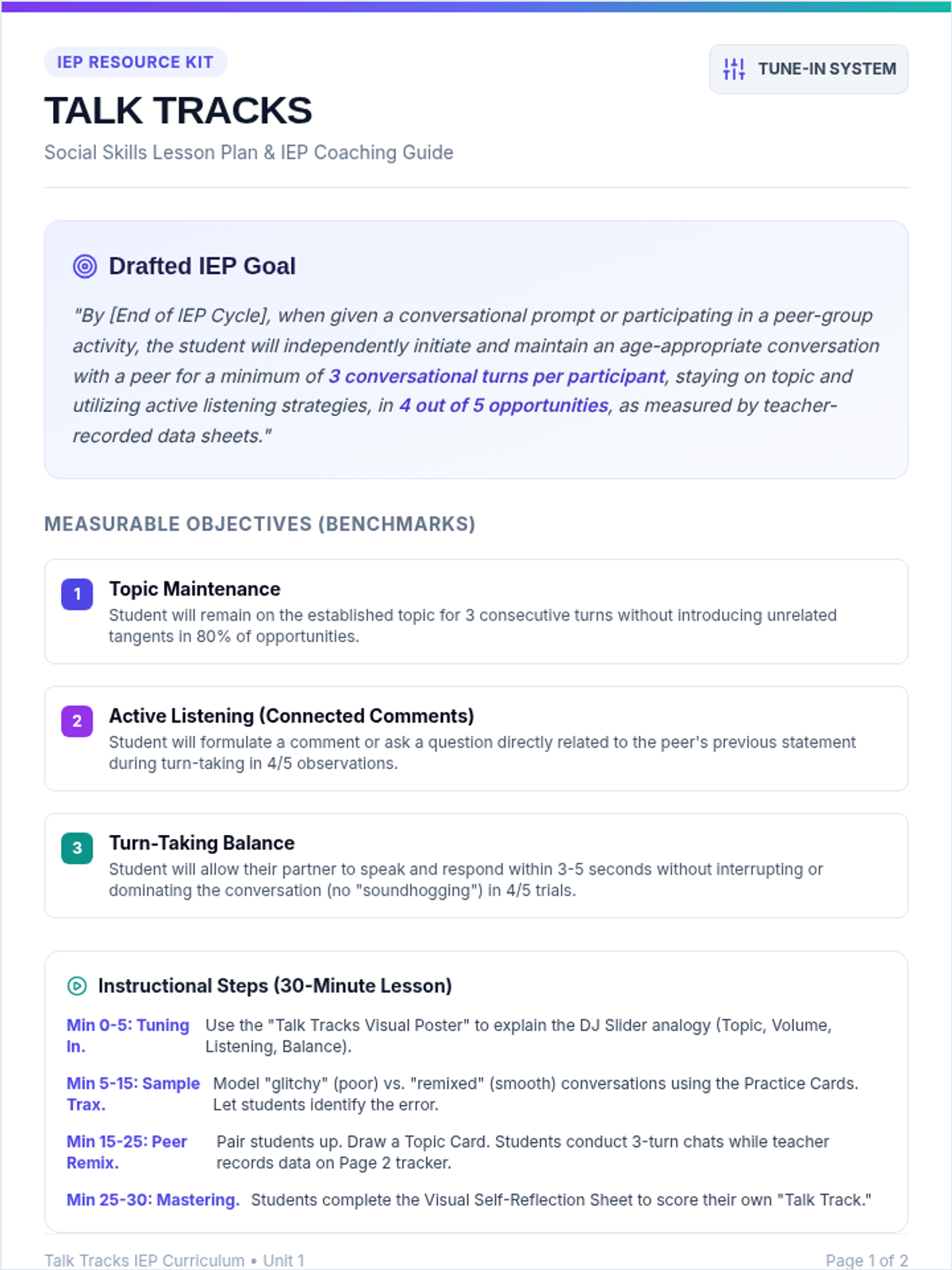
An instructional guide for educators containing specific social skills IEP goals, measurable milestones, a rubrics-based progress tracker, and coaching tips for facilitating conversation turn-taking.