A highly visual poster utilizing a DJ mixer metaphor to help students adjust their "conversation dials" (topic, volume, turn-taking, and body language) during peer chats.
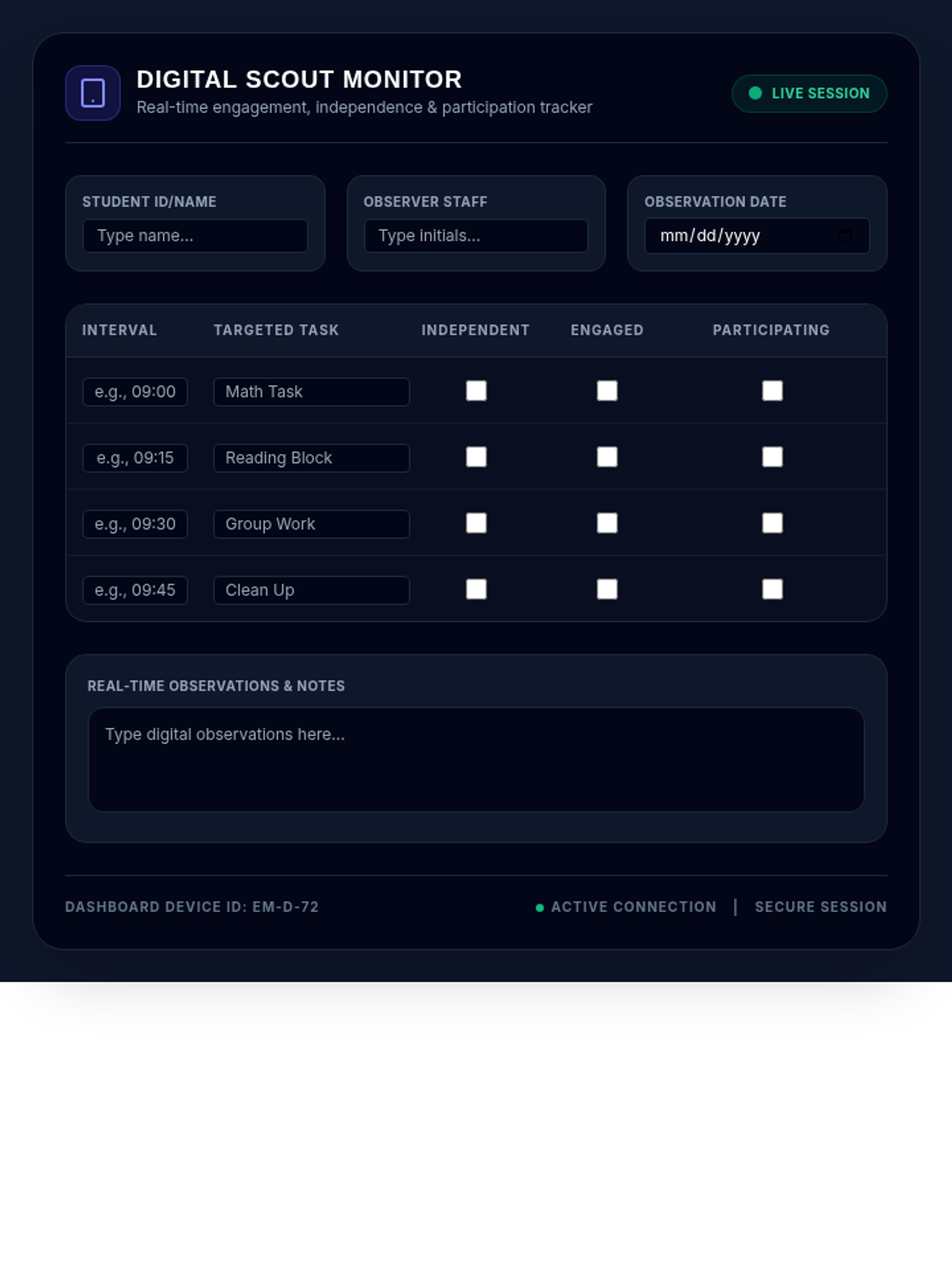
A tablet-optimized digital dashboard for paraprofessionals to track student independence, engagement, and participation metrics in real-time.
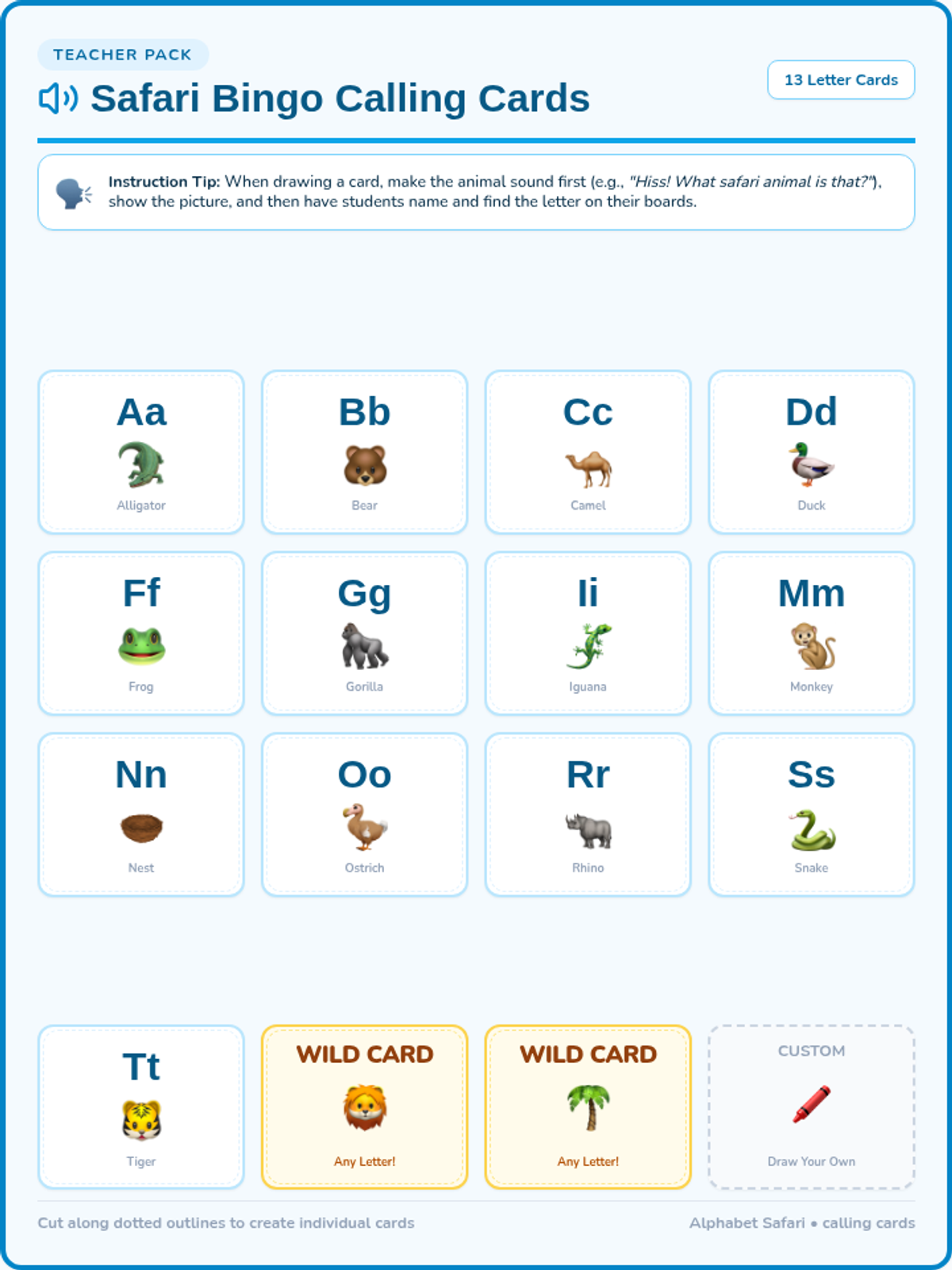
A visual 4-page printable Bingo set with a teacher calling card sheet (including letter-animal references), 4 unique high-contrast 3x3 student boards featuring letters and animal visual cues, and a page of themed tokens to cut out.
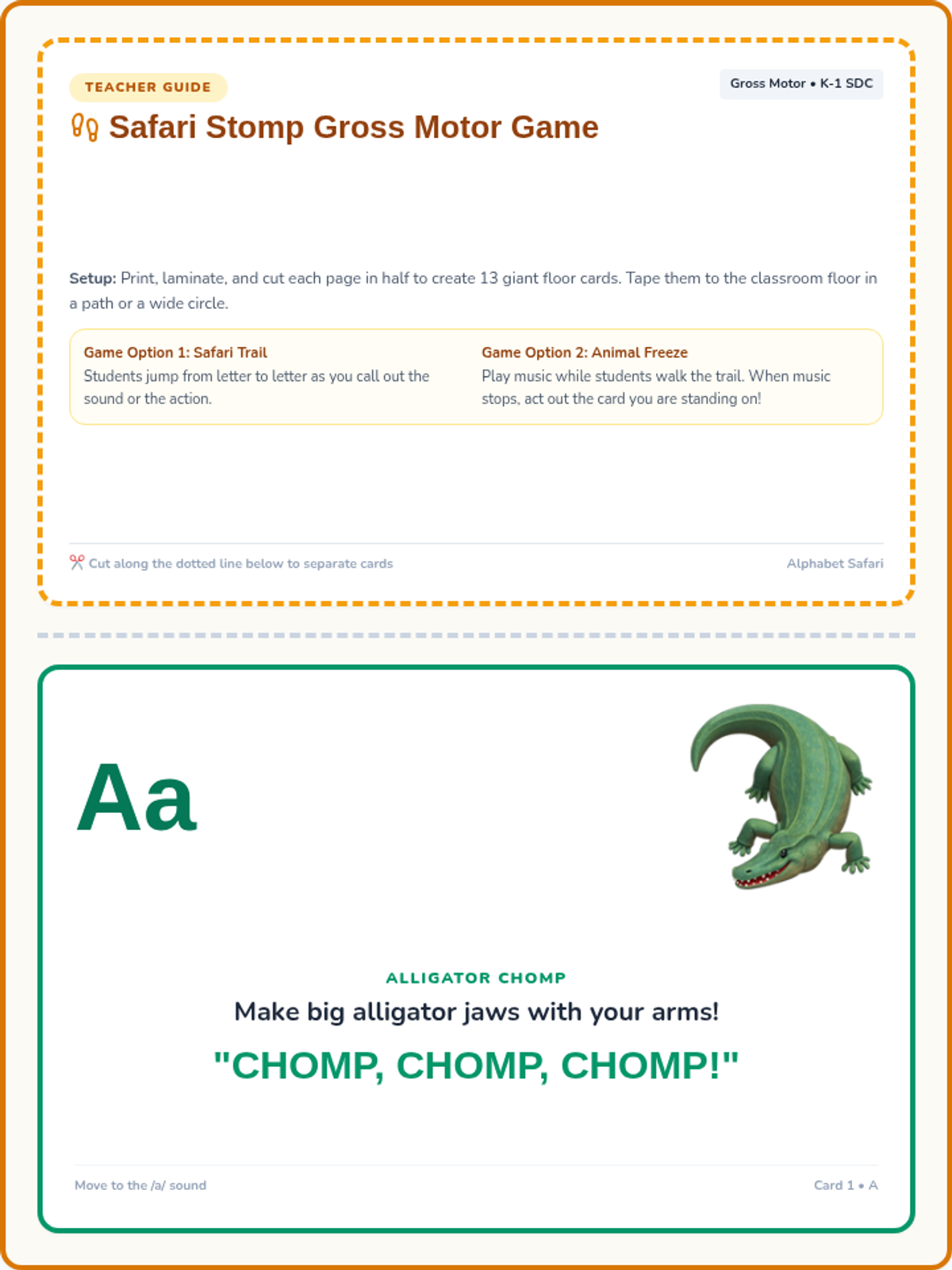
A multi-sensory set of 13 printable half-page floor-mat cards (plus a teacher instruction guide) featuring the letters A, B, C, D, F, G, I, M, N, O, R, S, T. Each card contains large, high-contrast letters, a matching safari animal, and a specific gross motor action prompt.
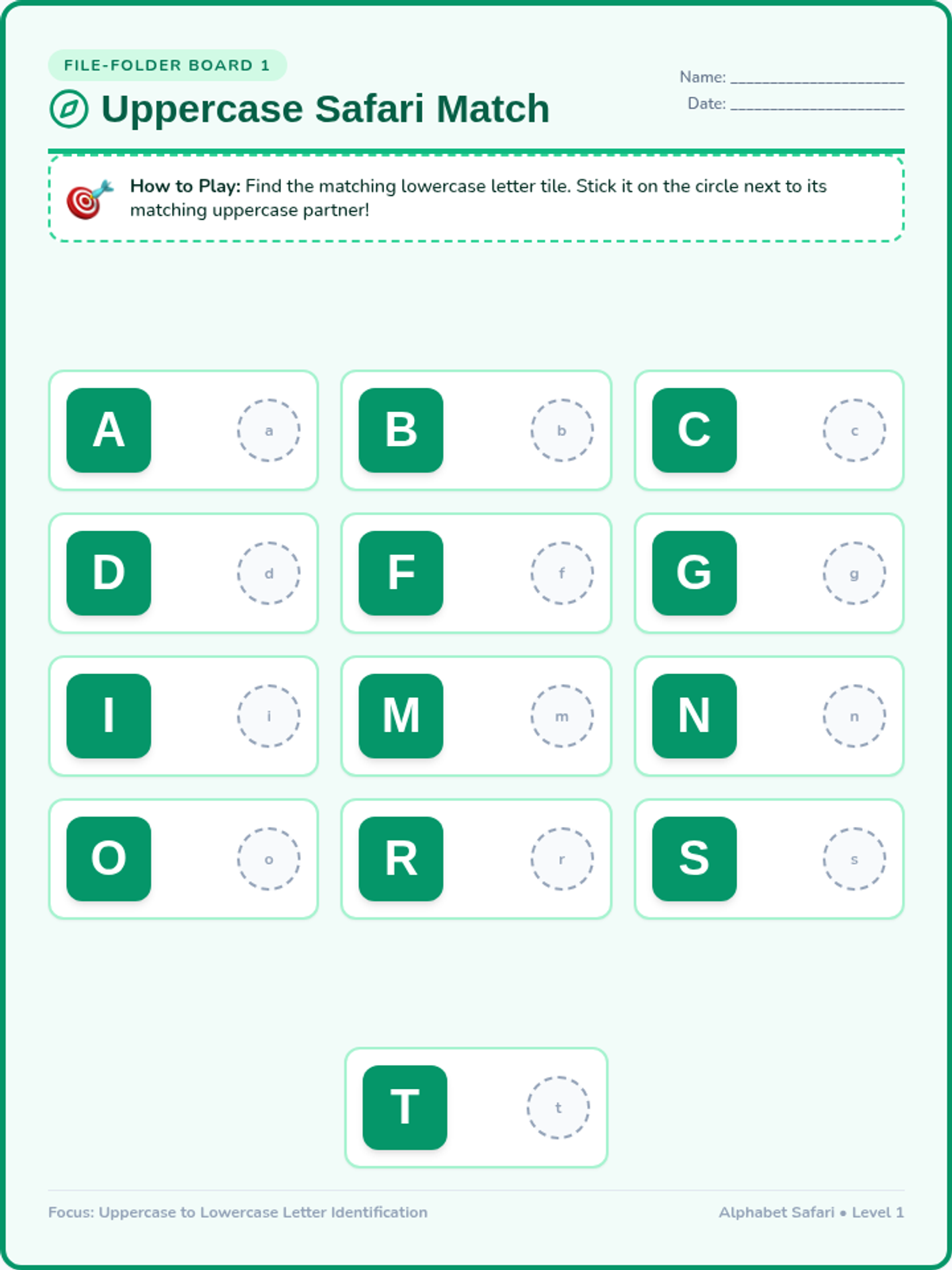
A 3-page printable file-folder matching game designed for K-1 SDC students. It includes a board for matching uppercase and lowercase letters (A, B, C, D, F, G, I, M, N, O, R, S, T), an animal initial-sound matching board, and a page of high-contrast, visual matching tiles.
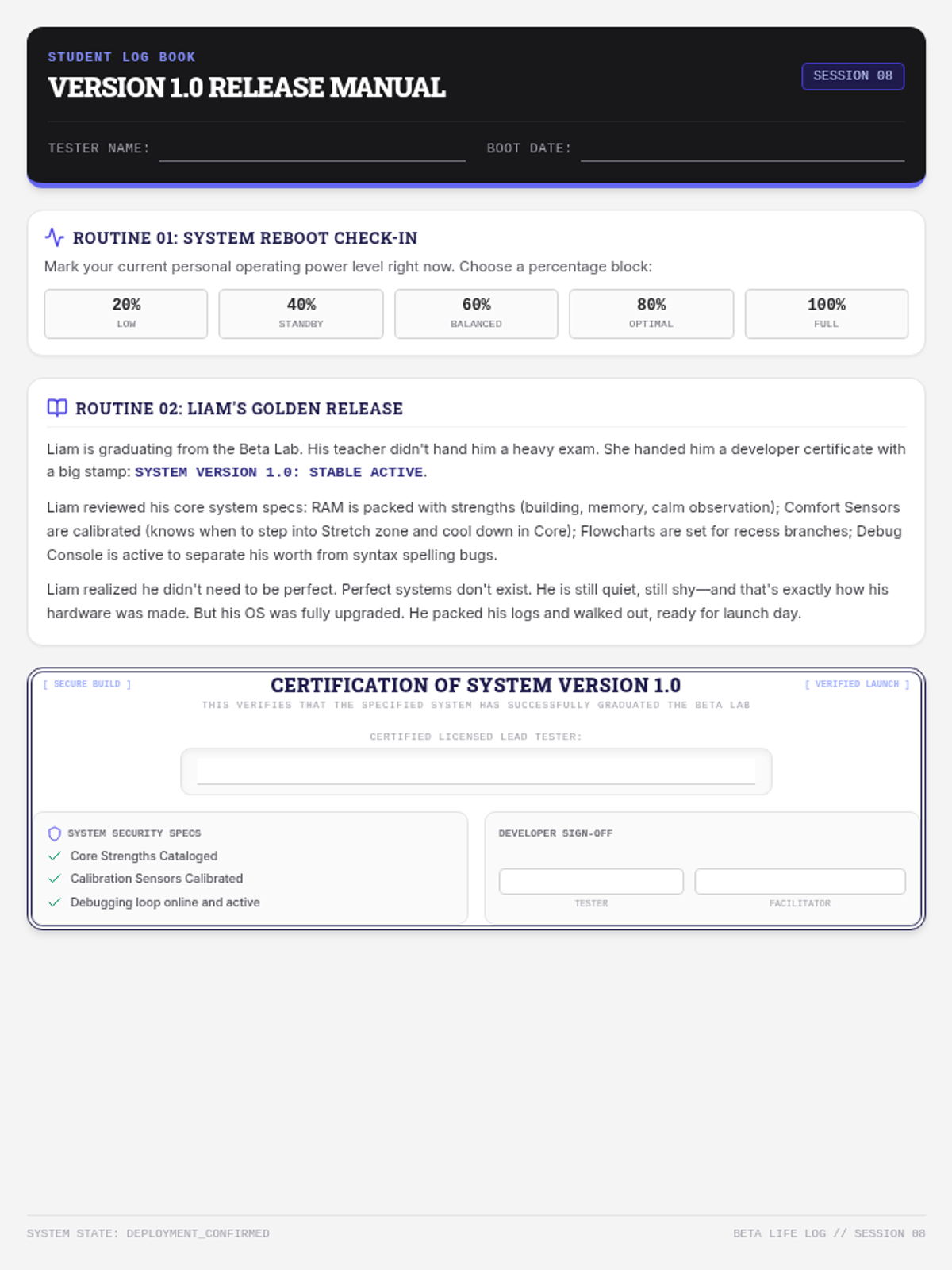
This student-facing spec sheet serves as the primary workspace for Session 8. It contains a predictable energy level check-in, Liam's story on graduating from the Beta Lab, and a beautiful certificate layout for the final signoff.
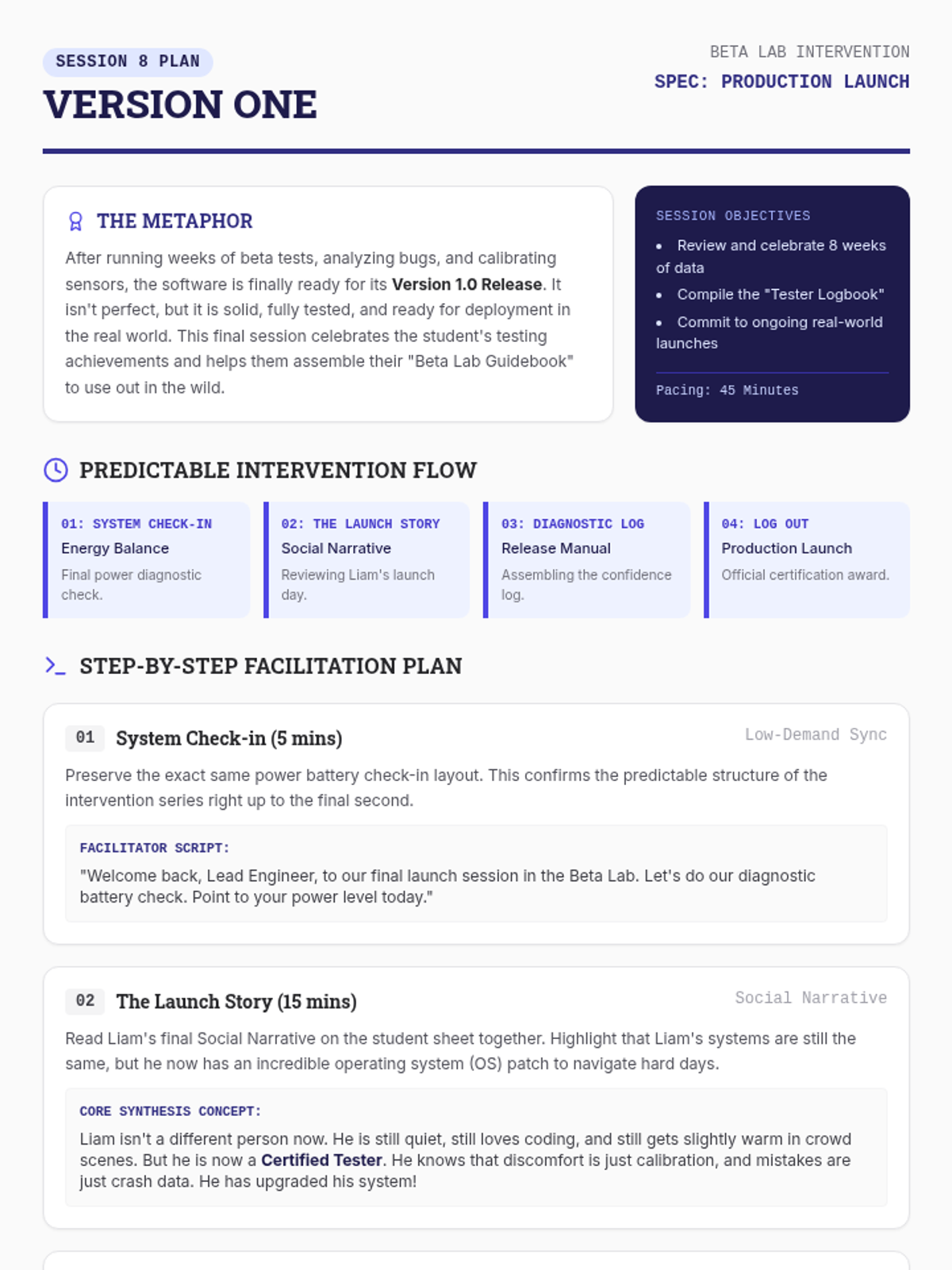
This facilitation guide provides the step-by-step lesson plan and engagement tips for Session 8, synthesizing the 8-week journey and guiding the teacher in organizing a quiet, professional celebration of the student's testing achievements.
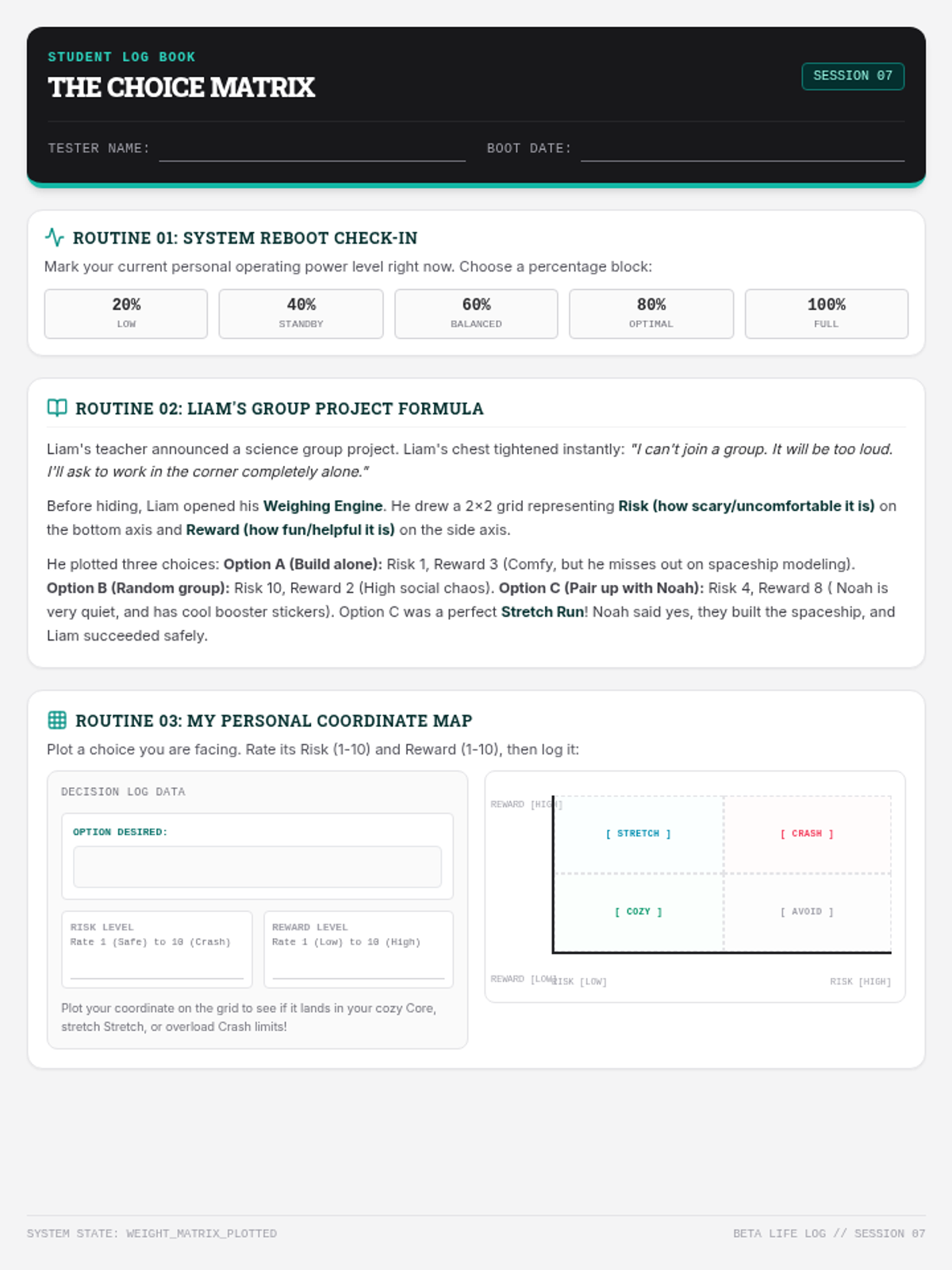
This student-facing spec sheet serves as the primary workspace for Session 7. It contains a predictable energy level check-in, Liam's story on using coordinates to analyze a scary science group assignment, and a structured 2x2 plotting grid.
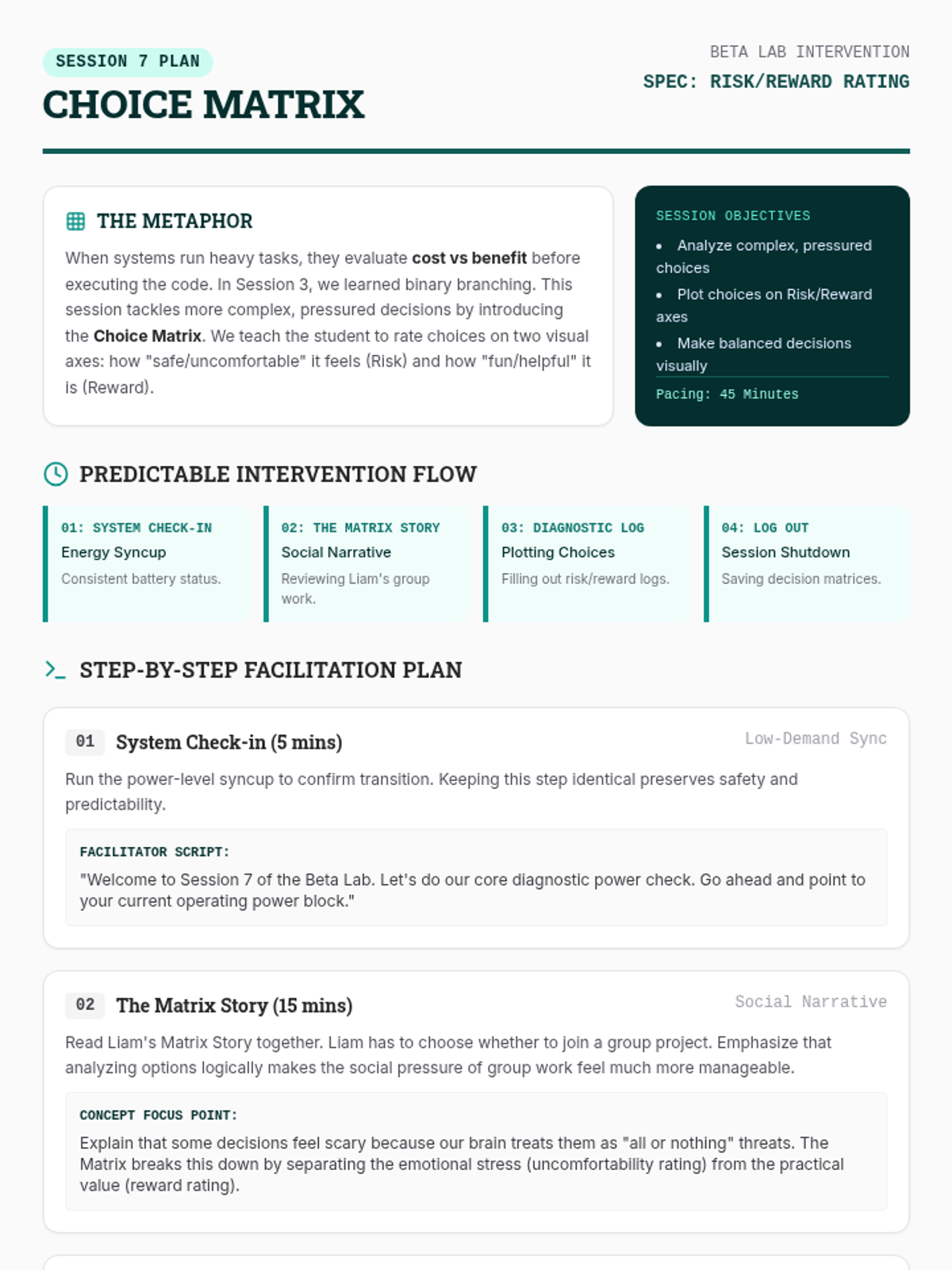
This facilitation guide provides the step-by-step lesson plan and engagement tips for Session 7, teaching the student how to use a visual Risk/Reward rating matrix to analyze complex choices.
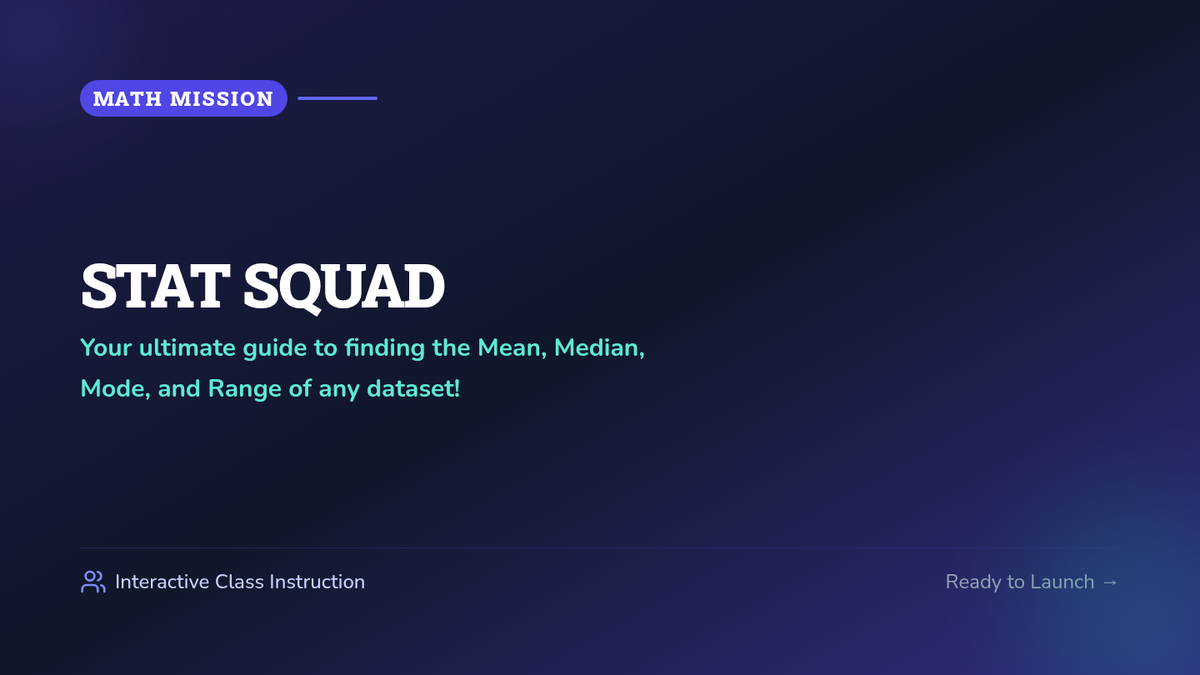
An interactive and highly visual 7-slide class presentation introducing the 'Stat Squad' (Mean, Median, Mode, Range) specifically designed for classroom delivery to IEP students.
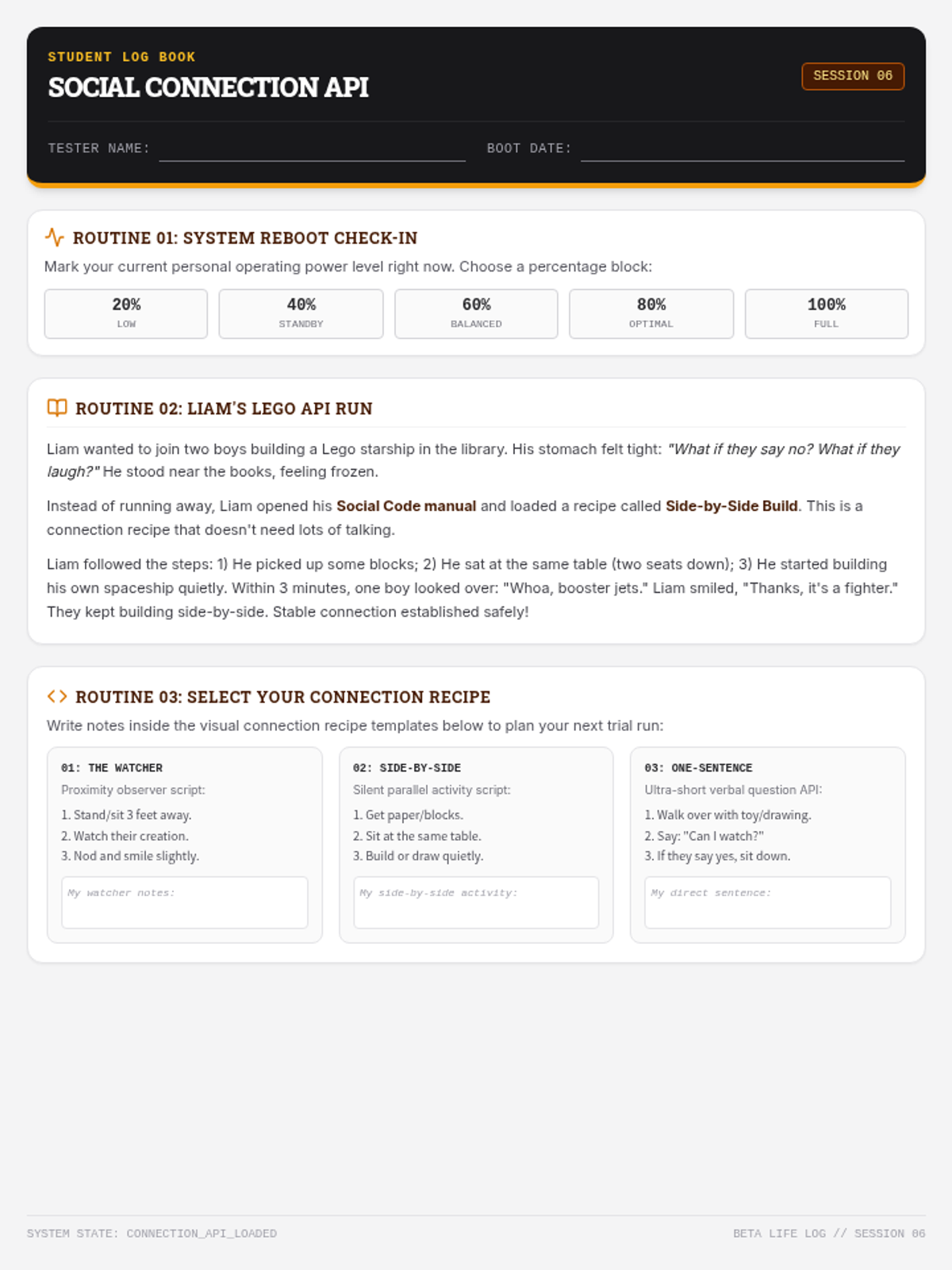
This student-facing spec sheet serves as the primary workspace for Session 6. It contains a predictable energy level check-in, Liam's story on parallel play lego connection, and three visual recipes for peer connection.
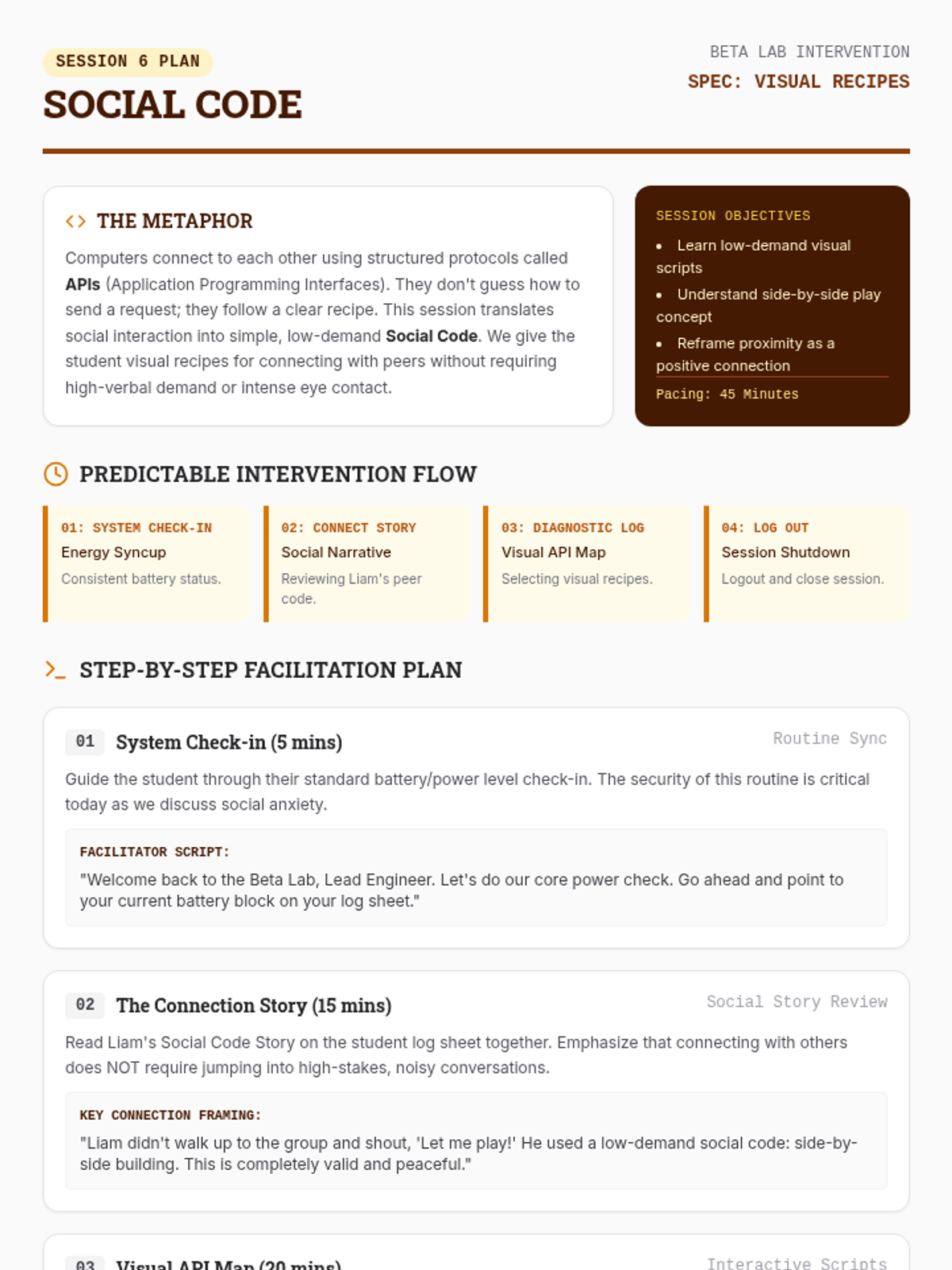
This facilitation guide provides the step-by-step lesson plan and engagement tips for Session 6, introducing low-demand social scripts and structured visual recipes for peer connection.
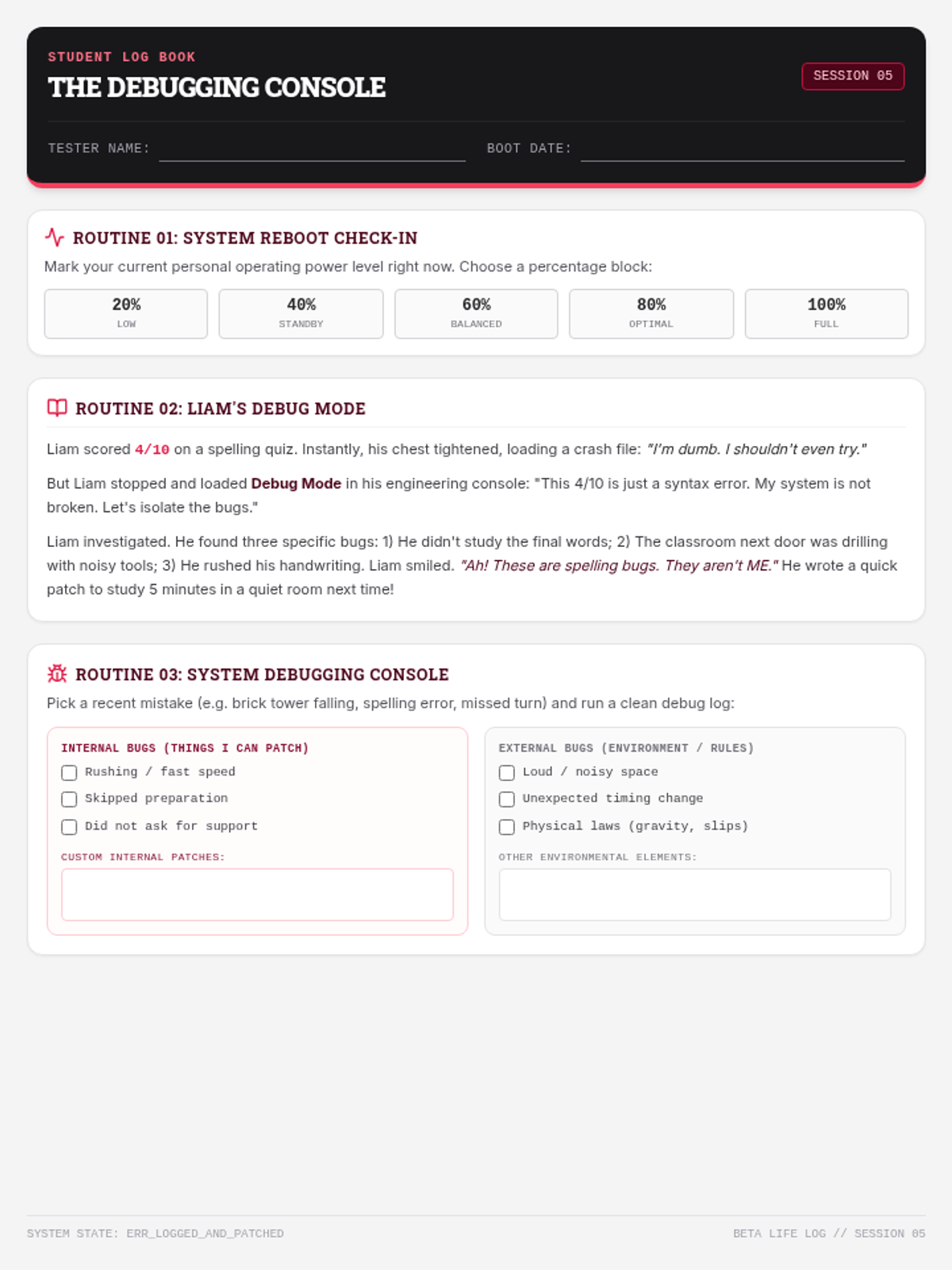
This student-facing spec sheet serves as the primary workspace for Session 5. It contains a predictable energy level check-in, Liam's story on debug mode, and an interactive sorting console for isolating internal vs. external error sources.
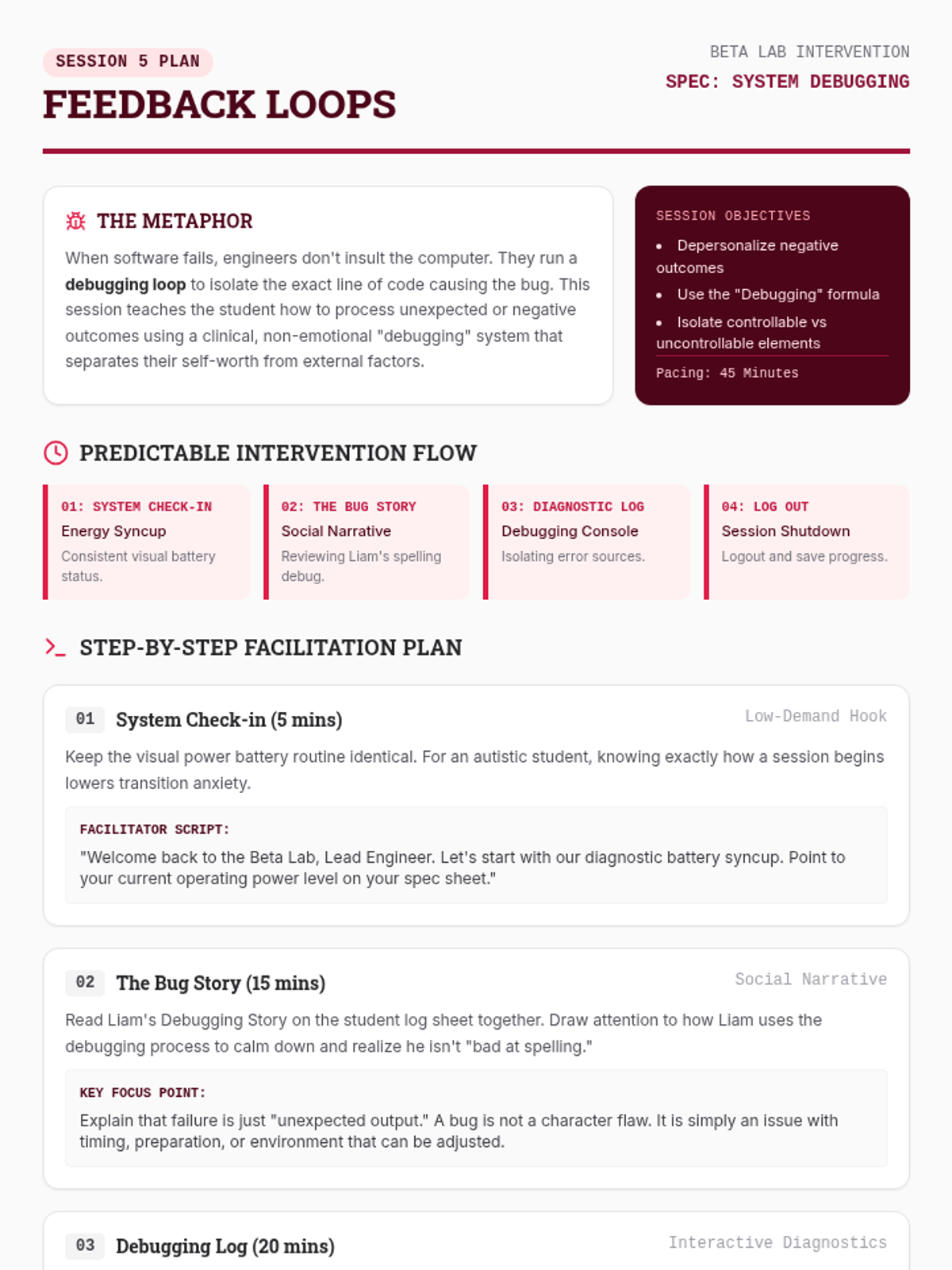
This facilitation guide provides the step-by-step lesson plan and engagement tips for Session 5, focusing on a structured, objective 'debugging' framework to help students analyze mistakes without personal shame.
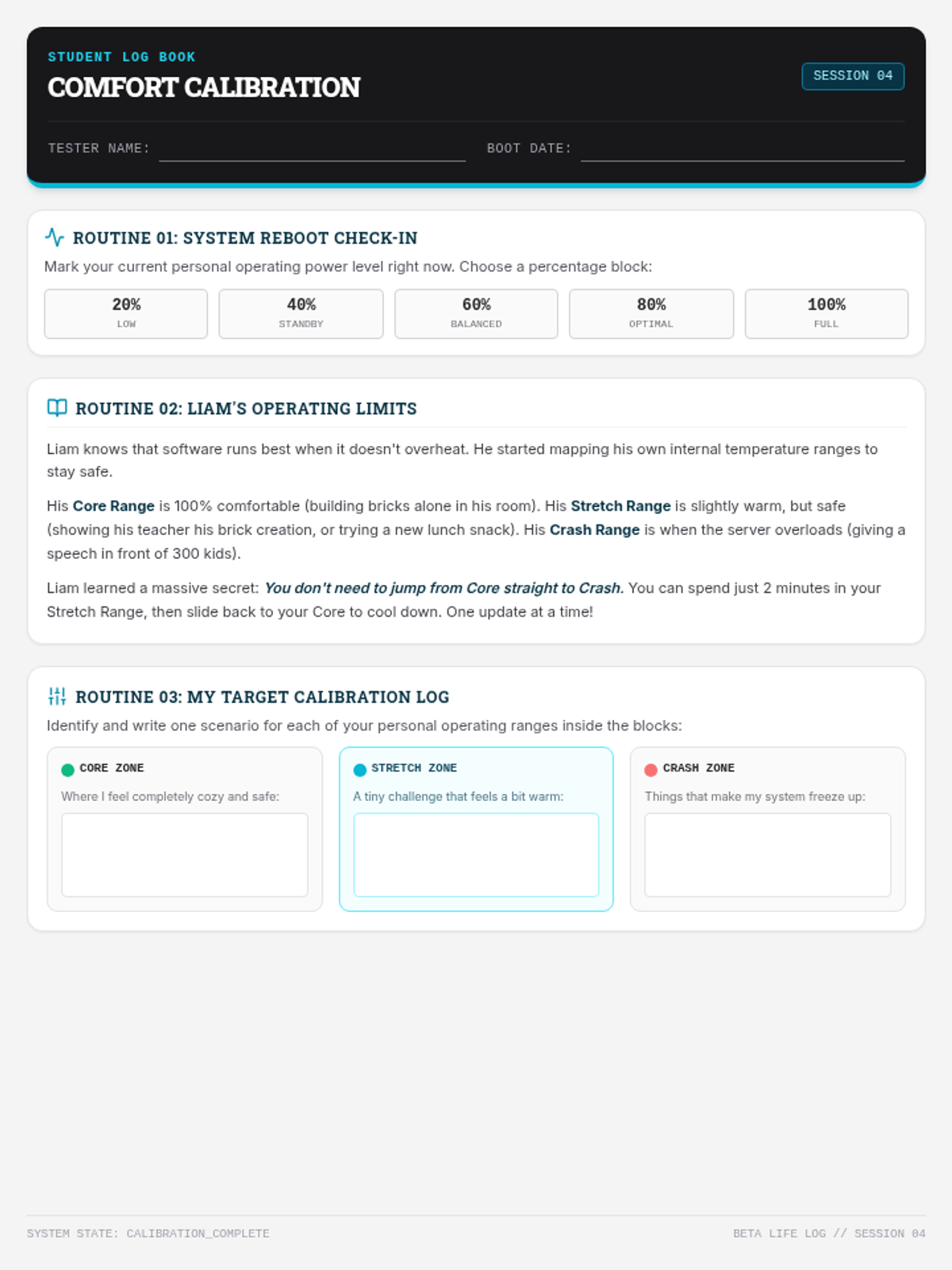
This student-facing spec sheet serves as the primary workspace for Session 4. It contains a predictable energy level check-in, Liam's story on comfort zones (Core, Stretch, and Crash), and a structured 3-tier calibration log.
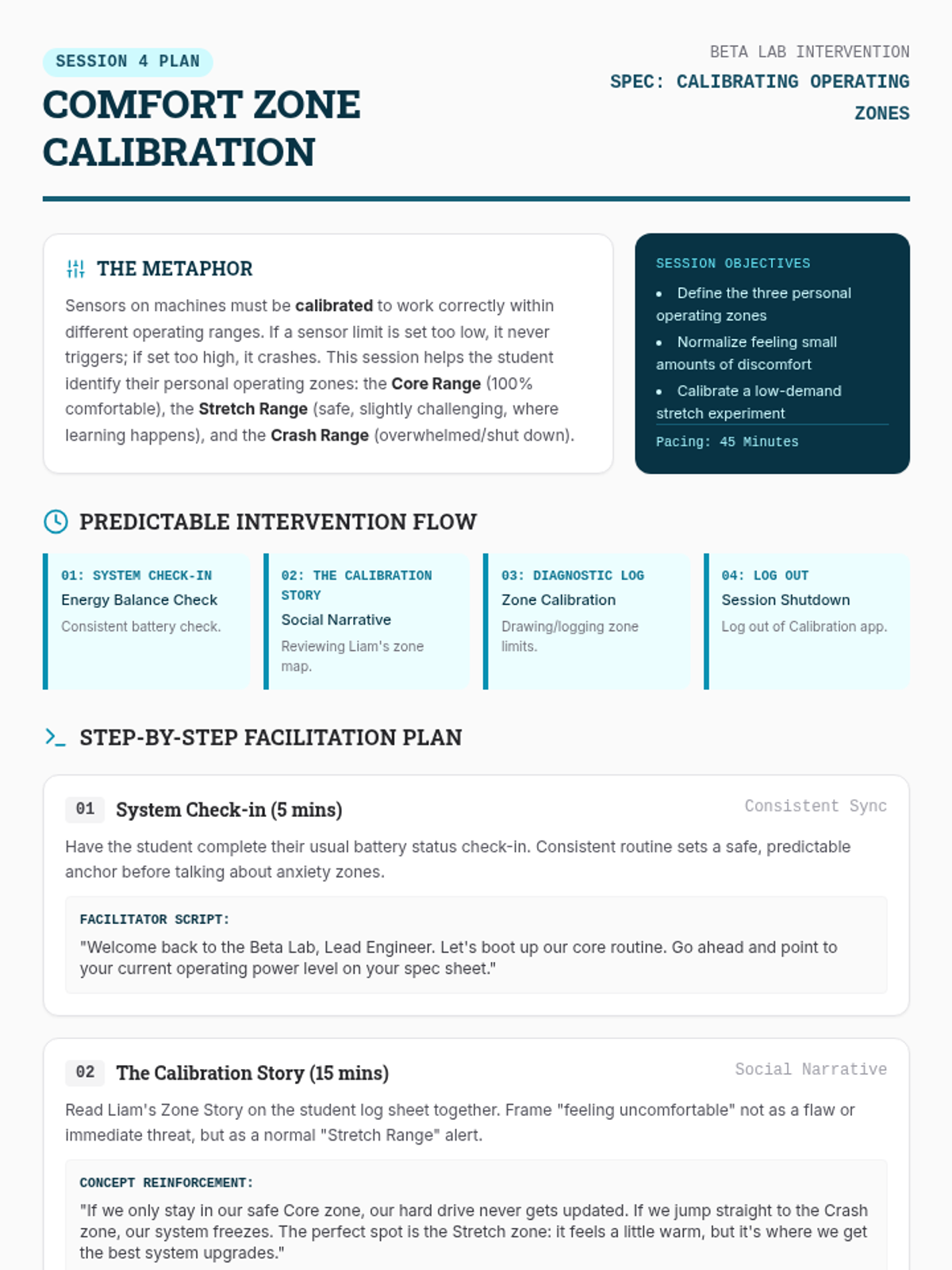
This facilitation guide provides the step-by-step lesson plan and engagement tips for Session 4, focusing on helping the student map their comfortable operating zones (Core, Stretch, and Crash) to make gradated risk-taking feel structured and safe.
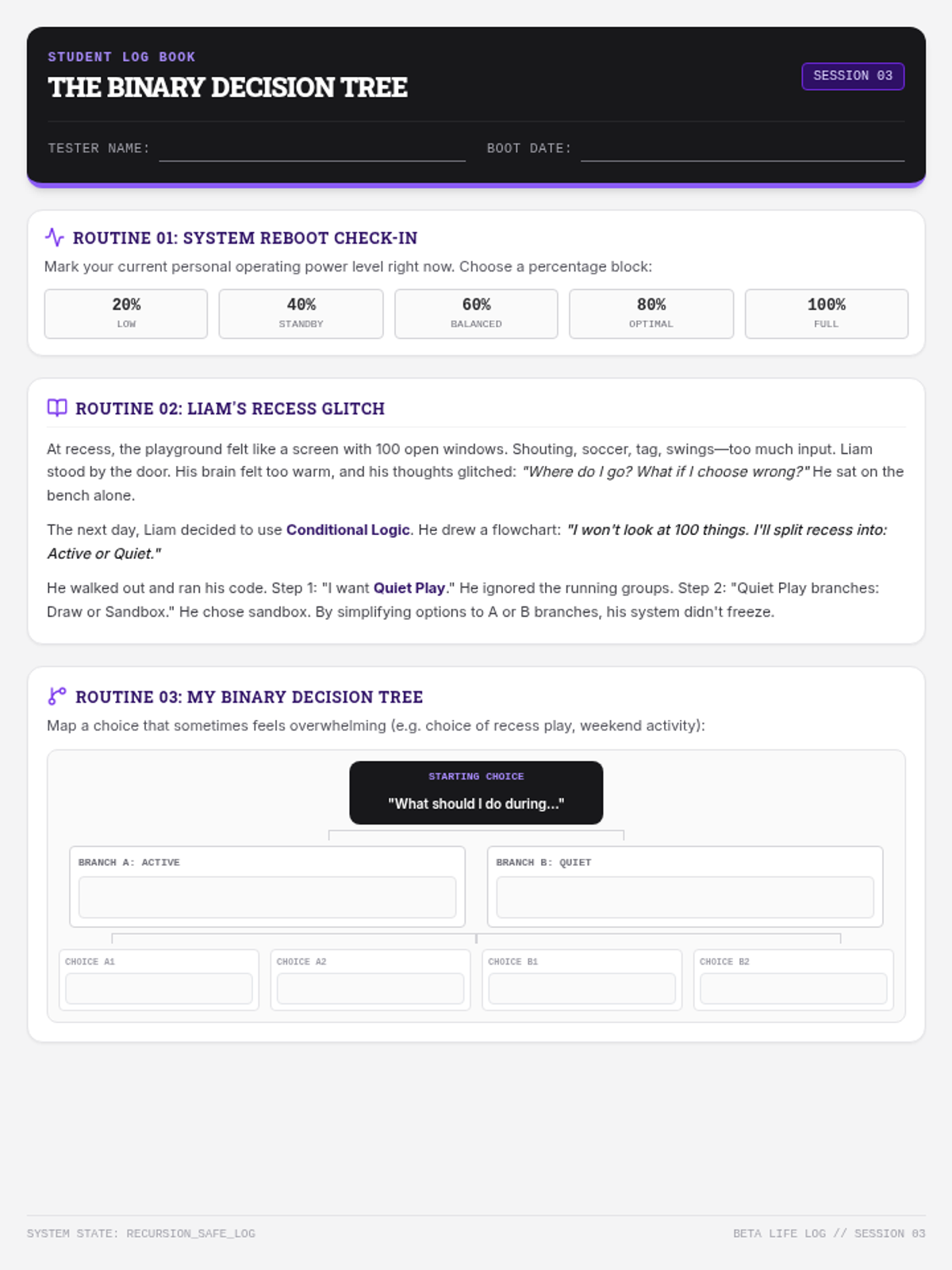
This student-facing spec sheet serves as the primary workspace for Session 3. It contains a predictable energy level check-in, Liam's story on choice overload at recess, and a structured flowchart for practicing binary choice branch logic.
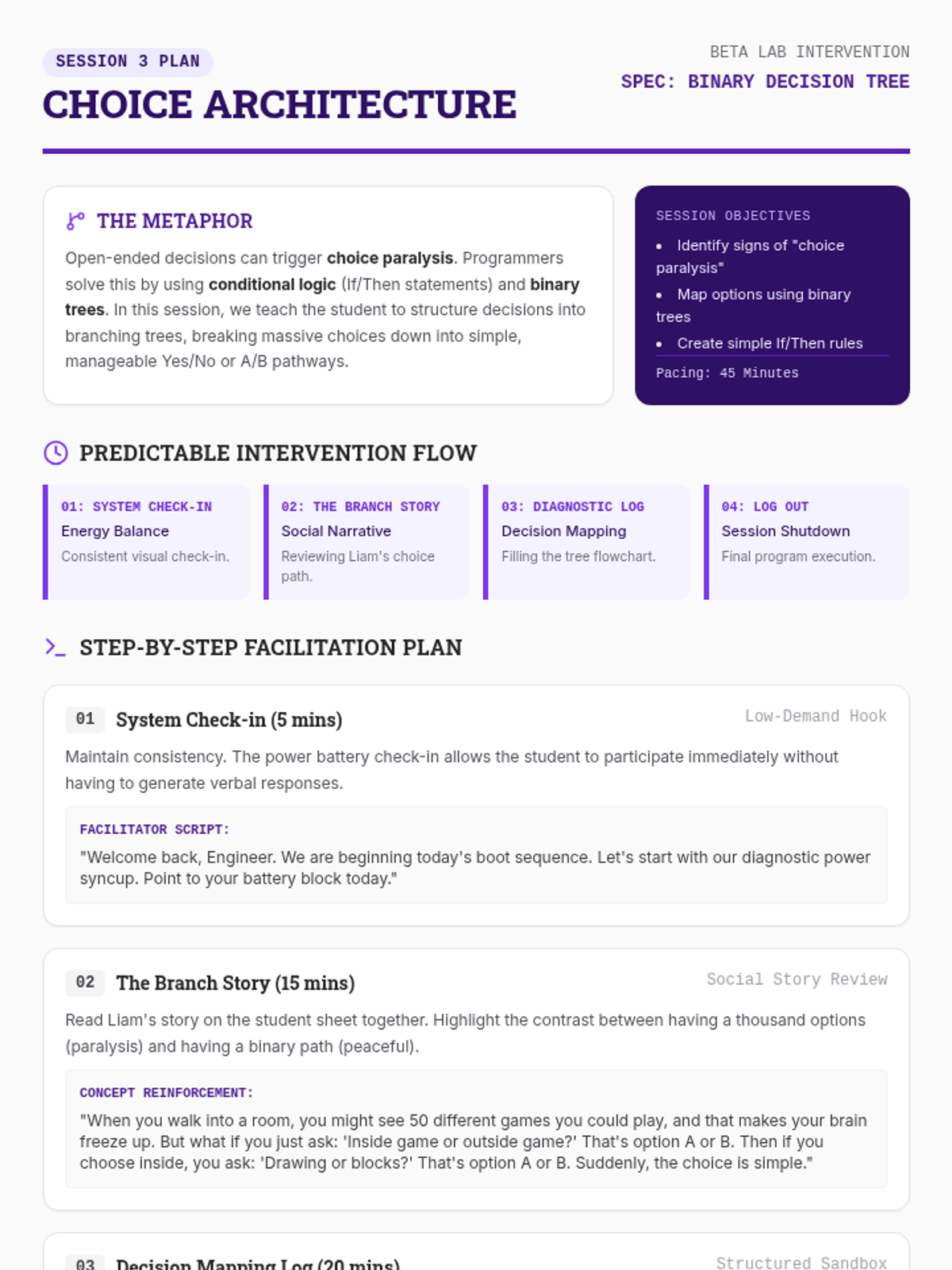
This facilitation guide provides the step-by-step lesson plan and engagement tips for Session 3, introducing branching choice architecture to simplify decisions and lower cognitive load for the student.
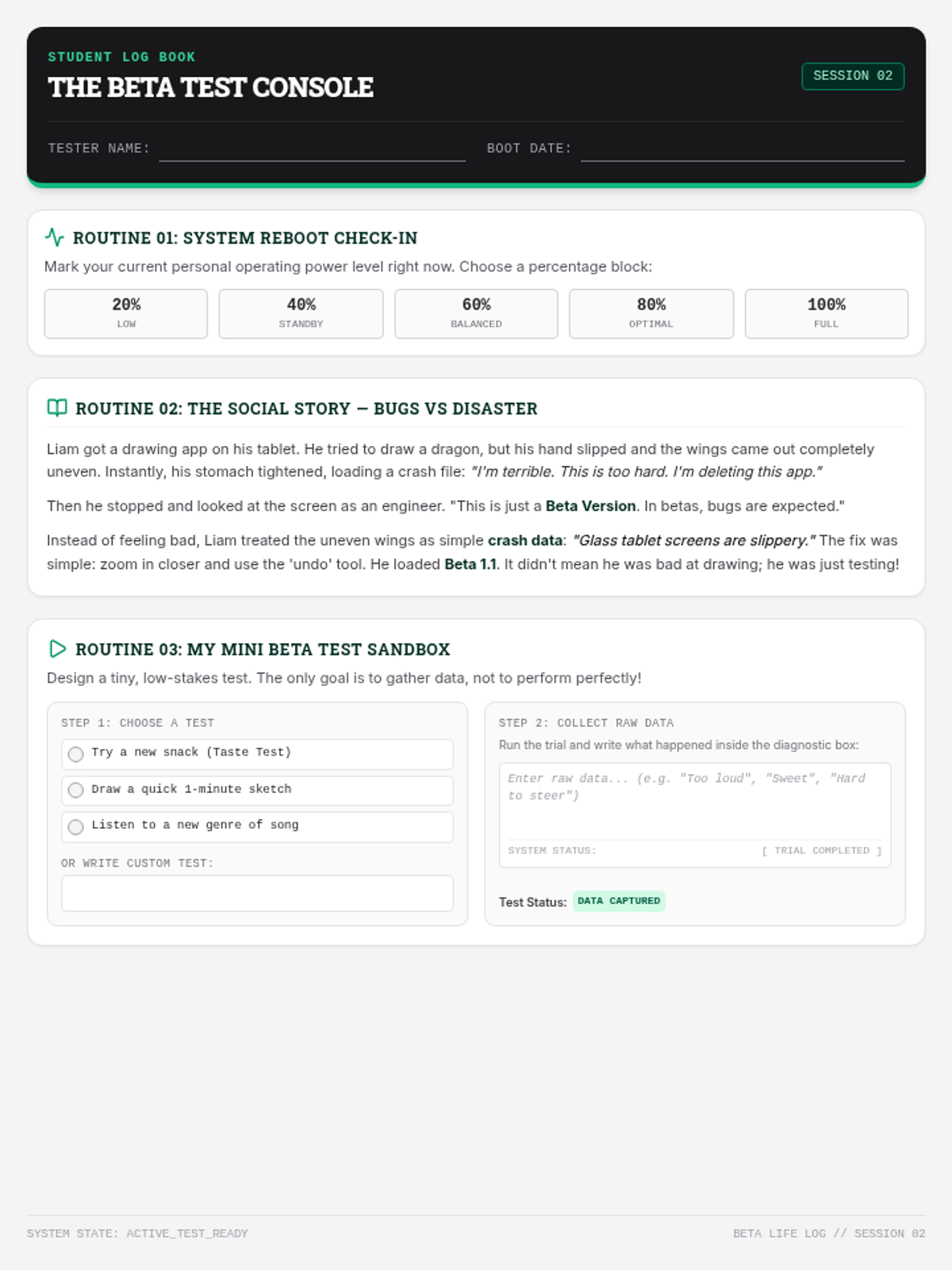
This student-facing spec sheet serves as the primary workspace for Session 2. It contains a predictable energy level check-in, Liam's beta story on reframing failure as simple crash data, and a structured sandbox for designing and running a tiny beta test.
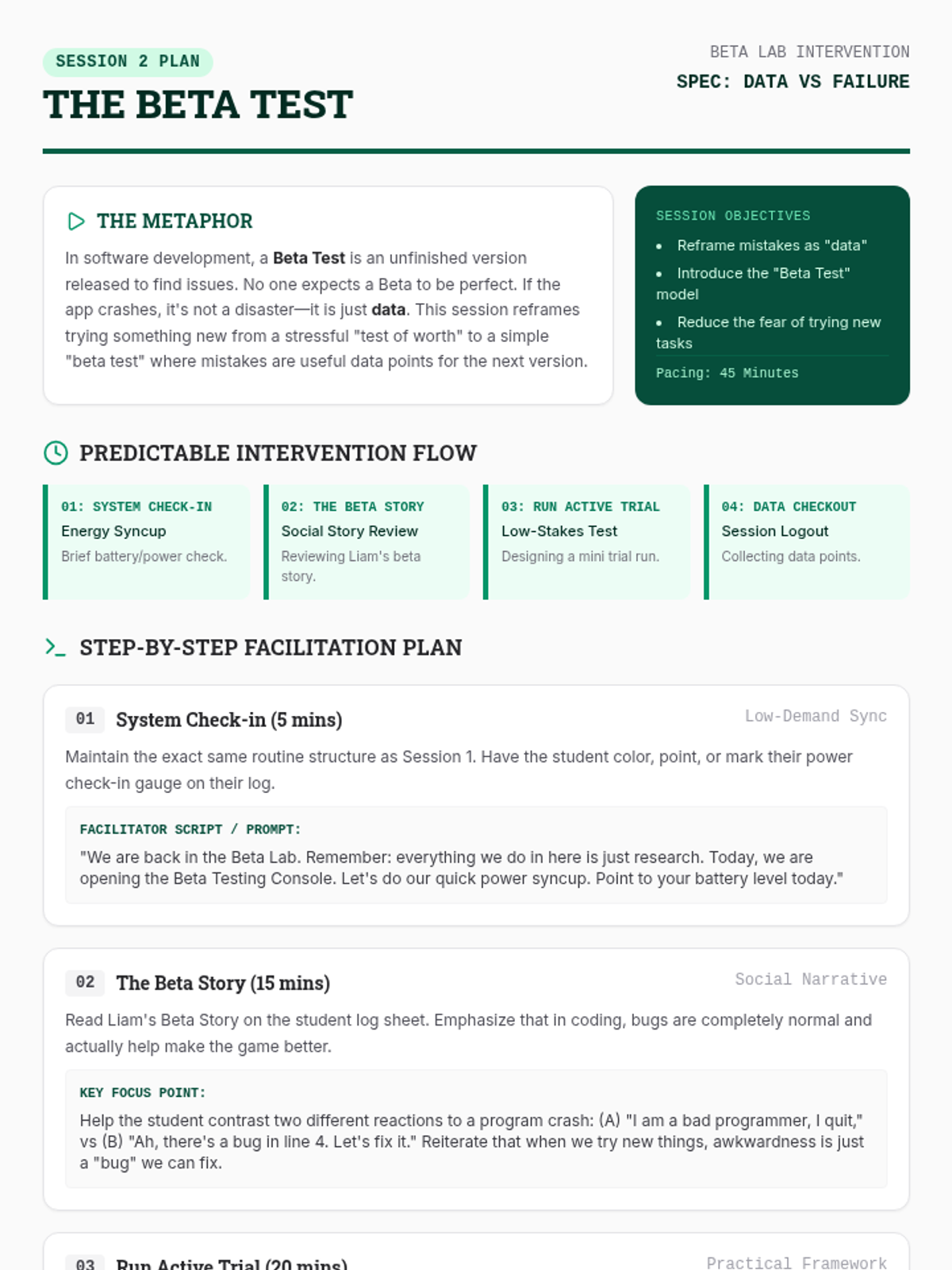
This facilitation guide provides the step-by-step lesson plan and engagement tips for Session 2, helping teachers reframe mistakes as data and guiding the student to outline a low-stakes 'beta test' in their environment.
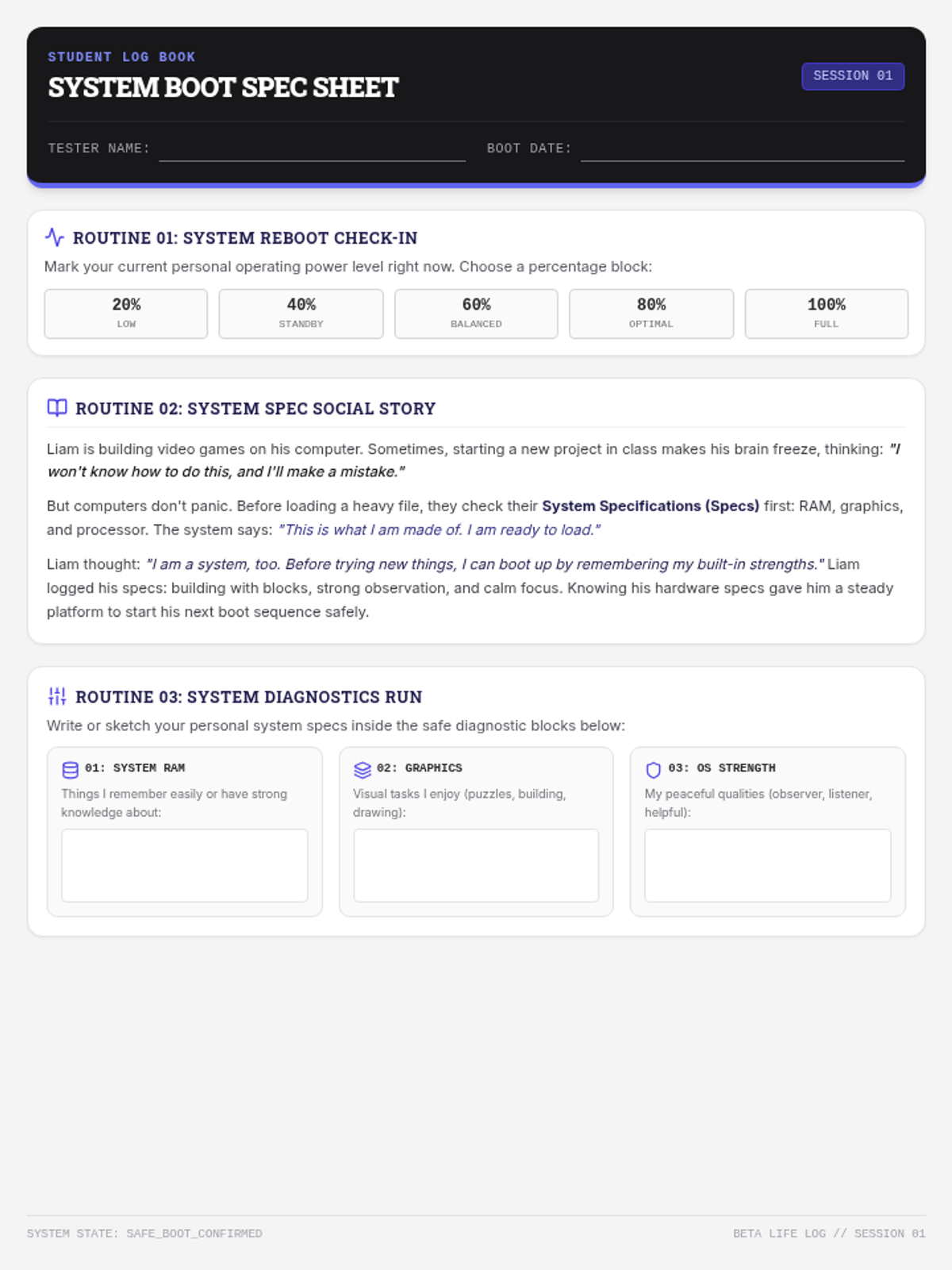
This student-facing spec sheet serves as the primary workspace for Session 1. It contains a predictable energy level check-in, a step-by-step social story reframing strengths as 'system specs', and structured modules for logging personal strengths.
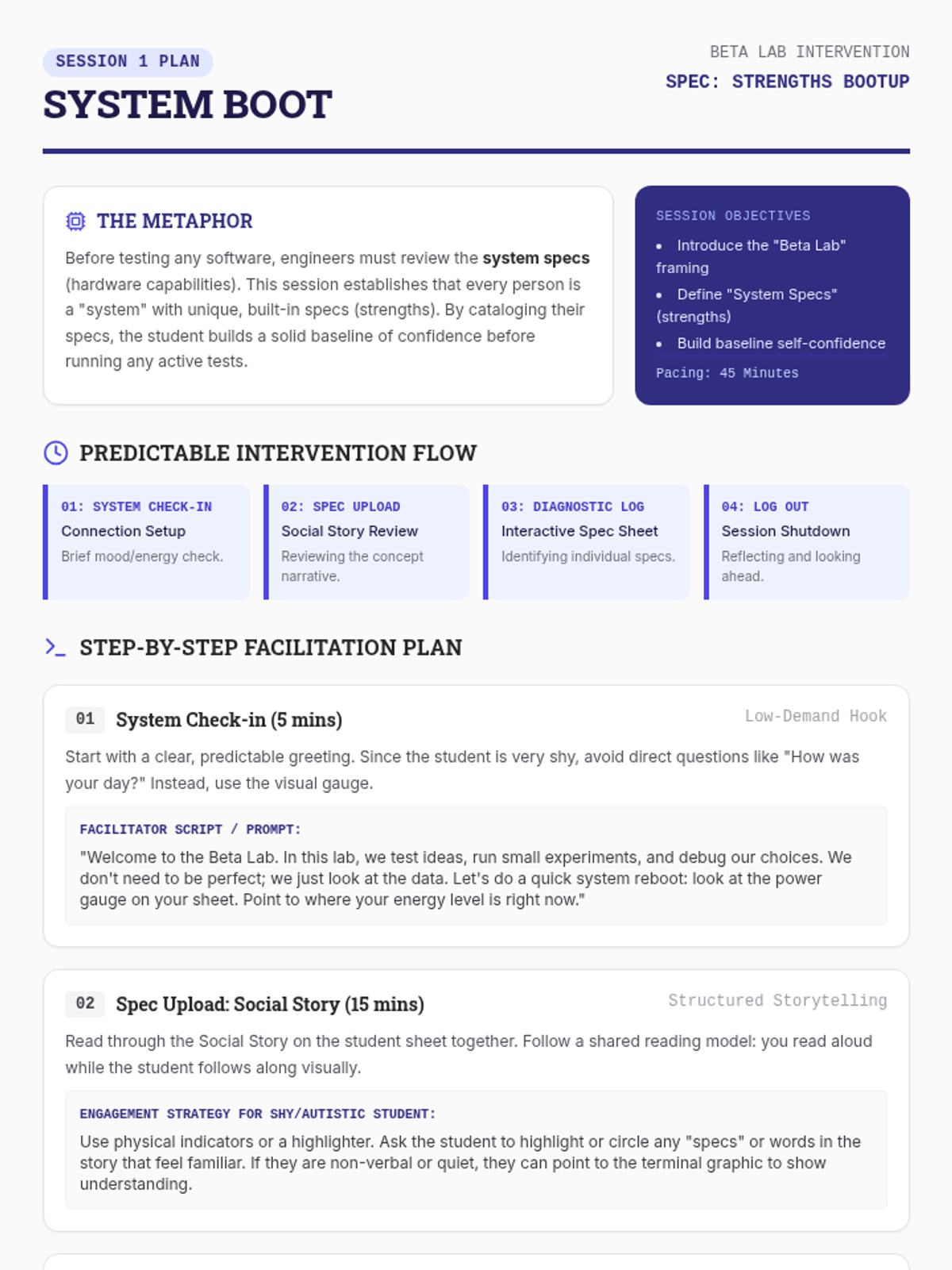
This facilitation guide provides the step-by-step lesson plan and engagement tips for Session 1, introducing the 'Beta Lab' engineering metaphor and helping the student identify their 'system specs' (personal strengths) in a predictable and supportive environment.
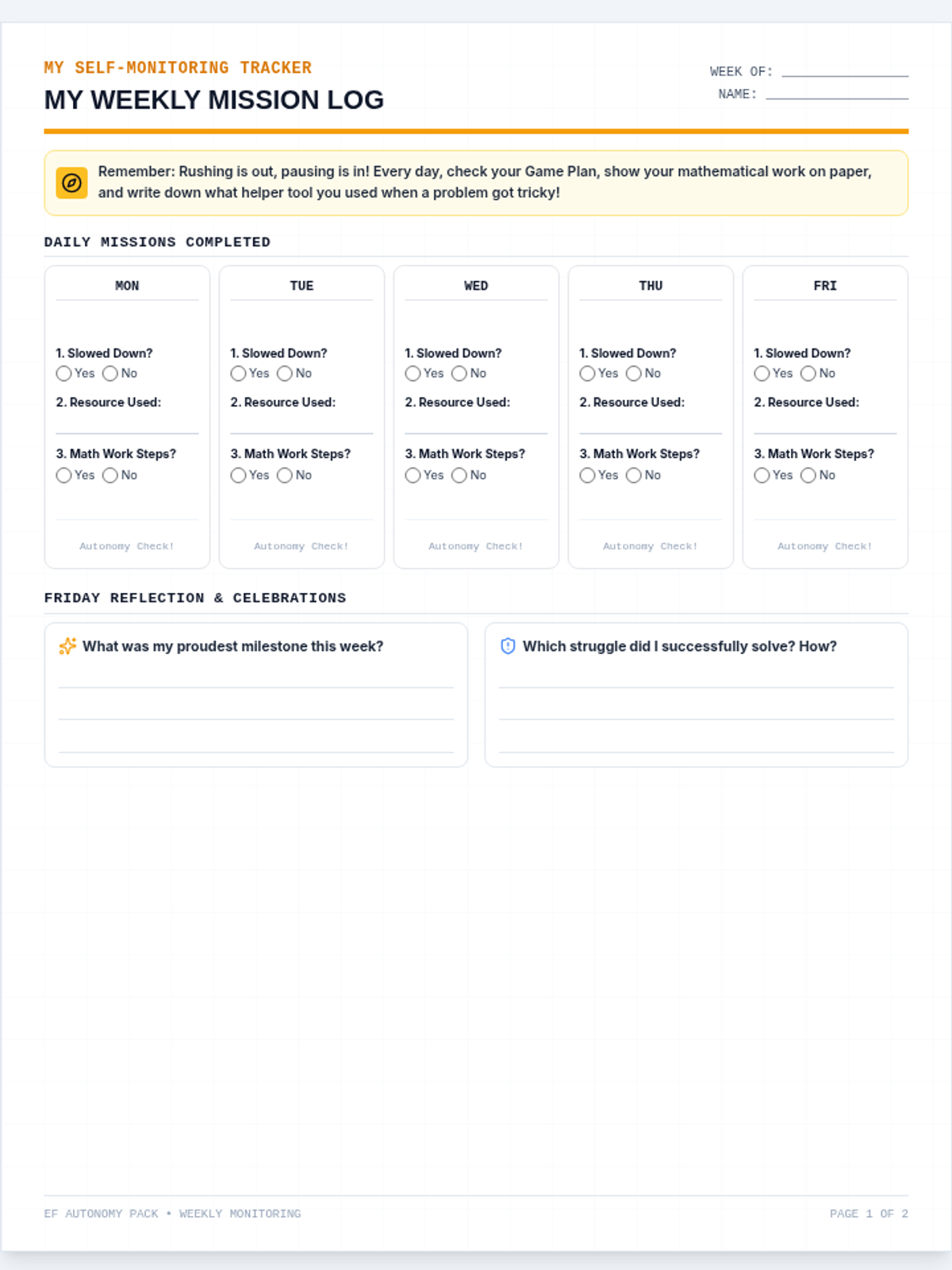
A printable weekly self-monitoring log for students to track daily autonomy metrics and a teacher-facing data recording grid to log executive functioning opportunities, resource selection, math work, and prompt levels.
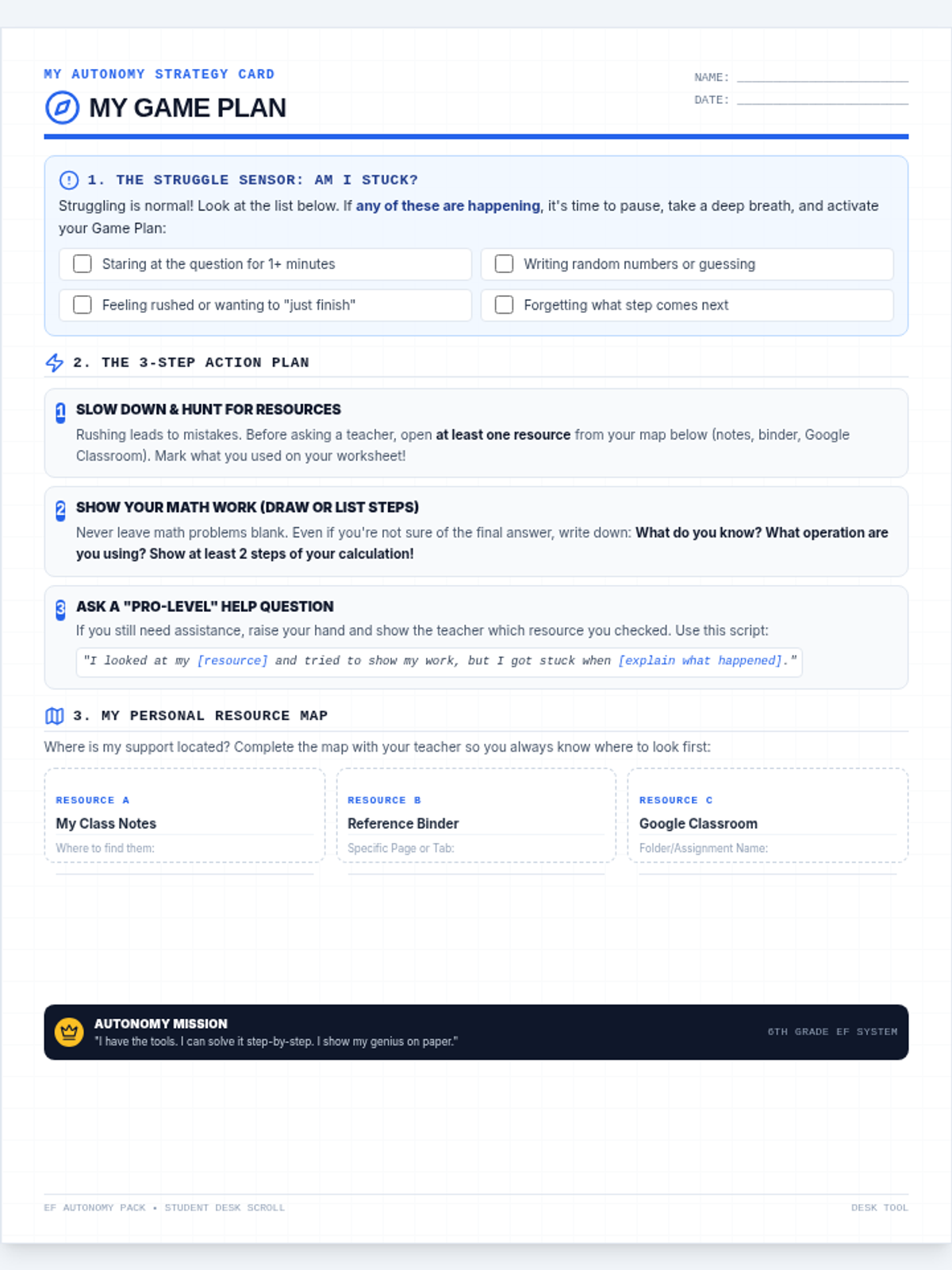
A student-facing visual desk-reference sheet designed to help students recognize academic struggles, activate a 3-step resource-driven action plan, and record where their reference notes, binders, and classroom materials are stored.
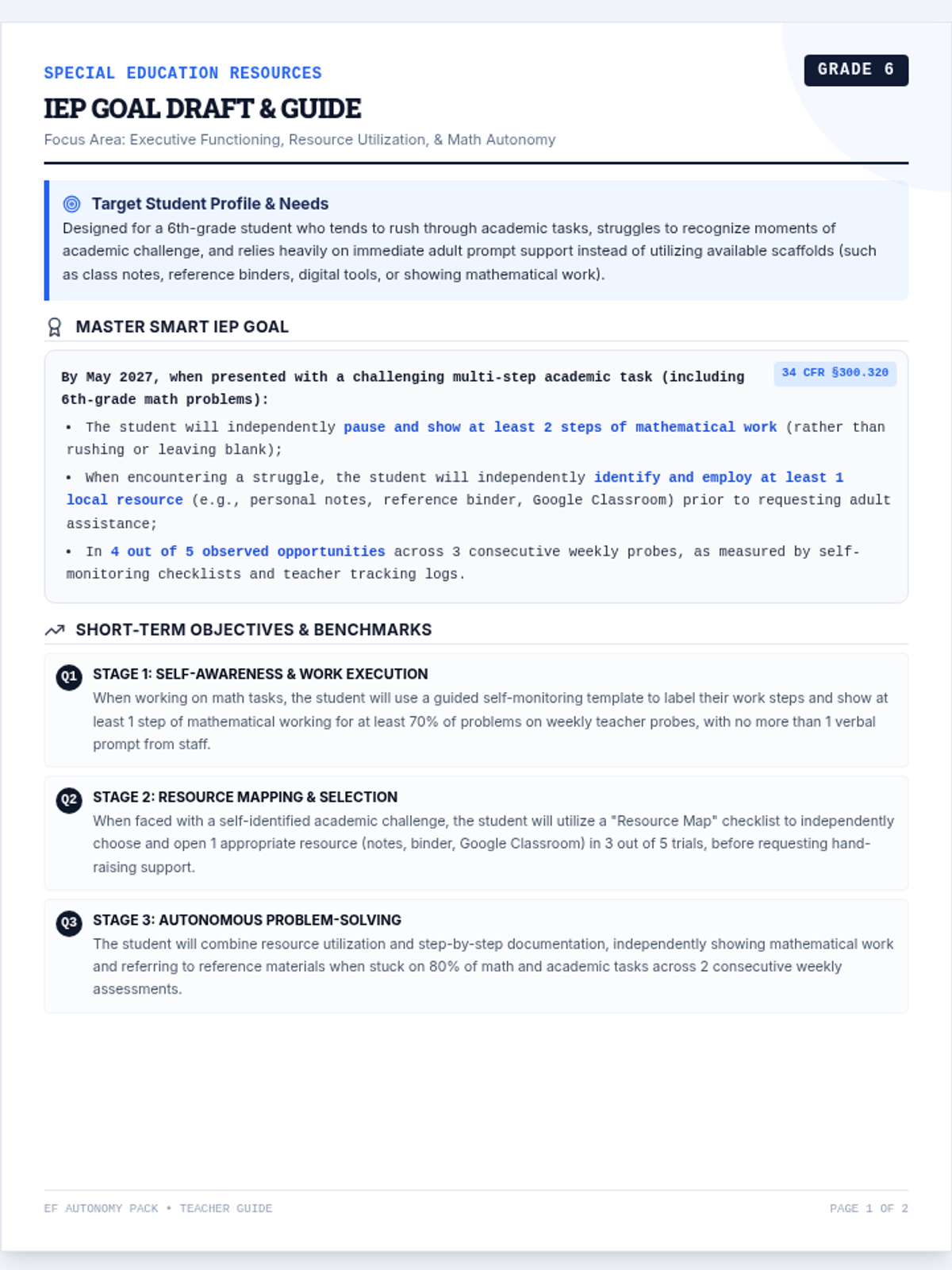
A comprehensive IEP Goal Draft and Educator Guide containing SMART objectives, quarterly benchmarks, specially designed accommodations, and data collection plans aligned with 6th-grade executive functioning needs.