An interactive and highly visual 7-slide class presentation introducing the 'Stat Squad' (Mean, Median, Mode, Range) specifically designed for classroom delivery to IEP students.
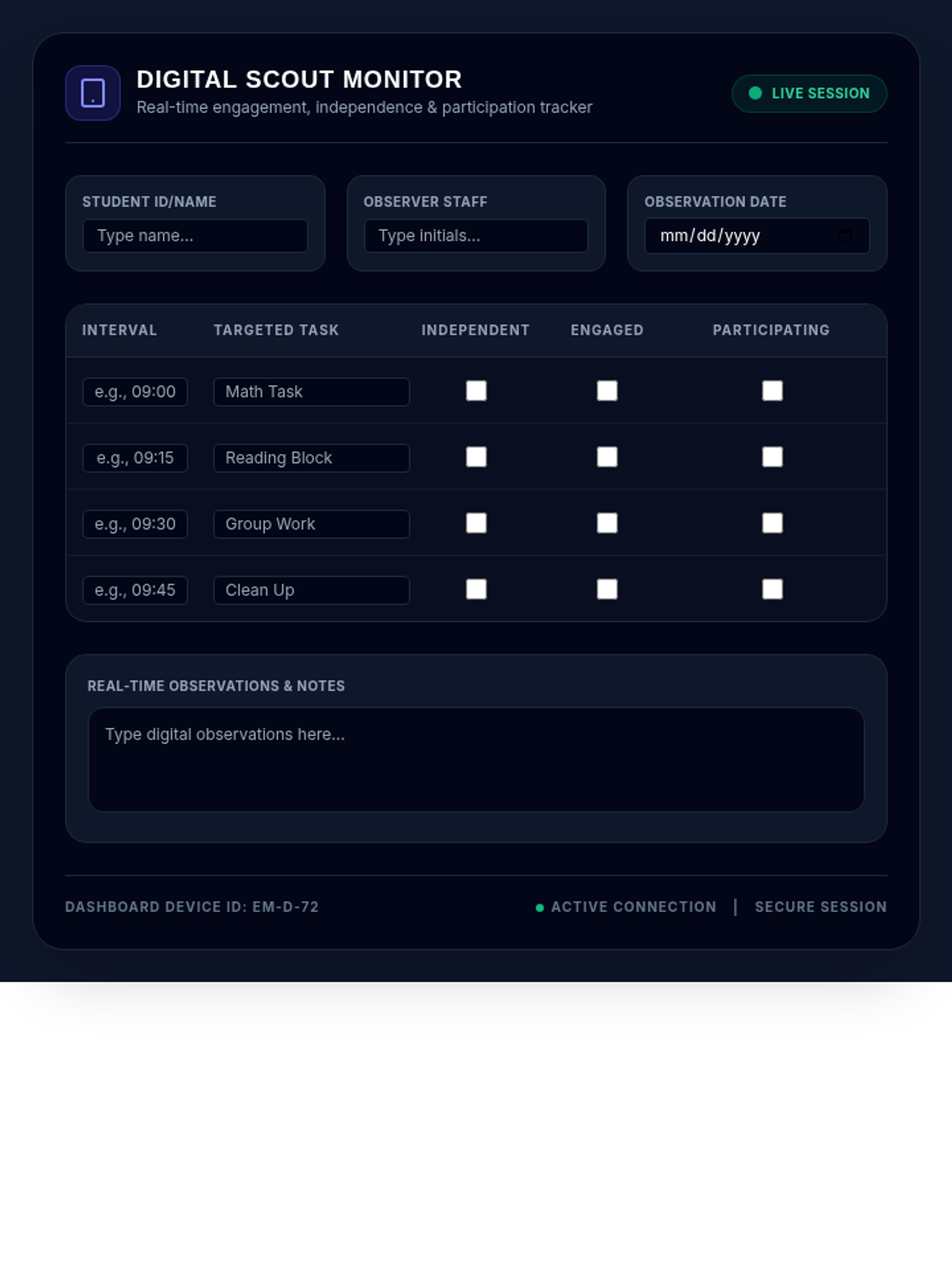
A tablet-optimized digital dashboard for paraprofessionals to track student independence, engagement, and participation metrics in real-time.
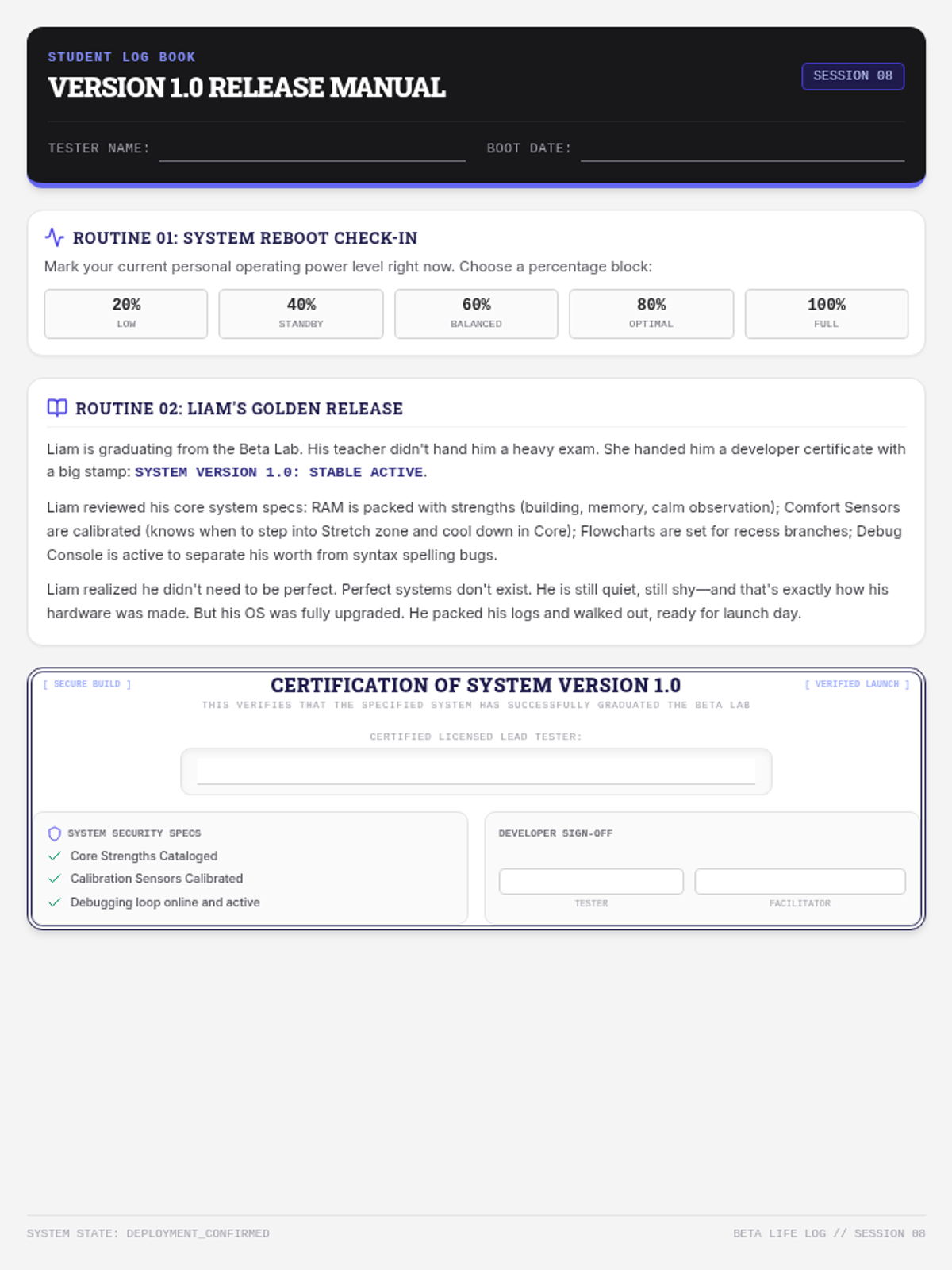
This student-facing spec sheet serves as the primary workspace for Session 8. It contains a predictable energy level check-in, Liam's story on graduating from the Beta Lab, and a beautiful certificate layout for the final signoff.
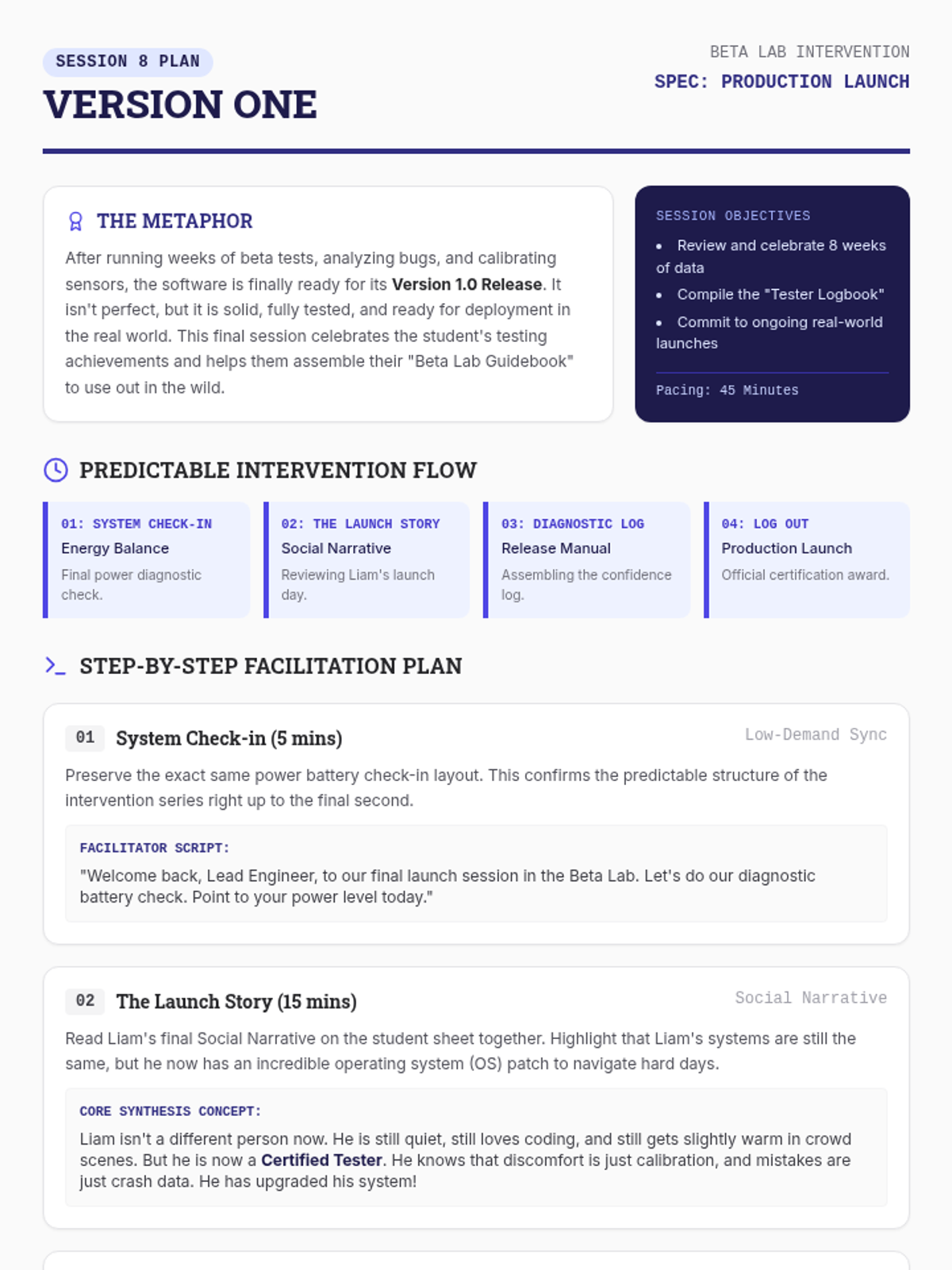
This facilitation guide provides the step-by-step lesson plan and engagement tips for Session 8, synthesizing the 8-week journey and guiding the teacher in organizing a quiet, professional celebration of the student's testing achievements.
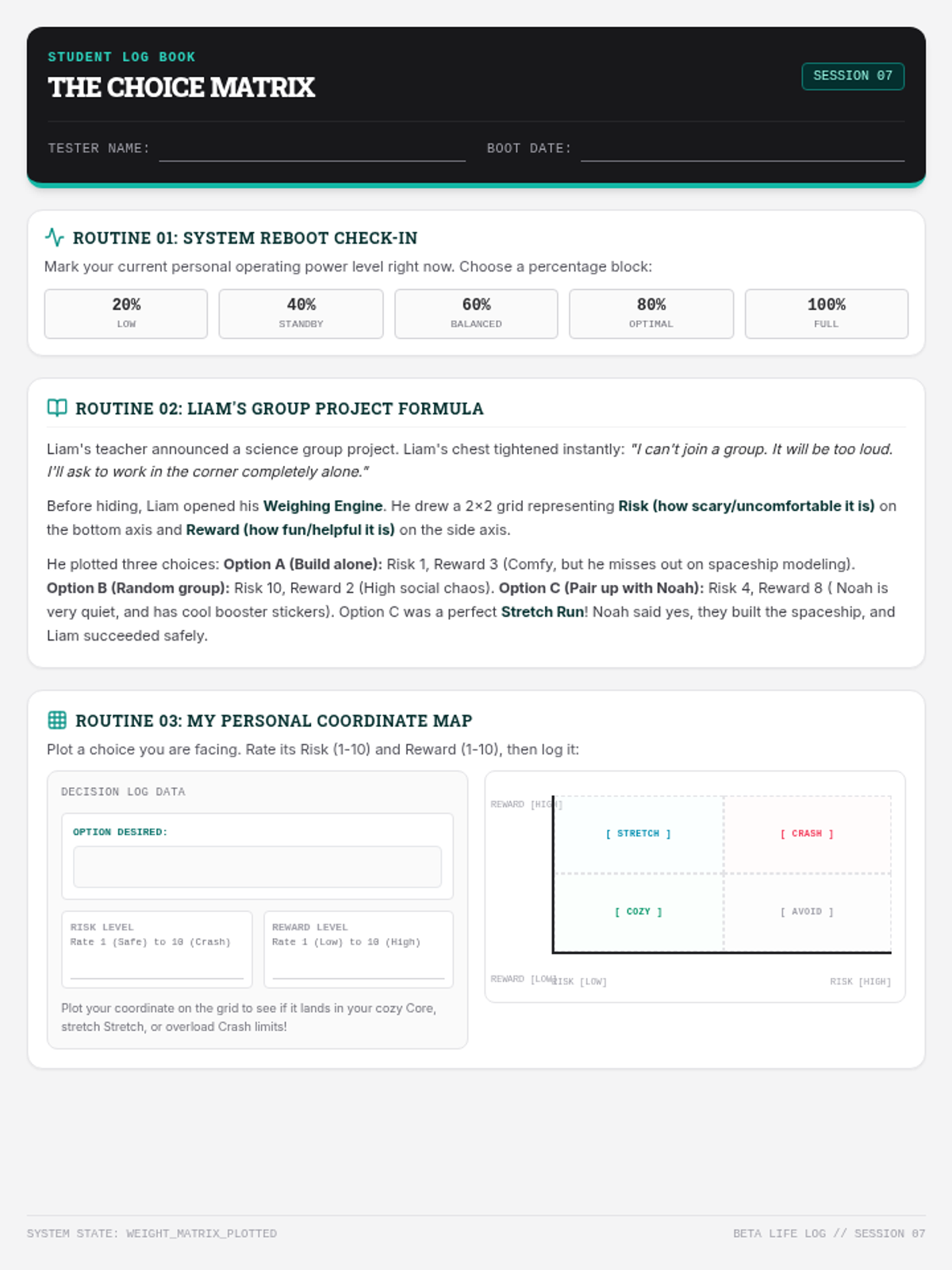
This student-facing spec sheet serves as the primary workspace for Session 7. It contains a predictable energy level check-in, Liam's story on using coordinates to analyze a scary science group assignment, and a structured 2x2 plotting grid.
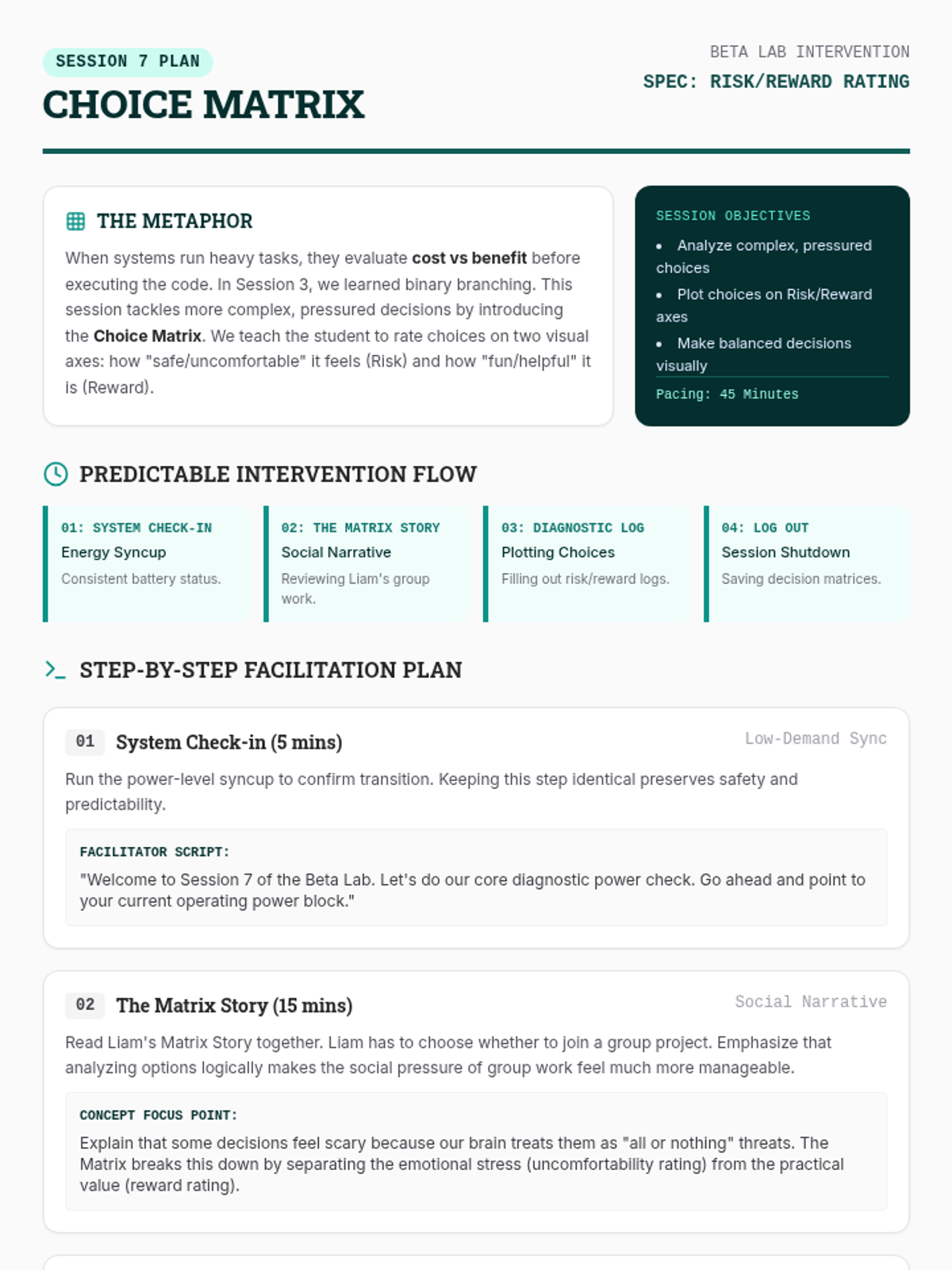
This facilitation guide provides the step-by-step lesson plan and engagement tips for Session 7, teaching the student how to use a visual Risk/Reward rating matrix to analyze complex choices.
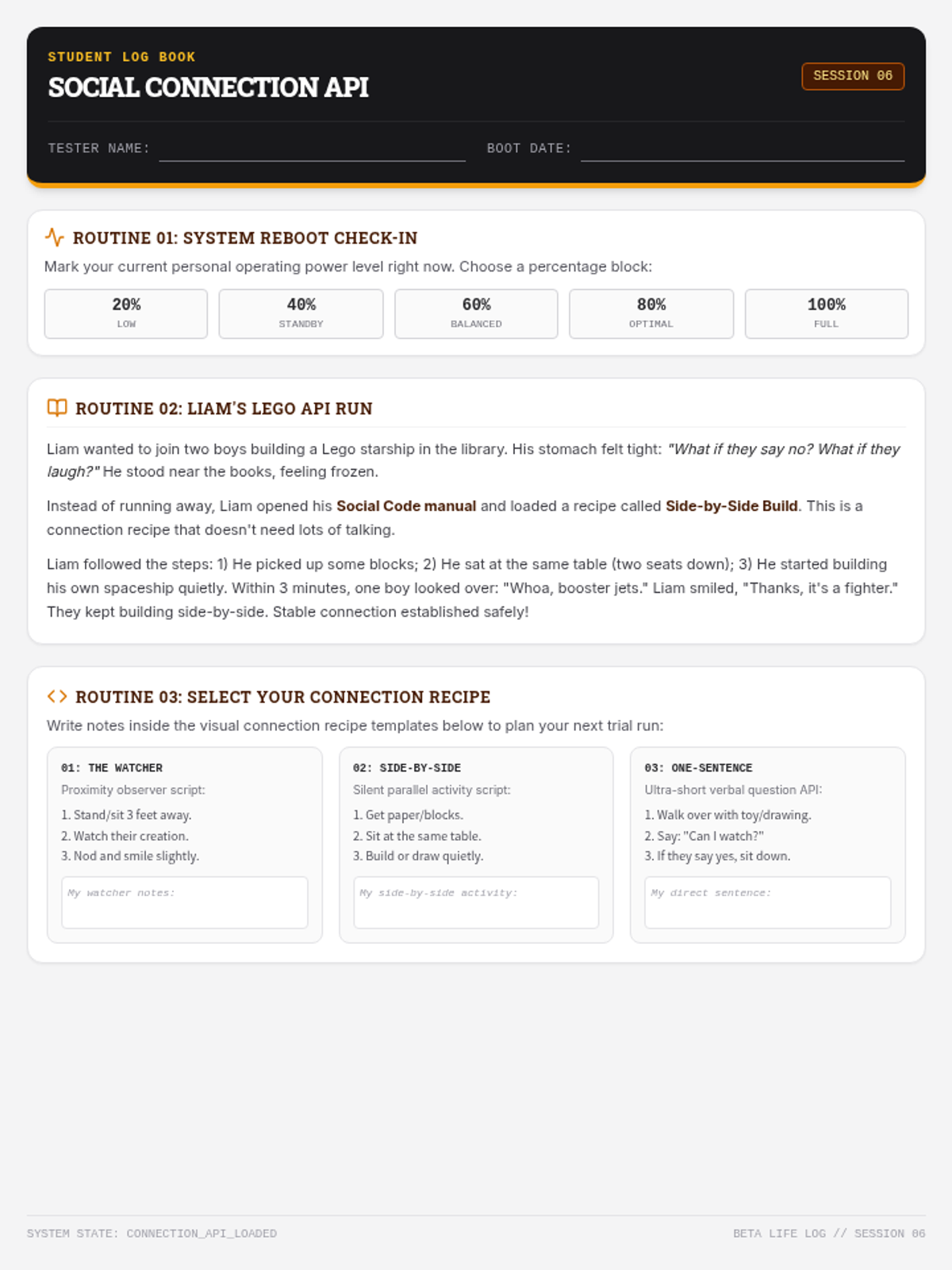
This student-facing spec sheet serves as the primary workspace for Session 6. It contains a predictable energy level check-in, Liam's story on parallel play lego connection, and three visual recipes for peer connection.
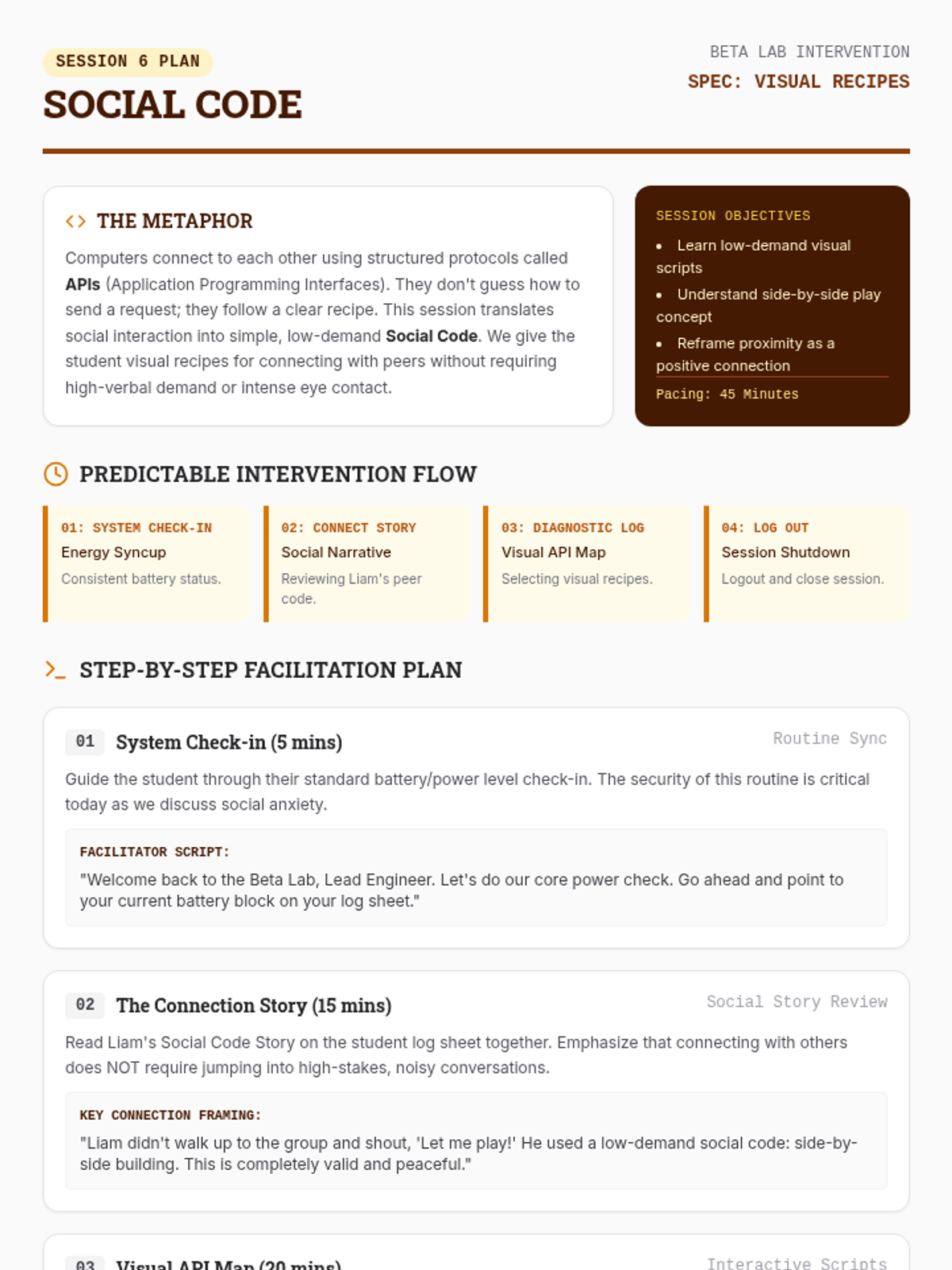
This facilitation guide provides the step-by-step lesson plan and engagement tips for Session 6, introducing low-demand social scripts and structured visual recipes for peer connection.
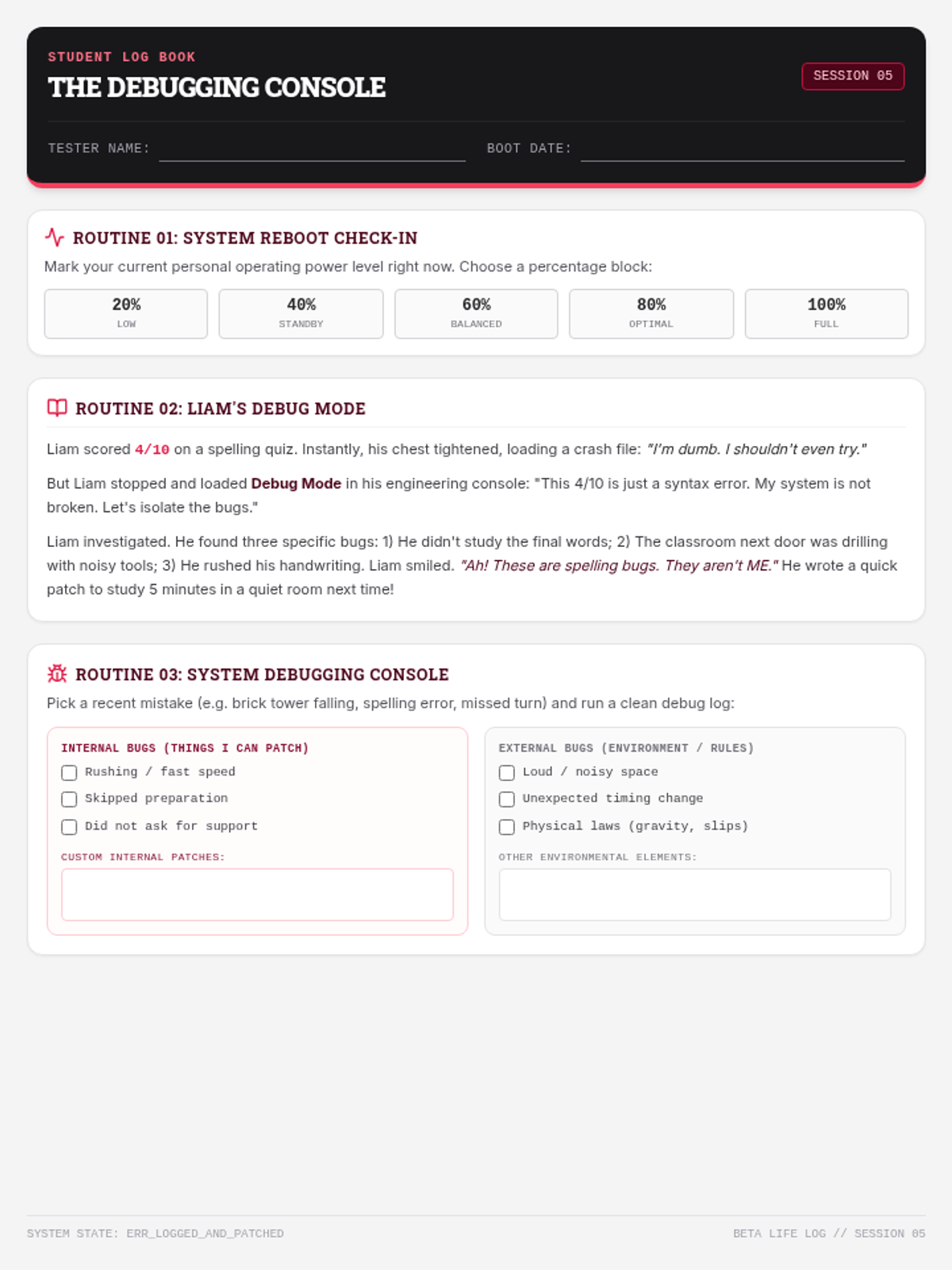
This student-facing spec sheet serves as the primary workspace for Session 5. It contains a predictable energy level check-in, Liam's story on debug mode, and an interactive sorting console for isolating internal vs. external error sources.
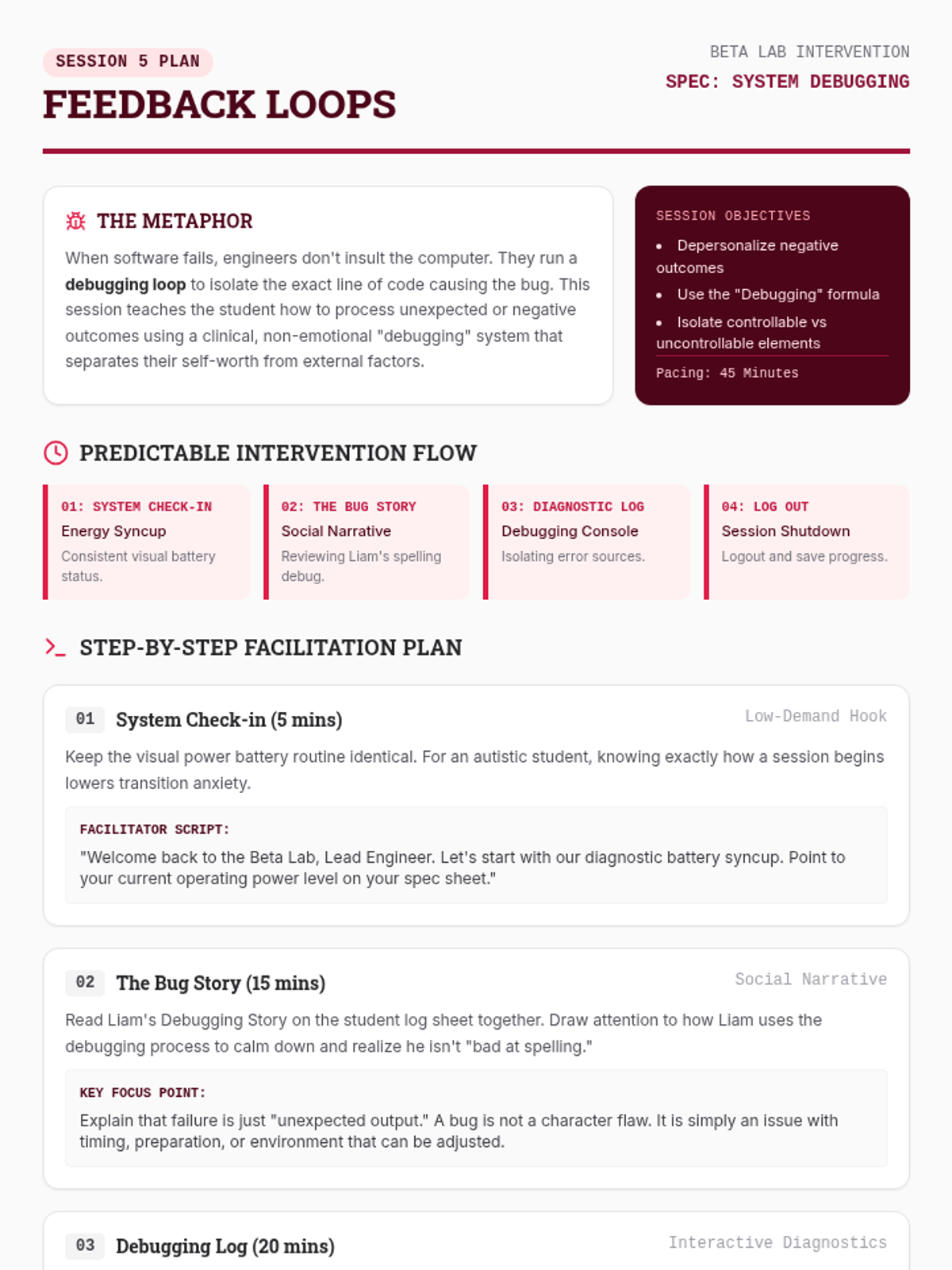
This facilitation guide provides the step-by-step lesson plan and engagement tips for Session 5, focusing on a structured, objective 'debugging' framework to help students analyze mistakes without personal shame.
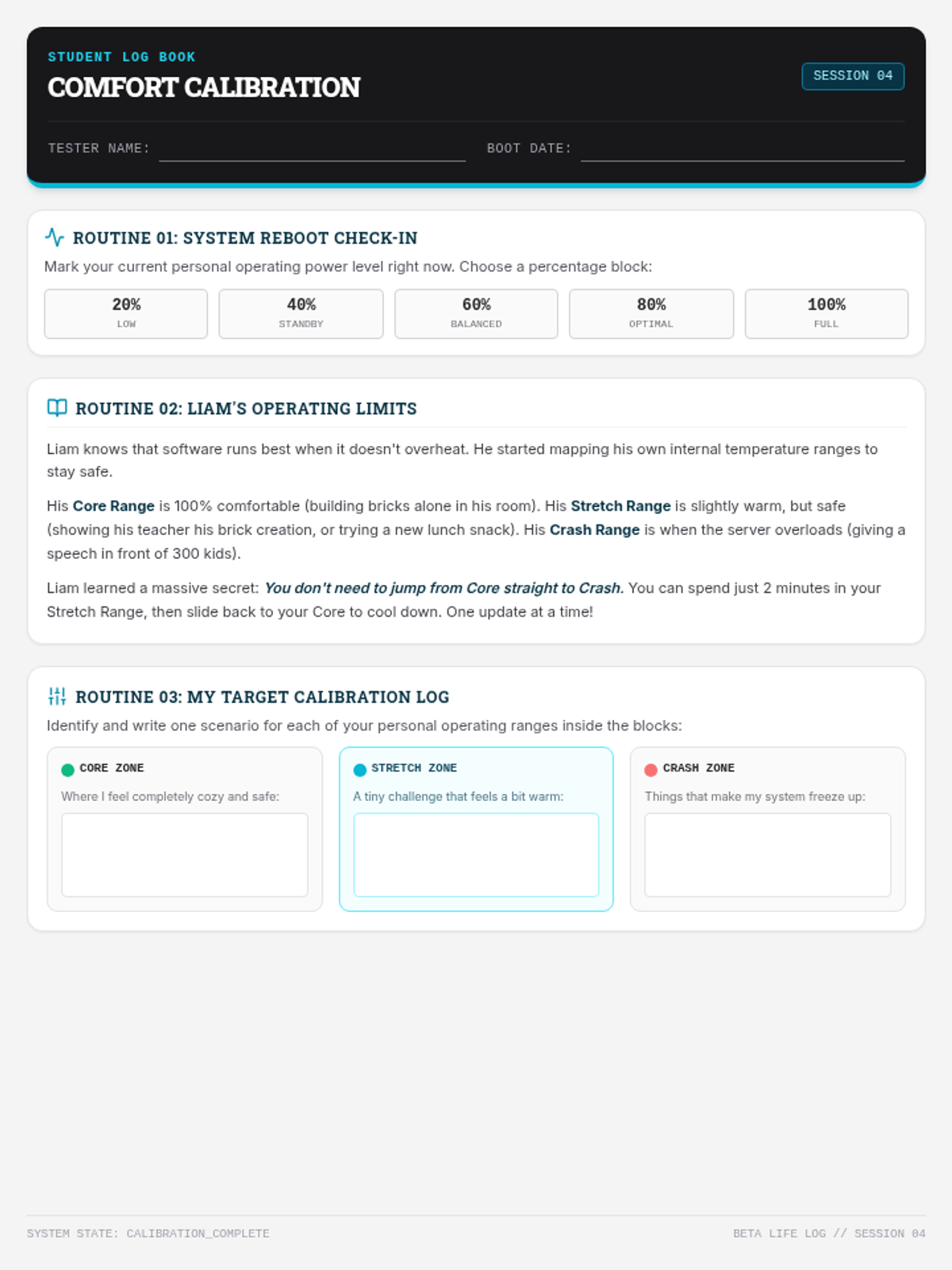
This student-facing spec sheet serves as the primary workspace for Session 4. It contains a predictable energy level check-in, Liam's story on comfort zones (Core, Stretch, and Crash), and a structured 3-tier calibration log.
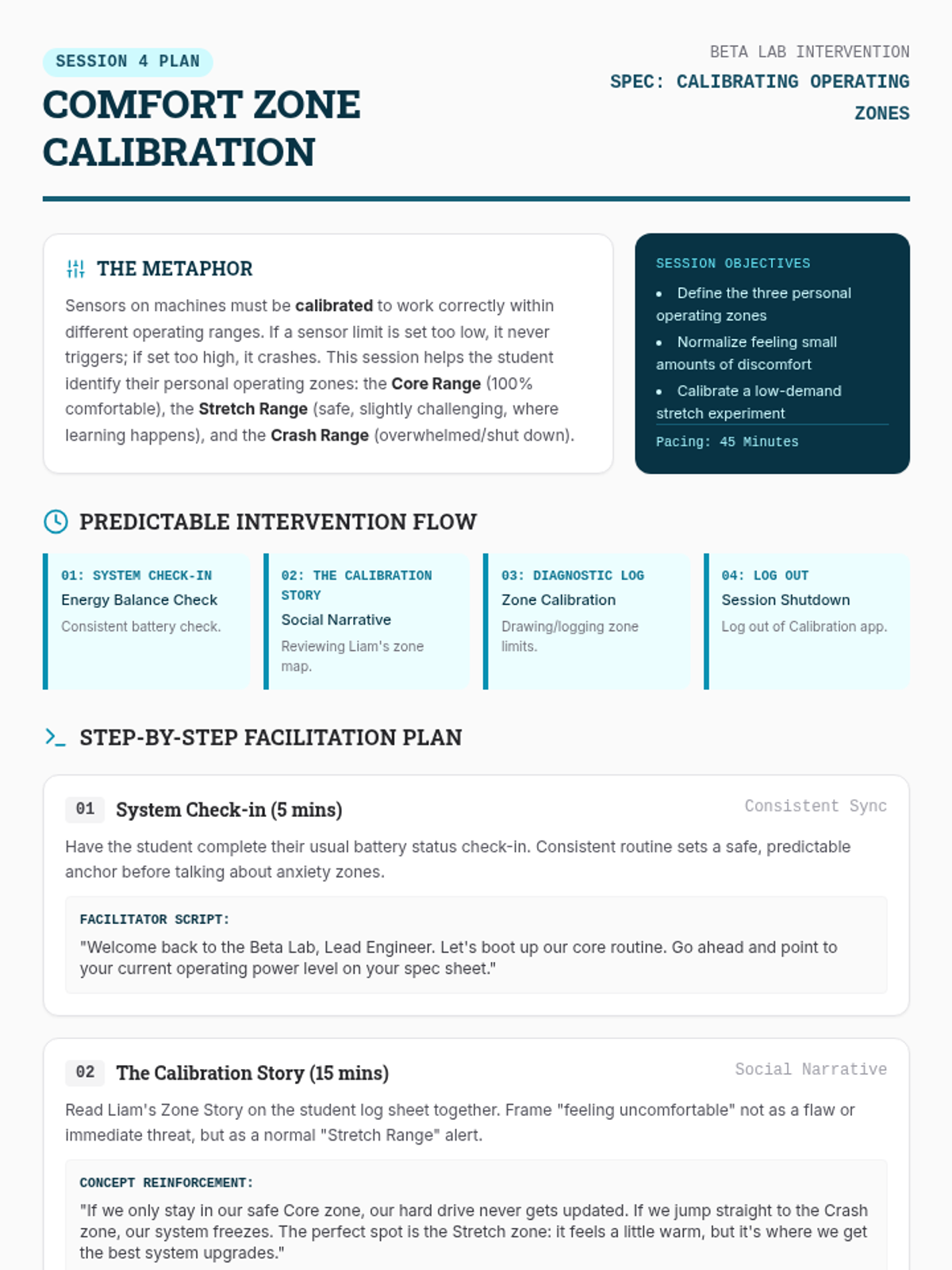
This facilitation guide provides the step-by-step lesson plan and engagement tips for Session 4, focusing on helping the student map their comfortable operating zones (Core, Stretch, and Crash) to make gradated risk-taking feel structured and safe.
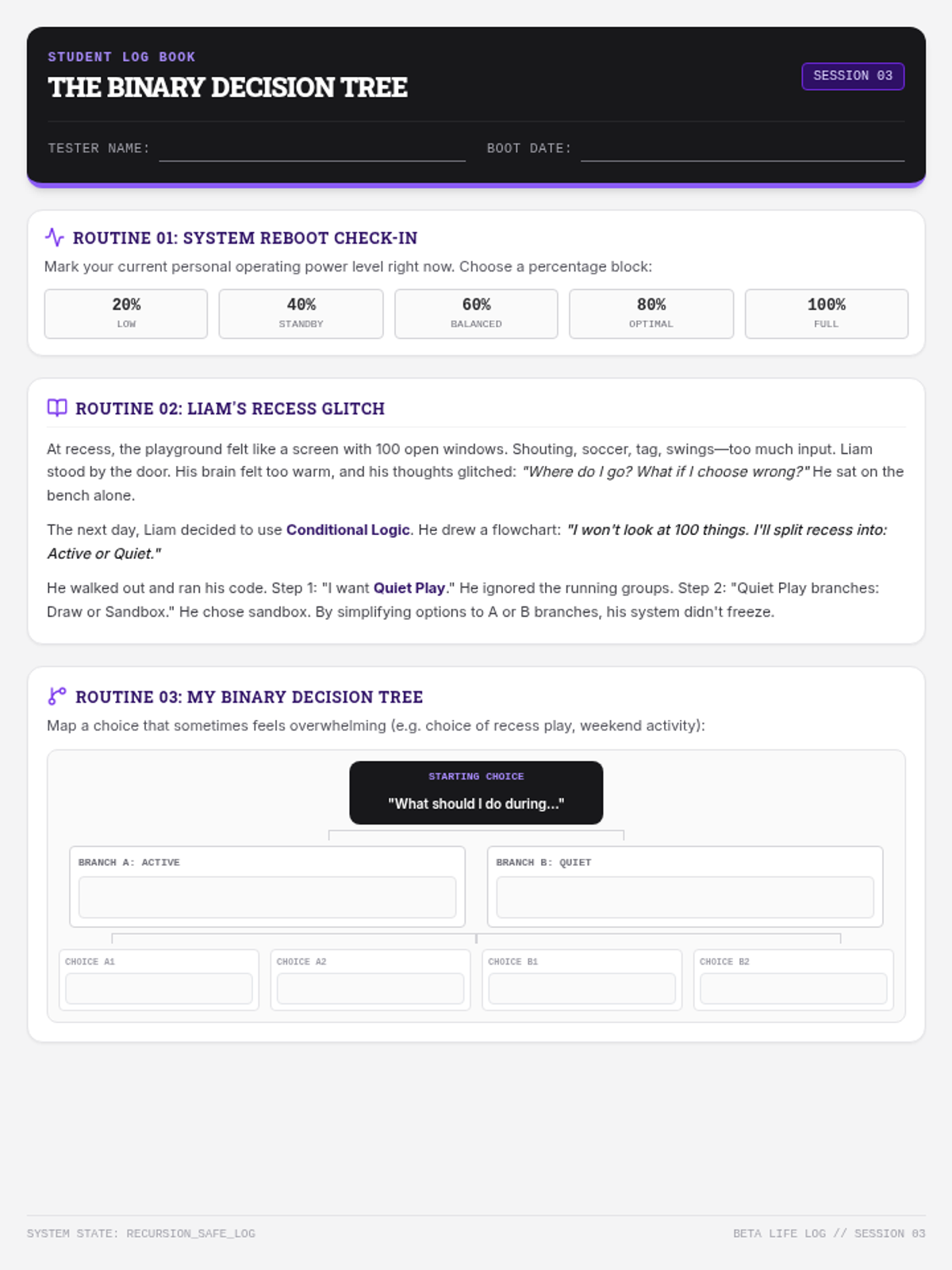
This student-facing spec sheet serves as the primary workspace for Session 3. It contains a predictable energy level check-in, Liam's story on choice overload at recess, and a structured flowchart for practicing binary choice branch logic.
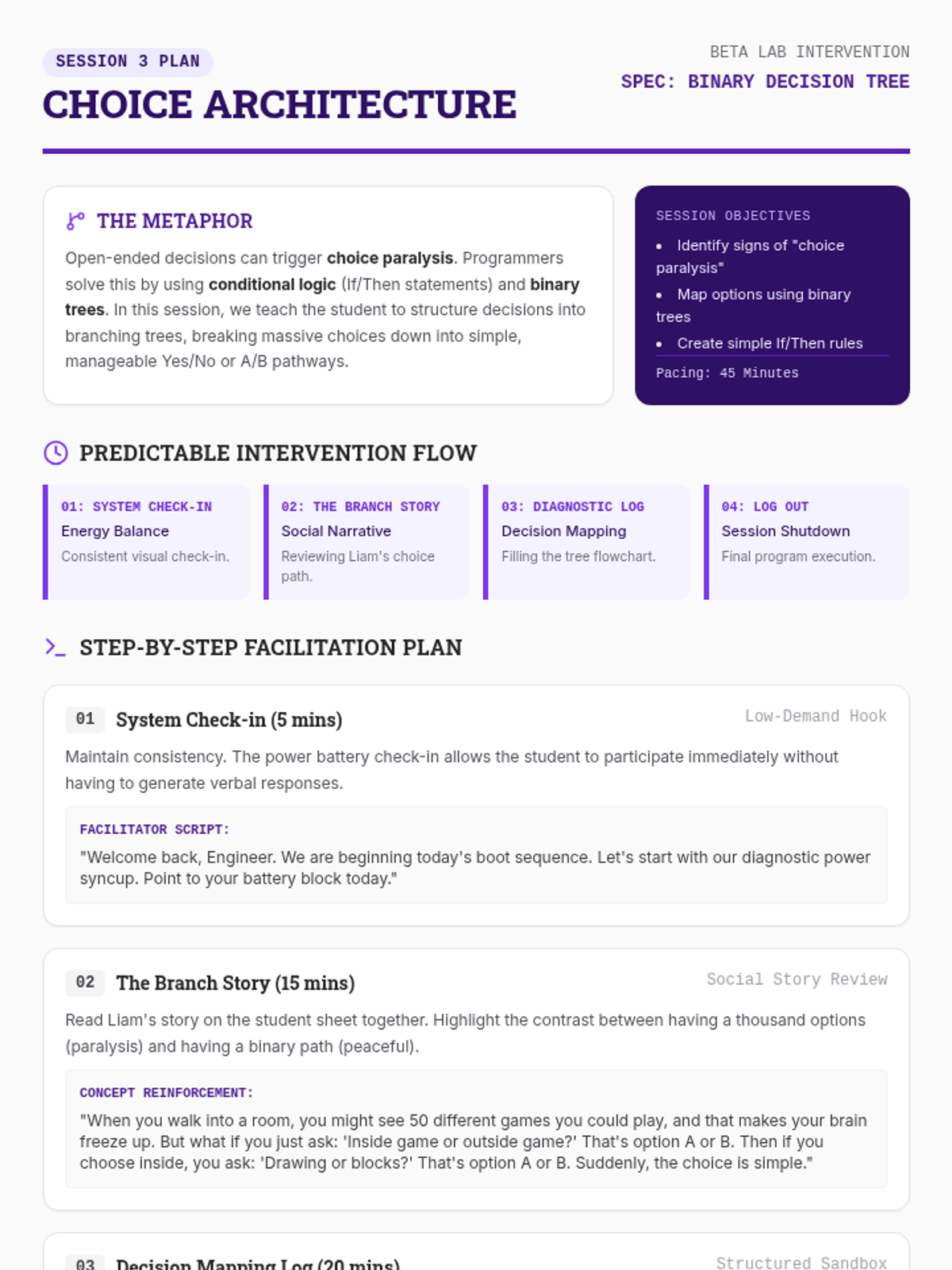
This facilitation guide provides the step-by-step lesson plan and engagement tips for Session 3, introducing branching choice architecture to simplify decisions and lower cognitive load for the student.
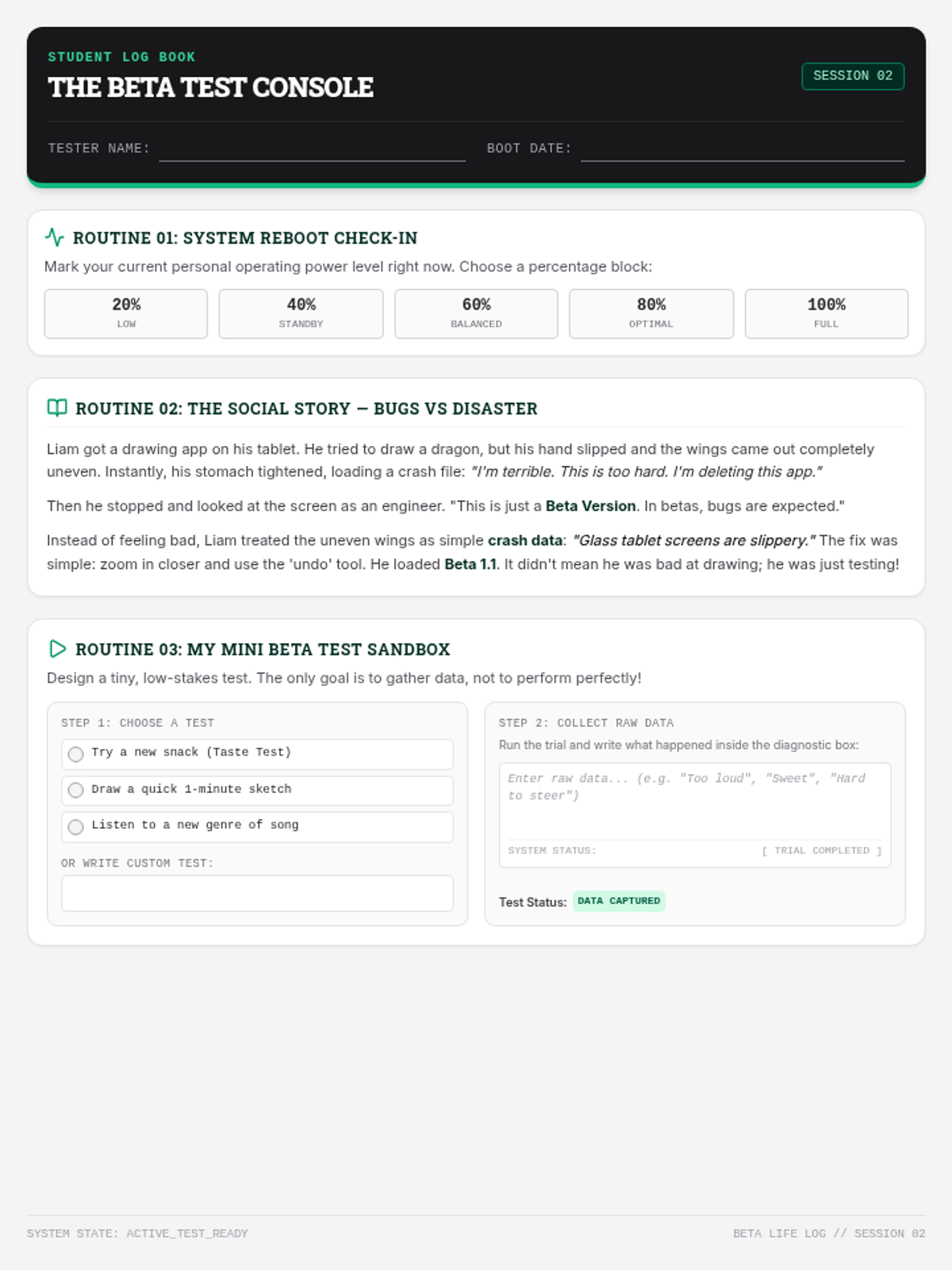
This student-facing spec sheet serves as the primary workspace for Session 2. It contains a predictable energy level check-in, Liam's beta story on reframing failure as simple crash data, and a structured sandbox for designing and running a tiny beta test.
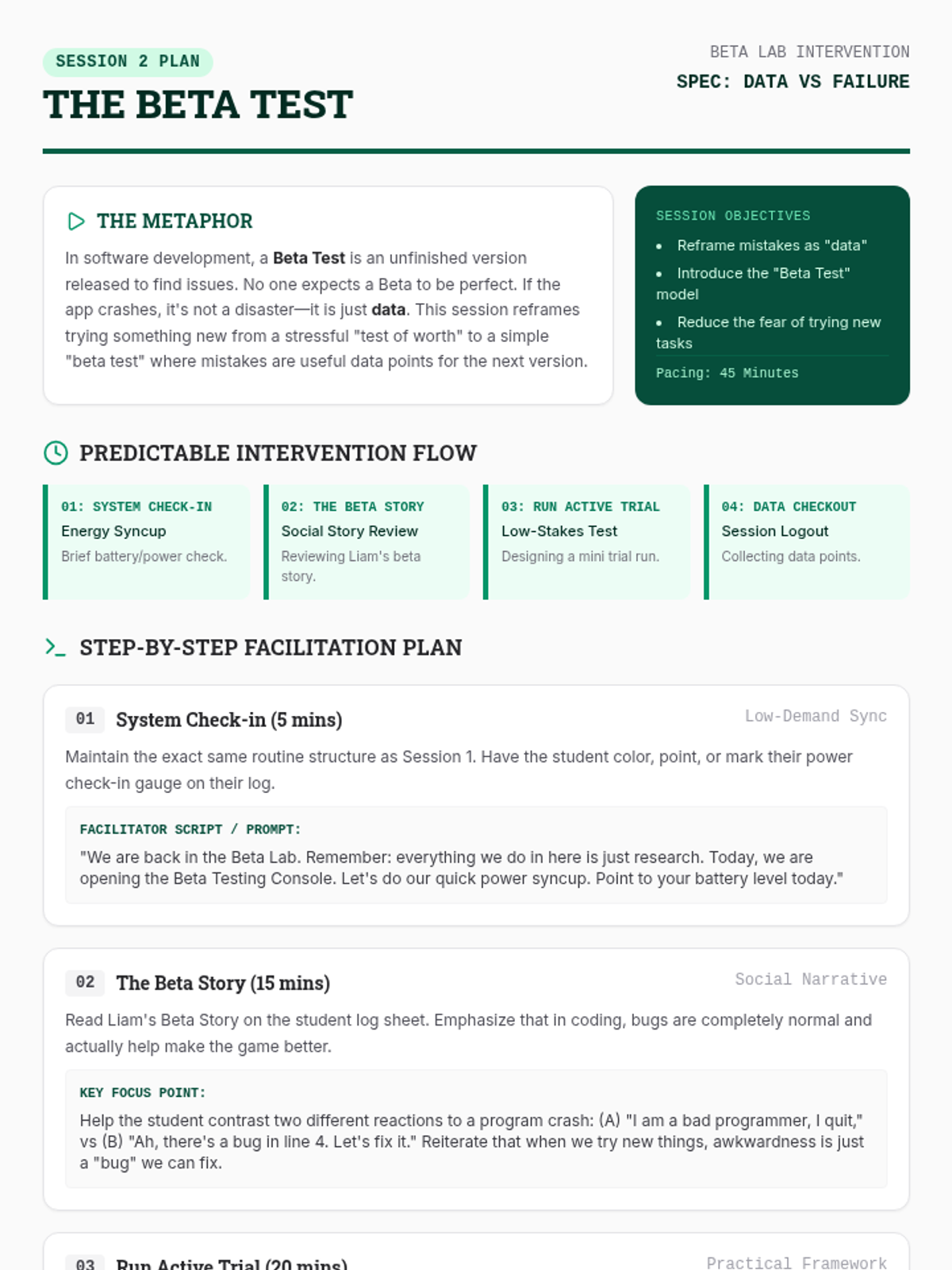
This facilitation guide provides the step-by-step lesson plan and engagement tips for Session 2, helping teachers reframe mistakes as data and guiding the student to outline a low-stakes 'beta test' in their environment.
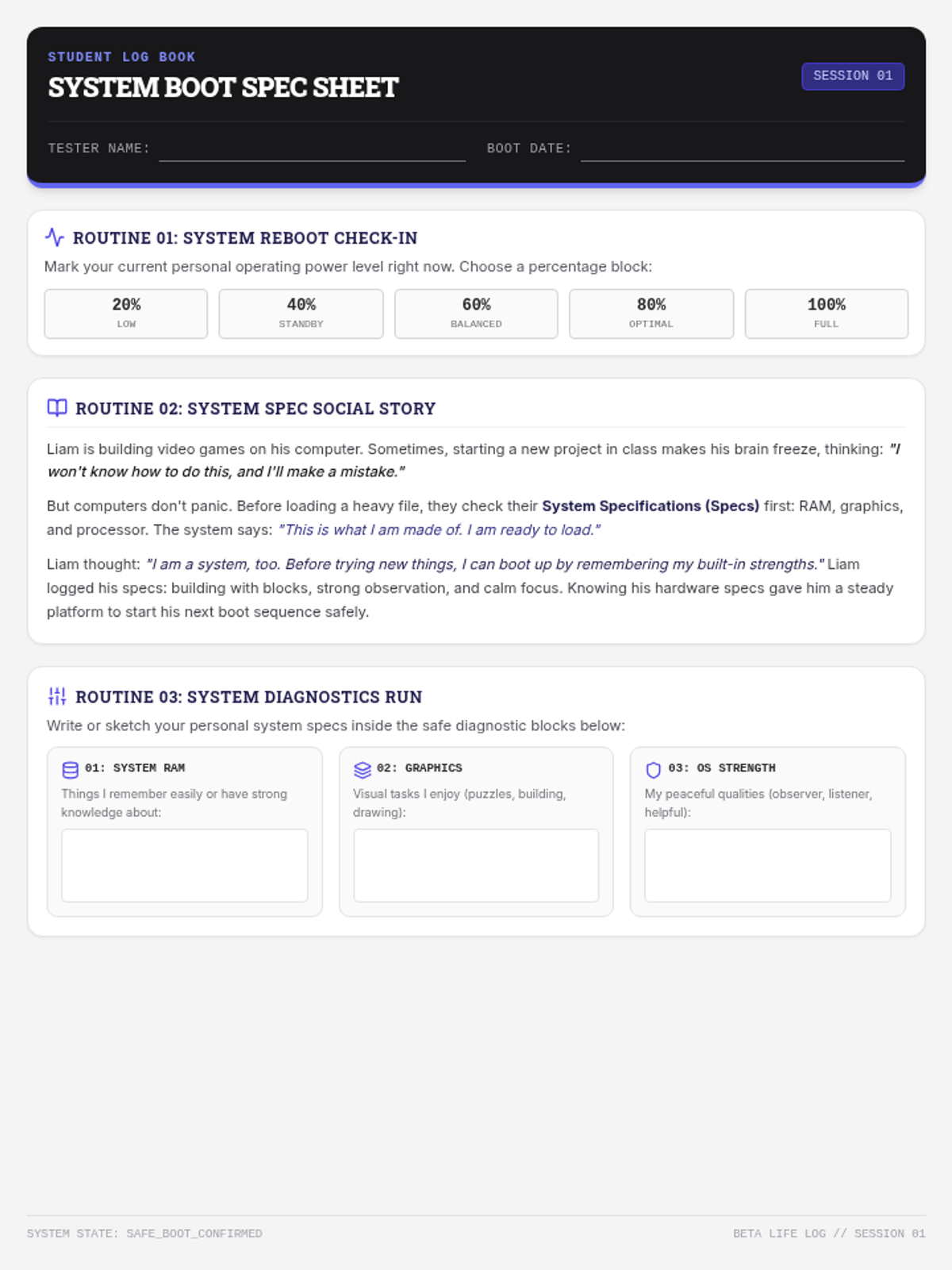
This student-facing spec sheet serves as the primary workspace for Session 1. It contains a predictable energy level check-in, a step-by-step social story reframing strengths as 'system specs', and structured modules for logging personal strengths.
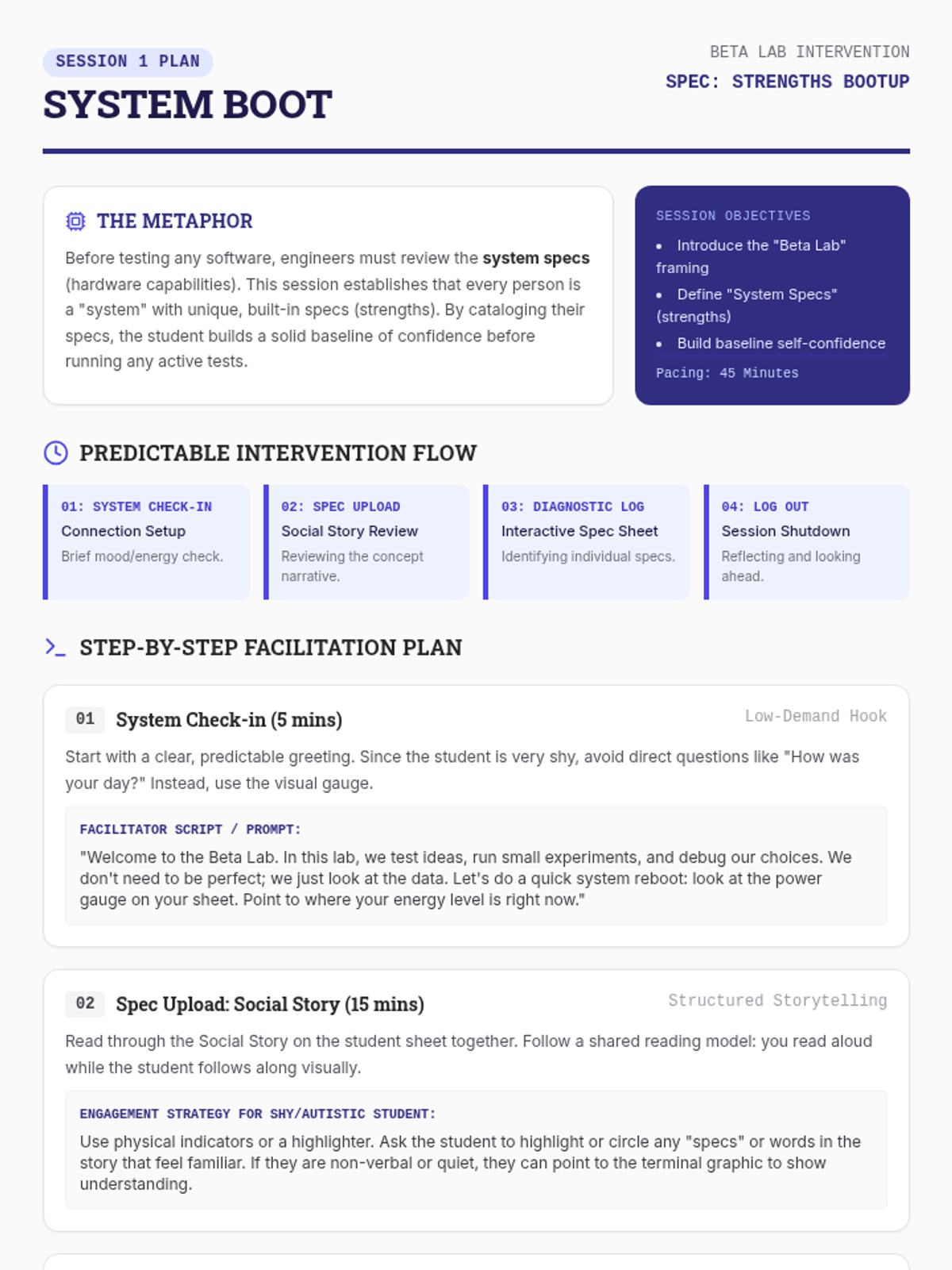
This facilitation guide provides the step-by-step lesson plan and engagement tips for Session 1, introducing the 'Beta Lab' engineering metaphor and helping the student identify their 'system specs' (personal strengths) in a predictable and supportive environment.
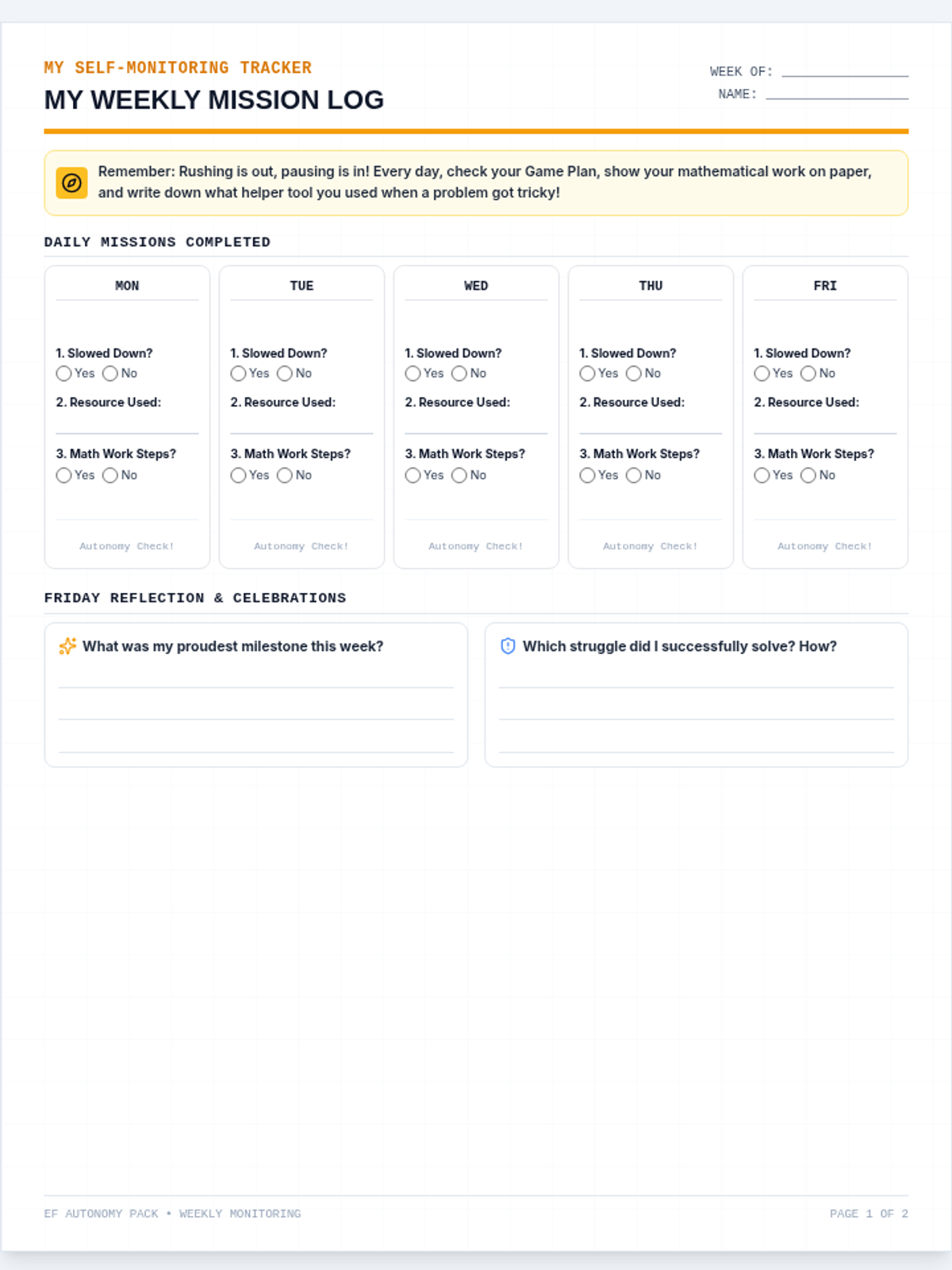
A printable weekly self-monitoring log for students to track daily autonomy metrics and a teacher-facing data recording grid to log executive functioning opportunities, resource selection, math work, and prompt levels.
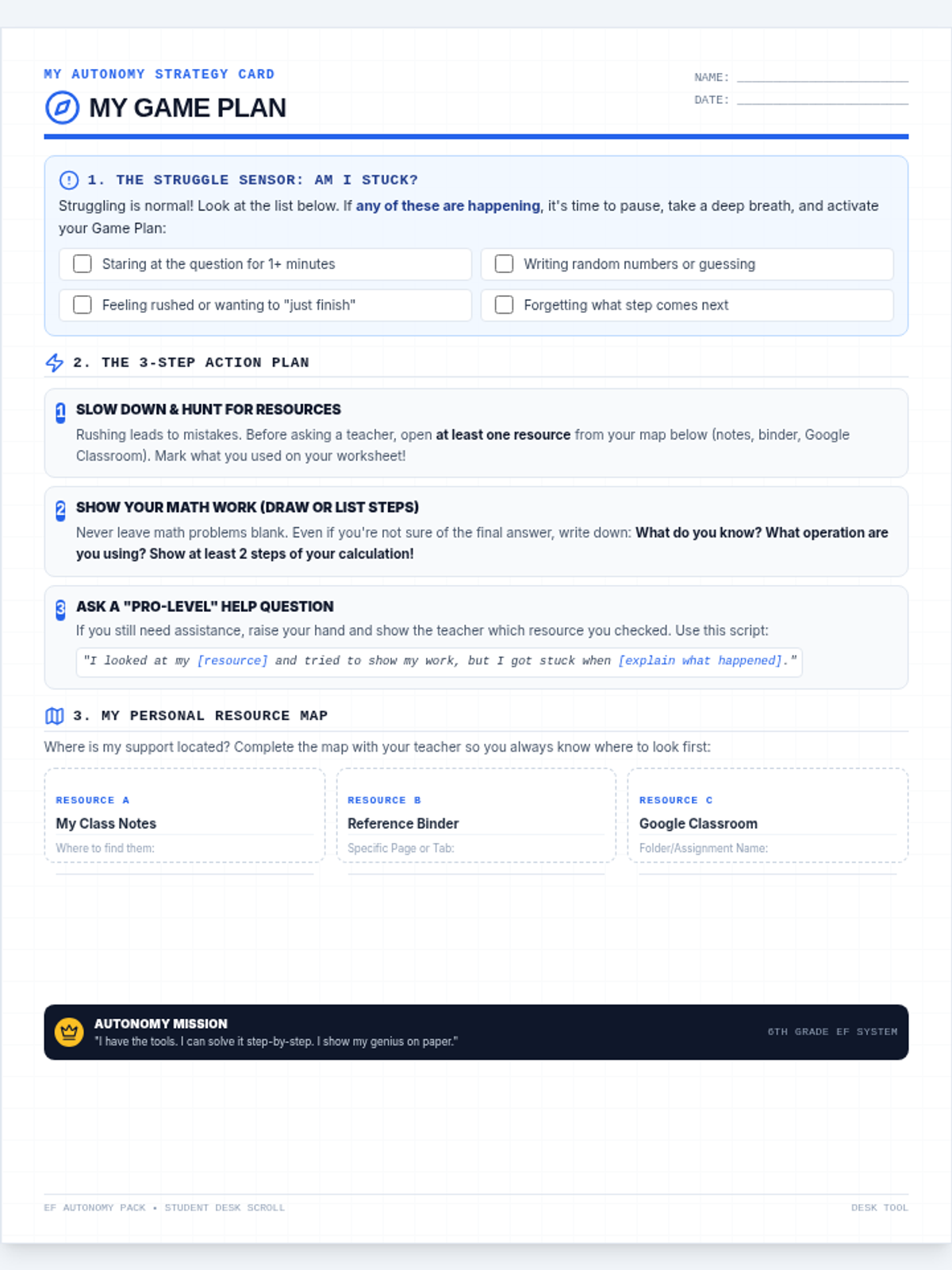
A student-facing visual desk-reference sheet designed to help students recognize academic struggles, activate a 3-step resource-driven action plan, and record where their reference notes, binders, and classroom materials are stored.
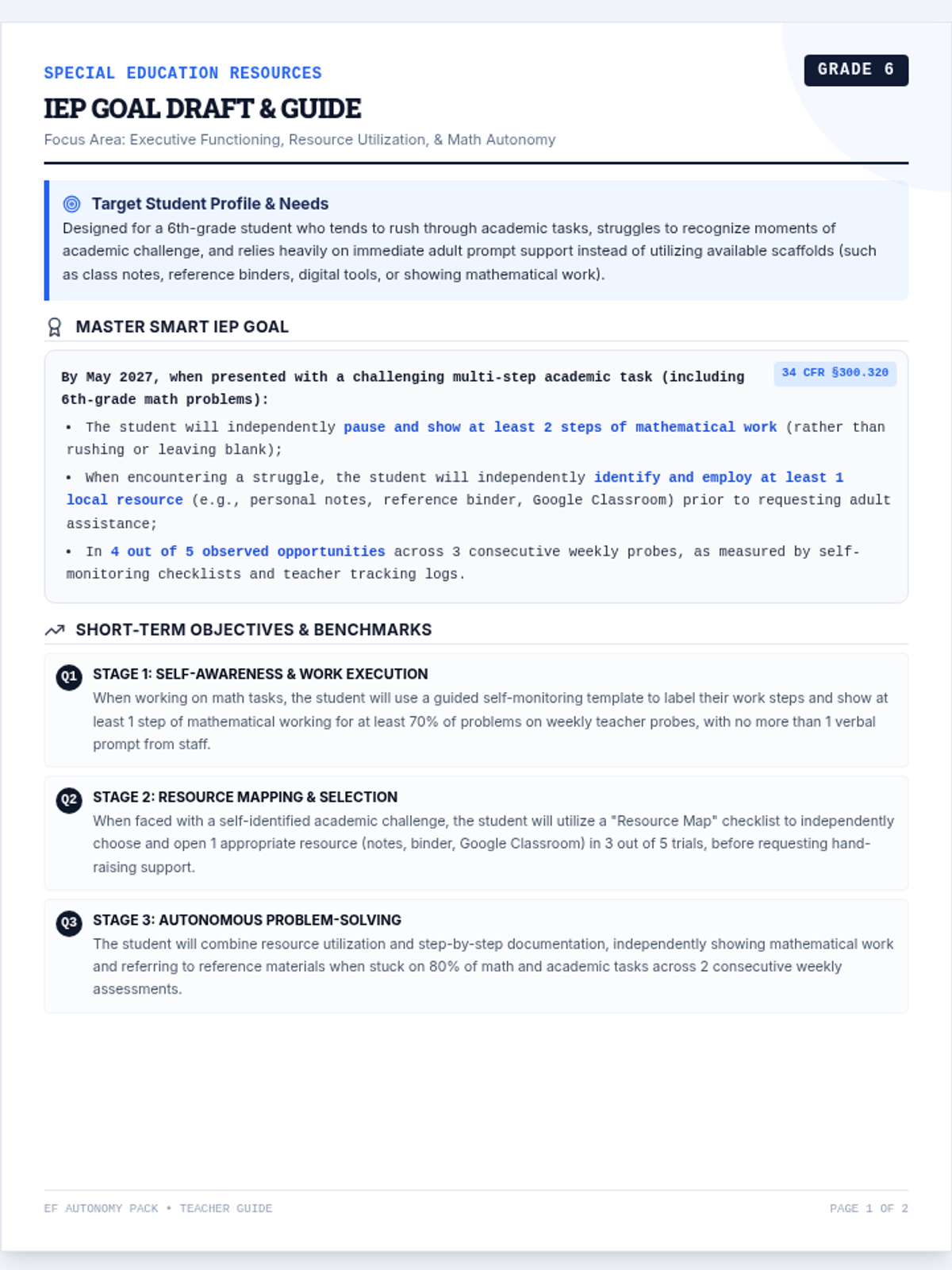
A comprehensive IEP Goal Draft and Educator Guide containing SMART objectives, quarterly benchmarks, specially designed accommodations, and data collection plans aligned with 6th-grade executive functioning needs.
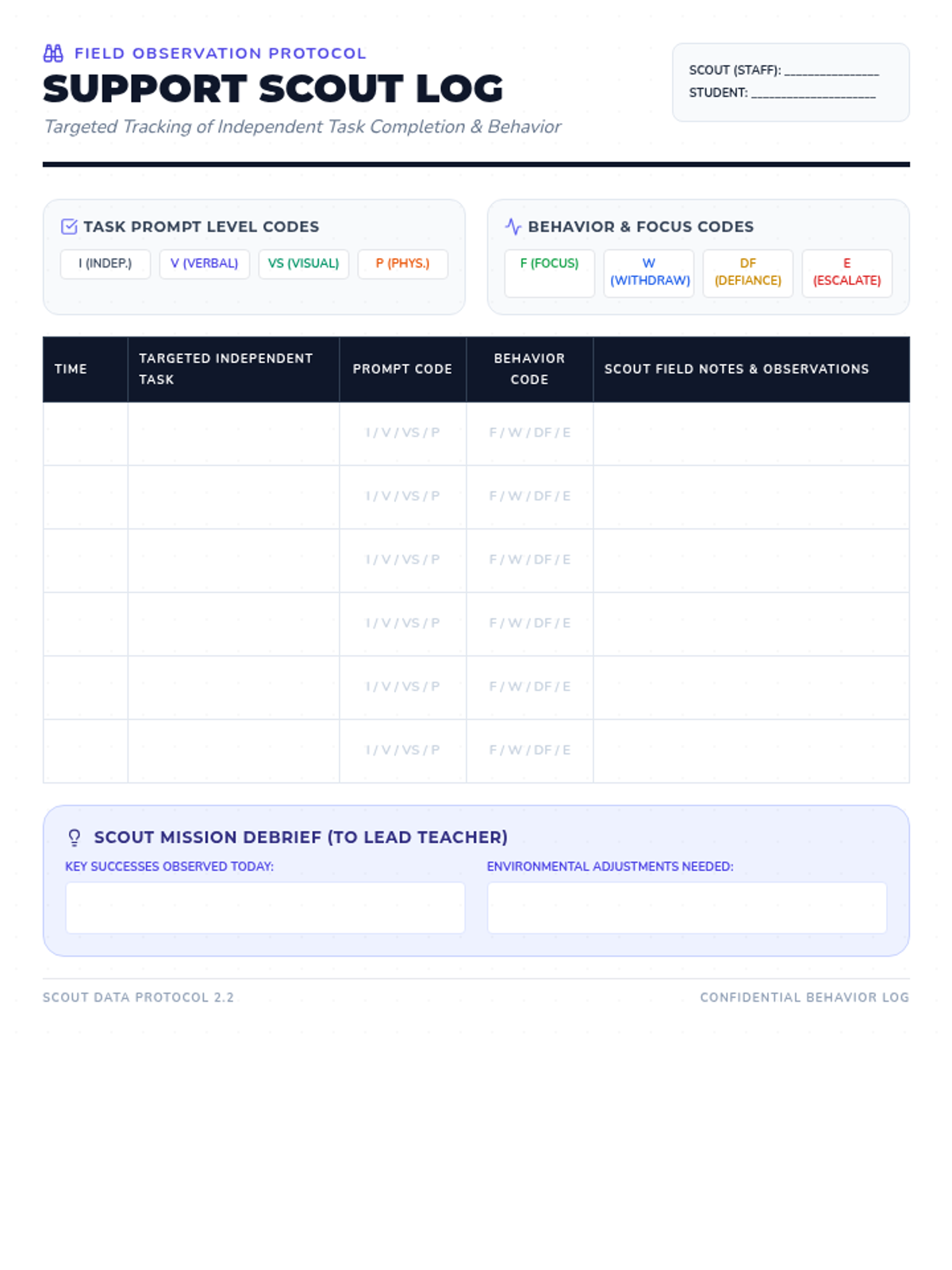
A tracking sheet for paraprofessionals to systematically observe and record student performance on independent task completion and emotional regulation/behavior.
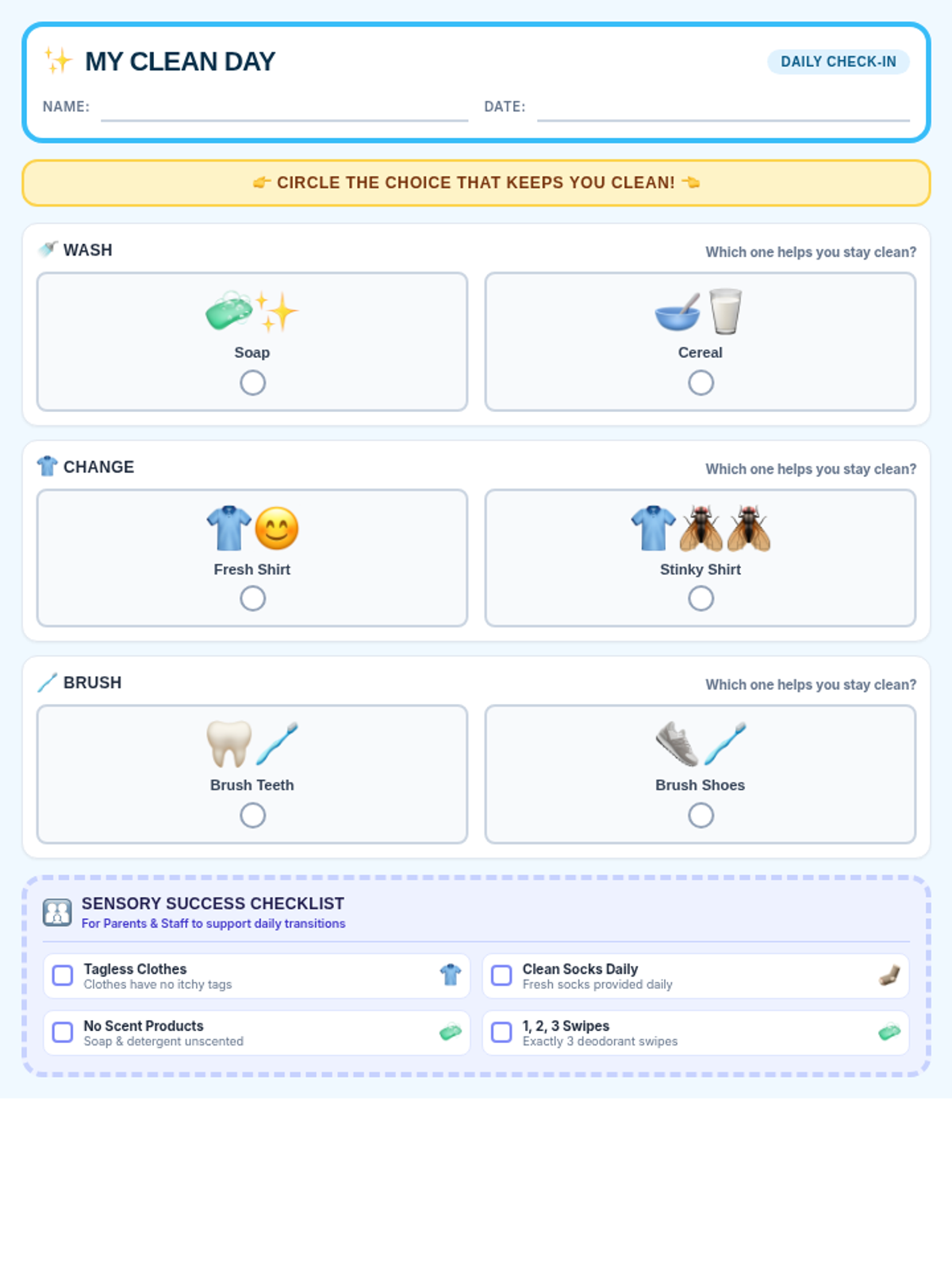
A cumulative check-in worksheet for Day 2, featuring clear 2-choice visual options (Wash, Change, Brush) with zero-cue styling, alongside a sensory transition checklist for parents and school staff.
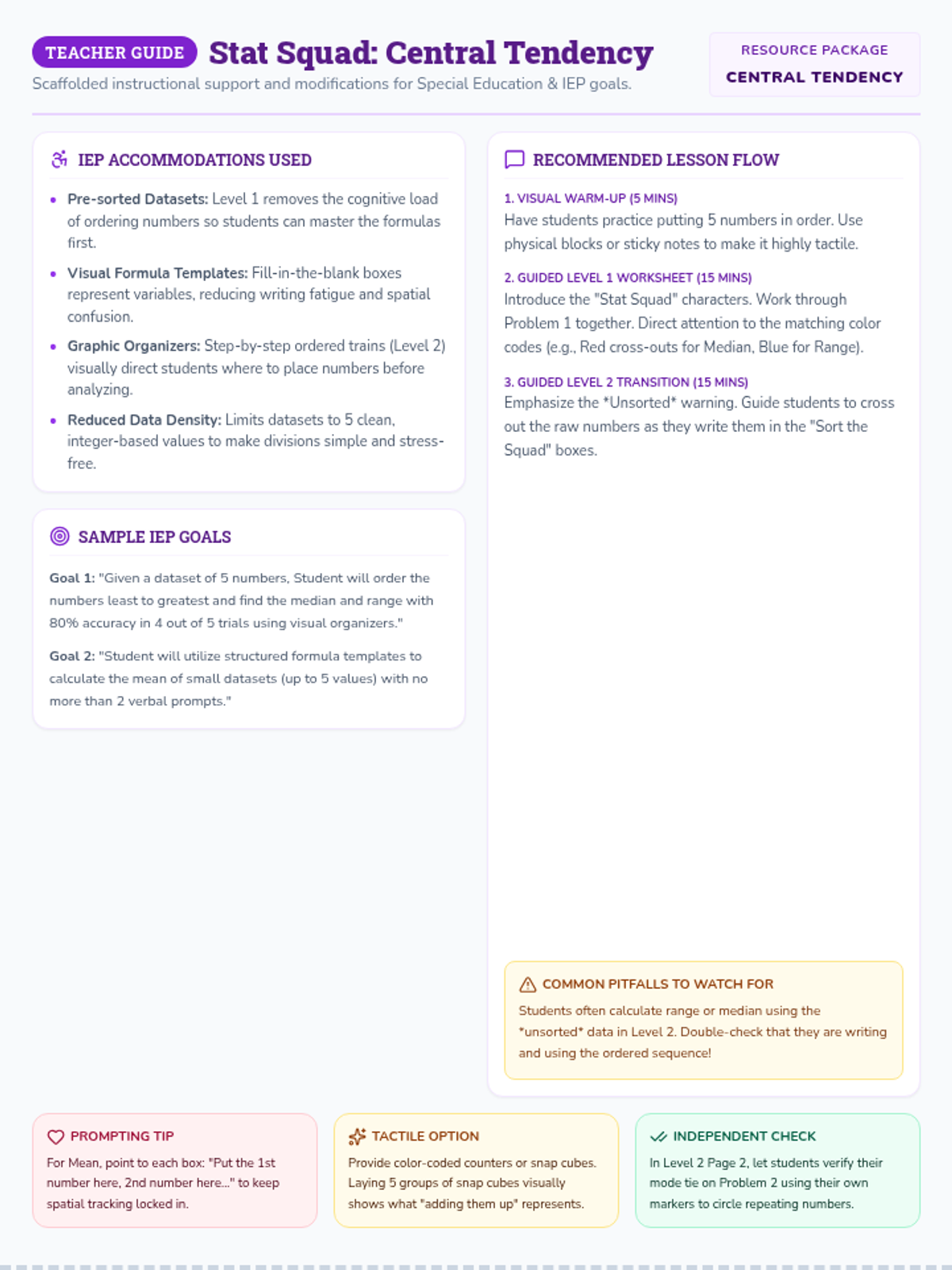
A 2-page instructional guide and worked solutions/answer key for Level 1 and Level 2 worksheets, featuring IEP accommodations, sample goals, delivery strategies, and full walkthroughs.
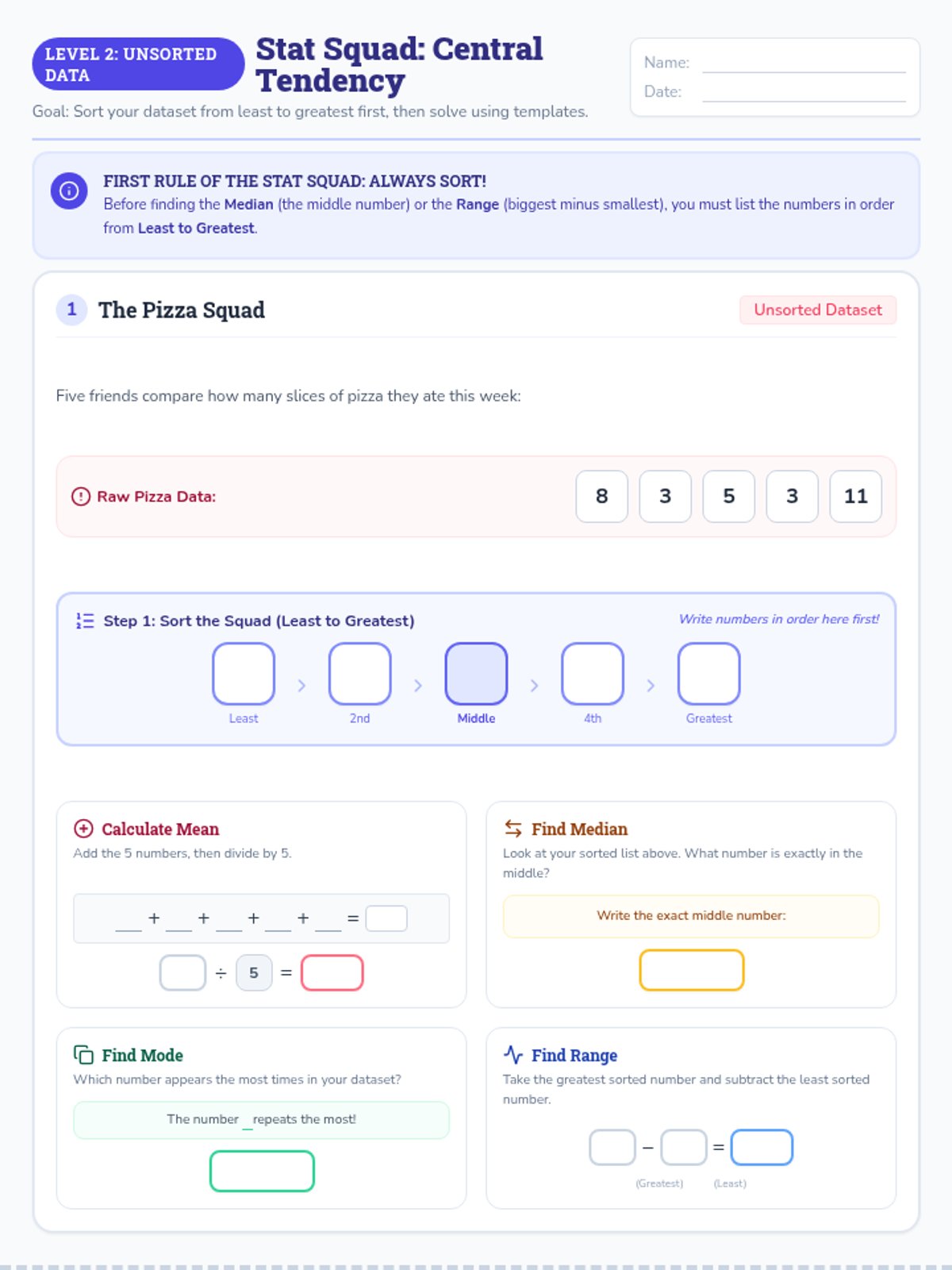
A highly scaffolded, 2-page visual practice worksheet for IEP students on finding Mean, Median, Mode, and Range using unsorted small datasets, graphic organizers to pre-sort data, and fill-in-the-blank formula boxes.
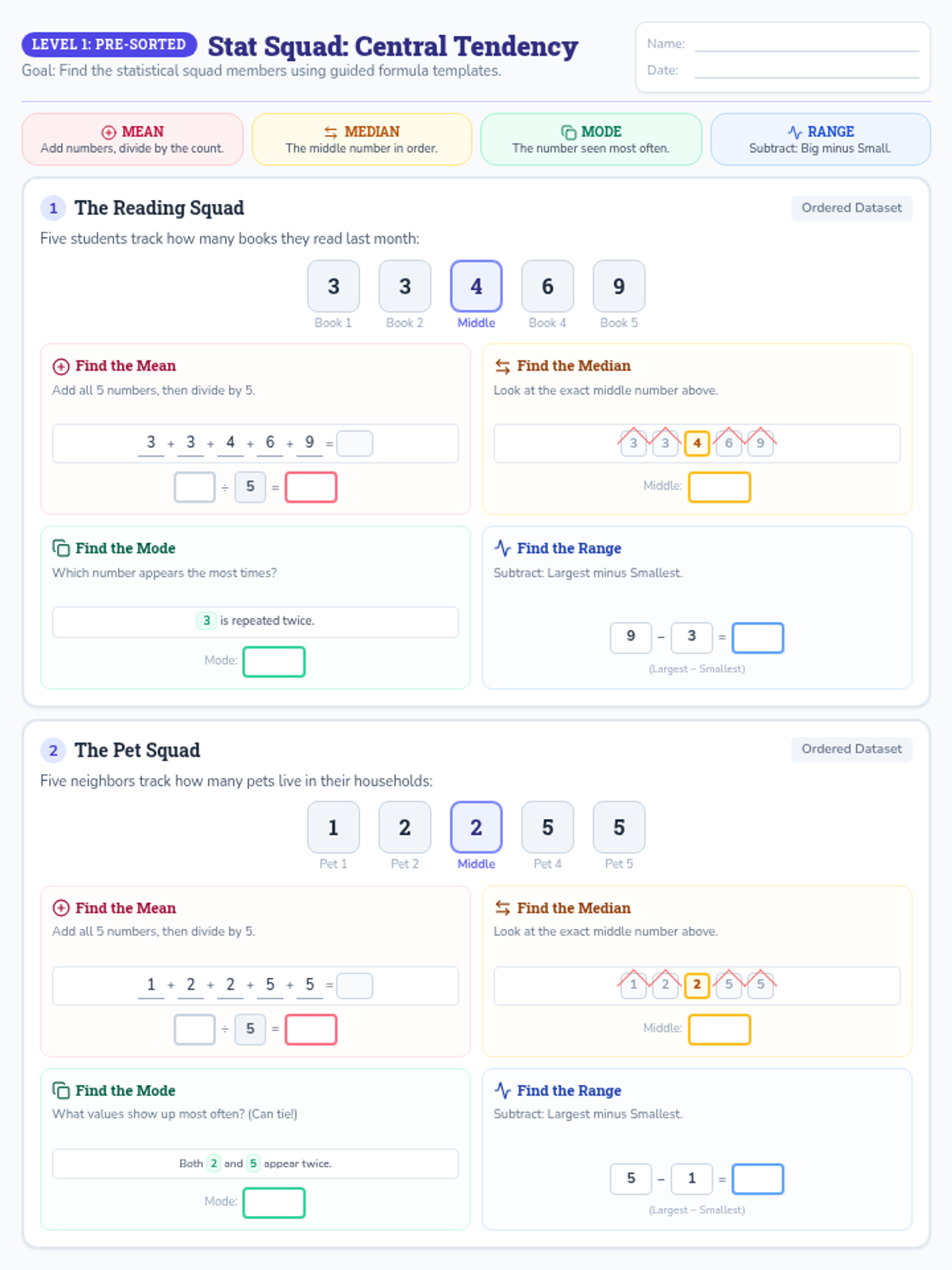
A highly scaffolded, 1-page visual worksheet for IEP students on finding Mean, Median, Mode, and Range using pre-sorted small datasets with fill-in-the-blank formula boxes.
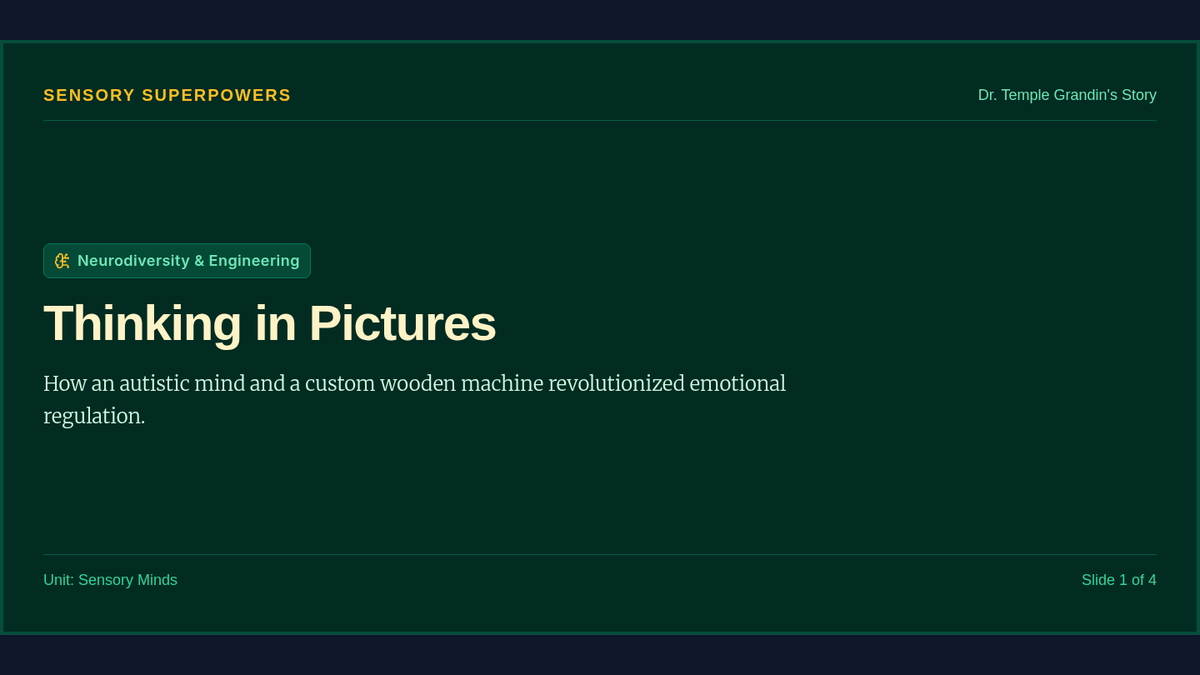
A beautifully crafted four-slide presentation guiding students through Dr. Temple Grandin's life. Explains neurodiversity and autism, her unique visual thinking process, her overwhelming sensory challenges, and how she engineered the 'squeeze machine' using deep pressure science. All text sizes strictly follow the minimum 24px presentation standards.
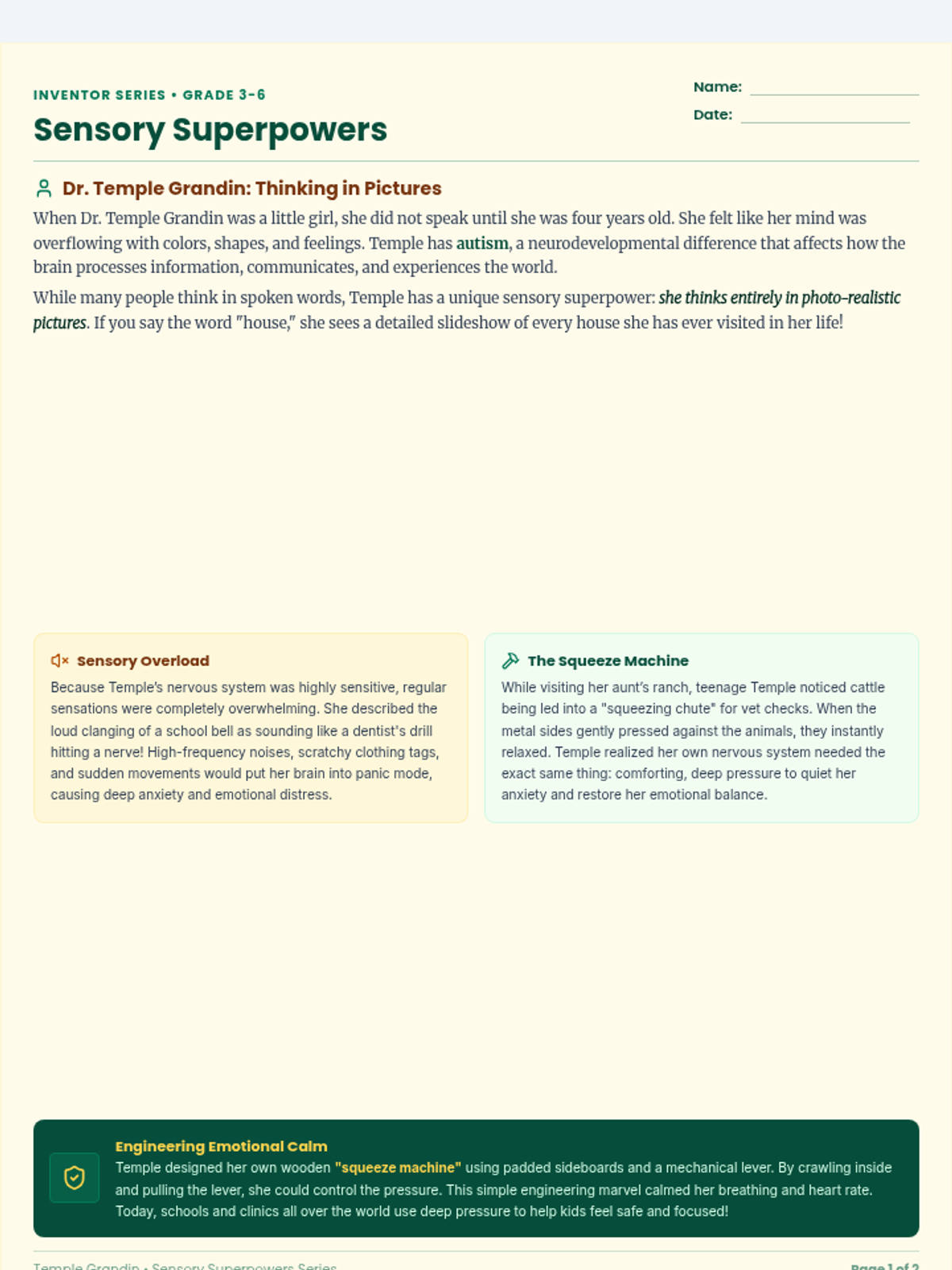
An inspiring two-page student-facing biography and activity worksheet focused on Dr. Temple Grandin's life, her autistic experience of 'thinking in pictures', her sensory overloads, and how she engineered the 'squeeze machine' to self-regulate. Students analyze their own sensory preferences and sketch an invention blueprint.
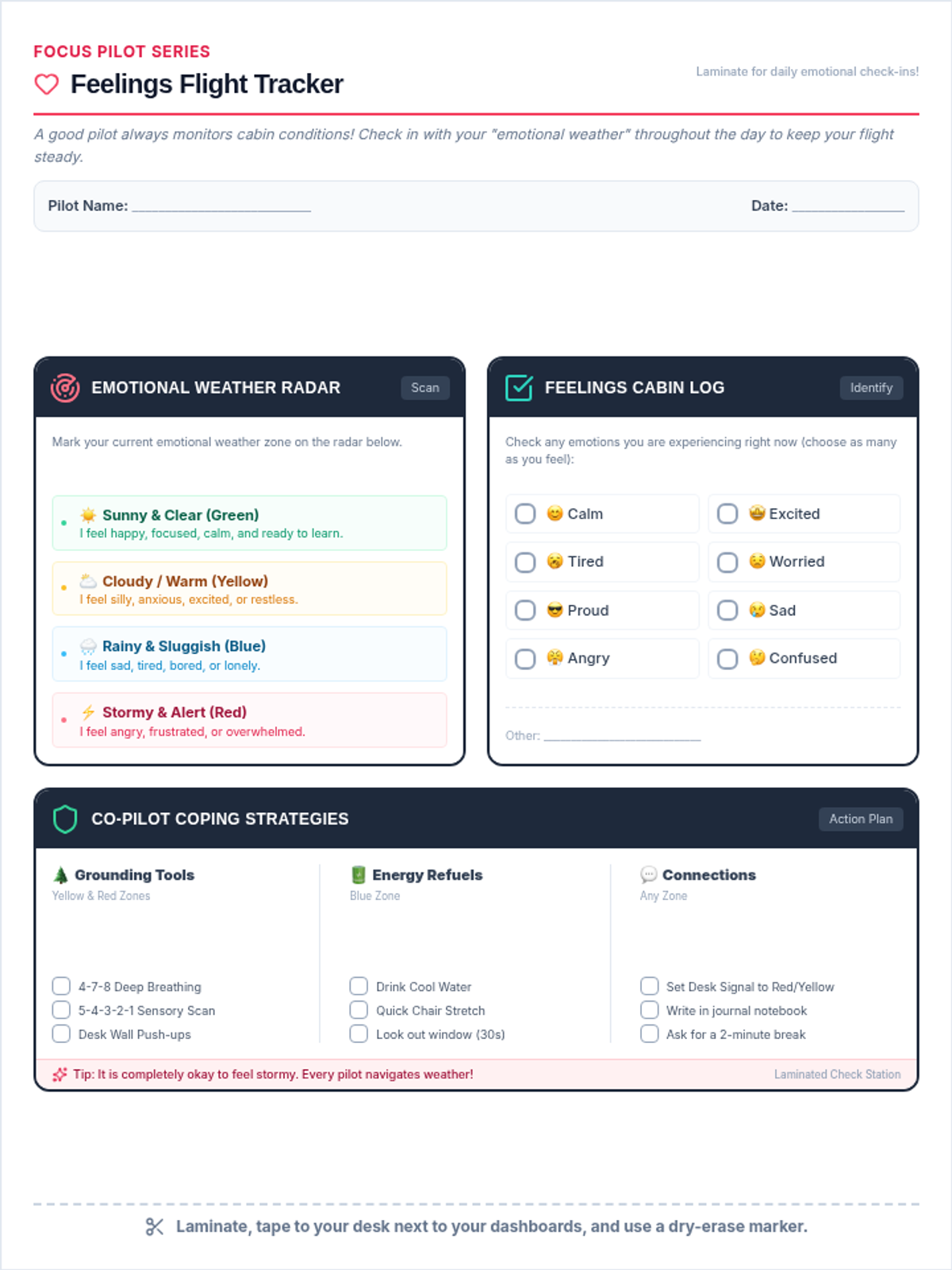
A visual, student-facing feelings checklist and emotional regulation dashboard styled as a flight weather log. Includes emotion zoning guides, feel-specific check boxes, and concrete coping strategy options for the classroom.
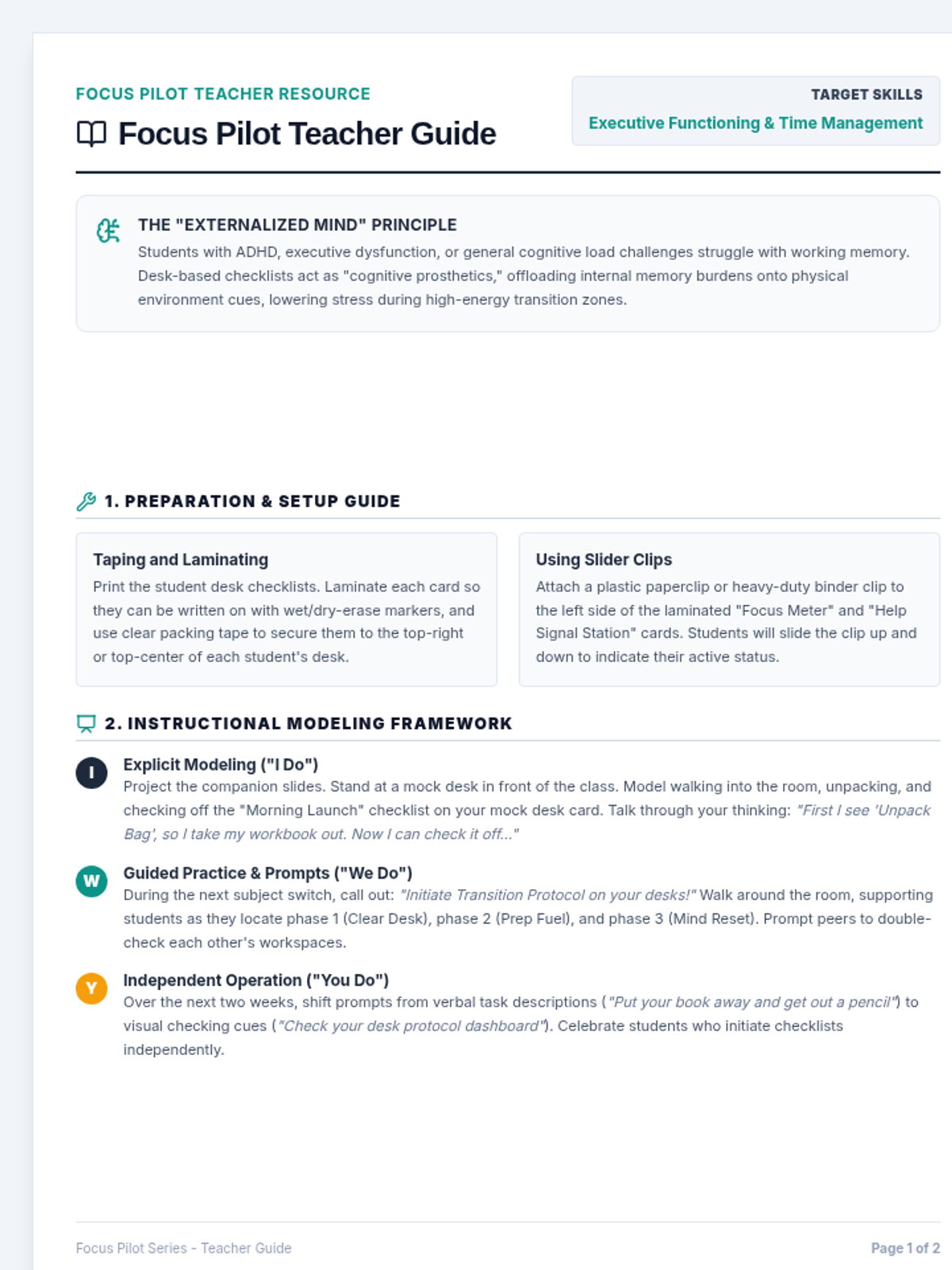
A comprehensive, structured teacher guide outlining instructional strategies, behavior management techniques, explicit modeling frameworks, and scaffold fading procedures for introducing the desk checklist system in the classroom.
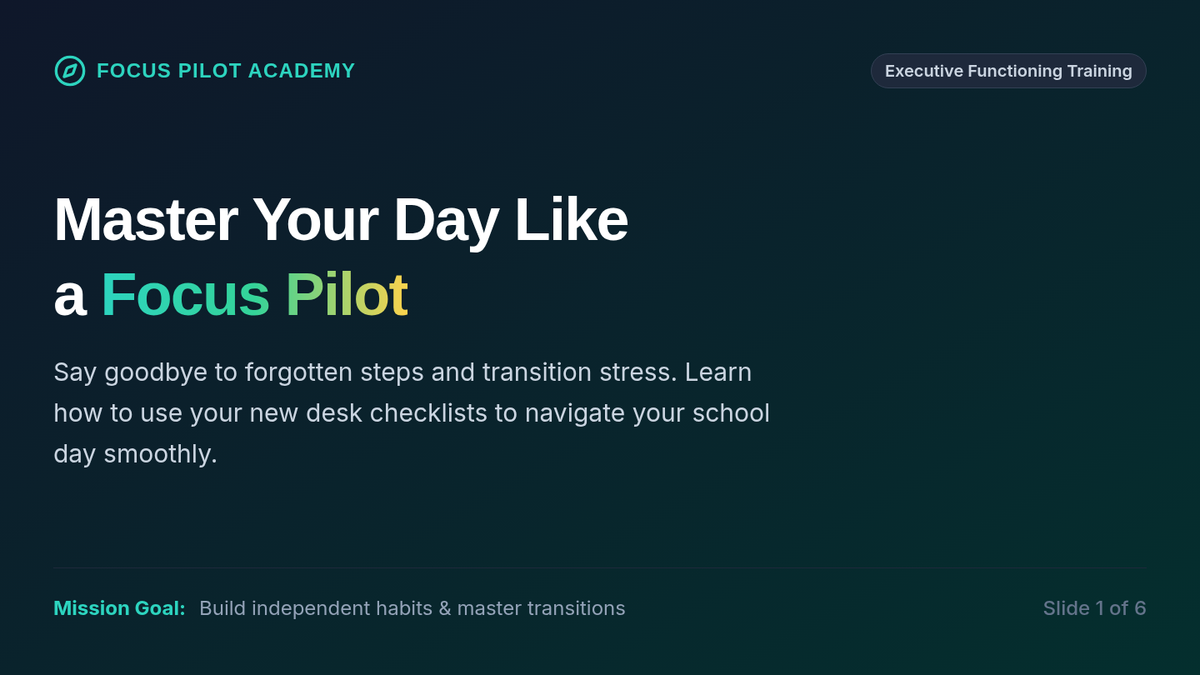
A companion presentation that models the desk checklist routines for students. Introduces the 'Morning Launch', 'Mission Transition', 'Afternoon Landing', and 'Help Signal Station' protocols using high-contrast slides with student-friendly, bold text.
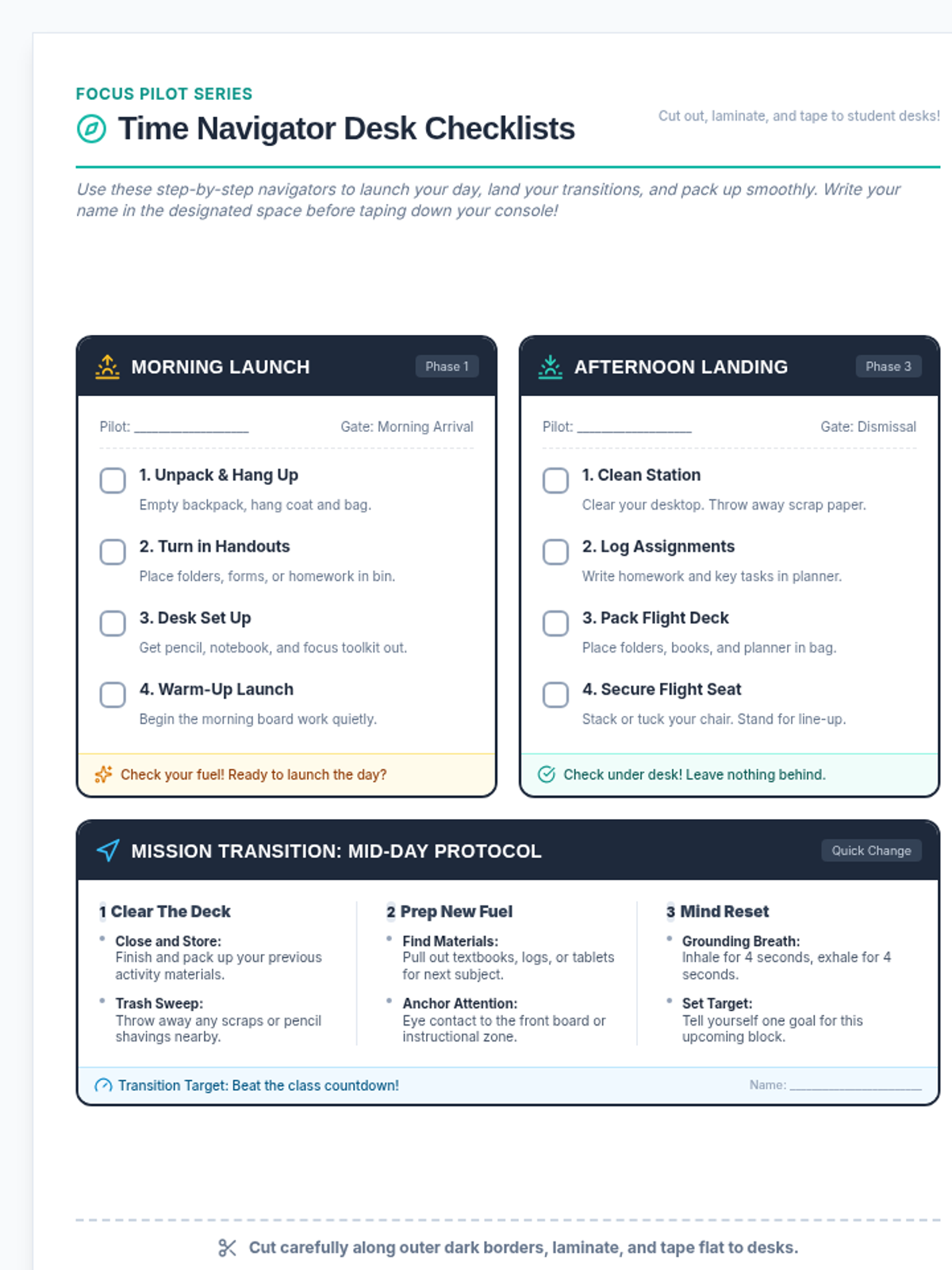
A set of student-facing desk checklists styled as navigation flight controls. Includes pre-filled checklists for arrival, mid-day transition, and dismissal routines, alongside a customizable student dashboard, focus gauge, help signal indicator, and mini-schedule tracker.
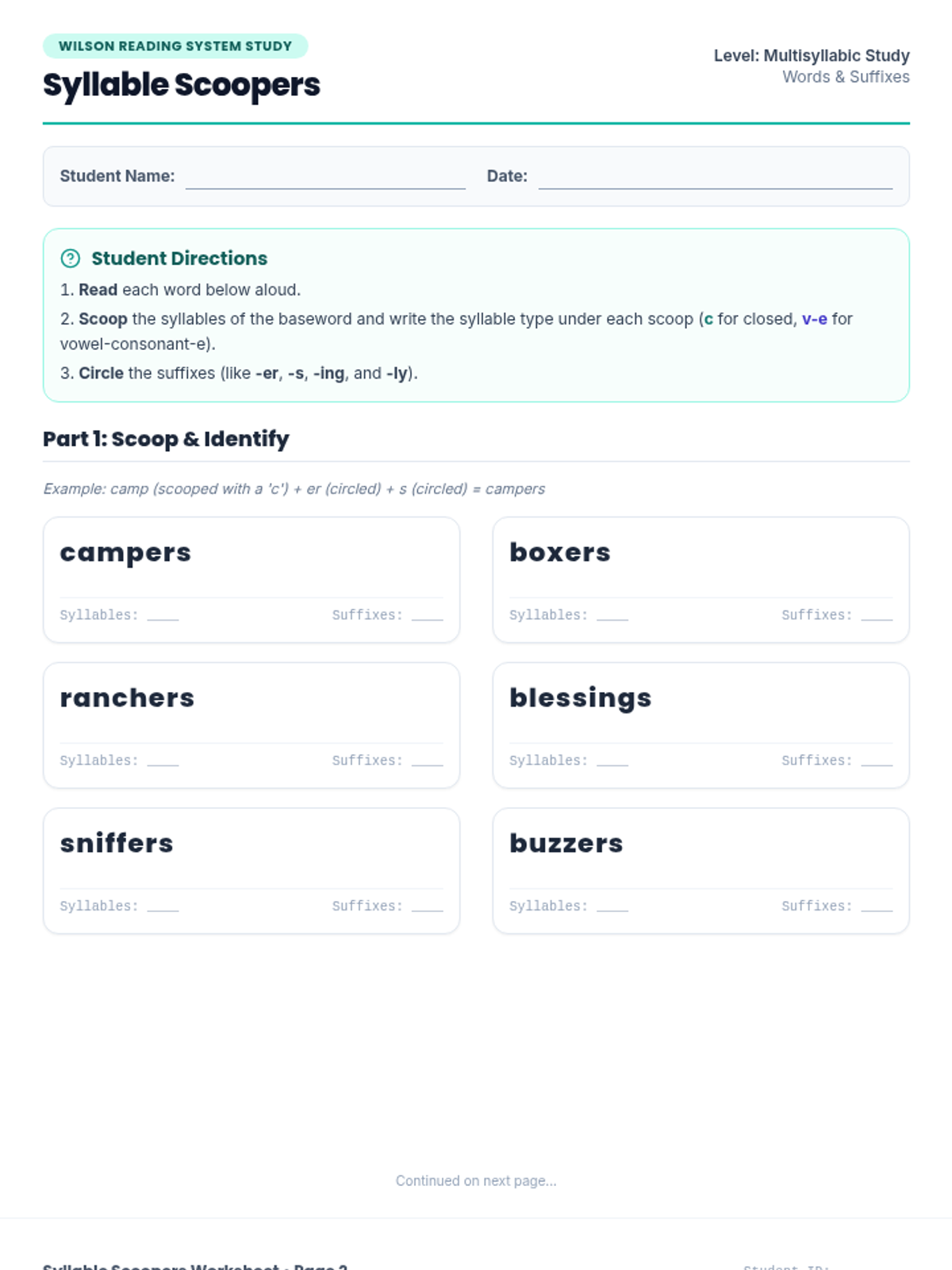
A 2-page print-ready student worksheet featuring syllable divisions, suffix identifying spaces, and matching definitions for all 10 target vocabulary words from the Wilson-aligned study list.
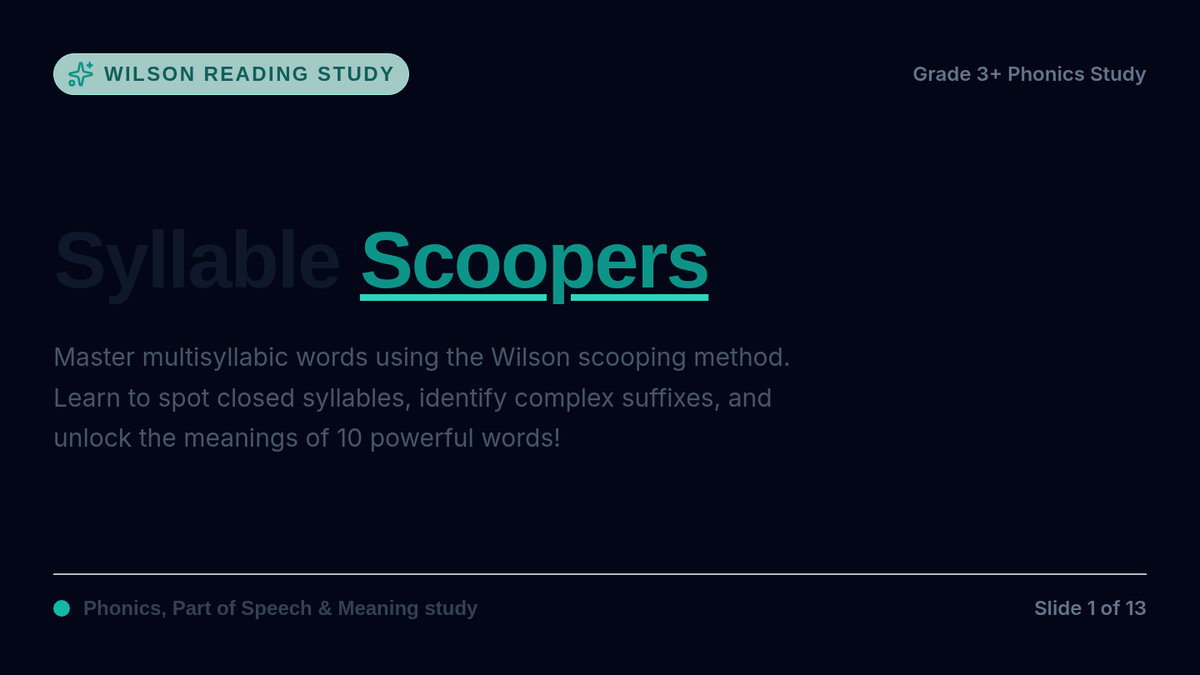
A dynamic and Wilson-aligned presentation showing how to decode and divide 10 core words using the scooping method, complete with detailed syllable labels, suffix circles, precise definitions, and an interactive BAM card game review.
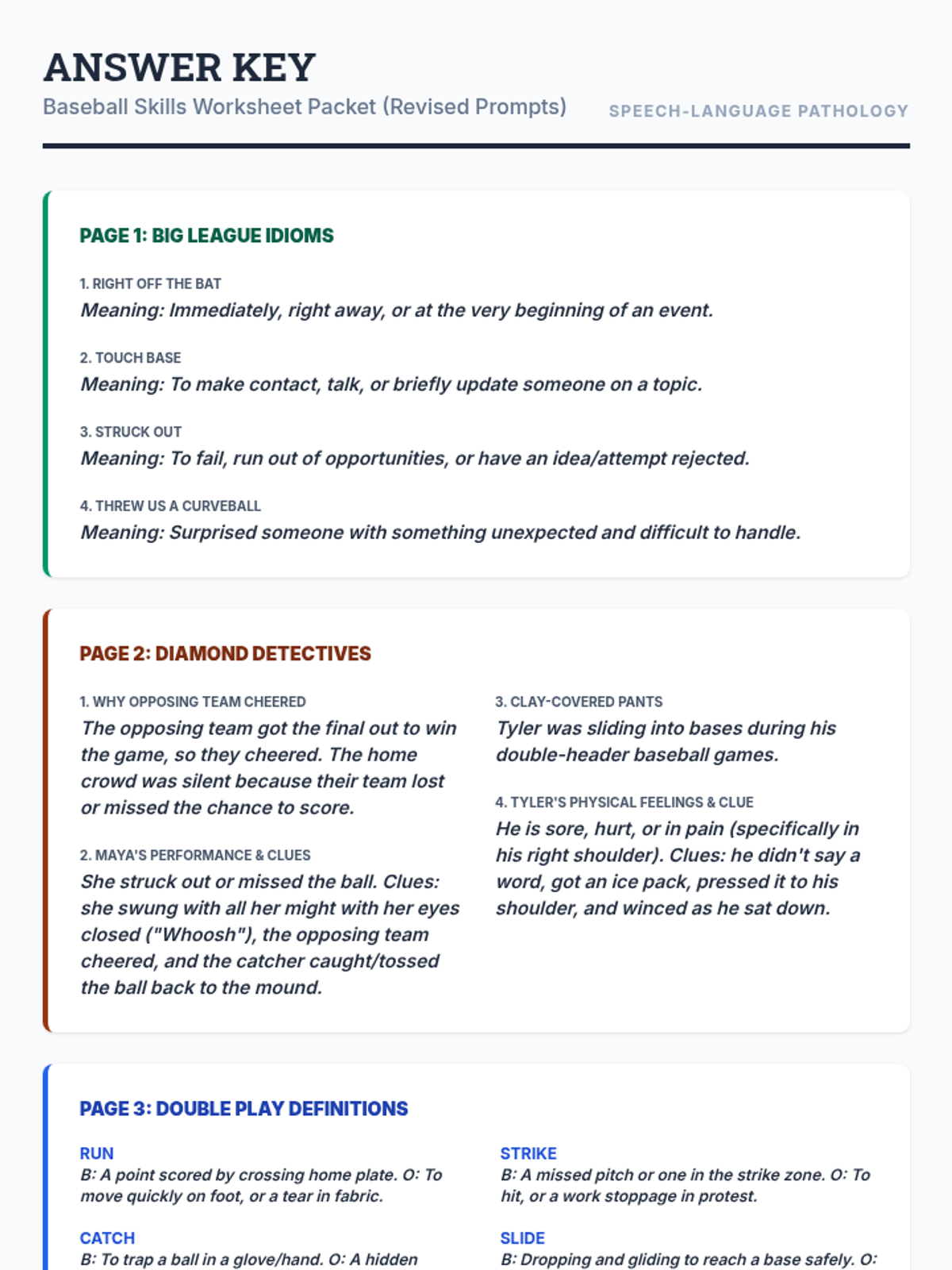
An answer key for the 5-page baseball-themed worksheet packet, providing correct explanations for idioms, inferences, multiple meaning words, and communication breakdowns.