A multi-sensory lesson designed for 1st Grade and Special Education students to distinguish between nouns (people, places, things) and adjectives (describing words) using the five senses.
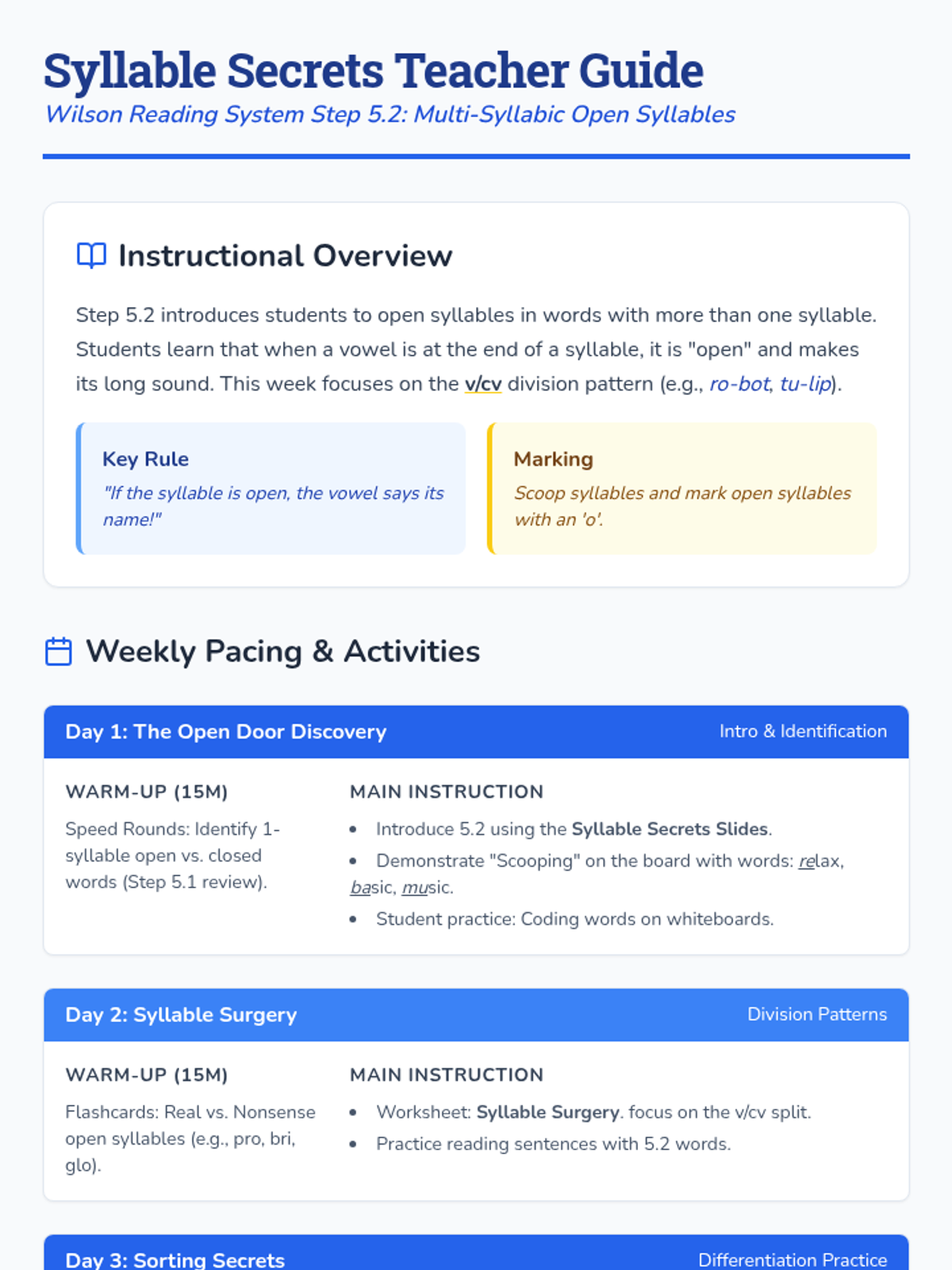
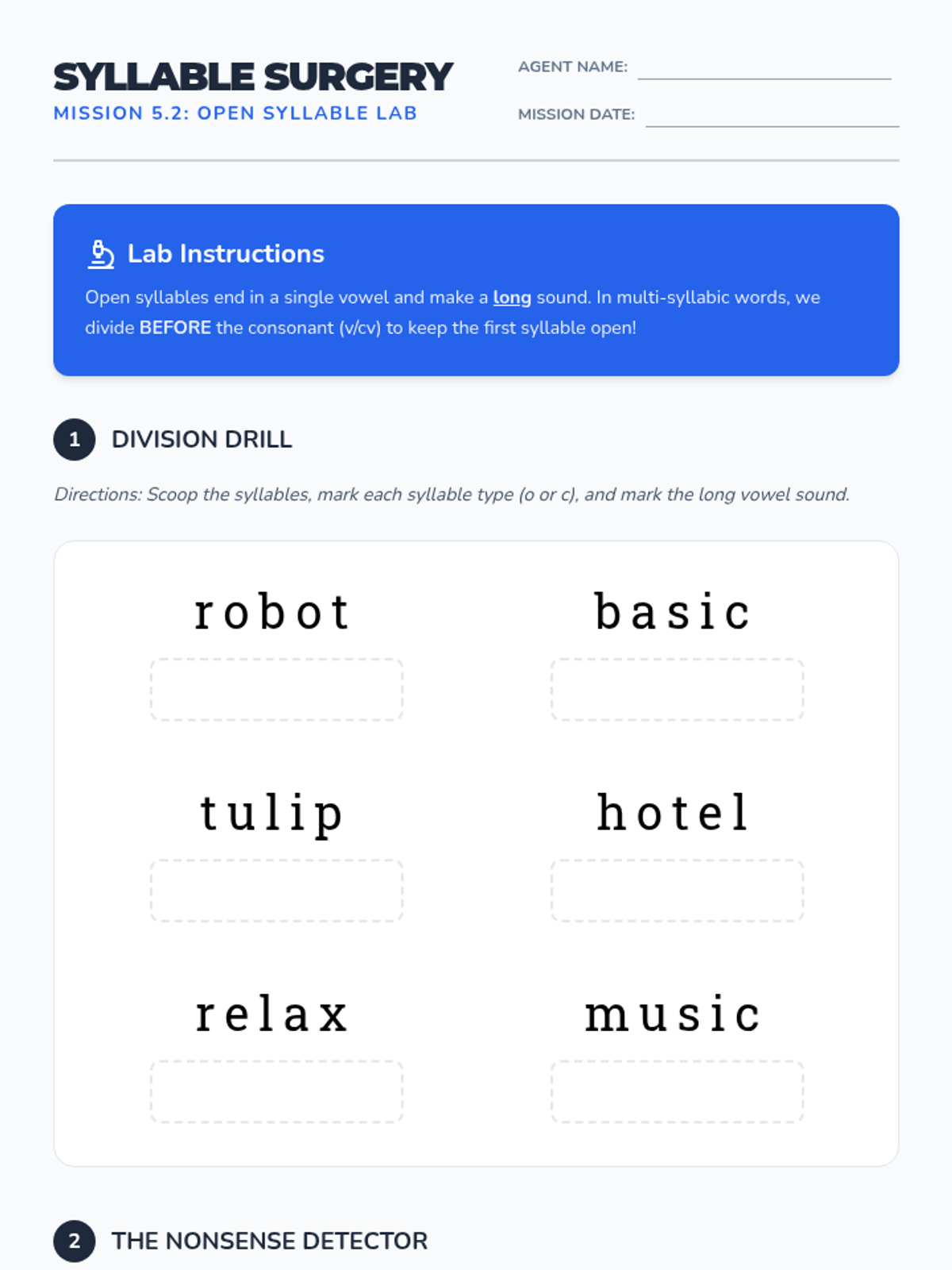
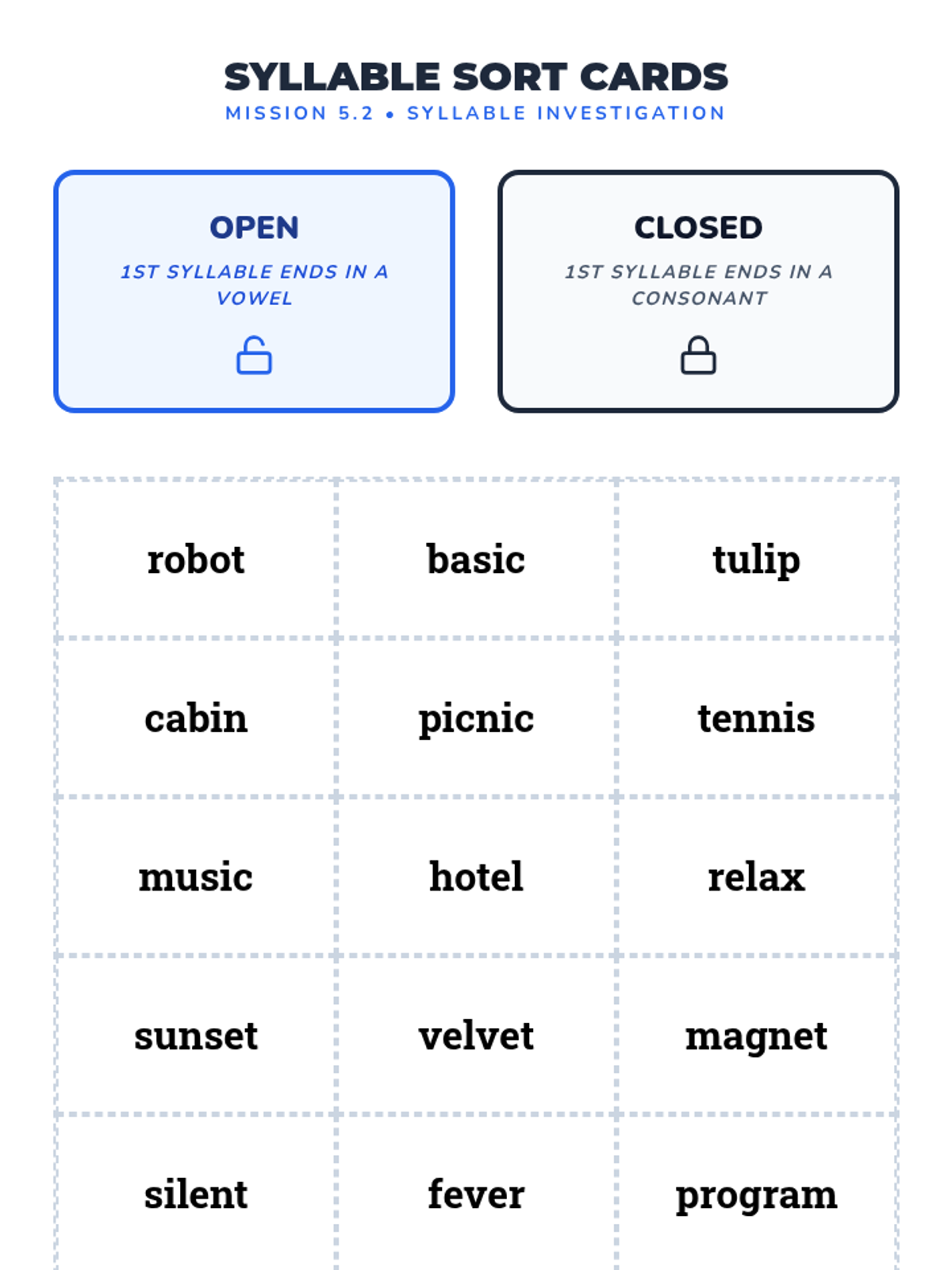
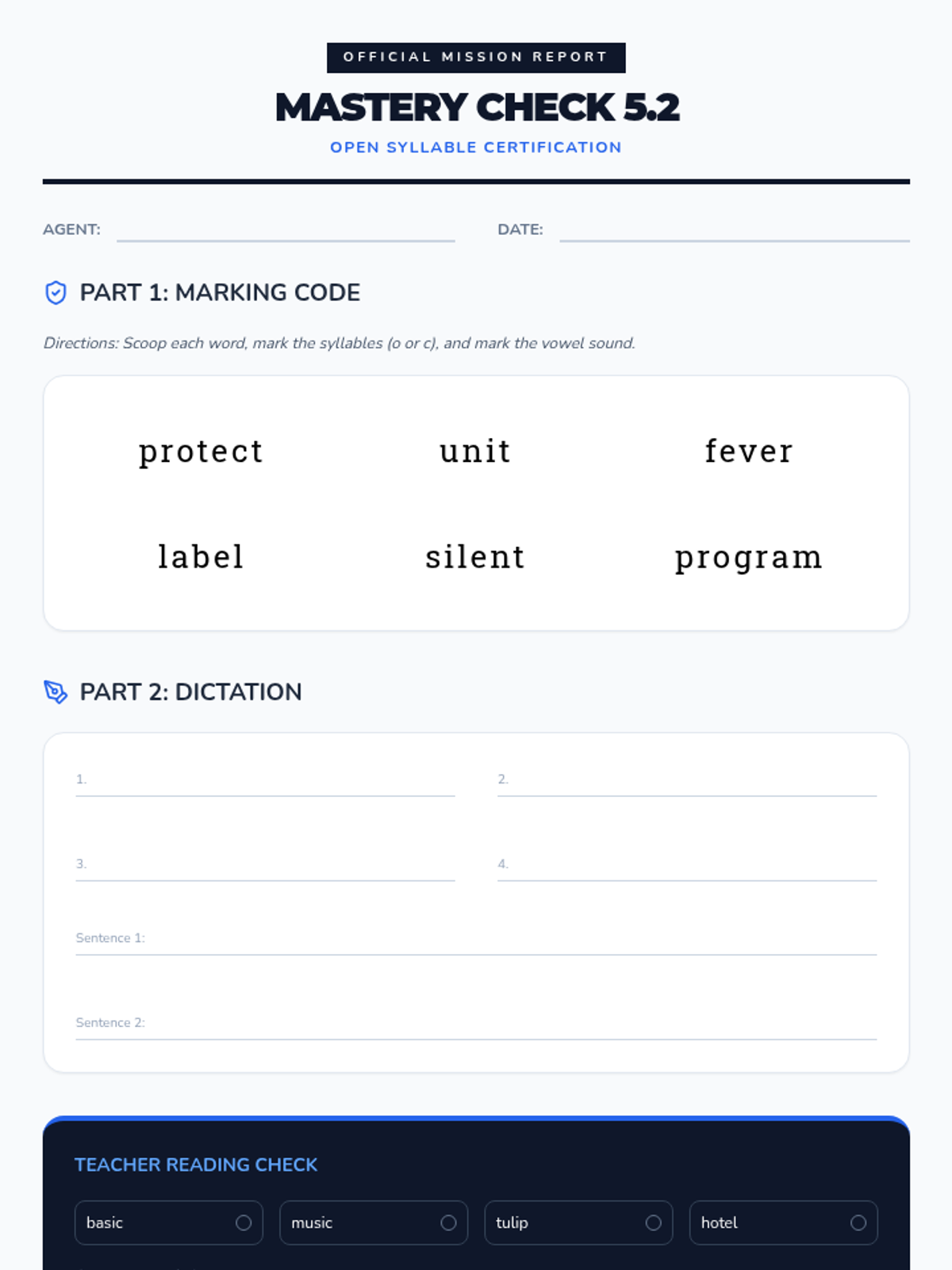
This lesson focuses on identifying, dividing, and reading multi-syllabic words with open syllables (Step 5.2). It includes daily warm-ups and structured practice.
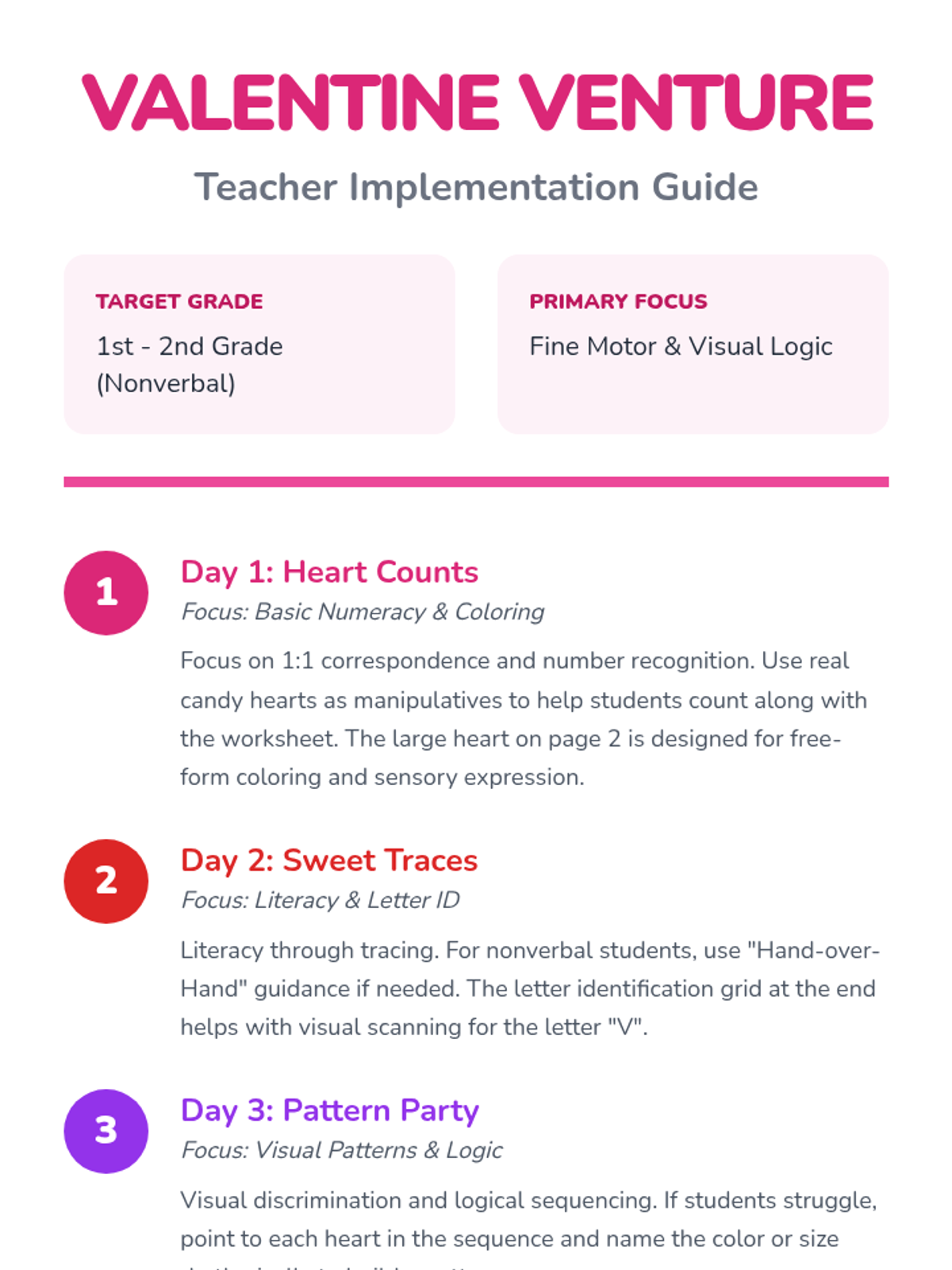
Teacher implementation guide and sequence overview for the Valentine Venture activities.
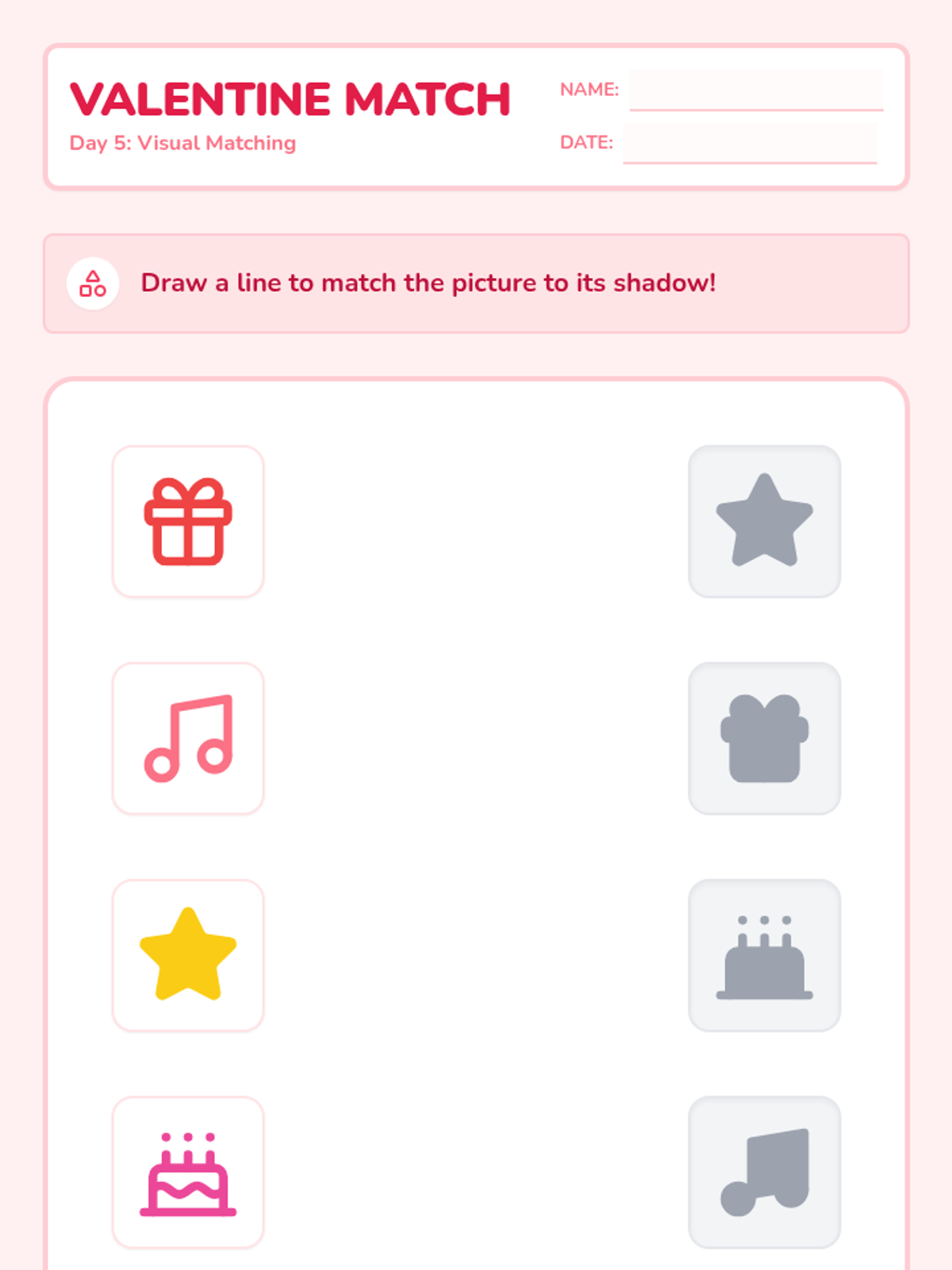
Focuses on visual matching skills and object recognition with a Valentine's shadow match activity.
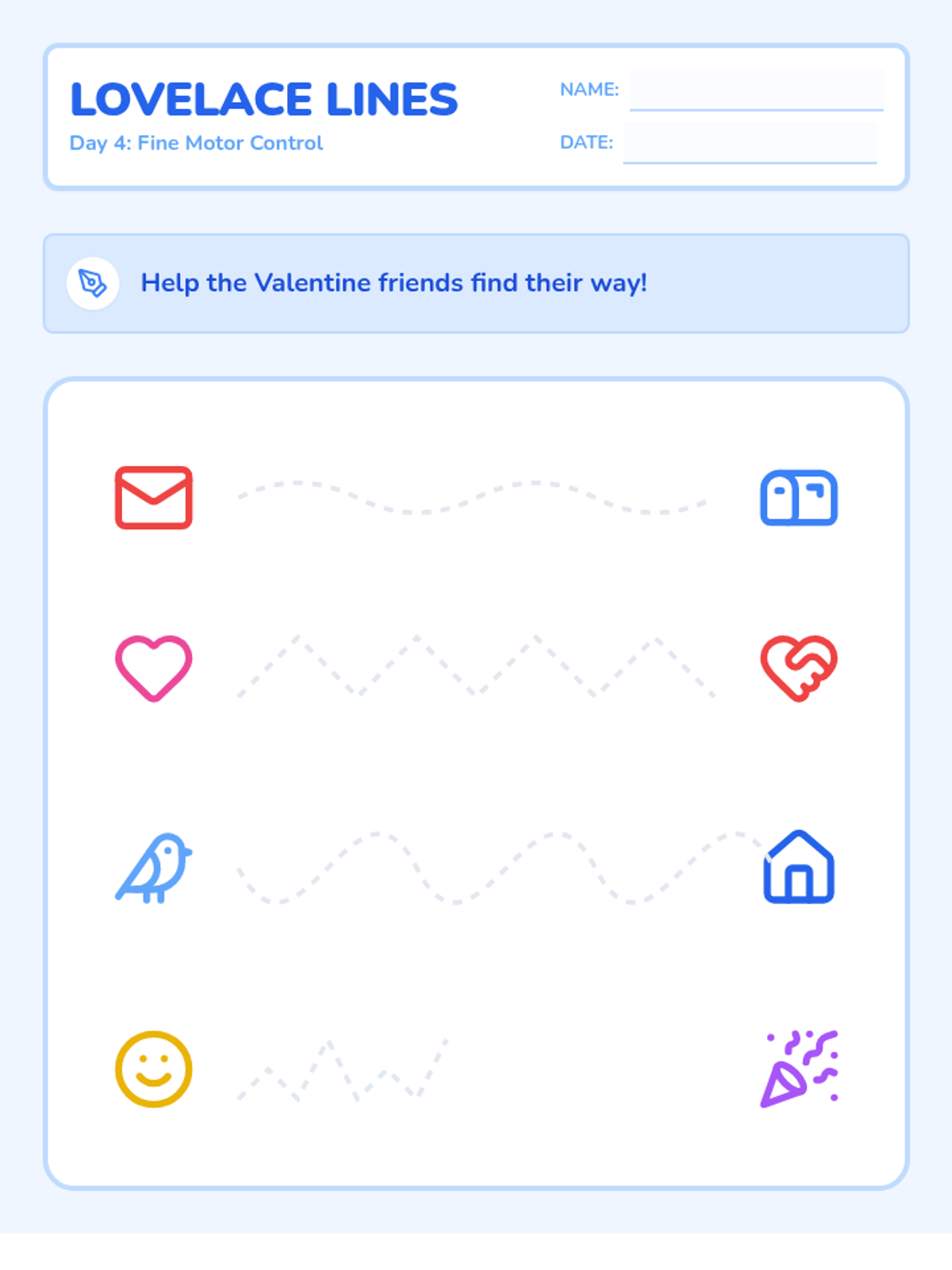
Focuses on intensive fine motor control through complex line tracing and path-finding.
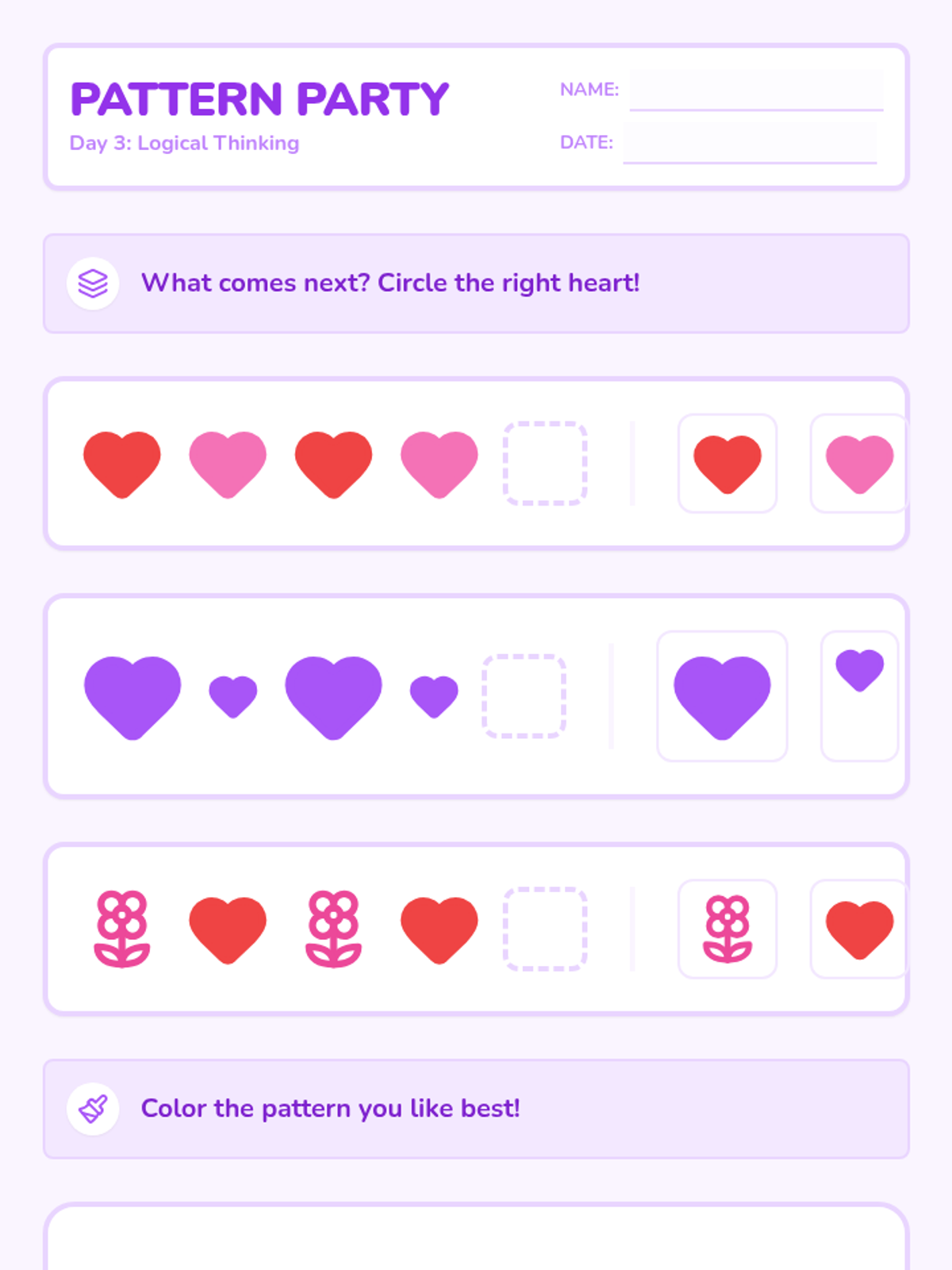
Focuses on logical reasoning and visual discrimination through heart-themed pattern completion.
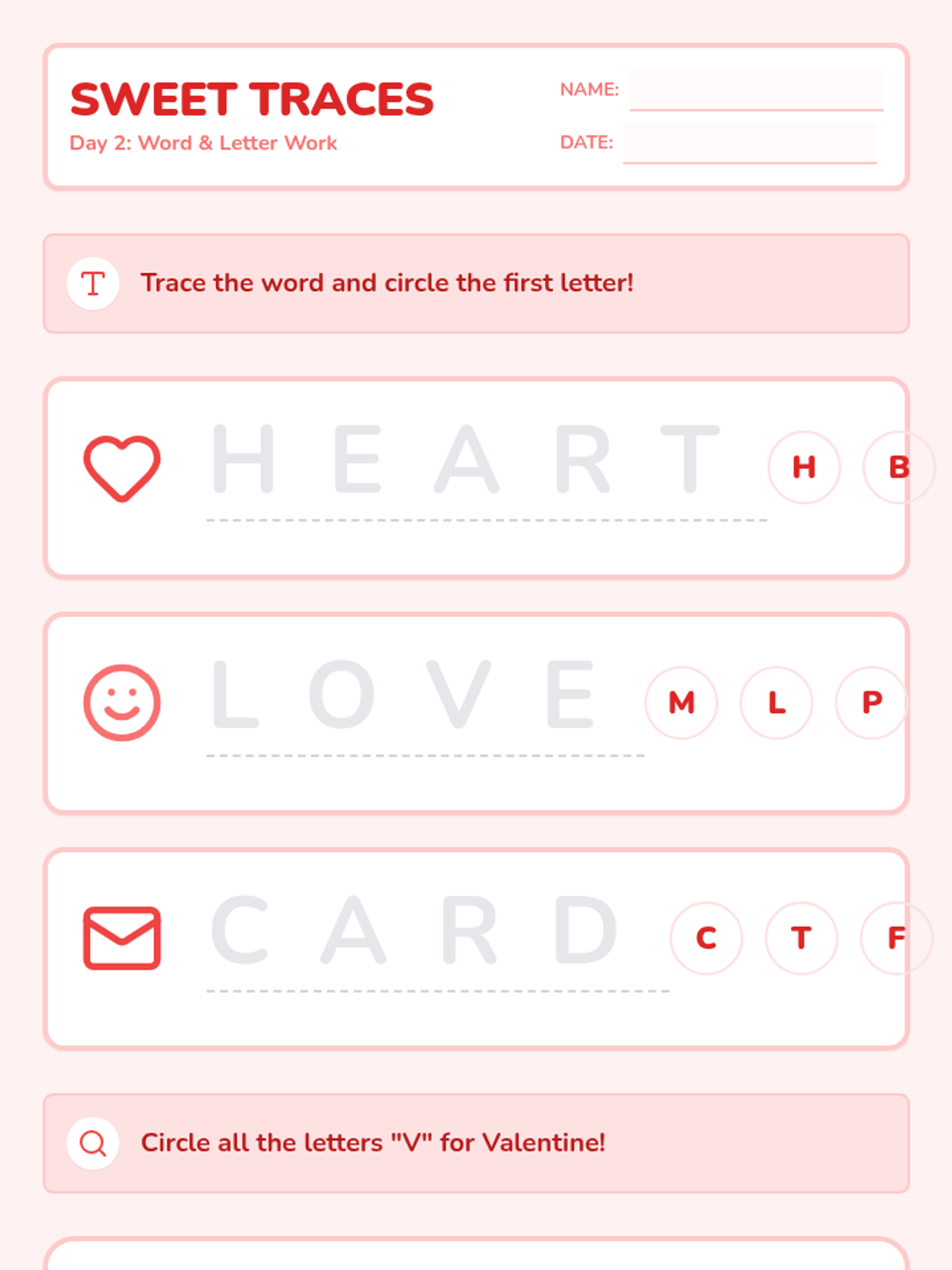
Focuses on fine motor literacy skills through tracing Valentine-themed words and identifying letters.
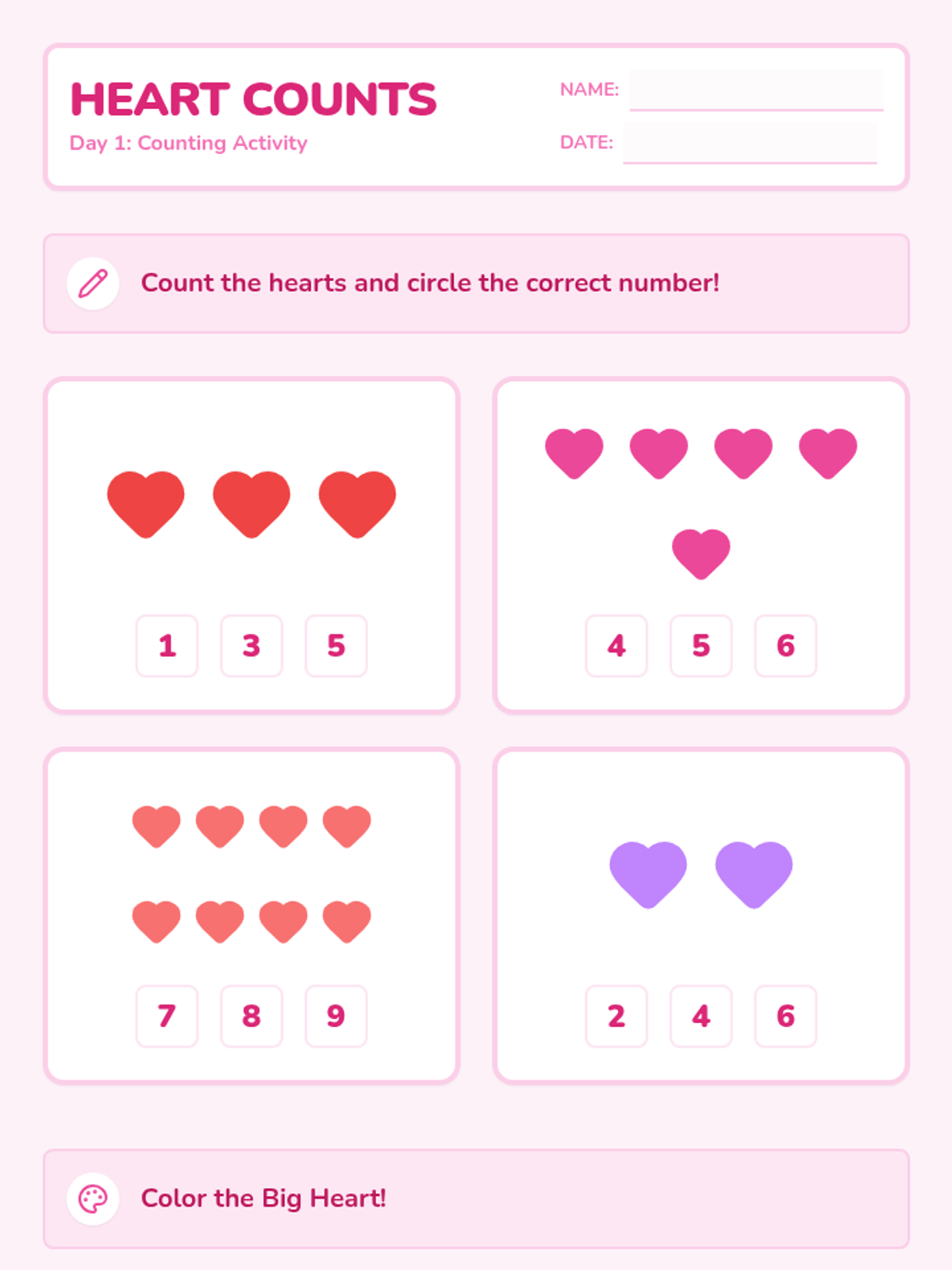
Focuses on basic numeracy and color recognition through counting candy hearts and coloring tasks.
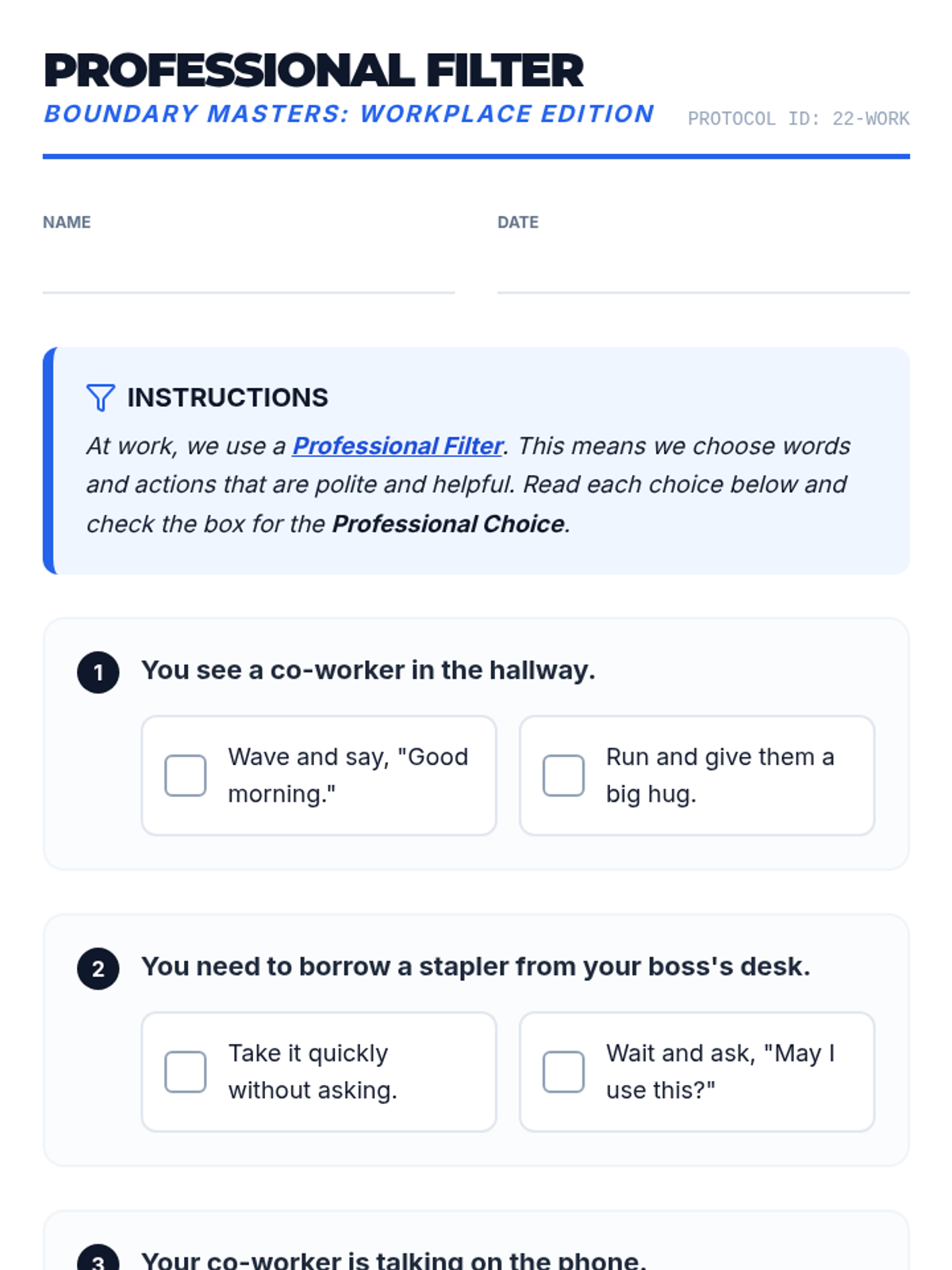
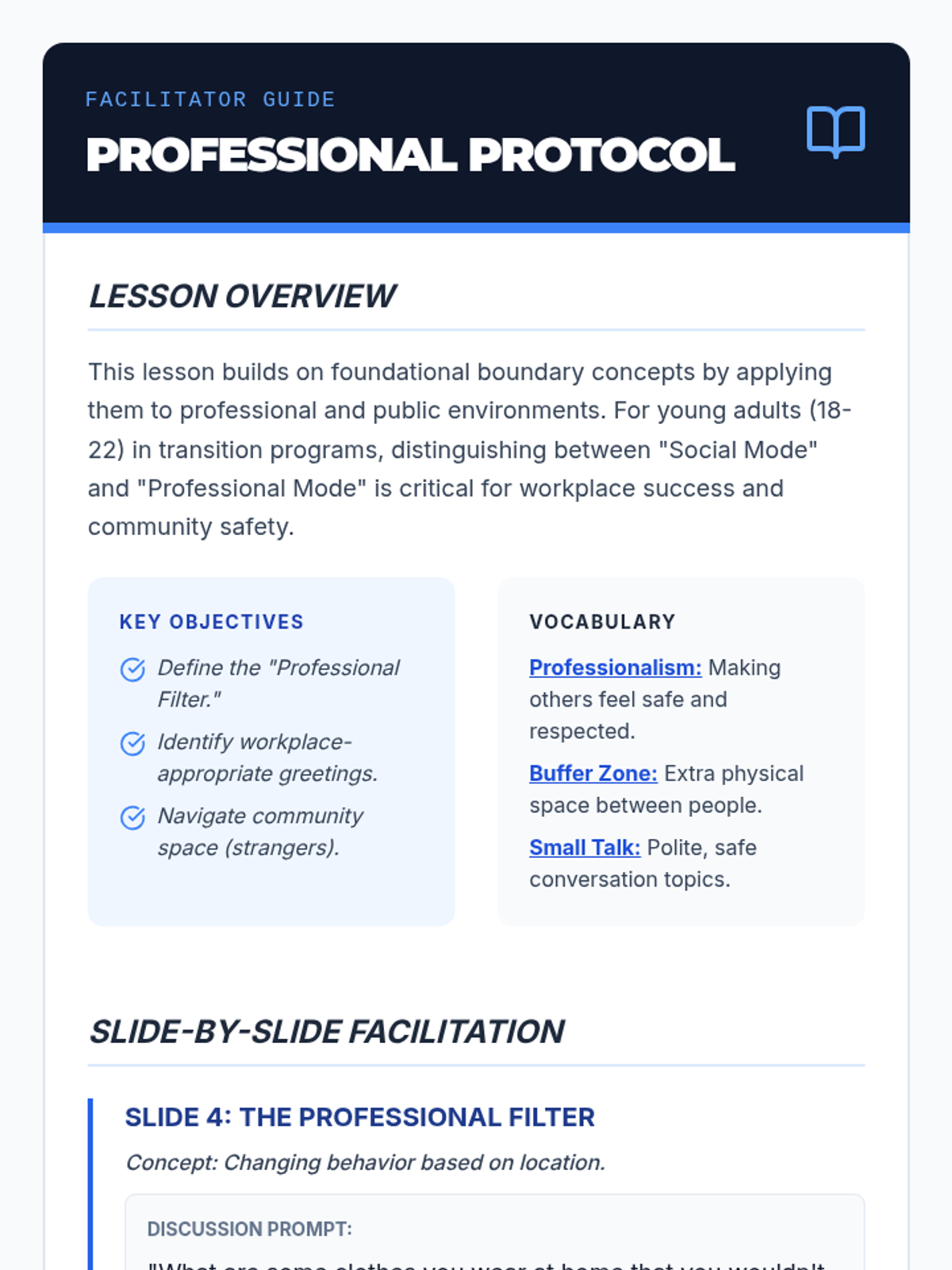
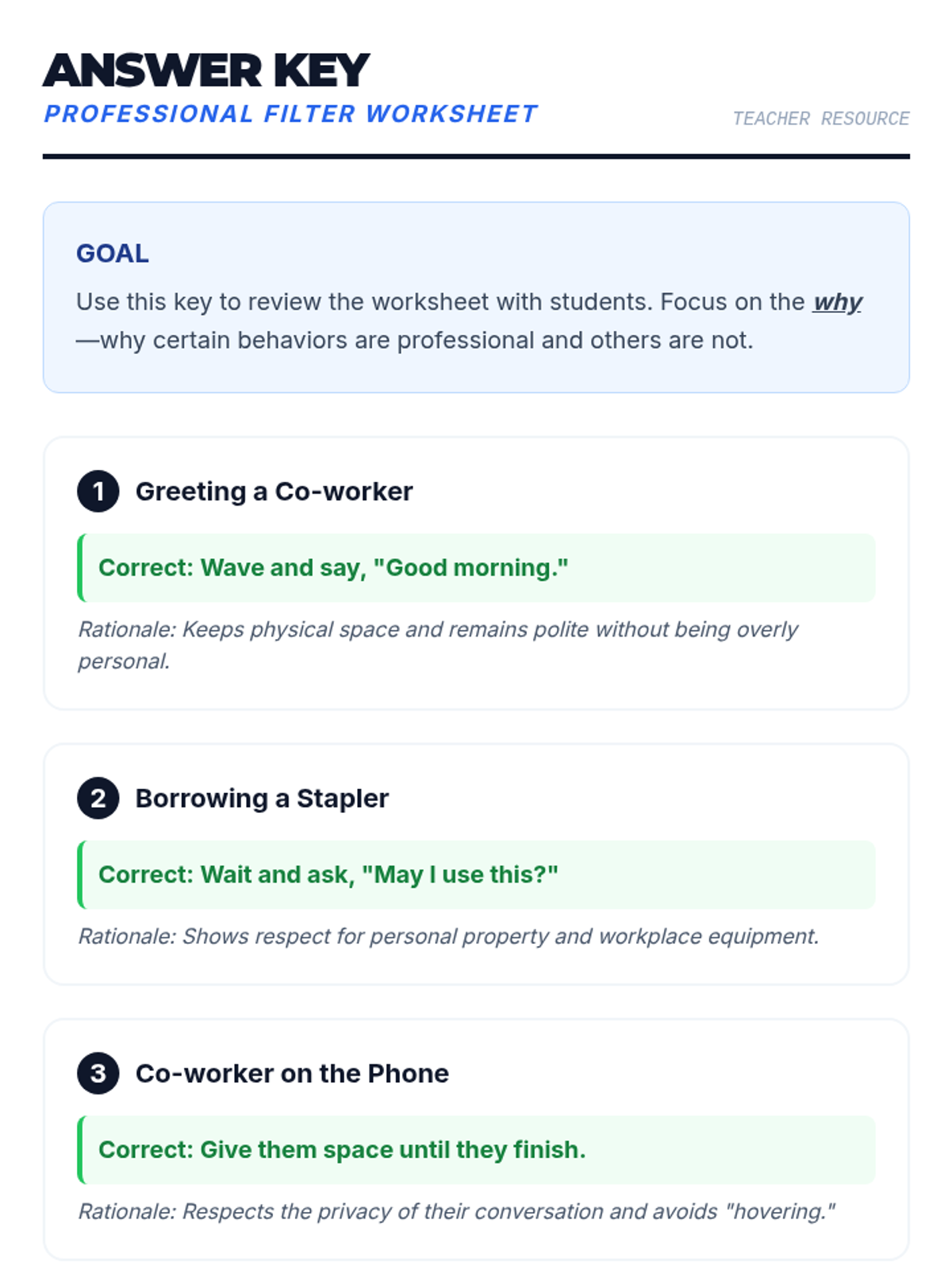
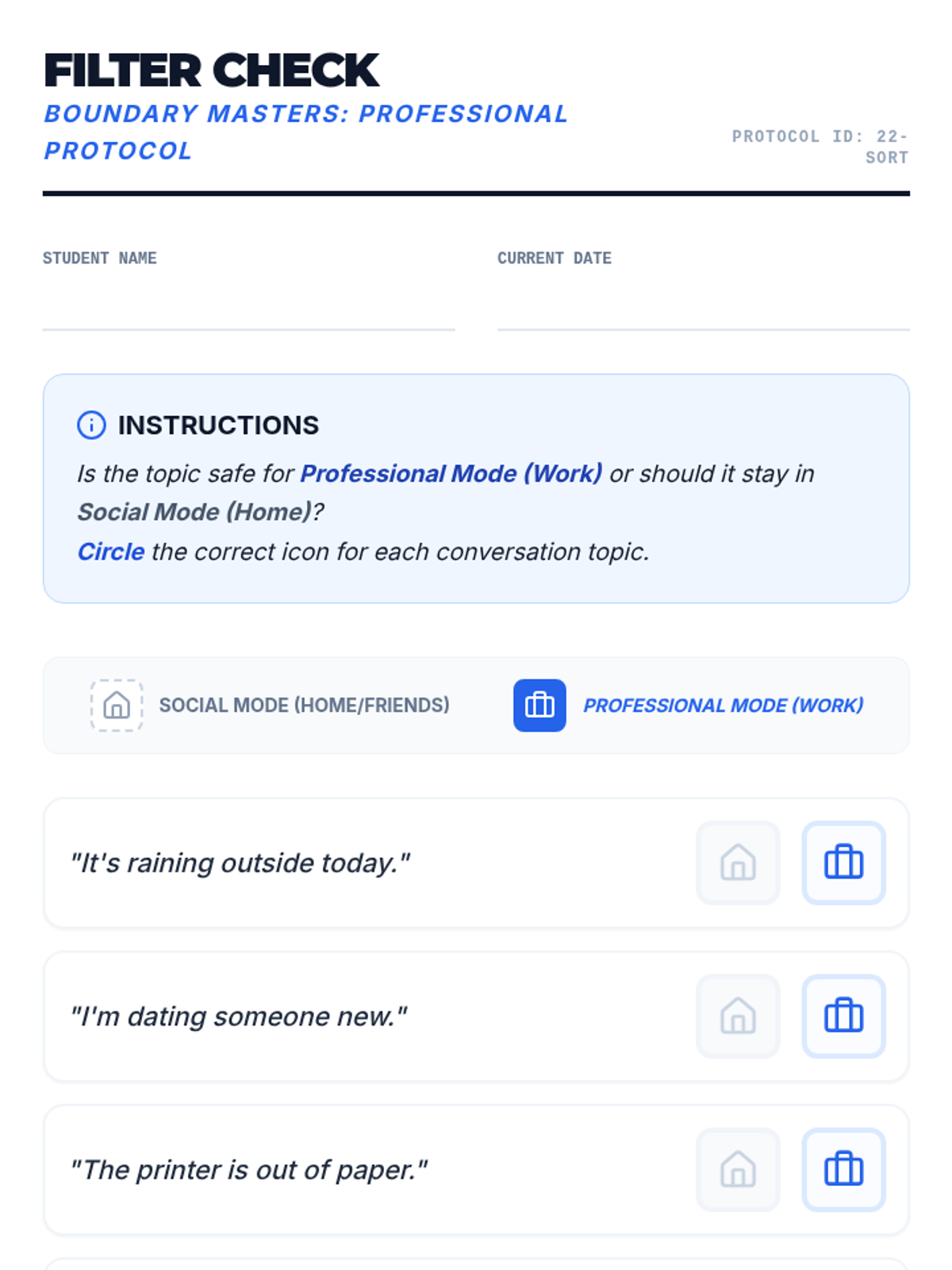
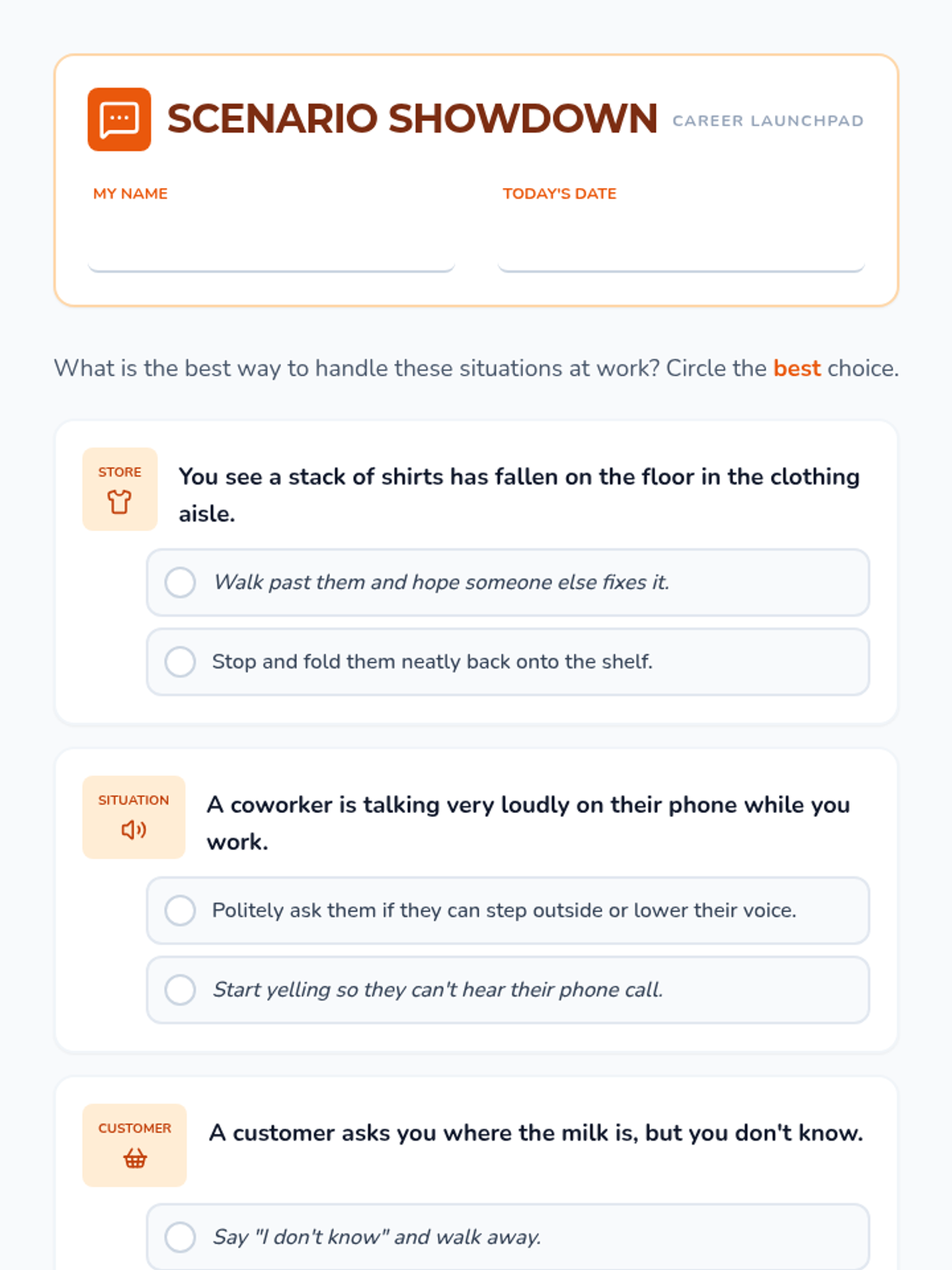
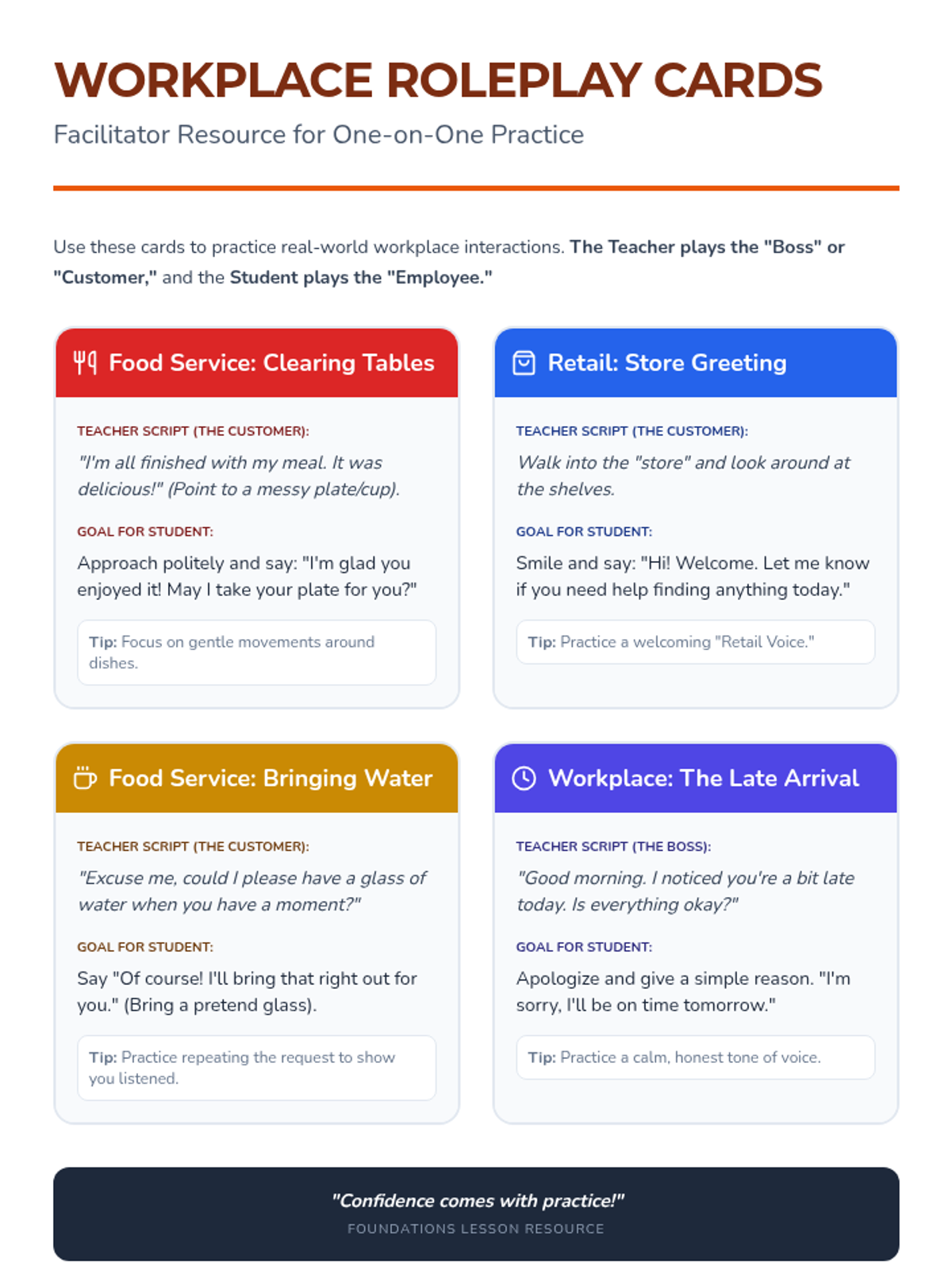
This lesson focuses on applying boundary and consent concepts to the workplace and community settings. Students will learn to distinguish between personal and professional interactions, practice workplace-appropriate greetings, and navigate public spaces with confidence and respect.
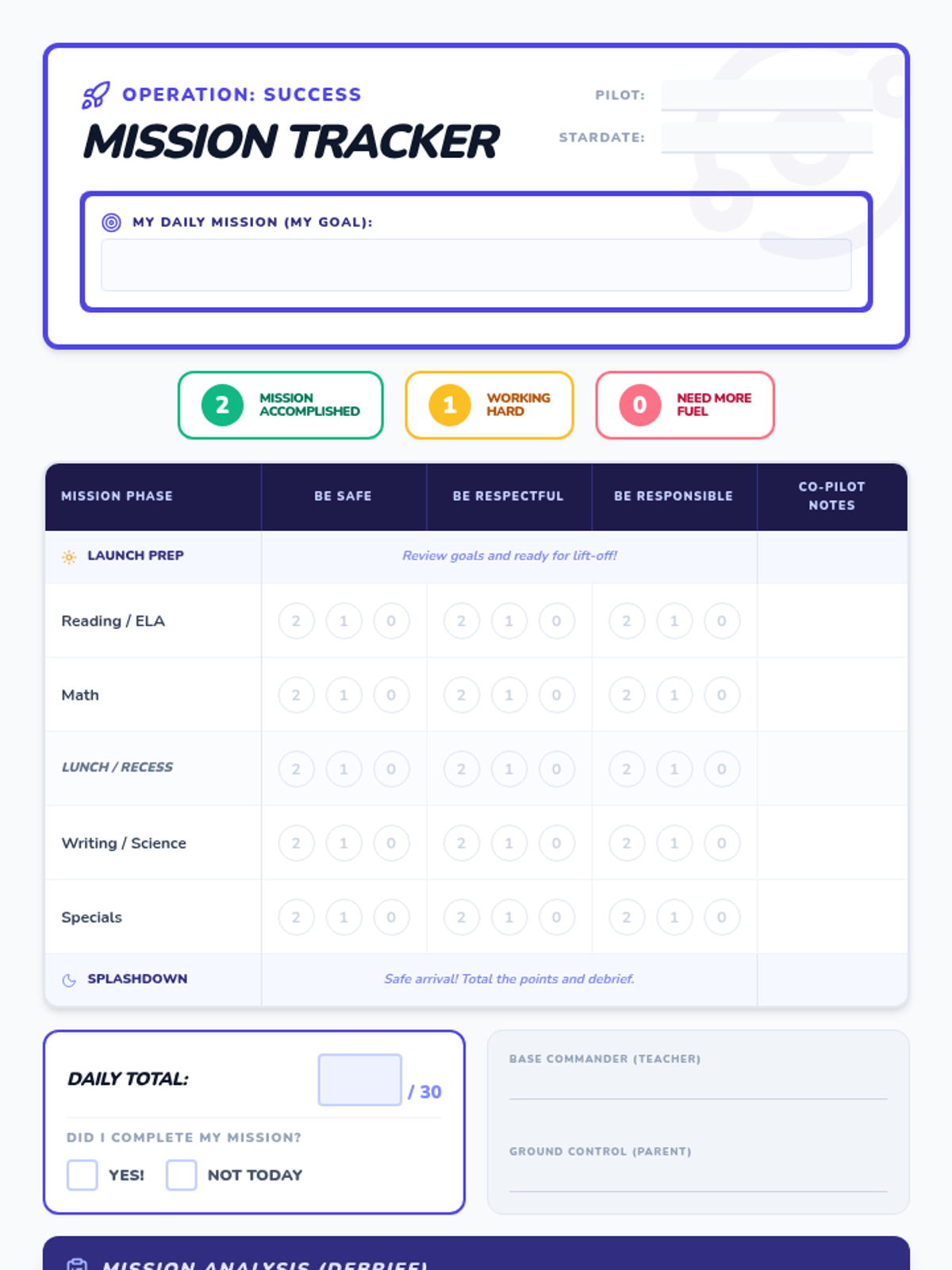
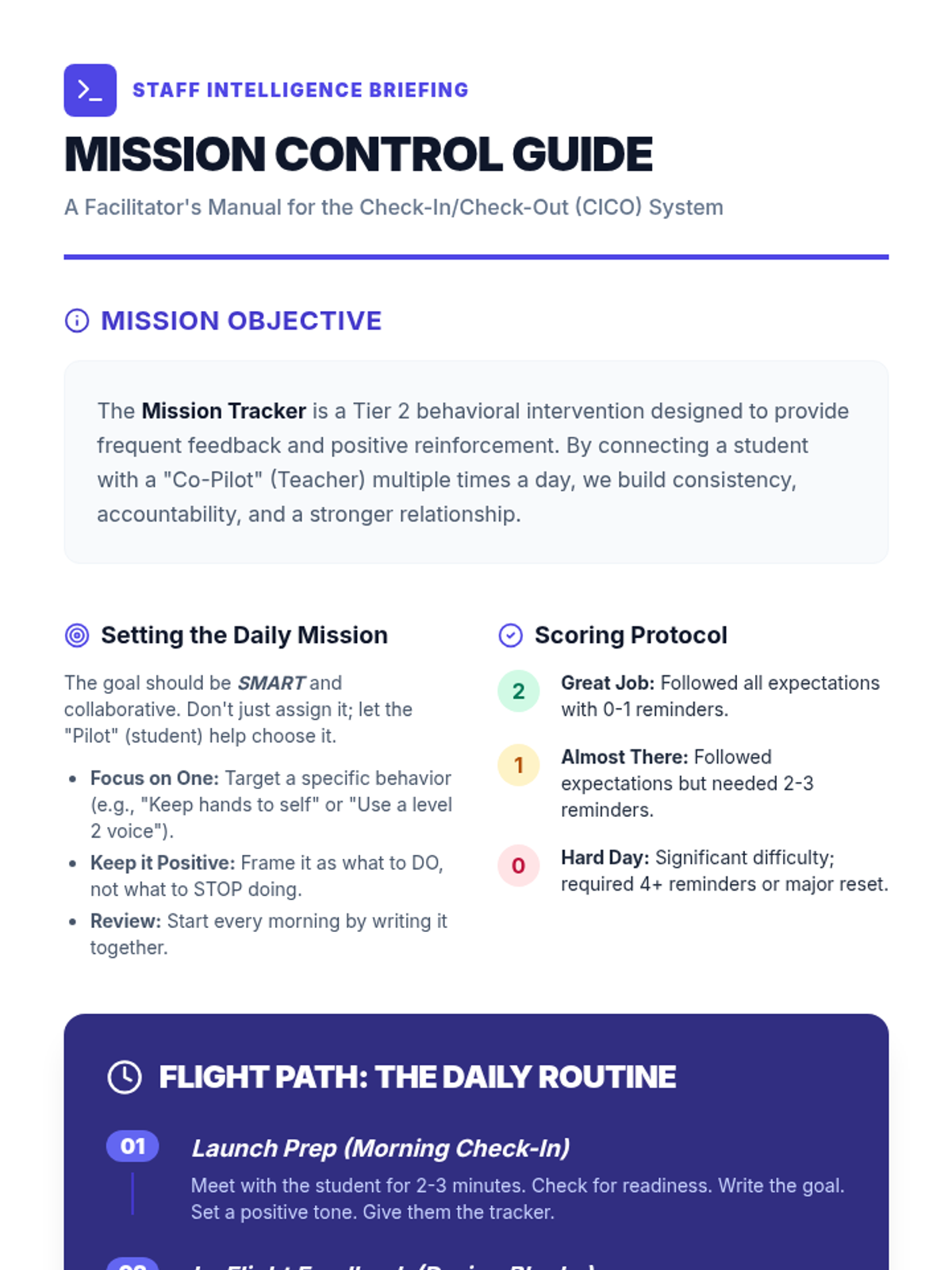
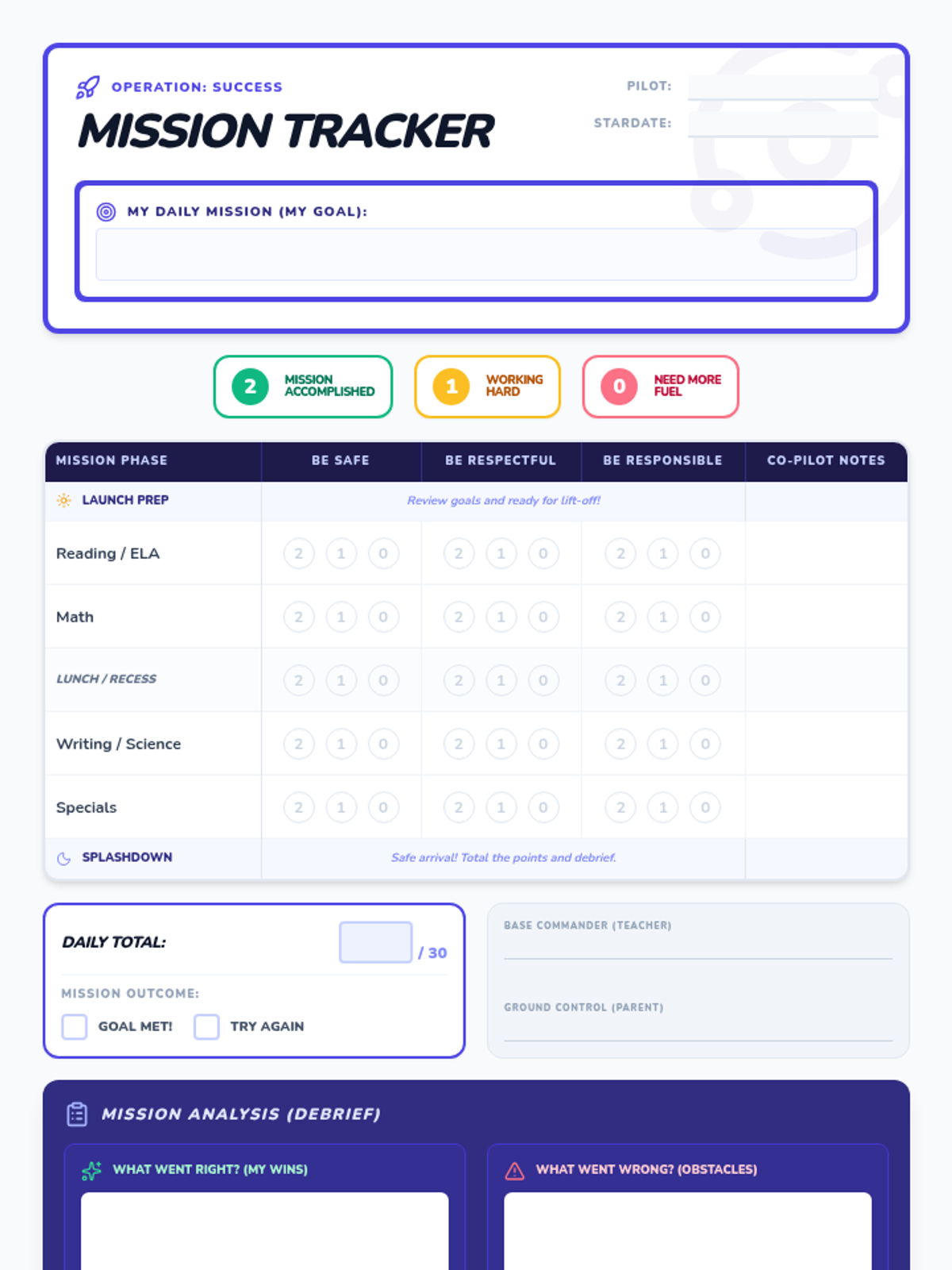
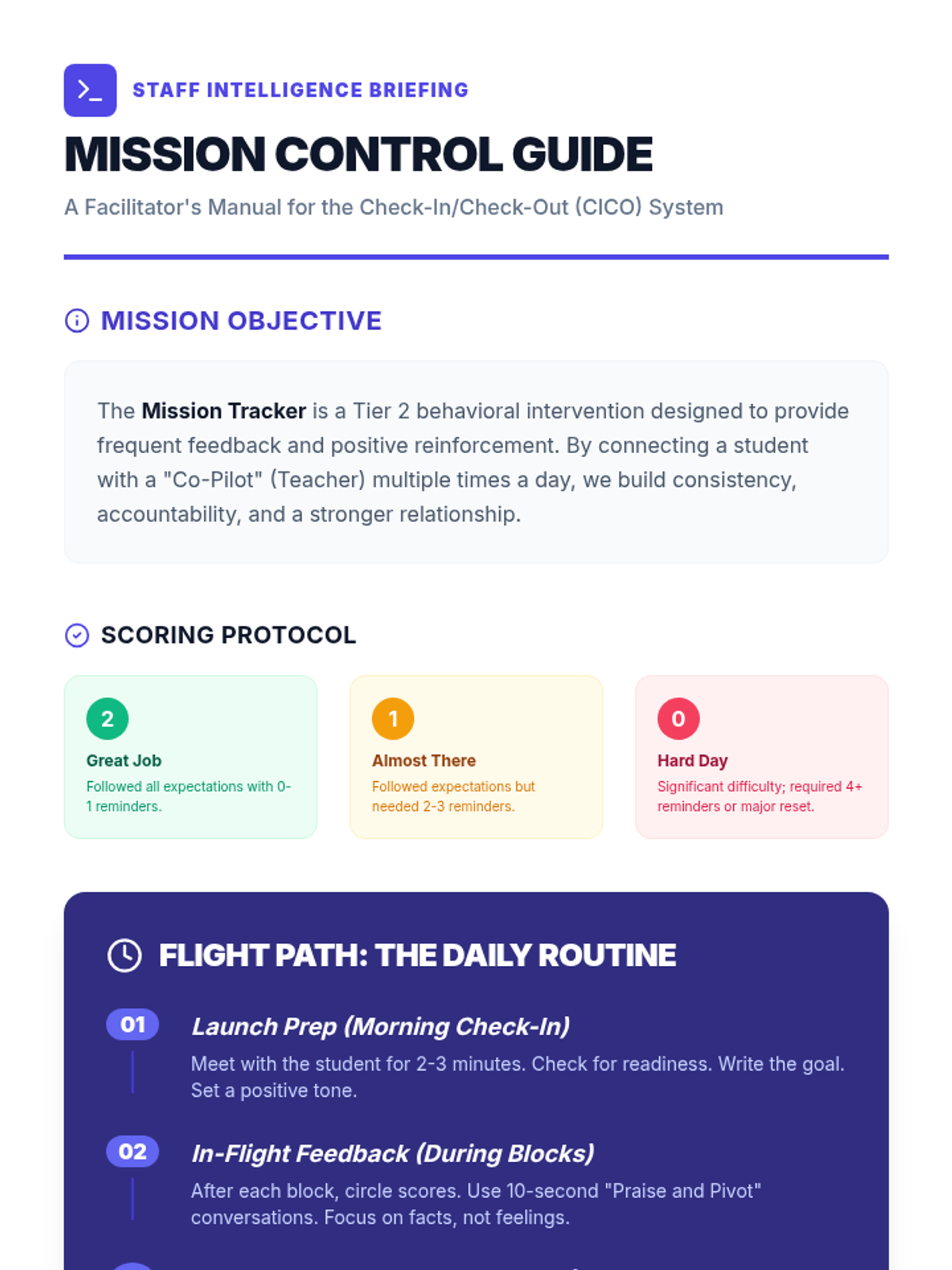
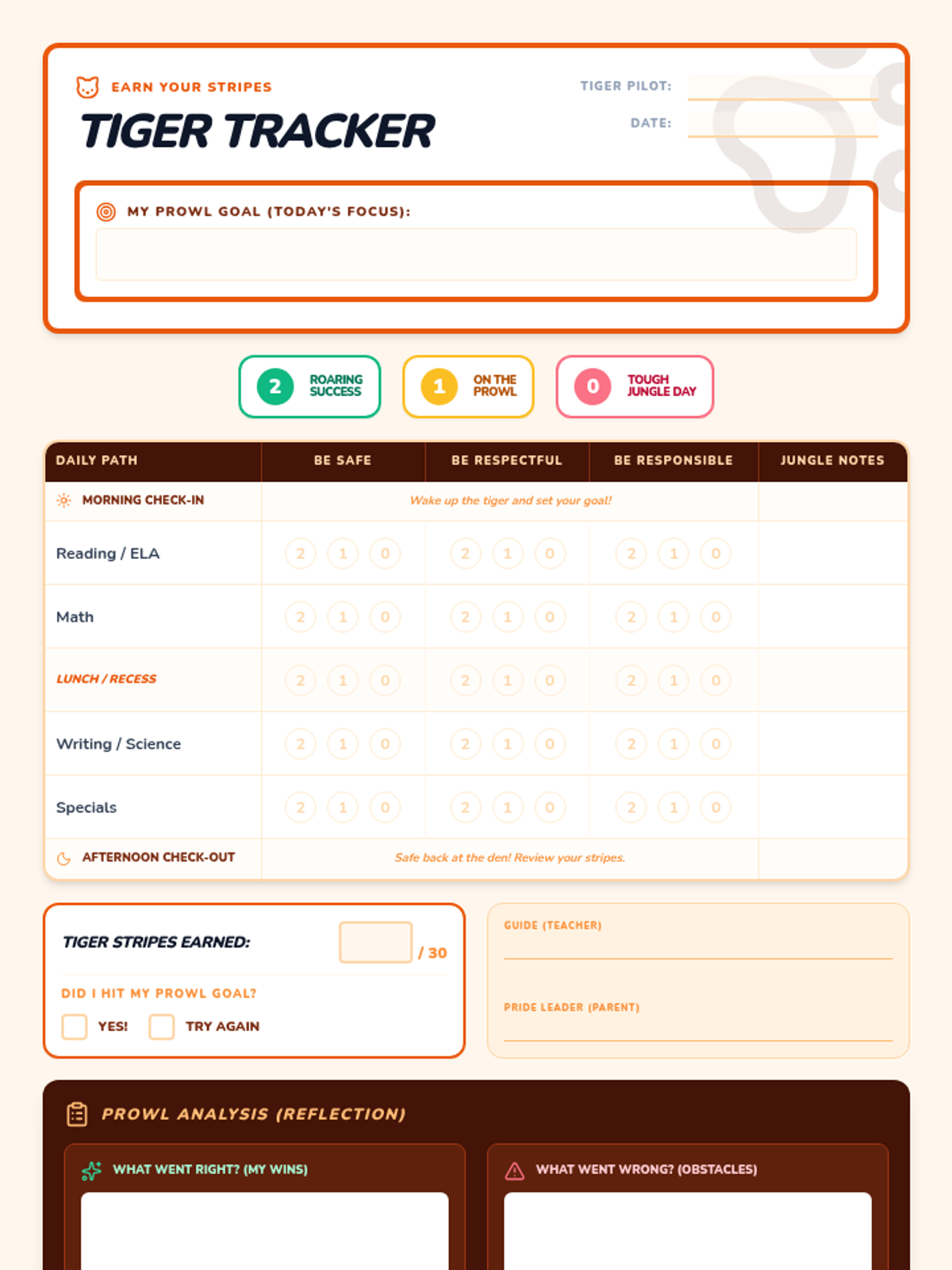
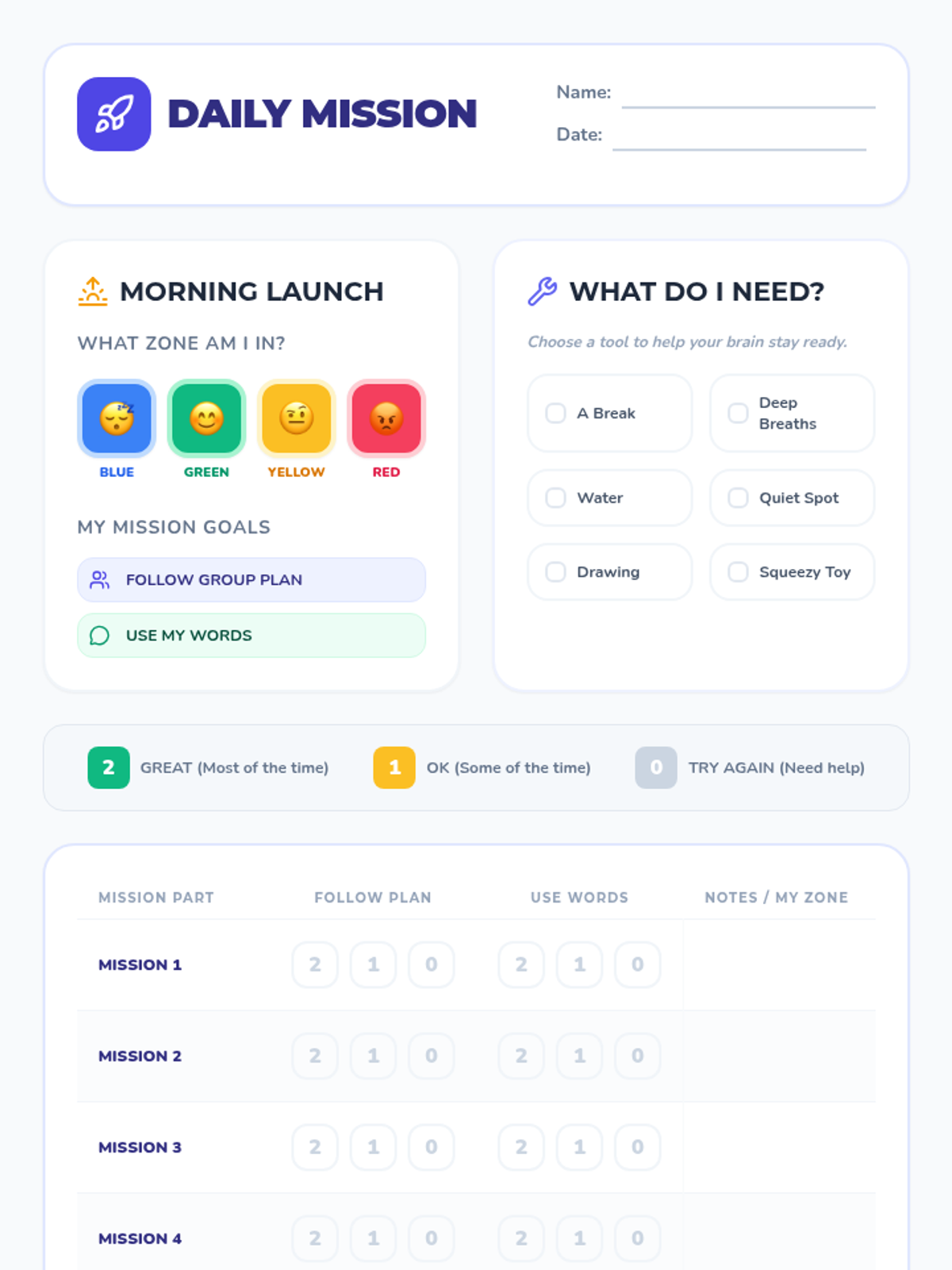
A set of tools to support a student's daily behavioral goals through a consistent check-in/check-out system.
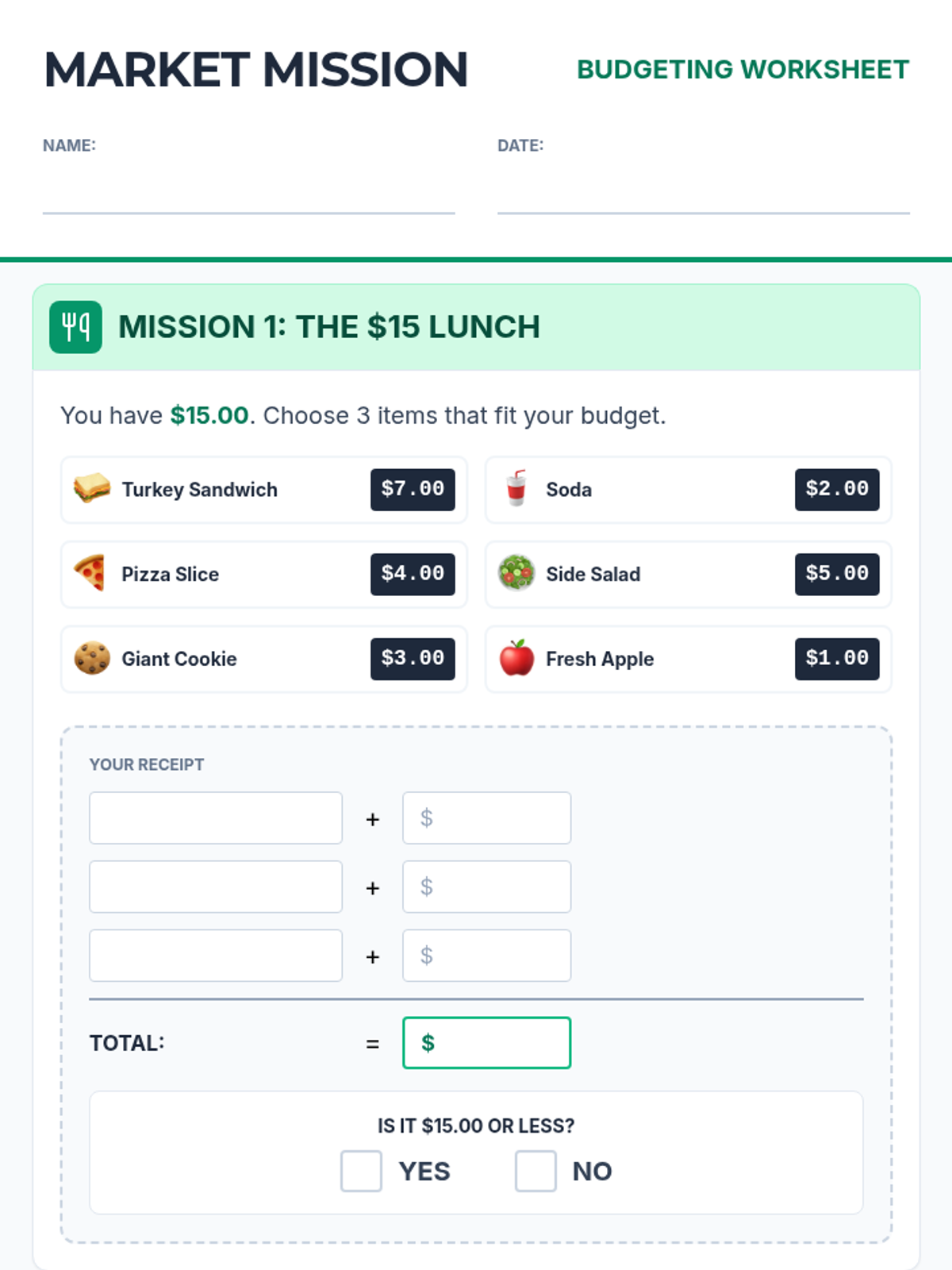
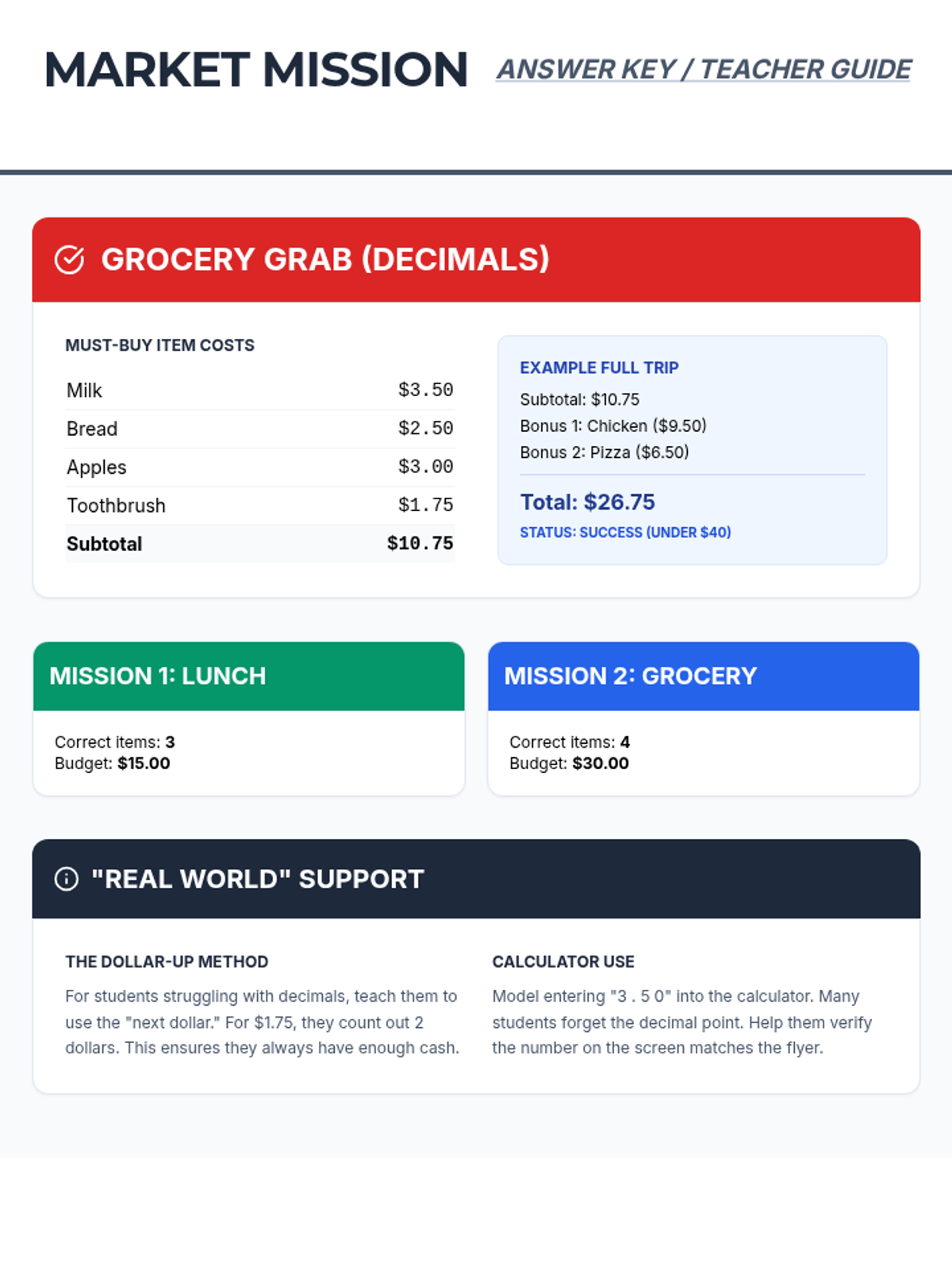
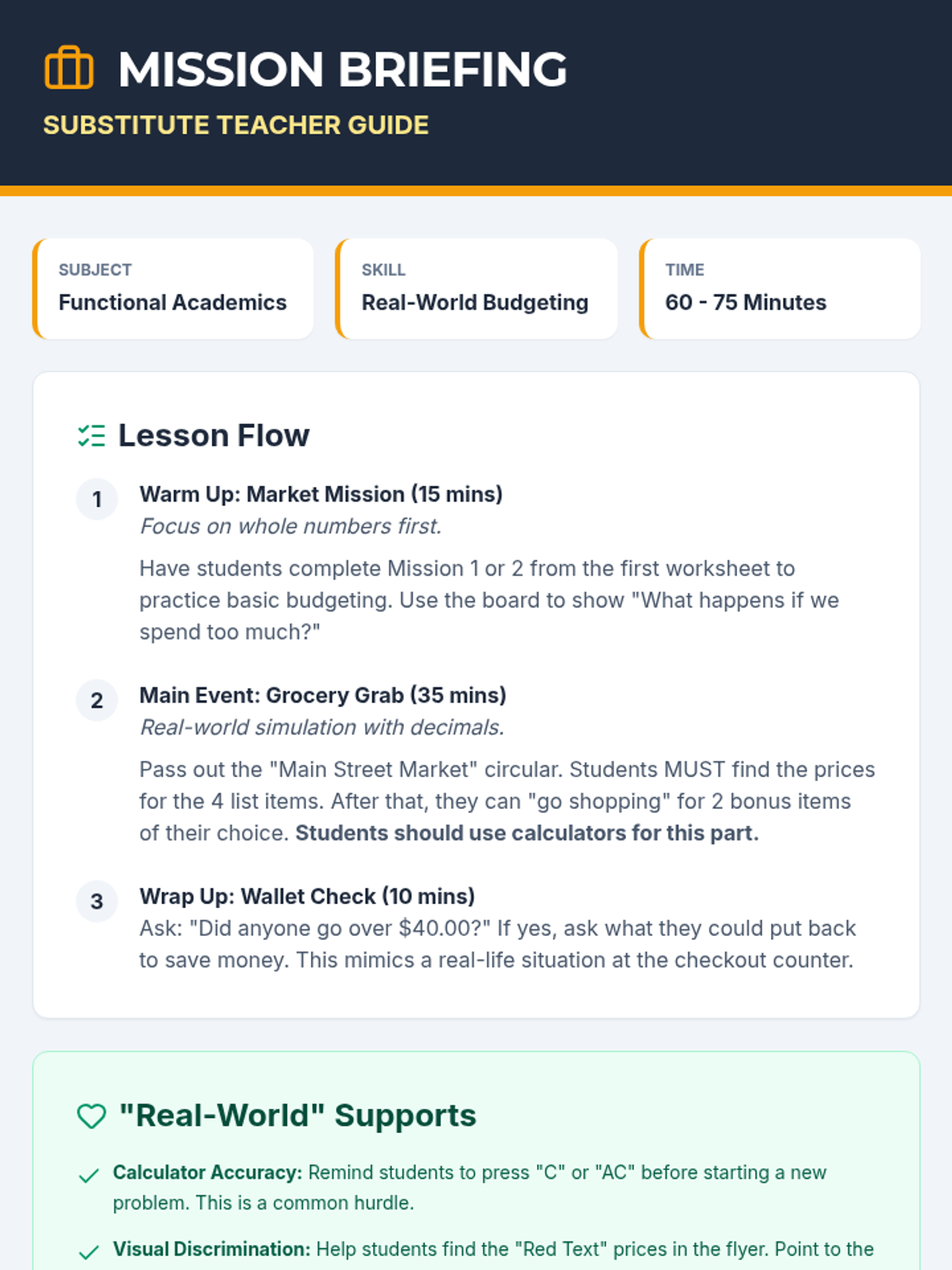
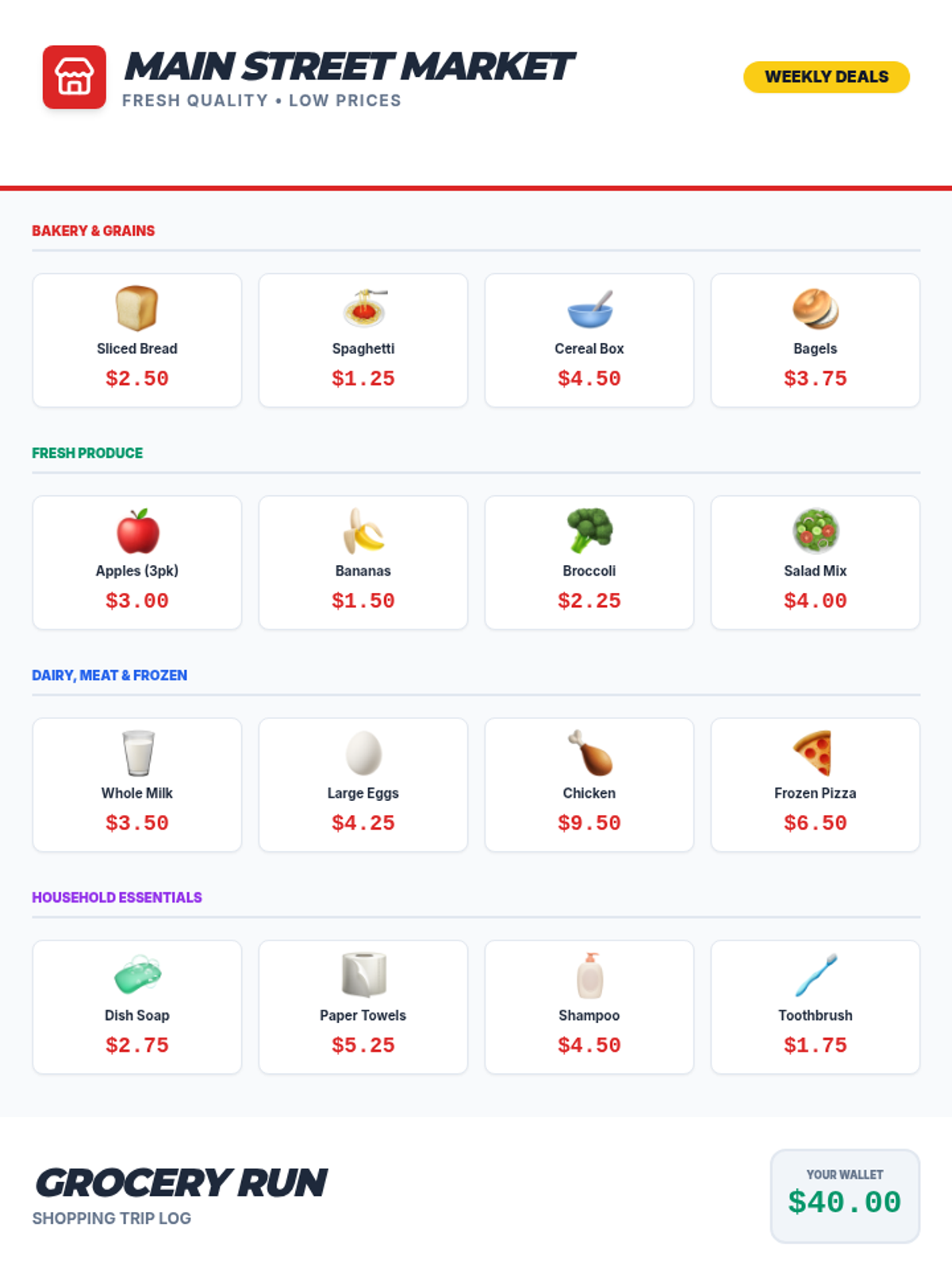
A functional budgeting lesson designed for young adults with intellectual disabilities and autism, focusing on making choices within a fixed budget. Includes a visual shopping worksheet, an answer key, and a guide for substitute teachers.
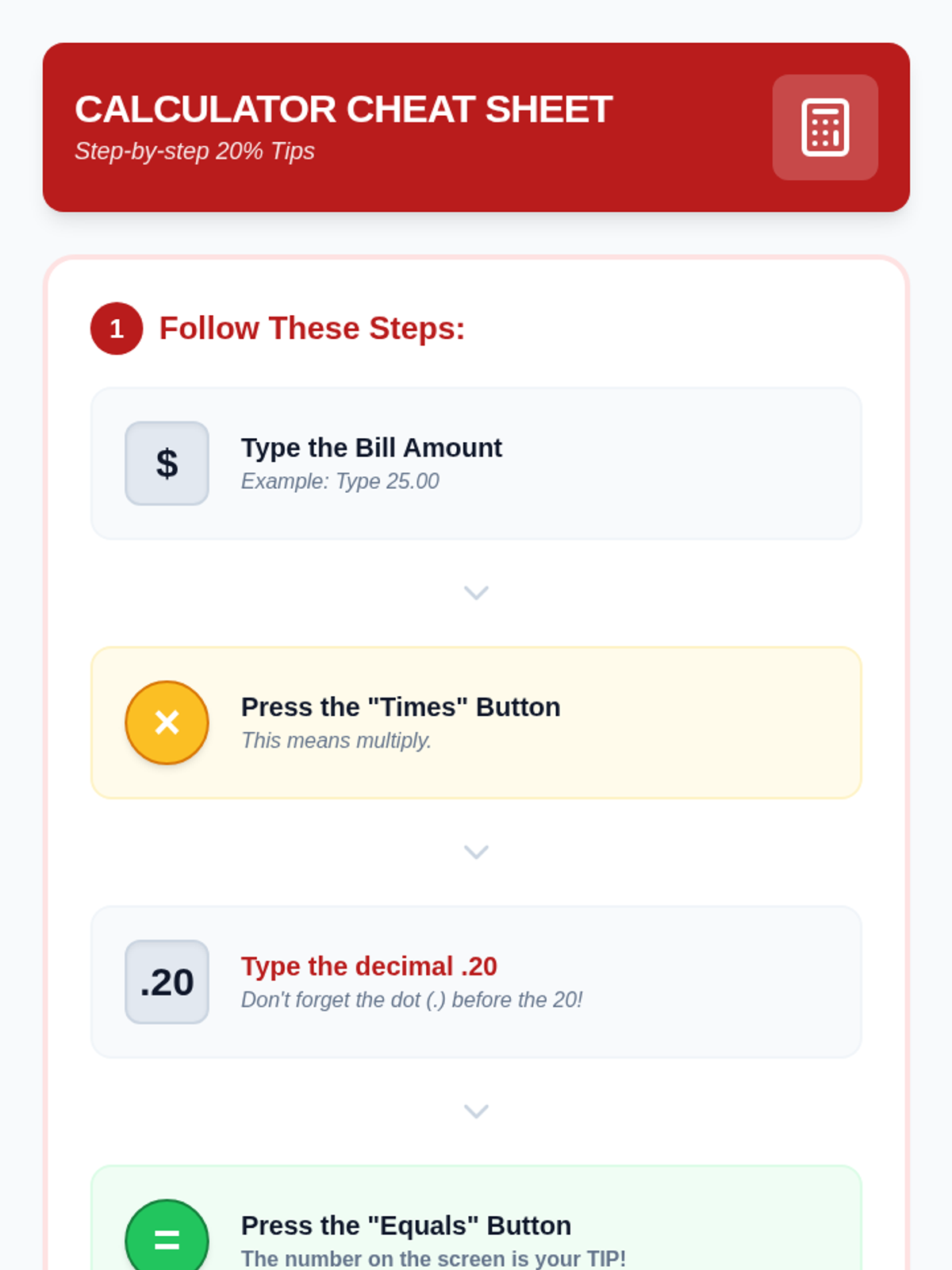
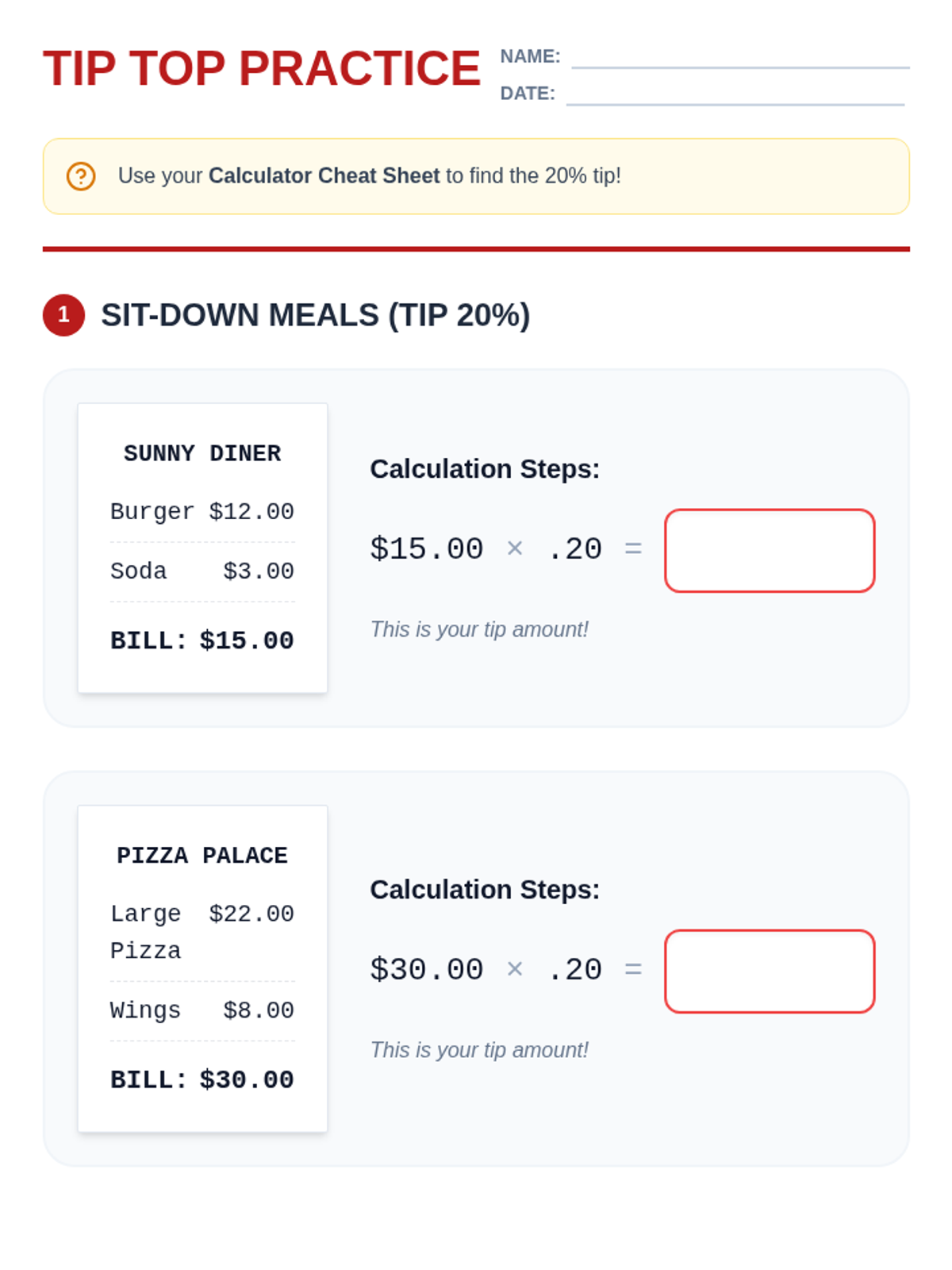
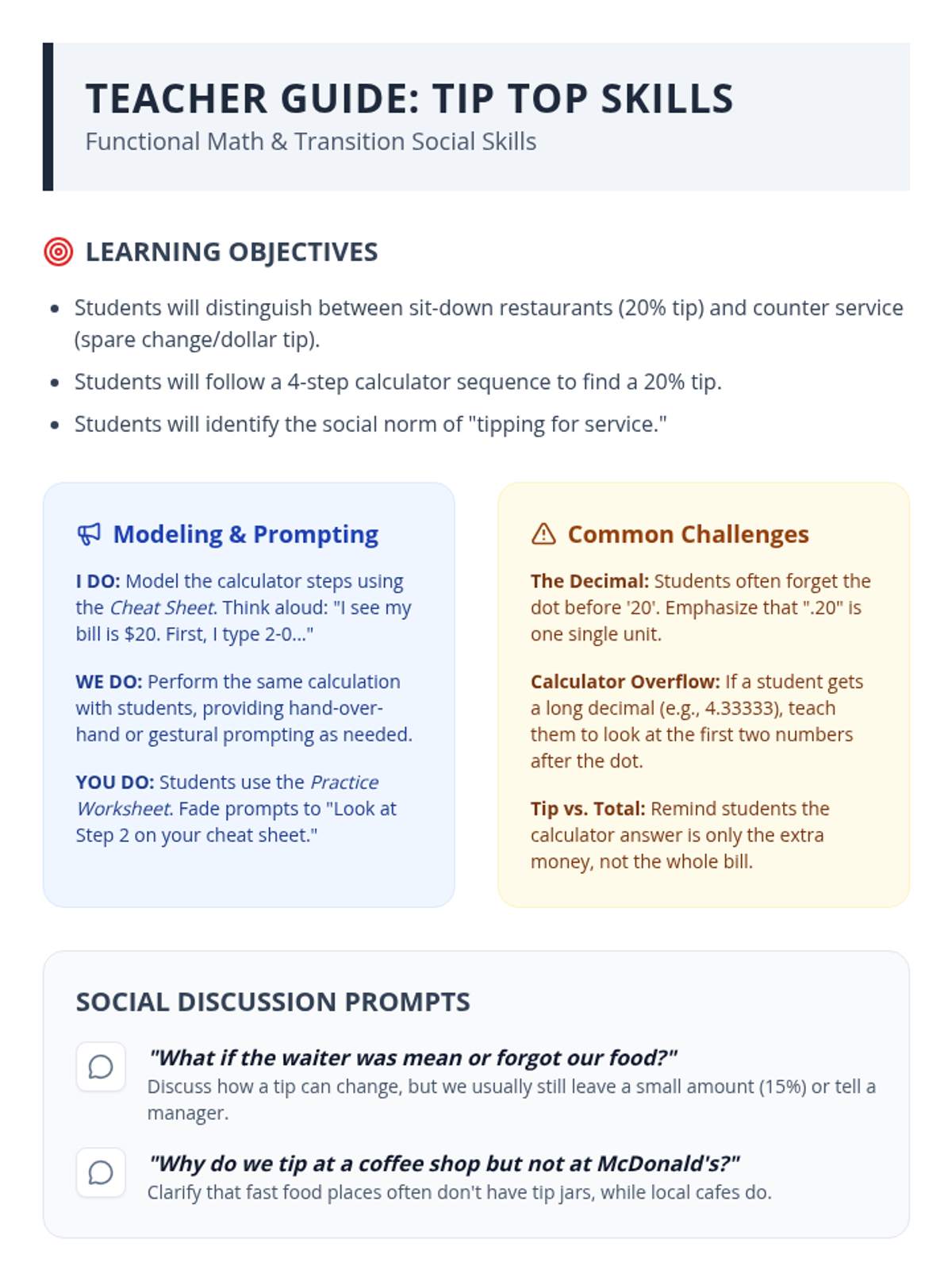
A comprehensive lesson designed for transition-aged students with intellectual disabilities and autism to learn the social norms and math skills involved in tipping at restaurants and cafes.
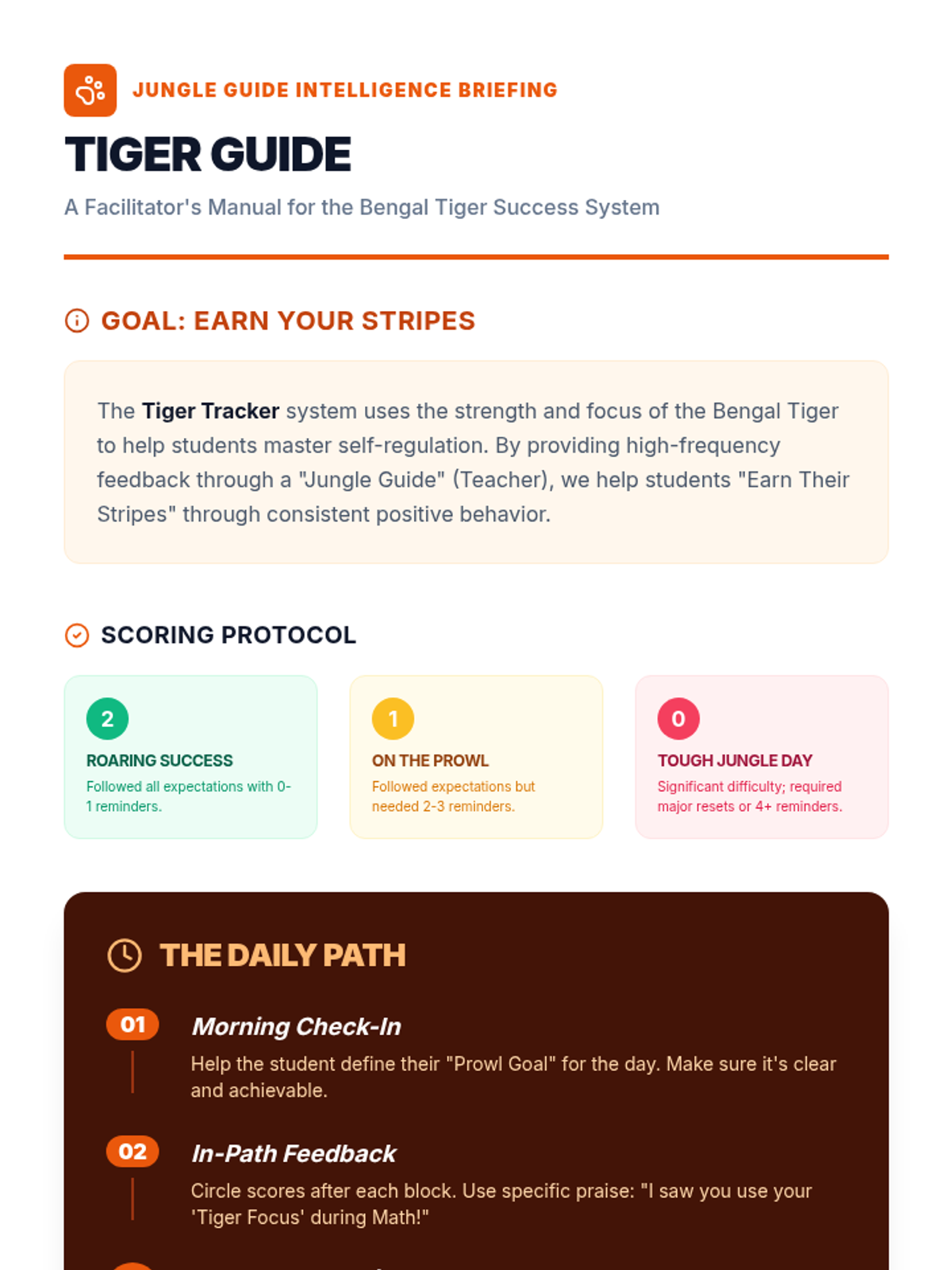
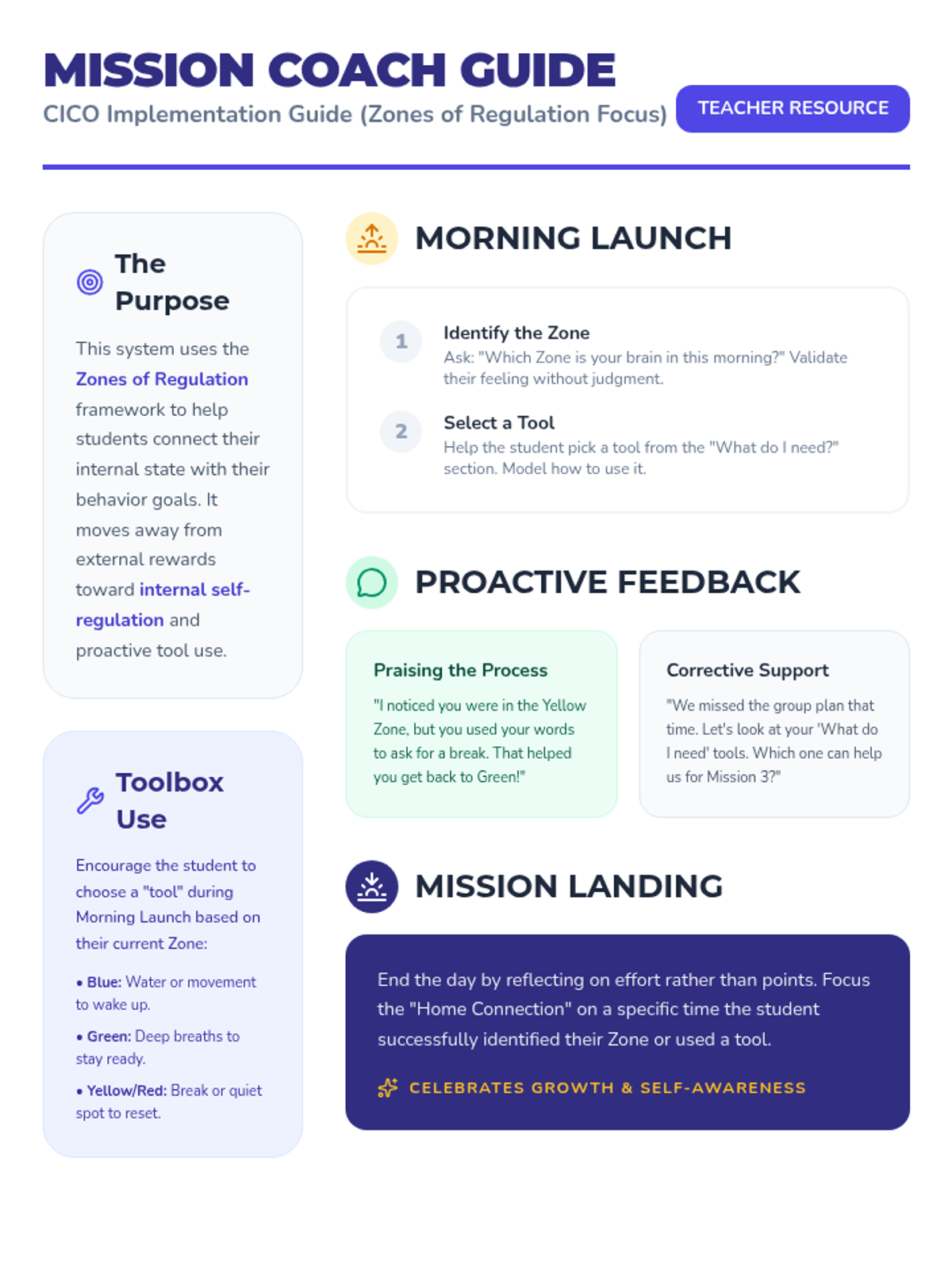
A comprehensive Check-In Check-Out (CICO) system designed for 1st-grade students to build self-regulation and positive behavior habits. This lesson includes the daily tracking sheet, a teacher facilitation guide, and a rewards menu to reinforce progress.
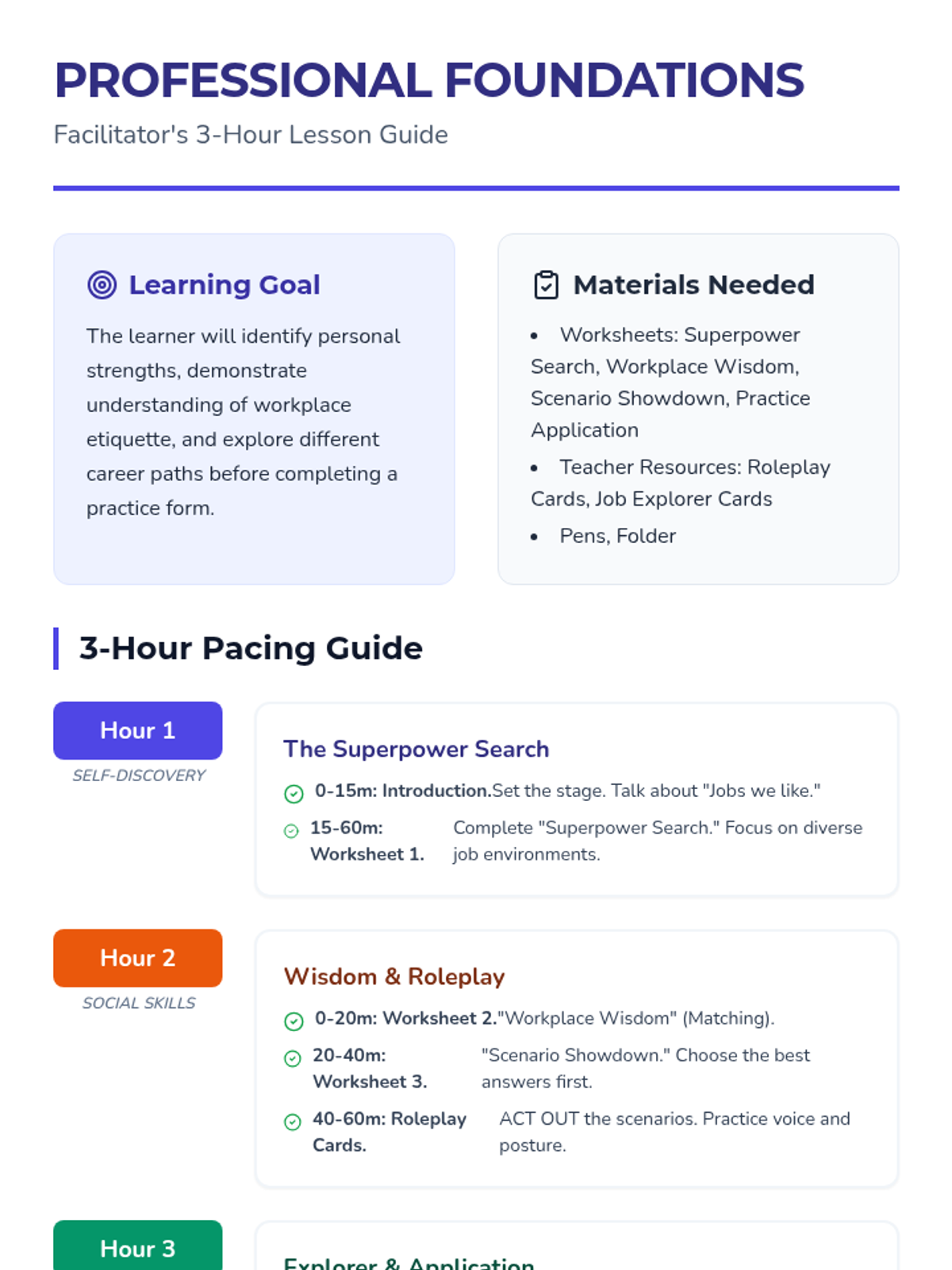
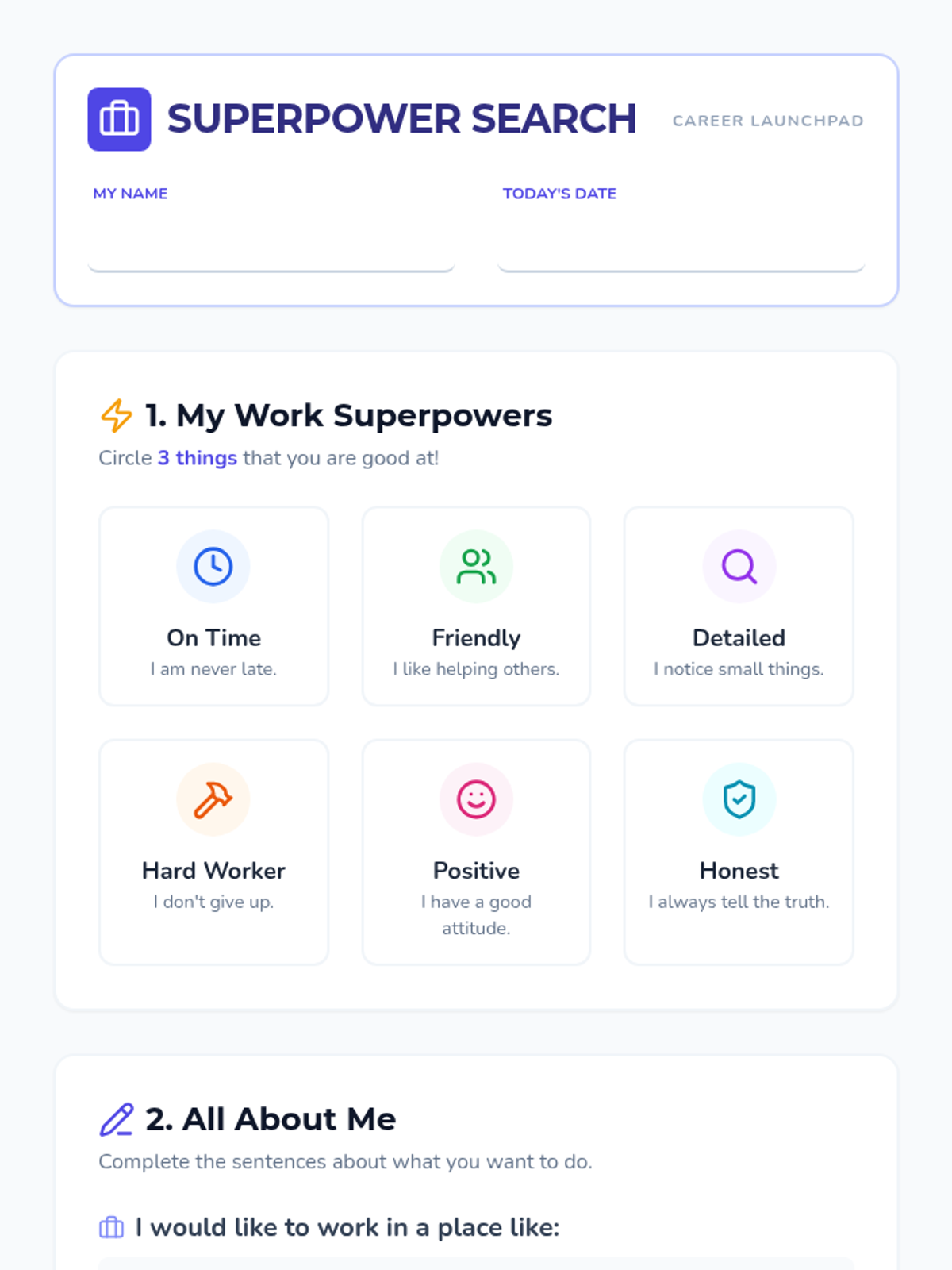
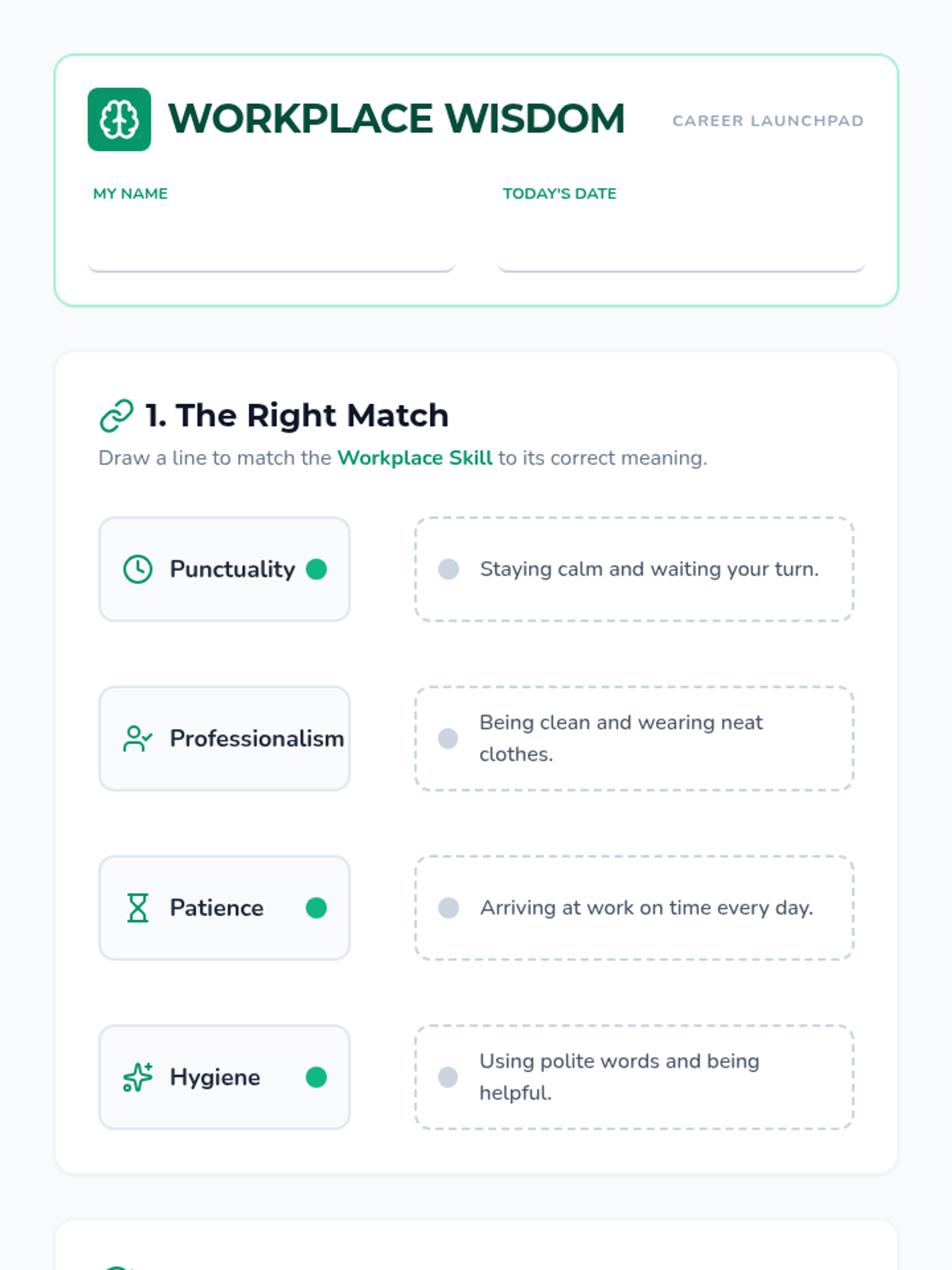
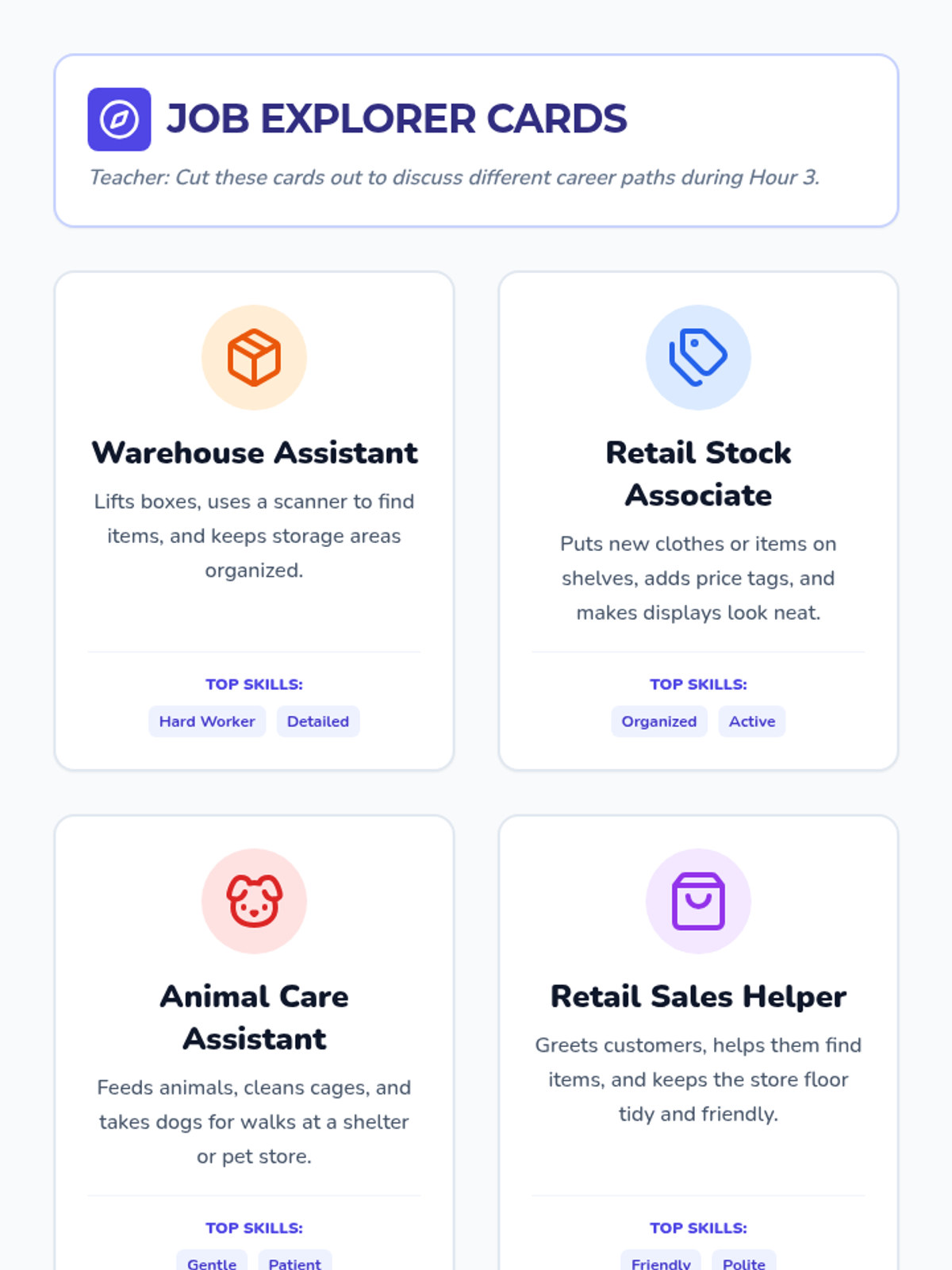
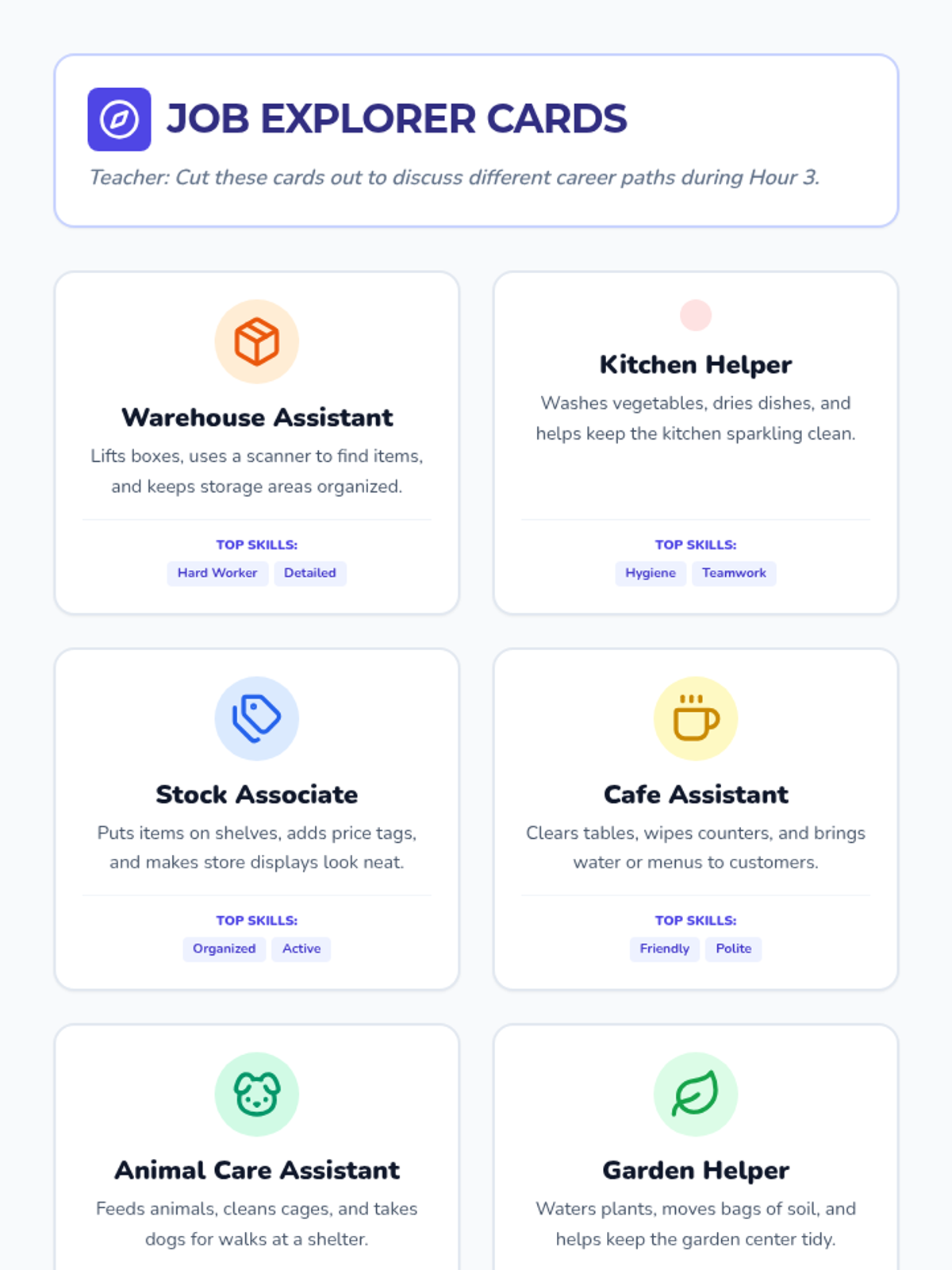
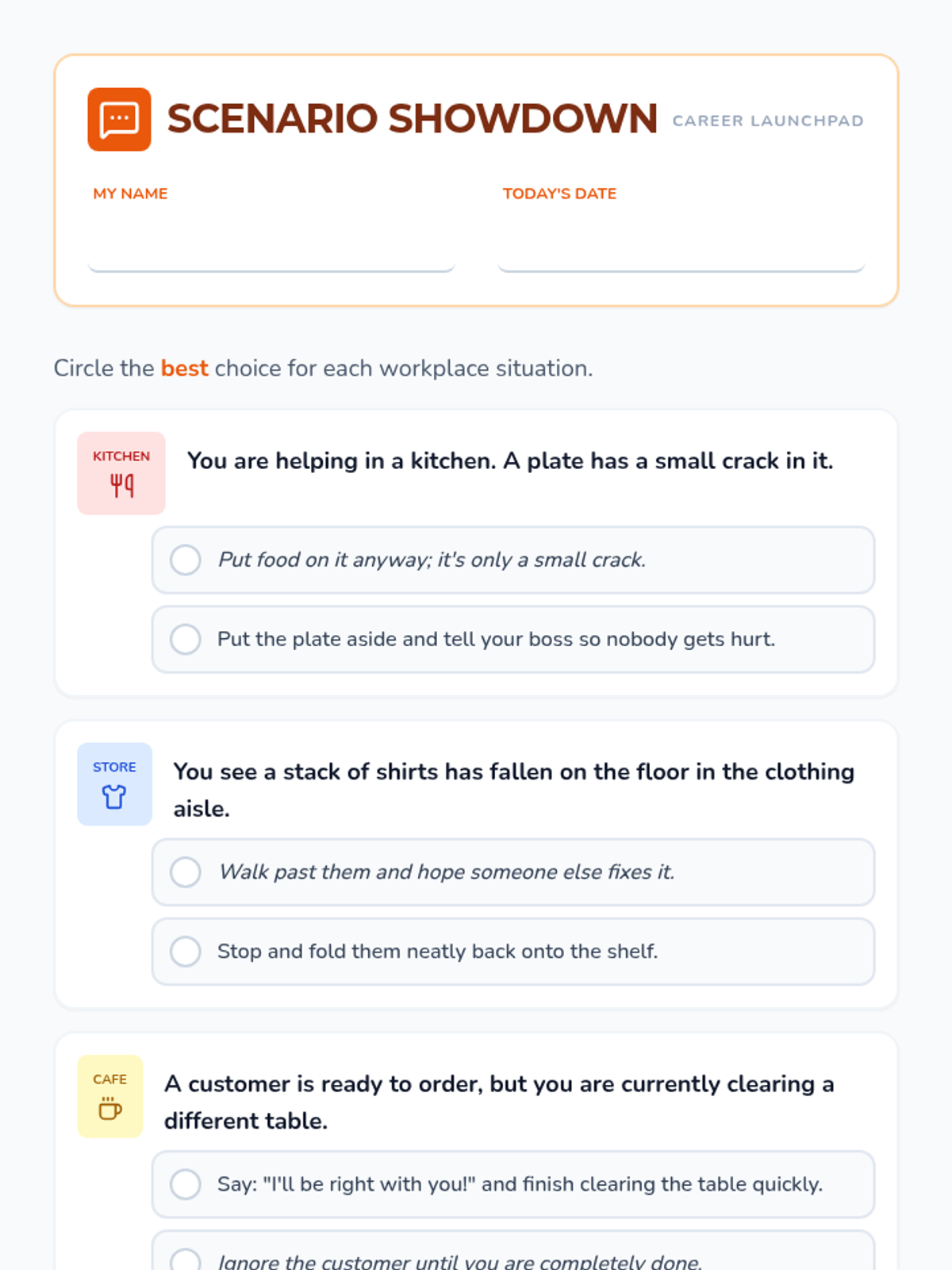
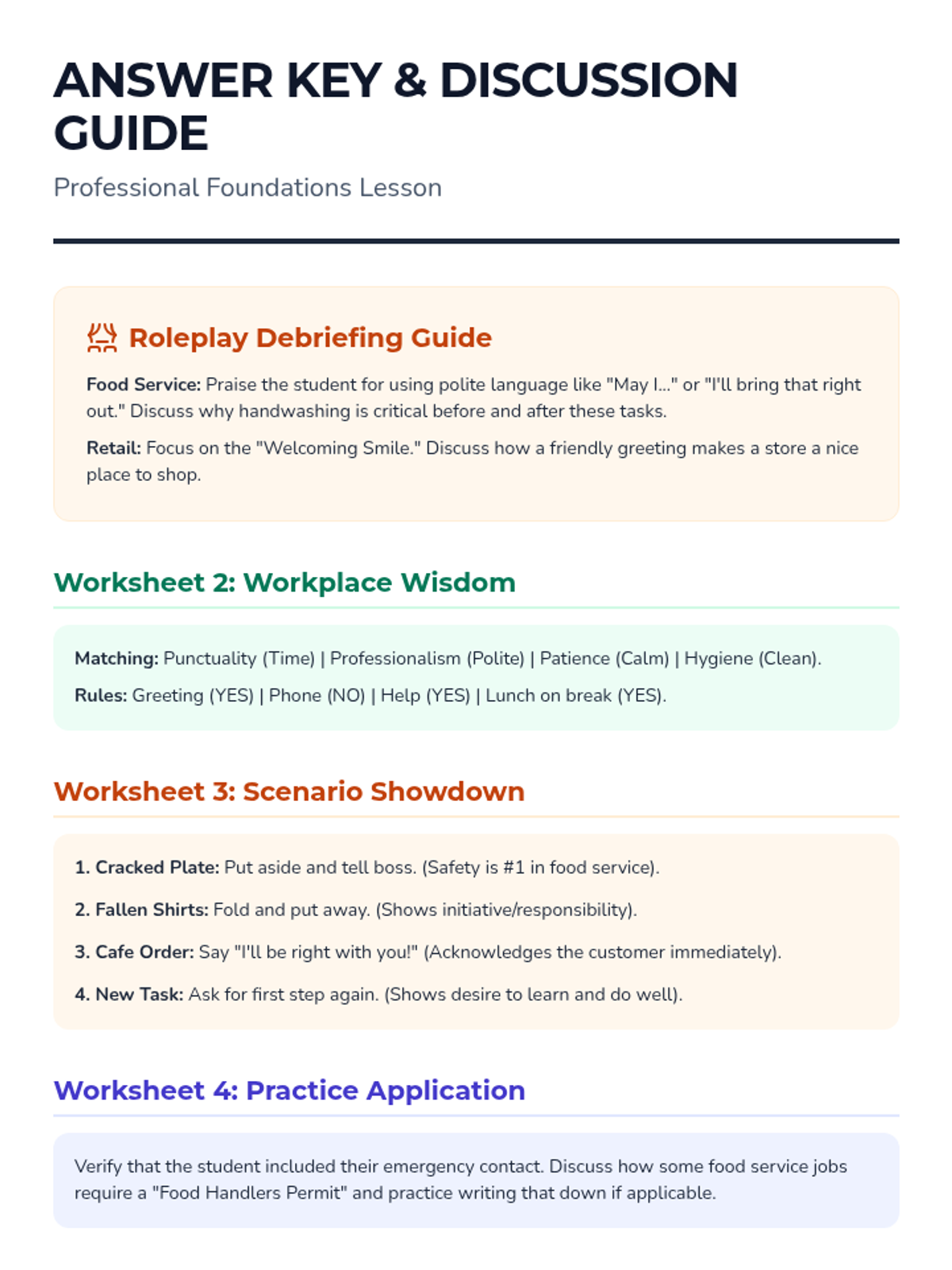
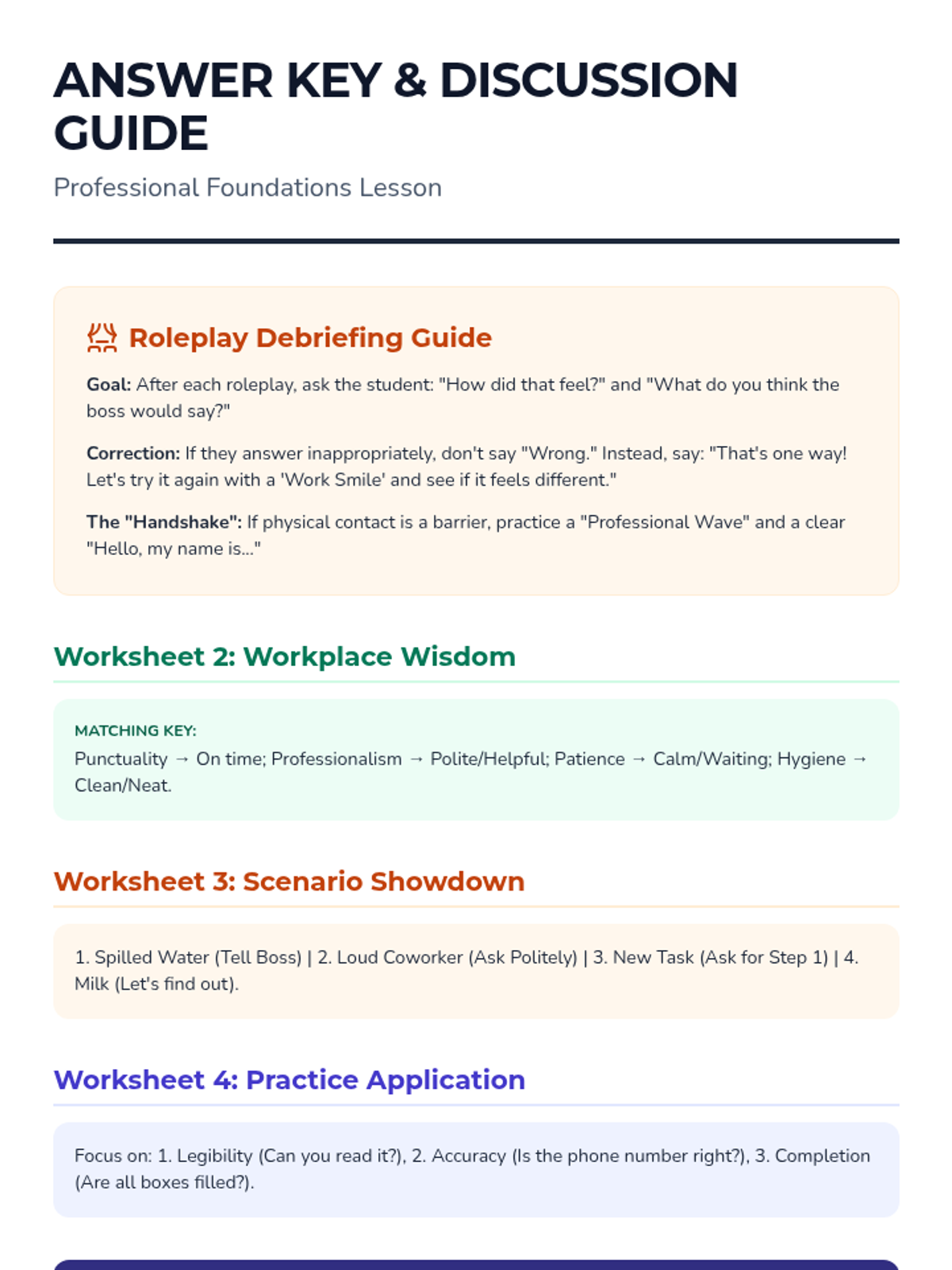
A 3-hour foundational session covering personal strengths, professional behavior, and basic application skills. Includes hands-on activities tailored for individual instruction and accessible learning.
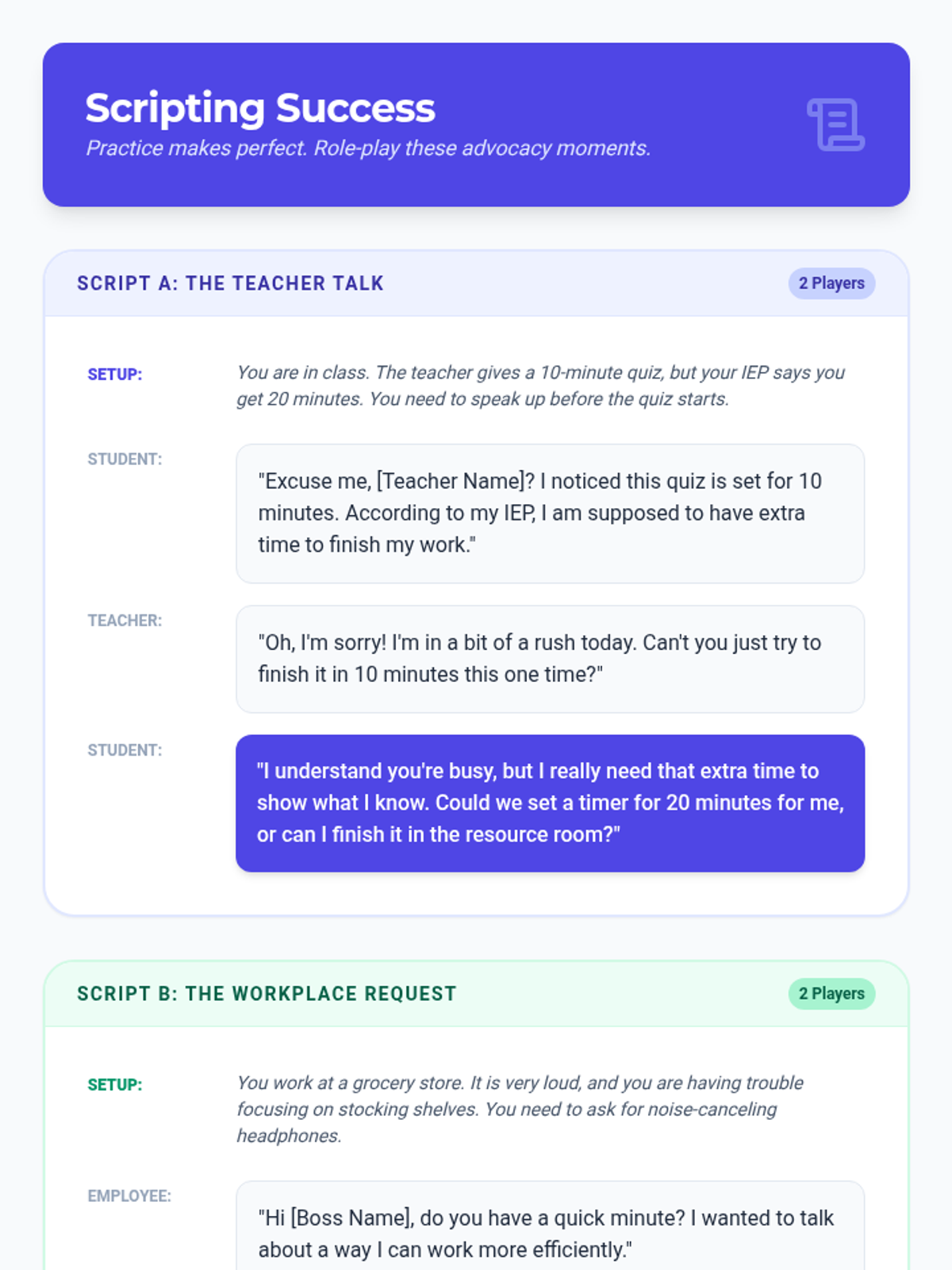
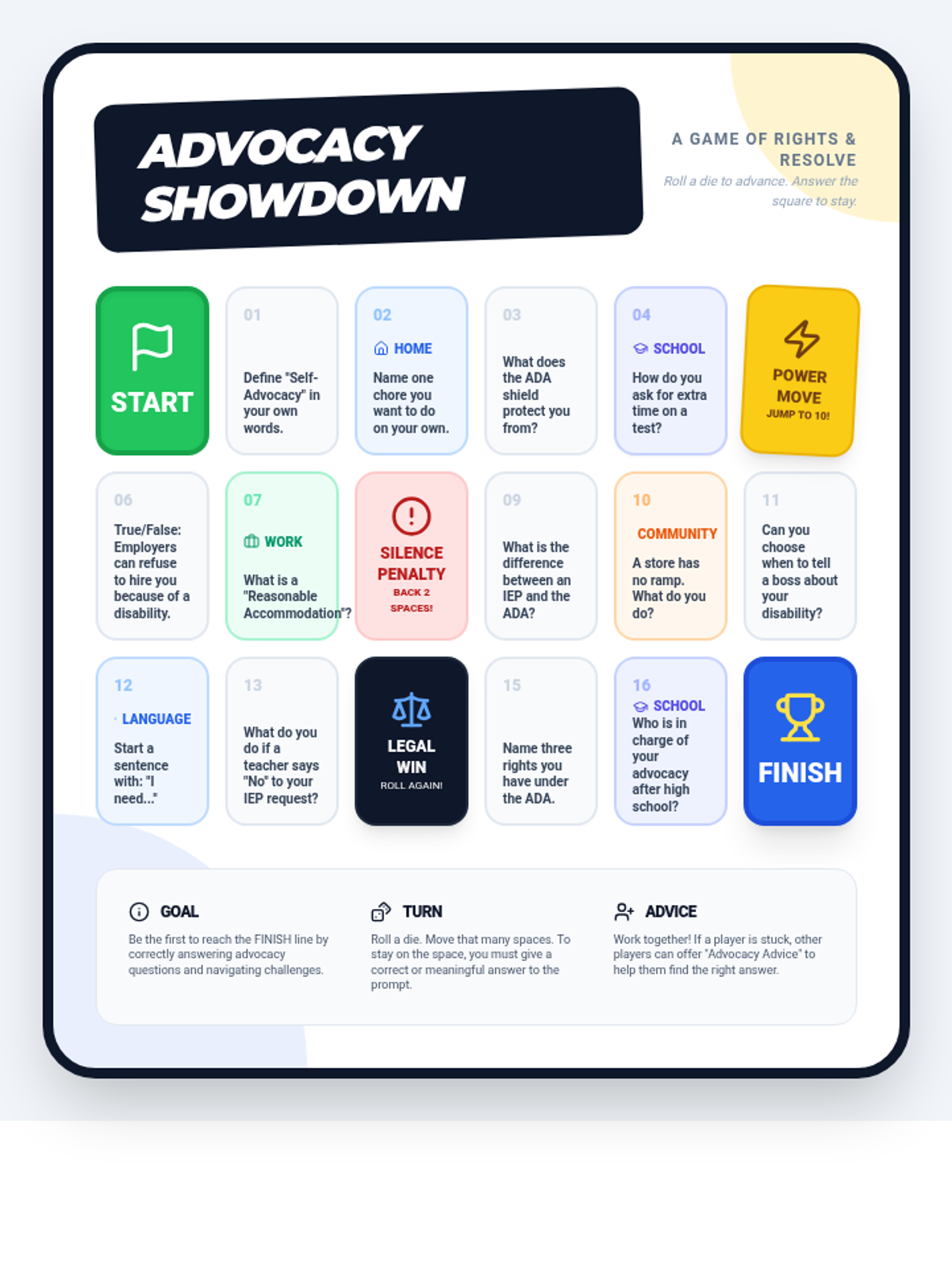
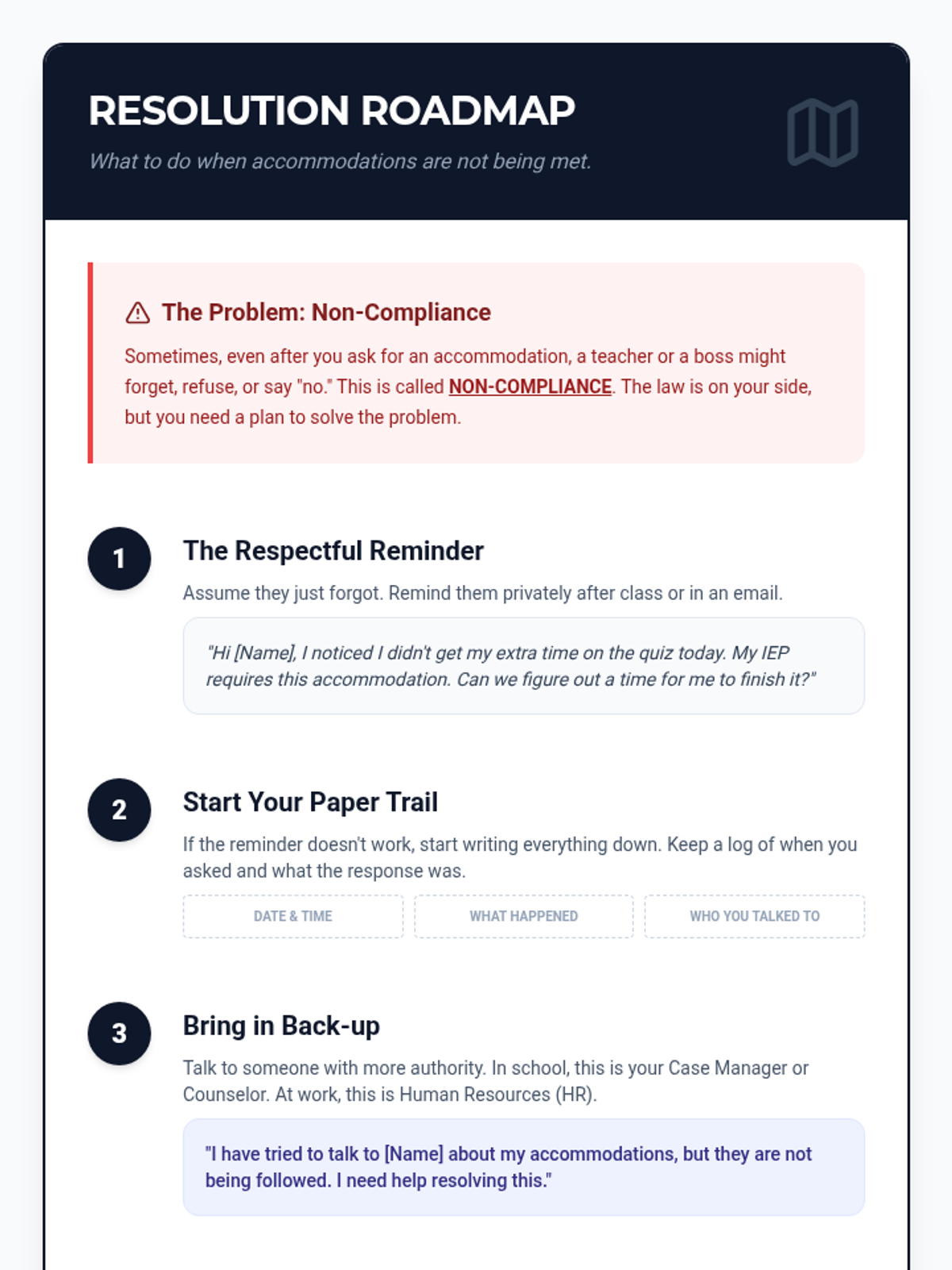
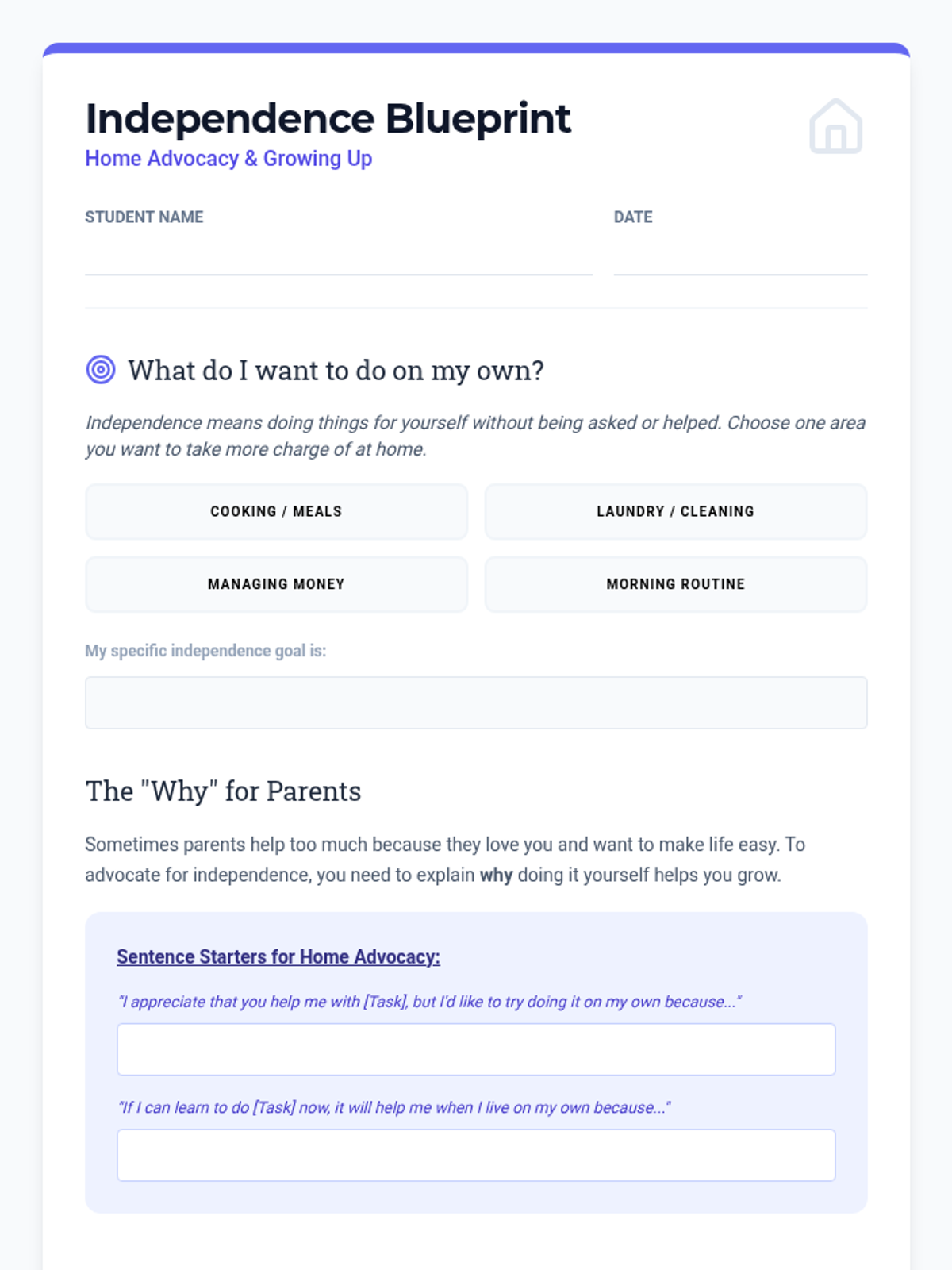
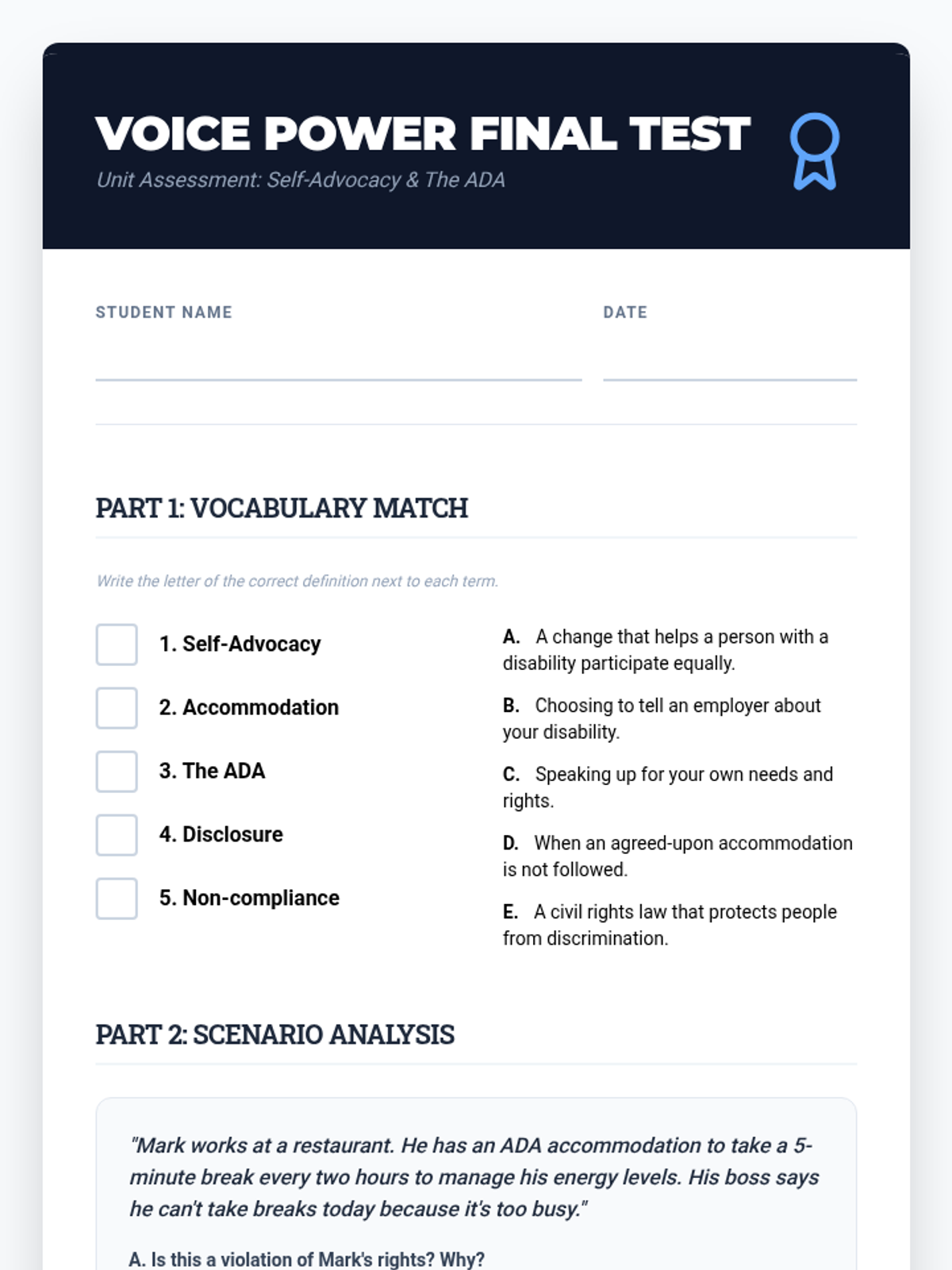
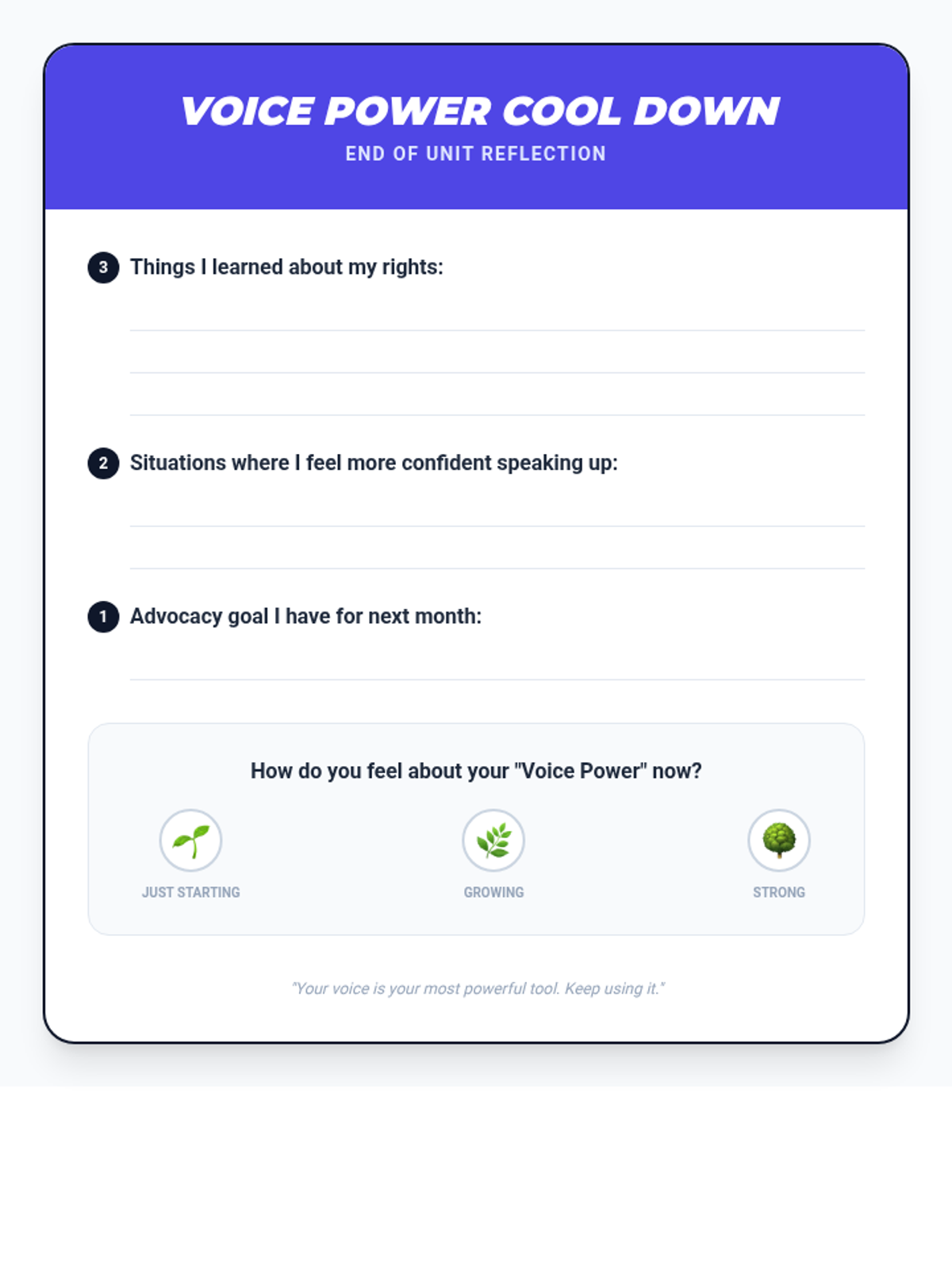
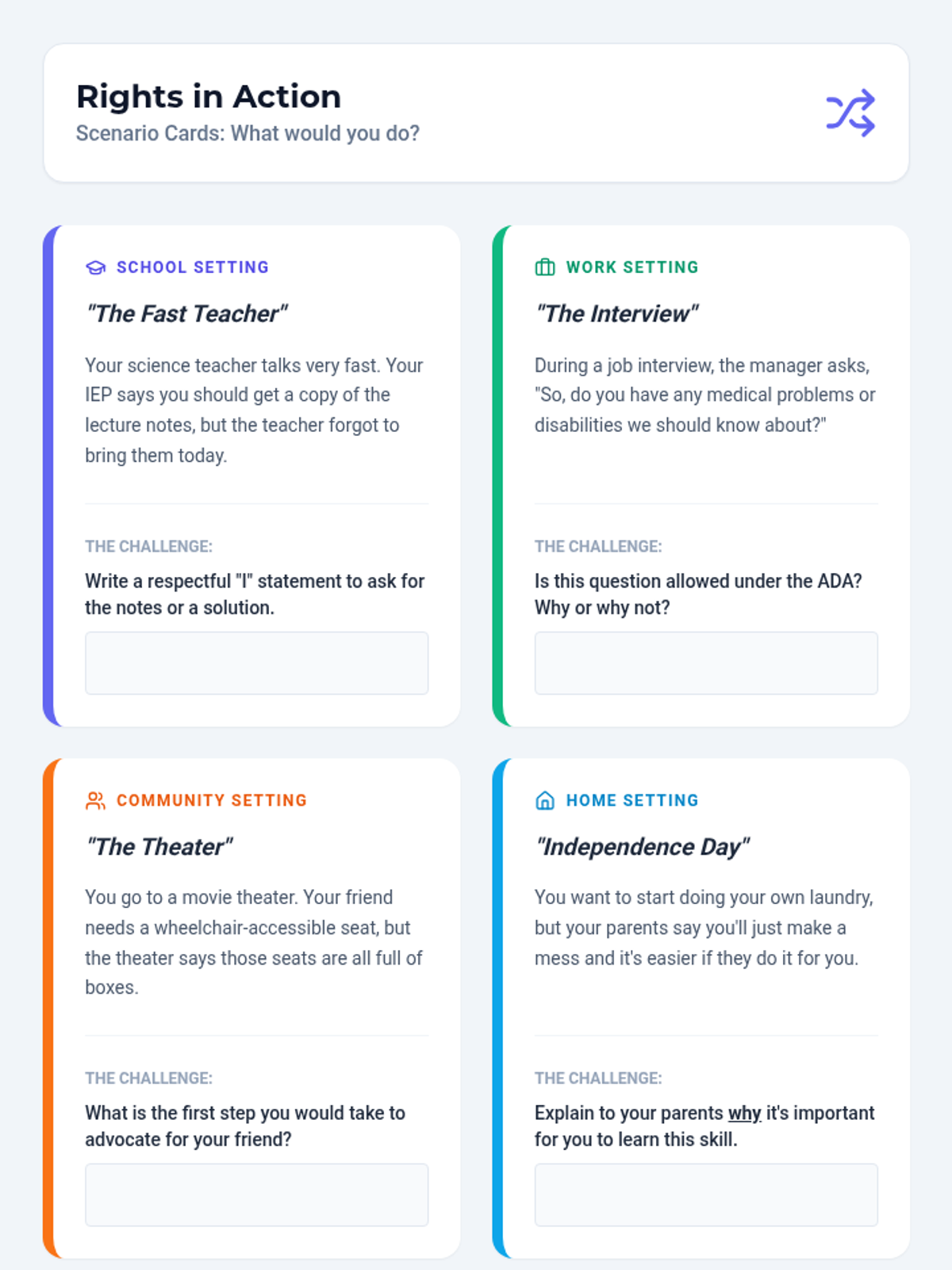
Practical application of advocacy skills for IEPs, workplace issues, and home independence, culminating in a final assessment.
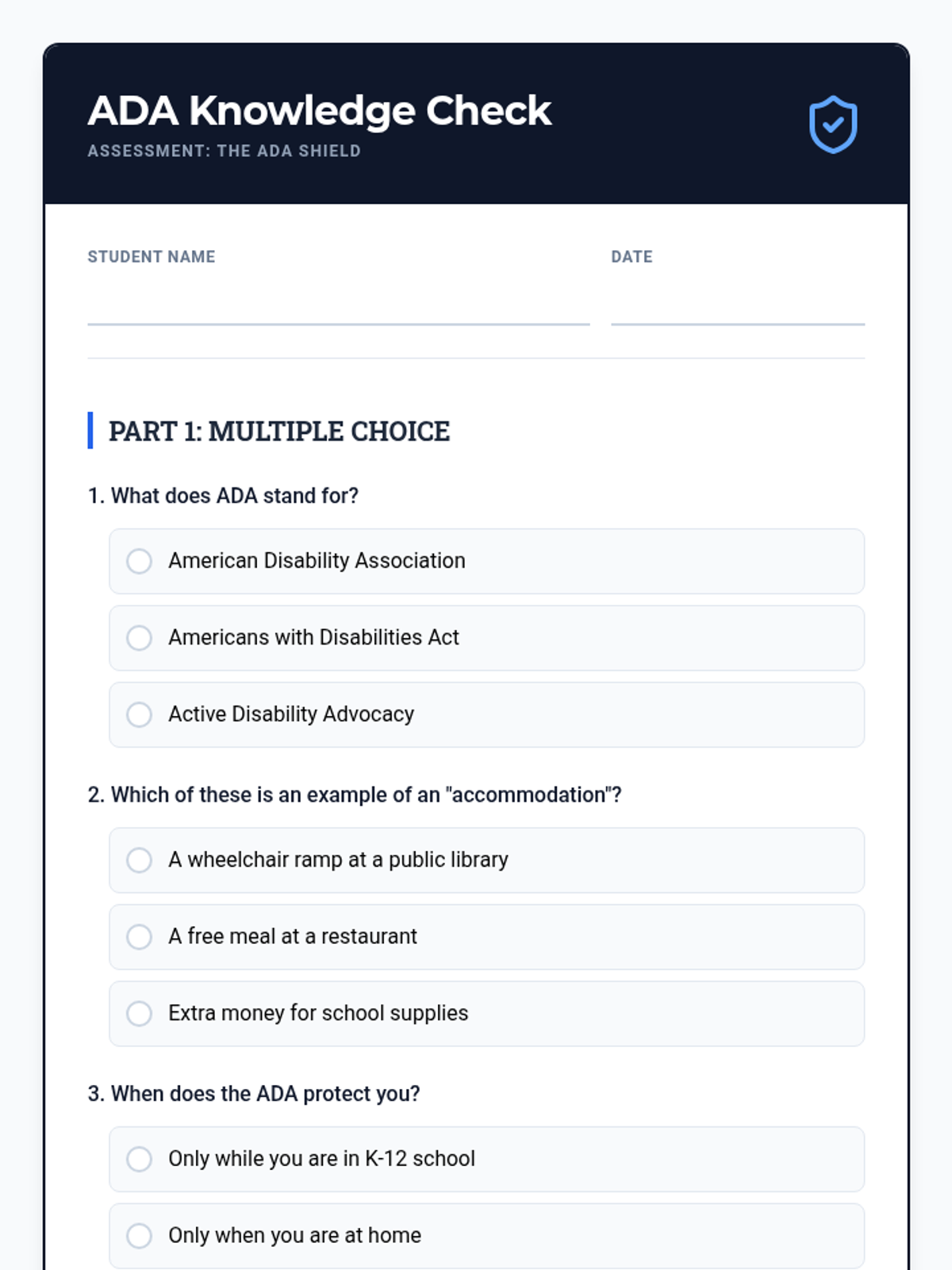
Focuses on the Americans with Disabilities Act (ADA), legal rights, and applying those rights to real-world scenarios in school and work.
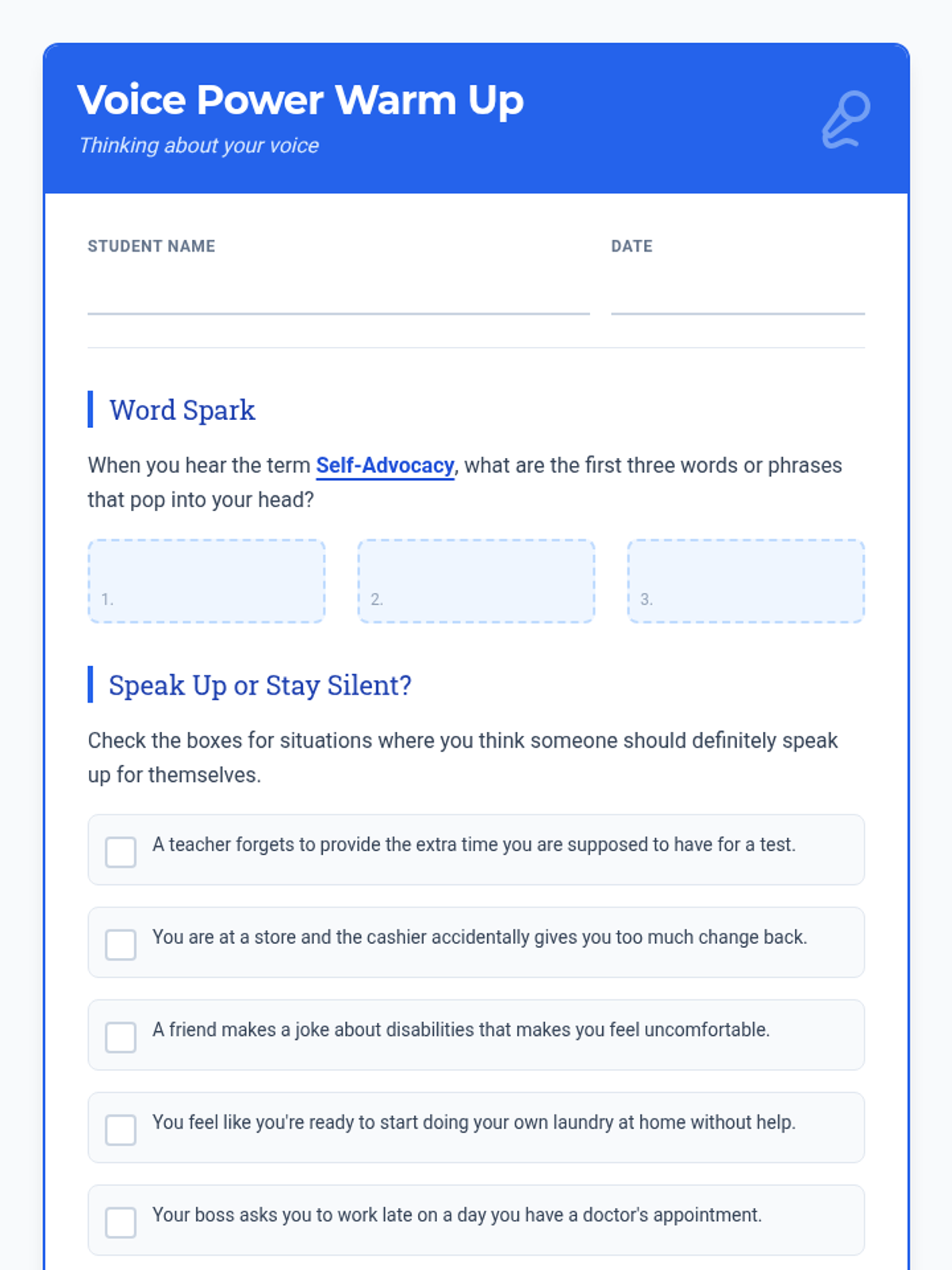
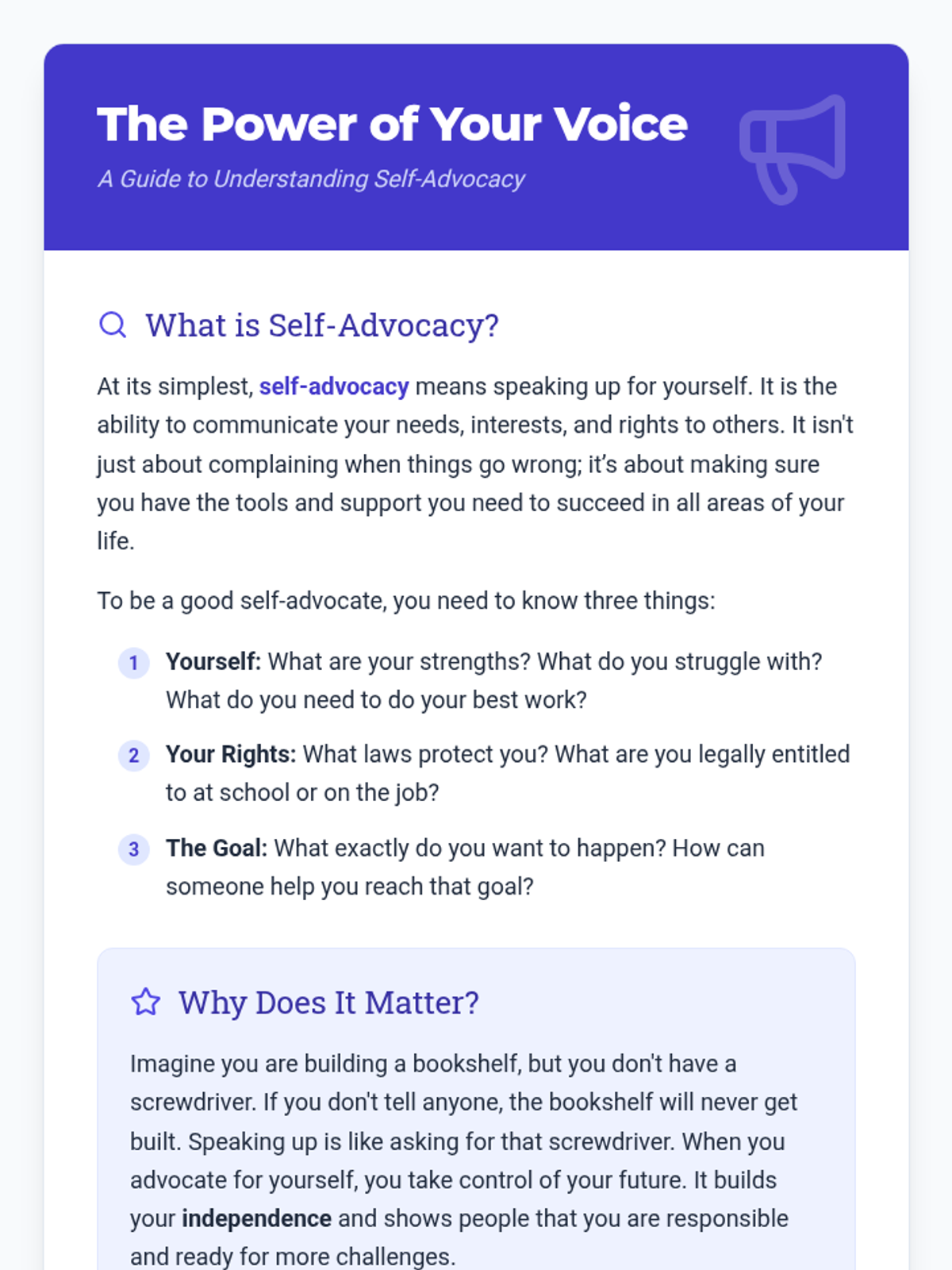
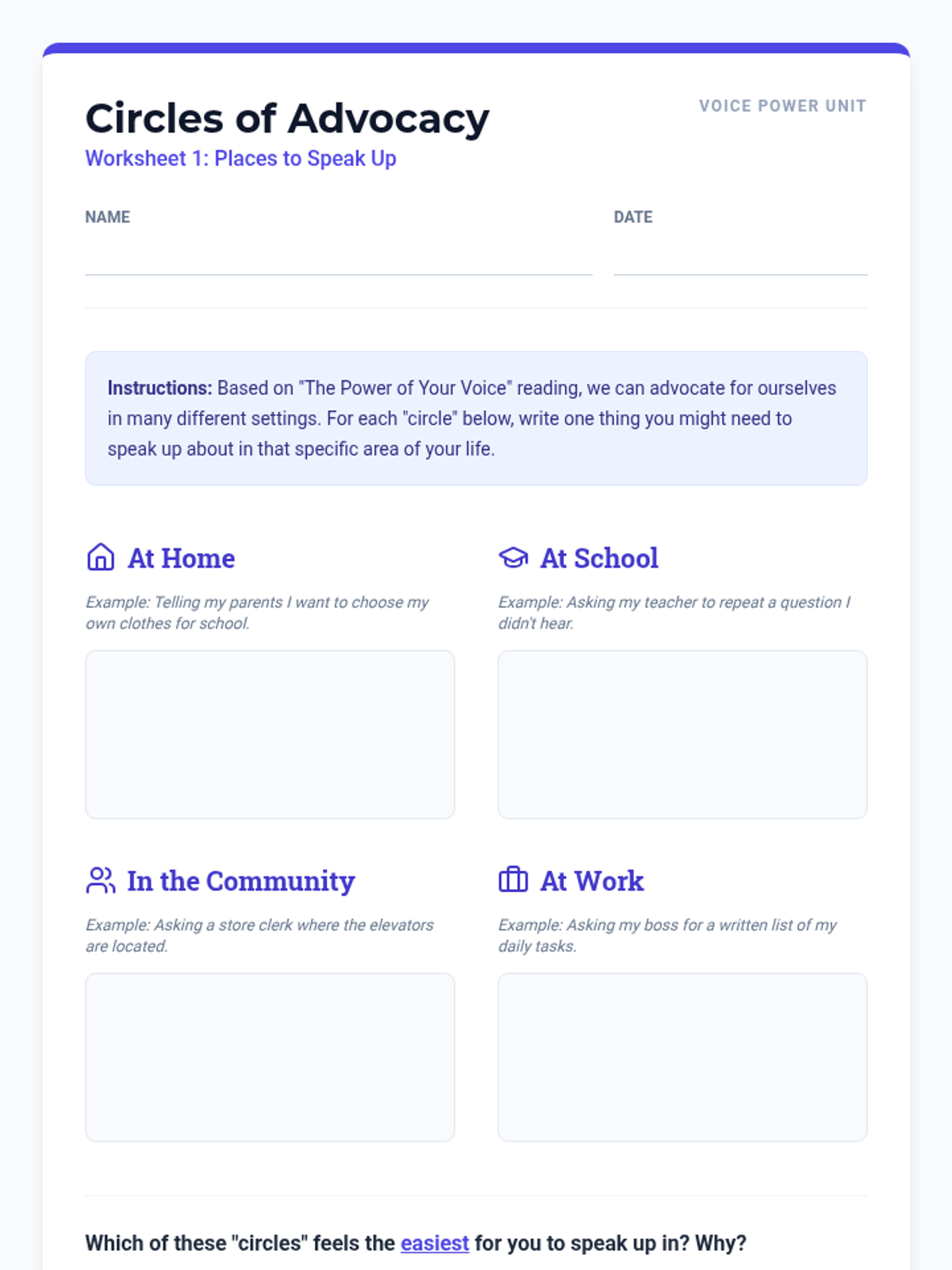
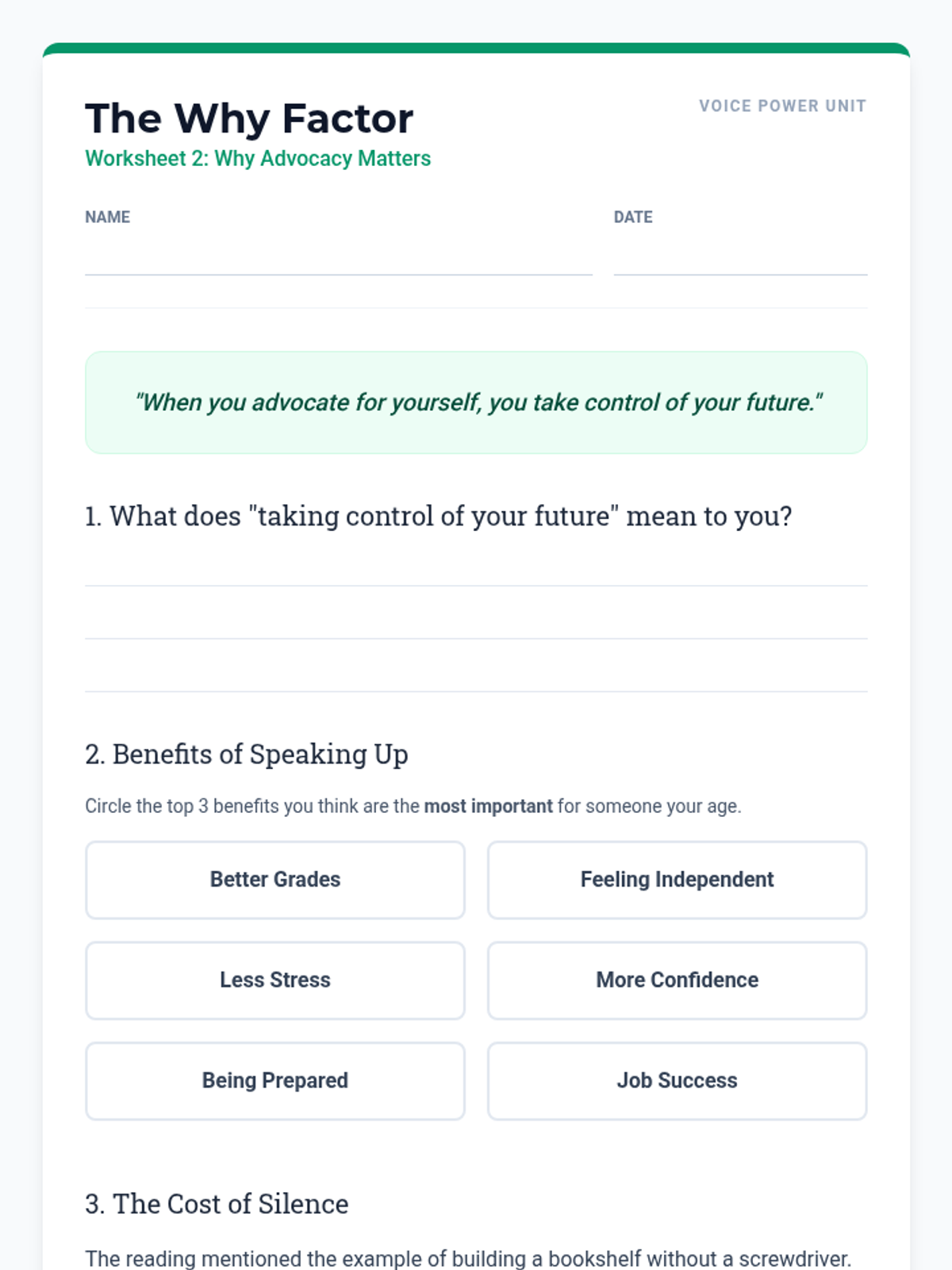
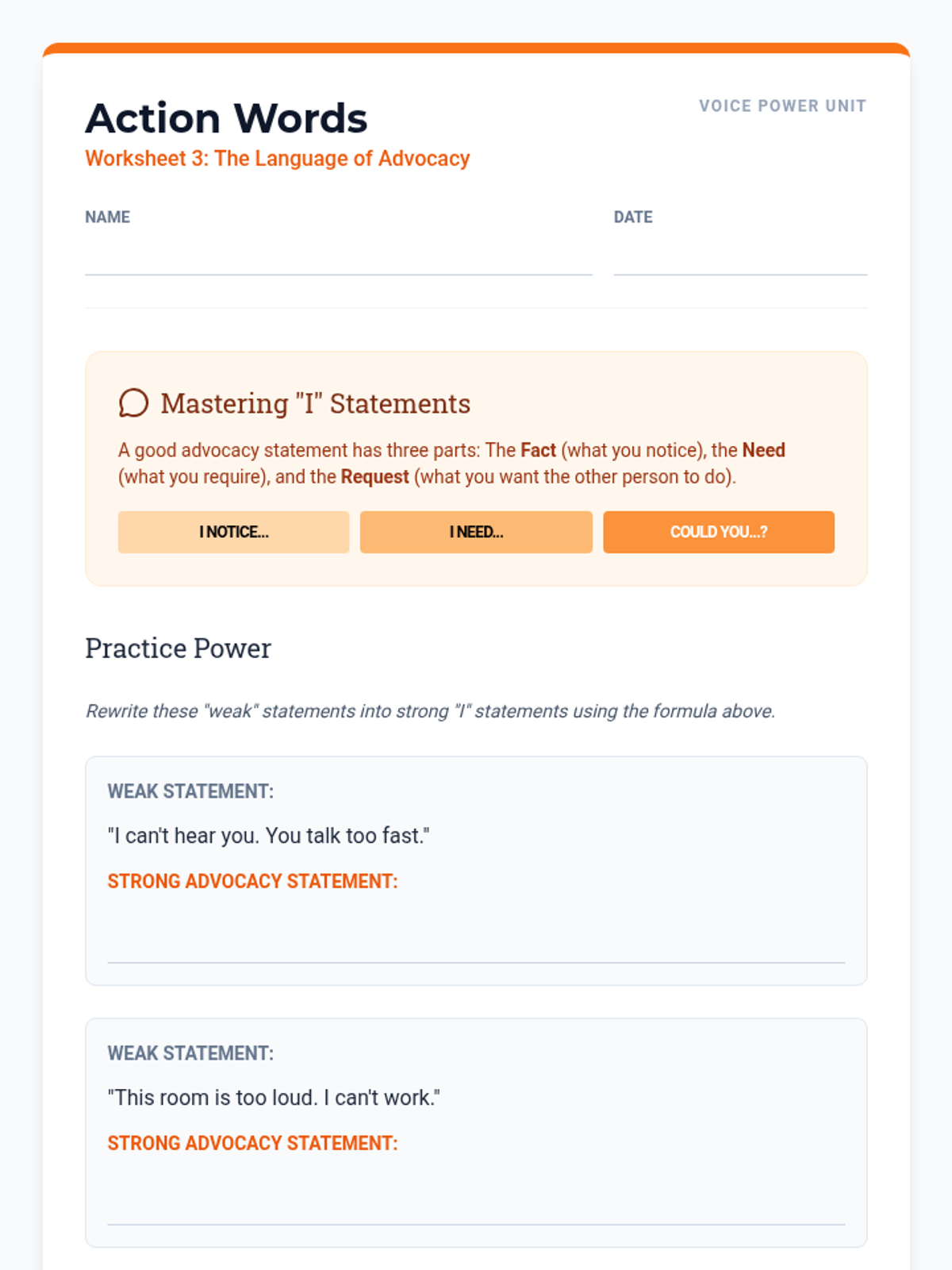
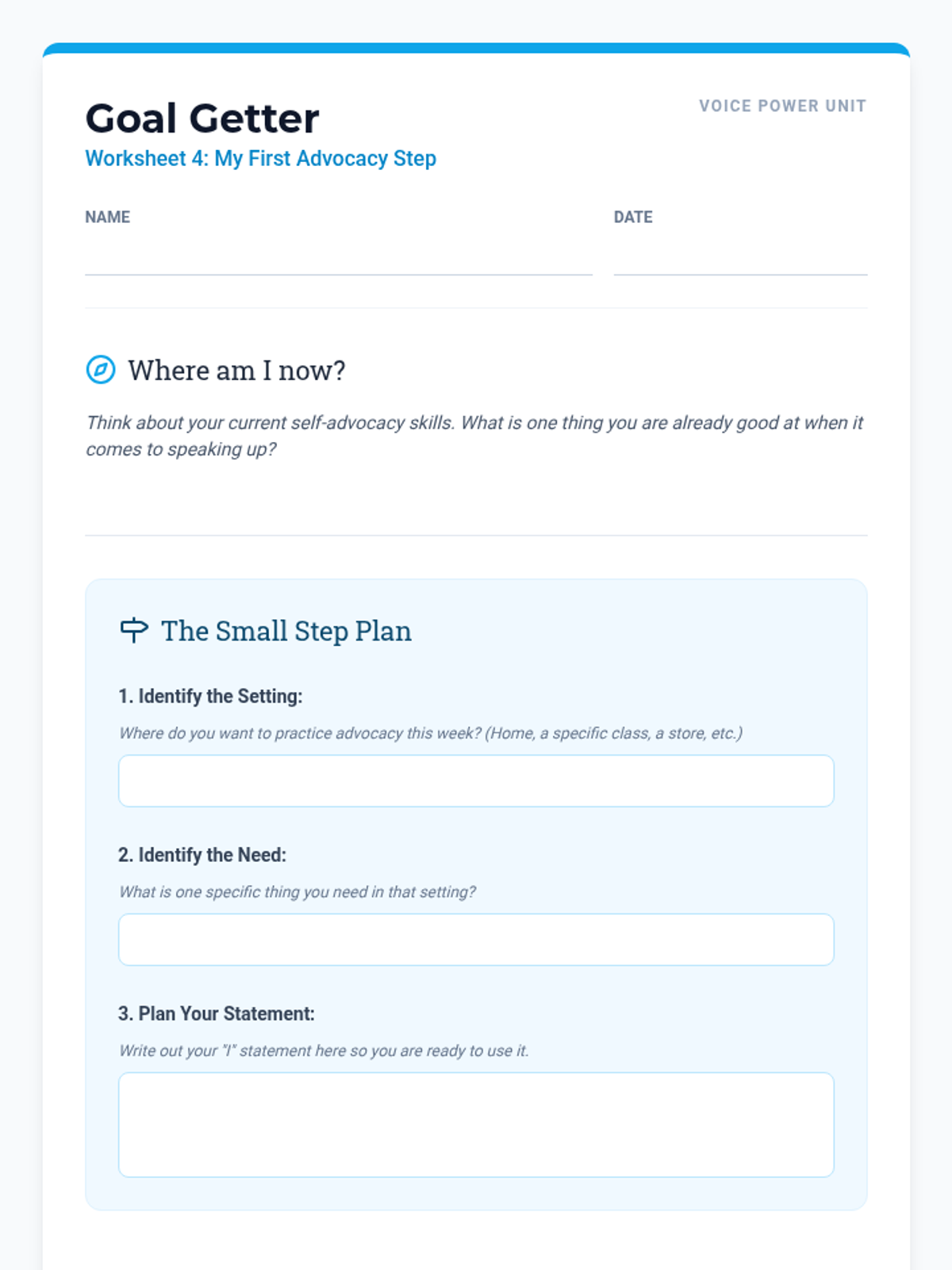
Introduces the concept of self-advocacy, identifying areas where advocacy is needed, and understanding the personal importance of speaking up.
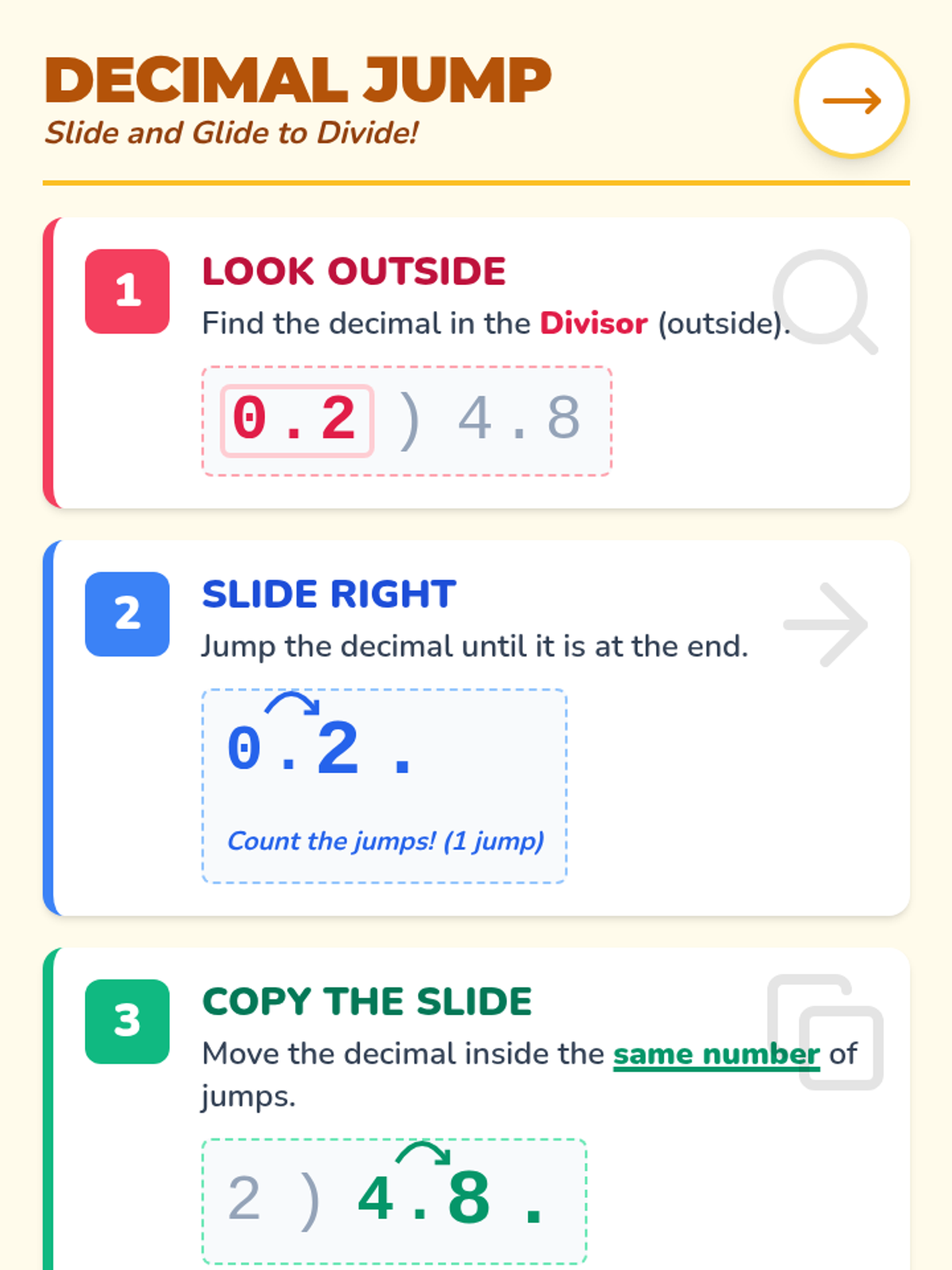
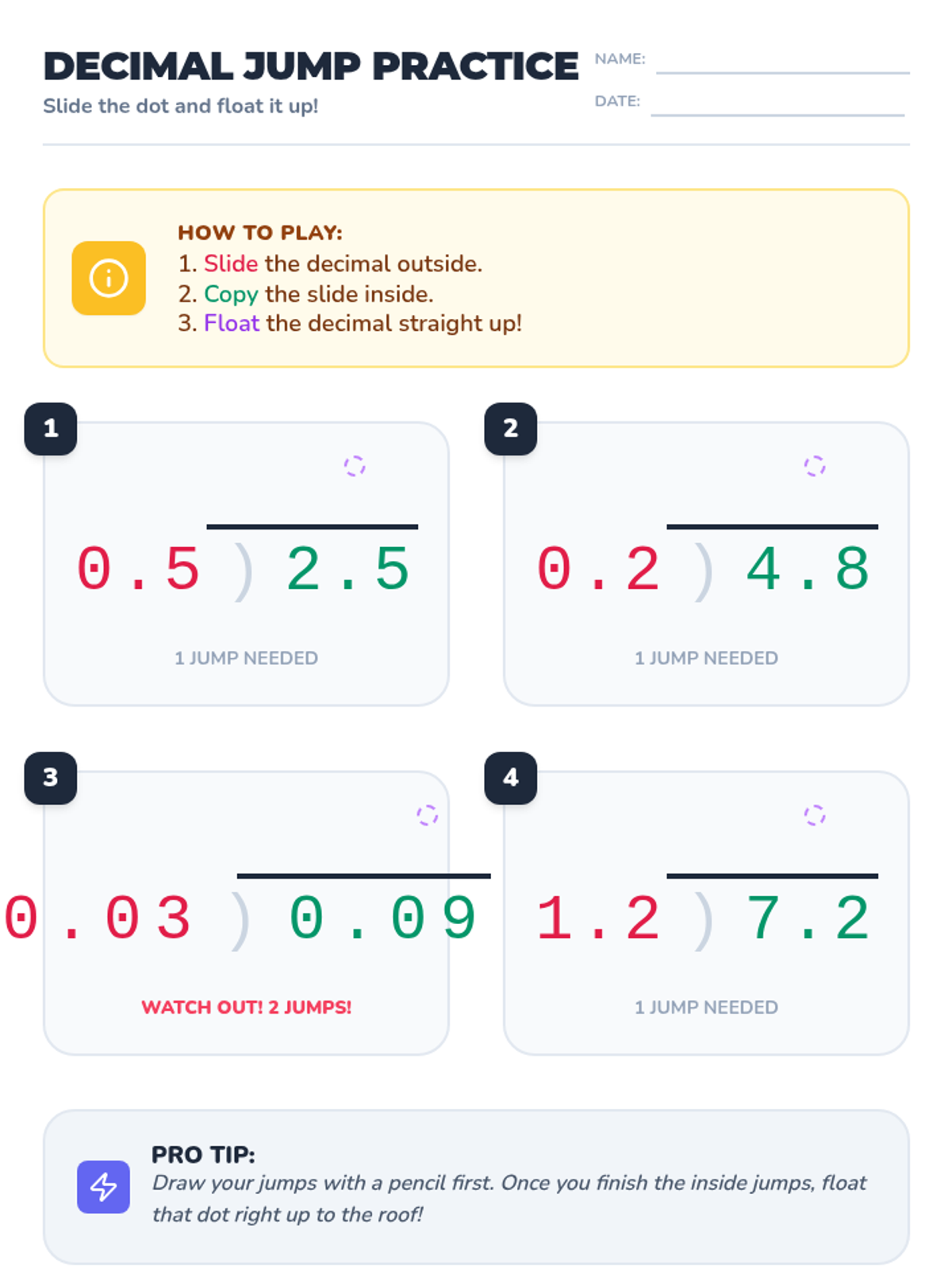
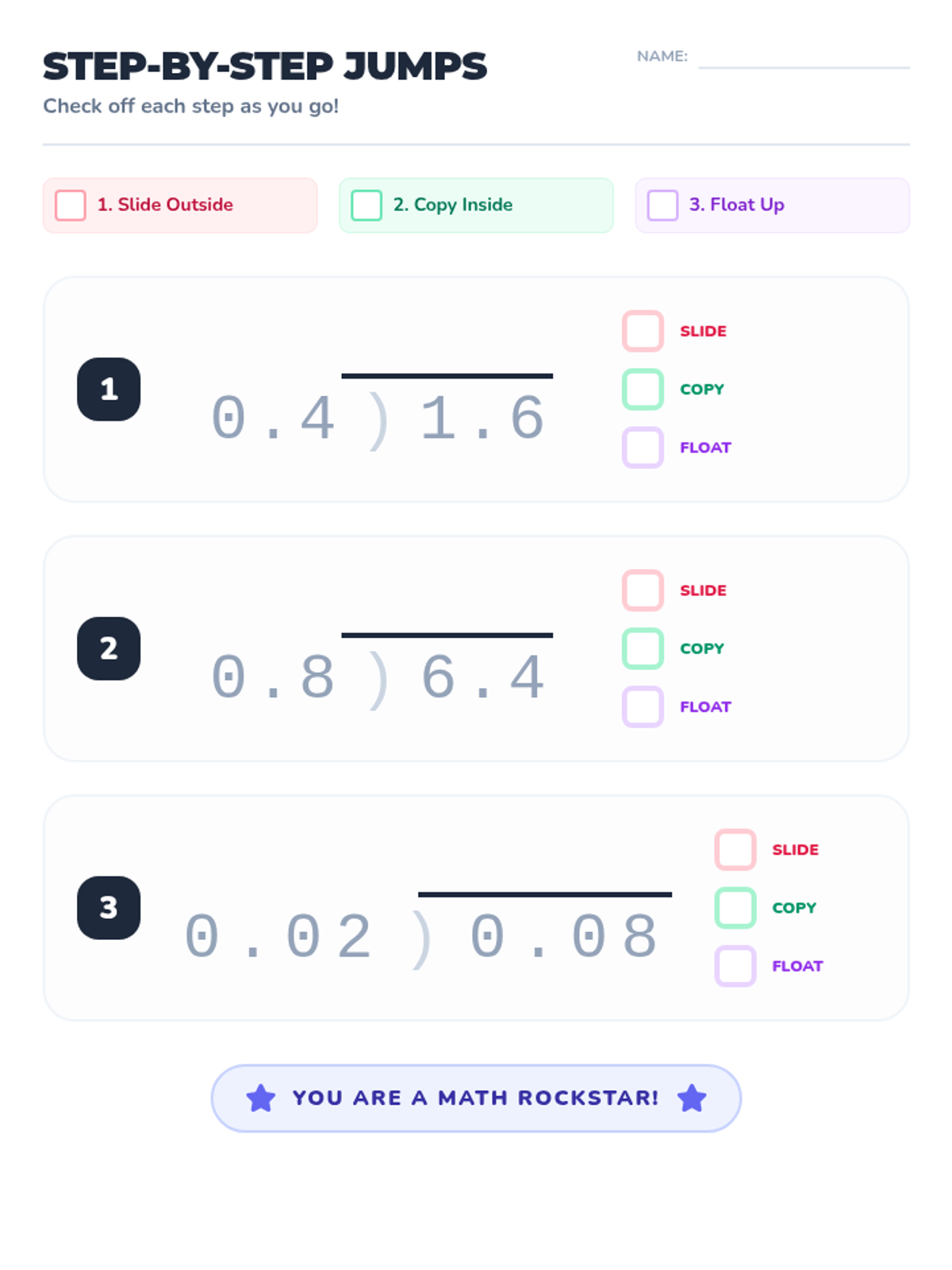
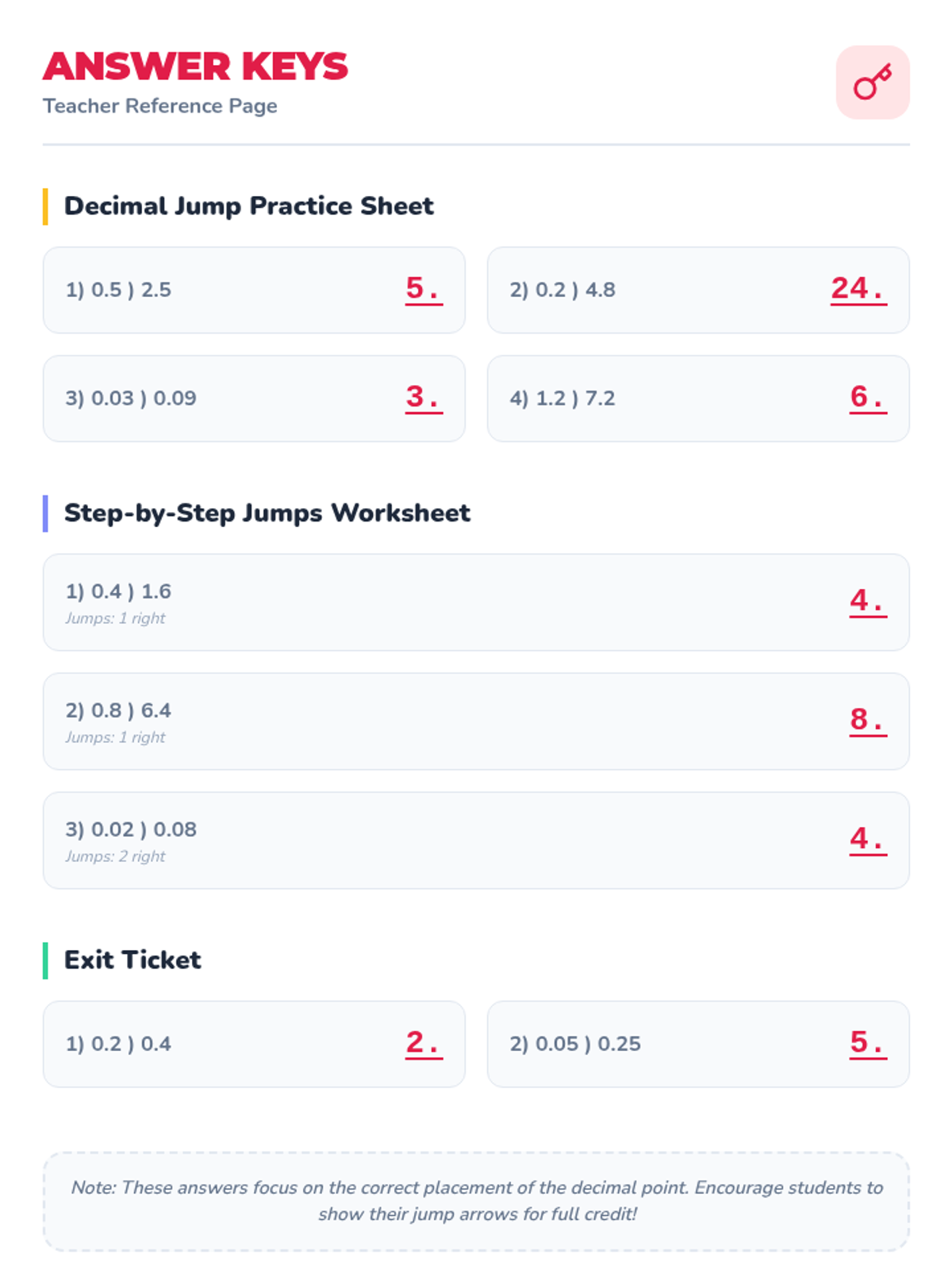
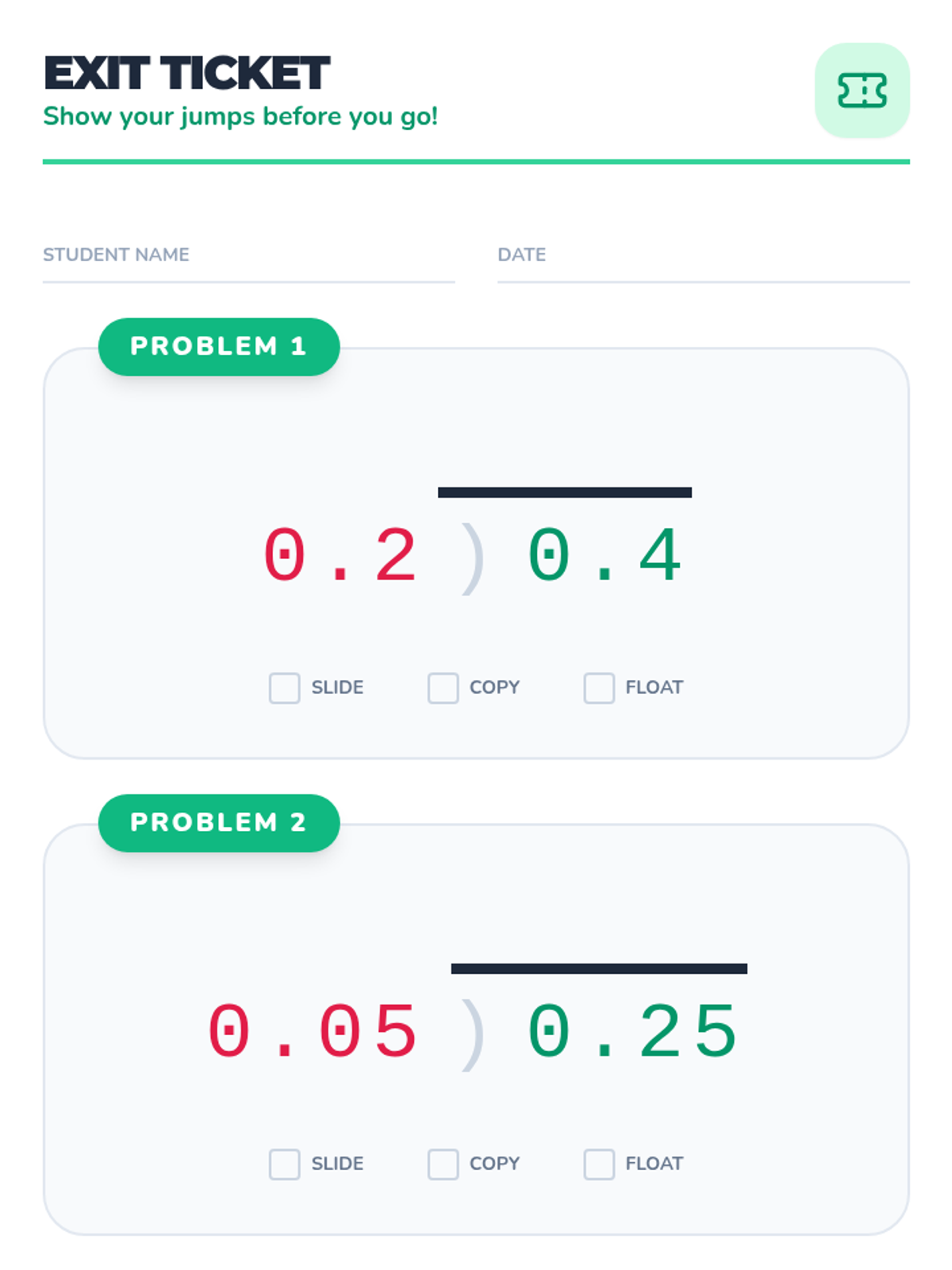
This lesson focuses on the foundational skill of moving the decimal point in division problems, specifically designed for students who benefit from clear, visual, step-by-step instructions.
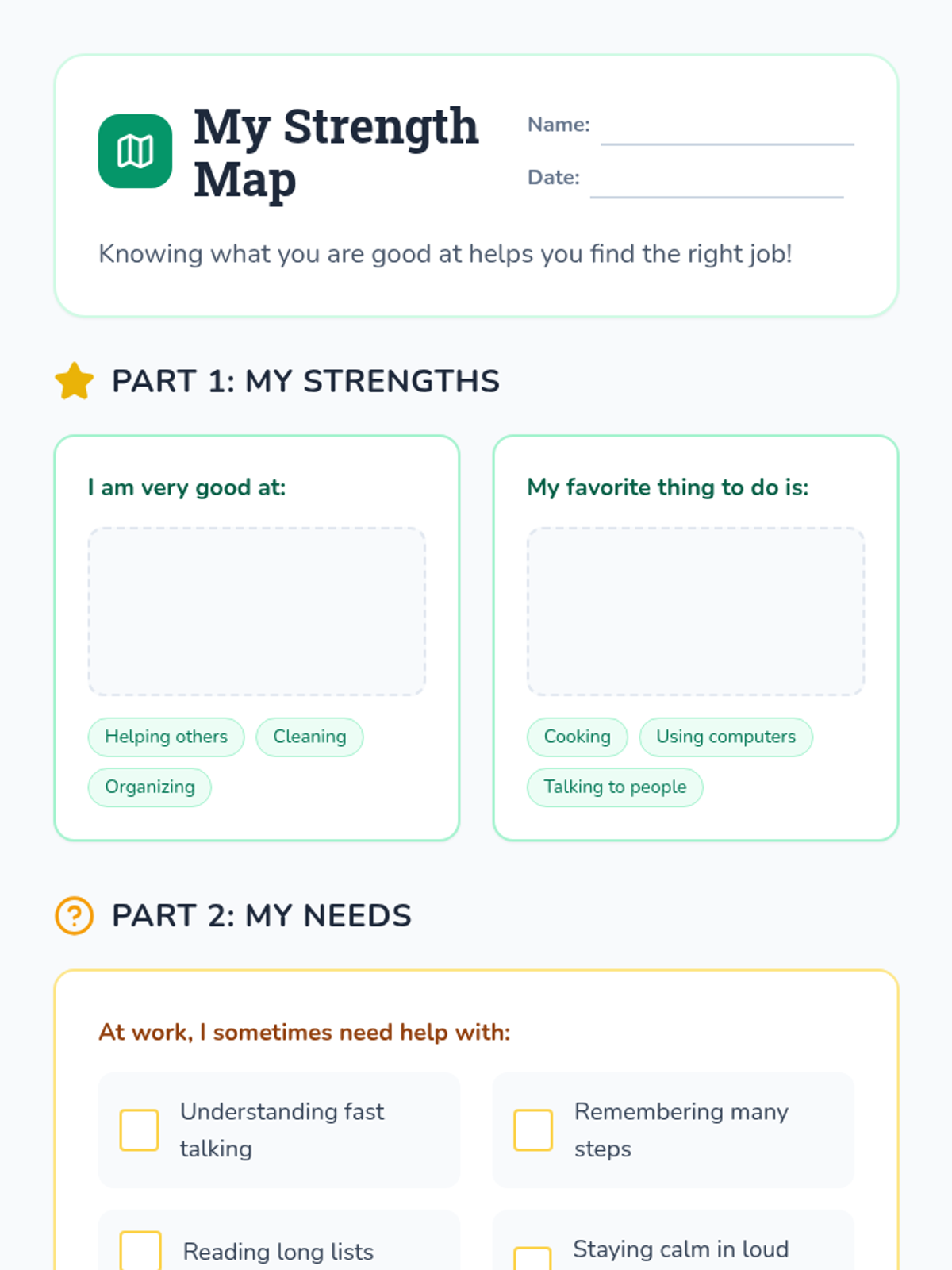
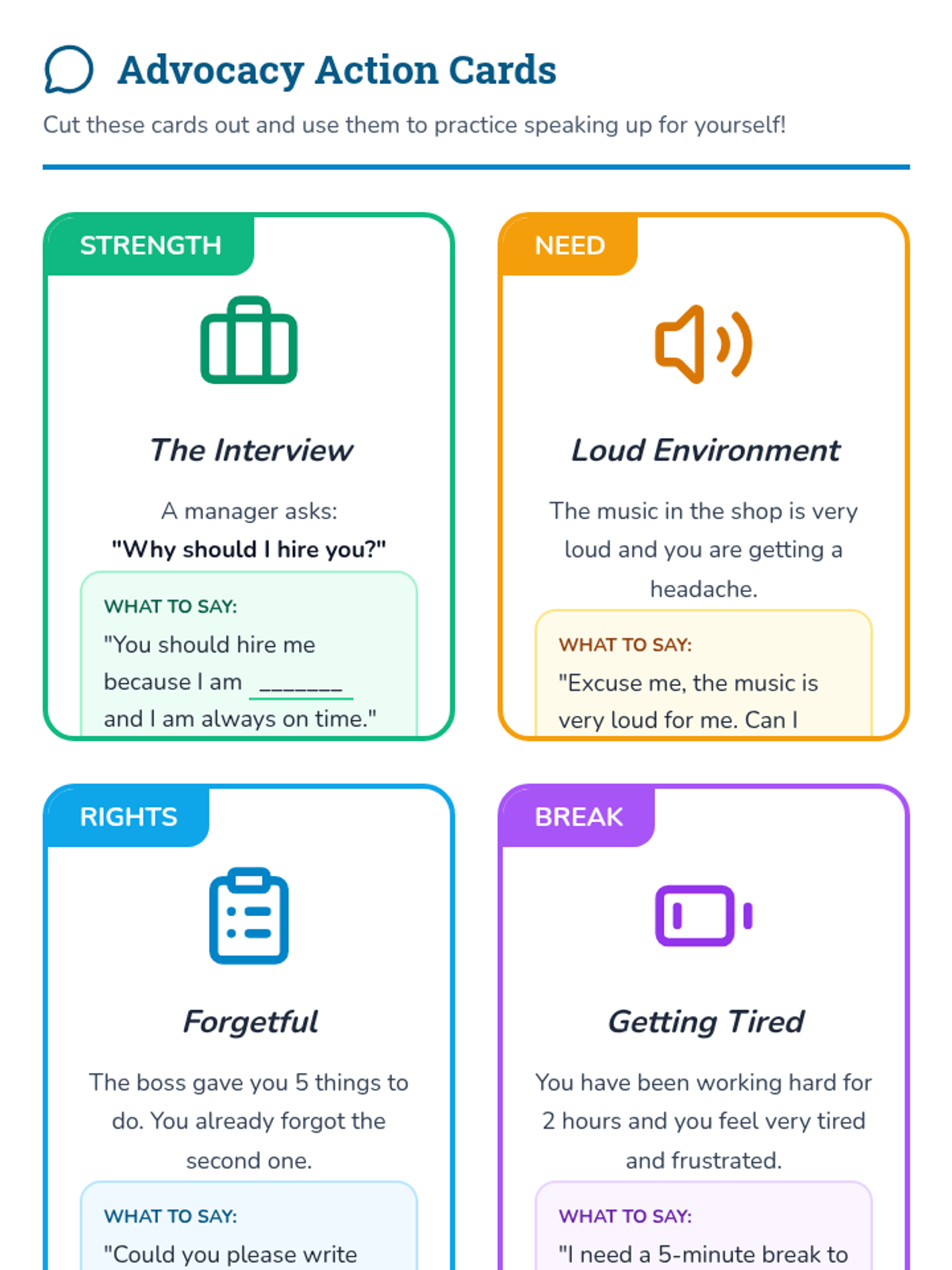
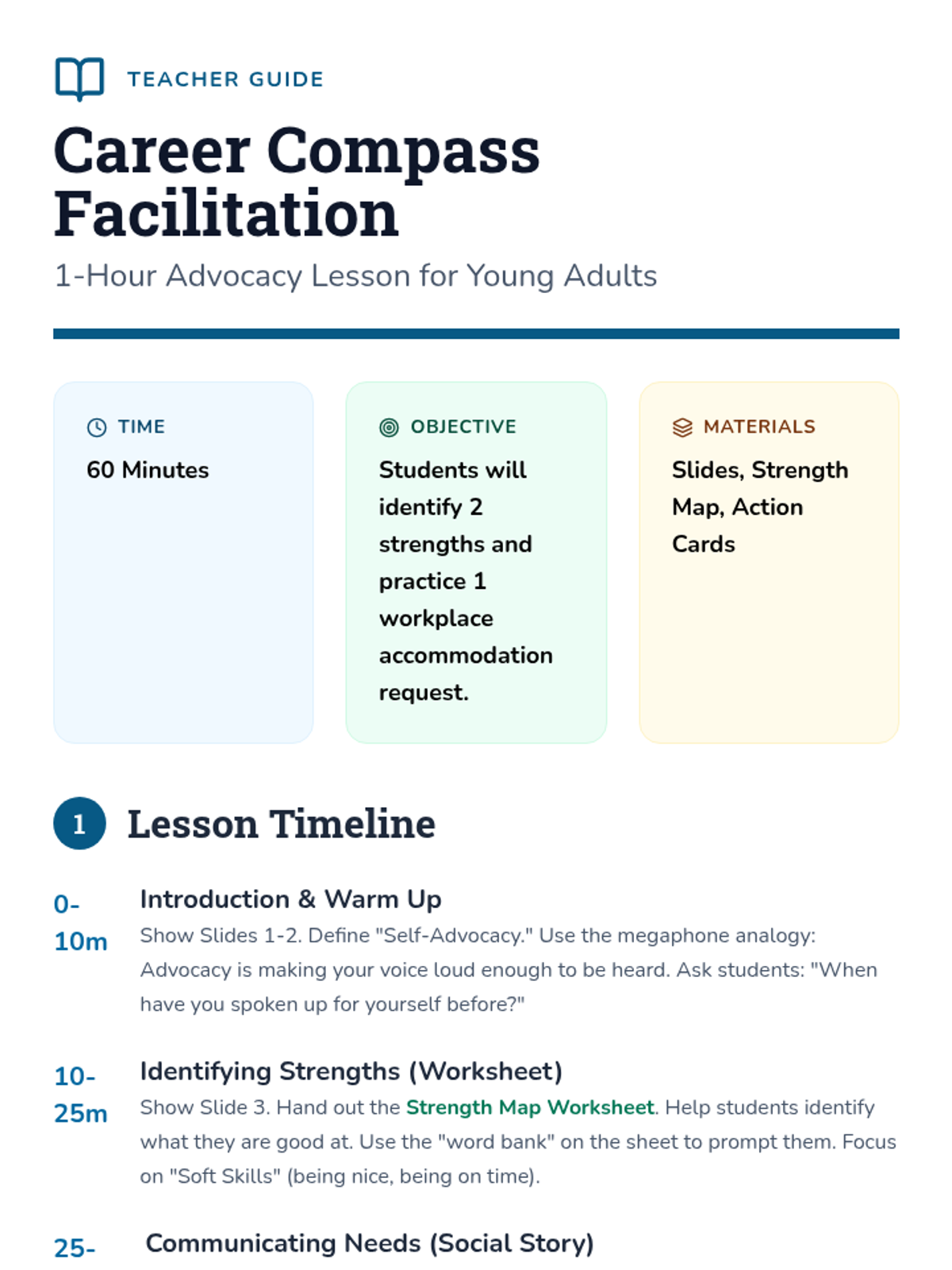
A 1-hour lesson designed for young adults with cognitive impairments, focusing on self-advocacy skills for the workplace, including identifying strengths, communicating needs, and understanding basic rights.
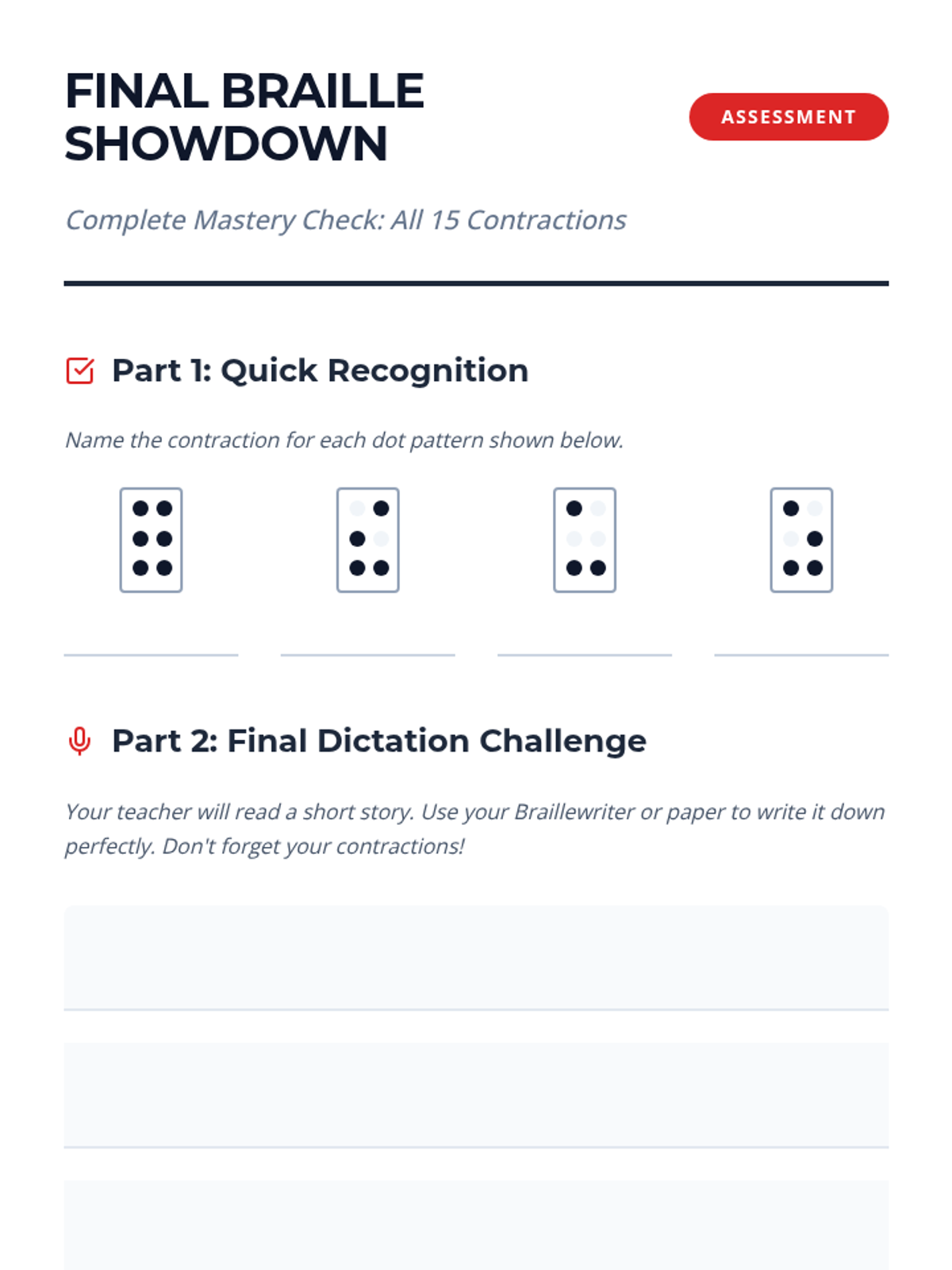
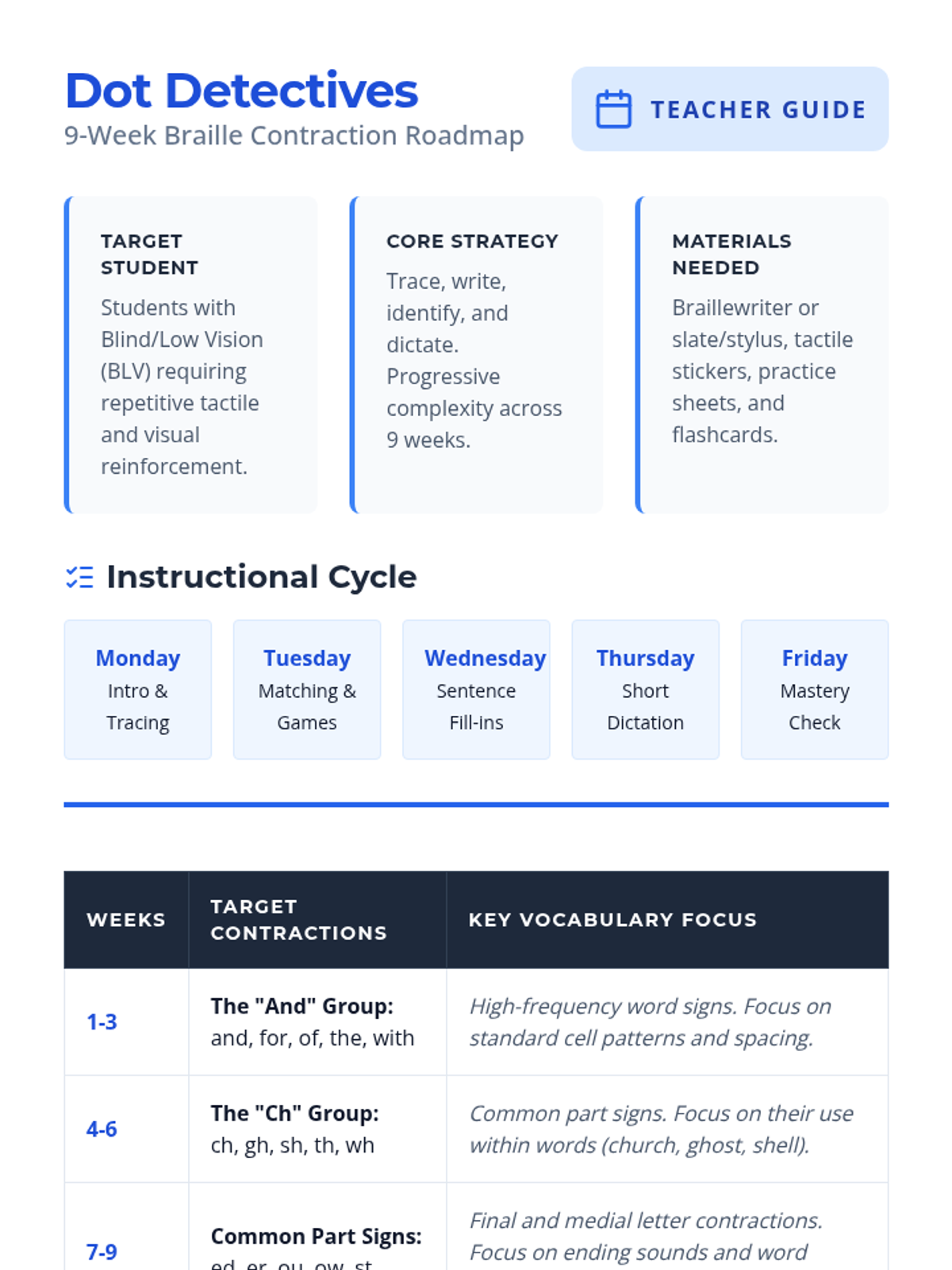
Final review and mastery of all 15 contractions covered in the 9-week sequence, featuring comprehensive dictation and games.
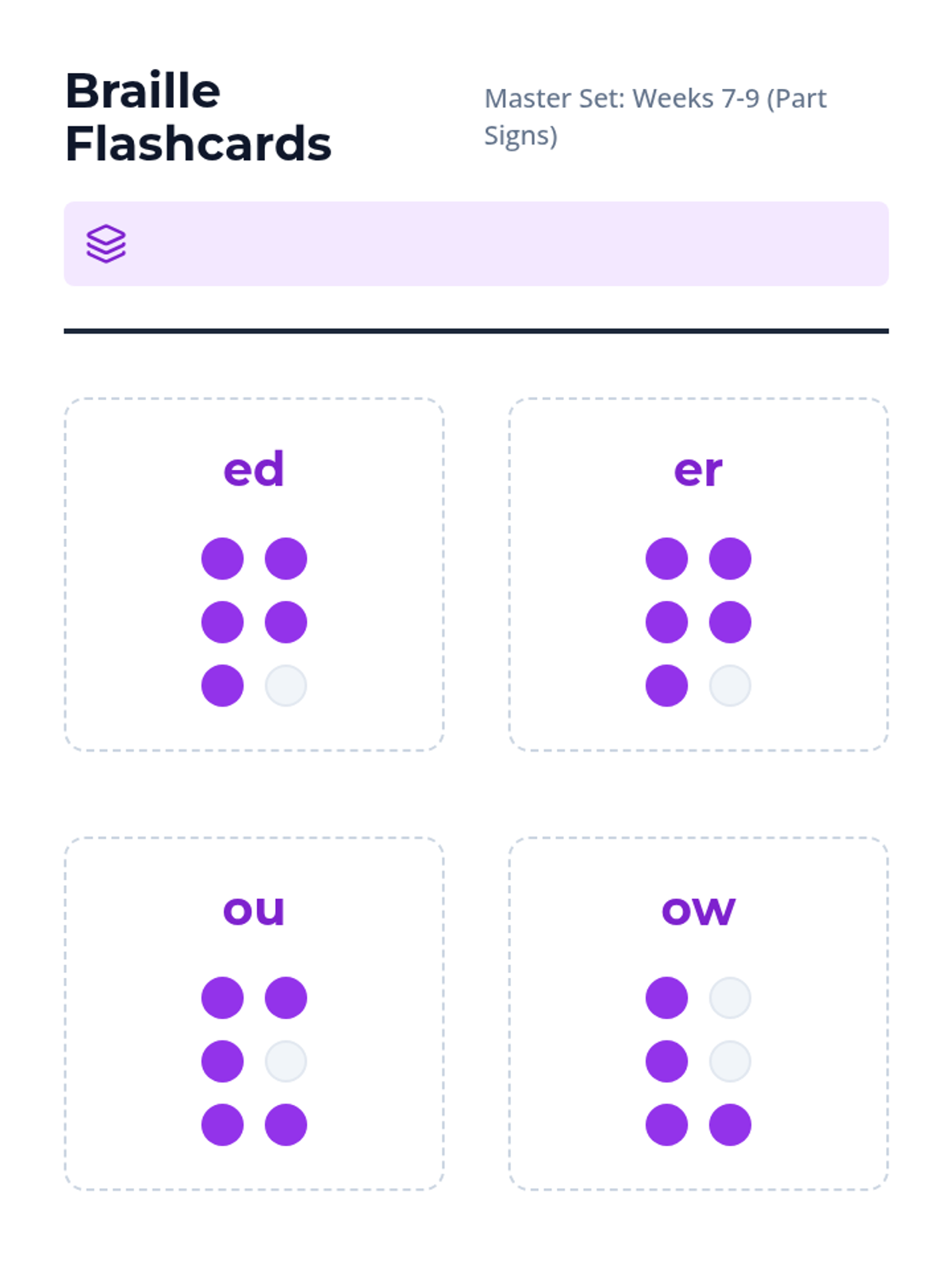
Reinforcement of 'ed', 'er', 'ou', 'ow', and 'st' contractions through repetitive writing and word-building exercises.
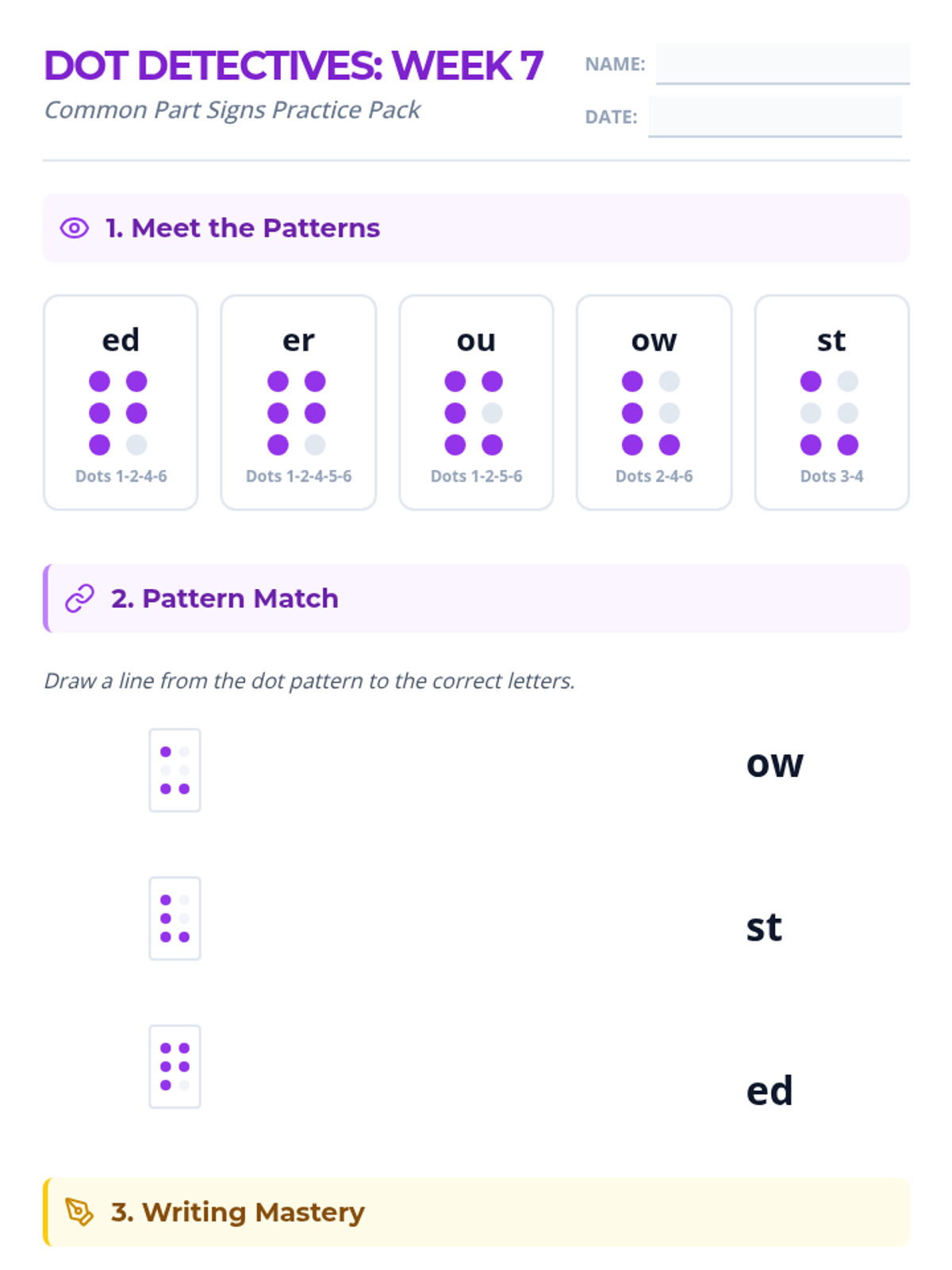
Introduction to additional common part signs: 'ed', 'er', 'ou', 'ow', and 'st'. Focuses on placement within words.
Mastery check for the 'ch' group contractions, including complex dictation and mixed contraction review.
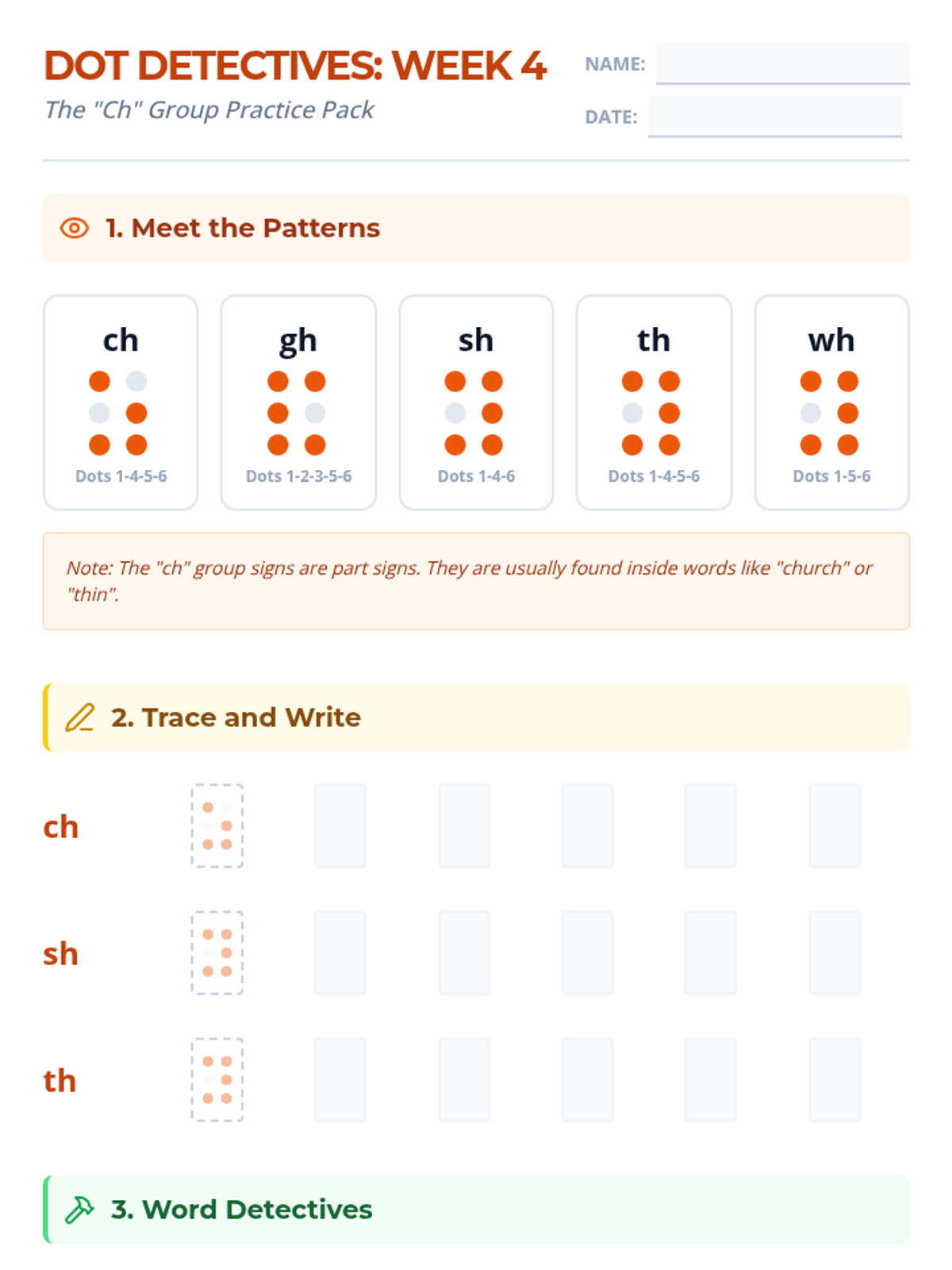
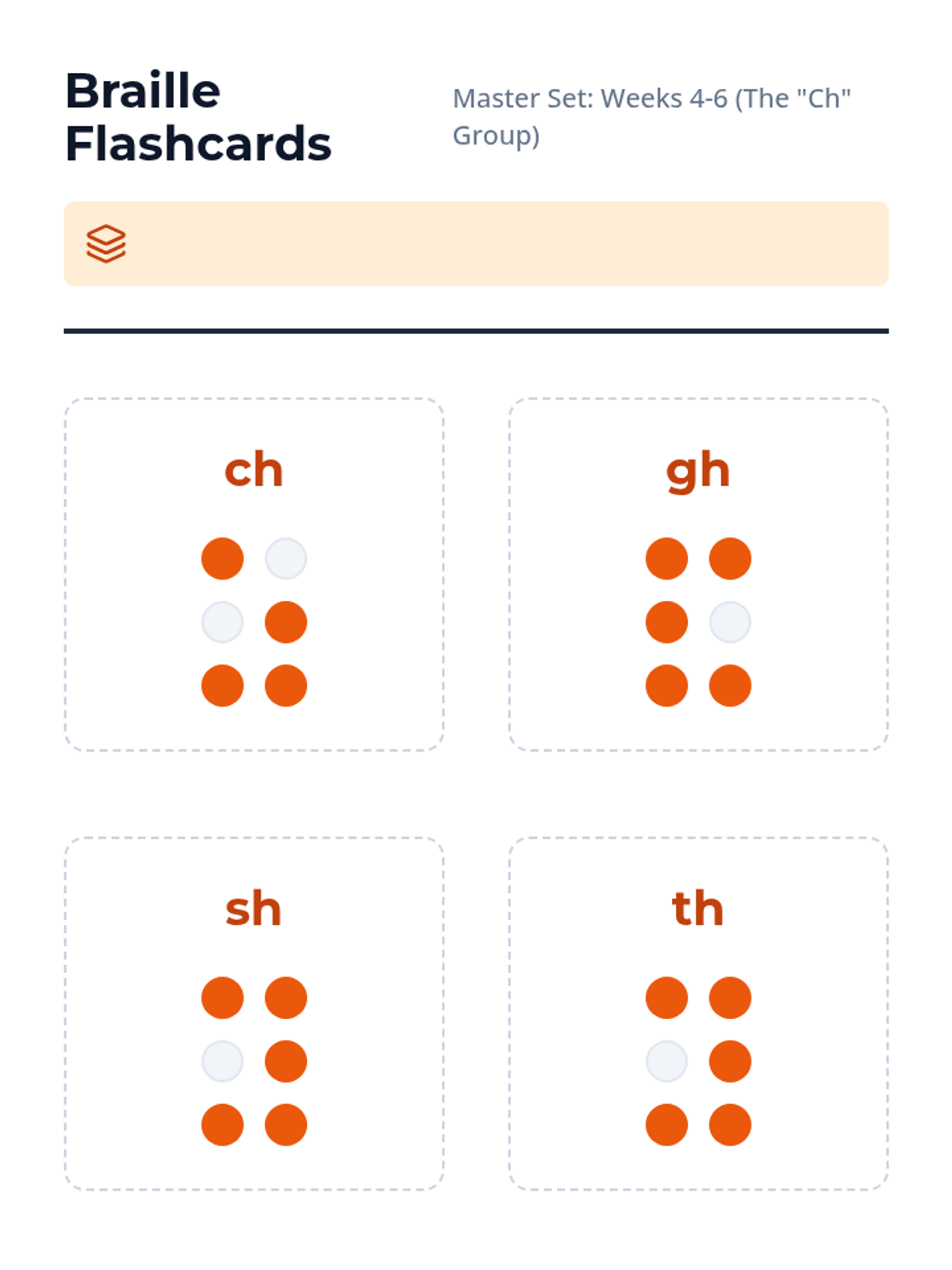
Reinforcement of 'ch', 'gh', 'sh', 'th', and 'wh' contractions through targeted practice sheets and matching activities.
Introduction to the 'ch' group of contractions: 'ch', 'gh', 'sh', 'th', and 'wh'. Focuses on the unique dot patterns for each.
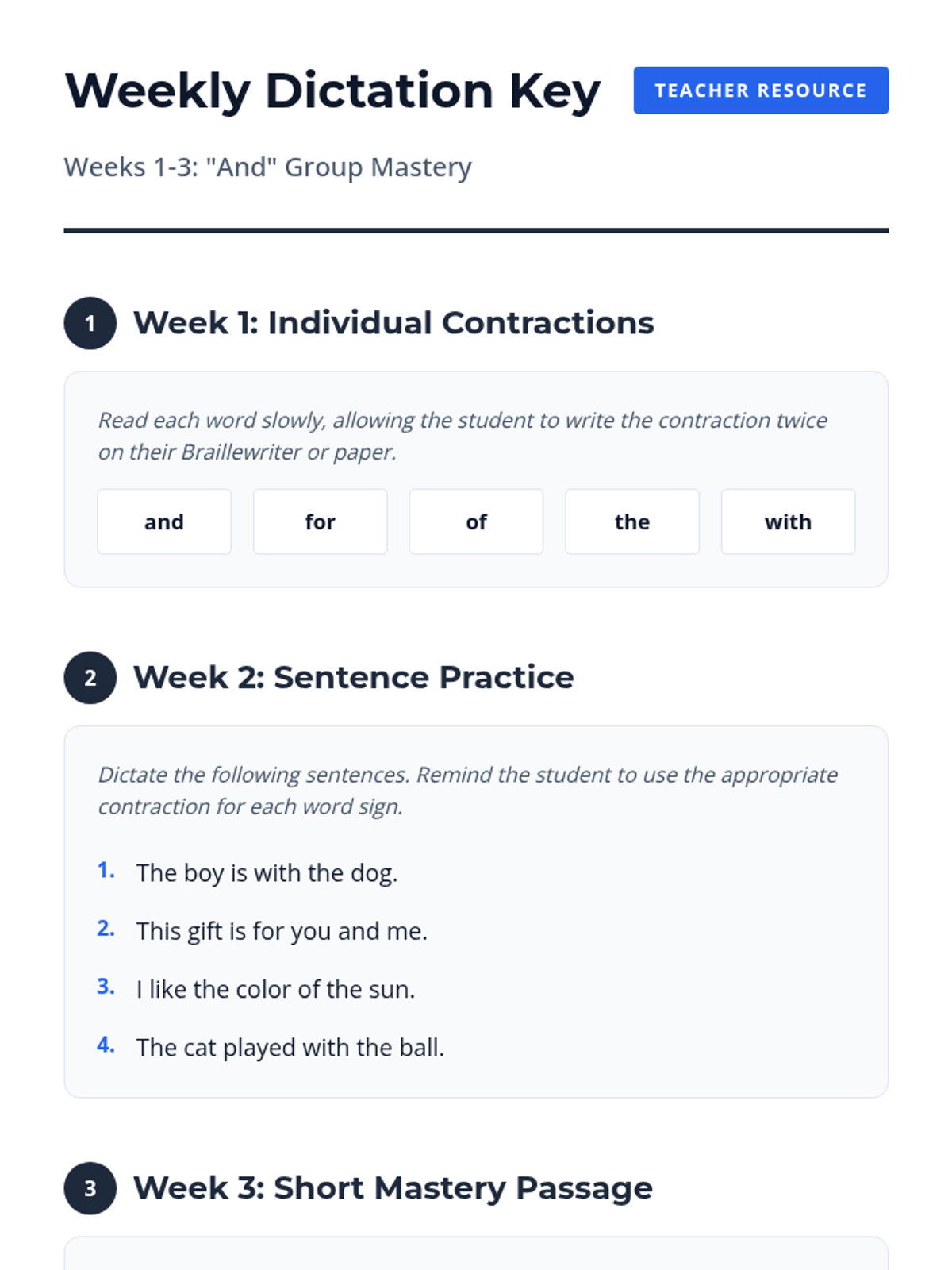
Mastery check for the 'and' group contractions using dictation passages and independent writing activities.
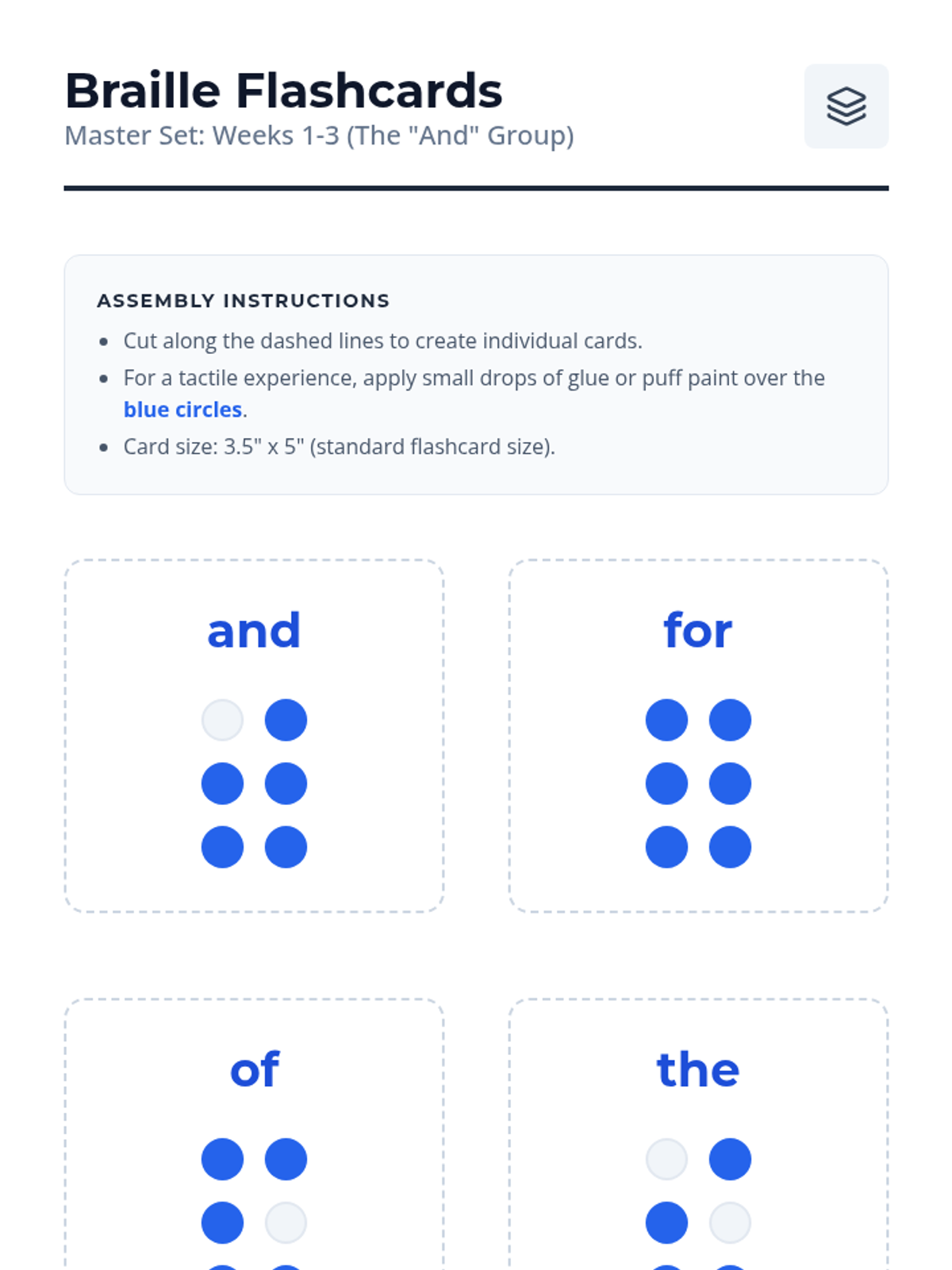
Reinforcement of the 'and' group contractions through repetitive tracing, matching games, and simple fill-in-the-blank sentences.
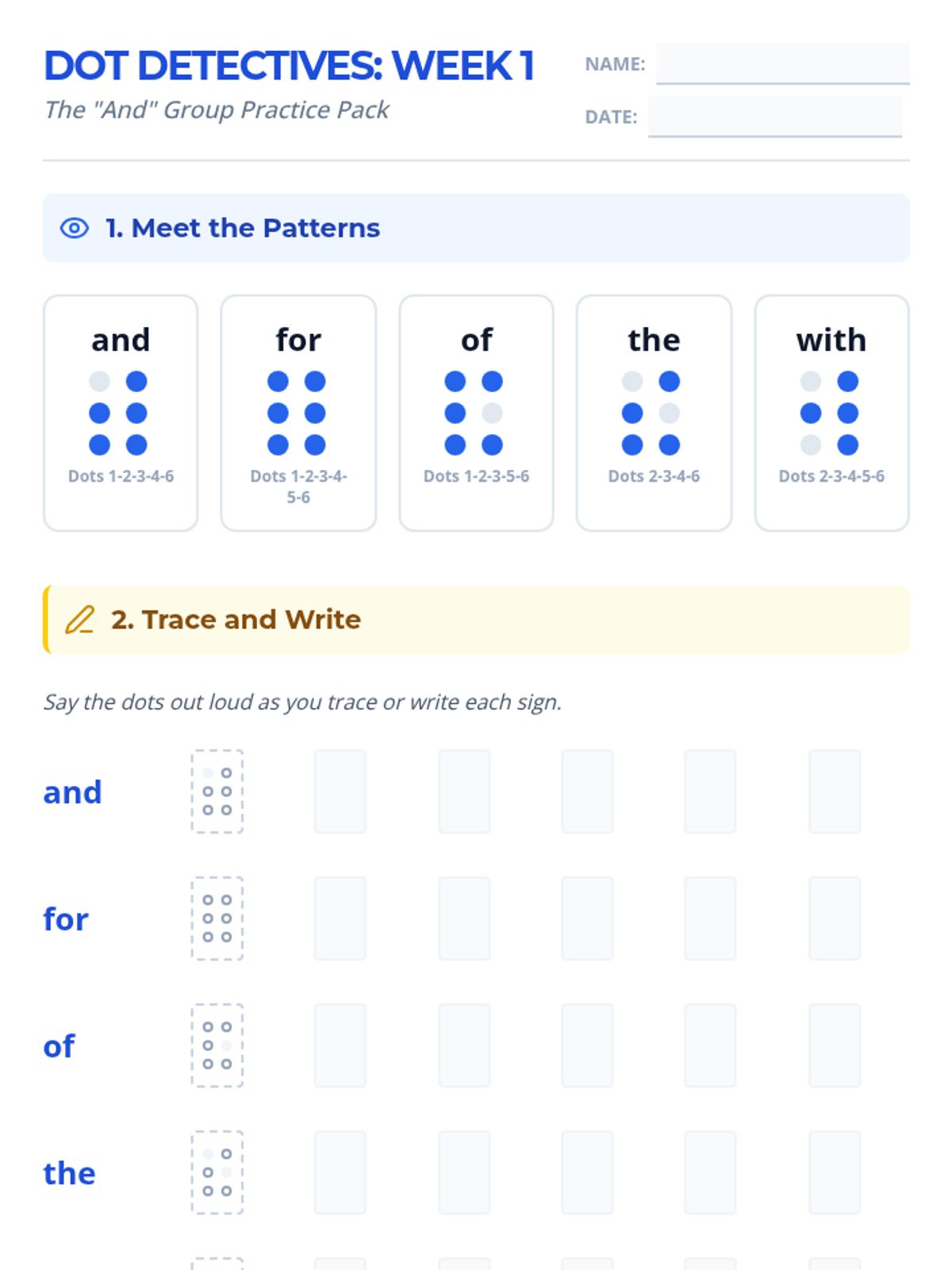
Introduction to the 'and' group of contractions: 'and', 'for', 'of', 'the', and 'with'. Focuses on recognition and basic tracing.
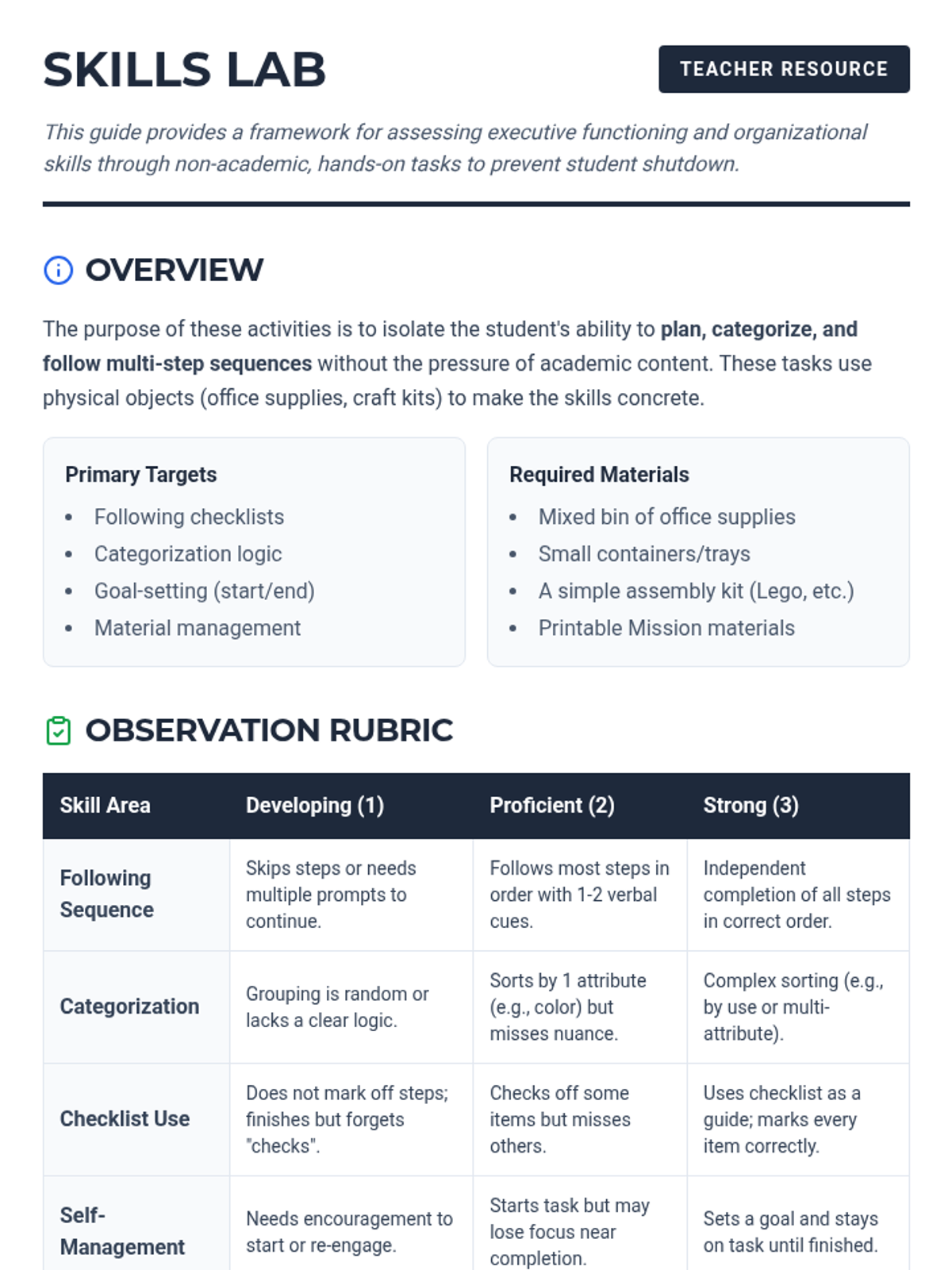
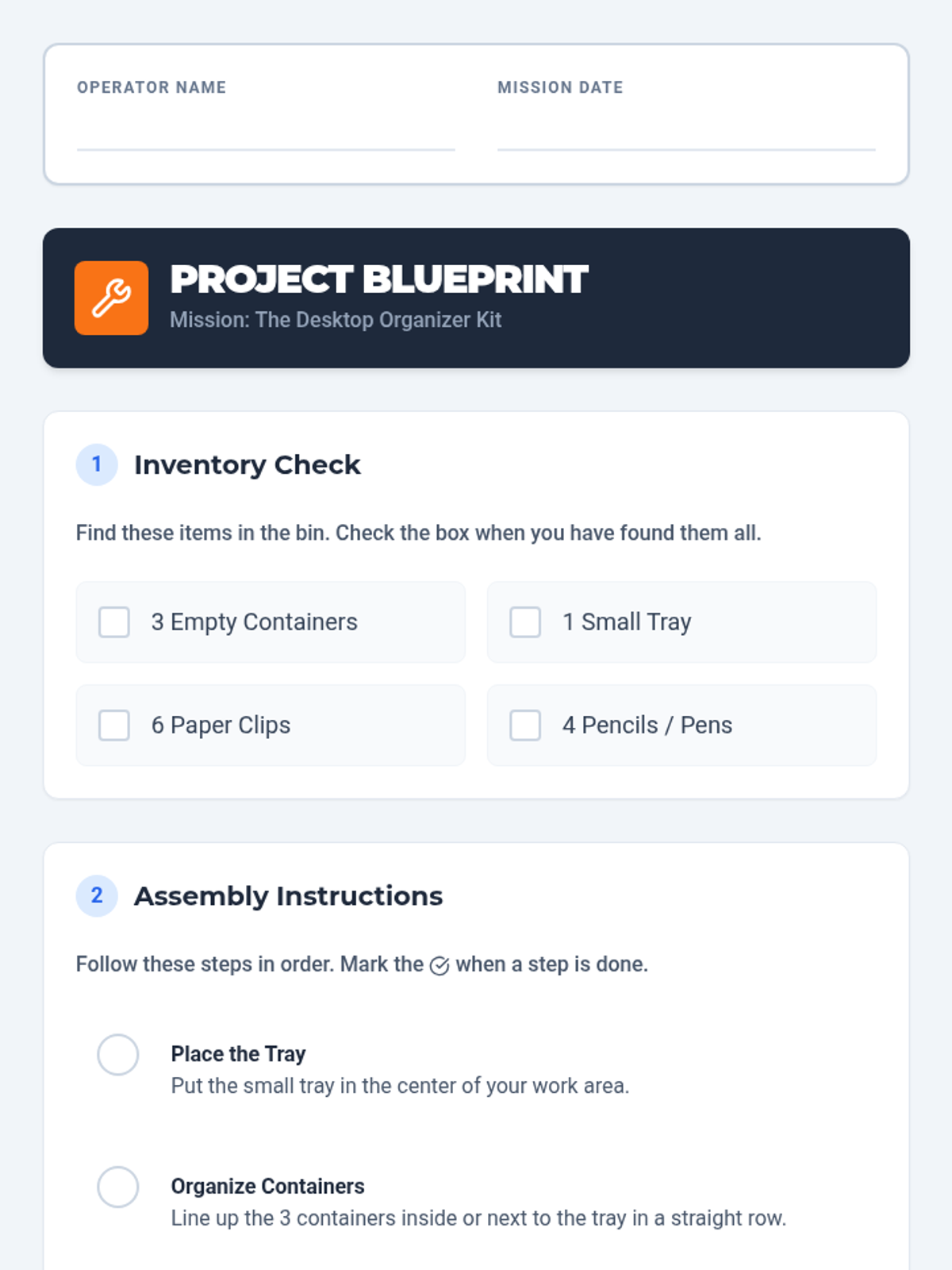
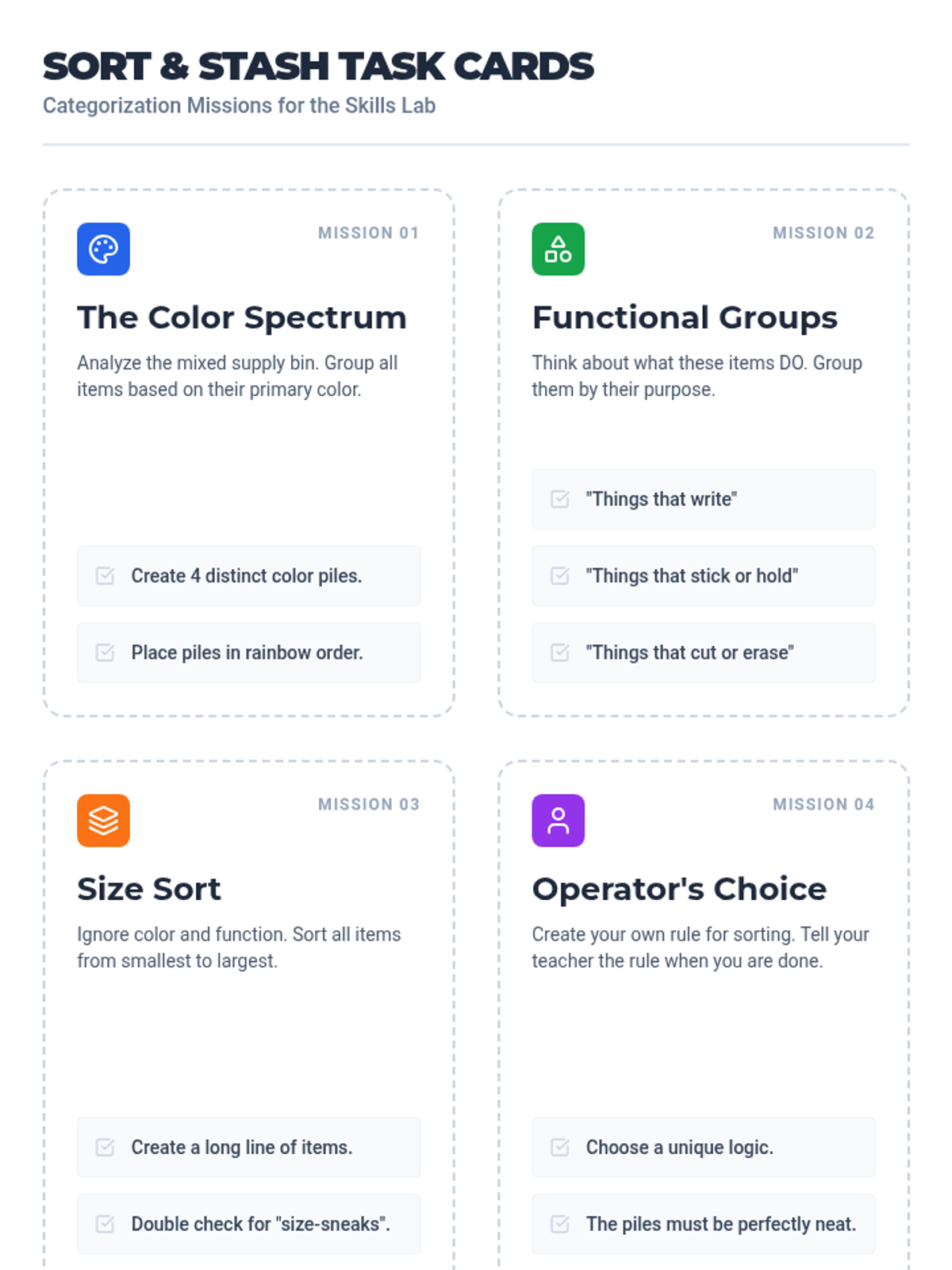
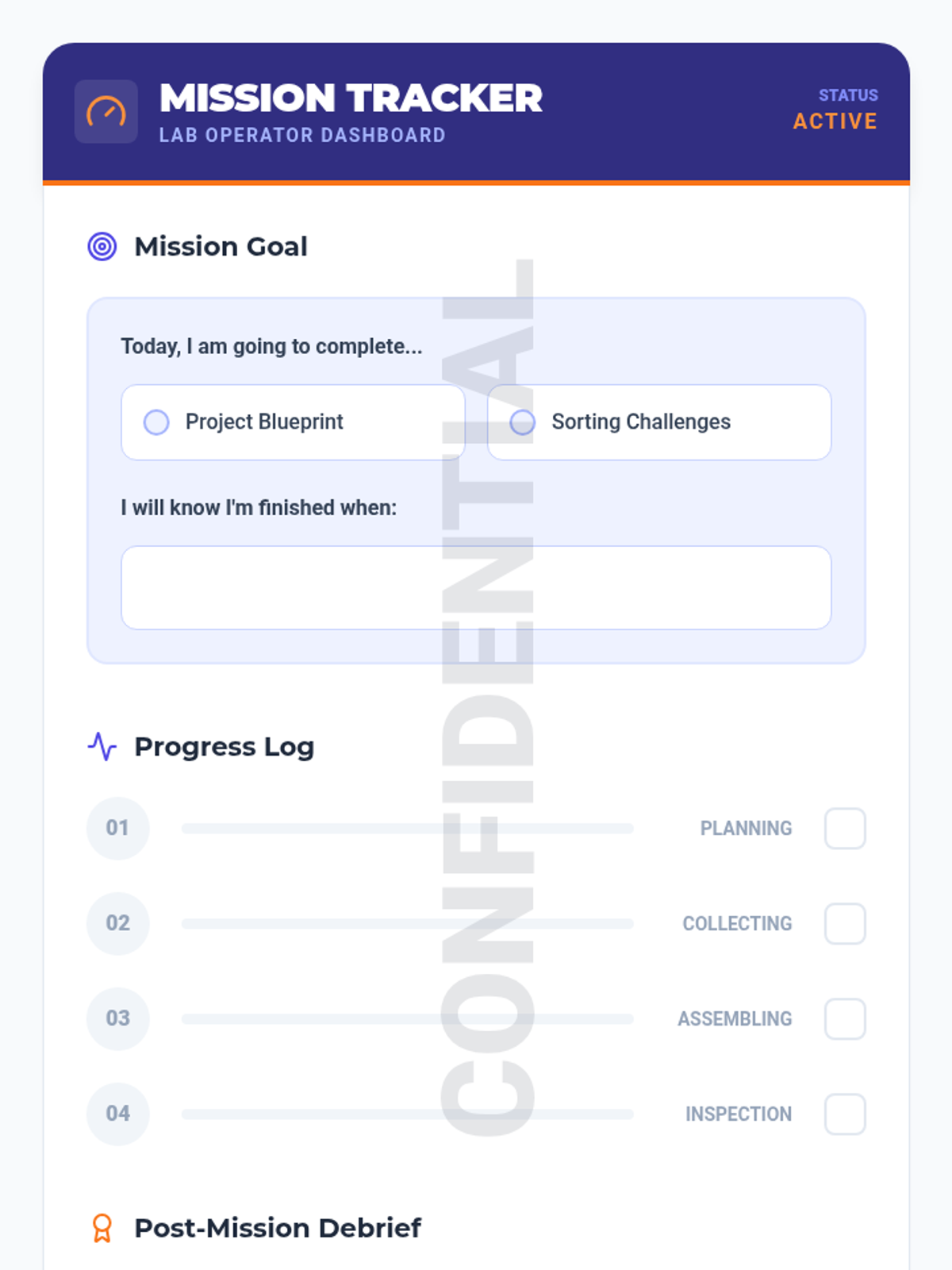
A comprehensive set of non-academic activities and assessments designed to evaluate a student's organizational, categorization, and goal-setting skills through hands-on tasks.
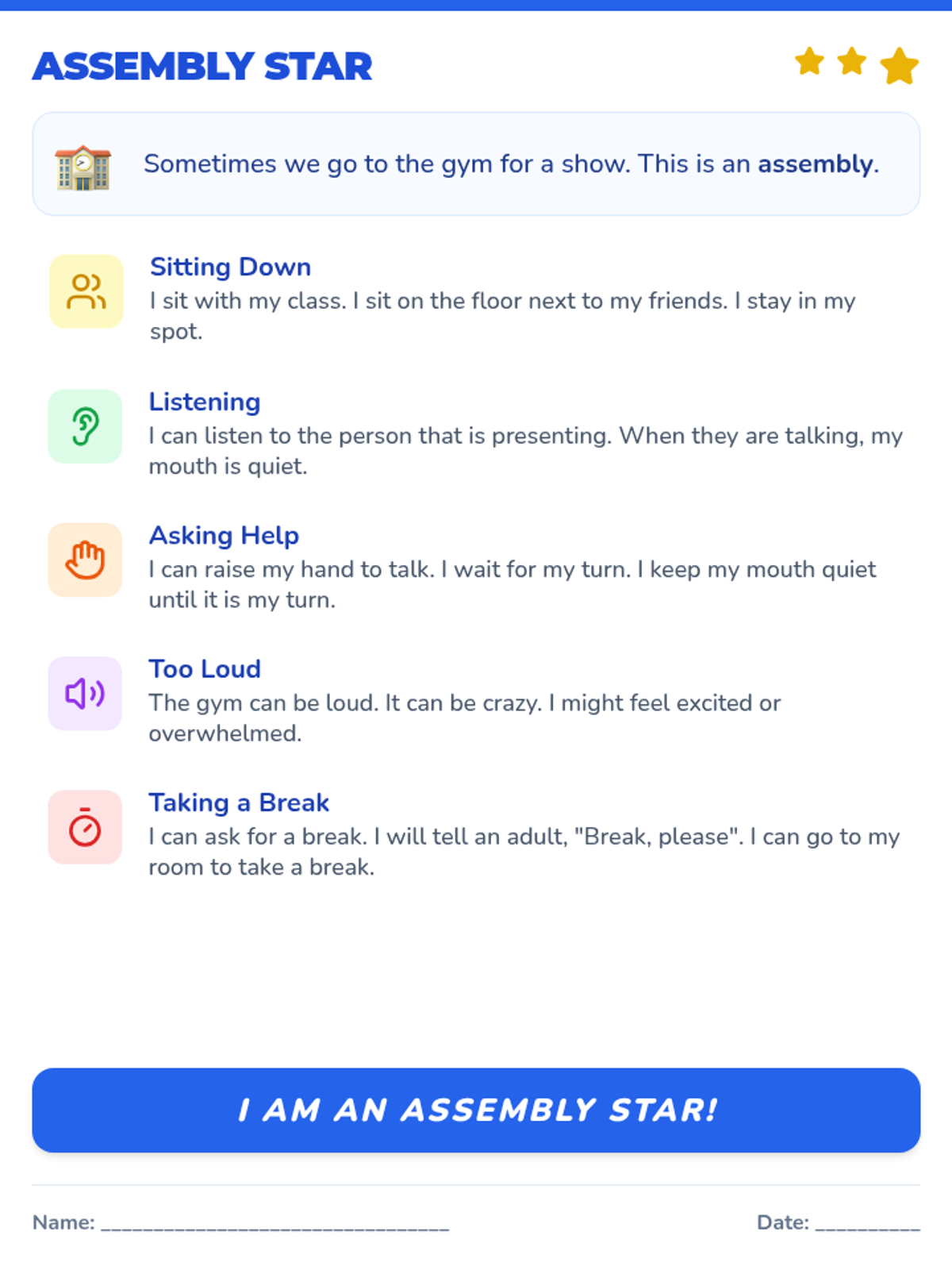
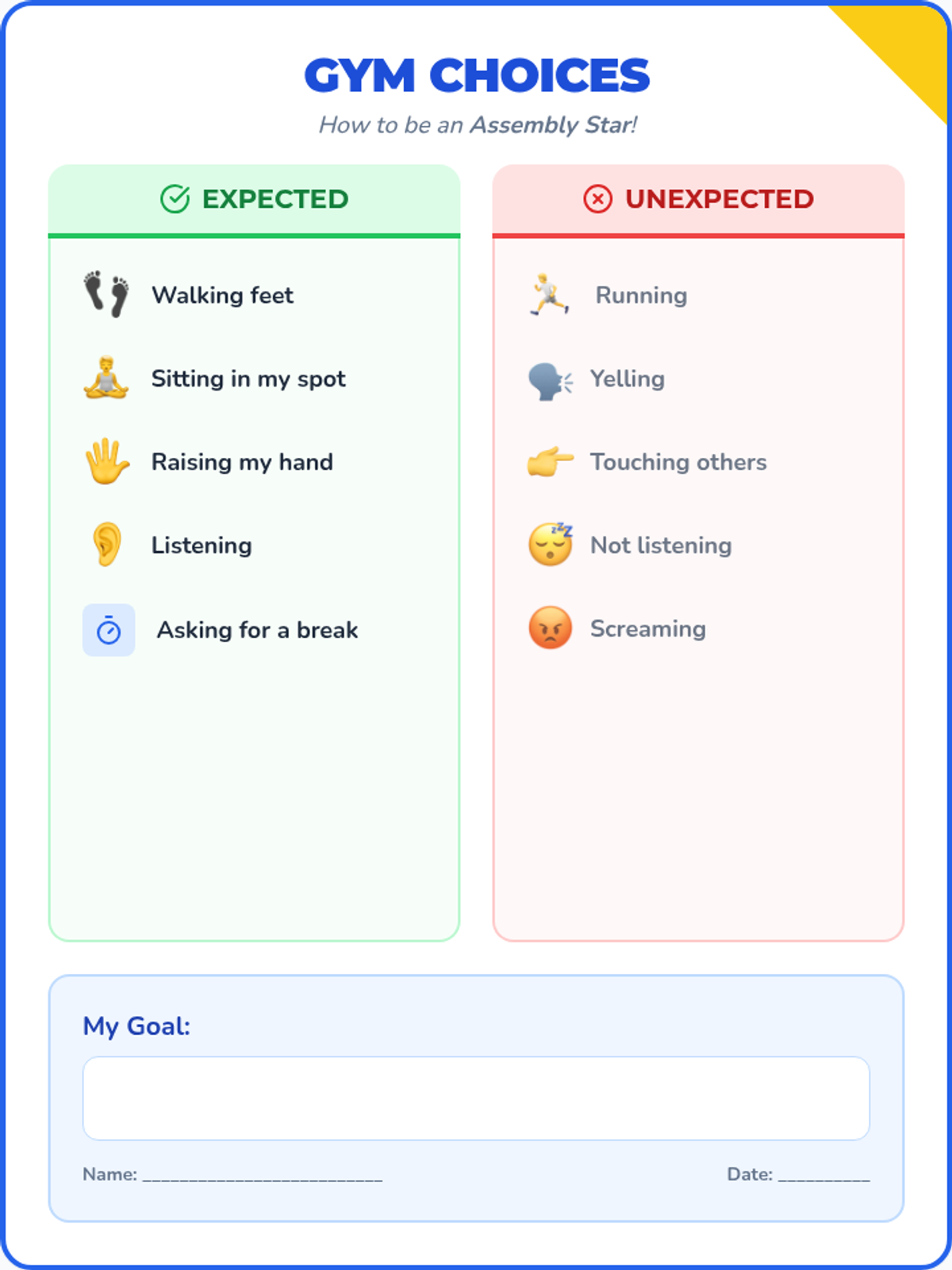
A social story and behavior guide designed to help students understand and practice expected behaviors during school assemblies and presentations in the gym.
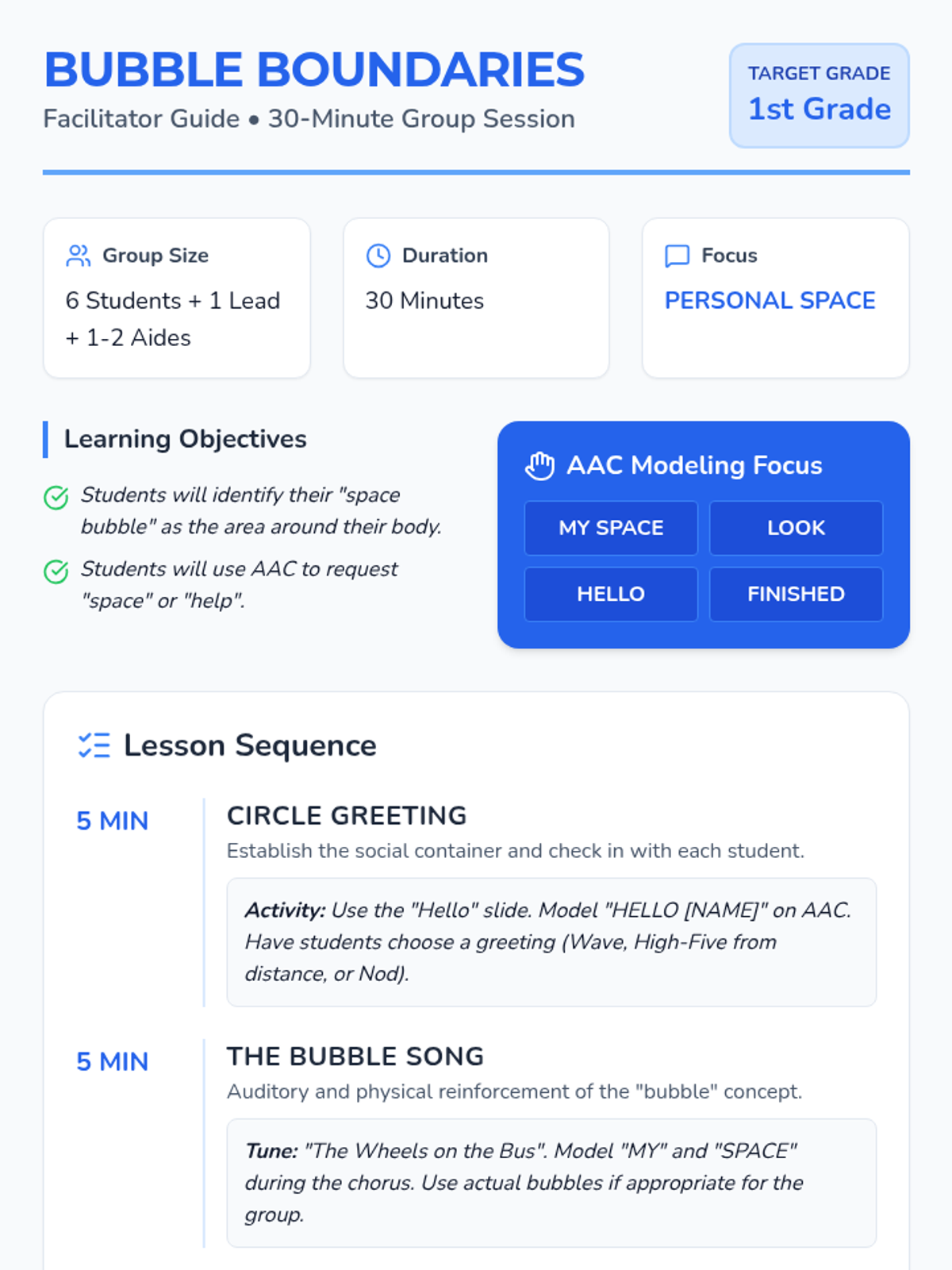
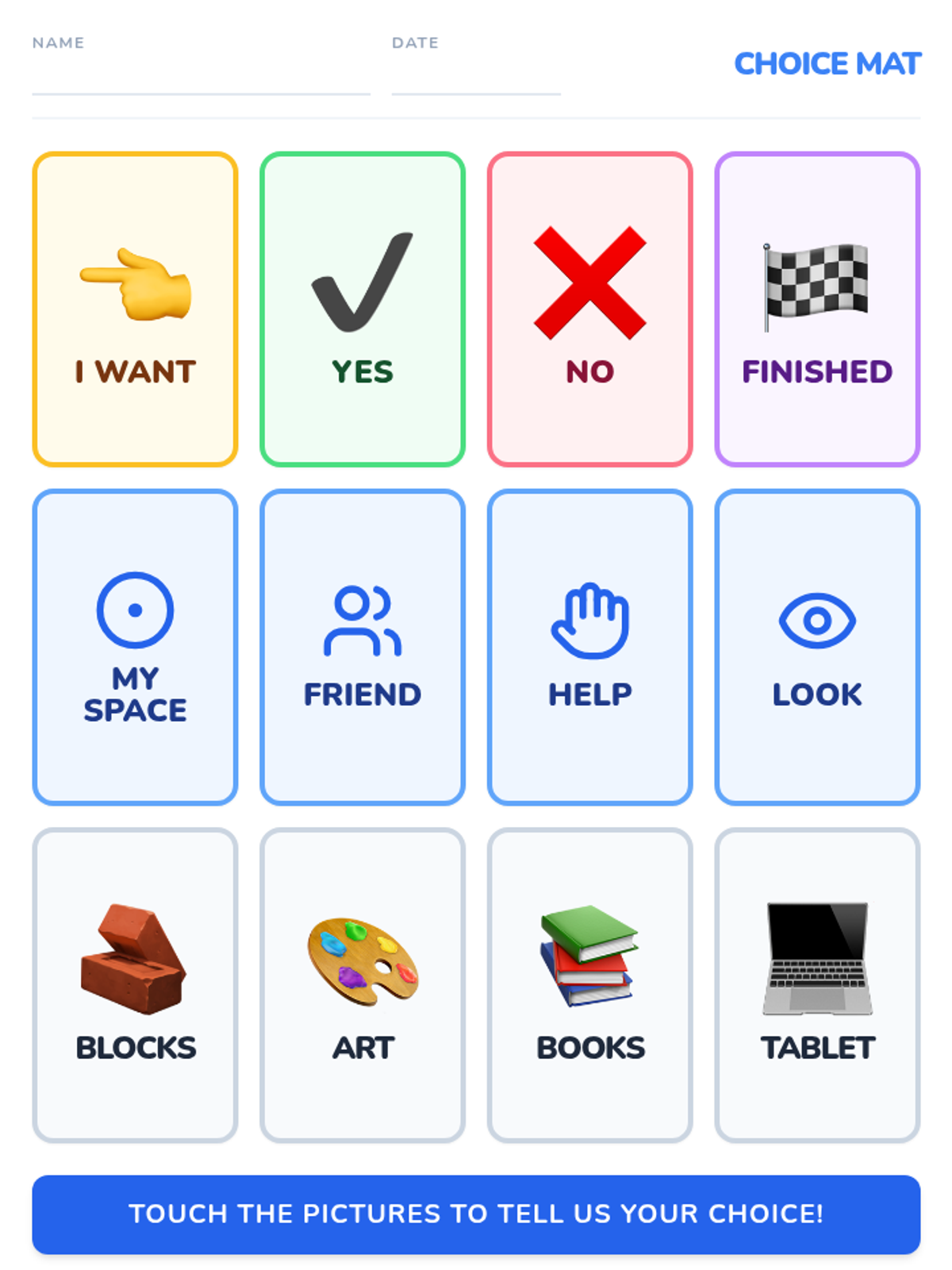
A 30-minute interactive group lesson for 1st-grade students with autism focused on understanding and maintaining personal space using visual supports and AAC modeling.
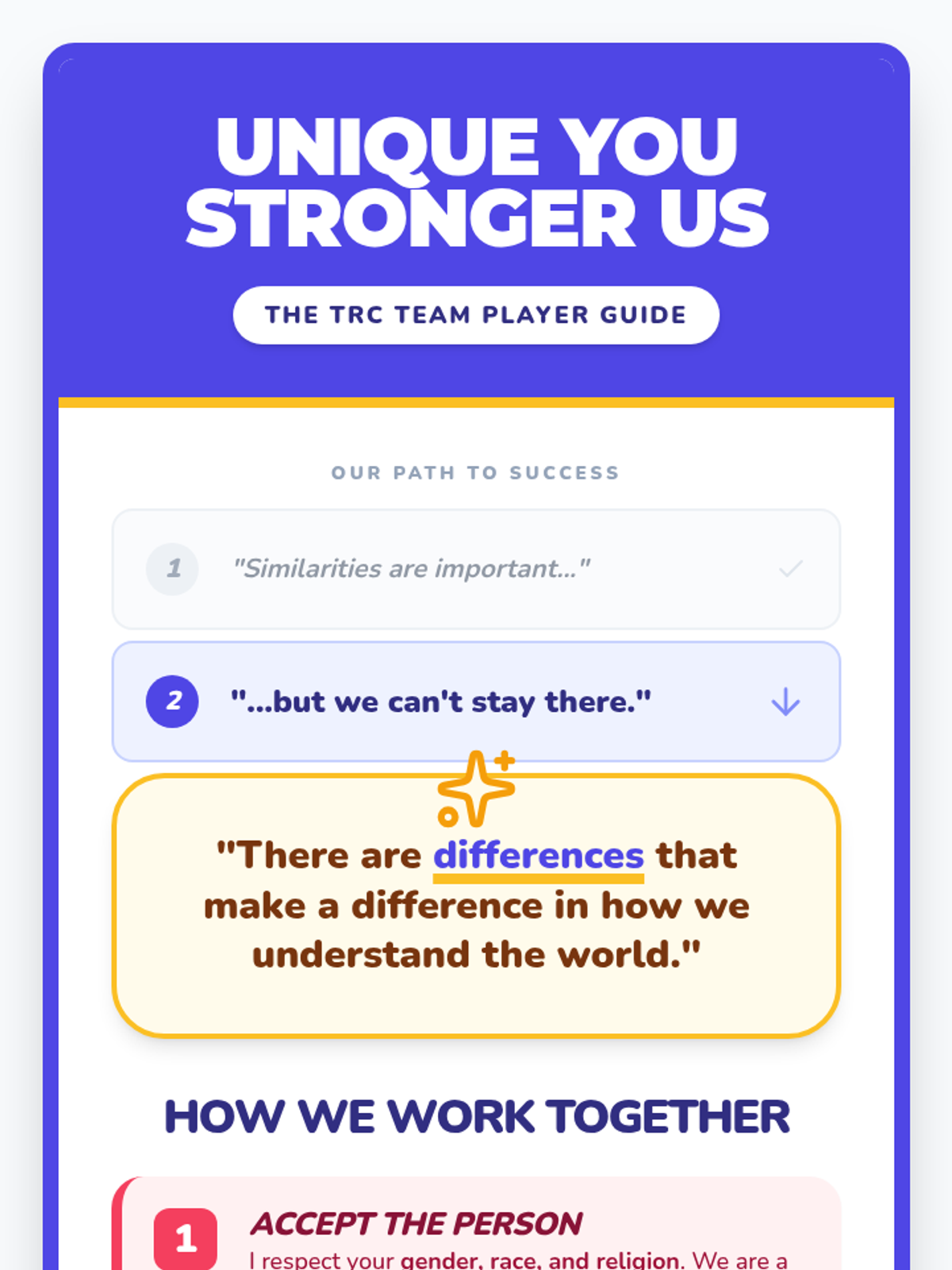
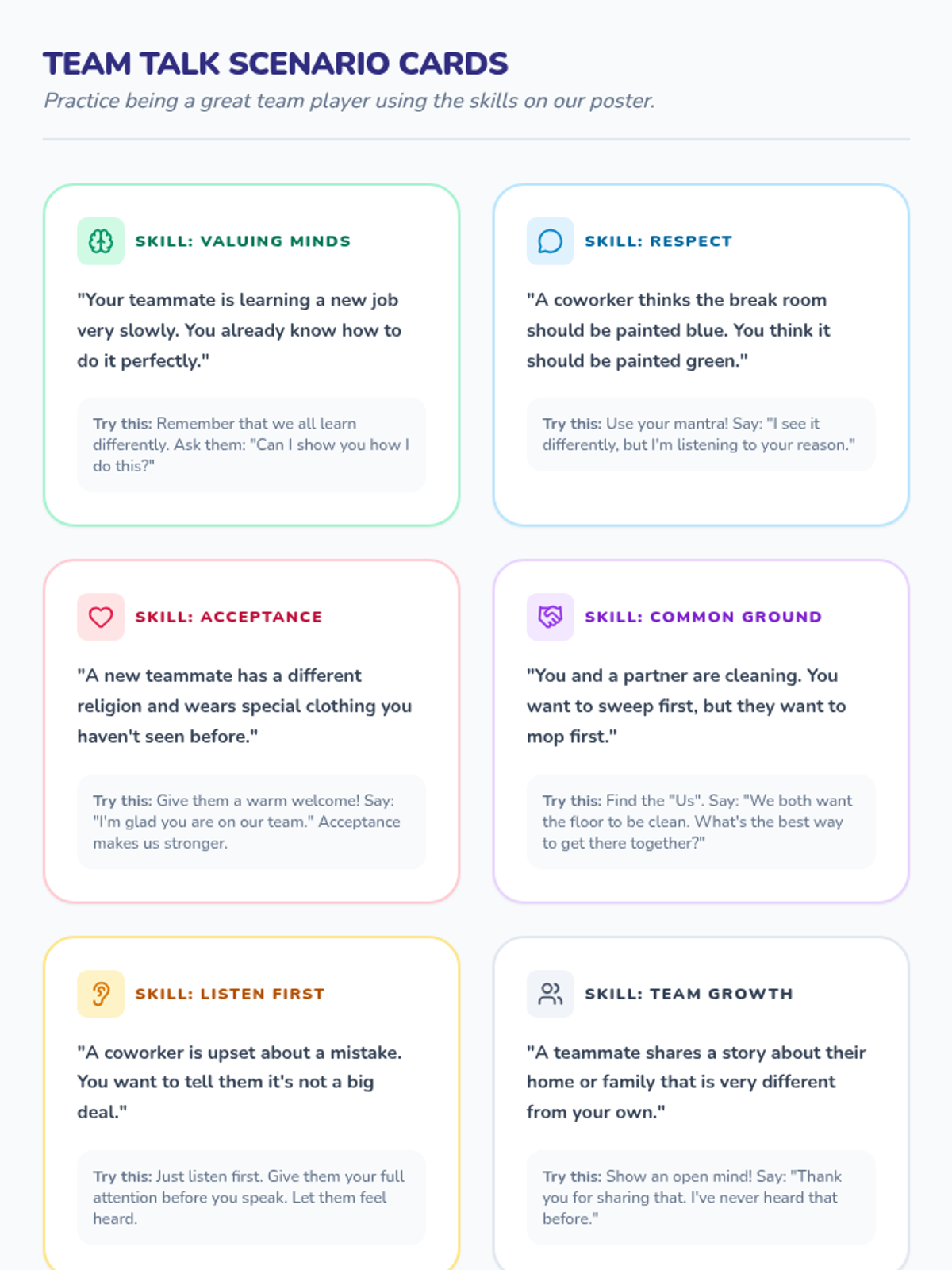
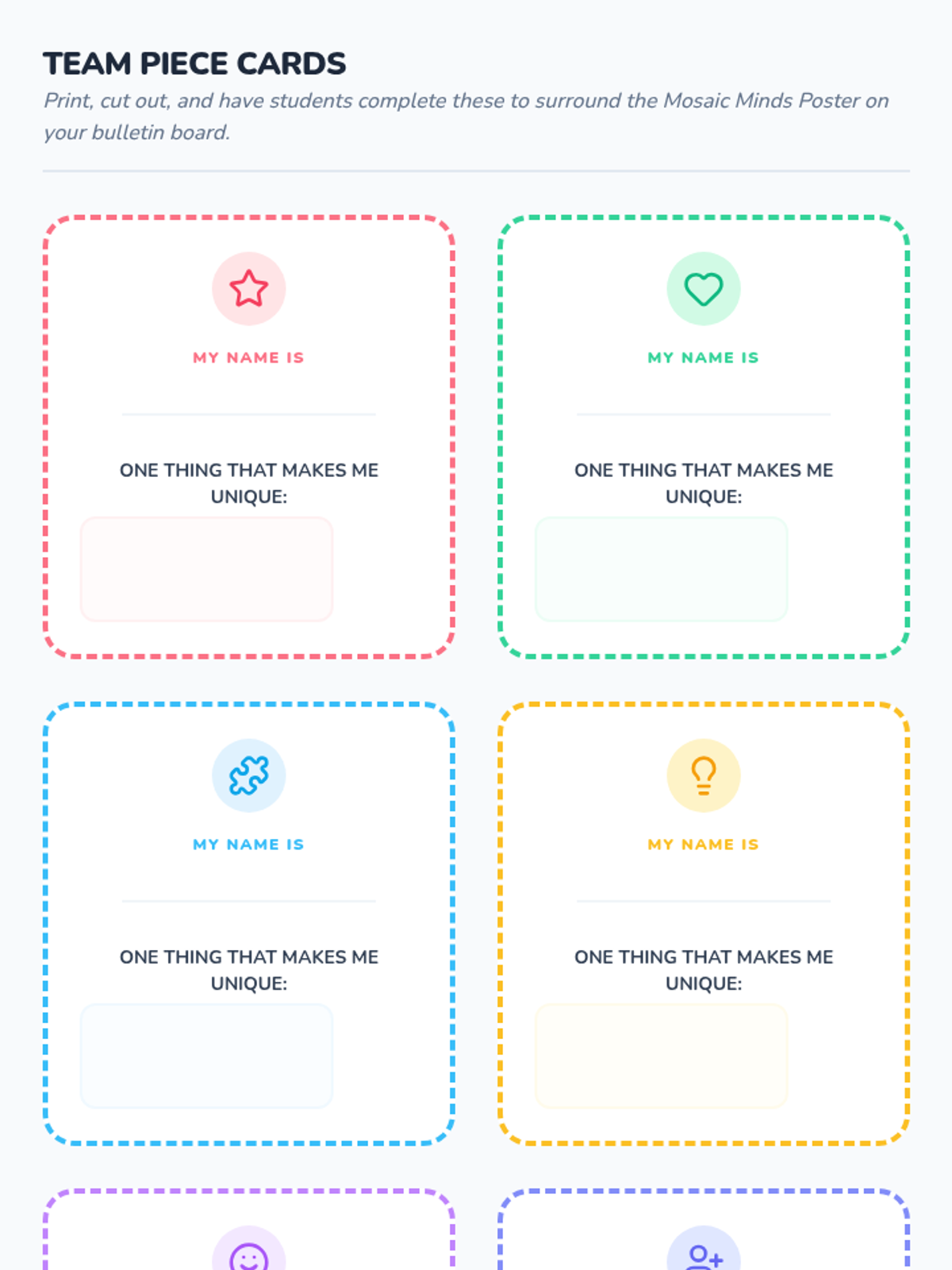
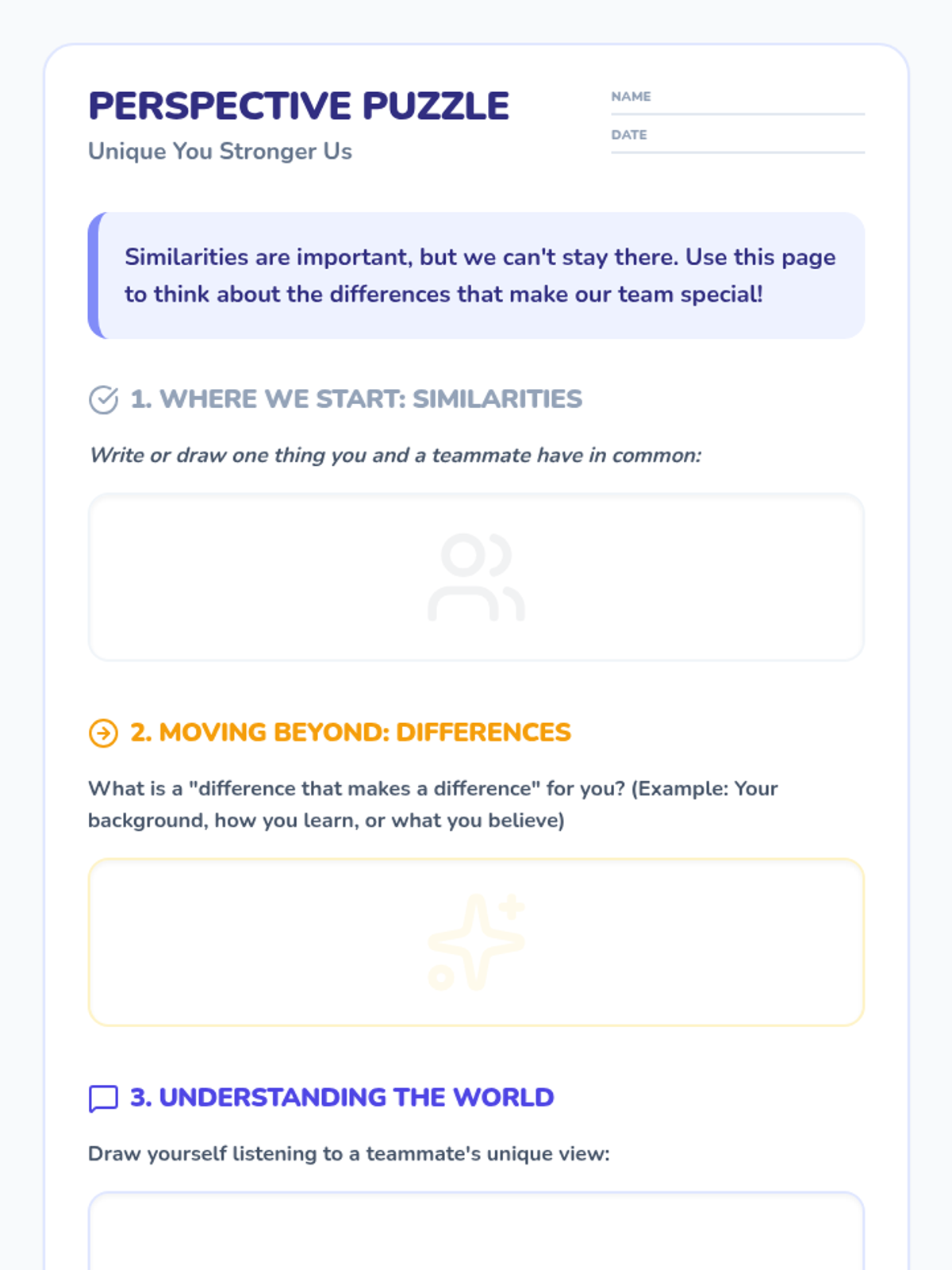
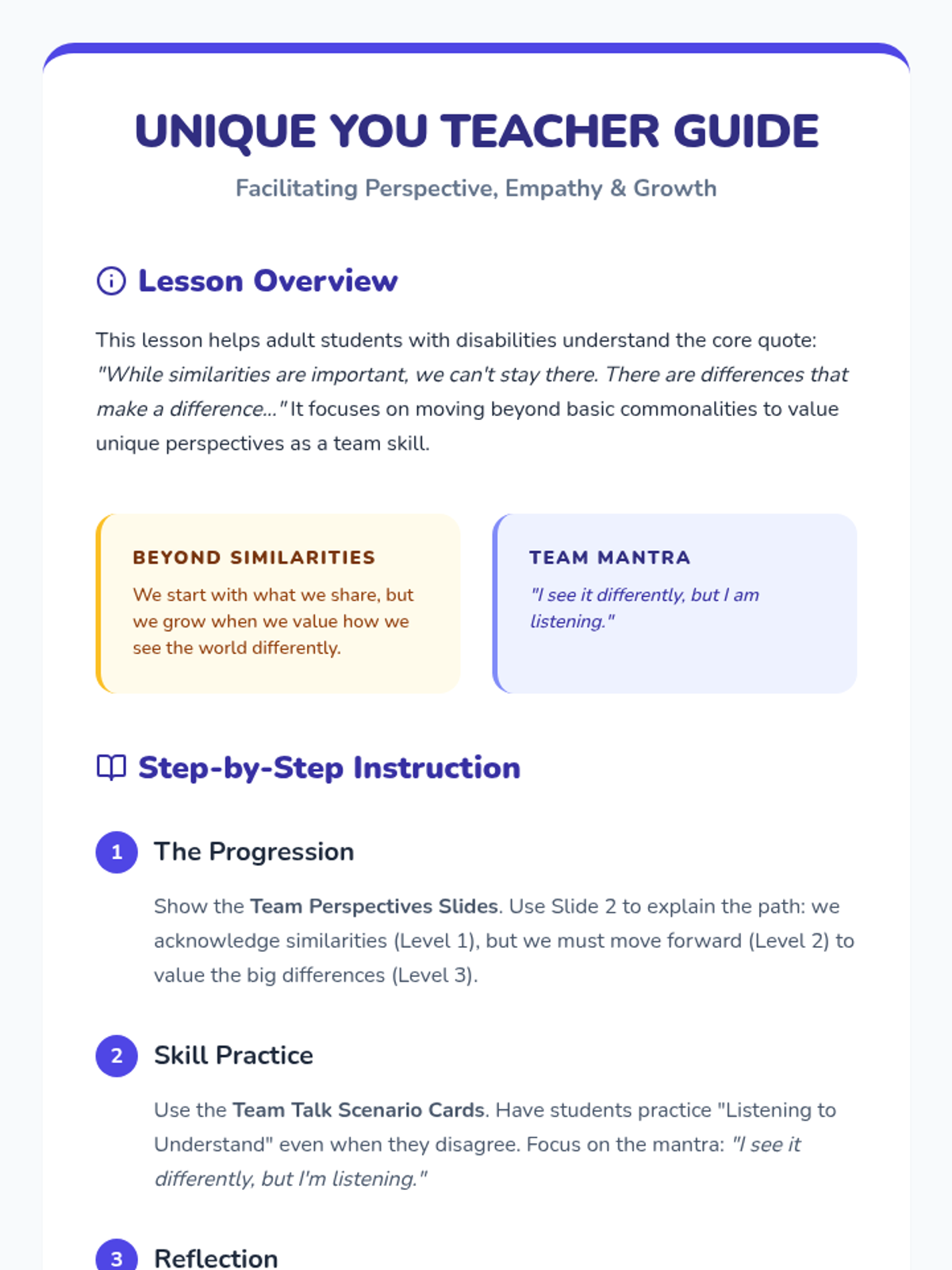
This lesson helps adult students with disabilities understand the value of individual differences in the workplace and community. It uses a simplified version of a complex quote about perspectives to foster empathy, open-mindedness, and respectful disagreement.
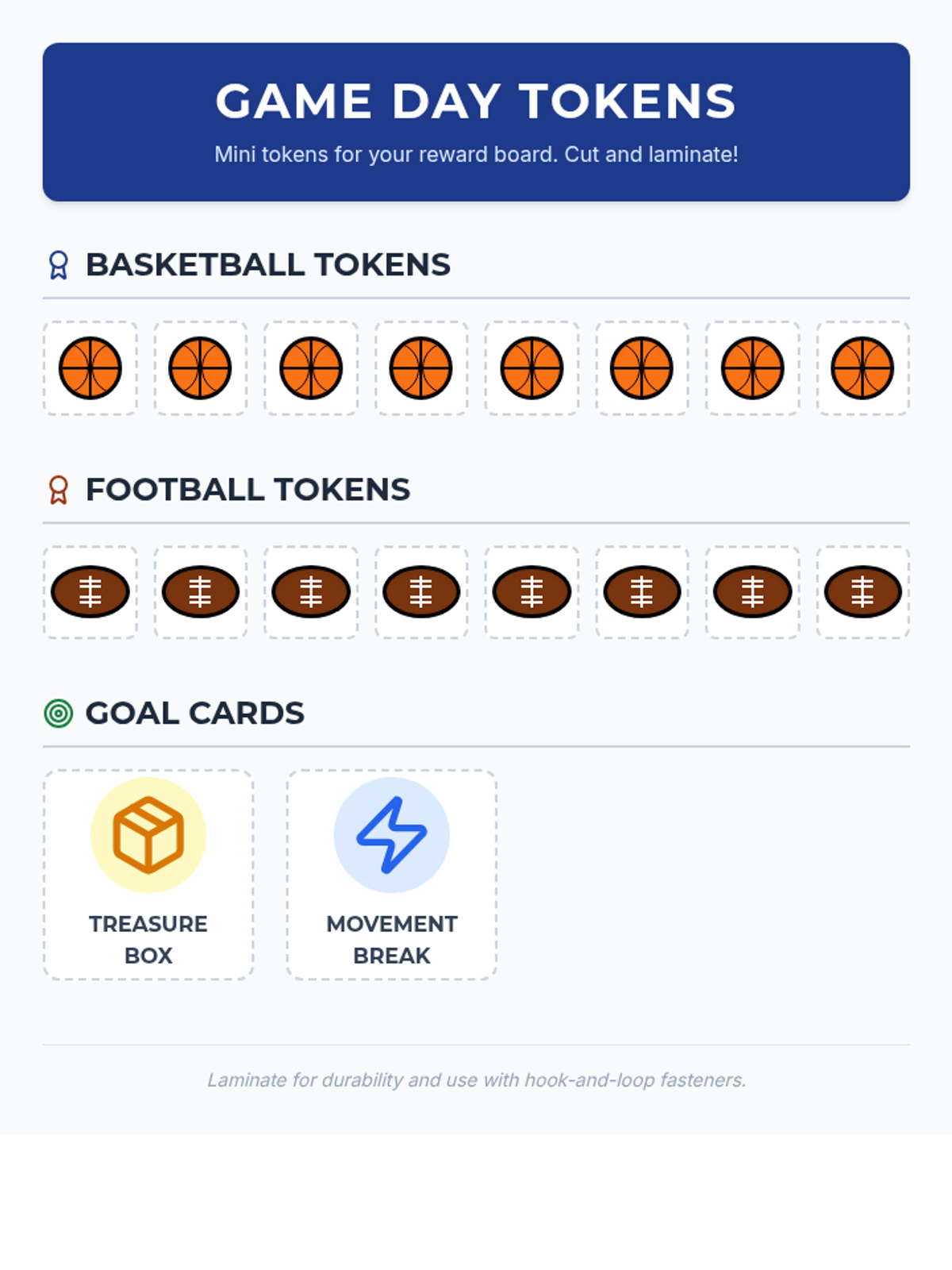
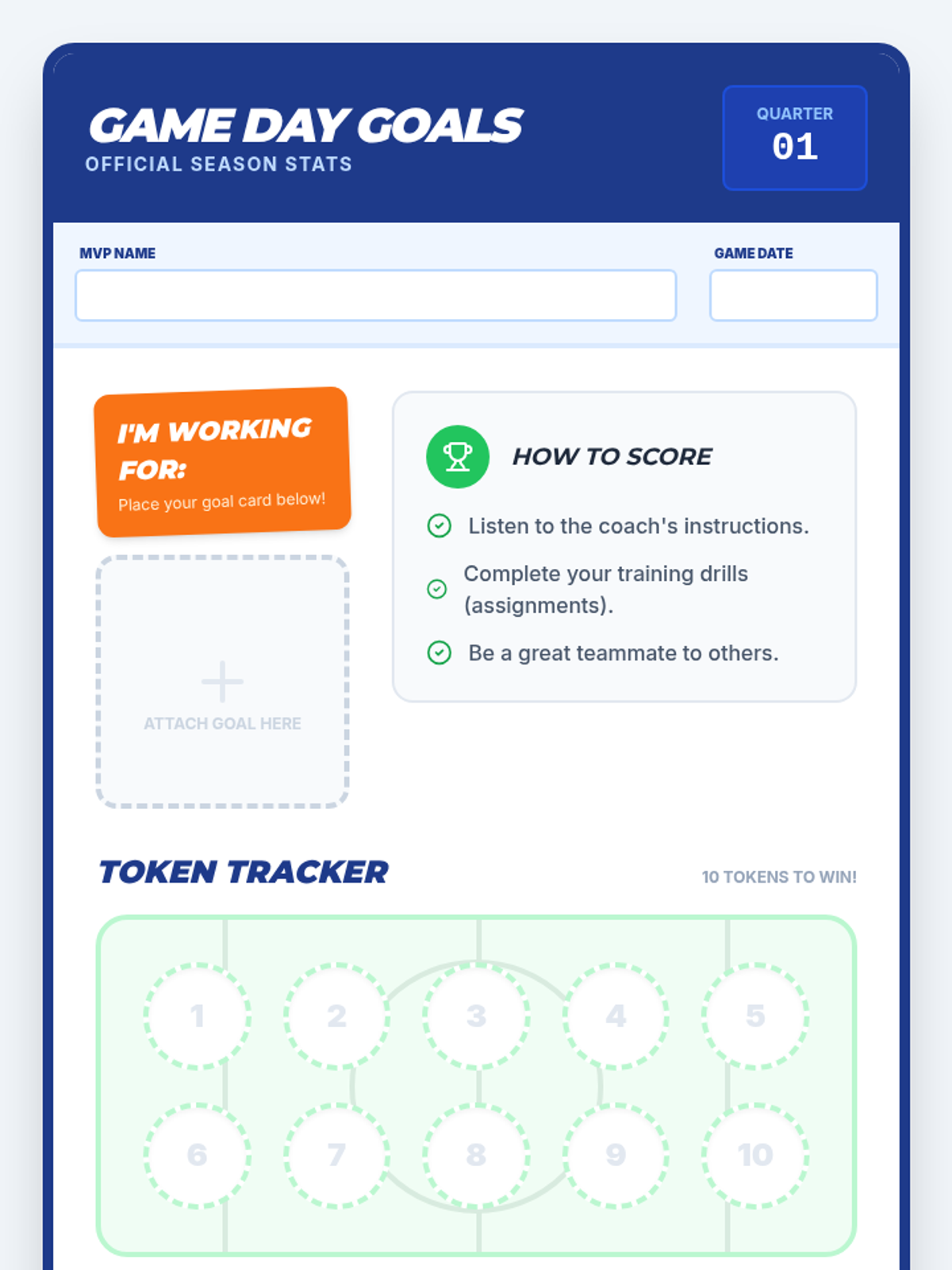
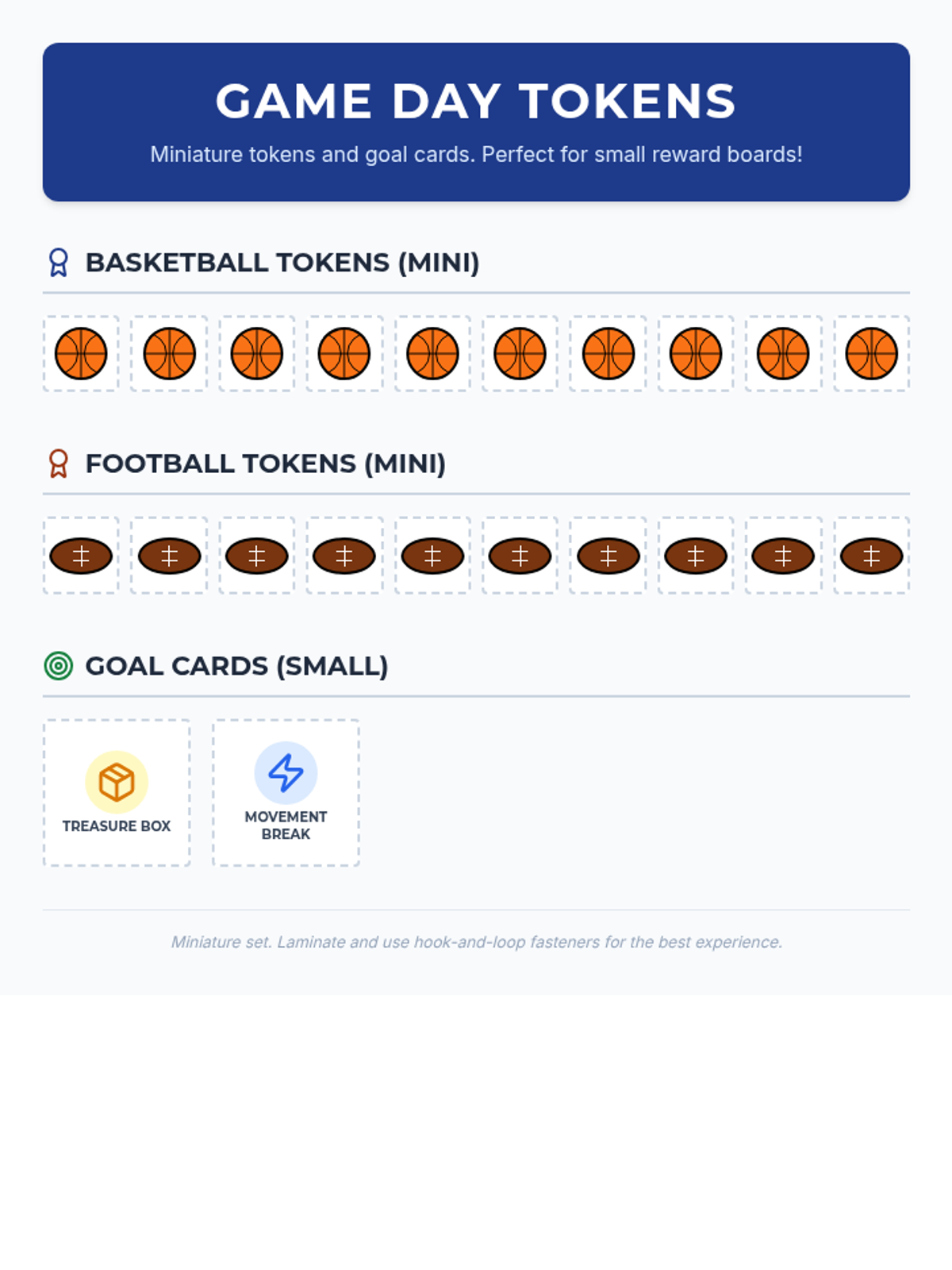
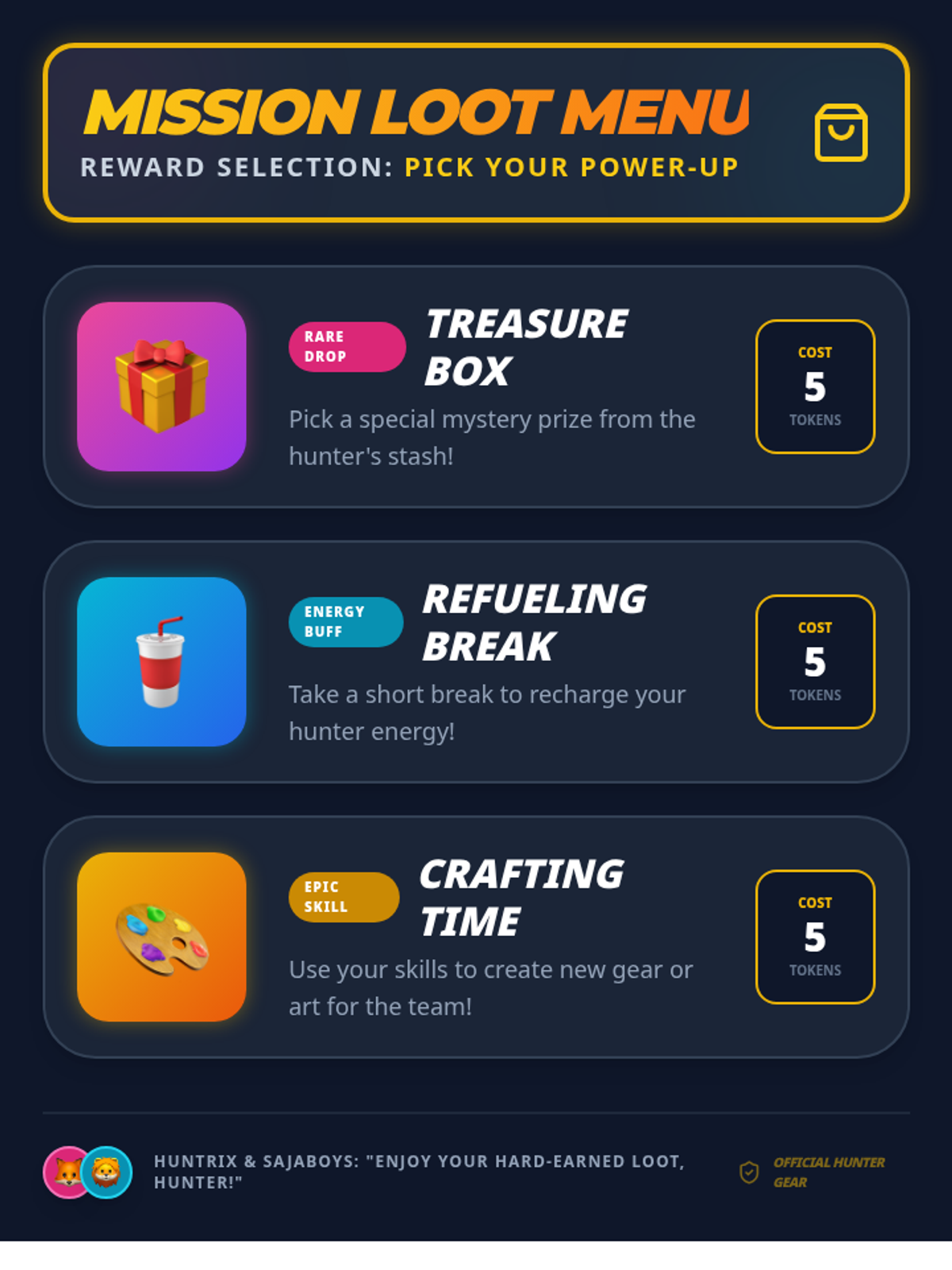
A sports-themed behavior management system featuring football and basketball tokens and a customizable reward board to motivate students toward specific goals like a movement break or a treasure box.
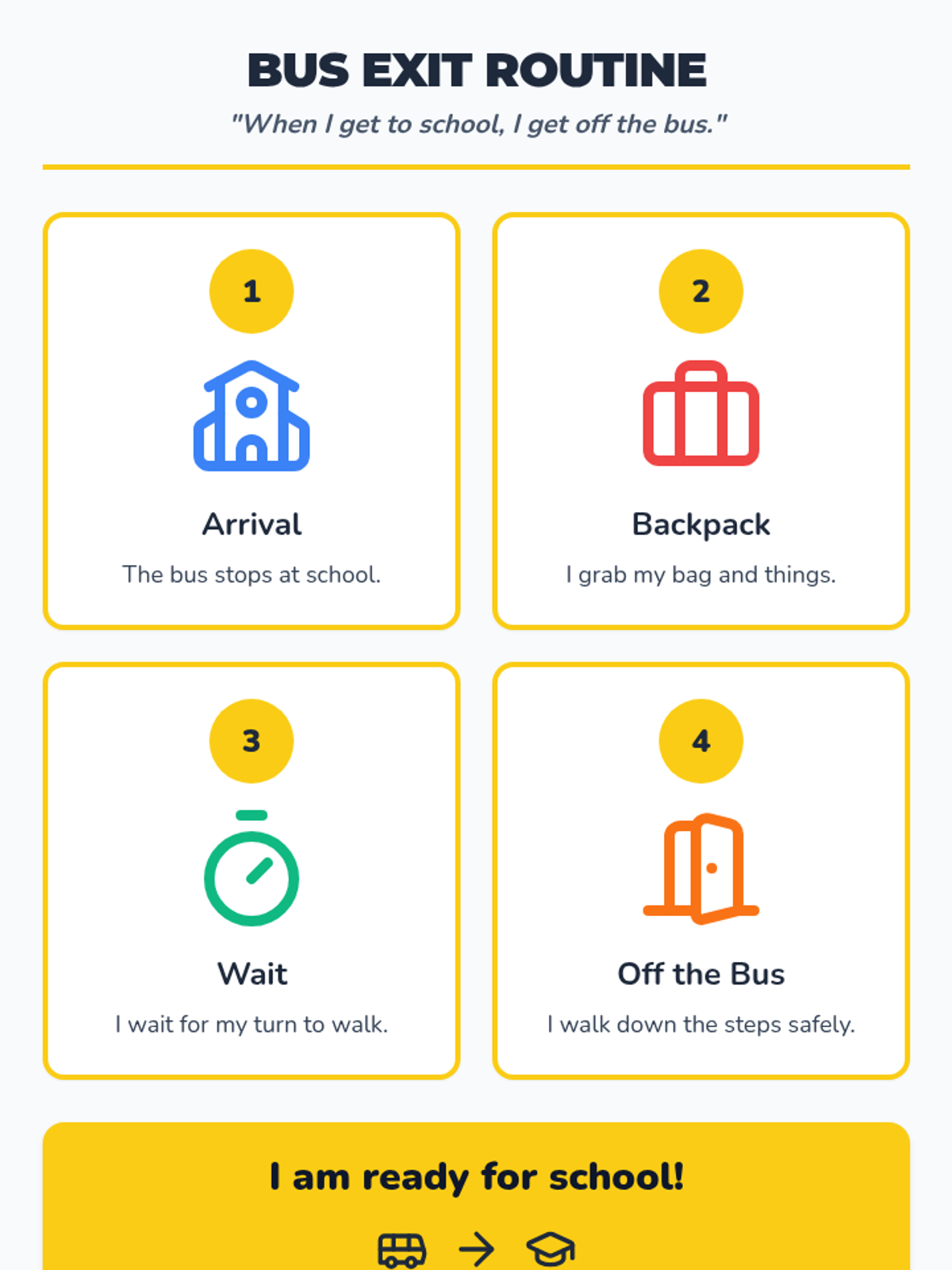
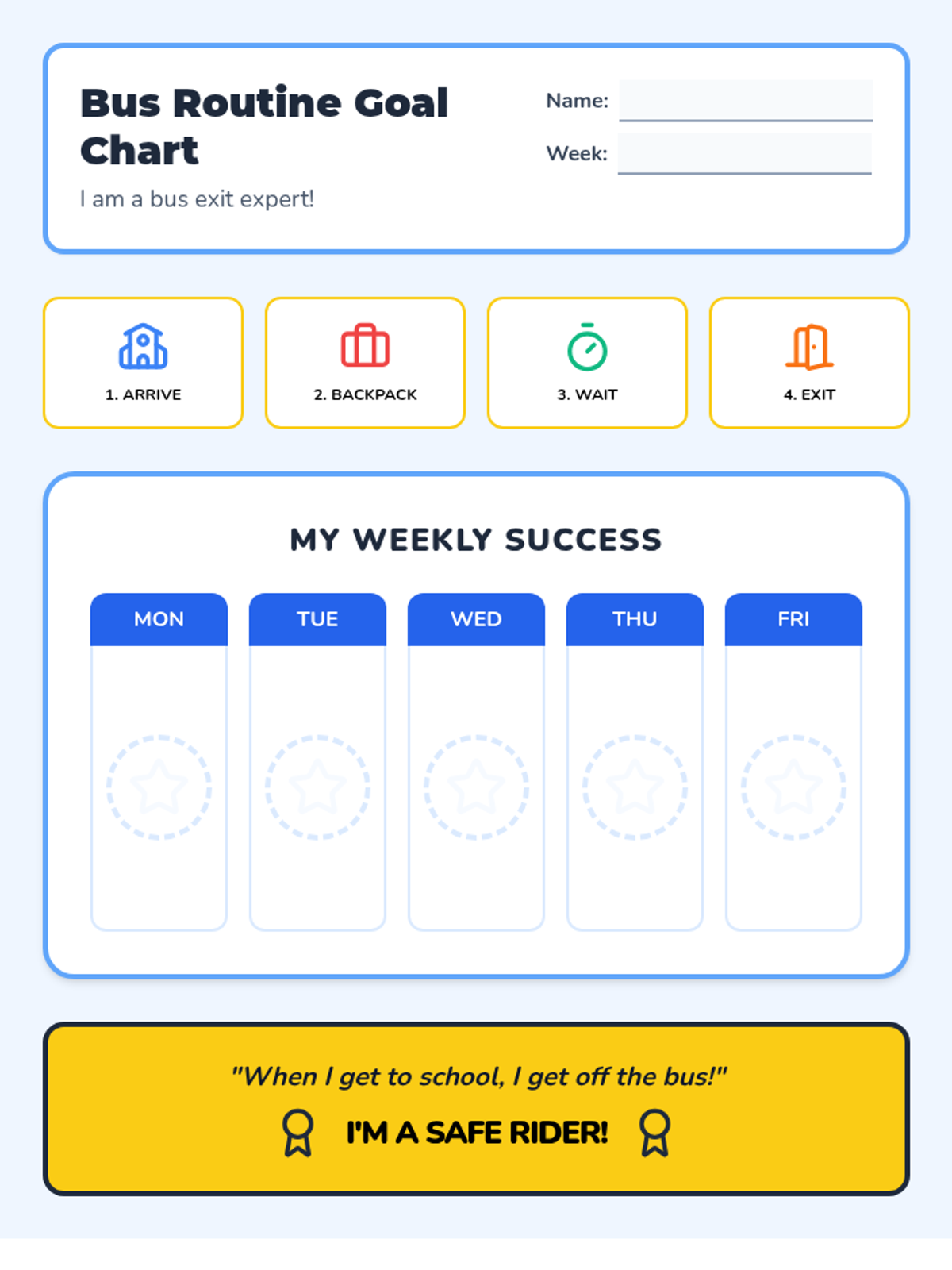
A lesson focused on the routine of safely exiting the school bus upon arrival at school, featuring clear visual supports for students.
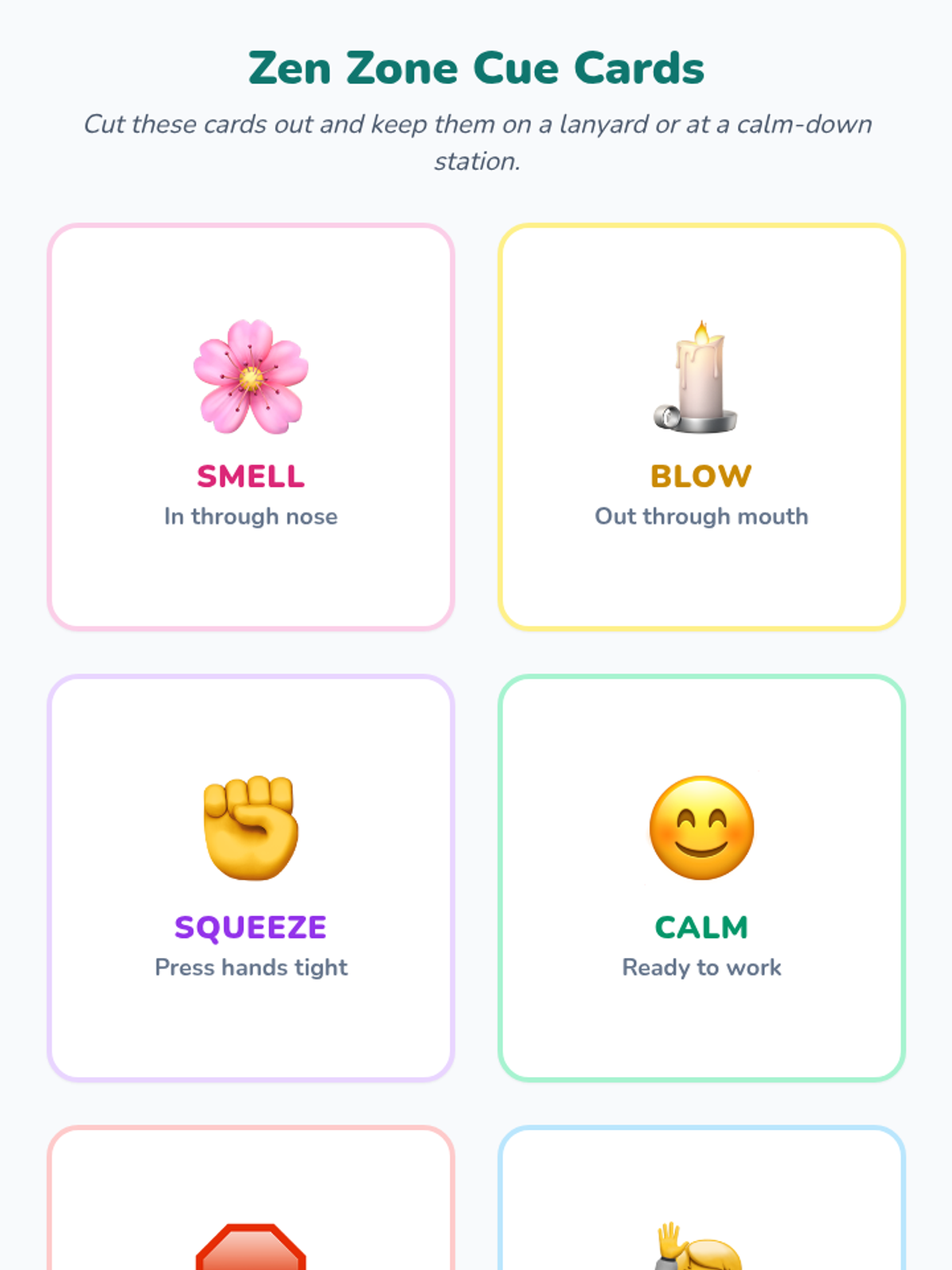
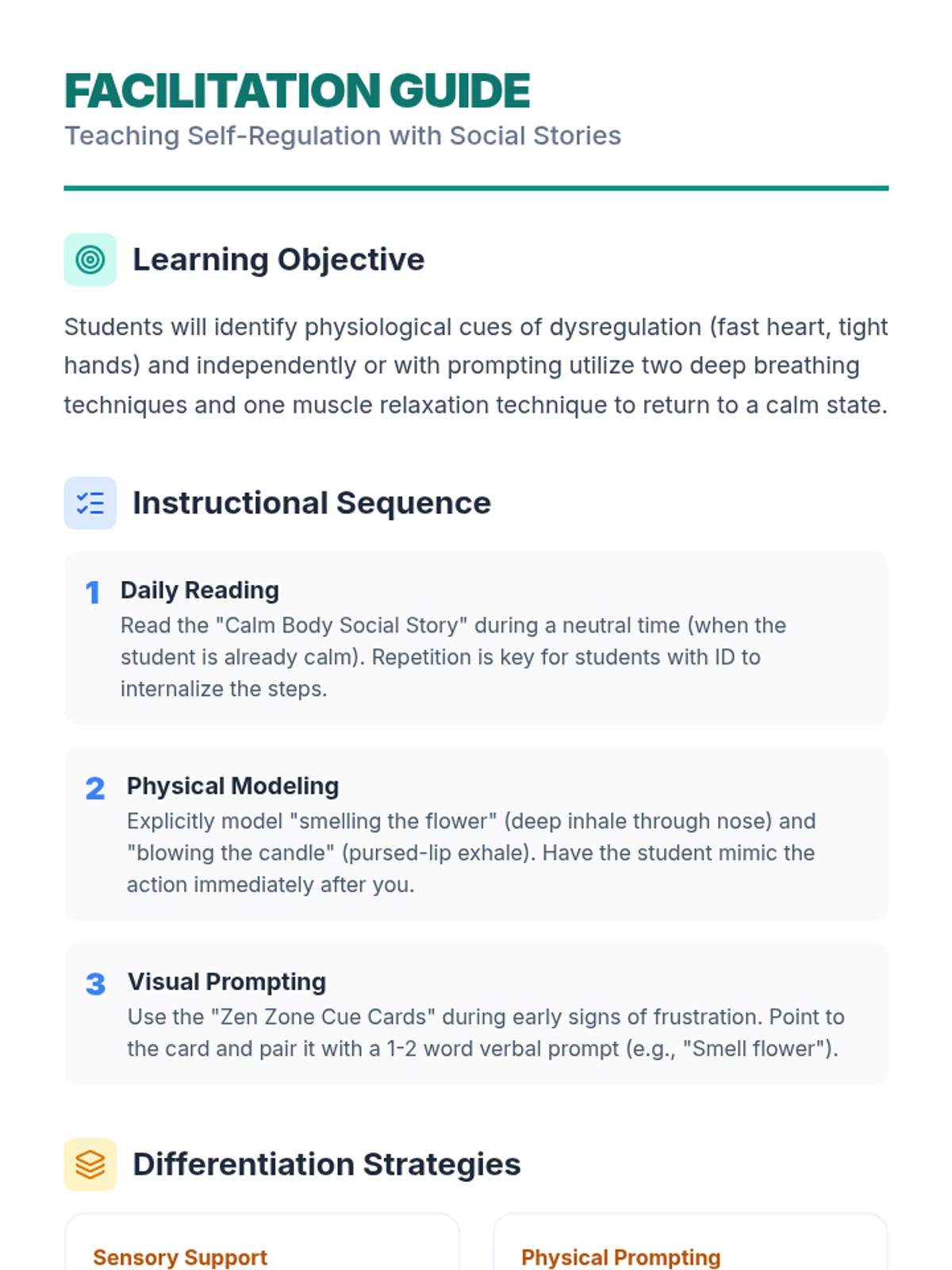
A lesson focused on teaching simple self-regulation strategies like deep breathing and muscle relaxation to students with intellectual disabilities using a social story and visual supports.
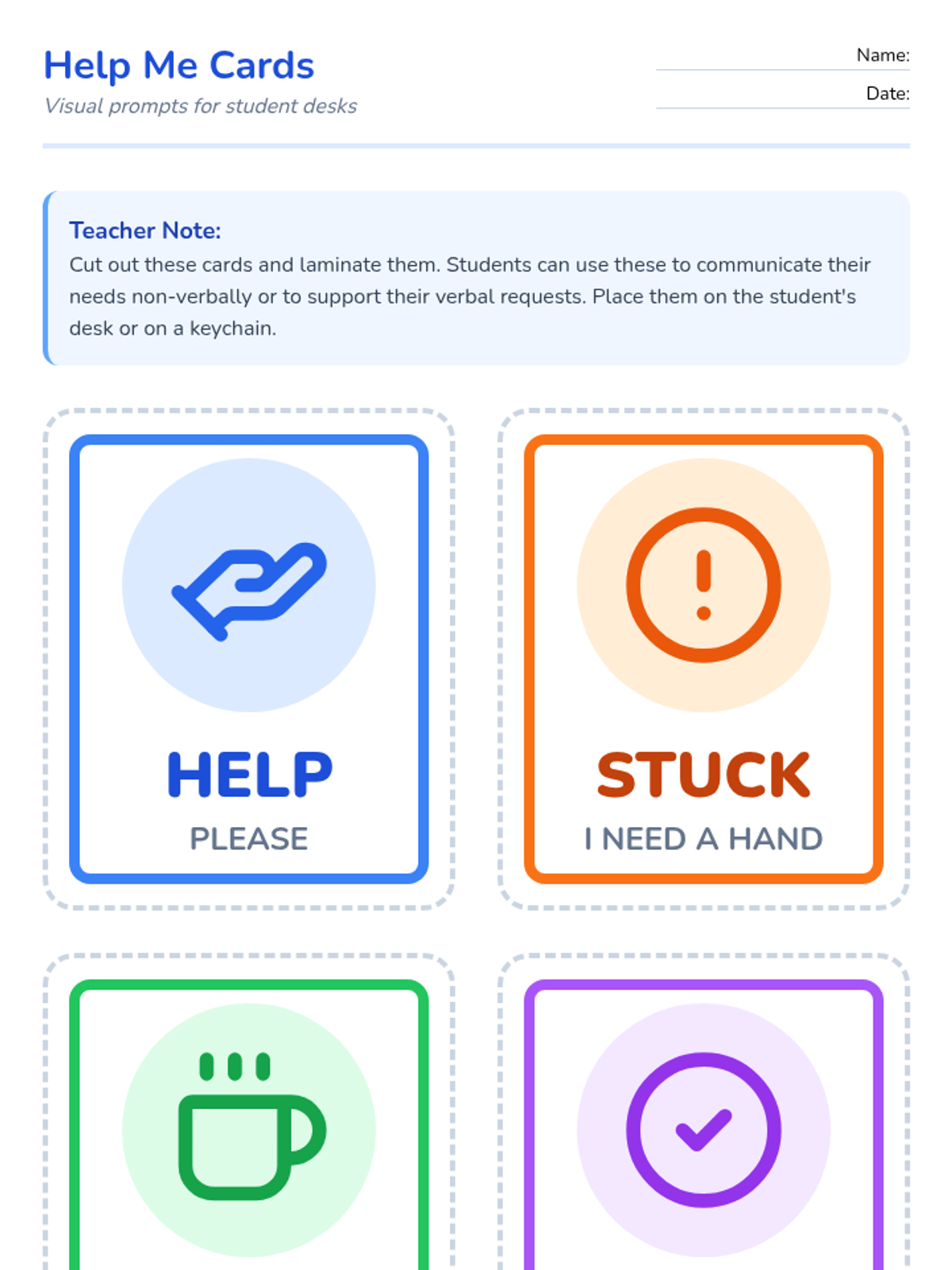
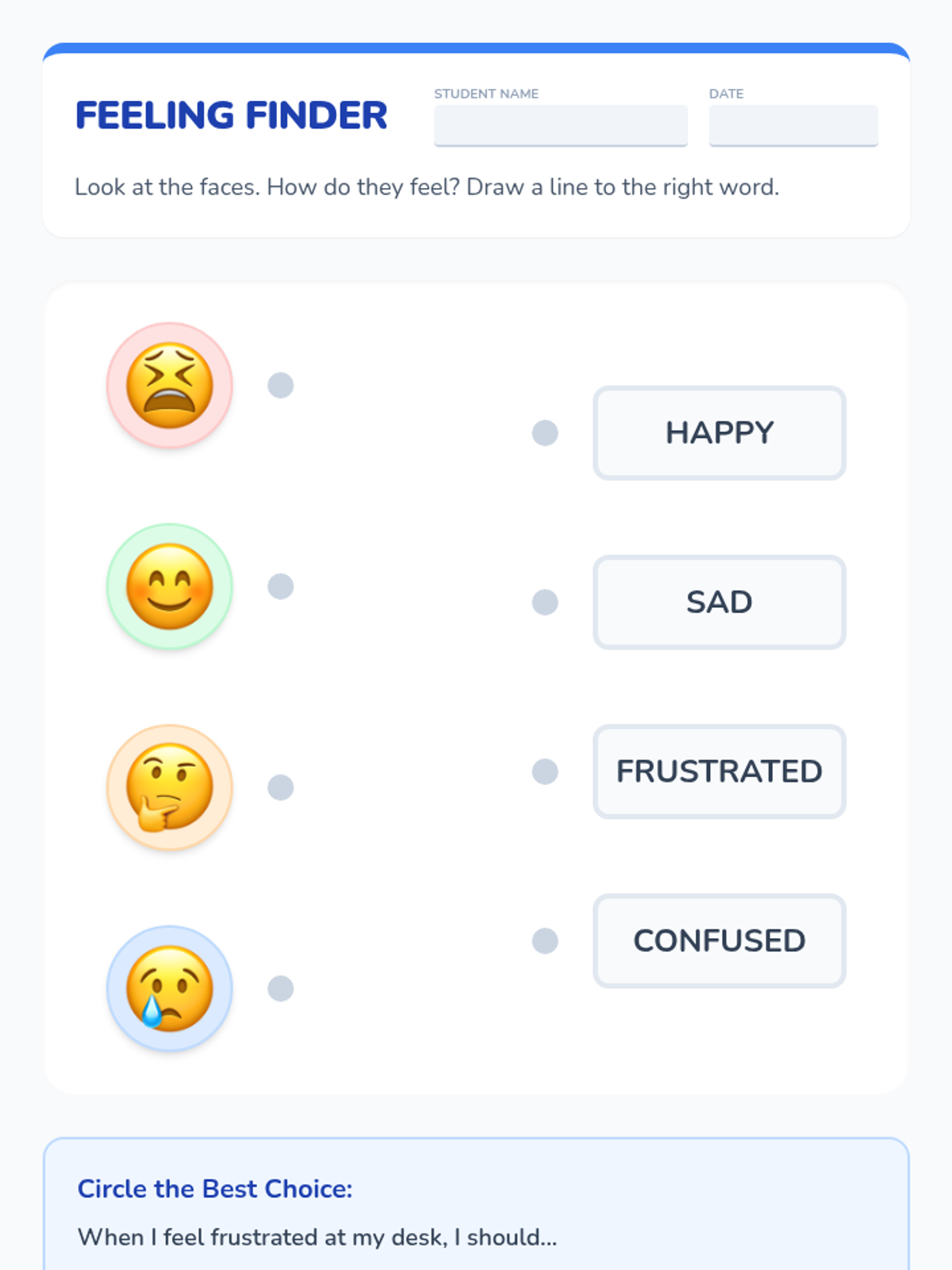
A lesson focused on teaching students with intellectual disabilities how to identify feelings of frustration and use appropriate social strategies to ask for help in the classroom.
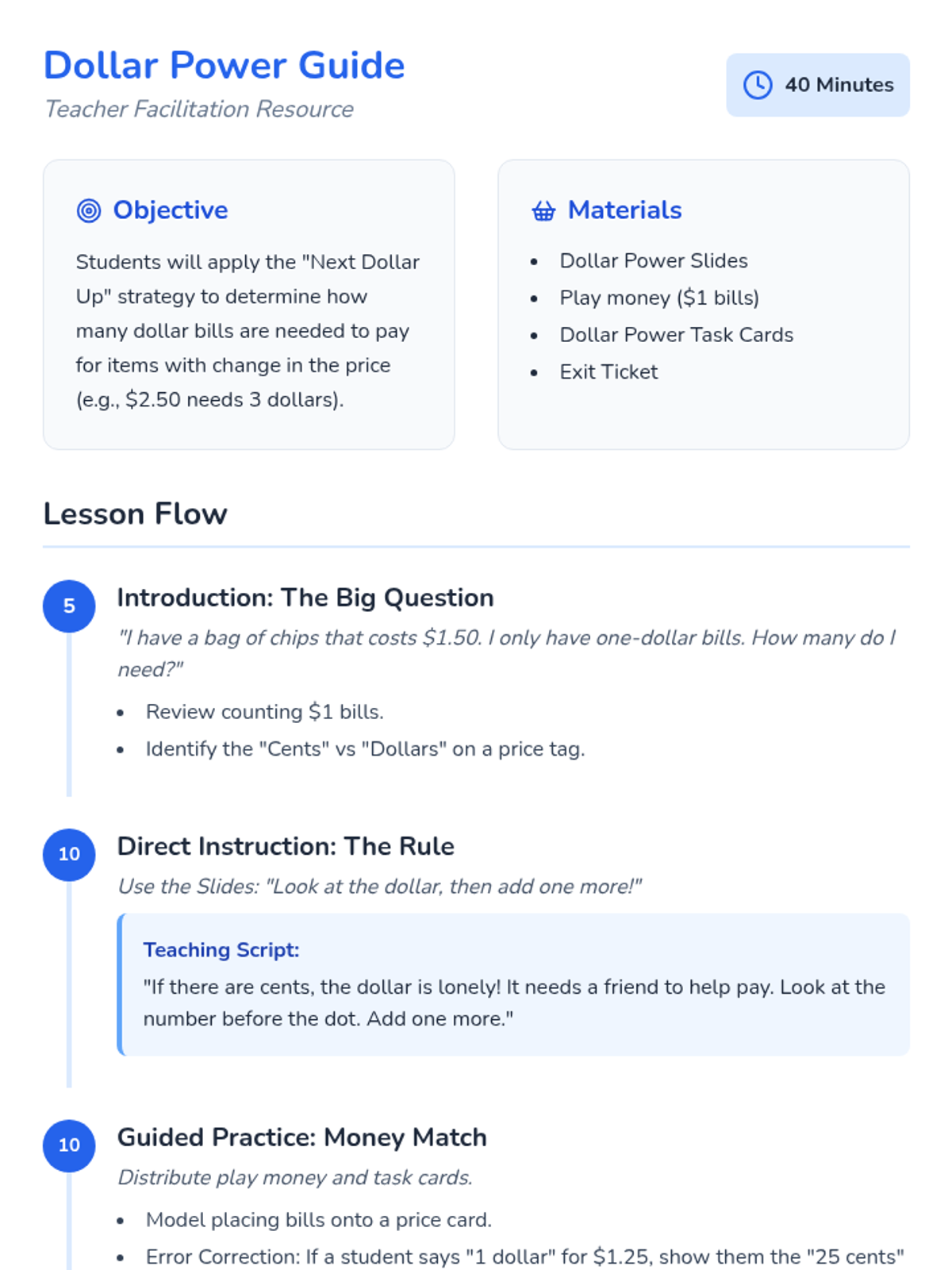
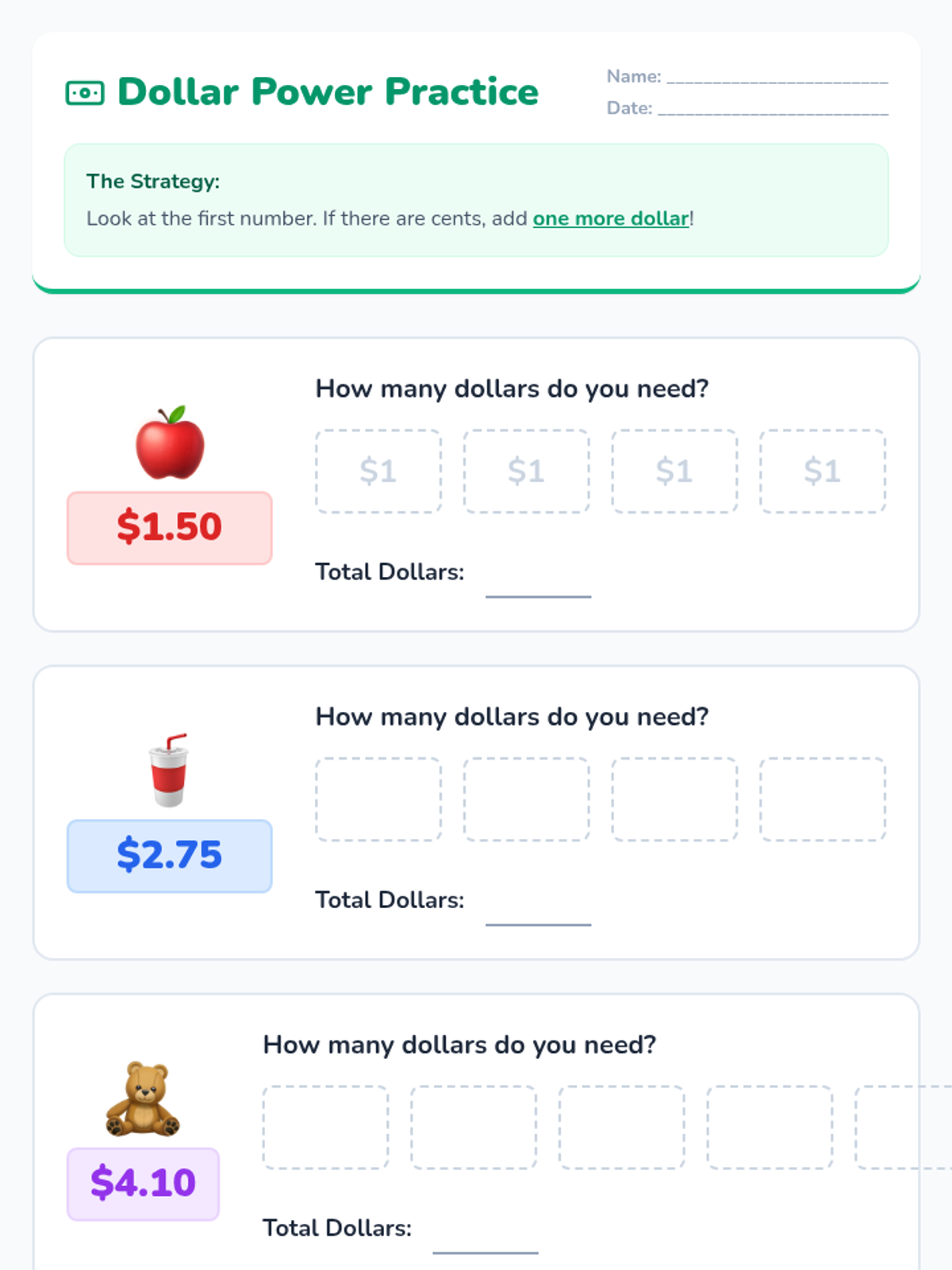
A comprehensive lesson teaching the 'Next Dollar Up' strategy to students with special needs, focusing on practical money skills through visual aids and hands-on shopping simulations.
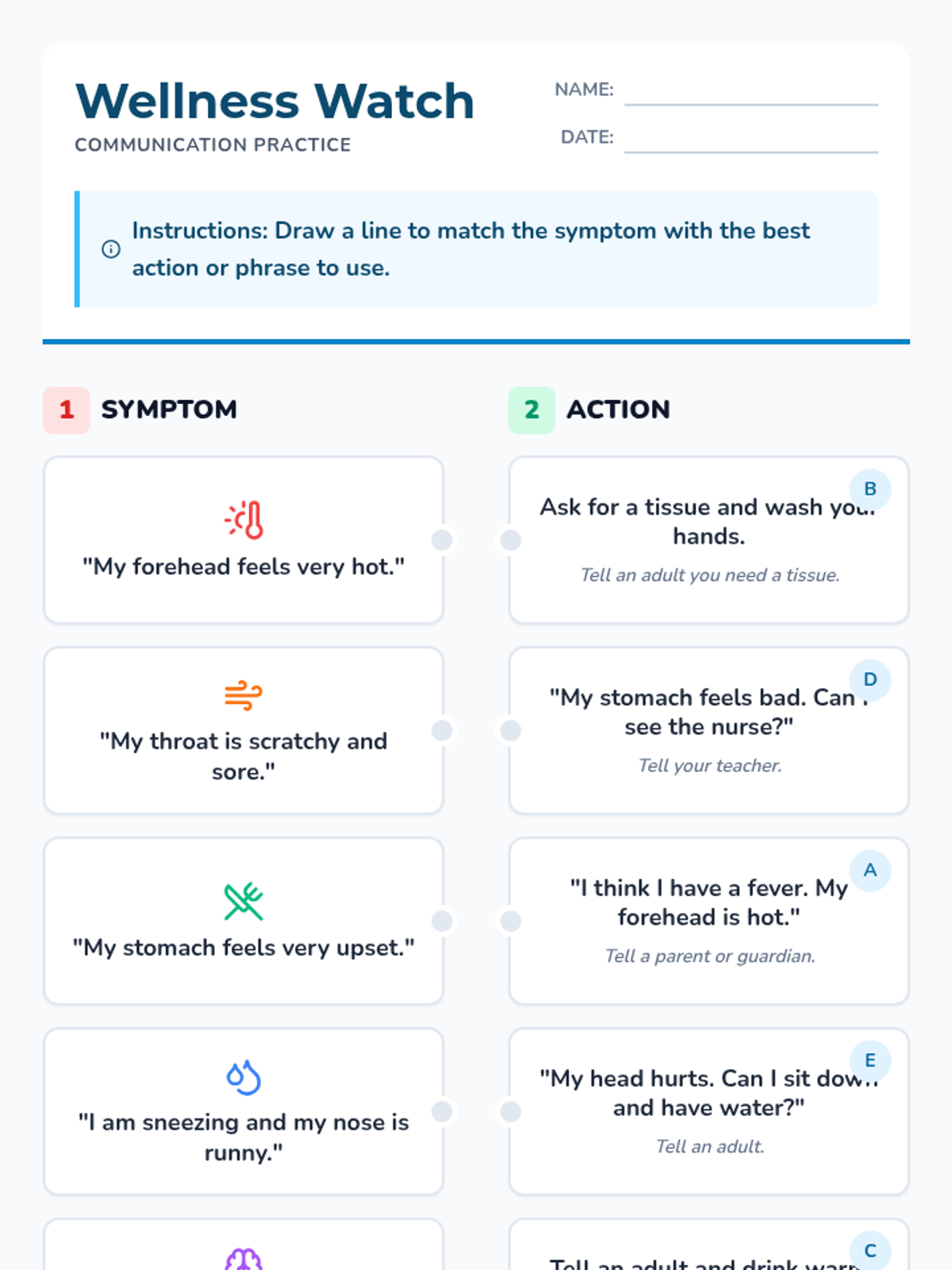
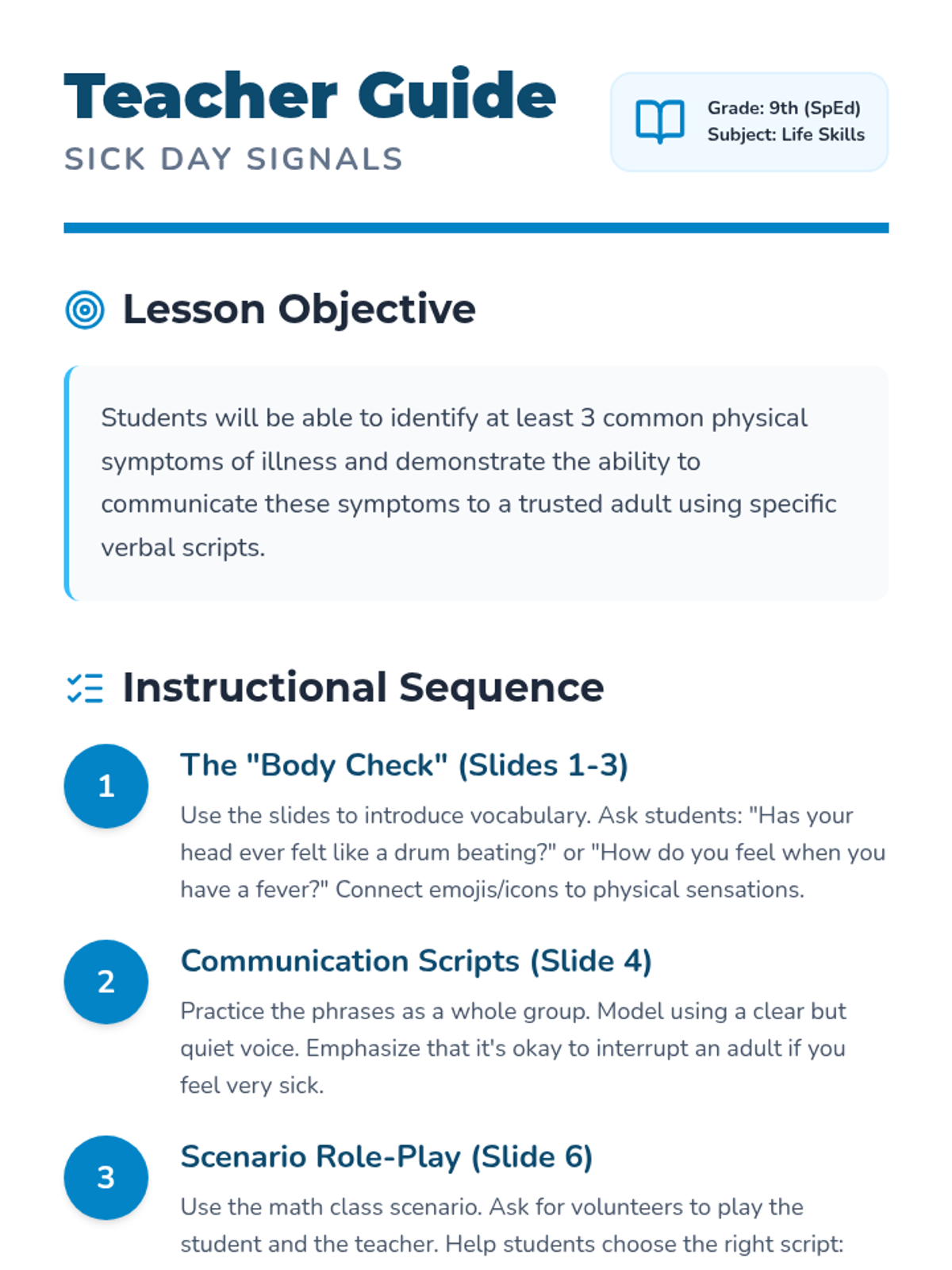
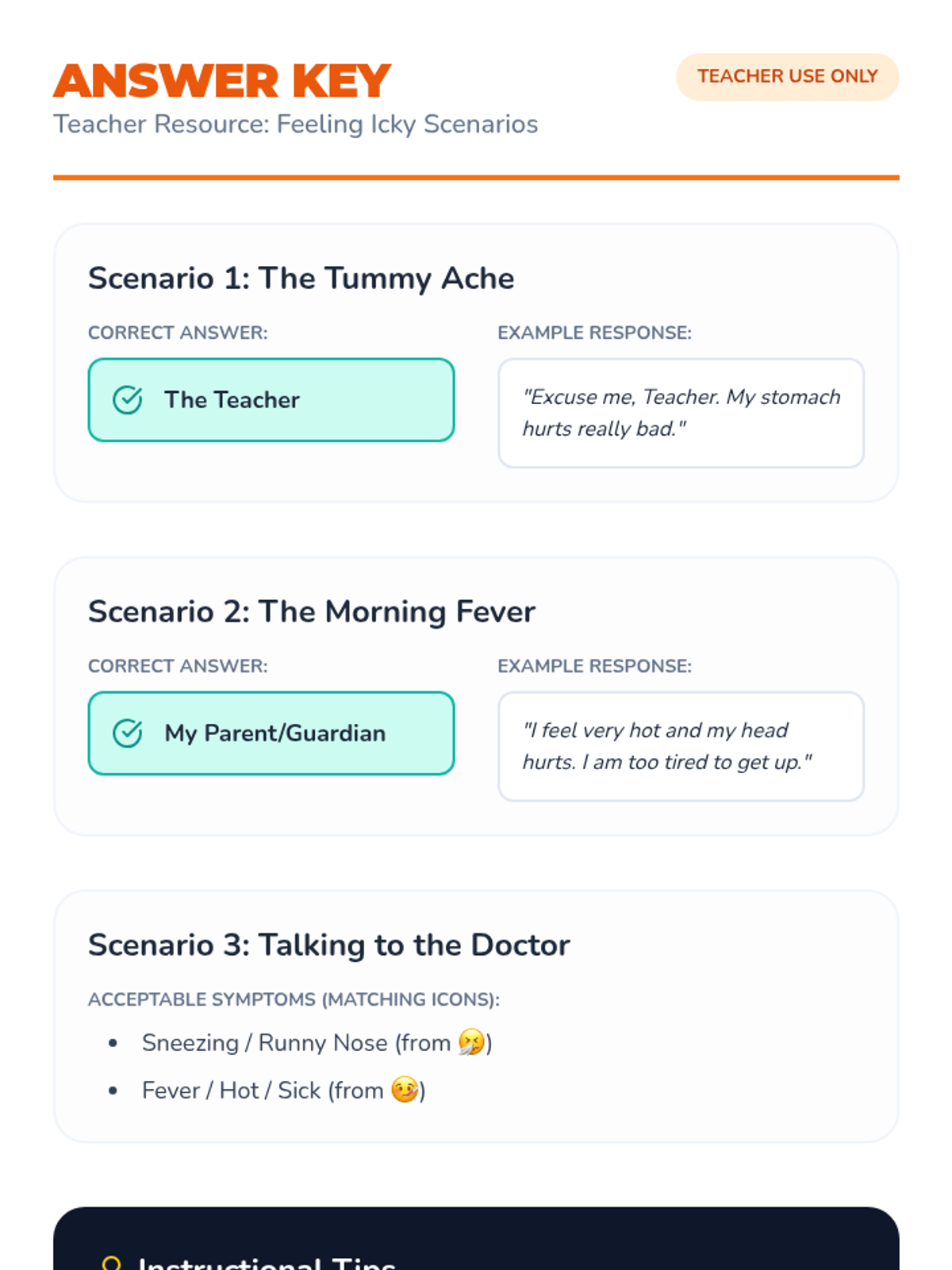
This lesson helps students identify physical symptoms of illness and practice communicating how they feel to trusted adults. Students will learn specific phrases to use and practice matching symptoms with appropriate actions.
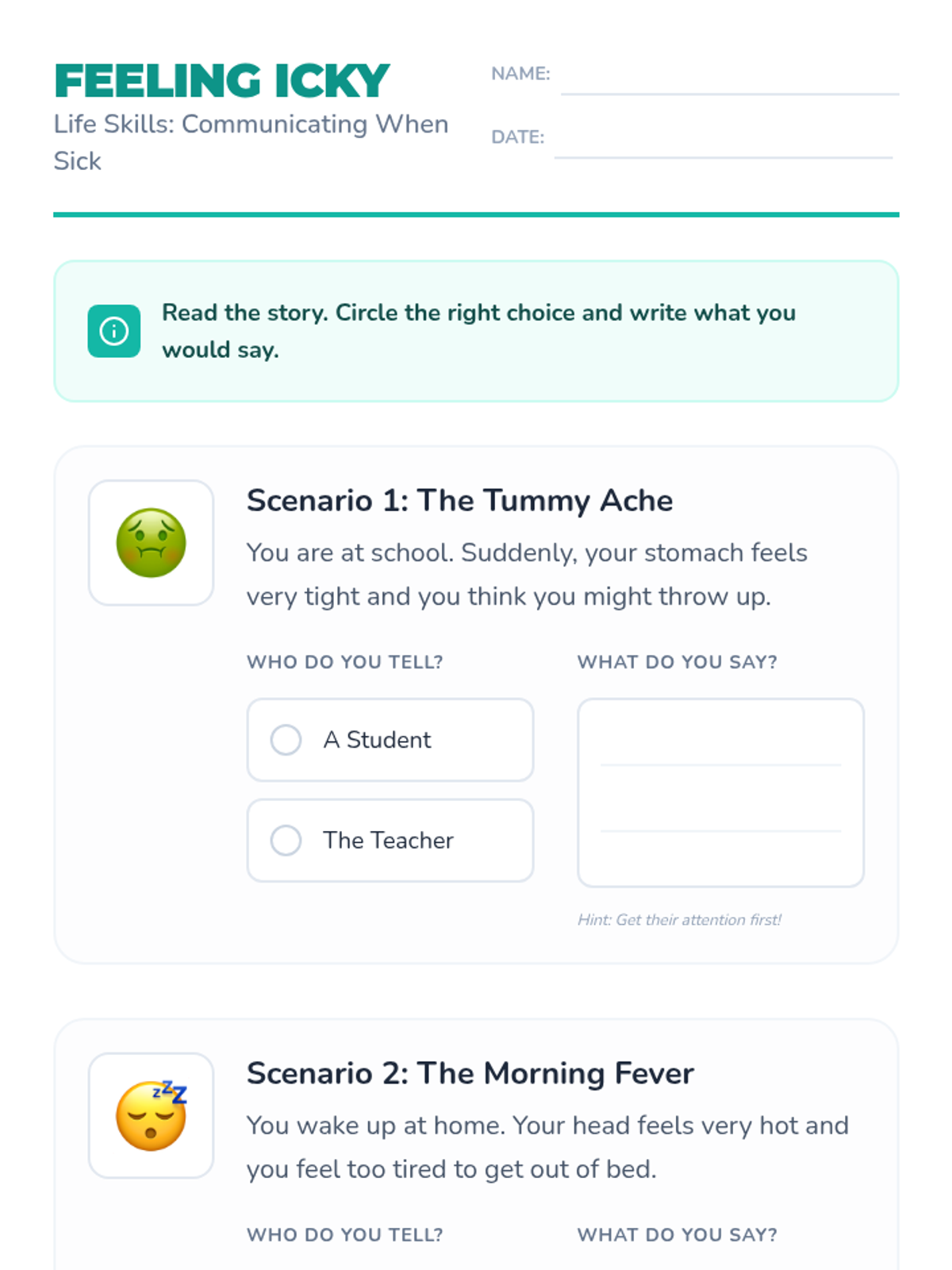
A life skills lesson designed for special education students to identify symptoms of illness and practice communicating how they feel to trusted adults. The lesson uses clear visuals and simple scenarios to build independence in healthcare communication.
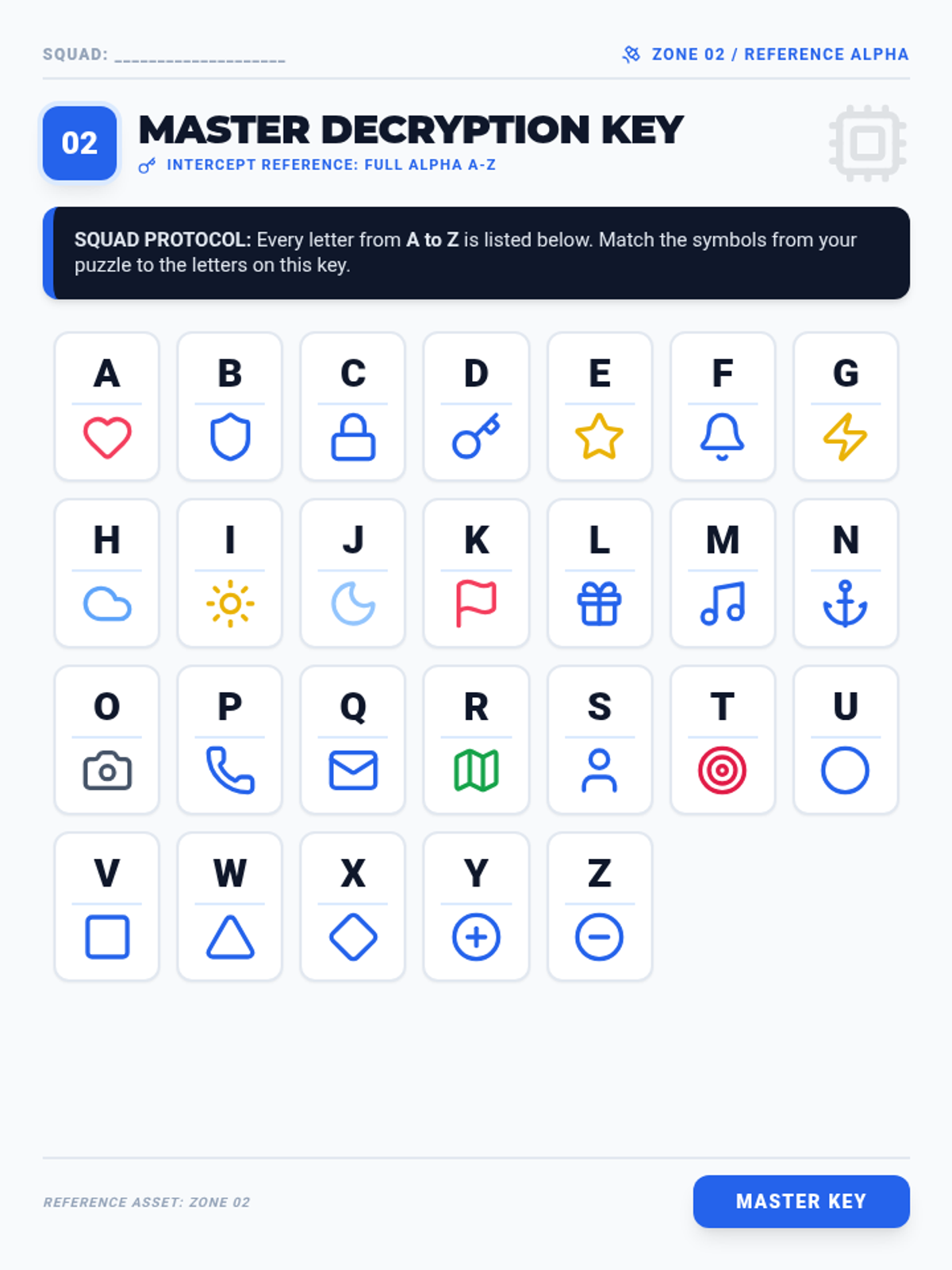
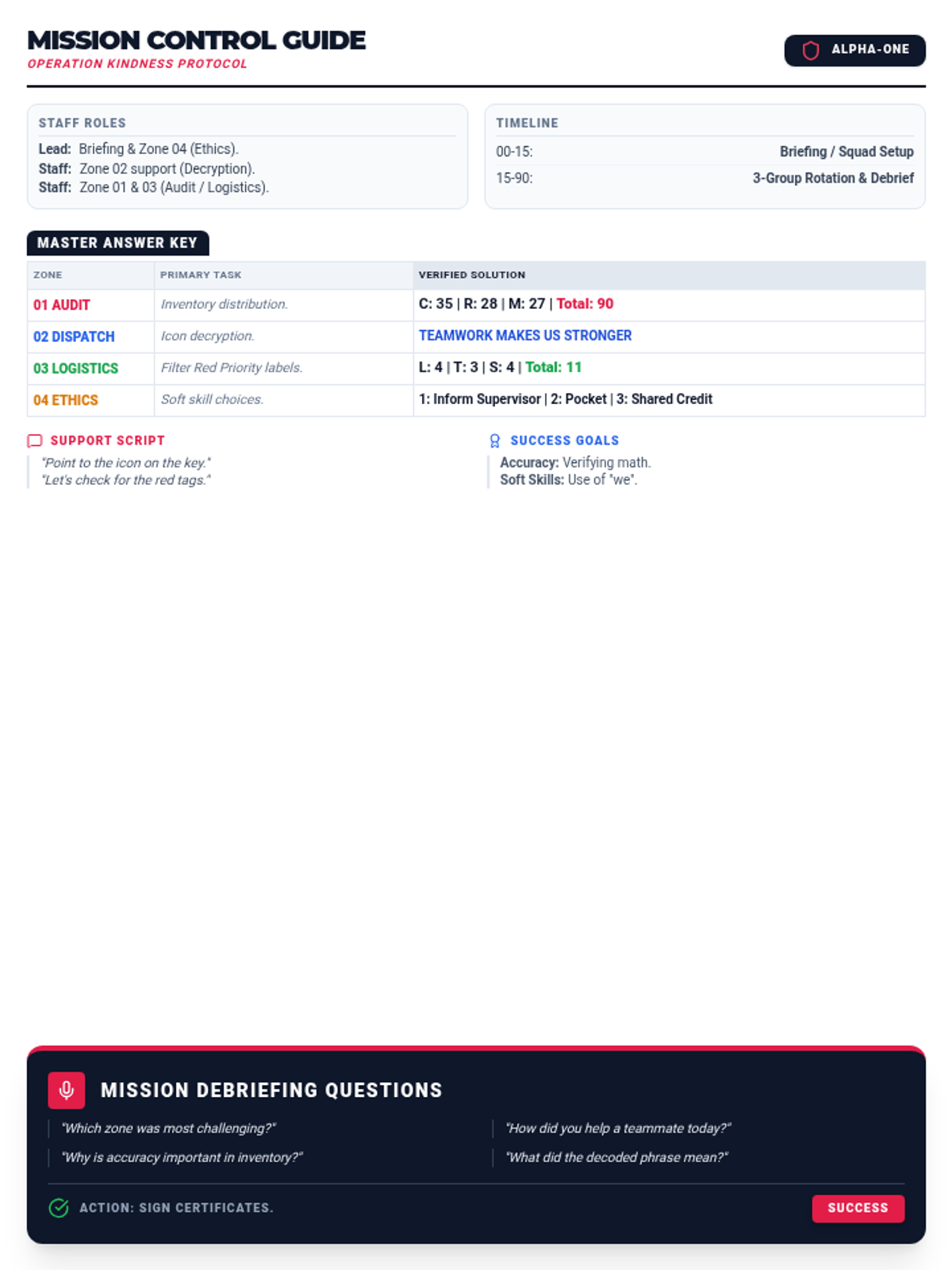
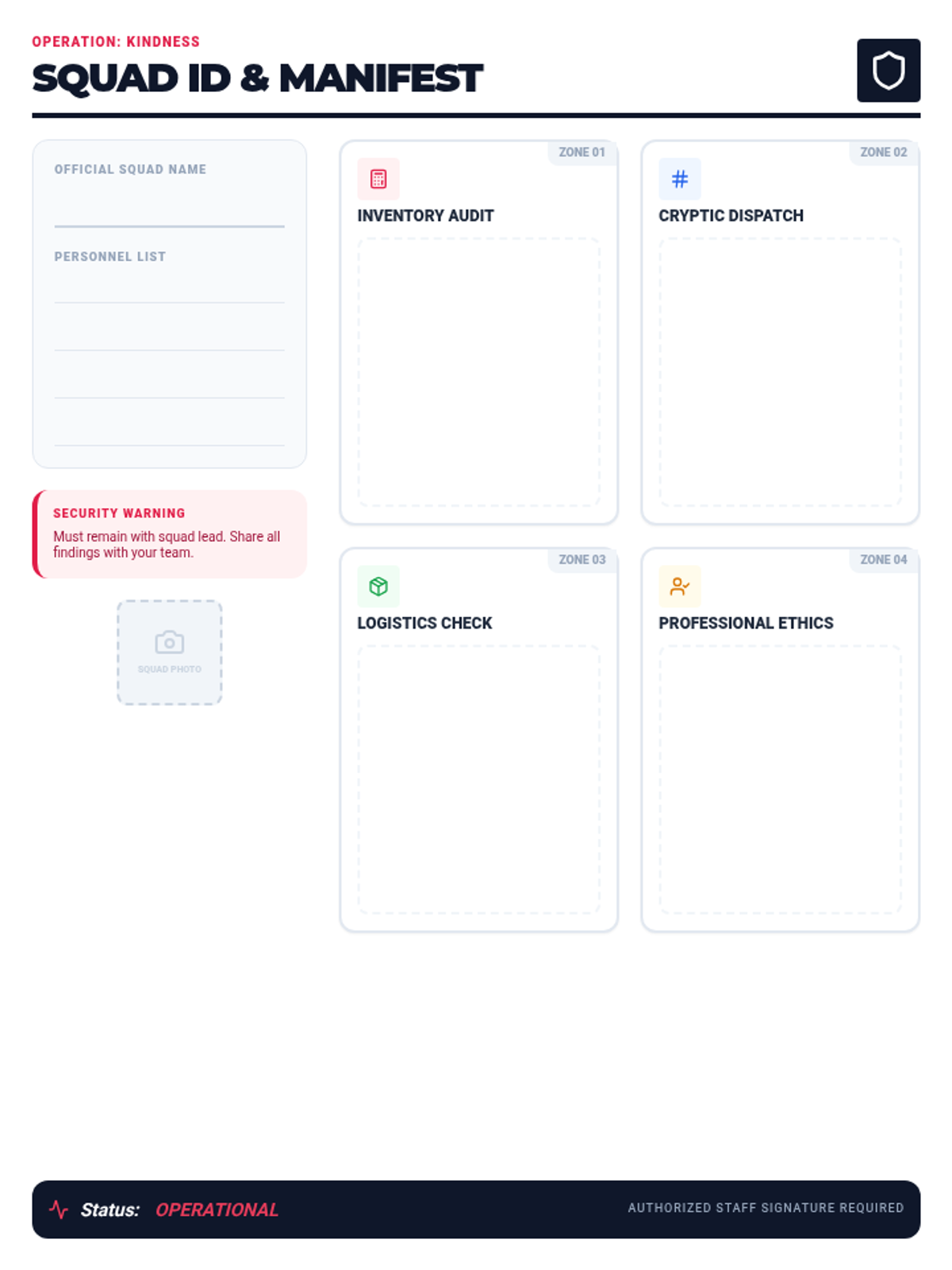
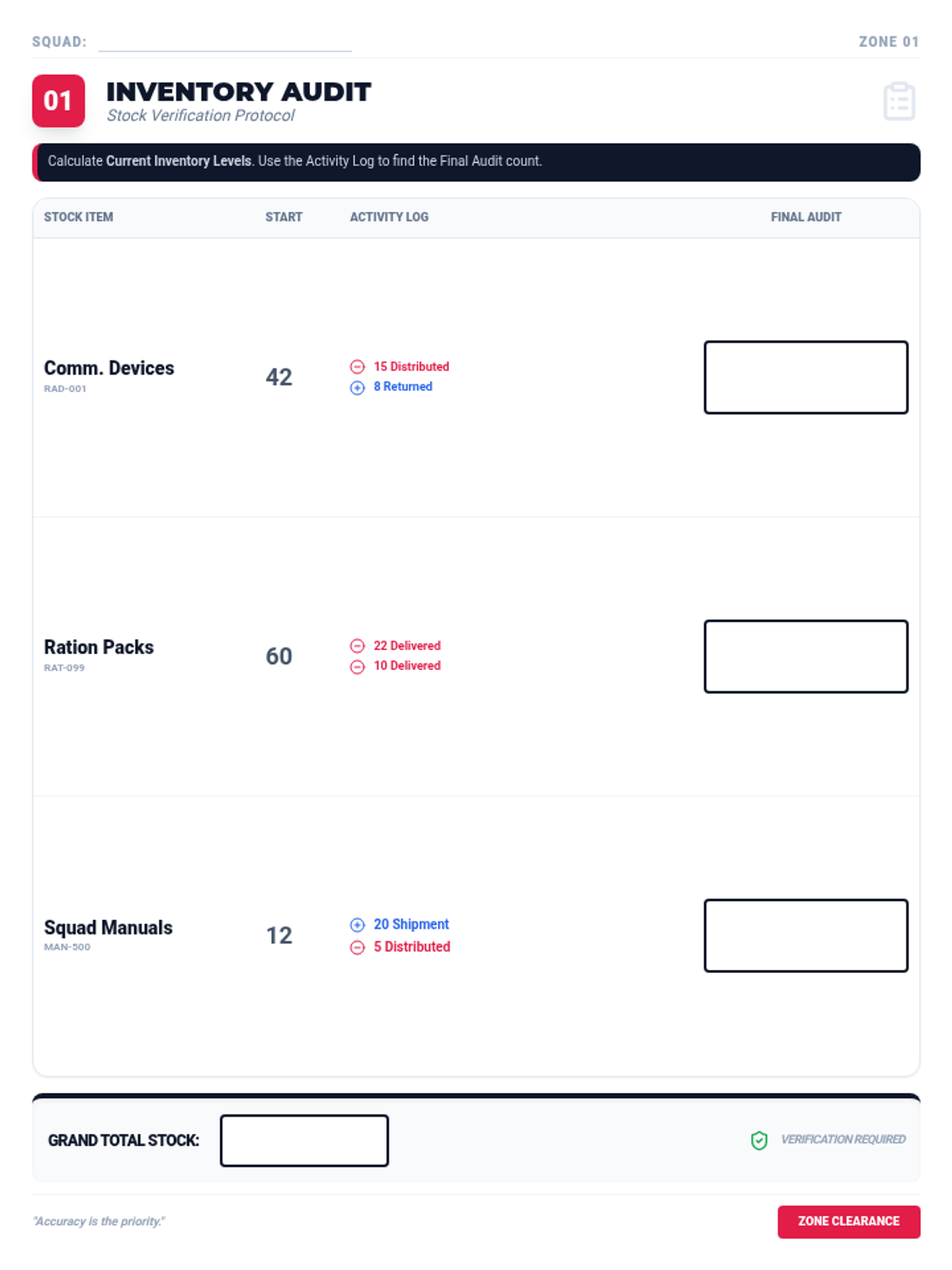
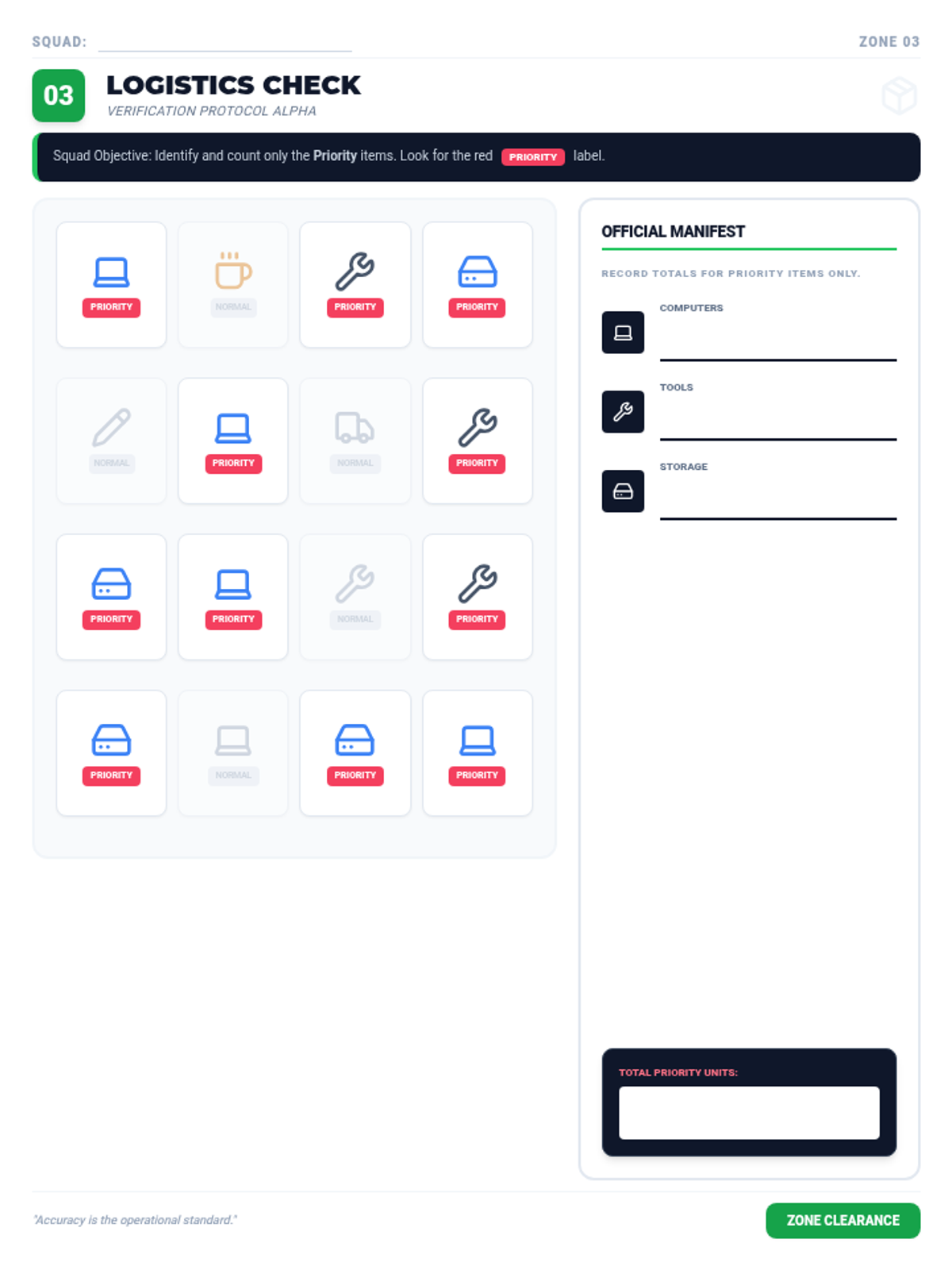
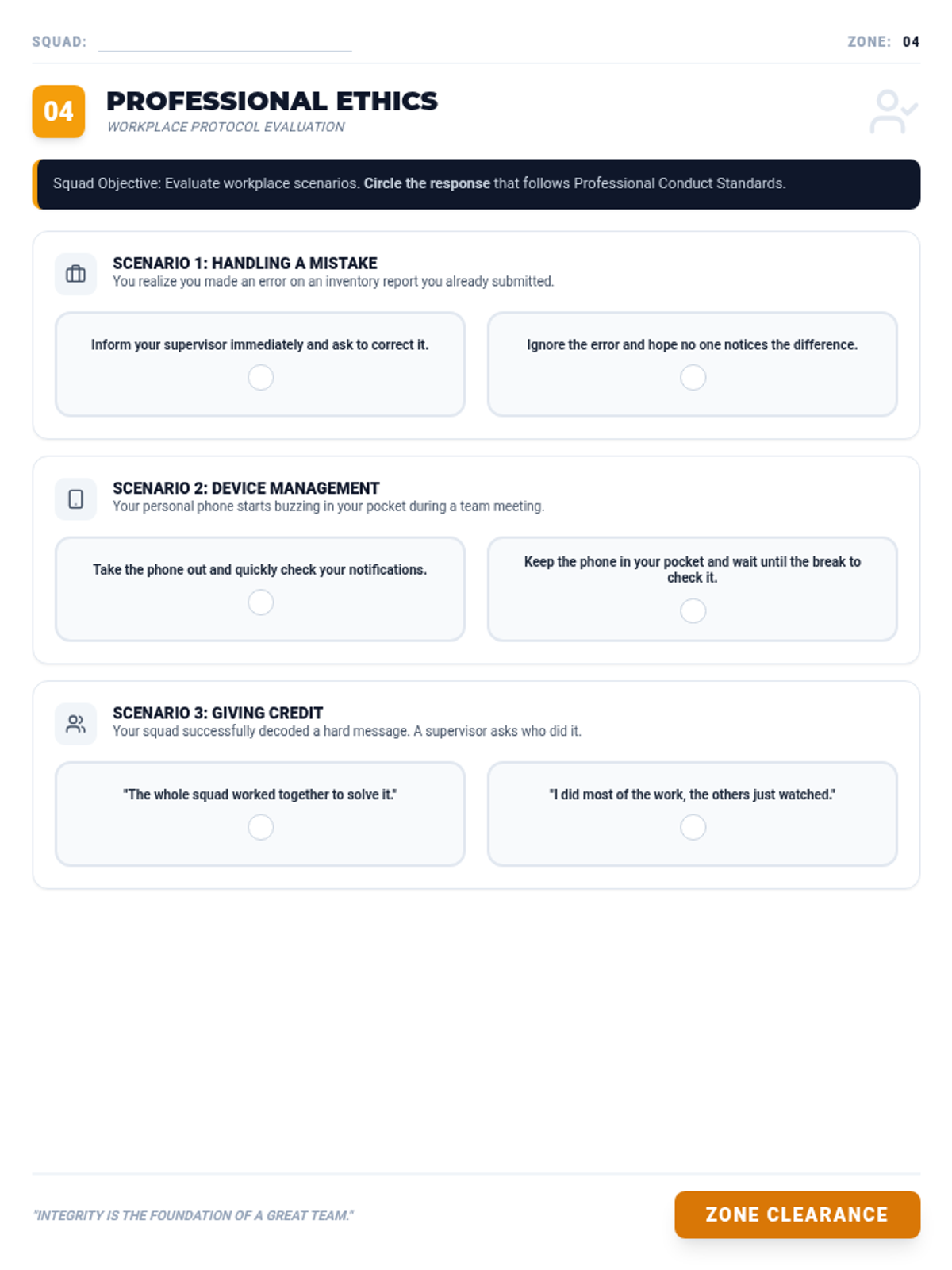
A lighthearted, collaborative escape room experience focused on teamwork, basic math, and social skills for adult special education students. Students work in groups to solve puzzles in four themed 'rooms' to celebrate friendship and kindness.
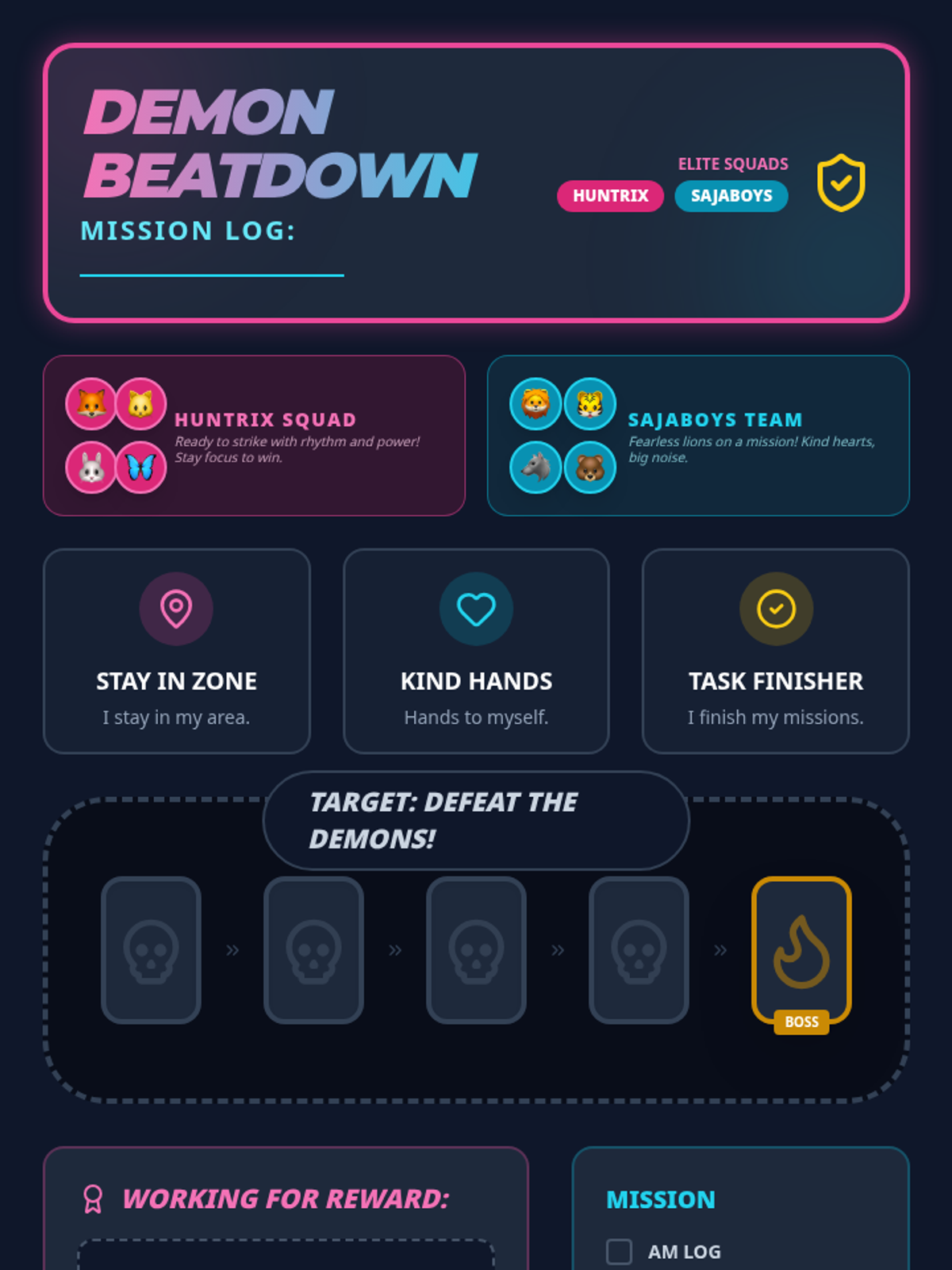
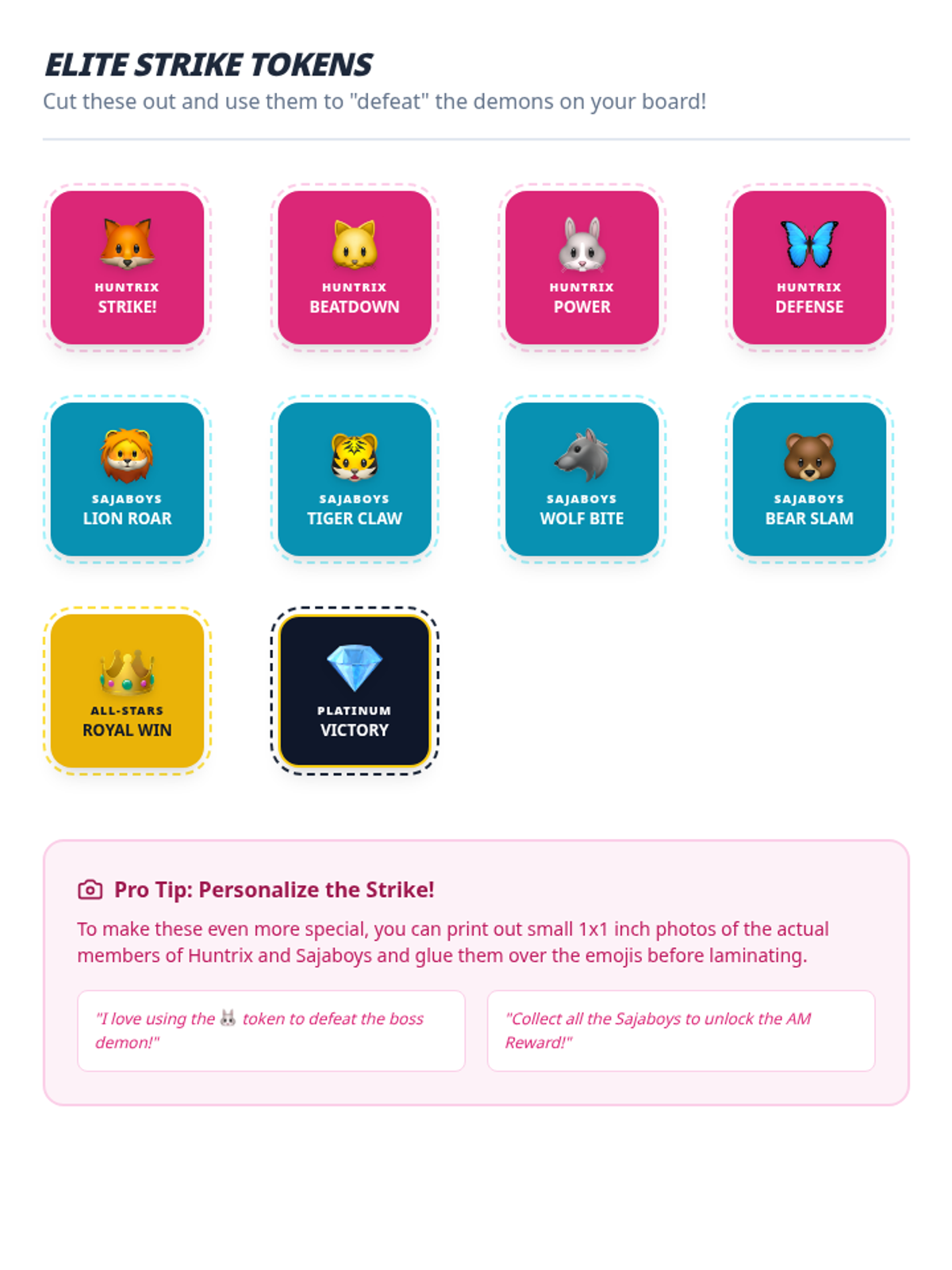
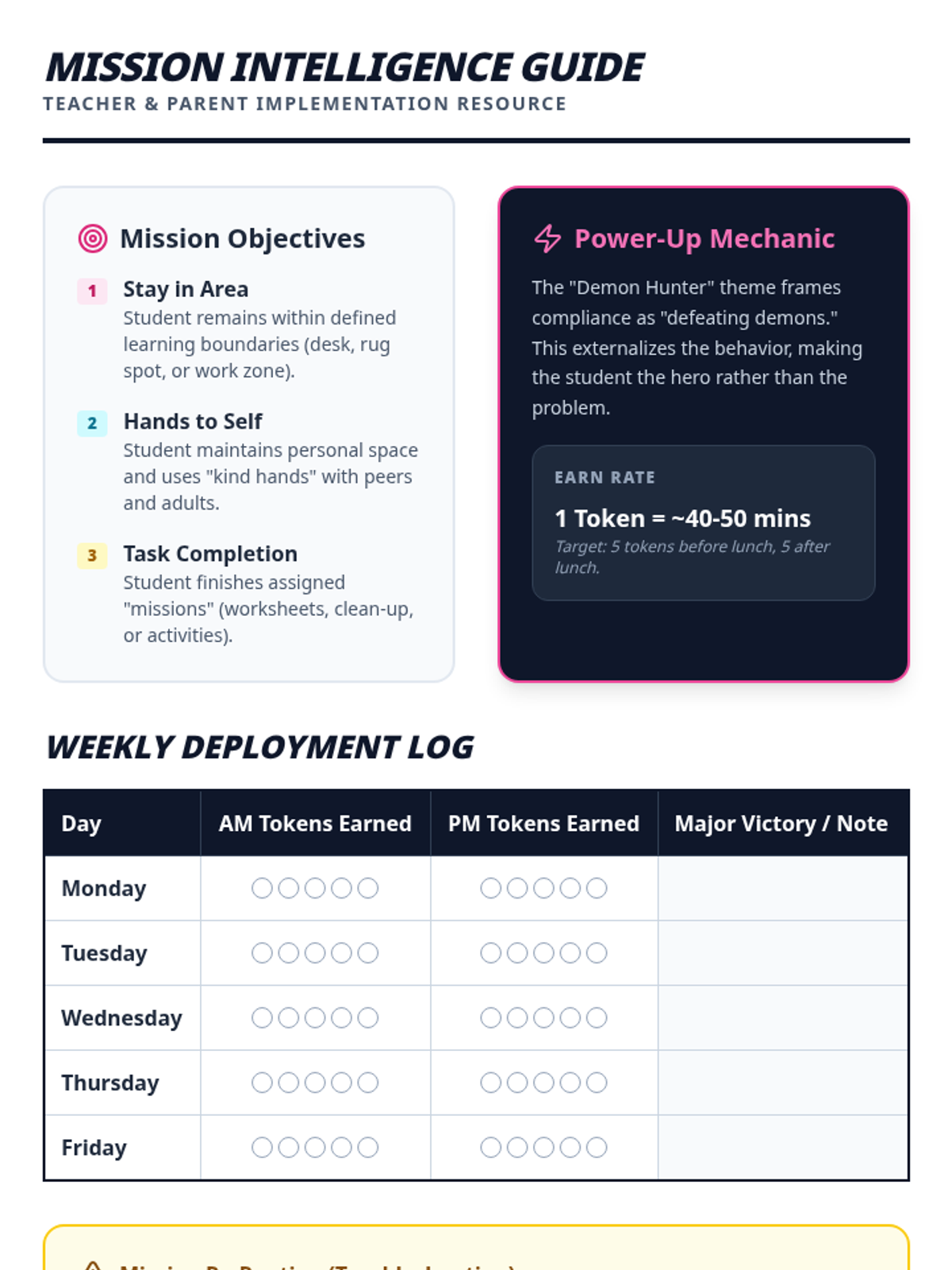
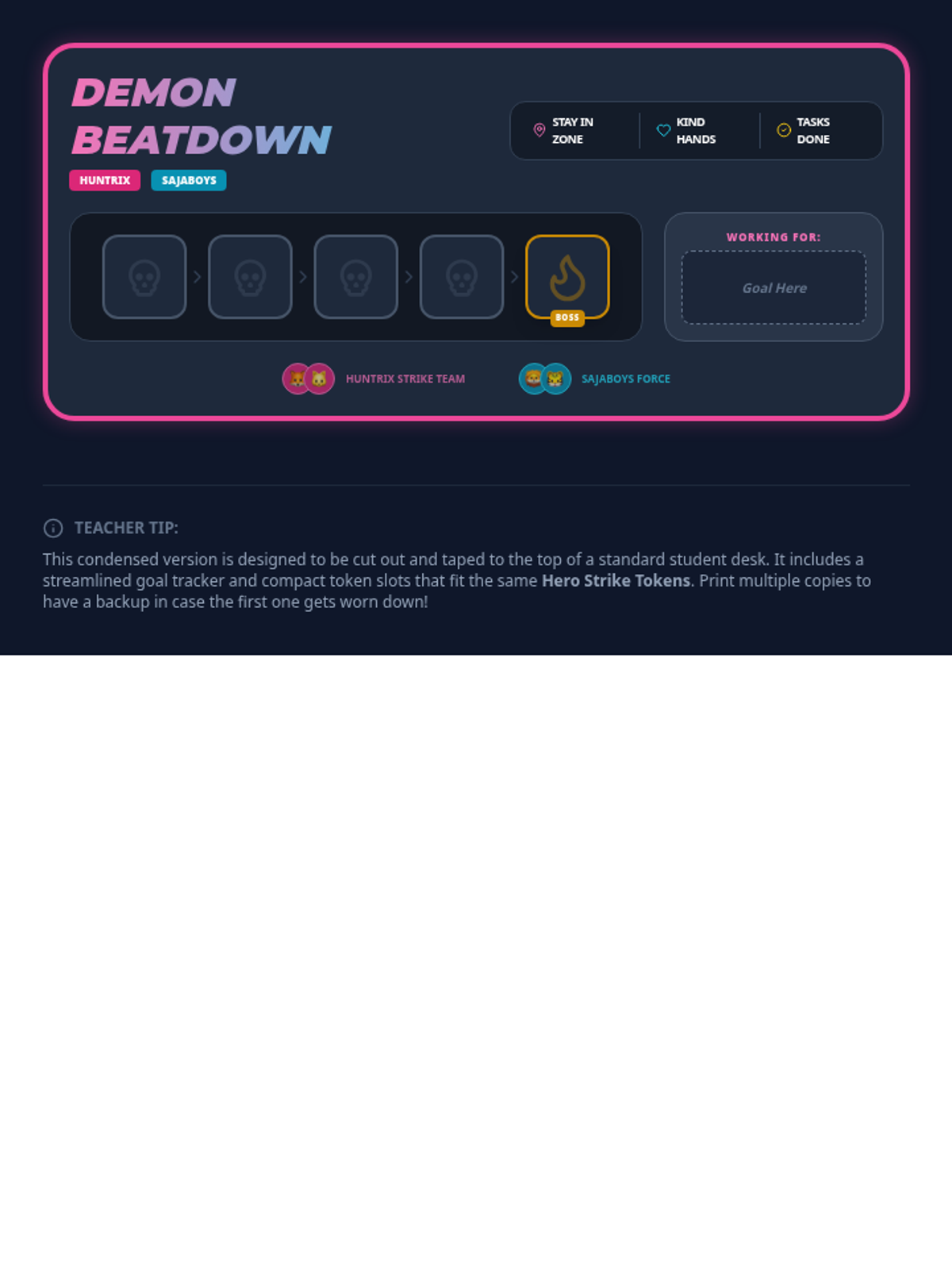
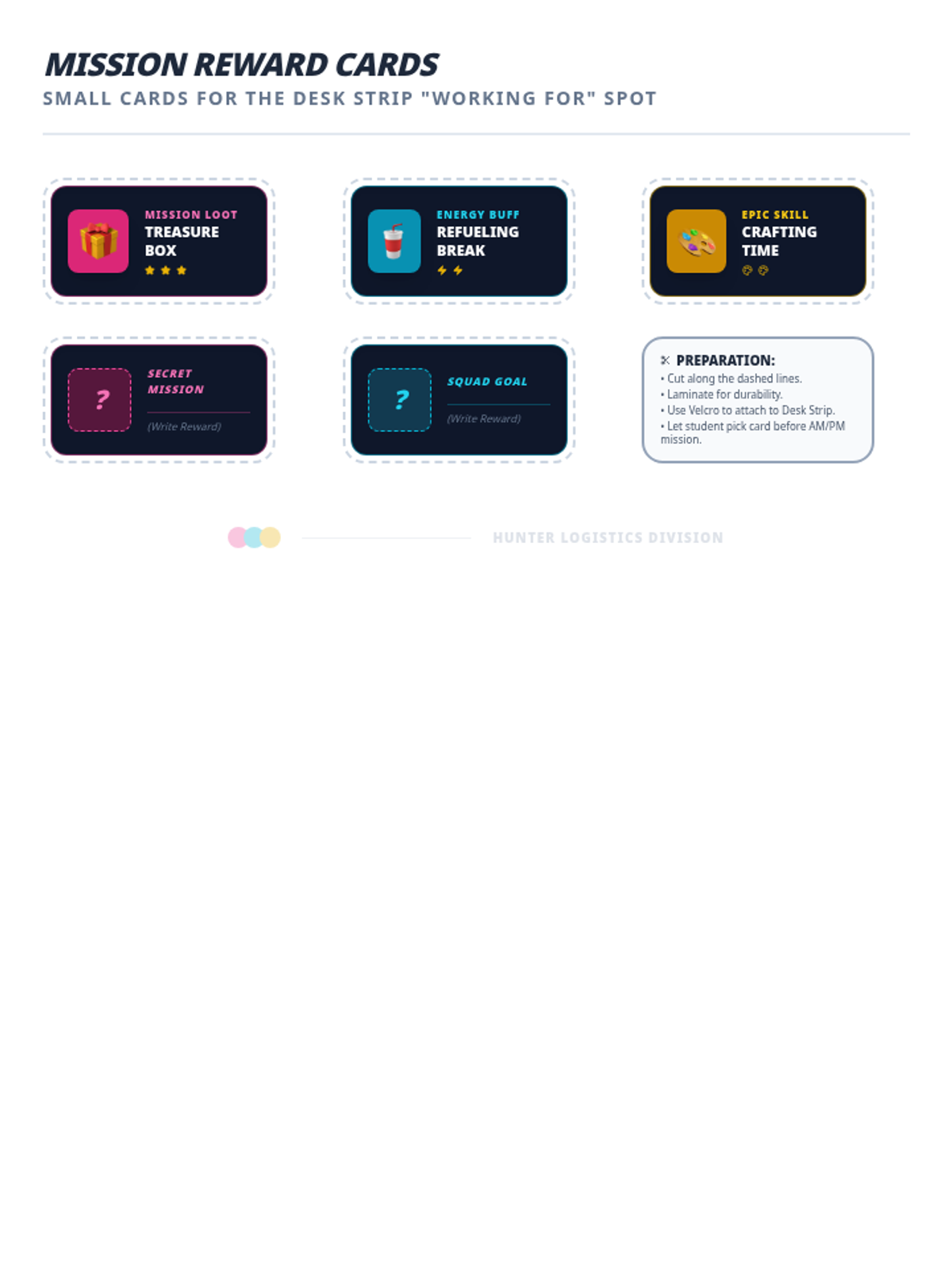
A specialized token economy system for a first-grade student featuring K-pop characters Huntrix and Sajaboys. The system focuses on three behavioral goals: staying in area, keeping hands to self, and completing tasks, with a "defeat the demons" mechanic for engagement.
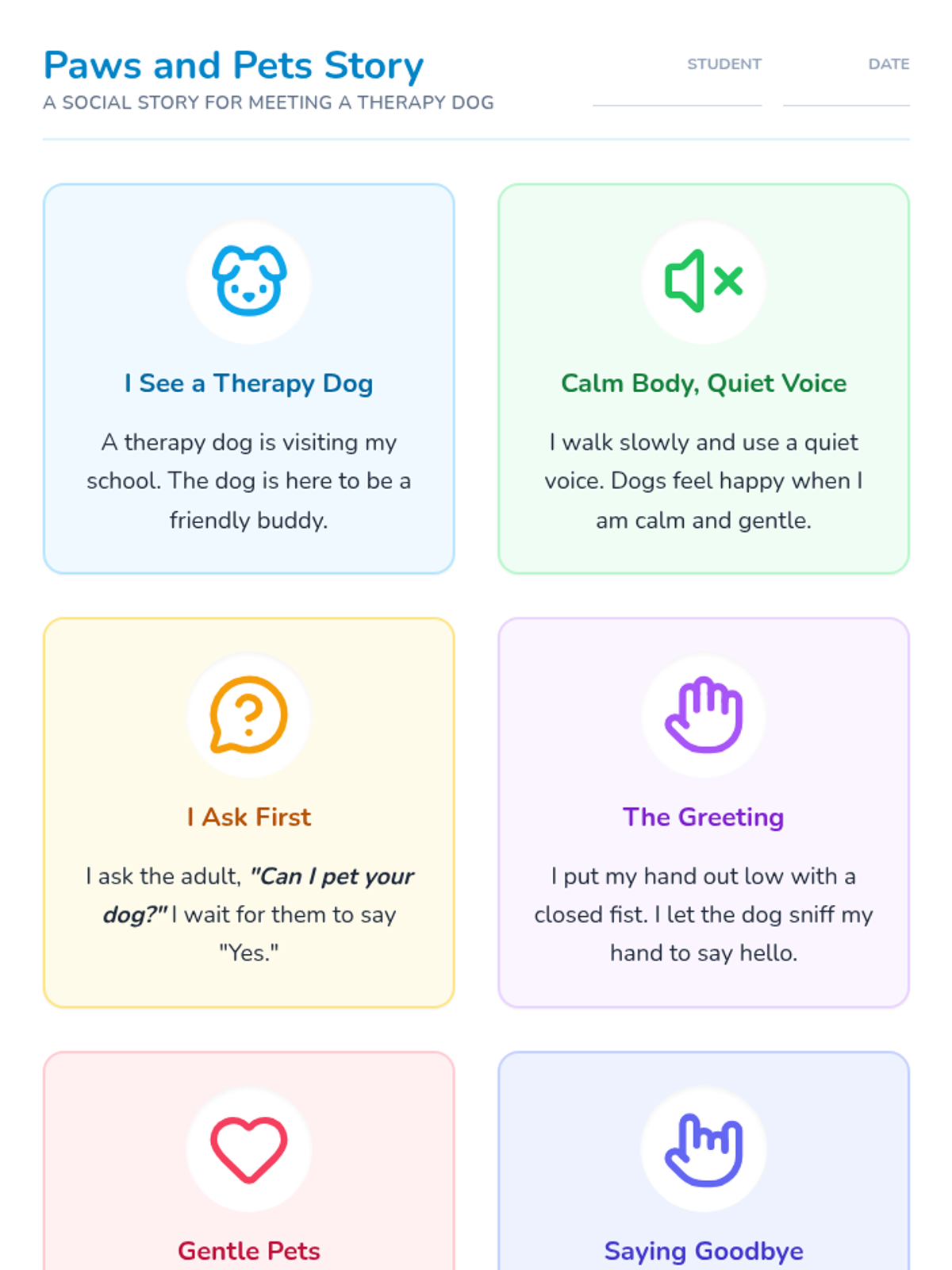
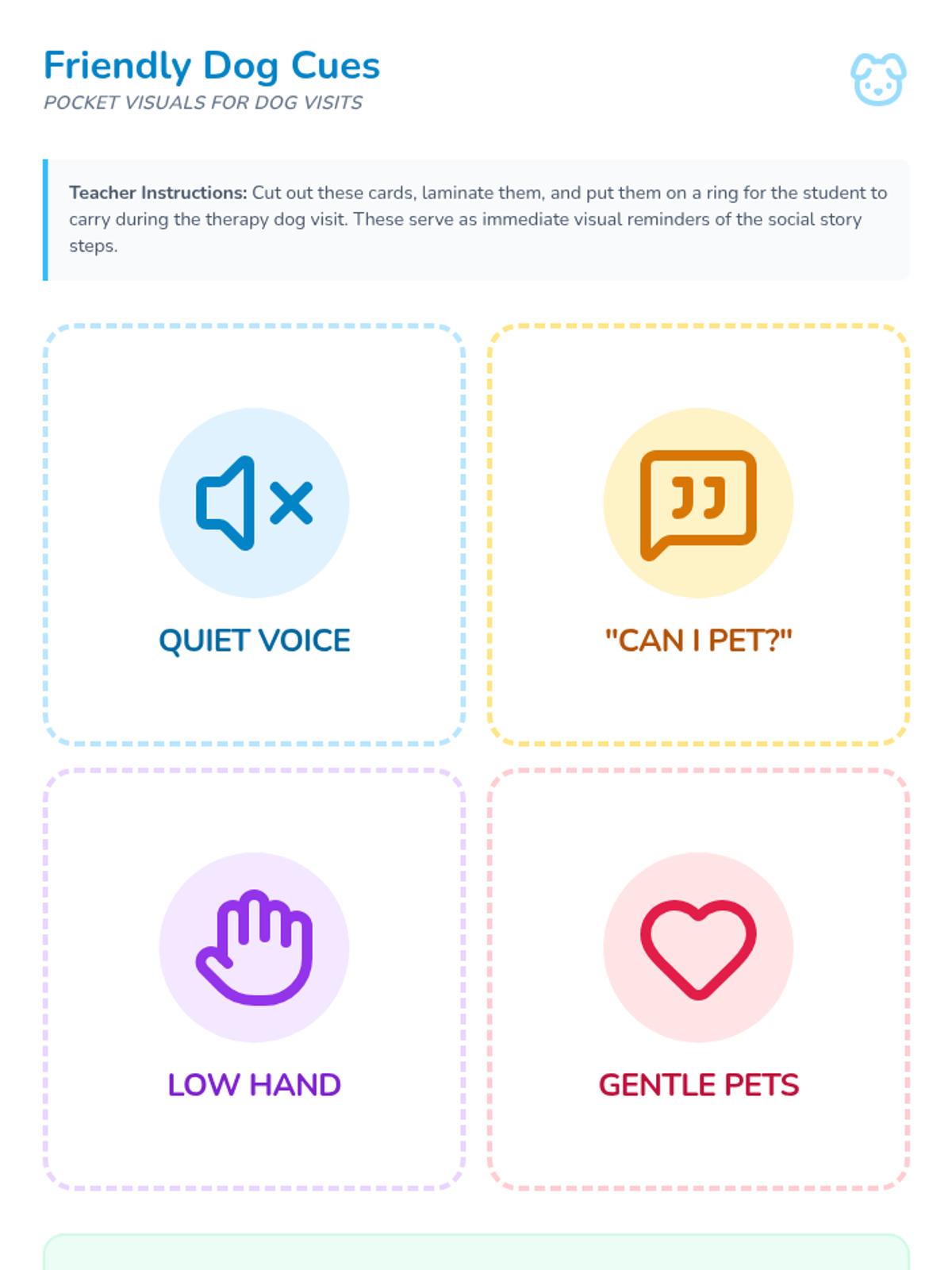
A lesson designed to help students with special needs understand the social expectations and physical steps for meeting and petting a therapy dog safely and gently.
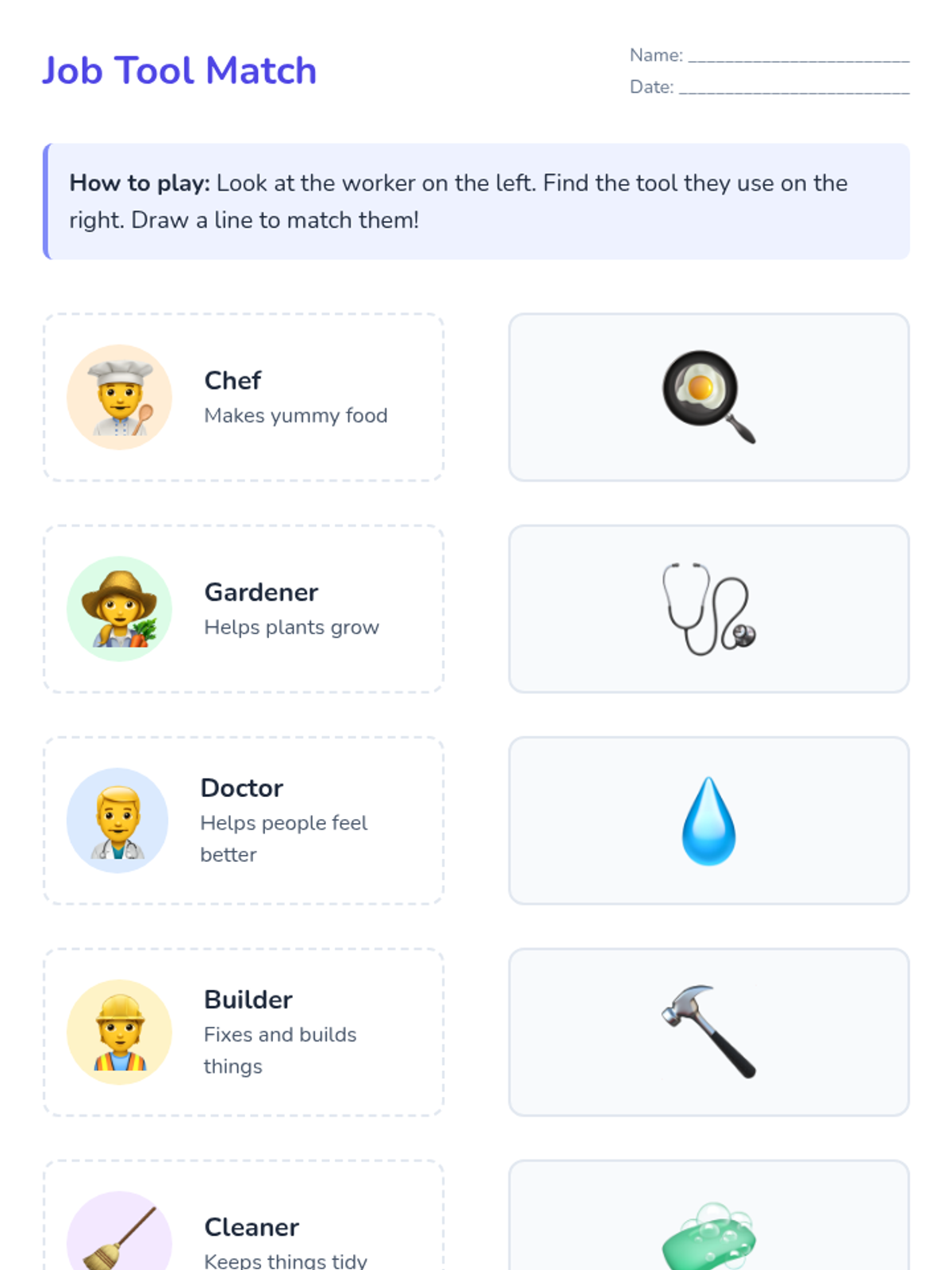
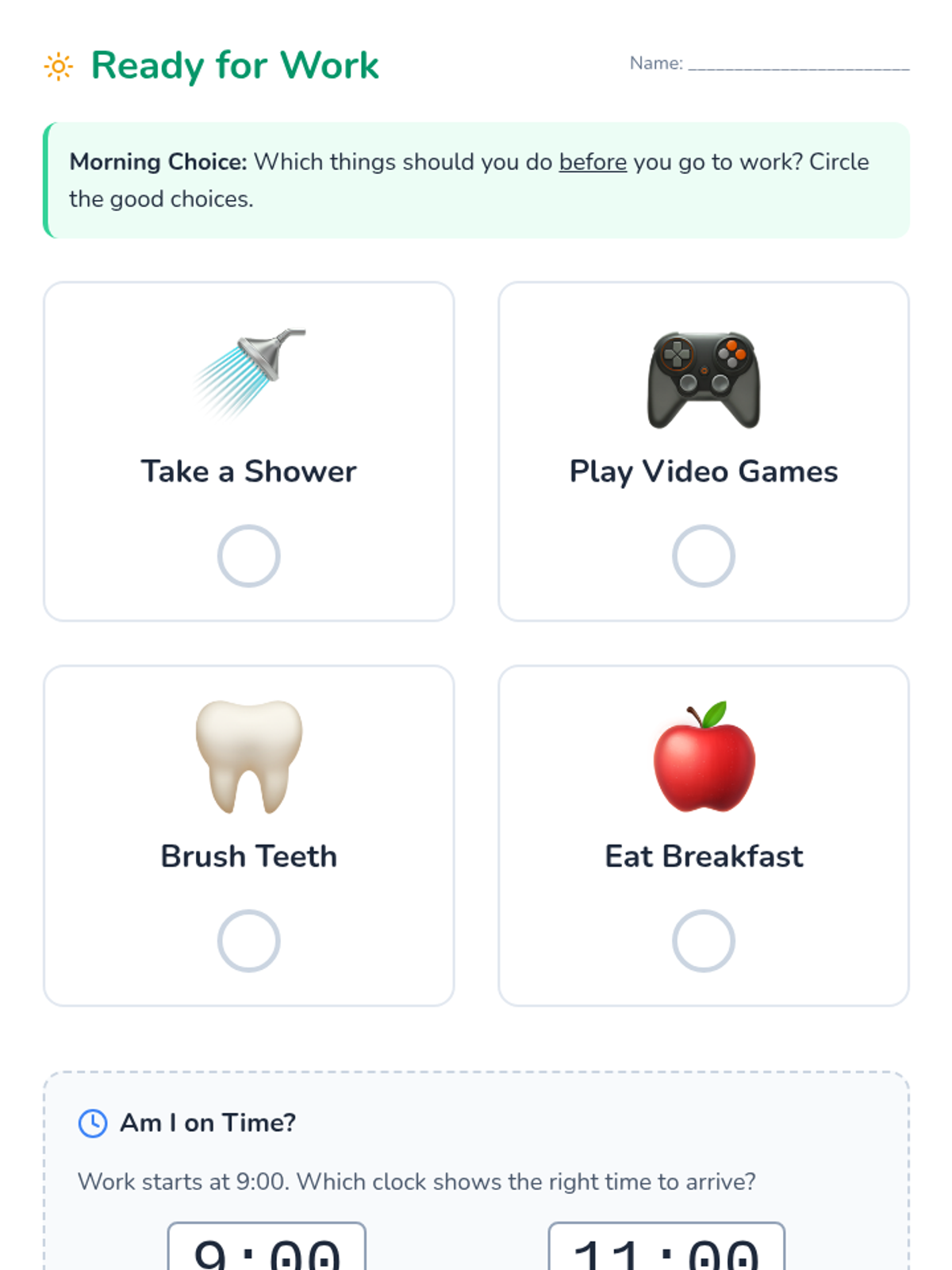
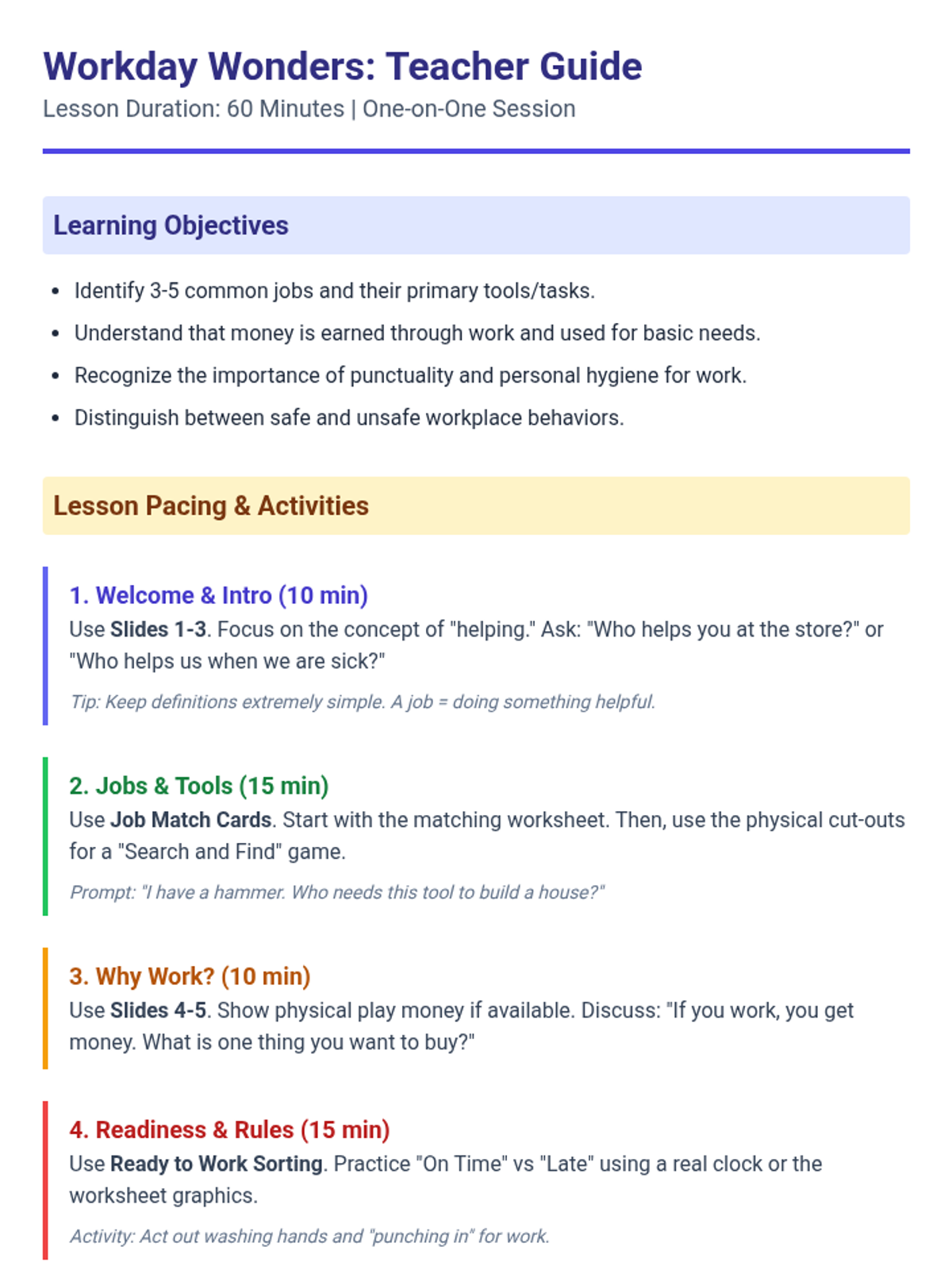
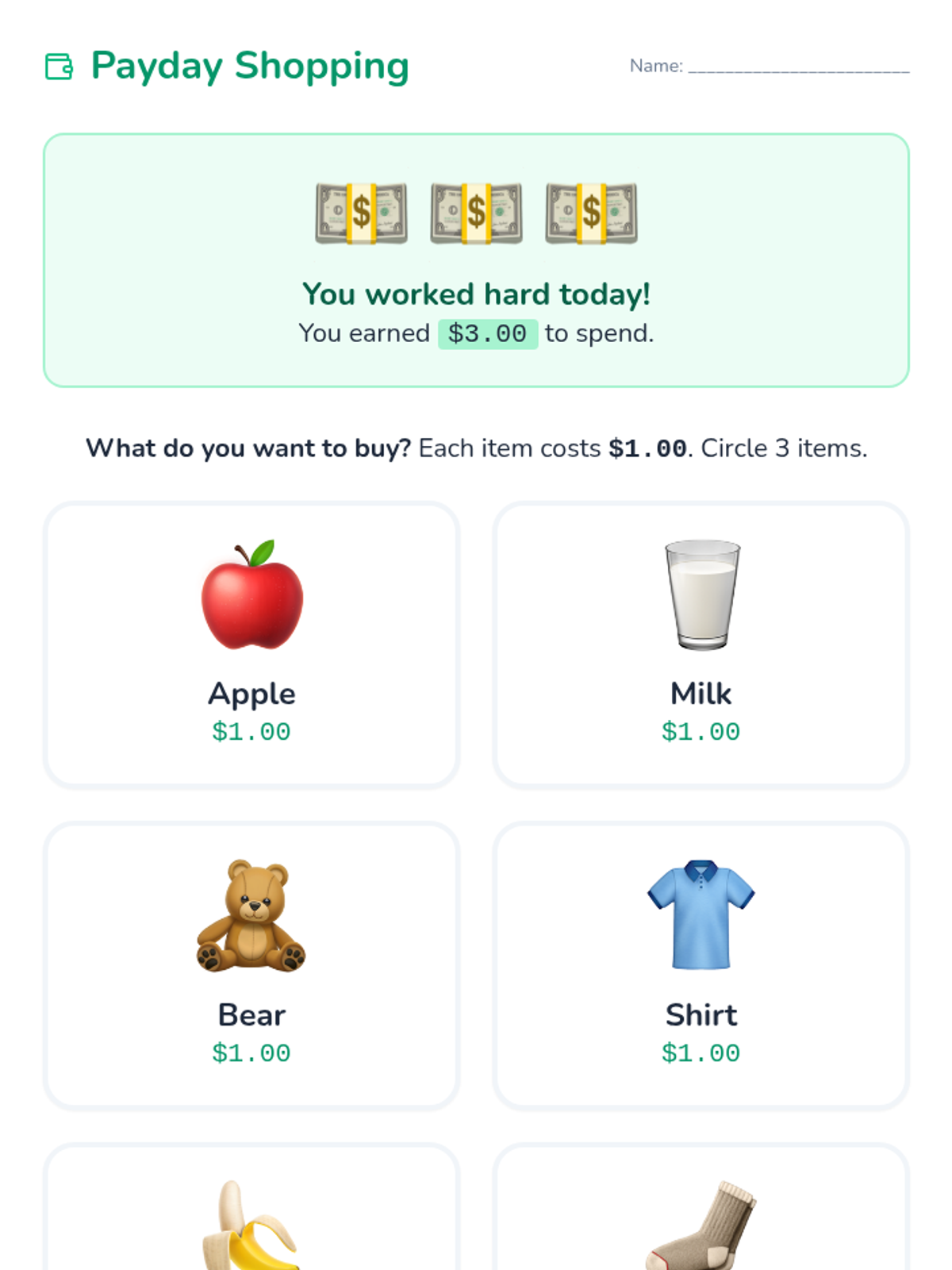
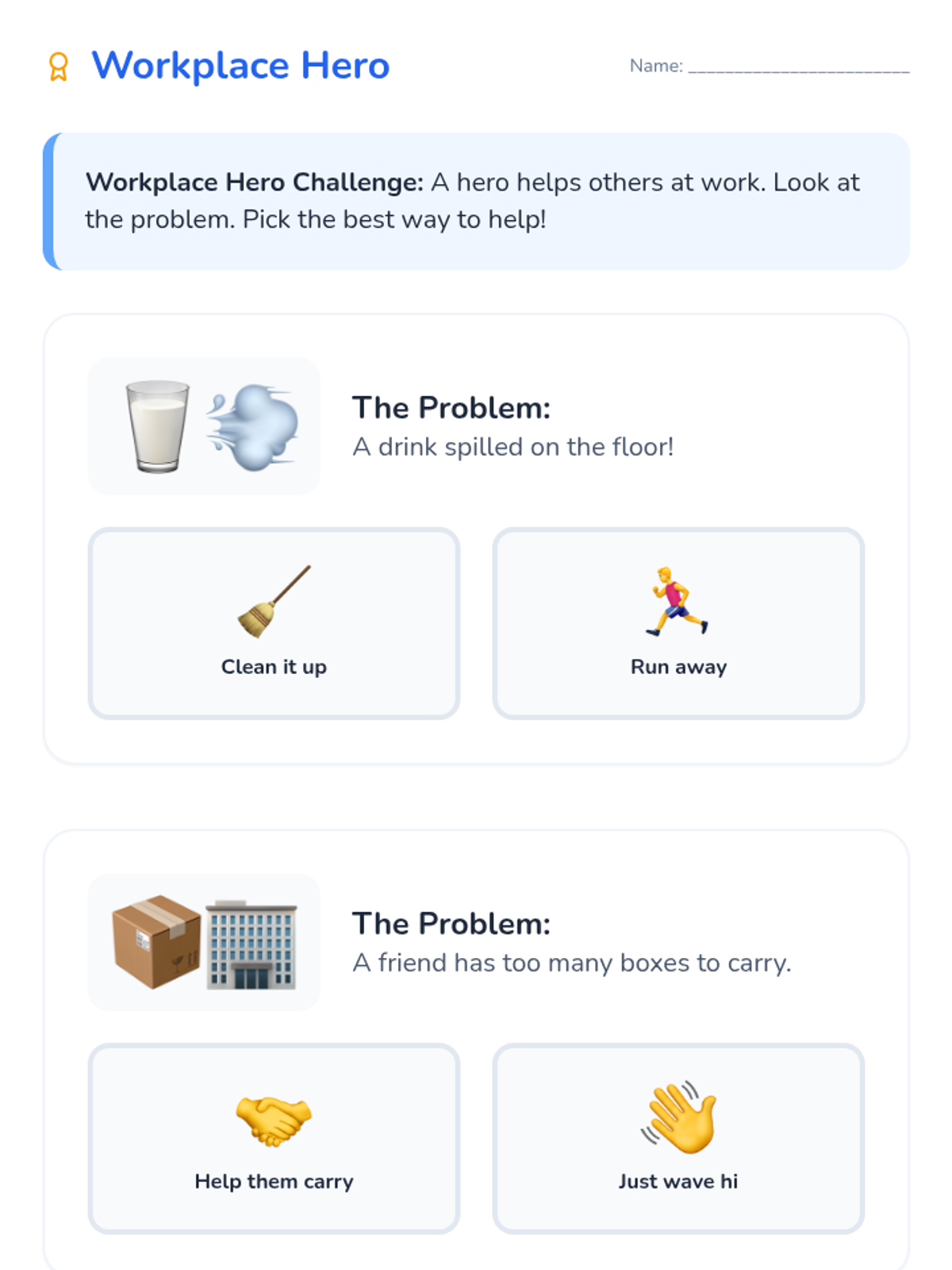
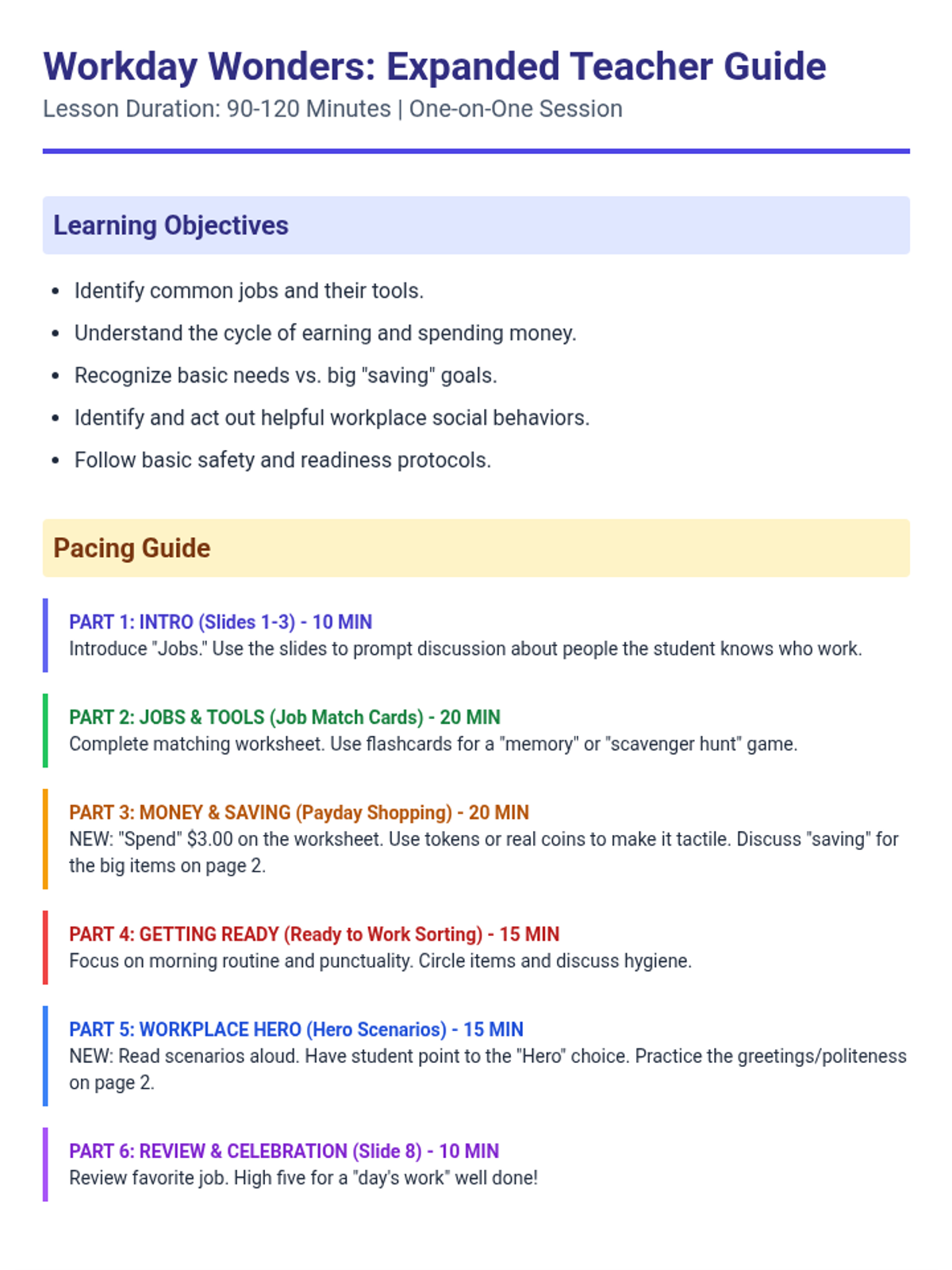
A foundational 1-hour lesson designed for adult learners with developmental disabilities at a preschool level. It covers job identification, tools, the purpose of money, and basic workplace readiness through visual and tactile activities.
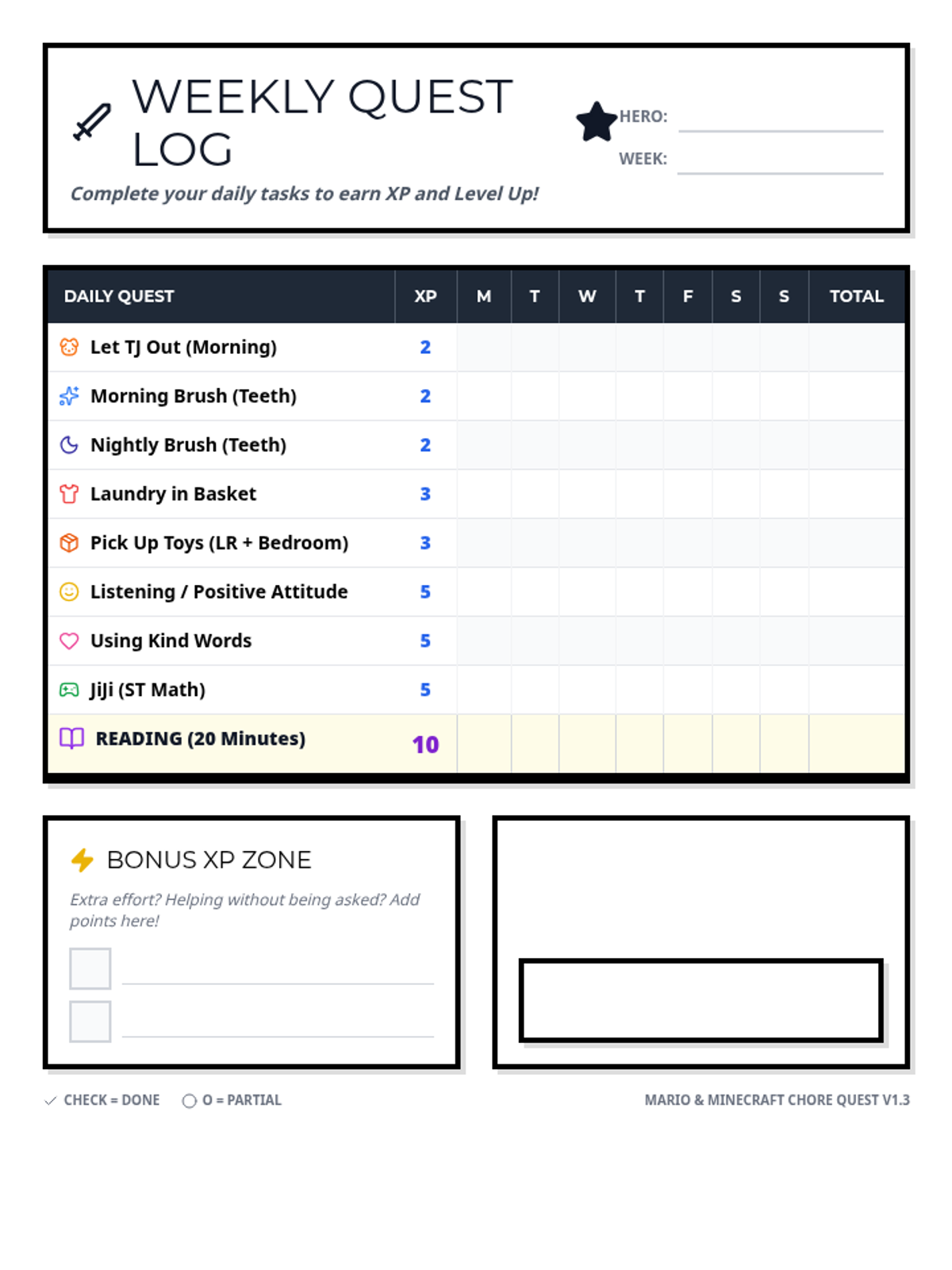
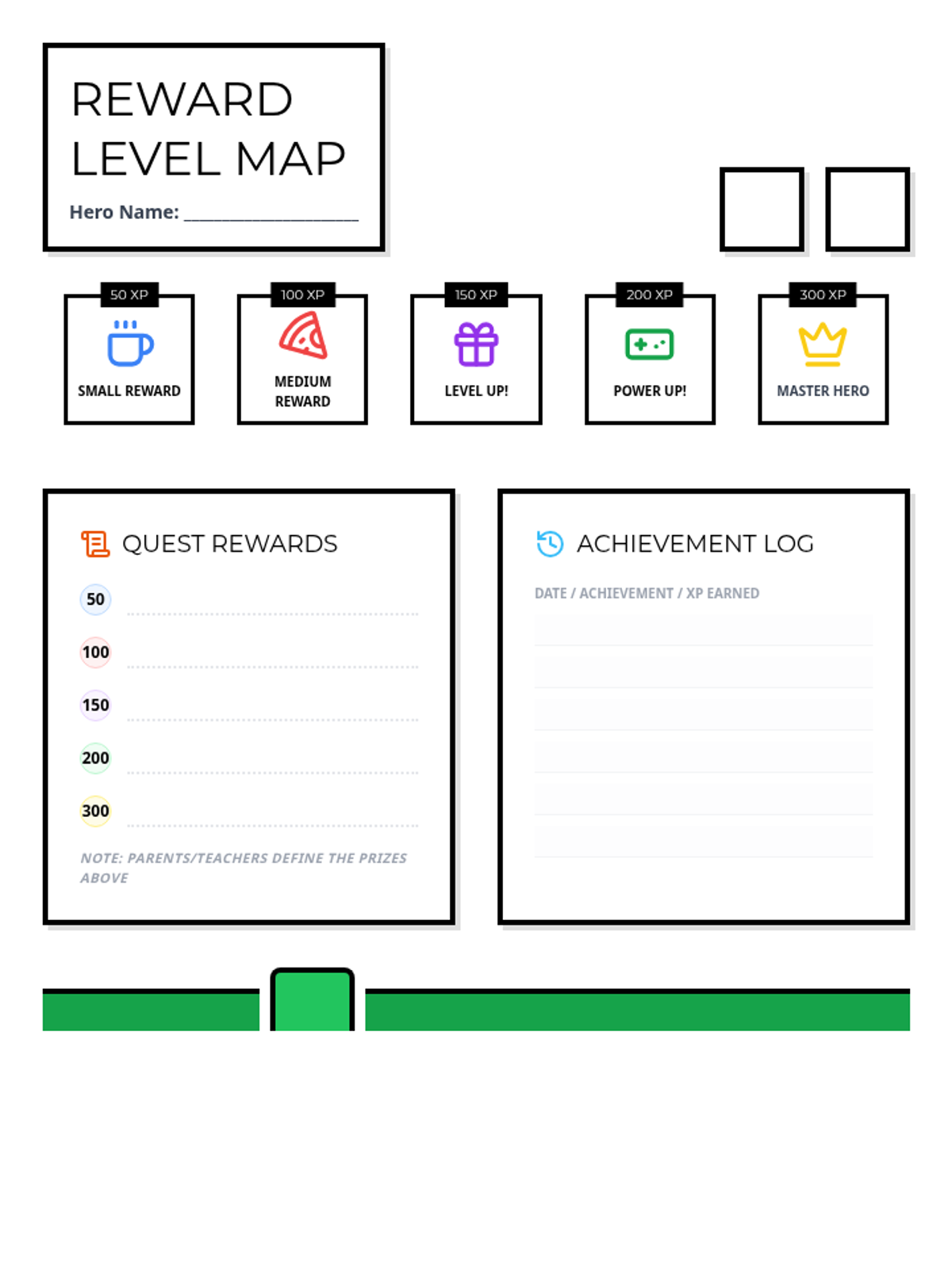
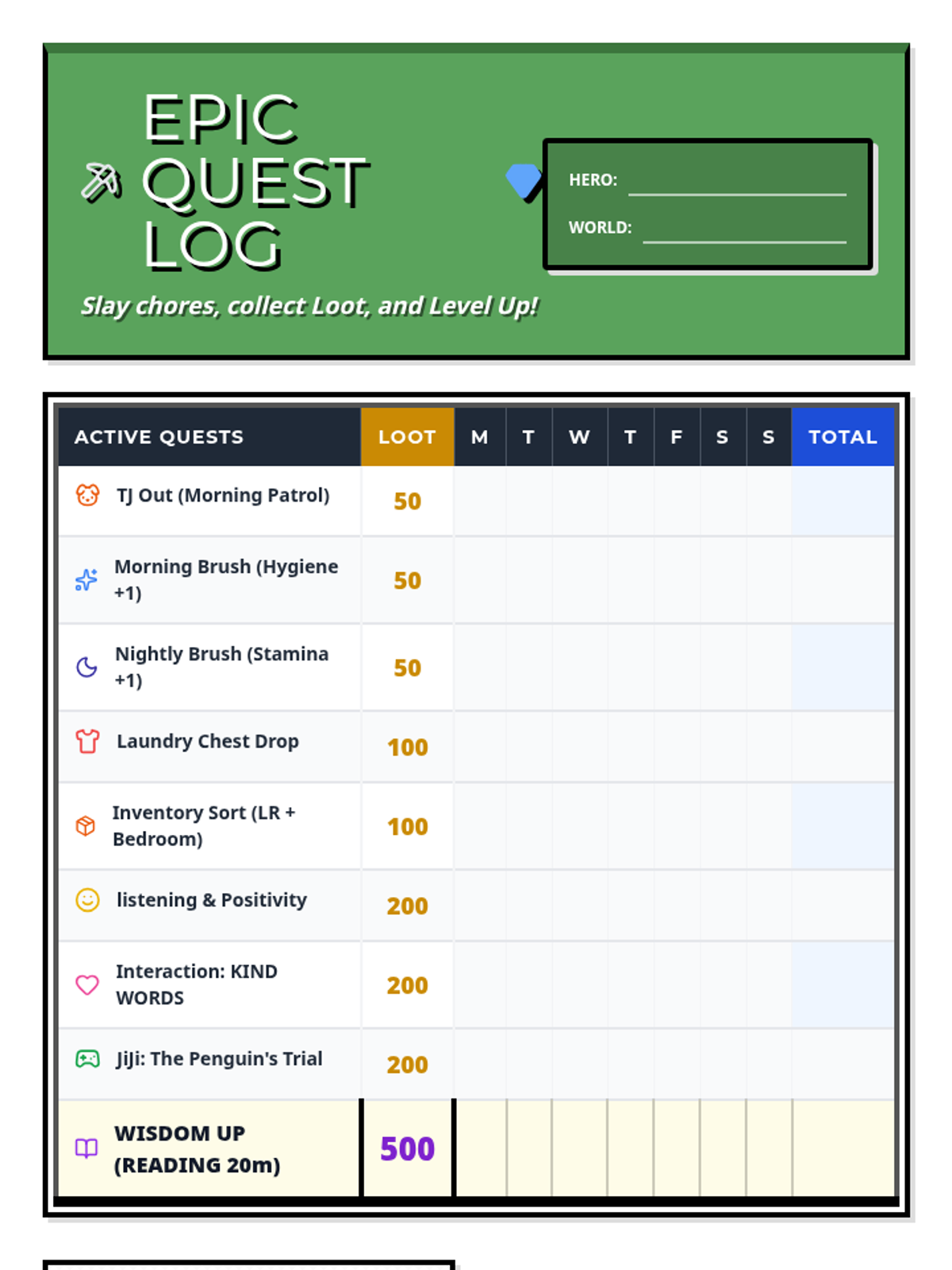
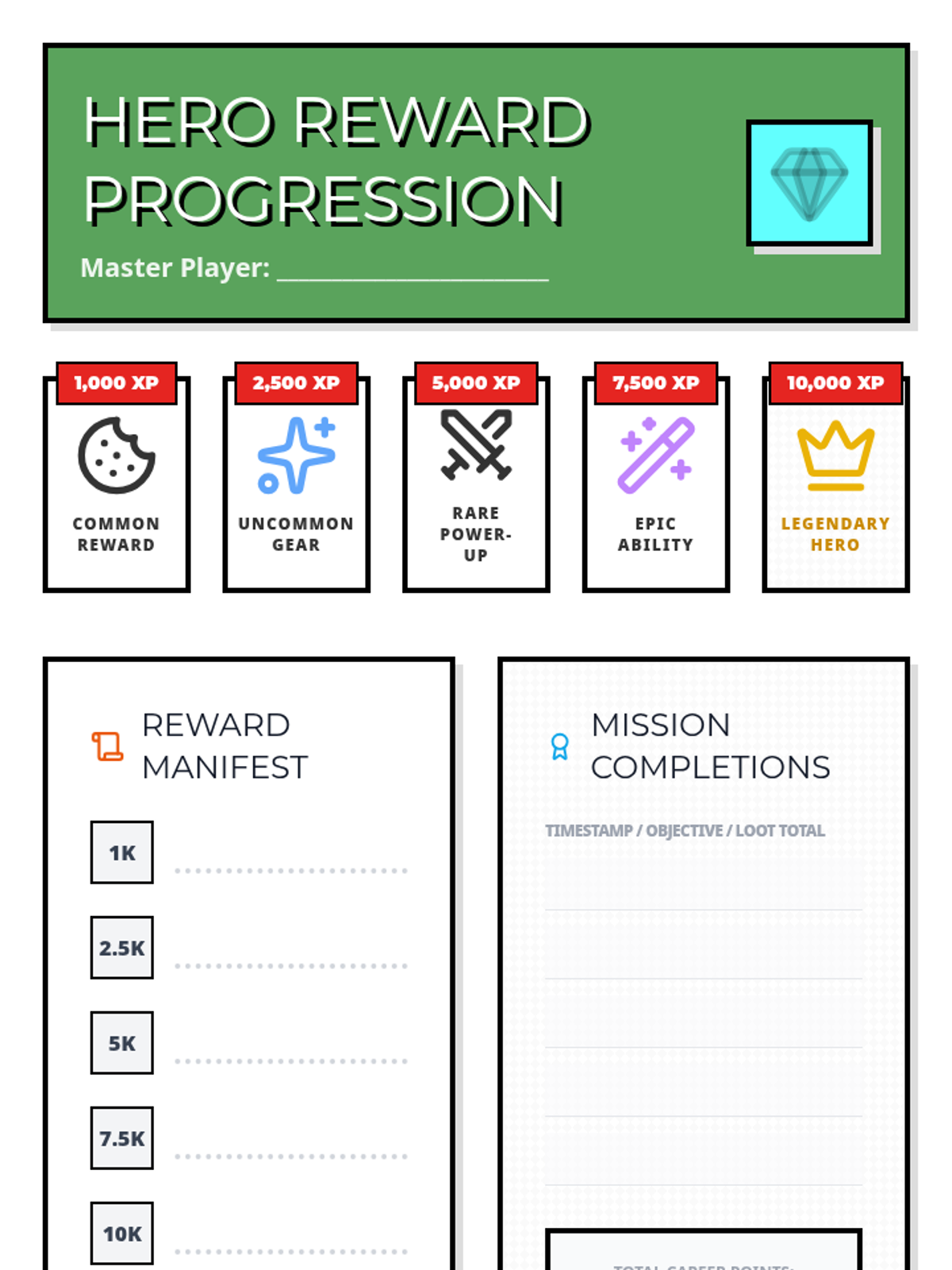
A gamified chore and reward system featuring Minecraft and Super Mario themes to motivate students through 'quests' and 'level-ups'.
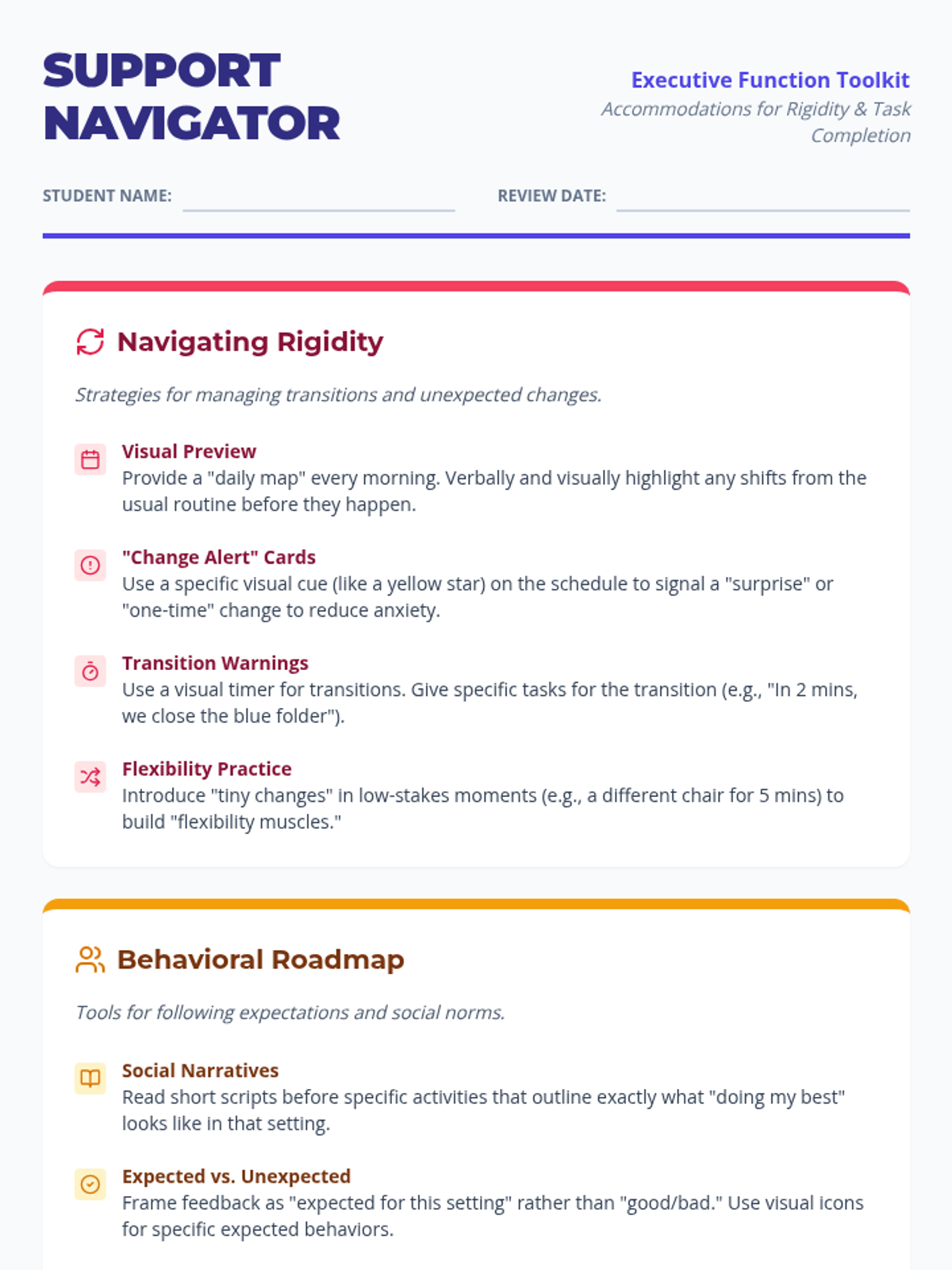
A comprehensive guide to executive function accommodations, focusing on rigidity, behavioral expectations, and task completion for neurodivergent students.
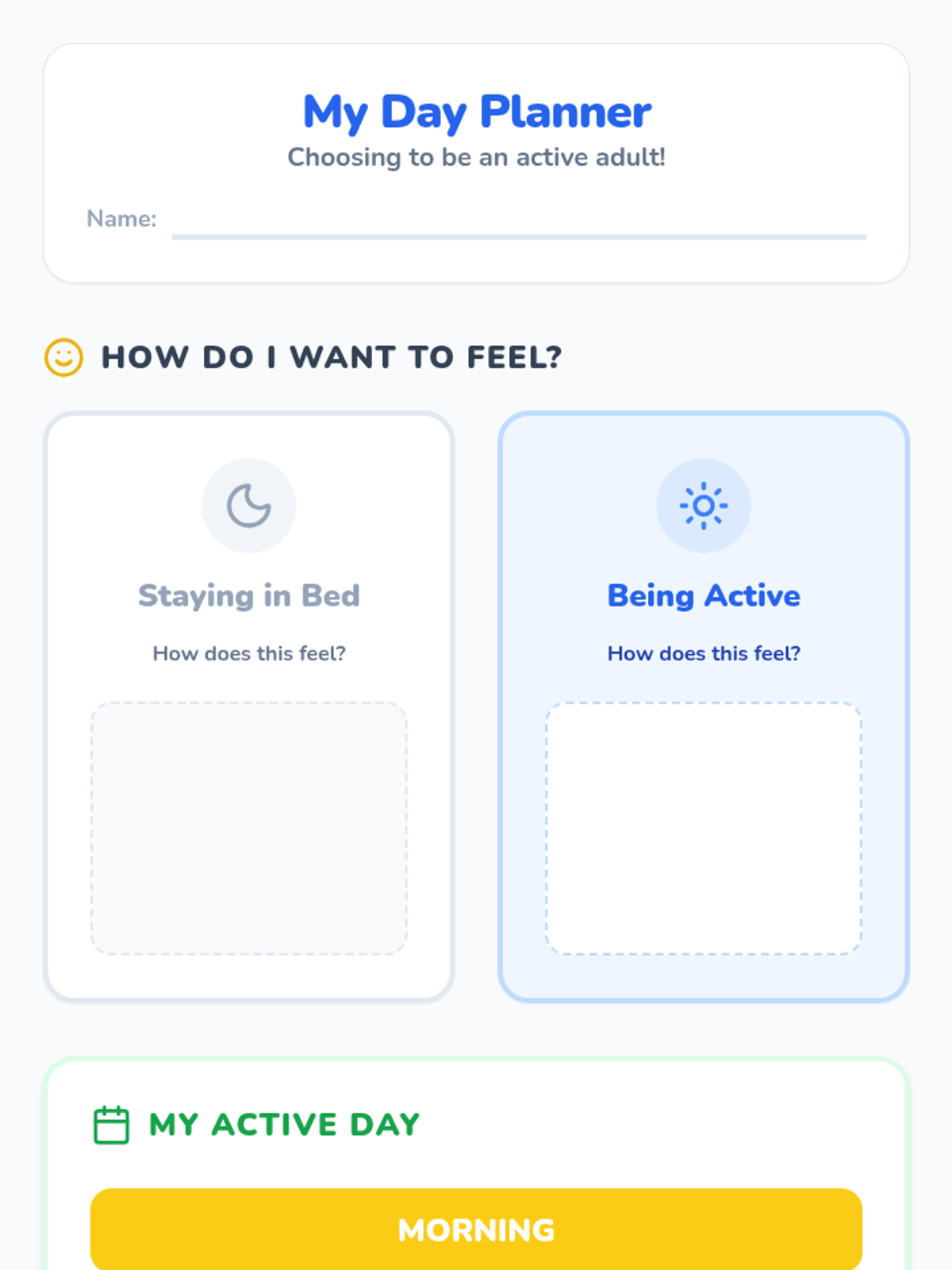
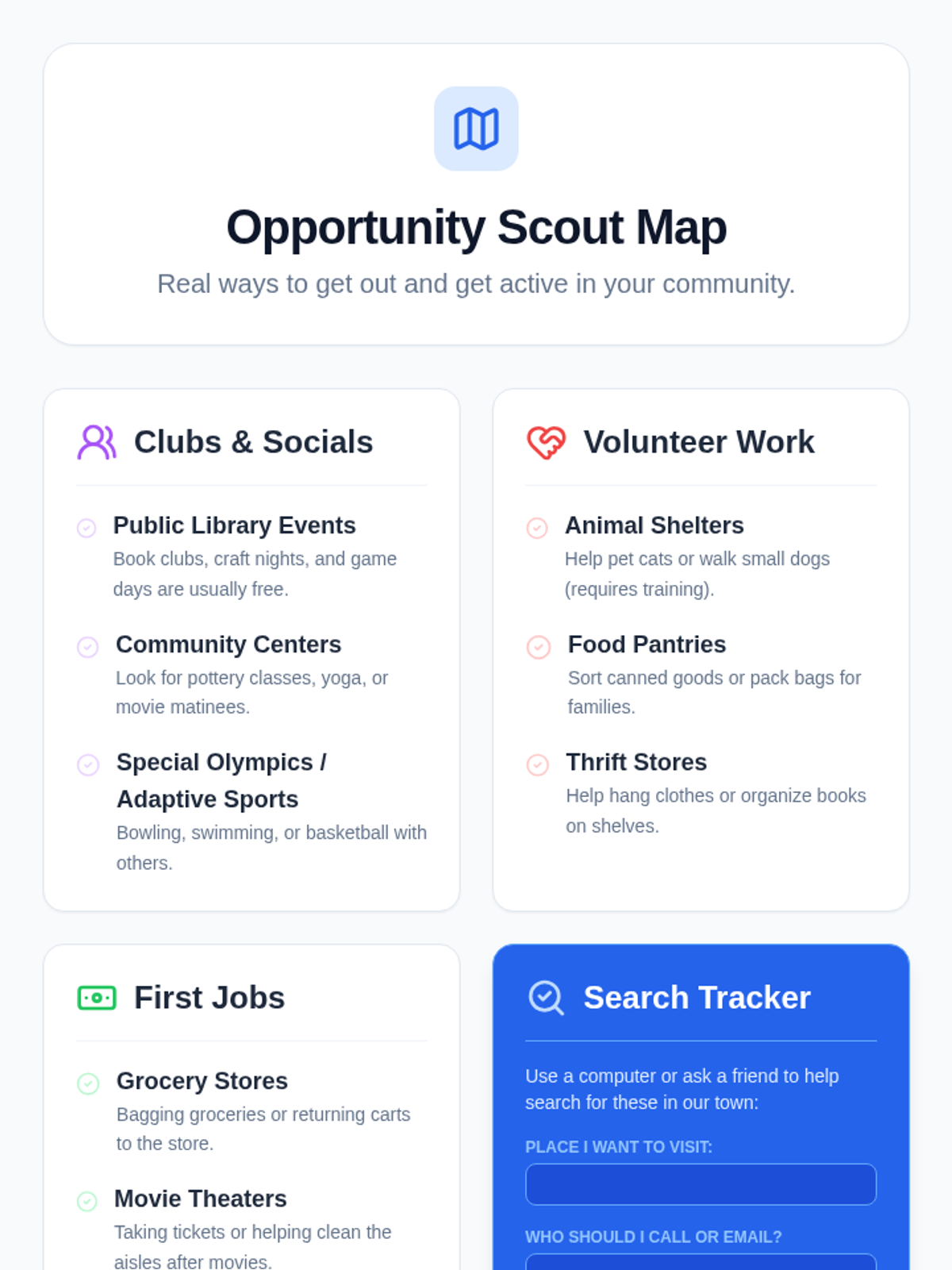
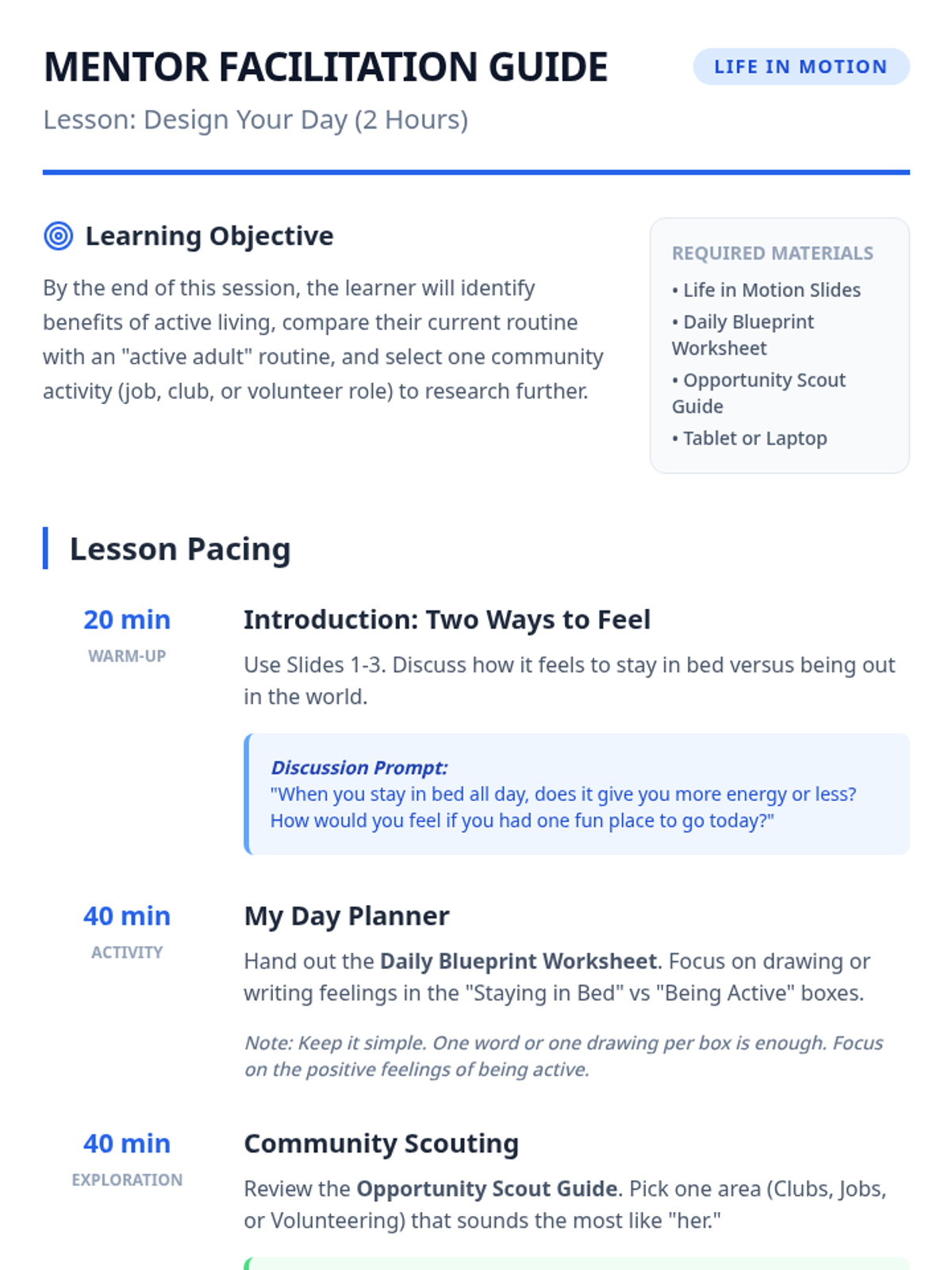
A two-hour session focused on transitioning from passive time-use to active daily planning, exploring community opportunities, and setting personal goals for engagement.