An animal-themed literacy lesson designed for 3rd-grade students with autism, focusing on identifying the main idea and supporting details using a structured, color-coded visual approach.
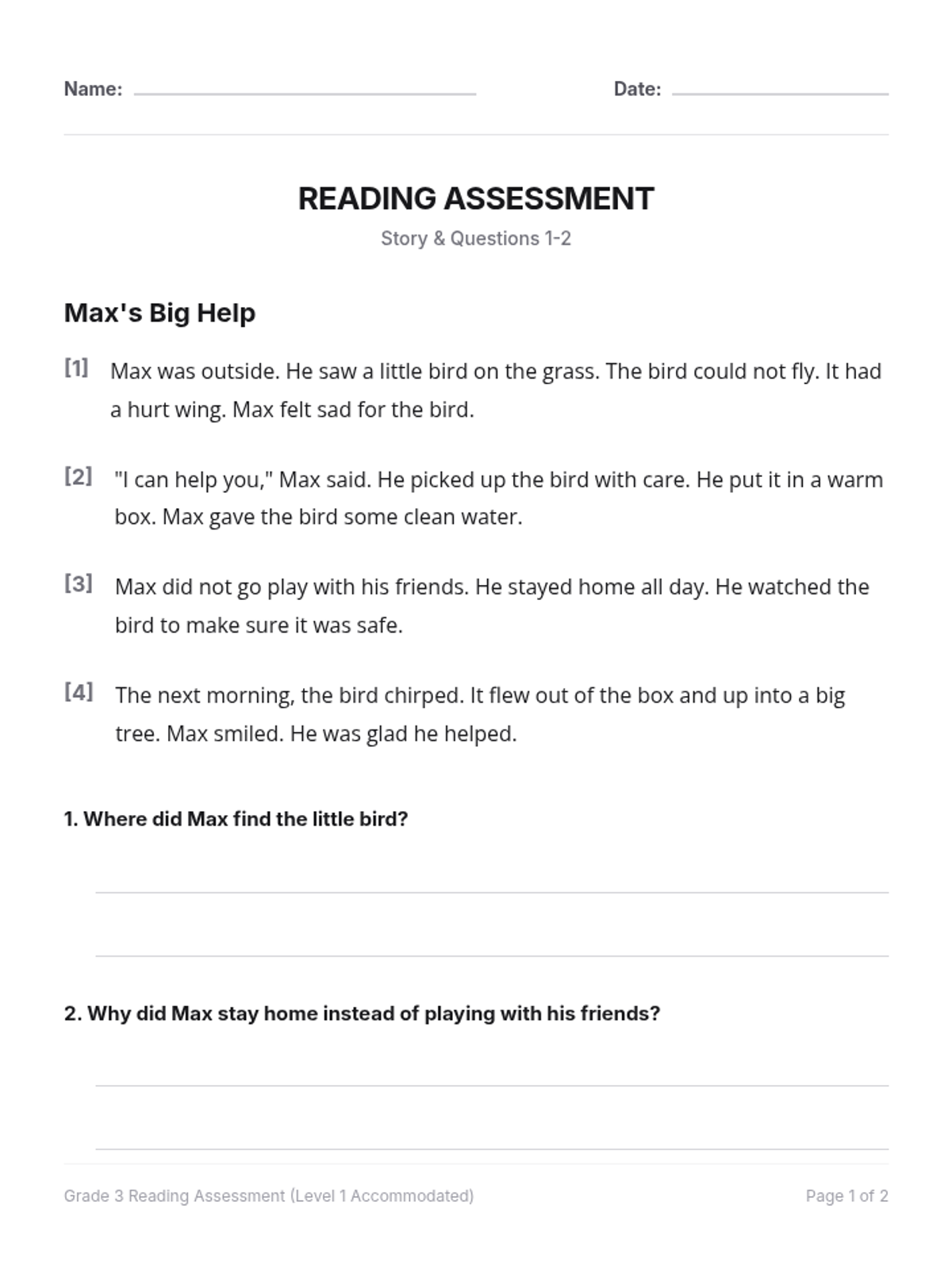
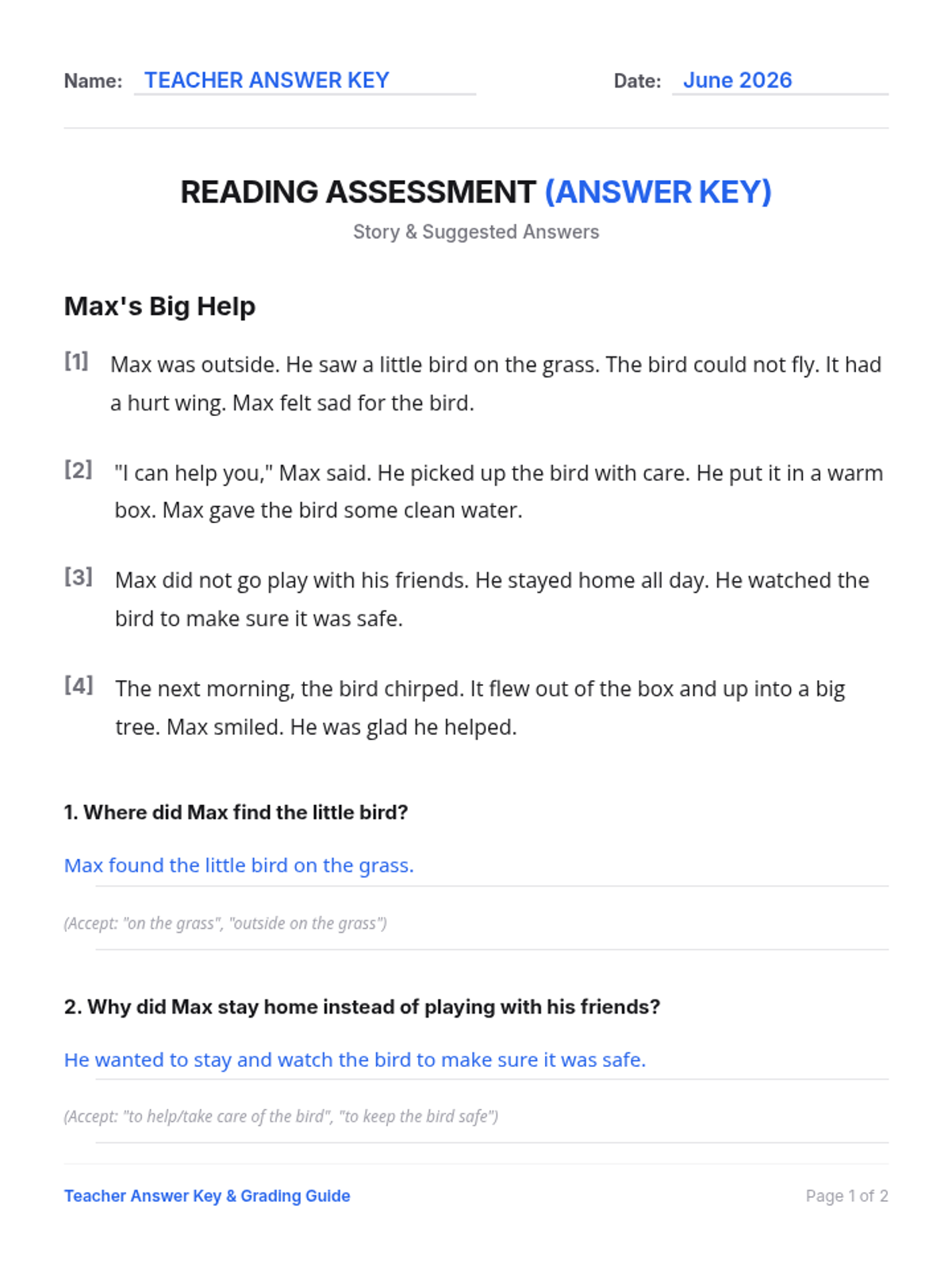
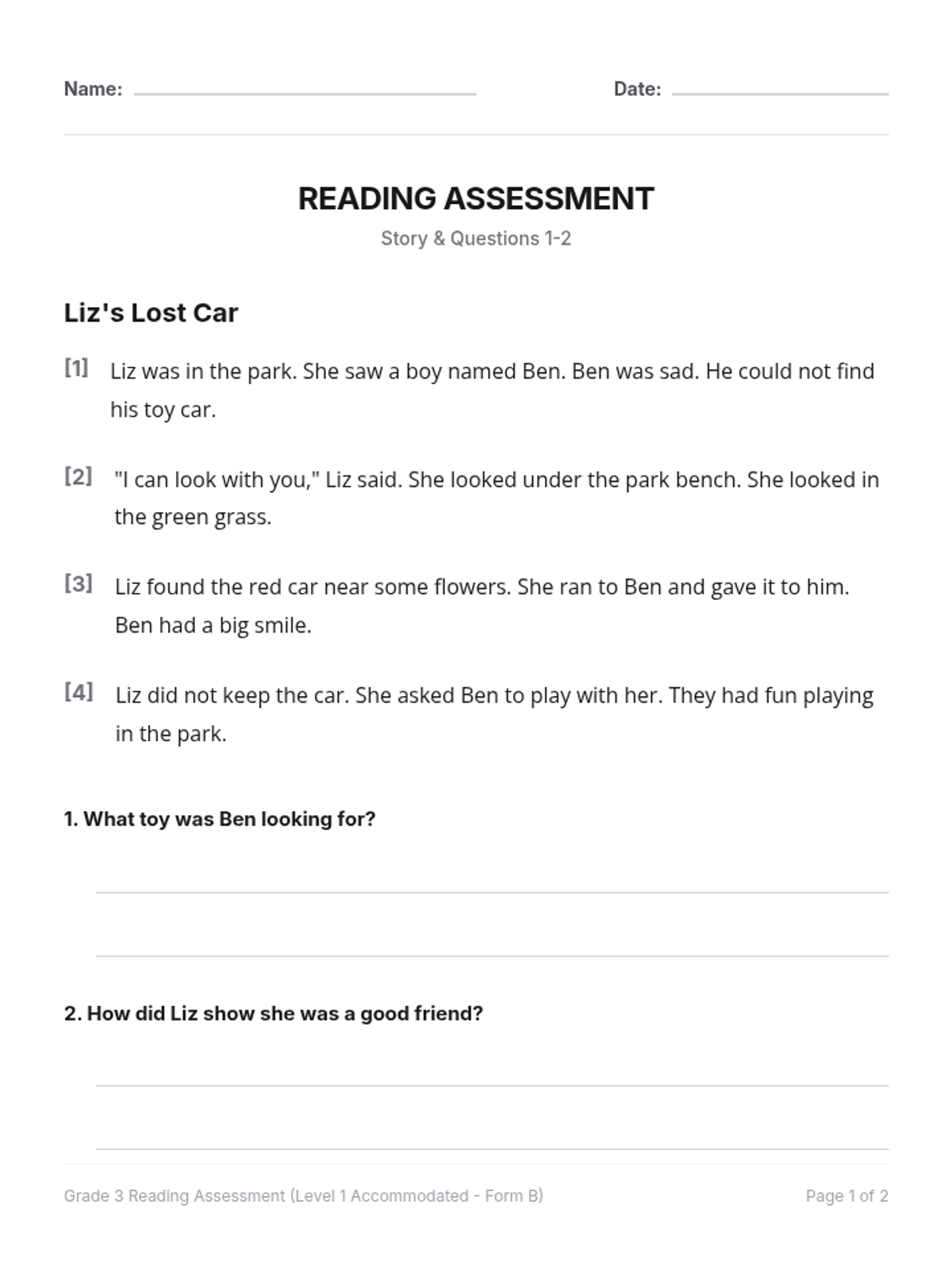
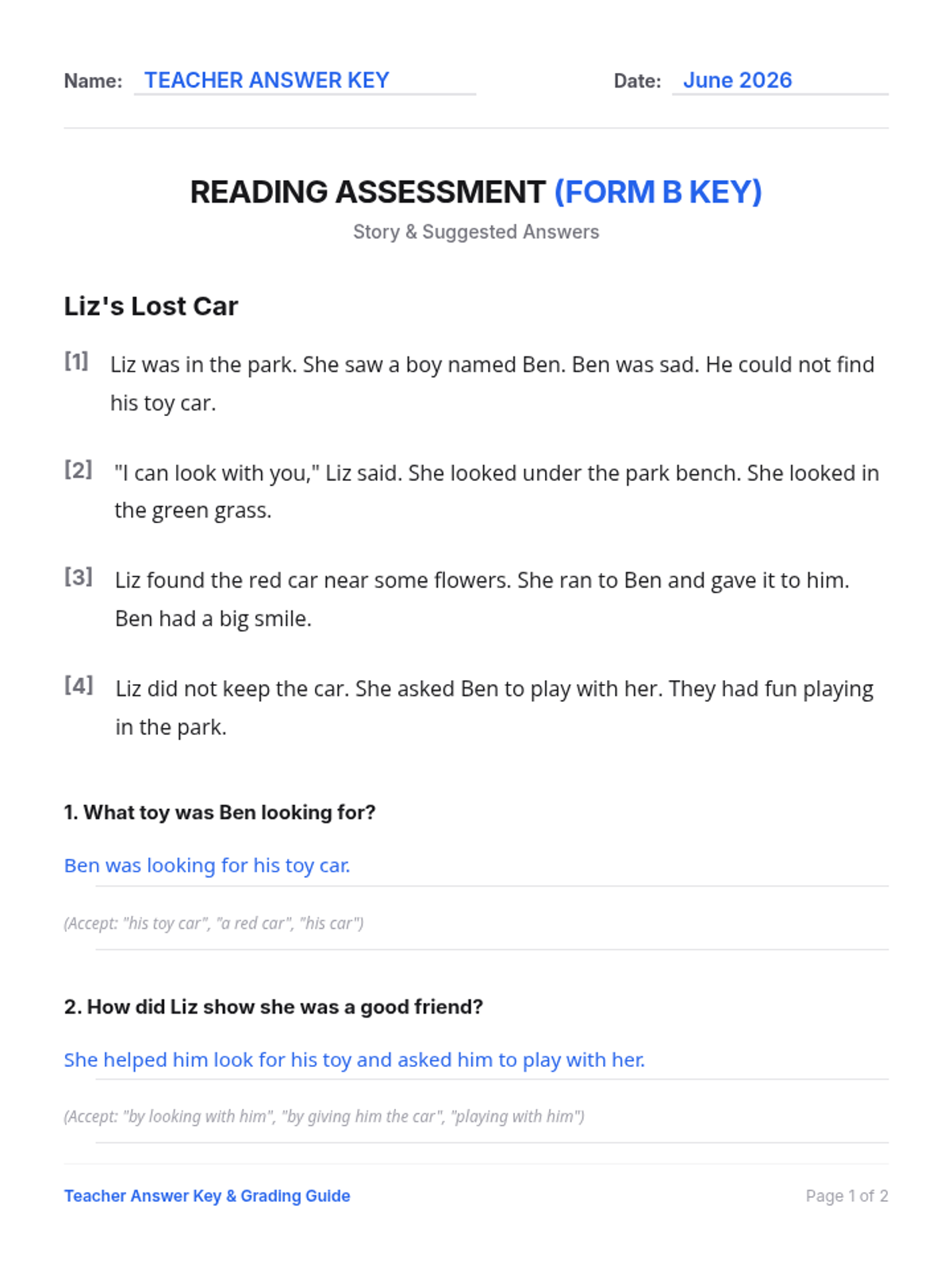
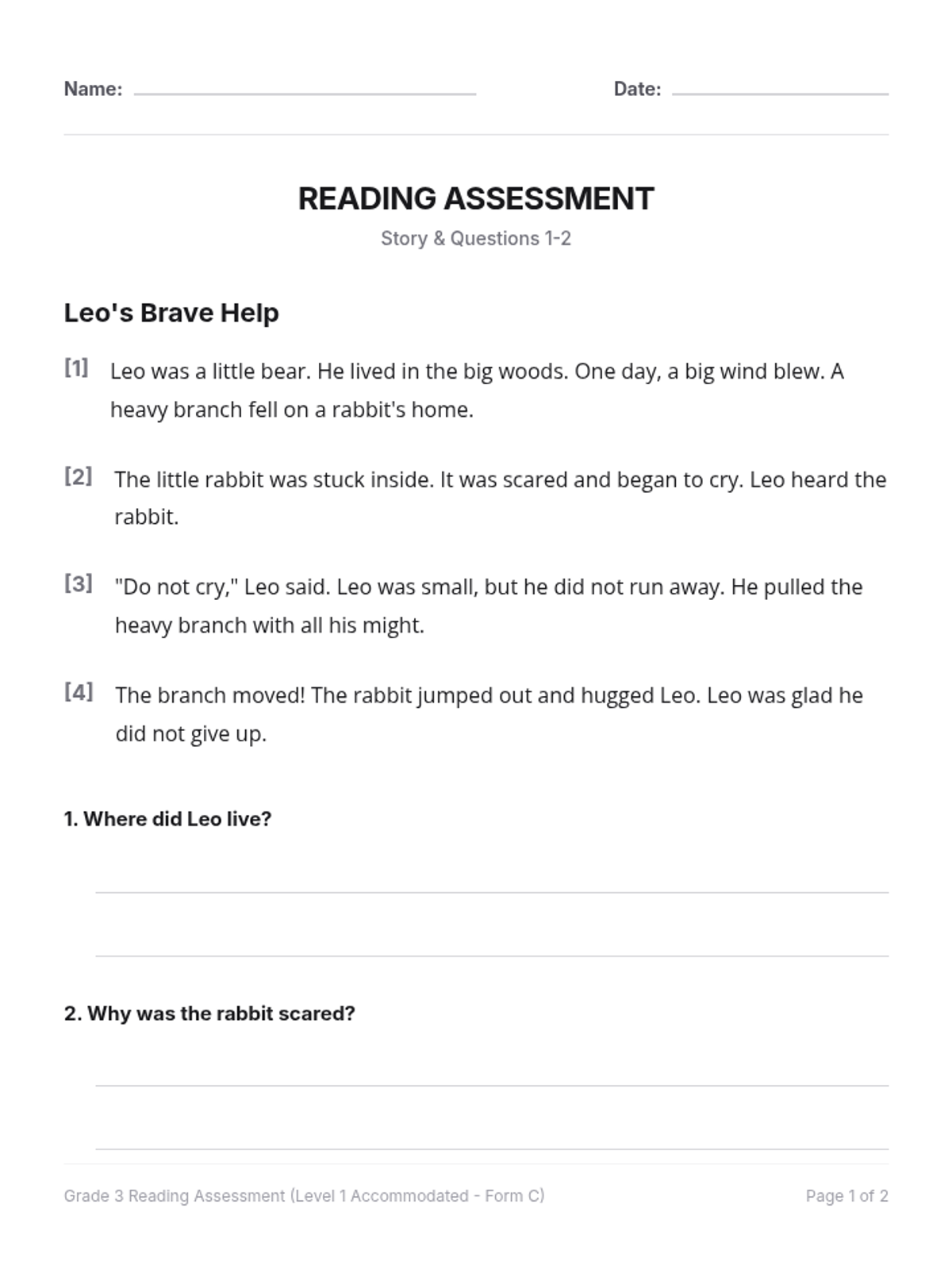
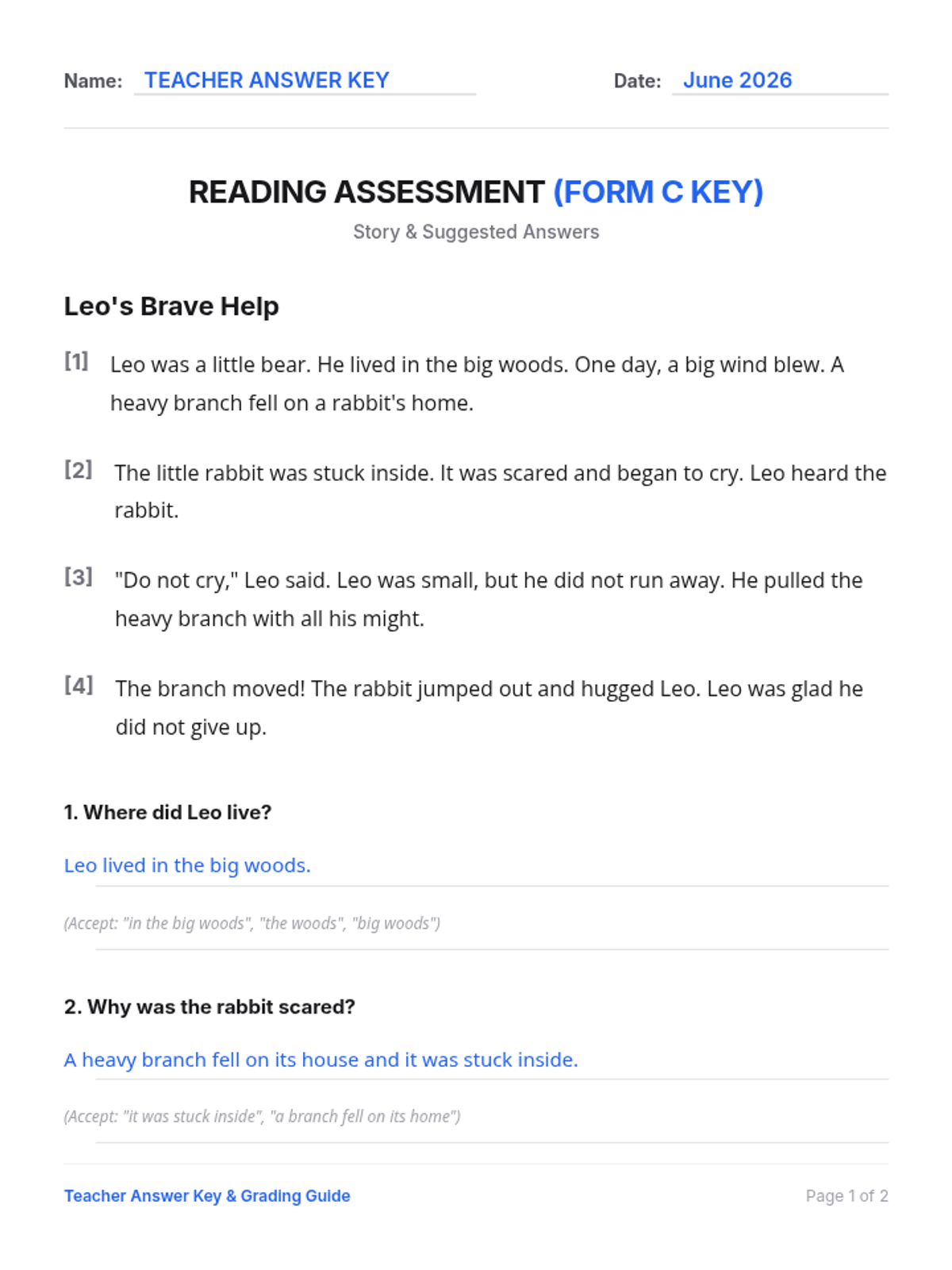
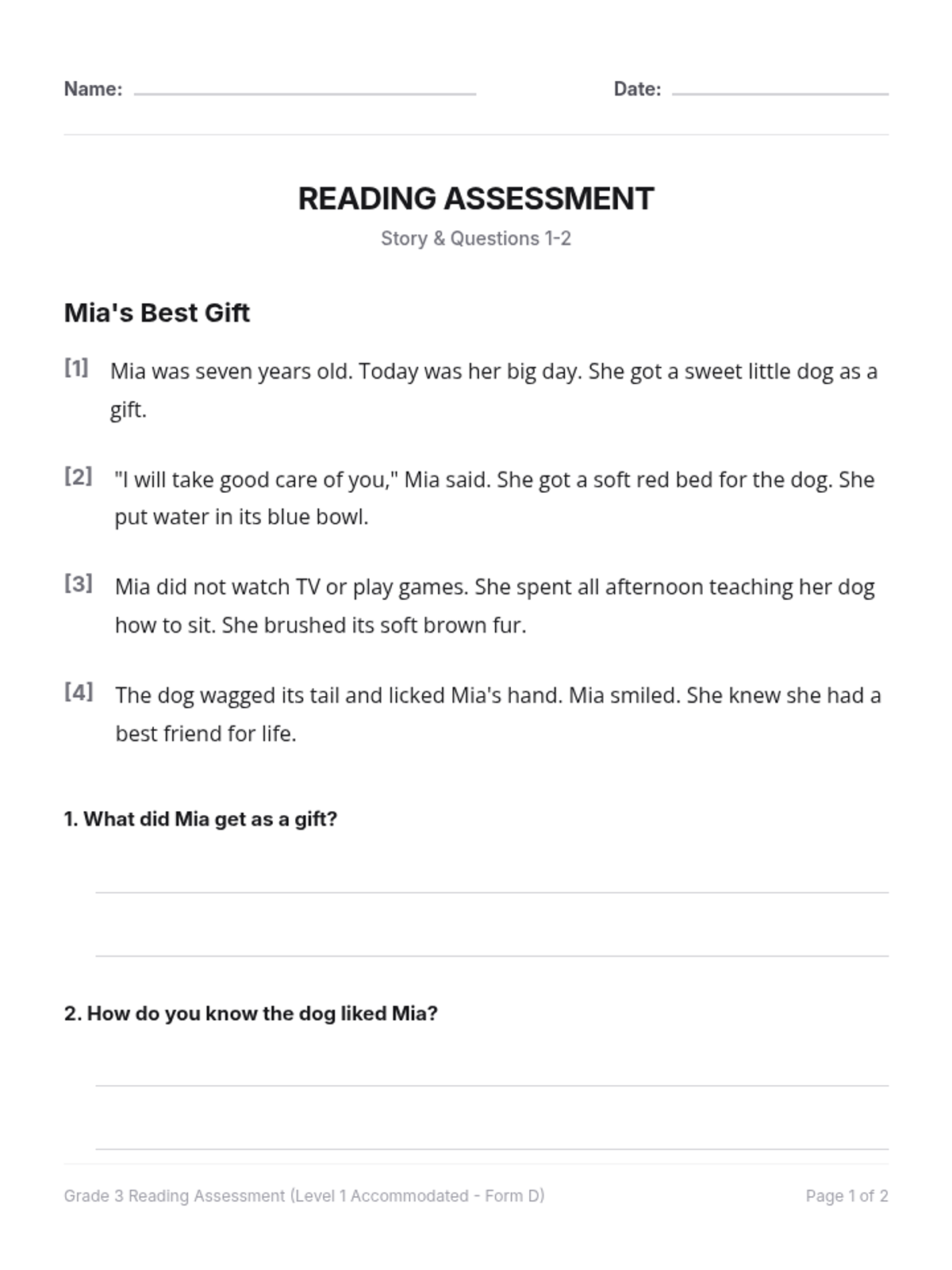
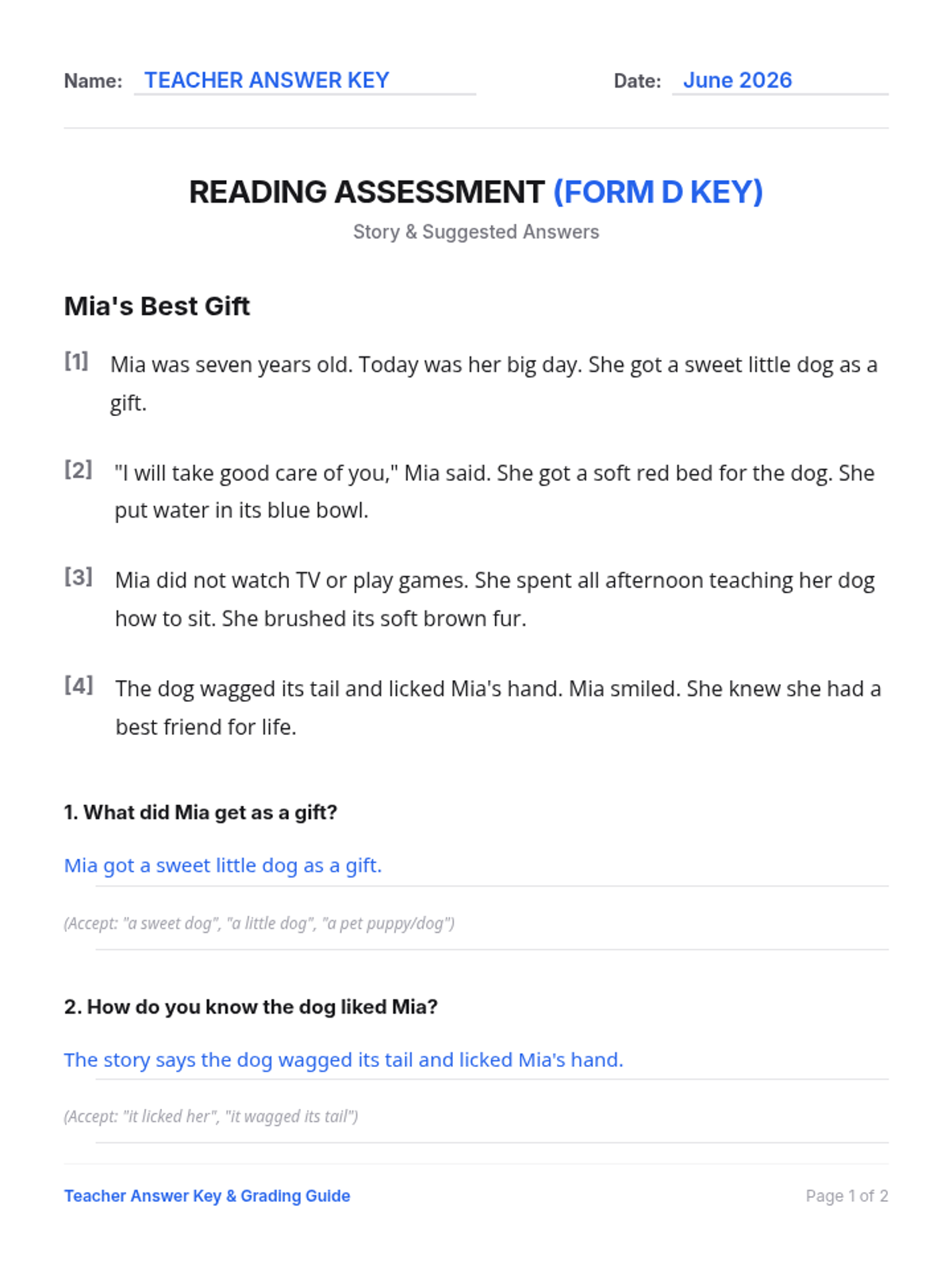
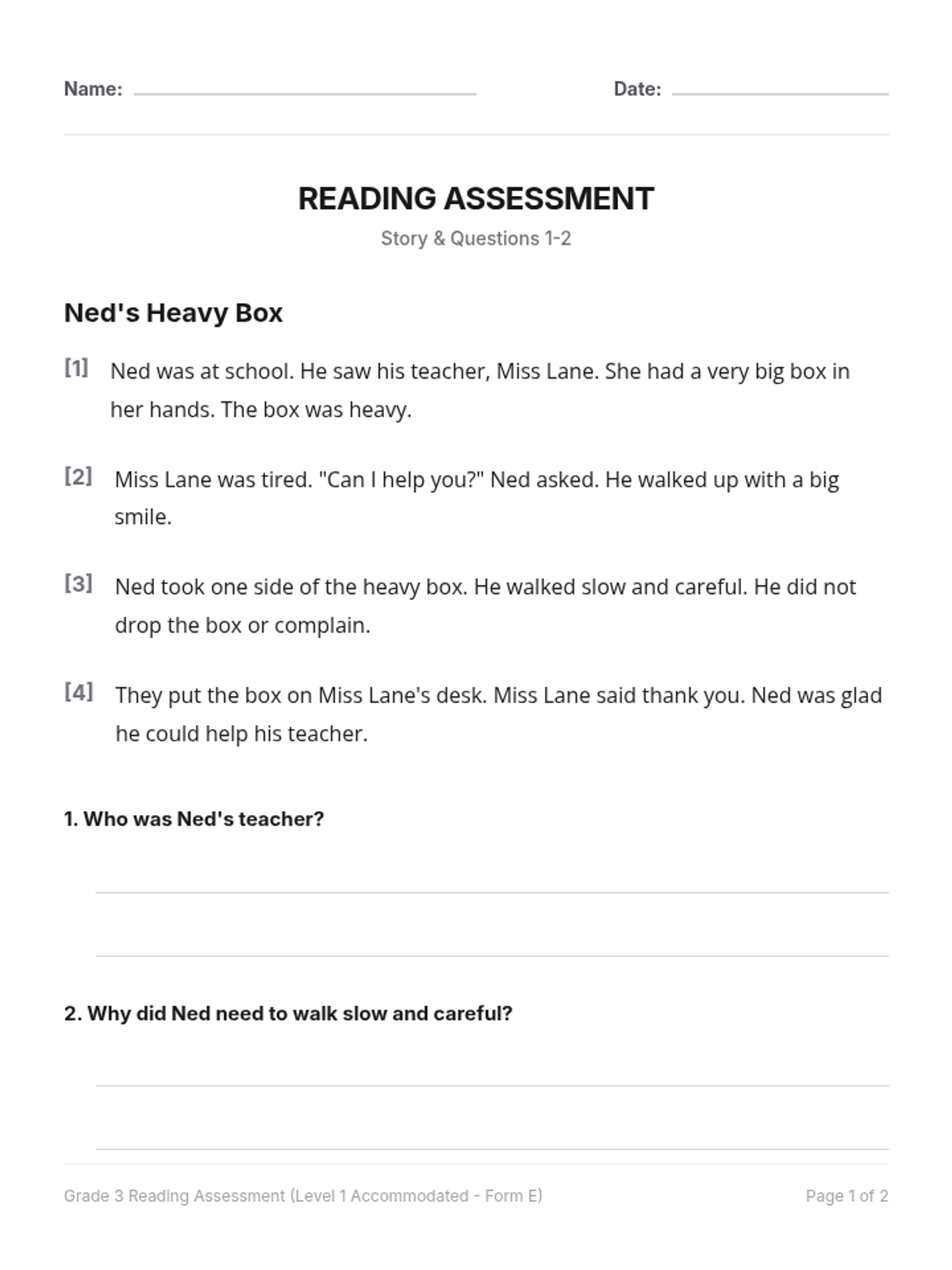
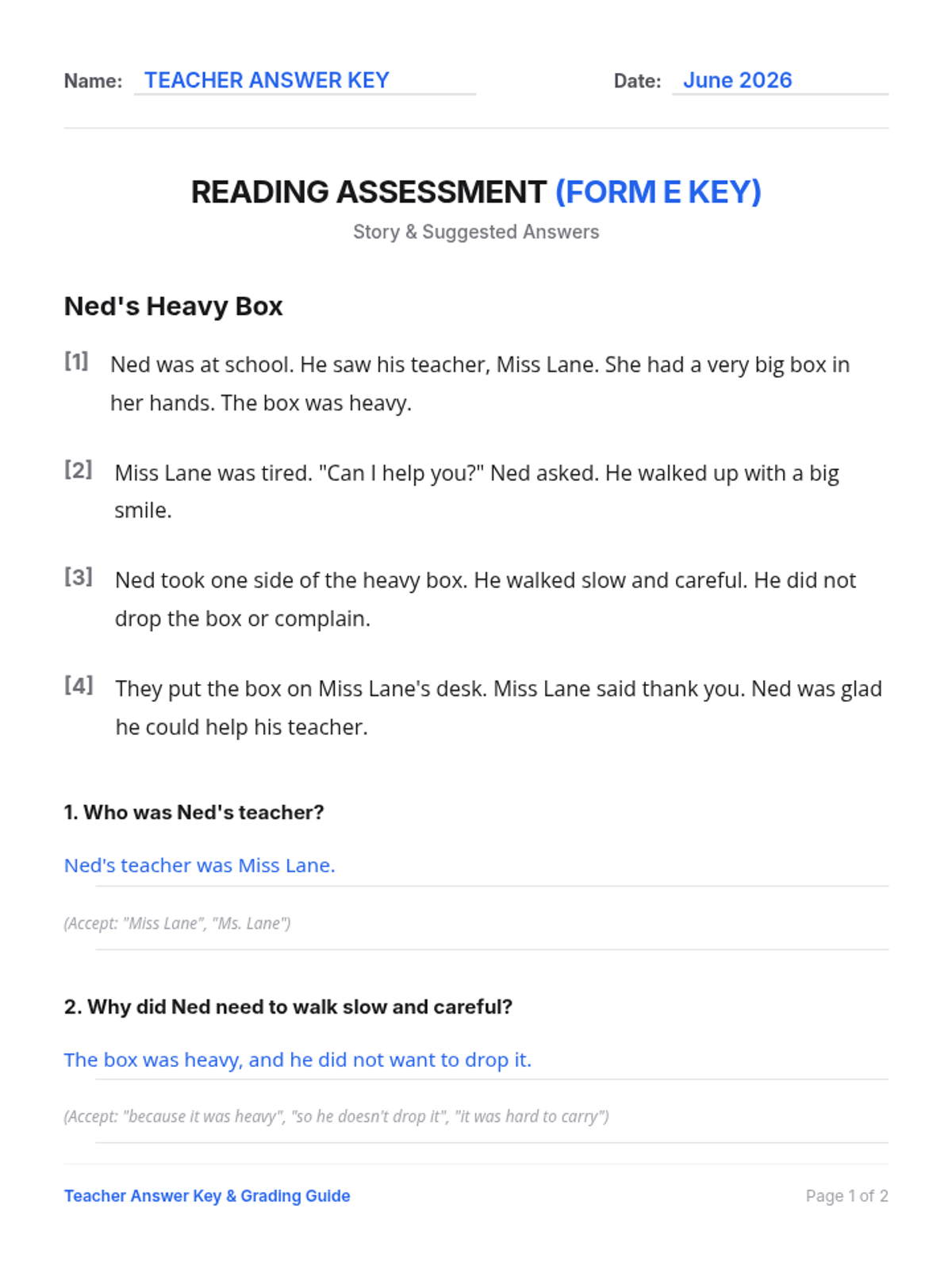
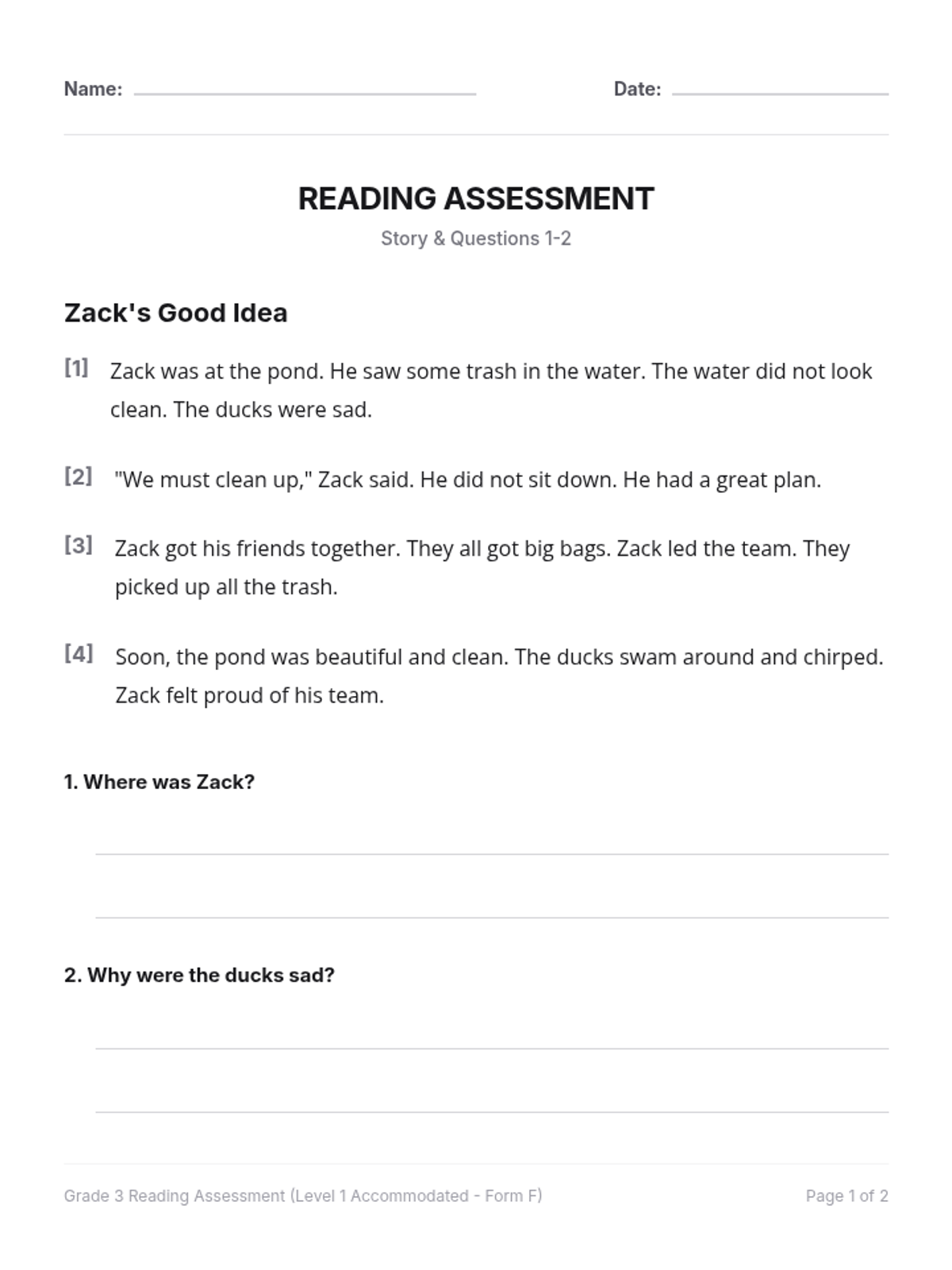
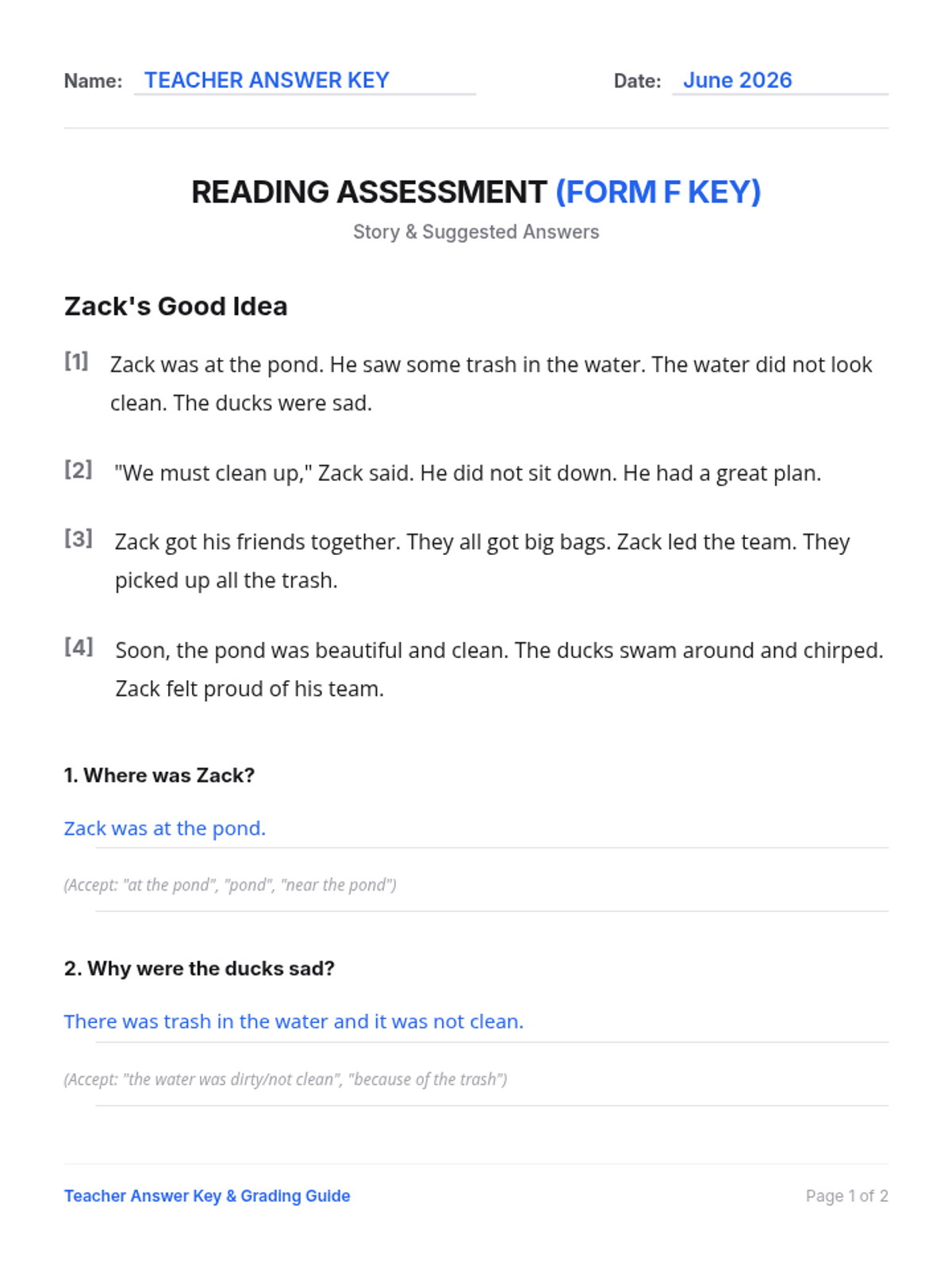
An accommodated reading assessment designed for a third-grade student reading at a first-grade level. Features a highly accessible passage, generous writing lines, explicit and implicit comprehension questions, and simplified layouts.
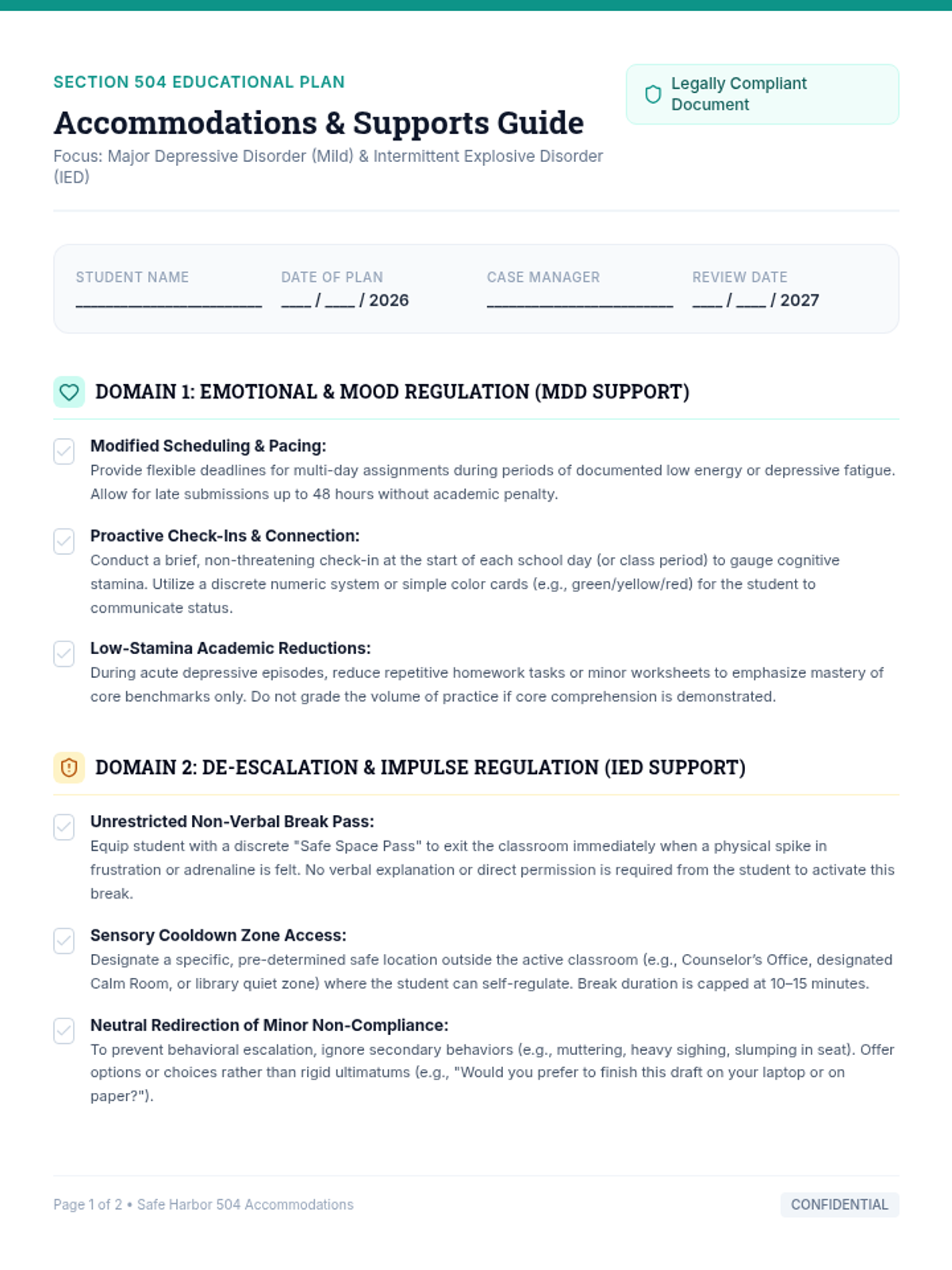
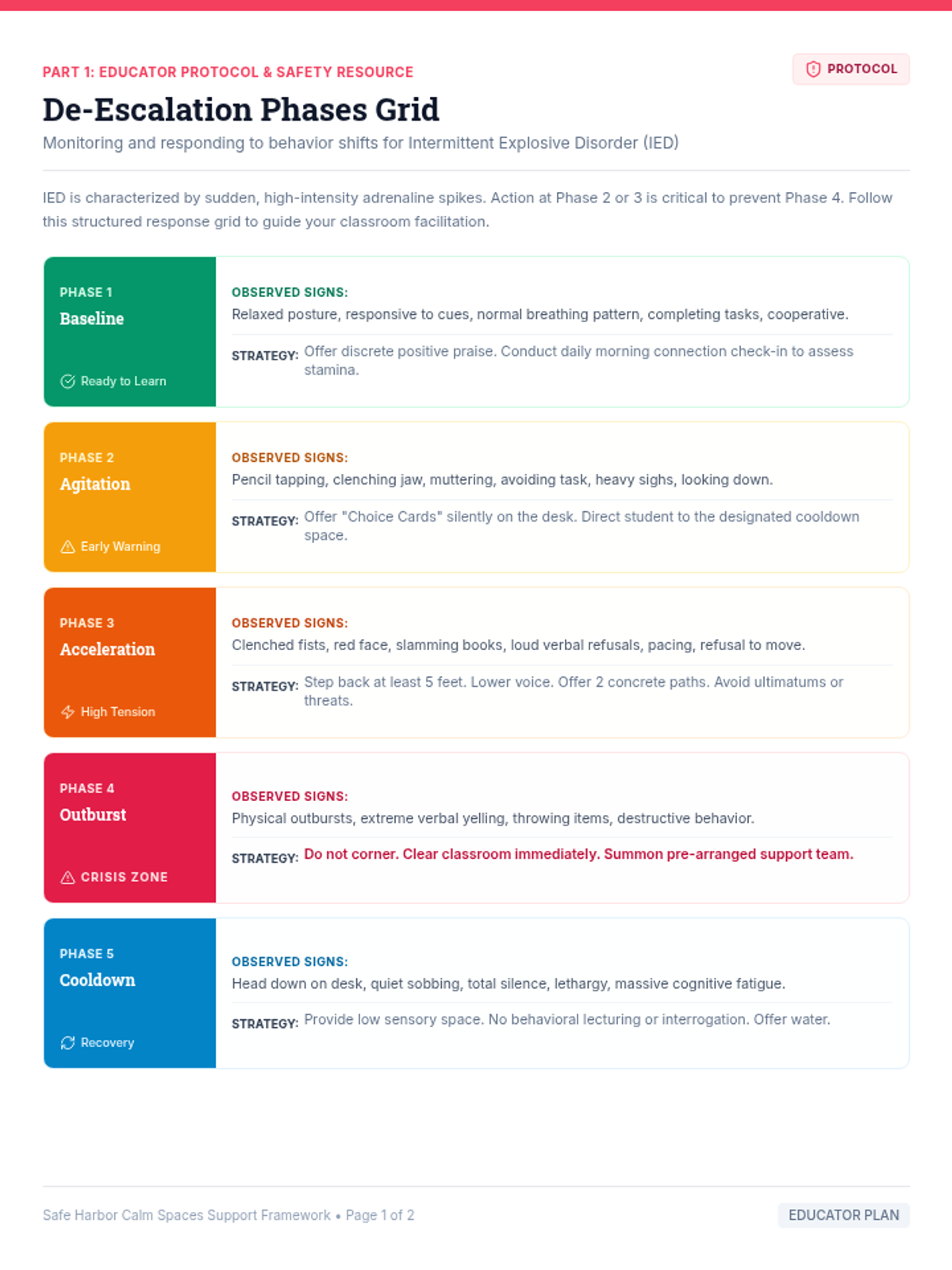
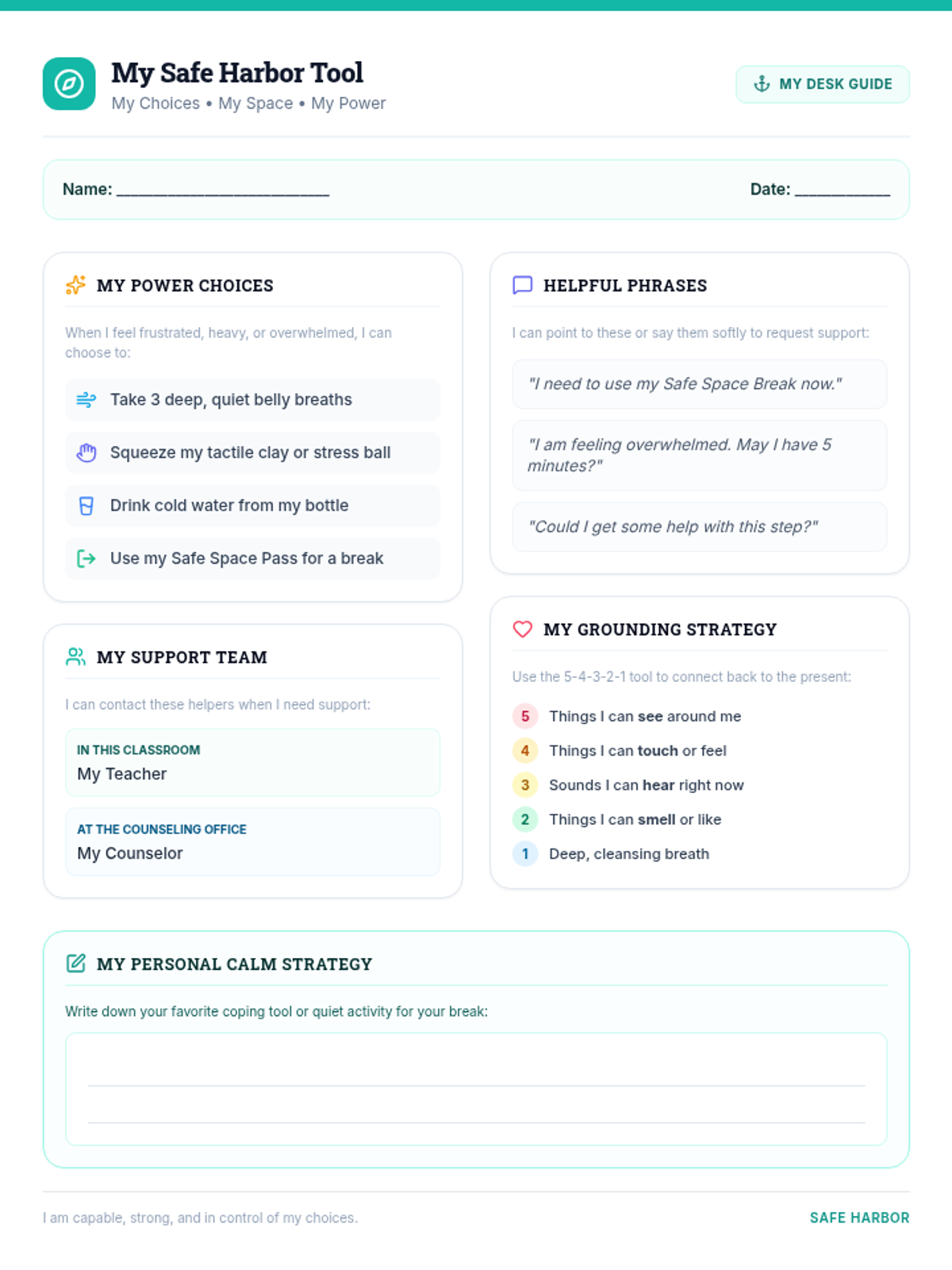
A cohesive bundle of support resources for a student with Major Depressive Disorder and Intermittent Explosive Disorder, including formal 504 accommodations, an educator's de-escalation workflow, and a student-facing desk tool.
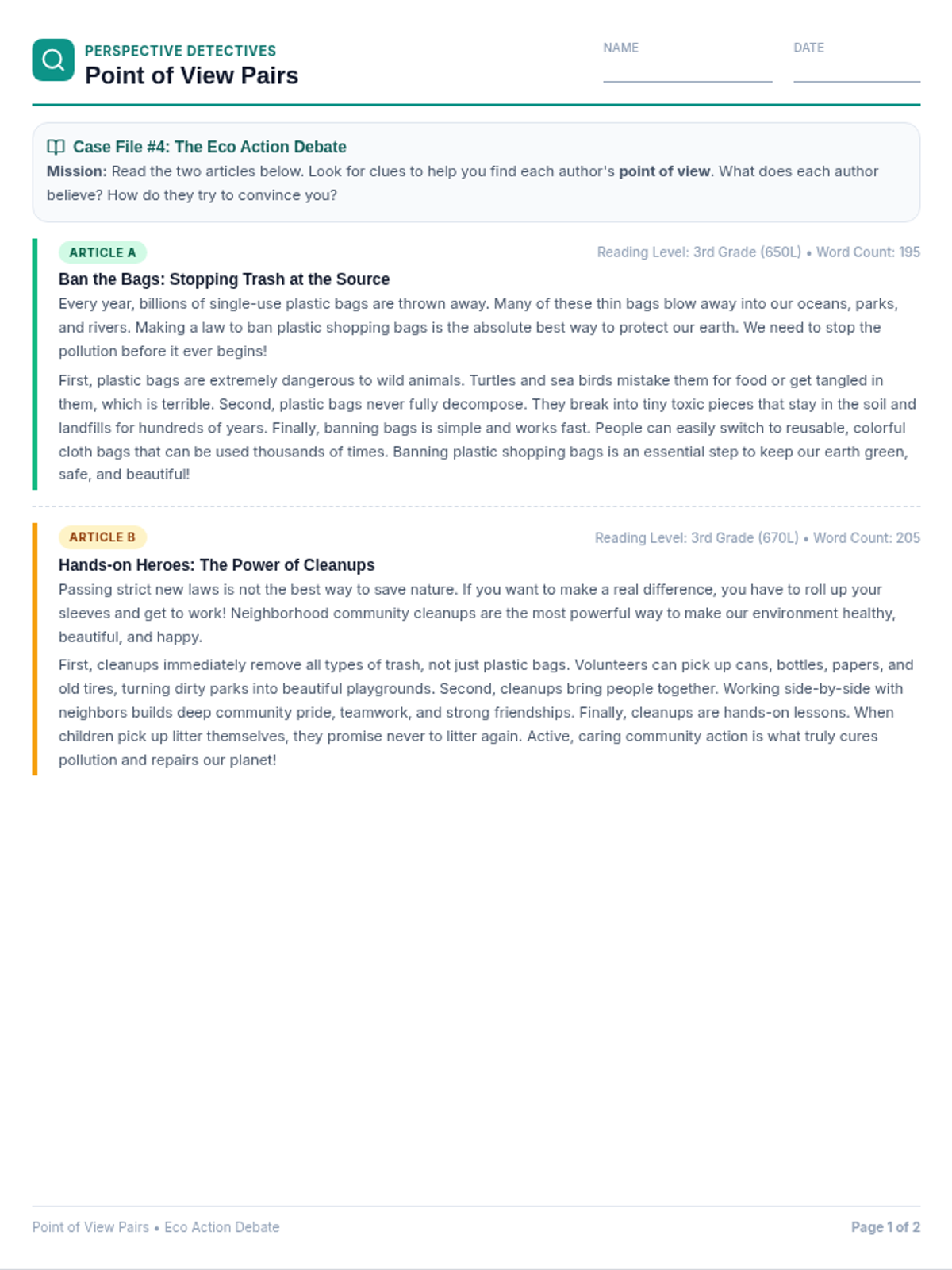
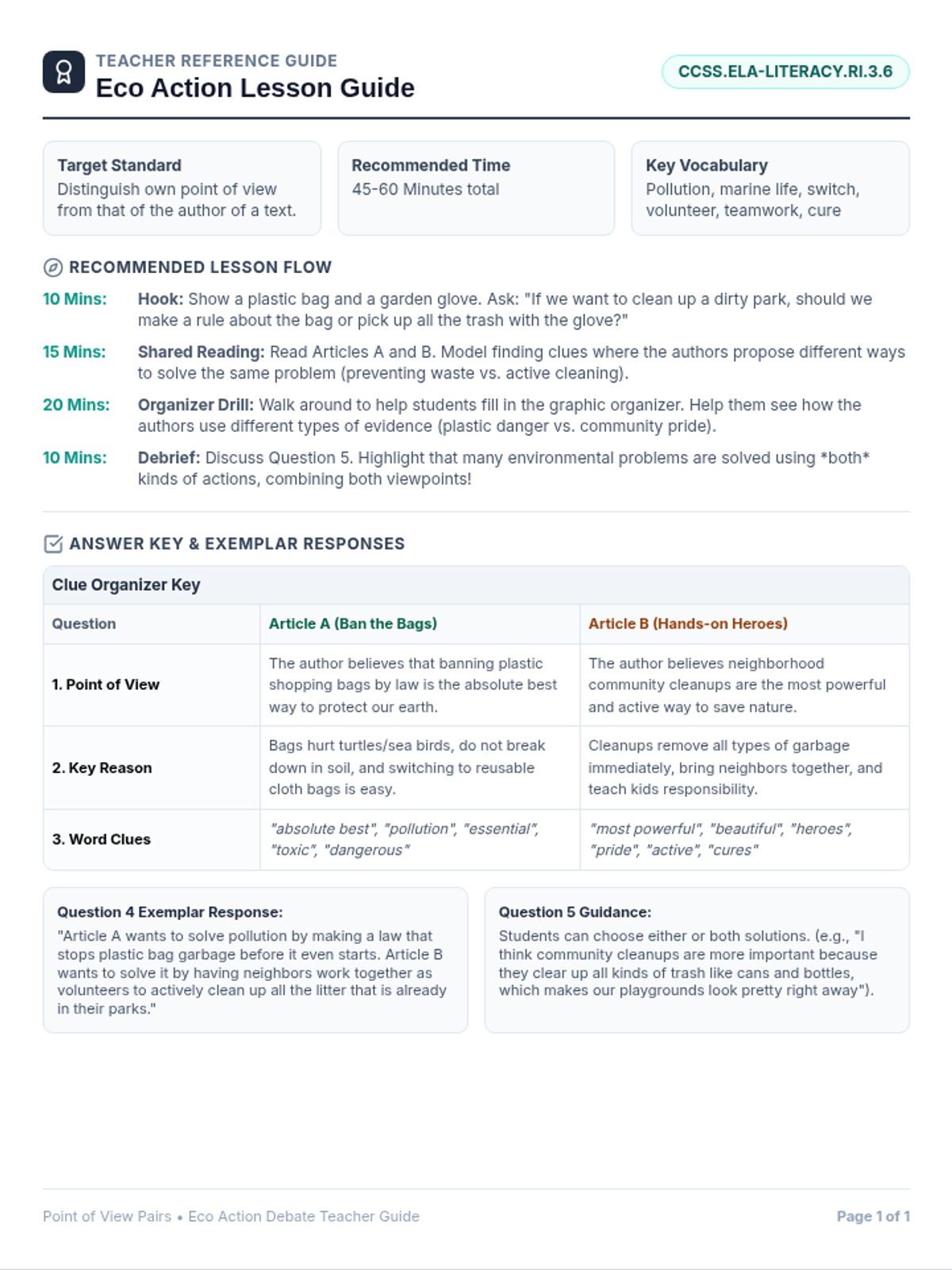
Students compare viewpoints on how to protect the environment, looking at one author advocating for banning plastic bags and another championing community cleanups.
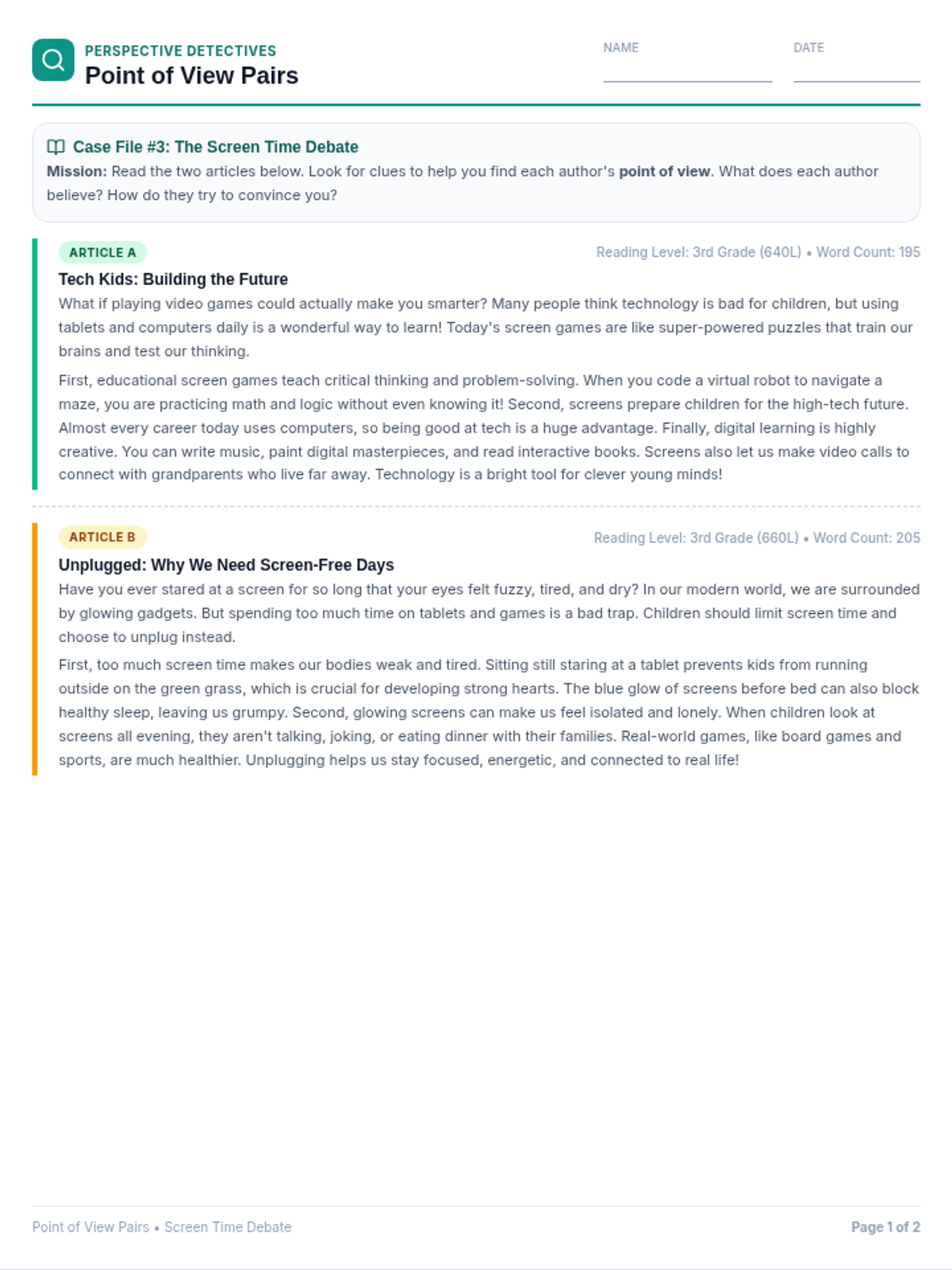
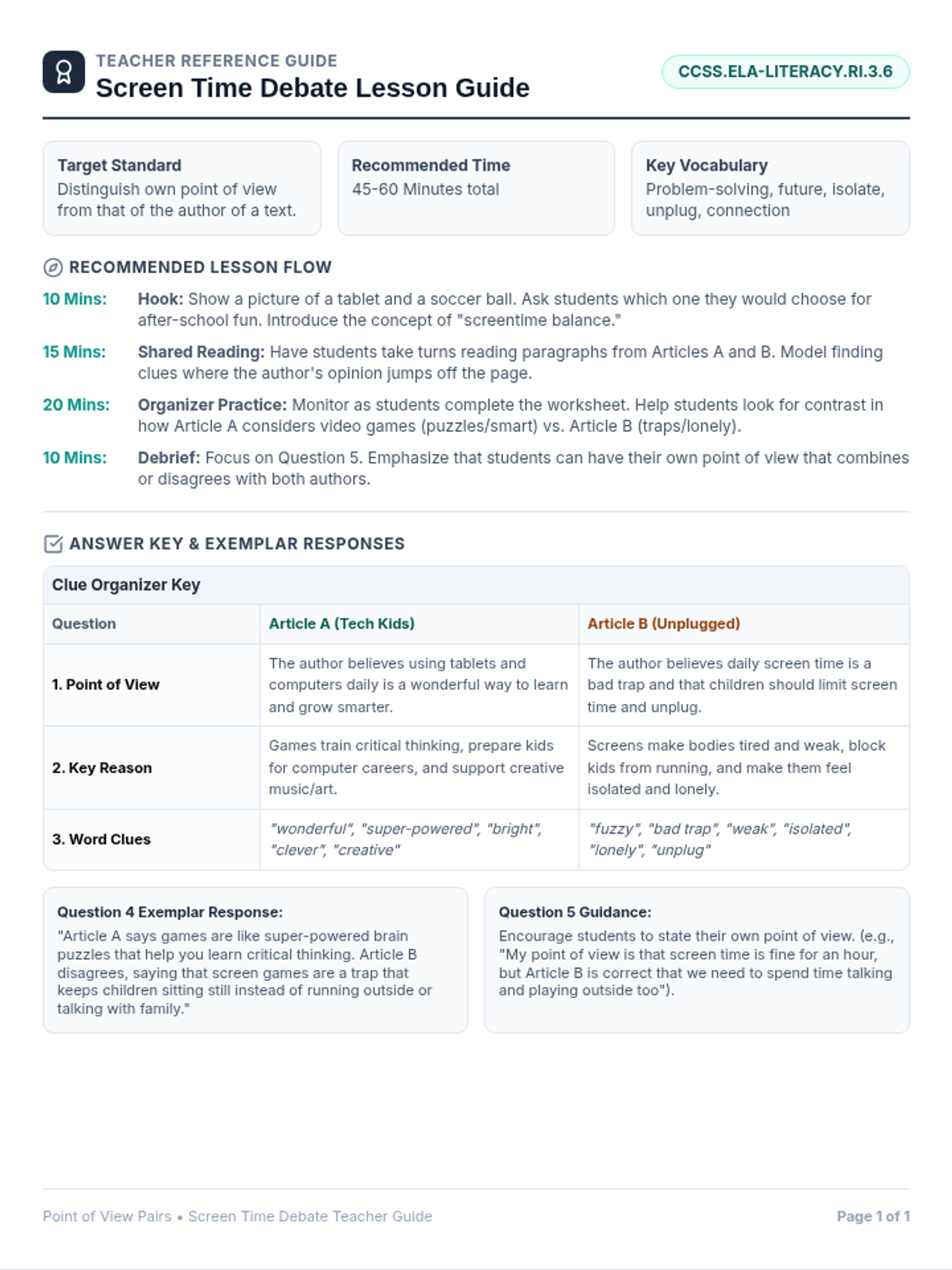
Students examine differing perspectives on daily tablet and video game use, distinguishing between an author promoting technology skills and one warning against excessive screens.
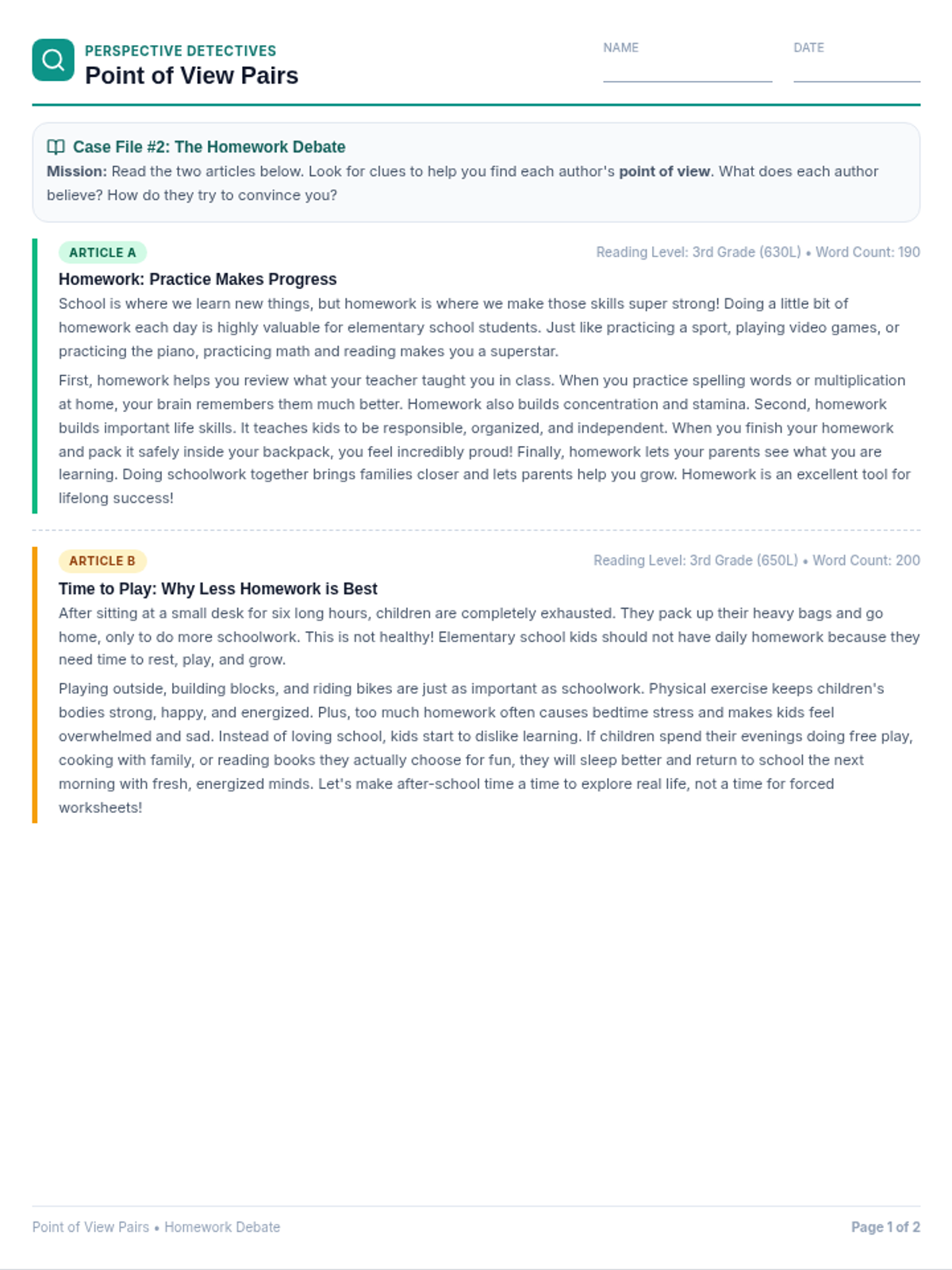
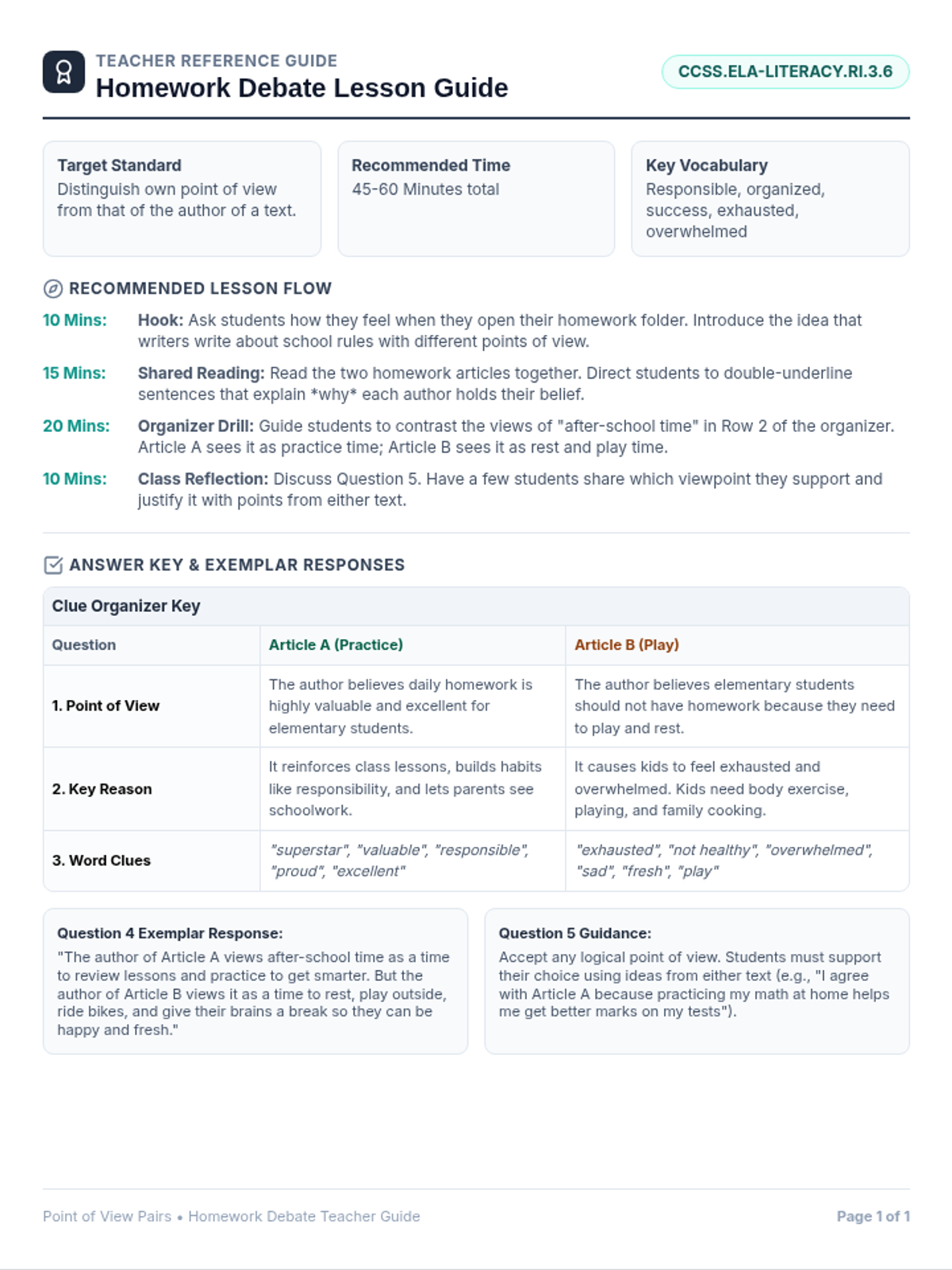
Students read and compare contrasting opinions on whether elementary school students should have daily homework, analyzing reasons and persuasive words used by each author.
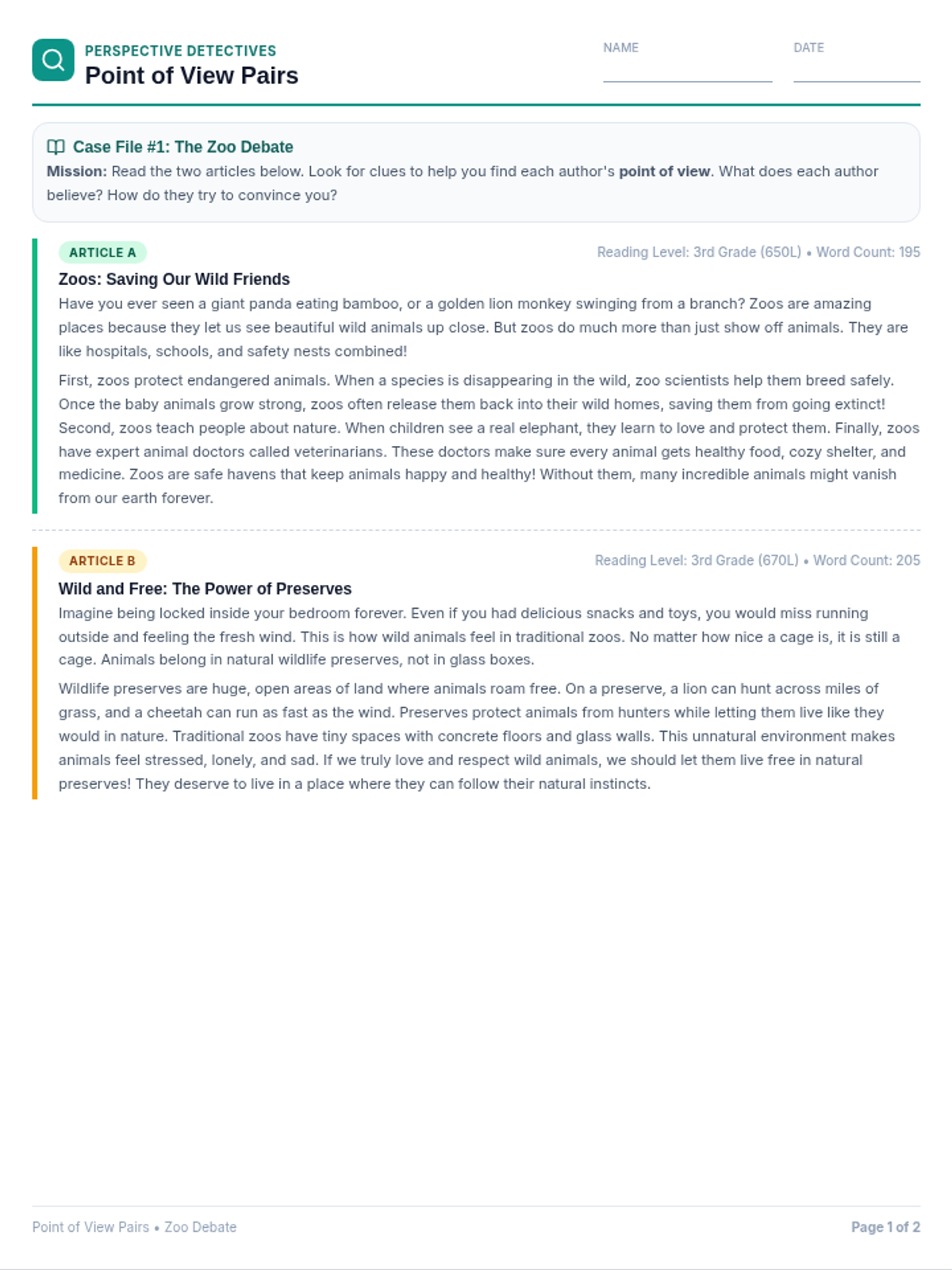
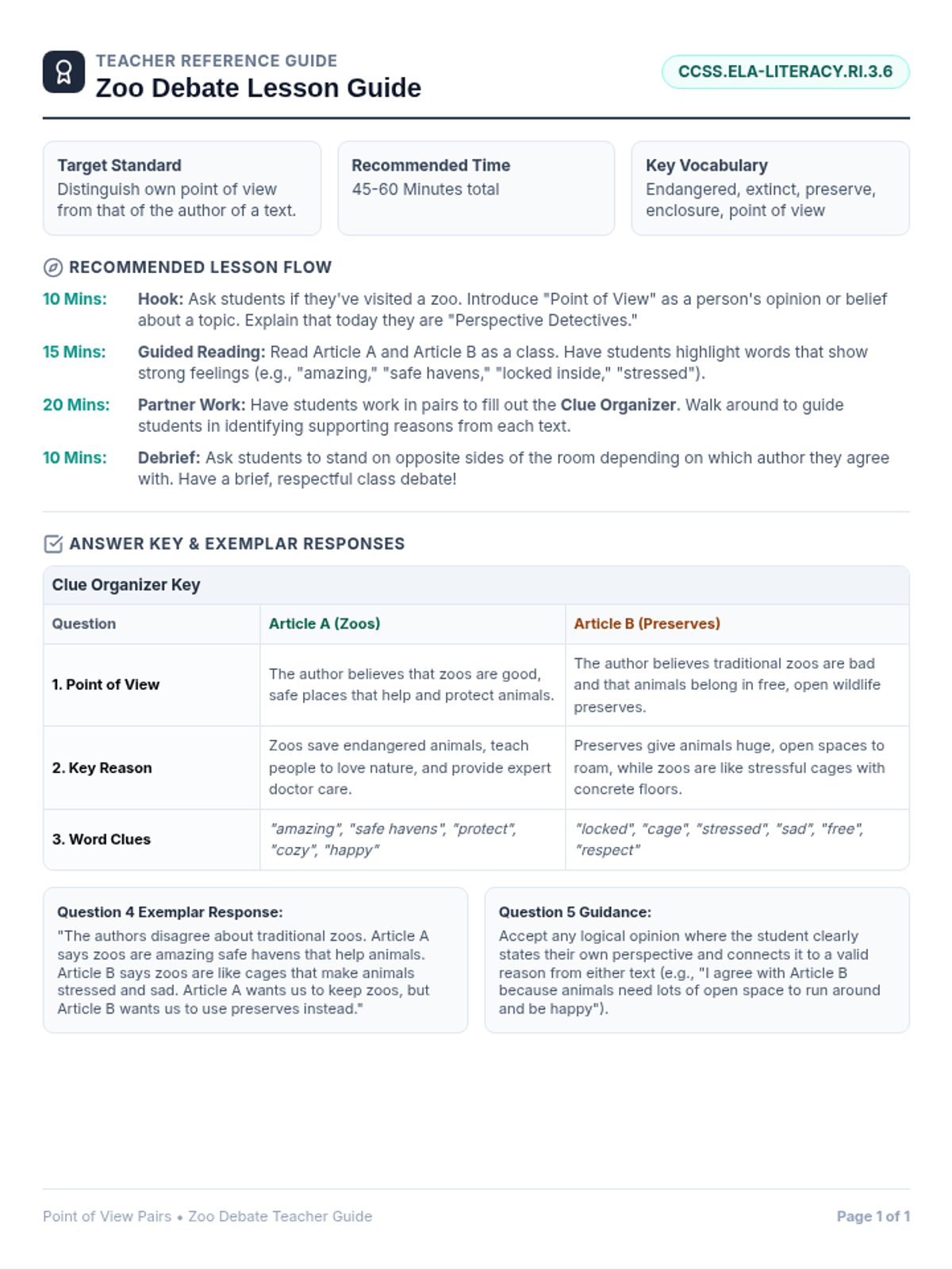
Students analyze paired texts on whether wild animals should be kept in traditional zoos or in natural wildlife preserves, identifying key evidence that reveals each author's perspective.
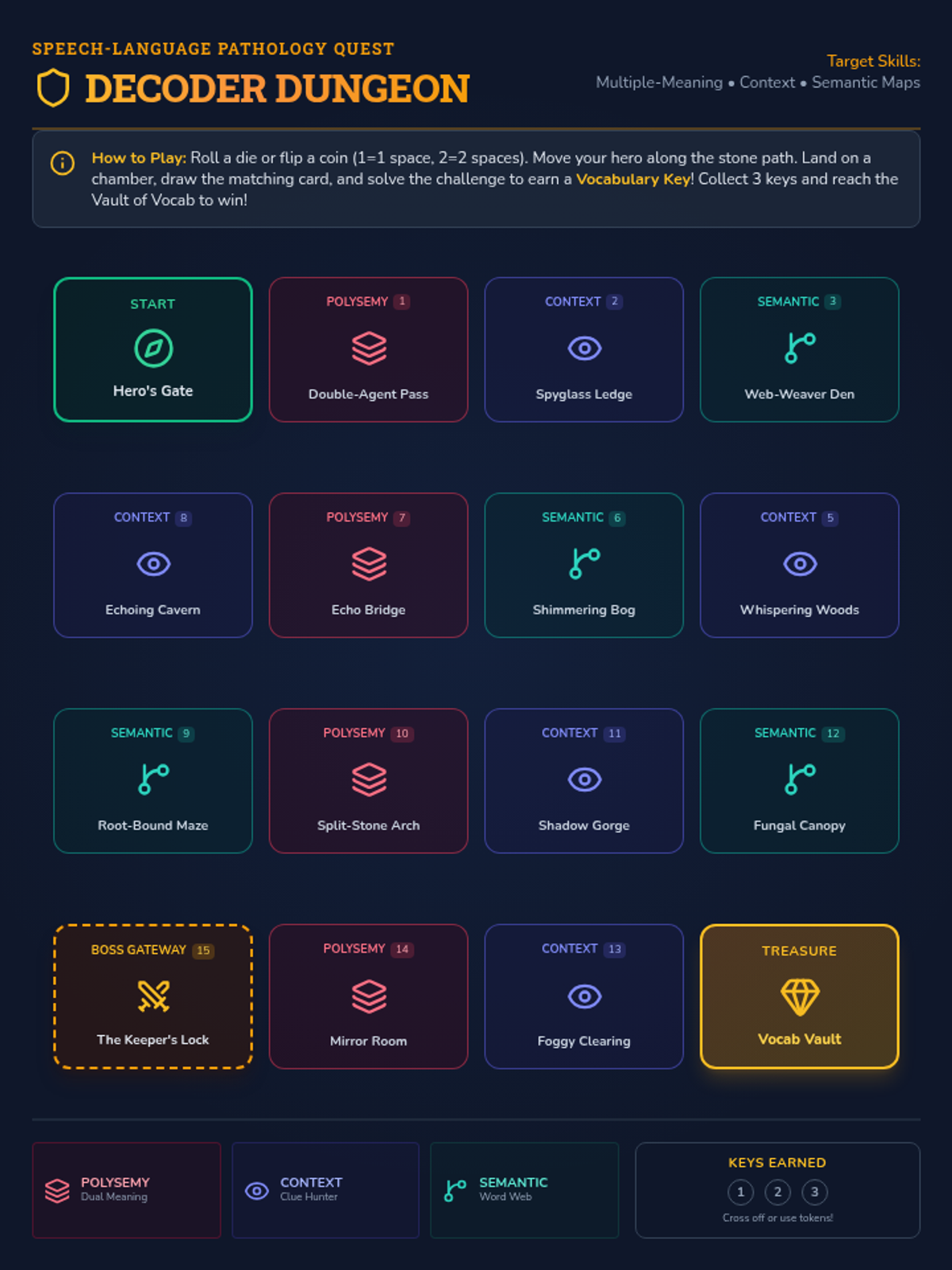
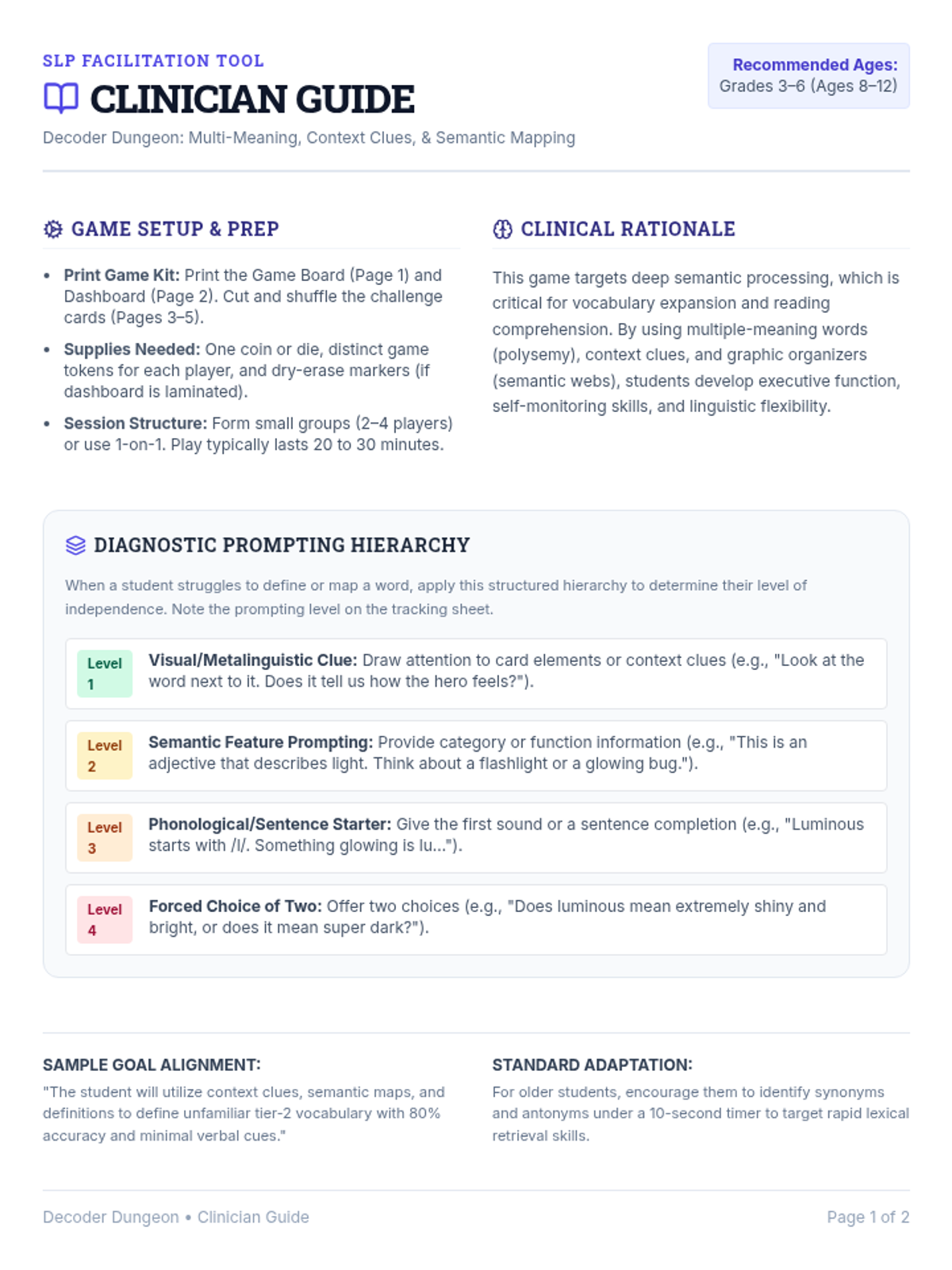
An immersive, fantasy-themed vocabulary game designed for speech-language pathology sessions targeting multiple-meaning words, context clues, and semantic mapping. This lesson includes an interactive printable game board, skill cards, and a comprehensive clinician facilitation guide with diagnostic tracking tools.
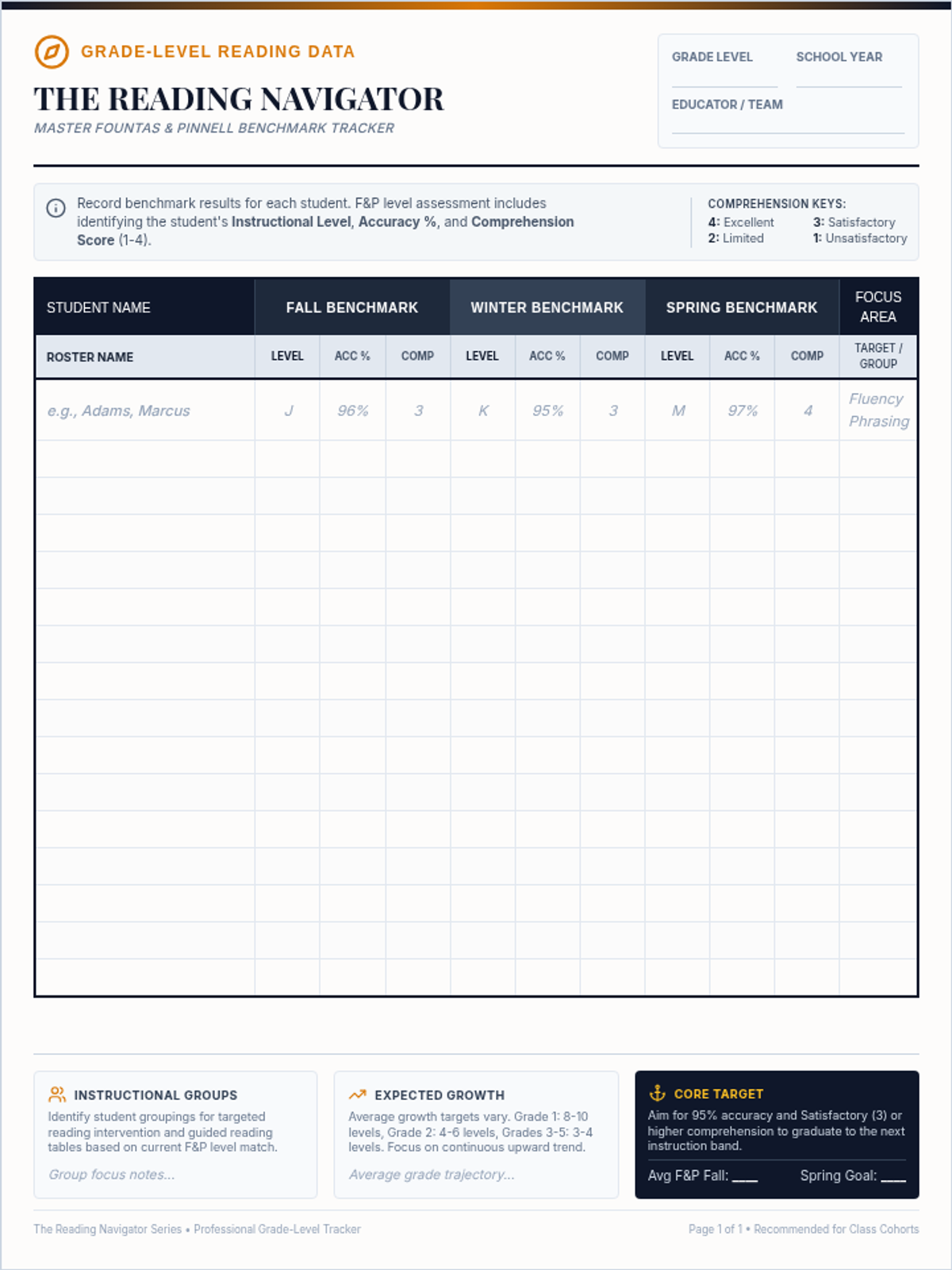
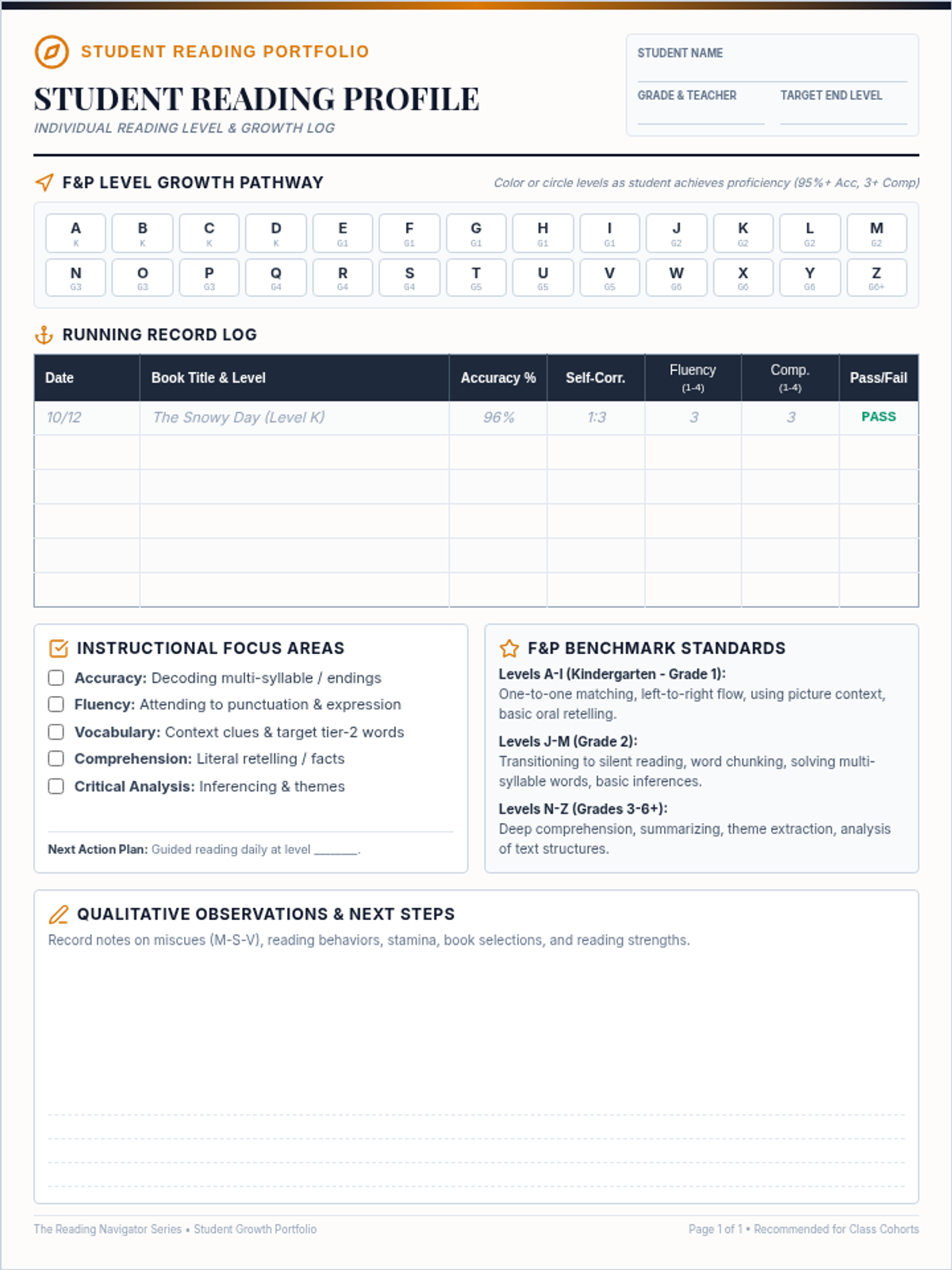
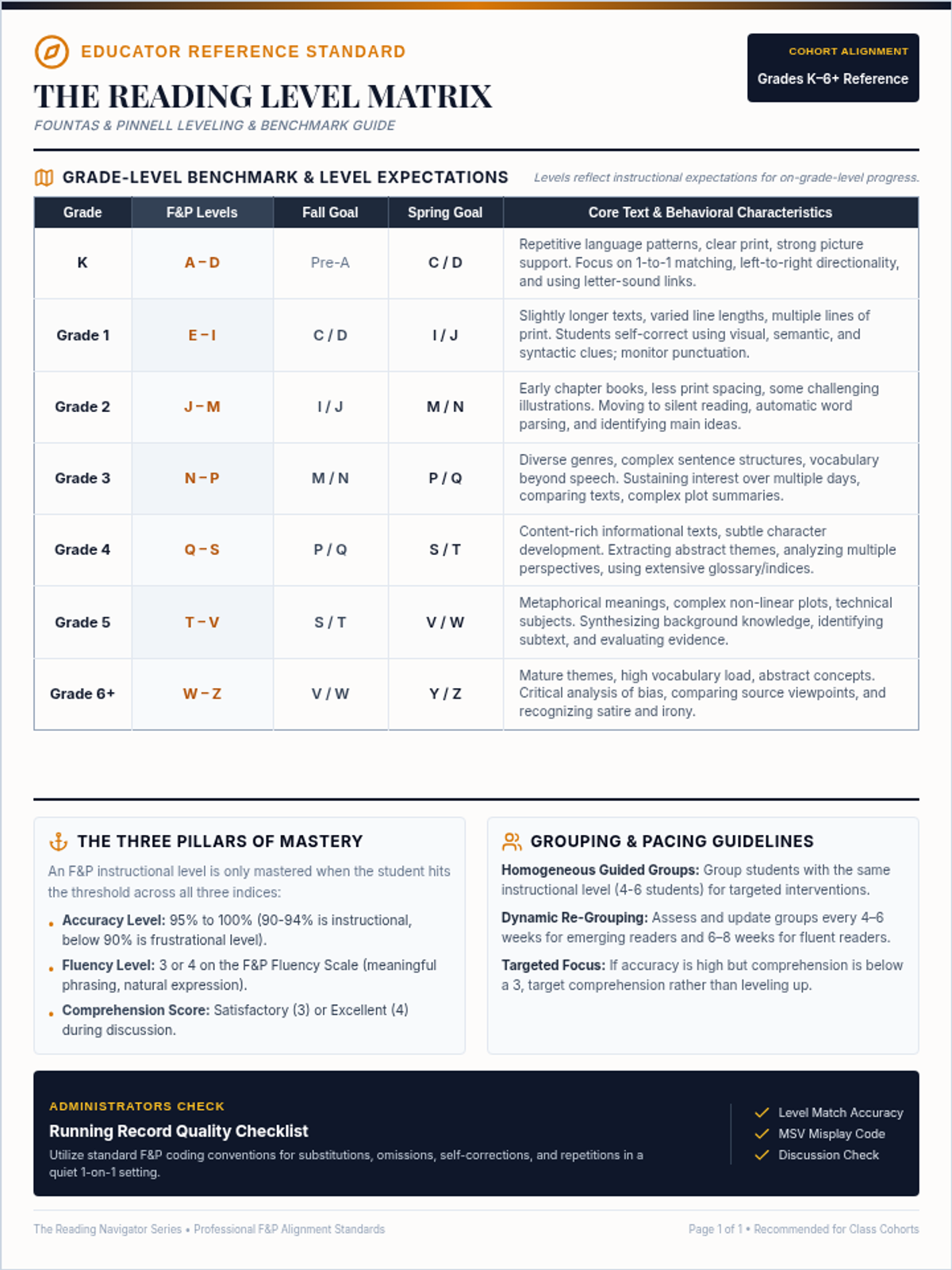
A comprehensive Fountas & Pinnell reading level tracking system for grade-level teams and individual teachers, featuring a master grade-level tracker, individual student profiles, and an F&P levels reference matrix.
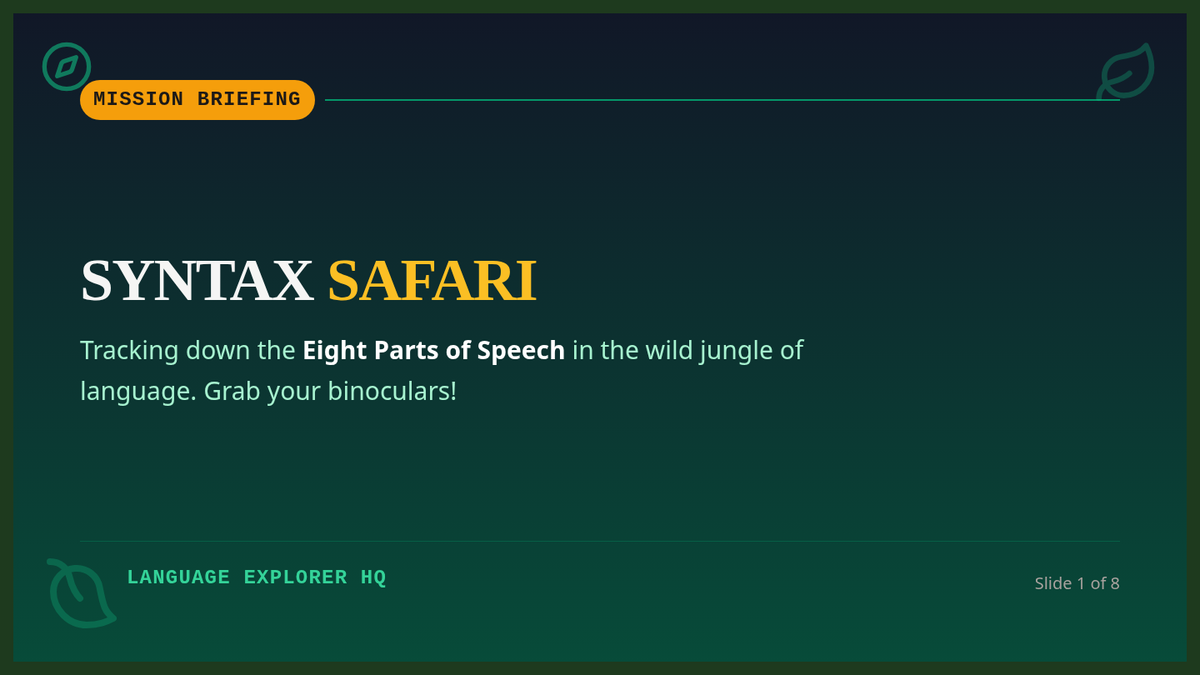
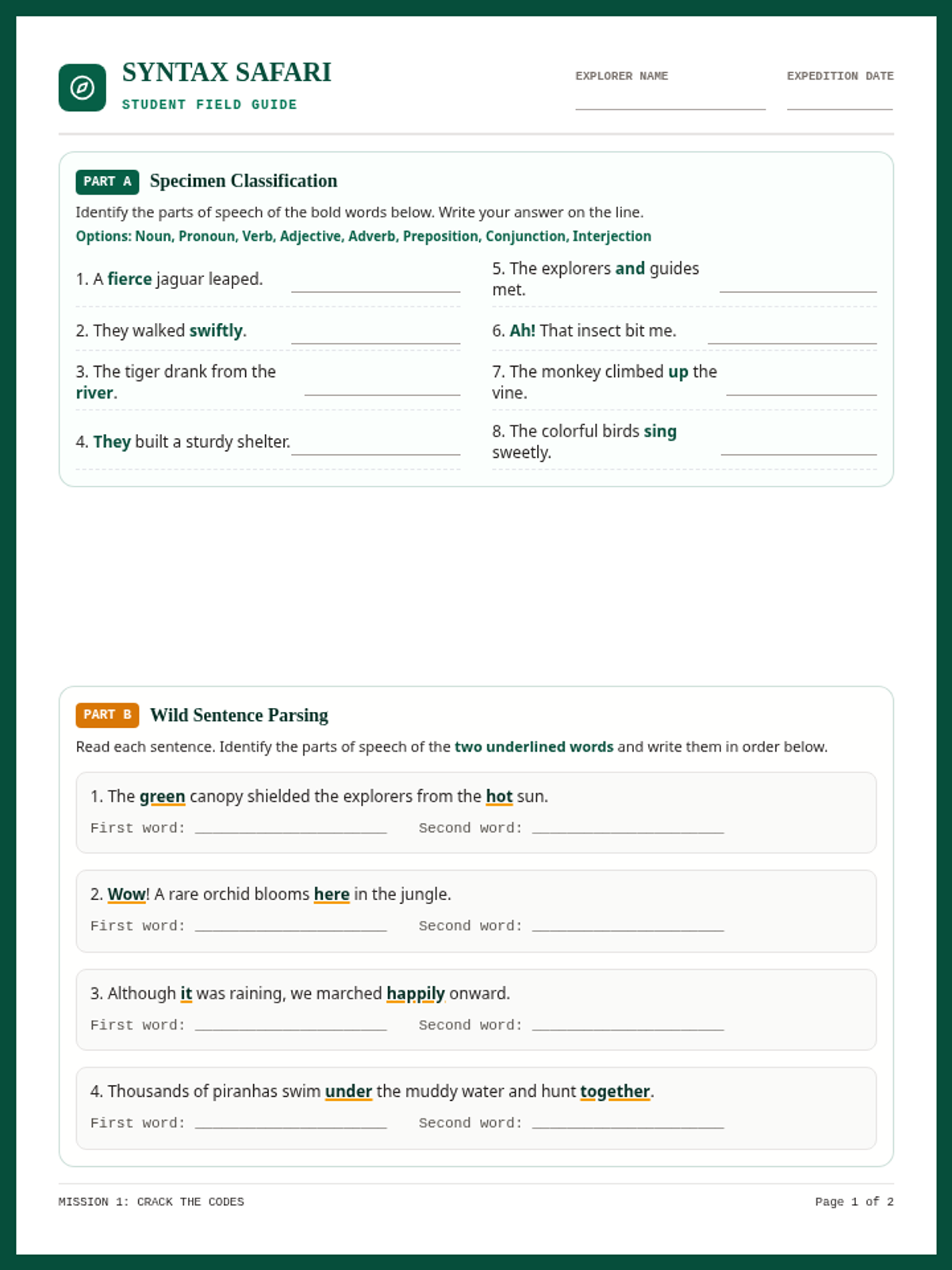
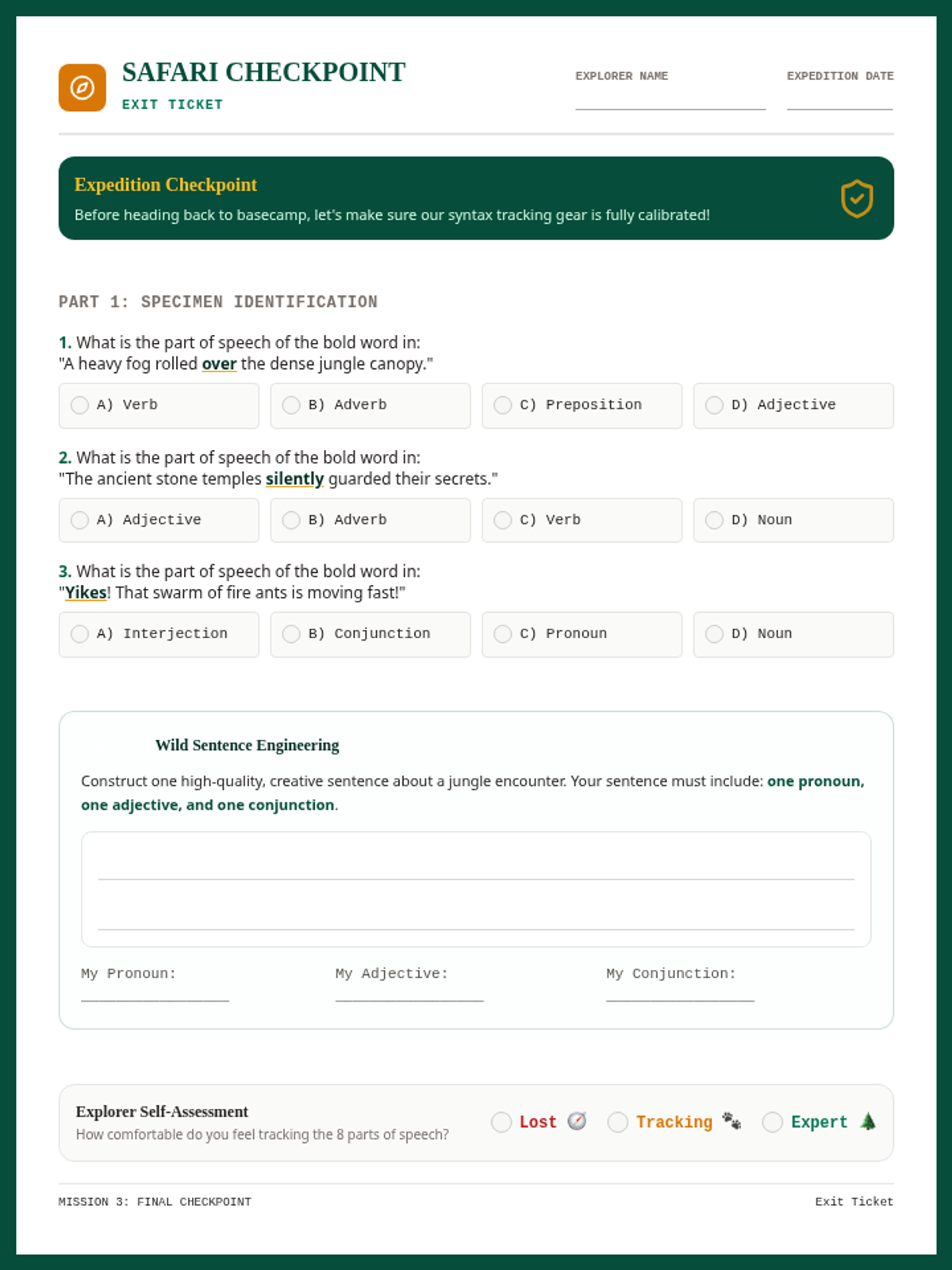
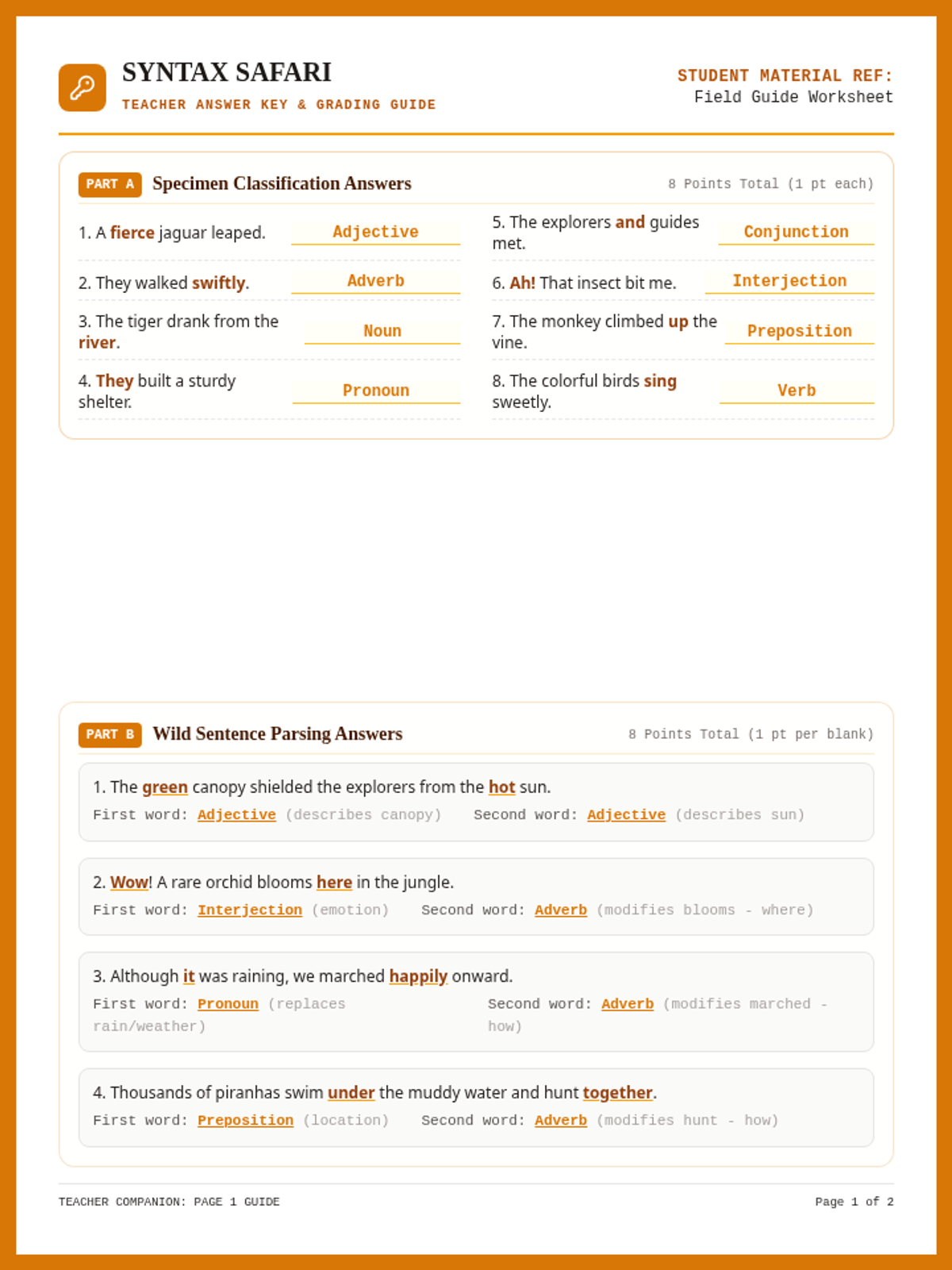
An immersive, adventure-themed lesson exploring the eight parts of speech. Students act as language explorers, tracking down and identifying nouns, pronouns, verbs, adjectives, adverbs, prepositions, conjunctions, and interjections in the wild.
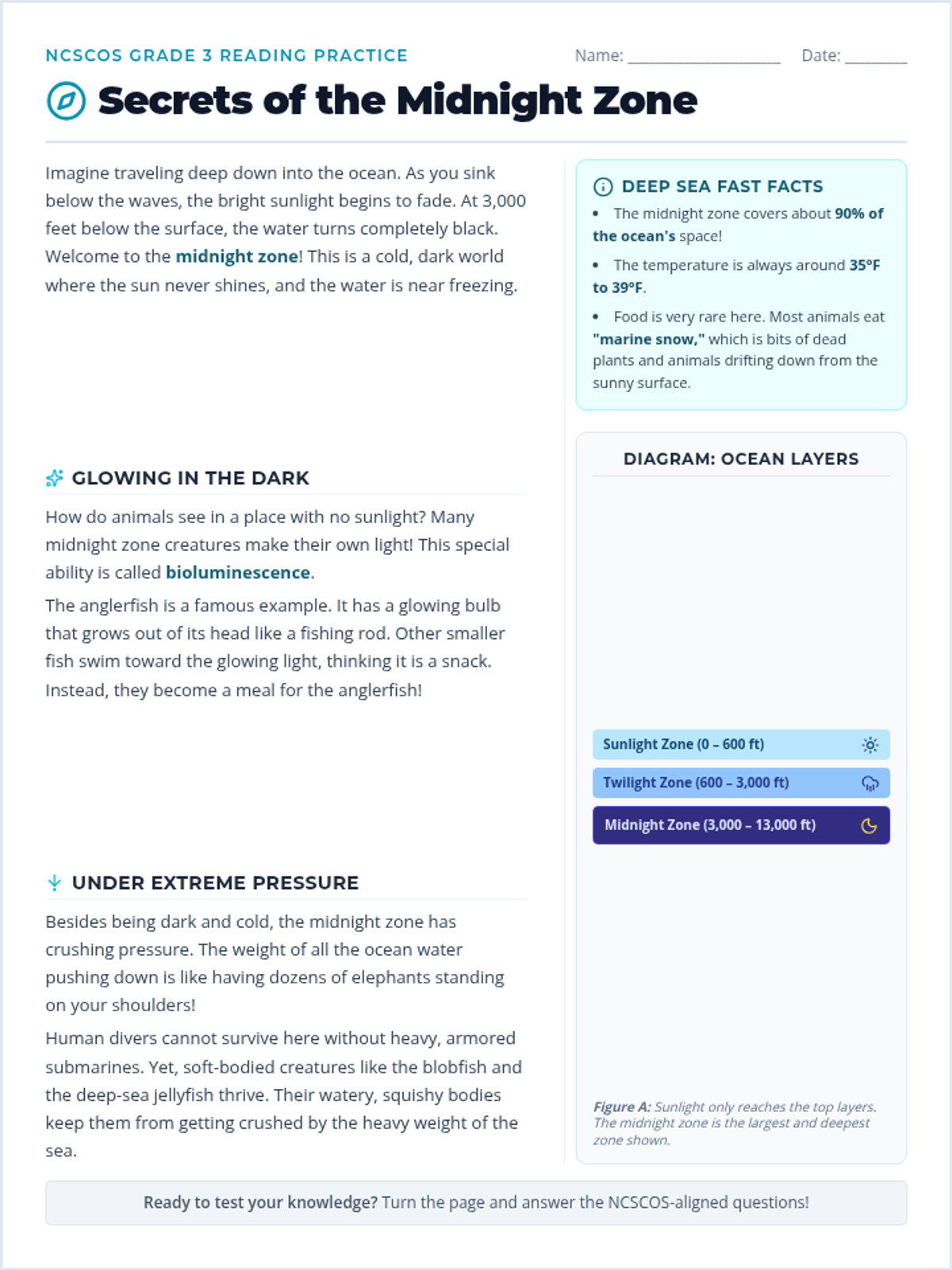
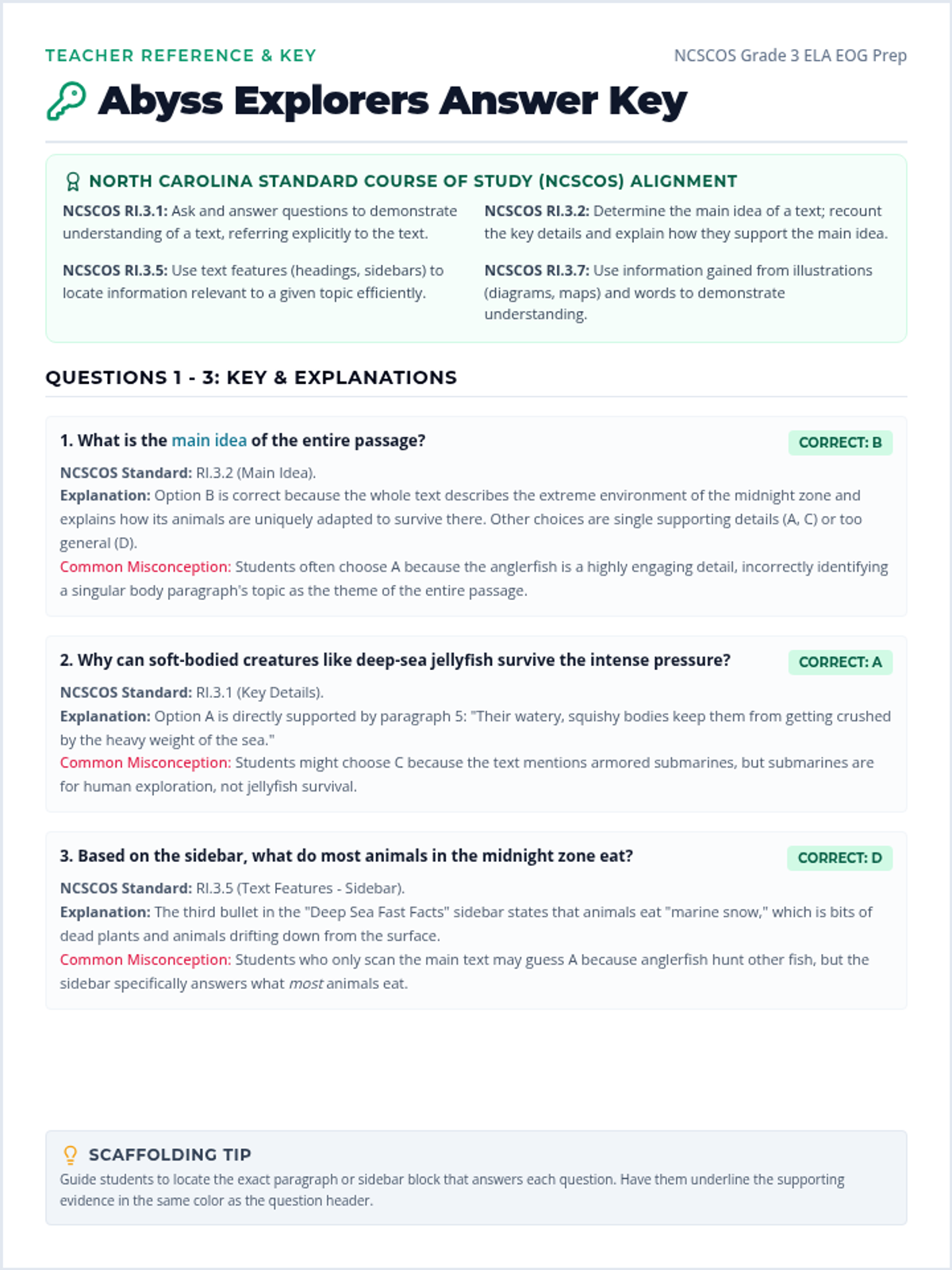
A reading comprehension lesson for 3rd grade students featuring a non-fiction informational passage about deep-sea exploration. The lesson focuses on analyzing text features, identifying the main idea, and locating supporting details in a complex non-fiction text.
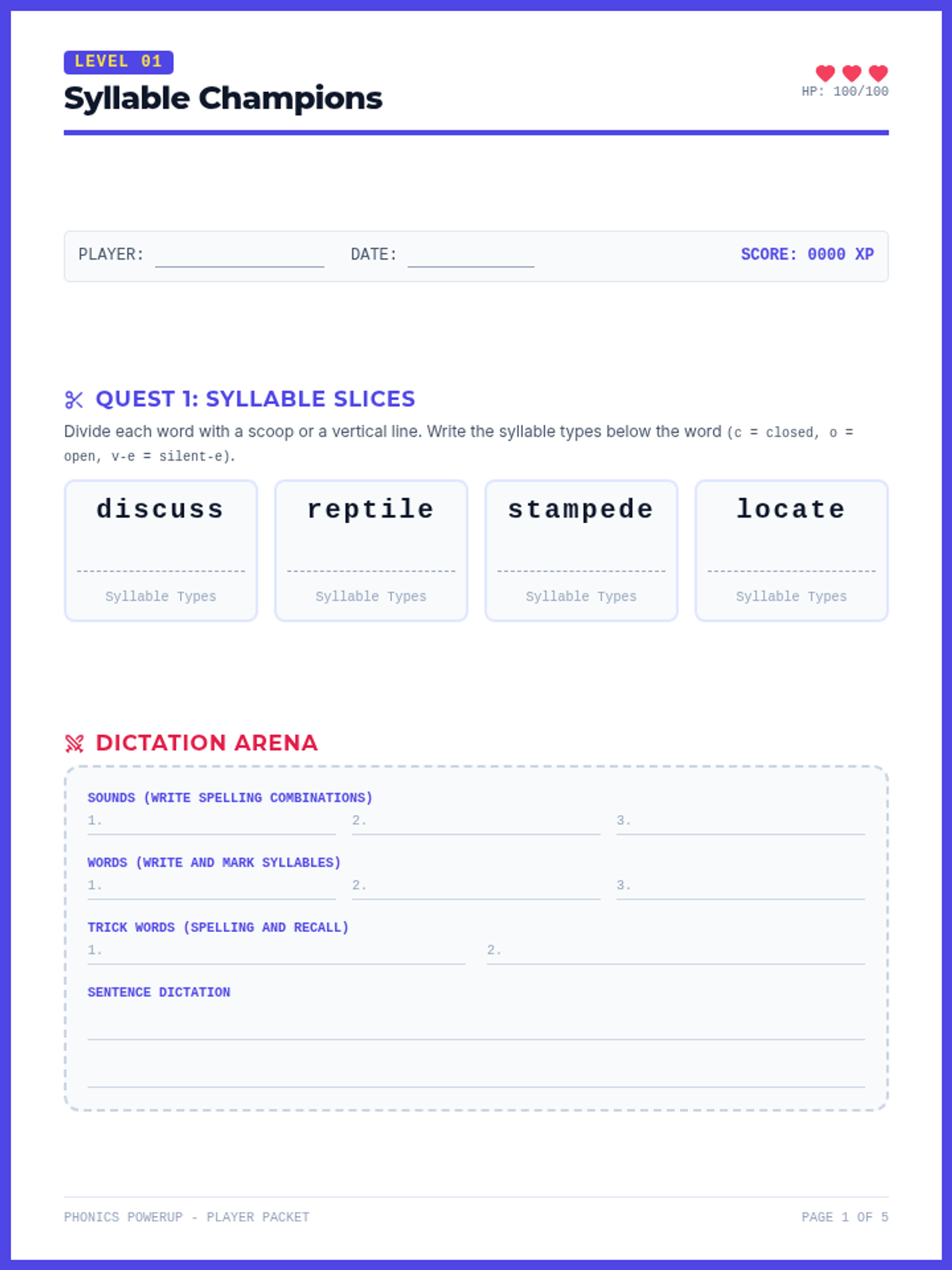
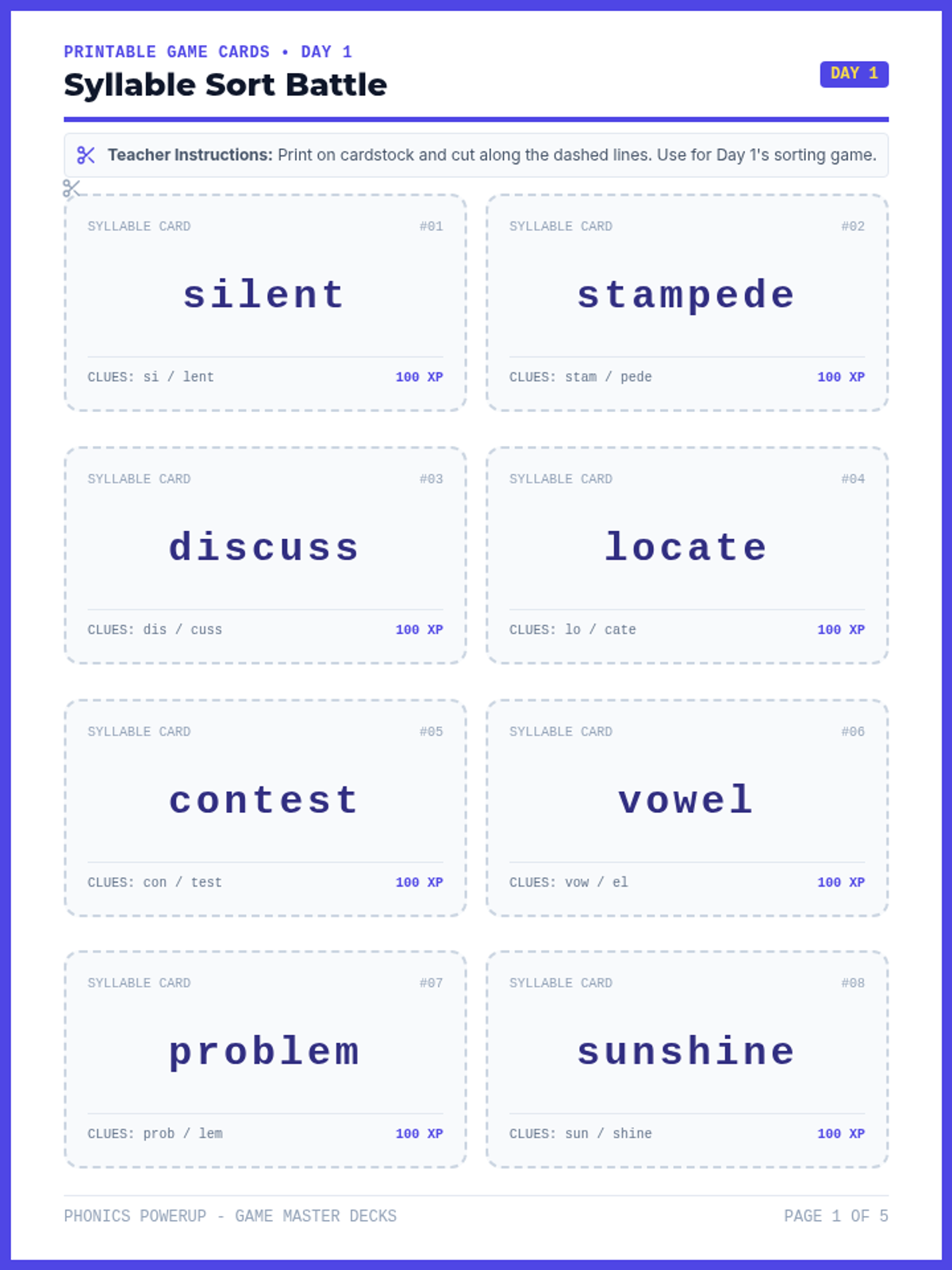
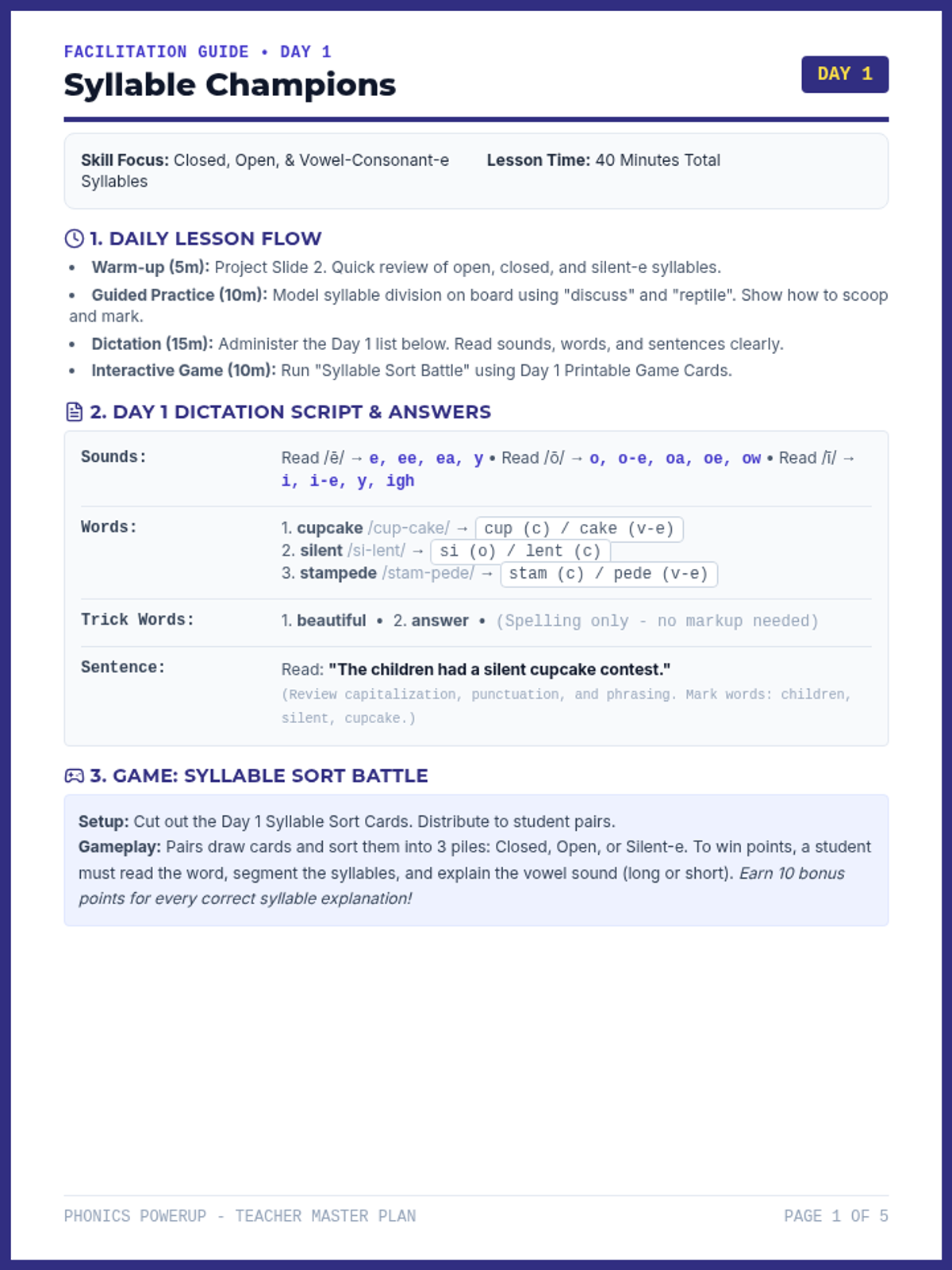
A comprehensive 5-day review of Fundations Level 3 skills (Units 1-9), focusing on suffix rules, syllable division, dictation, and interactive spelling games. Includes visual slides, a printable student packet, a teacher script, and interactive game cards.
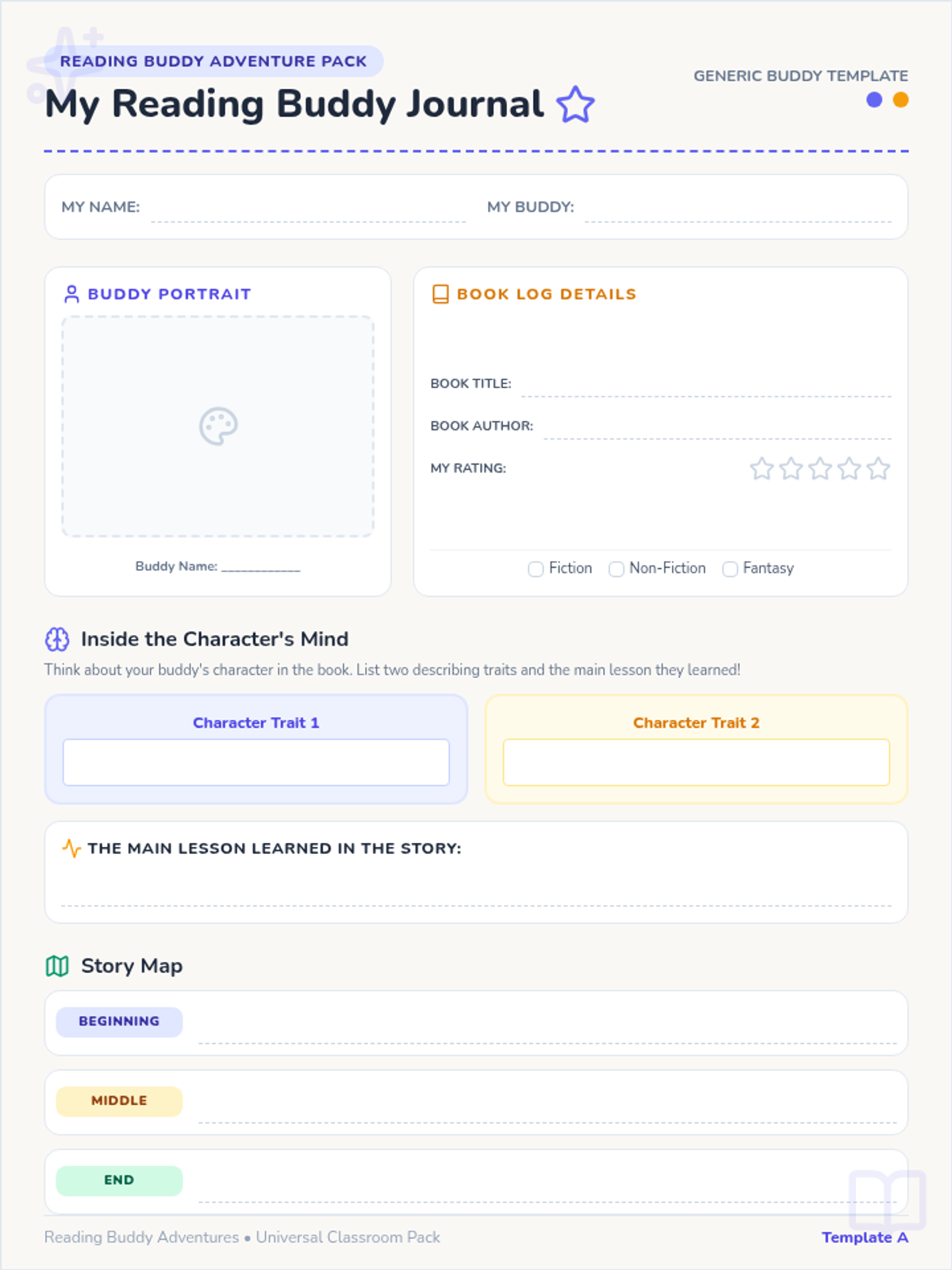
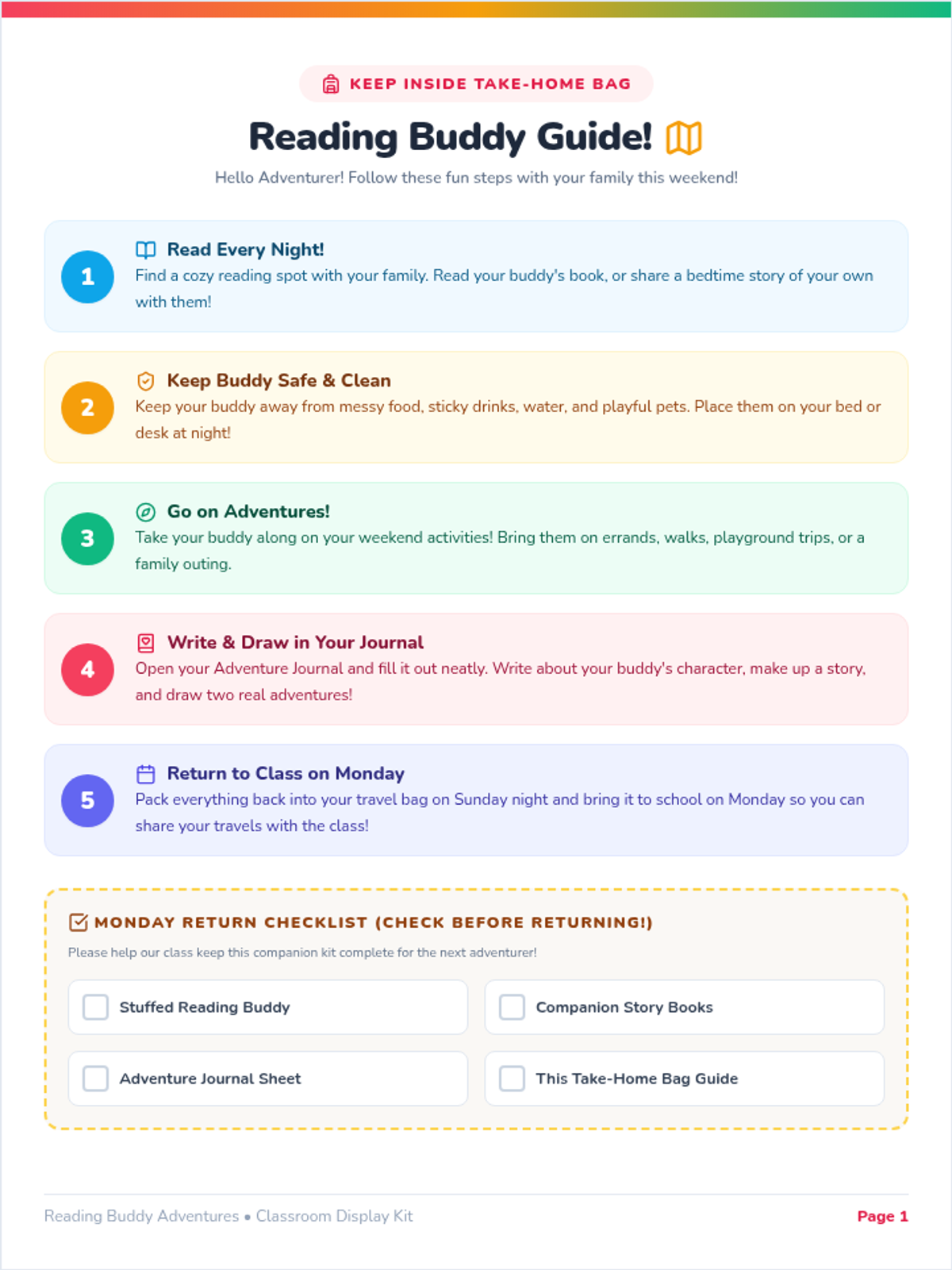
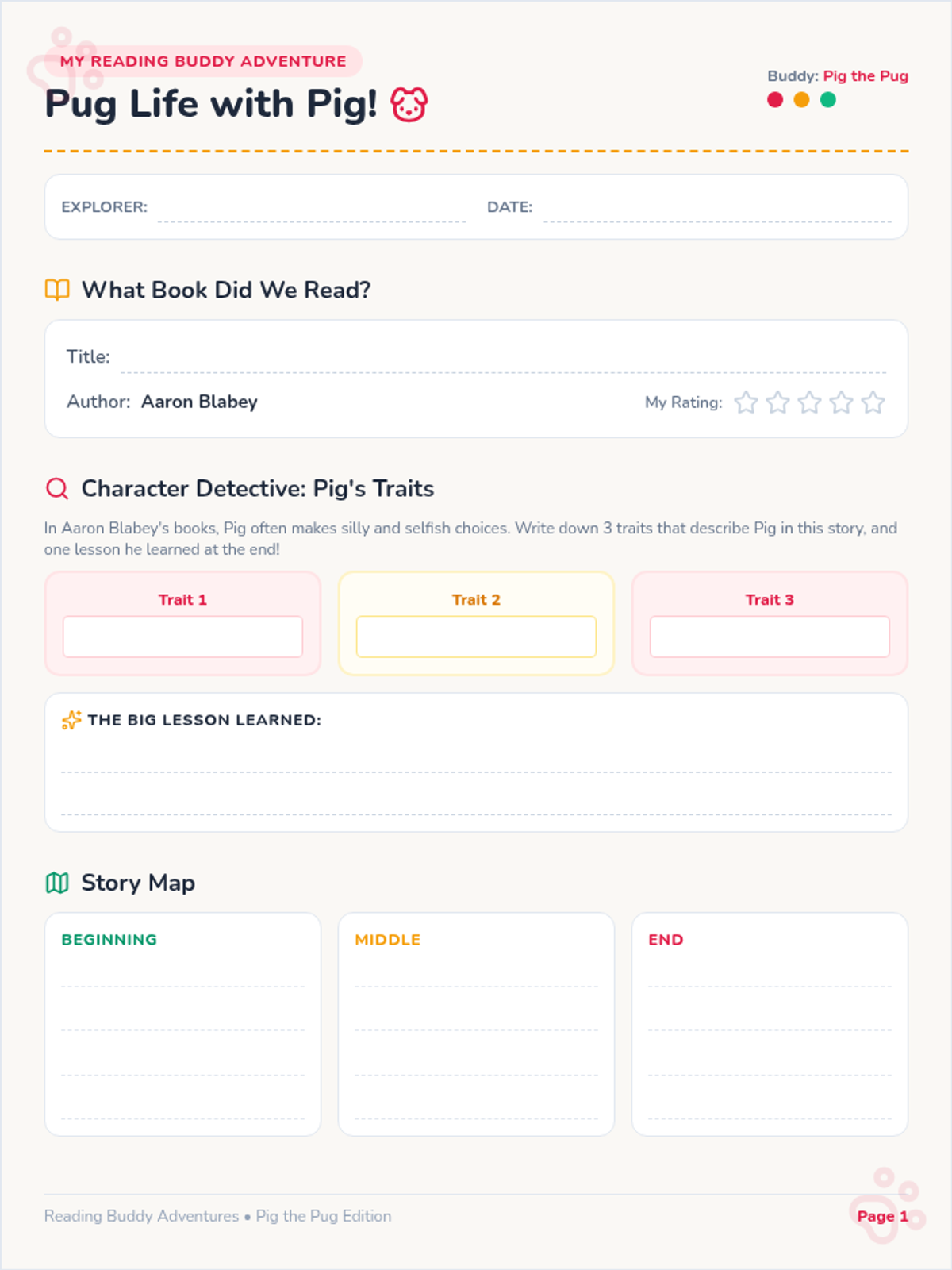
A magical reading initiative where students take home a stuffed book character (starting with Pig the Pug) along with companion books. They read the books, document character traits, write imaginative stories, and keep an interactive travel journal of their real-world adventures with their buddy.
A targeted set of practice materials for the Grade 3 Language standards: L.3.4 (Unknown and Multiple-Meaning Words) and L.3.5.a (Literal and Nonliteral Meanings). Includes a student test booklet and teacher answer key.
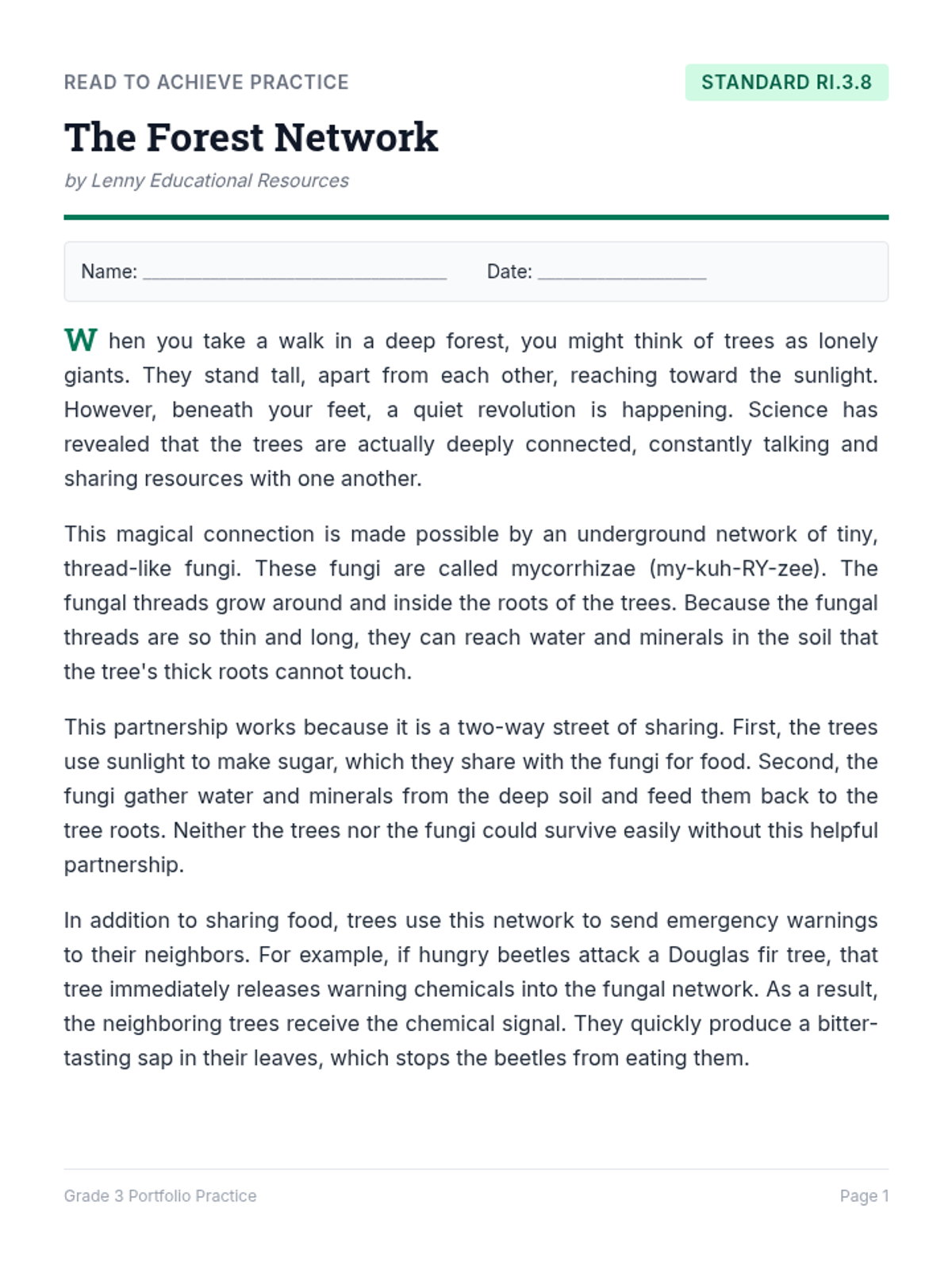
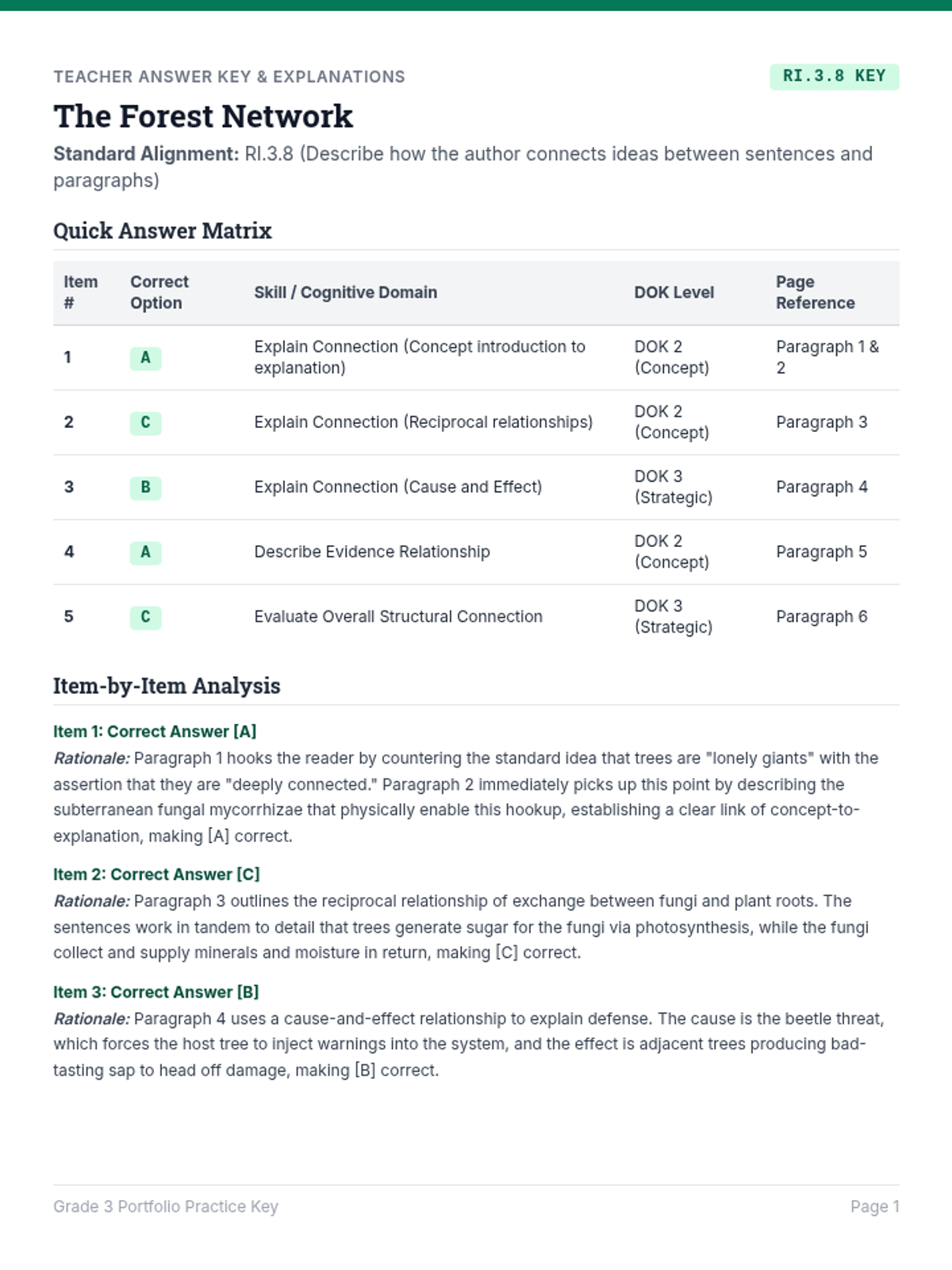
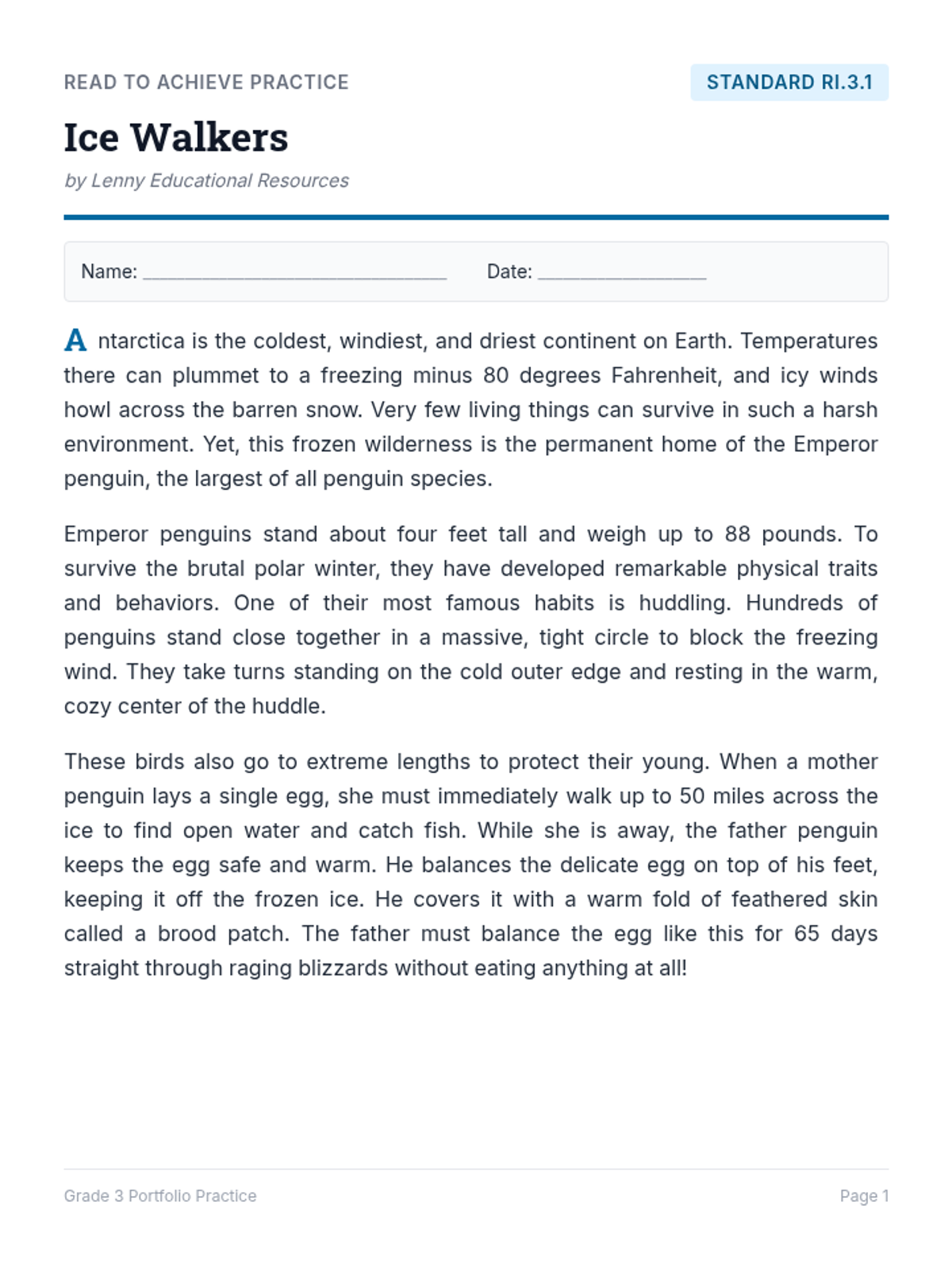
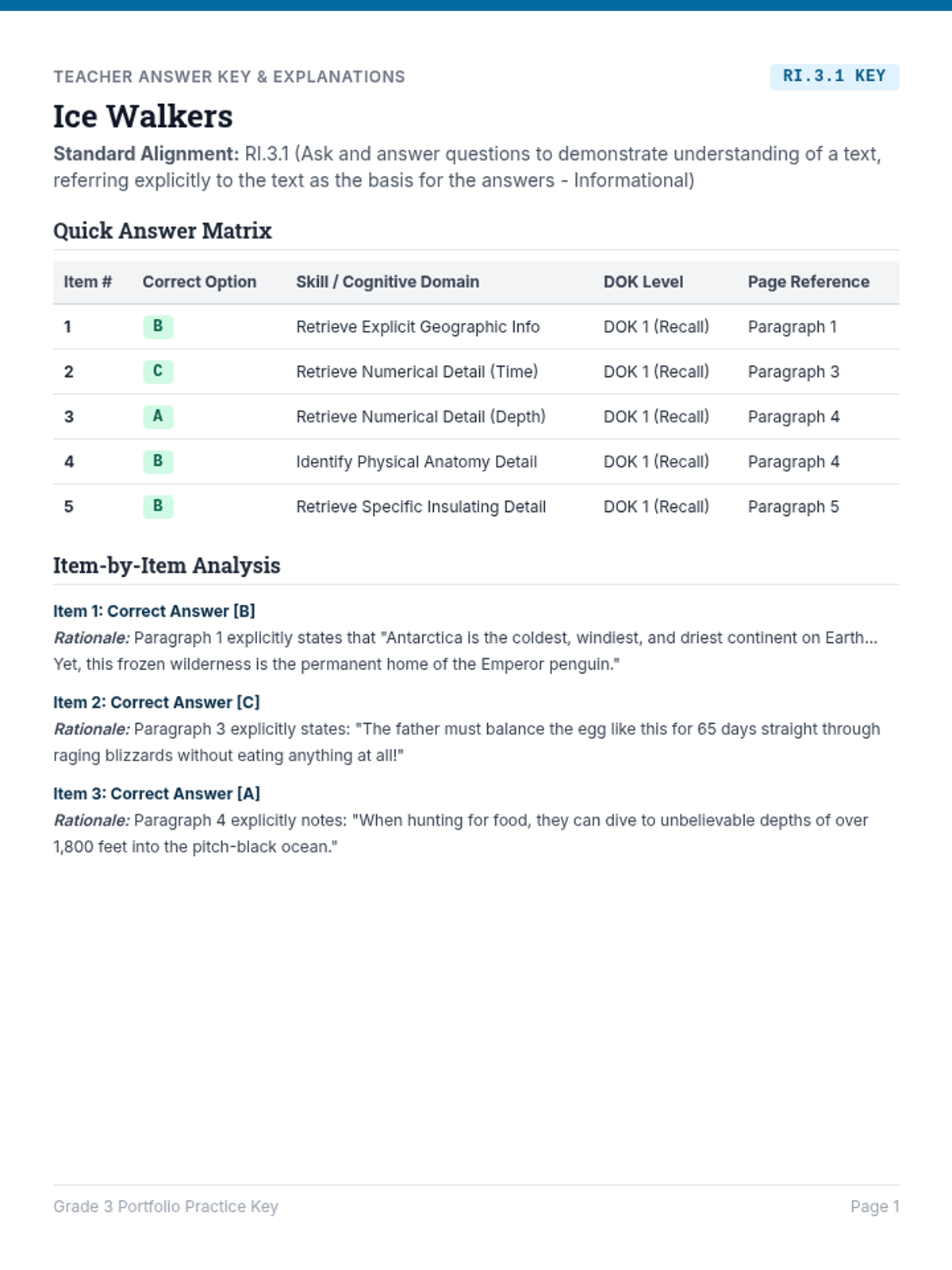
A targeted set of practice materials for the Grade 3 Informational Text standards: RI.3.1 (Evidence), RI.3.2 (Main Idea), RI.3.3 (Relationships), RI.3.4 (Academic/Domain Words), and RI.3.8 (Author's Points/Connections). Includes a comprehensive student test booklet and teacher answer key.
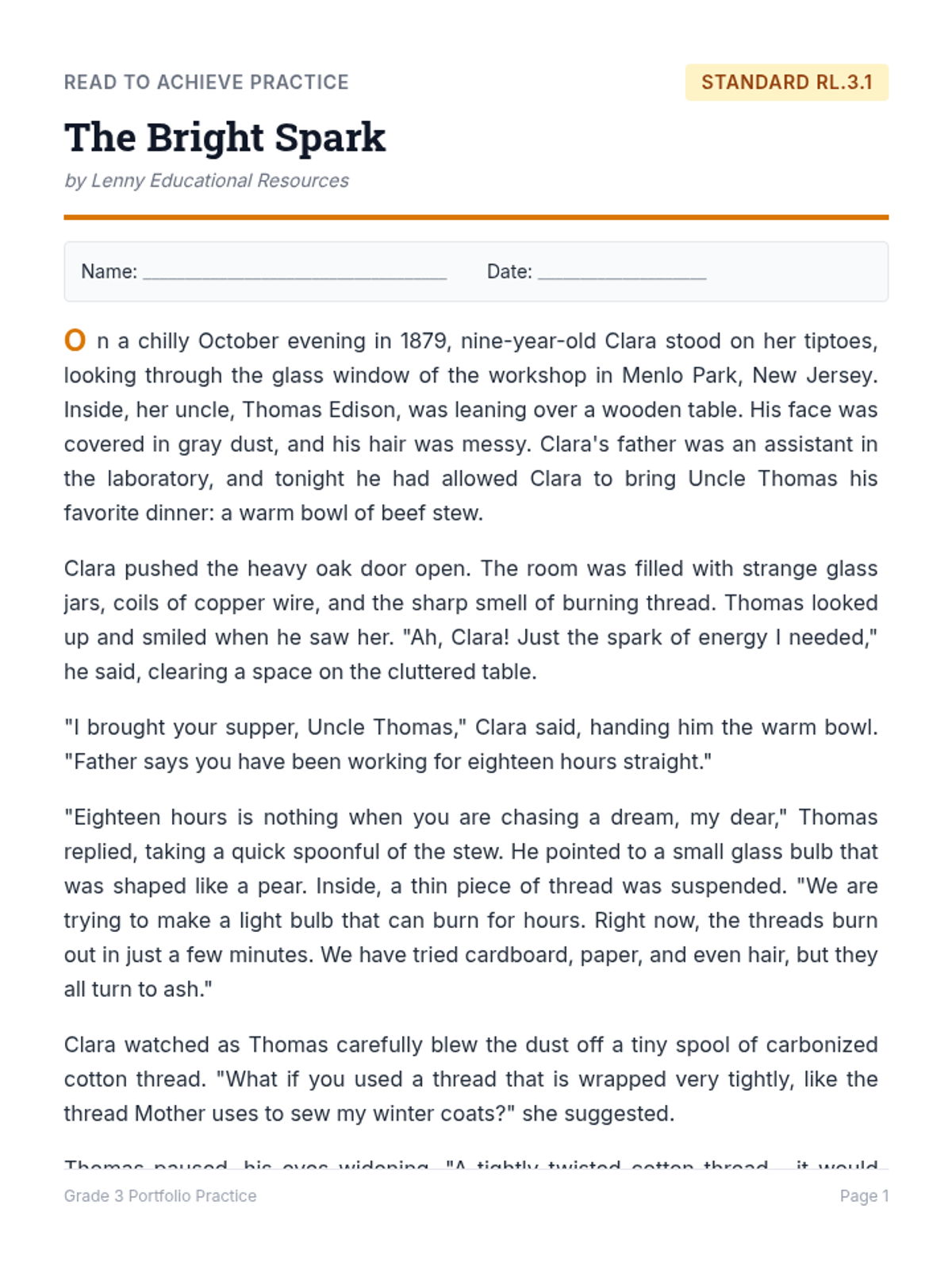
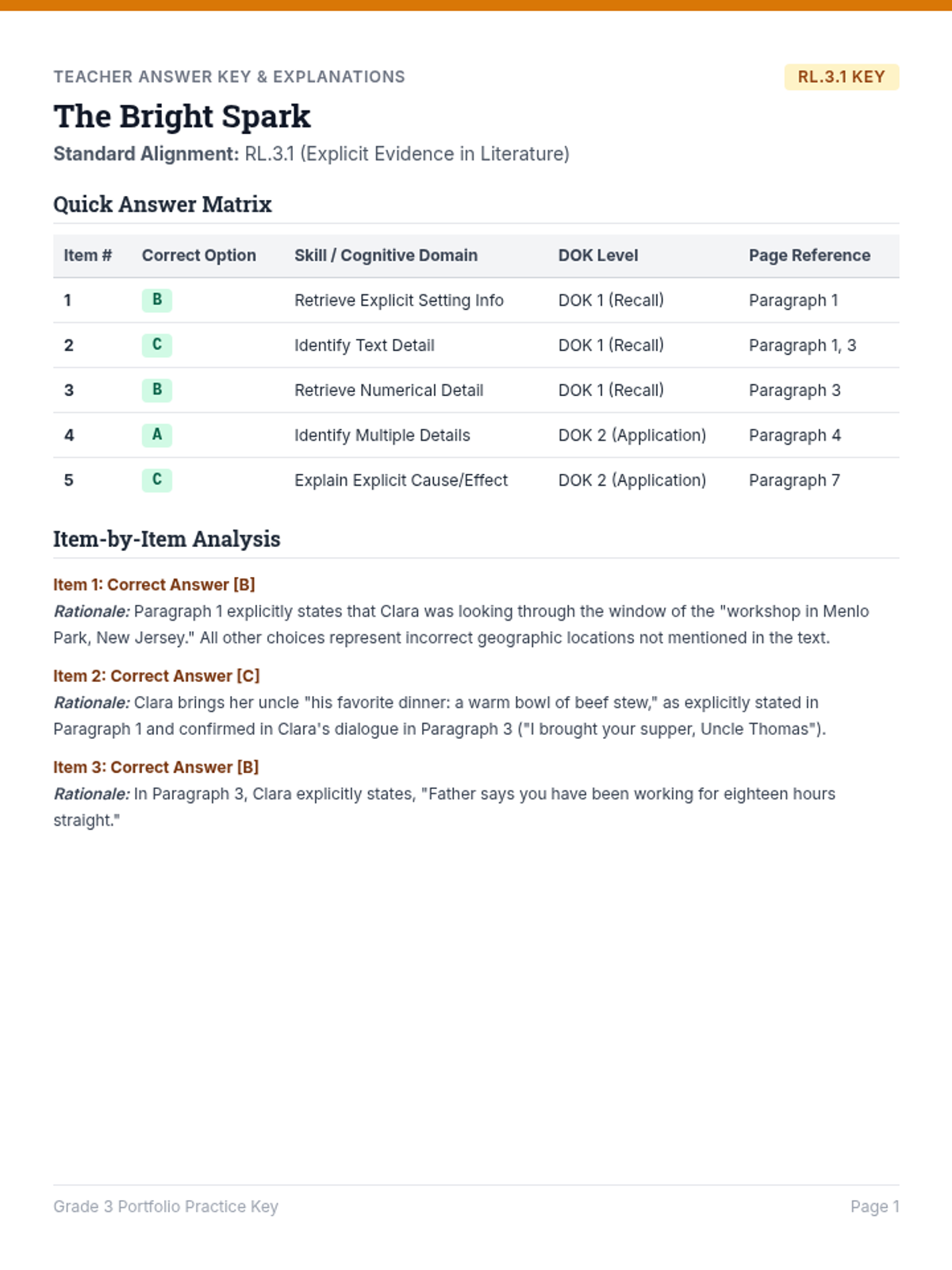
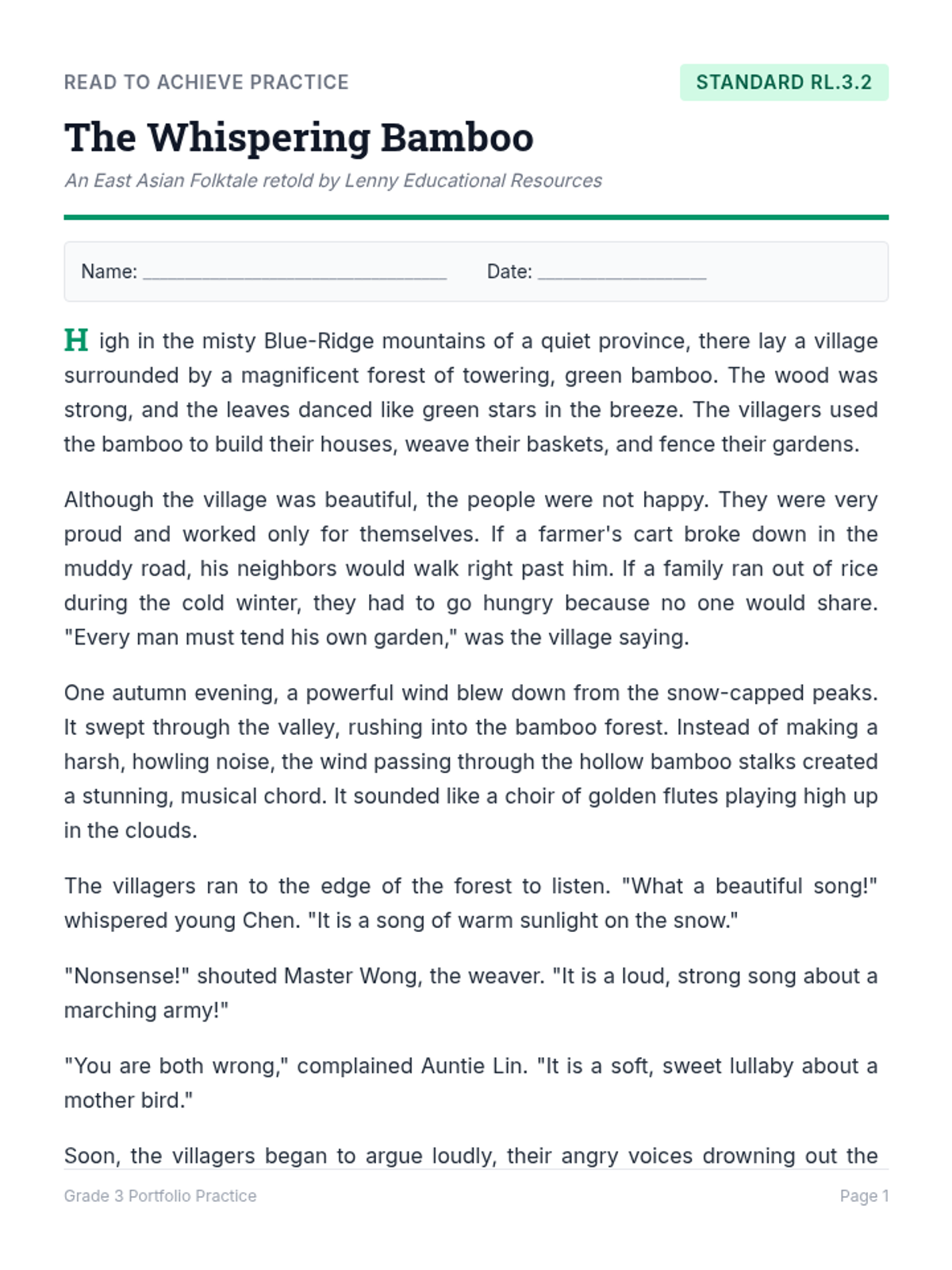
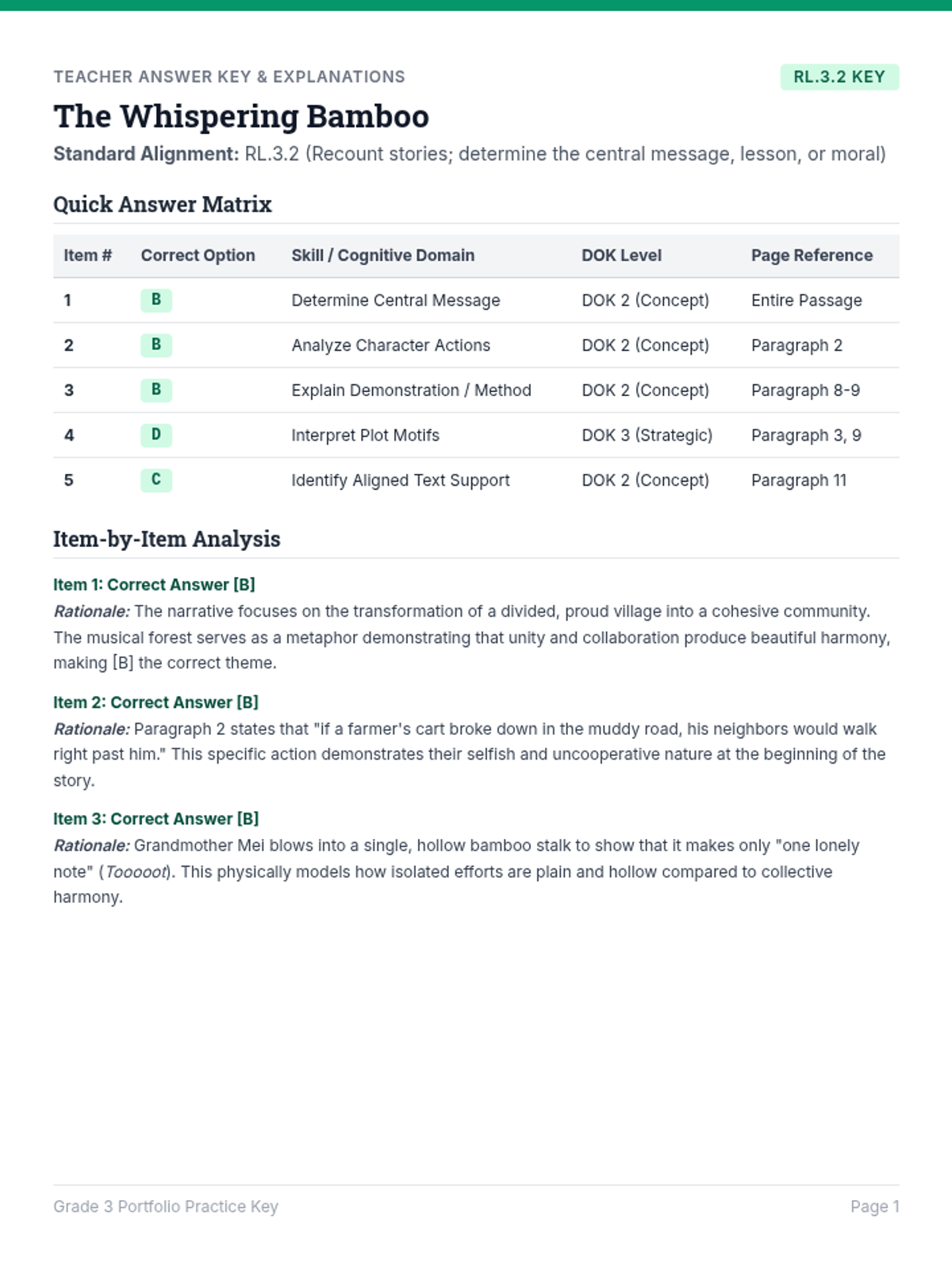
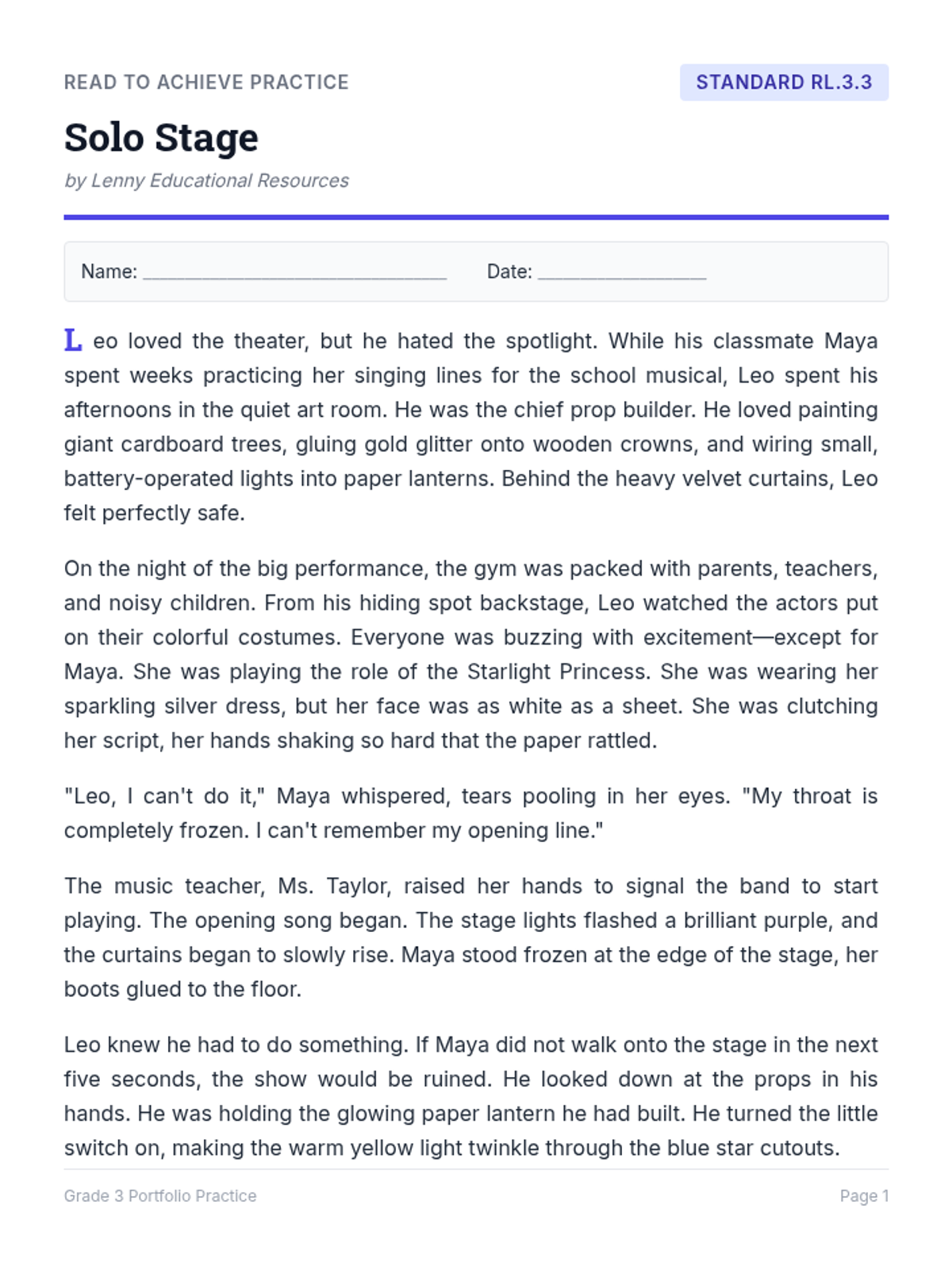
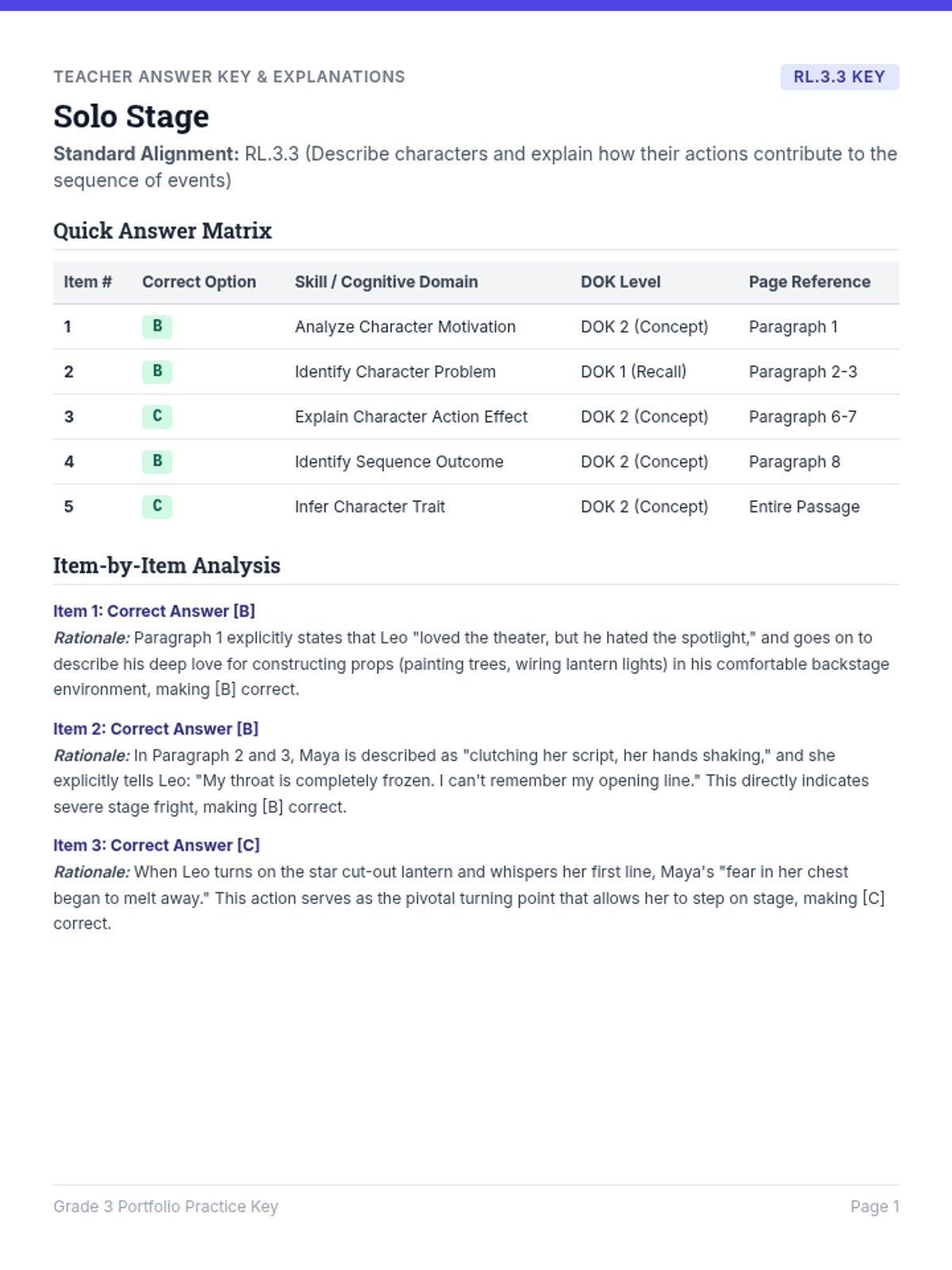
A targeted set of practice materials for the Grade 3 Literature standards: RL.3.1 (Explicit Evidence), RL.3.2 (Central Message/Moral), RL.3.3 (Character Contributions), and RL.3.4 (Words and Phrases in Context). Includes a comprehensive student test booklet and teacher answer key.
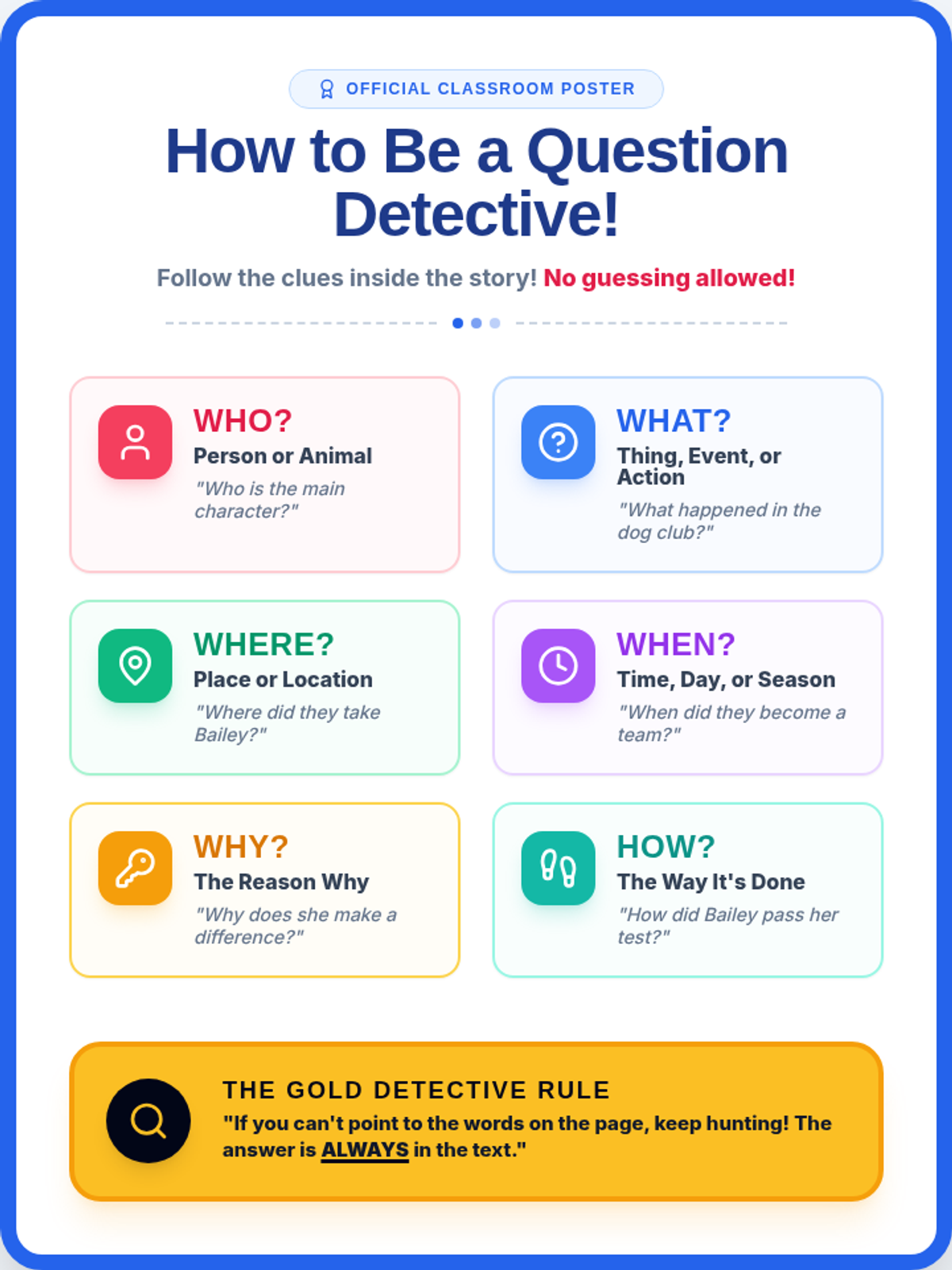
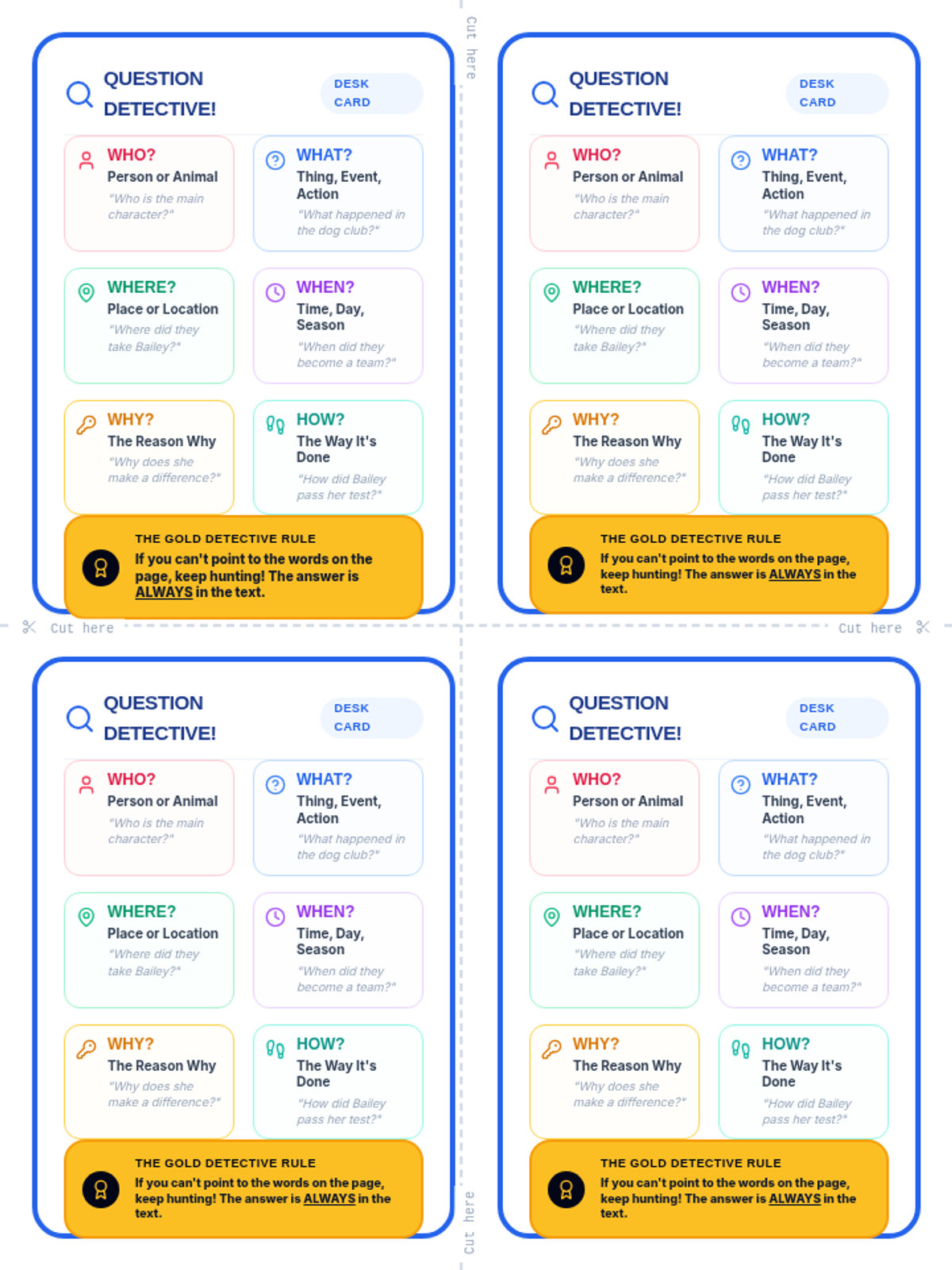
A collection of visual resources to help students locate text evidence and answer key comprehension questions using the 5Ws and How framework.
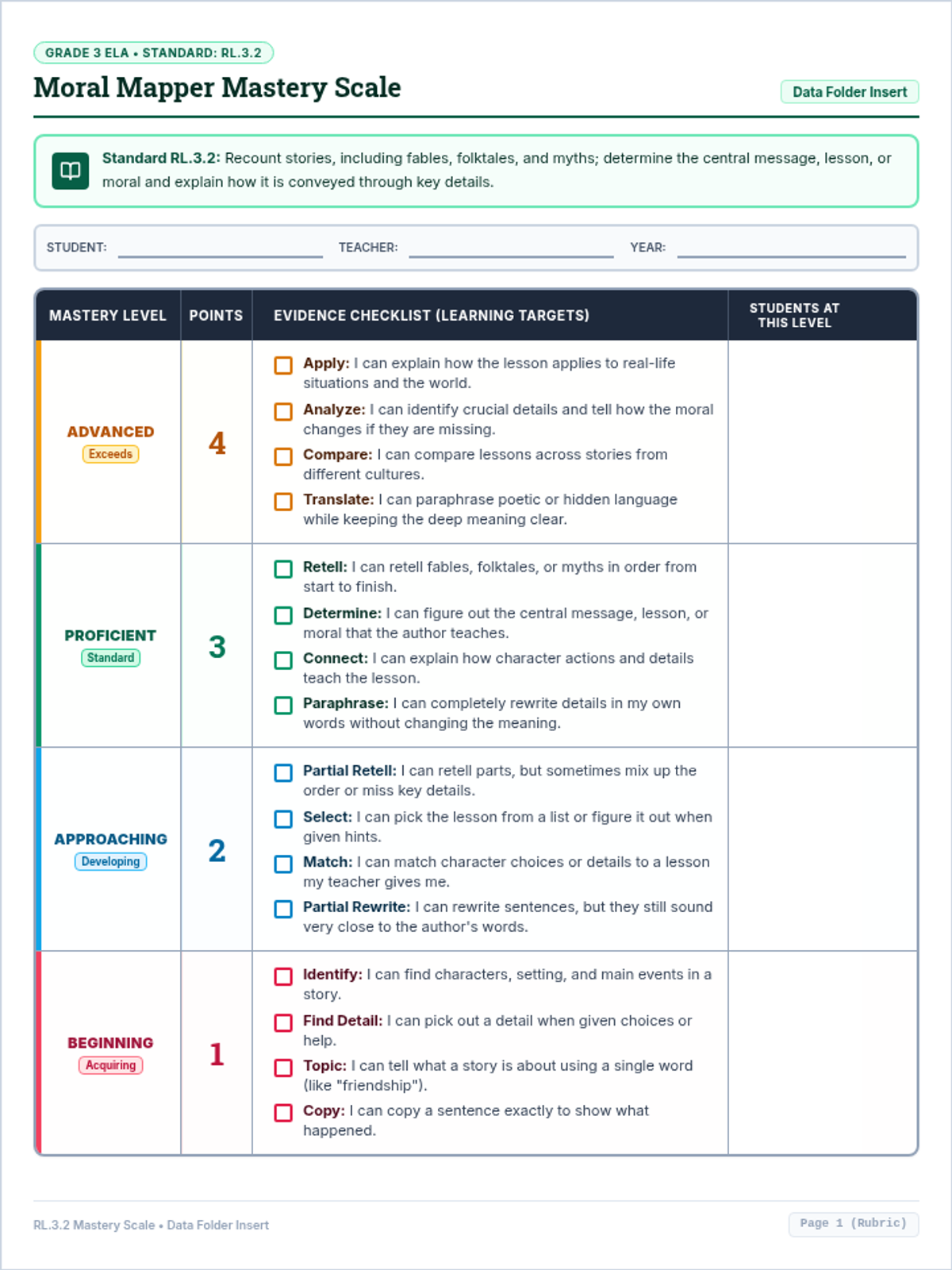
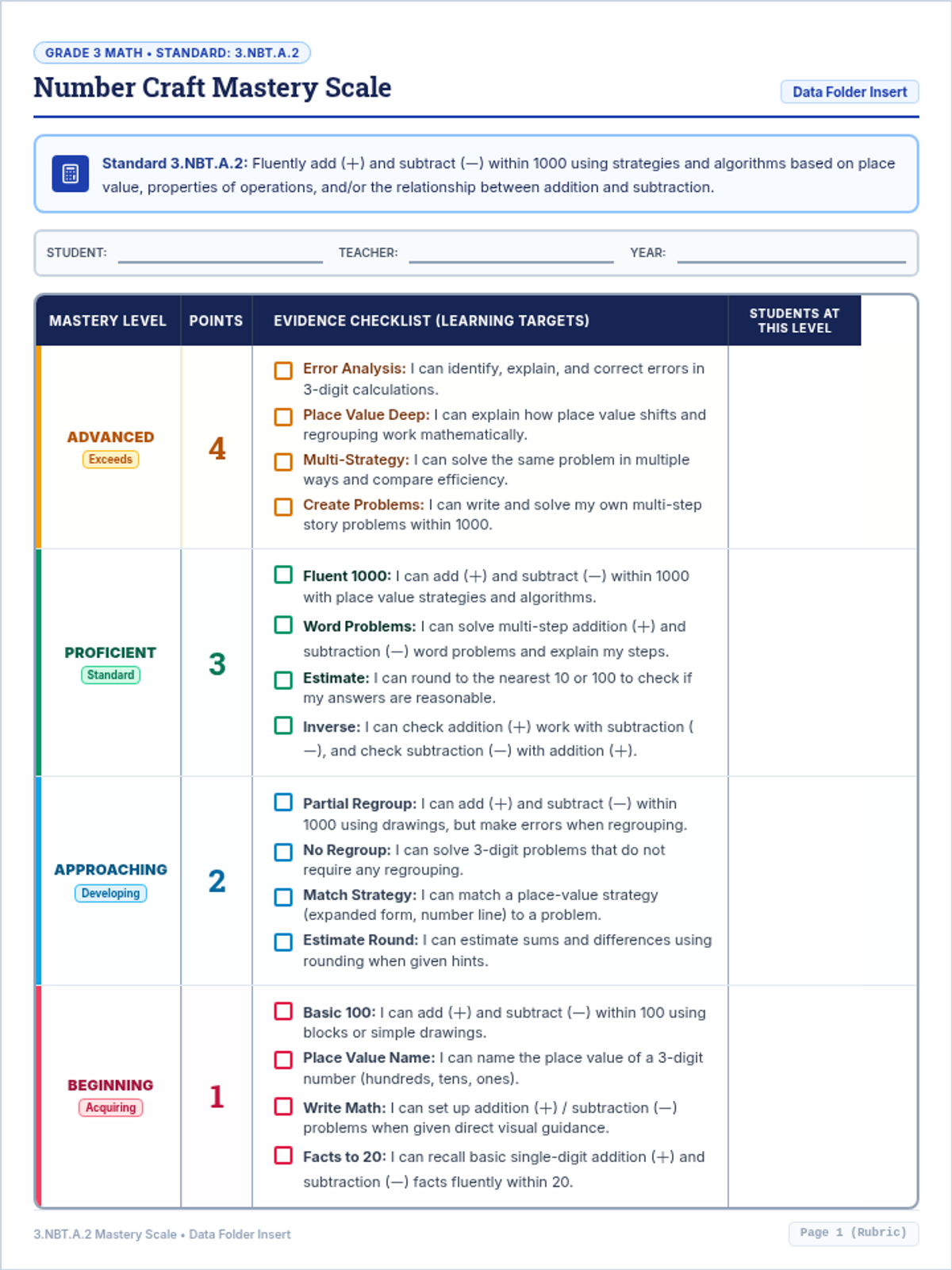
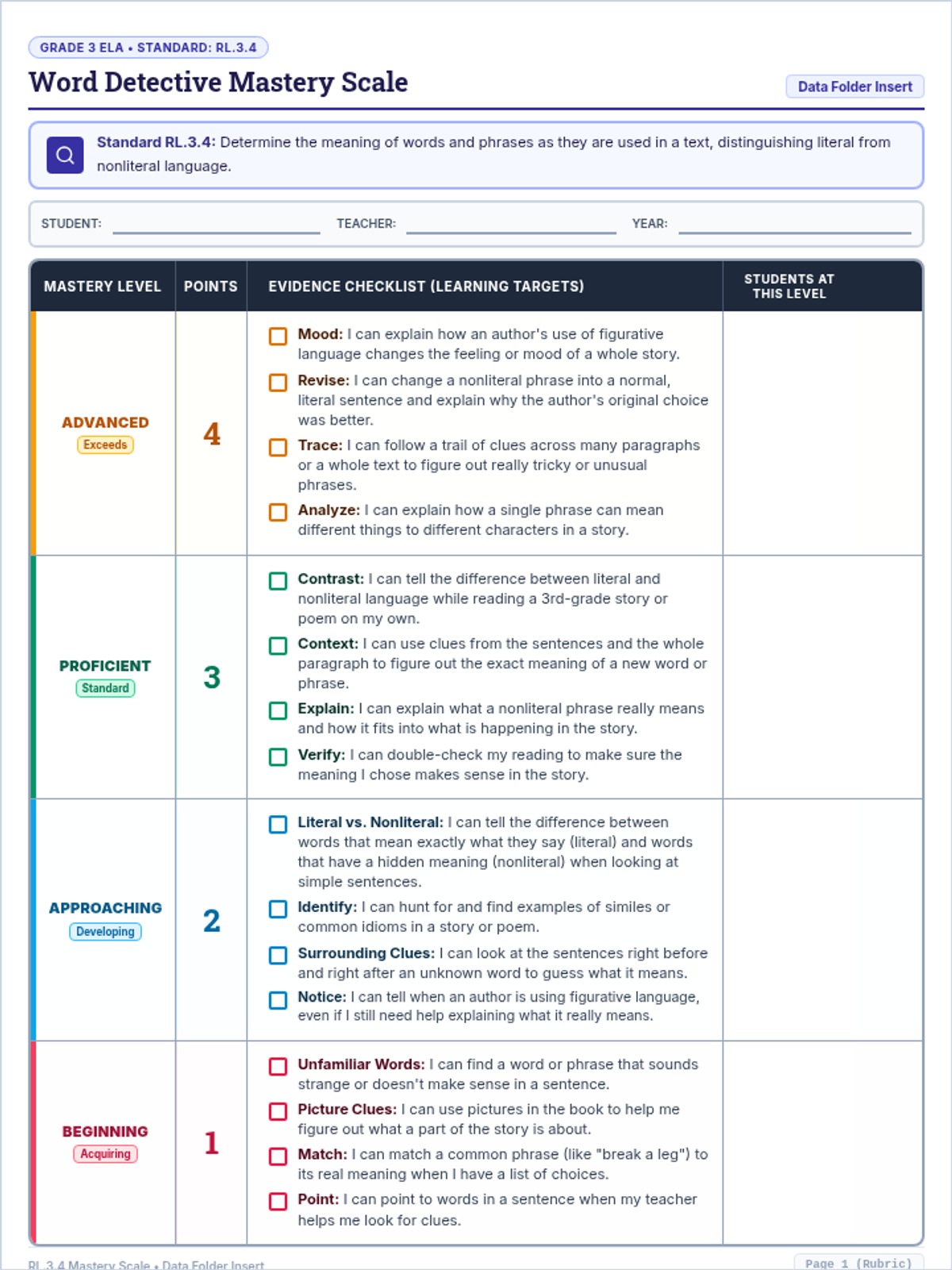
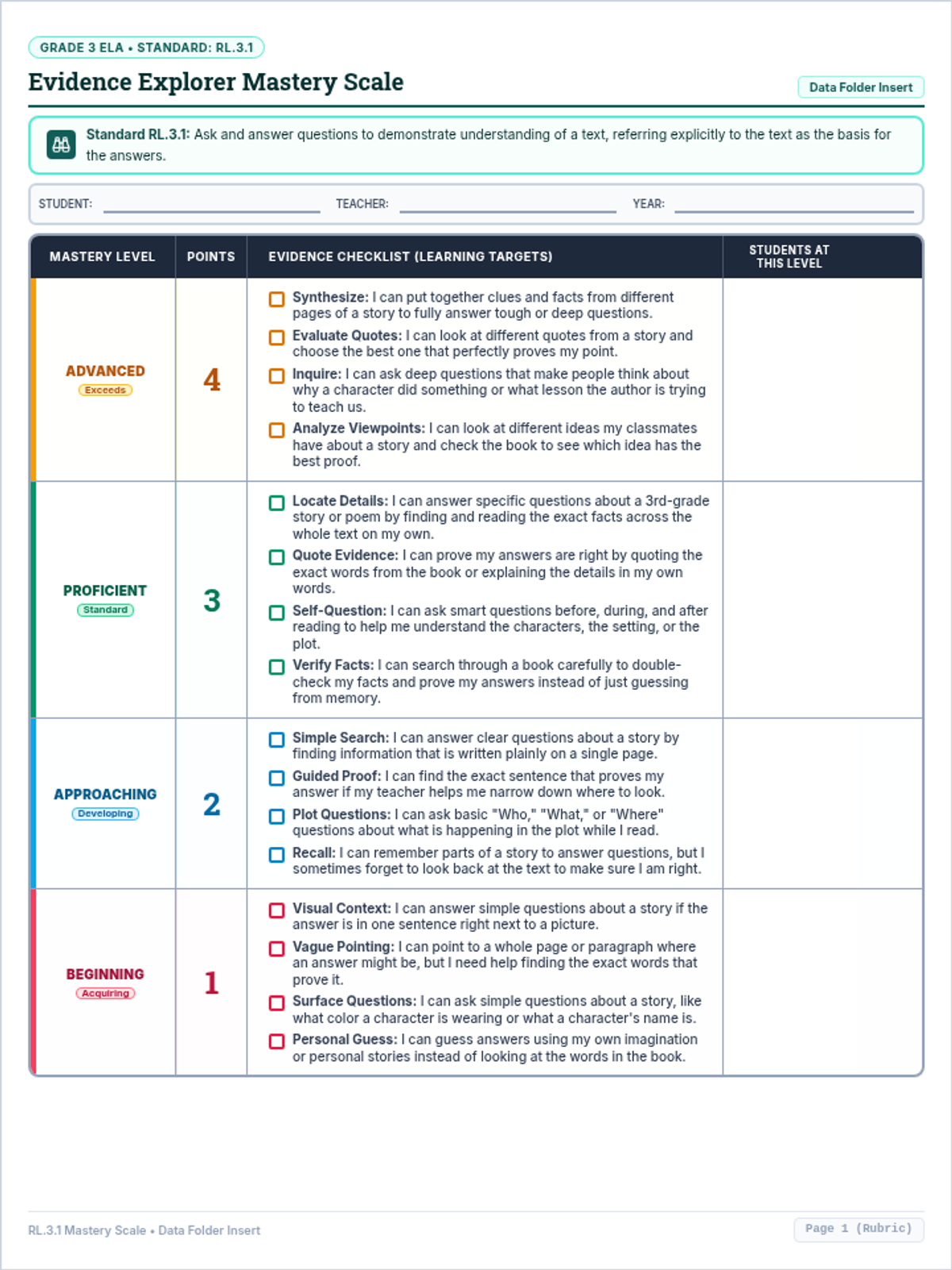
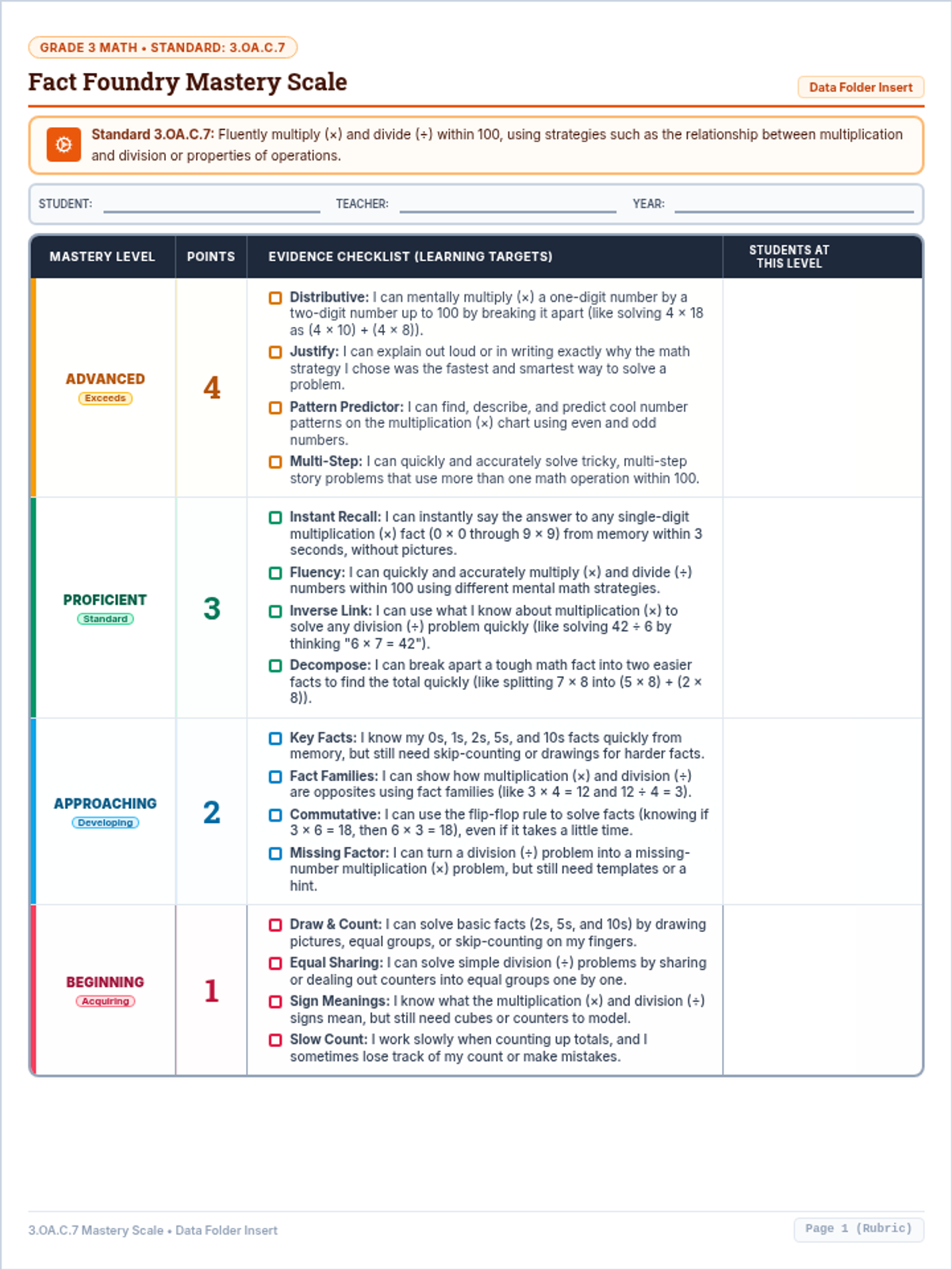
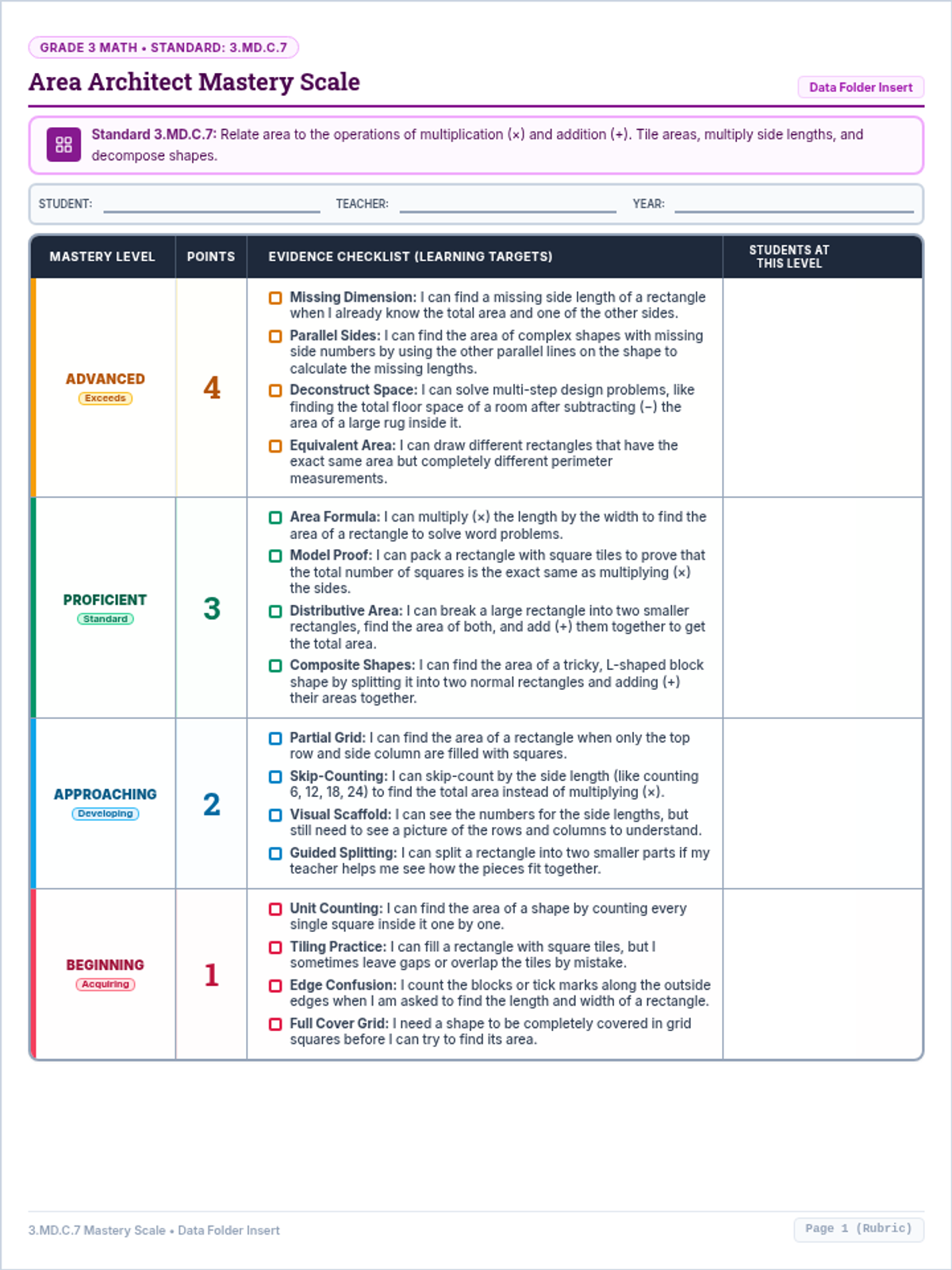
A collection of beautifully designed, compact data folder inserts featuring proficiency scale charts and progress tracking logs for Grade 3 standards.
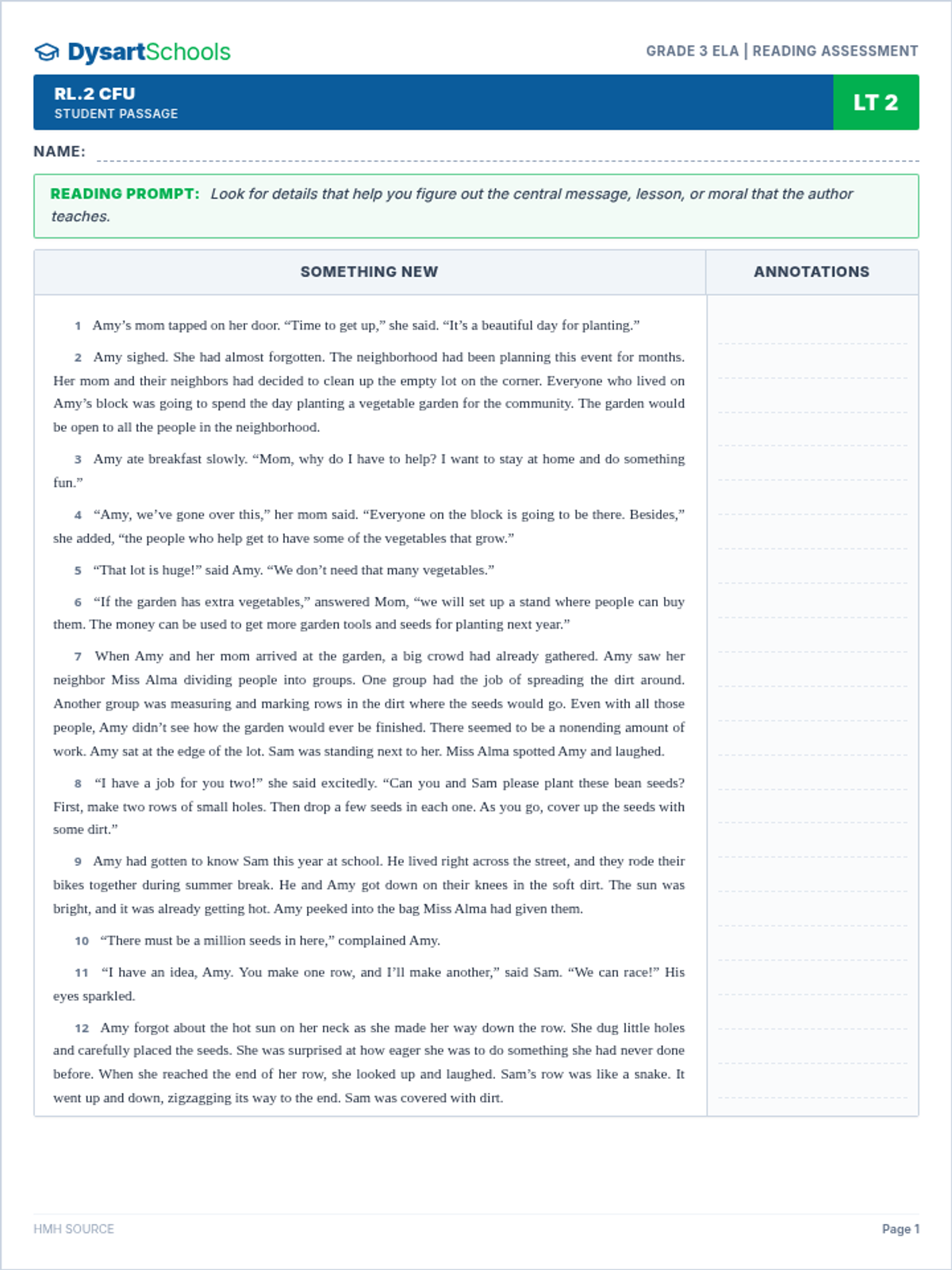
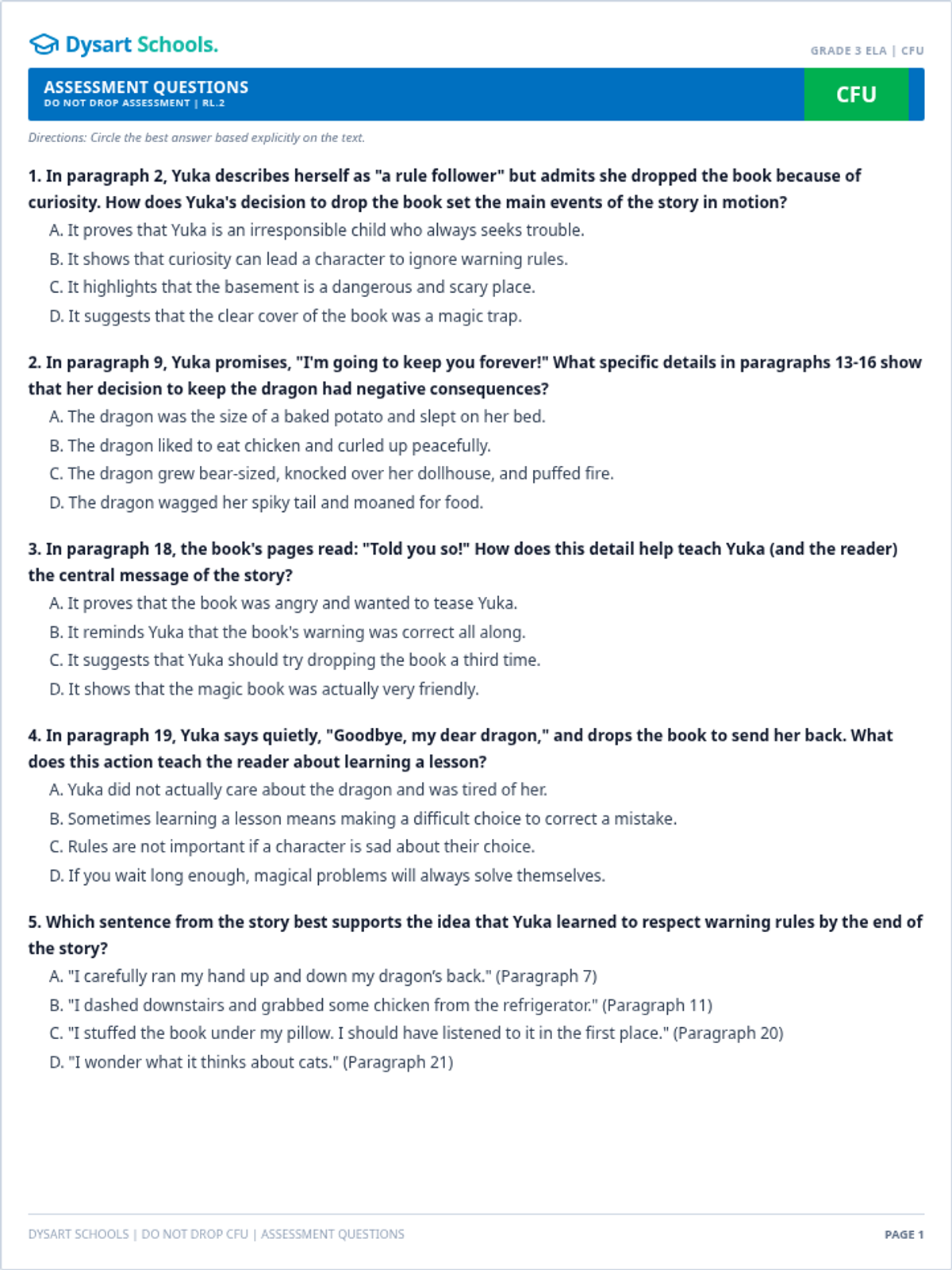
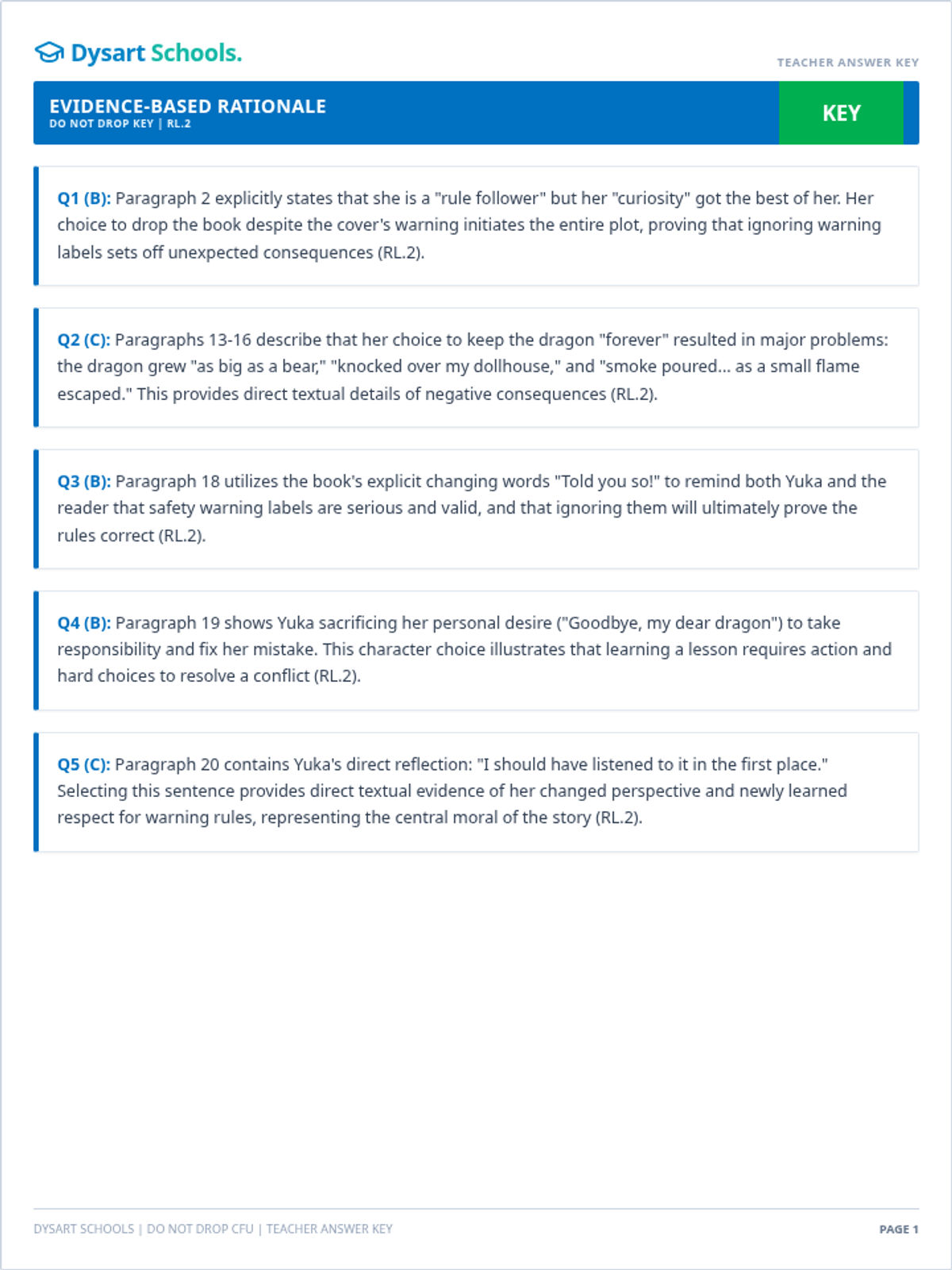
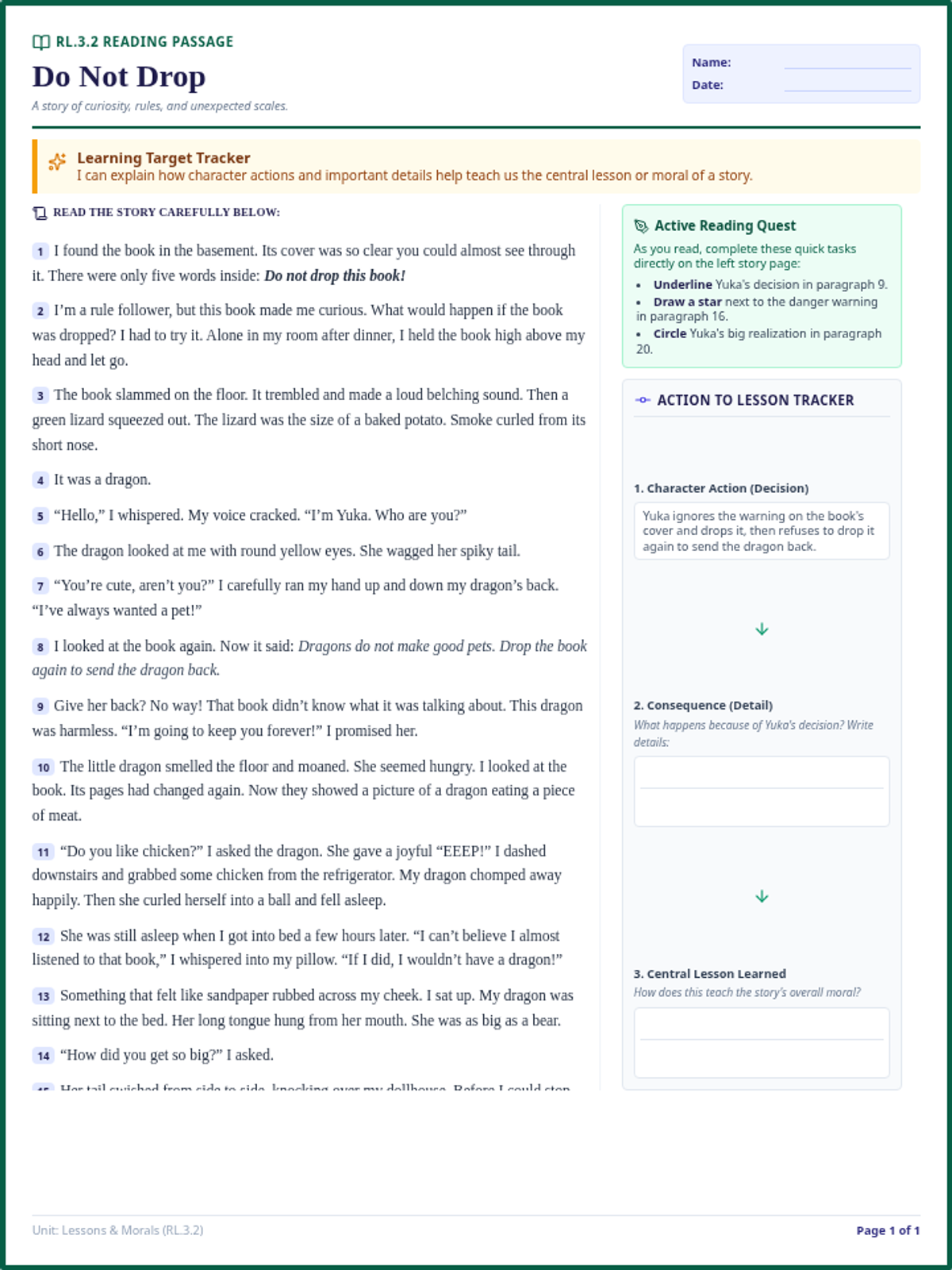
A third-grade reading comprehension lesson focused on standard RL.2 (learning target: explaining how character actions and details teach the lesson/moral) using the story "Do Not Drop". Students analyze Yuka's choices and their consequences to discover the story's core lesson.
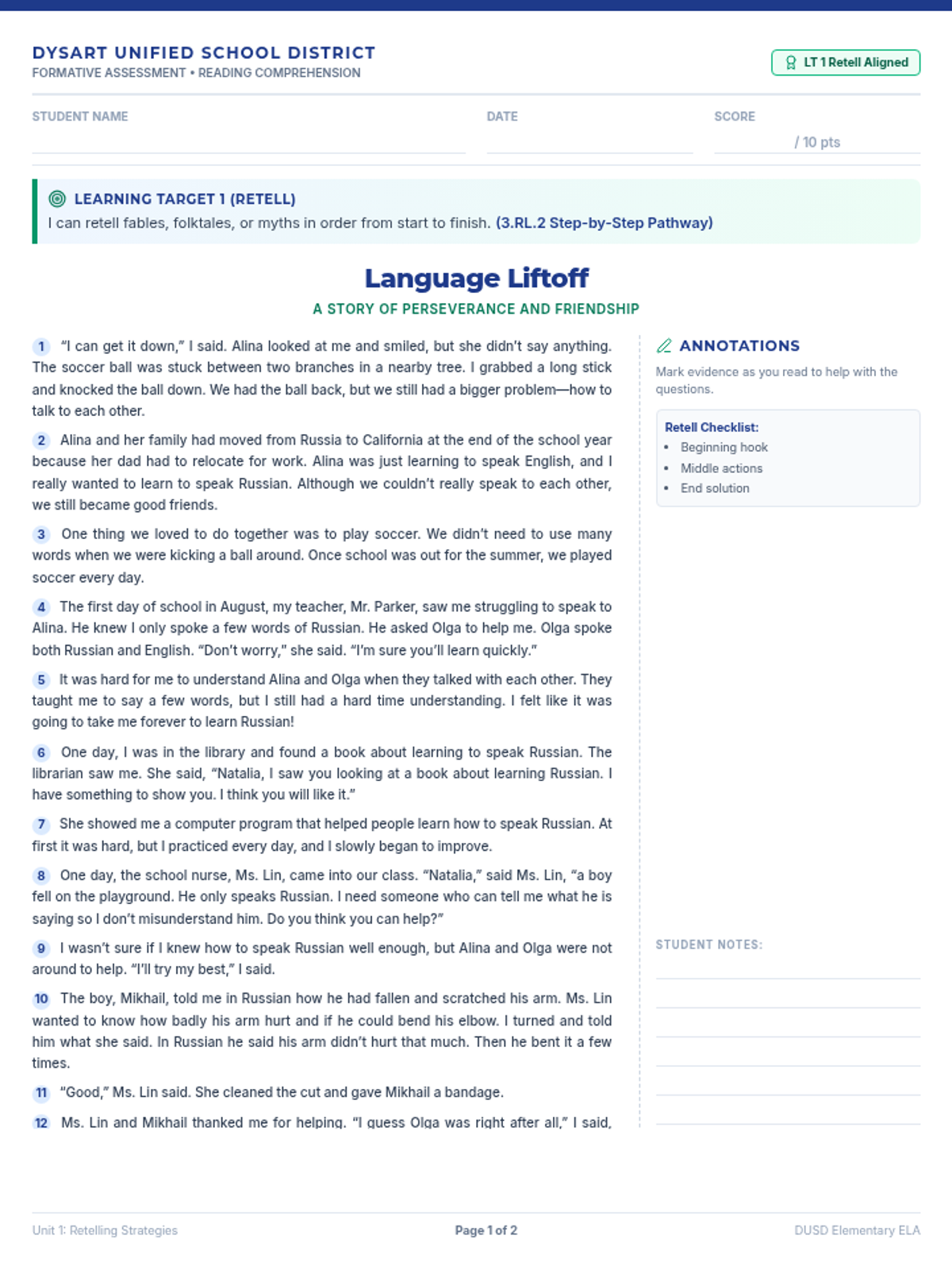
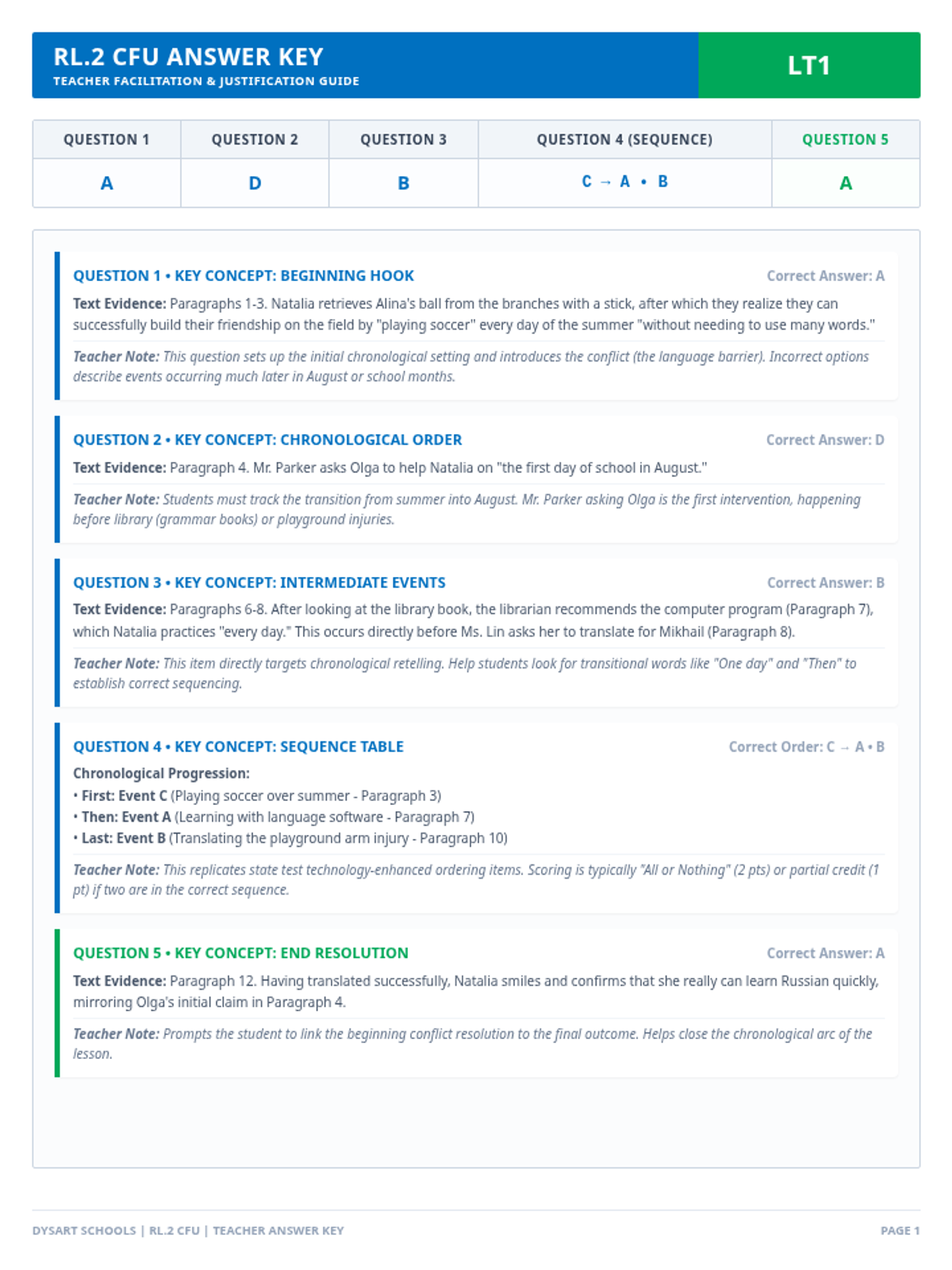
A formative assessment lesson targeting chronological retelling (3.RL.2) using the realistic fiction passage 'Language Liftoff' with a Dysart-themed blue and green styling.
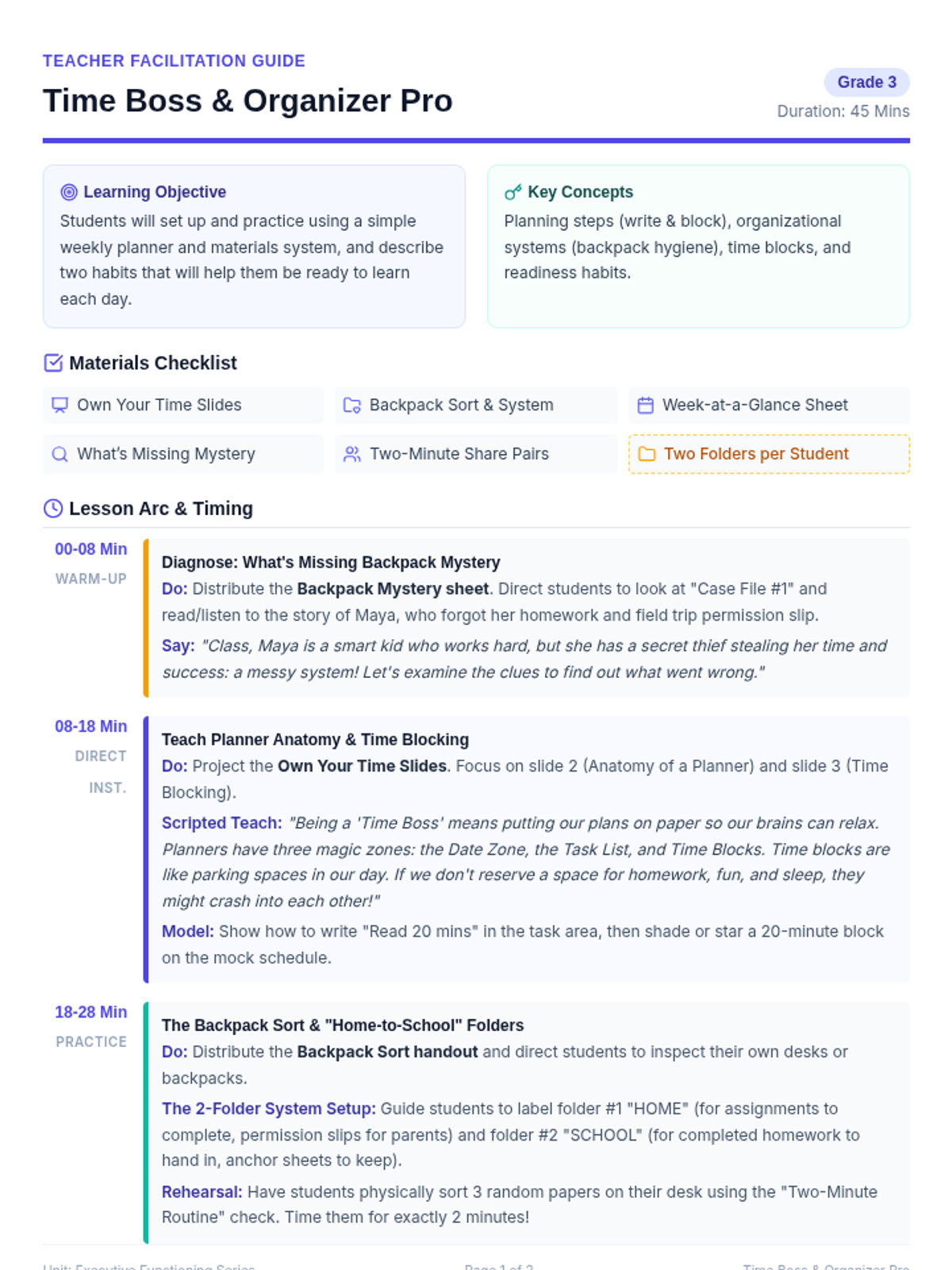
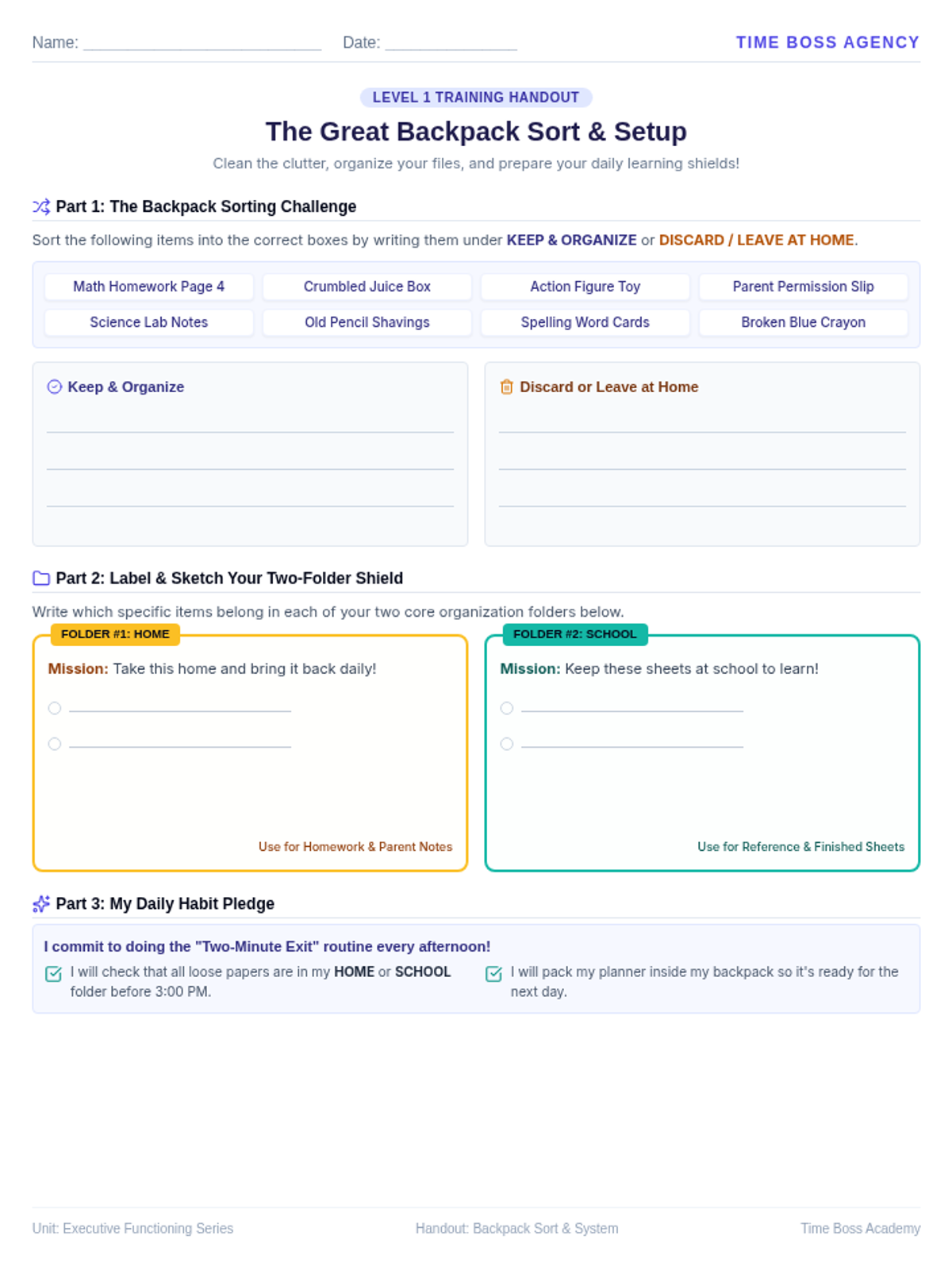
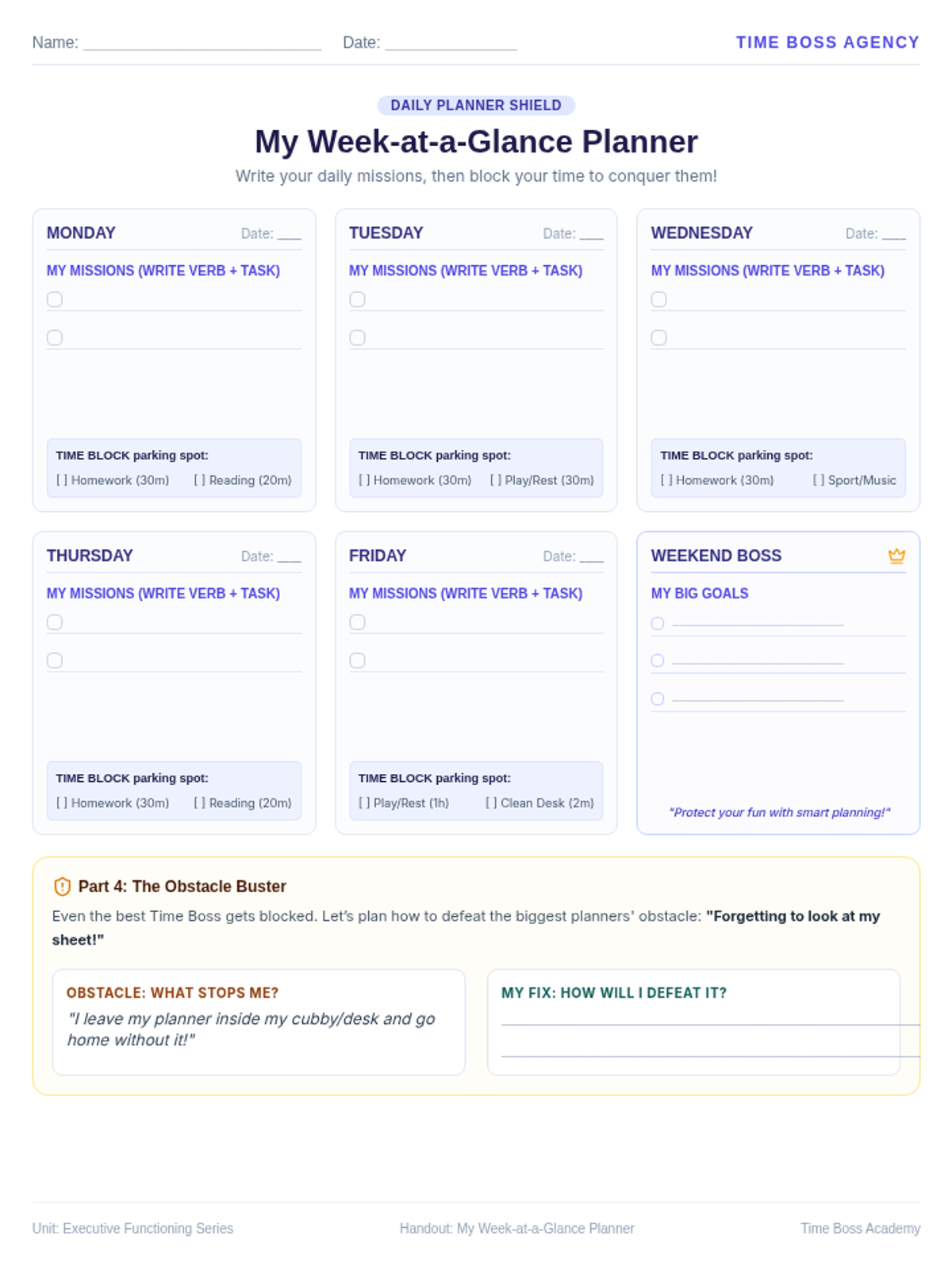
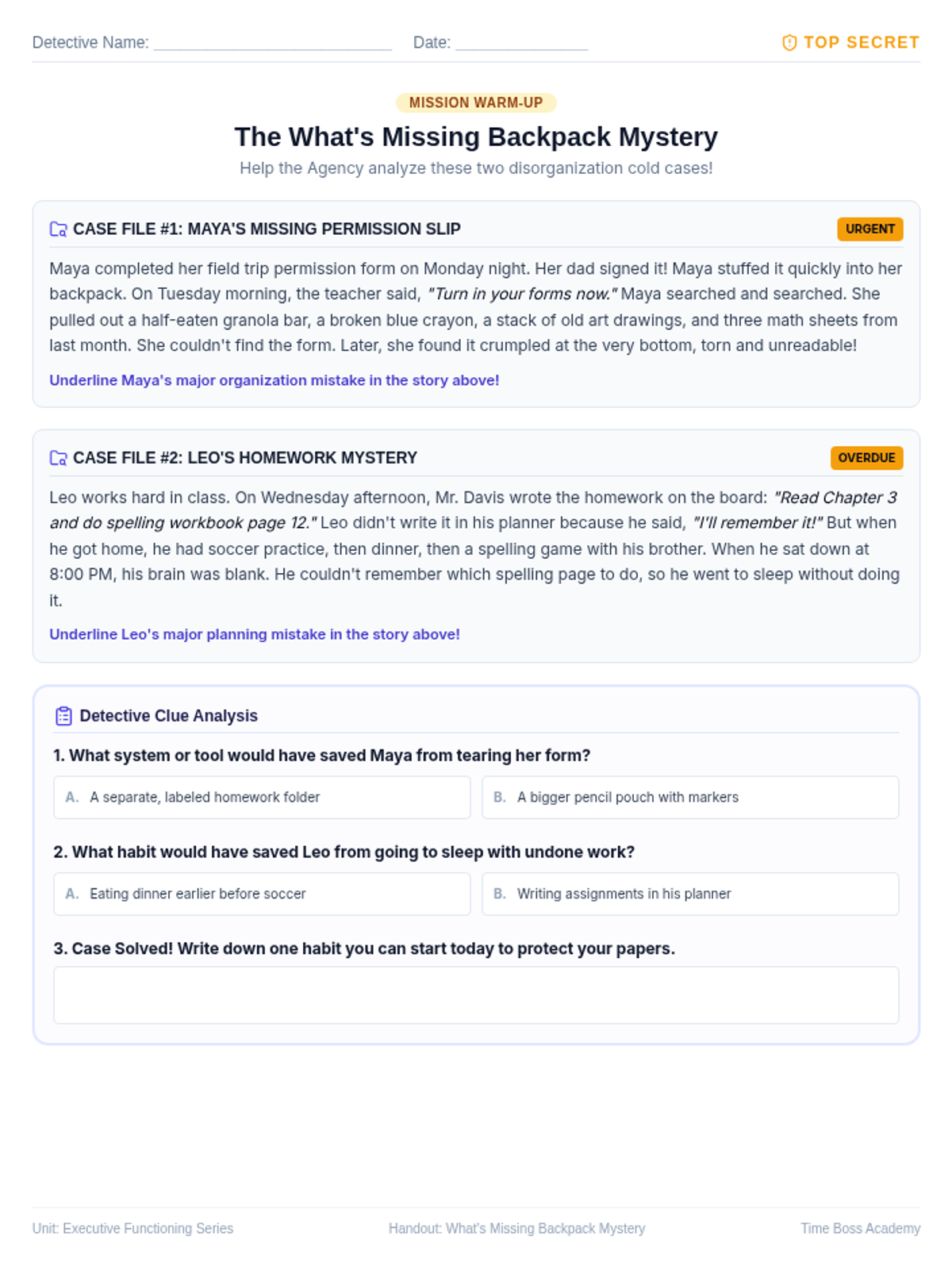
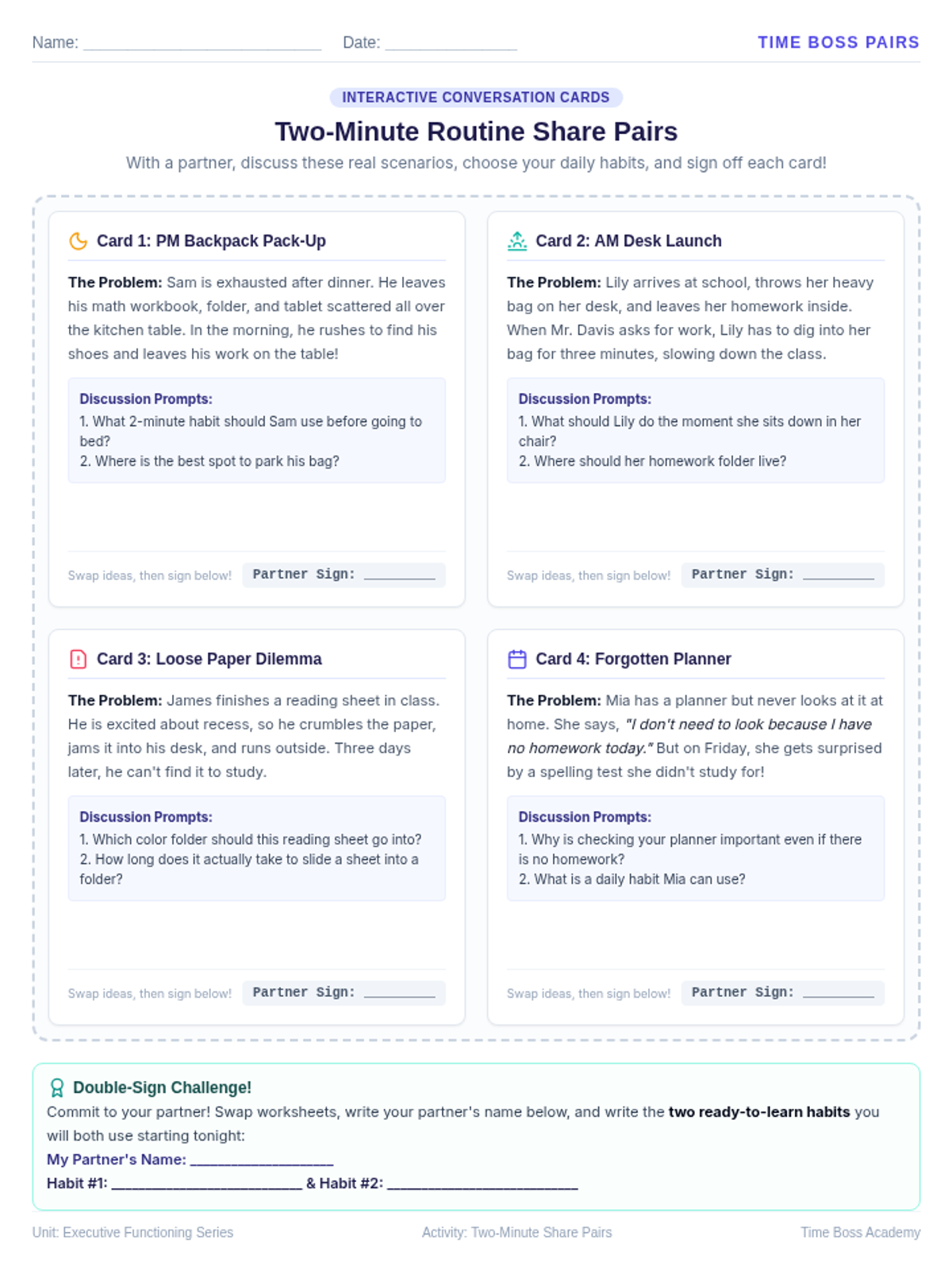
A comprehensive lesson for 3rd graders to master executive functioning skills. Students learn to use a weekly planner, establish material organization systems (the 'Backpack Sort'), and develop daily readiness habits through engaging activities like a classroom mystery and discussion cards.
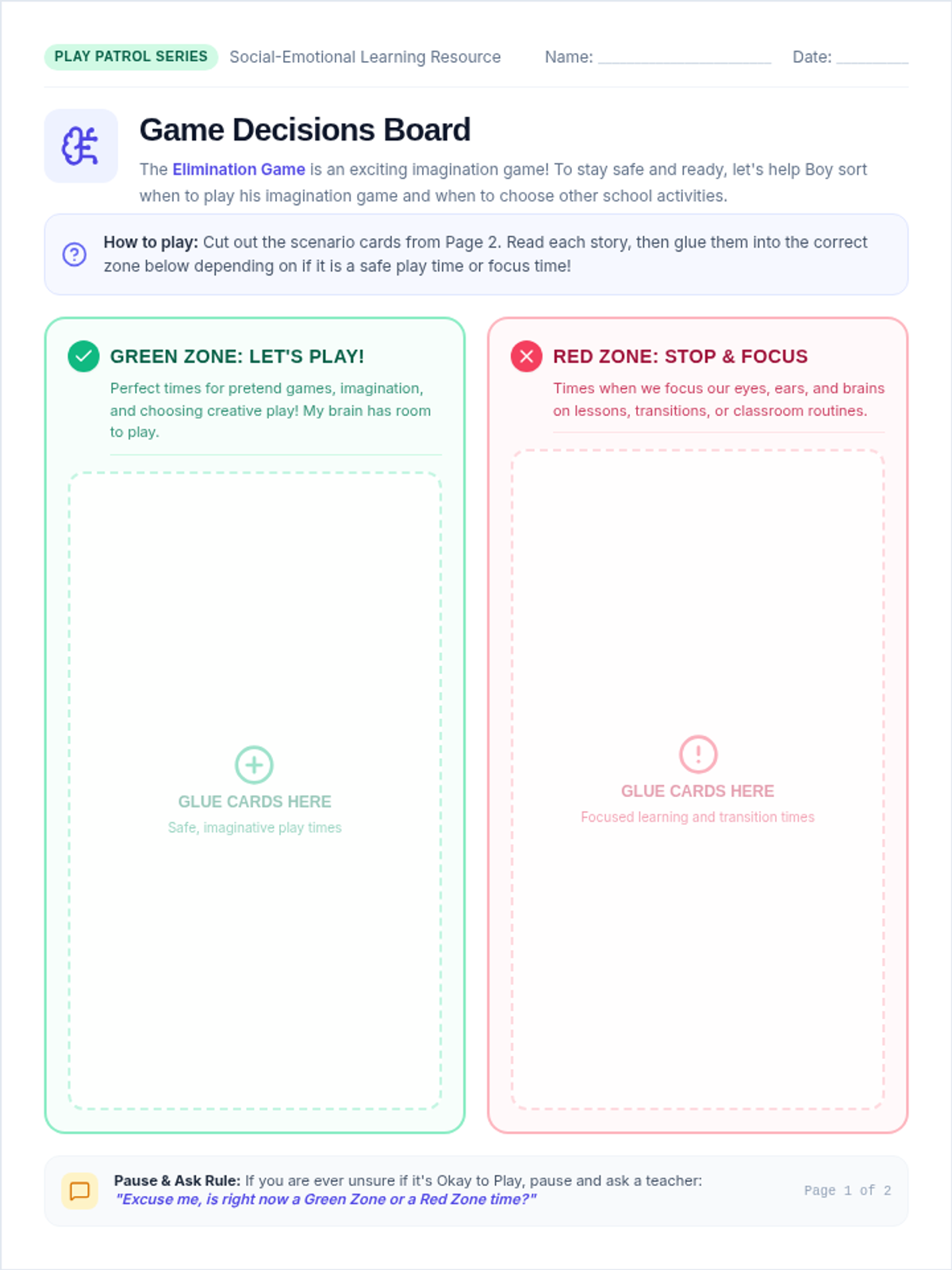
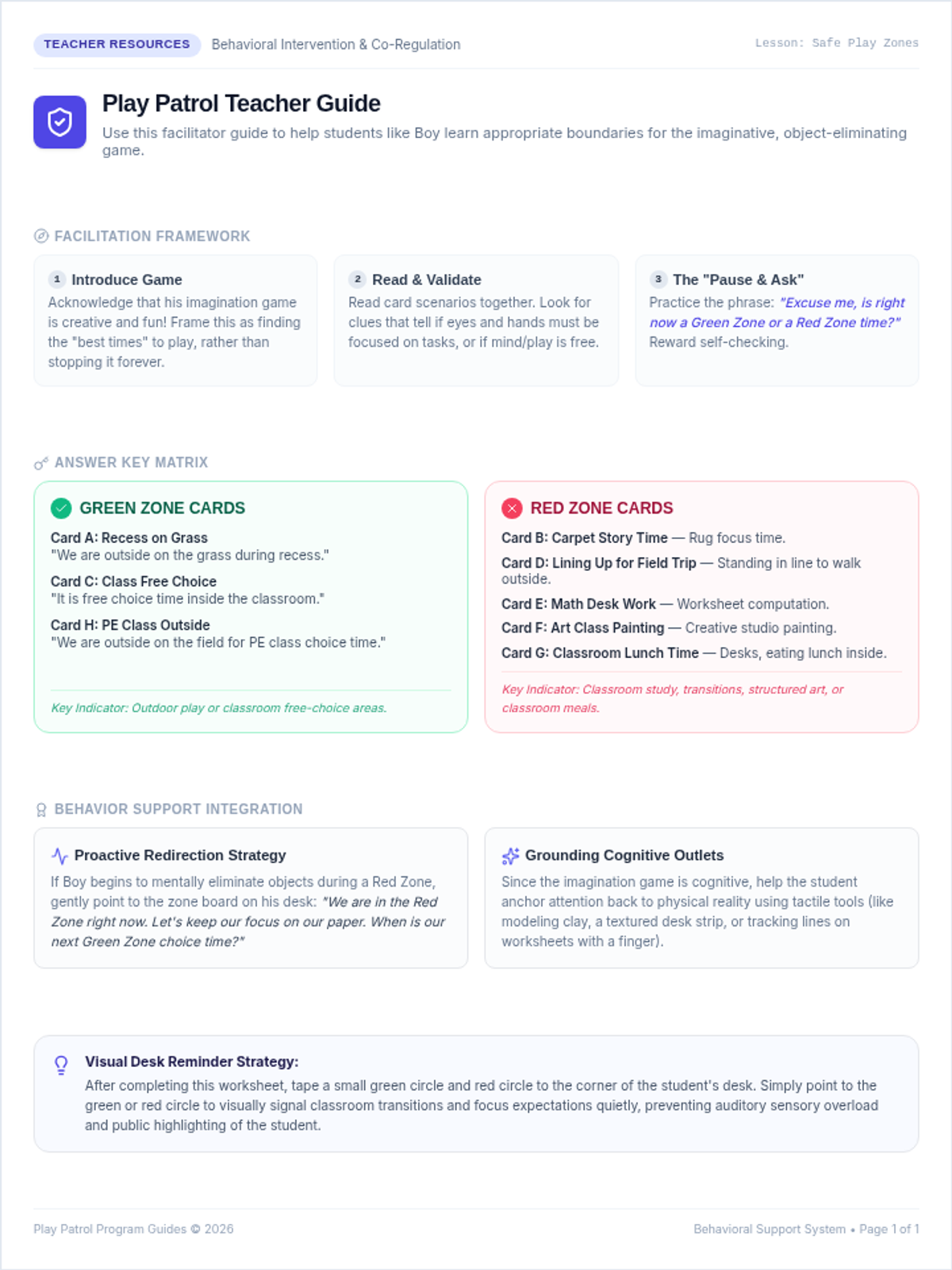
This lesson helps students learn appropriate boundaries for high-energy games, specifically the "elimination game", by sorting social narratives into 'safe play' and 'learning/transition' times.
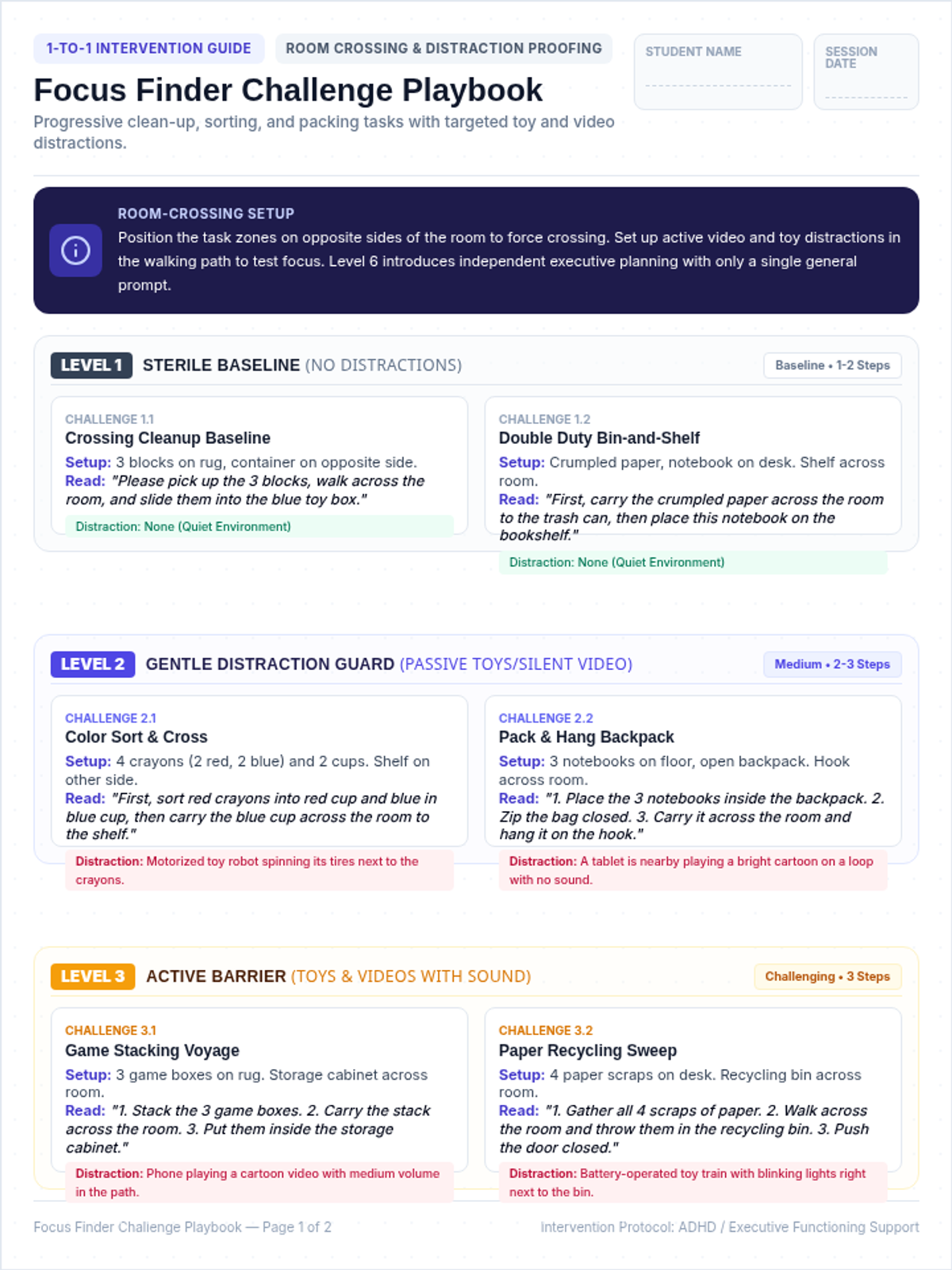
A 1-to-1 intervention lesson designed to help students master multi-step cleaning instructions while ignoring external and internal distractions. Includes a visual board game, specialized scenario cards, and self-regulation visual supports.
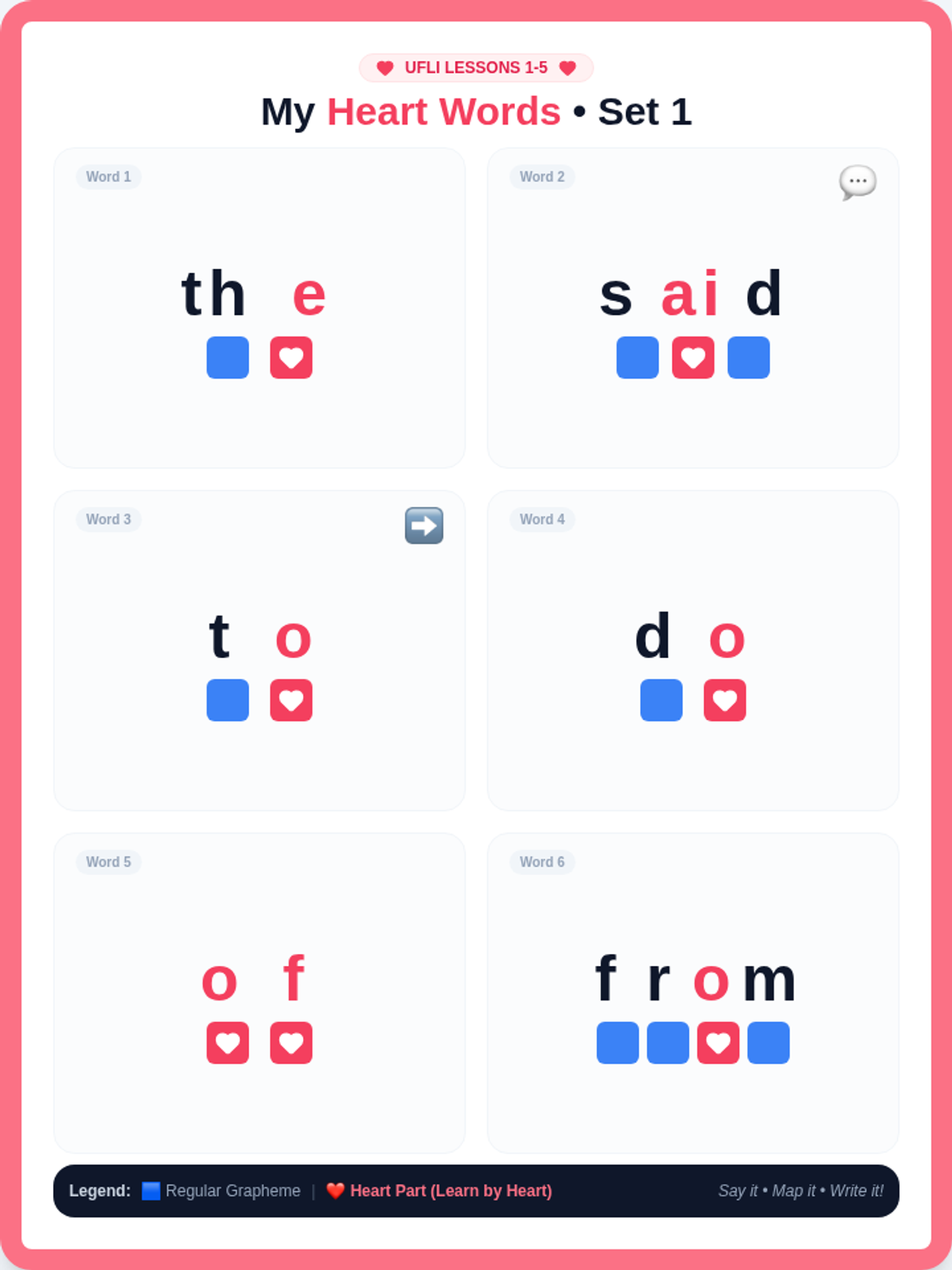
A collection of visual anchor charts and posters for UFLI foundations heart words, designed to support students in orthographic mapping with clear visuals and phonetic cues.
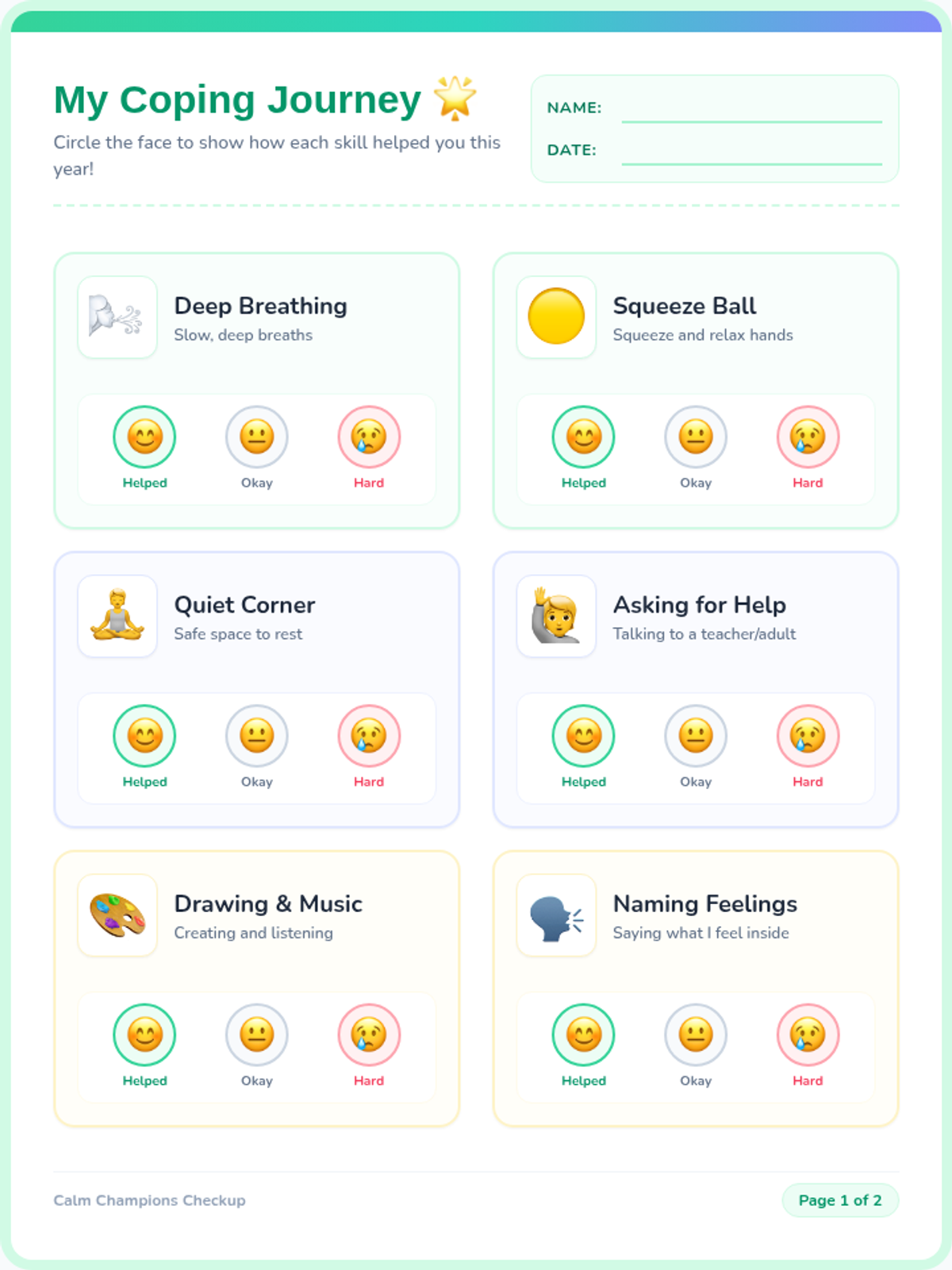
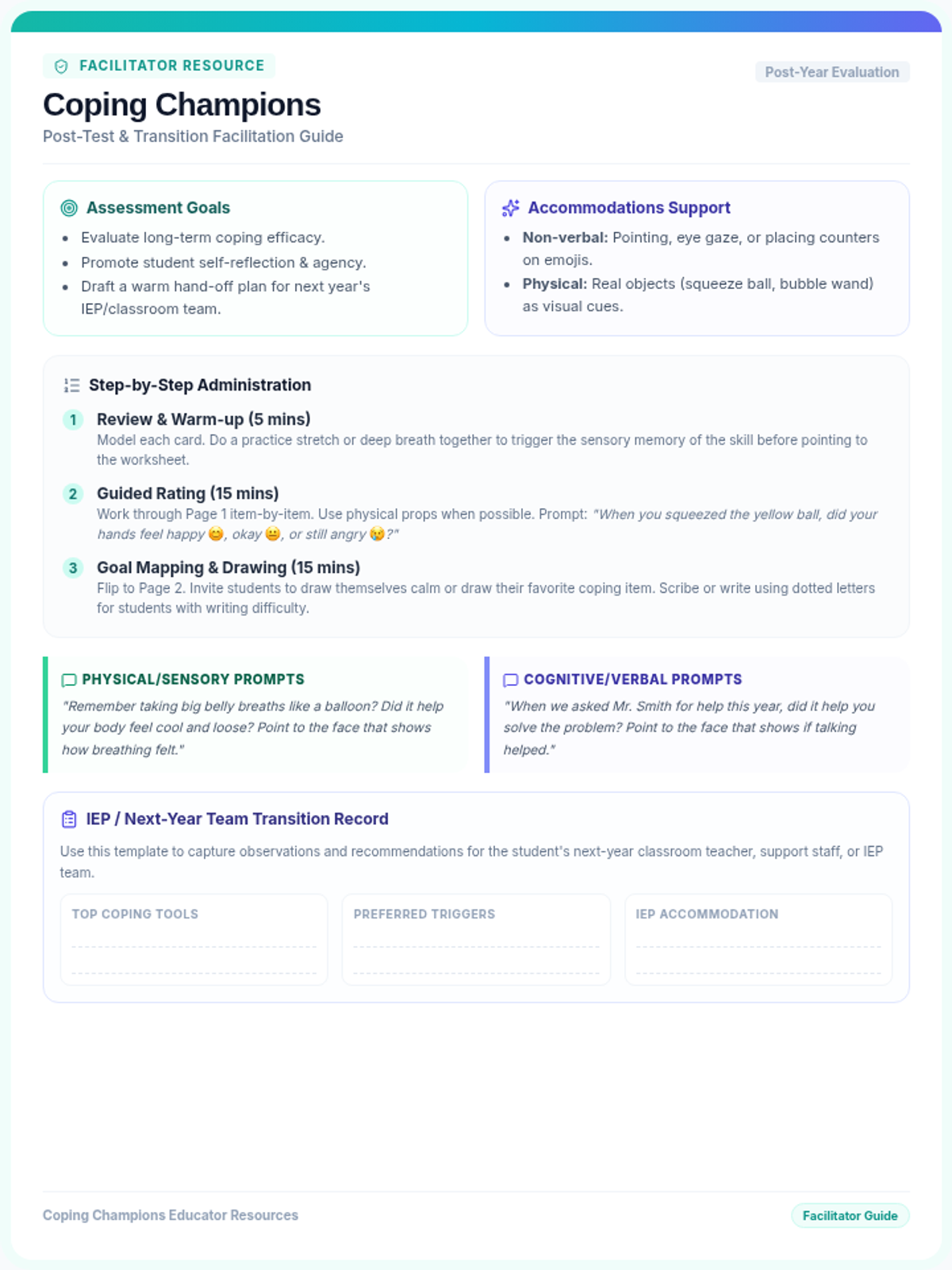
A post-test and reflection lesson designed for students with lower cognitive abilities to evaluate their coping skills from the past year and set gentle goals for the next school year using visual emojis and guided drawing/writing templates.
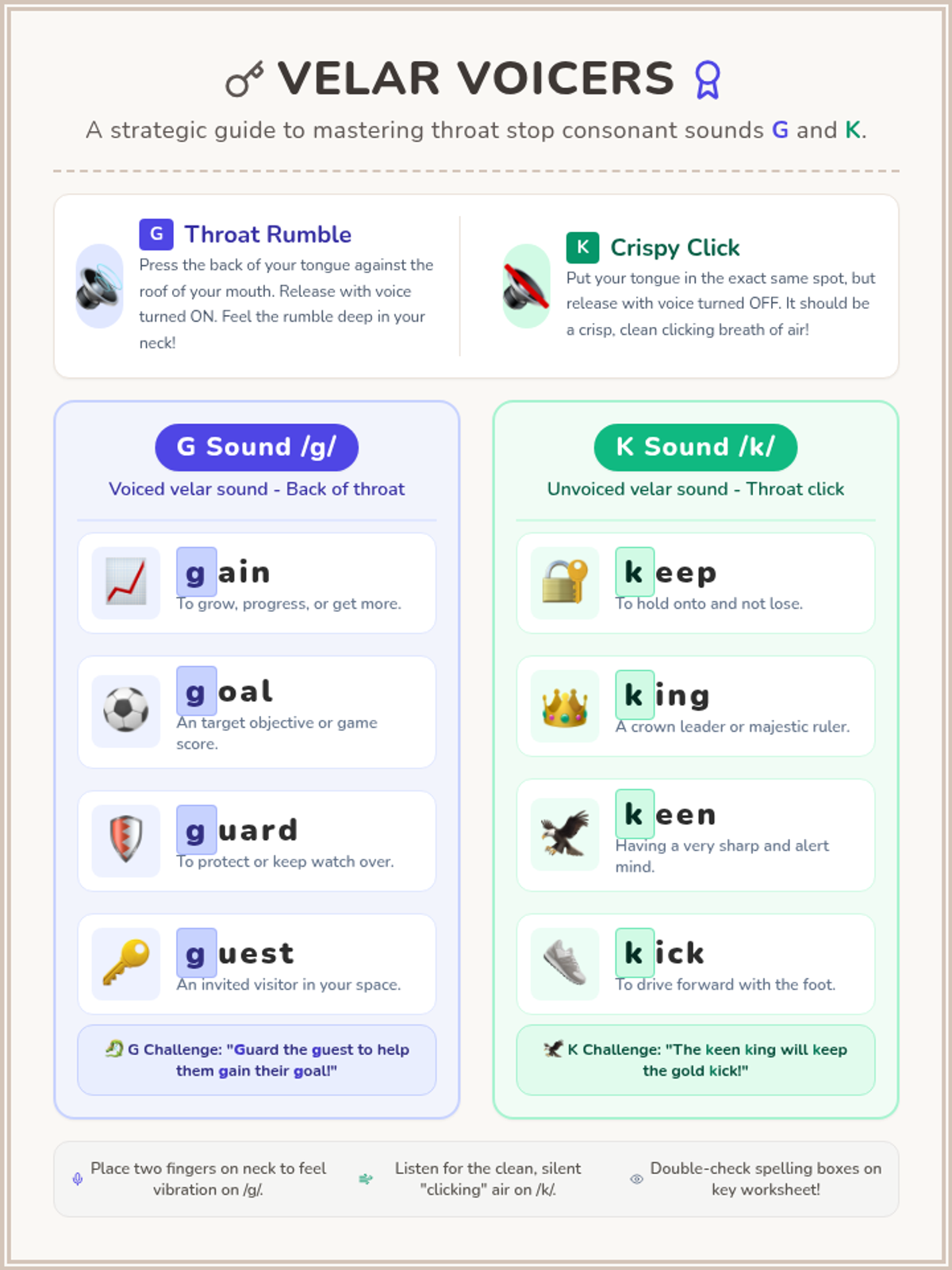
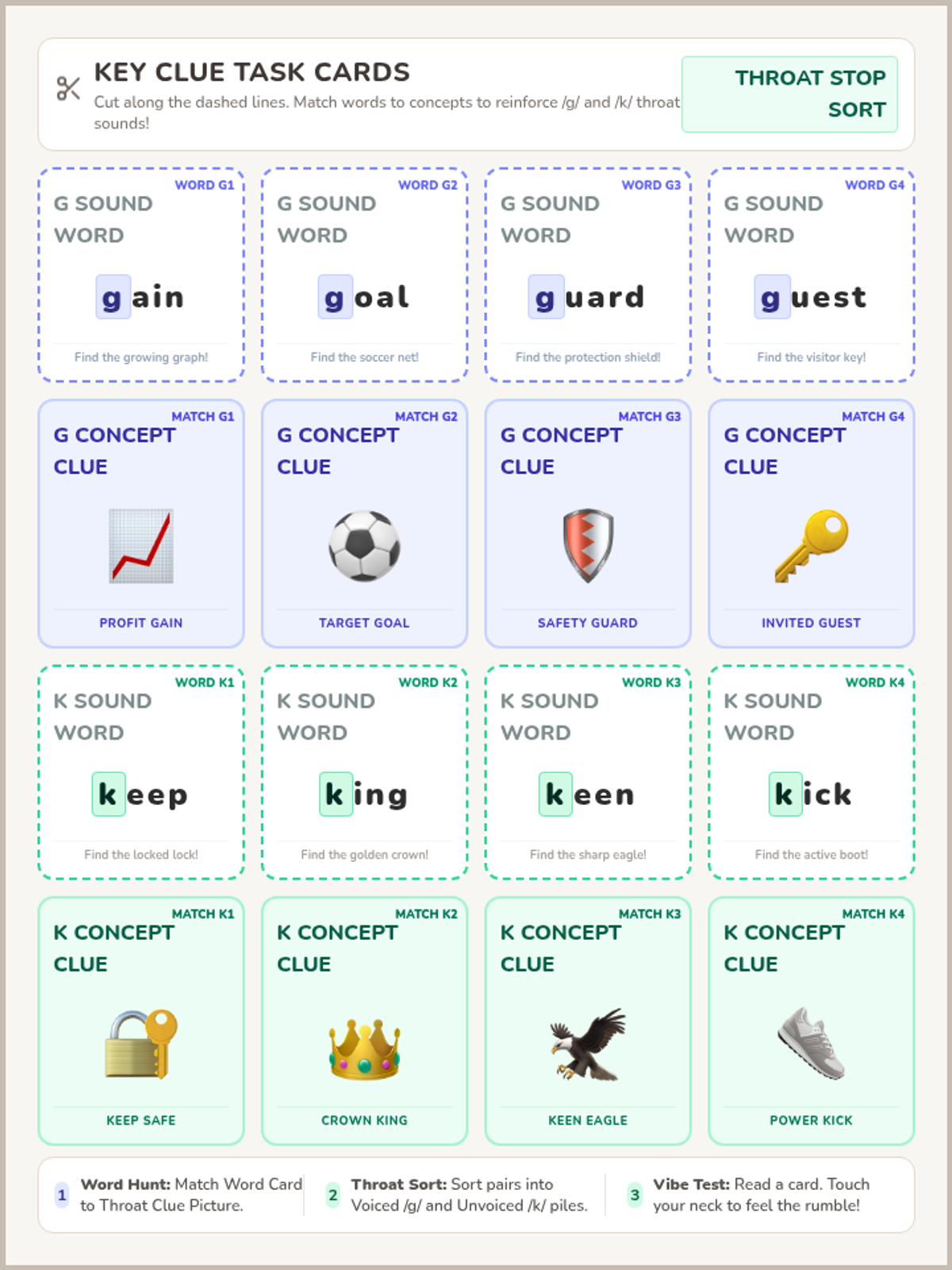
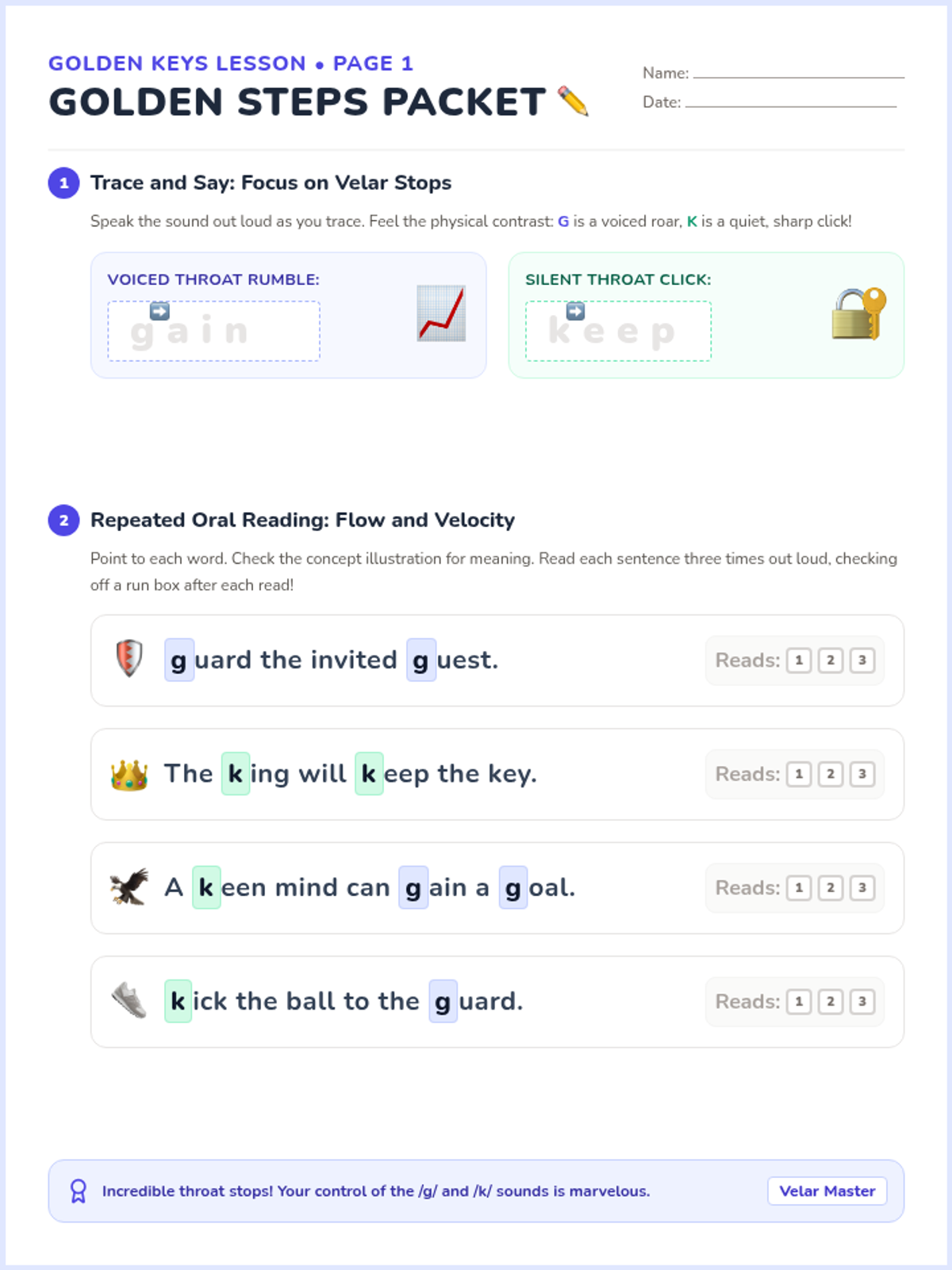
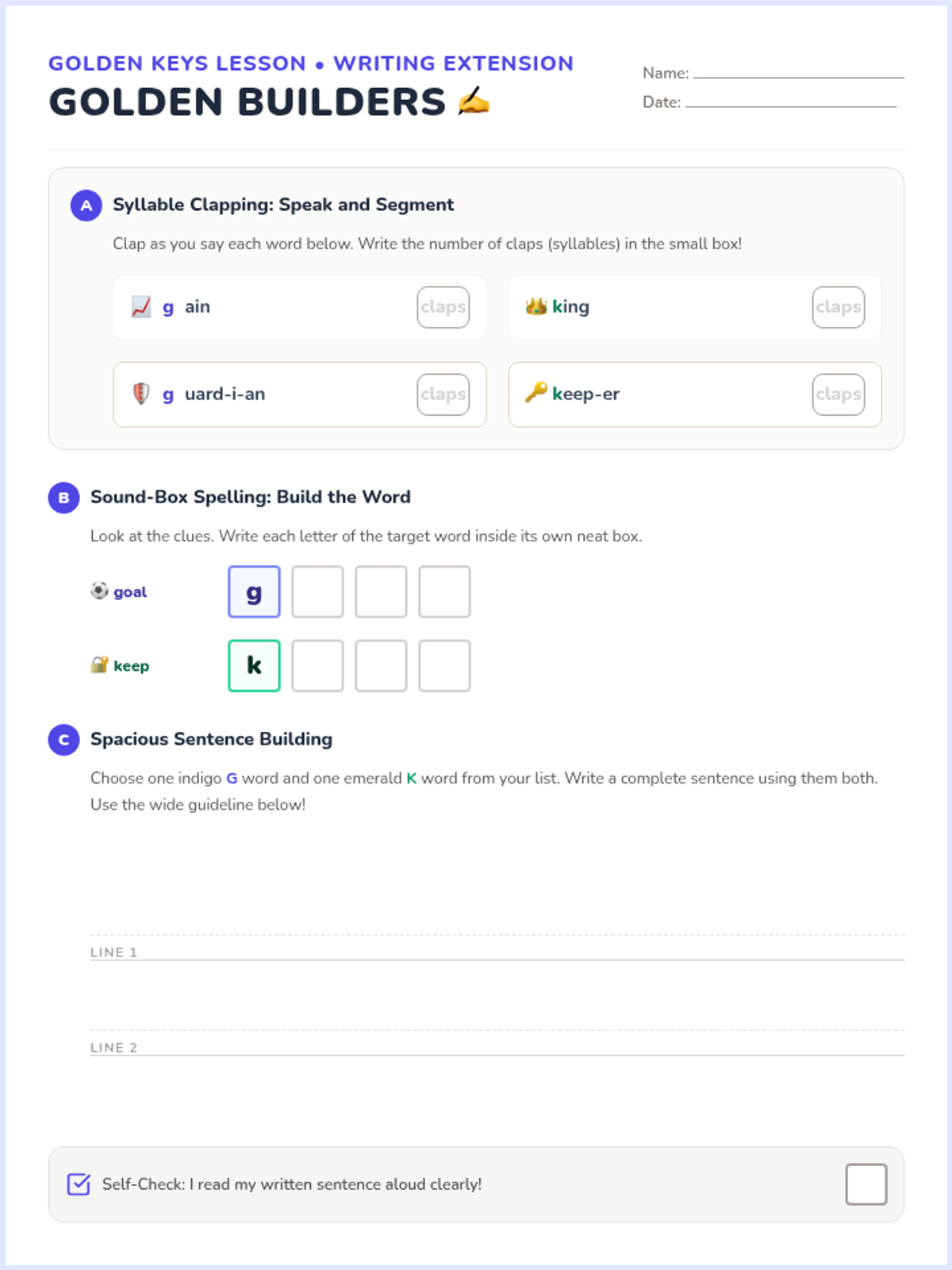
A structured phonics and oral reading lesson contrasting G and K sounds. Features visual voicing indicators, multi-sensory tracing sheets, and high-interest interactive task cards.
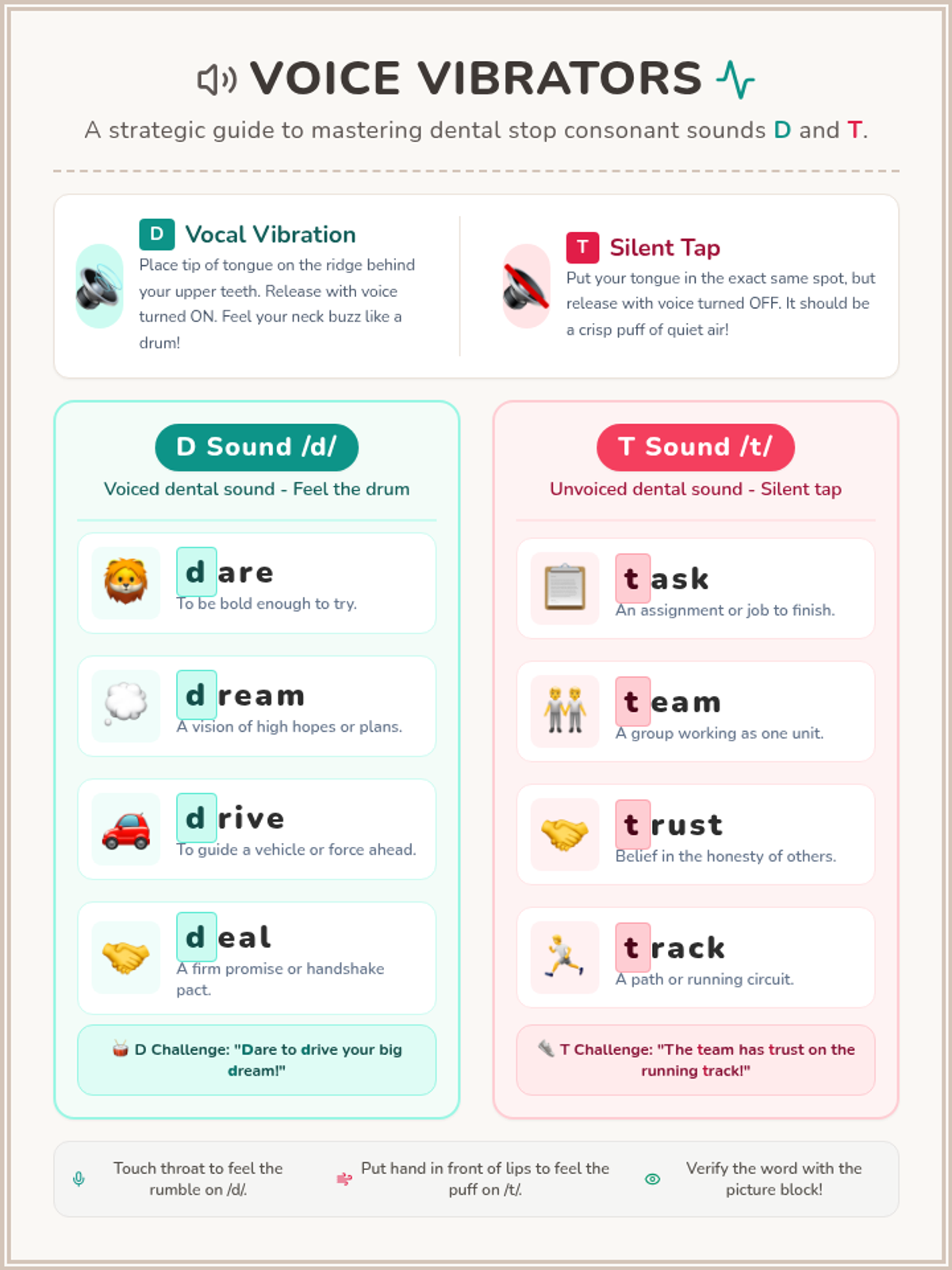
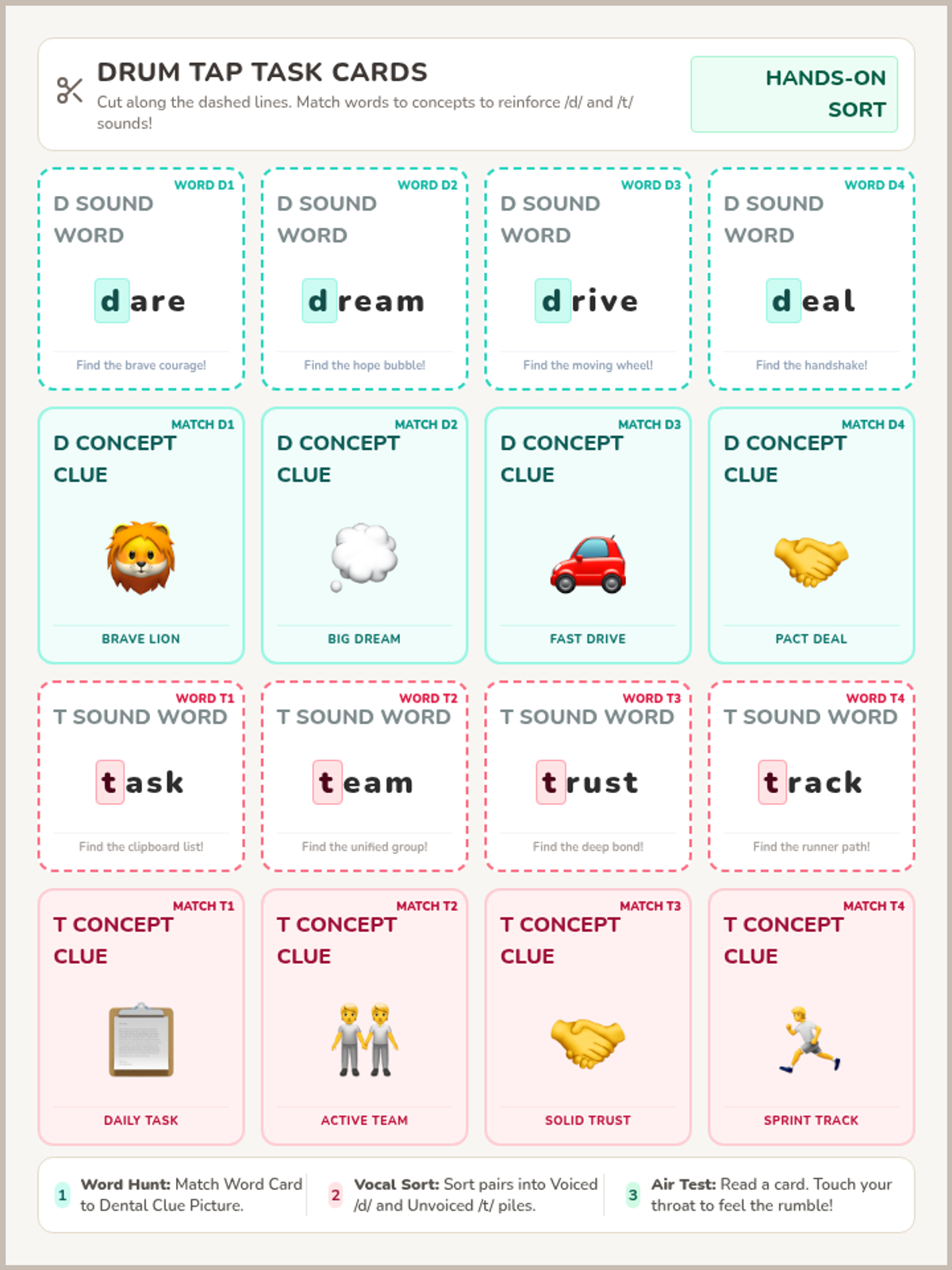
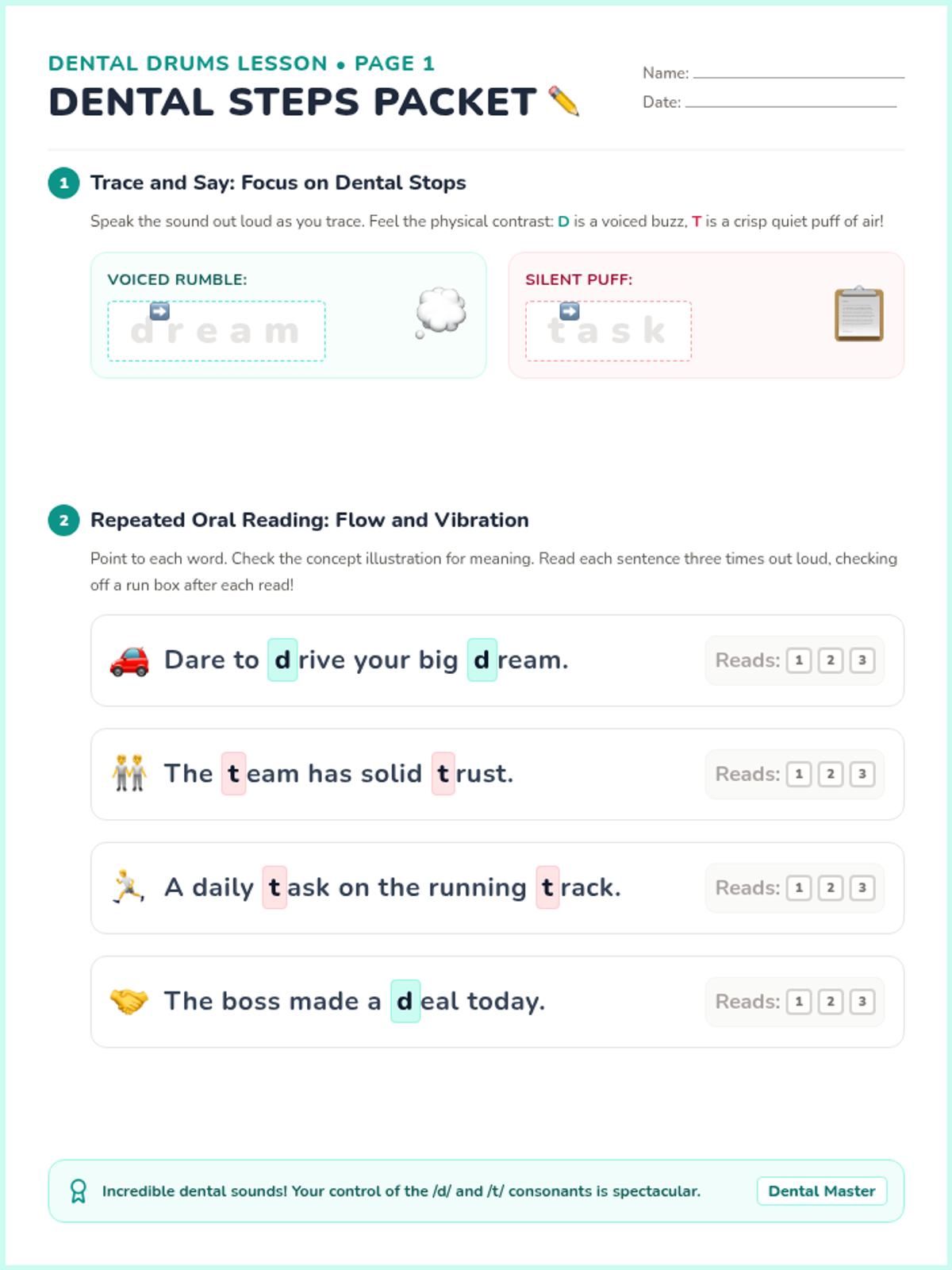
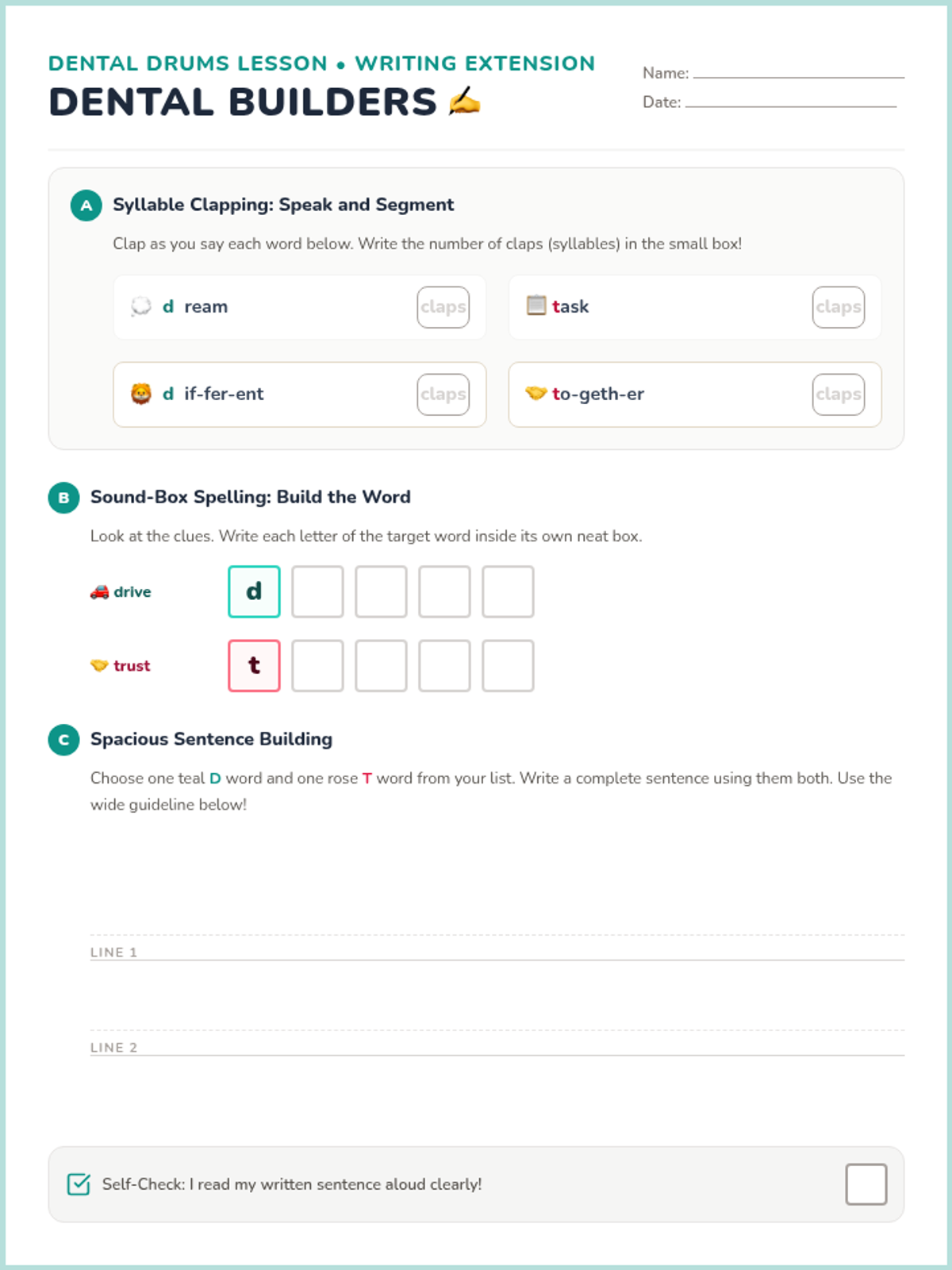
A structured phonics and oral reading lesson contrasting D and T sounds. Features heavy picture scaffolding, voice-vibration indicators, and dyslexia-friendly physical activity resources.
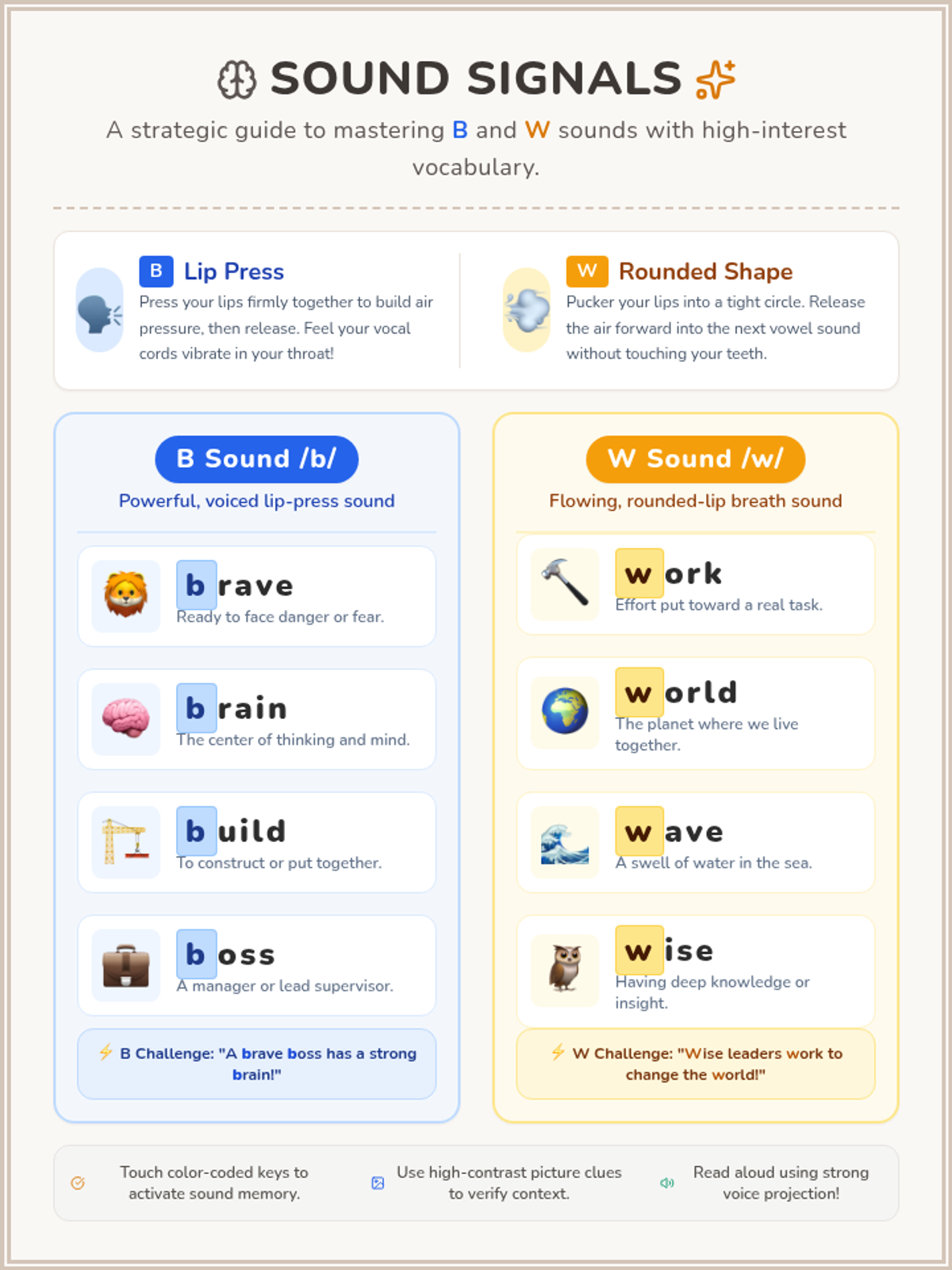
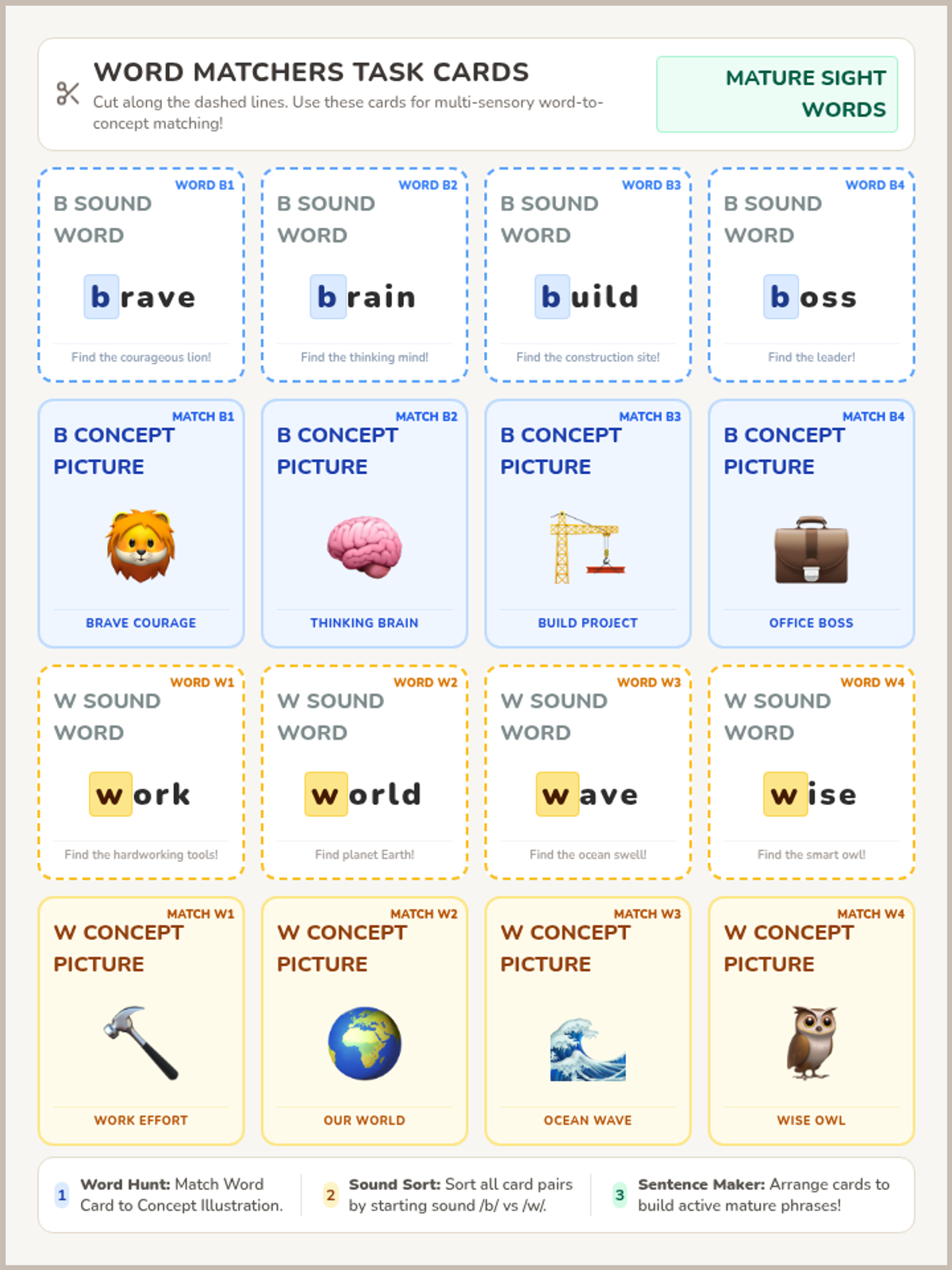
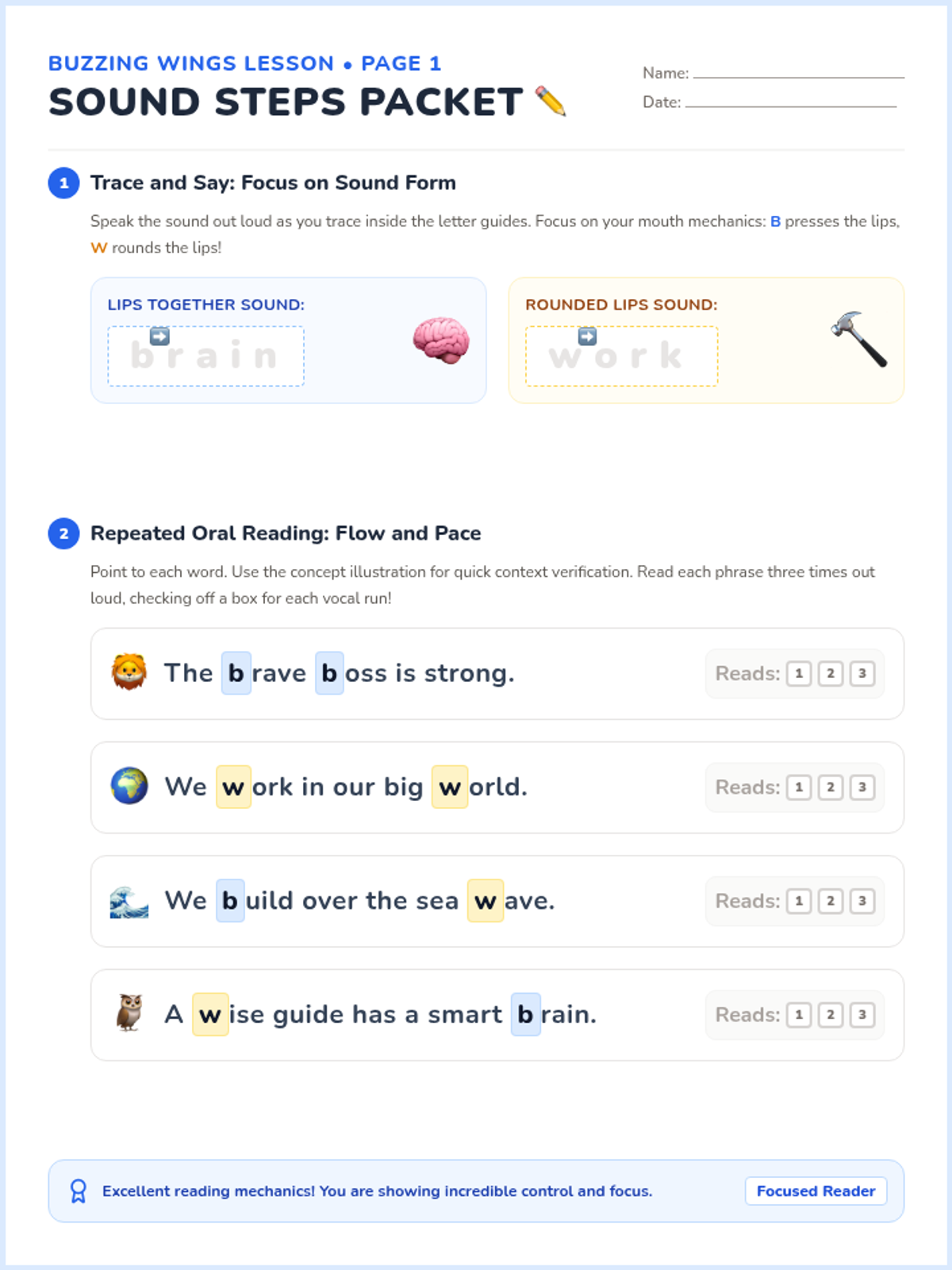
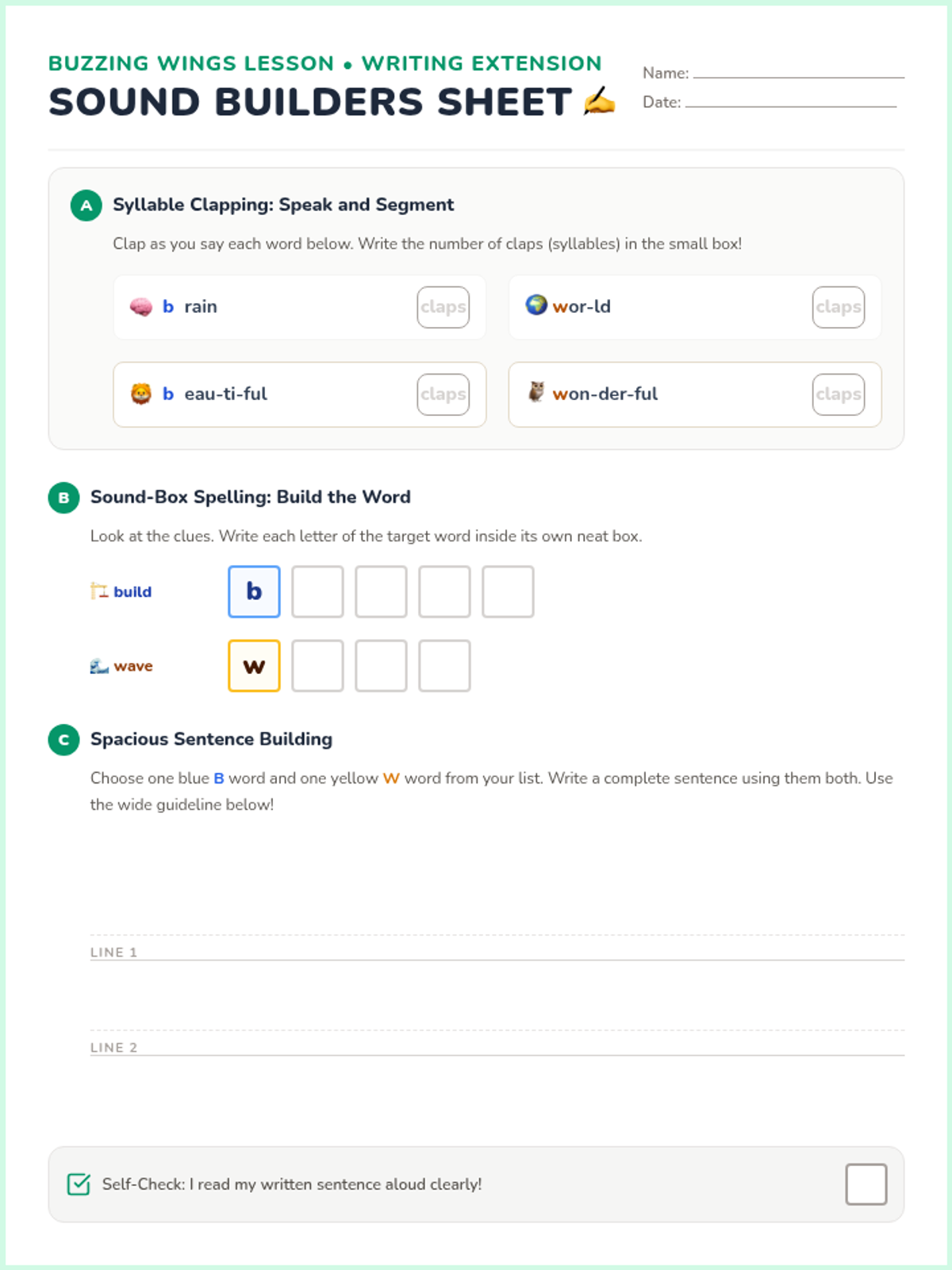
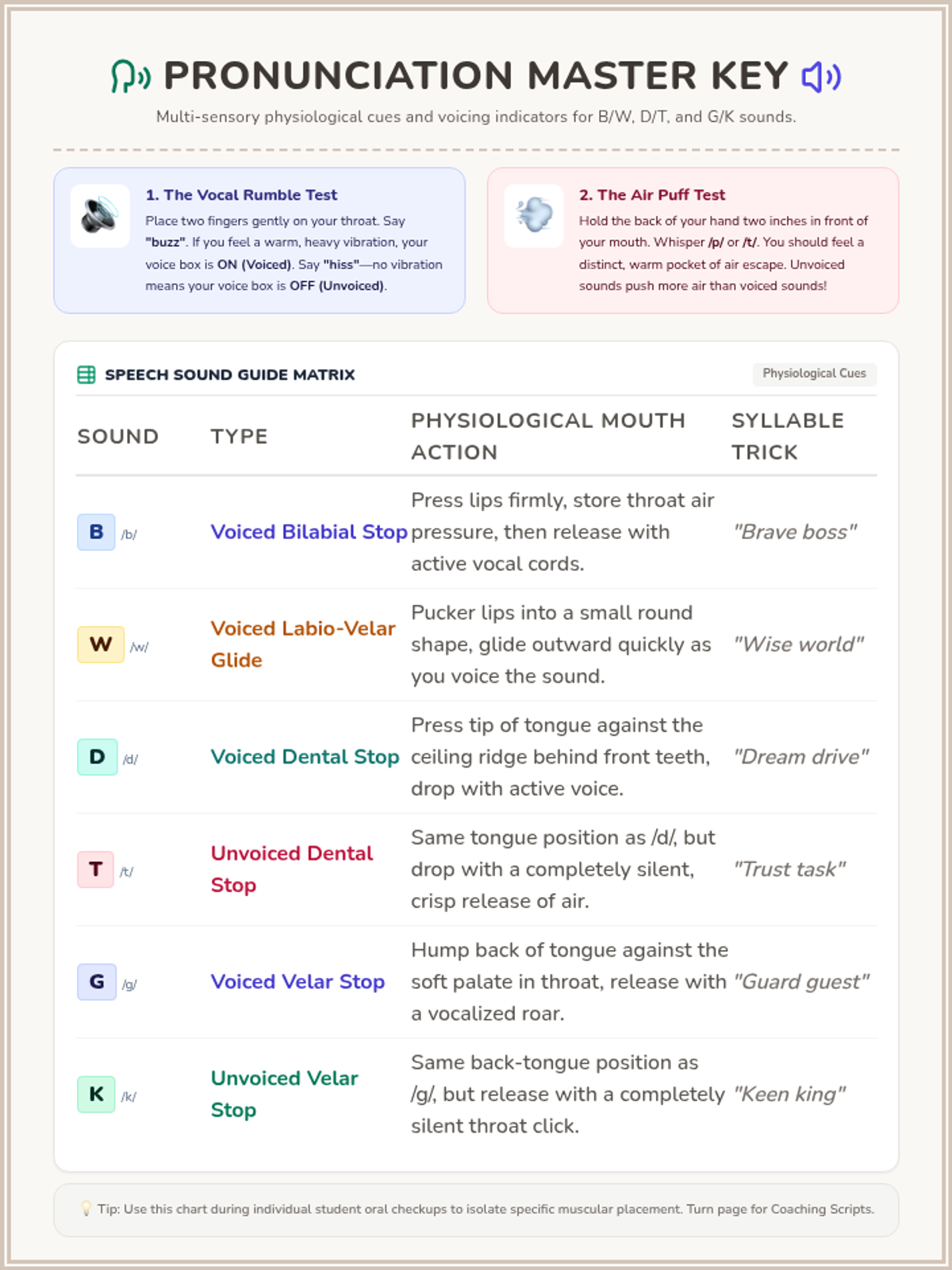
An hour-long structured reading lesson focusing on B and W letter-sound association and common sight words. Designed with dyslexia-friendly spacing, color-coded highlights, and picture scaffolding to support struggling oral readers.