Students compare viewpoints on how to protect the environment, looking at one author advocating for banning plastic bags and another championing community cleanups.
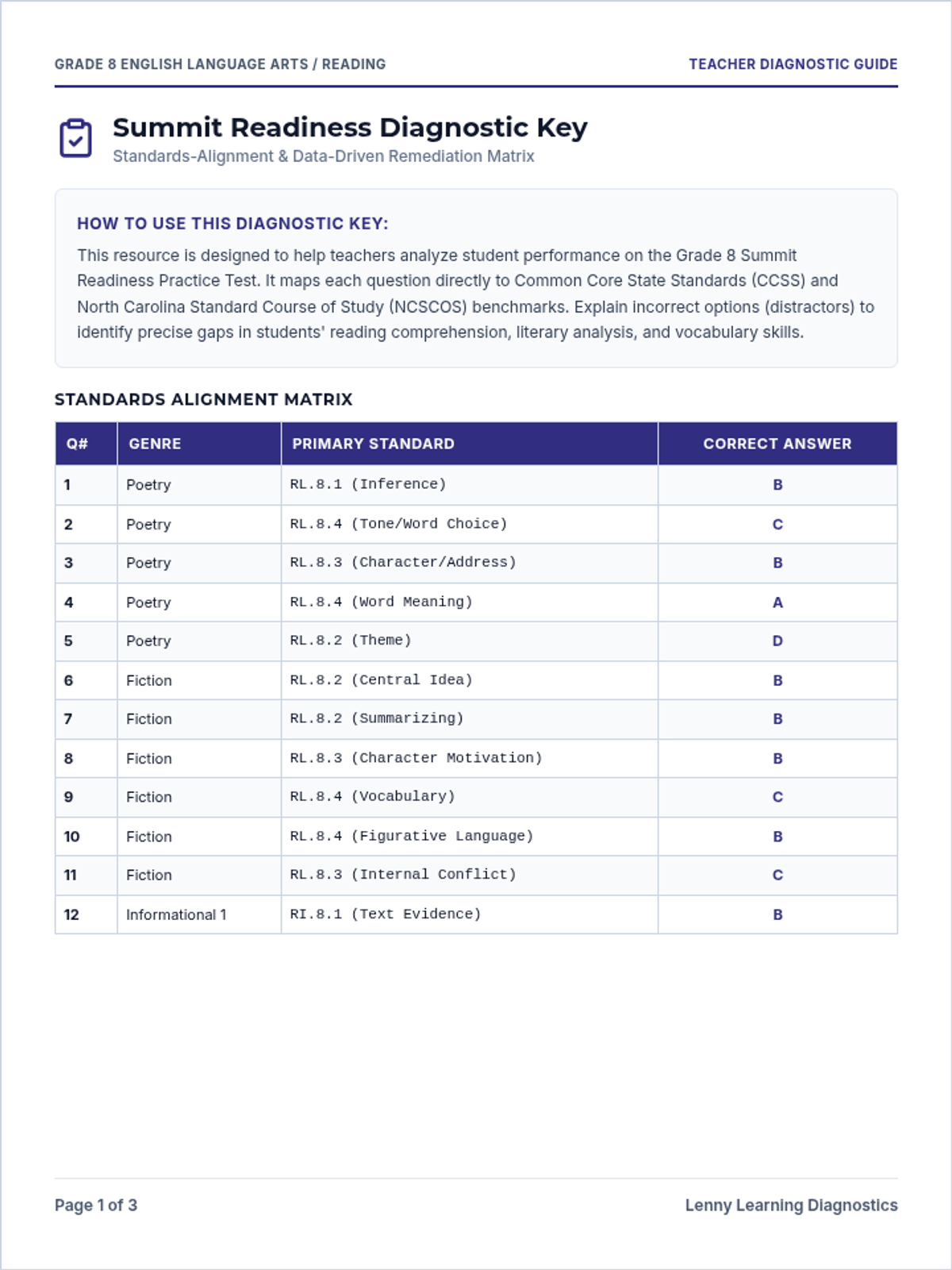
An 8th-grade ELA test readiness lesson containing a complete, high-quality standards-aligned practice test with fiction, poetry, and informational articles, plus a teacher's diagnostic answer key.
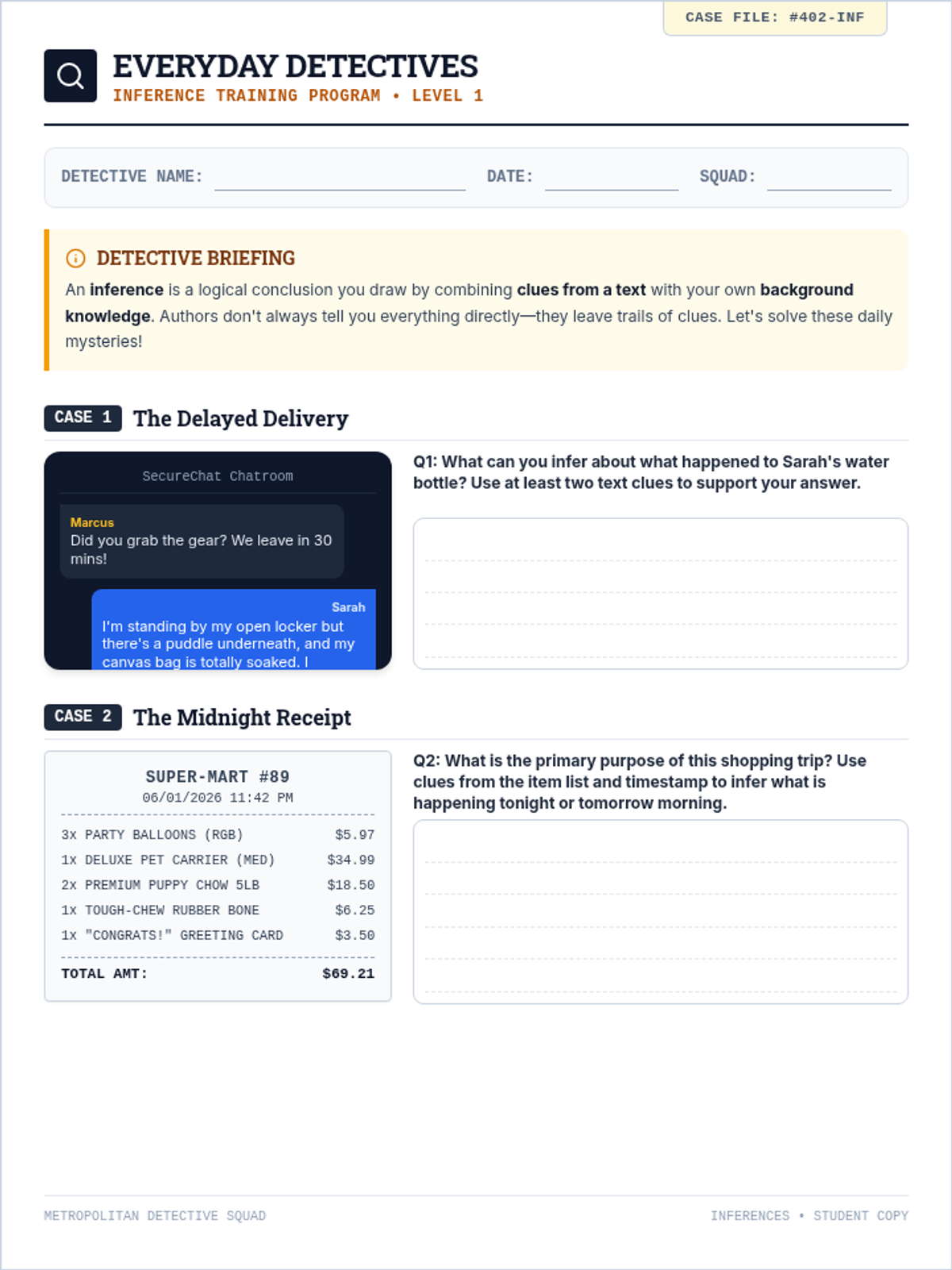
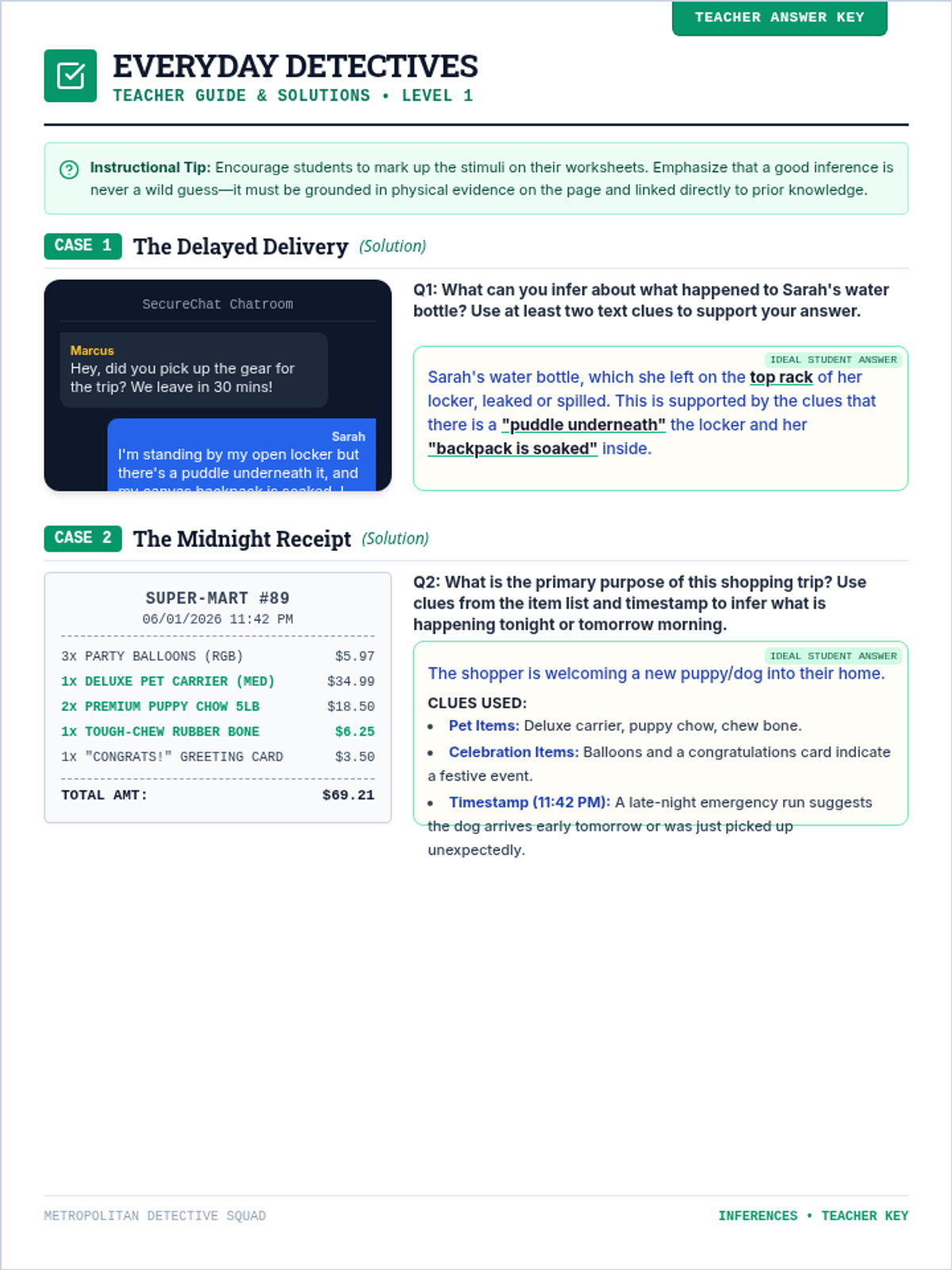
A lesson focused on teaching students how to make logical inferences using everyday functional texts, such as text messages, receipts, schedules, and maps. Students act as 'Everyday Detectives' to piece together clues from real-world documents.
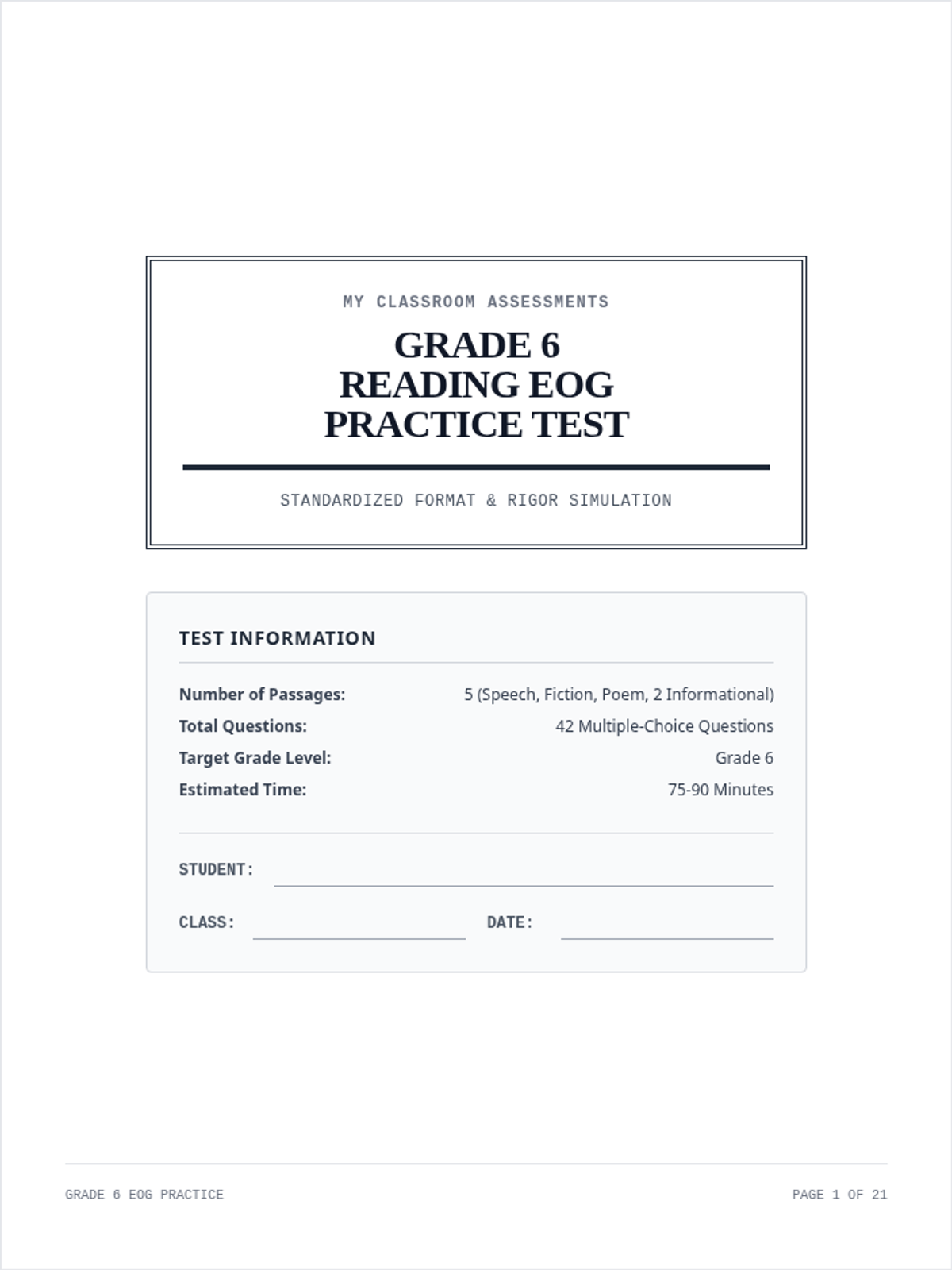
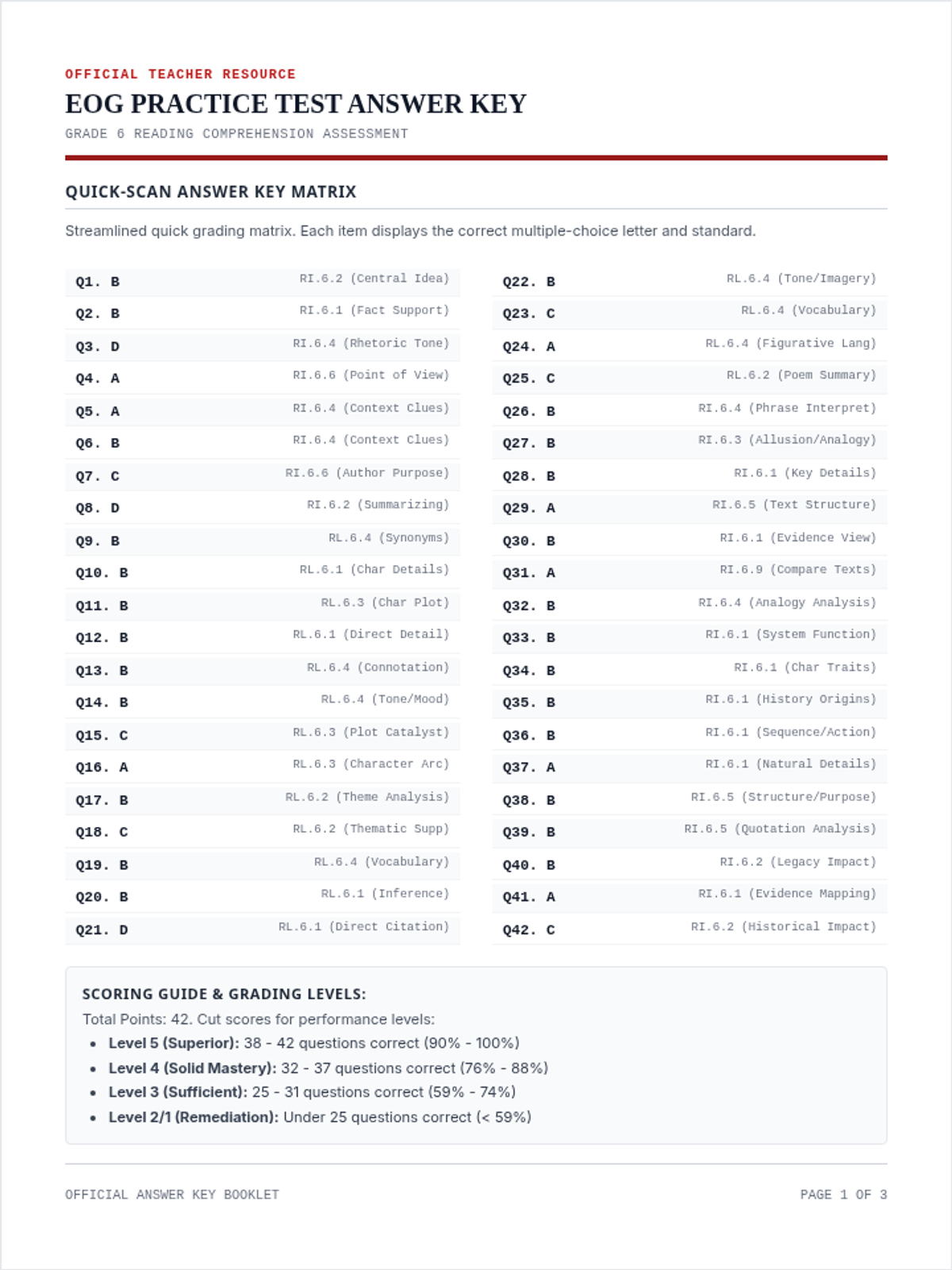
A rigorous, standard-aligned preparation lesson for the Grade 6 Reading EOG, featuring a complete 42-question practice exam and a dedicated standalone answer key with detailed question rationales and standards alignment.
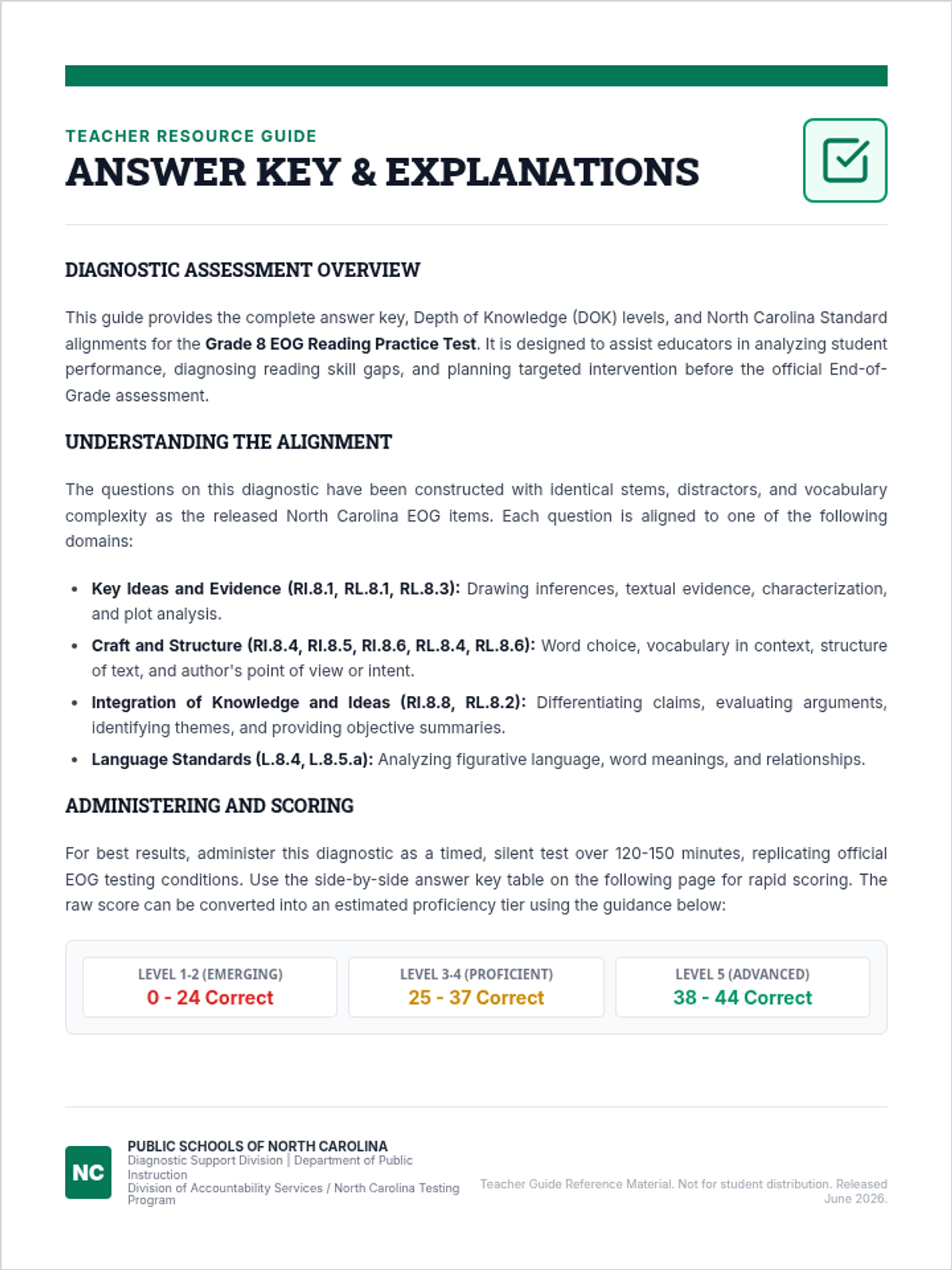
A full-length diagnostic reading assessment for Grade 8, designed to mirror the exact structure, passage distribution, and cognitive rigor of the North Carolina End-of-Grade (EOG) released exam.
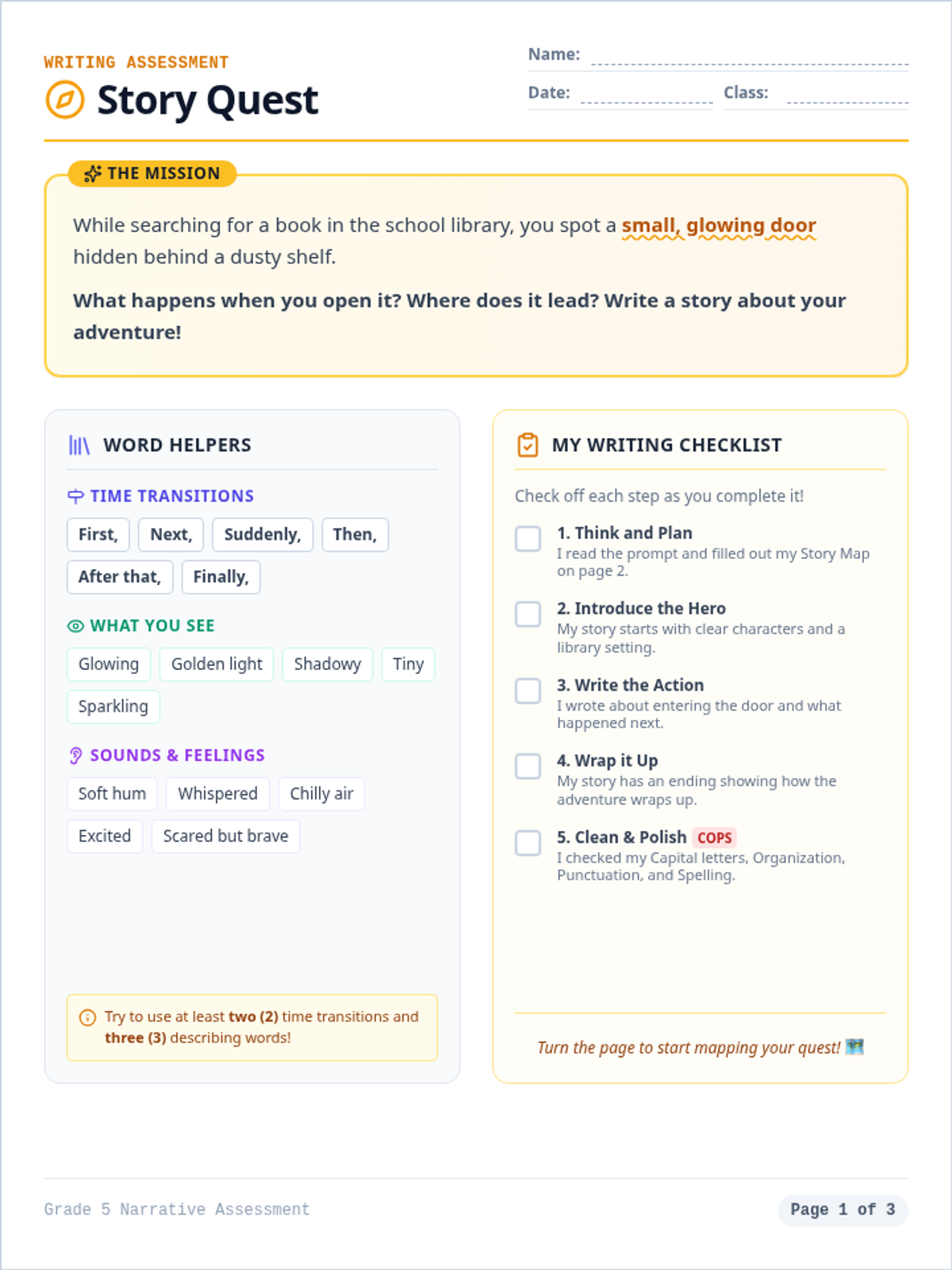
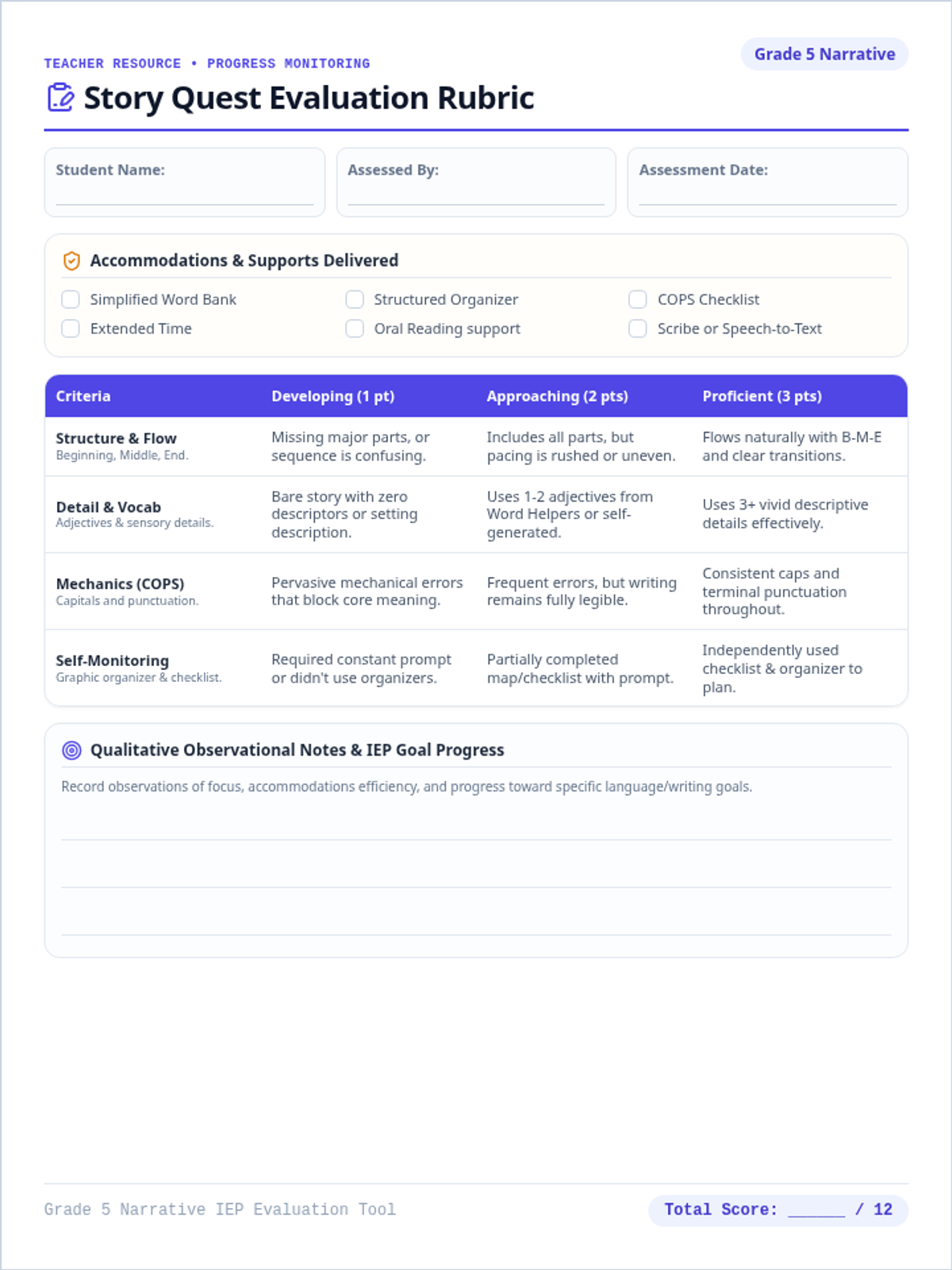
A scaffolded narrative writing assessment unit designed to support fifth-grade students, particularly those with IEP accommodations, in planning, drafting, and checking their own creative stories.
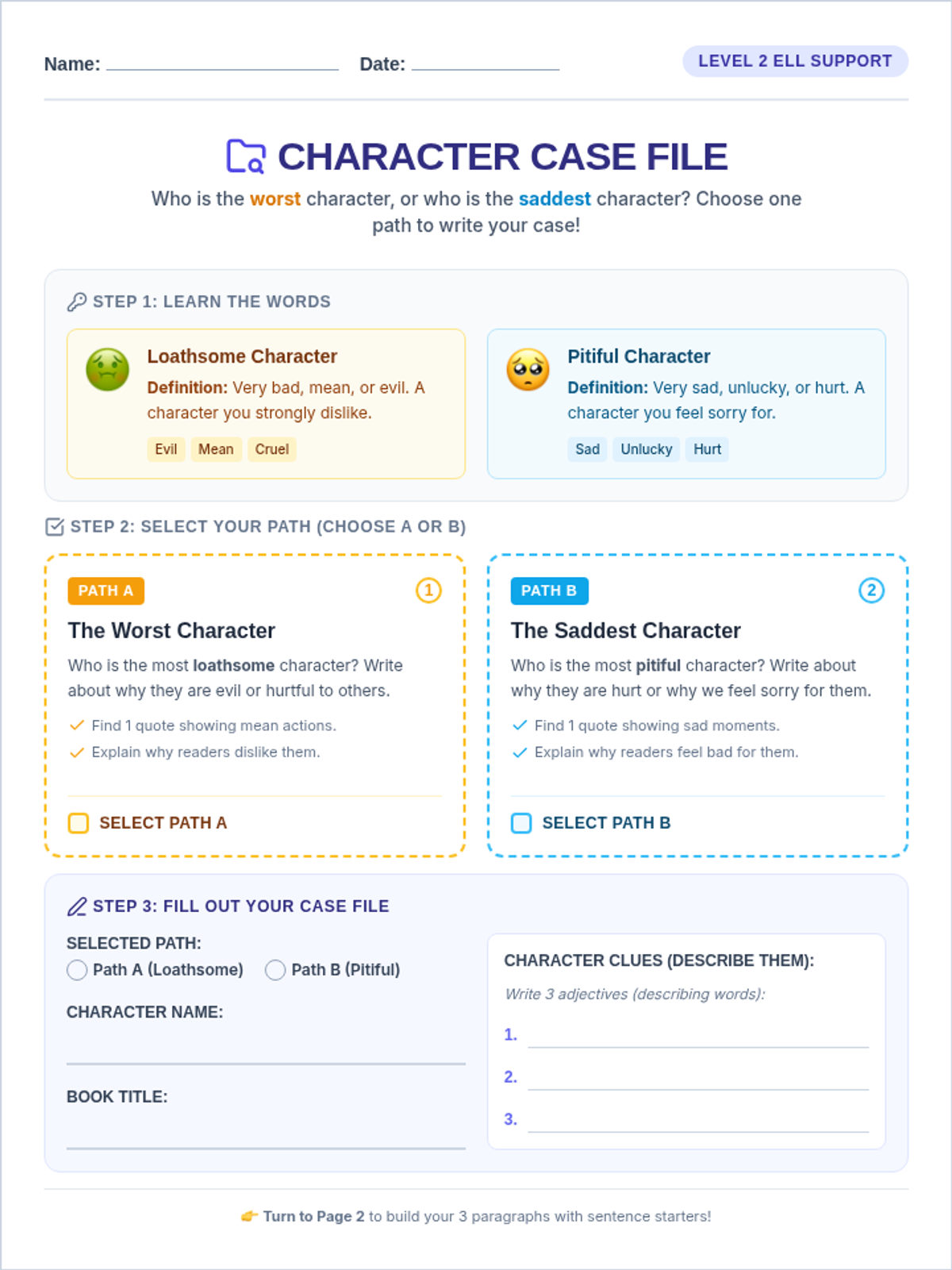
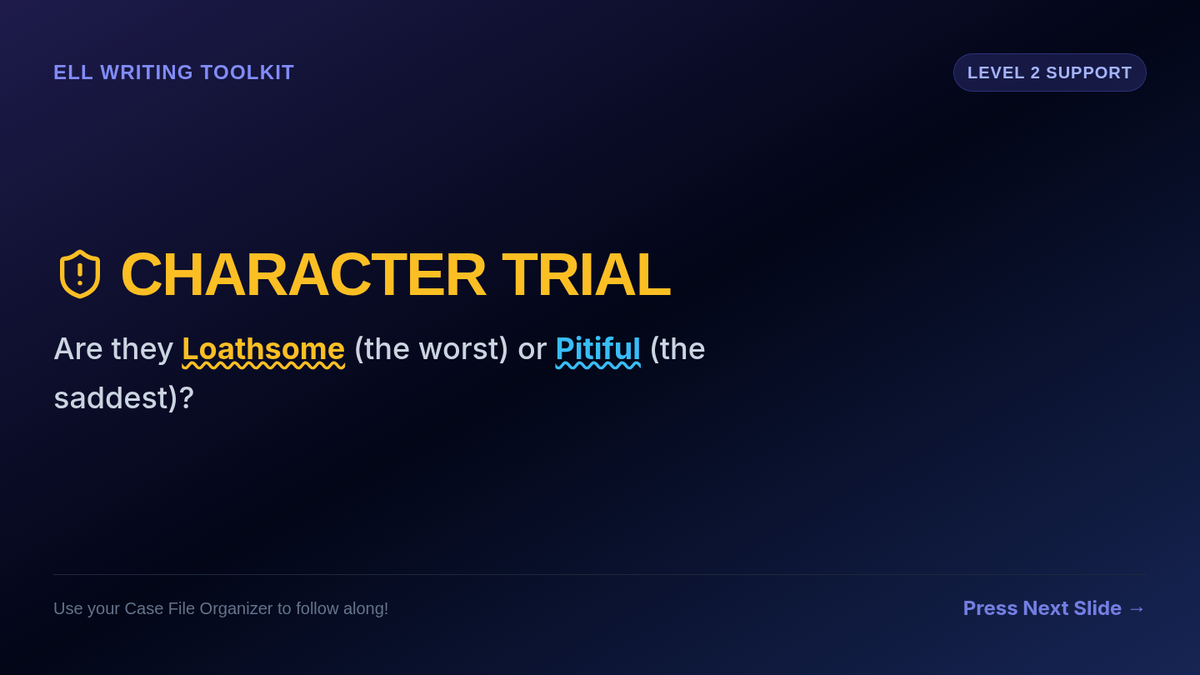
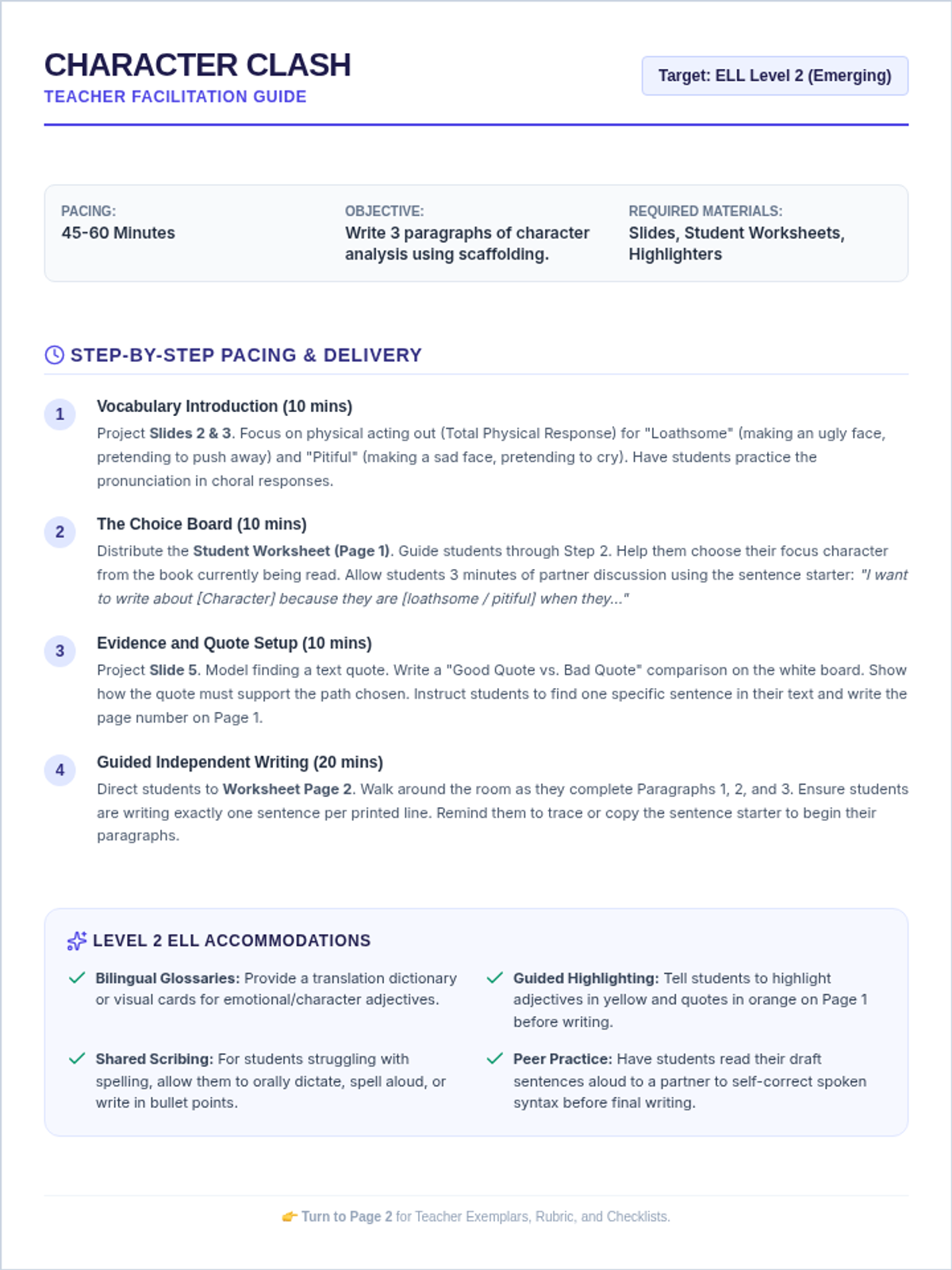
A highly scaffolded character analysis lesson designed for English Language Learners (ELL) Level 2. Students analyze either a loathsome or pitiful character using a visual graphic organizer and sentence starters.
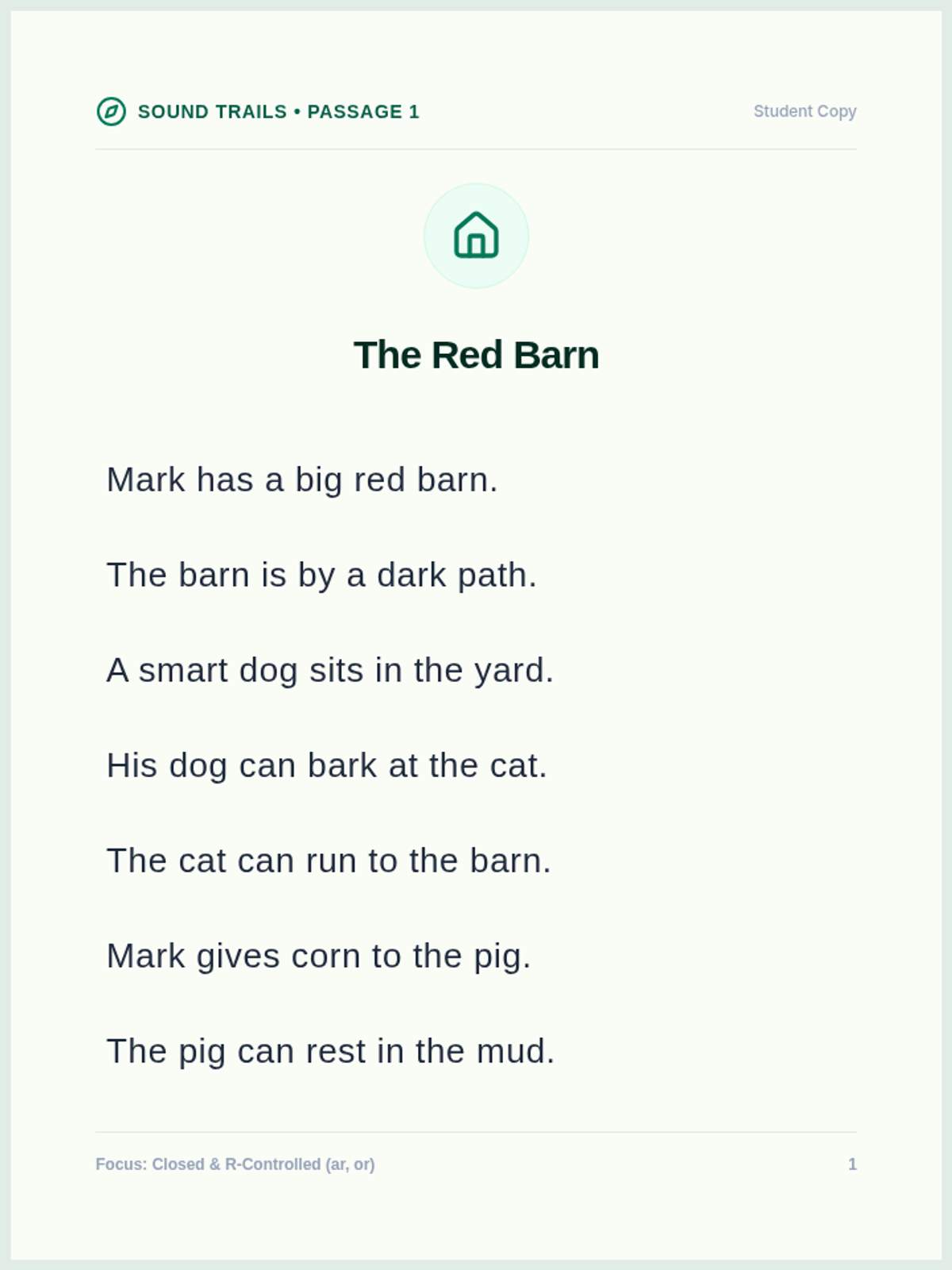
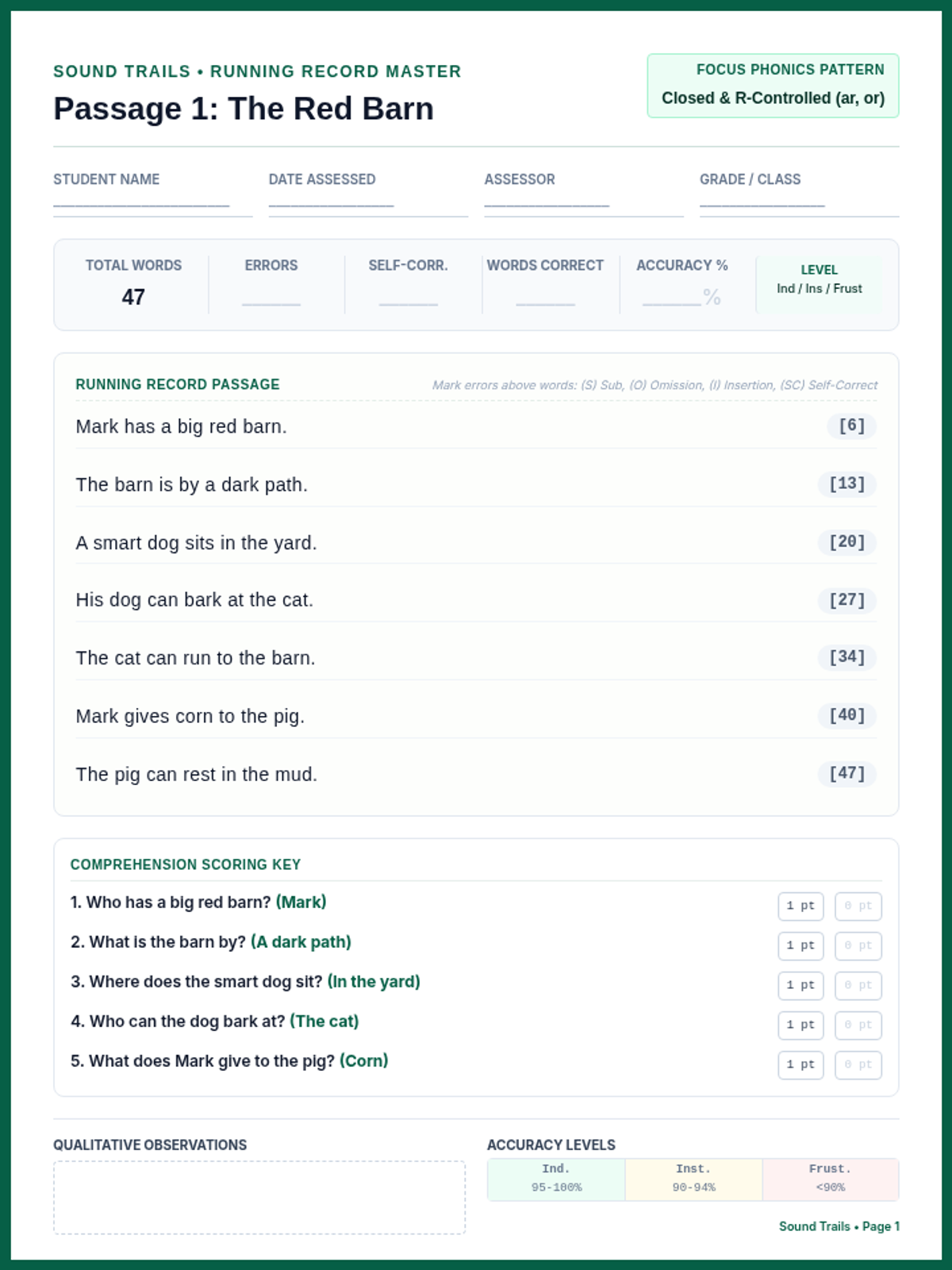
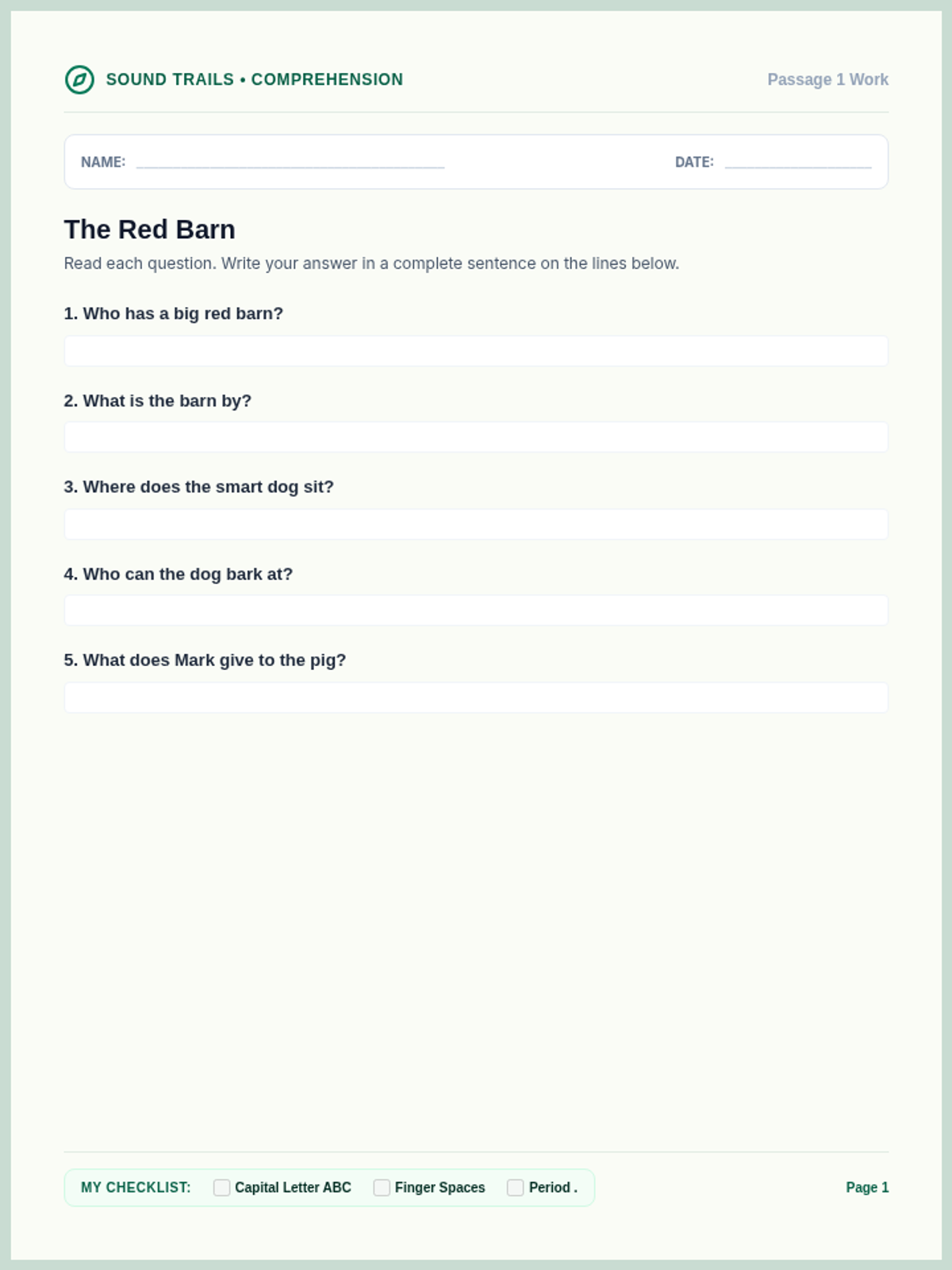
A progress monitoring phonics assessment system for first grade, featuring five passages targeting closed, silent e, and r-controlled syllable patterns alongside high-frequency words. Includes student reading sheets, running record scoring guides, and comprehension worksheets with primary handwriting lines.
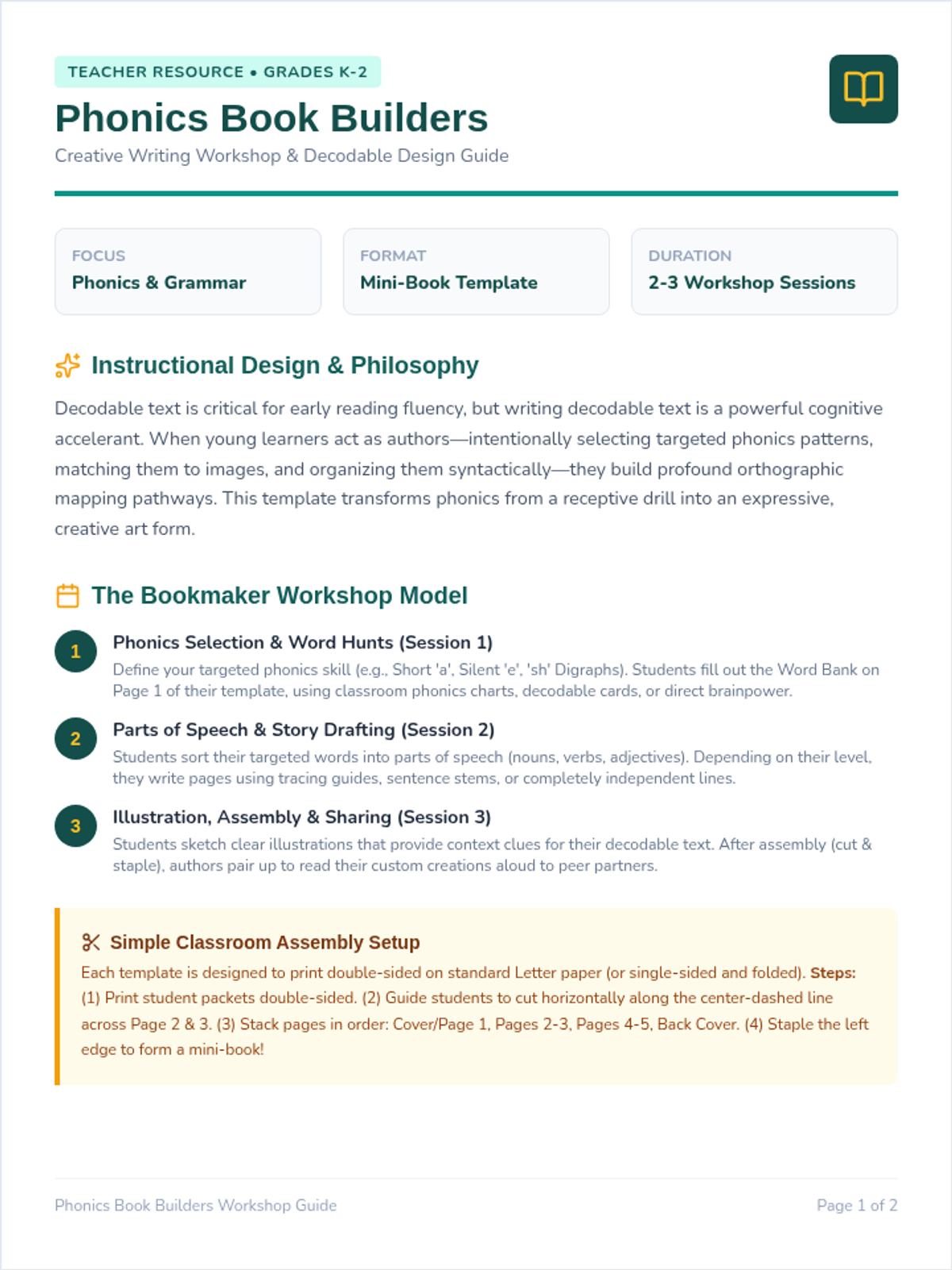
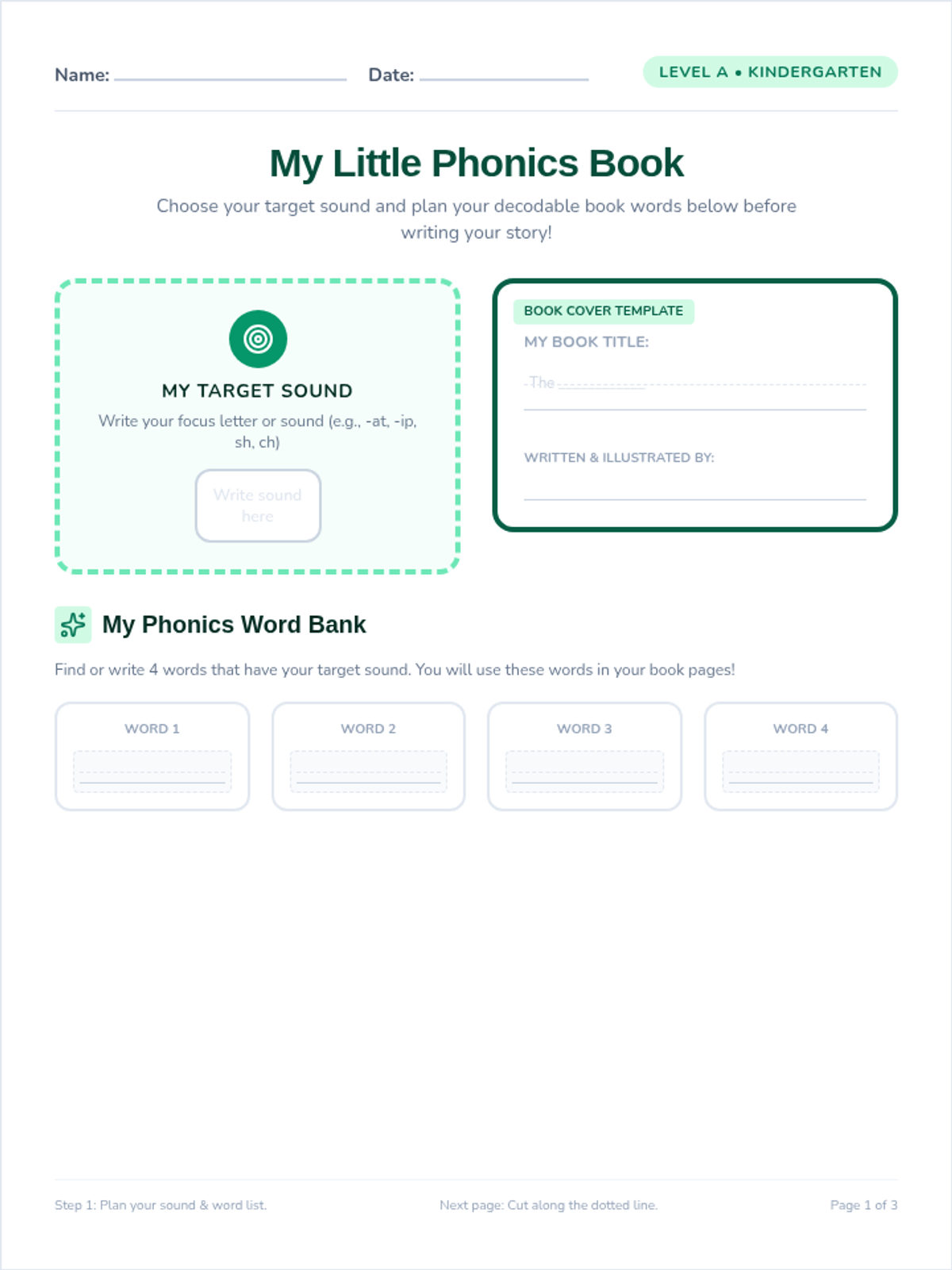
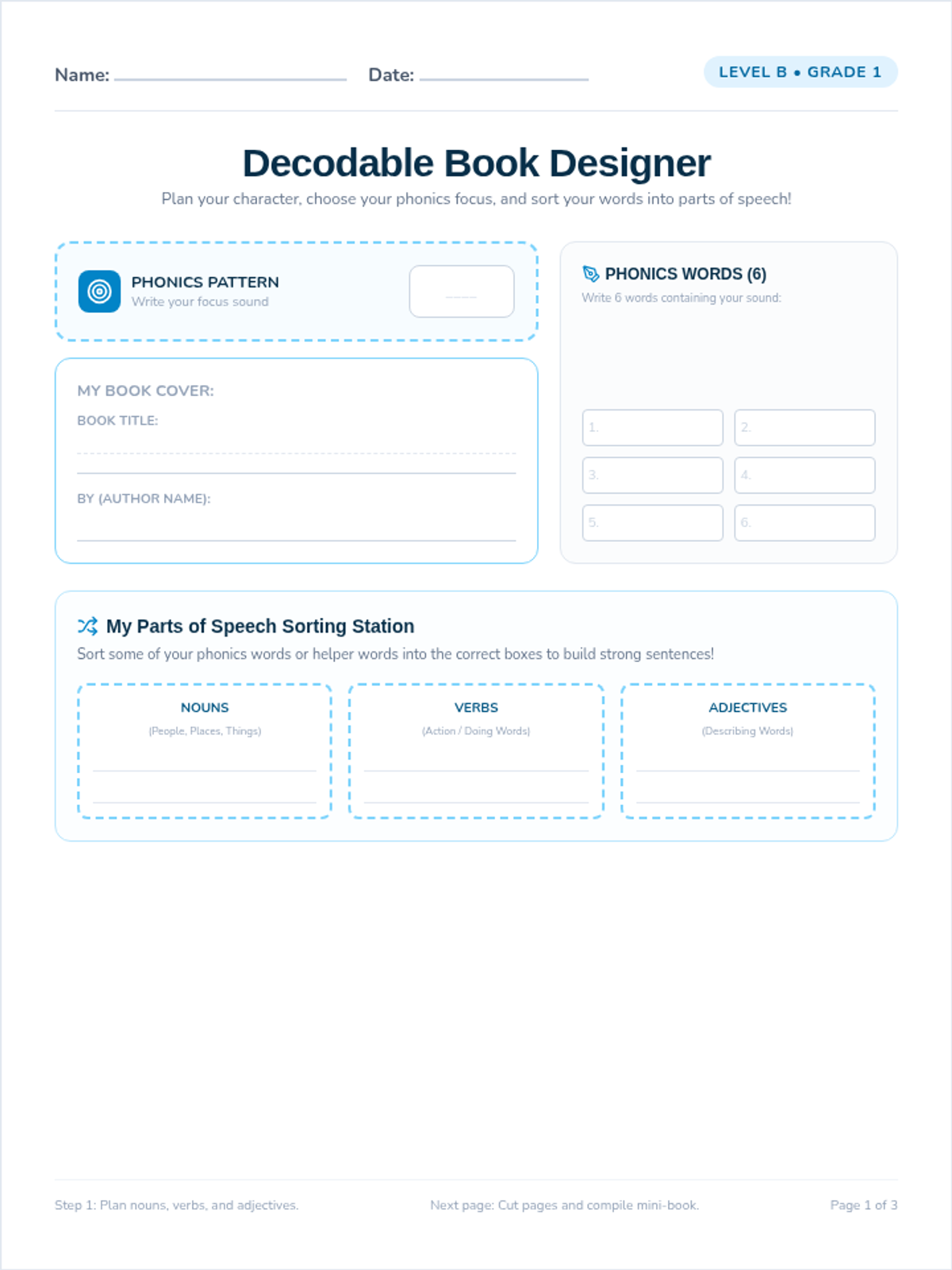
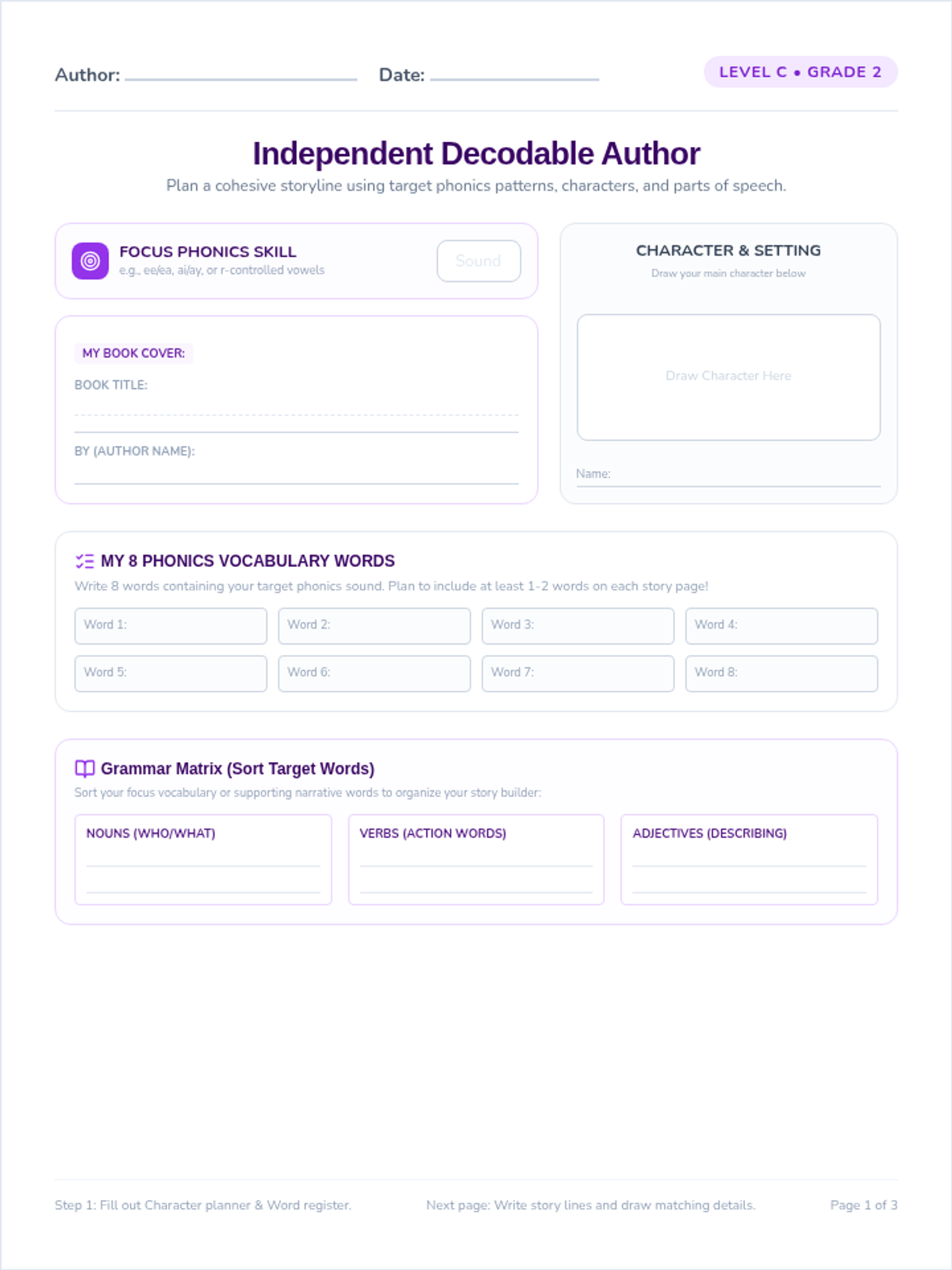
A comprehensive phonics-focused lesson that empowers K-2 students to author, illustrate, and assemble their own decodable books. It includes three levels of differentiated student bookmaking templates (tracing, sentence stems, and independent writing) alongside an educator facilitation guide.
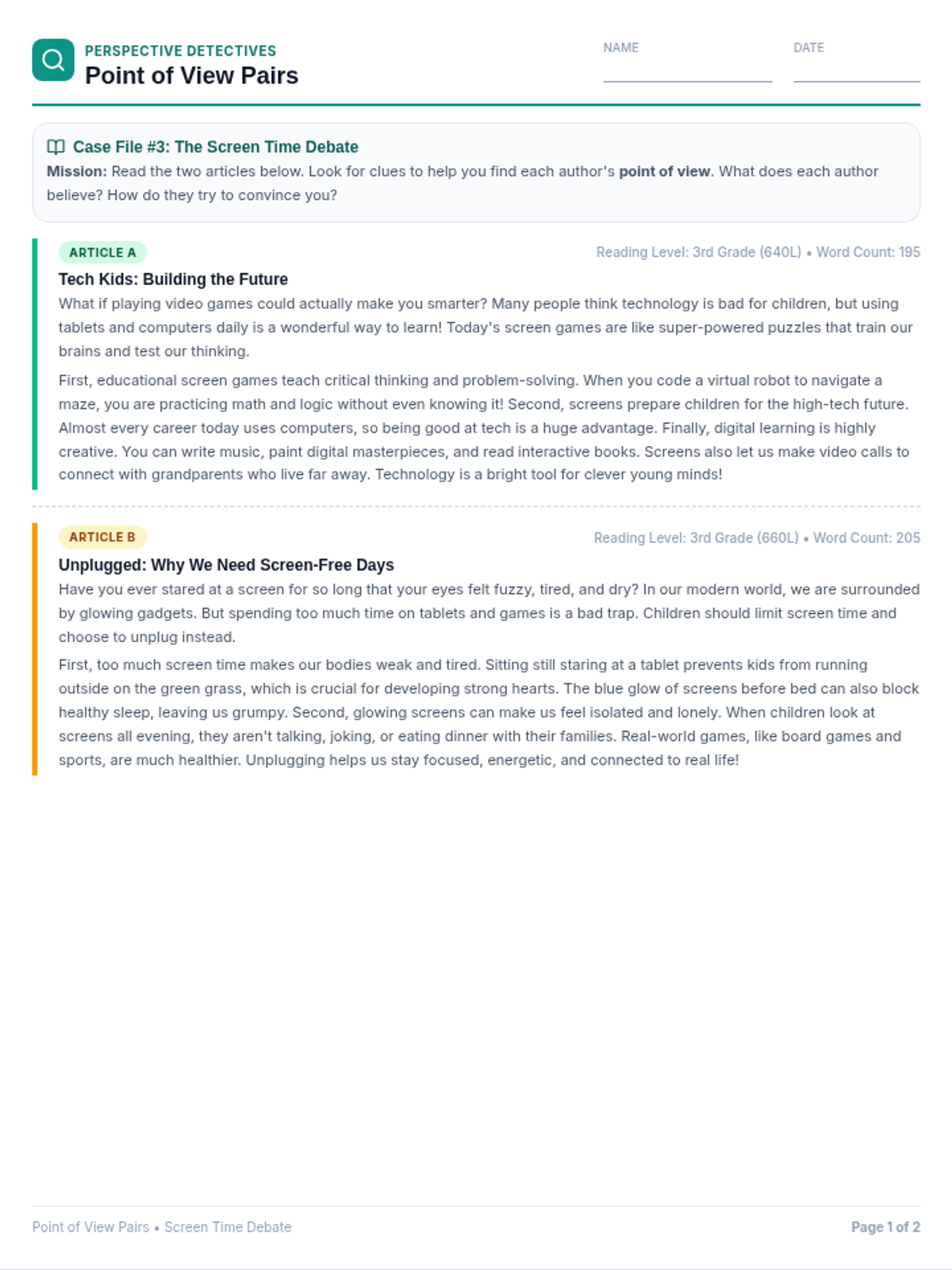
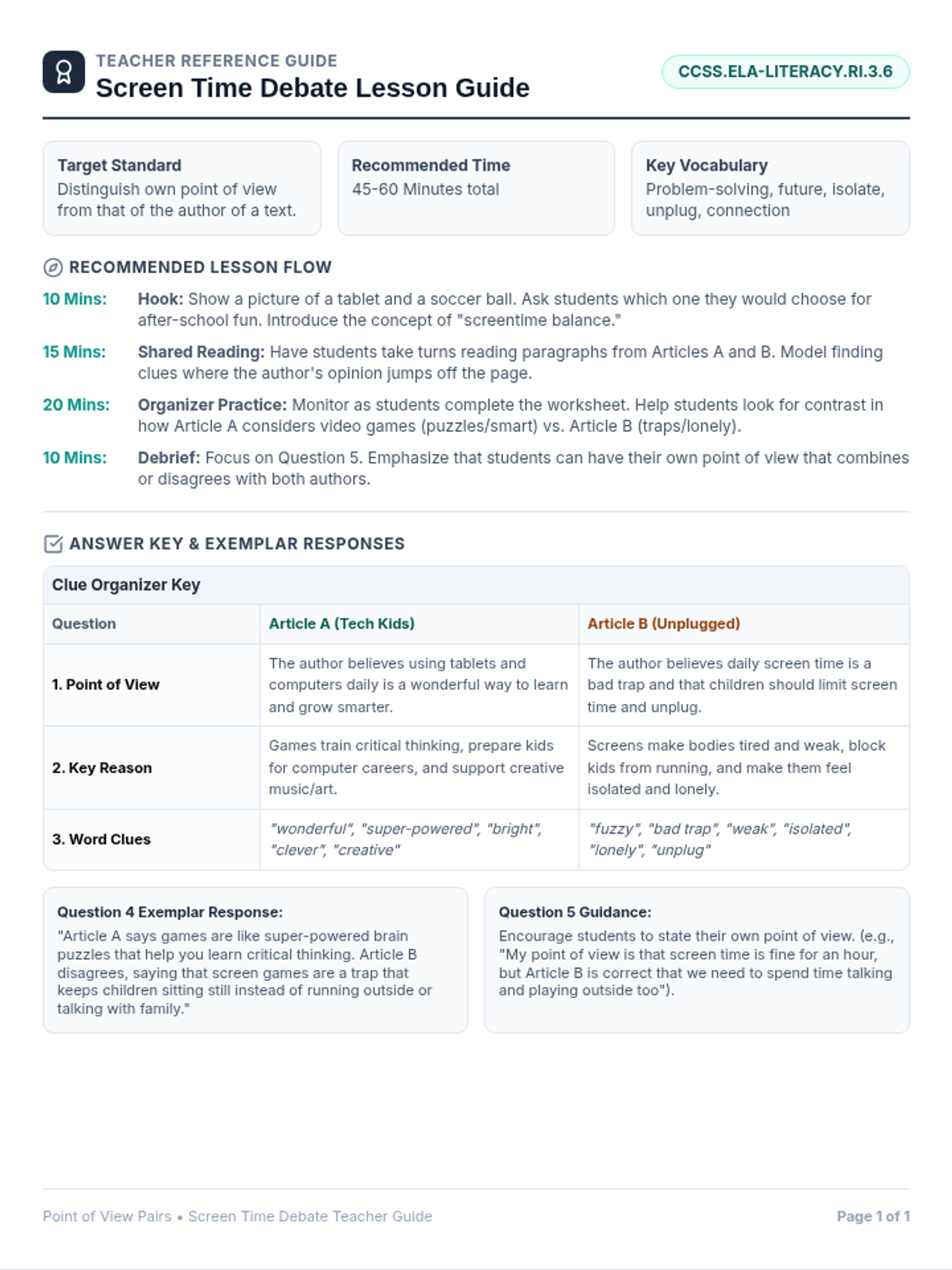
Students examine differing perspectives on daily tablet and video game use, distinguishing between an author promoting technology skills and one warning against excessive screens.
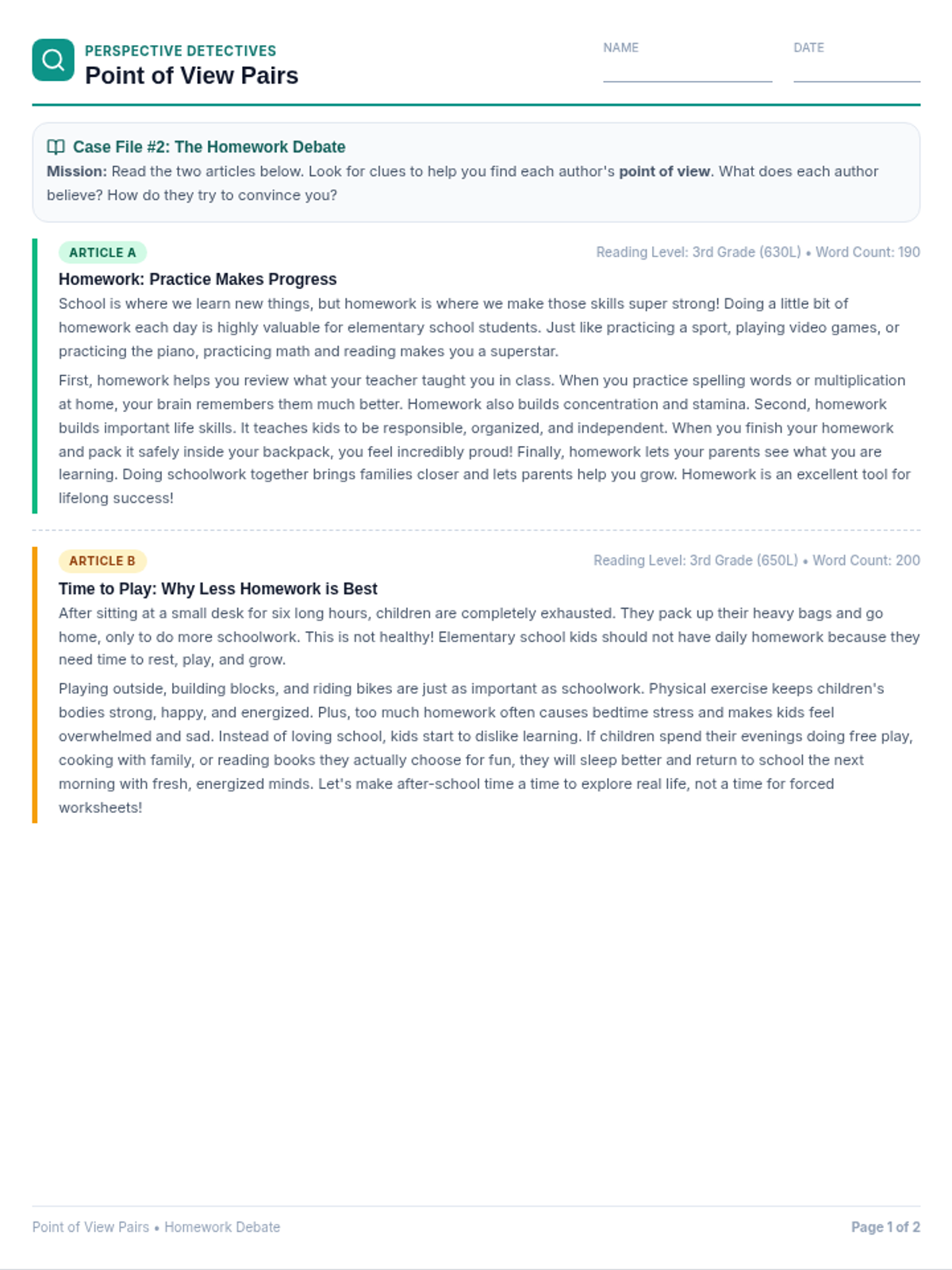
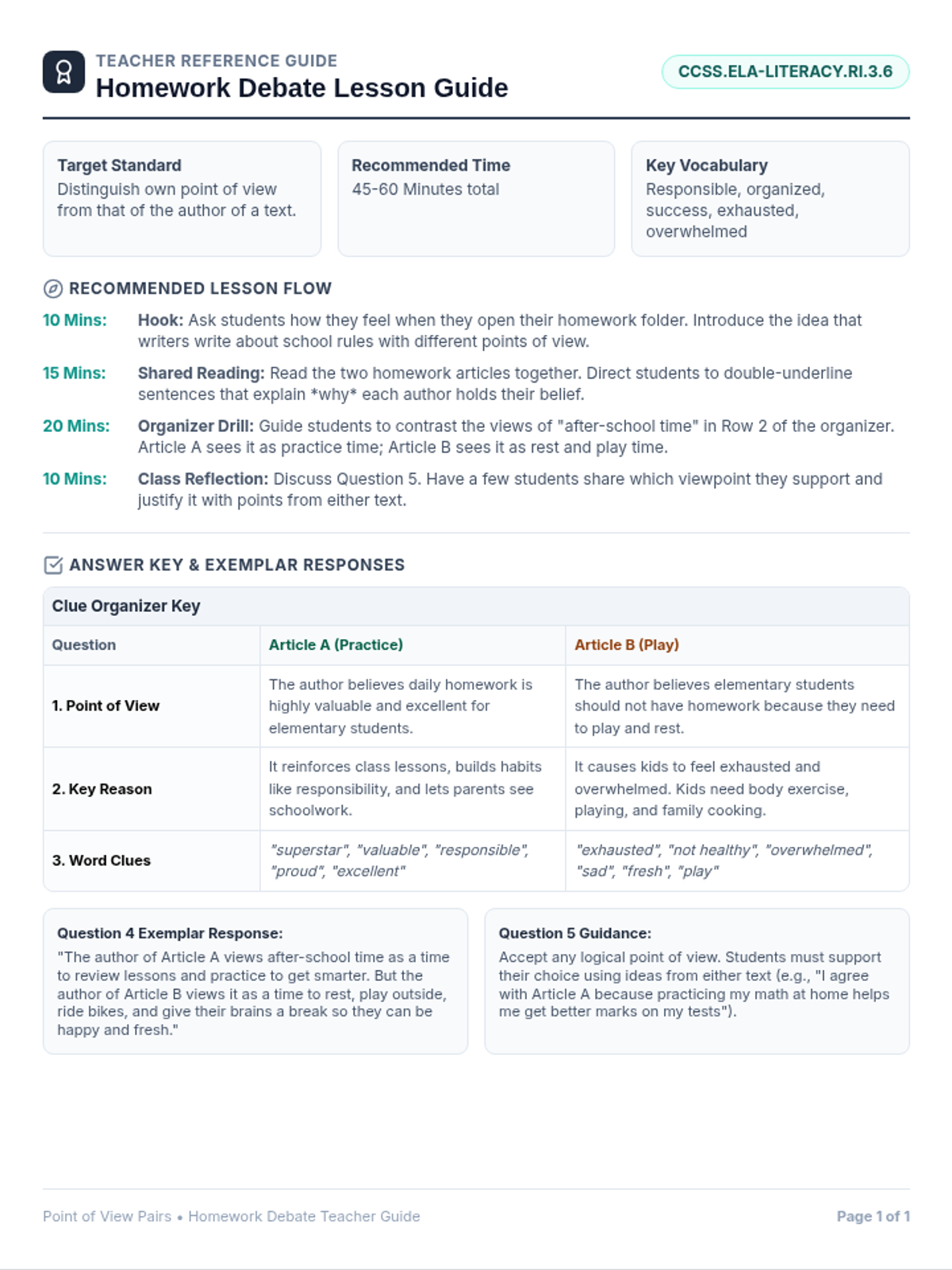
Students read and compare contrasting opinions on whether elementary school students should have daily homework, analyzing reasons and persuasive words used by each author.
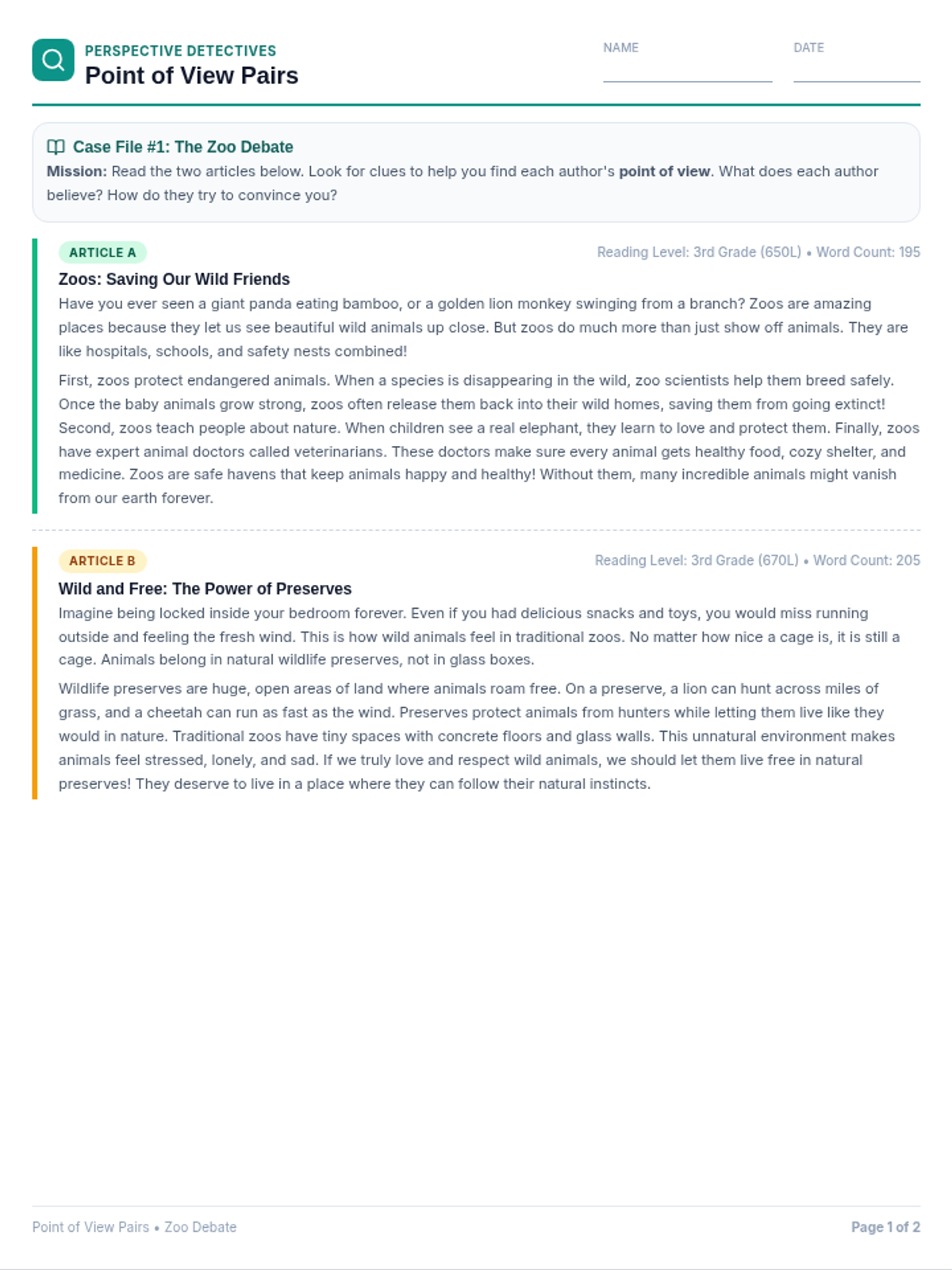
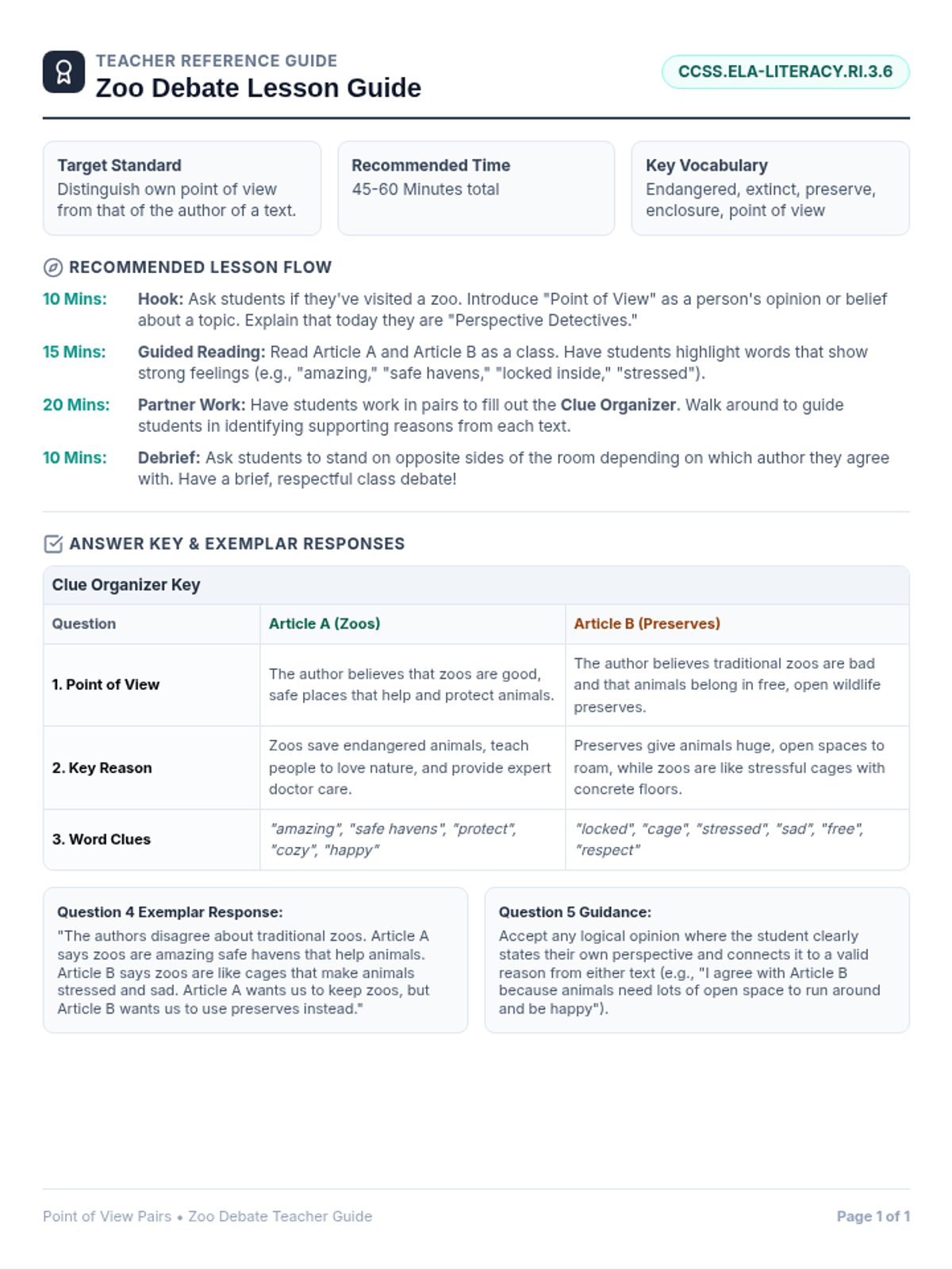
Students analyze paired texts on whether wild animals should be kept in traditional zoos or in natural wildlife preserves, identifying key evidence that reveals each author's perspective.
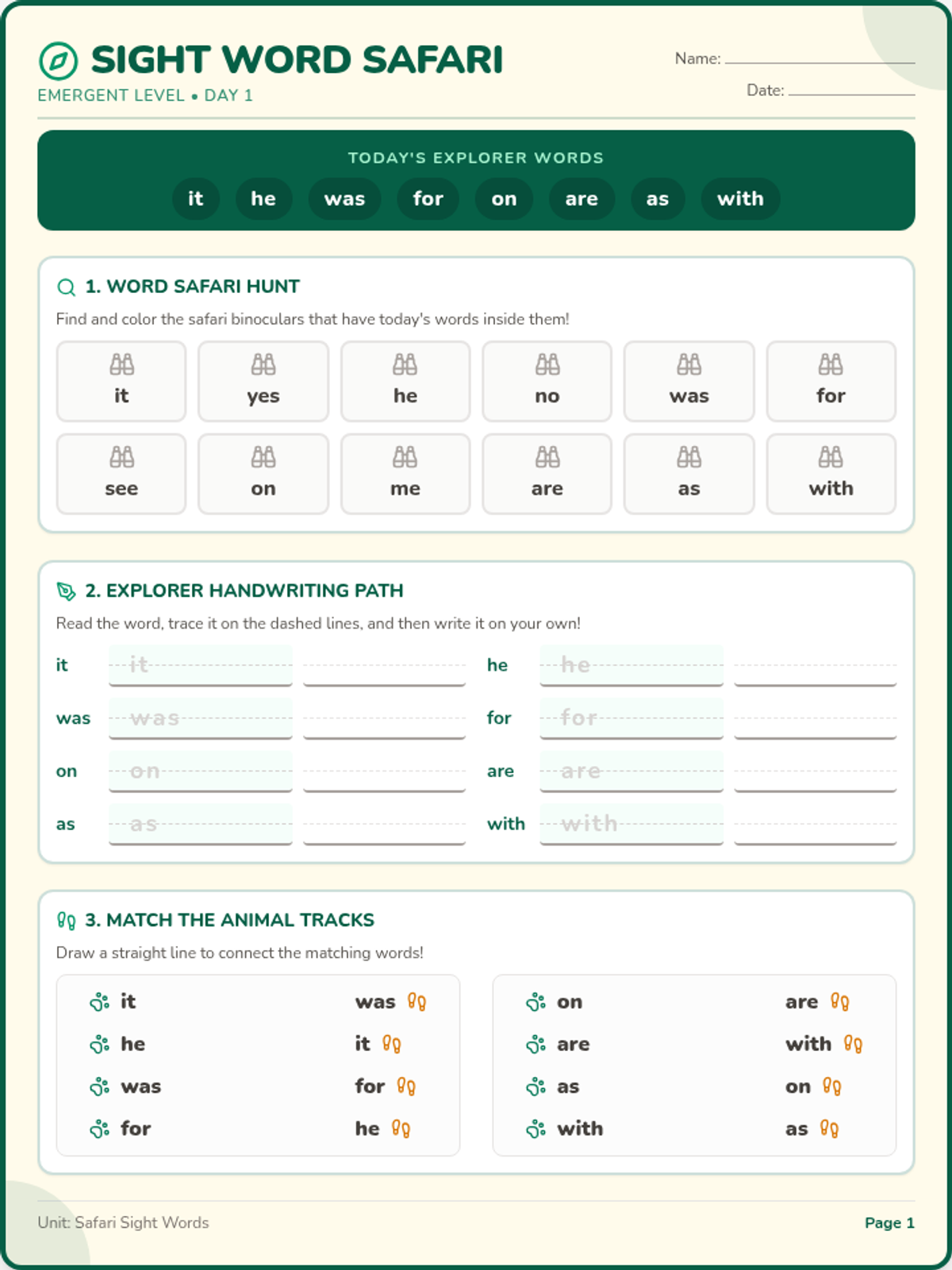
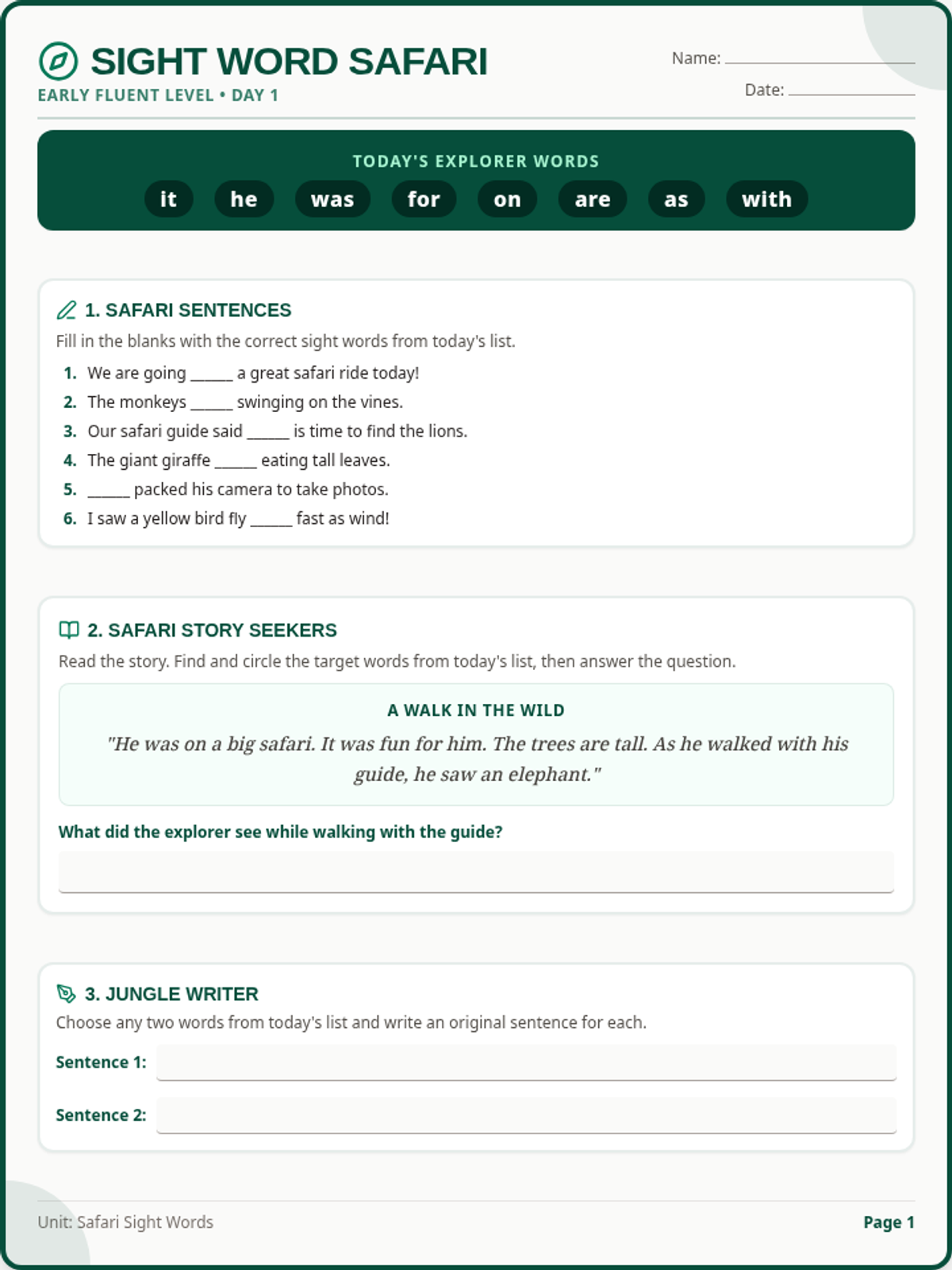
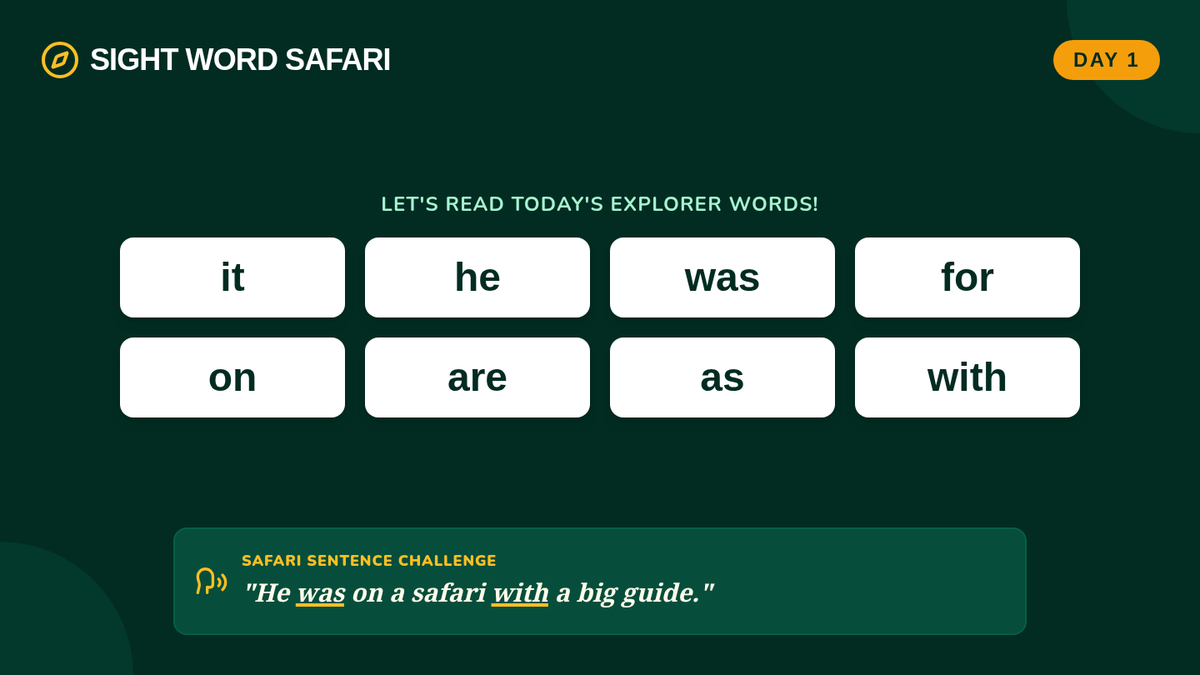
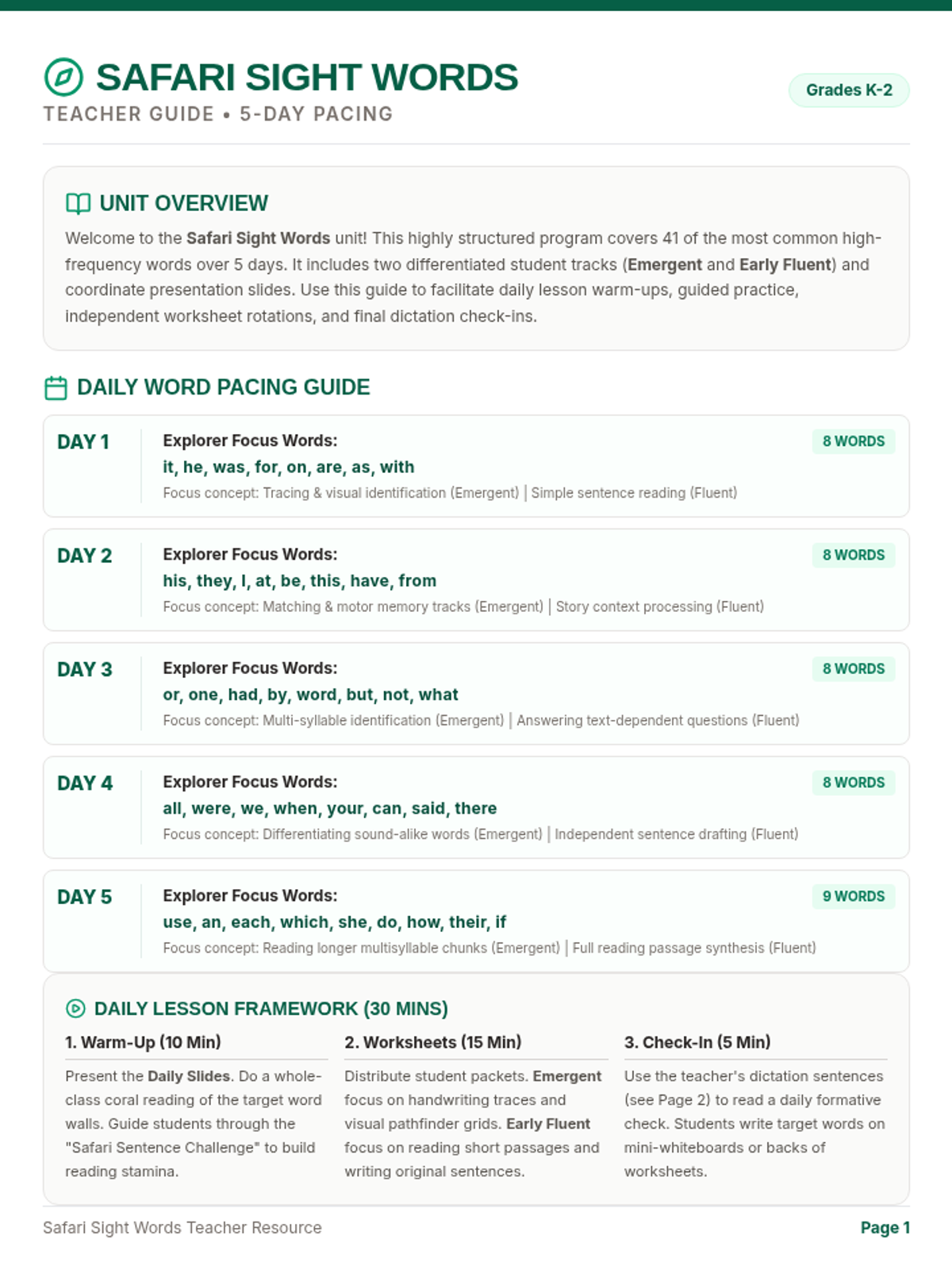
A comprehensive 5-day sight word unit designed for early childhood learners. It includes highly differentiated packets for emergent and early fluent readers, visual classroom slides, and a comprehensive teacher guide with dictation sentences and activity ideas.
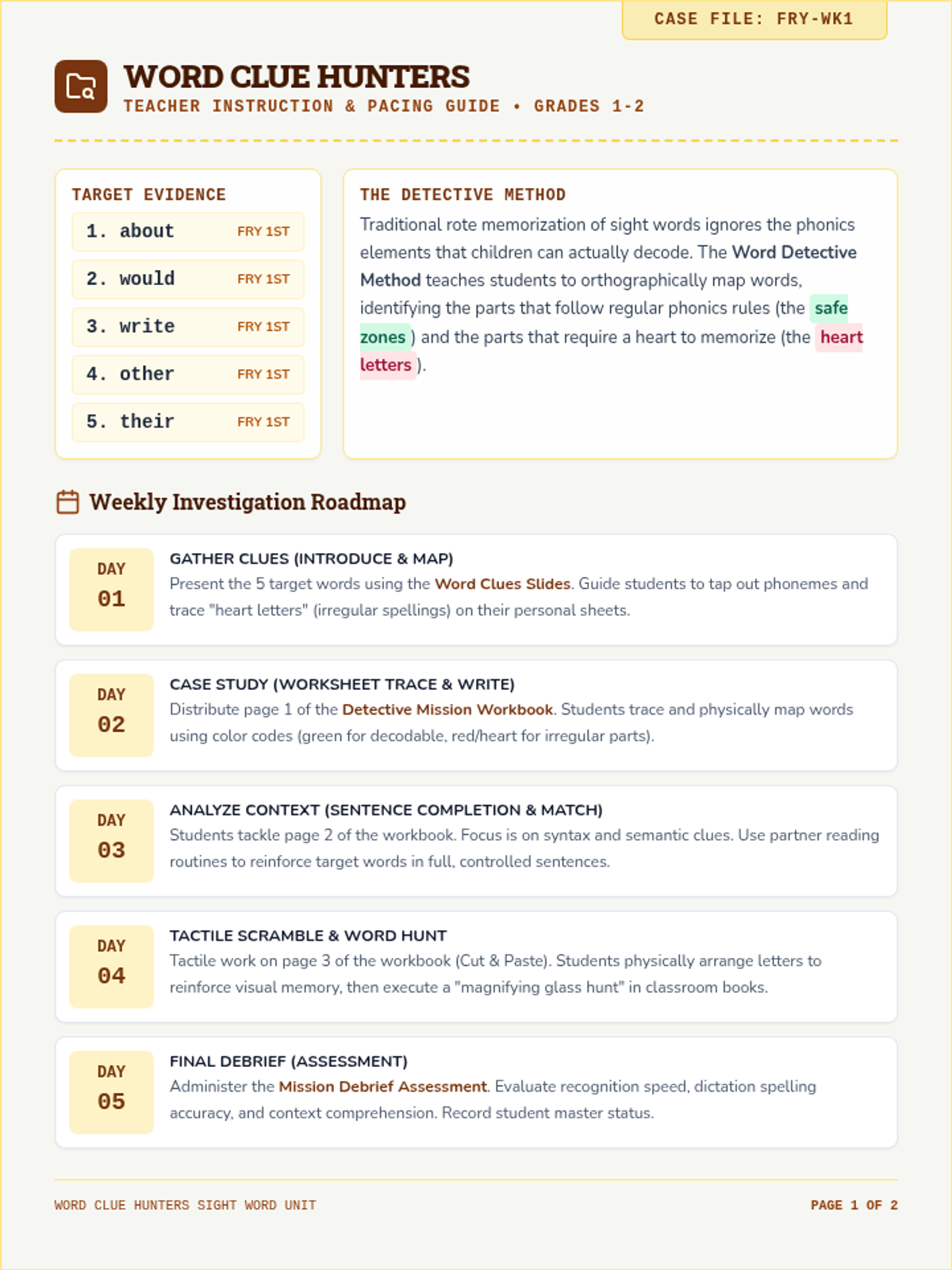
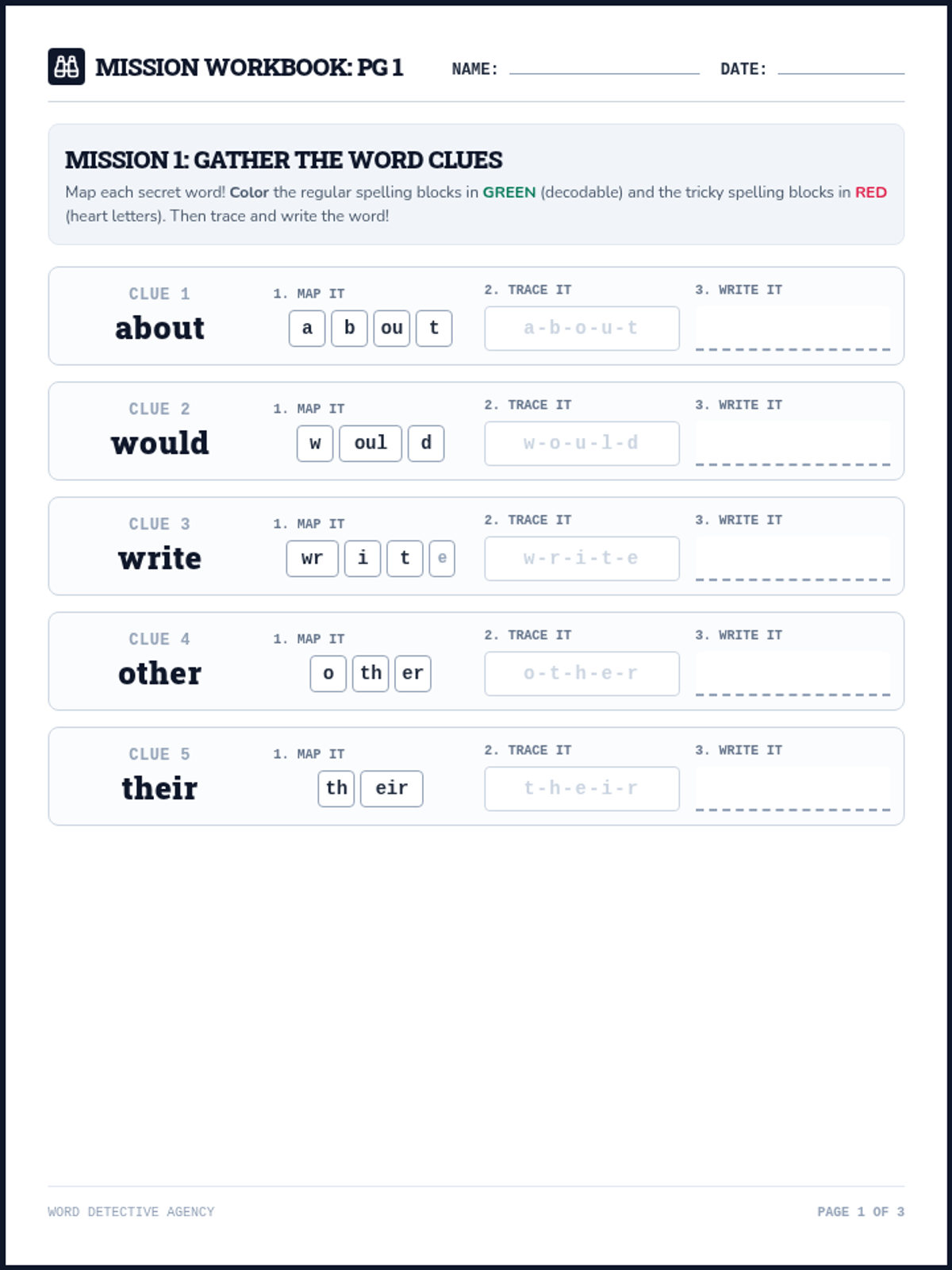
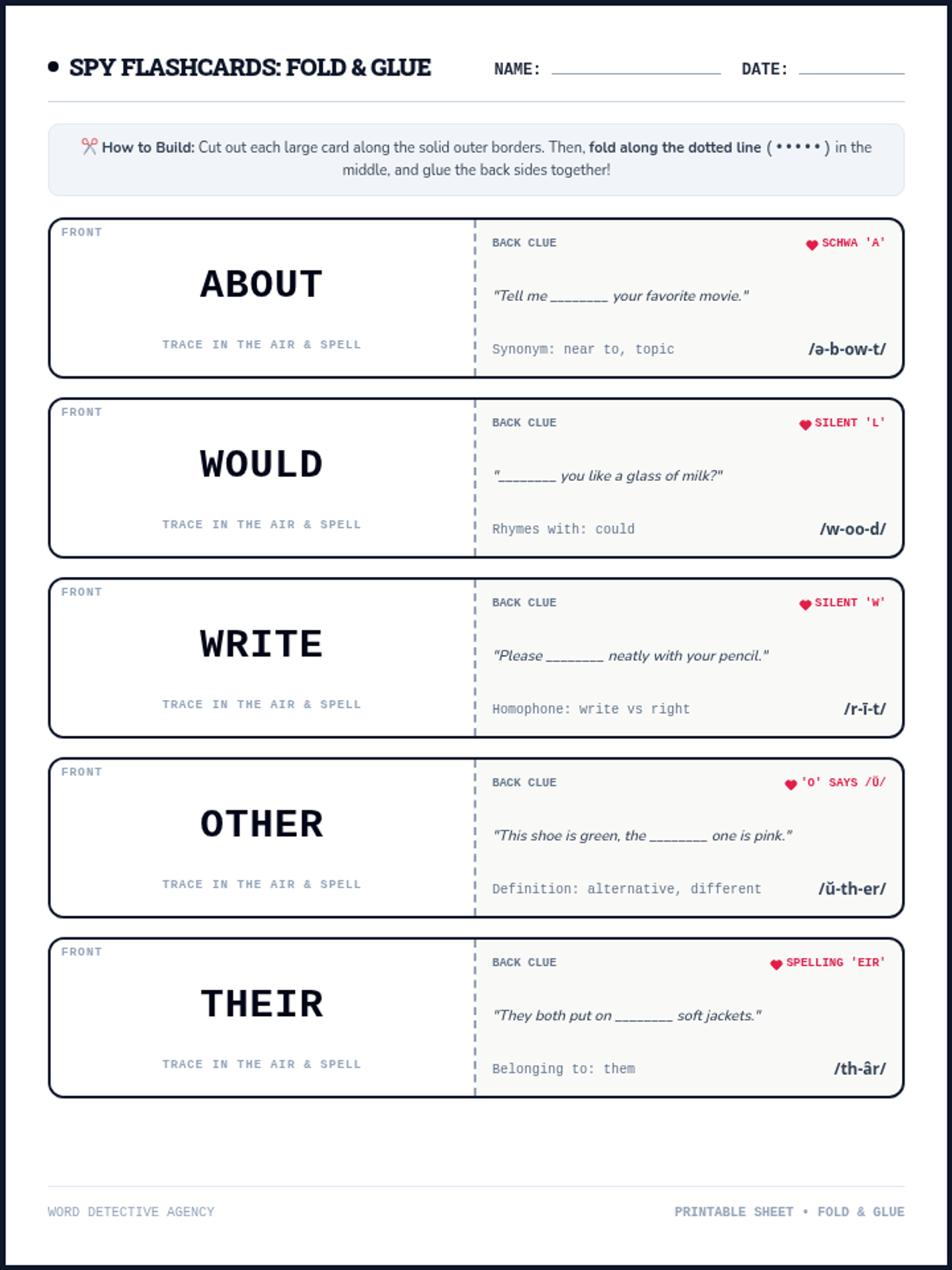
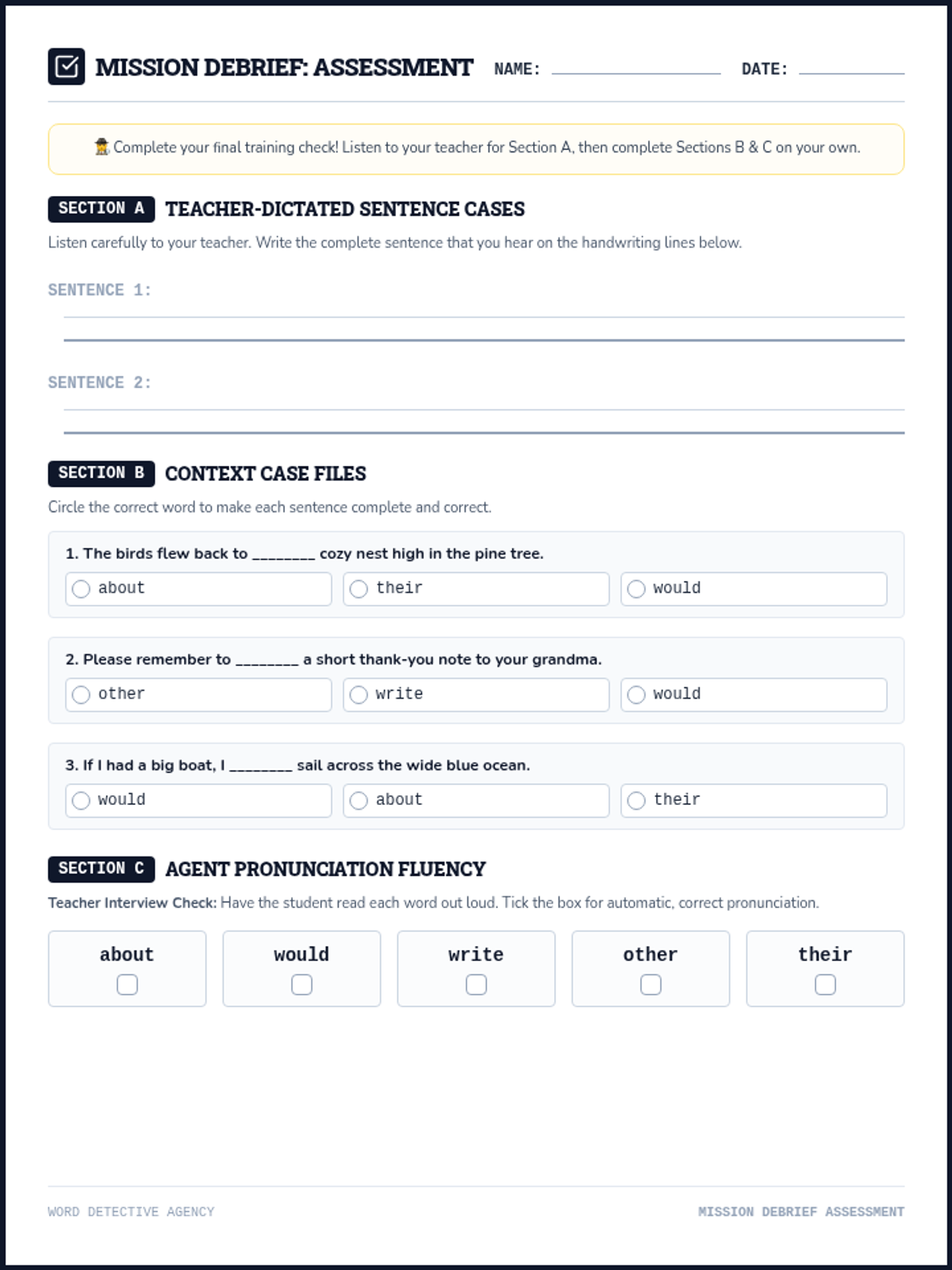
A comprehensive 5-day sight word unit targeting five critical high-frequency Fry words ('about', 'would', 'write', 'other', 'their') through active daily routines, hands-on practice, and a tactile detective-themed investigation.
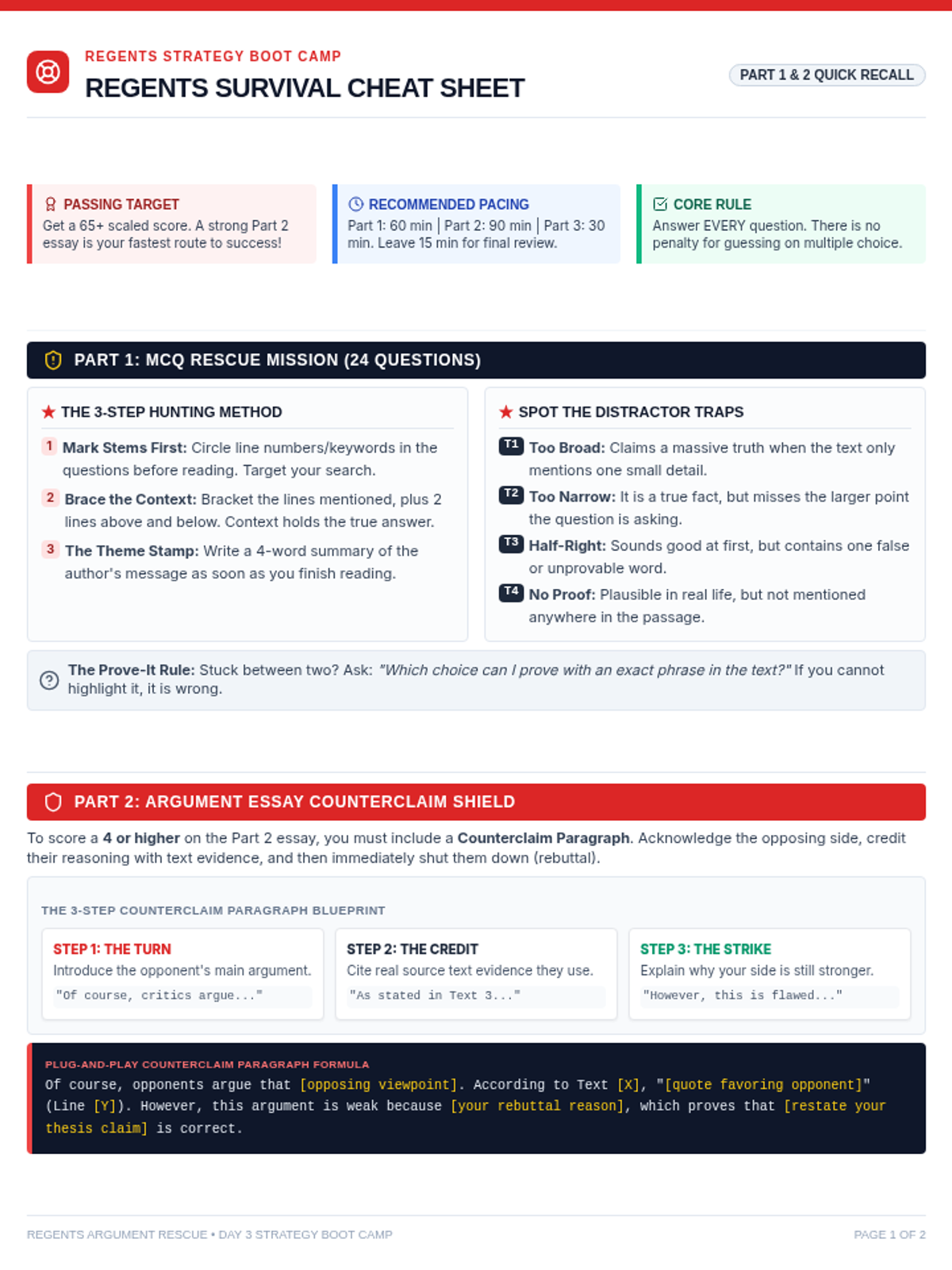
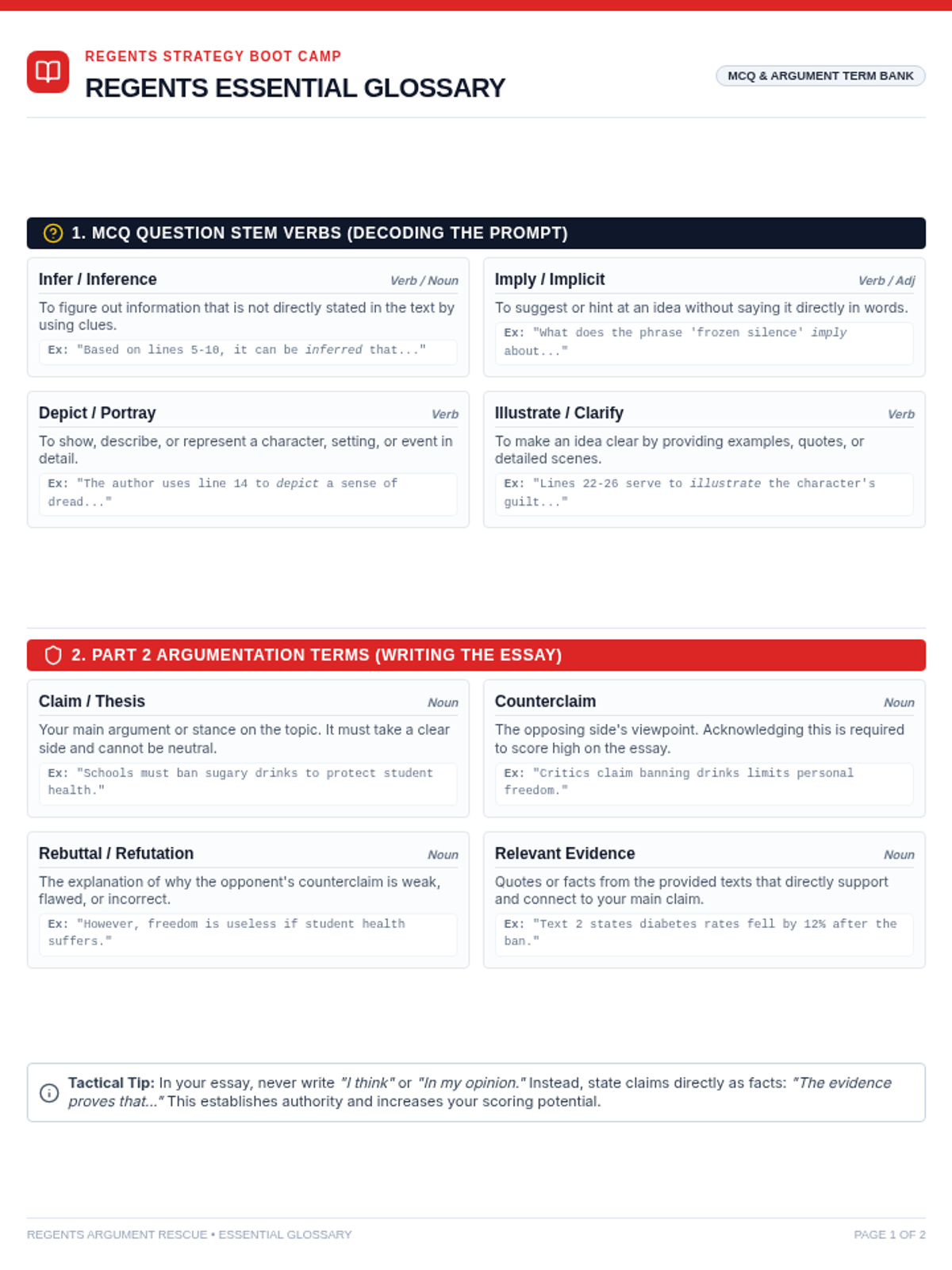
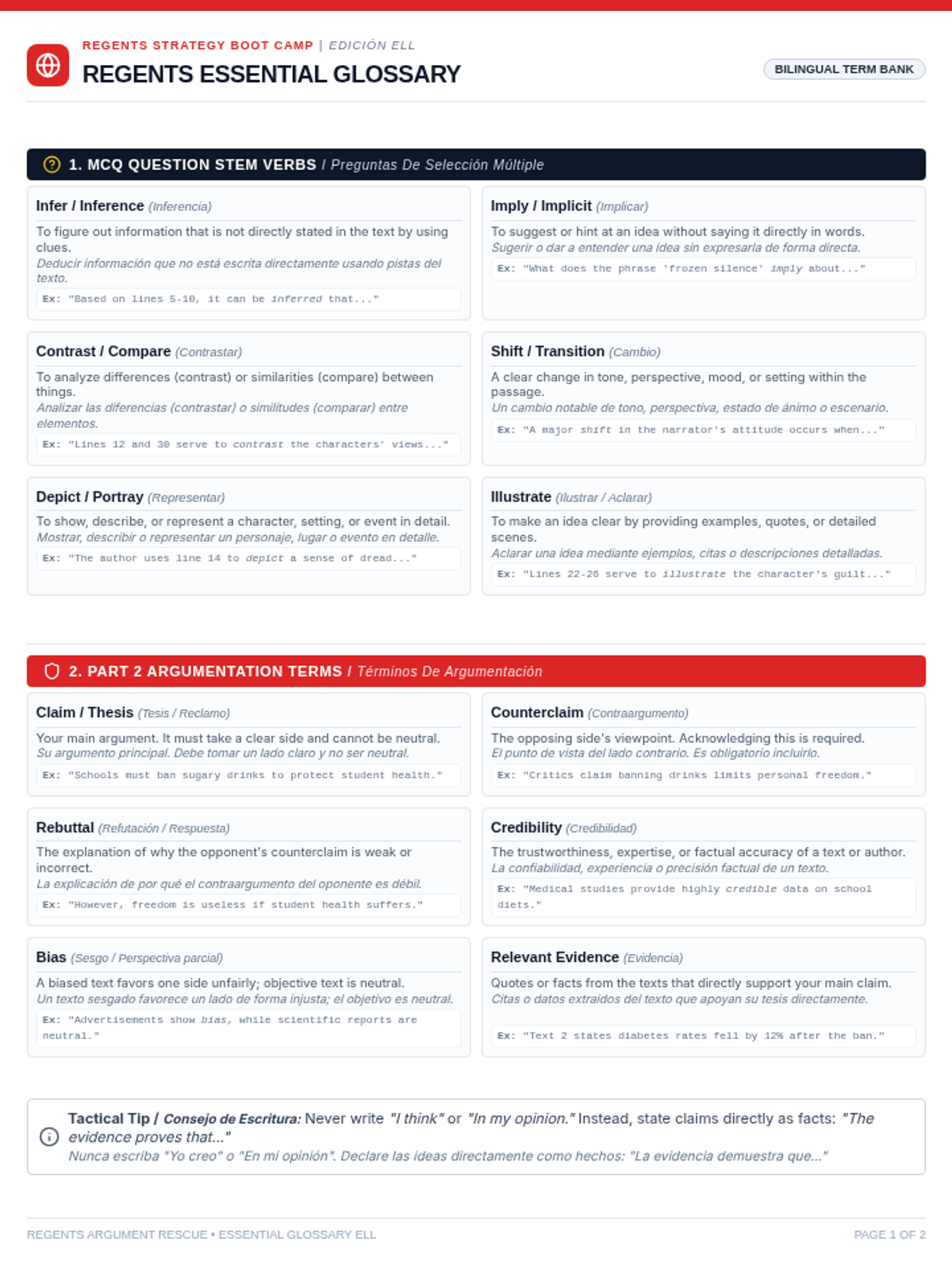
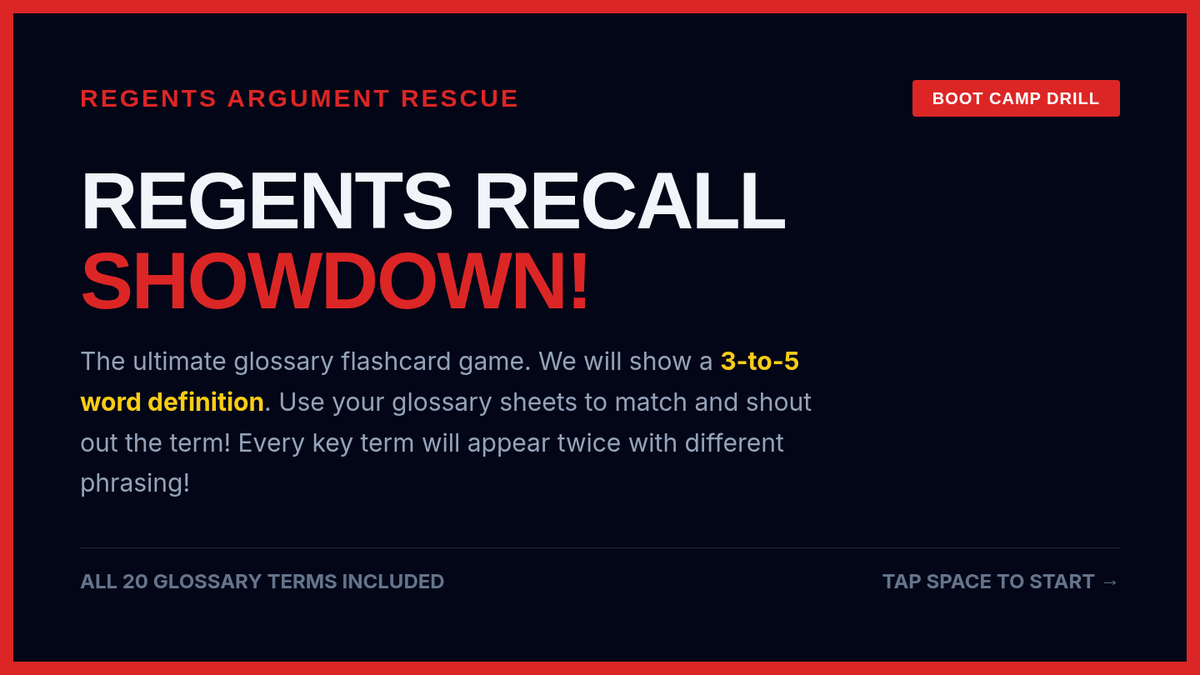
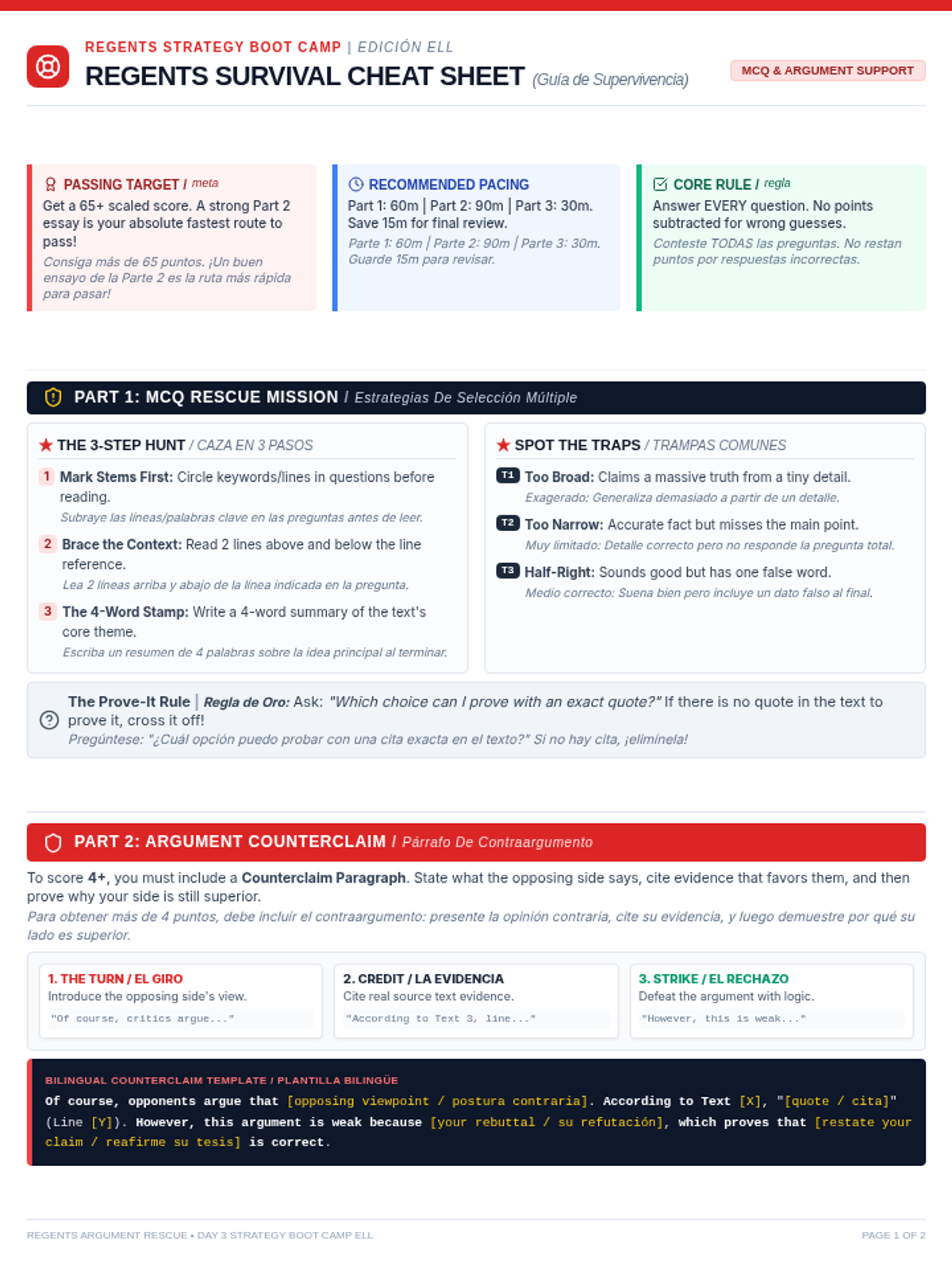
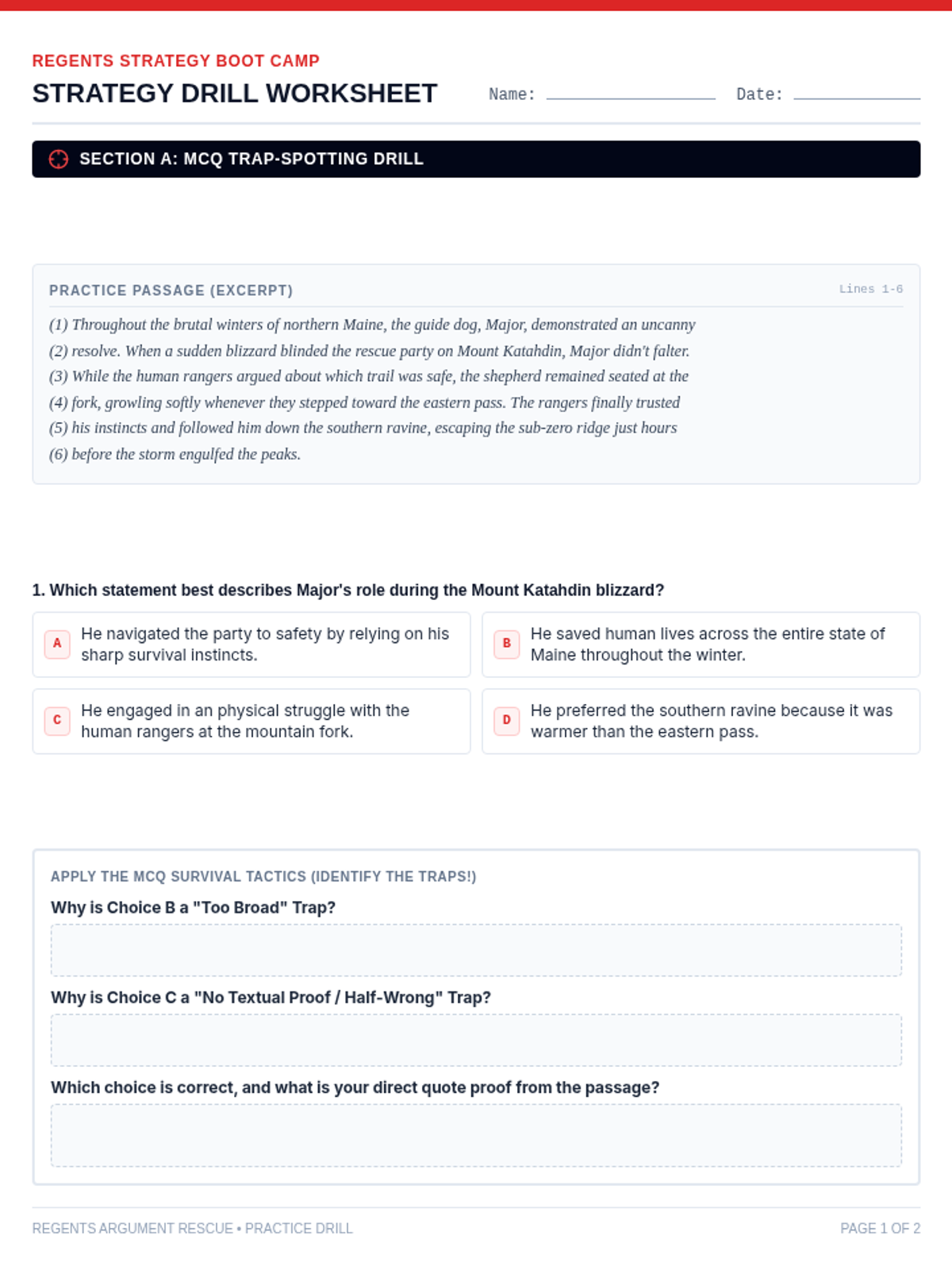
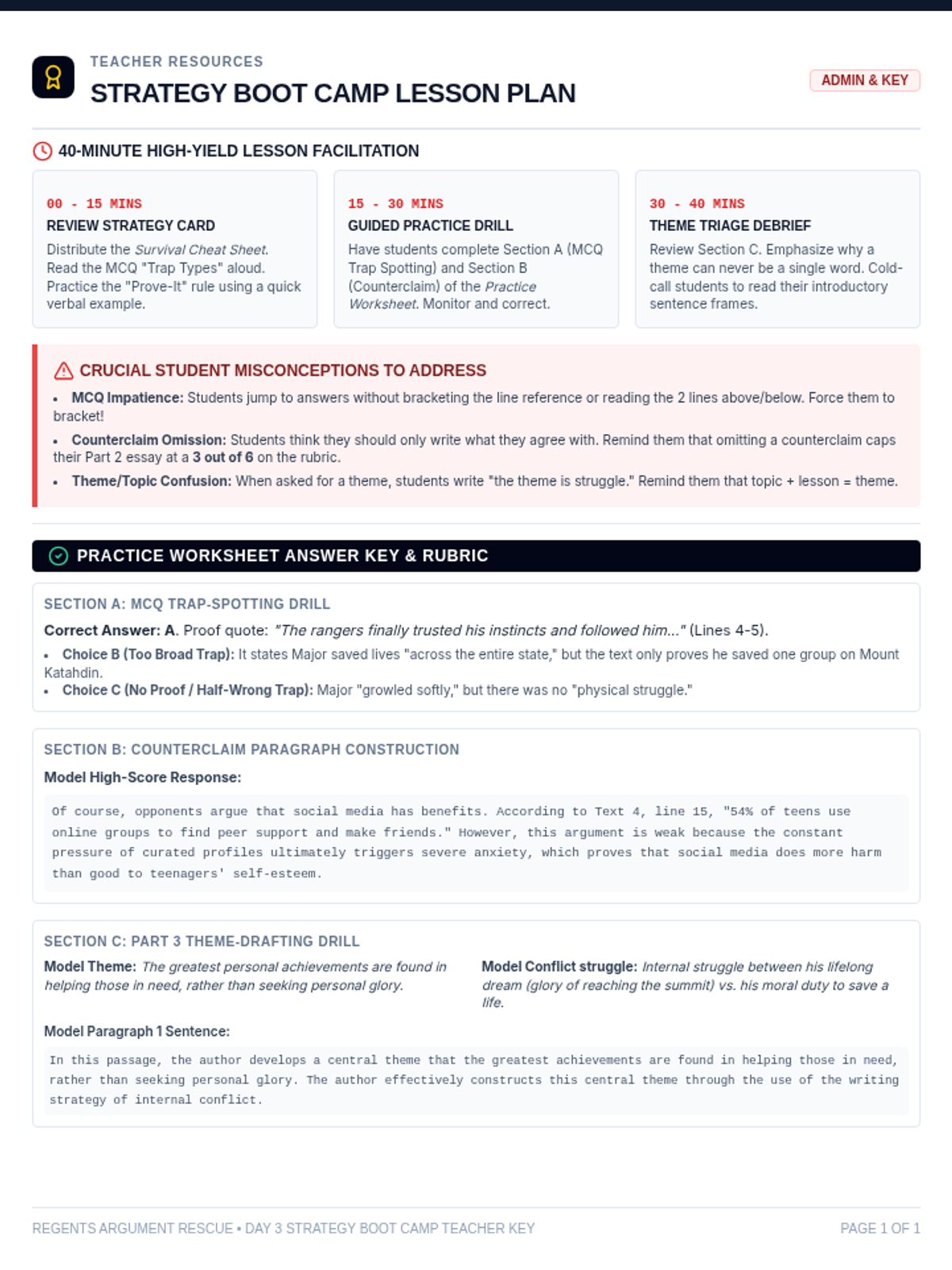
A targeted strategy and terminology boot camp designed to help students master ELA Regents Part 1 (MCQ) elimination strategies, Part 2 (Argument) counterclaim formulation, and Part 3 (Text-Analysis) literary device mastery.
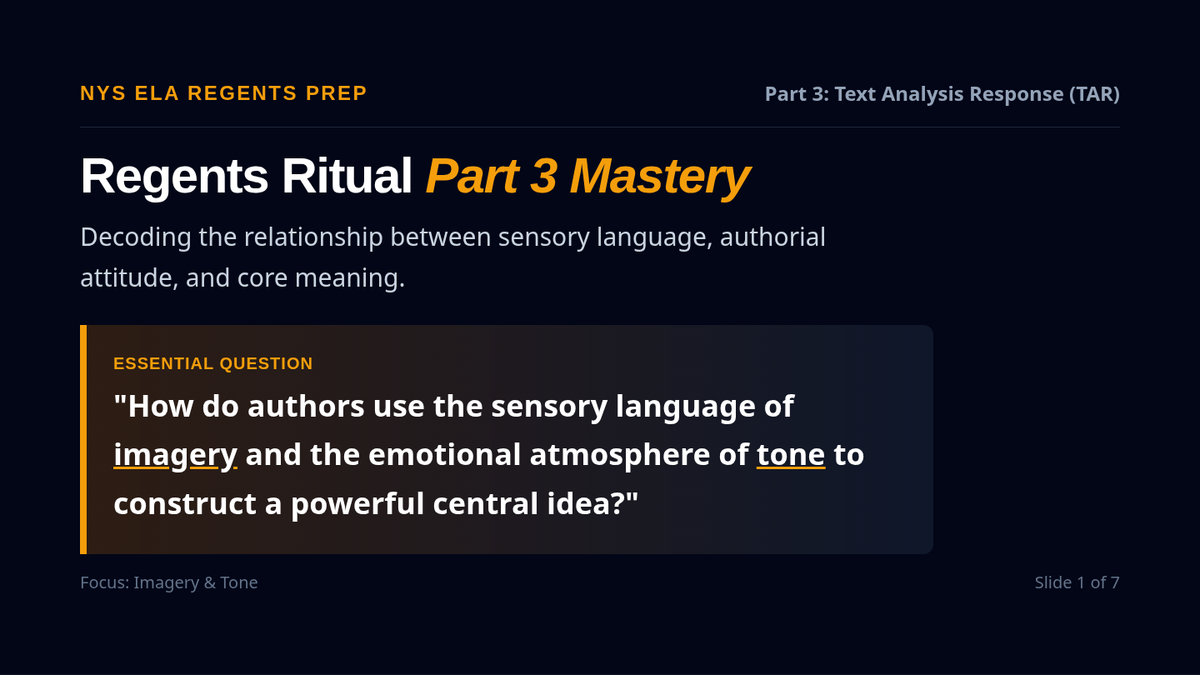
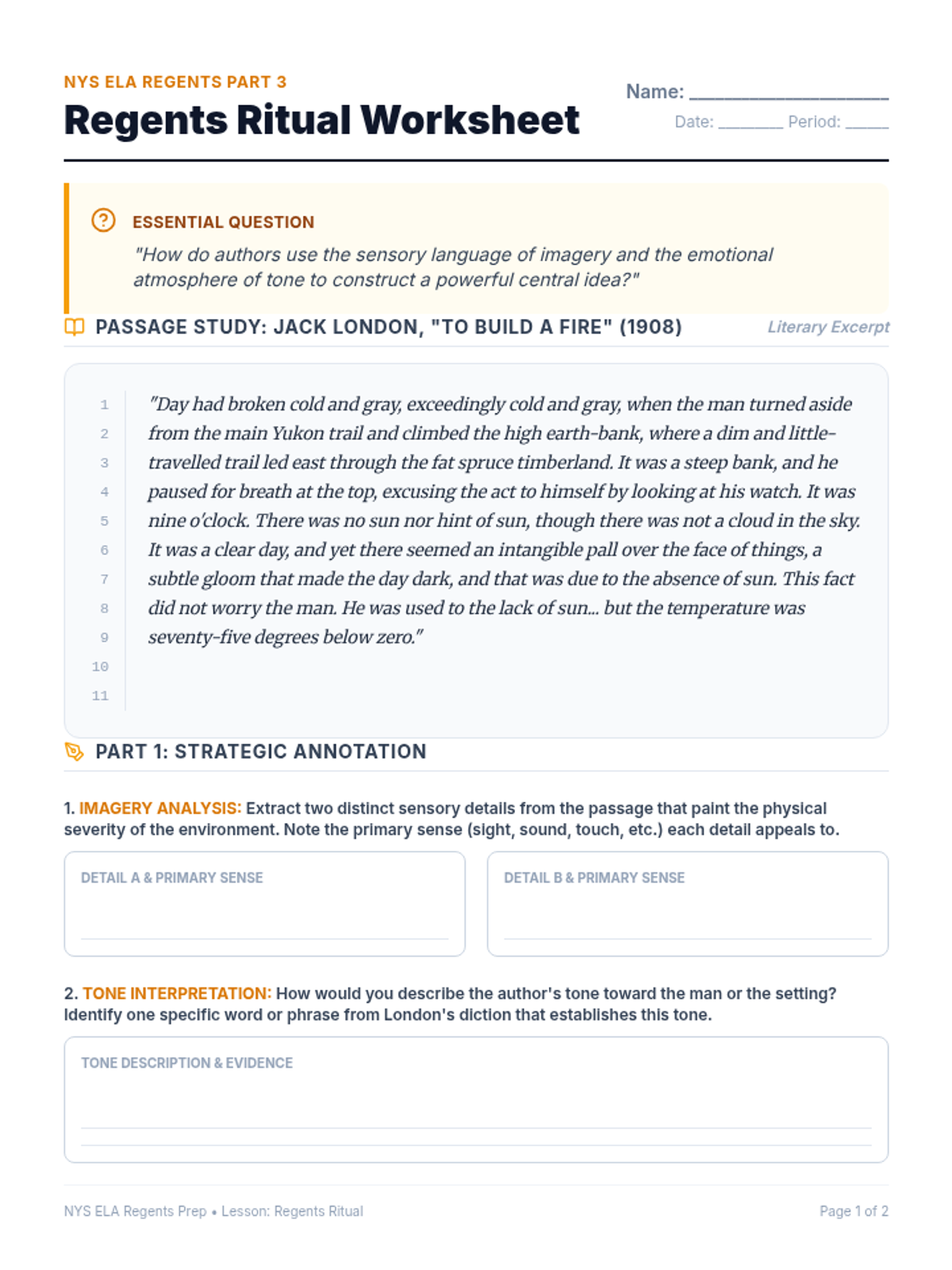
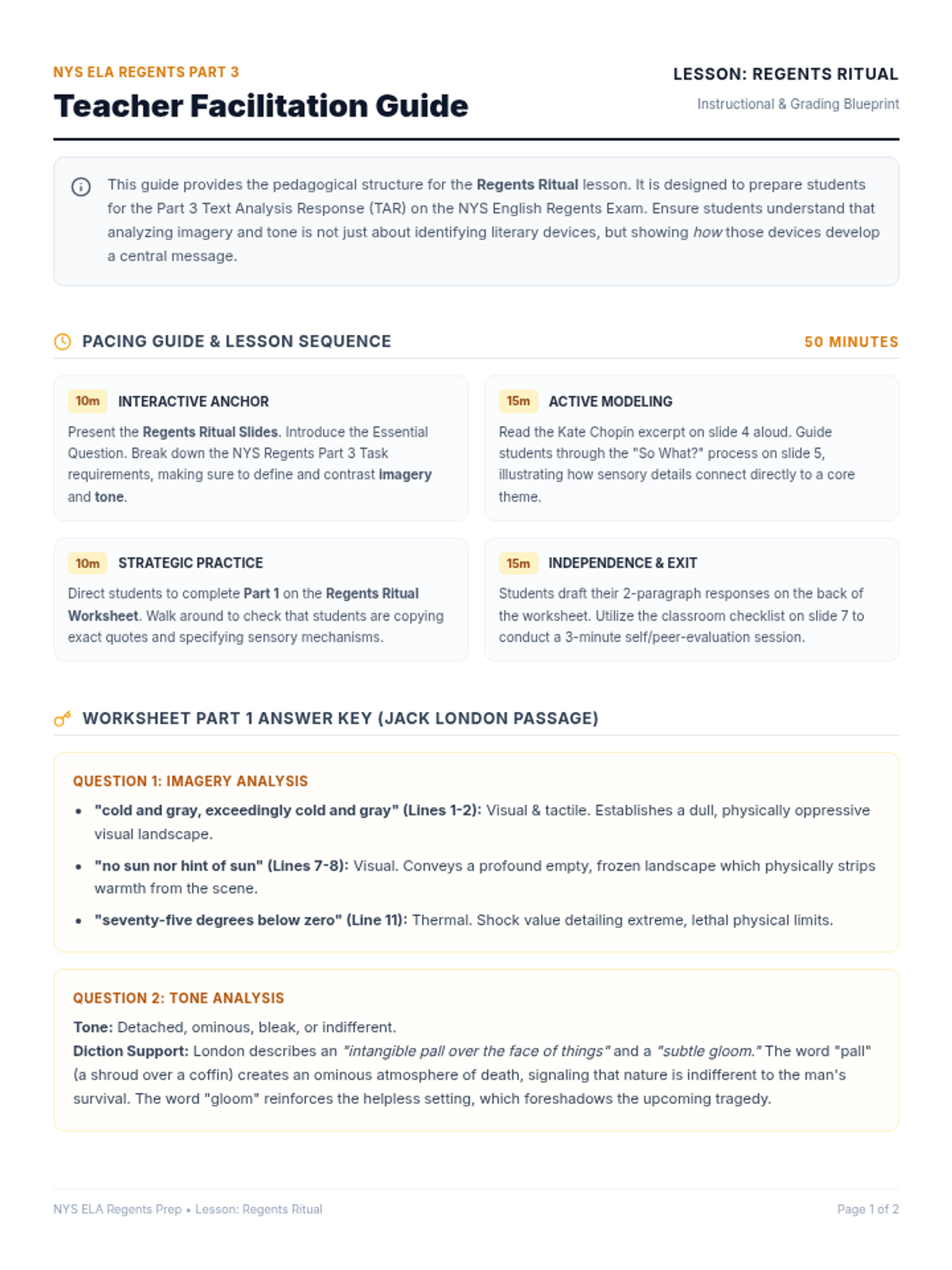
A targeted preparation lesson for Part 3 of the NYS English Regents Exam. Students learn to analyze how authors use imagery and tone to construct a powerful central idea, mastering the 2-3 paragraph Text Analysis Response (TAR) format.
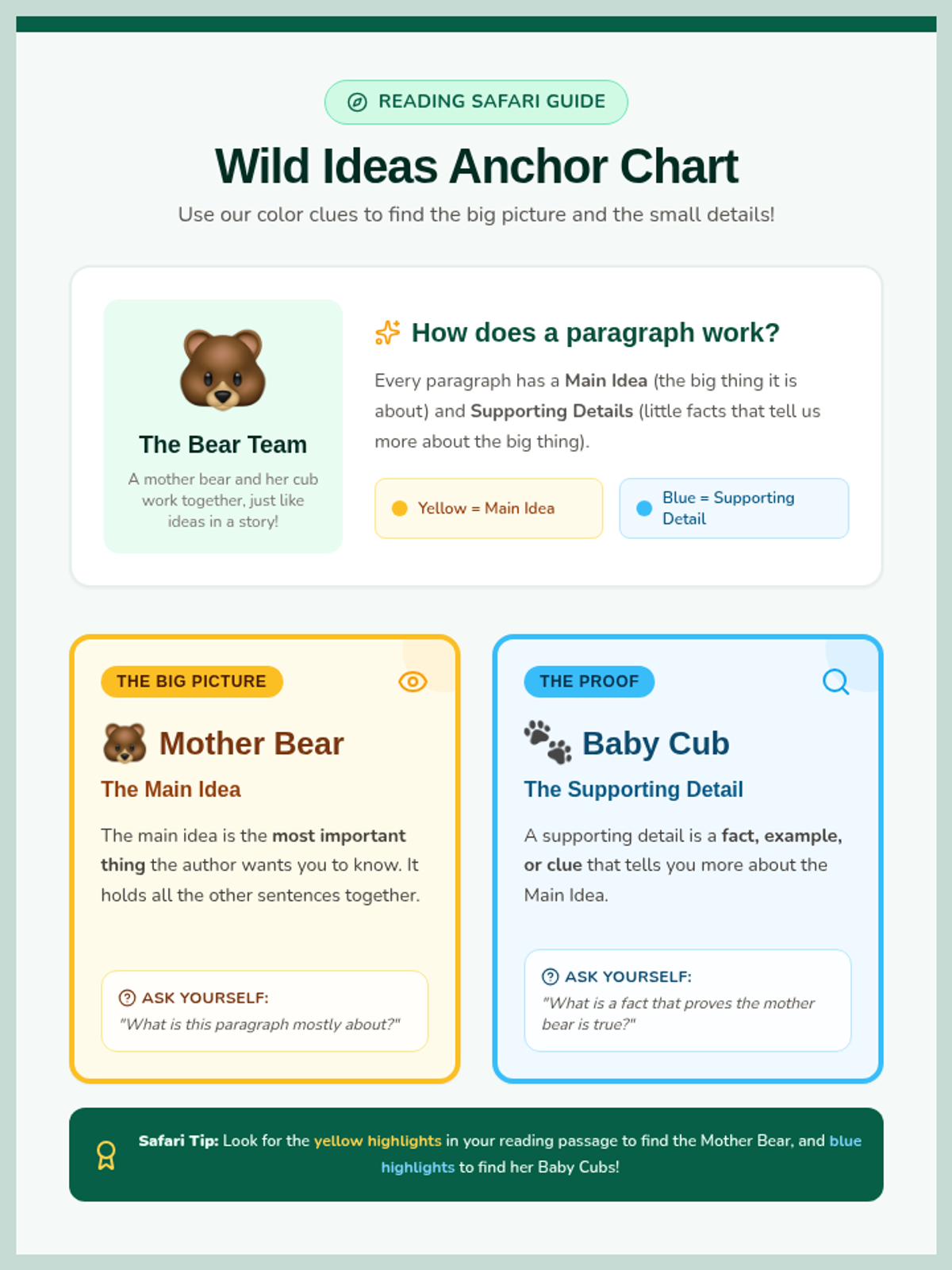
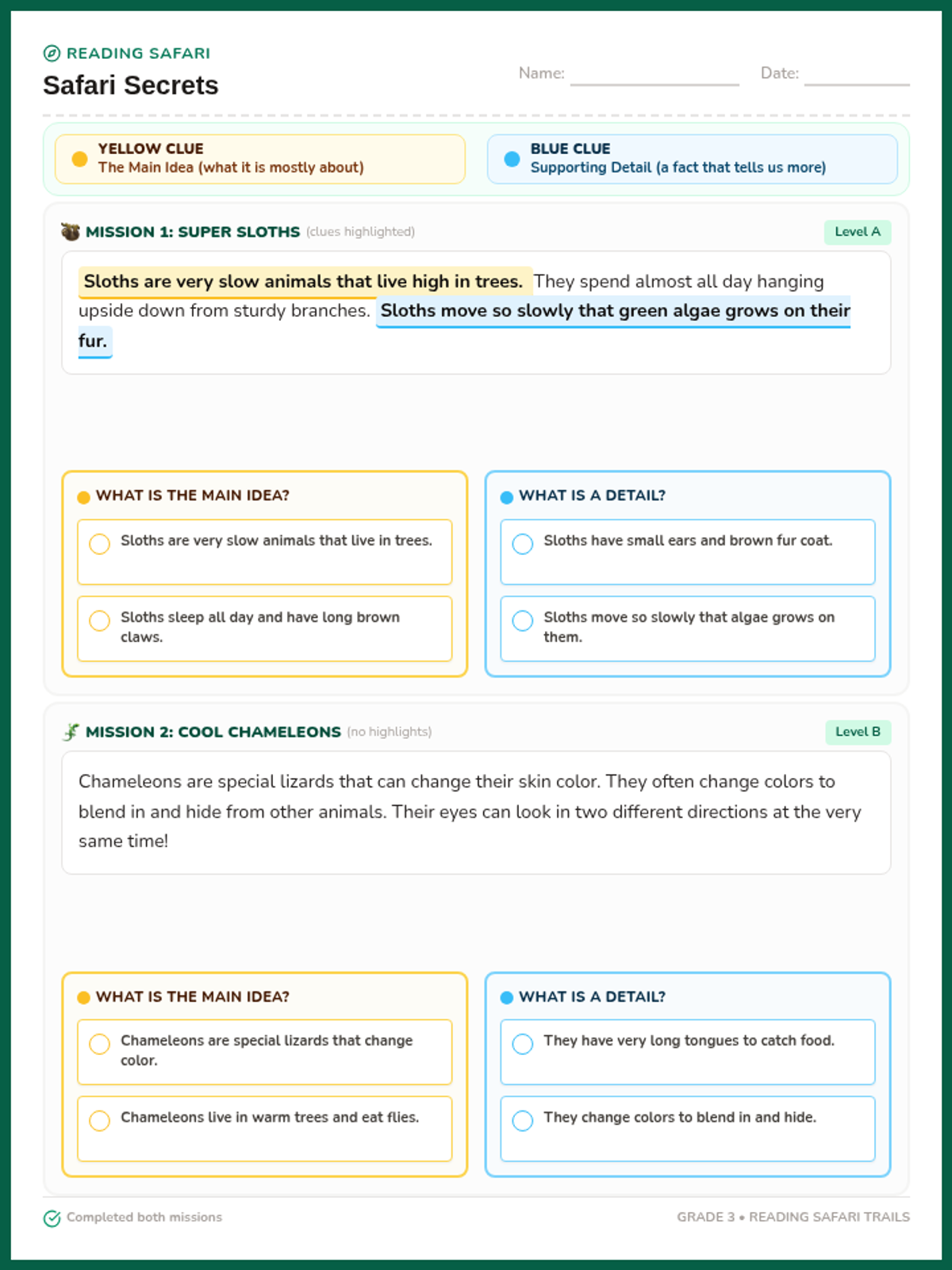
An animal-themed literacy lesson designed for 3rd-grade students with autism, focusing on identifying the main idea and supporting details using a structured, color-coded visual approach.