Equips students with specific strategies for tackling different test formats and managing performance anxiety.
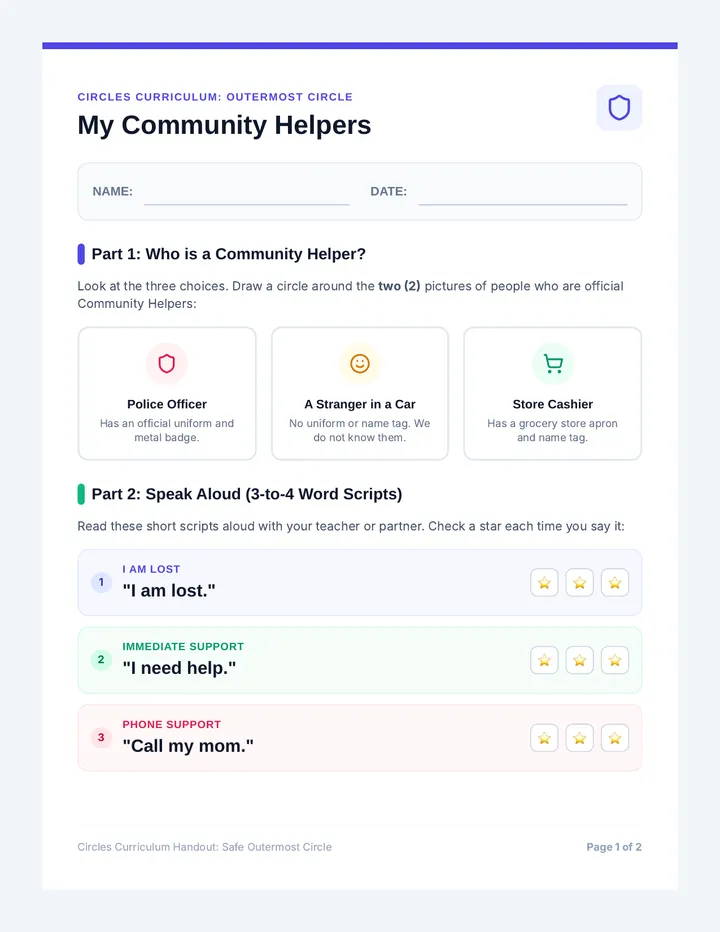
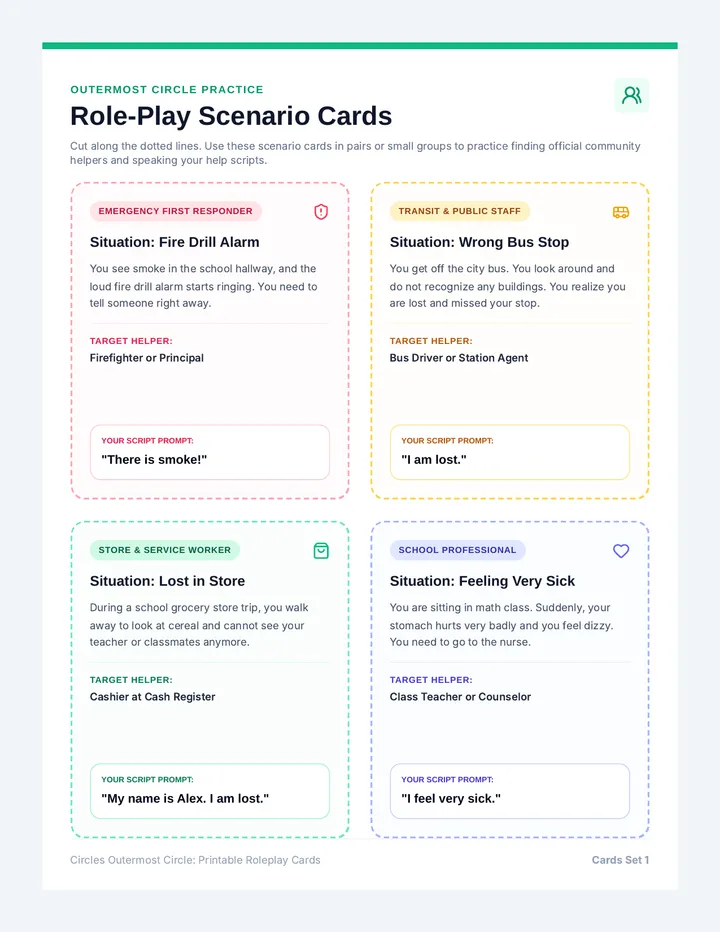
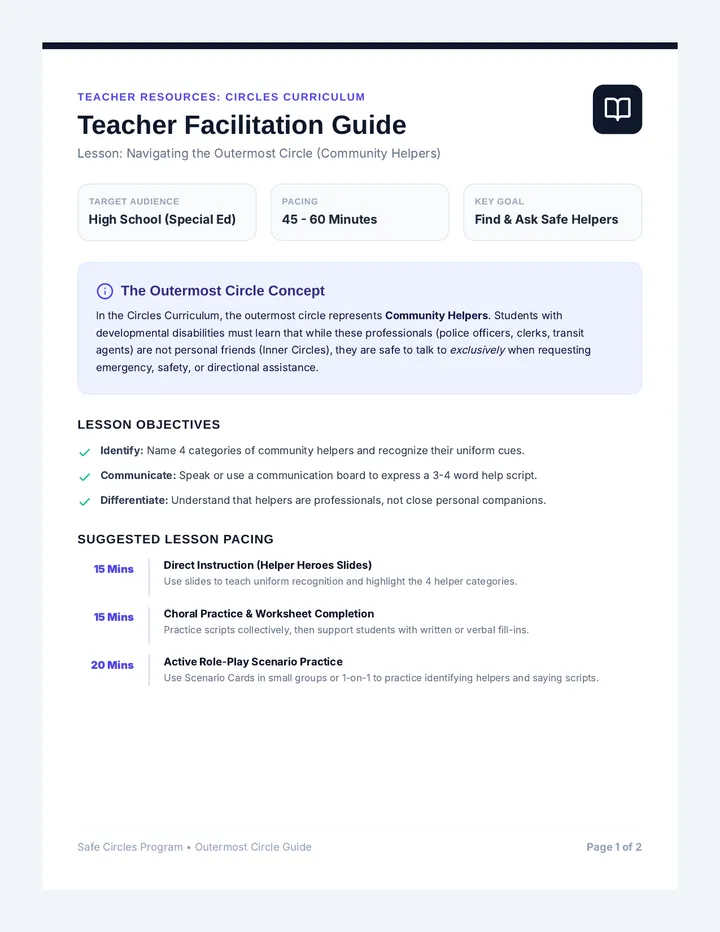
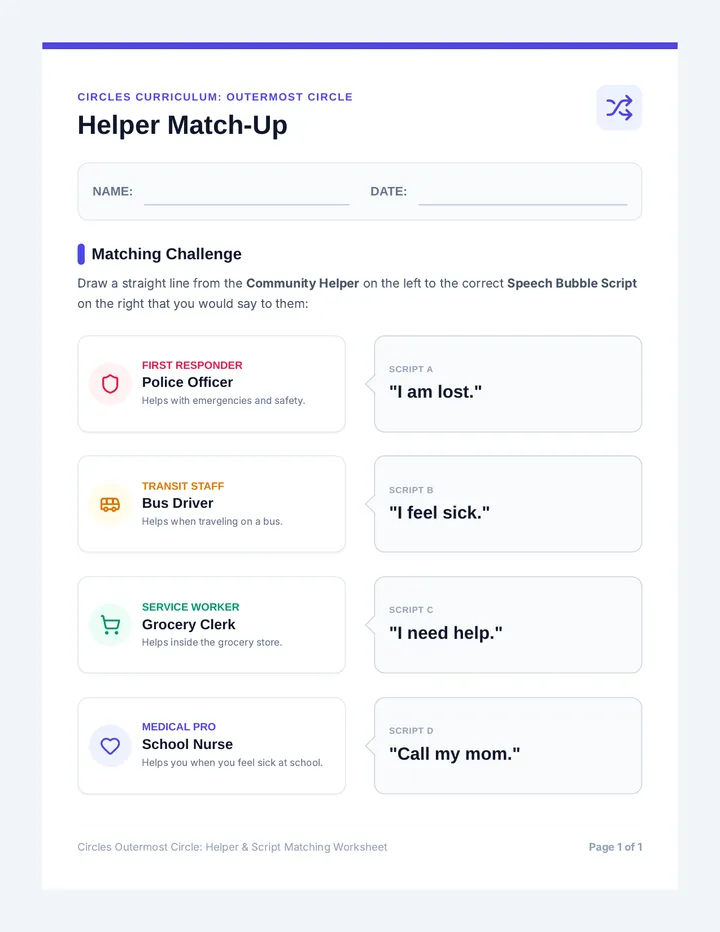
A comprehensive lesson for high school students with developmental disabilities focusing on the outermost circle of the Circles Curriculum: Community Helpers. It includes interactive slides, a structured script worksheet, ready-to-use role-play scenario cards, and a teacher facilitation guide.
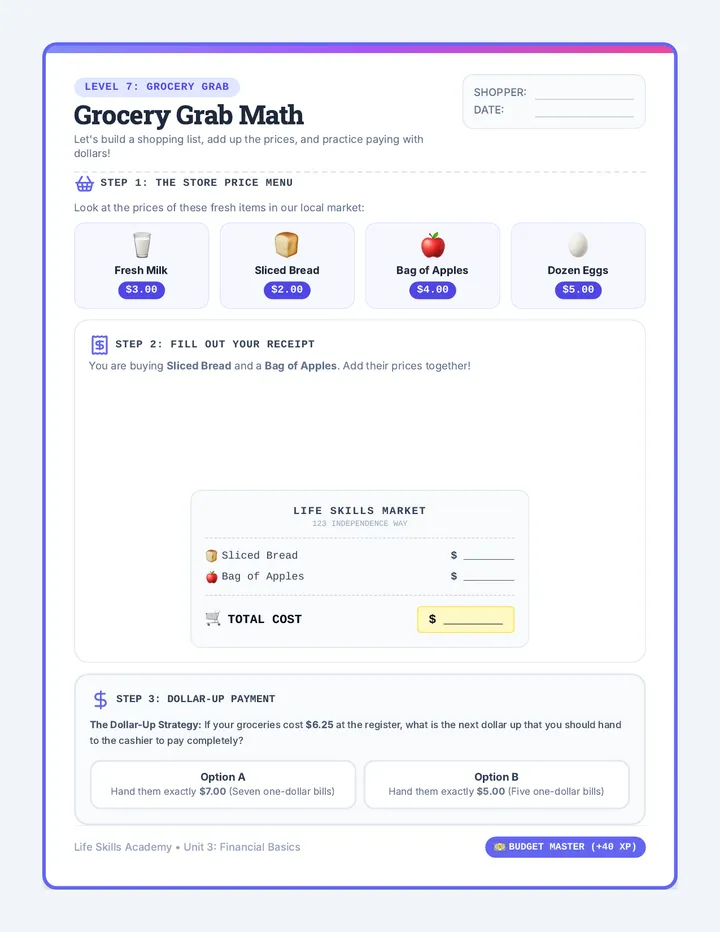
Focuses on grocery shopping, making a grocery list, identifying food groups, and understanding store sections to locate items independently.
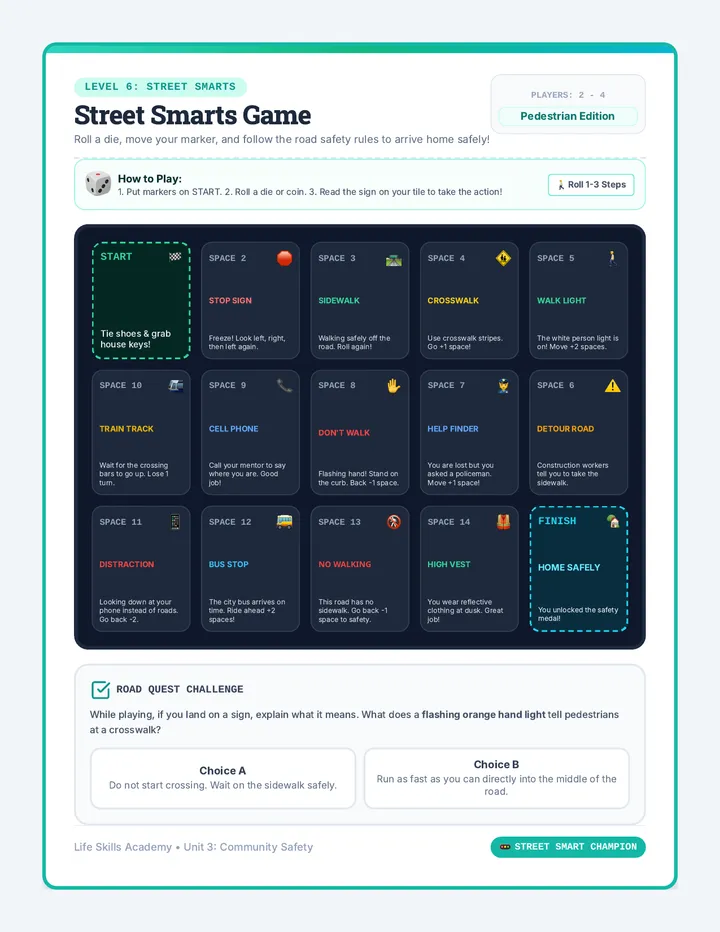
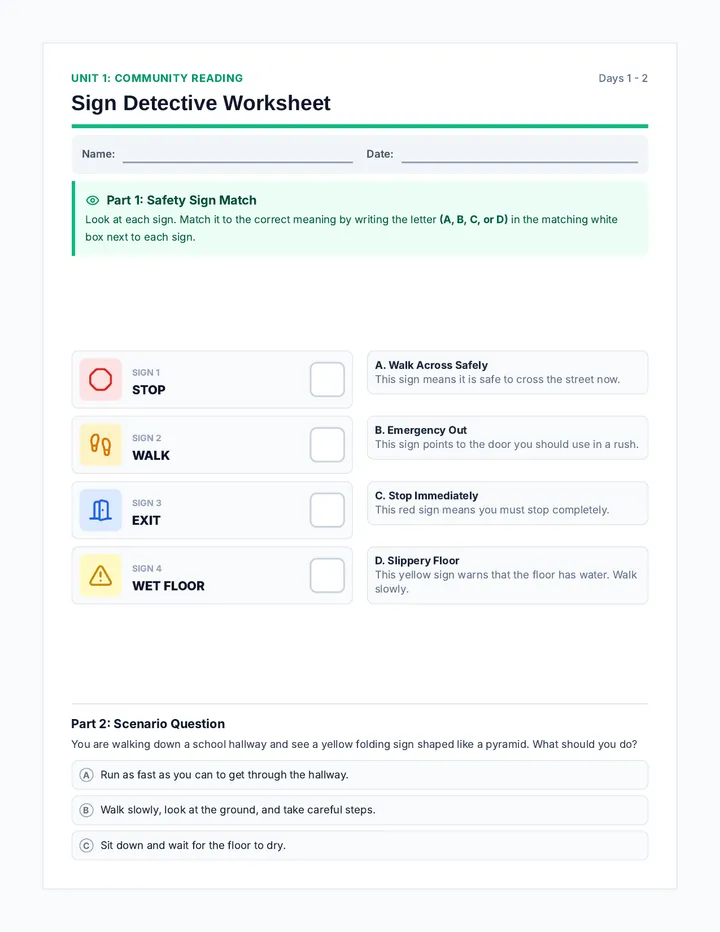
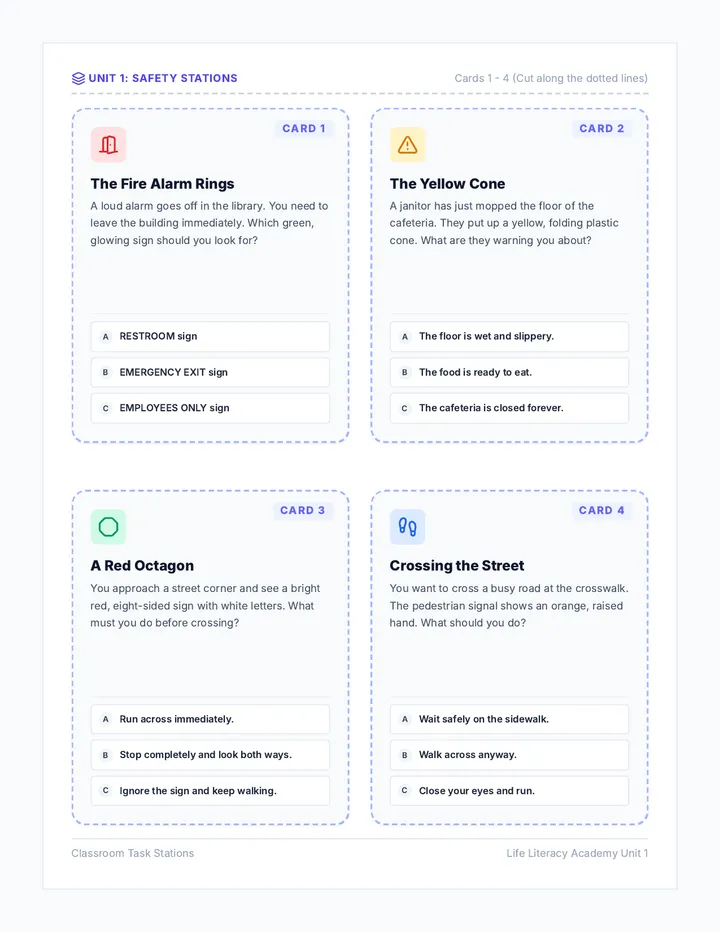
Teaches safety signs, navigation, and community navigation skills. Students learn to read pedestrian signs, crosswalk signals, and locate help in public spaces.
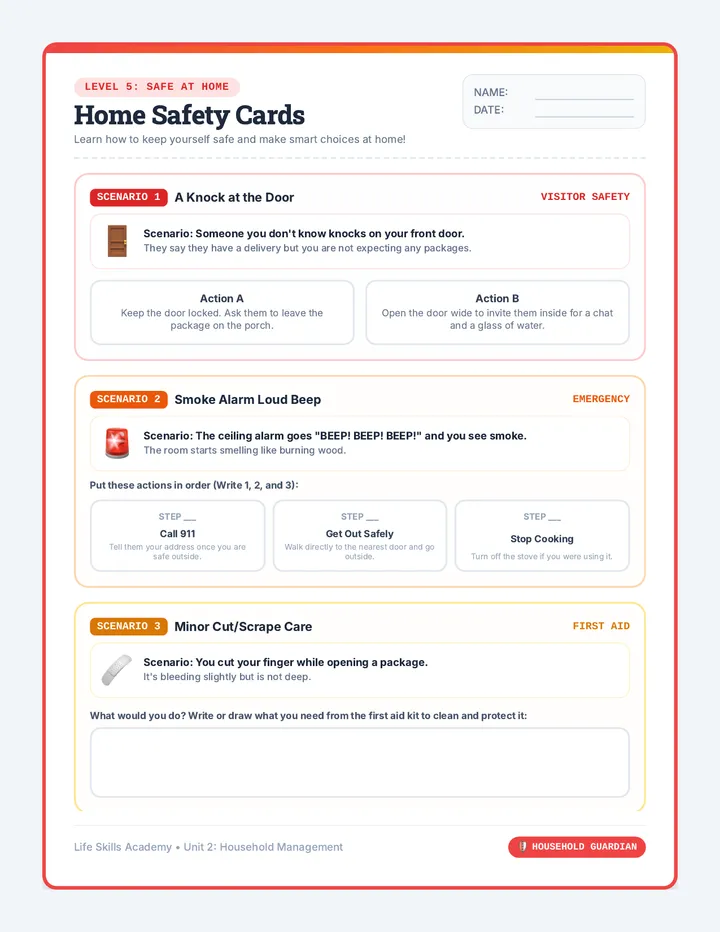
Teaches critical safety skills for the home environment, including dealing with emergencies, basic first aid, and managing visitors safely.
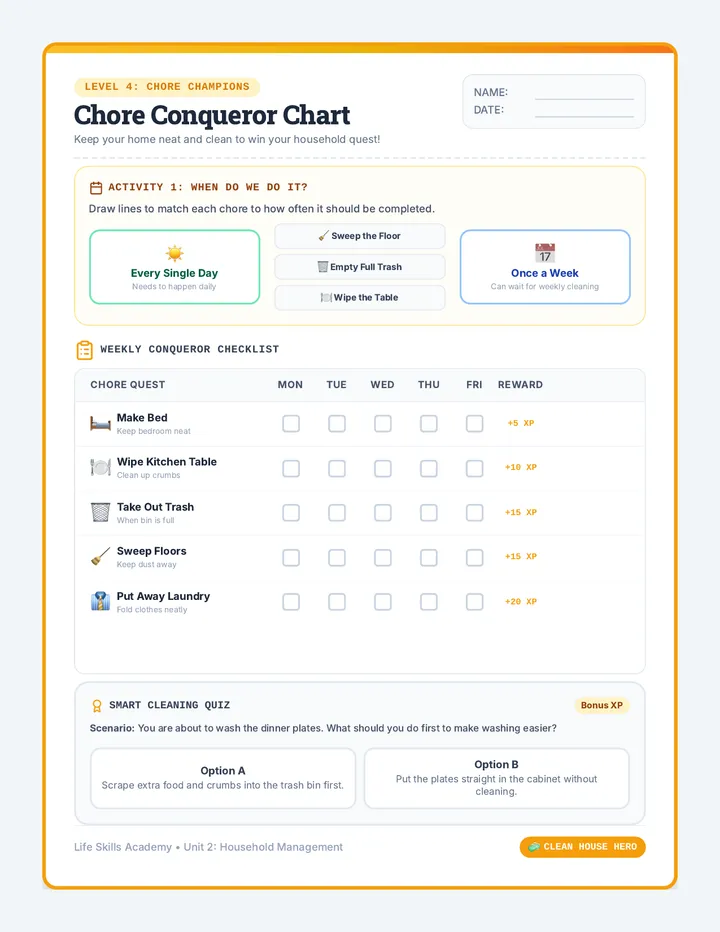
Focuses on household cleaning tasks, organizing chores, and maintaining a clean living space. Students practice sorting chores by frequency and completing a chore checklist.
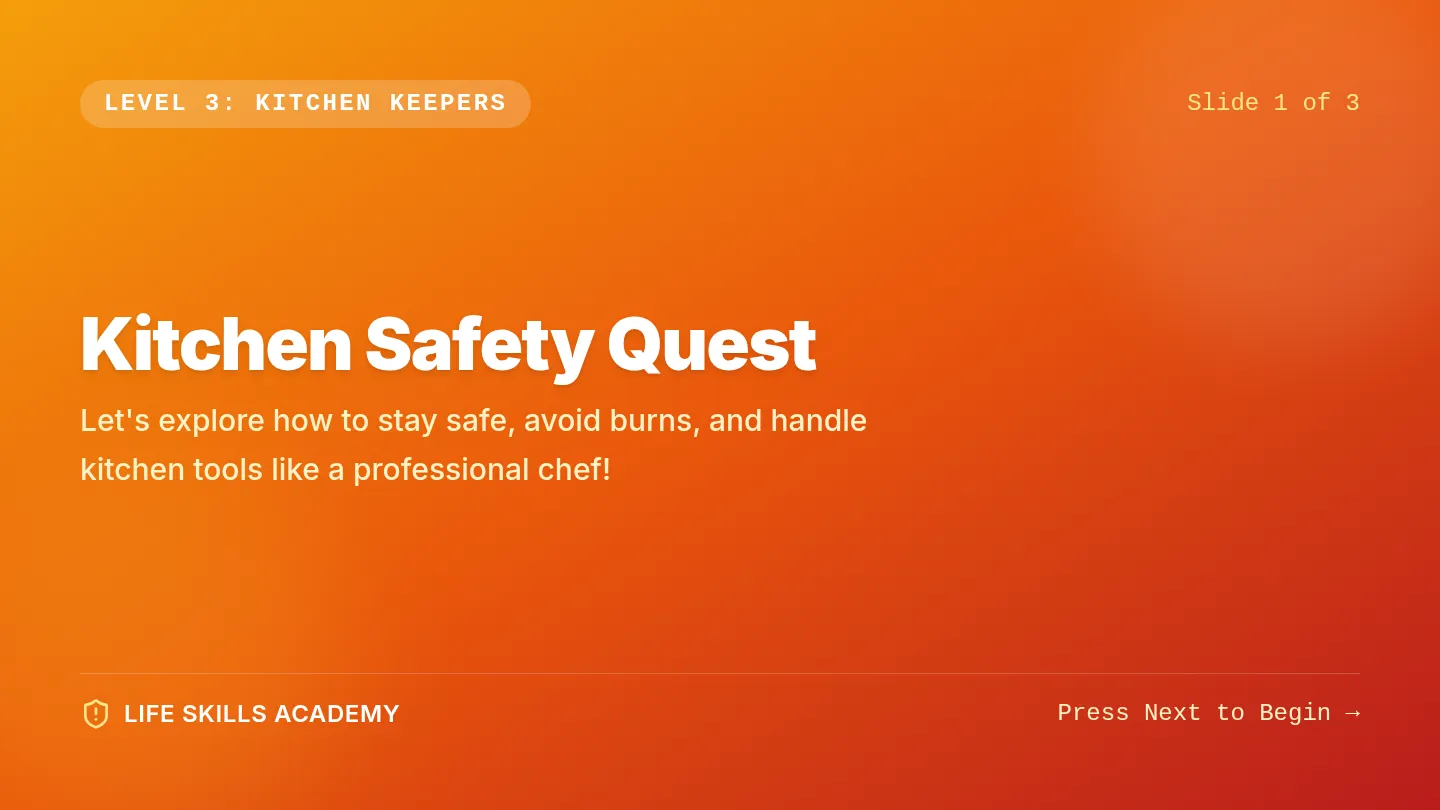
Covers essential kitchen safety rules, using simple kitchen tools, and selecting healthy food. Students practice identifying safe and unsafe kitchen scenarios.
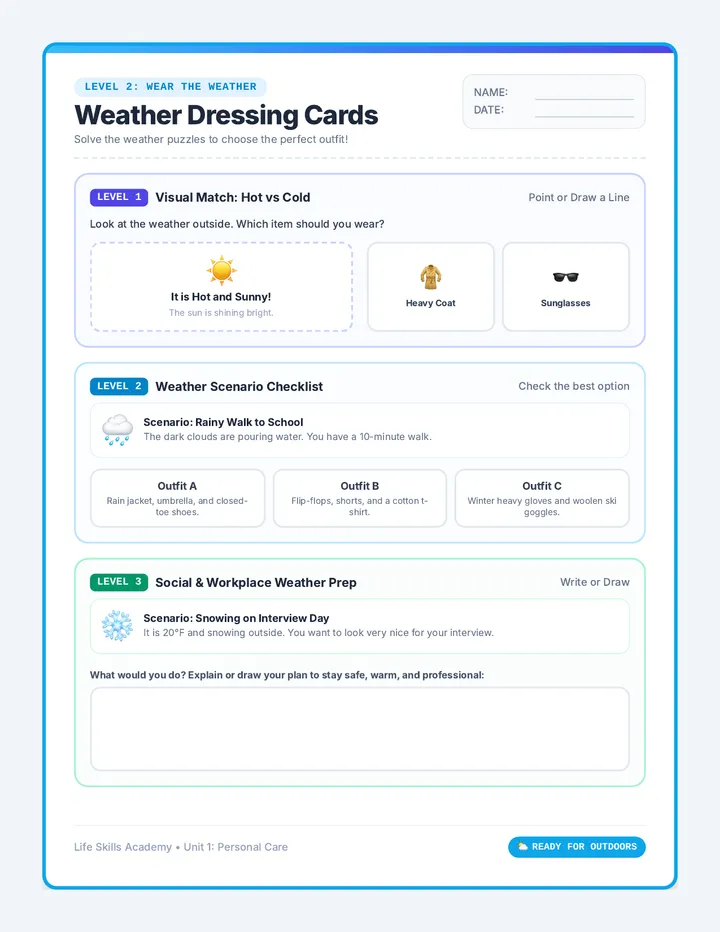
Teaches students to check the weather and choose appropriate clothing and accessories. Focuses on seasonal dressing and selecting clothing for safety and comfort.
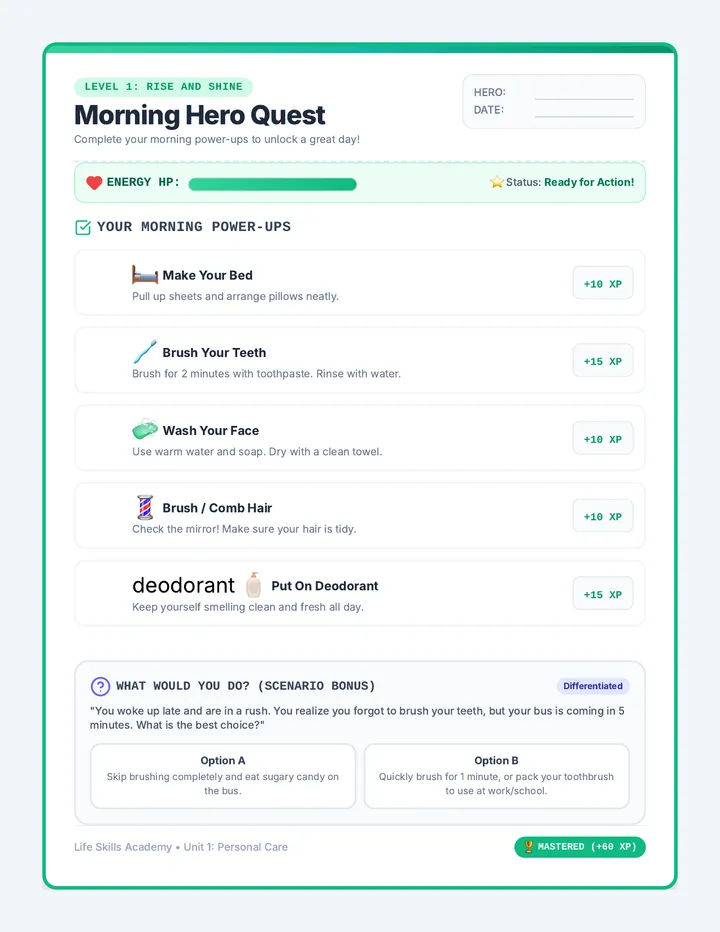
Focuses on morning routines and personal hygiene. Students learn to use visual checklists for brushing teeth, washing up, and self-care.
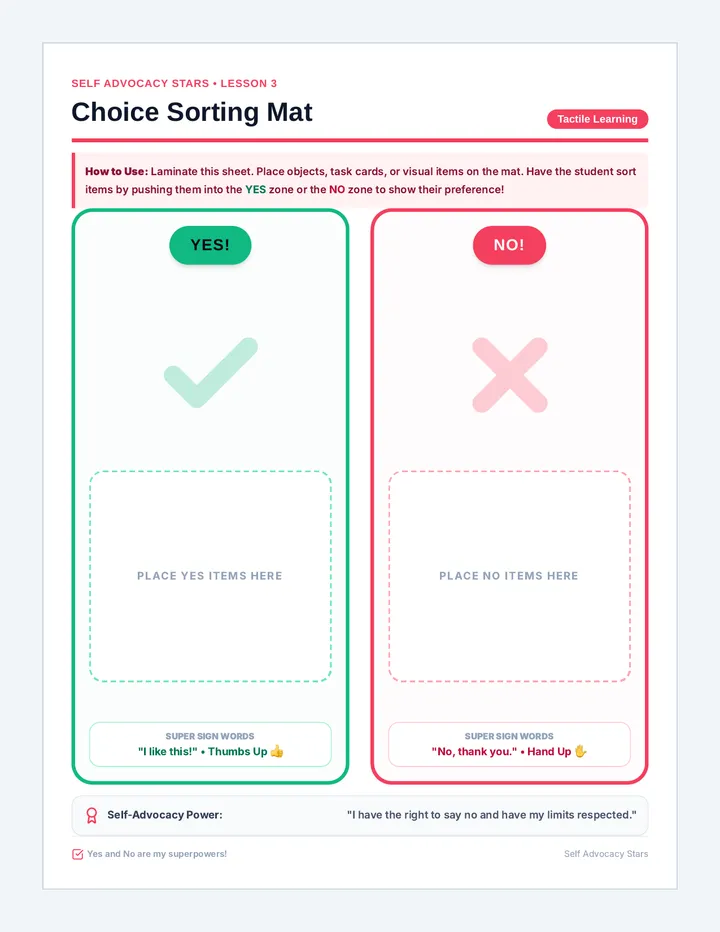
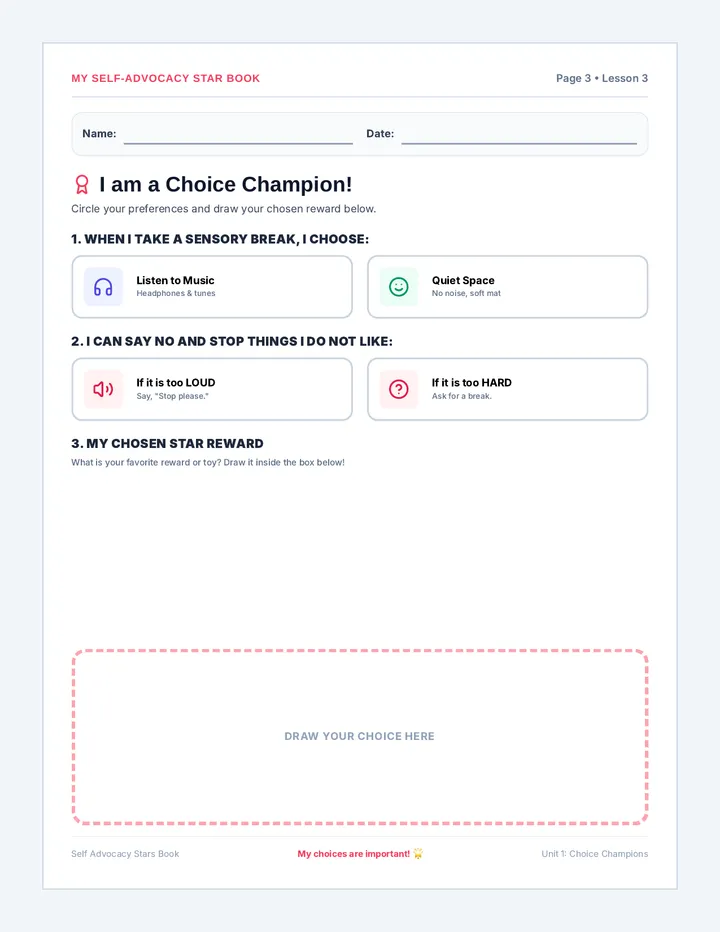
Students practice making independent choices, expressing preferences, and setting boundaries (saying "yes" or "no") using structured choice boards, tactile sorting mats, and interactive role-play.
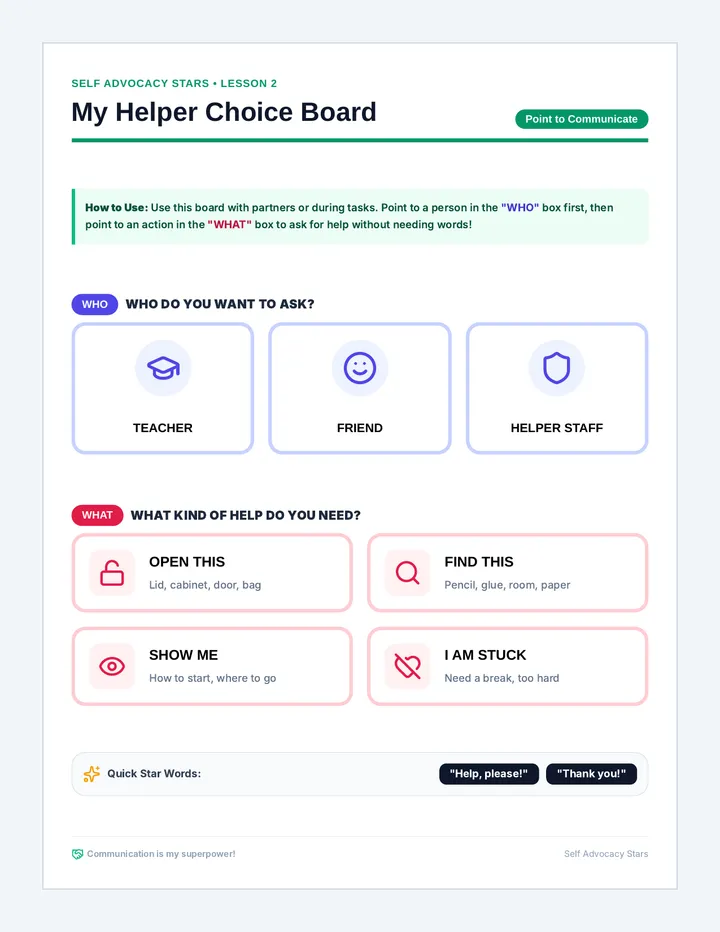
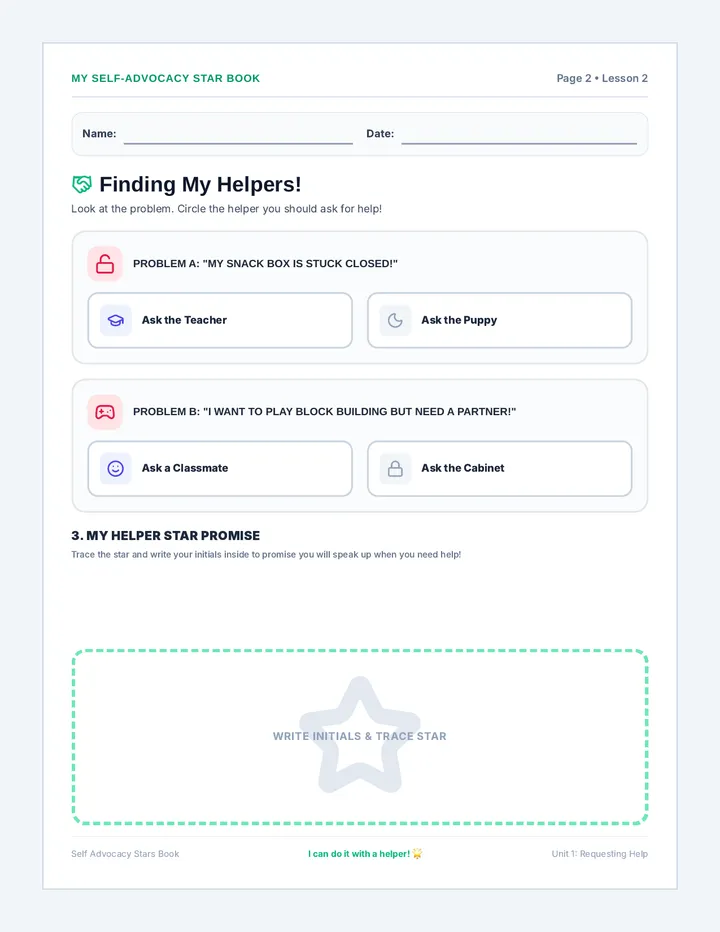
Students practice identifying when they need help, who to ask (teachers, peers, or helpers), and how to communicate that need using visual phrase cards and guided collaborative practice.
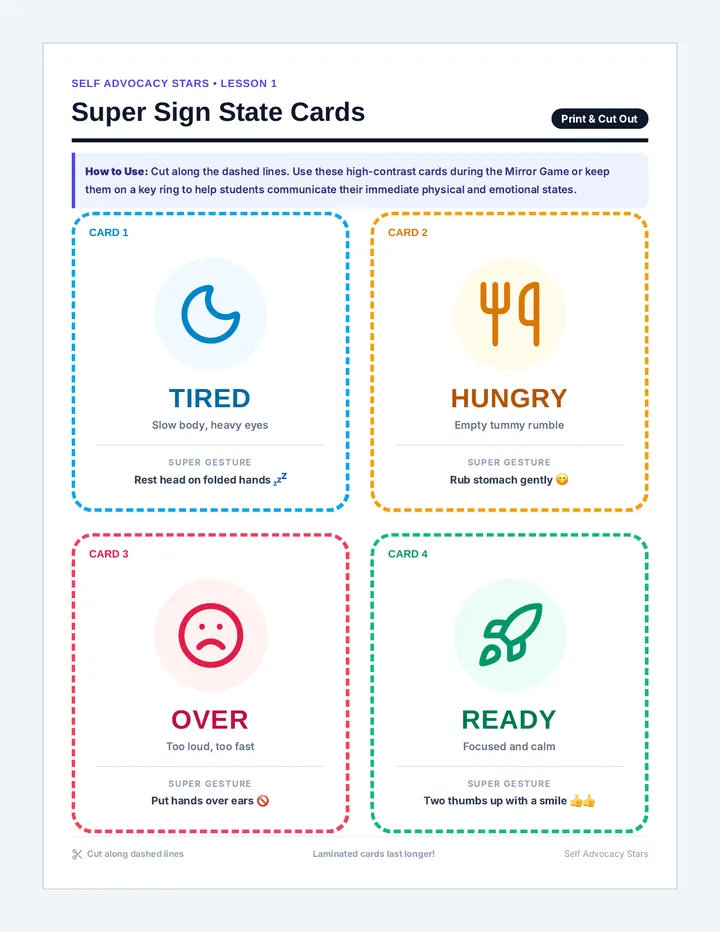
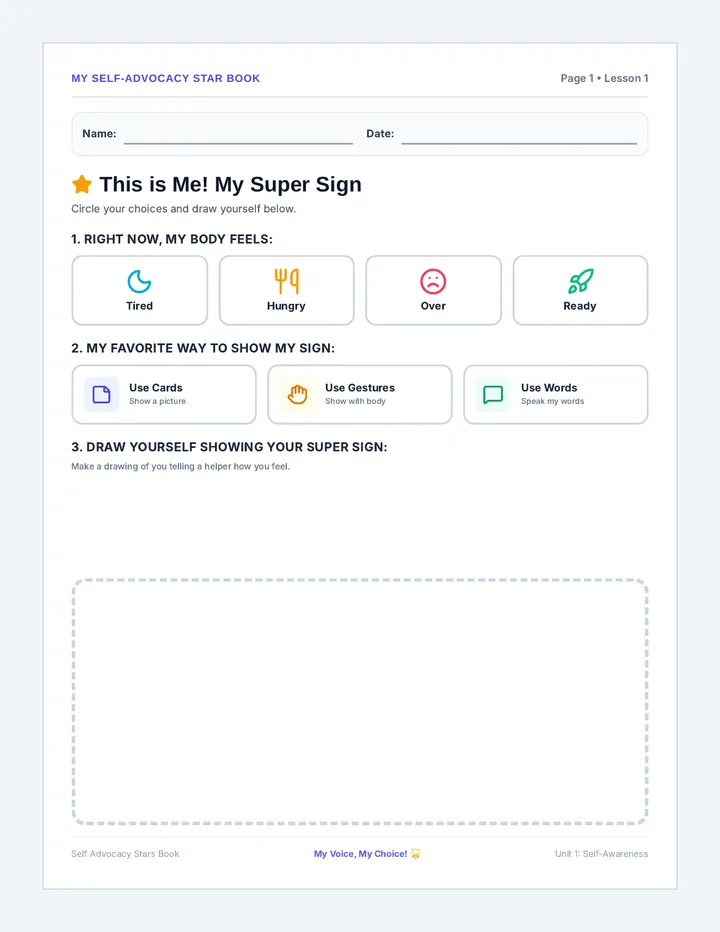
Students learn to recognize and communicate physical and emotional states (like tired, hungry, overwhelmed, or ready to learn) using simple gestures, vocalizations, or visual symbol cards.
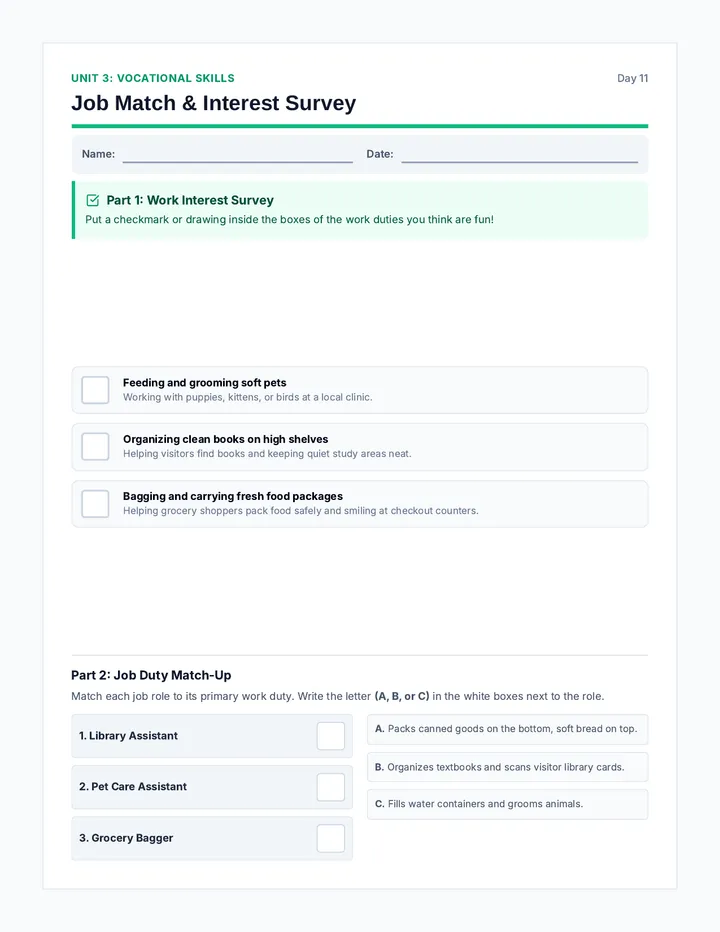
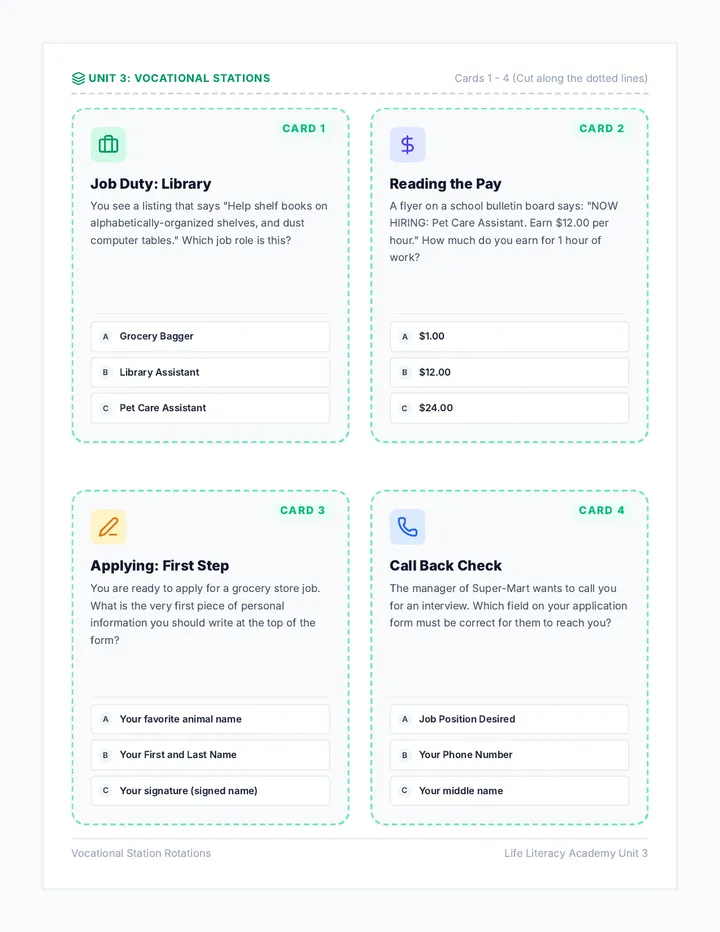
Days 11 to 15 focus on reading simple job postings, filling out functional job applications, understanding work sequencing, and determining theme/purpose.
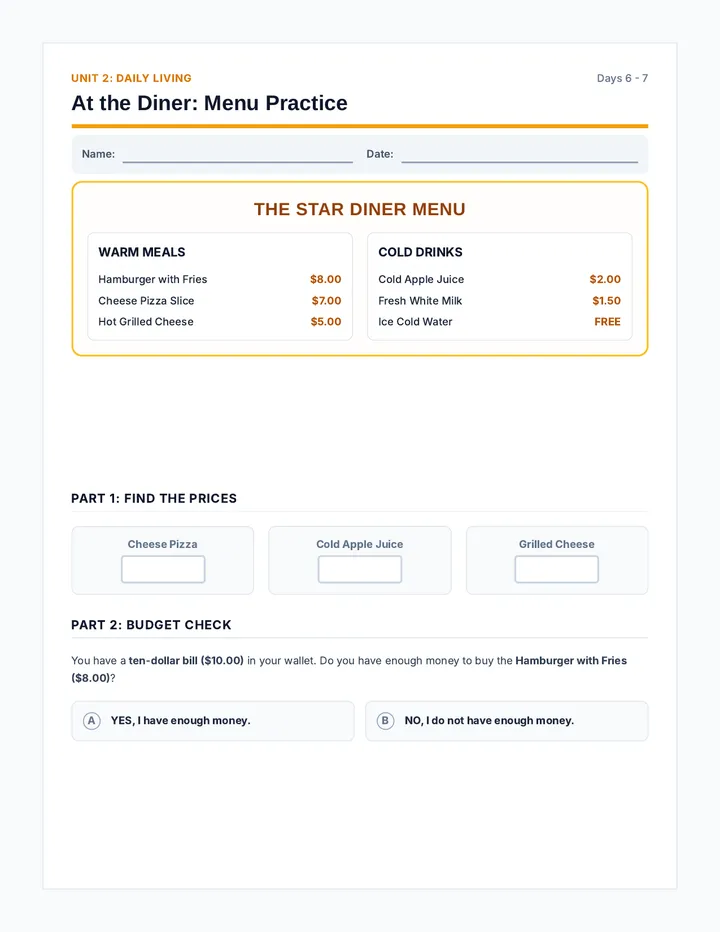
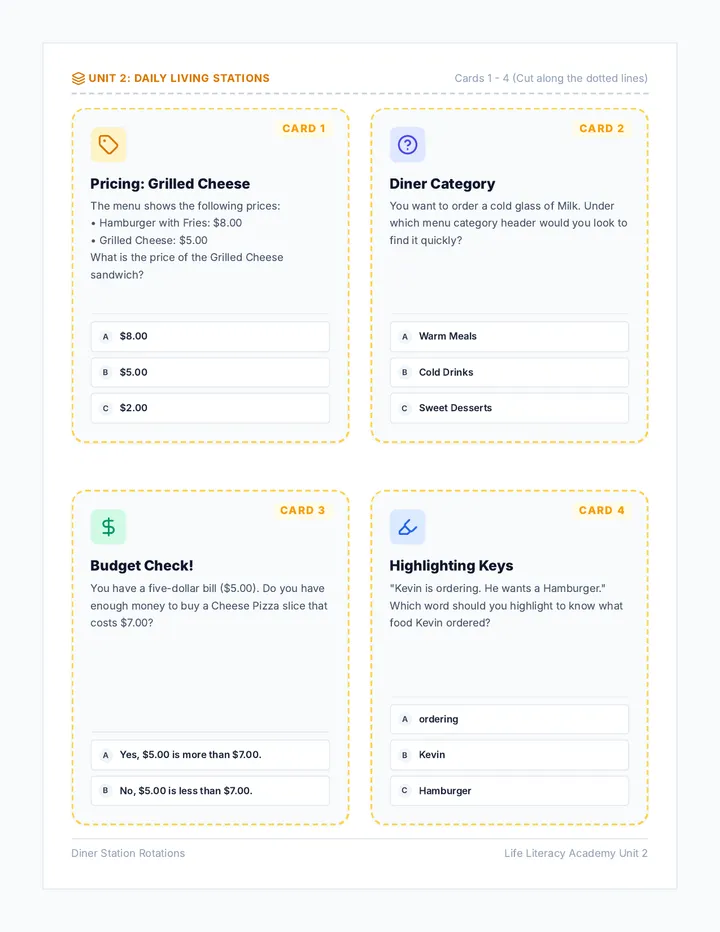
Days 6 to 10 focus on reading menus, highlighting key details, and making inferences about restaurant and everyday scenarios using functional text.
Days 1 to 5 focus on identifying crucial safety signs, understanding school and transit schedules, and answering WH questions about community and adapted literary texts.
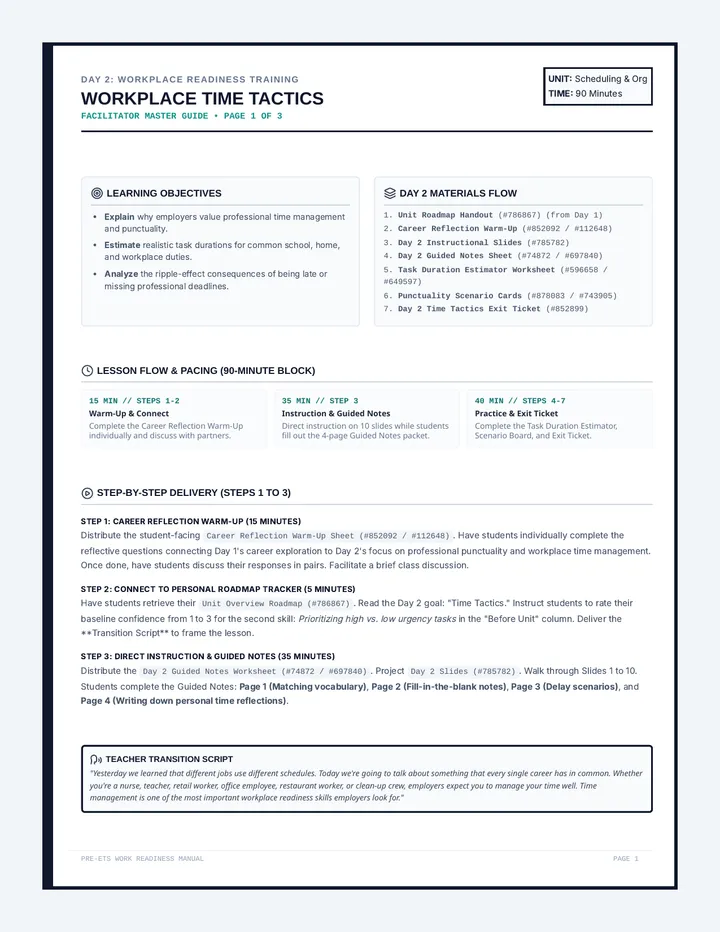
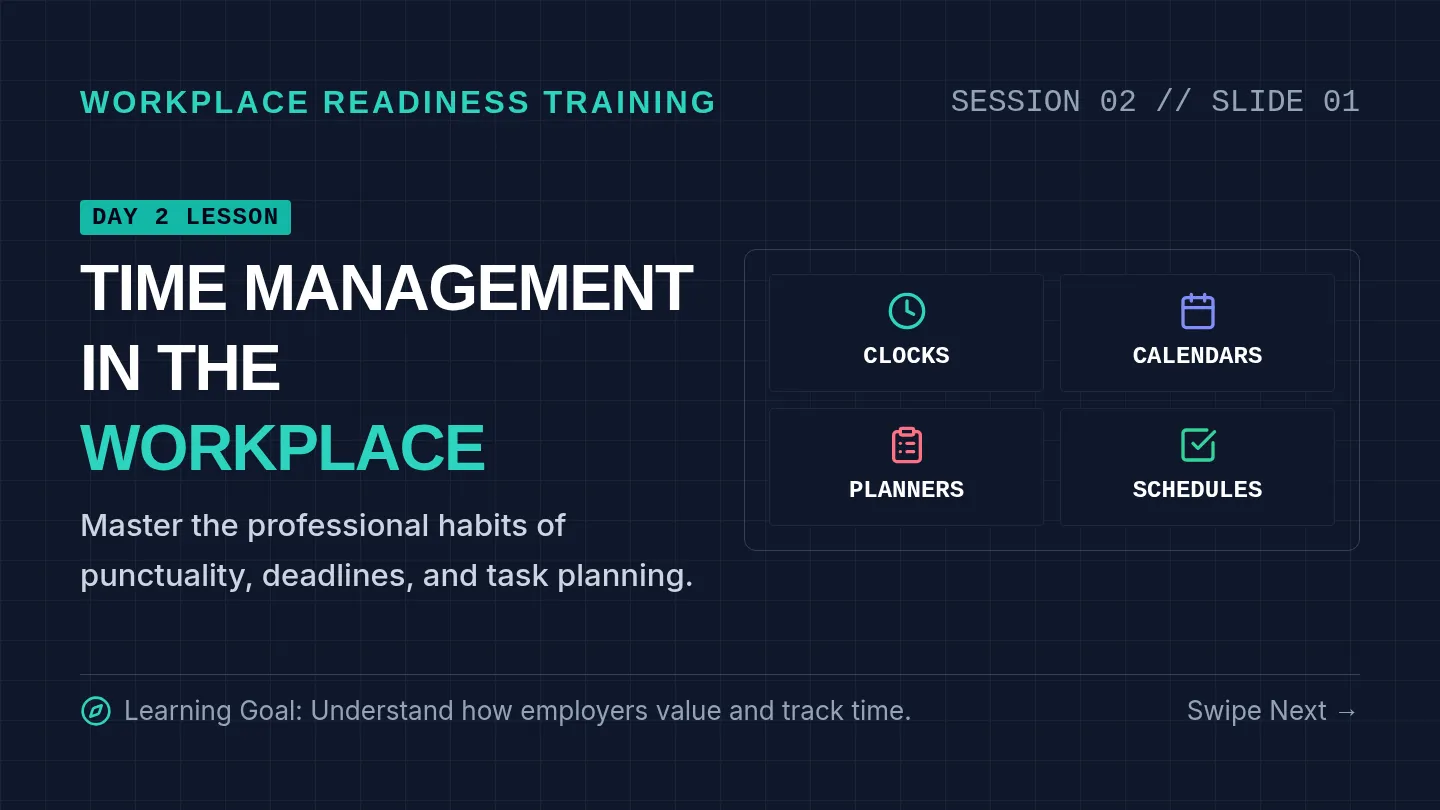
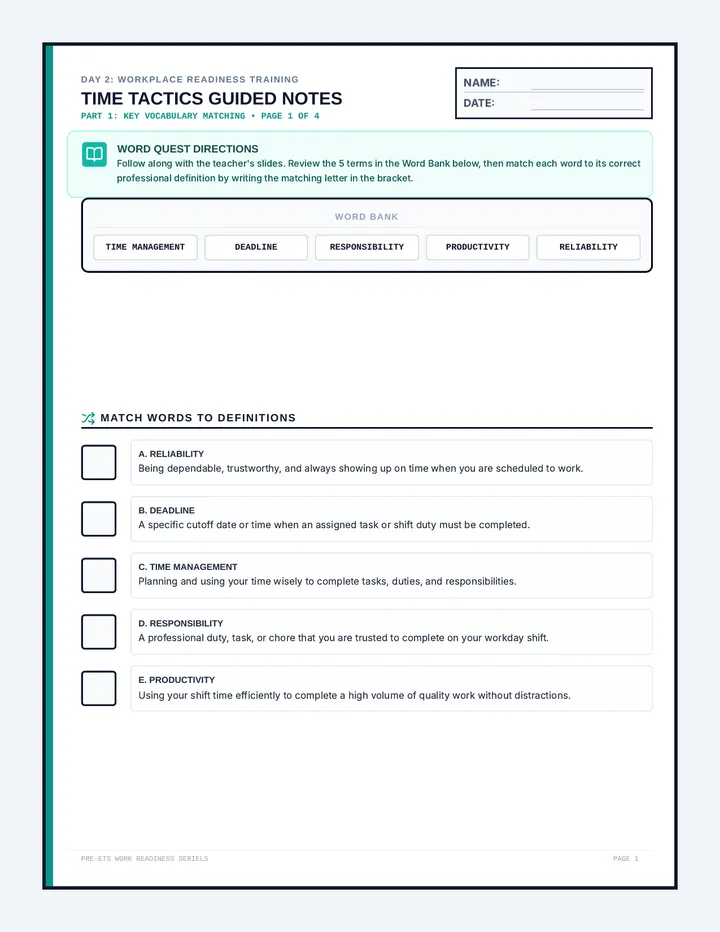
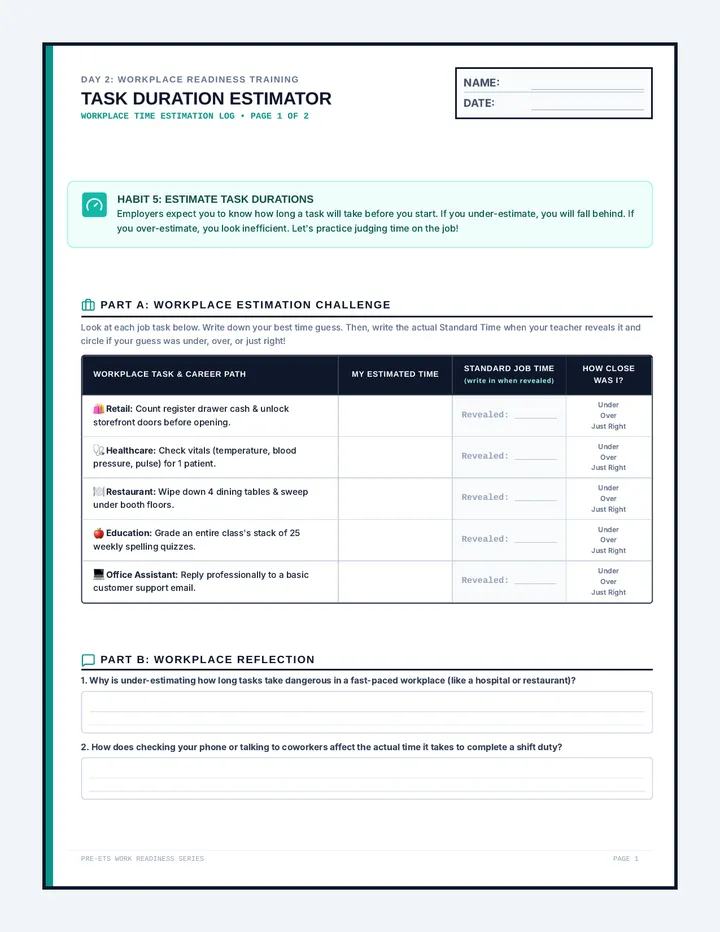
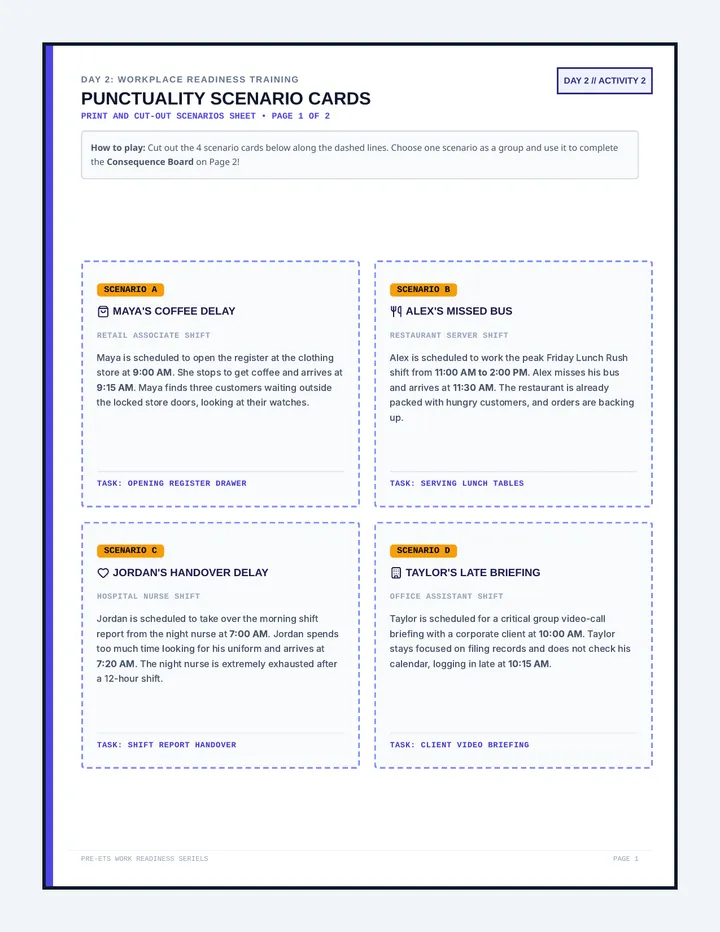
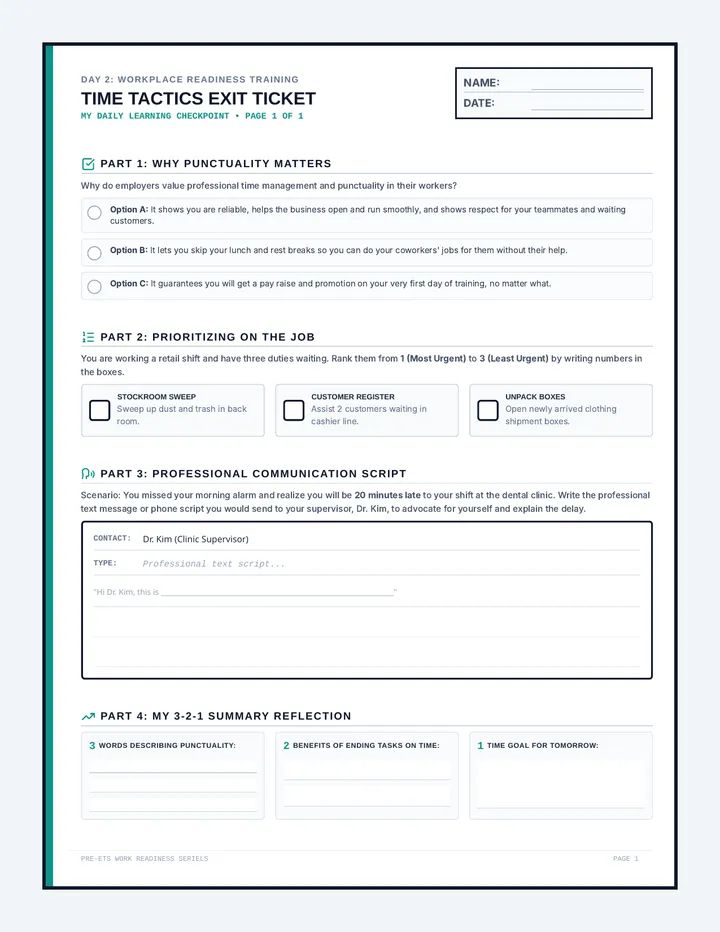
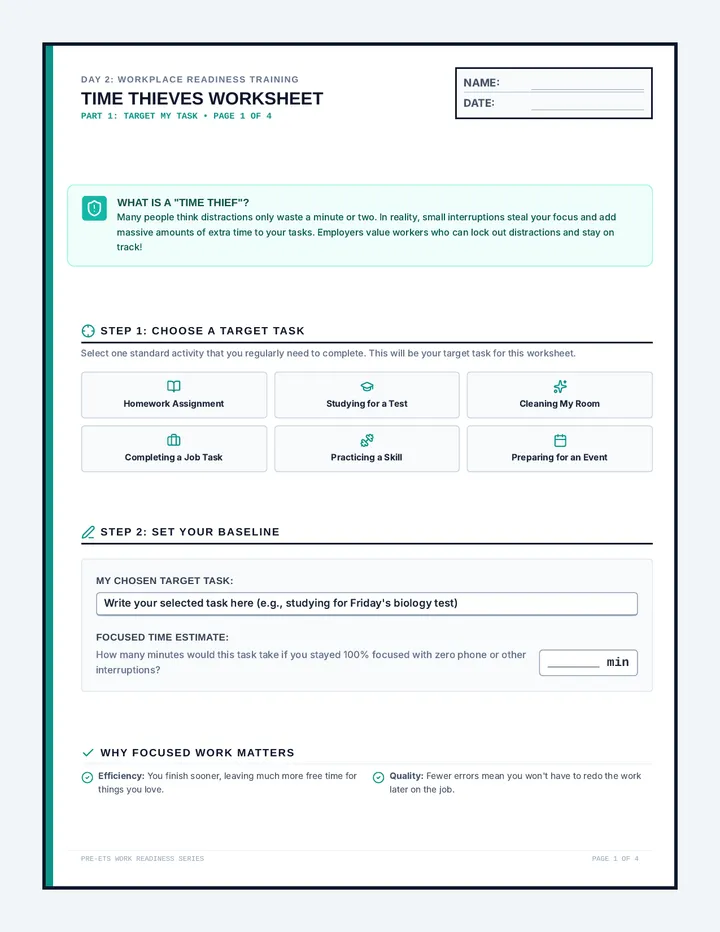
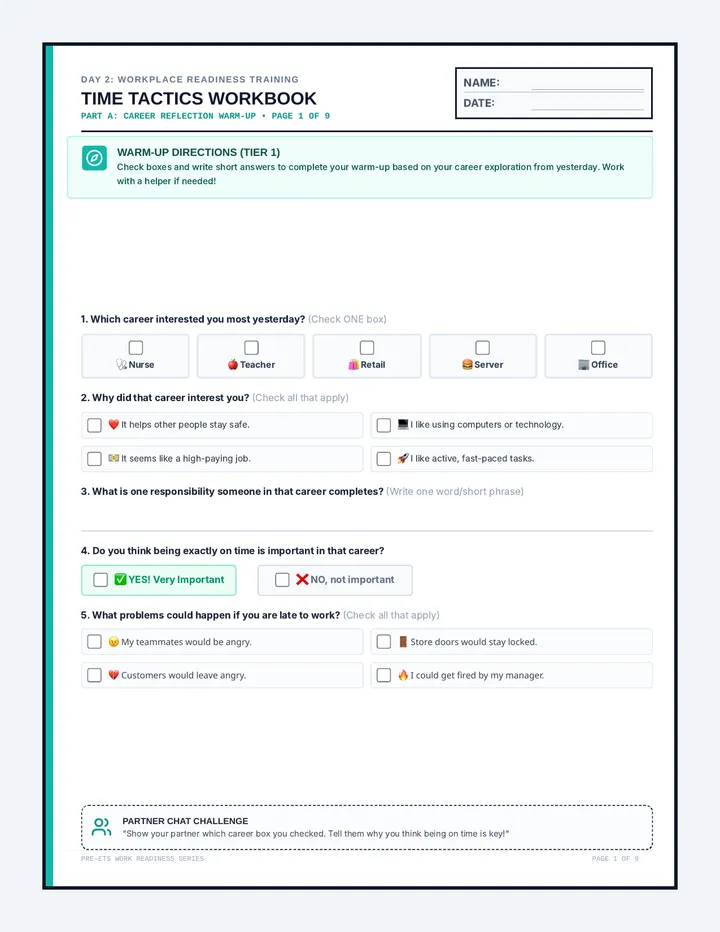
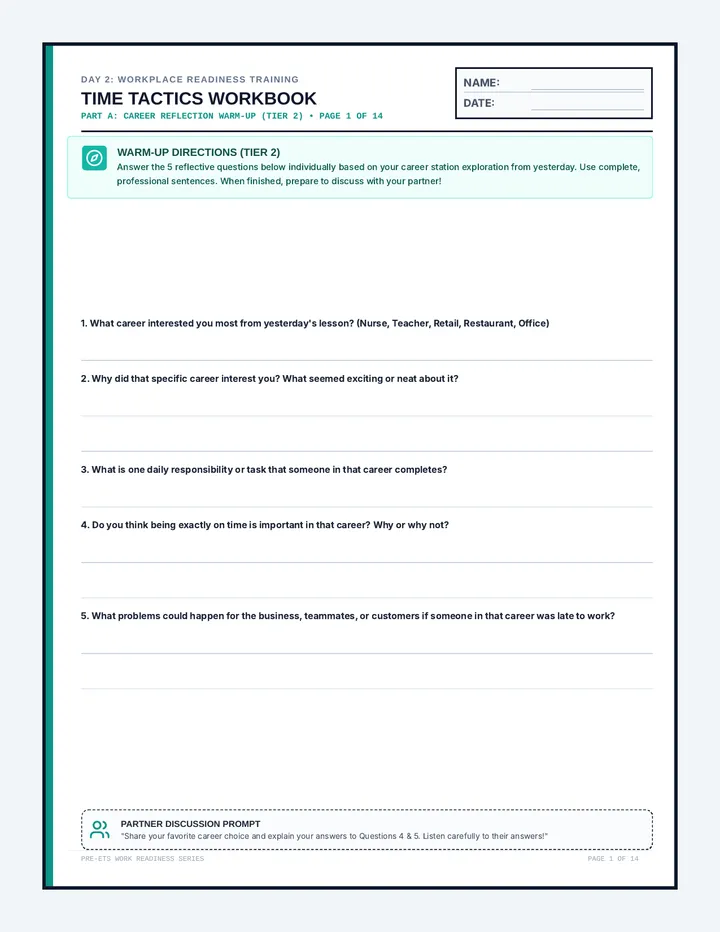
Students explore the critical role of time management in the workplace, learn how to estimate task durations, examine real-world punctuality consequences, and build essential skills for professional success.
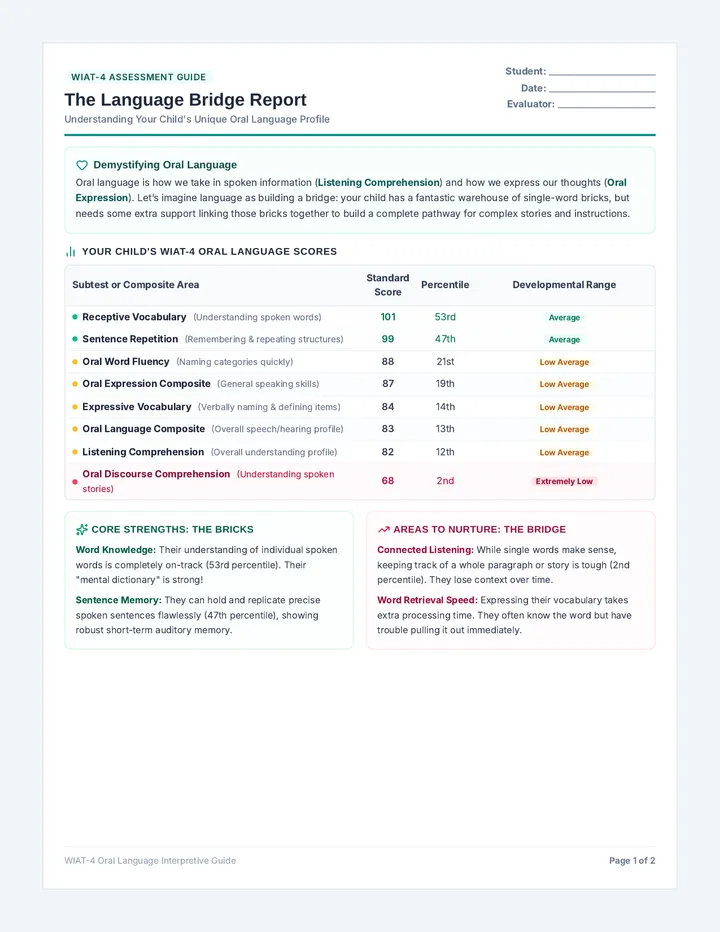
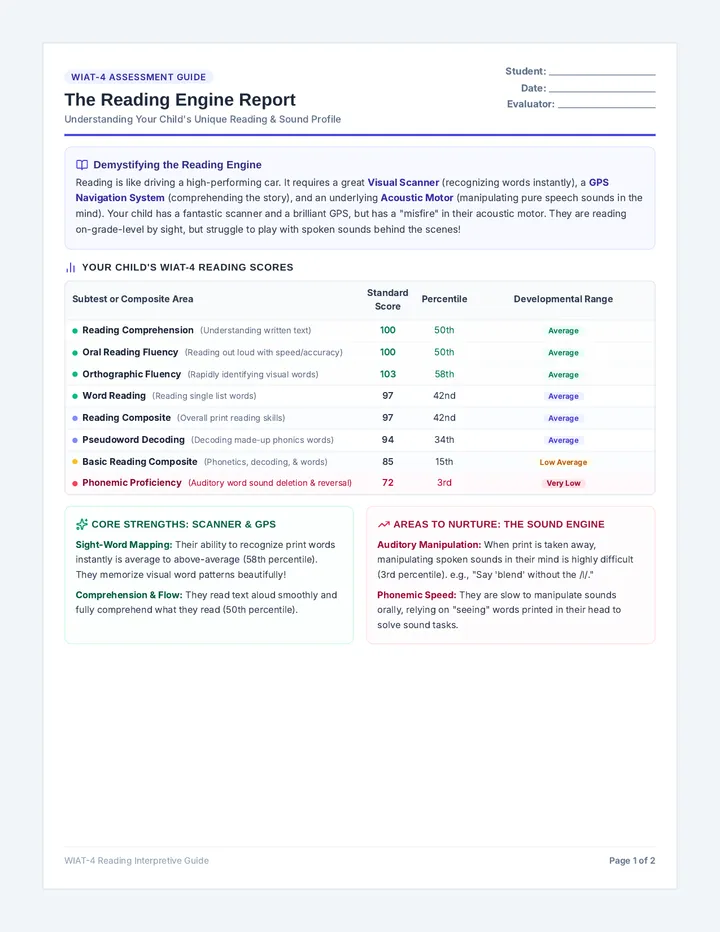
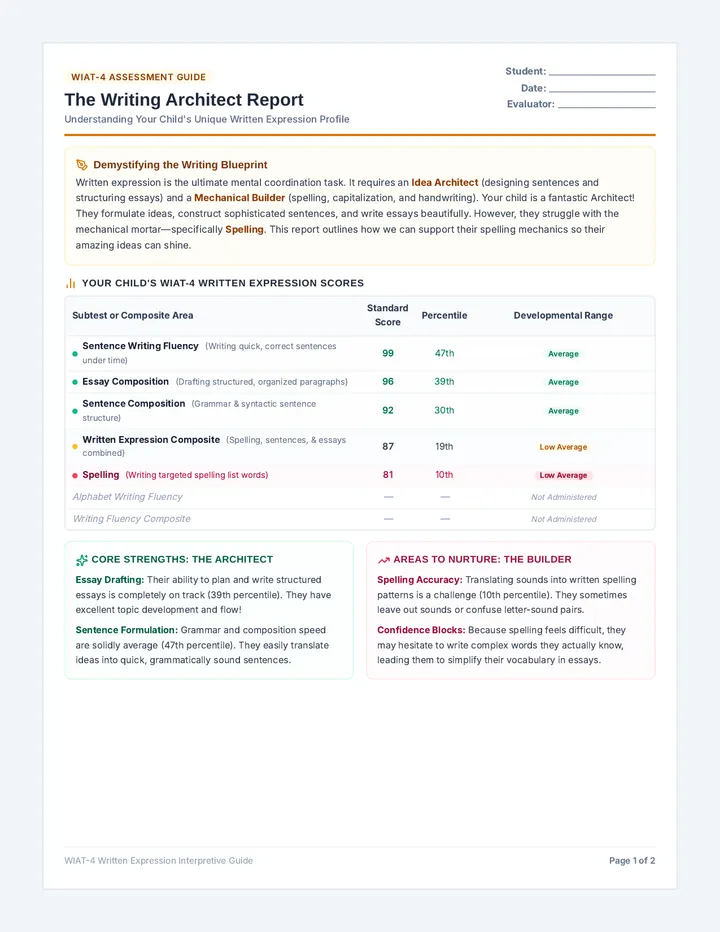
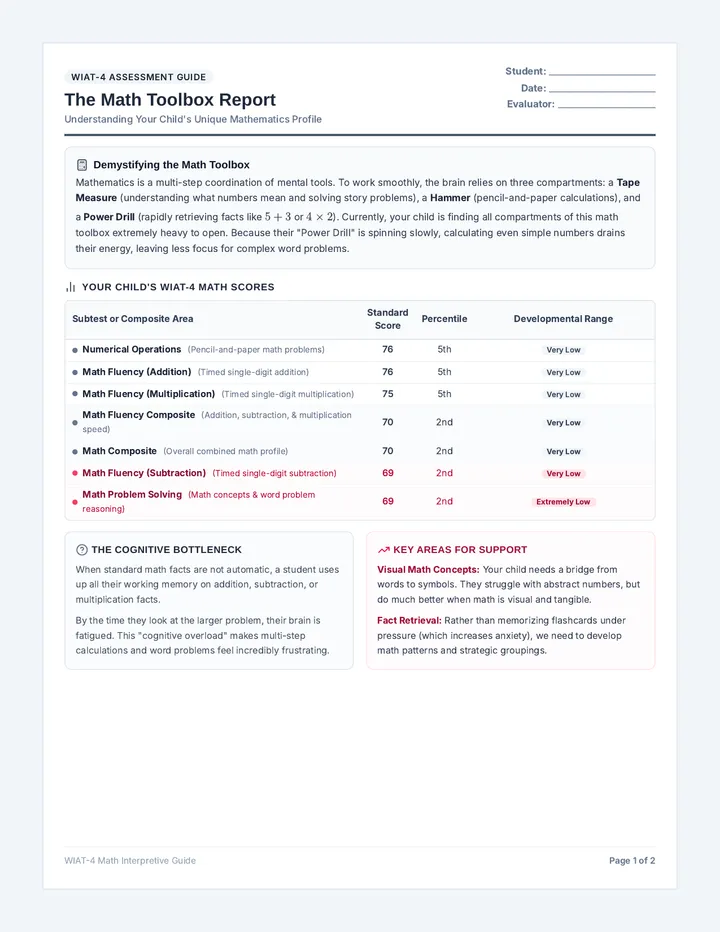
A set of parent-friendly guides translating psychoeducational test scores into positive, actionable home support roadmaps.
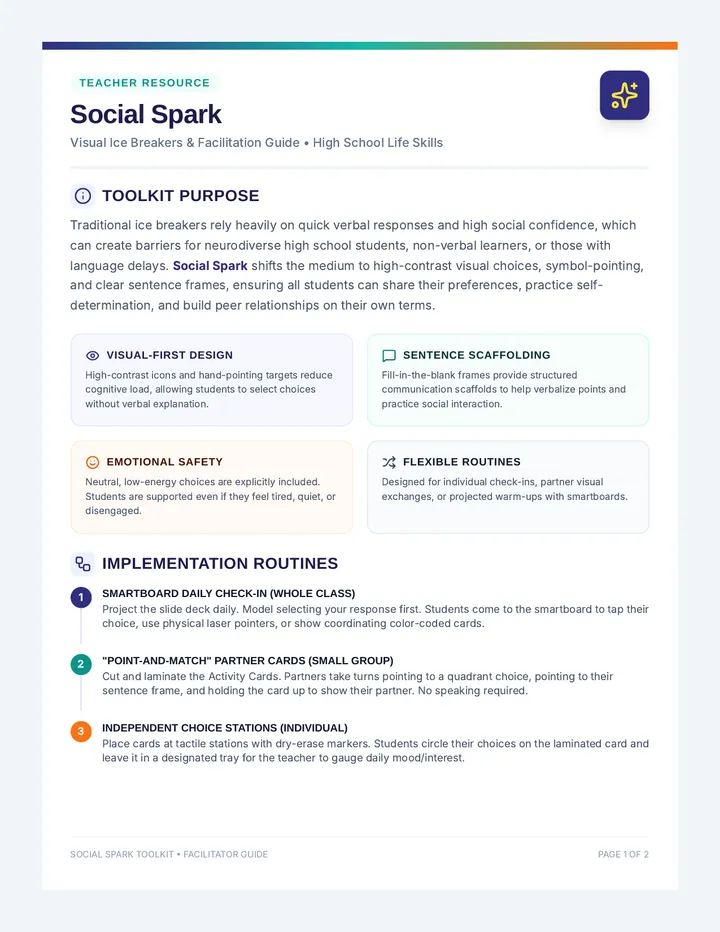
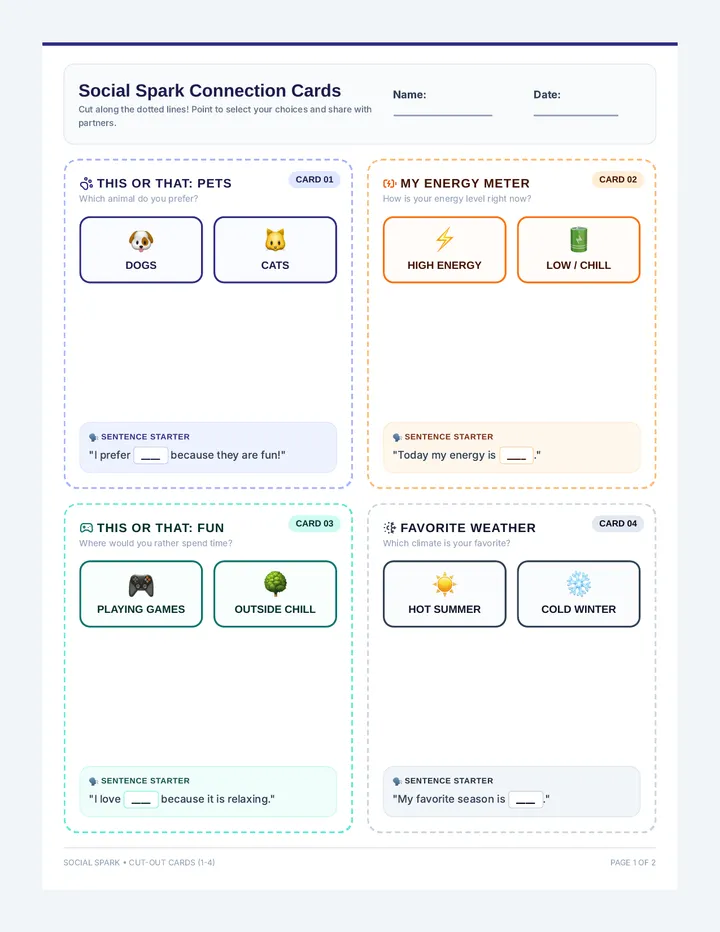
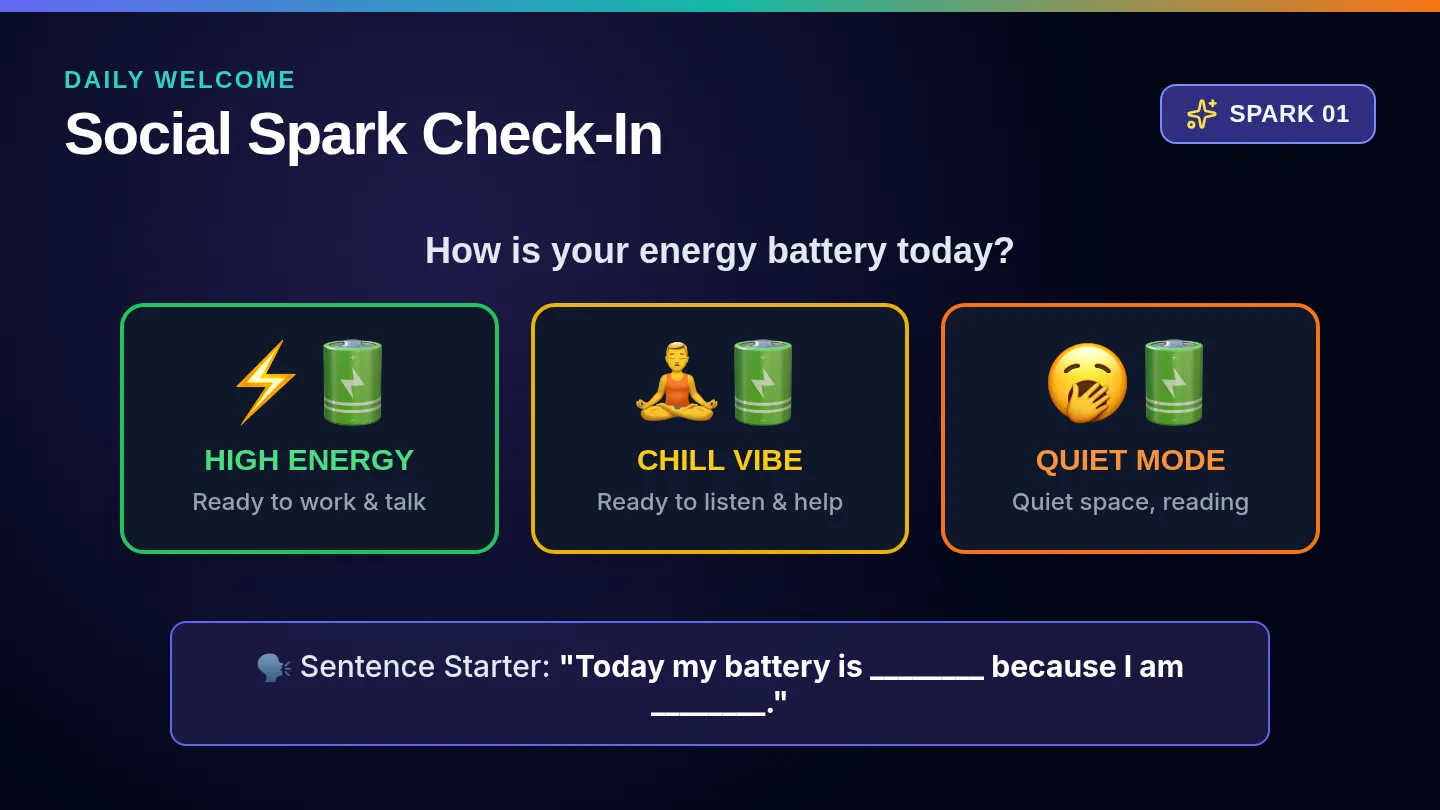
A comprehensive toolkit of visual ice breakers designed for high school life skills classrooms, featuring high-contrast visual choice boards, point-to-select options, structured sentence frames, and clear facilitator guidance to support diverse communication needs.
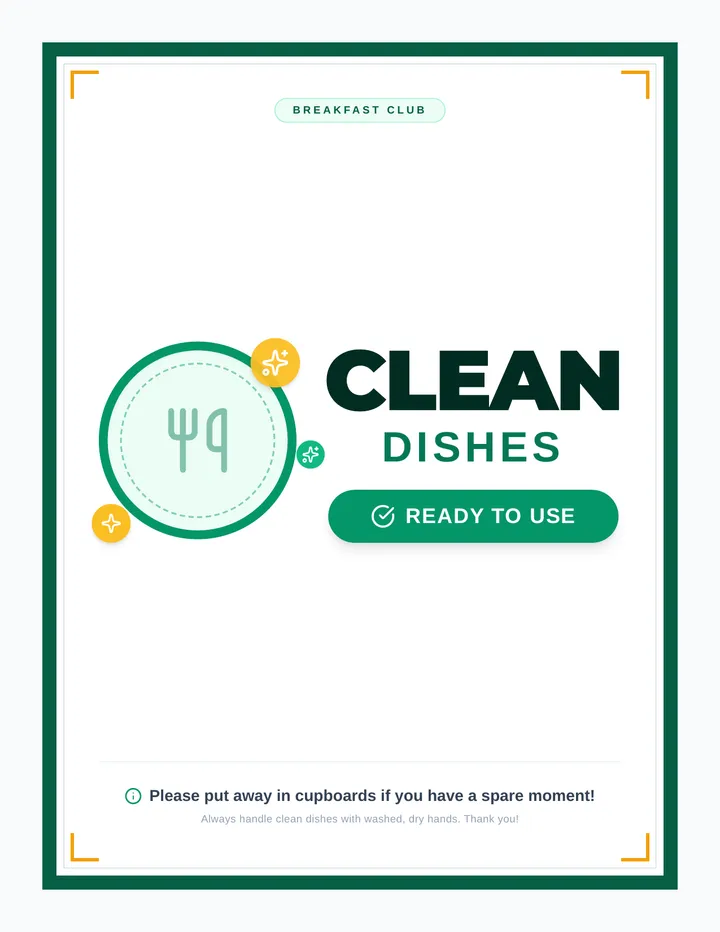
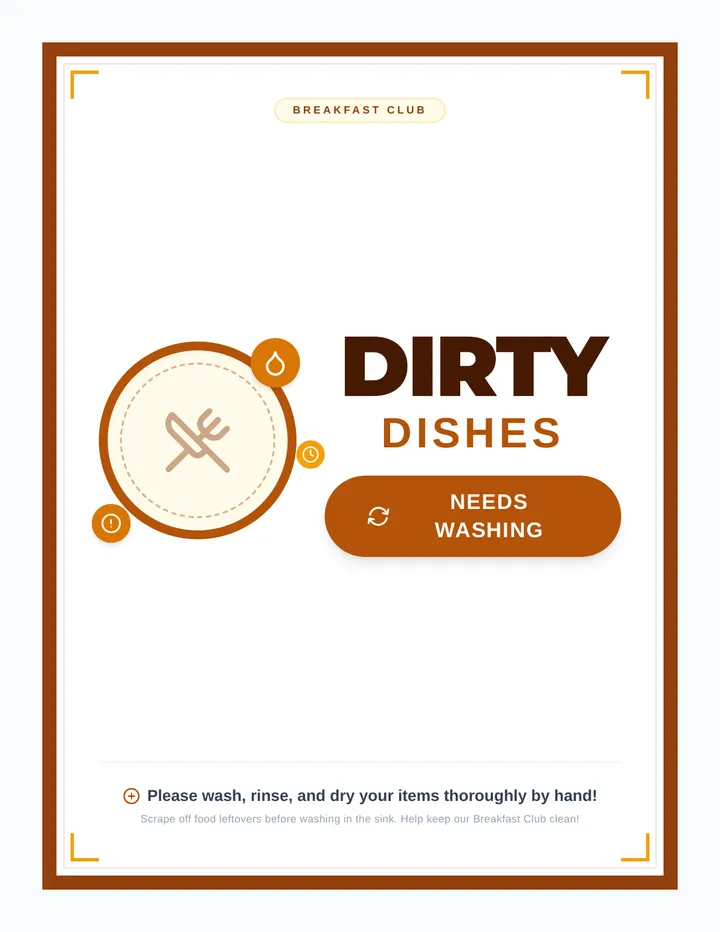
A pair of visually striking, high-contrast printable signs to organize any kitchen or classroom space. Features separate, elegant layouts for clean and dirty dishes to maintain perfect organization.
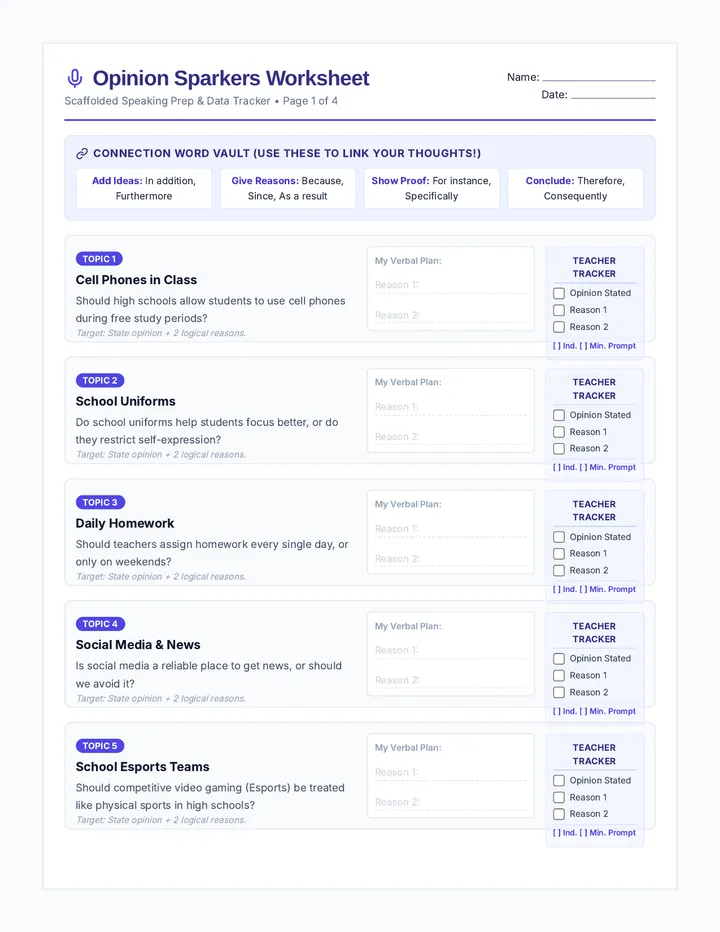
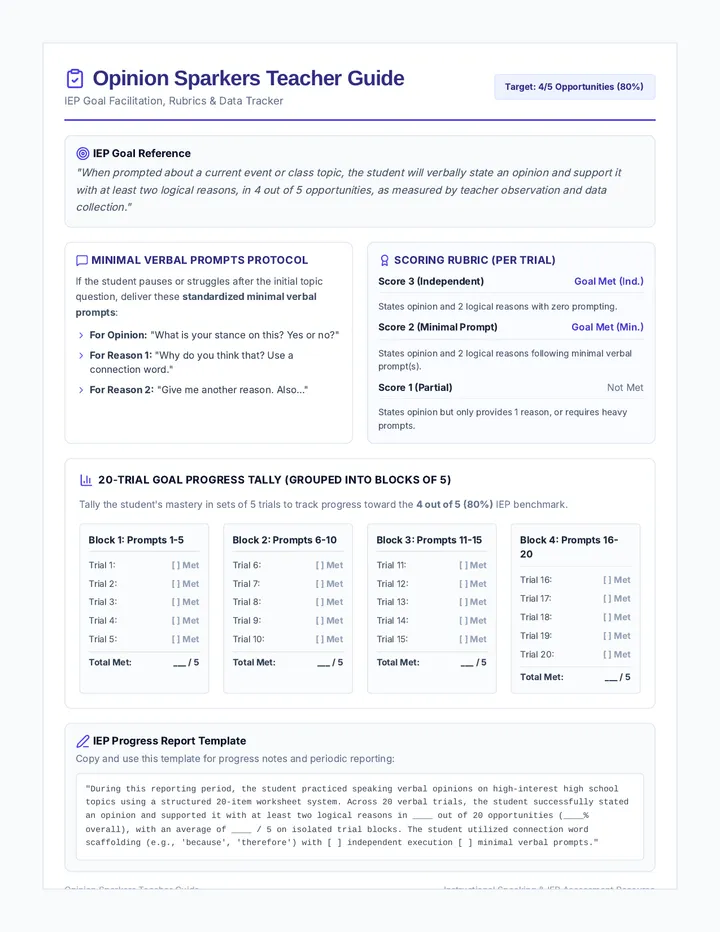
A structured program to help high school students with special needs verbally express opinions and support them with logical reasons. Includes engaging debate topics, connection word scaffolds, and an integrated teacher data tracker.
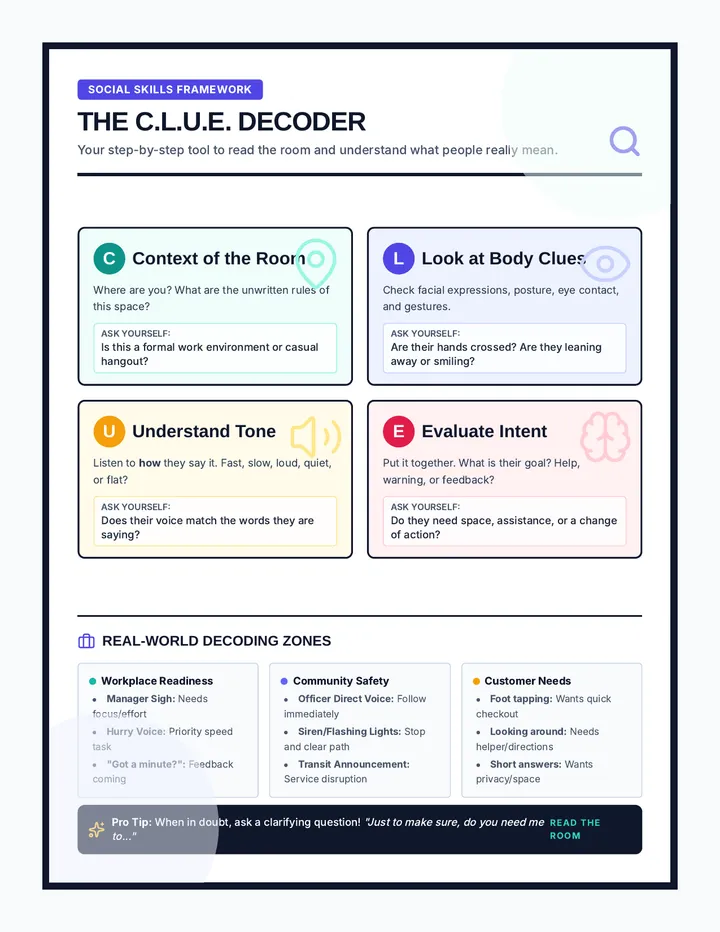
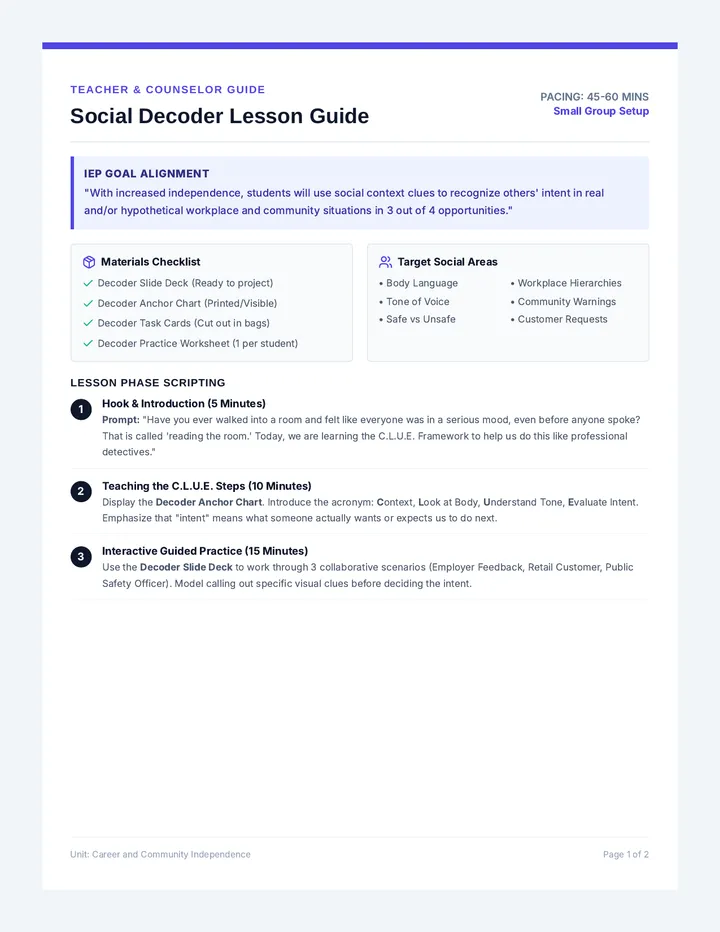
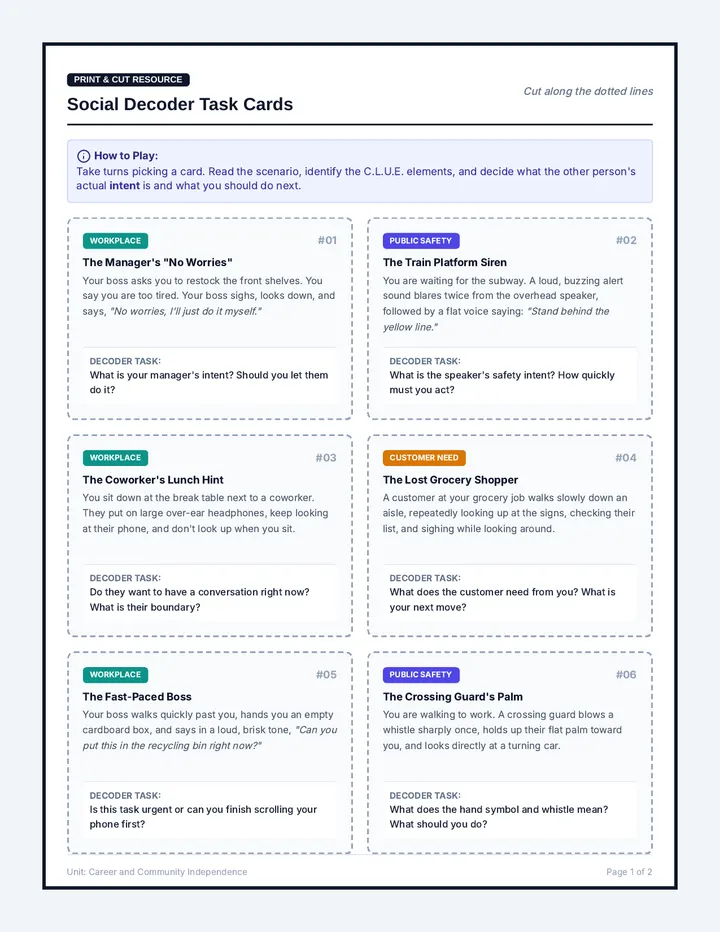
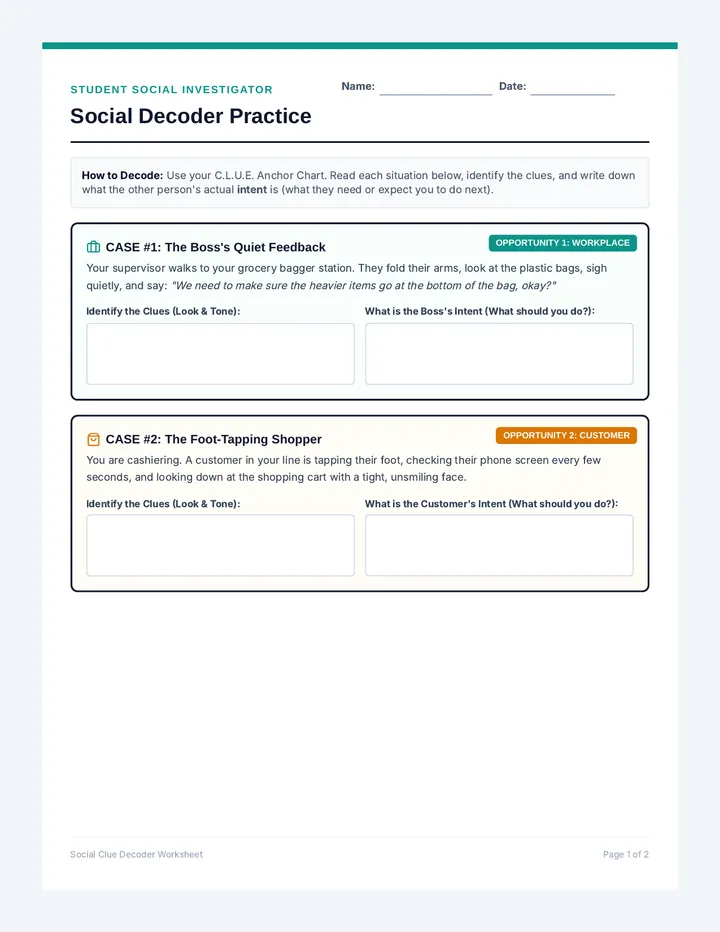
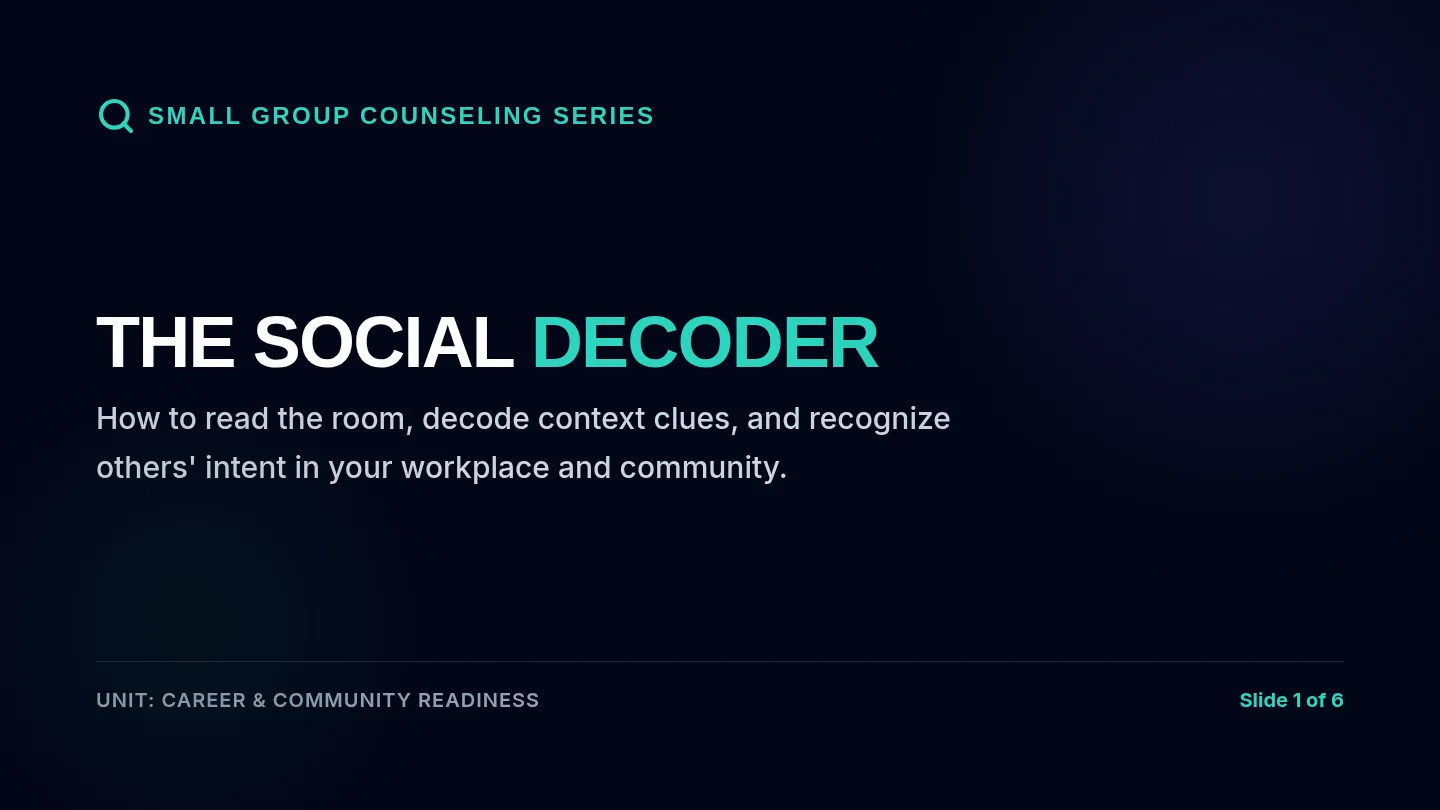
A comprehensive small-group counseling lesson designed to help high school special needs students use context clues to decode social intent in workplace, community, and safety situations.
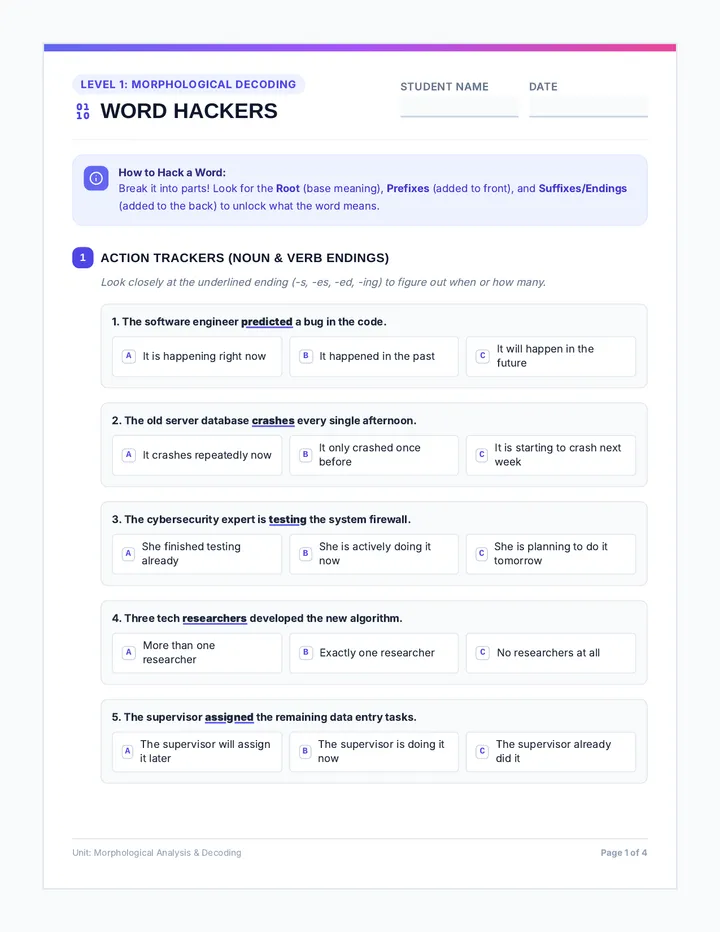
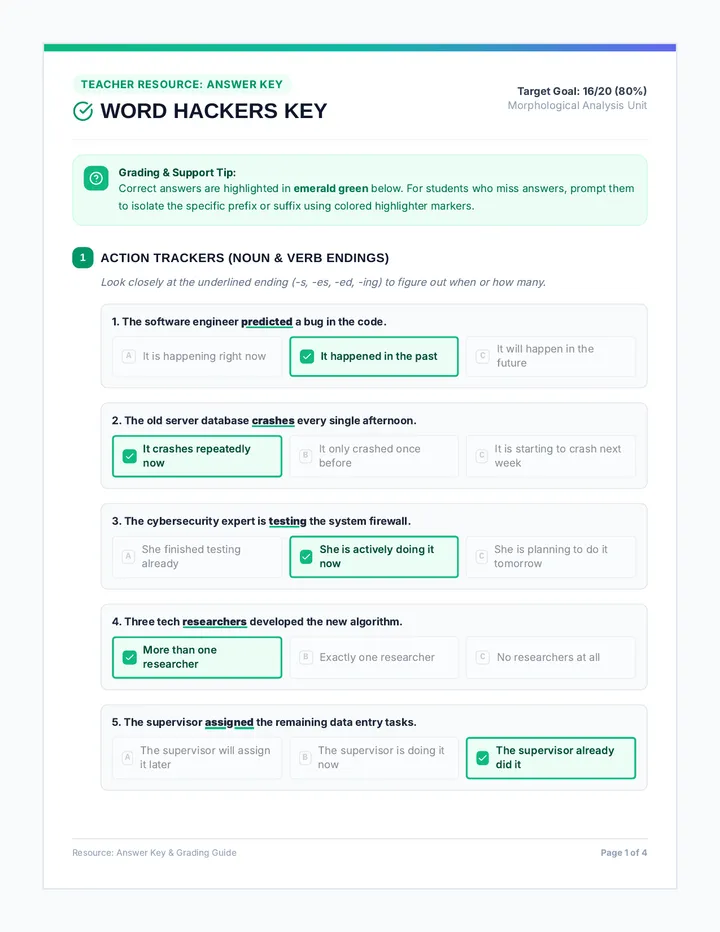
A structured morphological analysis lesson designed for high school students with special needs. Students decode word meanings using roots, prefixes, suffixes, and inflectional endings.
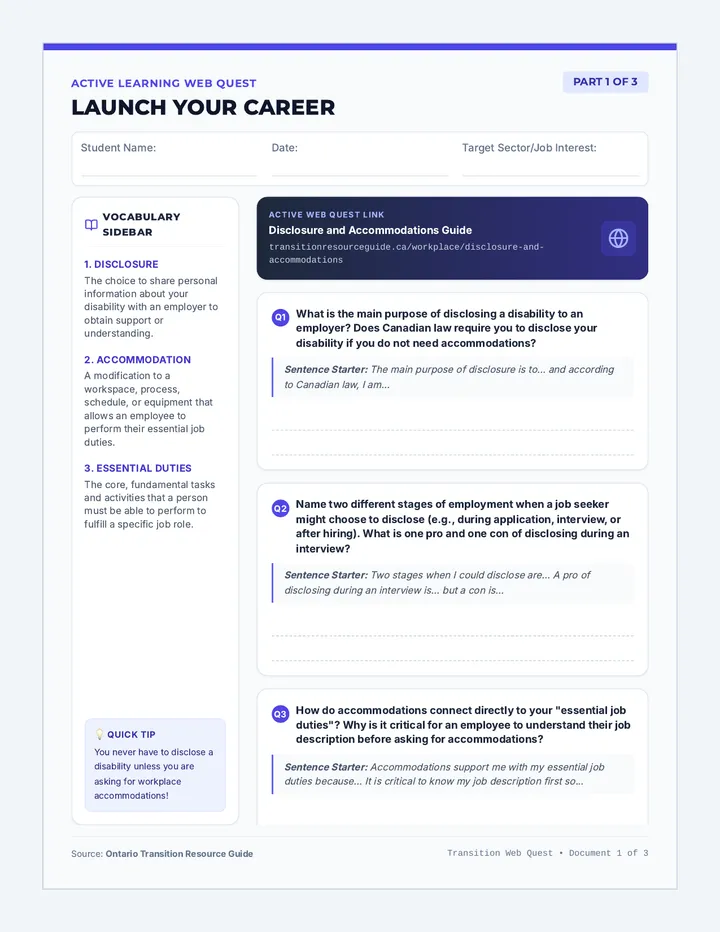
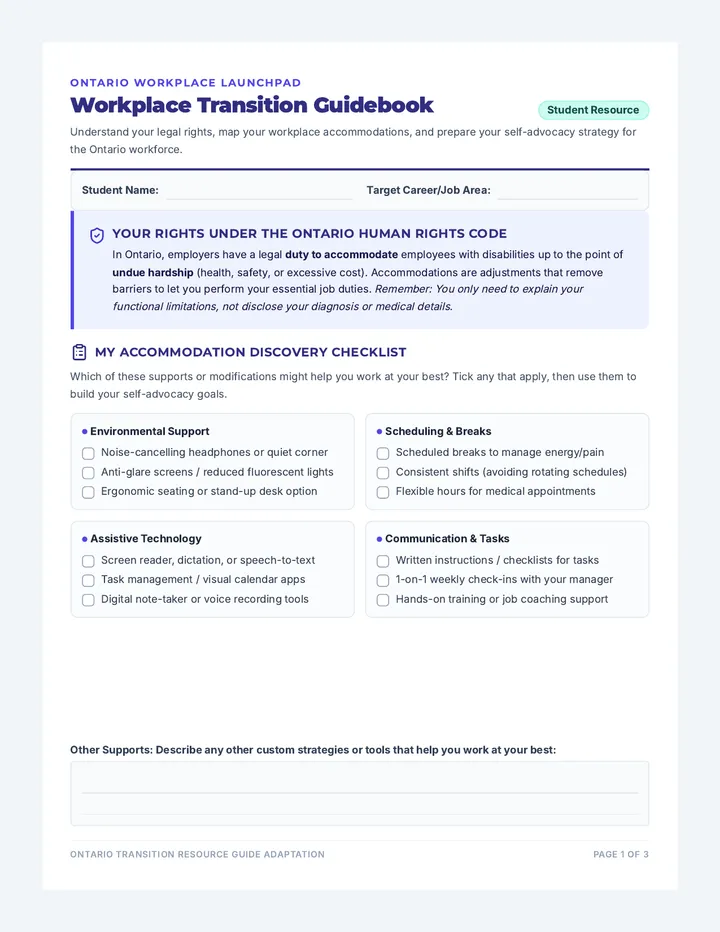
A lesson focused on supporting students with disabilities as they transition into the workplace, utilizing resources from the Ontario Transition Resource Guide.
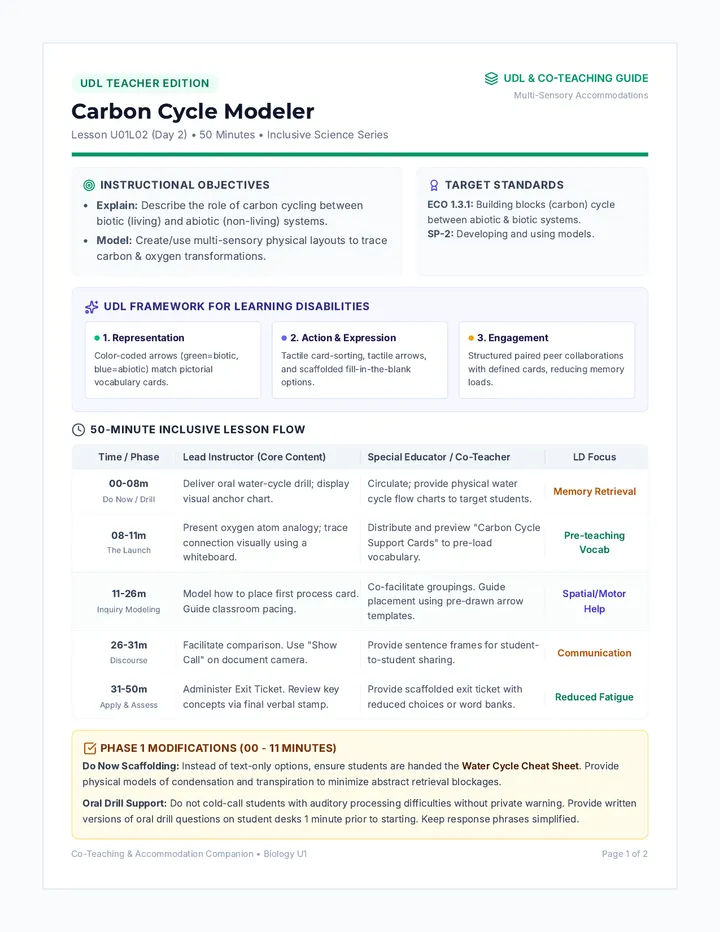
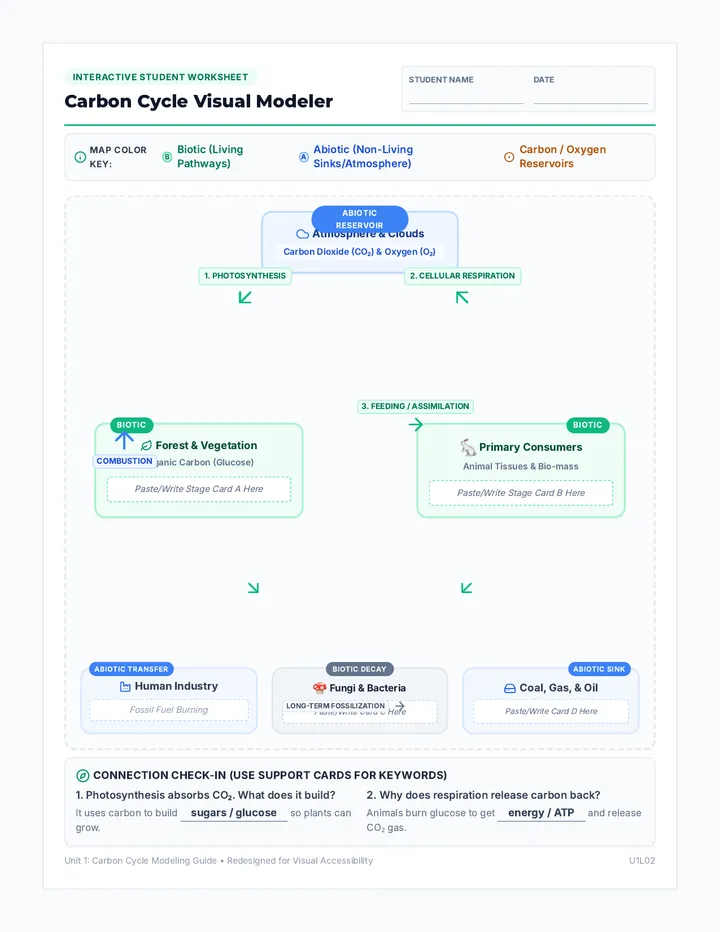
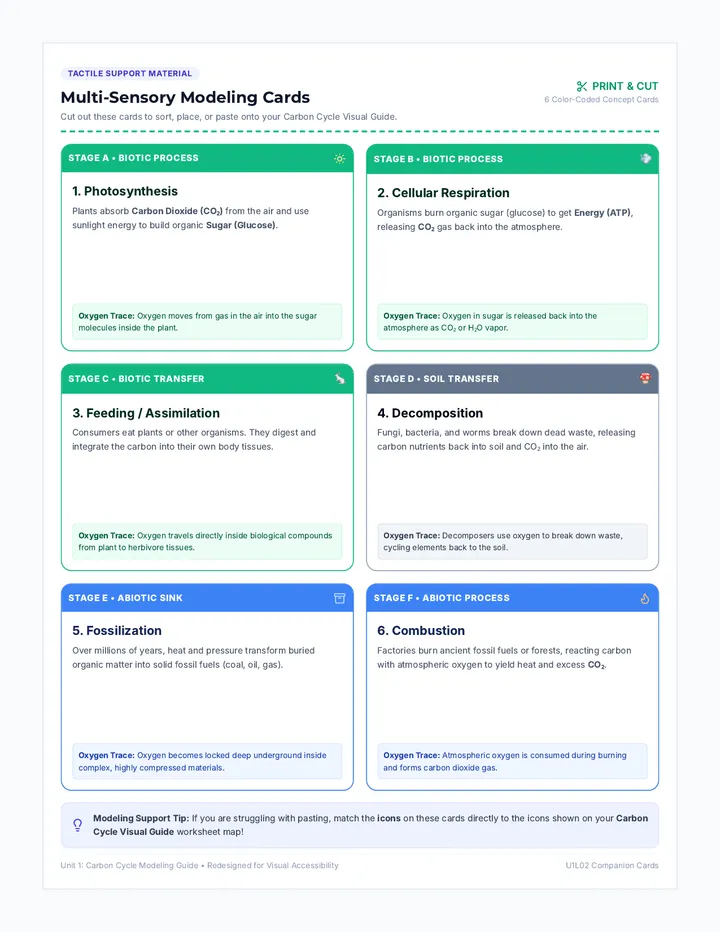
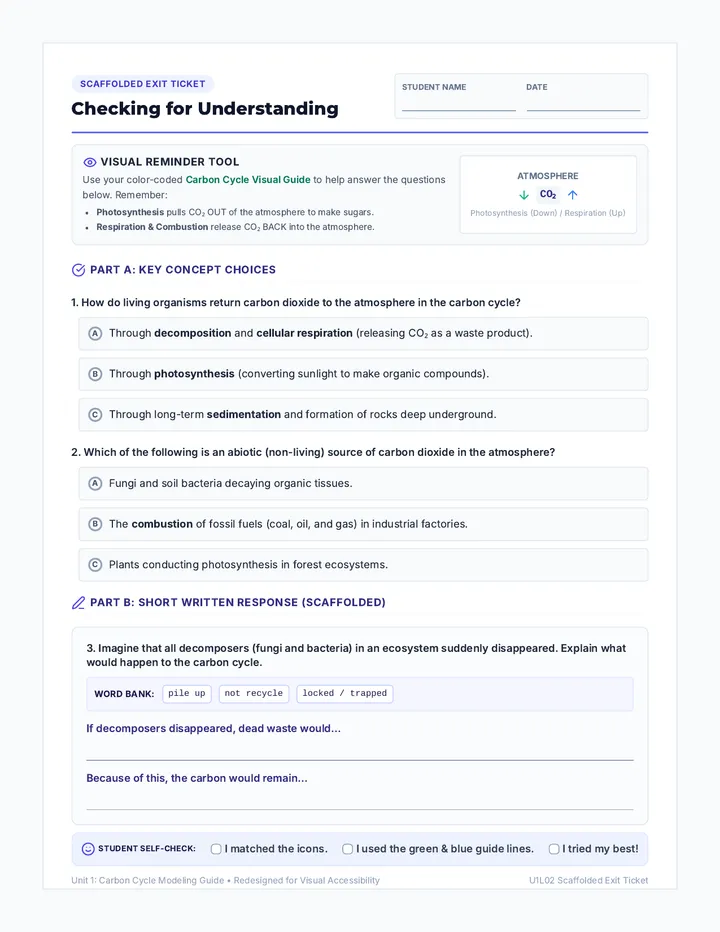
A biology lesson on modeling the carbon cycle, redesigned from a Universal Design for Learning (UDL) lens to support students with learning disabilities using multi-sensory strategies, color-coded visual organizers, and scaffolded vocabulary cards.
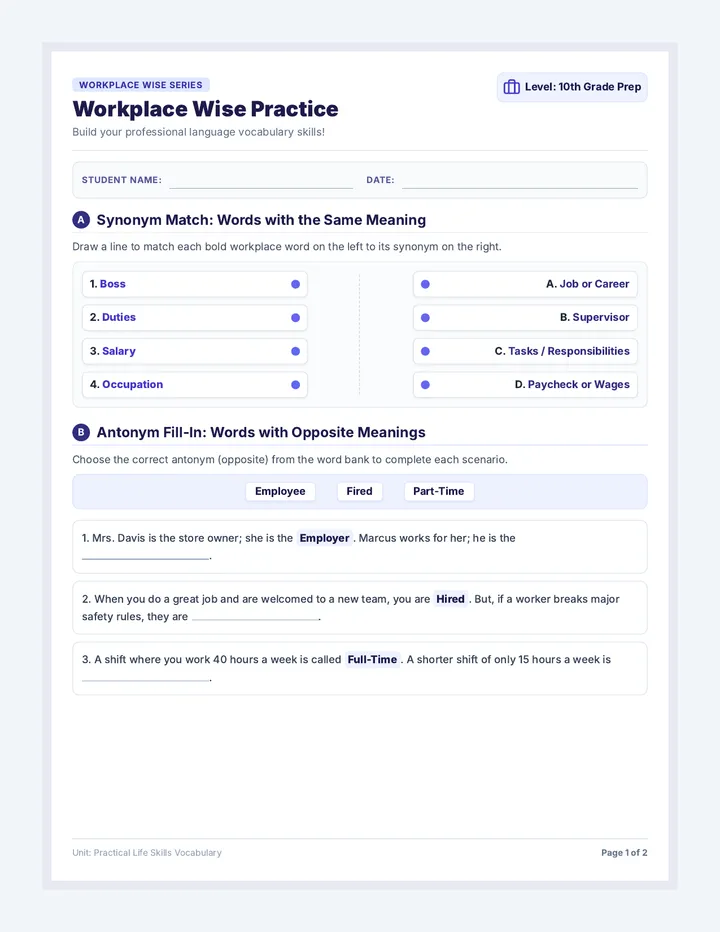
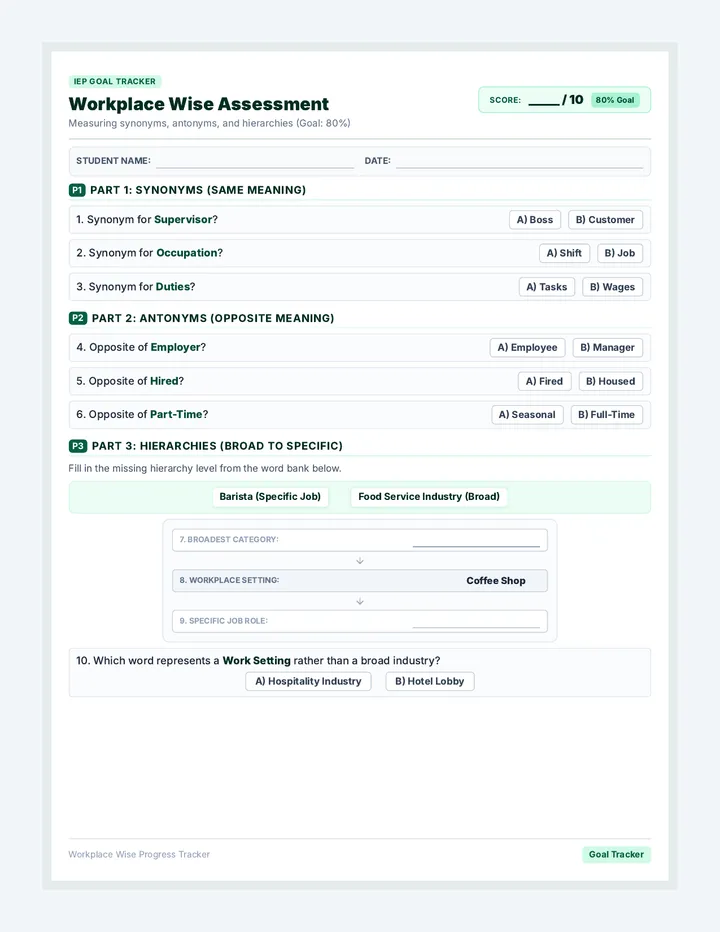
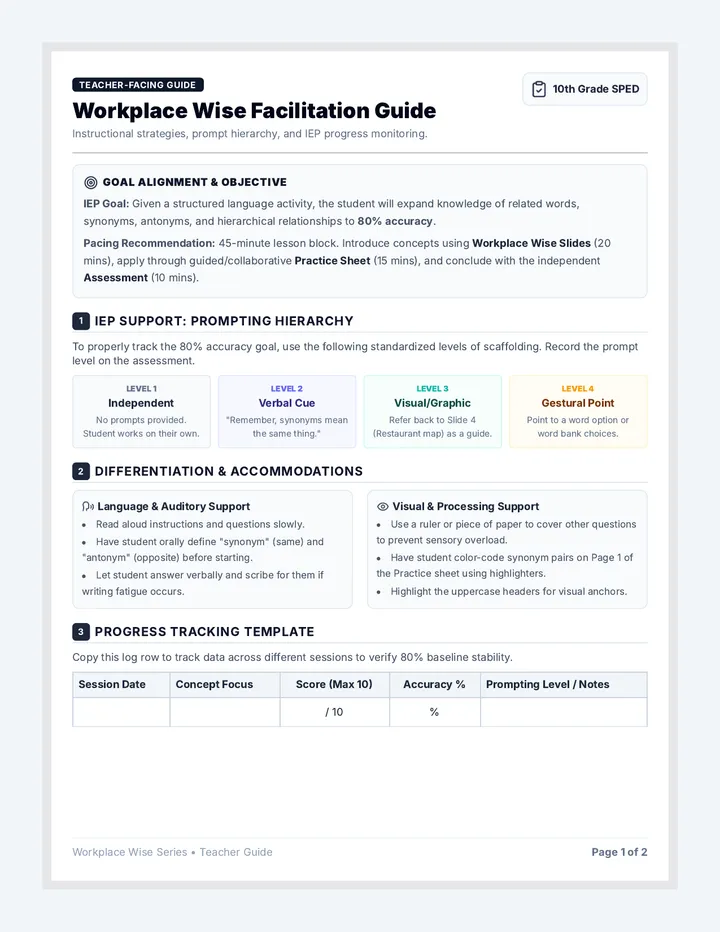
A structured language lesson bundle for 10th-grade special education students focusing on functional workplace vocabulary. Students will learn and practice identifying synonyms, antonyms, related words, and hierarchical relationships (e.g., job roles and work settings) to build independence.
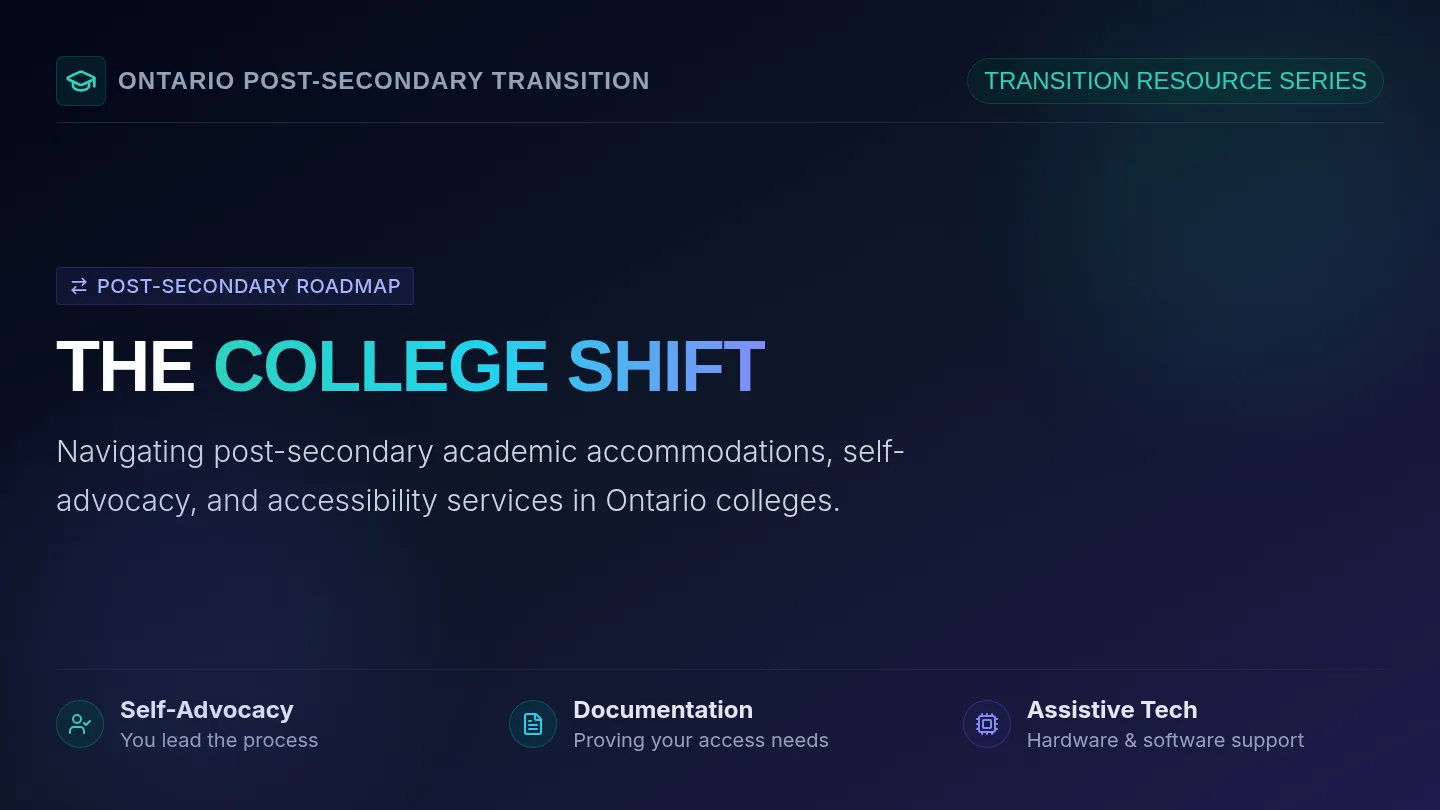
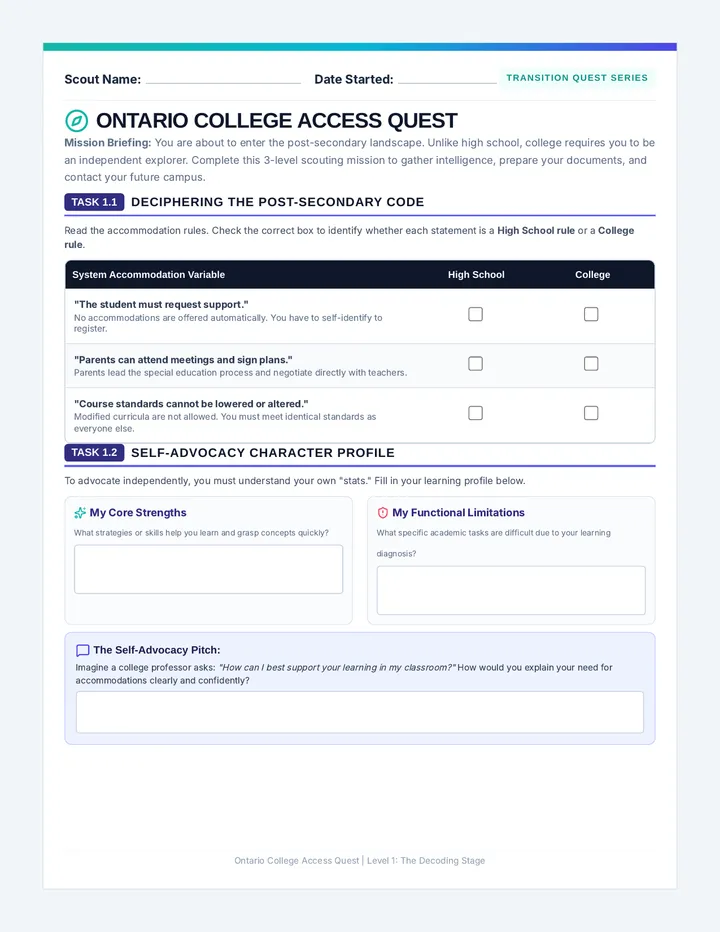
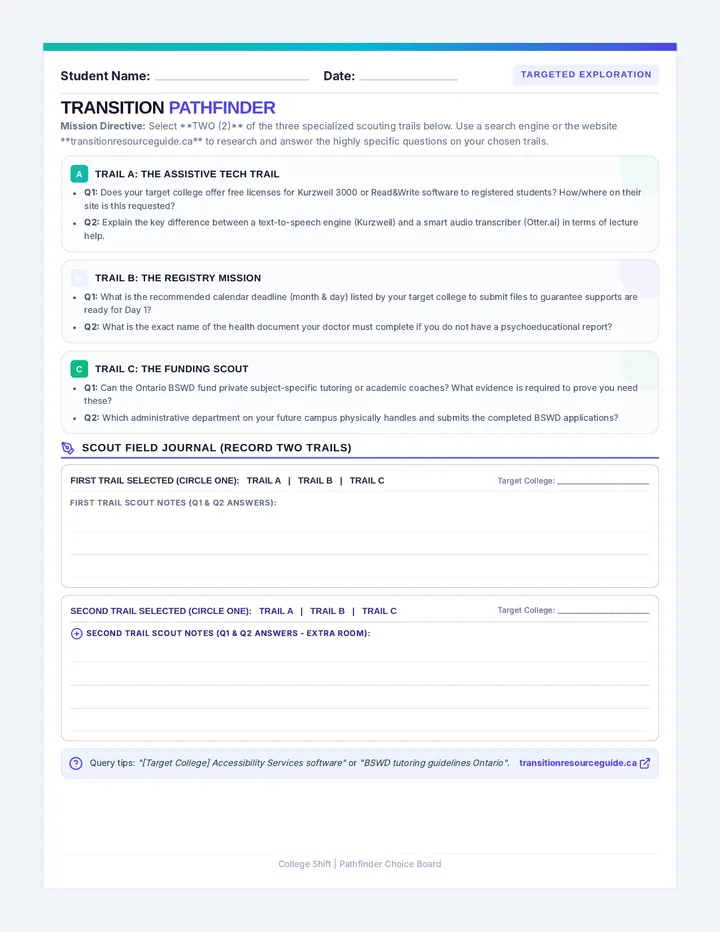
A comprehensive transition planning lesson designed to help high school students with disabilities successfully navigate the shift to Ontario colleges. Students learn the differences between high school and college accommodations, explore documentation requirements, and research specific college accessibility services.
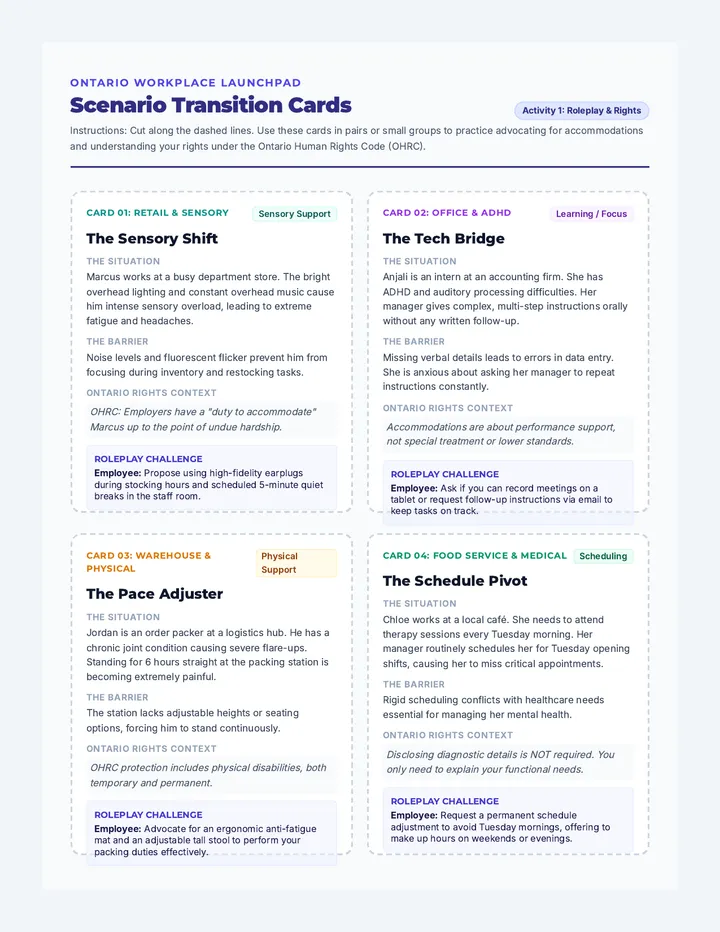
An empowering, Ontario-specific transition unit helping students with disabilities navigate workplace accommodations, disclosure choices under the Ontario Human Rights Code, and self-advocacy strategies.
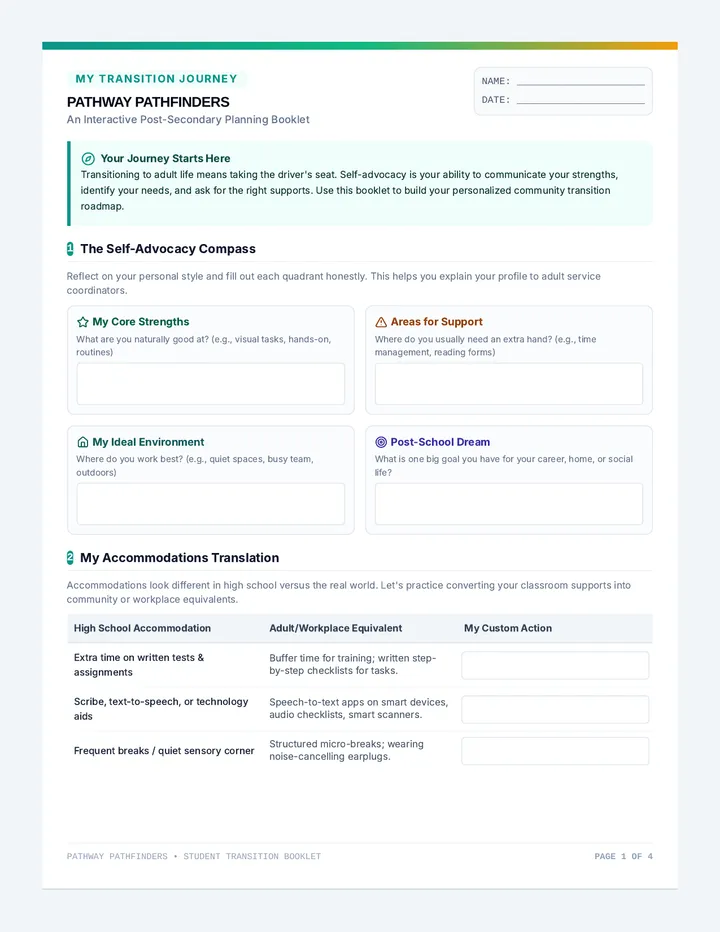
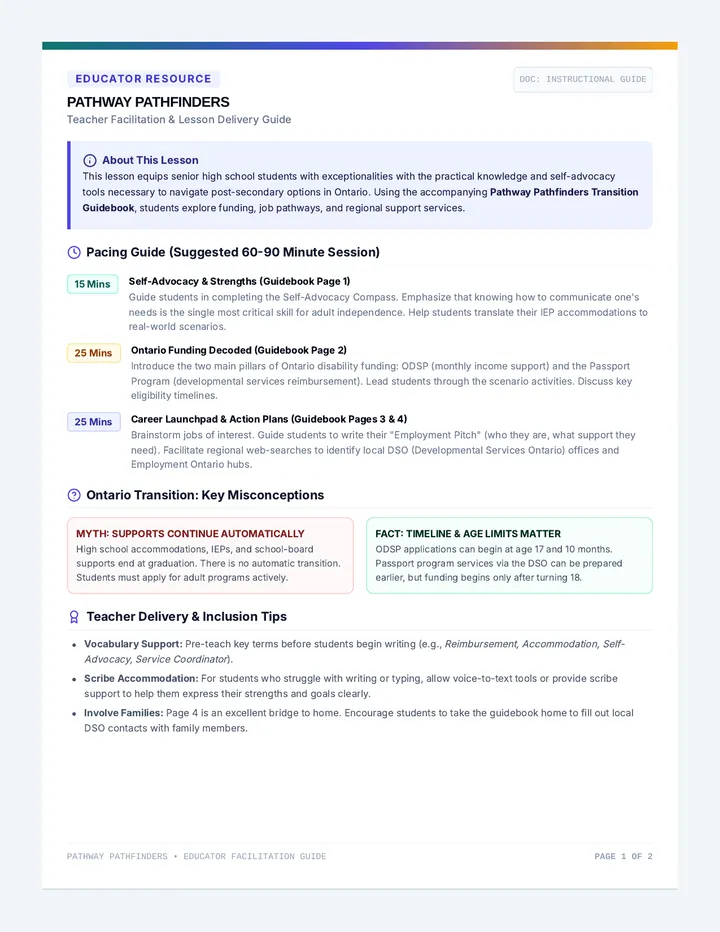
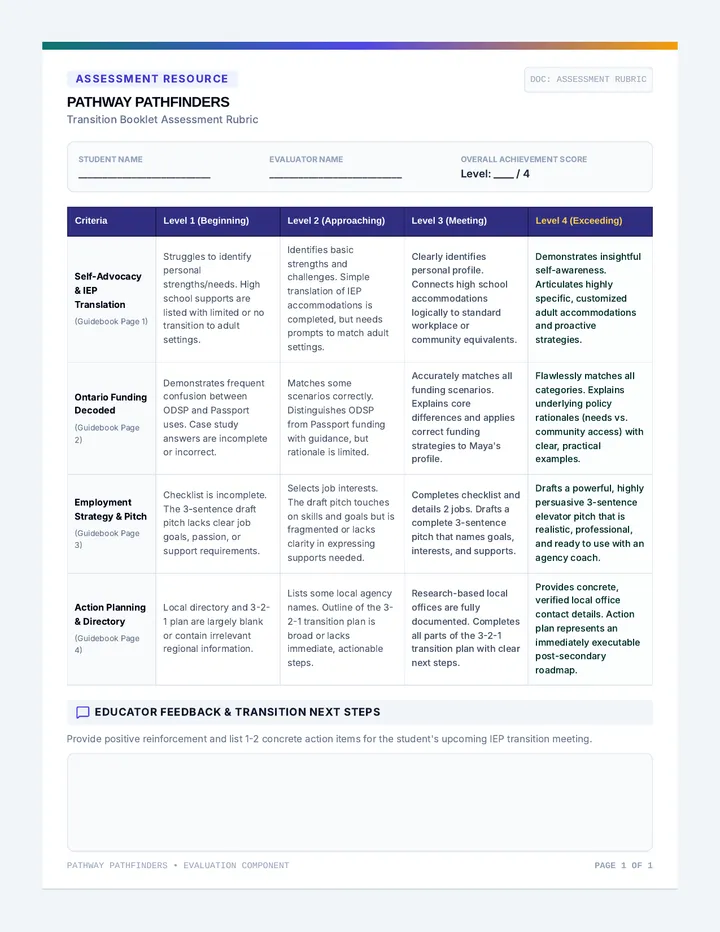
A student-focused lesson introducing adult community services, self-advocacy, and financial funding in Ontario. Includes an interactive transition booklet and a comprehensive facilitation guide for teachers.
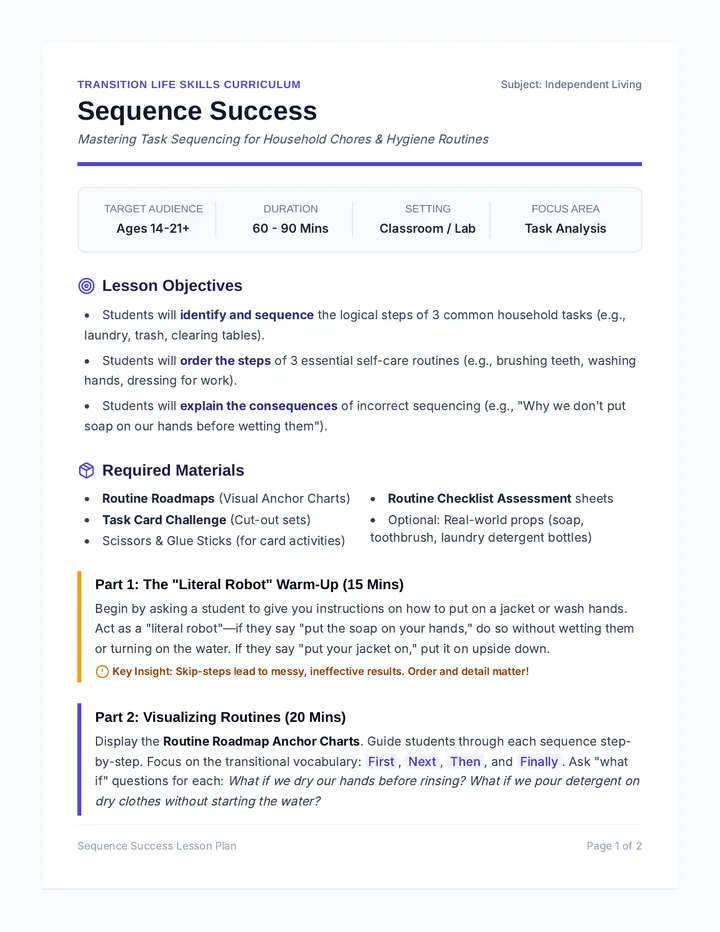
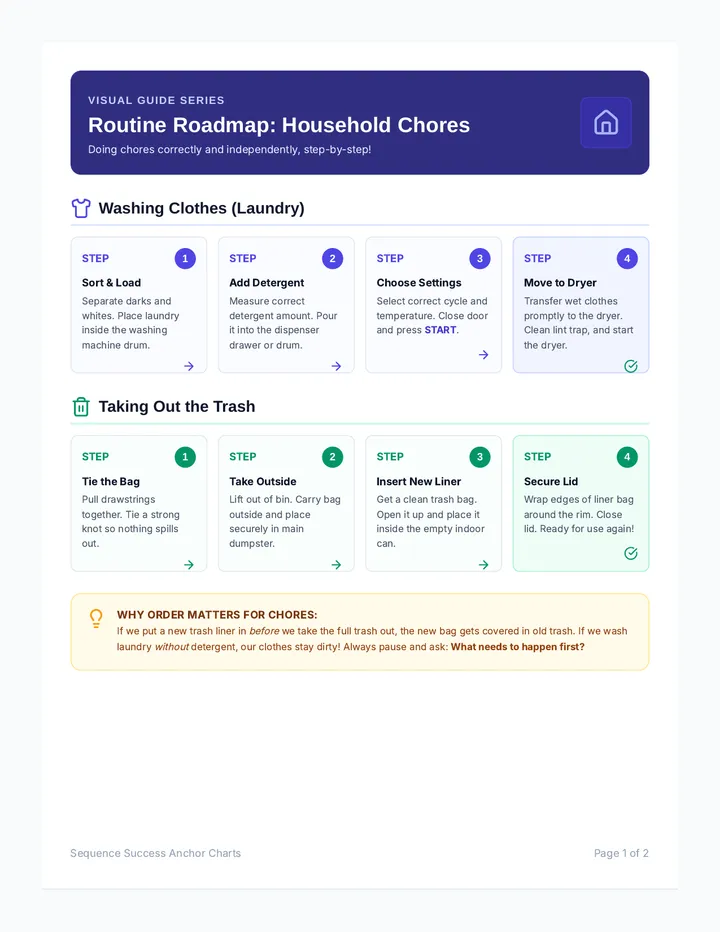
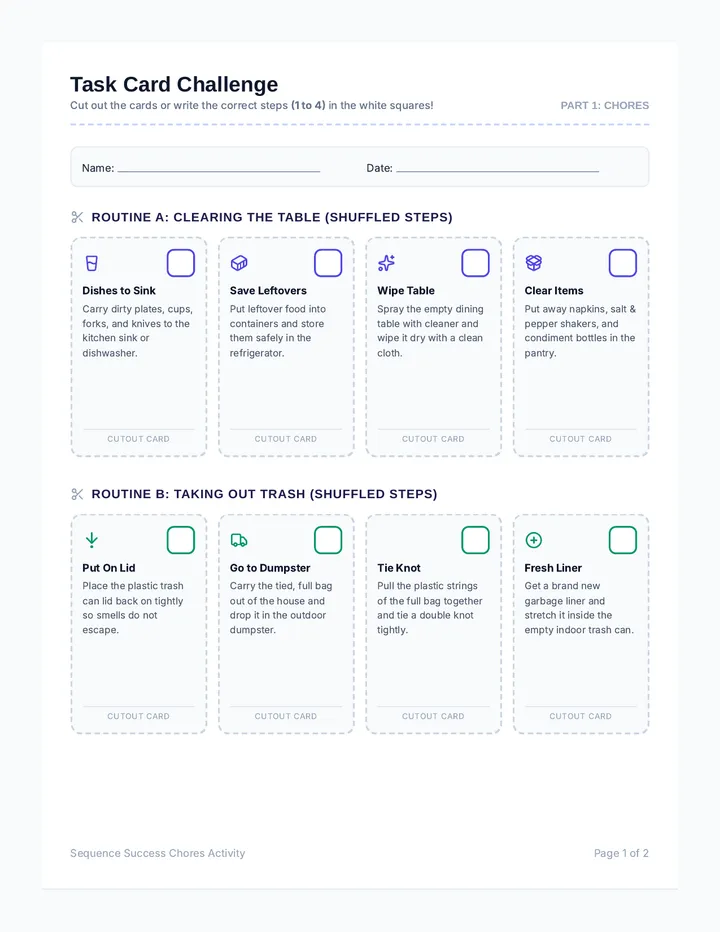
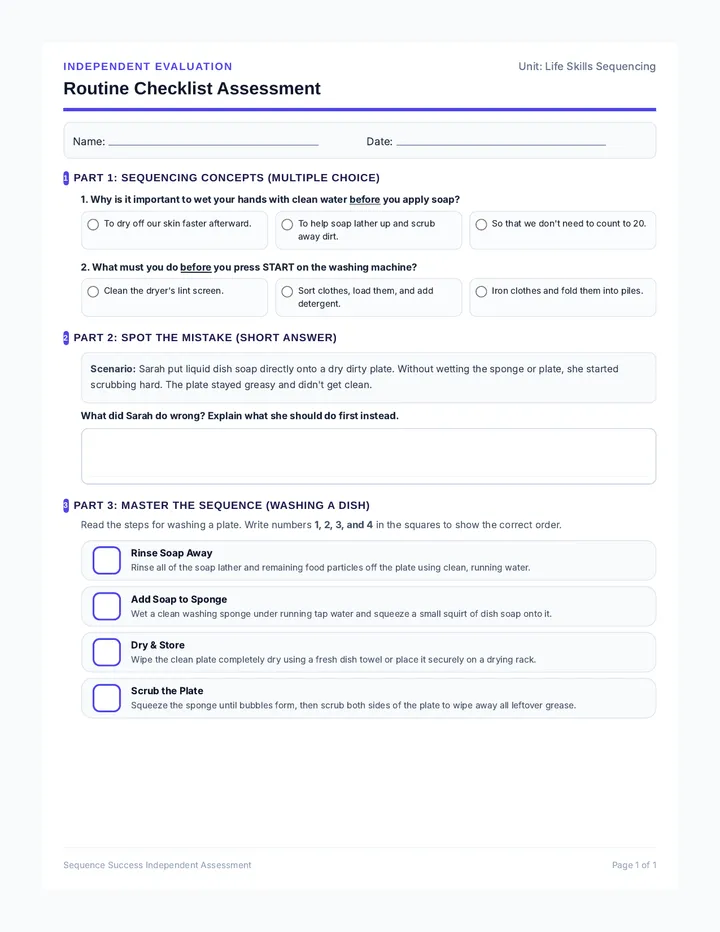
A comprehensive lesson bundle designed for transition-aged students to master the critical life skill of task sequencing. This lesson breaks down essential household chores and self-care routines into logical, sequential steps, providing educators with a structured facilitation guide, visual anchor charts, hands-on task cards, and an assessment tool.