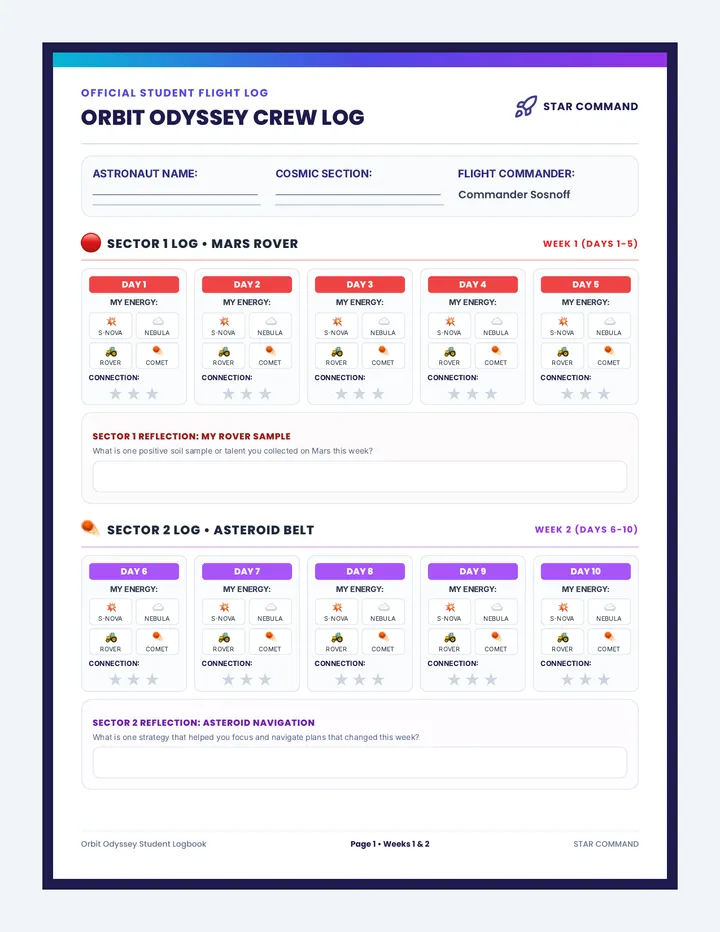
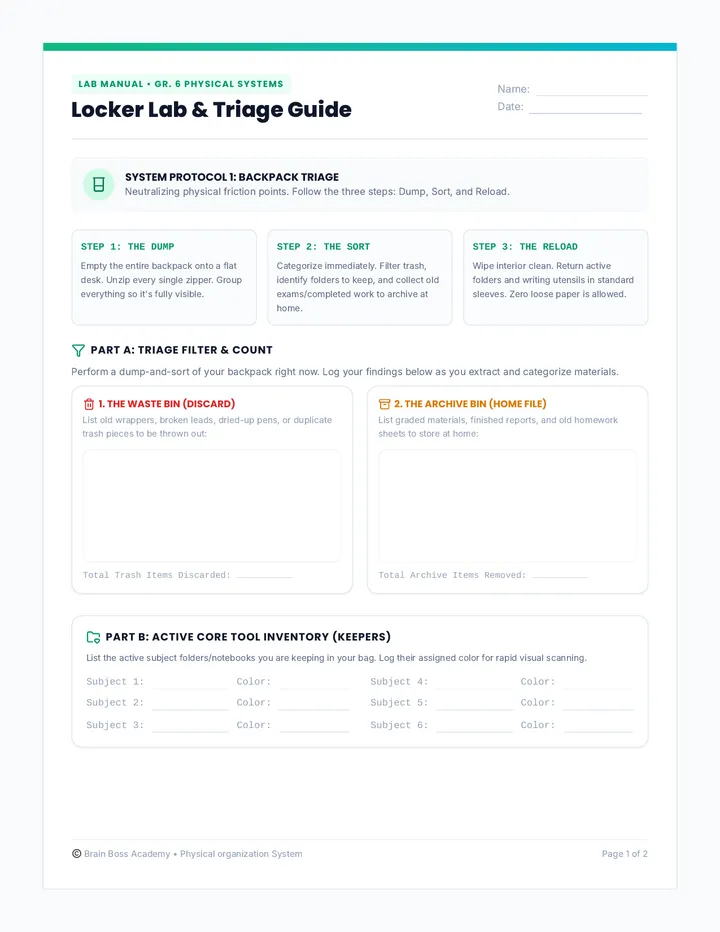
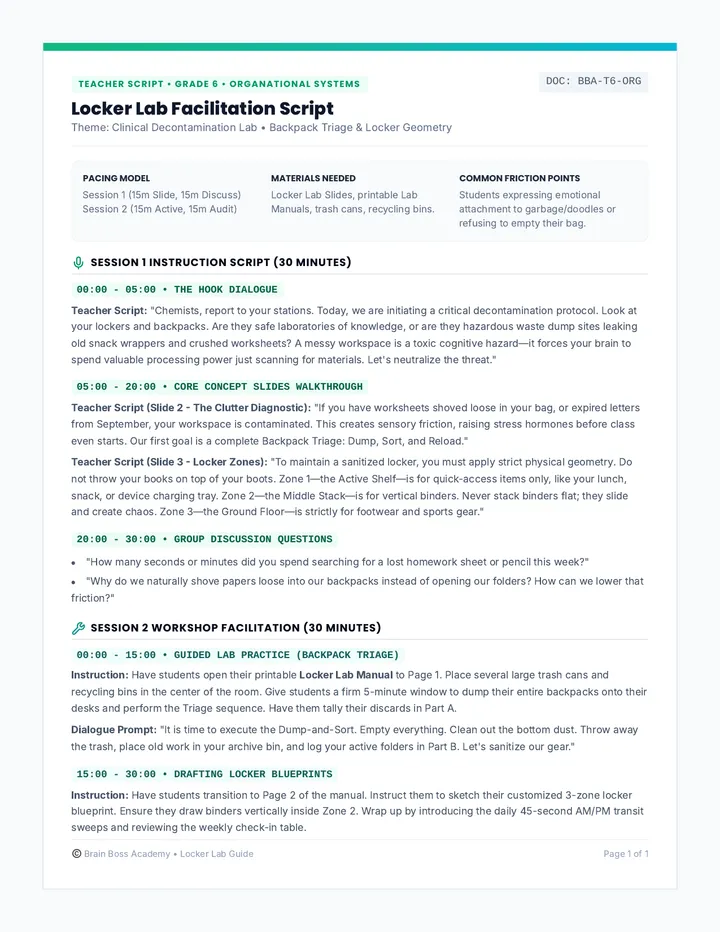
A specialized set of tools designed to help a 7th-grade student navigate daily transitions and unexpected changes with a focus on cognitive flexibility.
Students will master the -dge spelling pattern, learning when to use it (after short vowels) and applying these words in sophisticated sentences and short narratives. This lesson is designed for 6th-grade ESE students who need high-interest, age-appropriate content.
A cumulative review and assessment where students apply both slicing and root identification skills to complex, grade-appropriate vocabulary.
Explores how prefixes and suffixes are added to base words. Students practice stripping away affixes to reveal the root word and its meaning.
Focuses on the mechanics of dividing multisyllabic words using SPIRE Level 3 patterns like VCCV and VCV. Students learn to 'slice' words into manageable chunks for decoding.
A professional development session focused on analyzing behavior data, social-emotional screening results, and developing intervention plans. Teachers will collaborate in PLCs and grade-level teams to create data-driven enrichment and support strategies.
A simplified overview of World War II designed for students with multiple disabilities, focusing on major events, key figures, and technological advancements through visual storytelling and a hands-on flip book.
A therapy session focused on teaching impulse control strategies to students with ADHD using a 'Brain Brake' metaphor. The lesson includes a guided activity and portable visual reminders for the classroom.
A focused lesson on identifying and applying specific coping mechanisms to manage anxiety in various social and academic scenarios.
A comprehensive planning kit for schools to manage students who struggle with or refuse to evacuate during fire drills, focusing on communication and individualized support.
Focuses on following instructions with specific negative constraints and complex conditions. Students learn to process "except," "unless," and "only if" parameters.
Focuses on identifying ambiguous or incomplete instructions. Students learn to advocate for themselves by asking targeted questions instead of guessing when a 'mission briefing' is unclear.
Focuses on complex, technical instructions in STEM and humanities contexts. Students practice following algorithms, blueprints, and scientific protocols.