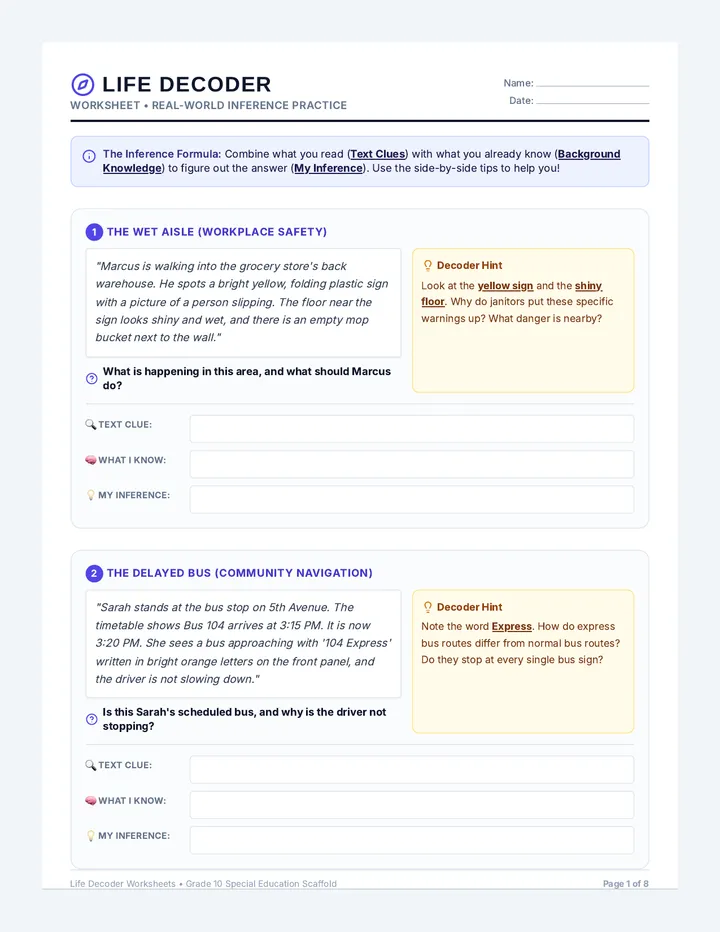
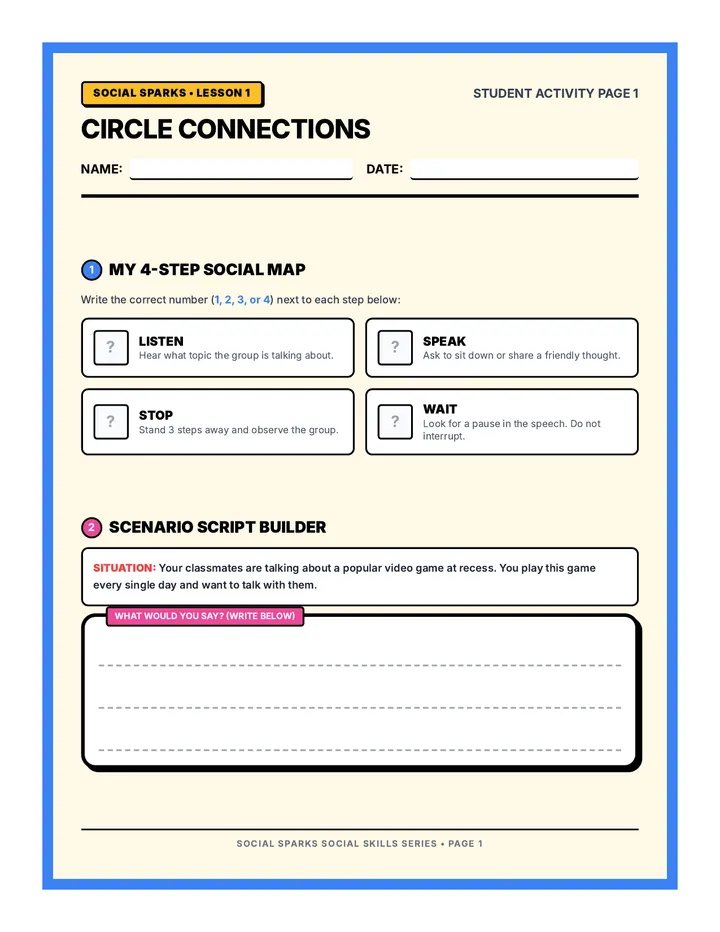
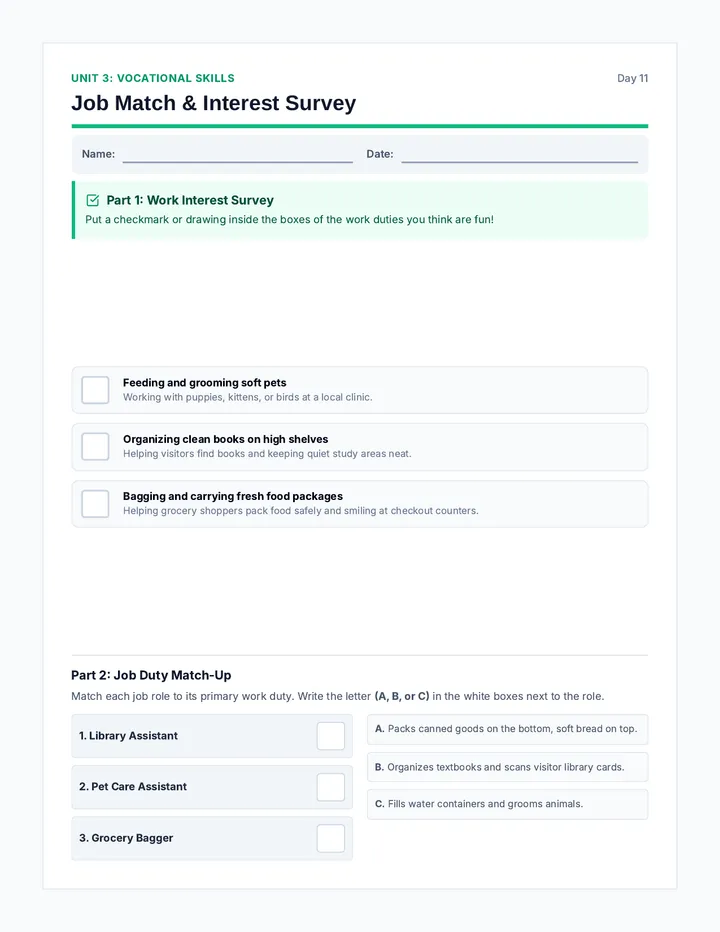
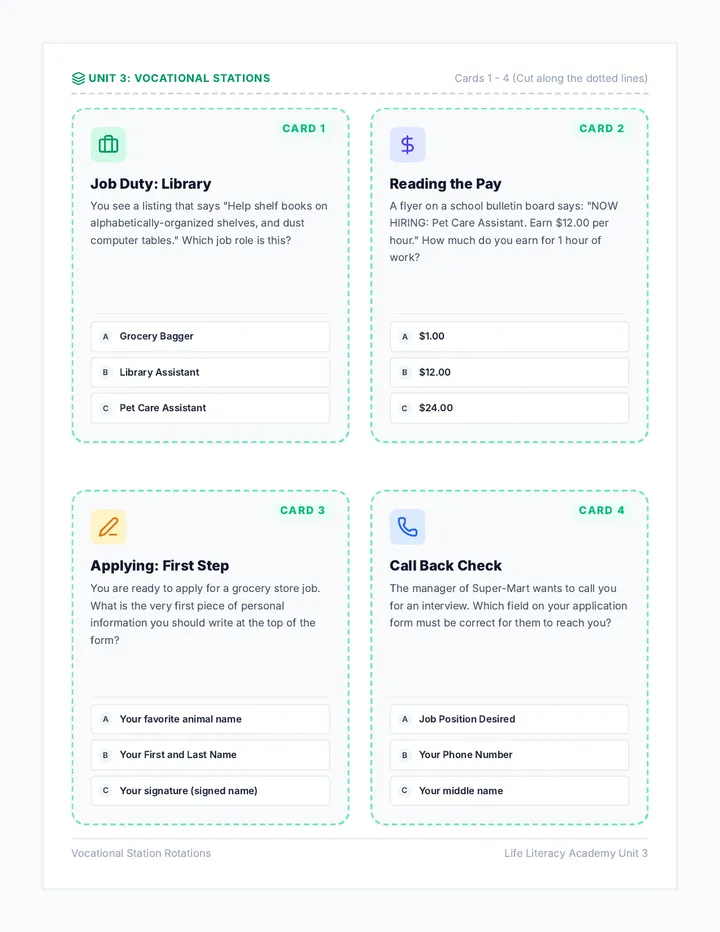
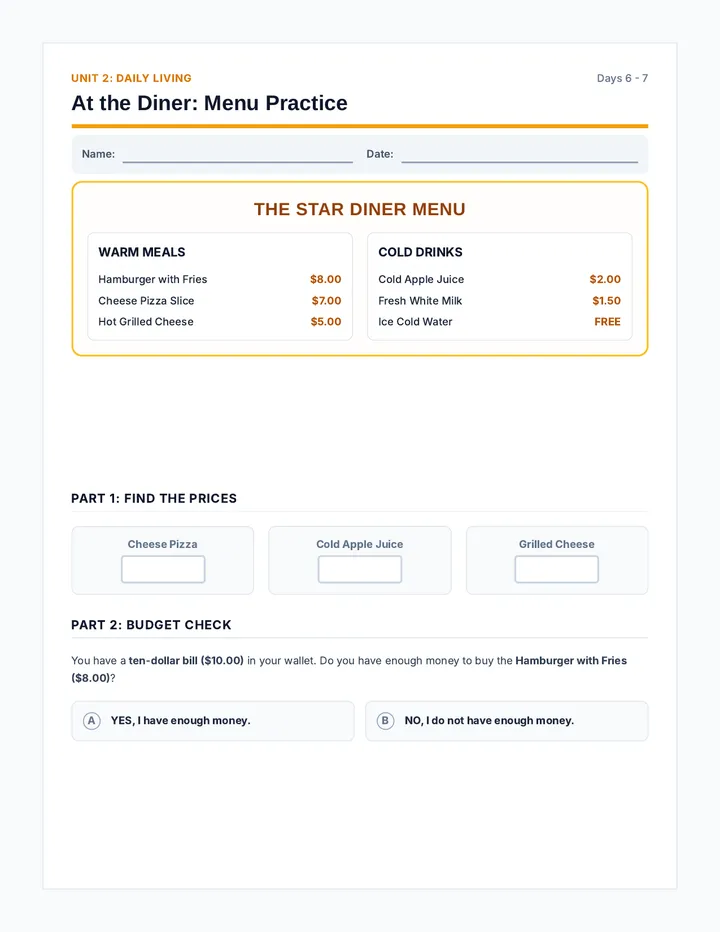
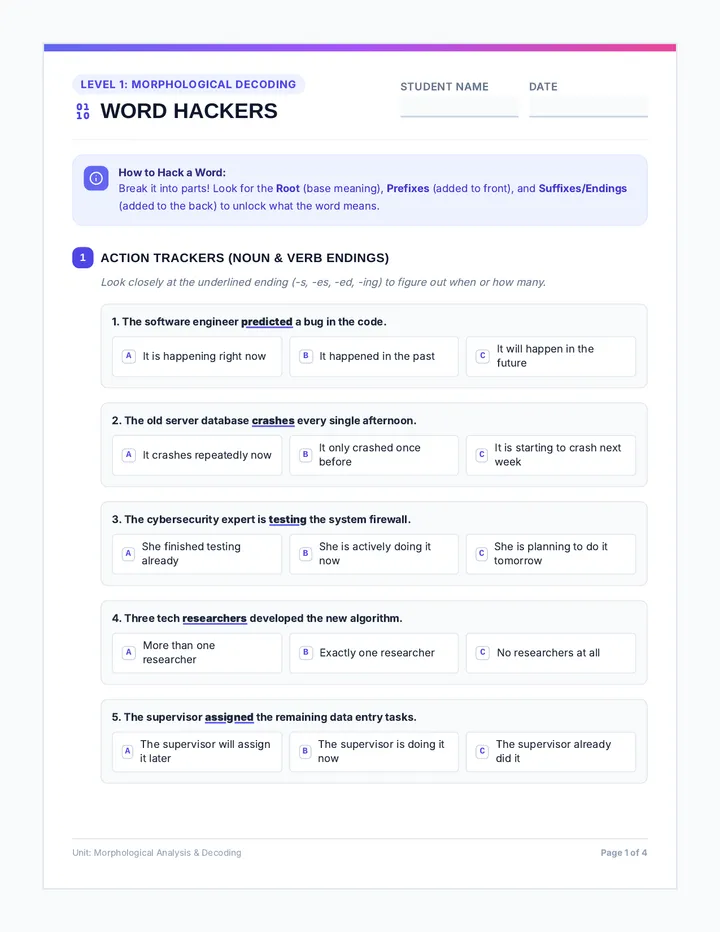
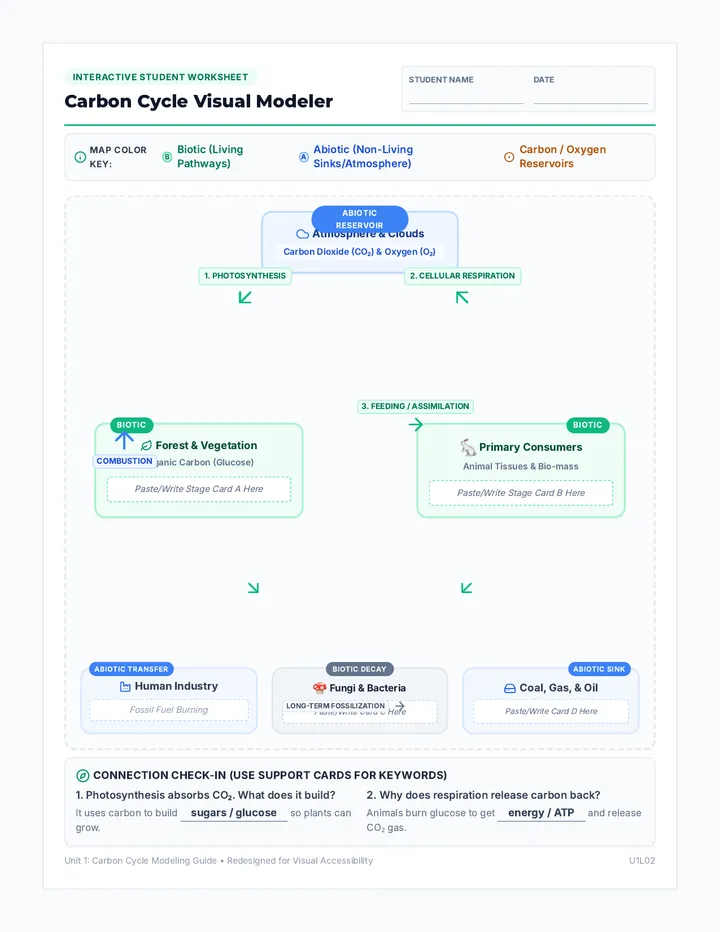
Safety Navigator Worksheet
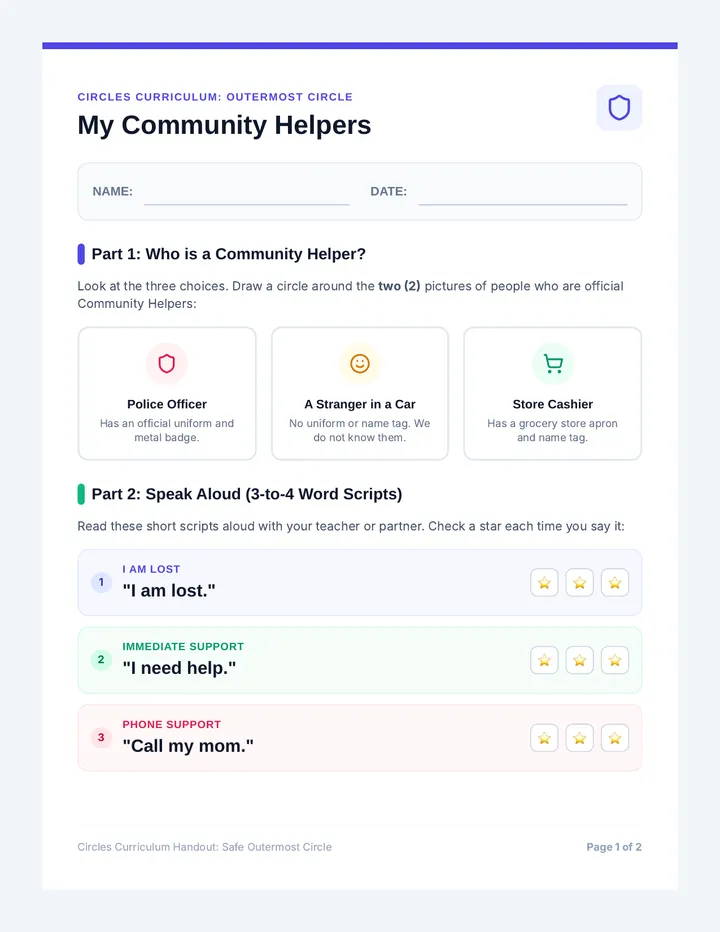
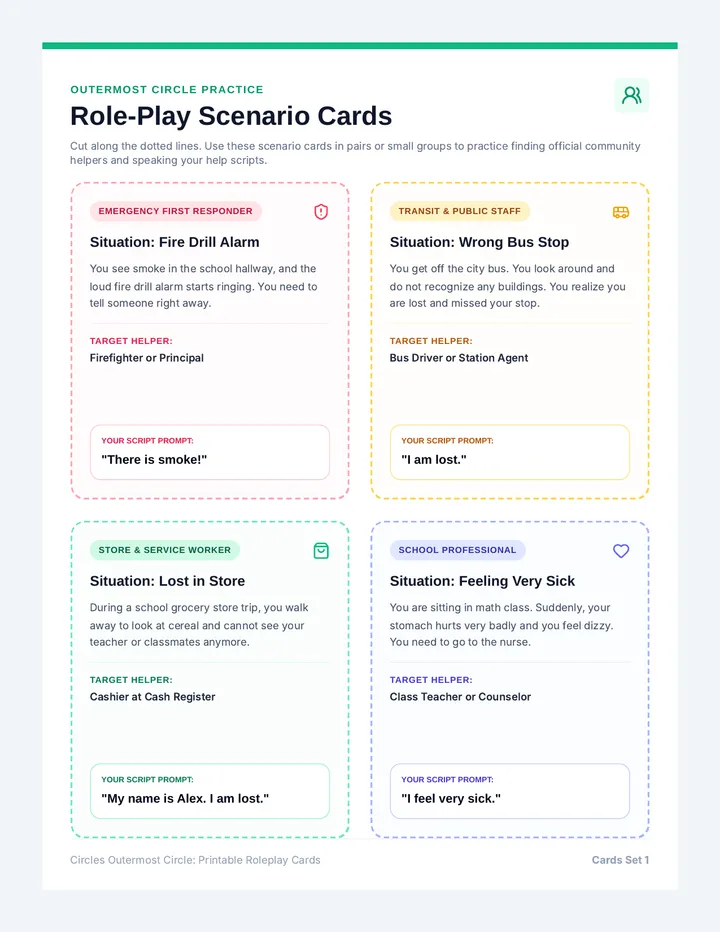
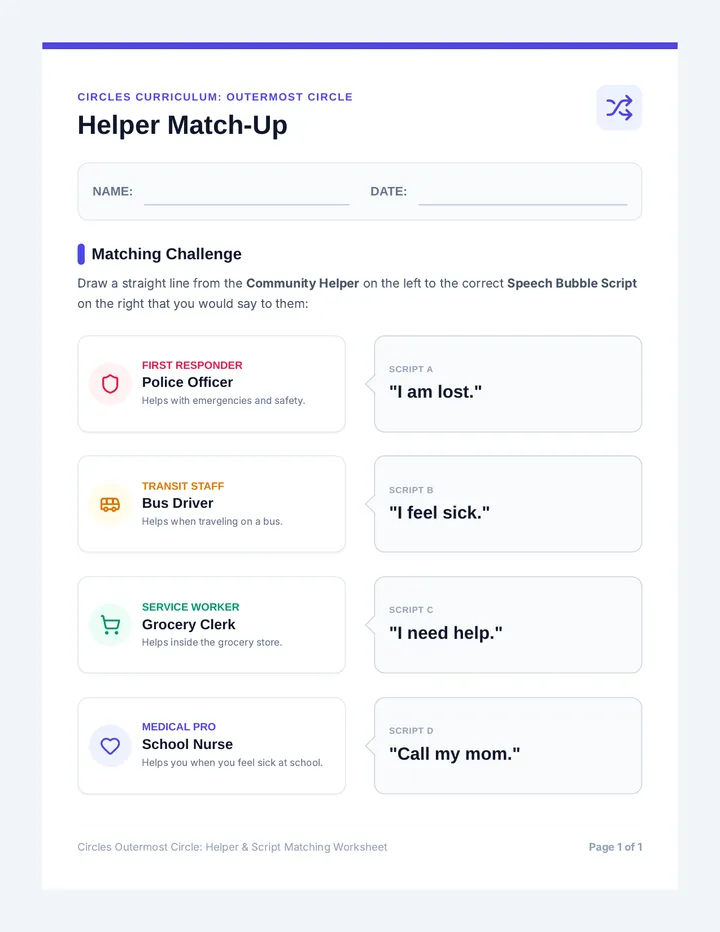
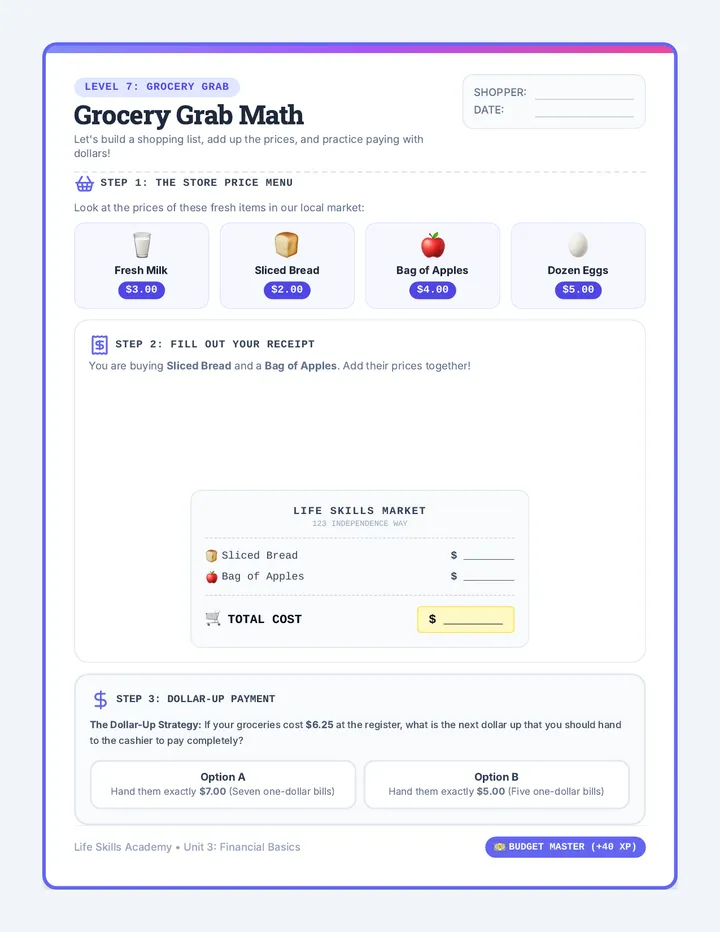
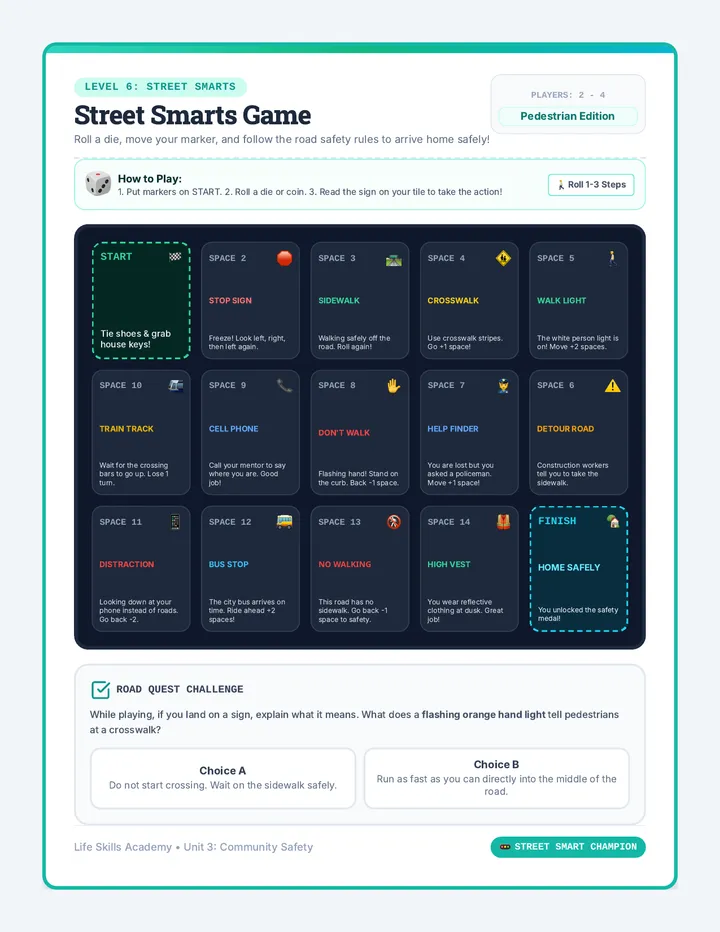
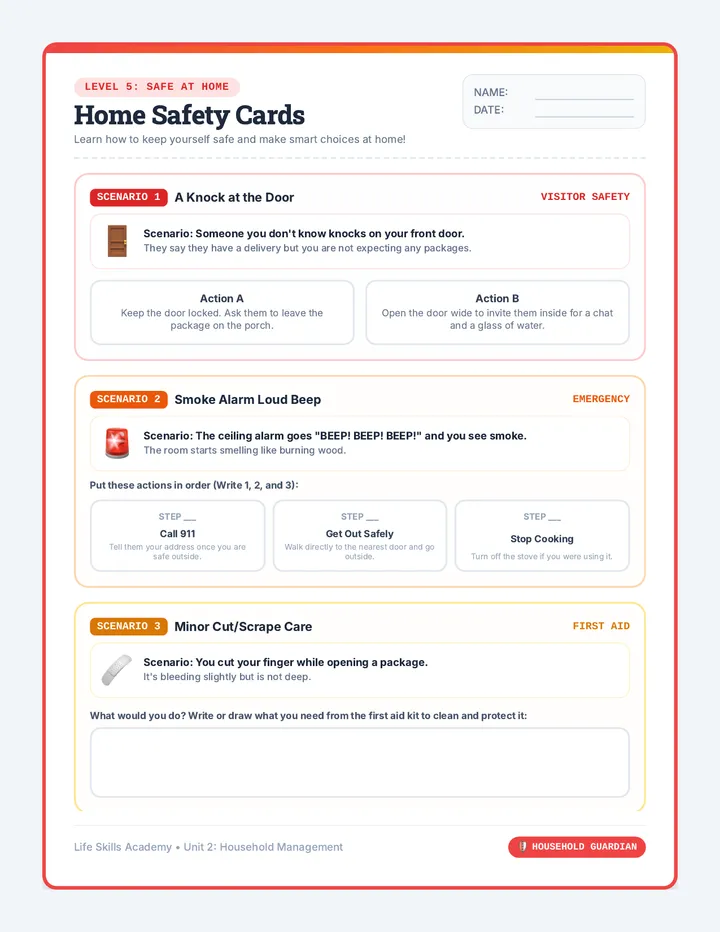
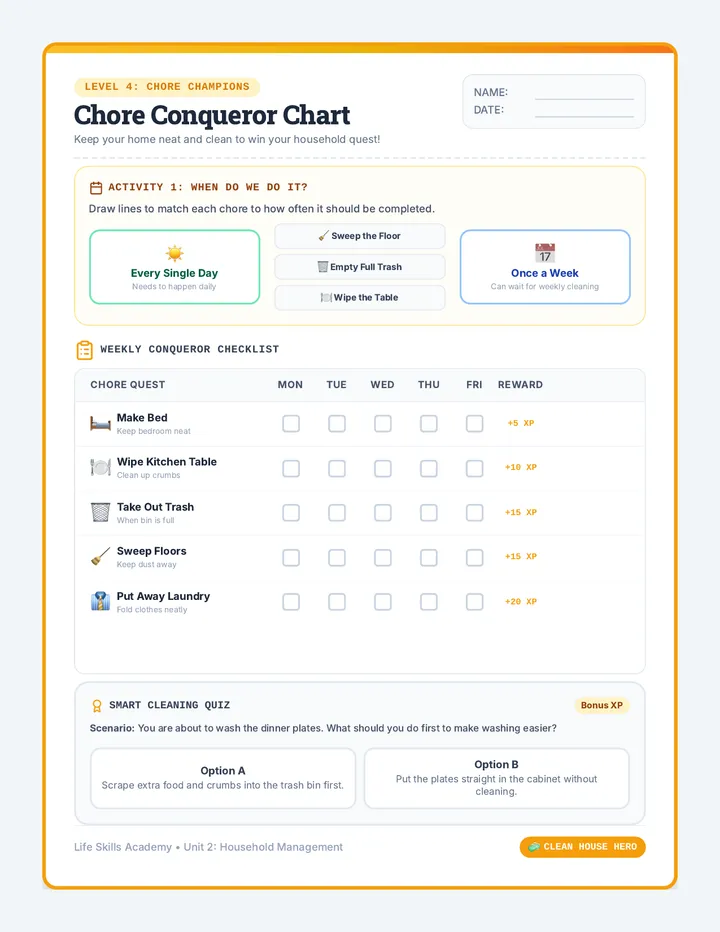
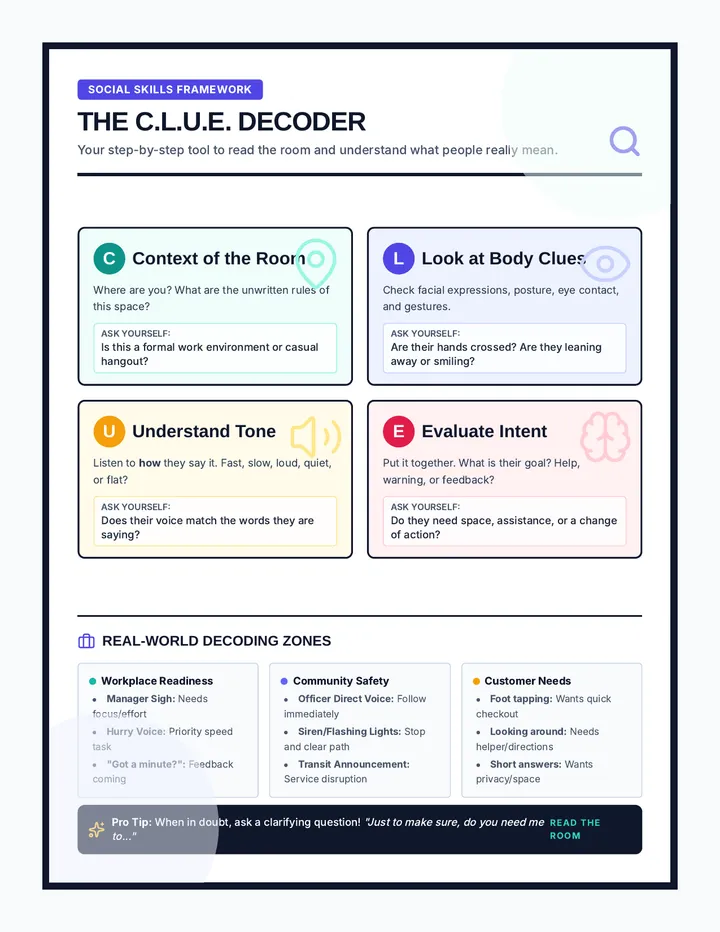
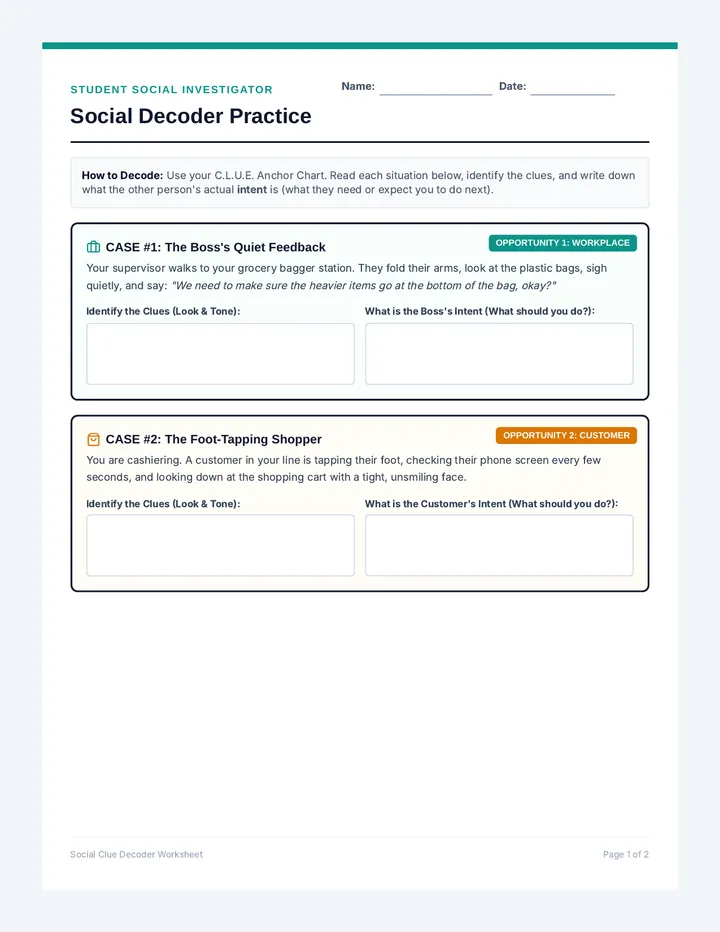
A visually structured worksheet for high school students with autism to practice identifying and responding to unsafe situations at school, home, in the community, and with strangers. It includes fill-in-the-blank rules, visual risk identification, and open-ended scenario questions.
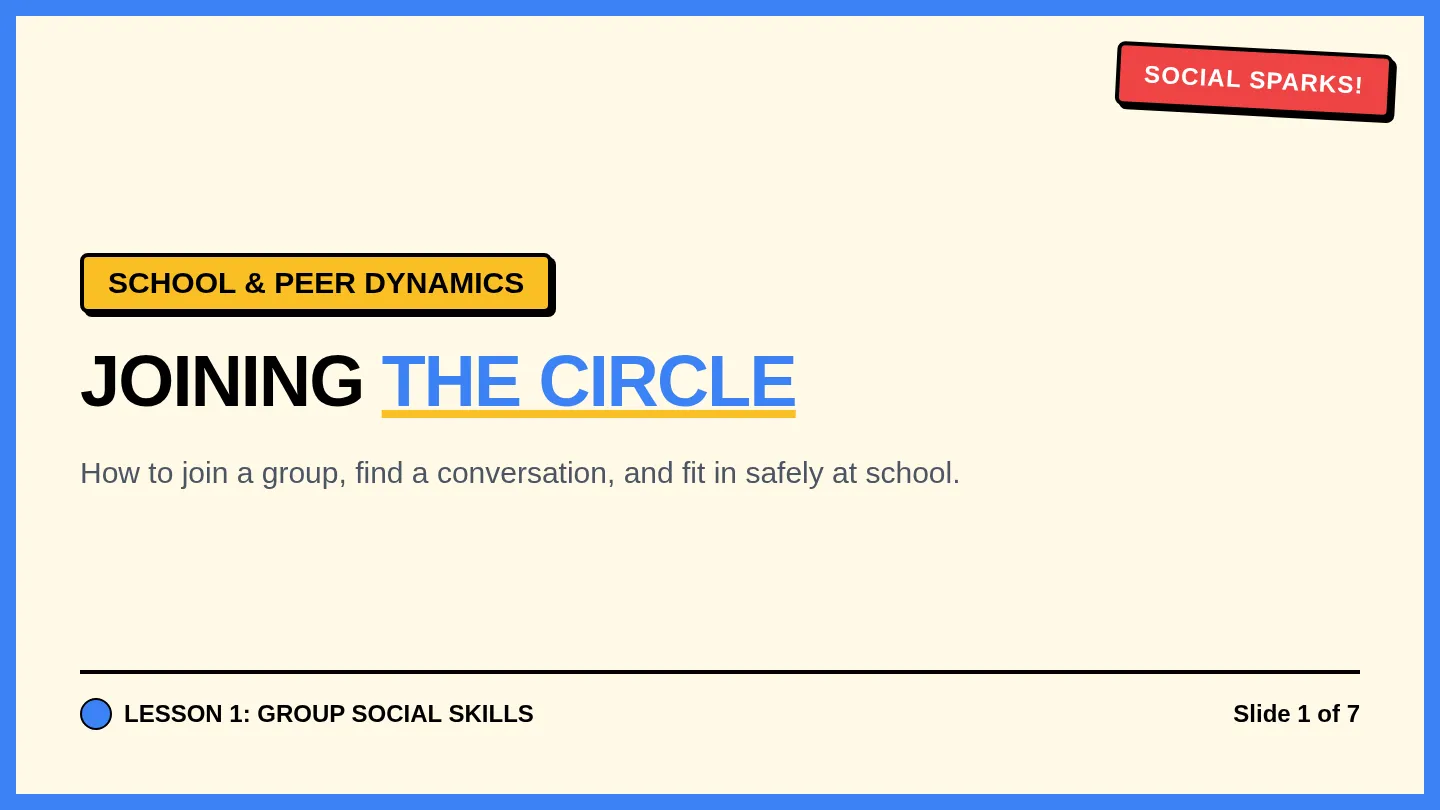
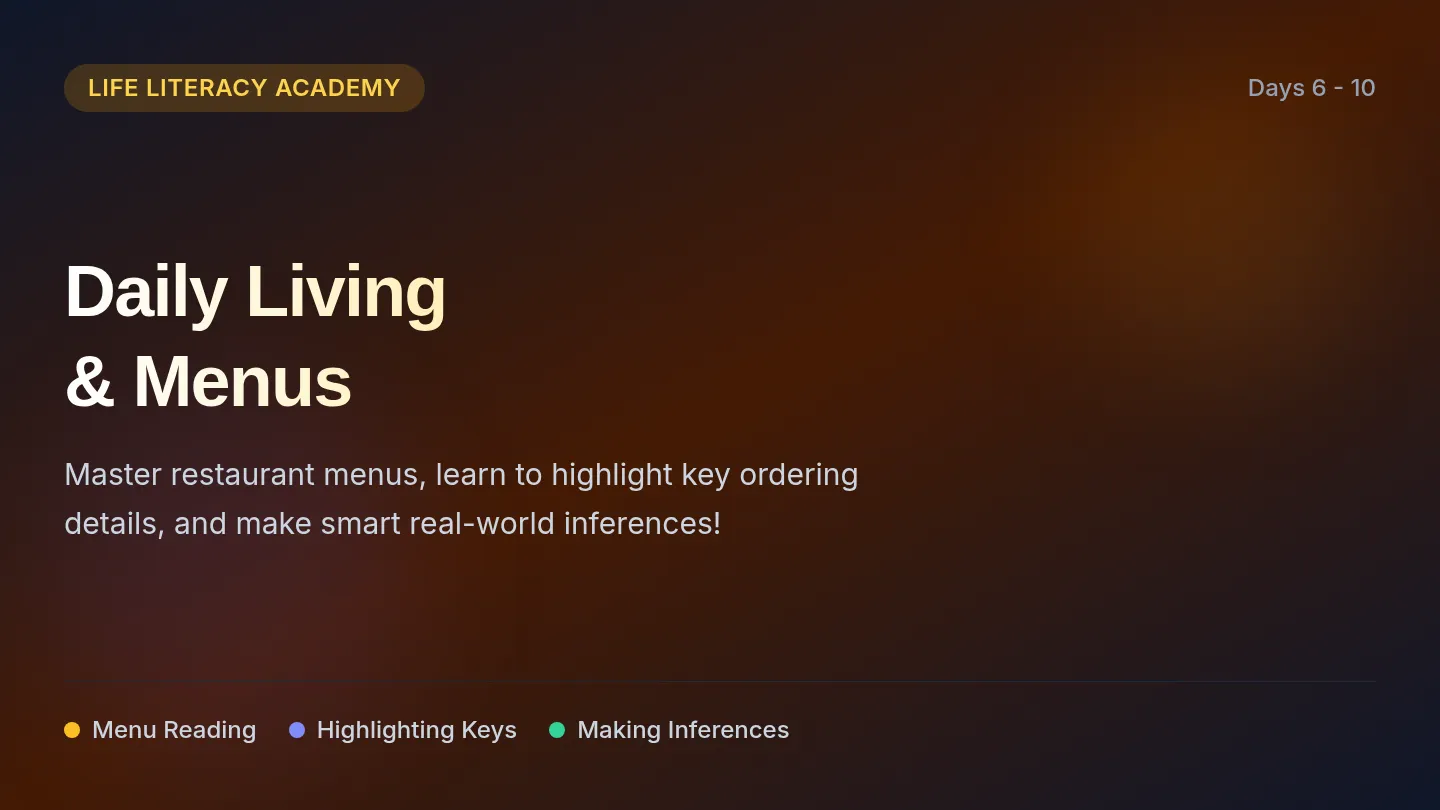
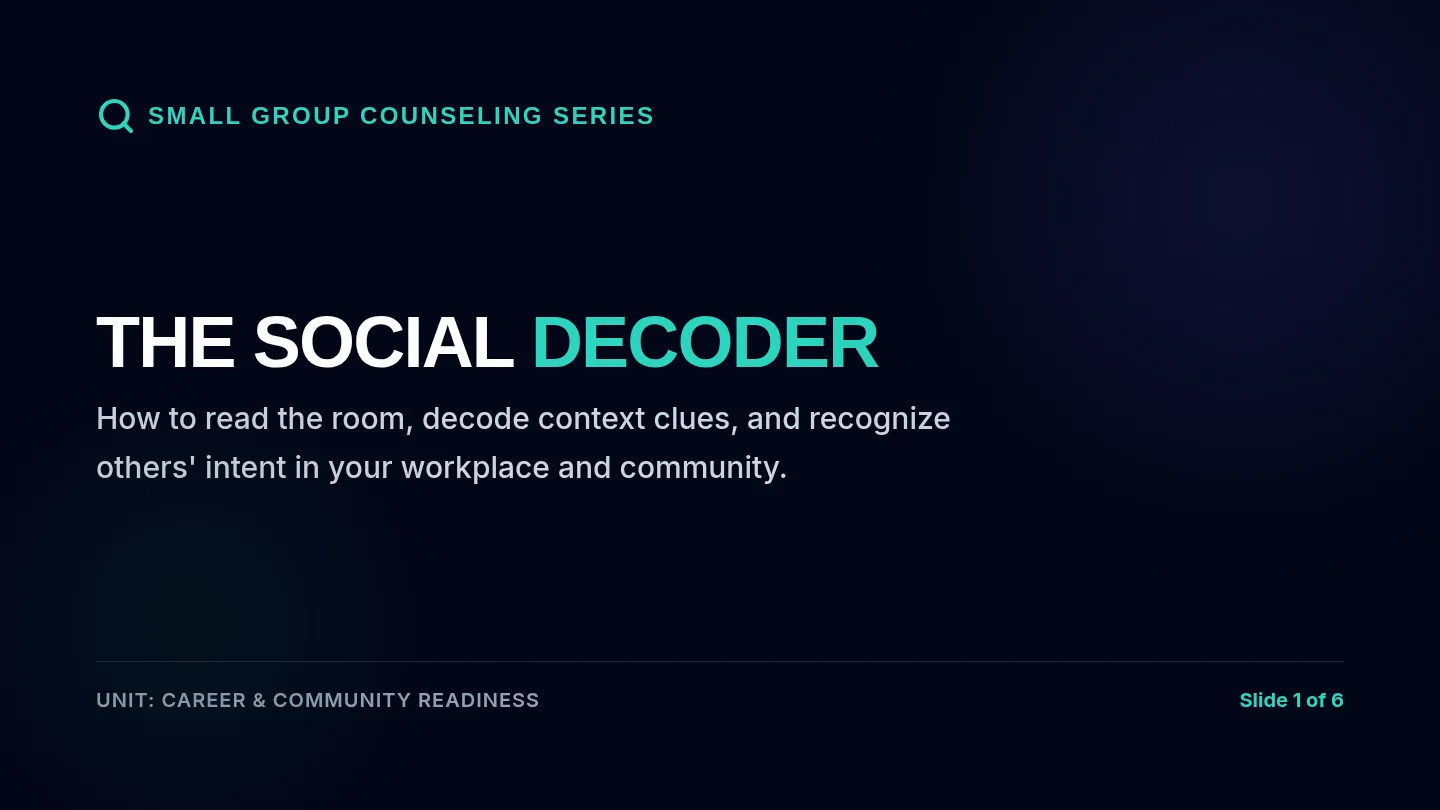
Safety Navigator Slides
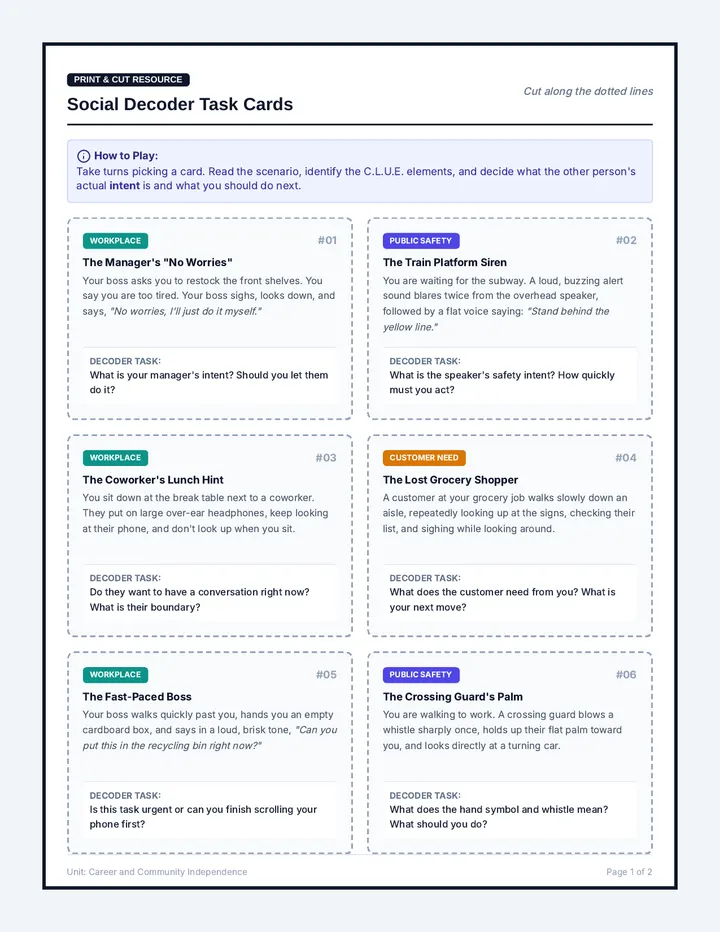
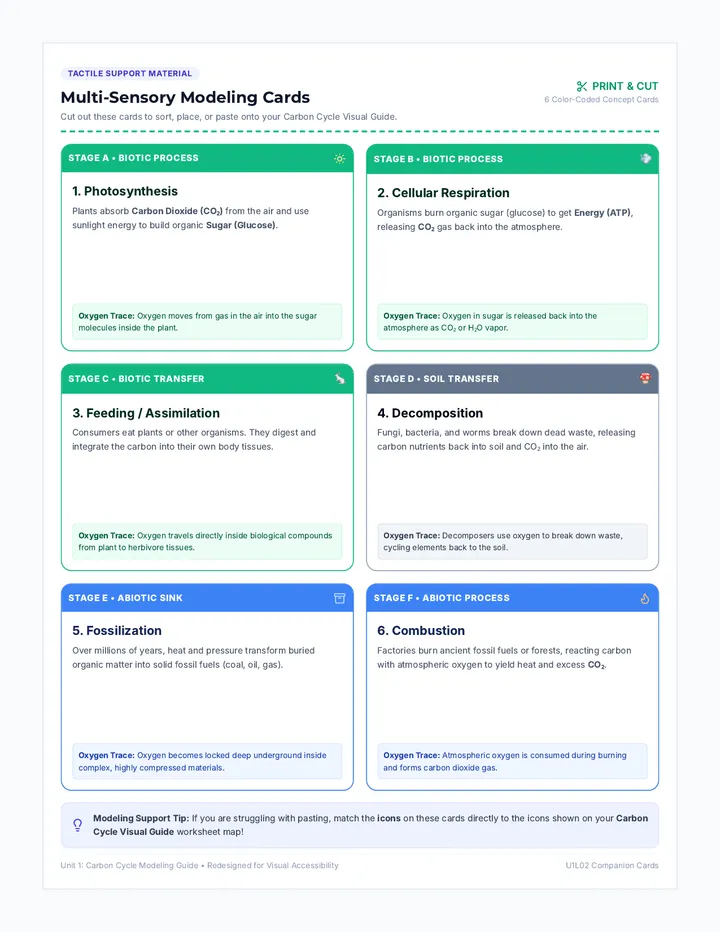
A visual slide deck designed for high school students with autism to learn about safety rules, identifying trusted adults, and the "No, Go, Tell" response method. Features high-contrast visuals and simplified text for better engagement and comprehension.
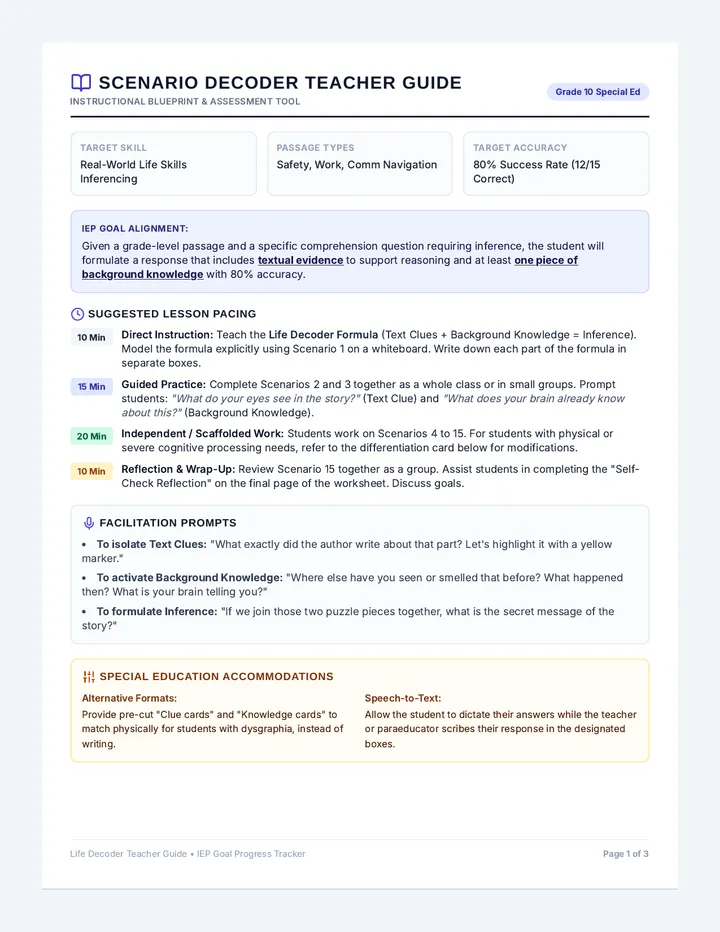
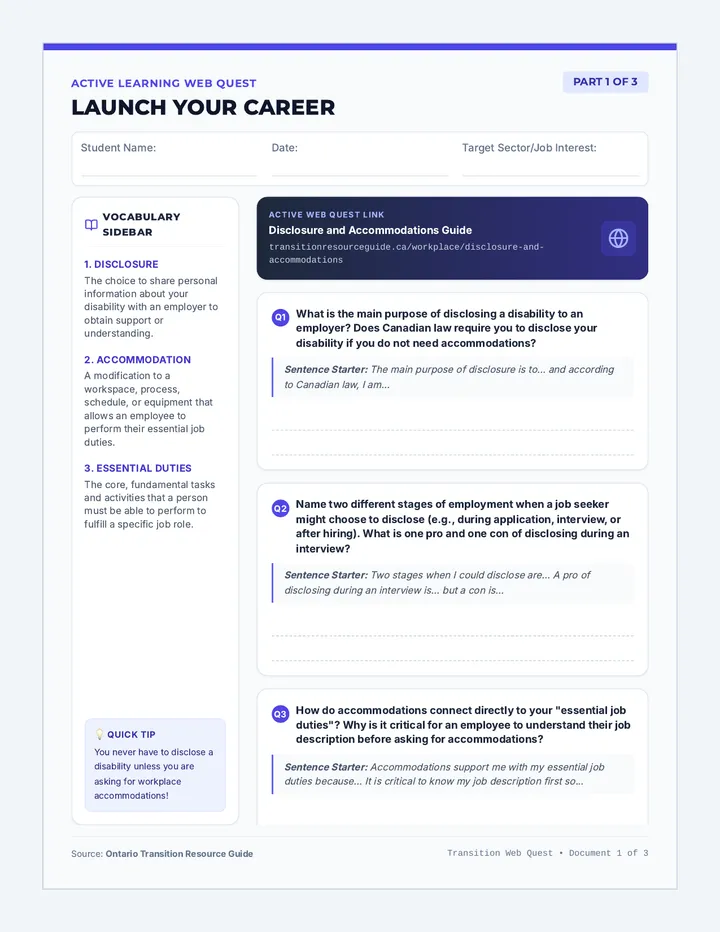
Safety Navigator Teacher Guide
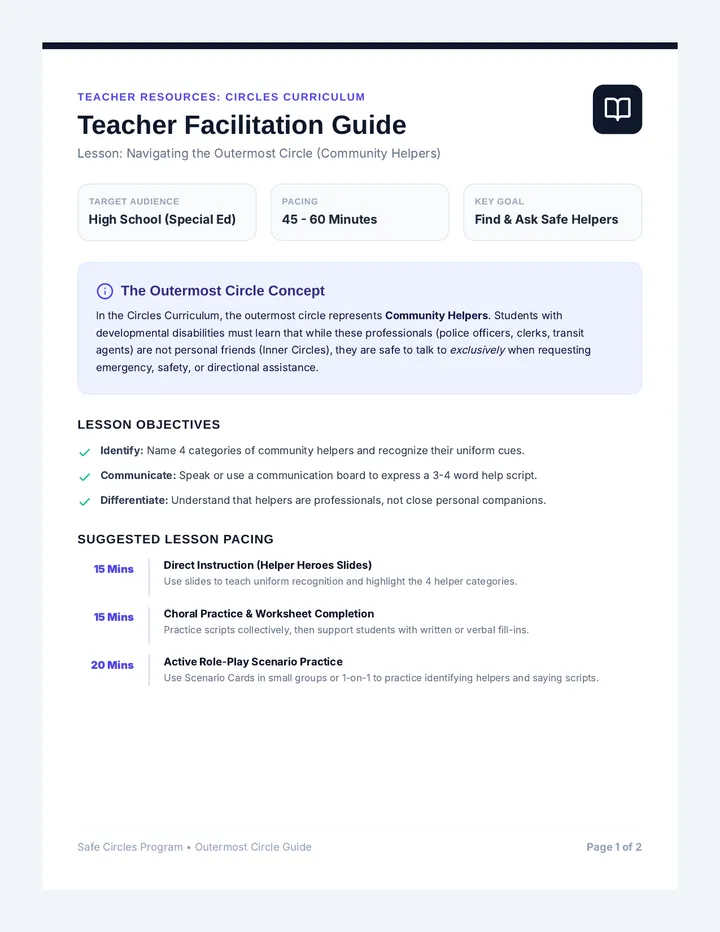
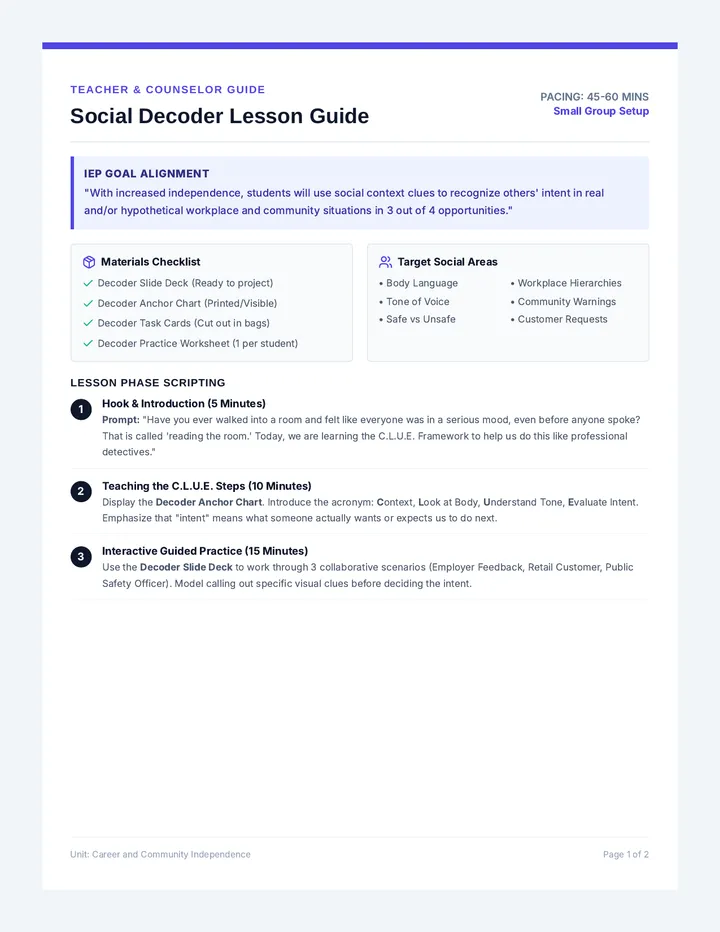
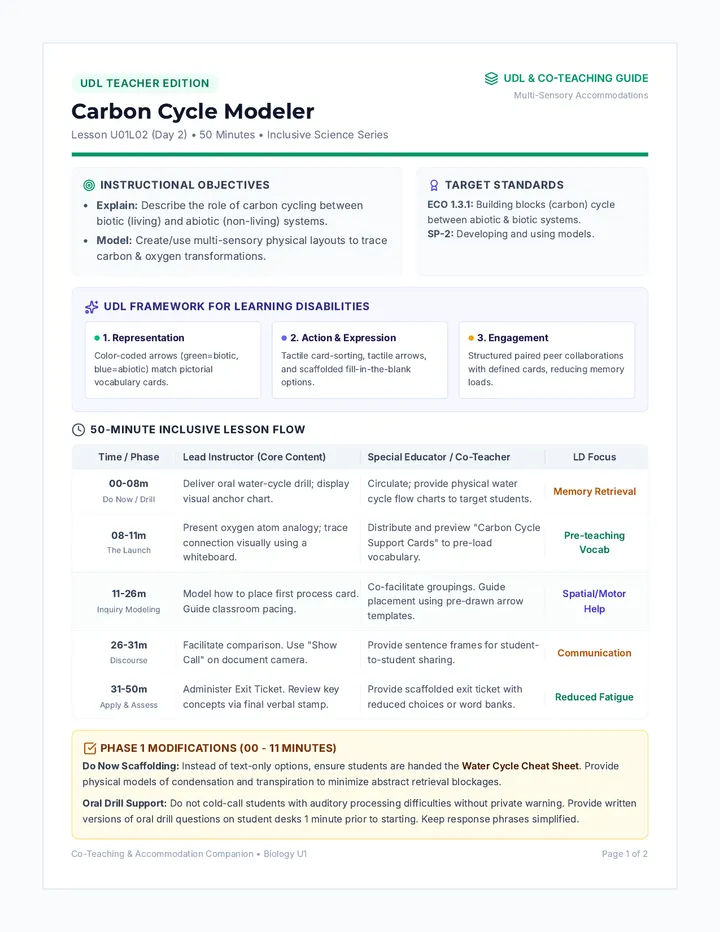
A comprehensive facilitator guide for teachers, providing instructional objectives, concrete facilitation tips for autistic students, differentiation strategies, and guided discussion prompts for the Safety Navigator lesson.
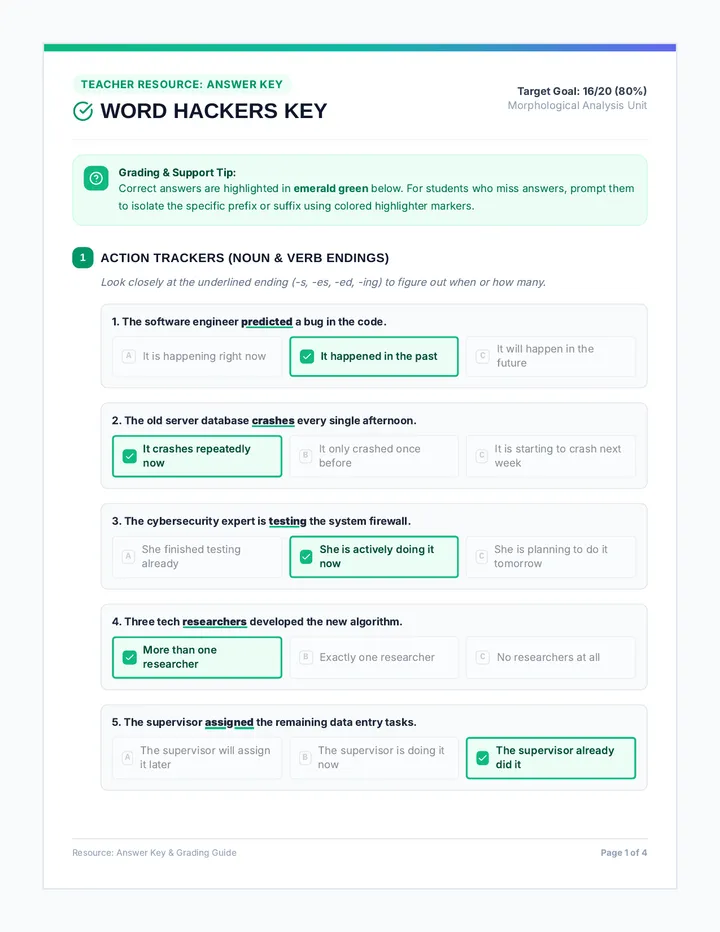
Safety Navigator Answer Key
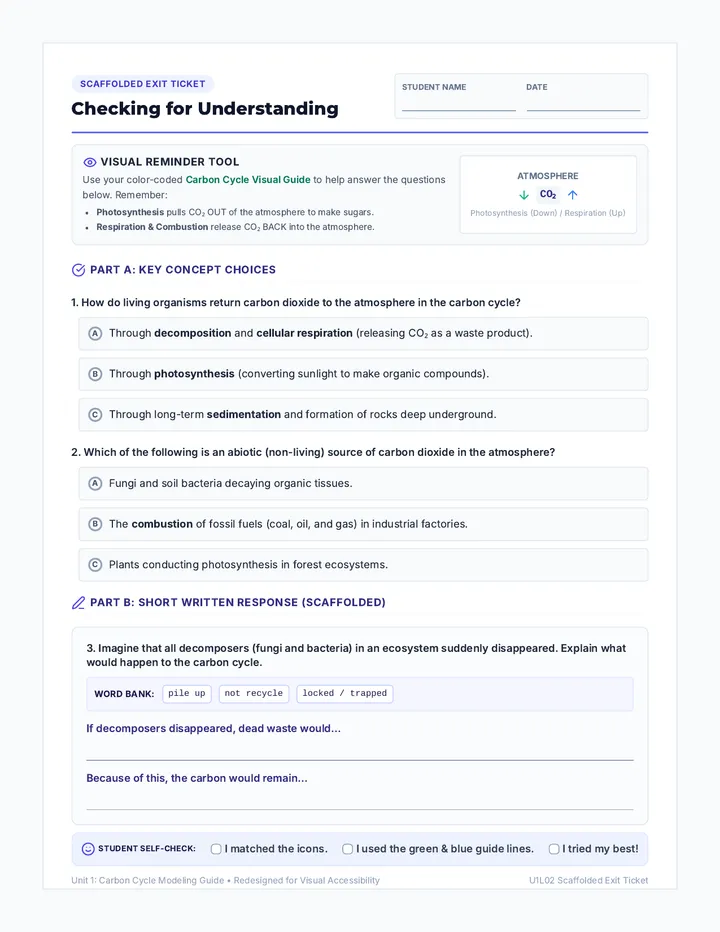
An answer key for the Safety Navigator Worksheet, providing correct fill-in-the-blank terms, highlighted visual risks, sample scenario responses, and a basic scoring guide for teachers.