Meet Heart and Lungs! The Battery helps the squad stay powered up. Focuses on breathing and 'caring' about our friends to stay happy while listening.
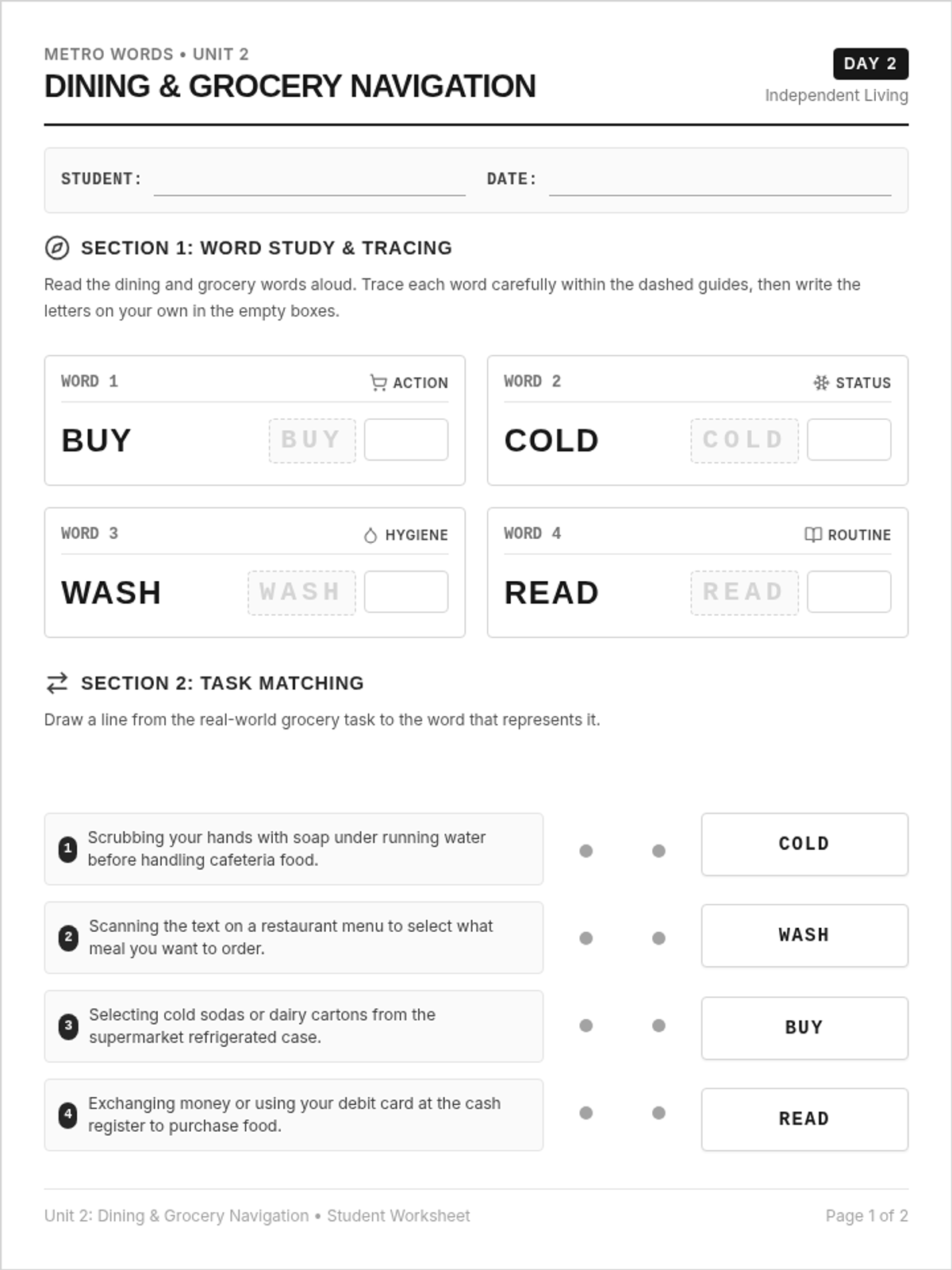
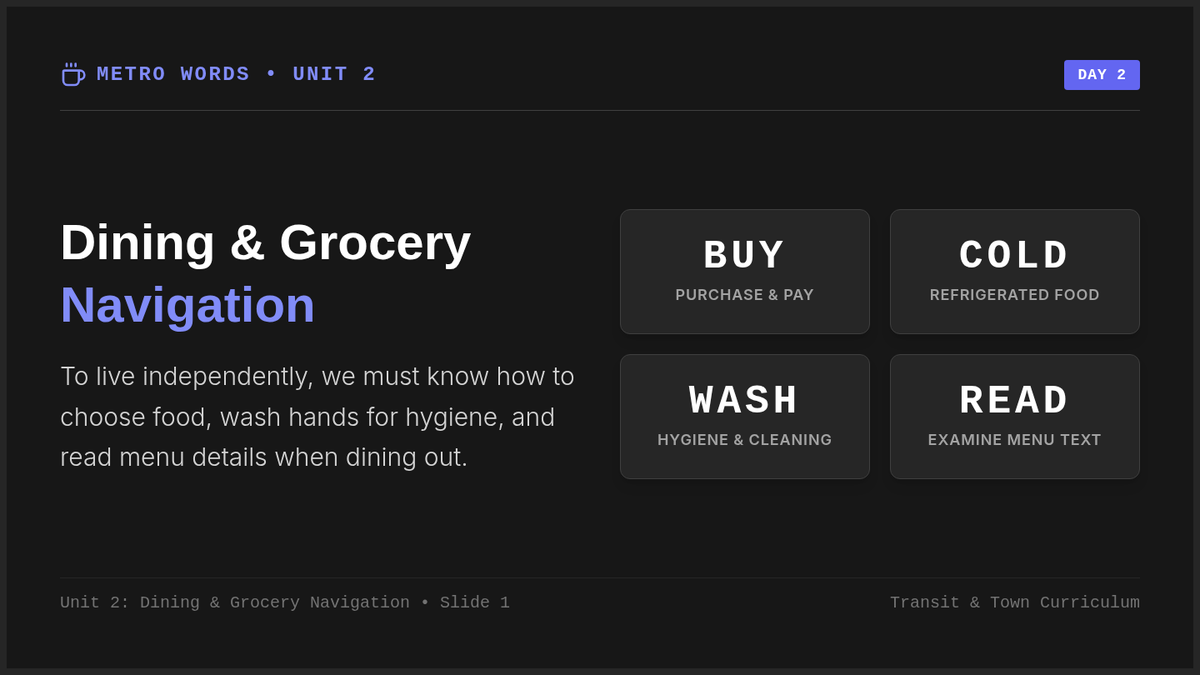
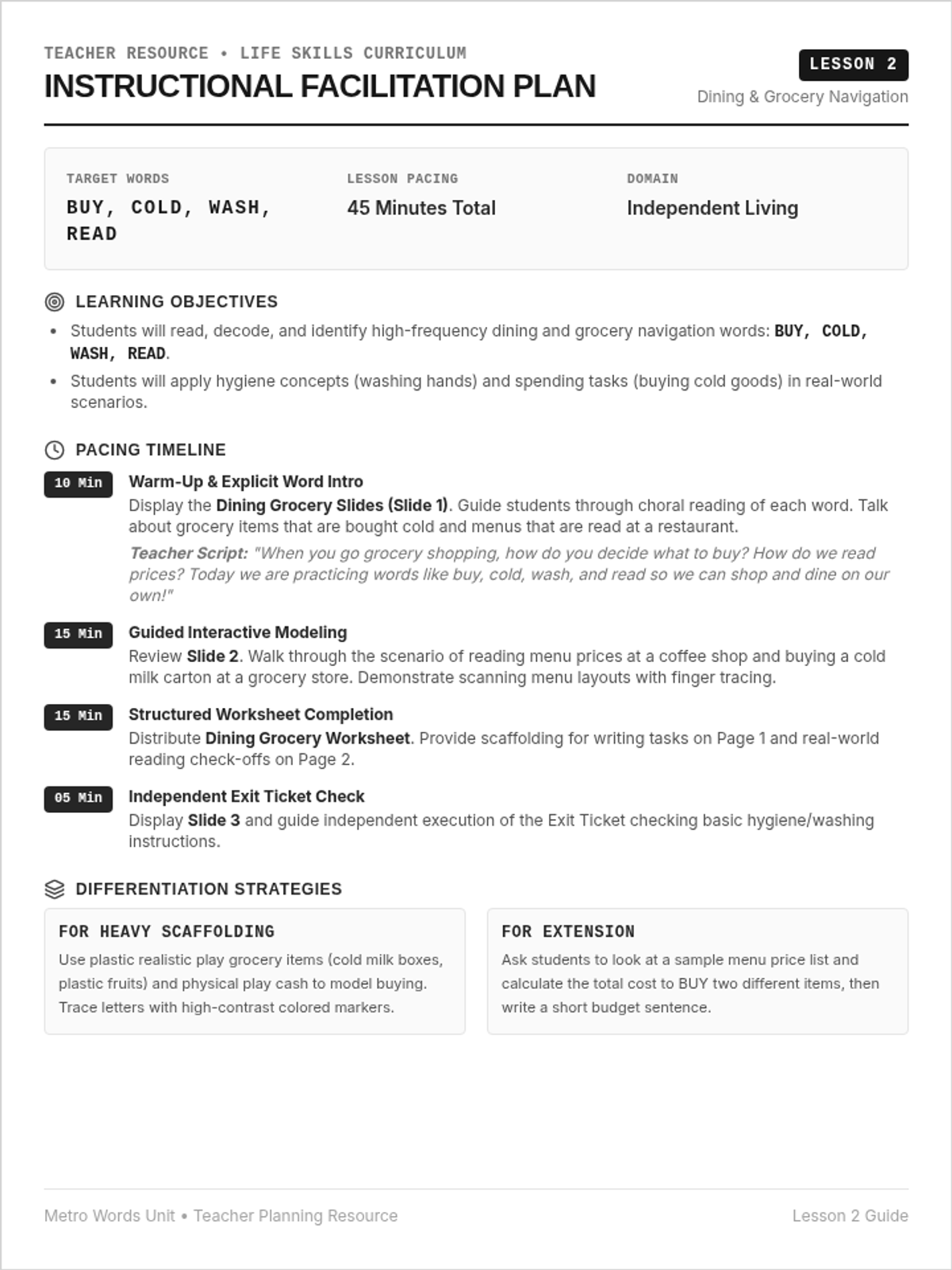
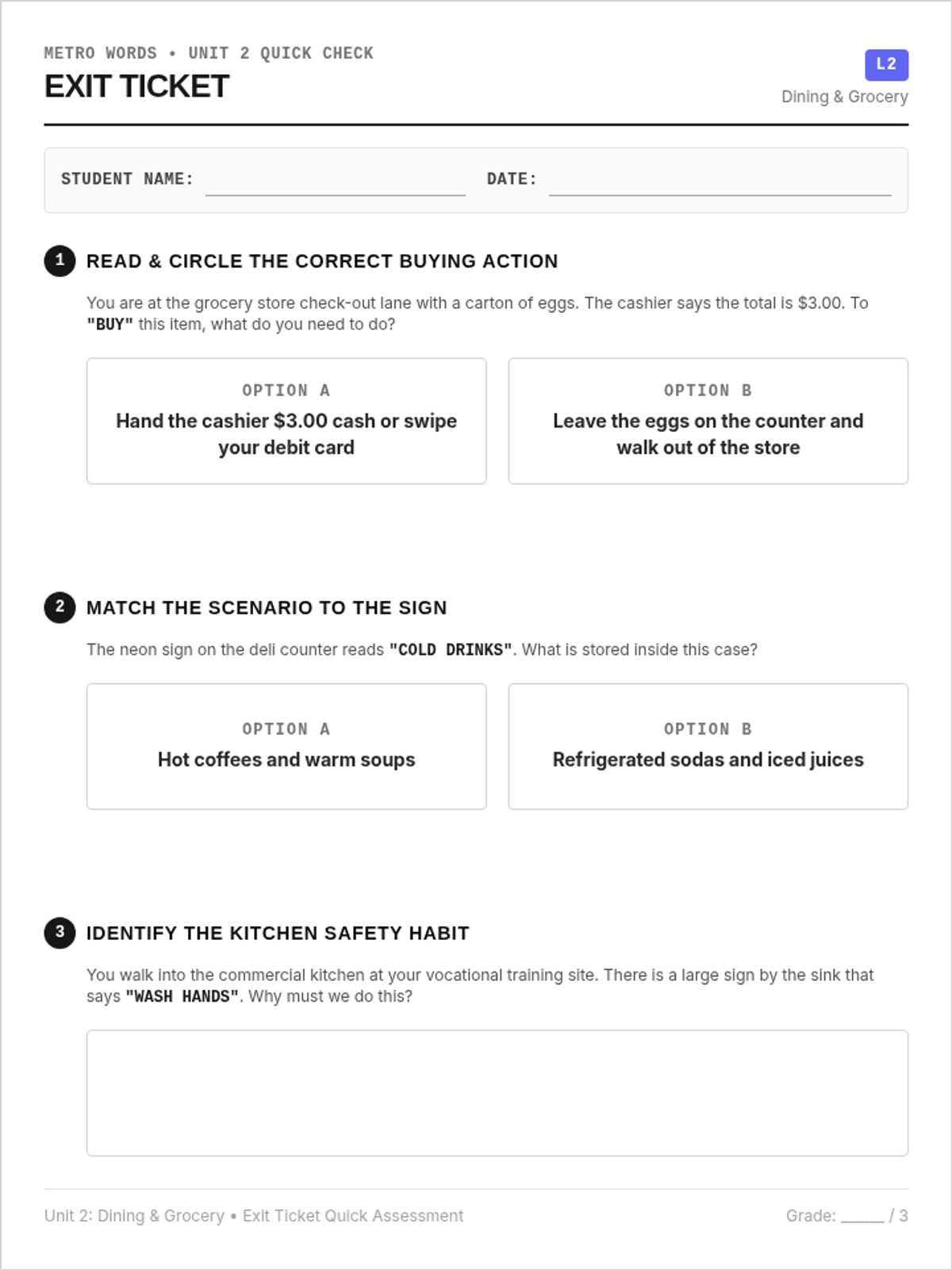
Focuses on high-frequency kitchen, store, and restaurant words: BUY, COLD, WASH, and READ. Students learn to navigate restaurant menus, follow hygiene signs, and purchase groceries.
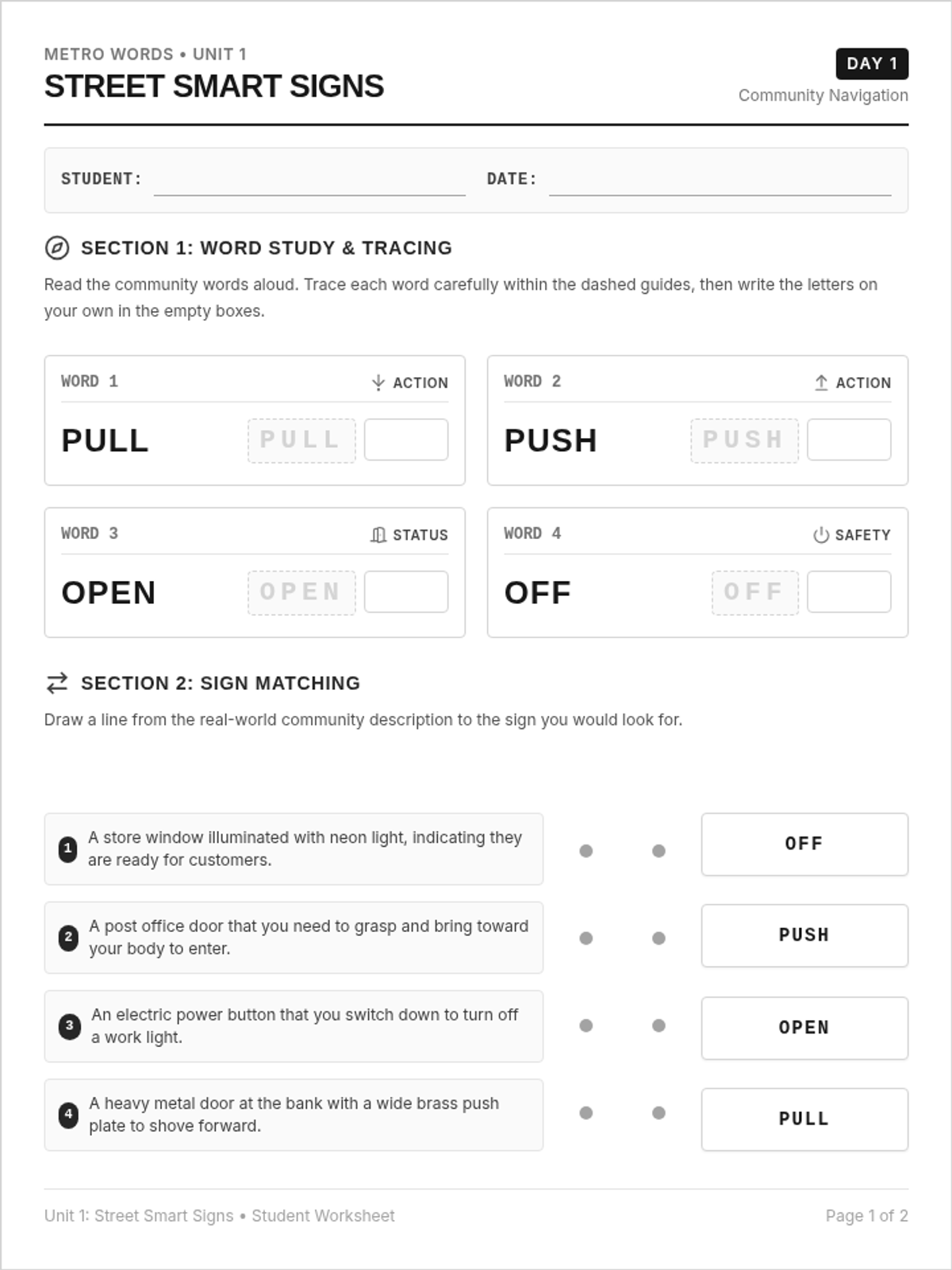
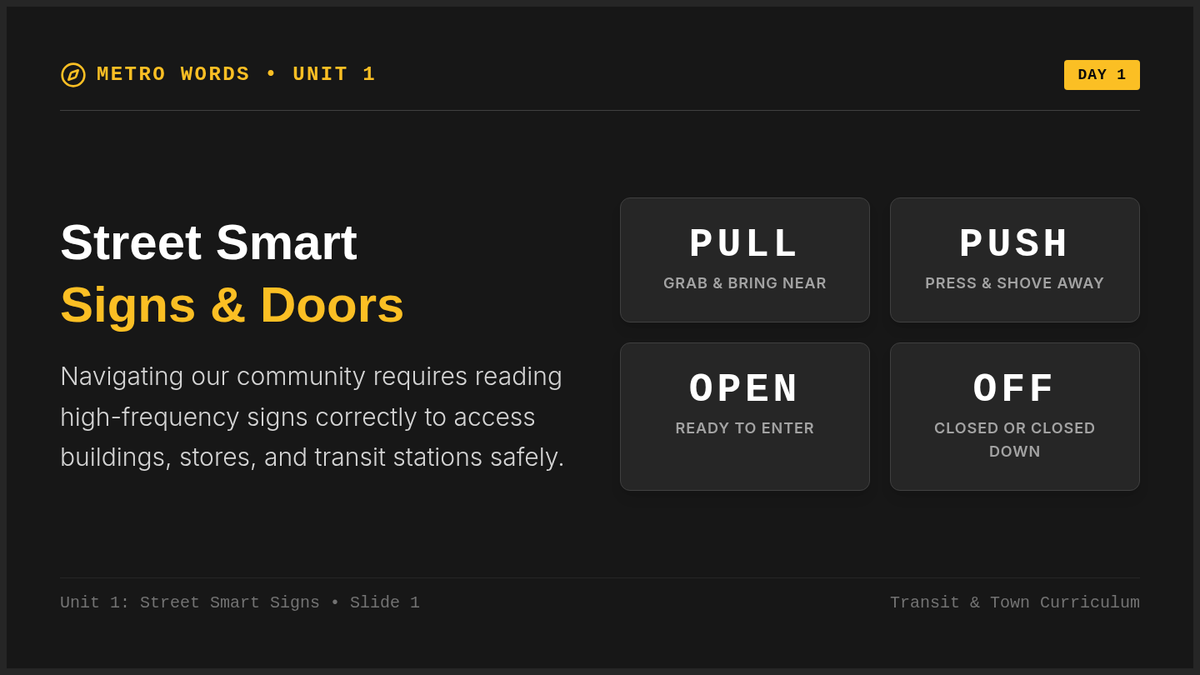
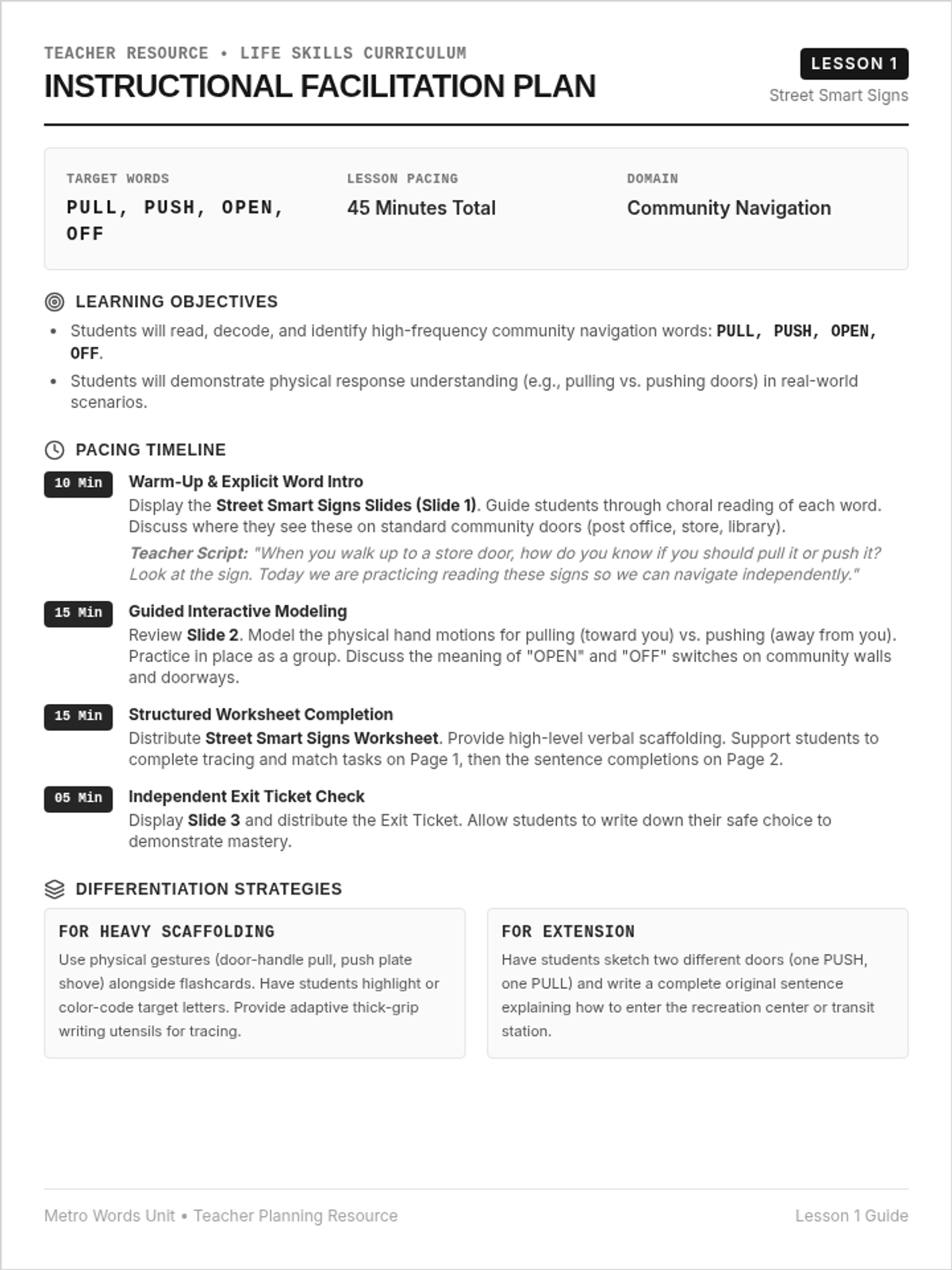
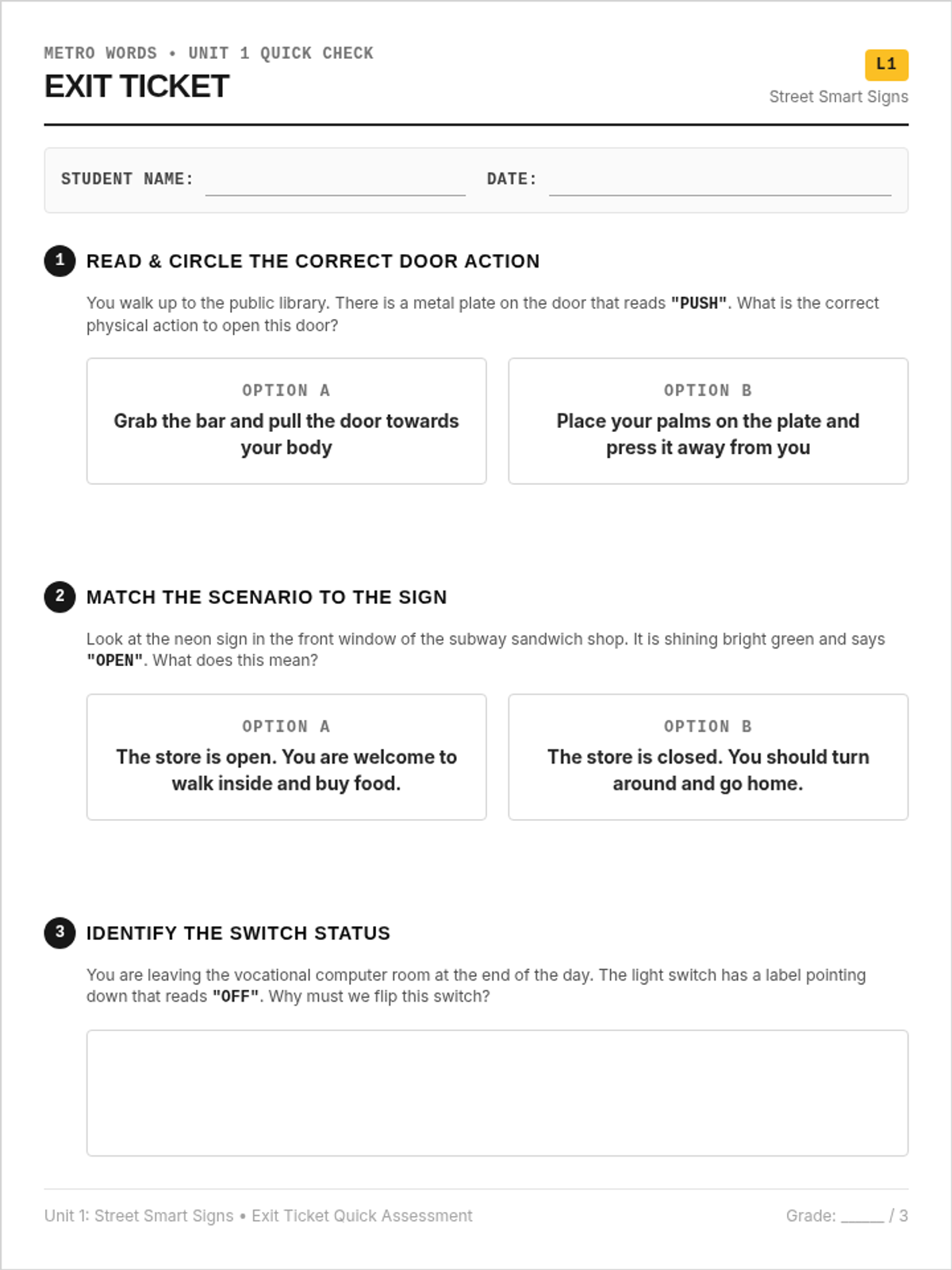
Focuses on high-frequency safety and navigation words found on community doors and signs: PULL, PUSH, OPEN, and OFF. Students learn to read, write, and respond to these words in real-world community contexts.
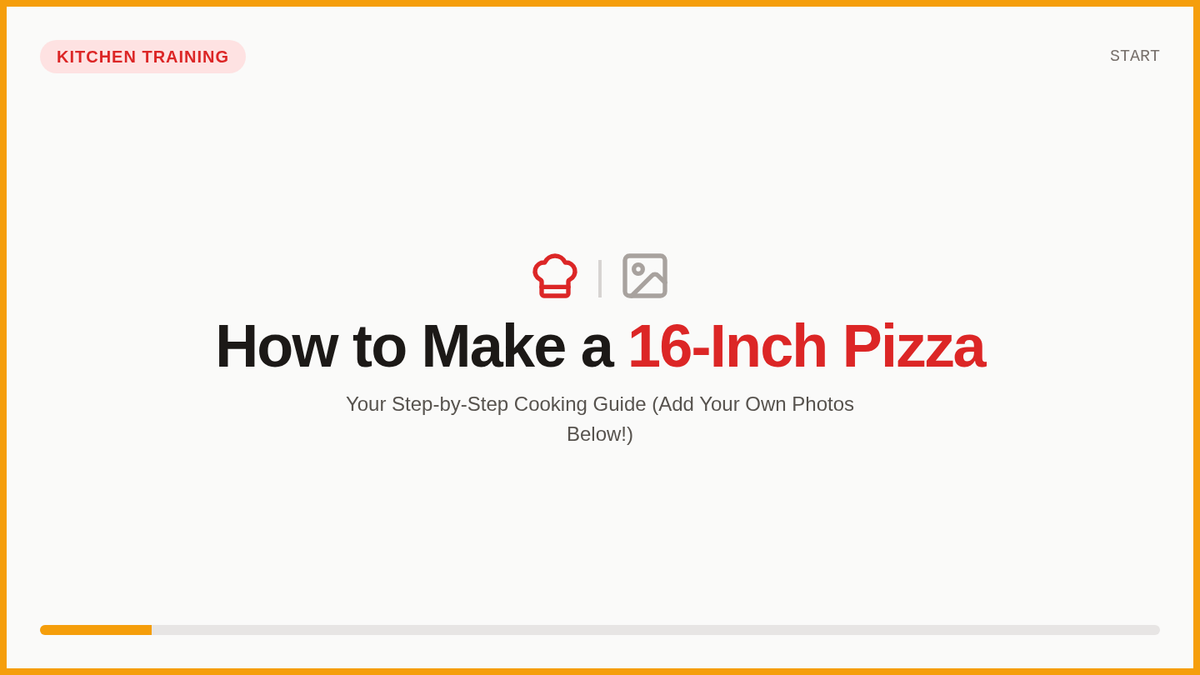
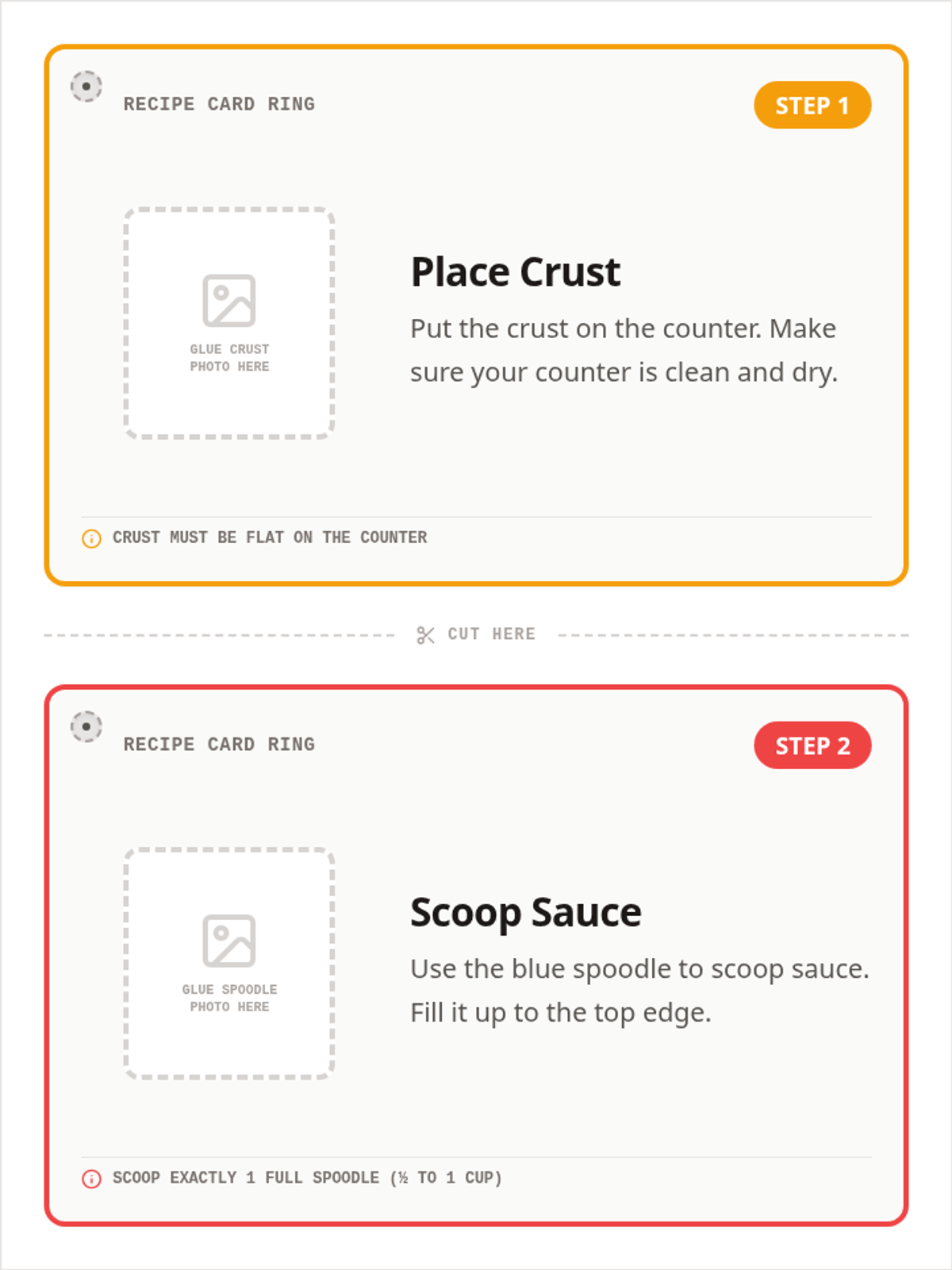
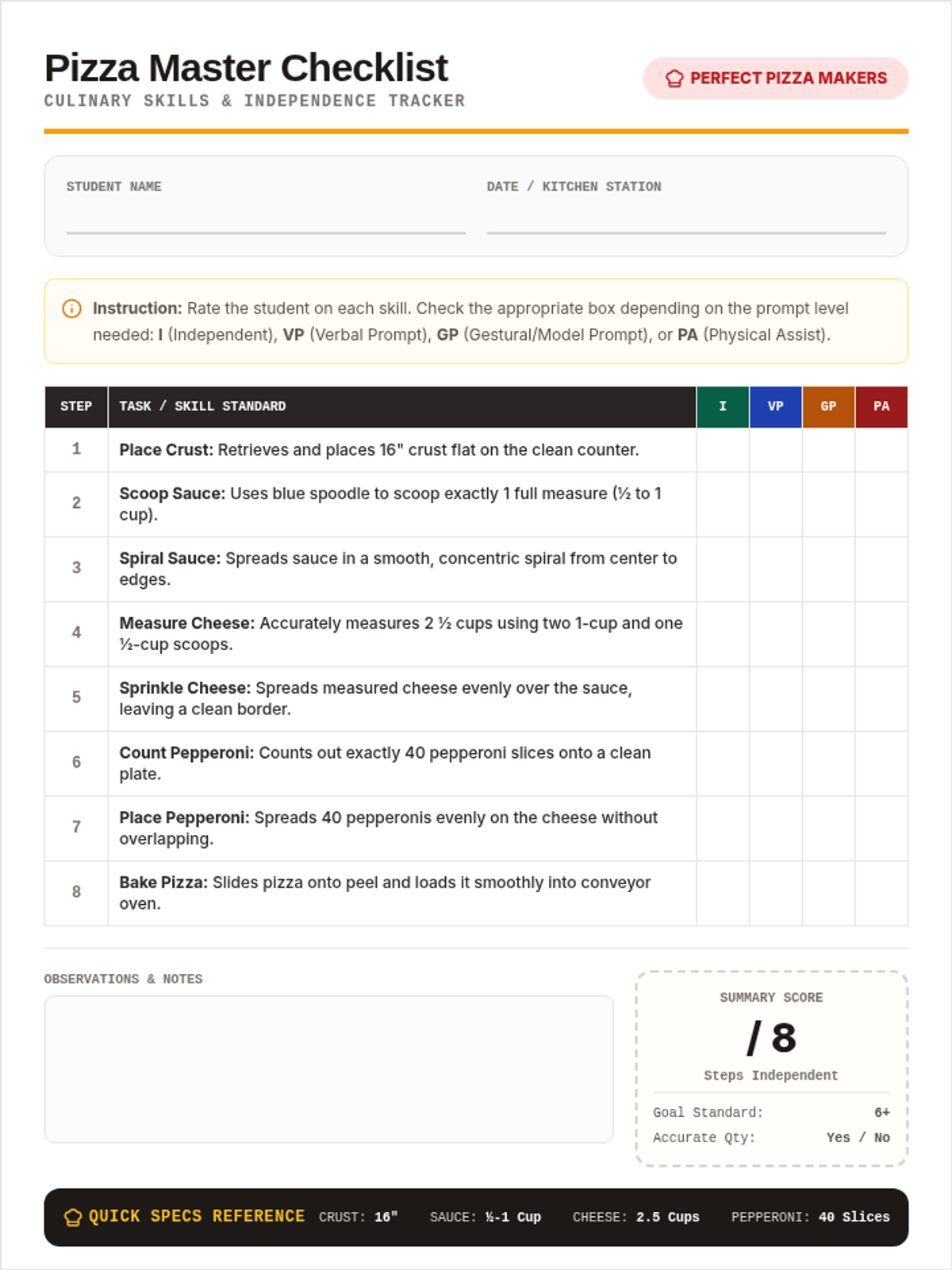
A comprehensive, highly visual lesson teaching students how to assemble and bake a 16-inch pizza using precise measurements. Features step-by-step visual presentation slides for group instruction and printable task cards for individual student kitchen stations.
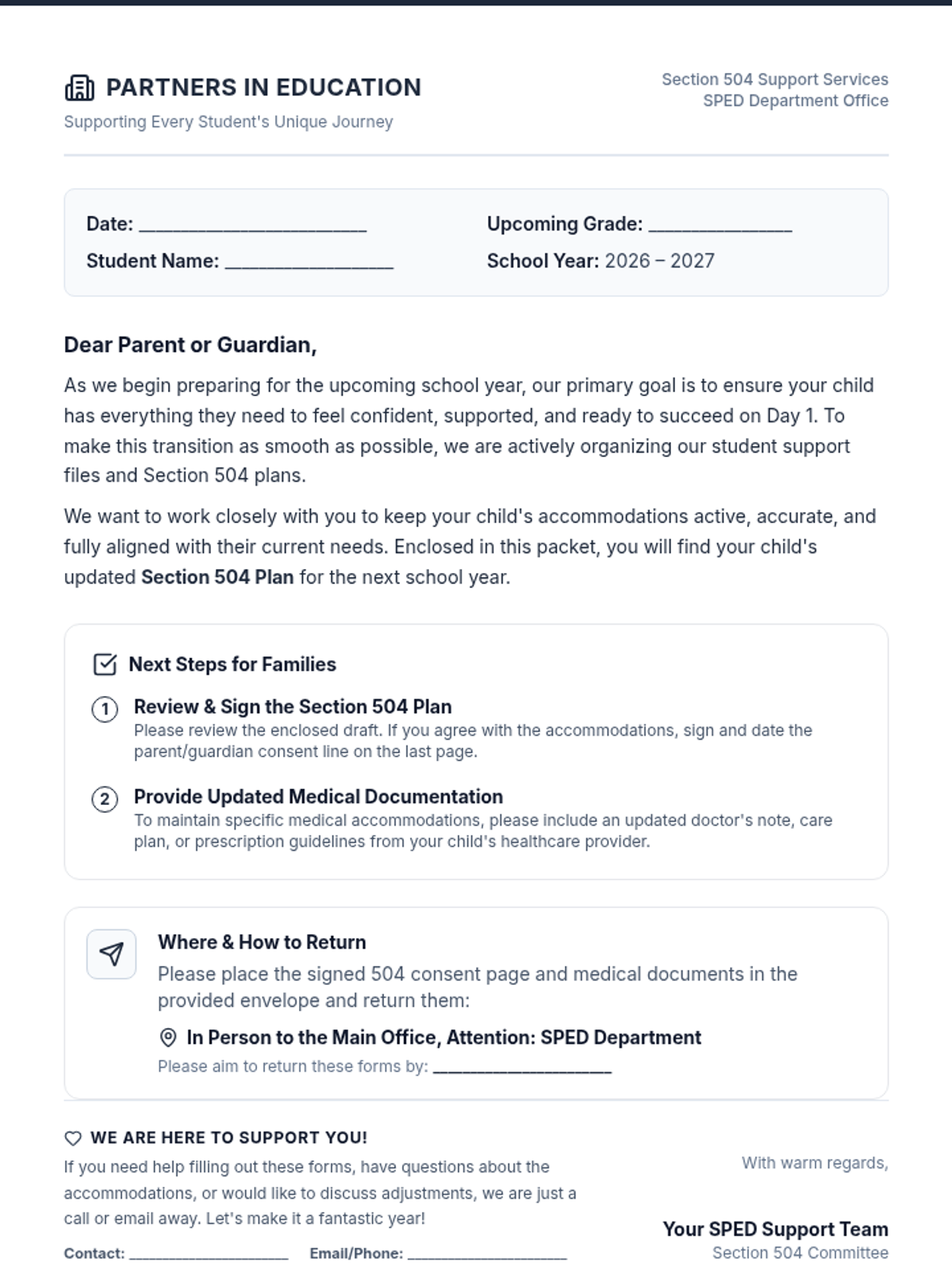
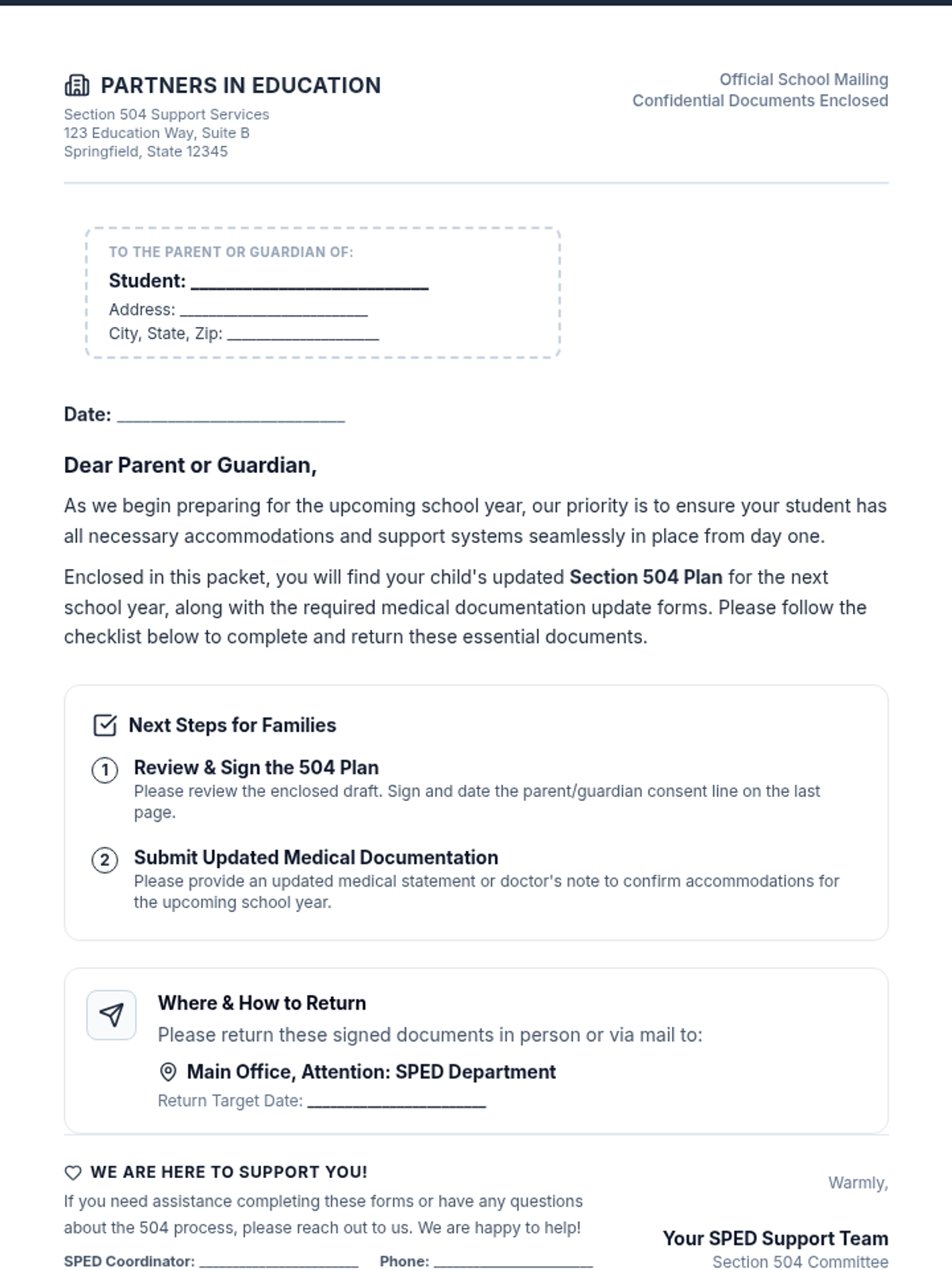
A set of student and parent-facing materials designed to accompany the distribution and collection of Section 504 plans and required medical documentation for the upcoming school year.
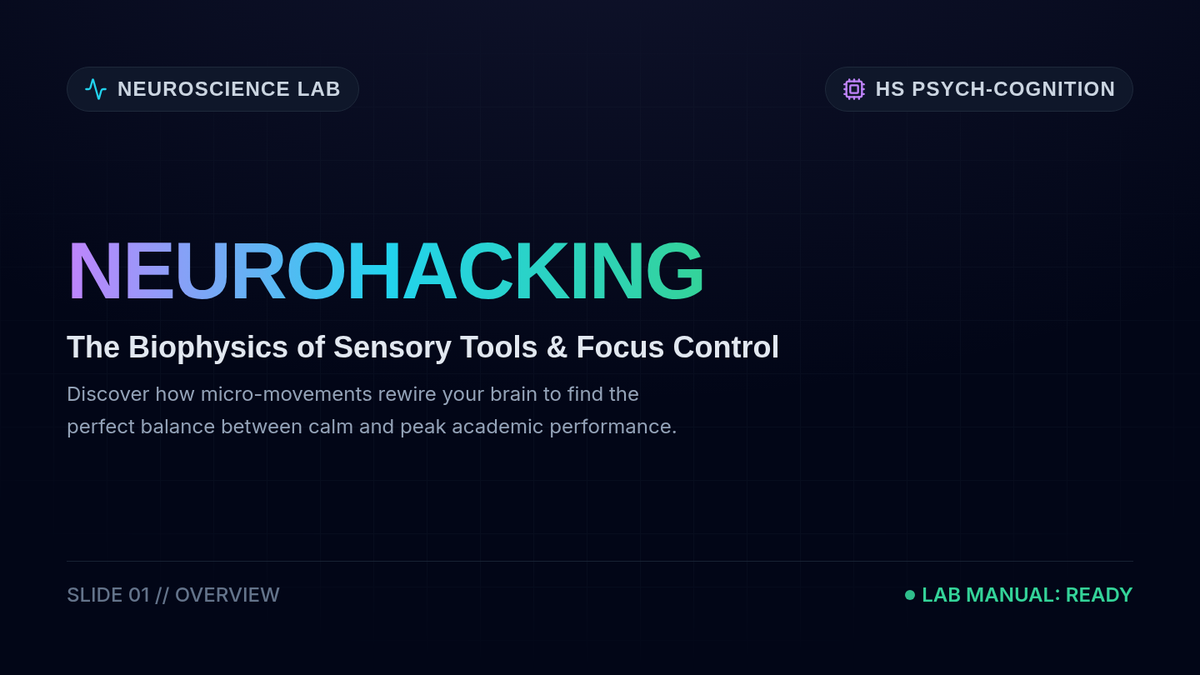
A science-backed exploration of sensory self-regulation, analyzing how physical micro-movements, somatosensory inputs, and attention regulation theories help students optimize focus and calm in high school and beyond.
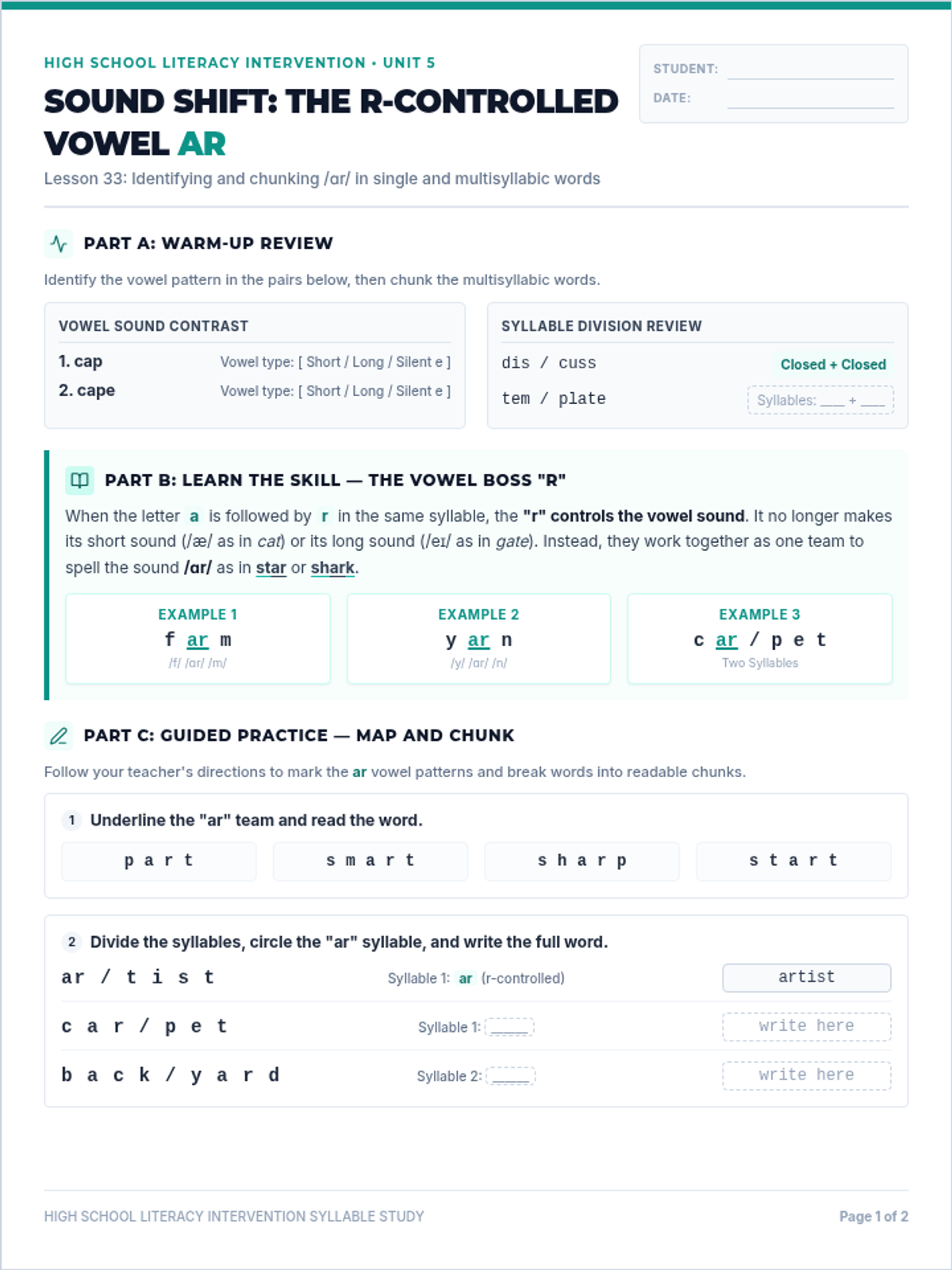
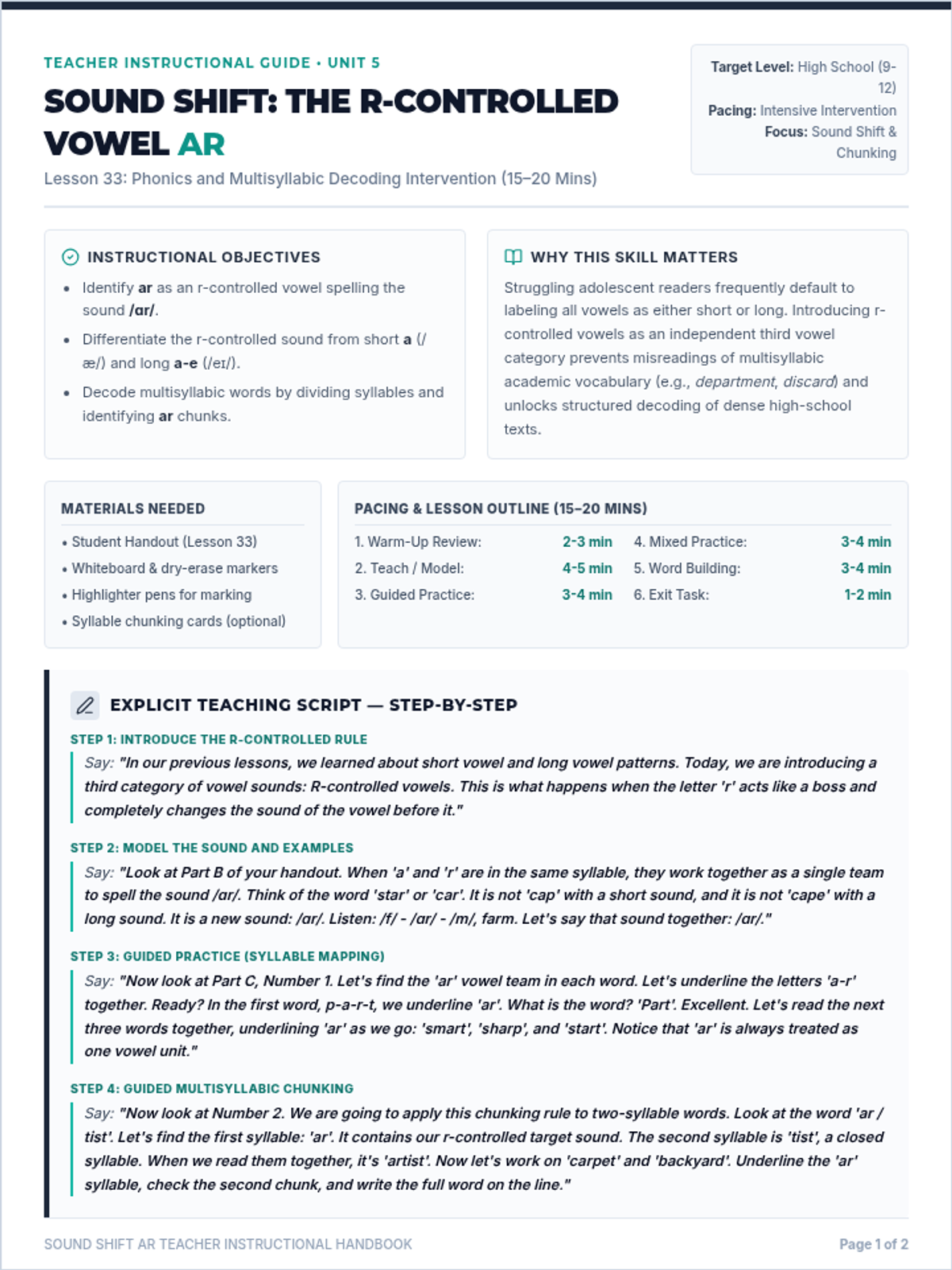
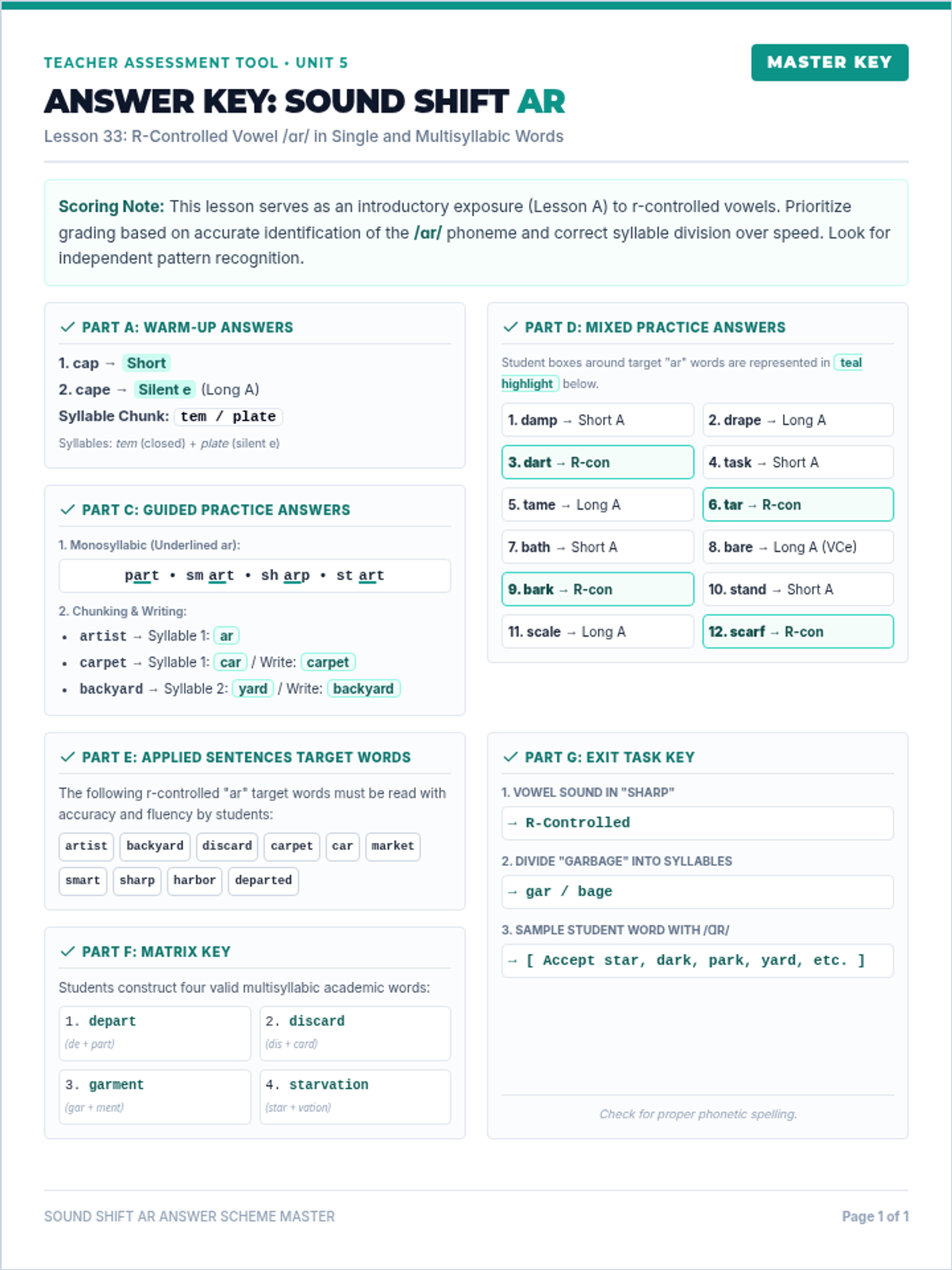
An intensive reading intervention lesson designed for high schoolers. It introduces the r-controlled vowel 'ar' (/ɑr/) as a third vowel sound distinct from short and long vowels, applying it in both monosyllabic and multisyllabic words with explicit chunking strategies.
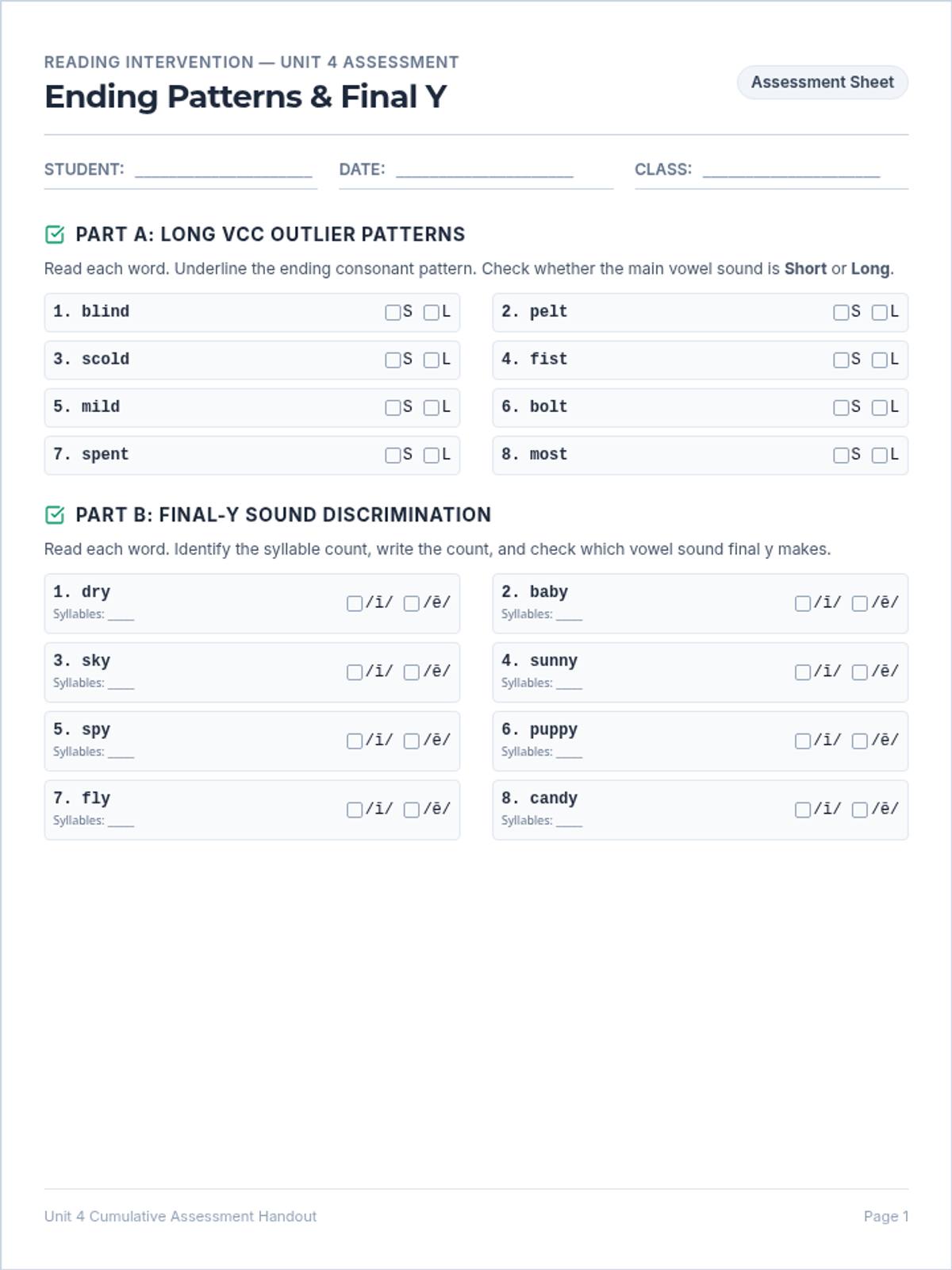
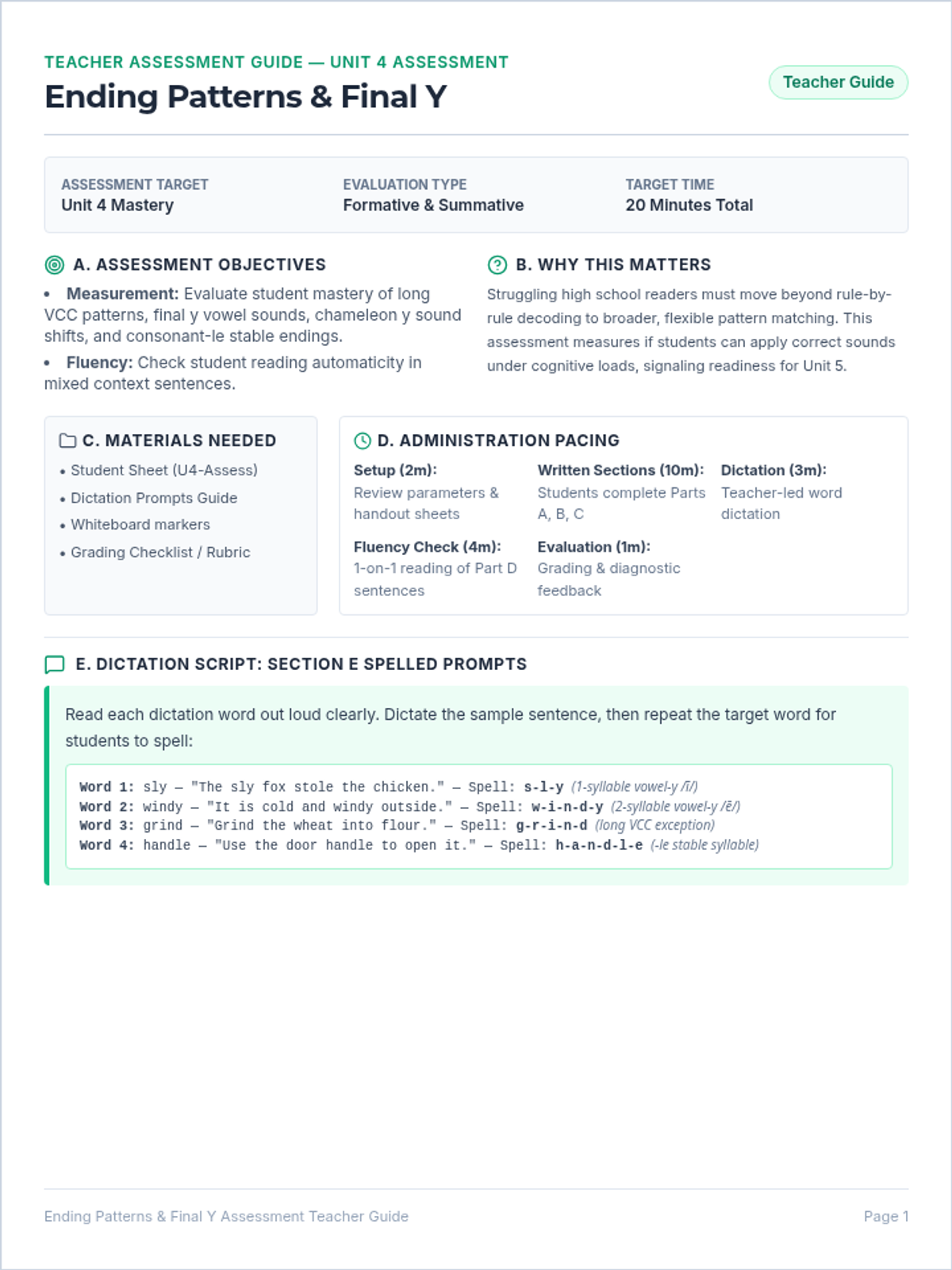
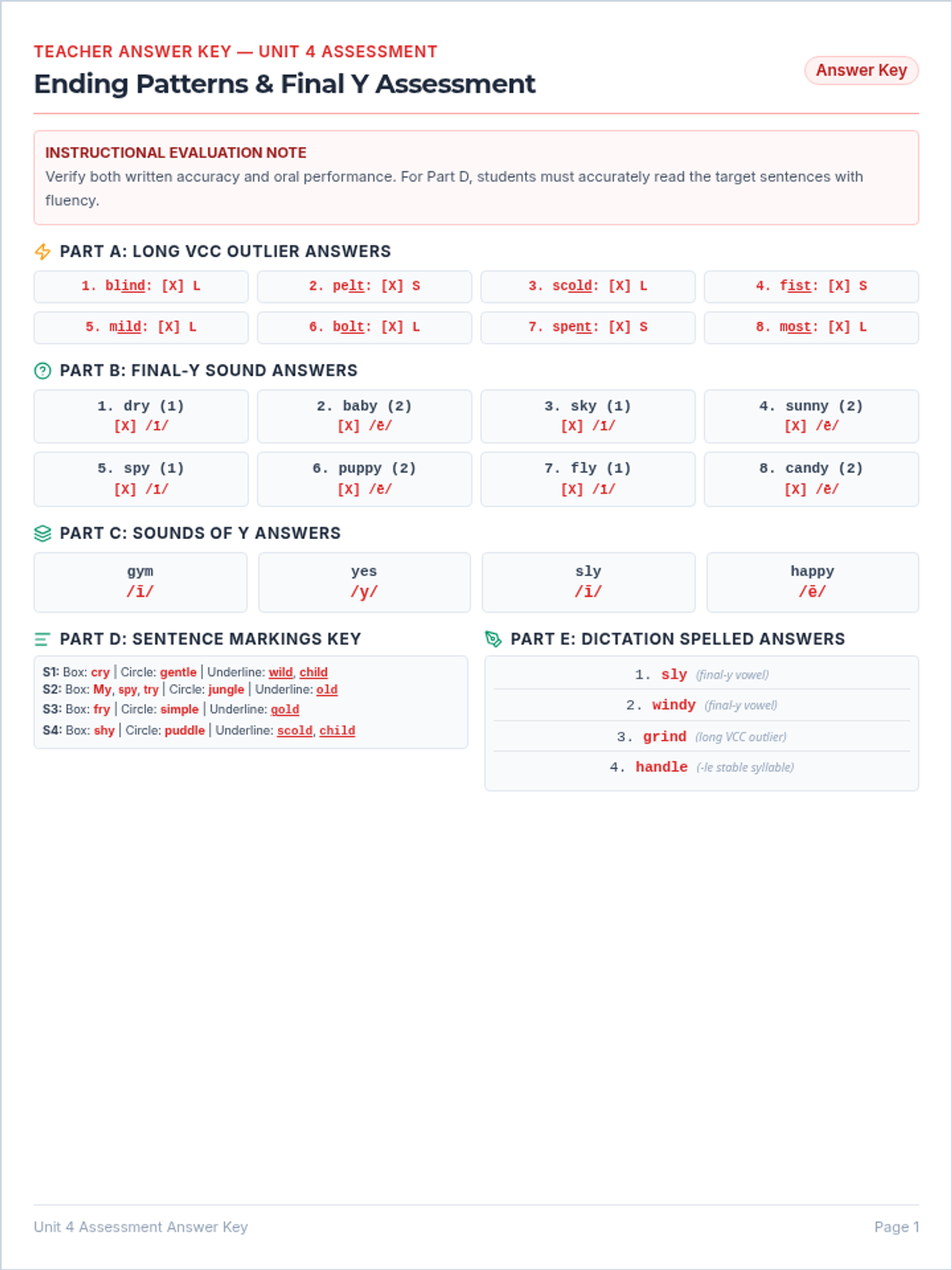
The comprehensive Unit 4 assessment checking student mastery of long VCC patterns, final y vowel/consonant behaviors, and multisyllabic decoding of stable endings.
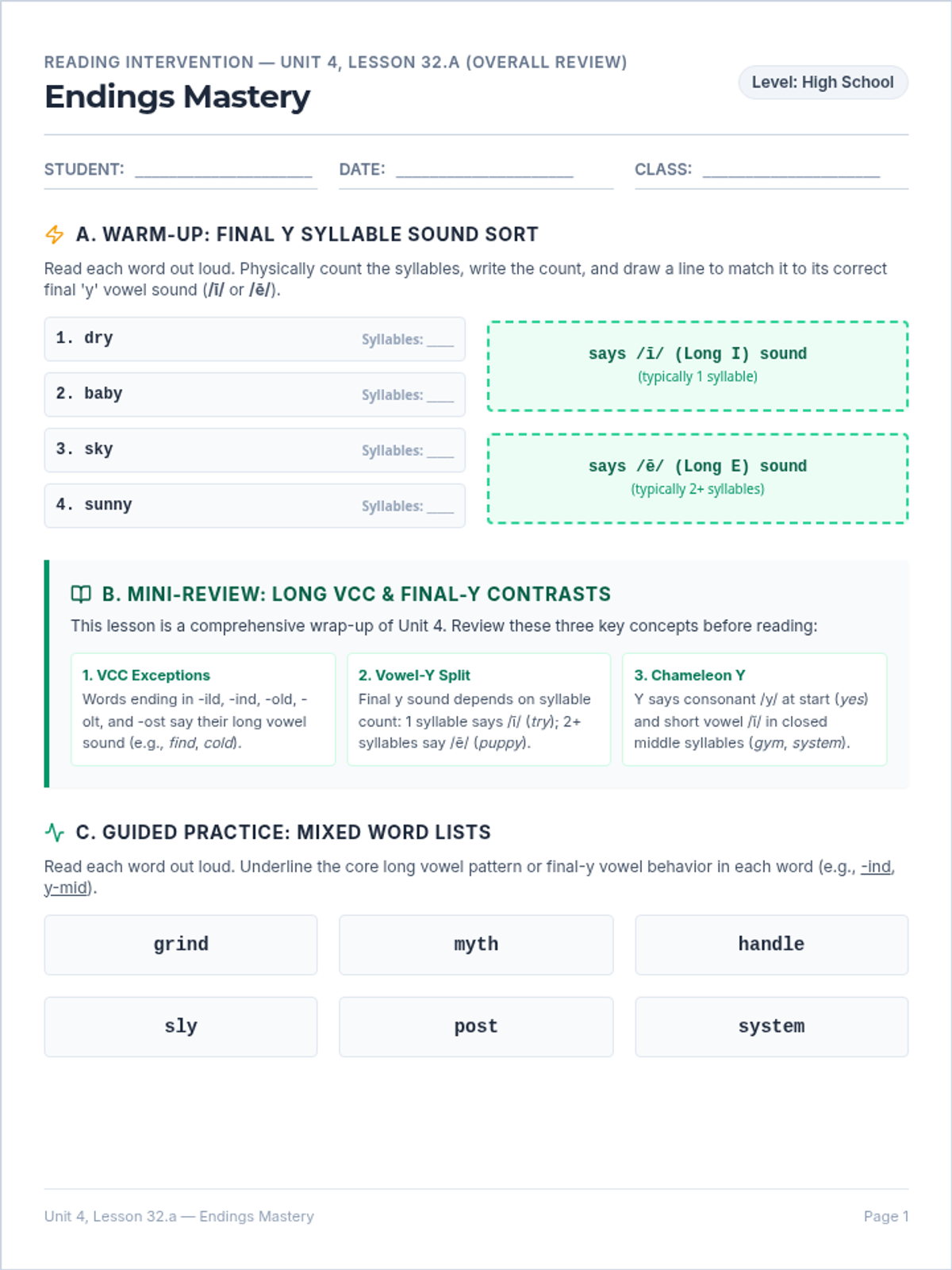
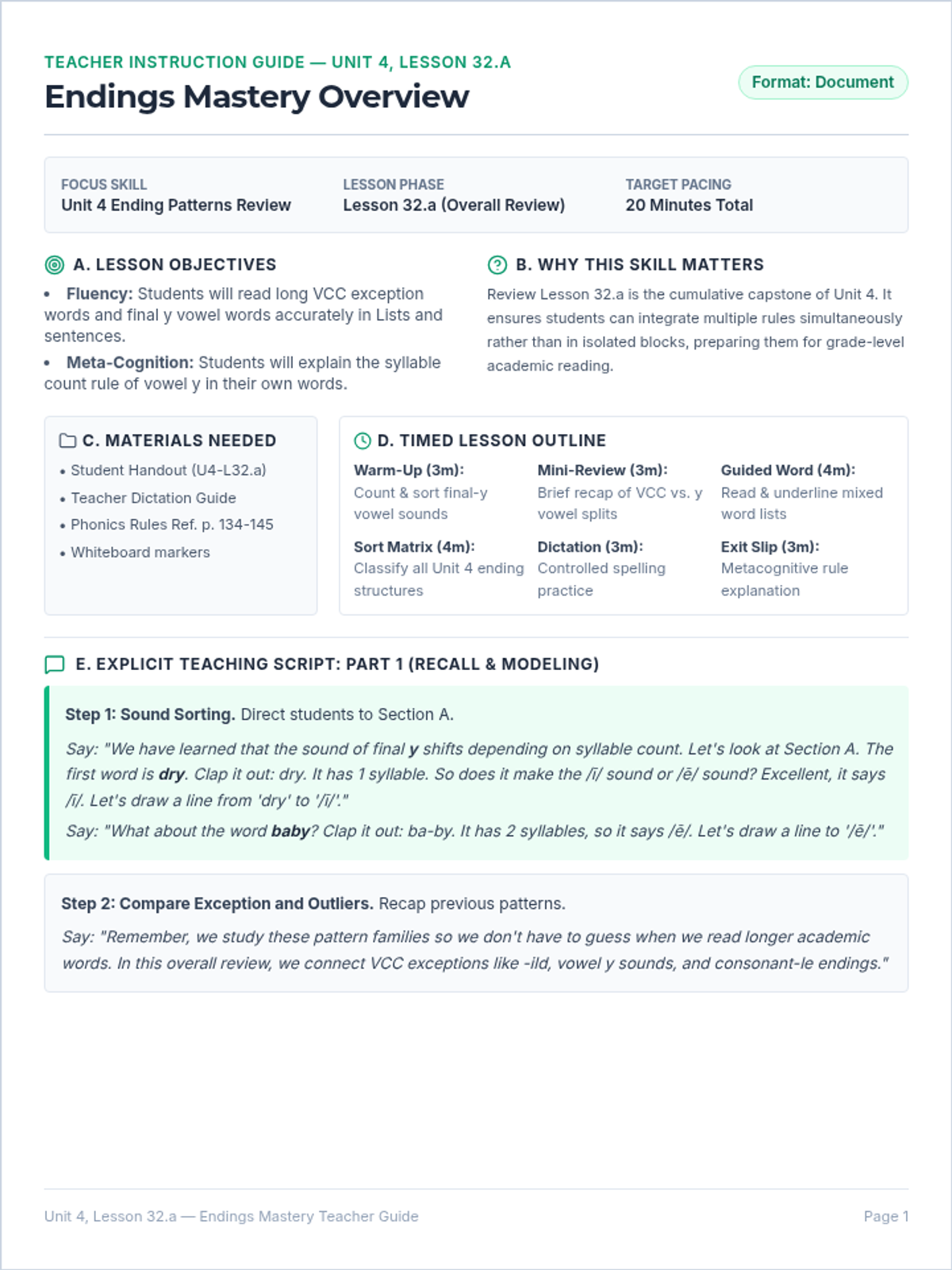
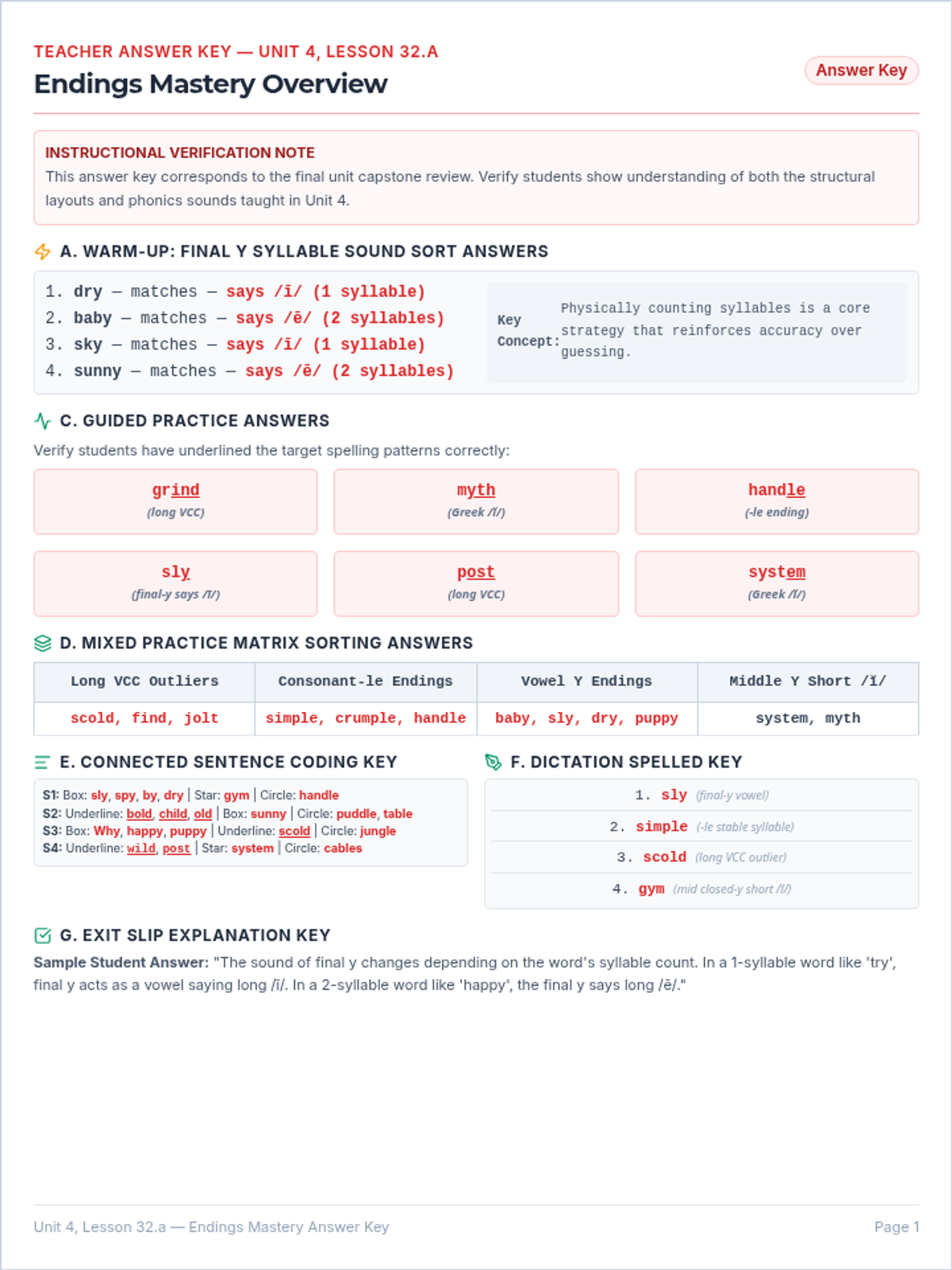
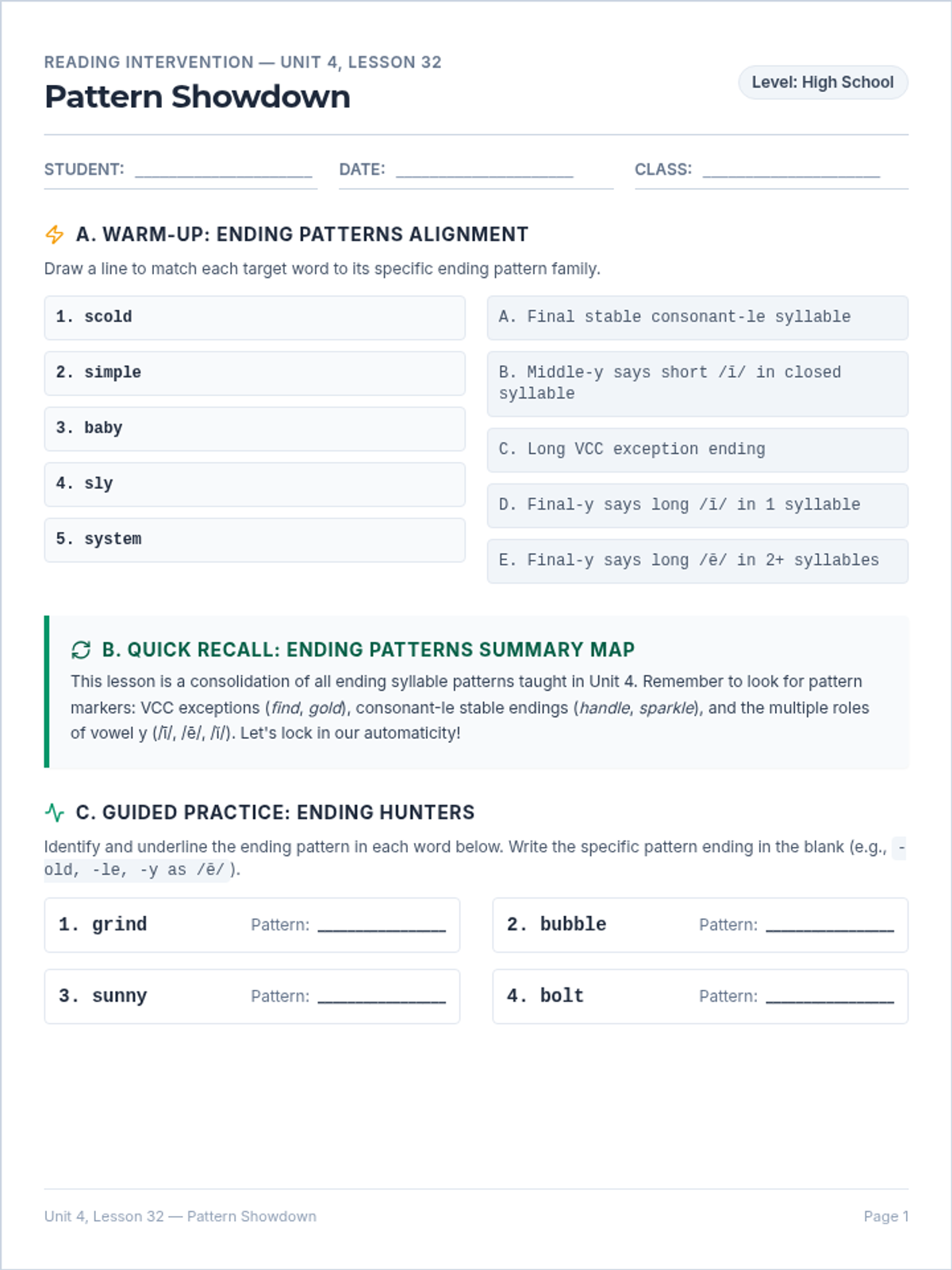
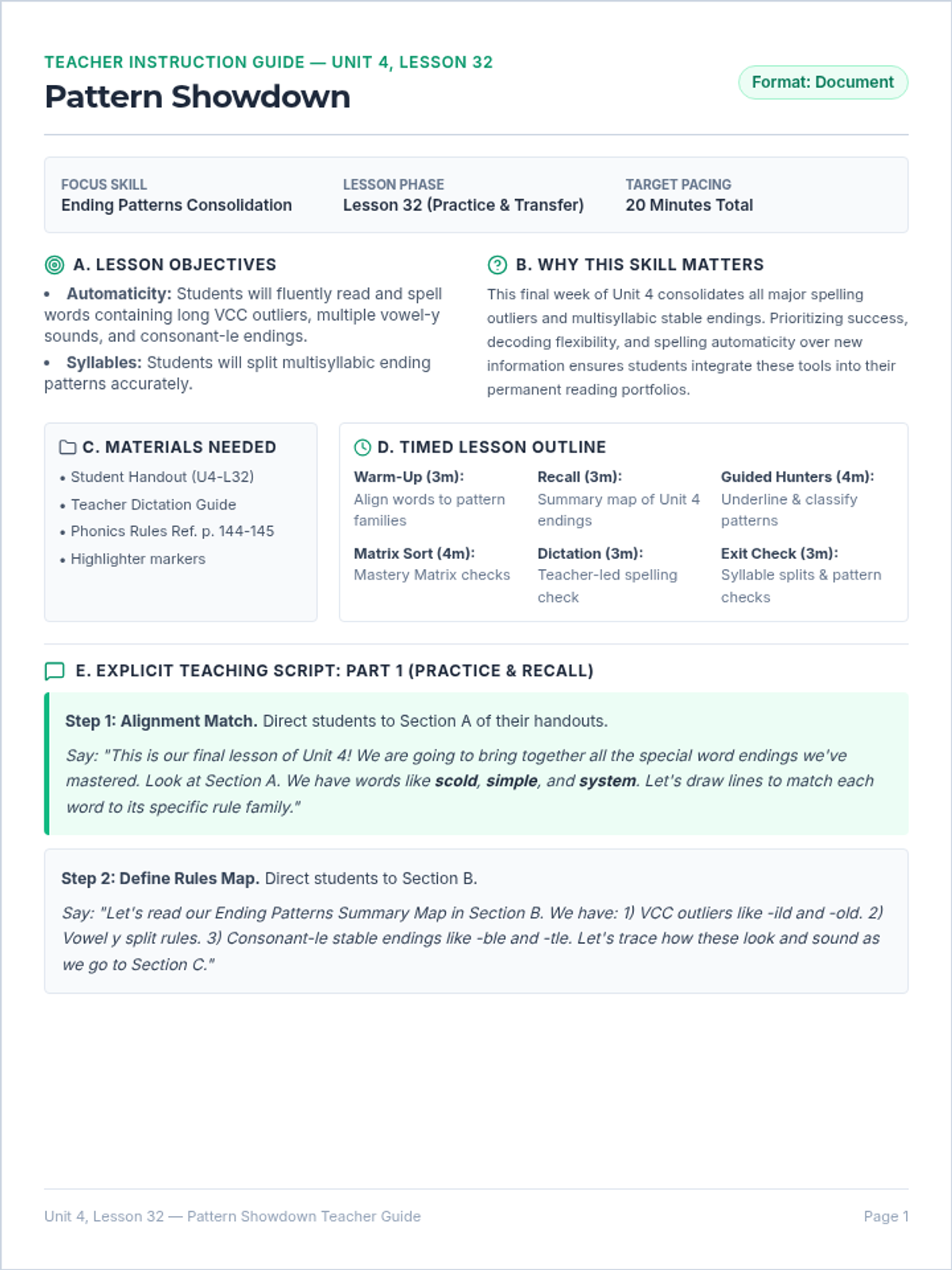
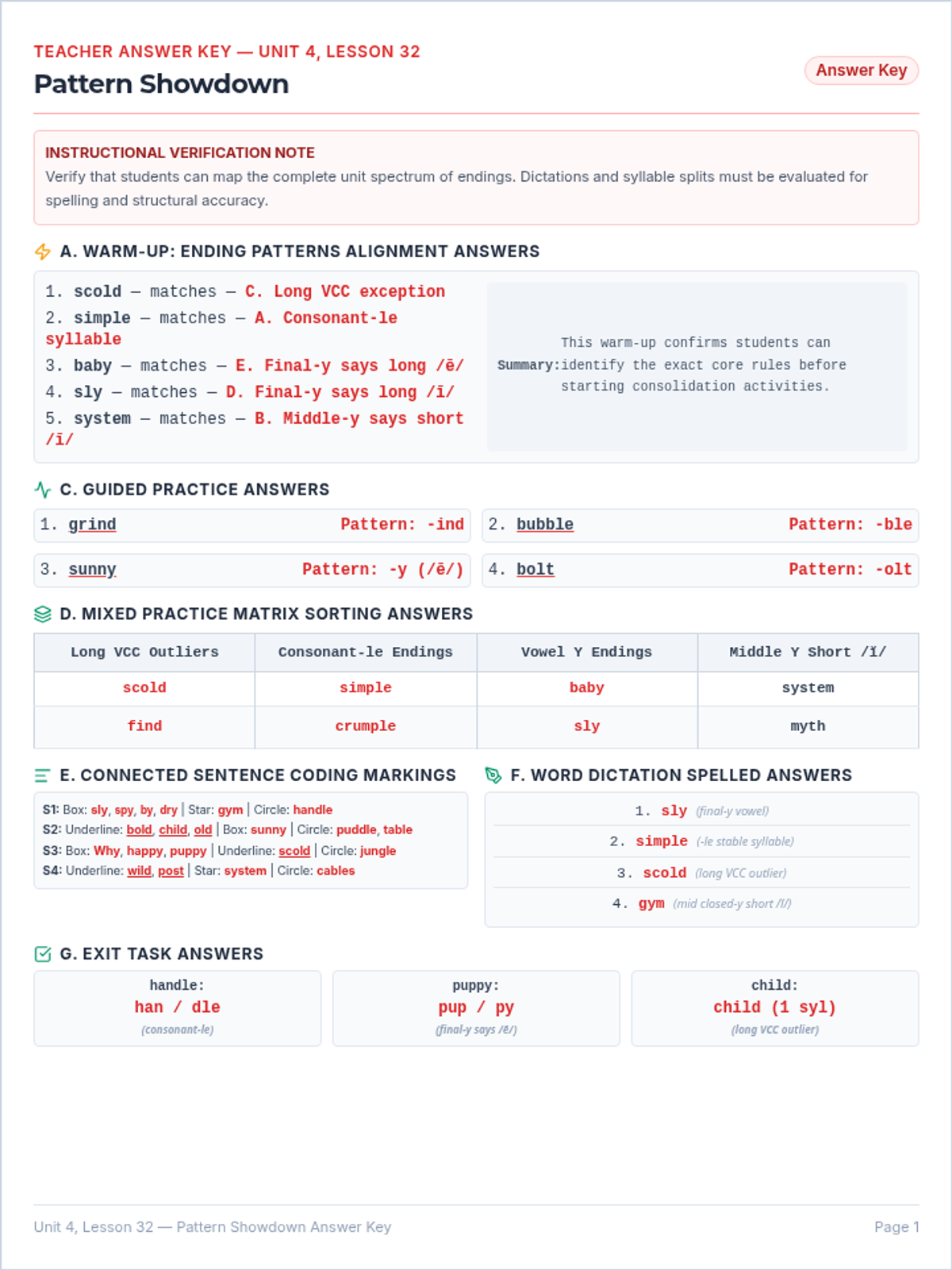
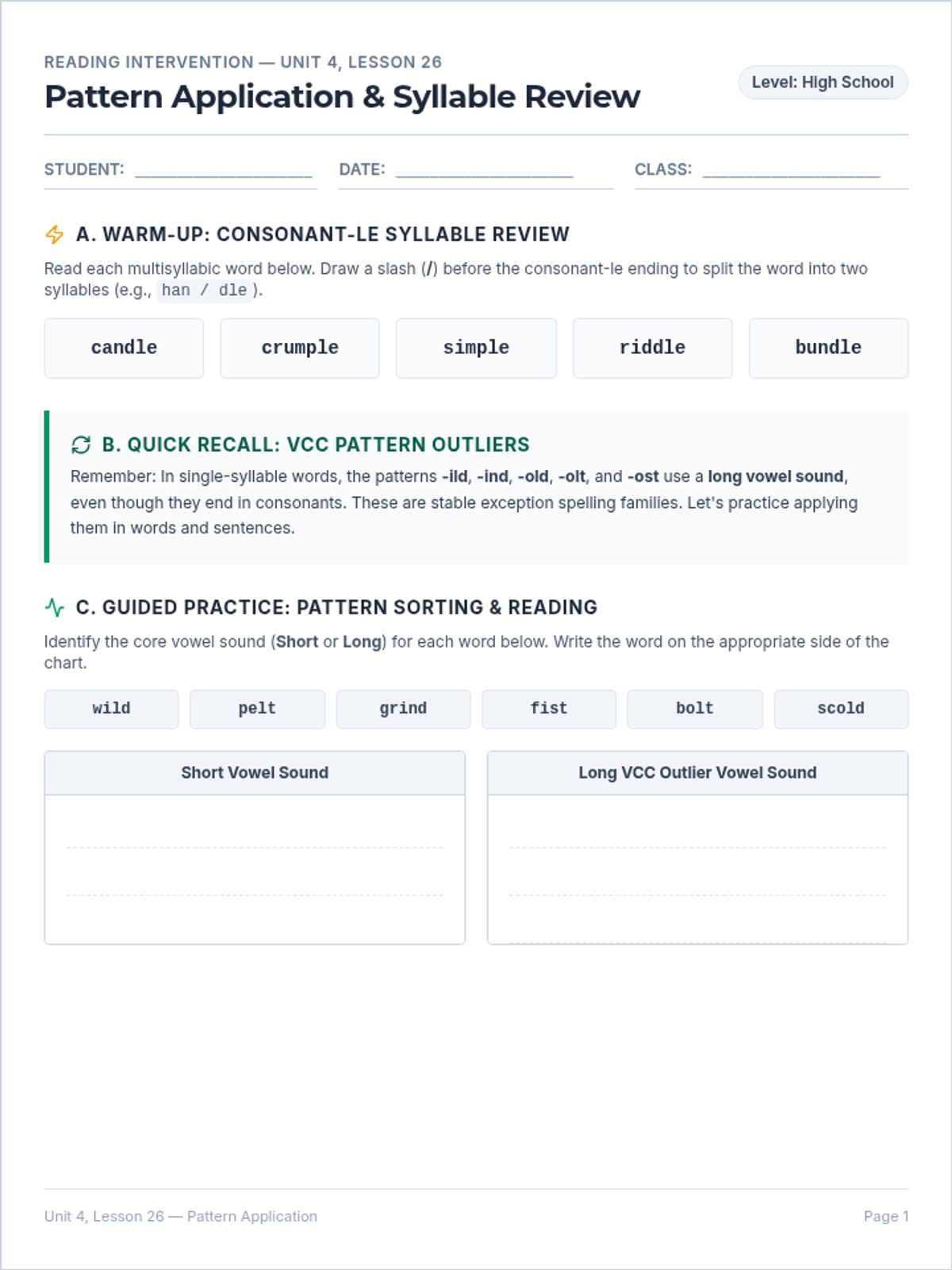
A comprehensive overall review lesson for Unit 4 consolidating all key ending pattern rules including long VCC exceptions, vowel y sounds (/ī/, /ē/, and short /ĭ/), and consonant-le endings.
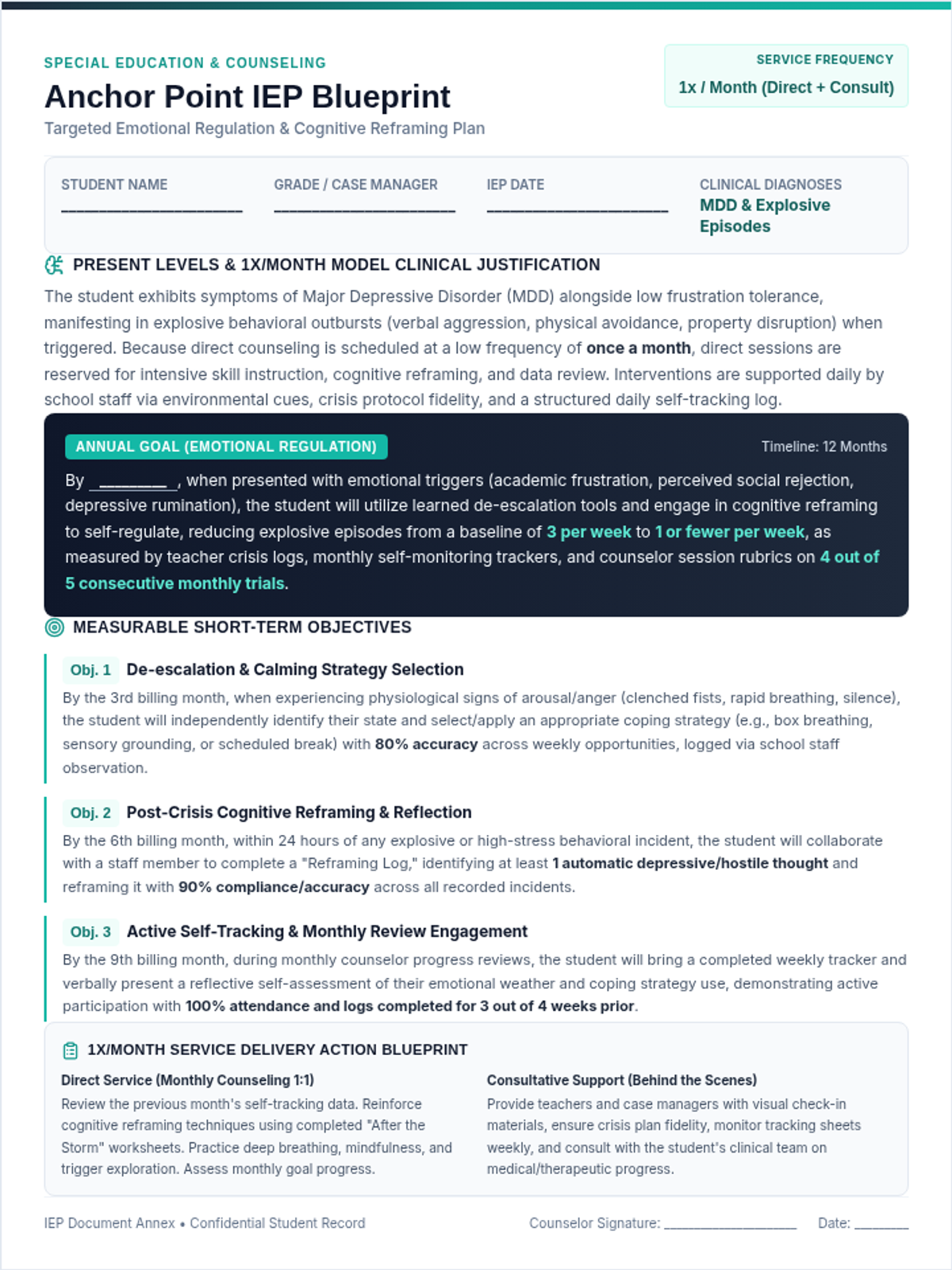
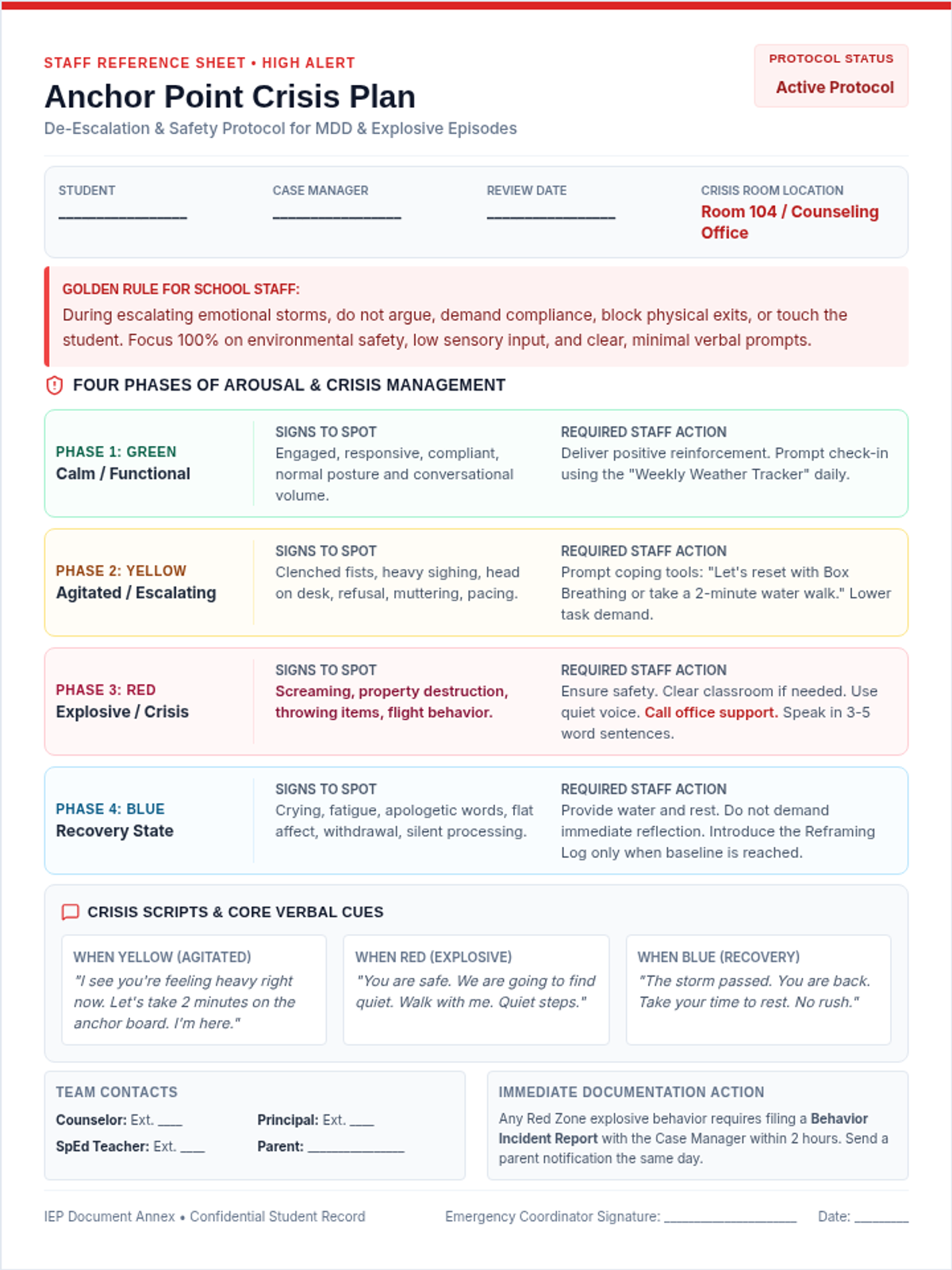
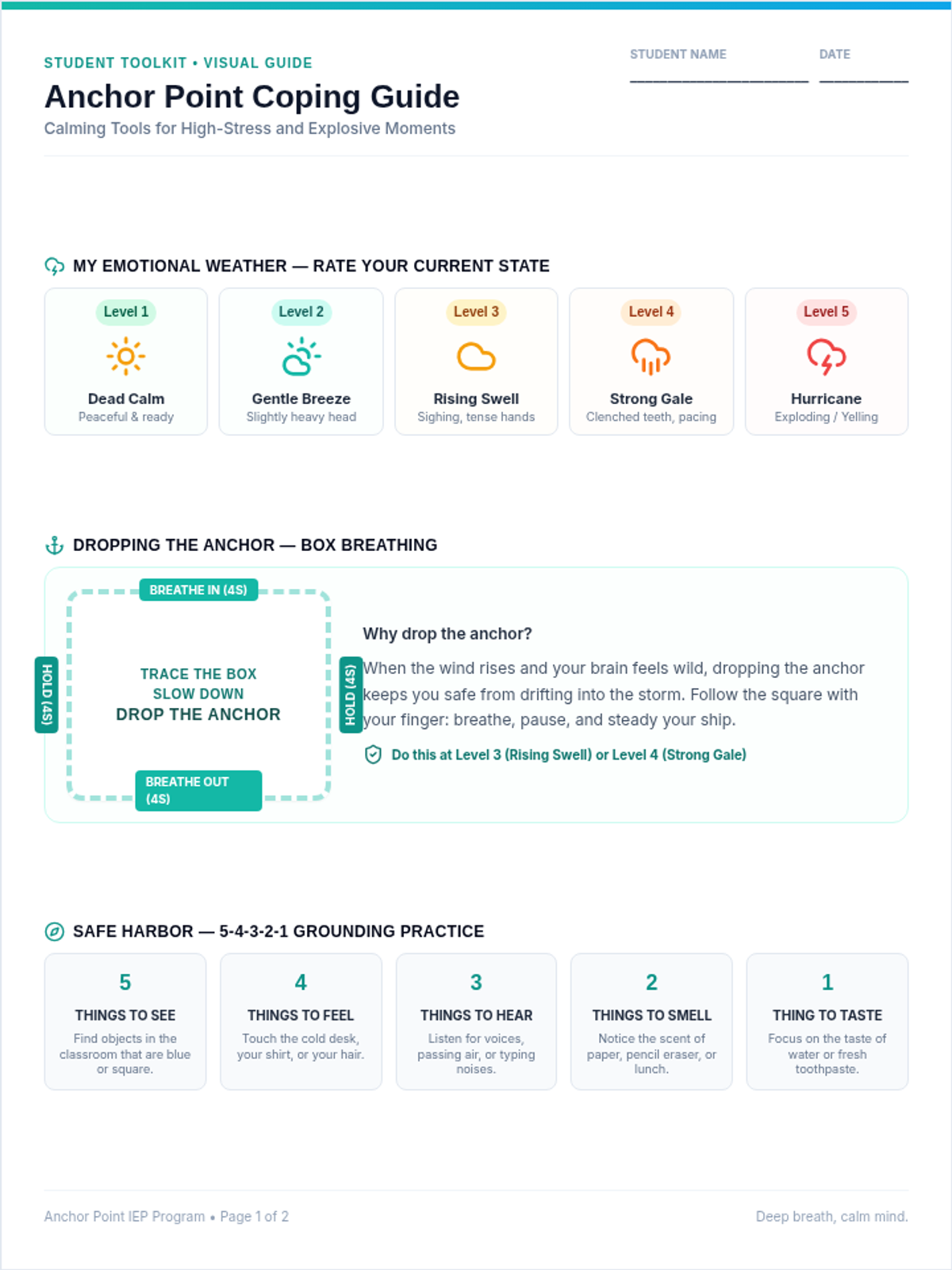
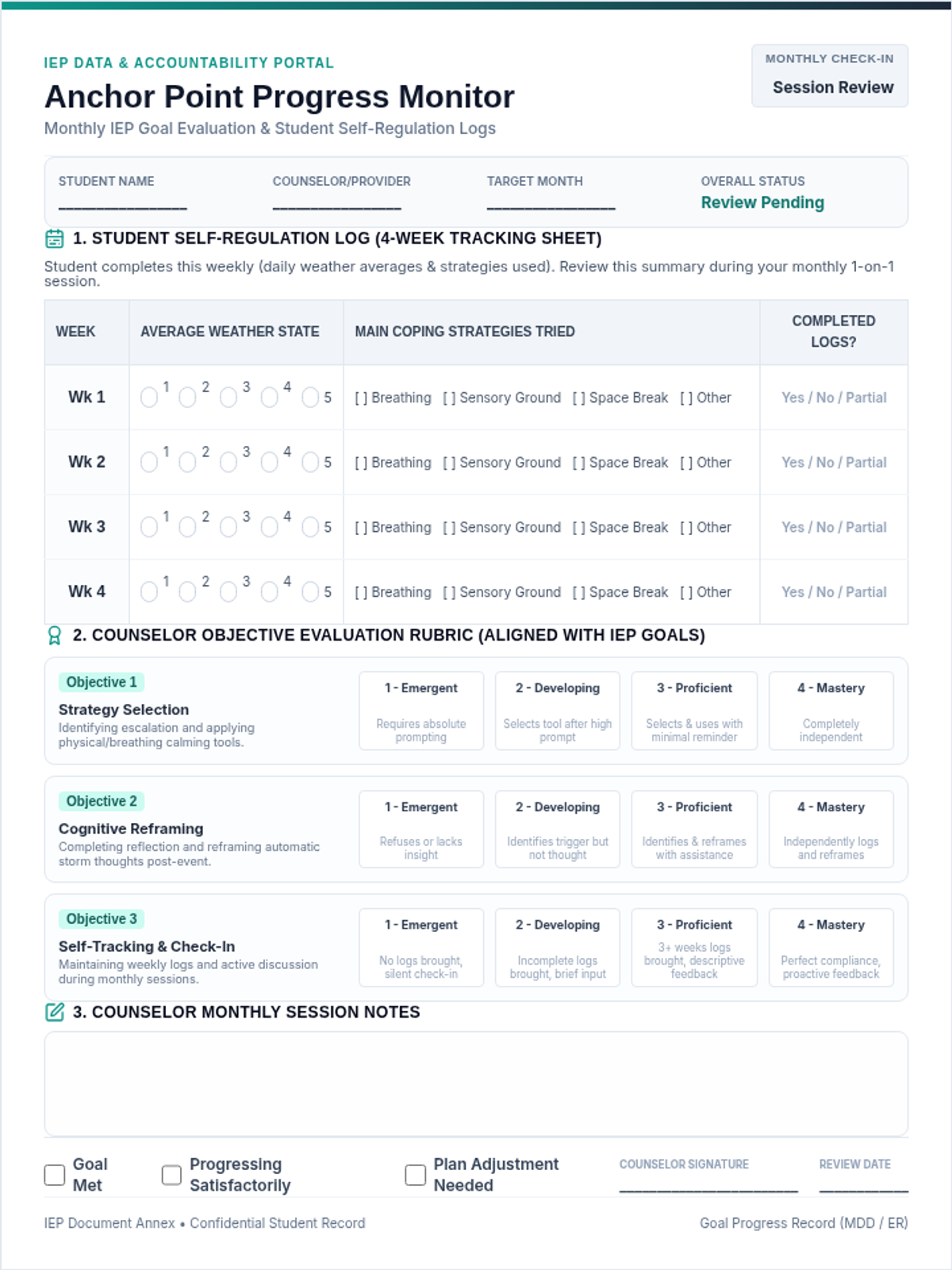
A comprehensive emotional regulation support package designed for students with Major Depressive Disorder and explosive episodes, optimized for a once-a-month counseling and consultation model. It contains the legal IEP goal blueprints, an actionable crisis plan, a student coping and reframing workbook, and progress monitoring tracking tools.
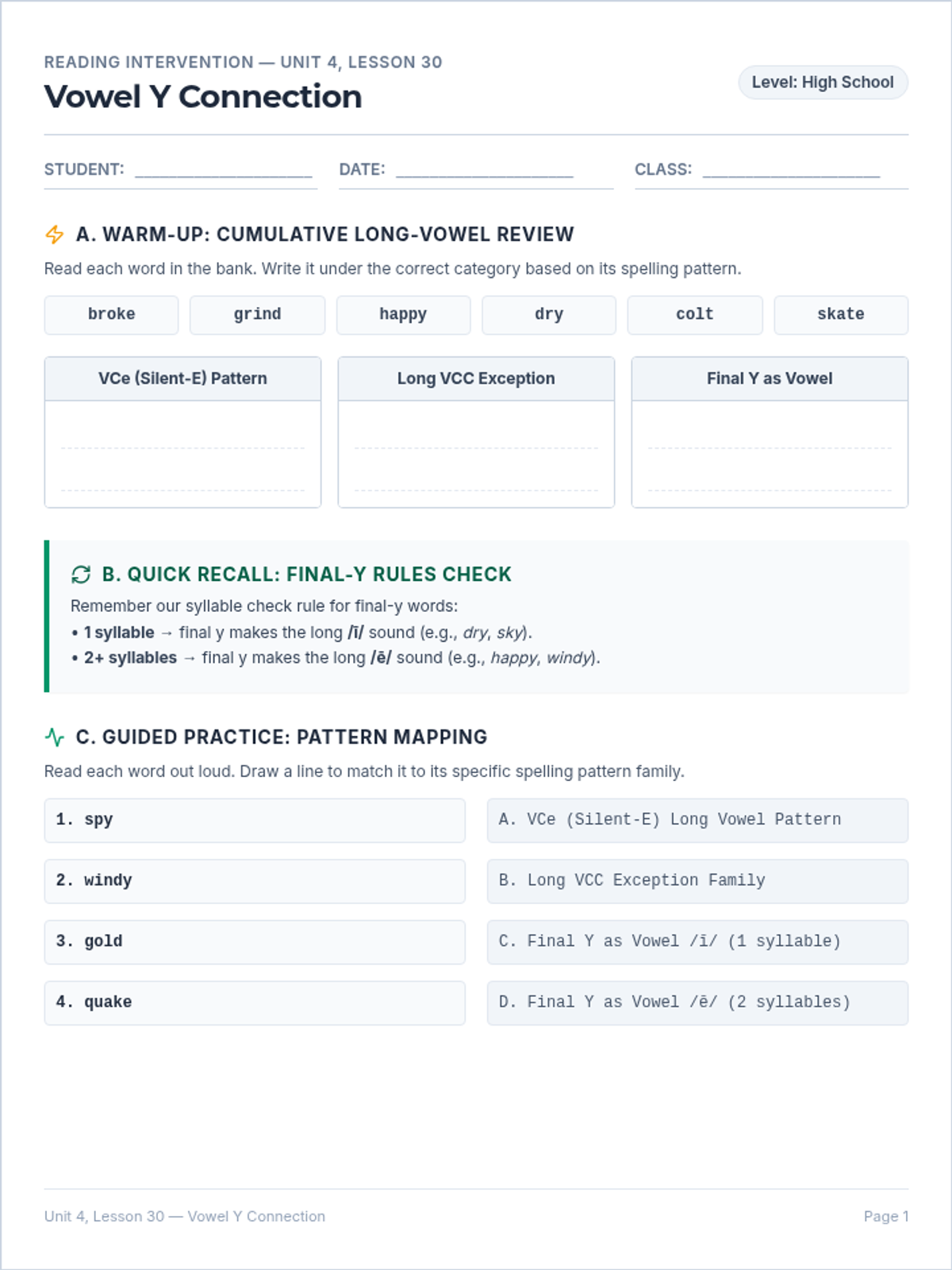
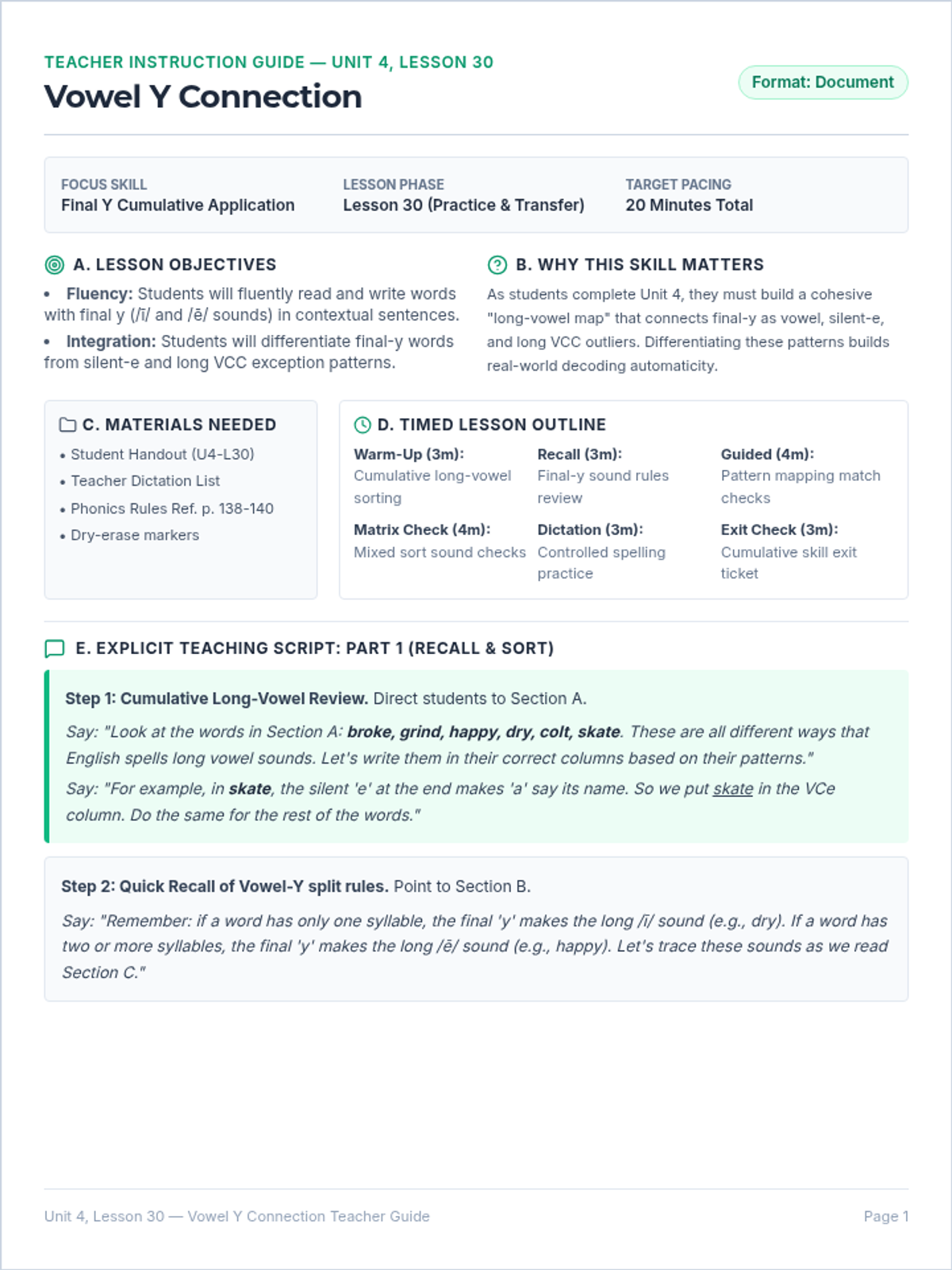
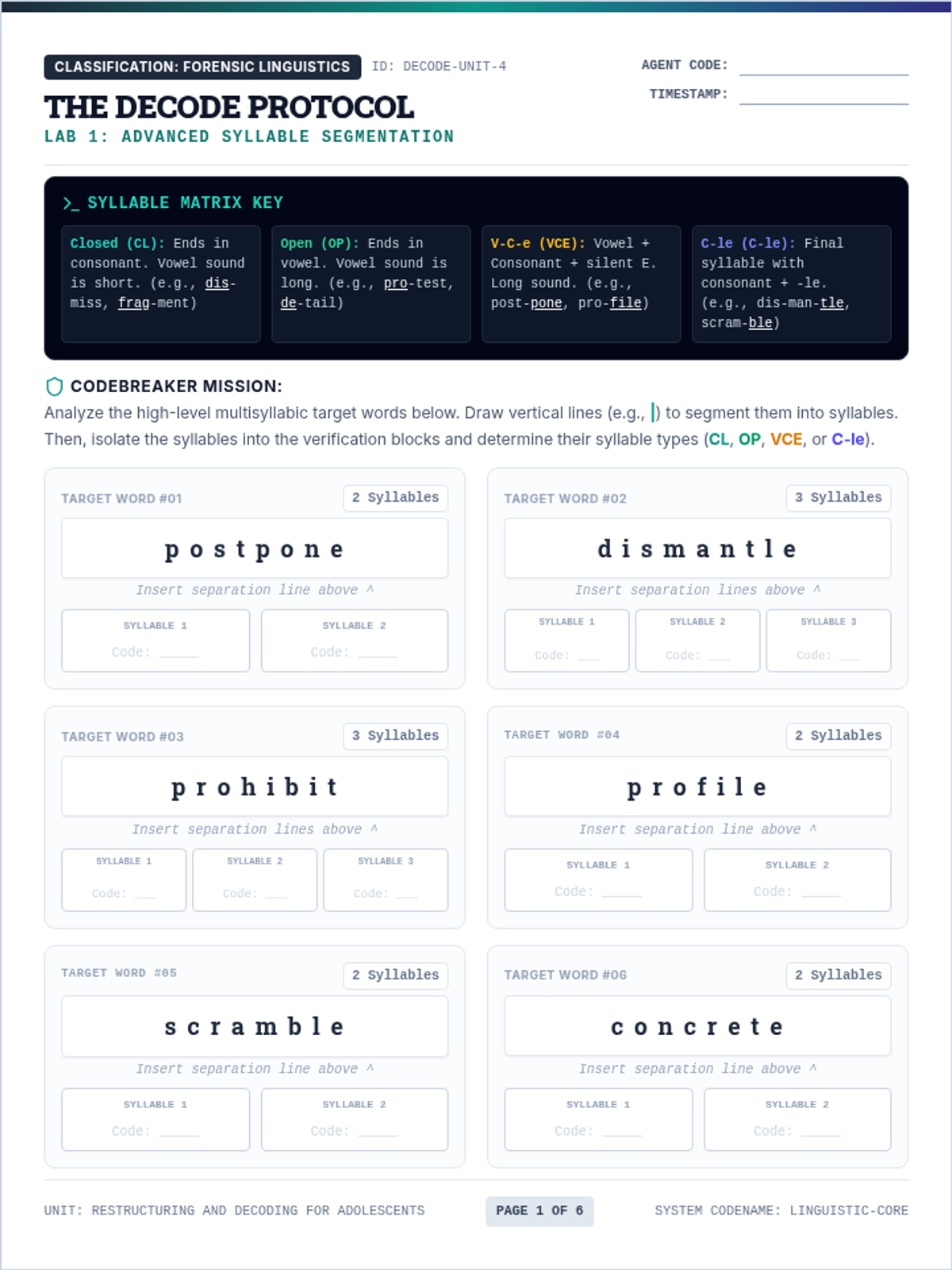
A highly cumulative practice-heavy reading intervention lesson consolidating long VCC exceptions, final y as vowel /ī/ and /ē/, and consonant-le stable ending syllables.
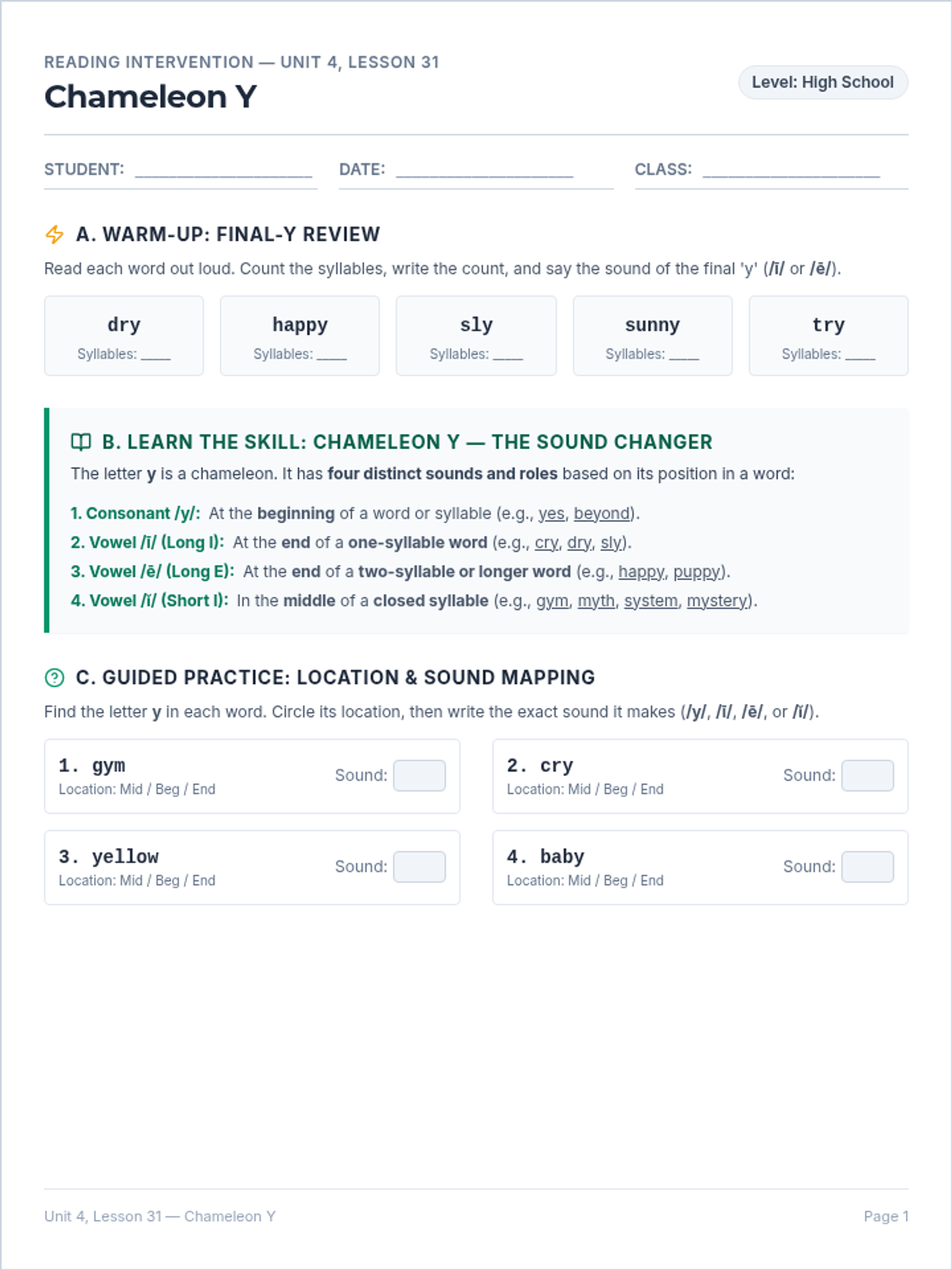
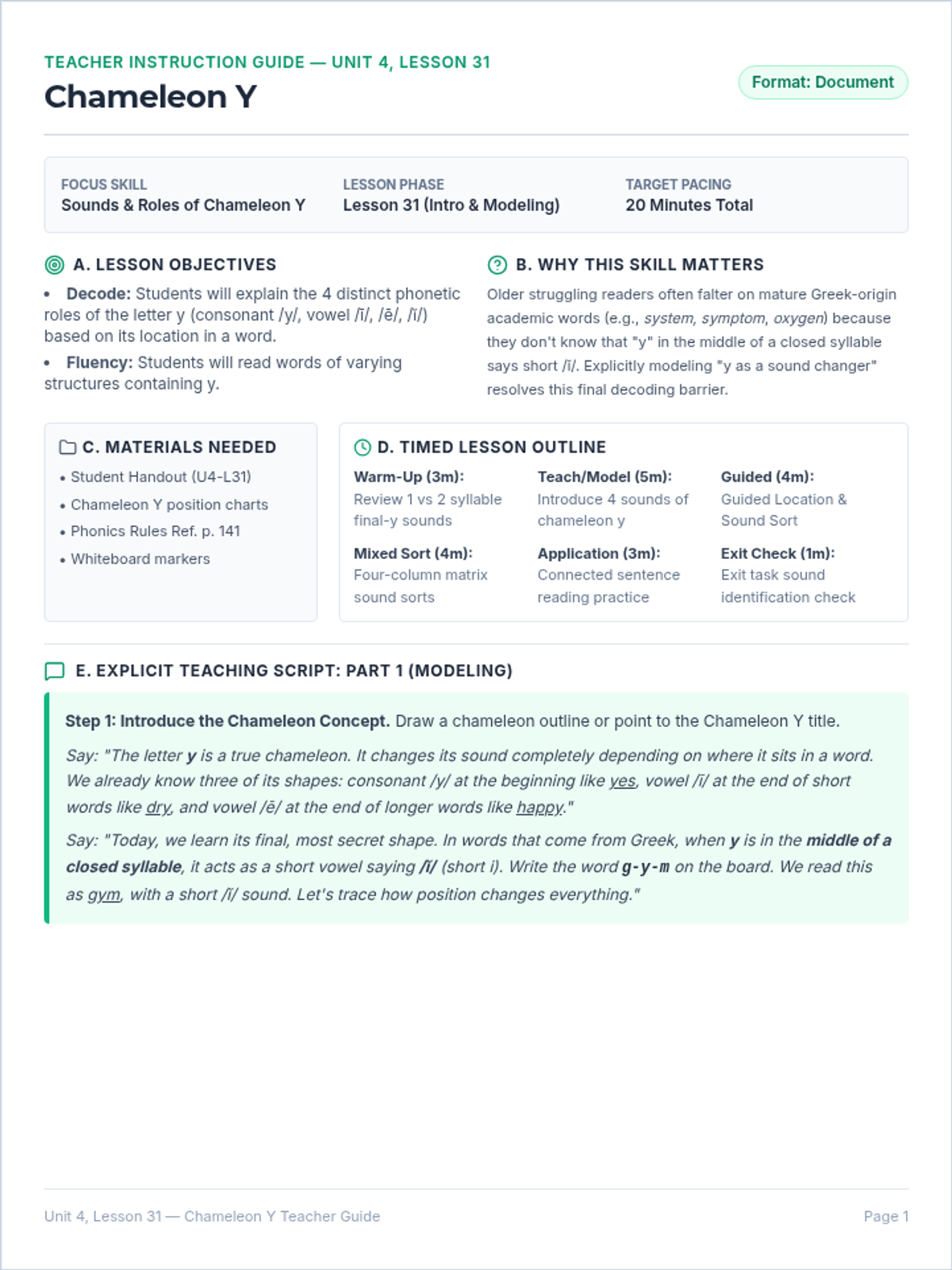
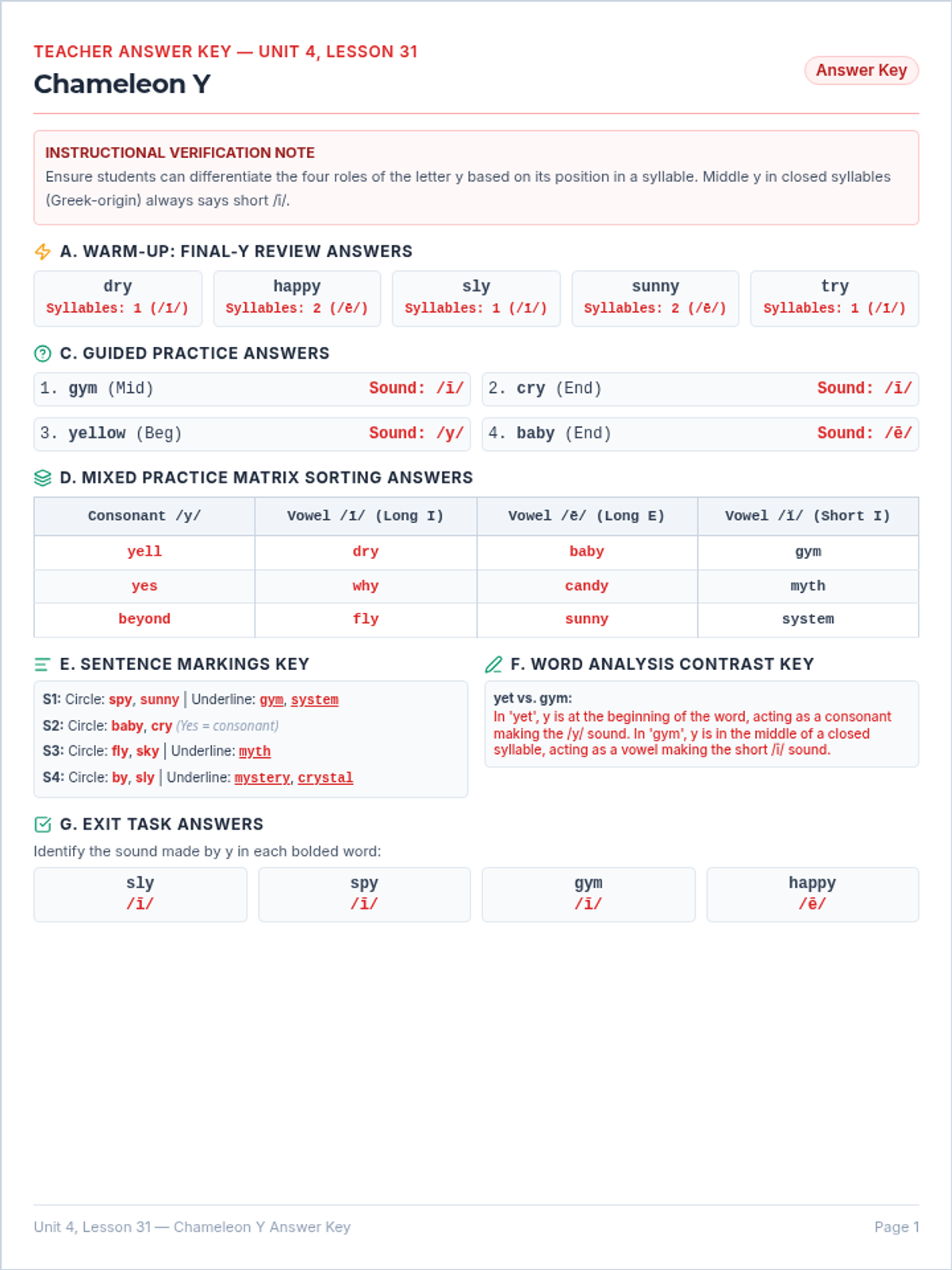
An intensive high school reading intervention lesson introducing the multiple sounds and roles of the letter y (consonant /y/, vowel /ī/, /ē/, and short /ĭ/ in closed syllables) with explicit modeling.
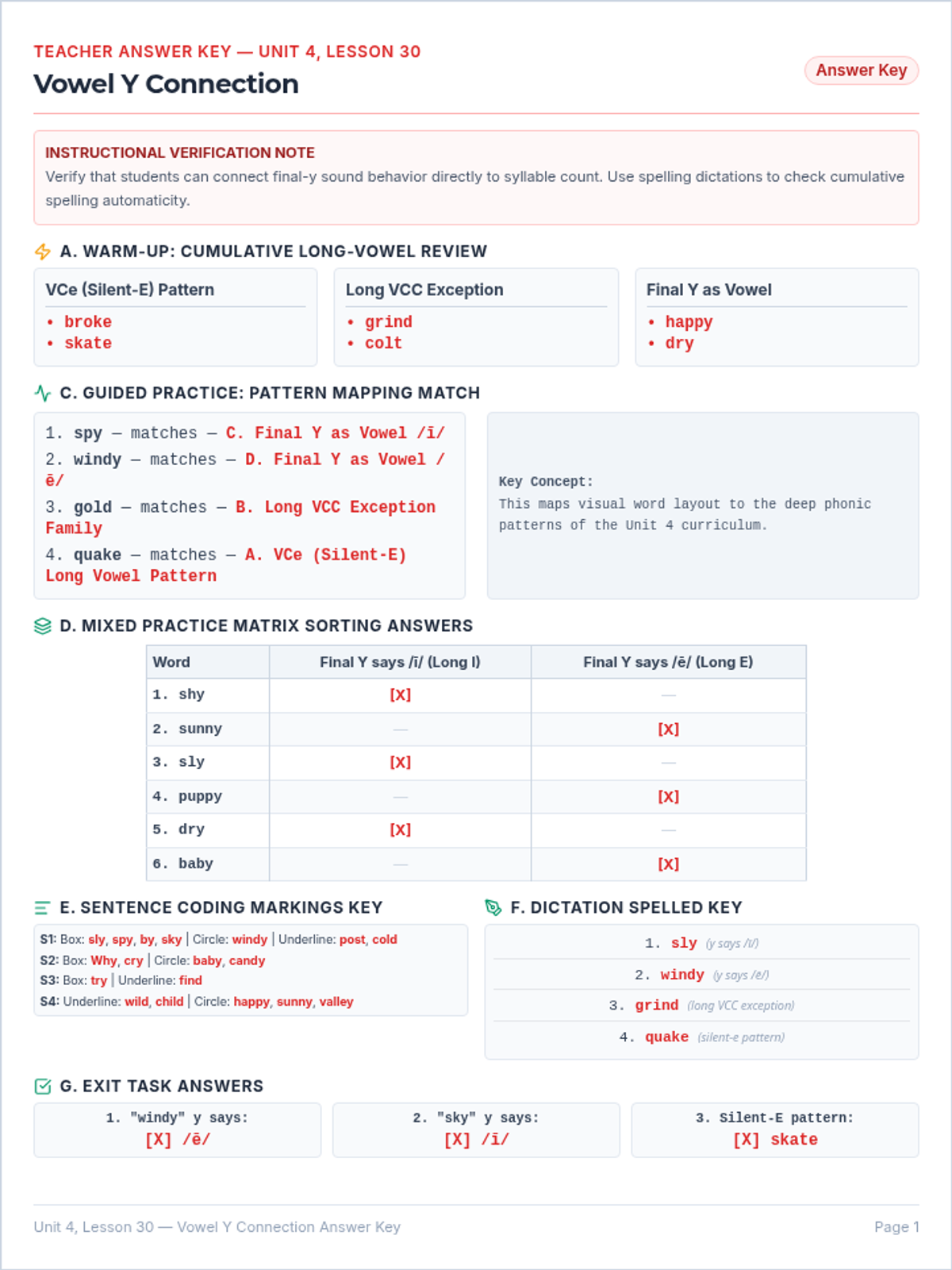
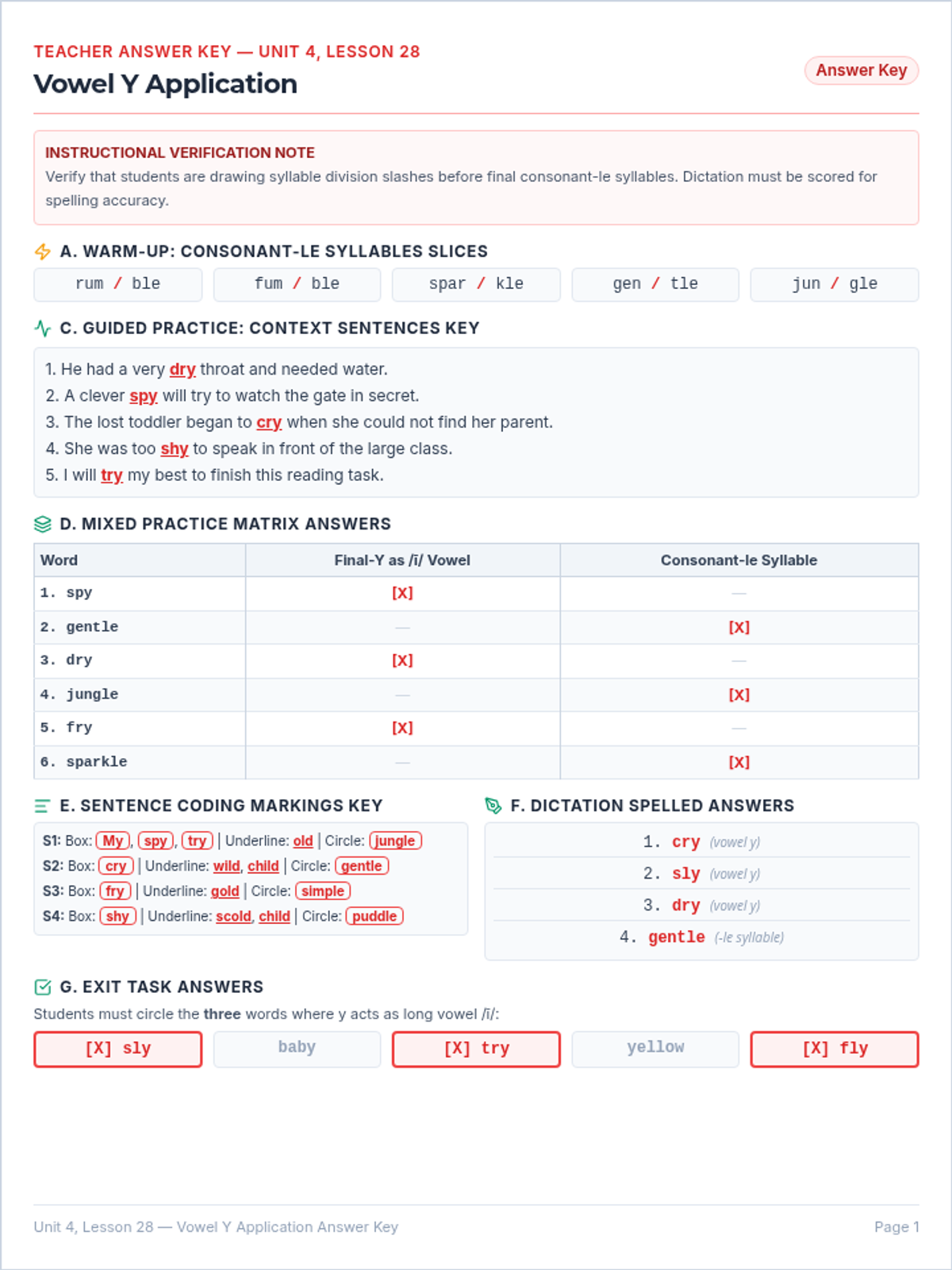
A comprehensive practice-heavy reading intervention lesson applying final y vowel rules in connected text, combined with a mixed review of silent-e and long-VCC exceptions.
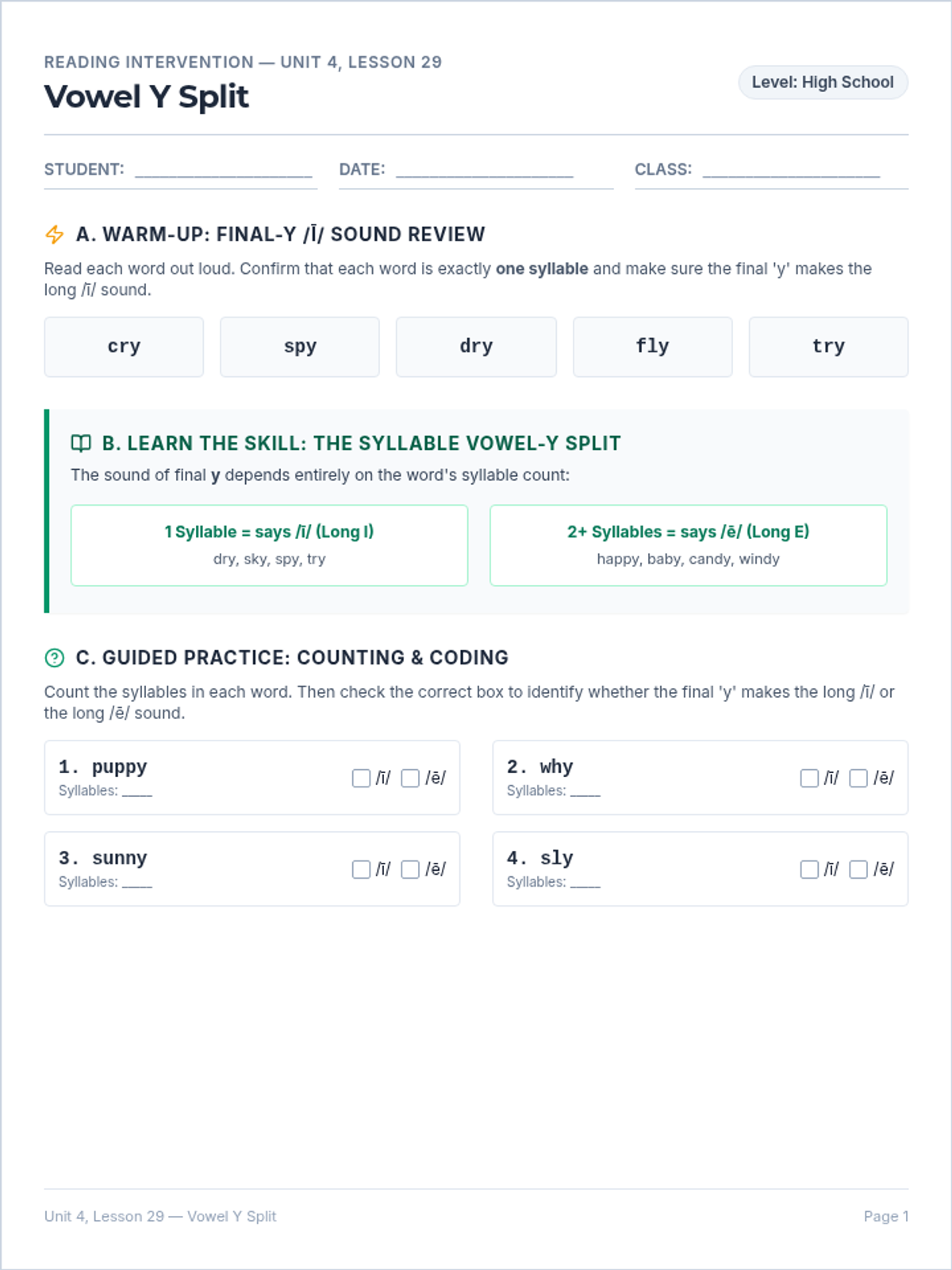
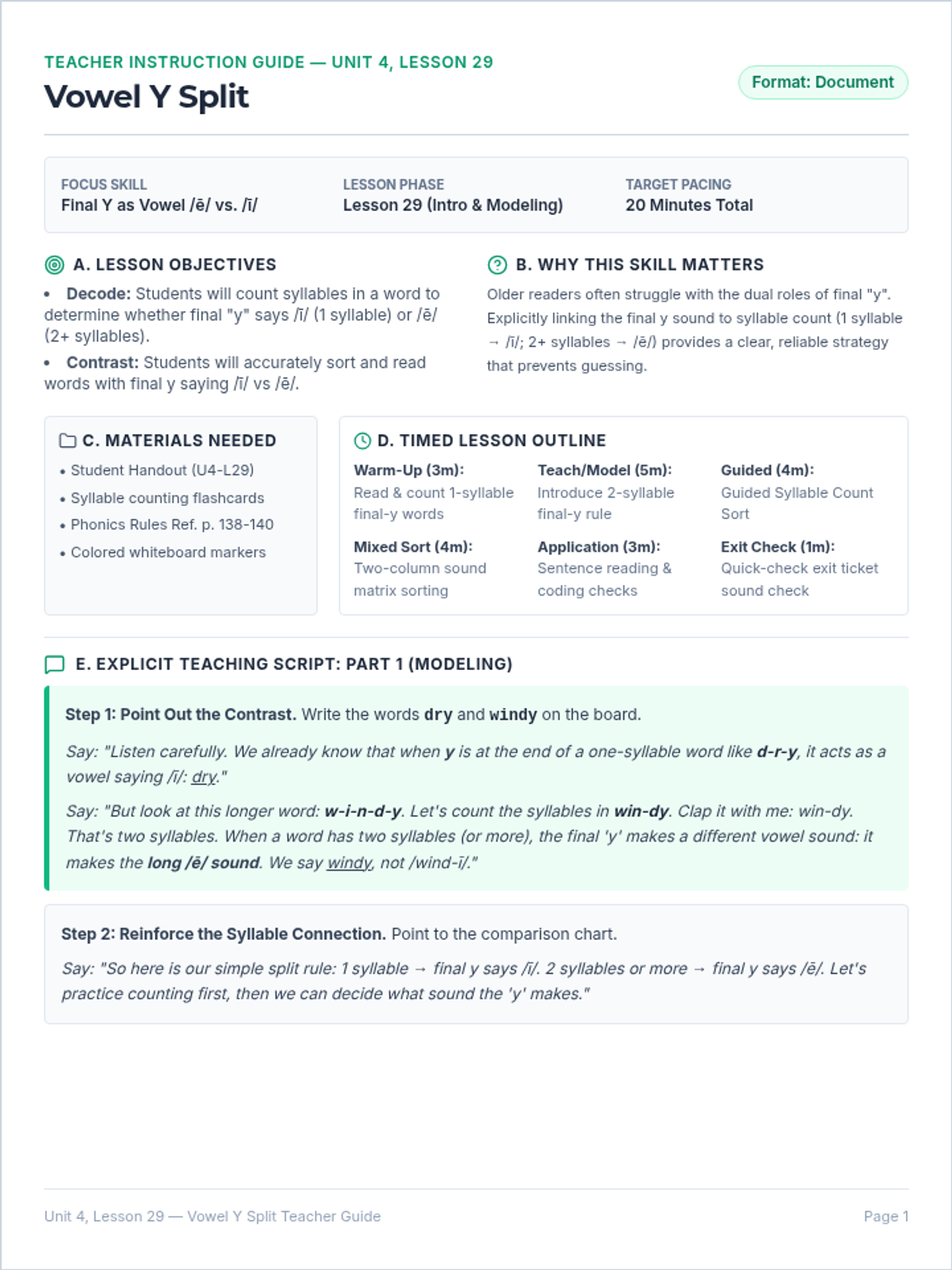
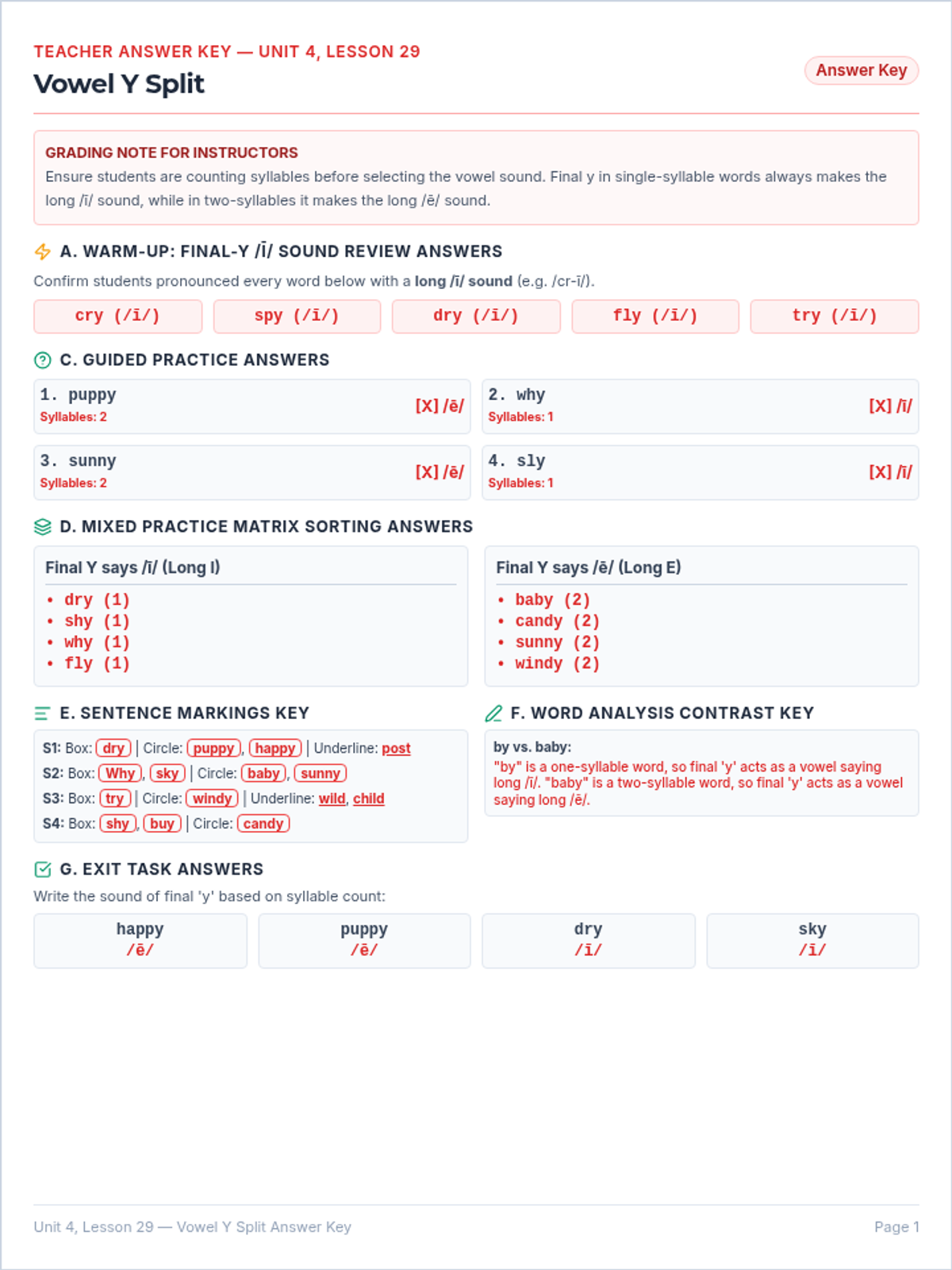
An intensive high school reading intervention lesson introducing final y as a long /ē/ vowel in two-syllable words, compared and contrasted with final y as a long /ī/ vowel in single-syllable words.
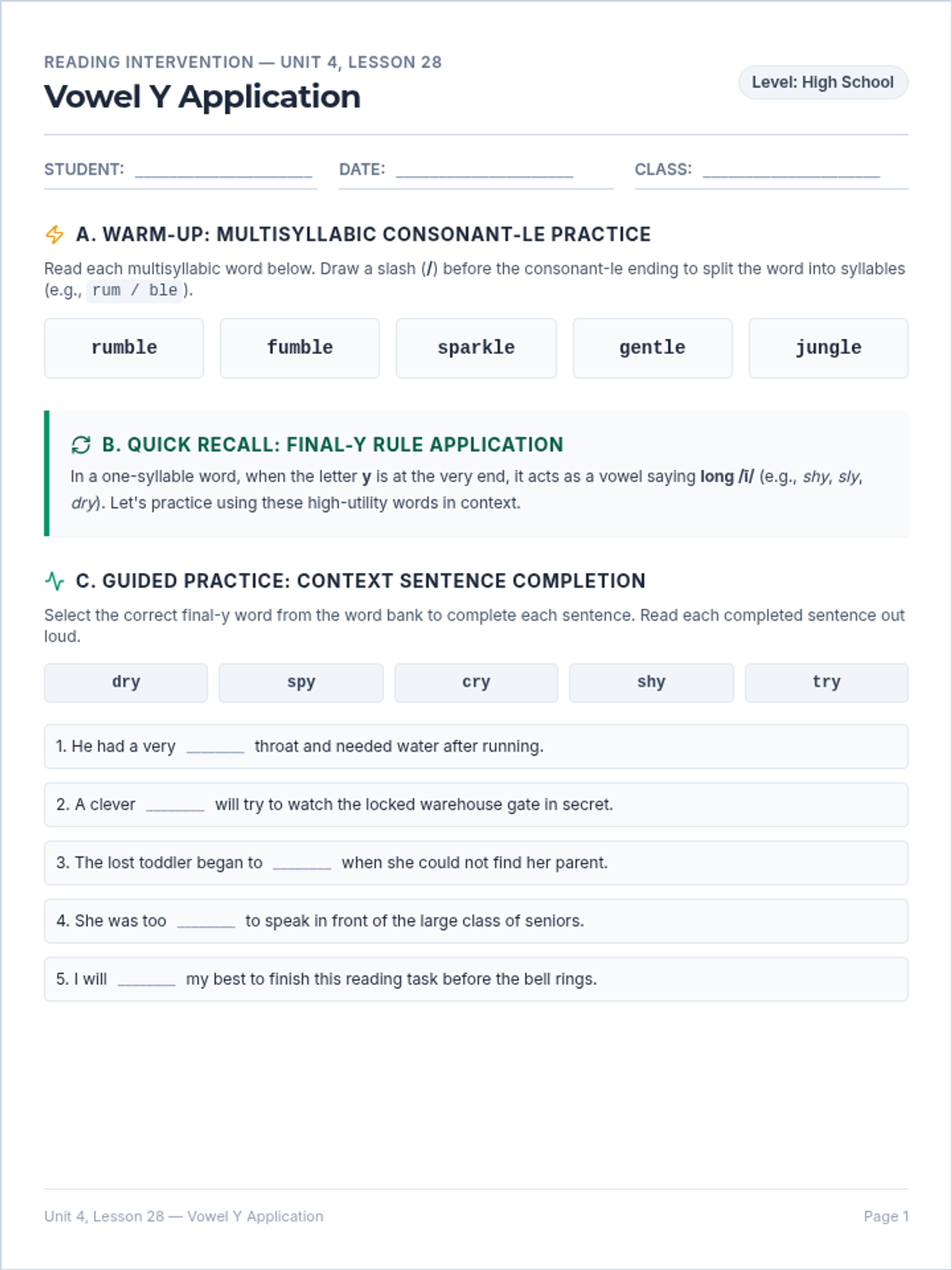
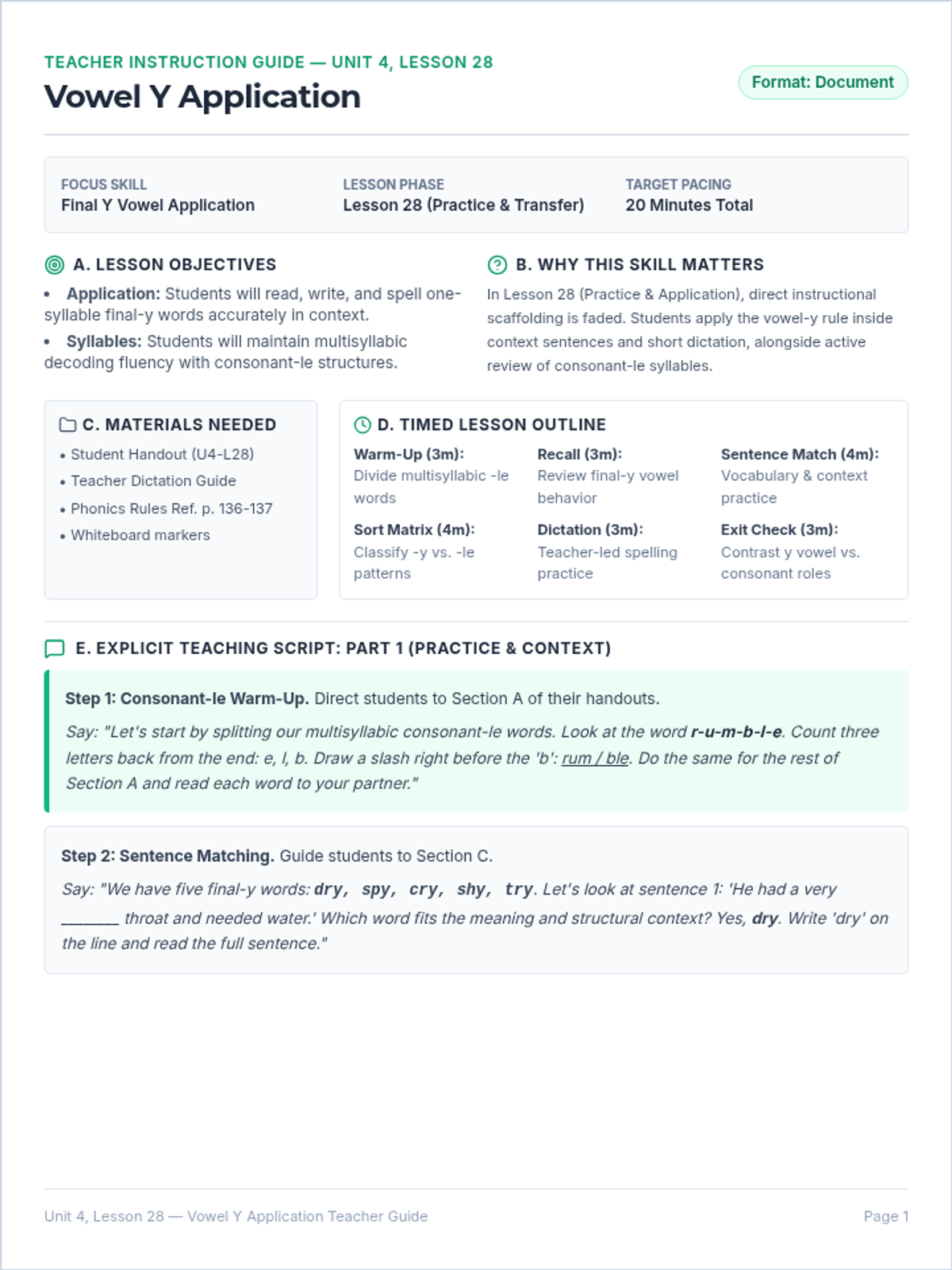
A practice-heavy high school reading intervention lesson applying final y as a long /ī/ vowel in one-syllable words, combined with consonant-le multisyllabic review.
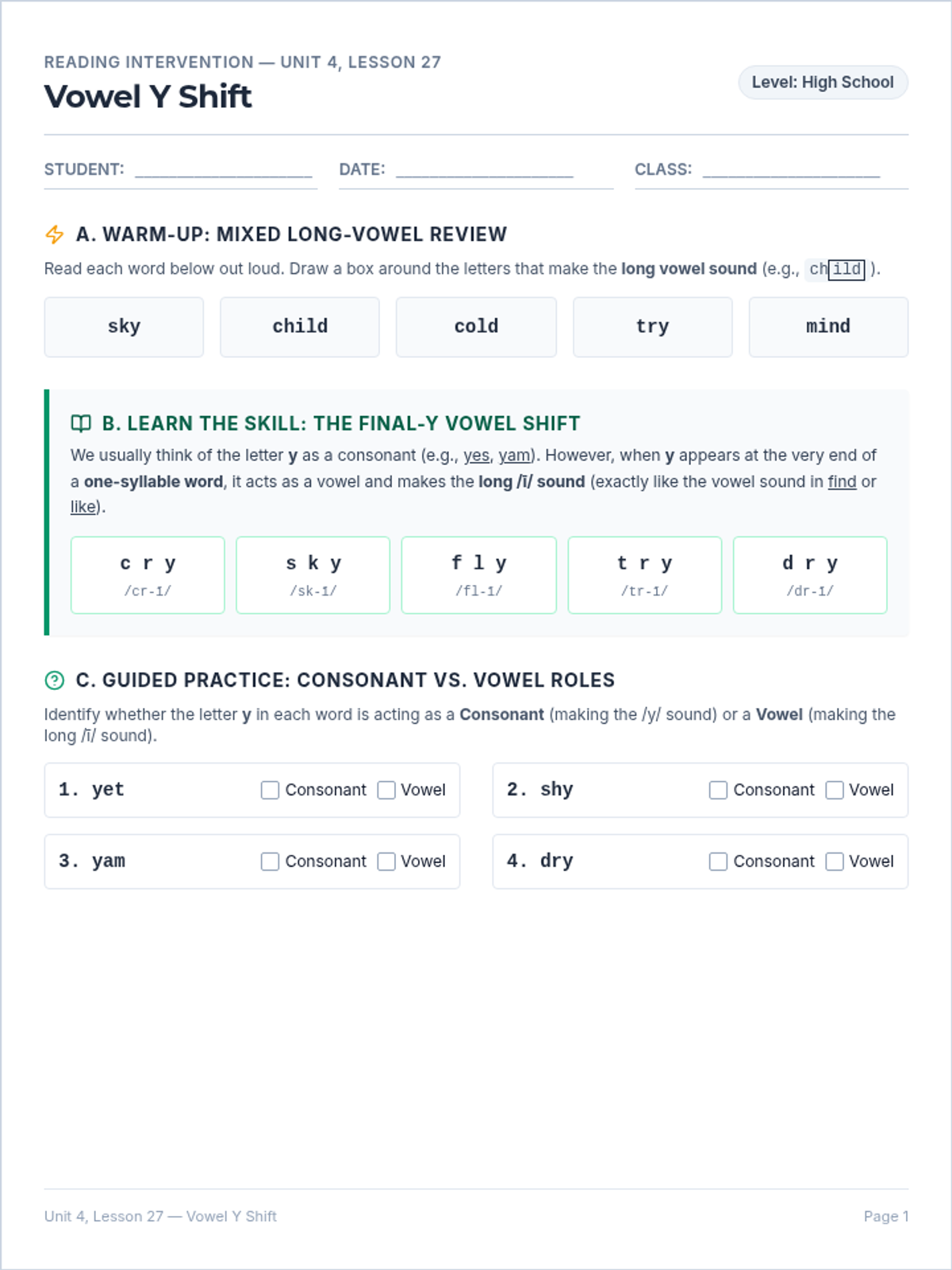
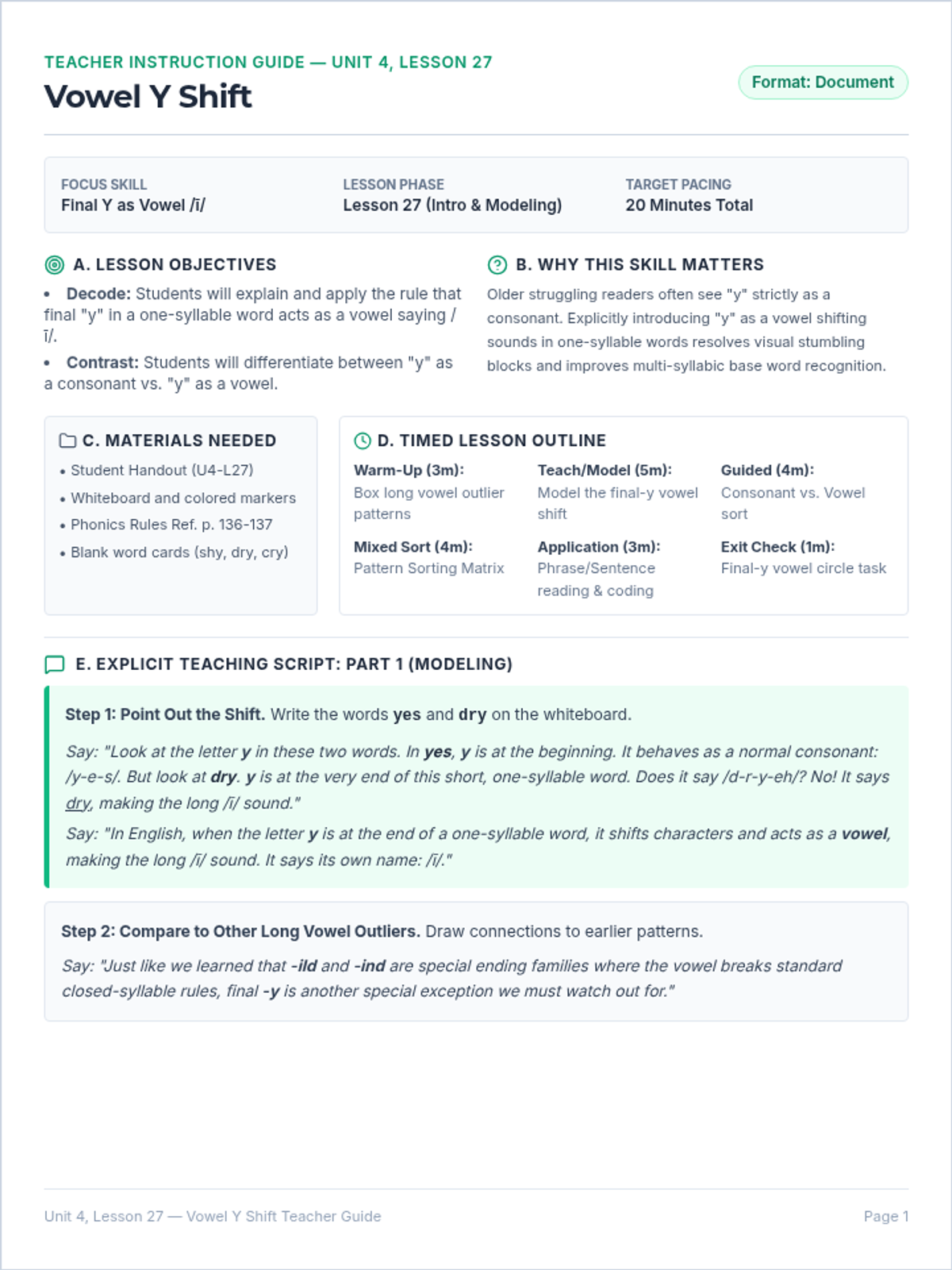
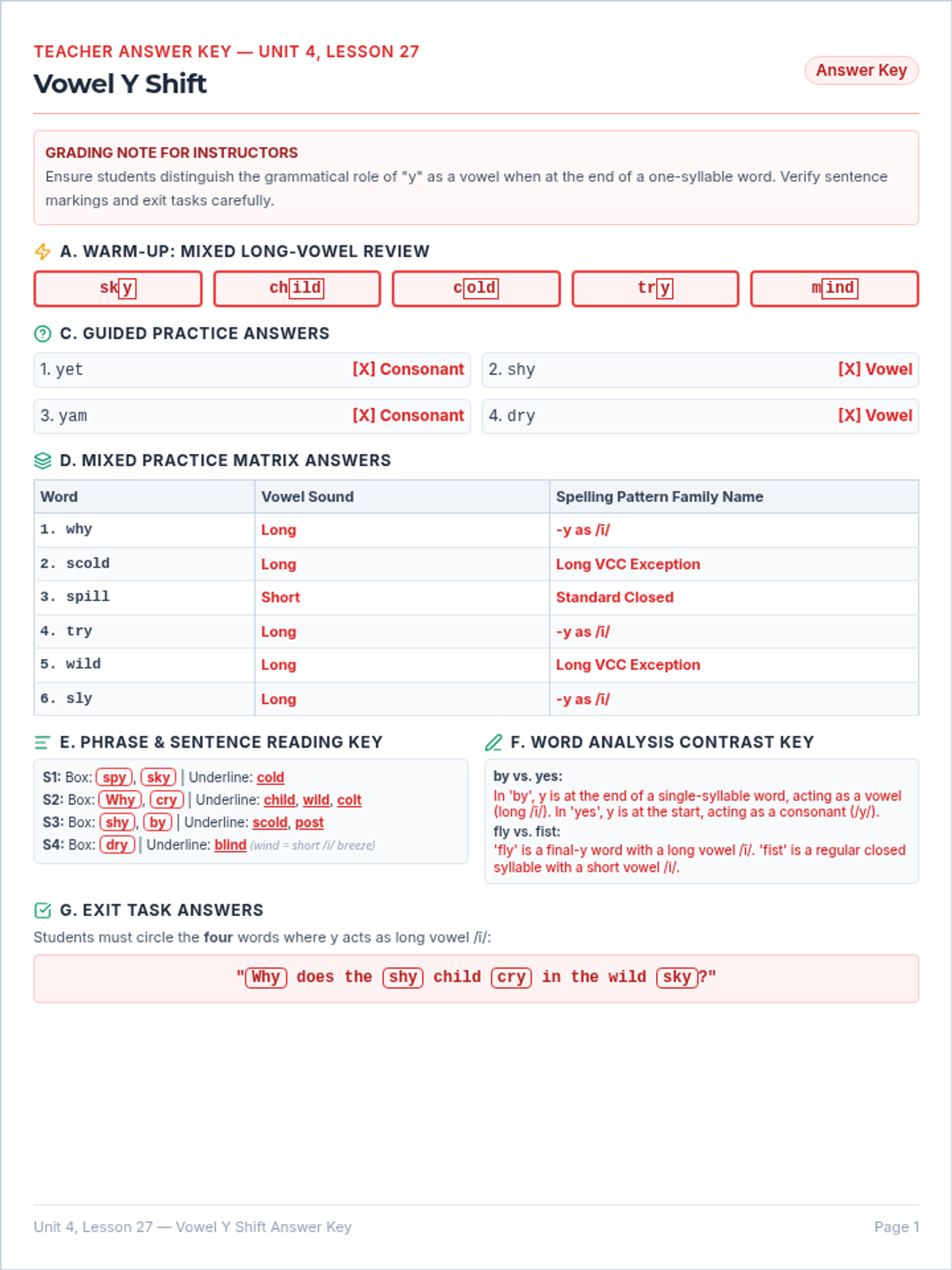
An intensive high school reading intervention lesson introducing final y as a long /ī/ vowel in one-syllable words, spiraling previous long VCC exceptions.
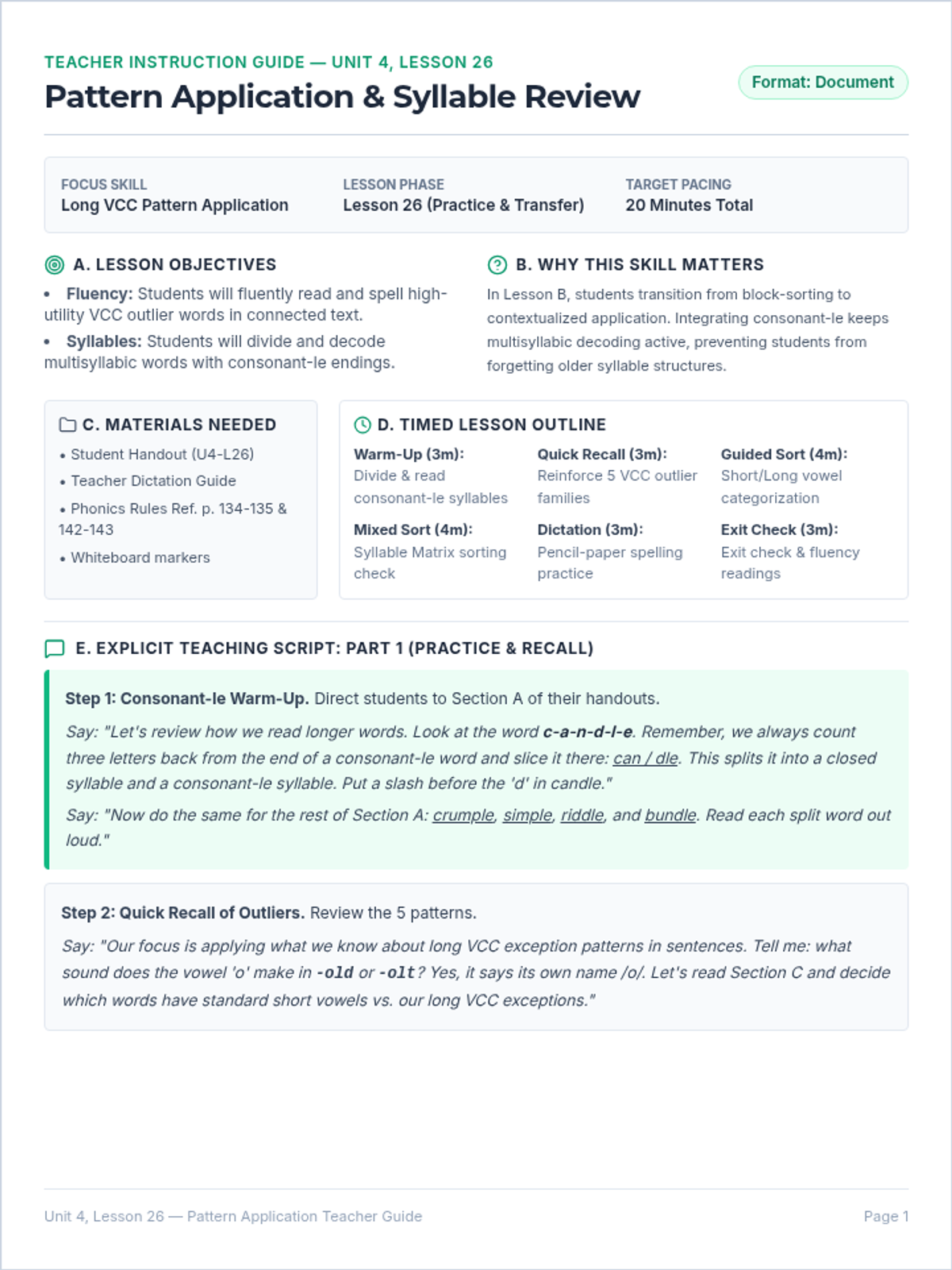
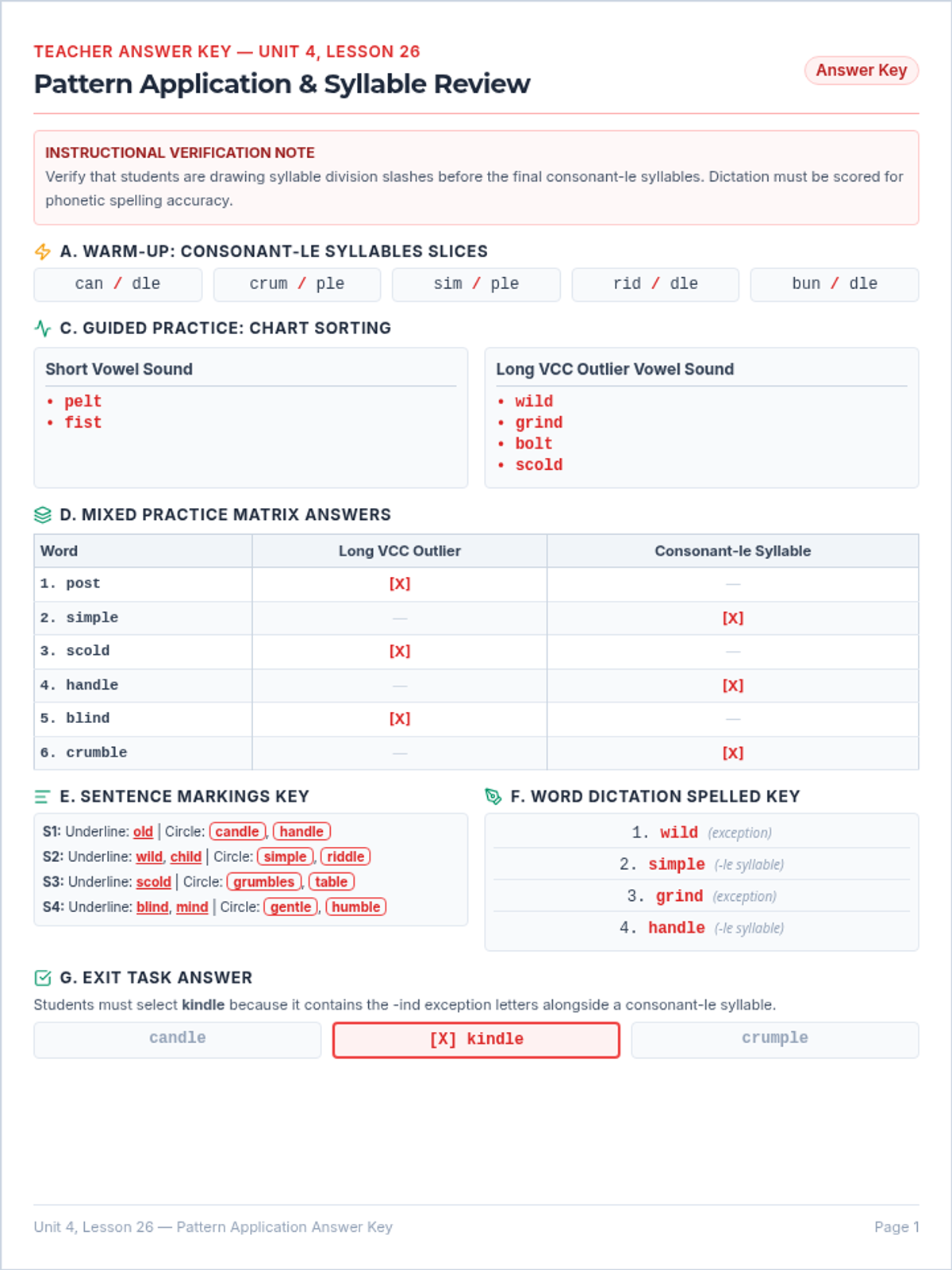
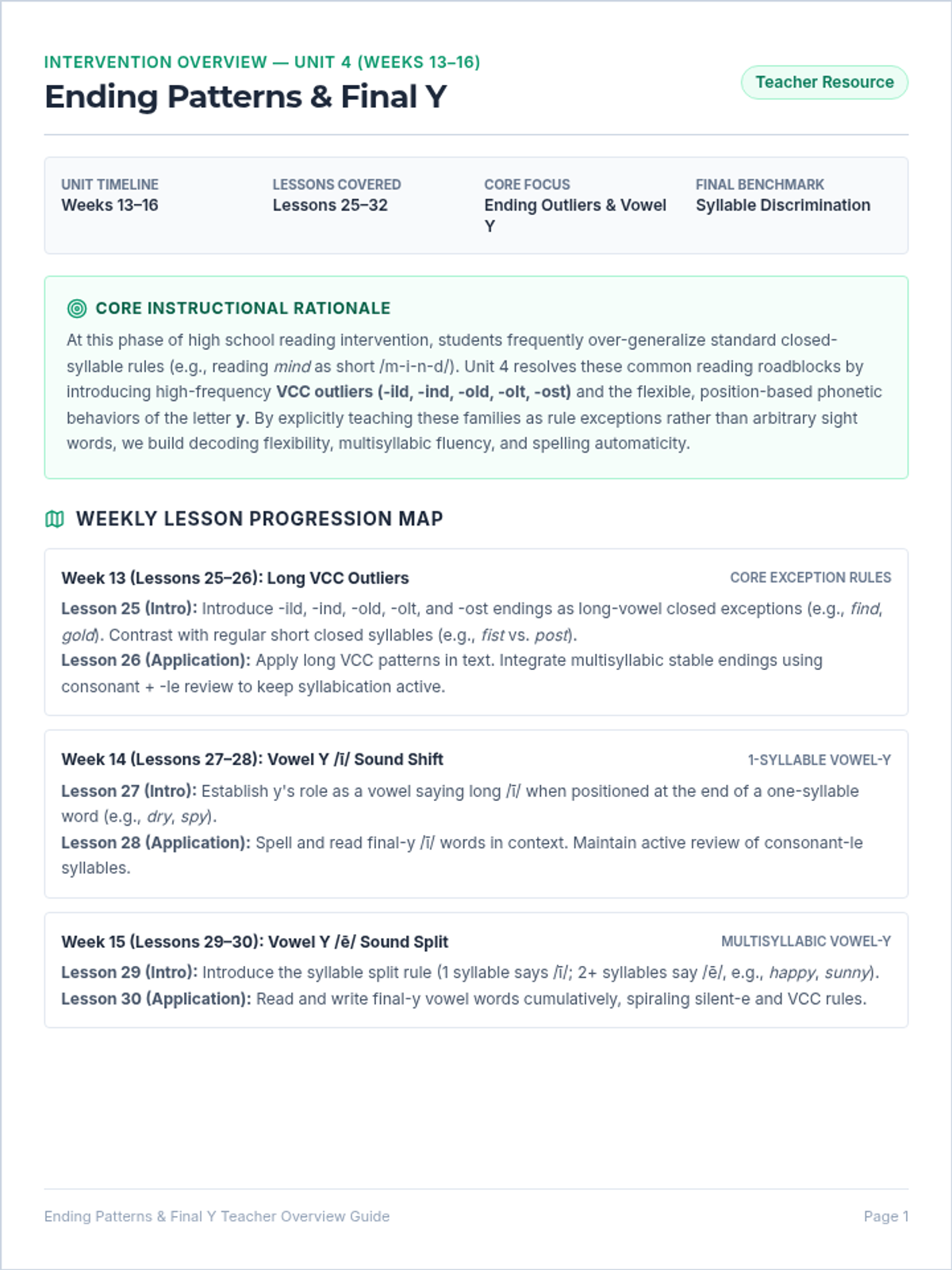
A practice-heavy high school reading intervention lesson applying long VCC vowel patterns in connected text, combined with multisyllabic decoding of consonant-le endings.
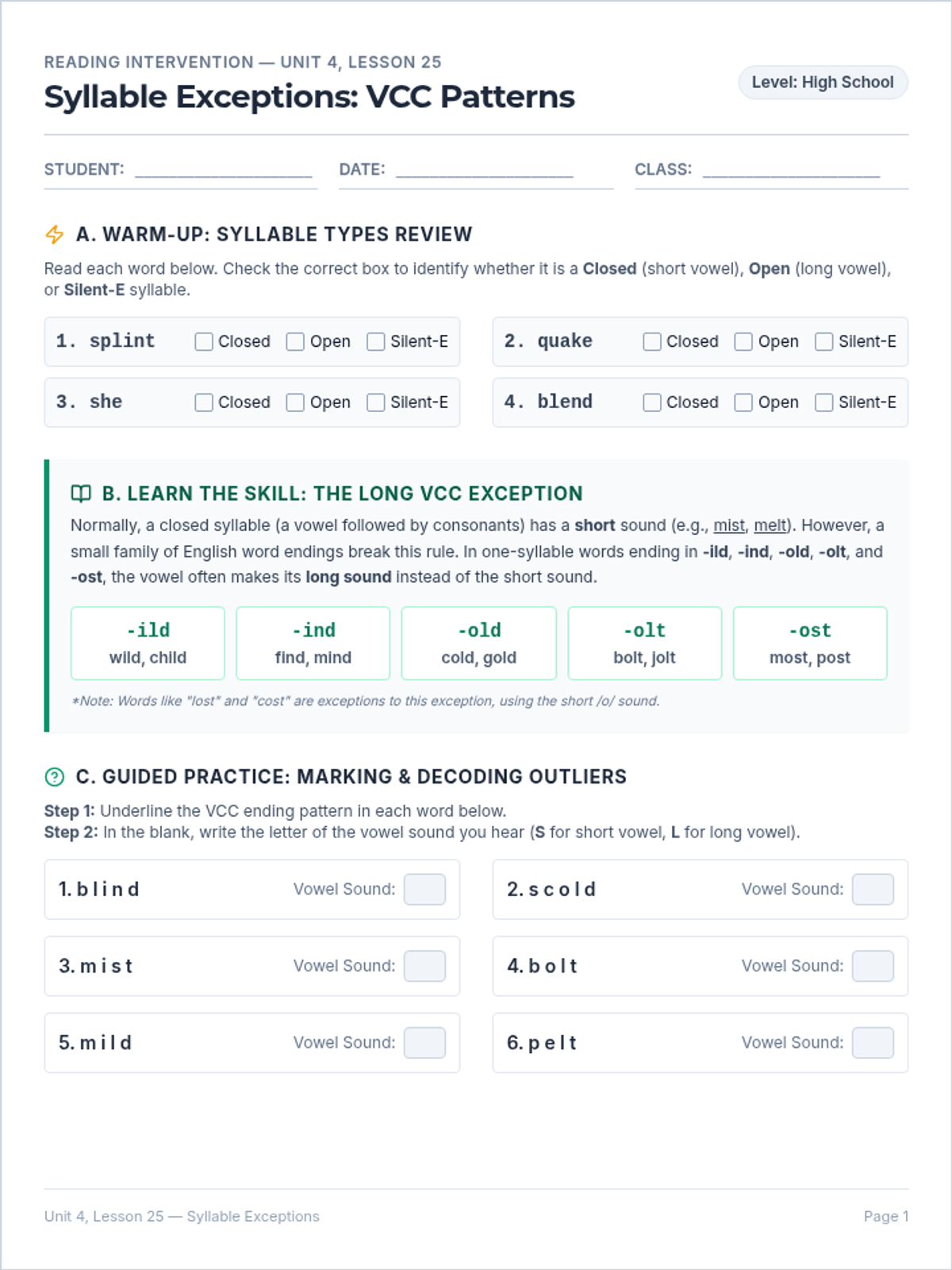
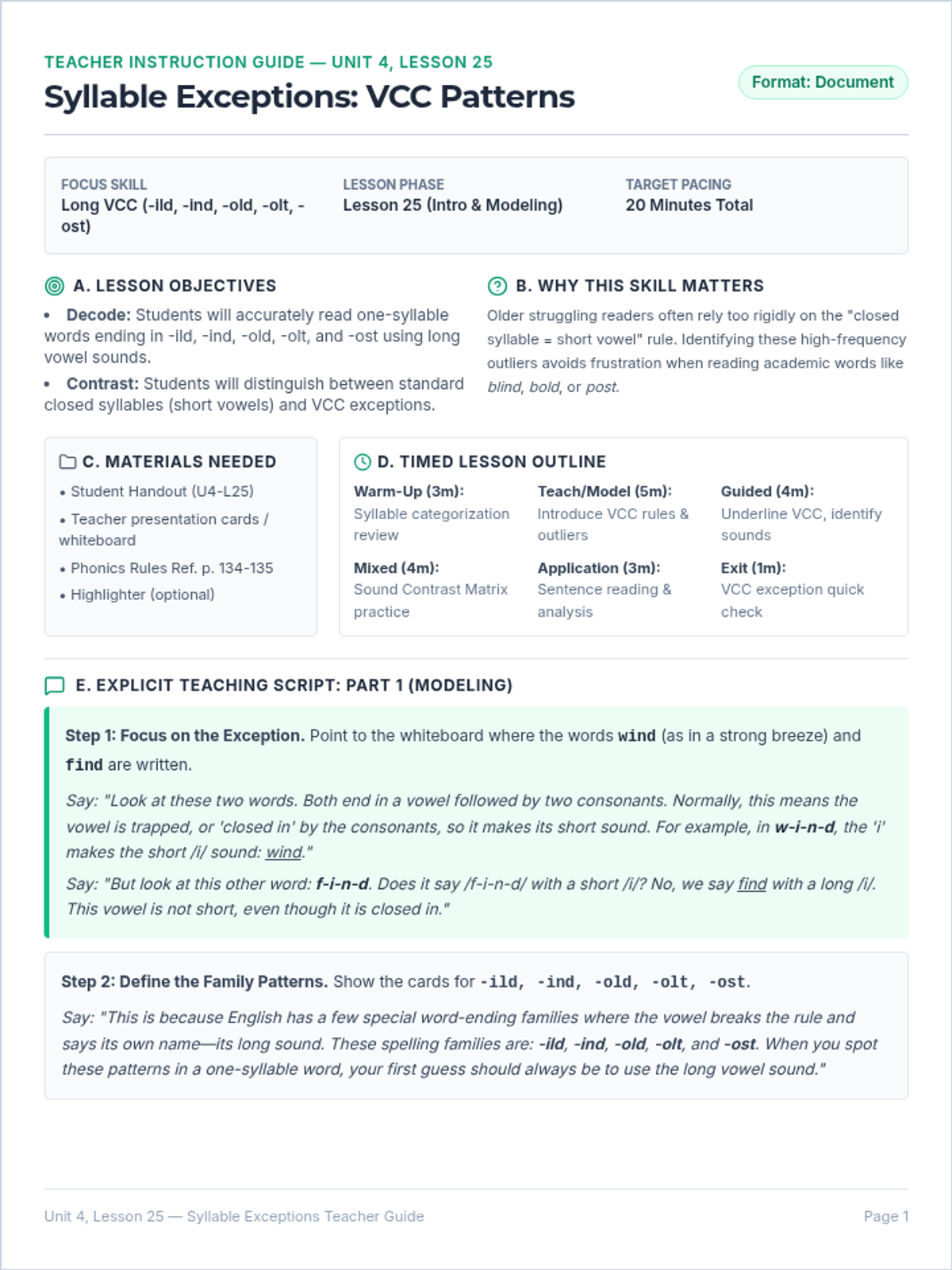
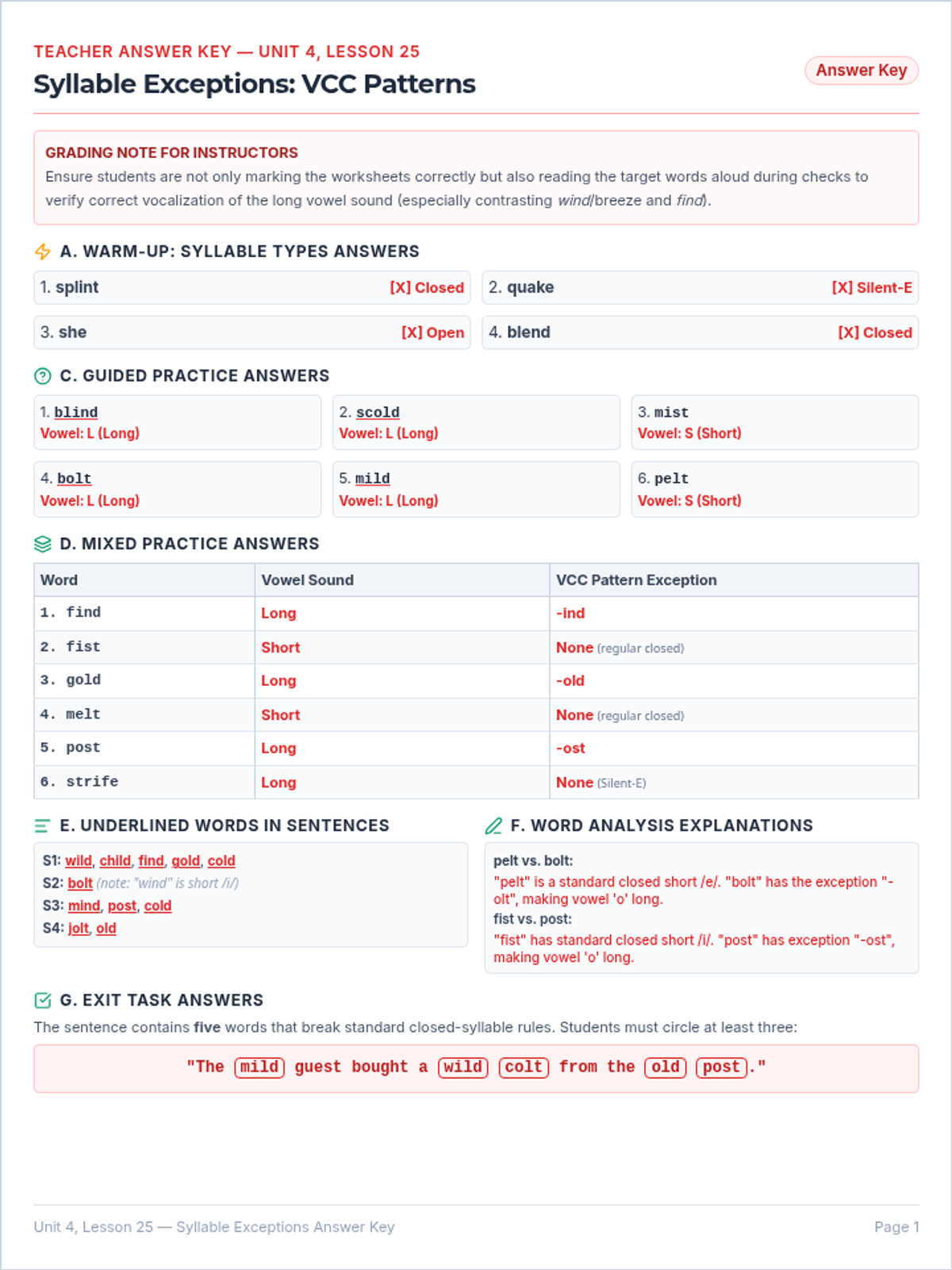
An intensive high school reading intervention lesson introducing long VCC vowel patterns (-ild, -ind, -old, -olt, -ost) as exceptions to standard closed syllable rules. It features scaffolded practice and explicit direct instruction.
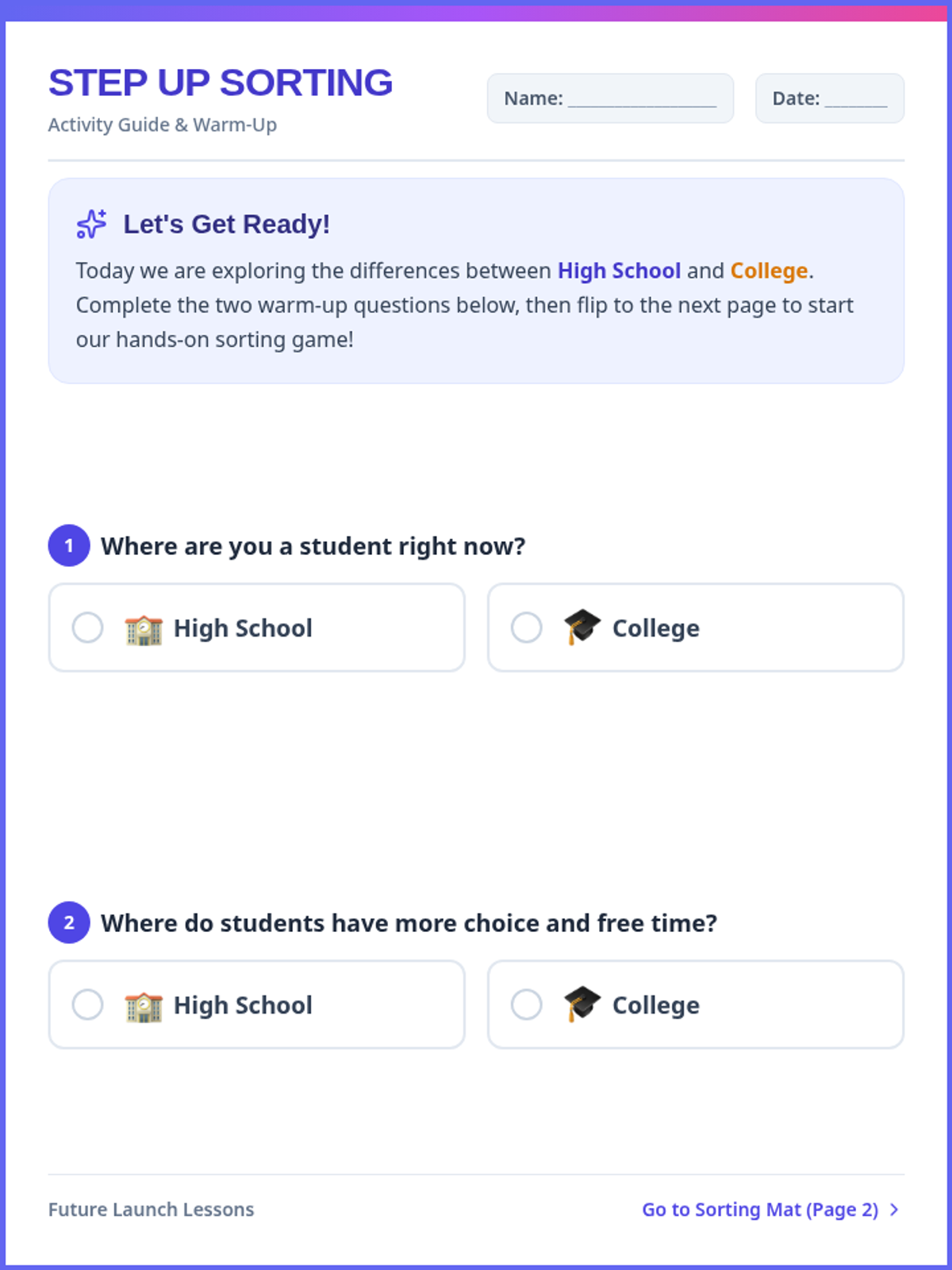
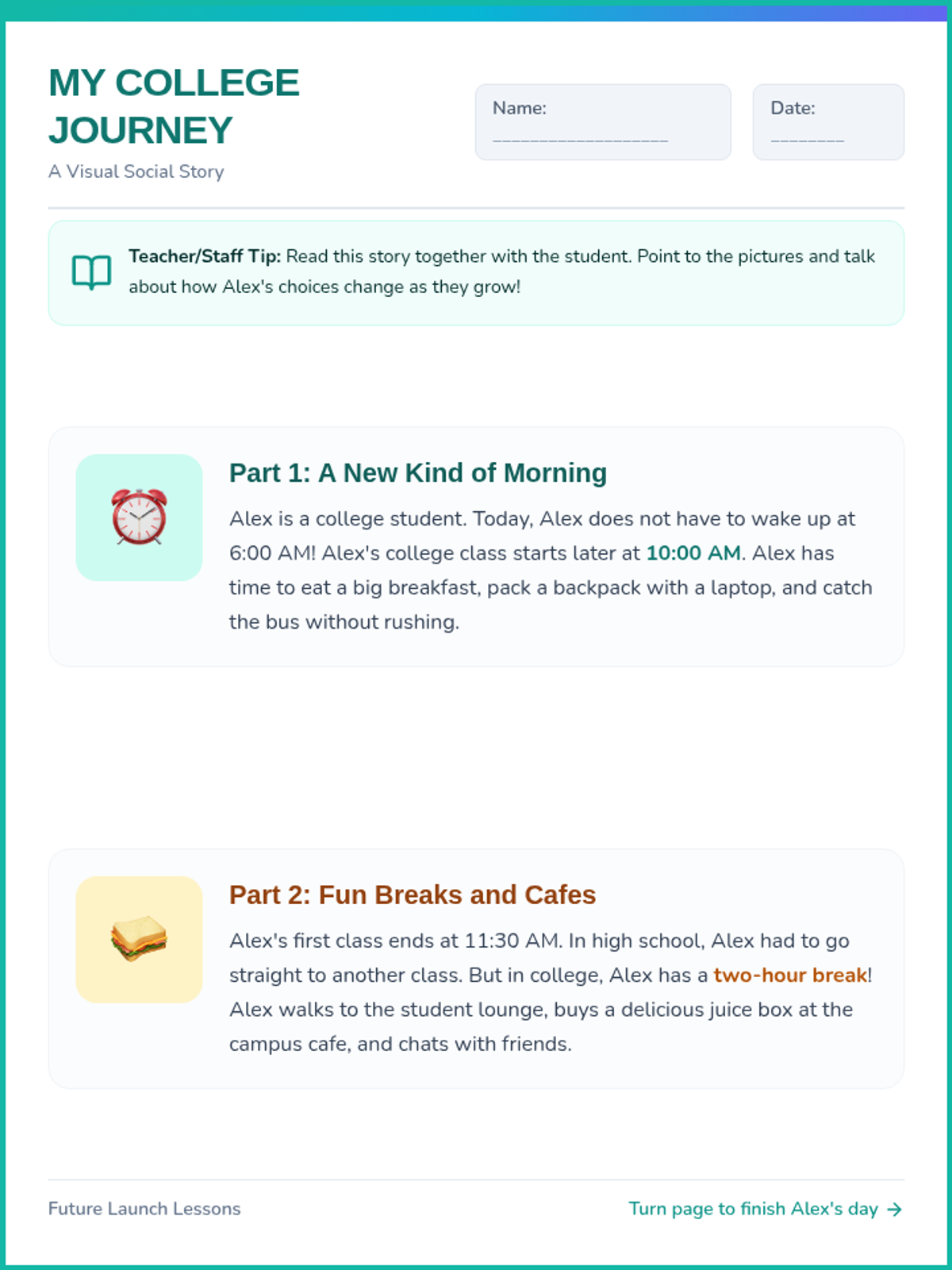
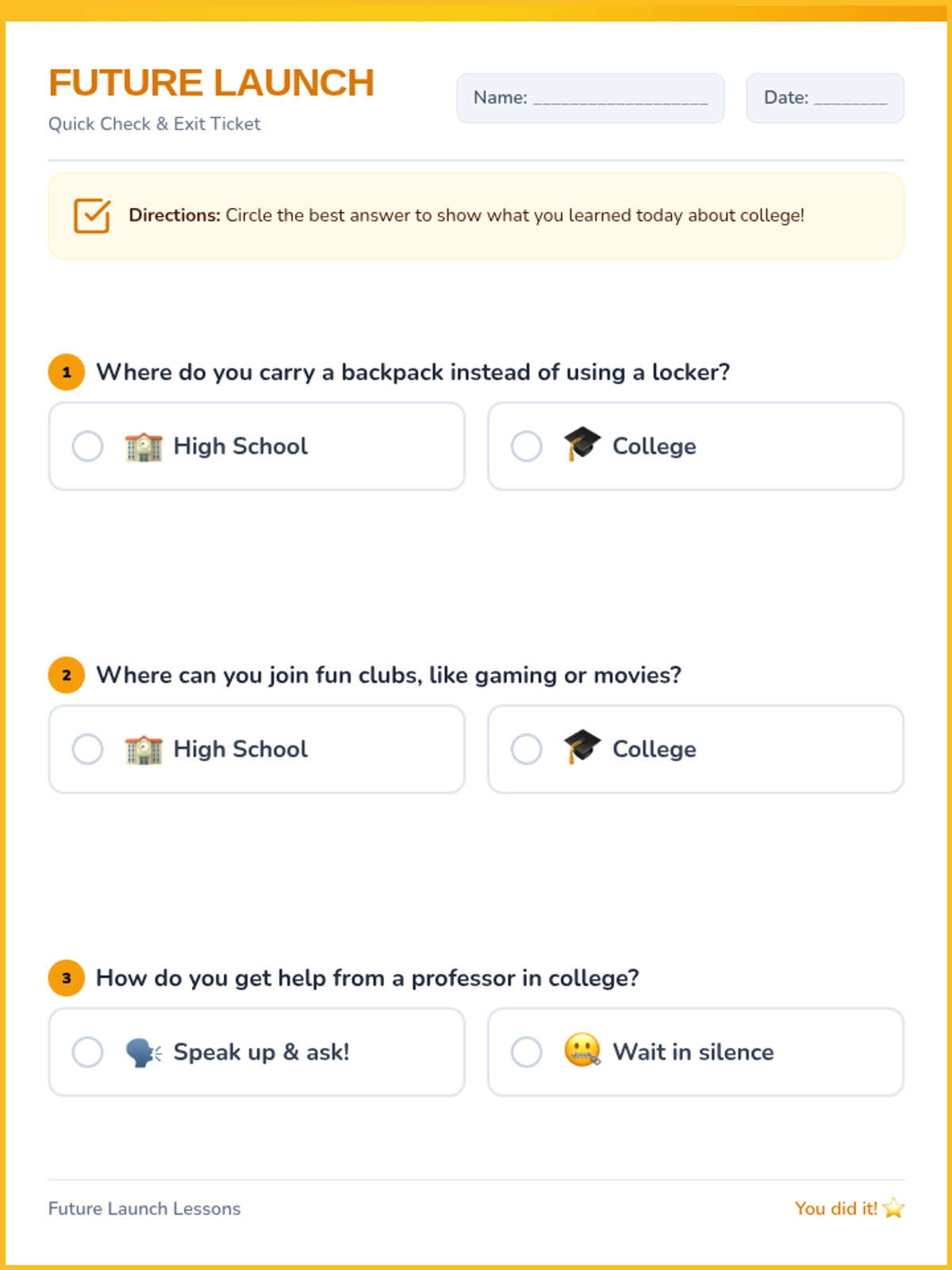
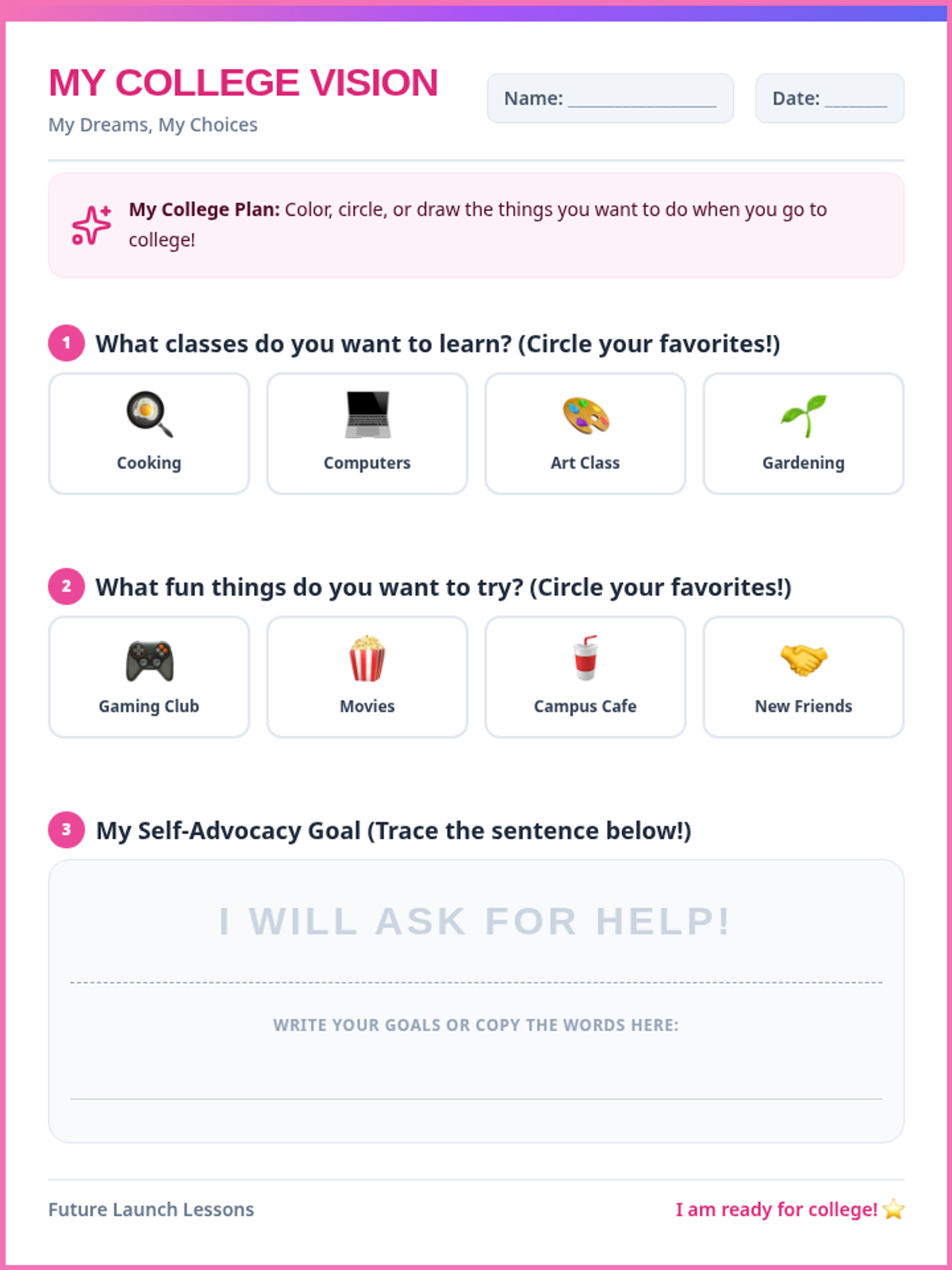
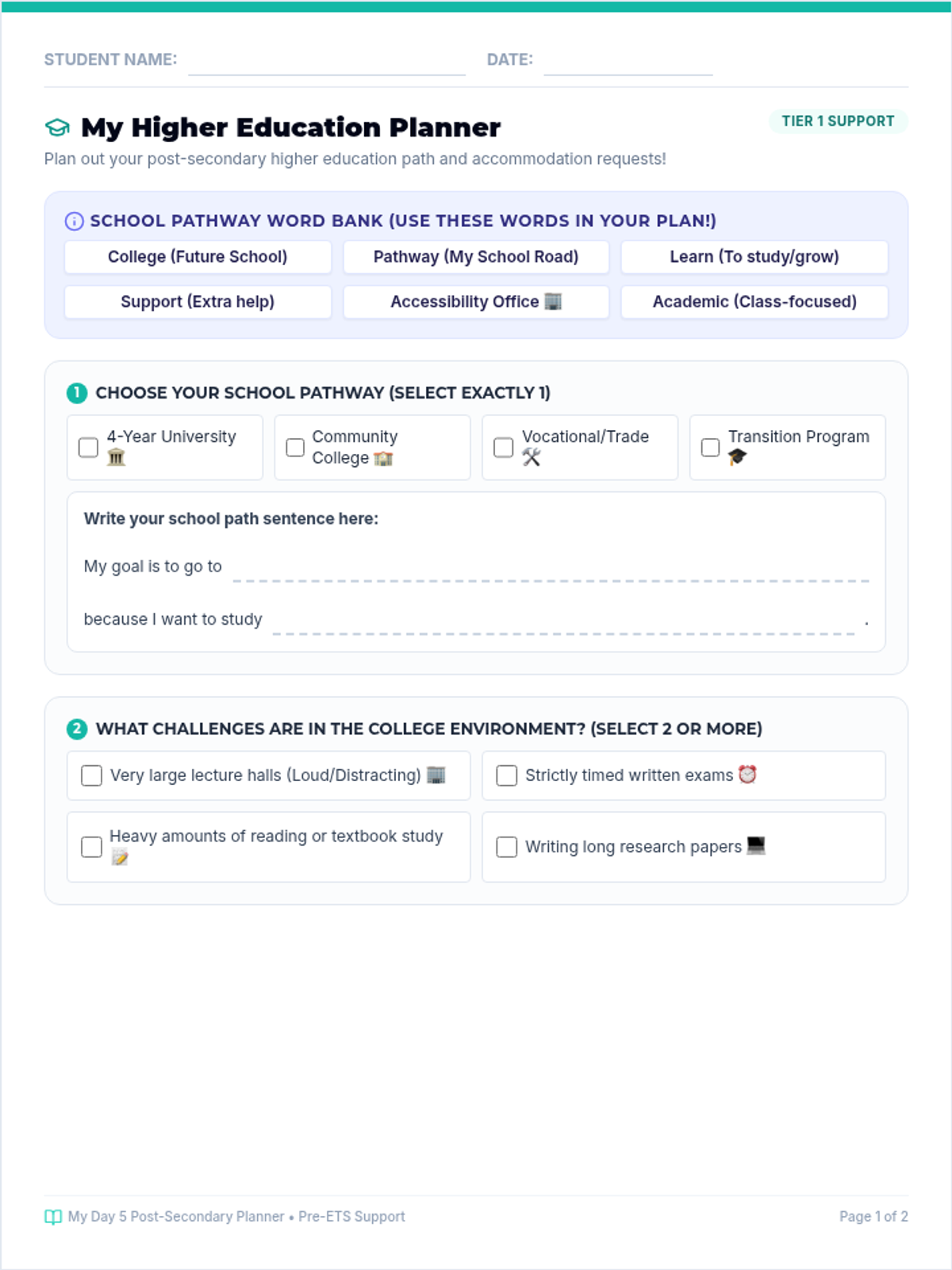
A highly visual, transition-focused lesson designed for life skills and low cognitive functioning high school students. It contrasts high school and college schedules, rules, and expectations, while highlighting the social and fun opportunities of college life through a slide deck, sorting activity, social story, and simple exit ticket.
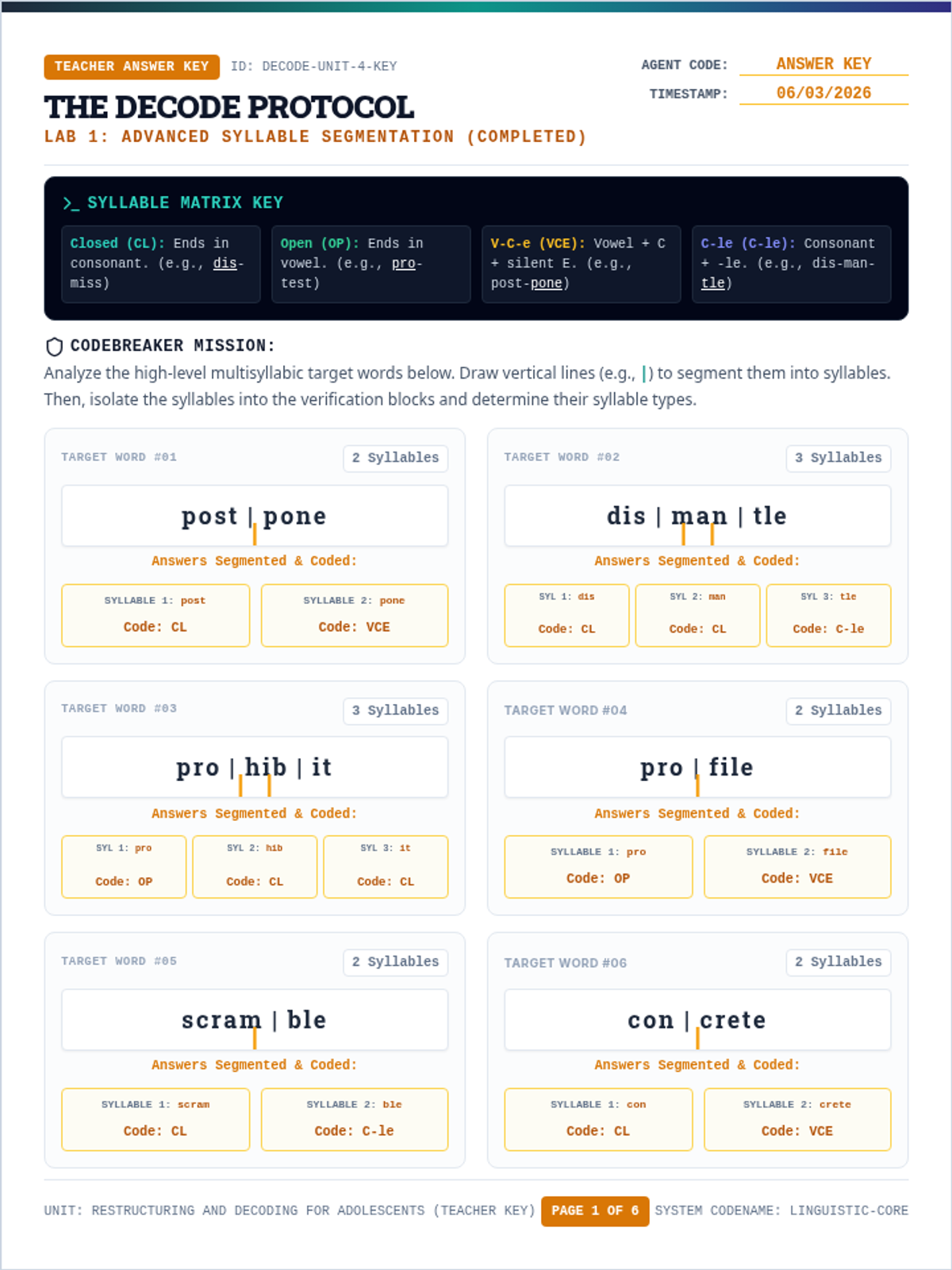
A comprehensive phonics and syllable review unit focusing on vowel teams, r-controlled vowels, syllable division, and affix-based word building. Includes a multi-page student review packet and a corresponding teacher answer key.
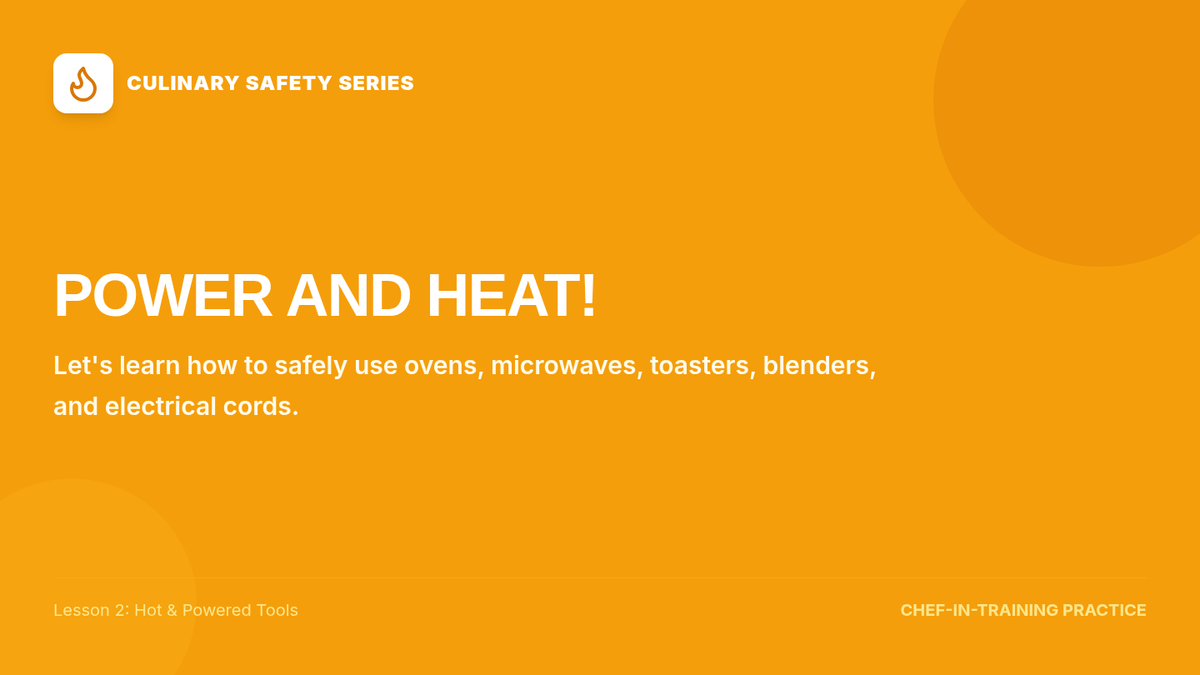
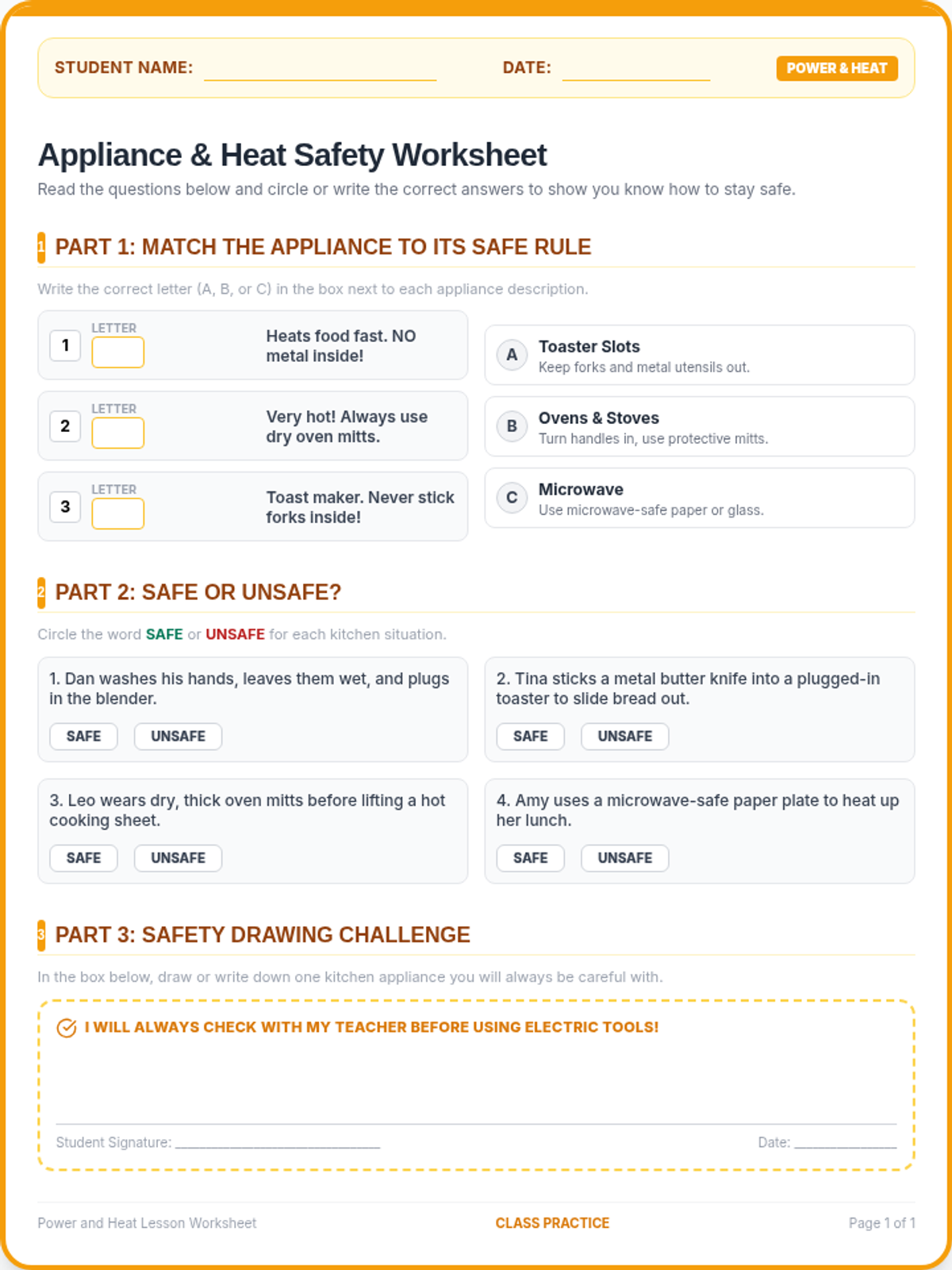
A comprehensive lesson focusing on heat safety, general kitchen appliances (microwaves, ovens, toasters, blenders), and electrical safety. It includes interactive visual slides and a matching worksheet tailored for high school special needs students.
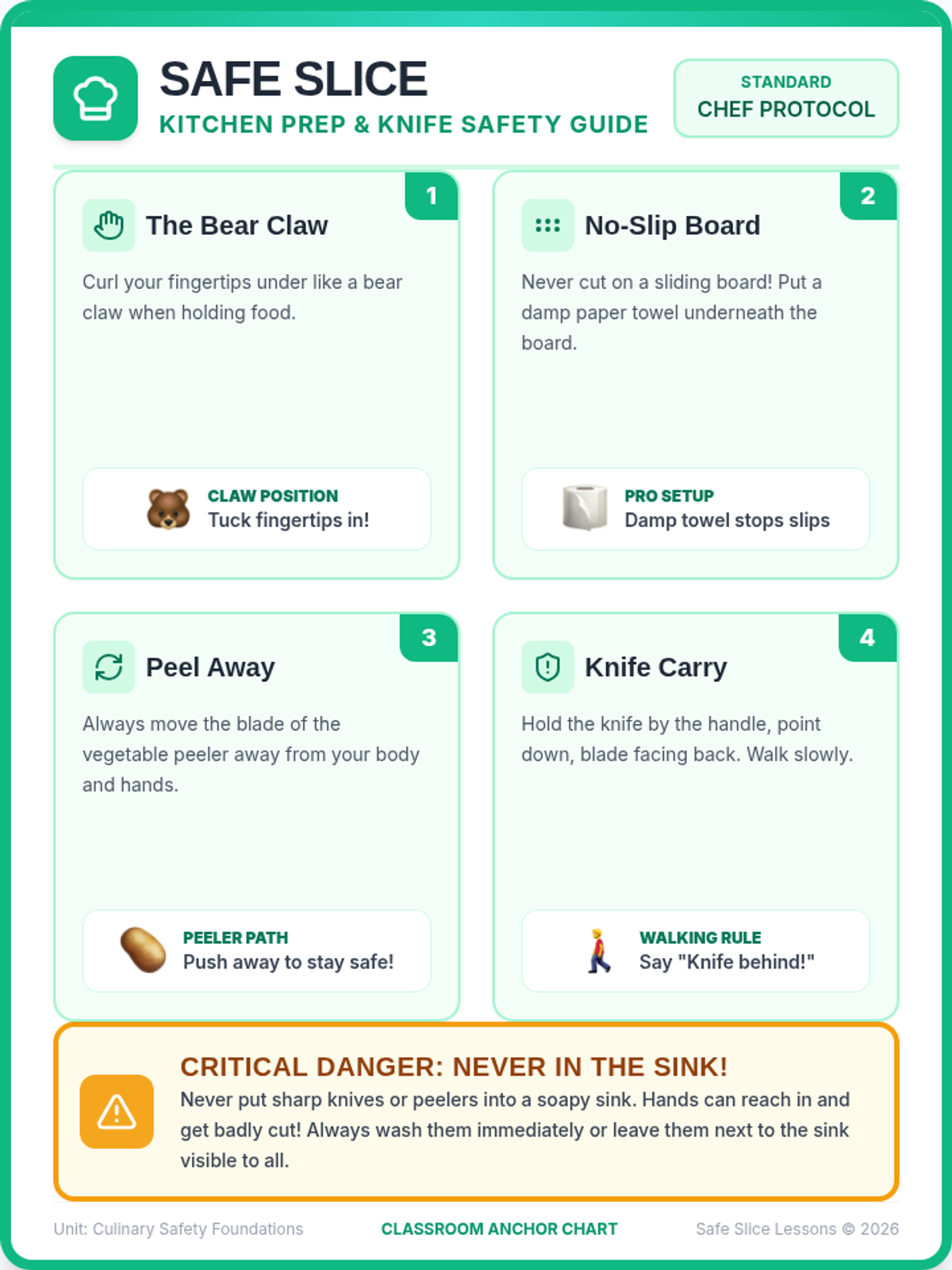
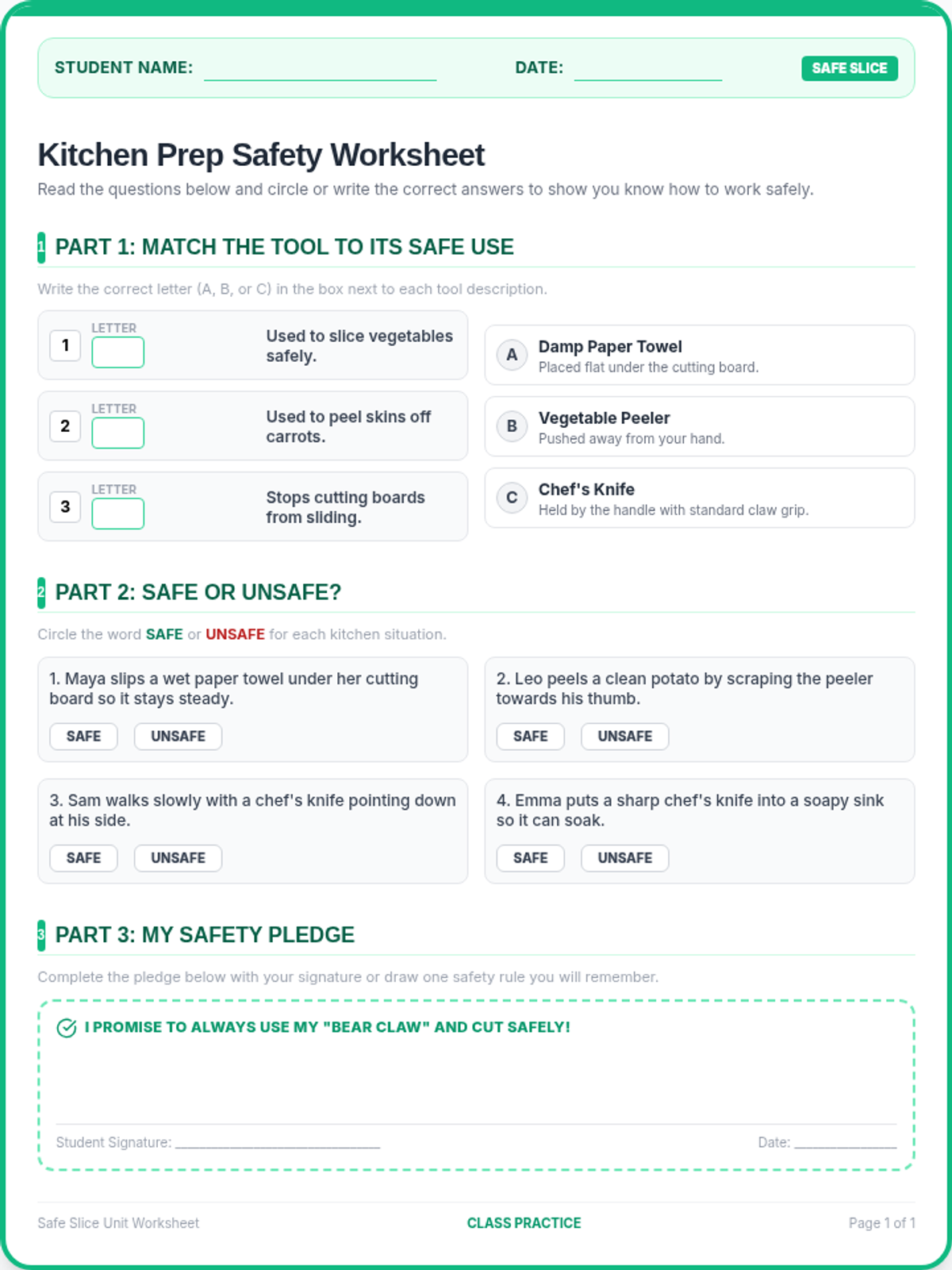
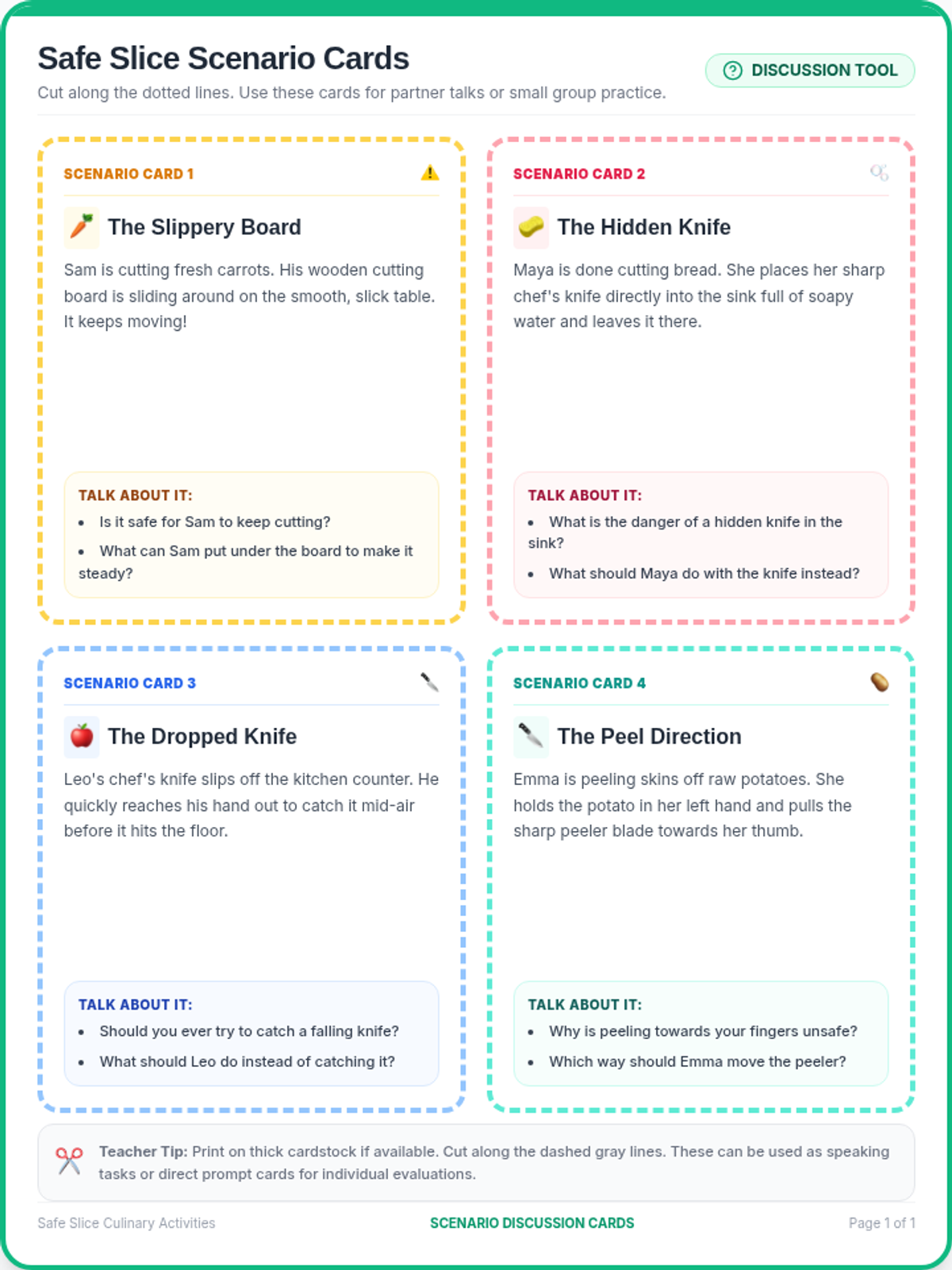
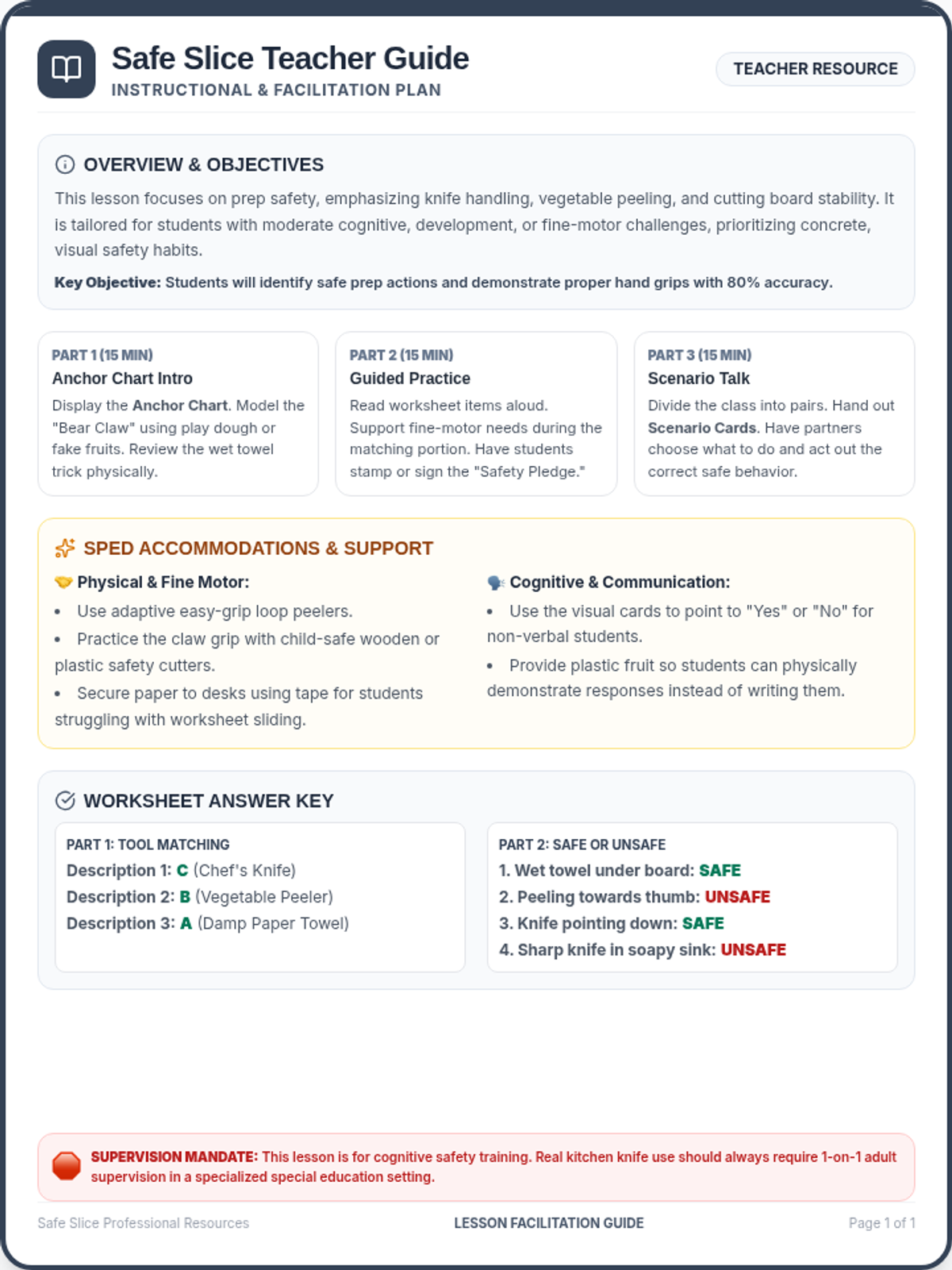
A comprehensive kitchen safety lesson focusing on cutting and preparation tools, designed for high school special education students. It includes visual guides, matching practice, and real-world scenario cards to teach knife safety, peeling, and cutting board stability.
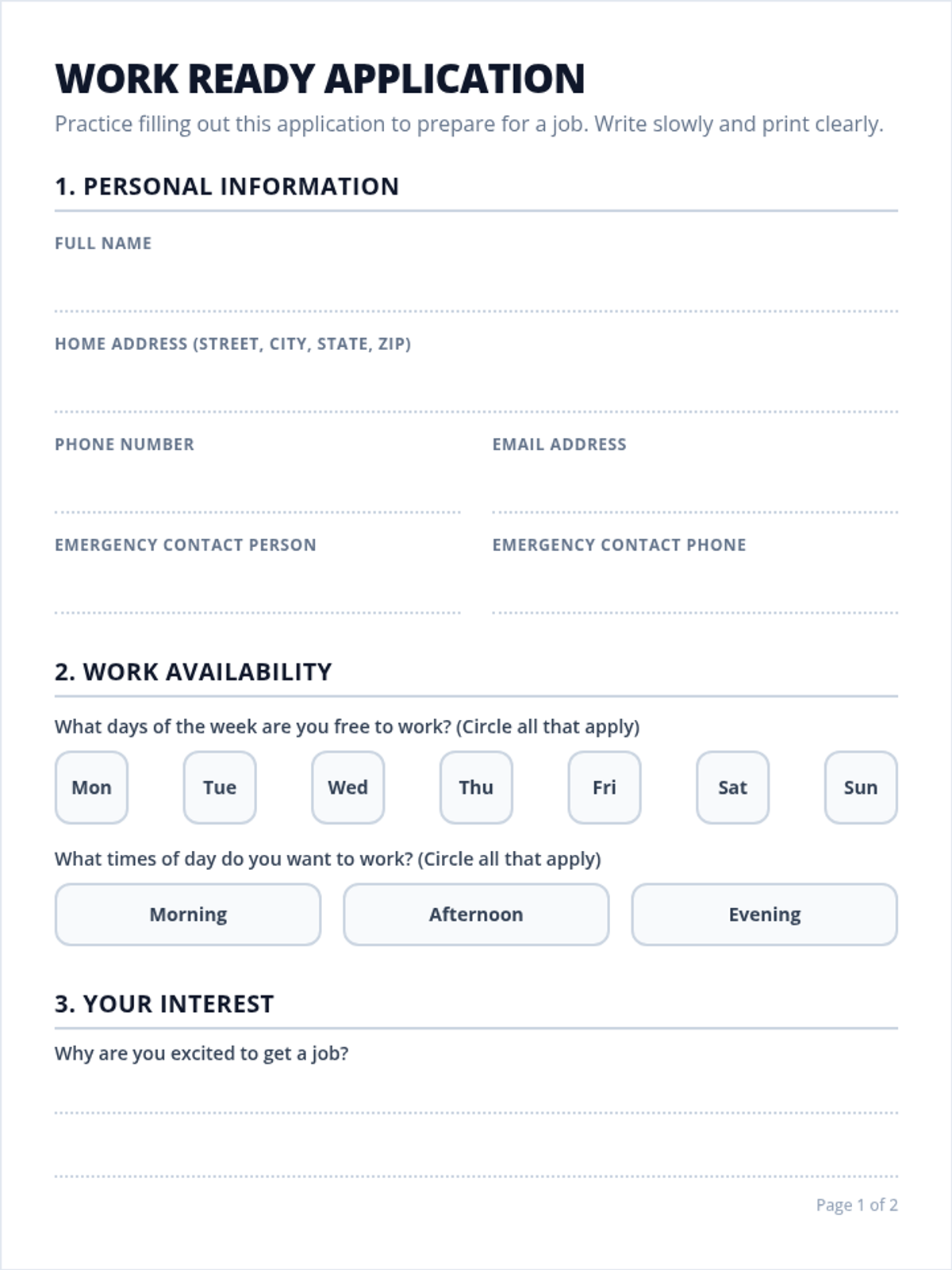
An introductory lesson designed to prepare high school special needs students for entering the workforce by understanding how to fill out a job application, identifying personal strengths, and recognizing supportive accommodations.
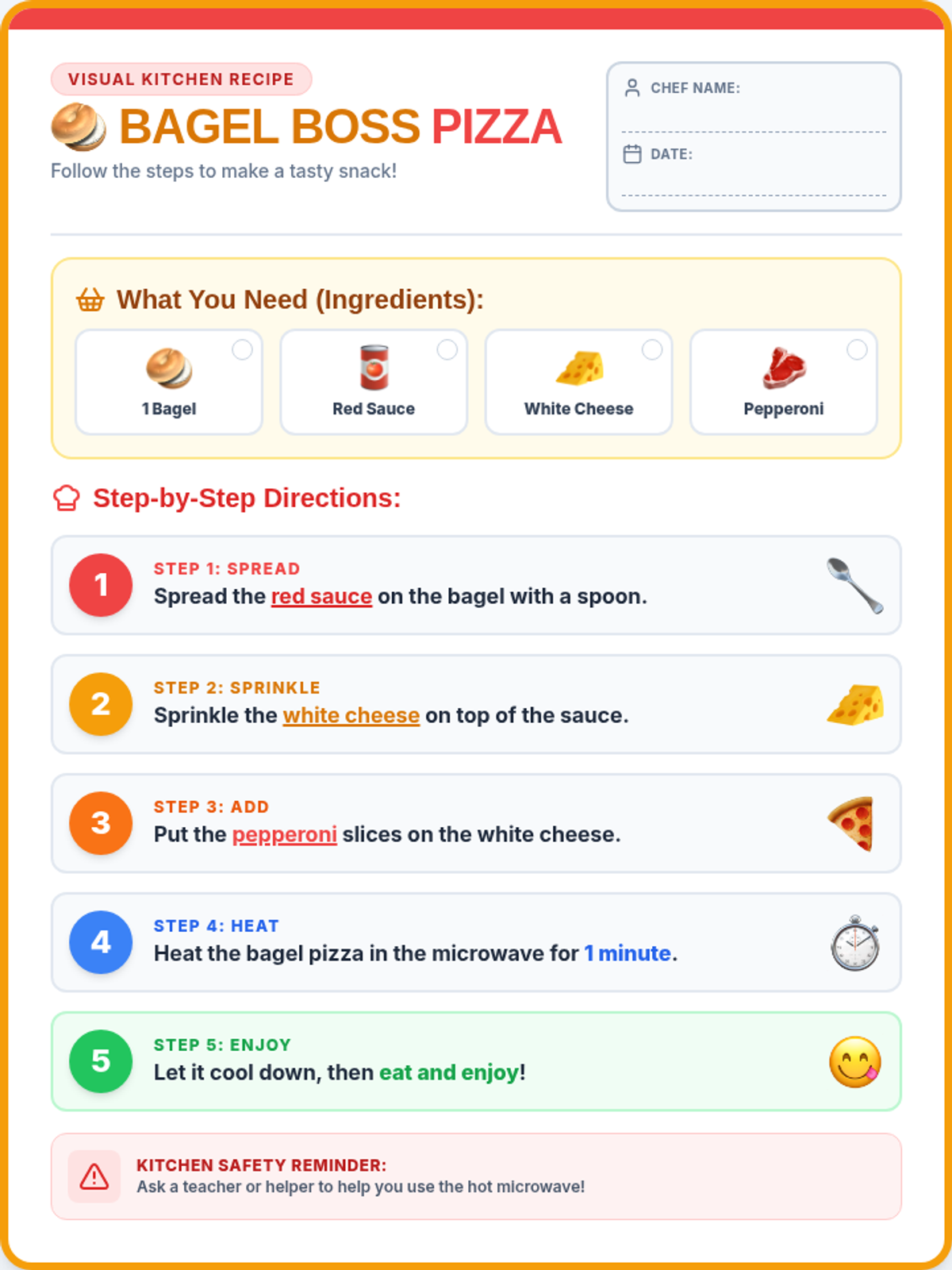
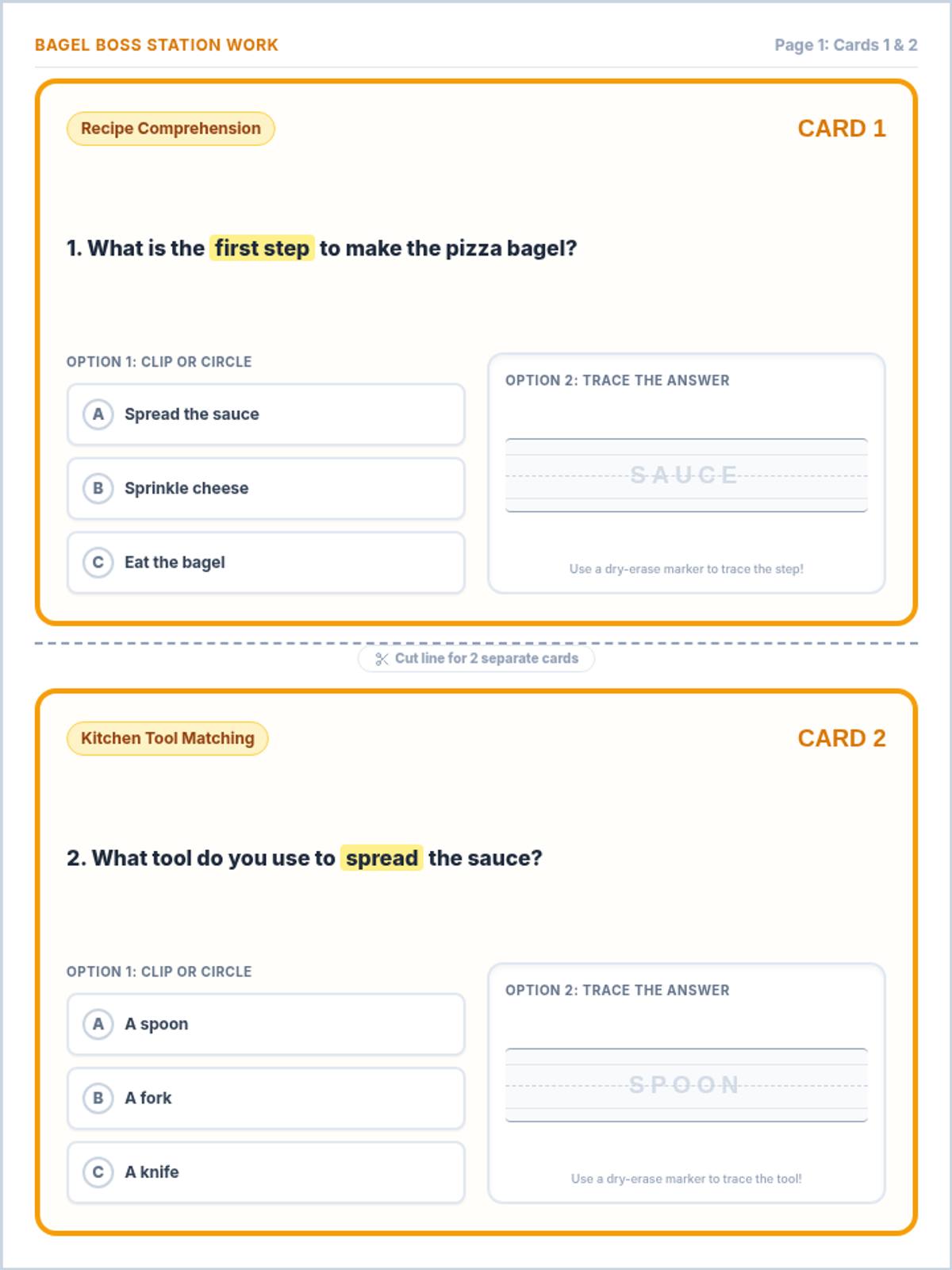
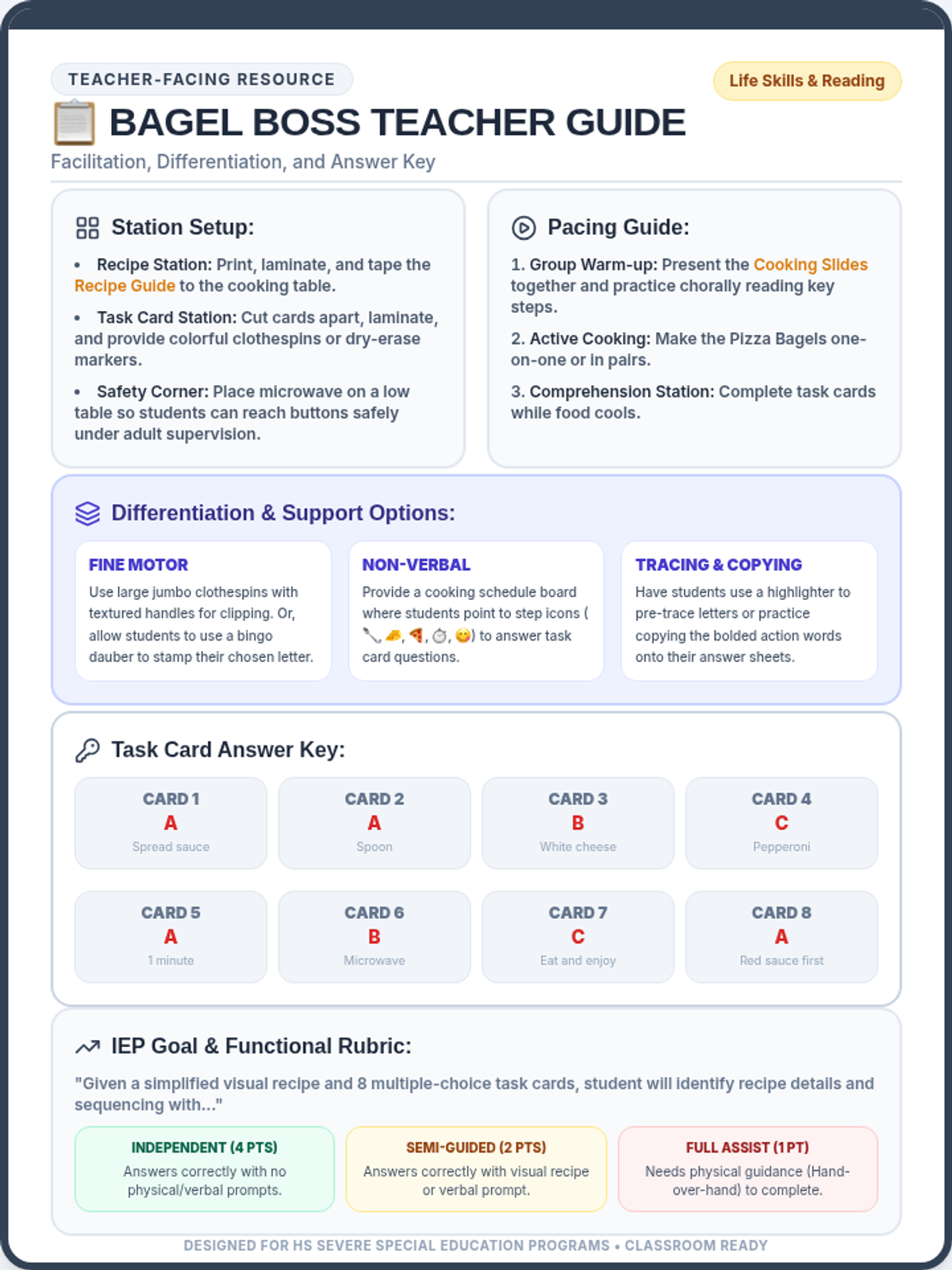
A highly visual, step-by-step cooking and comprehension lesson for students with severe special needs. Students learn to read a simplified recipe for Pizza Bagels and answer functional text comprehension questions using reusable task cards with tracing, copying, or clip-card options.
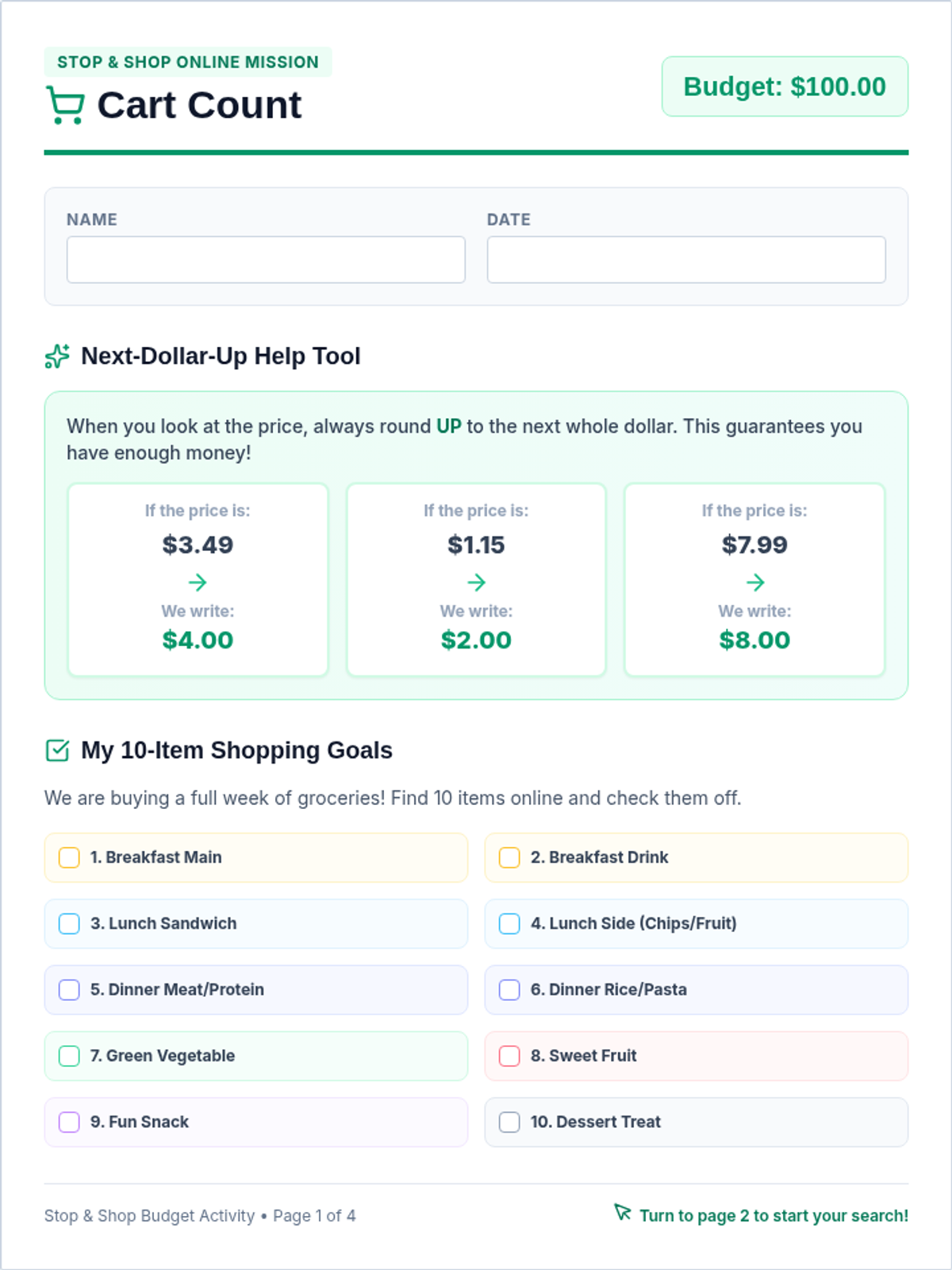
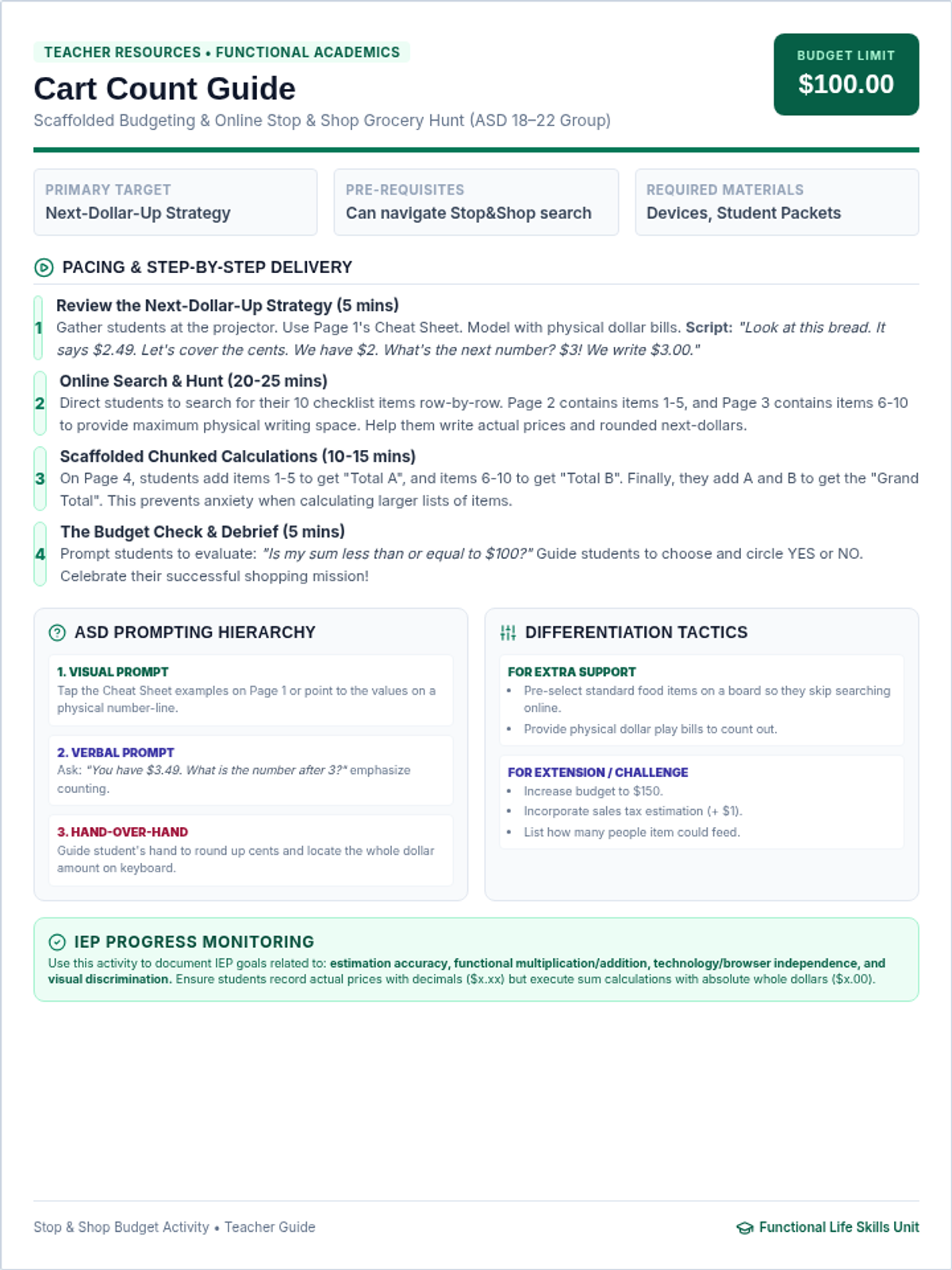
A highly scaffolded functional math lesson where students use the next-dollar-up estimation strategy to shop online at Stop & Shop, planning meals and staying strictly within a budget.
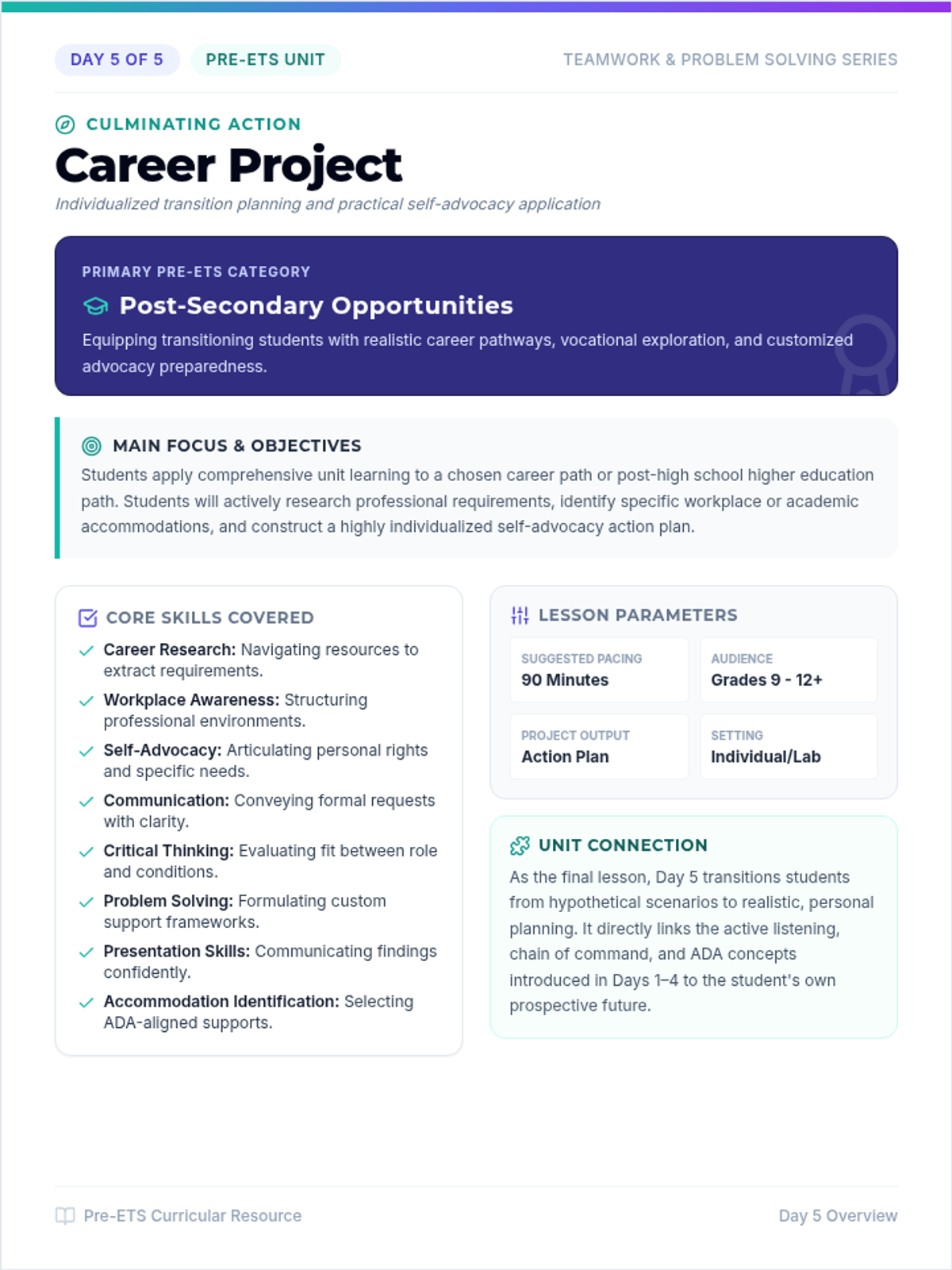
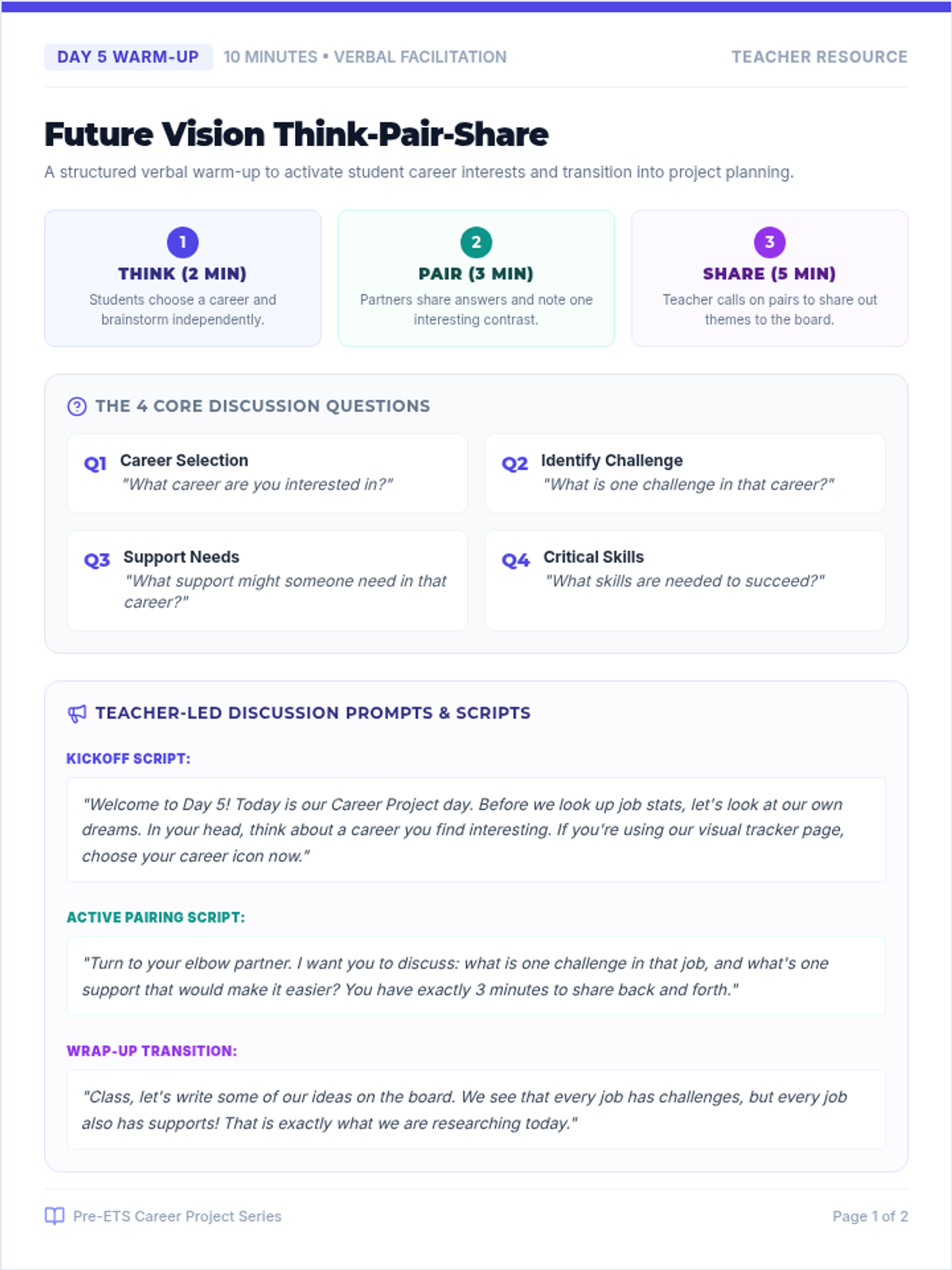
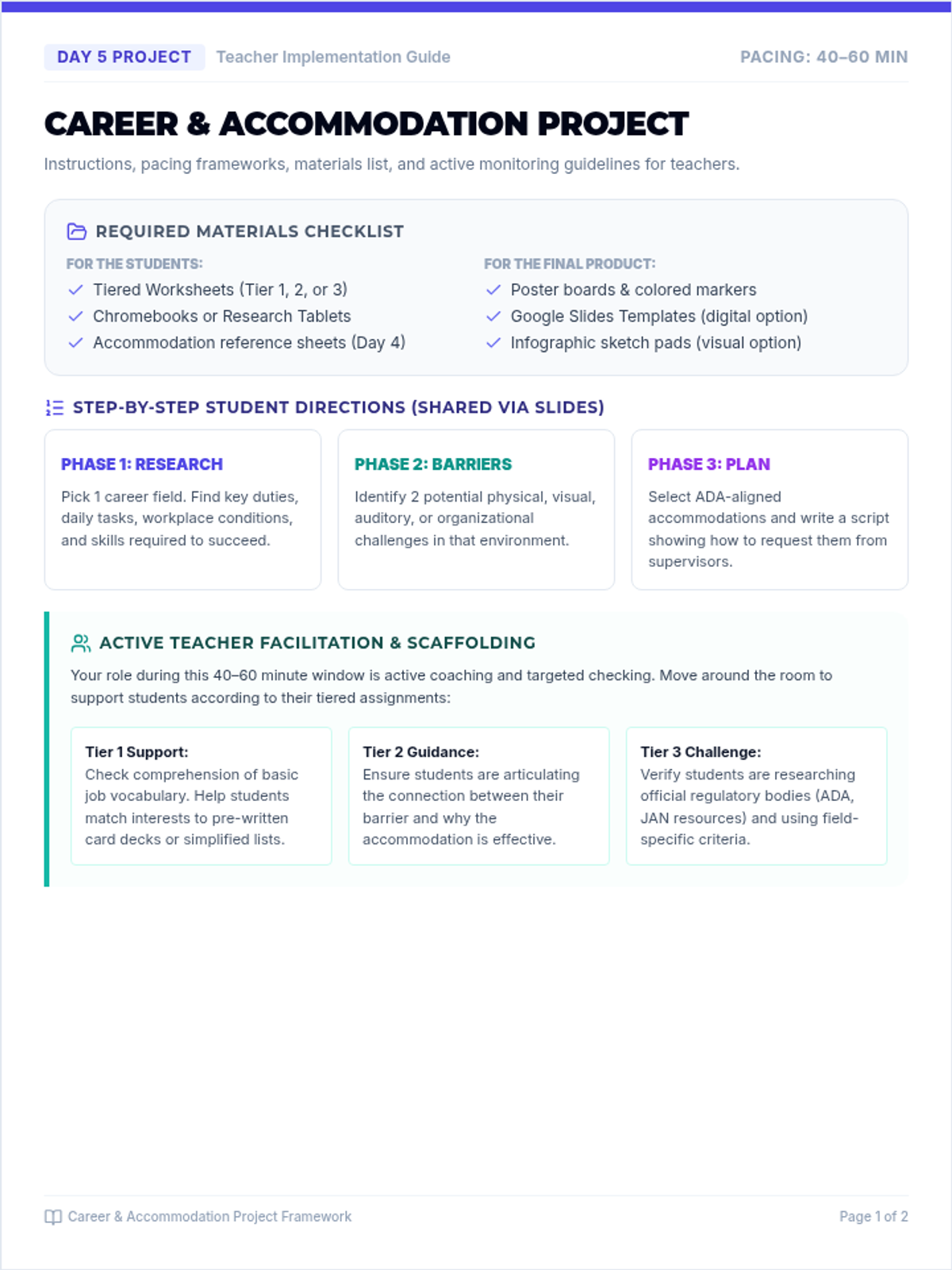
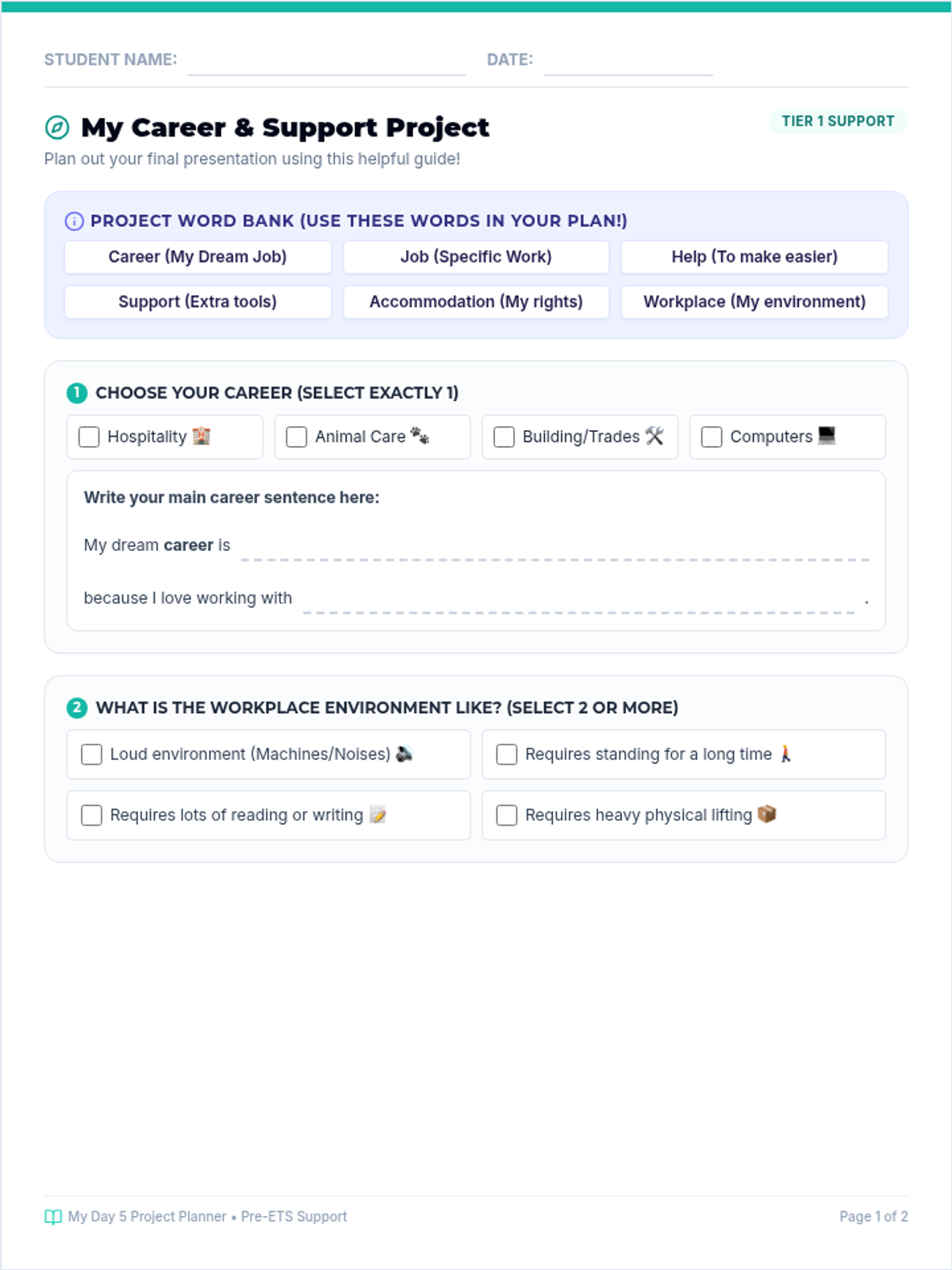
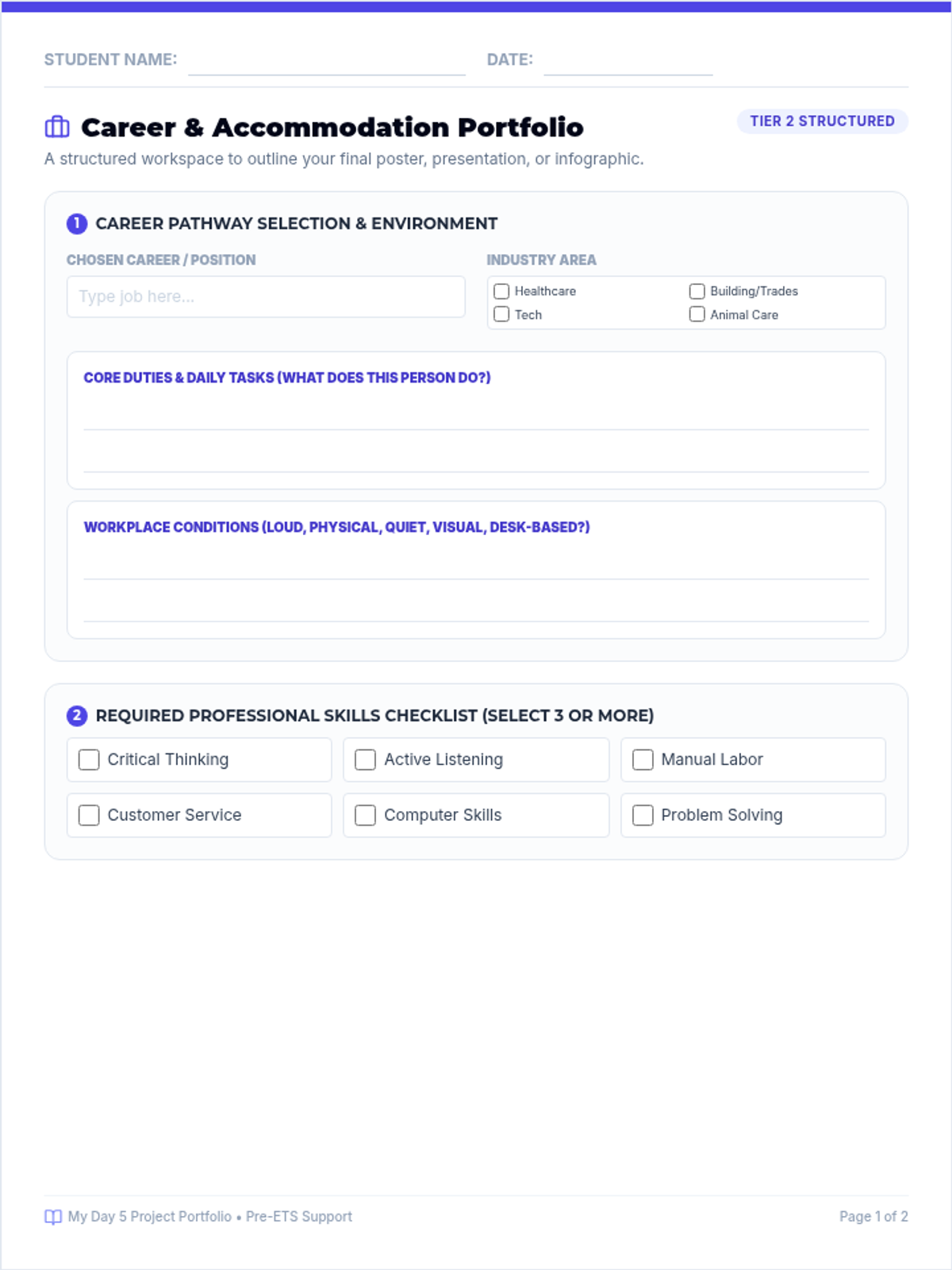
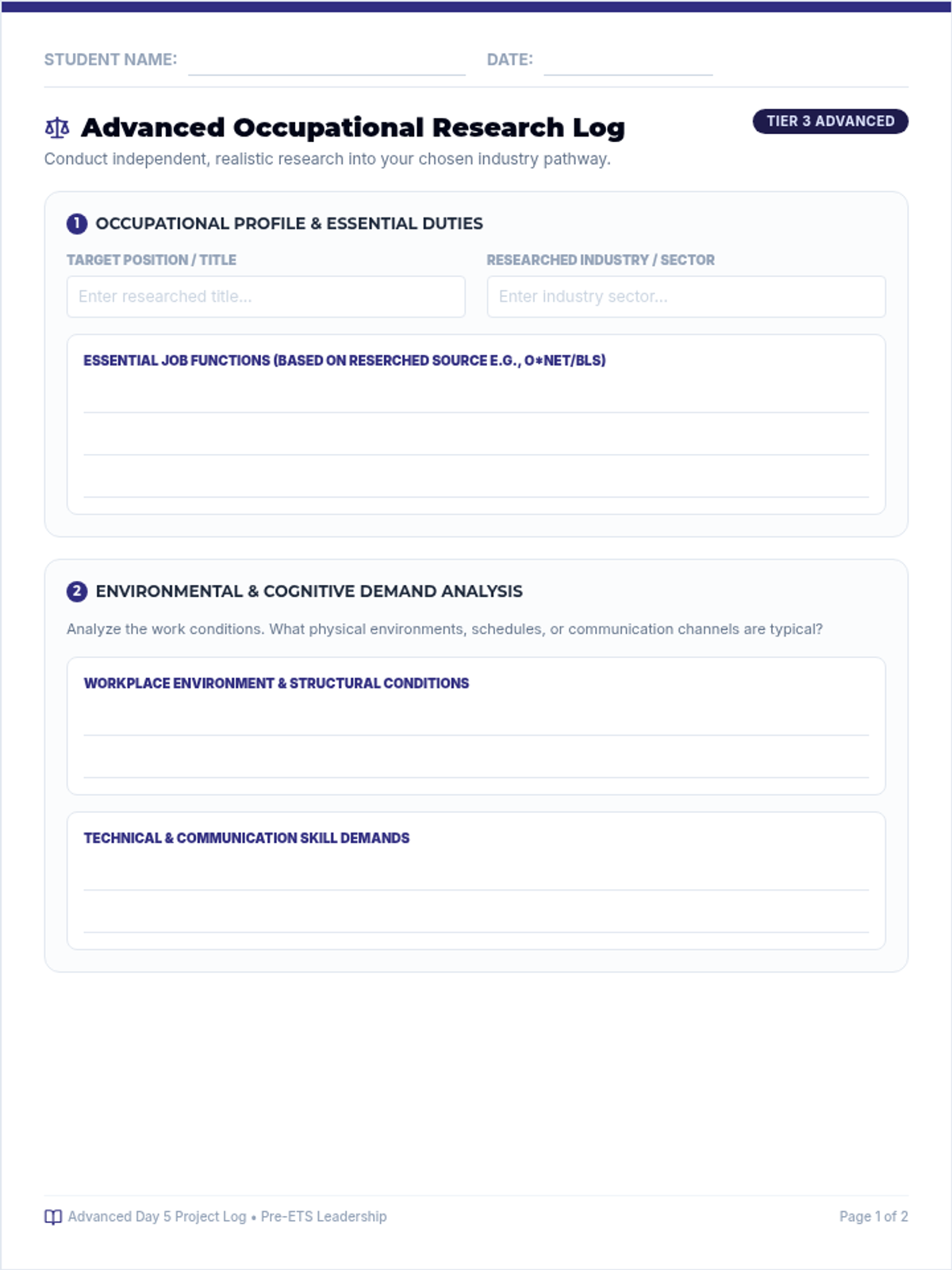
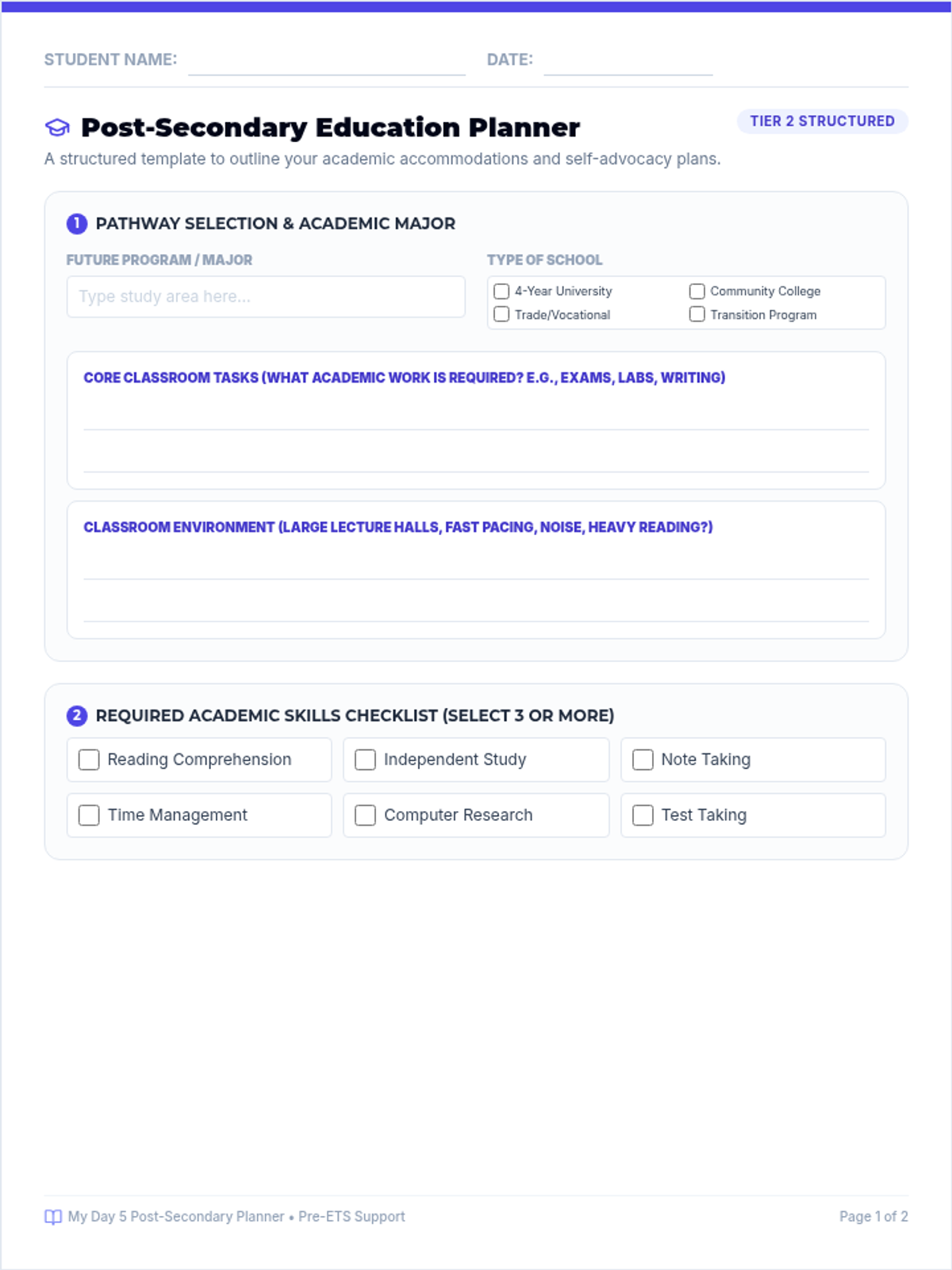
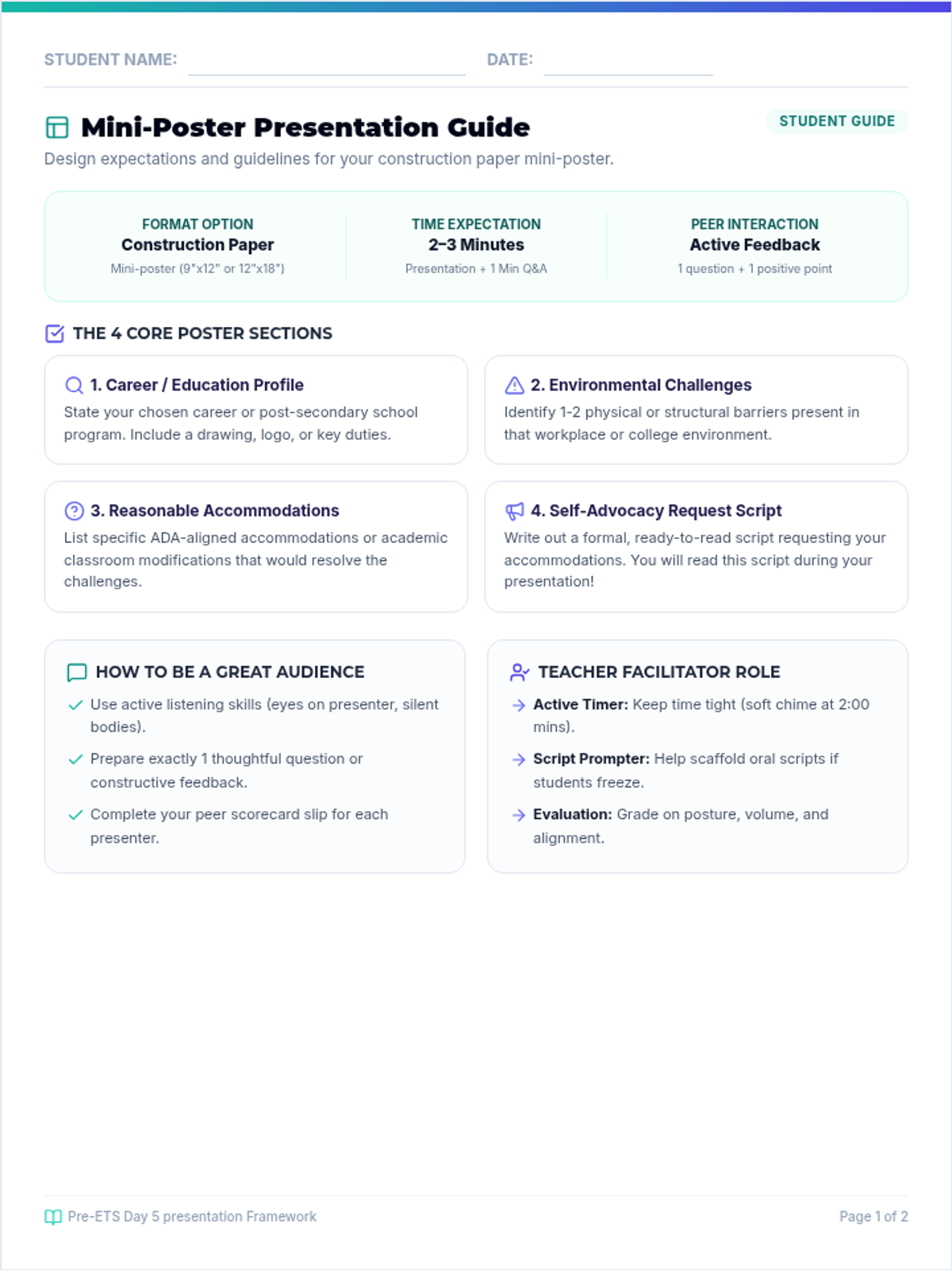
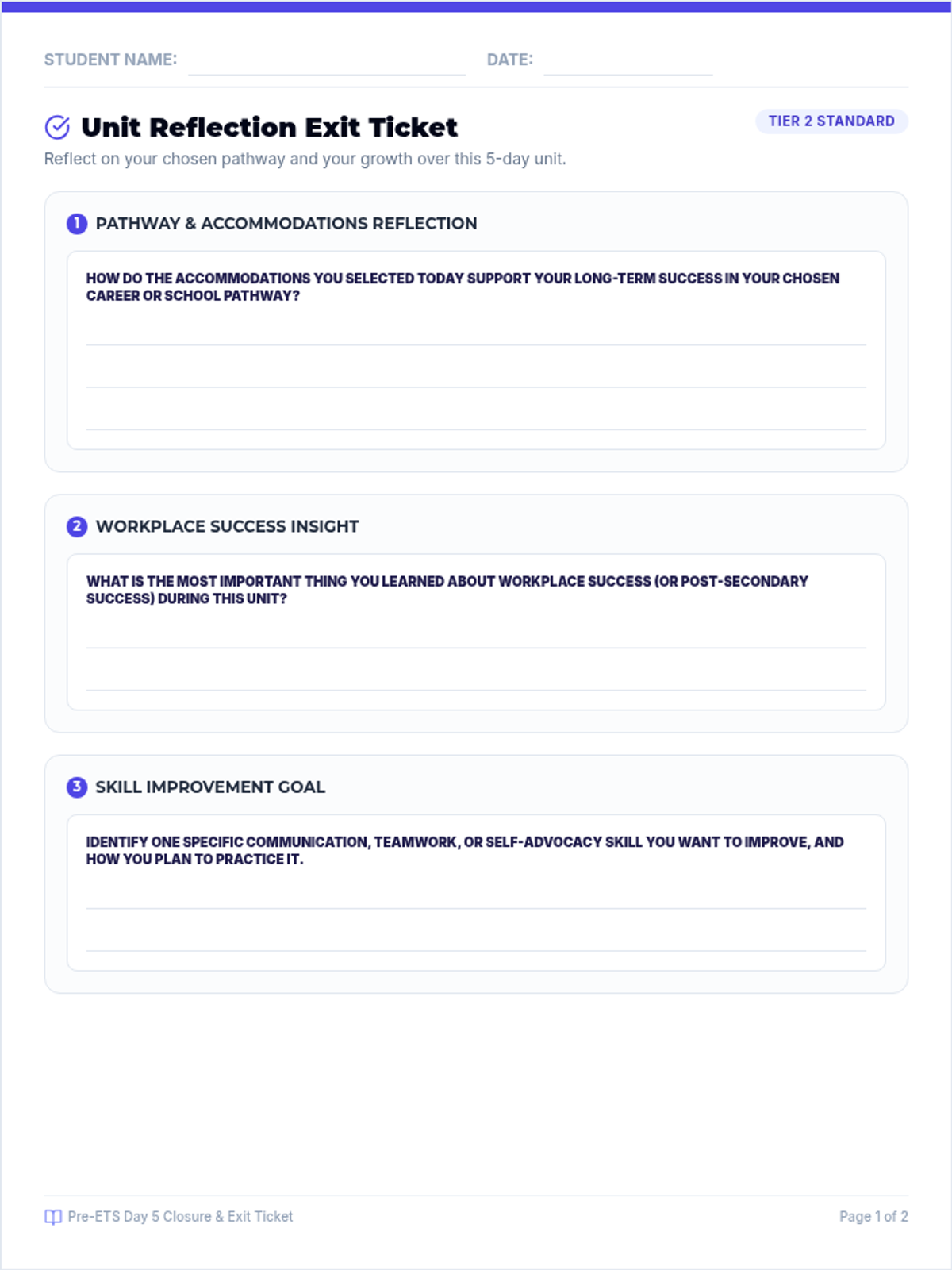
Students apply unit learning to a chosen career or post-secondary education path, identifying workplace accommodations and constructing a self-advocacy plan.
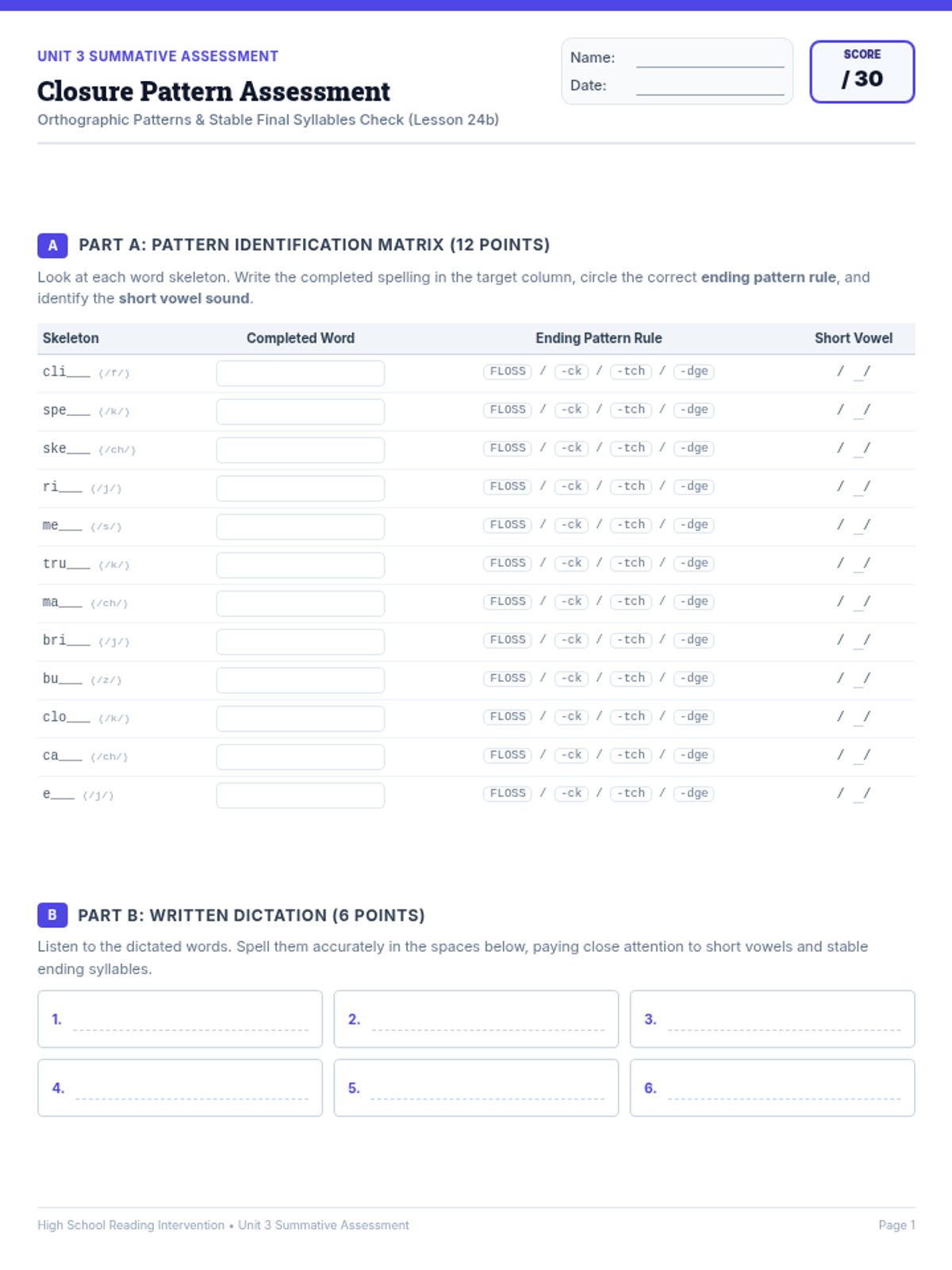
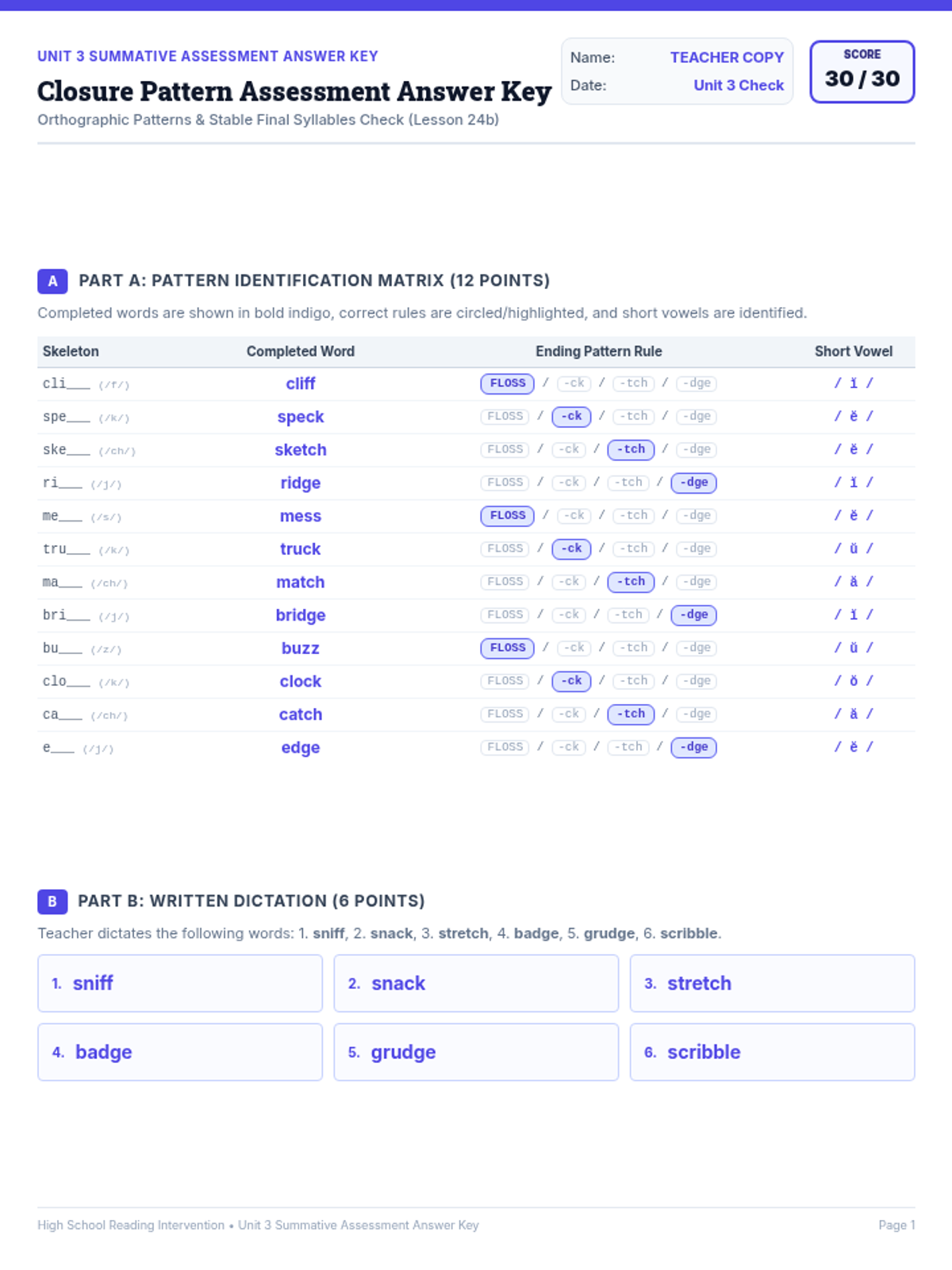
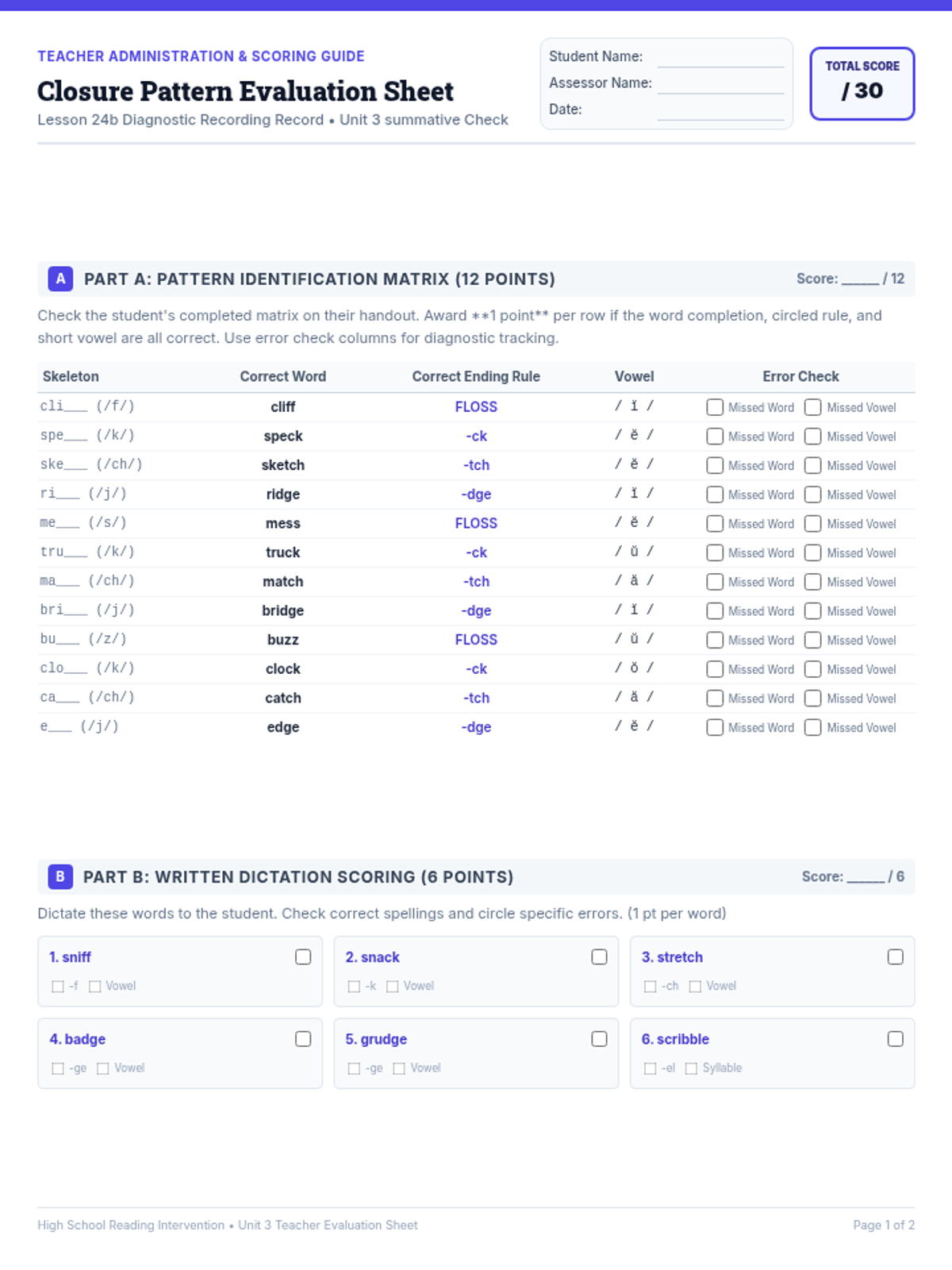
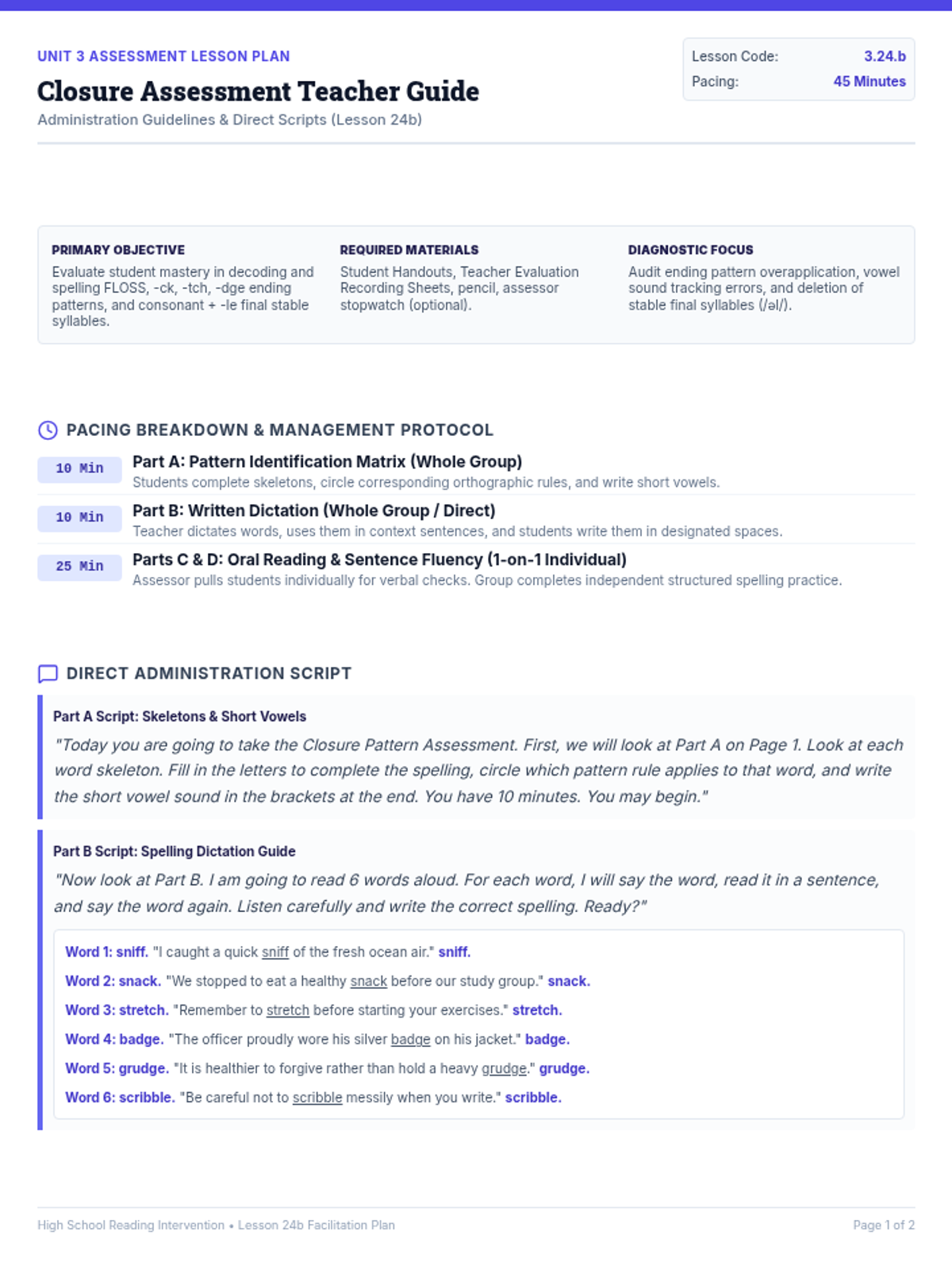
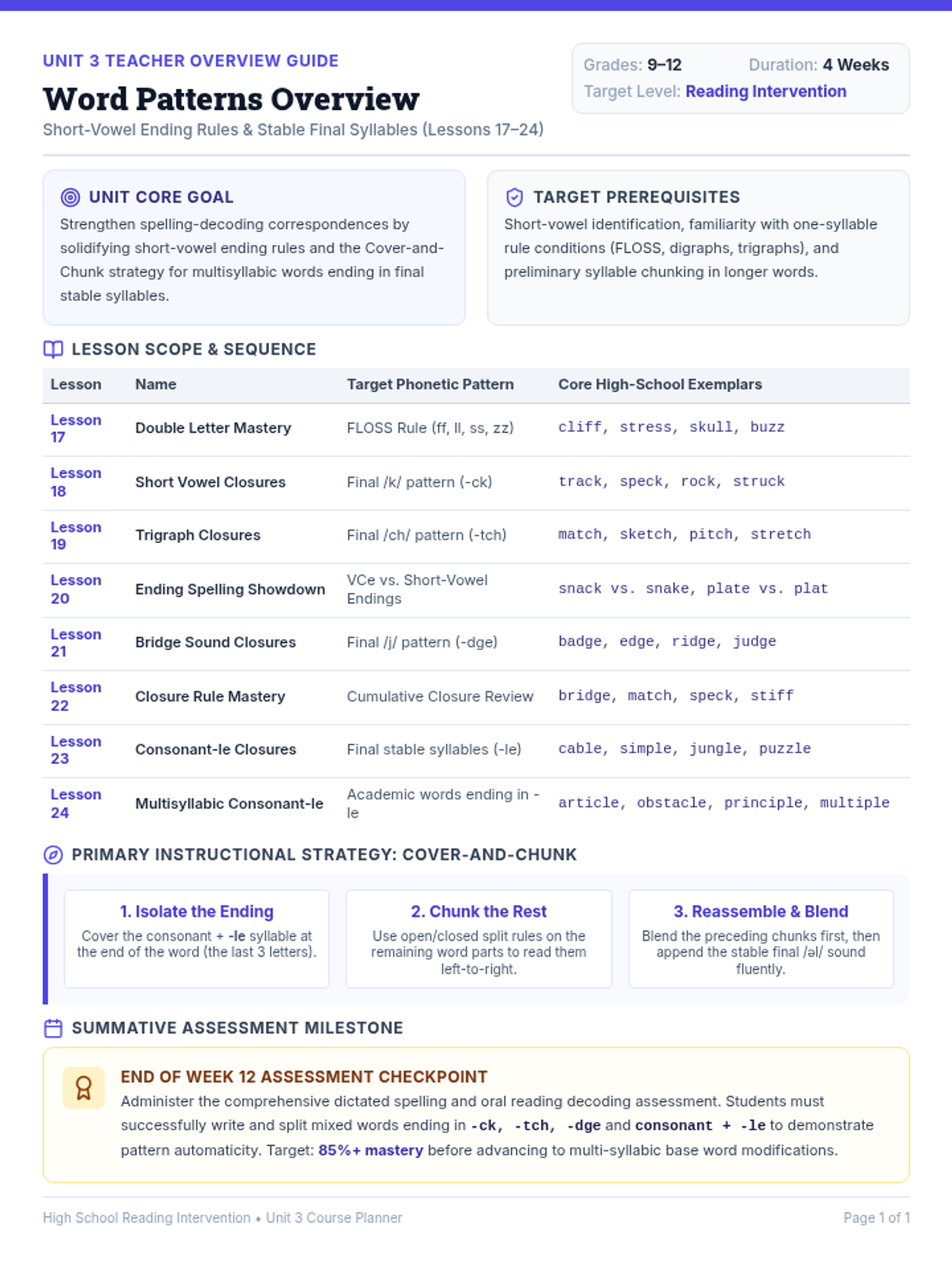
An intensive summative assessment lesson designed to check student mastery of FLOSS, -ck, -tch, -dge, and -le decoding and spelling patterns.
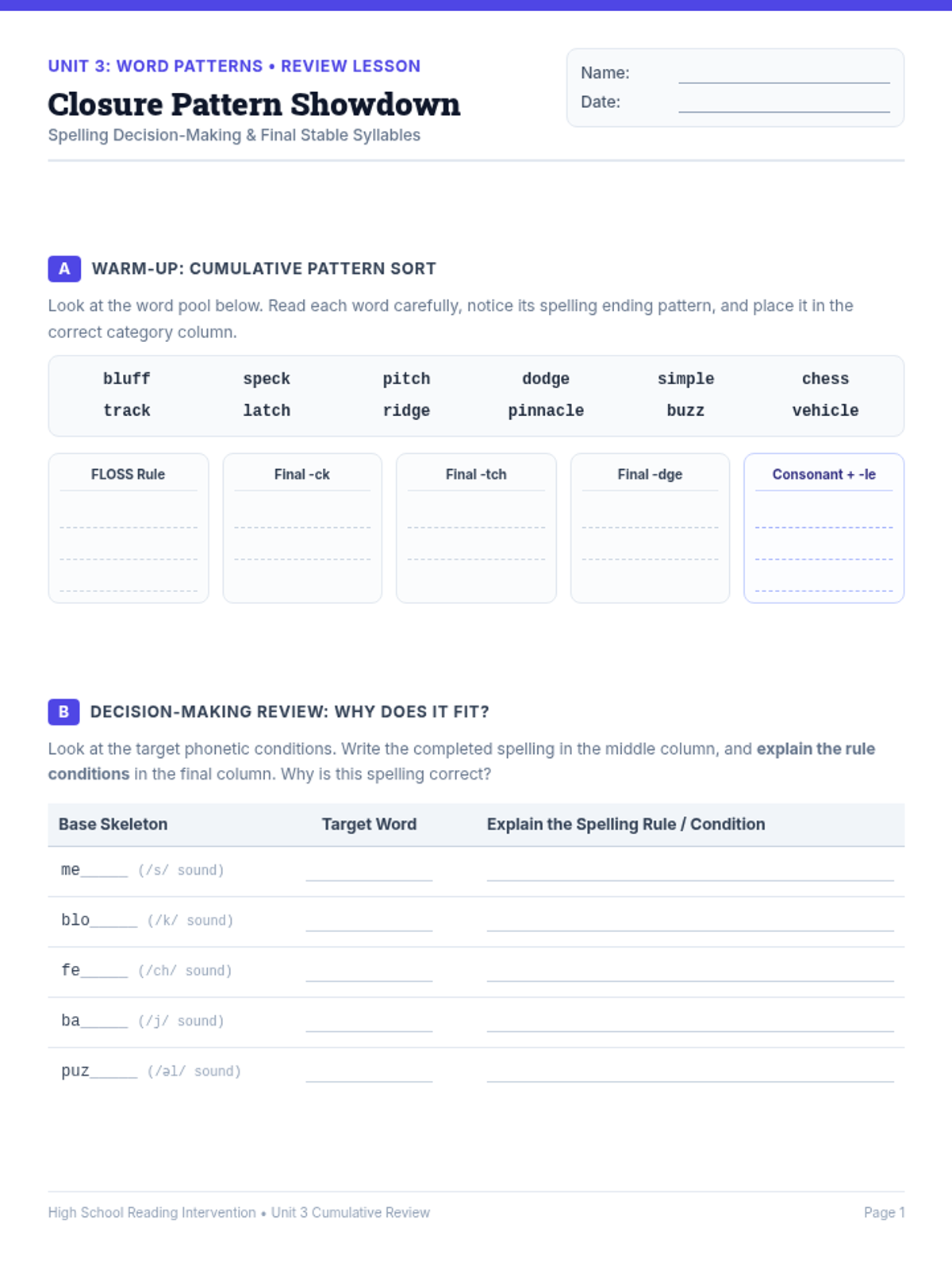
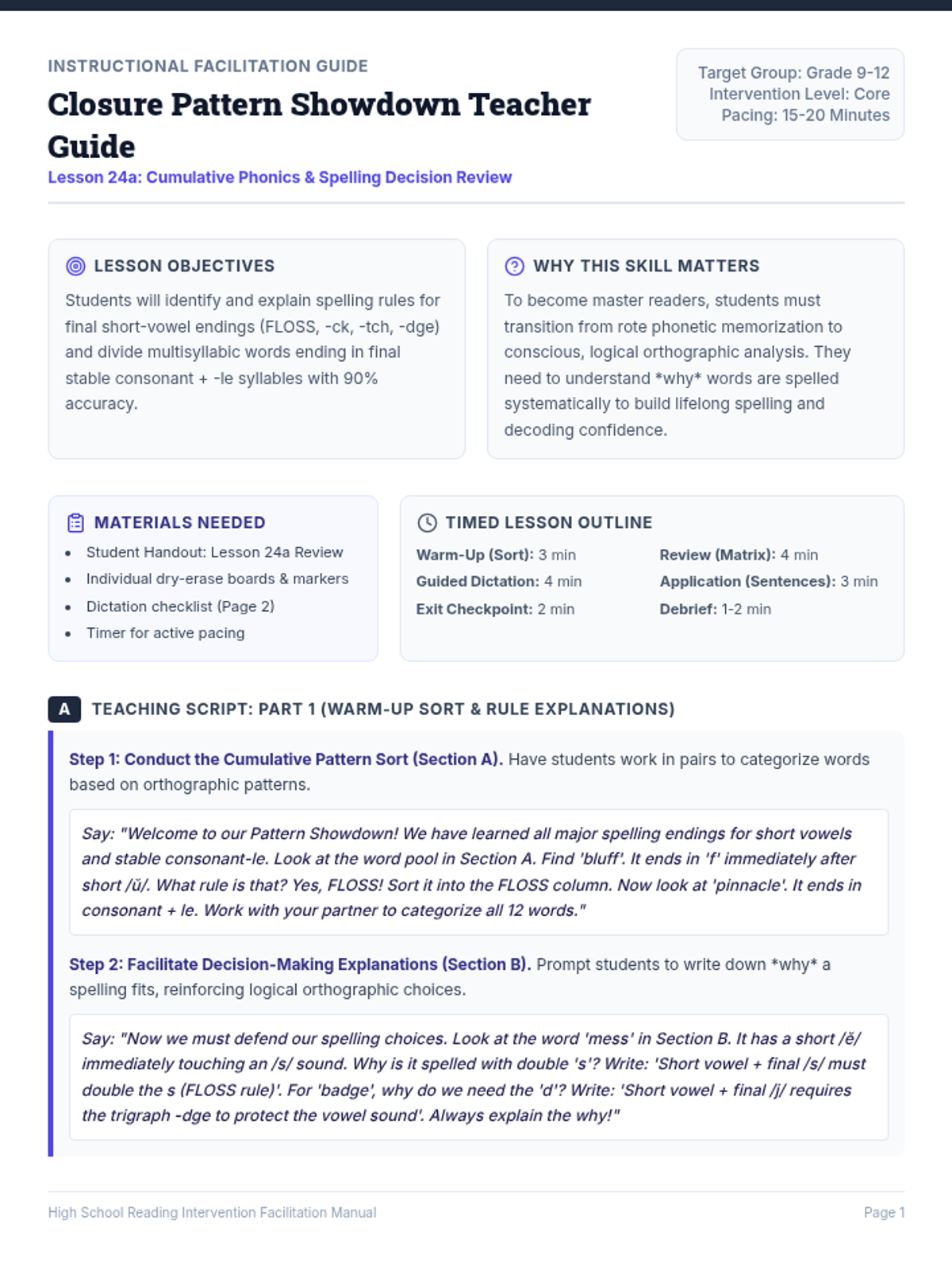
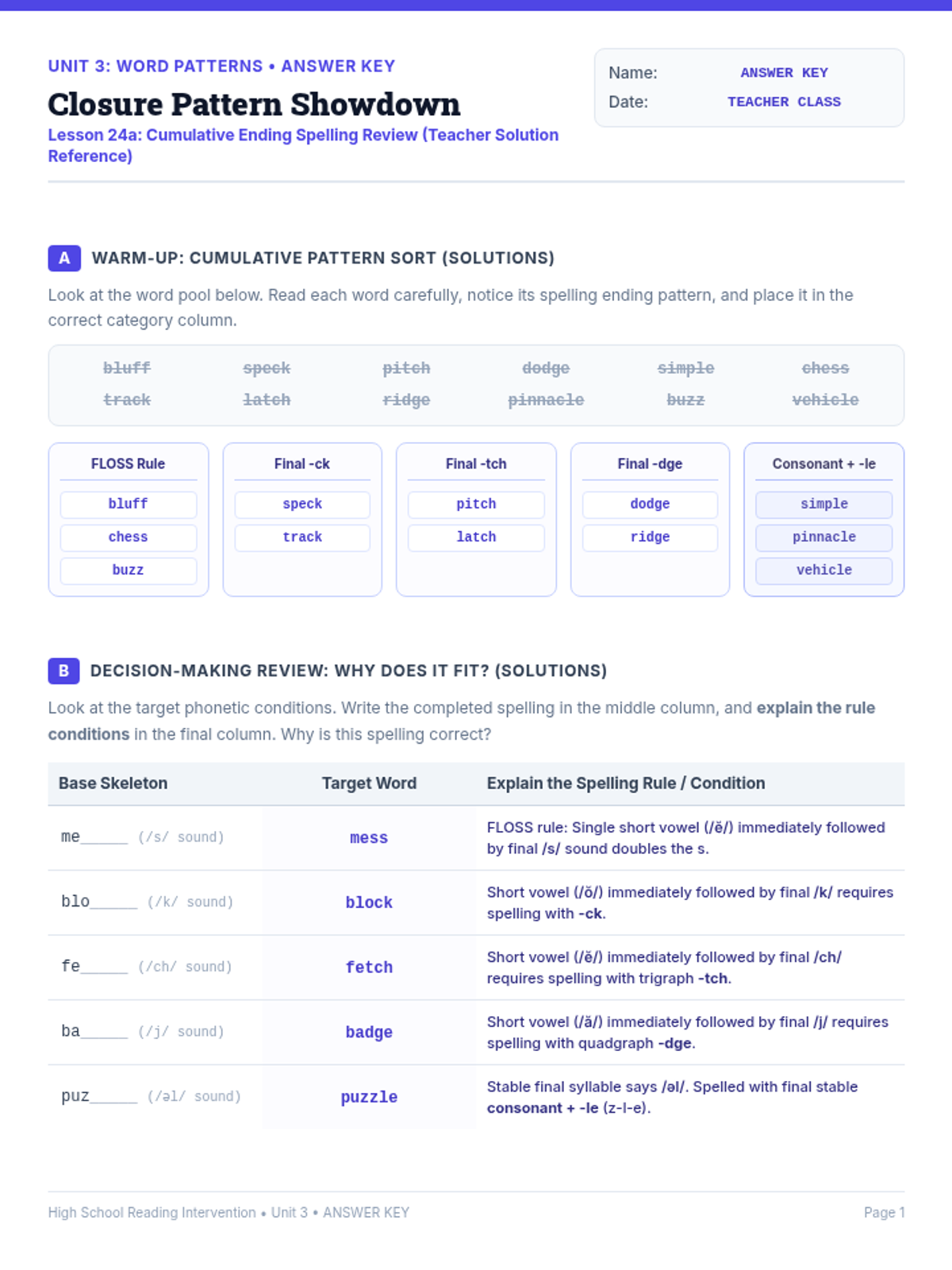
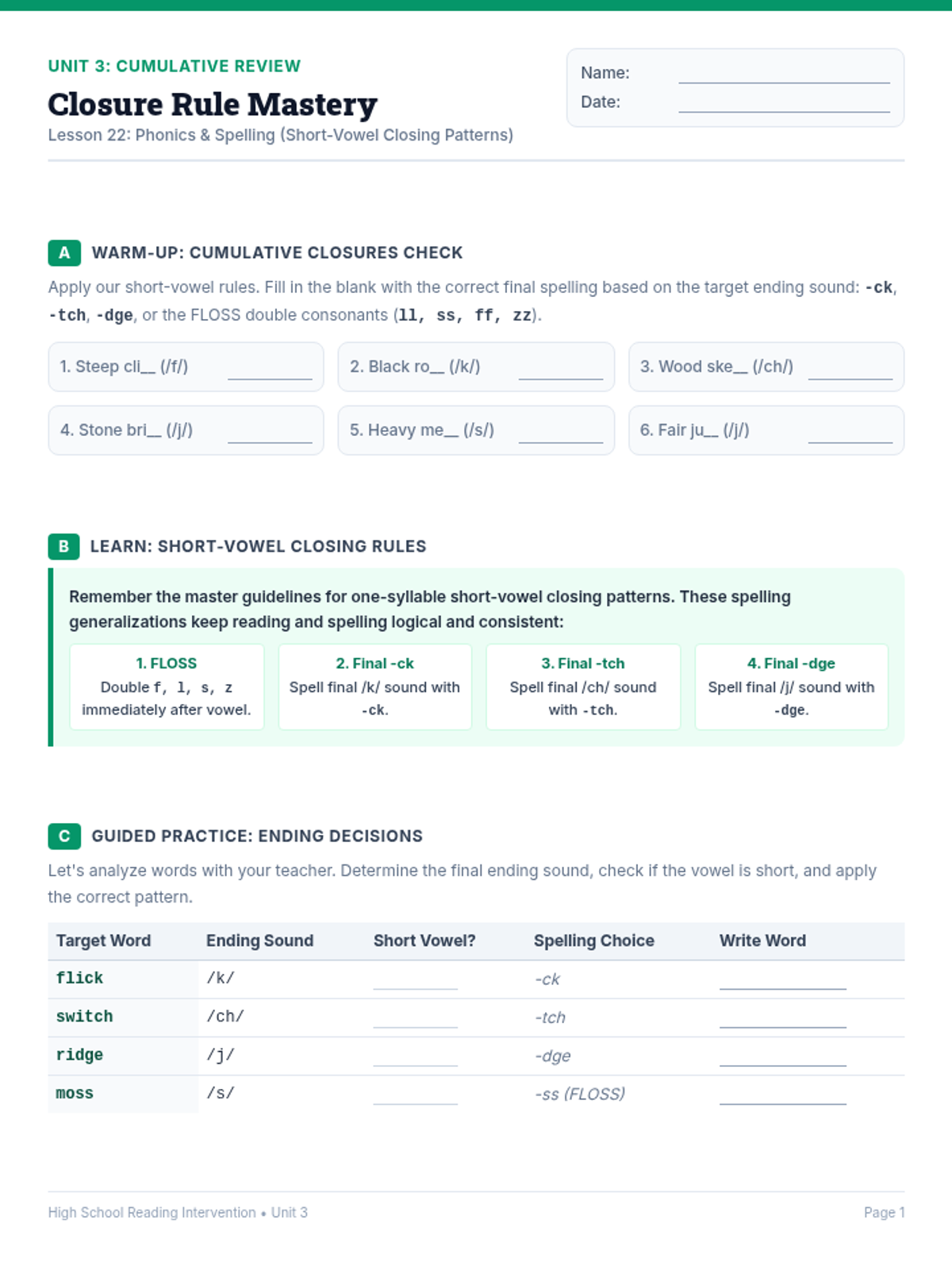
A cumulative review and decision-making lesson consolidating all short-vowel ending rules (FLOSS, -ck, -tch, -dge) and stable final syllables (consonant + -le) to cement orthographic reasoning and decoding precision.
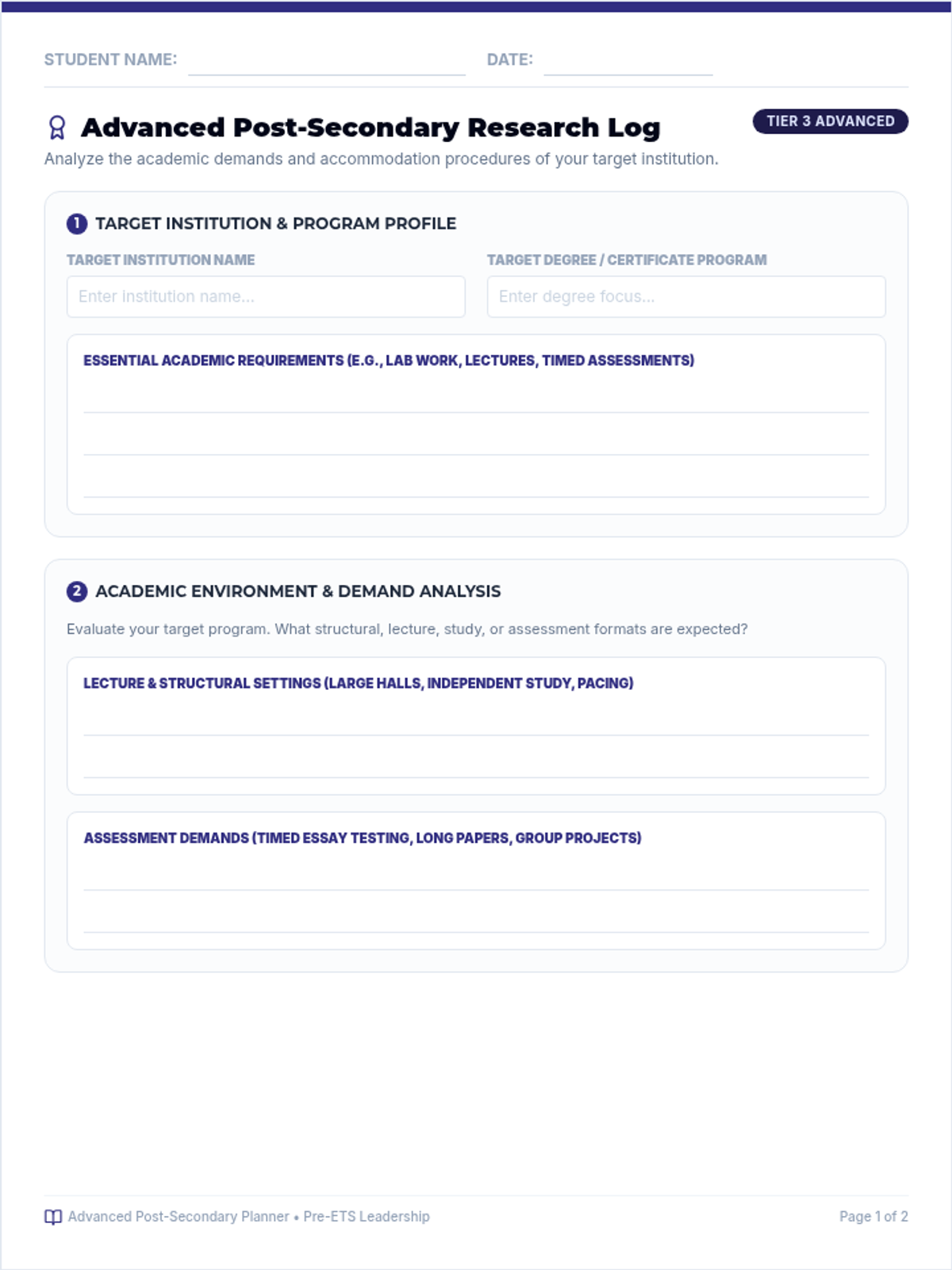
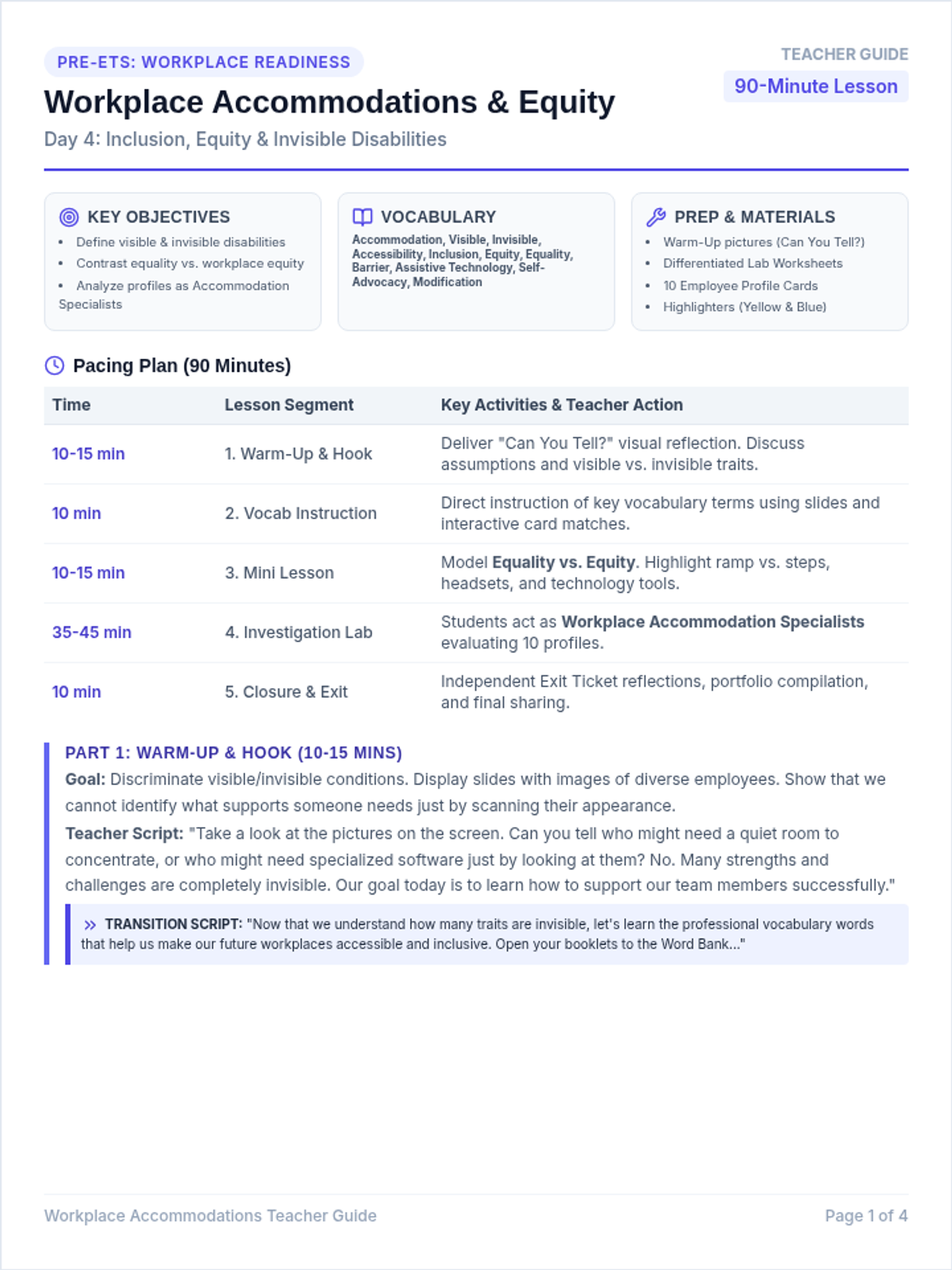
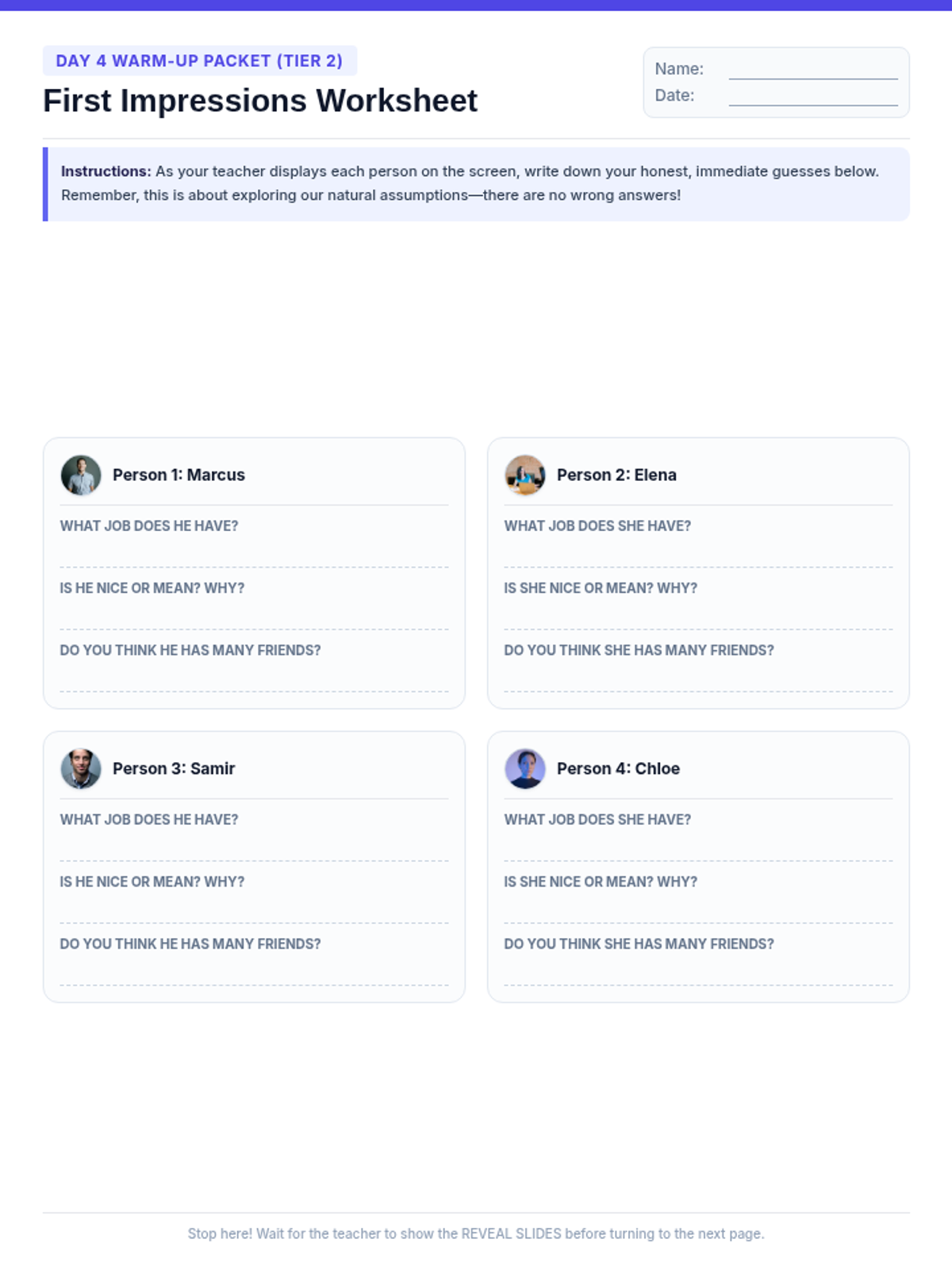
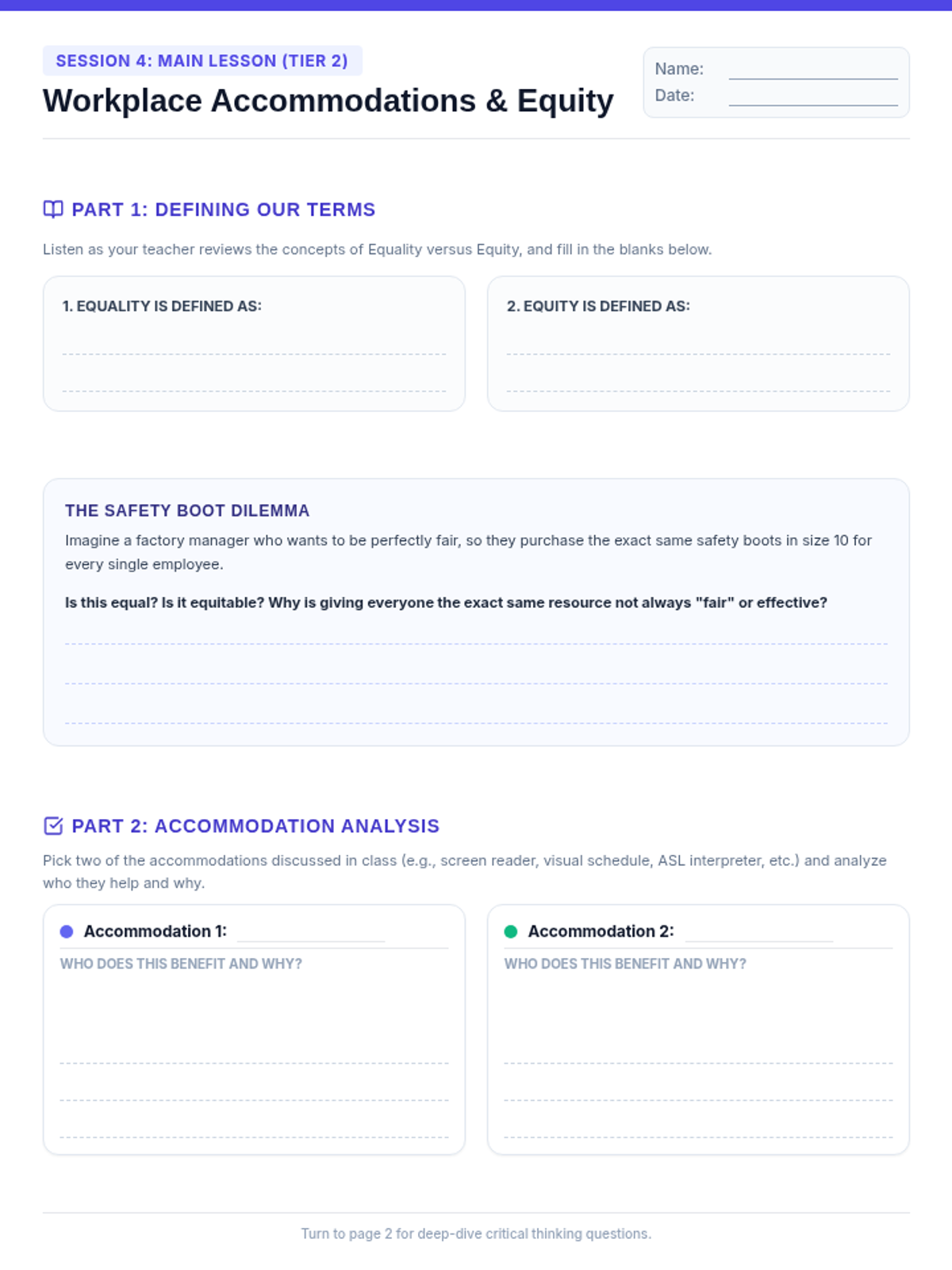
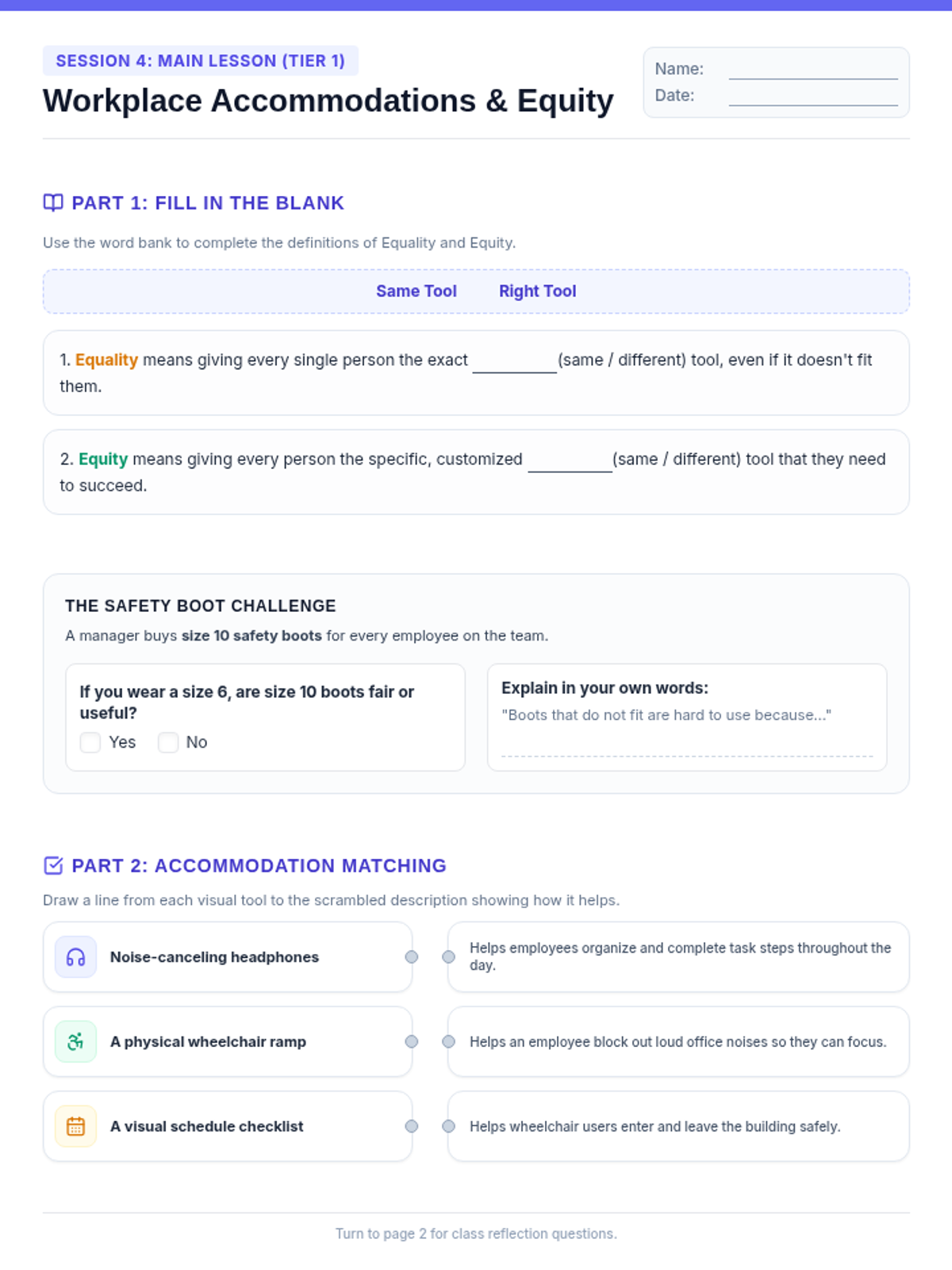
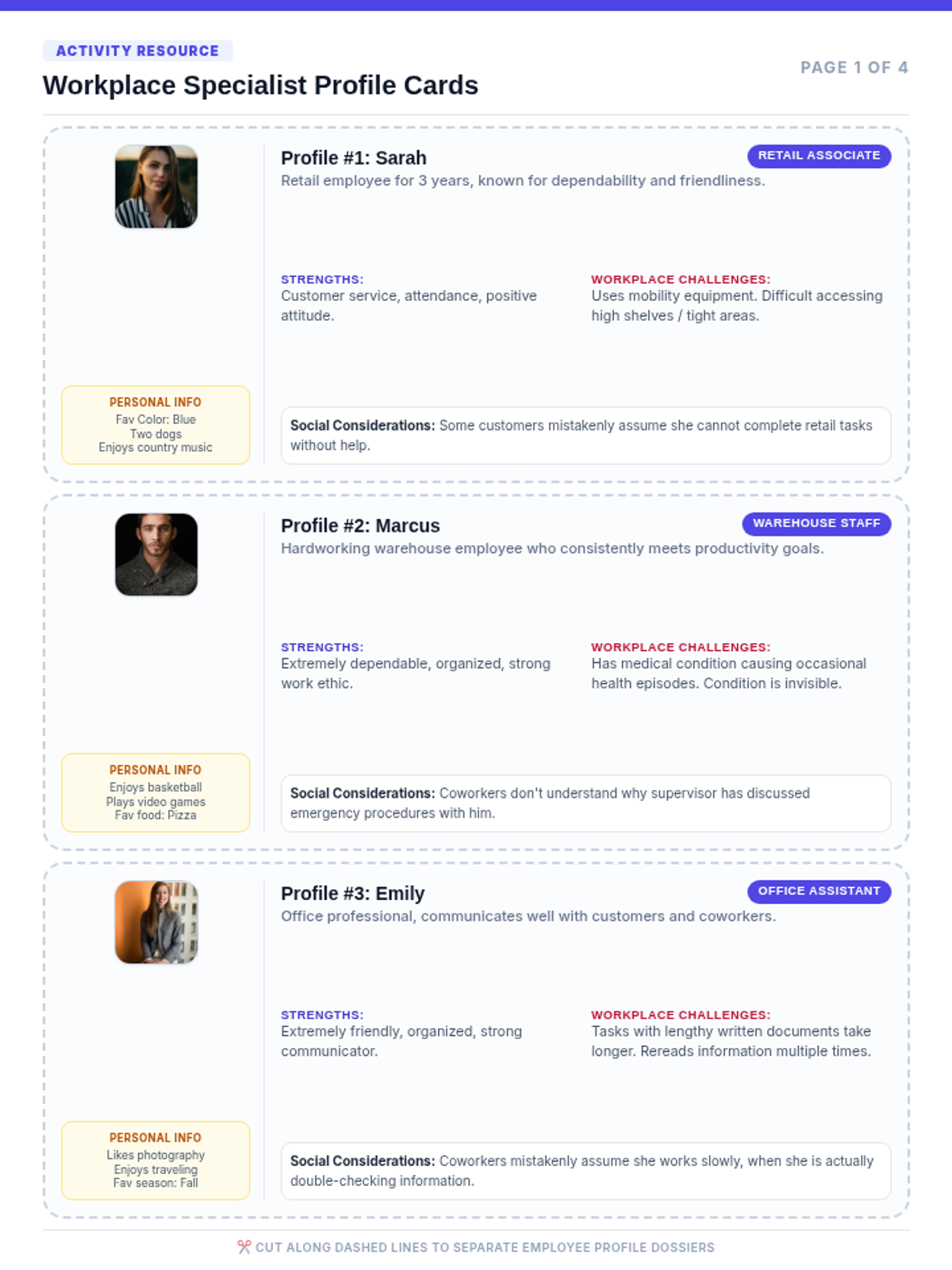
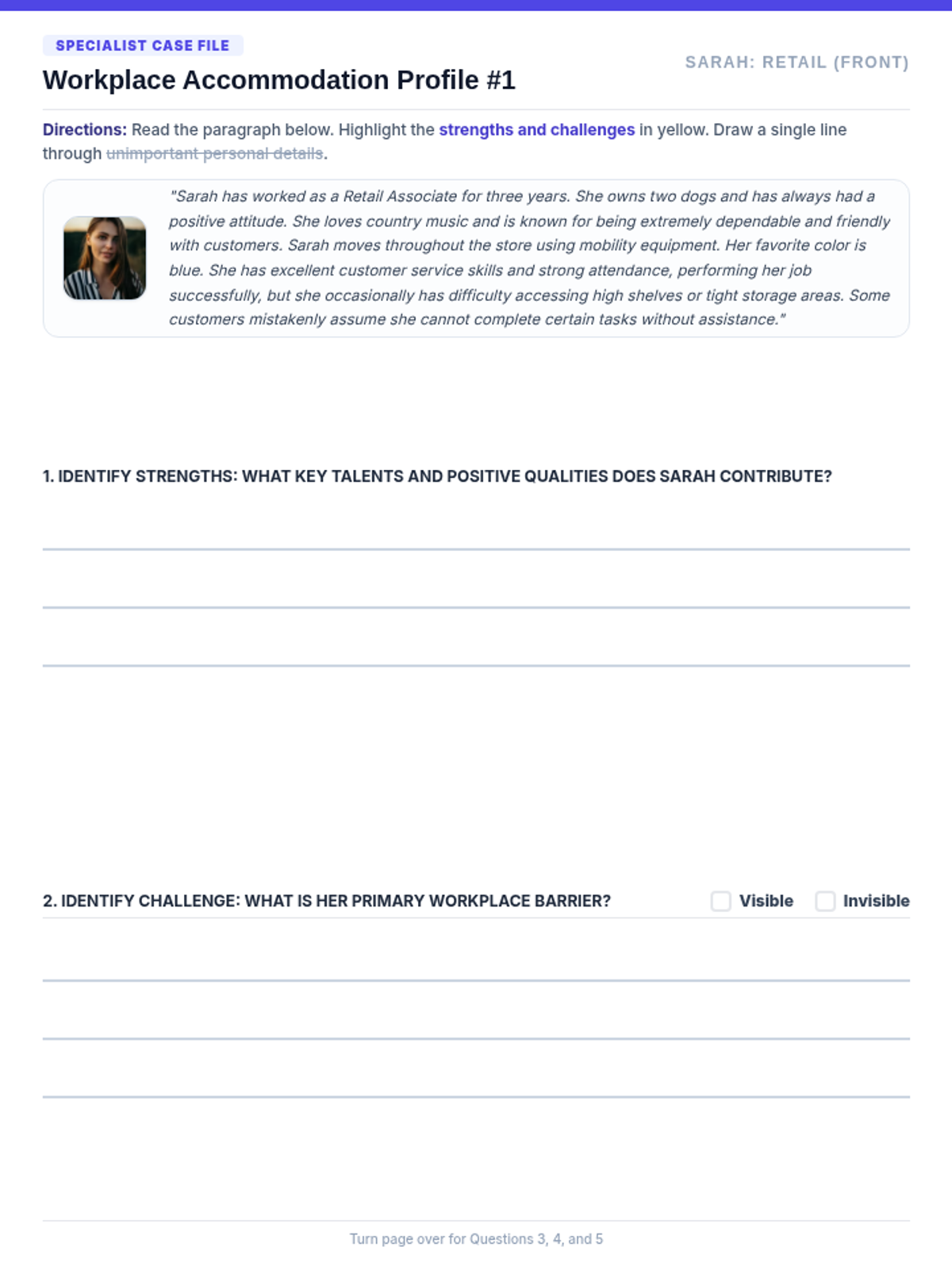
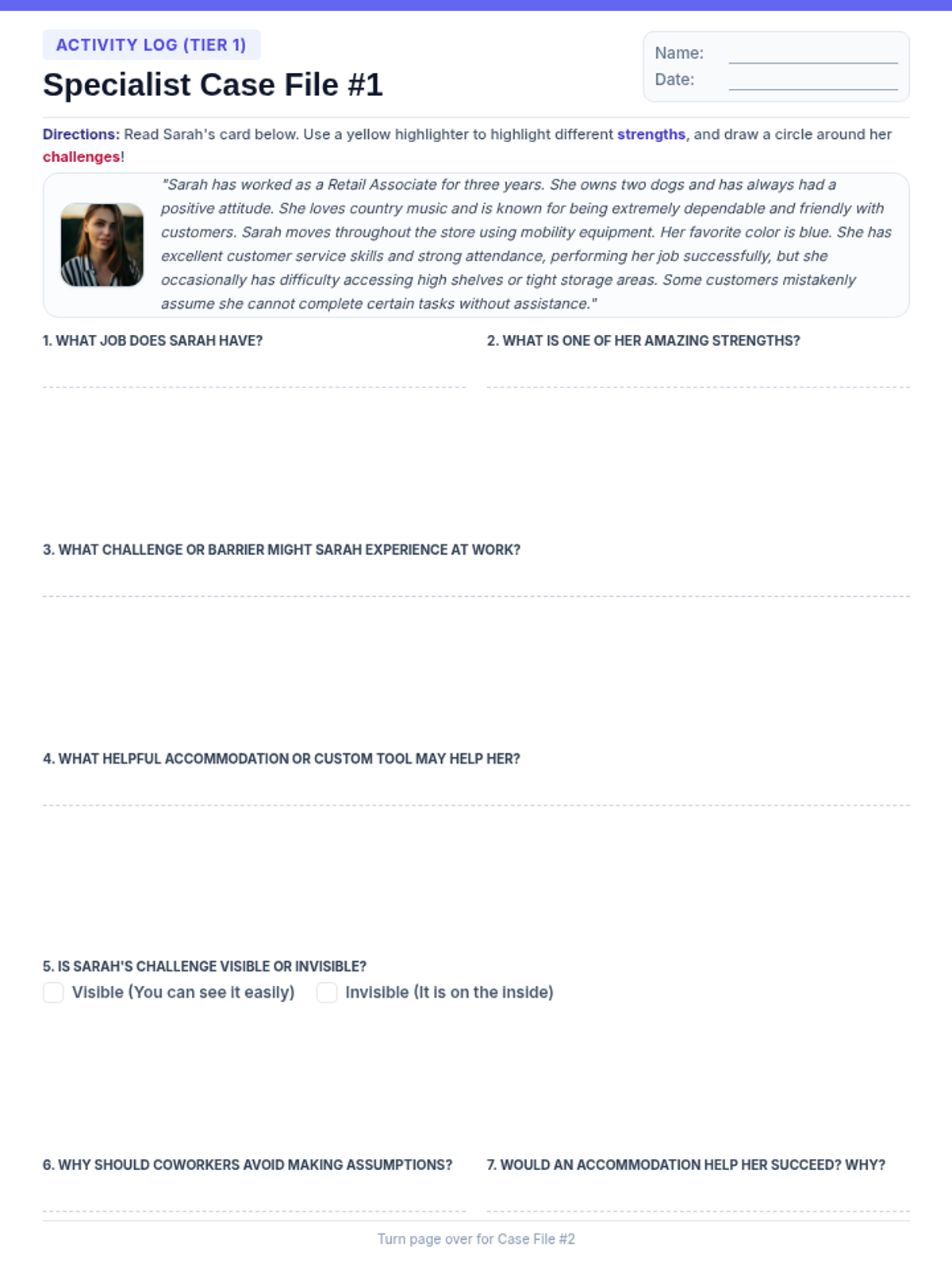
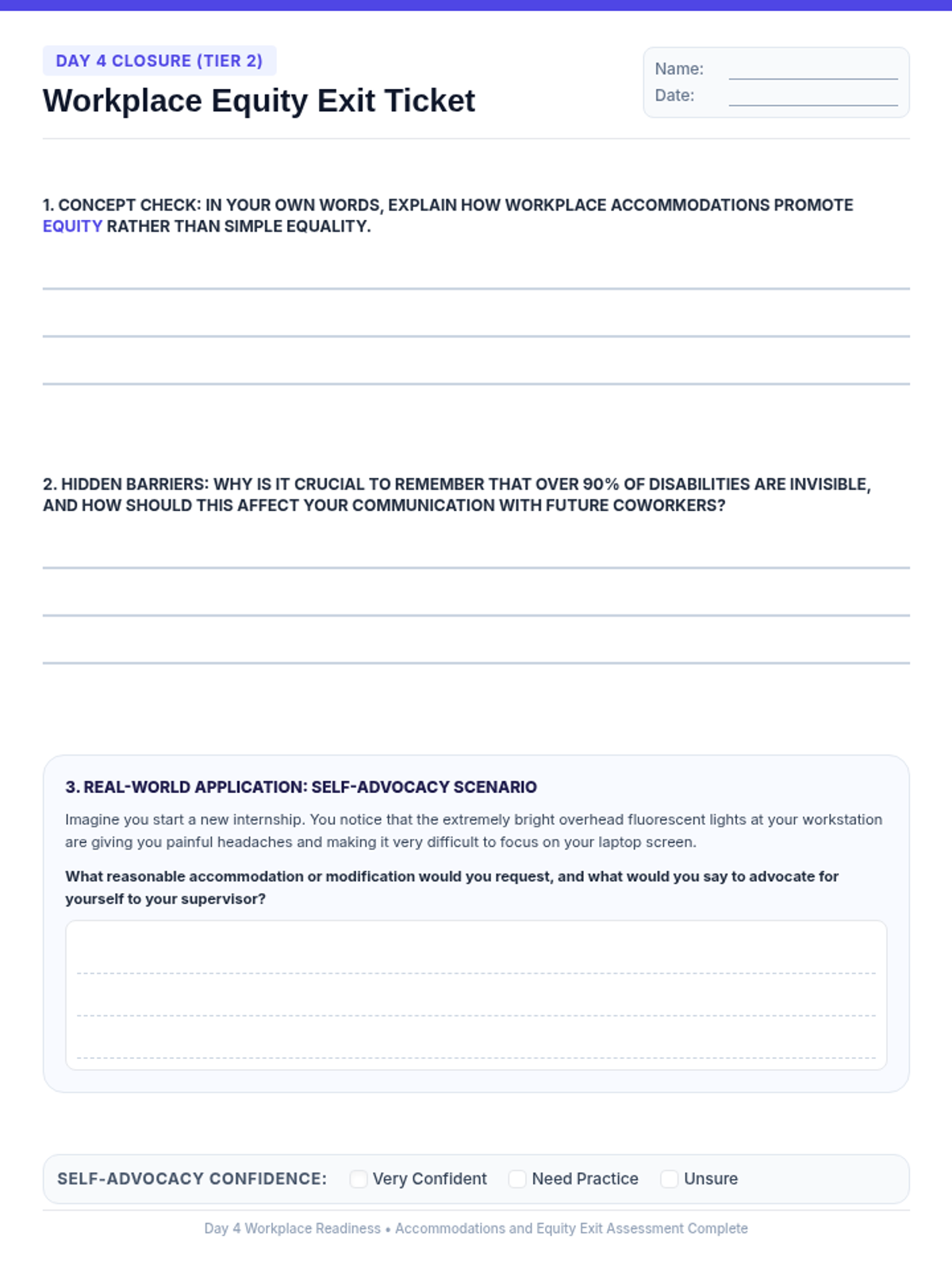
Under the Pre-ETS category of Counseling on Post-Secondary Opportunities, this lesson equips transitioning high school students with knowledge of workplace accommodations, visible/invisible disabilities, and self-advocacy. Students explore equity rights to prepare for post-secondary career and vocational opportunities.
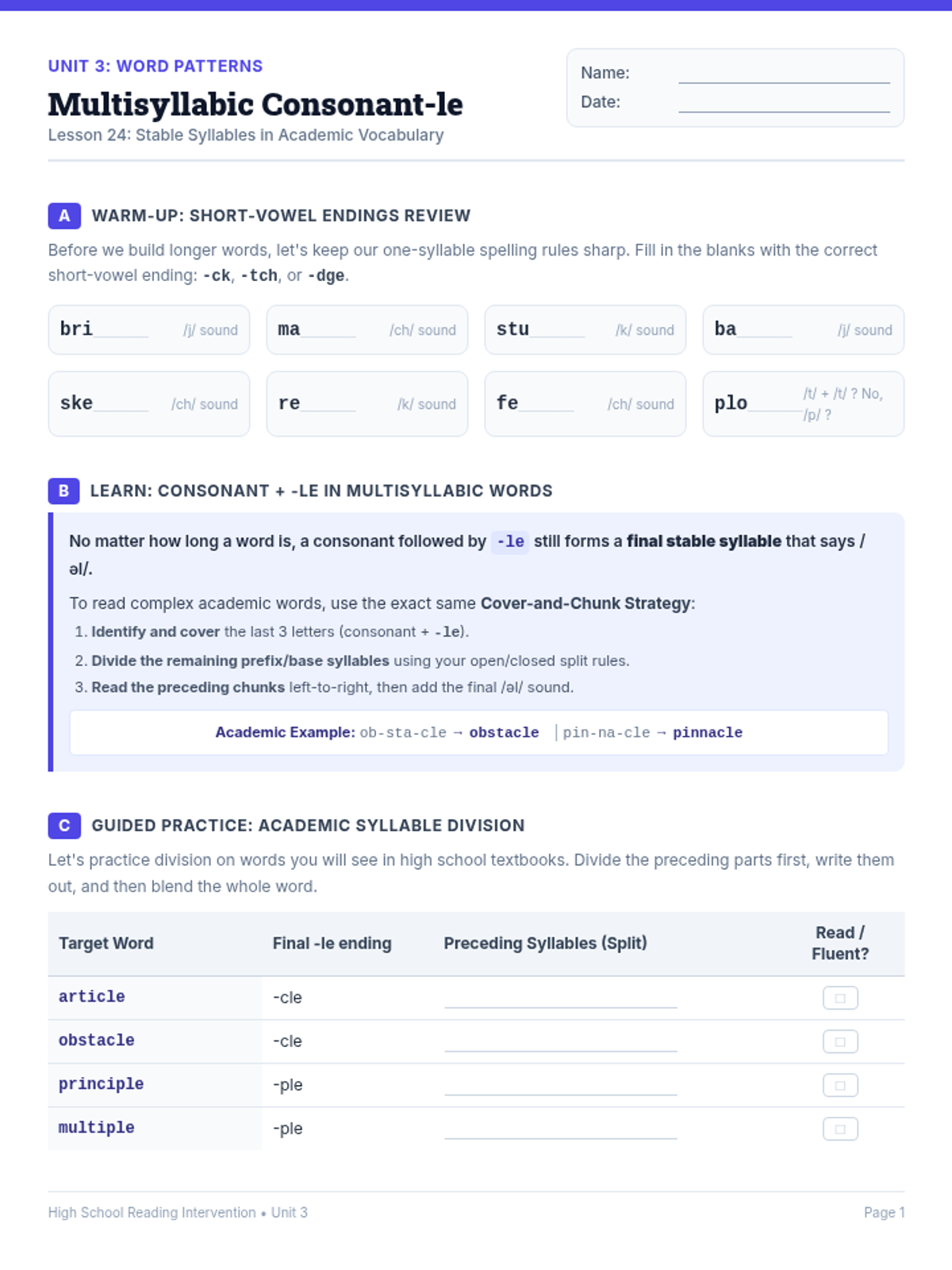
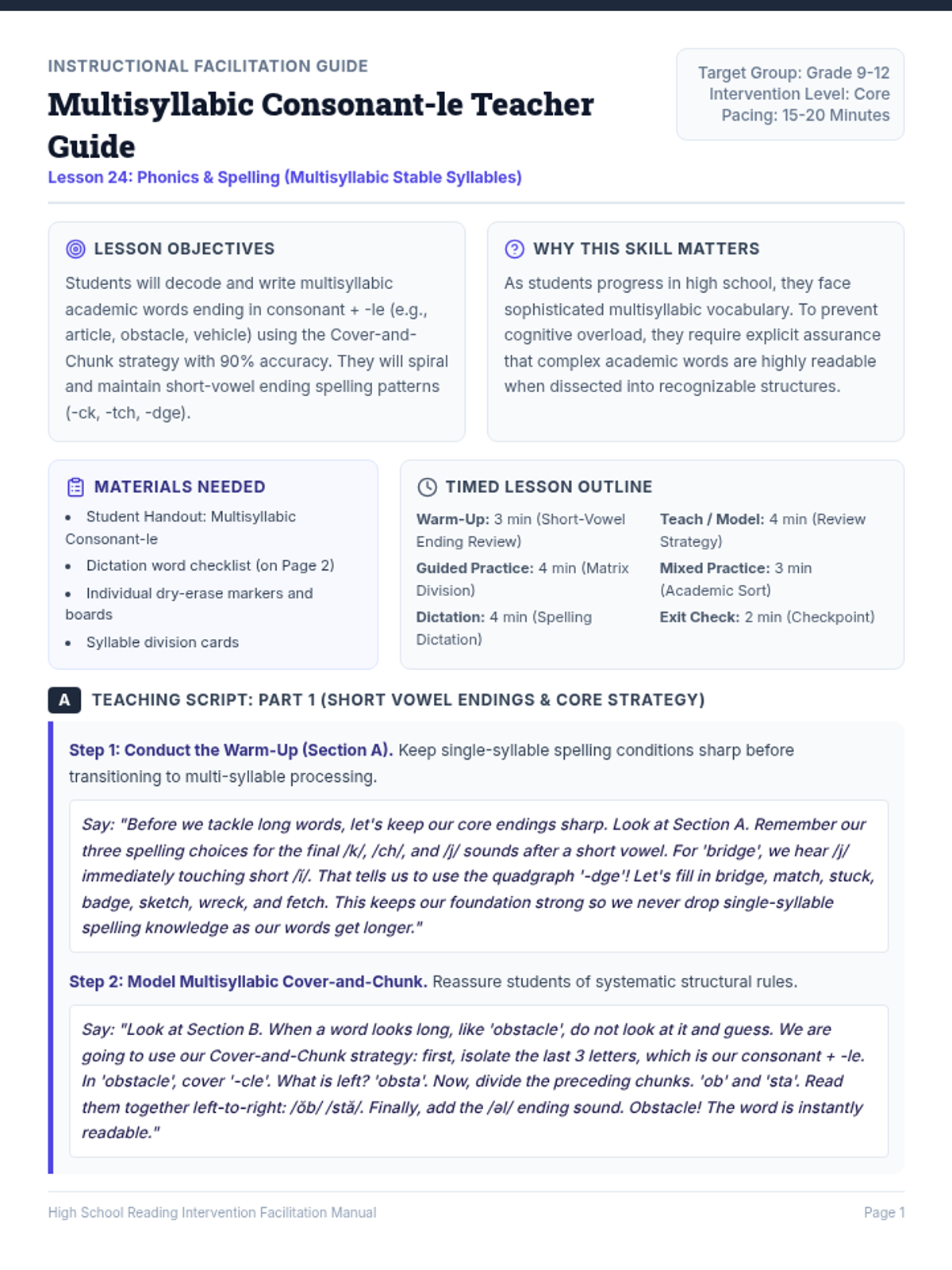
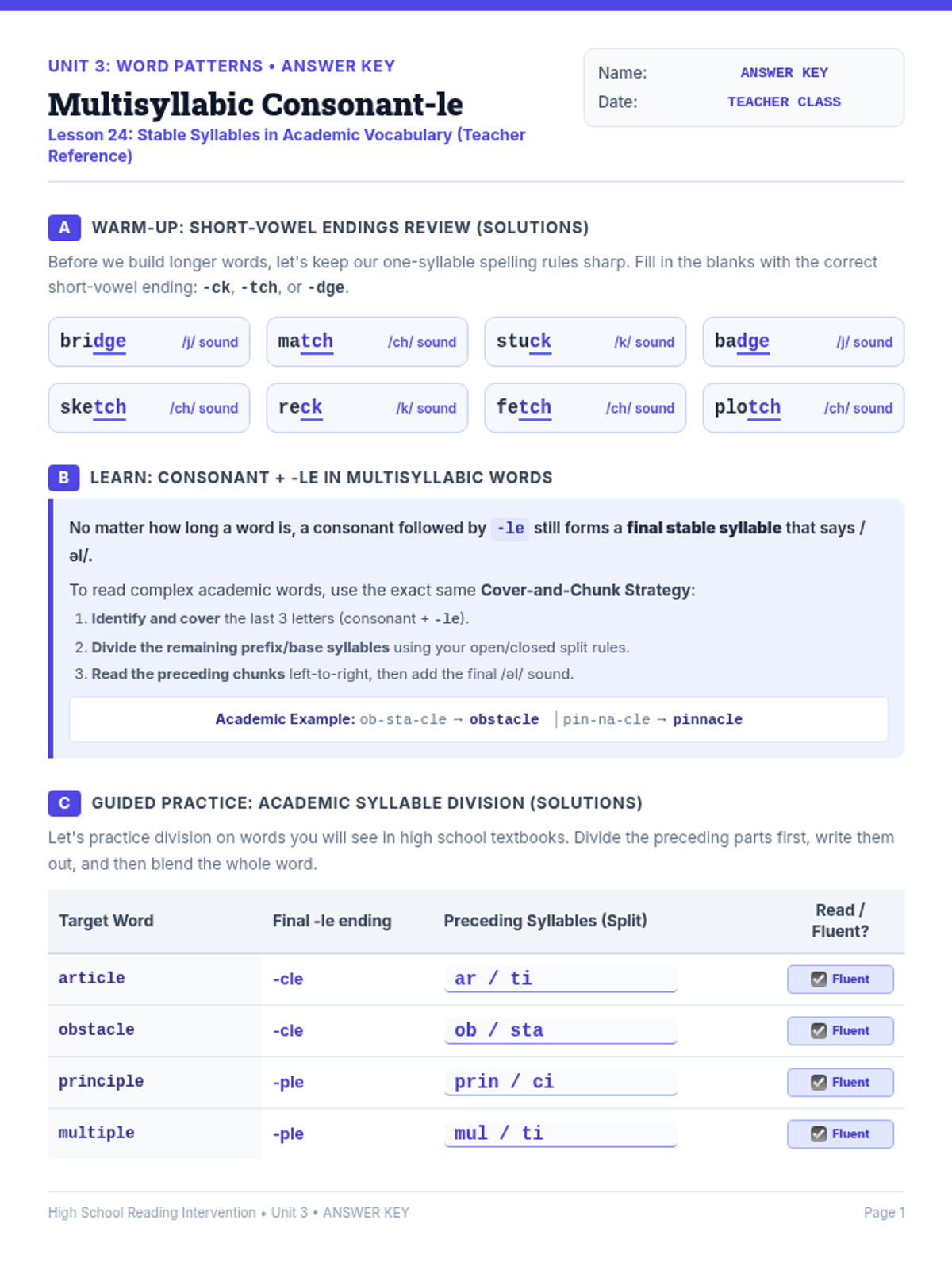
Focuses on decoding and spelling longer, academic multisyllabic words ending in consonant + -le, while spiraling previously learned short-vowel spelling patterns (-ck, -tch, -dge) during warm-ups and comparative activities.
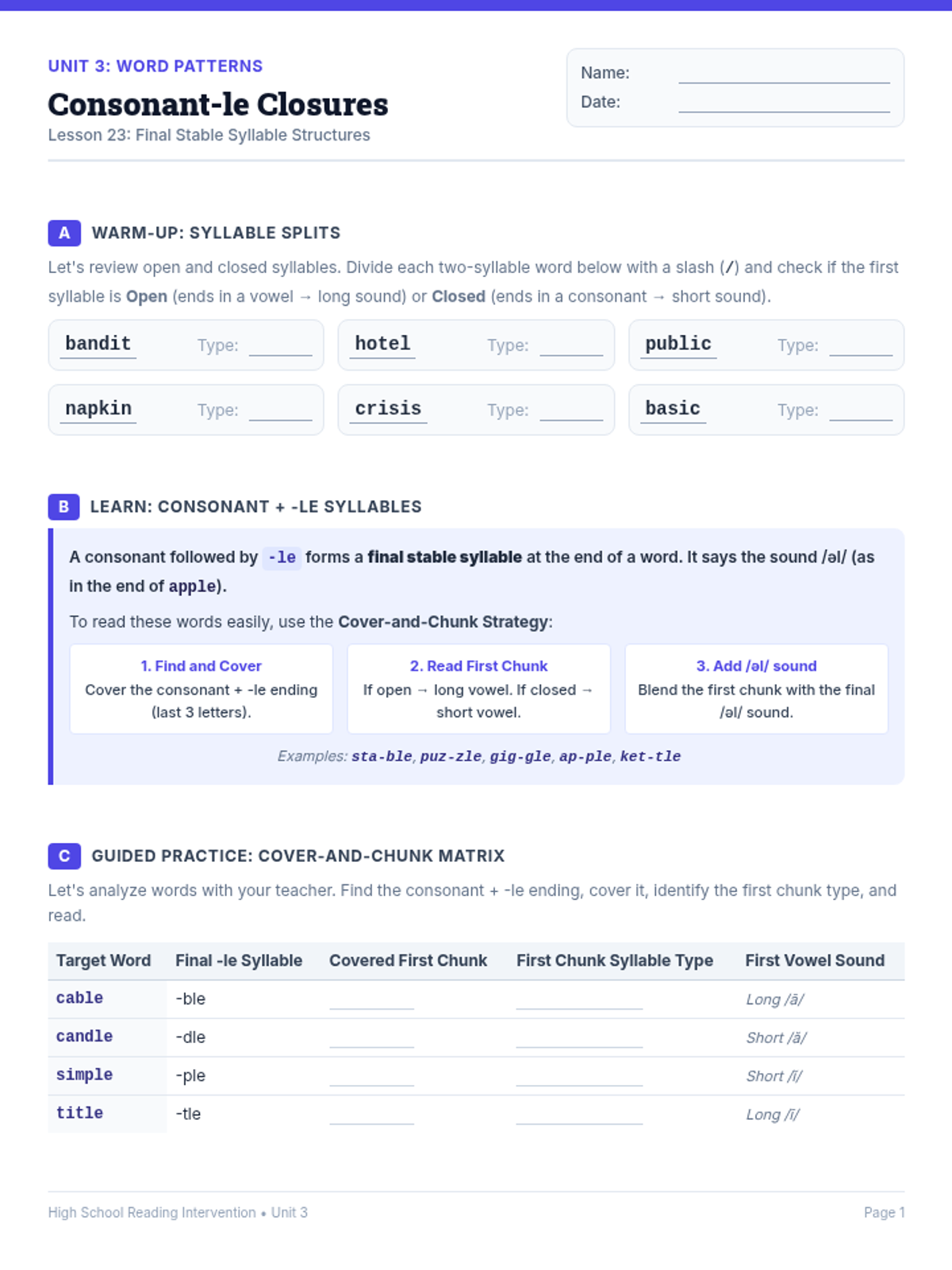
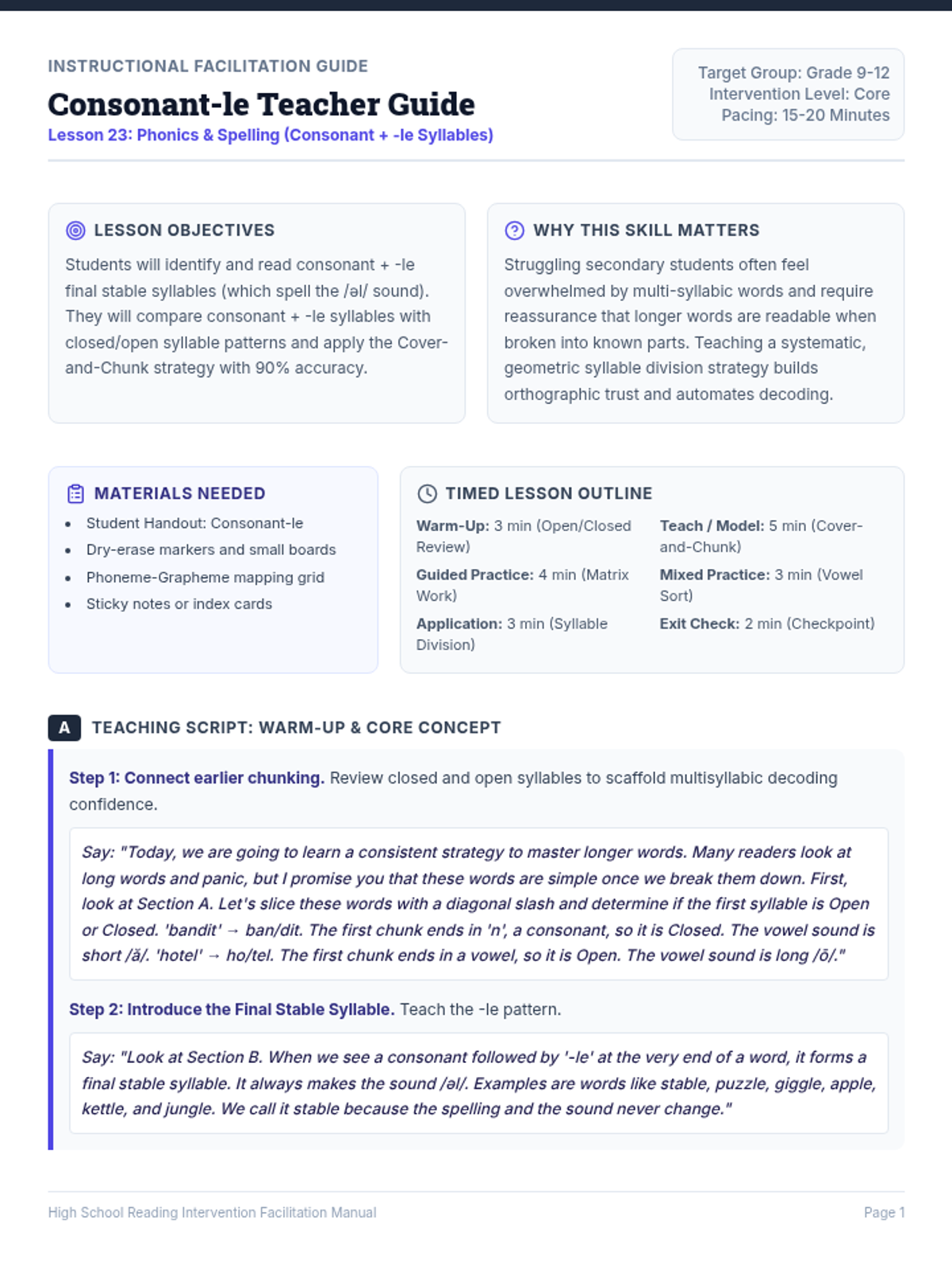
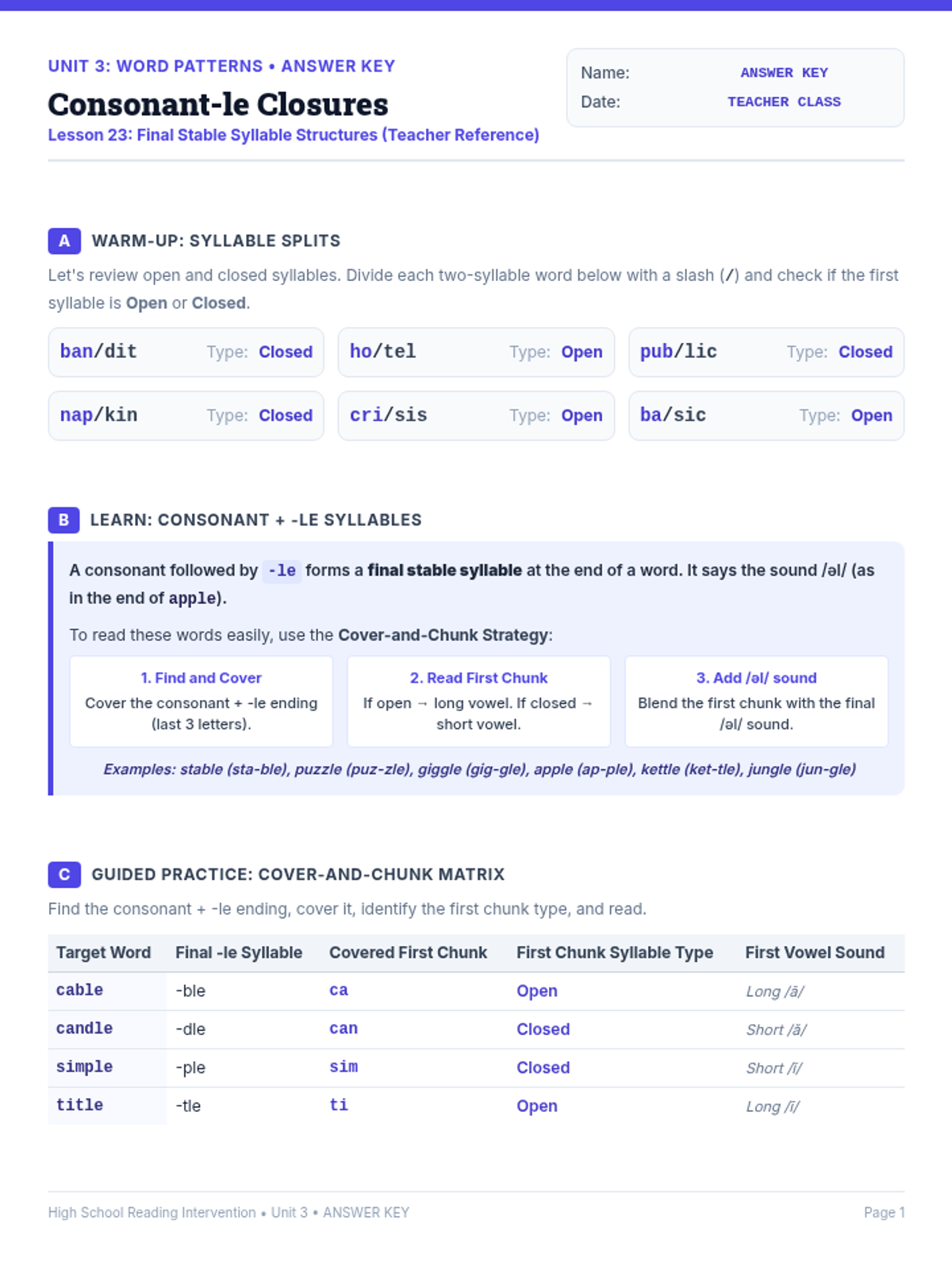
Introduces the final stable syllable consonant + -le, teaching a consistent cover-and-chunk strategy while spiraling open and closed syllable prerequisites.
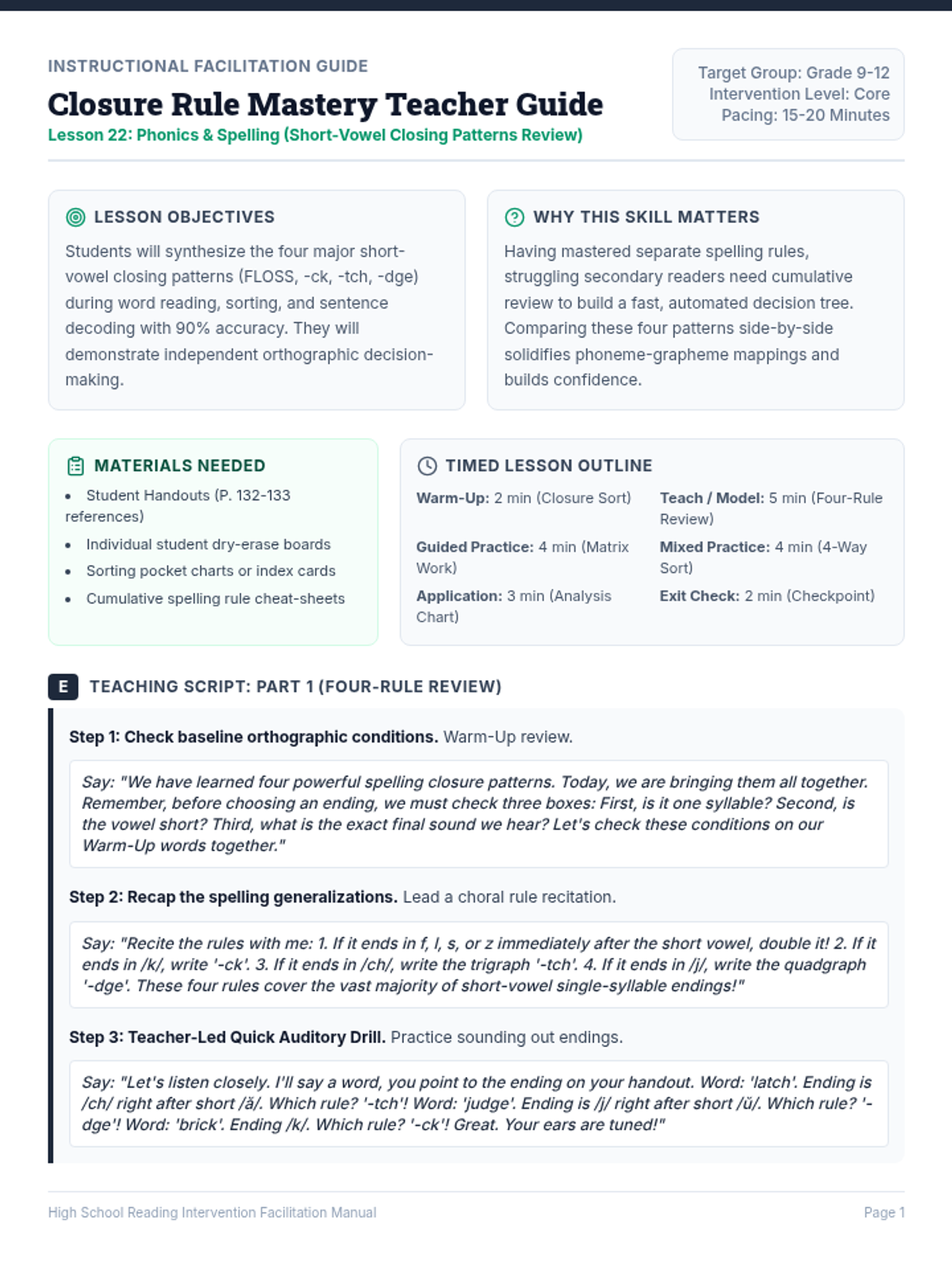
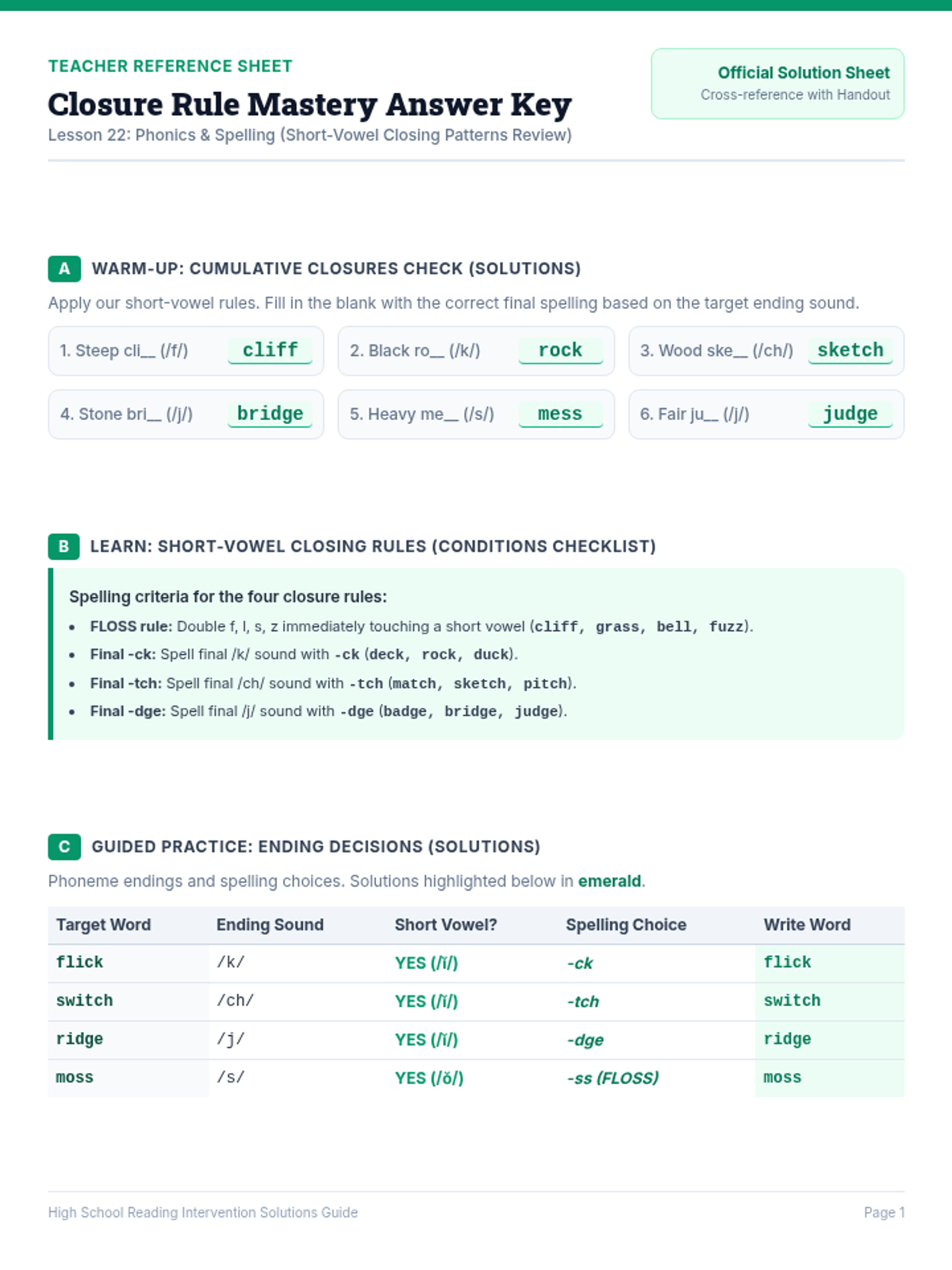
An intensive review and comparative lesson integrating all four major short-vowel closing patterns (FLOSS, -ck, -tch, -dge) to cement master-level orthographic decoding and spelling logic.
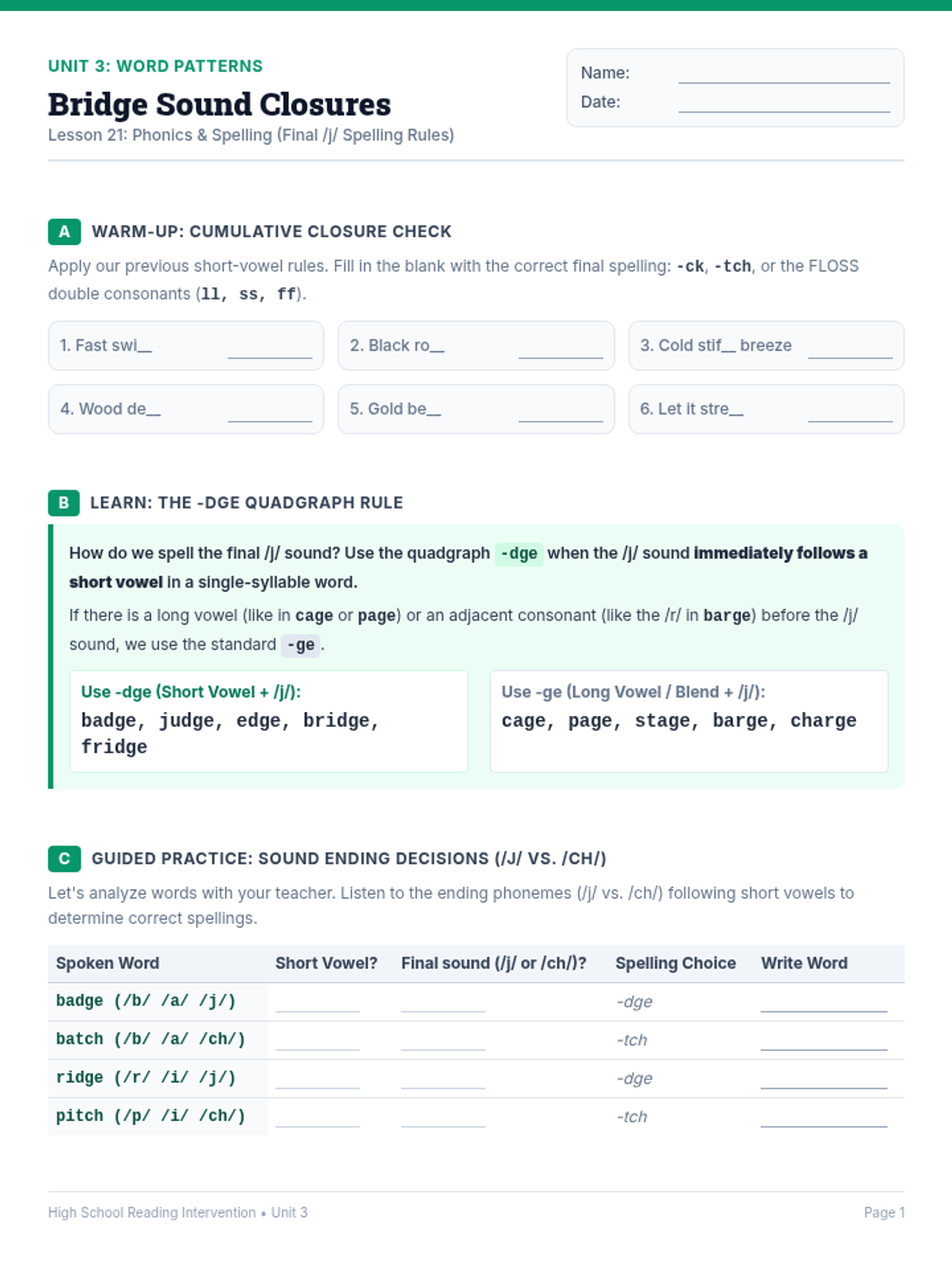
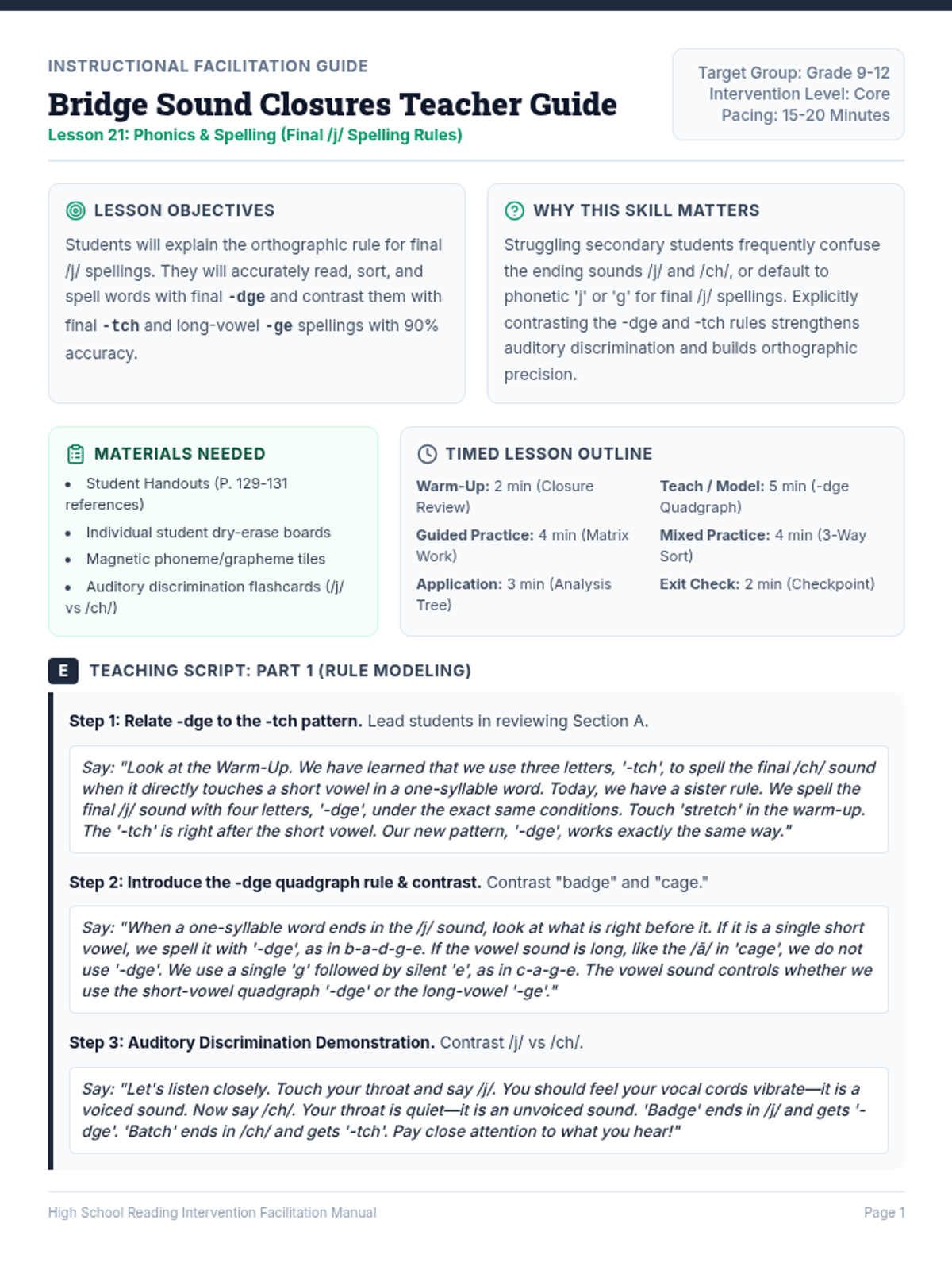
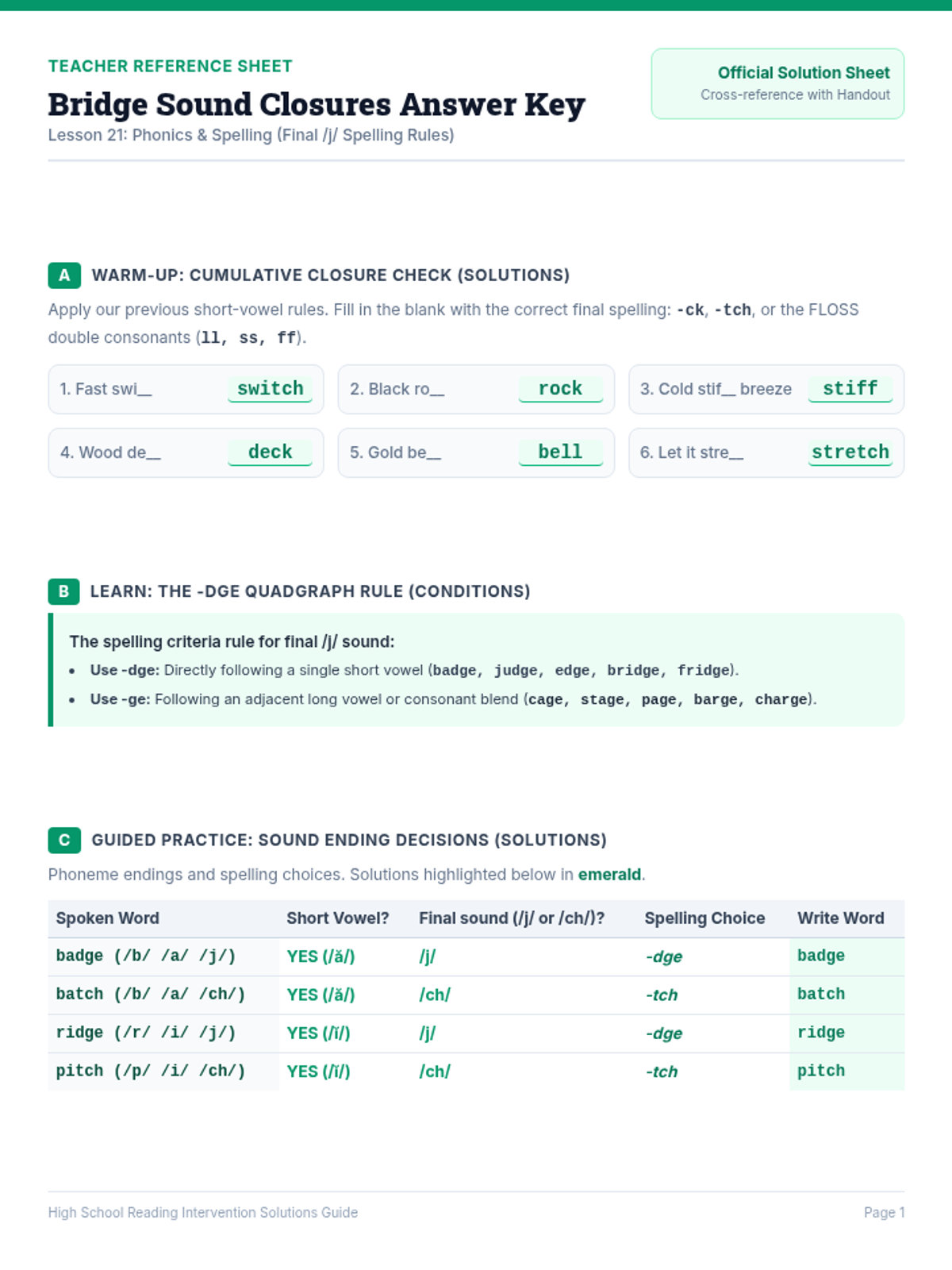
Introduces the spelling pattern -dge for the final /j/ sound following short vowels, contrasting it with the -tch trigraph to strengthen phoneme-level auditory discrimination.
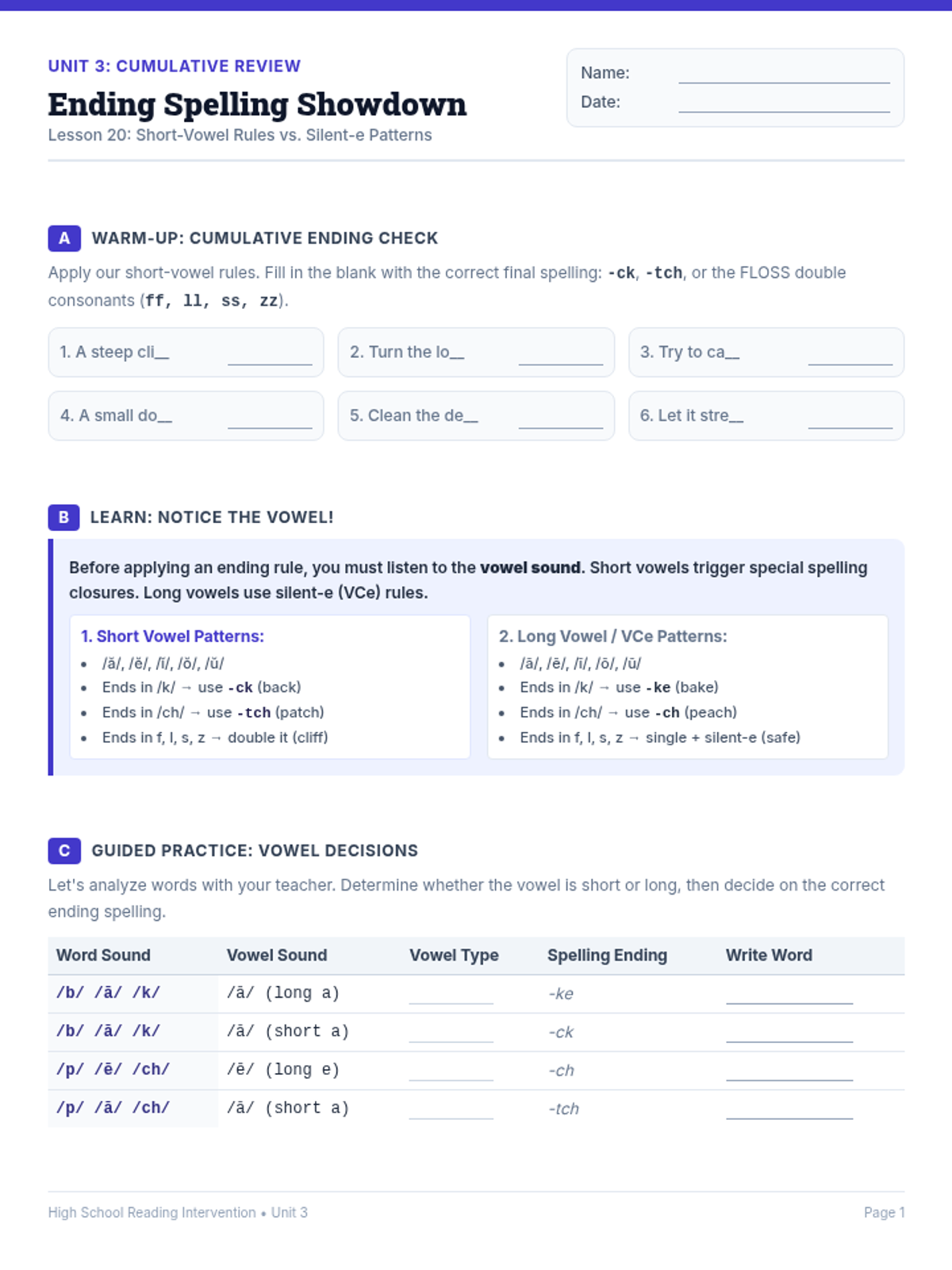
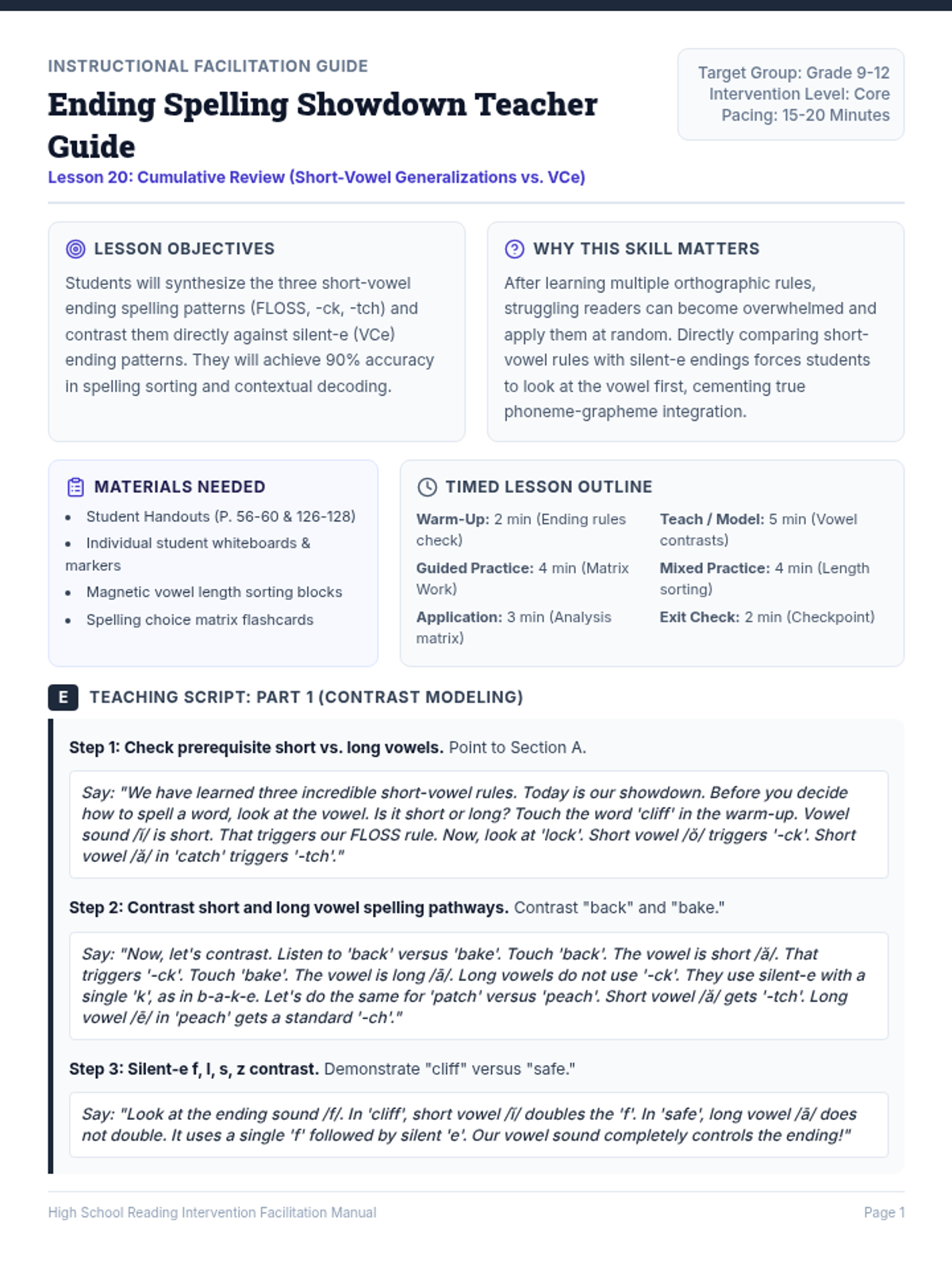
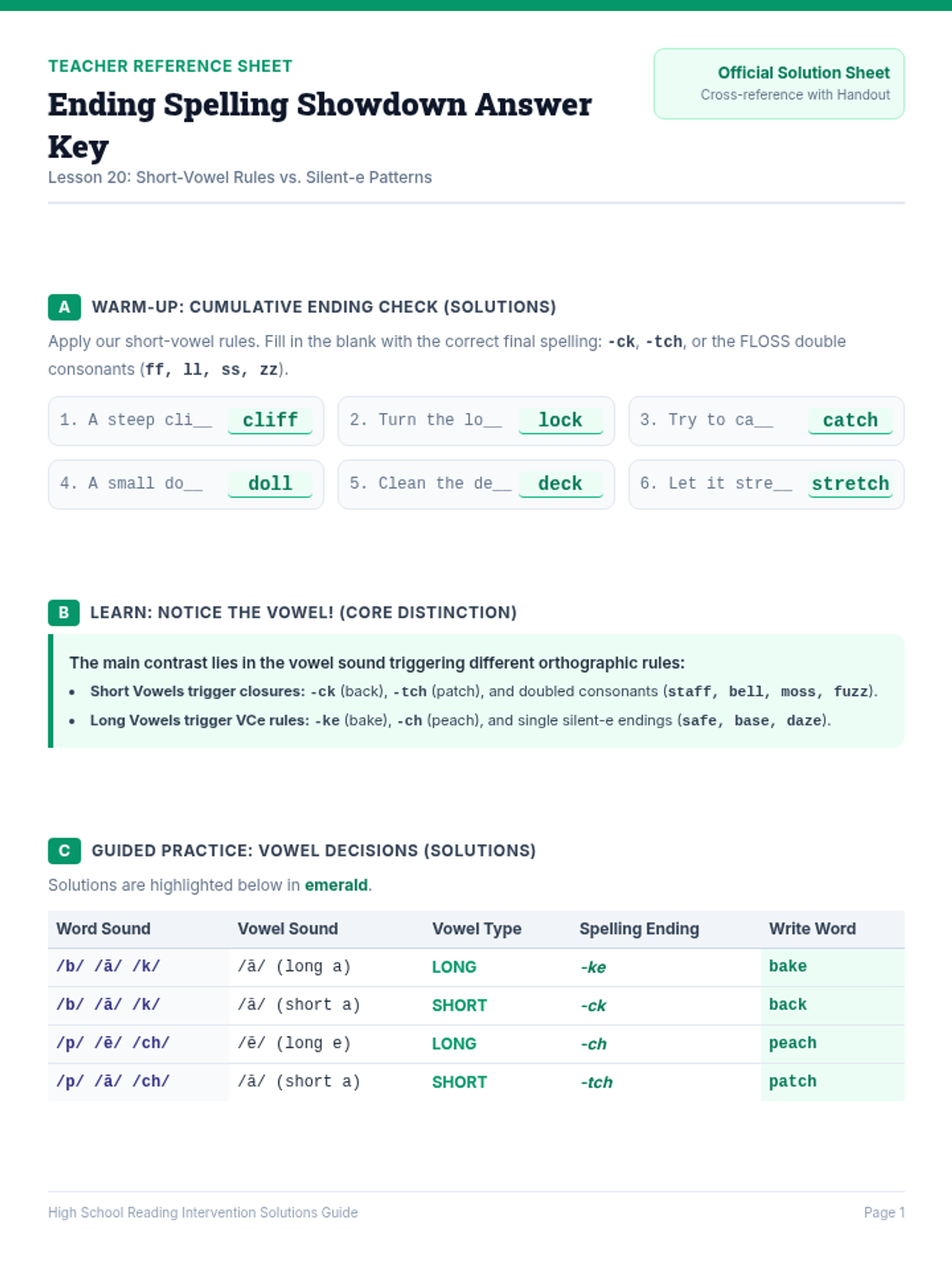
A cumulative practice and review lesson contrasting the short-vowel spelling rules (FLOSS, -ck, -tch) with VCe silent-e patterns to build master-level orthographic decoding and vowel recognition.
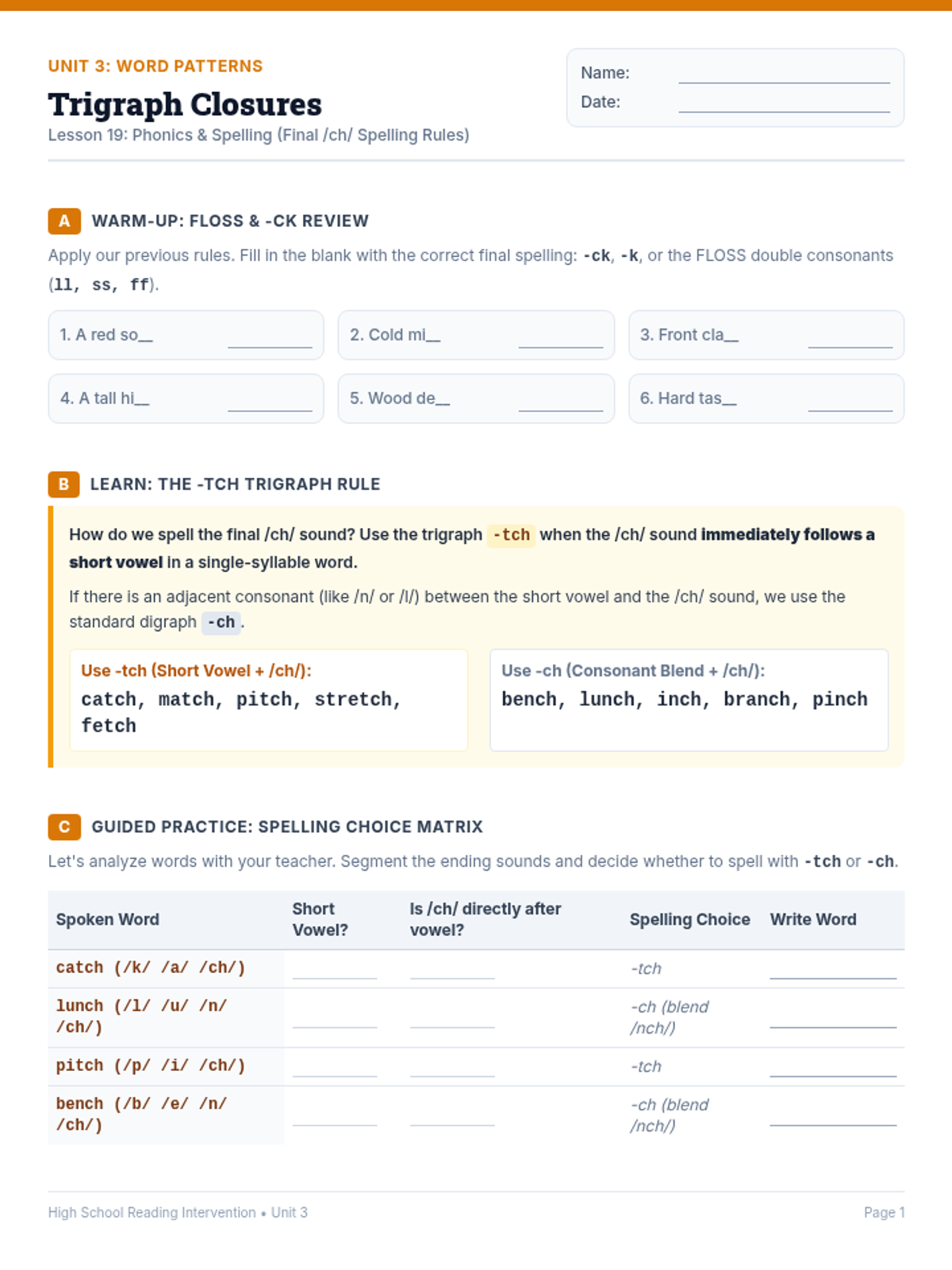
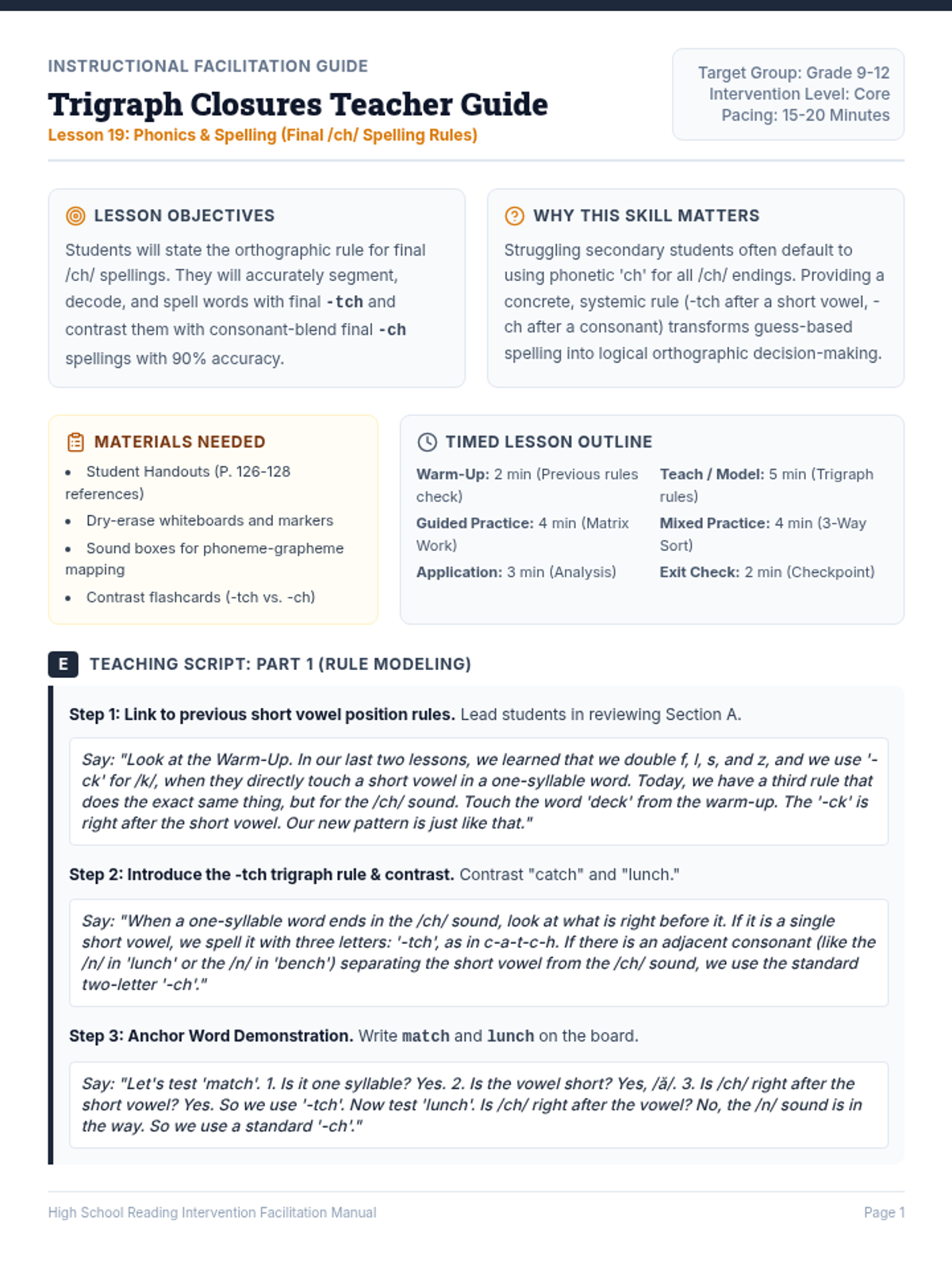
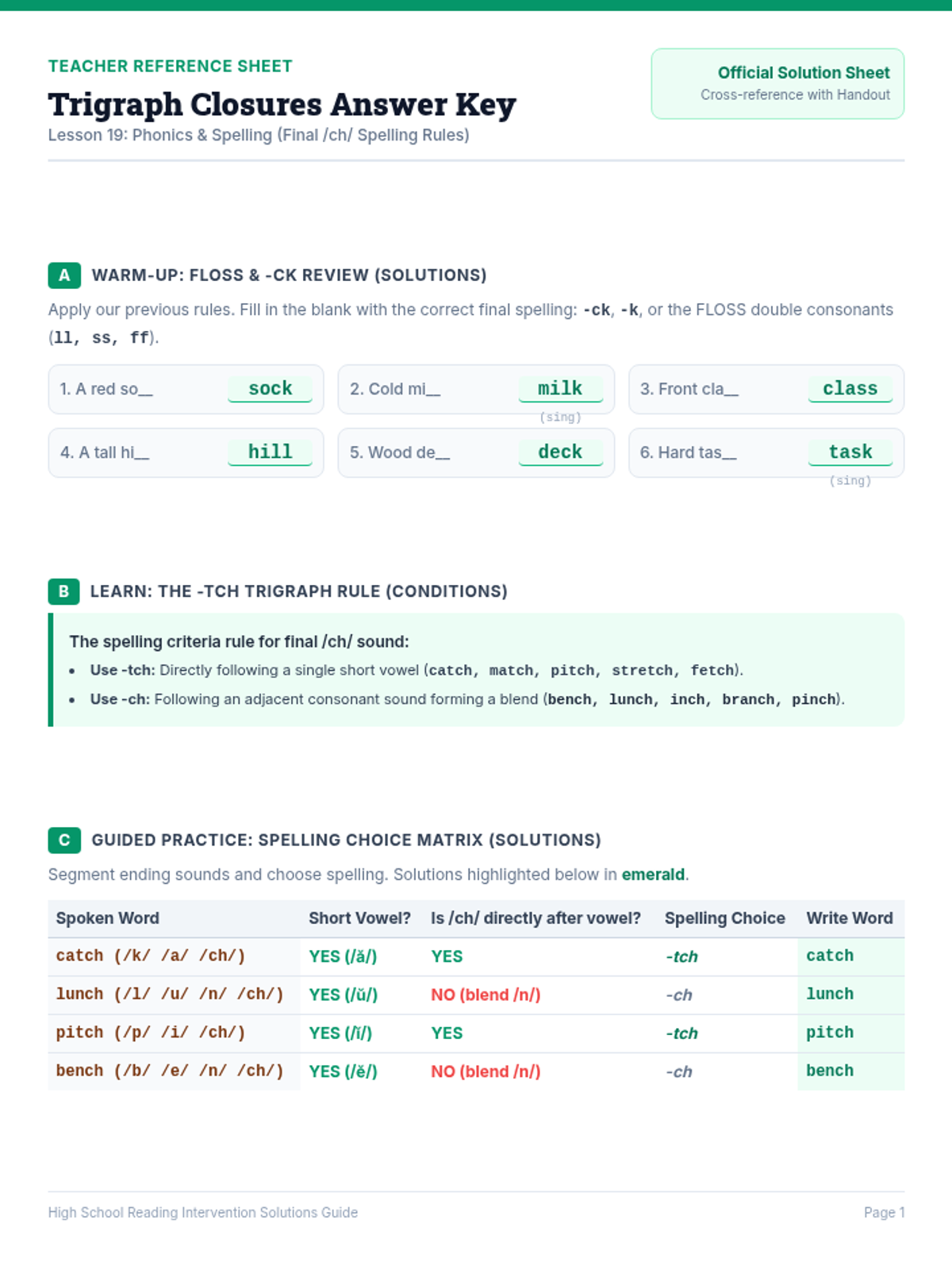
Introduces the spelling pattern -tch for the final /ch/ sound following short vowels, comparing and contrasting it with the -ck spelling rule for final /k/ sounds to build orthographic precision.
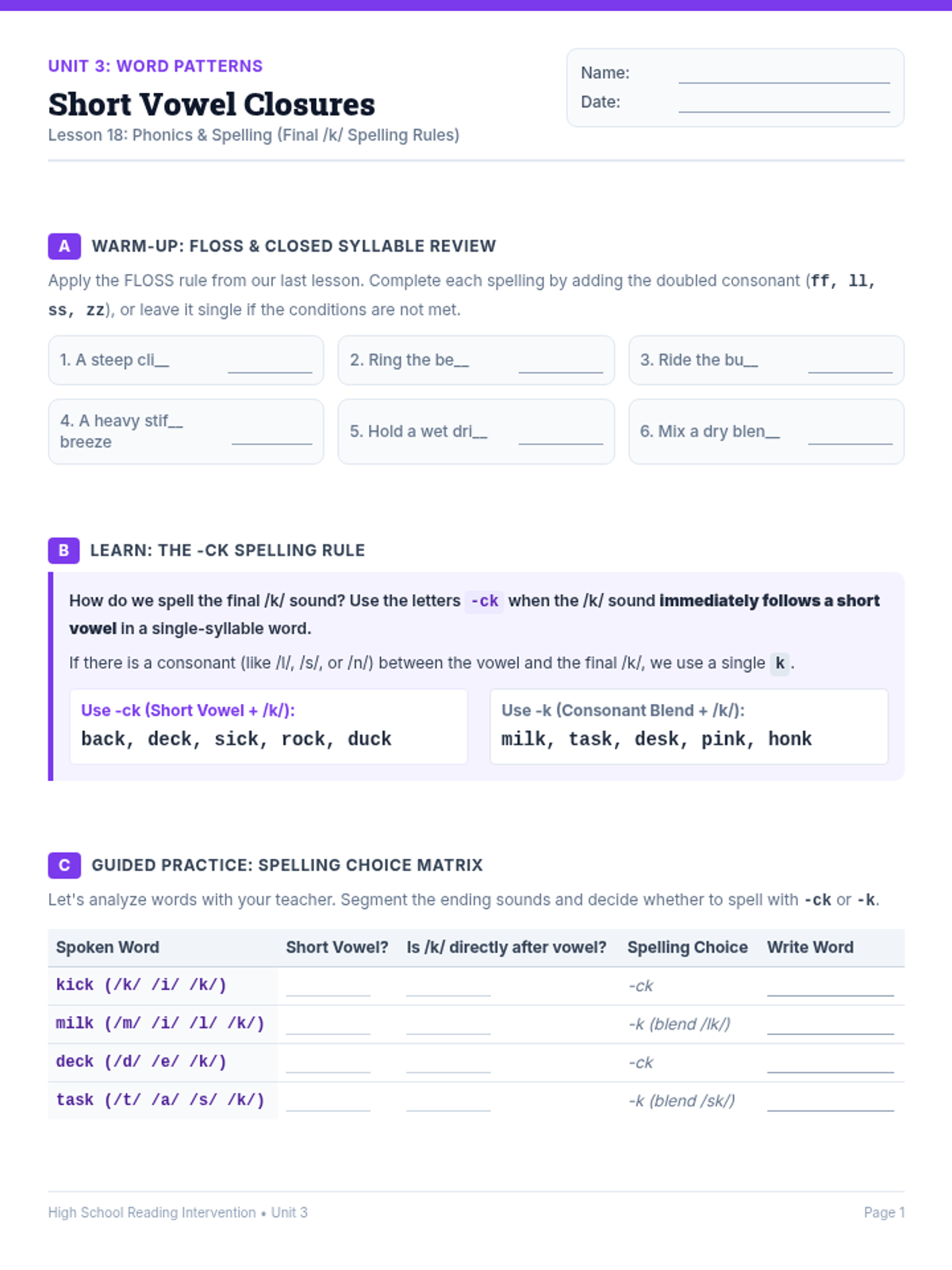
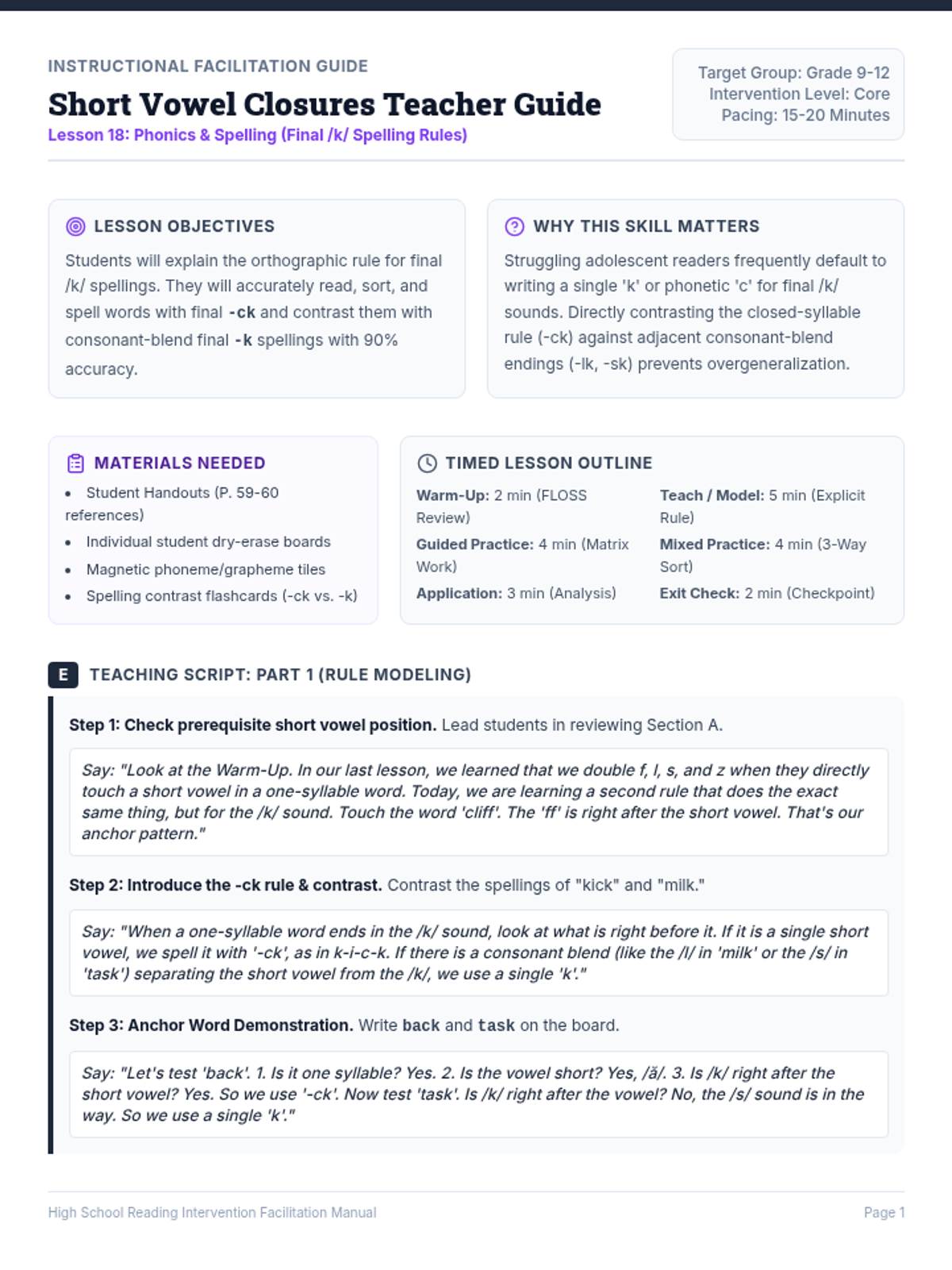
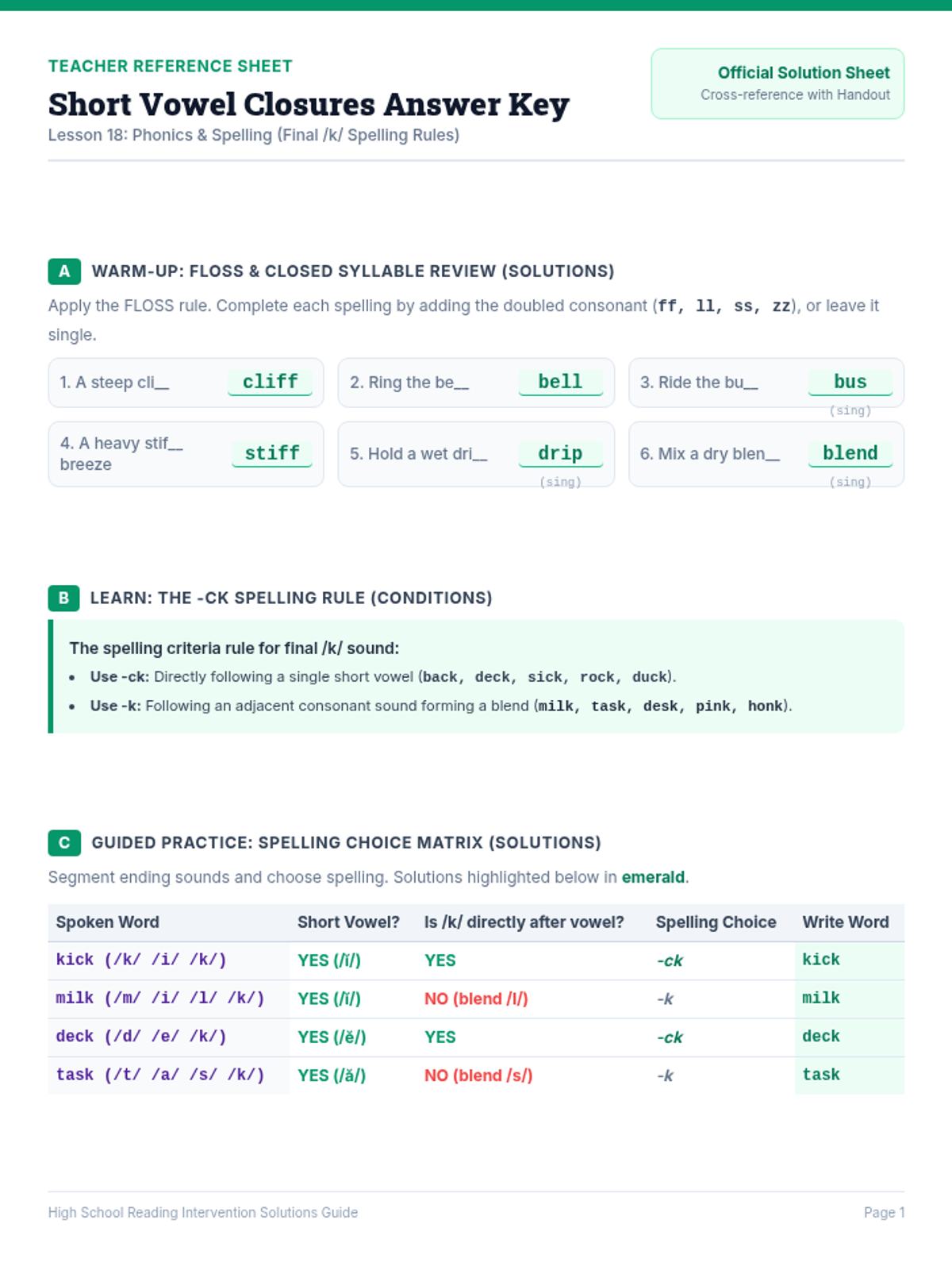
Introduces the spelling pattern -ck for the final /k/ sound following short vowels, contrasting it with the FLOSS rule to build systematic orthographic decision-making.
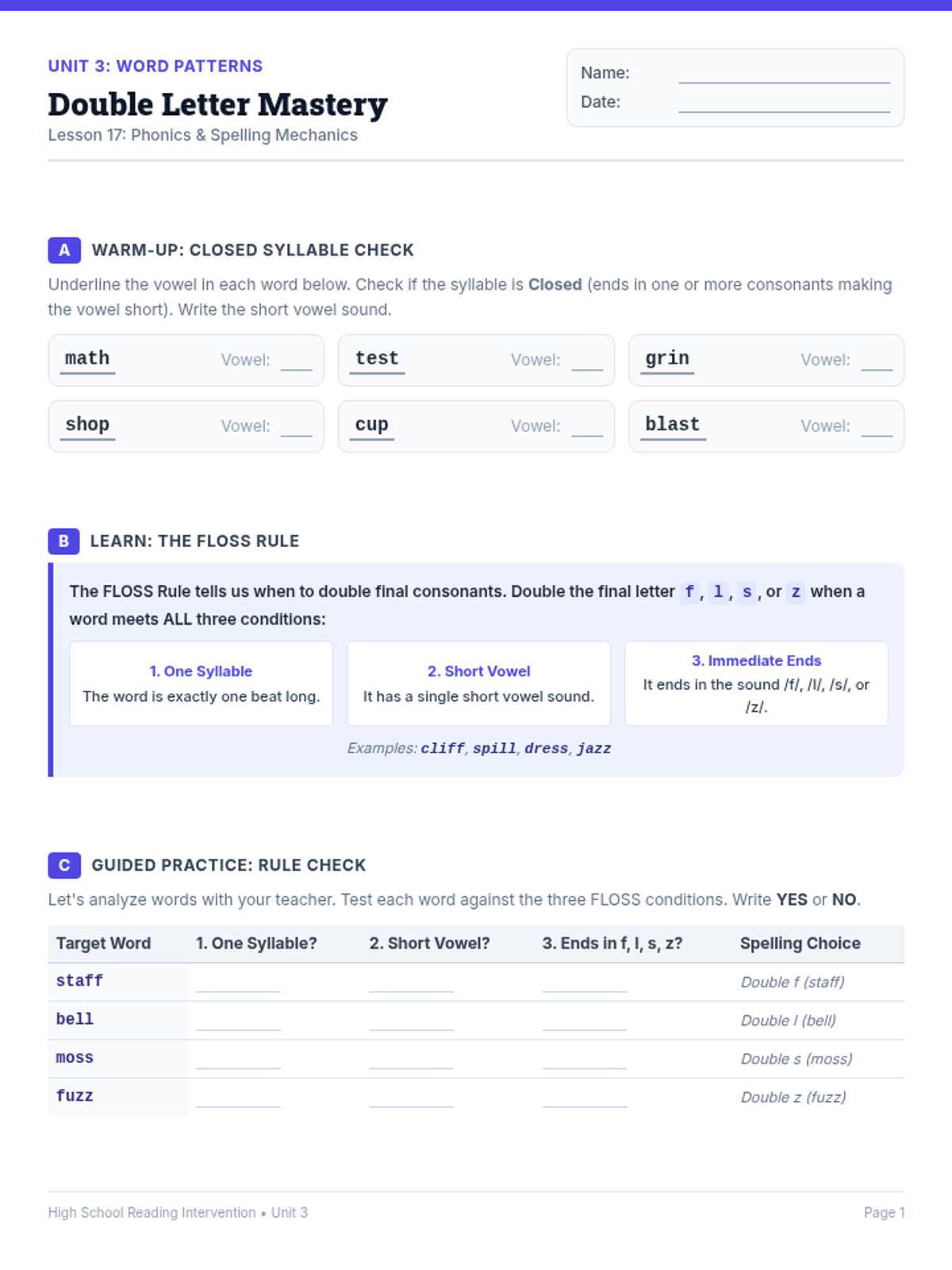
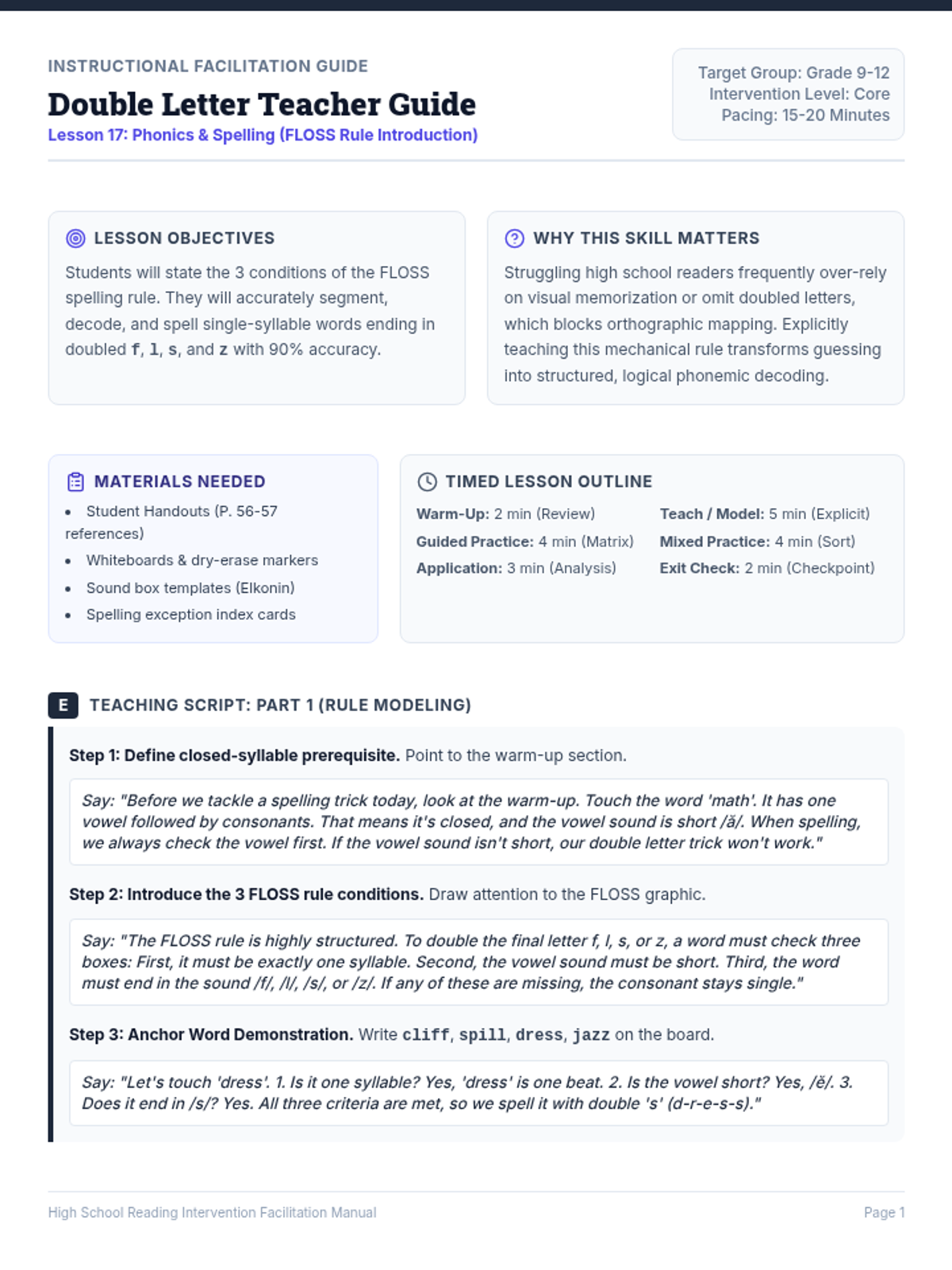
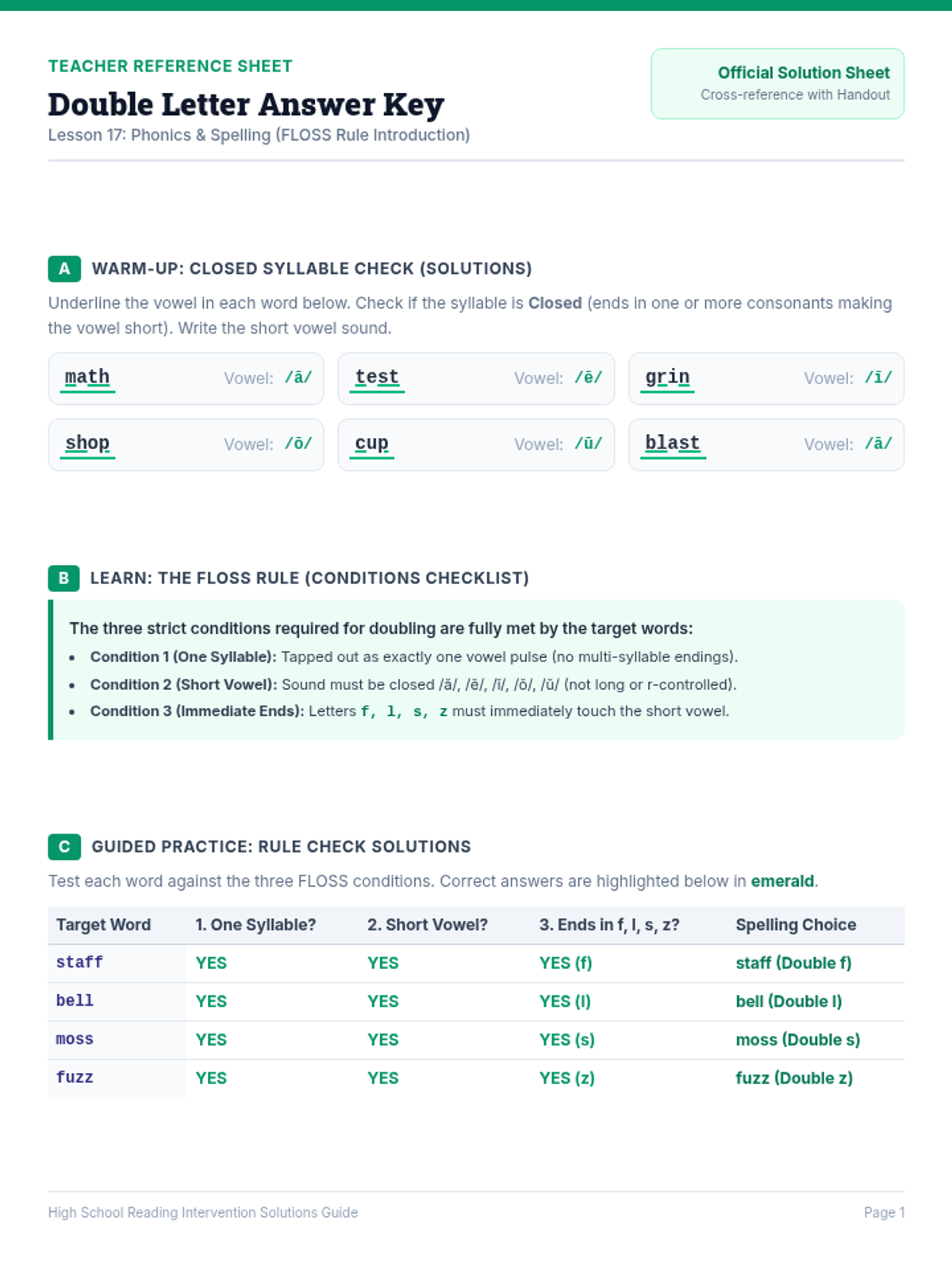
Introduces the FLOSS rule for single-syllable words containing short vowels, emphasizing the conditions under which final f, l, s, and z are doubled, while spiraling closed-syllable patterns.
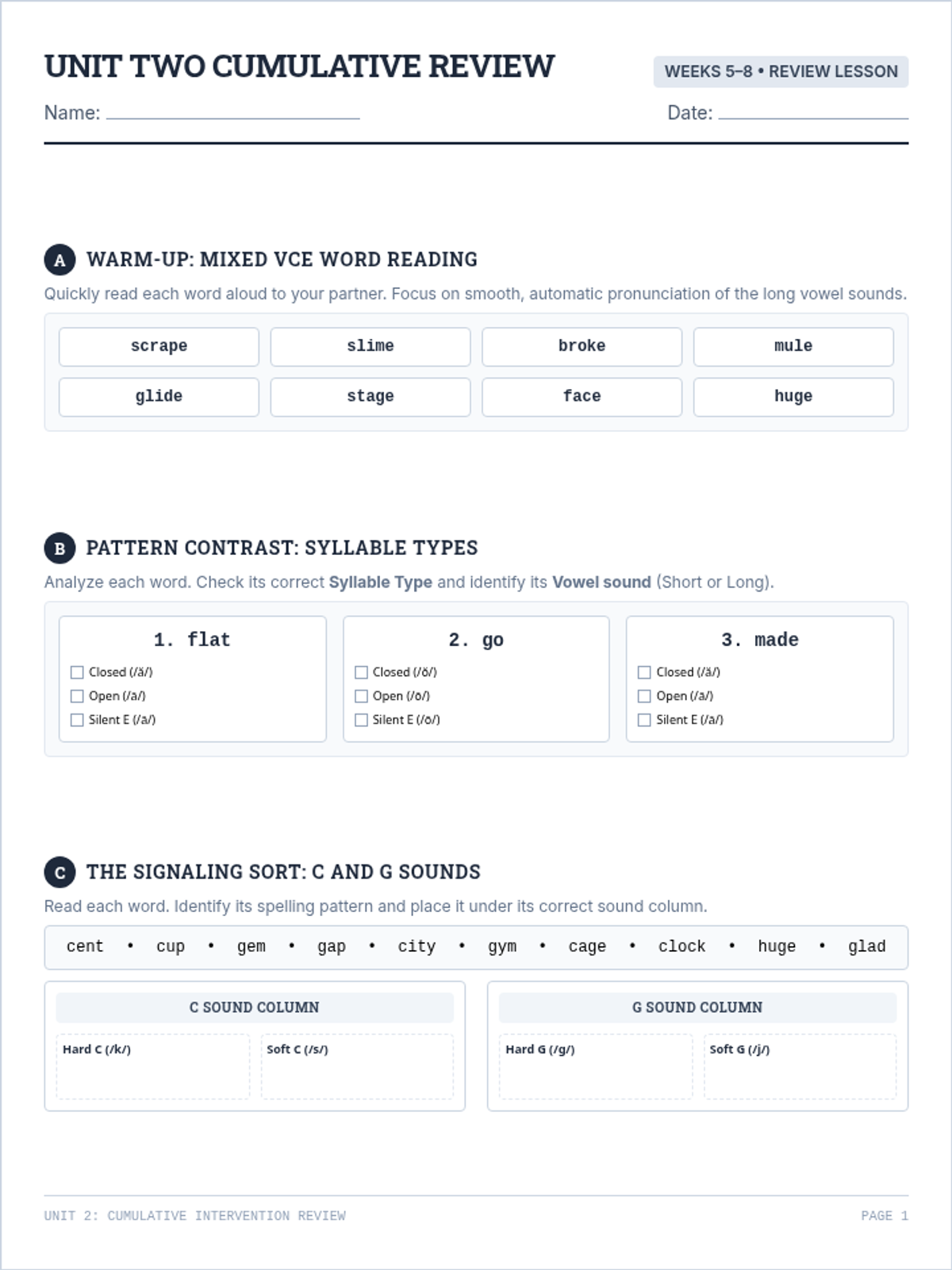
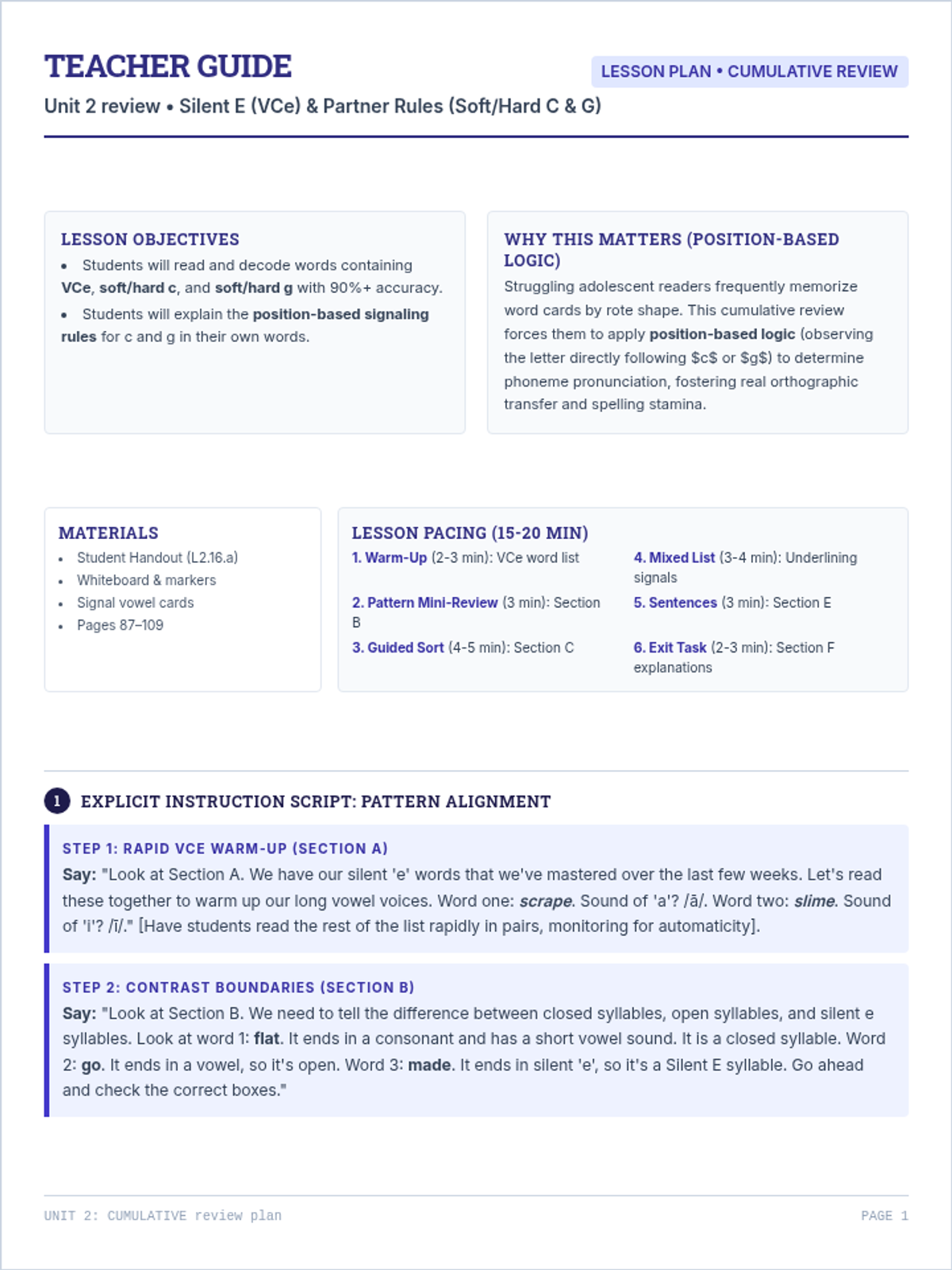
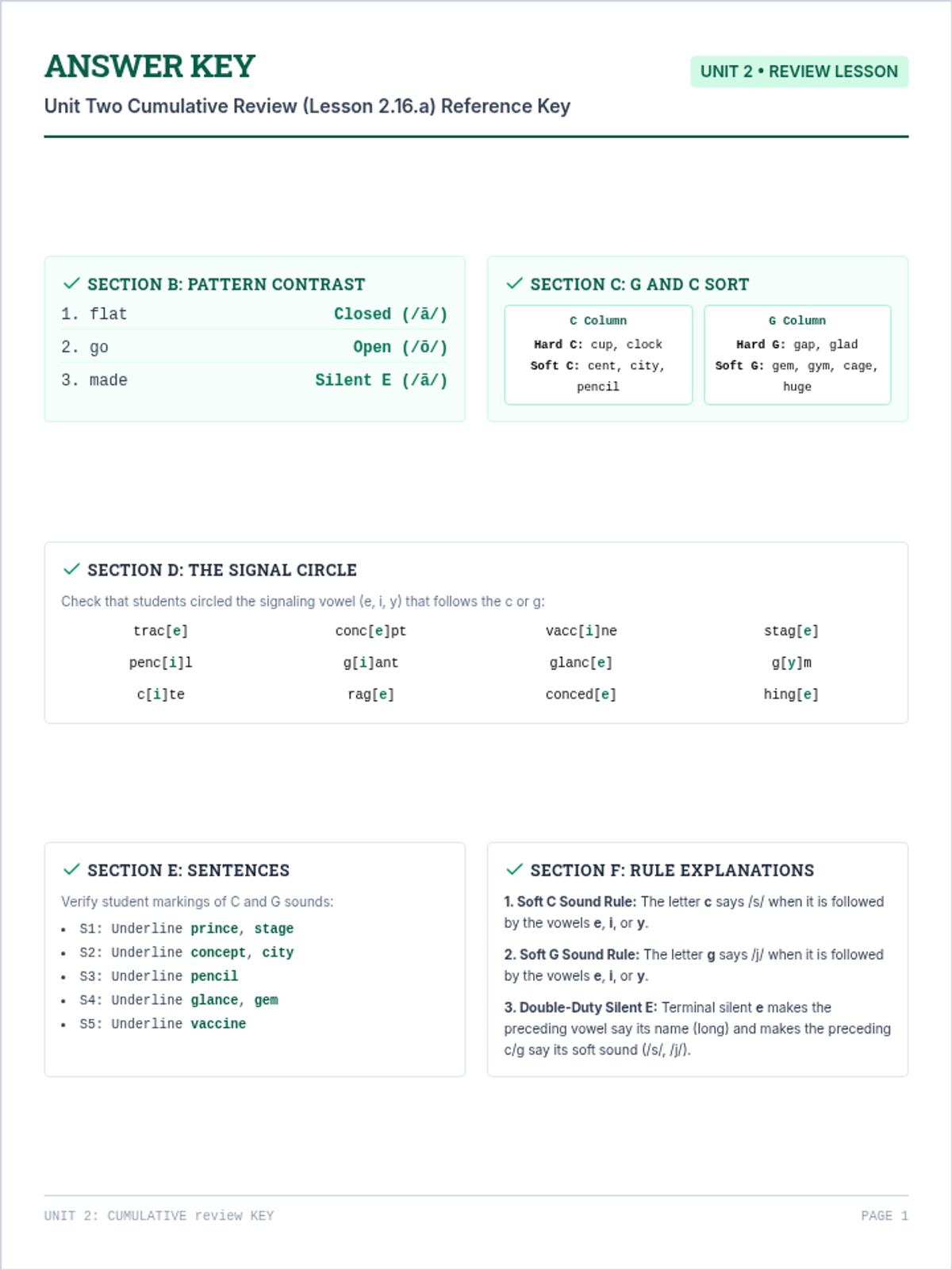
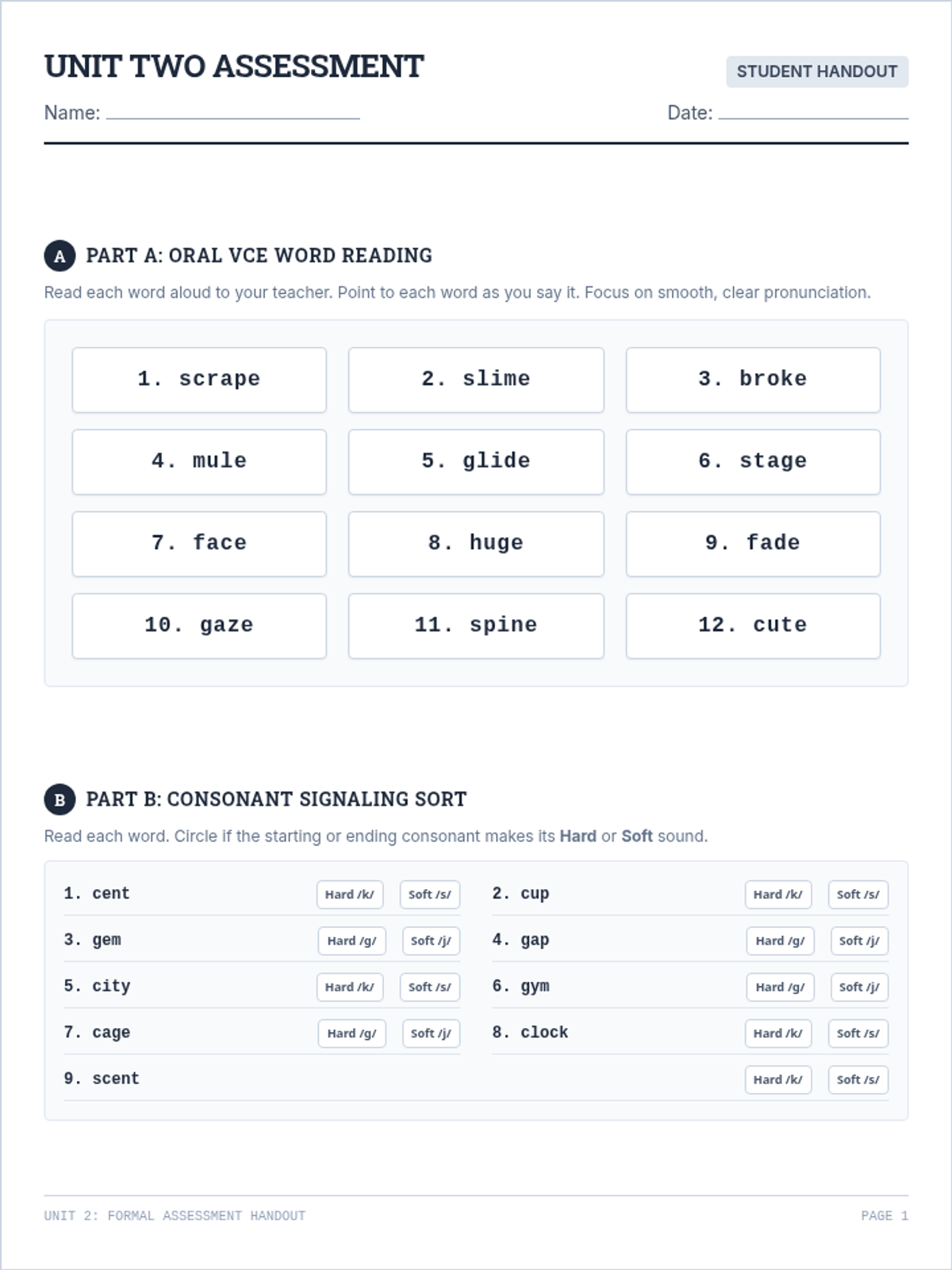
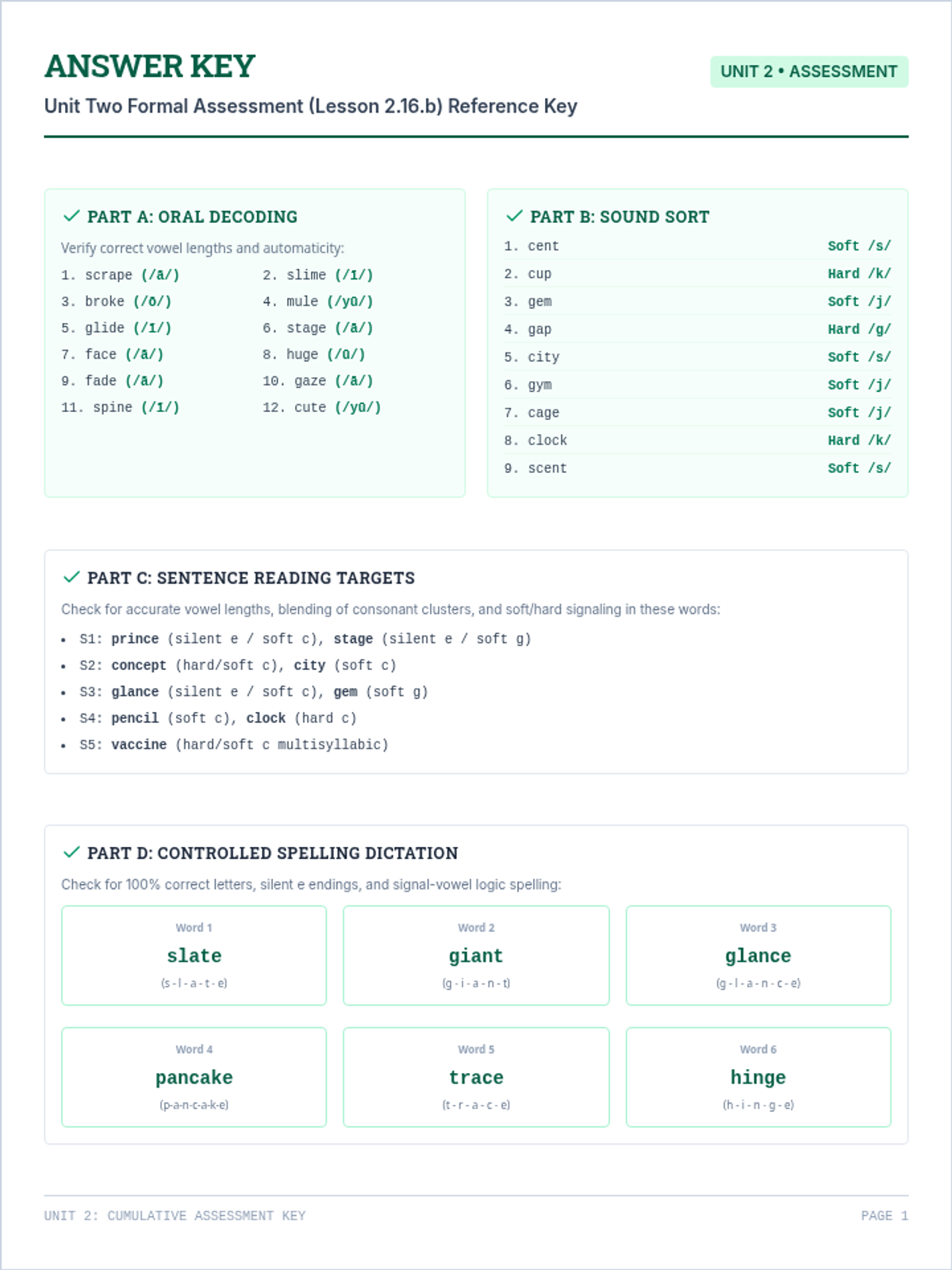
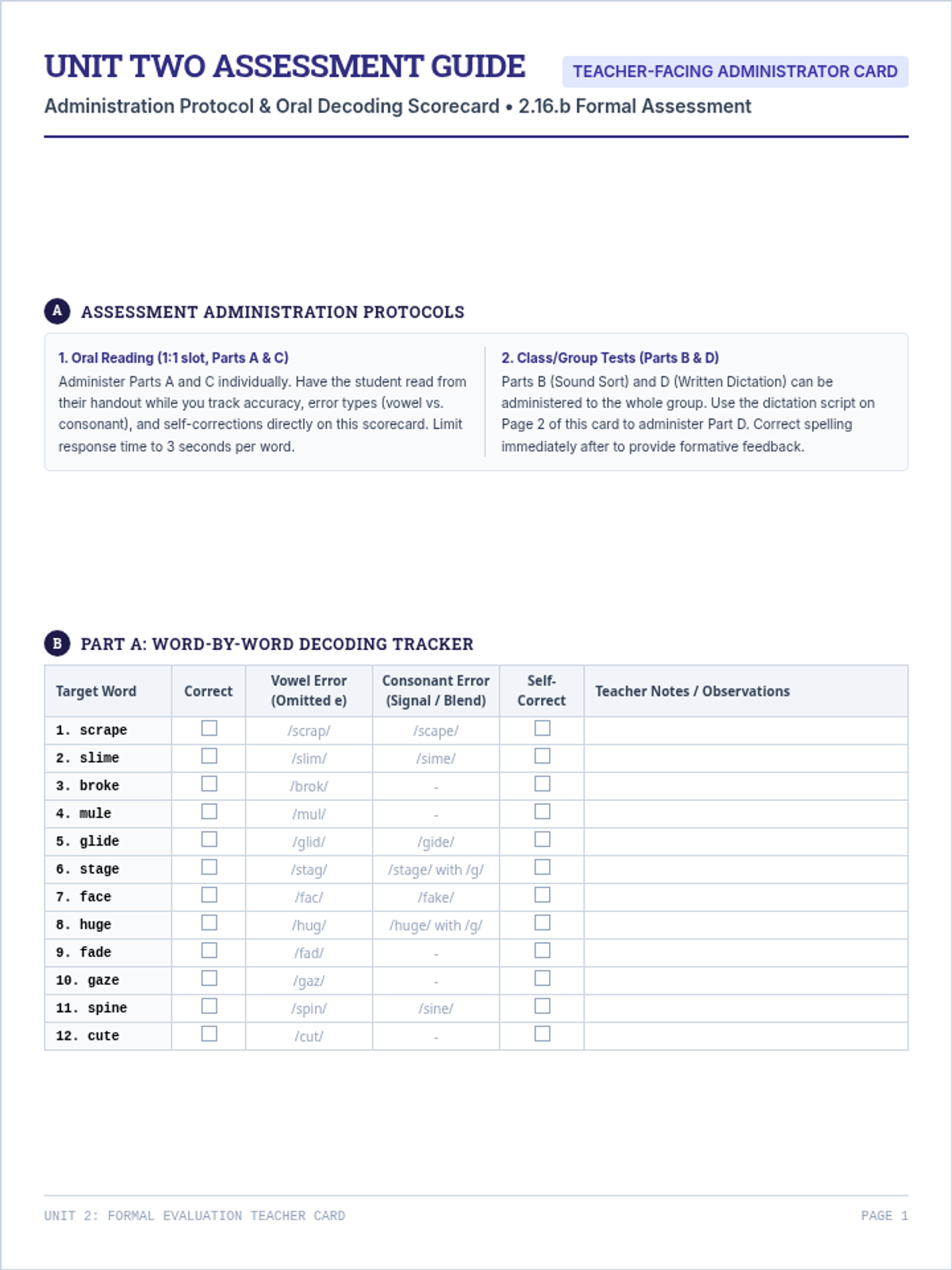
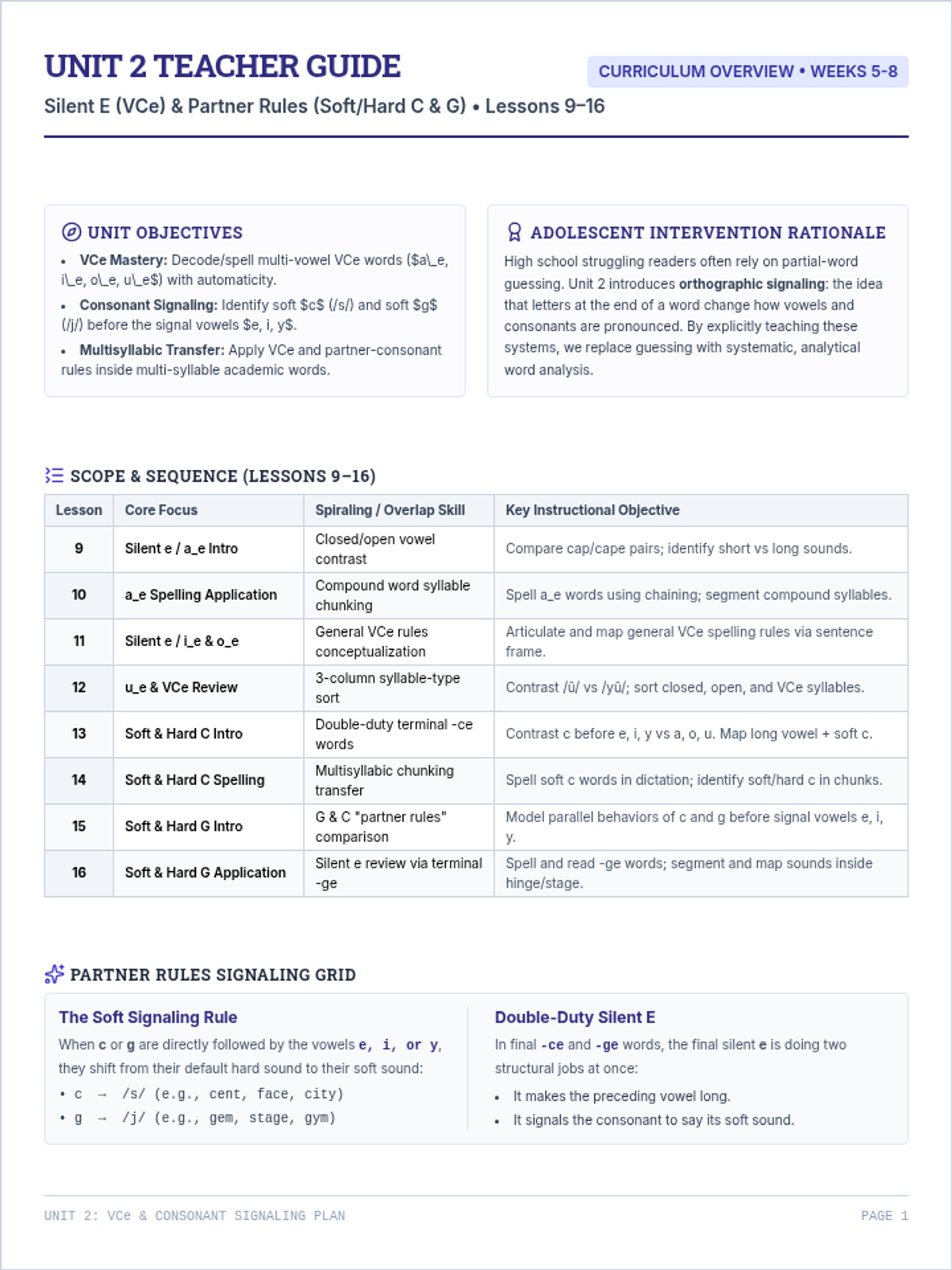
A cumulative review lesson covering Unit 2 (Lessons 9-16). Students practice reading and spelling silent e/VCe words, soft/hard c, and soft/hard g patterns, and explain the position-based sound logic. Designed for high school students.
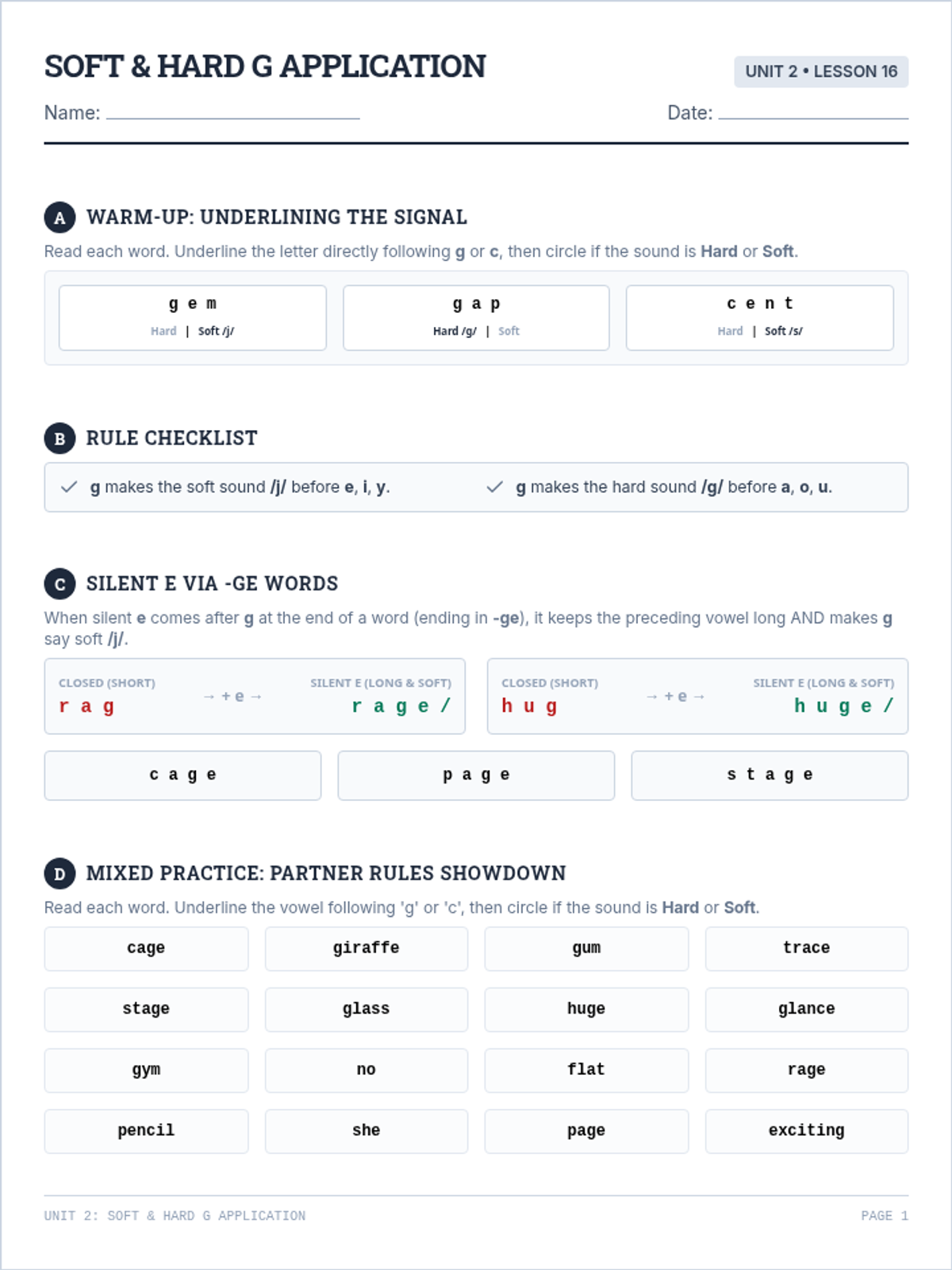
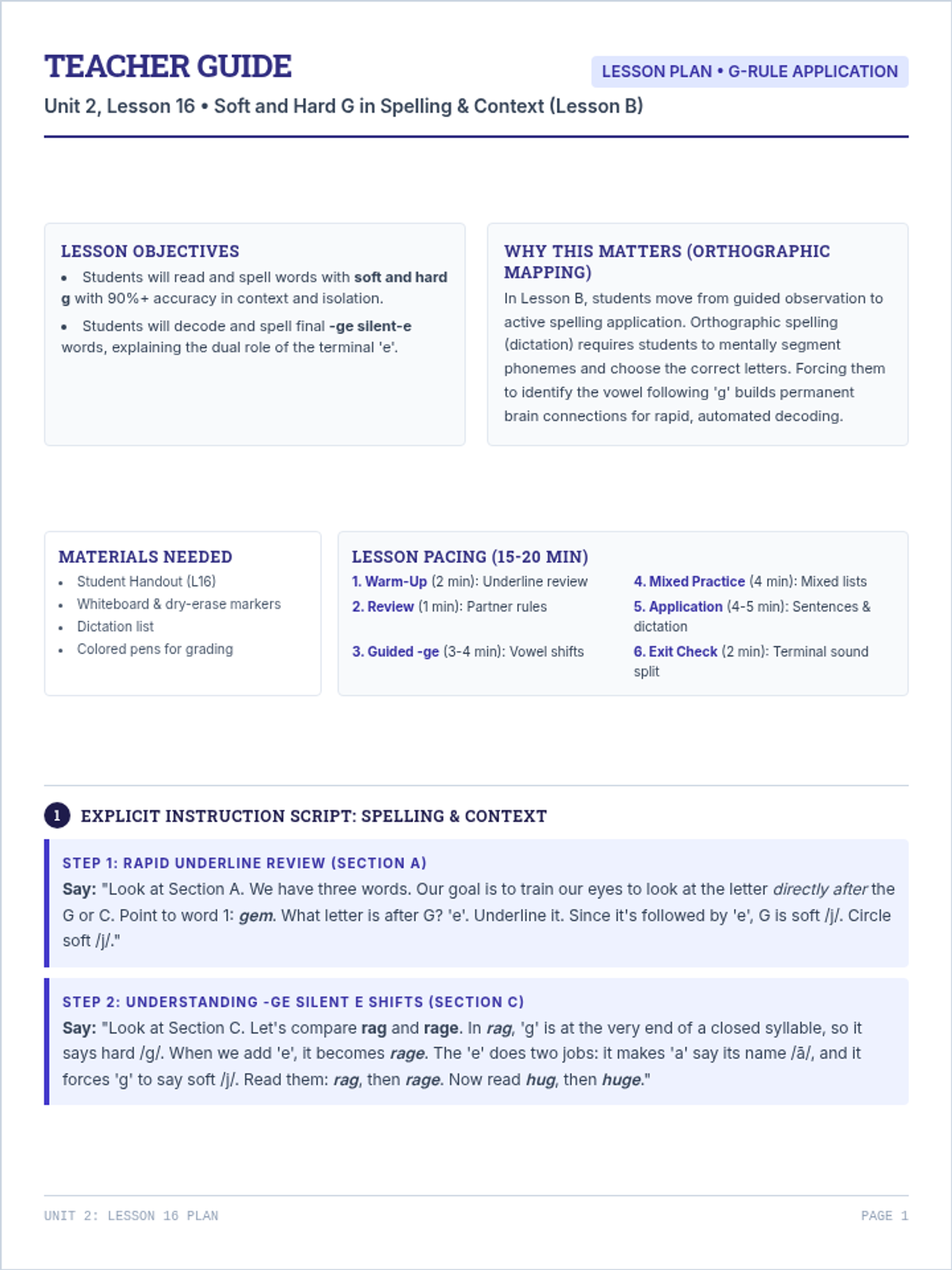
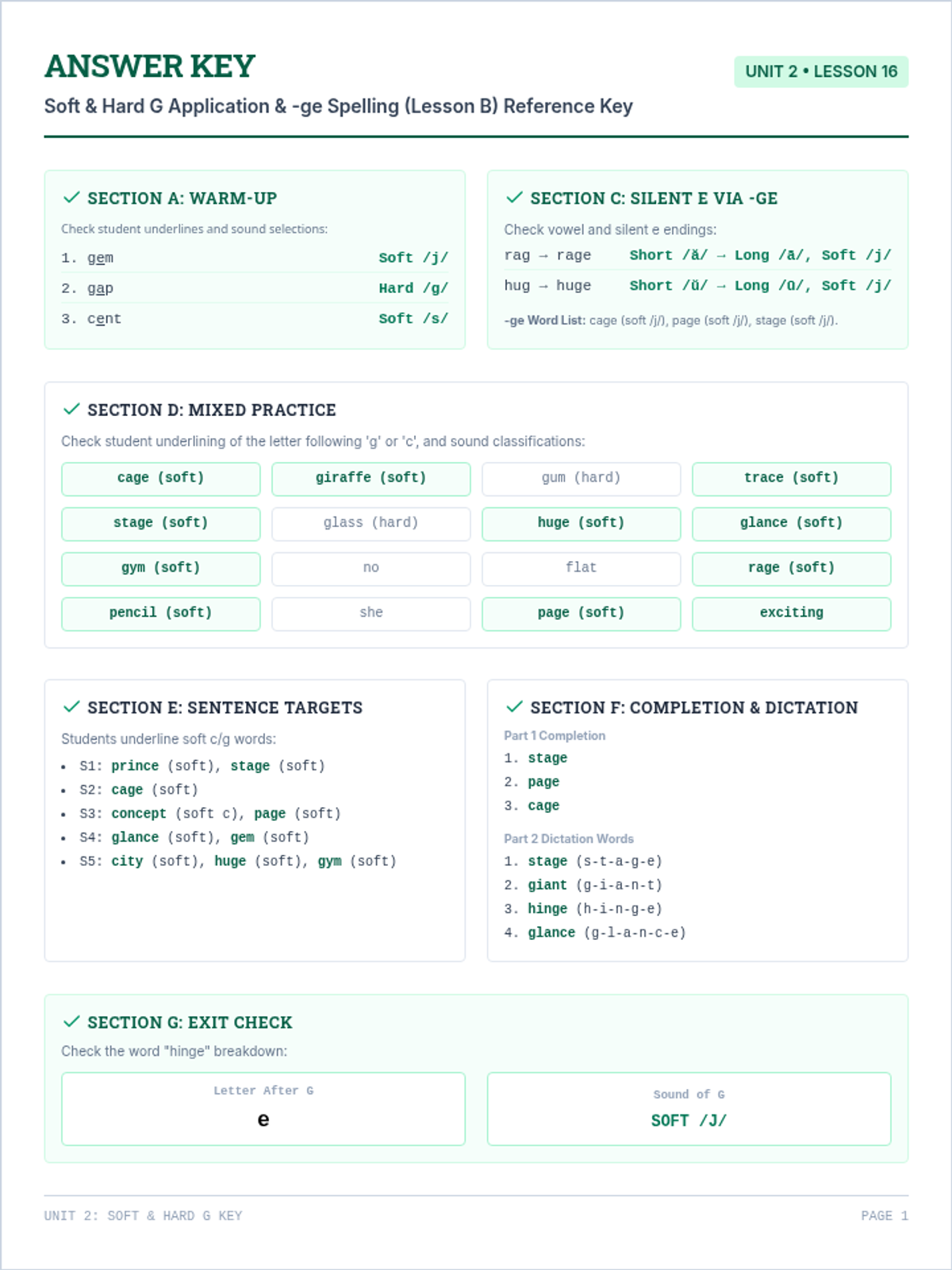
Lesson 16 of the sequence. Focuses on the application of soft/hard g and c rules in spelling, dictation, and -ge silent-e words using structured vowel-signaling strategies. Designed for high school students.
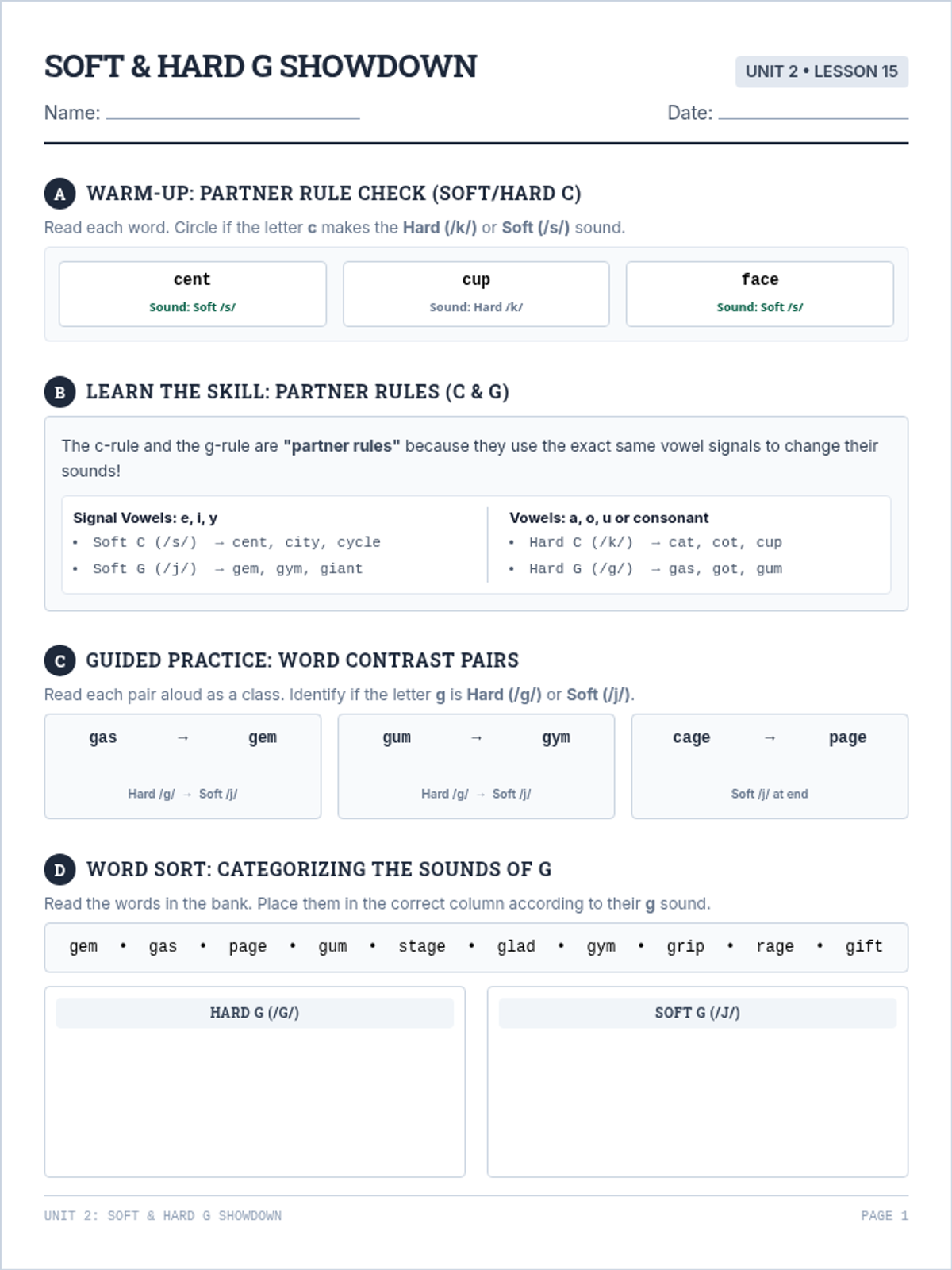
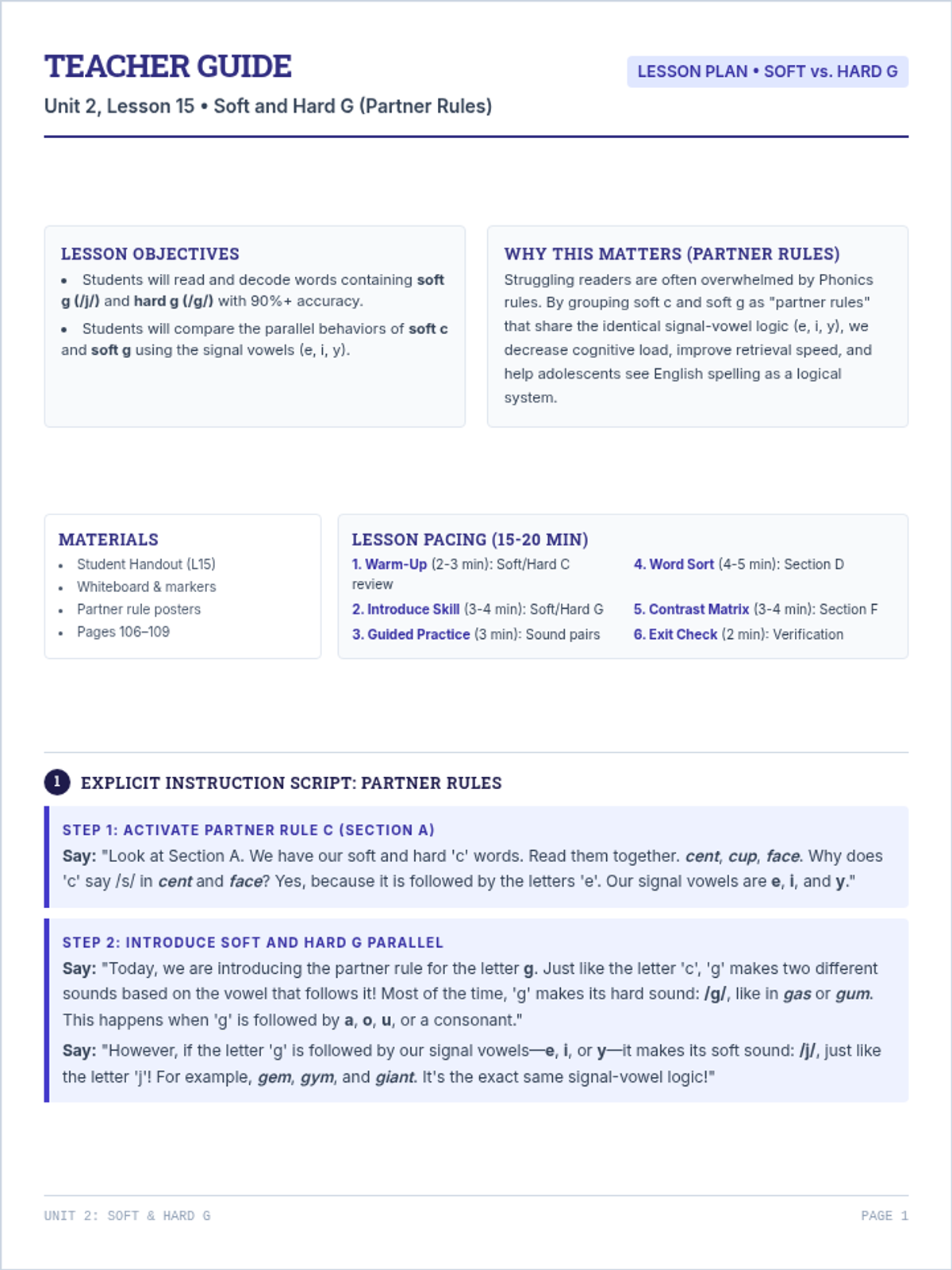
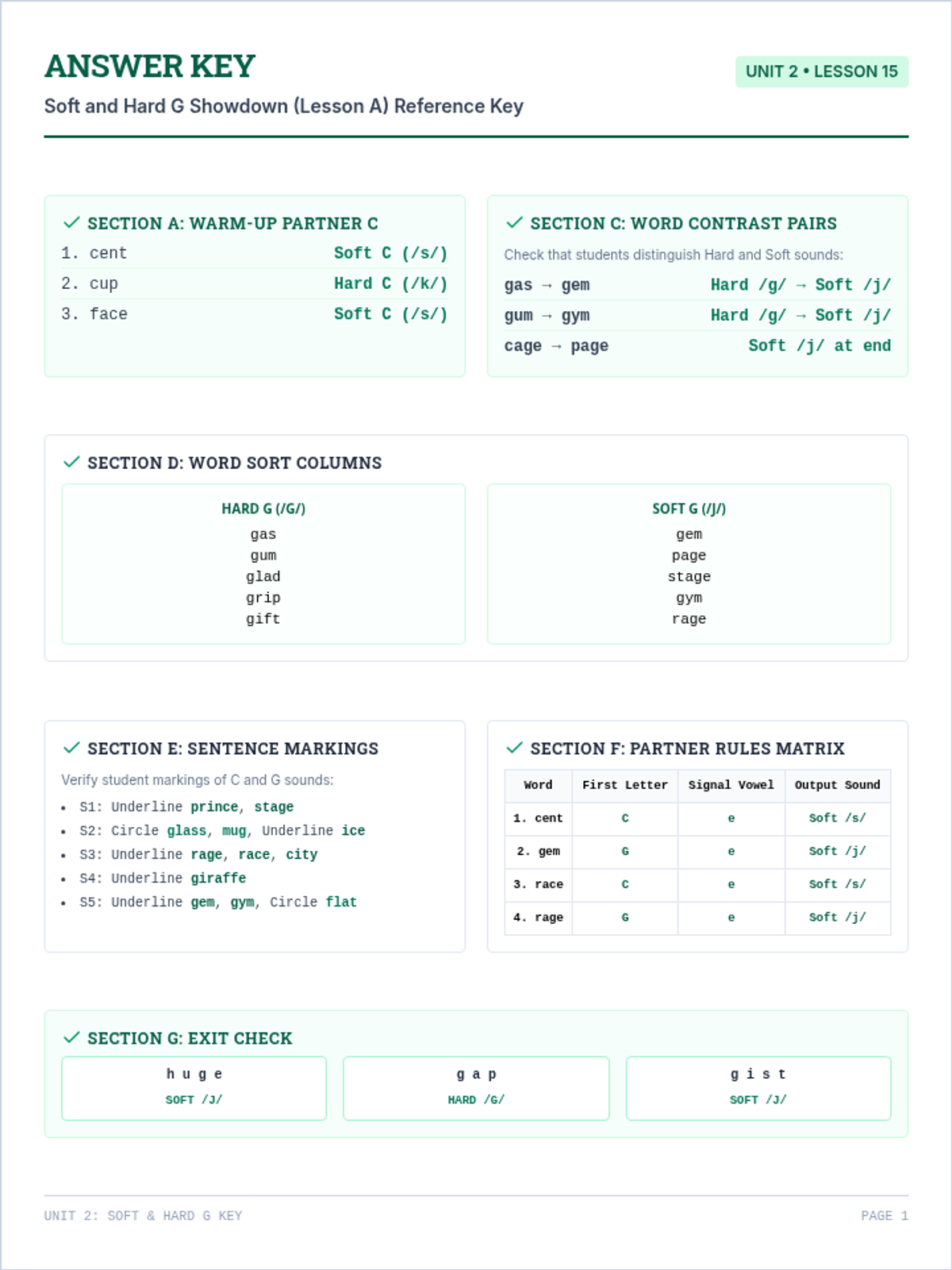
Lesson 15 of the sequence. Introduces soft g (/j/) and hard g (/g/), drawing explicit parallels to the hard/soft c rules as "partner rules" and reviews vowel signaling. Designed for high school students.