An experiential lesson for non-verbal ASD students using visual and hands-on activities to explore the planets. Students watch a video, color planets based on models, and match visuals to names.
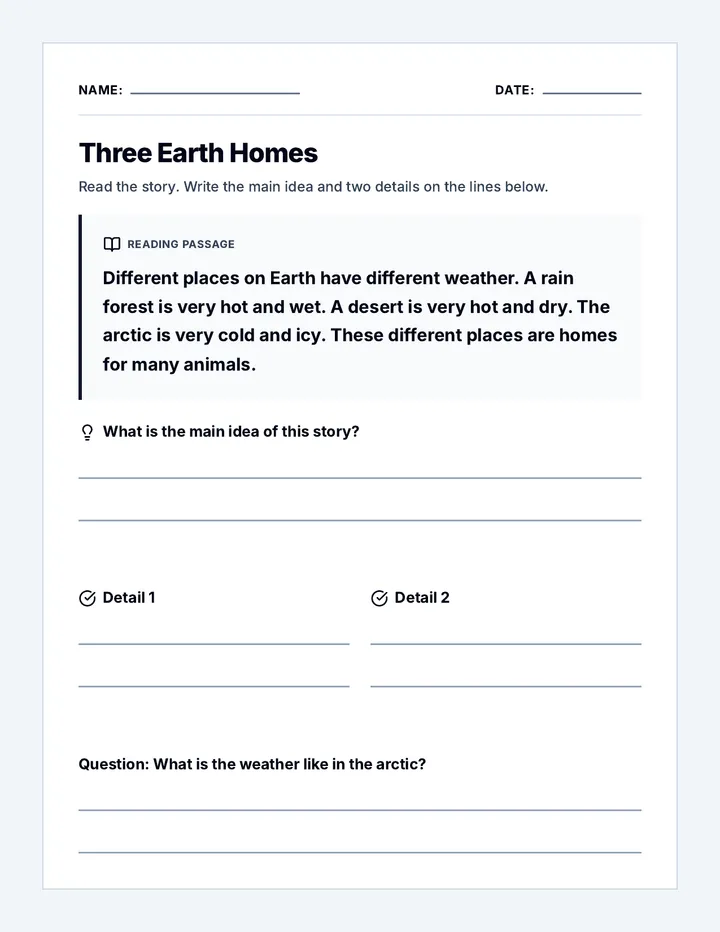
A targeted reading intervention lesson focused on identifying the main idea and supporting details using high-interest, low-readability texts. Designed for students who decode well but struggle with comprehension.
Cumulative review with a focus on encoding (spelling) 2-syllable words with silent-e syllables.
Mixed practice of closed/open + silent-e syllables with a focus on flexible decoding strategies.
Focuses on 2-syllable words combining an open syllable with a silent-e syllable (e.g., remote, feline, locate).
Focuses on 2-syllable words combining a closed syllable with a silent-e syllable (e.g., sunshine, reptile, mistake).
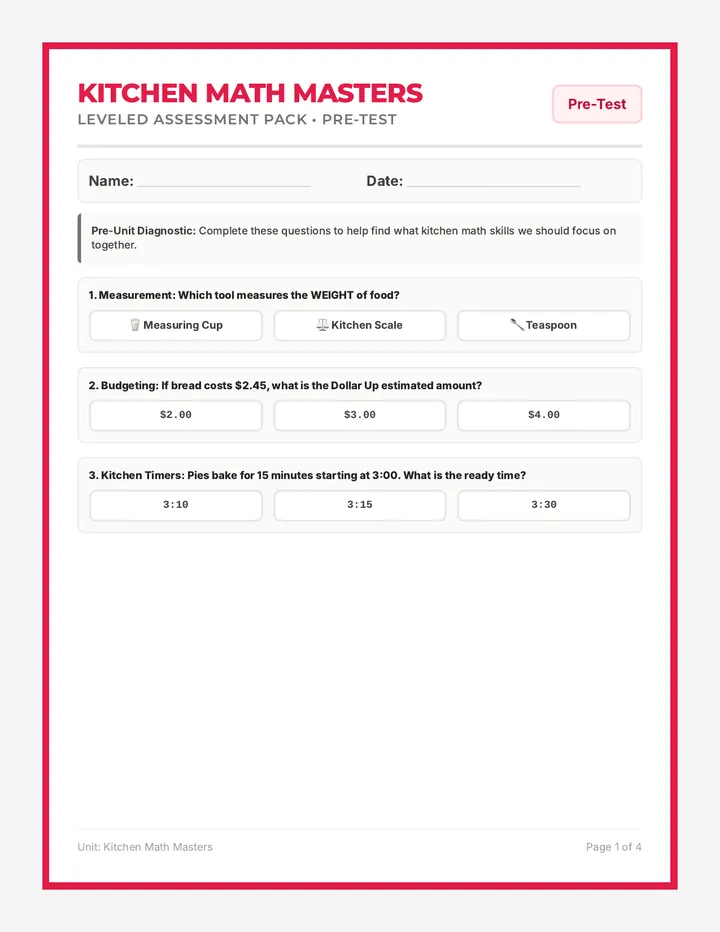
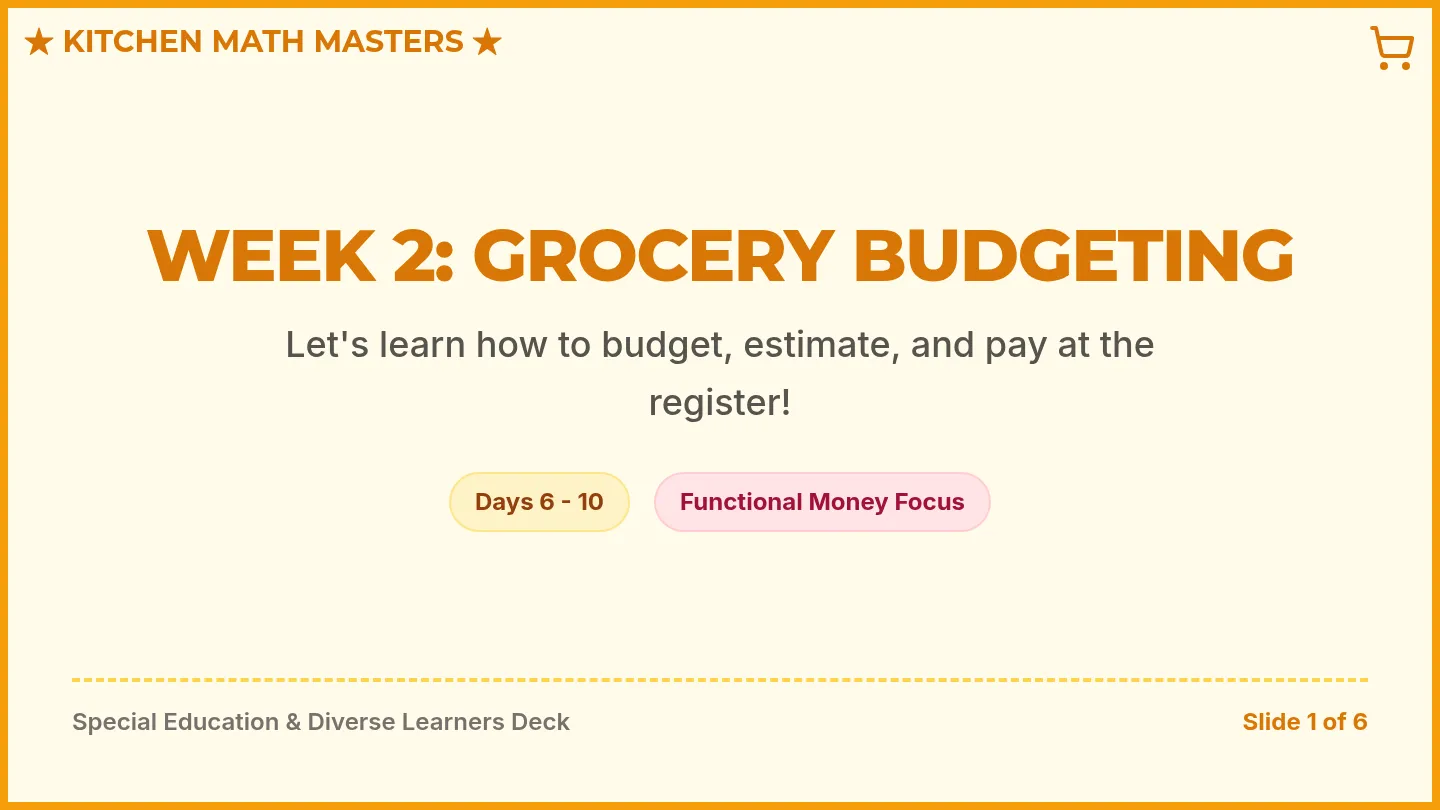
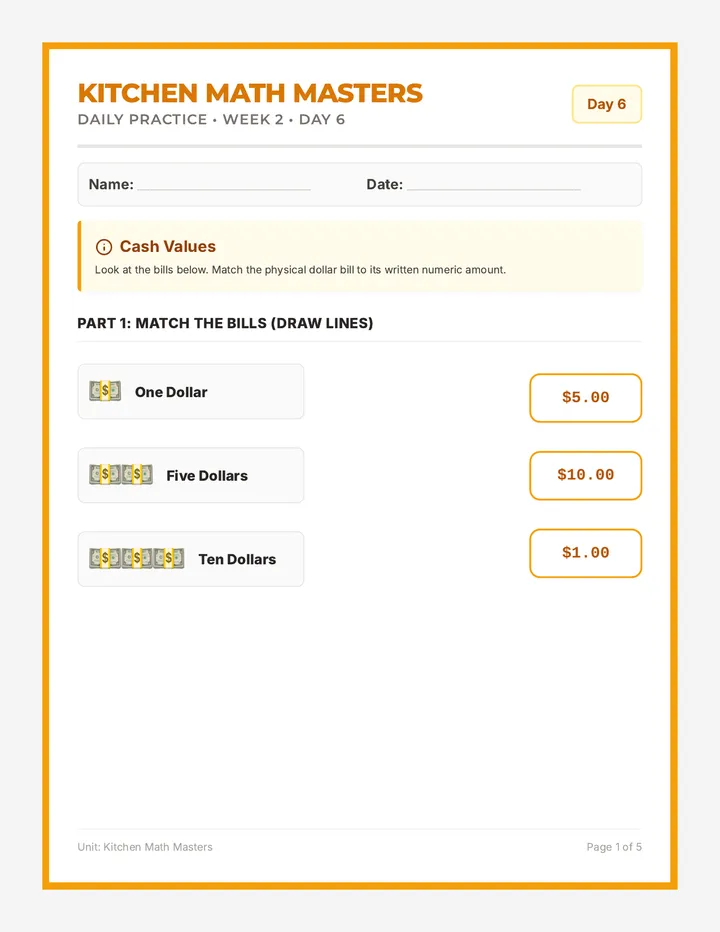
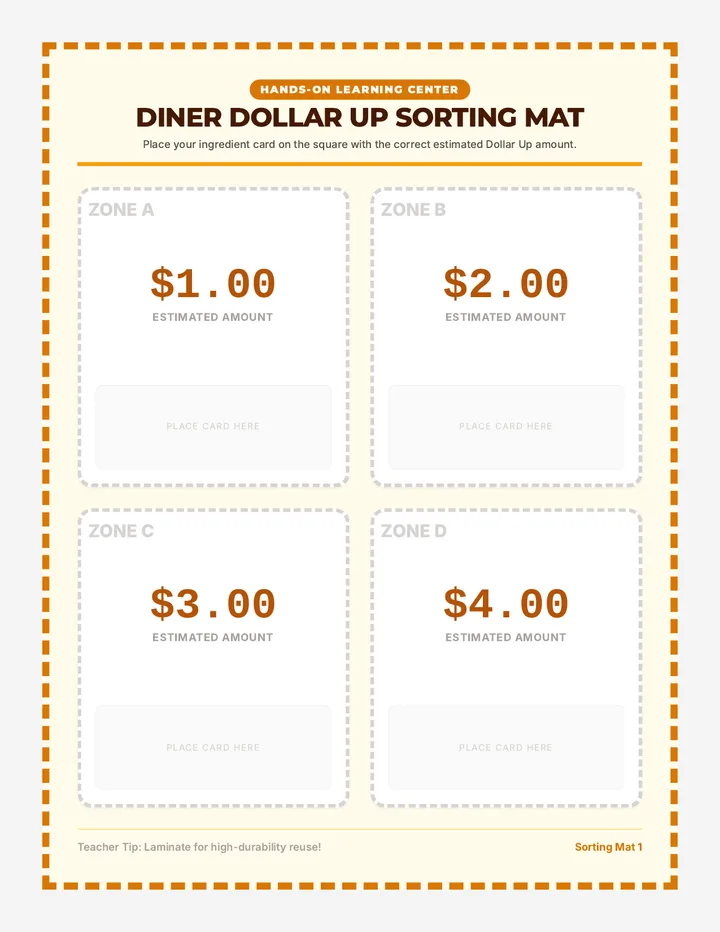
Teaching students the 'Next Dollar Up' strategy to successfully make purchases without needing to calculate exact change, focusing on items up to $10.
Encourage joint attention and exploration through the core words Open and Look.
Develop social interaction skills and transition management using Mine, You, Finished, and Turn.
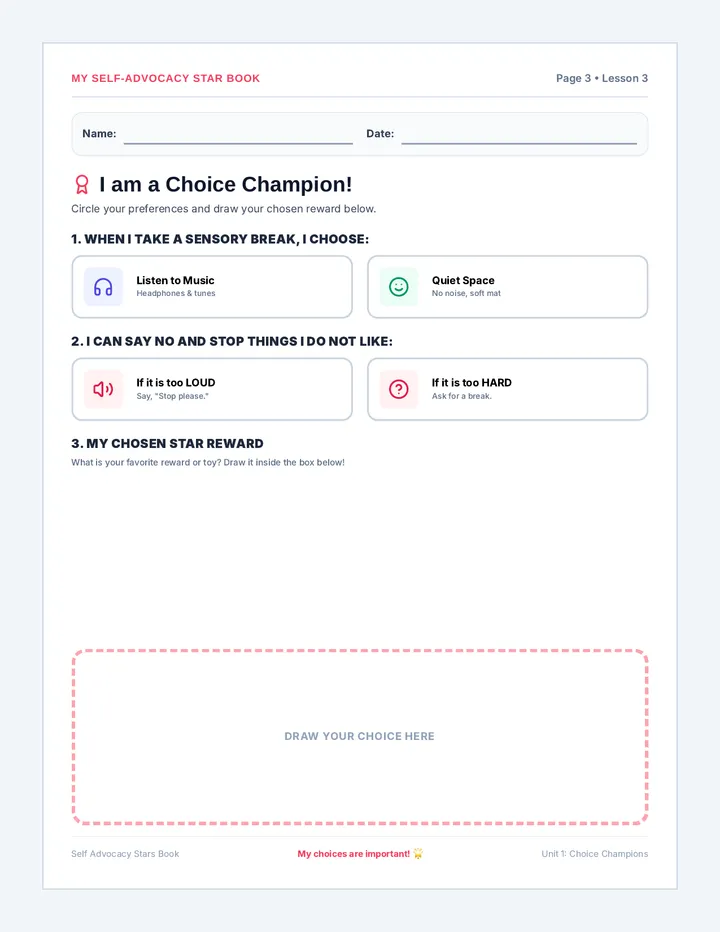
Focus on expressing preferences and seeking assistance using core words Like, Don't Like, and Help.
Introduce the primary 'power words' (Go, Stop, More, Want) to establish basic requesting and agency in play-based settings.
Foundational literacy support for the Nature's Balance unit, focusing on CVC/CVCe blending, unit vocabulary, and sentence frames.
A practical lesson on professional appearance and hand hygiene, focusing on wearing the care helper uniform and the step-by-step handwashing routine.
A practical lesson on the etiquette of entering a resident's private room, focusing on knocking, waiting for a response, and identifying 'Privacy' signs.
A foundational lesson on how to interact with residents in a care home setting, focusing on eye contact, simple greetings, and respectful distance through visual supports and repetitive practice.
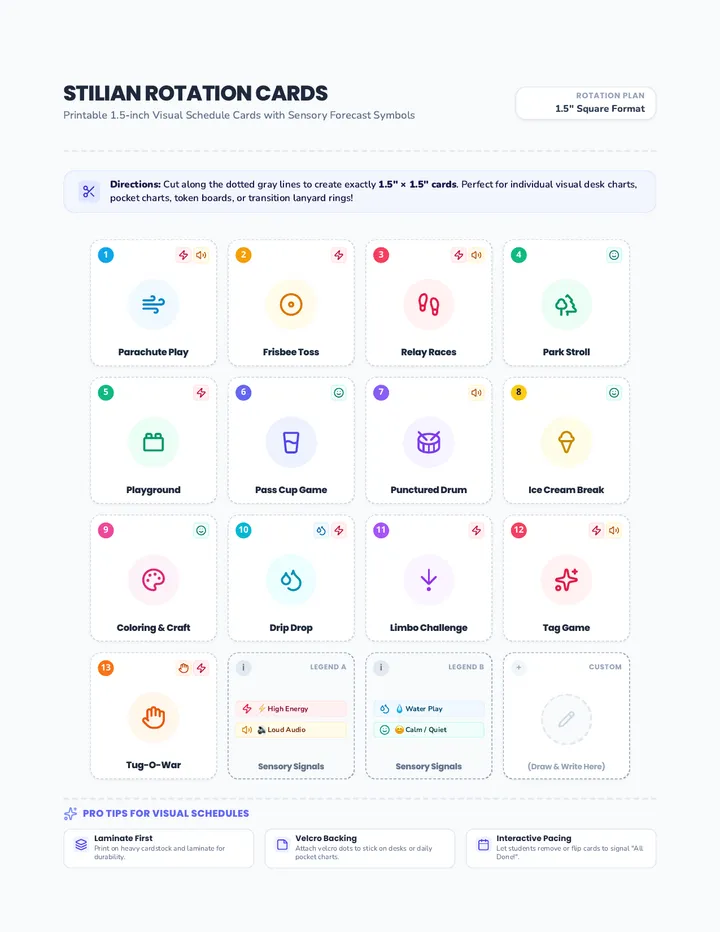
A culminating activity rotating through communication stations to demonstrate mastery of all skills.
Focusing on social pragmatics including 'Hello', 'Goodbye', and 'Thank You' on TouchChat.
Using Yes/No responses to identify or guess items in a tactile mystery box.
Refining choice-making by presenting less obvious preferences and increasing complexity.
Integrating learned communication symbols into daily 1st-grade classroom routines.
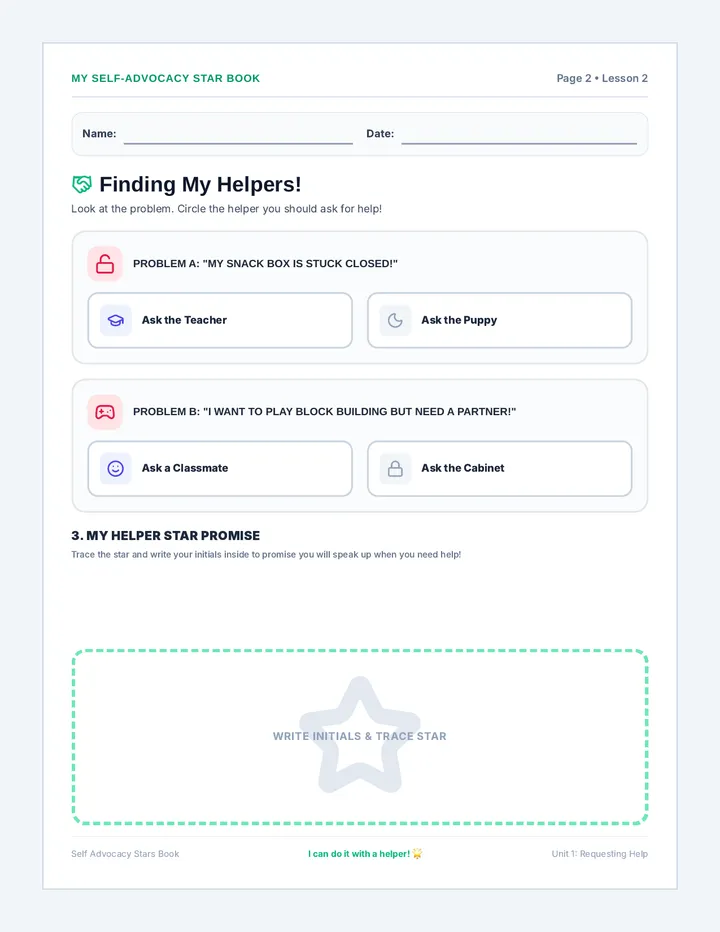
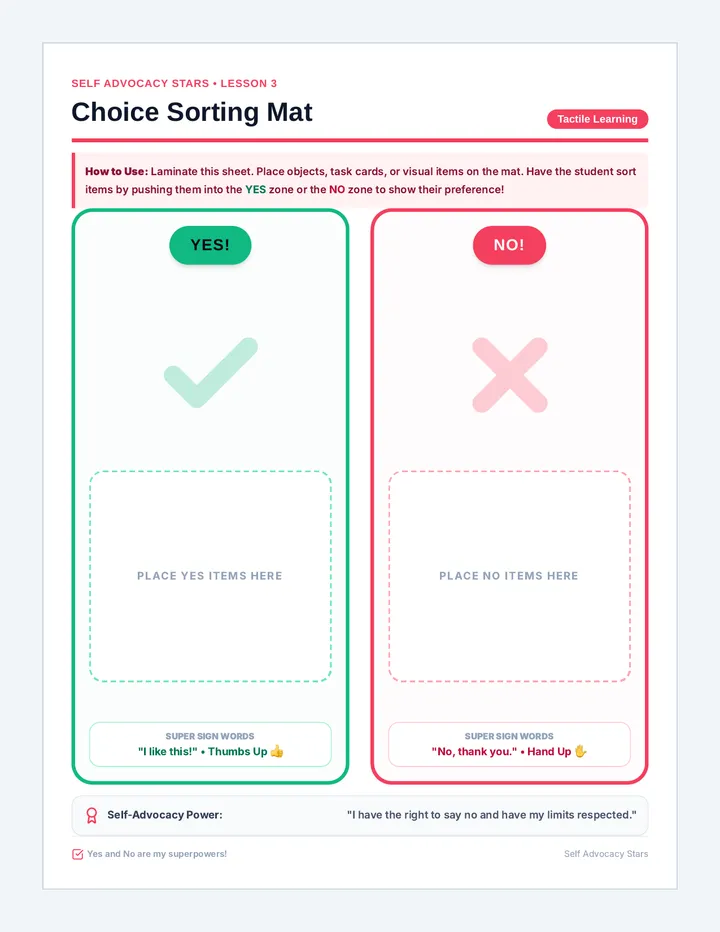
Establishing basic Yes and No responses using visual aids and AAC buttons.
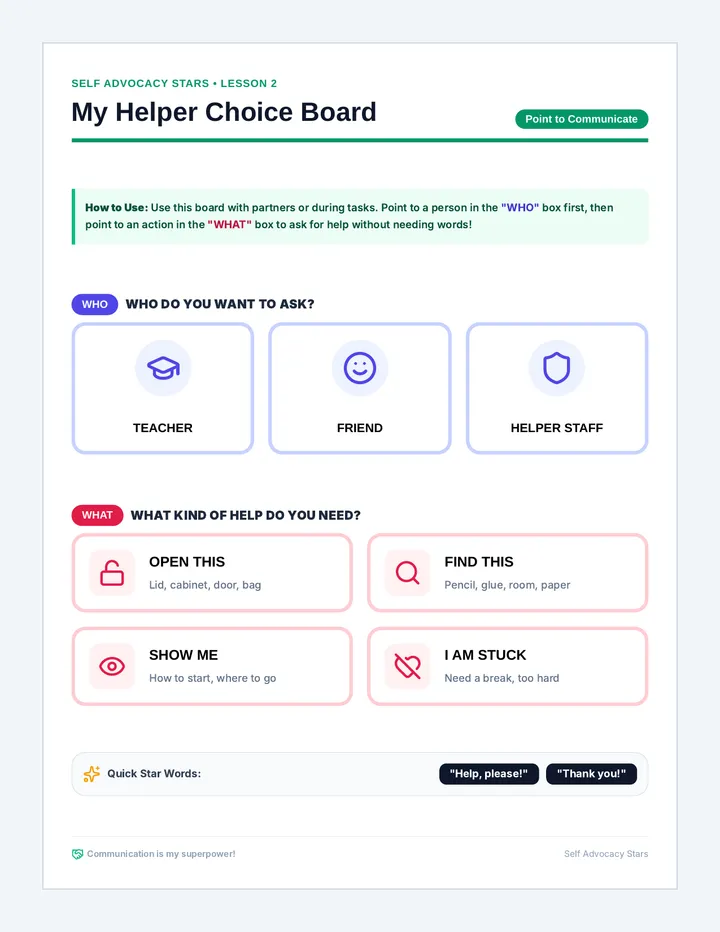
Introducing the 'Help' symbol for navigating obstacles and requesting assistance.
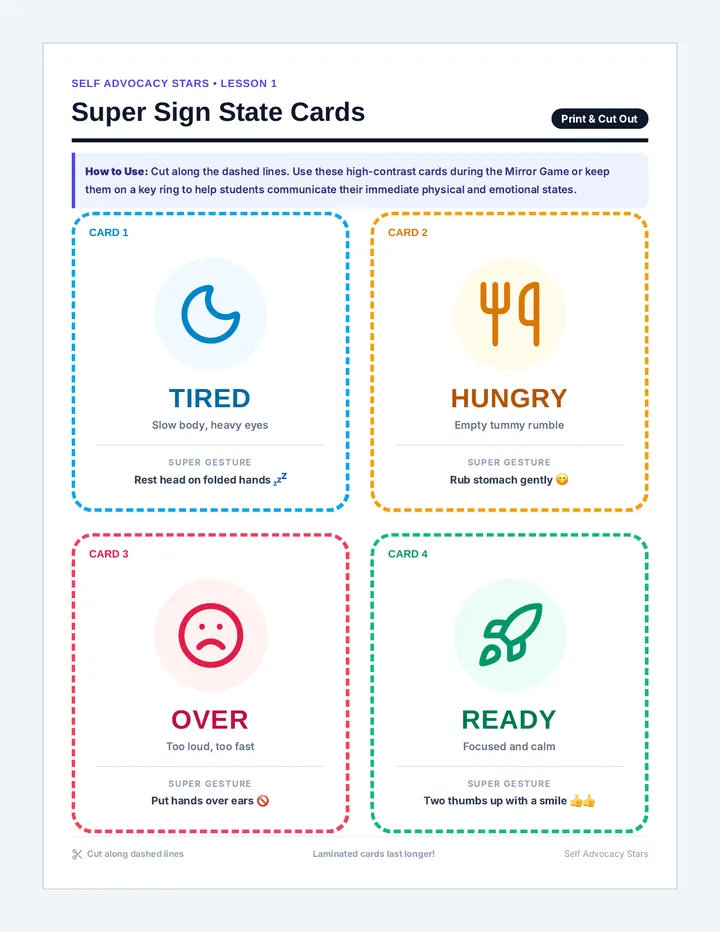
Modeling and prompting the 'More' symbol during sensory and high-engagement tasks.
Using the 'Go' symbol on TouchChat to initiate movement and play activities.
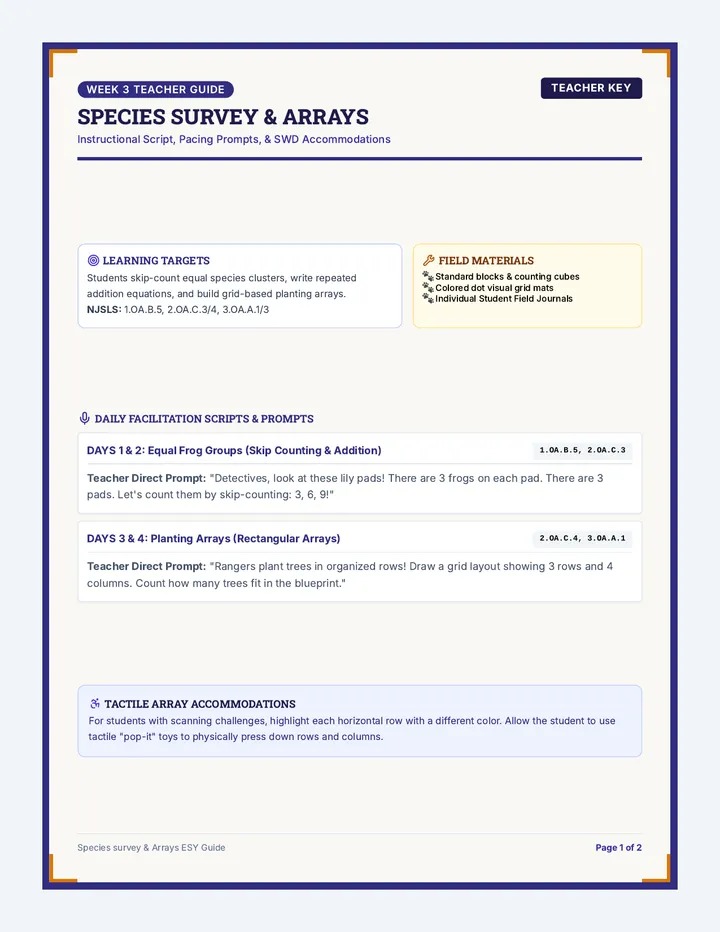
Introduction to making a choice between two highly preferred items using TouchChat and physical indicators.
A specialized writing intervention lesson using Roblox themes to help students master basic sentence structure, capitalization, and punctuation through sentence frames and word banks.
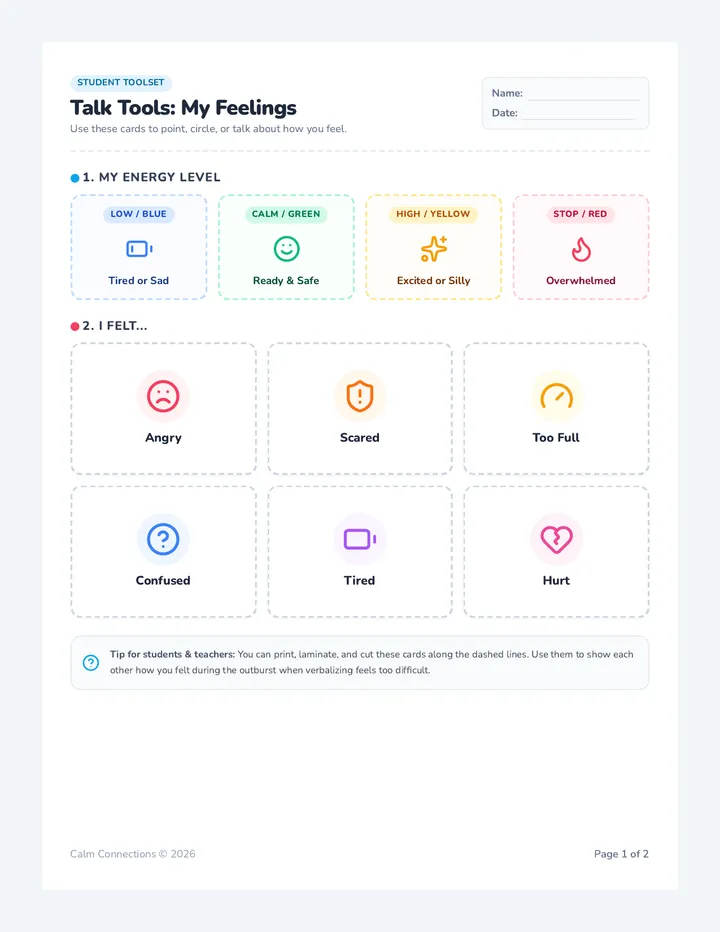
A lesson designed for two first-graders to learn how to replace screaming and eloping with verbal communication using a feelings chart. Through role-play and visual aids, students practice identifying their emotions and stating their needs.
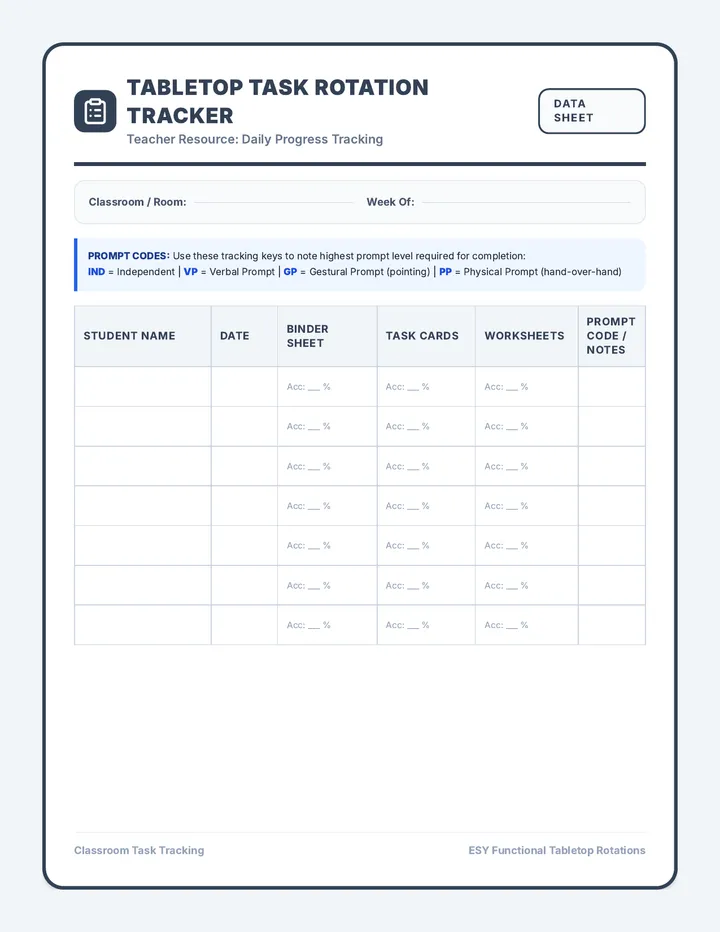
A comprehensive toolkit of data collection sheets for tracking various types of IEP goals, including frequency, duration, and trial-based skill acquisition.
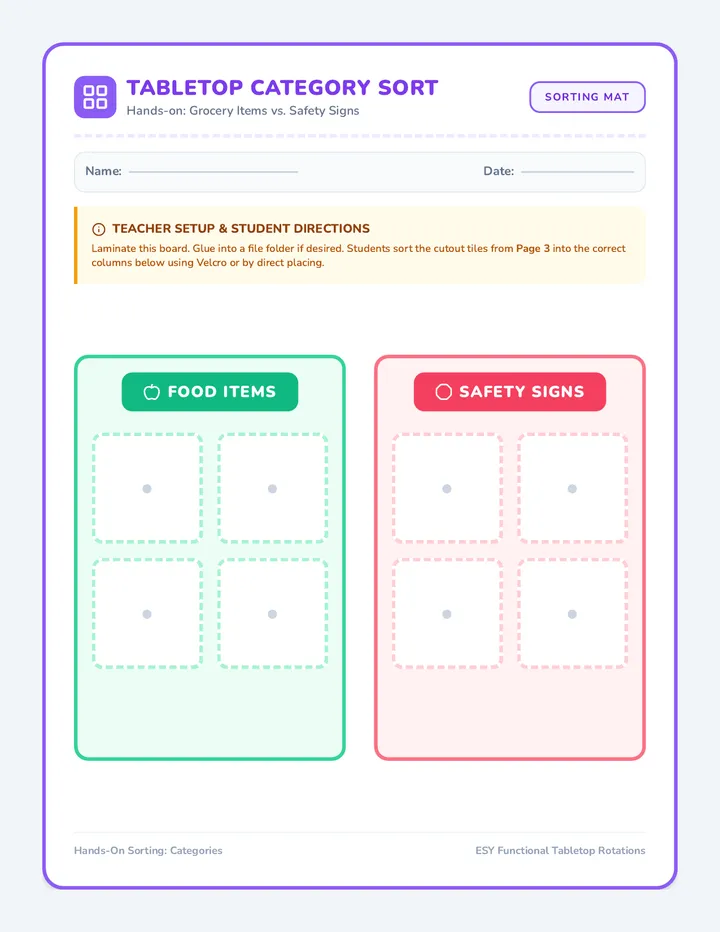
A comprehensive lesson on identifying and matching essential safety signs from community, household, road, and workplace environments. This lesson focuses on visual discrimination and functional literacy through picture-to-picture matching tasks.
Focuses on managing customer-facing conflicts and changes in tasks within a department store setting.
Focuses on navigating interpersonal and task-based conflicts in a food pantry environment using visual support scripts.
Focuses on identifying workplace conflicts in a grocery store setting and introducing the 'Stop, Breathe, Pick' visual strategy.
A comprehensive strategy set for educators to support students who struggle with long reading assignments through chunking, visual scaffolding, and self-regulation tools.
A 90-minute lesson tailored for adults with Intellectual and Developmental Disabilities (IDD), focusing on practical interview attire, grooming, and workplace hygiene through visual aids and hands-on activities.
A set of materials for assessing and practicing 47 key graphemes, including high-visibility flashcards and a comprehensive teacher tracking sheet.
A behavioral and functional lesson designed for a 2nd-grade student with Autism and ADHD to master the 'Launch Sequence' of transitioning from preferred activities to academic tasks. It focuses on visual schedules, clear 'First-Then' contingencies, and a specific 3-step 'Ignition' process to overcome task initiation hurdles.
Materials for assessing and monitoring third-grade oral reading fluency, including a lexile-appropriate passage with word counts and a teacher scoring sheet.
A lesson designed for small group settings to practice 'brave talking' with peers using structured activities and gamified prompts.
This lesson focuses on developing self-control and "Hand Power" in young students. It provides a structured way to track physical behaviors through a superhero-themed tally system, helping students and teachers identify patterns and celebrate growth.
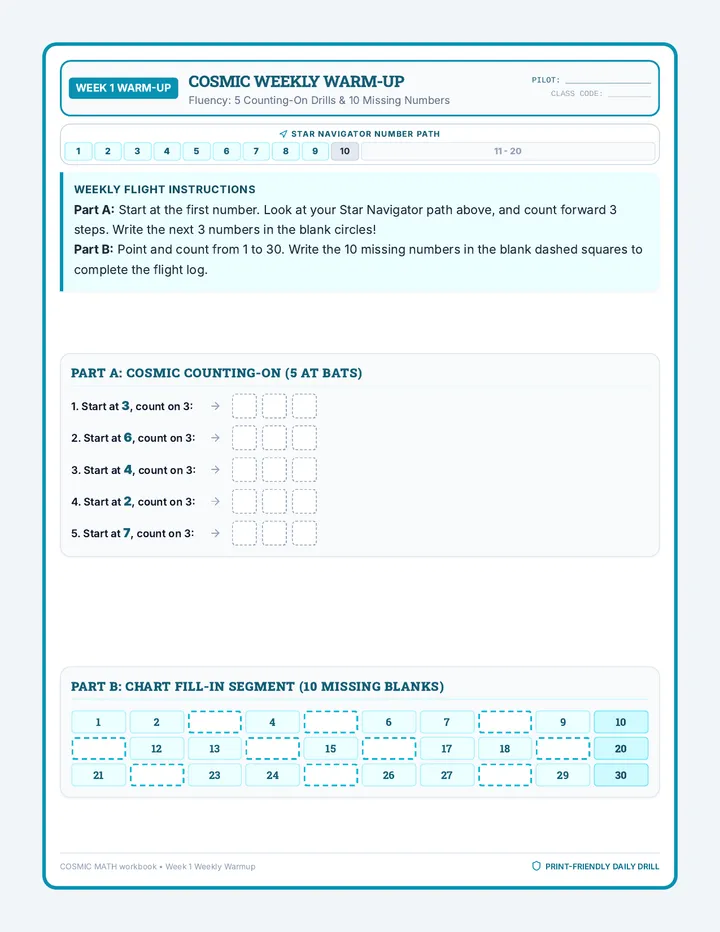
A comprehensive set of tools for assessing and tracking a student's ability to identify numbers 1 through 20 in randomized order.
An assessment on plate tectonics and volcanoes specifically modified for students with IEPs, featuring simplified language, visual aids, and reduced response options.
This lesson provides ENL and SPED parents with the knowledge and confidence to participate in their child's Committee on Special Education (CSE) meeting. It includes a comprehensive presentation on the meeting process and a preparation checklist for home use.
A lesson focused on shifting the narrative from autism awareness to acceptance by celebrating cognitive and personal strengths. Includes teacher resources and student-facing materials for classrooms and community spaces.
A 20-minute individual session designed for a student with ASD to distinguish between shareable social information and private safety information using simple visual filters.