Focuses on common vowel digraphs (AI, EE, EA, OA) where two vowels work together to make one long vowel sound.
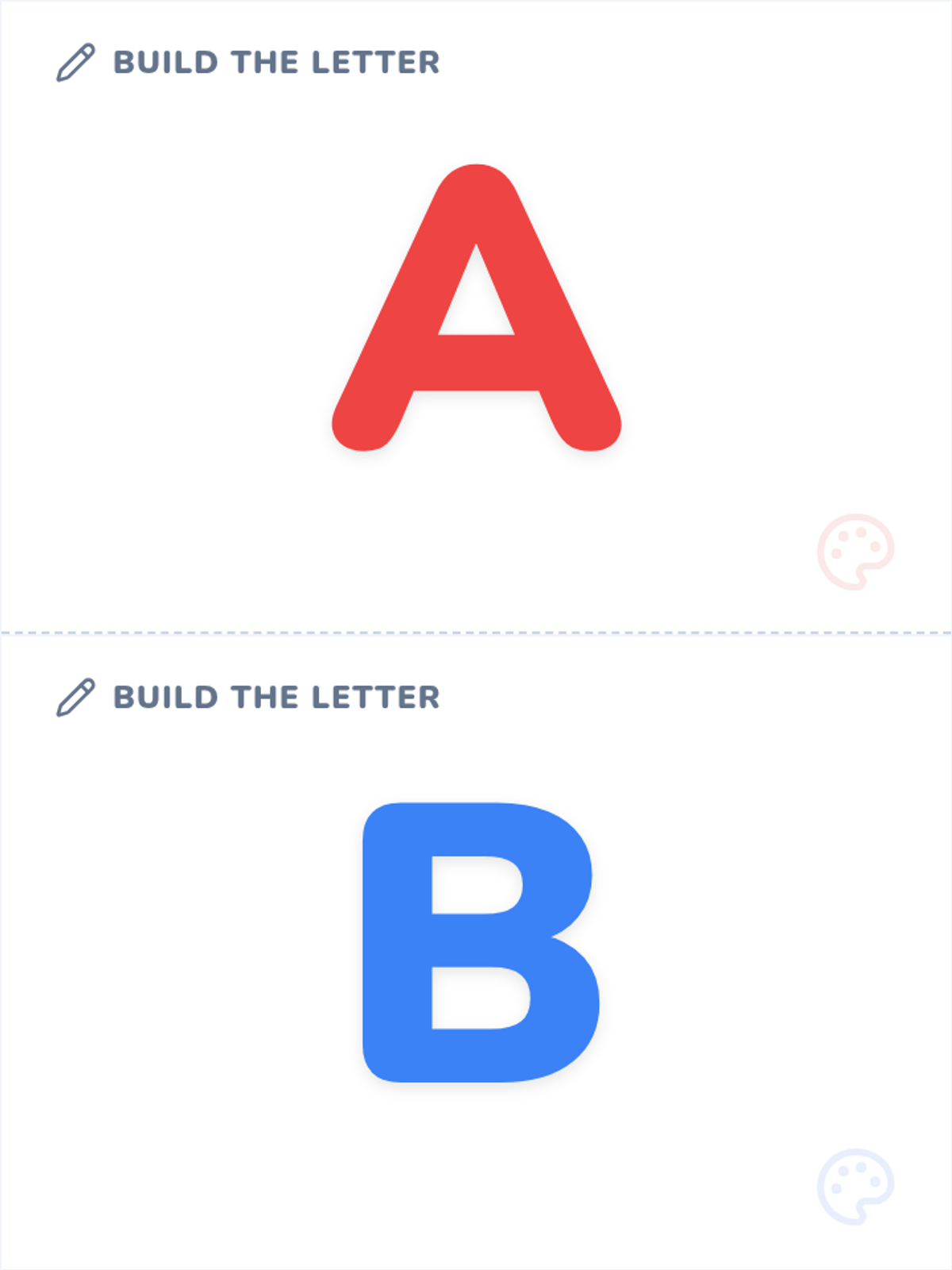
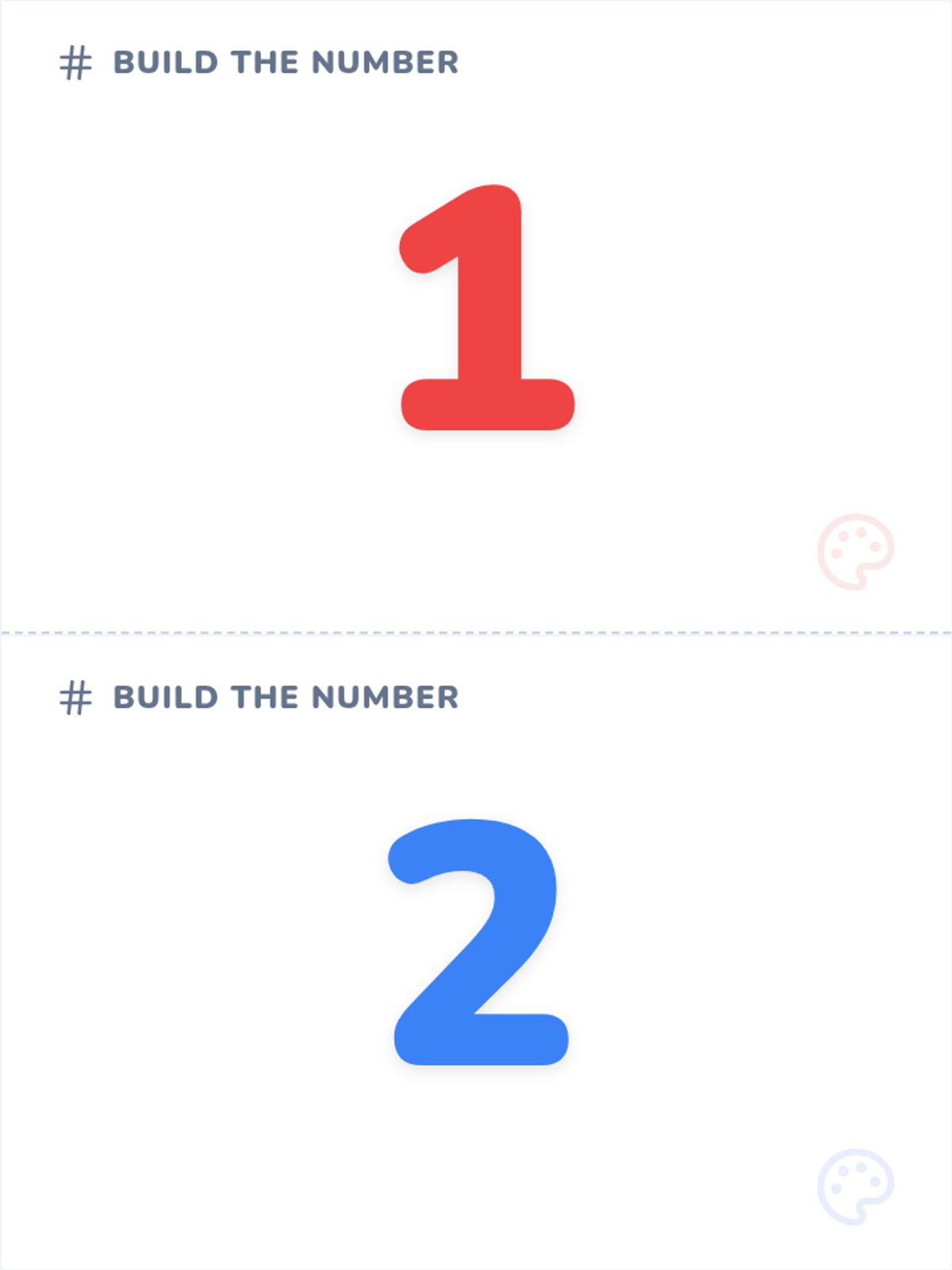
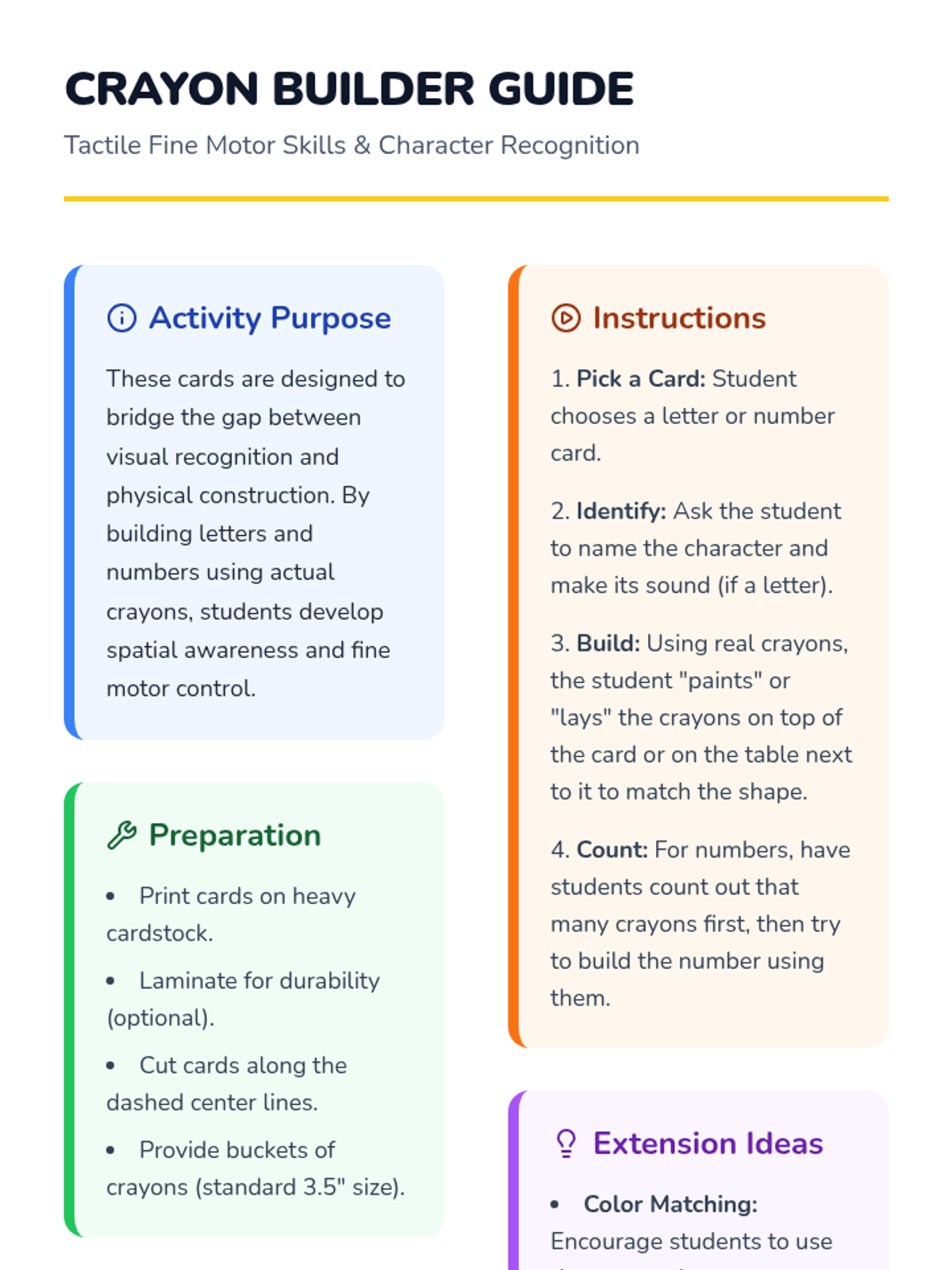
Focuses on letter and number recognition through tactile construction with crayons, including task cards for the entire alphabet and numbers 1-30.
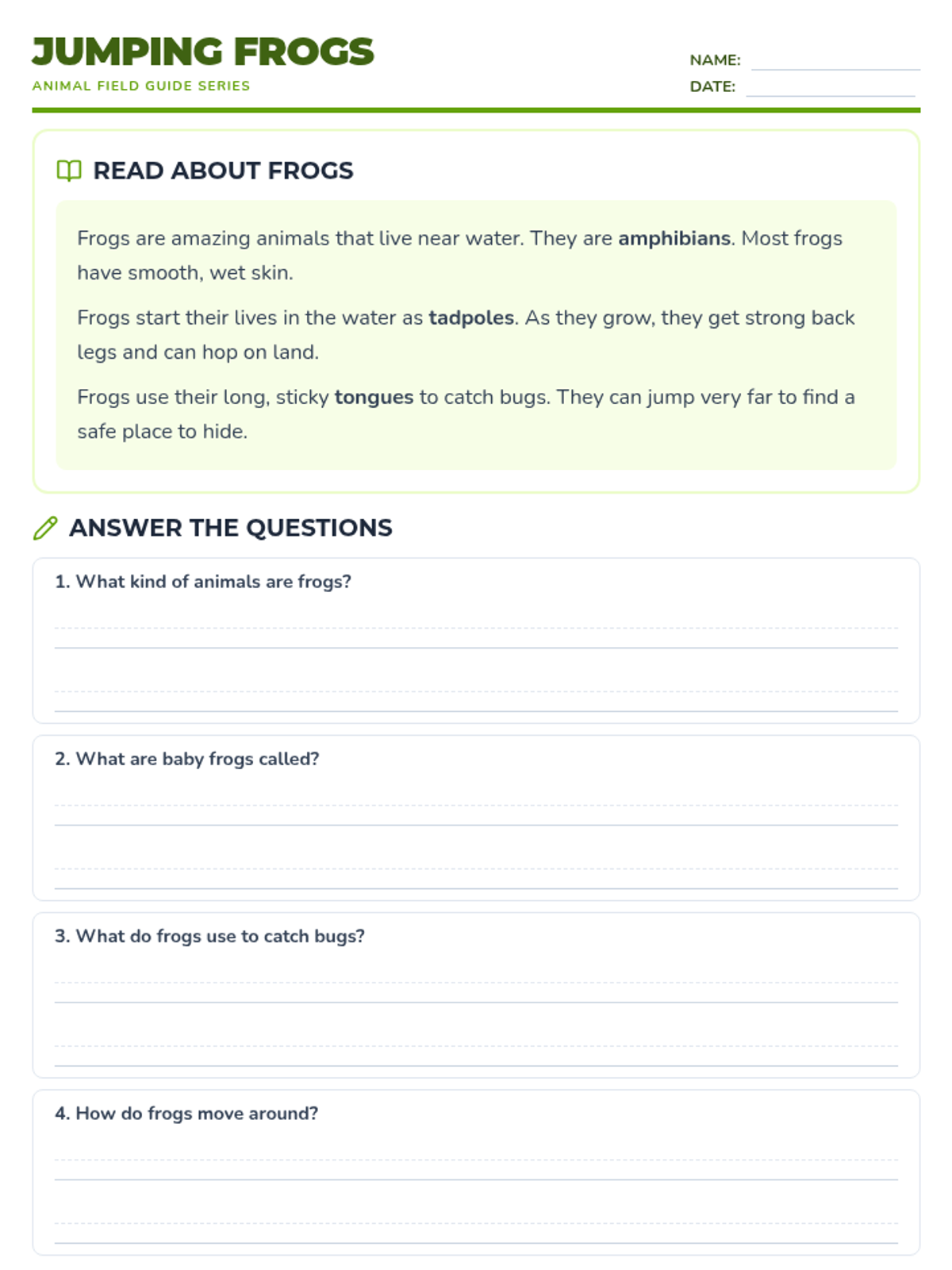
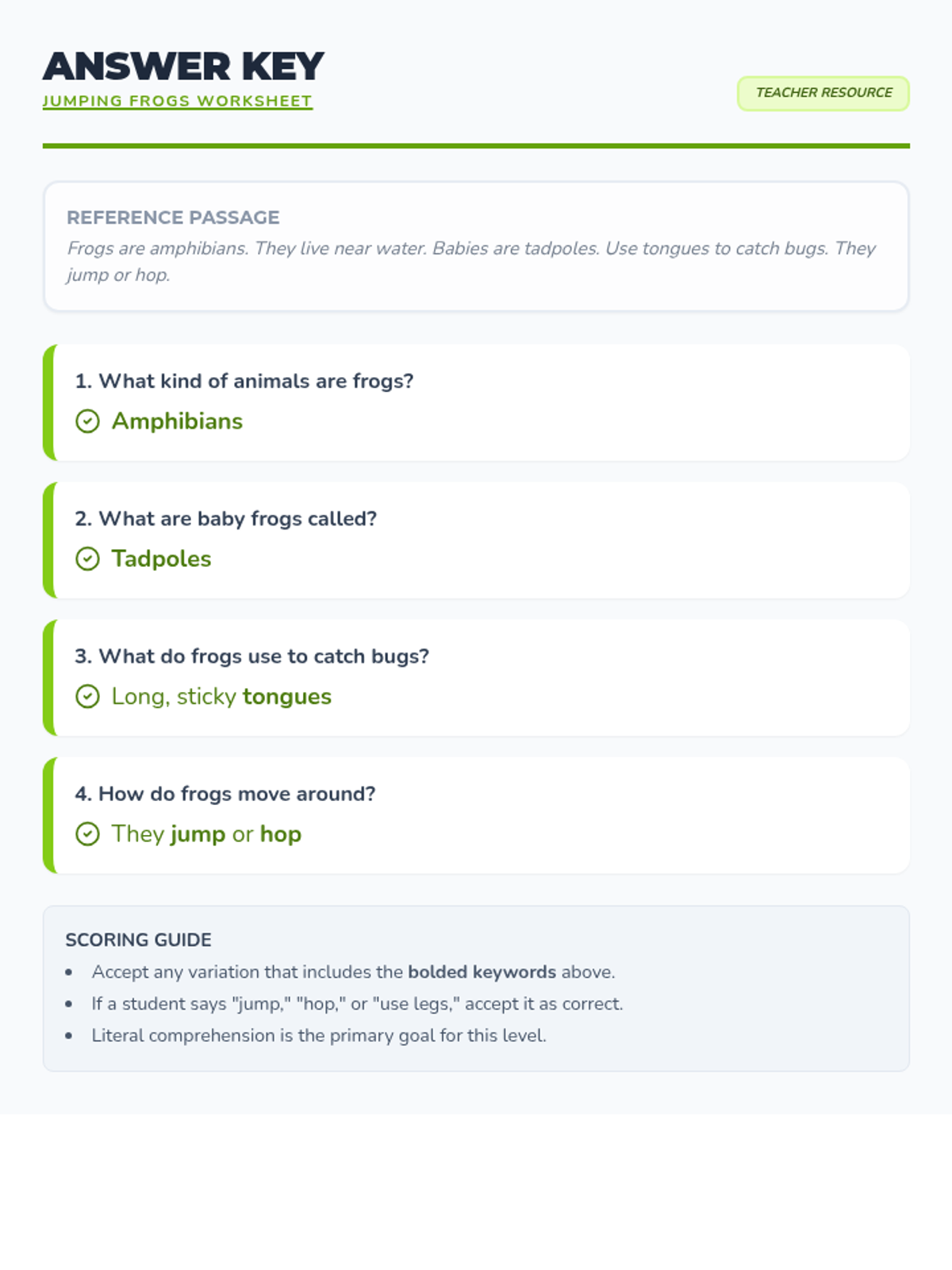
A focused reading comprehension lesson about frogs, their life cycle, and their special skin.
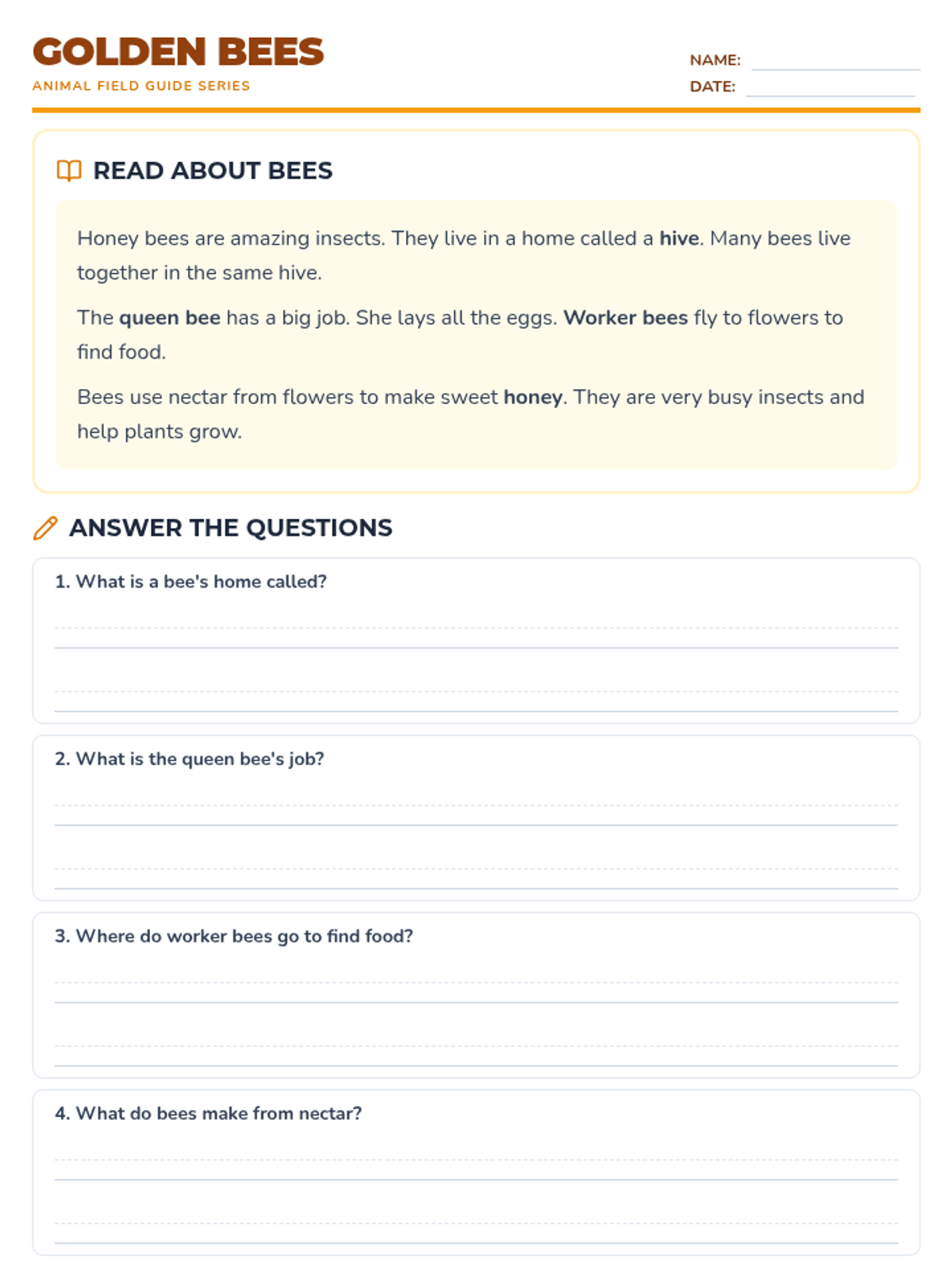
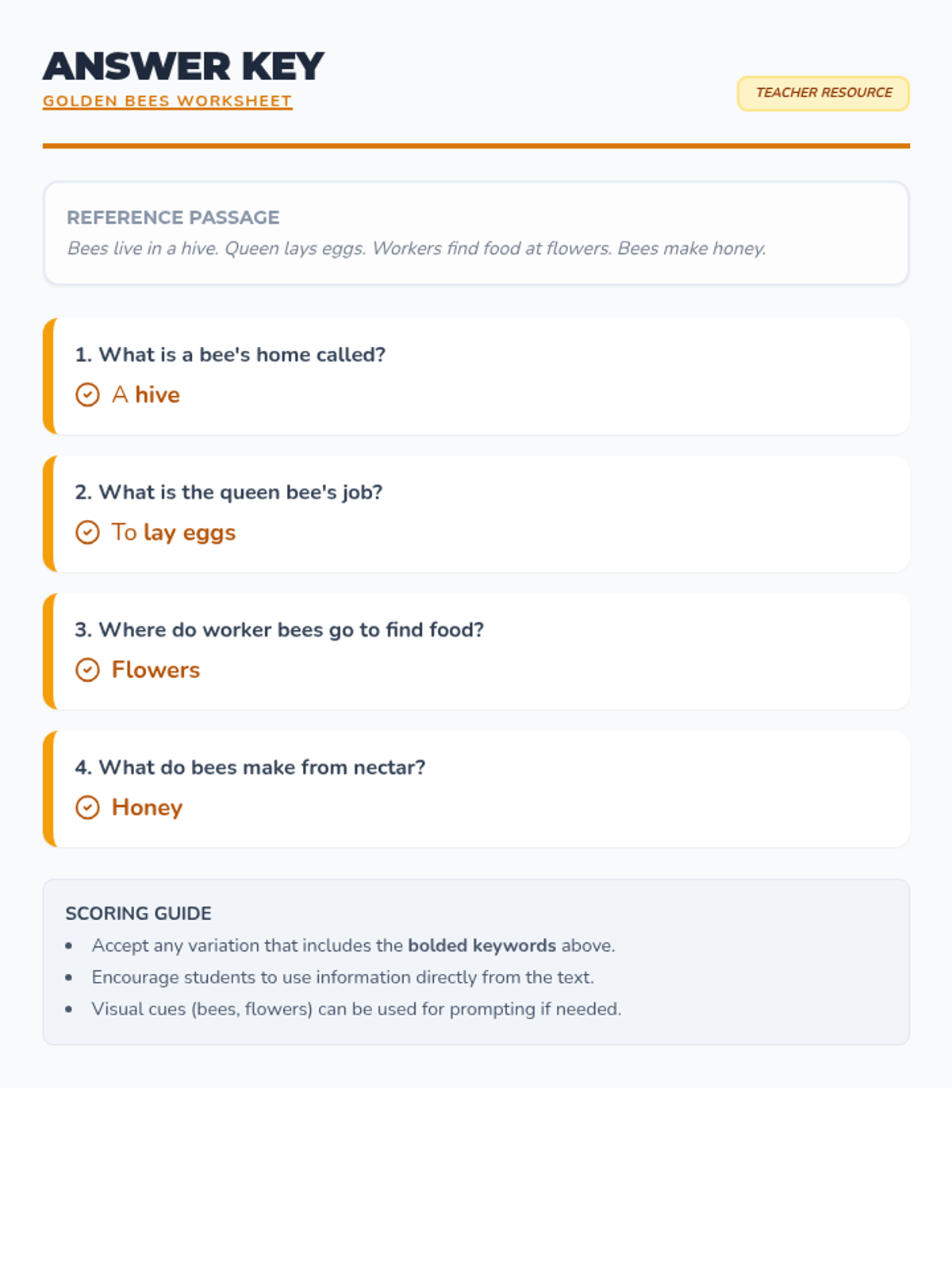
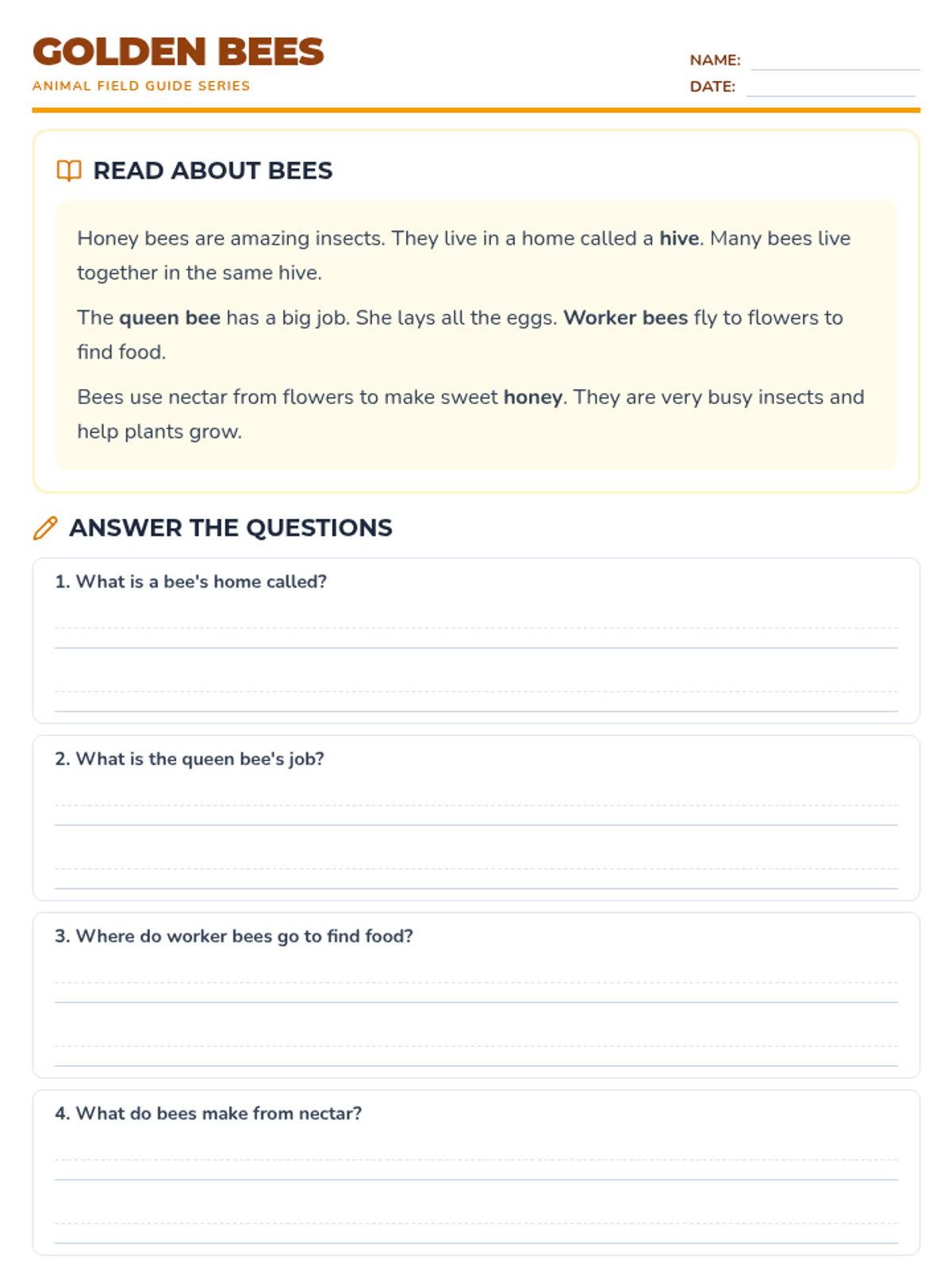
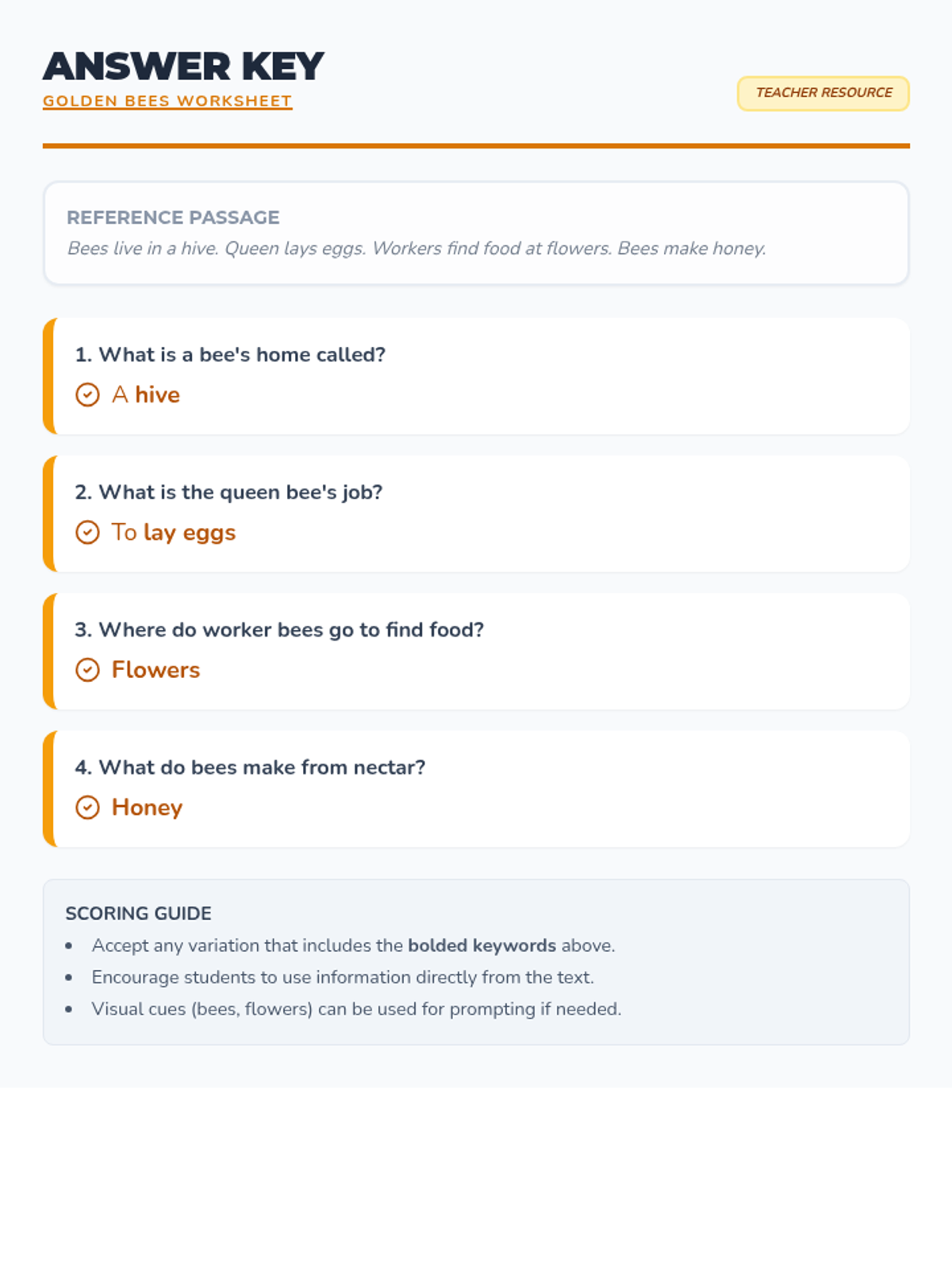
A focused reading comprehension lesson about honey bees, their hives, and the process of making honey.
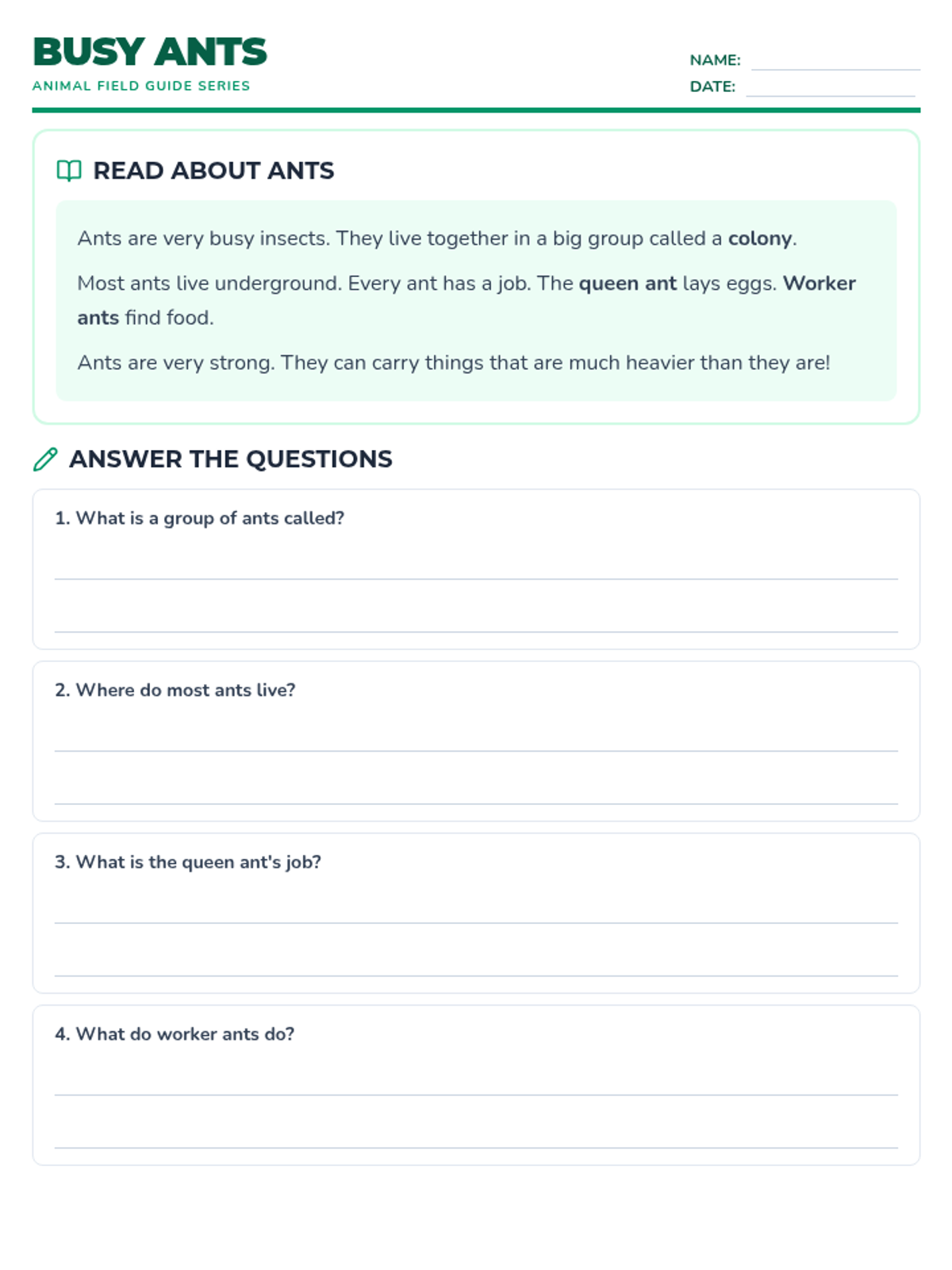
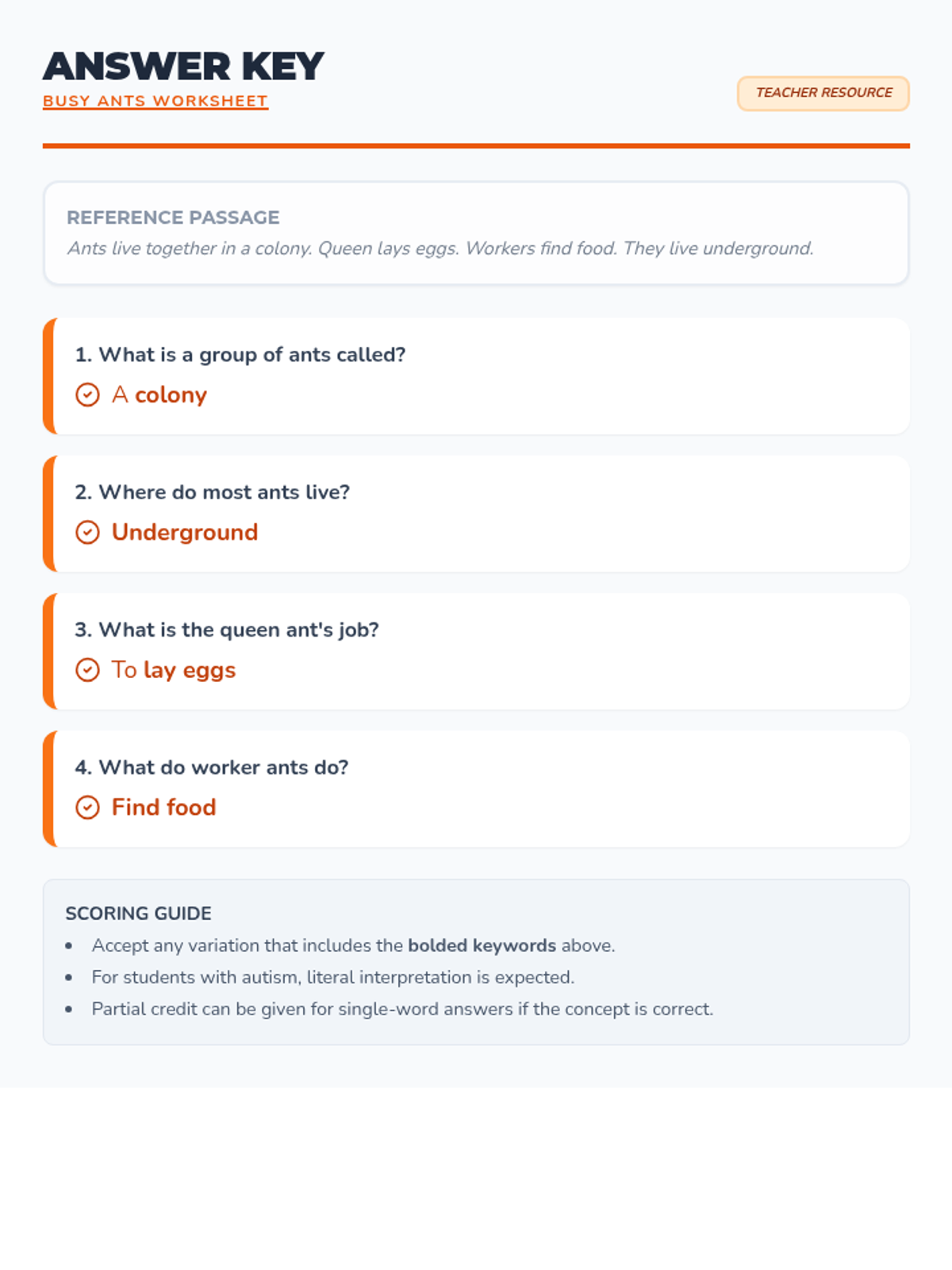
A focused reading comprehension lesson exploring the lives of ants, designed with clear structure and visual supports for 1st-2nd grade students.
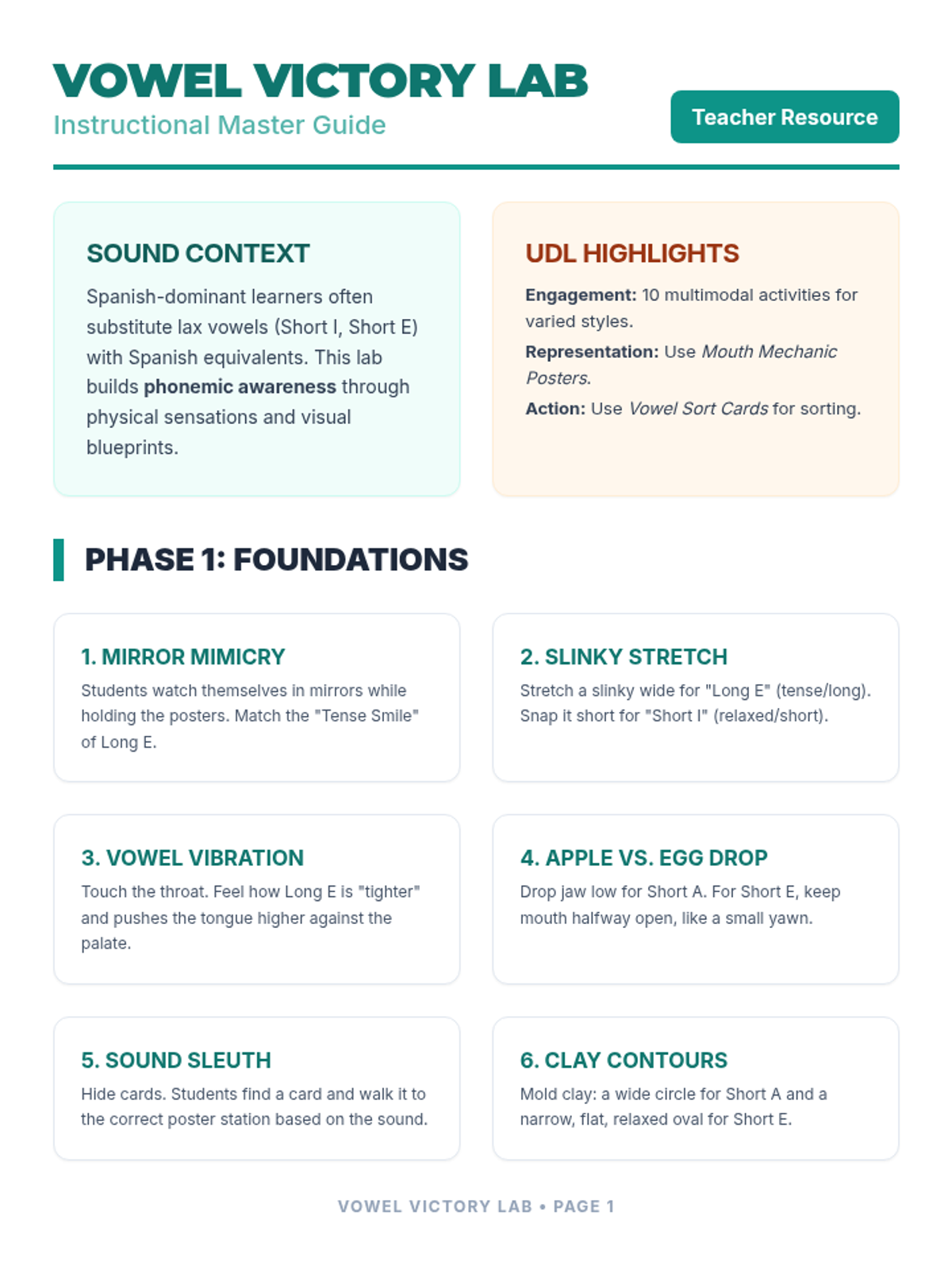
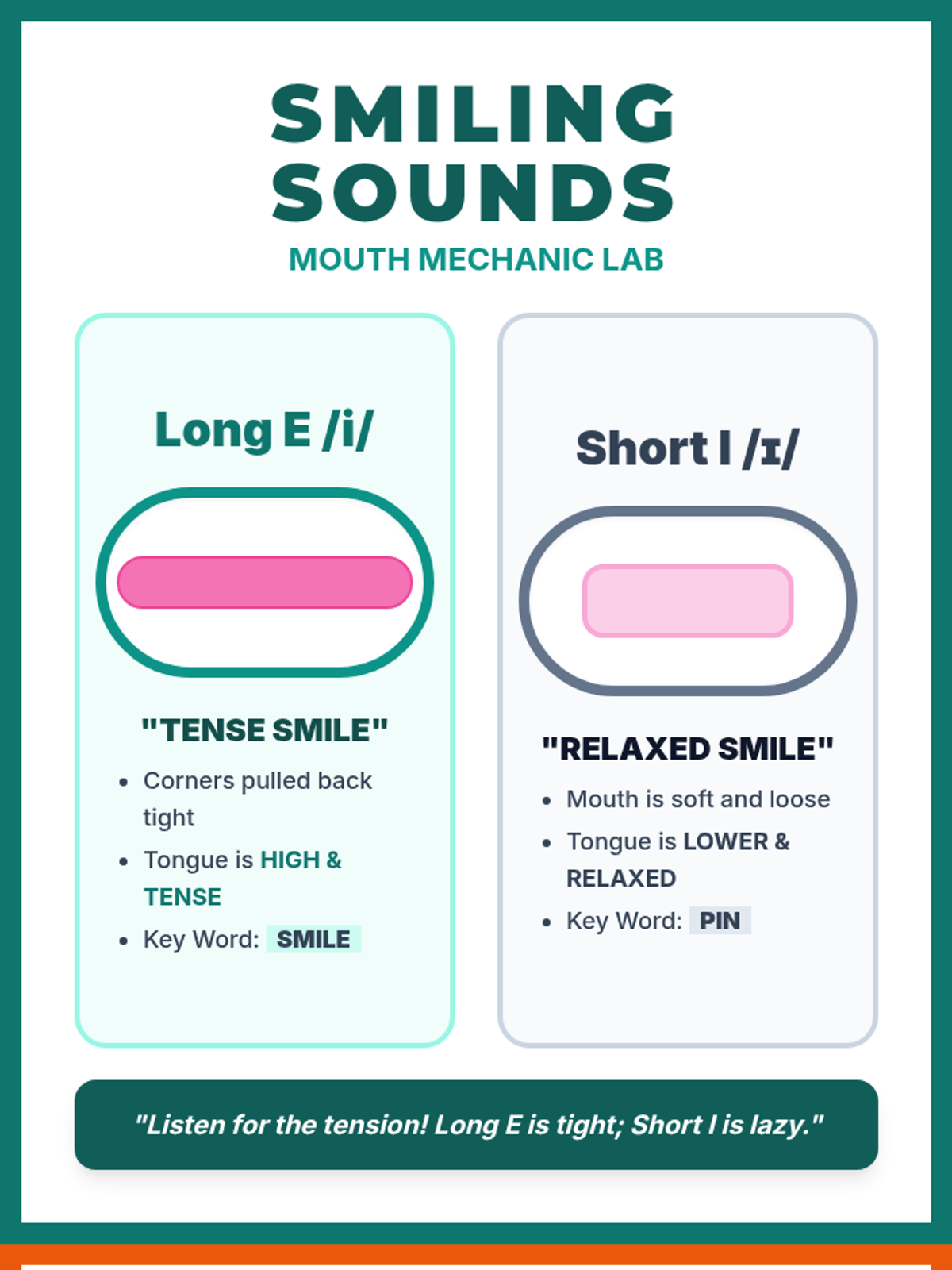
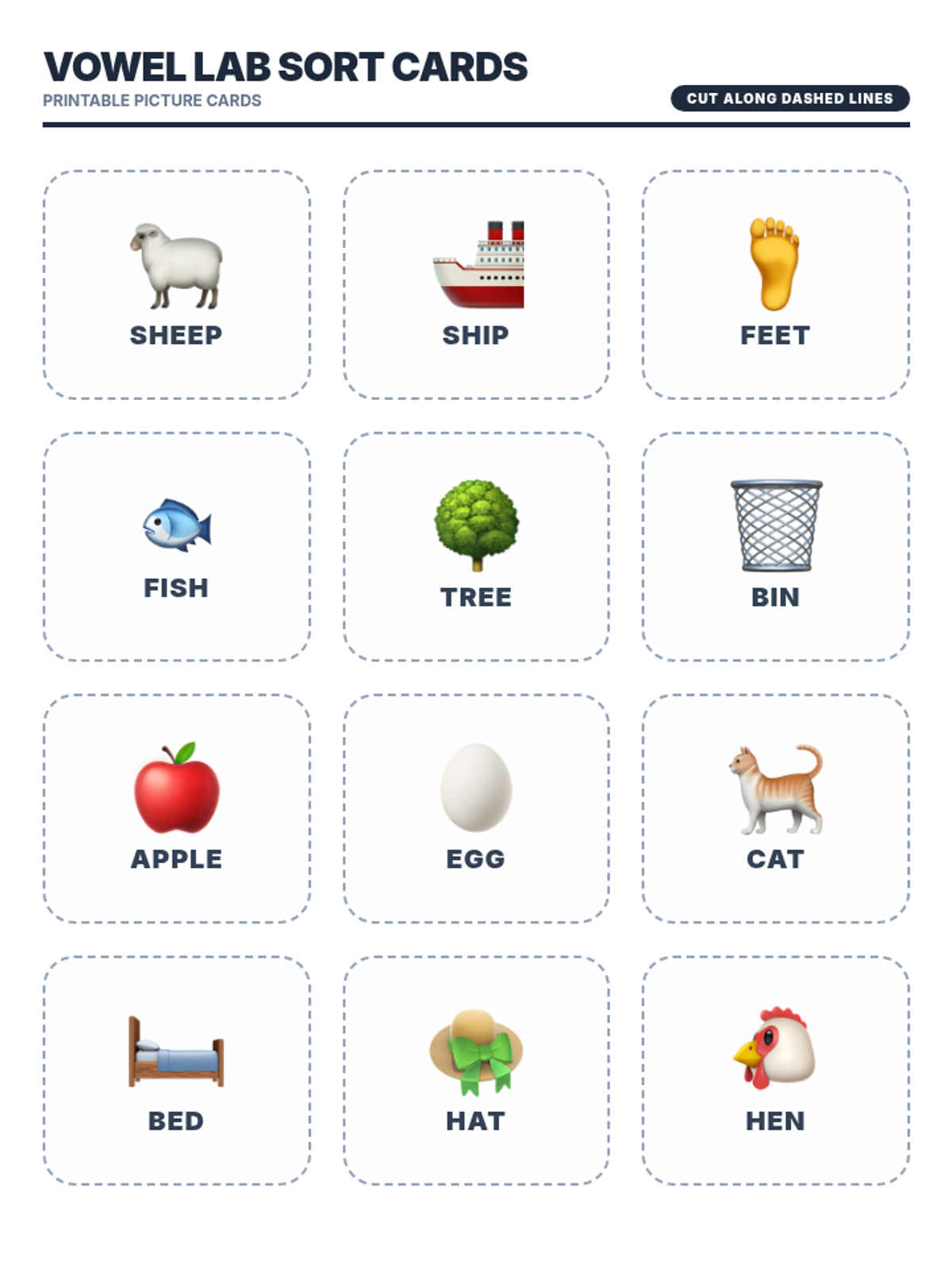
A comprehensive phonics lesson for bilingual students focusing on the specific vowel contrasts of Long E/Short I and Short A/Short E through multisensory, UDL-aligned activities.
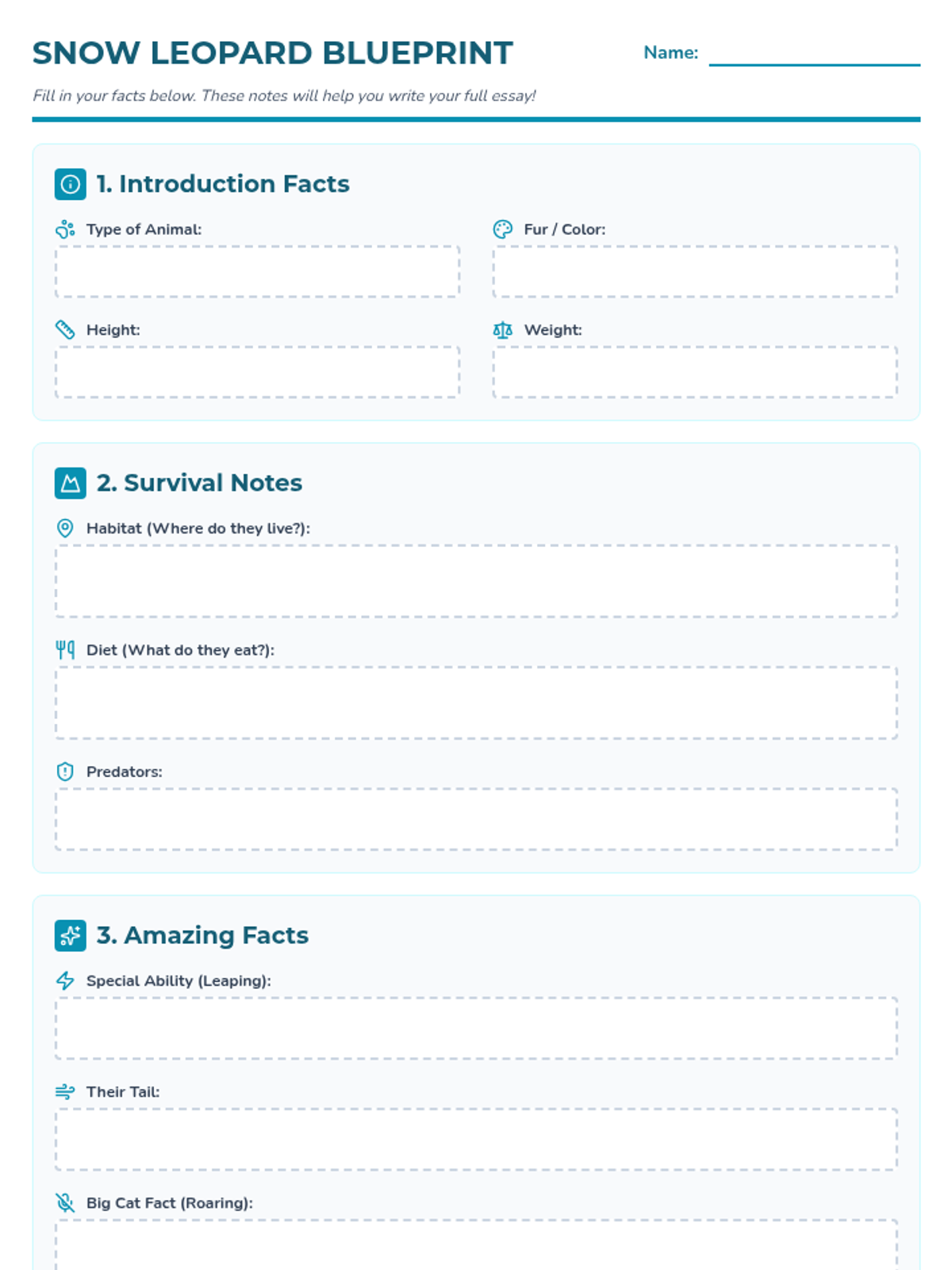
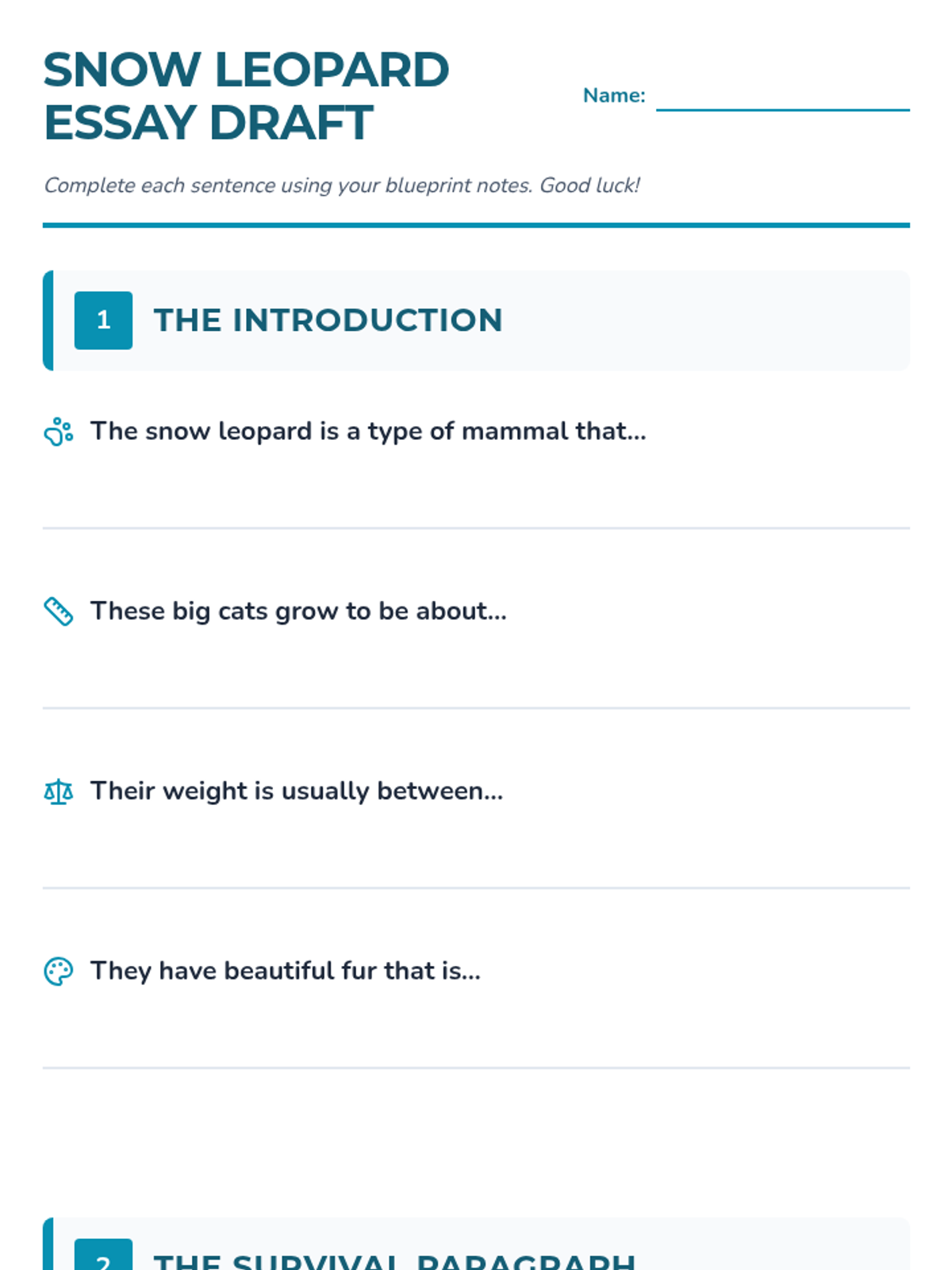
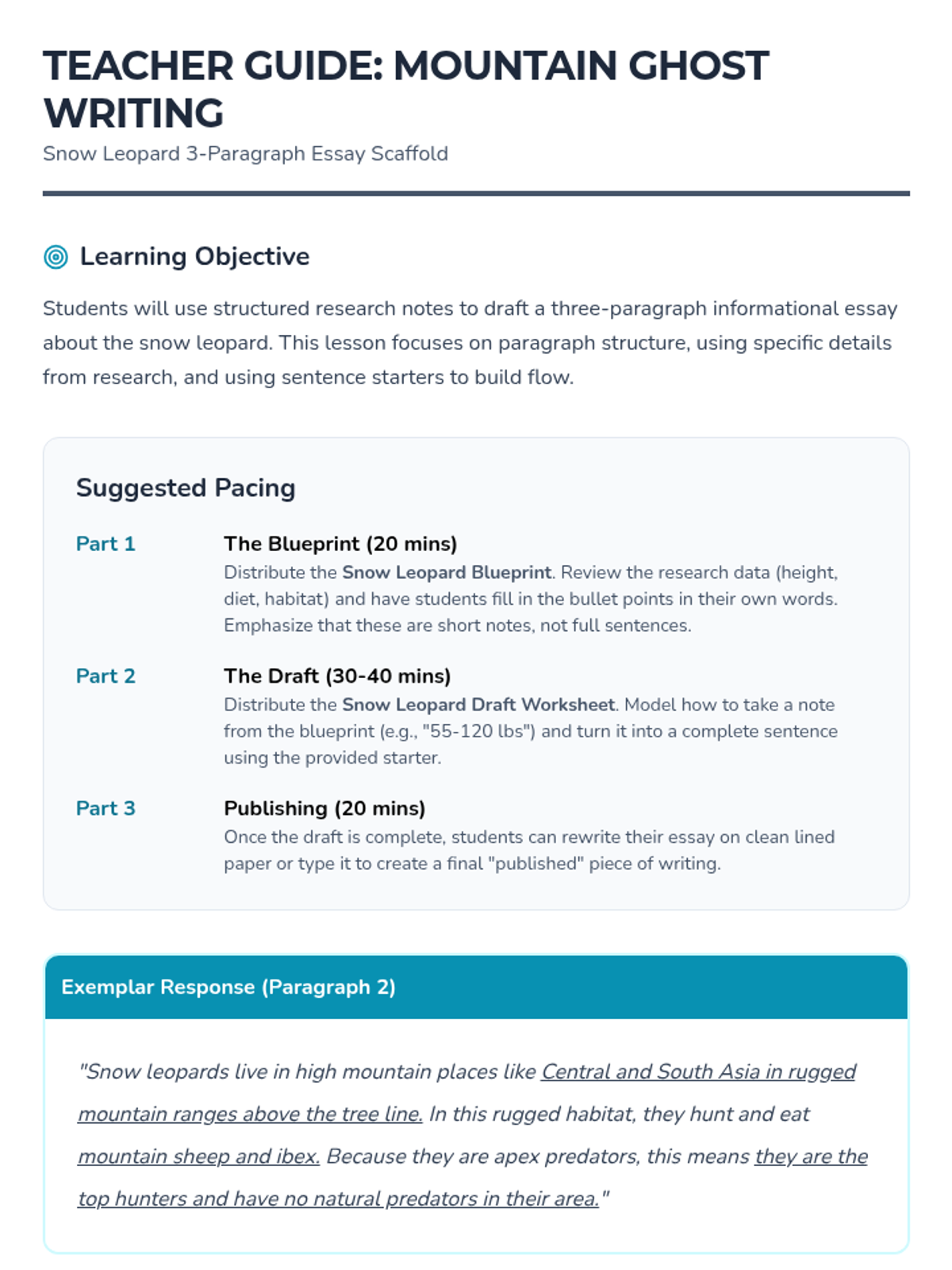
A scaffolded writing lesson designed to help students transition from research notes to a structured three-paragraph essay about the snow leopard. It includes a visual graphic organizer and a sentence-starter drafting sheet.
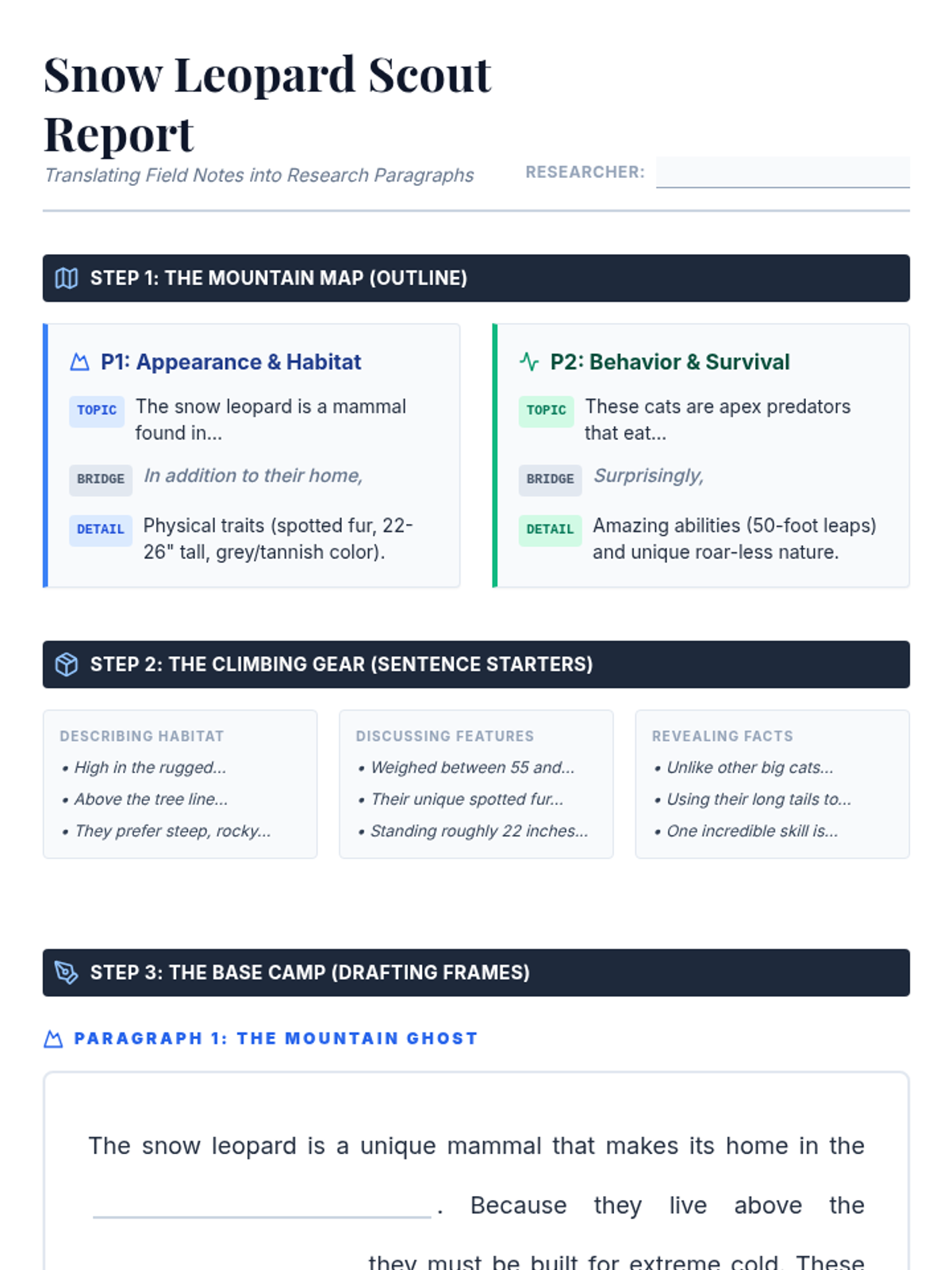
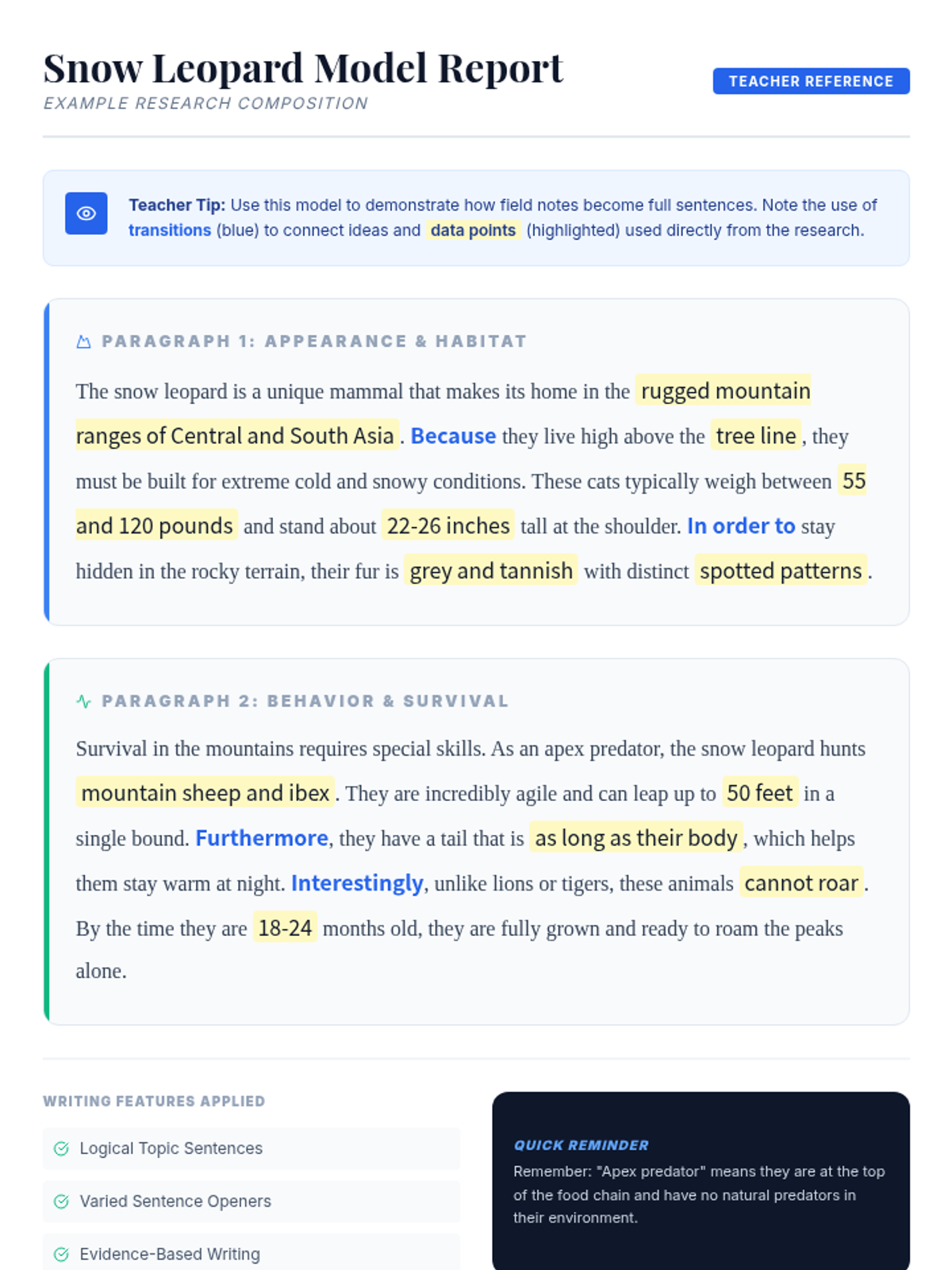
A lesson focused on transforming animal research notes into cohesive, descriptive paragraphs using structured writing supports like outlines and paragraph frames.
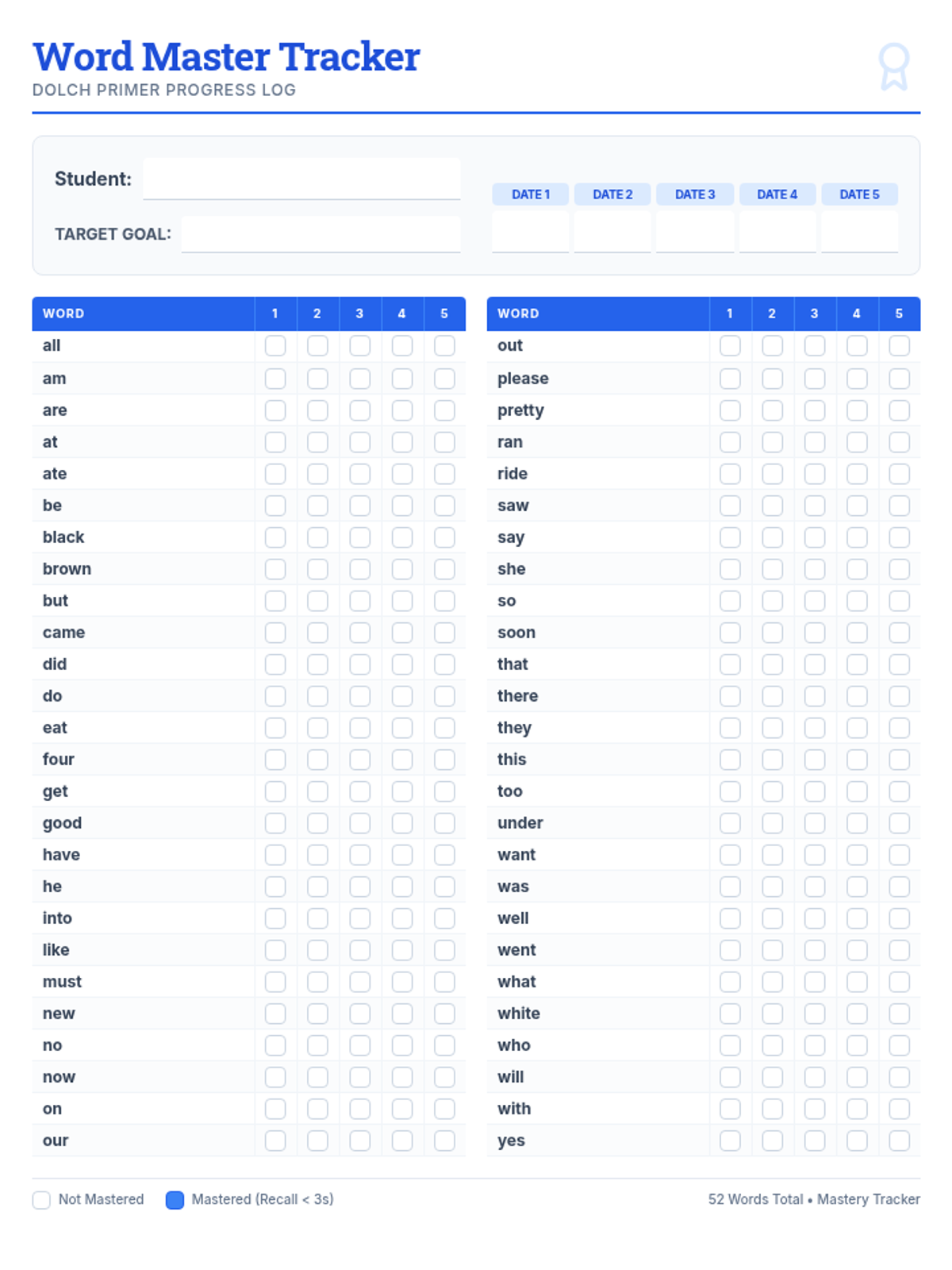
A comprehensive lesson for tracking and mastering the 52 Dolch Primer sight words, featuring progress monitoring and visual aids.
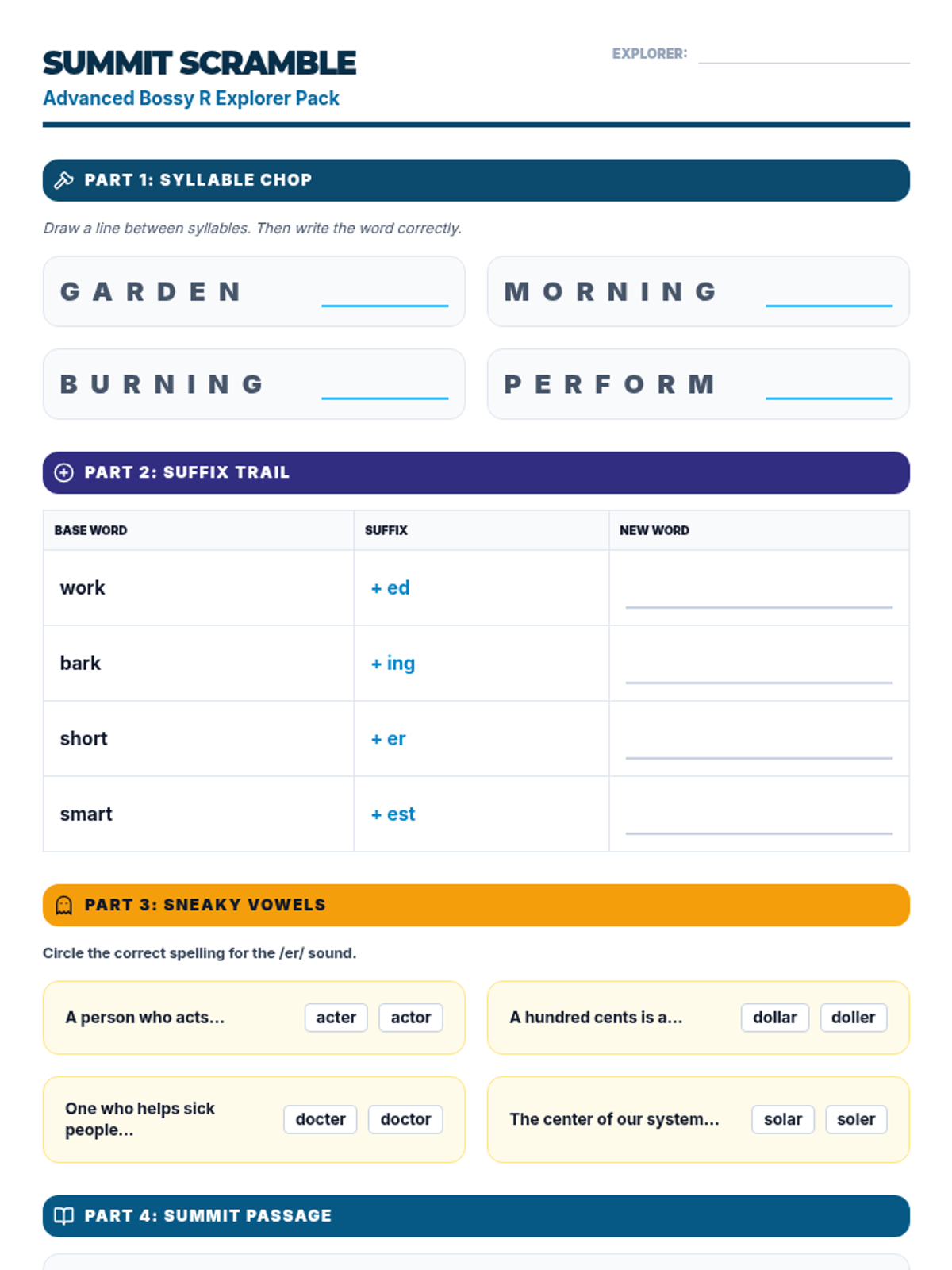
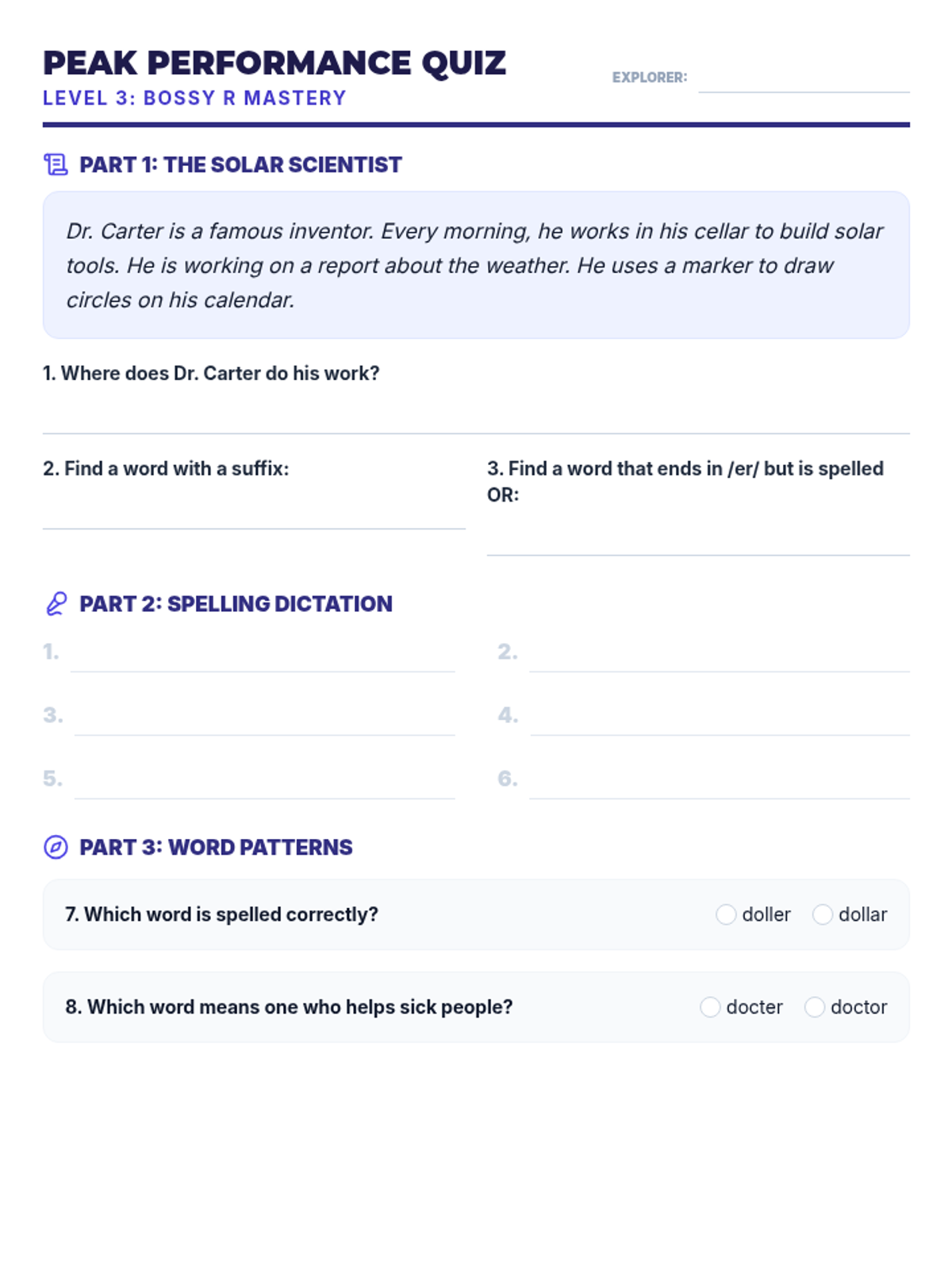
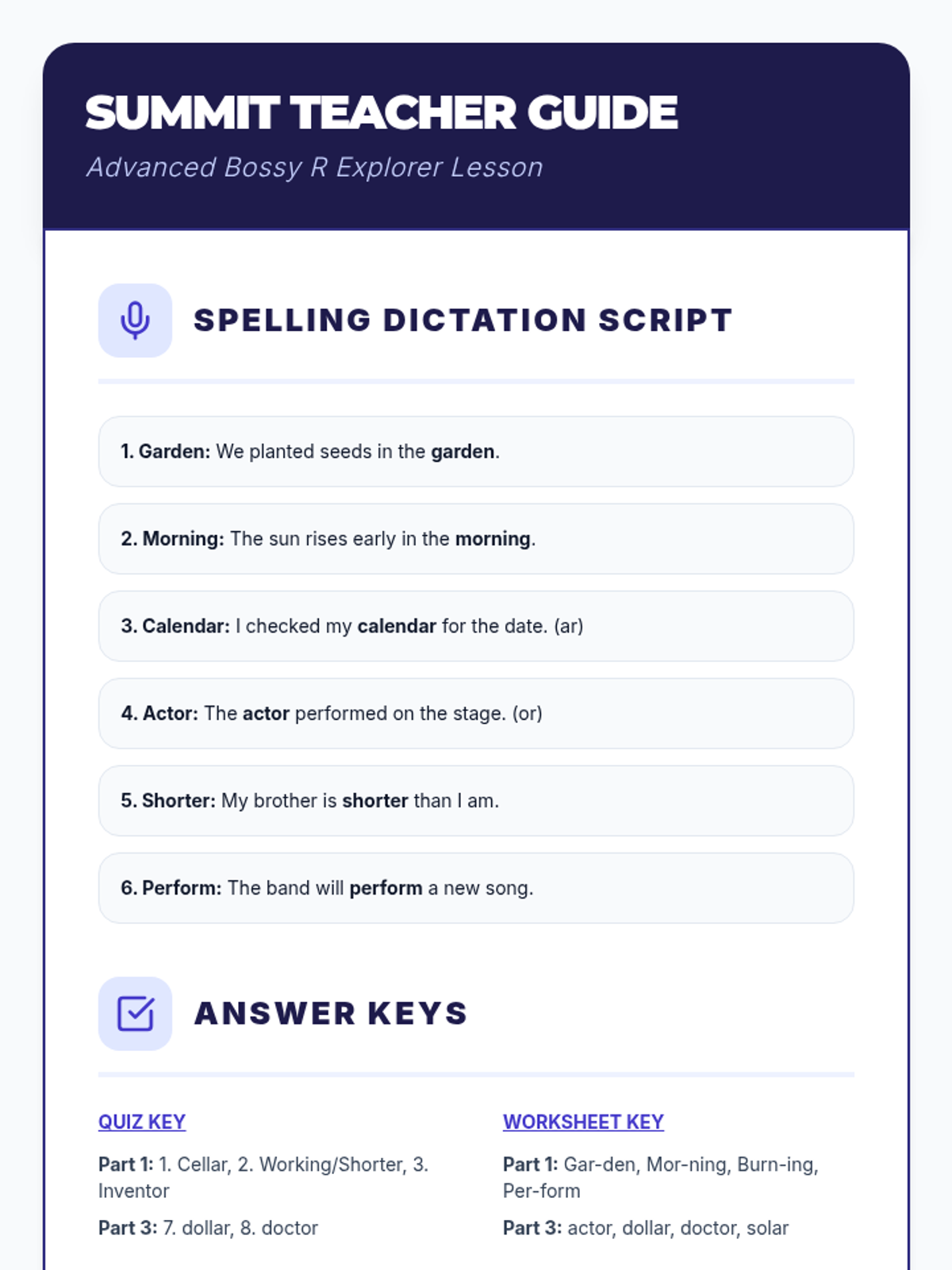
An advanced phonics lesson for 3rd grade focusing on multi-syllabic r-controlled vowel words, unstressed vowel sounds (ar, or as /er/), and adding suffixes to r-controlled base words.
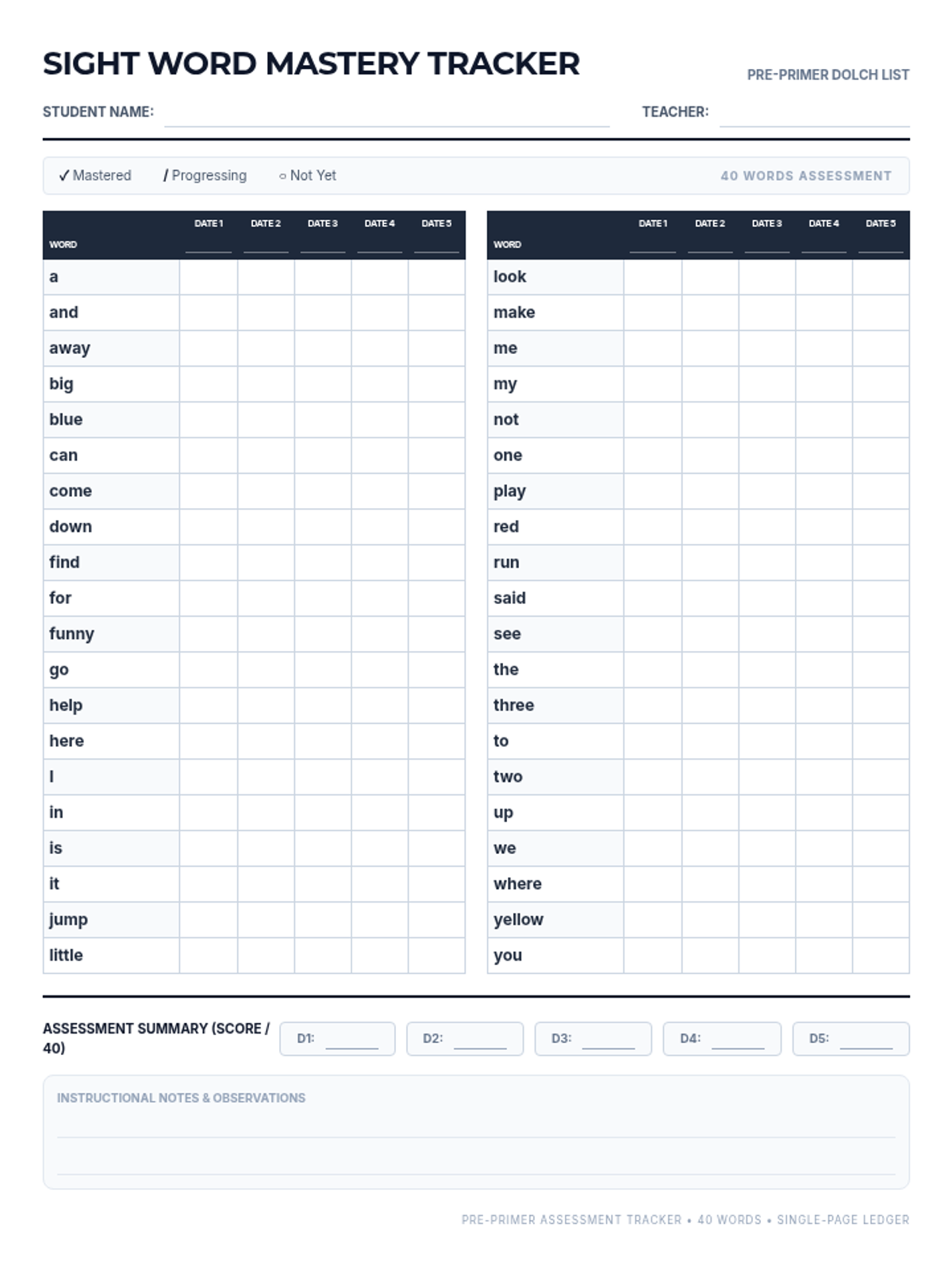
A focused tool for tracking progress on Pre-Primer Dolch sight words, designed for easy assessment and data collection.
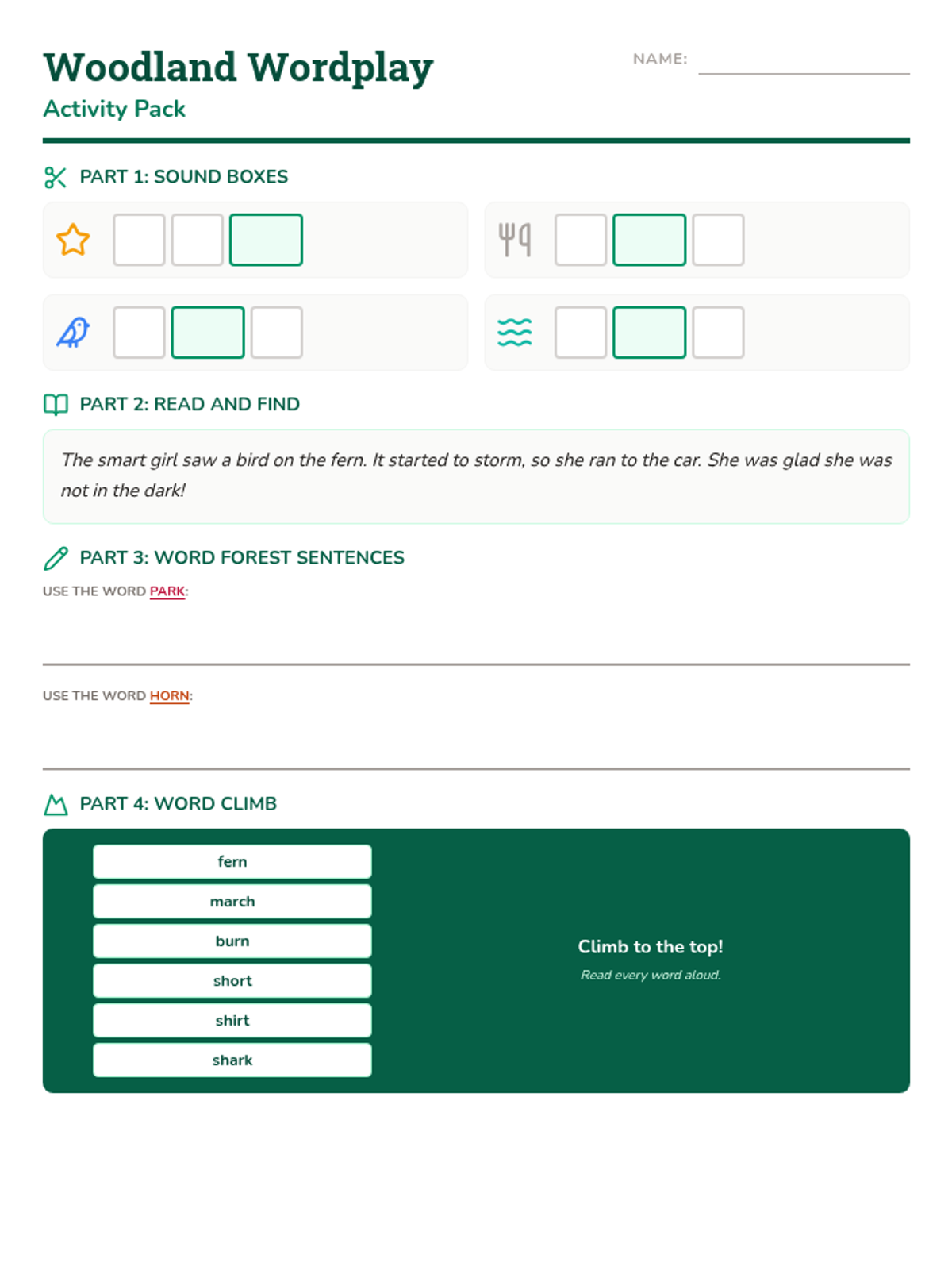
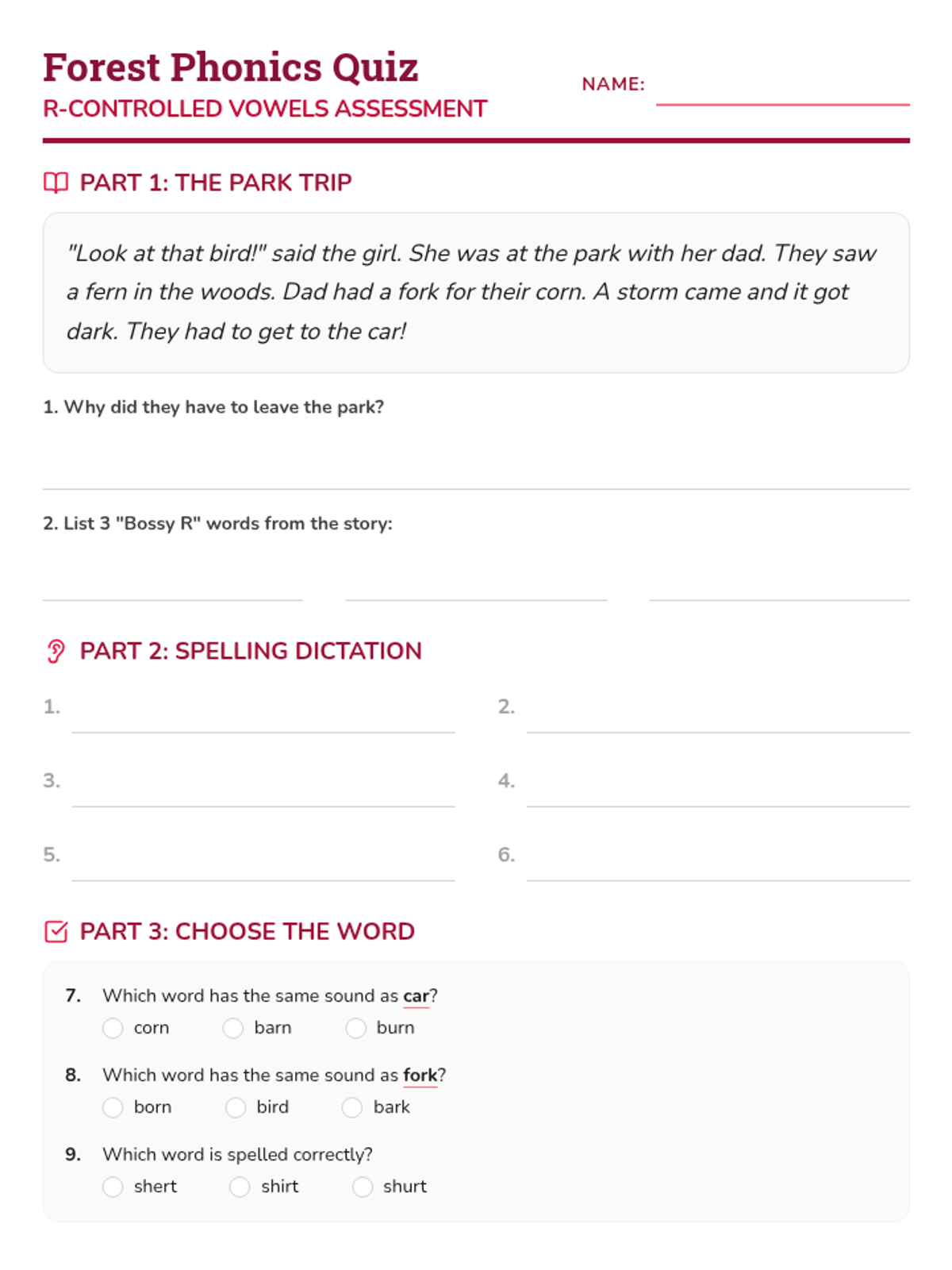
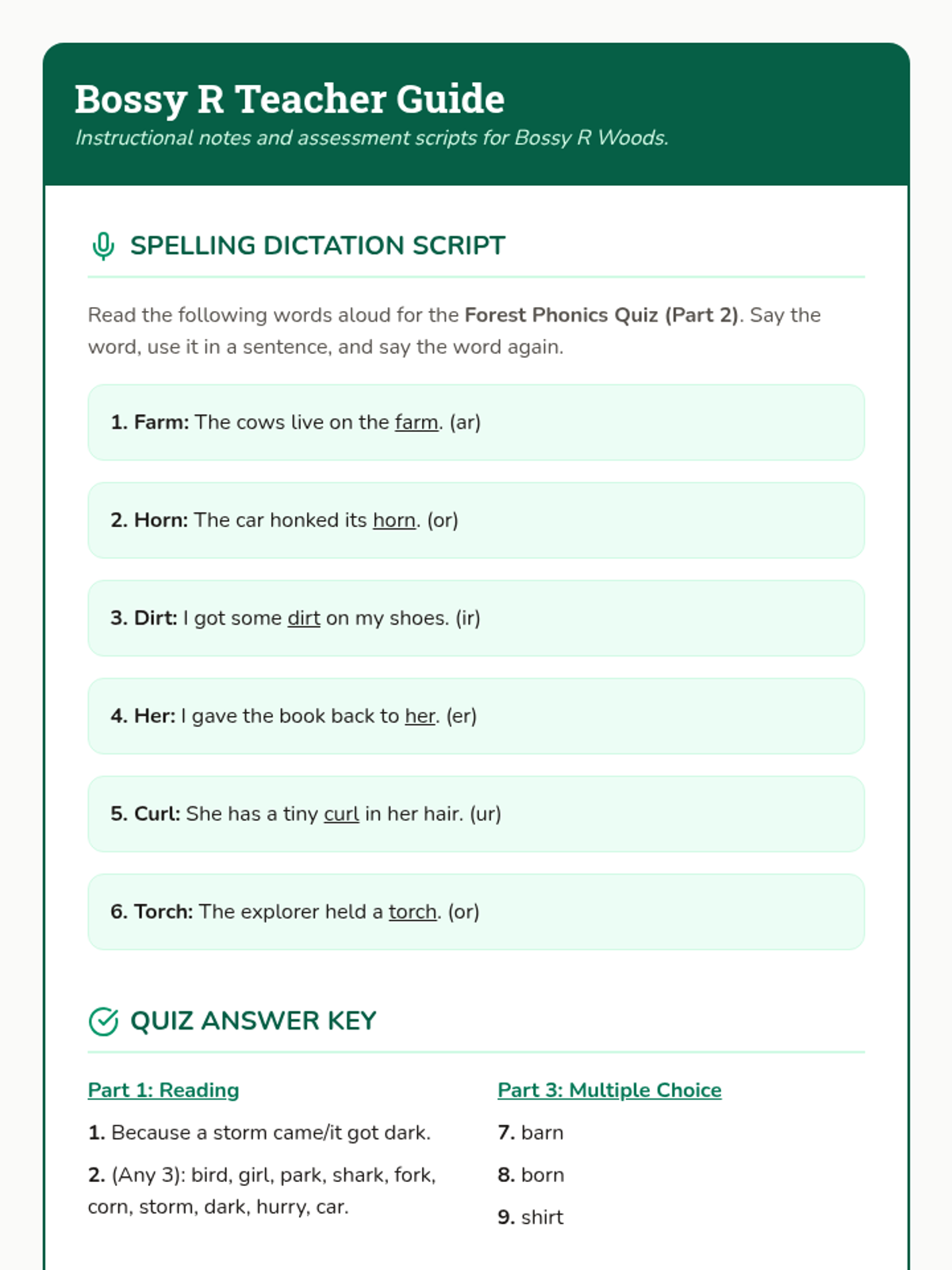
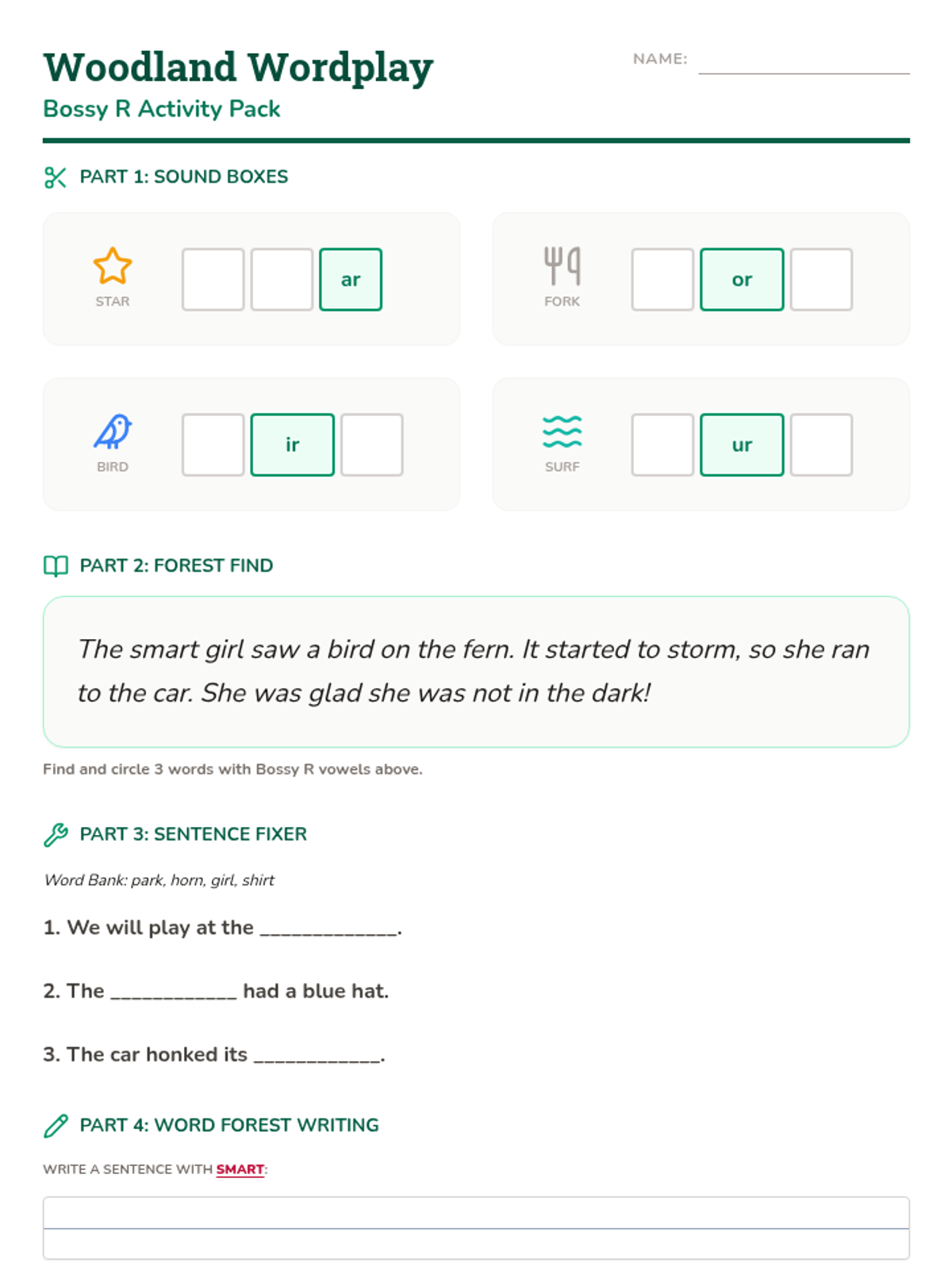
A comprehensive phonics lesson introducing the five r-controlled vowels (ar, er, ir, or, ur) through interactive forest-themed instruction and practice.
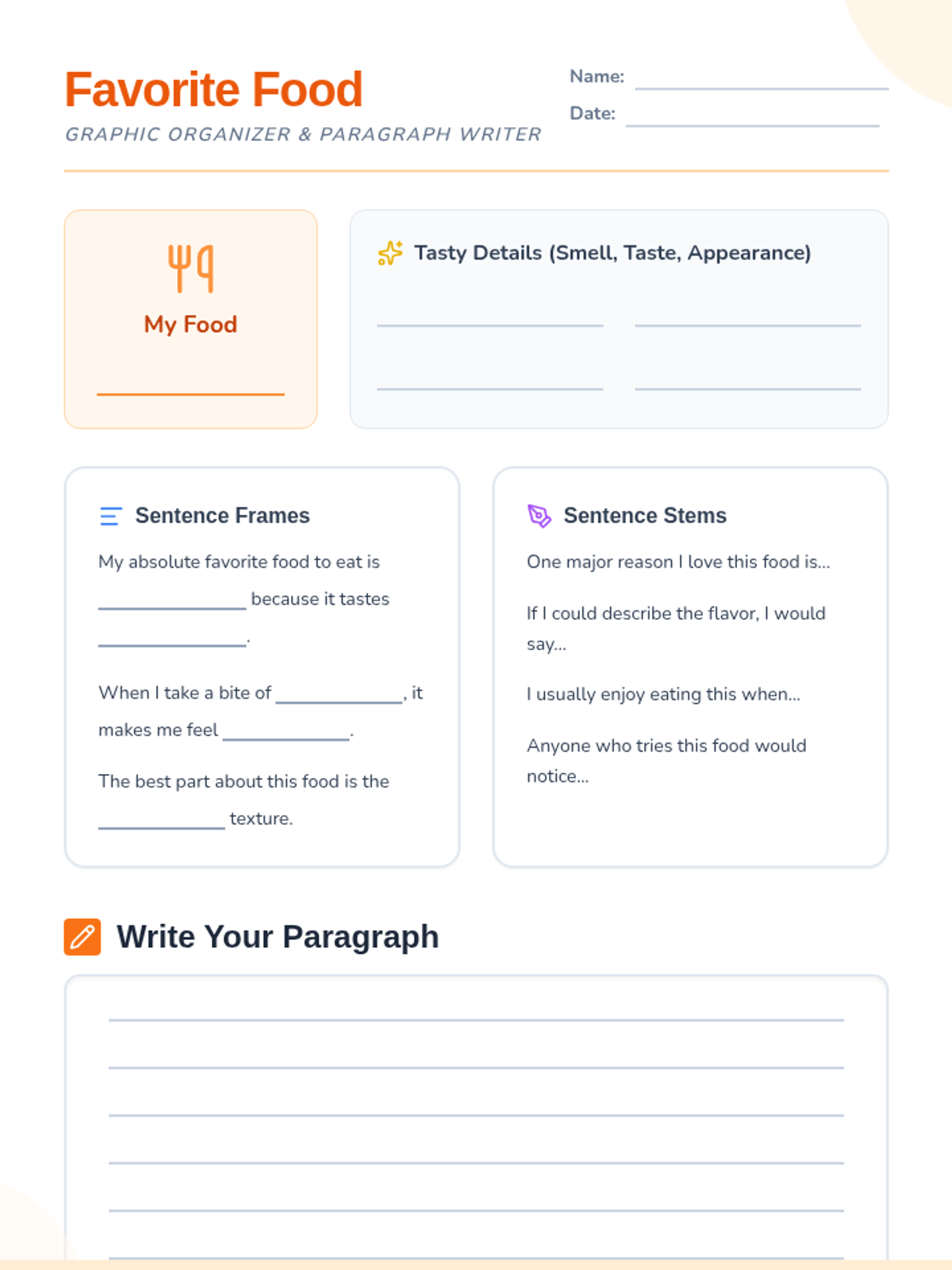
A collection of graphic organizers designed to help students write structured paragraphs about their favorite things using sentence stems and frames.
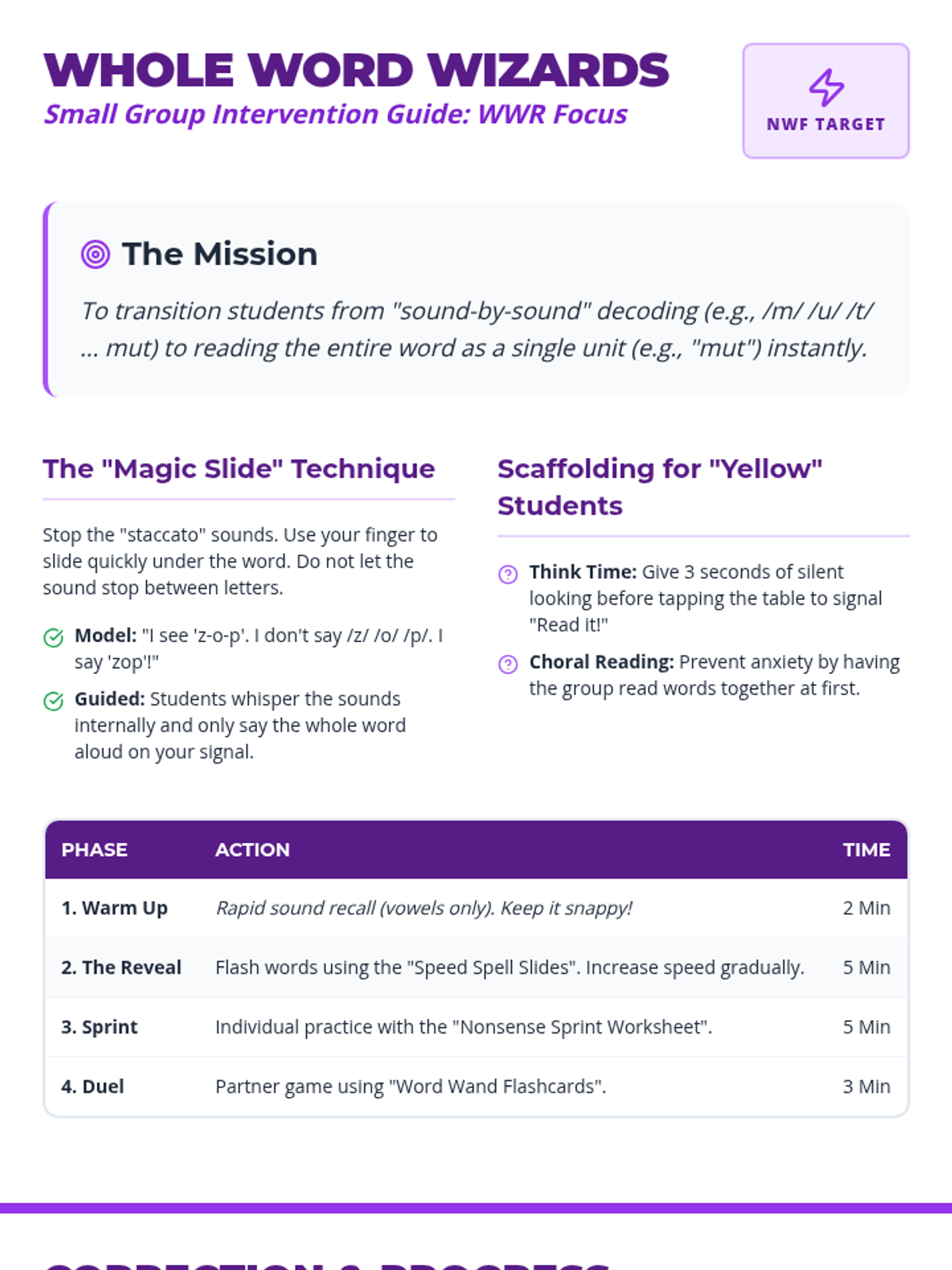
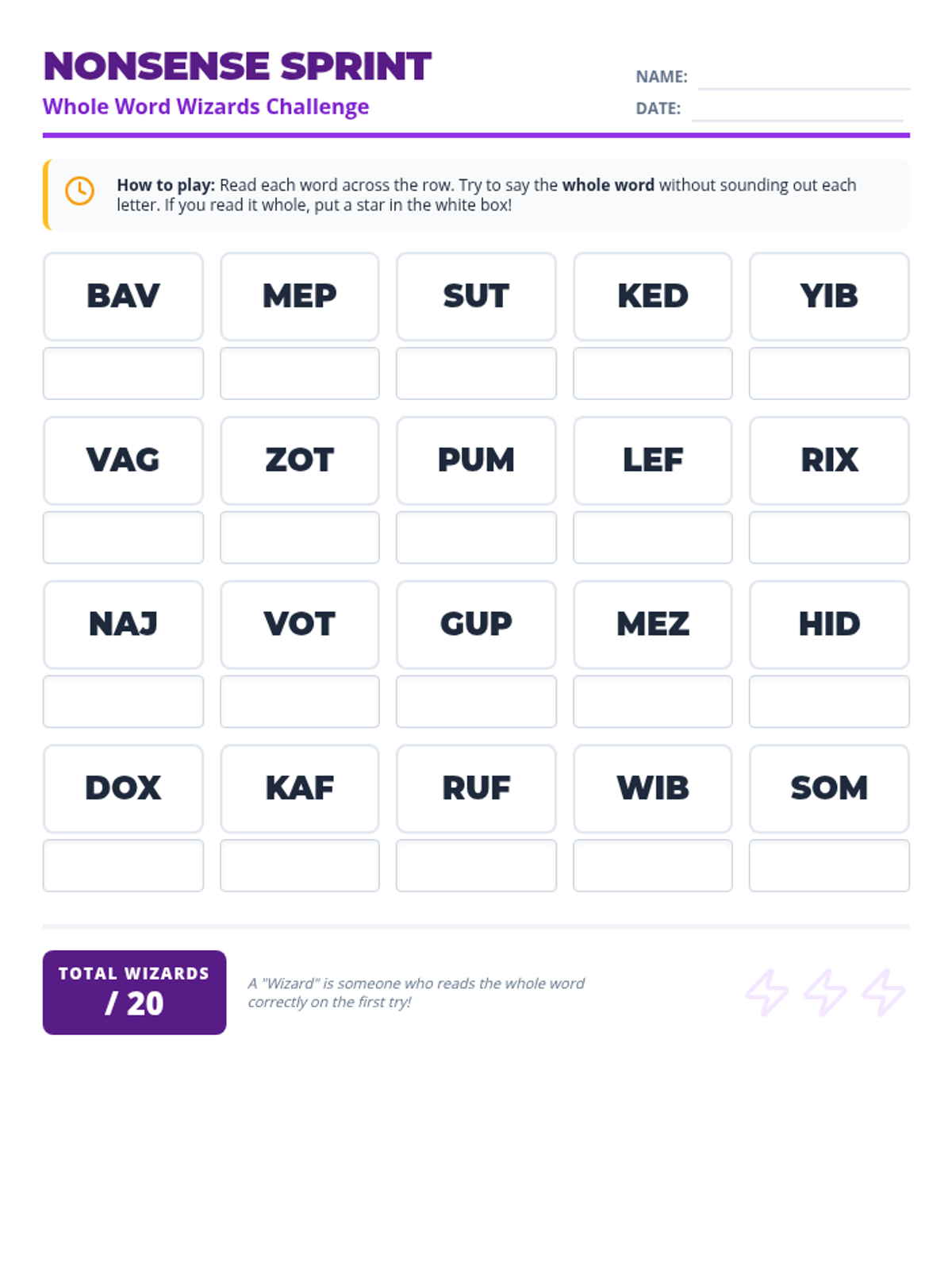
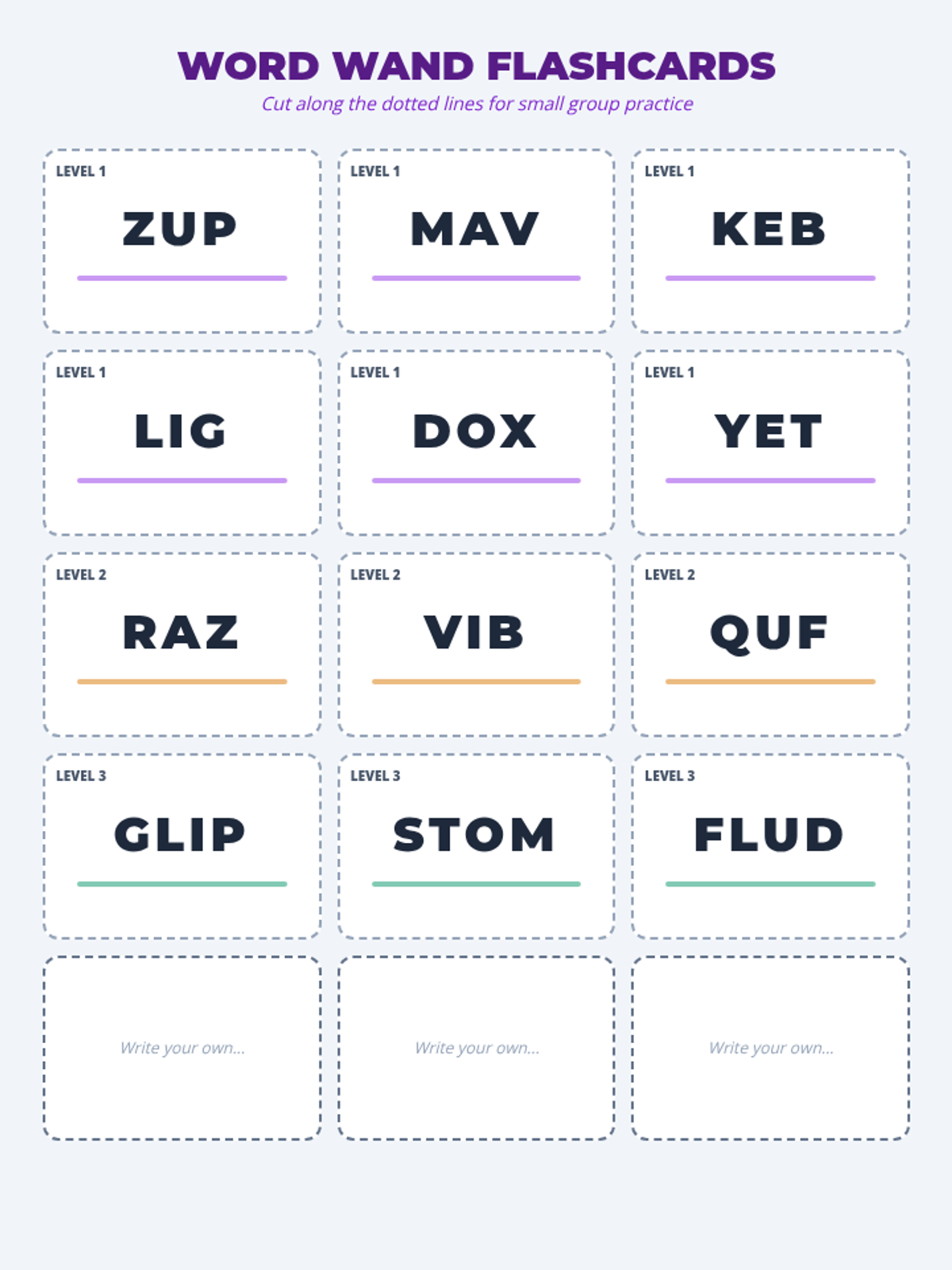
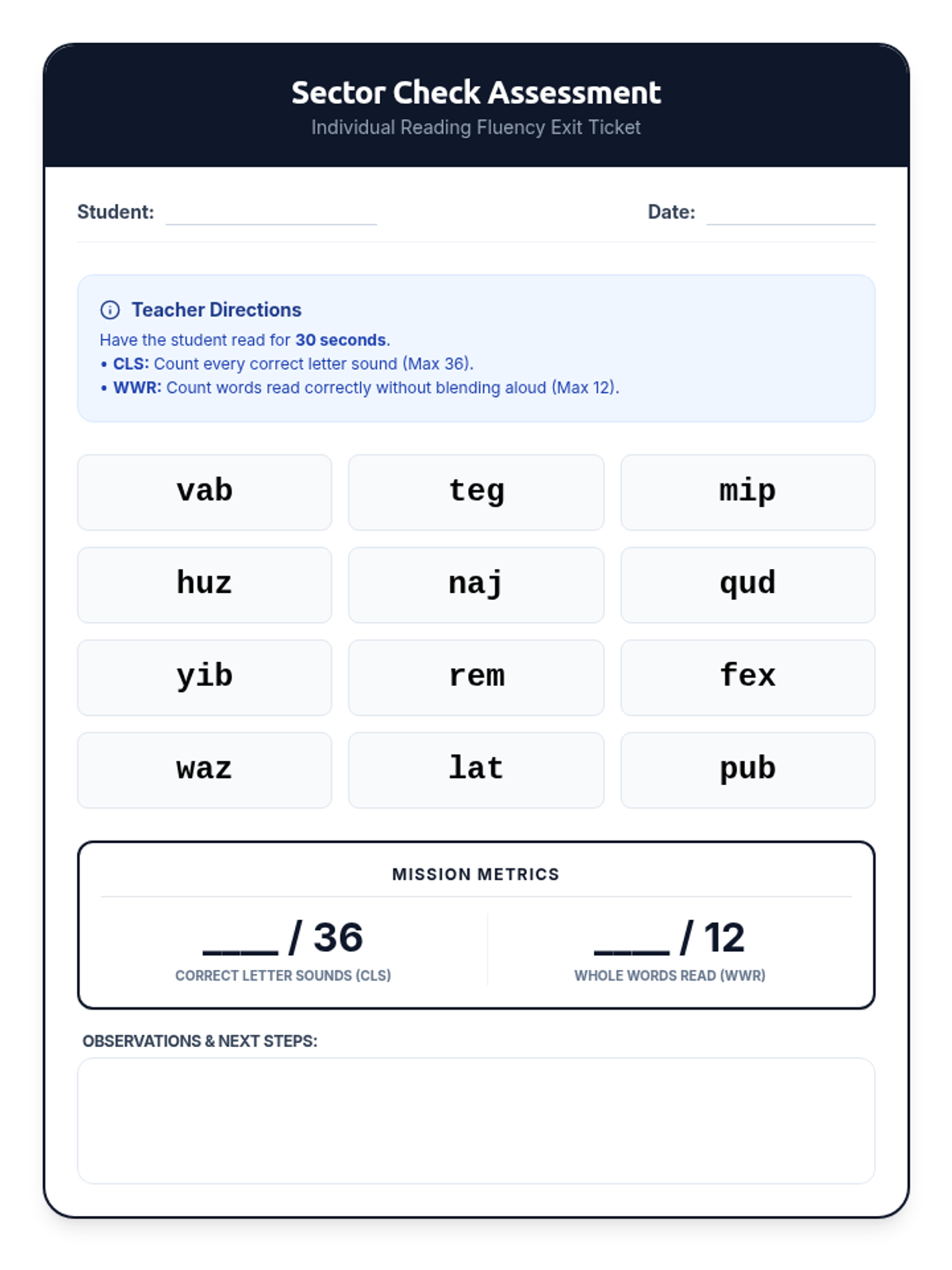
A small group intervention lesson designed to move students from sound-by-sound decoding to reading nonsense words as whole units (WWR). Includes rapid-fire practice, continuous blending techniques, and competitive reading games.
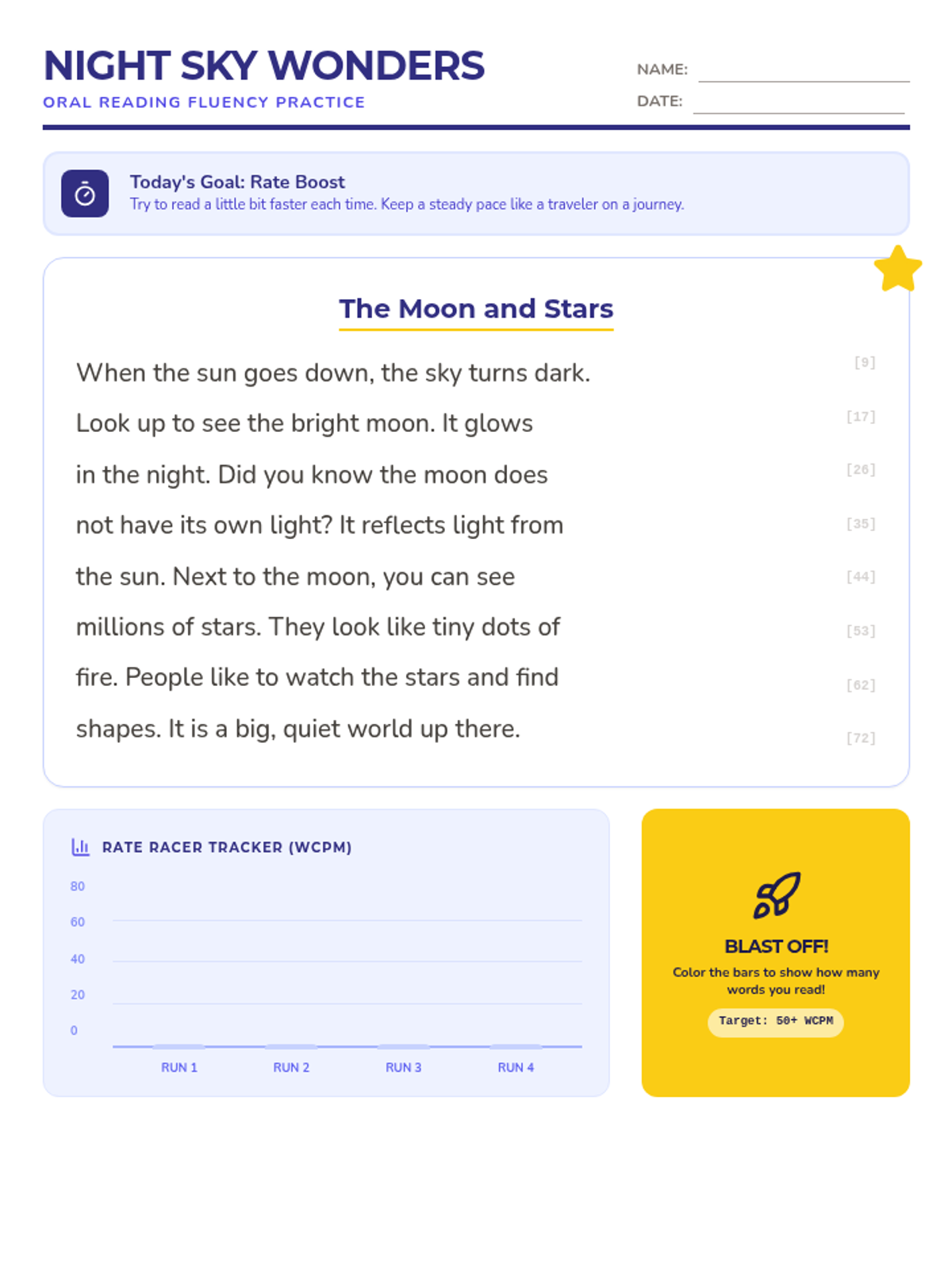
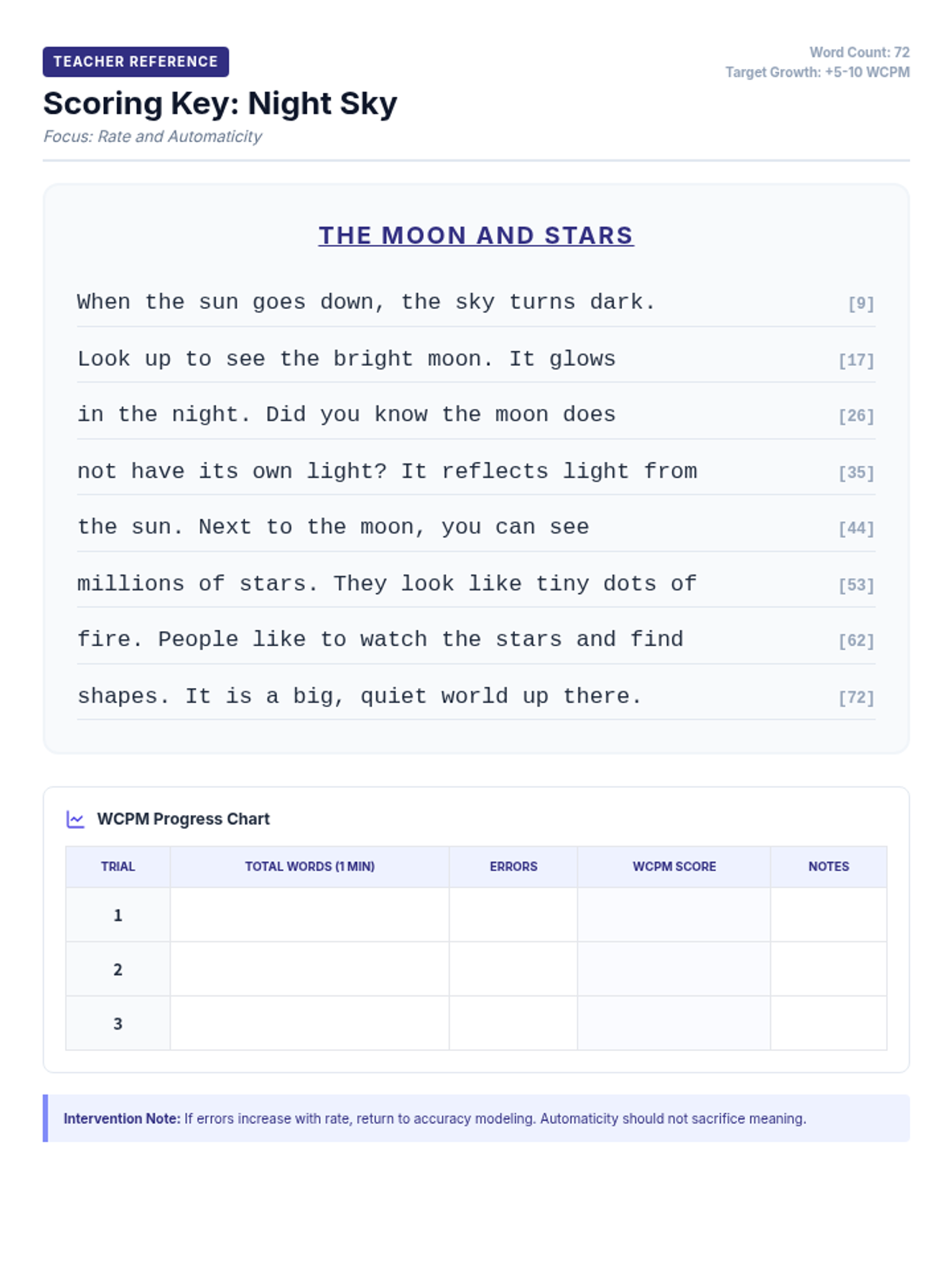
Focuses on building reading rate and automaticity using a passage about the night sky. Students track their progress across multiple timed readings.
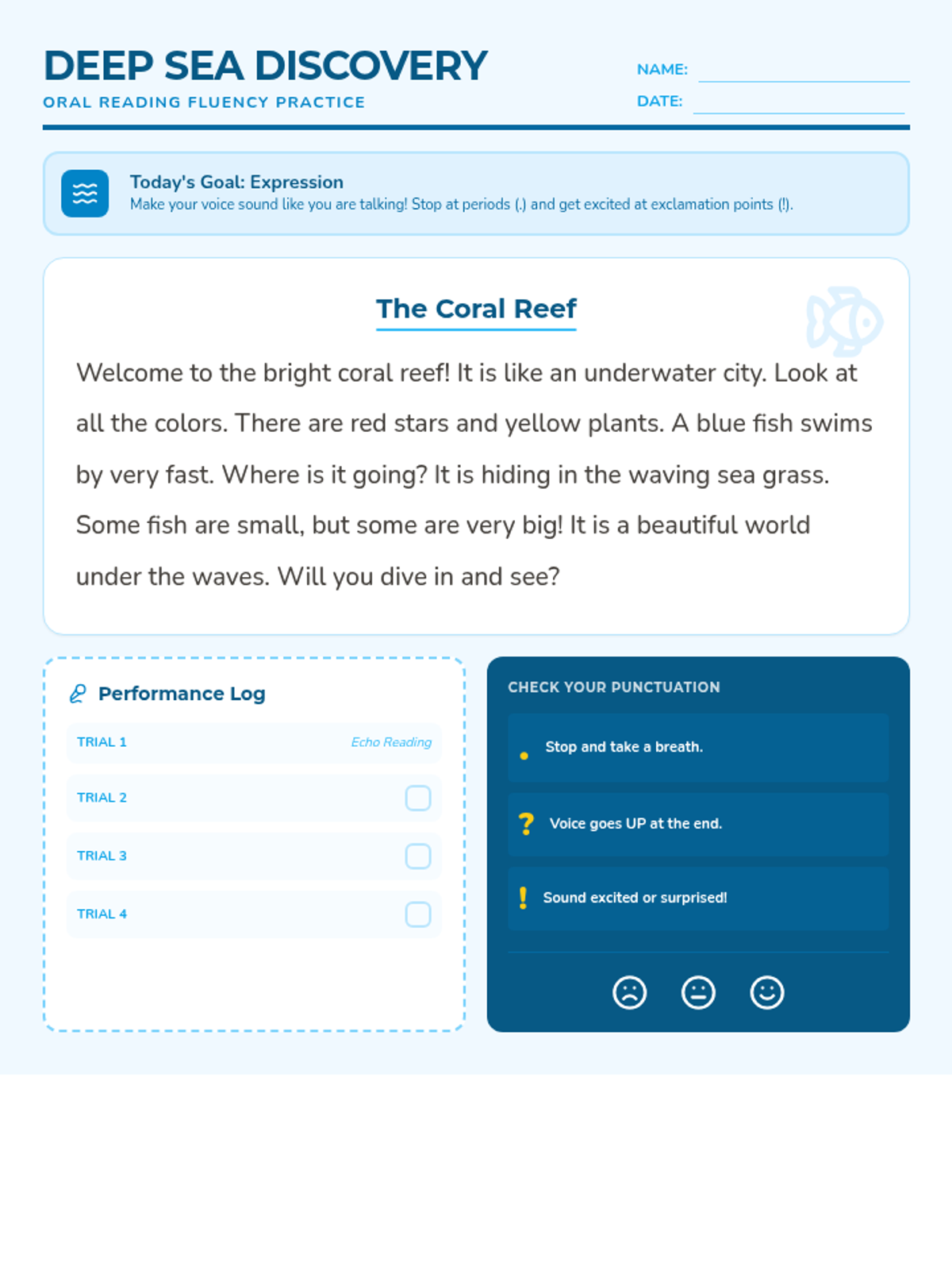
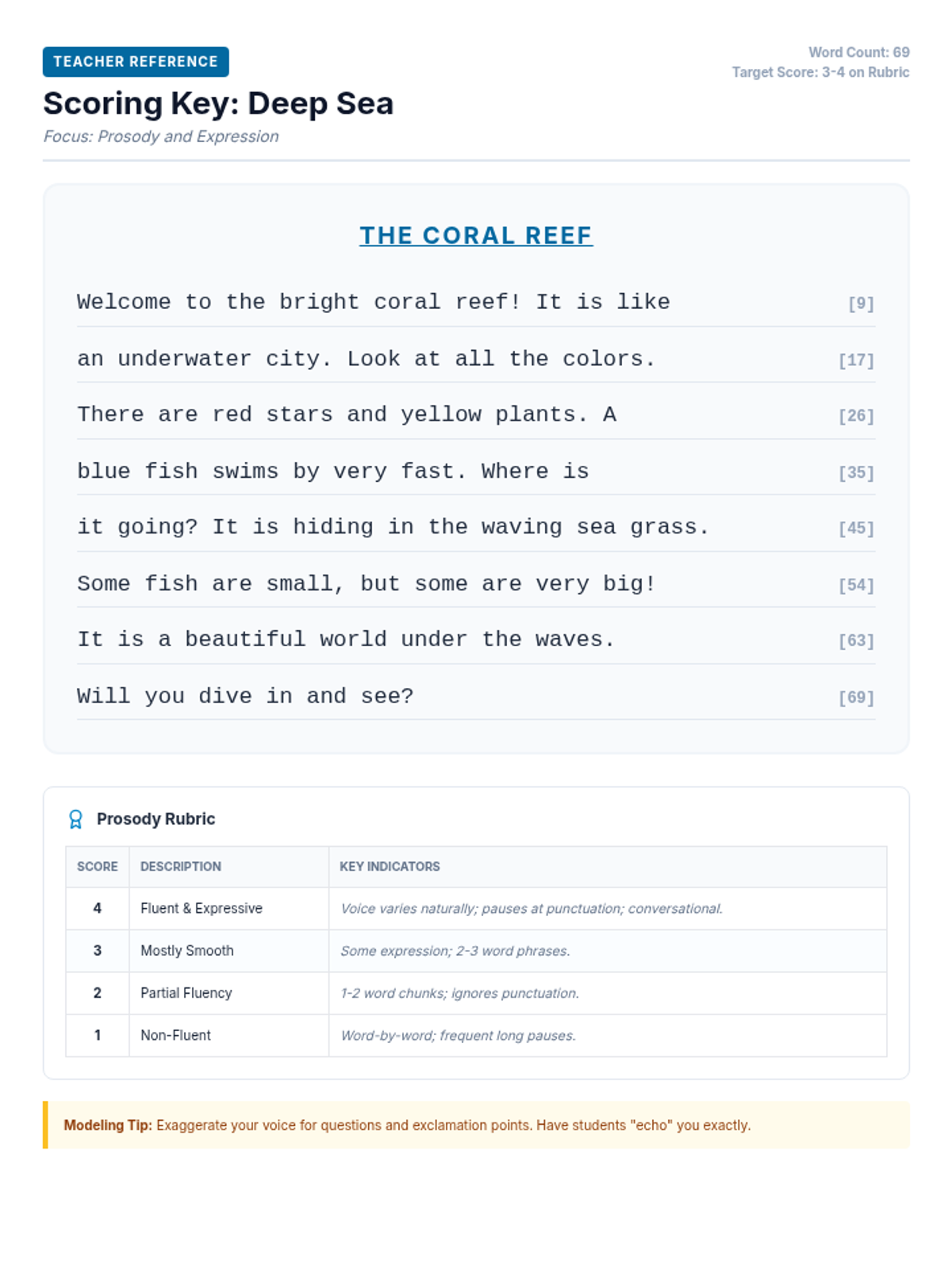
Focuses on prosody and expression using a passage about sea life. Students learn to use punctuation cues to change their voice.
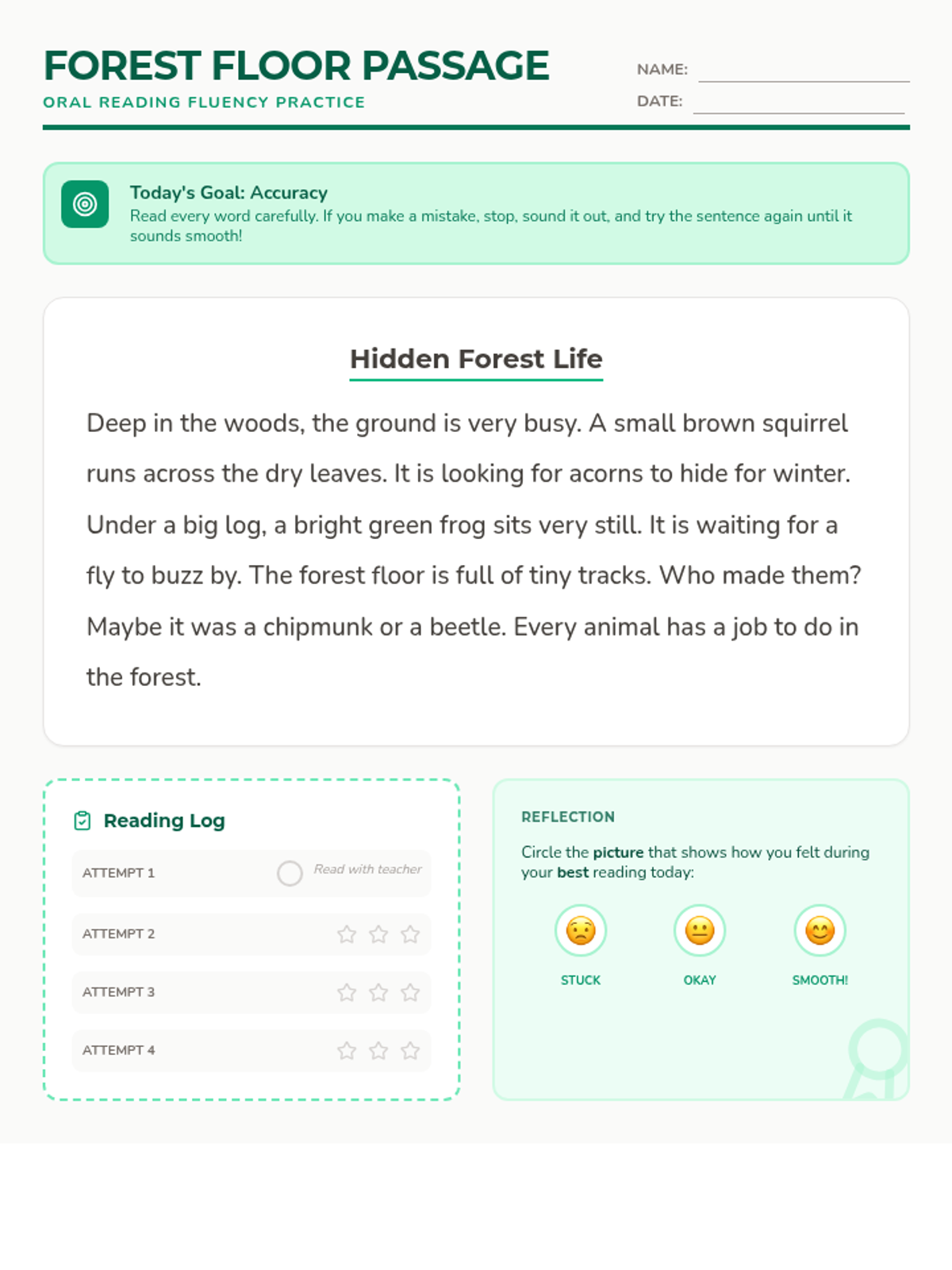
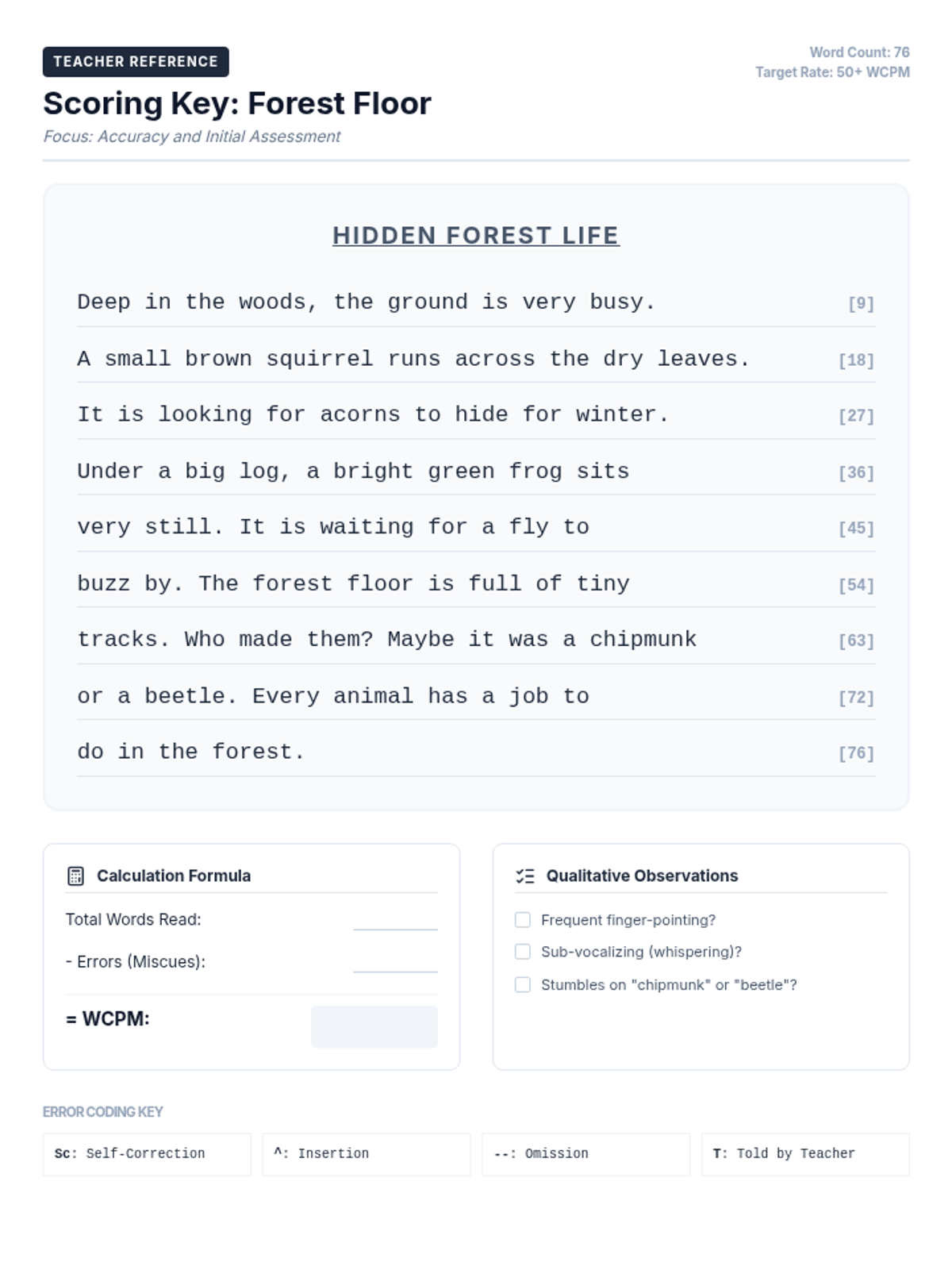
Focuses on reading accuracy and smooth phrasing using a passage about forest animals. Includes teacher modeling and student repeated reading practice.
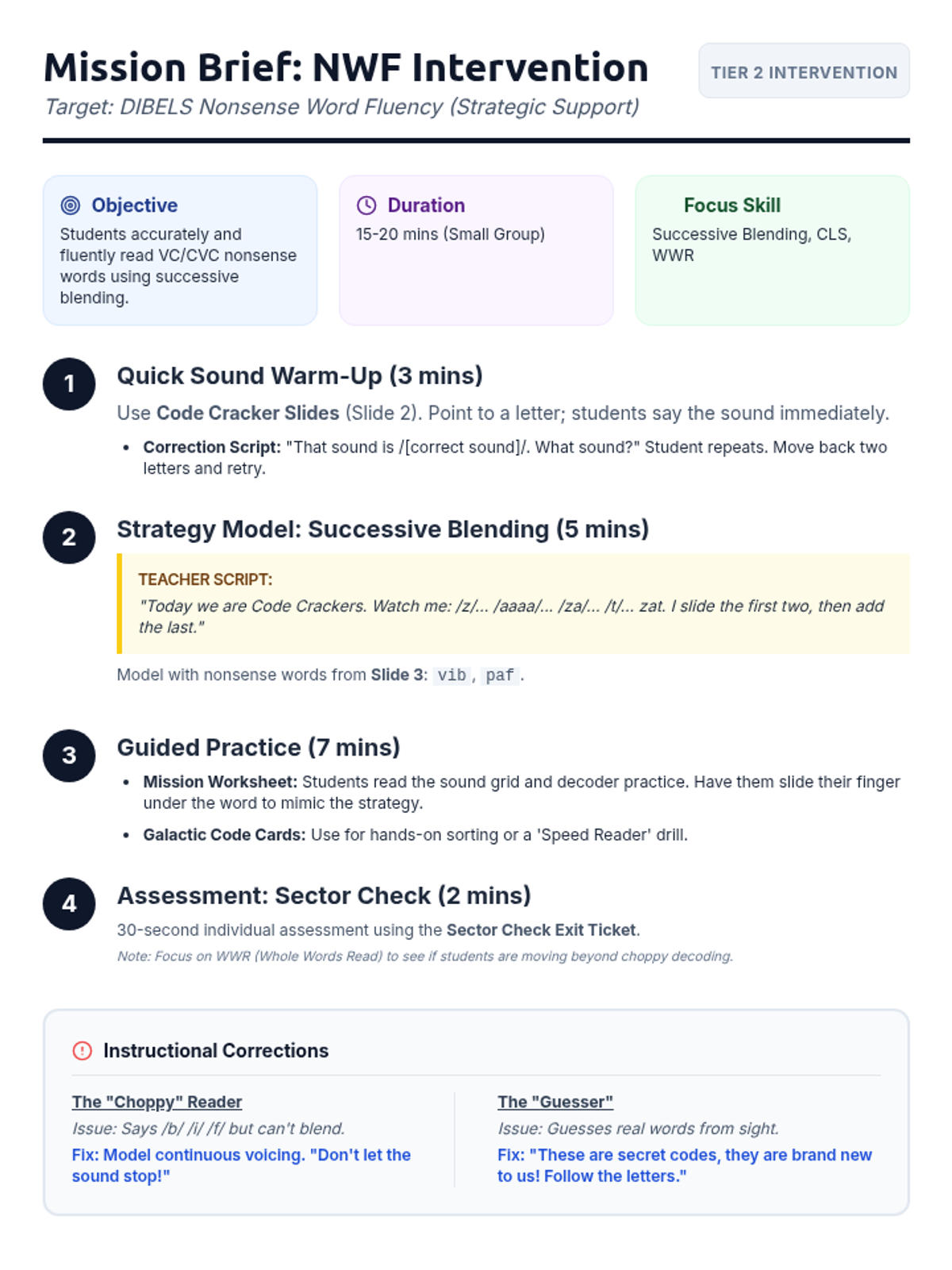
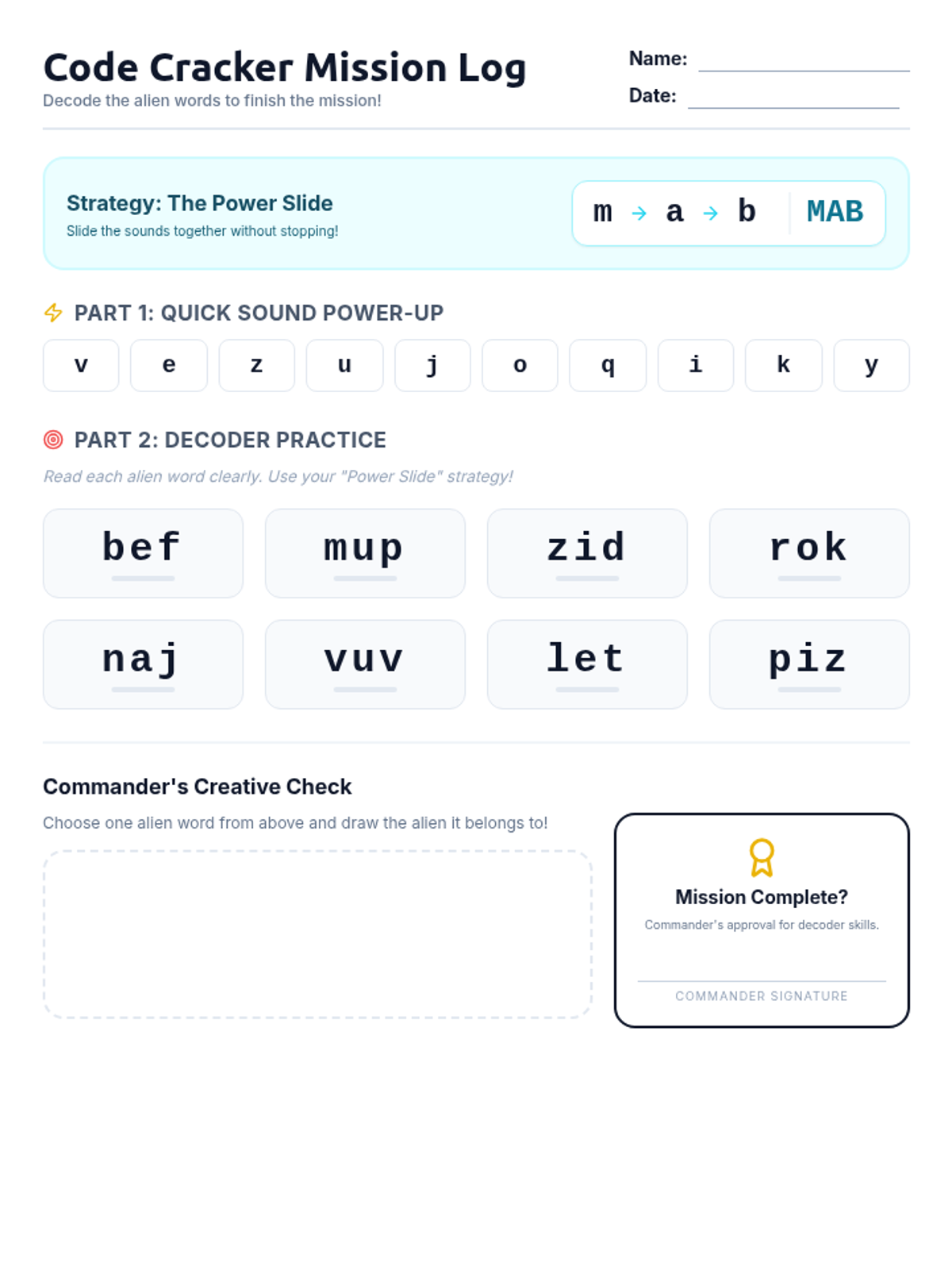
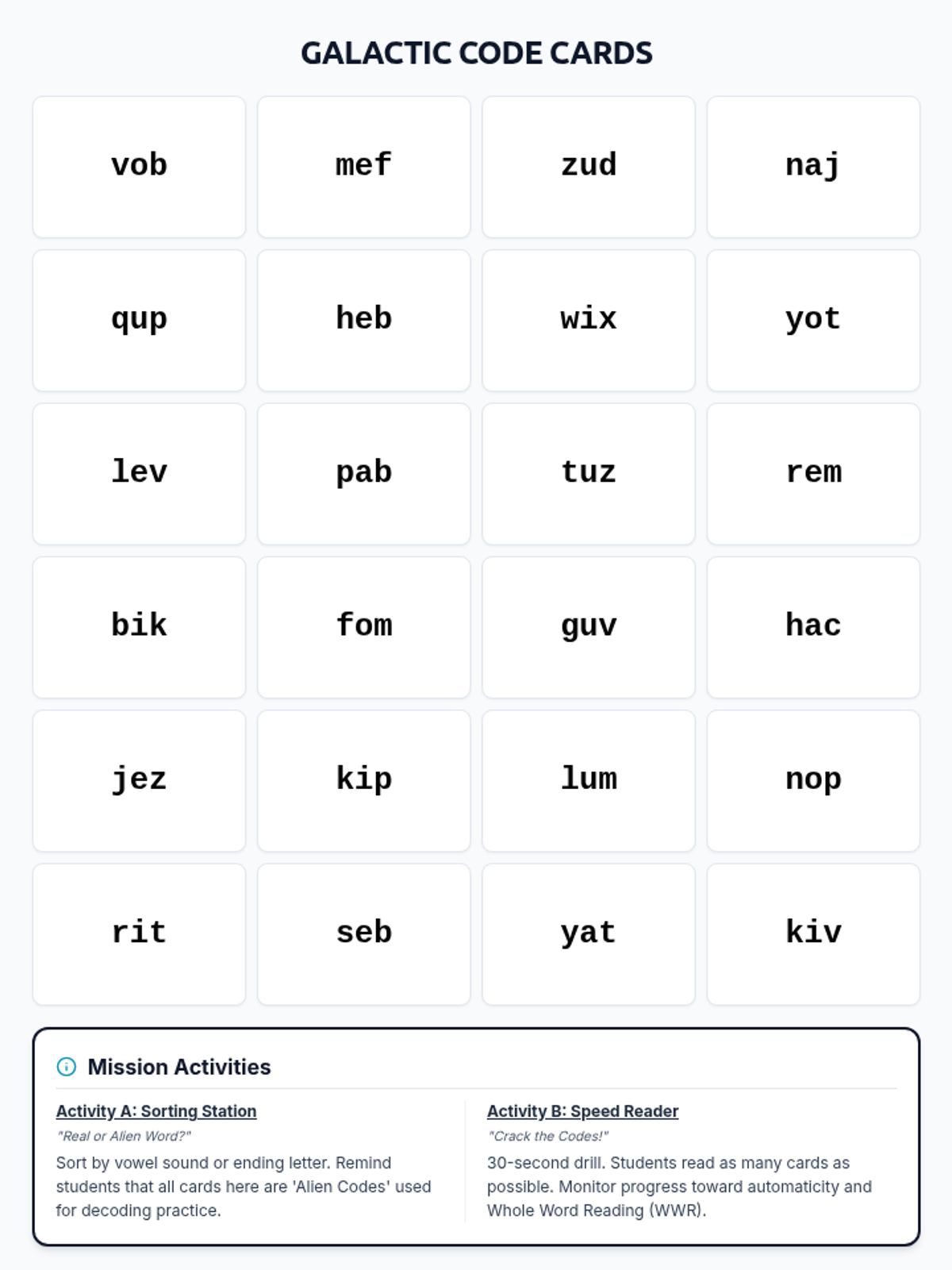
A targeted intervention lesson for students requiring strategic support in nonsense word fluency, focusing on successive blending and automaticity with CVC patterns.
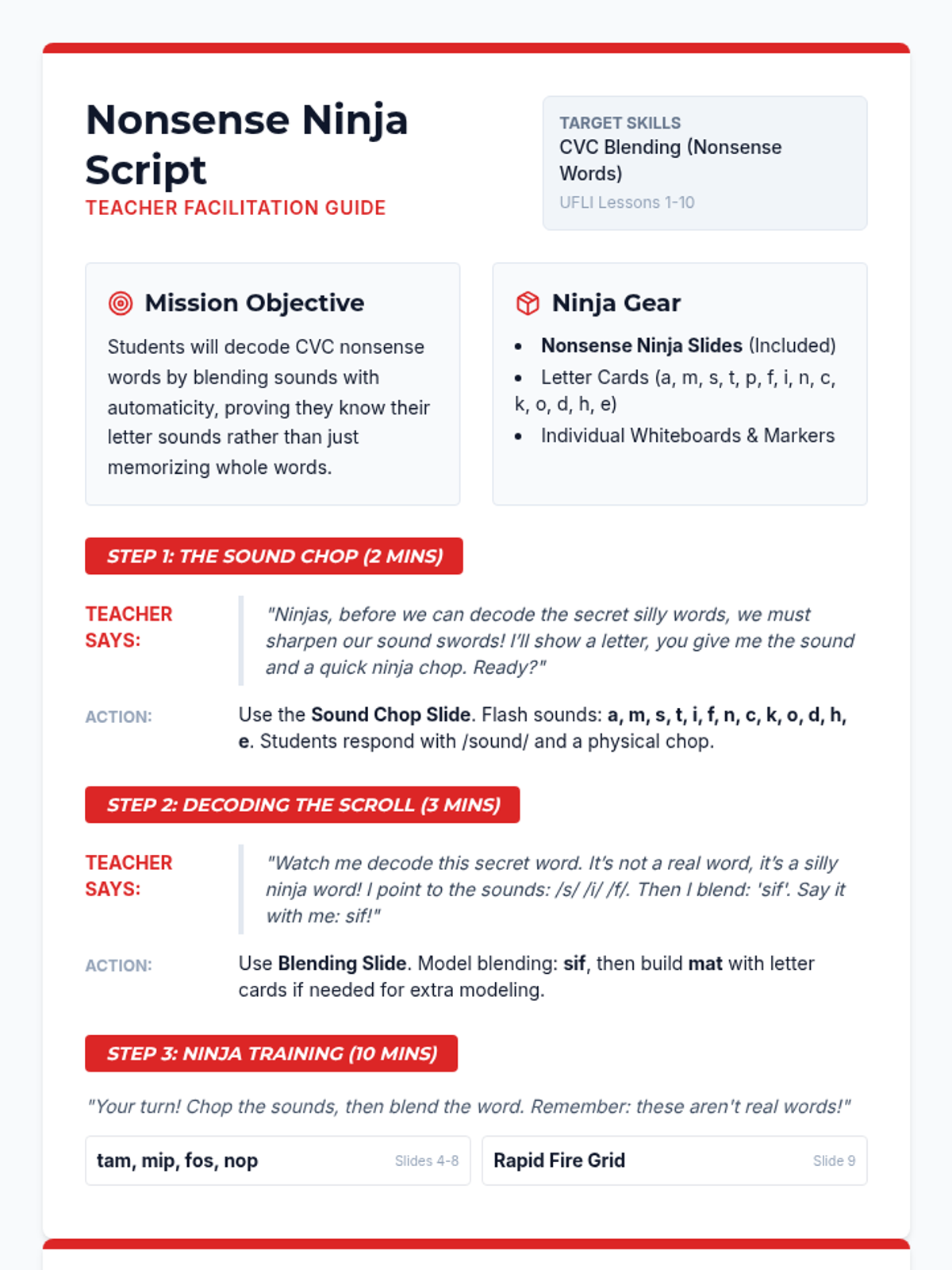
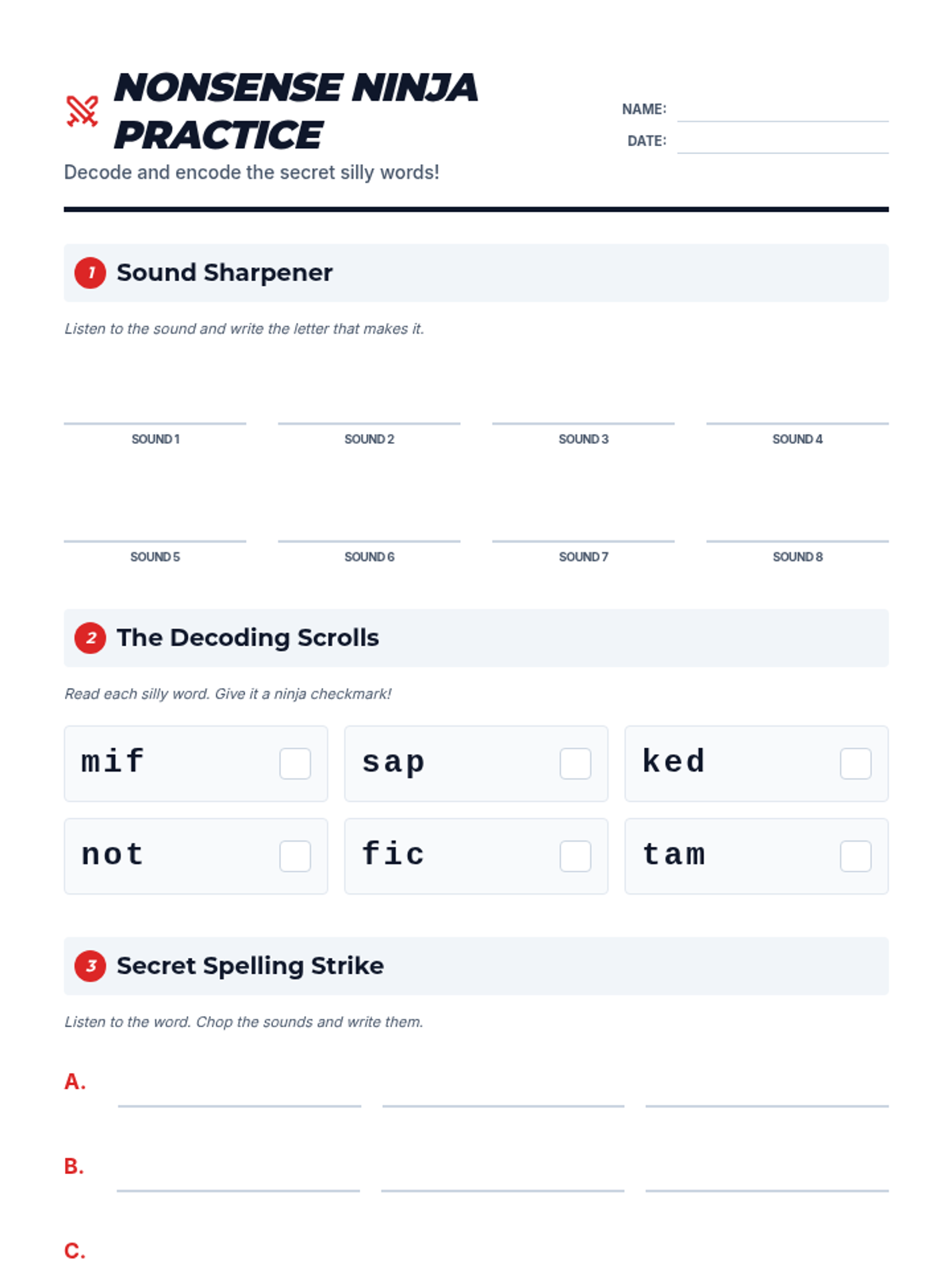
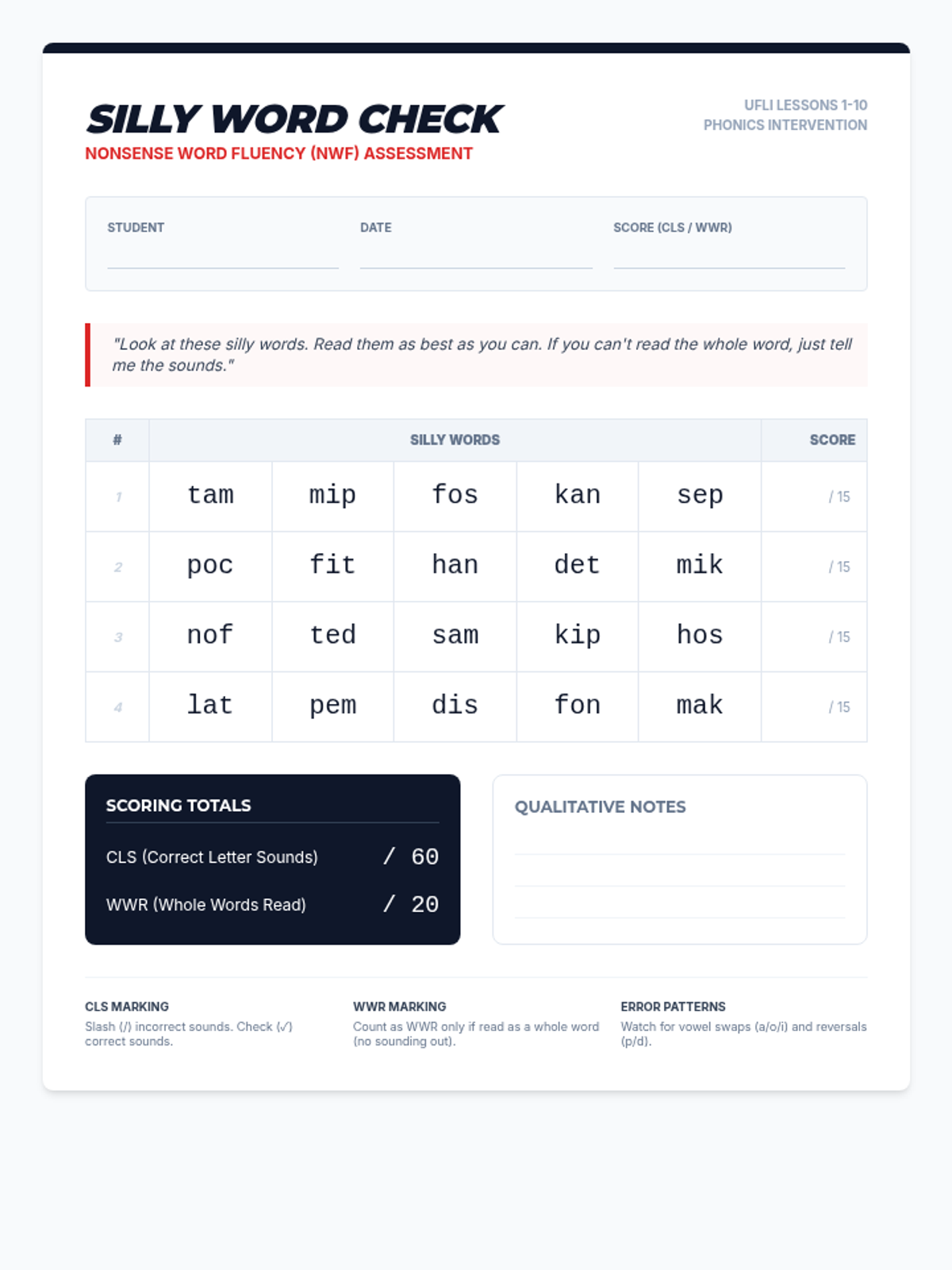
A small group intervention lesson focused on decoding CVC nonsense words using letters from UFLI lessons 1-10. Includes teacher scripts, visual drills, and student practice.
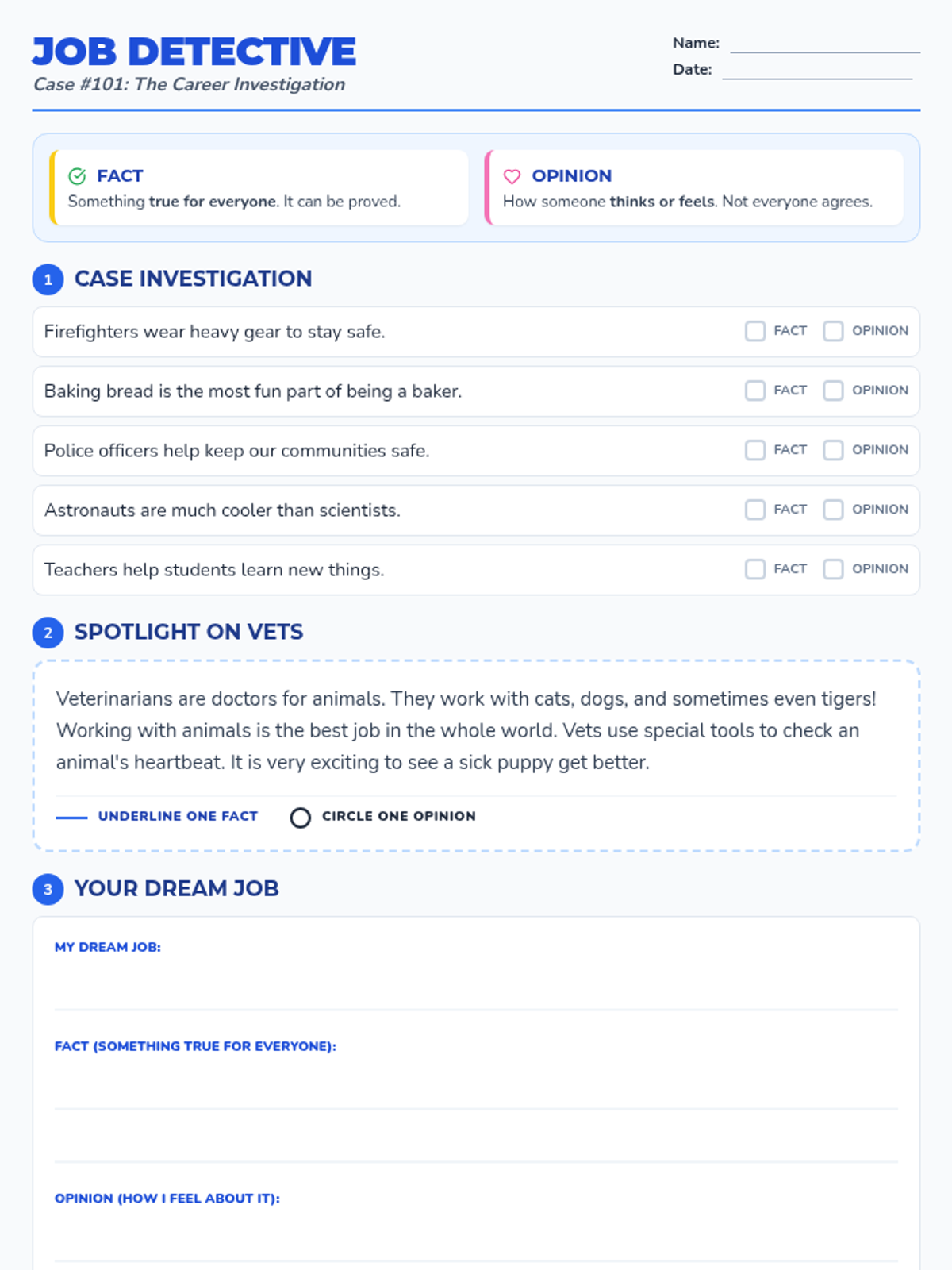
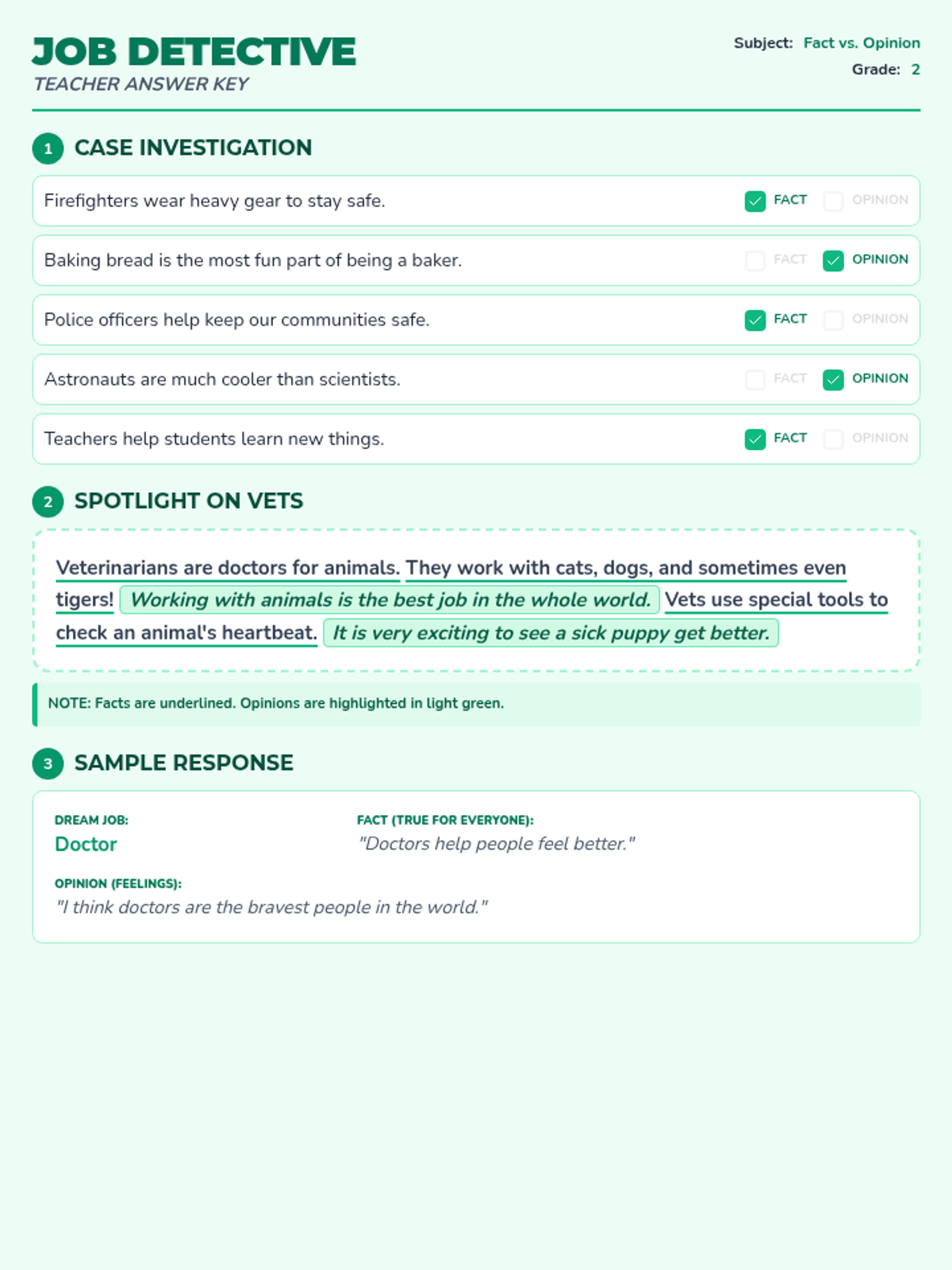
A fun, career-themed lesson for 2nd grade students to master the difference between facts and opinions. Students explore various jobs while learning to distinguish objective information from personal feelings.
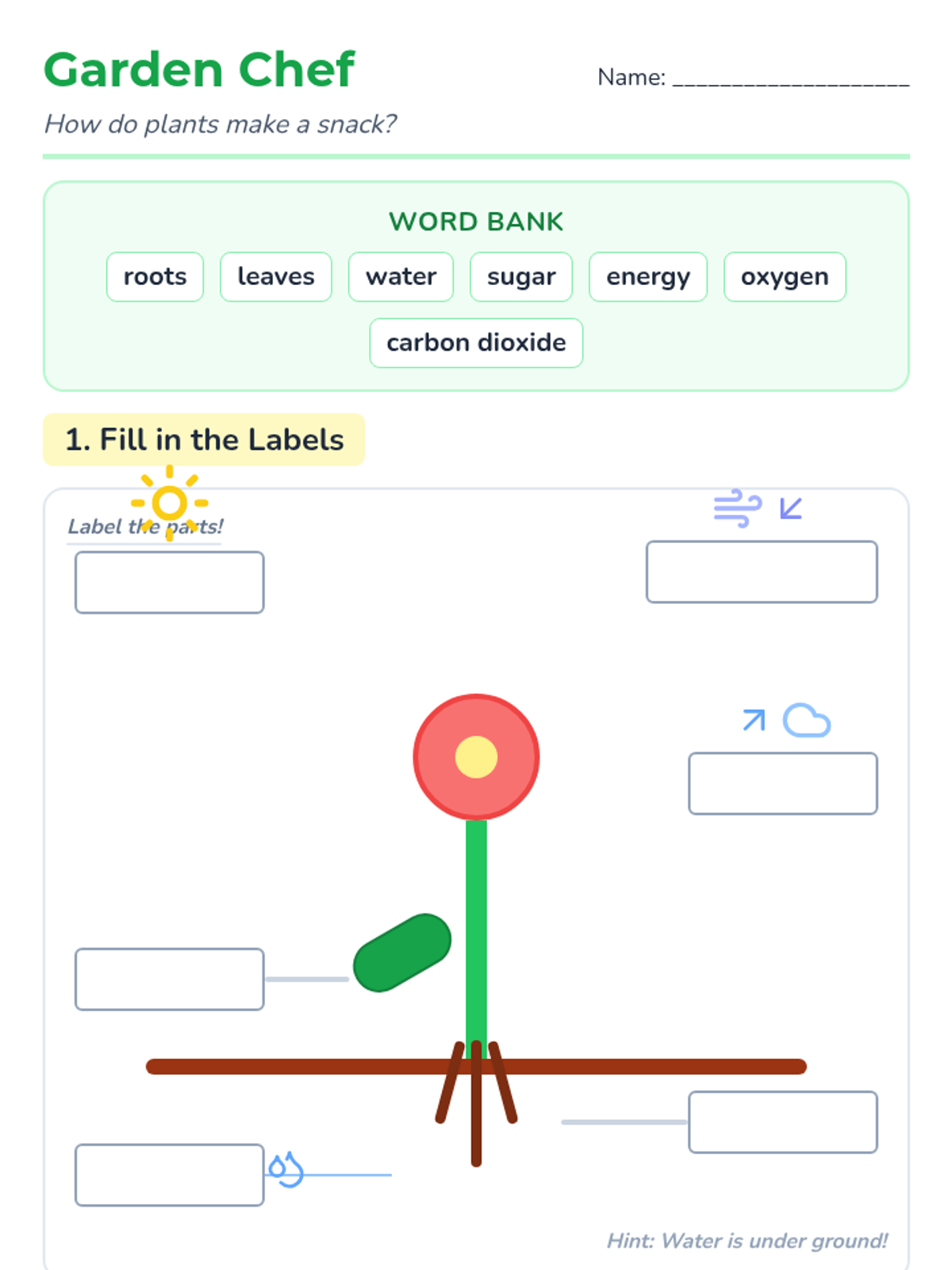
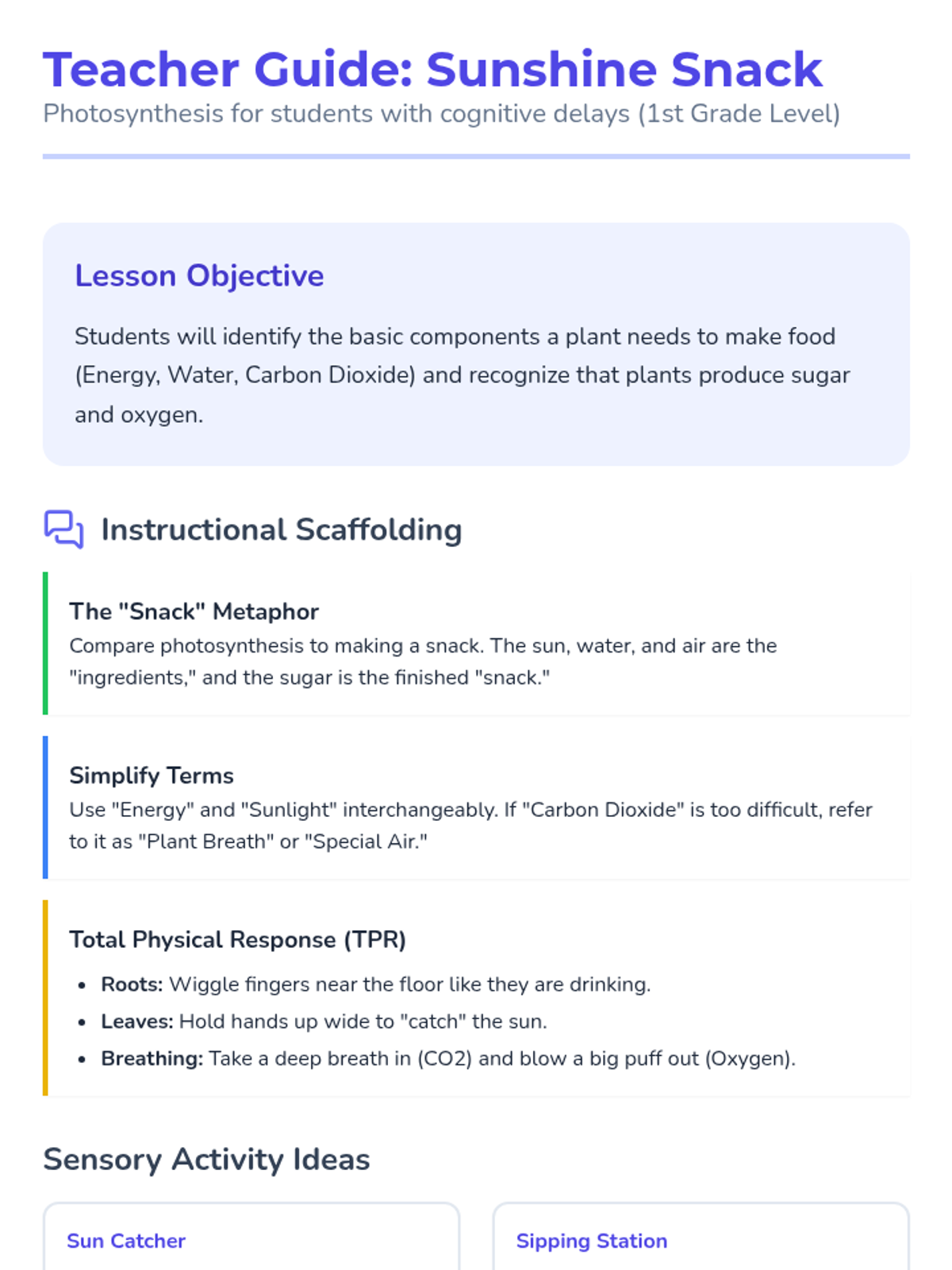
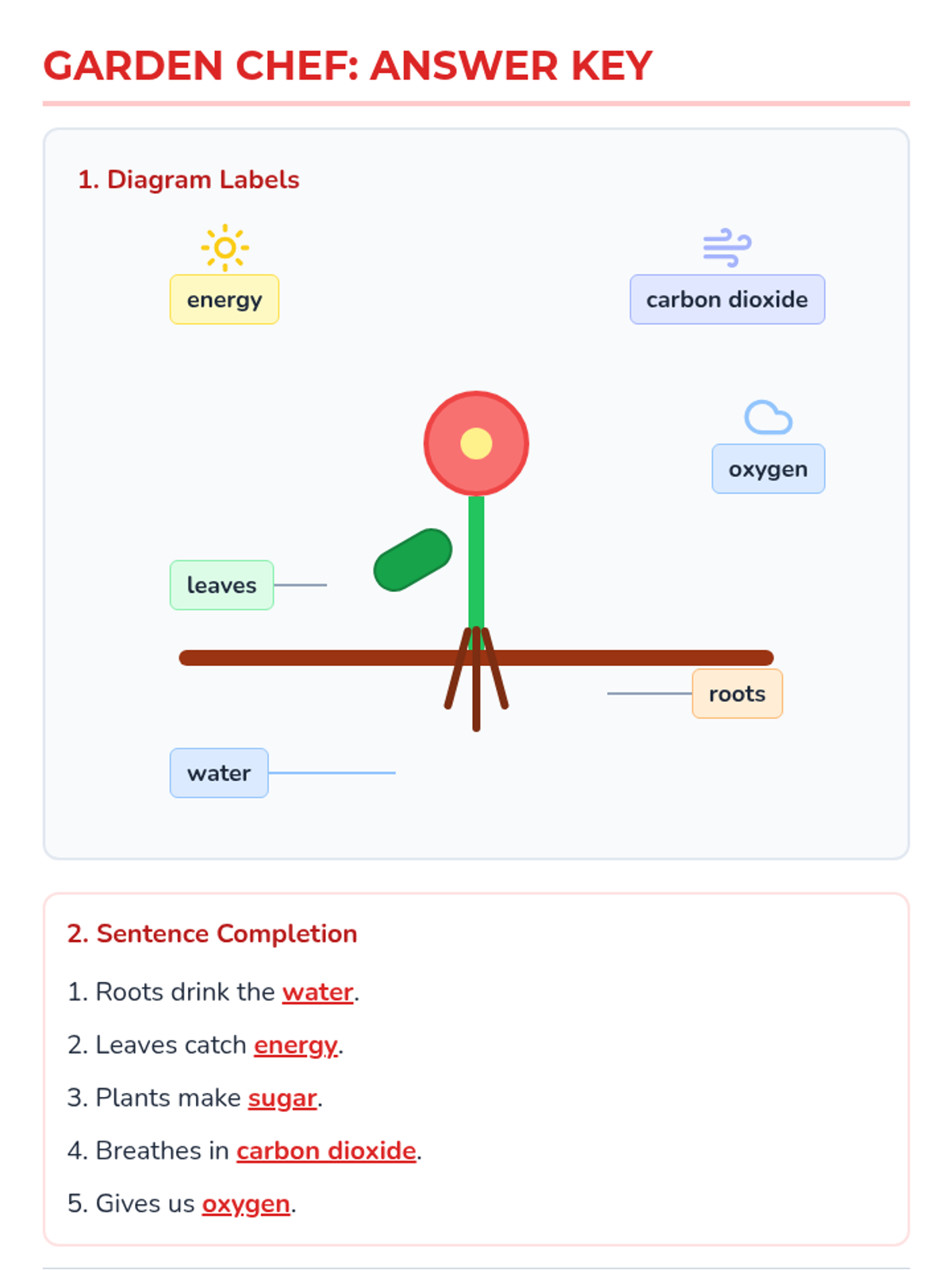
A highly visual lesson explaining photosynthesis using the metaphor of 'making a snack' from the sun. Designed for 1st-grade cognitive levels with simple vocabulary and clear diagrams.
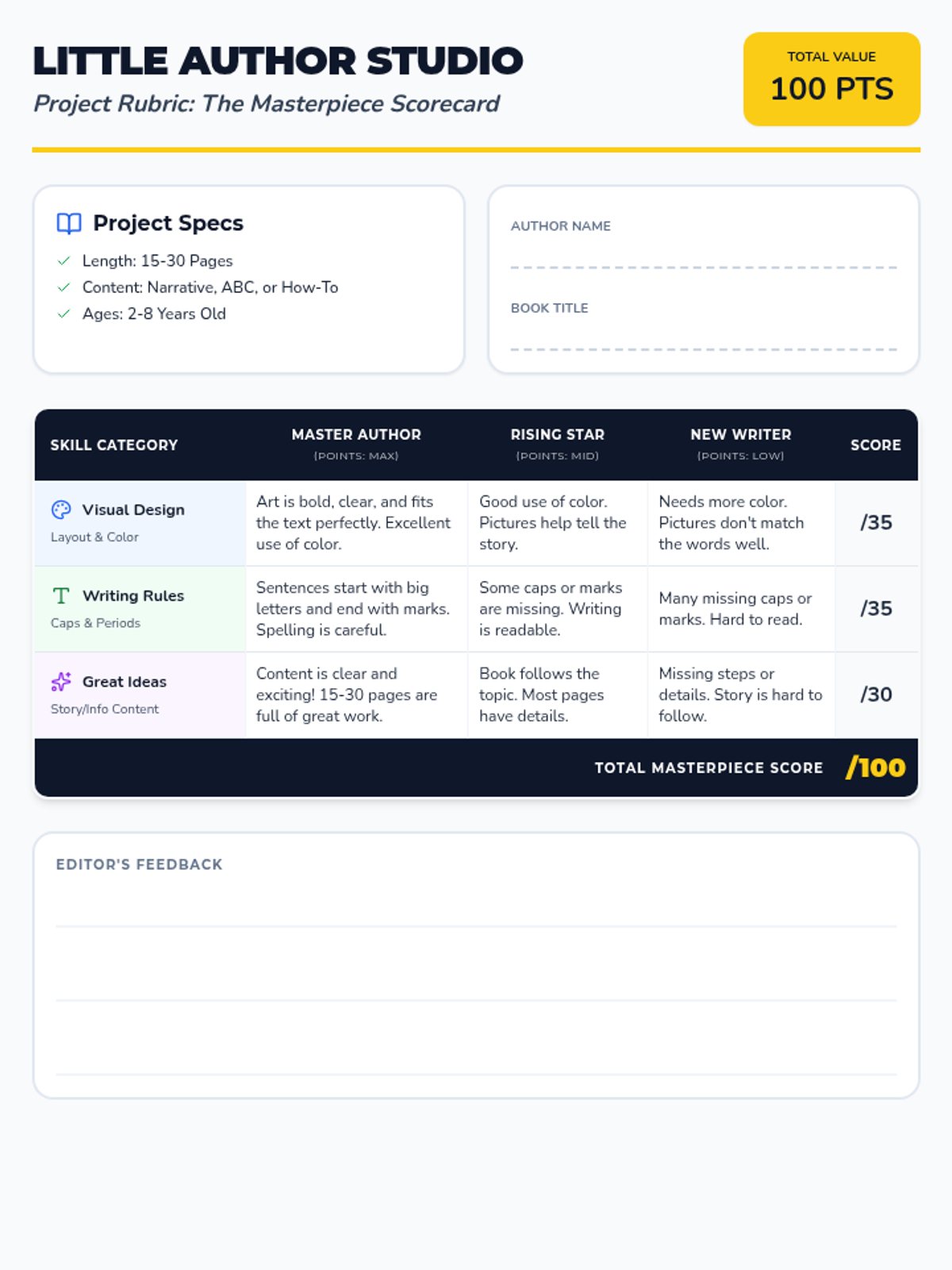
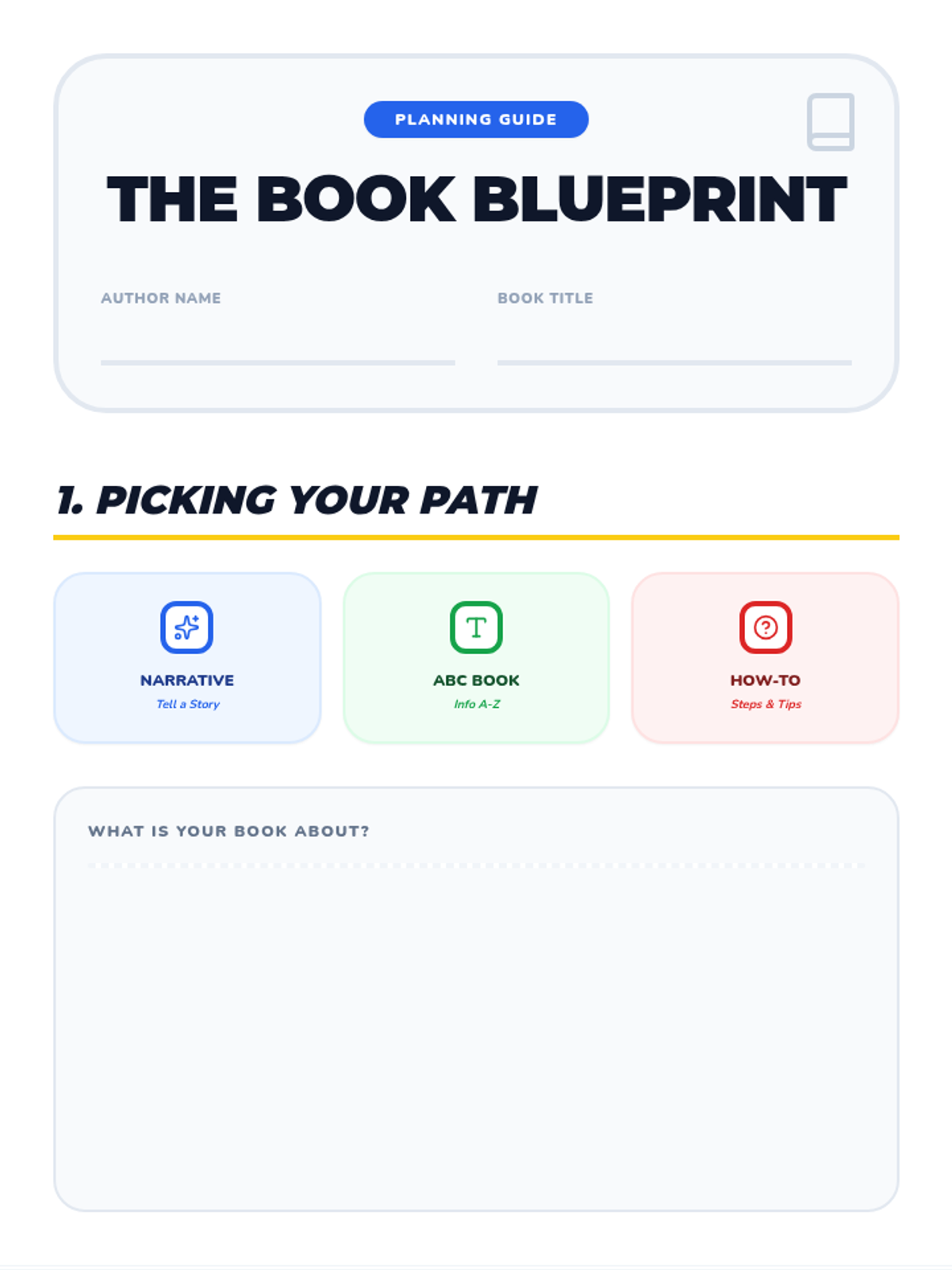
A creative writing project for young children (ages 2-8) to produce a 15-30 page book. Students can choose between a narrative story, an expository ABC book, or a how-to guide, focusing on visual design and writing conventions.
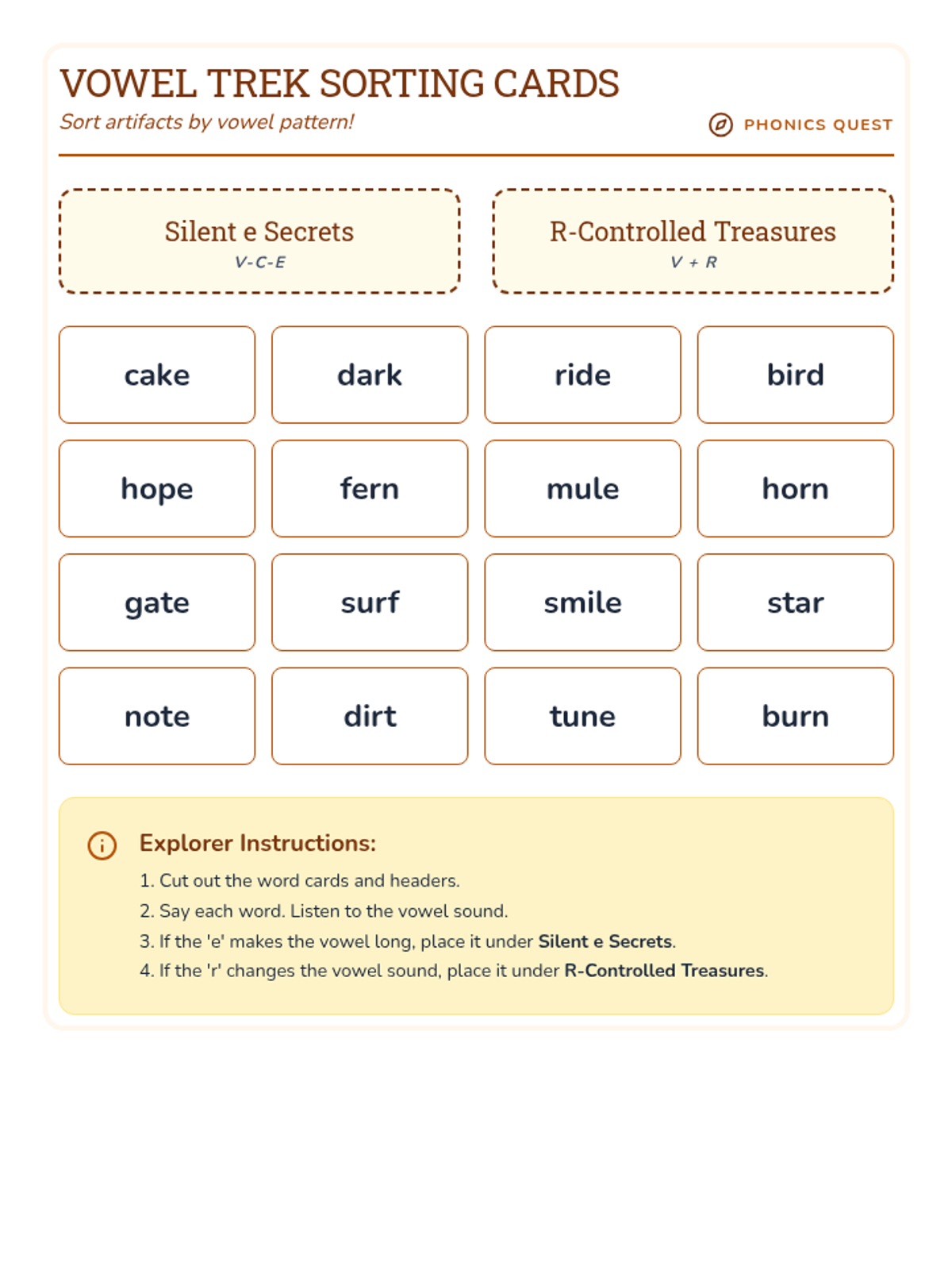
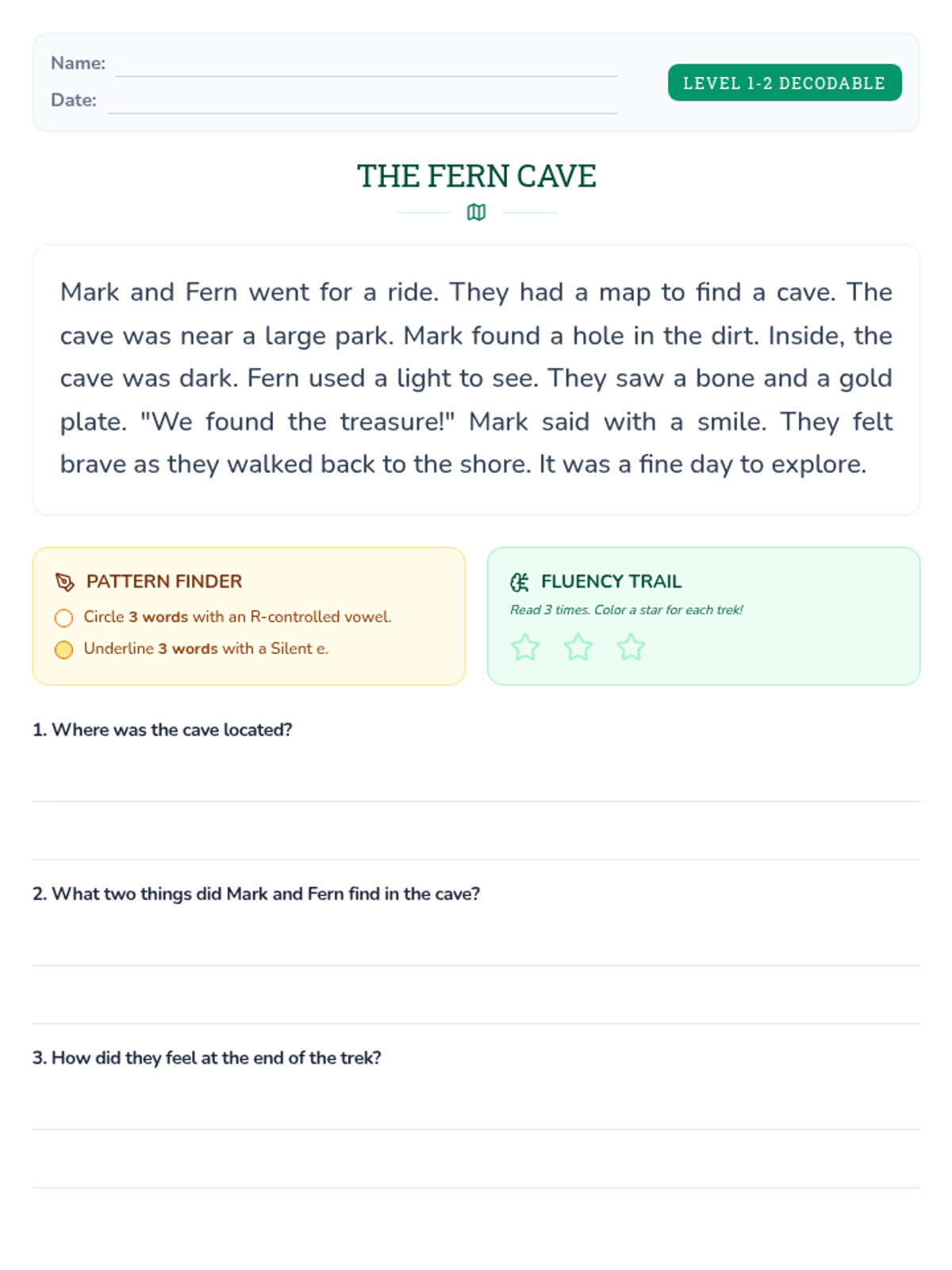
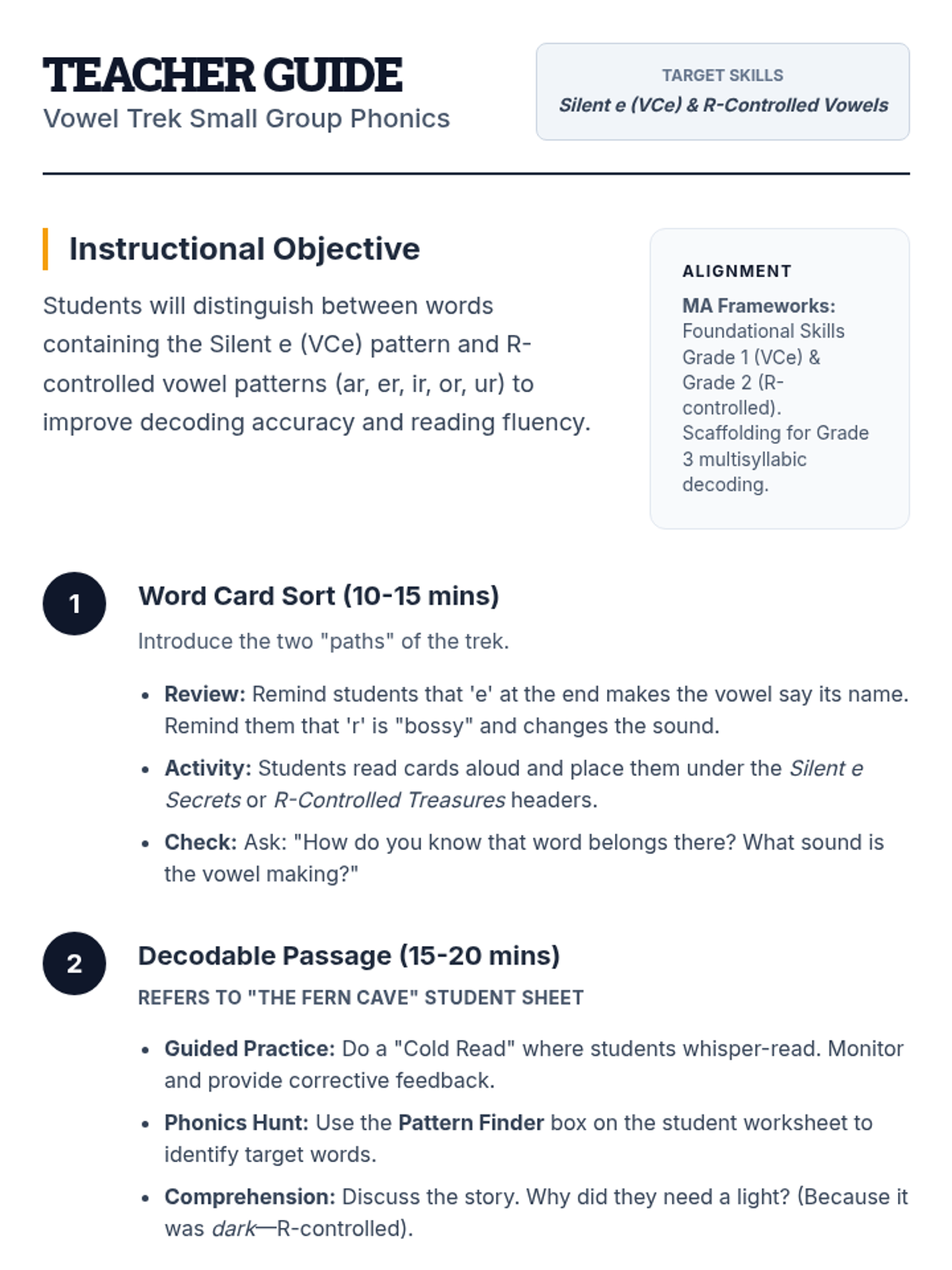
A small-group phonics lesson focused on distinguishing between silent e (VCe) and r-controlled vowel patterns, designed for Grade 3 students reading at a 1st-2nd grade level.
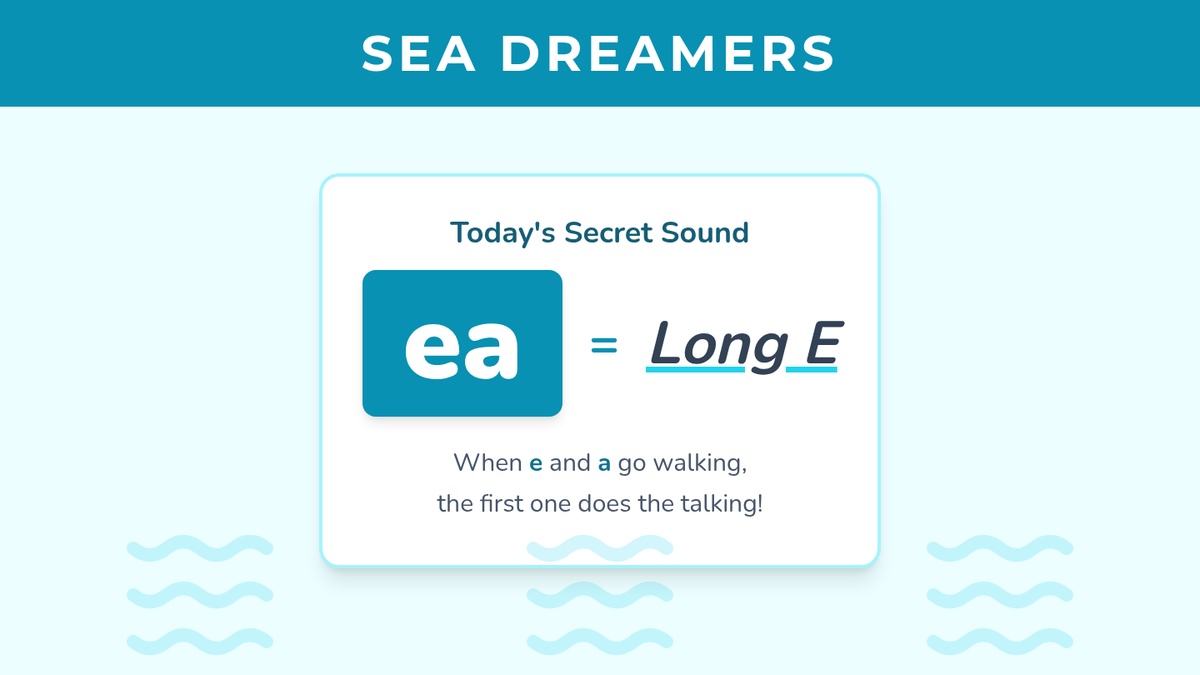
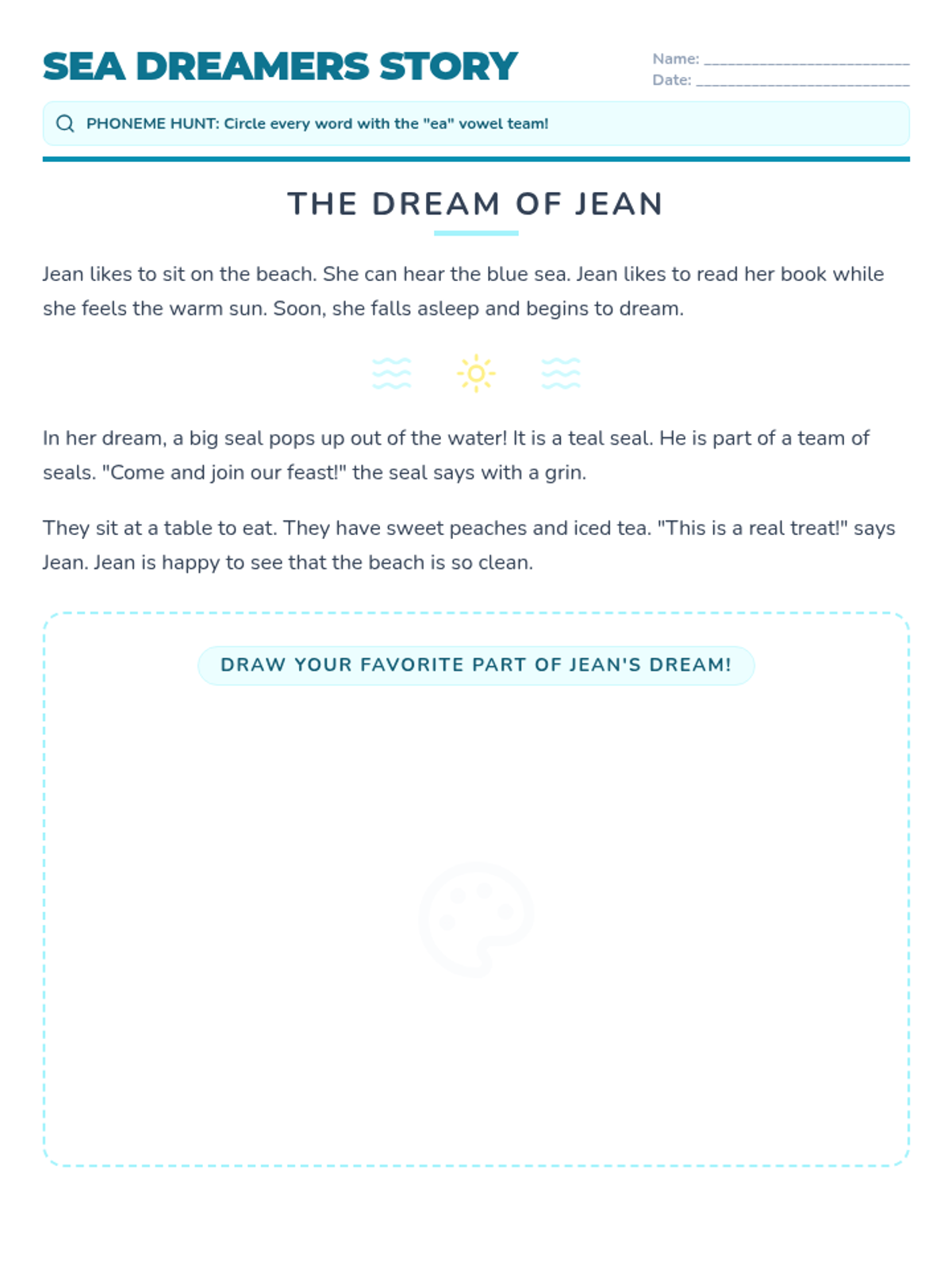
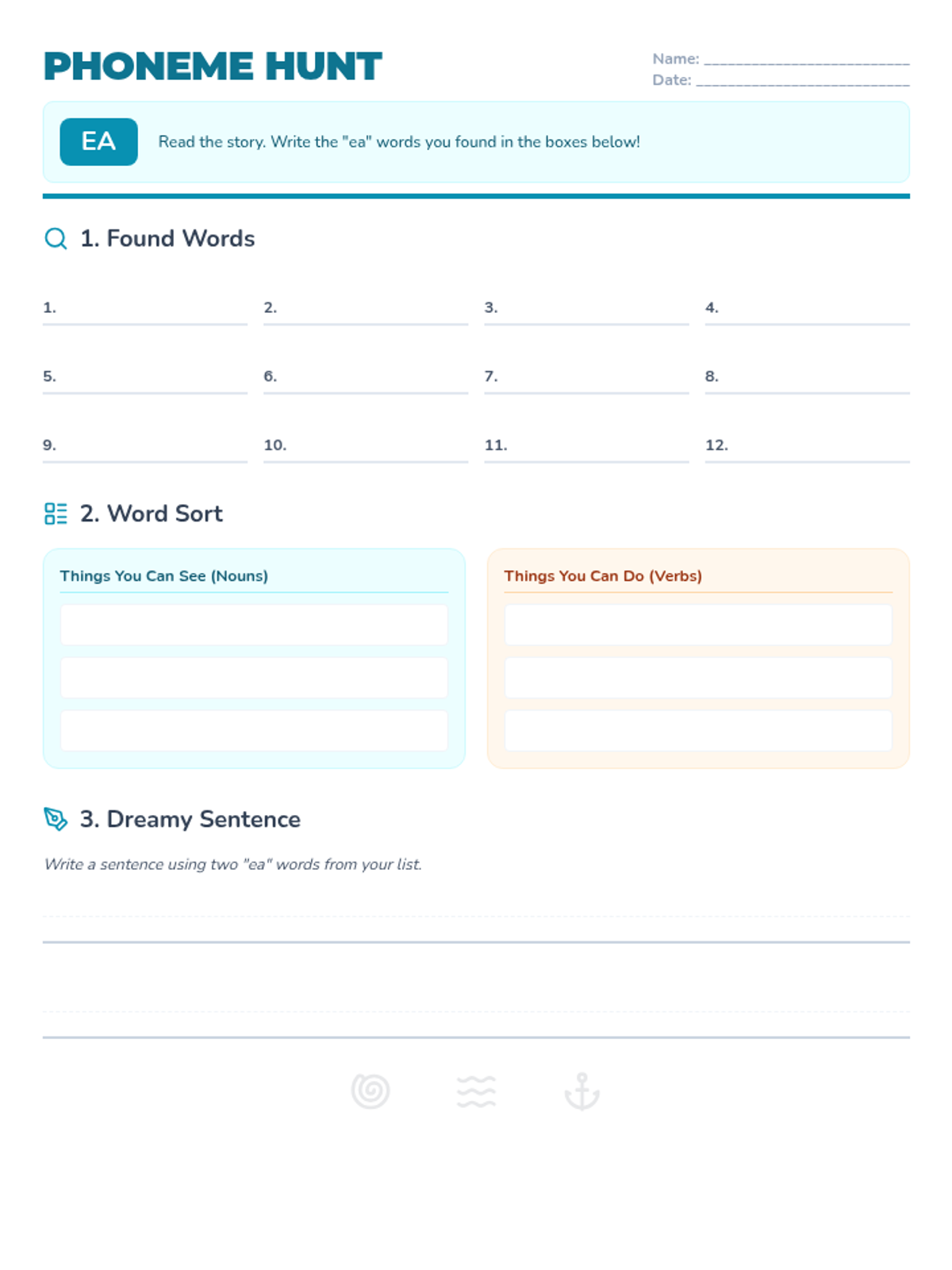
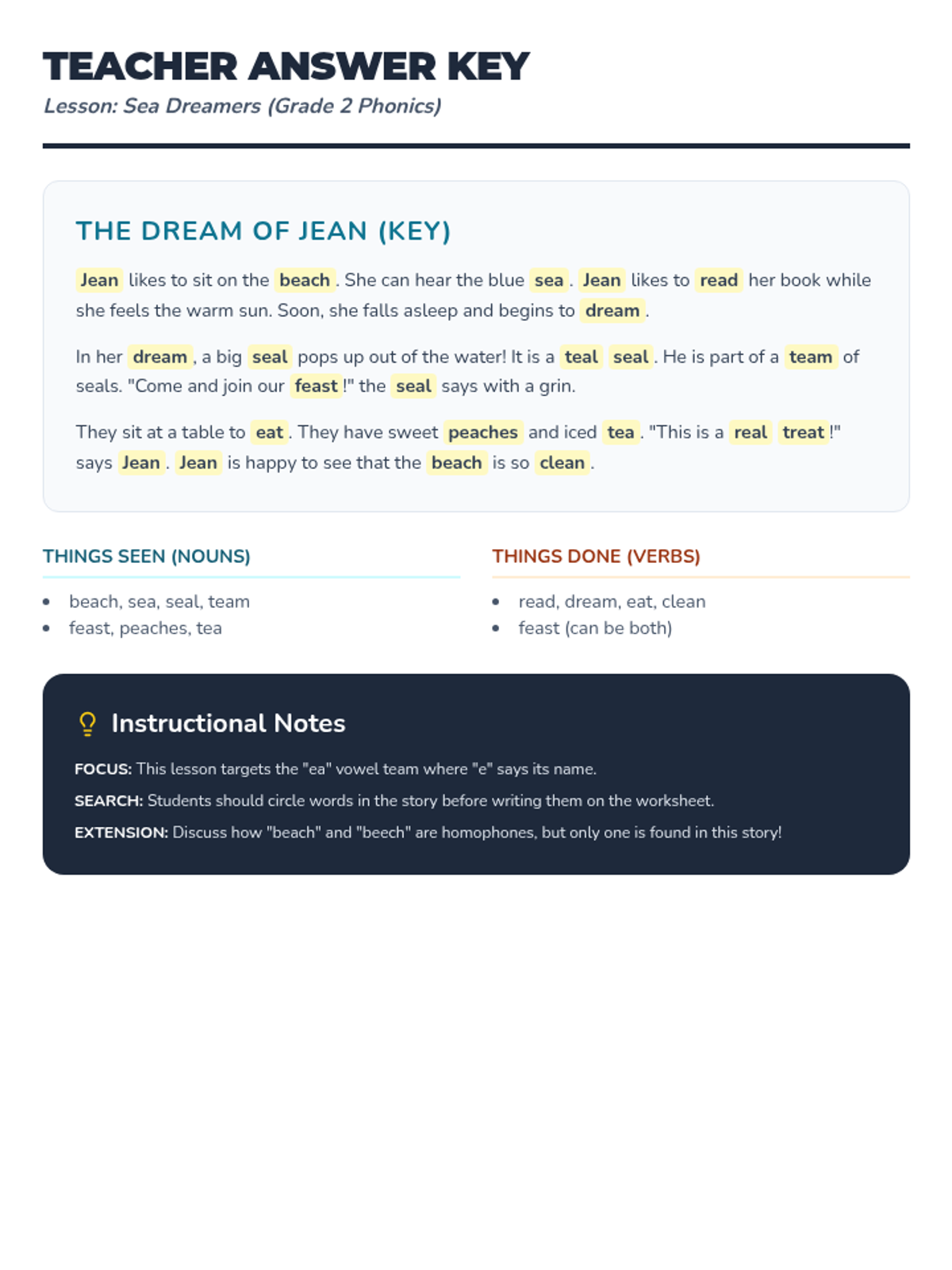
A Grade 2 phonics lesson focusing on the 'ea' vowel team (long e sound) through an engaging coastal-themed story and word-hunting activities.
A collaborative "Pairs Compare" activity where students work in teams of four to share keywords, locate evidence, and synthesize final answers on index cards.