Lenny.com
Explore
Create
ActivitiesNewMathEnglish Language ArtsScience & EngineeringSocial StudiesGlobal LanguagesHealth & Physical EducationSpecial EducationCounseling & Life SkillsArts & CreativityESL
Lenny.com
Lenny.com
Explore
Create
ActivitiesNewMathEnglish Language ArtsScience & EngineeringSocial StudiesGlobal LanguagesHealth & Physical EducationSpecial EducationCounseling & Life SkillsArts & CreativityESL
Lenny.com
Lenny.com

Solutions

Lenny for EducatorsLenny for SchoolsLenny for Districts

Product

ExploreSign inCreateSupportAbout

Resources

Getting startedMTSS Acceleration Program

© 2026 Lenny Learning Inc.

TermsPrivacyAccessibility
LinkedInInstagramX
Lenny

Measure and Estimate Lengths in Standard Units

Selection and use of standard measuring tools including rulers, yardsticks, and meter sticks. Develops skills in estimating and accurately measuring lengths in both customary and metric systems.

MathNumbers & CountingCounting ObjectsNumber NamesComparing NumbersNumber OperationsCounting SequenceNumbers 0-10Place Value Understanding and SystemAdd and Subtract Within 20Addition and Subtraction ConceptsAddition and Subtraction EquationsAddition and Subtraction ProblemsFoundations for MultiplicationMultiplication and Division PropertiesMultiply and Divide Within 100Multiplication and Division ProblemsFactors and MultiplesProperties of OperationsPatterns and RelationshipsGenerate and Analyze PatternsMulti-Digit ArithmeticPlace Value OperationsMulti-Digit and Decimal OperationsNumerical ExpressionsFour Operations and PatternsFour Operations Problem SolvingMeasurement & DataMeasurable AttributesMeasuring LengthsMeasure and Estimate Lengths in Standard UnitsRelate Addition and Subtraction to LengthClassifying and Counting ObjectsTime and MoneyArea Concepts and MeasurementPerimeter and Area MeasuresAngle Concepts and MeasurementTime, Volume, and MassMeasurement Unit ConversionsGeometryIdentifying ShapesShapes and AttributesShape Attributes and ReasoningShapes and CompositionClassifying 2D FiguresGeometric Figures and RelationshipsLines, Angles, and ShapesAngle, Area, and VolumeGeometric MeasurementVolume of 3D ShapesCoordinate Plane ApplicationsTransformations in the PlaneCongruence and SimilarityUnderstand congruence in terms of rigid motionsSimilarity and TransformationsProve Theorems Involving SimilarityPythagorean TheoremTrigonometry for General TrianglesMake Geometric ConstructionsProve Geometric TheoremsTheorems About CirclesFind Arc Lengths And Areas of Sectors of CirclesVolume FormulasRelationships Between Two-Dimensional and Three-Dimensional ObjectsProve Simple Geometric Theorems AlgebraicallyTranslate Between Geometric Description and Equation for Conic SectionApply Geometric Concepts in Modeling SituationsFractions & DecimalsFractions as NumbersBuilding FractionsFraction Equivalence and OrderingAdding and Subtracting FractionsMultiplying and Dividing FractionsDividing FractionsDecimal FractionsMulti-Digit Computation and FactorsAdd, Subtract, Multiply, and Divide Rational NumbersRational Number SystemIrrational Numbers and ApproximationsRatiosRatios and ProportionsProportional RelationshipsUnit RateAlgebraAlgebraic ExpressionsGenerate Equivalent ExpressionsQuantitative RelationshipsProportional Relationships and Linear EquationsEquations and InequalitiesEquation Solving and ReasoningLinear Equations and SystemsGraph Equations and InequalitiesSystems of EquationsReal-World Algebraic ProblemsQuantitative Reasoning with UnitsExpression StructureEquivalent Expression FormsRadicals and Integer ExponentsRational ExponentsRational and Irrational NumbersPolynomial OperationsPolynomial IdentitiesPolynomial Zeros and FactorsRational ExpressionsComplex Number OperationsComplex Numbers in PolynomialsComplex Numbers on PlaneStatistics & ProbabilityRepresent and Interpret DataData DistributionsStatistical VariabilityProbability ModelsCompound Event ProbabilitiesStatistical SamplingInterpret Categorical and Quantitative DataBivariate Data PatternsInterpret Linear ModelsComparing Two PopulationsRandom Processes in StatisticsIndependence and Conditional ProbabilityExpected ValuesProbability-Based Decision MakingStatistical Inference and ConclusionsFunctionsFunction Concepts and NotationDefine and Compare FunctionsInterpret Functions in ContextAnalyze Function RepresentationsModel Relationships with FunctionsIdentify Linear vs Exponential GrowthDistinguish Between Function TypesCompare Growth RatesInterpret Function ExpressionsBuild Functions from RelationshipsConstruct and Model FunctionsTransform and Combine FunctionsModel Comparison and SelectionSolve Exponential EquationsTrigonometryTrigonometric Ratios Involving Right TrianglesTrigonometric Functions and Unit CircleModel with Trigonometric FunctionsTrigonometric IdentitiesVectors & MatricesIntroduction to Vectors and MatricesVector QuantitiesVector OperationsMatrix OperationsCalculusLimits and ContinuityDerivative Concepts and NotationDerivative Rules and TechniquesApplications of DerivativesOptimization ProblemsRelated RatesCurve Sketching and AnalysisIntegration Concepts and NotationAntiderivatives and Indefinite IntegralsDefinite Integrals and AreaFundamental Theorem of CalculusIntegration TechniquesApplications of IntegrationDifferential EquationsSequences and SeriesParametric and Polar FunctionsVector-Valued Functions

Videos

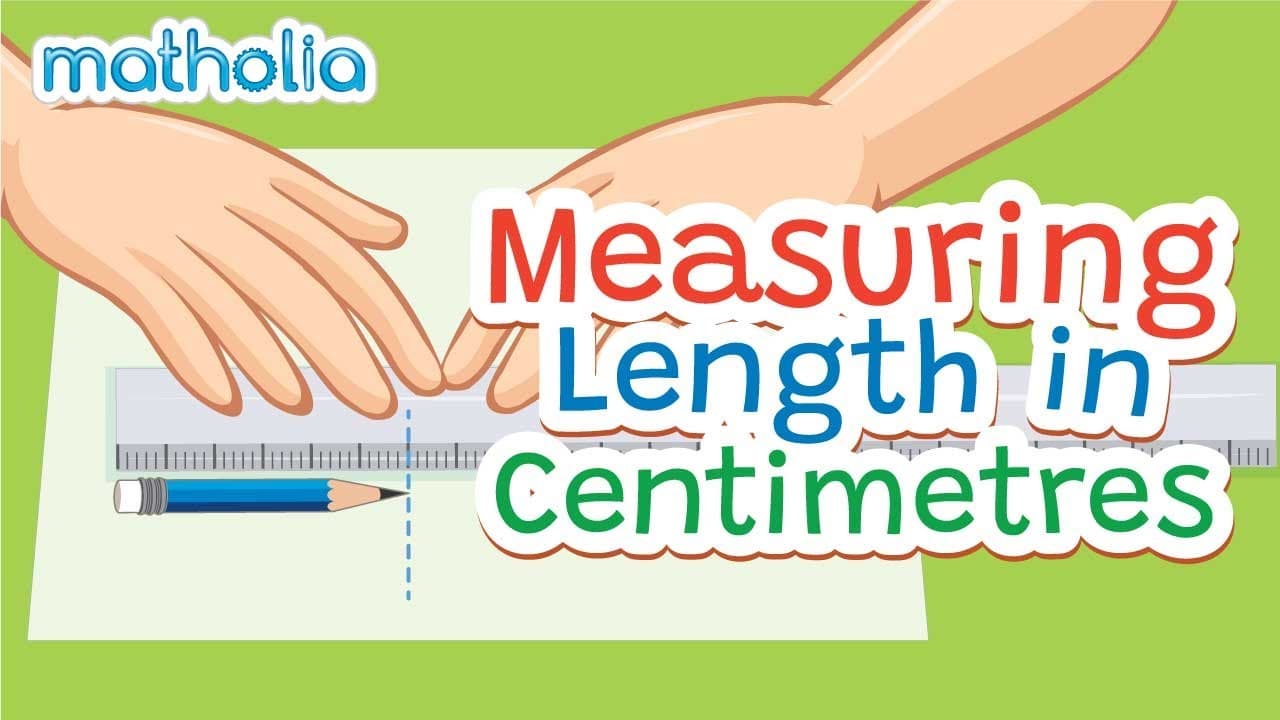
Understanding Centimeters and How to Measure Them

Understanding Centimeters and How to Measure Them

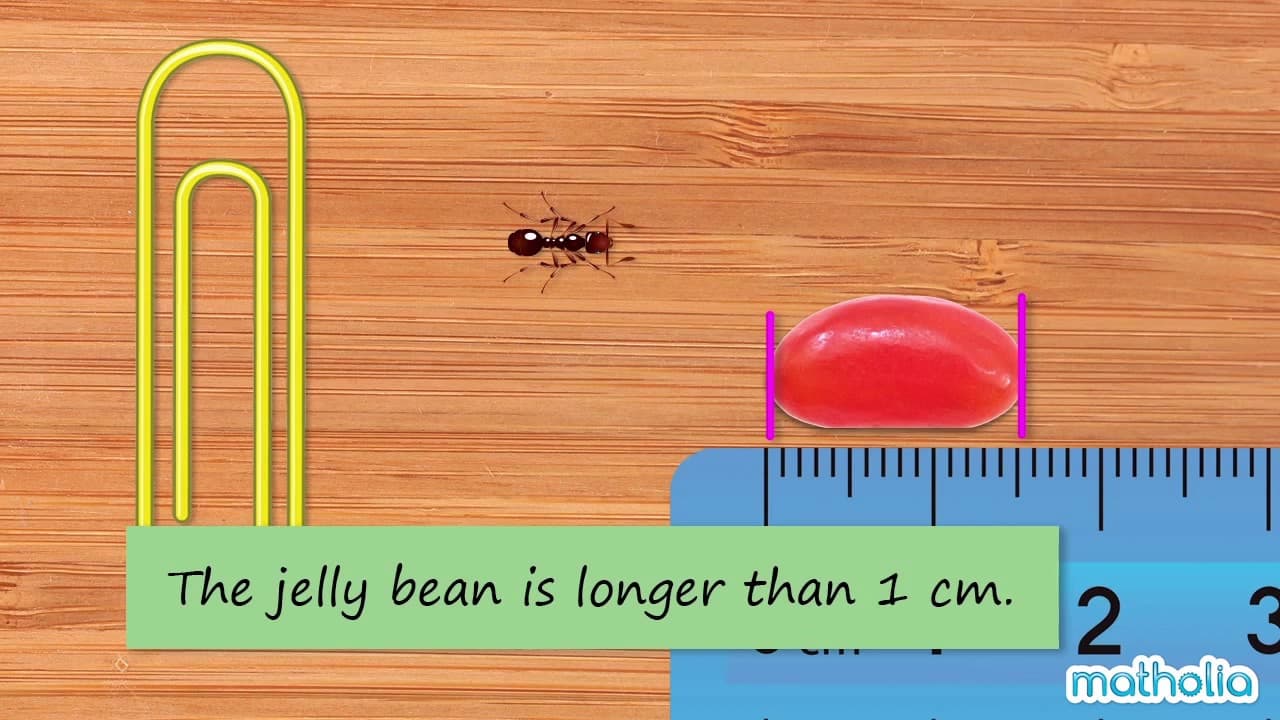
This educational video serves as a clear, visual introduction to the centimeter as a standard unit of measurement. It begins by defining the concept and introducing the ruler as the primary tool for measuring length. The video demonstrates how to write the abbreviation 'cm' and visually highlights the distance of one centimeter on a standard ruler. This foundational knowledge helps students transition from non-standard measurement (like using hand spans) to standard metric units. Key themes include identifying measurement tools, understanding symbols and notation, and comparing lengths. The video uses concrete examples—a paperclip, an ant, and a jelly bean—to illustrate three distinct comparison scenarios: objects that are approximately equal to one centimeter, objects that are shorter, and objects that are longer. This comparative approach helps build spatial reasoning and estimation skills alongside strict measurement techniques. For teachers, this resource is an excellent hook for a measurement unit in early primary grades. Its uncluttered visuals and slow pacing make it ideal for explaining the 'start at zero' concept and demonstrating how to align objects with a ruler. The video supports learning by providing visual models for the abstract concepts of 'shorter than' and 'longer than,' making it a valuable tool for building math vocabulary and conceptual understanding of size.

MatholiaChannelMatholiaChannel

1min 16s

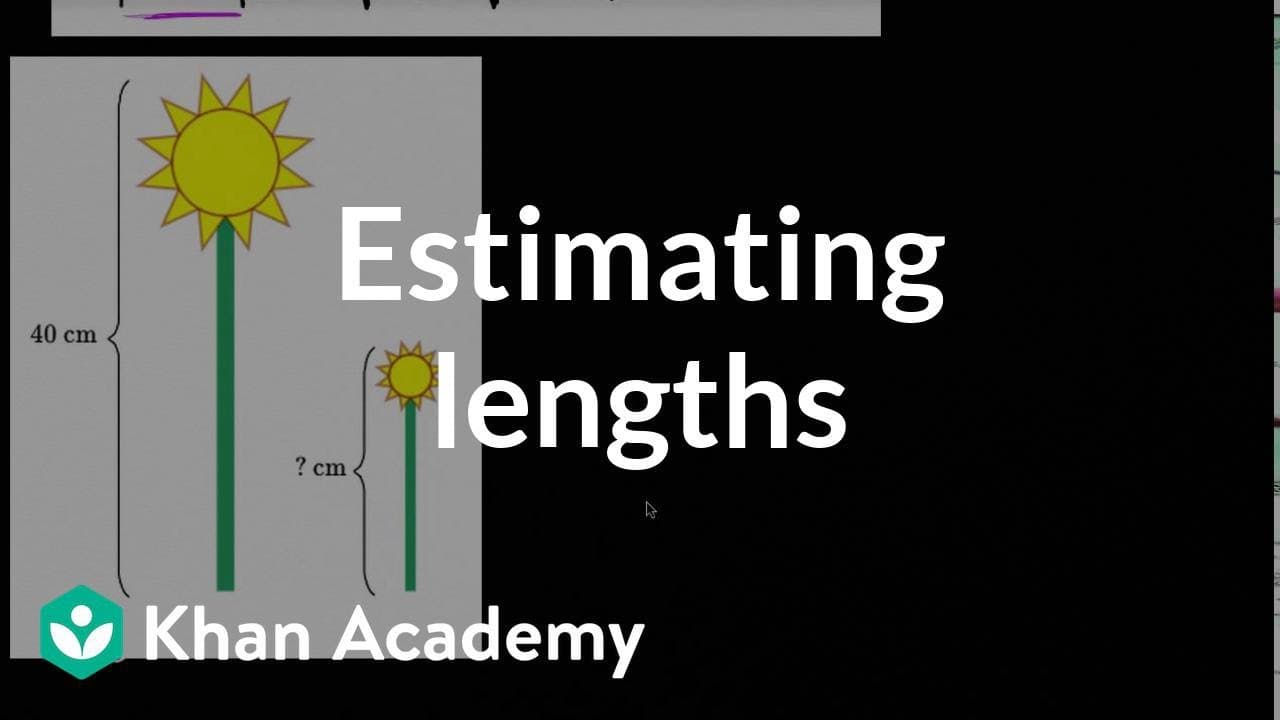
Estimating Lengths Using Reference Units

Estimating Lengths Using Reference Units

This educational video introduces young students to the concept of estimating lengths using visual reference points. The narrator demonstrates two distinct strategies for estimation: iterating a known unit (like an inch) to measure a longer object, and using proportional reasoning (identifying half-measures) to deduce the height of a smaller object based on a larger one. The video utilizes simple, colorful digital illustrations to make abstract measurement concepts concrete and accessible.

Khan AcademyKhan Academy

2mins 2s

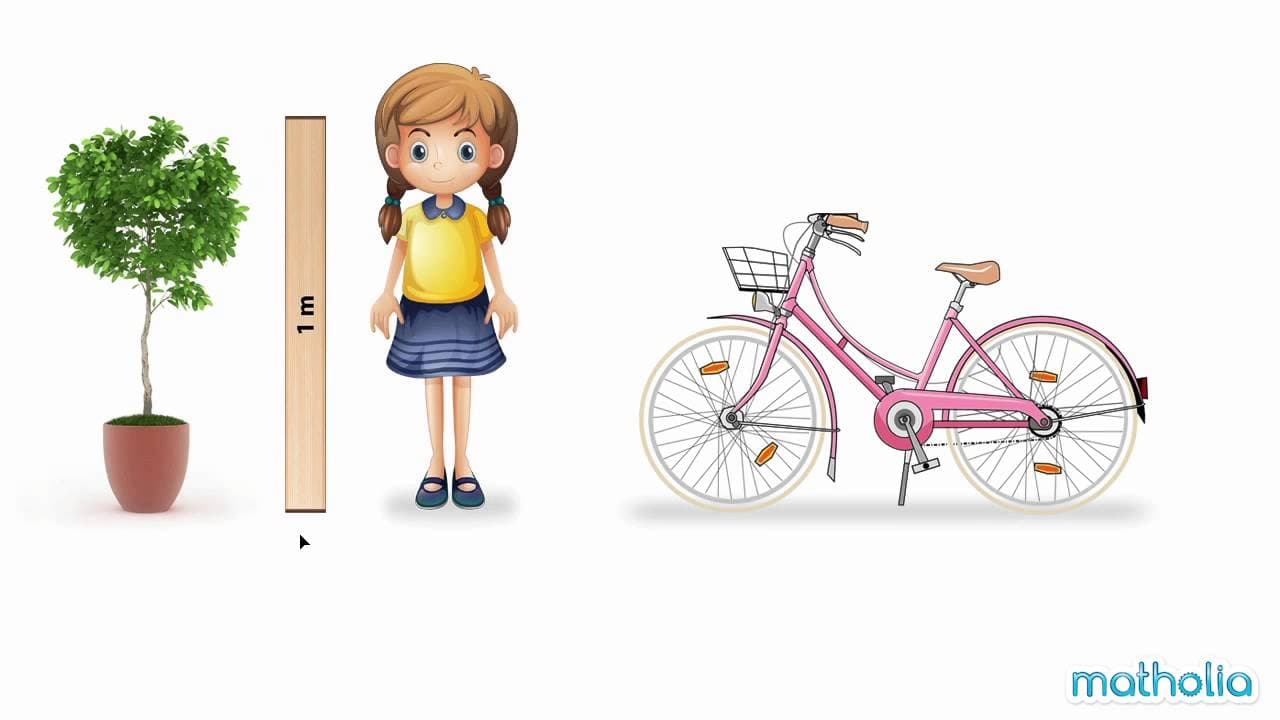
Introduction to Measuring and Comparing Length in Meters

Introduction to Measuring and Comparing Length in Meters

This instructional video serves as a fundamental introduction to the meter (spelled 'metre' in the video) as a standard unit of length. Through clear, simple narration and uncluttered animations, it defines the concept of a meter and demonstrates how it is represented symbolically as '1 m'. The video visualizes the length using a wooden meter ruler, establishing a concrete reference point for young learners who may be transitioning from non-standard units of measurement to standard metric units. The content primarily focuses on the skill of comparison and estimation using a benchmark. Rather than asking students to read complex gradations on a ruler, the video demonstrates how to compare common objects—a potted plant, a child, and a bicycle—against a fixed one-meter reference. It introduces essential comparative vocabulary such as "about," "taller than," and "shorter than," helping students understand that measurement involves relating an object's size to a known standard. For educators, this video provides an excellent visual anchor for introducing metric measurement in early elementary classrooms. It is particularly useful for visual learners who need to see the concept of "one meter" in relation to familiar objects before handling meter sticks themselves. The video can spark classroom activities involving estimation, direct comparison, and the physical usage of meter sticks to categorize classroom items based on their relationship to this unit of length.

MatholiaChannelMatholiaChannel

1min 9s

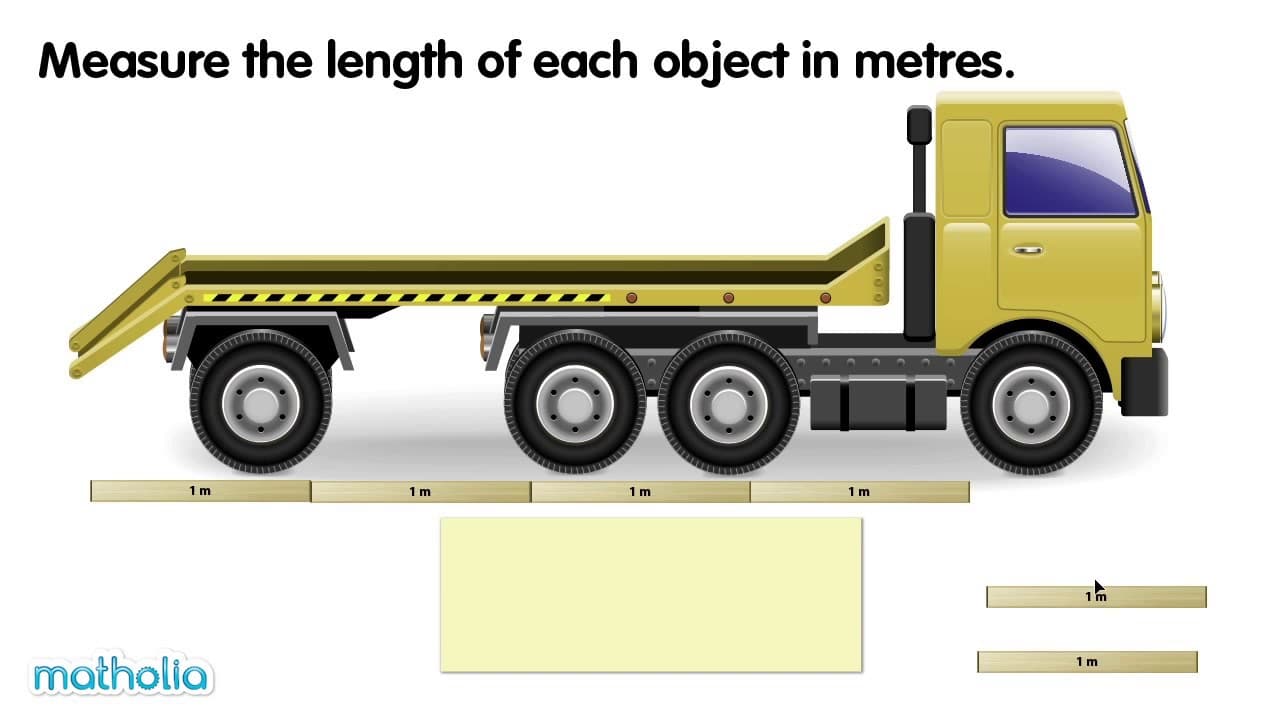
Learning to Measure Length in Meters

Learning to Measure Length in Meters

This educational video introduces young students to the concept of measuring length using meters as a standard unit. Through clear, animated demonstrations, it visualizes how to measure large objects—such as a bed, a sofa, a chest of drawers, and a truck—by placing one-meter rulers end-to-end. The video emphasizes the process of iteration (repeating a unit) to determine total length. The content focuses on key mathematical themes including standard units of measurement, estimation, and counting. It specifically targets the skill of linear measurement and introduces the vocabulary of "meters" (or metres) and the abbreviation "m." The video also subtly introduces the concept of approximation by using the phrase "about [number] meters long," helping students understand that measurement often involves rounding to the nearest whole unit. For teachers, this video serves as an excellent visual hook or modeling tool for early primary math lessons. It effectively bridges the gap between non-standard units (like paper clips or hand spans) and standard metric units. It can be used to spark classroom activities where students create their own meter sticks to measure classroom furniture, playground equipment, or distances, reinforcing spatial reasoning and real-world application of math skills.

MatholiaChannelMatholiaChannel

2mins 1s

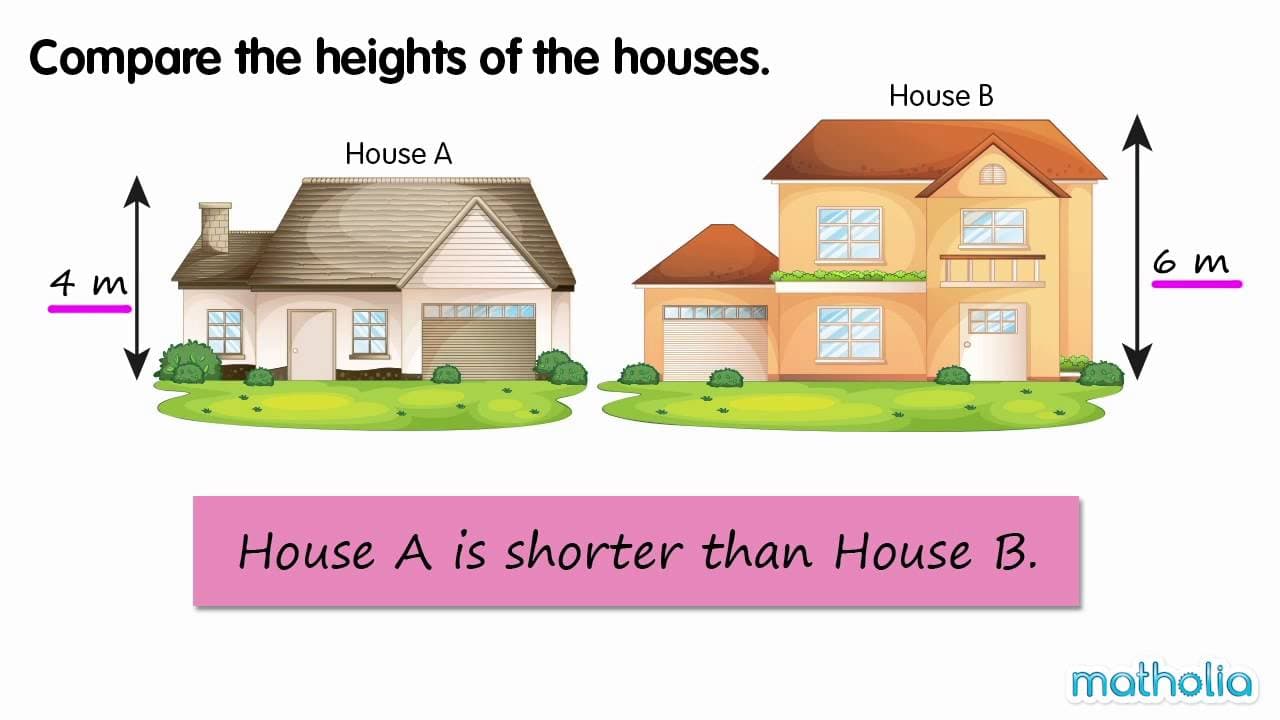
Comparing Lengths and Heights of Objects

Comparing Lengths and Heights of Objects

This educational video provides a clear, step-by-step introduction to comparing the length and height of various objects using both standard measurements and visual comparison. It begins by demonstrating how to use a ruler to measure a pencil and a pen in centimeters, explicitly linking the numerical value to the physical length. The video then transitions to measuring vertical height using two houses labeled with meters, introducing the concepts of "taller" and "shorter" based on comparing numbers. Finally, it presents a non-numerical comparison of three plants to introduce superlative terms like "tallest" and "shortest." The key themes explored include standard measurement units (centimeters and meters), numerical comparison (greater than and less than), and essential comparative vocabulary. The video systematically moves from concrete numerical data to visual estimation, helping students understand the relationship between numbers and physical size attributes. It effectively models the correct usage of comparative adjectives (longer, taller) versus superlative adjectives (tallest, shortest). For educators, this video serves as an excellent hook or reinforcement tool for early elementary math lessons on measurement and data. It provides a visual model for how to align objects with a measuring tool and how to interpret the results. Teachers can use the clear pauses and distinct examples to facilitate classroom discussions about size, practice vocabulary, and set the stage for hands-on measuring activities in the classroom.

MatholiaChannelMatholiaChannel

1min 37s

Measuring and Ordering School Supplies by Length

Measuring and Ordering School Supplies by Length

This animated mathematics video provides a clear, step-by-step demonstration on how to measure the length of common school supplies using a ruler marked in centimeters. Narrated with a calm, clear voice, it guides viewers through the process of aligning objects with a baseline and reading the measurement on a ruler. The video features distinct visual cues, such as dotted lines connecting the object's edge to the ruler's scale, making it easy for young learners to follow along. The core themes explored include standard measurement techniques, specifically using the zero mark correctly, reading integer measurements in centimeters, and comparing object lengths. Additionally, the video covers the concept of ordering data by arranging the measured items from shortest to longest, reinforcing comparative vocabulary and logical sequencing. For educators, this resource serves as an excellent model for introducing measurement tools. It directly addresses common student errors, such as starting measurements at the edge of the ruler rather than the zero mark. The clear visuals allow for interactive pause-and-predict moments in the classroom, where students can read the ruler before the narrator reveals the answer. It lays a solid foundation for hands-on measurement activities and data handling tasks.
MatholiaChannelMatholiaChannel

2mins 1s

Materials

Standards Correlation Guide

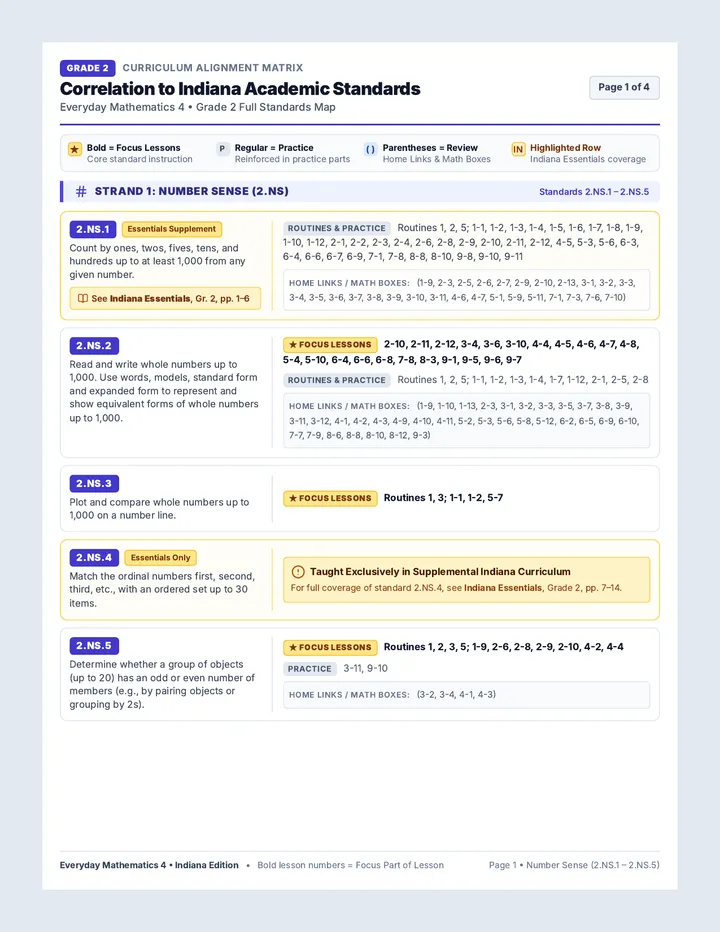
Standards Correlation Guide

A comprehensive, easy-to-follow correlation guide mapping Grade 2 Indiana Academic Standards for Mathematics to Everyday Mathematics 4 lessons, clearly distinguishing Focus lessons, ongoing practice, Math Boxes, and Indiana Essentials supplements.

CG

Cecilia Goh

Sequences

Customary Unit Lab Worksheet

Length Lab Masters

A comprehensive set of measurement resources for 2nd grade students to master inches, feet, centimeters, and meters. Students will practice selecting appropriate units, estimating lengths, and choosing the right tools for various objects.

A

adaniels

10
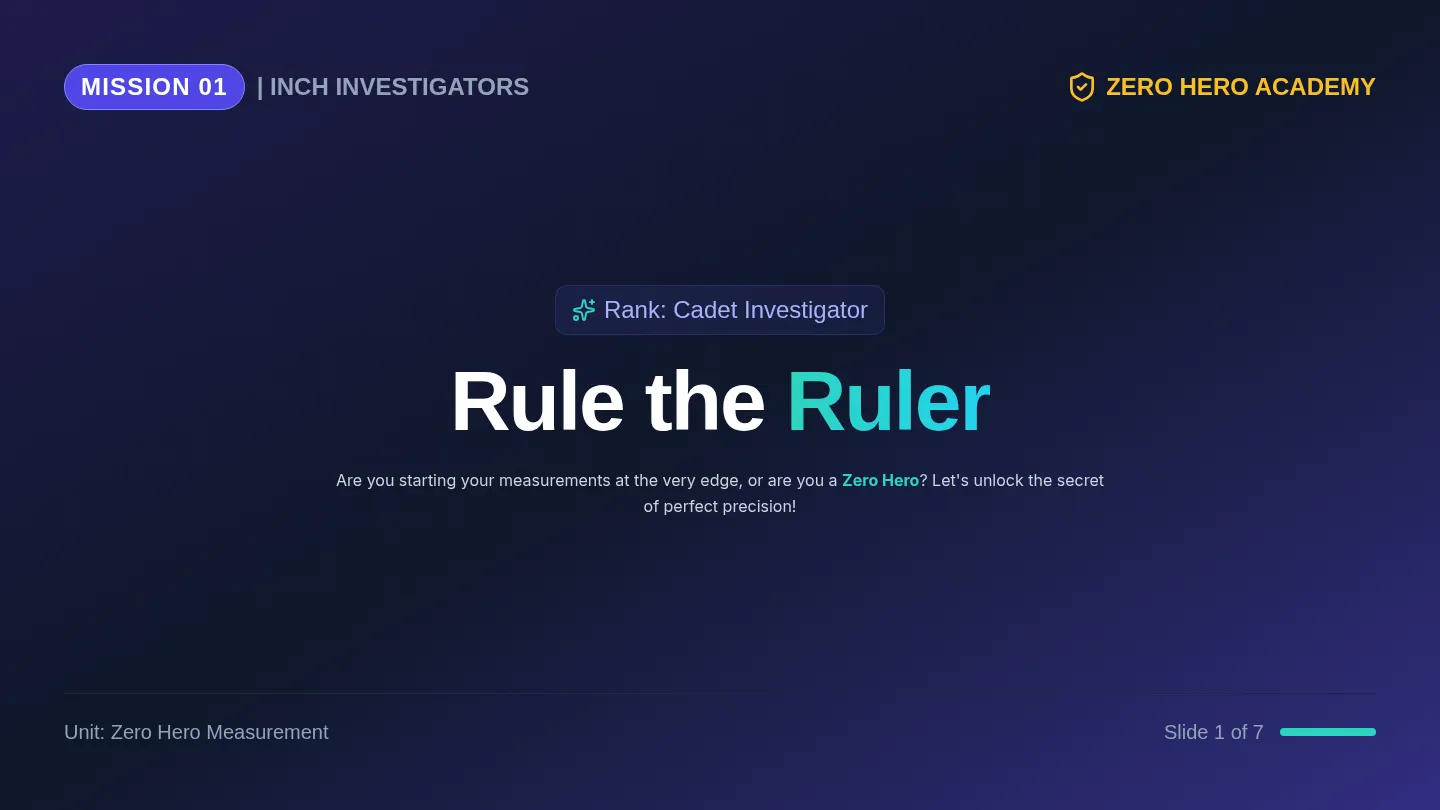
Inch Investigators Slides

Zero Hero Measurement

A two-part measuring adventure where students join the Zero Hero Academy to master measuring in inches and centimeters, with a strong focus on aligning the start of objects with the ruler's zero mark.

A

amber.sisemore

8
Explorer Field Journal

Ruler Raiders

A multi-day measurement adventure where students act as explorers to measure objects across their classroom, school, and outdoor environment to the nearest whole inch.

M

martineza

6
Expedition Leader Guide

Neon Math Explorers

A series of adventurous 3rd-grade math lessons themed around a vibrant 'Neon Jungle', focusing on core arithmetic and data skills through collaborative play and hands-on exploration.

M

martineza

8
Unit 5 Extension Workbook

Multiplicative Comparison and Measurement

A comprehensive unit-long curriculum covering Grade 4, Unit 5 on Multiplicative Comparison and Measurement, focusing on comparing quantities, converting units of measurement, and solving multi-step perimeter problems.

N

nmack

2
Curriculum Scope and Sequence Plan

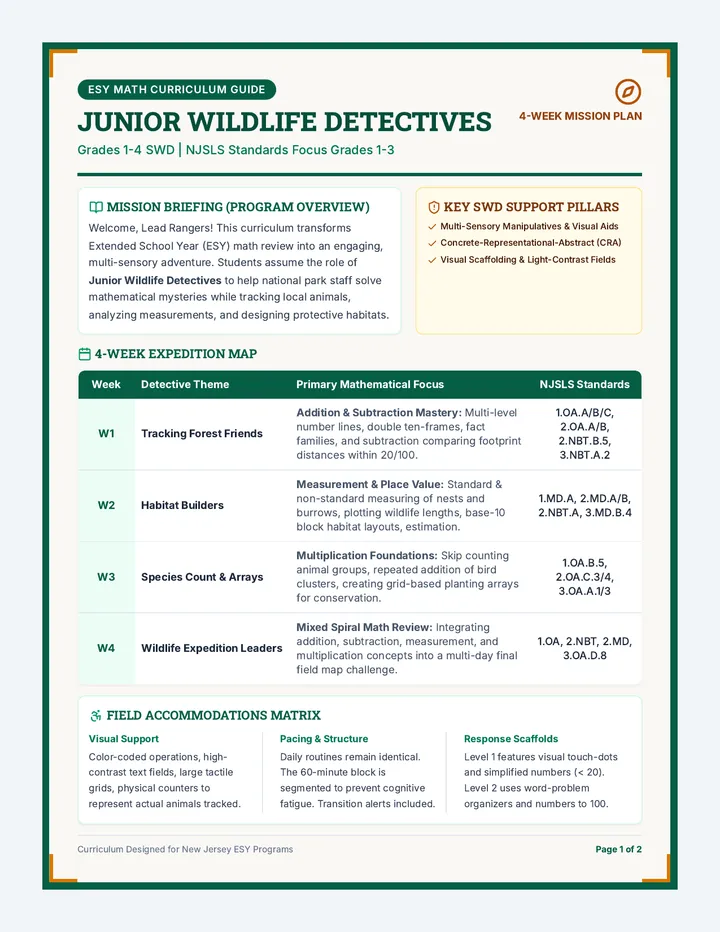
Junior Wildlife Detectives

A 4-week Extended School Year (ESY) Math curriculum for Students with Disabilities (SWD) in grades 1-4. Using an engaging 'Junior Wildlife Detectives' theme, students track animals, measure habitats, and categorize species while mastering addition, subtraction, place value, and multiplication foundations aligned with NJ Student Learning Standards (NJSLS) for grades 1-3.

S

samantha.davis

21

Lessons

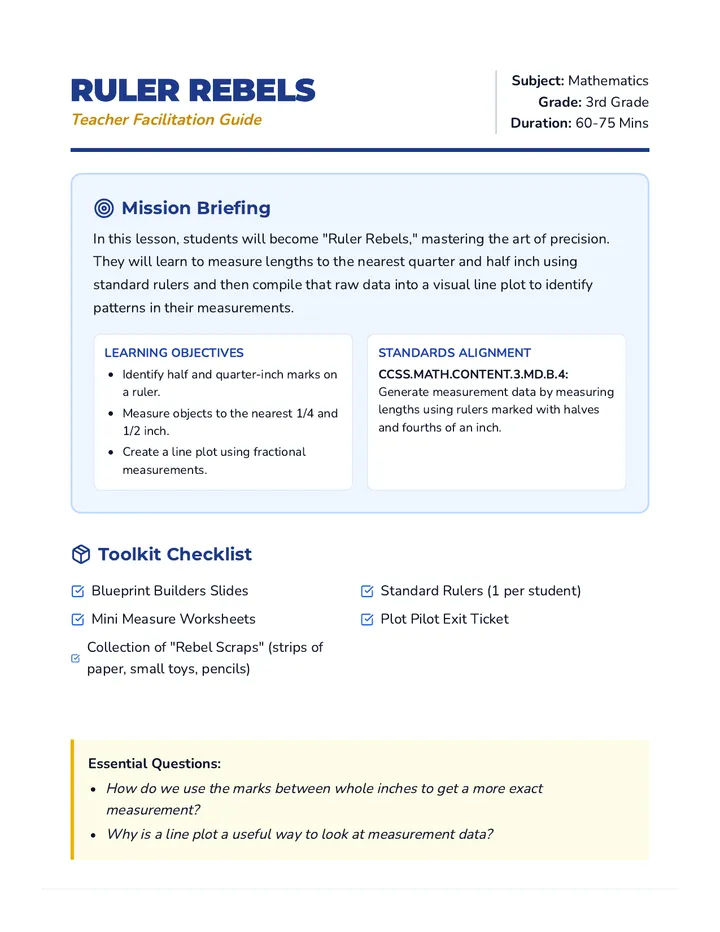
Ruler Rebels Lesson Plan

Ruler Rebels

A comprehensive lesson teaching 3rd-grade students how to measure objects to the nearest half and fourth inch and represent that data on a line plot. Students will transition from hands-on measurement to data visualization.

DP

Deana Padgett

5
Precision Blueprint Slides

Measurement Blueprint

A comprehensive lesson on 3.MD.4 focusing on measuring to the nearest quarter inch and displaying that data on a line plot. Students measure their hand lengths to generate authentic data for analysis.

KB

Krista Bodkin

5
Bubble Lab Facilitator Guide

Bubble Math Lab

An outdoor, hands-on math and science lesson where students use bubble solution to explore measurement, geometric shapes, and counting through guided inquiry and play.

P

powellhuntr

4
Measurement Field Guide Slides

Drafting Board Measurement & Data Review

A precision-focused drafting-themed review of 4th grade Measurement and Data (MD) standards. Covers units and conversions (MD.1), measurement word problems (MD.2), area and perimeter (MD.3), line plots (MD.4), and angle measurement and addition (MD.6-7). Division has been removed from the curriculum.

DG

Debra Golden

18
Measure Up Slides

Measure Up Detectives

A comprehensive 2nd grade measurement lesson covering standard units (inches and centimeters), measuring accurately from zero, estimating lengths, comparing objects, and solving single-step measurement word problems.

A

atrotman

5
Green Thumb Guide Teacher Guide

Green Thumb Lab

A hands-on measurement activity where students measure plant growth specimens, record data, and create a line plot to analyze their findings.

KW

Kristen Watanabe

2