Lenny.com
Explore
Create
ActivitiesNewMathEnglish Language ArtsScience & EngineeringSocial StudiesGlobal LanguagesHealth & Physical EducationSpecial EducationCounseling & Life SkillsArts & CreativityESL
Lenny.com
Lenny.com
Explore
Create
ActivitiesNewMathEnglish Language ArtsScience & EngineeringSocial StudiesGlobal LanguagesHealth & Physical EducationSpecial EducationCounseling & Life SkillsArts & CreativityESL
Lenny.com
Lenny.com

Solutions

Lenny for EducatorsLenny for SchoolsLenny for Districts

Product

ExploreSign inCreateSupportAbout

Resources

Getting startedMTSS Acceleration Program

© 2026 Lenny Learning Inc.

TermsPrivacyAccessibility
LinkedInInstagramX
Lenny

Measurable Attributes

Identification and comparison of length, weight, and capacity through direct observation. Builds foundational vocabulary for describing and ordering objects based on their physical properties.

MathNumbers & CountingCounting ObjectsNumber NamesComparing NumbersNumber OperationsCounting SequenceNumbers 0-10Place Value Understanding and SystemAdd and Subtract Within 20Addition and Subtraction ConceptsAddition and Subtraction EquationsAddition and Subtraction ProblemsFoundations for MultiplicationMultiplication and Division PropertiesMultiply and Divide Within 100Multiplication and Division ProblemsFactors and MultiplesProperties of OperationsPatterns and RelationshipsGenerate and Analyze PatternsMulti-Digit ArithmeticPlace Value OperationsMulti-Digit and Decimal OperationsNumerical ExpressionsFour Operations and PatternsFour Operations Problem SolvingMeasurement & DataMeasurable AttributesMeasuring LengthsMeasure and Estimate Lengths in Standard UnitsRelate Addition and Subtraction to LengthClassifying and Counting ObjectsTime and MoneyArea Concepts and MeasurementPerimeter and Area MeasuresAngle Concepts and MeasurementTime, Volume, and MassMeasurement Unit ConversionsGeometryIdentifying ShapesShapes and AttributesShape Attributes and ReasoningShapes and CompositionClassifying 2D FiguresGeometric Figures and RelationshipsLines, Angles, and ShapesAngle, Area, and VolumeGeometric MeasurementVolume of 3D ShapesCoordinate Plane ApplicationsTransformations in the PlaneCongruence and SimilarityUnderstand congruence in terms of rigid motionsSimilarity and TransformationsProve Theorems Involving SimilarityPythagorean TheoremTrigonometry for General TrianglesMake Geometric ConstructionsProve Geometric TheoremsTheorems About CirclesFind Arc Lengths And Areas of Sectors of CirclesVolume FormulasRelationships Between Two-Dimensional and Three-Dimensional ObjectsProve Simple Geometric Theorems AlgebraicallyTranslate Between Geometric Description and Equation for Conic SectionApply Geometric Concepts in Modeling SituationsFractions & DecimalsFractions as NumbersBuilding FractionsFraction Equivalence and OrderingAdding and Subtracting FractionsMultiplying and Dividing FractionsDividing FractionsDecimal FractionsMulti-Digit Computation and FactorsAdd, Subtract, Multiply, and Divide Rational NumbersRational Number SystemIrrational Numbers and ApproximationsRatiosRatios and ProportionsProportional RelationshipsUnit RateAlgebraAlgebraic ExpressionsGenerate Equivalent ExpressionsQuantitative RelationshipsProportional Relationships and Linear EquationsEquations and InequalitiesEquation Solving and ReasoningLinear Equations and SystemsGraph Equations and InequalitiesSystems of EquationsReal-World Algebraic ProblemsQuantitative Reasoning with UnitsExpression StructureEquivalent Expression FormsRadicals and Integer ExponentsRational ExponentsRational and Irrational NumbersPolynomial OperationsPolynomial IdentitiesPolynomial Zeros and FactorsRational ExpressionsComplex Number OperationsComplex Numbers in PolynomialsComplex Numbers on PlaneStatistics & ProbabilityRepresent and Interpret DataData DistributionsStatistical VariabilityProbability ModelsCompound Event ProbabilitiesStatistical SamplingInterpret Categorical and Quantitative DataBivariate Data PatternsInterpret Linear ModelsComparing Two PopulationsRandom Processes in StatisticsIndependence and Conditional ProbabilityExpected ValuesProbability-Based Decision MakingStatistical Inference and ConclusionsFunctionsFunction Concepts and NotationDefine and Compare FunctionsInterpret Functions in ContextAnalyze Function RepresentationsModel Relationships with FunctionsIdentify Linear vs Exponential GrowthDistinguish Between Function TypesCompare Growth RatesInterpret Function ExpressionsBuild Functions from RelationshipsConstruct and Model FunctionsTransform and Combine FunctionsModel Comparison and SelectionSolve Exponential EquationsTrigonometryTrigonometric Ratios Involving Right TrianglesTrigonometric Functions and Unit CircleModel with Trigonometric FunctionsTrigonometric IdentitiesVectors & MatricesIntroduction to Vectors and MatricesVector QuantitiesVector OperationsMatrix OperationsCalculusLimits and ContinuityDerivative Concepts and NotationDerivative Rules and TechniquesApplications of DerivativesOptimization ProblemsRelated RatesCurve Sketching and AnalysisIntegration Concepts and NotationAntiderivatives and Indefinite IntegralsDefinite Integrals and AreaFundamental Theorem of CalculusIntegration TechniquesApplications of IntegrationDifferential EquationsSequences and SeriesParametric and Polar FunctionsVector-Valued Functions

Videos

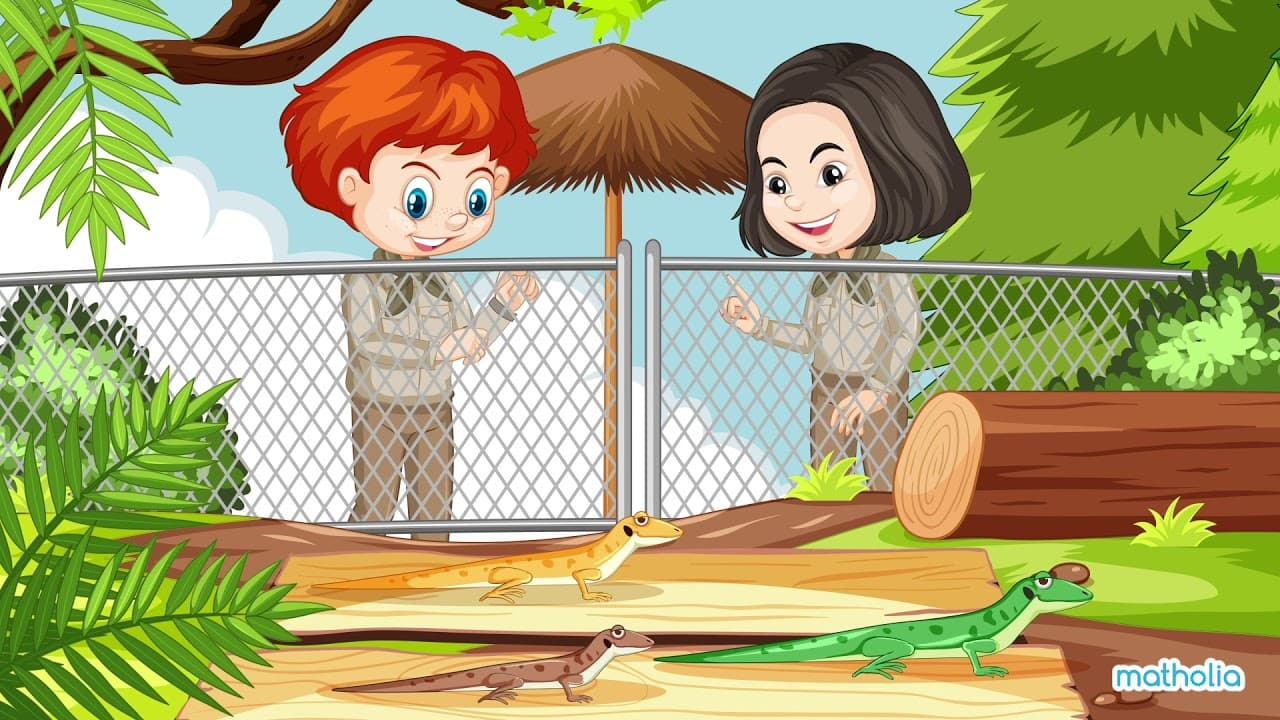
Comparing Lengths at the Zoo: Longer, Shorter, Longest, and Shortest

Comparing Lengths at the Zoo: Longer, Shorter, Longest, and Shortest

This animated math video introduces young learners to the concepts of comparing lengths through a fun visit to a zoo reptile park. Follow characters Michelle and Wyatt as they observe various reptiles—snakes, crocodiles, and lizards—and determine which animals are longer, shorter, longest, or shortest. The video uses clear visual aids, such as dotted alignment lines, to demonstrate how to properly compare objects by lining up their endpoints. The content focuses on core early measurement vocabulary, specifically comparative adjectives (longer, shorter) and superlative adjectives (longest, shortest). By progressing from comparing two items to ordering three items, the video scaffolds learning in a developmentally appropriate way for early childhood education. It visualizes abstract concepts of measurement using concrete, engaging animal examples that capture children's interest. For educators, this video serves as an excellent hook for a unit on measurement and data. It provides a visual model for direct comparison, a foundational skill that precedes using non-standard or standard units of measure. Teachers can use the pause points where questions are asked to facilitate class discussion, allowing students to predict answers before the visual proof is shown, thereby encouraging active participation and critical thinking.
MatholiaChannelMatholiaChannel

2mins 9s

Comparing and Ordering Liquid Volume

Comparing and Ordering Liquid Volume

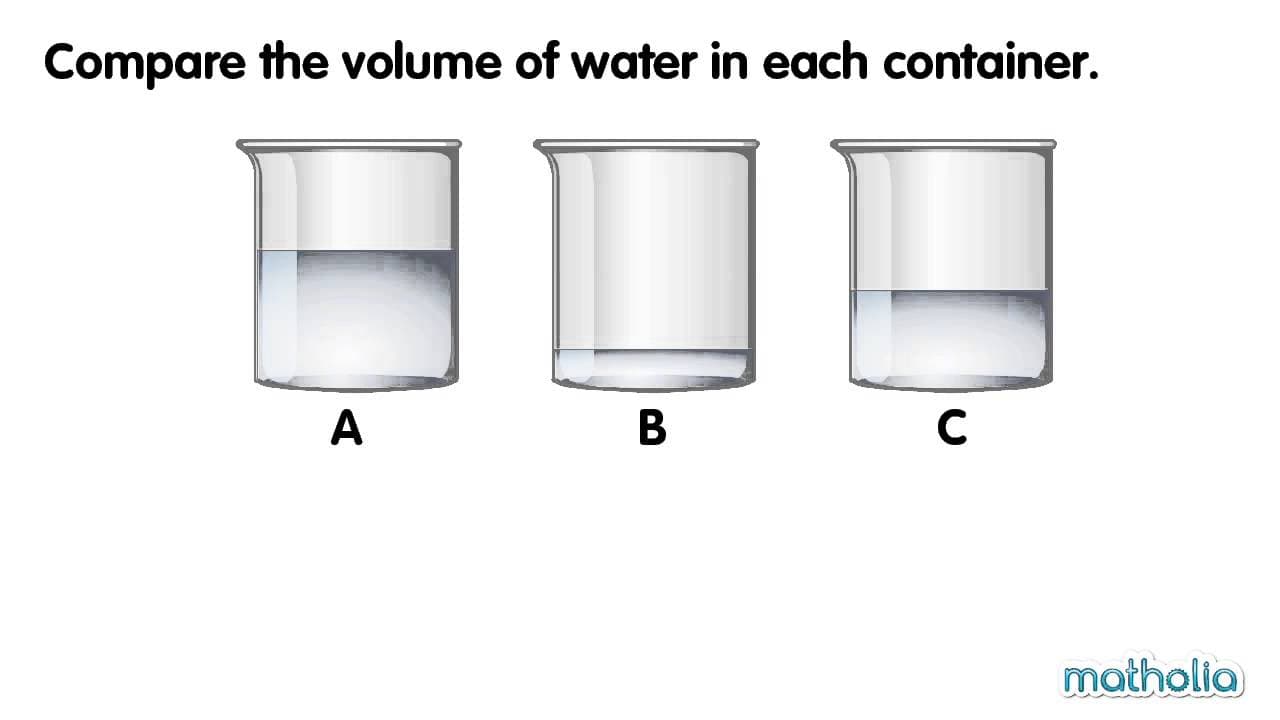
This educational video introduces early learners to the concept of volume by comparing liquid levels in identical containers. Using clear animations and simple narration, it guides students through the process of observing water levels to determine which container holds more or less liquid. The video progresses from comparing two containers using the terms "greater than" and "smaller than" to comparing three containers using superlatives like "greatest" and "smallest." The content specifically focuses on measurement vocabulary and the skill of ordering objects based on measurable attributes. It emphasizes the importance of controlling variables by repeatedly stating that the containers are the same size, allowing students to focus solely on the water level as the indicator of volume. The visual cues, such as blue lines marking the water levels, help reinforce the connection between height and volume in uniform containers. This resource is highly valuable for early elementary math classrooms as a visual anchor for lessons on measurement and capacity. It provides a clear, distraction-free model for comparing volume that can be easily replicated with real classroom materials. Teachers can use this video to introduce vocabulary before a hands-on water table activity or as a review tool to check understanding of ordering concepts.

MatholiaChannelMatholiaChannel

2mins 20s

Introduction to Measuring and Comparing Length in Meters

Introduction to Measuring and Comparing Length in Meters

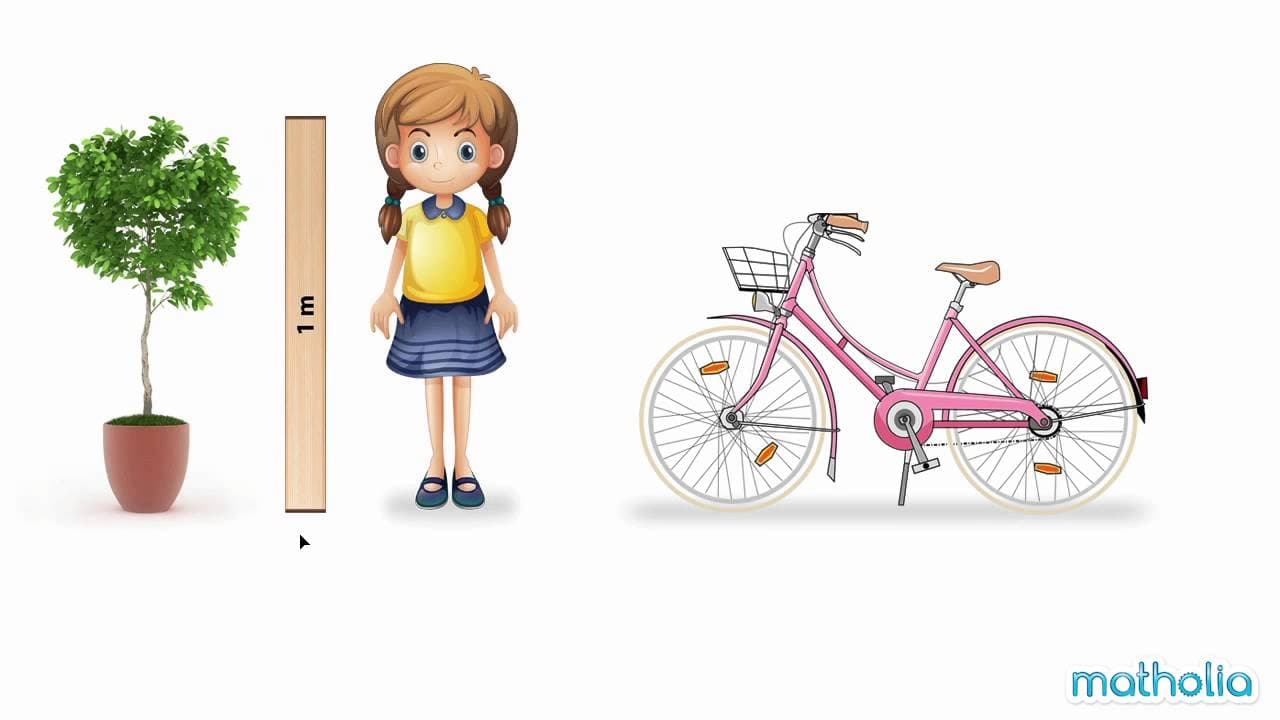
This instructional video serves as a fundamental introduction to the meter (spelled 'metre' in the video) as a standard unit of length. Through clear, simple narration and uncluttered animations, it defines the concept of a meter and demonstrates how it is represented symbolically as '1 m'. The video visualizes the length using a wooden meter ruler, establishing a concrete reference point for young learners who may be transitioning from non-standard units of measurement to standard metric units. The content primarily focuses on the skill of comparison and estimation using a benchmark. Rather than asking students to read complex gradations on a ruler, the video demonstrates how to compare common objects—a potted plant, a child, and a bicycle—against a fixed one-meter reference. It introduces essential comparative vocabulary such as "about," "taller than," and "shorter than," helping students understand that measurement involves relating an object's size to a known standard. For educators, this video provides an excellent visual anchor for introducing metric measurement in early elementary classrooms. It is particularly useful for visual learners who need to see the concept of "one meter" in relation to familiar objects before handling meter sticks themselves. The video can spark classroom activities involving estimation, direct comparison, and the physical usage of meter sticks to categorize classroom items based on their relationship to this unit of length.

MatholiaChannelMatholiaChannel

1min 9s

Comparing Lengths: Longer, Shorter, and Differences

Comparing Lengths: Longer, Shorter, and Differences

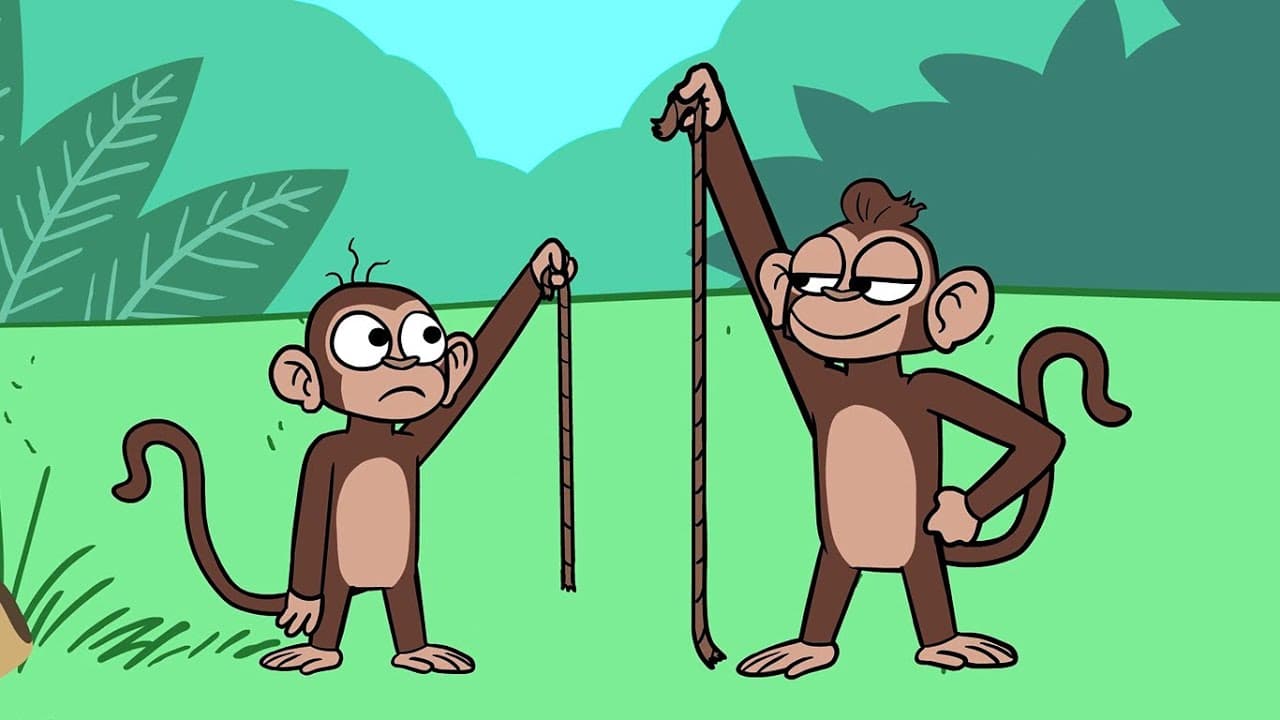
This animated musical video introduces early elementary students to the concepts of measurement, comparison, and simple arithmetic operations using length. Through a catchy song featuring two monkeys, Tico and Mario, viewers learn how to compare objects to determine which is longer or shorter, and how to calculate the specific difference between two lengths using a number line visual model. The video explores key themes of measurement in feet and inches, comparing quantities (longer/shorter), subtraction to find the difference, and addition to find the total length. It systematically breaks down word problems by visually placing objects against a ruler or number line, making abstract math concepts concrete and accessible. This resource is highly valuable for introducing or reinforcing measurement standards in the classroom. The clear visual representations of subtraction as the 'difference' between two lengths on a number line provide a strong conceptual foundation. Teachers can use this video to transition students from simple direct comparison (visual inspection) to quantitative comparison (using numbers and subtraction) and finally to combining lengths (addition).

Math Songs by NUMBEROCKMath Songs by NUMBEROCK

3mins 3s

Comparing Length and Height: Longer, Shorter, Taller

Comparing Length and Height: Longer, Shorter, Taller

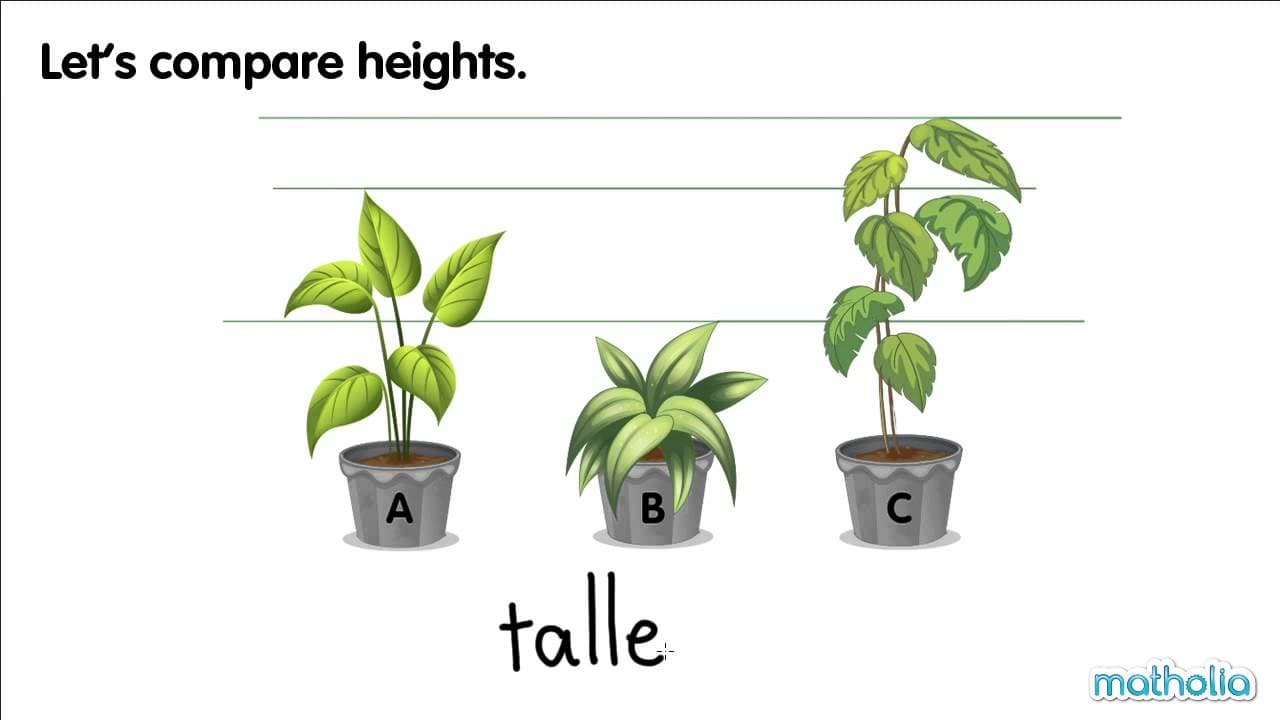
This educational video introduces early learners to the fundamental concepts of comparing length and height using clear, animated examples. Through three distinct scenarios—pencils, potted plants, and ropes—the narrator demonstrates how to visually compare objects to determine which are longer, shorter, taller, or the same size. The video explicitly models the use of starting lines and guidelines to ensure accurate comparisons, a critical skill in early measurement. The content focuses on building essential measurement vocabulary, moving from basic comparatives (longer, shorter, taller) to superlatives (longest, shortest, tallest). It also introduces the concept of equality in measurement with the phrase "as long as." Each concept is reinforced with on-screen text and visual highlights that clearly demarcate the start and end points of the objects being measured. For educators, this video serves as an excellent hook or direct instruction tool for Kindergarten and 1st-grade math lessons on measurement and data. It provides a visual anchor for understanding why we line objects up to compare them and helps students grasp the difference between height (vertical) and length (horizontal). The clear pacing allows for pause-and-discuss moments where students can predict outcomes before the answer is revealed.

MatholiaChannelMatholiaChannel

3mins 3s

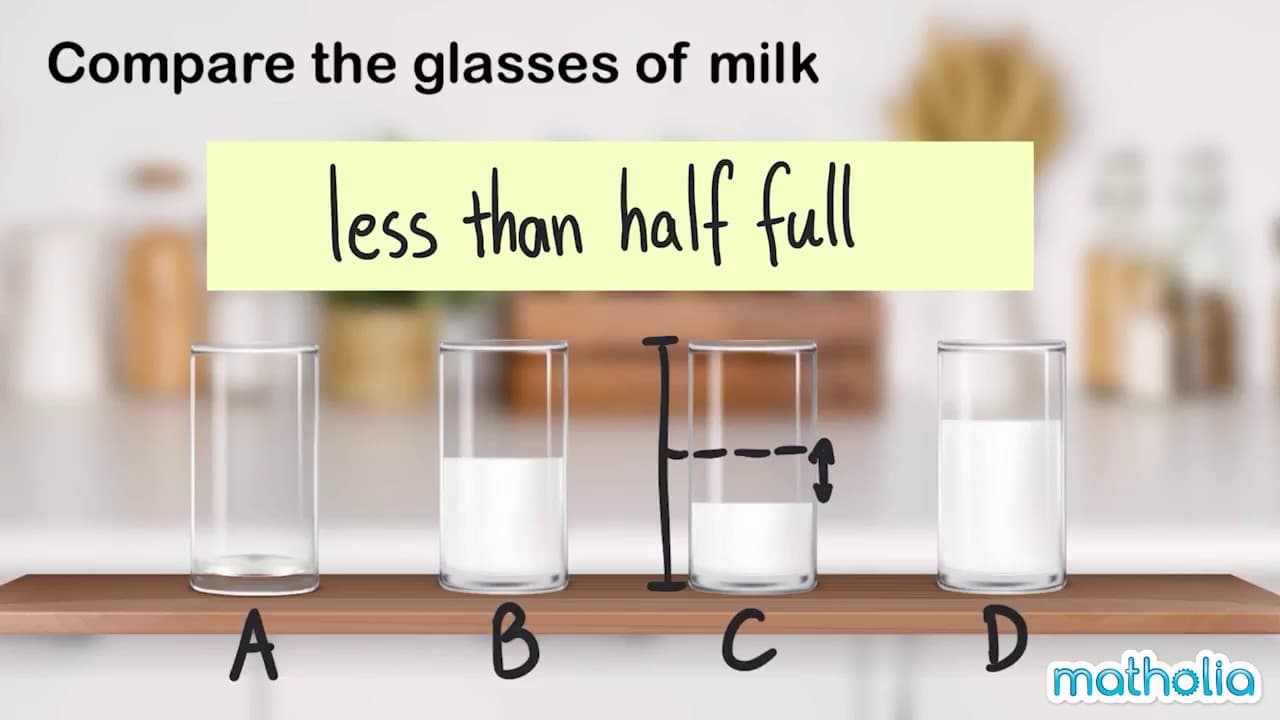
Comparing Volume: Empty, Half Full, and More

Comparing Volume: Empty, Half Full, and More

This animated math lesson introduces early elementary students to the concepts of volume and capacity through a clear, visual comparison of four glasses of milk. The video methodically steps through comparative vocabulary, using a standard cylindrical glass as a constant unit to demonstrate varying levels of liquid. By establishing "half full" as a benchmark, the narration helps students understand relative comparisons like "more than" and "less than." The core themes focus on measurement, estimation, and mathematical vocabulary. It bridges the gap between simple binary states (empty vs. full) and more nuanced estimation (halfway, below halfway, above halfway). The video provides a visual scaffold by explicitly drawing a line to mark the halfway point, helping students visualize the reference point needed to make accurate comparisons. For educators, this resource is an excellent visual anchor for units on measurement or capacity. It is particularly useful for introducing the specific language required to describe volume before moving to standard units like milliliters or ounces. The clear, uncluttered visuals make it accessible for young learners and English Language Learners to grasp the concept of using a benchmark (the halfway line) to estimate volume.

MatholiaChannelMatholiaChannel

1min 14s

Materials

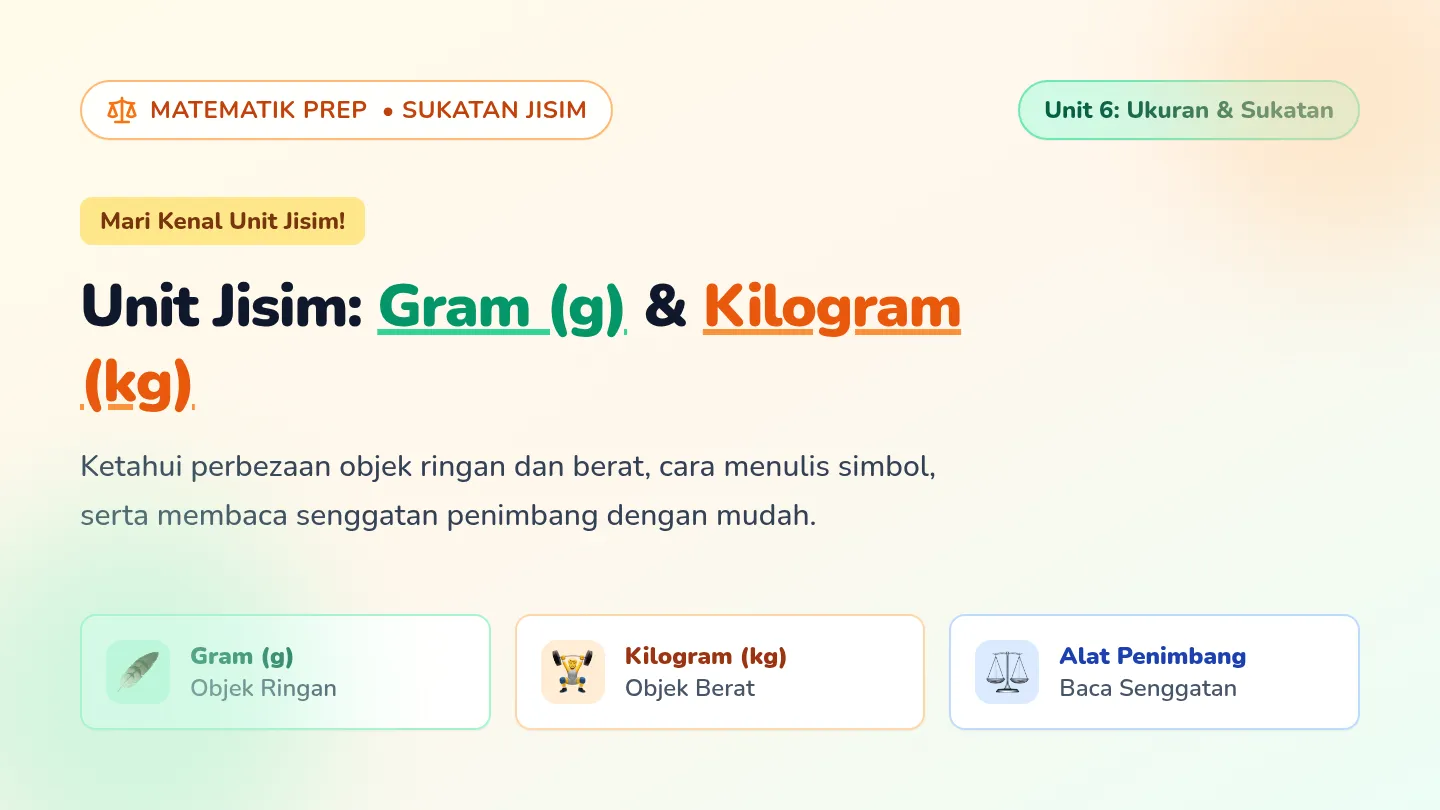
Unit Jisim Ceria Slides

Unit Jisim Ceria Slides

Slide pembentangan interaktif dan visual bagi topik Ukuran Jisim (Gram dan Kilogram) berdasarkan buku teks Matematik Tahun 2, merangkumi pengenalan unit g dan kg, cara penulisan simbol, bacaan senggatan penimbang, dan aktiviti Cuba Jawab.

NM

Nur Mizamuniera Binti Zamzuri

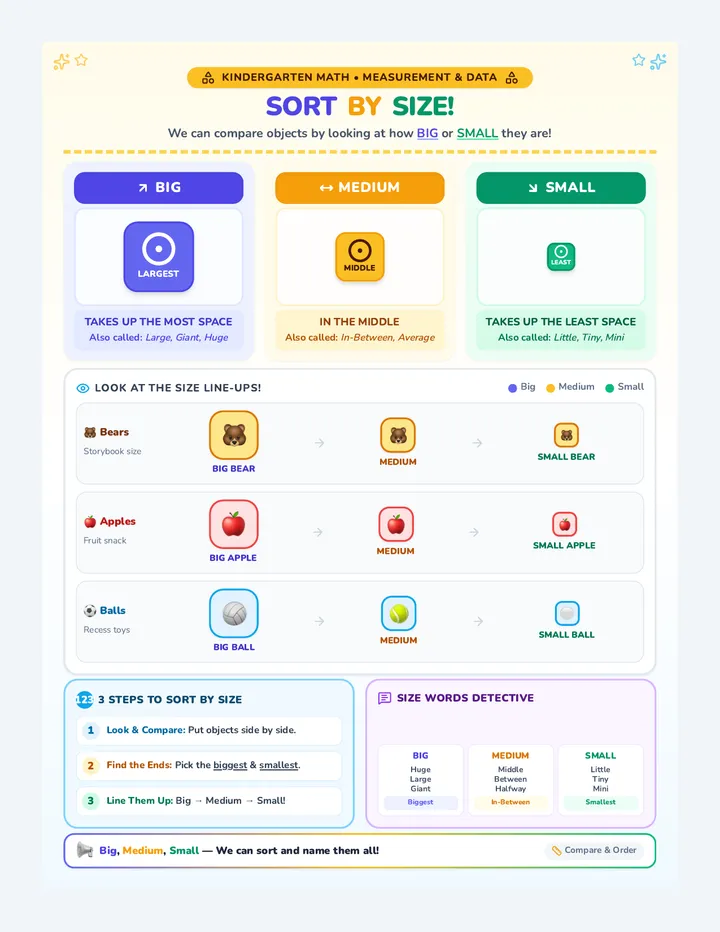
Size Sort Anchor Chart

Size Sort Anchor Chart

A vibrant, printable kindergarten anchor chart poster designed to teach sorting objects by size. It features visual 3-tier comparisons for big, medium, and small using familiar objects, essential comparative vocabulary, and a three-step sorting strategy.

N

nsuperville

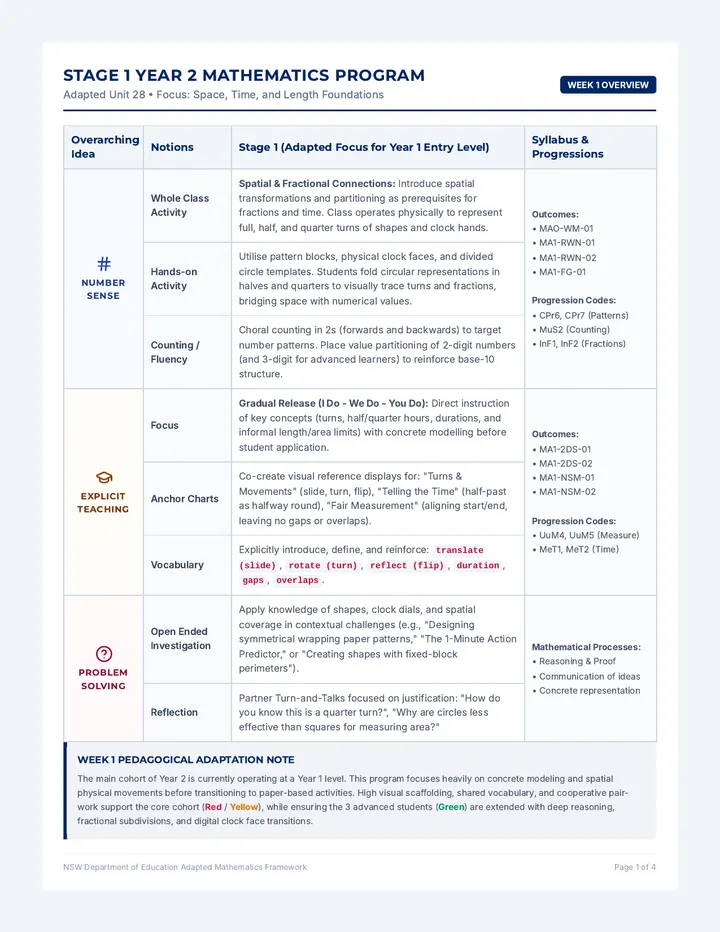
NSW Stage 1 Adapted Numeracy Program

NSW Stage 1 Adapted Numeracy Program

A highly detailed, 4-page NSW-aligned primary mathematics lesson program for Year 2 students performing at a Year 1 level, featuring explicit teaching strategies, gradual release of responsibility (I do, We do, You do), and differentiated pathways (Consolidate/Red, Build/Yellow, Stretch/Green) following the official blank scaffold format.

RD

Ruchelle Dawe

Measure Up Slideshow

Measure Up Slideshow

A 21-slide measurement presentation updated with 'clipart-style' graphics and perfect alignment. It includes a dashed reference line at the 'zero point' for all measurement questions to ensure students understand proper alignment for accurate results.

CG

Chelsea Guin

Game Gear Guide Teacher Reference

Game Gear Guide Teacher Reference

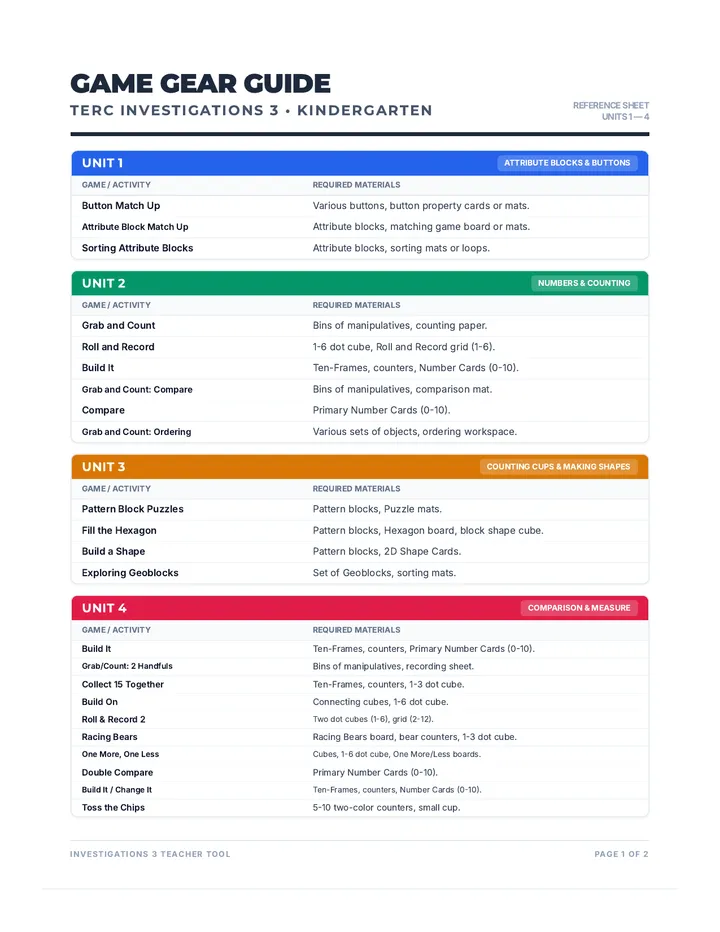
Updated Unit 1 with specific games: Button Match Up, Attribute Block Match Up, and Sorting Attribute Blocks. The teacher reference guide remains comprehensive for all 8 units of the TERC Investigations 3 Kindergarten curriculum.

C

CGaffey

Game Gear Guide Teacher Reference

Game Gear Guide Teacher Reference

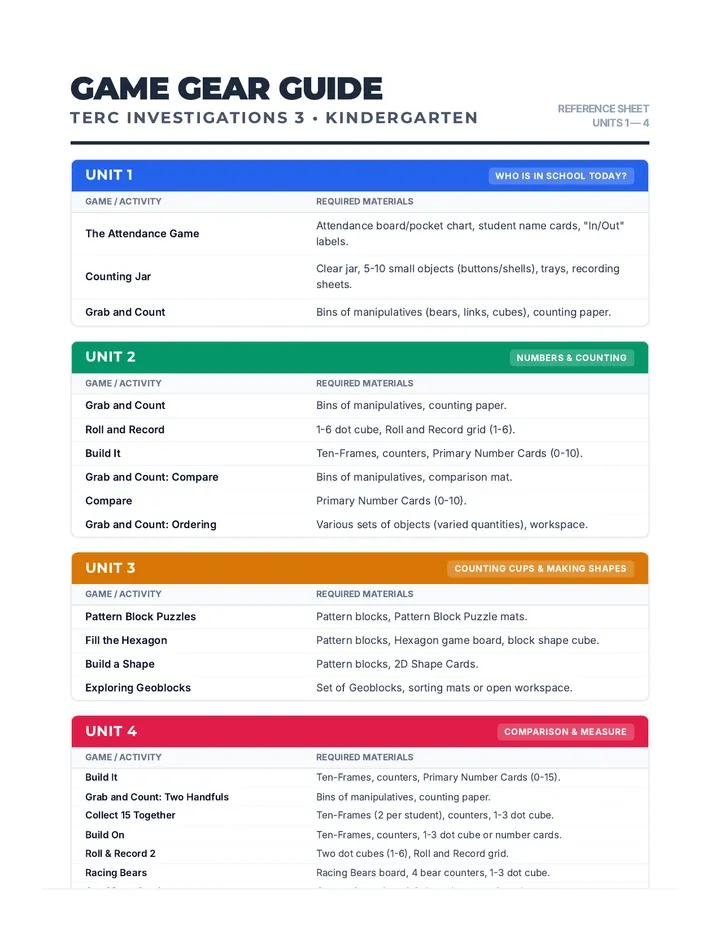
Finalized teacher reference guide with comprehensive game lists for all units. Unit 4 has been expanded to include 10 specific activities focusing on comparison and operations. Unit headings remain primary for easy navigation.

C

CGaffey

Sequences

Number Quest Workbook

Math Quest Tutoring

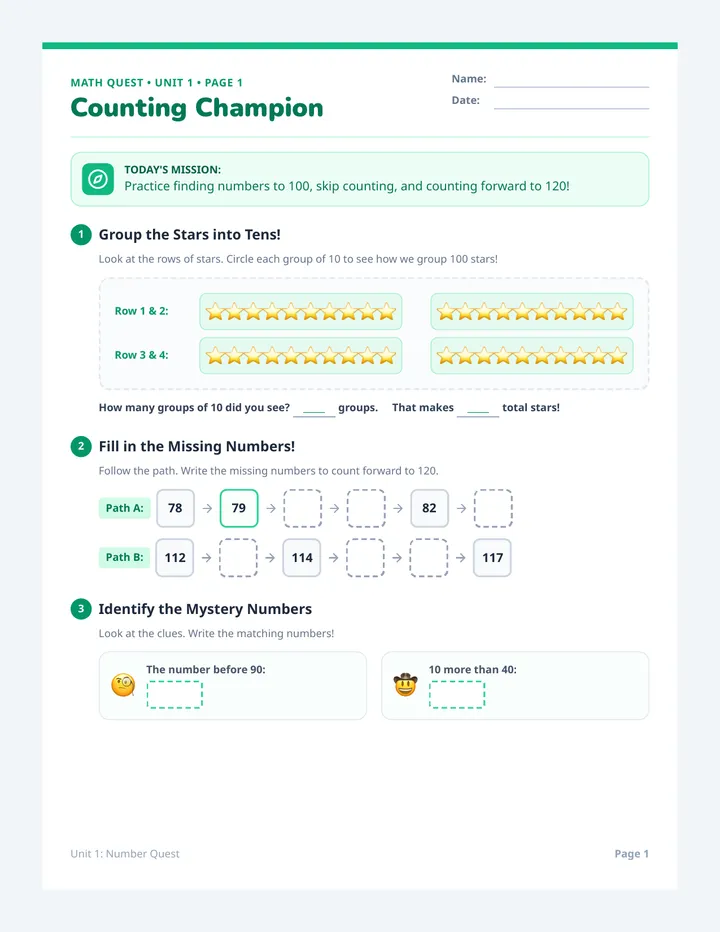
A comprehensive 1st and 2nd-grade math tutoring sequence featuring heavily scaffolded worksheets and visual progress monitoring kits. Covers number sense, algebraic operations, geometry, and measurement.

JC

Jennifer Campbell

16
Tall and Small Lesson Plan

Measure Explorers

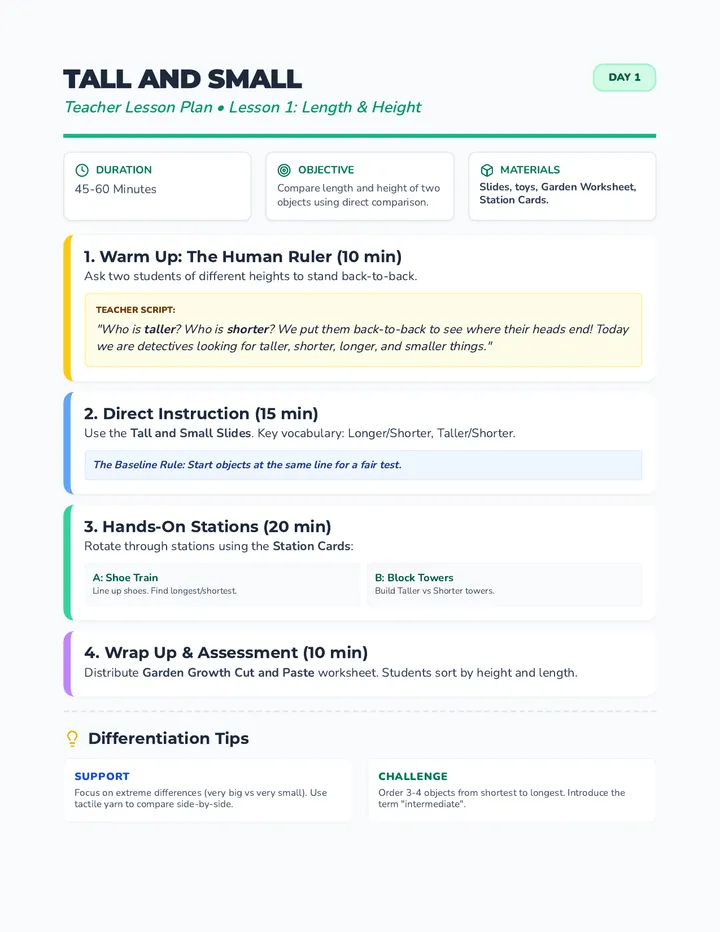
A hands-on kindergarten unit exploring length, height, non-standard units, and weight through interactive stations and play-based learning.

MC

Meg Cade

16
Count the Town Slides

Museum Math Adventure

A series of interactive math lessons themed around a trip to Play Street Museum, specifically designed for preschool students with special needs to practice numbers, addition, and size comparison through imaginative play contexts.

HC

Heather Cortez

9
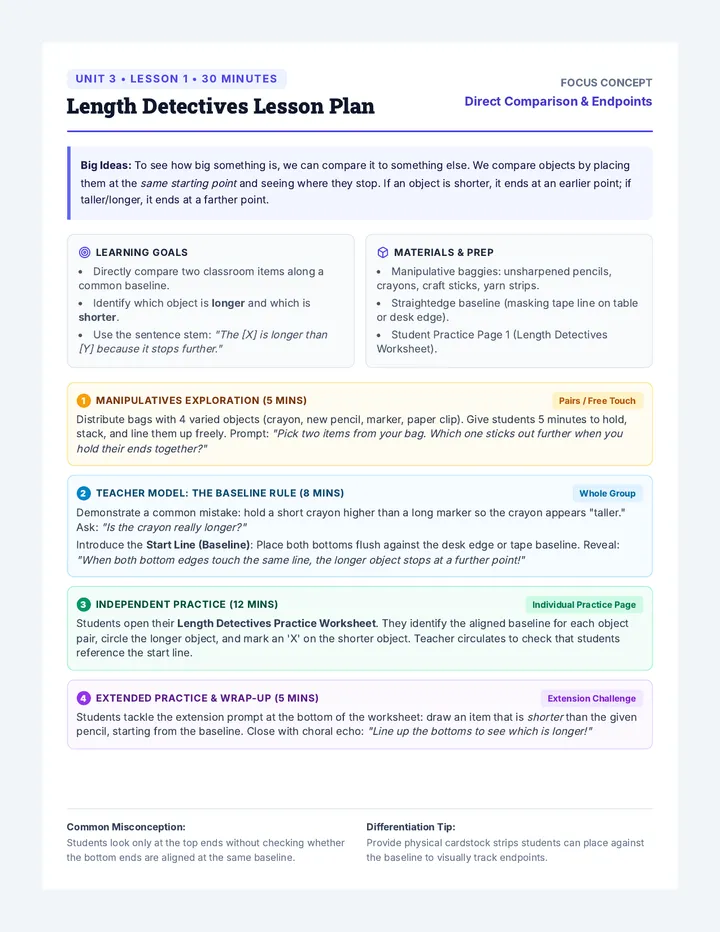
Length Detectives Lesson Plan

Measure and Count Quest

An 8-lesson kindergarten mathematics unit developing foundational concepts of direct length comparison, conservation of number, keeping track to 20, and ordering quantities. Students progress from physical alignment and sorting to abstract numerical comparison and sequence ordering.

V

victoria.lesniak

16
Big Beach Bash Slides

Beach Measure Mania

A beach-themed weekly measurement unit designed for diverse learners, aligning with the Unique Learning System (ULS) curriculum. It provides standard and adapted math instruction spanning direct size comparison, non-standard measurement, capacity, height ordering, and basic standard measurement.

MC

Meg Cade

17
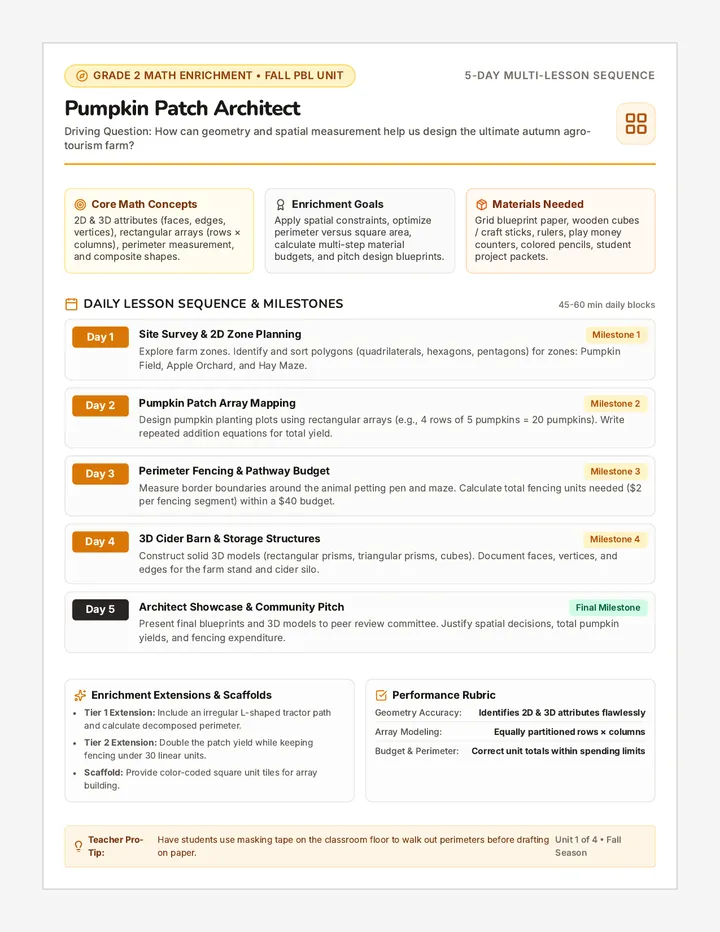
Pumpkin Patch Unit Plan

Seasonal Math Quests

A collection of four seasonal project-based learning units for Grade 2 math enrichment featuring autumn harvest and winter wonderland design missions. Students apply advanced geometry, multi-digit money math, precision measurement, and elapsed time to solve authentic real-world challenges.

K

kkipperman

8

Lessons

Master Builders Slides

Master Builders

A Kindergarten lesson focused on comparing the length (height) of block towers and determining the difference in length by counting individual block units.

V

victoria.lesniak

7
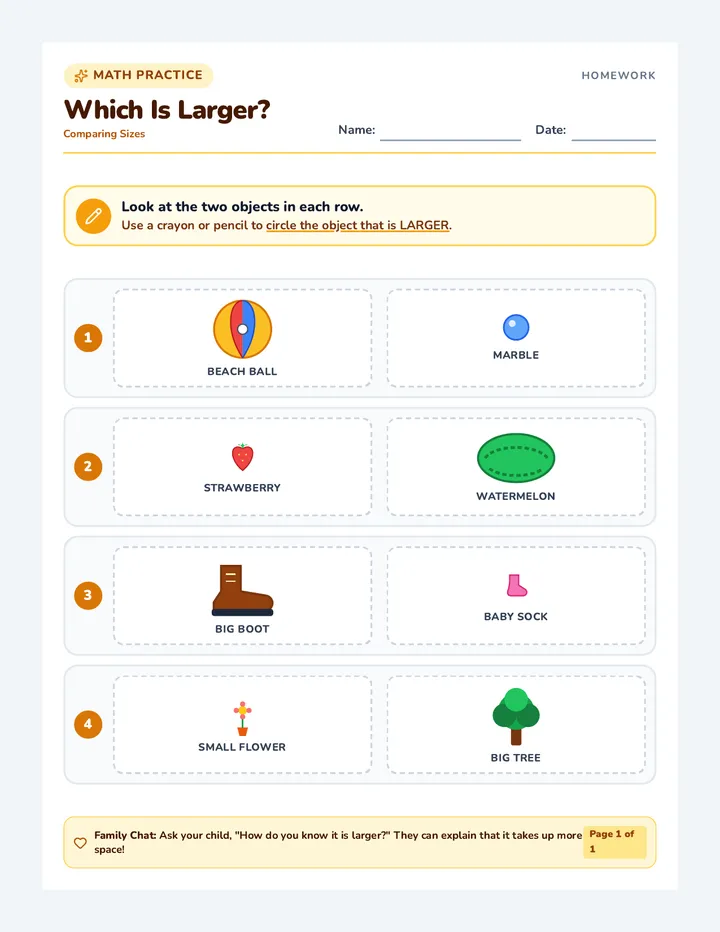
Which Is Larger Homework

Measurement Explorers

A kindergarten measurement unit exploring direct comparison of object sizes and benchmark measurement using 10-sticks. Students practice comparing two objects side-by-side and evaluating whether everyday objects are longer or shorter than a ten-cube train.

SB

Sondra Bell

8
Triple Attribute Sorting Worksheet

Attribute Detectives

A playful early math lesson where students identify, describe, and sort objects by color, shape, size, and quantity attributes through sorting mats, cut-and-paste activities, and visual discrimination challenges.

M

michelle.bernius

8
Tower Builders Exit Ticket

Counting and Calendars

A primary math lesson focused on foundational counting, comparison, and calendar skills. Students learn to compare quantities using tower blocks and navigate calendar intervals.

SB

Sondra Bell

5
Monster Mugs Slides

Monster Mugs

A friendly, high-energy kindergarten math lesson exploring capacity. Through a colorful monster theme, students visually compare containers to determine which 'holds more' and which 'holds less' using slides, hands-on partner work, and an interactive worksheet.

ER

Ellen Rolandini

3
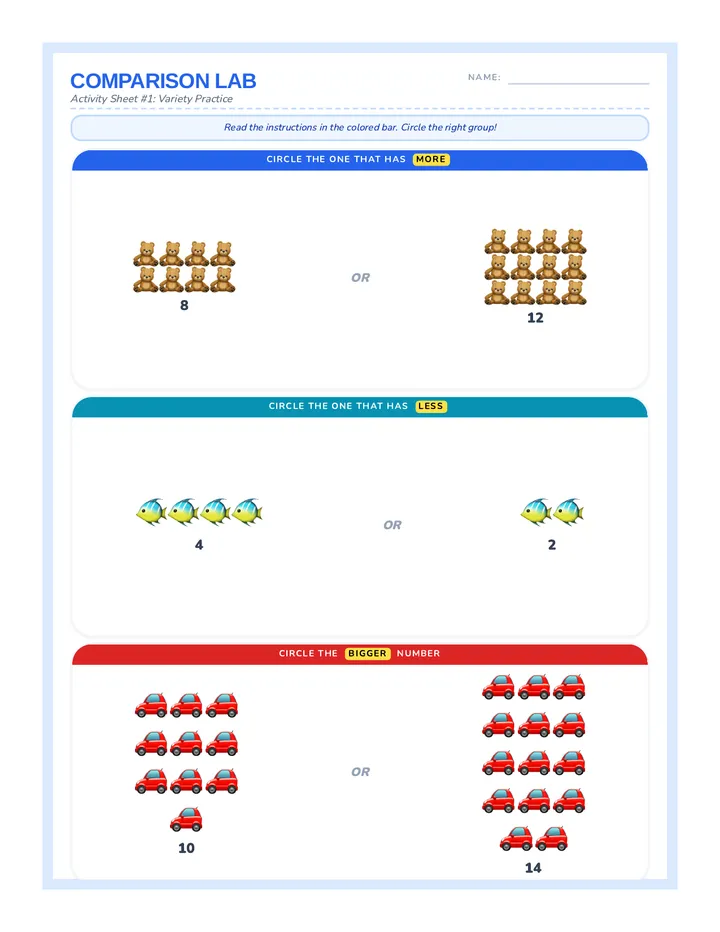
Activity Sheet #1

Comparison Lab

A set of hands-on math worksheets designed to help students master comparing numbers up to 20 using bears, cars, fish, and swimming pools.

CN

Coleman Newell

5