A practice worksheet for SPED teachers to analyze visual data sets and apply the Four-Point Rule to make instructional decisions.
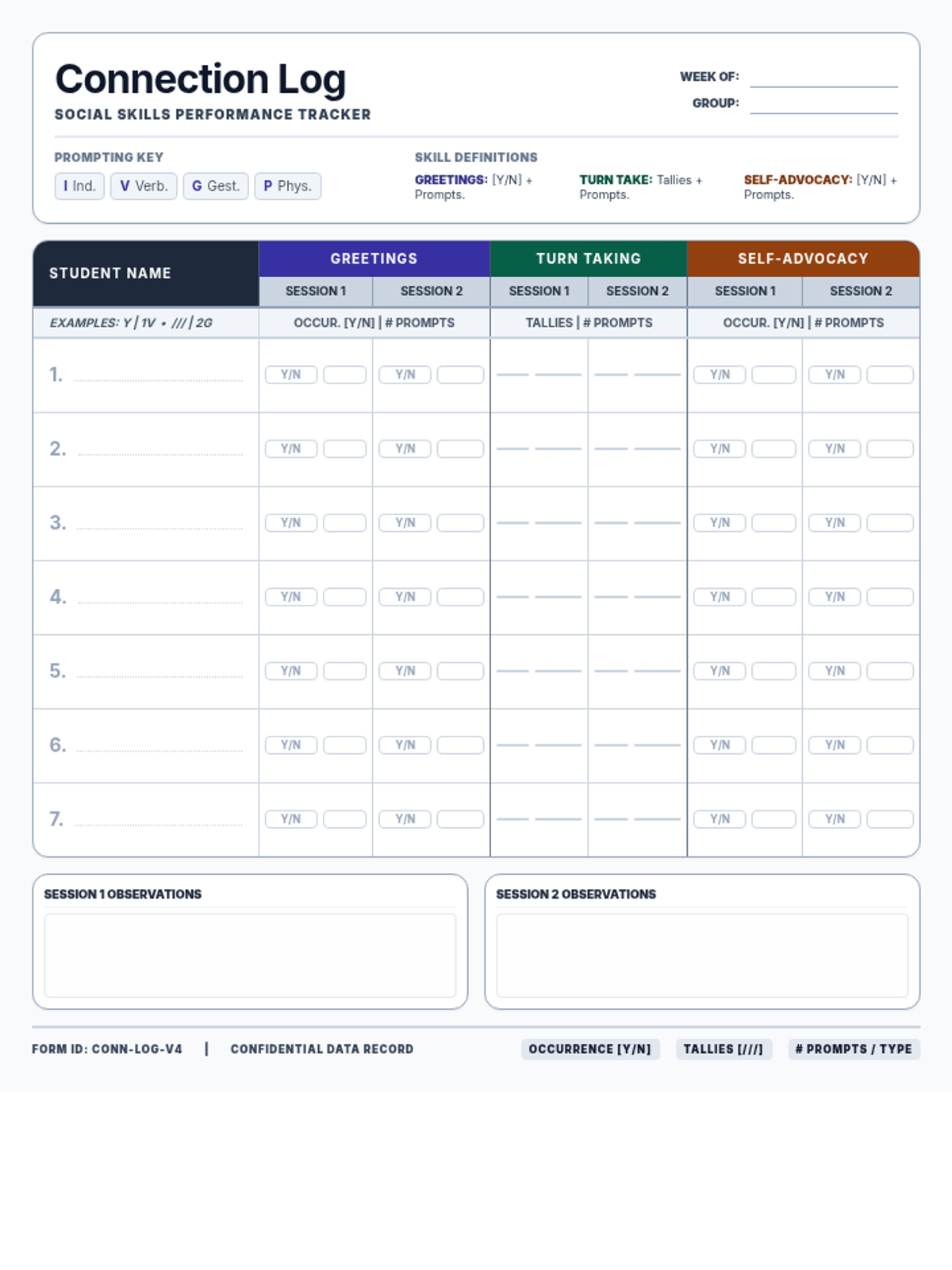
A professional data collection sheet for a 7-student social skills group. It features specific tracking for three skills over two sessions: Y/N and # Prompts for Greetings and Self-Advocacy, and Tallies and # Prompts for Turn Taking.
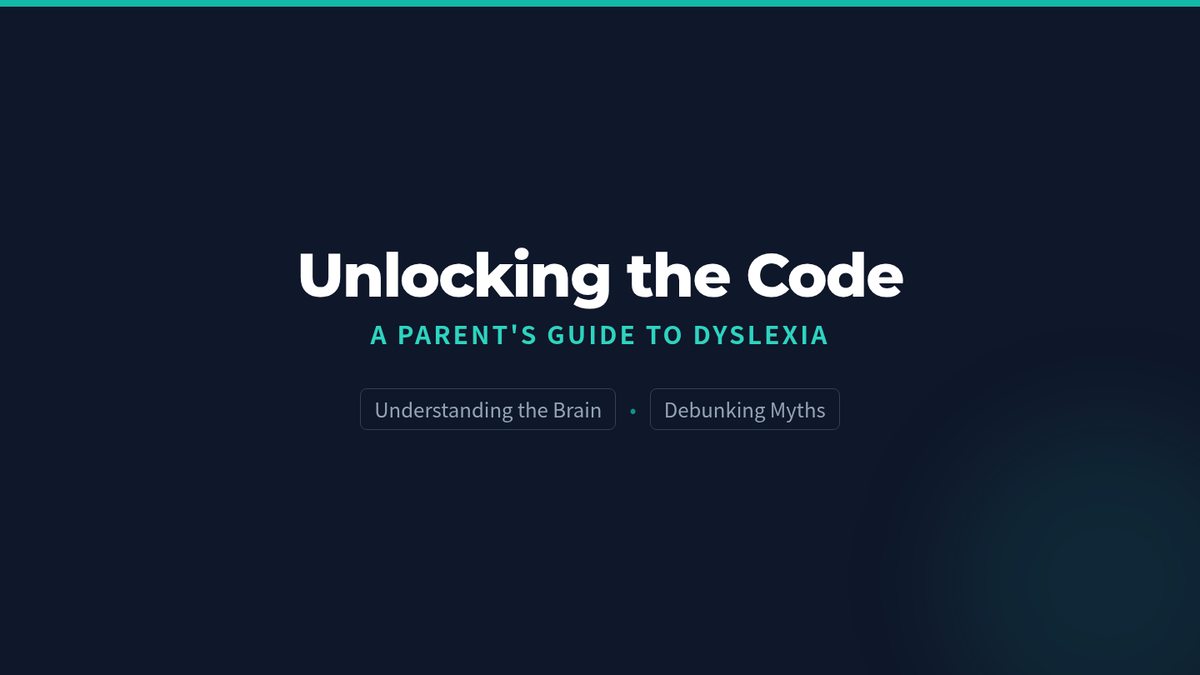
A professional slide deck for parent presentations, covering the neurobiology of dyslexia, reading impact areas, and myth-busting with a focus on Chapter 2 of the MA Guidelines.
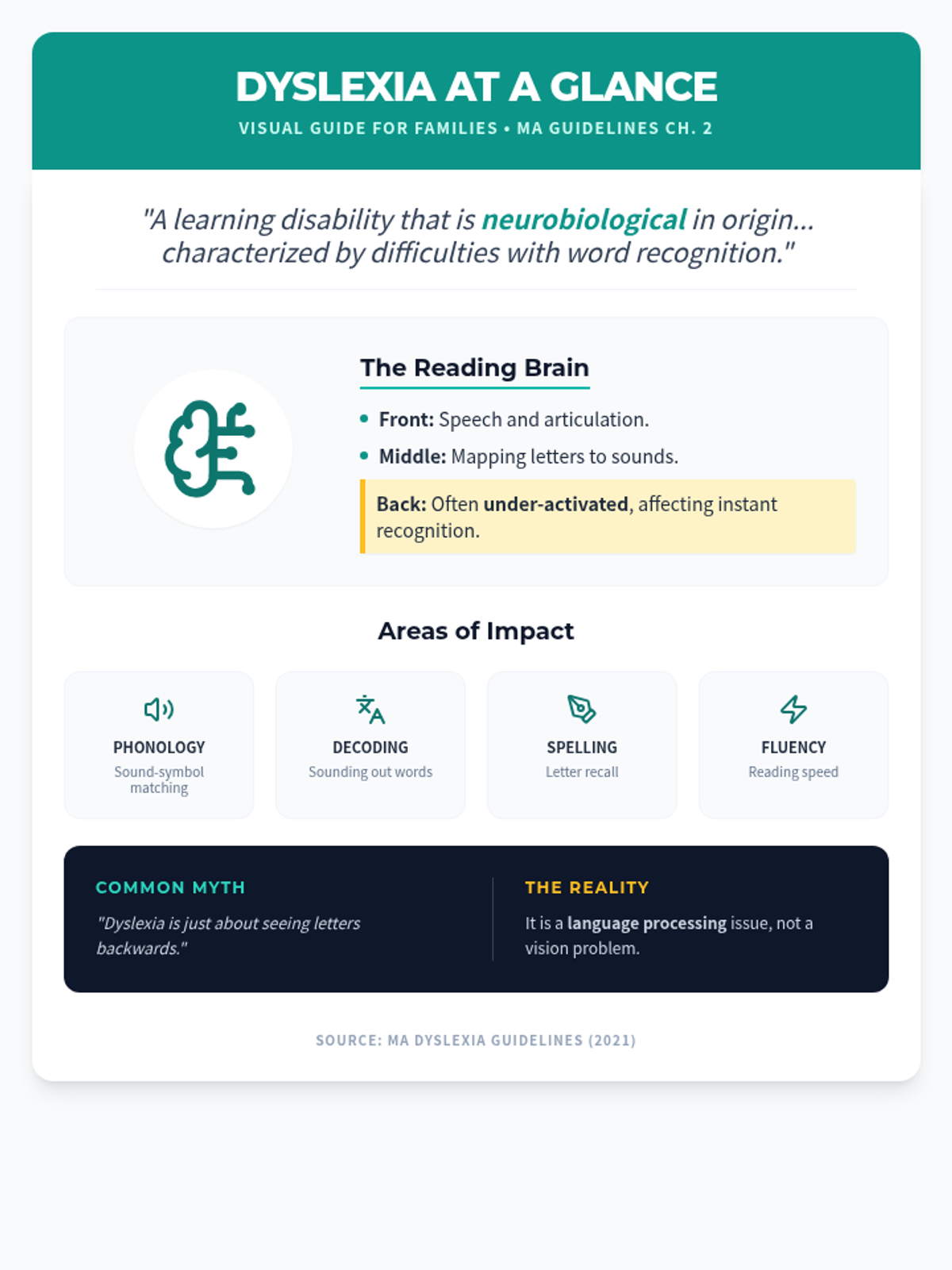
A visually engaging infographic summarizing the core concepts of dyslexia, including brain processing, reading impact areas, and debunking common myths for parents.
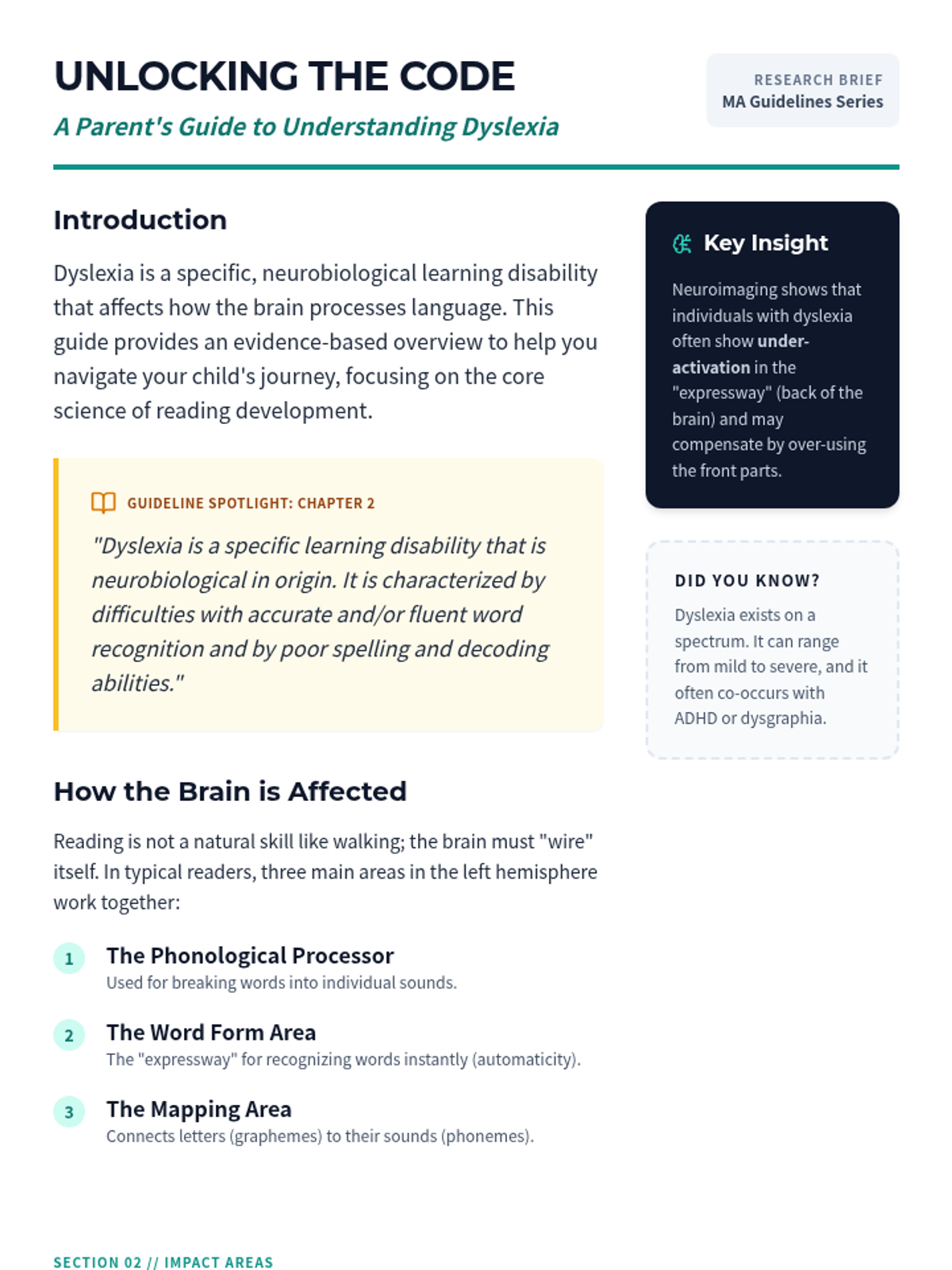
A professional 3-page white paper for parents, detailing the neurobiology of dyslexia, areas of reading impact, and debunking common myths using evidence from the Massachusetts Dyslexia Guidelines.
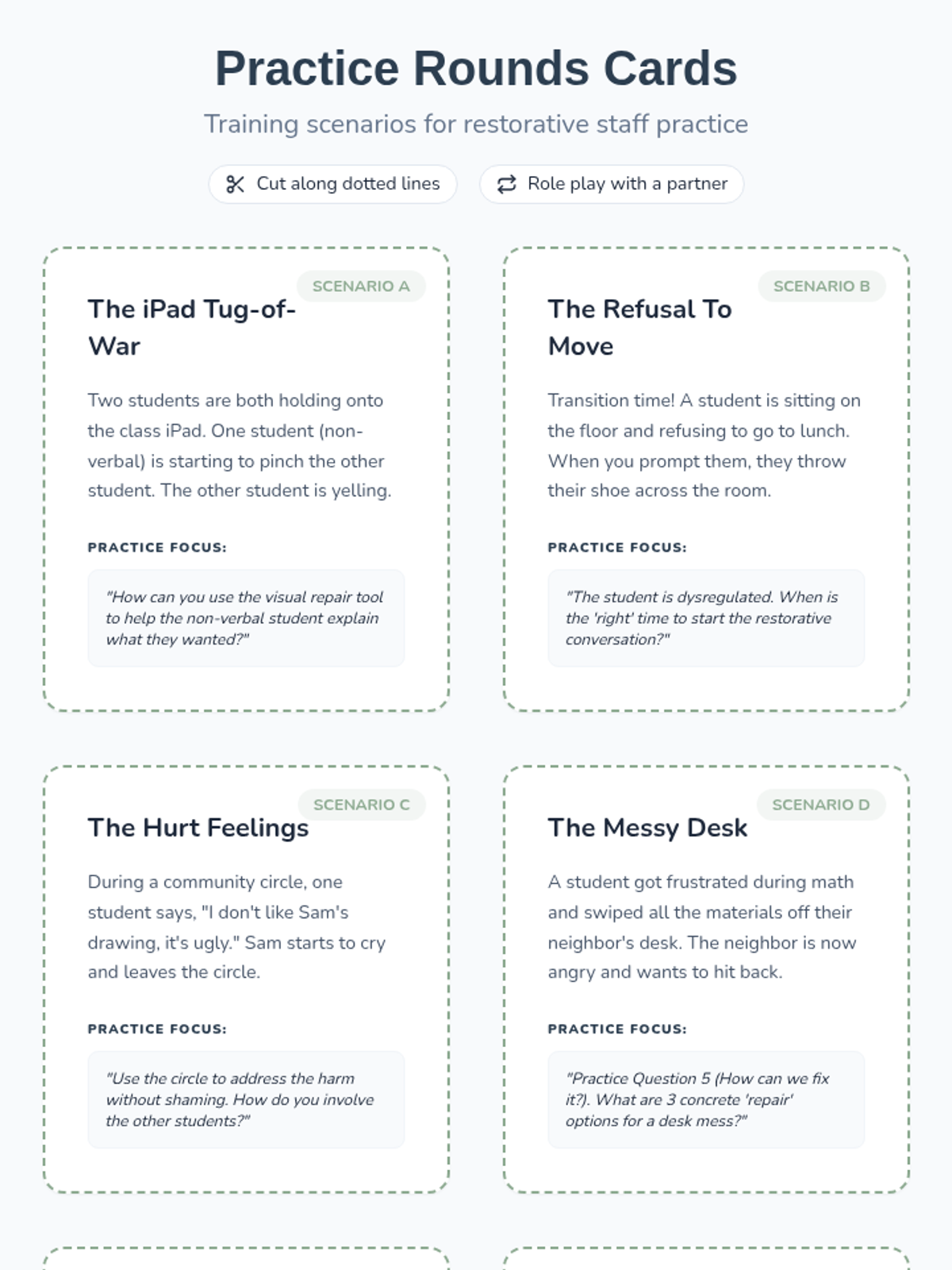
A set of six role-play scenario cards for staff training. Each card presents a common special education classroom challenge. Revised to ensure cards stay on one page and remove all placeholder text.
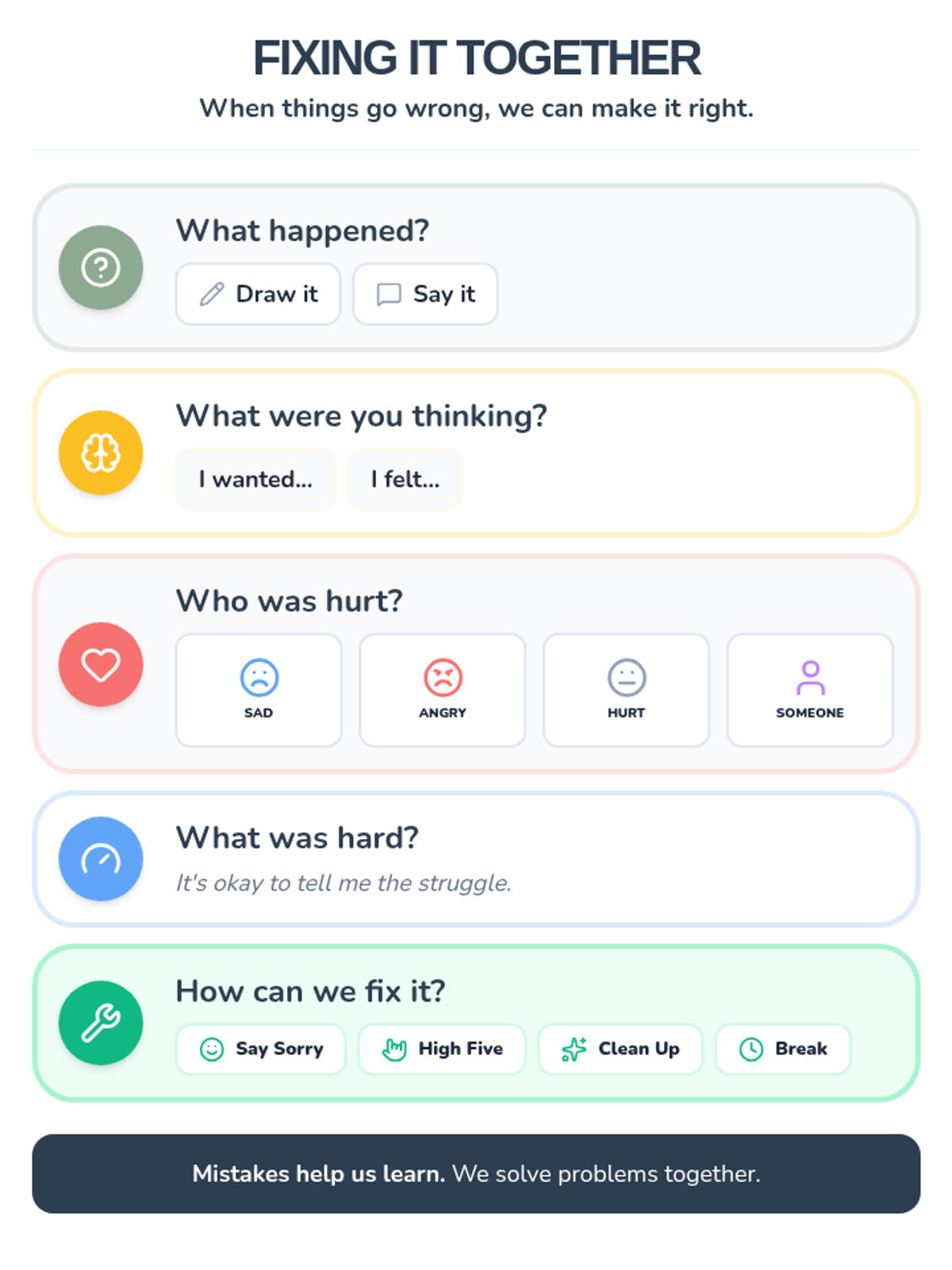
A student-facing visual aid for restorative conversations. Uses simplified language, large icons, and clear steps to guide students through the 5 repair questions. Revised for single-page printing and larger interactive targets.
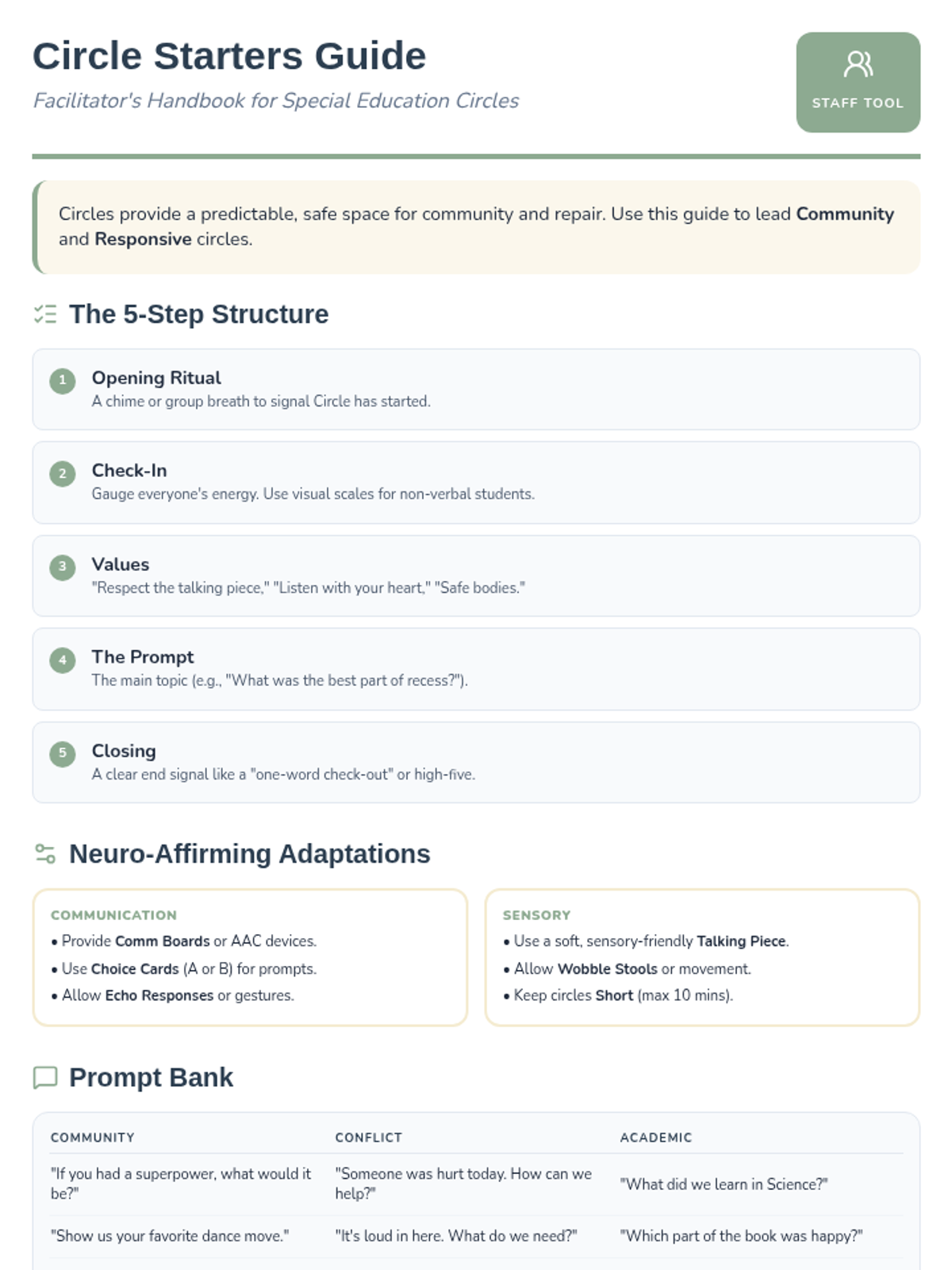
A facilitator's guide for staff on how to structure and implement restorative circles. Includes a 5-step structure, specific neurodiversity-affirming adaptations (communication and sensory), and a bank of circle prompts. Revised to ensure all content fits on one page and avoids awkward breaks.
A comprehensive staff training slide deck on implementing restorative practices in special education. Focuses on the shift from punitive to restorative mindsets, specific adaptations for neurodiverse learners, and simplified repair questions. Revised for better contrast and includes a workshop practice slide.
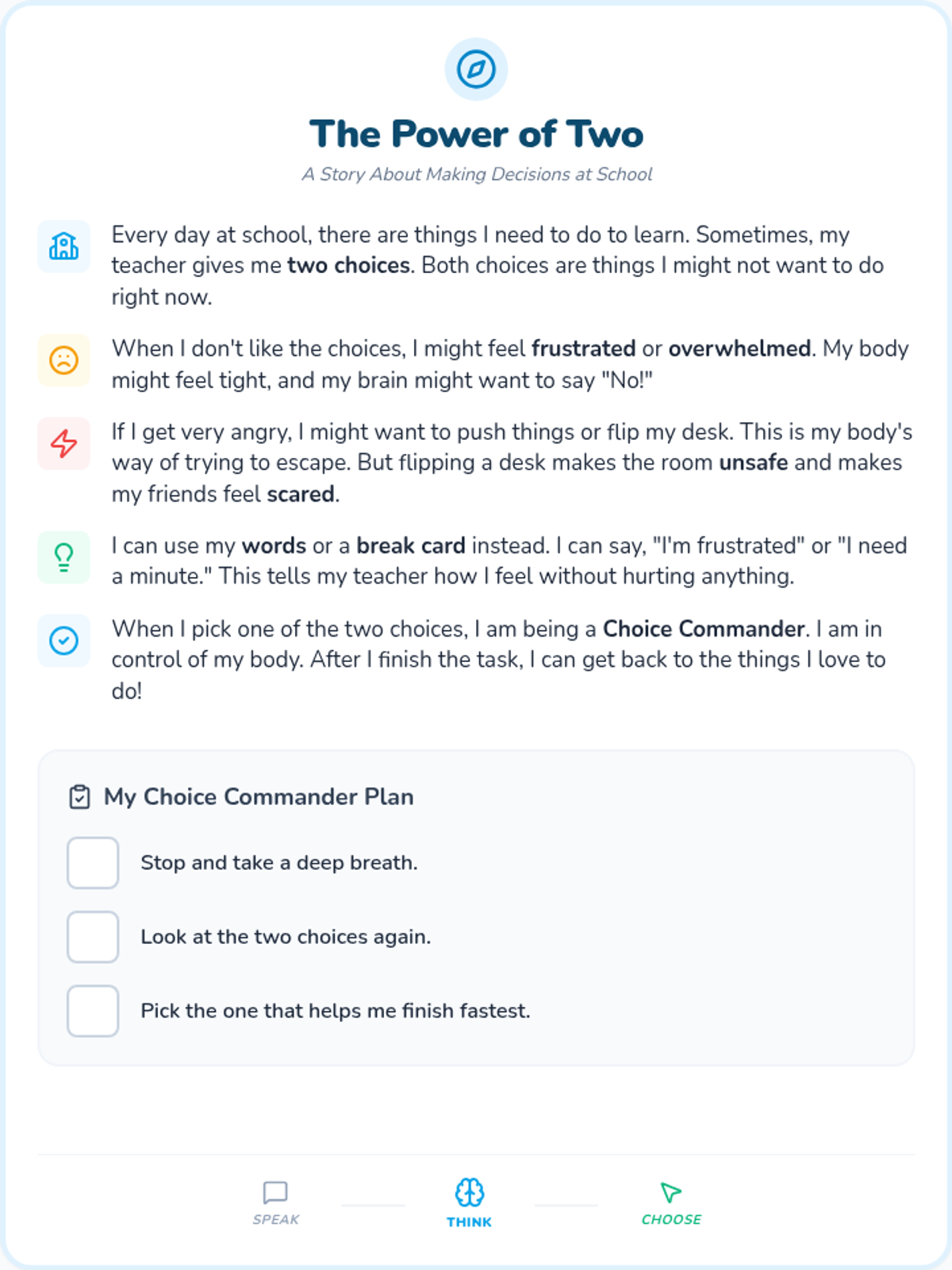
A combined resource featuring a social story to help students manage choice-based frustration and a behavior reflection worksheet for processing desk-flipping incidents.
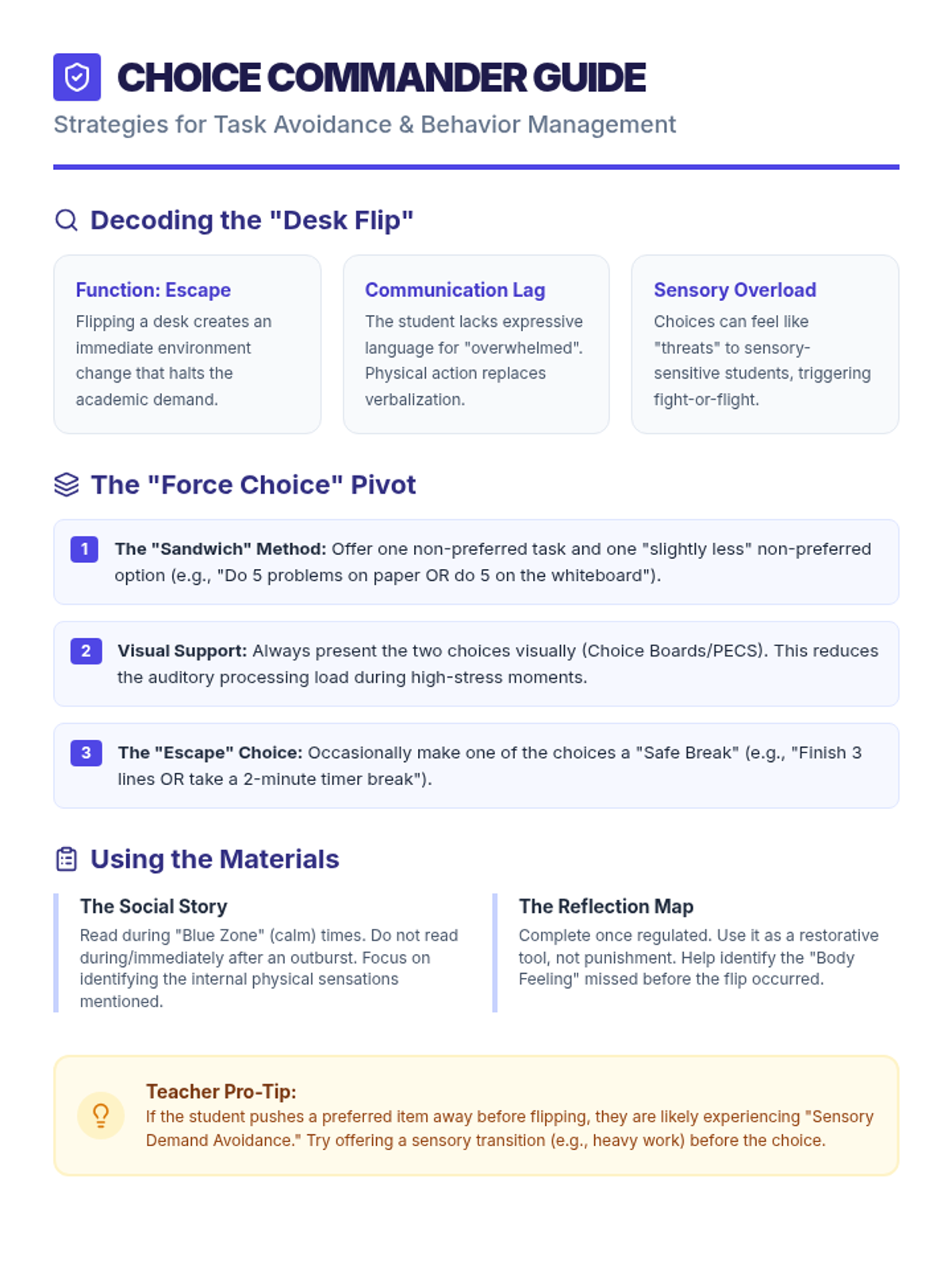
A comprehensive teacher-facing guide providing insights into the functional behavior of desk-flipping, as well as specific instructional strategies for implementing forced-choice interventions.
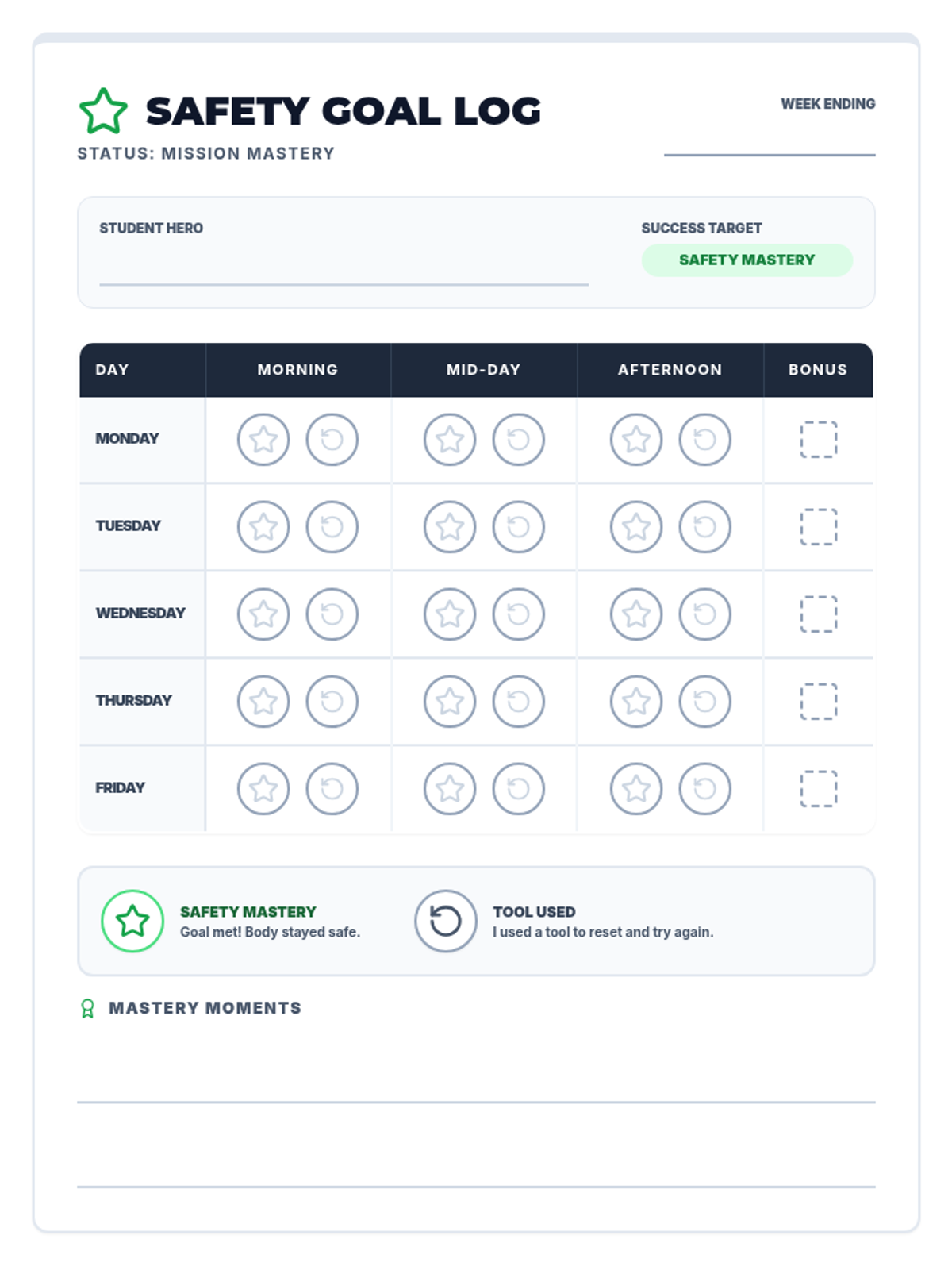
A purely positive, goal-oriented 'Safety Mastery' tracking log for 4th graders. It replaces the smile/frown system with 'Star' (Mastery) and 'Reset' (Tool Use) icons to encourage self-regulation and skill building.
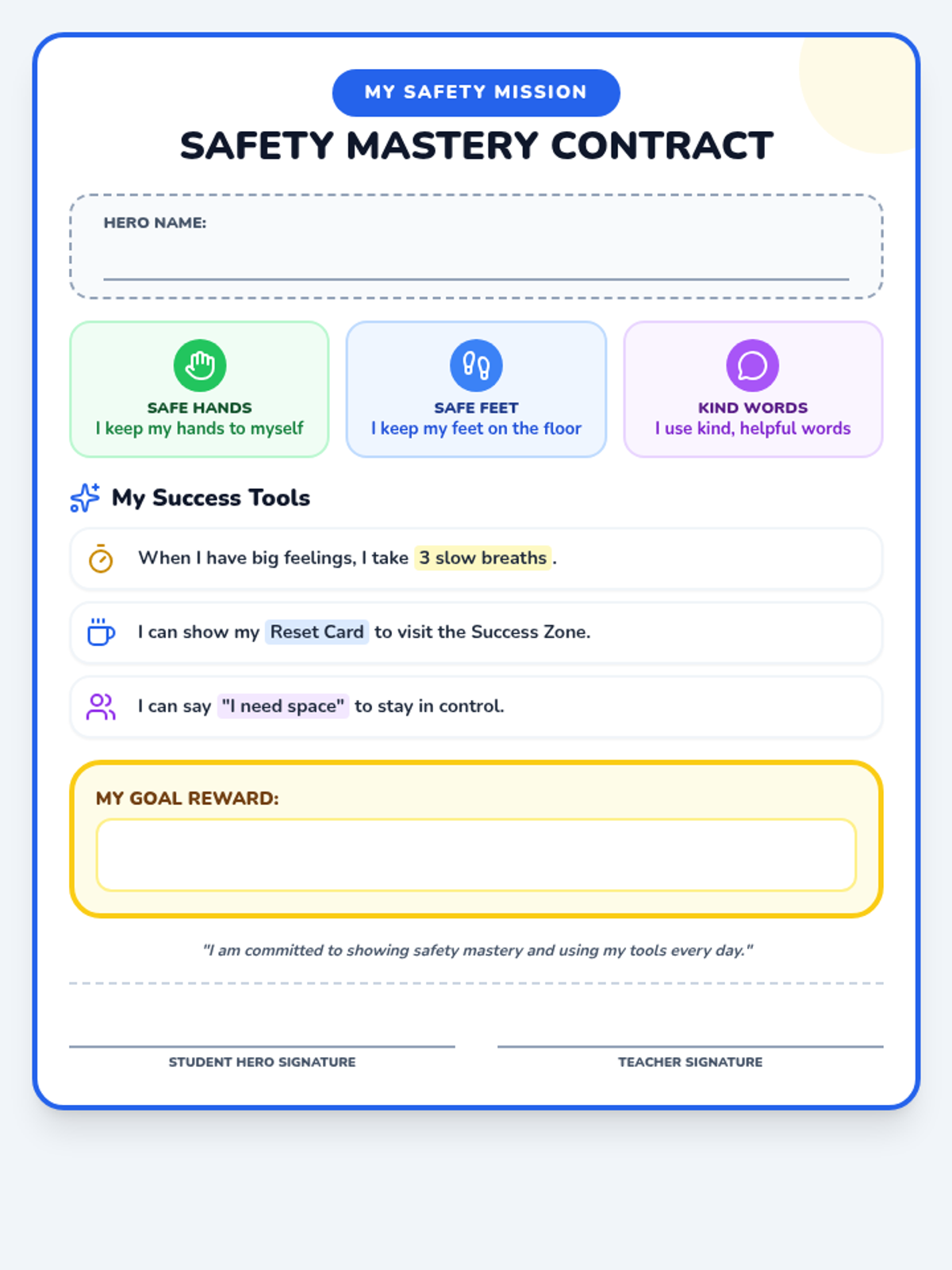
A positive, goal-oriented 'Safety Mastery' contract for 4th graders. It focuses on the mission of keeping hands, feet, and words safe through use of self-regulation tools and commitment to a personal goal.
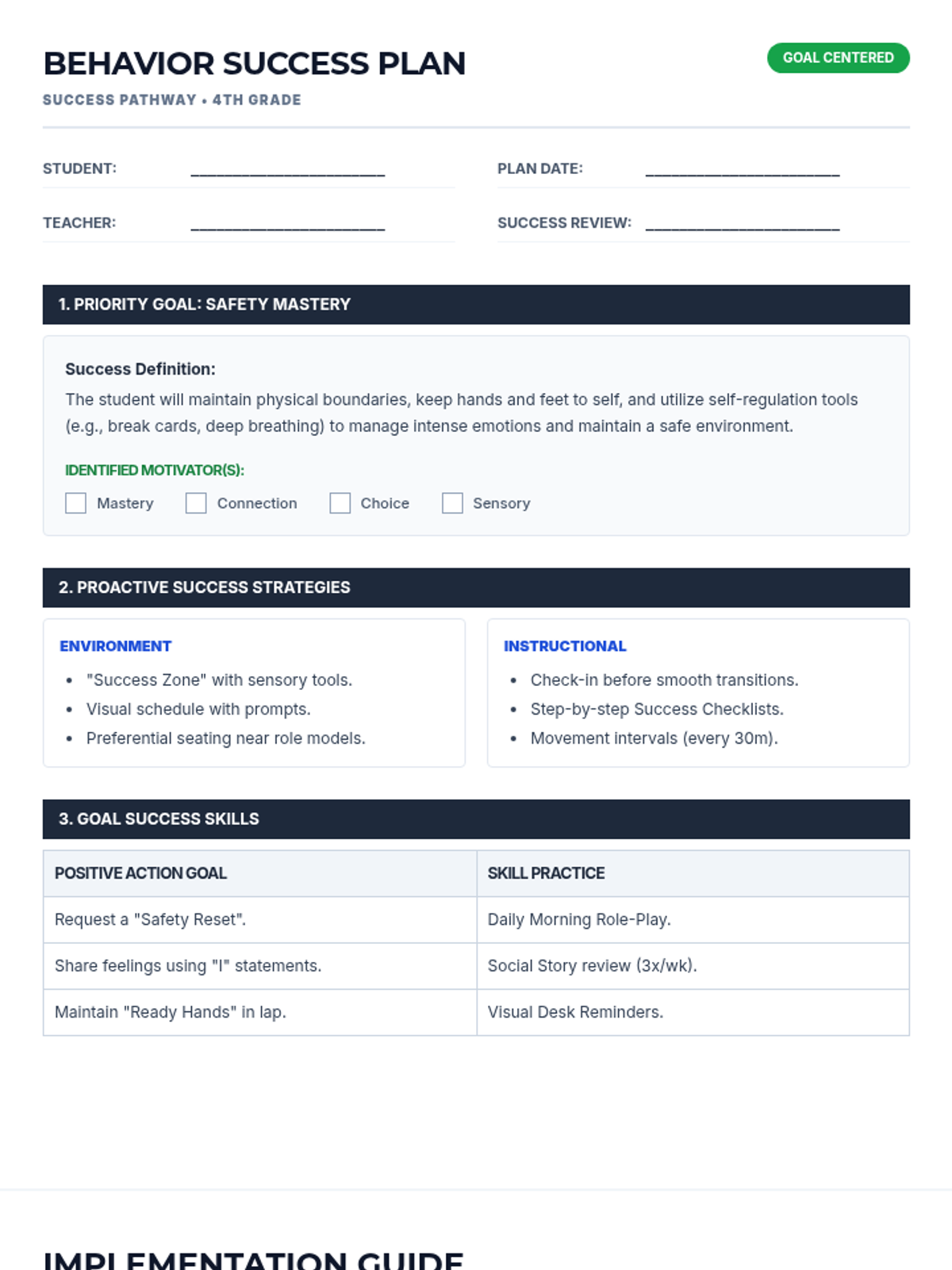
A strengths-based Behavior Success Plan and teacher guide for 4th graders, focused on 'Safety Mastery' goals and positive reinforcement strategies. All negative framing has been removed in favor of skill-building and proactive support.
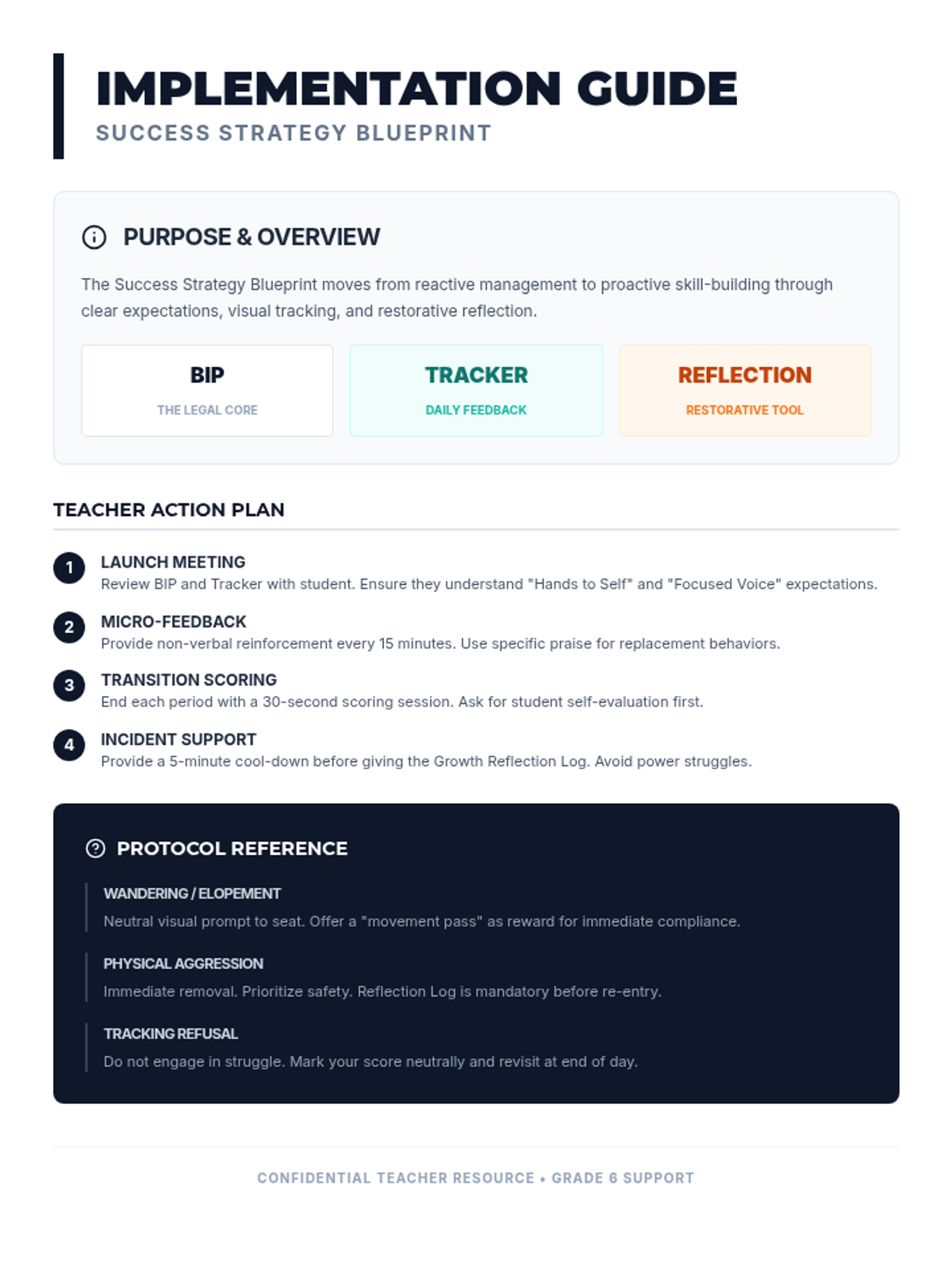
A facilitation guide for teachers and administrators on how to implement the Success Strategy Blueprint, including launch steps, monitoring strategies, and scenario-based advice.
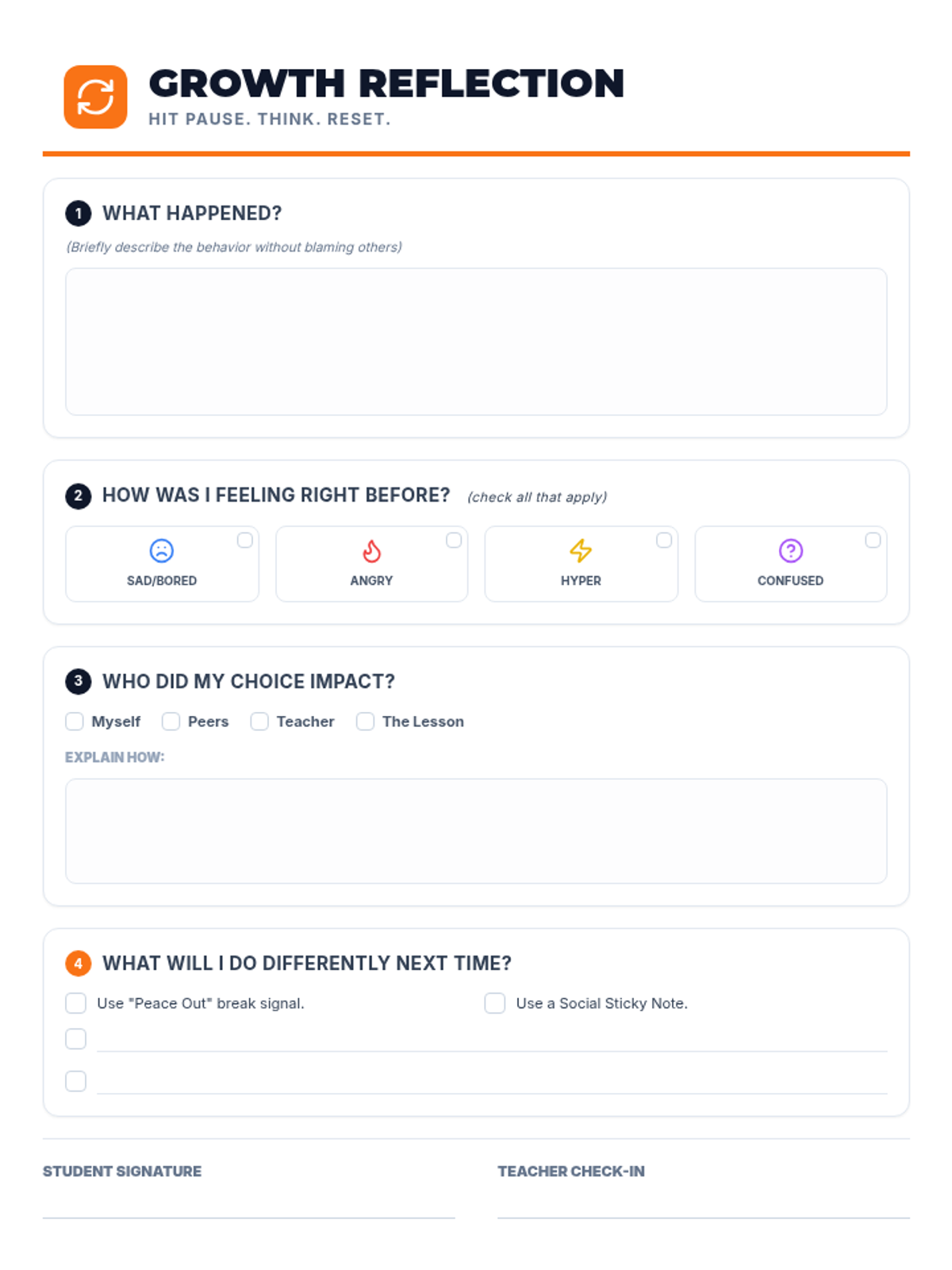
A restorative "Growth Reflection" log for a student to complete following a behavioral incident, prompting them to identify feelings, impacts, and alternative future actions with expanded emotion options and guided handwriting lines.
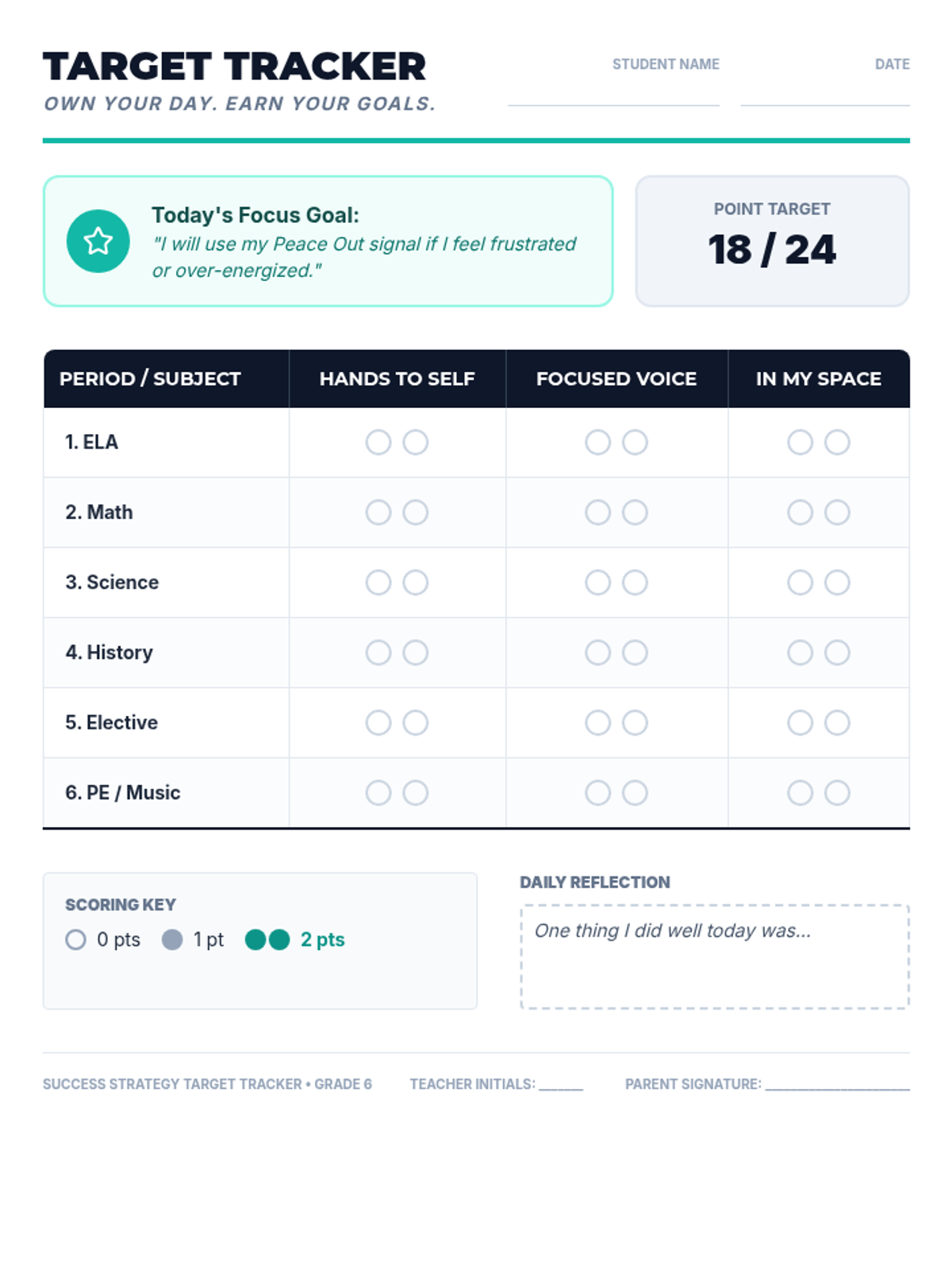
A daily behavior tracking point sheet for a 6th-grade student, focusing on "Hands to Self", "Focused Voice", and "In My Space" with a clear point system and goal-setting area.
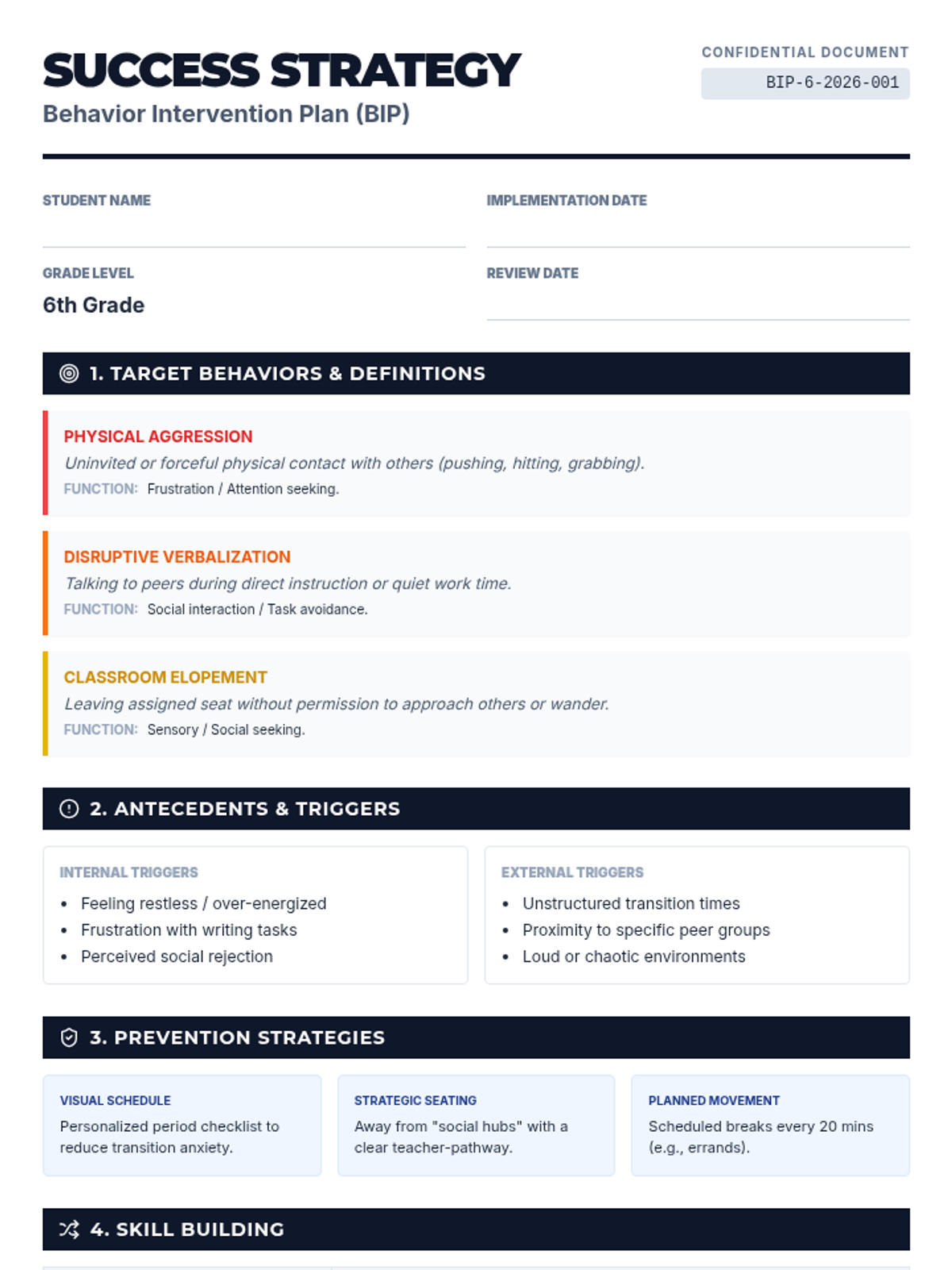
A formal Behavior Intervention Plan (BIP) template for a 6th-grade student, featuring operational definitions, antecedent strategies, and replacement behaviors for physical aggression and classroom disruption, including safe regulation tools like wall pushes and Riss Coordinator breaks.
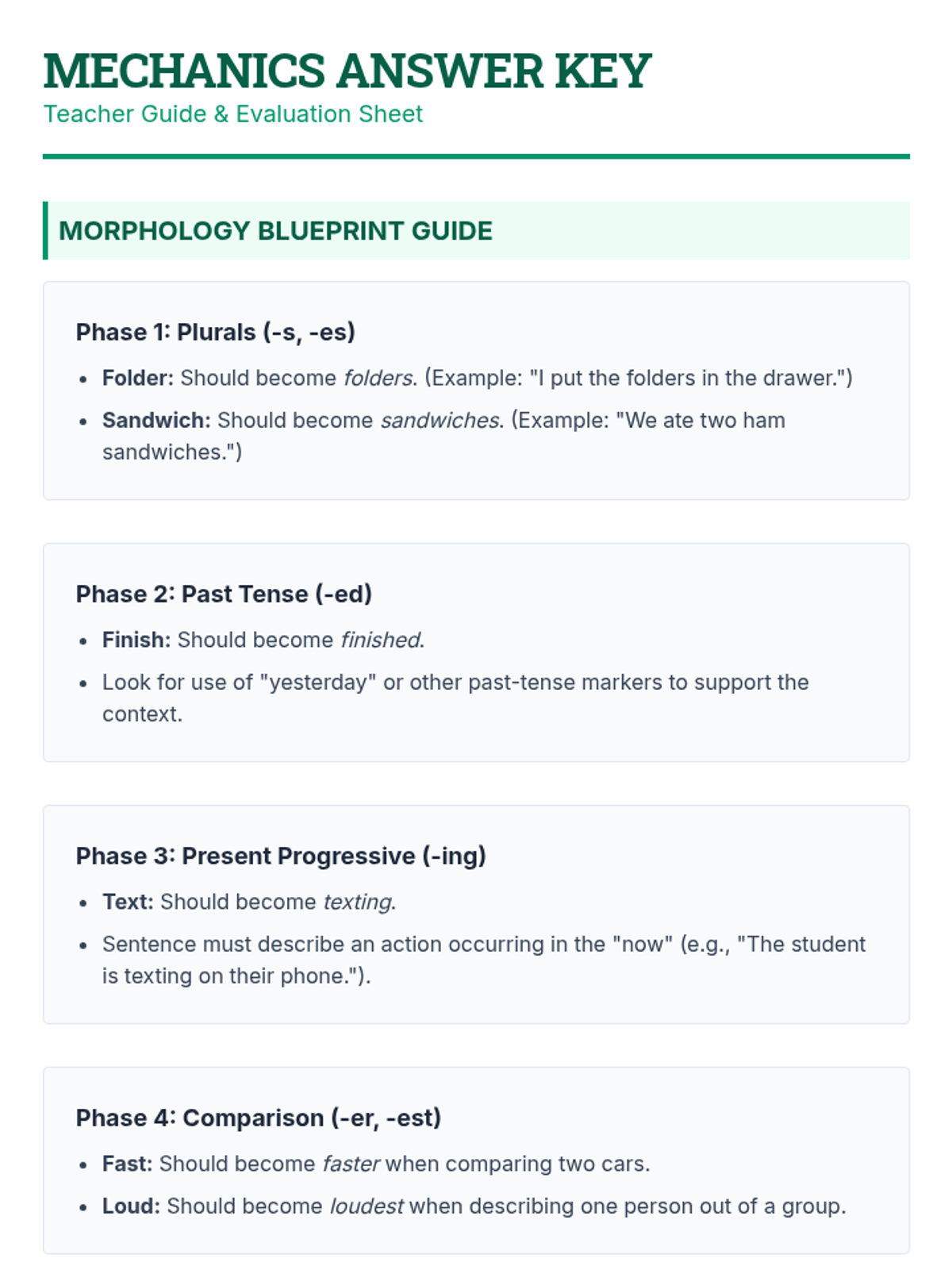
A teacher-facing answer key and evaluation guide for the Morphology Blueprint lesson, including example correct sentences and a simple 3-point rubric for assessment.
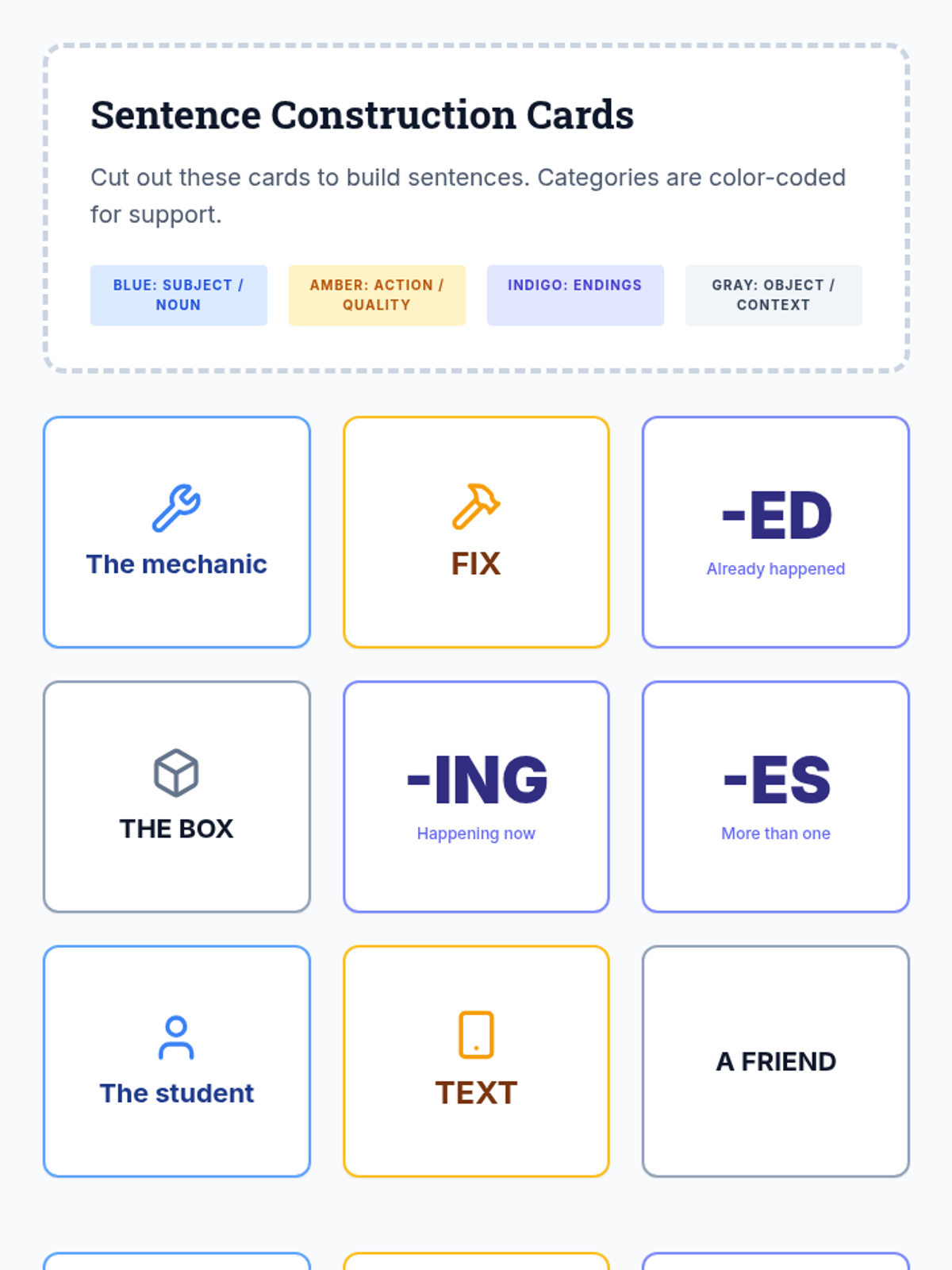
A set of color-coded sentence-building cards designed for hands-on learning. Students can physically combine nouns, root verbs, and morphological endings to construct sentences, providing a tactile way to understand word structure.
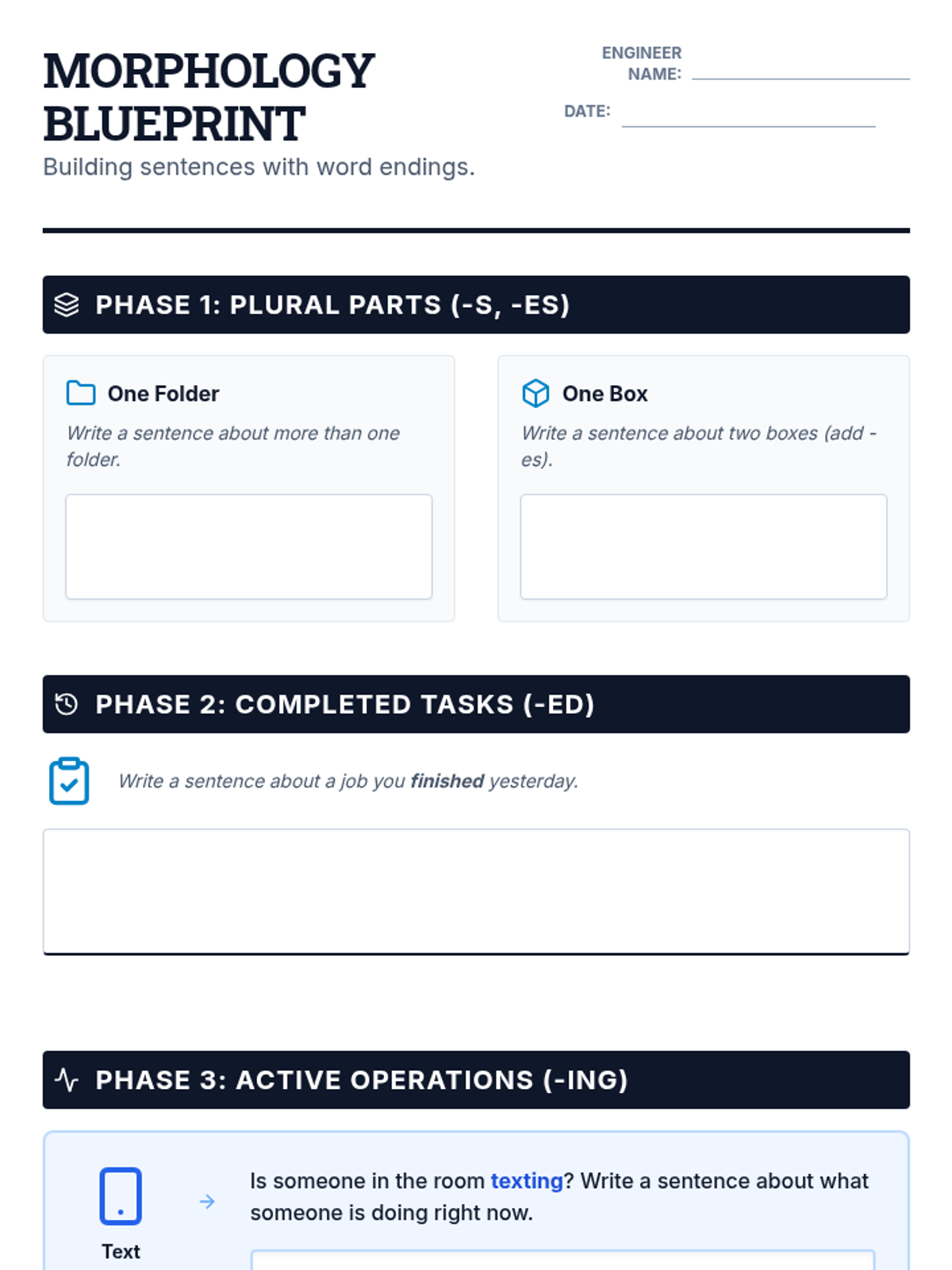
A structured sentence-writing worksheet for high school students, using a "Blueprint" theme to guide them through applying morphological cues (-s, -es, -ed, -ing, -er, -est) with generous workspace and visual prompts.
A visual presentation designed for high school special needs students, introducing morphological cues (-s, -es, -ed, -ing, -er, -est) using a technical workshop theme with clear examples and large, accessible text.
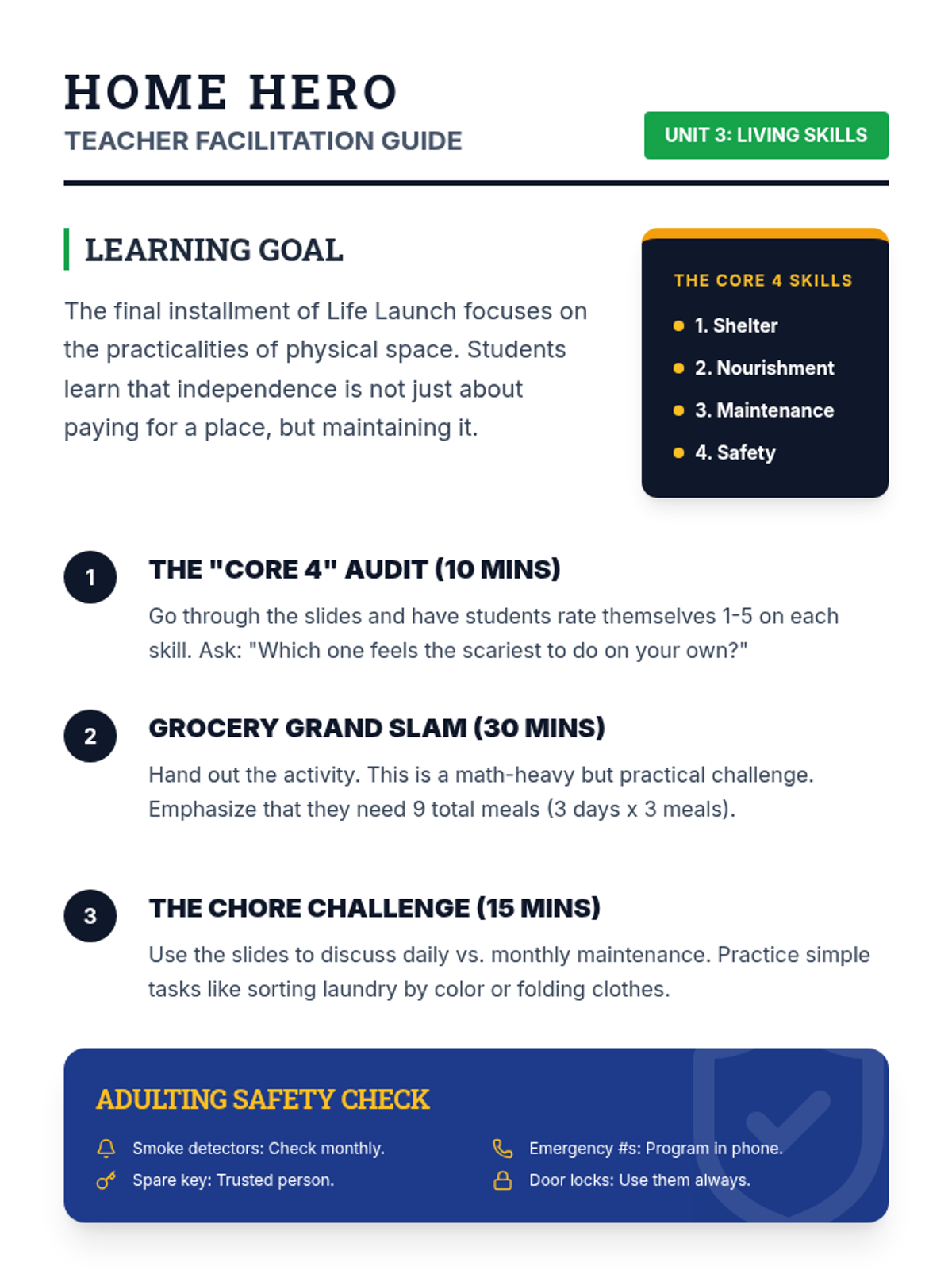
Teacher's facilitation guide for Lesson 3. Revisions include defined "Core 4" skills and improved page layout to prevent isolated sections.
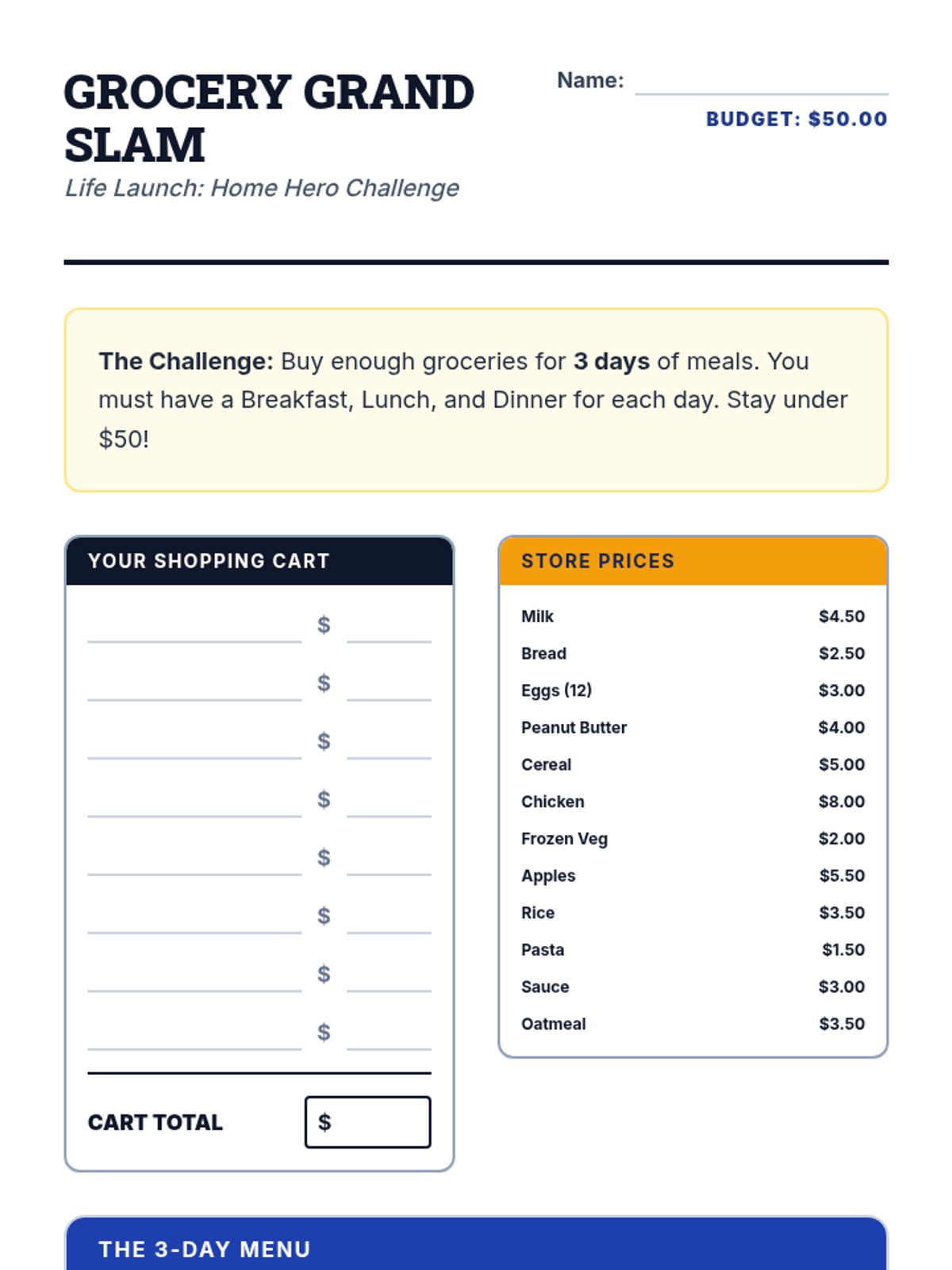
An activity worksheet where students practice meal planning and staying within a grocery budget. Revisions include more grocery lines, improved visibility of fields, and fixed section splitting.
A slide deck covering the essentials of independent living, grocery shopping tips, and household maintenance.
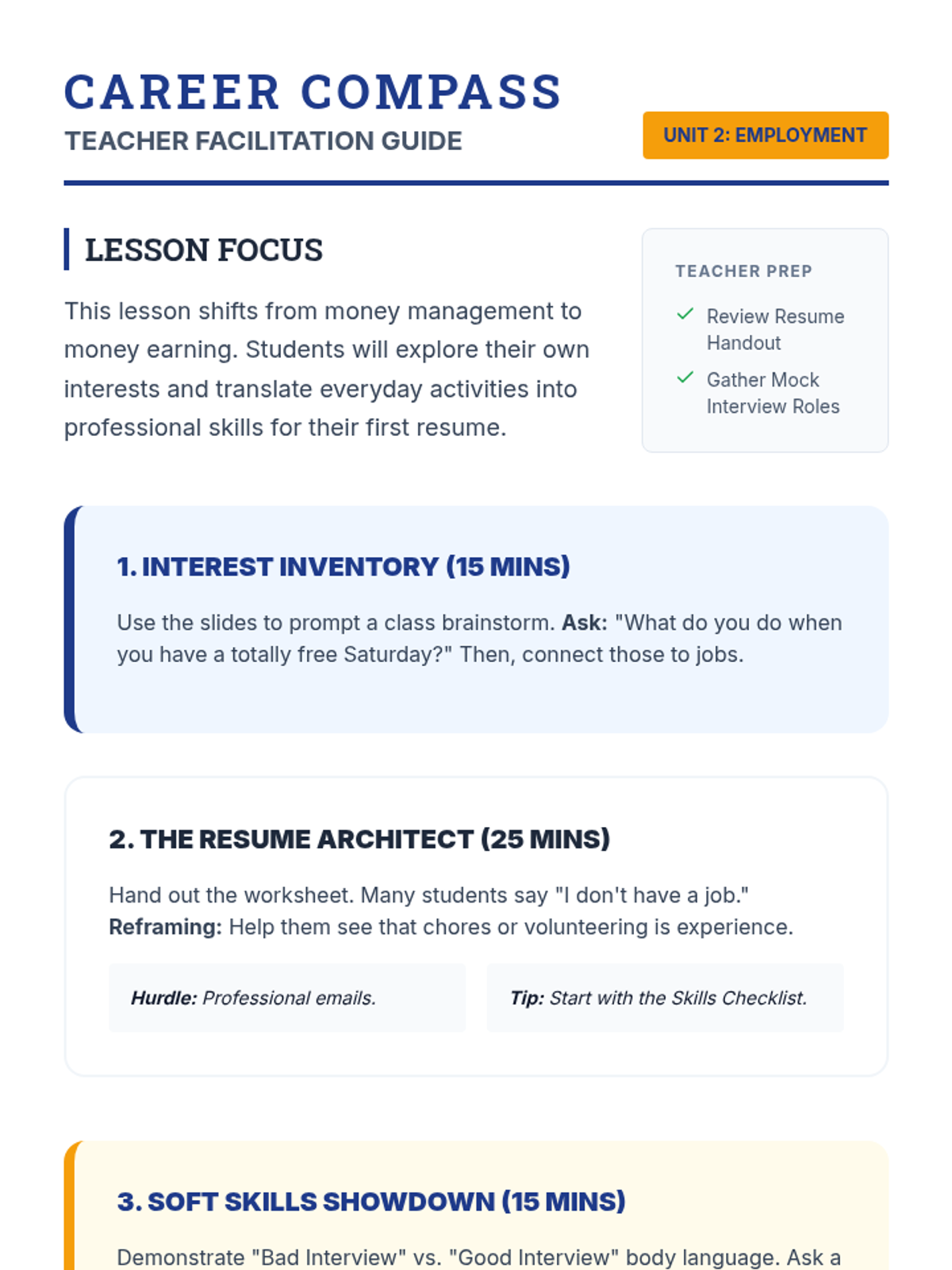
Teacher's guide for Lesson 2. Revisions include improved page break handling, corrected spacing in headers, and more robust styling for print.
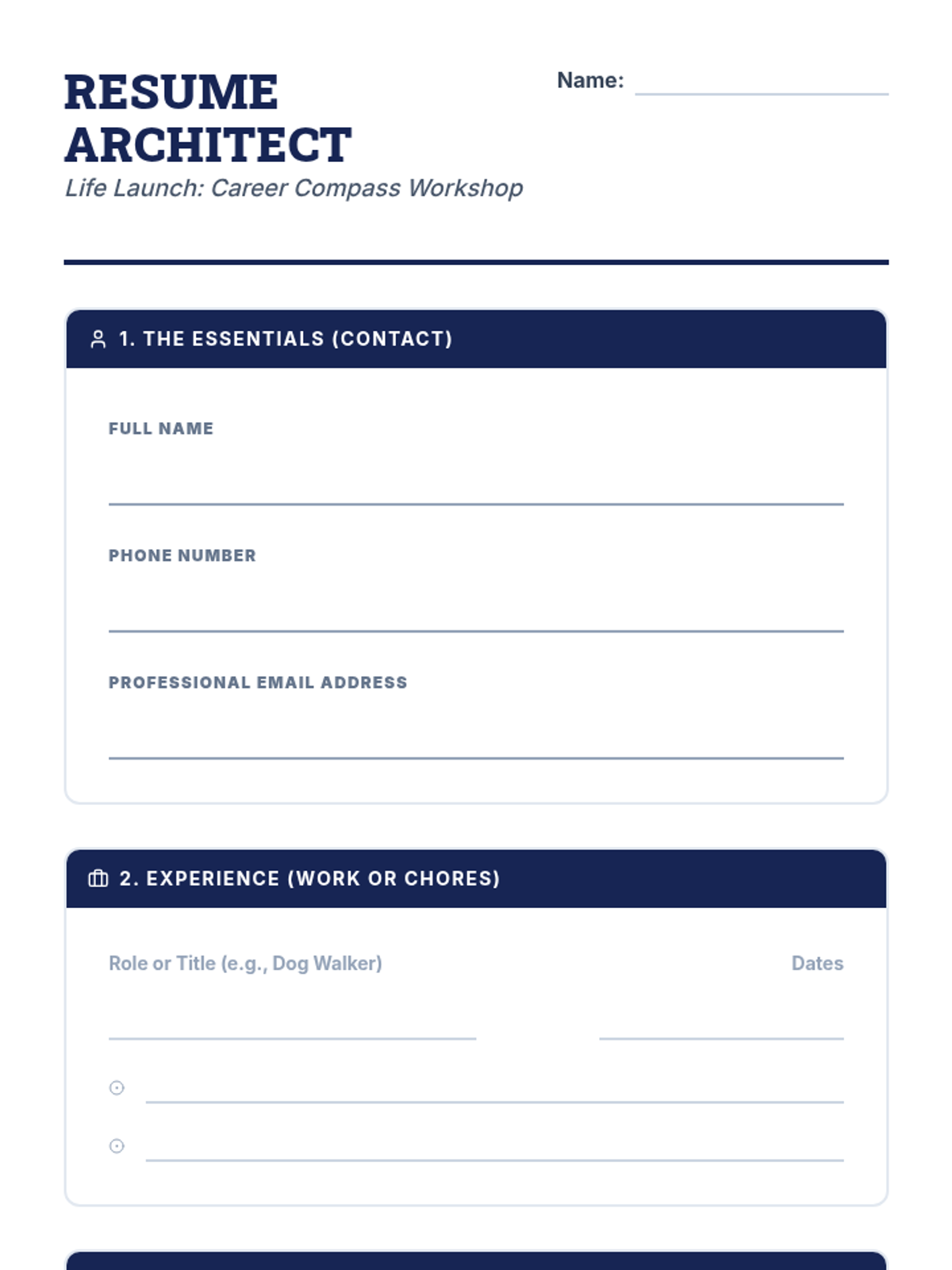
A structured resume template for students to draft their first professional resume. Revisions include stacked contact fields, increased line visibility, corrected instructions, and an added education section on page 2.
A slide deck focusing on career exploration and resume basics. Revisions include fixed slide isolation, reduced content for better fit, and improved visual legibility.