A visual presentation for Lesson 3 introducing response hotkeys (R, A, F) and thread navigation (N, P). Focuses on professional etiquette and the 'Golden Rule' of using Reply All.
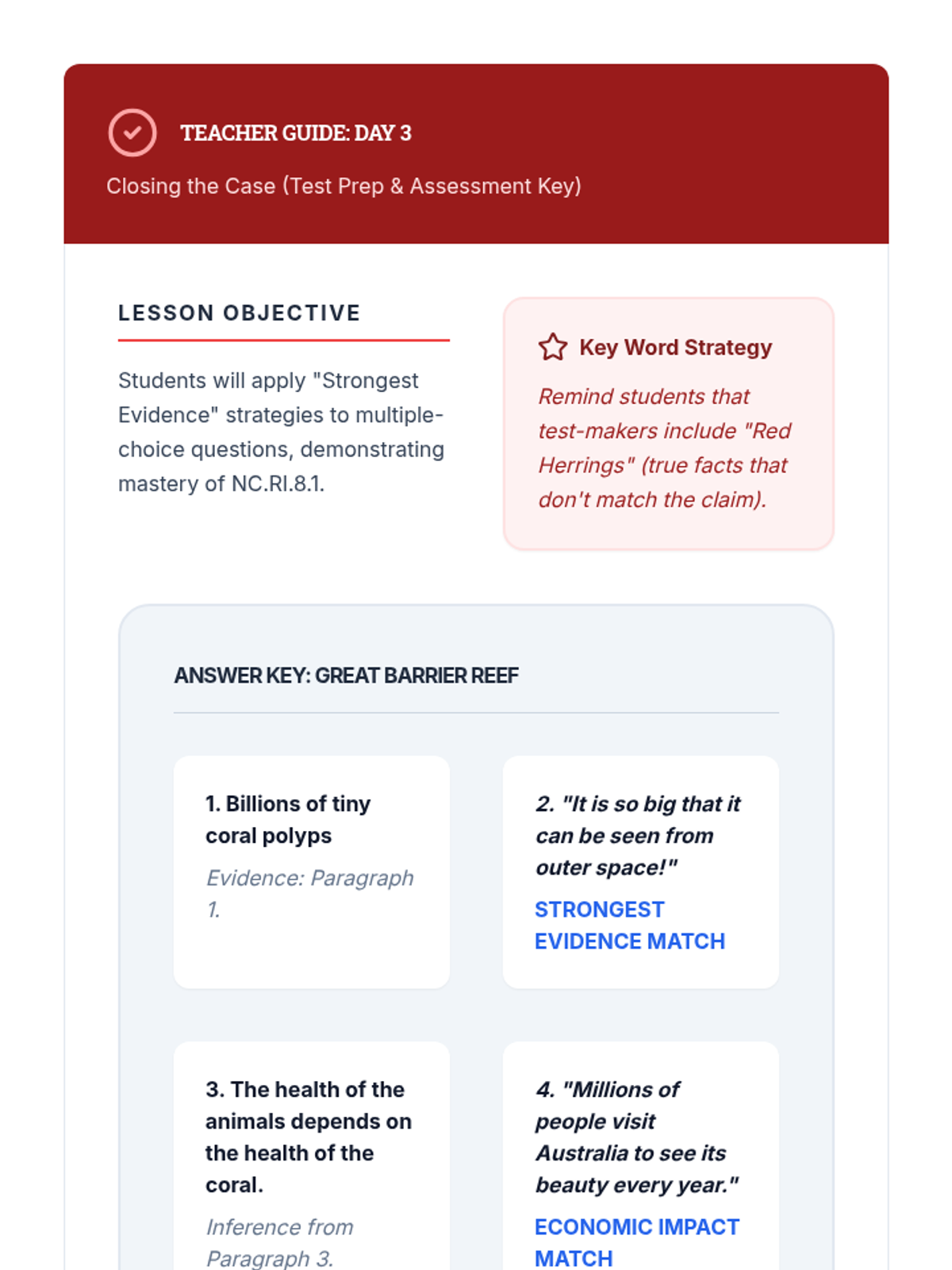
A facilitation guide for Day 3 including the assessment answer key and test-taking strategy notes for the "strongest evidence" concept.
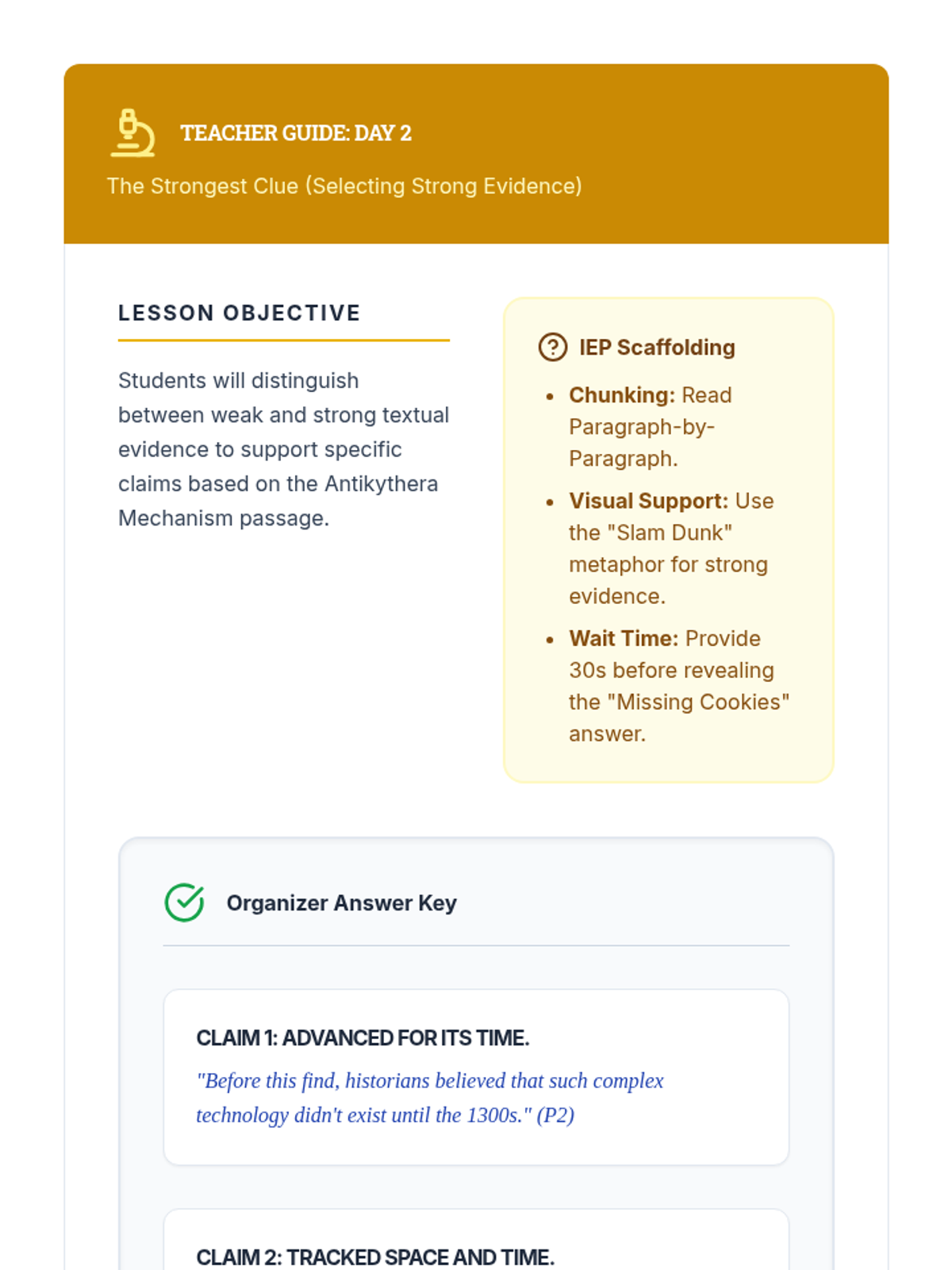
A facilitation guide for Day 2 including scaffolding tips for the Antikythera Mechanism passage and the answer key for the evidence organizer.
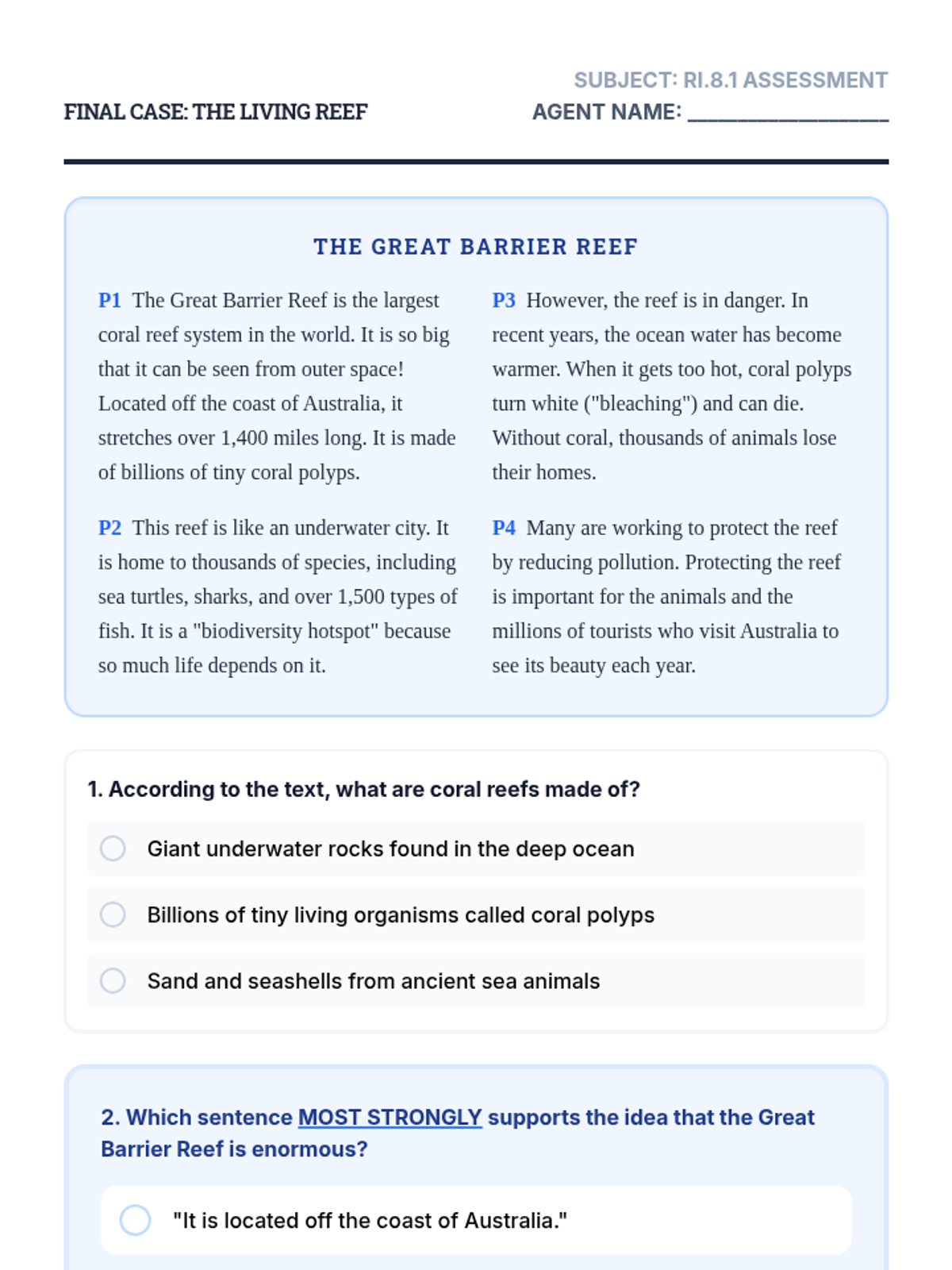
A reading assessment featuring a passage about the Great Barrier Reef and multiple-choice questions focused on identifying explicit information, making inferences, and selecting the strongest evidence.
A slide deck teaching test-taking strategies specifically for "strongest evidence" multiple-choice questions, preparing students for the final assessment.
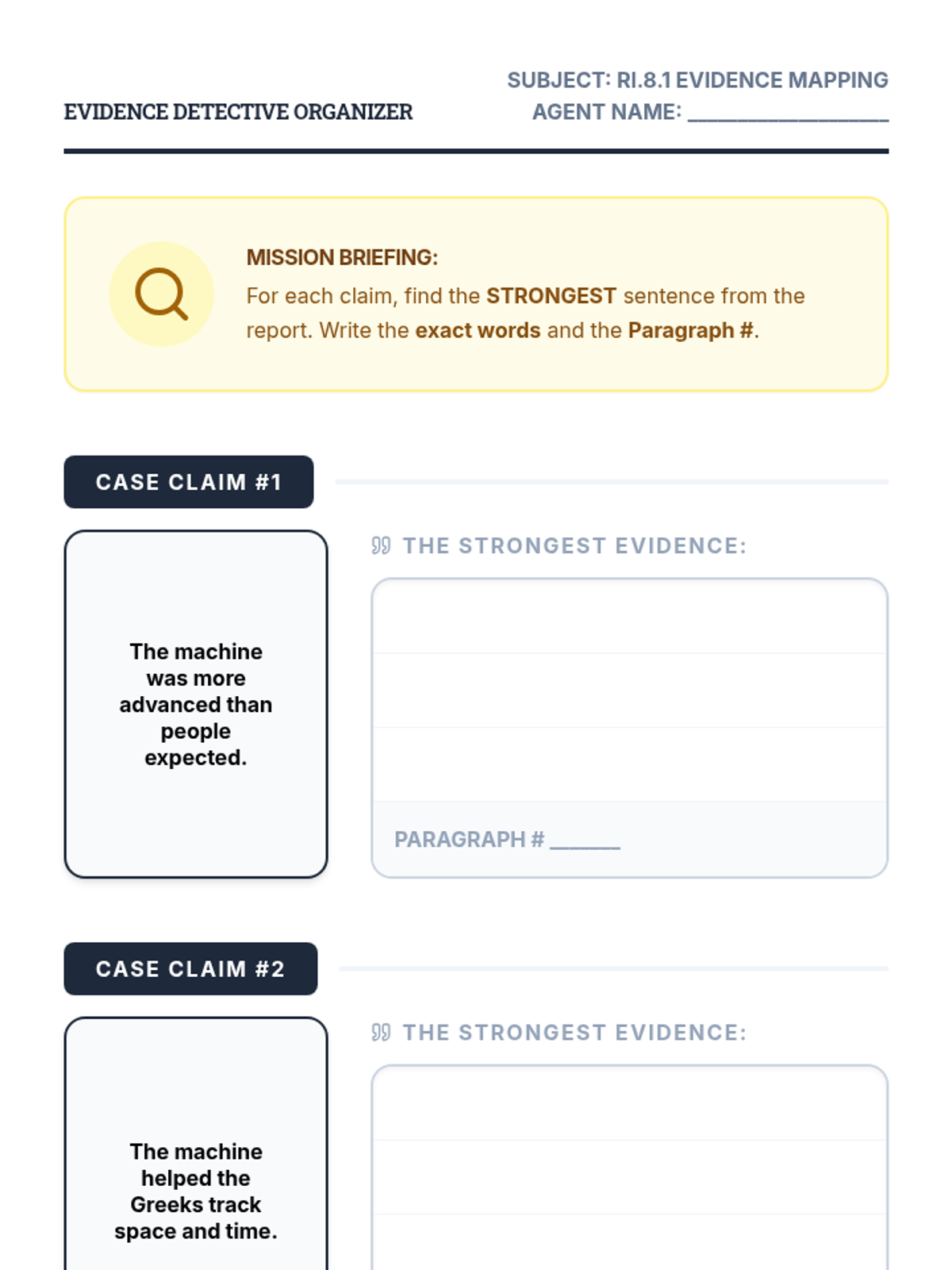
A graphic organizer designed to help students identify and write down the strongest textual evidence from the Antikythera Mechanism passage for specific claims and inferences.
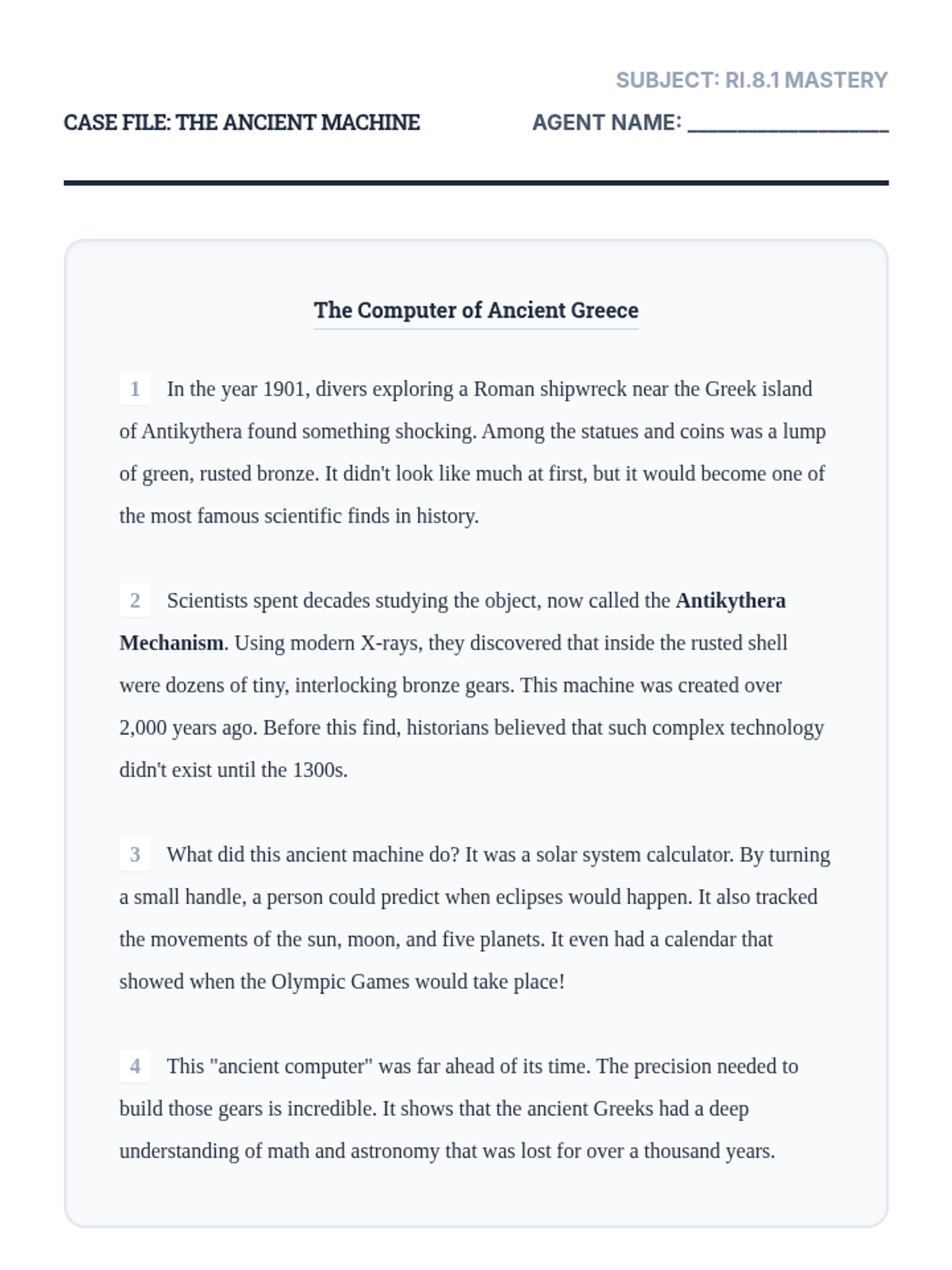
An informational passage about the discovery and function of the Antikythera Mechanism, written at an accessible level for special education students. Includes paragraph numbers and key vocabulary.
A slide deck explaining how to distinguish between weak and strong textual evidence, featuring a "Missing Cookies" practice scenario and introduction to the day's reading topic.
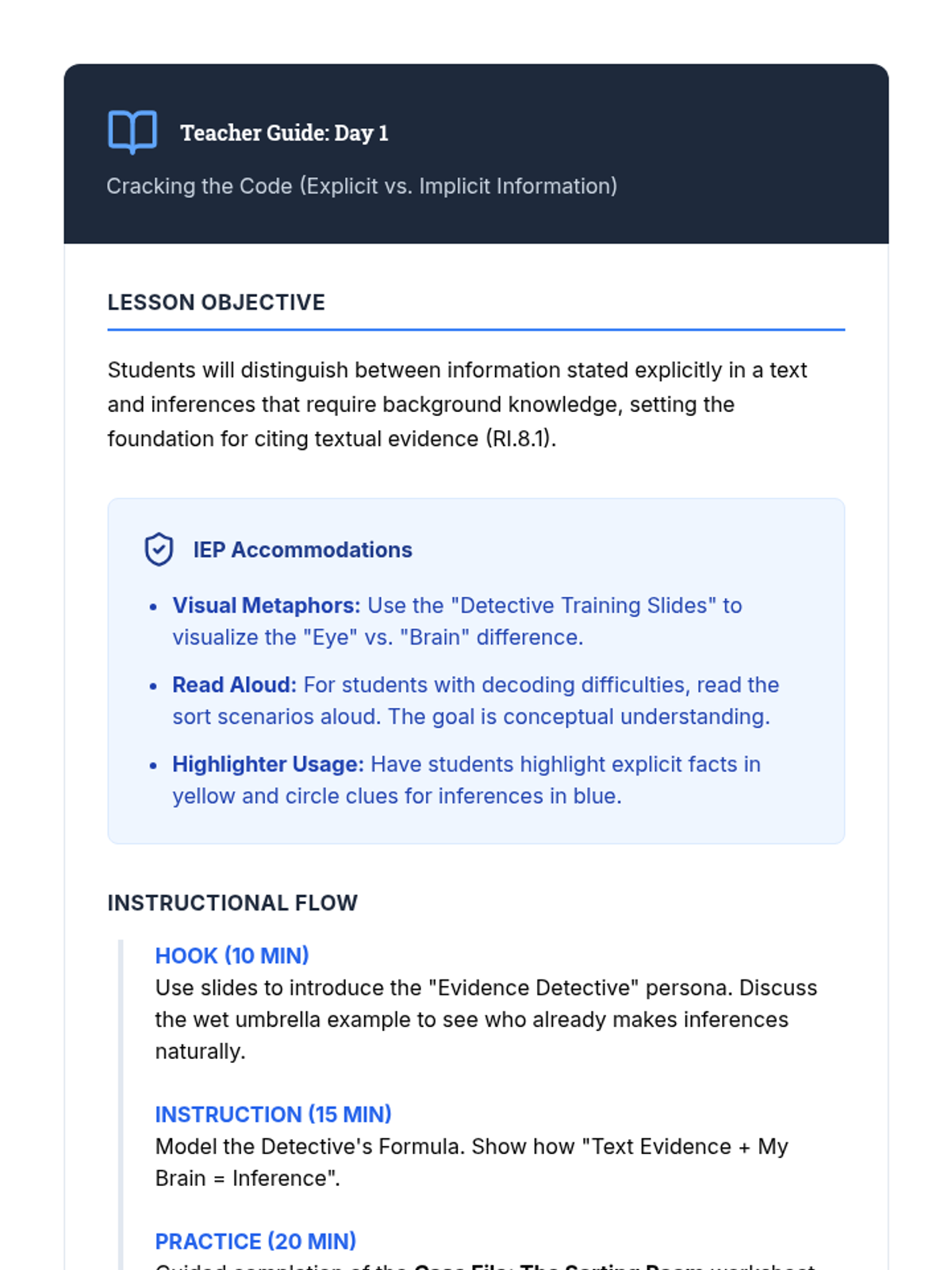
A facilitation guide for teachers including IEP accommodation strategies, a pacing guide, and the answer key for the Day 1 activity.
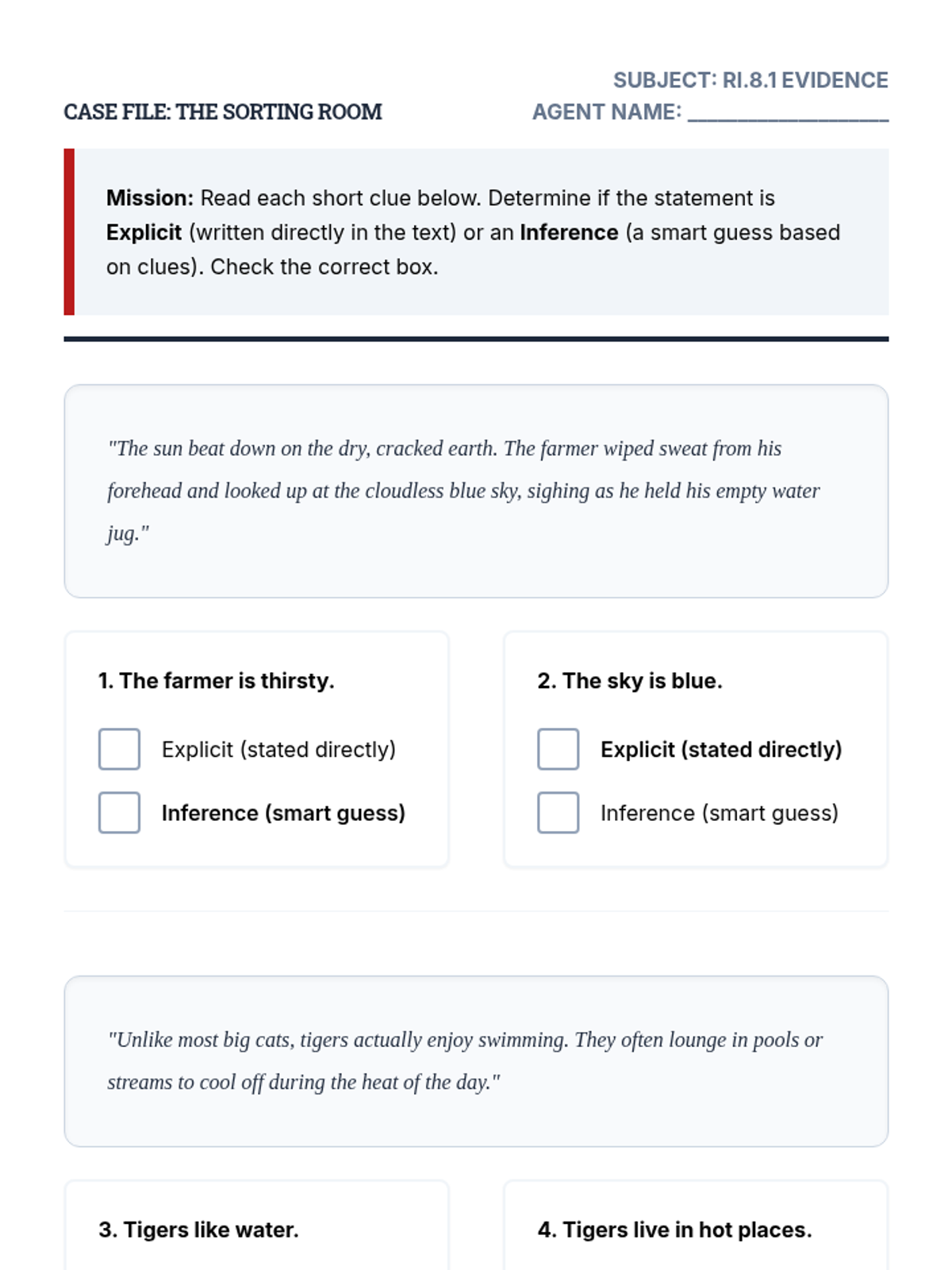
A practice worksheet where students sort information from short text snippets as either explicit facts or implicit inferences. Designed with clear formatting for students with IEPs.
An updated version of the Detective Training Slides with significantly larger text, bold visual elements, and high-contrast layouts to support readability in a special education setting. Projector-optimized with strict container sizing to prevent layout bleed.
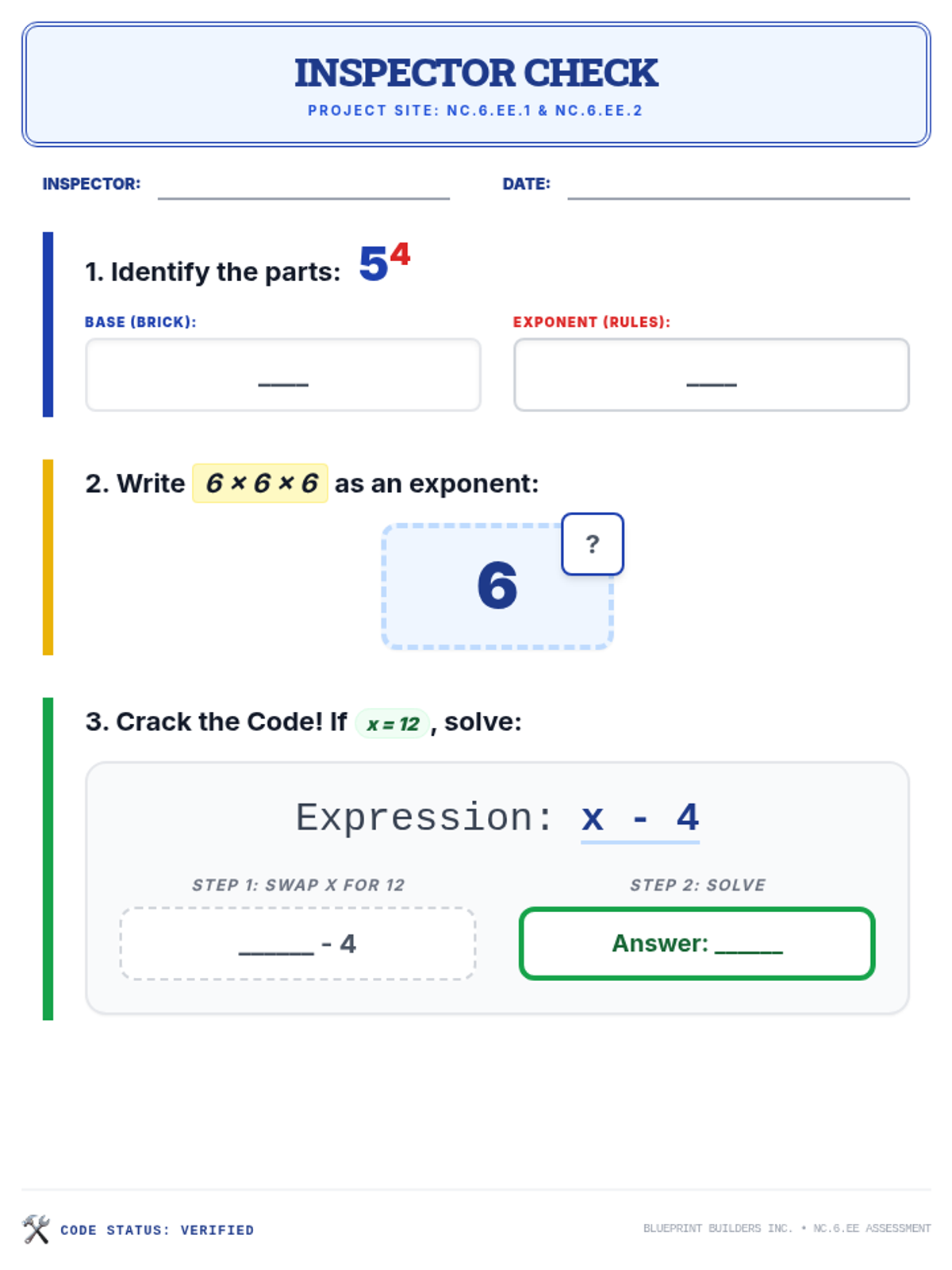
Revised exit ticket for NC.6.EE.1-2 with improved legibility for student handwriting by using white backgrounds for work areas. Step instructions have been enlarged for better accessibility, and the layout has been tightened to ensure a clean, one-page printout. Scaffolding remains optimized for students with IEPs.
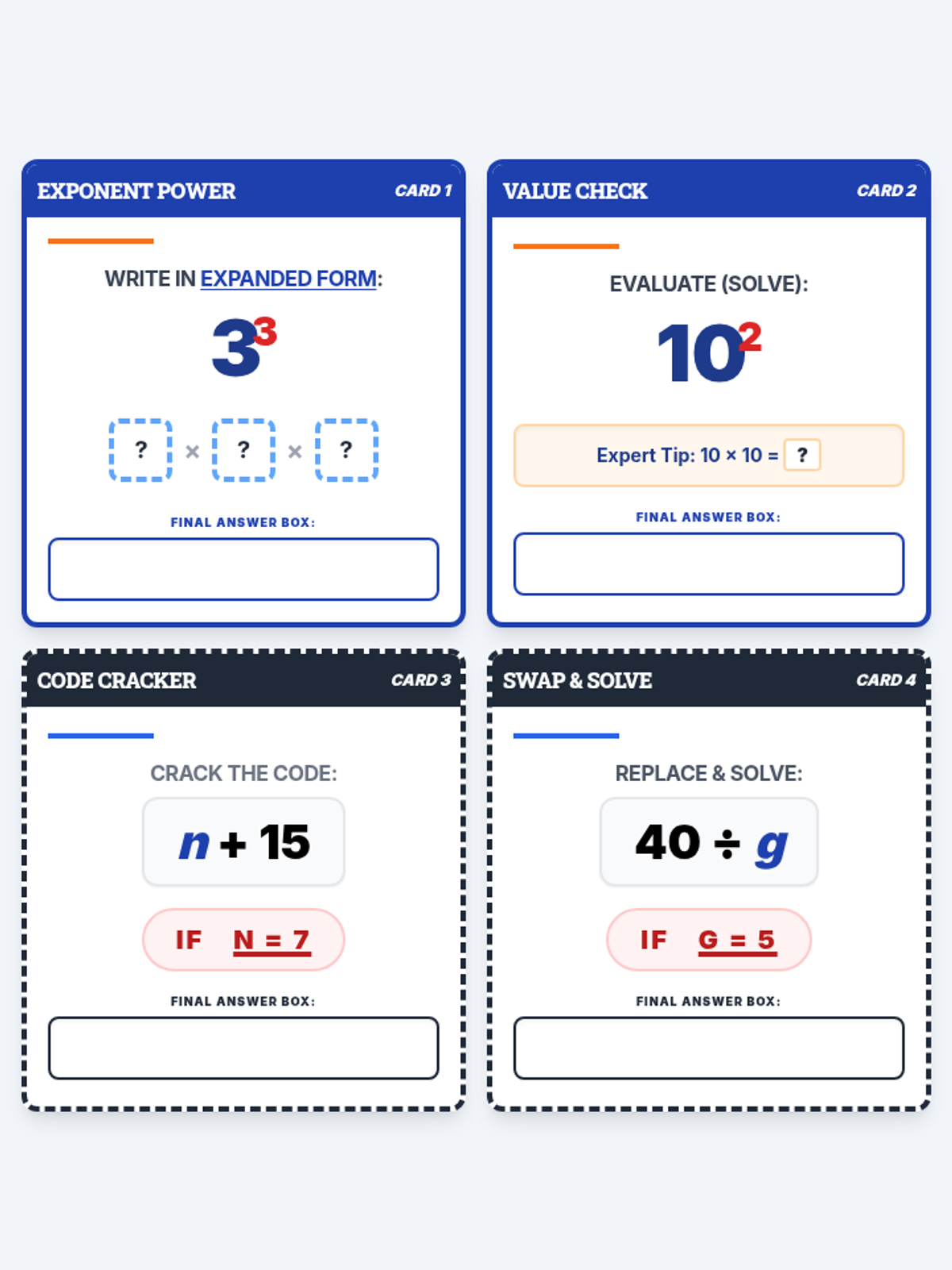
Final task cards for NC.6.EE.1-2 with optimized layout to ensure all four cards fit on a single page. Card headers have been redesigned for clarity, answer boxes are now clearly marked, and all scaffolded input areas feature high-contrast text and borders for reliable printing. Variable casing has been standardized (lowercase n and g) to prevent student confusion.
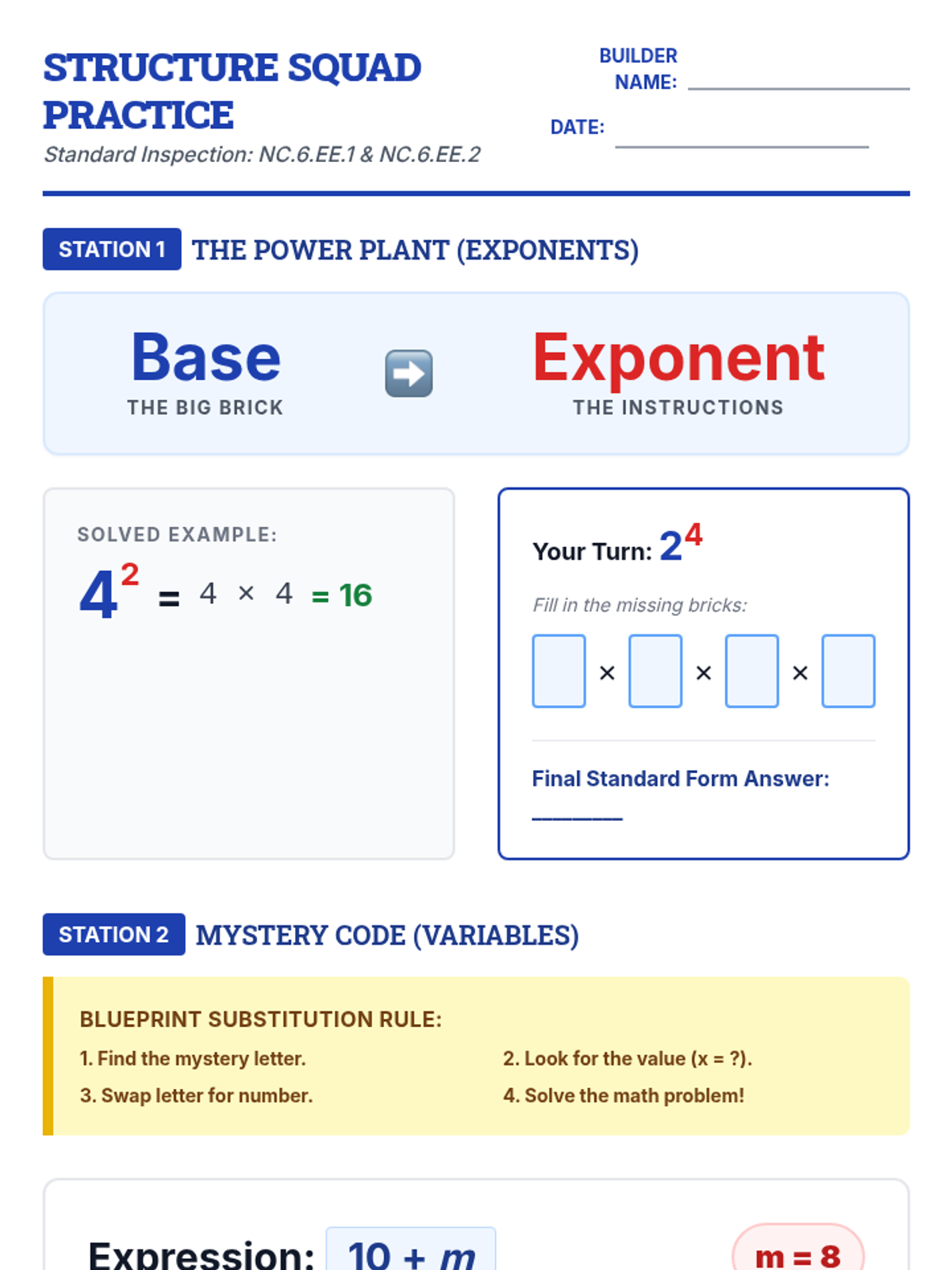
Revised worksheet for NC.6.EE.1-2 with fixed step numbering (1-4) in the substitution rule, improved superscript alignment in the example, and high-contrast text for student work areas. Problems are kept together on one page using break-inside-avoid.
Revised slide deck for NC.6.EE.1-2 with corrected exponent rendering, removed video placeholder in favor of a detailed visual comparison slide, and adjusted layouts to prevent overflow. All text is 24px or larger.
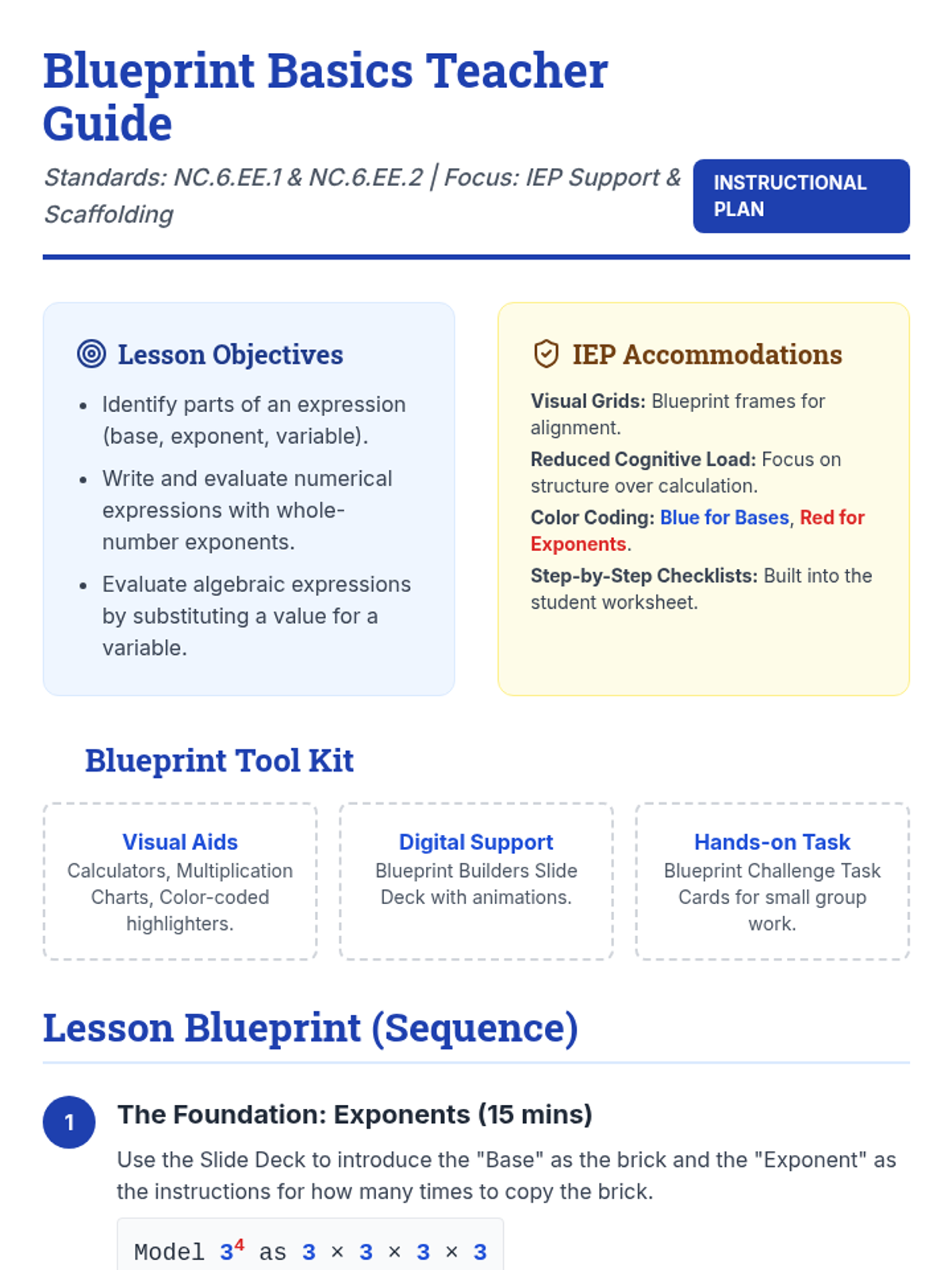
A revised teacher guide for a lesson on NC.6.EE.1 and NC.6.EE.2. Fixed LaTeX rendering issues, improved page breaks, and added color-coding for bases and exponents to match instructional strategies.
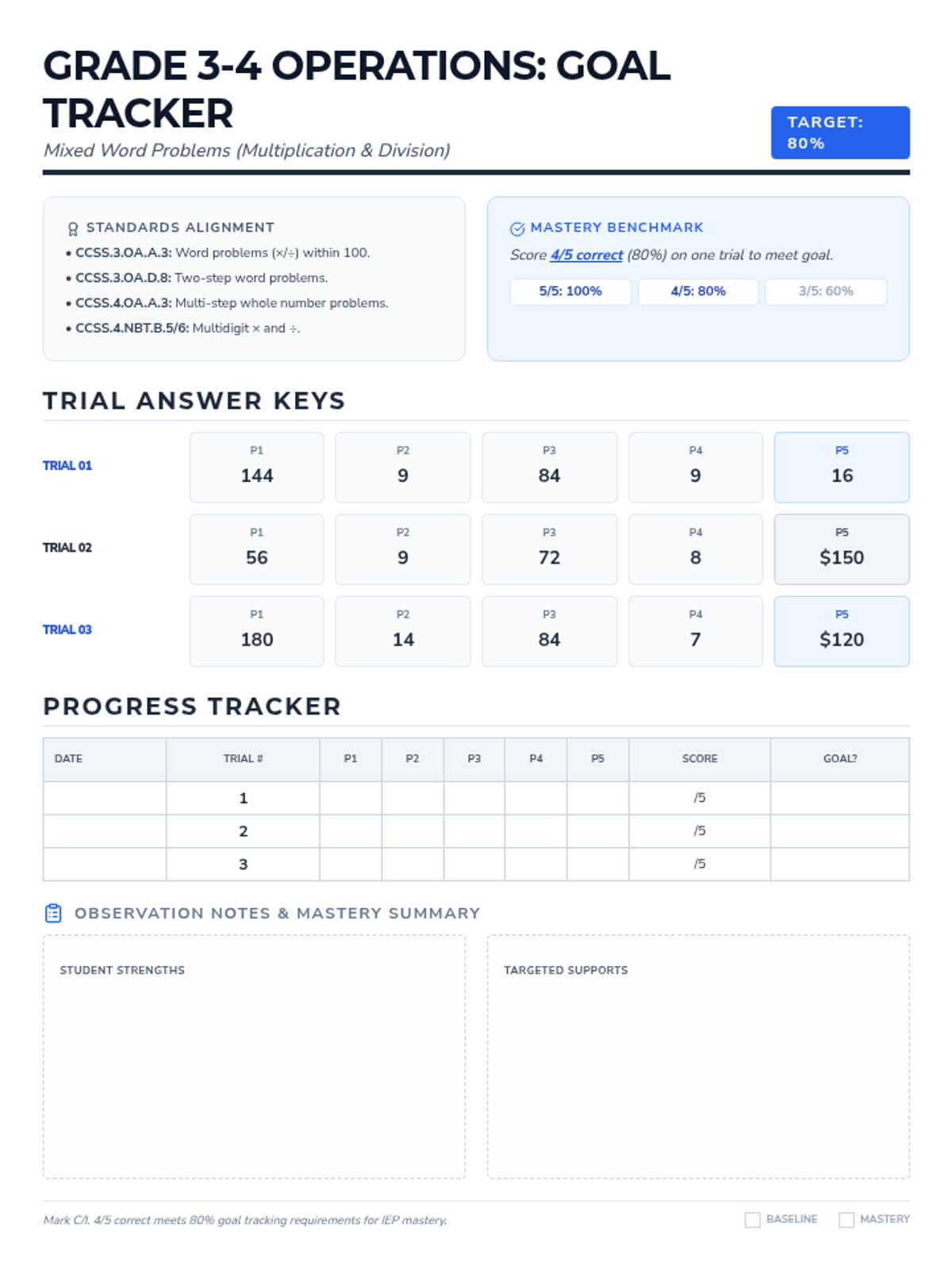
Teacher guide for the Operation Mastery 3-4 assessments, updated to include CCSS alignment for 3rd and 4th-grade multiplication and division word problems. Optimized for 8.5x11 printing with a condensed answer key and data log.
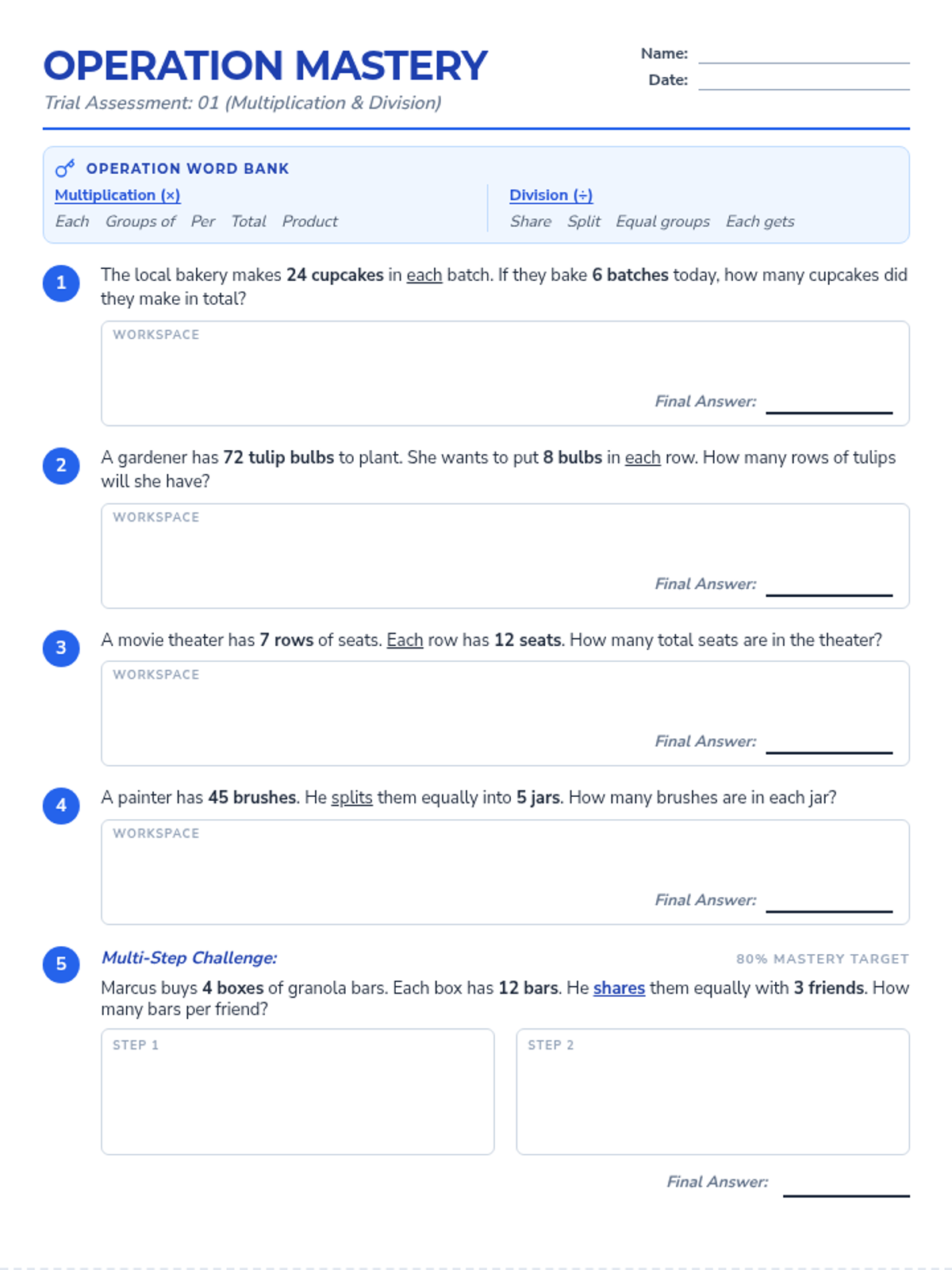
A set of three distinct multiplication and division word problem assessments (Trial 1-3). Renamed for easier identification as an IEP goal mastery resource. Features 5 problems per page with an 80% accuracy target and structured workspace for multi-step challenges. Optimized for 8.5x11 printing with corrected vertical spacing to prevent clipping on final page.
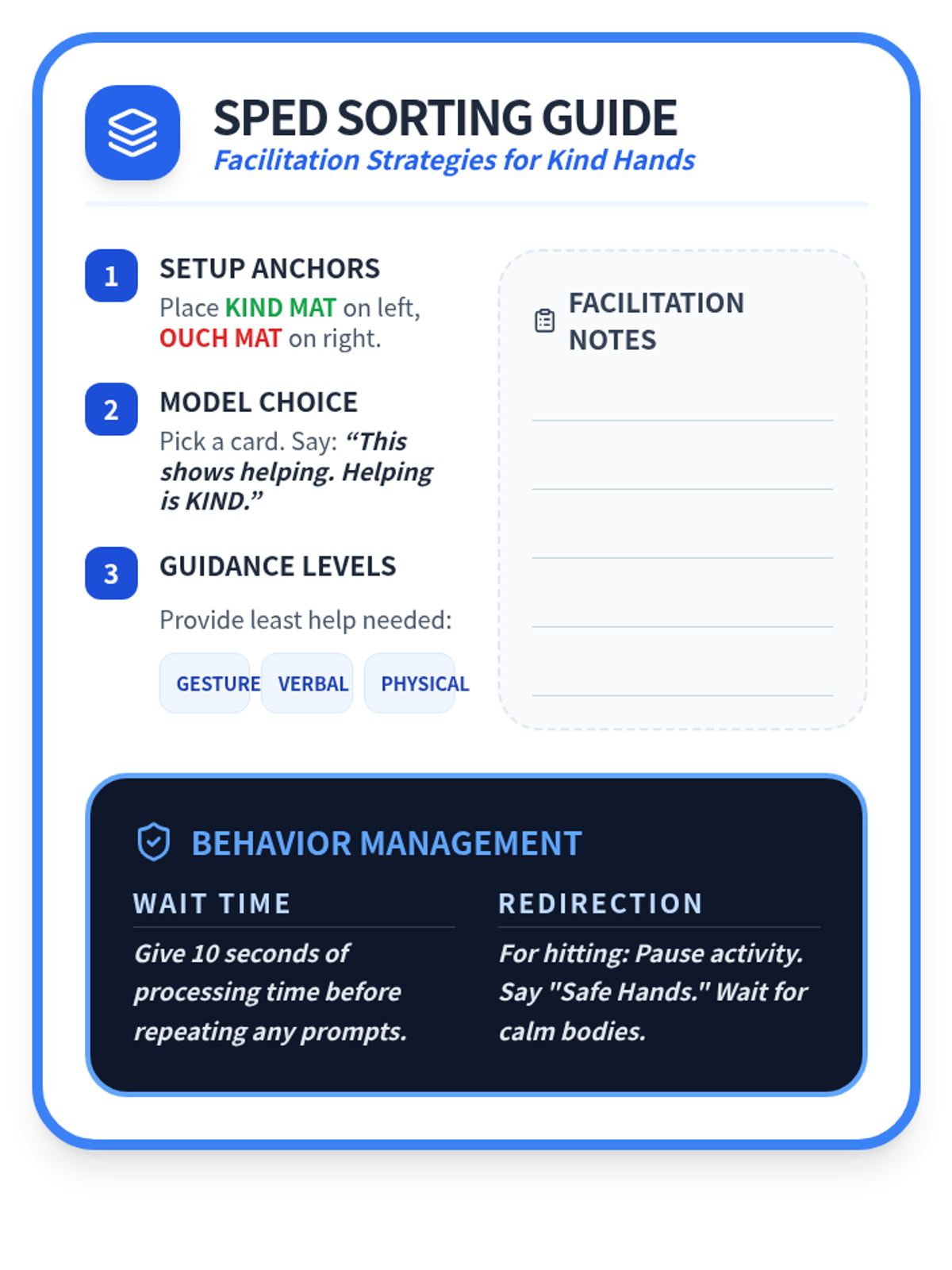
A specialized teacher guide for facilitating the sorting activity in a SPED classroom, including strategies for processing time, physical prompting levels, and behavior redirection. Condense to one page.
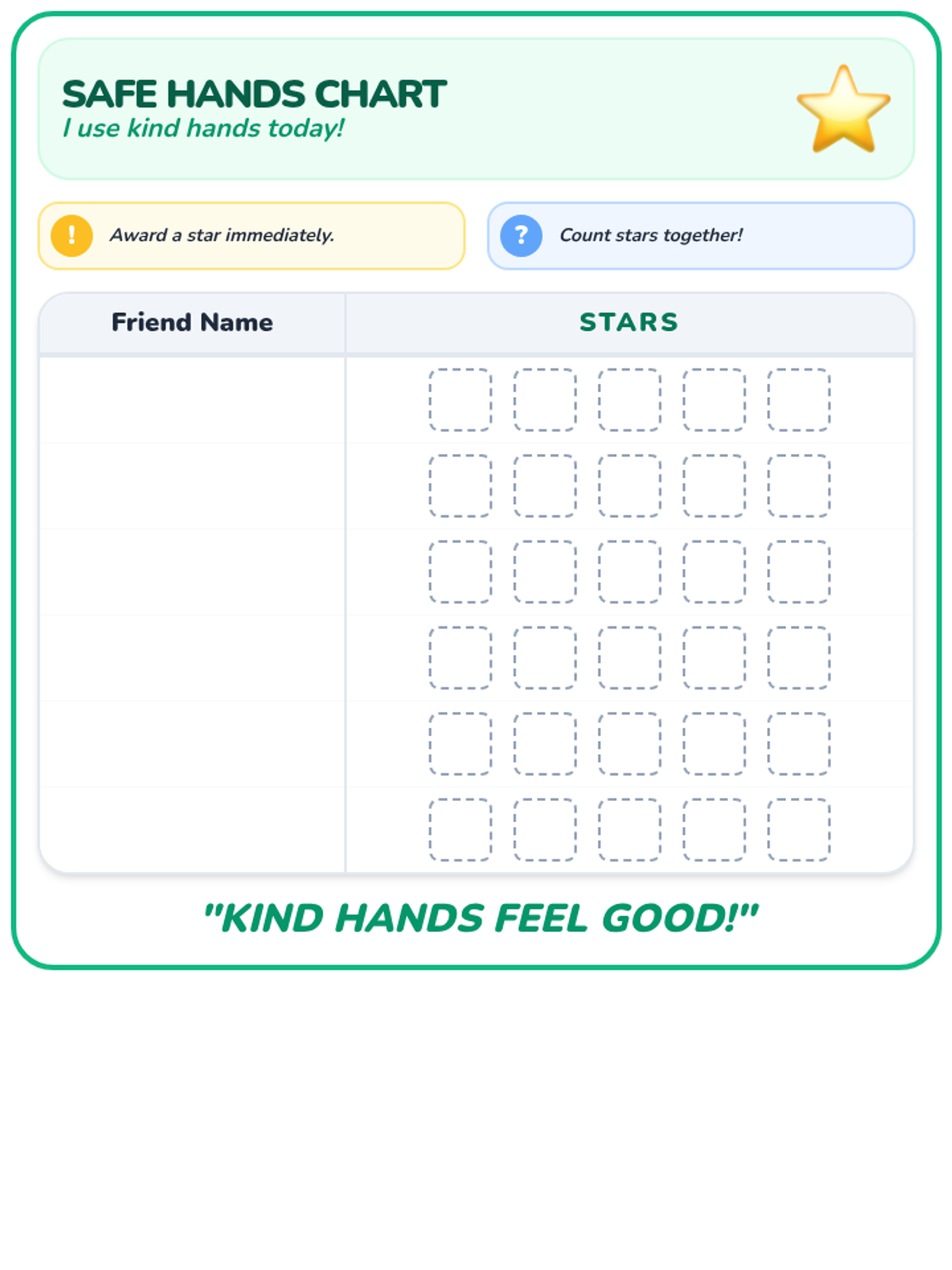
A visual token economy chart for tracking kind hand use in a special education classroom, featuring clear name fields and designated spaces for daily stickers or star rewards. Condense to a single page.
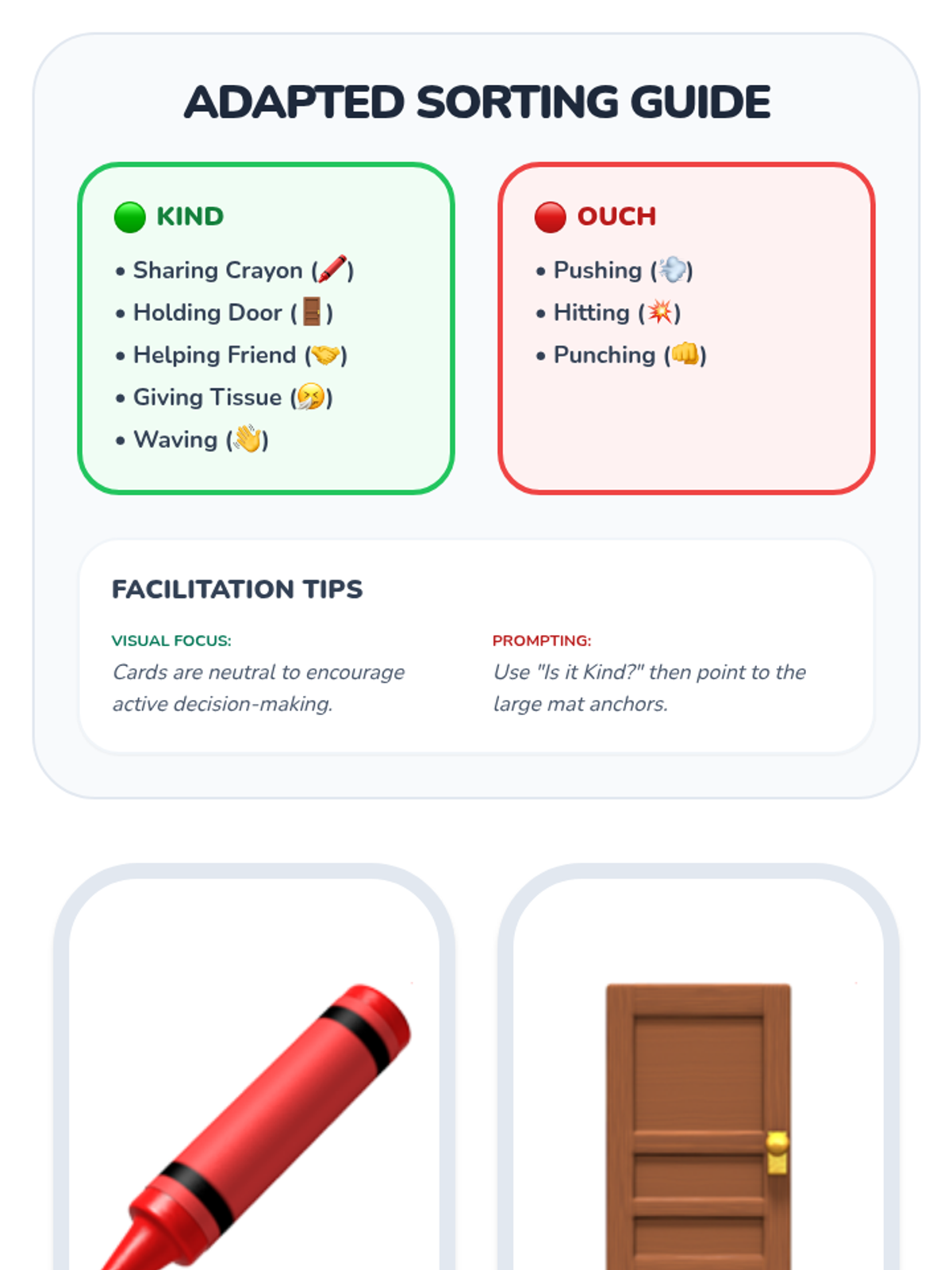
Visual sorting cards and a large-scale sorting mat designed for special education. Cards are neutral to encourage active decision-making, while the mat and teacher guide use high-contrast color anchors (Green/Red) for feedback.
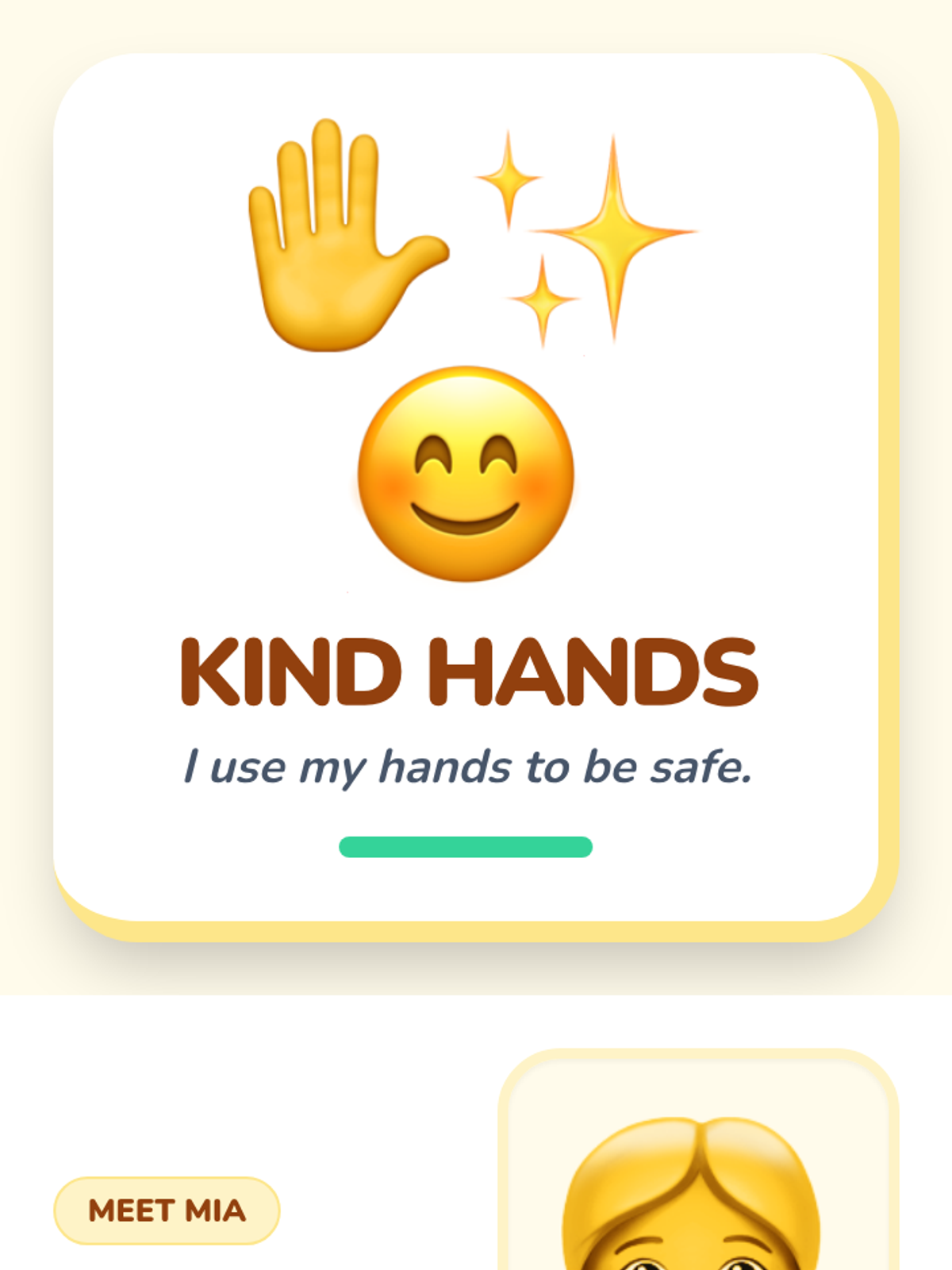
A social story adapted for special education, using simplified language, high-contrast visuals, and "First/Then" logic, concluding with a visual communication board for student responses.
High-contrast, visual-heavy slide deck for special education classrooms, featuring explicit behavior expectations (Eyes Watching, Hands in Lap), a sensory break slide, and simplified color-coded sorting visuals.
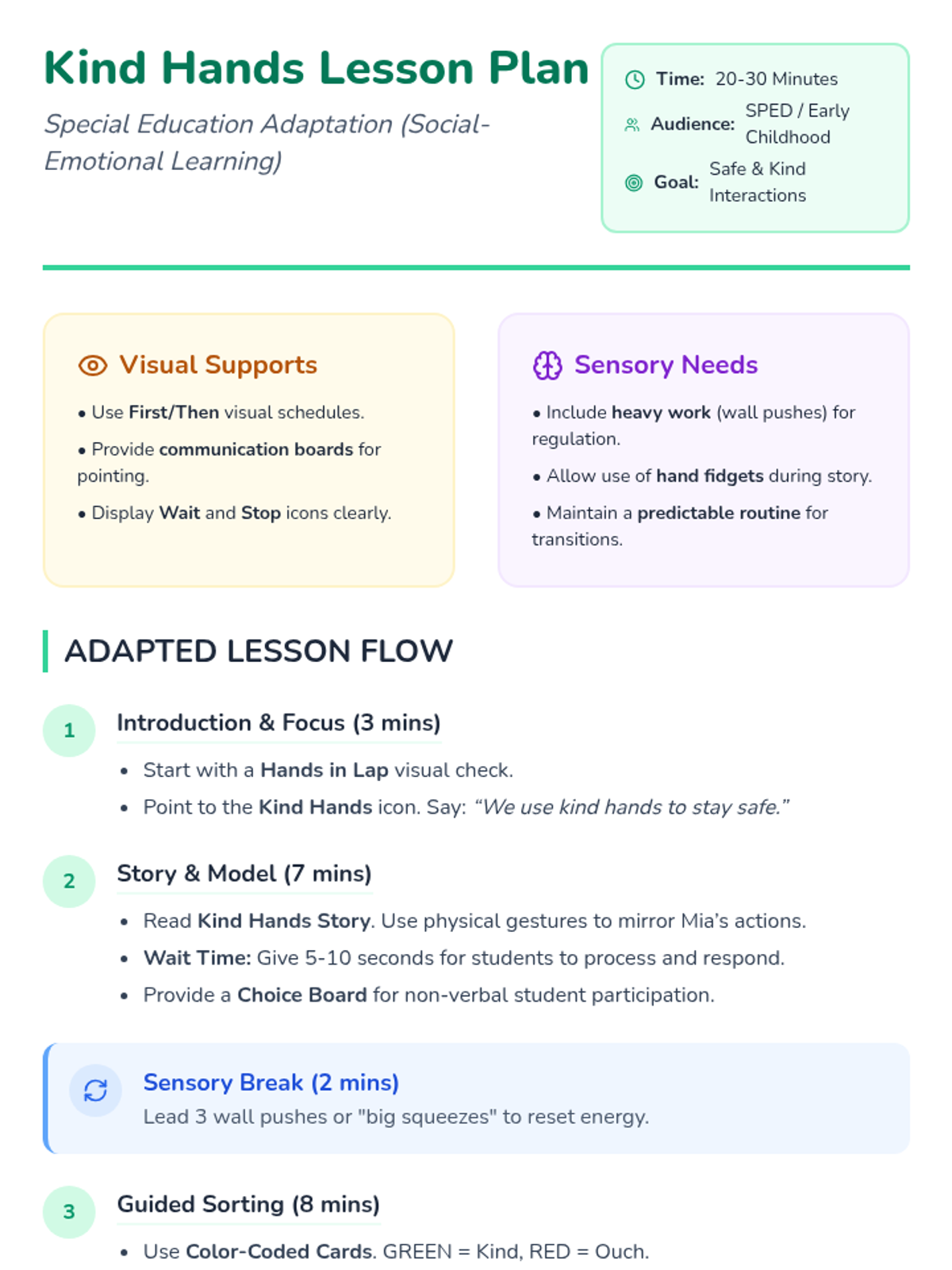
An adapted teacher lesson plan specifically designed for special education classrooms, featuring sensory breaks, visual schedules, color-coded instructions, and behavior management strategies for teaching kind hand use.
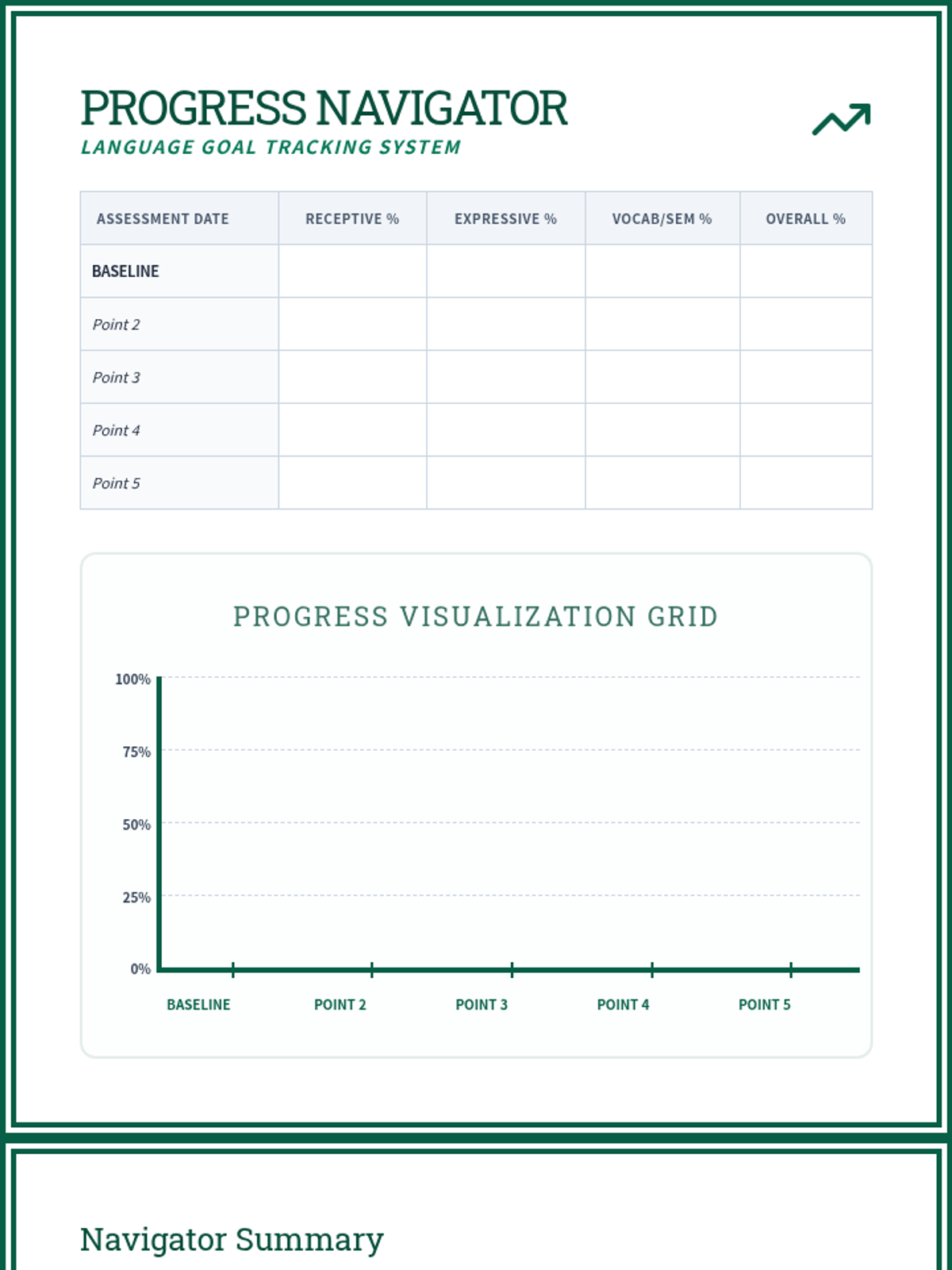
The Progress Navigator is a data-tracking tool that allows SLPs to plot longitudinal progress across language domains, featuring a visual graphing area and summary sections for clinical observations.
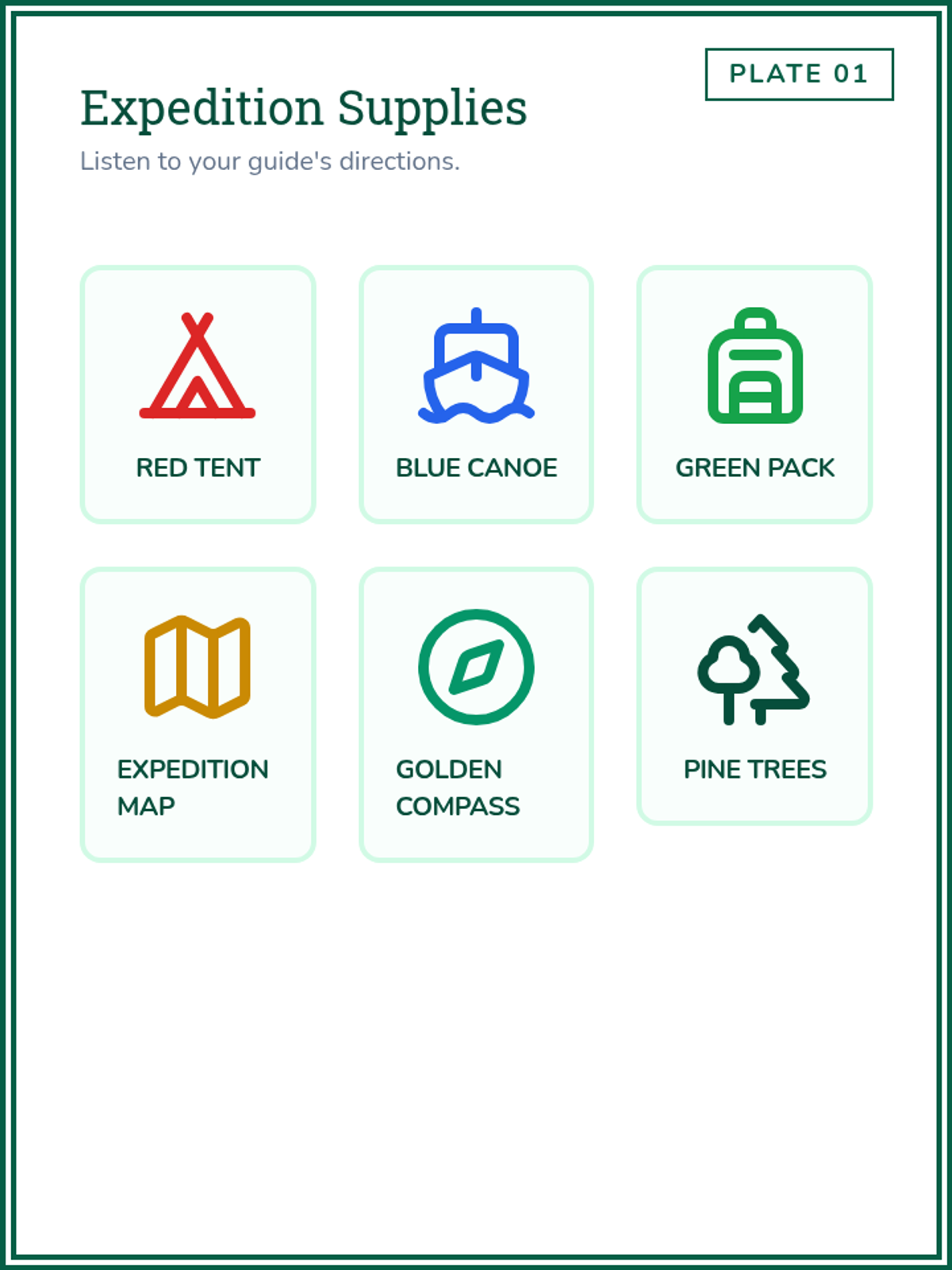
The Quest Stimulus Plates provide a high-quality visual anchor for students, featuring 4th-grade appropriate illustrations for multi-step directions, complex syntax, sentence formulation, and narrative sequencing.
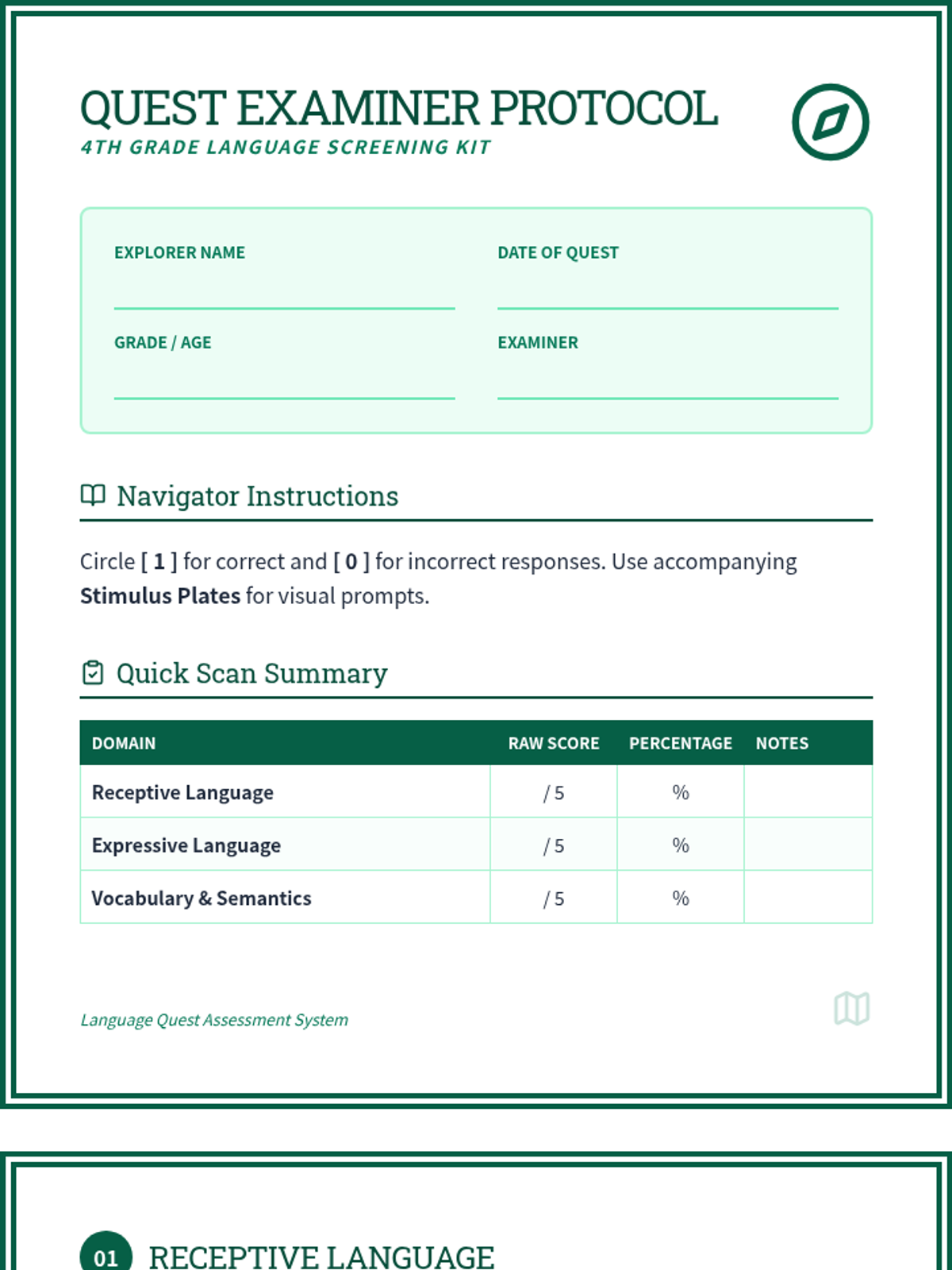
The Examiner Protocol is a multi-page scoring document for speech-language pathologists, featuring sections for receptive language, expressive language, and vocabulary, complete with clear scoring criteria and observation areas.
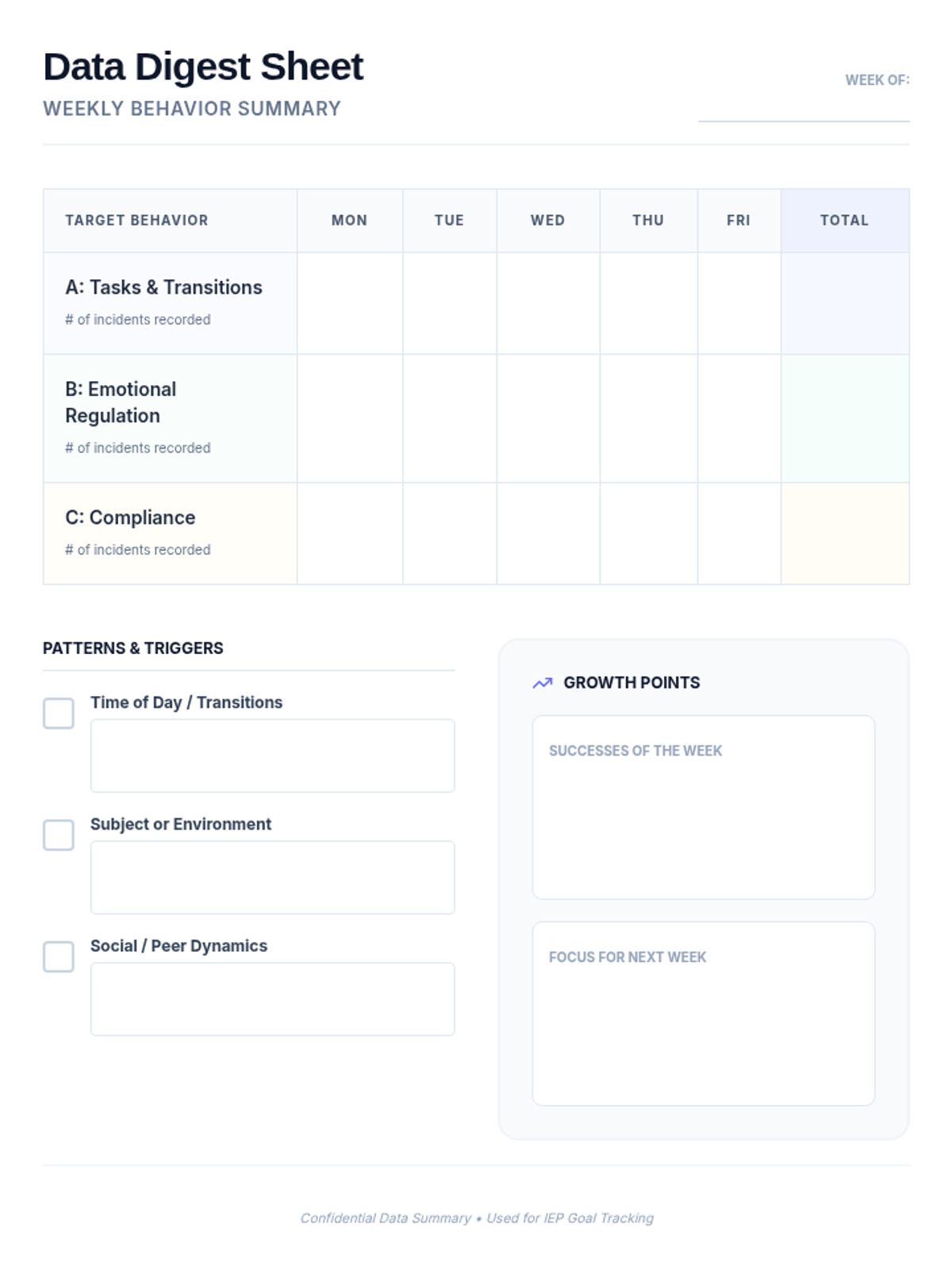
A weekly aggregation tool for teachers and IAs to summarize behavioral incident data. It includes space for quantitative totals and qualitative pattern analysis to inform student support strategies.
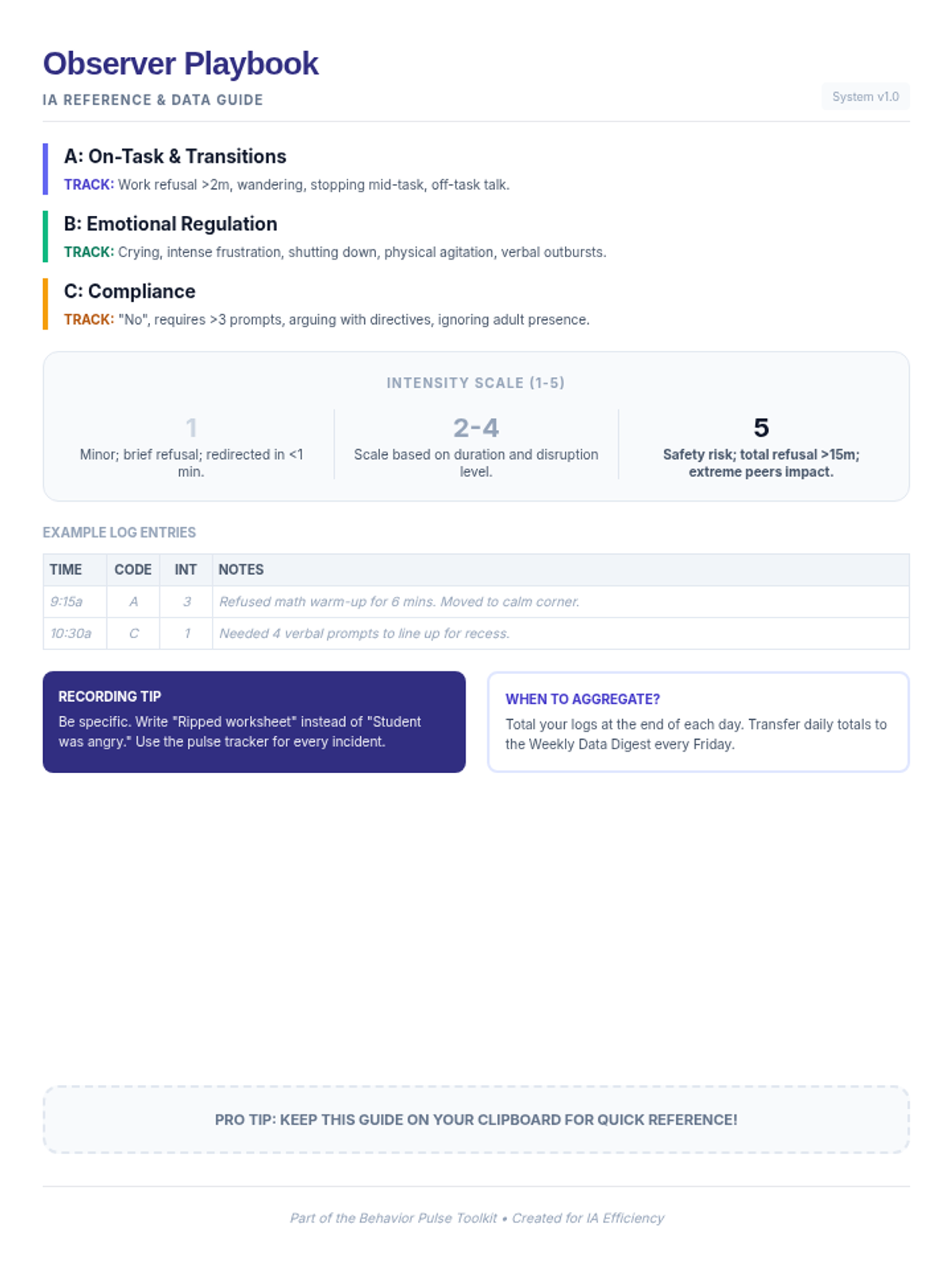
A practical reference guide for Instructional Assistants that defines specific behaviors to track (On-Task, Regulation, Compliance) and provides a standardized intensity scale for consistent data entry.
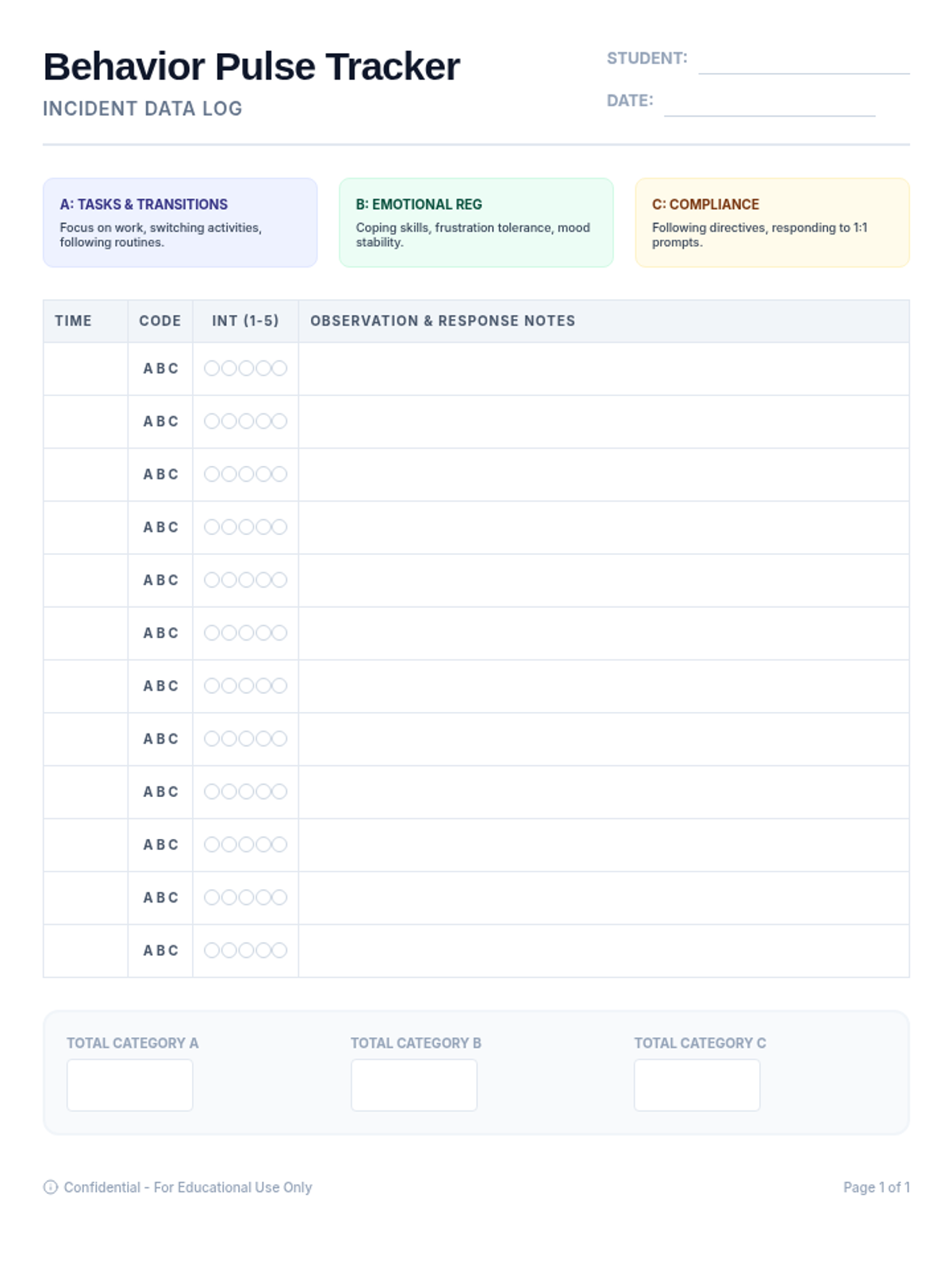
A streamlined incident log designed for Instructional Assistants to quickly record classroom behavior data. Includes coded categories for transitions, regulation, and compliance with a simple intensity scale.
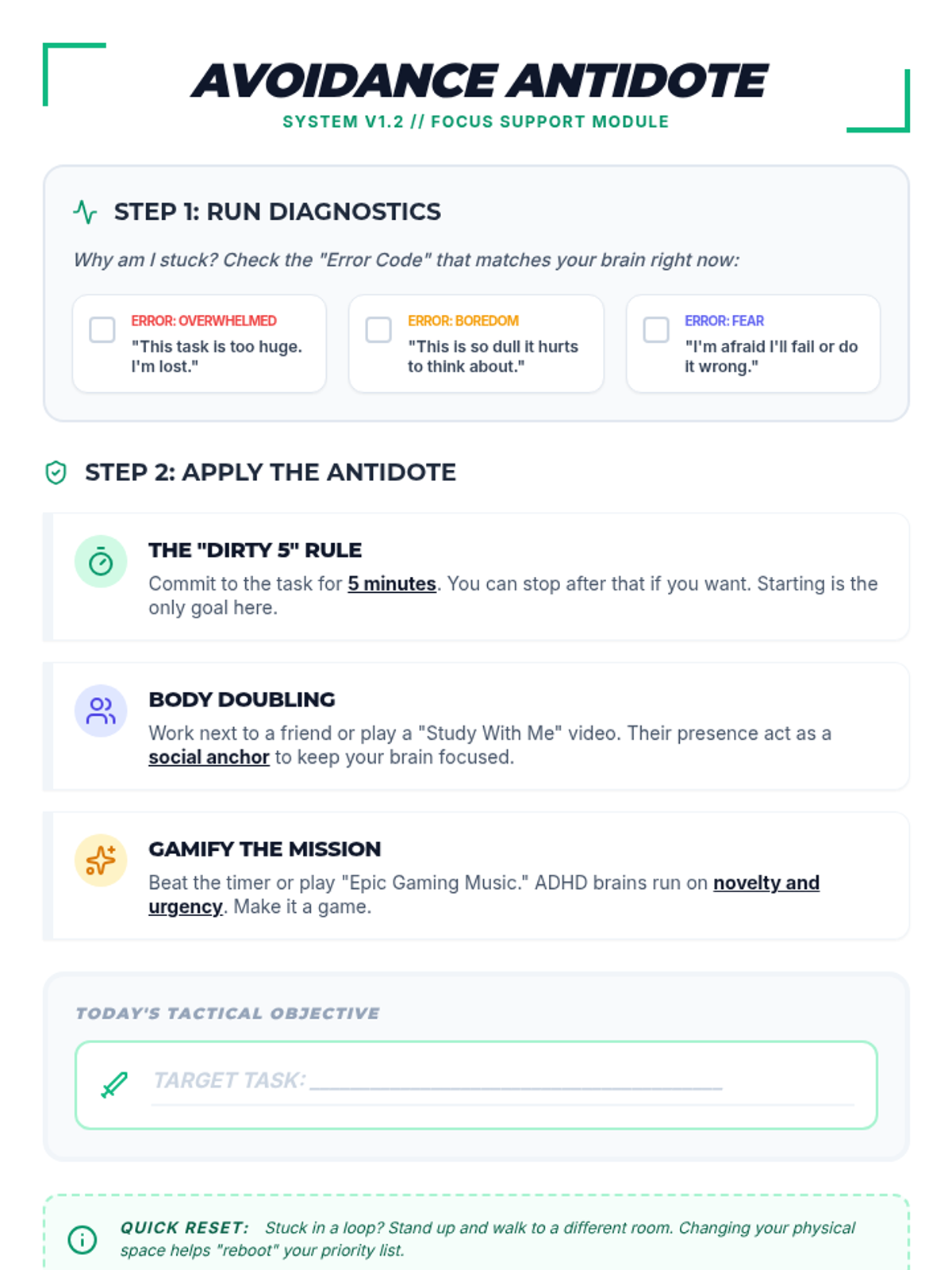
A visual reference guide for 9th-grade students to identify the root cause of their task avoidance and select specific ADHD-friendly strategies like body doubling, the 5-minute rule, or gamification to get started.
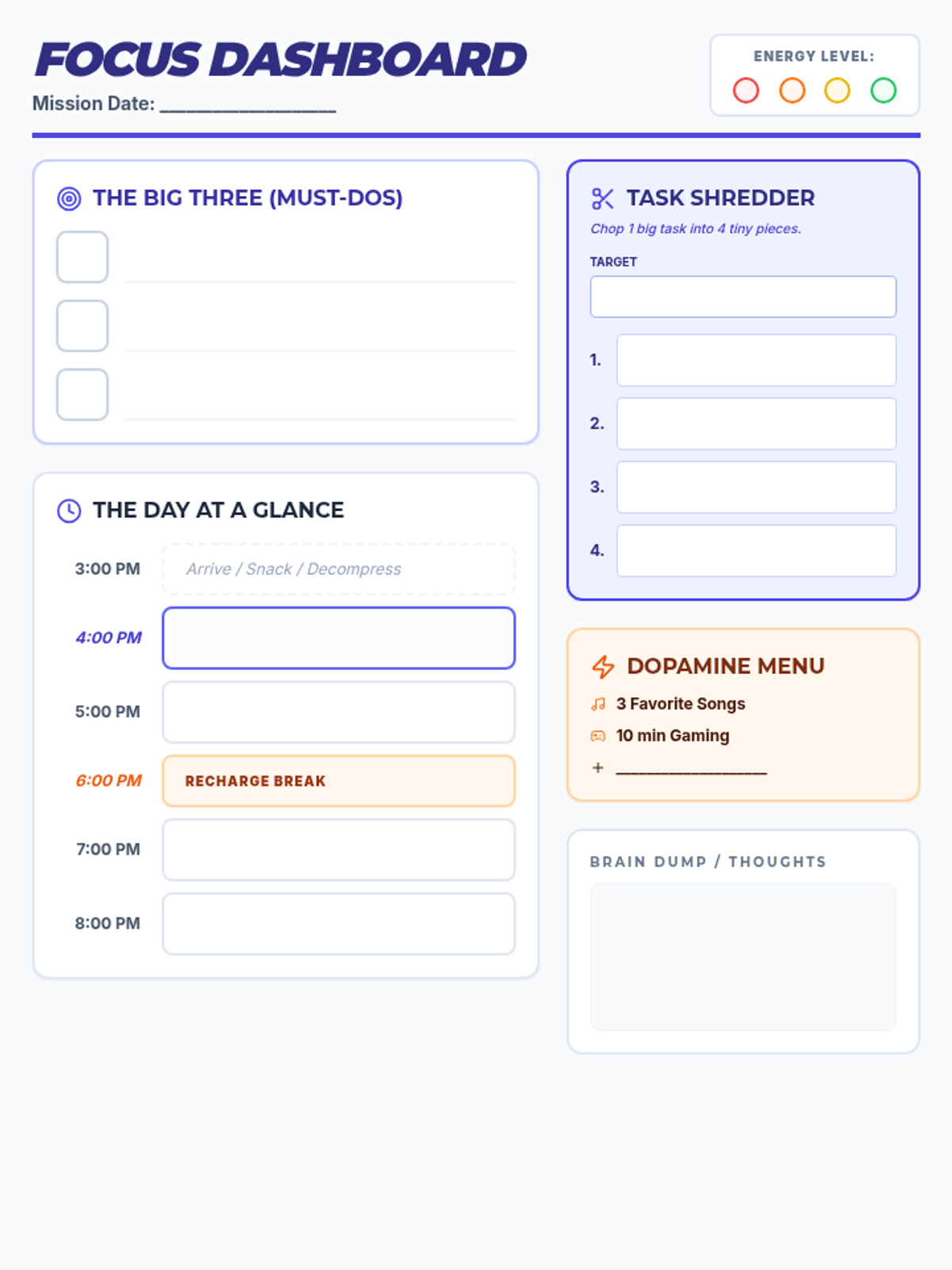
A daily visual schedule template designed for 9th-grade students with ADHD, featuring a task shredder for breaking down large projects, a visual timeline, and a dopamine reward menu to combat task avoidance.
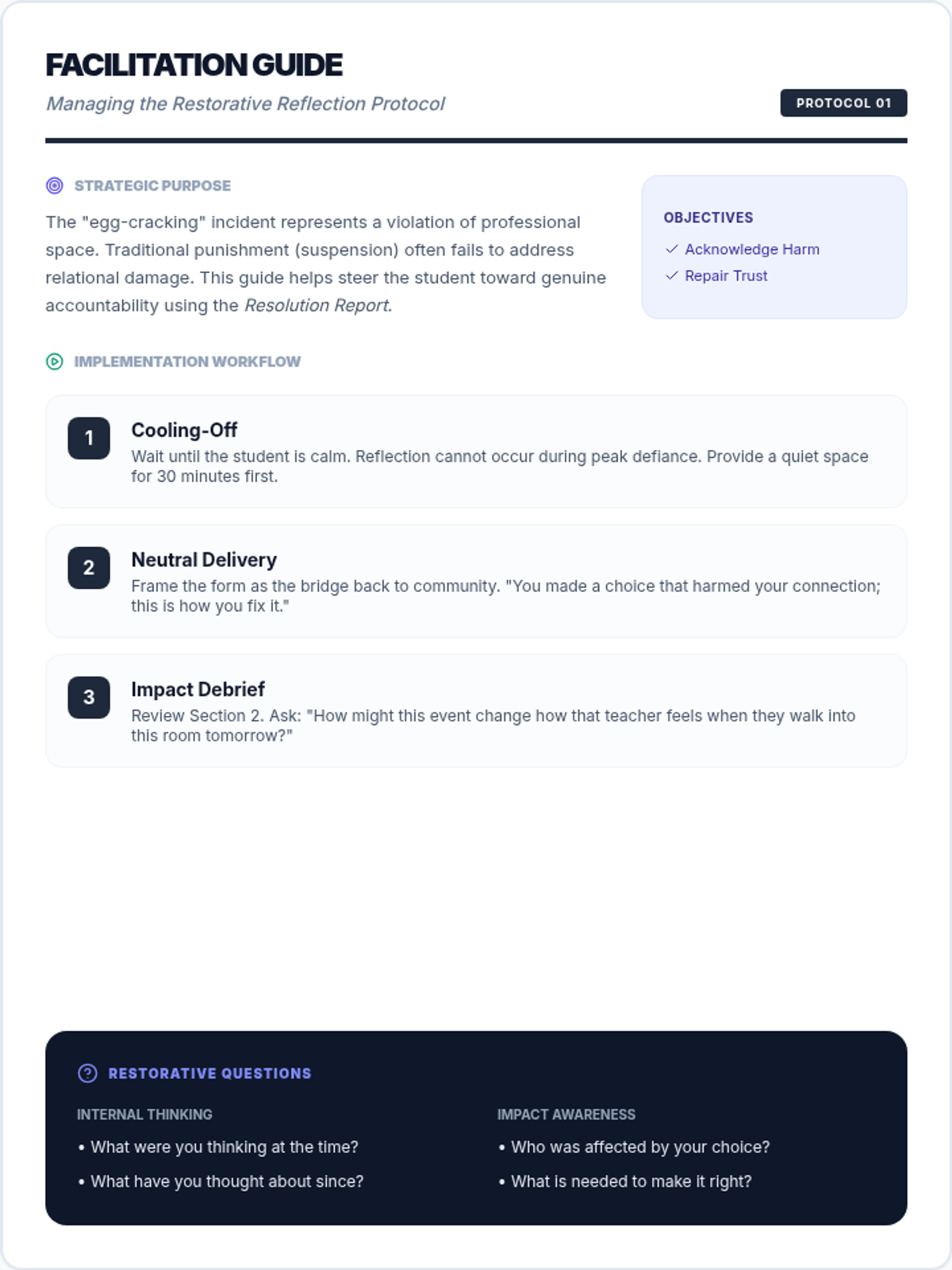
A professional teacher's guide for facilitating restorative conversations after a behavioral incident. It includes the purpose of reflection, implementation steps, and a restorative questioning framework.
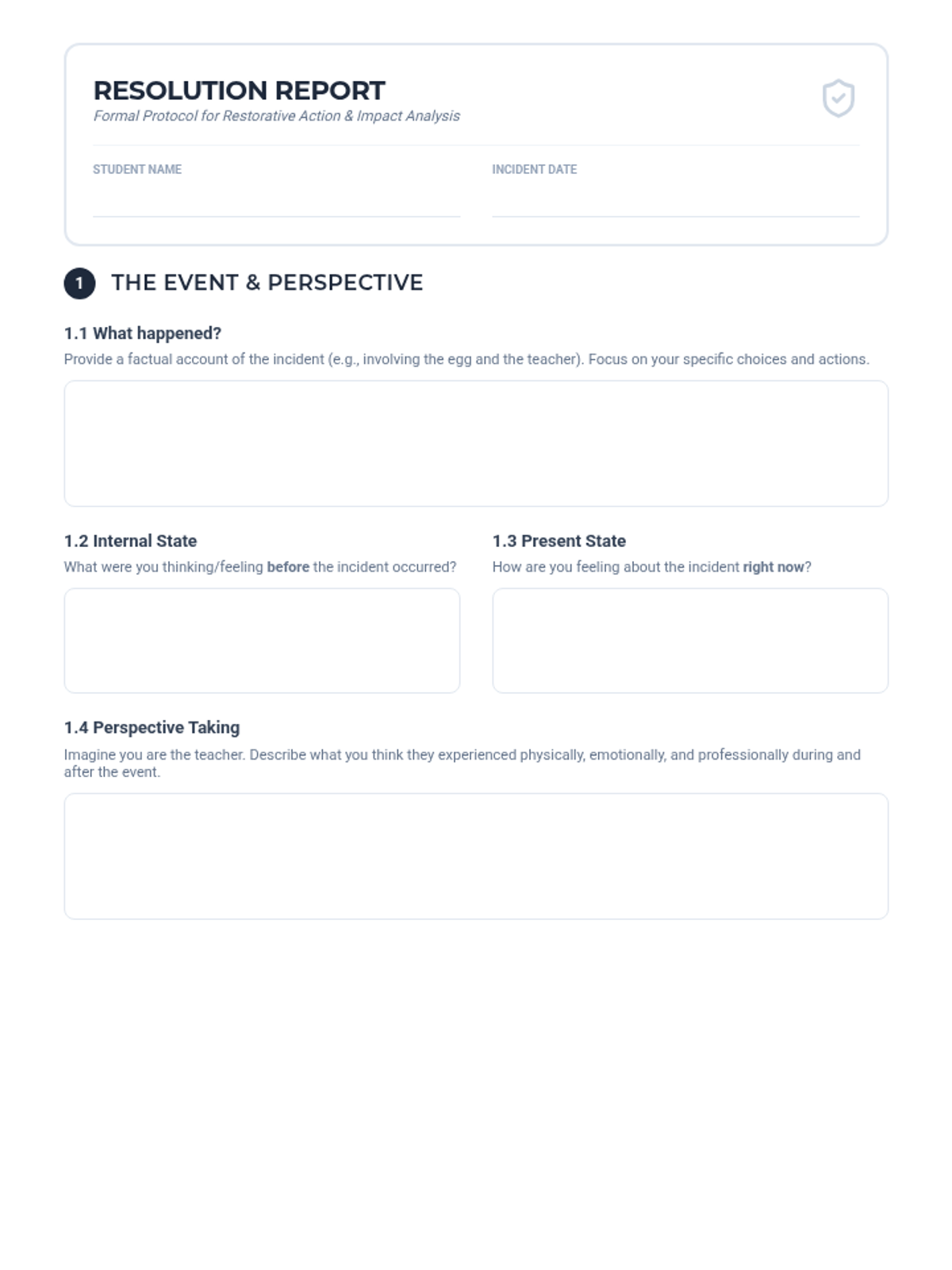
A detailed, two-page restorative reflection form designed to help students analyze the impact of their actions, take another's perspective, and identify concrete steps for repairing harm after a specific incident.
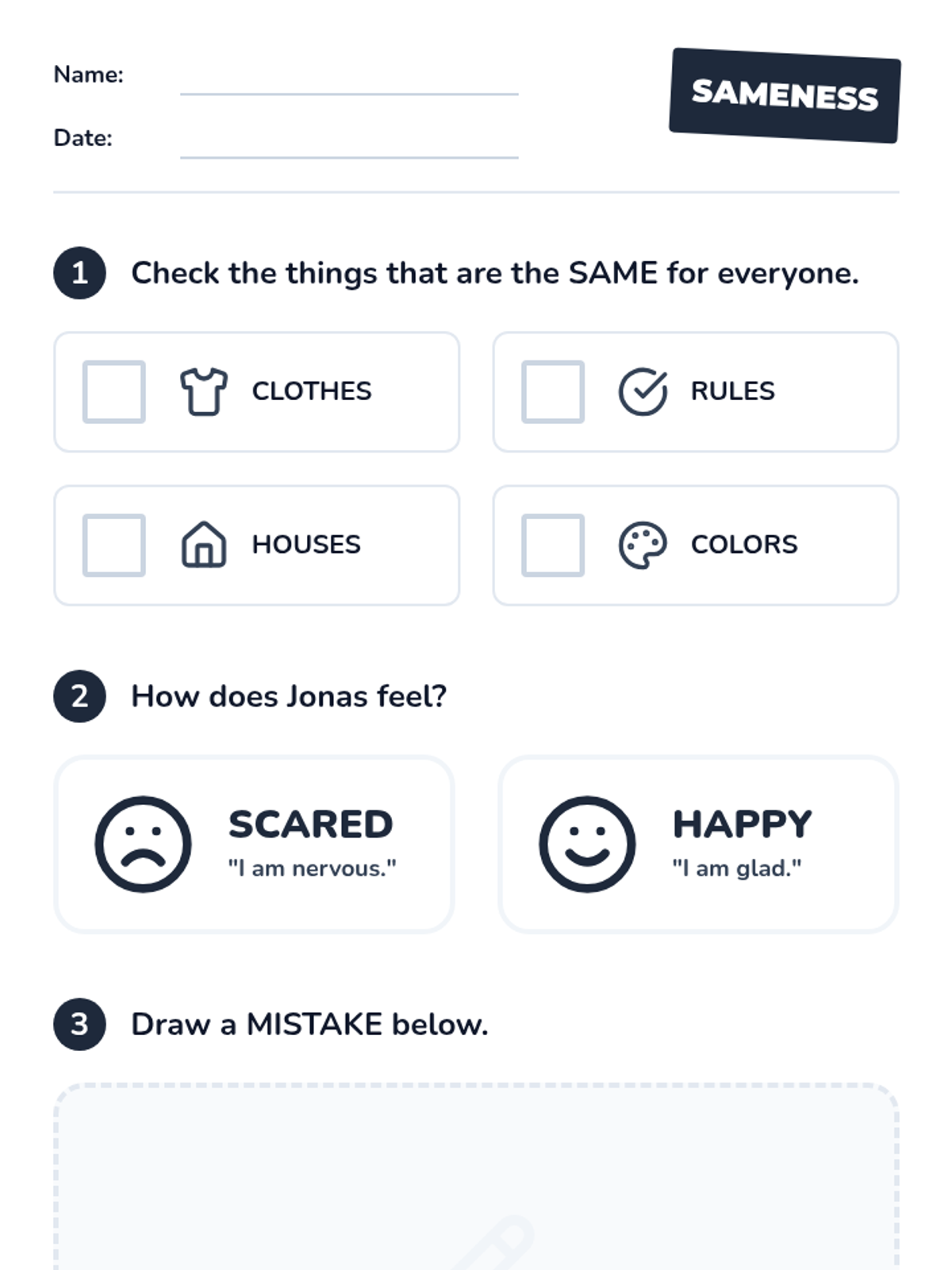
A modified, low-text worksheet for The Giver focusing on the concept of Sameness and Jonas's feelings, featuring large visuals and minimal decoding requirements.
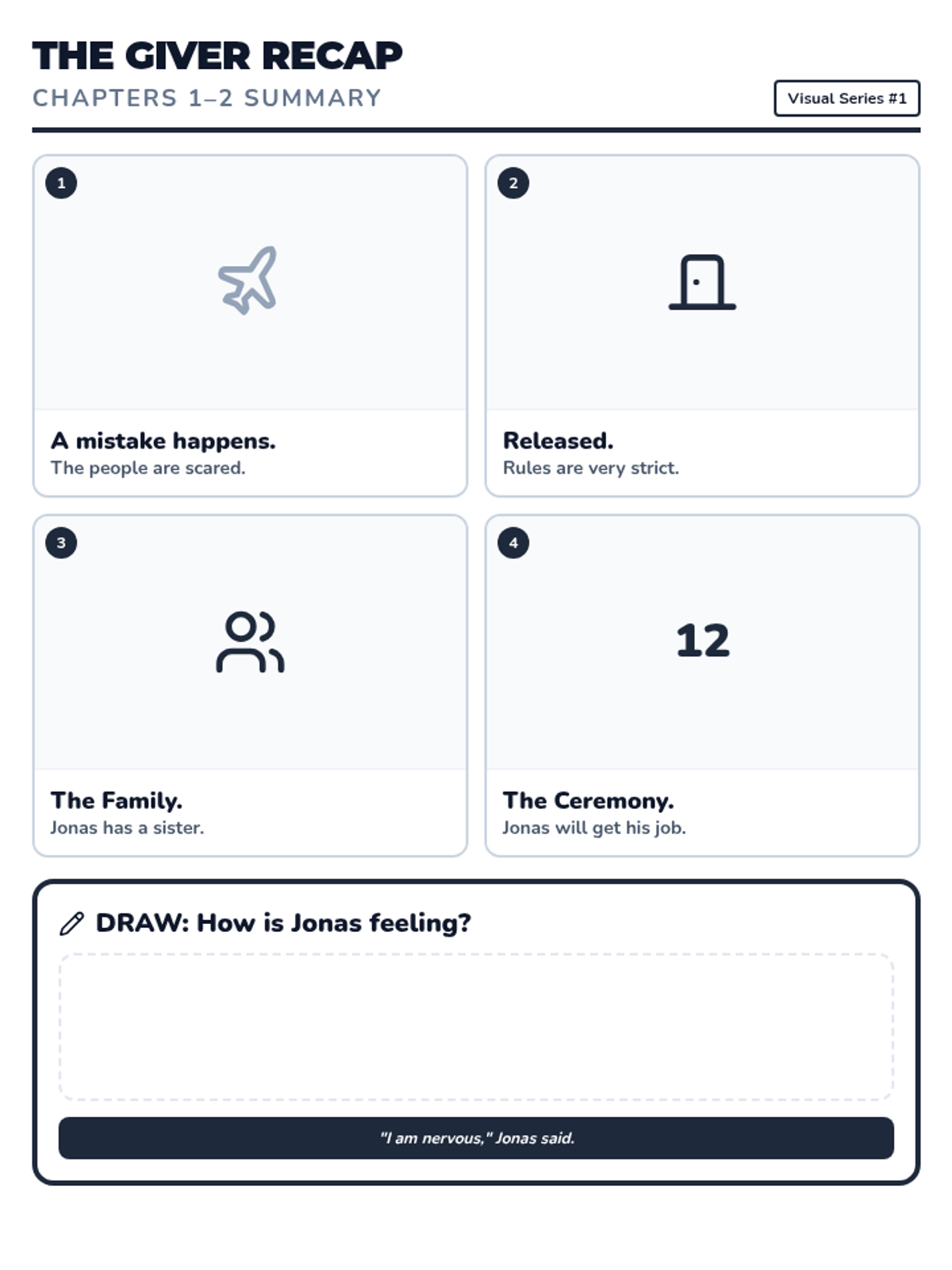
A graphic-novel style summary of Chapters 1 and 2 of The Giver, using high-impact visuals and simple sentence structures for low-decoding students.
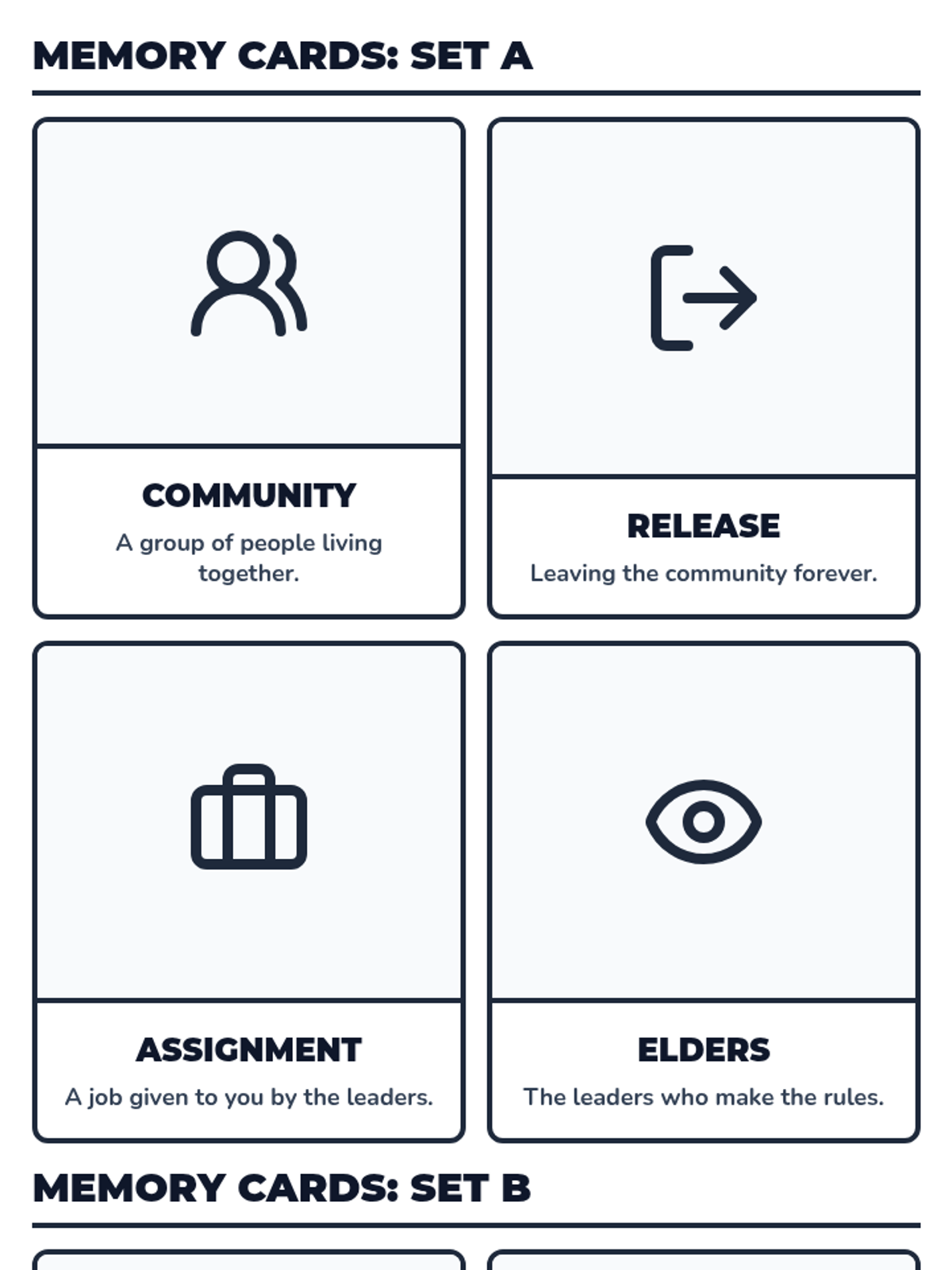
High-contrast, picture-based vocabulary cards for key terms in The Giver, designed to provide visual anchors for students with decoding challenges.
A visually impactful slide deck introducing the world of The Giver, focusing on the concepts of Community and Sameness with large text and clear icons for accessibility.
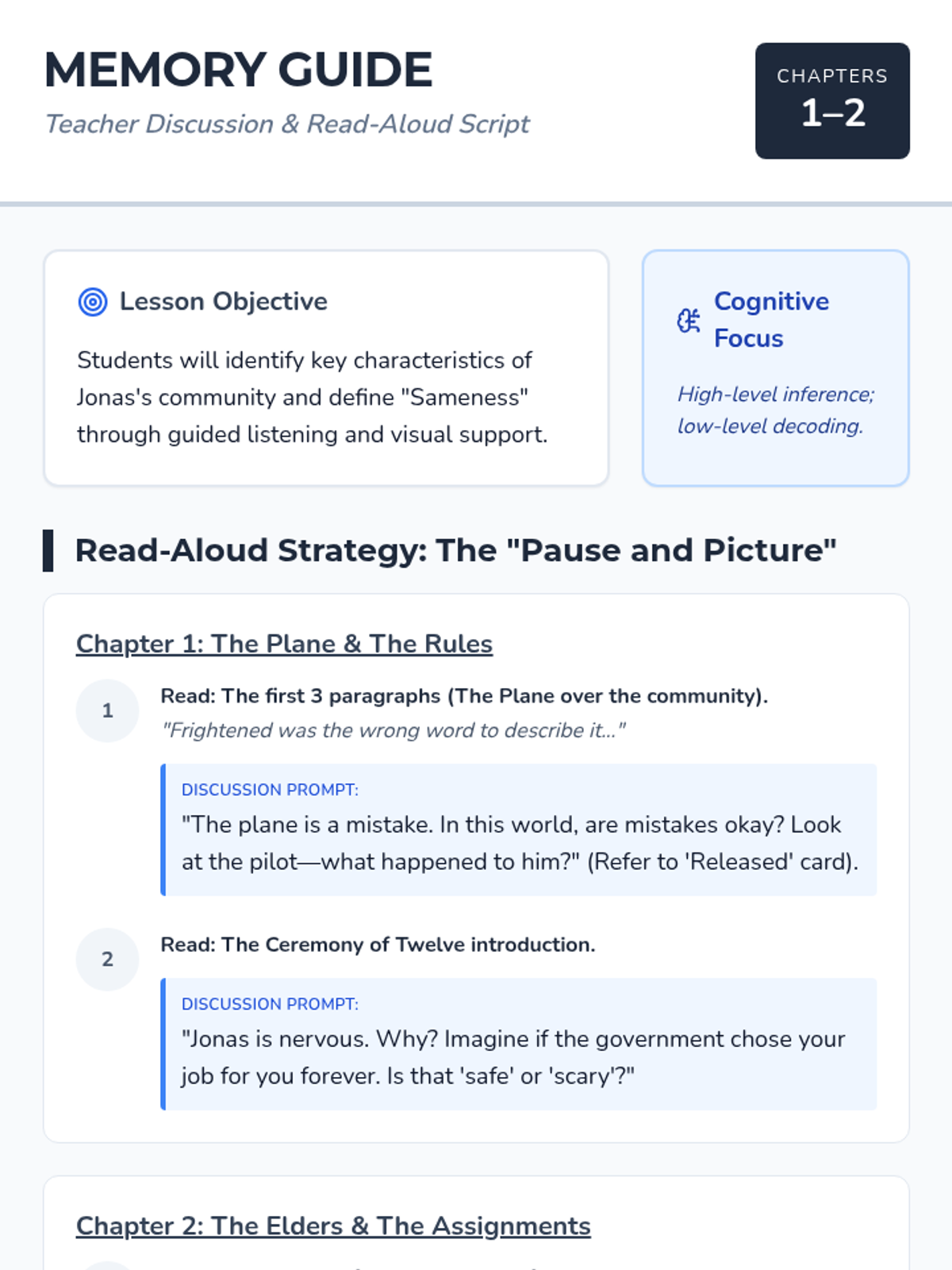
A comprehensive teacher's guide for reading The Giver (Chapters 1-2) aloud, including specific discussion prompts and instructional strategies tailored for students with low decoding levels but high cognitive engagement.
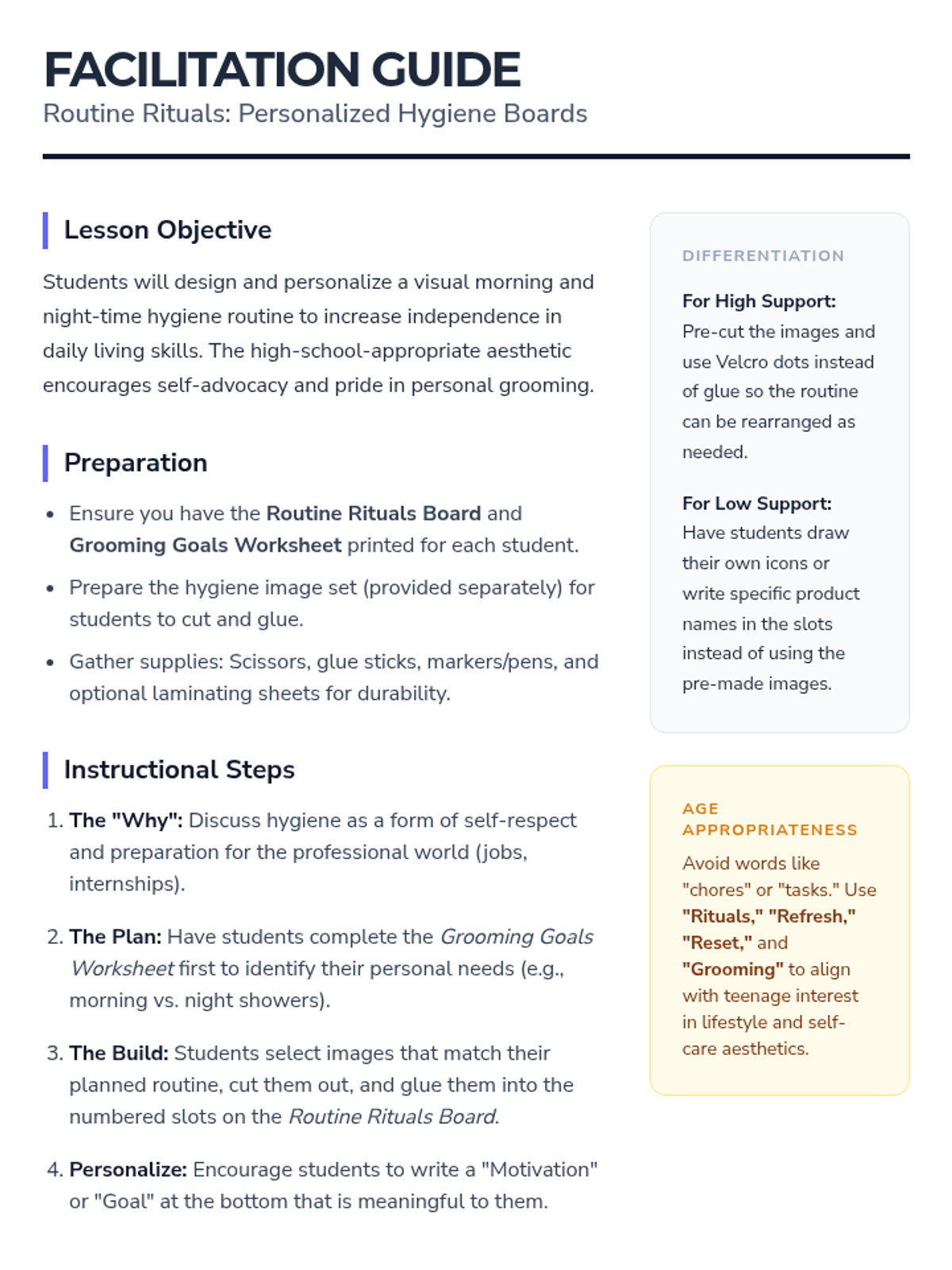
A teacher's guide for implementing the Routine Rituals lesson. It includes instructional steps, preparation tips, and differentiation strategies specifically for teaching life skills to teenagers.
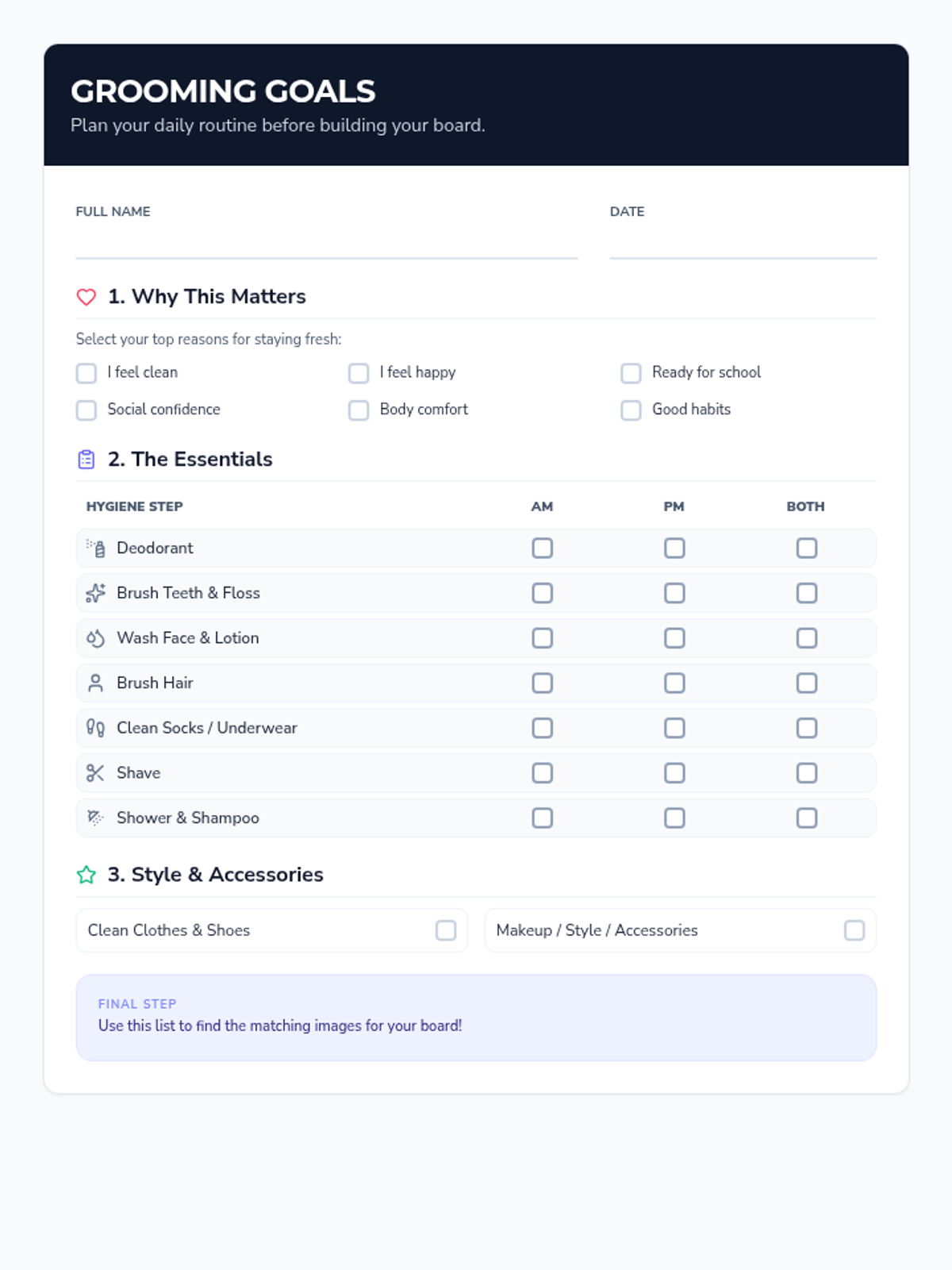
A planning questionnaire for life skills students to specify their hygiene routine needs. This "mini questionnaire" format allows students to select items and specify preferred brands or styles, and includes choices for shower/bath timing and method. Now optimized for handwriting space, accessibility, and contrast.
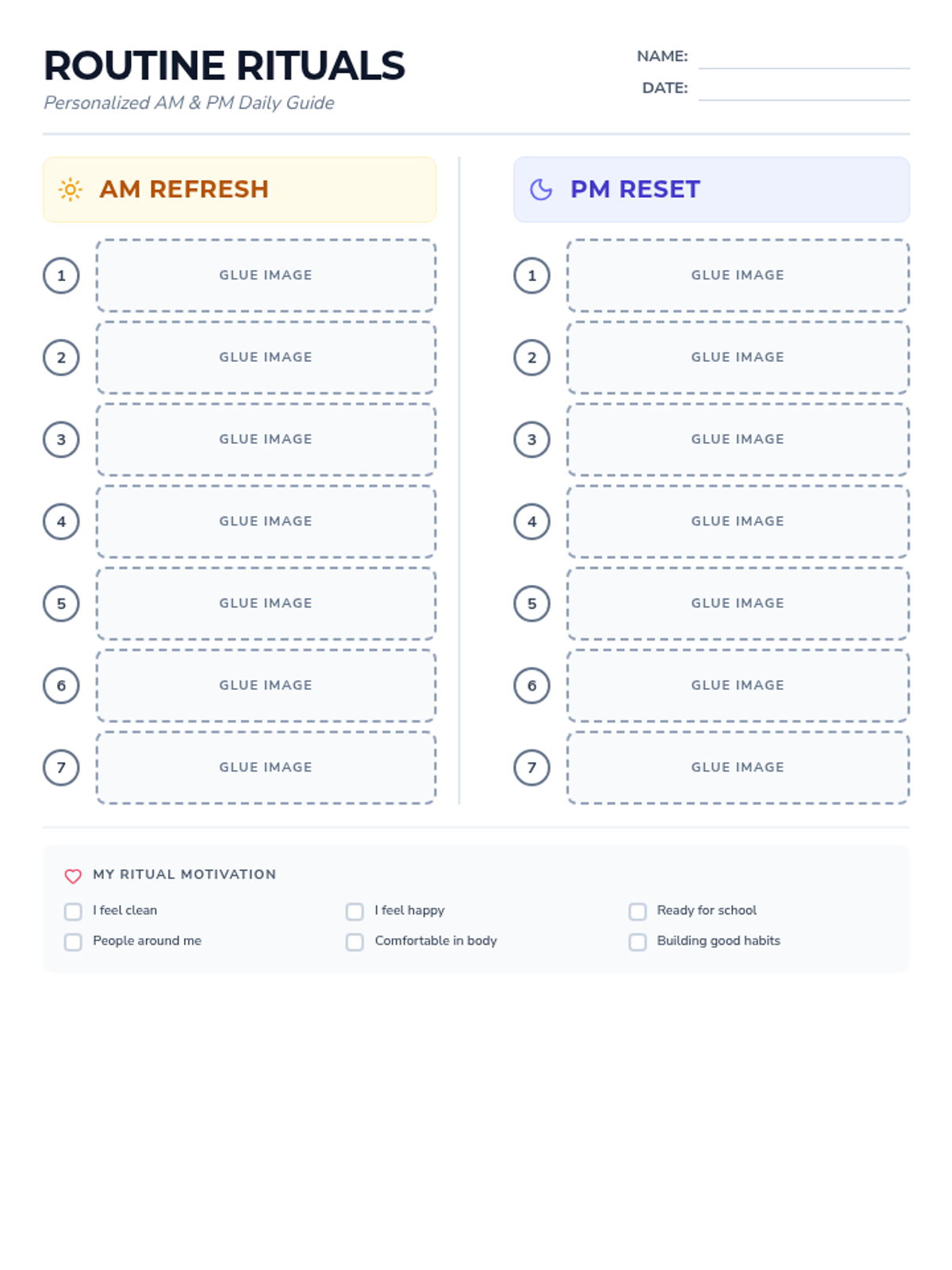
A minimalist, age-appropriate morning and night routine template for high schoolers. It features empty dashed boxes for students to glue images of hygiene steps, organized in AM Refresh and PM Reset columns. Increased to 7 slots per side to accommodate more steps. Now includes the user-requested motivation checklist with improved accessibility.
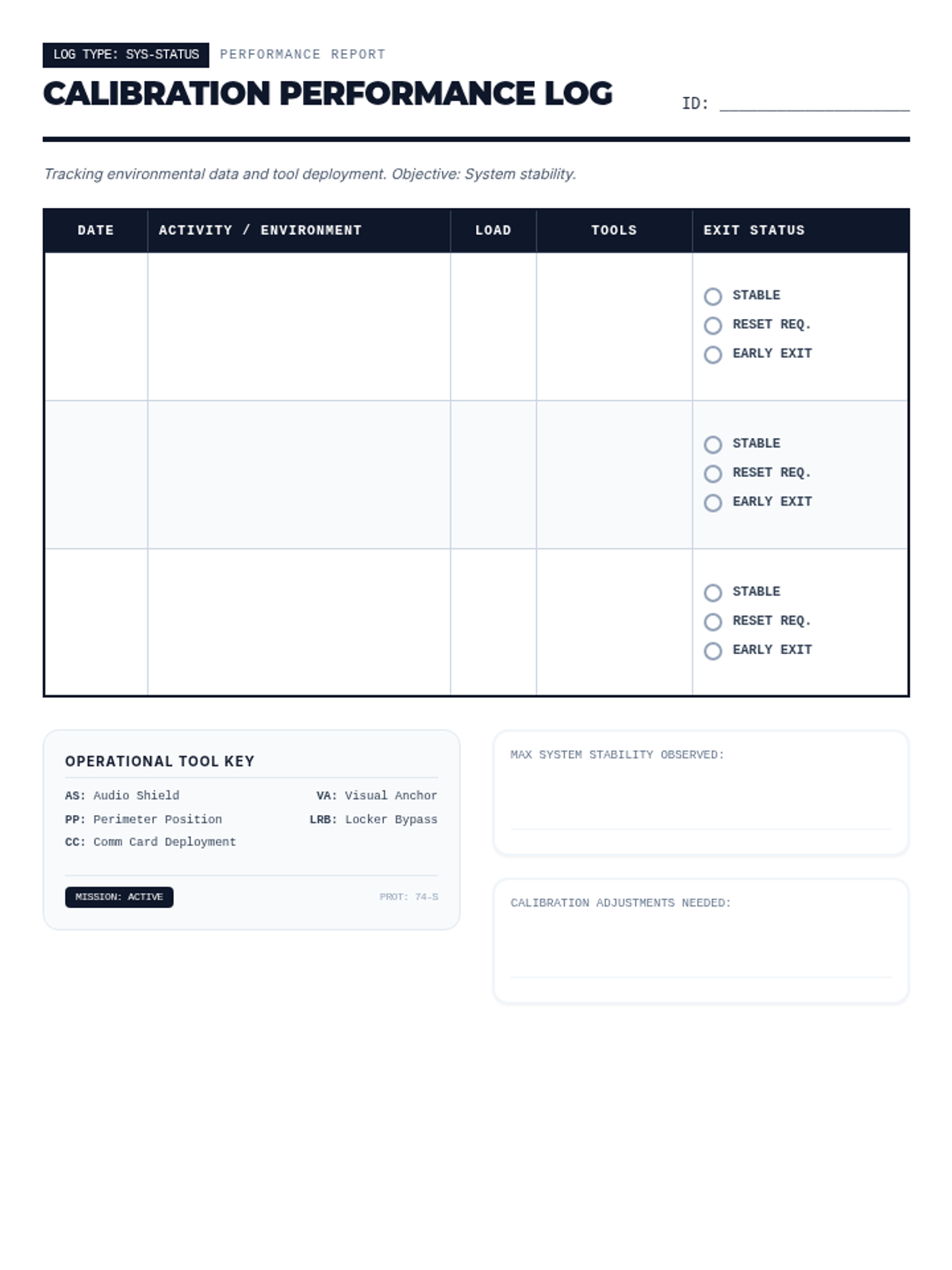
A technical-themed log for students to track sensory load levels, tool deployment success, and environmental stability without traditional 'goal-setting' or 'feelings-based' language.
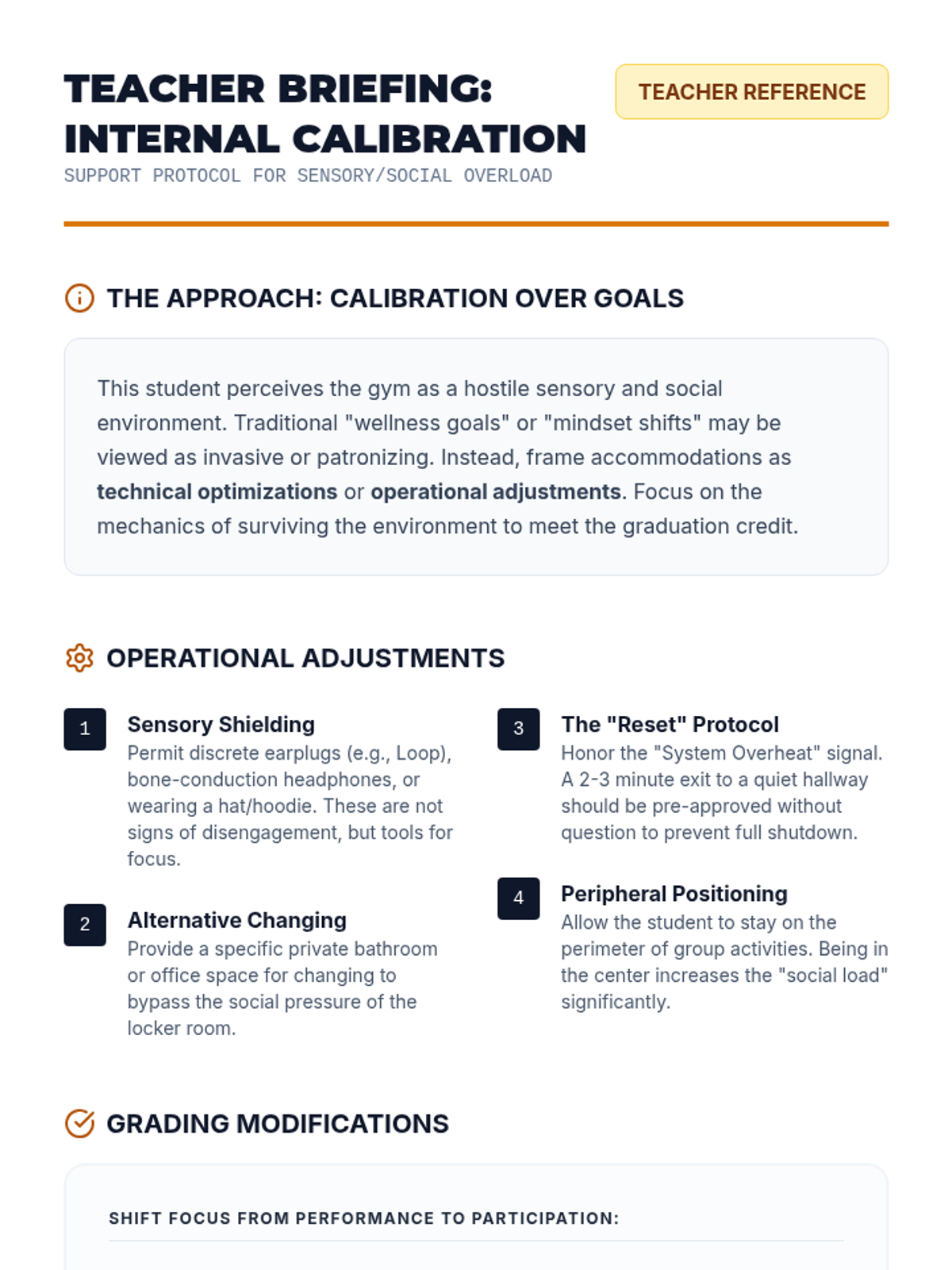
A teacher-facing guide outlining how to support a student with sensory and social anxiety in PE. It focuses on accommodations like 'sensory shielding' and 'reset protocols' while suggesting grading modifications that avoid performance-based pressure.
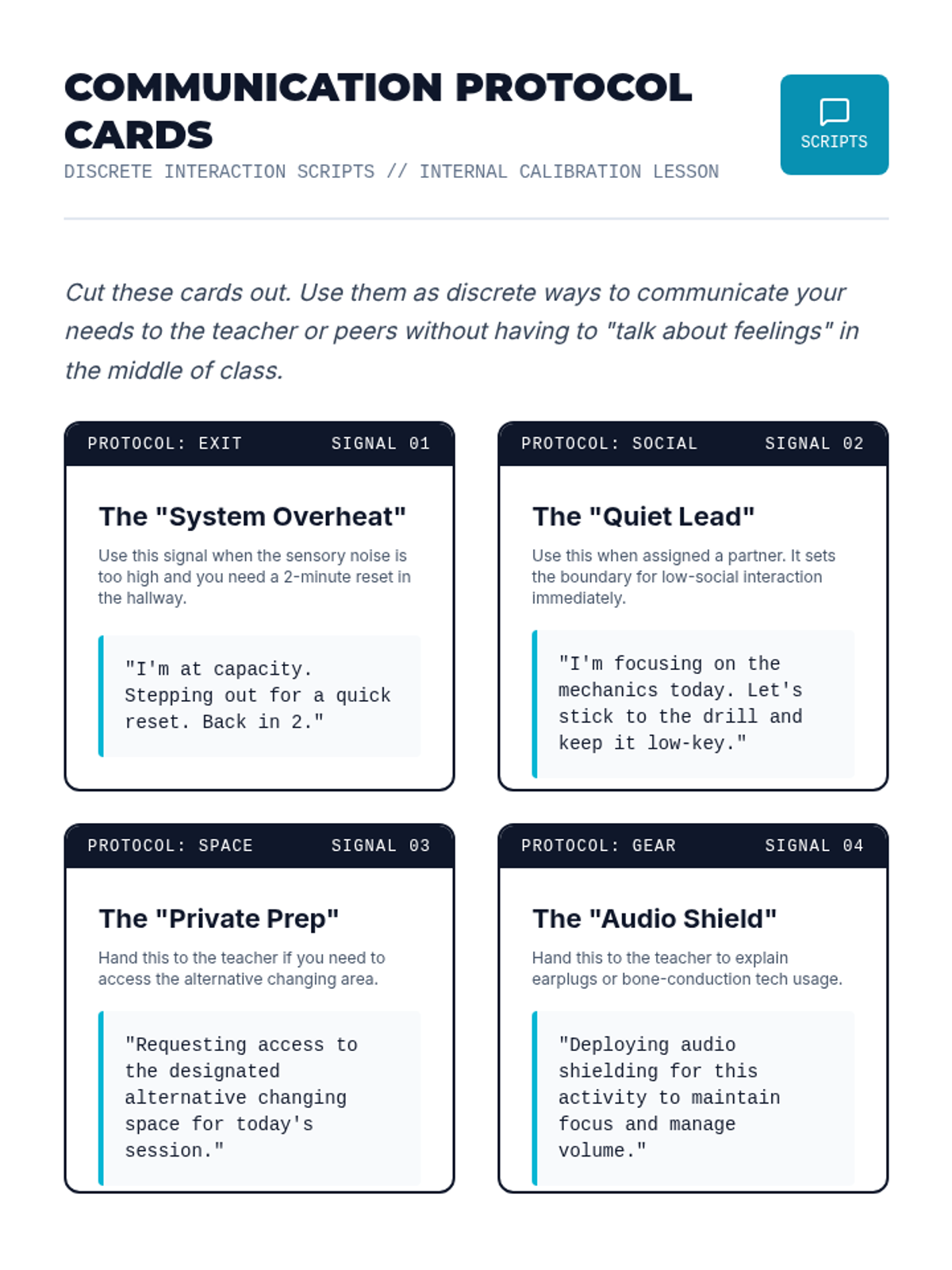
Printable, discrete communication cards that provide the student with pre-written scripts for managing sensory and social needs in the gym without verbalizing complex feelings.
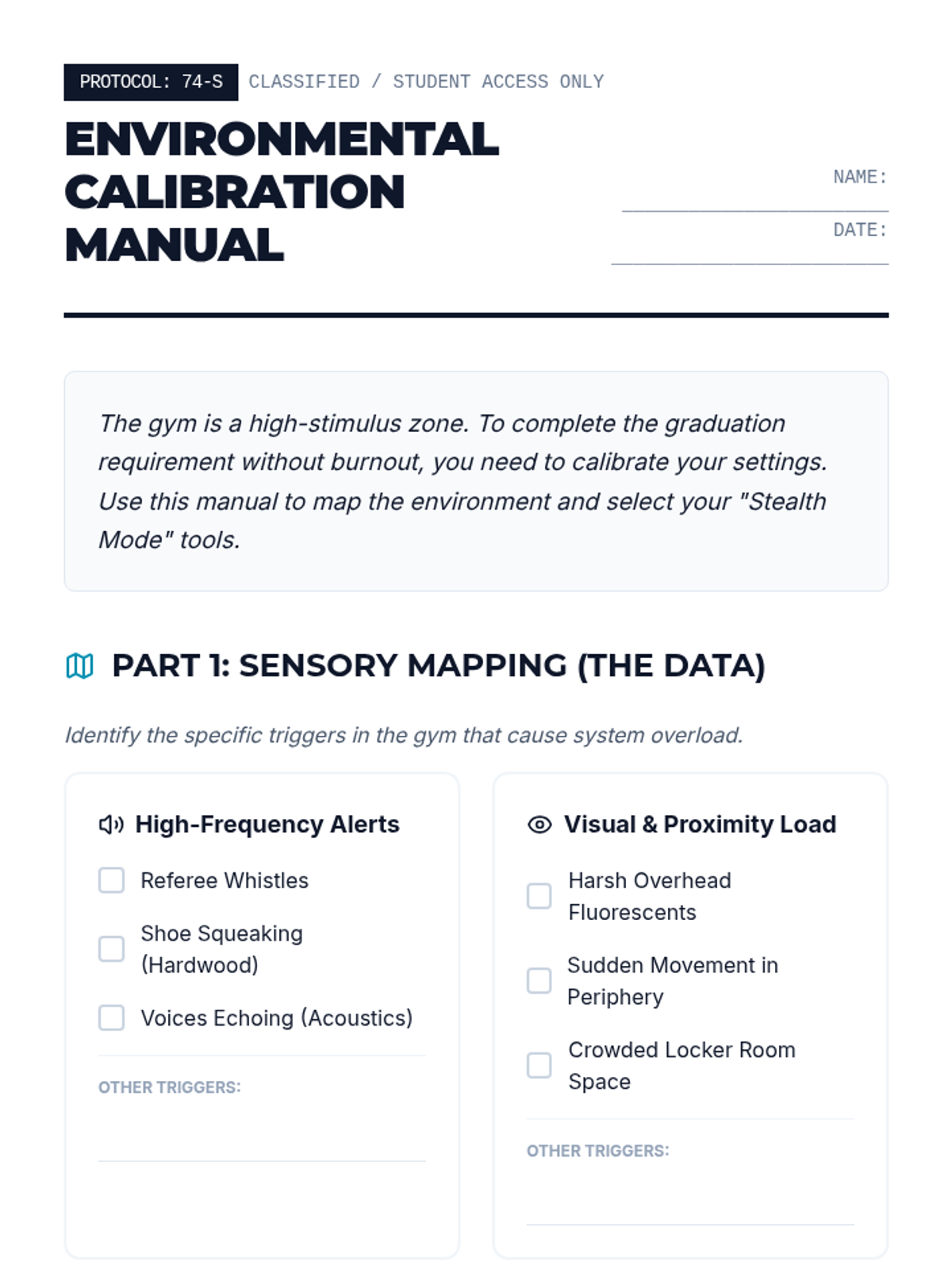
A tactical-themed worksheet that allows the student to map sensory triggers and select management strategies without traditional 'goal-setting' language. It focuses on environmental data and technical solutions.
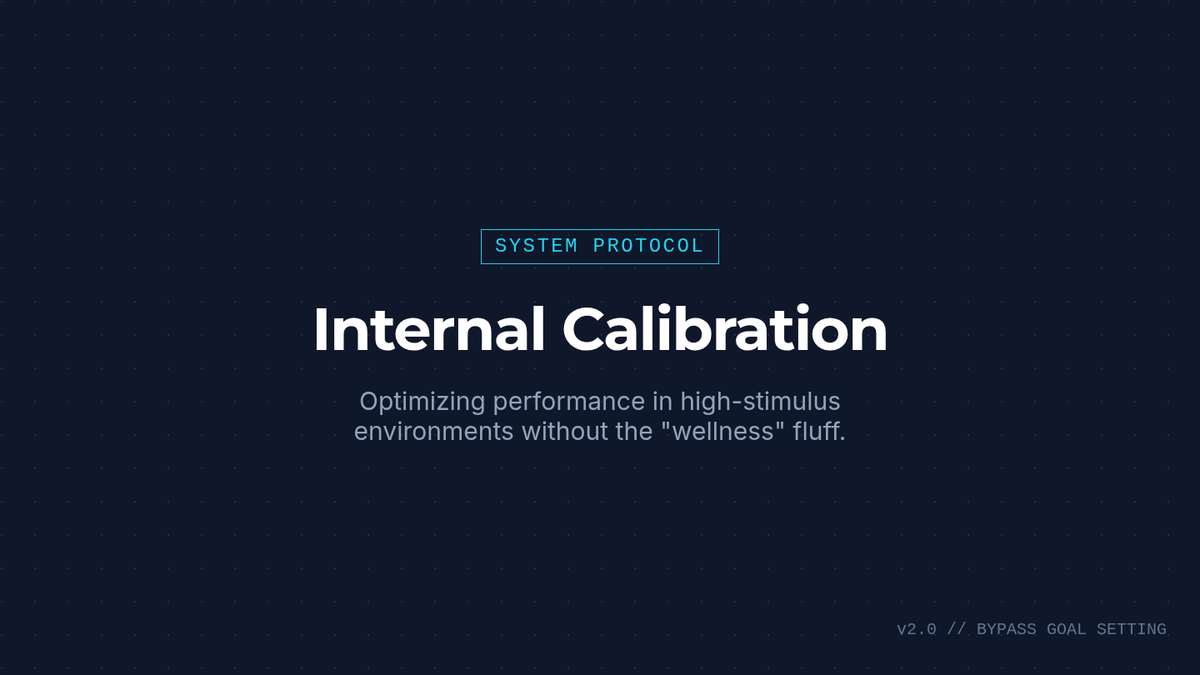
A visual presentation introducing a sensory-aware and low-social-pressure approach to PE for students with sensory overstimulation and social anxiety. It frames self-regulation as 'calibration' and 'stealth mode' to bypass the student's aversion to goal-setting.
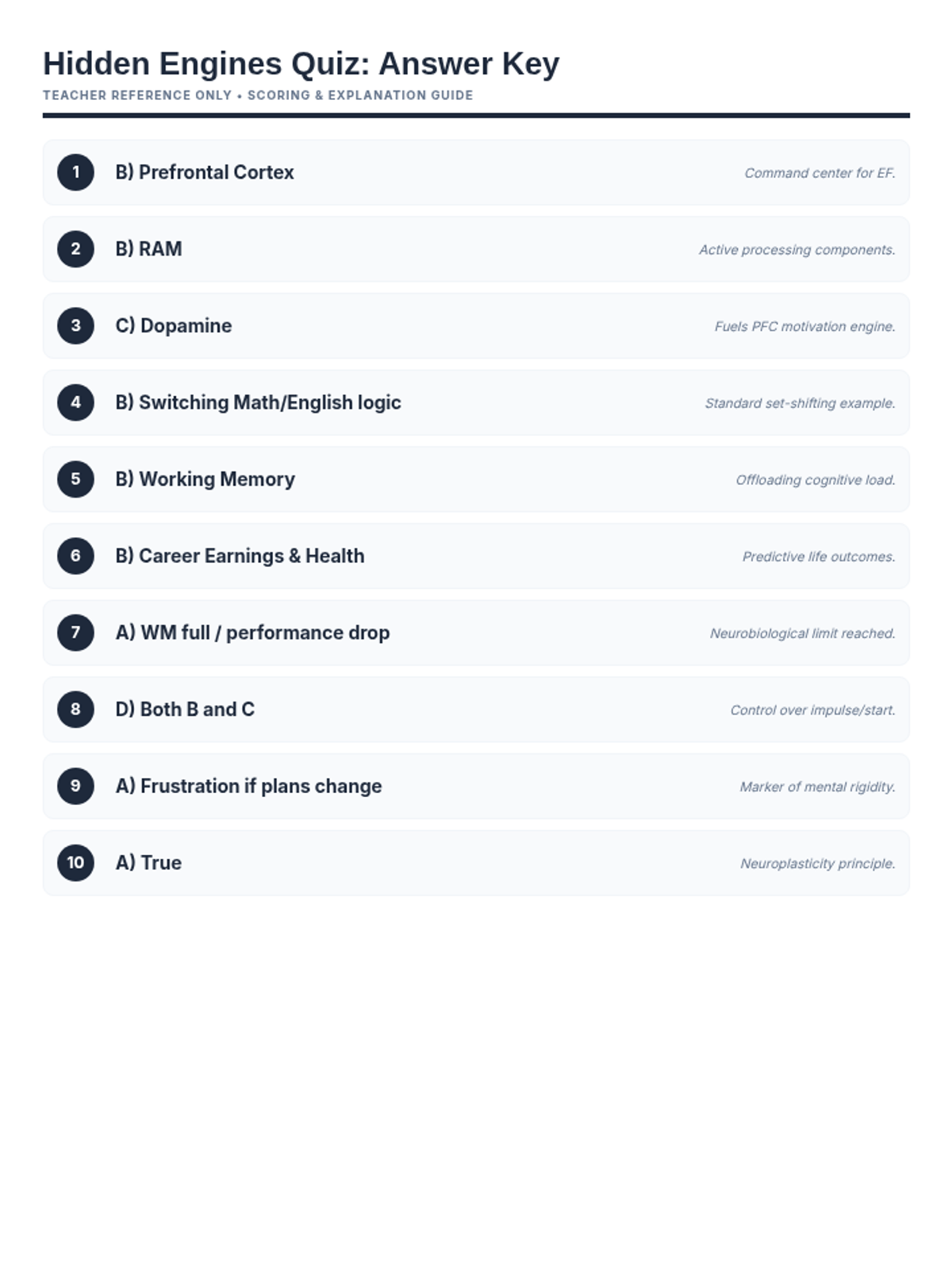
A precise high-school level answer key with brief instructional explanations for teacher use.
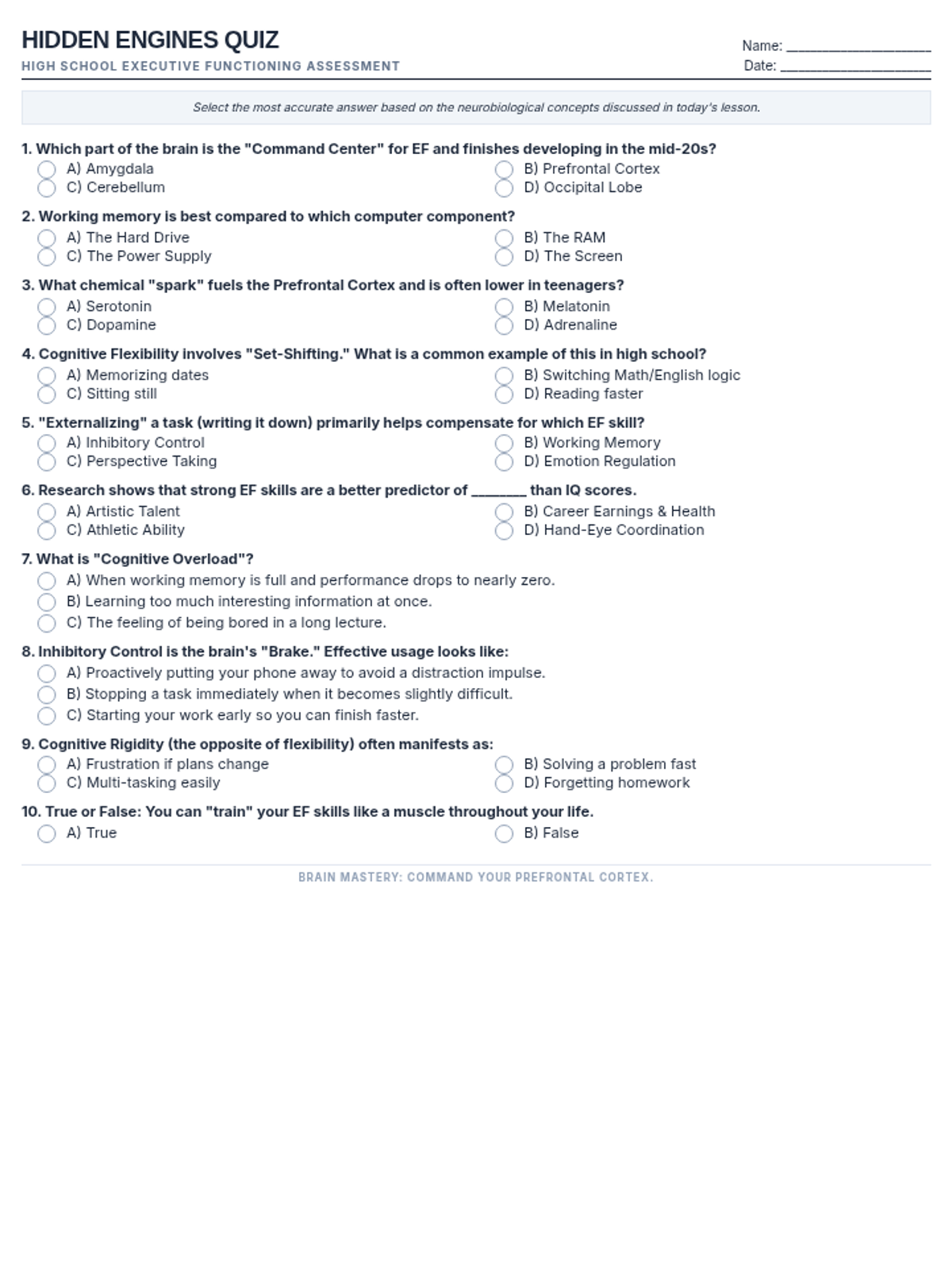
A sophisticated 10-question high-school level quiz focusing on neurobiology, dopamine, cognitive overload, and EF strategies.
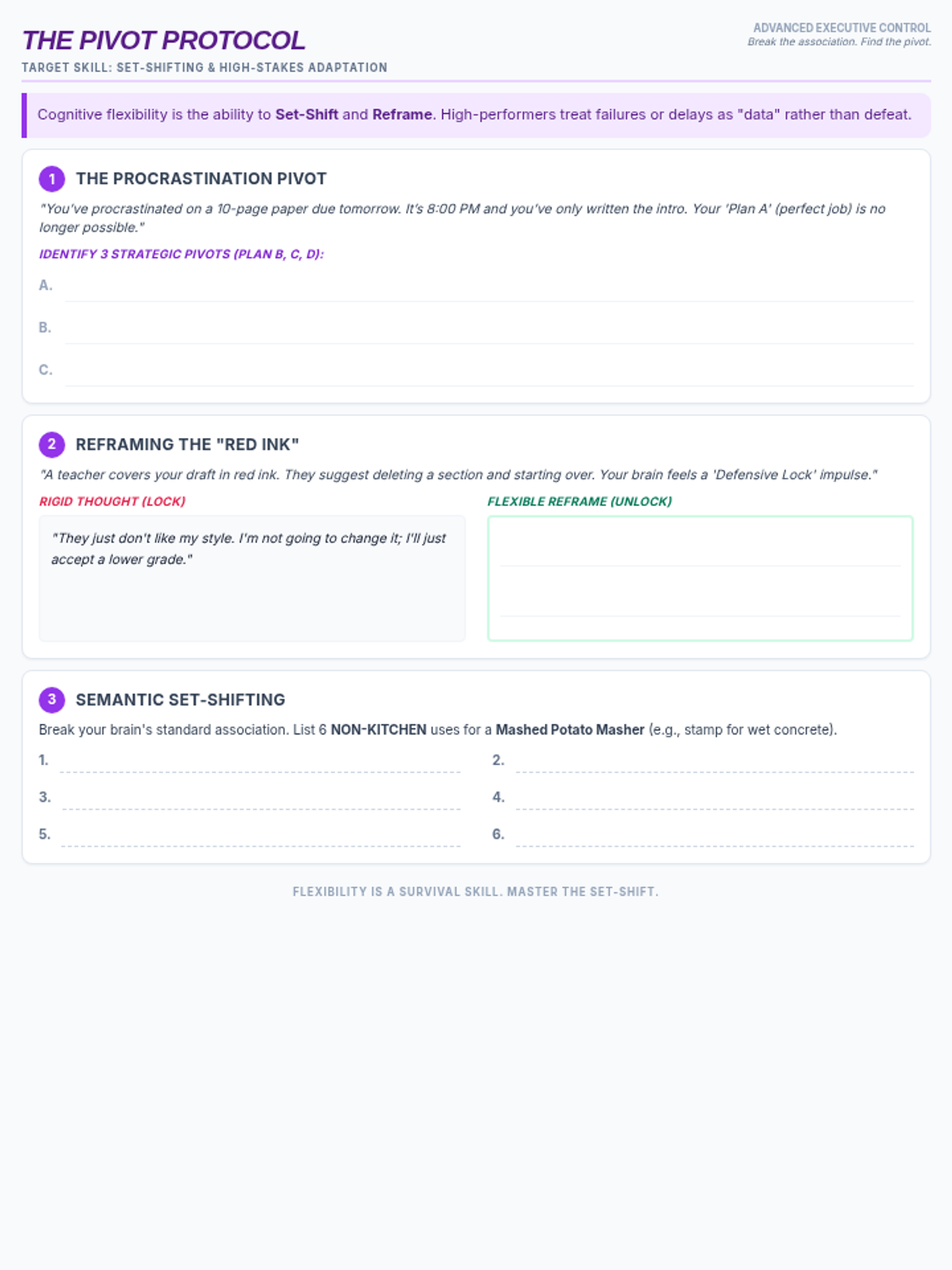
A high-school level cognitive flexibility activity focusing on procrastination, critical feedback, and semantic set-shifting. Terminology aligned with the "Brain HQ" presentation. Fits on 1 page with large work areas.
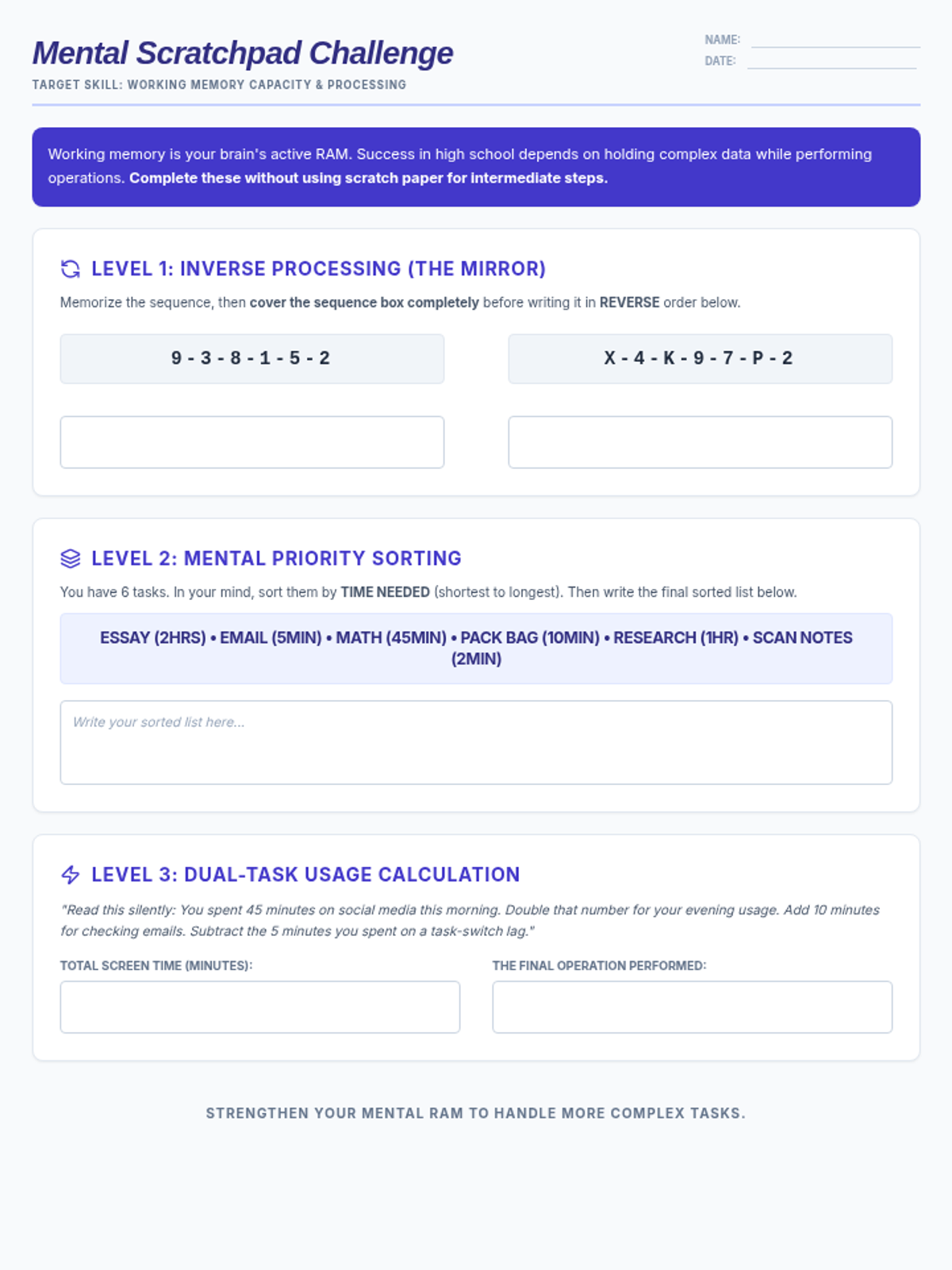
A high-school level working memory worksheet featuring advanced inverse processing, mental sorting of task priorities, and dual-task screen-time calculations.