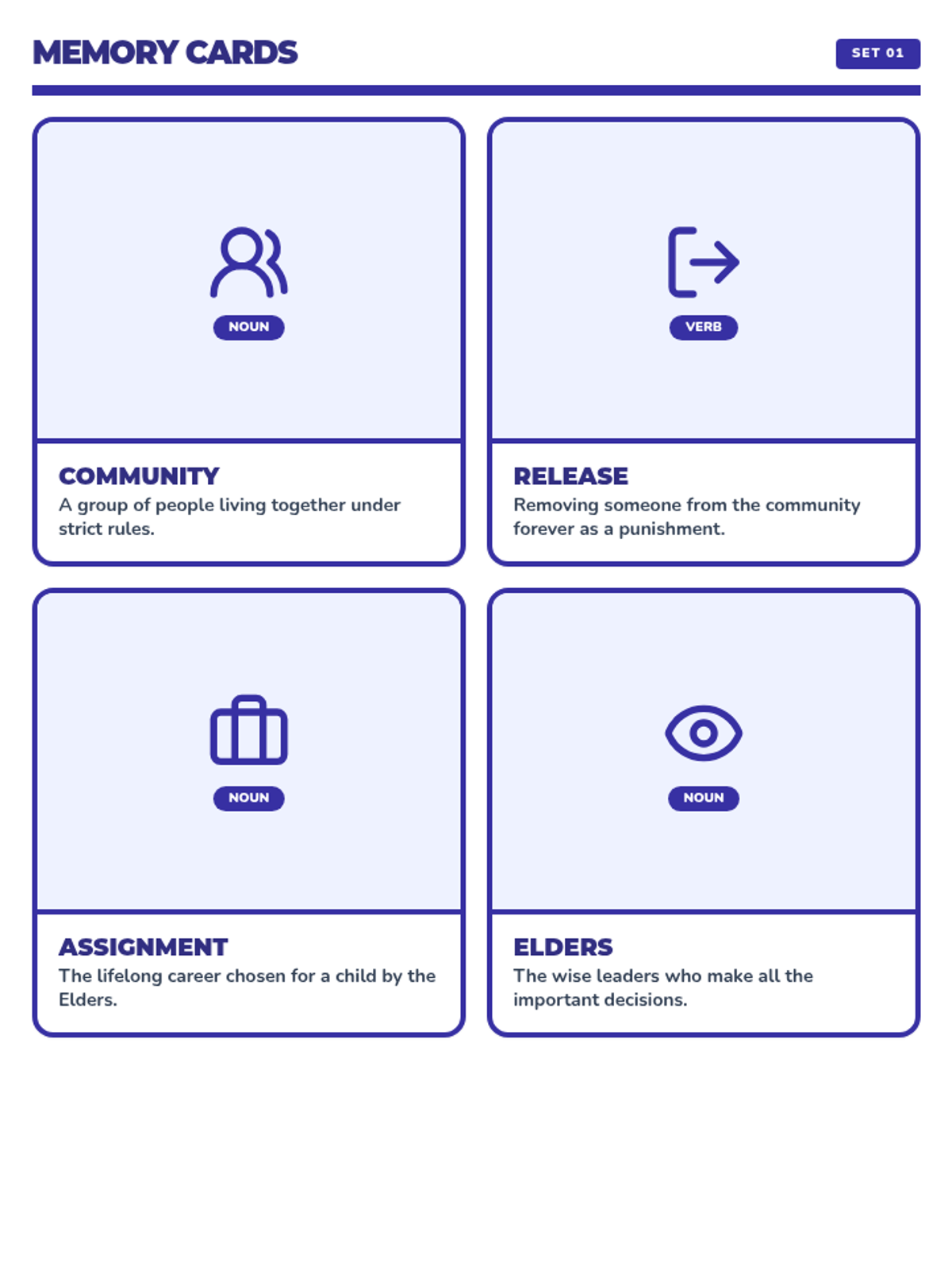
High-contrast, picture-based vocabulary cards for key terms in The Giver, designed to provide visual anchors for students with decoding challenges.
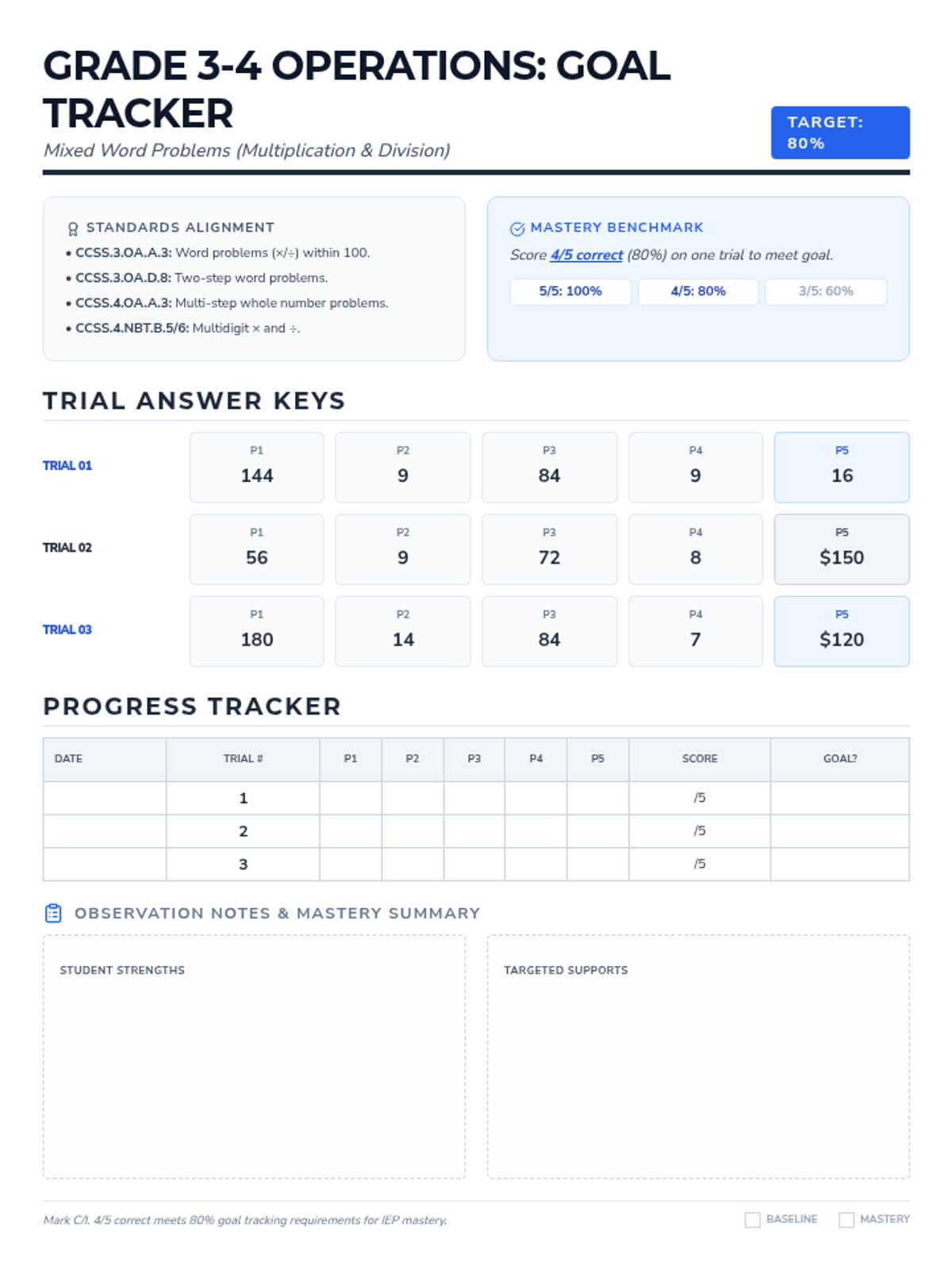
Teacher guide for the Operation Mastery 3-4 assessments, updated to include CCSS alignment for 3rd and 4th-grade multiplication and division word problems. Optimized for 8.5x11 printing with a condensed answer key and data log.
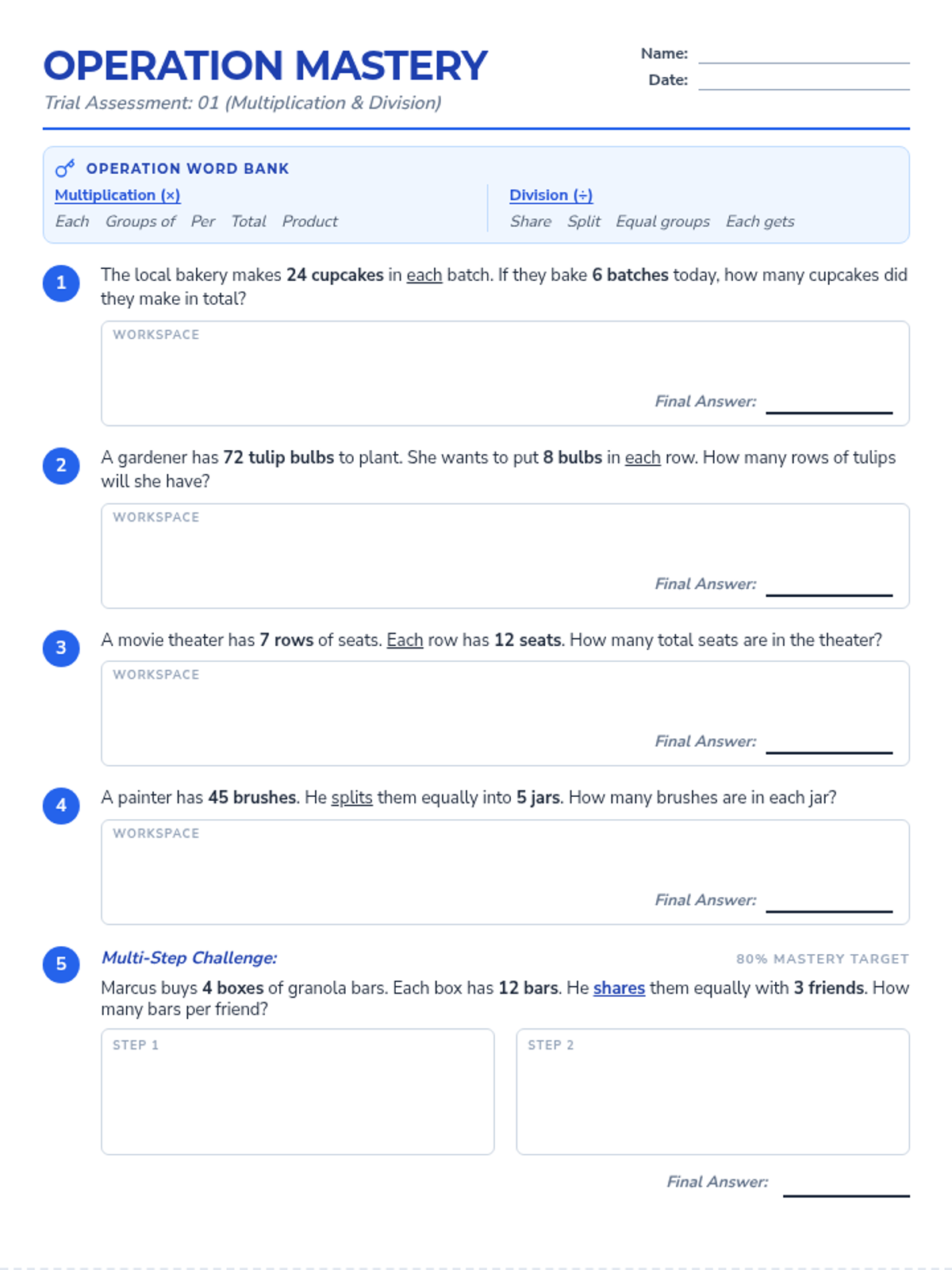
A set of three distinct multiplication and division word problem assessments (Trial 1-3). Renamed for easier identification as an IEP goal mastery resource. Features 5 problems per page with an 80% accuracy target and structured workspace for multi-step challenges. Optimized for 8.5x11 printing with corrected vertical spacing to prevent clipping on final page.
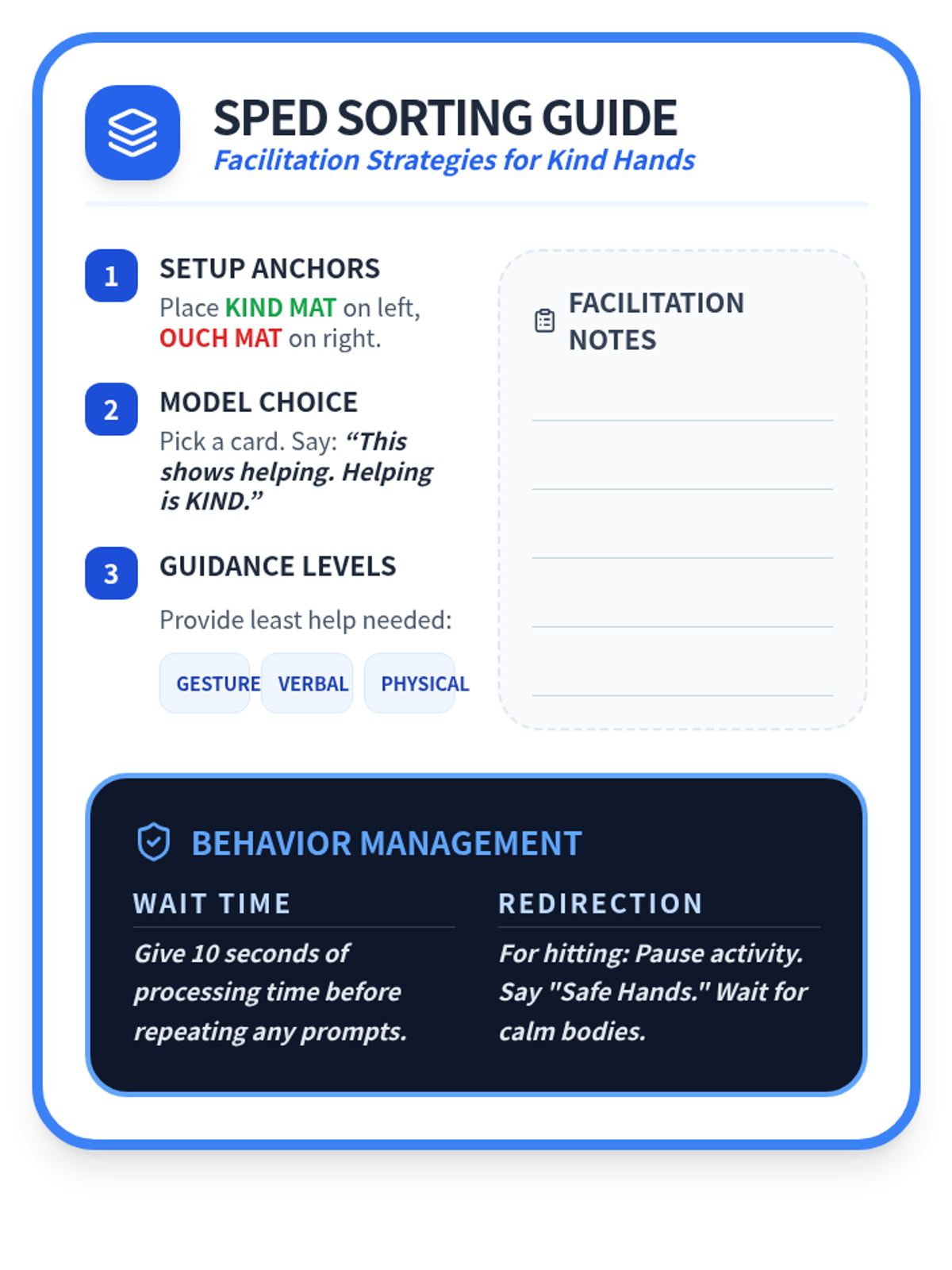
A specialized teacher guide for facilitating the sorting activity in a SPED classroom, including strategies for processing time, physical prompting levels, and behavior redirection. Condense to one page.
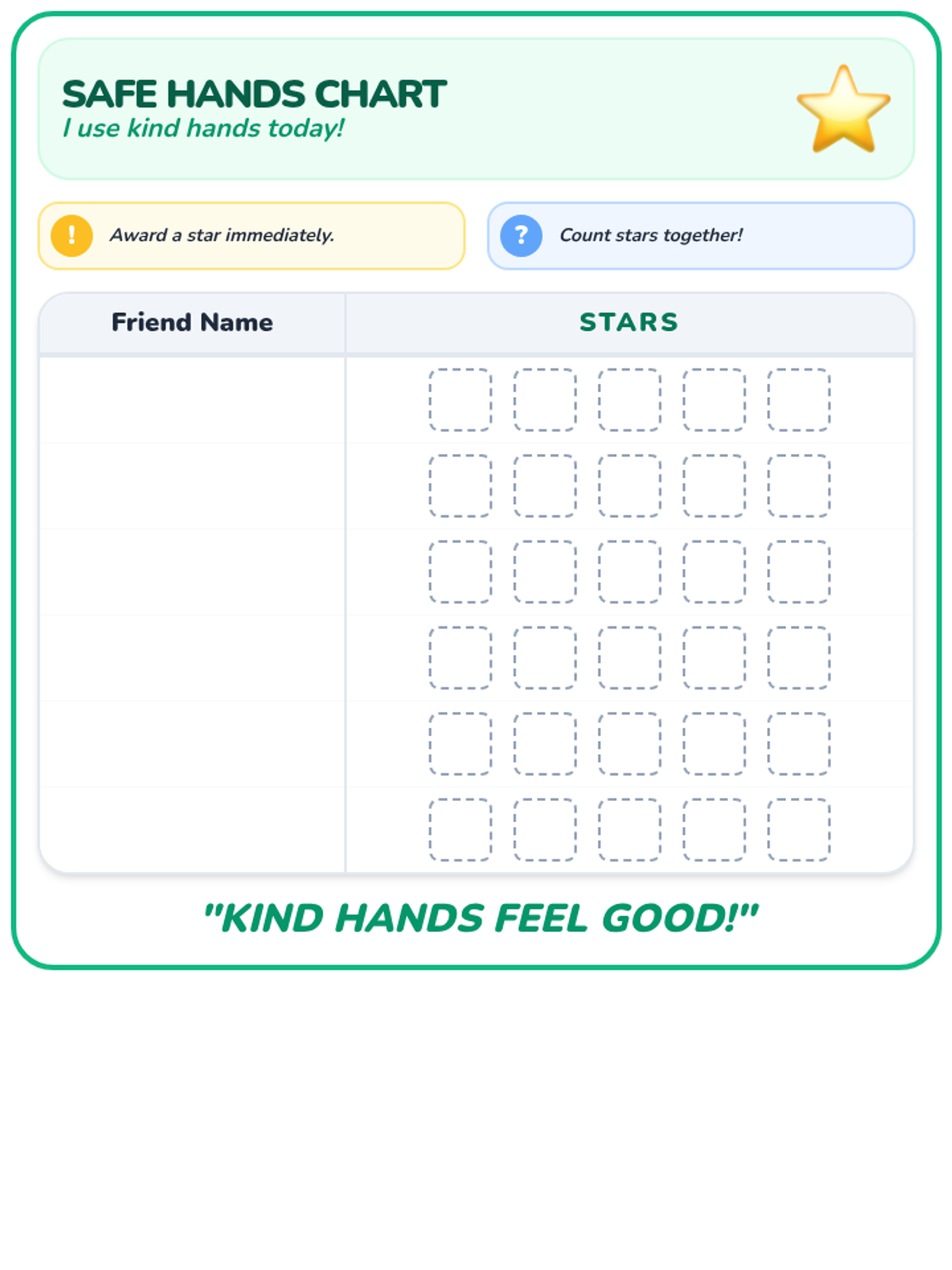
A visual token economy chart for tracking kind hand use in a special education classroom, featuring clear name fields and designated spaces for daily stickers or star rewards. Condense to a single page.
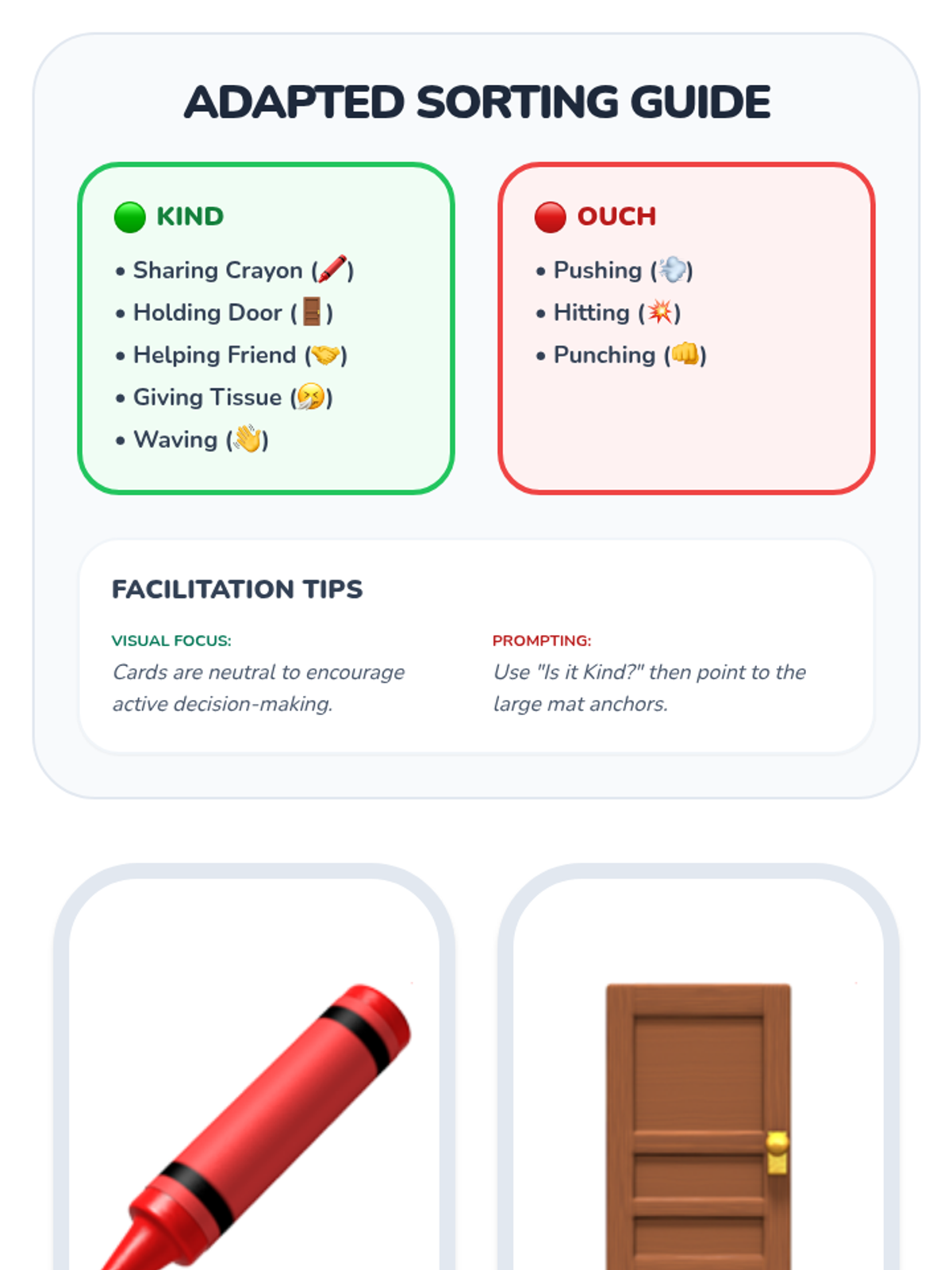
Visual sorting cards and a large-scale sorting mat designed for special education. Cards are neutral to encourage active decision-making, while the mat and teacher guide use high-contrast color anchors (Green/Red) for feedback.
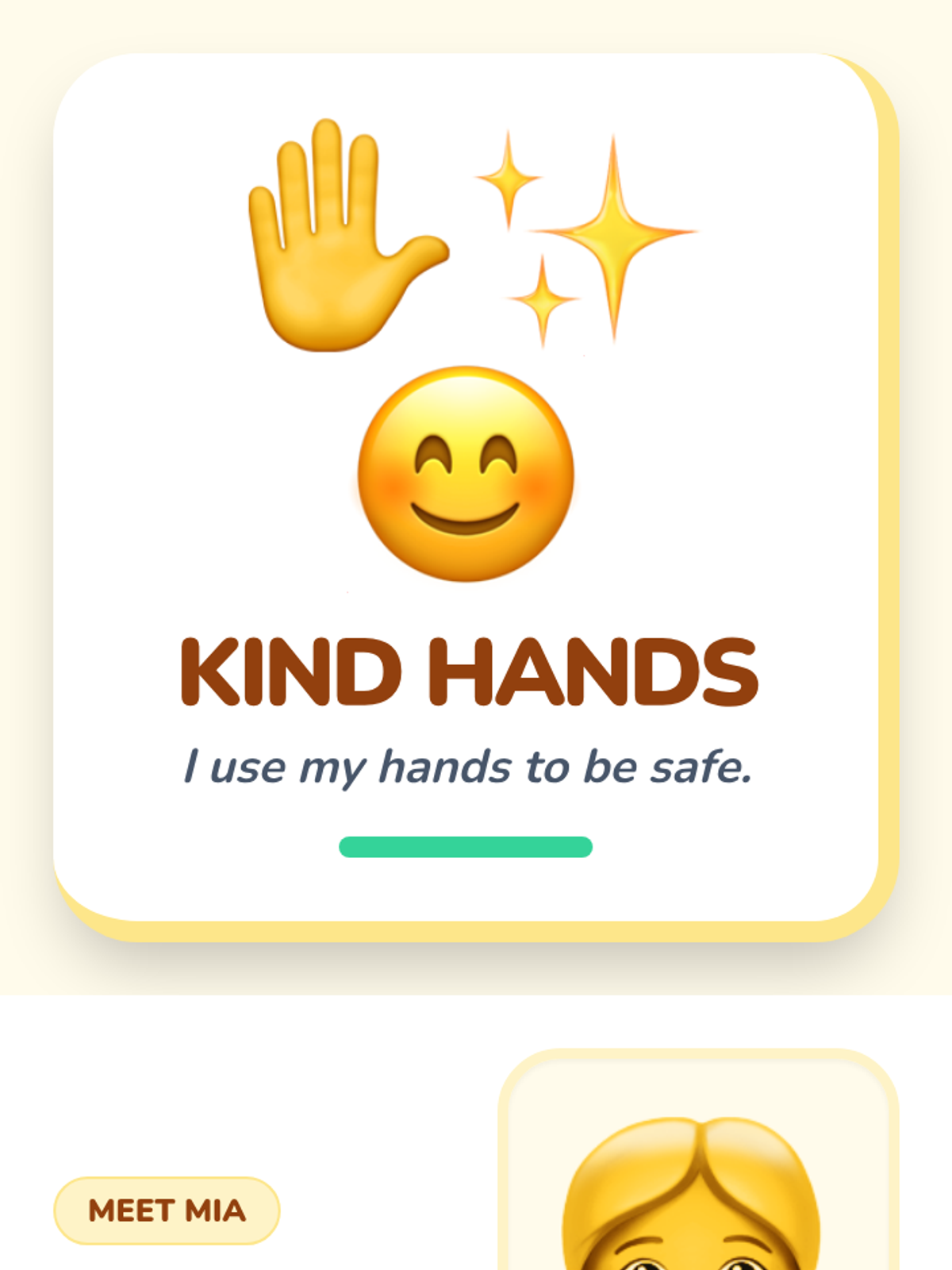
A social story adapted for special education, using simplified language, high-contrast visuals, and "First/Then" logic, concluding with a visual communication board for student responses.
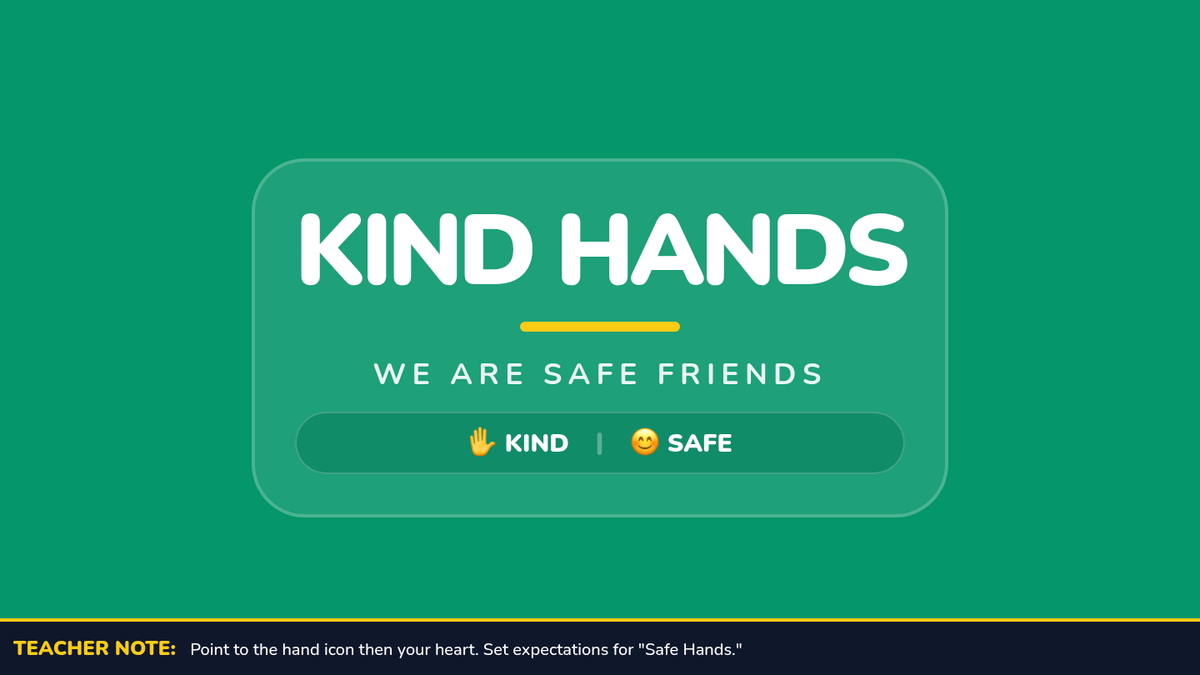
High-contrast, visual-heavy slide deck for special education classrooms, featuring explicit behavior expectations (Eyes Watching, Hands in Lap), a sensory break slide, and simplified color-coded sorting visuals.
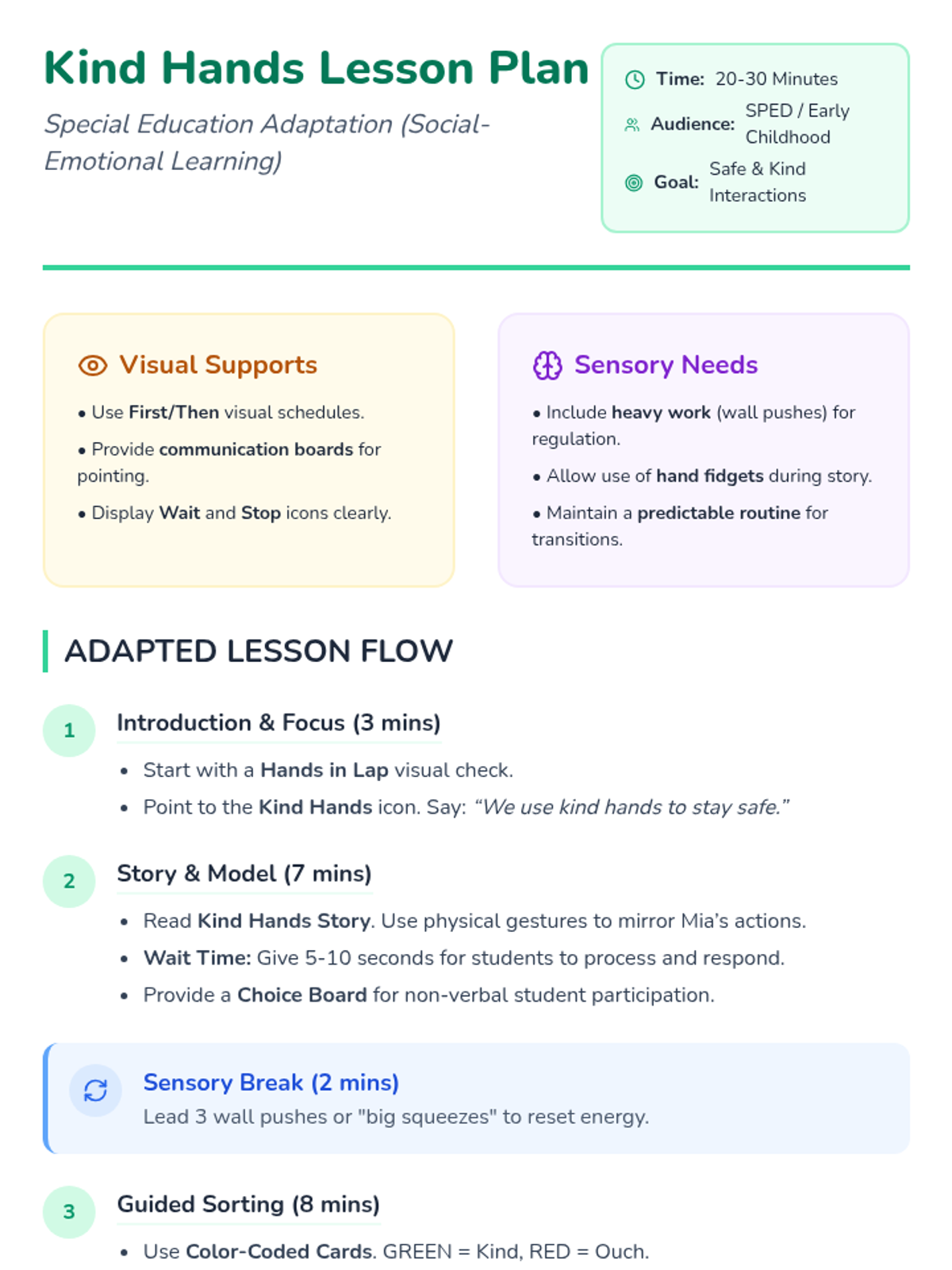
An adapted teacher lesson plan specifically designed for special education classrooms, featuring sensory breaks, visual schedules, color-coded instructions, and behavior management strategies for teaching kind hand use.
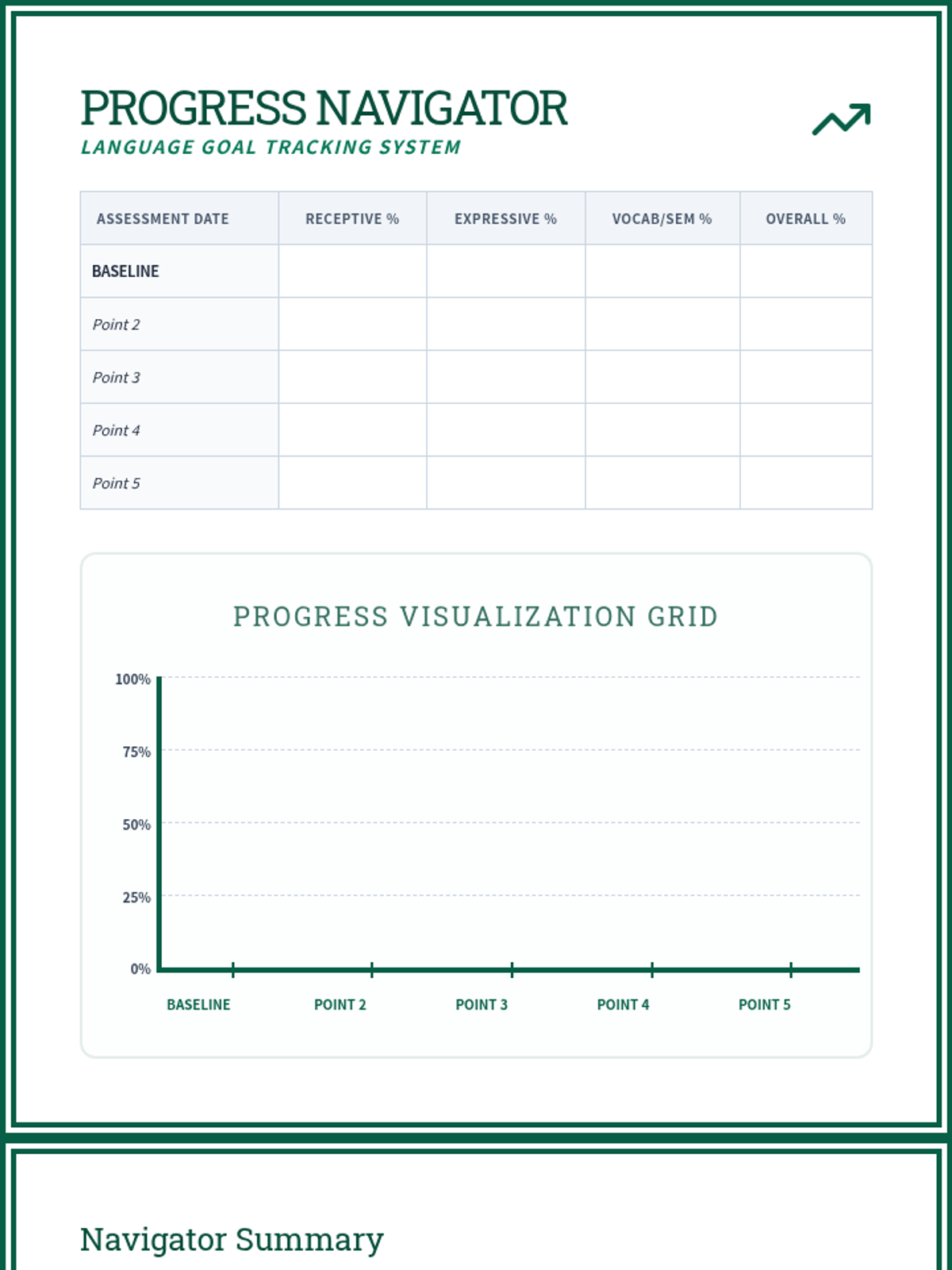
The Progress Navigator is a data-tracking tool that allows SLPs to plot longitudinal progress across language domains, featuring a visual graphing area and summary sections for clinical observations.
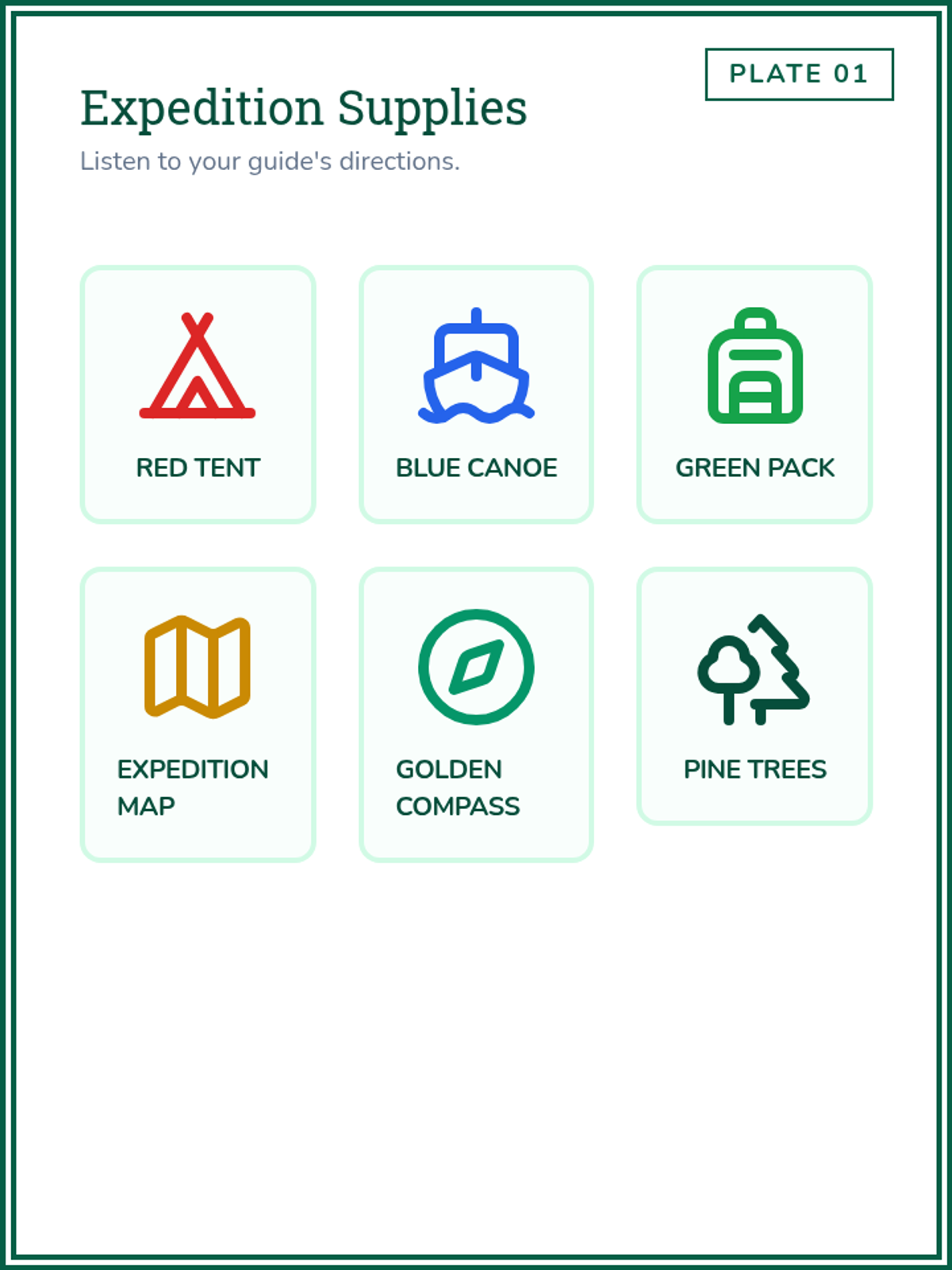
The Quest Stimulus Plates provide a high-quality visual anchor for students, featuring 4th-grade appropriate illustrations for multi-step directions, complex syntax, sentence formulation, and narrative sequencing.
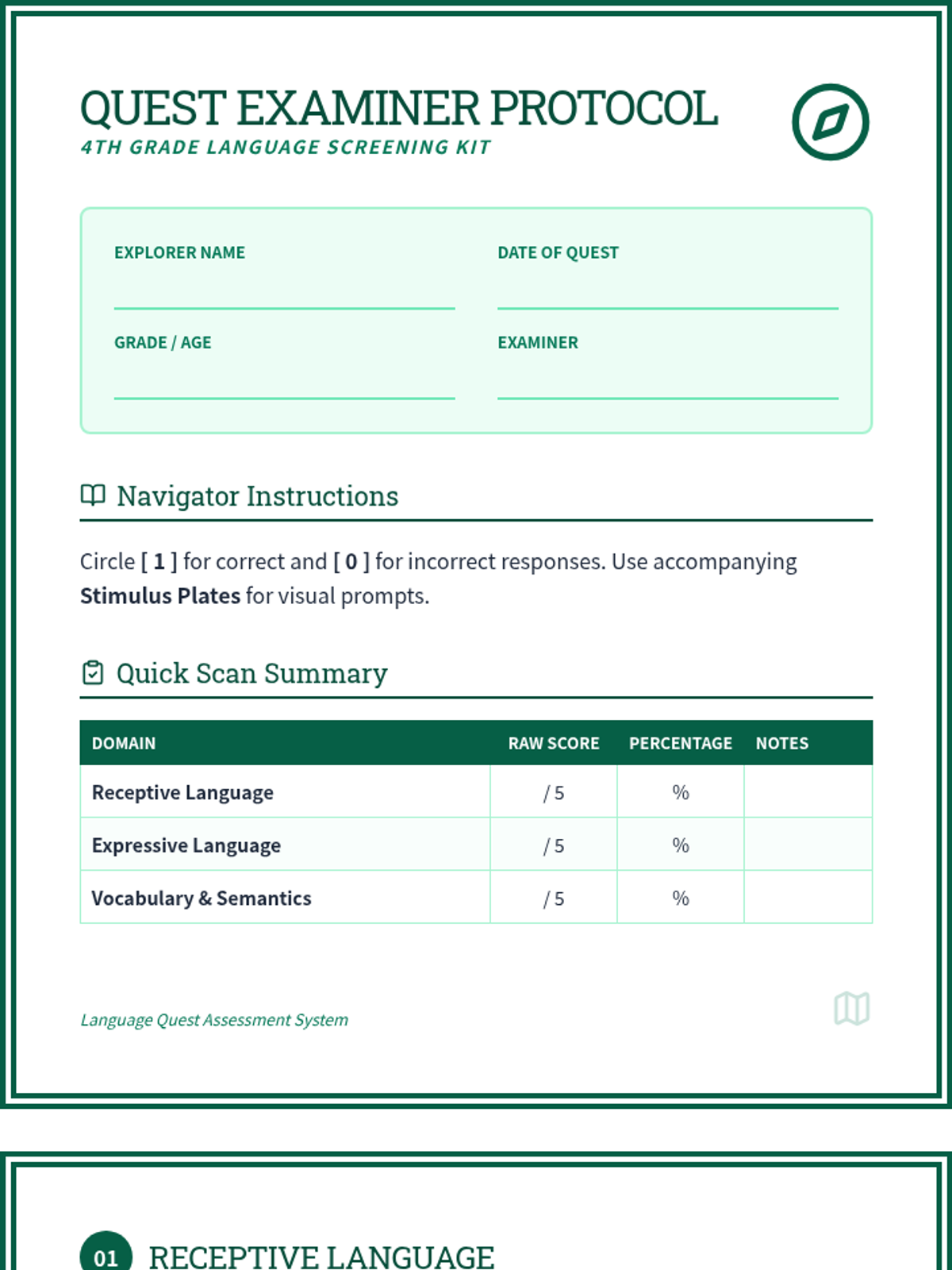
The Examiner Protocol is a multi-page scoring document for speech-language pathologists, featuring sections for receptive language, expressive language, and vocabulary, complete with clear scoring criteria and observation areas.
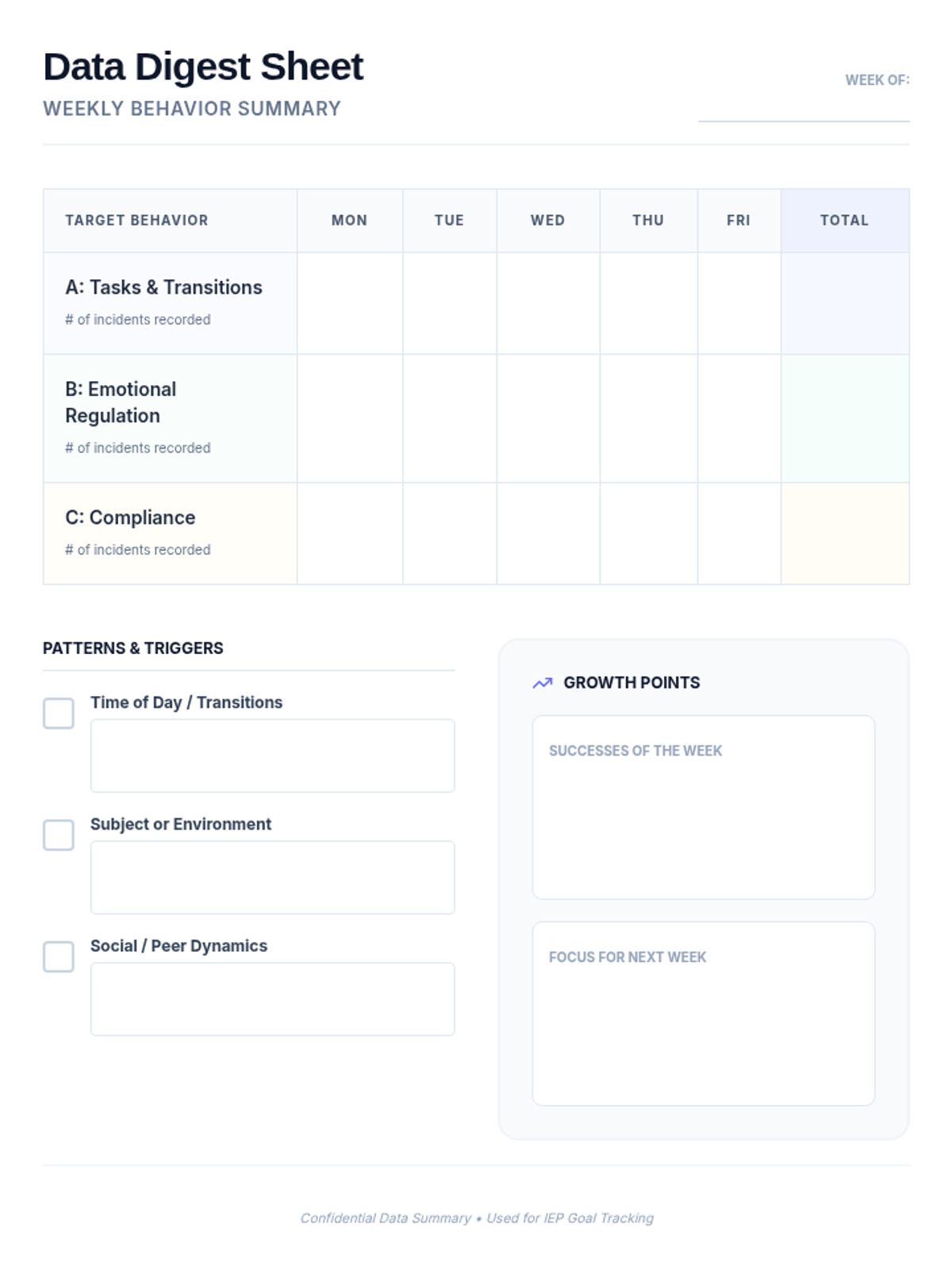
A weekly aggregation tool for teachers and IAs to summarize behavioral incident data. It includes space for quantitative totals and qualitative pattern analysis to inform student support strategies.
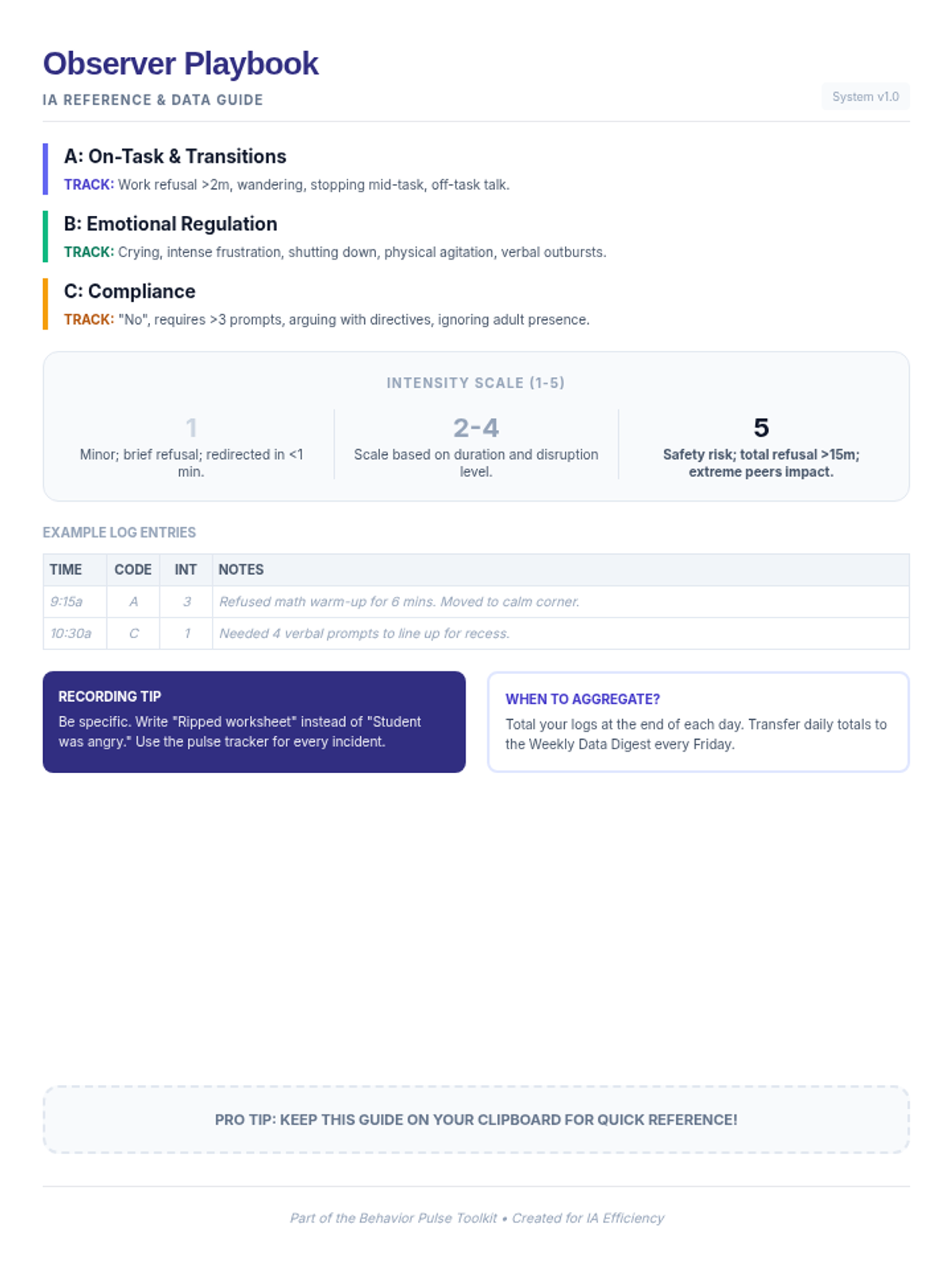
A practical reference guide for Instructional Assistants that defines specific behaviors to track (On-Task, Regulation, Compliance) and provides a standardized intensity scale for consistent data entry.
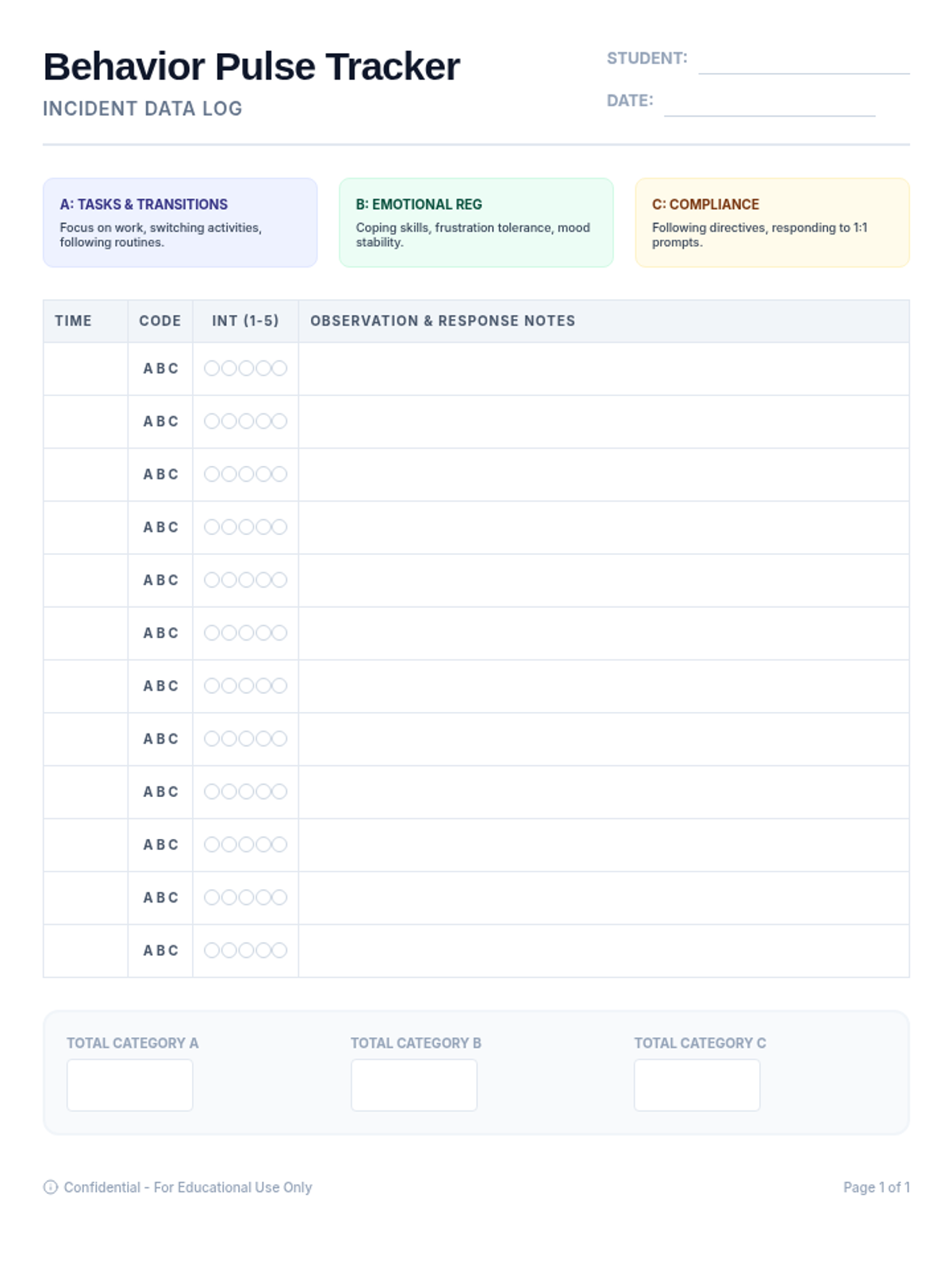
A streamlined incident log designed for Instructional Assistants to quickly record classroom behavior data. Includes coded categories for transitions, regulation, and compliance with a simple intensity scale.
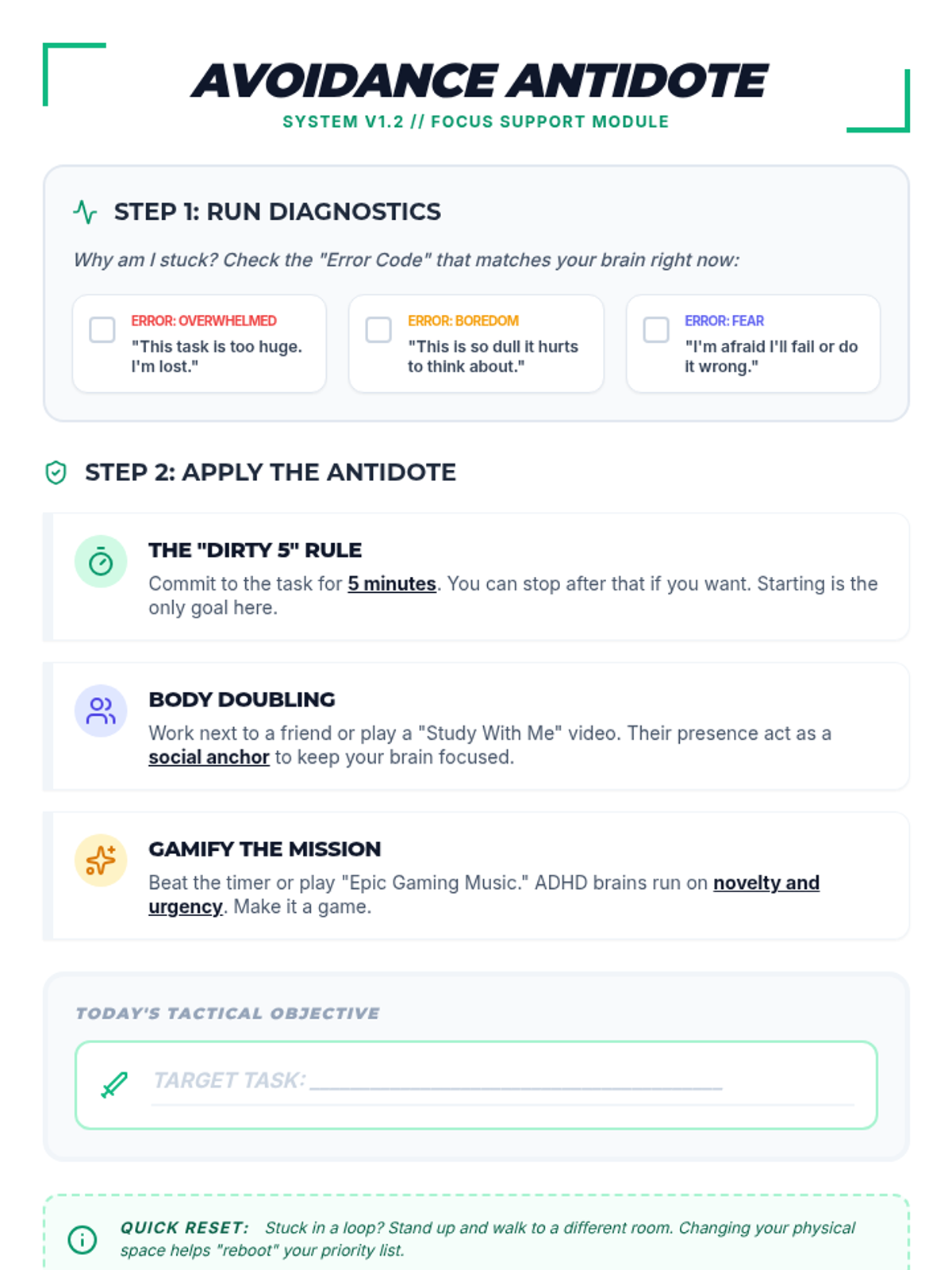
A visual reference guide for 9th-grade students to identify the root cause of their task avoidance and select specific ADHD-friendly strategies like body doubling, the 5-minute rule, or gamification to get started.
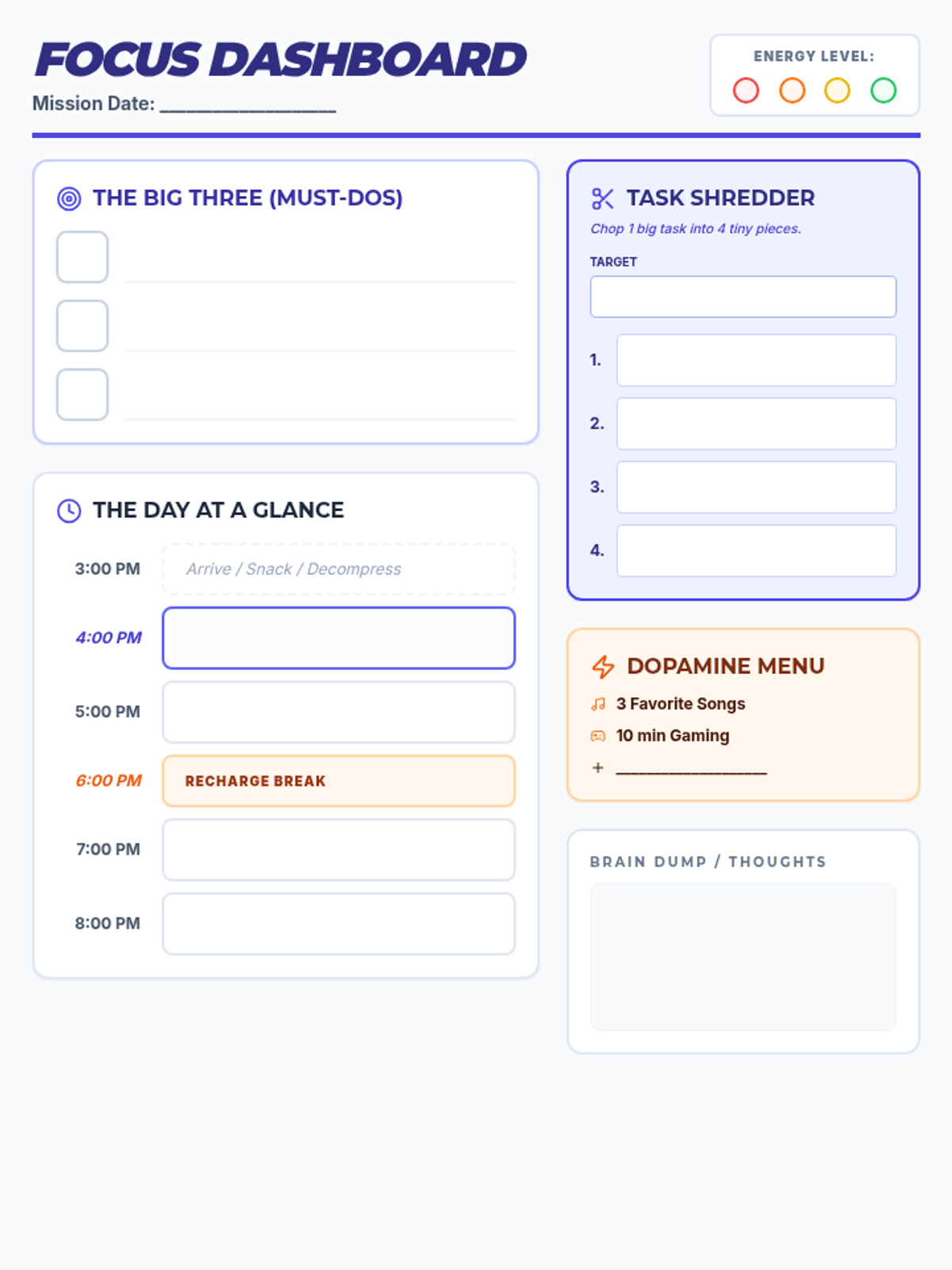
A daily visual schedule template designed for 9th-grade students with ADHD, featuring a task shredder for breaking down large projects, a visual timeline, and a dopamine reward menu to combat task avoidance.
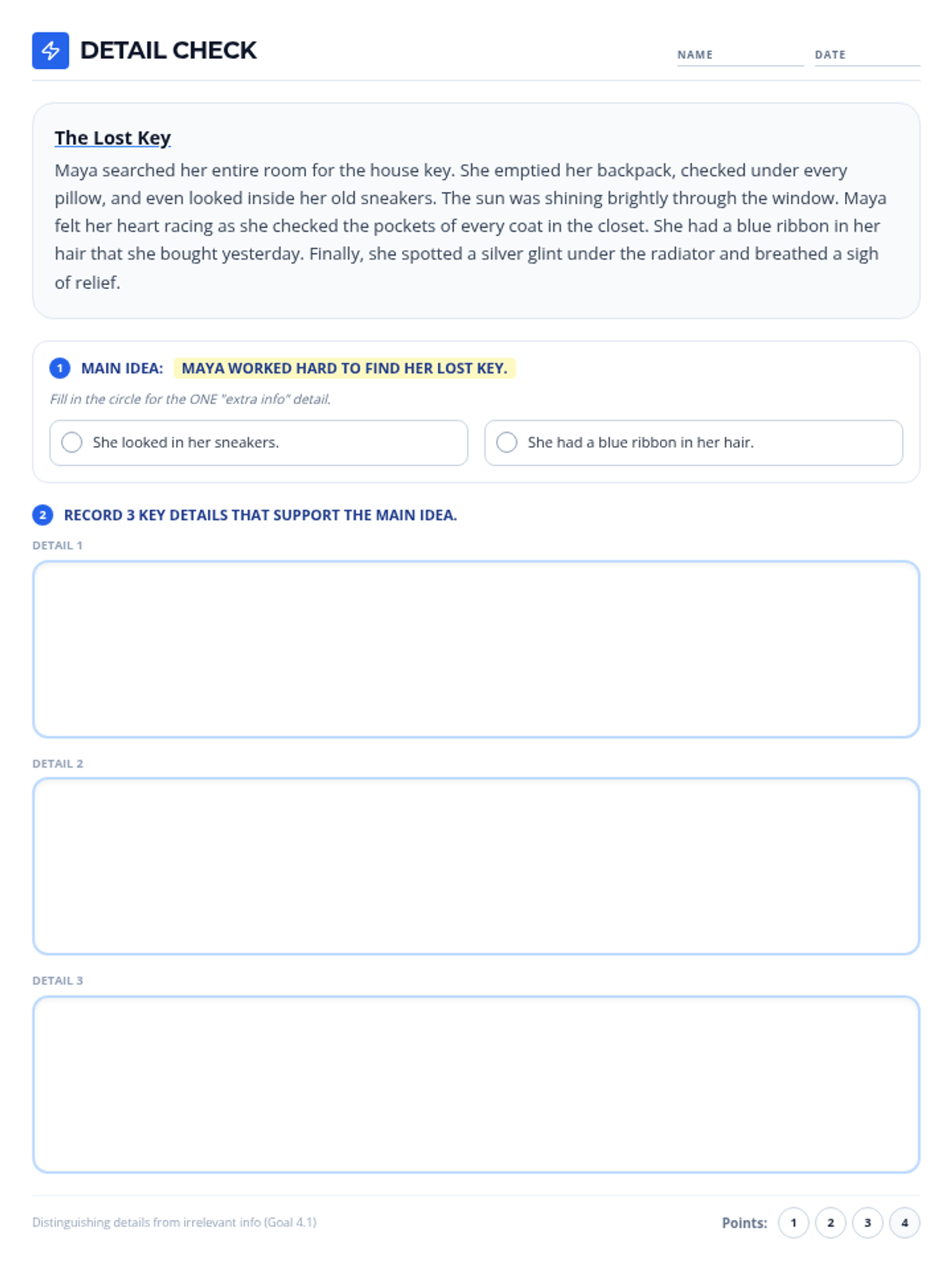
A short exit ticket to assess Oliver's ability to identify a single irrelevant detail and record three key details from a fiction paragraph, aligned with his IEP goal.
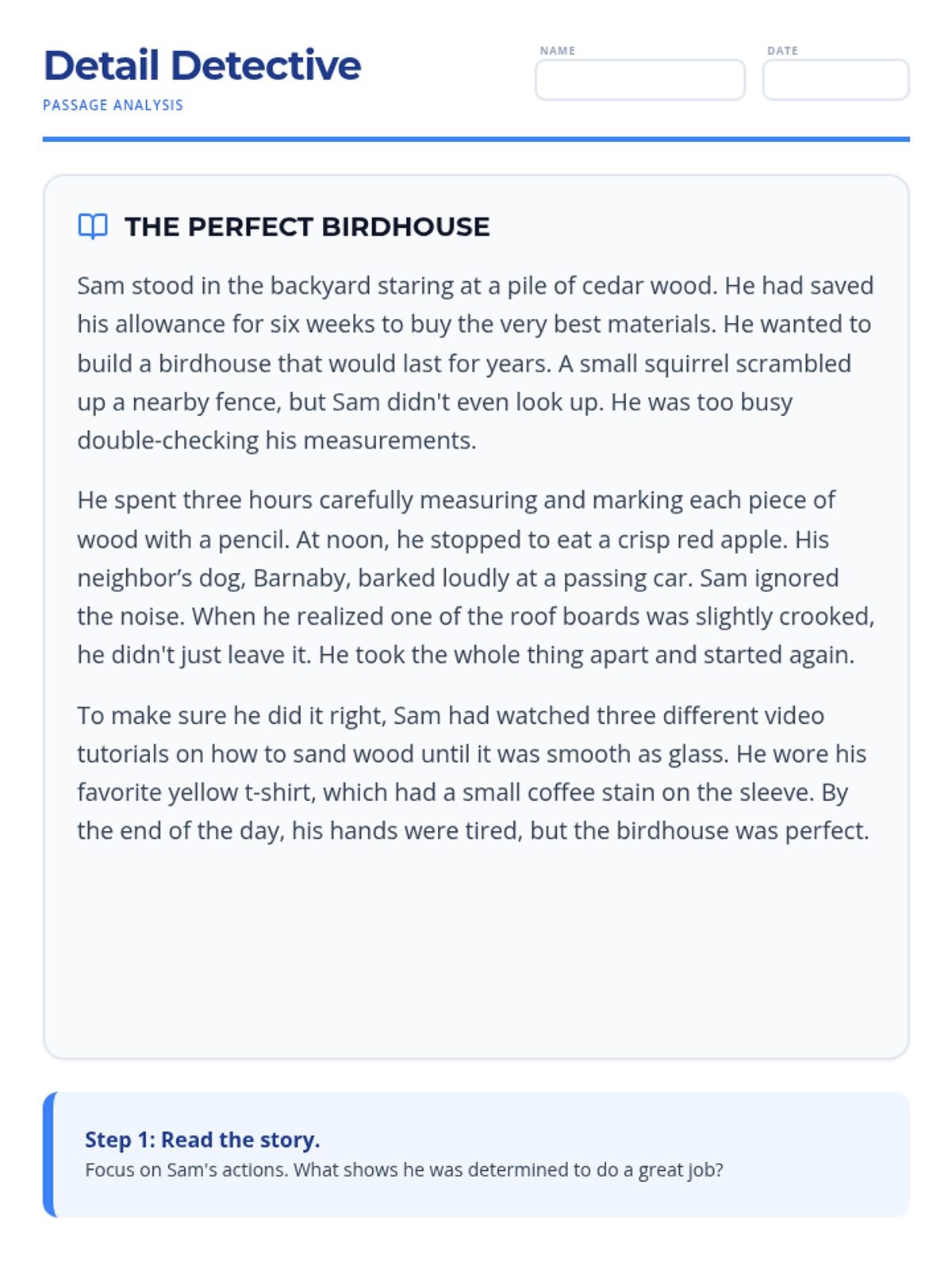
A student worksheet featuring a three-paragraph fiction story and an 'Umbrella' graphic organizer for recording three key details while filtering out irrelevant information.
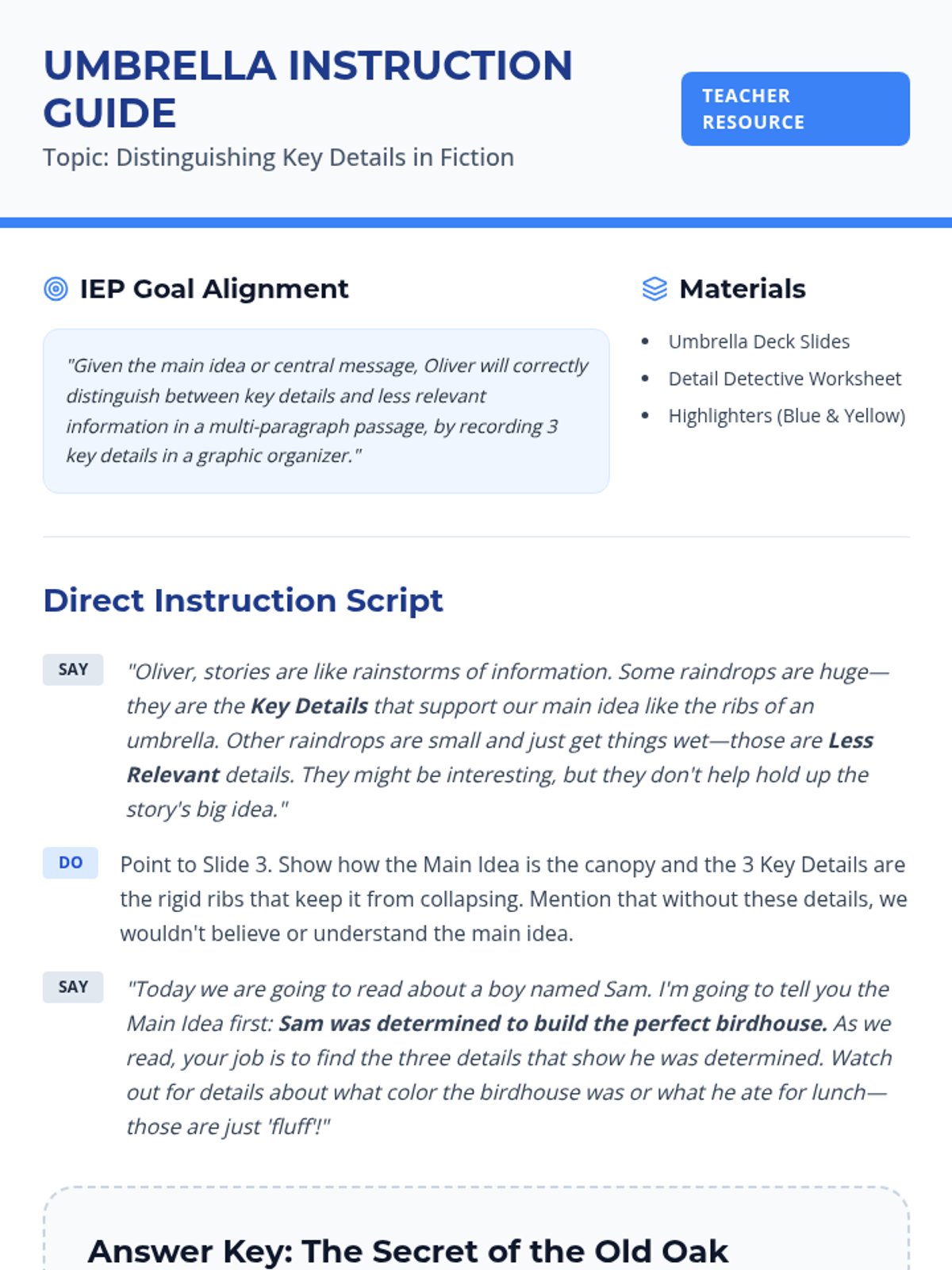
A teacher guide providing instructional scripts, IEP goal alignment, and a clear answer key for the 'The Secret of the Old Oak' activity.
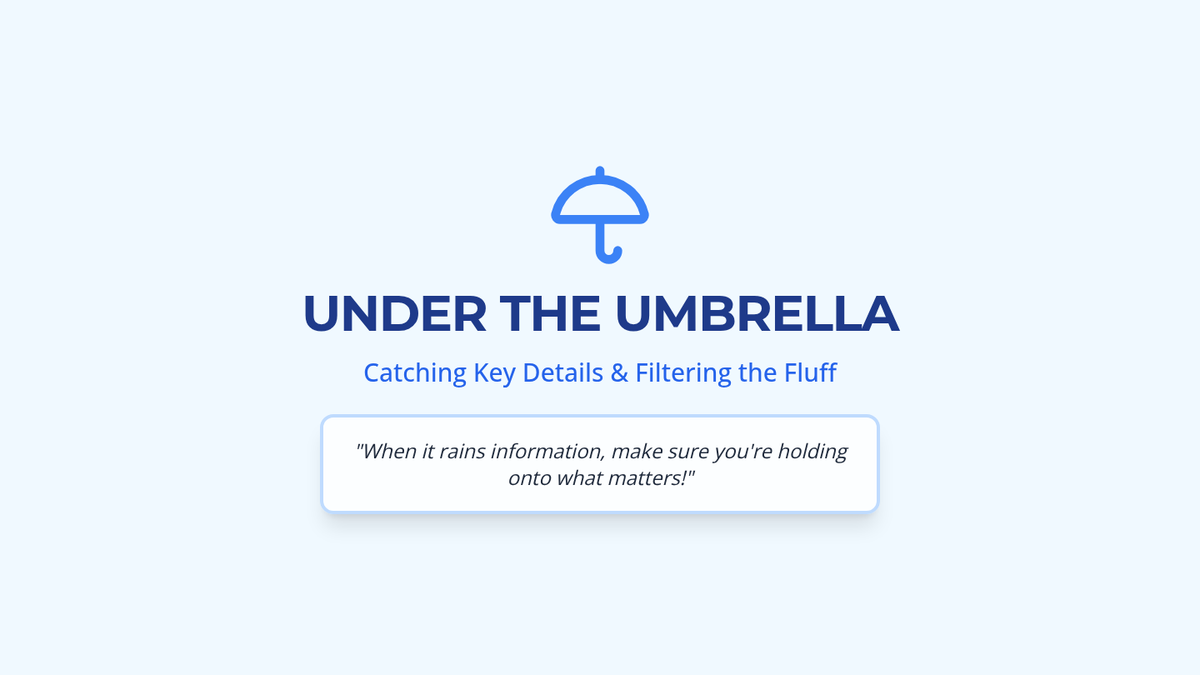
A visual presentation for Oliver that introduces the Main Idea Umbrella concept, contrasting key details with less relevant information using a clear weather-based metaphor.
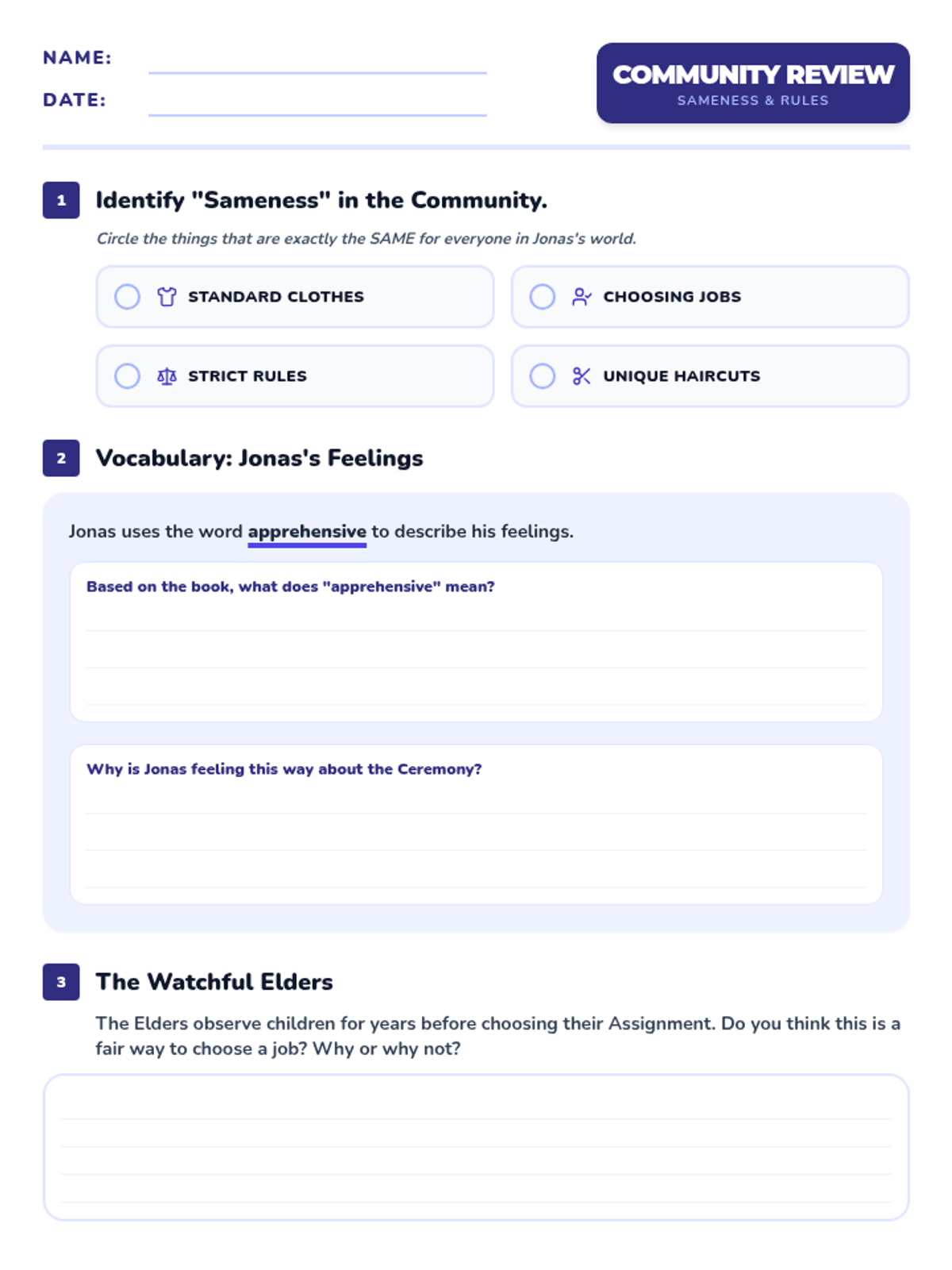
A discovery worksheet for The Giver that levels up the language to a 3rd-grade level, requiring students to identify elements of Sameness, define key vocabulary, and provide short written analyses of community roles.
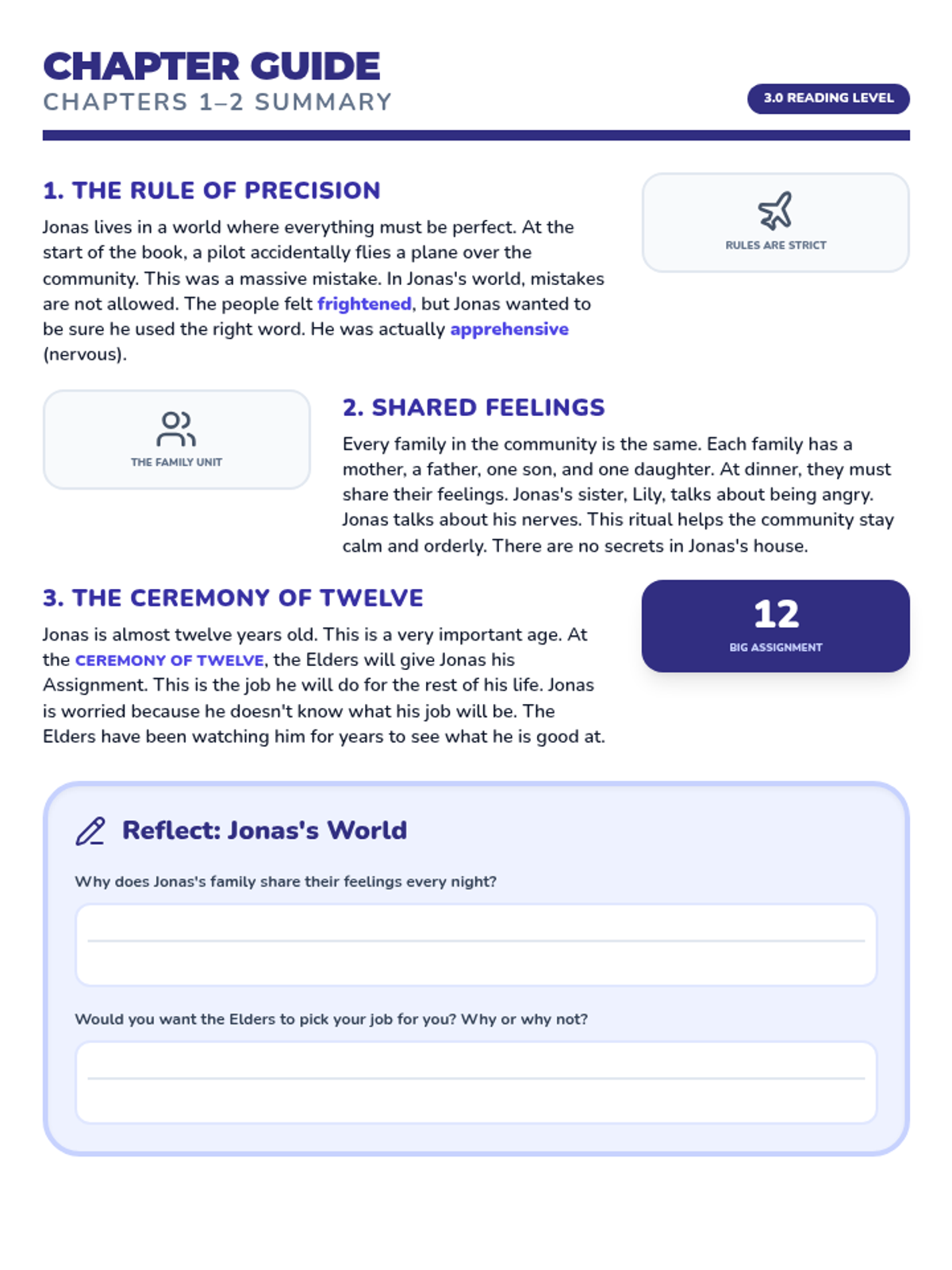
A reading companion for Chapters 1-2 of The Giver, featuring narrative summaries at a 3rd-grade reading level, visual anchors, and short-response comprehension questions.
Vocabulary flashcards for The Giver with leveled-up definitions suitable for a 3rd-grade reading level, featuring parts of speech and clear visual anchors.
A visually engaging slide deck exploring the core concepts of The Giver, specifically the trade-offs of Sameness and the Community's structure, using language accessible to 3rd-grade readers.
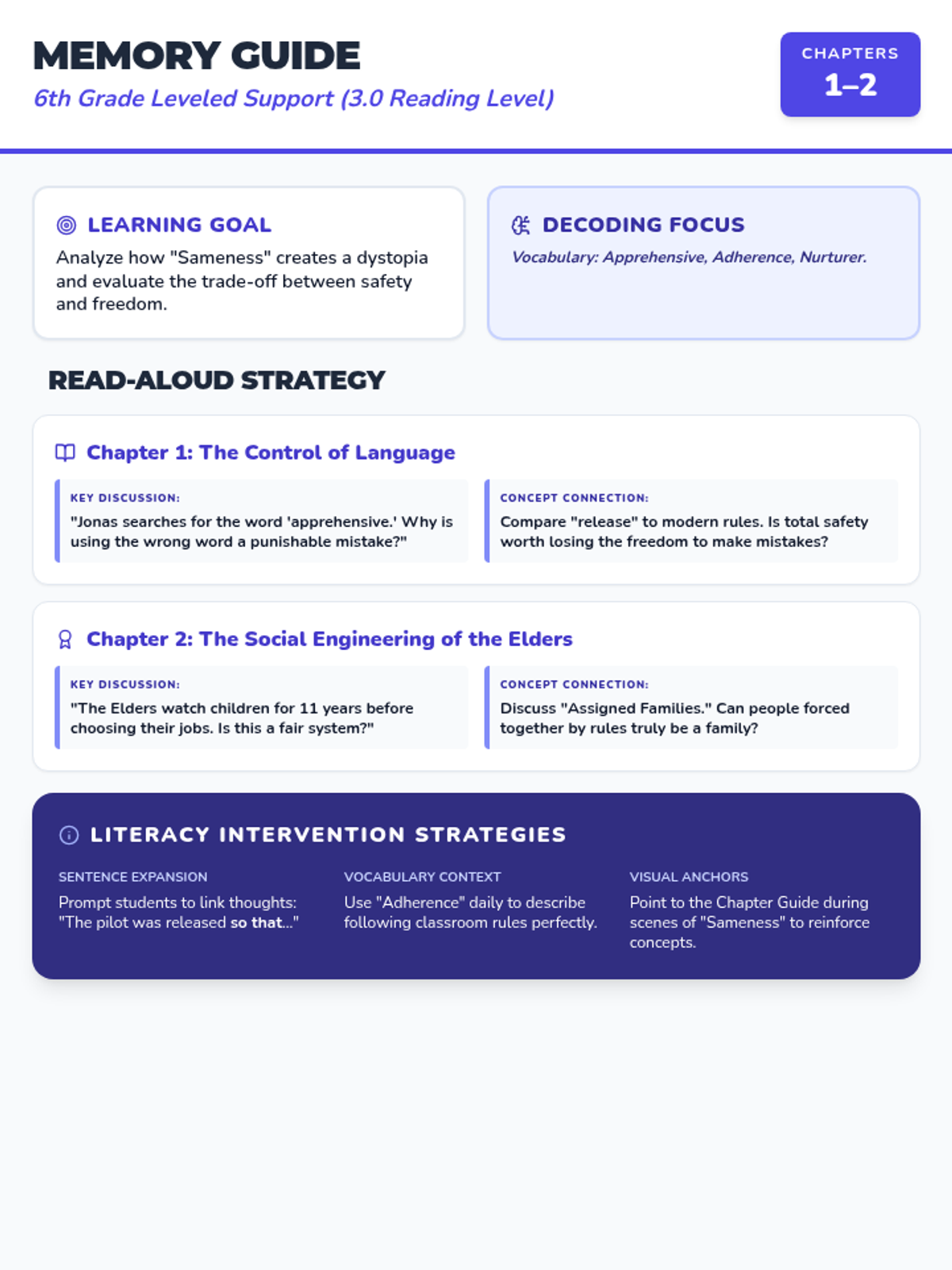
A comprehensive teacher's guide for reading The Giver (Chapters 1-2) aloud, leveled for students with 3rd-grade reading skills. It includes specific text-based prompts and instructional strategies for vocabulary and sentence expansion.
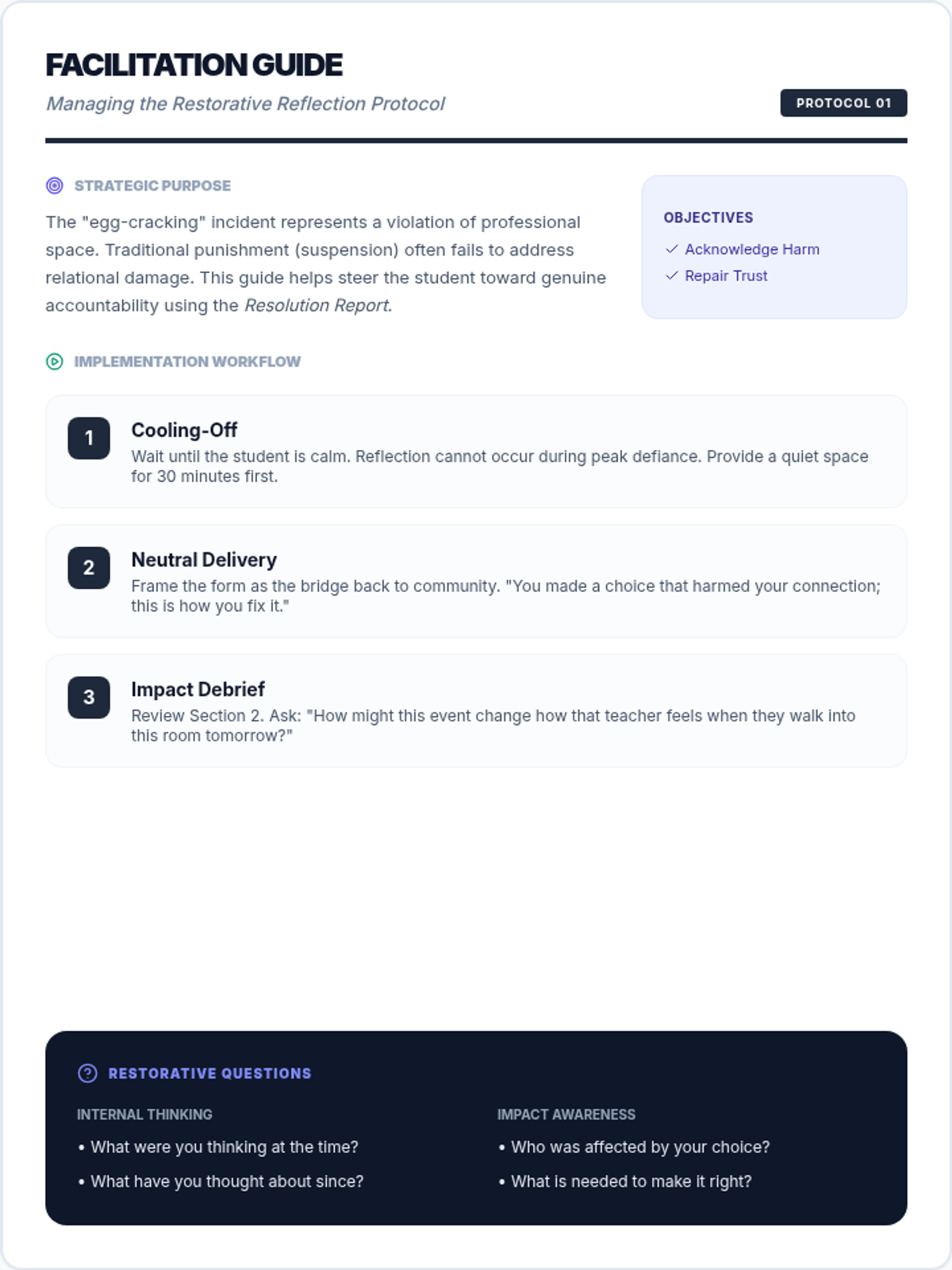
A professional teacher's guide for facilitating restorative conversations after a behavioral incident. It includes the purpose of reflection, implementation steps, and a restorative questioning framework.
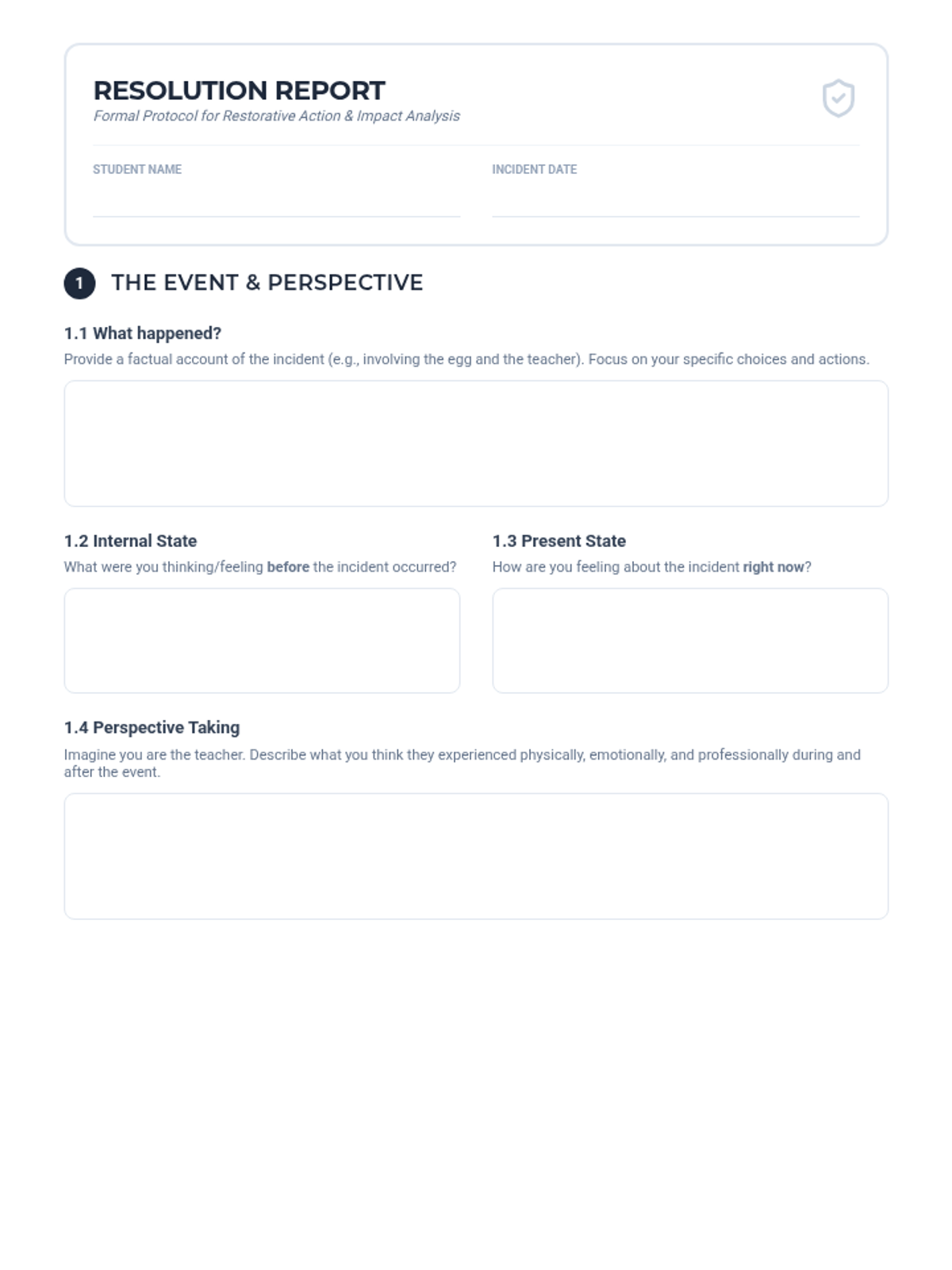
A detailed, two-page restorative reflection form designed to help students analyze the impact of their actions, take another's perspective, and identify concrete steps for repairing harm after a specific incident.
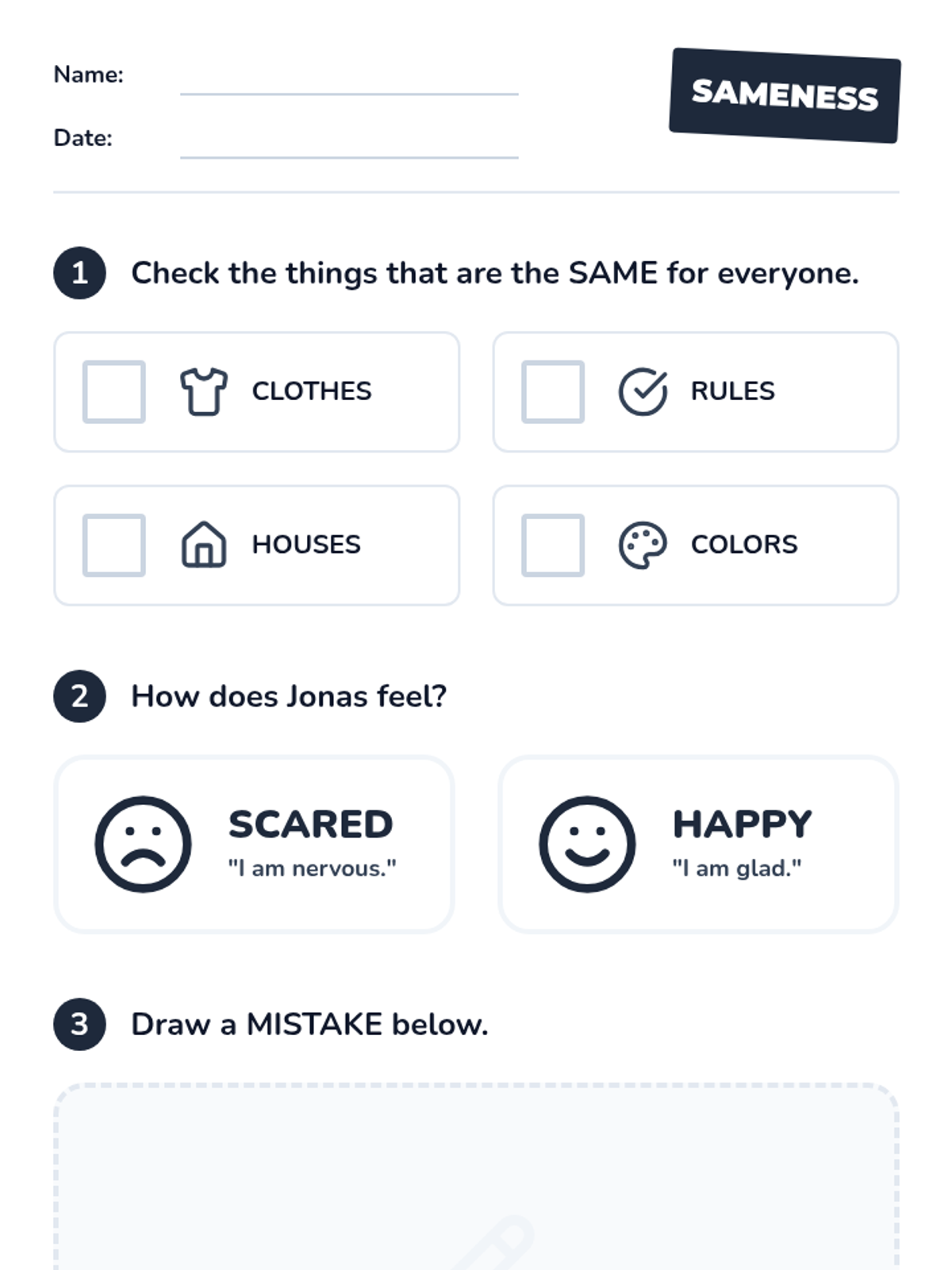
A modified, low-text worksheet for The Giver focusing on the concept of Sameness and Jonas's feelings, featuring large visuals and minimal decoding requirements.