Teacher guide for Lesson 1: Mechanics of Prosody, including technical recommendations for audio visualizers and differentiation strategies.
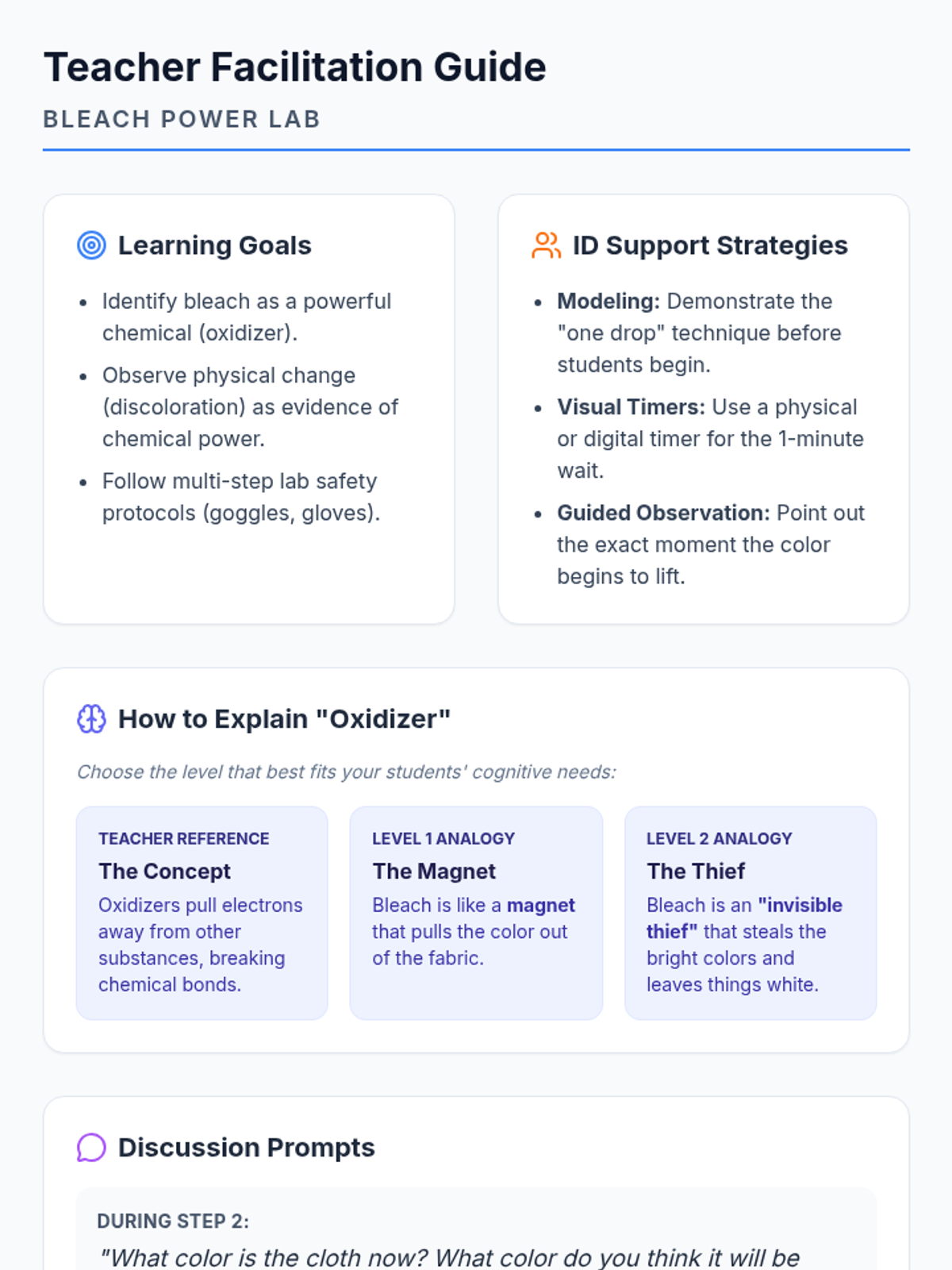
Teacher guide for the Bleach Power Lab, containing instructional strategies for students with ID, discussion prompts, and differentiation tips. Includes a section on how to explain the concept of an oxidizer.
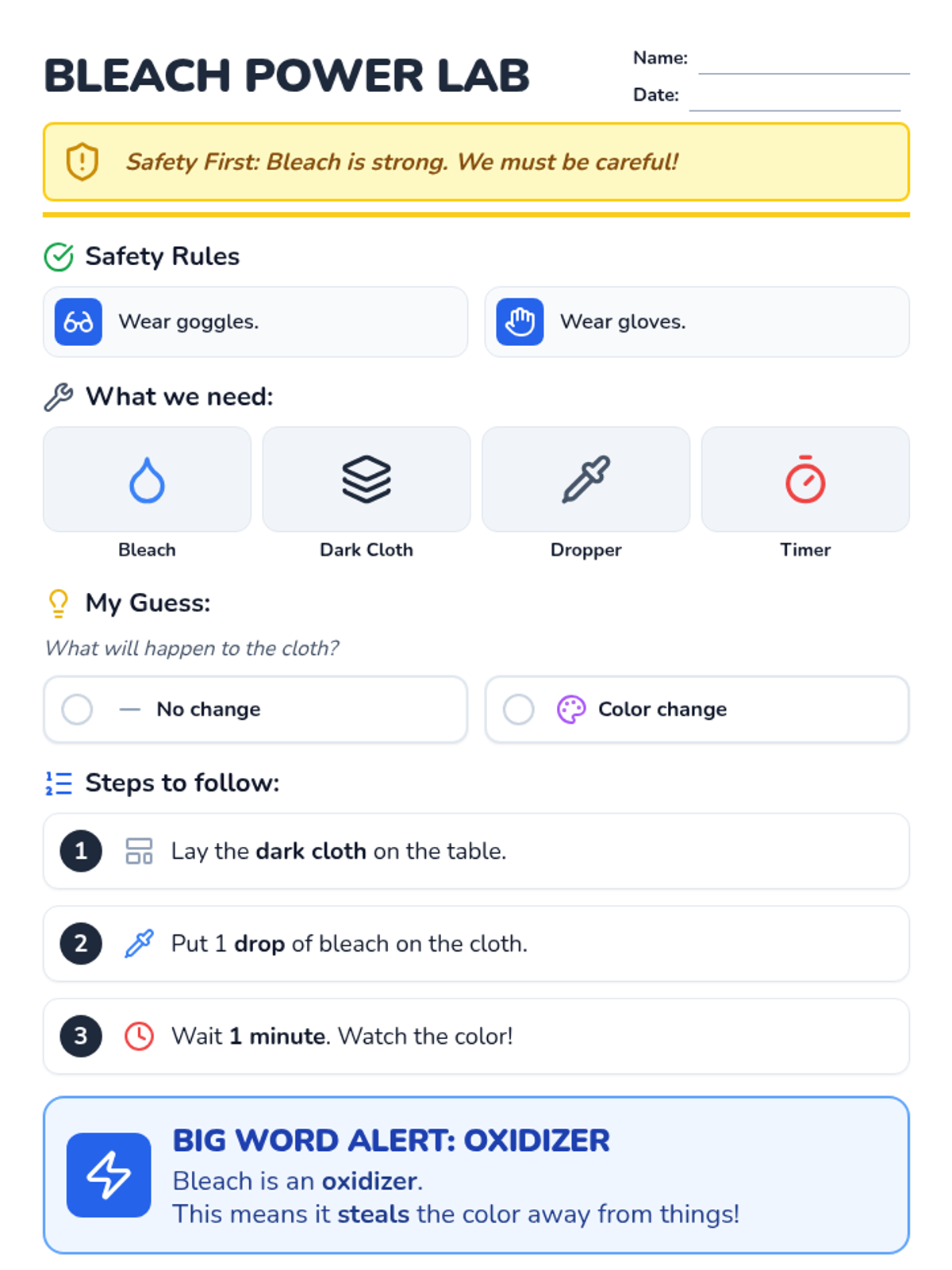
A highly visual lab procedure worksheet for high school students with ID, featuring step-by-step instructions with picture support, safety rules, and observation boxes for drawing results. Updated with a simple hypothesis section and explanation of what an oxidizer is. Both drawing boxes now use matching icons for visual consistency. Final safety summary is optimized to fit on two pages.
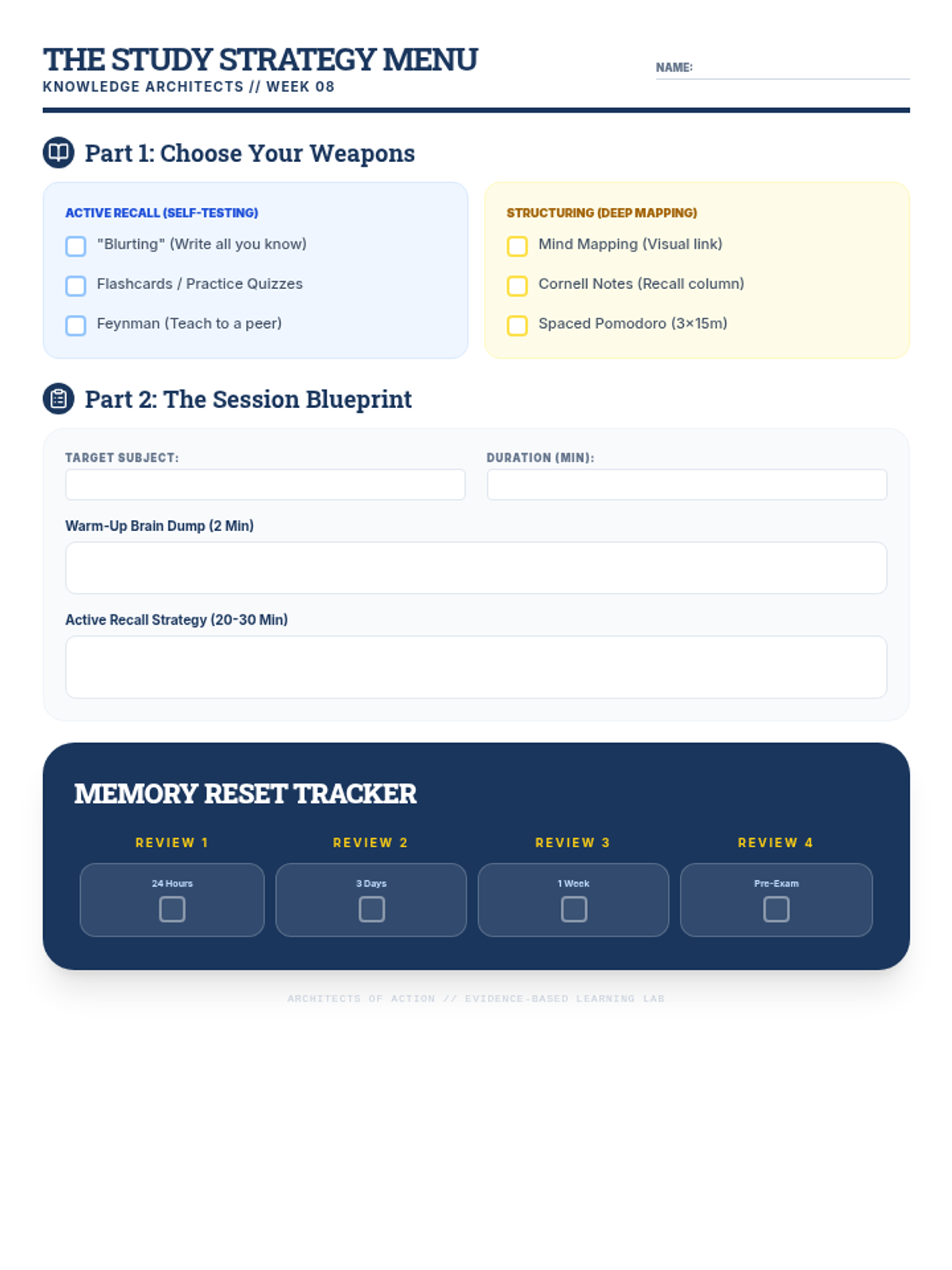
A study strategy handout for students to plan evidence-based study sessions using active recall and spaced repetition. Revised to fit on a single page with improved contrast and spacing.
Slide deck for Week 8 focusing on evidence-based study strategies like active recall and spaced repetition. Revised for better text spacing and layout.
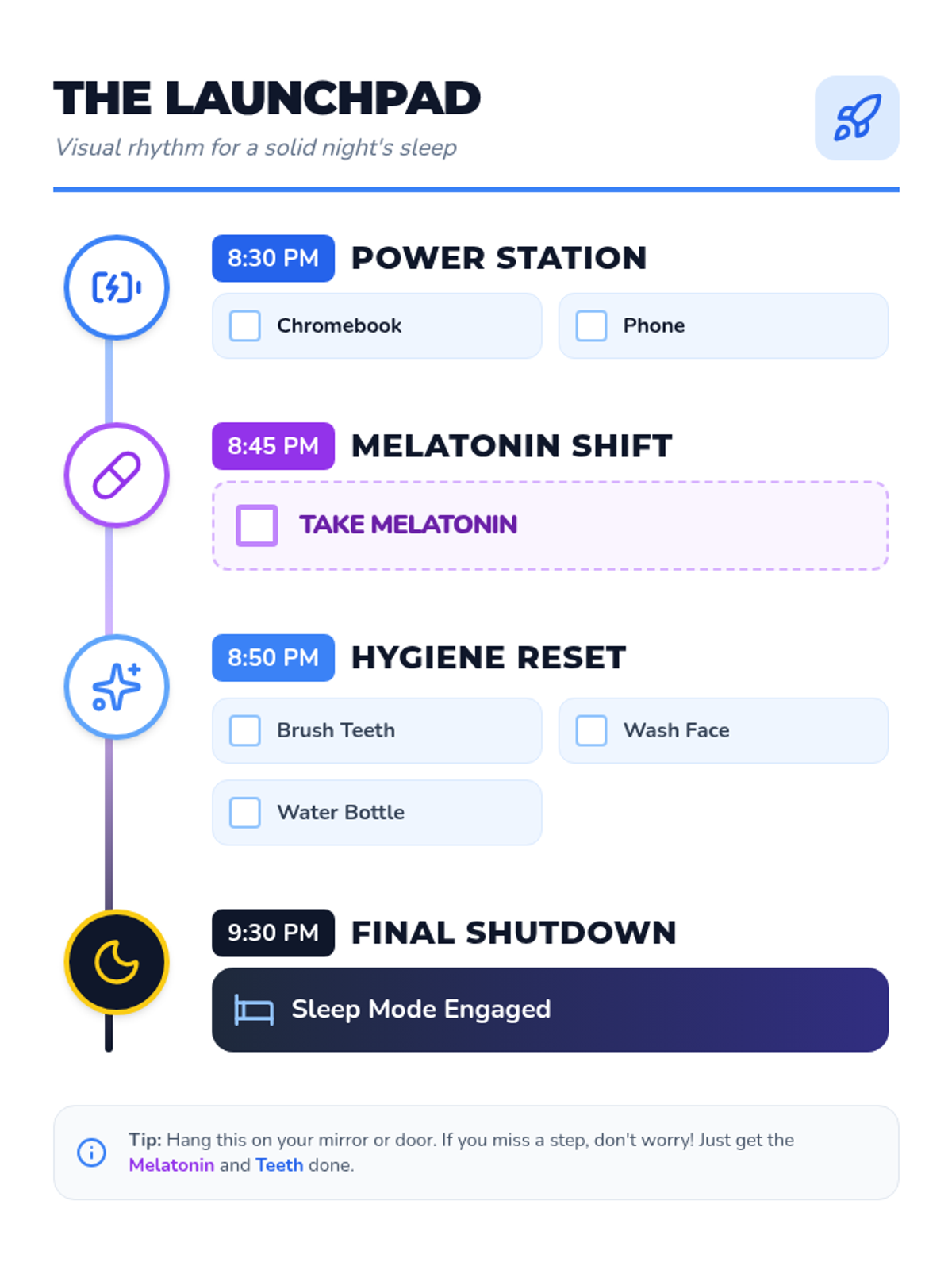
A high-contrast visual schedule for a teenager's bedroom, now updated with a blue and purple color scheme and a simplified routine that prioritizes essential hygiene and sleep preparation.
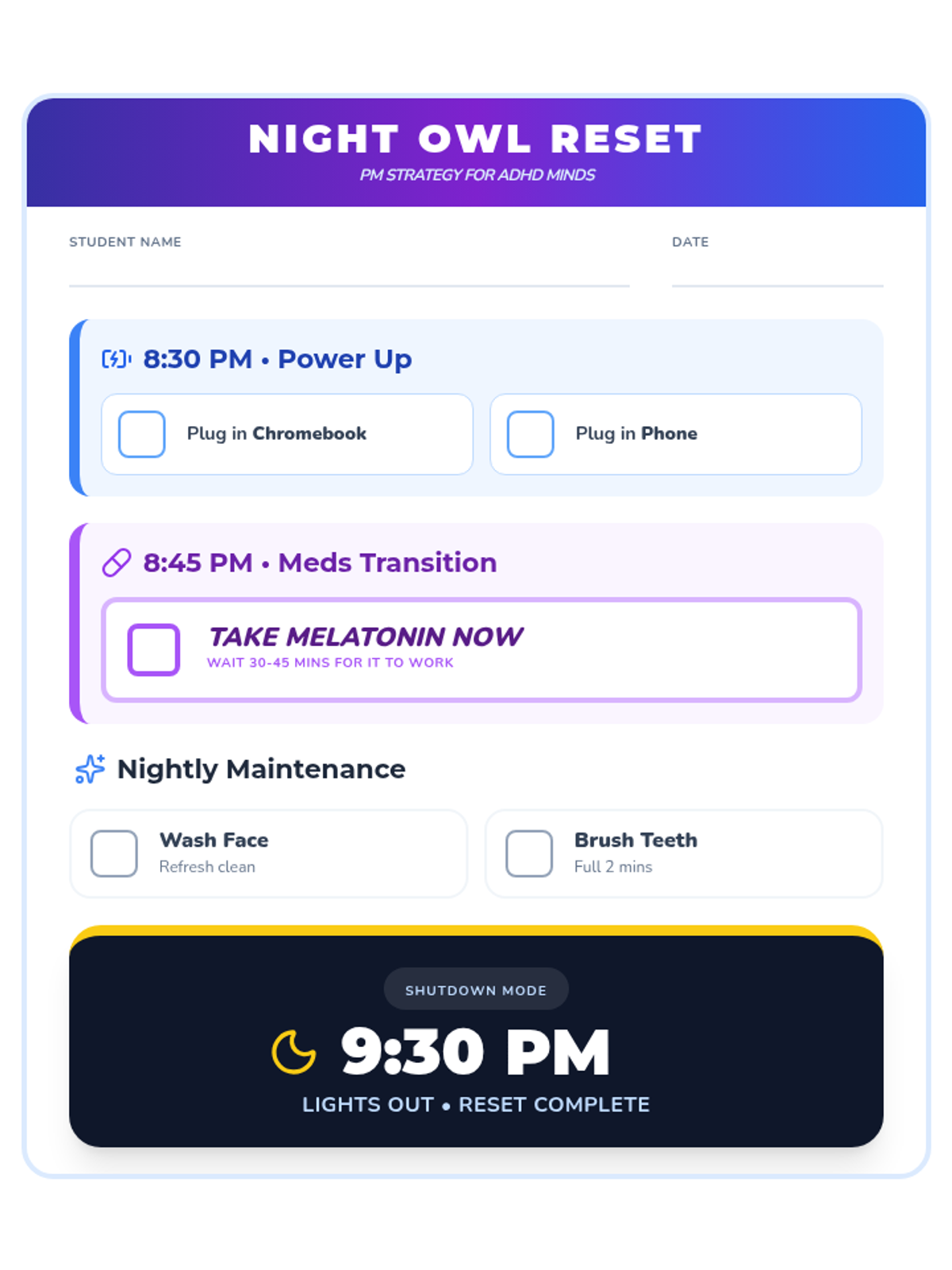
An updated nightly routine checklist for teenagers with ADHD, now featuring a purple and blue color scheme and a streamlined task list focused on hygiene and device management.
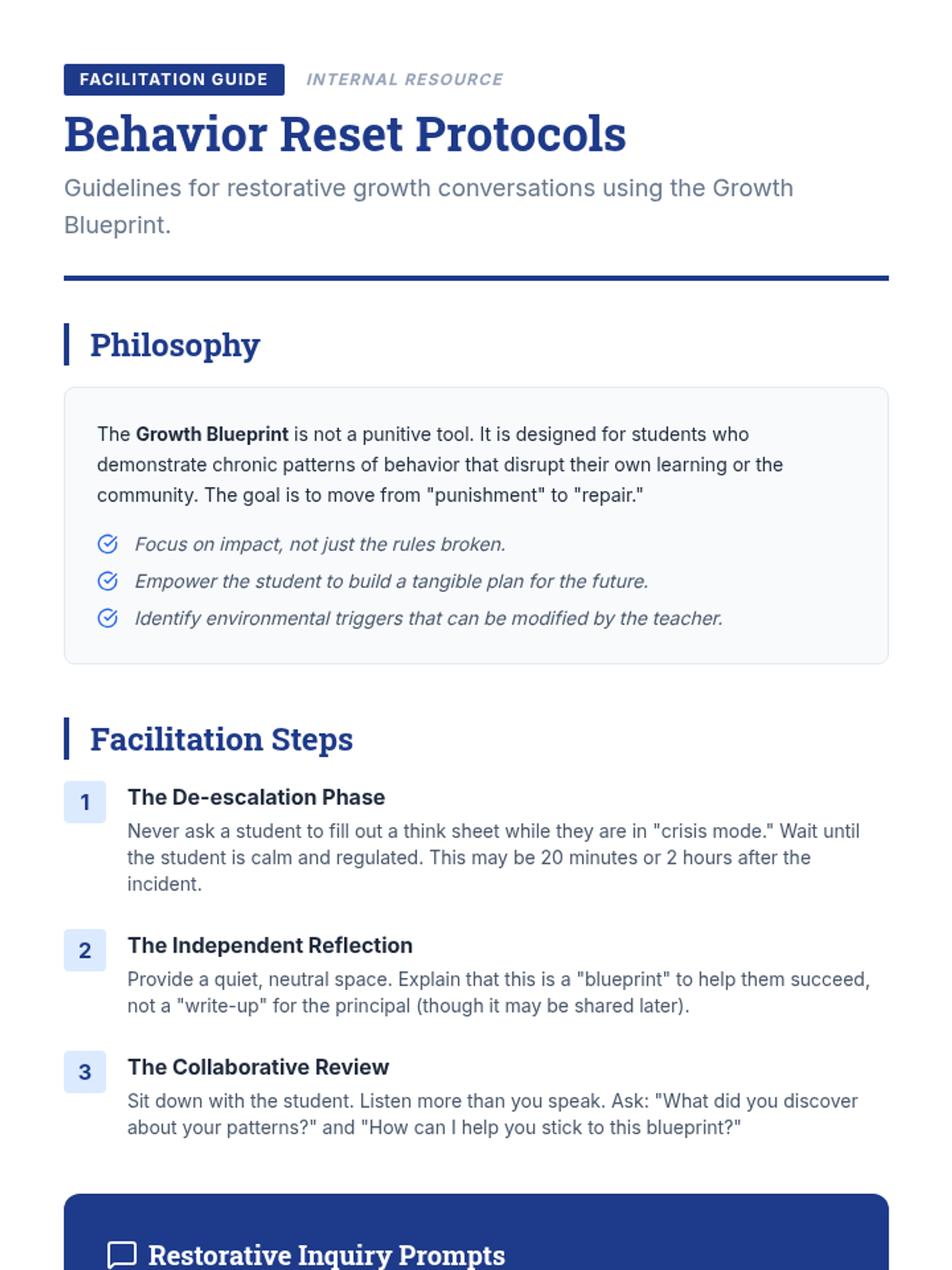
A comprehensive guide for teachers on facilitating restorative behavior conversations. It includes philosophy, step-by-step implementation, discussion prompts, and strategies for tracking long-term progress.
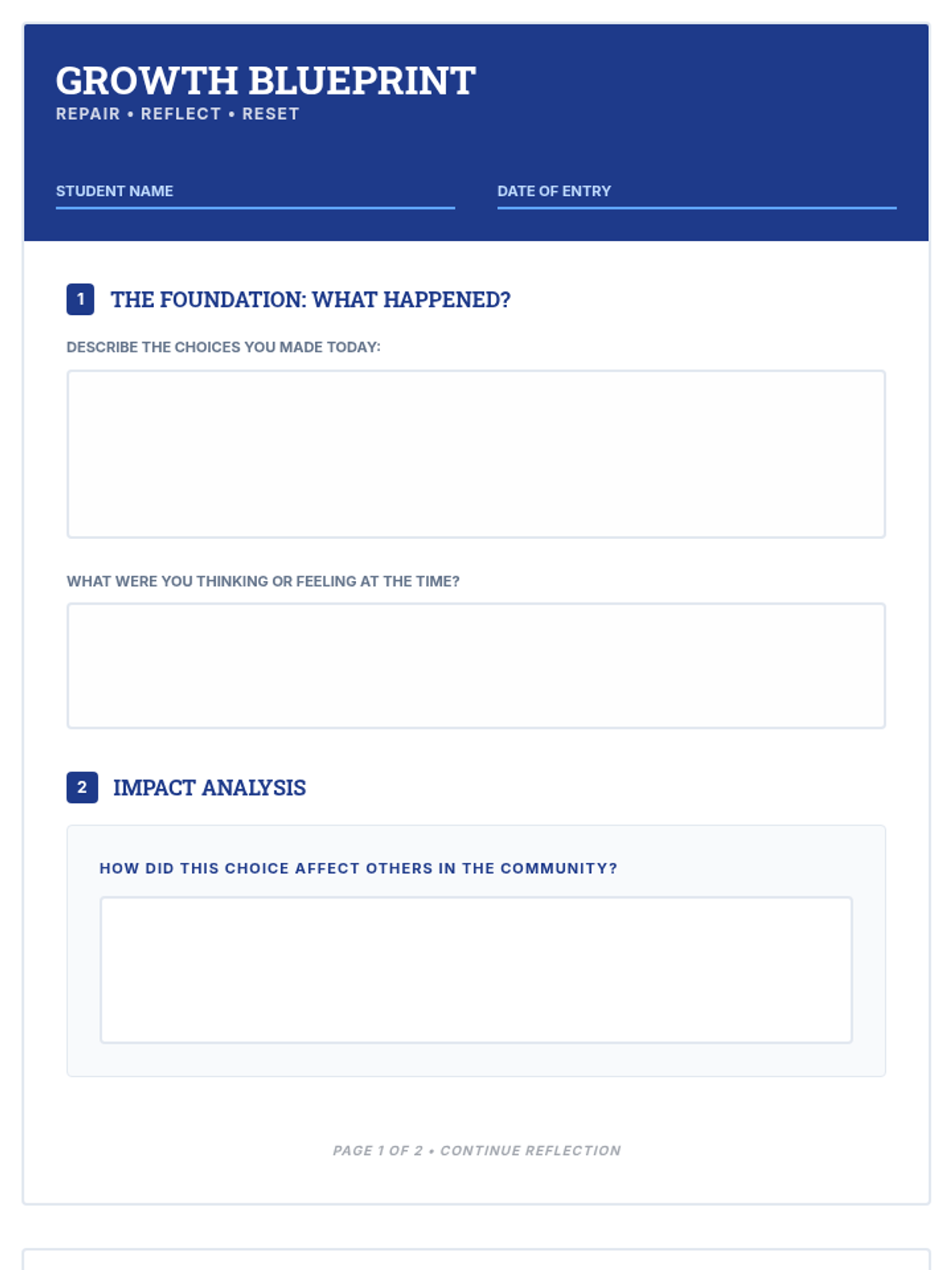
A restorative behavior reflection sheet designed for students to analyze chronic patterns and create a 'blueprint' for future success. It includes sections for incident description, impact analysis, trigger identification, and goal setting.
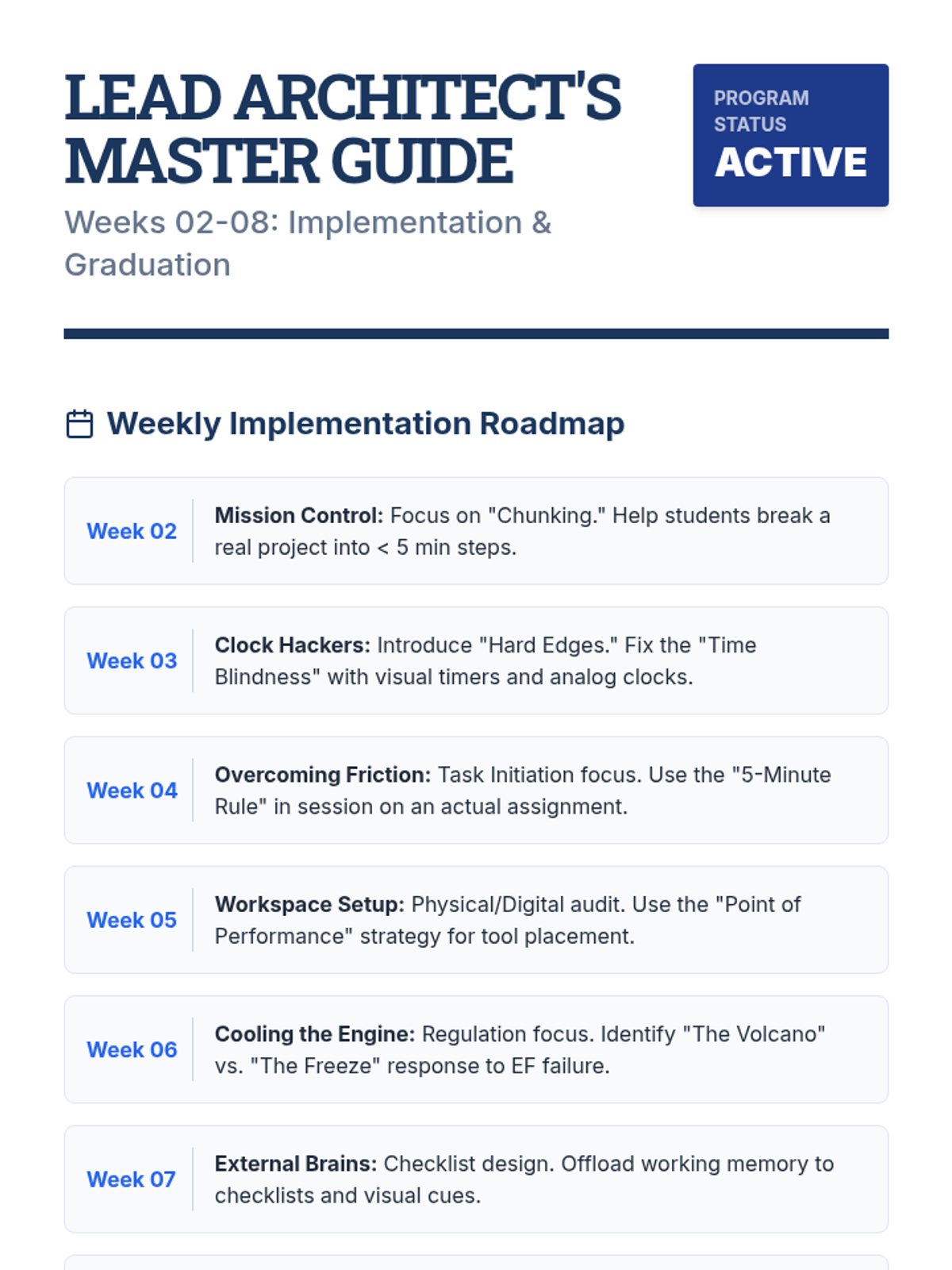
A comprehensive facilitator guide for the remaining weeks of the group, outlining implementation strategies and troubleshooting tips. Updated to 8 weeks with Study Skills (Wk 7) and Launch Day (Wk 8). Revised layout for better page flow.
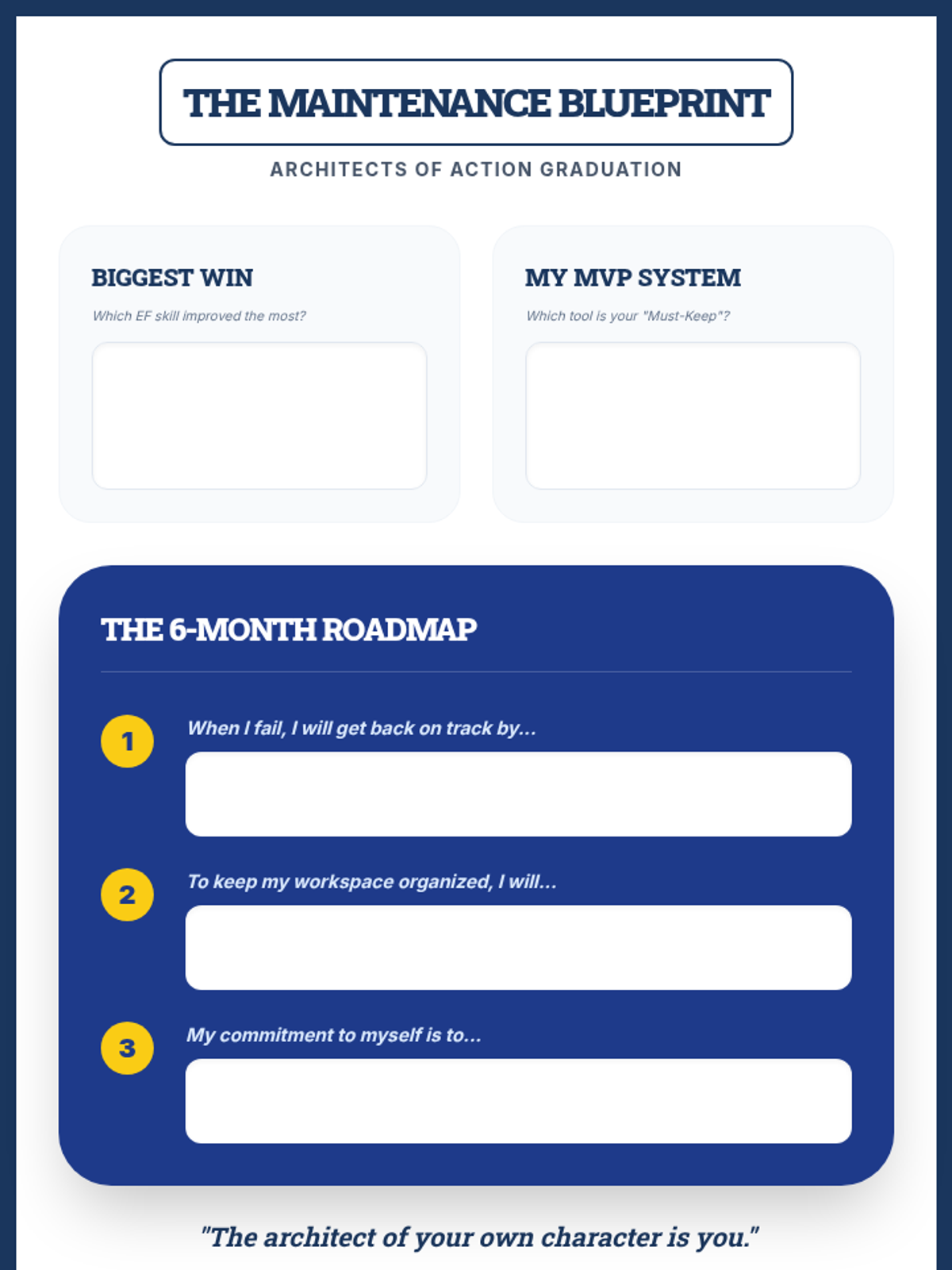
A graduation reflection and maintenance planning worksheet for students to consolidate their learning and plan for long-term EF success. Revised for page flow, work area legibility, and contrast.
Final slide deck for the graduation session, focusing on reflection, maintenance planning, and celebrating progress. Revised for visual impact and corrected typos.
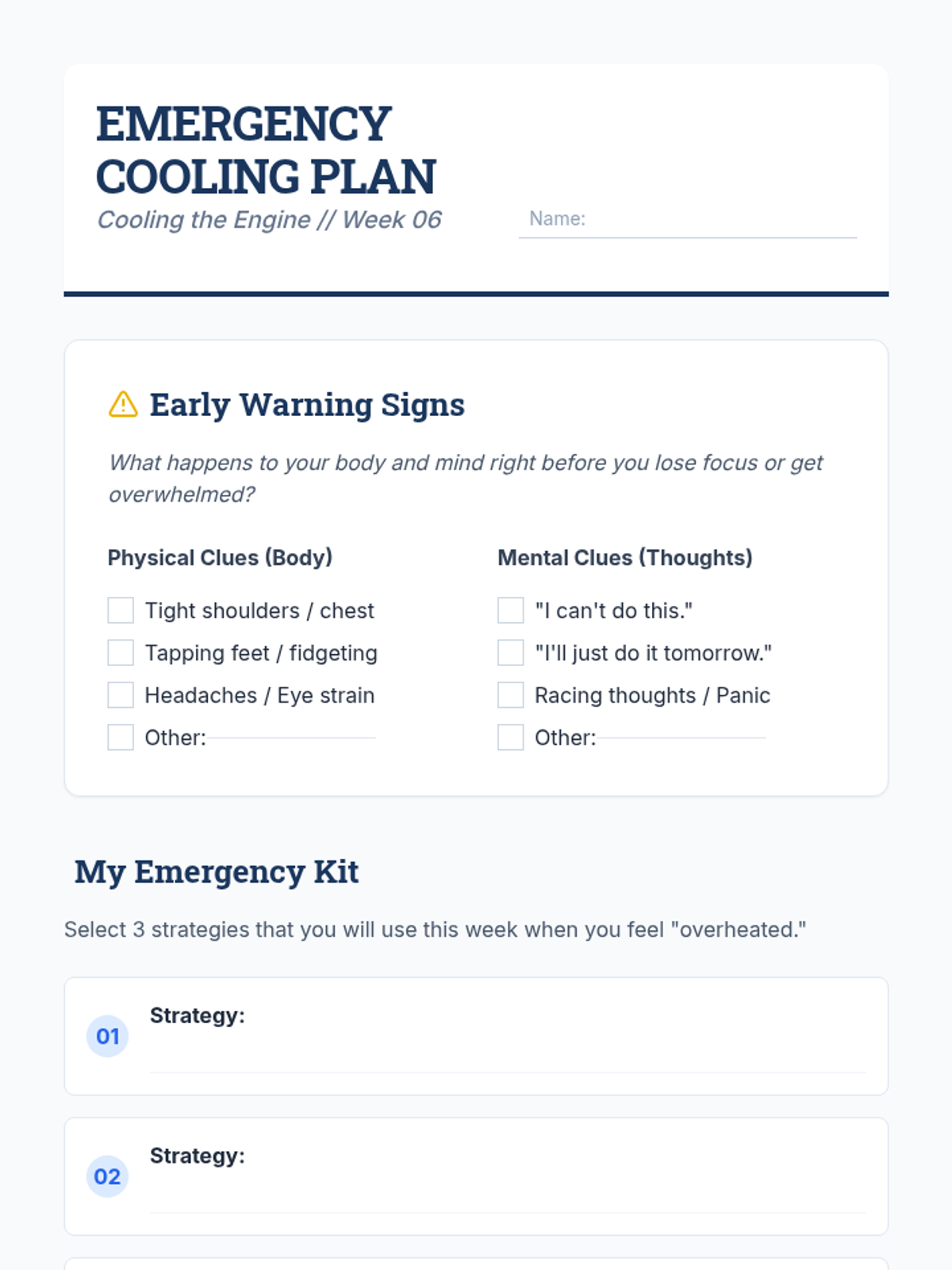
A planning sheet for identifying emotional triggers and creating a personalized emotional regulation emergency kit.
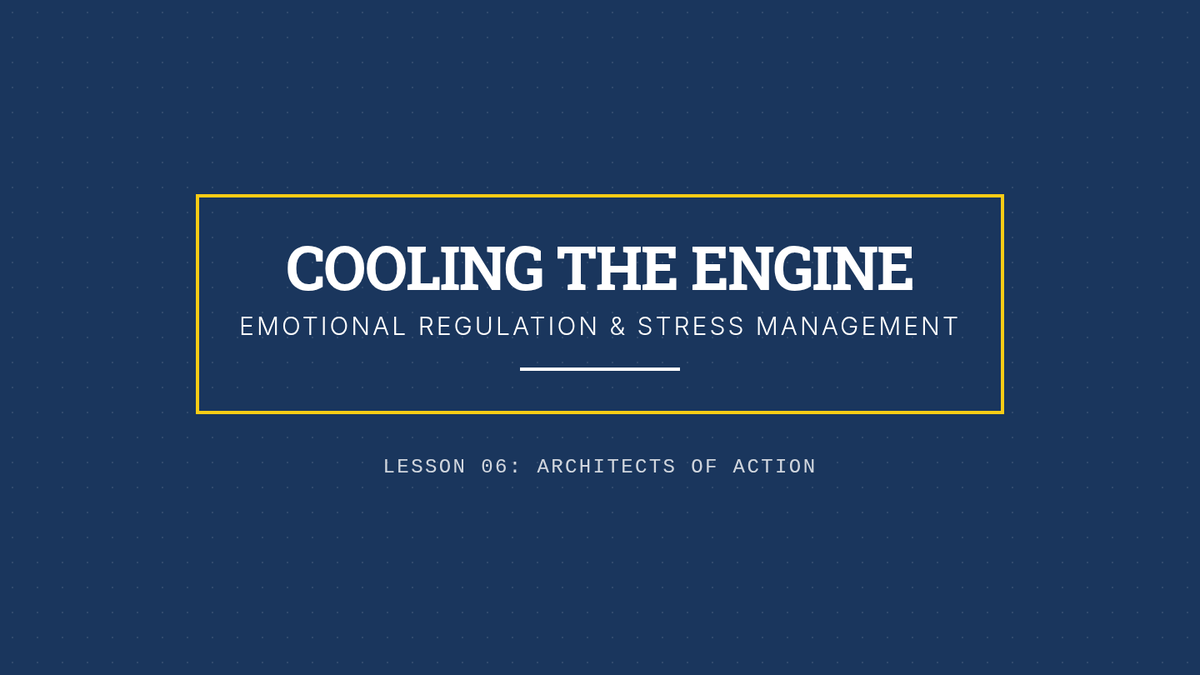
Slides for Week 6 exploring the link between emotions and executive functioning, including stress triggers and regulation strategies.
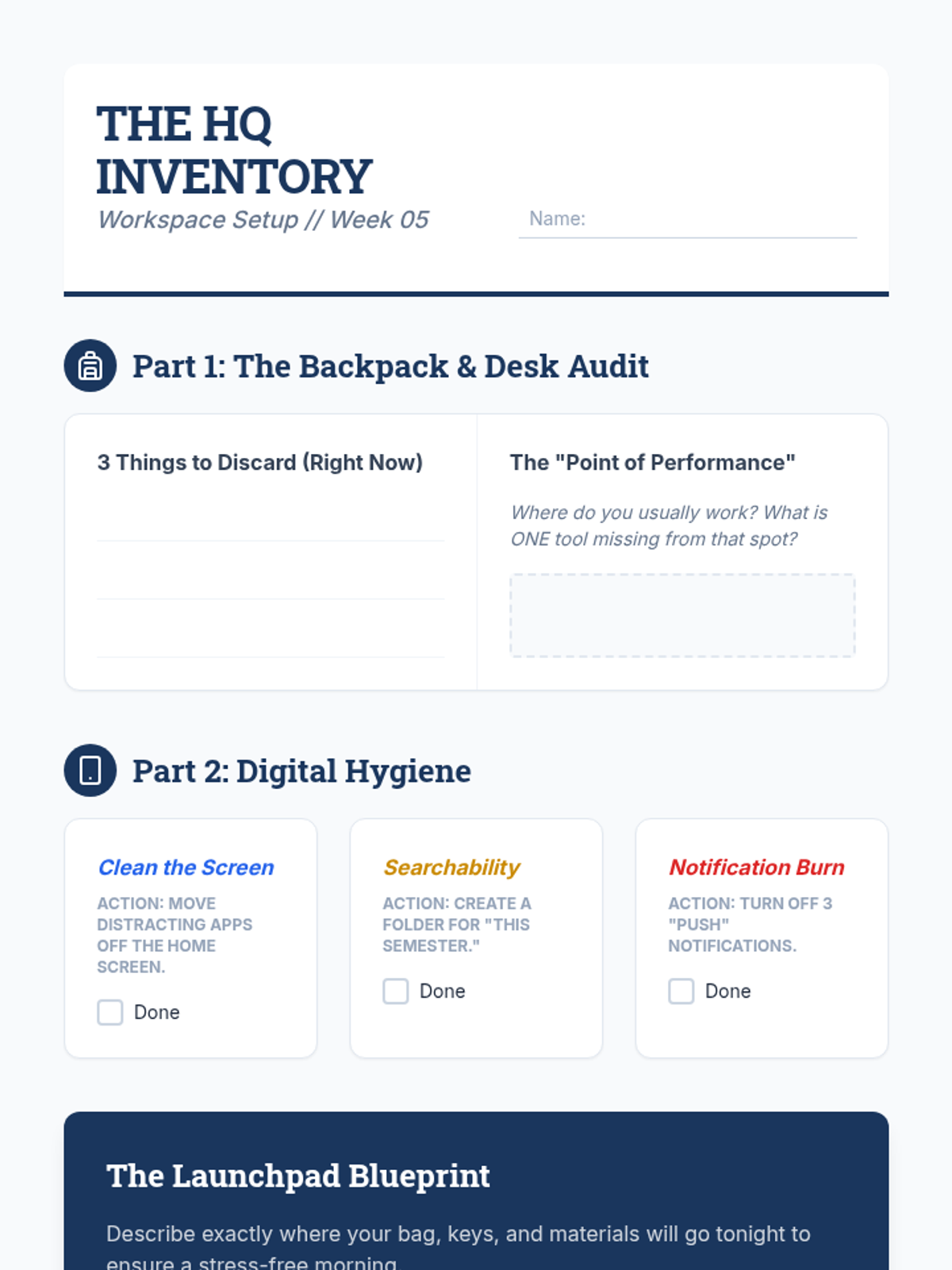
A worksheet for auditing physical and digital workspaces, focusing on the Point of Performance and establishing a morning launchpad habit.
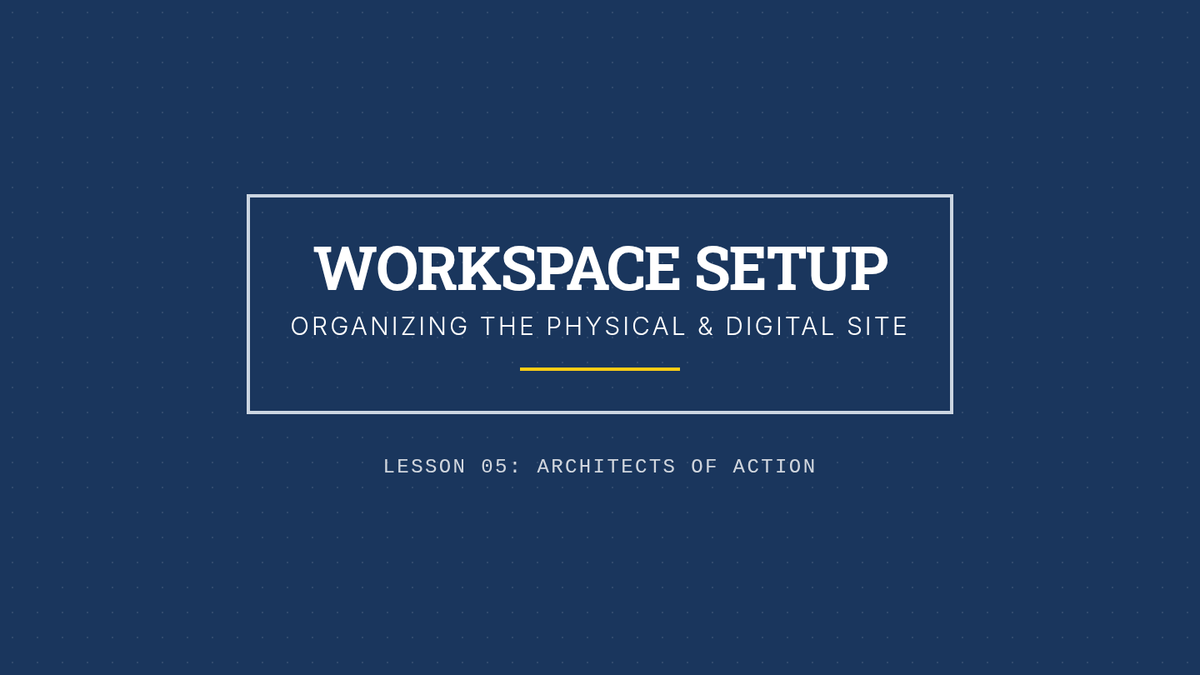
Slides for Week 5 focusing on physical and digital organization, including the Point of Performance concept and digital file management.
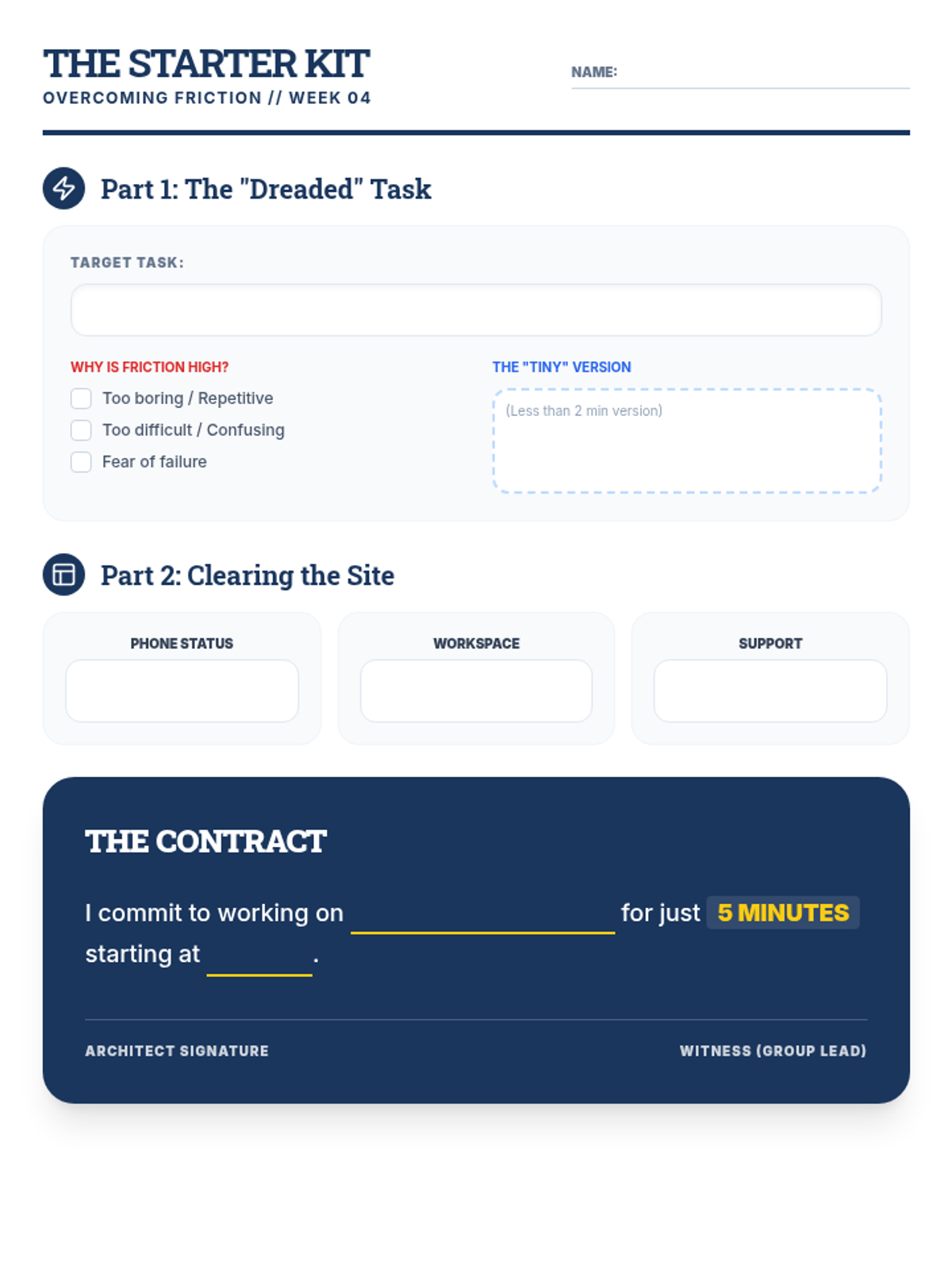
An activity sheet for planning task initiation, identifying roadblocks, and committing to the 5-minute rule for a challenging task. Revised for page flow, work area sizing, and contrast.
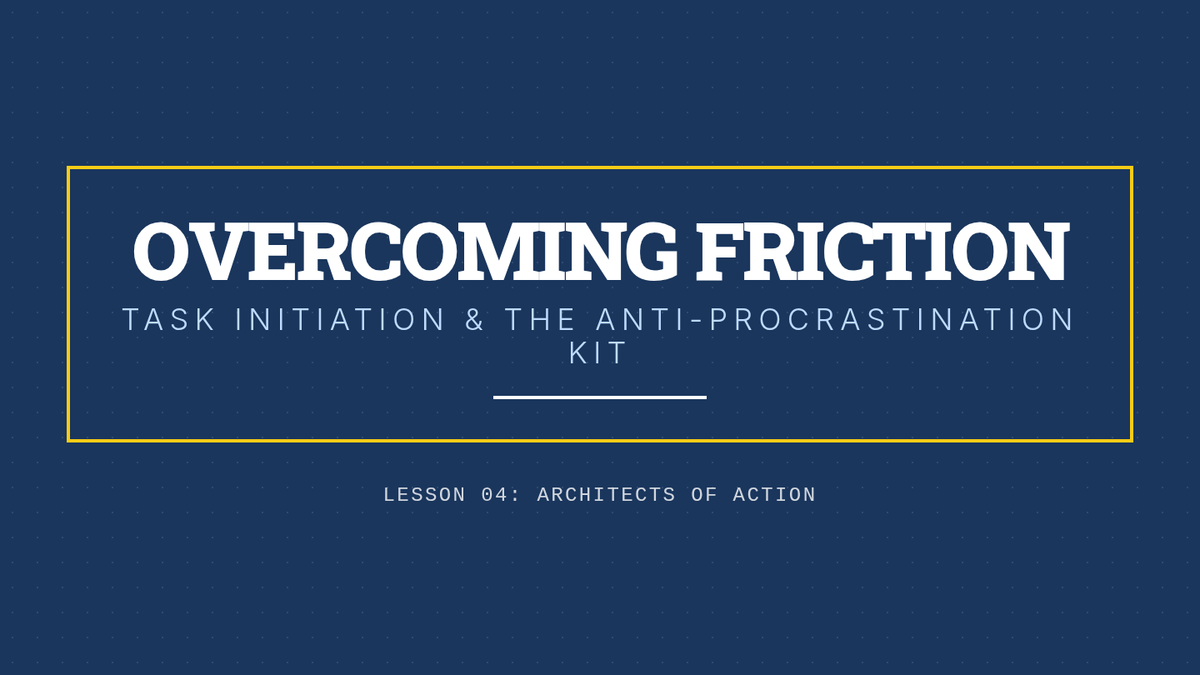
Slides for Week 4 focusing on task initiation, understanding procrastination as emotional regulation, and implementing strategies like the 5-minute rule and Pomodoro. Revised for visual clarity and corrected typos.
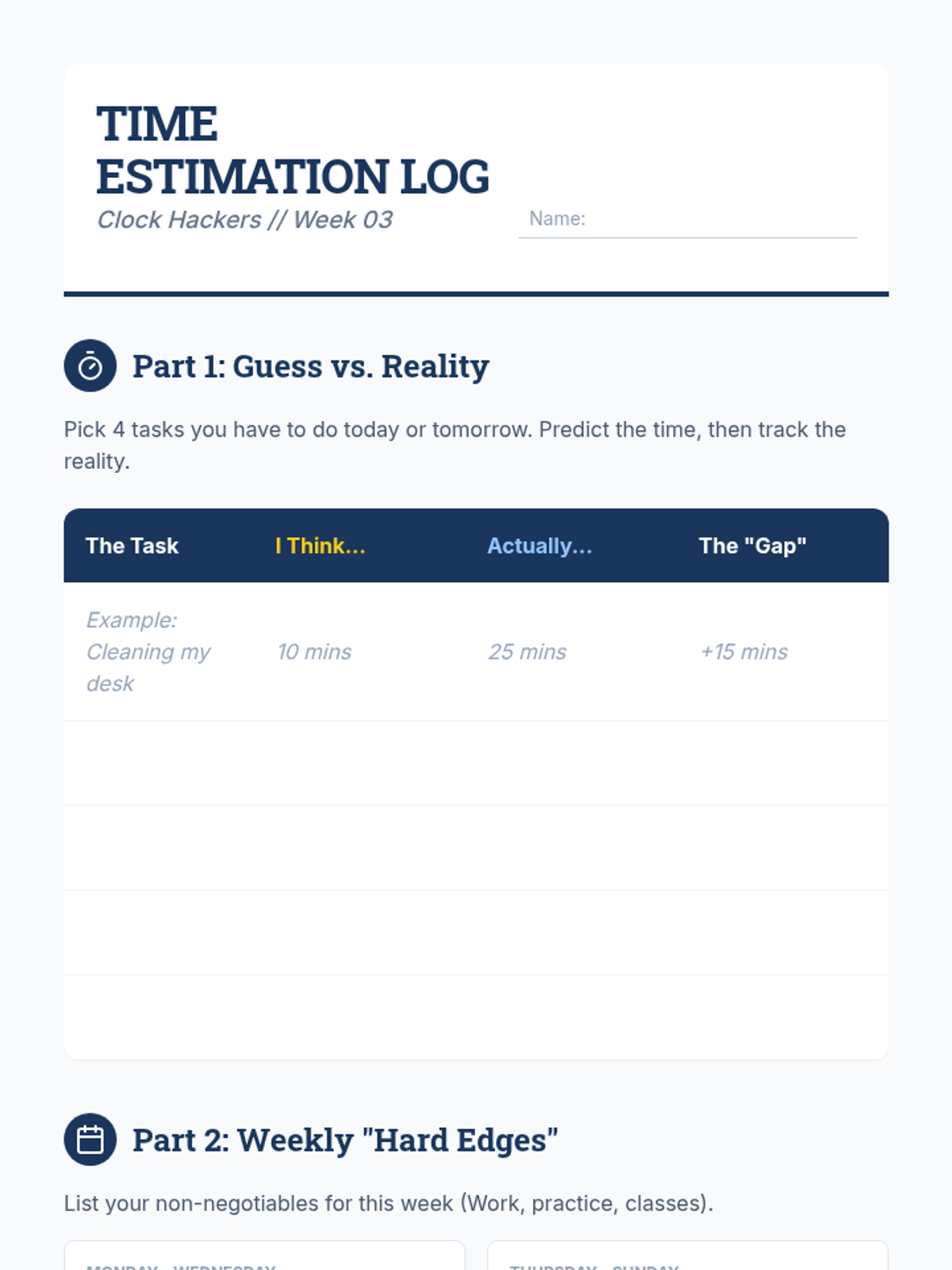
A handout for tracking time estimation accuracy and mapping out fixed weekly commitments to improve time awareness.
Slides for Week 3 introducing the concept of time blindness and providing strategies for weekly planning and time estimation.
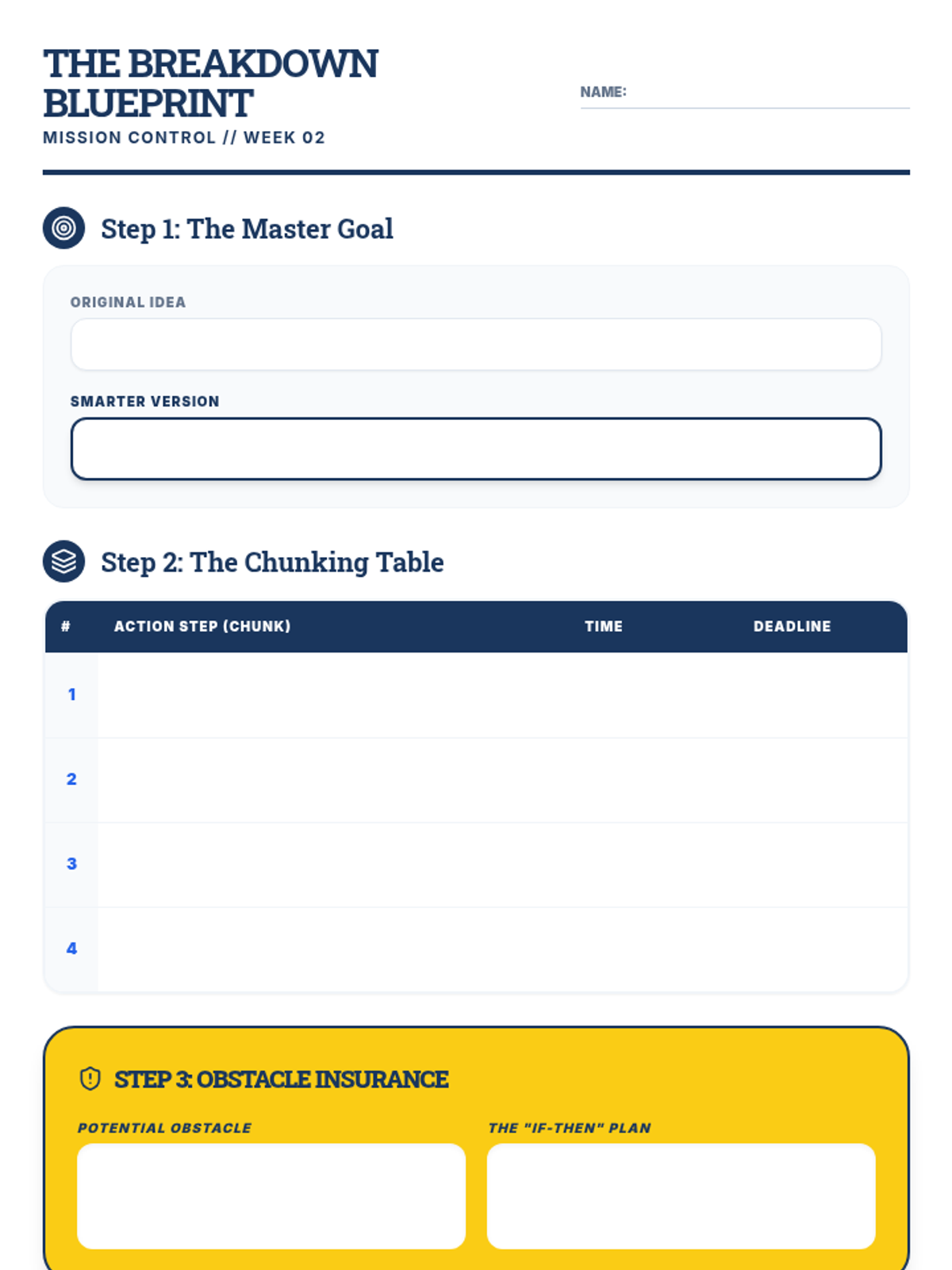
A task-chunking worksheet that guides students through breaking down a large goal into manageable steps with deadlines and roadblock planning. Revised for page flow and handwriting space.
Slide deck for Week 2 focusing on goal setting using the SMARTER framework and the cognitive strategy of task chunking. Revised for better spacing and content depth.
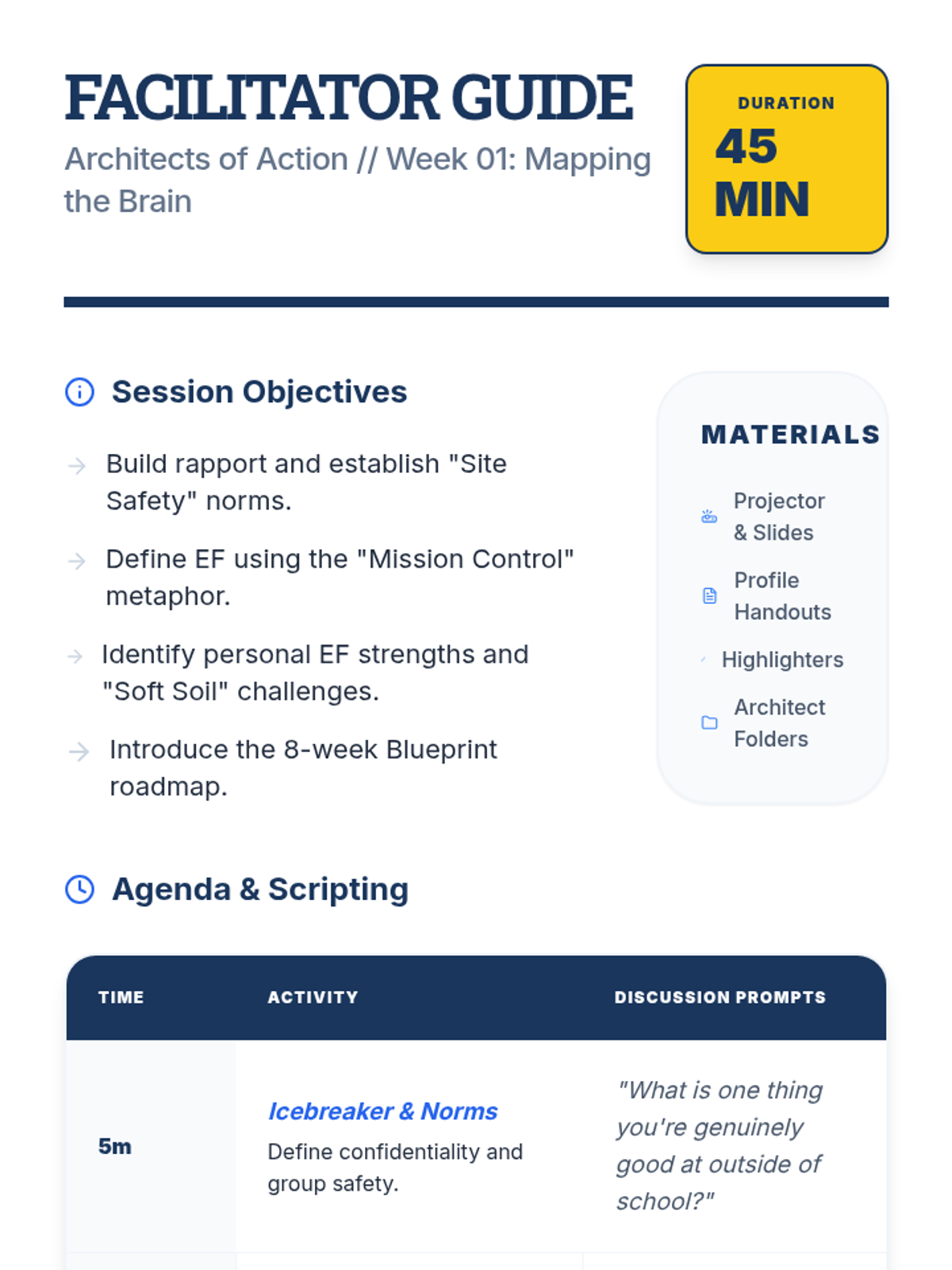
A facilitator guide for the first week of the executive functioning group, providing pacing, scripts, and discussion prompts. Revised for better layout and readability.
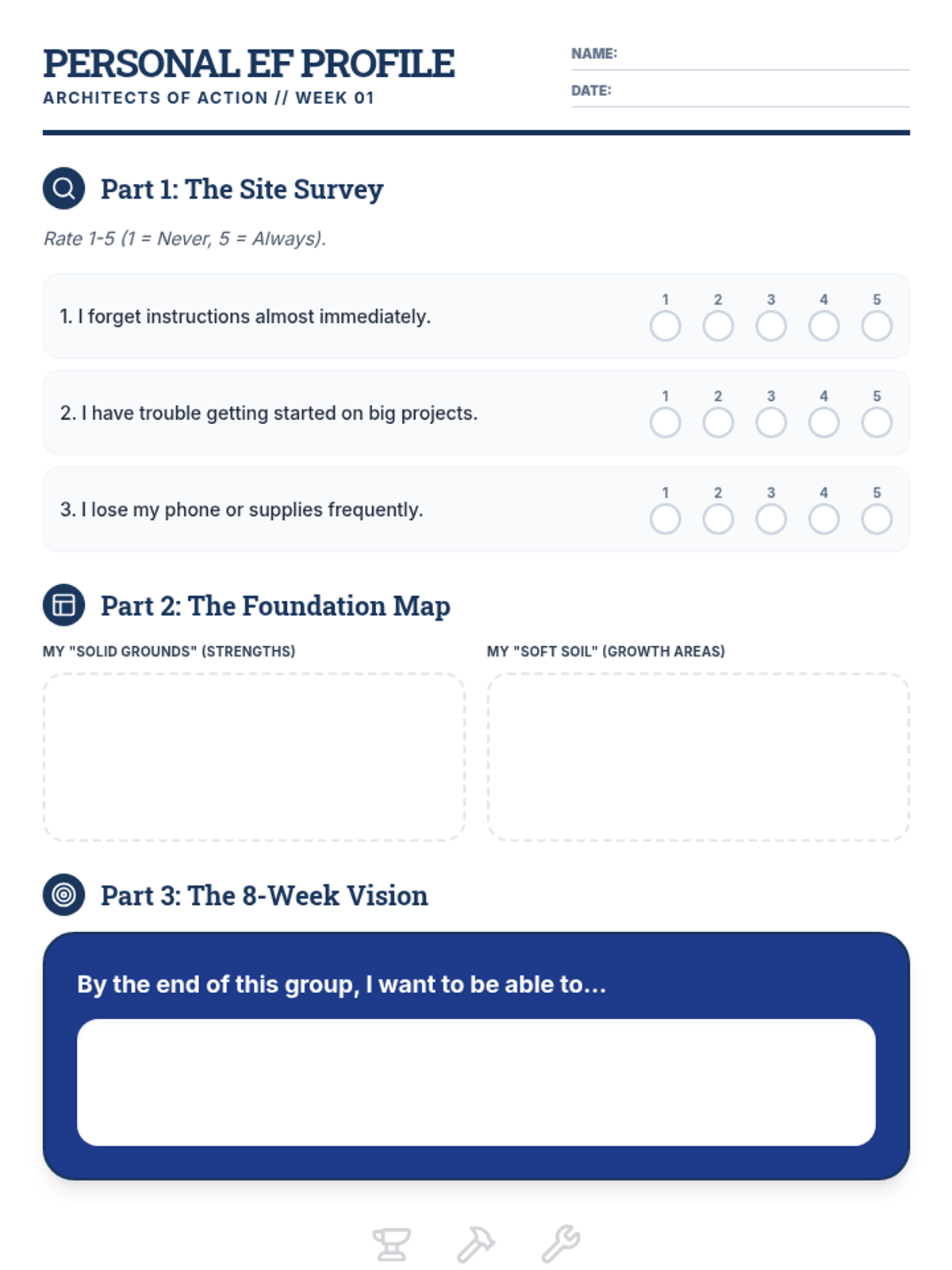
A self-reflection handout for students to identify their executive functioning strengths and challenges during the first week of the group. Revised for handwriting legibility and page flow.
Introduction slides for the first week of the executive functioning group, covering the definition of EF and the updated 8-week roadmap including Knowledge Architects.
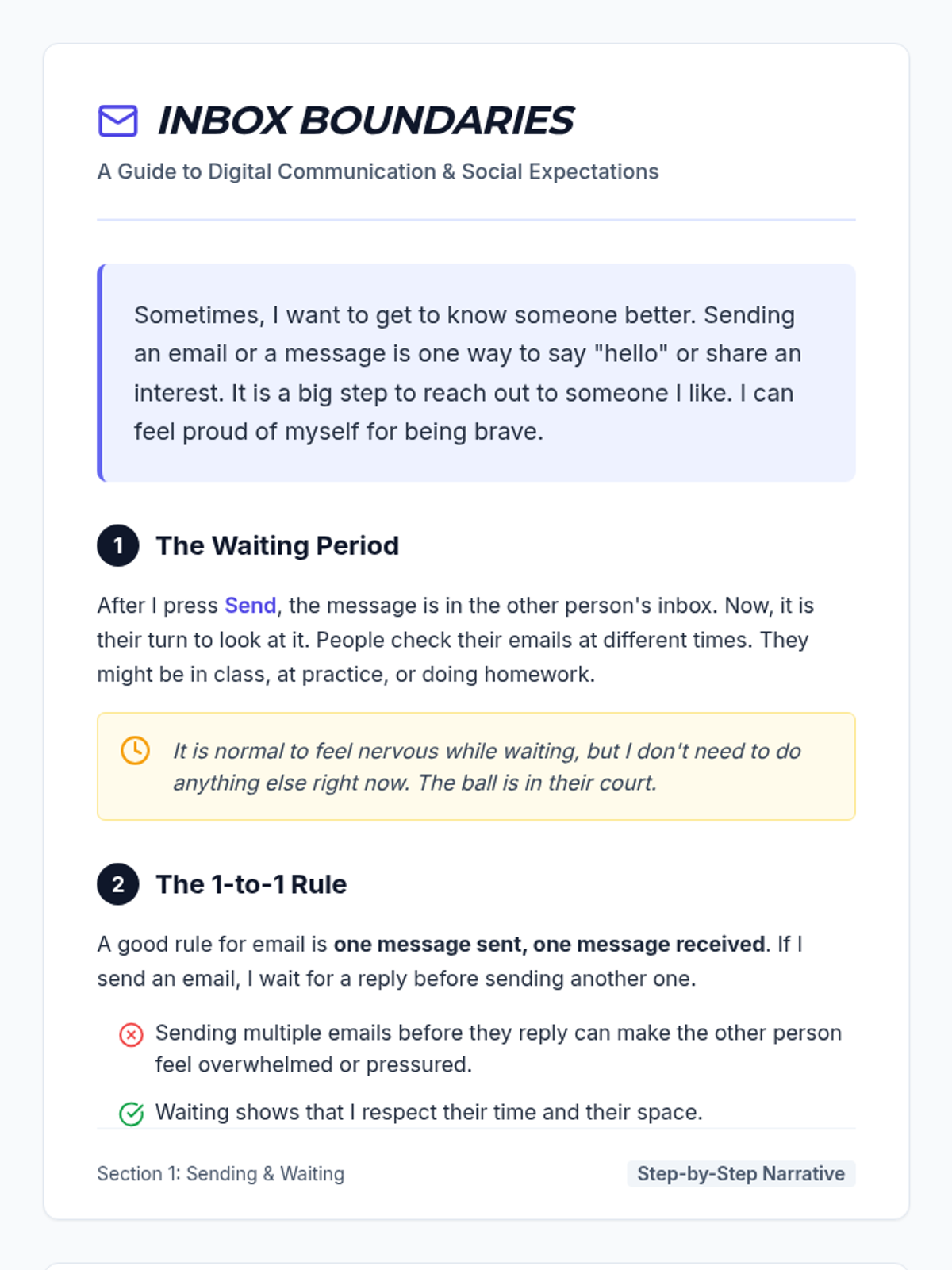
A structured social narrative document designed for high school students. It covers digital boundaries, the 'one-to-one' email rule, and healthy emotional coping strategies for handling rejection or silence in communication.
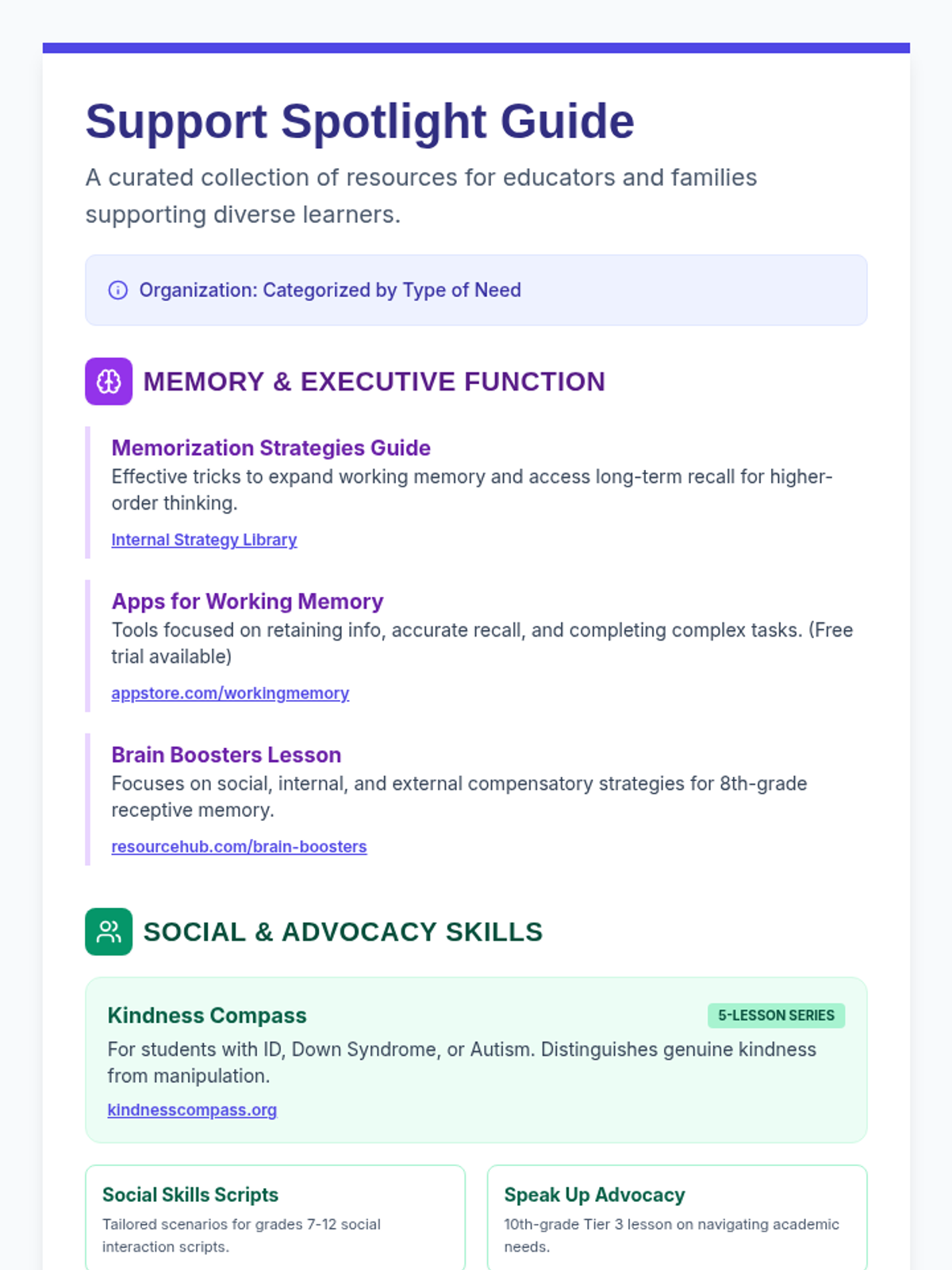
A revised two-page resource guide for special education teachers and parents, organized by type of need. This update fixes page-break issues and ensures all resource entries include relevant links and descriptions.
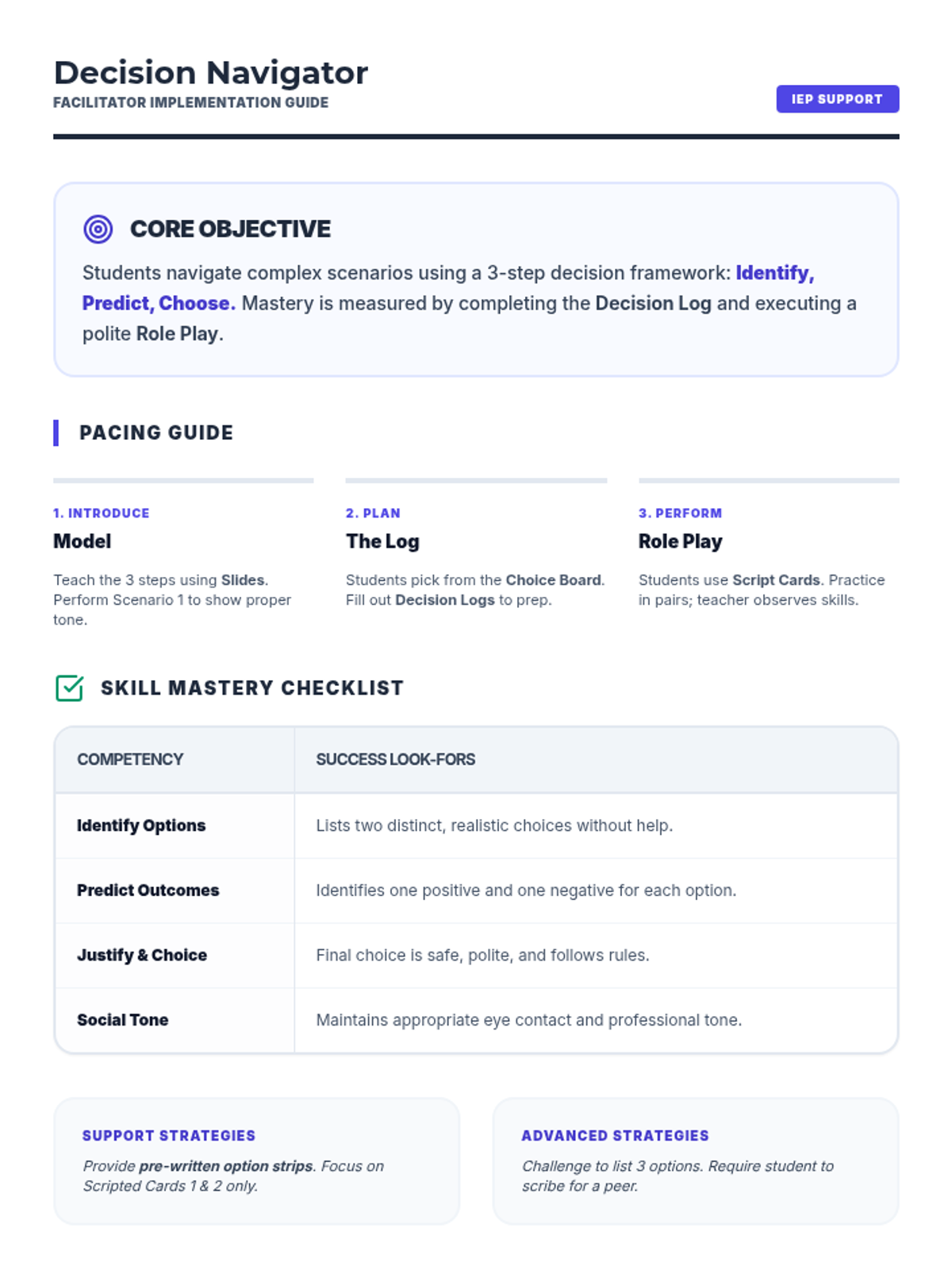
A teacher resource providing instructional pacing, a feedback checklist for evaluating IEP goals, and differentiation strategies for students with varying support needs.
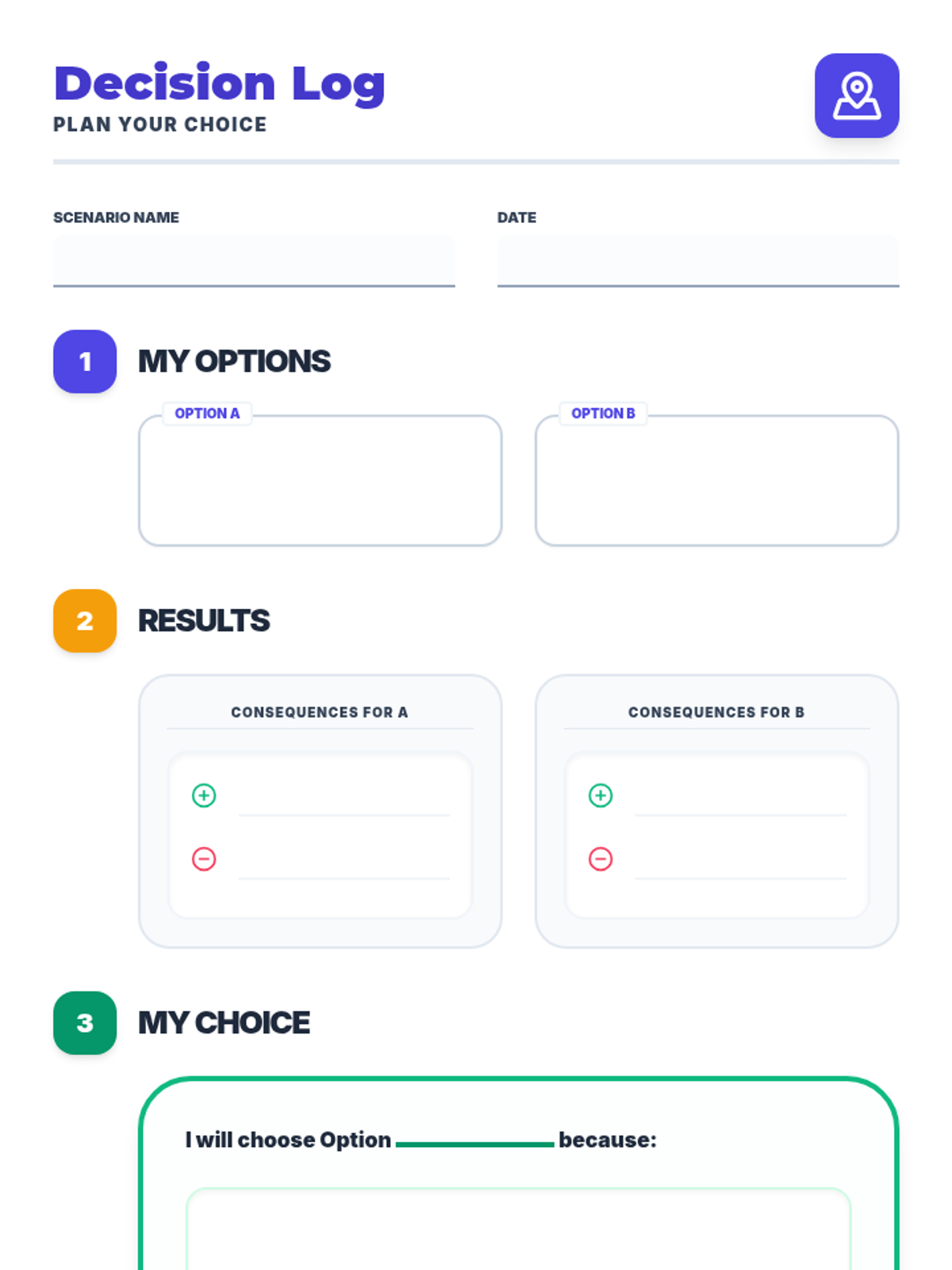
A structured student worksheet for recording the decision-making process. Includes space to identify options, weigh positive/negative consequences, and justify the final choice before role-playing.
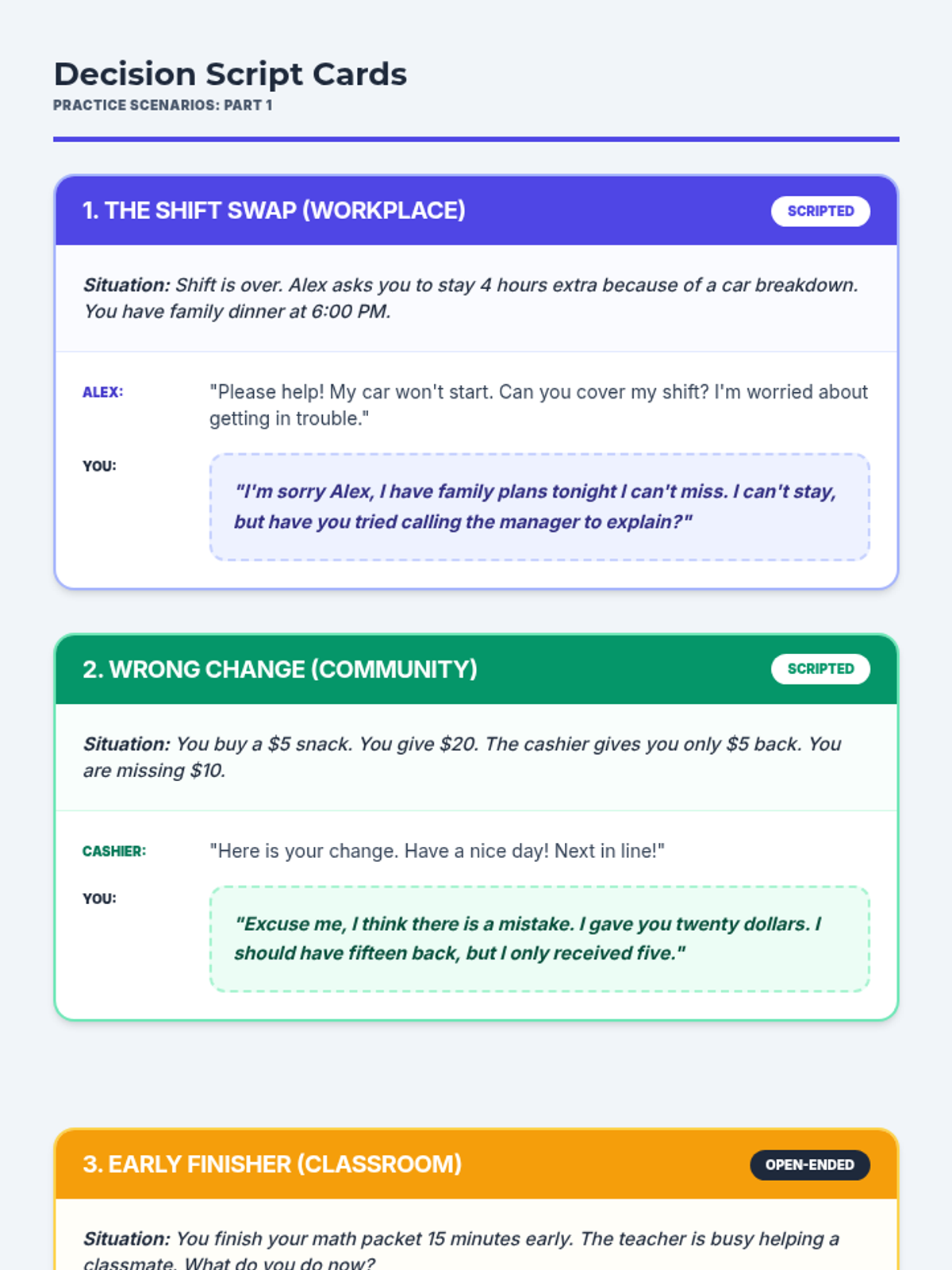
A set of five detailed role-playing cards. Two cards are fully scripted to model appropriate behavior, while three are open-ended to challenge students to apply the decision-making framework independently.
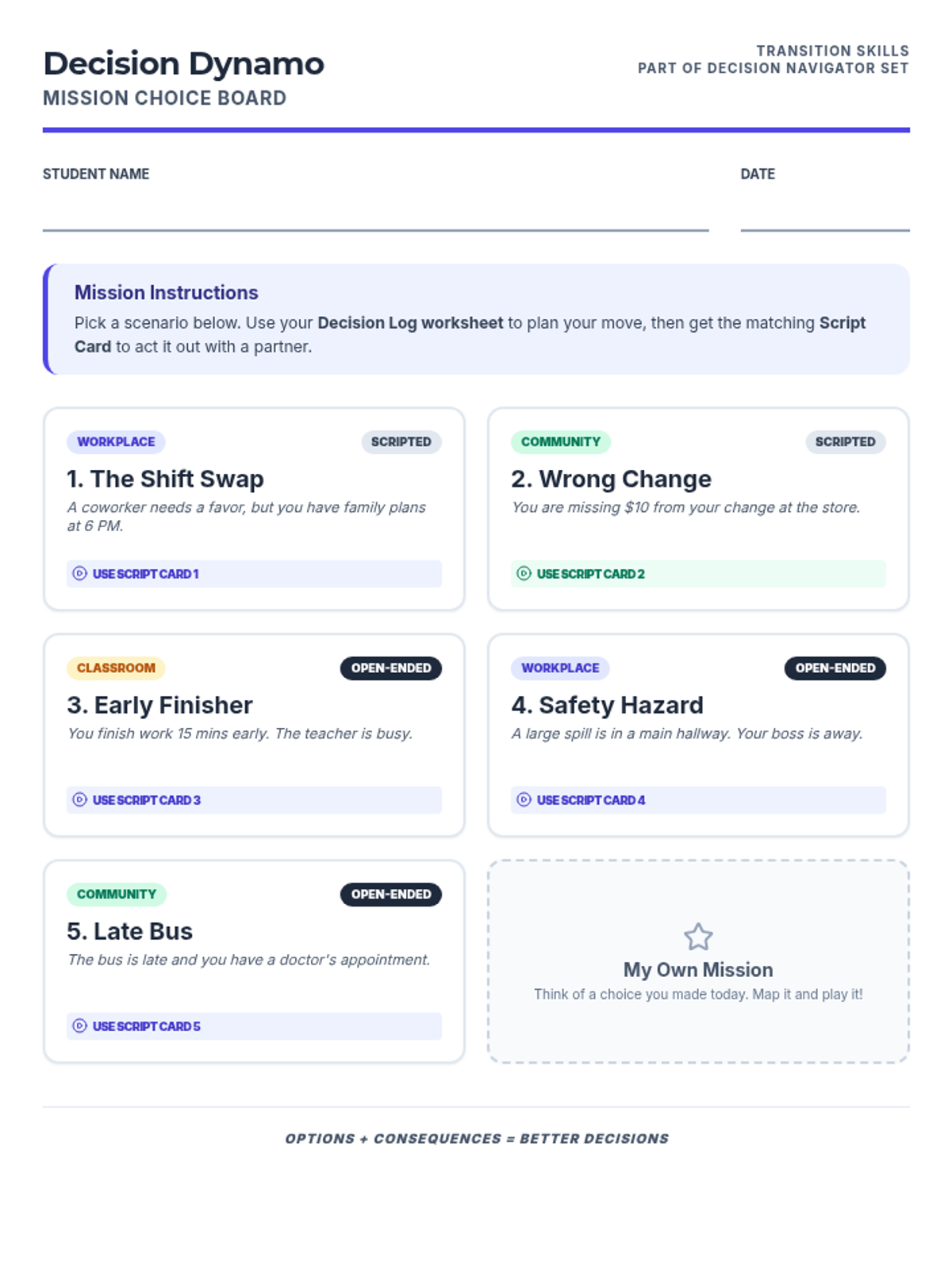
A visual choice board featuring five distinct role-playing scenarios across workplace, community, and classroom settings, labeled by type (scripted vs. open-ended).
An instructional slide deck that introduces the 3-step decision-making framework (Identify, Consider, Choose) and sets the stage for the role-playing activities.
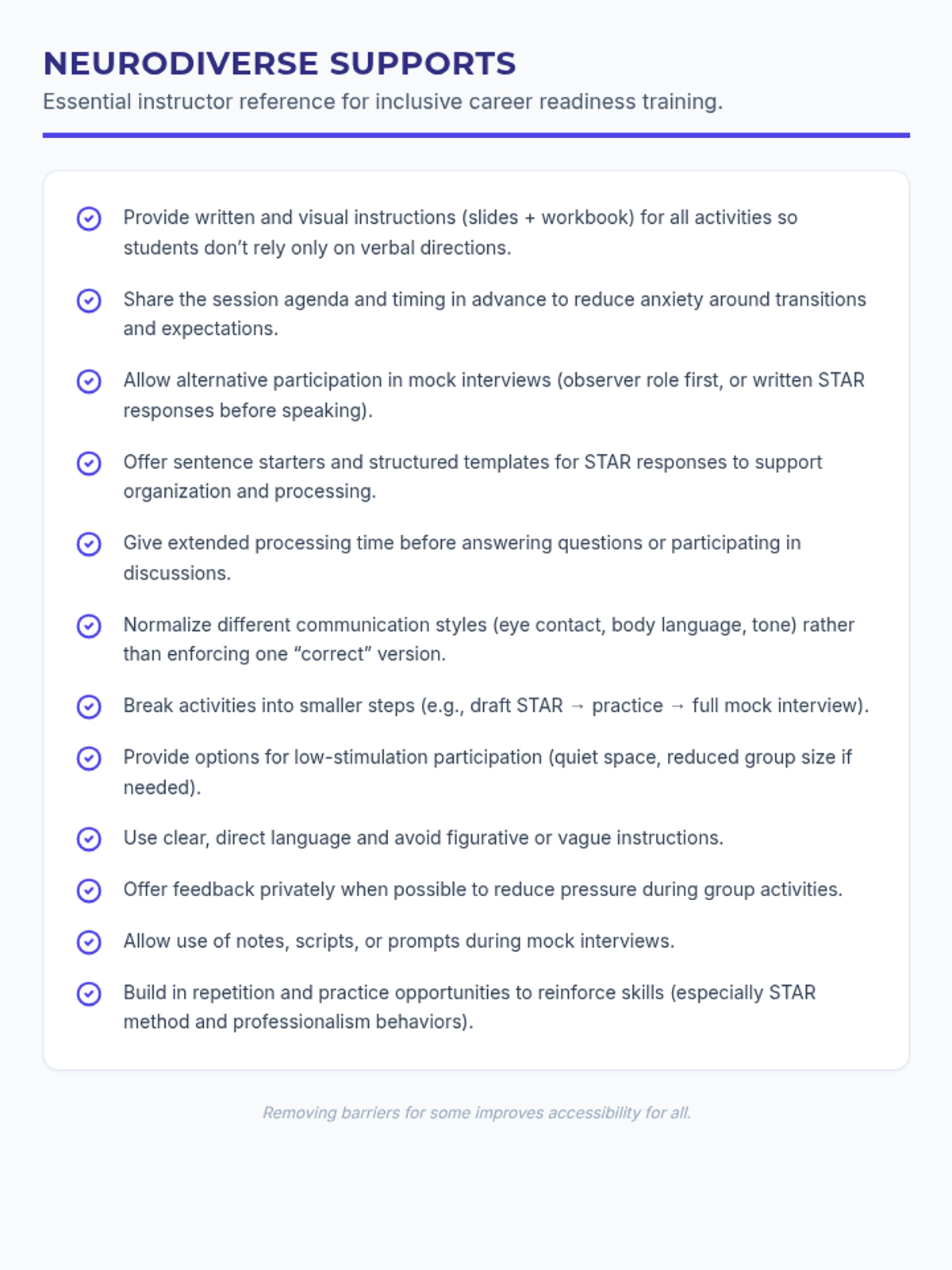
A clean, simple reference sheet for instructors listing key neurodiverse supports for the classroom.
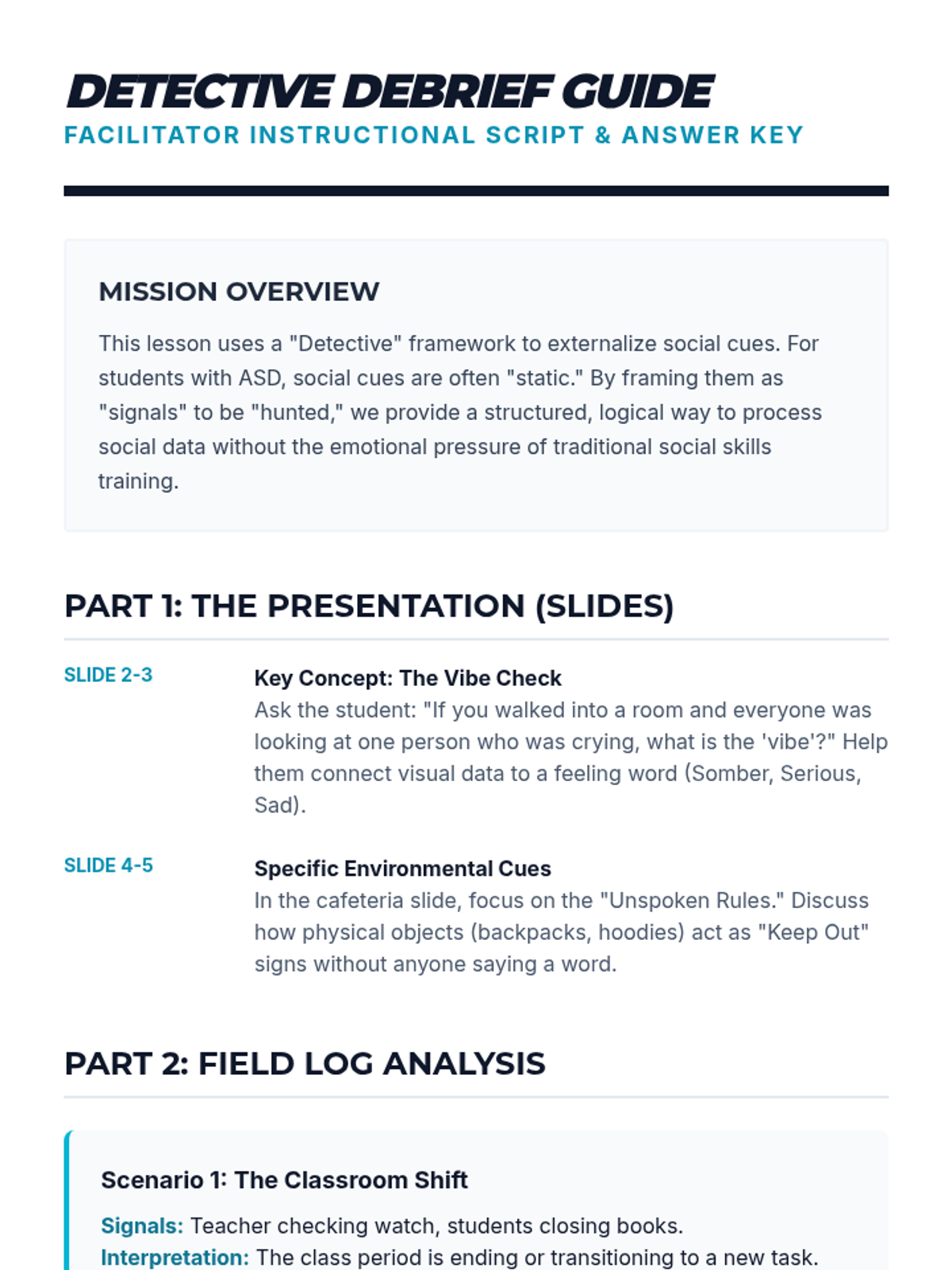
A teacher-facing guide providing instructional strategies, an answer key for the field log, and role-play scripts to practice situational awareness in real-time.