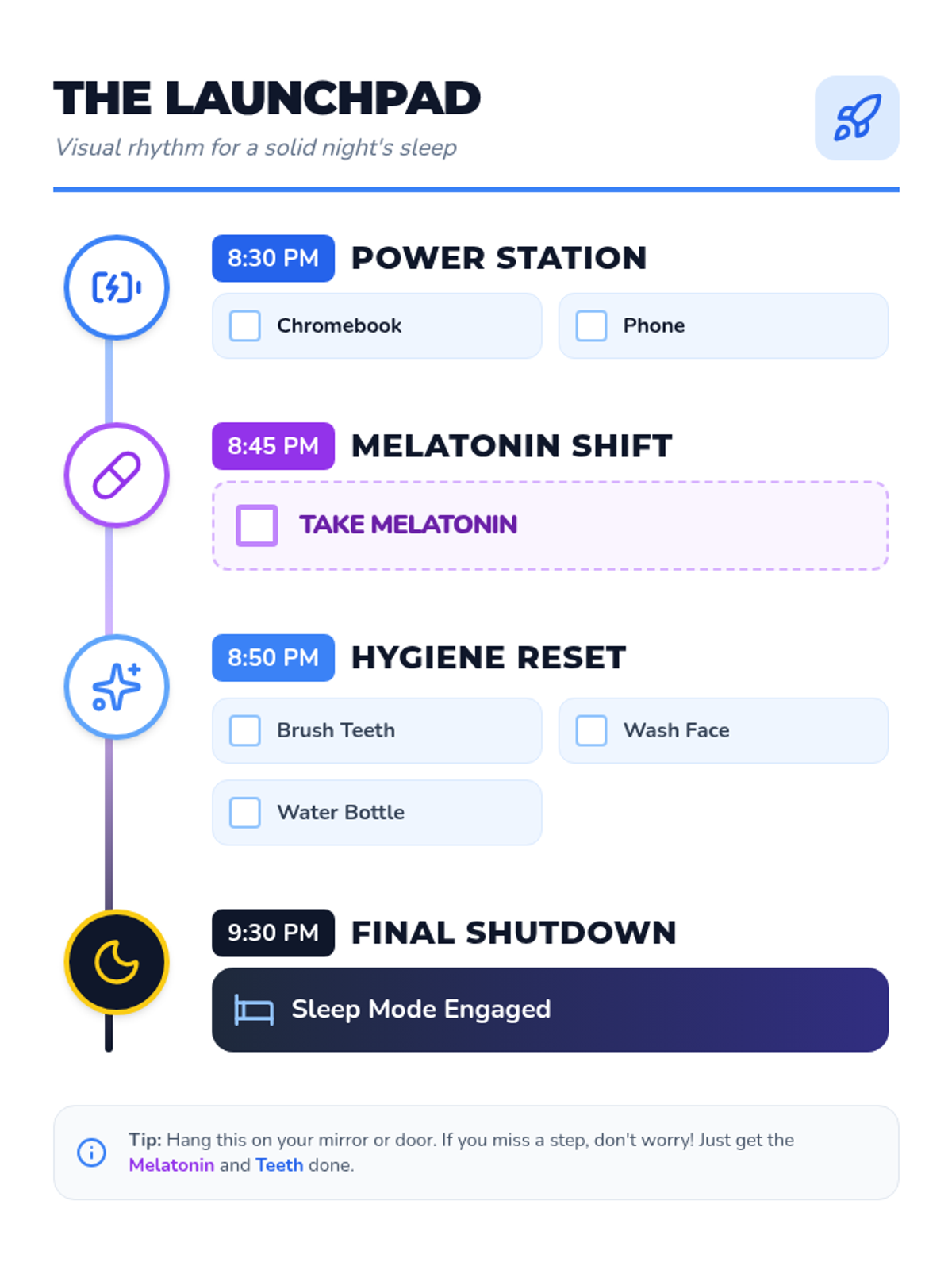
An updated nightly routine checklist for teenagers with ADHD, now featuring a purple and blue color scheme and a streamlined task list focused on hygiene and device management.
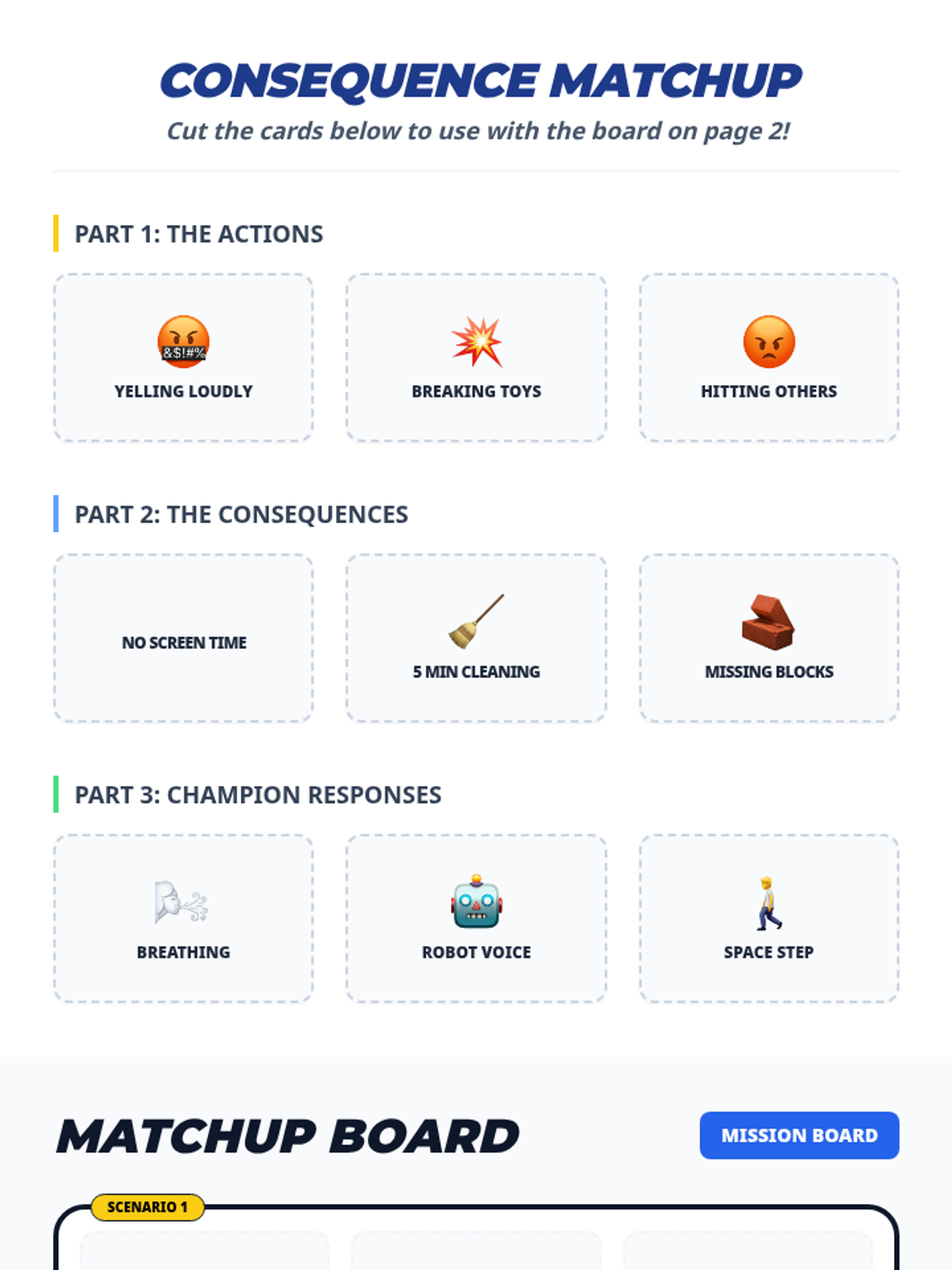
A hands-on matching activity for students to link specific behaviors (actions) with logical consequences and productive, calm self-regulation responses.
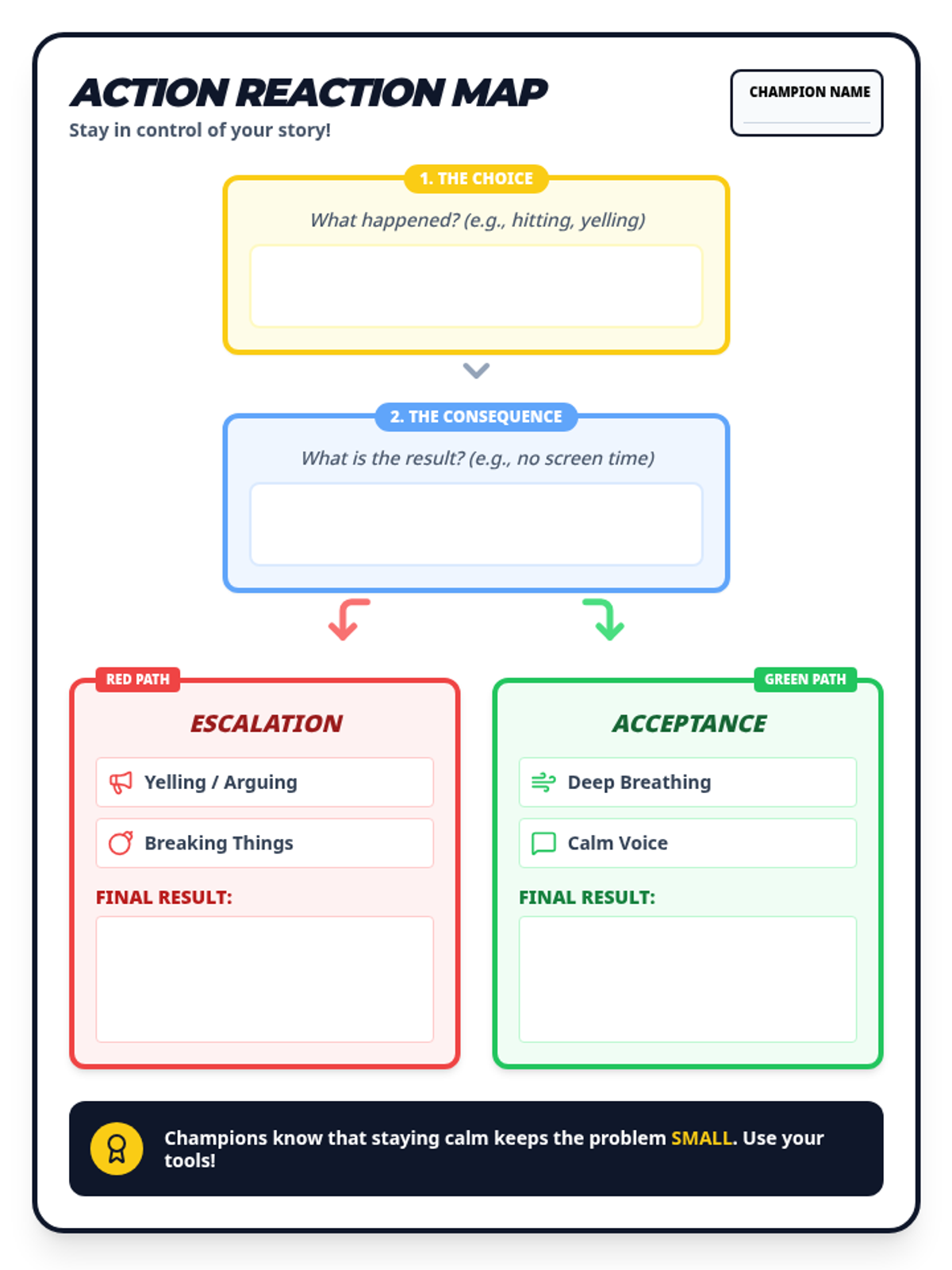
A visual graphic organizer (consequence map) for students to trace the path between an action, its consequence, and the two possible ways to react (escalation vs. acceptance).
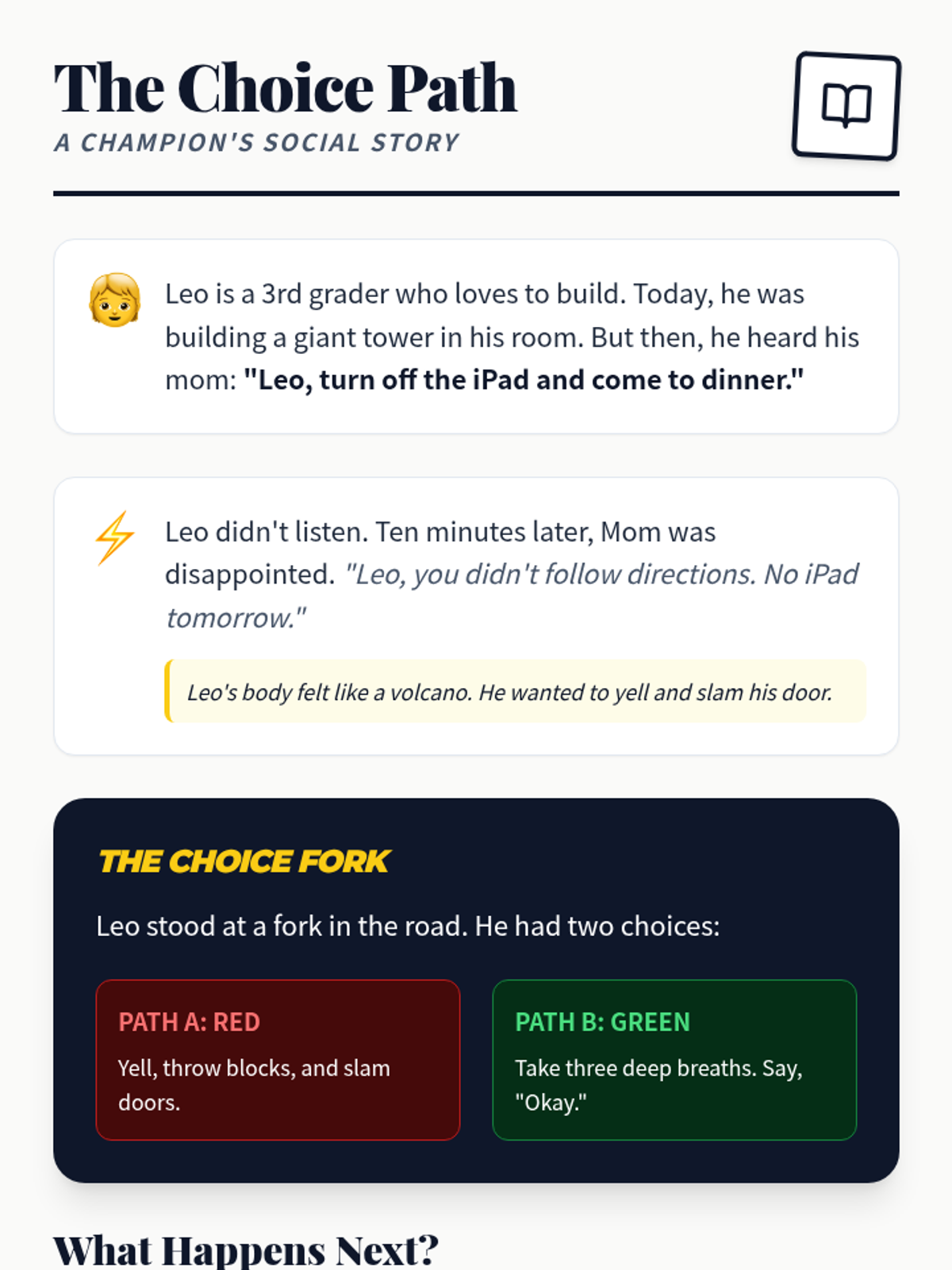
A two-page social story focusing on a relatable scenario (iPad time) and the diverging results of escalated vs. calm reactions, specifically addressing property destruction and yelling.
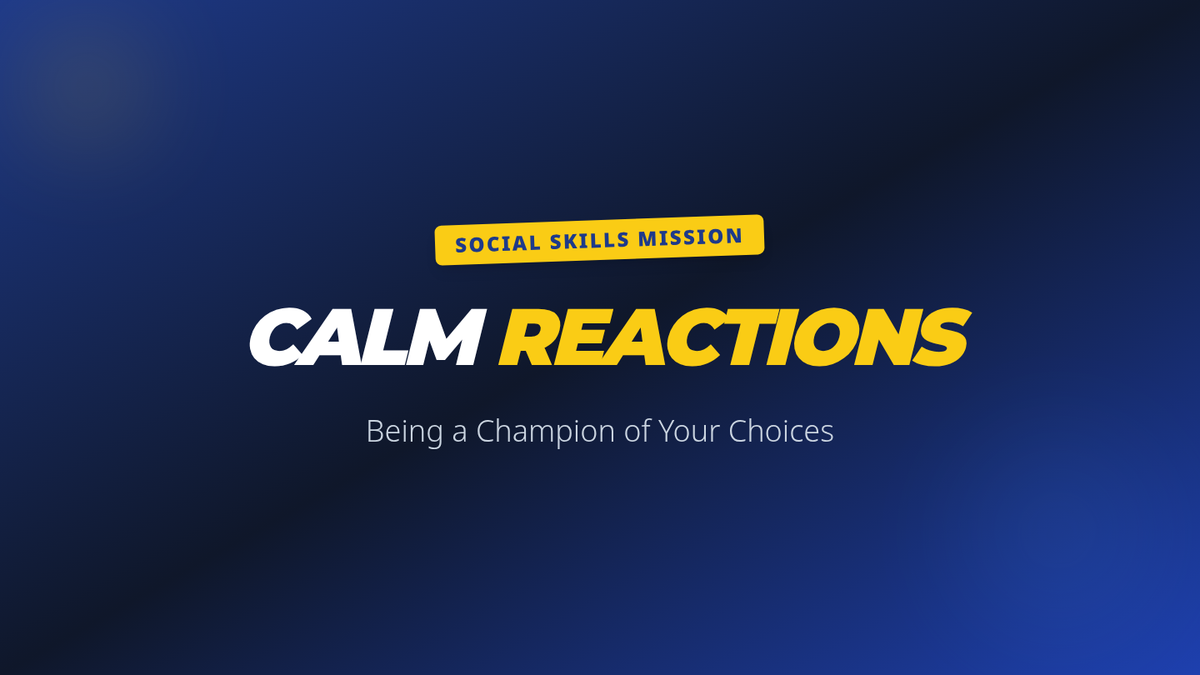
A 6-slide visual presentation for teaching students with ADHD the difference between escalated and calm reactions to consequences, including specific self-regulation tools.
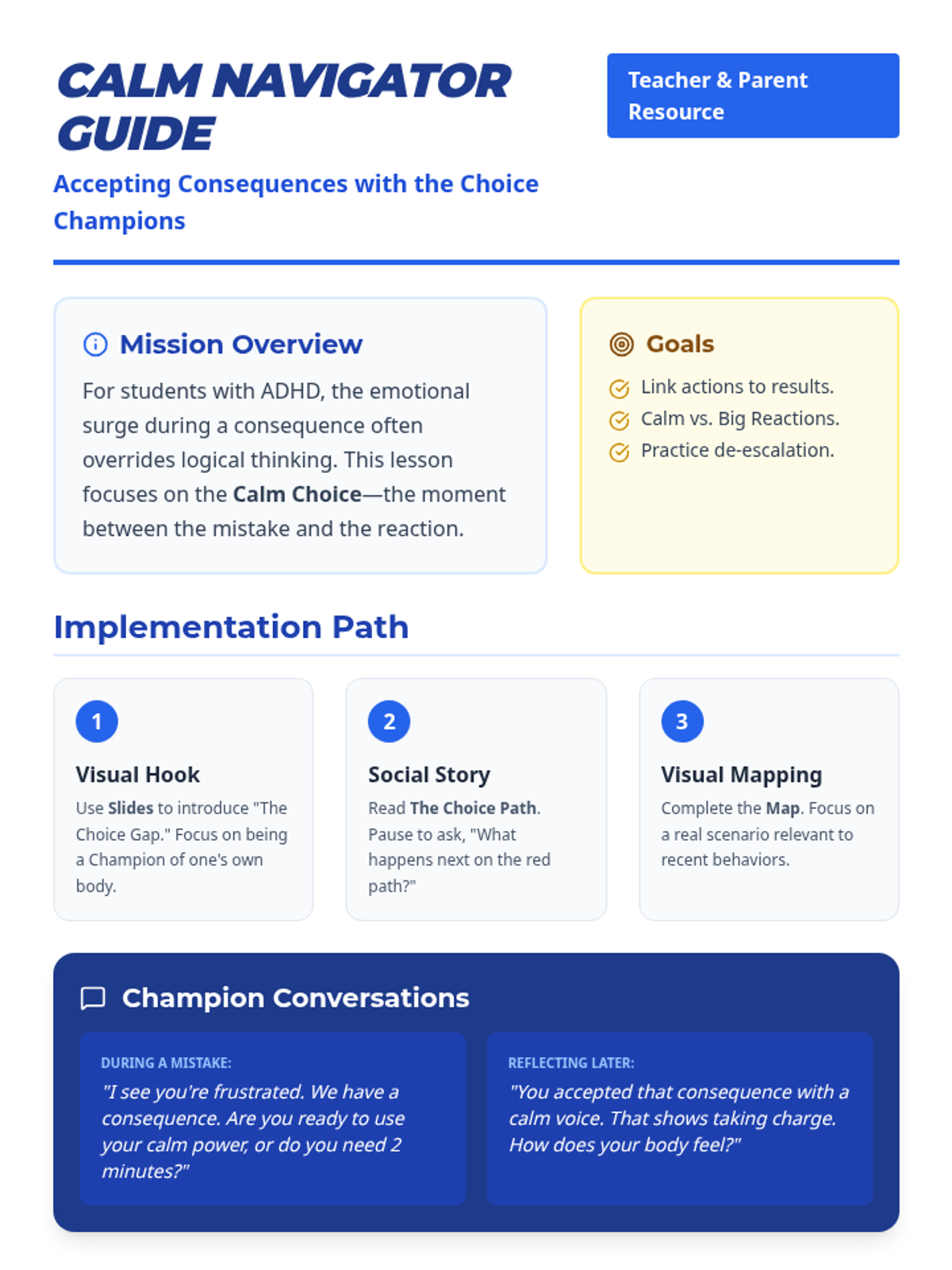
A 2-page teacher and parent guidance document providing implementation steps, discussion prompts, and behavioral strategies for teaching calm reactions and consequence acceptance.
A high-contrast visual schedule for a teenager's bedroom, now updated with a blue and purple color scheme and a simplified routine that prioritizes essential hygiene and sleep preparation.
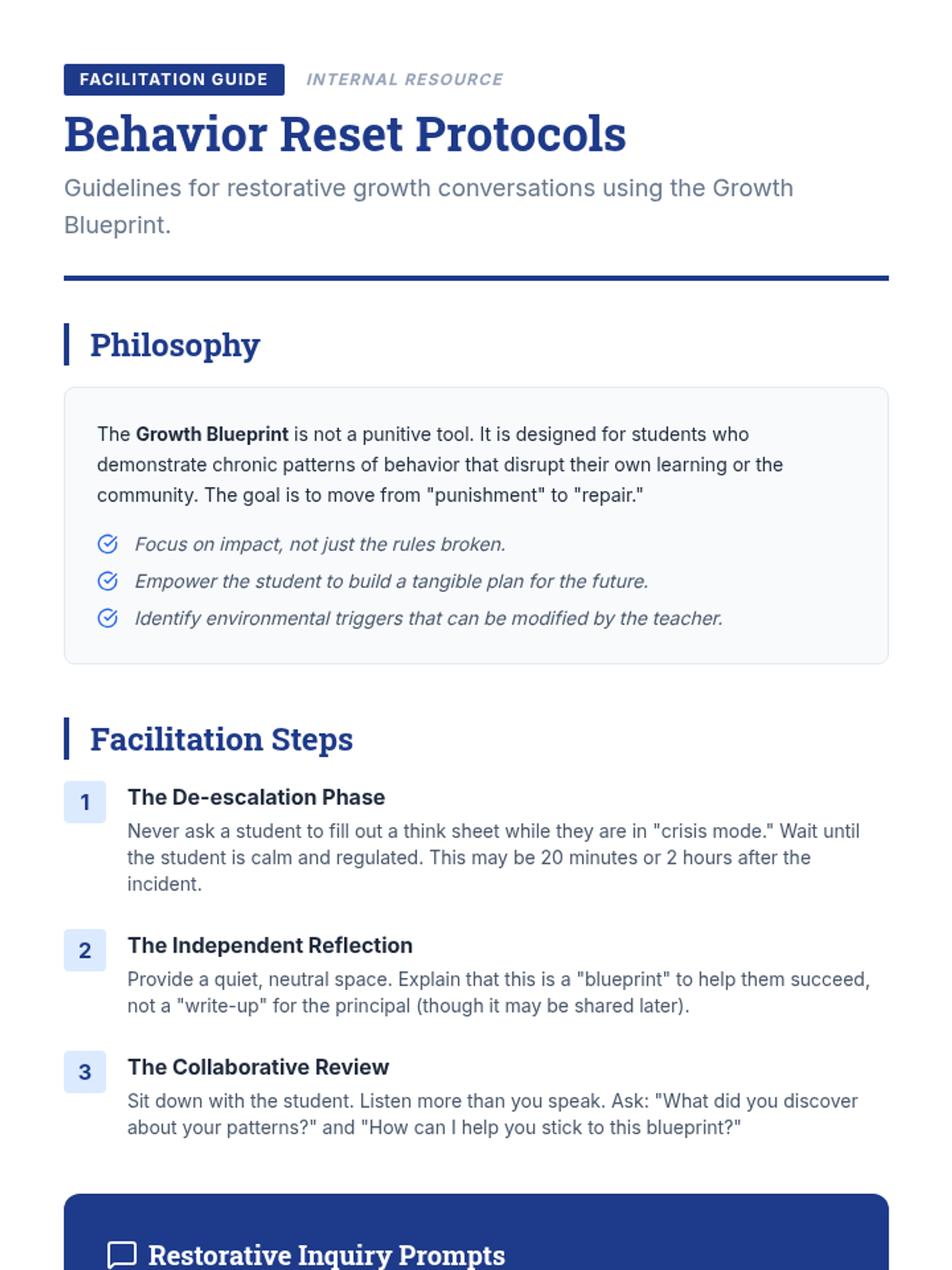
A comprehensive guide for teachers on facilitating restorative behavior conversations. It includes philosophy, step-by-step implementation, discussion prompts, and strategies for tracking long-term progress.
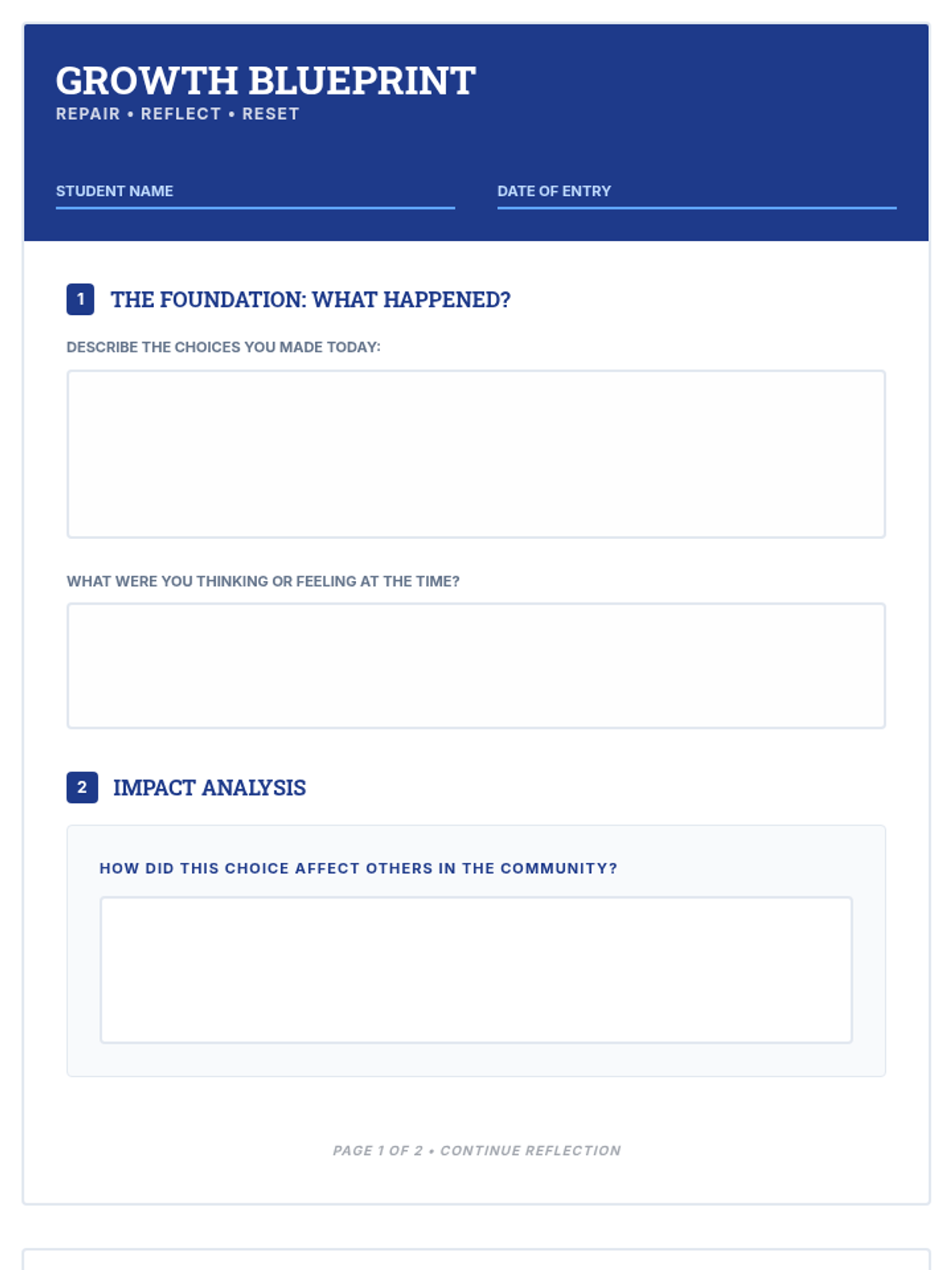
A restorative behavior reflection sheet designed for students to analyze chronic patterns and create a 'blueprint' for future success. It includes sections for incident description, impact analysis, trigger identification, and goal setting.
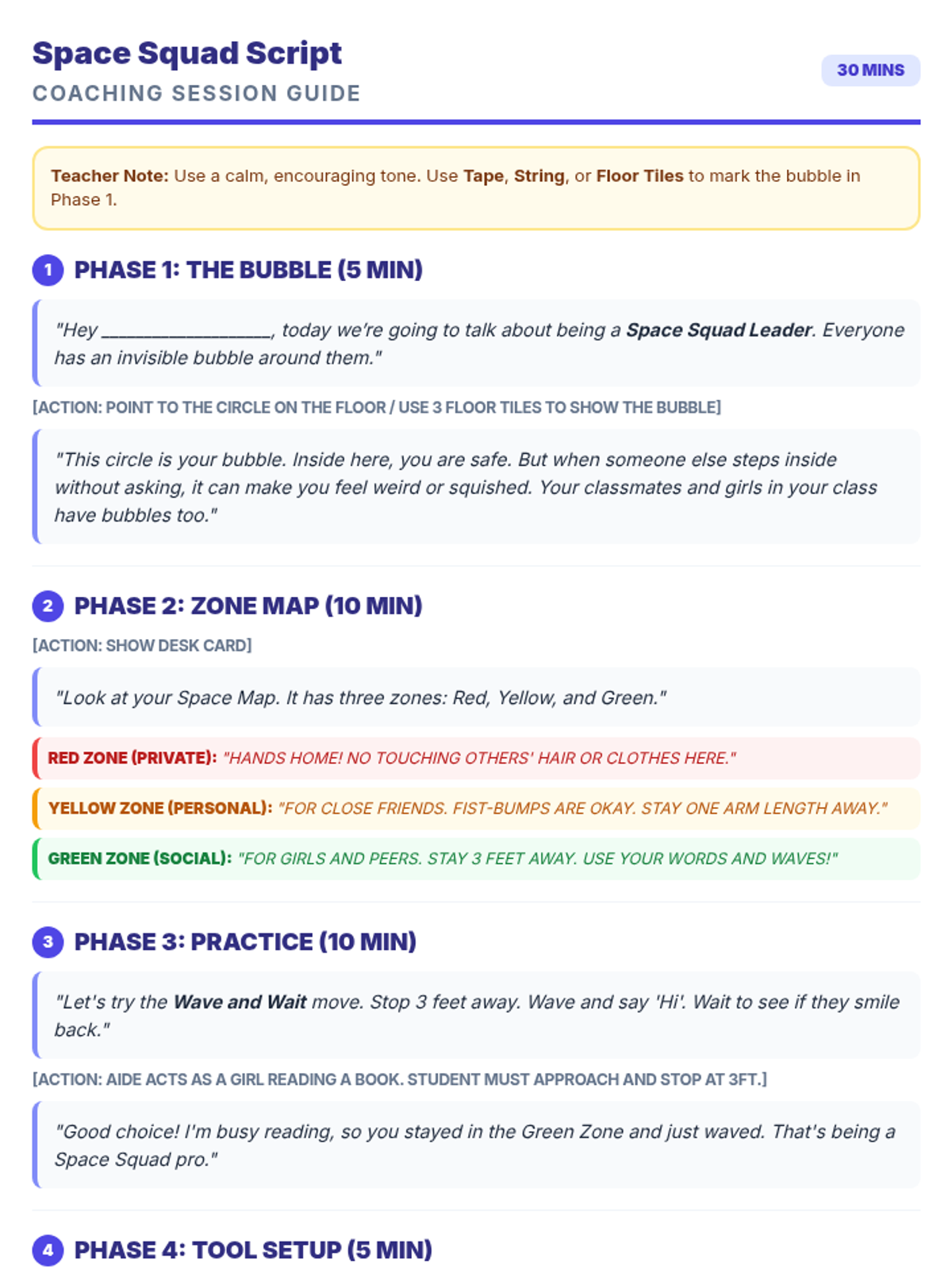
An instructional script for a 1-on-1 coaching session, providing word-for-word guidance on teaching personal space zones and appropriate social interactions to a student with Autism. Updated to include classroom-friendly visual markers.
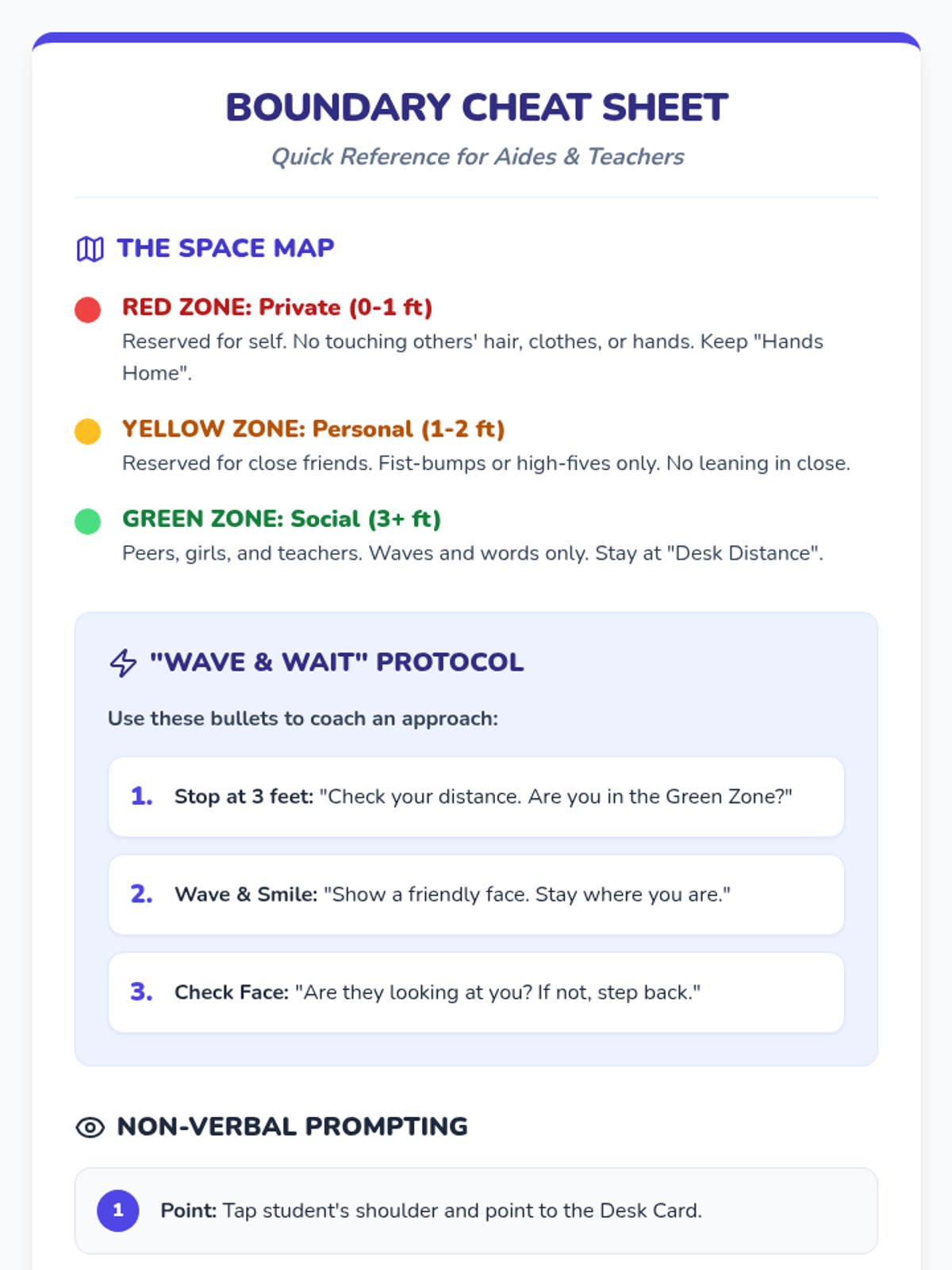
A concise bullet-point reference guide for teachers and aides to use as a cheat sheet for boundary coaching and non-verbal prompting.
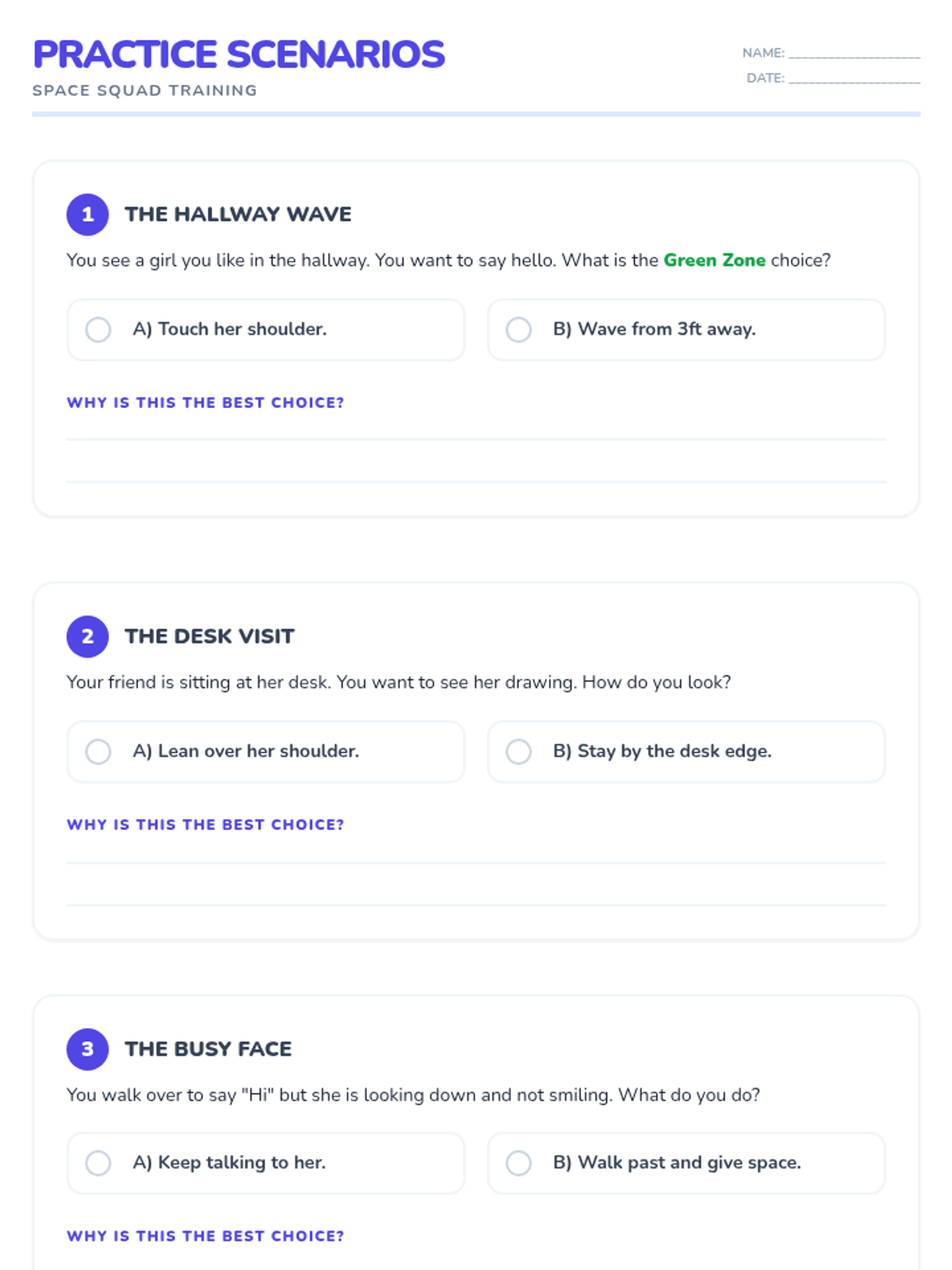
A student activity sheet with four social scenarios focused on practicing personal space boundaries in the classroom.
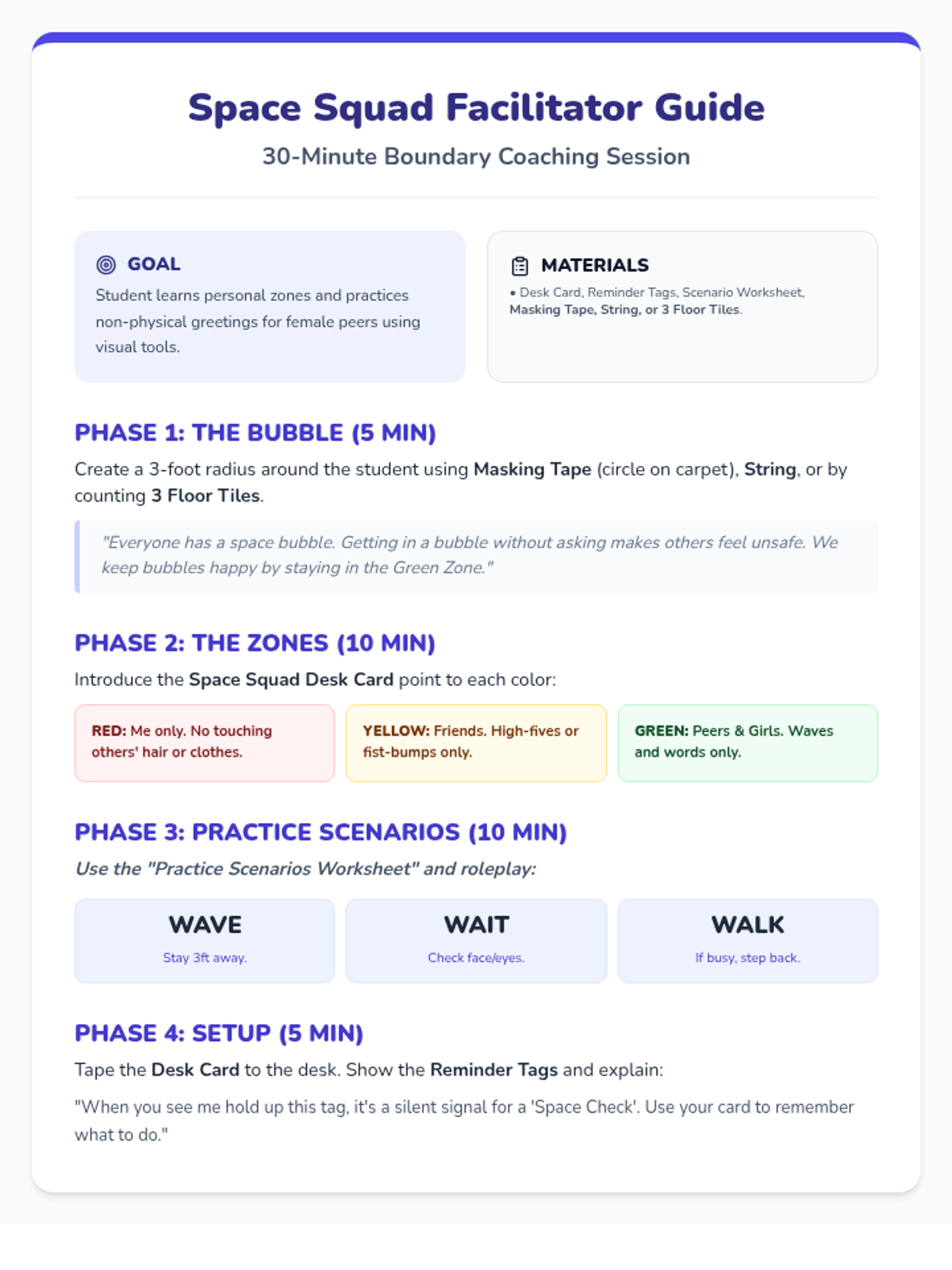
A teacher/aide facilitation guide outlining the 30-minute lesson structure, key concepts, and instructions for using the visual boundary tools. Updated to include common classroom alternatives for visual space markers.
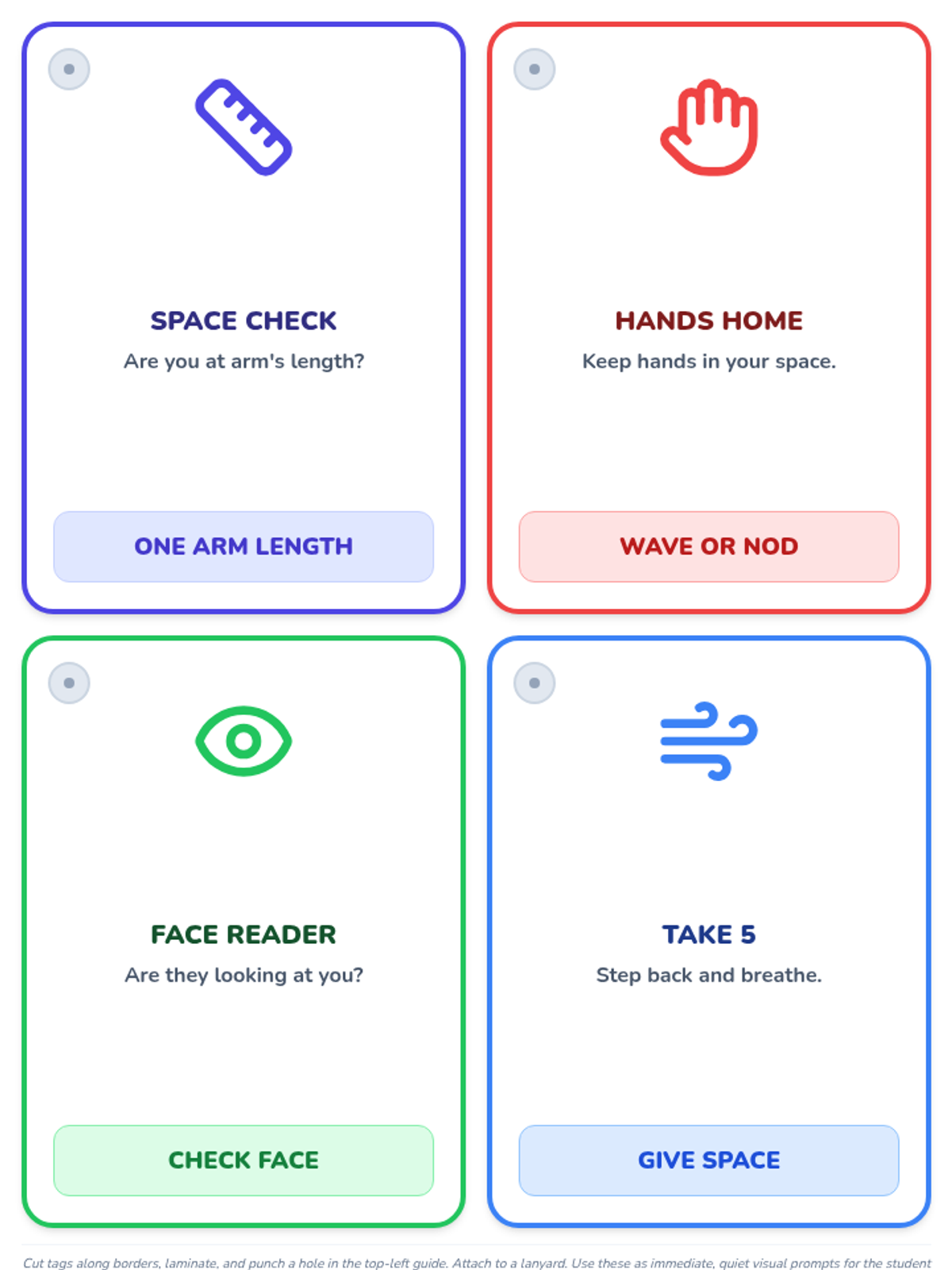
A set of four visual reminder tags for an aide to use as quick, non-verbal prompts for a student to check their distance and physical boundaries.
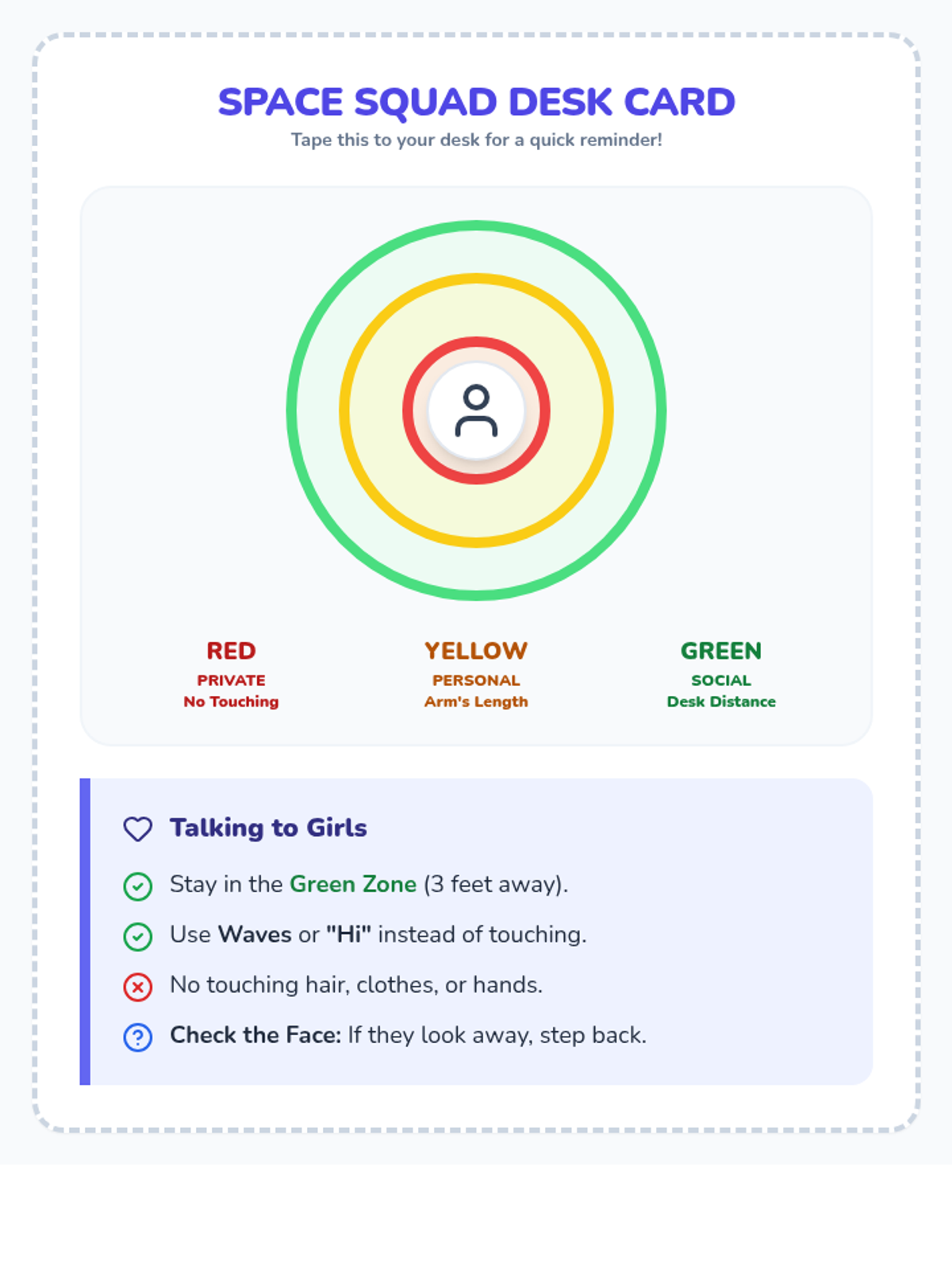
A visual desk reference card for a student to use as a reminder of personal space zones and appropriate interaction rules for peers and girls in the classroom.
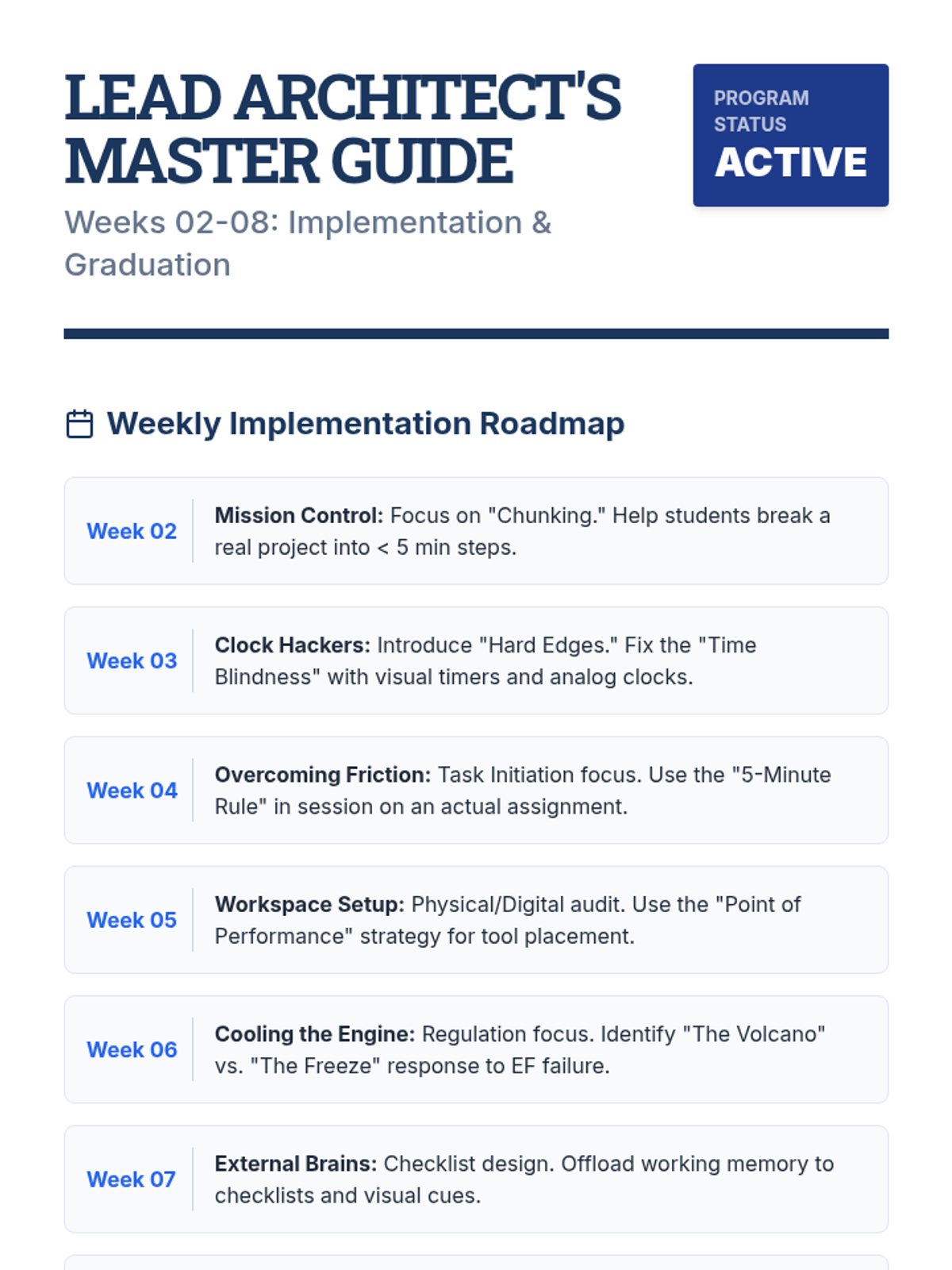
A comprehensive facilitator guide for the remaining weeks of the group, outlining implementation strategies and troubleshooting tips.
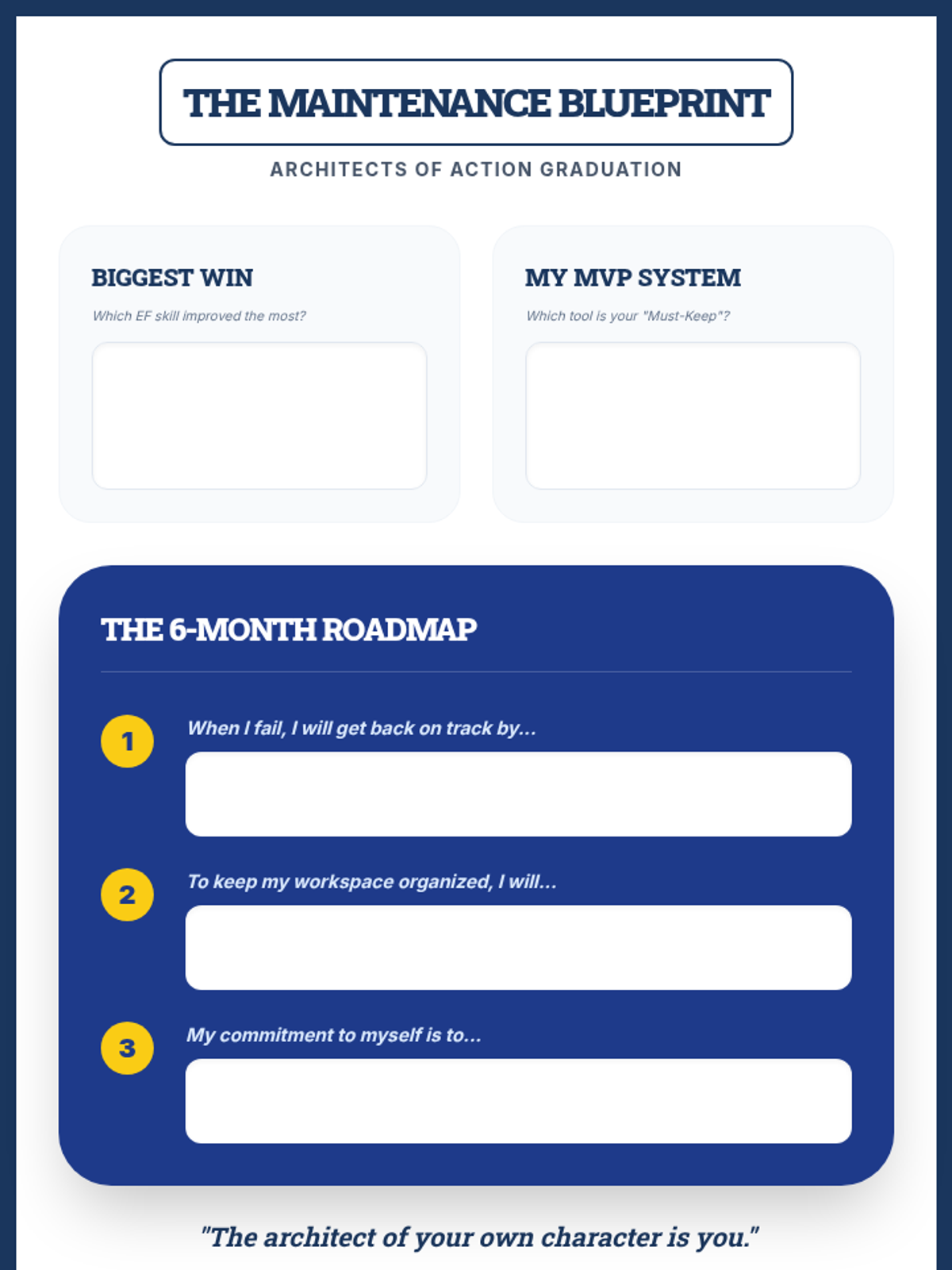
A graduation reflection and maintenance planning worksheet for students to consolidate their learning and plan for long-term EF success. Revised for page flow, work area legibility, and contrast.
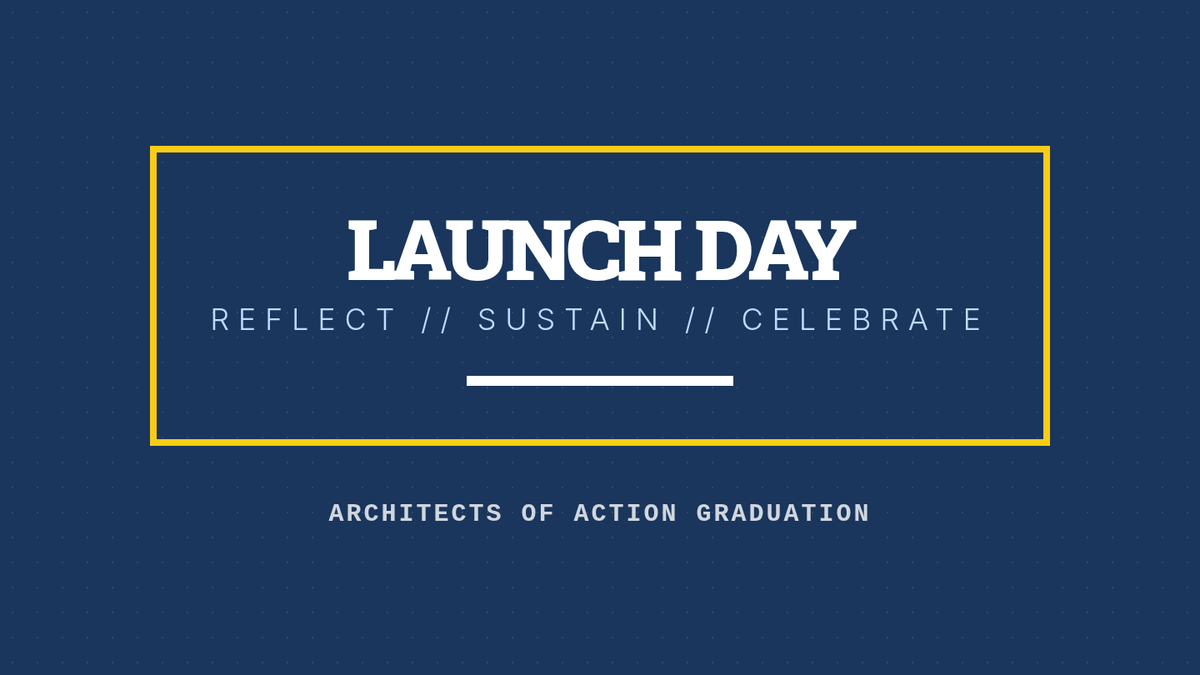
Final slide deck for the graduation session, focusing on reflection, maintenance planning, and celebrating progress. Revised for visual impact and corrected typos.
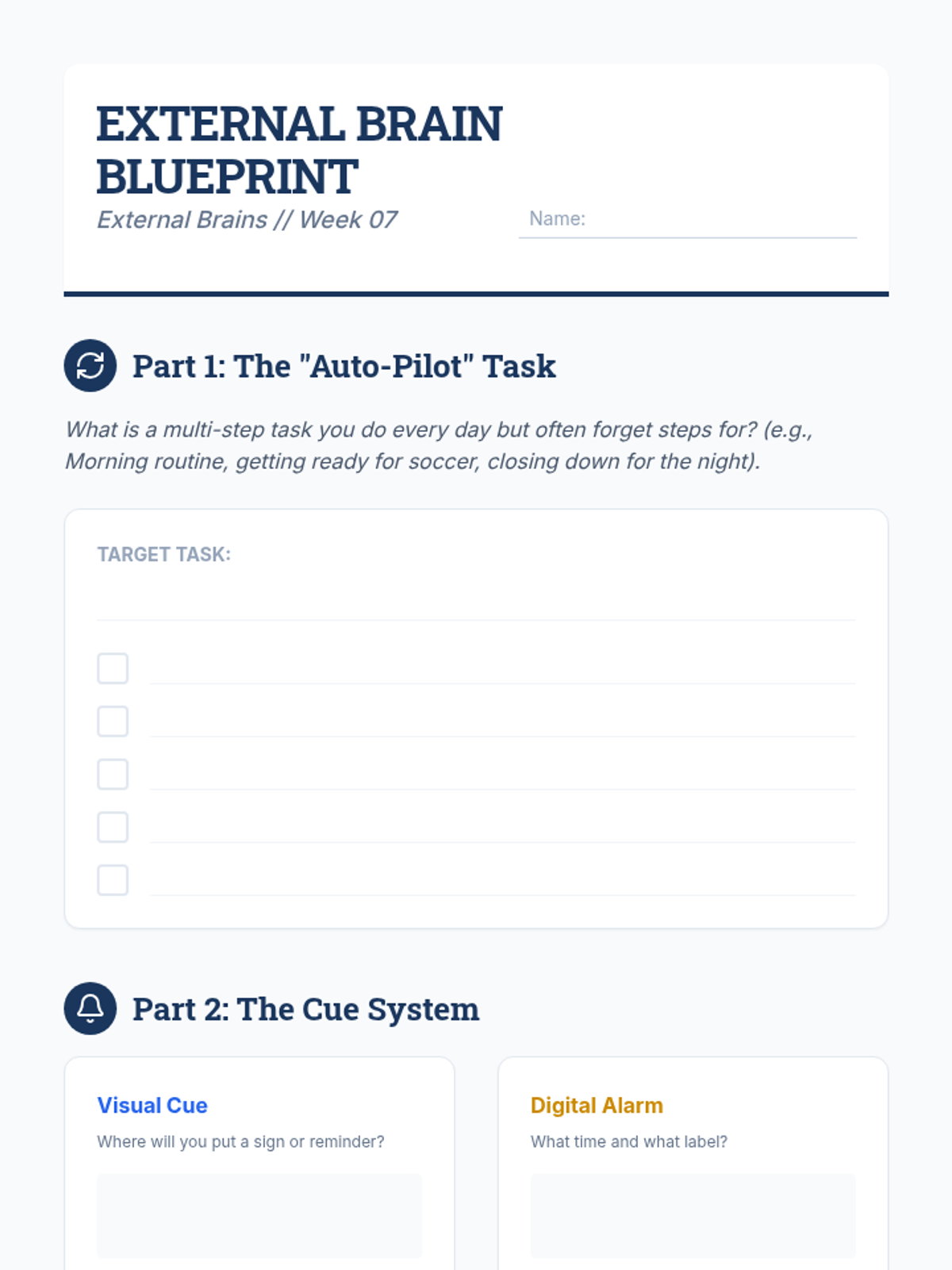
A worksheet for designing personal checklists and reminder systems to support working memory for recurring daily tasks.
Slides for Week 7 about externalizing cognitive load to support working memory and the importance of self-monitoring progress.
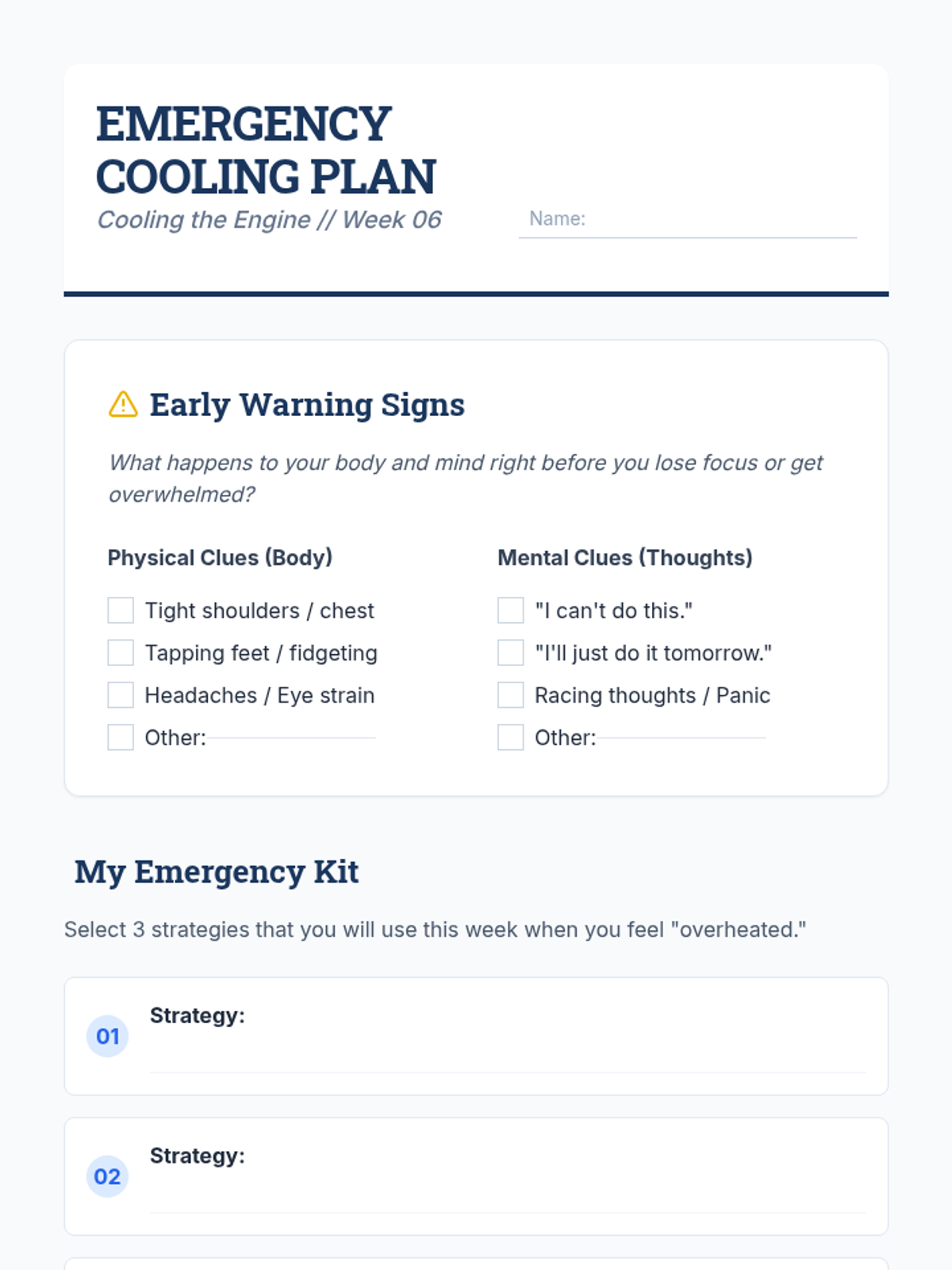
A planning sheet for identifying emotional triggers and creating a personalized emotional regulation emergency kit.
Slides for Week 6 exploring the link between emotions and executive functioning, including stress triggers and regulation strategies.
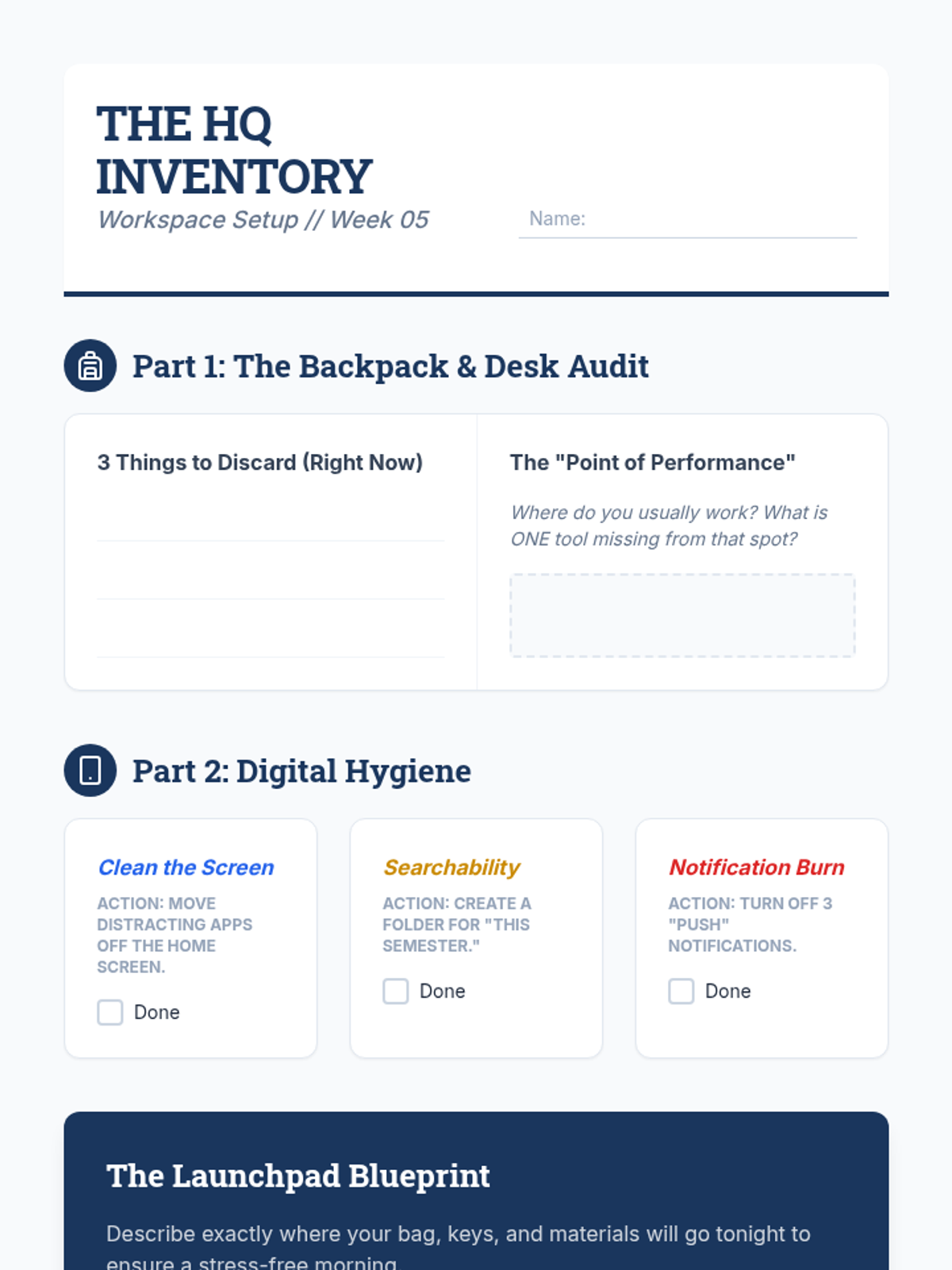
A worksheet for auditing physical and digital workspaces, focusing on the Point of Performance and establishing a morning launchpad habit.
Slides for Week 5 focusing on physical and digital organization, including the Point of Performance concept and digital file management.